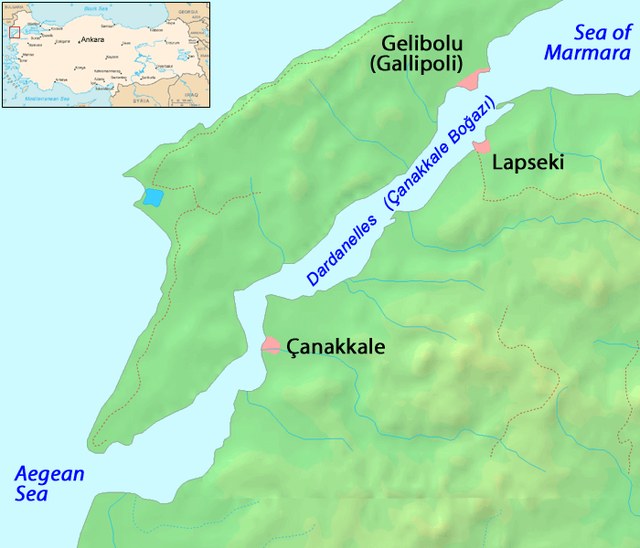
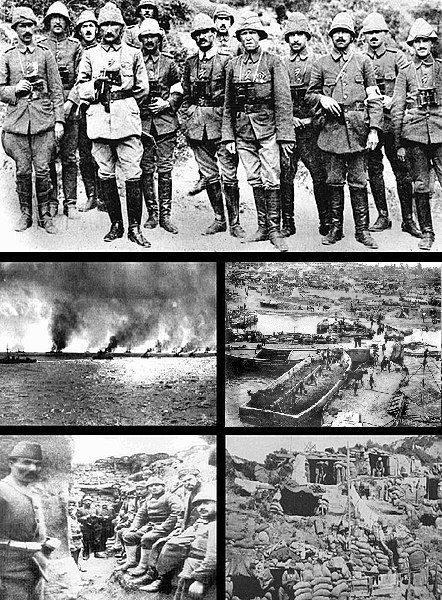
Strait connecting the Sea of Marmara with the Aegean that the campaign attempted to force
H
the strait separating Thrace from Asia that Xerxes crossed on a pontoon bridge.
H
The target of the Gallipoli campaign?
H
Answer these questions about the tragic Gallipoli Campaign in World War I. …The Campaign was launched in 1915 to force open this narrow strategic channel in modern-day Turkey.
H
In 1833 Karl Nesselrode negotiated the Treaty of Hunkiar Iskelesi by which one party to the previous treaty switched its alliance with regard to the location.
H
The 1936 Montreux Convention allowed a 13-year-old nation to supercede the Treaties of Sevres and Lausanne and remilitarize it.
H
In 1915 Winston Churchill arranged an attempt by Ian Hamilton to approach the contested site by land from its north.
H
In 1809 a treaty brokered at this site settled one aspect of the War of the Third Coalition.
M
The result was a disastrous defeat at what is now called Anzac Cove at the hands of Kemal Ataturk.
M
Located south of the Gallipoli peninsula this is geographic feature connecting the Aegean Sea with the Sea of Marmara.
Watch out: Bosporus (the other Turkish strait connecting the Sea of Marmara to the Black Sea)
#128 · Other Named Wars and Armed Conflicts · Level 1
mobilization, Zimmermann Telegram, submarine warfare open card →
The ladder · 15 clues
H
Caporetto was a major victory for the Central Powers during this war, which started with the assassination of Archduke Franz Ferdinand.
H
In one work set during this war, the surgeon Rinaldi introduces the main character to the nurse Catherine Barkley.
H
Hell, we just got here." The pigeon Cher Ami [[SHEHR ah-MEE]] helped save the Lost Battalion in this war during the Battle of the Argonne Forest.
H
During this war, a mysterious explosion that was suspected to be sabotage occurred at Black Tom Island.
H
The Four Minute Men, working for George Creel’s Committee on Public Information, spread propaganda supporting this war.
H
A.J.P Taylor argued in War by Timetable that this war’s outbreak was inevitable once German mobilization began.
H
A major and rare success for one country in this war was the Brusilov Offensive, which targeted Galicia.
M
Barbara Tuchman wrote a Pulitzer Prize-winning historiography of this war titled The Guns of August.
M
War that was sparked by his assassination in 1914.
M
Alexander Samsonov killed himself after losing the entire Second Army in this war, during which Russia suffered losses at the Masurian Lakes and Tannenberg.
M
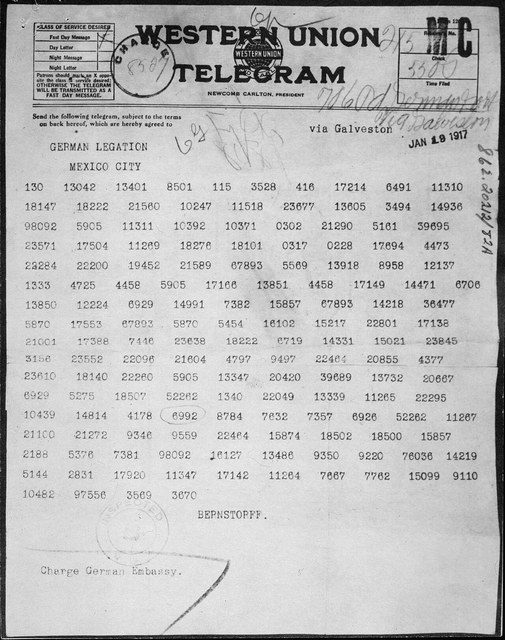
A document detailing a proposed German-Mexican alliance, the Zimmerman Telegram, was intercepted during this war.
M
At the peace negotiations for this war, Woodrow Wilson presented his 14 points. name this war that was ended by the Treaty of Versailles in 1919.
E
The Treaty of Brest- Litovsk withdrew Russia from this war whose devastation led to widespread popular support for the February Revolution.
The United States joined this war due to the sinking of the Lusitania and the unrestricted submarine warfare carried out by Germany.
10 more clues from the record
H
During this war, many British soldiers emerged from their trenches in a ceasefire known as the Christmas Truce.
H
The Representation of the People Act, passed during this war, gave one country’s women suffrage.
H
At one battle in this war, a general exclaimed “They shall not pass.” That battle was fought at Verdun during this war.
H
Recruitment posters for this war encouraging American soldiers to “Destroy this mad brute!” show an angry gorilla wearing a pickelhaube.
H
Wobblies and socialists who spoke against this war were jailed under the Sedition Act, which put Eugene Debs into jail.
H
This war featured the usage of the Four Minute Men to drum up support through quick speeches.
H
A film produced during this war depicts a leader who is jailed by Marcas the blacksmith.
H
One poem about this conflict talks about how the dead “lived, felt dawn, saw sunset glow.” Another poem about this conflict asks “What passing bells for those who die as cattle”; that poem’s author was heavily influenced by his friend Siegfried Sassoon.
H
During this war, the Black Tom raid featured the detonation of an ammo dump near the Statue of Liberty.
H
A drawing made in this war shows a slobbering ape monster carrying a club reading "cultur." "Four Minute Men" were very active during this war, promoting the propaganda aims of the Creel Committee.
Watch out: Confused with World War II (different global conflict, 1939-1945)
Barbara Tuchman was an American popular historian who won two Pulitzer Prizes for narrative histories of World War I and China.
The kit
Rise — Barbara Tuchman was the granddaughter of Henry Morgenthau and worked as a research assistant for the Institute for Pacific Relations.
Achievements — Barbara Tuchman won Pulitzers for The Guns of August, about World War I's outbreak, and Stilwell and the American Experience in China.
Achievements — Barbara Tuchman wrote A Distant Mirror about the calamitous 14th century through the lens of Enguerrand VII de Coucy.
Legacy — Barbara Tuchman coined a namesake law stating that disaster reporting increases apparent extent by five to tenfold.
Runs with
World War I
wrote The Guns of August about WWI's July Crisis and opening battles open card →
China
won Pulitzer for Stilwell and the American Experience in China, 1911-45 open card →
Assassination of Archduke Franz Ferdinand
detailed Franz Ferdinand's assassination in The Guns of August's Outbreak section open card →
Edward
opened The Guns of August with Edward VII's funeral open card →
The ladder · 15 clues
H
A discussion of the Little Ice Age opens another book by this historian that covers the “Calamitous 14th Century.” This historian is best known for a 1962 work whose “Outbreak” section details Franz Ferdinand’s assassination. name this female historian who wrote A Distant Mirror and The Guns of August.
H
This historian described the “calamitous” fourteenth century in her book A Distant Mirror. :Name this historian who described the military escalations of the July Crisis in The Guns of August.
H
Another work by this author examines the events of the “calamitous 14th century” through the lens of Enguerrand VII de Coucy.
H
This author coined a law stating that reporting of deplorable events increased the apparent extent by five to tenfold, which was stated at the start of the book focusing on Anne Bradstreet.
H
A work by this author details Helmut von Moltke the Elder’s affinity for reading Victorian romance novels before heading into battle.
H
A book by this historian that is sometimes titled Sand Against the Wind examines the life of Joseph Stilwell in China.
H
This historian’s namesake law argues that disaster is far less common than various reports suggest.
M
This historian wrote about the anti-Semitic newspapers covering Dreyfus in The Proud Tower. She wrote a detailed account of the days leading into World War I in The Guns of August.
M
This woman drew connections between the 14th and 20th centuries in A Distant Mirror, and described the opening of World War I in The Guns of August.
M
This author won a Pulitzer for her biography of Joseph Stilwell, though she is better known for her book on the July Crisis. name this author of The Guns of August.
M
This granddaughter of Henry Morgenthau documented incidents such as the Great Awakening raid.
M
This popular historian discussed how irredentist feelings towards Alsace-Lorraine and calls for revanche against the Germans intensified the Dreyfus affair in The Proud Tower.
M
The funeral of Edward VII opens her best known work, which ends by discussing the Battle of the Marne. name this author of The Guns of August.
E
This American historian wrote the book Stilwell and the American Experience in China, 1911-45. She is better known for writing about the origins of World War I in The Guns of August.
E
This historian wrote a book titled for the “first salute” that Hopkins had received. She won her second Pulitzer Prize for Stillwell and the American Experience in China.
7 more clues from the record
H
This author was present during the historic A 1914 pursuit of the SMS Goeben, detailed in the “Battle” section of one of her books.
H
This American popular historian won two Pulitzers for Stilwell and the American Experience in China and The Guns of August. Her namesake “law” states that any calamity’s reporting makes it seem worse than reality.
H
Originally a research assistant for the Institute for Pacific Relations, this historian published one book before the age of 40, entitled The Lost British Policy: Britain and Spain Since 1700.
H
She was known for her popular history works, which didn't work with primary sources all that much. :Name this author of The Distant Mirror and The March of Folly.
H
Another of this author’s works addresses socialism in the chapter “The Death of Jaures” and is set between the years 1890 and 1914.
H
In Rabbit at Rest, Harry Angstrom has difficulty making it through this author’s book devoted to an incident on St. Eustatius.
H
This historian's late work The First Salute gives an account of the American Revolution from an international point of view.
Watch out: The Proud Tower (another Tuchman work about 1890-1914, not her most famous book)
British Prime Minister · 1916–1922 · United Kingdom
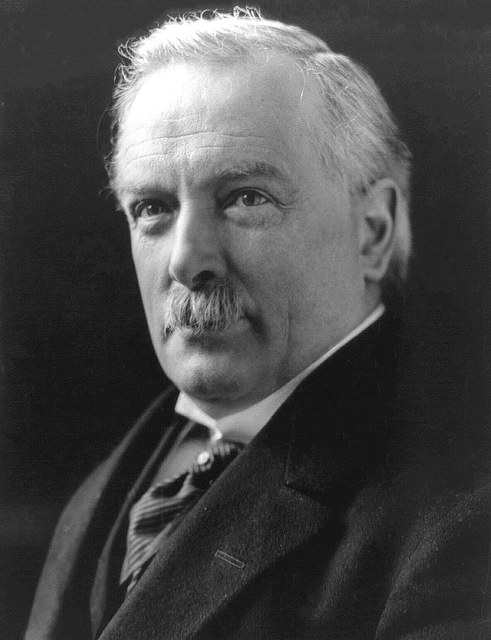
David Lloyd George was the Welsh Liberal who led Britain through World War I's final years and negotiated at Versailles.
The kit
Rise — David Lloyd George introduced the National Insurance Act of 1911 and as Chancellor of the Exchequer proposed the People's Budget of 1909.
Achievements — David Lloyd George succeeded Asquith as Prime Minister in 1916 and addressed the Shell Crisis as Minister of Munitions during World War I.
Conflicts — David Lloyd George won the Coupon Election but resigned after mishandling Turkish aggression during the Chanak Crisis in 1922.
Legacy — David Lloyd George was the last Liberal Prime Minister and one of the Big Four at the Paris Peace Conference with Wilson and Clemenceau.
Runs with
Chancellor
served as Chancellor of the Exchequer before becoming Prime Minister open card →
Paris
represented Britain at the Paris Peace Conference in 1919 open card →
World War I
led Britain through the final years of the war open card →
Treaty of Versailles
negotiated as one of the Big Four at Versailles open card →
The ladder · 15 clues
H
British Prime Minister who led Britain during the War and represented Britain at the Paris Peace Conference.
H
This man advocated for war to protect national honor in his Mansion House Speech, given in response to the Agadir Crisis.
H
With Rufus Isaacs, this man was accused of speculating on inside knowledge during the Marconi scandal of 1913.
H
This man mailed letters endorsing members of his coalition during a victorious election, known as the “coupon election.” In one speech this man claimed “a fully- equipped duke costs as much to keep up as two Dreadnoughts.” That sentiment was demonstrated when, as Chancellor of the Exchequer, this man advocated for the passage of increased taxes on the wealthy as part of the People’s Budget.
H
This man won the “Coupon election” against Andrew Bonar Law, and avoided war with Turkey after an invasion of the Dardanelles in the Chanak Crisis.
H
This man served as the Minister of Munitions and had a seven year stint as the Chancellor of the Exchequer.
H
This man was responsible for the National Insurance Act and, as Chancellor of the Exchequer, he pushed for a land tax in the People's Budget.
M
He introduced the National Insurance Act of 1911, and after succeeding Asquith as Chancellor of the Exchequer, he proposed the People’s Budget of 1909.
M
Balfour was the Foreign Secretary for this British Prime Minister, who headed Britain for part of World War I and attended the Paris Peace conference. This Welshman was the last Liberal Prime Minister.
M
Proposed the “People’s Budget” and represented Britain at Versailles in 1919.
M
With Woodrow Wilson, Vittorio Orlando, and George Clemenceau, this man made up the “Big Four” at the Versailles Peace Talks. name this Welshman that served as the British PM during the second half of World War I.
M
This man addressed the Shell Crisis during World War I as Minister of Munitions, and he succeeded Lord Kitchener as Secretary of State for War in 1916.
E
Welsh prime minister who was one of the "big four" at the Versailles peace negotiations.
E
Churchill served as War Secretary to this prime minister of Welsh descent who made up the Big Three at Versailles with Georges Clemenceau [[kleh-mahn-SOH]] and Woodrow Wilson.
E
A proposal to levy land taxes on the wealthy was introduced in this man’s "People’s Budget" which was presented the decade before he led his country through a war that included the Battle of Verdun. name this World War One British prime minister, a member of the Big Three at Versailles.
10 more clues from the record
H
This man’s government was opposed by the Wee Frees under William Benn after he ousted his predecessor, and he resigned after threatening Turkey with war during the Chanak Crisis.
H
Mackenzie King flexed Canadian muscle at the expense of this man’s government in the Chanak Crisis, after which he resigned and was succeeded by Andrew Bonar Law.
H
The “Garden Suburb” advised this prime minister, who claimed that one general had “proved himself to be a Man." After a meeting with Berthier de Sauvigny [[soh-veen-YEE]], this man determined to make that general, Robert Nivelle, the commander of his own countryman, Douglas Haig.
H
This man declared that “we should not emulate [Germany] only in armaments” in support of the National Insurance Act.
H
A series of taxes proposed by this man angered the elite and led to a constitutional crisis over his People’s Budget.
H
This man’s ministry saw the passage of the Railways act, which was introduced by this man’s minister of transport, Eric Geddes.
H
This man mishandled Turkish acts of aggression in the Chanak Crisis, leading to his fall from power.
This leader remained in power after the Coupon Election despite his feud with H. H. Asquith.
H
He was the only prominent politician in the Depression-era UK to embrace Keynesian economic policies, and his proposal for a US-style “New Deal” was rejected by the Conservative cabinet in 1935. FTPE:Name this British prime minister shunned by all three major parties after leaving office in 1922.
Watch out: H. H. Asquith (predecessor as Liberal PM whom Lloyd George feuded with and replaced)
Woodrow Wilson led the United States through World War I and proposed the Fourteen Points and League of Nations at Versailles.
The kit
Rise — Woodrow Wilson served as Princeton University's president before becoming Governor of New Jersey and outmaneuvering Champ Clark for the presidential nomination.
Achievements — Woodrow Wilson signed the Federal Reserve Act, the Underwood Tariff, the Clayton Anti-Trust Act, and the Keating-Owen Act outlawing child labor.
Conflicts — Woodrow Wilson entered World War I despite using the slogan 'He Kept us Out of War' in his 1916 reelection campaign.
Legacy — Woodrow Wilson suffered a stroke in his second term, after which his wife Edith took over many of his presidential responsibilities.
Runs with
World War I
led U.S. through war, appointed Creel to propaganda committee open card →
William Jennings Bryan
served as Secretary of State, resigned after Lusitania response open card →
Treaty of Versailles
attended negotiations, formed Big Three with Lloyd George and Clemenceau open card →
League of Nations
proposed League but U.S. refused to join open card →
The ladder · 15 clues
H
In addition to advocating the Adamson Act and the Keating-Owen Act, this president signed the Glass-Owen Act, creating the Federal Reserve.
H
This man appointed George Creel to head the Committee on Public Information, a propaganda machine.
H
He ran for president in 1916 with the slogan “He Kept us Out of War.” :Name this president who resisted the 19th amendment and who entered the United States into World War I.
H
Under this president, child labor was made illegal by the Keating-Owen Act, which was struck down two years later.
H
This president initially viewed the "Preparedness Movement" with skepticism and dismissed Cabinet secretary Lindley Garrison for being too supportive.
H
Before becoming the Governor of New Jersey, this politician served as Princeton University’s president.
H
This man’s Postmaster General, Albert S. Burleson, spearheaded the segregation of federal offices.
M
The Fourteen Points speech was given by this twenty-eighth US president. After this president suffered a stroke in his second term, his wife Edith took over many of his responsibilities.
M
This president screened Birth of a Nation at the White House, making it the first American film to be screened at the White House.
M
During a political convention, this man outmaneuvered Champ Clark to earn the presidential nomination.
M
This President was called “a man of high ideals but no principles” by his own Secretary of War Newton Baker.
The United States was led through World War I by this President who proposed his Fourteen Points during negotiations for the Treaty of Versailles.
E
U.S. president who intervened by occupying Veracruz and led the US during World War I.
E
During one election, this man used the slogan “he kept us out of war.” William Jennings Bryan resigned as this man’s Secretary of State after his response to the sinking of the Lusitania.
10 more clues from the record
H
This president authorized Marines to begin the U.S. occupation of Haiti.
H
Bryan later served as Secretary of State under this president. This president won reelection in 1916 using the slogan "He kept us out of war".
H
This president stressed that “the world must be made safe for democracy” in one speech.
H
The Glass-Owen act was also passed during his presidency, which created the Federal Reserve and the passage of the Underwood Tariff.
H
The League of Nations was doomed from the beginning after the United States refused to join, even though it was the brainchild of this U.S. president.
H
A task force known as “The Inquiry,” which would become Foreign Affairs magazine, was directed by his advisor Edward House.
H
This man supported bills such as the Underwood Tariff, the Clayton Anti-Trust Act, and the Federal Reserve Act.
H
This president sent out the Polar Bear Expedition to intervene in an international conflict.
H
This president’s Secretary of the Treasury, William McAdoo, closed the New York Stock Exchange for months to keep foreign money in the U.S. despite the outbreak of war.
H
A special session of Congress was called by this president to revise the Payne-Aldrich tariff, eventually replacing it with one sponsored by Oscar Underwood.
Watch out: William Jennings Bryan (served as Wilson's Secretary of State before resigning)
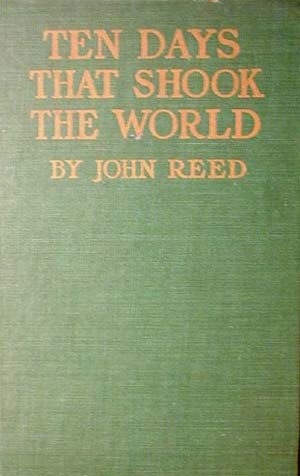
In George Orwell’s proposed preface to Animal Farm, entitled “The Freedom of the Press,” he claimed that the British Communist Party, who had the copyright to this work, published a bowdlerized version of it, with the introduction removed.
H
Notes for this book's publication were collected on assignment for the periodical The Masses, and its author had previously published a book of poems entitled Sangar: The Mad Recreant Knight of West.
M
This work begins by discussing accusations levied by the Sisson Documents, which were the subject of a previous study, before the author devotes a chapter to the "Committee for Salvation." The end describes a meeting of the Congress of Peasants, after having documented the fall of the Provisional Government.
M
Bryant was married to John Reed, who drew from his articles for The Masses to write this book-length account of the Russian Revolution, which wasn’t published until well after Bryant’s.
E
This book lends its name to the full title of Sergei Eisenstein’s film, October. name this first-hand account of the Bolshevik Revolution by American socialist John Reed.
Watch out: George Orwell's Animal Farm also dealt with Communist themes and censorship
#508 · Massacres, Assassinations, and Named Violent Incidents · Level 1
1914 political assassination · June 28, 1914 · Sarajevo, Bosnia
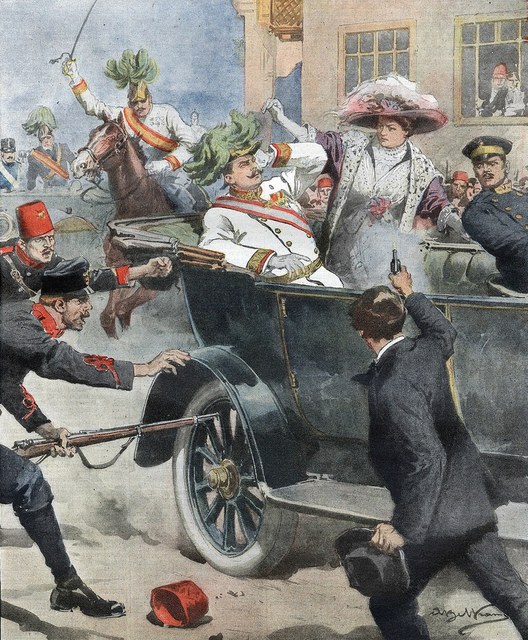
Assassination of Archduke Franz Ferdinand was the 1914 killing of Austria-Hungary's heir that sparked World War I.
The kit
Event — Assassination of Archduke Franz Ferdinand occurred when Gavrilo Princip of the Black Hand shot the archduke in Sarajevo on June 28, 1914.
Circumstances — Assassination of Archduke Franz Ferdinand succeeded after a wrong turn by driver Leopold Lojka placed the car in Princip's path following a failed grenade attack.
Aftermath — Assassination of Archduke Franz Ferdinand prompted Austria-Hungary to issue the July Ultimatum to Serbia, leading directly to the outbreak of World War I.
Failed escape — Assassination of Archduke Franz Ferdinand saw one participant attempt suicide by swallowing expired cyanide and jumping into a river only four inches deep.
Runs with
assassination
political murder of a prominent figure open card →
World War I
immediate trigger for the war's outbreak open card →
Sarajevo
Bosnian city where the shooting occurred open card →
Austria
Austria-Hungary's heir to the throne was killed open card →
One participant in this event failed to commit suicide after eating expired cyanide and jumping in a river that was only six inches deep.
H
The Guns of August's chapter “Outbreak” describes the assassination of this Austrian Archduke by Gavrilo Princip, which led to the start of World War I.
H
This man was forced to cede his descendants’ right to the throne in order to marry Sophie Chotek.
H
One participant in this event tried to commit suicide by ingesting expired cyanide and jumping into a river, but the river was only a few inches deep.
H
Habsburg Archduke, husband of Sophie, whose killing helped spark World War I.
H
The Balkan Wars increased the Serbian nationalism that led to the assassination of this archduke by Gavrilo Princip, a member of the Black Hand. His death was the immediate cause for World War I.
M
Austro-Hungarian Archduke whose assassination by Serbian nationalists kicked off the war.
M
A false turn by Leopold Lojka [[LOY-kuh]] resulted in this event, which was preceded by a failed attack with a hand grenade.
M
That ill-fated nephew was this man, whose assassination in Sarajevo precipitated World War I.
M
One participant in this event failed to kill himself after ingesting expired cyanide and jumping into a river 13 centimeters deep.
M
People accused of planning this event were tried three years after it occurred in the Salonika Trial, which condemned to death the planner of this event, codenamed Apis.
E
This event led to the July Ultimatum and was perpetrated by a member of the Black Hand named Gavrilo Princip. name this event, the killing of an Austrian Archduke that is considered to have sparked World War One.
E
Gavrilo Princip assassinated this archduke whose 1914 death led to an invasion of Serbia and the First World War.
E
Gavrilo Princip carried out this 1914 assassination that sparked World War One.
10 more clues from the record
H
In a failed attempt to prevent this event, a route along Appel Quay was decided upon by Oskar Potiorek.
H
Name these Austrian royals .This member of the Hapsburg family and heir to the Austro-Hungarian throne took a tour through Sarajevo in 1914 that did not end well.
H
The target of this event was selected after Muhamed Mehmedbašić (pr. meh-MED-bosh-ITCH) failed to kill Oskar Potiorek.
H
This event’s perpetrator was imprisoned in Terezín, where he died of tuberculosis.
H
In 1889, this man’s cousin Rudolf took his own life in a suicide pact with his mistress, leaving this man second in line for the throne.
H
One week after this man’s death, Alexander Graf von Hoyos received a metaphorical “blank check” for war.
H
This man became an army lieutenant in 1878, at the age of 14, and was made Inspector General of the Armed Forces in 1913.
H
One perpetrator failed to commit suicide by swallowing a cyanide pill and jumping into a four-inch deep river.
H
This man was the presumptive heir to Franz Joseph, his uncle, who was the second-to-last Habsburg to rule in Europe.
H
It inspired one survivor to lead troops into battle at Cer and Kolubara, though that man apparently forgot that he was a horrible general and got most of his men massacred.
Watch out: Oskar Potiorek was a failed target, not the victim; Franz Ferdinand was selected after an earlier assassination attempt on Potiorek failed
#527 · Medieval European Battles and Sieges · Level 1
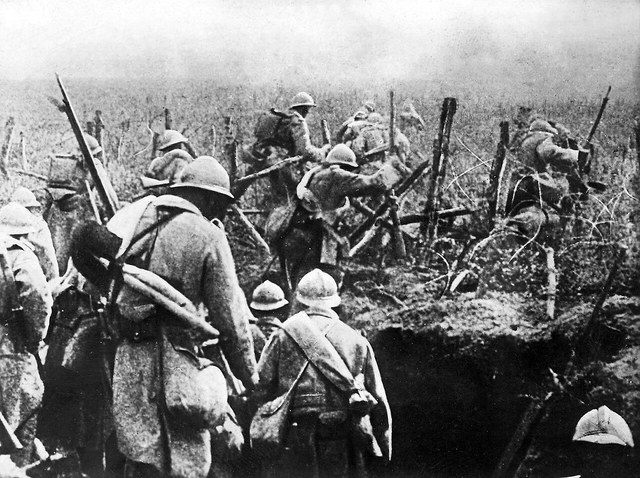
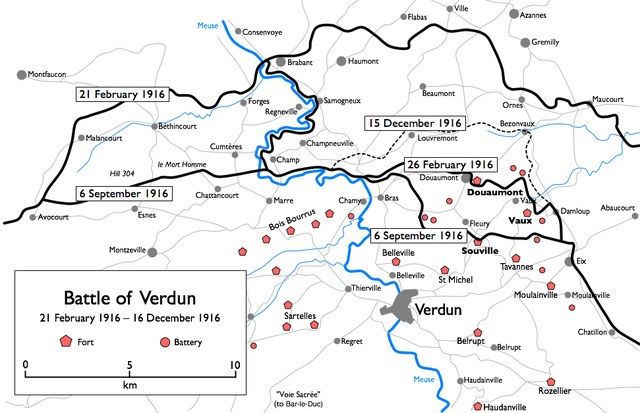
Battle of Verdun was a ten-month World War I battle in which Germany sought to bleed France white at a fortress town.
The kit
German offensive — Battle of Verdun opened with Erich von Falkenhayn's forces capturing Fort Douaumont within the first few days in February 1916.
French defense — Battle of Verdun saw Philippe Pétain command French forces who were resupplied along the Sacred Way, a route carrying over four trucks per minute.
Rallying cry — Battle of Verdun featured the rallying cry 'They shall not pass' issued by Robert Nivelle, making Pétain a national hero.
Outcome — Battle of Verdun ended with Charles Mangin retaking Forts Vaux and Douaumont, resulting in over 800,000 total casualties and Falkenhayn's dismissal.
Runs with
World War I
longest battle of the war, fought over Meuse Heights open card →
France
French mounted heroic defense of fortified city open card →
Philippe Pétain
commanded French Second Army, became national hero open card →
Within the first few days of a battle in this city, forces led by Erich von Falkenhayn captured Fort Douaumont.
H
An 843 AD treaty named for this city split the Carolingian Empire into Francia, Germania, and Lotharingia.
H
A treaty named after this location formally ended a conflict that included fighting at the Battle of Fontenoy; that treaty dividing power among Lothair, Louis the German, and Charles the Bald.
H
A rallying cry at this battle, which echoed a similar cry from the 15th century, translated to "we’ll get them." At this battle, Sylvain Raynal’s exhausted troops surrendered Fort Vaux [].
H
answer the following questions about World War One battles:The attack of this French fortified city in February 1916 was initially a success for Falkenhayn’s German forces. However, the French under Petain mounted a heroic defense of the city, whose only remaining supply line was called the “Sacred Way.”
H
One battle that occurred in this location saw intense fighting over Hill 304 and constant shelling on the “Sacred Way.” One treaty was signed here as a result of the Oaths of Strasbourg, and split Louis the Pious’ empire.
H
With Metz and Toul, this location formed the Three Bishoprics, and during the War of the First Coalition, this town fell on September 2nd, 1792 to the Prussians, just weeks before their loss at Valmy.
M
Marshal Petain declared that “They shall not pass!” in this site of a ten-month long World War I battle.
M
Longest battle of the war, fought in 1916 over the Meuse Heights.
M
The bloody nature of this battle led it earn such nicknames like “the Cauldron” and “the Meat- Grinder.” Robert Nivelle used the phrase “they shall not pass” at this battle, where over 4 trucks a minute passed along the “Sacred Way.” Erich von Falkenhayn lost this battle, at which the Second Army was commanded by Philippe P´etain.
M
Following the dismissal of Langle de Cary, command was taken successively by Charles Mangin, Henri Petain, and Robert Nivelle, who wrenched out a Pyrrhic victory despite the first German use of phosgene gas. name this French city where over eight hundred thousand troops died in 1916.
M
Auguste Thin chose his country’s unknown soldier on the site of this battle, which was supplied from Bar-le-Duc by the Sacred Way.
E
General Nivelle issued the order “they shall not pass” during this battle, and General Falkenhyn sought to “bleed France white” in this battle. name this extremely bloody 9-month-long battle during World War I at a French fortress town.
E
This battle was conceived as an effort to “bleed” a certain country “white,” and the defenders at this battle were resupplied by a route called “the sacred way.” Erich von Falkenhayn [FALL- kun-hine] was dismissed after losing this battle, which made victorious commander Philippe Petain [Pay-TAHN] a national hero. name this months-long 1916 battle for a town in northeast France.
E
We will get them,” while Robert Nivelle declared here, “they shall not pass.” name this 1916 battle at a French fortress town which made Phillipe P´etain temporarily a hero.
10 more clues from the record
H
In 843, the treaty negotiated here gave the imperial throne and the Alpine lands to Lothair, the east of the Rhine to Louis the German, and western France to Charles the Bald.
H
In this battle, Major Sylvain-Raynal managed to defend Fort Vaux for over a week, but the lightly defended Fort Douaumont [DOO-oh-MOHN] was captured without a fight.
H
In 1916, the Germans attacked the French line at this site whose symbolic importance led the French to defend it despite huge losses. Its defense by Petain made his reputation.
H
Bloody World War I battle in which he was taken prisoner while Marshal Petain commanded French forces.
H
Crown Prince Wilhelm opposed French forces commanded by Robert Nivelle here, and both sides sought to take Fort Vaux in this location.
H
In addition to a battle that saw fighting on Dead Man’s Hill and Hill 304, this city names a treaty dividing land between Charlemagne’s grandsons.
H
The altarpiece of the Abbey Church in Klosterneuburg, Austria, and the Shrine of the Three Kings in the Cologne Cathedral are two famous works by Nicholas of this location.
H
At a battle near this city, Charles Mangin retook Forts Vaux and Douaumont, and defenders received supplies along the Sacred Way.
H
This battle opened with the capture of Fort Douaumont [DOO-uh-mon] and Fort Vaux [Voh].
H
Following the Battle of Fontenoy, the signers of the Oath of Strasbourg signed a treaty in this city which was later modified by the Treaty of Meerssen.
Watch out: Treaty of Verdun (843) divided Carolingian Empire among Charlemagne's grandsons
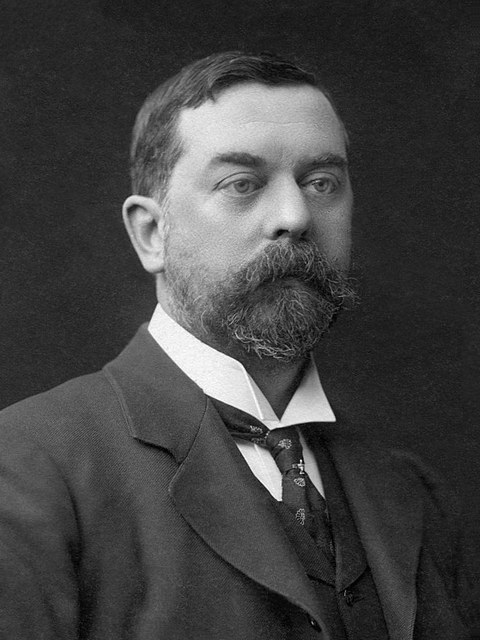
American portrait painter · 1856–1925 · Europe and United States
John Singer Sargent was an American expatriate painter renowned as the leading portrait artist of the Gilded Age and Edwardian era.
The kit
Scandal — John Singer Sargent caused controversy at the 1884 Salon de Paris with his Portrait of Madame X depicting Virginie Gautreau in a revealing black dress.
Achievements — John Singer Sargent painted the official presidential portrait of Theodore Roosevelt showing him resting his hand on a White House bannister.
War art — John Singer Sargent created Gassed, depicting a line of chemically-blinded soldiers clutching one another as they stumble toward a dressing station.
Genre works — John Singer Sargent painted El Jaleo, showing a gypsy dancer performing in a room with two guitars hanging on the wall.
Runs with
World War I
served as war artist, painting Gassed showing wounded soldiers open card →
Theodore Roosevelt
painted his official presidential portrait at the White House open card →
Paris
caused scandal at the 1884 Salon with Madame X open card →
White House
painted Theodore Roosevelt's portrait there with stair railing open card →
The ladder · 9 clues
H
This artist depicted a line of men clutching one another as they stumble forward after a chemical attack in Gassed!.
H
Earlier, this artist included two guitars hanging on the wall of a room in which a gypsy dances El Jaleo [hah-LAY-oh].
H
He is also known for intimate portraits, such as one of two girls hanging paper lanterns.
H
When commissioned as a war artist, this man painted wounded soldiers walking to a dressing station.
H
He painted an American president resting his hand on a stair railing in his Portrait of Theodore Roosevelt.
M
This artist created an image of a subject resting his hand on a bannister in the White House, the official presidential portrait of Theodore Roosevelt.
E
This painter of El Jaleo [ha-lay-oh] caused controversy with his depiction of Virginie Gautreau wearing a revealing black dress. name this American painter of the Portrait of Madame X.
E
This American artist caused a scandal at the 1884 Salon de Paris with his Portrait of Madame X.
E
who is this man, considered the leading portrait painter of his era?
#603 · Other Continental European Monarchs · Level 1
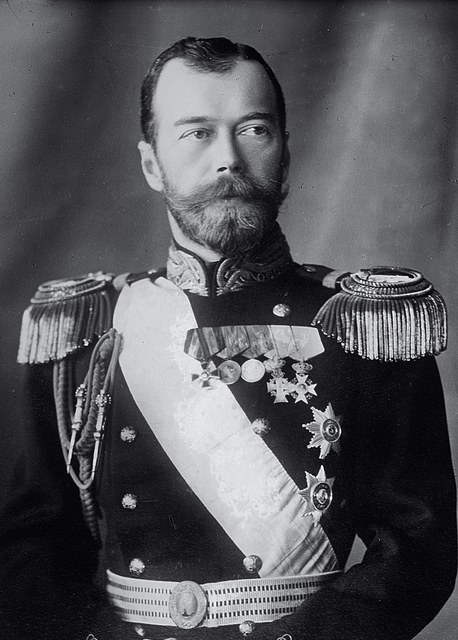
Nicholas II of Russia was the final Romanov Tsar, overthrown in the February Revolution and executed by Bolsheviks in 1918.
The kit
Rise — Nicholas II of Russia survived an attack by Tsuda Sanzo in the Otsu incident while traveling in Japan as a child.
Conflicts — Nicholas II of Russia's Imperial Guard killed roughly 1,000 people on Bloody Sunday when Father Gapon marched on the Winter Palace.
Achievements — Nicholas II of Russia curbed his own power in the October Manifesto on the advice of Sergei Witte to appease the people.
Death & succession — Nicholas II of Russia and his family were executed at Yekaterinburg in the Ipatiev House, though rumors persisted that daughter Anastasia survived.
ruled Russia during Russo-Japanese War and World War One open card →
Bloody Sunday
his Imperial Guard massacred Father Gapon's protesters open card →
Japan
attacked by Tsuda Sanzo in Otsu while traveling there open card →
The ladder · 15 clues
H
During this ruler’s coronation, a stampede led to the death of over a thousand people in the Khodynka Field tragedy.
H
The forces of this ruler violently cracked down on a demonstration led by Father Gapon, leading to Bloody Sunday.
H
Due to fear that there was not enough beer and pretzels, a stampede killed over one thousand people during this ruler’s coronation feast.
H
On the advice of Sergei Witte, this man curbed his own power in the October Manifesto to appease the people.
H
Sergei Witte advised this man to enact legal reforms in order to stay in power, even though this man’s popularity had plummeted when his soldiers fired on father Georgy Gapon’s protesters on Bloody Sunday.
H
A human stampede occurred during this ruler’s coronation at the Khodynka fields.
H
As a child, this ruler was attacked by Tsuda Sanzo in the Otsu incident.
M
This man’s daughter Anastasia was rumored for decades to have survived the execution of her family at Yekaterinburg.
M
This man was advised to promise social reforms in the October Manifesto by Sergei Witte.
M
What Tsar of Russia sent a series of telegrams to his cousin, Kaiser Wilhelm II, affectionately dubbed "Nicky," in a half-hearted attempt to avert World War One?
M
After being relocated to Yekaterinburg, this man and his family were executed although rumors that his daughter Anastasia survived persisted for decades.
M
This ruler was executed in Yekaterinburg with his family to prevent them from falling into the hands of the White Army.
This tsar oversaw the mishandling of the Russo-Japanese War and World War One. name this Russian tsar who was deposed in the February Revolution and killed by the Bolsheviks.
E
The February Revolution ousted this final Tsar of Russia.
10 more clues from the record
H
This ruler, who proposed the Hague Peace Conference, was almost killed by Tsuda Sanzo while traveling in Otsu, Japan.
H
This ruler, whose Imperial Guard committed the Bloody Sunday massacre, was overthrown by the February Revolution.
H
Father Gapon organized a march on this ruler ‟s Winter Palace, where his Imperial Guard killed roughly 1,000 people on Bloody Sunday.
H
Name these things about the period of the Russian Revolution, :This last Russian czar was shot and killed with his family and remaining servants on .
H
Answer these questions about the Russian Revolution of 1905, .The revolution occurred during the reign of this final Tsar of the Russian Empire.
H
This ruler approached his cousin of the same name to force him to become dictator, though that Grand Duke responded by pointing a pistol at his own head and threatening to fire.
H
This man received notice that Leonid Sednev would be leaving his entourage shortly before he was moved into the basement of the Ipatiev House in Yekaterinburg.
H
During the disposal of this man’s body, his assassins drove a Fiat truck into the Koptyaki forest only to realize they had only one shovel.
H
This ruler’s prime minister Peter Stolypin invoked the Fundamental Laws to dissolve disagreeable sessions of parliament.
H
This man lost popularity after his forces opened fire on Father Gapon’s supporters outside the Winter Palace.
Watch out: Confusion with his cousin Grand Duke Nicholas, whom he approached to become dictator
#643 · Technologies, Inventions, and Scientific Discoveries · Level 1
Chemical weapons are toxic agents like chlorine, mustard gas, and sarin used to kill or incapacitate through poisoning.
The kit
First use — Chemical weapons were first mass-deployed by Germany at the Second Battle of Ypres in 1915, pioneered by Fritz Haber.
Regulation — Chemical weapons were banned by the Geneva Convention after World War I and regulated by the 1993 Organization for the Prohibition of Chemical Weapons.
Notable attacks — Chemical weapons killed hundreds in the 1988 Halabja massacre against Kurds and in the 2013 Ghouta attack during the Syrian civil war.
Modern use — Chemical weapons including Agent Orange were deployed by the United States in Vietnam and sarin in the 1995 Tokyo subway attack.
Runs with
Saddam Hussein
ordered 1988 Halabja massacre using chemical weapons against Kurdish population open card →
Iraq
site of 1988 Halabja chemical weapons massacre open card →
Syria
chemical weapons killed civilians in Ghouta during civil war open card →
Spain
used chemical weapons against Abd el-Krim in Third Rif War open card →
The ladder · 15 clues
H
These weapons were banned in the Geneva Convention.
H
An inventor of these types of weapons learned his wife Clara Immerwahr had killed herself after he returned from watching their first use.
H
A “Framework for the Elimination” of these objects was established after several hundred people died in Ghouta, and they were utilized in a 1988 massacre in Halabja ordered by Saddam Hussein to eliminate the Kurdish population.
H
Hugo Stolzenberg supplied weapons of this type for use in Spain's conflict with Abd el-Krim during the Third Rif War.
H
The 1899 Hague Convention regulated this technology which was illicitly used by Spain during the Third Rif War.
H
The Second Battle of Ypres [“EEP-ruh”] saw the first mass use of a type of this technology.
H
In the 1930s, the company IG Farben developed a new weapon of this type codenamed GA.
M
Fritz Haber helped to develop this type of technology that was first used by Germany at the 2nd Battle of Ypres [[EE-pruh]].
M
The Second Battle of Ypres is where the Germans first used this kind of weapon. Fritz Haber is considered the father of this kind of weapon.
M
The 2013 Nobel Peace Prize was awarded to the Organization for the Prohibition of these things, which were confirmed to have been used to kill civilians in Damascus during the Syrian civil war. identify this type of munitions, which include sarin and mustard gas and have been banned along with biological weapons.
M
Some of these types of weapons make use of blister agents and were dispersed through the wind. name this type of weapon that might choke soldiers in trenches not wearing masks.
M
During the Second Italo-Ethiopian War, Italy broke the Geneva Convention by using this weapon against Ethiopians. Another use of this weapon in a colonial conflict was against the Berbers during the Rif War.
M
Fritz Haber is considered to be the father of this deadly weapons, examples of which are Agent Orange and mustard gas.
E
The United States used weapons of this type such as Agent Orange during the Vietnam War. name these weapons that include products made from chlorine.
E
Sarin is a type of this technology that was used by Japanese terrorists in a 1995 attack on the Tokyo subway.
4 more clues from the record
H
Operation CHASE and Operation Steel Box were two efforts to destroy these things.
H
The first international agreement concerning this technology was signed in Strasbourg in 1675.
M
P helmets dipped in hexamine were used by Allied troops against these types of weapons.
M
P helmets were distributed to counter these weapons.
Watch out: Biological weapons are a separate banned category, not chemical weapons
#668 · Recurring Games, Festivals, and Ceremonies · Level 1
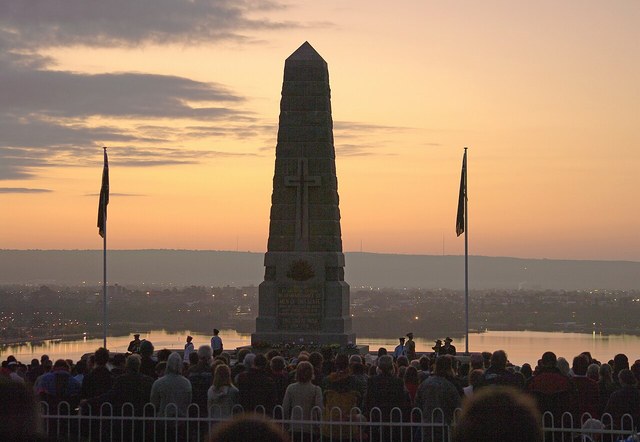
Holiday held on April 25th to commemorate a pair of national forces that fought at Gallipoli.
H
This holiday commemorates an event that saw fighting at locations such as “Baby 700” and “400 Plateau,” by forces led by William Birdwood.
H
Traditions during this holiday include a “gunfire breakfast” of coffee and rum, as well as an annual soccer match between Essendon and Collingwood.
H
Oceanic troops who fought, particularly at Gallipoli, are remembered on April 25.
M
This holiday’s origin lies in a World War I campaign sponsored by Winston Churchill, which ultimately failed to defeat Ottoman forces at Gallipoli. name this day of remembrance that commemorates past military servicemen in Australia and New Zealand.
#694 · Other Rebellions, Revolts, and Uprisings · Level 1
Bolshevik coup · November 1917 · Petrograd, Russia
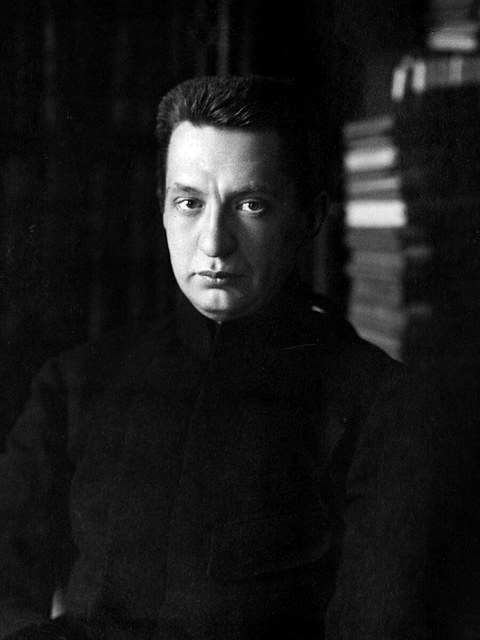
The October Revolution was the Bolshevik seizure of power that overthrew Alexander Kerensky's Provisional Government and established Lenin's communist regime in Russia.
The kit
Planning — October Revolution was planned by the Bolsheviks using the slogan "Peace, Land, Bread" to appeal to war-weary peasants and workers.
Execution — October Revolution began when the cruiser Aurora fired a blank shot at the Winter Palace, where Kerensky's cadets failed to hold the building.
Leadership — October Revolution was led by Vladimir Lenin and Leon Trotsky, with Lenin having arrived from Switzerland and issued his April Theses.
Aftermath — October Revolution was followed by negotiations for the Treaty of Brest-Litovsk with Germany and was documented in John Reed's Ten Days That Shook the World.
occurred in Petrograd during World War I open card →
The ladder · 15 clues
H
In a book focusing on this event, Rosa Luxembourg described it as a “complete failure.” John Reed’s reporting on this event provided the basis for his book Ten Days that Shook the World.
H
The beginning of an event during this period was signaled by a blank shot fired from the cruiser Aurora.
H
This event coincided with the Red Guard of Finland overthrowing the White Senate during the Finnish Civil War.
H
Kerensky’s government was overthrown in this revolution which saw Lenin’s Bolshevik party seize power.
H
British military officer Alfred Knox observed the capture of an important building in this event.
H
A blank was fired by the Aurora during an attack on the Winter Palace during this event, which occurred months after a Provisional Government was established following a similar event in February.
H
“Peace, Land, and Bread” can sound very appealing, especially to peasants. :That phrase was used as a slogan by the Bolsheviks in this 1917 revolution that put them in power. It took place in the same year as the February Revolution.
M
This event, preceded by an attempted coup in the Kornilov Affair, involved participants shouting "Peace, Land, Bread." The provisional government of Alexander Kerensky was toppled during this event.
M
The participants in this event used the slogan "Peace, Land, Bread," and toppled the provisional government of Alexander Kerensky. name this Russian coup led by Trotsky and Lenin late in 1917.
M
Alexander Kerensky’s cadets in Petrograd failed to hold the Winter Palace near the beginning of this event.
Mostly bloodless, the only military action to occur was the Aurora firing on the Winter Palace.
E
The Bolsheviks planned this autumn 1917 Russian revolution.
E
The Treaty of Brest-Litovsk was negotiated with Germany following this event. name this 1917 event that saw the Provisional Government under Kerensky fall to the Bolsheviks under Vladimir Lenin.
E
The Kadets, led by Alexander Kerensky, had succeeded in the February Revolution months before this one, and failed to hold the Winter Palace from the advancing forces of the Directorate. name this late-1917 Bolshevik uprising led by Vladimir Lenin.
10 more clues from the record
H
Anna Anderson falsely claimed to be one person imprisoned during and executed after this war, and one leader was smuggled to the site of this conflict by train from Switzerland and explained his April Theses upon his arrival.
H
Prior to this event, one man gave a speech asking if the government’s failures were the result of “stupidity or treason.” After one phase, the Women’s Battalion of Death was formed.
H
Alexander Parvus may have aided one side in this conflict, including arranging for one leader’s transport in a secret train from Switzerland.
H
During a lull in this conflict, the First Machine Gun Regiment occupied the area outside the Tauride Palace during the July Days demonstrations.
H
American writer Louise Bryant also witnessed this event, and this event saw the mobilization of Women’s Battalions to guard a critical site.
H
An attempted coup known as the Kornilov affair took place the month before this event, during which the proclamation “To the Citizens of Russia” was issued.
H
Early in this event, one of its leaders crossed the city, wearing a handkerchief to feign a toothache and acting drunk to avoid inspections.
H
Name these things from the early years of Bolshevik rule in Russia .The Bolsheviks took power from the Kerensky government in this brief 1917 event.
H
During this period, one thinker first posited a “dual power” held between an illegitimate government and the people.
H
That leader during this revolution, the author of the April Theses, overthrew the provisional government headed by Alexander Kerensky.
Watch out: February Revolution (occurred months earlier in 1917, also overthrew Russian government)
American WWI general · 1860–1948 · United States, France, Mexico, Philippines
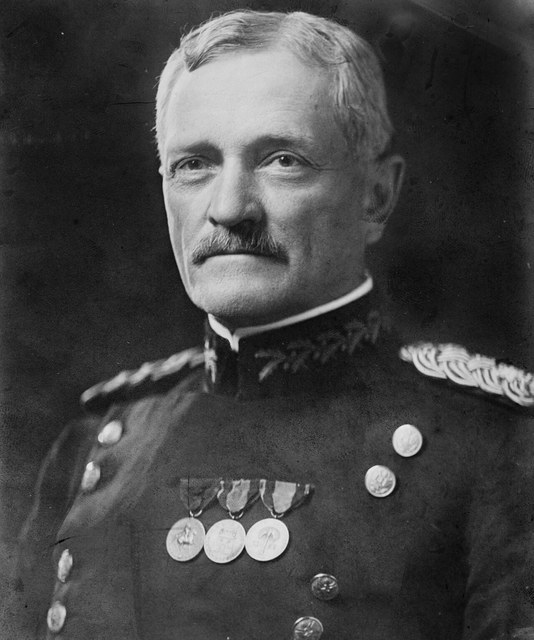
John J. Pershing commanded the American Expeditionary Forces in World War I and held the unique rank of General of the Armies.
The kit
Rise — John J. Pershing earned his nickname "Blackjack" while serving with the African-American 10th Cavalry Regiment during the Spanish-American War and Moro Rebellion.
Achievements — John J. Pershing commanded American forces at Cantigny and Belleau Woods and led the First Army at St. Mihiel during World War I.
Conflicts — John J. Pershing led the Punitive Expedition to capture Pancho Villa after Villa's 1916 attack on Columbus, New Mexico, with George Patton serving as his aide.
Legacy — John J. Pershing shares with George Washington the distinction of holding the rank General of the Armies, awarded during his lifetime.
Runs with
Pancho Villa
led Punitive Expedition to capture Villa after Columbus raid open card →
World War I
commanded American Expeditionary Forces throughout the war open card →
Mexico
led expedition into Mexico pursuing Pancho Villa in 1916 open card →
During his early service, this man captured Datu Amil in the Moro Rebellion and fought with the Buffalo Soldiers of the 10th Cavalry, granting him his nickname.
H
While deployed to Fort Bliss, this man’s wife and children tragically died in a fire in San Francisco.
H
Donald Trump claimed this man executed 49 “Muslim terrorists” with bullets dipped in pig’s blood.
H
This man was appointed to a command after the death of his superior, Frederick Funston.
H
This man served as Professor of Military Science and Tactics at the University of Nebraska-Lincoln for four years, during which time he formed a highly successful drill team.
H
In that post, this man placed the 92nd and 93rd Infantry divisions under French command, and this man previously taught the African-American school in Laclede, Missouri.
H
In 1914, Woodrow Wilson ordered this man to lead the expedition to capture Pancho Villa.Name this General of the Armies, nicknamed "Blackjack."
M
As a West Point instructor, this man was ridiculed for his time leading the 10th Cavalry, an African American regiment.
M
Patton first saw combat in an expedition led by this man to capture Mexican revolutionary Pancho Villa. This man would later lead US troops during World War I.
M
Charles Stanton, this man’s personal aide, recorded him as saying “Lafayette, we are here” during a visit to Lafayette’s tomb in Paris.
M
This man agreed to allow Americans to be placed in foreign control for the first time when he worked with Australia at the Battle of the Hamel.
M
After an attack on the town of Columbus, New Mexico, this general was sent to lead the Punitive Expedition to capture Pancho Villa.
E
General nicknamed who commanded the American Expeditionary Force during World War One.
E
Along with George Washington, this man is the only holder of the rank “General of the Armies.” name this leader of American troops in World War I.
E
Future commander of the American Expeditionary Forces in World War One who fought on Kettle Hill R
10 more clues from the record
H
In one conflict, this man's forces first engaged with the enemy at Cantigny [[kahn-teen-YEE]] and Belleau [["BELLOW"]] Woods.
H
This man was the only American to have been awarded the rank of General of the Armies during his lifetime, and at St. Mihiel, this man was in command of the First Army.
H
This man was criticized for breaching authority in petitioning the Supreme War Council for a German unconditional surrender instead of an armistice.
H
This man cut a notch in his Colt revolver after claiming credit for killing second-in-command Julio Cardenas.
H
This man was the quartermaster for the African-American 10th Cavalry Regiment during the attack on Kettle Hill in the Spanish-American War.
H
Edward House prevented the official reprimand of this man for protesting a potential armistice to Supreme Allied Council.
H
This man agreed to put his troops under the command of the Australian John Monash during the Battle of Hamel.
H
This American rose to prominence after decisively defeating Datu Amil at Bud Bagsak in the Philippines.
H
This man nicknamed his personal aide George S. Patton “Bandito” on one excursion.
H
This man’s wife and three daughters died in a fire at the Presidio in San Francisco.
Watch out: Frederick Funston—Pershing received his WWI command after Funston's death
#892 · US Treaties and Diplomatic Agreements · Level 1
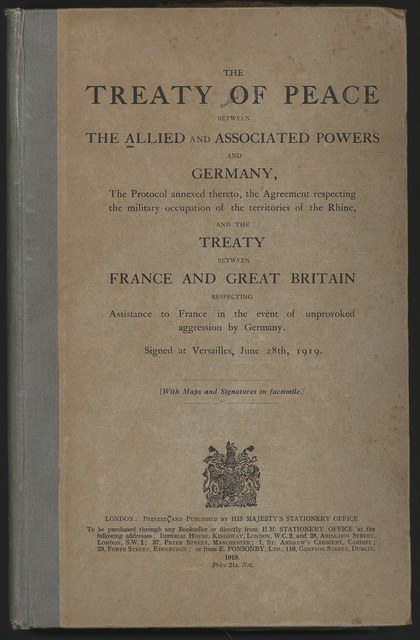
Key provisions — Treaty of Versailles included Article 231 (War Guilt Clause) requiring Germany to accept responsibility for causing World War I and pay reparations.
International consequences — Treaty of Versailles created the League of Nations and awarded Shandong Peninsula to Japan, sparking China's May Fourth Movement protests.
U.S. rejection — Treaty of Versailles was opposed by the Irreconcilables led by Henry Cabot Lodge and never ratified by the United States Senate.
Runs with
World War I
Officially ended World War I for Germany open card →
Germany
Imposed territorial losses, military restrictions, and reparations on Germany open card →
League of Nations
Established the League of Nations as part of its terms open card →
Woodrow Wilson
Negotiated by Wilson based on his Fourteen Points open card →
The ladder · 15 clues
H
The Irreconcilables opposed the signing of this treaty and were supported by Henry Cabot Lodge, who specifically opposed its Article 10.
H
The provision of this treaty that gave territory in the Shandong Peninsula to Japan sparked the Chinese nationalist movement called the May Fourth Movement.
H
Faisal delivered a speech in favor of Arab independence at the Paris Peace conference, which culminated in the signing of this Treaty ending World War I.
H
The diplomats that negotiated this treaty included Lords Sumner and Cunliffe, the “Heavenly Twins.” This treaty included global recognition of the International Opium Convention and the establishment of the Free City of Danzig.
H
A negotiator of this treaty, Edward House, was recalled from the Council of Ten for taking unsanctioned liberties.
H
This treaty was followed up in the United States by the Knox-Porter Resolution, and it was vehemently opposed by the “Irreconcilables”.
H
A requirement to join the League of Nations was the death knell of this 1919 treaty ending World War I that was never ratified by the United States.
M
Treaty that he helped negotiate at the Paris Peace Conference
M
As part of this treaty’s Article 231, Germany accepted responsibility for causing World War I. This treaty is named for the palace in which it was signed.
M
Henry Cabot Lodge led a group of Congressmen who opposed this agreement that was negotiated by the Big Four.
M
Due to its unfavorability to one side, John Maynard Keynes described this agreement as a “Carthaginian peace”.
M
One of the negotiators of this treaty joked he was “seated between Jesus Christ and Napoleon.” William Borah, Robert La Follette, and the other “Irreconcilables” were staunchly opposed to this treaty.
Henry Cabot Lodge opposed ratification of, for the points, what treaty which officially ended World War One?
E
The League of Nations was created in response to this agreement, which built on the Fourteen Points of Woodrow Wilson. name this 1919 treaty ending the First World War.
10 more clues from the record
H
The negotiation of this treaty was walked out on by Vittorio Orlando, and its “economic consequences” were examined by John Maynard Keynes.
H
In this treaty, the Chinese had their own ambitions shot down when Shandong was given to Japan, starting protests in Tiananmen Square on May fourth.
H
The demonstrations of China’s May Fourth Movement occurred in response to a provision of it giving Shandong to Japan.
H
This treaty was modified by the Dawes and Young plans, and Italy was represented by Vittorio Orlando during its negotiation.
H
A banker and a judge who helped draft this treaty were nicknamed the “heavenly twins.” Polish pianist Ignacy Paderewski served as a delegate to this treaty, which left the status of the Teschen district unresolved and demanded the transfer of the regions of Eupen-Malmedy and Saar.
H
After changes in this treaty were made by Colonel Edward House, the president removed him and never spoke to him again.
H
This document is depicted bandaged and on crutches in a Clifford Berryman political cartoon called “The Lamb from the Slaughter.” The American Pageant author Thomas A. Bailey cast debate over this document as a “great betrayal.” A president gave speeches backing this document in the same locations as opponents like Thomas A. Reed, culminating in a near-fatal speech in Pueblo.
H
Some opponents of this agreement denounced the “November Criminals” and propagated the “Stab-in-the-back legend.” Some of this treaty’s terms were set by Lords Sumner and Cunliffe, nicknamed the “Heavenly Twins.” An ally of one party involved in this treaty was subject to the Treaty of Trianon, which was signed in a nearby palace.
H
Name some responses to World War I, :The War Guilt Clause of this peace treaty made Germany accept responsibility for all the damage caused by the war. Other sections of it governed the payment of reparations and restrictions on the German military.
H
A delegation led by the Heavenly Twins and Billy Hughes claimed that a specific clause introduced by Japan into this treaty which prohibited discrimination on the basis of race or ethnicity would destroy White Australia, so it was removed.
Watch out: Treaty of Trianon (separate treaty signed in nearby palace with Austria-Hungary's allies)
served as French premier and Interior Minister open card →
Panama
reputation fell after Panama scandal bribery open card →
The ladder · 15 clues
H
This leader challenged Paul Déroulède to a duel after Déroulède accused this leader of involvement in the Panama scandal.
H
This man's links to Cornelius Herz may have cost him re-election when the Panama scandal broke, and while he was in office, he constantly feuded with Raymond Poincaré.
H
This man joked that his failed assassin should receive firearms training in prison.
H
One of the "Dreyfusards" who supported Major Dreyfus during his re-trial was this Minister of the Interior and later Prime Minister of France, nicknamed "The Tiger."
H
This man lived with a bullet between his ribs for the rest of his life after a failed assassination attempt by Emile Cottin.
H
This world leader controversially relieved Maurice Sarrail from command in one of his first actions as leader.
H
Name these politicians of the World War I era, :His first premiereship fell in 1909, after which he attacked French defeatism with his newspaper L’Homme libre; he returned to power in 1917 after succeeding Paul Painlevé as premier.
M
During the Dreyfus affair, this man published Émile Zola's J'Accuse letter on the front of his newspaper, L'Aurore. Name this "Tiger," a French premier who attended the Paris Peace Conference after World War I.
M
Emile Zola published J’accuse in L’Aurore, a newspaper published by this French politician.
M
This man’s newspaper L’Aurore [“low-ROAR”] was where Emile Zola’s “J’Accuse” [“jah-KOOZ”] was first published.
Wet nursing’s persistence in France led this prime minister to give a 15-franc stipend to mothers who nursed their own children. This politician made a failed bid for president one year after codifying the eight-hour workday.
E
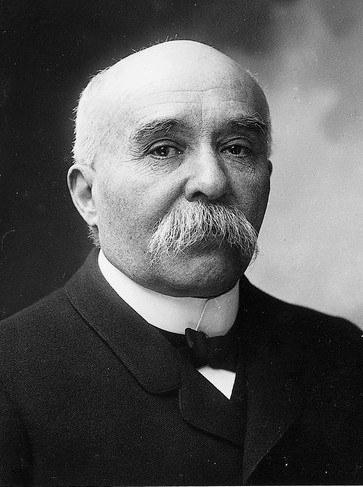
This Prime Minister of France, known as “the Tiger,” led the French delegation at the Paris Peace Conference. His insistence on harsh German reparations made it into the Treaty of Versailles.
E
Lloyd George was, of course, at the Paris Peace Conference in 1919, where he ofen clashed with this French statesman known as the Tiger, who was another member of the Big Four.
E
Political cartoons often labeled this man as “The Tiger” to highlight his anti-German sentiments.
10 more clues from the record
H
This other head of state present at the Paris Peace Conference was nearly assassinated by Emile Cottin; per the Treaty of Versailles, his nation regained the territory of Alsace-Lorraine.
H
He resigned as Mayor of Montmarte when he failed to resolve the Paris Commune crisis, but he successfully brought down Jules Ferry’s administration by dramatizing the Tonkin disaster.
H
This other French prime minister was a leading opponent of Ferry’s colonial policy. He was nicknamed “The Tiger,” and his magazine L’Aurore published Émile Zola’s J’Accuse.
H
It was this journalist and politician’s paper L’Aurore which published the most famous defense of Dreyfus. He later led the French delegation at the Paris Peace Conference.
H
While serving as Interior Minister, this leader created a police force known as the Mobile Brigades alongside Célestin Hennion .
H
This politician lost an election due to his association with Cornelius Herz and the Panama Affair, and he survived an assassination attempt by Emile Cottin.
H
After being defeated by Paul Deschanel in a presidential race, he resigned from his most famous post which he served under Raymond Poincaré.
H
Due to this man’s intervention, Georges Boulanger, an advocate of revanchism, was made War Minister in the cabinet of Charles Freycinet.
H
This man wrote a history of the Jewish people titled At the Foot of Mount Sinai.
H
This leader ordered the arrest of his predecessor Joseph Caillaux for his antiwar activities.
Watch out: Paul Deschanel (defeated Clemenceau in a presidential race)
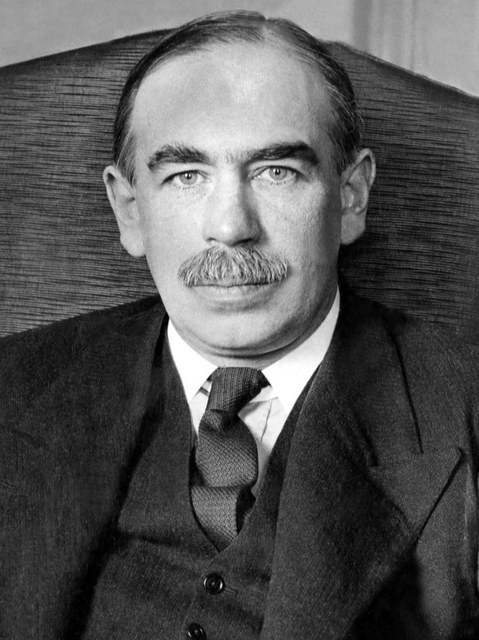
#1058 · Philosophers and Economic Thinkers · Level 1
John Maynard Keynes was a British economist who advocated deficit spending during recessions and challenged classical economic assumptions about full employment.
The kit
Rise — John Maynard Keynes was a prominent member of the Bloomsbury Group and authored A Treatise on Probability in 1921.
Achievements — John Maynard Keynes wrote The General Theory of Employment, Interest and Money, introducing the consumption function and multiplier effect.
Conflicts — John Maynard Keynes attacked harsh reparations on Germany in The Economic Consequences of the Peace after the Treaty of Versailles.
Legacy — John Maynard Keynes proposed the International Clearing Union at Bretton Woods and inspired the IS/LM model developed by Alvin Hansen.
Runs with
Treaty of Versailles
criticized its harsh reparations on Germany open card →
Germany
warned reparations would cripple its economy open card →
Lydia
married Russian ballerina Lydia Lopokova open card →
Paris
opposed by Heavenly Twins at Peace Conference open card →
The ladder · 15 clues
H
This man proposed the International Clearing Union to regulate foreign exchange markets during the Bretton Woods Conference.
H
This man gained fame for attacking the harsh reparations demanded of Germany through the Treaty of Versailles in his book The Economic Consequences of the Peace.
H
Thismandescribedandnamesatypeofbeautycontestwherethejudgesratebasedonhowtheythink other people will rate.
H
This philandering husband of dancer Lydia Lopokova, a non- philosopher who discussed philosophy with the Bloomsbury Group, proposed the underlying assumptions that Alvin Hansen used to make the IS/LM model.
H
This man introduced the ideas of the consumption function while denying that the economy would adapt to give full employment, instead believing in booms and panics.
H
The Chicago school of economics generally rejects the theories of this British economist, who advocated deficit spending to spur economies out of recessions.
H
This economist proposed a namesake beauty contest where participants make choices based on how they feel other’s will respond.
H
This man's wife was the Russian ballerina Lydia Lopokova, and his brother injected radium chloride to fight breast cancer tumors.
M
The economic philosophies of this British author of The General Theory of Employment, Interest and Money were revived in the West after the global financial crisis of 2007-2008.
M
This man was opposed by the “Heavenly Twins” at the Paris Peace Conference.
M
This author of A Treatise on Probability was a prominent member of the Bloomsbury Group.
M
This conscientious objector described how “I work for a government I despise for ends I think criminal” in a letter to his lover Duncan Grant.
E
This man argued against harsh monetary reparations placed on Germany in the Treaty of Versailles in The Economic Consequences of the Peace.
E
This author wrote The General Theory of Employment, Interest and Money. name this English economist who opposed Classical Economics.
E
This man argued that demands for heavy reparations would cripple Germany's economy in The Economic Consequences of the Peace. name this Cambridge economist whose General Theory argued for government deficit spending during recessions.
9 more clues from the record
H
This man joked "Well, God has arrived" when his friend Ludwig Wittgenstein came to teach at his university.
H
This economist’s namesake cross diagram relates aggregate expenditure and economic output.
H
This man proposed a logical-relationist theory of probability in a 1921 treatise.
H
British economist who grimly predicted the Economic Consequences of the treaty.
H
This man first mentioned his "multiplier effect" in The Means to Prosperity.
H
This man noted that “The clock cannot be set back.
H
With Hubert Henderson, this Liberal peer wrote the pamphlet “Can Lloyd George Do It?” This man resigned from the Indian Fiscal Commission after marrying the ballerina Lydia Lopokova.
H
This man temporarily kept a Cézanne still-life in a hedge while returning from a project to buy paintings for the National Gallery in Paris.
H
This advisor’s views were spurned in favor of the Heavenly Twins, Lord Sumner and Lord Cunliffe.
Watch out: Chicago school economists generally reject his theories
#1098 · US Supreme Court Cases · Level 1
Schenck v. United States
1919 Supreme Court case · 1919 · United States
Schenck v. United States was a 1919 Supreme Court case that upheld the Espionage Act and established the "clear and present danger" test.
The kit
Background — Schenck v. United States arose when Socialist Party general secretary Charles Schenck distributed antiwar pamphlets urging draft resistance, violating the Espionage Act.
Decision — Schenck v. United States produced a unanimous opinion by Oliver Wendell Holmes Jr. introducing the "clear and present danger" test for limiting speech.
Legacy — Schenck v. United States introduced the famous analogy of "shouting fire in a crowded theater" to illustrate unprotected speech.
Reversal — Schenck v. United States was weakened by subsequent "bad tendency" tests and overturned fifty years later in Brandenburg v. Ohio.
Runs with
Ohio
Brandenburg v. Ohio overturned this case in 1969 open card →
Oliver Wendell Holmes Jr.
Holmes wrote the unanimous opinion establishing "clear and present danger" open card →
First Amendment
established limits on First Amendment free speech rights open card →
An Associate Justice of the Supreme Court used a standard set in this case to argue in favor of the defendant in Abrams v.
H
Case in which the “clear and present danger” doctrine was created to uphold the conviction of a Socialist antiwar organizer
H
The precedent established by this case was altered in the case whose dissent introduced the marketplace of ideas, Abrams v.
H
The standard in this case was limited in Whitney vs. California, which replaced it with the nebulous “bad tendency” standard.
H
Ohio possibly overturned this case, whose central figure worked with Elizabeth Baer to pass out documents with advice like “Do not submit to intimidation,” trying to obstruct the draft.
H
Because a standard set in this case was not met, Jacob Abrams lost his Supreme Court case eight months later.
H
A week after this case was decided, Jacob Frohwerk had his similar conviction upheld as well.
M
The results of this case were ultimately weakened by the "bad tendency" test introduced in Patterson v.
M
Fifty years later, this decision was overturned in the case of Brandenburg v.
M
Elizabeth Baer was originally tried alongside the plaintiff in this case, which paved the way for the ruling in Abrams v.
M
The defendant in this case was jailed for distributing documents which quoted the 13th Amendment before stating “Do not submit to intimidation.” A standard set by this case was superseded after Brandenburg v.
M
It arose when the general secretary for the Socialist party challenged his conviction for distributing pamphlets designed to obstruct the draft. what was this 1919 case in which Justice Holmes issued his famous opinion containing the “clear and present danger” test and the analogy to a person yelling fire in a theater?
E
The metaphor of “shouting fire in a crowded theater” was used in this 1919 Supreme Court case concerning the Espionage Act in which Oliver Wendell Holmes outlined the “clear and present danger” test.
E
The Rosenbergs were convicted under the Espionage Act, whose constitutionality was upheld by this 1919 Supreme Court case. In his decision on this case, Oliver Wendell Holmes introduced the concept of “clear and present danger” as a limit on First Amendment rights.
E
The plaintiff in this case violated the Espionage Act by distributing leaflets that stated that “a conscript is little better than a convict.” In the unanimous opinion of this case, Oliver Wendell Holmes, Jr. wrote of a “man falsely shouting fire in a theater.” name this 1919 Supreme Court case which established the “clear and present danger” test.
10 more clues from the record
H
This case's ruling was extended to a case that centered on Eugene Dennis, who petitioned for one cause alongside Benjamin J. Davis.
H
The decision in this case claimed that the character of an act depends on its circumstances, citing Aikens v.
H
A more protective standard was implemented following this case, which replaced the Hicklin test.
H
The central concept of this decision was modified in the case of Whitney v.
H
Decided along with the case Baer v.
H
U.S., and was officially established in Brandenburg v.
M
This case's plaintiff distributed flyers noting that "a conscript is little better than a convict," thus violating the Espionage Act.
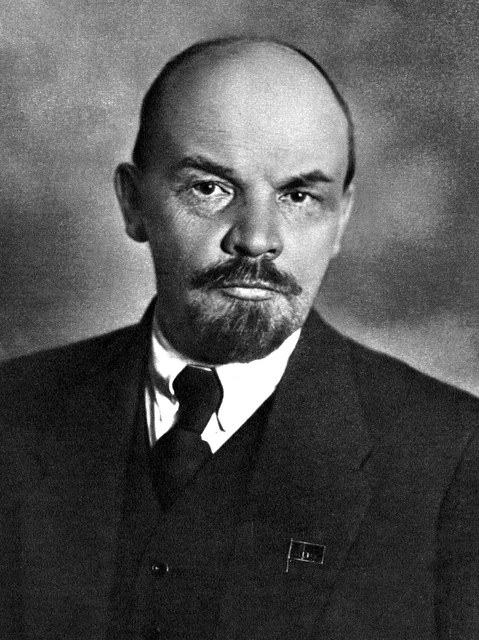
Bolshevik revolutionary leader · 1870–1924 · Russia/Soviet Union
Vladimir Lenin led the October Revolution, founded the Soviet Union, and implemented the New Economic Policy before being succeeded by Stalin.
The kit
Rise — Vladimir Lenin returned from Swiss exile on a sealed train through Germany and issued the April Theses condemning the Provisional Government.
Achievements — Vladimir Lenin authored What Is to Be Done?, advocating a vanguard party, and wrote Imperialism, the Highest Stage of Capitalism.
Conflicts — Vladimir Lenin's Bolsheviks overthrew Alexander Kerensky's Provisional Government in the October Revolution and defeated the White Army in civil war.
Legacy — Vladimir Lenin designated Leon Trotsky as his successor, but Joseph Stalin ultimately replaced him as Soviet leader.
Runs with
October Revolution
led the Bolsheviks in this 1917 uprising open card →
Man who preceded Stalin as leader of the Soviet Union.
H
After returning from exile in Switzerland on a sealed train, this man led the Bolsheviks in the October Revolution of 1917. name the first leader of the Soviet Union.
H
This man was inspired by Nikolai Chernychevsky’s novel of the same name, and argued for a socialist political party in his pamphlet What Is to Be Done?.
H
This man integrated capitalism into his New Economic Policy to fulfill the promise of “land, peace, and bread” that fueled his support.
H
This first leader of the U.S.S.R. fittingly wrote the introduction to the second edition of Ten Days That Shook the World.
H
Answer the following about the name ‘Stalin’. :Josef Stalin succeeded this Bolshevik Leader as the head of the USSR. The city of St. Petersburg was renamed in his honor after his death.
H
Give these figures from the Revolutionary period in Russia, .This man rode the “sealed train” into Petrograd and wrote the April Theses.
M
What is to be Done? was written by this man whose New Economic Policy advocated for a state-run free market.
M
He issued a series of “April Theses” after riding through Germany on a sealed train.
M
This leader’s writings include Imperialism, the Highest Stage of Capitalism, and a work in which he argues for the creation of a vanguard, What is to be Done?
M
This man condemned the government in his April Theses and began a series of economic reforms called the New Economic Policy.
M
He composed his revolutionary April Theses on a sealed train from Germany to his homeland. :Name this man who led the October Revolution.
E
The Provisional Government was overthrown by this Bolshevik leader who led the first Soviet government.
Alexander Kerensky’s government was overthrown in the October Revolution by this man’s forces, who defeated the White Army in the resulting civil war. name this leader of the Bolsheviks and founder of the Soviet Union.
10 more clues from the record
H
This man was dispatched to Finland Station in a "sealed train" by mischievous Germans, who believed that his presence would unsettle his home country.
H
Disgruntled socialist Fanny Kaplan successfully shot and injured this man after he gave a speech at an arms factory.
H
The German Empire intentionally let this man and 32 supporters travel in a protected train to the Finland Station.
H
A political pamphlet by this man encouraged the establishment of a vanguard to spread his ideology among the masses.
H
This man founded the newspaper The Spark for his political party.
H
This man's spouse Nadezhda [[nah-des-DAH]] edited the newspaper Iskra and fronted the Central Committee while in exile in France.
H
This man, who developed the concept of democratic centralism to keep party unity, split with Julius Martov over disagreements about the role of the professional revolutionary.
H
He argued that countries would fight until the rise of socialist governments in the work Imperialism, the Highest Stage of Capitalism.
H
This editor of the newspaper Iskra wrote about the “burning questions of our movement” in a pamphlet titled What Is to Be Done?
H
This Marxist philosopher outlined his namesake philosophy in books such as The State and Revolution and Imperialism: the Highest Stage of Capitalism.
Watch out: Confused with Joseph Stalin, who succeeded him as Soviet leader
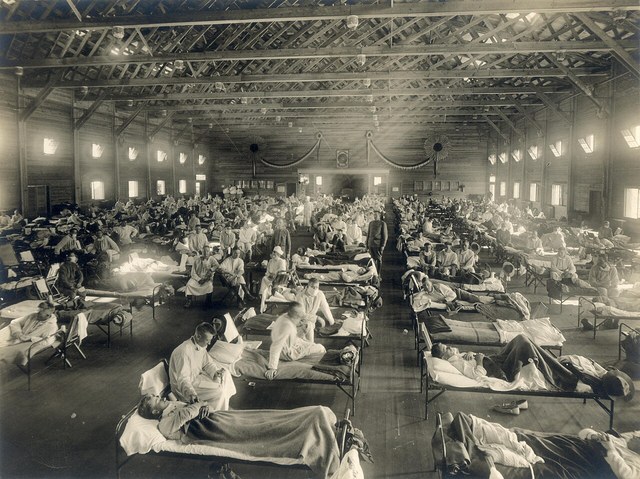
Spanish Flu was a 1918 H1N1 influenza pandemic that killed 50 to 100 million people, roughly five percent of the world's population.
The kit
Origins — Spanish Flu may have originated at Camp Funston in Fort Riley, Kansas, possibly from pigs feeding soldiers or Chinese labor corps transport.
Spread — Spanish Flu was spread globally by soldiers near the end of World War I and killed disproportionately more young adults through cytokine storms.
Name — Spanish Flu got its name because King Alfonso XIII's illness received heavy coverage in Spain, which lacked wartime press censorship unlike combatant nations.
Impact — Spanish Flu killed over a fifth of Samoa's population under New Zealand rule and devastated Brevig Mission, Alaska, where 72 of 80 Inuit residents died.
Runs with
World War I
spread by troop movements, ended as war concluded open card →
Kansas
first reported at Camp Funston in Fort Riley open card →
New Zealand
ruled Samoa where fifth of population died open card →
This disease failed to hit American Samoa after John Poyer implemented a quarantine.
H
This event, which may have been sparked by rail transport of the Chinese labor corps in the US, caused encephalitis lethargica and cytokine storms in its victims.
H
This event particularly affected the Inuit community of Brevig Mission, Alaska which lost 72 of its 80 residents.
H
Historian Mark Humphries suggested that this event may have begun with the mobilization of Chinese laborers.
H
Camp Devens in central Massachusetts was the site of the deaths of over 800 soldiers from this illness, and, along with the Boston Navy Yard, was responsible for spreading this pandemic’s second wave. name this deadly global pandemic, which started during World War One.
Heavy newspaper coverage of an illness experienced by Alfonso XIII [[the thirteenth]] led to the most common name for this event.
M
Woodrow Wilson nearly died in this event, which was first reported in the United States at Camp Funston in Fort Riley, Kansas.
M
The common name for this event was coined when King Alfonso XIII (the thirteenth) was affected by it in a country that lacked wartime press censorship.
M
The outbreak of this disease prompted a children’s song about opening the window to receive a bird named Enza.
M
This event may have begun in Camp Funston, Kansas, and was exacerbated by a Liberty Loans parade in Philadelphia.
M
This event, which killed about five percent of the world’s population, was spread across the globe by soldiers near the end of World War I. name this 1918 pandemic, commonly named for an Iberian country that didn’t censor the high death toll.
E
A Metropolitan Life study found that 3.28% of American industrial workers died during this event, which got its name due to false reporting about its strength in a nation ruled by King Alfonso XIII. 100 million people were killed worldwide by a strain of H1N1 during this pandemic that overlapped with the end of World War One.
E
Scientists unearthed victims from the Arctic permafrost to create a genomic sequence of the H1N1 virus that caused this pandemic that killed five percent of the world’s population near the end of World War I.
E
Up to 8% of Tonga’s population died as a result of this global pandemic caused by the H1N1 virus. It is commonly named for the country that first reported it.
10 more clues from the record
H
This disease disproportionately affected males, and had notably high death rates in young adults.
H
This event may have originated from pigs meant to feed soldiers stationed atCamp Funston.
H
In 2009, Karen Starko claimed that this event was exacerbated by the Surgeon General’s instruction to take aspirin.
H
The Warlord Period is likely responsible for the lack of concrete data on this disease’s effects in China.
H
Unlike most pandemics, this one killed proportionally more adults than elderly and children, because of its use of a cytokine storm. :Name this influenza outbreak that killed three to five percent of the global population in the year World War I ended.
H
Howard Markel’s research into this event’s “escape communities” like Gunnison, Colorado led to George W. Bush’s policy of “protective sequestration.” Catharine Arnold’s book on this event profiled FDR and the crew of USS Leviathan.
H
An aria from the operetta The Song of Forgetting was the source of one name for this event, ‘the Naples Soldier’, while its usual English name derives from the skewed effect of wartime censorship over-emphasising it in neutral combatants.
H
As the disease spread, many countries were reluctant to publicize it due to censorship, except for one country whose newspapers freely discussed it because it had not imposed censorship, as it was not involved in the war.
H
A 2010 controversy between Andrew Noymer and Karen Starko disputed the hypothesis that many American victims of this event actually died from the aspirin megadoses which were used to treat it.
H
During New Zealand’s rule, over a fifth of the Samoan population died during this pandemic. During this pandemic, between 50 and 100 million people around the world died from a strain of H1N1.
Watch out: Franklin Delano Roosevelt survived Spanish Flu, not polio (which he contracted later)
#1375 · World War I Battles and Campaigns · Level 1
Key Forces — Gallipoli Campaign involved ANZAC forces from Australia and New Zealand landing at Anzac Cove against Ottoman troops commanded by Mustafa Kemal.
Failed Offensives — Gallipoli Campaign's August Offensive failed after unsuccessful attacks on Scimitar Hill and Hill 60, leading to Ian Hamilton's removal.
Aftermath — Gallipoli Campaign resulted in Churchill's resignation as First Lord of the Admiralty and the creation of ANZAC Day to commemorate the battle.
planned the campaign as First Lord of the Admiralty open card →
Dardanelles
strait the Allied operation aimed to seize open card →
New Zealand
provided ANZAC troops alongside Australia open card →
The ladder · 15 clues
H
Identify these items in Australian history .In 1997, Ted Matthews died, leaving no survivors of this April 1915 World War I battle on a Turkish beach involving Australian and New Zealand troops.
H
Answer the following about a World War I battle, :This Allied operation aimed to seize the namesake peninsula and capture Istanbul, but failed in part due to von Sanders' defense.
H
During this campaign’s bloodiest day, an attack on Hill 60 was launched simultaneously with Beauvoir de Lisle’s assault up Scimitar Hill.
H
In this campaign, William Scurry was able to use weights and water tins to invent a self-firing rifle.
H
A group of Russian Jewish emigres formed the Zion Mule Corps during this campaign which included the Battle of Scimitar Hill in its August Offensive.
H
The August Offensive failed during this campaign after attacking forces failed to link up in the heights above Suvla Bay.
H
This battle led to the sacking of Ian Hamilton after numerous unsuccessful attempts to capture Scimitar Hill during the August Offensive.
The Zion Mule Corps were used in this campaign to carry water to troops on Cape Helles.
M
Churchill had to resign as First Lord of the Admiralty after British and Allied forces retreated from a campaign on this Turkish peninsula in World War I.
M
Australians, along with New Zealanders, belonged to the ANZAC corps that were massacred at this WWI battle. Ataturk commanded troops here.
M
Failed World War I campaign he organized as First Lord of the Admiralty, in which over 8,000 Australians died.
E
Winston Churchill resigned as Lord of the Admiralty after this campaign, which resulted in the creation of ANZAC Day.
E
Australia and New Zealand celebrate their citizens' participation in this campaign as part of (*) ANZAC Day.
E
Great Britain’s forces were defeated in this World War One attempt to seize the Dardanelles Straits from the Ottoman Empire.
10 more clues from the record
H
Before this battle, Ian Hamilton was appointed to command the Mediterranean Expeditionary Force, but their failures ended his military career and led to the resignation of the First Lord of Admiralty.
H
During this campaign, a futile bayonet charge was led by Alexander Godfrey.
H
The Heroic acts known as the “Six VCs before Breakfast” occurred during this battle’s Landing at Cape Helles.
H
After the Battle of Scimitar Hill ended this campaign's failed August Offensive, Charles Monro replaced Ian Hamilton as Allied commander.
H
Sackville Carden was forced to draw up a purely naval version of this plan, and was replaced by John de Robeck.
H
In its early stages, one commander in this campaign told his men “I do not order you to fight, I order you to die.” This campaign began with Commonwealth troops landing at Anzac Cove.
H
Otto Liman von Sanders opposed ANZAC forces during this campaign, in which Mustafa Kemal rose to military prominence by commanding Turkish troops.
H
This battle ended when Ian Hamilton was removed in favor of Charles Monro, who planned the subsequent evacuation.
H
Battle where that founder defended the Dardanelles against a British amphibious attack, a major Ottoman victory.
H
This battle turned with news of Bulgaria’s alliance with the winning side and the failure of an attack on Scimitar Hill.
Watch out: Dardanelles (the strait the campaign aimed to control, sometimes confused with the campaign itself)
#1376 · World War I Battles and Campaigns · Level 1
It also saw attempts to capture High Wood during fighting at Bazentin Ridge, as well as an attempt to drive German forces out of Thiepval during an assault on the Mouquet Farm.
H
The Royal Newfoundland Regiment was nearly wiped out during this battle in which the South African Brigade fought at Delville Wood.
H
Nearly 20,000 British soldiers died on the first day of this battle, the bloodiest day in British military history.
H
During the early stages of this battle, Henry Rawlinson led a successful attack on Bazentin Ridge but was unable to capture High Wood.
H
More than 125,000 British soldiers were killed during this offensive on a namesake French river which lasted from July to November of 1916.
H
The tank and the “creeping barrage” tactic were first employed during this World War I battle. Douglas Haig suffered over 60,000 casualties on this battle’s first day.
H
One side in this battle saw almost 20,000 of its troops die on its first day, despite preceding its attack with seven days of bombardment.
M
Ferdinand Foch and Douglas Haig failed to make significant breakthroughs in the German line during this battle during the winter of 1916.
M
An explosion at Hawthorne Ridge during this battle was filmed by Geoffrey Malins.
M
In his book The World Crisis, Winston Churchill described the dismissal of this battle's planners Ferdinand Foch [] and Joseph Joffree.
M
This battle began with advances upon Albert and Bazentin Ridge. 1.5 million shells were fired in the opening bombardment of this battle.
M
British losses here earned Douglas Haig the moniker “Butcher of [this battle].” The Mark I Tank was deployed for the first time at this battle.
E
The Mark I [] Tank was first deployed at this battle, which was launched to relieve pressure from Verdun. name this 1916 World War One battle named for a river in Picardy, France, at which the British sustained 420,000 casualties.
E
Tanks were first used at this 1916 battle that failed to break the German line along a French river.
E
Joseph Joffre and Douglas Haig planned this 140-day offensive, which proved to be the largest of the Western front. name this 1916 battle for a namesake French river.
10 more clues from the record
H
The opening stage of this offensive, planned in accordance with the “bite and hold” strategy, was the Battle of Albert.
H
During an engagement in this battle, a British officer said to William Birdwood, "You're not fighting Bashi-Bazouks now" while defending Pozières [[poh-ZYEHR]].
H
This battle included a clash at Flers-Courcelette [flair cor-seh-lett] where key reinforcements from Canada and New Zealand arrived.
H
This battle was planned during the Chantilly Conference, and the lack of High Explosive shells led to most of the barbed wire remaining uncut on the first day.
H
As part of this battle, Hubert Gough led an offensive on Thiepval Ridge that was planned by Douglas Haig.
H
This battle’s concluding skirmishes in the Ancre valley were called off on account of the winter.
H
Operation Alberich saw a strategic retreat from the front lines of this battle.
H
During this battle, J.R.R. Tolkien came down with a fever and was ruled unfit to fight.
H
The Pals Battalions were dissolved after this battle due to a massive amount of casualties.
H
This battle’s fighting for Ancre ended early after bad weather.
Watch out: Battle of Verdun (concurrent 1916 battle that the Somme was launched to relieve)
#1377 · World War I Battles and Campaigns · Level 1
World War I naval battle · 1916 · North Sea off Denmark
Battle of Jutland was the largest naval battle of World War I and the only major clash of dreadnoughts during the entire war.
The kit
Opening phase — Battle of Jutland began with David Beatty's battlecruisers engaging Franz Hipper's forces in the Run to the South, during which the Indefatigable and Queen Mary were sunk.
Main engagement — Battle of Jutland saw John Jellicoe's Grand Fleet deploy to port from six rows of four, crossing the T against Reinhard Scheer's High Seas Fleet near Horns Reef.
Outcome — Battle of Jutland ended inconclusively with Britain suffering tactical losses but maintaining naval superiority in the North Sea, forcing Germany back to a fleet-in-being strategy.
Legacy — Battle of Jutland was summarized by one newspaper as Germany "assaulting its jailer, but is still in jail" after failing to break British naval dominance.
Runs with
World War I
only major dreadnought clash of the war open card →
Denmark
fought off coast near Jutland peninsula open card →
John
Admiral Jellicoe commanded British Grand Fleet open card →
David
Admiral Beatty led battlecruiser squadron open card →
The ladder · 15 clues
H
name the following naval battles of World War I:Fought between the British Grand Fleet and the German High Seas Fleet, this inconclusive battle near Denmark was the only major clash of dreadnoughts during the entire war.
H
David Beatty drew one fleet north during this battle, which resulted in a crossing of the T. The flagship of one side of this battle, the Iron Duke, heavily damaged the SMS Konig.
H
Sir David Beatty, fighting at this engagement, noted “There seems to be something wrong with our bloody ships today.” :Identify this 1916 battle between the High Seas Fleet of Germany and the Grand Fleet of Great Britain, which occurred in the North Sea.
H
This was the third naval engagement between steel battleships, after the Battle of the Yellow Sea and the Battle of Tsushima.
H
During this battle, a number of friendly ships nearly collided with each other in the Windy Corner.
H
In this battle, David Beatty’s battlecruisers took heavy losses and were forced to withdraw until John Jellicoe’s main fleet arrived.
H
This battle took place near Horns Reef thanks to Room 40’s success in decoding enemy messages.
M
In this battle, several ships were destroyed during the Run to the South before a reversal and a Run to the North.
M
A skirmish between Franz Hipper and David Beatty led to this battle, in which the Indefatigable and Queen Mary were sunk.
M
This battle resulted in one side returning to their “Fleet in Being” strategy for the rest of a war.
M
John Jellicoe’s victory over the Germans in the North Sea occurred in this 1916 battle, named for a Danish peninsula.
M
This battle occurred despite the fleet-in-being strategy of the German High Seas Fleet, which tried to avoid action against the superior British Grand Fleet. name this major 1916 battle, the largest naval battle of World War I.
E
Reinhard Scheer's forces clashed with those of John Jellicoe at this battle, which was nicknamed the "Clash of the Dreadnoughts." name this World War One naval battle in the North Sea, named for a peninsula that comprises most of Denmark's land.
E
During this battle, Admiral John Jellicoe achieved a strategic victory but suffered a tactical loss against the High Seas Fleet under Reinhard Scheer [sheer]. name this battle that took place off of the Denmark coast, the largest naval battle of World War I.
E
This was the largest naval battle in World War I. name this battle that occurred in the North Sea, just of the coast of a namesake peninsula.
10 more clues from the record
H
Key moments of fortitude in this encounter included Hartog’s leading his forces on a charge known as the “death ride,” and E.M. Philpotts’ using the Warspite to draw enemy fire in the “Windy Corner.” Initiated by the movement of British forces from Scapa Flow, it broke out from an early skirmish between Beatty and Evans-Thomas’ British scouting patrol and the scouts under Hipper.
H
A New York newspaper summarized this battle as one side “assaulting its jailer, but is still in jail.” One side in this battle made three 180 degree turns, sending its battlecruisers on a “death ride.” Another side in this battle deployed to port from 6 rows of 4, crossing the enemy T. The HMS Revenge and HMS Agincourt sighted the Seydlitz during this battle, but did not attack.
H
This biggest naval battle of World War I saw Sir John Jellicoe lead the British to a tactical victory over Germany and deliver a crushing blow to any hopes of Germany gaining naval superiority over the Allies.
H
This largest naval battle of World War I began with Germany attempting an ambush off the northwestern coast of Denmark. It ended indecisively, with the British maintaining naval superiority in the North Sea.
H
Although he was initially able to sink the Indefatigable, Reinhard Scheer withdrew to Wilhelmshaven after losing to John Jellicoe in this battle, thus not allowing the British to destroy their fleet.
H
It’s not the Battle of the Nile, at this battle, the 16-year-old “Boy” Cornwell was commended for standing and waiting for orders after everyone else around him had been killed.
H
The Warrior, the Indefatigable, and the Lutzow were among the vessels lost in this battle, whose main action was marked by an attempt to cross the T against the advancing fleet of Reinhard Sheer.
H
A previous engagement at Dogger Bank had taught one side that turrets were particularly vulnerable, knowledge used to sink the Invincible and Black Prince.
H
One side planned to ensnare David Beatty’s cruisers at Rosyth, and in this battle, the Grand Fleet was aligned end-to-end to maximize the power of its broadsides.
H
Another commander at this battle went on to issue the suicidal 24 October Order two years later, triggering the Kiel Mutiny.
Watch out: Battle of Tsushima—also a major steel battleship engagement, but occurred in 1905 during Russo-Japanese War
#1378 · World War I Battles and Campaigns · Level 1
First Battle of the Marne was a September 1914 Allied victory that halted the German advance on Paris and ended the Schlieffen Plan.
The kit
Strategic outcome — First Battle of the Marne forced German retreat to the Aisne River and began trench warfare on the Western Front.
German failure — First Battle of the Marne saw Alexander von Kluck disobey orders, allowing Maunoury to attack and forcing a 30-mile gap between German armies.
French mobilization — First Battle of the Marne featured taxi cabs transporting troops to the front as Joseph Joffre's reserves reinforced the line.
Command changes — First Battle of the Marne led to Helmuth von Moltke the Younger's removal from command after his nervous breakdown during retreat.
French Sixth Army attacked over Ourcq River open card →
Charles
Charles Lanrezac relieved before battle open card →
The ladder · 15 clues
H
The newly formed Sixth Army attacked over the Ourcq River during this battle.
H
Charles Lanrezac was relieved after his withdrawal from the Battle of Charleroi prior to this battle.
H
FTP, name this first major battle of World War I, in which German forces were barely turned back from marching on Paris at the namesake river.
H
Prior to this battle, General Lanrezac was replaced by Franchet d’Esperey in command of the Fifth Army.
H
This battle began when Joseph Gallieni managed to block orders to evacuate.
H
This battle was followed by the First Battle of the Aisne.
H
It ended when the British Expeditionary force, bolstered by the 5th and 6th French Armies, forced a general retreat of all German armies on September 11th. :Identify this first major engagement of World War I which saved Paris from German capture.
M
Taxi cabs were used to transport troops to the front in this battle.
M
The Entente victory at this first battle at a namesake river near Paris led to the failure of the Schlieffen Plan and the removal of Helmuth von Moltke the Younger from command.
M
This battle took place a couple of weeks after the British were defeated at the Battle of the Mons and September 9th saw von Moltke order troops to retreat to the River Aisne during this battle.
M
That opened a large hole in enemy lines that the British Expeditionary Force attempted to exploit.
M
The winning side in this battle had turned to fight after a lengthy retreat from the Battle of the Frontiers.
E
September 1914 battle, a “miracle” for the French that turned the German advance into a stalemate.
E
The Schlieffen Plan went awry as a result of this battle. name this World War I battle that prevented Germany from conquering Paris and began trench warfare.
E
Marking a failure of the Schlieffen plan, a second battle of this name was an resulted in an allied victory in 1918.
10 more clues from the record
H
Identify some World War I battles, .This earlier battle saw the French forces under General Joseph Joffre replenished by taxi from Paris and effectively ended the Schlieffen plan as the Germans were forced to retreat and entrench.
H
In doing so, he exposed his right flank to General Maunoury, who promptly attacked, forcing him to open a 30-mile gap on his left between his First Army and the Second Army under Karl von Bulow.
H
Karl Von Bulow commanded one of the attacking forces’ armies while Herbert Kitchener agreed to provide 70,000 men from the British Expeditionary Force, which Joffre had requested.
H
This 1914 Allied victory ended Bethmann-Hollweg’s “diagonal” policy and the September Programme, because of the separation of two German armies. It began the Race to the Sea.
H
After a stalemate at this early battle of the war, in September 1914, Germans dug the first trenches. Joffre’s French reservists were driven to this battle in taxicabs.
H
Before retreating to the Aisne river, von Moltke suffered a nervous breakdown after being told that his forces would be encircled and destroyed.
H
This early WWI battle halted the German army following their victory at the Battle of the Frontiers. It was fought along its namesake river.
H
One of the commanders in this battle reportedly told his leader “your majesty, we have lost the war,” after they commenced with a retreat.
H
Alexander von Kluck disobeyed orders during this battle by charging straight into Charles Lanrezac’s division.
H
Joseph Joffre kept Joseph Gallieni away from the front, although the latter was praised for his handling of reserve forces.
Watch out: Second Battle of the Marne (1918 Allied victory)
#1379 · World War I Battles and Campaigns · Level 1
Battle of Tannenberg (1914) was a decisive German victory over Russia in East Prussia that destroyed the Russian Second Army.
The kit
Outcome — Battle of Tannenberg (1914) resulted in the encirclement and destruction of the Russian Second Army under General Samsonov.
German command — Battle of Tannenberg (1914) saw Paul von Hindenburg and Erich Ludendorff achieve victory through superior use of railroads and interior lines.
Russian losses — Battle of Tannenberg (1914) inflicted over 90,000 Russian prisoners and caused General Samsonov to commit suicide.
Strategic impact — Battle of Tannenberg (1914) eliminated the immediate Russian threat to East Prussia in the war's opening weeks.
The ladder · 0 clues
Watch out: Battle of Tannenberg (1410) - medieval Teutonic Knights defeat, different battle same region
The League of Nations was an intergovernmental organization created after World War I to promote peace and prevent future wars.
The kit
Formation — The League of Nations was proposed in Woodrow Wilson's Fourteen Points and created by the Treaty of Versailles.
US non-membership — The League of Nations never included the United States because the Senate rejected the Treaty of Versailles and Henry Cabot Lodge's Reservations.
Successes — The League of Nations successfully resolved the Åland Islands dispute and the Incident at Petrich, and issued Nansen passports for refugees.
Failures & end — The League of Nations failed to stop Japan's invasion of Manchuria or Italy's invasion of Ethiopia, and voted itself out of existence in 1946.
Runs with
United Nations
replaced by the United Nations in 1946 open card →
Diplomatic body that Wilson’s 14 Points called for after that conflict ended. It was replaced by the UN.
H
It did nothing in response to the Mukden incident, after which Japan withdrew from this organization.
H
The fourteenth point was the idea for this international diplomatic organization. The efforts of Henry Cabot Lodge and other “irreconcilables” ensured that the United States never joined this group.
H
While working for this organization, Enrico Tellini was assassinated, setting off the Corfu (KOR-foo) incident.
M
The creation of this body was called for in the Fourteen Points of Woodrow Wilson.
M
This organization was criticized as "very well when sparrows shout, but no good at all when eagles fall out" by Benito Mussolini, who was not stopped frominvading Ethiopia by this group.
M
This institution, which recused itself from the Corfu Incident, first issued documents promoted by Fridtjof Nansen to aid stateless refugees.
M
Intergovernmental body and predecessor to the United Nations which was created at Versailles.
The Lodge Reservations were voted down by the Senate shortly before the Treaty of Versailles was voted down, so the US never joined this organization.
E
Aiming to keep the peace after the First World War, name this predecessor to the United Nations.
E
Japan left this organization after it invaded Manchuria in 1931, and Henry Cabot Lodge prevented the United States from joining this organization.
10 more clues from the record
H
This organization successfully resolved the Åland Islands dispute, but failed to arbitrate the status of Vilnius.
H
This organization's leaders included Eric Drummond, who was succeeded by Joseph Avenol.
H
The proposal to join this body was opposed in the Lodge Reservations, which specifically objected to Article X (ten) of its charter, committing all members to repel any aggression against one.
H
The Permanent Court of International Justice was attached to this organization that voted itself out of existence in 1946.
H
This organization controlled the Saarland for 15 years before a referendum supported German rule.
H
A Japanese- backed Racial Equality Clause failed to be included in this organization’s covenant.
H
To help refugees, Fridtjof Nansen created a passport for this organization, which created the Mandate of Palestine.
H
Walter Philimore and Edward House wrote conflicting charters for this organization.
H
This organization resolved the Incident at Petrich and the Aland Island crisis.
H
This short-lived organization’s logo included two five-pointed stars in a blue pentagon. :Name this group that came into being at the end of World War 1 with the goal of preventing future wars.
Watch out: Confused with the United Nations, which replaced it
1916 Irish rebellion · April 1916 · Dublin, Ireland
Easter Rising was a 1916 rebellion in Dublin where Irish republicans seized the General Post Office and proclaimed an independent Irish Republic.
The kit
Planning — Easter Rising was supported by a German ship, the Aud, which was intercepted before delivering weapons to the rebels.
Outbreak — Easter Rising began when Patrick Pearse read the Proclamation of the Republic on the steps of the General Post Office.
Fighting — Easter Rising saw rebels seize locations including Boland's Bakery, Jacob's Biscuit Factory, and Saint Stephen's Green under Michael Mallin.
Aftermath — Easter Rising ended when Patrick Pearse surrendered to General Lowe, after which sixteen rebel leaders were executed at Killingham Gaol.
Runs with
Ireland
sought to establish an independent Irish Republic open card →
Dublin
centered at the General Post Office in Dublin open card →
James
led by James Connolly and his Citizen Army open card →
A ship disguised as the SS Aud failed to deliver weapons to this event.
H
Michael Mallin led forces on Saint Stephen’s Green during this event, after which one side’s leaders were executed at Killingham Gaol.
H
The General Post Office was occupied in this 1916 insurrection that tried to establish an independent Ireland.
H
One member of the all-female Cumann na mBan [man] that participated in this event, Elizabeth O’Farrell, negotiated the end of this event.
H
The Aud, a German ship, was intercepted before it could aid participants in this event.
H
That participant, Patrick Pearse, was part of a group that took over locations such as Boland’s Bakery and Jacob’s Biscuit Factory, though it was centered in the General Post Office.
H
Attempting to secure German arms for the perpetrators of this event led to the execution of Roger Casement.
M
James Connolly lead a Citizen Army during this event, where its instigators had their headquarters at the General Post Office.
M
Patrick Pearse and James Connolly were among those executed in Killingham Gaol [”jail”] for leading this event, which began with the proclamation of an independent republic. name this 1916 uprising centered in Dublin on a certain holiday, which sought Irish independence.
M
Rebels seized the General Post Office in Dublin during this 1916 rebellion in Ireland that broke out on a Christian holiday.
M
This event began three days after the arrest of Sir Roger Casement, and was led by Tom Clarke and Patrick Pearse.
M
Patrick Pearse and James Connolly instigated this conflict after several failed attempts at Home Rule. name this Irish rebellion that occurred in April 1916.
E
Holiday that names a 1916 Rising led by Patrick Pearse.
E
At the start of this event, the “Proclamation of the Republic” was read on the front steps of the General Post Office by Patrick Pearse.
E
Pearse was made President of the Irish Republic during this 1916 revolt, which he led with the founder of the Citizen Army John Connolly.
10 more clues from the record
H
A year before this event, one of its leaders gave a funeral oration for Rossa, saying his nation "unfree shall never be at peace".
H
To gain support for this event, Joseph Plunkett forged the “Castle Document,” warning of arrests and village raids.
H
Another participant in this event was quickly ordered executed by John Maxwell.
H
After learning about this conflict, Eoin [["Owen"]] MacNeill placed a last-minute newscast advising people not to join the Cumann na mBan [[na MON]] and James Connolly’s citizen army in this conflict.
H
A proclamation read during this event ended with a call for the nation to “prove itself worthy of the august destiny to which it is called.” The perpetrators of this event read their proclamation at the General Post Office.
H
Michael O’Rahilly was shot by a machine gun on Moore Street during this event, and it was described in a W.B. Yeats poem as “a terrible beauty is born”.
H
Margaret Keogh [kee-oh] is believed to be the first civilian killed during this event, shot by forces commanded by William Lowe.
H
Following Patrick Pearse’s surrender to General Lowe to end this conflict, sixteen rebel leaders were executed.
H
Eoin [”Owen”] MacNeill attempted to cancel this event, greatly reducing the turnout of Volunteers.
H
It included fierce fighting at Mount Street Bridge.
Watch out: Eoin MacNeill attempted to cancel the event, not lead it, greatly reducing Volunteer turnout
#1713 · International Treaties and Diplomatic Agreements · Level 1
negotiated by Trotsky as Foreign Affairs Commissar open card →
The ladder · 15 clues
H
Karl Radek argued against signing this treaty, arguing that revolutions would soon occur that would render it unnecessary.
H
This treaty was signed by one side after it received a final death blow in an eleven-day offensive named Operation Fist Punch.
H
In order to fulfill a promise of “Peace, Land, and Bread,” Leon Trotsky was sent to conclude this treaty. name this treaty that took Russia out of World War I.
H
The newly-formed Soviet Union negotiated with the Central Powers this treaty that allowed Russia to exit World War One.
H
One of the parties in this treaty pursued a policy of "no war, no peace" by stalling negotiations.
H
An initial phase of negotiations for this treaty resulted in one party declaring a policy of “no war, no peace,” but a few months later that party was forced to accept harsher terms.
H
This treaty stipulated that 25 percent of the output of the Baku oil fields must be given to one side to repay a debt of three million marks.
M
The Treaty of Rapallo finally annulled this treaty, which failed to set up an independent Ukraine state and ceded the Baltic States to Germany.
M
This treaty, whose terms were annulled in the Treaty of Rapallo, made the Kars Oblast an Ottoman territory.
M
This treaty was renounced by the latter Treaty of Rapallo, and it was negotiated between delegations led by Richard von Kuhlmann and Leon Trotsky. name this 1918 treaty which allowed the Soviet Union to exit World War I.
M
This treaty was later annulled by the Treaty of Rapallo.
M
Finland was cleared of Russian troops as part of this agreement between Bolshevik Russia and Germany, which withdrew Russia from World War I.
E
Demands for “peace, land, and bread” fueled one side to accept the harsh terms of this treaty, which included giving control of the Baltic States to Germany. name this 1918 treaty that took Russia out of World War I.
E
As Commissar of Foreign Affairs, Trotsky negotiated this "shameful" peace treaty, which pulled Russia out of World War One and ceded extensive territory to the German Empire in 1918.
E
Leon Trotsky accepted this treaty on behalf of the Bolsheviks. name this 1918 treaty that took Russia out of World War I.
10 more clues from the record
H
Following this treaty, power was placed in the hands of the volksdeutsche [[VOLKS-doytch-eh]] elite in the newly created United Baltic Duchy and Kingdom of Lithuania.
H
To reverse a result from 1877, a provision transferring Ardahan and Batumi was added into this treaty at the request of Talaat Pasha.
H
This treaty’s signing was delayed by the policy of “no war and no peace” in an attempt to buy time for more revolutions to occur.
H
A faction opposed to this treaty attempted to reverse it by assassinating Count Mirbach and launching the Left SR uprising.
H
Prince Frederick Charles of Hesse and Wilhelm of Urach became monarchs by this treaty.
H
Earlier treaty signed by Germany with Soviet Russia, overturned at Versailles.
H
This 1918 treaty, which is named for a Belorussian city, was invalidated by the Treaty of Versailles.
H
During the negotiation of this treaty, a representative who was literally picked up off the street was asked whether he wanted red or white wine and replied, “Which is stronger?” While negotiating this treaty, Adolph Joffe put forth six points, emphasizing that there would be no annexations and no indemnities.
H
The Bolsheviks partially made good on their promise of “peace, land, and bread” by negotiating this treaty with Germany. It came after the German capture of Riga forced Trotsky to stop stalling.
H
The more famous treaty by this name defined the boundary of Livonia to cross lakes Peipus, Pskow, and Luben, and also required withdrawal of all Russian troops from that region.
Watch out: Treaty of Rapallo (later annulled Brest-Litovsk)
British officer and author · 1888–1935 · Arabia, Middle East
T.E. Lawrence was a British officer who led Arab forces against the Ottomans in World War I and wrote Seven Pillars of Wisdom.
The kit
Rise — T.E. Lawrence worked as an archaeologist excavating Hittite artifacts at Carchemish before conducting military surveys disguised as archaeological work in the Negev.
Achievements — T.E. Lawrence aided Auda Abu Tayi in capturing the port city of Aqaba in 1917 and led guerrilla attacks on the Hejaz Railway.
Conflicts — T.E. Lawrence was captured and sexually abused by Ottomans at Dera'a while serving under Edmund Allenby's command during the Arab Revolt.
Legacy — T.E. Lawrence recounted his experiences in Seven Pillars of Wisdom and died in a 1935 motorcycle accident that inspired development of the motorcycle helmet.
Runs with
World War I
Led Arab forces in the Arab Revolt during World War I open card →
Ottoman Empire
Fought against Ottoman Empire in Arabia, capturing Damascus in 1918 open card →
Worked closely with future Faisal I of Iraq during Arab Revolt open card →
The ladder · 15 clues
H
This man, who survived a 1919 air crash at Rome-Centocelle airport, used the alias John Hume Ross in an attempt to join the RAF.
H
This man was captured at Dera’a while serving under the command of Edmund Allenby.
H
While in Dera’a, this man was captured by the Ottomans and sexually abused.
H
This man worked under the command of Edmund Allenby in a campaign where this man crossed the Nefud desert and successfully captured Aqaba.
H
Disillusioned by the Sykes-Picot Agreement, he refused the Order of Bath and served in the Royal Air Force under the name John Hume Ross.
H
This man's death by road accident in the Dorset countryside in 1935 led neurosurgeon Hugh Cairns to develop the motorcycle helmet. This intelligence officer proved vital in the capture of Aqaba [[AH-kah-bah]] by allied Hejazi [[heh-JAH-zee]] forces.
H
He shared his quarters with a boy named Dahoum, and declared his love for "S.A.," who may have been another man, in the dedication for his autobiography The Seven Pillars of Wisdom.
M
This man aided Auda Abu Tayi and Sharif Nasir to take the port city of Aqaba [[AH- kuh-buh]] and worked closely with the future Faisal I of Iraq.
M
This British officer, liaison in the Arab Revolt against the Ottomans, and author of Seven Pillars of Wisdom nearly died in the 1917 Battle of Aqaba when he accidentally shot his own camel in the head and fell.
M
This man described his experiences, including his victory at the Battle of Tafileh that earned him a Distinguished Cross, in Seven Pillars of Wisdom.
M
This British archaeologist and adventurer wrote his Oxford thesis on Crusader castles. This author of Seven Pillars of Wisdom returned to the Middle East during World War I to help with the revolt against the Ottomans.
M
This author of Seven Pillars of Wisdom, who died in a motorcycle accident, also wrote about their attempt to remain anonymous in the RAF in The Mint.
E
This man recounted his experiences in the Arab Revolt in the work Seven Pillars of Wisdom. name this British soldier of World War I who fought primarily in the Arabian peninsula.
E
In 1918, this man captured Damascus from the Ottoman Empire, an event recounted in his autobiographical Seven Pillars of Wisdom. name this British leader of the Arab Revolt during World War I.
E
name this British officer whose efforts in World War One inspired a film starring Peter O'Toole.
10 more clues from the record
H
Seven Pillars of Wisdom is an autobiographical work detailing part of what British soldier’s career abroad?
H
This man advised Auda ibu Tayi during the Battle of Aqaba and led guerrilla attacks on the Hejaz Railway.
H
This man claimed to be an archaeologist searching for the Wilderness of Zin while conducting a military survey of the Negev.
H
The future King Faisal I of Iraq led a campaign with this man that included victory at the Battle of Aqaba.
H
The Battle of Maysaloun undid the provisional government of the Emir Faisal, which had been set up by this man.
H
This man helped Leonard Woolley excavate Hittite artifacts at Carchemish [kar-keh- MEESH].
H
This man and his royal counterpart began a series of railway attacks after capturing the port of Wejh.
H
One man tells this character “your mother mated with a scorpion” after deciding to siege a city “because it is his pleasure.” This character claims they are from “a fat country” when asked by a man who is killed shortly afterward for stealing water.
H
This man recommended being “a little stiff” with the “Bedu,” as he called them, in a brief training manual for countrymen called “27 Articles.” He co-led a force which destroyed an enemy unit at Ma’an along with the tribal leader Auda Abu Tayi.
H
The Sykes–Picot agreement contradicted promises of an Arab homeland that this British man gave allies like Emir Faisal. This man wrote about his experiences in the Arab Revolt in the book Seven Pillars of Wisdom.
Watch out: Not to be confused with Edmund Allenby, the British commander under whom Lawrence served during the Arab Revolt
Grigori Rasputin was a Siberian mystic who gained influence over Tsar Nicholas II's family by treating hemophiliac heir Alexei.
The kit
Rise — Grigori Rasputin entered the Romanov retinue for his apparent ability to stop the bleeding of hemophiliac tsarevich Alexei.
Conflicts — Grigori Rasputin survived a 1914 stabbing by Khioniya Guseva, who believed him to be the anti-Christ after reading about him.
Death & succession — Grigori Rasputin was lured to Moika Palace by Felix Yusupov, shot multiple times after cyanide-laced wine failed, then thrown into the Neva.
Legacy — Grigori Rasputin's daughter worked as a lion tamer with a circus and was mauled by a bear in Peru, Indiana.
This man signaled his newfound status by changing his last name to include “Novyi.” Enemies of this man accused him of joining the Khlysty sect.
H
A follower of the priest Iliodor [[ill-YOH-dor]] attempted to assassinate this man by stabbing him in the stomach.
H
Scotland Yard retiree Richard Cullen claimed to have forensic evidence that this man was shot by Secret British Intelligence agent Oswald Rayner.
H
This man’s youth was spent with a group rumored to practice orgies and self-flagellation known as the Khlysty (klees-tee).
H
After being shot another two times and beaten with a blunt object, this man’s corpse was thrown into a distributary of the Neva.
H
The culprit most likely responsible for this man’s death was Oswald Rayner, who was carrying a Webley .455 revolver.
H
This man was nearly killed after he was stabbed by a mentally unstable follower of the monk Iliodor.
M
Mystic healer employed by Tsar Nicholas II to treat his son’s hemophilia.
M
This man was lured into the Moika Palace on the night of his downfall, and when he drank Felix Yusupov’s cyanide-laced wine without any effect, he was shot three times.
M
This Russian mystic exerted considerable influence on the family of Tsar Nicholas II before being assassinated by noblemen in 1916.
M
Khioniya Guseva stabbed this man in the stomach after reading about him in the paper and believing him to be the anti-Christ.
M
Nicholas II’s wife was obsessed with this Russian mystic who claimed he could heal their son of his hemophilia.
E
This man had gained royal influence due to his apparent ability to stop the bleeding of Alexei, the hemophiliac heir of the tsar. name this Russian mystic who advised Nicholas II.
E
This man entered the retinue of the Romanov family for his ability to “cure” Alexei’s hemophilia. name this Siberian mystic of Imperial Russia.
E
Russian mystic who was drugged, shot, and dumped in a river in 1916.
10 more clues from the record
H
In one speech, this man was accused of turning ministers into marionnettes by Vladimir Purishkevich, who soon agreed to aid Prince Felix Yusupov in putting this man to death.
H
Another attempted assassination of this man involved feeding him cyanide-laced cake before he was finally killed with a bullet to the head by Felix Yusupov.
H
This man’s lifestyle was the subject of the “staircase notes,” and controversy arose over his membership in the hedonistic Khlysty sect.
H
This man was allegedly murdered by Mansfield Cumming’s British agents.
H
Fearing this faith healer's control of the Russian Royal family, conspirators poisoned, shot, and tried to drown him. These all failed, but hypothermia from being thrown in a river did kill him.
H
This man was temporarily expelled from his position after Pyotr Stolypin (STO-lip-in) compiled a list of his misdeeds, which included his youthful association with the Khlysty (klis-tee), a sect of flagellants.
H
This man was invited to a dinner at the Moika palace where he was offered wine and asked to say prayers to a cross on the wall before surviving a shot to the back of the head.
H
As a mystical "mad monk,” he tried to heal Tsaritsa Alexandra and reportedly raped a nun. :Name this adviser to Tsar Nicholas II who was shot and castrated by Felix Yusupov.
H
In a confrontation between this man and two of his erstwhile allies, one of them allegedly grabbed this man’s genitalia and beat him with a crucifix, demanding he repent for his sinful behavior.
H
This man’s daughter, the protagonist of the Kathryn Harrison novel Enchantments, was mauled by a bear in Peru, Indiana while working with a circus as a lion tamer.
Watch out: Iliodor (the priest whose follower stabbed Rasputin, not the assassin himself)
Russian Provisional Government leader · 1917 · Russia
Alexander Kerensky led Russia's Provisional Government from July to October 1917 between Nicholas II's abdication and the Bolshevik takeover.
The kit
Rise — Alexander Kerensky gained prominence exposing the Lena Goldfields Massacre and served as Minister of Justice promoting universal suffrage.
Leadership — Alexander Kerensky succeeded Georgy Lvov as Prime Minister after the July Days and became Commander in Chief following the Kornilov Affair.
Conflicts — Alexander Kerensky ordered the disastrous Kerensky Offensive (July Offensive) against Austria-Hungary and survived a coup supported by British general Alfred Knox.
Fall & Legacy — Alexander Kerensky's government fell during the October Revolution when Bolsheviks stormed the Winter Palace, documented in Ten Days that Shook the World.
Runs with
October Revolution
overthrew his Provisional Government in October 1917 open card →
Russia
led its Provisional Government in 1917 open card →
removed him from power during October Revolution open card →
The ladder · 15 clues
H
FTP, identify this man, who in 1917, had a brief role as leader of Russia’s provisional government.
H
The Women’s Death Battalion supported this man against a 1917 coup by his enemies.
H
The October Revolution overthrew the provisional government of this moderate that took over after the abdication of Nicholas II.
H
In his memoir The Catastrophe, this man recounted his final days in power at a palace in Gatchina.
H
A July 1917 operation named for this man was the last Russian offensive in World War One, commanded by Aleksei Brusilov.
H
Politician that headed the Provisional Government after the abdication of Nicholas and was overthrown by the Bolsheviks, beginning the October Revolution.
H
A fizzled coup against this man's government was supported by British general Alfred Knox.
M
From February to October 1917, the Winter Palace served as the seat of the Russian Provisional Government led by this man before it was overthrown by the Bolsheviks.
M
The Bolsheviks overthrew this head of the Russian Provisional Government.
M
The Kornilov Affair may have attempted to overthrow this man, who became the head of government following the July Days that forced the resignation of Georgy Lvov.
M
In that government, he succeeded Georgy Lvov as Prime Minister, and stayed in power until the October Revolution. name this man who led Russia in 1917 before his removal by Lenin.
M
This successor of Georgii Lvov’s fall from power was documented in John Reed’s Ten Days that Shook the World. name this man who briefly ruled Russia in 1917 before being overthrown by the Bolsheviks.
E
Trudovik president of the Provisional Government and leader of the prior February Revolution.
E
This person’s government was overthrown in the October Revolution. :Name this 2nd Minister-Chairman of the Russian Provisional Government, a member of the Trudovik party.
E
After the Kornilov affair, this man became Commander in Chief; earlier, he replaced Prince Lvov as Prime Minister.
10 more clues from the record
H
This Trudovik names an offensive against Austria-Hungary that is also called the July Offensive.
H
This man gained fame reporting on the Lena Goldfields Massacre.
H
This man's grandson was the author of The Guinness Guide to Ballet who portrayed him in a 1981 movie and was the Daily Mail's dance critic before dying of AIDS in 1993, and his son designed the enormous Dome of Discovery.
H
At the outbreak of World War II, the New York Times organized a parade for his arrival in America with his wife, the Australian journalist Lydia Tritton, aka Nell Tritton, who helped him to escape Franco’s troops.
H
A disastrous military operation called the Galician Ofensive was ordered by this man during his time as Minister of War, afer which he dismissed Alexei Brusilov as general and promoted Lavr Kornilov, whom he’d later have arrested.
H
He came to prominence for his role in exposing the spy Roman Malinovsky and later pushed agendas of universal suffrage and increased freedom of speech after being named Minister of Justice.
H
Editing a newspaper entitled Days kept him preoccupied during his time in Paris, where he ended up taking residence after his supporters’ defeat at Pulkova.
H
This man devoted a chapter to attacking anti-Semitism in his childhood memoir entitled The Crucifixion of Liberty, which was translated by his son Gleb.
H
This man first came to prominence when he published investigative journalism about an army massacre of gold miners.
H
Images of Napoleon were intercut with him in a 1928 propaganda film by the director of The General Line.
Watch out: Georgy Lvov—the Prime Minister Kerensky succeeded in July 1917
Interception — Zimmermann Telegram was intercepted by British intelligence and deciphered by Room 40 codebreakers Nigel DeGray and William Montgomery using code 13040.
Delivery — Zimmermann Telegram was sent by German Foreign Secretary to Heinrich von Eckardt via Johann von Bernstorff and delivered to Woodrow Wilson by Walter Hines Page.
Impact — Zimmermann Telegram prompted Woodrow Wilson to ask Congress for a declaration of war, leading to American entry into World War I in 1917.
Runs with
Mexico
proposed recipient; would recover Texas and territories lost in Mexican-American War open card →
Germany
sender; Foreign Secretary sent via von Eckardt to propose anti-American alliance open card →
Woodrow Wilson
received decrypted telegram from Page; asked Congress for war declaration open card →
Nigel DeGray and William Montgomery in Room 40 led efforts to translate this document.
H
This message was intercepted by British intelligence and deciphered by its “Room 40” codebreakers.
H
An agent for one country named “Mr. H” bribed a Western Union employee to send this document to another destination.
H
An early edition of a Barbara Tuchman book about this document incorrectly began with an account of the CS Telconia cutting underwater cables.
H
The namesake of this document gave a speech noting he found a "route that had appeared to him to be a safe one." Heinrich von Eckhardt received this document and met with Cándido Aguilar over it.
H
An offer made in this document was partially rejected due to one nation's fear of alienating the ABC Nations, which had organized the earlier Niagara Falls Peace Conference.
H
This proposal offered to recover states like California and Arizona, which were lost in the 1848 Treaty of Guadaloupe Hidalgo [[gwah-dah-LOOH-peh hee-DAHL-goh]].
M
This document warned of unrestricted submarine warfare in the Atlantic Ocean.
M
Which decrypted telegram explicitly offered Mexico territorial concessions if it entered into an alliance with Germany against the United States in World War One?
M
This document, which was written on January 19, 1917, was addressed to von Eckhardt by the German foreign secretary.
M
America’s entrance into World War One followed the interception of this note, in which Germanyunsuccessfully asked Mexico to invade the United States.
M
The intention of this coded message was to occupy the United States in a local conflict and keep it out of the war with Europe. name this cable, intercepted in 1917, that contributed to the entry of the United States into World War One.
E
This document was sent to Venustiano Carranza by diplomat Heinrich von Eckardt, who suggested that Texas might be regained from the United States if the Central Powers were victorious. name this controversial German diplomatic message that asked Mexico to join World War I.
E
Intercepted by British intelligence, this document offered Texas to one country in exchange for military support. identify this document where Germany proposed an alliance with Mexico during World War I, prompting the United States to enter the war.
E
This highly publicized message was intended for Heinrich von Eckardt, the German ambassador to Mexico, and detailed a proposed wartime alliance between Germany and Mexico. name this "Telegram" which prompted Woodrow Wilson to ask Congress for a declaration for the U.S. to enter World War One.
10 more clues from the record
H
Which intercepted communication helped trigger American entry into World War I after it suggested that Mexico could recover territory lost in the Mexican American War?
H
This message suggested the “immediate adherence” of Japan, and promised its recipient material assistance in recapturing territories lost in an earlier conflict.
H
This document was rejected because of the difficulty obtaining weapons from the ABC nations and Venustiano Carranza’s preoccupation with a civil war.
H
Nigel Gray used 13040 to help decipher this document, which was delivered by Walter Hines Page to Woodrow Wilson.
H
A political cartoon depicts a bomb named for this proposal exploding in the hands of Kaiser Wilhelm II.
H
Note sent by Germany proposing an anti-American alliance with Mexico.
H
In an effort to invalidate this proposal, a U.S. president recognized the Carranza government as legitimate.
H
Hollywood mogul Cecil B. De Mille pledged a private army of 75 men and a machine gun to defend Los Angeles in the panic after this document was revealed. :Name this document revealed to the public on March 1, 1917 that promised one country certain “lost territory.”
H
A British agent known as Mr. H. paid a bribe to a telegraph operator to obtain a copy of this document so as to not reveal the fact that the British were tapping American diplomatic cables. :Identify this document named for the State Secretary for Foreign Affairs of the German Empire.
H
This document mentioned a possible alliance with Japan, and was intended for Heinrich von Eckhardt via Johann von Bernstorff in Washington. :Identify this document sent by the eponymous Foreign Secretary to Germany's ambassador to Mexico.
Watch out: Barbara Tuchman's early edition incorrectly began with CS Telconia cutting cables
#1962 · Other Continental European Monarchs · Level 1
Wilhelm II was the last Kaiser of Germany who led the nation during World War I and abdicated in 1918.
The kit
Rise — Wilhelm II forced Otto von Bismarck to resign as chancellor and began his "New Course" by appointing Leo von Caprivi.
Conflicts — Wilhelm II enabled Alfred von Tirpitz to build up his navy, triggering an arms race with Great Britain before World War I.
Diplomatic blunders — Wilhelm II called the English "mad as March hares" in the Daily Telegraph Affair and sent the Kruger Telegram congratulating Paul Kruger.
Death & succession — Wilhelm II abdicated following the Kiel Mutiny in 1918 and was succeeded as head of Germany by Friedrich Ebert.
In the Daily Telegraph Affair, this man called the English "mad as March hares.” Before World War One, this man sent Nicholas II the Willy-Nicky letters. name this German Kaiser.
H
This man began his “New Course” by appointing Leo von Caprivi as chancellor.
H
His emotional outbursts led to diplomatic isolation after the Daily Telegraph Incident, and an incendiary speech he gave during the Boxer Rebellion led to his men being called Huns.
H
The Algeciras Conference was called after this man called for the independence of Morocco.
H
This person leans over the ship's deck watching an old man disembark in the political cartoon Dropping the Pilot.
H
This man sent "sincere congratulations" that an attack of "armed hordes" had been stopped "without appealing to friendly powers for help.” In 1895, this man was compelled to send a cruiser to Delagoa Bay, and a telegram from him to Johannes Kruger was possibly written by Adolf Marschall von Bieberstein.
H
He flew into a rage during an interview with the Daily Telegraph and sent the gunboat Panther to start the Agadir Crisis.
M
This man replaced Moltke the Younger after the failure of the Schlieffen Plan. name this leader of Germany who abdicated after World War I and was its last Kaiser.
M
This man enabled Alfred von Tirpitz to build up his navy, triggering an arms race with Great Britain.
M
Bismarck was forced to resign as chancellor by which German Emperor?
M
This author of the Kruger Telegram lost much of his power after calling the English “mad, mad, mad as March hares” in an interview with the Daily Telegraph.
M
The Eulenburg affair threatened to disrupt the reign of this last German Emperor and King of Prussia, who was succeeded as head of Germany by Friedrich Ebert in 1918.
E
This grandson of Victoria supported Austria after the death of Franz Ferdinand and dismissed Otto von Bismarck. name this last Kaiser of Germany, who ruled during World War I.
E
Germany’s last Kaiser, started and lost World War One
E
Last Kaiser of the German Empire, who reigned during the war.
10 more clues from the record
H
This leader refused to renew the Reinsurance Treaty because he preferred his personal diplomacy.
H
This man’s fall from power was prompted by the Kiel Mutiny.
H
Two years after Austria-Hungary annexed Bosnia and Herzegovina, this man bragged that he had been Austria's "knight in shining armor" during the controversy. This German emperor abdicated following Germany's defeat in World War I.
H
This person’s hobby of cutting wood as exercise in retirement led to the nickname “The Woodchopper of Doorn.” In a visit to Saladin’s tomb in Damascus, this person claimed to be the friend of 300 million Muslims.
H
This man suffered a major diplomatic embarrassment after sending a congratulatory letter to Paul Kruger and accusing Russia and France of attempting to draw his nation into the Boer War.
H
After the capture of Jerusalem, General Edmund Allenby entered the Jaffa Gate on foot to contrast himself with this ruler, who had ridden into the city on a white horse.
H
This monarch opposed the Kartell, whose leader he replaced with Leo von Caprivi, and almost sparked war with Great Britain by sending the Kruger Telegram.
H
Despite opposing the Annihilation Order, this leader did not stop the ensuing Herero Genocide. This Kaiser led Germany during World War I.
H
The Guns of August spends some time profiling this ruler of Germany during World War I, who eventually abdicated in the final stages of the conflict.
H
This monarch told troops departing for China to make a name for themselves just as Huns under Attila had done a thousand years earlier.
Watch out: Confused with Moltke the Younger, whom Wilhelm II replaced after the Schlieffen Plan failed
British Prime Minister · 1902–1905 PM; 1917 Declaration · Britain
Arthur Balfour was British Prime Minister (1902–1905) and Foreign Secretary who issued the 1917 Balfour Declaration supporting a Jewish homeland in Palestine.
The kit
Rise — Arthur Balfour gained fame as Chief Secretary for Ireland under his uncle Lord Salisbury, earning the nickname 'Bloody' for enforcing the Crimes Act.
Achievements — Arthur Balfour negotiated the Entente Cordiale with France and passed the Wyndham Land Purchase Act helping Irish tenant farmers buy land.
Conflicts — Arthur Balfour's government fell after he refused protective tariffs for imperial preference, leading to Joseph Chamberlain's resignation and enmity.
Legacy — Arthur Balfour as Foreign Secretary sent the 1917 letter to Lord Rothschild promising British support for a Jewish national home in Palestine.
Runs with
Ireland
served as Chief Secretary suppressing agrarian violence open card →
France
negotiated the Entente Cordiale treaty open card →
David Lloyd George
served as Foreign Secretary under his government open card →
British Prime Minister who names a declaration pledging support for a Jewish homeland
H
His surprise appointment as Chief Secretary for Ireland may have given rise to the phrase, “Bob’s Your Uncle.” He earned the nickname "Bloody" for his suppression of Irish violence.
H
This Prime Minister declared that the government would help Irish tenant farmers buy their land from landlords in the Wyndham Land Purchase Act.
H
This man delayed his resignation as Prime Minister in the hopes that his rival, Henry Campbell-Bannerman, would be removed from his post in the Relugas Affair.
H
Issued a 1917 declaration calling for the establishment of a Jewish state on behalf of the British foreign office.
H
While in his highest office, he relied on Lord Lansdowne for advice in the wake of the Dogger Bank Incident, avoiding entering the Russo-Japanese War and negotiating the Entente Cordiale.
H
This man’s premiership saw resignations by cabinet members over his attempts to reform tariffs. He is perhaps better known for a declaration that promised a Jewish homeland in Israel later.
M
This man rose to fame when Lord Salisbury appointed him Chief Secretary of Ireland, where he became known as “bloody” for his enforcement of the Crimes Act.
M
That letter expressed the government's support for a Jewish homeland in Palestine. name this British statesman who issued a famous “Declaration” in 1917.
M
This man accompanied his uncle, Lord Salisbury, to the Congress of Berlin as private secretary.
M
This Conservative politician gained the nickname “Bloody” for his suppression of agrarian riots in Ireland. This man promoted the creation of a “national home” for a certain peoples in a letter bearing his name.
M
As Foreign Secretary under David Lloyd George, this politician sent a document later incorporated into the Treaty of Sevres to Walter Rothschild.
E
Foreign Secretary who issued a namesake declaration promising a Jewish state
E
This man’s most famous document was a letter addressed to Lord Rothschild while serving as foreign minister under David Lloyd George. name this British statesman who supported a “national home for the Jewish people” in a namesake declaration.
E
This Prime Minister, who followed the disgraced Lord Salisbury, signed the initial treaty of the Entente Cordiale with France.
10 more clues from the record
H
This man’s government lost popularity due to his namesake pro-Anglican Education Act and allegations that Chinese slaves were being used in South African gold mines.
H
After the failure of the Gallipoli Campaign, he replaced Winston Churchill as First Lord of the Admiralty, and served out the rest of the war as Foreign Secretary under Lloyd George.
H
This former British Prime Minister is the namesake of a “declaration” addressed to Baron Rothschild that assured he would help in the Zionist push for an independent Jewish State.
H
His government fell after he refused to pass a set of protective tariffs in the name of “imperial preference,” leading to the resignation of Joseph Chamberlain, who became this PM’s sworn enemy.
H
This man’s brother Gerald coined the phrase “killing Home Rule with kindness,” which is often used to describe his policies as Chief Secretary of Ireland.
H
As chair of the Inter-Imperial Relations Committee, he authored a document stating that Dominion members of the British Commonwealth were "autonomous Communities within the British Empire".
H
He authored a report about the relations between Britain and her dominions that proved instrumental in the phasing out of the governors-general and the implementation of High Commissioners.
H
Following his resignation from his highest post, this man's successor survived the Relugas Compact, which attempted to remove him from the leadership of the Liberal Party.
H
He authored A Defence of Philosophic Doubt and The Foundations of Belief. :Name this British politician who drafted a famous letter to Lord Rothschild.
H
Along with Randolph Churchill, Henry Drummond-Wolff, and John Gorst, this politician made up the Fourth Party, an offshoot of the Conservatives.
Watch out: Confused with Lord Salisbury, his uncle who appointed him Chief Secretary for Ireland