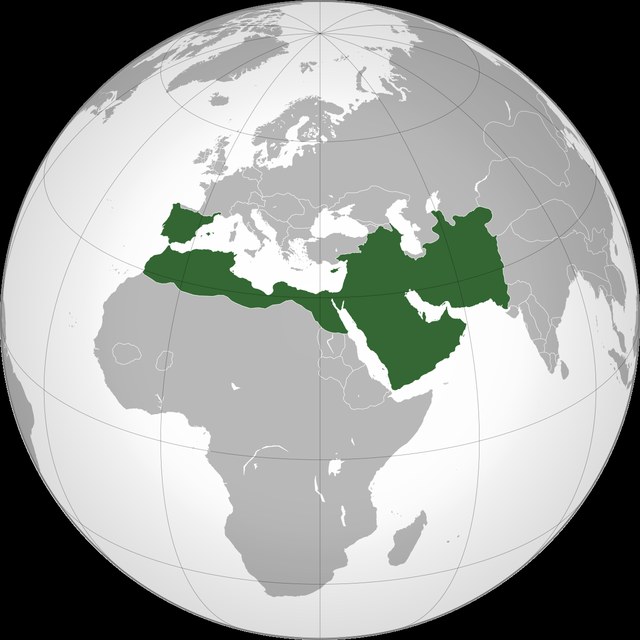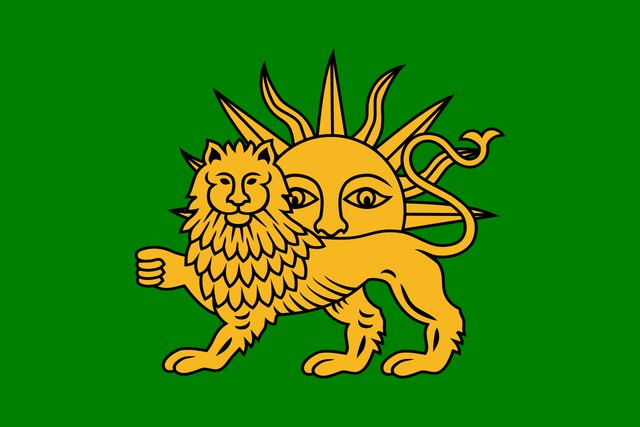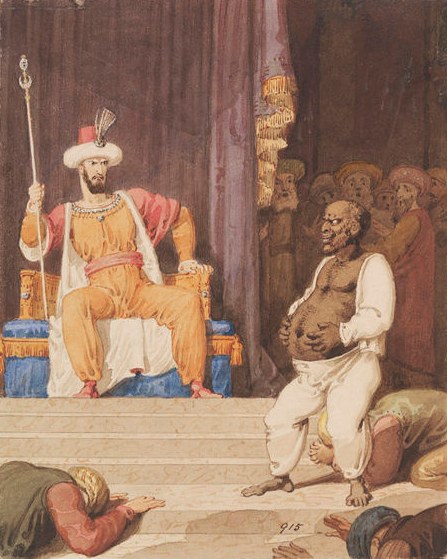
The 1648 Codex

Middle East Colonization & Modern Era

69 terms · 650 ladder clues · every clue is a real line from national play.

Swipe or use the arrows. Tap a clue to rate it; your taps shape what comes back.

#5 · Historic Cities · Level 1

Jerusalem

Jerusalem
Godot13 · CC BY-SA 4.0

Holy city · ancient to present · Israel/Palestine

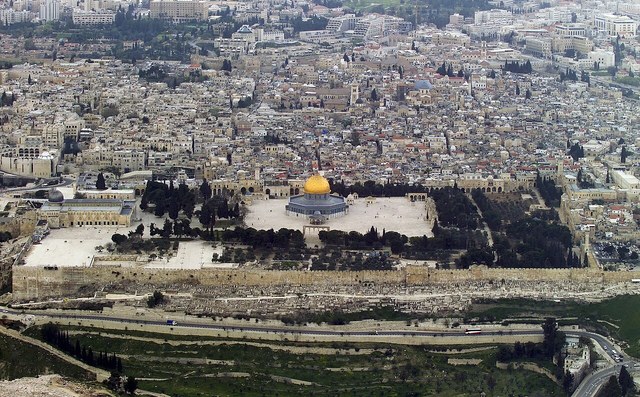
Jerusalem is a holy city to Christians, Muslims, and Jews, containing the Dome of the Rock and the Western Wall.

The kit

  • Religious sites — Jerusalem contains the Church of the Holy Sepulchre, the Dome of the Rock, and the West Wall of the Second Temple.
  • Crusades — Jerusalem was captured in 1099 during the First Crusade, with Robert the Monk describing soldiers wading through knee-deep blood.
  • Modern conflicts — Jerusalem saw the King David Hotel bombing by the Irgun and the Stern Gang's assassination of Folke Bernadotte.
  • Political status — Jerusalem is claimed as Israel's capital, a claim recognized by Donald Trump in 2017.

Runs with

Israel
Israel claims Jerusalem as its capital open card →
Fourth Lateran Council
First Crusade
First Crusade aimed to liberate Jerusalem, captured 1099 open card →
Crusades
Jerusalem was the primary target of the Crusades open card →

The ladder · 15 clues

H

Judas Maccabeus captured this city from the Seleucids, and it was renamed Aelia Capitolina by Hadrian.

H

Holy Middle Eastern city where the predecessor of Hamas set up branches.

H

holy city to Christians, Muslims, and Jews captured at its climax in 1099.

H

The Haute Cour served as the main council of this city during the medieval era.

H

Holy city whose capture led to the call for the Third Crusade.

H

Holy city that Israel claims as its capital, recognized by Donald Trump in 2017.

H

Roman forces put down a Jewish revolt when they destroyed the Temple in what city?

M

Godfrey of Bouillon died before becoming the Lord of this city.

M

The holy city defended by Saladin in that conflict.

M

The Stern Gang assassinated Folke Bernadotte in this city.

M

A king of this city, Guy of Lusignan, was captured at the Battle of the Horns of Hattin.

M

Factions led by Simon ben Giora and John of Giscala split this city, which was captured by the future emperor Titus. name this city that was sacked by the Romans in 70 AD, leading to the destruction of the Second Temple.

E

This city contains the Dome of the Rock, as well as the West Wall of the Second Temple. identify this “Holy City” that was the target of the Crusades.

E

Solomon’s Temple and the Dome of the Rock in Israel?

E

This city’s King David Hotel was bombed by the Irgun to protest British rule.

10 more clues from the record
H

The purpose of the First Crusade was to “liberate” this Holy City which contains the Church of the Holy Sepulchre and the Al-Aqsa Mosque. Israel claims it as its present-day capital.

H

Tancred of Hauteville claimed to be the first conqueror to enter this city.

H

Robert the Monk, in his Historia Hierosolymitana, described soldiers wading through knee-deep blood in this city during a massacre that resulted from its capture.

H

In this city, Sir John Shaw was criticized for his inaction during an attack that prompted Operation Shark.

H

It’s not in China, but the Burma Road was built by Mickey Marcus to supply this city.

H

A religious leader in this city drove out moneylenders and kicked over tables in a temple he calls a "house of prayer." This city is home to the Church of the Holy Sepulcher [[SEH-pull-kuhr]], which claims to be the location of Jesus's tomb.

H

This city was home to an early ecumenical [[ECK-yoo-MEN-ih-kull]] council which ruled that Gentiles were not required to keep Jewish laws.

H

This city's Armenian Quarter was temporarily emptied following Justinian the Great's Monophysite [[muh-NAH-fih-site]] persecutions.

H

The historian Josephus defected and recorded the siege of this city, which came after an attack on the Mount of Olives by forces that included the Zealots.

H

Following an event in this city, Evelyn Barker gave an order banning "social intercourse" with a certain group.
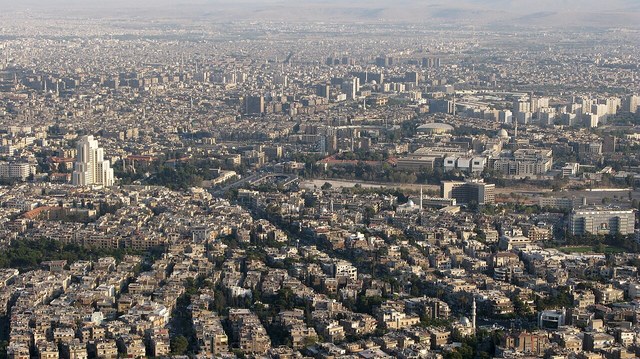
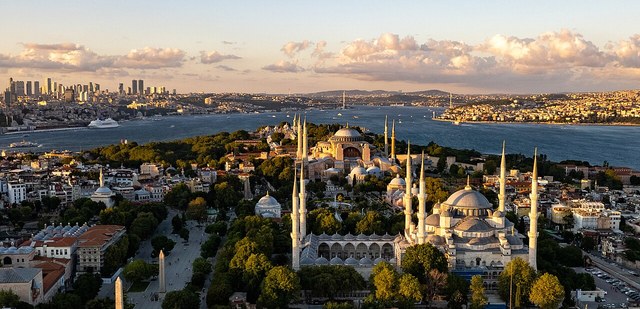
Watch out: Aelia Capitolina (Roman name for Jerusalem after Hadrian renamed it)
#18 · Historic Cities · Level 1

Damascus

Damascus
Vyacheslav Argenberg · CC BY 4.0

Syrian capital city · ancient to present · Syria

Damascus is one of the oldest continuously inhabited cities in the world and the modern capital of Syria.

The kit

  • Umayyad capital — Damascus became the capital of the Umayyad Caliphate after the rise of the Umayyads during the First Fitna.
  • Great Mosque — Damascus contains a Great Mosque built atop a basilica dedicated to John the Baptist, decorated with Byzantine mosaics.
  • Crusader conflicts — Damascus withstood a 1148 siege during the Second Crusade when Nur ad-Din's reinforcements broke the crusader attack.
  • Damascus steel — Damascus names a type of high-quality steel with wavy patterns whose production method was lost to modern smiths.

Runs with

Umayyad Caliphate
capital city of the caliphate open card →
Syria
modern capital of the country open card →
steel
namesake of lost production technique open card →
Second Crusade
siege here marked crusade's end open card →

The ladder · 15 clues

H

The retired Algerian nationalist hero ‘Abd al-Qadir intervened to save Christians in this city during an 1860 riot.

H

This city was the capital of the Umayyad Caliphate. It contains a namesake Great Mosque that was built atop a basilica named for John the Baptist.

H

In this city, eight Roman columns were used in the Dome of the Treasury, in a Great Mosque decorated with Byzantine mosaics.

H

Mawdud ibn Altuntash was assassinated in this city as a guest of its Burid dynasty.

H

This city was defended in the Battle of Marj al-Saffar, which was won by Toghtekin.

H

In an 1840 affair named for this city, the disappearance of the monk Father Thomas led to accusations of blood libel against Jews.

H

Seized in 1104 by Toghtekin, who established the Burid Dynasty there, it was subsequently retaken by Nur ad-Din of the Zengid Dynasty.

M

Saladin spent most of his life and died in this city, the Ayyubid capital at the turn of the 13th century and one of the oldest cities in the world.

M

Nur ad-Din’s key reinforcements ended an 1148 siege of this city, marking the end of the Second Crusade.

M

The capital of the Umayyad caliphate was this city, which also serves as the modern-day capital of Syria. Paul the Apostle converted to Christianity on the road to this city.

M

Somehow, an ancient material named for this city includes carbon nanotubes that make it super-strong.

M

The Umayyad caliphate had its capital in this Middle Eastern city, currently home to Bashar al-Assad.

E

A type of high-quality steel named for this city had its method of production lost to modern smiths. The assassination of Uthman during the First Fitna and the rise of the Umayyads led to this city becoming the Caliphate's capital until the Abbasids moved it to Baghdad. Name this modern capital of Syria.

E

This city reached its peak after the Muslim conquest, when it was made the capital of the Umayyad Caliphate. what city is the capital of modern-day Syria?

E

The 1148 siege of this city was broken by Nur ad-Din and ended the Second Crusade. name this capital of the Umayyad Caliphate and modern Syria.

10 more clues from the record
H

In 1926, much of the old part of this city was burned in “al-Hariqa,” a fire caused by shelling during a revolt that had begun in the Hawran.

H

Before founding the Cordoba emirate, a noble named Abd al-Rahman had to flee this city.

H

A wali from this city named Husayn Pasha ibn Makki failed to prevent a Bedouin raid of hajj pilgrims.

H

In 1154, this city’s governor, Mujir ad-Din, was overthrown by the Zengid dynasty.

H

The Amarna Letters mention this city's king, Biryawaza.

H

While serving as a consul in this city, Charles Henry Churchill laid out one of the first plans for the creation of a Jewish state in a letter to Moses Montefiore, who had led a delegation to this city with Adolphe Crémieux the previous year.

H

The crusaders chose to attack this city, a former ally. Unfortunately, they did not realize that this city, home to the Ummayad Mosque, had called in Said ad-Din Ghazi I and Nur ad-Din to help, and they got smashed.

H

Identify the following about coffeehouses, .The first coffeehouses were founded in this city, from which they spread rapidly throughout the Ottoman Empire and into Europe. Europeans mistakenly thought that steel with wavy patterns originated from this city.

H

The Mamluks constructed a series of warehouses called khans along the road from this city to the “breadbasket” region of Hauran. :Name this city which was the seat of the Umayyad Caliphate. This city names a rare style of flowing steel.

H

A state centered on this city reached its peak under Hazael, who, on the Tel Dan Stele, recorded the first known non-Biblical reference to King David.

Watch out: Europeans mistakenly thought the wavy-patterned steel originated from Damascus
#21 · Historic Cities · Level 1

Istanbul

Istanbul
Hunanuk · CC0

Turkish metropolis · renamed 1930 · Bosphorus Strait

Istanbul is Turkey's largest city, straddling the Bosphorus and formerly known as Constantinople until renamed in 1930.

The kit

  • Geography — Istanbul lies on both sides of the Bosphorus Strait, with the Golden Horn cutting into the city and the Marmaray Tunnel connecting its halves.
  • Historic landmarks — Istanbul houses Topkapi Palace, constructed in 1459, and the Hagia Sophia, both located on the city's historic peninsula south of the Golden Horn.
  • Ottoman architecture — Istanbul's Blue Mosque, the largest mosque in the city, is a notable külliye with six minarets and includes a tomb modeled on the Dome of the Rock.
  • Modern events — Istanbul experienced a July 2016 coup attempt against President Erdogan, during which the Fatih Sultan Mehmet and Bosphorus Bridges were closed.

Runs with

Nanda Empire
Constantinople
former name until renamed Istanbul open card →
church
home to Hagia Sophia Byzantine church open card →
Ottoman Empire
capital governed from the Sublime Porte open card →

The ladder · 15 clues

H

A forest near this city is named for Bulgarians deported from Belgrade after a 1521 siege.

H

That landmark was completed in 1348 by Genoese colonists and is a conical-topped stone tower located in this city’s Galata district.

H

Dozens of ethnic Uyghurs were arrested in this city’s district of Zeytinburnu for alleged connections to Abdulkadir Masharipov’s shooting attack of the Reina night club on New Year’s Day 2017.

H

This city was the site of a controversial election recount after the opposing Republican People’s Party defeated the AK Party. the Faith Mosque was built in this city of Mehmed the Conqueror who captured it in 1453.

H

In 2016, a leader gave a speech in this city blaming “those in Pennsylvania” for threatening his power. 45 people were killed after an ISIS attack on this city’s airport in June 2016.

H

In another film, a man travels to this city to accept the defection of Tatiana Romanova, who plans to steal a Soviet Lektor machine.

H

In this city, the characters Duman, Pskiopat, and Bengü are among the seven cats depicted in the 2016 documentary Kedi.

M

This city’s Fatih Sultan Mehmet and Bosphorus Bridges were closed during a July 2016 coup attempt against President Recep Tayyip Erdogan [AIRD-oh-wan]. name this largest city in Turkey.

M

Home of Topkapi Palace and the Hagia Sophia, identify this city lying on both sides of the Bosphorus Strait, the largest city in Turkey.

M

The film Fetih 1453 depicts Mehmet II's conquest of, what Turkish city, formerly the capital of the Byzantine Empire? name this city whose conquest from the Byzantine Empire is the subject of the film

M

The 19th-century “Straits Question” concerned the passage of warships at this city, where a reforming ruler mandated that civil servants wear the fez. the Sublime Porte governed the “sick man of Europe” from what Ottoman capital?

M

It’s not Rome, but its seven hills house such buildings as a palace which has a highest structure known as the Tower of Justice as well as a Byzantine church dedicated to Logos capped with a pendative-supported dome.

E

Also known as the Seraglio, this city’s Topkapi Palace was constructed six years after its fall to Mehmed. name this Turkish city once known as Constantinople.

E

The Sipahis cavalry assisted in putting down a revolt in this capital during the Auspicious Incident.

E

This city was renamed after the fall of the Eastern Roman Empire. name this city, formerly known as Constantinople, the most populous city in Turkey.

10 more clues from the record
H

This city’s historic peninsula contains the Sarayburnu outcropping and lies south of the Golden Horn.

H

This non- Russian city is the setting of the first half of From Russia with Love.

H

This city’s Karakoy neighborhood is home to the Genoese-built Galata Tower.

H

The Marmaray Tunnel connects this city’s western and eastern halves.

H

The largest mosque in this city, a notable külliye, includes a tomb modeled on the Dome of the Rock. :Name this earthquake-prone city, the home of a seaside complex with a madrasa and public baths named for an admiral. This city’s Blue Mosque has six minarets.

H

Outdoor sculpture in this city includes a work where two snakes interwine as they rise, Serpent Column as well as the crumbling remains of the Walled Obelisk; both of which are found in its Hippodrome.

H

A building known as the Tiled Kiosk comprises one of three structures that form this city’s namesake Archaeological Museums where the sarcophagus of Alexander the Great can be seen.

H

Another Art Nouveau building in this city, the Botter Apartment, was designed by Raimondo d’Aronco, who with Alexander Vallaury led this city’s reconstruction efforts after a devastating 1894 earthquake.

H

This city’s St. Stephen’s Church was built in a Gothic Revival and Neo-Baroque style using prefabricated, completely cast iron parts produced in Vienna and assembled on-site.

H

The Golden Horn cuts into this city and was once spanned by a large chain to prevent enemy ships from getting in.Name this Turkish city that was previously named Byzantium and Constantinople.

Watch out: Constantinople (the city's former name until 1930)
#28 · Historic Cities · Level 1

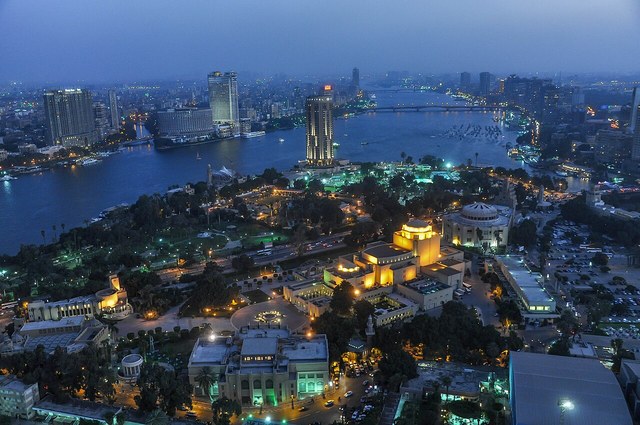
Cairo

Cairo
a rel="nofollow" Jorge Láscar /a from Melbourne, Australia · CC BY 2.0

Egyptian capital city · founded 969 CE · Nile River, Egypt

Cairo is the most populous city in Africa and capital of Egypt, founded by the Fatimid Caliphate in 969.

The kit

  • Founding & early rule — Cairo was founded by the Fatimid Caliph Al-Mu'izz through his Sicilian ghulam Jawhar, absorbing the earlier settlement of Fustat.
  • Medieval capitals — Cairo served as capital for the Fatimid Caliphate, the Ayyubid dynasty under Saladin, and the Mamluk Sultanate until Ottoman conquest in 1517.
  • Cultural center — Cairo became the hub of the nahda cultural renaissance and houses Al-Azhar University, a leading center of Sunni Islam.
  • Modern history — Cairo's Tahrir Square was rocked by protests during the 2011 Arab Spring that forced Hosni Mubarak from power.

Runs with

Egypt
capital and most populous city open card →
Mansa Musa
Fatimid Caliphate
founded by Fatimid Caliph Al-Mu'izz in 969 open card →
Cecil Rhodes

The ladder · 15 clues

H

This city was the hub of the nahda cultural renaissance.

H

This city’s Al-Azhar Mosque is a leading world center of Sunni Islam, and its Ben Ezra Synagogue was found to hold over 300,000 Jewish manuscript fragments in the 19th century.

H

This city was the capital of a sultanate that, after losing the Battle of Marj Dabiq, was conquered in 1517 by Selim I. Muhammad Ali Pasha westernized this former capital of the Mamluk sultanate and current capital of the Arab League.

H

A conference codenamed Sextant in this city included the Allied offer to Chiang Kai- Shek of full control of French Indochina at war's end, which he declined.

H

This city's Circassian Burji dynasty was succeeded by the Turkic Bahri dynasty.

H

A 1943 conference in this city added China to the "Big Four" powers and involved Chiang Kai-Shek, Winston Churchill, and Franklin Roosevelt.

H

A Sicilian ghulam named Jawhar was tasked with founding this city, which is home to a mosque dedicated to Ahmad ibn Tulun.

M

The Fatimid dynasty had its capital in this city, where it built the Al-Azhar Mosque. The Mamluk Sultanate also had its capital in this city.

M

The Mamluks were a dynasty ruled from this Egyptian city. This city was also the capital for most of the Fatimid Caliphate, who built its area of Fustat.

M

Soldiers under Saladin made soles for their shoes out of books confiscated from the library of this city’s still-existing university at Al-Azhar.

M

The Ayyubid dynasty was founded in this city by Saladin after the fall of the Fatimid Caliphate. name this capital city of modern Egypt.

M

Louis IX was captured at Fariskur while attempting to conquer this capital city during the Seventh Crusade.

E

The “Friday of departure” rocked this city’s central Tahrir Square with protests against Hosni Mubarak. name this most populous city in Africa, the capital of Egypt.

E

Founded by the Fatimid Caliph Al-Mu’izz, name this city, the seat of Ayyubid power under Saladin, whose citadel overlooked the Nile.

E

An Albanian dynasty that ruled this city for the Ottoman Empire in the 19th century took the title “Khedive.” Muhammad Ali Pasha ruled from what capital of modern-day Egypt?

10 more clues from the record
H

This city’s House of the Cretan Woman is located in a place of worship dedicated to a Turkic slave-soldier.

H

Al-Fustat was absorbed into this city, where the Massacre at the Citadel was ordered by Muhammad Ali Pasha.

H

A 1921 conference in this city installed the Hashemite [[HASH-eh-mite]] monarchy in Jordan.

H

This city is the official home of Tawadros II, the Pope of the Coptic Orthodox Church.

H

One ruler who mysteriously disappeared from this city’s Mokattam hills left behind only a donkey and bloody garments, and was known as the “mad caliph.” After his exile from Andalusia, Maimonides wrote the Mishneh Torah in this city’s suburb of Fustat, a previous capital which was absorbed by this city.

H

This city was home to a namesake Genizah where many collections of writings by this city’s Jewish community were stored. :Identify this city that was also the seat of power for the Khedive Ahmed Orabi. This city was also the center of revolt in 1919 by the Wafd Party against British colonial rule.

H

The pan-Islamic journal The Firmest Bond was published in Paris by Muhammad ‘Abduh and Jamal al-Din al-Afghani while they were exiled from this city for supporting the ‘Urabi revolt. :Name this city where the Nahda was centered around Al-Azhar University.

H

A settlement at the bottom of this city's Mokattam (moo-COT-tom) Hills is nicknamed "Garbage City" and is populated by zabbaleen, whose unofficial job is to collect trash. Another settlement in the same area is a necropolis nicknamed "City of the Dead."

H

An early type of apartment-style housing known as rab' surrounded this city's synagogue, whose genizah (geh-NEE-zuh) contains over 400,000 medieval manuscripts.

H

A failed attempt was made to build a wall around both this city and its predecessor, which had been deliberately burnt in order to deny it to the armies of Amalric. That predecessor city, Fustat, had been burnt by the vizier Shawar.

Watch out: Fustat (earlier settlement deliberately burnt and absorbed into Cairo)
#43 · Modern Countries · Level 1

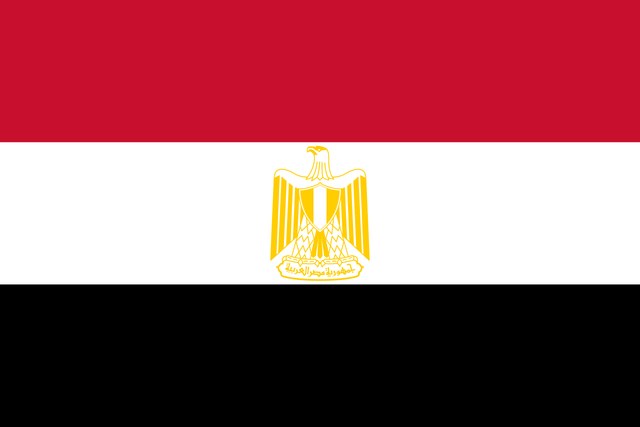
Egypt

Egypt
See i b File history /b /i below for details. · Public domain

North African country · ancient to present · Nile River valley, North Africa

Egypt is a North African country centered on the Nile River, site of ancient civilization and modern Arab republic.

The kit

  • Ancient & colonial — Egypt was known as a khedivate after Muhammad Ali took control and later saw the Urabi Revolt against European interests.
  • Mid-20th century — Egypt's Free Officers Movement overthrew King Farouk in 1952, bringing Gamal Abdel Nasser to power in Cairo.
  • Conflicts — Egypt fought the Yom Kippur War to regain Sinai and later signed the Camp David Accords under Anwar Sadat.
  • 21st century — Egypt experienced Tahrir Square protests in 2011 that ousted Hosni Mubarak, followed by a 2013 coup against Mohamed Morsi.

Runs with

Nanda EmpireBakumatsu Period
Cairo
Cairo is Egypt's capital, site of Free Officers rule and Tahrir Square protests open card →
Mamluks

The ladder · 15 clues

H

The murder of domesticated pigeons in this country by British officers caused the Denshawai incident.

H

The Urabi Revolt was an attempt to liberate this country from European interests.

H

This country was known as a khedivate after it was taken over by an Albanian ruler named Muhammad Ali.

H

One archaeological site in this country was known as KV62, and that site was contained within this country's Valley of the Kings.

H

A ruler of this modern-day country won the Battle of Raphia against Antiochus III.

H

An object from this country is the subject of the Lettre à Monsieur Dacier.

H

Country where he established the most famous city named Alexandria.

M

In this country, Farouk I was overthrown by the Free Officers Movement led by Muhammad Naguib.

M

A leader of this country shared the 1978 Nobel Peace Price with Menachem Begin for agreeing to the Camp David Accords.

M

Sadat was the head of this country which fought the Yom Kippur War to regain the Sinai Peninsula from Israel.

M

Nasser led this country after overthrowing King Farouk. Nasser also nationalized the Suez Canal Company in this country.

M

Alexander founded and names numerous cities in his conquered lands, including Alexandria on the Nile River delta in what is now this country.

E

The Free Officers Movement triggered a republican revolution in this north African country where Gamal Abdel Nasser ruled from Cairo.

E

Protests in this country's Tahrir Square in 2011 led to the ousting of long-time president Hosni Mubarak.

E

Country that underwent the overthrows of Hosni Mubarak and Mohamed Morsi.

10 more clues from the record
H

The exile of Saad Zaghlul and his Wafd Party associates to Malta sparked this country’s 1919 revolution.

H

British forces captured Mahmoud Fehmy in this country and attacked their opponents at Kassassin.

H

One opera set in this country includes an offstage chorus singing Psalm 104 and is the final entry in the "Portrait Trilogy." Another opera set in this country was commissioned by Ismail Pasha to celebrate the opening of the Khedival Opera House and features the title princess singing "O patria mia." This country is the setting of a Philip Glass opera about a pioneering monotheistic ruler and a Verdi opera in which the title princess is buried alive with Radames. Name this ancient civilization, the setting of Aida and Akhnaten.

H

Had a 2013 coup d’etat remove Mohamed Morsi from power in Cairo?

H

Modern African country where civilization developed around the Nile River.

H

Sisi led a coup against Mohamed Morsi in this North African country.

H

One campaign in this country was accompanied by scientists called the 150 “savants”.

H

Home country of Nobel laureate Mohamed ElBaradei, who briefly became Vice President after a coup against Mohamed Morsi.

H

Elongated figures were emphasized in the Amarna period of this country’s art.

H

The United Kingdom and France invaded this country in Operation Musketeer after signing the secret Sevres Protocol.

Watch out: Students may confuse Egypt's multiple modern leaders: Nasser, Sadat, Mubarak, Morsi, and Sisi
#46 · Modern Countries · Level 1

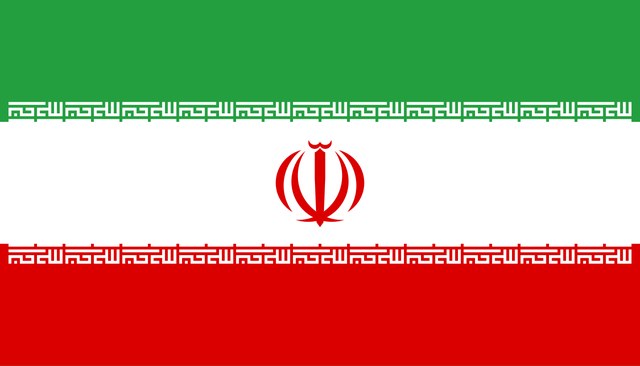
Iran

Iran
SVG file: SiBr sub 4 /sub /a br Designer: Hamid Nadimi /a br · Public domain

Middle Eastern nation · ancient to present · southwest Asia, Persian Gulf

Iran is a Middle Eastern nation whose 1979 Islamic Revolution deposed Shah Mohammad Reza Pahlavi and brought Ayatollah Khomeini to power.

The kit

  • Pre-modern history — Iran was the center of the Safavid Empire and later held the capital of Hulagu Khan's Ilkhanate.
  • Oil nationalization & coup — Iran's Prime Minister Mohammad Mossadegh nationalized the oil industry, prompting the CIA's Operation Ajax to overthrow him in 1953.
  • White Revolution — Iran's White Revolution brought land reform and the Army of Knowledge literacy program, enforced by the repressive SAVAK secret police.
  • Islamic Revolution — Iran's 1979 revolution deposed the Shah and led to the 444-day American embassy hostage crisis in Tehran under Khomeini.

Runs with

Nanda Empire
No connection evident in clues open card →
Iraq
fought a war with Iran following the 1979 revolution and oil shock open card →
Ayatollah Ruhollah Khomeini
came to power in Iran after the 1979 Islamic Revolution open card →
Safavid Empire
was centered in the territory of modern Iran open card →

The ladder · 15 clues

H

The Army of Knowledge was established in this country to improve literacy during the White Revolution, which was supported by the repression of the SAVAK police.

H

Terrorists killed 422 people in the Cinema Rex fire, which was blamed on SAVAK, this country’s secret police.

H

By nationalizing a predecessor to British Petroleum, one leader of this country prompted the CIA to overthrow him in Operation Ajax.

H

In 1988, the U.S.S. Vincennes accidentally shot down a passenger plane from this country.

H

A Russian-trained Cossack Brigade assisted Mozaffer ad-Din, a shah of this country's Qajar dynasty.

H

The CIA’s Operation Ajax supported a 1953 coup in this country after Mohammad Mossadegh nationalized its oil industry.

H

This modern-day country held the capital of Hulagu Khan’s Ilkhanate.

M

Reza Pahlavi , the Shah of this country, was deposed in a 1979 uprising. name this country whose revolution brought Ayatollah Khomeini to power in Tehran.

M

The White Revolution brought land reform and modernization to this country, but ended in 1979 in an Islamic revolution.

M

In this Asian country, Kermit Roosevelt oversaw the CIA’s Operation Ajax, which orchestrated the overthrow of prime minister Mohammad Mosaddegh.

M

This country was the site of Operation Ajax, where CIA operatives toppled Mohammad Mossadegh for nationalizing the oil industry.

M

Operation Eagle Claw was a disastrous attempt at rescuing several Americans trapped in this country.

E

The American embassy in this country was held hostage for 444 days during a 1979 revolution. identify this country that was once led by the Ayatollah Khomeini from Tehran.

E

Modern country where the Safavid Empire was centered.

E

Allan Dulles planned Operation Ajax to remove Mohammed Mossadegh from power in this country, from where Reza Pahlavi was exiled. name this country where a 1979 revolution brought Ayatollah Khomeini to power in Tehran.

10 more clues from the record
H

After this country granted a concession over a certain commodity’s production to Major G. F. Talbot, a revolt known as the Tobacco Protest erupted in this country in 1890.

H

In this country, a man who called himself the “Gate” was executed in 1850 for claiming to be the Mahdi.

H

This country’s navy was the target of Operation Praying Mantis in retaliation for its mine striking the USS Samuel B. Roberts.

H

This country was invaded in Operation Countenance, a joint operation of the UK and USSR.

H

After this country’s monarchy gave away massive business concessions named for D’Arcy and Reuters, the Constitutional Revolution forced it to adopt a parliament.

H

After Abbas III was deposed, the Afsharid Dynasty was founded in this country by the aforementioned Nader Shah.

H

In the 19th century, Fidella Fisk opened a Presbyterian seminary to educate women in this country.

H

The Abadan Crisis followed an attempt at nationalization in this country.

H

Morgan Shuster notes that women in this country wielded handguns to protest foreign influence in his book the Strangling of .

H

A second oil shock occurred in 1979, partially due to this country’s regime change and a subsequent war with Iraq. Shah Mohammed Reza Pahlavi was deposed as leader of this country by the Ayatollah Khomeini.

Watch out: Confused with Iraq, its neighbor and opponent in the 1980s Iran-Iraq War
#51 · Modern Countries · Level 1

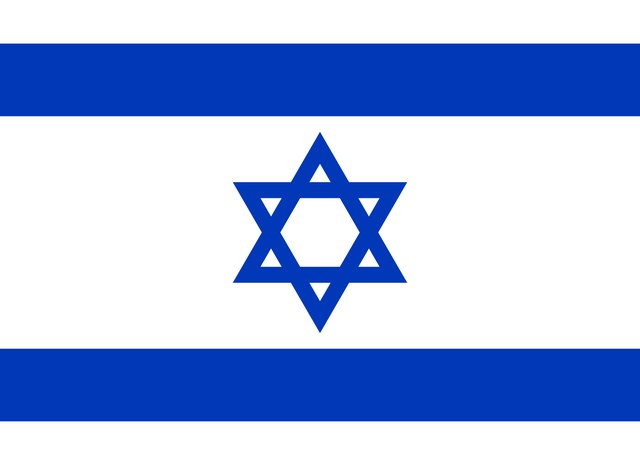
Israel

Israel
ul li Israel Belkind and Fanny Abramovitch (original) /li li · Public domain

Middle Eastern nation-state · 1948–present · Eastern Mediterranean

Israel is a Middle Eastern country established in 1948 as the world's only majority-Jewish state following the Zionist movement.

The kit

  • Founding — Israel declared independence on May 14, 1948 after an expired British mandate, with David Ben-Gurion as first prime minister.
  • Conflicts — Israel fought the Six-Day War seizing the Golan Heights, West Bank, and Gaza Strip, and later defeated Arab neighbors in the Yom Kippur War.
  • Peace efforts — Israel signed the Camp David Accords with Egypt after Prime Minister Menachem Begin's 1977 Likud electoral victory.
  • Military operations — Israel conducted the Entebbe raid freeing hostages in Uganda and Operation Opera destroying Iraq's Osirak nuclear reactor.

Runs with

Six-Day War
Israel seized Golan Heights, West Bank, Gaza Strip in this 1967 conflict open card →
Jerusalem
Israel has defended this city during conflicts with Arab neighbors open card →
Bemis Heights
no connection evident in clues open card →
David Ben-Gurion
Israel's first prime minister who formed the IDF in 1948 open card →

The ladder · 15 clues

H

Menachem Begin served as Prime Minister of this country, whose other PMs have included David Ben-Gurion, Golda Meir, and Yitzhak Rabin.

H

During one conflict in this country, the USS Liberty was attacked by jets and torpedo boats confusing the vessel for the El Quseir [[el "queue"-ZEER]].

H

This country’s armored force was established after sympathetic foreign troops stole and donated two Cromwell tanks.

H

Commandos from this nation freed hostages in Uganda after conducting a raid on Entebbe Airport.

H

Ascalon was named for a city that was captured by the crusaders at the last battle of the First Crusade in 1099.

H

Country that Egypt fought in a 1948 war, shortly after it declared its independence.

H

Attacked the Hamas-ruled Gaza Strip to its west in 2014?

M

UN mediator Folke Bernadotte was assassinated by members of this country’s Lehi, a terrorist group.
M

Eleven of its athletes were killed at the 1972 Munich Olympics. name this country which gained independence in 1948 in modern-day Palestine.

M

This country carried out Operation Opera which destroyed a nuclear reactor called Osirak.

M

This country engaged in peace talks shortly after a 1977 electoral victory for Likud. name this country, whose Prime Minister Menachem Begin signed the Camp David Accords with Egypt.

M

The Law of Return applies to Jewish people returning to this country, the only majority Jewish country in the world. It is located in the Middle East.

E

During the Six-Day War, this country seized the Golan Heights from the Syria. name this country that has defended Tel Aviv and Jerusalem during conflicts with its Arabic neighbors.

E

In 1949, this country’s borders were set at the Green Line, which was established after it was invaded following an expired British mandate. name this country that formed the IDF under its first prime minister, David Ben-Gurion.

E

One side of that conflict in this country was led by Defense Minister Moshe Dayan. name this historically contested country in which the Six-Day War was fought after the occupation of the West Bank, Golan Heights, and Gaza Strip.

10 more clues from the record
H

Forces from this country under Yigal Allon raised the “Ink Flag” after the 1949 capture of Umm Rashrash.

H

Peace attempts by this country solicited the “Three Nos” of the Khartoum Declaration.

H

Albert Einstein was offered the presidency of this country, but declined.

H

The establishment of this country was the goal of the Zionism movement. :Name this Middle Eastern country that defeated its Arab neighbors in the Yom Kippur War.

H

The Irgun and the Lehi were terrorist groups which agitated for the independence of this country.

H

Agents from this country killed a Moroccan waiter in Norway in the Lillehammer Affair.

H

Menander attested this kingdom’s use of cedars sent by its ally, Hiram of Tyre, in various construction projects.

H

This country experienced riots in 1959 after North Africans who experienced discrimination rebelled in the neighborhood of Wadi Salib.

H

A mass eviction in this country is commemorated on May 15 as Nakba Day, which comes right after this country’s commemoration of its independence on May 14, 1948.

H

British support for the creation of this nation was announced via the Balfour Declaration.

Watch out: Bemis Heights was a Revolutionary War battle site in New York, not related to Israeli conflicts
#63 · Modern Countries · Level 1

Syria

Syria
Modification by AnonMoos of PD image File:Flag of Syria (193 · Public domain

Middle Eastern country · ancient to present · Levant

Syria is a Middle Eastern country ruled by the al-Assad family since 2000, currently embroiled in civil war since 2011.

The kit

  • Ancient history — Syria contains ancient sites including Mari (with clay tablets and King Zimri-Lim's palace) and Bronze Age cities Kadesh, Karkemish, and Ugarit.
  • Ba'athist rule — Syria's Ba'athist government was established in 1963 by Hafez al-Assad, who founded the first Ba'ath party created by Michel Aflaq.
  • Civil War — Syria's civil war began with protests in Damascus and Dar'a in 2011, destroying thirty percent of Aleppo and the city of Palmyra.
  • Conflicts — Syria is home to disputed Rojava in the Northeast, a quasi-Anarchist region that conducted the Deir ez-Zor and Raqqa campaigns against ISIS.

Runs with

Nanda Empire
no connection shown in clues open card →
Damascus
Damascus is Syria's capital, the world's oldest capital city, where protests began in 2011 open card →
Islamic State of Iraq and Syria
ISIS took part in Syria's civil war and rebellion, including fighting in Palmyra open card →
Egypt
Egypt allied with Syria to invade Israel during Arab-Israeli conflicts open card →

The ladder · 15 clues

H

Members of the Alawite [[AH-lah-wite]] sect of Islam have dominated political leadership in this country, despite making up only eleven percent of the population.

H

In recent history, this country’s government has been dominated by the Alawites.

H

In this modern-day country, numerous clay tablets and the palace of king Zimri-Lim were found at the ancient site of Mari.

H

Country where protests in Damascus turned into an ongoing civil war.

H

Michel Aflaq [[ah-FLAHK]] created the first Ba’ath [[bah-AHTH] party in this country.

H

answer these questions about cities in the Middle East that saw major protests in 2011.This country’s protests started in earnest in Dar’a, but it has been its city of Homs that has really born the brunt of fighting between government forces and armed protestors.

H

Assad is the dictator of this Middle Eastern country, where protests began in the capital city, Damascus.

M

Embroiled in a civil war since 2011, what is this Middle Eastern country whose former leader, Bashar al-Assad, recently fled Damascus?

M

Hafez al-Assad this person who established a Ba’athist government in 1963 that is now led by his son, Bashar.

M

Country that allied with Egypt to invade Israel during that conflict, led by the al-Assad family since 2000 A

M

Palmyra is in this country, now site of a rebellion and civil war against the government of Bashar al-Assad in which ISIS has taken part.

M

This country has the oldest capital city in the world, which gives its name to swords made of wootz steel. name this country whose ancient cities include Aleppo and Damascus.

E

Barack Obama set a “red line” for chemical weapons during this country’s ongoing Civil War which has seen fighting in cities like Aleppo.

E

A civil war in this country destroyed about thirty percent of Aleppo, as well as the city of Palmyra. name this country ruled by the al-Assad [[al-ah-SAHD]] family from Damascus.

E

Barrel bombs were allegedly used to quell unrest in this country by Bashar al-Assad. name this country with capital at Damascus.

10 more clues from the record
H

Hafez al-Assad ruled this Middle Eastern country. Hafez's son Bashar crushed recent protests in this country.

H

An ancient Greek name for this region called it “hollow,” or “Coele” [koh-EH-leh].

H

Among the cities to be destroyed during the Bronze Age collapse were Kadesh, Karkemish, and Ugarit, all of which lie on the shores or borders of this modern day country.

H

A quasi-Anarchist region known as Rojava in the Northeast of this nation conducted the Deir ez-Zor and Raqqa campaigns.

H

A “Great” revolt against colonial rule in this country in the 1920s was led by Sultan Pasha al-Atrash [[ah-TRAHSH]].

H

This country was the site of Operation House of Cards after a missile strike was launched against the Iron Dome.

H

This country is home to the disputed region of Rojava, whose government claims control of Afrin and Jazira.

H

This country was infiltrated by Eli Cohen, who planted trees at key army bases.

H

A UN buffer zone in this country exists in the largely destroyed city of Quneitra.

H

One leader of this country is opposed by the FSA and the Islamic Front.

Watch out: Hafez al-Assad established Ba'athist government in 1963, but al-Assad family rule dates from 2000
#94 · Physical Geographic Features · Level 1

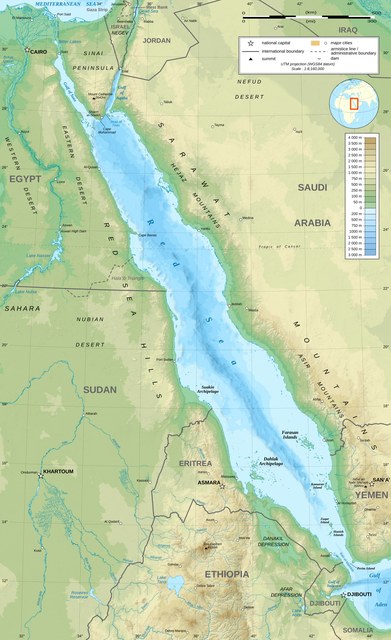
Red Sea

Red Sea
Eric Gaba ( Sting /a - fr:Sting /a ) · CC BY-SA 4.0

Sea between Africa and Arabia · ancient to present · between Arabian Peninsula and northeastern Africa

Red Sea is a narrow sea separating Africa from the Arabian Peninsula, connecting the Mediterranean via the Suez Canal to the Indian Ocean through the Gulf of Aden.

The kit

  • Geography — Red Sea separates Saudi Arabia and the Arabian Peninsula from Egypt, Sudan, and Eritrea, with the Gulf of Aqaba and Gulf of Suez at its northern end.
  • Ancient trade — Red Sea facilitated ancient trade routes described in the Periplus of the Erythraean Sea, connecting Aksumite, Himyarite, and Roman merchants trading frankincense and myrrh.
  • Modern significance — Red Sea connects to the Mediterranean through the Suez Canal and contains major ports including Jeddah, Port Sudan, and formerly Ethiopian ports Asseb and Massawa.
  • Biblical tradition — Red Sea was legendarily parted by Moses during the Exodus, possibly at a temporary land bridge created by seismic activity.

Runs with

Water
Red Sea is a body of water connecting multiple seas and oceans open card →
Suez Canal
Red Sea links to the Mediterranean Sea through the Suez Canal open card →
Eritrea
Red Sea forms the entire eastern coast of Eritrea open card →
Aksumite Empire
Red Sea provided Aksumite Empire access to frankincense and myrrh trade through port of Adulis open card →

The ladder · 15 clues

H

Despite losing its coastline on this body of water after a 1993 war of independence, Ethiopia still has use of its ports of Asseb and Massawa on this sea. name this body of water at the southern end of the Suez Canal that empties into the Indian Ocean through the Gulf of Aden and was legendarily parted by Moses.

H

An early text describing the ports and navigation routes of this body of water was titled the Periplus of the Erythraean Sea.

H

Saudi Arabia lies to its east, while Sudan and Egypt are to its west. :Name this body of water south of the Sinai Peninsula, the namesake of Eritrea.

H

The Blue Hole of Dahab is located on the coast of this body of water, and topaz comes from the Greek name for St. John’s Island in this body of water’s Foul Bay.

H

Earthquakes under this body of water in 2007 revealed a 4,000-year-old fault line, on which a much stronger earthquake may have created a temporary land bridge.

H

A country lost its coastline along this sea when Hamid Awate’s forces won a 1991 war of independence.

H

Purported cave dwellers on this body of water's western side were the first people called "Troglodytes." A port called "Mussel Harbor" abutted this body near Berenice according to an anonymous 1st-century text about its peoples.

M

The port city of Jeddah lies on this body of water, as does the city of Port Sudan.

M

This sea comprises the entire east coast of Eritrea. what colorfully named sea separates Saudi Arabia from Egypt and Sudan?

M

Djibouti sits on the Gulf of Aden, which is the southern entrance to this large sea, which separates Africa from Asia.

M

Diodorus rehashed many observations made by Agatharchides of Cnidus in the latter’s five-volume history on this body of water. An unknown first-century Greek merchant discusses trade secrets around the Horn of Africa in a work titled for this body of water, which is associated with the modern-day Red Sea.

M

A group of people stated to have come from this particular region are given as the cause of the Greco-Persian Wars at the beginning of Herodotus’ Histories , which describes the arrival of the “Phoenicians”.

E

The Mediterranean Sea is linked by the Suez Canal to this colorfully named sea that was legendarily parted by Moses.

E

This body of water, which is linked to the Gulf of Aqaba by the Straits of Tiran, forms the coast of Eritrea.

E

Its Gulf of Suez separates the Sinai Peninsula from the rest of Egypt. name this sea between the Arabian Peninsula and Africa.

10 more clues from the record
H

Ships traveling long distances in the ancient world stopped at the Himyarite site of Muza on this body of water. The Aksumite kingdom also used their papyrus-sailed ships to guard ports on this sea.

H

West of this body of water, the Gash Group preceded the Ona culture that created clay bulls’ heads in Sembel, and cities like Qohaito and Yeha formed the Kingdom of Dʿmt with influence from the Sabaeans.

H

One historian claimed that “learned Persians” were the originators of an account of how a certain group, who originally came from this region, arrived at a certain city and traded for five or six days.

H

The city of Adulis traded with the Himyarite kingdom across this body of water, allowing Axum access to frankincense and myrrh traders who plied this sea.

H

The kingdoms of Saba’ and Himyar exported frankincense and myrrh to the Roman Empire through this sea, whose western coastline was also home to the kingdom of Axum.

H

A source titled for this region concludes by describing “extremes of storm, bitter cold, and difficult terrain” and mentions the prohibitiveness of “some divine power of the gods”.

H

An account of the etymology of this region, which describes lions charging at a group of mares, is given in a work by Agatharchides of Cnidus, who claimed it was named for a son of Myozaeus.

H

This body of water surrounds the Farasan Islands and the Dahlak Archipelago, and the proposed Bridge of the Horns might soon span its outlet.

H

Tiran Island here is claimed by a country whose Hejaz region borders this body of water, and contains the port of Jeddah.

H

Due to raids from the locals, Roman merchants operating in this body of water abandoned Didoros Island in favor of Oreine .

Watch out: Confused with the Persian Gulf, which also separates Arabia from another landmass
#99 · Physical Geographic Features · Level 1

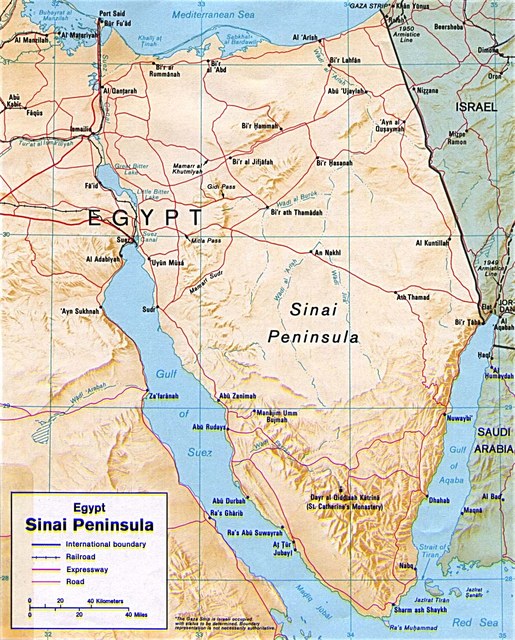
Sinai Peninsula

Sinai Peninsula
CIA · Public domain

Egyptian peninsula · contested 1956–1982 · between Africa and Asia

Sinai Peninsula is an Egyptian land bridge between Africa and Asia, bordered by the Gulf of Suez and Gulf of Aqaba.

The kit

  • Geography — Sinai Peninsula is divided from mainland Africa by the Suez Canal and bordered by the Great and Small Bitter Lakes.
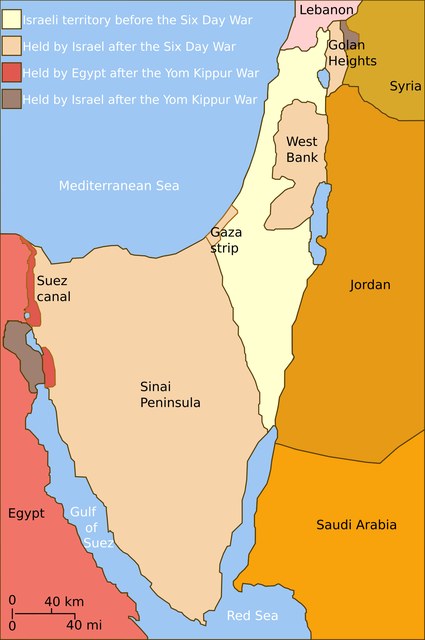
  • Six-Day War capture — Sinai Peninsula was captured by Israel from Egypt in 1967 along with the Gaza Strip during the Six-Day War.
  • Yom Kippur War — Sinai Peninsula was invaded in Operation Badr using water cannons to breach the Bar Lev line and cross fortifications.
  • Return to Egypt — Sinai Peninsula was returned to Egypt in stages from 1979 to 1982 following the Camp David peace treaty.

Runs with

Egypt
owns the peninsula, lost it 1967, regained it 1979–1982 open card →
Israel
captured it in 1967, withdrew completely by 1982 open card →
Six-Day War
Israel seized the peninsula from Egypt in 1967 open card →
Anwar Sadat
signed treaty returning the peninsula to Egypt open card →

The ladder · 15 clues

H

The United Nations Emergency Force was stationed in this region after it was invaded by Britain, France, and Israel following Gamal Abdel Nasser's nationalization of the Suez Canal.

H

The Great and Small Bitter Lakes lie to the west of this region, and Lake Bardawil lies on its northern coast.

H

This geographical location contains St. Catherine’s Monastery, which claims to be the oldest working Christian monastery in the world.

H

A 1979 treaty marked the start of one country’s withdrawal from this peninsula, which contains the tourist city of Sharm el Sheikh.

H

Along this peninsula, an attack on the Moevenpick Hotel was one of several 2005 bombings conducted on one country’s Revolution Day.

H

A maneuver known as “The Crossing” was an early part of a plan to take over this peninsula called Operation Badr.

H

Israelis commonly refer to the Suez Crisis as a war for this continent-connecting peninsula located in eastern Egypt.

M

Egyptian peninsula on the Red Sea captured by Israel along with Gaza.

M

This region was invaded in Operation Badr, which used water cannons to break through the Bar Lev line.

M

It is home to St. Catherine’s Monastery and on its southern tip is the city of Sharm el-Sheikh. :Name this peninsula, west of which lies the Gulf of Suez.

M

Anwar Sadat allowed another nation to traverse this peninsula navally through a canal after signing its namesake “Disengagement Act.” name this peninsula that acts as a land bridge between Africa and Asia in the nation of Egypt.

M

Saudi Arabia claims Sanafir and another island separated from this region by the Straits of Tiran. name this peninsula owned by Egypt, which shares its name with a biblical mountain.

E

The Suez Canal divides mainland Africa from this Egyptian peninsula, which Israel captured during the Six Day War.

E

This Egyptian-owned peninsula connects Asia and Africa. This peninsula is bordered to the east by the Gulf of Aqaba, while to its west is the Gulf of Suez.

E

Along with the Gaza Strip, this peninsula was captured by Israel from Egypt during the Six-Day War.

10 more clues from the record
H

This region, known by ancient denizens as the “Mining Country,” may have received its modern name from a god who rode a winged bull and had a beard made of lapis lazuli.

H

After destroying Egypt’s Air Force, Israeli ground troops occupied most of this strategic peninsula that separates the two nations. They returned it in stages to Egypt, beginning in 1979 and ending in 1982

H

In Operation Badr, an army invaded this peninsula by using water cannons to tear down the fortifications and cross the Great Bitter Lake.

H

Western access to this peninsula is controlled by the Mitla Pass, which was once seized by the 202nd Brigade of paratroopers without government approval.

H

A war began shortly after U Thant agreed to withdraw UNEF forces from this peninsula's southern port of Sharm el-Sheikh (sharm el-SHAKE).

H

That monastery is located at the foot of this location’s namesake mountain, which is sacred to all three Abrahamic faiths.

H

In 2011, Operation Eagle was launched in this region to combat the insurgent group Ansar Bayt al-Maqdis.

H

Name these lands won by Israel in the 1967 Arab-Israeli war .Israel took control of this peninsula from Egypt.

H

The ancient city of Pelusium is located in this region, which contains Mount Catherine.

H

The Philadelphi Corridor connects this region with a strip of land to the east.

Watch out: Gaza Strip (also captured from Egypt in 1967)
#151 · Other Named Wars and Armed Conflicts · Level 1

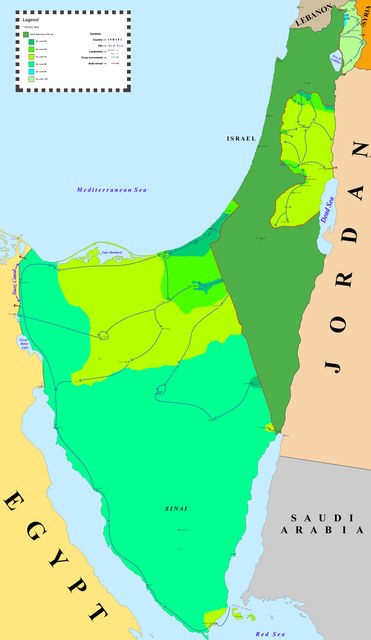
Six-Day War

Six-Day War
Zvikorn · CC BY-SA 4.0

1967 Arab-Israeli conflict · June 1967 · Middle East

Six-Day War was a June 1967 conflict in which Israel defeated Egypt, Jordan, and Syria, capturing the Sinai Peninsula, Golan Heights, Gaza Strip, and West Bank.

The kit

  • Opening — Six-Day War began with Operation Focus, a preemptive Israeli strike that destroyed much of Egypt's air force on the ground.
  • Territorial gains — Six-Day War resulted in Israel capturing the Golan Heights, Gaza Strip, West Bank, and Sinai Peninsula from the Arab coalition.
  • Incidents — Six-Day War saw the accidental Israeli attack on the USS Liberty, killing more than two dozen American sailors and wounding William McGonagle.
  • Aftermath — Six-Day War prompted the Khartoum Resolution's "Three No's" (no peace, no recognition, no negotiations) and UN Security Council Resolution 242.

Runs with

Israel
Israel won decisively, seizing four territories open card →
Sinai PeninsulaBemis Heights
Bank
West Bank was captured from Jordan open card →

The ladder · 15 clues

H

Jordan lost the West Bank in this 1967 war. It is named for the short amount of time that it lasted.

H

The Khartoum Resolution was passed following this conflict, with one league putting forth the "Three No's" which refused to trade, recognize, or declare peace with an adversarial neighbor.

H

Prior to this war, one country demanded the withdrawal of U.N. forces so that they could blockade the Straits of Tiran.

H

In 1967, Israel fought against Egypt, Jordan and Syria in a war that saw numerous territorial changes. :Name that war, so named for its extremely brief duration.

H

After this war, the belligerents of the losing side issued a resolution declaring “Three No’s.” One side in this war accidentally attacked the U.S.S. Liberty.

H

During this war, William McGonagle was wounded by aircraft fire and more than two dozen sailors were killed in a torpedo attack against a research ship, the USS Liberty.

H

One side in this war benefited from trees planted as target markers years prior by a spy in the Ministry of Defense.

M

This war resulted in the annexation of the Sinai Peninsula, which was returned, as well as the Golan Heights, Gaza Strip, and West Bank. identify this 1967 war between Israel and a pan-Arab coalition, which was named for its unusually short duration.

M

The defeated side of this conflict affirmed a commitment to “no peace, no negotiations, and no recognition” in the Khartoum Resolution.

M

The USS Liberty was attacked during this brief war, which began with the destruction of Egypt’s air force in a preemptive strike called Operation Focus.

M

U.N. Security Council Resolution 242 and the Khartoum Resolutions were passed in the wake of this conflict.

M

Abandoned ships known as the Yellow Fleet were trapped as a result of this war, during which one side mistakenly attacked the USS Liberty.

E

The Golan Heights, Gaza Strip, West Bank, and Sinai Peninsula were all captured by Israel in this June 1967 war.

E

This war began with Operation Focus, a preemptive strike that destroyed much of one side’s air force.

E

This conflict included the occupation of the Golan Heights, Gaza Strip, and Sinai Peninsula. name this war, which resulted in Israel defeating an Arab alliance in less than one week.

10 more clues from the record
H

In this war’s western theater, one side conquered the sites of Arish and Abu Ageila.

H

This conflict was preceded by Operation Shredder, a cross border attack on the town of Samu.

H

The surprise attack on the Beqaa Valley was reminiscent of the Israeli Air Force’s preemptive strike to effectively neutralize the Egyptian Air Force during this brief 1967 conflict.

H

Soon after this war, the “Three No’s” were adopted as part of the Khartoum Resolution, and this war prompted the UN’s Security Council Resolution 242.

H

In the year prior to this war, an airstrike on Al-Samu and false Soviet intelligence reports about a planned invasion caused paranoia, leading to a closure of the Gulf of Aqaba and a blockade of Elat.

H

This conflict erupted a few weeks after the closure of the Straits of Tiran to shipping, and it included the confused attack on the USS Liberty.

H

Under the leadership of Moshe Dayan, the Golan Heights and Gaza Strip were quickly seized by the winners of this conflict.

H

The USS Liberty was sunk during this conflict, whose end led to the adoption of UN Security Council Resolution 242.

H

After this conflict, the Dikla and Yamit outposts were established in a territory that was occupied for fifteen years by this war's winner.

H

This conflict was preceded by the closing of the Straits of Tiran in an attempted blockade of Eilat.

Watch out: USS Liberty was attacked and sailors killed, but the ship was not sunk
#239 · Scientists, Mathematicians, and Inventors · Level 1

Orban

Orban
Bastien marie-françoise · CC BY-SA 4.0

Hungarian cannon designer · mid-15th century · Constantinople

Orban was a Hungarian engineer who designed massive siege cannons for the Ottoman Empire during the 1453 siege of Constantinople.

The kit

  • Background — Orban was a Hungarian cannon designer who offered his services to the Ottoman sultan.
  • Achievement — Orban cast the Basilica cannon, a massive siege weapon designed to destroy Constantinople's fortifications.
  • Impact — Orban's cannon successfully toppled the Theodosian Walls, enabling the Ottoman capture of Constantinople.
  • Legacy — Orban's design inspired the Dardanelles Gun, a later Ottoman super-cannon.

Runs with

Constantinople
designed cannons that breached its walls in 1453 open card →
Mehmed
employed him to build siege cannons open card →
Dardanelles
his design inspired this later gun open card →
Hungary
his nation of origin open card →

The ladder · 3 clues

H

the Hungarian cannon designer who helped the Ottomans capture Contantinople.

E

Another monarch of this name employed the Hungarian engineer Orban to build a siege cannon that inspired the later Dardanelles Gun, toppling the Theodosian Walls.

E

A Hungarian engineer named Orban casted the Basilica canon to destroy the Theodosian Walls of this city.

#296 · Historic Buildings and Museums · Level 1

House of Wisdom

House of Wisdom
Zereshk · Public domain

Abbasid library and academy · 8th–13th century · Baghdad

House of Wisdom was the Abbasid Caliphate's premier library and intellectual center in Baghdad, destroyed by Mongols in 1258.

The kit

  • Founding — House of Wisdom was founded by Harun al-Rashid and greatly expanded by his successor al-Ma'mun.
  • Scholarship — House of Wisdom became the center of the Translation Movement, where scholars like al-Khwarizmi and Hunayn ibn Ishaq worked.
  • Support — House of Wisdom was supported by the Sons of Moses, who produced the Book of Ingenious Devices there.
  • Destruction — House of Wisdom was destroyed in 1258 by Hulagu Khan, with books thrown into the Tigris turning it black with ink.

Runs with

Baghdad
located in Baghdad, the Abbasid capital open card →
Abbasid Caliphate
served as intellectual center of the Abbasid Caliphate open card →
Nanda Empire
no connection evident in clues open card →
Caliph
founded by Caliph Harun al-Rashid, expanded by Caliph al-Ma'mun open card →

The ladder · 12 clues

H

This institution was supported by the "Sons of Moses," who produced the Book of Ingenious Devices.

H

Structure in the Abbasid capital which kept great works of literature from the personal collection of Harun Al-Rashid.

H

This institution was established after its founder dreamed of having a discussion with Aristotle.

H

Many graduates from the then declining Academy of Gondishapur were hired to work at this institution. :Name this institution of learning which was greatly expanded by al-Ma'mun. Much of our knowledge regarding this Baghdad-based institution comes from al-Tabari.

H

After the Siege of Baghdad, the Tigris River legendarily ran black with the ink of libraries like this large center of Islamic learning where the mathematician al-Khwarizmi worked.

H

Dimitri Gutas hypothesized that this place was fictional since its name was derived from a mistranslation of a word for "storage," and most current scholarship about this place comes from the Fihrist.

H

A leader of this place wrote a treatise in praise of avarice and collected stories for evening entertainment; that director was Sahl.

H

Tusi supposedly rescued 400,000 objects from this center of the Translation Movement.

M

Abbasid caliph Harun al-Rashid founded this library in Baghdad, which became a center of learning for science and the humanities.

M

It was destroyed in the 1258 sack of Baghdad.

E

Books that survived the burning of this building in Baghdad were thrown into the Tigris River, causing it to supposedly turn black from ink. This building served as the intellectual center of the Abbasid Caliphate.

E

One movement of this institution was supported by Hunayn, the "Sheikh of the Translators," and this institution flourished from the eighth to the thirteenth century until its destruction in a siege by Hulagu Khan. identify this Abbasid center of education and learning, an emblem of the Islamic Golden Age in Baghdad.

Watch out: Academy of Gondishapur—declining Persian institution whose graduates were hired by House of Wisdom
#303 · Historic Buildings and Museums · Level 1

Mosque

Mosque
King Eliot · CC BY-SA 4.0

Islamic place of worship · 7th century–present · worldwide

Mosques are Islamic houses of worship featuring mihrabs (niches indicating Mecca's direction) and minarets for calling prayer.

The kit

  • Architecture — Mosques include a mihrab niche in the qibla wall pointing toward Mecca and often feature a four-iwan layout with central courtyard.
  • Notable examples — Mosques include the Great Mosque at Djenné built with mudbricks, the Córdoba mosque with red-and-white horseshoe arches, and Sinan's octagonal design for Selim II.
  • Conversions — Mosques were created by converting existing structures, notably when Mehmed II transformed Hagia Sophia by adding minarets after conquering Constantinople in 1453.
  • West Africa — Mosques in West Africa featured pyramidal minarets and adobe construction, including Djinguereber built by Mansa Musa and the Great Mosque at Djenné with protruding logs.

Runs with

Nanda Empire
church
Hagia Sophia church converted to mosque open card →
Mansa Musa
built Djinguereber mosque and new mosques every Friday during hajj open card →
Córdoba
Great Mosque features orange orchard and horseshoe arches open card →

The ladder · 15 clues

H

Sinan designed an octagonal one of these for Selim II in Edirne.

H

One of these buildings contains a “Phoenix Pavilion” and “Examining-the-Heart Tower” and is located in Xī’ān.

H

The “Mother” one of these buildings in Cedar Rapids, Iowa is the oldest one of these structures still used in the United States, and one of these in Yuba City, California was destroyed by arson in 1994.

H

A “Great” one of these structures at Djenne was built using mudbricks, while another at Cordoba includes an orange orchard and red and white horseshoe arches.

H

The four-iwan layout of these structures includes a central courtyard.

H

These structures include a mihrab niche in their qibla wall.

H

In the 8th century, one of the world’s oldest universities was established at one of these buildings named for nearby olive groves. :Name these buildings that include the Uqba patronized by the Aghlabids in Kairouan . Many early madrasas developed around these buildings, like a “resplendent” one in the former city of Fusṭāṭ .

M

When the Turks conquered Constantinople in 1453, they converted the Hagia {HIYA} Sophia into one of these types of religious buildings.

M

The planned “Cordoba House” was one of these locations that led to protests against its developer, Sharif El-Gamel, in 2010. name these religious locations, such as the planned Park51 near Ground Zero, which usually contain niches pointed towards Mecca.

M

Minarets are used for calling worshipers to prayer at this Islamic places of worship.

M

The Tarikh al-Sudan records how Sultan Kunburu tore down his palace and replaced it with one of these things, a ‘Great’ adobe version overlooking the marketplace of Djenné, while Mansa Musa supposedly built a new one of these every Friday during his hajj. name these sites of Islamic worship that in West Africa usually featured one or more pyramidal minarets.

M

During his visit to the island of Kilwa, Ibn Battuta described a “Great” one of these buildings that was made from coral. The Mali Empire constructed one of these buildings made of mud brick named Djinguereber.

M

In 1453, Mehmed II transformed a church into one of these buildings by adding minarets. the Ottomans turned the Hagia Sophia into what Islamic place of worship?

M

The largest of these structures houses a cube-shaped structure covered in black silk. what buildings feature mihrabs and minarets?

E

One project commissioned by the Sultanate of Women was an imperial one of these buildings sometimes named for the Valide Sultan. The Hagia Sophia became one of these buildings after the conquest of Constantinople.

10 more clues from the record
H

Many of the Nizams of Hyderabad are buried in a large one of these buildings in the city whose bricks were made from soil imported from Mecca. A "great" one of these buildings in Mecca was seized by gunmen in 1979.

H

Denis Rohan claimed to have set fire to one of these places after reading Herbert W. Armstrong’s magazine The Plain Truth.

H

The courtyard of another of these buildings has a symbolic iron chain to force the local ruler to lower his head when entering.

H

In 2001, John Paul II became the first Pope to ever enter one of these places, entering one that contained the tomb of John the Baptist.

H

An example of the soro variety of this structure was built for the ruler of Kano, while an important medieval one was located in Larabanga.

H

In 1979, GIGN advisors provided tear gas to end a two-week-long seizure of one of these places.

H

Alongside Husuni Kubwa, coral limestone was used for part of a now-ruined one of these buildings in Kilwa.

H

The first one of these structures in the United States was built in Ross, North Dakota by immigrants from Lebanon and Syria.

H

One of these religious buildings in Indonesia was closed by authorities in May, 2017 because they regarded its teachings as heretical.

H

The Djingue·reber and Djenné buildings of this type have logs jutting out from their walls.

Watch out: Hagia Sophia (originally a church, converted to mosque in 1453)
#328 · Religious Founders, Saints, and Reformers · Level 1

Queen of Sheba

Queen of Sheba
bdi Edward Slocombe /span /a · Public domain

Legendary Arabian queen · 10th century BCE (traditional) · Kingdom of Saba' (Ma'rib)

Queen of Sheba was a legendary ruler whom most modern historians suggest ruled the Arabian kingdom of Saba' from Ma'rib.

The kit

  • Biblical account — Queen of Sheba was reprimanded by Solomon for lifting her skirt and revealing her hairy legs.
  • Ethiopian tradition — Queen of Sheba was claimed as an ancestor by the Solomonic dynasty that ruled Ethiopia with capital at Addis Ababa.
  • West African association — Queen of Sheba has been associated with Bilkiso Sungbo, a queen locals suggest ruled the city at Sungbo's Eredo.

Runs with

Solomon
Ethiopia
Solomonic dynasty claimed descent from her open card →
Israel
encountered Solomon who built First Temple open card →
Aksumite Empire
Solomonic dynasty ruled this region open card →

The ladder · 3 clues

H

Many present locals have suggested that the city at the centre of Sungbo’s Eredo was ruled by a queen called Bilkiso Sungbo, whose name has led her to be associated with this legendary queen, who most modern historians suggest ruled the Arabian kingdom of Saba’ from Ma’rib.

H

The Solomonic dynasty, which claimed descent from the biblical Queen of Sheba, used to rule this nation. name this African nation with capital at Addis Ababa.

E

This leader reprimanded the Queen of Sheba for lifting her skirt and revealing her hairy legs, and this man took on foreign idols due to marrying more than 300 wives from many lands. name this son of David, known for building the First Temple in Jerusalem and considered the wisest man in the Old Testament.

#378 · Other Asian Kingdoms and Empires · Level 1

Ottoman Empire

Ottoman Empire
User:Orwellianist · Public domain

Turkish Islamic empire · c. 1300–1922 · Anatolia, Balkans, Middle East

The Ottoman Empire was a gunpowder empire founded by Osman I that controlled Anatolia and southeastern Europe until its dissolution after World War I.

The kit

  • Rise — Ottoman Empire began around 1300 CE under Osman I and rose to prominence when Mehmed II captured Constantinople in 1453.
  • Achievements — Ottoman Empire expanded into Europe under Suleiman the Magnificent, who captured Baghdad in 1535 and ruled from Constantinople.
  • Military & governance — Ottoman Empire utilized the Janissary corps as elite troops and conscripted Christian children through the devshirme system for military and civil service.
  • Decline — Ottoman Empire became known as the "Sick Man of Europe" during its Tanzimat reform period before dissolving into the Republic of Turkey.

Runs with

Nanda Empire
No connection shown in clues open card →
Constantinople
captured Constantinople in 1453 under Mehmed II open card →
Turkey
dissolved after World War I to become Republic of Turkey open card →
Suleiman the Magnificent
expanded under Suleiman the Magnificent's rule open card →

The ladder · 15 clues

H

Empire that Turkey was a part of until its dissolution after World War One F

H

A primary source about life in this empire is provided by the letters of Lady Mary Wortley Montagu.

H

The Tanzimat (tahn-zee-MAHT) reforms took place in this empire, which earlier conscripted Christian children in the devshirme (dev-SHER-may) system.

H

This empire was forced to cede Bessarabia at the Treaty of Bucharest, while the Treaty of Kuchuk-Kainarji eliminated this empire’s control over the Crimean Khanate.

H

This empire fought the Small War with Venice, gaining back an area known as Morea.

H

This empire allowed local courts called millet for non-dominant religions under its secular kanun laws.

H

Empire led by Selim the Grim that the Safavids fought against.

M

It was known as the Sick Man of Europe leading up to World War I. name this empire which centered on Turkey.

M

A revolt in this empire was caused by the Auspicious Incident, which modernized this empire’s military.

M

This empire’s Edict of Gulhane began its Tanzimat reforms, while its devshirme recruited young boys to be trained for civil and military service.

M

In 1535, this empire captured Baghdad under Sultan Suleiman the Magnificent. name this empire ruled by the House of Osman from Constantinople.

M

The Janissaries were troops from this empire which near its end was called the "sick man of Europe." This empire captured Constantinople in 1453.

E

During its Tanzimat period, this empire was known as the "Sick Man of Europe." Lawrence of Arabia served as a British advisor to rebels in this empire that was once led by Suleiman the Magnificent. identify this empire in the heartland of Anatolia that suffered a defeat in World War One before becoming the Republic of Turkey.

E

Mehmed II’s capture of Constantinople precipitated the rise of this Islamic empire which expanded into Europe under leaders like Suleiman the Magnificent.

E

Empire known as the Sick Man of Europe whose treatment of Christians was the immediate spark for F the war

10 more clues from the record
H

Gunpowder empire which utilized the Janissary corps

H

An interregnum in this empire was resolved at the Battle of Camurlu.

H

This empire faced the Celali Revolts, several uprisings of irregular musketeers and Janissaries during the 16th century.

H

This empire’s tradition of reading rulings out at the High Gate led it to be known as the Sublime Porte.

H

The death of a ruler of this empire at the hands of Tamerlane led to an interregnum ended at the Battle of C¸amurlu.

H

A massacre of this empire’s soldiers occurred in the Red Tower during the Auspicious Incident.

H

Following the Alhambra Decree, most Spanish Jews emigrated to this empire.

H

It was founded by Osman I around 1300 CE. :Name this Middle Eastern empire that became known as the “sick man of Europe” during its decline.

H

Greek forces fought for independence from this empire based in Istanbul.

H

Fuad I attempted to gain control of Albania, which at the time was a part of this empire. Located in modern-day Turkey, it dissolved after World War I.

Watch out: Confused with other gunpowder empires like Safavid or Mughal
#382 · Other Asian Kingdoms and Empires · Level 1

Abbasid Caliphate

Abbasid Caliphate
Ec.Domnowall · Public domain

Islamic dynasty · 750–1258 CE · Baghdad

Abbasid Caliphate was the second Islamic caliphate that overthrew the Umayyads in 750 CE and ruled until the Mongol sack of Baghdad in 1258.

The kit

  • Rise — Abbasid Caliphate was established after Persian general Abu Muslim won the Battle of the Zab against Umayyad caliph Marwan II in 750 CE.
  • Achievements — Abbasid Caliphate established the House of Wisdom and sponsored the Graeco-Arabic translation movement, producing works like The Meadows of Gold and the Mines of Gems.
  • Conflicts — Abbasid Caliphate defeated the Tang Dynasty at the Battle of Talas River and suppressed the Zanj rebellion of 500,000 African slaves led by Ali bin Muhammad.
  • Legacy — Abbasid Caliphate's last ruler al-Musta'sim was killed when Hulagu Khan sacked Baghdad in 1258, with books thrown into rivers running black with ink.

Runs with

Baghdad
capital city of the caliphate open card →
House of Wisdom
scholarly institution established during its rule open card →
Nanda Empire
Tang Dynasty
defeated at Battle of Talas River open card →

The ladder · 15 clues

H

This dynasty won an early victory at the Battle of the Zab.

H

This dynasty was established in a revolution led by the Persian general Abu Muslim.

H

The House of Wisdom was established during the rule of this caliphate, which overthrew the Umayyads in 750 CE.

H

Along with its Tibetan and Karluk allies, this dynasty suppressed expansion of the Tang dynasty at the Battle of Talas.

H

This dynasty faced a Zanj rebellion by 500,000 African slaves led by Ali bin Muhammad.

H

This dynasty established an army of military slaves known as Mamluks under al- Mu'tasim [[al MOO-tah-SEEM]].

H

A ruler of this empire gifted Charlemagne both an elephant and a water clock that perplexed his court.

M

This dynasty took power after their general Abu Muslim won the Battle of the Zab . name this caliphate based in Baghdad that overthrew the Umayyads .

M

One ruler of this dynasty sent a chess set and water clock to Charlemagne and built a House of Wisdom that was destroyed in Hulagu Khan’s 1258 siege of its capital, Baghdad.

M

This empire secured power after defeating Marwan II at the river Zab.

M

This empire faced the Alid revolt of Mohammed the Pure Soul, and a century later, the slaves of Basra rose up against this empire in the Zanj rebellion.

M

While contesting power over Silk Road cities in the Fergana Valley, this empire defeated the Tang Dynasty at the River Talas.

E

Harun al-Rashid was a ruler of this Islamic caliphate, the successors to the Umayyads, that ruled until Hulagu Khan sacked its capital, Baghdad.

E

This empire defeated the Tang Dynasty at the Battle of Talas River, although its last ruler al-Musta’sim, was rolled up in a carpet and trampled to death during Hulagu Khan’s 1258 siege of its capital. name this Baghdad-based caliphate that succeeded the Umayyad.

E

Harun al-Rashid ruled over this caliphate that succeeded the Umayyad dynasty.

10 more clues from the record
H

One ruler of this dynasty beheaded Jafar Yahya, leading to the decline of the Barmakid family.

H

The Barmakids were influential during the rule of this dynasty, which suppressed a series of African slave revolts called the zanj.

H

A general from this dynasty led a revolt under the Black Standard that began when he captured Merv.

H

One scientist from this period wrote a Book of Optics which rejected the emission theory for light, while another was the first discoverer of Snell’s Law.

H

Founded after a Khorasan-based revolt against the Umayyads in 750 CE, this second caliphate ruled until the Mongol conquests of 1258. :Name this dynasty founded by Abu as-Saffah, “the blood-shedder.”

H

The Barmakid family provided several advisers to the Caliphs of this dynasty. :Name this Islamic dynasty, which continued to have nominal authority in Cairo even after Hulagu Khan sacked its capital in 1261.

H

This dynasty took advantage of Turkish defectors to defeat the Tang dynasty at the Battle of Talas.

H

The Book of Ingenious Devices detailed technological advancements of this dynasty during which the Graeco-Arabic translation movement began in earnest.

H

One work of geography produced by a scholar working for this dynasty is called The Meadows of Gold and the Mines of Gems.

H

At a sack of this dynasty’s capital, a river was said to run black with the ink of books thrown into it.

Watch out: Umayyad Caliphate (the dynasty the Abbasids overthrew in 750 CE)
#384 · Other Asian Kingdoms and Empires · Level 1

Umayyad Caliphate

Umayyad Caliphate
Ergovius · CC BY-SA 4.0

Islamic caliphate · 661–750 CE · Damascus

Umayyad Caliphate was the first Islamic dynasty after the Rashidun caliphate, founded by Muawiyah I and ruled from Damascus until 750.

The kit

  • Rise — Umayyad Caliphate was founded by Muawiyah I after he won the Battle of Siffin against Ali, the last Rightly Guided Caliph.
  • Achievements — Umayyad Caliphate's commander Tariq ibn Ziyad initiated the conquest of the Visigothic kingdom in Iberia.
  • Conflicts — Umayyad Caliphate was defeated by Charles Martel at Tours and failed to capture Constantinople despite multiple campaigns.
  • Death & succession — Umayyad Caliphate fell after defeat at the Battle of the Zab in 750, with descendants establishing the Emirate of Córdoba.

Runs with

Damascus
capital city of the caliphate open card →
Spain
location where descendants founded Córdoba emirate after overthrow open card →
Battle of Tours
decisive 732 defeat by Frankish forces open card →
Charles Martel
Frankish leader who defeated Umayyad forces open card →

The ladder · 15 clues

H

Succeeded which Islamic caliphate based in Damascus?

H

This first caliphate after the Rashidun caliphate fell at the Battle of the Zab River. After being kicked out of the Middle East, its leaders migrated to Cordoba.

H

He had risen to power at the expensive of Ali, the last of the Rightly Guided Caliphs. name this first Muslim dynasty.

H

Its founder won the Battle of Siffin and later founded this dynasty with the help of the Kharijites.

H

The first ruler of this dynasty legendarily ordered his soldiers to raise copies of the Quran on their lances, in declaring a truce at the Battle of Siffin; that ruler later came to power after the Kharijites caused the downfall of his main rival.

H

This empire was founded in the aftermath of the First Fitna and was dissolved after Abdallah ibn Ali defeated Marwan II in the Battle of the Zab.

H

This dynasty’s founder won the Battle of Siffin against the Kharijites.

M

Abd Allah ibn al-Zubayr opposed this empire, as did the General Abu Muslim.

M

The Sufyanid leader Muawiyah I founded this dynasty, and Husayn was defeated at the Battle of Karbala by Muawiyah’s successor Yazid I. Under Abd al-Rahman, this dynasty founded the Emirate of Córdoba.

M

This dynasty’s commander Tariq ibn Ziyad initiated its conquest of the Visigothic kingdom.

M

Mawalis, or people who had recently converted to Islam, were required to pay the same tax as the dhimmi, or “people of the book” under this dynasty.

M

This empire was decisively defeated at the Battle of Akroinon, and its ruler kept six boards to assist with civil administration, known as the Diwans.

E

Charles Martel defeated this empire at Tours. name this Islamic caliphate founded by Muawiyah, a dynasty led from Damascus that succeeded the Abbasids.

E

This dynasty fell from power after a defeat at the Battle of the Zab and the subsequent death of Marwan II.

E

This early Muslim dynasty had its capital at ; after it was overthrown by the Abbasids, its descendents established the caliphate of in .

10 more clues from the record
H

This dynasty’s rule saw the Second Fitna, which included a rebellion led by Ibn al-Zubayr.

H

This was the first Sunni caliphate, which was established by Mu’awiya after his son Yazid I defeated Imam Hussein at the 680 Battle of Karbala.

H

This group was split between the Sufyanids, which lasted only four years after the death of its first ruler, and the Marwanids, whose last ruler, Marwan II, died at the Battle of the Great Zab River.

H

This dynasty failed to capture one city during a campaign that saw the first use of a weapon thought to be composed of naphtha and quicklime.

H

By one account, a ruler from this dynasty was convinced by a Tiberian Jewish magician named Besed to decree a mass iconoclasm of Christian images.

H

A scholar who worked under this dynasty wrote a Phaedrus-inspired treatise on love titled The Ring of the Dove.

H

A Christian official in this dynasty named Sergius served as its treasurer and used his position to ransom the monk Cosmas of Maiuma.

H

Near the Syr Darya, this empire's forces burned their entire baggage train during the "Day of Thirst" while being harassed by the Turgesh Khanate.

H

This empire won the battle of al-Harra and the Battle of Marj Rahit, causing centuries of war between the Qays and Yaman tribes.

H

The Barid was a postal service established during this empire, which suffered a Berber revolt under Hisham.

Watch out: Clues incorrectly state the Umayyads succeeded the Abbasids, but the Abbasids actually overthrew the Umayyads
#389 · Other Asian Kingdoms and Empires · Level 1

Safavid Empire

Safavid Empire
ul li Safavid_Flag.png /a : Orange Tuesday /a ( talk /a ) /l · Public domain

Persian Shi'a dynasty · 1501–1736 · Iran

Safavid Empire was an Iranian dynasty founded by Ismail I that established Twelver Shia Islam as the state religion.

The kit

  • Rise — Safavid Empire came to power by defeating the Ak Koyunlu (White Sheep) and won the Battle of Merv against Shaibani.
  • Conflicts — Safavid Empire lost the Battle of Chaldiran to Selim the Grim's Ottomans and later signed the Peace of Amasya retaining Tabriz.
  • Achievements — Safavid Empire captured Hormuz from the Portuguese and converted it into a trading port for the English East India Company.
  • Legacy — Safavid Empire's capital was moved to Isfahan by Abbas the Great and fell after defeat at the Battle of Gulnabad.

Runs with

Nanda Empire
no connection evident in clues open card →
Gunpowder
employed European advisors to reform army with gunpowder weapons open card →
Iran
ruled Iran and made Persian territory open card →
Shia Islam
installed Twelver Shia Islam as state religion open card →

The ladder · 15 clues

H

Although the Shirley brothers helped modernize this empire’s army, its troops suffered a defeat against the Hotaki Empire at the Battle of Gulnabad.

H

Tahmasp I was a ruler of this dynasty, which was defeated at Chaldiran by Selim the Grim.

H

This dynasty captured Hormuz from the Portuguese and converted it into a trading port for the English East India Company.

H

answer the following about the Battle of Chaldiran:This Shi’a Islamic dynasty from Iran lost the Battle of Chaldiran under the rule of its founder, Ismail I.

H

This empire was defeated by the Hotaki dynasty at the Battle of Gulnabad.

H

Humayun managed to recapture the Mughal empire with the help of Tahmasp I, a ruler of this empire and the son of its founder Ismail I .

H

This dynasty came to power by defeating the Ak Koyunlu, or White Sheep, and, after it won the Battle of Merv, this dynasty's founder used Shaibani's skull as a goblet.

M

Selim the Grim greatly outnumbered the Qizilbash forces of this dynasty at the Battle of Chaldiran.

M

Ismail I founded this empire and led it to be Twelver Shia. name this Persian empire that repeatedly fought the Ottomans.

M

They’re not Bulgars, but after this dynasty won the Battle of Merv, its first ruler had his enemy’s skull fashioned into a drinking goblet.

M

That man’s son, Tahmasp I, signed the Peace of Amasya with a rival empire that won the Battle of Chaldiran under the leadership of Selim the Grim.

M

Another ruler from this dynasty, Tahmasp, signed the Peace of Amasya in 1555.

E

Ismail I founded this Iranian dynasty that practiced Shia Islam.

E

This country’s capital was moved to Isfahan by Abbas the Great, the fifth Shah of a dynasty that installed Twelver Shia Islam as this country’s official religion.

E

This empire retained control of Tabriz in the Peace of Amasya.

10 more clues from the record
H

Residents of this empire showed respect for peers by assuming the four-kneed tehanazou posture, according to a travelogue by Jean Chardin.

H

Humayun the Mughal sought refuge from this empire's ruler Tahmasp.

H

As a terminus for trade between this empire and Russia, the city of Friedrichstadt was founded by Adam Olearius.

H

One ruler of this dynasty negotiated the Peace of Amasya with a western neigbhor.

H

While serving as an ambassador, Don García de Silva Figueroa conducted archaeological research in this empire.

H

This Persian empire founded by Shah Ismail I made the Twelver sect of Shi'a its state religion, and reached its peak under the rule of Shah Abbas.

H

One ruler of this dynasty employed the Englishman Sir Robert Sherley to reform the army into three bodies of European style troops: ghulams, tofangchis, and topchis.

H

Anthony Van Dyck painted the wife of an advisor to the rulers of this empire in European dress, alongside her husband in the dress of this empire.

H

Tajlu Khanum, the wife of a ruler from this dynasty, was found wandering blindly by Mirza Shah Husayn, who was rewarded by being promoted to vizier.

H

It was during this dynasty's reign that the "illuminationist" Ishraqi school of philosophy reached its peak under figures such as Mulla Sadra.

Watch out: Tahmasp I was the son of founder Ismail I, not the founder himself
#405 · Political Offices and Titles · Level 1

Caliph

Caliph
Richard R. A. Westall · Public domain

Islamic leadership title · 632–1924 CE · Islamic world

Caliph was the title of Islamic rulers who succeeded Muhammad, meaning 'successor' in Arabic.

The kit

  • Rashidun — Caliph was first held by the four 'Rightly Guided' or Rashidun rulers: Abu Bakr, Umar, Uthman, and Ali.
  • Achievements — Caliph Harun al-Rashid built the House of Wisdom research center in Baghdad during Abbasid rule.
  • Conflicts — Caliph assassination sparked the First Fitna civil war, during which Ali won the Battle of the Camel against Aisha.
  • Legacy — Caliph was abolished by Atatürk in 1924 following the Treaty of Lausanne as part of Turkish secularization.

Runs with

Fatimid CaliphatechurchNanda Empire
Umayyad Caliphate
Umayyad Caliphate rulers held the caliph title open card →

The ladder · 15 clues

H

This position was disestablished following the Treaty of Lausanne as part of the secularization campaign of Ataturk.

H

A general who worked for two people with this position won the Battle of Yarmouk against the army of Emperor Heraclius and fought the Ridda Wars.

H

Title claimed by their ruler which translates to "successor" in Arabic.

H

Two claimants to this title fought at Karbala.

H

The “silk letter” movement operated alongside a movement named for this title, whose followers declared a kingdom in Ernad during a rebellion that ended after prisoners were suffocated in the “Wagon tragedy.” In hopes of transferring this title, Marmaduke Pickthall went to Nice, France, to get a former holder’s consent for his daughter to marry the Nizam of Hyderabad’s son.

H

Held by Abu Bakr, Umar, and Mu'awiyah among others, this title literally means “successor”. 10 points each:Name this post held by Islamic rulers who succeeded the Prophet Muhammad after his death.

H

Caliphs generally took this title to reflect the idea that their legitimacy came from a broader Muslim community. The Moroccan constitution gives its king this title, which is often translated as “Commander of the Faithful.”

M

Their number includes Abu Bakr, Umar, Uthman, and Ali. give this title, held by four “Rightly Guided” individuals known as the Rashidun.

M

The death of one holder of this position prompted the First Fitna.

M

A research center called the House of Wisdom was built under a holder of this title named Harun al-Rashid, who ruled from Baghdad. name this Islamic title used by the Umayyads and Abbasids, which means "successor to the Prophet."

M

One egalitarian idea of the Kharijites was that even a black slave could rise to this title. Ali ibn Muhammad claimed to be descended from Ali, the fourth one of these according to Sunnis and first according to Shi'ites.

M

Sharif Hussein bin Ali briefly took this title, which was held by the Ottoman Sultan for 500 years from Selim I until its abolition by Atatürk. name this title alternately called “Commander of the Faithful.”

M

The Rashidun, or "Rightly Guided" holders of this office included Abu Bakr and Umar. name this highest temporal position in the early Islamic world which was also held by rulers of the Umayyad dynasty.

M

The assassination of a holder of this office sparked the First Fitna, during which his successor won the Battle of the Camel against Aisha.

E

The first four holders of this title were called "rightly-guided", or rashidun.

10 more clues from the record
H

The Islamic State declared itself one of these religious governments with Baghdadi the successor to Muhammad. Historic ones of these included the Umayyads [oo-MY-ahds] and Abbasids [ah-BAH-sids].

H

Mappilas joined a movement named for, and aimed at preserving, this title, which operated contemporaneously with the Non-Cooperation Movement in British India under the leadership of the Ali brothers.

H

Rulers with this title may have been from the Abbasid, Umayyad, or Rashidun dynasties. :Name this title which refers to a leader as a political and religious successor of Muhammad.

H

A man in this office made a replica of a symbolic signet ring he dropped in a well and was buried in a Jewish cemetery after his murder by Egyptian rebels.

H

The first two occupants of this office employed Khalid ibn al-Walid, who crushed the Sassanids at the Battle of Qadisiyya.

H

A prayer duel occurred during a naval battle won by forces fighting for a holder of this position, the Battle of the Masts.

H

One holder of this title was rejected by a group of erstwhile followers known as the Khajirites.

H

A year before a 1924 law replaced this title, it was reimagined in a book by Rashīd Riḍā.

H

The first holder of this title fought rebellious taxpayers in the Ridda Wars.

M

The son of one figure with this title lost to the Umayyads at Karbala.

Watch out: Ali was the fourth caliph according to Sunnis but first according to Shi'ites
#417 · Modern Asian Leaders · Level 1

Saddam Hussein

Saddam Hussein
INA (Iraqi News Agency) · Public domain

Iraqi dictator · ruled 1979–2003 · Iraq

Saddam Hussein was Iraq's Ba'ath Party president who invaded Kuwait in 1990, sparking the Persian Gulf War, and was overthrown in 2003.

The kit

  • Rise — Saddam Hussein led the Ba'ath Party's rise to power in Iraq and became the country's fifth president in 1979.
  • Conflicts — Saddam Hussein launched an eight-year war with Iran over the Shatt al-Arab waterway despite signing the Algiers Agreement six years earlier.
  • Achievements — Saddam Hussein advanced Iraq's nuclear program by building the Osirak reactor, which Israel destroyed in Operation Opera in 1981.
  • Death & succession — Saddam Hussein was captured in a "spider hole" near Tikrit in December 2003 during Operation Red Dawn and hanged in 2006.

Runs with

Iraq
ruled as Iraq's president from 1979 until overthrown in 2003 open card →
dictator
served as authoritarian Ba'ath Party dictator of Iraq open card →
Persian Gulf War
sparked the war by invading Kuwait in 1991 open card →
Iran
fought eight-year war with Iran over Shatt al-Arab open card →

The ladder · 15 clues

H

This leader advanced his country’s nuclear program by building the Osirak reactor, only to see it destroyed in Operation Opera.

H

This man was targeted by Dawa Party members in a 1982 assassination attempt; in its aftermath, he ordered hundreds of thousands of acres of date palm orchards razed and signed execution orders for 148 people.

H

Israel launched Operation Opera to destroy the Osirak nuclear reactor this ruler had bought from France.

H

This leader made a copy of the Quran written in his own blood, and he allegedly was in possession of a shredder into which he threw his political opponents.

H

Diplomat April Glaspie was criticized for apparently giving the green light for one of this man’s military ventures.

H

In the middle of the crisis, a war broke out between Iran and neighboring Iraq, which at the time was led by this expansionist Arab nationalist politician who later invaded Kuwait, sparking the Persian Gulf War.

H

This leader ordered the genocidal Operation Anfal, carried out by Ali Hassan al-Majid; that operation included an attack on Halabja, where thousands of Kurdish people were killed by poison gas.

M

This leader was captured in Tikrit in 2003 and hanged for crimes against humanity in 2006. name this cousin of “Chemical Ali” and former dictator of Iraq.

M

This ruler was captured while hiding in a “spider hole” during Operation Red Dawn.

M

This dictator's 1991 invasion of Kuwait sparked the first Gulf War, and he was deposed by US forces in the second Gulf War. name this former leader of Iraq.

M

He was a leader in the Ba’ath party’s rise to power in Iraq, and served as Iraq’s fifth president until 2003.

M

This ruler’s first cousin was nicknamed “Chemical” Ali for his use of chemical weapons during the al-Anfal campaign against Kurds.

E

This man was captured near Tikrit in a “spider hole” nine months after the U.S. invaded his country in 2003. name this Ba’ath Party leader, the former dictator of Iraq.

E

Dictator who ruled Iraq during the Persian Gulf War and was overthrown in 2003.

E

Nine months after a “shock and awe” campaign began, this man was discovered in a “spider hole” on a farm near Tikrit in December 2003. name this Ba’ath Party leader who was hanged in December 2006 for crimes against humanity carried out as President of Iraq.

10 more clues from the record
H

This head of state and his cousin oversaw the al-Anfal, or the “Spoils of War” campaign, a genocide in which five thousand people were killed by a gas attack in Halabja.

H

Australian Prime Minister John Howard claimed that this leader possessed a “human-shredder." Operation Kaman 99 ambushed this ruler's forces in reaction to his strike on Abadan.

H

An Art Young cartoon depicts this man adulterating his large jug of "monopoly whiskey" with a seltzer bottle labeled "a little competition." This man organized the merger that created General Electric, as well as the creation of the first billion-dollar company, U.S. Steel. name this financier of the 1900s whose company merged in 2000 with Chase Manhattan.

H

Despite his country signing the Algiers agreement six years earlier, this leader launched an eight year-long war to gain control of the Shatt Al-Arab.

H

This man’s first conference resulted in him expelling 70 diplomats, before giving guns to the remaining members and telling them to shoot the ones outside.

H

Piro’s interrogation of this man, described as “High Value Detainee #1,” found he held no links with al-Qaeda or interest in creating an Islamic state.

H

This man claimed that using body doubles as a security measure was “movie magic, not reality” in a conversation with George Piro.

H

President of Zambia Kenneth Kaunda sent this leader a Boeing 747 filled with luxurious goods as a gift.

H

For supplying this leader with raw materials, Franz van Anraat was sentenced to seventeen years in prison.

H

This leader’s cousin was labeled “Chemical Ali” due to his harsh suppression of Kurdish rebels.

Watch out: Confused with J.P. Morgan (financier who created U.S. Steel, not Iraqi leader)
#421 · Modern Asian Leaders · Level 1

Ayatollah Ruhollah Khomeini

Ayatollah Ruhollah Khomeini
Ali Kaveh sup id="cite_ref-1" [ /span 1 ] /span /a /sup sup · Public domain

Iranian Supreme Leader · 1979–1989 · Iran

Ayatollah Ruhollah Khomeini was the Shia cleric who led the 1979 Iranian Revolution and became Iran's first Supreme Leader.

The kit

  • Rise — Ayatollah Ruhollah Khomeini opposed the Shah's White Revolution, leading to his arrest and fourteen years of exile in Najaf and Paris.
  • Revolution — Ayatollah Ruhollah Khomeini returned from Paris in 1979, deposed Mohammad Reza Pahlavi, and established an Islamic theocracy in Iran.
  • Leadership — Ayatollah Ruhollah Khomeini governed under velayat-e faqih philosophy, regularly called the U.S. the "Great Satan," and created the Basij militia.
  • Legacy — Ayatollah Ruhollah Khomeini issued a fatwa against Salman Rushdie in 1989 for The Satanic Verses, leading to translator Hitoshi Igarashi's murder.

Runs with

Iran
served as first Supreme Leader 1979–1989 open card →
Paris
lived in exile in Neauphle-le-Château, distributed cassette tapes open card →
Iranian Revolution
led the 1979 revolution overthrowing the Shah open card →
Saddam Hussein

The ladder · 15 clues

H

After the last Shah of Iran was deposed in 1979, an Islamic republic was declared in Iran with this man as its Supreme Leader

H

This man produced incendiary lectures on cassette tapes while living in exile in Neauphle le Chˆateau in Paris.

H

Rushdie’s Satanic Verses prompted this Supreme Leader of Iran to issue a fatwa against him in 1989.

H

This man's opposition to the White Revolution led the Shah to send troops to Qom [], and this man's house arrest led to the 15 Khordad Uprising.

H

This man claimed to feel “nothing” after returning from exile following the White Revolution.

H

This creator of the Basij fled to Najaf after being saved from execution by Hassan Pakravan, whom he nevertheless executed upon taking power for being a member of SAVAK.

H

The theory of velayat-e faqih (wah-LIE- et eh FAH-kee) says that people who hold this title are given absolute governance over men on Earth until the Hidden Imam returns.

M

This man regularly called the U.S. the "Great Satan" and published a fatwa calling for Salman Rushdie's murder.

M

This man replied that he felt “nothing” when asked what he felt at returning to his home country from exile in Paris, a period which is celebrated in the dahe-ye Fajr.

M

He deposed Mohammad Reza Pahlavi and replaced his country’s monarchy with an Islamic Theocracy.

M

This “Supreme Leader” of Iran took power in the 1979 Iranian Revolution on a platform of opposing Western Imperialism. He is famous for issuing a death fatwa against Salman Rushdie.

M

Pahlavi, the Shah of Iran, was chased out of Tehran in 1979 by followers of this Islamist cleric who became Iran’s de facto leader till his 1989 death.

E

Ayatollah who became the country’s first Supreme Leader in the 1979 revolution.

E

In one speech, he referred to the United States as the “wounded snake” and the “Great Satan.” This leader’s objections to the novel The Satanic Verses led him to issue a fatwa against author Salman Rushdie. name this Shia Islamic cleric who replaced Reza Pahlavi in the 1979 Iranian Revolution.

E

I appoint the government." That followed fourteen years of exile for this man, including time in cities like Najaf and Paris. name this leader of the Islamic Revolution of 1979, the first Supreme Leader of Iran.

10 more clues from the record
H

After this man's 1964 arrest, he was slapped by the prime minister of his country, Hasan Ali Mansur, for refusing to cease his criticism of the government while working as a seminary teacher.

H

Nader Naderpour often recited poetry with this man whose disciple, Morteza Motahhari, founded the Combatant Clergy Association.

H

After this man compared a leader to Yazid I in a speech at the Feyziyeh school, his subsequent arrest led to the protest of 15 Khordad.

H

In his first months in power, this man confronted political opposition by stating, "I shall kick their teeth in.

H

This man’s country uses a constitution inspired by his “Guardianship of the Jurist” philosophies.

H

Orders by this man led to the murder of translator Hitoshi Igarashi.

H

Holders of this title comprise the "Big Four" of Najaf.

H

He supported the theory of Vilayet-e Faqih, and his poetry collections include The Decanter of Love and Turning Point.Name this first “Supreme Leader” of Iran who overthrew the Shah of Iran in 1973, who notably took 53 people hostage for 444 days.

H

In this leader’s country, fake Canadian passports allowed six people to escape while being detained in a “Den of Spies.” This leader was bolstered when the Cinema Rex Fire was blamed on his predecessor’s secret police, the SAVAK.

H

This leader’s ideology derived from a concept known as “Westoxication.” This leader spent several months in the French village of Neauphle-le-Château [“NOFE-ell le sha-toe”] while communicating to their followers through cassette tapes.

Watch out: Mohammad Reza Pahlavi (the Shah he overthrew)
#422 · Modern Asian Leaders · Level 1

Mustafa Kemal Atatürk

Mustafa Kemal Atatürk
Unknown author Unknown author · Public domain

Turkish military and political leader · 1881–1938 · Turkey

Mustafa Kemal Atatürk founded the Republic of Turkey in 1923 and implemented sweeping westernization reforms as its first president.

The kit

  • Rise — Mustafa Kemal Atatürk led a war of independence after rejecting the Treaty of Sèvres, achieving recognition in the Treaty of Lausanne.
  • Achievements — Mustafa Kemal Atatürk banned the fez through the Hat Law, adopted a Latin alphabet, and extended voting rights to women.
  • Ideology — Mustafa Kemal Atatürk founded the Republican People's Party based on his Six Arrows ideology emphasizing secularism and nationalism.
  • Legacy — Mustafa Kemal Atatürk developed Sun Language Theory and delivered the six-day Nutuk speech explaining Turkey's founding from 1919 to 1923.

Runs with

Turkey
founded the republic and served as first president from 1923 open card →
Ottoman Empire
formally ended the empire when establishing the Turkish Republic open card →
John Dewey
invited him to reform Turkey's education system in the mid-1920s open card →
World War I

The ladder · 15 clues

H

The first president of modern Turkey was what man who implemented a namesake policy of strict westernization?

H

This man’s policy ran on the ideas of “peace at home, peace in the world,” though his troops almost prompted war with Great Britain in the Chanak crisis.

H

This leader, who invited John Dewey to reform his nation’s education system, extended voting rights to women and forced Greeks and Armenians to take on new last names.

H

As part of “Six Arrows” ideology, this leader banned the fez.

H

This developer of Sun Language Theory gave the Kastamonu Speech while wearing a Panama hat.

H

This man developed the Sun Language Theory which stated that all languages came from Central Asia.

H

John Dewey assisted this man’s educational reforms, including the introduction of a modified Latin alphabet to replace Arabic script.

M

Anger over the Treaty of Sevres prompted this man to lead a war of independence, leading his country to be recognized in the Treaty of Lausanne.

M

Founding father of Turkey, who became its first President of 1923.

M

This leader founded the CᐧHᐧP based on the principles of secularism and nationalism, two of the Six Arrows.

M

After his country became independent in 1923, he ordered rapid, Westernizing modernizations such as the banning of the fez. name this first President of the Republic of Turkey.

M

Secular founder of that country who fought in World War I.

E

The Ottoman Empire was formally ended by this reformer, the first president of the Republic of Turkey.

E

Years after he won at Gallipoli, this leader established a new capital at Ankara. name this founder of modern Turkey.

E

The Latin alphabet was adopted by this man who pushed westernization in his Six Arrows ideology.

10 more clues from the record
H

This man's reforms included requiring surnames, such as those ending in "oglu." In 1951, Adnan Menderes [[MAN-deh-rehs]] passed a law banning any insults of this man.

H

This man took 36 hours over six days to give the Nutuk speech, explaining events in his country from 1919 to 1923.

H

School curricula quickly adopted a historiographical speech delivered by this leader over 6 days called the Nutuk .

H

This leader of the Republican People’s Party rejected the Treaty of Sevres and negotiated the terms of the Treaty of Lausanne.

H

The Sun Language Theory, which proposed one language produced all others, was developed during this man’s presidency.

H

Favorable geography helped this man fend off a large force led by King Constantine at the Battle of the Sakarya River.

H

The borders of his country were redefined through the Treaty of Lausanne in the same year that his Republican People's Party took power.

H

This man’s troops killed tens of thousands of Greeks by burning down Smyrna while attempting to restore lost territories during the Chanak Crisis.

H

U.S. education reformer John Dewey was invited by this man to his nation in the mid-1920s, and this man banned the fez through the 1925 Hat Law.

H

Although partnered with Erich von Falkenhayn [[FALL-kin-HINE]], this general failed to stop Edmund Allenby from capturing Jerusalem.

Watch out: Constantine I of Greece, whom he defeated at the Battle of the Sakarya River
#432 · Modern Asian Leaders · Level 1

Mohammad Reza Pahlavi

Mohammad Reza Pahlavi
Ghazarians · Public domain

Last Shah of Iran · 1941–1979 · Iran

Mohammad Reza Pahlavi was the last Shah of Iran, overthrown in the 1979 Islamic Revolution after implementing the westernizing White Revolution.

The kit

  • Rise — Mohammad Reza Pahlavi assumed power after Soviet Union and Great Britain replaced his father during World War II in 1941.
  • Achievements — Mohammad Reza Pahlavi established a Literacy Corps and reversed Mosaddeq's oil nationalization as part of his westernizing White Revolution.
  • Conflicts — Mohammad Reza Pahlavi lost popularity after a fire at Cinema Rex theatre was blamed on his SAVAK secret police force.
  • Death & succession — Mohammad Reza Pahlavi was deposed by Ayatollah Khomeini in the 1979 Iranian Revolution and fled with wife Farah Diba.

Runs with

Iran
ruled as Shah of Iran open card →
Iranian Revolution
overthrown in 1979 revolution open card →
Ayatollah Ruhollah Khomeini
deposed by Khomeini in 1979 open card →
Shia Islam

The ladder · 15 clues

H

A Literacy Corps was established as part of this man’s reformist White Revolution.

H

This man's country started a cultural exchange with France after André Malraux befriended this man's third wife, Farah Diba.

H

A lion and sun were used to symbolize holders of this title under the Qajar dynasty.

H

This man came to power during Operation Ajax, where CIA operatives deposed Mohammad Mossadegh to prevent the nationalization of the oil industry.

H

This man lost popularity after a fire at the Cinema Rex theatre was blamed on his SAVAK police.

H

Ebrahim Raisi earned the epithet of “butcher” for executing members of the Tudeh Party, the Fadaian, and the Marxist-Islamist group MEK after the overthrow of this leader. :Name this leader who was overthrown in the 1979 Iranian Revolution, leading to Ayatollah Khomeini taking power.

H

A holder of this title moved his capital to Qazvin and shunned poets like Fuzuli later in life as his faith deepened; that holder of this title was the devout Tahmasp I. The Hotak rebellion that deposed a holder of this title led to the rise of its first ruling Turkoman dynasty from the Afshar clan.

M

This man’s pro-Western ideology led Ayatollah Khomeini to depose him in 1979. name the last Shah of Iran.

M

The SAVAK police served under this office after Kermit Roosevelt and the CIA launched Operation Ajax to oust Mohammad Mosaddegh.

M

This ruler was forced to flee with his wife in his country’s 1979 revolution. :Name this title of the Iranian ruler who instituted a series of reforms known as the White Revolution in his country, Mohammed Reza Pahlavi.

M

The Qizilbash helped bring a holder of this title to power and install Twelver Shia Islam as the official religion. name this royal title held by the Safavid dynasty, which was later abolished after the Pahlavis were deposed by Ayatollah Khomeini.

M

This man reversed Mohammad Mosaddeq's nationalization of British petroleum interests and initiated the westernizing White Revolution. name this leader who was overthrown in the Islamic Revolution and replaced with the Ayatollah Khoemeni as the leader of Iran.

E

Leader overthrown in that revolution, the last Shah of Iran.

E

Mohammad Reza Pahlavi held this title before being overthrown by Ayatollah Khomeini during the Islamic Revolution. Its literal translation means “king”.

E

The West German student movement was galvanised by the shooting of Benno Ohnesorg while protesting the visit of this world leader. This husband of Farah Diba was protected by SAVAK.

10 more clues from the record
H

A 1982 book by Ryszard Kapuscinski [ri-shard cap-oosh-tsin-ski] details this person’s inability to land their own private jet and their disastrous first marriage to the Egyptian princess Fawzia Fu·ad of Egypt.

H

The first holder of this office was bailed out of a volatile political environment when the murder of US diplomat Robert Imbrie by an angry mob enabled him to institute an expansive crackdown on his critics.

H

The BBC documentary Decadence and Downfall concerns an event held by this ruler involving the creation of a “Tent City” during an elaborate celebration of their country having been a monarchy for over 2,500 years.

H

Donna Stein’s memoir The Empress and I recounts how this ruler’s wife amassed millions of dollars worth of Western art, including Jackson Pollock’s Mural on Red Indian Ground.

H

At the advice of the minister Teymourtash, the first of them signed the Treaty of Saadabad and developed Abadan, while the second was forced to allow supply of the USSR through a certain "Corridor"during WWII.

H

He ordered the arrest of his intelligence chief Nematollah Nassiri, and his wife Farah Diba accumulated the most valuable collection of modern art outside of the United States.

H

The second failed miserably by attempting the same strategy in the wake of the Cinema Rex fire in a city heavily developed by that predecessor, a veteran of the Cossack Brigade.

H

This man assumed his highest post after Soviet Union and Great Britain replaced his father during World War II, and his secret police force was known as the Savak.

H

This ruler recounted having been asked where they came from by a milkman in Switzerland in the first chapter of their book Mission for my Country, “My Ancient and Modern Homeland”.

H

While studying in Switzerland, this leader befriended the gardener Ernest Perron, whom he appointed as private secretary despite protests from his wife Soraya.

Watch out: Mohammad Mosaddegh, the prime minister deposed by CIA Operation Ajax to prevent oil nationalization during Pahlavi's reign
#459 · Named Literary Works · Level 1

The Green Book

The Green Book
Victor Hugo Green · Public domain

Political treatise · 1975–1979 · Libya

The Green Book is Muammar Gaddafi's three-volume political manifesto outlining his Third International Theory and justifying Libya's Jamahiriya state.

The kit

  • Philosophy — The Green Book's first volume, The Solution of the Problem of Democracy, appeared in 1975 and advocated committees everywhere over representative government.
  • Economic theory — The Green Book argued that workers should be partners, not wage earners and called for abolishing money and private ownership of transportation.
  • Implementation — The Green Book became required reading for all Libyans under the Great Socialist People's Jamahiriya until displaced after the 2011 revolution.
  • Influence — The Green Book was inspired by Mao Zedong's writings and reiterated ideas from Gaddafi's Zuwara speech following Umar el-Muhayshi's failed 1975 coup.

Runs with

Muammar Gaddafi
Gaddafi wrote it after deposing King Idris I open card →
American Railway UnionDecembrist Revolt
New York City
unrelated Green Book was written by NYC mailman open card →

The ladder · 9 clues

H

Gaddafi outlined his political philosophy in this Mao Zedong-inspired book, which was supposed to be required reading for all Libyans.

H

The second volume of this work argued that “To an individual, the family is more important than the state” arguing that workers should be “partners, not wage earners” advocating an equal distribution of national resource wealth because “the house belongs to [those] who live in it.” This book spread popular slogans like “committees everywhere to ensure that “demoracy is the supervision of the people by the people.” This book’s first volume was promulgated after the failed coup of Revolutionary Command Council member Umar el-Muhayshi in 1975 and reiterated ideas from the Zuwara speech.

H

This work's last section prognosticates that “Grandstands will disappear because no one will be there to occupy them” and denounces the sports of boxing and wrestling as savage behaviors.

H

The author of this book recast some of its ideas into a short parable about an astronaut that commits suicide, which can be found in his collection Escape To Hell.

H

A section of this text about the “means of transportation” declares that “no person” has the “authority to own a means of transportation for the purpose of renting it,” since it means controlling the needs of others.

H

This book advocated the creation of a state based on consultation rather than representation, a Jamahriyya.

M

This book argues for the abolition of money, and the first of its three volumes, The Solution of the Problem of Democracy, appeared in 1975 and outlines its formulator's “Third International Theory.” The Great Socialist People's Jamahiriya state was partly based on this book, written by its author after deposing King Idris I. name this work of political thought by Muammar Qaddafi.

M

This work argues ironically that “imposing specific teaching materials is a dictatorial act” and was displaced on school curricula following a 2011 revolution. name this political primer of Muamar Gaddafi.

M

Sundown towns were among the hazards described in this guide written by a New York City mailman that advised Black drivers in annual editions from 1936 to 1966.

Watch out: A different Green Book was a travel guide for Black motorists written by a New York City mailman from 1936 to 1966
#477 · Religious Groups and Denominations · Level 1

Shia Islam

Shia Islam
Baba66 /a , NordNordWest /a / Before changing this file, ple · CC BY-SA 3.0

Islamic denomination · 632 CE–present · Middle East, South Asia

Shia Islam is the second-largest Islamic denomination, holding that Muhammad appointed his son-in-law Ali as rightful successor.

The kit

  • Beliefs — Shia Islam includes Twelver and Sevener sub-sects that recognize Imams as successors to Muhammad, unlike Sunni Muslims.
  • Geography — Shia Islam is the majority faith in Iran and Iraq and the dominant denomination in Azerbaijan.
  • Observances — Shia Islam commemorates Husayn's martyrdom on Ashura and conducts the Arba'een pilgrimage to Karbala, the world's largest religious gathering.
  • History — Shia Islam became Iran's dominant faith through the Safavid conversion to Twelver Islam and was followed by the Fatimid Caliphate and Deccan sultanates.

Runs with

Islam
Shia is the second-largest branch of Islam open card →
Safavid Empire
Safavids made Twelver Shia the official state religion open card →
Iran
Shia is the majority denomination in Iran open card →
Nanda Empire

The ladder · 15 clues

H

That pilgrimage takes place forty days after a holiday on which this denomination mourns the death of Husayn, the day of Ashura.

H

Members of this denomination practice the Arba’een pilgrimage, which is the largest religious gathering on earth, in the city of Karbala.

H

An epic written by someone of this faith known as The Ocean of Sorrow chronicles a religious leader's martyrdom at the Battle of Karbala.

H

The Safavid conversion to the Twelver sect of this branch of Islam is the major reason for its prevalence in Iran today. This smaller of the two major branches of Islam holds that Muhammad's rightful successor was Ali.

H

Trudeau was ruled to have violated the Conflict of Interest Act over a vacation with Aga Khan IV, the current leader of the Nizari Ismaili branch of this religion.

H

While at the court of Tahmasp I, Humayun was asked to convert to this branch of Islam, practiced by the Safavids. To keep himself alive, Humayun converted from Sunni to this branch of Islam.

H

Shariati’s most influential essay is titled for ‘black’ and ‘red’ factions of what branch of Islam, that a majority practice in Iran?

M

This denomination, which includes Sevener and Twelver schools, believes that Muhammad appointed his son-in-law Ali as successor. name this denomination dominant in Azerbaijan and Iran, the second-biggest denomination of Islam behind Sunni Islam.

M

The Deccan sultanates followed this branch of Islam. The Fatimid Caliphate and the Safavid dynasty also followed this branch of Islam.

M

ISIS forces committed the Camp Spiecher [[SPEE-kehr]] Massacre in 2014, killing nearly 2,000 recruits of this faith in Iraq.

M

Branch of Islam most common in Iran and Iraq, where its practitioners have fought with Sunnis.

M

One of the last rulers of the Ilkhanate, Öljeitü, furthered civil unrest through his repeated conversions from Christianity to Buddhism and eventually to this sect of Islam predominant in Iran today.

E

This denomination includes the Sevener and Twelver sub-sects. name this denomination of Islam, the majority in Iran and the second largest after Sunni.

E

Branch of Islam that the Safavids adhered to, which included the Twelver Sect.

E

Saladin’s invasion and incorporation of Egypt led to the collapse of this sect’s dynasty, the Fatimids. name this sect of Islam, often posed in opposition to Sunni Islam.

10 more clues from the record
H

A state ruled by theologians of this sect abolished slavery in the 1960s before being overthrown by forces supported by the UAR.

H

This religion was adopted by the Kurdish Buyid dynasty and the Idrisid Dynasty of North Africa. :Name this religion which Ismail I popularized in the Safavid Empire.

H

This sect of Islam, the dominant sect in Iran, considers Ali to be the first caliph, disputing Abu Bakr’s claim.

H

This sect’s members included Qarmatians that sacked an important religious center in 930 AD.

H

Two rulers of this sect are the only women to have had the khutbah read in their name.

H

The Aq Qoyunlu were overthrown by nomadic militants of this sect called Qizilbash .

M

Ismail I made this sect the official religion of the Safavid Empire. name this sect that believes in Imams who have succeeded Muhammad, unlike Sunnis.

M

Hussein was executed in 2006 for crimes against this group of Muslims, which are a minority worldwide, but the majority in Iran and Iraq.

M

Members of the Fatimid dynasty followed this second-largest branch of Islam, which is often contrasted with Sunni Islam.

M

The Order of Assassins belonged to this sect.

Watch out: Sunni Islam (the larger branch that recognizes Abu Bakr as first caliph instead of Ali)
#498 · Massacres, Assassinations, and Named Violent Incidents · Level 1

Armenian Genocide

Armenian Genocide
Unknown author Unknown author · Public domain

Ottoman mass killing campaign · 1915–1917 · Ottoman Empire

The Armenian Genocide was the Ottoman Empire's systematic extermination of up to 1.5 million Armenians during World War I.

The kit

  • Legal basis — Armenian Genocide began after passage of the Tehcir Law, with Red Sunday marking the start of mass arrests on April 24, 1915.
  • Methods — Armenian Genocide involved forced marches through the Syrian desert to Deir ez-Zor, drownings at Trabzon, and concentration camps run by Sukru Kaya.
  • Perpetrators — Armenian Genocide was organized by Enver Pasha and the Committee of Union and Progress, executed by the Special Organization and pashas Talaat and Djemal.
  • Legacy — Armenian Genocide inspired Raphael Lemkin to coin the term 'genocide' and remains suppressed in Turkey under Article 301, which prosecuted Hrant Dink and Orhan Pamuk.

Runs with

World War I
occurred during World War I open card →
Ottoman Empire
perpetrated by the Ottoman Empire open card →
Turkey
modern Turkey suppresses discussion via Article 301 open card →
Nanda Empire
no connection shown in clues open card →

The ladder · 15 clues

H

This event, which led Raphael Lemkin to coin a new term, started after the passage of the Tehcir Law.

H

Operation Nemesis sought to assassinate Djemal and Talaat for this event after the two pashas marched their victims to Deir ez-Zor.

H

The Special Organization carried out this event, which was authorized by passage of the Tehcir Law.

H

The Siege of Van protected some people from this event, which was ordered by the Committee of Union and Progress.

H

As a young man, the historian Arnold Toynbee was tasked by the British government with collecting evidence about this event.

H

This event was first mentioned in the House of Lords by Viscount Bryce, who worked with Arnold Toynbee to produce a “Blue Book” on this event.

H

Discussion of it is suppressed today by Article 301, which has led to the persecution of Hrant Dink and Orhan Pamuk.

M

Ambassador Henry Morgenthau Sr. attempted to warn the United States about this event, during which many victims were drowned at Trabzon.

M

Despite the eforts of ambassador Henry Morgenthau Sr., the United States declined to intervene in this event.

M

Many victims were killed near Lake Van during this event, which was organized by Enver Pasha.

M

Red Sunday marked the beginning of this event, which was condemned by a commission led by Henry Morgenthau.

M

This event was primarily organized by Enver Pasha and saw the forced march of hundreds of thousands through the Syrian desert. name this genocide in which the Turkish government deliberately killed up to 1,500,000 of a certain ethnic group.
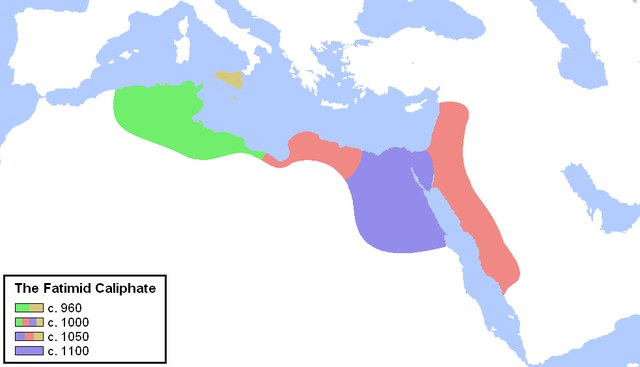
E

A certain country’s Article 301 forbids any mention of this event.

E

The Ottomans perpetrated this genocide against a Christian Caucasian ethnic group.
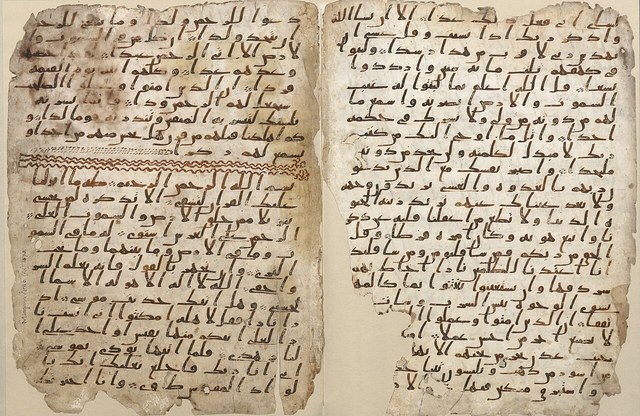
E

Tragedies during this event include drownings at Trabzon and a forced march through Syria. name this event where the Ottoman Empire systematically killed a Christian minority from the Caucasus during World War I.

10 more clues from the record
H

The impetus for this event was the passing of the Tehcir Law, which led to the events of Red Sunday.

H

Several of the men behind this event were later assassinated during the radical Operation Nemesis, headed by Shahan Natalie.

H

After a leader of this event was shot, his assassin declared that “I have killed a man, but I am not a murderer;” the courts eventually found Soghomon Tehlirian not guilty of that killing in Berlin.

H

Uruguayan artist Nerses Ounanian designed a memorial for this event.

H

After using the phrase “wall of silence” to describe responses to this event, Donald Quataert resigned as chairman of a Georgetown-based institute in 2006. :Name this event, “banality” over which Yair Auron attacked Justin McCarthy and Heath Lowry over in a 2003 book. In 2005, an author was sued for violating Article 301 in discussing this event.

H

This event was the result of the new spirit indicated in the editorial “Yesterday a Fief, To-day Our Country,” which notes that Peru and Mexico “were for many centuries under an administration totally devoid of all scruples.” Photographs of this event were taken and distributed by a German medic named Wegner.

H

The official date marked as the beginning of this controversial series of events is April 24, 1915. FTPE:Identify this grim campaign, which began on that day with the summary arrest of hundreds of intellectuals and community leaders in Constantinople, who were sent to rural Anatolia to be executed.

H

A number of scholars signing a statement about this event led to the “Sixty-Nine American Historians Affair,” which is sometimes named for a prominent British-American historian who was forced to pay a one-franc civil penalty for a statement about this event made in Le Monde in 1993.

H

To raise money for this event's victims, Cleveland Dodge founded the ACASR at the urging of Henry Morgenthau Sr. While reporting for the Agos, Hrant Dink was murdered in 2007 for discussing this event and violating one country's Article 301.

H

Sukru Kaya set up concentration camps during this event, which also included the Siege of Van. :Name this extermination campaign carried out by Ottoman leadership against the namesake ethnic group.
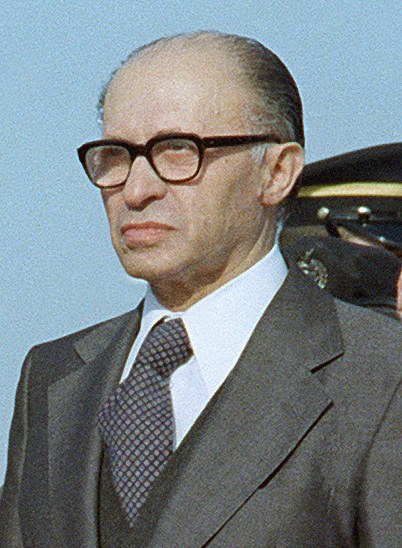
Watch out: Nanda Empire (unrelated ancient Indian dynasty, no connection to this event)
#507 · Massacres, Assassinations, and Named Violent Incidents · Level 2

Auspicious Incident

Auspicious Incident
bdi Christoph Weigel the Elder /span /a /bdi / bdi Caspar Lu · Public domain

1826 Ottoman military purge · 1826 · Ottoman Empire

The Auspicious Incident was the 1826 purge in which Sultan Mahmud II destroyed the Janissary corps after their final revolt.

The kit

  • Cause — The Auspicious Incident began when Janissaries revolted against Sultan Mahmud II's institution of westernized troops.
  • Suppression — The Auspicious Incident saw sipahi cavalry target the Janissaries, resulting in most being executed, exiled, or imprisoned.
  • Aftermath — The Auspicious Incident led to the dissolution of the Janissary corps after their centuries of elite military service.
  • Casualties — The Auspicious Incident included hundreds of beheadings at the Blood Tower and drownings in a cistern.

Runs with

Janissaries
elite corps destroyed in this purge open card →
Nanda Empire
Ottoman Empire
state where Mahmud II enacted reforms open card →
Istanbul

The ladder · 5 clues

H

The Janissaries saw their end in this 1826 event after their rebellion against Sultan Mahmud’s reforms.

H

“Incident” that led to the dissolution of the Janissary corps in the 19th century.

H

Around one hundred people fled this event, only to drown to death in a cistern inaccurately named for its 1001 columns. :Identify this 1826 event that culminated with hundreds of beheadings at the so-called “Blood Tower” of Thessaloniki. Its victims were targeted by the well-trained sipahi cavalry.

M

In this 1826 event, Sultan Mahmud II had most of the elite Janissaries killed after they revolted at the institution of westernized troops.

E

The janissaries revolted for a final time in 1826, after which they were finally disbanded in this event that saw most janissary troops executed, exiled, or imprisoned.

#520 · Medieval European Battles and Sieges · Level 2

Battle of Mohács

Battle of Mohács
bdi Bertalan Székely /span /a · Public domain

1526 Ottoman victory · 1526 · Hungary

Battle of Mohács was Suleiman the Magnificent's 1526 victory that devastated Hungary's army and ended the Jagiellonian dynasty.

The kit

  • Outcome — Battle of Mohács resulted in Louis II drowning while retreating across the Csele River, weighed down by his armor.
  • Commanders — Battle of Mohács saw Archbishop Pál Tomori lead an unsuccessful charge on the right wing against Suleiman's forces.
  • Aftermath — Battle of Mohács split Hungary between Ottoman and Habsburg rule, with Ferdinand I and Zapolya fighting over succession.
  • Legacy — Battle of Mohács enabled the 1529 Siege of Vienna three years later and was reversed by Charles V of Lorraine in 1687.

Runs with

Hungary
ended Jagiellonian dynasty, split between Ottomans and Habsburgs open card →
Louis
Louis II drowned retreating across river open card →
Suleiman the Magnificent
Suleiman commanded Ottoman forces to victory open card →
Vienna
enabled 1529 Siege of Vienna three years later open card →

The ladder · 9 clues

H

1526 battle in which Suleiman's forces devastated the armies of Hungary, Bohemia, and Bavaria.

H

Answer the following about the political impact of a certain battle FTPE:First name the 1526 rout of Louis II by the Turks under Suleyman the Magnificent.

H

The result of this battle was overturned in a 1687 battle at the same site won by Charles V of Lorraine.

H

1526 battle which that ruler won to complete the Ottoman conquest of Hungary

M

Suleiman won this 1526 battle over Louis II, splitting Hungary between Ottoman and Habsburg rule.

M

Suleiman led the Ottomans against Louis II of Hungary in this battle, after which the Habsburgs claimed Bohemia and the Ottomans captured Buda.

M

Preceding this battle, two forts were taken by the Ottomans. :Name this 1526 victory for Suleiman I that resulted in the end of the Jagiellonian dynasty in Hungary.

E

Louis II of Hungary died while trying to retreat across a river after this battle, where he had been defeated by Suleiman the Magnificent.

E

This battle marked Suleiman’s conquest of Hungary, whose king Louis II died at this Ottoman victory.

10 more clues from the record
H

In a campaign before this battle, the victors were able to capture Peterwardein and Sabac. Pal Tomori led an unsuccessful charge on the right wing at this battle, and his king later drowned while attempting to flee.

H

After this battle, Archduke Ferdinand I and another man fought over who should succeed the teenage king Louis II, who had drowned in a marsh while trying to escape.

H

The feud between Zapolya and Ferdinand occurred after Louis II of Hungary had been killed in this 1526 battle at which Suleyman the Magnificent made a grand incursion into Hungary.

H

Its site, a plain with swampy marshes meant to slow down the winning side’s large force, was chosen by the losing commander, an archbishop named Pal Tomori.

H

Gyorgy Dozsa’s rebellion crippled the Hungarian monarchy just in time for Suleiman the Magnificent to conquer it at this battle, which saw the death of Hungarian king Louis II.

H

Communist historiography blames the loss of this battle on the government's brutal suppression of the peasant rebellion of Gregory Dozsa twelve years earlier.

H

The Hungarians lost to Suleiman I at this battle, which marked the end of the Jagiellon dynasty in Hungary. At this battle, the Rumelian army was routed by Pal Tomori’s forces.

H

Jan Zapolya became King of Hungary after Louis II drowned retreating from it. :Name this 1526 victory for the Ottomans that ended the Jagiello line in Hungary.

H

The Siege of Vienna took place just three years after this crushing defeat for Louis II in modern-day Hungary.

H

The defeated army in this battle was commanded by the Archbishop of Kolocsa and its ruler was wounded and drowned from the weight of his armor in the Csele River.

Watch out: Charles V of Lorraine reversed this battle in 1687, not Holy Roman Emperor Charles V
#548 · Medieval European Rulers · Level 2

Mehmed II the Conqueror

Mehmed II the Conqueror
bdi Gentile Bellini /span /a · Public domain

Ottoman Sultan · 1451–1481 · Ottoman Empire

Mehmed II the Conqueror was the Ottoman sultan who ended the Byzantine Empire by conquering Constantinople in 1453.

The kit

  • Rise — Mehmed II the Conqueror was the son of Murad II and received early education at Amasya under tutor Akshamsaddin.
  • Achievements — Mehmed II the Conqueror constructed the Rumeli Hisari fortress before his 1453 conquest, using Hungarian cannon-maker Orban's massive Dardanelles cannon.
  • Conflicts — Mehmed II the Conqueror defeated Uzun Hasan at Bashkent, won at Valea Alba avenging his earlier Vaslui loss, and captured Albania after Skanderbeg died.
  • Death & succession — Mehmed II the Conqueror was succeeded by his son Bayezid II in 1481 after ruling the Ottoman Empire for three decades.

Runs with

Constantinople
conquered it in 1453 using Orban's cannons open card →
Orban
Hungarian cannon-maker who built his Dardanelles cannon open card →
Byzantine Empire
ended it by taking Constantinople in 1453 open card →
Albania
captured it after Skanderbeg's death open card →

The ladder · 9 clues

H

This man appointed Gennadius Scholarius as head for Orthodox Christians in his empire. 800 people were supposedly martyred in Otranto after an invasion by this ruler’s forces, who also captured Albania after Skanderbeg died.

H

This Sultan of the Ottoman Empire became known as “the Conqueror” after sacking Constantinople.

H

This sultan and rumored lover of Radu the Handsome presided over the Ottoman conquest of Constantinople in 1453. His armies thereby ended the Byzantine empire.

H

This ruler once cut open a gardener to find a precious missing cucumber he had grown.

M

Son of Murad II, an Ottoman sultan who conquered the city in 1453.

M

Constantinople fell to this Ottoman sultan, a son of Murad II. He was succeeded in 1481by his son Bayezid II.

M

Succeeded by his son Bayezid II, name this sultan who sacked Constantinople in 1453.

E

In 1453, this man ended the Byzantine Empire by conquering Constantinople. name this Ottoman Sultan.

E

This Ottoman sultan, who claimed descent from the Komnenos dynasty, conquered Constantinople in 1453 with a little help from the Hungarian cannon-maker Orban.

10 more clues from the record
H

Vlad ordered the impalement of two envoys from this Ottoman Sultan. Vlad failed to kill him during the Night Attack at Targoviste.

H

He took no part in that battle, but his later victories included one over the White Sheep and their leader Uzun Hasan at Bashkent.

H

He also won at the Battle of Valea Alba, where he avenged his earlier loss at the Battle of Vaslui against Stephen the Great.

H

Over 20,000 of this man’s troops were killed and displayed on stakes at Targoviste after he suffered a setback in the “Night Attack.” This man was more successful at a battle where he commissioned Orban to build the large Dardanelles cannon.

H

Portugal sent an expedition to fight this man at the request of Sixtus IV, in which 800 men led by Antonio Primaldi were taken to the Hill of Minerva to be executed as martyrs at Otranto.

H

Besides Italy, this man defeated Skanderbeg in Albania and defeated John Hunyadi after the Peace of Szeged was broken.

H

In his early education at Amasya under the tutoring of Akshamsaddin, this man was influenced to fulfill his Islamic duty.

H

This ruler’s greatest success began with construction of the Rumeli Hisari, forcing Constantine XI to call for help.

H

This ruler’s advance on Hungary was delayed after John Hunyadi’s successful resistance at Belgrade.

H

This man gained control of the Dalmatian coastline after launching repeated sieges of Shkodra.

Watch out: Constantine XI (the Byzantine emperor who called for help during the siege, not the conqueror)
#625 · Security, Police, Intelligence, and Paramilitary Organizations · Level 2

Islamic State of Iraq and Syria

Islamic State of Iraq and Syria
Yo · Public domain

Jihadist terrorist organization · 2014–2019 territorial control · Iraq and Syria

Islamic State of Iraq and Syria was a Wahhabist terrorist group that controlled parts of Iraq and Syria from 2014 to 2017.

The kit

  • Rise — Islamic State of Iraq and Syria arose from an Al-Qaeda offshoot and captured Mosul and much of Western Iraq in 2014.
  • Territorial control — Islamic State of Iraq and Syria established its capital at Raqqa and at its 2015 height controlled eastern Syria and western Iraq.
  • Attacks — Islamic State of Iraq and Syria perpetrated the Sinjar Massacre against Yazidis and claimed responsibility for the November 2015 Paris attacks including the Bataclan.
  • Defeat — Islamic State of Iraq and Syria lost Mosul and Raqqa in 2016–2017, and leader Abu Bakr al-Baghdadi died in Idlib province in October 2019.

Runs with

Syria
controlled eastern Syria with capital at Raqqa open card →
Iraq
controlled western Iraq including Mosul and Tikrit open card →
Paris
claimed responsibility for November 2015 attacks open card →
Caliph
claimed to have established a caliphate open card →

The ladder · 9 clues

H

This organization has been led since 2014 by Abu Bakr al-Baghdadi. :Name this terrorist organization which was expelled from its capital of Raqqa by the Syrian Democratic Forces in October 2017.

H

al-Baghdadi is the leader of this radical group which claims to have established a caliphate in the Middle East.

H

Donald Trump recently claimed that this organization had opened a hotel and that he was “in competition with them.” This group was driven out of Tikrit after massacring unarmed Air Force cadets at Camp Speicher.

H

On October 27, 2019, the leader of this group committed suicide after being cornered in the Idlib province of Syria; he was replaced by Abu Ibrahim al-Hashimi, whose precise identity is still unconfirmed.

M

Abu Bakr al-Baghdadi led this Wahhabist terrorist group that, at its height in 2015, controlled parts of Syria and Iraq.

M

Egyptian goddess that shares her name with a terrorist group that for a time controlled much of Eastern Syria.

M

The Bataclan was targeted by this group in a November 2015 attack in Paris. name this extremist Islamic terrorist group that arose from an offshoot of Al-Qaeda and which controls territory in Iraq and Syria.

E

Terrorist group that took responsibility for the November 2015 attacks in Paris.

E

This terrorist group’s variation of the Black Standard shows the seal of Mohammad below the words “There is no god but Allah.” name this terrorist group that, in 2014, captured Mosul and much of Western Iraq.

10 more clues from the record
H

Often incorporating aspects of the cult of Serapis[[seh-RAP-iss]],thisdeitynamesa "Mystery" practiced in the Greco-Roman world which guaranteed practitioners a place in the Fortunate Isles.

H

Donald Trump approved of Operation Kayla Mueller, which killed this leader’s “Caliph” Abu Bakr Al- Baghdadi. name this terrorist state which controlled portions of Iraq and Syria.

H

This proto-state intentionally opened the Nuaimiya Dam near Fallujah to deprive the Shia majority population of water.

H

An aspect of this goddess related to "Pharos" [[FAY-rohss]] was worshipped by sailor's hoping to have favorable seas.

H

Scholars have speculated that images of this goddess with Horus on her lap inspired iconography of Mary with an infant Christ.

H

The use of model boats in medieval Carnival festivals was argued to have been derived from the cult of this deity.

H

Late 2016 campaigns led to the loss of this organization’s stronghold of Mosul and its capital of Raqqa [[ROK-ah]].

H

This group killed thousands of people in the Sinjar Massacre, which targeted Yazidis in the region of Nineveh.

H

A temple for this deity built during the reign of Augustus was one of the first discoveries in Pompeii.

H

Terrorist organization based in Raqqa has destroyed many ancient artworks?

Watch out: Egyptian goddess Isis shares her name with this terrorist group
#700 · Other Rebellions, Revolts, and Uprisings · Level 2

Iranian Revolution

Iranian Revolution
Raouf Mohseni · CC BY 4.0

1979 overthrow of Pahlavi dynasty · 1979 · Iran

Iranian Revolution was the 1979 overthrow of Shah Mohammad Reza Pahlavi that brought Ayatollah Khomeini to power and established a theocratic government.

The kit

  • Causes — Iranian Revolution was a response to the White Revolution of the 1960s, which enfranchised women and introduced trickle-down economics.
  • Black Friday — Iranian Revolution saw protesters killed at Jaleh Square after the declaration of martial law on Black Friday.
  • Cinema Rex fire — Iranian Revolution was preceded by the Cinema Rex fire during a showing of The Deers, which killed over 400 and was blamed on SAVAK.
  • Aftermath — Iranian Revolution led to 52 American diplomats being held hostage by government-backed students for 444 days at the embassy.

Runs with

Iran
occurred in Iran in 1979 open card →
Ayatollah Ruhollah Khomeini
brought Khomeini to power from exile open card →
Iraq
sparked fears of Shia uprising in Iraq open card →
Mohammad Reza Pahlavi
overthrew Shah Mohammad Reza Pahlavi open card →

The ladder · 9 clues

H

Before this event, the Cinema Rex fire, which killed over 400, was blamed on the government.

H

It’s not the Great Depression, but protestors in Jaleh Square were killed on Black Friday during this event.

H

In a failed attempt to stop this event, one leader forced a man from exile in Najaf to the Neauphle-le-Château village near Paris.

H

This event’s target left Shapour Bakhtiar in charge before fleeing the country and seeking medical treatment in the United States.

M

The secret police organisation SAVAK was dissolved after this event.

M

This event’s target implemented the White Revolution, using the SAVAK to persecute the illegal Tudeh Party, which played a major a role in this event, along with the Homafaran.

M

Shapour Bakhtiar pushed through a number of reforms in this event, such as the dissolution of the SAVAK secret police.

E

This event resulted in 52 hostages being taken in the American embassy. name this 1979 event that ended the rule of Shah Mohammed Reza Pahlavi and brought Ayatollah Khomeini [“kto power.

E

In the aftermath of this revolution, 52 American diplomats were held hostage by government-backed students for 444 days. name this 1979 overthrow of the Pahlavi dynasty which led to the rise of the theocratic government of Ayatollah Khomeini.

10 more clues from the record
H

During this event, the secret police were widely blamed for a deadly arson during a showing of the film The Deers at the Cinema Rex.

H

An exiled leader brought to power by this event was living in France and communicated with his followers through cassette tapes.

H

Leading up to this event, protesters were killed at Jaleh [ZHAH-leh] square after the declaration of martial law.

H

This revolution was a direct response to the White Revolution of the 1960s, which enfranchised women and introduced trickle-down economics.

H

A 2500-year anniversary was controversially celebrated prior to this revolution, in which the Pahlavi Dynasty was overthrown.

H

An attempt to appease participants in this event led to the arrest of Amir Abbas Hoveyda.

H

Charles Kurzman’s 2004 sociological study of this “unthinkable” single-year event argues that it is best analyzed through the lens of “anti-explanation.” In a chapter titled for “The Butterfly Effect,” Scott Anderson’s 2025 history of this event discusses an accusatory editorial published by Etalaat.

H

The Iran-Iraq War erupted out of fears that this event would spark an uprising among the Iraqi Shia minority. Iraq also hoped to capitalize on the instability this 1979 event caused in Iran in which the Ayatollah took power.

H

A politician who opposed this event organized the failed Nojeh Air Base coup attempt before being assassinated in a Parisian suburb.

H

Feminist writer Kate Millett documented an International Women’s Day rally protesting against laws announced in the aftermath of this event.

Watch out: White Revolution (earlier modernization program by the Shah that Iranian Revolution opposed)
#743 · Other Ethnic and Indigenous Peoples · Level 2

Arabs

Arabs
i b Allice Hunter /b /i /span · CC BY-SA 4.0

Semitic ethnic group · ancient times–present · Arabian Peninsula, Middle East, North Africa

Arabs are a Semitic ethnic group originating on the Arabian Peninsula who became the primary carriers of Islam after Muhammad's unification.

The kit

  • Rise — Arabs united under Muhammad on the Arabian Peninsula and formed the Rashidun Caliphate after his death, subduing rebellions in the Wars of Apostasy.
  • Achievements — Arabs conquered the Sassanid Empire and defeated Byzantines at Yarmouk, spreading Islam through rapid military expansion across the Middle East and North Africa.
  • Legacy — Arabs ruled the Umayyad and Abbasid Caliphates, with the latter coinciding with the Islamic Golden Age and revolutionizing agriculture in Al-Andalus.
  • Modern era — Arabs comprise the majority in the Middle East and North Africa, with the Arab Spring uprisings marking early 2010s anti-government protests across the region.

Runs with

Umayyad Caliphate
Arabs ruled this caliphate until the Abbasid Revolution open card →
Islam
Arabs adopted Islam when it emerged on their peninsula open card →
Nanda Empire
Muhammad
Arabs were united under this prophet's leadership open card →

The ladder · 9 clues

H

The Nabateans were of this general ethnic group. Muhammad was a member of this ethnic group whose death later sparked the formation of the Rashidun Caliphate.
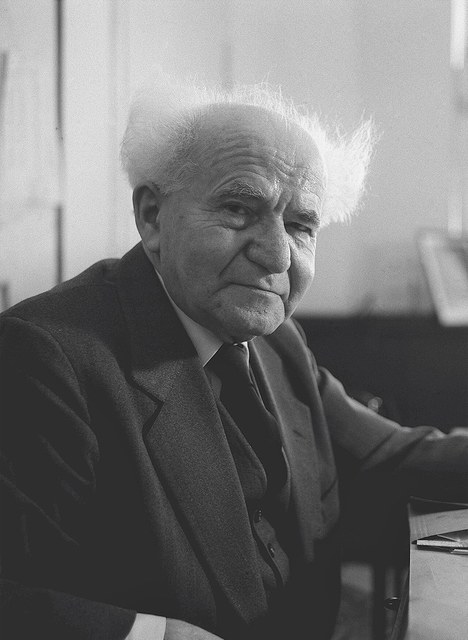
H

A period named for this ethnicity has been followed by this ethnicity’s “Winter,” marked by a series of ongoing civil wars. :What ethnicity, the majority in North Africa and the Middle East, names a series of anti-government protests and uprisings in the early 2010s known as this ethnicity’s “Spring?”

H

This ethnic group’s rebellion was subdued in the Wars of Apostasy, after which their invasions brought down the Sassanid [sass-uh-nihd] Empire.

H

Ancient gods worshiped by this ethnic group included Uzza [ooz-ah] and Hubal.

M

It fought the Byzantine Empire at the Battle of Yarmouk.

M

This ethnic group loyally followed the Rashidun [rash-ee- done] after being subdued by Abu Bakr [ah-boo bah-kur], and originally pledged loyalty to a prophet who took dictation from Gabriel in a cave. name this largely Islamic ethnic group that populates a peninsula northeast of Africa.

M

Middle Age authors called these people “Saracens.”A period of rapid military conquest by these people was started by the Rashidun Caliphate. name these Middle Eastern people who adopted Islam when it developed on their namesake peninsula.

M

The “Khazneh” or “Treasury” is a rock-hewn temple built by these people’s Nabataean kingdom. name these people, whose territory Romans divided into “Deserta” and “Felix” regions and a region named for Petra.

E

The Romans and the Sassanids both used client tribes from this ethnic group. The religion of Islam later emerged among this ethnic group, whose namesake peninsula was united by Muhammad.
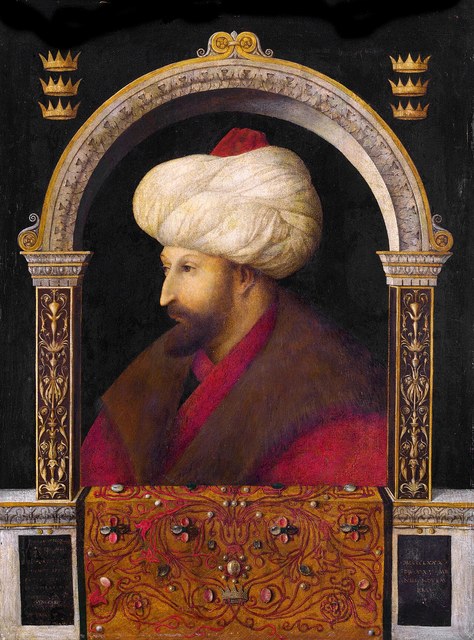
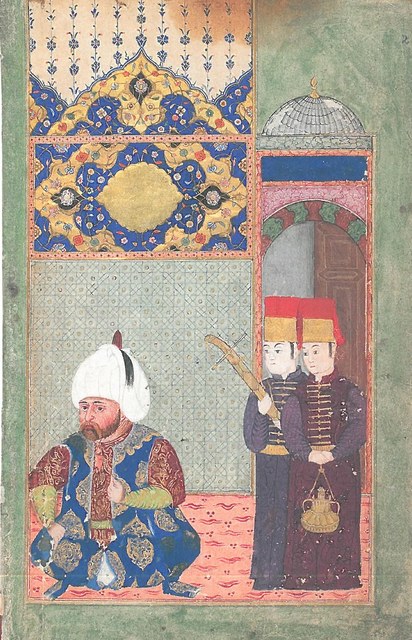
10 more clues from the record
H

Led in a namesake "revolt" by Faisal (FAI-sul) and T.E. Lawrence?

H

One member of this ethnic group named Ibn al-‘Awwam described the proper cultivation of olive trees in his Book on Agriculture. :Name these people who spread the sakia water wheel to Spain and revolutionized agriculture between the 8th and 13th centuries. These conquerors of Al-Andalus enlarged the Bahr Yussef canal connecting Fayyum to the Nile.

H

Answer the following about political movements that emerged in the Middle East from a period often compared to the Renaissance, the Nahḍa , .Jurjī Zaydān, a writer who popularized the term Nahḍa, was an early influence on an ideology prefixed “pan-” named for these people. Egypt and Syria were briefly united as a united republic named for these people.

H

The Baggara are generally considered to be a subgroup of these people, and include most people who received land grants under the hakura system. :Name these people. Nationalists who identify as these people comprise the janjaweed militia groups who have terrorized the Fur people in raids since the 1980s.

H

Albert Hourani’s history of this ethnic group examines how their larger empires became unstable because of a diffusion of a sense of familial loyalty called asabiya. :Name this ethnic group whose Abbasid Caliphate coincided with the Islamic Golden Age.

H

The Rashidun caliphate spread Islam throughout much of the Middle East. :The caliphate was mostly composed of tribes of this ethnic group. Egypt, Iraq, and Algeria have large populations of this ethnic group, for which the peninsula containing Oman and Yemen is also named.

H

Many scholars have argued that Zenobia’s Palmyrene Empire should be considered a revolt by this ethnicity. The Rashidun Caliphate began a series of namesake “conquests” of this ethnic group after the birth of Islam.

H

A dynasty ruled by this ethnic group was toppled by the led Abbasid revolution, which was led by Abu Muslim. :Name this ethnic group that ruled the Umayyad Caliphate. The Abbasid Revolution attempted to equalize the status of muslims not of this ethnic group to muslims of this ethnic group, which Muhammad belonged to.

H

The Lakhmid kingdom was dominated by these people. After annexing the Lakhmid kingdom, the Sassanids were defeated at the Battle of Dhi Qar by tribes of these people, who would later be united under Muhammad.

H

Henri Pirenne posited that the expansion of people of this broad ethnic origin caused economic stagnation in western Europe during the Carolingian dynasty.

#941 · African Independence and Modern Leaders · Level 2

Gamal Abdel Nasser

Gamal Abdel Nasser
bdi Stevan Kragujević /span /a · CC BY-SA 3.0

Egyptian president · ruled 1954–1970 · Egypt

Gamal Abdel Nasser led the Free Officers Movement to overthrow King Farouk, then nationalized the Suez Canal and formed the United Arab Republic.

The kit

  • Rise — Gamal Abdel Nasser worked with Mohammed Naguib in the Free Officers Movement to overthrow King Farouk, then replaced Naguib in a 1954 coup.
  • Achievements — Gamal Abdel Nasser nationalized the Suez Canal in 1956, sparking the Suez Crisis, and later funded construction of the Aswan High Dam.
  • Conflicts — Gamal Abdel Nasser's closure of the Straits of Tiran led to the Six-Day War with Israel in 1967, followed by the War of Attrition.
  • Legacy — Gamal Abdel Nasser's pan-Arab stance led to the United Arab Republic with Syria in 1958, which lasted three years before dissolving.

Runs with

Egypt
served as second president open card →
Suez Canal
nationalized it in 1956 open card →
Suez Crisis
triggered it by seizing the canal open card →
Anwar Sadat
succeeded by him as president open card →

The ladder · 9 clues

H

This leader, who organized a brief United Republic with Syria that lasted for three years, worked with Mohammed Naguib of the Free Officers Movement to overthrow King Farouk.

H

Anthony Eden resigned during a crisis that began when this leader seized the Suez Canal.

H

This leader led the Free Officers Movement to become the president of Egypt. This leader’s closure of the Straits of Tiran led to the Six-Day War with Israel.

H

This man’s pan-Arabic stance led to the United Arabic Republic with Syria.

M

This man replaced the head of the Free Officers Movement, Mohammed Naguib, in a 1954 coup.

M

Pan-Arab politician who nationalized the Suez Canal, sparking the crisis.

M

Shukri al-Quwatli of Syria and this president agreed to form the United Arab Republic in 1958.

E

This man that nationalized the Suez Canal later funded the construction of the Aswan High Dam. name this President of Egypt succeeded by Anwar Sadat.

E

The Aswan High Dam was built by this predecessor of Anwar Sadat as President of Egypt.

10 more clues from the record
H

This Egyptian leader ordered the construction of the Aswan High Dam and had earlier, as a member of the Free Officers movement, overthrew King Farouk.

H

This man was nearly assassinated by a member of the Muslim Brotherhood while giving a speech in Alexandria.

H

The nationalization of the Suez Canal was carried out by this man, who forced Muhammad Naguib to step down in 1954.

H

After all of his country's parties were banned, this man led the Liberation Rally organization.

H

This second Egyptian President authorized the nationalization of the Suez Canal, leading to the Suez Crisis. He succeeded Muhammad Naguib and was succeeded by Anwar Sadat.

H

This leader suppressed the Muslim Brotherhood in his country after an assassination attempt.

H

This man created a one-party system under the Liberation Rally, and he gave military support to Abdal al-Sallal during the North Yemen Civil War.

H

He was captured in the Fallujah Pocket along with his brigade despite refusing to surrender, and personally attempted to assassinate Sirri Pasha.

H

In 1968, this man launched the War of Attrition in order to reclaim territory his country had lost the year prior.

H

This man undertook a secret flight to Moscow to acquire Surface to Air Missiles during its War of Attrition with an eastern neighbor.

Watch out: Mohammed Naguib (Nasser's predecessor in the Free Officers Movement whom he replaced in 1954)
#948 · African Independence and Modern Leaders · Level 2

Anwar Sadat

Anwar Sadat
Unknown author Unknown author · Public domain

Egyptian president · 1970–1981 · Egypt

Anwar Sadat succeeded Gamal Abdel Nasser as president of Egypt, launched the Yom Kippur War, and signed the Camp David Accords.

The kit

  • Rise — Anwar Sadat dismissed Vice President Ali Sabri and expelled Soviet military advisers in his 1971 Corrective Revolution.
  • Achievements — Anwar Sadat opened Egypt's economy to the West under his policy of Infitah, attracting foreign investment.
  • Conflicts — Anwar Sadat planned the surprise attack Operation Badr and was the aggressor during the Yom Kippur War.
  • Death & succession — Anwar Sadat was assassinated by Islamic Jihad in 1981 because of his diplomatic efforts with Menachem Begin.

Runs with

Egypt
served as president of Egypt from 1970 to 1981 open card →
Gamal Abdel Nasser
Camp David Accords
signed the Camp David Accords, winning the 1978 Nobel Prize open card →
Menachem Begin
signed the Camp David Accords with Israeli leader Menachem Begin open card →

The ladder · 9 clues

H

This man followed Gamal Abdel Nasser as leader of Egypt and was the aggressor during the Yom Kippur War.

H

This leader imprisoned his minister of the interior Sharaway Gomaa and Vice President Ali Sabri before dismissing Soviet military advisers in the Corrective Revolution.

H

A leader of this country broke with the Soviet Union and opened up his economy to the west under the policy of Infitah.

H

He dismissed his vice president Ali Sabri and expelled Soviet military advisers in his Corrective Revolution.

M

In this country, a leader who had planned the surprise attack Operation Badr was assassinated by Islamic Jihad because of his diplomatic efforts with Menachem Begin.

M

Nasser was succeeded by which president who was assassinated in 1981 for signing the Camp David Accords with Israel?

M

This man’s assassination coincided with the climax of the Naguib Mahfouz novel The Day the Leader was Killed.

E

The Camp David Accords were signed by this successor of Gamal Abdel Nasser as president of Egypt.

E

This successor to Nasser won the 1978 Nobel for signing the Camp David Accords with Israel, but he was assassinated three years later.

10 more clues from the record
H

Bread riots erupted in his country after this man was pressured by the World Bank and the IMF to cut subsidies as part of his economic policy of infitah.

H

This leader embarked on a political purge in a “Corrective Revolution,” and he liberalized his country’s economy through his policy of intifah.

H

This ruler broke with the Soviet Union and opened up his economy to the West under his policy of Infitah.

H

This man sacked Sharawy Gomaa and others linked to his predecessor’s regime in the Corrective Revolution.

H

This political figure coordinated with Hafez al-Assad on an invasion of Israel that occurred on Yom Kippur.

H

This man launched the Corrective Revolution to purge himself of Soviet influences.

H

Military officer who succeeded Nasser to the Presidency?

H

This leader purged left-wing Nasserites from his government in the 1971 Corrective Revolution. :Name this leader who oversaw Egypt’s shift in the Cold War away from the USSR. He signed the Camp David Accords.

H

His domestic policy included the concept of "infitah," which was aimed at diversifying the economy and attracting foreign investment. His invasion of the Sinai Peninsula following failed negotiations sparked the Yom Kippur War.

H

Shortly after taking power, this man imprisoned the officials Ali Shabry and Sharawy Gomaa and this leader became known as the “Hero of the Crossing” for launching the October War.

Watch out: Confused with his predecessor Gamal Abdel Nasser, whom he succeeded as Egyptian president
#988 · Infrastructure Projects, Routes, and Railways · Level 2

Suez Canal

Suez Canal
NASA · Public domain

Egyptian shipping canal · opened 1869 · Egypt

The Suez Canal is an Egyptian waterway connecting the Mediterranean and Red Seas, shortening shipping routes between Europe and Asia.

The kit

  • Construction — The Suez Canal opened in 1869 with the Newport controversially surging past the imperial Eagle to be the first vessel through.
  • 1956 Crisis — The Suez Canal was nationalized by Gamal Abdel Nasser in 1956, prompting a joint French, British, and Israeli invasion of Egypt.
  • Peacekeeping — The Suez Canal crisis was resolved by Canadian Prime Minister Lester B. Pearson, earning him the 1957 Nobel Peace Prize.
  • Yellow Fleet — The Suez Canal trapped the fifteen-ship Yellow Fleet from 1967 to 1975 after closure during the Six-Day War.

Runs with

Egypt
runs through Egyptian territory open card →
Gamal Abdel Nasser
nationalized it in 1956 triggering crisis open card →
Ferdinand de Lesseps
Red Sea
connects Mediterranean Sea to it open card →

The ladder · 9 clues

H

Canal obstructed in March 2021 by the barge Ever Given.

H

That ship was part of the Yellow Fleet, which was trapped in this body of water from 1967 to 1975.

H

This structure was targeted by paratroopers known as the “Red Devils” during Operation Telescope.

H

Nasser faced an invasion by French and British paratroopers after nationalizing this waterway.

M

Canadian Prime Minister Lester B. Pearson won the 1957 Nobel Peace Prize for his role in resolving the conflict over what strategic waterway?

M

Canal that connects the Mediterranean and Red Seas that was nationalized in a 1956 “crisis.”

M

The fifteen-ship Yellow Fleet was trapped in this waterway as a result of the Six-Day War.

E

Gamal Abdel Nasser nationalized this Egyptian waterway that links the Mediterranean and Red Seas.

E

This waterway was nationalized by Gamal Nasser in 1956 prompting a joint French, British, and Israeli invasion of Egypt. name this canal which connects the Mediterranean and Red Seas.

10 more clues from the record
H

Gamal Abdel Nasser nationalized this waterway, leading to a 1956 crisis also known as the Tripartite Aggression. name this Egyptian canal that shortened shipping routes between Europe and Asia.

H

A closure of this structure caused the Yellow Fleet to be trapped for eight years.

H

An event at this location was mitigated by Lester Pearson, which earned him the 1957 Nobel Peace Prize and later the Prime Ministership of Canada.

H

The "Yellow Fleet" was stuck in this structure's Great Bitter Lake after it was closed during the Six-Day War.

H

The Convention of Constantinople declared this structure a neutral zone under a certain country’s protection.

H

The Newport controversially slipped past the Aigle, taking the record of being the first vessel to pass through this waterway.

H

At this structure’s opening ceremony, George Nares’s Newport controversially surged past the imperial Eagle.

H

Egyptian waterway targeted by France, Israel, and Great Britain in a 1956 Crisis.

H

The USS Iwo Jima cleared out landmines from this body of water.

H

Plans for this waterway to change hands were made during the Protocol of Sevres.

Watch out: Panama Canal (other major strategic canal connecting two seas)
#995 · Infrastructure Projects, Routes, and Railways · Level 2

Aswan High Dam

Aswan High Dam
NASA · Public domain

Egyptian dam · 1960–1970 · Nile River, southern Egypt

Aswan High Dam is a Soviet-funded dam on the Nile River that created Lake Nasser and controlled seasonal flooding.

The kit

  • Funding crisis — Aswan High Dam lost US and UK funding after Egypt accepted a $200 million arms deal from Czechoslovakia.
  • Construction — Aswan High Dam was conceived by Adrian Daninos as an alternative to Harold Hurst's water-hoarding plan.
  • Displacement — Aswan High Dam forced over 50,000 people to relocate to New Wadi Halfa and required moving Abu Simbel temple.
  • Lake creation — Aswan High Dam created Lake Nasser (also known in part as Lake Nubia) behind the structure.

Runs with

Gamal Abdel Nasser
Nasser ordered its construction and the lake bears his name open card →
Egypt
Built in Egypt after Western funding withdrawal triggered canal crisis open card →
Nile River
Built on the Nile to control its flooding open card →
Ramses II
Required relocating Ramses II's Abu Simbel temples to higher ground open card →

The ladder · 9 clues

H

Dam funded by the USSR that eventually created Lake Nasser

H

Construction project that was to be financially supported by the US and UK; their withdrawal led to the canal crisis.

H

Over 50,000 people had to be moved to the town of New Wadi Halfa as a result of this project, which also forced the relocation of the Abu Simbel temple of Ramses II.

H

This project was conceived by Adrian Daninos as an alternative to Harold Hurst’s plan to hoard water.

H

Lake Nasser was created when what structure was built on the Nile River?

M

This project lost funding from Great Britain after the host country accepted an arms deal with Czechoslovakia and the Soviet Union.

M

This dam on the Nile River was built during Nasser's rule. This dam created a lake named for Nasser.

M

It created a body of water known in part as Lake Nubia.

E

Nasser ordered the construction of this dam on the Nile River, controlling its flooding.

5 more clues from the record
H

Abu Simbel is the site of two temples that were created during the reign of Ramses II, but had to be moved to higher ground in 1964 to avoid flooding as a result of the creation of this dam.

H

In 1956 John Foster Dulles announced that the US was withdrawing funding, following the Soviets offering over one billion dollars in funding.

H

One of the first attempts at building something like this was by Alhazen, but he decided it couldn’t be done.

H

Funding for the construction of this object was jeopardized by the purchase of 200 million dollars of arms from Czechoslovakia.

H

The predecessor to this was designed by William Willcocks.

Watch out: Confused with the earlier Aswan Low Dam designed by William Willcocks
#1104 · African Empires and Kingdoms · Level 3

Fatimid Caliphate

Fatimid Caliphate
Omar-toons · CC BY-SA 4.0

Isma'ili Shi'a caliphate · 909–1171 CE · Egypt and North Africa

Fatimid Caliphate was an Isma'ili Shi'a dynasty claiming descent from Muhammad's daughter Fatima that ruled Egypt from Cairo.

The kit

  • Rise — Fatimid Caliphate succeeded the Abbasids in Egypt and conquered the Ikhshidid kingdom through general Jawhar the Sicilian.
  • Achievements — Fatimid Caliphate established al-Azhar University and founded Cairo as its capital in 973 on the site of al-Fustat.
  • Conflicts — Fatimid Caliphate's mad caliph al-Hakim ordered the razing of the Church of the Holy Sepulchure and is venerated by the Druze.
  • Fall — Fatimid Caliphate was toppled by Saladin, who founded the Ayyubid dynasty after vizier Badr al-Jamali had seized power under al-Mustansir.

Runs with

Egypt
ruled Egypt from Cairo open card →
Cairo
founded Cairo as capital in 973 open card →
Muhammad
claimed descent from Muhammad's daughter Fatima open card →
Caliph
Isma'ili Shi'a caliphate open card →

The ladder · 6 clues

H

The Abbasids were succeeded in Egypt by this caliphate, which is named for a daughter of Muhammad.

H

The general Badr al-Jamali took control of this dynasty during the reign of its ruler al-Mustansir.

M

Jawhar the Sicilian founded the capital of this dynasty, where a non-Abbasid “House of Knowledge” was built by a ruler who forced Jews to wear bells and burned the Church of the Holy Sepulchre.

M

This caliphate, which ruled from Cairo and claimed to be descended from the daughter of Muhammad, followed the Isma’ili sect of Shi’a Islam. They were toppled by Saladin.

E

Basil II signed a truce with this Islamic dynasty, whose "mad caliph" al-Hakim ordered the razing of the Church of the Holy Sepulchre.

E

That ruler is revered by the Druze and was known as the “Mad Caliph.” The Ayyubids under Saladin followed this dynasty, which established the al-Azhar University in its capital, built on the previous site of al-Fustat. name this Muslim dynasty in Egypt named after a daughter of Muhammad.

10 more clues from the record
H

The Assassins were founded in opposition to this dynasty, which founded the modern city of Cairo and made that city its capital in 973.

H

One ruler of this dynasty sent his general Jawhar to conquer the Ikshidids.

H

During the reign of al-Mustansir, the power of this dynasty, which supplanted the Ikhshidid kingddom, was transferred to the vizier Badr al-Jamali and then to his son, al-Afdal.

H

The third ruler of this dynasty faced a rebellion from a man nicknamed “possessor of the donkey” who fomented unrest in the Aures Mountains, Abu Yazid.

H

The Druze venerate the most mentally-unbalanced ruler of this dynasty, Al-Hakim.

H

One ruler of this dynasty was crowned by his wasita Barjawan after being told to climb down from a sycamore tree.

H

Egyptian dynasty founded in the wake of their collapse, named for its descent from Muhammad's daughter.

H

Egypt-based Caliphate that controlled the Levant at the outset of the crusade.

H

One ruler of this dynasty vanished without a trace while enjoying his usual recreation of wandering around the hills in the middle of the night, and is known for ordering a canine genocide in his capital and falling under the sway of Hamza ibn Ahmad.

H

A ruler of this dynasty whose lineage was questioned took out his sword, shouted “here is my pedigree!,” and threw gold coins into a crowd; that ruler of this dynasty commissioned scientists to invent the world’s first fountain pen.

Watch out: Abbasid Caliphate (the Fatimids succeeded the Abbasids in Egypt but were a rival Shi'a dynasty)
#1226 · Biblical and Religious Texts · Level 3

Quran

Quran
span lang="en" Anonymous /span Unknown author · Public domain

Islamic holy book · 7th century CE · Arabia

The Quran is Islam's central scripture, revealed to Muhammad by the angel Jibreel and standardized under Caliph Uthman.

The kit

  • Revelation — The Quran was revealed to Muhammad by the angel Jibreel outside Mecca, primarily in a cave.
  • Structure — The Quran contains 114 surahs (chapters) divided into ayahs (verses); a hafiz has memorized the entire work.
  • Compilation — The Quran was first written down after the Battle of Musaylimah killed many scholars who had memorized it.
  • Theology — The Quran is believed by most Muslims to be co-eternal with God, though the Mu'tazila school disputes this doctrine.

Runs with

Islam
the Quran is Islam's central holy text open card →
Muhammad
the Quran was revealed to Muhammad by Jibreel open card →
Taj Mahal
no connection evident in clues open card →
Rongorongo Script
no connection evident in clues open card →

The ladder · 6 clues

H

Barack Obama claimed that this text’s central doctrine “has been woven into the fabric of our country.” A 2014 book by Denise Spellberg examines the influence of this text on one Founding Father.

H

Uthman created the first standardized form of this text, whose chapters are known as surahs and whose verses are called ayahs.

M

The 2007 swearing-in of Minnesota Congressman Keith Ellison notably involved a translation of this book which was owned by Thomas Jefferson and may have inspired Rashida Tlaib to do the same. name this non-Biblical religious book.

M

A hafiz is someone who has memorized this work, whose 114 surahs were compiled in the 7th century.

E

This text was revealed by the angel Jibreel outside the city of Mecca. name this text revealed to Muhammad, the holy book of Islam.

E

Hadith are collected sayings and stories that can accompany this text in determining religious law. name this work that was revealed by Jibril to Muhammad, the central holy text of Islam.

9 more clues from the record
H

When reciting a portion of this text, one man is said to have been tricked into allowing the worship of pagan goddesses; that incident is known as the Satanic Verses.

H

Muhammad said that this scripture, which most Muslims believe is co-eternal with God, was revealed to him in the cave.

H

This text was first written down after the loss of many scholars at Musaylimah sparked an effort to preserve it.

H

A 1748 essay by Voltaire praises a translation of this work into English created by George Sale.

H

This work’s ninth section is the only chapter to not open with the bismillah.

H

The Mu’tazila school disagrees that this work is “uncreated” and thus co-eternal with God.

M

This text describes the Night Journey to Jerusalem and is divided into 114 chapters called suras.

M

It was standardized under Calpih Uthman.

M

The huge number of Muslims in Dearborn had made it a site of islamophobic protests, including by Terry Jones who is famous for trying to burn this most holy book of Islam.

Watch out: Hadith—collected sayings of Muhammad that accompany but are distinct from the Quran in Islamic law
#1236 · Asian Decolonization Leaders · Level 3

Menachem Begin

Menachem Begin
MSGT DENHAM · Public domain

Israeli prime minister · 1913–1992; PM 1977–1983 · Israel

Menachem Begin was the Israeli prime minister who signed the Camp David Accords with Egypt and founded the right-wing Likud Party.

The kit

  • Rise — Menachem Begin led the militant Irgun group, which bombed the King David Hotel in 1946, and later founded the Likud Party.
  • Achievements — Menachem Begin signed a peace treaty with Egypt at Camp David, returning the Sinai Peninsula and sharing the 1978 Nobel Peace Prize.
  • Conflicts — Menachem Begin ordered the 1981 bombing of Iraq's Osirak reactor and invaded Lebanon in 1982 to combat the PLO.
  • Legacy — Menachem Begin's government was found indirectly responsible for the Sabra and Shatila Massacre by the Kahan Commission after the Lebanon invasion.

Runs with

Anwar Sadat
co-signed Camp David Accords and shared 1978 Nobel Peace Prize open card →
Camp David Accords
Israeli signatory who negotiated peace treaty with Egypt open card →
Israel
served as prime minister 1977–1983 open card →
Egypt
signed first Israeli peace treaty with Egypt, returning Sinai open card →

The ladder · 6 clues

H

One of this man’s peaceful gestures involved the return of the Sinai to Anwar Sadat. name this founder of the Likud Party, the Israeli signatory of the Camp David Accords.

H

This man led the Herut party, which comprised many members of his former Irgun militia.

M

Anwar Sadat shared the Nobel Peace Prize for signing the Camp David Accords with this prime minister of Israel, who later invaded Lebanon in 1982 in an attempt to combat the PLO.

M

This man launched Operation Opera, bombing the Osirak reactor to cripple Iraq’s nuclear capabilities.

M

The Kahan commission found this politician’s government to be indirectly responsible for the Sabra and Shatila Massacre, which occurred after he ordered the invasion of Lebanon in response to the attempted assassination of Ambassador Shlomo Argov (SHLOW-mo ar-GOHV).

E

Though he founded the Herut party, he was the first Likud premier. name this Israeli leader who signed the first peace treaty with Egypt.

10 more clues from the record
H

This man began one conflict after a failed assassination of the ambassador Argov, a minister to the United Kingdom; that war allowed him to install a friendly government led by Bachir Gemayel.

H

During a trip to America in 1948, this politician was denounced as a right-wing terrorist in an open letter to the New York Times signed by a number of Jewish intellectuals. :Name this politician who as Prime Minister of Israel negotiated a peace treaty with Anwar Sadat.

H

Under the leadership of this future Israeli Prime Minister, the militant group Irgun bombed the headquarters of the British government in Palestine at the King David Hotel 1946. This man would become the founder of the right-wing group Likud.

H

A perpetual thorn in Ben-Gurion’s side during the war was this ultra-militant leader of Irgun, or Etzel. He later became prime minister himself in the 1970s and signed the Camp David Accords with Anwar Sadat.

H

The wartime coalition put together by Eshkol also included this opposition leader, who would go on to share a Nobel Prize with Anwar Sadat.

H

Earlier, he spent five years as the leader of Irgun and placed the phone call evacuating the King David Hotel prior to Irgun’s bombing of that building.

H

A shipload carrying weapons from France to this man’s organization was fired on by his compatriots in the Altalena Affair.

H

He fell out with Vladimir Jabotinsky over tactics at the 1938 Betar World Convention.

H

He later compromised after defeating Yigael Yadin in an election by naming Yadin deputy prime minister.

H

This man’s book White Nights reflects on his experiences in a Soviet gulag during World War II.

Watch out: David Ben-Gurion, his longtime political rival who opposed his militant Irgun tactics
#1237 · Asian Decolonization Leaders · Level 3

David Ben-Gurion

David Ben-Gurion
bdi Fritz Cohen /span /a · Public domain

Israeli founding leader · 1886–1973; PM 1948–54, 1955–63 · Israel

David Ben-Gurion was Israel's first Prime Minister who declared independence in 1948 and led the new nation through its formative wars.

The kit

  • Rise — David Ben-Gurion created the Histadrut labor union in the Palestinian Mandate in 1920 and later founded the Mapai party.
  • Achievements — David Ben-Gurion merged the Irgun and other militias into a unified defense force to fight the 1948 War of Independence.
  • Conflicts — David Ben-Gurion launched an invasion of Egypt during his second term, precipitating the Suez Crisis in 1956.
  • Legacy — David Ben-Gurion authorized Operation Magic Carpet to airlift thousands of Yemeni and Ethiopian Jews to Israel.

Runs with

Israel
declared its independence and served as its first Prime Minister open card →
Suez Crisis
launched the 1956 invasion of Egypt that precipitated it open card →
Egypt
invaded it in 1956 during the Suez Crisis open card →
David
shares the biblical first name open card →

The ladder · 6 clues

H

This man became Secretary of Defense after his predecessor, Pinhas Lavon, was caught in a scheme to blow up Egyptian buildings.

H

This man’s attempts to reform the Palmach special forces led to the Generals’ Revolt.

M

This man merged the Irgun and other militias into a unified defense force to fight the 1948 War of Independence, after which he led the Mapai party as the first head of state of his country. name this first Prime Minister of Israel.

M

This leader authorized Operation Magic Carpet to relocate thousands of Yemeni and Ethiopian Jews.

E

During his second term, this man launched an invasion of Egypt, precipitating the Suez Crisis. name this first prime minister of Israel.

E

This leader formed the Rafi party, which lost to the Alignment faction of his successor Levi Eshkol.

10 more clues from the record
H

This man returned to power after the scandal of the Lavon Affair, a botched false-flag bombing operation.

H

This leader ordered the creation of Unit 101, which committed the Qibya massacre as a reprisal attack.

H

This man helped create the Histadrut, a Jewish labor union, in the Palestinian Mandate in 1920. :What man later served as Israel’s first prime minister starting in 1948?

H

Earlier, he had created the powerful Histadrut labor confederation and the Mapai party, which eventually became a founding partner of Labor.

H

Moshe Sharett succeeded this man, though he came back as acting prime minister to launch an attack on Syrians in Operation Olive Leaves.

H

Racial unrest in Yemen prompted this man to launch Operation Magic Carpet, in which refugees were airlifted into his country.

H

This leader authorized the use of deadly force over an internal dispute for the cargo ship Altalena.

H

This man succeeded David Zakai as head of the Histadrut trade union.

H

Lord Gort and this man led the Haganah against the Irgun during the Saison.

H

Immediately after this man's declaration of independence, an Arab attack was launched.

Watch out: Moshe Sharett (his immediate successor as Prime Minister)
#1340 · Shared Names Held by Multiple Historical Figures · Level 3

Mehmed

Mehmed
bdi Gentile Bellini /span /a · Public domain

Ottoman sultans · 1413–1918 · Ottoman Empire

Mehmed names six Ottoman sultans, most famously Mehmed II the Conqueror who captured Constantinople in 1453.

The kit

  • Rise — Mehmed I the Restorer ended the Ottoman Interregnum in 1413 and suppressed Sheikh Bedreddin's revolt.
  • Achievements — Mehmed II defeated Constantine XI Palaiologos in 1453, employing Orban's siege cannon against the Theodosian Walls.
  • Conflicts — Mehmed IV the Hunter demanded Zaporozhian Cossacks submit to his rule, prompting Ivan Sirko's insulting reply.
  • Death & succession — Mehmed V lost the First Balkan War and was succeeded in 1918 by Mehmed VI, the last sultan.

Runs with

Nanda Empire
no connection evident in clues open card →
Ottoman Empire
Mehmed I through VI ruled as sultans open card →
Constantinople
Mehmed II captured the city in 1453 and made it his capital open card →
Vlad the Impaler

The ladder · 6 clues

H

That man of this name was best known for a campaign completed in 1453. give this name of the Ottoman sultan who captured Constantinople.

H

The third monarch of this name had all nineteen of his brothers murdered and buried alongside their father, Murad III, to remove potential claimants.

M

That ruler of this name defeated Constantine XI Palaiologos in 1453, earning the nickname “the Conqueror.” give this name shared by the Ottoman sultan who captured Constantinople.

M

The fourth sultan of this name exiled the Jewish messiah claimant Sabbatai Zevi to Ulcinj, Montenegro in 1673. Another sultan with this name created Pristina’s Fatih mosque and besieged Belgrade, which Janos Hunyadi defended.

M

An Ottoman sultan of this name lost the First Balkan War and was succeeded in 1918 by the last Ottoman sultan, also of this name. A previous sultan of this name conquered Constantinople and made it his capital.

E

Another monarch of this name employed the Hungarian engineer Orban to build a siege cannon that inspired the later Dardanelles Gun, toppling the Theodosian Walls.

10 more clues from the record
H

Another ruler of this name was convinced by Candarli Halil to return power to his father, but later retook the throne and ordered Orban to construct the Dardanelles Gun to launch a siege on the Golden Horn.

H

The first ruler of this name brought an end to the Interregnum, resulting in him being called the “Restorer.” The second ruler of this name towed a series of ships along Galata in order to circumvent a chain along the Golden Horn.

H

One man with this name, who was given the epithet “the Hunter,” was the subject of an effort depicted in an Ilya Repin painting featuring a reply to that man’s demands being drafted by a group of Zaporizhian Cossacks.

H

One ruler of this name secured his power by having his deaf-mute assistants execute 19 of his brothers.

H

The first ruler of this name, nicknamed "The Restorer," suppressed a revolt by Sufi theologian Sheikh Bedreddin.

H

A ruler of this name known as “the Hunter” was overthrown in 1687 and imprisoned in Topkapi Palace.

H

That ruler’s soldiers had their salaries paid in a devalued currency called the “red coin,” so they revolted and killed 30 ministers, hanging their corpses from the “Vakvak Tree.” That ruler of this name demanded a group led by Ivan Sirko submit to his rule, which prompted Sirko to write a letter full of insults, the Reply of the Zaporozhian Cossacks.

H

The ascension of a Sultan with this name ended the Ottoman interregnum.

H

One ruler of this name received the Quaker missionary Mary Fisher, who traveled to his camp on foot, but was surprised to find that he already saw the light.

H

Kӧsem Sultan plotted the assassination of a ruler with this name during a power struggle with Turhan Hatice over the position of Valide Sultan.

Watch out: Mehmed III, not Mehmed II, had nineteen brothers murdered and buried alongside Murad III
#1341 · Shared Names Held by Multiple Historical Figures · Level 3

Selim

Selim
bdi Nakkaş Osman /span /a · Public domain

Ottoman sultans · 1512–1574, 1789–1807 · Ottoman Empire

Selim was the name of three Ottoman sultans, most notably Selim I the Grim who conquered Egypt and Syria.

The kit

  • Rise — Selim I defeated Shah Ismail at the Battle of Chaldiran against the Safavids and put down the Kizilbash revolt.
  • Achievements — Selim I secured Ottoman control over Syria and Egypt at the Battle of Marj Dabiq and banned printing.
  • Conflicts — Selim II, nicknamed 'the Blond,' captured Cyprus but lost at the Battle of Lepanto and delegated power to Mehmed Sokollu.
  • Legacy — Selim III created the nizam-i jedid European-style military to bypass the Janissaries but was overthrown by Mustafa IV in 1806.

Runs with

Nanda Empire
no connection shown in clues open card →
Suleiman the Magnificent
Selim I was the father of Suleiman the Magnificent open card →
Ottoman Empire
Selim I, II, and III ruled as sultans open card →
Safavid Empire
Selim I defeated Safavid Shah Ismail at Chaldiran open card →

The ladder · 6 clues

H

In response to his message focused on those "who by perjuries seize scepters", a ruler of this name was insultingly sent a box of opium indicating that his writing was written while under the influence.

H

The first ruler of this name secured his country’s control over Syria and Egypt at the Battle of Marj Dabiq.

M

Another ruler of this name nicknamed "the Blond" rose to the throne despite competition from his brother Şehzade Bayezid, a son of Roxelana.

M

The namesake grandfather of that sultan defeated the Safavids and Mamlukes to conquer most of the (*) Middle East.

M

Another ruler of this name was succeeded by a man who, in 1529, sieged Vienna. give this name shared by the father of Sulieman the Magnificent, who was known as “The Grim”.

E

For ten points, give this name of the father of Suleiman the Magnificent, nicknamed “the Grim.”

9 more clues from the record
H

One person of this name instituted the Nizam I-Cedid, signed the treaties of Sistova and Jassy, and impotently declared war on Britain and France in support of Napoleon.

H

The Ottomans and Safavids warred frequently, including when an Ottoman emperor with this name defeated Shah Ismail at the Battle of Chaldiran. That emperor with this name had the nickname “the grim.”

H

Another one was known as “Sari” or “The Blond.” One person of this name put down the revolt of the Kizilbash and won the Battle of Chaldiran against Ismail of the Safavids.

H

One ruler of this name created the European-style nizam-i jedid to bypass the power of the Janissaries, but he was overthrown by Mustafa IV in 1806.

H

The first man to rule with this name was victorious at the Battle of Chaldiran over the Safavid ruler Isma’il I.

H

Another person of this name delegated power to the vizier Mehmed Sokollu and was in power during his empire’s loss at Lepanto.

M

Joseph Nasi failed to convince the second Ottoman sultan with this name, known as “the Drunkard,” to invade the Spanish Netherlands. The first Ottoman sultan of this name was known as “the Grim.”

M

Two edicts banning printing in the Ottoman empire were issued by Bayezid II and an emperor with this name. That emperor with this name conquered Egypt and was known as "the grim".

M

A sultan of this name known as “The Blond” captured Cyprus but lost at Lepanto.

Watch out: Selim II was nicknamed 'the Drunkard,' while Selim I was 'the Grim' and Selim II was also called 'the Blond'
#1343 · Shared Names Held by Multiple Historical Figures · Level 3

Arsaces

Arsaces
Gdr /a at en.wikipedia · Public domain

Parthian dynasty founder · 3rd century BCE · Parthia

Arsaces founded the Parthian kingdom and namesake Arsacid dynasty after leading the Parni tribe to occupy Hyrcania during Andragoras's revolt.

The kit

  • Rise — Arsaces led the Parni tribe in occupying Hyrcania after the revolt of governor Andragoras created opportunity.
  • Achievements — Arsaces founded the city of Nisa and established the Parthian kingdom as its first ruler.
  • Legacy — Arsaces's kingdom later employed general Surena, who defeated Crassus at Carrhae and poured molten gold down his throat.

Runs with

Nanda Empire
no connection shown in clues open card →
Parthian Empire
founded the Parthian kingdom and Arsacid dynasty open card →
Molotov Cocktail
no connection shown in clues open card →
Gold
his general Surena poured molten gold down Crassus's throat open card →

The ladder · 6 clues

H

Another ruler by this name, also known as Artabanus, ceased minting coins after a loss to Antiochus III at the Battle of Mount Labus, which allowed Antiochus to occupy Hecatompylos.

H

One ruler by this name stabbed himself in the company of his eunuch Drastamat after being thrown in jail trying to negotiate peace with Shapur II.

M

The numerically second ruler of this name was succeeded by his son Pap, and built several hospitals and monasteries with the help of his chamberlain St. Nerses the Great.

M

The final Roman client ruler of Armenia had this name, as did a king credited with founding the city of Nisa.

E

The kingdom founded by that man later employed the general Surena, who poured molten gold down the throat of Crassus after defeating him at Carrhae. identify that man who was the namesake of a dynasty as the first ruler of the Parthian kingdom.

E

The revolt of the governor Andragoras allowed that ruler of this name to lead the Parni tribe in occupying Hyrcania.

#1430 · General · Level 3

Timur

Timur
user:shakko · CC BY-SA 3.0

Turco-Mongol conqueror · 1336–1405 · Central Asia

Timur ruled from Samarkand and defeated the Golden Horde, the Ottoman Empire, and the Tughlaq dynasty.

The kit

  • Rise — Timur overthrew the Chagatai Khanate after capturing Balkh, where he later besieged his brother-in-law Amir Husayn.
  • Achievements — Timur won the 1398 Battle of Delhi by using burning heaps of wood on camels to frighten enemy war elephants.
  • Conflicts — Timur captured Ottoman sultan Bayezid I at the Battle of Ankara, causing the Ottoman Interregnum.
  • Death & succession — Timur designated Pir Muhammad ibn Jahangir as his successor before dying allegedly from drinking too much ice water.

Runs with

Samarkand
Timur ruled from Samarkand open card →
Delhi
Timur sacked Delhi in 1398, building a pyramid of skulls open card →
Golden Horde
Timur defeated Tokhtamysh at Terek River and destroyed Sarai open card →
Genghis Khan

The ladder · 6 clues

H

This ruler overthrew the Chagatai Khanate after his capture of Balkh and defeated the leader of the Golden Horde, Tokhtamysh, at the Kur River.

H

This man referred to King Henry III of Castile as his very own son, as this man and King Henry had many years of positive diplomatic contact.

M

This man captured Ottoman sultan Bayezid the Thunderbolt during the Battle of Ankara.

M

This ruler won at the Battles of Terek River and Kondurcha River over Tokhtamysh’s Golden Horde.

E

This ruler caused the Ottoman Interregnum by capturing Sultan Bayezid I [BYE-uh-zid] at the Battle of Ankara. name this Mongol ruler who ruled from Samarkand.

E

This commander defeated the Knights of Rhodes at the Siege of Smyrna.

10 more clues from the record
H

Soviet anthropologist Mikhail Gerasimov supposedly cursed the USSR by exhuming this man’s body a few days before Operation Barbarossa.

H

This ruler’s empire was visited on a diplomatic mission by Ruy Gonzalez de Clavijo.

H

This man joined forces with his brother-in-law Husayn to defeat Ilyas Khoja, but then betrayed him and besieged him in Balkh.

H

This man allegedly was buried in a coffin of pure ivory in Gur-e Amir, and his legendary calligrapher Omar Aqta supposedly wrote the entire Quran on a ring.

H

Henry III of Castile sent Ruy Gonzalez de Clavijo [clah-VEE-ho] as an emissary to this ruler, who destroyed the Golden Horde’s capital at Sarai.

H

This man famously defeated the Tughlaq dynasty by putting burning heaps of wood on camels to frighten his enemy’s war elephants, winning the 1398 Battle of Delhi.

H

He was victorious at the Battle of the Terek River, and this man besieged his brother-in-law Amir Husayn at Balkh.

H

At age 70, the historian Ibn Khaldun was lowered in a basket from the city walls to interview this equally elderly leader.

H

This man designated Pir Muhammad ibn Jahangir as his successor before allegedly dying of a fever brought on by drinking too much ice water.

H

He later captured Bayezid I in the Battle of Ankara and legendarily built a pyramid of skulls after sacking Delhi.

Watch out: One clue calls Timur a 'Mongol ruler,' but this is a common mislabeling of a Turco-Mongol conqueror
#1433 · Modern Countries · Level 3

Afghanistan

Afghanistan
Original: /div Taliban /a /div Vector: /div Lexicon /a · Public domain

Central Asian nation · 1747–present · between Iran and Pakistan

Afghanistan is a Central Asian nation founded by Ahmad Shah Durrani in 1747 that endured Soviet and American invasions.

The kit

  • Founding & early rule — Afghanistan was founded by Ahmad Shah Durrani, who established the Durrani Dynasty that ruled until 1826.
  • British conflicts — Afghanistan was the site of three British invasions during the Great Game, including an 1842 retreat from Kabul after Wazir Akbar Khan destroyed William Elphinstone's army.
  • Soviet invasion — Afghanistan's 1978 Saur Revolution installed a socialist regime, prompting a 1979 Soviet invasion countered by mujahideen fighters armed with American Stinger missiles through Operation Cyclone.
  • Recent conflicts — Afghanistan was invaded by the U.S. in 2001 to overthrow the Taliban, with American forces backing the Northern Alliance and installing presidents Hamid Karzai and Ashraf Ghani.

Runs with

Taliban
ruled Afghanistan before 2001 U.S. invasion open card →
Nanda EmpireLeonid BrezhnevBrezhnev Doctrine

The ladder · 6 clues

H

Resistance fighters in this country were sent Stinger missiles by the United States as part of Operation Cyclone.

H

An invasion of this country began with the storming of the Tajbeg Palace in Operation Storm-333, in which president Hafizullah Amin was killed.

M

Ahmad Shah is considered the “father” of this modern-day country since he founded the Durrani empire.

M

The Saur Revolution installed a socialist regime in this country, leading to an ill-fated 1979 Soviet invasion that was countered by its mujahideen [moo-jah-hih-deen].

E

This country was ruled by the Durrani Dynasty until 1826, and then was the site of three British invasions as part of the “Great Game.” name this nation where the British were forced to make an 1842 retreat from Kabul.

E

American special forces backed the Northern Alliance in this country after invading it in 2001. name this country once ruled by the Taliban.

10 more clues from the record
H

Mohammad Daoud Khan overthrew this country’s last king, Mohammad Zahir Shah.

H

In this country, the Khalq and Parcham factions of the People’s Democratic Party split in the lead-up to the PDP’s revolt against Mohammed Daoud Khan; Khan was then assassinated by Khalqist military forces, sparking the Saur Revolution in 1978.

H

In 1893, this country’s eastern border was set at a line drawn by Mortimer Durand that passes through the Spin Ghar mountains.

H

In this modern country, a British army led by William Elphinstone was almost completely destroyed by Wazir Akbar Khan.

H

Hamid Karzai and Ashraf Ghani have served as President of, what country invaded by the U.S.S.R. in 1979 and by the U.S. in 2001?

H

The last Durrani ruler of this country was dethroned by the Barakzai Dynasty during a series of wars in this country, the second of which brought Abdur Rahman Khan to power.

H

Habibullah Kalakani led an uprising in this country against the reforms of Amanullah Khan.

H

In this country, Dr. William Brydon legendarily survived the massacre of Elphinstone’s army by stuffing a newspaper in his hat.

H

One party in this nation was divided into the Khalqs and the Parchams and overthrew Daud Khan to rise to power in the Saur Revolution.

H

This country was briefly home to a murderous left-wing party called the PDPA, which supplanted Mohammad Daoud Khan.

Watch out: Mohammad Daoud Khan (overthrew the monarchy) vs. Mohammad Zahir Shah (the last king he deposed)
#1437 · Modern Countries · Level 3

Turkey

Turkey
David Benbennick /a (original author) · Public domain

Modern nation-state · 1923–present · Anatolia and Eastern Thrace

Turkey is the modern nation-state founded in 1923 as the main successor to the Ottoman Empire, containing major Neolithic sites.

The kit

  • Ancient sites — Turkey contains Göbekli Tepe, the world's oldest known temple complex, and the Neolithic city of Çatalhöyük with its sculpted bulls' heads.
  • Troy excavations — Turkey is home to the ruins of Troy at Hisarlik near the Dardanelles, where Heinrich Schliemann discovered Priam's Treasure in copper and gold.
  • Modern founding — Turkey was established with Mustafa Kemal Atatürk as first president, who promoted Western reforms including the Hat Law of 1925 banning the fez.
  • Contemporary politics — Turkey's Article 301 of its penal code has been used to prosecute dissidents discussing the Armenian Genocide under the ruling AKP party.

Runs with

Nanda Empire
No connection evident in clues open card →
Mustafa Kemal Atatürk
Atatürk served as Turkey's first president and architect of modernization open card →
Ottoman Empire
Turkey emerged as the main successor state to the Ottoman Empire open card →
Greece
Greece borders Turkey near ancient Troy excavation sites open card →

The ladder · 6 clues

H

Klaus Schmidt has hypothesized that "first came the temple, then the city" after excavating a megalithic site in this country.

H

This country contains the world's oldest known temple complex, whose name translates to "Potbelly Hill." Ian Hodder currently has led the excavation of the Çatalhöyük [[cha-tal-HOH-yook]] temple in this country.

M

The neolithic cities of Catalhoyuk and Gobekli Tepe are located in this country, where Heinrich Schliemann excavated the site of ancient Troy.

M

Article 301 is part of this country’s penal code. Mustafa Kemal Atatürk was the first president of this country, the main successor to the Ottoman Empire.

E

Another discovery in this nation was uncovered by Heinrich Schliemann at Hisarlik six miles from the Dardanelles Strait. name this modern-day country where the ancient ruins of Troy are found.

E

Near this country's city of Hisarlik, Heinrich Schliemann [[SHLEE-mon]] discovered many copper and gold artifacts belonging to Priam's Treasure. name this country, where excavations have been going on for over 150 years around the ruins of Troy.

10 more clues from the record
H

Actress Lindsay Lohan has been an outspoken advocate of this country’s ruling party, the AKP, or Justice and Development Party.

H

A Neolithic site in this modern-day country with many sculpted bulls' heads on the walls is called Çatal Höyük.

H

In this modern country, dozens of large, decapitated statue heads are scattered across the summit of Mount Nemrut.

H

The Dede [] is a spiritual leader of this country's Alevi faith.

H

One leader of this modern-day country stressed educating women alongside men in his “Kastamonu Speech.” That leader of this country also passed the Hat Law of 1925, which banned the fez in favor of Western-style headgear.

H

One sculpture from an ancient city in this modern-day country depicts a “seated woman” giving birth on a throne with feline armrests.

H

A region in this modern-day country contained the city of Hattusa, home to a Bronze Age civilization that mastered ironworking and was ruled by Muwatalli II.

H

The Neolithic site of Çatalhöyük [chah-tahl ho-yook], which is among the best preserved in the world, is located in this modern-day nation, near the city of Konya. The site is accessible from Ankara by car.

H

This country’s penal code includes a controversial Article 301 that has been used to crack down on dissidents who have discussed the Armenian Genocide orchestrated by this country.

H

The so-called coup by memorandum in this country brought about the downfall of its Justice Party, while a new constitution was proclaimed following a 1960 coup by General Gursel.

Watch out: Confusion with Greece, which also claims ancient Aegean heritage and borders Turkey
#1443 · General · Level 3

Baghdad

Baghdad
USACE HQ , JIM GORDAN, CIV, USACE · Public domain

Abbasid capital city · founded 762 CE · central Iraq, on Tigris River

Baghdad was the Abbasid Caliphate's capital and center of Islamic learning until Hulagu Khan's devastating 1258 Mongol sack.

The kit

  • Founding — Baghdad was founded by al-Mansur as a perfectly round city originally called the City of Peace.
  • Intellectual center — Baghdad's House of Wisdom hosted scholars like al-Khwarizmi, who created algebra, and the Translation Movement of Greek texts.
  • Mongol destruction — Baghdad's Tigris River ran black with ink when Hulagu Khan's 1258 sack destroyed libraries and killed Caliph Al-Musta'sim.
  • Legacy — Baghdad served as the capital of the Abbasid Empire and now functions as the capital of modern Iraq.

Runs with

Abbasid Caliphate
capital city of the Abbasid Caliphate open card →
Iraq
serves as capital of modern Iraq open card →
House of Wisdom
housed this library destroyed in 1258 sack open card →
Nanda Empire

The ladder · 6 clues

H

The Golden Gate Palace housed rulers in this city, which saw a river run black with the ink of manuscripts from its many libraries.

H

In 1258, a siege of this city resulted in the destruction of an Al-Rashid founded library, the House of Wisdom.

M

This city’s central river ran black with ink after the books from its House of Wisdom were thrown into it during Hulagu Khan’s sack of this city.

M

City sacked by the Mongols in 1258. It was the center of Islamic learning and culture.

E

In 1258, Hulagu Khan made the Tigris River “run black with ink” after his Mongols sacked this capital of the Abbasid Empire that now serves as the capital of modern Iraq.

E

City in modern Iraq sacked by Mongols under Hulagu Khan in 1258.

10 more clues from the record
H

The creator of algebra, al-Khwarizmi, worked in this city that was founded by al-Mansur.

H

The establishment of this city’s first paper mill was credited to a member of the influential Barmakid family.

H

The Barmakid family financed the Translation Movement of Greek Texts in this city at an institution rumored to serve as a library for Al-Mansur.

H

That ruler of this city, Al- Musta’sim [[al-moo-stah-SEEM]], legendarily died after being rolled in a carpet and trampled to death by an invader’s horses.

H

The founder of this city built a palace whose 120-foot green dome had a horseman whose lance was supposedly able to rotate in the direction of his enemies.

H

A pair of brothers working in this city in the 9th century dreamed up a primitive version of a gas mask in their The Book of Ingenious Devices.

H

Tahir ibn Husayn laid siege to this city after his victory at the Battle of Rayy, which was fought during a civil war for the control of this city between the brothers Al-Amin and Al-Ma’mun.

H

During one siege of this city, the perpetrator’s wife Doquz convinced him to murder everyone but the Christians.

H

This city was originally referred to as the “City of Peace” and was designed to be perfectly round.

H

Tughril Beg captured this city for the Buyid dynasty, which saw the reversal of the Mihna religious persecution policy by Al-Mutawakkil.

Watch out: House of Wisdom destroyed in 1258 sack, not earlier
#1465 · Modern Countries · Level 3

Iraq

Iraq
See i b File history /b /i below for details. · Public domain

Middle Eastern country · 1958 revolution–present · Persian Gulf region

Iraq was led by Saddam Hussein until the United States invaded in 2003 to topple his regime.

The kit

  • Rise — Iraq's Hashemite King Faisal II was overthrown in the 14 July Revolution of 1958 by military officers.
  • Conflicts — Iraq fought an eight-year war with Iran starting in 1980, using chemical weapons against troops and Kurds.
  • Conflicts — Iraq was the target of Operation Desert Storm during the First Persian Gulf War in 1991.
  • Legacy — Iraq's nuclear facilities were bombed by Israel in Operation Opera before the Iran-Iraq War began.

Runs with

Saddam Hussein
ruled Iraq until toppled by U.S. in 2003 open card →
Baghdad
capital city from which Saddam Hussein led Iraq open card →
Iran
fought eight-year war with Iraq starting 1980 open card →
George W. Bush
ordered 2003 U.S. invasion to overthrow Saddam Hussein open card →

The ladder · 6 clues

H

Country whose nuclear facilites were bombed by Israel in Operation Opera. R

H

The parade was in commemoration of the start of a 1980 war between Iran and this neighboring nation, once led by Saddam Hussein.

M

What country fought an eight-year war with Iran, using chemical weapons against enemy troops and Kurdish civilians?

M

This country was the target of Operation Desert Storm during the First Persian Gulf War.

E

In 2003, the United States invaded this country to secure non-existent weapons of mass destruction. name this country that was led by Saddam Hussein from Baghdad.

E

In 2003, the United States toppled this country's regime of Saddam Hussein.

10 more clues from the record
H

A road in this country was labeled the “Highway of Death” after American forces bombed retreating troops.

H

The 14 of July Revolution overthrew King Faisal II in this country.

H

During World War II, the British ousted Rashid Ali and reinstalled the last king of this country, Faisal II.

H

Abdul Salam Arif and Abd al-Karim Qasim overthrew this nation’s King Faisal II in the 14 July Revolution, which led to the end of Hashemite rule in this modern-day country.

H

The United States organized the “coalition of the willing” against this country after a report by an informant known as “Curveball.” A photograph of a man in this country wearing a hood and standing on a box was used as proof that American soldiers were abusing prisoners in Abu Ghraib.

H

The Hashemite monarch Faisal II ruled this nation until a 1958 officer coup executed him during the July Revolution.

H

In 2007, 17 citizens of this country were killed in Nisour Square by private contractors.

H

This country received illegal kickbacks from the Australian Wheat Board through the UN’s “Oil for Food” program, which bypassed economic sanctions that were established in 1991.

H

George W. Bush was shoed in this country, which the U.S. invaded in 2003 to overthrow Saddam Hussein.

H

Ironically, violence escalated in this country after a president gave a speech about it under a "Mission Accomplished" banner.

Watch out: Students may confuse Iraq's 1991 Gulf War defeat with the separate 2003 U.S. invasion
#1466 · General · Level 3

Saladin

Saladin
Classical Numismatic Group (CNG) · CC BY-SA 2.5

Ayyubid sultan · 1137–1193 · Egypt and Levant

Saladin was the Kurdish founder of the Ayyubid Dynasty who recaptured Jerusalem in 1187 after defeating Crusader forces at Hattin.

The kit

  • Rise — Saladin rose to power after serving under Nur ad-Din and following the deaths of Shirkuh and Shawar.
  • Achievements — Saladin won the Battle of Hattin in 1187, then captured Jerusalem and executed the truce-breaking Raynald of Châtillon.
  • Conflicts — Saladin survived two Assassin attempts but failed to take their fortress at Masyaf despite a prolonged siege.
  • Legacy — Saladin's chivalry was shown when he had Guy of Lusignan offer rose water to Raynald to avoid executing a guest.

Runs with

Third Crusade
his capture of Jerusalem triggered this conflict open card →
Richard the Lionheart
fought him at Acre during the Third Crusade open card →
Jerusalem
recaptured it shortly after Hattin in 1187 open card →
Egypt
established his Ayyubid Dynasty there as malik open card →

The ladder · 6 clues

H

What sultan and founder of the Ayyubid Dynasty retook Jerusalem shortly after winning the Battle of Hattin in 1187?

H

Though this man was defeated at the Battle of Montgisard, he later formed a truce with Baldwin IV.

M

This man’s victory at the Battle of Hattin [[hah-TEEN]], and his subsequent capture of Jerusalem, led to the Third Crusade. what sultan, famous for his wisdom and nobility, fought Richard the Lionheart at Acre [[AH-kruh]]?

M

This man once had Guy of Lusignan [ghee of loose-in-yon] offer a cup of rose water to the doomed Raynald of Chatillon so that this man could avoid the shame of executing his guest.

E

Richard the Lionheart was unable to recapture Jerusalem from this Muslim sultan who warred with European armies during the Third Crusade.

E

Kurdish founder of the Ayyubid (pr. eye-OO-bid) Dynasty who was the opponent of the Third Crusade?

10 more clues from the record
H

This leader led forces against an Ismaeli Sect with nine strongholds in the an-Nusayriyah Mountains.

H

This man executed Raynald of Chatillon after his victory at the Battle of the Horns of Hattin.

H

He executed a man who pillaged caravans during a truce, Reynald, after the battle of Hattin.

H

This sultan established his own dynasty which was named for his father, Ayyub.

H

This ruler defeated Guy of Lusignan at the 1187 battle of Hattin. :Name this figure who fought Richard the Lionhearted, a chivalrous Muslim leader.

H

This ruler used chalk and cinder to see the footsteps of Assassins around his tent, inciting their leader to give this man a threatening note attached to a poison dagger.

H

Although this person survived two attempts on their life by the Assassins, they failed to take their fortress at Masyaf after a prolonged siege.

H

This man once served under Zengi’s son Nur-Ad-Din but later came into conflict with the Zengids during his conquest of Homs.

H

This leader's rise to power came with the death of Shirkuh and the assassination of Shawar, and his title was malik, or “king”, instead of “sultan”.

H

This ruler killed Reginald of Châtillon for breaking a truce after defeating Guy of Lusignan’s armies in the Battle of the Horns of Hattin.

Watch out: Nur ad-Din, the Zengid ruler Saladin initially served under before coming into conflict with the Zengids
#1477 · General · Level 3

Suleiman the Magnificent

Suleiman the Magnificent
bdi Circle of Titian /span /a · Public domain

Ottoman sultan · r. 1520–1566 · Ottoman Empire

Suleiman the Magnificent was the longest-reigning Ottoman sultan who expanded the empire to its greatest territorial extent.

The kit

  • Rise — Suleiman the Magnificent succeeded his father Selim the Grim and was known to his subjects as Kanuni, meaning "Lawgiver."
  • Achievements — Suleiman the Magnificent defeated Louis II at the Battle of Mohács, leading to the partition of Hungary under Ottoman control.
  • Conflicts — Suleiman the Magnificent expelled the Knights Hospitallers from Rhodes in 1522 but failed to capture Malta in the Great Siege.
  • Legacy — Suleiman the Magnificent controlled the Mediterranean after his corsair Barbarossa won the Battle of Preveza and was served by architect Sinan.

Runs with

Nanda Empire
Ottoman Empire
Longest-reigning sultan who expanded it to greatest extent open card →
Vienna
Besieged Vienna in 1529 but was repelled open card →
Hungary
Partitioned Hungary after killing Louis II at Mohács open card →

The ladder · 6 clues

H

He was the only son of Selim the Grim. :Name this Ottoman sultan, a victor at the Battle of Mohács who was known as “the Magnificent.”

H

The Mediterranean fell under this man’s control after his corsair Barbarossa won the Battle of Preveza.

M

This man who defeated Louis II at the Battle of Mohacs expelled the Knights Hospitallers from Rhodes.

M

This man's forces defeated the Knights Hospitaller during the 1522 Siege of Rhodes, but Spanish intervention prevented a second victory during the Great Siege of Malta.

E

This man succeeded Selim the Grim and warred with the Safavids under Tahmasp I. This victor at the Battle of Mohacs [[MOH-hahtch]] was later repelled at the 1529 Siege of Vienna. identify this sultan of the Ottoman Empire known as “The Magnificent”

E

Hungary was partitioned after this man killed its king, Louis II, at the Battle of Mohacs [moh-hotch].

10 more clues from the record
H

To try to convince this ruler into an alliance, diplomat Antonio Rincon presented him with a magnificent four-tiered tiara made in Venice.

H

This ruler signed the Peace of Amasya with Tahmasp I, giving him control of Baghdad.

H

Sultan called "the Magnificent" who led the empire to its greatest extent

H

This man’s admiral Piri Reis captured the Portuguese outposts of Muscat and Aden.

H

This leader was known to his subjects as Kanuni or “Lawgiver”.

H

This ruler was served by the mosque-building architect Sinan.

H

Maximilian signed a 1568 peace treaty with the Ottoman Empire after his army was defeated at the Siege of Szigetvar. This longest-reigning Ottoman sultan died of natural causes at the siege, having earlier won at Mohacs.

H

He signed the Peace of Amasia with Tahmasp, who kept control of Tabriz, though late in his life, he lost a campaign against the Knights of St. John in Malta.

H

This longest-reigning sultan, who is nicknamed the “Law-Giver” in Turkey, often used Janissaries on his campaigns. This Sultan besieged Vienna in 1529.

H

During his reign, his forces defeated Spain at Jarbah and lost in a battle with the Knights of St. John in an attempt to capture Malta.

Watch out: Confused with his father Selim the Grim, whom he succeeded
#1492 · General · Level 3

Janissaries

Janissaries
bdi Lambert Wyts /span /a · CC0

Ottoman elite infantry corps · 14th century–1826 · Ottoman Empire

Janissaries were elite Ottoman infantry recruited through devshirme, forcibly taking Christian boys from Balkan families to serve the sultan.

The kit

  • Recruitment — Janissaries were drawn from Christian households in the Balkans through the devshirme system, which abducted young boys for military service.
  • Military role — Janissaries were musket-wielding infantry organized in ortas who protected the sultan in battle alongside sipahi cavalry.
  • Revolts — Janissaries revolted against reforms known as Nizam-i Cedid and burned the Scutari Barracks to resist modernization efforts.
  • Dissolution — Janissaries were massacred by Mahmud II in the 1826 Auspicious Incident, with leaders executed in the Tower of Blood.

Runs with

Ottoman Empire
served as elite infantry corps open card →
Nanda Empire
Auspicious Incident
massacred and disbanded in this 1826 event open card →
Christian
recruited from Christian families in Balkans open card →

The ladder · 6 clues

H

These elite slave soldiers of the Ottoman Empire were recruited from Christian millets in the Balkans through the devshirme system.

H

Elite Ottoman soldiers often kidnapped from Christians as children.

M

This group was dissolved by Mahmud II, who executed their members in the Auspicious Incident in favor of a modern military.

M

Elite Christian military unit that was forcibly disbanded in 1826.

E

The devshirme system originally recruited young, Christian boys into this military corps, which was tasked with protecting the sultan in battle. name this elite, musket-wielding corps of Ottoman infantry.

E

These Ottoman soldiers, initially drawn from Christian households, were later abolished after they revolted against Mahmud II in the Auspicious Incident.

10 more clues from the record
H

Elite soldiers who were massacred in the Auspicious Incident?

H

This group’s members were executed in the Tower of Blood after launching a rebellion to prevent the Nizam i-Cedid from replacing it.

H

The devshirme system was used in part to recruit these warriors by abducting boys from Christian families in the Balkans. :Name these elite corps of rifle-bearing warriors established by Murad I.

H

These people, who fought alongside the sipahi cavalry, were recruited by the devshirme system.

H

These troops were organized in ortas. :Name these infantry units who were disbanded in the Auspicious Incident after revolting. They guarded a certain empire's sultan.

H

A revolt of this force burned the Scutari Barracks due to reforms knownasNizam-I Cedid [[NEE-zahm-EE seh-DEED]], or the "New Order." In a modernization effort, thisforce was disbanded following the Auspicious Incident by Mahmud II.

H

After their leaders were executed in the Tower of Blood, these people were replaced by the “Victorious Soldiers of Muhammad.” Mahmud II ultimately disbanded this group in the 1826 Auspicious Incident.

H

When a law forced this group to close their coffee shops, they revolted and placed their ruler in the Yedikule Fortress, where he died.

H

These people initiated the Slaughter of the Knezes against Serbian noblemen so that they could keep power within the Sanjak of Smederevo.

H

Infantry unit established in the 14th century whose members were kidnapped young Christians.

Watch out: Sipahi cavalry (fought alongside Janissaries but were a separate Ottoman military unit)
#1525 · General · Level 3

Mamluks

Mamluks
bdi Daniel Hopfer /span /a · Public domain

Egyptian slave-soldier sultanate · 1250–1517 · Egypt and Syria

Mamluks were enslaved soldiers who founded a sultanate in Egypt, defeating Mongol invasions and ruling until Ottoman conquest.

The kit

  • Rise — Mamluks overthrew Ayyubid sultan Turanshah after defeating Louis IX at Al Mansurah during the Seventh Crusade.
  • Achievements — Mamluks defeated Mongol commander Kitbuqa at Ain Jalut in 1260, ending the Ilkhanate's westward expansion into Syria.
  • Conflicts — Mamluks allied with Gujarat's navy to defeat the Portuguese at the Battle of Chaul in the Indian Ocean.
  • Death & succession — Mamluks were defeated at Marj Dabiq in 1516 by Ottoman sultan Selim I, who conquered their capital.

Runs with

Egypt
ruled Egypt from 1250 to 1517 open card →
Mongols
defeated Mongol invasions at Ain Jalut open card →
Muhammad
massacred by Muhammad Ali in 1811 open card →
Selim
conquered by Selim I at Marj Dabiq open card →

The ladder · 6 clues

H

Their reign is typically divided into two periods, the earlier Bahri and the later Burji.

H

These people allied with the sultanate of Gujarat, joining navies to defeat the Portuguese at the Battle of Chaul.

M

The Bahri dynasty founded this kingdom, which overthrew the Ayyubid sultan Turanshah after the defeat of Louis IX at Al Mansurah during the Seventh Crusade.

M

This polity’s Burji dynasty was ruled by former Circassian slaves. name this sultanate that overthrew the Ayyubids in Egypt.

E

The power of these people was broken when they were defeated at Marj Dabiq in 1516, forcing Tumambay II to flee his capital before Selim I. Earlier, this group was able to defeat Kitbuqa at the Battle of Ain Jalut, benefiting from Hulagu’s absence and thus ending a Mongol invasion.

E

They would grow to control Egypt and repulse a Mongol invasion at Ain Jalut.

10 more clues from the record
H

Louis the Saint fought with these slave soldiers, whose ranks included Baibars and Qutuz.

H

Enslaved soldiers who later founded a sultanate in Egypt that was conquered by the Ottomans.

H

The power of this group originated from the sultan as-Salih, upon whose death they murdered his heir and transferred power via his wife Shajar ad-Durr.

H

This group defeated the Franks led by Louis IX at the Battle of Al Mansurah.

H

This group was divided into the Bahris and the Burjis, and its sultan Qutuz allied with Baibars to win the Battle of Ayn Jalut.

H

Some rulers of these people were called “of the tower” in comparison to earlier men “of the river.” Shajar al-Durr’s husband Izz al-Din Aybak became the first ruler of these people after Turanshah’s assassination.

H

Shajar al-Durr abdicated after marrying one member of this people, who thus became the first sultan of the Bahri dynasty.

H

One leader of this people won a battle after tossing away his helmet and charging the enemy, shouting “Oh my Islam!” These people were led by Aybak, who married Sultana Shajar al-Durr.

H

Answer the following about Homs-based warfare in the latter 13th century, .The frst two Battles of Homs in 1260 and 1281 CE pitted the Ilkhanate against forces of this slave dynasty led by the Sul-tans Qalawun and Baybars, who won a big victory for them at Ayn Jalut.

H

Name these elite military units of the Near East, :Originally merely slaves, these men of mostly Egyptian origin gained renown for their fighting skills and eventually formed their own Caliphate in Egypt before being massacred by Muhammad Ali in the 19th century.

Watch out: Muhammad Ali massacred Mamluks in the 19th century, but this was a later remnant group, not the original sultanate
#1568 · Modern Countries · Level 3

Yemen

Yemen
Nightstallion et al., see i b File history /b /i below for d · Public domain

Arabian Peninsula country · ancient Sabaeans to present · southern Arabian Peninsula

Yemen is an Arabian Peninsula country whose capital is Sana'a and whose major port is Aden.

The kit

  • Ancient kingdoms — Yemen was home to the Sabaeans and Himyarites, empires that dominated the frankincense and myrrh trade.
  • Modern unification — Yemen unified in 1990 after Ali Abdallah Saleh became president of part of the country in 1978.
  • USS Cole bombing — Yemen was the site of the 2000 USS Cole bombing by al-Qaeda in a suicide attack.
  • Current civil war — Yemen's ongoing civil war involves a Shia-led Houthi insurgency that has devastated cities like Ta'izz, Aden, and Sana'a.

Runs with

Gamal Abdel Nasser
Egypt fought Zaydi Shi'ite guerrillas in northern Yemen open card →
Coffee
Saudi Arabia
Saudi Arabia expelled 800,000 Yemeni workers after Yemen opposed Gulf War intervention open card →
Aksumite Empire
Christian vassal king Esimiphaios negotiated alliance with Justinian I open card →

The ladder · 6 clues

H

Operation Magic Carpet targeted Jews living in, or with heritages from, this country on the Arabian Peninsula.

H

In ancient times, this modern day country was home to the Sabaeans and the Himyarites, empires which dominated the frankincense and myrrh trade.

M

In 1978, Ali Abdallah Saleh became president of part of this country, which unified in 1990.

M

In 2000, the USS Cole was bombed by al-Qaeda in a suicide attack off the coast of this country.

E

The USS Cole bombing took place in this country on the Arabian Peninsula where cities like Ta’izz, Aden, and Sana’a have been devastated by civil war.

E

This country’s current civil war involves a Shia-led Houthi insurgency. name this Arabian Peninsula country whose capital is Sana and whose port city of Aden was the site of the USS Cole bombing.

10 more clues from the record
H

The Mahrah Sultanate governed in this modern day country, which includes the island of Socotra.

H

After an ambush of troops in the Crater District, Operation Stirling Castle was launched in this country, where Colin Mitchell ordered a pipe band to play to force insurgents to surrender.

H

In this country, Imam Yahya prohibited Jews from building their houses higher than Muslim homes before his assassination in the Alwaziri Coup.

H

A kingdom that unified the lands of this modern-day country after seceding from Qataban was ruled from Zafar.

H

It's not Ethiopia, but this country saw a mass exodus of its Jews to Israel in Operation Magic Carpet.

H

A Christian vassal king from this country, Esimiphaios , negotiated an alliance with Justinian I before the reign of a ruler whose soldiers were targeted by stones dropped by birds.

H

A ruler in this modern-day country clashed with the Idrisid rulers of Asir over the Tihama region, and negotiated the Treaty of Daan with the Ottomans.

H

A 1967 police mutiny in this country killed 27 British troops, after which the British briefly left the Crater District. 800,000 workers of this country were expelled from Saudi Arabia after this nation refused to back intervention in the Gulf War. 40% of this country’s population adheres to the Zaidi sect of Islam.

H

Ancient geographers referred to this country as “Happy Arabia.” Egypt carried out a lengthy war against Zaydi Shi’ite guerrillas in this country’s north.

H

The northern part of this nation was known as the Mutawakkilite Kingdom, and in its southern region, the FLOSY and NLF fought against British rule until 1967.

Watch out: Operation Magic Carpet targeted Jews from Yemen, not Ethiopia
#1584 · General · Level 3

Ibn Battuta

Ibn Battuta
bdi Léon Benett /span /a · Public domain

Moroccan traveler and scholar · 14th century · Morocco, Asia, Africa

Ibn Battuta was a Berber traveler who journeyed over ten times as far as Marco Polo, documenting his travels in the Rihla.

The kit

  • Rise — Ibn Battuta departed Morocco for the hajj to Mecca, which extended into a sixteen-month journey as he joined a caravan trading within the Il-khanate.
  • Achievements — Ibn Battuta served as a judge for the Sultan of Delhi Muhammad bin Tughluq and as Chief Qadi of the Maldives during his extensive travels.
  • Travels — Ibn Battuta visited the Yuan Dynasty capital of Khanbaliq, the Swahili Coast, the salt mines of Taghaza, and spent eight months in the Mali Empire.
  • Legacy — Ibn Battuta documented his travels through Central Asia, East Asia, and Africa in his travelogue the Rihla after returning to his hometown of Tangier.

Runs with

China
visited Yuan Dynasty capital Khanbaliq open card →
Mali Empire
spent eight months there during detour from hajj open card →
Nanda Empire
Mali
visited salt mines of Taghaza and saw hippopotamus open card →

The ladder · 6 clues

H

This figure was employed as a judge by both the ruler of the Maldives and the Sultan of Delhi.

H

14th century Berber traveler who ventured it through the Middle East?

M

Moroccan scholar and traveler who visited the salt mines of Taghaza and first saw a hippopotamus in Mali.

M

This Muslim scholar of Berber descent documented his extensive travels through Central and East Asia in his Rihla.

E

After leaving the service of Muhammad bin Tughluq, this man visited the Yuan Dynasty capital of Khanbaliq before returning to his hometown of Tangier. name this 14th century Moroccan who documented his travels across much of Asia and Africa.

E

14th century Moroccan traveler who detoured hishajjto spend eight months in the Mali Empire.

10 more clues from the record
H

This man helped return the wife of Ozbeg Khan to her home city of Constantinople.

H

name this medieval Moroccan explorer who traveled over ten times as far as Marco Polo.

H

Name these early travelers, :This Berber Muslim wrote of his travels from North Africa to as far east as China in his book Rihla, or Voyage.

H

Berber scholar of the 14th century who departed from Morocco for the hajj and became the most traveled explorer in history prior to the Industrial Revolution.

H

This man climbed the “Mount of the Hermit” while in Quanzhou after receiving support from the Delhi sultan Muhammad bin Tughluq.

H

The travelogue known informally as The Rihla recounts this man's visit to Yuan China, the Swahili Coast, and the Indian subcontinent.

H

This man left his position as Chief Qadi of the Maldives after locals ignored his complaints about women going topless.

H

Near the end of his life, this man prepared the defense of Gibraltar after it was threatened by the Castilian king Alfonso XI [[the eleventh]].

H

This Berber's sixteen month hajj to Mecca continued as he joined a caravan aiming to trade within the Il- khanate.

H

This figure met an illegitimate Byzantine princess named Bayalan while visiting an Uzbek ruler.

Watch out: Marco Polo (also famous medieval traveler, but Ibn Battuta traveled over ten times as far)
#1599 · General · Level 3

Samarkand

Samarkand
ul li Registan_-_Gusjer.jpg /a : a rel="nofollow" Gustavo Je · CC BY 2.0

Central Asian city · ancient to present · Uzbekistan, Zerafshan River valley

Samarkand is a historic Uzbek city that served as Tamerlane's capital and a major Silk Road trading post.

The kit

  • Silk Road hub — Samarkand was a key trading post on the Silk Road and home to the first Islamic paper mill after the Battle of Talas.
  • Timurid capital — Samarkand served as Tamerlane's capital and contains his mausoleum, the Gur-e Amir, and the Bibi-Khanym Mosque.
  • Registan Square — Samarkand's Registan Square is bounded by three madrassas, including the Ulugh Beg madrassa built by the observatory's founder.
  • Scientific center — Samarkand housed the Ulugh Beg observatory, where the Zij-i-Sultani star catalog was produced with Jamshid al-Kashi's help.

Runs with

Timur
capital city and burial site in Gur-e Amir mausoleum open card →
Nanda Empire
Babur
no connection evident in clues open card →
Silk Road
major trading post on this route open card →

The ladder · 6 clues

H

The builder of that observatory founded a madrassa that, along with the Sirdar and Tilkari madrassas, bounds this city’s Registan Square, and was named Ulugh Beg.

H

Shah Rukh moved his empire's capital from this city to Herat. :Name this city which is the site of the Ulugh Beg observatory. Omar Khayyam's Treatise on Algebra was written while he was living in this city.

M

This Uzbek city was Tamerlane’s capital and the site of his mausoleum.

M

This city in present-day Uzbekistan was a key trading post on the Silk Road. This city also served as Tamerlane’s capital.

E

The Gur-e Amir mausoleum was built by a ruler of F this city who was famed for his Sack of Delhi. name this city used as Tamerlane’s capital, the second largest city in Uzbekistan.

E

Tamerlane placed his capital at this city in present day Uzbekistan which still contains his mausoleum, the Gur-e Amir.

10 more clues from the record
H

The Zij-i-Sultani star catalog was produced at an observatory in this city built by a sultan who also names a madrasah in its Registan square, Ulugh Beg.

H

The site of the Bibi-Khanym Mosque, it contains the landmark Registan Square and is located in the Zerafshan River valley.

H

A tiled turquoise dome tops this city’s Bibi Khanum Mosque.

H

The mathematician Jamshid al-Kashi worked in this city, where he helped assemble the Zij-i-Sultani star chart.

H

Three religious buildings in this city surround its central square, called the Registan.

H

The crown on the flag of Tajikistan represents the Samanid Empire this was originally based in what non-Tajiki ancient city, the former capital of Sogdia.

H

A ruler who had just conquered this location got drunk in one of its palaces and killed his friend, Cleitus the Black.

H

The wonders of this city were chronicled by Ruy Gonzalez de Clavijo [cla-vee-ho], who was stationed there in the 15th century.

H

Following the Battle of Talas, this city became home to the first paper mill in the Islamic world.

H

Tarkhun was the ruler of this city before being defeated by Qutayba ibn Muslim.

Watch out: Herat (Shah Rukh moved the capital from Samarkand to Herat)
#1607 · Modern Countries · Level 3

Lebanon

Lebanon
Henri Pharaon · Public domain

Middle Eastern country · independence 1943 · eastern Mediterranean coast

Lebanon is a Middle Eastern country whose power-sharing system among Maronite Christians, Sunnis, and Shiites collapsed into civil war (1975–1990).

The kit

  • Confessional system — Lebanon's government divides power among religious communities, with the presidency reserved for Maronite Christians and other offices allocated by sect.
  • 1958 crisis — Lebanon invoked the Eisenhower Doctrine in 1958, prompting Operation Blue Bat when 15,000 U.S. troops helped President Camille Chamoun end religious conflict.
  • Civil War — Lebanon's Civil War featured the Battle of the Hotels in Beirut and ended with the 1989 Taif Agreement establishing sectarian power-sharing.
  • Conflicts — Lebanon experienced the Sabra and Shatila massacre after Phalangist leader Bachir Gemayel's assassination and saw Hezbollah emerge during Israeli invasions.

Runs with

Israel
invaded Lebanon during civil war open card →
Christian
Maronite Christians hold presidency open card →
Syria
Syrian Social Nationalist Party assassinated Gemayel open card →
Tyre
ancient city located in Lebanon open card →

The ladder · 6 clues

H

During this country's civil war, the Holiday Inn was among the buildings opposing forces used to shoot at each other during the Battle of the Hotels.

H

Robert Daniel Murphy was sent to this country during a 1958 crisis, allowing for the election of Fouad Chehab [[foo-WAHD she-HAHB]], a Maronite Christian.

M

The Taif Agreement which ended this country’s civil war stipulated powersharing between its Sunni, Shia, and Maronite Christian communities.

M

This country was the site of Operation Blue Bat, where Eisenhower sent 15,000 troops to help president Camille Chamoun end a religious war.

E

This country's Civil War led to Israeli invasions and the emergence of Hezbollah. name this country in which Maronites, Shiites, and other denominations share power in Beirut.

E

Comprised largely of Druze, Maronite Christians, and Muslims, what is this country in which the U.S. occupied Beirut?

10 more clues from the record
H

Emile Edde [[EH-meel eh-DEH]] served as president of this country in which Galo Plaza and Odd Bull, members of the UN Group of Three, were dispatched.

H

A group in this country fought a “War of Brothers” with another group whose founder disappeared while visiting Qaddāfī, called the Amal [EH-mull] Movement.

H

Another politician in this country, Bachir Gemayel, led the Phalange before being assassinated by the Syrian Social Nationalist Party.

H

The Kataeb [KAH-taw-yeb] Party was active in this country, in which the Battle of the Hotels and Sabra and Shatila massacre occurred.

H

The collapse of the Intra Bank plunged this country into a financial depression.

H

A massacre of a refugee camp in this country was conducted as retaliation for the assassination of Bachir Gemayel, who founded this country’s Phalangist party.

H

This country was the first to invoke the Eisenhower Doctrine, asking U.S. marines to land here at the invitation of president Camille Chamoun.

H

Armed clashes that broke out in this country’s capital city were ended by the 2008 Doha Agreement.

H

A 29 month political deadlock in this country was ended with the October 2016 election of President Michel Aoun.

H

One leader of this country declared that “the revolution has no winners and no losers” and used the policy of Chehabism.

Watch out: Tyre (ancient Phoenician city-state in what is now Lebanon)
#1622 · Other Asian Kingdoms and Empires · Level 3

Seljuk Empire

Seljuk Empire
Mehrdad 12 · CC BY-SA 4.0

Turkish empire · 11th–12th centuries · Middle East, Anatolia

The Seljuk Empire was a Turkish empire that ruled much of the Middle East in the 11th and 12th centuries.

The kit

  • Rise — Seljuk Empire founder Tughril won the Battle of Dandanaqan over the Ghaznavids and reached prominence over neighboring groups.
  • Achievements — Seljuk Empire ruler Alp Arslan captured Byzantine emperor Romanos IV at the Battle of Manzikert, establishing the Sultanate of Rum.
  • Conflicts — Seljuk Empire forces won the Battle of Myriokephalon despite their opponent being assisted by Ampud and Leustach Rátót.
  • Legacy — Seljuk Empire vizier Nizam al-Mulk established Nizamiyyah schools and wrote the Book of Government before being murdered by Assassins in 1092.

Runs with

Anatolia
established the Sultanate of Rum in this region open card →
Baghdad
Nanda Empire
no connection evident in clues open card →
Assassins
vizier Nizam al-Mulk murdered by this sect in 1092 open card →

The ladder · 6 clues

H

As part of a tradition called "Mirrors for Princes," a scholar from an empire of this name wrote the Book of Government, or Siyasatnama.

H

Despite its opponent being assisted by Ampud and Leustach Rátót [[loo-STAHSH rah-TOH]], this empire still won the Battle of Myriokephalon.

M

Omar Khayyam [[kai-YAHM]] served this empire which oversaw the capture of Romanos IV Diogenes [[dai-AH-jeh-nees]].

M

The Sultanate of Rum was established after that man’s successor, Alp-Arslan, captured Romanos IV Diogenes at this group’s greatest victory.

E

This empire’s Anatolian region became the Sultanate of Rum, where its ruler Alp Arslan captured Byzantine emperor Romanos IV at the Battle of Manzikert. name this Turkish empire which ruled much of the Middle East in the 11th and 12th centuries.

E

The Sultanate of Rum [] was an offshoot of this empire, which practiced Sunni Islam.

10 more clues from the record
H

An entity administered by this empire was rivaled by the Danishmends and lost to the Mongols at the Battle of Kose Dag.

H

Leaders of a dynasty of this name included Suleiman ibn Qutalmish, who founded its Sultanate of Rum.

H

Their rulers used a book on governance whose writer, eventually assassinated by the original Assassins, was the vizier Nizam al-Mulk.

H

According to Edward Gibbon, one of their leaders died trying to fire an arrow as his foot slipped, letting a Khwarezmian stab him.

H

Inexperienced members of this dynasty were aided by the “Book of Government.” Forces of this dynasty put down Baba Ishak’s movement with the help of Frankish mercenaries.

H

The Great Mosque of Esfahan was constructed under this polity, whose vizier Nizam al-Mulk was murdered by the sect of Assassins in 1092.

H

They were originally founded by their namesake and reached prominence via victories over neighboring groups such as the Ghaznavids and Ghurids.

H

The treachery of Andronicus Ducas directly led to this group's greatest triumph, the capture of their most prominent rival ruler.

H

Schools called Nizamiyyah were established in this empire, whose rulers sought guidance from a vizier’s manual, the “Book of Government.” This empire’s founder, Tughril, won the Battle of Dandanaqan over the Ghaznavids.

H

That minister, Nizam al-Mulk, was killed by the Assassins during the reign of Malik-Shah I. The Fatimids reconquered Jerusalem from this empire just prior to the First Crusade.

Watch out: Sultanate of Rum (an offshoot of this empire in Anatolia)
#1643 · General · Level 3

Suez Crisis

Suez Crisis
Fleet Air Arm official photographer · Public domain

1956 Egyptian canal crisis · 1956 · Egypt, Sinai Peninsula

The Suez Crisis was a 1956 conflict triggered when Gamal Abdel Nasser nationalized the Suez Canal, prompting Britain, France, and Israel to invade Egypt.

The kit

  • Trigger — The Suez Crisis began after Gamal Abdel Nasser nationalized the Suez Canal, partly because John Foster Dulles withdrew funding for Egypt's projects.
  • Planning — The Suez Crisis was secretly planned in the Protocol of Sèvres, where Britain, France, and Israel coordinated their military response to the nationalization.
  • Operations — The Suez Crisis saw Israel launch Operation Kadesh in the Sinai, while Britain and France executed Operation Musketeer with amphibious landings at Port Said.
  • Resolution — The Suez Crisis ended through Lester Pearson's mediation, earning him the Nobel Peace Prize, and forced British Prime Minister Anthony Eden to resign two months later.

Runs with

Anthony Eden
resigned two months after the crisis ended open card →
Gamal Abdel Nasser
nationalized the Suez Canal, triggering the crisis open card →
Israel
launched Operation Kadesh, invading Sinai Peninsula open card →
Egypt
target of invasion after nationalizing the canal open card →

The ladder · 6 clues

H

During this event, Charles Keightley commanded an invasion in Operation Musketeer.

H

Canadian Prime Minister Lester Pearson was awarded a Nobel Peace Prize for his role in resolving this conflict, which forced Anthony Eden to resign.

M

One country’s response to it was Operation Kadesh, while Operation Musketeer was the British and French intervention in this incident.

M

Lester Pearson won his Nobel Peace Prize for helping resolve this event, which forced the resignation of Anthony Eden.

E

Two months after ending this conflict, Prime Minister Anthony Eden resigned. name this 1956 attempt to overthrow Gamal Abdel Nasser for nationalizing an Egyptian waterway.

E

Lester Pearson won a Nobel Peace Prize for mediating this event’s end, after which Anthony Eden resigned. name this 1956 conflict in which France, Britain, and Israel jointly invaded Egypt over a structure nationalized by Gamal Abdel Nasser.

10 more clues from the record
H

Martial law was declared in Syria in expectation of mass rioting in the wake of this 1956 event, which saw Britain, France, and Israel launch an attack in response to the nationalization of the namesake Egyptian canal.

H

The name of an operation during this conflict was changed due to the different ways two countries spelled “Hamilcar.” This conflict’s Operation Musketeer featured a successful amphibious landing at Port Said [sai-eed].

H

Pearson won the Nobel Peace Prize for resolving this 1957 crisis, which was triggered by Gamal Abdel Nasser’s nationalization of an Egyptian waterway.

H

A meeting by three parties in this conflict allowed one of the parties to secure a location for a nuclear research center; that meeting was known as the Protocol of Sèvres [SEV-ʁuh].

H

The Sevres Protocol was signed in response to this event, during which paratroopers landed at Parker’s Memorial in order to take the Mitla Pass.

H

Partially executed Anglo-French operation to seize the Suez Canal zone while Israel invaded the Sinai peninsula

H

Prior to this event, three allies planned to topple the leader of the Free Officer movement in the Protocol of Sèvres.

H

This event was planned by Maurice Challe and Albert Gazier, who met with a Prime Minister at Chequers.

H

The Protocol of Sèvres was a response to this crisis, which was caused in part by a withdrawal of funding by John Foster Dulles.

H

A planned attack on the Mitla Pass by Raphael Eytan 202nd Paratroop Brigade missed, and joined with a detachment under Ariel Sharon, who attacked Jebel Heitan without orders from Moshe Dayan.

Watch out: Operation Musketeer (Suez Crisis, 1956) vs. Operation Overlord (D-Day, 1944) - both major amphibious operations
#1658 · Modern Countries · Level 3

Saudi Arabia

Saudi Arabia
The Shura Council · Public domain

Middle Eastern kingdom · founded 1932 · Arabian Peninsula

Saudi Arabia is an oil-rich Arabian kingdom ruled from Riyadh by the House of Saud since its 1932 founding.

The kit

  • Founding — Saudi Arabia's founder united the Nejd and Hejaz regions and defeated the Ikhwan militia at the 1930 Battle of Sabilla.
  • Oil economy — Saudi Arabia produces over ten million barrels of oil daily through Aramco, a company valued above $1 trillion since 1933.
  • Regional conflicts — Saudi Arabia supported the Mutawakkilites during Yemen's civil war in the 1960s and served as the invasion base for Gulf War troops.
  • Social reforms — Saudi Arabia's Vision 2030 reform plan aims to diversify the economy and promote equality, including ending the driving ban on women in 2017.

Runs with

Idi Amin
King Faisal was assassinated in Riyadh in 1975 open card →
Yemen
supported Mutawakkilites in Yemen's 1960s civil war open card →
Mecca
Mecca is off-limits to non-Muslims; Mina stampede killed 700 in 2015 open card →
women
banned women from driving until 2017 open card →

The ladder · 6 clues

H

This country’s founder defeated the Ikhwan at the Battle of Sabilla.

H

In the ‘60s, this country supported the Mutawakkilites during a southern neighbor’s civil war.

M

Country where King Faisal was killed in Riyadh.

M

A company based in this country in 1933 that is now considered to have a value above $1 trillion is Aramco.

E

King Salman and Crown Prince Mohammad bin Salman lead this Middle Eastern country with capital Riyadh.

E

The Treaty of Jeddah was signed in one of the largest cities in this country, which forbade women from driving until 2017. name this Middle Eastern country where kings named Fahd and Salman have ruled from its capital at Riyadh.

10 more clues from the record
H

During the Gulf war, U.S. and allied troops invaded Iraq overland from this country.

H

A comprehensive reform plan in this country called Vision 2030 aims to promote equality and diversify the economy.

H

This nation’s founder united the Nejd and Hejaz and is the father of every subsequent leader of this nation.

H

A leader of this country sent a letter to George W. Bush saying “we are at a crossroads” and that “a time comes when...nations part.” The only presidential veto override of the Obama presidency was the 2016 JASTA, which effectively allowed Americans to sue this country.

H

An attack on this country’s Abqaiq Oil Field, once thought to be the work of Houthi rebels, was instead proven to be an Iranian attack in September 2019.

H

One city here is completely off-limits to non-practitioners of its state religion, the most influential sect of which in this country is Wahhabism.

H

Unofficial leader, an Arabian kingdom led from Riyadh that produces over ten million barrels of oil a day.

H

Over 700 people died in the Mina Stampede in this nation in 2015 while approaching Jamarat Bridge.

H

In 2004 in this country, TV host Rania al-Baz was severely beaten by her husband for answering the phone without permission.

H

This country's ruling family secured its position at the 1930 Battle of Sabilla, which eliminated a militia known as the "ikhwan".

Watch out: Confused with other Gulf monarchies like Kuwait or UAE
#1697 · Modern Countries · Level 3

Armenia

Armenia
Original: /div Stepan Malkhasyants /div Vector: /div SKopp / · Public domain

Caucasus kingdom · ancient to present · Caucasus Mountains, Lake Van, Mount Ararat

Armenia was a Caucasus kingdom that became the first nation to adopt Christianity as its state religion in AD 301.

The kit

  • Rise — Armenia briefly became the most powerful state directly east of Rome under Tigranes the Great.
  • Christianity — Armenia adopted Christianity as its official religion in AD 301 under Tiridates III through the efforts of St. Gregory the Illuminator.
  • Rulers — Armenia was ruled by the Arsacid Dynasty, which converted to Christianity under Saint Gregory and is honored on the country's coat of arms.
  • Modern conflicts — Armenia's people survived an Ottoman genocide during World War One that targeted members of its ancient Apostolic Church.

Runs with

Nanda Empire
Christianity
first nation to make Christianity state religion in AD 301 open card →
Rome
Tigranes made Armenia most powerful state east of Rome open card →
Nero

The ladder · 6 clues

H

Mithridates allied himself with Tigranes [[tee-GRAH-nees]] the Great, a ruler of this country.

H

In AD 301, this country became the first nation to make Christianity its state religion. :Name this country located in the Caucasus that is governed from Yerevan.

M

This kingdom became the first to make Christianity the official religion under Tiridates III due to the efforts of St. Gregory the Illuminator.

M

For a brief time, Tigranes the Great made this country the most powerful state directly to Rome's east.

E

name this country whose people survived an Ottoman genocide.

E

This country, which historically claimed the regions around Lake Van and Mount Ararat, suffered a massacre of members of its ancient Apostolic Church during World War One.

10 more clues from the record
H

It isn’t Iran, but a kingdom sharing its name with this modern country was ruled by the Arsacid Dynasty.

H

It was the first officially Christian country in the world.

H

The Parthian empire often clashed with this empire-state in the Caucasus mountains which was the first country to make Christianity its official religion.

H

Kocharyan served as the leader of a neighboring unrecognized state, known as Artsakh, that this country took control of in a post-Soviet war against a neighbor whose capital is Baku.

H

This country's second president, Robert Kocharyan, has been accused of plotting a 1999 shooting that killed its then-Prime Minister Vazgen Sargsyan.

H

This country's coat of arms honors its Arsacid dynasty, which converted to Christianity under Saint Gregory.

H

Settled in Glendale and Fresno, California, after a Turkish genocide?

H

In a three-minute, live broadcast summit in this country, its leader claimed that a major critic “did not learn the lessons of March 1st.” A celebrity who claimed to be “inspired” by events in this country posted photos with an infamous opponent of those events known as the ruling party’s namesake “tatik” or “Granny.” The founder of this country’s Civil Contract party initiated a campaign he called “My Step” by walking 200 kilometers to this country’s capital from Gyumri.In April in this country, the corrupt leader of the HHK ran for Prime Minister after having promised not to when establishing the position in 2015, galvanizing protests under the hashtag “RejectSerzh.” name this country, in which opposition leader Nikol Pashinyan replaced Serzh Sargysian after protests against the latter shut down the country this spring, especially in its capital, Yerevan.

H

The Black Sheep ruler Iskander reportedly turned this modern-day country into a ‘desert’ during his rule. A civil war between Iskander and his brother Jihanshah in this country saw the sacking of the Tatev monastery and the relocation of a catholicos to Etchmiadzin Cathedral.

H

Three bonuses on big banknotes. For five points each:Featuring a portrait of Abgar V of Edessa, the 100,000 dram banknote is one of the highest denominated in circulation. Also used in Artsakh, the dram is the currency of which country?

Watch out: Armenia was ruled by the Arsacid Dynasty, but the Parthian Empire (a separate state) often clashed with Armenia in the Caucasus
#1757 · General · Level 3

Mecca

Mecca
Saudipics.com · CC BY-SA 4.0

Holiest city of Islam · Ancient to present · Western Saudi Arabia

Mecca is Islam's holiest city, home to the Kaaba which Muslims circle during the hajj pilgrimage.

The kit

  • Geography — Mecca contains the Well of Zamzam, which miraculously sprang up to provide water for Hagar and Ishmael.
  • Rise — Mecca was controlled by the Quraysh tribe, merchants who practiced divination by tossing arrows at the god Hubal.
  • Conflicts — Mecca's army executed a decisive cavalry charge at the Battle of Uhud after enemy archers abandoned their posts.
  • Legacy — Mecca's Al-Haram Mosque was seized in 1979 by Juhayman al-Otaybi before French GIGN commandos assisted in liberation.

Runs with

Nanda EmpireMansa Musa
Muhammad
Muhammad departed Mecca during the Hijra and later entered via Treaty of Hudaybiyyah open card →
Islam
Mecca is Islam's holiest city and hajj destination open card →

The ladder · 6 clues

H

This city was the site of an attack by Juhayman al-Otaybi which temporarily seized control of the Al-Haram Mosque.

H

This city demolished its Ottoman Ajyad Fortress in 2002 to make way for the Towers of the House hotel complex, which has the largest clock face in the world.

M

The Well of Zamzam was thought to have miraculously sprung up in this city as Hagar desperately tried to find water for her son Ishmael.

M

An object damaged during a 683 CE Umayyad siege of this city was later stolen by the Qarmatians in 930 CE.

E

Adherents of a certain religion travel to this city and circle the Kaaba during a pilgrimage known as hajj. name this holiest city of Islam.

E

This city is the site of the hajj pilgrimage. name this holy pilgrimage site in Islam.

10 more clues from the record
H

The Treaty of Hudaybiyyah allowed a son of Aminah and his tribe to enter this city, leading to the establishment of a 10 year peace.

H

In this city, French GIGN commandos assisted in the liberation of a mosque in 1979 after a two-week siege.

H

The Qarmatians sacked this city in 930 CE. The Banu Umayya of this city were part of a tribe that had earlier signed the Treaty of Hudaybiyyah with a northern rival.

H

The Italian adventurer Ludovico di Varthema wrote one of the first Western accounts of travel in this city, whose metro system only operates for seven days per year.

H

This city’s Ajyad Fortress was destroyed by Wahhabist rulers, who have replaced it with the enormous al-Bait Clock Tower that overlooks this city’s Masjid al-Haram.

H

A Hashimite Sharif who controlled this city, Hussein, led the Arab Revolt and after the fall of the Ottoman Empire, proclaimed himself Caliph.

H

In this city, tossing arrows at a statue of a divination god named Hubal was a religious rite practiced by this city’s ruling Quraysh tribe in the 5th-century.

H

An army from this city executed a decisive cavalry charge after enemy archers left their posts to gather loot in the Battle of Uhud.

H

Abu Bakr and a close companion departed this city in the Hijra to flee to neighboring Medina.

H

Abu Sufyan ruled a tribe of merchants based in this city called the Quraysh.

Watch out: Medina, the city to which Muhammad fled during the Hijra from Mecca
#1786 · General · Level 3

Armenians

Armenians
Allice Hunter · CC BY-SA 4.0

Caucasian ethnic group · ancient times–present · Caucasus, centered on Yerevan

Armenians formed the first Christian kingdom in the world and inhabit a Caucasus nation whose national symbol is Mount Ararat.

The kit

  • Rise — Armenians settled around Lake Van and Mount Ararat, with legendary progenitor Hayk claimed as Noah's great-great grandson.
  • Achievements — Armenians under Tigranes the Great formed an alliance through his marriage to a non-Egyptian Cleopatra, provoking Roman invasion.
  • Conflicts — Armenians lost the Battle of Avarayr to the Sassanian Empire and were targeted by Hamidian massacres and Ottoman genocide.
  • Legacy — Armenians carried out Operation Nemesis in revenge for the Tehcir Law, with one participant acquitted at a Berlin trial.

Runs with

Gregory
Christian
Armenians formed the first Christian state religion kingdom open card →
Ottoman Empire
Ottoman pashas targeted Armenians in 1910s genocide open card →
World War I
Armenians suffered genocide during World War I era open card →

The ladder · 6 clues

H

People of this ethnic group lost the Battle of Avarayr to the Sassanian empire.

H

Operation Nemesis was carried out by members of this ethnic group, who were targeted by Red Sunday and the Tehcir Law.

M

Tigranes the Great ruled these people's kingdom, which was the first to adopt Christianity as a state religion. name these people who inhabit a country in the Caucasus with capital Yerevan.

M

The greatest ruler of these people formed an alliance by marrying a non-Egyptian Cleopatra, prompting Lucius Licinius Lucullus to invade.

E

The first Christian kingdom in the world was formed by this ethnic group, whose national symbol is Mount Ararat.

E

Ethnicity targeted in a 1910s genocide by the Ottoman pashas.

10 more clues from the record
H

At a trial in Berlin, one person of this ethnicity was acquitted for their role in Operation Nemesis.

H

Abbas I of the Safavid Empire created a district for members of this ethnicity in Isfahan called New Julfa.

H

Tigranes was an ancient king of these people once ruled by an ex-Parthian Arsacid dynasty, who are now the majority in the disputed Nagorno-Karabakh exclave.

H

In revenge for ordering the Tehcir (teh-“jeer”) Law, people of this ethnicity began Operation Nemesis.

H

This ethnic group was the primary target of the Hamidian massacres and is the subject of The Memoirs of Naim Bey.

H

Soviet stereotypes of this ethnic group's craftiness inspired anti-communist jokes about their namesake "Radio." Separate millets were set up for Protestants and Catholics of this ethnicity who did not belong to its Apostolic Church as part of the Tanzimat reforms.

H

Hayk, the progenitor of these people, is legendarily claimed to be the great-great grandson of Noah and fought against the Babylonian king Bel. :Name this ethnic group that settled around Lake Van and Mount Ararat; the Romans and Persians frequently fought over the throne of these people.

H

A conflict between these two ethnic groups was chronicled in the documentary A Story of People in War and Peace.

H

Thousands of members of this ethnicity fled to Lebanon after the annexation of Alexandretta in the late 1930s, which created the present-day Hatay province. :Name this ethnicity which predominates in Beirut’s district of Bourj Hammoud. This mostly Christian ethnicity makes up about four percent of Lebanon’s population.

H

“Epic Histories” of these people wrongly attributed to a “Faustus of Byzantium” recount a love pentagon where their king married Pharantzem after two cousins died over her, only for her to then poison his other wife.

Watch out: Confusing Armenians with Georgians or Azerbaijanis (other Caucasus ethnic groups)
#1806 · Other Named Wars and Armed Conflicts · Level 3

Yom Kippur War

Yom Kippur War
Raul654 · CC BY-SA 2.5

1973 Arab-Israeli conflict · October 1973 · Sinai Peninsula and Golan Heights

The Yom Kippur War was a 1973 conflict in which Egypt and Syria launched a surprise attack on Israel during the Jewish Day of Atonement.

The kit

  • Opening attacks — The Yom Kippur War began with Operation Badr, in which Egyptian forces assaulted Israel's Bar Lev Line along the Suez Canal.
  • Key battles — The Yom Kippur War featured the Battle of the Chinese Farm, where Ariel Sharon's forces crossed the canal, and the Valley of Tears engagement.
  • International response — The Yom Kippur War prompted the US to raise its alert to DEFCON 3 and provide aid through Operation Nickel Grass after Israel threatened the Samson Option.
  • Aftermath — The Yom Kippur War ended through Henry Kissinger's shuttle diplomacy and UN Resolution 338, followed by Israel's Agranat Commission investigating intelligence failures.

Runs with

Israel
defended against the surprise attack and later crossed the Suez Canal open card →
Golda Meir
Egypt
launched Operation Badr against the Bar Lev Line open card →
Henry Kissinger
conducted shuttle diplomacy that negotiated the war's end open card →

The ladder · 6 clues

H

During this conflict, one side’s declaration that they were preparing the Samson Option prompted the United States to provide aid in Operation Nickel Grass.

H

UN Security Council 338 called for an end to this war.

M

Shuttle diplomacy initiated by Henry Kissinger helped negotiate an end to this war, leading its winner to withdraw to the Purple Line.

M

This war included the Battle of the Chinese Farm, where Ariel Sharon’s troops attempted to defend a bridge crossing.

E

In what 1973 conflict did Egyptian forces assault the Bar Lev line while Israel was observed the Jewish day of atonement?

E

This war began with Operation Badr, in which one country’s forces attacked another’s along the Bar Lev Line.

10 more clues from the record
H

During this conflict, one side mistook Japanese characters for Chinese ones on farm equipment at the site of one battle.

H

One belligerent in this war set up the Agranat Commission to investigate the failure of its intelligence services prior to the war.

H

Early in this war, Fort Budapest managed to stay out of enemy hands despite an overwhelming attack in Operation Badr.

H

At the end of this war, the Agranat Commission investigated one side’s lack of preparations to defend against Operation Badr.

H

After this conflict, one side evaluated its military in the Agranat Commission, which recommended the resignation of Chief of Staff David Eleazar.

H

In another theater of this war, an engagement at the Valley of Tears stopped one side’s advance towards the city of Haifa.

H

This war was not fought in Hungary, but it featured two separate failed attempts to capture Fort Budapest.

H

This conflict featured the Battle of the Chinese Farm as Ariel Sharon sought to launch a decisive canal crossing to turn the tide.

H

The decisive Operation Gazelle altered the course of this war.

H

The US military alert level was raised to DEFCON 3 on three separate occasions. :Following reports of nuclear weapons being sent to Egypt, the US military was raised to DEFCON 3 during this 1973 conflict. Long lines at gas stations followed OPEC’s embargo of the US for supporting Israel in this conflict commonly named for a holiday.

Watch out: Fort Budapest was a position in this war, not related to the Hungarian capital
#1822 · Security, Police, Intelligence, and Paramilitary Organizations · Level 3

Assassins

Assassins
bdi Basawan /span /a · Public domain

Nizari Ismaili sect · 12th–13th centuries · Syria and Persia

Assassins were Nizari Ismaili warriors who carried out covert killings of political leaders from their fortress at Alamut.

The kit

  • Rise — Assassins were trained by an "Old Man of the Mountain" who allegedly drugged them with cannabis into thinking they were in paradise.
  • Operations — Assassins operated from the fortress of Alamut and were known for killing Egyptian and Arab caliphs during the Crusades.
  • Conflicts — Assassins attempted to kill Mongke Khan and nearly ended King Edward I's life with a poison dagger attack.
  • Fall — Assassins declined after Rukn al-Din Khurshah surrendered Alamut to Hulagu Khan, who destroyed their fortresses and killed their last leader.

Runs with

Mongols
destroyed Alamut and killed Khurshah under Hulagu Khan open card →
Seljuk Empire
Syria
operated as anti-Crusader faction in Syria open card →
Marco Polo

The ladder · 6 clues

H

According to one story, these people stunned Henry of Champagne by jumping off a cliff to prove their loyalty to Rashid Sinan.

H

This sect declined after Rukn al-Din Khurshah surrendered the fortress of Alamut to the Mongols.

M

These people, who belonged to the Nizari Ismaili sect of Islam, were trained by an “Old Man of the Mountain” who drugged them with cannabis into thinking they were in paradise. name this group of 12th century warriors who carried out covert killings and lend their name to the modern practice of killing political leaders.

M

Their final years saw the killing of their last leader, Khurshah, and the destruction of their last fortress, Alamut, by Hulagu Khan.

E

Historical figures like Emma Goldman and Giuseppe Zangara appear in this musical, in which the title characters open fire on the audience. name this Stephen Sondheim musical about people who tried to kill presidents.

E

Known for killing Egyptian and Arab caliphs this was this Islamic sect whose name has come to denote one who kills a person of political importance.

10 more clues from the record
H

This group operated from a fortress at Alamut, which was sacked by Hulagu Khan.

H

In this musical, four characters sing about the power of a single weapon to change the world in "The Gun Song." A character cakewalks up to a noose during his hanging in this musical to the tune of his own song "I am going to the Lordy." Two characters in this musical shoot a bucket of chicken and share memories of Charles Manson.

H

The Ishmaelites, a subset of this group, all held the last name Hajaly and were supposedly extinguished by King Coloman of Hungary during 13th century inquisitions.

H

An attack orchestrated by this group nearly ended the life of King Edward I of England after he came into contact with a poison dagger.

H

Common term for the Nizari Ismailis, a sect the Mongols crushed in the 13th century; their name now generally refers to hired killers.

H

Ismaili sect and anti-Crusader faction in Syria who now names the English term for a "trained killer."

H

In a song added to this musical's 2004 revival, citizens sing that "something just broke" as they heard sad news.

H

Their fortresses were destroyed by Kitbuqa, who sacked Alamut shortly after they attempted to kill Mongke Khan.

H

Unhinged rants from a man in a Santa Claus suit, Samuel Byck, interrupt this musical.

H

Organization that murdered Conrad of Montferrat and was led by the “elder of the mountain”?

Watch out: The Ishmaelites (subset with surname Hajaly) were a distinct group extinguished in Hungary, not the main Nizari sect
#1854 · Modern Asian Leaders · Level 3

Golda Meir

Golda Meir
p Israel Press and Photo Agency /span /a (I.P.P.A.) photogra · CC BY 4.0

Israeli Prime Minister · 1969–1974 · Israel

Golda Meir was Israel's fourth and only female Prime Minister, nicknamed the 'Iron Lady,' who resigned after the Yom Kippur War.

The kit

  • Rise — Golda Meir received Israel's first passport to serve as minister to Russia in 1948.
  • Achievements — Golda Meir employed asymmetric response to end the War of Attrition waged by Egypt.
  • Conflicts — Golda Meir's weak response to troop buildup on the Golan Heights preceded the Yom Kippur War disaster.
  • Legacy — Golda Meir resigned in 1974 after the Agranat Commission tarnished her reputation despite clearing her.

Runs with

Israel
served as fourth Prime Minister open card →
Yom Kippur War
resigned after weak response to this conflict open card →
Bemis HeightsDavid Ben-Gurion

The ladder · 6 clues

H

Yitzhak Rabin succeeded this only female prime minister of Israel.

H

Controversial findings by the Agranat Commission forced this leader to resign in 1974.

M

Iron Lady” of Israel, its fourth Prime Minister.

M

This leader lost power after being cleared by the Agranat Commission, though this leader’s reputation was still tarnished by the weak response to a troop buildup on the Golan Heights. name this Israeli prime minister during the Yom Kippur War, the only woman to have held the post.

E

Yitzhak Rabin succeeded this figure nicknamed her country’s “Iron Lady.” name this woman who served as Prime Minister of Israel.

E

First female prime minister.

10 more clues from the record
H

According to the Agranat Commission, this politician acted with "common sense and speedily" in response to an attack on the Bar Lev Line.

H

This politician employed “asymmetric response” to end the War of Attrition waged by their country's southern neighbor.

H

This leader’s foreign minister, Abba Eban, once quipped that this person spoke using only 200 words out of a vocabulary of 500.

H

This politician failed to convince Bruno Kreisky to keep a transit station open in the face of the Schoenau [[SHOOR-now]] ultimatum.

H

This person’s home country gave out its first passport to send this person to Moscow as minister to Russia in 1948.

H

The Gahal Party left a "national unity" coalition after this politician ended the War of Attrition.

H

This person resigned to match the "will of the people" in the aftermath of the Yom Kippur War.

H

A reception for Henry Kissinger was the last official act of this politician, whose tense but jocular relationship with the Secretary of State was highlighted by a comment to Nixon that, “at least mine speaks English.” This politician was deeply affected by being brought in as a token observer at the Evian Conference, declaring it a failure of civilization.

H

One of this politician’s decisions was opposed by the “Letter of the High School Seniors.” This leader lost support after initial acceptance of the Rogers Plan, and this politician had to answer to the Agranet Commission following a war in which the Bar Lev line was destroyed.

H

This leader's house served as the location for unofficial Cabinet meetings whose attendees were served cake, inspiring the nickname "Kitchen Cabinet." This politician delivered the zinger "We've been waiting 2,000 years.

Watch out: Confused with Margaret Thatcher, also called 'Iron Lady'
#1860 · General · Level 3

Muhammad

Muhammad
بلال الدويك · CC BY-SA 3.0

Prophet and founder of Islam · c. 570–632 CE · Arabian Peninsula (Mecca, Medina)

Muhammad founded Islam after receiving the Qur'an from the angel Jibreel and led his followers from Mecca to Medina.

The kit

  • Rise — Muhammad received revelations from the angel Jibreel in Mecca before making the Hijra to Medina to escape persecution.
  • Achievements — Muhammad rode the horse Buraq to Jerusalem during the Night Journey, which resulted in his transport to heaven.
  • Conflicts — Muhammad won the Battle of Badr against Quraysh merchants and the Battle of the Trench using a defensive ditch.
  • Legacy — Muhammad's death prompted the Ridda Wars despite his appointment of a successor at the pond of Khumm.

Runs with

Nanda Empire
no connection shown in clues open card →
Egypt
no connection shown in clues open card →
Islam
Muhammad founded Islam after receiving Qur'an revelations open card →
Songhai Empire
no connection shown in clues open card →

The ladder · 6 clues

H

During one event, this figure rode the horse Buraq to Jerusalem, which resulted in this figure being transported to heaven during the Night Journey.

H

According to tradition, this man was born after a war elephant knelt and refused to attack the city where he would be born.

M

In one battle, Salman Farsi advised this man to dig a trench to prevent the Quraysh tribe from capturing Medina.

M

This man authorized the Caravan Raids on the trading partners of the Quraysh shortly after making the Hijra to Medina from Mecca to escape persecution. name this founder of Islam.

E

The capture of Mecca was accomplished by this general and Prophet of the Islamic faith.

E

This native of Mecca was visited by the angel Jibreel, who revealed a religious text to him. name this founder of Islam who received the Qur’an.

10 more clues from the record
H

This man signed the Treaty of Hudaibiyah to grant his followers freedom of religion and won the Battle of the Trench against his persecutors.

H

This man rejected a renewal of the Hudaybiyyah treaty put forth by Abu Sufyan.

H

Mu’izz al-Din, commonly known by this name “of Ghor,” helped expand the Afghanistan-based Ghorid Empire into northern India. :Give this name, also held by the founding “Prophet” of Islam.

H

This leader had his followers swear the Pledge of the Tree to avenge the supposed death of their ambassador.

H

It had to give up what are now Tanzania and Cameroon following its defeat in World War I. name this European-based empire, which was originally constructed by Otto von Bismarck.

H

In an 1890 treaty, this empire abandoned its interest in Zanzibar in exchange for an oddly shaped territory that granted it access to the Zambezi River, known as the Caprivi Strip.

H

After the Pledge of the Tree, this diplomat guaranteed the procession of the first Umrah pilgrimage by negotiating the Treaty of Hudaybiyyah [[hoo-day-BEE- yah]].

H

This man defeated a contingent representing the Quraysh merchants at the Battle of Badr, after which he consolidated his base of power in Medina.

H

This man’s followers swore the Pledge of the Tree while one of his ambassadors was being held hostage.

H

Even though this man appointed his successor at the pond of Khumm, this man’s death prompted the Ridda Wars.

Watch out: Mu'izz al-Din Muhammad of Ghor, who expanded the Ghorid Empire into India, shares this name
#1906 · Historic Cities · Level 3

Córdoba

Córdoba
Jardín Botánico de córdoba · CC BY-SA 3.0

Spanish city · 8th–11th century prominence · Andalusia, on Guadalquivir River

Córdoba was the capital of Al-Andalus and seat of the Umayyad Caliphate in Spain from the 8th to 11th centuries.

The kit

  • Foundation — Córdoba became the Umayyad capital after Abd al-Rahman I fled Damascus and re-established the dynasty in southern Spain.
  • Achievements — Córdoba housed a library of over 600,000 books assembled by al-Hakam II and featured the Madinat al-Zahra palace.
  • Caliphate — Córdoba was elevated from an emirate to a caliphate in 929 by Abd al-Rahman III, becoming the Islamic state's center.
  • Decline — Córdoba disintegrated into separate taifas after Almanzor's regency for child ruler Hisham II and was later sacked by Almoravids.

Runs with

Mosque
Great Mosque with south-facing mihrab begun under Abd al-Rahman I open card →
Spain
capital of Al-Andalus in southern Spain open card →
Umayyad Caliphate
seat of re-established Umayyad Caliphate after Abbasid takeover open card →
Christian
Mosque-Cathedral shared by Muslim and Christian worshippers open card →

The ladder · 6 clues

H

Abd al-Rahman I was the first ruler of this capital of Al-Andalus and former Umayyad capital. name this Spanish city on the Guadalquivir River.

H

A mosque in this city with a south-facing mihrab was decked out with bells captured from Santiago de Compostela - construction of that Great Mosque in this city began under Abd al-Rahman I. Three decades after the greatest Islamic state based in this city dissolved, it was sacked by the Almoravids.

M

After the fall of the Umayyad Caliphate and the rise of the Abbasids, Abd-ar-Rahman I re-established the Umayyads in this southern Spanish city.

M

The Jahwarid dynasty included the “lords of the province” of this city, which contained the Madinat al-Zahra or “shining palace” that was destroyed by Berbers.

E

Andalusian city which was once the capital of a namesake Caliphate.

E

In 929, Abd al-Rahman III converted this territory from an emirate into a caliphate.

10 more clues from the record
H

In this city, the enslaved mathematician Lubna is said to have overseen a massive library.

H

A child ruler of this territory, Hisham II, was exiled by Almanzor, whose rule as court official caused this territory to disintegrate into separate taifas.

H

Capital of the state of Al-Andalus, known for its architecture at sites like the Alcazar.

H

A resident of this city, Hasdai ibn Shaprut, was the addressee of the Schechter Letter as part of an effort to correspond with the Khazar state. :Identify this city that built up its power base under the leadership of a former legal scholar, Almanzor.

H

One resident of this city carried out the Khazar Correspondence with Joseph ben Aaron, and that man was the minister Hasdai Ibn Shaprut who controlled much of its day to day business in the 10th century.

H

Abd ar-Rahman's flight from Damascus ultimately ended in this city, where he built a “Great Mosque.” :Name this city. An Umayyad (oo-MAI-ed) caliphate (KAL-if-ayt) centered on this city ruled the al-Andalus region under Almanzor.

H

This city was the birthplace of Averroes and Maimonides, and flourished as the center of a caliphate governed by several rulers named Abd al-Rahman. :Name this city whose “Mosque-Cathedral” was shared by Muslim and Christian worshippers in medieval Andalusia.

H

Scholars have debated whether homosexuality or merely a love of books prevented a ruler from this city from producing an heir until he bestowed a male name and clothes upon his wife Subh.

H

This city’s ruler al-Hakam II assembled a massive library of over 600,000 books, many of which were burned by the regent who ruled for his son al-Hisham II, Almanzor.

H

From the 8th to 11th century, Muslim forces in Spain ruled from this other southern city in Andalusia. The caliphate ruling from this city formed following the collapse of the Umayyad dynasty.

Watch out: Damascus (the original Umayyad capital before Abd al-Rahman I fled to Córdoba)
#1924 · African Independence and Modern Leaders · Level 3

Muhammad Ali Pasha

Muhammad Ali Pasha
Unknown author Unknown author · Public domain

Albanian viceroy of Egypt · ruled 1805–1848 · Egypt

Muhammad Ali Pasha was an Albanian-born Ottoman viceroy who established a dynasty ruling Egypt until 1952.

The kit

  • Rise — Muhammad Ali Pasha massacred the last Mamelukes at the Citadel and exiled Umar Makram during his consolidation of power.
  • Achievements — Muhammad Ali Pasha established the School of Languages and opened Egypt's first schools of medicine, veterinary medicine, engineering, and chemistry.
  • Conflicts — Muhammad Ali Pasha's son Ibrahim defeated the Ottomans at the Battle of Nizib during the Oriental Crisis over Syria.
  • Legacy — Muhammad Ali Pasha freed Egypt from the Convention of Balta Liman, allowing him to establish a state monopoly on textiles.

Runs with

Egypt
ruled as viceroy, modernized, founded dynasty open card →
Cairo
ruled from this capital city open card →
Syria
went to war with Ottomans over control open card →
Cotton

The ladder · 6 clues

H

This man established his power after his son defeated the Ottoman Empire at the Battle of Nezib.

H

Ibrahim Pasha’s dad was this Albanian, who broke from the Ottomans to set up a dynasty that would rule Egypt until 1952.

M

This man, who lost the battle of Navarino with his son Ibrahim, later went to war with his former overlord after they refused to cede Syria to him.

M

This ruler’s refusal to sign the Convention of London caused the Oriental Crisis.

E

Khedive [kay-deev] who founded modern Egypt out of the Ottoman Empire.

E

At the Citadel, he massacred the last Mamelukes. name this Macedonian-born viceroy of Egypt who parted from his Ottoman masters from 1805 until 1848.

10 more clues from the record
H

This ethnic Albanian established a namesake dynasty that ruled from Cairo. :Name this Ottoman viceroy of Egypt and the Sudan who resisted the sultan’s control.

H

This leader managed to free his polity from the Convention of Balta Liman, allowing him to establish a state monopoly on textiles.

H

Napoleonic veteran Joseph Seve [] converted to Islam and joined this ruler's retinue to develop a new soldiers' school in Aswan.

H

This man planned to train female doctors called hakimas by hiring French physician Antoine Clot .

H

One ruler of Egypt that resided in Cairo, was this Albanian who established a namesake dynasty that wrested power from the Ottoman Protectorate. This man also reformed the Iltizam system which lowered the agricultural tax on yeoman farmers.

H

This ruler’s forces won a victory at the Battle of Nizib during a defense of Syria that ignited the “Oriental Crisis.” A fleet led by this leader’s son lost a battle against Admiral Edward Codrington that led to Greek independence.

H

This ruler established the School of Languages in his country for the express purpose of training translators for the state educational institutions, and he also opened the first schools of medicine, veterinary medicine, engineering, and chemistry.

H

This man’s ambissions led Mahmud II to accept Russian mediation which led to the Peace of Kutahia, but he finally achieved virtual independence from his sovereign following the Battle of Nizip in 1839.

H

The victor at the Battle of Nizip, Ibrahim Pasha, was the son of this viceroy of Egypt. This Albanian ruled his country independently from Ottoman authority, began modernizing it, and founded its last dynasty.

H

During his rise to power, this man exiled Umar Makram, who had earlier helped him replace Hurshid Ahmad Pasha in his most famous post.

Watch out: Ibrahim Pasha (his son who won battles at Nizib and Nizip but lost at Navarino)