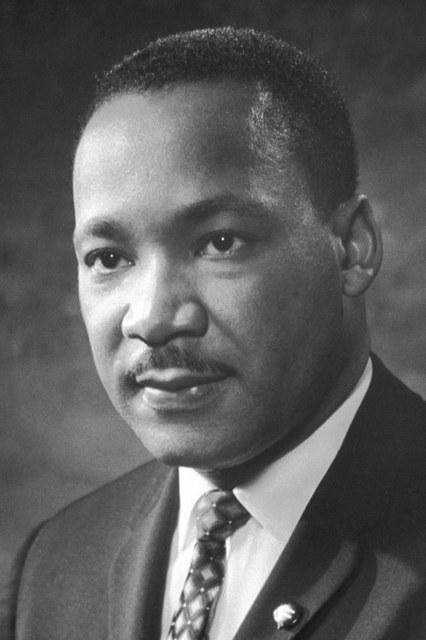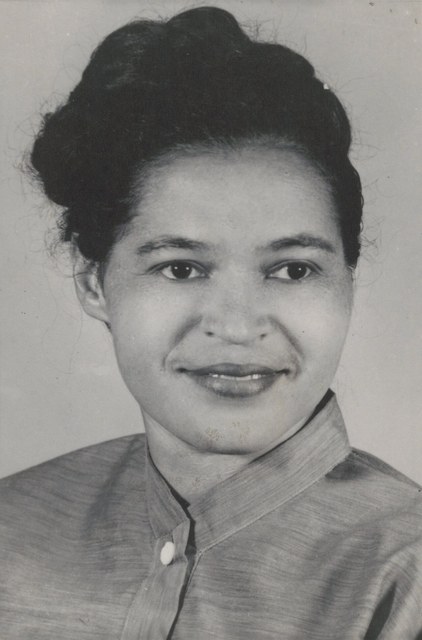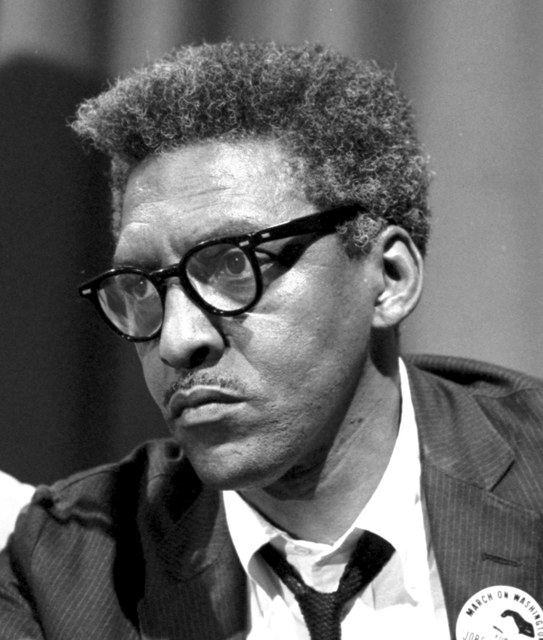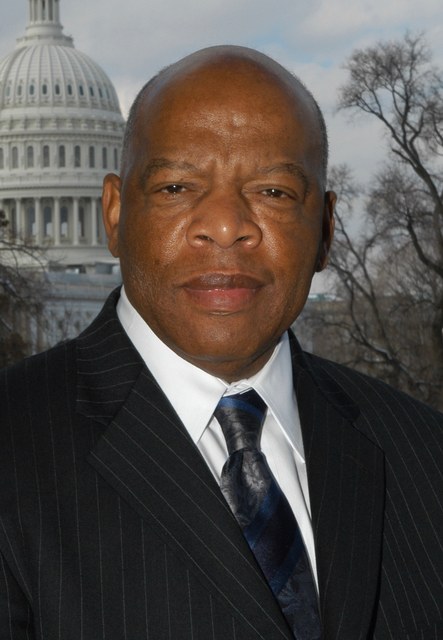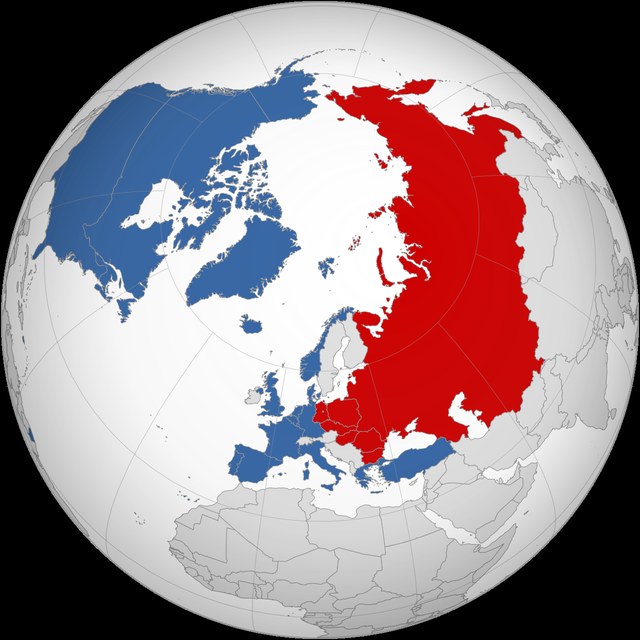
The 1648 Codex

Post-World War II

127 terms · 1011 ladder clues · every clue is a real line from national play.

Swipe or use the arrows. Tap a clue to rate it; your taps shape what comes back.

#8 · Historic Cities · Level 1

San Francisco

San Francisco
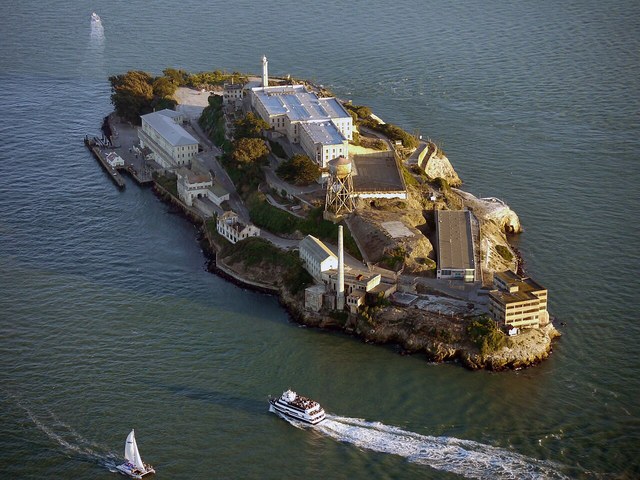
a rel="nofollow" Craig Howell /a from San Carlos, CA, USA · CC BY 2.0

California city · founded 1776 · northern California coast

San Francisco is a northern California city known for the 1906 earthquake, counterculture movements, and LGBTQ activism.

The kit

  • 1906 disaster — San Francisco suffered a devastating earthquake and fire in 1906 that destroyed City Hall and prompted Mayor Eugene Schmitz to declare martial law.
  • Counterculture hub — San Francisco's Haight-Ashbury district hosted the Summer of Love in 1967, and the neighborhood held a mock funeral called "The Death of the Hippie."
  • LGBTQ history — San Francisco saw the 1966 Compton's Cafeteria Riot and Harvey Milk became America's first openly gay elected official before his 1978 assassination.
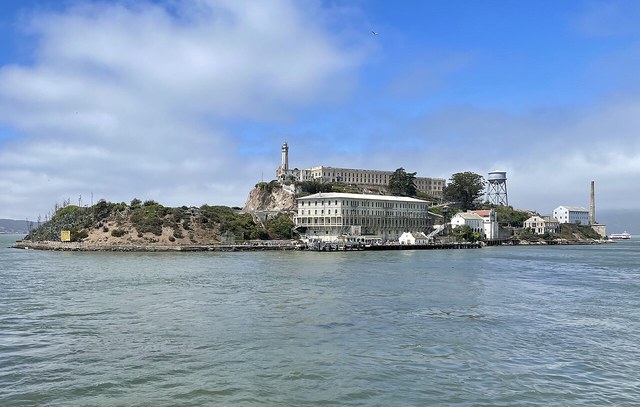
  • Landmarks — San Francisco is home to Alcatraz Island prison in its bay, the Golden Gate Bridge, and Lombard Street's eight hairpin turns on Russian Hill.

Runs with

California
major city in northern California open card →
mayor
George Moscone and Eugene Schmitz served as mayors open card →
Alcatraz Island
island prison located offshore in the bay open card →
California Gold Rush

The ladder · 15 clues

H

A resident of this city named Joshua Norton issued his own money and declared himself Emperor of the United States.

H

This city housed the headquarters of the Peoples Temple, and in the 1960s it was the site of Compton’s Cafeteria Riot.

H

This city's Beyond Shelter anti-drugs program was created by its mayor, Art Agnos, and Lawrence Ferlinghetti co-founded this city's City Lights bookstore.

H

This city’s mayor, George Moscone, was killed by disgruntled city supervisor Dan White, who used the controversial “Twinkie defense” at his trial.

H

This city was the site of the 1966 Compton's Cafeteria Riot, which involved members of the Vanguard organization.

H

Mayor Eugene Schmitz declared martial law in this city after looting in 1906.

H

The “Albion Hall Group” organized a strike in this city that culminated in Bloody Thursday.

M

city in which Harvey Milk, self-proclaimed “Mayor of Castro Street”, became America’s first openly gay elected official?

M

In this city, a community at Haight Ashbury signalled its end with a mock funeral called “The Death of the Hippie.” Dan White murdered this city’s first openly gay public official, Harvey Milk.

M

Immigrants were often subjected to racial discrimination at this city’s Angel Island facility.

M

Alcatraz Island is located offshore from what California city, whose other landmarks include the Golden Gate Bridge?

M

Overcrowding of this city's Haight-Ashbury neighborhood led to the development of the Castro as a gay neighborhood in this city.

E

George Moscone was a mayor of this city who was assassinated together with Harvey Milk, its first openly gay elected public official.

E

A large Finnish community used to live in this city's Castro district, and this city was the location of the Summer of Love in its Haight []-Ashbury district. name this city in northern California.

E

Alcatraz Prison lies in a bay north of this California city that was struck by a 1906 earthquake and fire.

10 more clues from the record
H

Scott McKenzie called for people to come to this city with “flowers in your hair” a few months before it hosted the Monterey Pop Festival.

H

This city’s mayor Eugene Schmitz issued a controversial “shoot to kill” order against looters in the wake of a disaster that burned down City Hall.

H

Abe Ruef controlled this city’s politics through his Union Labor Party, encouraging a violinist and president of this city’s Musicians’ Union to run for mayor.

H

Francis Heney prosecuted this city’s Mayor Eugene Schmitz in a series of 1908 graft trials.

H

Its Russian Hill neighborhood is known for a one-block stretch of Lombard Street with eight hairpin turns.

H

Harry Bridges led a 1934 Longshoreman’s strike in this city.

H

A 1915 World’s Fair celebrated the rise of this city “from the ashes” following an earthquake on the San Andreas Fault.

H

At a site in a body of water named for this city, immigrants used forged documentation as “paper sons” to subvert racist laws.

H

This city’s police chief Thomas Cahill was fired by Mayor John Shelley after a raid of a New Year’s Eve 1965 party where many members of the Daughters of Bilitis were force-photographed.
H

In this city, William Eppelsheimer designed the Clay Street Hill Railroad.

Watch out: Angel Island (immigration facility in San Francisco Bay) vs. Ellis Island (New York immigration facility)
#20 · Historic Cities · Level 1

Los Angeles

Los Angeles
Gnaphron · CC BY-SA 2.0

California city · founded 1781, major growth 20th century · Southern California

Los Angeles is a Southern California city that experienced major civil unrest including the Watts Riots and Rodney King riots.

The kit

  • Water infrastructure — Los Angeles obtained water through William Mulholland's aqueduct from Owens Valley, which farmers attempted to sabotage in the Water Wars.
  • Racial conflicts — Los Angeles saw the Zoot Suit Riots in 1943 when servicemen attacked Mexican-American youth and the Sleepy Lagoon murder case.
  • Watts Riots — Los Angeles erupted in 1965 Watts Riots after Marquette Frye's arrest, killing 34 people and prompting the McCone Commission investigation.
  • 1992 unrest — Los Angeles exploded in 1992 riots after Rodney King's beating and the acquittal of responsible officers, during Daryl Gates's tenure as police chief.

Runs with

Zoot Suit Riots
site of 1943 riots targeting Mexican-American youth open card →
California
largest city in Southern California open card →
mayor
Tom Bradley served as its only African-American mayor open card →
William
William Mulholland built its aqueduct; William Parker led its police open card →

The ladder · 15 clues

H

In June of 1943, American servicemen in this city targeted Mexican-American youth wearing the title garb in the Zoot Suit Riots.

H

In a series of “Water Wars,” Owens Valley farmers attempted to sabotage this city’s namesake aqueduct, which was built by William Mulholland.

H

The 1964 repeal of the Rumford Fair Housing Act flared tensions in this city, as did Marquette Frye’s arrest for drunk driving a year later, culminating in 34 deaths in a week of rioting in 1965.

H

Daryl Gates oversaw one organization in this city’s Operation Hammer and collaborated with one city's Rotary Club to create the D.A.R.E Program.

H

An event in this city was partially fueled by a store owner receiving probation for the murder of Latasha Harlins over the suspected theft of a $1.79 bottle of orange juice.

H

This city’s police department was led by Daryl Gates, who popularized the use of SWAT teams and resigned in 1992.

H

The McCone Commission investigated a set of riots in this city that were sparked by the arrest of Marquette Frye.

M

The only African-American mayor of this city was Tom Bradley, who later lost two gubernatorial elections to George Deukmejian [dook-may-zhun].

M

This city saw the founding of the modern Pentecostal movement by William J. Seymour in 1906 as host of the Azusa Street Revival.

M

This city’s police captain William H. Parker compared rioters to “monkeys in the zoo” during a major upheaval that began after the arrest of Marquette Frye.

M

Clarence Darrow defended the ironworkers J. J. and J. B. McNamara for dynamiting a building in this city owned by Harrison Otis, who bought up land in this city with Harry Chandler.

M

Returning servicemen assaulted Latinos wearing the titular outfit during this city’s Zoot Suit Riots.

E

The 1965 Watts Riots struck this city where the beating of Rodney King and acquittal of the policemen responsible led to a 1992 riot.

E

For the points, identify this city where the Watts and Rodney King Riots were fought by its namesake police department.

E

In this city, the question “can we all get along?” was asked by Rodney King after he was beat up by police. the 1992 South Central riots took place in what largest city in Southern California?

10 more clues from the record
H

The arrest of seventeen men for the murder of Jose Diaz preceded an event in this city that was investigated by the McGucken Committee.

H

An event in this city was partly caused by the passage of Proposition 14 and subsequent repeal of the Rumford Fair Housing Act.

H

The McCone Commission investigated violence in this city, concluding that high unemployment and poor education led to a 1965 riot.

H

A photograph taken in this city shows two men wielding pistols taking cover behind a forklift.

H

While serving as chief of police in this city, William H. Parker coined the term "thin blue line" and referred to Black protestors as "monkeys in the zoo." Young Mexican-American men in this city were beaten by U.S. servicemen during the Zoot Suit Riots.

H

This city’s CRASH anti-gang unit was the subject of the Rampart police corruption scandal in the late-1990s.

H

A series of racially tinged riots in this city was triggered by José Diaz's death, the Sleepy Lagoon murder.

H

The McCone Commission concluded that an event which occurred in this city under Police Chief William Parker was as a result of unemployment.

H

Harrison Gray Otis founded the Merchants and Manufacturers Association to keep unions out of this city and published its major newspaper.

H

This city launched an anti-aircraft barrage against nothing in February 1942, the day after a Japanese sub attacked Ellwood to the west.

Watch out: Students may confuse the 1943 Zoot Suit Riots with the 1965 Watts Riots or 1992 Rodney King riots
#38 · Modern Countries · Level 1

United States of America

United States of America
Vector file created by Dbenbenn /a , Zscout370 /a , Jacobolu · Public domain

North American nation · 1776–present · North America

The United States of America is a country that gained independence in 1776 and became a global power through territorial expansion and military victories.

The kit

  • Expansion — United States of America conquered the Philippines in 1898 after a war with Spain and controlled it until 1946.
  • Conflicts — United States of America occupied Japan after World War II and signed the Convention of Kanagawa with Japan in the 1850s.
  • Culture — United States of America developed folklore about Paul Bunyan and his blue ox Babe and the steel-driver John Henry.
  • Legacy — United States of America was home to the Harlem Renaissance, including poet Langston Hughes who wrote for The Crisis periodical.

Runs with

John
folklore includes John Henry open card →
Japan
occupied after WWII, signed Convention of Kanagawa open card →
World War II
occupied Japan afterward open card →
Philippines
conquered 1898, controlled until 1946 open card →

The ladder · 15 clues

H

Country that conquered the islands in 1898 after a war with Spain.

H

A composer from this nation was inspired by a Henry A. Wallace speech to create Fanfare for the Common Man.

H

Country that occupied Japan after World War II.

H

Modern-day Belzoni in this country is near the former center of the "Poverty Point" culture, while the Hopewell Exchange system arose here during the Middle Woodland period.

H

Japan signed the Convention of Kanagawa with this country, a leader from which would later win the Nobel Peace Prize in 1906 for brokering the Treaty of Portsmouth.

H

A standoff between this nation and Germany ended when a cyclone wrecked all the warships in Apia harbor.

H

This nation’s 1871 military expedition to Korea called Shinmiyangyo [“SHEEN-mee-yang-yo”] was a diplomatic failure.

M

During a visit to this country, one psychologist stated that his only goal was to “catch sight of a porcupine;” that trip led Sigmund Freud to conclude that this country “was a mistake.” A psychologist from this country developed the ideas of habit, will, and stream of consciousness in his book Principles of Psychology; that man also wrote the book Pragmatism. name this home country of William James, who was a professor at Harvard.

M

Non-European country that gained the Philippines from that country and controlled it until 1946.

M

Non-European power which aimed to protect the autonomy of Liberia.

M

Country that held power over the Philippines until after World War II.

M

This modern-day country contains Monks Mound, the largest earthen structure found in the prehistoric city of Cahokia.

E

In a story from this country, a companion of Sourdough Sam bestows the name “Babe” on a massive blue ox that he finds and adopts. name this country that developed folklore about John Henry and Paul Bunyan.

E

Nixon in China is from this country where many musicians were inspired by the 9/11 terrorist attacks.

E

The requiem On the Transmigration of Souls was created to honor those killed during an event in this country.

10 more clues from the record
H

A general from this country pretended to be a captive of the Macabebe Scouts to capture an enemy leader.

H

The writer of one 1935 poem echoes the refrain that this country “never was” [this country] “to me.” In a different poem, published in 1926 at the height of a "renaissance" in this country, the same writer tells his oppressors, “They’ll see how beautiful I am / And be ashamed," and concludes, "I, too, am [this country]." That author from this country first gained notice in The Crisis, a periodical written by an organization dedicated to helping people of color in this country to overcome adversity. what country was home to Langston Hughes and the Harlem Renaissance?

H

Friedrich List praised this country’s namesake System consisting of tariffs, infrastructure subsidies, and a national bank; that system was based on the work of an author from this country who wrote a Report on Manufactures.

H

In a ballad, a worker from this country tells his captain that “a man is nothing but a man.” That worker from this country supposedly died with a hammer in his hand shortly after beating a machine in a rock-drilling contest.

H

Slue-Foot Sue rode a catfish down a river in this country, and a man in this country dies after beating a steam powered hammer in a steel-driving contest.

H

In a legend from this country, a woman who tries to ride her newlywed husband’s horse is thrown off and bounces on her skirt all the way to the moon.

H

This country's intelligence agency carried out mind control experiments as part of Project MK-Ultra. name this country in which the unethical Tuskegee Studies were carried out in Alabama.

H

Herman Ernst shot down a buzz bomb while serving this country in a Black Widow warplane, the first to use radar.

H

A religious movement founded in this country publishes a magazine called The Watchtower, and another religious movement in this country believes that all matter is illusory.

H

This nation's native composer John Adams created the piece On the Transmigration of Souls in the wake of the 9/11 terrorist attacks here.

Watch out: Students may confuse which country controlled the Philippines before vs. after Spanish rule (Spain held it before 1898, USA after)
#124 · Subnational Regions, Provinces, and Territories · Level 1

Alabama

Alabama
Steve Hall · Public domain

U.S. state · 1819–present (statehood) · Deep South

Alabama was the epicenter of 1960s civil rights struggles including the Birmingham church bombing and Selma-to-Montgomery marches.

The kit

  • Civil Rights Violence — Alabama saw four black girls killed in the 1963 16th Street Baptist Church bombing in Birmingham by white supremacists.
  • Selma Campaign — Alabama's Edmund Pettus Bridge was the site where civil rights marchers were attacked while walking from Selma to Montgomery.
  • Segregationist Resistance — Alabama Governor George Wallace organized the Stand in the Schoolhouse Door to block black students from the state's flagship university.
  • Civil War Naval Action — Alabama was where Union Admiral Farragut shouted 'damn the torpedoes, full steam ahead!' while capturing the port of Mobile.

Runs with

George Wallace
Governor who led segregationist resistance including the Stand in the Schoolhouse Door open card →
church
16th Street Baptist Church bombing killed four girls in Birmingham open card →
American Railway Union
Raphael
Raphael Semmes commanded CSS Alabama sunk at Cherbourg open card →

The ladder · 15 clues

H

Bull Connor was a notorious city commissioner in this state, where the Stand in the Schoolhouse Door was organized by its Governor George Wallace.

H

State where the Union Admiral Farragut shouted “damn the torpedoes, full steam ahead!” and captured the port of Mobile.

H

The civil rights era in this state included the deaths of Denise McNair, Carole Robertson, and two others in the bombing of the 16th Street Baptist Church.

H

William Yancey spearheaded a platform named for this state that held that the Federal government could not restrict slavery in territories.

H

A black man named James Wilson was sentenced to death for stealing $1.95 from a white woman in this state, although Governor “Big Jim” Folsom commuted the sentence.

H

This state’s aforementioned platform was written by congressman William Yancey.

H

Gayle ruled against this state’s segregation laws, and the Anniston police looked the other way while the Ku Klux Klan attacked the Freedom Riders in this state.

M

Four black girls were killed after the 16th Street Baptist Church was bombed by white supremacists in this state’s most populous city.

M

This state was the site of the “stand in the schoolhouse door” in which black students were prevented from attending its flagship university.

M

This state’s peonage laws were overturned in a 1911 13th Amendment case, Bailey v. this state.

M

A ship named for this state was sunk at Cherbourg while under the command of Raphael Semmes and was the subject of a series of claims in which the United States demanded restitution from Great Britain.

M

Fred Shuttlesworth and James Bevel co-led a campaign in this state that was opposed by Bull Connor's firehoses.

E

Civil rights marchers were attacked on this state's Edmund Pettus Bridge while walking from Selma to its capital. name this state where racial unrest was centered in Birmingham.

E

Protestors marched from this state’s city of Selma to a city where Rosa Parks refused to give up a bus seat. name this state where civil rights efforts were organized in its capital of Montgomery.

E

In this state, Rosa Parks refused to move to the back of a bus leading to a massive boycott. name this state where protesters marched from Selma to Montgomery.

10 more clues from the record
H

Fred Shuttlesworth, a co-founder of the SCLC, was targeted by a bombing in this state after his role in a campaign against a law eventually struck down by Browder v.

H

Five women from this state, including Claudette Colvin, were plaintiffs in the Supreme Court case Browder v.

H

In 1977, in this state’s town of Alexander City, the Reverend Willie Maxwell was killed at the funeral for his stepdaughter, his fifth relative to have mysteriously died after Maxwell took out life insurance polices on them.

H

In January 2017, a representative from this state named Mike Rogers introduced the “American Sovereignty Restoration Act,” a bill that would end the United States’ membership in the UN.

H

The Senate Committee on Rules and Administration is chaired by one of this state’s senators, who changed parties after the 1994 Republican Revolution; that man is Richard Shelby.

H

Jeremiah Haralson and James Rapier, two black representatives from this state, split the Republican vote and lost to Charles Shelley in a gerrymandered 1876 election.

H

Operation Oak Tree moved over 18,000 soldiers into this state following civil disorder that included the bombing of A.G. Gaston's motel.

H

Kuntrell Jackson and Evan Miller, two teenagers convicted for murder, were petitioners in a case against this state.

H

The Independent Treasury Act was passed with the help of Senate Finance chair Dixon Lewis, a politician from this state.

H

In this state, Cole Cannon was severely beaten and had his home lit on fire by a fourteen-year-old.

Watch out: The CSS Alabama (Confederate raider) shares the state's name but was a warship sunk at Cherbourg
#131 · Other Named Wars and Armed Conflicts · Level 1

Vietnam War

Vietnam War
U.S. Air Force (Operation Holly 1970 (Folder 13 of 15), shee · Public domain

Southeast Asian conflict · 1960s–1975 · Vietnam, Cambodia

Vietnam War was a Southeast Asian conflict in which the United States intervened militarily, ending with the fall of Saigon in 1975.

The kit

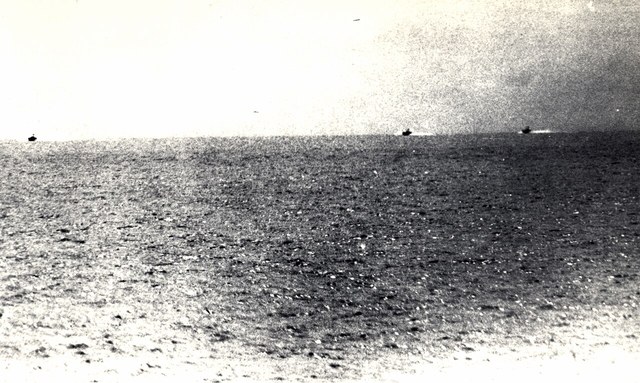
  • Escalation — Vietnam War saw American involvement intensify after the Gulf of Tonkin incident in 1964 involving the USS Maddox.
  • Military operations — Vietnam War featured Operation Rolling Thunder, a long-term aerial bombardment campaign, and use of Agent Orange chemical weapons.
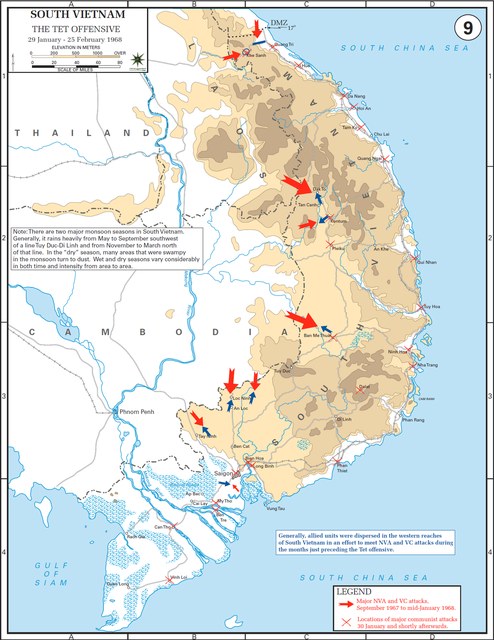
  • Turning points — Vietnam War included the Tet Offensive, a surprise attack on the Lunar New Year that dealt a psychological blow to US troops.
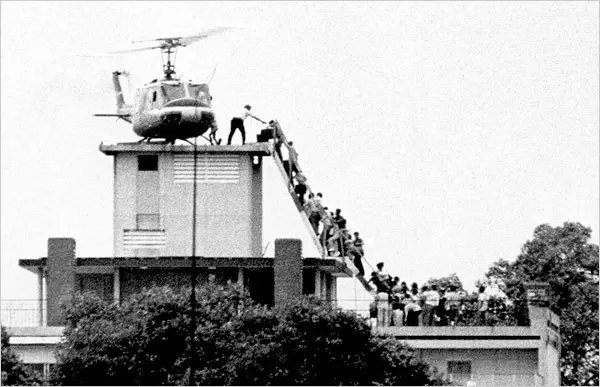
  • End & legacy — Vietnam War ended with the fall of Saigon, which was renamed Ho Chi Minh City under Communist rule.

Runs with

Ho Chi Minh
Fall of Saigon
ended the war in 1975 open card →
Tet Offensive
surprise Lunar New Year attack during war open card →
Strategic Hamlet Program
failed program to isolate rural communities open card →

The ladder · 15 clues

H

The United States used Agent Orange in this conflict.

H

One side in this war intensified its involvement after the USS Maddox was attacked during the Gulf of Tonkin incident.

H

This war’s Strategic Hamlet Program largely failed, and William Calley was convicted of a massacre investigated by Seymour Hersh in this war.

H

John Paul Vann’s actions during this war are the subject of Neil Sheehan’s A Bright Shining Lie.

H

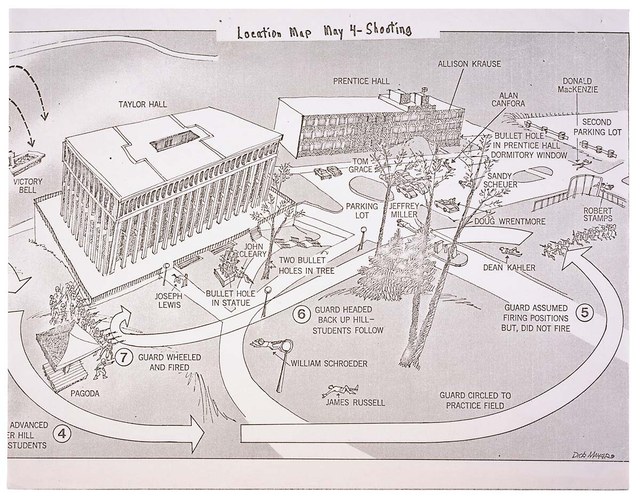
Following the invasion of Cambodia, four students protesting this war were fatally shot at Kent State.

H

Westmoreland was in command of U.S. military operations in this conflict, which escalated after the Gulf of Tonkin Incident in 1964.

H

The leader of one side in this conflict gave out firearms to Catholic villages as part of the Strategic Hamlet Program.

M

Operation Rolling Thunder was a long-term air bombardment during this war in Southeast Asia.

M

This conflict featured the Strategic Hamlet program which aimed to isolate rural communities from the National Liberation Front’s influence.

M

In 1973, the prize went to Henry Kissinger and Le Duc Tho, whose work on the Paris Peace Accords helped end this Southeast-Asian conflict.

M

One ongoing campaign of restricted aerial bombardment in this conflict was known as Operation Rolling Thunder.

M

Agent Orange was used aggressively in this war, which saw the Siege of Khe Sahn during the Tet Offensive.

E

Chemical weapons like Agent Orange were used in this Southeast Asian war that ended with Saigon being renamed Ho Chi Minh City.

E

Lyndon Johnson heightened American involvement in this 1960s and 1970s war in which American troops fought in Southeast Asia.

E

The Ho Chi Minh trail was bombed in this 20th century war in which the US failed to prevent the Communist takeover of a Southeast Asian nation.

10 more clues from the record
H

During this conflict, both sides fought the “War of Flags” in an attempt to maximize territorial gain before the Paris Peace Accords came into effect.

H

Mike Gravel entered another work relating to this war into Congressional record; that work was released by Daniel Ellsberg to The New York Times after being commissioned by Robert McNamara and discussed leaders like Ngo Dinh Diem. name this conflict written about in many biographies of Lyndon Johnson.

H

The background of this war and the author’s own experience in it were the subject of a book by Lt. General Philip Davidson.

H

During this war, the CIA tortured and killed insurgents in the Phoenix Program.

H

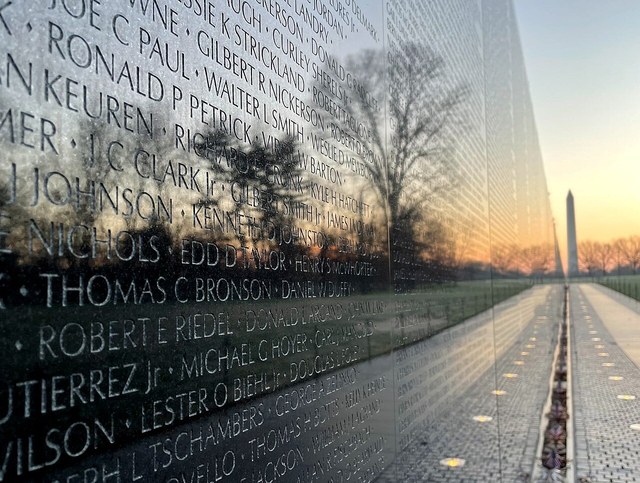
A sculpture commemorating this war by Frederick Hart shows three soldiers of different ethnicities in U.S. Army and Marine Corps uniforms.

H

During this war, a surprise attack launched on the Lunar New Year dealt a heavy psychological blow to US troops, and was called the Tet Offensive.

H

In this war, a village called "Pinkville" was the site of the My Lai (MEE lye) massacre.

H

The fall of Saigon ended this war, resulting in the unification of the country under Communist rule. This war was notoriously unpopular in the United States.

H

This war’s “strategic hamlet” program failed to halt the influence of a group which transported supplies along the Ho Chi Minh trail.

H

Des Moines ruled that students who protested this event by wearing black armbands could not be punished.
Watch out: Kent State shootings occurred during protests of this war, not during the war itself
#139 · Other Named Wars and Armed Conflicts · Level 1

Korean War

Korean War
Photo by Corporal Peter McDonald, USMC · Public domain

Cold War conflict · 1950–1953 · Korean Peninsula

Korean War was a 1950–1953 conflict between UN forces supporting South Korea and communist forces from North Korea and China.

The kit

  • Rise — Korean War began when North Korean forces crossed the 38th parallel in 1950, pushing UN troops to the Pusan Perimeter.
  • Achievements — Korean War saw Douglas MacArthur's successful amphibious landing at Inchon that recaptured Seoul and reversed communist gains.
  • Conflicts — Korean War featured Chinese intervention across the Yalu River and fierce battles at Chosin Reservoir, Pork Chop Hill, and MiG Alley.
  • Legacy — Korean War ended with an armistice establishing a demilitarized zone at the 38th parallel that still divides North and South Korea.

Runs with

Douglas MacArthur
commanded UN forces until Truman dismissed him in 1951 open card →
China
intervened with forces under Peng Dehuai after UN advance open card →
Pacific
fought across Korean Peninsula and surrounding waters open card →
Matthew Ridgway
replaced MacArthur and ordered Operations Killer and Ripper open card →

The ladder · 15 clues

H

During this war, Arthur Trudeau led members of the 7th Infantry division at a series of battles along Pork Chop Hill.

H

A “re-education movement” by one side after this war killed over 100,000 suspected collaborators in the Bodo League massacre.

H

During this war, pressure from the KPA forced one side to abandon Bloody Ridge.

H

Foreign intervention in this conflict prompted the battles of Outpost Harry and Pork Chop Hill.

H

In this war, the Wake Island conference was held before one side crossed the Yalu River.

H

A key strategic region for one side in this war was the Iron Triangle, which was successfully defended at the Battle of Triangle Hill.

H

The Hangang Bridge was destroyed during this conflict by one side to prevent an offensive, leading to the deaths of over 1,000 refugees.

M

The United States led UN forces to the 38th parallel in this war fought over an East Asian peninsula that is now divided into North and South countries.

M

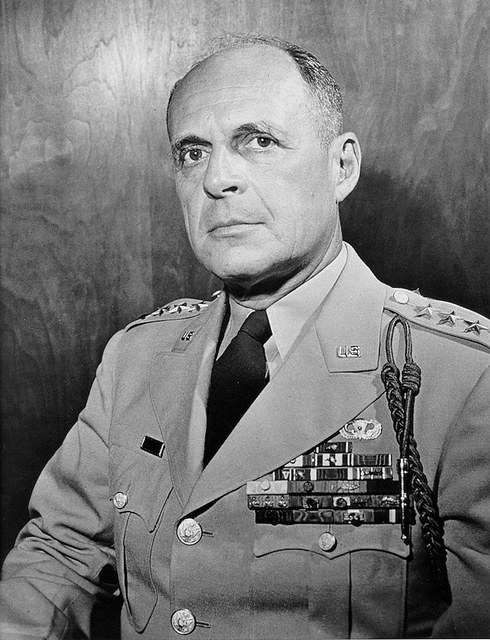
During this war, Operations Killer and Ripper were ordered by Matthew Ridgway.

M

The MiG Alley was a region heavily contested by fighter planes in this conflict.

M

In this war, US F-86 Sabres fought over MiG Alley and an intervention by Chinese forces over the Yalu River led to the dismissal of Douglas MacArthur.

M

This war’s MiG Alley was contested by numerous jet fighters, and during this war, the popular Douglas MacArthur was relieved of command by President Truman.

E

The 38th parallel was set as a demilitarized zone at the end of this 1950 to 1953 conflict over the namesake Asian peninsula.

E

A boundary was set at the 38th parallel at the conclusion of this 1950s war fought over control of a namesake Asian peninsula.

E

United Nations troops were held beyond the Pusan Perimeter in this war during which General MacArthur was replaced in one post.

10 more clues from the record
H

This war resulted in the Bodo League massacre, a county by county extermination of hundreds of thousands of suspected sympathizers.

H

China intervened in this war after U.N. forces neared the Yalu River.

H

US Marines under MacArthur helped UN Forces in the Battle of Inchon in this conflict, though MacArthur was removed from US command here in 1952.

H

One battle during this war saw heavy fighting in the “Bowling Alley.” Nikolai Sutyagin was celebrated as a hero during this war for opposing the Australian Meteors.

H

Task Force Faith was disbanded after losing a battle on the east side of the Chosin Reservoir in this war, but U.S. marines to the south fought out of a Chinese encirclement.

H

The landings at Green, Blue, and Red Beaches led to combined UN forces securing the port of Incheon during this war. Following the loss of his capital early in this war, Syngman Rhee relocated the government to Busan [[boo-SAHN]].

H

Another movie set during this war was directed by Robert Altman and inspired a TV series with characters Trapper John and Hawkeye Pierce, who work at the 4077th medical camp.

H

A film set during this war starred Angela Lansbury and Frank Sinatra and centered on Raymond Shaw, who is brainwashed to murder after seeing the queen of diamonds.

H

Gay also ordered the destruction of the refugee-packed Waegwan Bridge during a period of skepticism of refugees during this war that also included the No Gun Ri massacre.

H

One side in this war was accused of using human-wave attacks to overwhelm enemy defenses and was led by Peng Dehuai.

Watch out: Vietnam War (another Cold War Asian conflict with US involvement)
#154 · US Congressional Figures · Level 1

Lyndon B. Johnson

Lyndon B. Johnson
bdi Arnold Newman /span /a · Public domain

36th U.S. President · 1963–1969 · United States

Lyndon B. Johnson succeeded John F. Kennedy after his assassination and enacted the Great Society domestic programs while escalating the Vietnam War.

The kit

  • Rise — Lyndon B. Johnson won a controversial 1948 Senate primary by 87 votes over Coke Stevenson, earning the nickname "landslide."
  • Achievements — Lyndon B. Johnson signed the Civil Rights Act of 1964 and Voting Rights Act as part of his Great Society agenda.
  • Achievements — Lyndon B. Johnson created Medicare and Medicaid as components of his War on Poverty domestic welfare programs.
  • Conflicts — Lyndon B. Johnson escalated U.S. involvement in Vietnam after the Gulf of Tonkin Resolution, leading to his decision not to seek reelection in 1968.

Runs with

Great Society
his domestic agenda including War on Poverty programs open card →
Senate
won controversial 1948 primary by 87 votes open card →
John F. Kennedy
succeeded him as president after assassination in 1963 open card →
Barry Goldwater
defeated him in 1964 using "Daisy" ad open card →

The ladder · 15 clues

H

This president’s domestic welfare policies and so-called “War on Poverty” were collectively known as the Great Society.

H

The biography The Means of Ascent argues that this politician stole a Senate election from Coke Stevenson by 87 votes, earning him the nickname “landslide”.

H

During this man’s presidency, the Gulf of Tonkin Resolution increased U.S. involvement in one conflict.

H

Was the President of the United States who did not seek re-election because of the unpopularity of the Vietnam War?

H

This man narrowly won a primary election with the help of a box of 202 ballots from Jim Wells County written in the same handwriting.

H

This man, whose “treatment” intimidated opponents by moving uncomfortably close to them, was mentored by Speaker of the House Sam Rayburn.

H

A namesake Texas law he helped pass allowed this man to win reelection to the US Senate and the Vice Presidency in the same election.

M

Robert Caro wrote that four-volume biography of what man who took the presidential oath on an airplane?

M

The Voting Rights Act was signed by this President who created a series of programs called the “Great Society.” name this 36th President of the United States who succeeded the assassinated John F. Kennedy.

M

This man used a helicopter called the "City Windmill" to take on Coke Stevenson in one race.

M

To protest the war, some chanted “hey hey, [this president], how many kids did you kill today?” This successor of John F. Kennedy declined to run for reelection in 1968.

M

The “Daisy” spot promoted the campaign of this incumbent president over Barry Goldwater. This man took over after John F. Kennedy was assassinated.
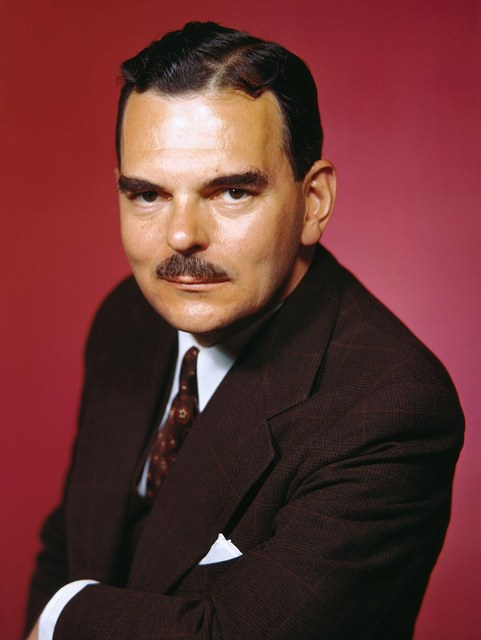
E

This president signed the Voting Rights Act and the Social Security Act as part of his Great Society. name this successor to John F. Kennedy.

E

This man created Medicare and Medicaid as part of his “War on Poverty.” The Great Society was sponsored by, what president who succeeded John F. Kennedy?

E

President who signed the 1964 Civil Rights Act into law.

10 more clues from the record
H

This man declared that “Education is the key to opportunity in our society” and signed a bill doubling federal spending on education.

H

Governor "Pappy" O'Daniel was the only man to beat this person in a race for elected office.

H

This man won a run-off election thanks to Frank W. Mayborn rushing home from a business trip.

H

This man acquired the nickname “landslide” following an 87 vote victory in a highly-contested 1948 Senate primary.

H

This leader appointed Abe Fortas and Thurgood Marshall to the Supreme Court.

H

answer the following about famous campaign ads:The "Daisy" ad was aired in 1964 by this successor of John F. Kennedy. It depicted a girl counting petals on a daisy, followed by the explosion of a nuclear weapon.

H

name some things about the 1964 Presidential Election.The victor was this incumbent Texas Democrat, who had previously become president in 1963 when John F. Kennedy was assassinated.
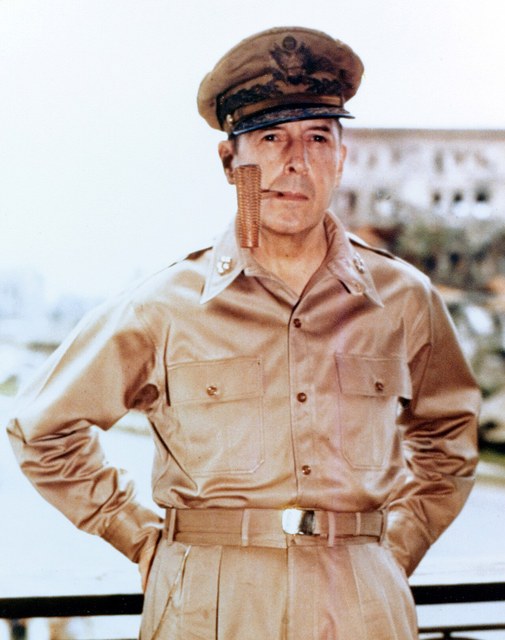
H

identify the following about Abe Fortas.Fortas was nominated to be Chief Justice by this president, but the nomination was withdrawn due to scandal.
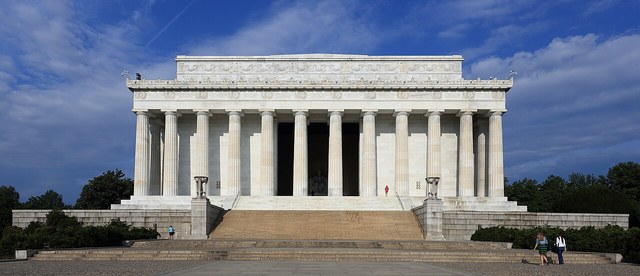
H

This president’s Press Secretary, Bill Moyer, influenced the creation of an act this president signed, which chartered the Corporate for Public Broadcasting.

H

This American politician, who outlined the “San Antonio formula” for peace, refused his Secretary of Defense’s suggestions to freeze troop numbers, causing that Secretary to resign and take a job as President of the World Bank.

Watch out: Barry Goldwater (opponent in 1964 election, not successor)
#155 · US Congressional Figures · Level 1

John F. Kennedy

John F. Kennedy
bdi Cecil W. Stoughton /span /a · Public domain

35th U.S. President · 1917–1963 · United States

John F. Kennedy was the youngest elected U.S. president, serving from 1961 until his assassination in Dallas in 1963.

The kit

  • Rise — John F. Kennedy commanded PT-109 during World War II and defeated Henry Cabot Lodge Jr. in the 1952 Senate race.
  • Achievements — John F. Kennedy delivered his 1962 Rice University speech vowing to put a man on the Moon within the decade.
  • Conflicts — John F. Kennedy negotiated with Nikita Khrushchev during the Cuban Missile Crisis, agreeing to remove Jupiter missiles from Turkey.
  • Death & succession — John F. Kennedy was assassinated by Lee Harvey Oswald in Dallas; the Warren Commission concluded Oswald acted alone.

Runs with

Lyndon B. Johnson
Kennedy's vice president after defeating him in Democratic primaries open card →
Richard Nixon
lost the 1960 presidential election to Kennedy open card →
Strategic Hamlet Program
the Presidency
Kennedy served as 35th president from 1961 to 1963 open card →

The ladder · 15 clues

H

This politician paraphrased John Galbraith in a speech by stating “Let us never negotiate out of fear.

H

In a 2 AM speech at the University of Michigan, this man announced the creation of the Peace Corps.

H

During one election, fourteen Democratic electors chose to vote for Harry F. Byrd instead of this politician.

H

U.S. President who inspired the race to the Moon with a 1962 speech at Rice University.

H

This man asked, “why does Rice play Texas?” to illustrate that “we choose to go to the Moon in this decade” because it is difficult.

H

He wrote the book Profiles in Courage and was known for commanding PT-109.

H

Lee Harvey Oswald shot this president in Dallas. The Warren Commission claimed Oswald was this man’s only assassin, but conspiracy theorists claim that a second shooter was present on the Grassy Knoll.

M

The Whiz Kids were part of his Department of Defense led by Robert McNamara, and his administration executed the unsuccessful Bay of Pigs invasion.

M

Just prior to his assassination, this president opened a new section of Interstate 95 along the Mason-Dixon line in one of his last public appearances.

M

Speaking in a Houston football stadium, this man compared one goal to the question "Why does Rice play Texas?" name this man whose 1962 address is often named “We Choose to go to the Moon.”

M

The youngest person ever elected president was this Massachusetts politician.

M

This politician claimed that we wish for “not merely peace in our time but peace for all time” in his “A Strategy of Peace” speech, which he gave as the commencement address for American University.

E

The line “ask not what your country can do for you, ask what you can do for your country” was spoken by this US president who delivered his inaugural address in 1961.

E

After defeating Lyndon B. Johnson in the Democratic Primaries, this man asked Johnson to be his Vice President. name this Massachusetts politician who defeated Richard Nixon to win the Election of 1960.

E

This man declared “we shall pay any price, bear any burden... oppose any foe... to assure the survival of liberty.” This President established a hotline between the Kremlin and Washington D.C. He agreed to remove Jupiter missiles from Turkey while working with Nikita Khrushchev to resolve the Cuban Missile Crisis. identify this Catholic president who was assassinated by Lee Harvey Oswald.

10 more clues from the record
H

During World War II he commanded the patrol boat PT 109, and his administration was proven to have had knowledge of the plot to assassinate Ngo Dinh Diem.

H

Pulitzer Prize-winning journalist Arthur Krock helped redraft this man's thesis, "Appeasement At Munich," into a book examining the failures of the British government to take steps to prevent World War Two called Why England Slept.

H

But let us never fear to negotiate.” This leader claimed that we accomplish objectives not “because they are easy, but because they are hard” in a speech in which he vowed to put a man on the moon within ten years.

H

This man was unknowingly given small dosages of methamphetamines by Max Jacobson, who was nicknamed "Dr. Feelgood." This politician defeated incumbent Henry Cabot Lodge Jr. in a 1952 Senate race.

H

This speech notes that the “torch has passed” to a new generation and declares that “we shall pay any price” and “oppose any foe” to protect liberty.

H

This man's hotel room, which he was sharing with Inga Arvad, was bugged by J. Edgar Hoover due to believing the former Miss Denmark to be a Nazi spy.

H

Ted Sorenson wrote much of a work by this man which chronicles acts such as Sam Houston’s denunciation of the Kansas-Nebraska Act.

H

This technology was named by Stuart Cramer after early models by John Gorrie and Edward Elis were perfected in 1902 in Buffalo, by Willis Carrier.

H

This president negotiated with Nikita Khrushchev [[KROO-shev]] during the Cuban Missile Crisis and was in office during the botched Bay of Pigs invasion.

H

Critic Fred Hobson mused that this technology would have made writing the novels of William Faulkner impossible.

Watch out: Richard Nixon (Kennedy's opponent in 1960, not his vice president)
#161 · US Congressional Figures · Level 1

Gerald Ford

Gerald Ford
bdi David Hume Kennerly /span /a · Public domain

38th U.S. President · 1974–1977 · United States

Gerald Ford became president in 1974 after Nixon's resignation, declaring "our long national nightmare is over."

The kit

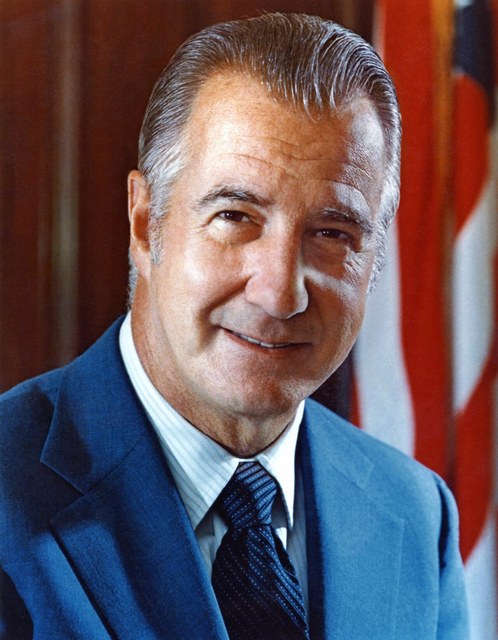
  • Rise — Gerald Ford replaced Spiro Agnew as vice president, then succeeded to the presidency under the 25th Amendment in 1974.
  • Achievements — Gerald Ford signed the Helsinki Accords to improve relations with communist Europe and gave federal recognition to Black History Month.
  • Conflicts — Gerald Ford survived two assassination attempts within three weeks by Lynette Fromme and Sara Jane Moore in 1975.
  • Legacy — Gerald Ford's pardon of Richard Nixon for Watergate angered the public and helped Jimmy Carter win the 1976 election.

Runs with

Richard Nixon
pardoned Nixon for Watergate open card →
Michigan
played center for Michigan Wolverines open card →
Jimmy Carter
pardon helped Carter win 1976 open card →
the Presidency
succeeded to office in 1974 open card →

The ladder · 15 clues

H

The Hart-Scott-Rodino Act was passed during the tenure of what president this person who once claimed that "there is no Soviet domination of Eastern Europe".

H

This politician, who encouraged fiscal responsibility to combat inflation in the Whip Inflation Now campaign, signed the Helsinki Accords to improve relations with communist Europe.

H

Lynette Fromme and Sara Jane Moore both attempted to assassinate this man over a span of three weeks.

H

This man denied a federal bailout to Abraham Beame, prompting a newspaper headline where this man told New York City to “drop dead.” Forty-one Marines died in an operation ordered by this President to retake the Mayaguez.

H

Donald Rumsfeld served as his Chief of Staff.

H

This president’s press secretary resigned after he issued Proclamation 4311, a decision this man made after considering the case Burdick v.

H

As part of his attempted political comeback, this man wrote the autobiography A Time to Heal and criticized the incumbent's SALT TWO negotiations before proposing a "co- presidency" with Ronald Reagan.

M

In The Age of Turbulence, Alan Greenspan lambasted this President for his “Whip Inflation Now” campaign.

M

Vice President who replaced Spiro Agnew, then became president after the scandal.

M

Nelson Rockefeller was vice president under this president that pardoned his predecessor Richard Nixon for his role in the Watergate Conspiracy.

M

Which vice president of Richard Nixon later pardoned him during his own two-year presidential term, a deal often dubbed a "corrupt bargain"?

M

This president was mocked for suggesting carpooling and vegetable gardens to “whip inflation now.” This man promised an end to “our long national nightmare” after his inauguration, but instead angered the public when he controversially pardoned his predecessor.

E

This president declared “our long national nightmare is over” after taking office in 1974. name this US president who pardoned his predecessor, Richard Nixon.

E

This man’s decision to pardon his predecessor helped Jimmy Carter win the Election of 1976. name this man who became President after Nixon resigned.

E

This man, who pledged to "Whip Inflation Now," was targeted by two former Manson Family members in two failed assassination attempts within three weeks after taking office under the terms of the 25th Amendment. name this Michigan native who succeeded to the presidency in 1974 on the resignation of Richard Nixon.

10 more clues from the record
H

This leader created the Economic Policy Board in an attempt to revive the economy, but was instead mocked for giving out buttons that read “Whip Inflation Now” to supporters.

H

This man was the only one to defend black athlete Willis Ward’s right to play football while playing in the South while serving as Center for the Michigan Wolverines.

H

Andrew Johnson, Harry Truman, and this man are the only Presidents to have at least 10 vetoes overridden by Congress.

H

James Schlesinger was removed as Secretary of Defense by this President who assumed the office after his predecesor resigned in 1974.

H

the United States president who dealt with the Mayaguez incident.

H

Black History Month gained federal recognition under this president. In college, this man declared that he would sit out a football game against Georgia Tech if William Ward, Michigan's only African American player, was not allowed to play.

H

The target of a failed attempt to perform this action had to wear a bulletproof trench coat due to one of them 17 days earlier. :Describe this action attempted by Squeaky Fromme, a member of the Manson family who targeted a person speaking at the Host Breakfast.

H

Name the U.S. presidents who survived these assassination attempts .Lynette Fromme tried to shoot him during an appearance in Sacramento, but she forgot to rack the gun before pulling the trigger and was captured by Secret Service agents.

H

This politician’s wife was criticized after she compared her generation’s beer drinking to the new generation’s weed use in a “60 Minutes” interview in which she also said it was possible that premarital sex would lower divorce rates.

H

This man unusually presented video testimony in a trial during which John Virga said “Sandy Koufax couldn’t have thrown a better pitch” after a woman hurled an apple at Dwayne Keyes.

Watch out: Nelson Rockefeller (Ford's vice president, not Ford himself)
#172 · US Congressional Figures · Level 1

Joseph McCarthy

Joseph McCarthy
United Press · Public domain

U.S. Senator · 1947–1957 · Wisconsin

Joseph McCarthy was a Wisconsin senator who led anti-Communist investigations during the 1950s Red Scare, claiming government infiltration by Communists.

The kit

  • Rise — Joseph McCarthy defeated Robert M. La Follette Jr. in a 1946 primary using the slogan "Congress needs a tail gunner."
  • Accusations — Joseph McCarthy claimed in a Wheeling, West Virginia speech to hold a list of 205 State Department members with questionable loyalties.
  • Conflicts — Joseph McCarthy was criticized by Margaret Chase Smith's Declaration of Conscience and Edward R. Murrow's See It Now broadcasts.
  • Downfall — Joseph McCarthy's career ended during Army-McCarthy hearings when Joseph Welch asked "Have you no sense of decency, sir?"

Runs with

Wisconsin
represented Wisconsin in Senate open card →
Senate
served as U.S. Senator 1947–1957 open card →
Bakumatsu Period
no connection stated in clues open card →
West Virginia
gave Lincoln Day speech in Wheeling open card →

The ladder · 15 clues

H

This man was opposed by “Snow White and the six dwarfs” and was nicknamed “Pepsi-Cola kid.” Millard Tydings investigated this man’s claims, which sparked Margaret Chase Smith’s “Declaration of Conscience” speech.

H

This man’s claims were investigated by the Tydings Committee, which denied them along party lines.

H

Margaret Chase’s Declaration of Conscience Speech criticized this man, whose speeches were broadcast on See it Now by Edward Murrow.

H

A famous Herblock cartoon shows a barrel with this man’s name on it resting on paint buckets, with the Republican elephant refusing to stand on it.

H

During one election, this man touted his war service with the slogan “Congress needs a tail gunner,” helping him defeat Robert M. LaFollette, Jr..

H

Joseph Welch attacked the “cruelty” of this man, who gave a speech in Wheeling, West Virginia, where he claimed to hold a list of 205 names.

H

This man replaced Robert M. La Follette, Jr. in the Senate after a primary campaign in which he accused La Follette of war profiteering.

M

The Tydings Committee investigated this man’s claim, made in a Lincoln Day speech in Wheeling, that he held a list of 205 names of State Department members with questionable loyalties. name this Wisconsin senator known for hunting communists during the Red Scare.

M

This man and Roy Cohn caused the firings of many gay government employees in the Lavender Scare.

M

Edward R. Murrow said this man repeatedly crossed the line between investigation and persecution in an episode of See It Now.

M

This man used the slogan “Congress needs a tail-gunner” to unseat Robert LaFolette as his state’s senator.

M

The Tydings Committee formed to investigate claims by this man made to the Republican Women’s Club.

E

In a speech in Wheeling, West Virginia, this man claimed to have a list of 205 names of workers in the State Department. name this Wisconsin senator who started a 1950s witch hunt for hidden Communists.

E

This man’s notoriety came to an end during a series of hearings on the Army, where Joseph Welch asked him “have you no sense of decency?” name this Wisconsin senator who fueled a 1950’s Red Scare.

E

During a set of hearings, Joseph Welch asked this man "Have you no sense of decency, sir?” name this US Senator from Wisconsin who led Communist witch hunts in the 1950s.

10 more clues from the record
H

The House of Un-American Activities Committee or HUAC was led by this Wisconsin Senator who claimed that Communists had infiltrated the U.S. government.

H

Answer the following about the Second Red Scare. :Name this senator who was asked by Joseph Welch if he “had any decency” in hearings between this senator and the army about Communist infiltrators.

H

This man defeated Howard McMurray in one election, allowing him to serve alongside Alexander Wiley.

H

Due to exaggerated claims about his military achievements, this man was sometimes sarcastically called “Tail-Gunner.” Karl Mundt served in a position usually held by this man in a trial against him.

H

In one speech commemorating a 141st birthday, this man said, "Ladies and gentlemen, the chips are down -- they are truly down.” This subject of a 2020 bestseller by Larry Tye was associated with a movement which William F. Buckley claimed “men of … stern morality can close ranks" behind.

H

When this man was caught in a lie about Secretary of Agriculture Clinton Anderson’s findings about sugar supplies, he noted that he “didn’t give a tinker’s damn” about what Anderson had really said.

H

This man won his first senate race over Robert La Follete Jr. He was challenged by Army counsel Joseph Welch during hearings where Roy Cohn assisted him.

H

The "Lavender Scare" occurred concurrently with an event spearheaded by this man, who often used homosexuality as a smear tactic in his campaigns.

H

This politician first gained notoriety when he advocated for lenient sentences for Waffen-SS troops involved in the Malmedy Massacre.

H

Edward R. Murrow ran an episode of See It Now that criticized this politician for his interrogation of Annie Lee Moss.

#173 · US Congressional Figures · Level 1

Barry Goldwater

Barry Goldwater
United States Senate · Public domain

Arizona senator and politician · 1909–1998; 1964 campaign · Arizona, United States

Barry Goldwater was an Arizona Republican senator who lost in a landslide to Lyndon Johnson in the 1964 presidential election.

The kit

  • Rise — Barry Goldwater wrote The Conscience of a Conservative in 1960, becoming a leading figure of modern conservatism.
  • Achievements — Barry Goldwater co-sponsored legislation with William Flynt Nichols that increased the power of the Chairman of the Joint Chiefs of Staff.
  • Conflicts — Barry Goldwater's 1964 campaign was attacked by the "Daisy" ad targeting his aggressive nuclear policy and foreign policy views.
  • Legacy — Barry Goldwater names an informal rule that psychiatrists will not speak about politicians' mental health without analyzing them in person.

Runs with

Arizona
represented Arizona in the U.S. Senate for five terms open card →
Lyndon B. Johnson
lost to Johnson in 1964, receiving only 52 electoral votes to Johnson's 486 open card →
Ronald Reagan
endorsed by Reagan's "A Time for Choosing" speech at the 1964 convention open card →
William
ran with William Miller as his vice presidential candidate in 1964 open card →

The ladder · 15 clues

H

A speech given in support of this politician advocated "peace through strength." This subject of Ronald Reagan's "A Time for Choosing" claimed that "extremism in the defense of liberty is no vice" in his acceptance speech for the Republican presidential nomination.

H

In response to the Packard Commission, this man worked with William Flynt Nichols to create a bill that increased the power of the Chairman of the Joint Chiefs of Staff.

H

F. Clifton White led the movement to “draft” this politician, during which time this man led a committee at Suite 3505.

H

This politician said that “Every good Christian ought to kick” Jerry Falwell in support of Sandra Day O’Connor.

H

This man wrote The Conscience of a Conservative in 1960, becoming a leading figure of modern conservatism.

H

This politician was endorsed by the Suite 3505 Committee in an election in which he hammered Nelson Rockefeller’s infidelity to win his party’s nomination.

H

In The New Yorker interview, this politician said that he had asked his friend Curtis LeMay about UFOs at Wright-Patterson Air Force Base.

M

Nominee who alienated voters by noting “extremism in the defense of liberty is no vice.”

M

This man's primary campaign against the "Eastern Establishment" was the subject of Phyllis Schlafly's book A Choice Not an Echo.

M

This man was endorsed at the convention by the “A Time for Choosing” speech, given by Ronald Reagan.

M

Lost to Lyndon Johnson in a landslide in 1964, he was the Republican and received only 52 electoral votes while Johnson took 486

M

This politician narrowly defeated Majority Leader Ernest McFarland for one senate seat.

E

The “Daisy” ad targeted this Arizona Republican who lost in a landslide to Lyndon Johnson in 1964.

E

This man’s opponent declared that “in your guts, you know” that this man’s “nuts,” and criticized this man’s nuclear policy with the “Daisy” ad. name this conservative Republican who lost in a landslide to Lyndon B. Johnson in the 1964 election.

E

Succeeded by John McCain after retiring, what five-time senator from Arizona lost in a landslide to Lyndon B. Johnson in the 1964 U.S. presidential election?

10 more clues from the record
H

Fact magazine was sued for libel by this politician after an article stated that over 1,000 psychiatrists deemed him “psychologically unfit.” Ronald Reagan gave his “A Time for Choosing” speech in support of this politician.

H

This politician names an informal rule that psychiatrists will not speak about politicians’ mental health without analyzing them in person.

H

This politician responded abrasively to Jerry Falwell in response to his opposition regarding the appointment of Sandra Day O'Connor.

H

This candidate was the first national politician supported by Young Americans for Freedom.

H

This man's problematic interest in UFO abductions led to a stern reprimand from former Air Force colleague Curtis Lemay. :Identify this senator whose career included co-sponsoring an act with Bill Nichols and opposing the Torrijos-Carter Treaties, who earlier lost an election with William Miller.

H

His vote against the Civil Rights Act and support of states’ rights allowed him to gain electoral votes in a region of the country that his party had previously done poorly in, despite being the target of the “Daisy Girl” ad.

H

Harry Byrd received fifteen electoral votes, and, while Strom Thurmond received most of his VP votes, this Arizona senator received a vote from Henry Irwin. He would gain more fame as the Republican candidate in 1964.

H

George Romney and his son Mitt walked out of the 1964 Republican National Convention due to it being too conservative on civil rights. The convention nominated this Arizona senator for President.

H

This man stated in Time magazine that “Every good Christian ought to kick Falwell right in the ass,” in support of Sandra Day O’Conner’s confirmation to the Supreme Court.

H

That nominee, who would go on to lose to Lyndon Johnson, was this Arizona conservative. His aggressive foreign policy views were mocked by the LBJ campaign's infamous "daisy spot."

Watch out: Confused with Nelson Rockefeller, whom Goldwater defeated for the 1964 Republican nomination
#250 · US Vice Presidents, Cabinet Secretaries, and Executive Officials · Level 1

Richard Nixon

Richard Nixon
Department of Defense. Department of the Army. Office of the · Public domain

37th U.S. President · 1913–1994 · United States

Richard Nixon served as Eisenhower's Vice President and resigned the presidency in 1974 following the Watergate scandal.

The kit

  • Rise — Richard Nixon gained national prominence through his role in the Alger Hiss case and served as Eisenhower's Vice President for both terms.
  • Achievements — Richard Nixon engaged in the Kitchen Debate with Nikita Khrushchev in 1959 and participated in the first televised presidential debate against John F. Kennedy.
  • Conflicts — Richard Nixon caused the Saturday Night Massacre by attempting to remove special counsel Eliot Richardson and claimed "I am not a crook" during Watergate.
  • Legacy — Richard Nixon gave the "Checkers speech" defending a slush fund and a cocker spaniel gift, and started the strategy of Vietnamization in Vietnam.

Runs with

Watergate Scandal
resigned presidency in 1974 due to this scandal open card →
Gerald Ford
succeeded by Ford after resignation open card →
the Presidency
held office 1969–1974 open card →
China

The ladder · 15 clues

H

The Saturday Night Massacre was caused by this President’s attempt to remove special counsel Eliot Richardson.

H

What U.S. Vice-President engaged in the "Kitchen Debate" with Nikita Khruschev in 1959?

H

In 1952, this politician lost to Pat Brown in a California gubernatorial election.

H

This politician delivered a speech about “a little cocker spaniel dog in a crate” which his daughter named Checkers.

H

This man was said to have been "embalmed before he even died" by Richard Daley.

H

In 1950, this politician distributed a “Pink Sheet” attacking the voting record of his opponent, Helen Gahagan Douglas.

H

This man co-sponsored a bill with Karl Mundt to force members of the Communist Party to enter a government registry.

M

Vice President under Eisenhower during both of his terms.

M

Gave the “Checkers” speech following a campaign fund controversy.

M

The Watergate Scandal affected the presidency of what man this person who resigned in its aftermath.

M

He claimed that his wife wore a "respectable Republican cloth coat." This man vigorously debated Nikita Khrushchev in the "Kitchen Debate." In a speech, this man said he would not return "a little cocker spaniel" and defended the use of a slush fund. name this man who gave the 1952 "Checkers speech" and who was Vice-President under Dwight Eisenhower.

M

Despite being a Democrat, Connally served as Secretary of the Treasury for this Republican president, who resigned following the Watergate scandal.

E

Dwight Eisenhower’s Vice President was this politician who resigned as President after the Watergate scandal.

E

During a press conference, this President dubiously claimed that “I am not a crook.” name this President who resigned due to the Watergate Scandal.

E

Former Vice President who participated in the first televised debate with John F. Kennedy.

10 more clues from the record
H

After this man lost a 1962 election to Pat Brown, this man claimed to give his last press conference and told the media they “won’t have [him] to kick around anymore.” This man refused to wear makeup in the first televised presidential debate, which pitted him against John F. Kennedy.

H

Won the U.S. Presidential election on his second try, defeating Hubert Humphrey?

H

This man won a Senate seat over “the Pink Lady,” Helen Gahagan Douglas, in 1950, but served less than a full term and resigned after successfully running for Vice President.

H

This man described being attacked by a mob in Venezuela in his book Six Crises.

H

John Birt produced a series of interviews between this man and David Frost.

H

Before becoming president, this man argued with Khrushchev about American versus Soviet lifestyles in the Kitchen Debate.

H

All the President’s Men covered the Watergate scandal surrounding this president, who was reelected in 1972.

H

This Vice President to Eisenhower started the strategy of Vietnamization.

H

This man earlier achieved national prominence for his role in the Alger Hiss case.

H

This man praised “the only man that can save America,” Dwight Eisenhower, and disclosed loans from his parents in a speech that became nicknamed for a cocker spaniel.

Watch out: Students confuse Nixon with Gerald Ford, who succeeded him as president after the resignation
#253 · US Vice Presidents, Cabinet Secretaries, and Executive Officials · Level 1

Harry S. Truman

Harry S. Truman
National Archives and Records Administration. Office of Pres · Public domain

33rd U.S. President · 1945–1953 · United States

Harry S. Truman succeeded Franklin Roosevelt in 1945, authorized atomic bombs on Japan, and championed the Fair Deal domestic program.

The kit

  • Rise — Harry S. Truman chaired a 1941 committee investigating war profiteering and exposed wasteful spending at Fort Leonard Wood.
  • Achievements — Harry S. Truman desegregated the armed forces with Executive Order 9981 and proposed the Fair Deal domestic program.
  • Conflicts — Harry S. Truman's veto of the Taft-Hartley Act was overridden by Congress, and he recalled Douglas MacArthur during the Korean War.
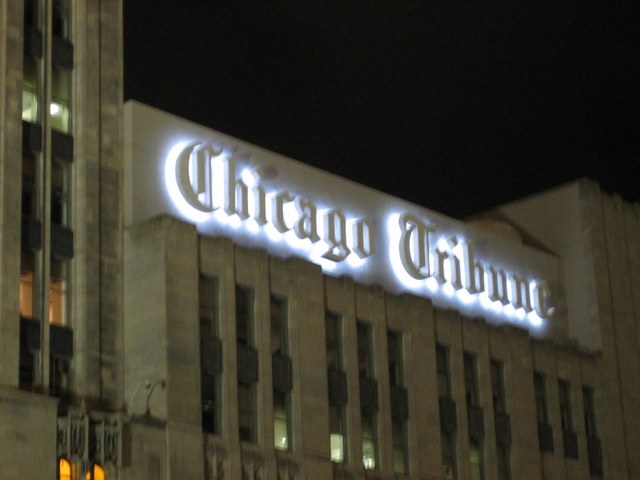
  • Legacy — Harry S. Truman won a surprise 1948 victory over Thomas Dewey despite the Chicago Tribune's erroneous headline declaring his defeat.

Runs with

Missouri
Truman's mentor **Tom Pendergast** was from Missouri open card →
Thomas Dewey
Dewey lost to Truman in **1948 election** open card →
Secretary of State
Truman succeeded Roosevelt as president in **1945** open card →
World War II
Truman authorized **atomic bombs on Japan** ending WWII open card →

The ladder · 15 clues

H

During an unsuccessful assassination attempt on this president, Leslie Coffelt killed and was killed by Griselio Torresola, a Puerto Rican nationalist.

H

This president fired his Attorney General, J. Howard McGrath, when McGrath refused to cooperate with a corruption investigation.

H

Griselio Torresola and Oscar Collazo attempted to assassinate this man to promote Puerto Rican nationalism.

H

President’s veto was overridden by Congress to pass the union-restricting Taft-Hartley Act?

H

Blair House, when Puerto Rican assassins tried to kill him?

H

This man chaired a 1941 committee that investigated war profiteering.

H

This President signed Executive Order 9981 which desegregated the armed forces.Name this successor to Franklin Roosevelt whose namesake doctrine provided aid to Turkey and Greece.

M

The Conservative Coalition opposed this architect of a “Fair Deal,” whose veto of the Taft-Hartley Act was overridden by Congress.

M

As president, this man vetoed the Taft-Hartley Act and desegregated the armed forces.

M

This U.S. president participated in the later Potsdam Conference. He authorized the use of the atomic bomb against Japan after succeeding FDR.

M

Puerto Rican nationalists attempted to assassinate this president at Blair House. He won a surprise victory over Thomas Dewey in the 1948 presidential election.

M

This man attacked the “Do-Nothing” Congress after they overrode his veto of the Taft-Hartley Act, and he desegregated the military with Executive Order 9981.

E

During the Election of 1948, the Chicago Daily Tribune mistakenly stated that Thomas Dewey defeated this man. name this man who took office after the death of Franklin Roosevelt in 1945.

E

This man, who desegregated the American armed forces, was the reason the US Presidential Pension was established.
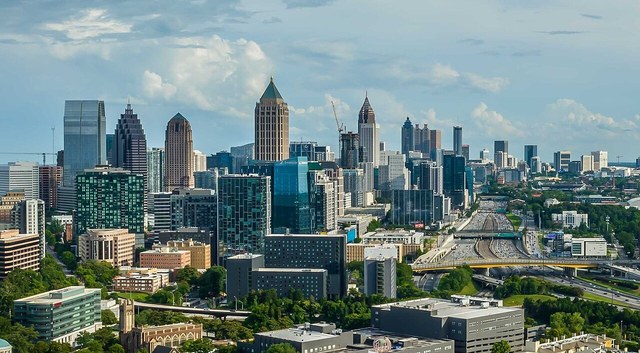
E

Was re-elected despite an erroneous Chicago Tribune headline?

10 more clues from the record
H

This man once claimed that American “efforts have brought new hope to all mankind.” Another speech this man delivered introduced a term describing a 21-point program for domestic improvement.

H

This man exposed wasteful spending during the construction of Fort Leonard Wood as head of the Special Committee to Investigate the National Defense Program.

H

A famous picture of this president shows him holding up a mistaken Chicago Tribune claiming he had lost to Thomas Dewey.

H

The Republican victory in the 1946 midterms was a referendum on this sitting president, who had recently succeeded Franklin Delano Roosevelt.

H

This proponent of a "Fair Deal" recalled Douglas MacArthur during the Korean War.

H

This man joked that “a statesman is a politician who’s been dead ten or fifteen years,” and once hilariously threatened to beat the shit out of Paul Hume for insulting this man’s daughter.

H

The Long Telegram was written in 1946, during this president’s administration. This president succeeded Franklin Delano Roosevelt and ordered the atomic bombing of Hiroshima and Nagasaki.

H

This president who enunciated the “Fair Deal” issued Executive Order 9981 to desegregate the military.

H

The Supreme Court ruled this president’s seizure of steel production facilities unconstitutional in the Youngstown Steel case.

H

One speech by this man concluded with an optimistic image of a future “world of justice, harmony, and peace.” That 1949 speech by this man is sometimes called the “Four Point Speech.” One of this man’s speeches was attended by the family of this man’s mentor Tom Pendergast.

Watch out: Thomas Dewey, whom the Chicago Tribune mistakenly reported as defeating Truman in 1948
#262 · US Presidents · Level 1

Ronald Reagan

Ronald Reagan
bdi Michael Evans /span /a · Public domain

40th U.S. President · 1911–2004; presidency 1981–1989 · United States

Ronald Reagan defeated Jimmy Carter in 1980 and governed through most of the 1980s, surviving an assassination attempt and ending the Cold War.

The kit

  • Rise — Ronald Reagan gained national prominence with his "A Time for Choosing" speech supporting Barry Goldwater in 1964.
  • Achievements — Ronald Reagan won re-election in 1984 with the "morning again in America" advertisement, defeating Walter Mondale in every state except Minnesota and D.C.
  • Conflicts — Ronald Reagan broke the air traffic controllers' strike by firing over 11,000 striking members in August 1981.
  • Legacy — Ronald Reagan called for Mikhail Gorbachev to tear down the Berlin Wall and proposed the Strategic Defense Initiative nicknamed "Star Wars."

Runs with

the Presidency
served as 40th President 1981–1989 open card →
California
served as California governor, signed Mulford Act and Therapeutic Abortion Act open card →
Jimmy Carter
defeated Carter in 1980 presidential election open card →
American Railway Union
broke air traffic controllers' strike, not railway union open card →

The ladder · 15 clues

H

Who defeated Jimmy Carter to become President?

H

One speech by this man mourned heroes who had touched “the face of God.” This man gained national prominence with his “A Time for Choosing” speech supporting Barry Goldwater.

H

This man yelled, “I’m paying for this microphone” when a debate moderator tried to mute him.

H

Was inaugurated minutes before the end of the Iran hostage crisis.

H

After an attack on American soldiers at a Berlin nightclub, this man ordered the bombing of air defense networks and barracks in Libya.

H

In one speech, this man sought to render “nuclear weapons impotent and obsolete.” This politician urged the National Association of Evangelicals to “beware the temptation” to ignore “the aggressive impulses of an evil empire.” Although his staff denied that “evil empire” was a pop culture reference, weeks later, this man announced the Strategic Defense Initiative, which was nicknamed “Star Wars” by the press. name this politician who, when The Empire Strikes Back was released in 1980, was in the midst of his first successful Presidential campaign.

H

An inaugural address delivered by this U.S. president relates the story of soldier Martin Treptow, who died in World War I. Yellow ribbons were worn to celebrate the inauguration of this president.

M

This politician rose to national attention with the “A Time for Choosing” speech.

M

The U.S. President who broke the air traffic controllers’ strike in August 1981?

M

This President ordered Operation Urgent Fury to unseat Communist leader Maurice Bishop from power.

M

This man’s press secretary, James Brady, received wounds that contributed to his death 33 years later when, due to his fixation on Jodie Foster, John Hinckley Jr. fired six shots at this man. name this Republican President who was the target of an assassination attempt in 1981.

M

This man ran a successful advertisement proclaiming it was "morning again in America." name this man who defeated Walter Mondale in 1984 to win re-election as President.

E

John Hinckley Jr. carried out an assassination attempt on this president who called for Mikhail Gorbachev to tear down the Berlin Wall.

E

This man somehow obtained his opponent's briefings with the help of James Baker in an event dubbed "Debategate." This man's Attorney General, Edwin Meese, resigned over the Wedtech bribery scandal, and his Secretary of Defense, Caspar Weinberger, was pardoned for an attempt to siphon money from an Iran arms deal to Nicaraguan Contras. name this Republican president who governed for most of the 1980s.

E

The Iran-Contra affair tainted the presidency of this former actor who led the United States through much of the 1980s.

10 more clues from the record
H

This man’s Presidential re-election opponent only won D.C. and Minnesota.

H

This politician joked “it’s just too bad we can’t have an epidemic of botulism” after the Symbionese Liberation Army demanded food be given to the poor after kidnapping Patty Hearst.

H

Suzanne Massie taught this politician to “trust, but verify.” As governor, he signed the Therapeutic Abortion Act and banned public carry of firearms with the Mulford Act.

H

This politician promised “No more appeasement” during an event known as “Bloody Thursday,” in which he called in the National Guard to put down student protests at Berkeley.

H

This man’s autobiography Where’s the Rest of Me? took its title from a line this man uttered while playing a double amputee in the movie King’s Row.

H

As a presidential candidate, this man spoke at the Neshoba County Fair in favor of states’ rights.

H

Another speech was given as a part of Rendezvous with Destiny, and it helped raise over 1 million dollars for Barry Goldwater’s presidential campaign.

H

After the failed nomination of Douglas Ginsburg, he appointed Anthony Kennedy to the Supreme Court.

H

This president fired over 11,000 striking members of the Air Traffic Controllers Unions. :Name this president. In an attempt to impress Jodie Foster, John Hinckley Jr. attempted to assassinate this president in 1981.

H

His presidency saw the passage of the Simpson-Mazzoli Act that granted amnesty to some illegal immigrants.

Watch out: American Railway Union strike (different labor dispute; Reagan broke air traffic controllers' strike)
#266 · US Presidents · Level 1

Dwight D. Eisenhower

Dwight D. Eisenhower
White House · Public domain

U.S. President · 1890–1969 · United States

Dwight D. Eisenhower served as Supreme Allied Commander in World War II before becoming U.S. President during the 1950s.

The kit

  • Rise — Dwight D. Eisenhower was mentored by Fox Conner in Panama and later became Supreme Allied Commander during World War II.
  • Achievements — Dwight D. Eisenhower signed the Interstate Highway Act, ended the Korean War, and sent the 101st Airborne to integrate Little Rock Central High School.
  • Conflicts — Dwight D. Eisenhower's CIA overthrew Mohammed Mossadegh in Iran and Jacobo Arbenz in Guatemala under his "New Look" policy.
  • Legacy — Dwight D. Eisenhower warned against the military-industrial complex in his farewell address, calling defense spending "theft from those who hunger."

Runs with

World War II
served as Supreme Allied Commander open card →
D-DayJohn Foster Dulles
Secretary of State
John Foster Dulles held this position open card →

The ladder · 15 clues

H

This leader argued that "the prospect of domination of the nation's scholars by Federal employment [...] is gravely to be regarded." This man delivered a "message of leave-taking and farewell" that explained "American makers of plowshares could [...] make swords as well" and warned against the military-industrial complex. Name this 20th century President whose advice regarding the defense industry derived from his service as Allied Commander in World War II.

H

This president’s group of advisers were dubbed “eight millionaires and a plumber’.

H

This president’s “New Look” policy led to the overthrow of Guatemalan Jacobo Arbenz.

H

Later, this man ordered the 101st Airborne Division to ensure the integration of Little Rock Central High School.

H

This President’s doctrine pledged support to Middle Eastern governments, including military support for Camille Chamoun of Lebanon.

H

During this man's term, Surgeon General Leroy Burney became the first public official to identify the link between cigarettes and cancer.

H

During this man’s service in Panama, he was mentored by Fox Conner, whom he considered “the ablest man [he] ever knew.” This man prophetically stated that the Vietnam War would “absorb our troops by divisions,” and he alluded to William Jennings Bryan in his “Chance for Peace” speech.

M

This man signed the interstate highway act and ended the Korean War. name this former Allied commander and president during the 1950's.

M

During this man’s presidency, the CIA overthrew Mohammed Mossadegh in Iran and Jacobo Arbenz [yuh-KOH-boh ARR-benz] in Guatemala.

M

Supreme Allied Commander during the battle who later became President of the United States

M

Board of Education overturned the doctrine of “separate but equal.” This president sent members of 101st Airborne Division to escort the Little Rock Nine. name this president and former World War II Supreme Allied Commander.

M

That operation was the culmination of this man’s namesake doctrine, penned by John Foster Dulles. name this president of the United States, who previously served as a five-star General of the Army.

E

John Foster Dulles was Secretary of State under this man whose vice president was Richard Nixon. name this U.S. president for most of the 1950s.

E

This president compared military spending to theft in a speech given after the death of Stalin, and warned of the danger of the "military-industrial complex" in his farewell address.

E

The Interstate Highway System was devised and implemented by what US President this person who was inspired by the Autobahn in Germany.

10 more clues from the record
H

The “K1C2” strategy was employed by this Presidential candidate during his first election campaign, after which he stepped down as President of Columbia University.

H

This man warned that “every rocket fired” is a “theft from those who hunger” in his Chance for Peace speech.

H

Sherman Adams, this man’s Chief of Staff, was forced to resign after accepting a rug from a company under investigation.

H

This man announced Operation Wetback, the deportation of over 1.5 million Mexican immigrants.

H

The first bill for the Interstate Highway System was signed into law by this president, a former World War II general.

H

John Foster Dulles was himself secretary of state in this President’s cabinet, in which position he helped to end the Korean War and dealt with the Suez Crisis.

H

Both Operation PBSUCCESS, which kicked Jacobo Arbenz out of office, and Operation Ajax were overseen by this president’s administration.

H

This man’s Chief of Staff was dubbed the “Abominable No Man” and resigned after it was revealed he had taken an overcoat as a gift.

H

This man engaged in a speaking campaign known as Operation Candor, intending to garner an “informed and careful public.” At the U.N. General Assembly, this man gave a speech he “would have preferred never to use” calling for nonproliferation of nuclear weapons.

H

A Frank Gehry-designed memorial to this man controversially plans to include a tapestry of stainless steel cables, which may depict peaceful imagery of France or Kansas.

#267 · US Presidents · Level 1

Jimmy Carter

Jimmy Carter
Department of Defense. Department of the Navy. Naval Photogr · Public domain

39th U.S. President · 1977–1981 · United States

Jimmy Carter was the 39th U.S. President, a Georgia Democrat who lost reelection in 1980 largely due to the Iran Hostage Crisis.

The kit

  • Rise — Jimmy Carter defeated Gerald Ford in 1976 after publishing *Why Not the Best?* and overcoming primary opponents including "Cufflinks Carl" Sanders.
  • Achievements — Jimmy Carter mediated the Camp David Accords between Egypt's Anwar Sadat and Israel's Menachem Begin and signed treaties returning the Panama Canal to Panama.
  • Conflicts — Jimmy Carter faced stagflation and an energy crisis that prompted his "malaise" speech warning of a "crisis of confidence" in America.
  • Legacy — Jimmy Carter won the 2002 Nobel Peace Prize for post-presidential activism including Habitat for Humanity work and efforts to eradicate Guinea-worm disease.

Runs with

Ronald Reagan
Lost the 1980 election to Reagan after the Iran Hostage Crisis open card →
Georgia
Georgia peanut farmer before entering politics open card →
Iran Hostage Crisis
Failed to resolve the crisis despite Operation Eagle Claw rescue attempt open card →
the Presidency
Served one term as 39th President from 1977 to 1981 open card →

The ladder · 15 clues

H

This man hurt his reputation in one election after a Playboy interview in which he confessed to “adultery many times” in his heart.

H

During his term, this President oversaw the evacuation of Love Canal and the passing of the Superfund law.

H

This President spoke of the “moral equivalent of war,” and of “a crisis of confidence” in what would later be called the “malaise” speech.

H

An organization founded by this man led efforts to eradicate Guinea-worm disease without medicine.

H

1976 Democratic nominee who noted that he had “committed adultery many times in his heart.”

H

This politician published the autobiography Why Not the Best? shortly before declaring to run in the primary elections.

H

A 1980 Boston Globe article about this man had the accidental, but humorous, headline “Mush from the Wimp.” The Washington Post created a political cartoon parodying Jaws, creatively named PAWS, to mock this man after he was “attacked” by a swamp rabbit.

M

This man faced an economy known by a term that means “a combination of stagnation and inflation.” This president’s National Security Advisor, Zbigniew Brzezinski [ZBIG-nyef bruh-ZIN-skee], clashed over foreign policy with his Secretary of State, Cyrus Vance, who pushed for SALT II talks with the USSR.

M

After signing a treaty with Omar Torrijos, this man agreed to return the Panama Canal.

M

This president delivered the “malaise” speech during an energy crisis. name this president who lost his re-election bid in 1980, a Georgian peanut farmer.

M

U.S. President who signed the treaties returning the Panama Canal to Panama.

M

This President ordered the disastrous Operation Eagle Claw, a failed attempt to end the Iran-Hostage Crisis. name this oft-mocked President who only served one term after being elected in 1976.

E

This president negotiated with Omar Torrijos to return the canal zone to Panama and mediated peace talks between Egypt’s Anwar Sadat and Israel’s Menachem Begin at Camp David. name this president whose handling of the Iranian Hostage Crisis probably cost him the 1980 election against Ronald Reagan.

E

This president failed to resolve the Iran Hostage Crisis which may have contributed to his defeat in the 1980 election. name this Democrat who preceded Ronald Reagan.

E

After his political career, this man became an activist with Habitat for Humanity. name this former President who won the Nobel Prize in 2002.

10 more clues from the record
H

This President created the Department of Energy to counter an oil crisis that prompted him to claim America was facing a “crisis of confidence” in the “Malaise” speech.

H

This man was mocked by the press for being attacked by a “killer rabbit” while fishing in a swamp.

H

In one election, this man defeated Hal Suit after overcoming a man he labeled “Cufflinks Carl” in the primary.

H

Brzezinski and Vance both served under this Democratic president, on whose watch the Iran hostage crisis started.
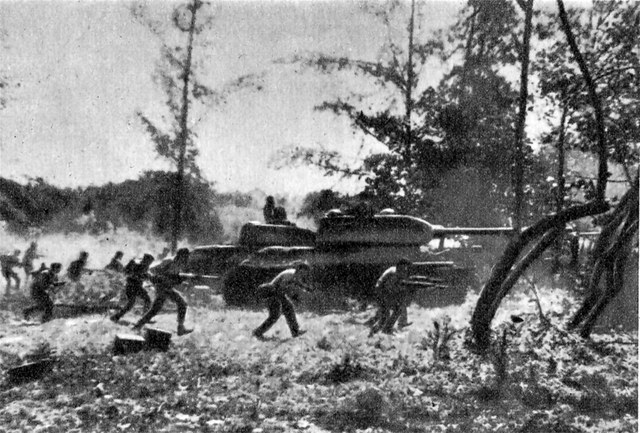
H

Frank Church, Mo Udall, and Jerry Brown led a coalition named “Anybody But” this man.

H

When this man secured the Democratic nomination, Ted Kennedy conceded with the “Dream Shall Never Die” speech, ending a rare primary challenge against an incumbent President.

H

The Love Canal crisis occurred during the Presidency of what man this person who also installed solar panels on the roof of the White House.

H

Serving as this man’s Ambassador to the U.N., Andrew Young successfully negotiated an end to the Rhodesian Bush War, which paved the way for the founding of Zimbabwe.

H

This president announced, a week after 22 amateur boxers were killed in a plane crash in Poland, that the U.S. would boycott the upcoming Summer Olympics.

H

Tony Fratto accused this man of increasing his own irrelevance after he called the Bush administration the worst in US history.

Watch out: Confused with Ronald Reagan, who defeated him in 1980
#330 · Religious Founders, Saints, and Reformers · Level 1

Elijah Muhammad

Elijah Muhammad
New York World-Telegram and the Sun staff photographer: Wolf · Public domain

Nation of Islam leader · mid-20th century · United States

Elijah Muhammad led the Nation of Islam after Wallace Fard Muhammad's disappearance and mentored Malcolm X.

The kit

  • Rise — Elijah Muhammad took over the Nation of Islam after Wallace Fard Muhammad mysteriously disappeared.
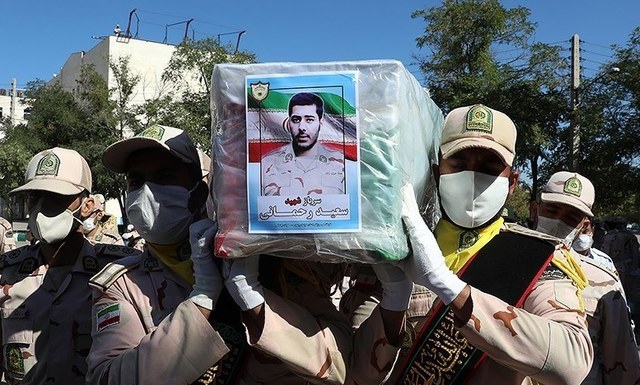
  • Achievements — Elijah Muhammad founded Temple No. 2 in Chicago during his leadership of the Nation of Islam.
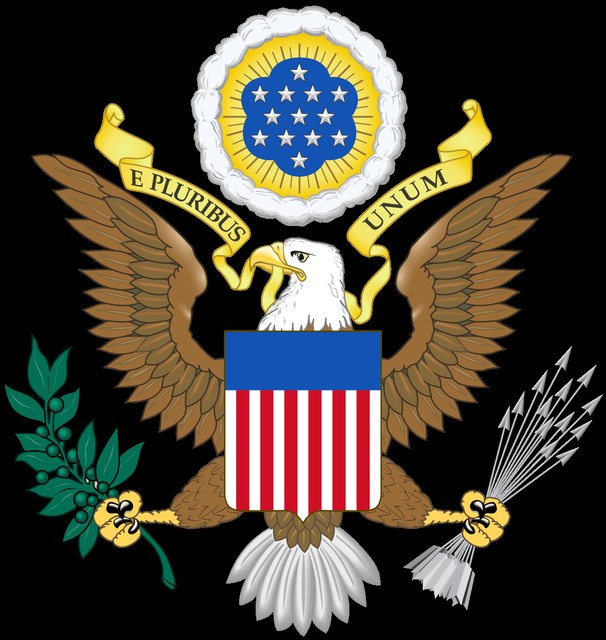
  • Conflicts — Elijah Muhammad stated that Malcolm X "got just what he preached" after Malcolm's assassination.
  • Legacy — Elijah Muhammad served as mentor to Malcolm X during Malcolm's time in the Nation of Islam.

Runs with

Nation of Islam
led organization after Wallace Fard Muhammad disappeared open card →
Malcolm X
served as his mentor until their split open card →
Chicago
founded Temple No. 2 there open card →
Fourth Lateran Council
no connection evident in clues open card →

The ladder · 4 clues

H

This influential leader of the Nation of Islam served as mentor to Malcolm X and founded Temple No. 2 in Chicago.

H

Mentor to Malcolm X who claimed Malcolm “got just what he preached.”

M

After Wallace Fard Muhammad mysteriously disappeared, this man took over the Nation of Islam and later served as Malcom X’s mentor.

M

King sent a sympathetic telegram to Malcolm’s widow after Malcolm’s assassination, but did not comment on whether he believed that this leader of the Nation of Islam at the time of the killing was involved in the murder.

Watch out: Wallace Fard Muhammad (predecessor who disappeared)
#368 · Companies, Corporations, and Financial Institutions · Level 1

General Motors

General Motors
TheWxResearcher · CC0

American automobile manufacturer · 1908–present · Michigan (Flint, Detroit)

General Motors is an American automobile manufacturer founded in 1908 that produces Chevrolet, Buick, and Cadillac brands.

The kit

  • Rise — General Motors was co-founded by William C. Durant and C.S. Mott in Flint, Michigan, in 1908.
  • Achievements — General Motors surpassed Ford Motor Company in sales in the late 1920s under Alfred Sloan's demographic brand positioning.
  • Conflicts — General Motors faced a 1936–37 UAW sit-down strike supported by the Women's Emergency Brigade at its Flint facilities.
  • Legacy — General Motors received a $50 billion government bailout through the 2009 TARP program during the financial crisis.

Runs with

Michigan
founded in Flint, Michigan in 1908 open card →
World War II
held largest war production contracts; subsidiary Opel accused of profiting from both sides open card →
Detroit
Mayor Coleman Young used eminent domain for Poletown factory open card →
William
co-founder William C. Durant launched failed Ford buyout campaign open card →

The ladder · 15 clues

H

Ralph Nader’s book Unsafe at any Speed was primarily about this company’s Corvair model. name this car company founded in Flint, Michigan, which has such brands as Chevrolet.

H

Alfred Sloan began the practice of positioFning brands of this company to specific socioeconomic demographics.

H

In 1985, this company purchased Hughes Aircraft and merged it with Delco Electronics.

H

Erwin Wilson, a former executive of this company who served as secretary of defense, said “what is good for” [this company] “is good for America." The government spent $50 billion to bail out this company in 2009, forcing out CEO Rick Wagoner.

H

This company, which was co-founded by C.S. Mott and William C. Durant in 1908, survived the 2008 financial crisis by being partly owned by the U.S. government.

H

In a film primarily about this company, the song “Wouldn’t It Be Nice?” plays as employees are laid off and rats infest a city.

H

Edward Welburn, the head of Global Design of this company, is the highest-ranking African-American in the automobile industry.

M

Secretary of Defense Charles Wilson claimed that “what is good for [this company] is good for America”. name this car company based in Flint, Michigan, whose brands include Chevrolet and Cadillac.

M

A 1937 sit-down strike launched by the UAW was ended when this company came to an agreement with its workers.

M

Founded in Flint, Michigan, name this American car manufacturer whose brands include Buick and Chevrolet.

M

In 1953, Charles Erwin Wilson, this company’s president, was named as Secretary of Defense; during the confirmation hearings, Wilson famously claimed that “what’s good for (this company) is good for the country.” This company first surpassed Ford Motor Company in sales in the late 1920s. name this automobile company whose brands include Buick and Chevrolet.

M

This company convinced a different city’s first African-American mayor to make use of eminent domain for a project termed Factory ZERO, which failed to revive the neighborhood of Poletown.

E

In Ralph Nader's book Unsafe at Any Speed, he described the dangers in this company’s Corvair product. name this automobile company whose brands include Buick and Chevrolet.

E

The treasury invested nearly $50 billion in this company through the 2009 TARP program. name this car company that creates the Buick line of vehicles.

E

William Durant founded this company, who launched a failed campaign to buy out Ford.

10 more clues from the record
H

William S. Knudsen was the head of this company during World War II, during which it held the largest collective value of war production contracts.

H

This company’s German subsidiary, Adam Opel AG, was accused of profiting from both sides during World War II.

H

The chairman of this company, Roger Smith, is continually harassed by Michael Moore in the documentary Roger & Me.

H

The EV1 released by this company was the subject of the film Who Killed the Electric Car?.

H

A UK branch of this company called Vauxhall designed the Churchill Tanks.

H

Following World War II, many executives of American firms went into government service. :One of the two executives named Charlie Wilson to serve in senior government roles in the 1940s is widely misquoted as having told Congress that "What's good for [this company] is good for the country."

H

An expose of this company was Patrick Wright's 1979 book On a Clear Day You Can See "this company." Joseph Alioto said it displayed a kind of "monopoly evil" for its work in eliminating competition in San Francisco.

H

This company’s current leader was criticized for backing lawyer Mike Millikin, and explained that a failure to make 57-cent payments was “deeply disturbing” in Capitol Hill testimony.

H

After the so-called “Battle of Bulls Run,” the Women’s Emergency Brigade formed to supply food to workers of this company who participated in a 1936 sit-down strike.

H

A former mayor of the city it is currently headquartered in, Coleman Young, used eminent domain laws in order to construct one of its factories in the Poletown neighborhood.

Watch out: Charles Erwin Wilson (GM president/Defense Secretary) is confused with another Charlie Wilson who served in the 1940s
#369 · Companies, Corporations, and Financial Institutions · Level 1

Chicago Tribune

Chicago Tribune
CC BY-SA 2.0

American daily newspaper · 1847–present · Chicago, Illinois

Chicago Tribune is a major American newspaper known for its 1948 "Dewey Defeats Truman" headline and mid-century conservative isolationism.

The kit

  • Editorial stance — Chicago Tribune championed conservative isolationism under editor Robert McCormick, who coined its motto "An American Paper for Americans".
  • Wartime controversies — Chicago Tribune illegally published the Treaty of Versailles and revealed in 1942 that the U.S. had broken Japan's naval code.
  • "Dewey Defeats Truman" — Chicago Tribune infamously ran the incorrect headline "Dewey Defeats Truman" on November 3, 1948, photographed at St. Louis Union Station.
  • Achievements — Chicago Tribune was the first to publish the complete Watergate tapes and its sports editor Arch Ward created the MLB All-Star game.

Runs with

Newspaper
major American daily newspaper since 1847 open card →
Harry S. Truman
incorrectly reported his defeat to Dewey in 1948 open card →
Japan
revealed U.S. had broken its naval code in 1942 open card →
Thomas Dewey
prematurely declared him winner over Truman in 1948 open card →

The ladder · 14 clues

H

This newspaper was the first to publish the complete text of the Watergate tapes.

H

After winning a national design competition, Howells and Hood designed this newspaper’s neo-Gothic headquarters in 1911.

H

In 1947, Life magazine stated that this newspaper had “been made into a worldwide symbol of reaction, isolation, and prejudice by a man capable of real hate.” This newspaper championed simplified English spelling reforms, often spelling “although” as “A-L-T-H-O.” Franklin Roosevelt considered shutting down this newspaper after its front page revealed that the U.S. had broken Japan’s naval code.

H

This newspaper illegally obtained a copy of the Treaty of Versailles and gave it to William Borah to read on the Senate floor, and antagonized the government by announcing in 1942 that Japan’s naval code had been broken.

H

This company funded a 1929 trans-Arctic flight that ended in disaster when the plane was destroyed by ice and the crew was rescued by Canadians.

H

This newspaper’s self-description as the “World’s Greatest Newspaper” largely began under the leadership of its isolationist editor Robert McCormick.

H

This newspaper’s editor funded J. M. Near’s appeal to the Supreme Court, resulting in the court striking down prior restraint in Near v.

H

A black employee of this company named Roscoe Conkling Simmons advised Warren Harding on matters of race.

H

A correspondent for this paper, Stanley Johnston, was charged with leaking the fact that the US had cracked the Japanese JN-25 code.

H

The sports editor for this newspaper, Arch Ward, created the MLB All-Star game.

M

This newspaper’s mid-20th century conservative leanings were encouraged by editor Robert McCormick, who coined its motto “An American Paper for Americans”.

M

The acronym WGN, or “World’s Greatest Newspaper”, was coined in honor of this newspaper, whose parent company was briefly renamed to Tronc in 2016. name this Midwestern daily newspaper.

M

Gallup himself was embarrassed by failing to predict the result of the 1948 election. The most infamous organization to get the results of that election wrong was this newspaper, which ran the headline "Dewey Defeats Truman".

E

A photograph taken at St. Louis Union Station shows an issue of this newspaper printed on November 3, 1948, when it infamously ran the incorrect headline “Dewey Defeats Truman.” name this newspaper based in Illinois.

Watch out: The "Dewey Defeats Truman" error is often misattributed to polling failures rather than this specific newspaper's premature headline
#407 · Political Offices and Titles · Level 1

the Presidency

the Presidency
a rel="nofollow" eu2016sk · CC0

U.S. executive office · 1789–present · United States

The Presidency is the executive office whose power Richard Neustadt described as "merely the power to persuade."

The kit

  • Scholarship — The Presidency evolved into an "imperial" form according to Arthur Schlesinger's 1973 book analyzing its growing powers.
  • Communication — The Presidency transitioned to public-oriented communication in what Jeffrey Tulis called its "rhetorical" form in 1987.
  • Leadership styles — The Presidency's behind-the-scenes approach was described as its "hidden hand" form by Fred Greenstein in 1982.
  • Agenda-setting — The Presidency offers agenda-setting opportunities that Theodore Roosevelt called the "bully pulpit" in the early 20th century.

Runs with

John
held the Presidency open card →
William
held the Presidency open card →
Andrew Jackson
held the Presidency open card →
Thomas Jefferson
held the Presidency open card →

The ladder · 4 clues

H

In his seminal text on this institution, Richard Neustadt declared that the title concept was “merely the power to persuade.” The growing powers of this institution allowed it to evolve into an “imperial” form according to a 1973 book by Arthur Schlesinger, who also analyzed this position in the “Ages” of some of its holders.

H

Fred Greenstein described one behind-the-scenes approach to this institution as its “hidden hand” form in a 1982 book.

H

Jeffrey Tulis analyzed this institution’s transition to public-oriented communication in a 1987 book on its “rhetorical” form.

M

An early 20th-century holder of this position lauded its agenda-setting opportunities as the “bully pulpit.” name this position held by the occupant of the White House.

#434 · Social Reform and Human Rights Activists · Level 1

Martin Luther King, Jr.

Martin Luther King, Jr.
bdi Bernie Faingold /span /a · Public domain

Civil rights leader · 1929–1968 · United States

Martin Luther King, Jr. was a Baptist minister who founded the Southern Christian Leadership Conference and delivered the 1963 'I Have a Dream' speech.

The kit

  • Rise — Martin Luther King, Jr. was one organizer of the Montgomery bus boycott and founded the Southern Christian Leadership Conference.
  • Achievements — Martin Luther King, Jr. delivered his 'I Have a Dream' speech at the 1963 March on Washington for Jobs and Freedom.
  • Conflicts — Martin Luther King, Jr. wrote 'Letter from Birmingham Jail' addressing clergymen who thought he was too radical and decrying white moderates.
  • Death & succession — Martin Luther King, Jr. was assassinated at the Lorraine Motel in Memphis in 1968 by James Earl Ray while supporting sanitation workers.

Runs with

Memphis
assassinated at Lorraine Motel in Memphis open card →
1968
assassinated in April 1968 open card →
Christian
pastor at Ebenezer Baptist Church open card →
James
assassinated by James Earl Ray open card →

The ladder · 15 clues

H

This man organized the unsuccessful Albany Movement while serving as president of the Southern Christian Leadership Conference.

H

While at Mason Temple, this man gave his "I've Been to the Mountaintop" speech.

H

Two years later, Izola Curry nearly killed this man with a letter opener while he was signing copies of his book Strive Toward Freedom.

H

This man ‟s "I have a dream" speech was delivered during the March on Washington for Jobs and Freedom.This civil rights leader won the 1964 Nobel Peace Prize.

H

Answer the following about 1968, .In April 1968, this civil rights leader was assassinated while at the Lorraine Motel in Memphis to support striking sanitation workers.

H

This figure supported a strike of sanitation workers by giving the "I've Been to the Mountaintop" speech.

H

This man drew on the work of Martin Buber in a letter addressed to clergymen who thought he was too radical, which was written while he was imprisoned in Birmingham.

M

This civil rights activist delivered the 1963 “I Have a Dream” speech during the March on Washington.

M

This influential leader of the Southern Christian Leadership Conference wrote his “Letter from Birmingham Jail,” and was assassinated in 1968 by James Earl Ray.

M

One organizer of the Montgomery bus boycott was this man, who founded the Southern Christian Leadership Conference before he was assassinated in Memphis in 1968.

M

In this man’s final speech, he spoke of “public servants, who happen to be sanitation workers.” This man’s wife was nearly killed by a bomb in 1956 which targeted their Montgomery home. name this Civil Rights leader who was assassinated in 1968 by James Earl Ray.

M

This figure supposedly plagiarized his doctoral thesis from Boston University on the competing thoughts of theologians Paul Tillich and Henry Wieman.

E

In one speech, this man articulated the drive “to surpass others, to achieve distinction, to lead the parade,” and called that drive the “drum major instinct.” Shortly before his death, he declared “only the garbagemen have been feeling pain,” and explained, “longevity has its place [...] but it really doesn’t matter with me now, because I’ve been to the mountaintop.” In one speech, he imagined a day when his children will be judged “by the content of their character,” and powerfully repeated “let freedom ring!” name this civil rights leader who declared “I have a dream” at the March on Washington.

E

This pastor of Atlanta's Ebenezer Baptist Church was assassinated at the Lorraine Motel in Memphis. name this Black Civil Rights activist who delivered the "I Have A Dream" speech.

E

This author of a “Letter from Birmingham Jail” capped the March on Washington for Jobs and Freedom by hoping his “four little children” will be judged “by the content of their character” in a speech given on the steps of the Lincoln Memorial. name this African-American civil rights leader who delivered the “I Have a Dream” speech.

10 more clues from the record
H

A work addressed to this man opens by noting “In view of your low grade...” the author won’t “dignify your name” with “Mister,” and compares this man to Henry VIII.

H

Hoover’s COINTELPRO program attempted to have this man, who he called the “most notorious liar” in the U.S., arrested for extramarital affairs and communist leanings.

H

At the urging of Muhammad Ali, this man publicly denounced the Vietnam War in a speech delivered at the Riverside Church in New York City.

H

This man predicted that “One day the South will recognize its real heroes” in an essay written on scraps of newspaper.

H

This man’s father was taken hostage by a group of students including Samuel L. Jackson during his father’s term as trustee for Morehouse College.

H

Marcus Wayne Chenault stated “all Christians are my enemies” after killing this man’s mother in 1974.

H

Mary Lucy Williams was nearly killed during a 1956 attack on this man's house.

H

This future leader sang in the kids choir at the Atlanta premier of Gone with the Wind.

H

Stevie Wonder released the song “Happy Birthday” and, along with this man’s widow, submitted a petition with six million signatures to Congress in an effort to make this man’s birthday a national holiday. :Name this civil rights leader whose birthday has been celebrated as a federal holiday on the third Monday in January since 1986.

H

In one essay, this man attacked the notion that he was an “outsider” by saying “Like Paul, I must constantly respond to the Macedonian call for aid.” This man contrasted the illegality of the Hungarian Revolution with the legality of the Third Reich in an essay that decries white moderates who are more devoted to “order” than justice.

Watch out: His mother Alberta Williams King was killed in 1974 by Marcus Wayne Chenault, six years after MLK's own assassination
#439 · Social Reform and Human Rights Activists · Level 1

Rosa Parks

Rosa Parks
Unknown author Unknown author · Public domain

Civil rights activist · 1913–2005 · Montgomery, Alabama

Rosa Parks sparked the 1955 Montgomery Bus Boycott by refusing to surrender her seat to a white passenger.

The kit

  • Rise — Rosa Parks joined the civil rights movement in 1943 and served as secretary of the Montgomery NAACP chapter.
  • Achievements — Rosa Parks refused bus driver James F. Blake's orders to vacate her seat on December 1, 1955, leading to her arrest.
  • Legacy — Rosa Parks became the first woman to lie in honor in the Capitol Rotunda in 2005.
  • Legacy — Rosa Parks received the Congressional Gold Medal in 1999 and was honored by President Clinton.

Runs with

Montgomery, Alabama
site of Parks's 1955 arrest open card →
Alabama
state where Parks sparked boycott open card →
James
bus driver who ordered Parks open card →
NAACP
organization where Parks served as secretary open card →

The ladder · 15 clues

H

Woman refused to give up her seat on a bus, prompting the Montgomery Bus Boycott?

H

This woman’s rent was paid for by Mike Ilitch, the founder of Little Caesars, from 1992 until her death in 2005.

H

In 2005, this person became the first woman to lie in honor in the Capitol Rotunda.

H

This woman first clashed with James Blake after Blake drove off without this woman as she struggled to find her purse.

H

Edgar Nixon hired this woman as his secretary despite his belief that “women don’t need to be nowhere but in the kitchen.” While working for the NAACP, this woman was sent to investigate the rape of Recy Taylor.

H

At age 81, this woman was mugged by Joseph Skipper, and, while working as a secretary, this woman investigated Recy Taylor's rape and helped organize a "Committee for Equal Justice" for her benefit.

H

Following this woman's arrest, Jo Ann Robinson mimeographed 35,000 handbills to start a boycott, and Paul Stephenson was inspired by this woman's actions to do the same in Bristol, England.

M

This person is best known for an incident similar to one that occurred nine months earlier to Claudette Colvin.

M

A year-long public transit boycott in Montgomery, Alabama, was sparked by the arrest of this civil rights activist who refused to give up her bus seat to a white person.

M

This activist supposedly said “My feet are tired” during an event that sparked a year-long boycott in Montgomery. name this civil rights activist who was arrested for refusing to give up her seat on a segregated bus.

M

She had, however, joined the movement in 1943 and was secretary of her local NAACP chapter. name the civil rights activist best known for her refusal to give up her bus seat.

M

Having declined to follow James F. Blake's orders this woman who refused to get out of her seat on a Montgomery bus.

E

In 1955, this civil rights activist’s refusal to move to the back of the bus sparked a boycott in Montgomery.

E

This woman lost her job as a seamstress after sparking an event that challenged segregation laws in Montgomery, Alabama. name this woman arrested for not giving up her set on a bus.

E

Activist commemorated in Detroit by bus seats reserved with black ribbons.

10 more clues from the record
H

This figure was selected as the face of a certain movement over Aurelia Browder, whose case delivered the most prominent legal ruling.

H

E.D. Nixon organized an event inspired by this person’s actions that ended over a year later after the ruling in Browder v.

H

Answer the following about the Montgomery bus boycott, :It all began when this secretary of the Montgomery chapter of the NAACP refused to give up her seat when bus driver James F Blake asked her to.

H

The earlier Montgomery Bus Boycott in Alabama started after this woman refused to give up her seat in the colored section after the whites only section was filled on the segregated bus.

H

This activist was bailed out of jail by Virginia Durr, who had earlier helped her attend Highlander Folk School.

H

After one action taken by this activist, carpools and taxis were organized to protest the National City Lines company.

H

This woman disobeyed the orders of James Blake, although three others did move when Blake asked.

H

After an action this activist took against James F. Blake, E. D. Nixon helped to pay bail money.

H

In 1999, she received the Congressional Gold Medal and was honored by President Bill Clinton during his state of the union.

H

She is best known for an act of civil disobedience in 1955 in the city of Montgomery, Alabama, for which she was arrested.

Watch out: Claudette Colvin refused to give up her bus seat nine months before Parks
#450 · Social Reform and Human Rights Activists · Level 1

Bayard Rustin

Bayard Rustin
Leffler, Warren K., photographer; cropped by Beyond My Ken / · Public domain

Civil rights organizer · 1941–1963 peak activity · United States

Bayard Rustin was a civil rights activist who organized the 1963 March on Washington but worked behind the scenes due to his homosexuality.

The kit

  • Rise — Bayard Rustin was called the 'uncle' of the Congress of Racial Equality and agitated for the 1941 Fair Employment Act with Randolph and A. J. Muste.
  • Achievements — Bayard Rustin was the primary organizer of the 1963 March on Washington for Jobs and Freedom alongside A. Philip Randolph, where King delivered his famous speech.
  • Conflicts — Bayard Rustin was attacked by Strom Thurmond as a 'communist, draft dodger, and homosexual' who entered his Pasadena arrest record into the congressional record.
  • Legacy — Bayard Rustin wrote 'From Protest to Politics' for Harper's about transitioning from desegregation to full equality and headed the AFL-CIO's A. Philip Randolph Institute.

Runs with

March on Washington for Jobs and Freedom
primary organizer of this 1963 event open card →
Washington, D.C.
organized the 1963 march in this city open card →
Philip
co-organized marches with A. Philip Randolph open card →
Strom Thurmond
attacked by this senator as communist and homosexual open card →

The ladder · 12 clues

H

The "I Have a Dream" speech was delivered at the 1963 March on Washington for Jobs and Freedom, which was organized by A. Philip Randolph and this other major Civil Rights leader who was forced to work behind the scenes for most of his career due to his homosexuality.

H

This man contacted Tom Kahn on the false belief that Kahn added a line to a speech referencing Sherman’s March to the Sea.

H

This man was called the “uncle” of the civil rights organization Congress of Racial Equality. :Name this civil rights and gay rights activist who planned the 1941 March on Washington Movement with Asa Philip Randolph. This man was once arrested in Pasadena for public indecency.

H

This person organized an event where the lines "Give us the ballot, and we will no longer have to worry the federal government about our basic rights" were spoken.

H

This person wrote an essay for Harper’s about the challenges of transitioning from desegregation to full equality titled From Protest to Politics.

M

This man called for “maximum possible” integration while leading a New York City school boycott.

M

This Quaker was the head of the AFl-CIO’s A. Philip Randolph Institute.

M

The March on Washington was organized by Asa Philip Randolph and this activist. This man, the subject of a 2023 film, was accused by Strom Thurmond of being a “Communist, draft-dodger, and homosexual”.

M

Along with Randolph and A. J. Muste, this man was a chief agitator for the 1941 Fair Employment Act. He organized the 1963 March of Washington but was outcast for his sexuality.

M

Strom Thurmond entered this man’s arrest record from Pasadena entered into the congressional record.

E

Strom Thurmond called this man a “communist, draft dodger, and homosexual.” name this civil rights activist who was the primary organizer of the 1963 March on Washington.

E

The chief organizer of the March on Washington was this SCLC executive, also involved in starting CORE, who kept out of the public spotlight due to his homosexuality and onetime membership in the Communist Party.

Watch out: Confused with A. Philip Randolph, who co-organized the March on Washington with him
#451 · Social Reform and Human Rights Activists · Level 1

John Lewis

John Lewis
United States House of Representatives · Public domain

Civil rights leader, congressman · 1940–2020 · Georgia, Alabama

John Lewis was a Freedom Rider, SNCC chairman, and Georgia congressman who suffered a head wound on Bloody Sunday in Selma.

The kit

  • Rise — John Lewis became chairman of SNCC in 1963 and was the youngest speaker at the March on Washington.
  • Conflicts — John Lewis was the first Freedom Rider attacked at Rock Hill and was badly beaten on the Edmund Pettus Bridge.
  • Achievements — John Lewis served over thirty years as a Georgia representative until his death in July 2020.
  • Legacy — John Lewis wrote the 2013 memoir March and was the only living March on Washington speaker before his death.

Runs with

Georgia
represented Georgia in House open card →
Alabama
beaten on Edmund Pettus Bridge in Selma open card →
American Railway Union
March on Washington for Jobs and Freedom
youngest speaker at this 1963 event open card →

The ladder · 8 clues

H

Former SNCC chair wrote the 2013 memoir March?

H

This man became chairman of SNCC [] in 1963, after which James Forman rewrote a speech by this man to read, "We support [the Kennedy civil rights bill] with great reservations.” This man was the first of the Freedom Riders to be attacked while at Rock Hill and accused Julian Bond of using cocaine en route to being elected to the House.

H

On March 29, 1960, the New York Times published a full-page ad seeking support for Martin Luther King and civil rights in the south called “Heed Their Rising Voices.”The ad was signed by dozens of activists, including this future Chairman of SNCC [“snick”] who was badly beaten on the Edmund Pettus Bridge in 1965. This man served in the House, representing Georgia, until his July 2020 death.

H

This current Georgia Congressman was another leader of SNCC. He was the first to cross the Edmund Pettus Bridge in Selma and is the only living speaker from the March on Washington.

H

This current Representative from Georgia was the youngest to speak during the March on Washington and had originally planned to be more critical of the Kennedy administration.

M

Freedom Rider and Georgia congressman who helped organize the 1963 March on Washington.

M

Andrew Young credited this man with bringing him to Atlanta. This late Congressman served over thirty years as a Georgia representative, and worked with Young during the Civil Rights movement, during which this man suffered a head wound on "Bloody Sunday" in Selma.

M

Kelly argued that the demise of the Alabama Communist Party came from its absorption into the CIO, which was led by a man with this first and last name. A Georgia Representative with this first and last name who died in 2020 was the chairman of SNCC .

Watch out: A CIO leader shared his name, as noted by historian Kelly discussing the Alabama Communist Party's demise.
#485 · Religious Groups and Denominations · Level 1

Nation of Islam

Nation of Islam
New York World-Telegram and the Sun staff photographer: Wolf · Public domain

African-American religious movement · 1930–present · United States

Nation of Islam is an African-American religious movement founded in 1930 by Wallace Fard Muhammad and later led by Elijah Muhammad and Louis Farrakhan.

The kit

  • Rise — Nation of Islam was founded in 1930 by Wallace Fard Muhammad, who spread teachings door-to-door in Detroit and Chicago before mysteriously disappearing.
  • Beliefs — Nation of Islam teaches that Yakub created evil races on Patmos and holds doctrines in The Supreme Wisdom that diverge from mainstream Islam.
  • Achievements — Nation of Islam organized the Million Man March in 1995 under Louis Farrakhan and established the Day of Atonement on October 16th.
  • Conflicts — Nation of Islam likely ordered Malcolm X's 1965 assassination at the Audubon Ballroom after he left the movement following his hajj pilgrimage.

Runs with

Malcolm X
Malcolm X was prominent member who left in 1964, assassinated by movement members in 1965 open card →
Elijah Muhammad
Elijah Muhammad led movement for decades, ordered Malcolm X's assassination open card →
Louis
Louis Farrakhan has led movement since 2010, organized Million Man March open card →
Mosque
Mosque Maryam in Chicago serves as movement headquarters since 1972 open card →

The ladder · 15 clues

H

This group’s newspaper was the Final Call, and the Italian Muslim Association issued a fatwa against this group because it fails to advocate prayer five times a day.

H

The documentary The Hate That Hate Produced focused primarily on this group, which established headquarters at Mosque Maryam in 1972.

H

This movement’s founder spread his teachings door-to-door in Detroit and Chicago, and this organization holds its Saviour’s Day event on that man’s birthday.

H

Ernest McGee was a member of this movement, which was studied by Louis Lomax’s documentary The Hate That Hate Produced.

H

Erdmann Doane Beynon studied the founder of this movement, whom the FBI speculated was a “Turkish-born Nazi agent.” A national secretary of this movement caused the death of Maurice Williams in the 1977 Hanafi siege.

H

The beliefs of this group, collected in the book The Supreme Wisdom, tell of how Yakub created a race of evil people on the island of Patmos.

H

One member of this group taught his followers about the “Mother Wheel,” an alleged UFO found in the book of Ezekiel.

M

Elijah Muhammad was a leader of this political and religious movement whose adherents included Malcolm X.

M

A one-time member of this movement noted that John F. Kennedy’s assassination was a case of “chickens coming home to roost,” then was himself assassinated by members of this movement.

M

Chicago is also home to the Mosque Maryam, which serves as this movement’s headquarters.

M

The Beltway sniper attacks, which killed 10 people near Washington, D.C., was carried out by John Allen Muhammad, who was part of this organization. Malcolm X was a member of this organization before he repudiated it in 1964.

M

At the Audubon Ballroom, a former member of this group who left it after a hajj was assassinated on the orders of Elijah Muhammad.

E

In 1995, this group planned the Million Man March under Louis Farrakhan. name this African-American religious movement closely tied with the Muslim faith.

E

Louis Farrakhan currently leads this predominantly African-American religion whose members included the converted Cassius Clay and Malcolm X.

E

This movement was founded in 1932 by Wallace Fard Muhammad. name this Black religious movement, led after 2010 by Louis Farrakhan.

8 more clues from the record
H

This group established October 16th as the Day of Atonement, on which men would refrain from engaging in activity harmful to their families.

H

Wallace Fard founded this group, which holds that all races were creations of the scientist Yakub.

H

Malcolm X was affiliated with this black supremacist movement. He left after becoming disillusioned with this group’s leader, Elijah Muhammad, and created Muslim Mosque, Inc.

H

This group’s Three-Year Economic Plan included selling fish from Peru under the “Your Supermarket” brand.

H

Malcolm X was, for a time, a militant leader of this Elijah Muhammad-led religious organization, which likely ordered Malcolm’s murder.

H

This group created cosmetics and toiletries it branded as POWER, such as Clean ’N Fresh skin.

H

This group celebrated Savior’s Day to memorialize its disappeared founder, Wallace Fard.

M

In 1964, a “silenced” member of this group traveled to Florida to convince a heavyweight boxer to join it.

Watch out: Mainstream Muslim groups reject Nation of Islam; Italian Muslim Association issued fatwa against it for not advocating five daily prayers
#495 · Massacres, Assassinations, and Named Violent Incidents · Level 1

Assassination of John F. Kennedy

Assassination of John F. Kennedy
Walt Cisco, Dallas Morning News · Public domain

1963 presidential murder · November 22, 1963 · Dallas, Texas

Assassination of John F. Kennedy was the murder of the 35th President by Lee Harvey Oswald in Dallas on November 22, 1963.

The kit

  • Event details — Assassination of John F. Kennedy occurred as a motorcade drove through Dealey Plaza in front of the Texas School Book Depository.
  • Perpetrator — Assassination of John F. Kennedy was carried out by Lee Harvey Oswald firing from the sixth floor of the Texas School Book Depository.
  • Casualties — Assassination of John F. Kennedy also wounded Governor John Connally and struck bystander James Tague with concrete debris.
  • Investigation — Assassination of John F. Kennedy was investigated by the Warren Commission, which analyzed Abraham Zapruder's film of the event.

Runs with

Warren Commission
investigated the assassination open card →
John
John Connally was wounded during the event open card →
Texas
occurred in Dallas, Texas open card →
New Orleans
Oswald headed Fair Play for Cuba Committee branch there open card →

The ladder · 15 clues

H

Unidentified figures in this event include the "Umbrella Man" and "Babushka Lady." During this event, James Tague was struck by concrete debris.

H

Seven months prior to this event, its perpetrator had attempted a similar action against General Edwin Walker.

H

A second investigation of this event was chaired by Ramsey Clark.

H

The perpetrator of this event had been a member of the New Orleans Civil Air Patrol and was the head of the New Orleans' branch of Fair Play for Cuba Committee.

H

James Tague was wounded as a result of this violent act, and Jim Garrison's investigation into it resulted in the prosecution of Clay Shaw, who was acquitted.

H

A controversial theory about this event devised by future Senator Arlen Specter was attacked by New Orleans District Attorney Jim Garrison.

H

James Tague was the only bystander of this event who was injured, and John Connolly may have been the true primary target of this event.

M

Governor John Connally was wounded during this event, which was captured on the Zapruder film and took place at Dealey Plaza in front of the Texas School Book Depository. identify this November 1963 event carried out by Lee Harvey Oswald.

M

John Connally was seriously wounded during this event, which was performed from the sixth floor of the Texas School Book Depository.

M

Following this event, policeman J. D. Tippit was killed.

M

A woman nicknamed the Babushka Lady is visible in a film of this event shot by Abraham Zapruder.

M

This event was captured on film by Abraham Zapruder.

E

The Texas Book Depository was used as a vantage point by Lee Harvey Oswald during this event. name this November 22nd, 1963 event in Dallas in which the 35th President was killed.

E

John Connally was injured in this attack which took place as a motorcade drove through Dealey Plaza.

E

This event was investigated by the Warren Commission which was aided by the film of Abraham Zapruder.

10 more clues from the record
H

Immediately after this event, three men discovered in a railroad boxcar became known as the “tramps.” A recording of this event was made by Alexander Zapruder.

H

After one hour of deliberation, a Louisiana jury acquitted Clay Shaw in a trial concerning this event.

H

In a novel, Nicholas Branch is tasked with assembling information about this event, discovering the crippling dyslexia of the perpetrator.

H

Permutations of this event are overseen by the Yellow Card Man in a 2011 Stephen King novel titled for the date of this event.

H

A Dictabelt recording from a police motorcyclist’s open microphone spawned many conspiracies about this event but was debunked because of the sound of vehicles rushing to Parkland Hospital after it occurred.

H

David M. Lubin argued that photos of this event became consumer commodities because they resonated with the uncertainty of existence in a book subtitled the Culture of Images.

H

Claiming “I want them to see what they have done,” one figure in this event refused to change a pink Chanel suit after it.

H

One photograph of this event purportedly includes "Badge Man." Investigators of this event heard multiple gunshots on a policeman's Dictabelt recording.

H

Immediately prior to this event, Louie Witt attempted to protest by obliquely referring to Neville Chamberlain’s appeasement of Nazi Germany.

H

In the aftermath of this event, Harold Doyle, John Gedney, and Gus Abrams, the so-called “Three Tramps,” were arrested, and Officer J.D.

Watch out: Lee Harvey Oswald had attempted a similar assassination against General Edwin Walker seven months earlier
#531 · US Civil Rights Figures and Events · Level 2

Brown v. Board of Education

Brown v. Board of Education
b Original: /b /a /div Optimager /a /div Vector: /div Ipanko · Public domain

Supreme Court case · 1954 · United States

Brown v. Board of Education was the 1954 Supreme Court decision that unanimously declared racial segregation in public schools unconstitutional.

The kit

  • Ruling — Brown v. Board of Education overturned the "separate but equal" doctrine from Plessy v. Ferguson, mandating public school integration.
  • Evidence — Brown v. Board of Education relied heavily on Kenneth and Mamie Clark's doll experiments, demonstrating segregation's harmful psychological effects on children.
  • Implementation — Brown v. Board of Education's follow-up decision ordered desegregation to proceed "with all deliberate speed," a phrase from Francis Thompson's poem.
  • Resistance — Brown v. Board of Education sparked the massive resistance movement, including Harry Byrd's plan and necessitating Cooper v. Aaron to reaffirm judicial supremacy.

Runs with

Thurgood Marshall
argued Brown before the Supreme Court open card →
Separate but Equal
overturned this Plessy v. Ferguson doctrine open card →
Earl Warren
first major case of his Court open card →
William Rehnquist
wrote memo as clerk opposing the ruling open card →

The ladder · 9 clues

H

This Warren Court case was argued by Thurgood Marshall and overruled the "separate, but equal" doctrine of Plessy v.

H

This Supreme Court case was analogous to the Sweatt v.

H

Belton was one of the five cases combined into this case that reaffirmed the ruling in Bolling v Sharpe.

H

Those vouchers were part of Harry Byrd’s plan of “massive resistance” against this Supreme Court ruling, which was decided unanimously.

M

A follow-up decision to this case ruled that a process should begin “with all deliberate speed.” The final opinion in this case relied heavily on Kenneth and Mamie Clark’s “doll” study, showing the harmful effects a policy had on children. name this first major case of the Warren Court, a 1954 decision declaring public school segregation to be unconstitutional.

M

This case’s ruling, which was to be implemented with “all deliberate speed,” overturned the doctrine of “separate from equal” from Plessy v.

M

Elliot, which introduced experiments with children on reactions to different dolls, carried out by Kenneth and Mamie Clark.

E

Ferguson. name this 1954 case that declared “separate but equal” segregation of public schools unconstitutional.

E

This case’s second decision was ordered to be carried out with “all deliberate speed.” name this case that ruled against the concept of “separate but equal” in schools.

10 more clues from the record
H

The massive resistance movement began in response to this ruling, which was influenced by a series of doll tests carried out by Kenneth and Mamie Clark.

H

While clerking for Justice Jackson, William Rehnquist wrote a memo arguing [emphasize] against the eventual outcome of this case.

H

A follow-up to this case used a phrase from Francis Thompson's poem, "The Hound of Heaven." After 25 years, this case was reopened by Richard Jones and Charles Scott, Jr. Philip Elman claimed credit for the ruling in this case, and, as a clerk, William Rehnquist wrote a "random thought" on this case, decrying its outcome.

H

The Griffin case reinforced this legal decision, which was to be implemented “with all deliberate speed.” Evidence submitted for this case included Kenneth and Mamie Clark’s doll experiments.

H

In the aftermath of this case, the Supreme Court was forced to reaffirm judicial supremacy in Cooper v.

H

Ferguson, mandating the integration of public schools.

H

Felix Frankfurter requested a rehearing of this case, and this case was decided on the same day as Bolling v.

H

1924 election loser John W. Davis unsuccessfully argued a portion of this case that saw the Clark testimony, Briggs v.

H

Clarence Thomas claimed that this case’s ruling had been misunderstood by the courts in an opinion for Missouri v.

H

Because the District of Columbia was not subject to the Fourteenth Amendment, this case had to be extended in Bolling v.

Watch out: Bolling v. Sharpe (separate case extending Brown to Washington D.C., decided same day)
#533 · US Civil Rights Figures and Events · Level 2

Robert F. Kennedy

Robert F. Kennedy
Harry Warnecke · Public domain

U.S. Attorney General, Senator · 1925–1968 · United States

Robert F. Kennedy served as Attorney General under his brother and was assassinated after winning the 1968 California Democratic primary.

The kit

  • Rise — Robert F. Kennedy rose to prominence as chief counsel to the Senate Labor Rackets Committee, investigating Jimmy Hoffa and the Teamsters Union.
  • Achievements — Robert F. Kennedy wrote *The Enemy Within* about his efforts fighting the Teamsters in court and corrupt labor practices.
  • Conflicts — Robert F. Kennedy authorized COINTELPRO to tap Martin Luther King's phone while serving as Attorney General in his brother's administration.
  • Death & succession — Robert F. Kennedy was shot by Sirhan Sirhan at the Ambassador Hotel in 1968 after Eugene McCarthy conceded California to him.

Runs with

1968
assassinated in 1968 open card →
Martin Luther
announced King's death in Indianapolis speech open card →
California
won California primary before assassination open card →
Senate
defeated Kenneth Keating for Senate seat open card →

The ladder · 9 clues

H

This man wrote the book The Enemy Within about his efforts fighting the Teamsters in court.

H

This man sharply criticized the Teamsters Union and Jimmy Hoffa in a book that drew on his work as chief counsel on the McClellan Committee, The Enemy Within.

H

This person called for "an effort to understand with compassion and love" during an improvised speech, delivered from the back of a pickup truck, after Martin Luther King, Jr. was assassinated.

H

From Jameson Hall, this American politician gave the "Day of Affirmation" speech likening the youth struggle of Apartheid to the that of African-Americans in the American South.

M

Future Attorney General and victim of Sirhan Sirhan who served as an aide for Stevenson on the 1956 presidential campaign.

M

This man rose to prominence as chief counsel to the Senate Labor Rackets Committee for his questioning of Jimmy Hoffa.

M

Eugene McCarthy conceded California to this politician shortly before Sirhan Sirhan shot this man in 1968. name this U.S. Attorney General and member of the Kennedy family.

E

Democratic candidate assassinated after winning the California primary

E

ESK-uh-liss) quote about "wisdom through the awful grace of God" while standing in the bed of a truck in Indianapolis, where he prevented rioting by announcing the death of Martin Luther King, Jr. He was himself killed two months later at the Ambassador Hotel by Sirhan Sirhan. name this Attorney General in his brother's administration and leading Democratic Presidential candidate prior to his death in 1968.

10 more clues from the record
H

This politician wrote The Enemy Within that addressed corrupt practices in the investigation of Jimmy Hoffa.

H

COINTELPRO got the authorization to tap Martin Luther King’s phone from this Attorney General.

H

This person served as chief counsel on the Senate’s Labor Rackets Committee, which targeted Teamsters president Jimmy Hoffa.

H

This man defeated Kenneth Keating to win a senate seat.

H

This man travelled to South Africa to give the “Day of Affirmation” speech and helped prevent rioting in Indianapolis after Martin Luther King Jr.’s death.

H

While this non-California politician was a Senator, he observed the Delano Grape Strike and gave the Day of Affirmation speech in Cape Town.

H

On the day of this man’s funeral, Daniel Tiger asked Lady Aberlin what happens when the air is let out of a balloon before asking “What does assassination mean?” on an episode of Mr. Rogers’ Neighborhood.

H

This politician rose to prominence investigating mafia connections within worker unions, leading him into conflict with the Teamsters and Jimmy Hoffa.

H

Members of the Marxist student organization Zengakuren interrupted a speech by this man while on a visit to Japn, with this politician inviting the student up to the stage for an impromptu debate.

H

This man’s assassin was wrestled to the ground by three men, including George Plimpton, and Juan Romero placed a rosary in this man’s hand after his death.

Watch out: Confused with John F. Kennedy (his brother, the president he served under as Attorney General)
#537 · US Civil Rights Figures and Events · Level 2

I Have a Dream Speech

I Have a Dream Speech
a rel="nofollow" National Park Service · Public domain

1963 speech · August 28, 1963 · Lincoln Memorial, Washington D.C.

I Have a Dream Speech was Martin Luther King Jr.'s address at the 1963 March on Washington for Jobs and Freedom.

The kit

  • Content — I Have a Dream Speech expresses hope that King's four children will be judged by "content of their character" rather than skin color.
  • Metaphors — I Have a Dream Speech presents a metaphor of a "bad check" marked "insufficient funds" representing the government's unfulfilled promissory note to Black Americans.
  • Structure — I Have a Dream Speech begins with "five score years ago" alluding to the Emancipation Proclamation and ends with the spiritual refrain "Free at last."
  • Improvisation — I Have a Dream Speech's partly improvised final section was prompted by Mahalia Jackson's cry after she sang "How I Got Over."

Runs with

Martin Luther
Lincoln Memorial
given in front of the Memorial open card →
Emancipation Proclamation
opens referencing it as five score years prior open card →
America
quotes "My Country, Tis of Thee" in entirety open card →

The ladder · 9 clues

H

A partly improvised section of this speech was prompted by a cry from singer Mahalia Jackson.

H

This speech was interrupted by Mahalia Jackson, after which its speaker made a series of impromptu remarks.

H

This speech presents a metaphor between an island of poverty and an ocean of prosperity and claims that the government’s promissory note has been returned with an “insufficient funds” stamp.

H

This speech was preceded by Mahalia Jackson singing “How I Got Over.” This speech, which describes a “bad check” that has been “marked insufficient funds,” uses the phrase “Five score years ago” to refer to the Emancipation Proclamation.

M

Speech delivered by King during the 1963 March on Washington that ends with a line from the spiritual “Free at last.”

M

The final section of this speech proclaims “Let freedom ring” in places all across the country, and concludes “Great God a-mighty, We are free at last.” name this speech delivered during a 1963 March on Washington by Martin Luther King, Jr.

M

This speech, which describes a “sweltering summer” of “legitimate discontent,” gained its name from a section that was partially improvised after Mahalia Jackson shouted “Tell them [...] !” The spiritual refrain “Free at last!” ends this speech, which includes a hope for the speaker’s “four little children.” name this speech given in 1963 in front of the Lincoln Memorial by Martin Luther King.

E

This speech expresses hope that the speaker’s children will be judged by the “content of their character” rather than by the “color of their skin.” name this speech given during the March on Washington by Martin Luther King Jr.

E

Delivered at the 1963 March on Washington for Jobs and Freedom, name this speech given by Martin Luther King Jr.

10 more clues from the record
H

The only original, typewritten manuscript of this oration was given to a volunteer security guard, Villanova basketball star George Raveling [[RAV-eh-ling]].

H

A 1999 court case affirmed a copyright on this speech, which cannot be reproduced in full without license until 2038.

H

This speech’s central refrain was inspired by an emotional outburst by Prathia Hall.

H

It claimed to be the greatest demonstration for freedom in the history of the nation. :Despite the event happening five score years ago, the speaker still lives on a lonely island of poverty in the midst of a vast ocean of material prosperity, but hopes that his children will be judged by the content of their character in what speech?

H

James Reston wrote that this work’s speaker was “militant and sad.” Clarence Jones suggested adding lines about defaulting on a “promissory note” that were incorporated into this text, whose speaker claimed that he had come to “cash a check” and refused to believe that the bank was bankrupt.

H

The speaker of this speech quotes “My Country Tis of Thee” for a desire to sing with a new meaning: “from every mountainside, let freedom ring!” :Name this speech in which the speaker wishes that allowing Freedom to ring would speed up the day that all of God’s children can join hands and sing “free at last.”

H

The March on Washington is best remembered for this famous address by Martin Luther King. Originally titled as the “Normalcy Speech,” it is better known by a repeated four-word phrase, and ends with the exhortation “free at last.” A

H

In his book titled “Behind [this concept],” Clarence Jones described people who “don’t know it yet, but were about ready to go to church” in response to a person going off script.

H

Alexandra Alvarez argued about the "inaccuracy" of its transcription in a Washington Post article, and also noted the recurrence of phrases such as "Brotherhood" and "You got it" in its recording.

H

At one point, this speech quotes the entirety of “My Country, Tis of Thee.” This speech begins “five score years ago”, alluding to the Gettysburg address.

Watch out: Originally titled the "Normalcy Speech" before becoming known by its repeated four-word phrase
#539 · US Civil Rights Figures and Events · Level 2

March on Washington for Jobs and Freedom

March on Washington for Jobs and Freedom
This photograph was made by Rowland Scherman at the March on · Public domain

Civil rights demonstration · August 28, 1963 · Washington, D.C.

March on Washington for Jobs and Freedom was a 1963 demonstration where Martin Luther King Jr. delivered his "I Have a Dream" speech.

The kit

  • Organization — March on Washington for Jobs and Freedom was organized by A. Philip Randolph and Bayard Rustin to advocate for African-American civil and economic rights.
  • Participants — March on Washington for Jobs and Freedom featured speeches by the "Big Ten" leaders including Whitney Young, Walter Reuther, and John Lewis, plus performances by Mahalia Jackson and Joan Baez.
  • Sabotage — March on Washington for Jobs and Freedom faced a sabotaged $16,000 sound system that was replaced by an Army Signal Corps emergency system after Walter Fauntroy's intervention.
  • Criticism — March on Washington for Jobs and Freedom was called a "circus" by Malcolm X in "Message to the Grassroots" and denounced by Strom Thurmond and Senator Olin Johnston.

Runs with

Bayard Rustin
oversaw logistics and was chief organizer open card →
Martin Luther
no connection shown in clues open card →
Philip
A. Philip Randolph co-organized the march open card →
James
James Peck worked with Rustin on Journey of Reconciliation open card →

The ladder · 9 clues

H

Before this event, Walter Fauntroy threatened “Do you want a fight here tomorrow?” after a $16,000 sound system was sabotaged.

H

This event was called a “circus” in the “Message to the Grassroots.” Strom Thurmond called the organizer of this event “ Communist, a draft dodger, and a homosexual;” that man, Bayard Rustin, worked with Asa Philip Randolph to plan this event.

H

Prisoners were moved to different prisons before this event because police believed there would be mass arrests.

H

Senator Olin D. Johnston declined to attend this event, noting “criminal, fanatical, and communist elements” would attend.

M

A. Philip Randolph and Bayard Rustin organized, what event calling for “Jobs and Freedom” for African-Americans, at which Martin Luther King Jr. gave the “I Have A Dream” speech?

M

A speech delivered at this location ended with the words, "Thank God Almighty, we are free at last!" and asked "from every mountainside, let freedom ring." name this 1963 event that saw the "I have a Dream" speech.

M

One speech given at this event declared that “100 years later, the Negro is still not free.” name this massive gathering in the nation’s capital, at which Martin Luther King delivered the “I Have a Dream” speech.

E

This event centered on a speech about the “table of brotherhood.” name this 1963 demonstration “for jobs and freedom” at which the “I Have a Dream” speech was delivered by Martin Luther King, Jr.

E

Josephine Baker gave an opening address and the “Queen of Gospel,” Mahalia Jackson, performed at this event.

10 more clues from the record
H

An organizer of this event drew on a very similar demonstration that he had led in 1941 to advocate for better treatment of sleeping car porters.

H

The Army Signal Corps provided an emergency sound system for this event after the first one was sabotaged.

H

Joachim Prinz and Mathew Ahmann participated in this event, at which one man stated God grants him "the courage, the strength, and faith in this hour of trial by fire never to falter." The "Big Ten" was a group of speakers at this event including Whitney Young and Walter Reuther.

H

The logistics of this action were overseen by Bayard Rustin, who drew from his experiences with James Peck overseeing the Journey of Reconciliation. :Identify this action, also centrally planned by A. J. Muste and A. Philip Randolph, that was highlighted by addresses by the Big Six and Josephine Baker.

H

Three religious leaders, as well as Walter Reuther, joined the “Big Six” to form this event’s “Big Ten.” Shortly before this event, its chief organizer was denounced as a “Communist, draft-dodger, and homosexual” by Strom Thurmond.

H

While Bob Dylan and Joan Baez performed at this event, we tend to remember the oratory more than the music. :Name this 1963 “March” on a certain U.S. city that included MLK’s “I Have a Dream” speech.

H

At this event, one man outlined a "two-fold experience — one of the spirit and one of our history." Floyd McKissick read a speech at this event that calls for dogs and rats to "stop biting us," written by a man in a Louisiana prison.

H

An address by John Lewis at this event criticized the Kennedy administration, and Malcolm X condemned this event in his “Message to the Grass Roots” speech, calling it a circus that lost its militancy.

H

Scheduled performers included Odetta, Josh White, Mahalia Jackson, Joan Baez, Bob Dylan, and Peter, Paul, and Mary.

H

Money needed for this event was raised through the sale of 25-cent buttons depicting white and black hands in a handshake.

Watch out: Martin Luther (Protestant Reformation theologian), not Martin Luther King Jr. who spoke at this march
#541 · US Civil Rights Figures and Events · Level 2

Earl Warren

Earl Warren
Harris & Ewing /a photography firm · Public domain

Chief Justice · 1891–1974; Chief 1953–1969 · California, U.S. Supreme Court

Earl Warren was Chief Justice from 1953 to 1969 who led landmark civil rights and criminal procedure rulings.

The kit

  • Rise — Earl Warren served three consecutive terms as Governor of California after being Attorney General and publicly pushed for Japanese internment.
  • Achievements — Earl Warren wrote the majority opinion in Brown v. Board of Education and presided over Miranda v. Arizona and Gideon v. Wainwright.
  • Conflicts — Earl Warren faced John Birch Society impeachment posters and George Wallace's denunciation; Eisenhower called his appointment a "damned-fool mistake."
  • Legacy — Earl Warren chaired the commission investigating JFK's assassination and often assigned opinion writing to his colleague William Brennan.

Runs with

California
served as Attorney General and three-term Governor open card →
Brown v. Board of Education
wrote the majority opinion ordering desegregation open card →
Thomas Dewey
was Dewey's running mate in 1948 election open card →
1948 United States Presidential Election
lost as vice presidential candidate open card →

The ladder · 9 clues

H

This politician was selected as Thomas Dewey’s running mate for the Election of 1948, the only election he ever personally lost.

H

This man increased gas taxes to fund highway construction through the Collier Burns Act as Governor of California, a position he held a record three consecutive terms.

H

This man wrote the majority opinion for a Supreme Court decision that built on Escobedo v.

H

California politician, Attorney General until 1943 and Governor after, who publicly pushed for internment.

M

Was Chief Justice during the Brown v Board case and switched parties in 1962.

M

Chief Justice who first ruled on redistricting issues, as well as Brown v. Board of Education.

M

This judge wrote the majority opinion in the case Brown v.

E

Board of Education. name this Chief Justice of the Supreme Court who chaired a commission that investigated the Kennedy assassination.

E

George Wallace denounced this man as unable to “try a chicken thief." This man, who was the running mate of Thomas Dewey in 1948, chaired the commission investigating JFK’s assassination. name this Eisenhower appointee as Chief Justice who oversaw several desegregation cases in the 1950s.

10 more clues from the record
H

Dwight Eisenhower appointed this liberal Chief Justice who served from 1953 to 1969.

H

This man was succeeded by Goodwin Knight as governor of California.

H

The John Birch Society put up posters urging the impeachment of this man, and his court ruled school prayer unconstitutional in Engel v.

H

Eisenhower initially called this man’s appointment to succeed Fred Vinson a “damned-fool mistake.” In 1954, this man used the phrase “with all deliberate speed” in his ruling to desegregate schools in Brown v.

H

The right for a defendant to remain silent was affirmed when the court led by this former California governor heard the case Miranda v.

H

This man, who got his start as the district attorney of Alameda County, was the losing vice presidential candidate in 1948.

H

This Supreme Court justice’s court presided over cases which greatly expanded the rights of criminals, such as Gideon v.

H

Was supported by this California attorney general, who used the lack of sabotage as evidence of a Japanese plot.

H

This justice often assigned the task of opinion writing to his close friend and colleague, William Brennan.

H

Abe Fortas was a failed nominee to replace this man in another post.

Watch out: Fred Vinson, whom Warren succeeded as Chief Justice in 1953
#610 · Security, Police, Intelligence, and Paramilitary Organizations · Level 2

Central Intelligence Agency

Central Intelligence Agency
United States Federal government · Public domain

U.S. intelligence agency · 1947–present · United States

Central Intelligence Agency is the U.S. federal agency responsible for gathering overseas intelligence, created by the 1947 National Security Act.

The kit

  • Founding — Central Intelligence Agency was preceded by the Office of Strategic Services and first headed by Roscoe Hillenkoetter.
  • Covert operations — Central Intelligence Agency orchestrated coups against Jacobo Arbenz in Guatemala and Mohammad Mosaddegh in Iran under Allen Dulles.
  • MKUltra experiments — Central Intelligence Agency conducted Project MKUltra, where Sidney Gottlieb oversaw human mind control experiments involving LSD on volunteers.
  • Leadership & scandals — Central Intelligence Agency directors included George H.W. Bush and David Petraeus, who resigned after an affair; Valerie Plame's identity was leaked in 2003.

Runs with

William
William Colby compiled the Family Jewels documenting assassination efforts open card →
Fidel Castro
planned Bay of Pigs and multiple Castro assassination attempts open card →
George
George H.W. Bush served as director open card →
Bay of Pigs Invasion
trained Brigade 2506 for the invasion attempt open card →

The ladder · 9 clues

H

The identity of an employee of this organization was leaked during the Plame Affair. This organization carried out experiments on human mind control in Project MKUltra.

H

This group was criticized for employing the Gehlen Organization in launching Operation Bohemia, where a Czech detonator was successfully secured.

H

Robert Hunter and Ken Kesey were among those to volunteer to take LSD for experiments conducted by this organization.

H

Its other directors included George H.W. Bush.

M

Brigade 2506 was a military group trained by this organization in an attempt to bring the Democratic Revolutionary Front to power in one country. A 1947 National Security Act created this organization which was preceded by the Office of Strategic Services.

M

David Petraeus resigned as head of this organization after news of his affair leaked.

M

This group’s leader, William Colby, helped compile a set of documents known as the “Family Jewels” that detailed their assassination efforts.

E

American counterpart of the KGB whose leaders have included Allen Dulles.

E

The Bay of Pigs Invasion, as well as several attempts to assassinate Castro, was planned by this federal agency responsible for gathering overseas intelligence.

10 more clues from the record
H

This organization’s Sidney Gottlieb gave people LSD in Project MKULTRA.

H

In a 2003 scandal, Robert Novak revealed that Valerie Plame worked for this organization.

H

Scooter Libby was indicted after a member of this organization was publicly outed in the Plame Affair.

H

Documents dubbed the “skeletons” of this organization were compiled under the order of William J. Colby.

H

This organization instigated a coup against Jacobo Arbenz in Guatemala and helped overthrow Mohammad Mosaddegh in Iran under the leadership of Allen Dulles.

H

The so-called “family jewels” refer to reports of illegal activities by this organization, and it conducted Project MKULTRA.

H

This organization set up a front called the Fairfield Foundation, through which it promoted what Nelson Rockefeller dubbed "free enterprise painting." In response to Harry Truman's derision of modern art in 1947, this organization attempted to finance movements such as abstract expressionism in order to promote American cultural vitality against the stagnant socialist realism of the USSR. name this external spy agency of the United States.

H

The downfalls of Jacobo Arbenz and Mohammed Mossadegh were orchestrated by this organization, which operated an aircraft whose pilot refused to use a suicide pill after crashing near Yekaterinburg.

H

With the help of Kermit Roosevelt, a leader of this organization helped carry out Operation Ajax, which overthrew Mohammad Mosaddegh as leader of Iran.

H

Roscoe Hillenkoetter was the first head of this organization, which was accused of influencing a 1948 Italian election in favor of the Christian Democrats.

Watch out: Confused with the KGB, which was its Soviet counterpart during the Cold War
#622 · Security, Police, Intelligence, and Paramilitary Organizations · Level 2

Federal Bureau of Investigation

Federal Bureau of Investigation
Vectorized by Siar O · Public domain

U.S. law enforcement agency · 1908–present · United States

The Federal Bureau of Investigation is the domestic intelligence and security service of the United States, founded in 1908.

The kit

  • Leadership — The Federal Bureau of Investigation was led by J. Edgar Hoover for 48 years from 1924 to 1972, with associate director Clyde Tolson serving under him.
  • Early cases — The Federal Bureau of Investigation investigated the Osage murders as one of its first major cases and caught Public Enemy Number 1 John Dillinger.
  • COINTELPRO — The Federal Bureau of Investigation ran the COINTELPRO program that illegally surveilled civil rights activists including Martin Luther King Jr. and the Black Panthers.
  • Media burglary — The Federal Bureau of Investigation's office in Media, Pennsylvania was raided in 1971 by the Citizens' Commission, exposing COINTELPRO documents during the Ali-Frazier fight broadcast.

Runs with

J. Edgar Hoover
served as director 1924–1972 open card →
Pennsylvania
Media office burgled 1971 open card →
Martin Luther
King Jr. targeted by COINTELPRO open card →
John
Dillinger caught as Public Enemy 1 open card →

The ladder · 9 clues

H

Associate Director Clyde Tolson was succeeded as leader of this agency by a man later confirmed to be “Deep Throat.” Martin Luther King Jr. was investigated under this agency’s COINTELPRO program.

H

Employees of this organization included secretary Helen Gandy, associate director Clyde Tolson, and W. Mark Felt, who leaked information during the Watergate scandal as Deep Throat.

H

This organization's COINTELPRO program spied on numerous civil rights organizations like the Black Panthers.

H

This organization was founded in 1908 on the orders of Teddy Roosevelt. :What law-enforcement agency was led by J. Edgar Hoover from 1924 to 1972, taking on its current name in 1935?

M

This agency caught criminals like Public Enemy Number 1, John Dillinger. name this federal law enforcement agency that was once led by J. Edgar Hoover.

M

The Osage murders was one of the first cases for this nascent organization led by J. Edgar Hoover.

M

J. Edgar Hoover was the first and longtime director of this federal law enforcement agency.

E

Many of the Palmer Raids were orchestrated by J. Edgar Hoover, who went on to lead this domestic law enforcement agency for 48 years.

E

That burglary recovered documents used by the Church Committee to declassify this organization’s COINTELPRO project, which illegally targeted activists like Martin Luther King, Jr. with illegal surveillance. name this American law enforcement agency that was led for nearly 5 decades by J. Edgar Hoover.

10 more clues from the record
H

In 1956, the leader of this organization wrote an open letter claiming that T.R.M. Howard’s “false charges” were “a disservice to common decency.” In 1971, a “Citizens’ Commission” used the broadcast of the Ali-Frazier “Fight of the Century” as a distraction to successfully raid one of this organization’s suburban offices in Media, Pennsylvania.

H

This group was compromised during an incident in Media, Pennsylvania when the “Citizen’s Commission” raided one of its member’s homes, recovering files that detailed this group’s COINTELPRO program.

H

L. Patrick Gray briefly replaced a director of this organization whose secretary, Helen Gandy, destroyed numerous secret files after his death.

H

Appointed J. Edgar Hoover the head of what agency, a decade before its name change? Old or modern name acceptable.

H

A former employee of this organization, Robert Hanssen, is currently serving fifteen consecutive life sentences in jail.

H

An employee of this agency, Edwin Atherton, claimed to have stopped a group of neo-revolutionary Mexican invaders.

H

The head of this agency may have demoted the well-known Melvin Purvis out of jealousy.

H

The behavior of this organization was at the heart of the Katz and Olmstead Supreme Court cases.

H

This organization, which Robert Hanssen betrayed, was targeted by the Citizens Commission’s only criminal act, revealing that this organization sent a note encouraging one leader to commit suicide as part of its COINTELPRO program.

H

The ‘70s were huge for robbers. :At the same time as the Fight of the Century, the Citizens’ Commission to Investigate this government organization burglarized files from its Media, Pennsylvania office, revealing its COINTELPRO operation.

Watch out: Martin Luther King Jr. (civil rights leader) vs. Martin Luther (Protestant reformer)
#624 · Security, Police, Intelligence, and Paramilitary Organizations · Level 2

Black Panther Party

Black Panther Party
Public domain

Black Power organization · 1966–1982 · Oakland, California

Black Panther Party was a revolutionary Black Power organization founded by Huey Newton and Bobby Seale in Oakland in 1966.

The kit

  • Rise — Black Panther Party originated in West Oakland and issued a Ten-Point Program demanding full employment, military service exemption, and community resources.
  • Achievements — Black Panther Party operated a Free Breakfast for Children Program and community health clinics under the slogan 'survival pending revolution.'
  • Conflicts — Black Panther Party faced FBI COINTELPRO operations that killed deputy chairman Fred Hampton in a 1969 Chicago police raid.
  • Legacy — Black Panther Party lost public support after members executed Alex Rackley in New Haven and faced controversy over Bobby Seale's alleged role in Betty Van Patter's death.

Runs with

Chicago
Fred Hampton's 1969 murder in Chicago raid open card →
John
Huey Newton imprisoned for murdering officer John Frey open card →
J. Edgar Hoover
Hoover's COINTELPRO targeted the Party open card →
California
Founded in Oakland; protested Mulford Act at capitol open card →

The ladder · 9 clues

H

Leonard Bernstein held a fundraiser for members of this organization as documented in Tom Wolfe's "Radical Chic." A Chicago police raid killed members of this organization named Mark Clark and Fred Hampton.

H

In response to a protest by this organization, Governor Ronald Reagan signed the Mulford Act to prohibit open carry of firearms.

H

A member of this organization was the subject of an FBI-planted rumor that he was the father of pregnant French film star Jean Seberg, who was found dead in Paris in 1979.

H

Full employment and exemption from military service were two of the Ten Points issued by this group.

M

This group originated in West Oakland and instituted a free breakfast for children program in several major cities.

M

Williams’ book became a standard text for this party founded by Huey Newton in Oakland, with its minister of defense Bobby Seale.

M

This political party ran a Free Breakfast for Children Program that ran under the slogan “survival pending revolution.” Fred Hampton, the deputy chairman of this party, was murdered in a 1969 raid.

E

This group also resisted the draft by ambushing police. name this Maoist radical- left organization founded by Huey Newton and Bobby Seale.

E

This party was founded in Oakland and included Fred Hampton, who died in an operation led by COINTELPRO and J. Edgar Hoover. name this militant Black Power organization of the late 1960s, founded by Bobby Seale and Huey Newton.

10 more clues from the record
H

This organization lost much of its public support after three of its members executed 19-year-old Alex Rackley in New Haven.

H

Anothermemberofthisorganization, Fred Hampton, was killed by Chicago Police as part of the FBI program COINTELPRO, which aimed to undermine it.

H

This organization implemented a free breakfast for children program along with community health clinics in attempts to expand outside of Oakland.

H

This party’s platform included calls for full employment, exemptions from military service, and “land, bread, housing, education, clothing, justice and peace” in its Ten Point Program.

H

This group staged an early protest at a state capitol against the Mulford Act, and was often defended by attorney Charles Garry.

H

A leader of this organization was invited to China in 1971 to meet with Zhou Enlai [“JOE un-lye”] after being released from prison for the murder of John Frey.

H

A protest outside the American Embassy by a British group of this name resulted in the arrest of the Mangrove Nine.

H

A member of this group named Bobby Hutton was eulogized by Marlon Brando after being shot by police twelve times despite demonstrating that he was unarmed.

H

This organization's founders wrote "What We Believe" and "What We Want Now!", both of which were included in this group's Ten-Point Program.

H

Writer Christopher Hitchens claimed this organization’s co-founder orchestrated the killing of bookkeeper Betty Van Patter.

Watch out: British group of same name led to arrest of Mangrove Nine
#671 · Recurring Games, Festivals, and Ceremonies · Level 2

Woodstock Music and Art Fair

Woodstock Music and Art Fair
Arnold Skolnick /span /a typeof="mw:File/Frameless" img alt= · Public domain

1969 rock festival · August 1969 · Bethel, New York

Woodstock Music and Art Fair was a landmark 1969 rock festival held at Max Yasgur's dairy farm near White Lake, New York.

The kit

  • Planning — Woodstock Music and Art Fair was financed by toothpaste heir John Roberts and promoted by Joel Rosenman, Artie Kornfeld, and Michael Lang.
  • Venue — Woodstock Music and Art Fair moved to Max Yasgur's dairy farm near White Lake after being banned by Wallkill's Zoning Board of Appeals.
  • Performances — Woodstock Music and Art Fair featured Jimi Hendrix's psychedelic Star-Spangled Banner performance, Jefferson Airplane, The Who, and Joan Baez, while Iron Butterfly missed the event.
  • Legacy — Woodstock Music and Art Fair drew hundreds of thousands and was documented in Michael Wadleigh's film edited by Martin Scorsese, marking the Summer of Love's end.

Runs with

Jimi Hendrix
closed festival with two-hour set including Star-Spangled Banner solo open card →
John
financier John Roberts persuaded Rockefeller against National Guard deployment open card →
York
held at Max Yasgur's farm in upstate New York open card →
Iron
Iron Butterfly missed festival due to travel mishaps open card →

The ladder · 9 clues

H

Part of this event was interrupted by a complaint about John Sinclair’s imprisonment, earning Abbie Hoffman a violent shove from Pete Townshend.

H

In 1994, Joe Cocker returned for the celebration of the 25th anniversary of this event.

H

Richie Havens gave several encores at this event as a stalling tactic while waiting for other performers to arrive.

H

Toothpaste manufacturing heir John Roberts financed this event, which was promoted by Joel Rosenman, Artie Kornfeld, and Michael Lang.

M

During this event, Chip Monck announced “It is suggested that you stay away from [the brown acid].” Travel mishaps prevented Iron Butterfly from attending this event, which was held at Max Yasgur’s farm, and included performances by Jefferson Airplane and The Who.

M

Organizer John Roberts persuaded Nelson Rockefeller not to send in the National Guard to this event, which was held at Max Yasgur’s dairy farm near White Lake.

M

Michael Wadleigh directed a documentary of this event that featured editing work done by a young Martin Scorsese.

E

Hundreds of thousands of people attended this landmark 1969 music festival in New York.

E

Billed as “an Aquarian Exposition,” this event ended with a psychedelic performance of “The Star-Spangled Banner,” part of a two-hour performance by Jimi Hendrix. name this iconic music festival held in August 1969 in upstate New York.

10 more clues from the record
H

This event, which took place on a dairy farm near White Lake, ended early on a Monday morning with a performance that included a solo of the Star-Spangled Banner by Jimi Hendrix.

H

This event was originally going to be held at the Mills Industrial Park in Wallkill, until it was banned by the town’s Zoning Board of Appeals.

H

Tragedy at this event included the death of Raymond Mizzak, a sleeping teenager who was run over by a tractor.

H

Answer the following about the counter-cultural history of the 1960s United States, :Max Yazgur's farm was the destination for many hippie pilgrims to this 1969 "Aquarian Exposition" that featured acts such as Sweetwater, Joan Baez, and Jimi Hendrix.

H

The anarchist affinity group cut fences around this event, letting in thousands of people without tickets. Jimi Hendrix imitated exploding bombs and wails during his performance of the Star-Spangled Banner at this event.

H

During this event, Pete Townsend of The Who swing a guitar at Hoffman as he tried to storm the stage. This music festival in Upstate New York in 1969 is largely seen as the end of the ‘Summer of Love.’

H

This event used members of the commune the Hog Farm as its "please force." The Monticello Jewish Community donated meals to participants at this event who drank straight from cows.

H

Arnold Skolnick designed a poster for this event depicting a white dove, and Bobbi Kelly and Nick Ercoline were photographed huddling in a blanket during it.

H

A group asking for a helicopter to this event was responded to with a telegram acronymically spelling out an expletive.

H

One poster for this event features an image of Ingres's The Source and advertises its location in Walkill.

Watch out: Despite its name, the festival was not held in Woodstock but in Bethel, New York
#673 · Recurring Games, Festivals, and Ceremonies · Level 2

1980 Summer Olympics

1980 Summer Olympics
Icelynx846 · Public domain

Olympic Games · July–August 1980 · Moscow, Soviet Union

The 1980 Summer Olympics were Games boycotted by the United States and 65 other nations protesting the Soviet invasion of Afghanistan.

The kit

  • Boycott — The 1980 Summer Olympics suffered an American-led boycott that caused many athletes to compete in the Liberty Bell Classic instead.
  • Competition — The 1980 Summer Olympics featured athletes who set 36 new world records despite the reduced field of competitors.
  • Controversy — The 1980 Summer Olympics saw Polish vaulter Władysław Kozakiewicz display the obscene bras d'honneur gesture to the hostile crowd.
  • Legacy — The 1980 Summer Olympics prompted a retaliatory boycott four years later that Lord Killanin unsuccessfully tried to prevent.

Runs with

Gold
medals awarded to winning athletes open card →
1968 Summer Olympics
previous Summer Olympics with political tensions open card →
Moscow
host city of the Games open card →
Water
used in aquatic competition events open card →

The ladder · 3 clues

H

Many potential participants in this event opted to attend the Liberty Bell Classic instead. :What event, suffering from depressed attendance due to an American-led boycott, ended up featuring participants who set 36 new world records? Year or host city is acceptable in naming the specific event.

H

During this event, Władysław Kozakiewicz displayed the obscene bras d'honneur gesture in defiance of the crowd, which Polish officials attributed to "muscle spasm.'" :Name this event, which was the target of a boycott that resulted in a retaliatory boycott four years later. Lord Killanin unsuccessfully sought to prevent that boycott of this event.

M

In 1972, members of Black September murdered several Israeli athletes during the Olympics hosted in this city.

Watch out: 1972 Munich Olympics (also featured political violence against Israeli athletes)
#712 · Named Historical Periods and Eras · Level 2

Cold War

Cold War
Discombobulates · CC BY-SA 4.0

geopolitical conflict · 1945–1991 · global

Cold War was the decades-long geopolitical conflict between the United States and Soviet Union characterized by proxy wars and nuclear arms race.

The kit

  • Origins — Cold War began with the Gouzenko defection and George Kennan's Long Telegram advocating containment policy.
  • Proxy conflicts — Cold War saw proxy wars including the Greek Civil War and hotspots at Quemoy, Matsu, Khe Sanh, Inchon, Prague, and Berlin.
  • Tensions — Cold War featured high-tension events like the Cuban Missile Crisis and Able Archer 83, believed to conceal a first strike.
  • End — Cold War ended through Gorbachev's policies of glasnost and perestroika, followed by the Belovezha Accords creating the CIS.

Runs with

Brezhnev DoctrineAmerican Railway Union
Soviet Union
primary Eastern Bloc antagonist against United States open card →
Non-Aligned Movement
nations refusing Cold War participation via Bandung conference open card →

The ladder · 9 clues

H

The Gouzenko defection is sometimes considered the first action of this period of geopolitical posturing between the Western and Eastern Blocs characterized by a nuclear arms race.

H

The “revisionist” school of historiography of this event, which included William A. Williams and Thomas Paterson among its members, was also advanced by Walter LaFeber, who argued that it was rooted in 19th-century conflicts in trade in East Asia.

H

In the introduction to the expanded edition of a book about the “Arab” kind of these events, Malcolm Kerr memorably compared the Six-Day War to a football game between Notre Dame and Princeton.

H

The Woodrow Wilson International Center for Scholars organizes an “International History Project” of this event, which is notably studied by the likes of James Hershberg, Nigel Ashton, and Melvyn Leffler.

M

George Kennan’s Long Telegram is often said to have begun this conflict, which eased during detente. name this 20th-century mostly-indirect conflict between the UᐧS and UᐧSᐧSᐧR.

M

The United States has been accused of aiding right-wing regimes during Operation Condor due to their involvement in this long-running “war” that pitted democratic governments against Communist ones.

M

The Greek Civil War, which ended in 1949, was one of the first proxy wars in this longer period of tension between the U.S. and U.S.S.R. This period of tension was marked by the creation of NATO and the Warsaw Pact.

M

Odinga and Kenyatta generally disagreed about Kenya's position within this larger period of tension between the US and Soviet Union.

E

The Non-Aligned Movement was meant to avoid involvement in this decades-long entangling conflict between the United States and Soviet Union.

10 more clues from the record
H

The X Article was the core of US policy during this conflict, in which the US and the USSR sought to expand their influence in a series of proxy wars. The Cuban Missile Crisis was a high point of tension in this conflict.

H

This title period of time is "rethought" in the book We Now Know by John Lewis Gaddis, who won a 2011 Pulitzer for a biography of one of its participants.

H

Joseph Mobutu and Patrice Lumumba became combatants in this conflict, and when Mobutu won he was granted parachuting lessons at Fort Bragg.

H

Gorbachev’s policies of glasnost, or openness, and perestroika, or restructuring, helped end this decades-long conflict between the U.S. and Soviet Union.

H

Nations refusing to participate in this conflict attended the Bandung conference and established the Non-aligned movement.

H

Quemoy, Matsu, Khe Sanh, Inchon, Prague, and Berlin became hotspots in this conflict.

H

One part of this conflict was Able Archer 83, which was believed to conceal a first strike.

H

Odd Arne Westad argued for a focus on the Third World in his “Global” history of it.

H

The name for this period was popularized in a series of articles by Walter Lippmann that criticized a certain "Mr. X" for his policies.

H

After this conflict, the Belovezha Accords created the CᐧIᐧS.

#768 · US Political Parties and Factions · Level 2

Democratic National Convention

Democratic National Convention
a rel="nofollow" Kelly DeLay · CC BY 2.0

Quadrennial political gathering · 1832–present · Various U.S. cities

Democratic National Convention is the quadrennial gathering where the Democratic Party formally nominates its presidential and vice-presidential candidates.

The kit

  • 1968 Chicago — Democratic National Convention in 1968 saw violent police riots against anti-war protesters as Hubert Humphrey was nominated in Chicago.
  • 1924 Klanbake — Democratic National Convention in 1924 is nicknamed the "Klanbake" due to prominent KKK participation in disputes between Catholic "wets" and Protestant "drys".
  • 2016 controversy — Democratic National Convention in 2016 faced leaked emails showing bias against Bernie Sanders, prompting Debbie Wasserman-Schultz's resignation and Donna Brazile's interim leadership.
  • Watergate connection — Democratic National Convention headquarters at the Watergate offices were burglarized in the scandal that brought down Richard Nixon's presidency.

Runs with

1968
1968 convention featured violent clashes in Chicago open card →
Chicago
1968 convention held in Chicago saw police riots open card →
William Jennings Bryan
Ku Klux Klan
KKK prominently participated in 1924 "Klanbake" convention open card →

The ladder · 9 clues

H

Political group whose headquarters at the Watergate offices were burglarized.

H

Conspiracy theories about this organization have emerged after the shooting death of Seth Rich in Bloomingdale. Donna Brazile became the interim leader of this organization after the resignation of Debbie Wasserman-Schulz.

H

1968 political event in Chicago where Hubert Humphrey was nominated for President as police beat protesters.

H

Governing body of the opposition party of the Republicans whose headquarters was robbed.

H

In 1968, things got much more difficult for protesting hippies when they decided to take on the man. :Originally peaceful anti-war protests turned into a violent police riot thanks to Richard Daley’s goons at this event.

H

Identify some important events in American history that took place in 1968, .The 1968 incarnation of this meeting featured the attempted nomination of Pigasus and the use of what Abraham Ribicoff called “Gestapo tactics on the streets of Chicago.”

H

One of these events saw competition between mostly Catholic “wets” and Protestant “drys”; that one of these events is nicknamed the “Klanbake” due to prominent participation of the KKK.

M

Russia may have orchestrated a July 2016 e-mail leak showing this organization’s bias against one of its members, Bernie Sanders. name this governing body of the political party that includes Hillary Clinton and Barack Obama.

M

At the most recent of these events, comedian Sarah Silverman scolded one faction by saying from the stage, “You’re being ridiculous!” to a group of supporters of Bernie Sanders. what events have nominated candidates like John Kerry, Barack Obama, and Hillary Clinton to oppose Republican nominees?

1 more clues from the record
H

A more recent one of these events saw Yippie protests lead to conspiracy and incitement to riot charges against the Chicago Seven.

Watch out: Seth Rich conspiracy theories falsely link his shooting death to this organization
#779 · US Presidential Also-Rans · Level 2

Thomas Dewey

Thomas Dewey
Unknown, dedicated to the Bettmann Archive · Public domain

Republican politician and prosecutor · 1902–1971; campaigns 1944, 1948 · New York

Thomas Dewey lost presidential elections to FDR in 1944 and to Harry Truman in 1948 despite early media projections favoring him.

The kit

  • Rise — Thomas Dewey gained fame as a special prosecutor in 1935 investigating organized crime, successfully prosecuting mob boss Lucky Luciano in 1936.
  • Achievements — Thomas Dewey was elected Governor of New York in 1943 after prosecuting Murder Inc. and embezzler Richard Whitney as district attorney.
  • Conflicts — Thomas Dewey defended free speech against Harold Stassen, proclaiming 'you can't shoot an idea with a gun' during their debate.
  • Legacy — Thomas Dewey was the first major-party presidential candidate born in the 20th century and remains the youngest-ever Republican nominee.

Runs with

York
served as Governor of New York from 1943 open card →
Harry S. Truman
lost the 1948 presidential election to Truman open card →
Earl Warren
ran with Warren as running mate open card →
Fiorello La Guardia
appointed Special Prosecutor by La Guardia open card →

The ladder · 9 clues

H

This man proclaimed “you can’t shoot an idea with a gun” while defending free speech in a debate with Harold Stassen.

H

The Chicago Tribune wrote a wildly wrong headline claiming that Truman had been defeated by this Governor of New York in the 1948 election.

H

This man claimed that no plan for "speedy discharges" existed and that the incumbent was "indispensable to those infamous machines" in a speech dubbing the administration a "motley crew." name this running mate of John Bricker as the losing Republican presidential nominee against FDR in 1944, who four years later narrowly failed to "defeat Truman."

H

This governor of New York successfully prosecuted Lucky Luciano and was opposed by conservative senator Robert Taft.

M

Was the Republican who lost the election, also in contradiction to the headline?

M

A photograph shows an opponent of this politician triumphantly holding a copy of the Chicago Daily Tribune. name this politician who did not actually defeat Truman in the 1948 Presidential election.

M

In 1948, Truman won an election to become president in his own right. He narrowly defeated this New York Republican, despite early media projections that this man would win.

E

This politician prosecuted mob boss Lucky Luciano as a Special Prosecutor for Fiorello La Guardia before being elected Governor of New York in 1943.

E

The losing candidate in the 1944 and 1948 elections this man named in the headline "[This man] Beats Truman".

10 more clues from the record
H

This man gained fame for successfully prosecuting an organized crime group known as Murder Inc. He prosecuted Richard Whitney for embezzlement and lost one election to the man who made him a district attorney, Herbert Lehman.

H

Alice Roosevelt Longworth called this man “the little man on the wedding cake.” As a prosecutor, this man took down gangster Lucky Luciano in 1936.

H

This man was the first major-party presidential candidate who was born in the 20th century and remains the youngest-ever Republican nominee.

H

This candidate was persuaded by the Army Chief of Staff not to publicize American knowledge of the Purple code in a campaign accusation.

H

A joke about this man went “You can’t sue God and win...unless” this man was your lawyer.

H

Was a former Mafia prosecutor and unexpectedly lost a presidential election to Harry Truman.

H

This man wrote the 1940 book The Case Against the New Deal. :Name this man mocked as the “little man on the wedding cake,” a mustachioed New York District Attorney and later Governor, who lost back to back presidential elections in the 1940’s.

H

Warren was the running mate of this Governor of New York during his presidential run. This man lost votes from Southern voters after Strom Thurmond broke away from the Democratic Party.

H

In 1935, this man was appointed a special prosecutor in New York to investigate organized crime, and that experience helped him gain the 1944 Republican presidential nomination.

M

Murder, Inc. and Luciano were busted by this special prosecutor who parlayed his mob-busting career into the Governorship of New York and the Republican Presidential nomination in 1944 and '48.

Watch out: The Chicago Tribune's premature 'Dewey Defeats Truman' headline incorrectly declared him the 1948 winner
#782 · Other Pre-1800 Military Commanders · Level 2

Douglas MacArthur

Douglas MacArthur
Photographer not credited. · Public domain

U.S. five-star general · 1880–1964 · Pacific Theater, Korea

Douglas MacArthur led Allied forces in the Pacific during World War II and was relieved by Truman during the Korean War.

The kit

  • Rise — Douglas MacArthur served as Chief of Staff of the Rainbow Division during World War I and became West Point Superintendent in 1919.
  • Achievements — Douglas MacArthur promised "I shall return" after abandoning the Philippines and fulfilled this vow by recapturing Manila three years later.
  • Conflicts — Douglas MacArthur dispersed the Bonus Army in 1932 and was relieved by Matthew Ridgway after failures at the Yalu River.
  • Legacy — Douglas MacArthur helped write Japan's constitution, kept Emperor Hirohito from war crimes trials, and retired declaring "old soldiers never die".

Runs with

Korean War
relieved by Truman during Korean War after Yalu River failures open card →
Bonus Army
dispersed Bonus Army in 1932 despite Hoover's orders open card →
Philippines
promised "I shall return" and recaptured Manila three years later open card →
Pacific
led Allied forces in Pacific Theater using island-hopping strategy open card →

The ladder · 9 clues

H

This man, who served as Superintendent at West Point starting in 1919, declared “old soldiers never die, they just fade away” in his retirement speech.

H

In the prelude to one meeting, this man supposedly ordered his plane to circle Wake Island for 45 minutes so Harry Truman’s plane could land first.

H

This man appointed William Mann to head a division named for the inclusion of members from many states.

H

This leader’s father, Arthur, served as governor-general of the Philippines before William Howard Taft.

M

Relieved by Truman during the Korean War, this is, what five-star general who led the Allied war effort in the Pacific.

M

This creator of the Rainbow Division spoke of the “fulfillment... of [his] boyish hopes and dreams” in a speech describing a group of people who “just fade away.” This man gave the “Old Soldiers Never Die” speech 19 years after he defeated the Bonus Army.

M

This man was replaced by Matthew Ridgway in his highest post.

E

World War II general who promised “I shall return” after being forced to abandon the Philippines.

E

This man who once vowed to return to the Philippines during World War II was controversially removed from commanded during the Korean War. name this five-star general who led US forces in the Pacific Theater of World War II.

10 more clues from the record
H

Despite being ordered to stop by Herbert Hoover, this man pursued the Bonus Army across the Anacostia River.

H

During World War I, this man served as Chief of Staff of the Rainbow Division, which was composed of National Guardsmen from dozens of states.

H

The Prime Minister of Japan convinced this man to add an article renouncing war to the Japanese constitution.

H

He was the youngest judge to serve on the court martial of Billy Mitchell, and this man led the force that dispersed the Bonus Army.

H

This American military officer controversially kept Emperor Hirohito from facing war crimes trials, and helped write the constitution of Japan.

H

This general’s recapture of Manila fulfilled the promise he made three years earlier in a speech stating, "I came through, and I shall return" following his retreat from the Philippines during World War Two.

H

This man ordered Robert Eichelberger to capture the village of Buna or “not come back alive.” This man claimed to have invented the strategy of island-hopping, which he implemented in Operation Cartwheel.

H

A song nicknaming this man “dugout” used the refrain “and his troops go starving on.” He reportedly vomited on the steps of the White House after the president suggested cutting the military’s budget.

H

This leader was tasked with expelling the Bonus Army from Washington, D.C. Harry Truman replaced this leader with Matthew Ridgeway after his failure at the Yalu River.

H

This man's failure to abandon the strategically insignificant site of Peleliu [[peh-LEH-loo]] resulted in devastating losses for U.S. marines.

Watch out: Matthew Ridgway replaced MacArthur in Korea, not the other way around
#804 · Monumental Statues and Memorials · Level 2

Lincoln Memorial

Lincoln Memorial
bdi Martin Falbisoner · CC BY-SA 3.0

memorial to Abraham Lincoln · built 1915–1922 · National Mall, Washington D.C.

Lincoln Memorial is a Greek Doric temple on the National Mall housing Daniel Chester French's seated marble statue of Abraham Lincoln.

The kit

  • Design — Lincoln Memorial was designed by Henry Bacon as a Greek Doric temple with 36 columns representing states at Lincoln's death.
  • Marian Anderson concert — Lincoln Memorial hosted Marian Anderson's 1939 concert after the Daughters of the American Revolution barred her from Constitution Hall.
  • I Have a Dream — Lincoln Memorial's steps were the site where Martin Luther King delivered his "I Have a Dream" speech during the 1963 March on Washington.
  • Other events — Lincoln Memorial was visited by Richard Nixon at 4:15 A.M. in 1970 to speak with student protesters after the Cambodia invasion.

Runs with

Crazy Horse Memorial
Benedict Anderson
Marian Anderson performed at Lincoln Memorial in 1939 open card →
I Have a Dream Speech
King delivered this speech on Lincoln Memorial steps in 1963 open card →
Eleanor Roosevelt
arranged Marian Anderson's 1939 concert at Lincoln Memorial open card →

The ladder · 9 clues

H

Harold Ickes and Eleanor Roosevelt arranged for an event here after an earlier site was quashed by the Daughters of the American Revolution.

H

Built between 1915 to 1922, this location’s construction was overseen by Henry Bacon.

H

In 1970, Richard Nixon went to this location at 4:15 A.M. to talk with student protesters.

H

Henry Bacon designed this building in the likeness of a Greek Doric temple, and Daniel Chester French designed a seated marble sculpture inside.

M

The “I Have a Dream” speech was given on the steps of this landmark located on the edge of the Reflecting Pool.

M

Shortly after the invasion of Cambodia, Richard Nixon took a bizarre nighttime trip to this landmark to speak with student protesters. :Name this landmark where Marian Anderson held a famous 1939 concert after the Daughters of the American Revolution refused to host her in Constitution Hall.

M

answer the following about the 1963 March on Washington.King gave his famous “I Have A Dream” speech on the steps of this landmark.

E

Martin Luther King gave his “I Have a Dream” speech on the steps of this building that honors the 16th US President.

E

Daniel Chester French created the most famous statue at this location found on one end of the National Mall opposite the Washington Monument.

10 more clues from the record
H

An event at this place was arranged after both protests by Charles Hamilton Houston's MACC group and Walter White's organization.

H

A statue in this building allegedly features the face of an enemy general carved on the back of its head.

H

This building’s 36 columns are accompanied by 48 stone festoons to indicate the growing number of states.

H

The “Big Six” leaders of the CUCRL chose this location for an event about “Jobs and Freedom.” Eleanor Roosevelt arranged for Marian Anderson to perform at this location after the DAR denied access to Constitution Hall.

H

During this event at this place, the phrase “of thee I sing” was replaced with “to thee we sing.” Prior to an event held at this place, Sol Hurok and the MACC ran up against a decision made by the Central High School school board.

H

This building’s Greek temple design was originally considered too flamboyant to represent the humble man it is dedicated to. :Name this building, which contains a carved inscription of the Gettysburg Address.

H

Secretary of the Interior Harold Ickes declared “all of us are free” at the beginning of an event at this place which he helped organize.

H

The “Give Us The Ballot” speech was given at this place during the Prayer Pilgrimage for Freedom.

M

In 1939, after being banned from performing at Constitution Hall, black singer Marian Anderson performed on the steps of this location. name this structure on the National Mall that honors the 16th President.

E

This location features inscriptions from the Gettysburg Address. name this tribute to a Civil War-era president.

Watch out: Marian Anderson performed here, not Benedict Anderson who was a scholar
#813 · Monumental Statues and Memorials · Level 2

Vietnam Veterans Memorial

Vietnam Veterans Memorial
National Park Service · CC BY 2.0

Washington, D.C. war memorial · built 1982 · Washington, D.C.

Vietnam Veterans Memorial is a Washington, D.C. monument with over 50,000 names etched into black granite walls designed by Maya Lin.

The kit

  • Design — Vietnam Veterans Memorial consists of two pieces of black granite inscribed with names of soldiers lost in the Southeast Asian war.
  • Creation — Vietnam Veterans Memorial was designed by Maya Lin while an undergraduate at Yale after she won a design contest for the monument.
  • Controversy — Vietnam Veterans Memorial faced criticism as a "nihilistic slab" by James Webb and delays from Secretary of the Interior James Watt refusing permits.
  • Additions — Vietnam Veterans Memorial includes Frederick Hart's Three Servicemen statue added after controversy over Lin's original design, which visitors create crayon rubbings of.

Runs with

Crazy Horse Memorial
both are controversial memorial designs open card →
James
James Webb called it a nihilistic slab open card →
the Presidency
Secretary of Interior delayed construction permit open card →
Paper
visitors use paper for crayon rubbings open card →

The ladder · 9 clues

H

This memorial was called a “nihilistic slab” by James Webb.

H

Visitors often use crayons to trace this monument’s etchings onto a piece of paper, a ritual known as “rubbing.” The Mayaguez Affair marks the final date new entries were accepted into this monument.

H

This structure was delayed by Secretary of the Interior James Watt who refused to give out a permit.

H

Frederick Hart’s Three Soldiers overlooks this memorial, of which visitors often create crayon rubbings.

M

Maya Lin designed this memorial in which two pieces of black granite are inscribed with the names of soldiers lost in a Southeast Asian war.

M

Ross Perot allegedly called the creator of this memorial an “egg roll” during a controversy that only died down after the inclusion of Frederick Hart’s “heroic” sculpture of Three Servicemen.

M

A statue called the Three Serviceman can be found near this memorial.

E

Maya Lin designed this memorial that lists the name of servicemen who died in a Southeast Asian War.

E

The designed of this memorial won a contest while an undergraduate at Yale. name this Maya Lin-designed memorial meant to honor victims of a 1960s war.

2 more clues from the record
H

Washintgon, DC memorial built in 1982 that has over 50,000 names etched into it.

H

This monument was bankrolled after the film The Deer Hunter inspired Jan Scruggs to form a fund.

Watch out: Frederick Hart's Three Soldiers/Three Servicemen statue is a separate addition, not part of Maya Lin's original design
#815 · Monumental Statues and Memorials · Level 2

Crazy Horse Memorial

Crazy Horse Memorial
Sioux 7 · CC BY-SA 4.0

Mountain sculpture project · begun 1948 · Thunderhead Mountain, South Dakota

Crazy Horse Memorial is a mountain sculpture begun in 1948 to honor the Sioux chief who defeated Custer at Little Bighorn.

The kit

  • Origins — Crazy Horse Memorial was initiated at the suggestion of Oglala Sioux chief Henry Standing Bear in 1948.
  • Design — Crazy Horse Memorial was planned by sculptor Korczak Ziolkowski to transform Thunderhead Mountain into a massive sculpture.
  • Subject — Crazy Horse Memorial honors the Sioux chief who defeated Custer at the Battle of Little Bighorn.

Runs with

Lincoln Memorial
both are major American memorial monuments open card →
WilliamWorld War IMartin Luther

The ladder · 3 clues

H

This project was begun in 1948 at the suggestion of Oglala Sioux chief Henry Standing Bear. …Name this project, planned by the sculptor Korczak Ziolkowski, which is set to turn Thunderhead Mountain in South Dakota into a massive sculpture of the namesake Sioux Indian chief who defeated Custer at Little Big Horn.

E

This woman helped organize a concert for the African-American singer Marian Anderson at the Lincoln Memorial.

E

This author of a “Letter from Birmingham Jail” capped the March on Washington for Jobs and Freedom by hoping his “four little children” will be judged “by the content of their character” in a speech given on the steps of the Lincoln Memorial. name this African-American civil rights leader who delivered the “I Have a Dream” speech.

Watch out: Lincoln Memorial (different memorial, also a major American monument)
#826 · Modern US Military Commanders · Level 2

Matthew Ridgway

Matthew Ridgway
United States Army Japan · Public domain

U.S. Army general · 1895–1993 · Korea, Europe

Matthew Ridgway replaced Douglas MacArthur as UN commander in Korea in 1951 and later succeeded Eisenhower as NATO Supreme Allied Commander.

The kit

  • Rise — Matthew Ridgway took command of the Eighth Army after Walton Walker's death in December 1950.
  • Achievements — Matthew Ridgway won victories at Chipyong-ni and Wonju using heavy artillery concentrations against Chinese human wave attacks.
  • Conflicts — Matthew Ridgway's defensive strategy earned the nickname "meatgrinder" for its reliance on concentrated firepower.
  • Legacy — Matthew Ridgway was nicknamed "Old Iron Tits" and later served as Army Chief of Staff under Eisenhower.

Runs with

Douglas MacArthur
Ridgway replaced MacArthur as UN commander in Korea after Truman fired him in 1951 open card →
Korean War
Ridgway commanded UN forces in Korea and reversed the tide against Chinese attacks open card →
NATO
Ridgway succeeded Eisenhower as NATO Supreme Allied Commander in Europe open card →
World War II
Ridgway argued for releasing German soldiers given orders similar to his own open card →

The ladder · 8 clues

H

MacArthur was replaced in Korea with this general who was known as “Old Iron Tits.” He would also replace Dwight Eisenhower as Supreme Allied Commander in Europe for NATO.

H

This victor at the battle of Wonju was noted for his defensive use of artillery against human wave attacks, granting his strategy the nickname of “meatgrinder.” This commander of the Eighth Army assumed his highest post at the Wake Island Conference after Harry Truman had removed his predecessor. name this successor of Douglas MacArthur in the Korean War.

H

This commander argued for the release of German soldiers in World War II, noting that he had given orders similar to the ones the Germans were in prison for.

H

This man received one command after Walton Walker’s death.

M

This man replaced MacArthur as commander of the UN troops in Korea after MacArthur was relieved. He succeeded Dwight Eisenhower as NATO’s Supreme Allied Commander.

M

MacArthur was succeeded as the leader of UN forces in Korea by this general, who later served as the Army Chief of Staff under Eisenhower.

M

When MacArthur was fired, this general was replaced by this general, most well known for reversing the tide in favor of the UN forces.

E

This man’s usage of heavy concentrations of firepower led his battle formations to be known as his “meatgrinder.” He was victorious against repeated Chinese attacks at Chipyong-ni and Wonju, shortly before Harry Truman appointed him as commander of all UN forces. name this Korean War commander who succeeded Douglas MacArthur.

#827 · Modern US Military Commanders · Level 2

Alexander Haig

Alexander Haig
US Army · Public domain

U.S. Secretary of State · 1924–2010 · United States

Alexander Haig was Reagan's Secretary of State who controversially declared "I am in control here" after Reagan's 1981 shooting.

The kit

  • Rise — Alexander Haig replaced H.R. Haldeman as White House Chief of Staff following the Watergate Scandal under Nixon.
  • Achievements — Alexander Haig was promoted to Lieutenant General after Nixon "passed over 240 generals" to confirm him.
  • Conflicts — Alexander Haig wrongly claimed constitutional authority as third in line when he was actually fifth in succession.
  • Legacy — Alexander Haig's pompous speaking style inspired the term "Haig-speak" to describe obscure, inflated language.

Runs with

Secretary of State
Served as Secretary of State under Reagan starting in 1981 open card →
Falklands War
Attempted to mediate the conflict between Britain and Argentina open card →
White House
Served as Chief of Staff after Watergate scandal open card →
Ronald Reagan
Declared control after Reagan's 1981 assassination attempt open card →

The ladder · 7 clues

H

This Secretary of State under Reagan wrongly stated “I am in control here” after learning that Reagan had been shot. He also attempted to mediate the Falklands War.

H

This man, who was almost killed by a land mine planted by Red Army Faction member Rolf Clemens Wagner, had his namesake “speak” described as “language characterized by pompous obscurity.” H.R. Haldeman was replaced by this man as White House Chief of Staff following the Watergate Scandal.

H

Richard Nixon “passed over 240 generals” to confirm this man as Lieutenant General.

H

Name these men who probably drank some Black Label with Ronald Reagan, :Conspiracy theorists have a field day with his membership in the Knights of Malta, but this Secretary of State is more famous for declaring “I’m in control here” and resigning a year later.

H

An actively involved role by the White House Chief of Staff is cited as one characteristic of modern imperial presidencies. This future member of the Reagan cabinet briefly filled that position for Nixon after H.R. Haldeman resigned as a result of Watergate.

M

This man noted “Constitutionally, gentlemen, you have the president, the vice president, and the secretary of state in that order” while waiting for Vice President George H.W. Bush to arrive at the White House in 1981. name this man who proclaimed, “I am in control here” after the attempted assassination of Ronald Reagan.

M

Shortly after Reagan was shot, this recently deceased Secretary of State asserted that he was in charge, forgetting that he was fifth in line, not third.

Watch out: Confused with other Reagan cabinet members or Secretaries of State from the 1980s
#874 · Commodities and Trade Goods · Level 2

Gold Standard

Gold Standard
Anonimski · CC0

monetary system · classical period 1870s–1914; U.S. ended 1971 · United Kingdom, United States, globally

Gold Standard was a monetary system pegging currency value to gold, opposed by William Jennings Bryan and ended by Nixon in 1971.

The kit

  • Rise — Gold Standard was first implemented de facto in the United Kingdom in 1717 after an error by Isaac Newton.
  • Conflicts — Gold Standard was opposed by William Jennings Bryan in his "Cross of Gold" speech warning against crucifying mankind upon it.
  • Adoption — Gold Standard was officially adopted in America in reaction to the Panic of 1893 following the controversial "Crime of '73."
  • End — Gold Standard was ended by Richard Nixon, causing the collapse of Bretton Woods and contributing to the 1970s recession.

Runs with

Chancellor
Winston Churchill's return to gold standard indirectly caused 1926 general strike open card →
William McKinleyWinston Churchill
Rutherford B. Hayes
Hayes vetoed Bland-Allison Act which partially undermined gold standard open card →

The ladder · 9 clues

H

Reintroduction of this policy indirectly caused the 1926 general strike in the United Kingdom, where this policy was first implemented de facto in 1717 after an error by Isaac Newton.

H

Economic concept suspended in the New Deal and ended by the later Bretton Woods conference, allowing the convertibility of a precious metal to dollars.

H

A party that favored this policy nominated the presidential ticket with one of the oldest combined ages, consisting of 79-year-old John M. Palmer and 73-year-old Simon Bolivar Buckner. :Name this policy in the nickname of the only third party endorsed by The New York Times. Alton B. Parker secured the Democratic presidential nomination in 1904 through a telegram endorsing this policy.

H

Barry Eichengreen analyzed the U.S.’s lack of “cooperative standards” supporting this policy internationally during the 1920s and 30s in a book whose title likens it to “fetters.” This policy was restored by a compromise bill that addressed the issue of “shin plasters” and was engineered by George Edmunds.

M

This economic policy was the basis of the Bretton Woods system, which collapsed following Richard Nixon’s ending of this policy in the US.

M

A speech named for opposing this policy warned to not “press down upon the brow of labor this crown of thorns.” name this policy that William Jennings Bryan said “mankind” should not be “crucified” by.

M

New York's near-bankruptcy was catalyzed by the 1970s recession partially caused by Nixon's abandonment of this standard, the pegging of the dollar to the value of a precious metal.

M

The subject of a notable Williams Jennings Bryan speech, this is, what economic entity in which a currency's value is fixed to a certain commodity similar to silver.

E

William Jennings Bryan opposed——what policy in a speech named for a “Cross” of its namesake metal?

10 more clues from the record
H

The Bland-Allison Act partially did away with this system, created in a bill dubbed the “Crime of ‘73,” which triggered the “Long Depression.” Peter Cooper campaigned against this system as the first nominee of the single-issue Greenback Party.

H

The Resumption Act was opposed by the Greenback Party because it returned America to this, and John Maynard Keynes's publication of The Economic Consequences of Mr. Churchill was followed by every major currency getting off of it by the end of the Great Depression.

H

Historians generally regard the 1870s through 1914 as the “classical” period of this policy, whose end was challenged in an article asking “What Has the Government Done?” by Murray Rothbard.

H

A controversial act nicknamed the “Crime of 1873” led to the adoption of this policy, which effectively remained in place despite the overriding of Rutherford B. Hayes’ veto of the Bland-Allison Act.

H

Henry Teller led a short-lived faction of the Republican Party that opposed this system, which William H. Harvey attacked in his popular pamphlet Coin’s Financial School.

H

The German Empire used reparations from the Franco-Prussian War to back the implementation of this policy, which subsequently caused resistance to this policy from other European countries to collapse.

H

Prime Minister Matsukata Masayoshi authored a report advising Japan to adopt this system following gains in the First Sino-Japanese War.

H

Before 1900, this policy was de facto in place due to what many dubbed the “Crime of ‘73.” This policy was officially adopted in America in reaction to the Panic of 1893.

H

A 1959 study by Bloomfield found that this policy’s “rules of the game” were violated in the majority of years and countries considered, contradicting Keynes’s account of this policy’s effects.

H

This system was reaffirmed in the "Crime of '73," although pressure from Western farmers carved out an exception with the 1878 Bland-Allison Act.

Watch out: Silver standard or bimetallism (Bland-Allison Act created exception allowing some silver coinage)
#881 · International Treaties and Diplomatic Agreements · Level 2

Cuban Missile Crisis

Cuban Missile Crisis
USAF · Public domain

Cold War nuclear standoff · October 1962 · Cuba and Caribbean

Cuban Missile Crisis was a 13-day confrontation in October 1962 when the Soviet Union placed nuclear missiles in Cuba.

The kit

  • Trigger — Cuban Missile Crisis began after U-2 spy plane photographs revealed Soviet missile installations in Cuba following Operation Anadyr.
  • Confrontation — Cuban Missile Crisis saw Adlai Stevenson confront Valerian Zorin at the UN, demanding he answer "until hell freezes over" about the missiles.
  • Resolution — Cuban Missile Crisis ended when Khrushchev agreed to remove Il-28s and missiles in exchange for secret withdrawal of Jupiter missiles from Turkey.
  • Legacy — Cuban Missile Crisis prompted creation of the Moscow-Washington hotline to enable direct communication between superpowers and prevent future escalation.

Runs with

Turkey
secretly agreed to remove Jupiter missiles from Turkey to resolve crisis open card →
Nikita Khrushchev
agreed to dismantle Soviet weapons after secret Jupiter removal deal open card →
Fidel Castro
Jupiter
Jupiter missiles secretly removed from Turkey as part of resolution open card →

The ladder · 9 clues

H

This event caused Pope John XXIII to urge the opposing sides not to “remain deaf to this cry of humanity.” Vasili Arkhipov prevented an escalation of this event.

H

This event ended shortly after a letter declared “the more the two of us pull, the tighter that knot [of war] will be tied.” An earlier diplomatic effort to mediate this event involved Adlai Stevenson demanding, “don’t wait for the translation, answer yes or no!” while questioning an ambassador about photographs taken from a U2 plane.

H

This event was precipitated by Operation Anadyr, and the only combat fatality in this event was Rudolf Anderson.

H

Tensions during this event escalated with the killing of Major Rudolf Anderson and it ended with one side agreeing to remove their Il-28’s.

M

During this event, a politician remarked that he was “prepared to wait for my answer until Hell freezes over” and demanded “don’t wait for the translation!” to Valerian Zorin.

M

U2 Pilot Rudolf Anderson was the only pilot fatality in this 1962 crisis in Cuba

M

During this event, Adlai Stevenson said he would wait “until hell freezes over” for a response from a Soviet diplomat.

E

This event was ended with the removal of Jupiter weapon systems from Turkey, and it led to the creation of the Moscow-Washington hotline. name this 1962 crisis in which the Soviet Union attempted to place weapons on a Caribbean island.

E

The agreement ending this event included the removal of Jupiter missiles in Turkey and the creation of a Moscow-DC hotline. name this 1962 event in which the Soviets attempted to weaponize a Caribbean island.

10 more clues from the record
H

It ended with a secret agreement to remove Jupiter installations in Turkey, which convinced Nikita Khrushchev to dismantle his own weapon systems.

H

During this event, reporter John Scali had a crucial meeting at the Occidental Restaurant.

H

This event took place following the failure of Operation Zapata.

H

Rudolf Anderson was one of the few people to die during this event. :Name this 1962 Cold War clash, where the U.S. reacted to the Soviet Union placing nuclear weapons on the namesake Caribbean island country.

H

This event prompted the creation of a hotline between two national capitals. :This 13-day confrontation in 1962 involved the installation of Soviet missiles in an island nation ruled by Fidel Castro.

H

A telegram whose first three words were "YOUR ACTION DESPERATE" was sent during this event by Bertrand Russell.

H

A "hotline" was created between two world capitals during this event, which was resolved when Americans secretly withdrew certain ballistic weapons from Turkey.

H

In the wake of this event, a teletype was established between the Kremlin and the White House to have a direct line of communication.

H

During this event, Valerian Zorin was confronted by Adlai Stevenson in a UN Security Council meeting, and it was triggered by photographs taken by a U-2.

H

During this event, a "naval quarantine" by the UN, enforced by the cruisers Essex and Gearing, failed to apprehend the Bucharest.

Watch out: Operation Zapata (Bay of Pigs invasion) preceded but is distinct from this crisis
#886 · International Treaties and Diplomatic Agreements · Level 2

Iran Hostage Crisis

Iran Hostage Crisis
Unknown author Unknown author · Public domain

1979 Tehran embassy seizure · 1979–1981 (444 days) · Tehran, Iran

Iran Hostage Crisis was the 444-day seizure of the American embassy in Tehran by Muslim students supporting Ayatollah Khomeini beginning in 1979.

The kit

  • Cause & duration — Iran Hostage Crisis began when Muslim students influenced by Ayatollah Khomeini seized the U.S. embassy in Tehran in 1979.
  • Failed rescue — Iran Hostage Crisis saw Operation Eagle Claw fail when helicopters crashed during a botched rescue attempt, prompting Cyrus Vance's resignation.
  • Resolution — Iran Hostage Crisis ended minutes after Ronald Reagan's inauguration when Warren Christopher negotiated release by unfreezing nearly $8 billion in assets.
  • Political impact — Iran Hostage Crisis decisively defeated Jimmy Carter in the 1980 election and spurred the creation of ABC's Nightline.

Runs with

Jimmy Carter
Carter's reputation was heavily damaged by the crisis, leading to his 1980 defeat open card →
Ronald Reagan
The hostages were released minutes after Reagan's inauguration in 1981 open card →
the Presidency
The crisis dominated Carter's final year in office open card →
William
William J. Casey allegedly aided perpetrators according to a House Task Force investigation open card →

The ladder · 9 clues

H

One subject of this event, Richard Queen, was diagnosed with multiple sclerosis during it.

H

Mehdi Bazargan resigned to protest the beginning of this event, which concluded with the signing of the Algiers Accords.

H

A similar incident to this event, the Valentine’s Day Open House, almost led to the death of a Marine named Kenneth Kraus.

H

Cyrus Vance resigned during this event after disagreements over a botched helicopter rescue mission, Operation Eagle Claw.

M

Operation Eagle Claw was a failed attempt to end this event, which was perpetrated by a Muslim student organization under the influence of Ayatollah Khomeini.

M

This event ended on the day of Ronald Reagan’s inauguration. name this event in which American citizens were held for 444 days in Tehran.

M

Canadian Ambassador Ken Taylor sheltered six people who escaped this event by posing as a film crew.

E

Jimmy Carter’s reputation was heavily damaged by this 1979 event in Tehran, in which an American embassy was held hostage for 444 days.

E

This event lasted 444 days, leading Jimmy Carter to be decisively defeated in the 1980 election by Ronald Reagan. name this event in which American diplomats were held by supporters of Ayatollah Khomeini in Tehran.

10 more clues from the record
H

This event spurred the creation of a show hosted by Frank Reynolds, ABC’s Nightline.

H

Prime Minister of Canada Joe Clark allowed an Order of Council letting Canadian passports be issued to some American citizens during this event.

H

Operation Eagle Claw failed to end this event, which ultimately concluded just minutes after Ronald Reagan was sworn into office.

H

During this event, former medic Donald Hohman went on a month-long hunger strike.

H

Warren Christopher negotiated the end of this event by unfreezing nearly $8 billion in assets.

H

Operation Eagle Claw’s failure to resolve this situation forced the different branches of the U.S. military to improve its coordination. This situation was resolved four hundred forty-four days after it had started, just after Carter left office.

H

This crisis occurred after the American embassy in Iran was captured and its staff taken captive during Jimmy Carter’s term. Although it plagued Carter’s presidency, this crisis ended soon after he left office.

H

One attempt to rectify it was called Operation Credible Sport, while another attempt saw two helicopters crashing into each other and was called Operation Eagle Claw.

H

Dames and Moore petitioned the Supreme Court to overturn Executive Order 12170, which was passed due to this event and called for the seizure of 8 million dollars.

H

Bill Clinton launched a House Task Force to investigate whether this event’s perpetrators were aided by campaign manager William J. Casey.

Watch out: Valentine's Day Open House was a similar earlier incident at the Tehran embassy
#891 · International Treaties and Diplomatic Agreements · Level 2

1968 Democratic National Convention

1968 Democratic National Convention
Unknown author Unknown author · Public domain

Democratic National Convention · August 1968 · Chicago

The 1968 Democratic National Convention nominated Hubert Humphrey amid violent clashes between Chicago police and anti-Vietnam War protesters outside.

The kit

  • Protests — 1968 Democratic National Convention protesters chanted 'the whole world is watching' as police used mace and clubs against demonstrators on Michigan Avenue.
  • Police violence — 1968 Democratic National Convention police brutality was condemned in the Walker Report and prompted Abraham Ribicoff to denounce Gestapo tactics from the podium.
  • Arrests — 1968 Democratic National Convention arrests included Tom Hayden and Bobby Seale, while Yippies nominated Pigasus the pig for president.
  • Reforms — 1968 Democratic National Convention aftermath led to the McGovern-Fraser Commission and the creation of superdelegates to prevent similar chaos.

Runs with

Chicago
held in Chicago at Mayor Richard J. Daley's instigation open card →
Richard
Mayor Richard J. Daley's police used violent tactics open card →
Richard Nixon
Humphrey lost to Nixon in November election open card →
mayor
Mayor Richard J. Daley controlled Chicago police response open card →

The ladder · 9 clues

H

A news anchor at this event apologized for reporting while out of breath, as a security guard “put [him] on the deck.” Pigasus was supported at this event by the Yippies.

H

The Walker report condemned police brutality at this event.

H

A man was dragged along Michigan Avenue as crowds chanted “the whole world is watching” during this event.

H

In a discussion of this event, Gore Vidal quipped that “the only pro- or crypto-Nazi I can see here is yourself,” which caused William F. Buckley to threaten to punch him.

M

This event prompted Walter Cronkite to say, “I think we are dealing with a bunch of thugs here.” After this event, it was noted that “McGovern wouldn’t have used Gestapo tactics.” TV cameras covering this event alternated between police macing protesters and celebrations after Hubert Humphrey’s nomination. name this highly contested political convention in Chicago.

M

The aftermath of this event led to the adoption of the McGovern-Fraser Commission and the “Rights in Conflict” study by Daniel Walker.

M

A group of people arrested during this event included Tom Hayden and Bobby Seale.

E

Protestors during this event chanted that “the whole world is watching.” Dan Rather was harassed during this event by Richard Daley’s Chicago police, who violently responded to anti-Vietnam protests with “Gestapo tactics.” name this raucous event that nominated Hubert Humphrey for President, shortly before he lost to Republican Richard Nixon.

E

Edmund Muskie and Hubert Humphrey were nominated, during what event for a certain political party held in Chicago?

10 more clues from the record
H

The keynote speaker of this event was Senator Daniel Inouye from Hawaii.

H

This leader’s death led to the Battle of Nedao, where his former vassal Ardaric killed his successor, Ellac. This man gained full power of his empire after the death of his brother Bleda.

H

Richard Daley tried to ban certain citizens from attending this event, where the Yippies planned to lace delegates' water with LSD.

H

Abraham Ribicoff claimed that “Gestapo tactics” were used during this event against protesters, including Abbie Hoffman and Bobby Seale.

H

The historian Priscus recorded much information about this ruler, who died of a nosebleed at his wedding celebration.

H

Superdelegates were created after this event, and John Kenneth Galbraith was almost expelled from this event during which Abrahm Ribicoff was insulted by a mayor.

H

An "Unbirthday party" during this event led policeman Ralph Bell to beat a freed prisoner.

H

An unsettling Times interview on the eve of this event quoted a 10 year-old child promising to “strangle” interlopers “with their [own] chains.” The course of this event was largely predicted a year earlier in the oral history Division Street: America, whose author Studs Terkel claimed that it could “only have happened” in a certain city.

H

This event was held in Chicago at the instigation of its Mayor, Richard J. Daley. Widespread protests surrounding it were met by a harsh police response that included the arrest of 'Pigasus the Immortal'. :Name this event that was marred by a 'police riot' and saw the arrests of the 'Chicago Eight'.

H

During this event, an Abraham Ribicoff speech elicited the mouthed reaction, “Fuck you, you Jew son of a bitch.” Dan Rather yelled “Don’t push me!” repeatedly on national television during this event, which led to the formation of the McGovern-Frasher Commission.

Watch out: Attila the Hun clues (Bleda, Nedao, Priscus, nosebleed) mistakenly included in this event's data
#898 · US Treaties and Diplomatic Agreements · Level 2

Camp David Accords

Camp David Accords
Unknown author Unknown author /span or not provided · Public domain

Egyptian-Israeli peace agreement · 1978 · Camp David, Maryland

Camp David Accords were 1978 agreements brokered by Jimmy Carter establishing peace and borders between Egypt and Israel.

The kit

  • Negotiation — Camp David Accords were negotiated through shuttle diplomacy at Carter's presidential retreat in Maryland.
  • Key provisions — Camp David Accords guaranteed freedom of passage through the Straits of Tiran and Suez Canal and led to Sinai Peninsula's return.
  • UN response — Camp David Accords were condemned by UN Resolution 33/28 A for lacking PLO participation and not respecting Palestinian self-determination.
  • Aftermath — Camp David Accords led to Sadat's assassination by Khalid Islambouli three years after he received the Nobel Prize.

Runs with

Anwar Sadat
Egyptian president who signed and was assassinated for the agreement open card →
Jimmy Carter
U.S. president who brokered the agreement at his retreat open card →
Menachem Begin
Israeli prime minister who signed the agreement with Sadat open card →
Israel
nation that established peace and borders with Egypt open card →

The ladder · 9 clues

H

This agreement affirmed the importance of UN Security Council Resolution 242.

H

This agreement was the culmination of one nation’s desire to uphold UN Resolution 242.

H

Three years after receiving a Nobel Prize for this agreement, one of its signatories was assassinated by a group led by Khalid Islambouli.

H

These agreements were condemned by the United Nations in Resolution 33/28 A. As a result of signing these agreements, one negotiator was killed by Khalid Islambouli and Islamic Jihad.

M

Shuttle diplomacy was used in the making of this agreement, which failed to address the “right of return.” This agreement, which paved the way for the future Oslo Accords, called for freedom of passage in the Straits of Tiran and Suez Canal.

M

Sadat was assassinated for agreeing to peace with Israel in this 1978 agreement brokered by Jimmy Carter at a namesake Maryland country retreat.

M

In November of 1977, the leader of one nation that signed this agreement made a major address before the Knesset in Jerusalem.

E

These agreements established the border and a peace agreement between Egypt and Israel. name these 1978 agreements negotiated by Jimmy Carter at a Presidential retreat.

E

Before Israeli leaders signed the Oslo Accords, Anwar Sadat and Israeli PM Menachem Begin signed these agreements negotiated by Jimmy Carter in his presidential retreat.

10 more clues from the record
H

Secretary of State Cyrus Vance's efforts to help lay the groundwork for this agreement in the mid-1970s.

H

The United Nations rejected this agreement’s second framework due to the lack of PLO participation.

H

This agreement was called a “stab in the back” by Hafez Assad who, with King Hussein, called for it to be re-examined.

H

Tensions rose after its signing due to assumption of King Hussein’s willingness to agree to its terms.

H

It led to a framework for the eventual return of the Sinai Peninsula.

H

Mediation in this agreement was performed by Cyrus Vance.

H

One signatory to this agreement pledged to withdraw his military to the east of a line extending from El-Arish to Ras Muhammad, while the Strait of Tiran and the Gulf of Aqaba were guaranteed as international waterways by this agreement.

H

These agreements included the deconstruction of airbases near Yamit and along the Gulf of Aqaba, as well as rights of passage through the Strait of Tiran and the Suez Canal.

H

The Preamble to these agreements mentions “four wars during 30 years”, and another part of these agreements established a strong local police force including Jordanian citizens.

H

Resolution 34/65 B was invoked by the United Nations to reject parts of this agreement because it did not respect Palestine’s right of self-determination.

Watch out: Oslo Accords (later Israeli-Palestinian agreement that Camp David paved the way for)
#971 · Classical Composers · Level 2

Aaron Copland

Aaron Copland
CBS Television · Public domain

American composer · 1900–1990 · United States

Aaron Copland was an American composer nicknamed 'the Dean of American Composers' who pioneered an accessible Americana style in the 1930s–40s.

The kit

  • Achievements — Aaron Copland wrote Fanfare for the Common Man during World War II, commissioned by Eugene Goossens for a Henry Wallace speech about the 'century' of the common man.
  • Achievements — Aaron Copland composed the ballet Appalachian Spring for Martha Graham, incorporating variations on the Shaker hymn 'Simple Gifts' and depicting pioneers building a Pennsylvania farmhouse.
  • Achievements — Aaron Copland created A Lincoln Portrait, quoting 'Camptown Races' and 'Springfield Mountain' alongside excerpts from the Gettysburg Address as a World War II patriotic piece.
  • Legacy — Aaron Copland experimented with twelve-tone technique in the mid-1950s, composing Piano Fantasy and Connotations for the opening of Lincoln Center.

Runs with

Billy the Kid
Copland composed Wild West ballet depicting the outlaw shot by Pat Garrett open card →
Appalachian Spring
Copland wrote this Martha Graham ballet featuring 'Simple Gifts' variations open card →
World War II
Copland composed Fanfare for the Common Man and Lincoln Portrait during the war open card →
Mexico

The ladder · 9 clues

H

This man was inspired by a Henry Wallace speech about the “130 million [...] who are in this war to the finish,” and he quoted “As I would not be a slave, so I would not be a master” in his Lincoln Portrait.

H

This man included “I Bought Me a Cat” and the Dodger song in his Old American Songs.

H

This composer wrote the score to a documentary about war refugees relocating to Cummington, Massachusetts, as well as the score to a film featuring Greenbelt, Maryland, The City, that premiered at the 1939 World’s Fair.

H

This composer wrote an opera inspired by James Agee and Walker Evans’ Let Us Now Praise Famous Men and wrote a two-movement Clarinet Concerto for Benny Goodman.

M

This composer of The Tender Land depicted the life of an outlaw who was shot by Pat Garrett in another work.

M

This composer incorporated "Springfield Mountain" and "Camptown Races," along with excerpts from the Gettysburg Address, into his World War II patriotic piece A Lincoln Portrait.

M

This composer collaborated with choreographer Martha Graham on his Wild West-inspired ballet Billy the Kid.

E

This composer also wrote a work for Martha Graham that includes variations on the Shaker hymn “Simple Gifts.” name this American composer of the ballets Billy The Kid and Appalachian Spring.

E

He scored ballets about Billy the Kid and about pioneers building a farmhouse in western Pennsylvania. name this composer of Appalachian Spring.

8 more clues from the record
H

Eugene Goossens commissioned a piece by this man named for a Henry Wallace speech about the “century” of the title figure; that piece for brass and percussion was written during World War II.

H

This composer arranged a campaign song that had been directed against James Blaine, “The Dodger,” as part of his Old American Songs.

H

The fanfare Buckaroo Holiday begins a ballet by this composer, whose choreographer, Agnes de Mille, later worked on the thematically similar Oklahoma!.

H

In the mid-1950s, this man began to experiment with twelve-tone technique, composing works such as Piano Fantasy and Connotations.

H

He quoted “Camptown Races” in a composition that features a narrator reciting the Gettysburg Address.

H

This composer wrote the twelve-tone Connotations for the opening of Lincoln Center.

E

This composer wrote “Hoe-Down” and quoted “Simple Gifts” in compositions about cowboys and pioneers. name this composer of Americana ballets like Rodeo and Appalachian Spring.

E

The creator of Fanfare for the Common Man, nicknamed “the Dean of American Composers,” who is this man who composed Appalachian Spring?

Watch out: Billy the Kid ballet often confused with the outlaw himself, whom Copland depicted being shot by Pat Garrett
#973 · Classical Composers · Level 2

Leonard Bernstein

Leonard Bernstein
bdi Jack Mitchell /span /a · CC BY-SA 4.0

American conductor and composer · 1950s–1989 · United States

Leonard Bernstein was an American conductor and composer who led the New York Philharmonic and wrote the music for West Side Story.

The kit

  • Rise — Leonard Bernstein became the first American to conduct at La Scala in the 1950s and brought Young People's Concerts to CBS.
  • Achievements — Leonard Bernstein composed the Kaddish Symphony, his third symphony dedicated to JFK's memory and based on the Jewish prayer for the dead.
  • Achievements — Leonard Bernstein collaborated with Jerome Robbins and Stephen Sondheim on West Side Story, a musical featuring the Sharks and Jets.
  • Legacy — Leonard Bernstein conducted Beethoven's Ninth at the Brandenburg Gate in 1989, replacing "Freude" with "Freiheit" to celebrate freedom.

Runs with

Berlin Wall
conducted Beethoven's Ninth at Brandenburg Gate after fall open card →
Candide
composed 1956 operetta adaptation with Richard Wilbur open card →
York
conductor of New York Philharmonic open card →
Berlin
conducted 1989 Ode to Joy performance there open card →

The ladder · 9 clues

H

This man hosted a fundraiser for the Black Panthers that Tom Wolfe described as “radical chic.” His third symphony was dedicated to the memory of JFK and was based on the Jewish prayer for the dead.

H

This man hosted the Black Panthers fundraising party that Tom Wolfe mocked in the essay "Radical Chic." In the 1950s, this conductor brought the Young People's Concerts to CBS shortly after becoming the first American to conduct at La Scala.

H

In a work by this man, a single actress portrays First Ladies Julia Grant and Lucy Hayes in “Duet for One.” This man’s 1600 Pennsylvania Avenue closed after only seven performances.

H

In 1956, this composer collaborated with Richard Wilbur on an operetta version of Candide, a year before working with Stephen Sondheim on an adaptation of Romeo and Juliet.

H

This man had the word “Freude” replaced with “Freiheit” while conducting a performance of Beethoven’s Ninth at the Brandenburg Gate in 1989.

H

This individual conducted a concert on Mount Scopus to celebrate Israel’s victory in the Six-Day War.

M

Another piece by this composer of the Kaddish Symphony included a “rumble” between the Sharks and Jets and songs such as “Gee, Officer Krupke” and “America”. what conductor of the New York Philharmonic wrote the music for West Side Story?

M

He collaborated with Jerome Robbins and Stephen Sondheim on a musical about warring Puerto Rican and Caucasian gangs based on Romeo and Juliet. name this Jewish composer of West Side Story.

M

A Christmas 1989 performance of Ode to Joy in Berlin was conducted by this composer of the score to West Side Story.

1 more clues from the record
H

John F. Kennedy was the dedicatee of his Kaddish symphony.

Watch out: His operetta Candide (1956) is sometimes confused with Voltaire's original novel
#1080 · US Presidential Elections · Level 3

1948 United States Presidential Election

1948 United States Presidential Election
Public domain

U.S. presidential election · 1948 · United States

The 1948 United States Presidential Election saw incumbent Harry S. Truman defeat Thomas Dewey despite widespread predictions of a Republican victory.

The kit

  • Candidates — 1948 United States Presidential Election featured Thomas Dewey as Republican nominee, with Earl Warren as his running mate, against incumbent Truman.
  • Dixiecrat revolt — 1948 United States Presidential Election saw thirty southern delegates walk out of the Democratic convention over civil rights, nominating Strom Thurmond.
  • Campaign strategy — 1948 United States Presidential Election featured Dewey running a low-risk campaign with vague slogans like "your future is still ahead of you."
  • Upset result — 1948 United States Presidential Election ended with the Chicago Tribune falsely declaring Dewey the winner before Truman's surprising victory was confirmed.

Runs with

Strom Thurmond
carried four states as Dixiecrat candidate after convention walkout open card →
Earl Warren
Chicago
Tribune falsely declared Dewey winner in famous headline open card →
Prohibition

The ladder · 6 clues

H

During this election year, Harold Stassen was told “you can’t shoot an idea with a gun” after supporting a mandatory communist registry in this election year.

H

Andrew Biemiller proposed a civil rights plank to one party’s platform during this election year which caused three dozen southern delegates to leave.

M

Before becoming chief justice, Earl Warren was the losing vice presidential candidate in this election in which then South Carolina governor Strom Thurmond carried four states as a candidate for the Dixiecrat Party.

M

The Roerich letter damaged the Progressive Henry Wallace in this election.

E

The Chicago Tribune falsely claimed that this election year was won by Thomas Dewey. name this election year won by incumbent president Harry S. Truman.

E

The winner of this election won support by claiming the 80th Congress had stuck a “pitchfork in the farmer’s back.” During this year’s Democratic convention, 30 southern senators walked out over a civil rights dispute and instead nominated “Dixiecrat” Strom Thurmond.

10 more clues from the record
H

One candidate in this election year avoided controversial issues through vague slogans such as "You know that your future is still ahead of you." In this election year, Fielding Wright split the southern vote with Dixiecrats who supported Strom Thurmond.

H

This election year marked the first time a party’s national convention was televised.

H

During this election year’s primaries, banning the Communist Party of the United States was the sole topic of the first presidential debate over radio.

H

During this election year, Arthur Vandenberg, Harold Stassen, and Robert Taft failed to stop the nomination of a Republican Governor of New York.

H

A left-wing candidate in this election was mocked after the “Guru letters” that he wrote to a Russian spiritualist were published.

H

During this election year, one candidate’s coded letters were released, revealing that he named FDR “The Flaming One.” Supreme Court Justice William Douglas refused to be a running mate in this election year.

H

Another candidate in this election ran on a ticket with Fielding Wright after walking out of a major party convention following Hubert Humphrey’s speech.

H

A candidate in this year’s election was attacked for his close association with Russian mystic Nicholas Roerich, and left his position as publisher of The New Republic to run.

H

Edwin Jaeckle developed a brilliant but discarded strategy for the Republican candidate in this year, who defeated Athur Vandenberg and Harold Stassen and infamously declared “you know that your future is still ahead of you” in a speech on atomic energy.

H

Due to the incumbent's rapidly sinking popularity, the challenger ran a low-risk campaign that used vague quotes such as "You know that your future is still ahead of you.” A challenger in this election was future Supreme Court justice Earl Warren.

Watch out: Henry Wallace ran as Progressive candidate, not Democratic nominee
#1086 · US Presidential Elections · Level 3

1964 United States Presidential Election

1964 United States Presidential Election
Public domain

Presidential election · 1964 · United States

The 1964 United States Presidential Election was a landslide victory for Lyndon B. Johnson over Republican Barry Goldwater following JFK's assassination.

The kit

  • Campaign — The 1964 United States Presidential Election featured the "Daisy" ad showing a girl picking a flower before a nuclear explosion.
  • Results — The 1964 United States Presidential Election gave Johnson 61.1 percent of the popular vote and was the first in which D.C. had electoral votes.
  • Republican campaign — The 1964 United States Presidential Election saw Goldwater declare "extremism in the defense of liberty is no vice" in his acceptance speech.
  • Endorsements — The 1964 United States Presidential Election featured Ronald Reagan's "A Time For Choosing" speech endorsing Goldwater, the losing candidate.

Runs with

Barry Goldwater
Republican nominee who lost in a landslide open card →
William
Lyndon B. Johnson
Democratic incumbent who won with 61.1% of popular vote open card →
Democratic Party
Party whose convention saw Mississippi Freedom Democratic Party challenge open card →

The ladder · 6 clues

H

A little girl picking a flower before a nuclear explosion was part of the “Daisy” ad used in this election year that was a defeat for senator Barry Goldwater.

H

This election was the first in which the District of Columbia possessed electoral votes.

M

The “Daisy Ad” was aired in, what election year that saw Barry Goldwater defeated by incumbent Lyndon B. Johnson?

M

During it, the losing candidate was endorsed in the speech “A Time For Choosing”, delivered by former Hollywood actor Ronald Reagan.

E

This election year occurred the year after the assassination of John F. Kennedy. name this election year that was a landslide victory for Lyndon Johnson.

E

The "Daisy" ad aired during this campaign, in which the Democrat won 61.1 percent of the popular vote. name this election in which Barry Goldwater was defeated by Lyndon Johnson.

10 more clues from the record
H

This election year's Republican candidate was the subject of a critical essay by Richard J. Hofstadter titled "The Paranoid Style in American Politics." A candidate in this election year used the "Daisy Girl" ad to warn that his opponent would lead the U.S. into a nuclear war with the USSR.

H

In this election year’s primaries, a conservative politician was labeled “wife stealer” after marrying the recently divorced Happy Murphy.

H

The Democratic National Convention for this election saw many people honoring Schwerner, Cheney and Goodman as well as a notable speech that saw its speaker quote Shakespeare’s Romeo and Juliette about cutting him out and “placing him among the stars.” The losing vice Presidential candidate was a New York native that assisted Robert Jackson in prosecuting German war criminals.

H

In another ad from this year, a man takes a saw to a model of the United States in reference to Miller's running mate saying that "this country would be better off if we would just saw off the Eastern seaboard." The slogan "In your heart, you know he's right" was used in this campaign.

H

A vice presidential nominee in this election year claimed his opponent wanted “to replace the Statue of Liberty with an iron-padlocked gate.” In this year, actor William Bogert argued that “a president ought to mean what he says” before refusing to support a candidate.

H

In an acceptance speech before this election, the Republican candidate declared that “extremism in the defense of liberty is no vice.” The quote “we must either love each other, or we must die” ended an ad that aired before this election and that began with a girl picking petals off a flower.

H

One speech in this election year urged not to go “down to the ant heap of totalitarianism” and stated that there is no left or right, only “up or down.” Fact magazine revealed that 1, 189 psychiatrists believed a candidate in this election year was insane.

H

One of the nominating conventions for this election saw the Mississippi Freedom Democratic Party attempt to claim seats, and the other convention saw competition from William Scranton and Nelson Rockefeller.

H

In a speech given in the year of this election, a woman recounted getting beaten in the Montgomery County jail and said “I question America.” The winning side in this election aired the “Confessions of a Republican” ad.

H

At the DNC before this election, Fannie Lou Hamer’s emotional testimony failed to convince party elites to seat the Mississippi Freedom Democratic Party.

#1089 · US Presidential Elections · Level 3

1968 United States Presidential Election

1968 United States Presidential Election
Public domain

U.S. presidential election · 1968 · United States

The 1968 United States Presidential Election saw Richard Nixon defeat Hubert Humphrey amid Vietnam War backlash and third-party success.

The kit

  • Democratic primaries — The 1968 United States Presidential Election featured Eugene McCarthy's supporters who "got clean for Gene" by shaving beards before the New Hampshire primary.
  • Johnson withdrawal — The 1968 United States Presidential Election saw Lyndon Johnson drop out after McCarthy's 42 percent showing in New Hampshire prompted his withdrawal.
  • Third-party impact — The 1968 United States Presidential Election was the last in which a third party won states, as George Wallace captured five states for the American Independent Party.
  • Nixon victory — The 1968 United States Presidential Election resulted in Nixon's victory over Humphrey after Anna Chennault helped sabotage Vietnam peace talks to aid Nixon's campaign.

Runs with

Richard Nixon
won the election, defeating Hubert Humphrey open card →
George Wallace
ran as American Independent candidate, winning five states open card →
Democratic National Convention
site of protests met with "Gestapo tactics" per Abe Ribicoff open card →
California

The ladder · 6 clues

H

Supporters of one candidate in this election year cut their hair and shaved their beards in an effort to “get clean for Gene” McCarthy, whose 42 percent in the New Hampshire primary caused the incumbent president to drop out.

H

The losing candidate in this election year promised to fight for “the politics of joy.” A candidate for the Republican nomination in this election year remarked that he had been “brainwashed” by the military.

M

The success of George Wallace in this election year inspired the alleged "Southern Strategy." name this year in which Hubert Humphrey lost to Richard Nixon.

M

Abe Ribicoff spoke out against the "Gestapo tactics" used against protesters at this year's Democratic National Convention.

E

A year after winning this year’s election, the winning candidate described his target audience as “the silent majority.” In this year, the American Independent Party nominated conservative George Wallace. name this presidential election year in which Richard Nixon defeated Hubert Humphrey.

E

Hubert Humphrey gained the Democratic nomination after the assassination of Robert Kennedy in this year in which Lyndon Johnson did not run for re-election and Richard Nixon was elected president.

10 more clues from the record
H

A strong showing in this year’s New Hampshire Democratic primary was made by a candidate who urged followers to shave facial hair and “get clean for Gene.” This was the most recent year in which a third party candidate won a state.

H

A ticket in this election year contained a man who promised to "bomb them back into the Stone Age" and was the last third-party Presidential ticket to capture multiple electoral votes.

H

During primaries in this Presidential election year, hippies were urged to shave in the "keep clean for Gene" campaign.

H

During this election, Anna Chennault helped one side derail peace talks in Vietnam. :Name this election year in which backlash against the Vietnam War dissuaded President Lyndon Johnson from seeking reelection.

H

The third party in this election won five states despite VP candidate Curtis LeMay expressing his enthusiasm for using nuclear weapons in a certain country.

H

Following this election, Donald M. Fraser lent his name to a commission that outlawed proxy voting and decreased the power of state officials in primaries for one party.

H

After this presidential election, the losing party set up a commission to review its nomination procedures, named after Donald Fraser and a Senator from South Dakota.

H

During this presidential election, one candidate sent Anna Chennault to sabotage a diplomatic initiative that would have helped his opponent.

H

In the primaries, one candidate infamously claimed he'd been “brainwashed” into supporting a former president’s policies.

H

George Romney dropped from the Republican primaries of this year after claiming the military had "brainwashed" him.

Watch out: Robert Kennedy was assassinated during this election year but did not win the Democratic nomination—Hubert Humphrey did
#1090 · US Presidential Elections · Level 3

1960 United States Presidential Election

1960 United States Presidential Election
Public domain

Presidential election · 1960 · United States

The 1960 United States Presidential Election featured the first televised presidential debates and John F. Kennedy's narrow victory over Richard Nixon.

The kit

  • Debates — The 1960 United States Presidential Election featured the first televised presidential debates, including two focused on Quemoy and Matsu islands.
  • Result — The 1960 United States Presidential Election saw John F. Kennedy defeat Richard Nixon amid allegations of voter fraud in Chicago by the Daley machine.
  • Faithless electors — The 1960 United States Presidential Election saw unpledged electors from Alabama and Mississippi cast 14 votes for Harry Byrd opposing desegregation.
  • Running mate — The 1960 United States Presidential Election featured debate over Kennedy's choice of Lyndon Johnson for the Texas vote as running mate.

Runs with

Richard Nixon
lost to Kennedy despite concerns about Chicago voter fraud open card →
John F. Kennedy
defeated Nixon, later assassinated by Lee Harvey Oswald in 1963 open card →
Richard
Nixon was the losing Republican candidate open card →
Chicago
site of alleged Daley machine voter fraud favoring Kennedy open card →

The ladder · 6 clues

H

During this election year, the Richard Daley political machine may have committed voter fraud.

H

In this election year, unpledged electors from Alabama and Mississippi cast votes for Harry Byrd in opposition to the Democrats' move away from segregation, though the Democrats won anyway.

M

The first televised presidential debates occurred during, what election year in which Richard Nixon was defeated by John F. Kennedy?

M

Two debates in this election focused primarily on the U.S.’s stance on the disputed islands of Quemoy and Matsu.

E

Dixiecrat Harry F. Bird carried two states during this election year which featured the first televised Presidential debates.

E

The winner of this election would be assassinated three years later by Lee Harvey Oswald. name this election in which Richard Nixon was defeated by John F. Kennedy.

10 more clues from the record
H

To avoid a constitutional crisis, the loser of this election asked Earl Mazo to stop writing about possible voter fraud.

H

Arthur Schlesinger Jr. claimed that the winning candidate in this election year wanted Stuart Symington as his running mate, while Robert Caro argued that the running mate was chosen for the Texas vote.

H

For this election, that party nominated their second Catholic since 1928, choosing a Massachusetts senator who later died at the hands of Lee Harvey Oswald.

H

Harry Byrd got 14 southern faithless votes in this election year, whose winner was plagued by allegations of voter fraud in Chicago.

H

Eugene McCarthy made a failed speech in this election that called on listeners to “raise again the cry of the ancient prophet.” The addressee of a speech given during this election states that he never belonged to a group that “did not believe in liberty” while speaking to the Houston Ministerial Association.

H

This election saw the sitting president offer very tepid support of his party’s candidate in an interview with Charles Mohr and one of the Democratic nominees was the father of current California governor, Pat Brown.

H

In an attempt to weaken the regional stronghold of this election’s eventual winner, the losing party nominated a vice presidential candidate who hailed from the same state, Henry Cabot Lodge.

H

According to a 1994 paper by Jacobs and Shapiro, the winner of this election based policy positions on public opinion in an effort to “prime” voters’ views of his personal attributes.

H

In this election, Stewart Symington and Adlai Stevenson declined to run in the Democratic primary, which was decided after the eventual nominee’s strong showing against Hubert Humphrey.

H

Although their subject did not run for president in this election, it is at the center of the books Master of the Senate and The Passage of Power by Robert Caro.

Watch out: Harry F. Byrd (who received faithless elector votes) vs. Harry Byrd (same person, name variation in clues)
#1092 · US Supreme Court Cases · Level 3

Roe v. Wade

Roe v. Wade
b Original: /b /a /div Optimager /a /div Vector: /div Ipanko · Public domain

Supreme Court case · 1973 · United States

Roe v. Wade was a 1973 Supreme Court decision establishing constitutional protection for abortion rights under the Fourteenth Amendment's privacy guarantee.

The kit

  • Background — Roe v. Wade was argued by Sarah Weddington and Linda Coffee representing plaintiff Norma McCorvey under a pseudonym.
  • Legal basis — Roe v. Wade relied on privacy rights established in Griswold v. Connecticut and the Fourteenth Amendment's Due Process Clause.
  • Ruling — Roe v. Wade held that only a "compelling state interest" could override privacy rights, legalizing abortion until fetal viability.
  • Legacy — Roe v. Wade was overturned in Dobbs v. Jackson in June 2022, ending federal constitutional abortion protections.

Runs with

Abortion
Texas
challenged Texas statute restricting abortion open card →
James
Dr. James Hallford ruled to lack standing open card →
Griswold v. Connecticut
relied on privacy right established in Griswold open card →

The ladder · 6 clues

H

This challenge to a Texas statute had a companion case challenging a Georgia law filed on the same day called Doe v.

H

Sarah Weddington and Linda Coffee raised challenges that led to this case, in which Norma McCorvey was the plaintiff under a pseudonym.

M

This case was strengthened after the 2016 Hellerstedt case allowed for a bypass of "admitting privileges." This case was decided shortly after the conclusion of Younger v. Harris, giving Harry Blackmun time to solicit research from the Mayo Clinic in his majority opinion.

M

The right to privacy was also crucial in the majority opinion in this controversial 1973 case, which guaranteed a woman's right to abortion until viability.

E

Bolton and ruled in favor of Norma McCorvey, who later became a pro-life activist. name this 1973 Supreme Court case that legalized most abortions.

E

Casey decision. name this 1973 Supreme Court case which established that the right to privacy under the 14th Amendment covered a woman’s right to an abortion.

10 more clues from the record
H

The Hyde Amendment made shortly after this case was upheld in Harris v.

H

A joke about “two beautiful ladies” by the defendant fell flat during oral arguments in this case.

H

In this case, 26-year-old lawyer Sarah Weddington represented the plaintiff, later compiling her experiences in her book A Question of Choice.

H

Harry Blackmun wrote that only a “compelling state interest” was strong enough to overrule privacy rights after he spent time at Mayo Clinic to research this case.

H

An attorney on this case, Jay Floyd, was stared down by Warren Burger after making an offensive joke about two attorneys.

H

This case reached the Supreme Court after a longstanding doctrine of treating the topic as moot was rescinded, and it relied on a right established in Griswold v.

H

In addition to the main ruling, the court held that Dr. James Hallford did not have standing to sue.

H

In June 2022, Dobbs v. Jackson overturned this Supreme Court decision. :Name this 1973 landmark decision in which the Supreme Court ruled the The United States Constitution protects a woman’s right to an abortion.

H

Three years after this Supreme Court case was decided, Henry Hyde sponsored an amendment restricting how federal funds could be spent on its subject.

H

A paper by Donald Regan interprets the result of this court case to hold that people cannot be forced to become Good Samaritans.

Watch out: Doe v. Bolton was the companion case filed the same day challenging Georgia's abortion law
#1099 · US Supreme Court Cases · Level 3

Griswold v. Connecticut

Griswold v. Connecticut
bdi Robert Vonnoh /span /a · Public domain

Supreme Court case · 1965 · Connecticut

Griswold v. Connecticut established a constitutional right to privacy and struck down Connecticut's ban on contraceptives.

The kit

  • Constitutional basis — Griswold v. Connecticut found privacy rights in the "penumbras and emanations" of the Bill of Rights in William O. Douglas's majority opinion.
  • Facts — Griswold v. Connecticut involved appellants who deliberately violated a seldom-used contraceptive ban to incur a $100 fine and establish standing.
  • Concurrences & dissents — Griswold v. Connecticut featured Goldberg's concurrence relying on the Ninth Amendment and Potter Stewart's dissent calling the law "uncommonly silly."
  • Legacy — Griswold v. Connecticut was expanded in Eisenstadt v. Baird (1972) and provided the constitutional foundation for Roe v. Wade.

Runs with

Roe v. Wade
provided constitutional privacy basis for Roe open card →
William
William O. Douglas wrote majority opinion open card →
Boston
Massachusetts
expanded by Eisenstadt v. Baird Massachusetts case open card →

The ladder · 6 clues

H

The “right to privacy” was enshrined in this case brought against Connecticut, which overturned that same anti-contraception law.

H

Name these important cases involving privacy law, FTPE.The Court, in a decision written by William O. Douglas, ruled that there was at least a constitutionally protected right to marital privacy in this 1965 case overturning a state ban on birth control.

M

Supreme Court case that established a right to privacy and shut down a contraceptives ban?

M

The prohibition on the mailing of birth control in the Comstock Laws was effectively ended by this 1965 Supreme Court case that protects marital privacy against state restrictions on contraception.

E

Famously establishing a constitutional right to privacy and a major precursor to Roe v.

E

The Constitutional basis for Roe v. Wade was the definition of "right to privacy" that was established in this 1956 case which overturned a state law banning the use of contraceptives.

9 more clues from the record
H

Created a right to privacy?

H

Those cases had been dismissed over a lack of standing, prompting the namesake appellant and C. Lee Buxton to induce a $100 fine by violating a seldom-used law that was called “uncommonly silly” in Potter Stewart's dissent.

H

One of the parties in this case was a Yale Medical School professor named Lee Buxton. :Identify this 1965 Supreme Court case where William O. Douglas argued that the Constitution provides a right to privacy through the penumbras and emanations in its text.

H

Support for this case was galvanized by a dissenting opinion authored four years prior which argued that liberty was a “rational continuum” and condemned the court's dismissal of several suits filed against State's Attorney Ullman.

H

The lone dissenter in Tinker was Potter Stewart who loved judicial restraint. Black more famously dissented, along with Potter Stewart in this case that declared a ban on contraceptives in a New England state was unconstitutional.

H

Seven years after this decision, its scope was expanded in a case that concerned a man who engaged in a controversial practice after giving a lecture at Boston University.

H

Baird, while Harlan's reliance on substantive due process supplanted Douglas's majority opinion about the “penumbras” of the Bill of Rights.

H

Goldberg's concurrence relied shakily on the 9th Amendment in this case, expanded in Eisenstadt v.

M

Baird, involved a Massachusetts law that forbade distributing an item to a certain class of people.

Watch out: Date sometimes given as 1956 instead of correct 1965
#1150 · US Federal Programs and Agencies · Level 3

Great Society

Great Society
Cecil Stoughton, White House Press Office (WHPO) · Public domain

Domestic policy program · 1964–1968 · United States

Great Society was Lyndon B. Johnson's sweeping domestic program to eliminate poverty, combat racial injustice, and improve quality of life.

The kit

  • Launch — Great Society was coined in a 1964 commencement speech at the University of Michigan and formally announced that year.
  • Health & poverty — Great Society created Medicare and Medicaid and launched the War on Poverty through the Economic Opportunity Act.
  • Civil rights & education — Great Society passed the Voting Rights Act of 1965, which banned literacy tests, and established Head Start and Upward Bound.
  • Legacy — Great Society succeeded the New Frontier program but saw many programs gutted during the Vietnam War, though Medicare survives.

Runs with

Lyndon B. Johnson
Johnson engineered and launched the program as president open card →
Strategic Hamlet Program
University
Announced at University of Michigan commencement open card →
Michigan
Coined in 1964 Michigan commencement speech open card →

The ladder · 6 clues

H

Bill Moyers and Richard Goodwin worked on this project, whose budget was drawn up by Kermit Gordon.

H

President Johnson's included the National Endowment for the Arts and Head Start in this domestic policy program aimed at eliminating poverty, renewing urban areas, and preventing crime.

M

This term was coined in a commencement speech at the University of Michigan.

M

The Voting Rights Act and Economic Opportunity Act were created as part of this program, which succeeded the “New Frontier” program. name this broad range of social programs enacted by Lyndon Johnson.

E

Literacy tests were banned with this program’s Voting Rights Act, and it included a low-income health care program as part of a broad “war on poverty.” Medicare and Medicaid were established as part of, what set of domestic welfare programs engineered by Lyndon B. Johnson?

E

Head Start and Medicare were passed under this program, as was the Voting Rights Act of 1965. give this term used to describe the domestic policies of Lyndon B Johnson.

10 more clues from the record
H

The New Deal inspired this series of policies under Lyndon Johnson, which included the Criminal Justice Act and the Civil Rights Act of 1964.

H

This plan abolished the national origin quotas through the Hart-Cellar Act of 1965.

H

As president, Johnson launched this series of programs that included Medicare and Medicaid. Its most famous part was the “War on Poverty” that led to the Economic Opportunity Act.

H

This program was formally announced in a 1964 speech at the University of Michigan. :Name this domestic program that included initiatives like the War on Poverty, Medicaid, and Medicare.

H

The aging curve of the Baby Boomers is often cited as a financial threat to Medicare, which was introduced as part of this set of domestic policies by Lyndon Johnson in 1964.

H

The Upward Bound portion of this initiative attempted to boost college enrollment, while the Model Cities plan called for new urban housing developments.

H

This program was first elucidated at a speech in Athens, Ohio, though its specific goals were laid out at the University of Michigan.

H

Attacked poverty and racial injustice in which program which created Medicare and Medicaid?

H

It was described at the Democratic national convention in Atlantic City as “a place where men are more concerned with the quality of their goals than the quantity of their goods.” —name this broad program which included the National School Lunch Act and Head Start, the name given to the social platform of Lyndon Johnson.

H

To combat poverty and racism, Johnson launched a domestic policy initiative given this name. Though many of the programs were gutted during the Vietnam War, a few, like Medicare and Medicaid, survive today.

Watch out: Confused with the New Deal, FDR's earlier social program that inspired Johnson's policies
#1152 · US Federal Programs and Agencies · Level 3

NASA

NASA
The original uploader was Vargklo /a at English Wikipedia /a · Public domain

U.S. space agency · 1958–present · United States

NASA is the U.S. government agency that conducted the Apollo moon landings and operates the International Space Station.

The kit

  • Founding & leadership — NASA was established in 1958 with Keith Glennan as its first administrator, followed by James Webb as its third head.
  • Apollo & moon landing — NASA landed Neil Armstrong and Buzz Aldrin on the moon during the Apollo 11 mission in 1969.
  • Space Shuttle program — NASA operated the Space Shuttle program, which suffered a 1986 disaster killing teacher Christa McAuliffe due to flawed O-rings investigated by the Rogers Commission.
  • Personnel & diversity — NASA employed Katherine Johnson as a human computer and astronaut Mae Jemison, though Ruth Bates Harris reported its equal opportunity program was a failure.

Runs with

Strategic Hamlet Program
No connection shown in clues open card →
Apollo
NASA ran the Apollo program to land humans on the moon open card →
Mercury
NASA operated the Mercury program in the 1960s open card →
James
James Webb served as NASA's third administrator open card →

The ladder · 6 clues

H

This organization was fined $500 for littering by the Esperance in Western Australia in 1979.

H

This organization’s first head was Keith Glennan, and its third was James Webb.

M

This agency was investigated by the Rogers Commission, which included Richard Feynman and discovered that flawed O-rings contributed to a disaster that killed Christa McAuliffe, a schoolteacher, in 1986.

M

This U.S. government agency ran the Space Shuttle program. This agency landed Neil Armstrong and Buzz Aldrin on the moon in the Apollo 11 mission.

E

This organization had intended that “litter” for a spot off the coast of South Africa, but it miscalculated how quickly debris from its more than 8 ton and 82 feet long piece of equipment would burn up upon re-entry. name this American organization that put Skylab into orbit and anticipates a 2028 return to earth of the International Space Station.

E

In 2011, this governmental agency retired its Discovery, Endeavour, and Atlantis crafts. name this agency that operated the Space Shuttles.

10 more clues from the record
H

This organization fired Ruth Bates Harris after she delivered a report to James Fletcher stating that its equal opportunity program was “a total failure.” Margaret Hamilton was pictured next to a massive pile of binders that she and her team wrote for this organization.

H

One work compares the employees of this organization as “warriors” about to enter a “deadly duel with the heavens.” Members of this organization were labeled “spam in a can” by Chuck Yeager, whose lack of a college degree limited his advancement in this agency.

H

The person responsible for that project, Carolyn Porco, helped create another of this organization's photographs, which a 1994 lecture at Cornell insisted was the best "demonstration of the folly of human conceits." Swedish Victor Hasselblad cameras were used by this organization to create a photo that critic Galen Rowell said was the most influential environmental photograph ever produced.

H

Mae Jemison worked for this organization for ten years, and it employed Katherine Johnson as a human “computer.” This organization was blamed for the death of the teacher Christa McAuliffe and six others in a 1986 explosion that destroyed a vehicle previously used by Sally Ride.

H

Land owned by this organization is home to a large breeding program for the endangered Attwater’s Prairie Chicken. :Name this governmental organization that runs Houston’s Johnson Space Center. In the 1960s, this organization ran the Mercury, Gemini, and Apollo programs to get a man on the moon.

H

In 2010, the Augustine Committee under Obama announced that this organization would undergo a “flexible path.” This organization established the Ames Research Center in 1939 after the onset of World War II.

H

While working for this organization, Margaret Hamilton coined the term “software engineering.” A member of this organization, Eileen Collins, has performed the 9 minute-long Rendezvous Pitch Maneuver.

H

In 2012, this organization used a device named after Verner Suomi to make a nighttime image called "The Black Marble," which was a complement to the “Blue Marble” image.

H

This organization created a photomosaic whose individual pictures were taken at the exact moment that many people smiled, as alluded to in its title.

H

During Operation Paperclip, Wenher von Braun and over 1,000 other German scientists were secretly employed by this organization.

Watch out: Confused with NACA (National Advisory Committee for Aeronautics), NASA's predecessor organization
#1153 · US Federal Programs and Agencies · Level 3

Marshall Plan

Marshall Plan
U.S. Government · Public domain

U.S. economic aid program · 1947–1951 · Western Europe

Marshall Plan was a $13-17 billion American initiative that rebuilt Western European economies after World War II.

The kit

  • Origins — Marshall Plan was announced in a June 1947 Harvard commencement speech by Truman's Secretary of State.
  • Implementation — Marshall Plan replaced the punitive Morgenthau Plan and distributed more funds to former Allied nations.
  • Opposition — Marshall Plan faced criticism from Henry Wallace, who claimed it might provoke war.
  • Soviet response — Marshall Plan hardened Cold War divisions after Andrei Zhdanov led a summit telling colleagues not to join.

Runs with

Secretary of State
announced by Truman's Secretary of State open card →
World War II
rebuilt European economies after the war open card →
Harry S. Truman
Truman's administration implemented the program open card →
Henry
Henry Wallace criticized it as war provocation open card →

The ladder · 6 clues

H

This policy was implemented after Herbert Hoover noted it was impossible to create a “pastoral state” under the competing Morgenthau blueprint.

H

Lewis H. Brown wrote of the "European Vicious Cycle” in his work A Report on Germany, which served as a basis for this program.

M

Harry Truman’s Secretary of State names this American plan that offered economic aid to Europe after World War II.

M

Reporters were deliberately not invited to a speech given to Harvard’s graduating class that served to announce this project.

E

This program was described as "two halves of the same walnut" with a pledge to contain communism in Greece and Turkey and was introduced in a June 1947 speech at Harvard by the Secretary of State. name this thirteen billion dollar commitment to the economy of Western Europe.

E

In this initiative, the United States invested $13 billion in Western Europe, with more funds being disbursed to countries who had fought with the Allies in World War Two. name this aid policy formally known as the European Recovery Program and named for the Secretary of State who proposed it.

10 more clues from the record
H

Henry Wallace creatively misspelled the name of this program in order to allege that it was a pretext for military conflict.

H

Paul Hoffman implemented this program.

H

This program, which replaced the punitive Morgenthau Plan, was announced at a Harvard commencement speech in 1947.

H

This initiative was an alternative to a course of action proposed by Secretary of the Treasury Henry Morgenthau.

H

A U.S. State Department memo on this initiative said that it was "a flying saucer— nobody knows what it looks like, how big it is, in what direction it is moving, or whether it really exists." Ultimately, this program transferred seventeen billion dollars in cash and goods, and hardened Cold War divisions as Soviet client states were forbidden to participate. name this 1947 initiative under which American money was pumped into Western European economies.

H

Andrei Zhdanov led a summit telling colleagues not to join this project at Szklarska Poreba, even after Ernest Bevin and Georges Bidualt [bee-doh] quickly supported it.

H

This program gained support after a report by Herbert Hoover deemed it was infeasible to turn one nation into a “pastoral state” without the migration of 25 million people.

H

Henry Wallace said this project might provoke war, while years later, Alan Greenspan said the work of Ludwig Erhard was more important than this project.

H

A comic operetta about this government program was written by Alfred Friendly, whose boss, Secretary of Commerce W. Averell Harriman, oversaw this program's implementation.

H

In 1948, Truman’s Secretary of State introduced this economic policy, which sent a large amount of aid to help rebuild the economies of Western Europe.

Watch out: Morgenthau Plan (competing blueprint this replaced)
#1156 · US Federal Programs and Agencies · Level 3

Warren Commission

Warren Commission
Warren commission · Public domain

Presidential investigative commission · 1963–1964 · United States

Warren Commission was a seven-member Presidential commission established November 29, 1963, to investigate the assassination of John F. Kennedy.

The kit

  • Establishment — Warren Commission was created by Lyndon Johnson and chaired by Chief Justice Earl Warren to dispel conspiracy fears.
  • Members — Warren Commission included future president Gerald Ford, congressman Hale Boggs, Allen Dulles, John McCloy, and Senator John Cooper.
  • Findings — Warren Commission concluded that Lee Harvey Oswald acted alone, using the single bullet theory devised by Arlen Specter.
  • Evidence — Warren Commission relied on the Zapruder film and released a nearly 900-page report on the Dealey Plaza shooting.

Runs with

John
investigated his assassination in Dallas open card →
John F. Kennedy
investigated his assassination in Dallas open card →
Assassination of John F. Kennedy
concluded Lee Harvey Oswald solely responsible open card →
Gerald Ford
served as one of seven members open card →

The ladder · 6 clues

H

A member of this group who disagreed with its findings died in a plane crash while helping Nick Begich campaign in Alaska; that man was Hale Boggs.

H

In 2014, David Robarge publicly released information withheld from this group by John McCone in a “benign cover-up.” The youngest member of this group defended its report on Face of the Nation and was named Hale Boggs.

M

This group’s findings were intended to dispel fears of a conspiracy, and announced that a single bullet caused John Connally’s wounds and the mortal wound of his backseat passenger. name this Presidential commission, established on November 29, 1963, that found Lee Harvey Oswald responsible for the assassination of JFK.

M

This seven-member group included congressman Hale Boggs and future president Gerald Ford.

E

Lyndon Johnson established, what commission to investigate the assassination of John F. Kennedy led by the Chief Justice of the Supreme Court?

E

The Single Bullet Theory was promoted by this commission, which investigated a shooter in the Texas School Book Depository. name this commission, named for a Supreme Court Chief Justice, that investigated the death of John F. Kennedy.

10 more clues from the record
H

Public Law 88-202 compelled testimony as requested by this group, whose members included Gerald Ford, CIA director Allen Dulles, and the Chief Justice of the Supreme Court.

H

Arlen Specter helped introduce the “single bullet theory” to this group, which investigated an event that occurred in Dealey Plaza and was perpetrated by Lee Harvey Oswald.

H

John McCloy helped create a consensus for this group, which released a nearly 900-page report whose central theory was devised by Arlen Specter.

H

This group was heavily advised by future Pennsylvania Senator Arlen Specter.

H

The creation of this group was suggested by Nicholas Katzenbach in a memo to Bill Moyers.

H

A member of this group held an off-the-record meeting with Fidel Castro on a boat off the Florida coast. :What was this body authorized by LBJ to investigate the Kennedy assassination, commonly known by the name of its chairman, the Supreme Court Chief Justice?

H

Appendix 17 is a polygraph examination requested by one of the major remaining players in the event being examined, while Appendix 10 had expert testimony from Robert Frazier and Cortlandt Cunningham of the FBI, who testified regarding firearms and their identification.

H

The Zapruder film was critically important to the deliberations of this body appointed by Lyndon Johnson to examine the Kennedy Assassination, chaired by its namesake Chief Justice.

H

One member of this group had lost to Alben Barkley in a Senatorial election, but became Senator of Kentucky after Barkley's death.

H

John Cooper was joined in this group by the president of the World Bank, John McCloy, while James Lee Rankin served as their General Counsel.

Watch out: Hale Boggs later died in a plane crash, but he was a member who disagreed with findings, not the chairman
#1182 · Popular Musicians and Groups · Level 3

The Beatles

The Beatles
Dezo Hoffmann, Distributed by Capitol Records · Public domain

British rock band · 1960s · Liverpool, England

The Beatles were a Liverpool rock band whose members John Lennon, Paul McCartney, George Harrison, and Ringo Starr sparked Beatlemania worldwide.

The kit

  • Rise — The Beatles appeared on The Ed Sullivan Show in 1964, drawing over thirty percent of U.S. viewers and fueling Beatlemania.
  • Achievements — The Beatles released influential albums including Sgt. Pepper's Lonely Hearts Club Band, Revolver, and Rubber Soul during the 1960s.
  • Conflicts — The Beatles faced backlash when John Lennon claimed they were "more popular than Jesus," prompting Ku Klux Klan album burnings.
  • Legacy — The Beatles performed their final live concert on a London rooftop at 3 Savile Row in January 1969, filmed by Michael Lindsay-Hogg.

Runs with

John Lennon
co-founder and member who made the "bigger than Jesus" comment open card →
Jesus
subject of Lennon's controversial claim about the band's popularity open card →
India
visited Rishikesh for meditation course with Maharishi Mahesh Yogi open card →
Rubber

The ladder · 6 clues

H

A number one hit by this band was censored by the Francisco Franco administration for its lyric “You can get married in Gibraltar, near Spain.” Windows were smashed after advertising for a single by this band was accidentally interpreted as anti-Semitic graffiti in 1968; that single included a song that criticizes people who “go carrying pictures of Chairman Mao.” The songs “Revolution” and “The Ballad of John and Yoko” were released by this band from Liverpool led by John Lennon and Paul McCartney.

H

An early lyric by this group parodies the nativist views of Enoch Powell and demands that immigrants return to their “commonwealth homes.” This group's members took an ill- fated trip to Rishikesh [[ree-shee-KESH]] for a guided meditation course with Maharishi Mahesh Yogi.

M

In the American South, the Ku Klux Klan openly burned this group's album following their frontman's comment that "[this band] was bigger than Jesus." Over thirty percent of the U.S. viewed this rock group's appearance on the Ed Sullivan Show, fueling a namesake "Mania" in America. George Harrison, Ringo Starr, Paul McCartney, and John Lennon made up this highly-influential British band of the 1960s.

M

Mia Farrow accompanied this band on their trip to India to visit the Maharishi Mahesh Yogi [mah-hah-REESH-ee mah-HESH YOH-gee].

E

A member of this group left that course early to film the documentary Raga about his sitar teacher, Ravi Shankar. name this influential band of the British Invasion whose songs “Get Back” and “Norwegian Wood” were credited to John Lennon and Paul McCartney.

E

One of this band’s members claimed that they were “more popular than Jesus.” Sigmund Freud and Bob Dylan are among the many personalities depicted on the cover of this band’s album Sgt. Pepper's Lonely Hearts Club Band. name this band from Liverpool known as the “Fab Four.”

8 more clues from the record
H

This event was a consolation choice after proposals for it to be held at Egyptian pyramids, a Roman amphitheater in Tunisia at sunrise, or a cruise ship fell through.

H

Michael Lindsay-Hogg filmed this event, which took place at 3 Savile Row and featured Billy Preston.

H

After declining an invitation from Imelda Marcos, this band was approached by mobs in Manila.

M

The executions of James Foley and other journalists were led carried out by "Jihadi John", a member of this four-person terrorist cell composed of British defectors to jihad. The common nickname is acceptable.

M

This band experienced a namesake “mania” following their record breaking appearance on the Ed Sullivan show, though they would stop touring the US after 1966. They released albums like Revolver and Rubber Soul.

M

Revolver was a 1966 album by this English rock band, whose other albums included Rubber Soul and a barely tolerable work about yellow submarines.

E

The album Let It Be features songs recorded during this impromptu January 1969 event above London, the last time the Fab Four played live.

E

This event, which included multiple takes of “Don’t Let Me Down” and “Get Back,” was interrupted by police responding to noise complaints.

Watch out: Jihadi John was a member of a four-person terrorist cell nicknamed "The Beatles," not the rock band
#1183 · Popular Musicians and Groups · Level 3

John Lennon

John Lennon
Bob Gruen; Distributed by Capitol Records · Public domain

English musician and Beatle · 1940–1980 · Liverpool; New York City

John Lennon was the co-lead vocalist and rhythm guitarist of The Beatles who became a prominent peace activist.

The kit

  • Rise — John Lennon co-founded The Beatles and sparked controversy claiming the band was "more popular than Jesus."
  • Achievements — John Lennon wrote anti-war anthems "Give Peace a Chance" and "Imagine" and staged a "bed-in" during his honeymoon.
  • Conflicts — John Lennon faced deportation efforts by the Nixon administration, which allegedly hired Elvis Presley as a spy against him.
  • Death & succession — John Lennon was shot by Mark David Chapman outside the Dakota Hotel in 1980, three weeks after releasing Double Fantasy.

Runs with

The Beatles
co-lead vocalist and rhythm guitarist open card →
Jesus
claimed Beatles were "more popular than Jesus" open card →
David
killed by Mark David Chapman in 1980 open card →
New York City
shot outside Dakota Hotel in 1980 open card →

The ladder · 6 clues

H

This man’s killer was found with a copy of J.D. Salinger’s The Catcher in the Rye, inside of which he wrote “this is my statement.” :Name this man, who was shot to death outside his home in New York City in 1980.

H

A conspiracy surrounding attempts to deport this man involve Richard Nixon hiring Elvis Presley as a spy.

M

A leaked Strom Thurmond memo concerning this man suggested that he and his wife should be deported after the success of “Give Peace a Chance.” Much of the Bible Belt banned this artist’s music after he argued one band was “more popular than Jesus.” Mark David Chapman gunned down this figure in 1980 while he was exiting the Dakota Hotel with his wife, Yoko Ono. name this recording artist, the co-lead vocalist and rhythm guitarist for The Beatles.

M

He sang “we gave her everything we owned just to sit at her table” in a song critical of the Maharishi, “Sexy Sadie.” During his honeymoon, he staged a “bed-in” in protest of the Vietnam War, and he was murdered three weeks after releasing Double Fantasy by a man upset that he once called his band “bigger than Jesus,” Mark David Chapman. name this Beatle who married Yoko Ono and sang “Imagine.”

M

In one song, this man asks, “So this is Christmas, and what have you done?” before declaring, “War is over, if you want it,” alongside his wife.

E

This man's songs include the anti-war anthems "Give Peace a Chance" and "Imagine". name this English husband of Yoko Ono and founding member of the Beatles

4 more clues from the record
H

Because it was a British protectorate this singer-songwriter married Yoko Ono in Gibraltar in 1969.

H

This man gave an interview with him and his wife entirely covered in a bag as a political statement.

H

This man co-founded the micronation of Nutopia in response to the Nixon administration’s efforts to deport him.

M

In 1969, Leary joined this male activist at a protest in Montreal. This man was shot by Mark David Chapman outside the Dakota Hotel in New York City.

Watch out: Mark David Chapman (the killer, not the victim)
#1184 · Popular Musicians and Groups · Level 3

Bob Dylan

Bob Dylan
a rel="nofollow" Raph_PH · CC BY 2.0

American folk singer-songwriter · 1941–2020 · United States

Bob Dylan was an American folk singer-songwriter who won the 2016 Nobel Prize in Literature for creating new poetic expressions.

The kit

  • Rise — Bob Dylan wrote iconic protest songs "Blowin' in the Wind" and "The Times They Are a-Changin'."
  • Achievements — Bob Dylan won the 2016 Nobel Prize in Literature for creating new poetic expressions within American song tradition.
  • Conflicts — Bob Dylan caused controversy at the 1965 Newport Folk Festival by playing "Maggie's Farm" on electric guitar.
  • Legacy — Bob Dylan's lyric "you don't need a weatherman" from "Subterranean Homesick Blues" inspired the Weathermen's name.

Runs with

March on Washington for Jobs and FreedomJesus
Christianity
Dylan converted to Evangelical Christianity in 1979 open card →
Sed Festival
no connection shown in clues open card →

The ladder · 6 clues

H

This musician caused a stir at a 1965 festival in Newport by playing Maggie’s Farm on an electric guitar.

H

This musician, who embarked on the Never Ending Tourin1988,releasedthe1979 album Slow Train Coming following his conversion to Evangelical Christianity.

H

This musician’s song Talkin’ John Birch Paranoid Blues was censored by The Ed Sullivan Show.

M

This man asked “How many roads must a man walk down / Before you call him a man?” in his song Blowin’ in the Wind. name this American folk singer who won the 2016 Nobel Prize in Literature.

M

The author of such folk hits as "The Times They Are a-Changin'"and"Blowin'inthe Wind," who is this winner of the 2016 Nobel Prize in Literature?

M

The original name of the Weathermen came from the lyric “you don't need a weatherman to know which way the wind blows” from this singer's “Subterranean Homesick Blues.” This folk musician also wrote “The Times They Are A Changin'.”

2 more clues from the record
H

This artist included "A Hard Rain's a-Gonna Fall" on his seminal album titled The Freewheelin' [this artist].

H

The 2016 Nobel for Literature was awarded to this musician for “having created new poetic expressions within the great American song tradition.”

Watch out: Sed Festival is an ancient Egyptian ceremony unrelated to Bob Dylan's Newport Folk Festival performance
#1185 · Popular Musicians and Groups · Level 3

Paul Robeson

Paul Robeson
Gordon Parks /a , Office of War Information; cropped by Beyo · Public domain

African American singer and activist · 1898–1976 · United States

Paul Robeson was an African American bass-baritone singer and activist blacklisted for his support of socialism and the Soviet Union.

The kit

  • Rise — Paul Robeson was an NFL player who became a renowned bass-baritone singer, performing "Ol' Man River" in London's Showboat premiere.
  • Achievements — Paul Robeson starred in The Emperor Jones film and portrayed Toussaint Louverture in C. L. R. James's play.
  • Conflicts — Paul Robeson testified to HUAC that "in Russia, I felt for the first time that I was a human being", prompting his blacklisting.
  • Legacy — Paul Robeson founded the American Crusade Against Lynching and delivered William L. Patterson's "We Charge Genocide" petition to the UN.

Runs with

Paris
spoke at World Peace Conference in Paris open card →
Russia
made trips to Soviet Union, felt human there open card →
American Railway Union
London
performed in London Showboat premiere open card →

The ladder · 6 clues

H

This person founded the American Crusade Against Lynching and, after a mental breakdown in Moscow, this man’s son claimed he was targeted by Project MK-Ultra.

H

This star of the longest-running Shakespeare adaptation in Broadway history wrote the autobiography Here I Stand.

H

During this man’s HUAC testimony, he stated that “in Russia, I felt for the first time that I was a human being”. :Name this black baritone singer who was attacked by Congress for his support for socialism and Soviet Russia.

M

In 1949, HUAC called Jackie Robinson to testify against this man.

E

This man portrayed the title role in C. L. R. James’s play Toussaint Louverture. name this activist who performed “Ol’ Man River” in the London premier of Showboat.

E

This man was an NFL player, bass- baritone singer and star of the film The Emperor Jones.

5 more clues from the record
H

This person went to the UN building to deliver a text charging the US with violating Article II of a 1948 Convention, William L. Patterson’s “We Charge Genocide” petition.

H

After this person likened the US government to “Hitler and Goebbels” at the World Peace Conference in Paris, his supporters were attacked by a mob in the Peekskill riots.

H

After this American’s passport was revoked, Welsh miners joined a movement to restore it that was launched by Freedom magazine.

H

An essay calling this person a “Lost Shepherd” was distributed in West Africa by the FBI.

E

name this African American activist who was blacklisted for his trips to the Soviet Union.

Watch out: Jackie Robinson (called by HUAC to testify against Robeson in 1949)
#1187 · Popular Musicians and Groups · Level 3

Jimi Hendrix

Jimi Hendrix
Original photographer unknown · Public domain

American rock guitarist · died 1970, age 27 · United States

Jimi Hendrix was an American guitarist who pioneered heavy distortion and feedback in rock music.

The kit

  • Woodstock performance — Jimi Hendrix delivered a legendary psychedelic rendition of "The Star-Spangled Banner" at Woodstock in a two-hour set.
  • Musical style — Jimi Hendrix used heavy distortion and feedback to create his revolutionary guitar sound.
  • Recordings — Jimi Hendrix released the album Electric Ladyland with his band the Experience.
  • Death — Jimi Hendrix died at age 27 in 1970.

Runs with

Woodstock Music and Art Fair
performed closing set with Star-Spangled Banner open card →
York
Woodstock festival held in upstate New York open card →
Sed Festival
no connection evident in clues open card →
World's Fair
no connection evident in clues open card →

The ladder · 3 clues

H

This guitarist, who died at age 27, used heavy distortion and feedback in a legendary rendition of the Star-Spangled Banner at Woodstock.

H

Released his Electric Ladyland Album with his "Experience?"

E

Billed as “an Aquarian Exposition,” this event ended with a psychedelic performance of “The Star-Spangled Banner,” part of a two-hour performance by Jimi Hendrix. name this iconic music festival held in August 1969 in upstate New York.

Watch out: Not to be confused with other members of the "27 Club" of musicians who died at that age
#1191 · Popular Musicians and Groups · Level 3

Elvis Presley

Elvis Presley
Metro-Goldwyn-Mayer, Inc. /a br Reproduction Number: LC-USZ6 · Public domain

American rock and roll singer · 1950s–1970s · Tennessee, United States

Elvis Presley was the 'King of Rock n' Roll' who achieved eighteen number-one U.S. hits including 'Heartbreak Hotel' and 'Suspicious Minds.'

The kit

  • Rise — Elvis Presley's performances on the Milton Berle Show drew criticism from Ed Sullivan for being 'unfit for family viewing.'
  • Achievements — Elvis Presley both sang and starred in the movie Viva Las Vegas, one of his iconic film roles.
  • Conflicts — Elvis Presley's manager 'Colonel' Tom Parker prevented him from playing Tony in the 1961 West Side Story film adaptation.
  • Legacy — Elvis Presley's estate Graceland received city-funded expansion from Memphis in 2019.

Runs with

Memphis
Memphis funded Graceland expansion in 2019 open card →
Richard Nixon
no connection evident in clues open card →
Hungarian Revolution of 1956
no connection evident in clues open card →
John Lennon
no connection evident in clues open card →

The ladder · 6 clues

H

The "King of Rock n' Roll" was this Tennessee singer of Hound Dog" and "Heartbreak Hotel".

H

The "Battle Hymn of the Republic" was a show-stopper at concerts held by this man, whose eighteen number-one hits in the U.S. included "Heartbreak Hotel" and "Suspicious Minds."

H

This man's manager, "Colonel" Tom Parker, stopped him from playing Tony in the 1961 film adaptation of West Side Story.

H

Ed Sullivan initially declared this man's performances "unfit for family viewing" after witnessing his "gyrations" during a performance on the Milton Berle Show.

H

This man was accused of ripping off moves from “Big Mama” Thornton when he covered a song she wrote.

M

Which iconic twentieth century singer both sang a song titled and starred in a movie titled Viva Las Vegas?

1 more clues from the record
H

In 2019, the city of Memphis funded an expansion of this man's estate, Graceland.

Watch out: Big Mama Thornton wrote a song Elvis covered, leading to accusations he appropriated her moves
#1215 · Named Philosophical and Intellectual Movements · Level 3

Separate but Equal

Separate but Equal
bdi John Vachon /span /a · Public domain

legal doctrine on segregation · 1896–1954 · United States

Separate but Equal was a legal doctrine affirming segregation's constitutionality if facilities were nominally the same.

The kit

  • Establishment — Separate but Equal was established in Plessy v. Ferguson, which ruled it did not violate the Fourteenth Amendment's Equal Protection Clause.
  • Justification — Separate but Equal justified segregation provided conditions met a standard of fairness, allowing racially divided facilities if nominally equivalent.
  • Dissent — Separate but Equal faced dissent from Justice John Marshall Harlan in the Plessy case that established the doctrine.
  • Repeal — Separate but Equal was declared to have no place in public education by Brown v. Board and repealed federally by Bolling v. Sharpe.

Runs with

Brezhnev Doctrine
unrelated Soviet foreign policy doctrine from different era open card →
Plessy v. Ferguson
established Separate but Equal in 1896 ruling open card →
Brown v. Board of Education
declared doctrine had no place in public education open card →
Boston

The ladder · 6 clues

H

Three word legal doctrine that it declared had no place “in the field of public education.”

H

It was initially ruled that this doctrine did not violate the Equal Protection Clause of the 14th Amendment, though Justice John Marshall Harlan dissented in the court case that established this doctrine, Plessy v.

H

Sharpe repealed this doctrine at a federal level.

H

This doctrine, which affirmed the legality of segregation as long as the facilities provided were nominally the same, was used to justify the ruling in Plessy v. Ferguson.

M

Three-word phrase for the Plessy-approved form of segregation.

M

Ferguson. name this doctrine that stated that segregation could occur, provided the conditions met a certain standard of fairness.

Watch out: Brezhnev Doctrine (unrelated Cold War policy)
#1274 · Named Political and Social Movements · Level 3

United Farm Workers of America

United Farm Workers of America
p b Original: /b Manuel Chavez /p b Vectorization: /b Azteca · Public domain

agricultural labor union · founded 1960s · California

United Farm Workers of America was an agricultural union co-founded by Cesar Chavez and Dolores Huerta from a merger with AWOC.

The kit

  • Formation — United Farm Workers of America formed from the merger of Chavez's organization with the Filipino-dominated AWOC led by Larry Itliong.
  • Delano grape strike — United Farm Workers of America protested poor working conditions picking grapes in Delano, joining an event begun by Filipino laborers.
  • Conflicts — United Farm Workers of America feuded with the Teamsters in the Battle of Coachella Valley and clashed with Texas Rangers.
  • Internal practices — United Farm Workers of America's executive board participated in "the Game," a therapy program inspired by the Synanon cult's brainwashing technique.

Runs with

Texas
led in Texas by Eugene Nelson; clashed with Texas Rangers open card →
Cesar Chavez
co-founded by Cesar Chavez with Dolores Huerta open card →
American Railway Union
Ferdinand Marcos
Chavez sought support from Ferdinand Marcos open card →

The ladder · 6 clues

H

This group was led in Texas by Eugene Nelson, who forced a response from John Connally at New Braunfels.

H

The lawyers Ellen Eggers and Jerry Cohen represented this group, which was led from the “Forty Acres” complex.

M

This organization's executive board took part in a therapy program called "the Game," and its leader sought support from Ferdinand Marcos.

M

Both MEChA and this other advocacy organization, which was formed from the merger of a Mexican activist’s organization with the Filipino dominated AWOC, used a black eagle as their symbol.

E

For the points, name this agricultural union founded by César Chávez.

E

This (+) organization was formed from groups led by Larry Itliong and Dolores Huerta, and this organization formed after workers in Delano protested poor working conditions picking (*) grapes.

7 more clues from the record
H

Miriam Pawel, author of a biography of a leader of this organization, wrote exposés about its use of a brainwashing technique originally developed by Charles Dederich, the leader of Synanon cult.

H

This organization released political cartoons featuring a fat, sunglasses-wearing villain and sponsored a theater group inspired by commedia dell’arte.

H

Dolores Huerta joined forces with Cesar Chavez to form this major California labor union, which feuded with the Teamsters in the Battle of Coachella Valley.

H

Members of this group were made to verbally abuse one another in “the Game,” inspired by the Synanon cult.

H

This organization’s clashes with the Texas Rangers led to the Supreme Court case Medrano v.

M

DiGiorgio made a contract with the Teamsters to thwart this group, which joined an event begun by Filipino laborers.

M

Chavez co-founded the organization that became this largest agricultural labor union.

Watch out: DiGiorgio made a contract with the Teamsters during UFW organizing efforts
#1276 · Named Political and Social Movements · Level 3

American Indian Movement

American Indian Movement
Unknown author Unknown author · Public domain

Native American advocacy group · 1968–present · United States

American Indian Movement was a Native American advocacy group founded by Dennis Banks and Clyde Bellecourt in 1968.

The kit

  • Rise — American Indian Movement members convinced Judge Lindsay Arthur to divert truant children into Ona Kingbird's Heart of the Earth Survival School.
  • Achievements — American Indian Movement created a "20-Point Position Paper" while organizing protests for Native American rights.
  • Conflicts — American Indian Movement occupied Pine Ridge Reservation in 1973, where member Leonard Peltier shot two FBI agents.
  • Legacy — American Indian Movement staged the Longest Walk in 1978, a 3,200-mile march from Alcatraz Island protesting Leonard Peltier's imprisonment.

Runs with

Wounded Knee Massacre
occupied site in 1973 open card →
Richard
member Carter Camp opposed Richard Wilson open card →
Alcatraz Island
occupied in 1969; starting point of Longest Walk open card →
Mayflower
seized Mayflower II under Russell Means open card →

The ladder · 6 clues

H

This group staged the Longest Walk to protest the imprisonment of Leonard Peltier [[pel-TEER]].

H

Its founders included Dennis Banks and Clyde Bellecourt.

M

Native American advocacy group that occupied Alcatraz in 1969 and the Pine Ridge Reservation, site of the Wounded Knee massacre, in 1973.

M

This organization was led by the author of Where White Men Fear to Tread, Russell Means, during the seizing of the Mayflower II.

E

name this Native American organization which was involved in the 1973 Wounded Knee Incident.

E

This organization's member Leonard Peltier shot two FBI agents at Pine Ridge Reservation, and it occupied Mount Rushmore and Alcatraz.

10 more clues from the record
H

This organization created a "20-Point Position Paper" in the process of organizing a protest.

H

The Longest Walk was a protest march led by this organisation.

H

A private militia called the GOONs opposed this group, who likely ordered the killing of its own member Anna Mae Aquash.

H

Members of this organization convinced Judge Lindsay Arthur to divert truant children facing possible removal by the foster system into Ona Kingbird's new Heart of the Earth Survival School.

H

Unthanksgiving Day is a memorial dedicated to this event, whose location was used as the starting point for “The Longest Walk” by AIM.

H

To support a 1973 action of this group, Marlon Brando asked a woman to speak on his behalf at the Oscars that year.

H

Clyde and Vernon Bellecourt formed this organization, and its member Carter Camp opposed Richard Wilson.

H

John Trudell was the spokesperson and radio operator for the perpetrators of this event, which was organized by Adam Fortunate Eagle.

H

In 1978, this group began the Longest Walk, which began on Alcatraz Island and was a 3,200 mile walk across the country.

H

This event led the sitting president to declare an end to the “termination” policy.

Watch out: GOONs (Guardians of the Oglala Nation) were a private militia that opposed AIM
#1290 · US Supreme Court Justices and Federal Judges · Level 3

Thurgood Marshall

Thurgood Marshall
Robert S. Oakes · Public domain

Supreme Court Justice · 1908–1993 · United States

Thurgood Marshall was the first African-American Supreme Court Justice, appointed by Lyndon B. Johnson in 1967.

The kit

  • Rise — Thurgood Marshall served as chief counsel of the NAACP, successfully arguing Brown v. Board of Education before the Supreme Court.
  • Achievements — Thurgood Marshall successfully argued Shelley v. Kraemer, which ended racially restrictive covenants in housing.
  • Conflicts — Thurgood Marshall joined William Brennan in dissenting on every death penalty case after Gregg v. Georgia.
  • Death & succession — Thurgood Marshall retired in 1991 and was replaced by ideologically opposite Clarence Thomas under George H.W. Bush.

Runs with

NAACP
served as executive director of Legal Defense Fund open card →
Brown v. Board of Education
argued case for plaintiffs as NAACP counsel open card →
William
ideologically similar to Brennan on Court open card →
Joe Hill

The ladder · 6 clues

H

This justice joined William Brennan in dissenting on every death penalty case after Gregg.

H

First African-American justice, appointed in 1967.

M

After serving as executive director of the NAACP’s Legal Defense Fund, this figure replaced Tom Clark in his best known position, and Elena Kagan served as this man's clerk in that position. name this lawyer who became the first Black Supreme Court Justice.

M

Chief Council of the NAACP who argued for the plaintiffs.

E

This Lyndon B. Johnson-appointed judge later had his seat passed to textualist conservative Clarence Thomas. name this first African-American Justice on the Supreme Court.

E

This future Supreme Court justice argued Brown on behalf of the NAACP.

10 more clues from the record
H

This man successfully argued a case that overturned the Texas primary cases, Smith v.

H

In Buckley v. Valeo, this justice dissented that he would have upheld limiting personal expenditures by candidates on their own campaigns. This justice noted, “You do what you think is right and let the law catch up” in describing his approach.

H

While this man, who was ideologically similar to William Brennan, served as Solicitor General, James Eastland led efforts to stall his appointment, but this man was still approved to replace Tom C. Clark. name this man who argued Brown v.

H

This lawyer's first major case was defending four Black men who were coerced into a criminal confession by Broward County sheriffs.

H

Documents were released in 1996 showing that this man had worked with J. Edgar Hoover to discredit leaders like T.R.M. Howard.

H

This figure co-wrote a text with William Brennan calling the death penalty “Cruel and Unusual” after William Furman's execution.

H

After this justice’s 1991 retirement, George H.W. Bush appointed Clarence Thomas to take his spot.

H

Kraemer, which ended restrictive covenants.

H

As an attorney, he successfully argued Shelley v.

H

This justice’s “pragmatic” jurisprudence was analyzed in a two-part history by his ex-clerk Mark Tushnet, whose memos to him are often credited with swinging the result of Roe v.

Watch out: Confused with Clarence Thomas, who succeeded him but held opposite judicial philosophy
#1291 · US Supreme Court Justices and Federal Judges · Level 3

Robert Bork

Robert Bork
United States Department of Justice · Public domain

Supreme Court nominee · 1987 nomination · United States

Robert Bork was a conservative judge whose 1987 Supreme Court nomination was rejected by the Senate after intense opposition.

The kit

  • Saturday Night Massacre — Robert Bork, as Solicitor General, fired Special Prosecutor Archibald Cox during Nixon's Saturday Night Massacre after two officials refused.
  • Supreme Court battle — Robert Bork's 1987 nomination to replace Lewis Powell sparked fierce opposition led by Ted Kennedy and Joe Biden's committee.
  • Kennedy's opposition — Robert Bork was attacked by Ted Kennedy, who claimed his America would force women into back-alley abortions and restore segregated lunch counters.
  • Legal writings — Robert Bork wrote The Antitrust Paradox, arguing vertical integration and price discrimination did not harm consumers, and Slouching Toward Gomorrah.

Runs with

Ronald Reagan
Reagan nominated him to the Supreme Court in 1987 open card →
Senate
Senate rejected his Supreme Court nomination after intense criticism open card →
William
Connection unclear from provided clues open card →
Joe Biden
Biden led the committee hearing on his nomination open card →

The ladder · 6 clues

H

Ted Kennedy claimed that, in this man’s America,” women would be forced into back-alley abortions and blacks would sit at segregated lunch counters.” As Solicitor General, this man ultimately carried out Nixon’s order to fire special prosecutor Archibald Cox.

H

Ted Kennedy claimed that “back alley abortions,” “segregated lunch counters,” and “rogue police” would be aspects of “[this man’s] America.” The Video Privacy Protection Act was passed after Michael Dolan acquired a list of this man’s video rentals.

M

As Acting Attorney General, this man fired Special Prosecutor Archibald Cox to finally end the Saturday Night Massacre.

M

Nixon finally found someone willing to fire Cox: this Solicitor General, who was rejected for a Supreme Court seat in 1987.

E

This man, who complied in firing Archibald Cox during the Saturday Night Massacre, was the focus of a committee hearing, led by Joe Biden, that decided not to replace Lewis Powell with this man. name this Reagan-era Supreme Court nominee whose nomination was blocked by the Senate in 1987.

E

The author of Slouching Toward Gomorrah, who was this conservative judge whose 1987 nomination for the U.S. Supreme Court was defeated?

10 more clues from the record
H

In Slouching Towards Gomorrah, this man advocated for an amendment to allow Congressional supermajorities to overturn the Supreme Court.

H

This man’s video rental history was printed in the Washington City Paper, leading to the Video Privacy Protection Act.

H

While serving as the U.S. Solicitor General, this person played a crucial role in the Nixon administration’s “Saturday Night Massacre.” This person’s Anti-Trust Paradox nudged judges toward a more favorable view of trusts.

H

According to Ted Kennedy, “Schoolchildren could not be taught about evolution” if this man was appointed to a post that opened with the retirement of Lewis Powell.

H

This man pointed out that vertical integration and price discrimination were punished despite not harming consumers in his book The Antitrust Paradox.

H

This man argued that supermajorities should be able to overturn Supreme Court decisions in his book Slouching Toward Gomorrah.

H

This man's video rental history was controversially published, and it included such movies as A Day at the Races. :Name this man, a former Solicitor General, who was described by Ted Kennedy in 1987 as a man who wanted "a land in which women would be forced into back-alley abortions" and a place where "the doors of the Federal courts would be shut" on millions.

H

The executioner in Nixon's Saturday Night Massacre, Reagan nominated him in 1987, but the Senate rejected him after intense criticism, including a leak of his video rental history to the press.

H

Like Samuel Alito and William Rehnquist, his nomination to the Supreme Court was opposed by the ACLU, though his qualifications were highly praised by Warren Burger.

H

The core of this man’s thought was critiqued in an article whose title compares him to Beethoven and that was written by Richard Posner.

Watch out: Not William Rehnquist, another conservative Supreme Court nominee opposed by the ACLU
#1292 · US Supreme Court Justices and Federal Judges · Level 3

William Rehnquist

William Rehnquist
Unknown author, dedicated and hosted on Getty Images · Public domain

Chief Justice (1986–2005) · 1924–2005 · United States

William Rehnquist was Chief Justice who limited federal power through Commerce Clause rulings and presided over the Court until 2005.

The kit

  • Rise — William Rehnquist clerked for Robert Jackson and wrote a memo defending Plessy v. Ferguson in 1952.
  • Achievements — William Rehnquist wrote the decision in U.S. v. Lopez, ruling federal government could not regulate gun possession in school zones.
  • Conflicts — William Rehnquist's participation in Operation Eagle Eye, a Republican minority vote-disruption campaign, was challenged during Senate confirmation hearings.
  • Death & succession — William Rehnquist died in 2005 as the first justice to die in office since 1954 and was succeeded by John Roberts.

Runs with

Brown v. Board of Education
Plessy v. Ferguson
defended separate-but-equal doctrine in 1952 clerk memo open card →
John
succeeded by John Roberts as Chief Justice open card →
John Marshall
replaced retiring John Marshall Harlan II on the Court open card →

The ladder · 6 clues

H

Law clerk who wrote a “Random Thought” supporting Plessy in 1952 and later became Chief Justice.

H

This Justice presided over state sodomy law cases, including Romer v.

M

Wrote a memo defending the “separate-but-equal” doctrine while a clerk under Robert Jackson.

M

This chief justice during the later case of Dickerson v. US stated that Miranda warnings had become part of the culture. While a clerk, this justice had authored a memo stating Plessy v. Ferguson was right.

E

Morrison limited the power of the Violence Against Women Act of 1994. name this man who was succeeded by John Roberts as Chief Justice after his 2005 death.

E

Lopez, breaking from his predecessor Warren Burger. name this Conservative Chief Justice who was appointed by Ronald Reagan and succeeded by John Roberts.

10 more clues from the record
H

This man’s participation as an Arizona poll watcher in Operation Eagle Eye, a Republican minority vote-disruption campaign, was challenged by the Senate during his confirmation hearings.

H

This Justice wrote that the Constitution “did not enact Myrrdahl’s American Dilemma” to argue that the Court should stay out of segregation cases.

H

Ferguson was right.” This man, the first member of the Supreme Court since 1954 to die in office, voted on cases like Lawrence v.

H

This man was the chief lawyer to Attorney General John Mitchell when he was chosen to replace the retiring John Marshall Harlan II.

H

This graduate of Stanford Law School dated Sandra Day O’Connor during his time there.

H

This Justice challenged Congressional extensions of the Commerce Clause in U.S. v.

H

Evans, in which he typically issued dissenting opinions.

H

As Chief Justice, he determined that a man could not sue for discrimination based on the fact that a state did not offer driver's license exams in languages other than English.

H

This chief justice wrote the decision in U.S. v. Lopez which stated that the federal government could not regulate gun possession in a school zone. He succeeded Warren Burger in the role.

H

This clerk to Robert H. Jackson offered a dissent in a case that expanded the applications of eminent domain, the Kelo case, and also dissented in the gay rights case Lawrence v.

Watch out: Confused with Warren Burger, whom he succeeded as Chief Justice in 1986
#1296 · Psychologists and Social Scientists · Level 3

Zora Neale Hurston

Zora Neale Hurston
Unknown author Unknown author · Public domain

Harlem Renaissance author and anthropologist · 1891–1960 · Florida and Caribbean

Zora Neale Hurston was a Harlem Renaissance novelist and anthropologist who documented African American and Caribbean folklore while writing Their Eyes Were Watching God.

The kit

  • Rise — Zora Neale Hurston grew up in Eatonville, Florida, an all-Black town she later depicted in her 1937 novel Their Eyes Were Watching God.
  • Achievements — Zora Neale Hurston studied anthropology under Franz Boas and collected Southern and Caribbean folklore in Mules and Men and Tell My Horse.
  • Achievements — Zora Neale Hurston wrote the novel Their Eyes Were Watching God about Janie Crawford and depicted "paramour rights" in Jonah's Gourd Vine.
  • Legacy — Zora Neale Hurston opposed the Brown v. Board decision in a 1955 letter arguing "Court Order Can't Make the Races Mix."

Runs with

Florida
Hurston grew up in Eatonville, Florida, the all-Black town featured in Their Eyes Were Watching God open card →
New DealJoe HillStrategic Hamlet Program

The ladder · 6 clues

H

Board decision in “Court Order Can’t Make the Races Mix.” This writer described living in Eatonville, Florida and studying under Franz Boas in the autobiography Dust Tracks on a Road.

H

This author denounced "Communist penetration" and put forth an analogy about an "old white mare" in a 1955 letter to the Orlando Sentinel in which she expressed disagreement with the Brown v.

H

This author drove the "Sassy Susie" on her first fieldwork expedition, where she learned not to speak "Barnardese" and transcribed dialect that became her book Mules and Men.

H

A biography accused this author of plagiarizing Emma Langdon Roche in a 1928 article recapping an interview with slave trade survivor Cudjoe Lewis.

M

The author of a novel about the all-Black town of Eatonville, Florida this anthropologist and novelist who wrote about Janie Crawford in Their Eyes Were Watching God.

M

This author extensively collected Caribbean and southern folklore in books such as Tell My Horse and Mules and Men. name this author of a 1937 novel about the Black town of Eatonville, Florida, Their Eyes Were Watching God.

1 more clues from the record
H

This author depicted the Southern practice of "paramour rights" in her 1934 novel Jonah's Gourd Vine.

Watch out: A biography accused Hurston of plagiarizing Emma Langdon Roche in a 1928 article about slave trade survivor Cudjoe Lewis
#1299 · Psychologists and Social Scientists · Level 3

Noam Chomsky

Noam Chomsky
Σ, retouched by Wugapodes and Jonnmann · CC BY-SA 4.0

American linguist and activist · 1955–present · MIT

Noam Chomsky is an MIT linguist who founded modern linguistics through universal grammar theory and transformational-generative grammar.

The kit

  • Achievements — Noam Chomsky published Syntactic Structures in the 1950s, extending his teacher Zellig Harris's generative grammar into a foundational cognitive science text.
  • Achievements — Noam Chomsky demonstrated that meaningless sentences like "Colorless green ideas sleep furiously" can be grammatically coherent, illustrating his universal grammar theory.
  • Achievements — Noam Chomsky organized formal systems into a ranking from recursively enumerable to context-free to regular in his namesake hierarchy.
  • Legacy — Noam Chomsky co-wrote Manufacturing Consent with Edward Herman in 1988, arguing that American mass media controls public opinion to support governmental systems.

Runs with

Strategic Hamlet Program
part of Vietnam War he opposed open card →
Vietnam War
publicly protested as activist open card →
Edward
co-wrote Manufacturing Consent with Herman open card →
Cambodia
downplayed mass murder severity in 1970s open card →

The ladder · 6 clues

H

This man publicly debated Michel Foucault [foo-koh] in a TV program titled Human Nature: Justice versus Power.

H

With Edward Herman, this man published a 1988 book about mass media called Manufacturing Consent, a decade after remarks downplaying the severity of mass murders in Cambodia.

M

This activist against the Vietnam War used the phrase “colorless green ideas sleep furiously” in his landmark book Syntactic Structures. name this MIT professor and originator of universal grammar theory, the founder of modern linguistics.

M

That text extended his theory of "poverty of the stimulus," or the inability of human culture to cause the development of language absent a biological role in the brain. name this theorist of transformational-generative grammar, an MIT linguist also known for his leadership of the intellectual left wing in the U.S.

M

In his main field of study, he noted that the meaningless sentence "Colorless green ideas sleep furiously" is grammatically coherent. name this academic with outspoken far-left political views, an MIT linguist.

M

This man's seminal work Syntactic Structures elaborated on his teacher Zellig Harris's generative grammar theory and became a foundational text of cognitive science.

6 more clues from the record
H

This thinker argued that American mass media controls public opinion to support its governmental system in a book he co-wrote called Manufacturing Consent.

H

This thinker organized formal systems in a ranking from “recursively enumerable” to “context free” and “regular” in his namesake hierarchy.

H

This man's Pisa lectures presented his work on "government and binding theory," which has nothing to do with politics.

H

This man collaborated with Morris Halle on the 1968 phonological study The Sound Pattern of English.

H

This man defended the right of a Holocaust denier to publish in the Faurisson affair.

H

This contemporary linguist and anarchist thinker began working at MIT in 1955.

Watch out: His "government and binding theory" from the Pisa lectures concerns linguistics, not politics
#1300 · Psychologists and Social Scientists · Level 3

Timothy Leary

Timothy Leary
AP News · Public domain

Harvard psychologist and LSD advocate · 1960s–1970s activism · United States

Timothy Leary was a Harvard psychologist who became a leading advocate for LSD and coined the phrase 'Turn On, Tune In, Drop Out.'

The kit

  • Rise — Timothy Leary conducted psychedelic research at Harvard before becoming the fiercest advocate of LSD in the counterculture movement.
  • Achievements — Timothy Leary coined the famous phrase 'Turn On, Tune In, Drop Out' to promote psychedelic drug use and consciousness expansion.
  • Conflicts — Timothy Leary's promotion of LSD led Richard Nixon to label him 'the most dangerous man in America' during the drug war.
  • Legacy — Timothy Leary ran for California governor against Ronald Reagan in 1969 with the slogan 'Come together, join the party.'

Runs with

Chicago
ran for California governor, not related to Chicago's Great Fire legend open card →
William
no connection evident in clues open card →
Florence
no connection evident in clues open card →
George
no connection evident in clues open card →

The ladder · 3 clues

H

This Harvard psychologist was one of the fiercest advocates of LSD and coined the phrase "Turn On, Tune In, Drop Out." His promotion of LSD led Richard Nixon to label him "the most dangerous man in America."

H

The use of LSD and other psychedelics was often promoted by this activist, who ran for governor of California against Ronald Reagan in 1969 with the slogan “Come together, join the party.”

M

According to legend, Mrs. O’Leary’s cow knocking over a lantern caused a Great Fire in October 1871 in this city. name this home of the Tribune, the largest city in Illinois.

Watch out: Mrs. O'Leary (whose cow allegedly caused Chicago's Great Fire) shares the surname Leary
#1313 · Named Musical Works · Level 3

Appalachian Spring

Appalachian Spring
Los Angeles Daily News · CC BY 4.0

ballet by Aaron Copland · 1944 premiere · rural Pennsylvania (setting)

Appalachian Spring is a ballet by Aaron Copland depicting a young couple, a revivalist preacher, and a pioneer woman in rural Pennsylvania.

The kit

  • Premiere & choreography — Appalachian Spring was choreographed by Martha Graham, who performed the pioneer woman role at its premiere.
  • Musical structure — Appalachian Spring's seventh section incorporates variations on the Shaker hymn "Simple Gifts" by Joseph Brackett.
  • Recognition — Appalachian Spring won the 1945 Pulitzer Prize for Music for Copland, who described its second section as expressing elated and religious sentiment.
  • Characters & staging — Appalachian Spring features no spoken dialogue and includes a preacher (first played by Merce Cunningham) making jerky movements around an engaged couple.

Runs with

Aaron Copland
composed the ballet and won 1945 Pulitzer Prize for it open card →
Pennsylvania
setting for the ballet's story of pioneers open card →
Common
Shaker hymn "Simple Gifts" incorporated in seventh section open card →
Pelican Portrait

The ladder · 6 clues

H

No dialogue is spoken in this stagework about a young couple, a revivalist preacher, and an elderly pioneer woman.

H

In a section of this ballet, four "Worshippers" circle around a preacher, first played by Merce Cunningham, who makes jerky movements pointing towards an engaged couple.

H

This ballet's first draft included an interpolation of Uncle Tom's Cabin and was called The House of Victory.

H

At the premiere of this ballet, the "pioneer woman" character was performed by its choreographer, Martha Graham.

M

The composer of this piece described its second section as expressing “a sentiment both elated and religious” and won the 1945 Pulitzer Prize for Music for this work.

E

The seventh section of this ballet incorporates variations on Joseph Brackett's Shaker hymn "Simple Gifts." name this ballet set in rural Pennsylvania by composer Aaron Copland.

Watch out: Early draft was titled The House of Victory and included Uncle Tom's Cabin interpolation
#1356 · Vietnam War Events and Campaigns · Level 3

Tet Offensive

Tet Offensive
West Point · Public domain

1968 North Vietnamese offensive · January–February 1968 · South Vietnam

Tet Offensive was a 1968 surprise attack by North Vietnamese and Viet Cong forces on cities across South Vietnam during Lunar New Year.

The kit

  • Planning — Tet Offensive was coordinated by Pham Hung and codenamed "TCK-TKN" by its planners, targeting cities including Kontum.
  • Attacks — Tet Offensive included assaults on Hue, Saigon, and Khe Sanh, with a 19-man sapper team breaching an 8-foot wall.
  • Hue battle — Tet Offensive led to the fall of the Citadel at Hue, a complex built by Emperor Gia Long in the 1800s.
  • Impact — Tet Offensive prompted Walter Cronkite to declare "we are mired in a stalemate," turning U.S. public opinion against the war.

Runs with

1968
occurred in January 1968 open card →
Vietnamese
launched during Vietnamese Lunar New Year holiday open card →
Vietnam War
major turning point in American involvement open card →
Ho Chi Minh

The ladder · 6 clues

H

The beginning of this event was signalled with the phrase, “crack the sky, shake the Earth,” and it continued in the May Offensive.

H

This attack led to the fall of the Citadel, a complex built by Emperor Gia Long in the 1800s.

M

This event prompted Walter Cronkite to note that “we are mired in a stalemate,” name this 1968 surprise attack on Hue, Saigon, and other cities during the Vietnamese Lunar New Year.

M

Included what 1968 offensive, conducted on a Vietnamese holiday, that helped turn U.S. public opinion against the war?

E

Give the following about the Vietnam war FTPE:This 1968 countrywide offensive by the North Vietnamese Army and the Viet Cong started on the night of the Vietnamese lunar new year.

E

1968 "Offensive" named for a holiday, which included the Hue [] Massacre and the Battle of Khe Sanh [].

10 more clues from the record
H

The breaking of the Lunar New Year truce started, what 1968 offensive that caused U.S. public opinion to turn against the Vietnam War?

H

This event began with an order to “crack the sky and shake the earth.” The Black Panther Company fought for control of the Tay Loc Airstrip during this event, which William Westmoreland believed to be a diversion for an attack on Khe Sanh.

H

This event included the Massacre at Hue and a diversionary attack on the combat base of Khe Sanh.

H

This action was dubbed “TCK-TKN” by its planners, and Kontum was one target of this event.

H

Pham Hung coordinated what psychological, if not military victory, for the Viet Cong that took place on the 1968 Vietnamese lunar new year?

H

For a photo taken during this 1968 event, Eddie Adams won a Pulitzer Prize for depicting the execution of Bảy Lốp by General Nguyen Ngoc Loan [].

H

One theory suggests the Battle of Khe Sanh was a diversion for this event, in which blacklisted civilians were buried alive in Hue [Hway].

H

What "Offensive," named for a Vietnamese holiday, struck a morale defeat against the American war effort, especially on the home front?

H

During the opening hours of this operation, a 19-man sapper team blasted a hole in an 8-foot wall blood.

H

In response to this campaign, Operations Pegasus and Niagara Phillip relieved forces commanded by David Lownds.

Watch out: Battle of Khe Sanh, which some theories suggest was a diversion for the Tet Offensive
#1357 · Vietnam War Events and Campaigns · Level 3

My Lai Massacre

My Lai Massacre
Ronald L. Haeberle · Public domain

1968 Vietnam War atrocity · March 1968 · South Vietnam hamlet (Pinkville)

My Lai Massacre was the 1968 killing of hundreds of South Vietnamese civilians by U.S. Army soldiers under Lieutenant William Calley.

The kit

  • Rise — My Lai Massacre began after Ernest Medina ordered troops to kill everything "walking, crawling, or growling" in the hamlet.
  • Conflicts — My Lai Massacre was mitigated when Hugh Thompson's helicopter crew intervened to help reduce casualties among Vietnamese civilians.
  • Legacy — My Lai Massacre led to 26 men charged with criminal activity, though only Lieutenant William Calley Jr. was convicted.
  • Legacy — My Lai Massacre was exposed by Ronald Ridenhour's letter to Congress and journalist Seymour Hersh's reporting.

Runs with

Vietnamese
hundreds of South Vietnamese civilians killed open card →
William
Lieutenant William Calley Jr. convicted open card →
Vietnam War
atrocity during U.S. operations open card →
1968
occurred March 1968 open card →

The ladder · 6 clues

H

Lawrence Colburn, Glenn Andreotta, and Hugh Thompson, Jr. were awarded the Soldier's Medal for their actions during this event. :Name this 1968 massacre of hundreds of South Vietnamese civilians by American soldiers in a certain hamlet.

H

Ronald Ridenhour wrote an important letter about this event, the aftermath of which was photographed by Ronald Haeberle.

M

Ernest Medina was told to kill everything “walking, crawling, or growling” during this event, which was mitigated by interventions from Hugh Thompson’s helicopter crew.

M

Hugh Thompson threw away the Distinguished Flying Cross he received from this event, as it falsely claimed he earned it during a crossfire.

E

Of the 26 men charged with criminal activity in this event, only Lieutenant William Calley Jr. was convicted.

E

What March 1968 massacre of Vietnamese civilians was carried out by William Calley’s US Army forces?

10 more clues from the record
H

The investigation of this event was spurred by Ronald Ridenhour [[RYE-dehn- ow-er]], a veteran who had gathered information while serving in the 11th Infantry Brigade.

H

It took place in a region codenamed Pinkville.

H

One response to this event combined a quote from Paul Meadlo and a photograph taken by Ronald Haeberle into a piece called And babies.

H

Thirty years after this incident, helicopter pilot Hugh Thompson, Jr. was awarded the Soldier's Medal for helping to reduce causalities during it.

H

In the course of trying to cover up this event, Mendel Rivers called helicopter pilot Hugh Thompson a traitor for ordering his men to shoot Americans committing this event.

H

This event may have started when Ernest Medina ordered his troops to kill anyone left in the market past 7 pm.

H

Ronald Ridenhour exposed this event in a damning letter to Congress, while Seymour Hersh was the first reporter to break this story.

H

Ronald L. Haeberle captured several photos of the aftermath of this event, but admitted to destroying incriminating evidence.

H

Colin Powell was charged with investigating Tom Glen’s account of this event.

H

Answer the following about massacres from American history, per part.Lieutenant William Calley was convicted of murder for his role in overseeing the killing of at least twenty two Vietnamese civilians in this village.

#1358 · Vietnam War Events and Campaigns · Level 3

Gulf of Tonkin Incident

Gulf of Tonkin Incident
U.S. Navy sailor aboard USS i Maddox /i (DD-731) · Public domain

Naval incident · August 1964 · Gulf of Tonkin, Vietnam

Gulf of Tonkin Incident was a 1964 naval confrontation in which North Vietnamese torpedo boats allegedly attacked USS Maddox and USS Turner Joy.

The kit

  • First engagement — Gulf of Tonkin Incident began August 2 when North Vietnamese patrol boats fired on USS Maddox during DESOTO intelligence mission.
  • Disputed second attack — Gulf of Tonkin Incident's August 4 engagement was disputed, with participants later admitting response was to an imaginary incident.
  • Congressional response — Gulf of Tonkin Incident led Congress to pass a namesake resolution giving Lyndon Johnson sweeping war powers in Southeast Asia.
  • Military operations — Gulf of Tonkin Incident prompted carriers Ticonderoga and Constellation to launch bombers in Operation Pierce Arrow against North Vietnam.

Runs with

Vietnamese
North Vietnamese torpedo boats allegedly attacked American vessels open card →
Vietnam War
Incident authorized Johnson's full military commitment to the war open card →
Vietnam
Occurred in waters off Vietnam's coast during intelligence patrol open card →
Lyndon B. Johnson
Resolution gave Johnson power to deploy conventional forces open card →

The ladder · 6 clues

H

In response to this event, the Ticonderoga and Constellation launched bombers in Operation Pierce Arrow.

H

Historians argue over whether John Herrick had ordered his machine gunners to fire warning shots during this event, which interrupted intelligence patrolling.

M

The first day of this event involved a DESOTO intelligence mission that was tracked by patrol boats, after which the Turner Joy joined for support. After this incident involving the USS Maddox, Congress passed a resolution giving President Lyndon Johnson sweeping war powers. Name this 1964 naval confrontation off the coast of Vietnam.

M

It led to the passage of a namesake resolution that empowered Lyndon Johnson to commit a full military effort to Vietnam. :Name this incident which in which the USS Turner Joy and another ship were allegedly fired on by North Vietnamese vessels in the namesake body of water.

E

This event supposedly led to minor damage on the USS Maddox, and it resulted in a resolution giving Lyndon Johnson power to use military force in southeast Asia. name this August 1964 incident in which an American ship was supposedly attacked by the North Vietnamese.

E

One participant in this event admitted there was a response to an imaginary incident on August 4, but not to a real one on August 2. name this 1964 event in which torpedo boats fired on the USS Maddox in an arm of the South China Sea, after which Congress authorized Lyndon Johnson’s troop deployment to Vietnam.

10 more clues from the record
H

The mainstream response to this event was publicly opposed by Ernest Gruening and Wayne Morse.

H

Senator Wayne Morse tried to investigate the official logbooks of this event, and later joined Ernest Gruening in being the only two senators to vote against a resolution passed in response to it.

H

During the third day of this event, James Stockdale commanded a squadron of F-8 fighters, claiming to have “the best seat in the house” for it.

H

John White claimed this event was falsely reported to Congress, an assertion he repeated in the documentary In the Year of the Pig.

H

1964 "Incident" named for a body of water which was cited as an impetus for increasing the U.S. presence.

H

While the US provided large amounts of monetary support to the South Vietnamese government, it did not provide overt military aid until 1964. :Name this “attack” on the USS Maddox that prompted Congress to issue the Southeast Asia Resolution that permitted President Lyndon Johnson to deploy conventional forces in Southeast Asia.

H

During a meeting with Robert McNamara, Vo Nguyen [win] Giap [jyap] claimed that this event never occured. :Name this event in which the U.S.S. Maddox was allegedly attacked by North Vietnamese torpedo boats. It led to further American involvement in Vietnam through the passage of a similarly named resolution.

H

During this skirmish, the USS Maddox fired on North Vietnamese torpedo boats. :Name this event that sparked a resolution that authorized the president to fight “communist aggression” in countries of Southeastern Asia. That resolution was curbed by the War Powers Act.

H

One of the first times UAV’s were used in combat was during this incident which occurred in a certain body of water northeast of Vietnam. It began after North Vietnamese torpedo boats attacked the USS Maddox.

H

An oratorio by Steven Stucky partly titled for the date August 4th was based on how this event overlapped with the discovery of three murdered civil rights workers in Mississippi.

Watch out: Confusion between the confirmed August 2 attack and the disputed August 4 incident
#1359 · Vietnam War Events and Campaigns · Level 3

Fall of Saigon

Fall of Saigon
Hubert van Es · Public domain

1975 capture of Saigon · April 30, 1975 · Saigon, South Vietnam

Fall of Saigon was the April 30, 1975, capture of South Vietnam's capital by the Vietnam People's Army, ending the Vietnam War.

The kit

  • Evacuation — Fall of Saigon was preceded by Operation Frequent Wind, which evacuated 7,000 people including many American civilians using helicopters.
  • Signal — Fall of Saigon's evacuation used Irving Berlin's "White Christmas" as a radio signal for American personnel to move into position.
  • Iconic imagery — Fall of Saigon produced a famous photograph by Hubert van Es showing people at the Pittman Apartment building boarding a CIA helicopter.
  • Aftermath — Fall of Saigon resulted in the city being renamed Ho Chi Minh City and is commemorated as Reunification Day in Vietnam.

Runs with

Vietnam War
ended the Vietnam War open card →
Vietnam
captured capital of South Vietnam open card →
Ho Chi Minh
city renamed Ho Chi Minh City afterward open card →
Berlin
Irving Berlin's song signaled evacuation open card →

The ladder · 6 clues

H

After this event, a city was renamed "Ho Chi Minh City." name this April 30, 1975, event in which the capital of South Vietnam was captured.

H

Shortly before it took place, Operation Frequent Wind evacuated 7,000 people, including many American civilians.

M

A photograph taken during this battle shows people being loaded into a helicopter as part of Operation Frequent Wind. name this 1975 battle in which the Viet Cong seized the capital of South Vietnam.

M

During this battle, the song “White Christmas” started an evacuation.

M

Helicopters were pushed off the side of aircraft carriers to speed up the evacuation of 7000 people from the location of this event, which was being seized by the Vietnam People’s Army. name this 30 April 1975 event commemorated by a Vietnamese holiday called Reunification Day.

M

Civilians rush to board a CIA helicopter in a famous photo of this event. what military event ended the Vietnam War?

9 more clues from the record
H

A photograph of the lead-up to this event taken by Hubert van Es depicts numerous people at the Pittman Apartment building.

H

The build-up to this event used the playing of "White Christmas" as a signal for American personnel to move into position.

H

This battle featured an evacuation effort led by John Riordan who was nearly fired from CitiBank for his efforts.

H

Banker John Riordan saved people from this event by claiming hundreds as dependents.

H

A Secretary of State assured Graham Martin that “When [this event] is finally over, I’ll be hanging several yards higher than you.” Juan Jose Valdez nearly fell off a ramp during this event, which was initiated by Irving Berlin’s “White Christmas.” Before this event, a plane crash killed 140 participants of Operation Babylift.

H

The New York Times’s Malcolm Browne described how prior to this event, boatloads of people headed south from the Central Highlands after several died when their “entrepreneurial” compatriots refused to sell water for less than $1 a glass.

H

Irving Berlin’s “White Christmas” was the signal to go to places such as the airport and the Defense Attaché Office to prepare for Operation Frequent Wind.

H

President Thieu denounced the United States after the Xuan Loc defenses were overrun in this event.

M

One day after this event, Henry Kissinger tried to return the Nobel Prize he shared with Lê Đức Thọ.

#1360 · Vietnam War Events and Campaigns · Level 3

Kent State shootings

Kent State shootings
President (1969-1974 : Nixon). President's Commission on Cam · Public domain

1970 campus shooting · May 4, 1970 · Kent State University, Ohio

Kent State shootings occurred when Ohio National Guard fired sixty-seven shots at student protesters, killing four including Jeffrey Miller and Allison Krause.

The kit

  • Cause — Kent State shootings erupted during protests against the U.S. invasion of Cambodia and the Vietnam War.
  • Event — Kent State shootings saw Ohio National Guard members fire in Prentice Hall parking lot and on Blanket Hill over thirteen seconds.
  • Victims — Kent State shootings killed Jeffrey Miller and Allison Krause among four students; John Filo's Pulitzer-winning photo showed Mary Ann Vecchio over Miller's body.
  • Aftermath — Kent State shootings inspired the song 'tin soldiers and Nixon coming' and sparked the Hard Hat Riot after New York lowered flags.

Runs with

Ohio
occurred at Kent State University in Ohio open card →
Cambodia
protest targeted Nixon's invasion of Cambodia open card →
Vietnam War
students were protesting Vietnam War open card →
Mississippi
followed by similar Jackson State killings open card →

The ladder · 6 clues

H

The Strubbe Tape recounts the sixty-seven shots fired at this event of which Sergeant Myron Pryor was the first.

H

The command to conduct this event was allegedly caught on audio tape by Terry Strubbe.

M

John Filo won a Pulitzer Prize for a photograph taken during this event, showing Mary Ann Vecchio grieving over the body of Jeffrey Miller.

M

This event occurred in the Prentice Hall parking lot as the perpetrators made their way to Blanket Hill.

E

Um The Ohio National Guard killed several college students at 1970 event.

E

Mary Ann Vecchio’s screaming over Jeffrey Miller’s dead body was captured in an iconic photograph after this massacre of four students by the Ohio National Guard in 1970.

10 more clues from the record
H

A popular song commemorating this event begins by describing “tin soldiers and Nixon coming”. :Identify this event where four students were killed protesting the Vietnam War at an Ohio University.

H

A forensic analysis of Terry Strubbe’s audio recordings of this event commissioned by the Plain Dealer disputed that its pivotal “13 seconds” were spontaneous.

H

The father of one of the people killed in this event declared to the national media, "My child was not a bomb." Glenn Frank helped save lives during this event, during which Myron Pryor may have opened fire.

H

Glenn Frank prevented violent retaliation against the perpetrators off this event, which was sparked by opposition to the invasion of Cambodia.

H

During this event, Terry Norman was working as a photographer for the FBI's COINTELPRO when he allegedly had to defend himself with a pistol.

H

This event’s namesake “Truth Tribunal” is run by the family of Allison Krause, one of this event's victims.

H

Key insight into the cause of this event was provided by the Strubbe Tape.

H

Long Island native Jeffrey Glenn Miller was honored following this event by New York mayor John Lindsay, but angry construction workers marched to City Hall and forced the flag to full-staff during the Hard Hat Riot.

H

One group of people involved in this event was called “worse than the brown shirts and the communist element” and described as “the strongest, well trained, militant revolutionary group ever assembled in America” by Jim Rhodes.

H

Memorials to this event include Robert Smithson’s Partially Buried Woodshed. :Name this event in which members of the Ohio National guard killed four students who were protesting U.S. involvement in Cambodia.

Watch out: Jackson State shootings (Mississippi police killed two students ten days later)
#1361 · Vietnam War Events and Campaigns · Level 3

Gulf of Tonkin Resolution

Gulf of Tonkin Resolution
U.S. Government · Public domain

Congressional resolution · August 7, 1964 · United States Congress

Gulf of Tonkin Resolution authorized President Johnson to use military force in Southeast Asia without declaring war.

The kit

  • Trigger — Gulf of Tonkin Resolution was passed in response to reported attacks on the USS Maddox and Turner Joy destroyers.
  • Congressional action — Gulf of Tonkin Resolution passed with only two dissenting votes from Wayne Morse and Ernest Gruening.
  • Authority granted — Gulf of Tonkin Resolution gave the President power to assist any Southeast Asian country threatened by Communist takeover.
  • Repeal — Gulf of Tonkin Resolution was repealed in 1970 as part of the Foreign Military Sales Act.

Runs with

Lyndon B. Johnson
Johnson spearheaded passage and used it to escalate involvement open card →
Vietnam War
brought the United States into direct military intervention open card →
Vietnamese
authorized force against North Vietnamese aggression open card →
Alaska
Ernest Gruening of Alaska cast one of two dissenting votes open card →

The ladder · 6 clues

H

This bill was put before the Senate in response to reported attacks on the Turner Joy and Maddox.

H

In 1970, freshman senator Bob Dole introduced an amendment to repeal this measure that John White claimed was based on fabricated pretenses.

M

This bill was opposed only by Ernest Gruening of Alaska and Wayne Morse of Oregon.

M

President Johnson spearheaded the effort to pass this resolution named after a gulf in which North Vietnamese torpedo boats engaged the USS Maddox. It granted the President the ability to assist any Southeast Asian country in danger of a Communist takeover.

E

It was a response to reported attacked on the Maddox and Turner Joy in the namesake body of water. name this 1964 resolution which authorized Lyndon B. Johnson to escalate the Vietnam War.

E

This measure was repealed as part of the Foreign Military Sales Act, and the War Powers Act was passed in response to this measure. name this resolution that brought the U.S. into the Vietnam War, and was named for a Vietnamese waterway.

7 more clues from the record
H

This bill specifically limited its scope to "conventional military force" in order to exclude nuclear strikes.

H

This resolution arose out of the DESOTO Patrols and was a confirmation of the temporary Operation Pierce Arrow.

H

The only two Congressmen to vote against this resolution were Wayne Morse and Ernest Gruening. :Name this resolution that was passed on August 7, 1964, and which was prompted by two alleged attacks on destroyers in the U.S. Seventh Fleet by North Vietnamese ships.

H

This resolution was a direct response to an attack on Maddox and C. Turner Joy. :Name this joint resolution that gave the president to commit forces without declaring war.

H

The incident that prompted this decision was preceded by an incident in which three F-8 crusaders attacked several enemy vessels, as well as by the commencement of Operation Pierce Arrow.

M

By the autumn of 1964, the unreliability of Vietnam’s army galvanized support in Washington for direct American intervention and the passage of this congressional resolution following a questionable North Vietnamese provocation.

M

The person who advocated for this measure's passage later likened it to a grandmother's nightshirt for covering everything, and during the incident the Turner Joy fired several shells.

Watch out: Operation Pierce Arrow was a temporary military action confirmed by this resolution, not the resolution itself
#1362 · Vietnam War Events and Campaigns · Level 3

Operation Rolling Thunder

Operation Rolling Thunder
USAF · Public domain

U.S. bombing campaign · 1965–1968 · North Vietnam

Operation Rolling Thunder was a sustained U.S. bombing campaign against North Vietnam from 1965 to 1968 that failed to cripple enemy operations.

The kit

  • Launch — Operation Rolling Thunder commenced after 31 Americans were killed at Pleiku and Qui Nhon following the Gulf of Tonkin Incident.
  • Execution — Operation Rolling Thunder employed a strategy of gradual escalation but prohibited pilots from targeting airfields or ports, infuriating commanders.
  • Technology — Operation Rolling Thunder used Wild Weasels and the MSQ-77 system for all-weather bombing but did not deploy B-52 Stratofortresses.
  • End — Operation Rolling Thunder concluded shortly after the lifting of the siege of Khe Sanh during the Tet Offensive in 1968.

Runs with

Vietnam War
Major bombing campaign during the conflict open card →
Vietnam
Targeted North Vietnam for over three years open card →
Ho Chi Minh
Sought to destroy the Ho Chi Minh trail open card →
Lyndon B. Johnson
Launched under his administration after Pleiku open card →

The ladder · 6 clues

H

Failed sustained Vietnam War bombing campaign from 1965-68

H

Included what 3.5 year long bombing operation against North Vietnam that ended just before the 1968 U.S. election?

H

Wild Weasels helped support this initiative that was replicated in neighboring countries under Operations Barrell Roll and Menu.

M

MiGs opposed this initiative, which sought to destroy the Ho Chi Minh trail. name this airborne carpet-bombing campaign carried out by the U.S. against North Vietnam.

M

This campaign commenced in full after 31 Americans were killed at Pleiku and Qui Nhon, and concluded shortly following the lifting of the siege of Khe Sanh during the Tet Offensive. identify this military campaign of the Vietnam war which deployed air power to bomb North Vietnam.

M

Following the Gulf of Tonkin Incident and Operation Pierce Arrow, this bombing campaign was launched, lasting over 3 years and failing to cripple North Vietnamese operations in South Vietnam.

7 more clues from the record
H

Unlike the later Operation Linebacker, this initiative did not use B-52 Stratofortresses.

H

Support for this initiative overwhelmingly increased after an attack on Camp Holloway.

H

Operation Flaming Dart was an early prototype of this initiative.

H

The botched execution of this 1965 to 1968 bombing campaign infuriated pilots and commanders, as they were not allowed to target airfields or ports. :Name this US campaign of “gradual escalation” over North Vietnam, which indiscriminately destroyed low-priority targets to force the north to begin peace negotiations.

H

A key technology in this campaign was the MSQ-77 system, which made it possible to avoid bad weather, and this campaign included a subsidiary operation called Iron Hand.

H

This campaign was the subject of Jacob Van Staaveren’s history titled Gradual Failure and it was overseen by Ulysses Sharp, who urged for its intensification.

H

After proceeding in two-week cycles, this campaign was interrupted for 37 days to allow for negotiations, which included 14 points by Dean Rusk.

Watch out: Operation Linebacker, which unlike Rolling Thunder used B-52 Stratofortresses
#1363 · Vietnam War Events and Campaigns · Level 3

Strategic Hamlet Program

Strategic Hamlet Program
Brotherreuse · Public domain

Vietnam War resettlement policy · 1962–1963 · South Vietnam

Strategic Hamlet Program was a counter-insurgency policy that relocated South Vietnamese peasants into fortified villages to isolate them from Viet Cong influence.

The kit

  • Origins — Strategic Hamlet Program began with Operation Sunrise and followed the Rural Community Development Program by three years.
  • Implementation — Strategic Hamlet Program relocated peasants to new fortified settlements after burning their previous homes in a forced resettlement campaign.
  • Criticism — Strategic Hamlet Program was criticized by Australian officer Ted Serong as essentially identical to France's failed 1950s agroville plan.
  • Goal — Strategic Hamlet Program aimed to win hearts and minds by creating safe villages away from insurgent hot spots.

The ladder · 3 clues

H

Australian officer Ted Serong heavily criticized this program, begun by Operation Sunrise, as basically identical to the failed French agroville plan from the 1950s. :Identify this counter-insurgency policy that sought to win its target population's hearts and minds by relocating people to new villages after a friendly forced-march and a neighborly burning of their previous homes.

H

A program that sought to establish these places was put in place three years after the Rural Community Development Program. :Name these “safe” settlements to which peasants were relocated away from insurgent hot spots. They are the namesake of a resettlement program that began in 1962 during America’s early involvement in Vietnam.

E

Using the catchphrase of his “Share Our Wealth Program,” this politician sang a song outlining his basic tenets named “Every Man a King.” name this A Southern populist governor of Louisiana.

Watch out: French agroville plan (1950s predecessor with same forced-relocation approach)
#1364 · Vietnam War Events and Campaigns · Level 3

Paris Peace Accords

Paris Peace Accords
Sanjay Acharya · CC BY-SA 4.0

1973 Vietnam peace treaty · 1973 · Paris

Paris Peace Accords were 1973 agreements negotiated by Henry Kissinger and Lê Đức Thọ to establish a cease-fire ending the Vietnam War.

The kit

  • Negotiations — Paris Peace Accords negotiations were preceded by Operation Linebacker II attacks and reportedly sabotaged by Richard Nixon in early attempts.
  • Procedural disputes — Paris Peace Accords negotiators debated table shapes, ultimately compromising with a circular table and peripheral square tables for different delegations.
  • Implementation — Paris Peace Accords called for a commission led by Canada, Hungary, Indonesia, and Poland to implement the cease-fire provisions.
  • Recognition — Paris Peace Accords negotiations earned Henry Kissinger and Lê Đức Thọ the 1973 Nobel Peace Prize for their diplomatic efforts.

Runs with

Paris
signed in Paris after extended negotiations open card →
Vietnam War
intended to end the Vietnam War open card →
Henry Kissinger
negotiated by Kissinger for the United States open card →
New York City

The ladder · 6 clues

H

Anna Chennault became a “channel to Mr. Thiˆeu” during this treaty’s negotiations. name this treaty for which Lˆe Du´c Tho and Henry Kissinger were awarded the Nobel Peace Prize in 1973.

H

In the lead-up to this agreement, one side transferred vast amounts of military equipment to another in Operation Enhance.

H

W. Averell Harriman headed proceedings for this treaty which called for a commission led by Canada, Hungary, Indonesia, and Poland to implement a cease-fire.

H

An early roadblock for this treaty’s negotiators was the fact that one side demanded a circular table, while the other wanted a rectangular one.

H

A compromise reached during the negotiation of this treaty included the use of a circular table, while square tables were located peripherally.

M

Henry Kissinger helped negotiate this 1973 peace accords that were supposed to end the Vietnam War.

4 more clues from the record
H

Reportedly, a politician used Anna Chennault as a secret channel of communication to a participant in this treaty.

H

Many historians believe that early attempts at negotiating this treaty were sabotaged by Richard Nixon.

H

The final version of this treaty was immediately preceded by the attacks of Operation Linebacker II.

H

William Nolde was killed eleven hours before the signing of this agreement.

Watch out: Anna Chennault served as a secret channel during negotiations, not as an official negotiator
#1407 · Sports Teams, Franchises, and Organizations · Level 3

Brooklyn Dodgers

Brooklyn Dodgers
Brooklyn Dodgers · Public domain

MLB team · 1883–1957 · Brooklyn, New York

Brooklyn Dodgers were a Major League Baseball team that broke baseball's color barrier by signing Jackie Robinson.

The kit

  • Achievements — Brooklyn Dodgers signed Jackie Robinson, the first Black player to break the color barrier in Major League Baseball.
  • Conflicts — Brooklyn Dodgers lost to the New York Yankees when Don Larsen pitched a perfect game in the 1956 World Series.
  • Legacy — Brooklyn Dodgers became the Los Angeles Dodgers after relocating from New York in 1957.

Runs with

Major League Baseball
played in Major League Baseball open card →
Los Angeles
New York City
based in Brooklyn, New York open card →
Vietnam War

The ladder · 3 clues

H

This team was on the losing end of Don Larsen’s World Series perfect game in 1956.

H

MLB team that signed Jackie Robinson to break the color barrier.

M

Color is not one of them." The first Black man to break the color barrier in Major League Baseball was this Brooklyn Dodgers baseball player.

#1409 · Sports Teams, Franchises, and Organizations · Level 3

the Raiders

the Raiders
Fernando Martello · CC BY-SA 4.0

NFL franchise · 1960–present · Oakland/Los Angeles/Las Vegas

The Raiders are an NFL team known for owner Al Davis's battles with the league and multiple relocations.

The kit

  • Owner & activism — The Raiders' longtime owner Al Davis refused to play in cities with segregated hotels and repeatedly sued the NFL.
  • Relocations — The Raiders were sued in 2018 over plans to move to Las Vegas from the San Francisco Bay area.
  • Heidi Game — The Raiders staged a two-touchdown comeback against the Jets in 1968 that many missed when NBC left to broadcast Heidi.
  • Recent trades — The Raiders traded away Amari Cooper and Khalil Mack in 2018 in Jon Gruden's second stint as head coach.

Runs with

James
no connection in clues open card →
China
no connection in clues open card →
Egypt
no connection in clues open card →
Bronze Age
no connection in clues open card →

The ladder · 3 clues

H

This team’s longtime owner, Al Davis, refused to play in cities with segregated hotels and repeatedly sued the NFL over his attempts to move the team to, and later from, Los Angeles.

H

In 1968, many viewers missed this team’s two touchdown comeback against the Jets because NBC left the game to broadcast the film Heidi.

M

This team traded away Amari Cooper and Khalil Mack in 2018 in the first year of Jon Gruden’s second stint as head coach. name this NFL team that was sued in 2018 over its plans to move to Las Vegas from the San Francisco Bay area.

#1413 · Industrial and Technological Disasters · Level 3

Space Shuttle Challenger Disaster

Space Shuttle Challenger Disaster
Kennedy Space Center · Public domain

Space shuttle explosion · January 28, 1986 · Cape Canaveral, Florida

Space Shuttle Challenger Disaster was a 1986 explosion that killed seven astronauts including teacher Christa McAuliffe, witnessed by schoolchildren nationwide.

The kit

  • Cause — Space Shuttle Challenger Disaster resulted from O-ring failure in Morton Thiokol's design, despite warnings from engineer Roger Boisjoly beforehand.
  • Victims — Space Shuttle Challenger Disaster killed teacher Christa McAuliffe from Concord High School, along with Ronald McNair, Francis Scobee, and four others.
  • Investigation — Space Shuttle Challenger Disaster was investigated by the Rogers Commission, where Richard Feynman demonstrated O-ring vulnerability using ice water.
  • Presidential response — Space Shuttle Challenger Disaster prompted Reagan's "touch the face of God" speech by Peggy Noonan, postponing the State of the Union address.

Runs with

Richard
Richard Feynman served on Rogers Commission open card →
Water
Feynman used ice water to demonstrate O-ring failure open card →
Pacific
Ronald Reagan
Reagan delivered memorial speech after disaster open card →

The ladder · 6 clues

H

In response to this event, the President noted “we’ve grown used to wonders in this century,” in a speech written by Peggy Noonan; that speech became known as the “face of God” speech.

H

One victim of this event, Christa McAuliffe, was a teacher at Concord High School.

M

This event was investigated by the Rogers Commission, which included Richard Feynman [fine-man].

M

The Rogers Commission eventually blamed the Morton Thiokol Chemical Corporation for this event due to the failure of an O-ring design.

E

Schoolchildren nationwide witnessed the death of teacher Christa McAuliffe during this 1986 space disaster.

E

Blow holes in asbestos-filled putty was identified as a risk factor for this event by the Rogers Commission. name this 1986 disaster in which an American space shuttle exploded.

10 more clues from the record
H

A speech delivered in response to this event stated that "the future doesn't belong to the fainthearted; it belongs to the brave," and was authored by Peggy Noonan.

H

Roger Boisjoly raised safety concerns in the months preceding this event, whose victims were memorialized in a speech claiming that they attempted to “touch the face of God”.

H

Roger Boisjoly’s warnings went unheeded the day before this event, which prompted the President to postpone the State of the Union address and give the “Touched the face of God” speech.

H

The Kerwin Report found that three out of four PEAPS had been activated during this event.

H

Months prior to this event, Bob Ebeling, an employee at Morton-Thiokol, wrote a memo titled “Help!” A member of a commission investigating this event placed an object in a glass of ice water during televised hearings.

H

The Rogers Commission investigated this event, which a president responded to by quoting a poem’s line about people slipping “the surly bonds of Earth.” This event led to the death of teacher and payload specialist Christa McAuliffe.

H

During this event, Ellison Onizuka or Judith Resnik may have assisted Michael Smith by turning on his PEAP device.

H

The RogersCommissionwascreatedtoinvestigatethisincident,whichsawthe deaths of Ronald McNair and Francis R. Scobee, among others.

H

A speech given in the wake of this event stated “We’ve grown used to wonders in this century” and that those who died in it had tried to “touch the face of God.” It caused the failure of the Spartan 203 Mission.

H

Robert Boisjoly and Allan McDonald attempted to prevent this event, the latter of whom wrote a book titled for Truth, Lies, and some objects involved in this event.

Watch out: Columbia disaster (2003 shuttle loss on reentry)
#1478 · General · Level 3

Mississippi

Mississippi
Infrogmation of New Orleans · CC BY 2.0

U.S. state · 1817–present · Deep South

Mississippi was a focal point of civil rights violence in the 1950s–60s, including the murders of Emmett Till and Medgar Evers.

The kit

  • Civil Rights Violence — Mississippi saw the 1955 murder of Emmett Till, whose open casket funeral sparked national outrage.
  • Freedom Summer — Mississippi's Freedom Summer organized black voter registration drives amid violent resistance from white supremacists.
  • State Resistance — Mississippi's Sovereignty Commission spied on civil rights activists and funded the legal defense of murderer Byron De La Beckwith.
  • Integration Struggles — Mississippi witnessed a riot in Oxford after James Meredith attempted to enroll at the state's flagship university in 1962.

Runs with

University
James Meredith's enrollment attempt sparked a riot at Mississippi's university open card →
American Railway UnionJames
Siege of Vicksburg
Vicksburg is a Mississippi city represented by Jefferson Davis open card →

The ladder · 6 clues

H

This state’s Sovereignty Commission spied on the civil rights movement here and funded the legal defense of murderer Byron De La Beckwith.

H

In this state, three CORE workers were found dead under a dam.

M

In 1964, delegates from this state to the Democratic National Convention created this state’s namesake Freedom Democratic Party.

M

A riot broke out in Oxford after James Meredith attempted to enroll at this state’s namesake university.

E

The murder and open casket funeral of Emmett Till, a teenage boy killed in this state, sparked outrage in 1955. name this state where Medgar Evers was assassinated in his home in Jackson.

E

James Meredith was admitted to a university in, what Southern state, the birthplace of Medgar Evers?

10 more clues from the record
H

In this state, James Earl Chaney, Andrew Goodman, and Michael Schwerner were killed by a lynch mob in Neshoba County.

H

One witness to that murder, Louis Allen, was initially forced to lie, then murdered for telling the truth to federal investigators.

H

This state’s penitentiary at Parchman Farm held hundreds of Freedom Riders under arrest by order of Governor Ross Barnett.

H

In 2017, this state’s town of Cleveland settled a 52-year-long court case about the segregation of its public schools.

H

KKK activities in this state were the target of the FBI’s COINTELPRO-WHITE HATE program.

H

A professor from this state, Clennon Washington King Jr., was labeled the “Black Don Quixote” and was the first African-American to run for President.

H

The site of Vicksburg, represented by Jefferson Davis in Congress

H

James Meredith planned the March Against Fear to this state’s flagship university after it initially refused to accept him as a student.

H

In 1961, this state’s Parchman Farm prison was the site of the detention of more than 300 Freedom Riders.

H

Ten days after the Kent State massacre, police killed two people at a university in this state. This state’s black activists organized a “Freedom Summer” to register black voters.

Watch out: Vicksburg is in Mississippi, not just represented by Jefferson Davis
#1516 · General · Level 3

Iran-Contra Affair

Iran-Contra Affair
p Series: Reagan White House Photographs, 1/20/1981 - 1/20/1 · Public domain

Reagan-era political scandal · 1985–1987 · United States, Iran, Nicaragua

Iran-Contra Affair was a Reagan administration scandal in which officials secretly sold arms to Iran to fund Nicaraguan Contras.

The kit

  • Violations — Iran-Contra Affair violated the Boland Amendment by funneling weapons-sale proceeds to anti-Sandinista rebels in Nicaragua.
  • Investigation — Iran-Contra Affair was investigated by the Tower Commission, which criticized Reagan for inattentiveness and led to Oliver North's conviction.
  • Cover-up — Iran-Contra Affair involved secretary Fawn Hall shredding documents and middlemen Adnan Khashoggi and Manucher Ghorbanifar facilitating arms deals.
  • Aftermath — Iran-Contra Affair resulted in George H.W. Bush pardoning six implicated officials after journalist Ash-Shiraa first revealed the scandal.

Runs with

John
Tower Commission member investigating the scandal open card →
Nicaragua
Contras received illegal funding from arms sales open card →
Ronald Reagan
presided over the scandal during his administration open card →
the Presidency
scandal occurred during Reagan's presidential term open card →

The ladder · 6 clues

H

Fawn Hall was granted immunity in exchange for testimony during this event, and the Lebanese magazine Ash-Shiraa first revealed it.

H

To facilitate this event, a secret communication channel called “Private Blank Check” was set-up by two participants.

M

The events of this scandal resulted in a violation of the Boland Amendment, and George H.W. Bush pardoned six men implicated in this event.

M

This event was investigated by the Tower Commission and led to the conviction of Oliver North.

E

Ronald Reagan presided over this scandal in which weapons were sold to a Middle Eastern country to fund Nicaraguan rebels.

E

This scandal violated the Boland Amendment prompting an investigation by John Tower. name this Reagan administration scandal in which funds were funneled to Nicaraguan rebel groups through illegal arms sales to a Middle Eastern nation.

10 more clues from the record
H

This event was investigated by a team of which Brent Scowcroft and Edmund Muskie were a part, the Tower Commission.

H

This event required the use of Adnan Khashoggi and Manucher Ghorbanifar as middlemen.

H

Journalist Gary Webb connected this event to the introduction of crack-cocaine into inner city neighborhoods in his “Dark Alliance” papers.

H

This event included the shredding of documents by Fawn Hall.

H

As part of this scandal, secretary Fawn Hall shredded evidence of violations of the Boland Amendment.

H

Answer the following about a political scandal in the 80s, :The Tower Commission investigated this scandal in which American officials used money from secret arms sales to support rebels in Nicaragua.

H

This scandal of the Reagan administration involved the sale of arms to one country to provide funds to support anti-Sandanista rebels in Nicaragua.

H

It was investigated by the Tower Commission, which criticized the President for his inattentiveness.

H

Fawn Hall helped one man involved in this event destroy evidence, and Mehdi Hashemi was probably executed for bringing it to light.

H

The sitting vice president denied knowledge of this event, stating that he was “out of the loop,” although he later noted that “mistakes were made.” Manucher Ghorbanifer came close to accidentally stopping this event thanks to his extortionate price quotes.

Watch out: George H.W. Bush claimed to be 'out of the loop' but later pardoned six officials
#1524 · US Civil Rights Figures and Events · Level 3

Malcolm X

Malcolm X
bdi Associated Press /span /a · Public domain

African-American activist · 1925–1965 · United States

Malcolm X was an African-American activist who advocated armed self-defense and left the Nation of Islam shortly before his 1965 assassination.

The kit

  • Rise — Malcolm X adopted the surname X after converting to the Nation of Islam while imprisoned for robbery in the 1940s.
  • Achievements — Malcolm X delivered the 'Ballot or the Bullet' speech advocating both voting rights and armed resistance to government oppression.
  • Conflicts — Malcolm X called JFK's assassination 'chickens coming home to roost,' leading to a ninety-day speaking suspension by Elijah Muhammad.
  • Death & succession — Malcolm X was shot at the Audubon Ballroom in 1965 by Nation of Islam member Talmadge Hayer.

Runs with

Nation of Islam
joined while imprisoned, later left before assassination open card →
assassination
killed at Audubon Ballroom by Talmadge Hayer open card →
Elijah Muhammad
adopted his teachings in prison, later suspended by him open card →
Harlem
ran Temple Number 7 and engaged in criminal activities there open card →

The ladder · 6 clues

H

African-American activist who called JFK’s murder “chickens coming home to roost”?

H

This man’s grandson was murdered 16 years after he set fire to an apartment, killing his grandmother, this man’s widow.

M

Man who gave the “Ballot or the Bullet” speech and was assassinated after leaving the Nation of Islam.

M

This man described the death of John F. Kennedy as “chickens coming home to roost” and advocated for the usage of arms to obtain equality in the “Ballot or the Bullet” speech.

E

Alex Haley co-wrote the autobiography of this man who was assassinated by Nation of Islam member Talmadge Hayer.

E

This man took the name name Detroit Red as a criminal; while imprisoned for robbery, he adopted the teachings of Elijah Muhammad. name this civil rights activist and member of Nation of Islam who replaced his given surname Little with a single letter.

10 more clues from the record
H

This man, who was known as "Detroit Red" during his street days, was shot at the Audubon Ballroom which left Betty Shabazz a widow.

H

This man ran Temple Number 7 in Harlem.

H

Earlier, he agreed to stop speaking for ninety days after fallout from his comment that he “never foresaw that the chickens would come home to roost so soon” in reference to John F. Kennedy’s assassination.

H

Another Pulitzer-winning biography of this man by Les and Tamara Payne is titled The Dead Are Arising.

H

In one speech, this man argued that Plymouth Rock “was landed on us.” This man went by “Detroit Red” during a period in which he engaged in various criminal activities in Boston and Harlem.

H

Claims that this man was in a same-sex relationship with a white businessman are part of a controversial Pulitzer-winning biography of this man by Manning Marable, A Life of Reinvention.

H

This man encouraged blacks both to use their right to vote and to take up arms against the government in “The Ballot and the Bullet” speech.

H

In a speech announcing the creation of the OAAU, this man stated that white people were not allowed to join, but that he might accept John Brown if he was still alive.

H

This man disputed that his father died in a streetcar accident, instead believing he was killed by the Black Legion, who had burned down their house.

H

A speech given by this man claims that, though Cassius Clay could also sing, it was swinging that made him a world champion.

Watch out: Martin Luther King Jr. (both major civil rights leaders, but King advocated nonviolence while Malcolm X supported armed self-defense)
#1552 · General · Level 3

Arkansas

Arkansas
Public domain

U.S. state · admitted 1836 · south-central United States

Arkansas was the site of the Little Rock Nine crisis, the Elaine Massacre, and Bill Clinton's governorship.

The kit

  • Reconstruction conflicts — Arkansas experienced the Brooks-Baxter War between rival governors Joseph Brooks and Elisha Baxter, ending Reconstruction in the state.
  • Racial violence — Arkansas saw the Elaine Massacre of 1919 in Phillips County after Robert Hill organized Black tenant farmers at Hoop Spur.
  • Civil Rights crisis — Arkansas became the center of desegregation battles when Eisenhower sent the National Guard to Little Rock during the Little Rock Nine crisis.
  • Political scandals — Arkansas governor pressured a 300 thousand dollar loan to Jim McDougal for Whitewater vacation home development involving the Clintons.

Runs with

Bill Clinton
served as Arkansas governor; birthplace Hope, Arkansas open card →
American Railway UnionJoe HillHillary Clinton

The ladder · 6 clues

H

In this state, "Scalawags" and "Carpetbaggers" fought in vying factions during the Brooks-Baxter War, ending Reconstruction in this state.

H

200 bodies were found buried on the grounds of this state's Cummins Prison Farm.

M

The Conway-Johnson family operated in this state where Joseph Brooks and Elisha Baxter started a “war” for the governorship.

M

Carl Van Dorn was the losing commander at that battle in this state sometimes named for Elkhorn Tavern.

E

Which U.S. state was the site of the Little Rock Nine crisis during which Eisenhower had to send in the National Guard to forcefully desegregate a high school?

E

State where Bill Clinton served as governor, the site of the Whitewater properties.

10 more clues from the record
H

In this state, coordination between the Black farmers of Phillips County in the summer of 1919 led to white posses committing the Elaine Massacre.

H

This state’s first state bank issued the Holford Bonds which were prohibited from being paid out by this state’s governor, William Fishback.

H

In this state, Robert Hill organized tenant farmers and sharecroppers at a church near Hoop Spur; after a white man was shot trying to interrupt that meeting, one of the largest race riots in American history broke out.

H

Powell Clayton served as governor of this state immediately after the Civil War, and his succession was the impetus for the Brooks-Baxter War.

H

Hannah Arendt wrote a series of “Reflections” concerning one crisis in this state, imagining herself as a poor black woman.

H

Patrick Blossom proposed a plan to reform this state's schools, which was rejected under pressure from the Capital Citizens’ Council.

H

The headwaters of this state’s White River are located in the Boston Mountains in its northwest.

H

During that time, this state was governed by the Radical Republican Powell Clayton This one-time territory had modern-day Oklahoma split off from it in 1824, and its town of Hope is the birthplace of President Bill Clinton.

H

A governor of this state pressured David Hale into giving a 300 thousand dollar loan to family friend Jim McDougal in order to develop vacation homes in Whitewater.

H

At a battle in this state, Peter Osterhaus informed Franz Sigel of a knoll that was suitable for artillery, resulting in 21 cannons being placed there to repulse Confederate forces.

Watch out: Robert Hill organized Arkansas sharecroppers; Joe Hill was a different labor organizer executed in Utah
#1570 · General · Level 3

Detroit

Detroit
TheWxResearcher · CC0

Michigan city · founded 1701 · southeastern Michigan

Detroit is a Michigan city that became the center of the American auto industry and declared the largest municipal bankruptcy in U.S. history in 2013.

The kit

  • War of 1812 — Detroit was surrendered by William Hull to Isaac Brock and Tecumseh in 1812 during the War of 1812.
  • Auto industry — Detroit became the home of the American auto industry and was depicted in Diego Rivera's Marxist-inspired Industry murals showing the River Rouge plant.
  • Civil unrest — Detroit experienced the 1943 Belle Isle Park riot and the 1967 12th Street Riot, which included the Algiers Motel Incident and prompted LBJ to send the 101st Airborne.
  • Bankruptcy — Detroit declared Chapter 9 bankruptcy in 2013, the largest municipal bankruptcy in U.S. history, after a mass exodus of a million people and state financial takeover by Rick Snyder.

Runs with

Michigan
Tecumseh
Tecumseh aided Isaac Brock in capturing Detroit in 1812 open card →
mayor
mayors included Coleman Young and Kwame Kilpatrick open card →
church
no connection evident in clues open card →

The ladder · 6 clues

H

During the 12th Street Riot, Lyndon B. Johnson sent the 101st Airborne to this city, where they provided support for George Romney’s National Guard.

H

In the early 1980s, this city seized nearly 500 acres of private land in Poletown to build the Hamtramck factory, a move supported by mayor Coleman Young.

M

This city, that was affected by the “Long, hot summer”, was rocked by the 12th Street Riot which forced the hand of George Romney.

M

Governor Rick Snyder seized financial control over this city in March 2013; four months later, it declared bankruptcy, the largest US city to do so in history.

E

City that William Hull surrendered to Isaac Brock and Tecumseh in 1812.

E

Kwame Kilpatrick once led this city that, in 2013, became the largest city in American history to declare Chapter 9 bankruptcy.

10 more clues from the record
H

Robert Rogers participated in a failed attempt to relieve a siege of this city, the Battle of Bloody Run.

H

This city was home to an event that resulted in the death of the four-year-old Tanya Blanding.

H

Michigan city that became the home of his company and the center of the American auto industry.

H

In 1943, rumors that a woman and her child were thrown into the river caused black residents of this city to riot at Belle Isle Park.

H

In this city, Charles Kaufman controversially gave a lenient sentence to two men for the 1982 murder of Chinese-American Vincent Chin.

H

William Cunningham founded the Focus: HOPE movement in this city in response to civil unrest that included the Algiers Motel Incident.

H

Muralist Diego Rivera created a Marxist-inspired rendition of this city's Industry, depicting the River Rouge plant. The largest municipal bankruptcy in the U.S. occurred when this city declared Chapter Nine in 2013 largely due to the mass exodus of a million people.

H

In this city, Helen Hall was shot by a sniper in the Harlan House Motel; later that day, three black teenagers were killed in this city’s Algiers Motel by National Guardsmen looking for other snipers.

H

A police unit known as STRESS operated in this city until it was shut down by an African American mayor who had replied with sarcastic responses at a HUAC committee.

H

Ronald Ebens and Michael Nitz murdered Vincent Chin in this city and were motivated by the fact that this city’s main industry faced opposition from Japanese companies like Mitsubishi.

Watch out: Battle of Bloody Run was a failed relief attempt during a siege, not the 1812 surrender itself
#1597 · US Civil Rights Figures and Events · Level 3

George Wallace

George Wallace
Louis Fabian Bachrach Jr. · Public domain

Alabama governor and segregationist · 1960s–1980s · Alabama

George Wallace was an Alabama governor who declared "segregation now, segregation tomorrow, segregation forever" and ran for president multiple times.

The kit

  • Rise — George Wallace became Alabama's governor and famously blocked the "Stand in the Schoolhouse Door" until confronted by federalized National Guard troops.
  • Achievements — George Wallace circumvented term limits by having his wife Lurleen succeed him as Alabama's first female governor while he served as First Gentleman.
  • Conflicts — George Wallace ran for president in 1968 on the American Independent Party ticket with running mate Curtis LeMay after considering Colonel Sanders.
  • Legacy — George Wallace was shot five times by Arthur Bremer in 1972 at Laurel Shopping Center, leaving him paralyzed and ending his presidential bid.

Runs with

Alabama
served as governor multiple times open card →
1968
ran for president this year open card →
1968 United States Presidential Election
ran as American Independent candidate open card →
John F. Kennedy
Kennedy federalized National Guard against him open card →

The ladder · 6 clues

H

Four years later, this man was severly injured after being shot five times by Arthur Bremer in an unsuccessful run for president.

H

Anderson had the best showing for a third party candidate since this man’s 1968 campaign for the American Independent Party. This southern governor was paralyzed after a 1972 shooting.

M

In one election, this politician considered Colonel Sanders as his running mate before settling on Curtis LeMay for his American Independent Party ticket.

M

This man’s bid to become president was ruined when he was shot by Arthur Bremer.

E

For the points, name this longtime governor of Alabama who declared “segregation now, segregation tomorrow, segregation forever.”

E

This man ran with Curtis LeMay for president in 1968 and is known for his "Stand in the Schoolhouse Door." name this Alabama politician who stood for "segregation now, segregation tomorrow, segregation forever."

10 more clues from the record
H

Four years later, while this man was campaigning at the Laurel Shopping Center, he survived an assassination attempt by Arthur Bremer.

H

This man avoided a statute on term limits by having his wife Lurleen succeed him.

H

This man briefly served as First Gentleman after his wife, Lurleen, became Alabama’s first female governor. name this long-time Alabama politician who once declared “segregation now, segregation tomorrow, segregation forever.”

H

This former Alabama governor survived being shot in Laurel, Maryland while running for the Democratic nomination in 1972. He also proclaimed “segregation” “now, tomorrow and forever.”

H

This politician declared that “if any demonstrator ever lays down in front of my car, it’ll be the last car he’ll ever lay down in front of” and described “work” and “soap” as the only four letter words that hippies didn’t know.

H

This man responded to criticism from hippies by noting that he was “killing fascists while [they] were in diapers.” In order to circumvent a two-term tenure limit, this man convinced his wife Lurleen to succeed him.

H

In this man’s final run for office, he defeated mayor Emory Folmar after narrowly winning the Democratic primary against Lieutenant Governor George McMillan.

H

After this man refused to listen to Attorney General Nicholas Katzenbach, he was confronted by Henry Graham when John F. Kennedy called up the National Guard.

H

This man once evaded a term limits statute by concealing his wife Lurleen's cancer from her so that she would run for office in his stead.

H

This man’s most famous endeavor was thwarted by Executive Order 1111, which placed his officers under federal control.

Watch out: Arthur Bremer (the shooter who paralyzed Wallace in 1972, not a political opponent)
#1609 · General · Level 3

NAACP

NAACP
New York World-Telegram and the Sun staff photographer: Al R · Public domain

Civil rights organization · 1909–present · United States

NAACP is a civil rights organization founded in 1909 to combat racial discrimination and advance African American rights through legal challenges and activism.

The kit

  • Rise — NAACP was founded in 1909 by W.E.B. Du Bois, Ida B. Wells, and others following the Springfield Race Riots of 1908.
  • Achievements — NAACP spearheaded legal challenges to Jim Crow laws and removed racial restrictions on military officers during World War One.
  • Achievements — NAACP published the magazine The Crisis and awarded the Spingarn Medal to distinguished African Americans like George Washington Carver.
  • Legacy — NAACP absorbed veterans of the Niagara Movement and established its Legal Defense Fund under Charles Hamilton Houston.

Runs with

W.E.B. Du Bois
co-founded NAACP in 1909 and edited The Crisis magazine open card →
Thurgood Marshall
worked with NAACP's Legal Defense Fund established by Charles Hamilton Houston open card →
Ida B. Wells
co-founded NAACP in 1909 alongside Du Bois and Mary Church Terrell open card →
Mississippi
NAACP investigated exploitative Levee camps along the Mississippi River open card →

The ladder · 6 clues

H

Carver was awarded the Spingarn Medal by this civil rights organization co-founded by W.E.B. DuBois (du-BOYCE).

H

This organization was formed at the suggestion of Mary White Ovington following the Springfield riot of 1908, and it absorbed many veterans of the Niagara Movement.

M

Civil rights organization that awards the Spingarn Medal and operated one of its largest chapters in Harlem

M

One chairman of this organization risked its tax-exempt status with a 2004 speech criticizing George W Bush.

E

This organization, which heavily overlapped with the earlier Niagara Movement, produced the magazine The Crisis. name this civil rights organization co-founded in 1909 by activists like W.E.B. Du Bois.

E

In 1915, this group organized a protest against the pro-KKK film, Birth of a Nation. name this organization founded by W. E. B. Du Bois [[doo-BOYS]] to promote civil rights for African-Americans.

10 more clues from the record
H

This organization was led in the mid-twentieth century by Walter White, who oversaw publication of its journal, The Crisis.

H

Garvey supporters often clashed with this civil rights organization, whose founder, W.E.B. Du Bois, called Garvey “either a lunatic or a traitor.”

H

The exploitative Levee camps built alongside the Mississippi River were investigated by George Schuyler for this organization. Walter White did investigative work in Elaine for this organization.

H

Wells was one of the founders of this major civil rights organization, along with Mary Church Terrell and W.E.B. Du Bois (doo BOYZ).

H

This organization was founded partially in response to the Springfield Race Riots of 1908, and helped investigate the Elaine Race Riot of 1919.

H

A periodical published by this organization was at one time edited by female poet Jessie Redmon Fauset.

H

This organization was founded after a William English Walling article in The Independent analyzed criminal actions in Springfield.

H

As a result of this group’s actions, racial restrictions on military officers were removed during World War One.

H

Charles Hamilton Houston’s work for this organization included helping to establish its Legal Defense Fund.

H

This organization spearheaded legal challenges to Jim Crow laws in the early 20th century.

Watch out: Niagara Movement (earlier organization absorbed by NAACP in 1909)
#1617 · US Civil Rights Figures and Events · Level 3

Eleanor Roosevelt

Eleanor Roosevelt
FDR Presidential Library & Museum · CC BY 2.0

First Lady, human rights advocate · 1884–1962 · United States

Eleanor Roosevelt was First Lady during Franklin Roosevelt's presidency and later chaired the UN committee that drafted the Universal Declaration of Human Rights.

The kit

  • Rise — Eleanor Roosevelt helped design New Deal policies as First Lady of New York and later of the United States under her husband Franklin.
  • Achievements — Eleanor Roosevelt chaired the UN Commission on Human Rights and presented the Universal Declaration of Human Rights at the Sorbonne in 1948.
  • Conflicts — Eleanor Roosevelt resigned from the Daughters of the American Revolution after they barred Marian Anderson from Constitution Hall, then organized Anderson's Lincoln Memorial concert.
  • Legacy — Eleanor Roosevelt wrote the My Day column advocating civil rights and created the Arthurdale planned community for unemployed West Virginia miners.

Runs with

Benedict Anderson
no connection shown in clues open card →
the American Revolution
resigned from Daughters of the American Revolution over racial discrimination open card →
Lincoln Memorial
organized Marian Anderson concert there after Constitution Hall denial open card →
Newspaper
wrote My Day newspaper column advocating civil rights open card →

The ladder · 6 clues

H

This person was chosen to chair the committee that drafted the Universal Declaration of Human Rights.

H

This woman allied with Walter White to push the failed Costigan-Wagner anti-lynching bill, but the President refused to publicly endorse it.

M

This politician was the first Chairman of the UN Commission on Human Rights.

M

This woman resigned from the Daughters of the American Revolution after Marian Anderson was not allowed to sing in Constitution Hall.

E

This woman helped organize a concert for the African-American singer Marian Anderson at the Lincoln Memorial.

E

This onetime first lady of New York actively helped design her husband’s New Deal policies. name this woman who served as First Lady during the presidency of her husband Franklin.

10 more clues from the record
H

Journalist Lorena Hickok may have been a lover of this patron of a planned community at Arthurdale, West Virginia.

H

Homeless miners in West Virginia inspired this woman to propose the planned community of Arthurdale.

H

Pauli Murray and this person worked to appeal for Odell Waller, though he was still executed in Virginia.

H

In a speech at the Sorbonne in 1948, this activist outlined her work on a document that describes the “equal and inalienable rights of all members of the human family,” the Universal Declaration of Human Rights.

H

This politician wrote the My Day column to advocate for civil rights and helped create a planned community in Arthurdale to provide homes for disenfranchised miners.

H

Mary McLeod Bethune and this person often walked arm-in-arm, and this person created the Arthurdale Community for unemployed miners.

H

This person arranged a meeting between Walter White and the President to advocate the Costigan-Wagner anti-lynching bill.

H

This partner of Robert Wagner and Averell Harriman orchestrated the downfall of Tammany boss Carmine DeSapio in revenge for her son’s defeat in an election for State Attorney General.

H

With Caroline Goodwin, this person capitalized on the Colonial Revival craze and opened a factory producing 18th century-styled home goods.

H

This First Lady invited members of the American Youth Congress to board at the White House when they were summoned to testify to Congress.

Watch out: Benedict Anderson (political scientist who wrote on nationalism, not related to Marian Anderson)
#1624 · General · Level 3

Watergate Scandal

Watergate Scandal
U.S. District Court for the District of Columbia · Public domain

1970s political scandal · 1972–1974 · Washington, D.C.

Watergate Scandal was a political scandal triggered by a 1972 break-in at Democratic National Committee headquarters that led to Richard Nixon's resignation.

The kit

  • Break-in — Watergate Scandal began when five burglars broke into the DNC headquarters at the Watergate hotel complex.
  • Investigation — Watergate Scandal's investigation was led by special prosecutor Archibald Cox, who was fired during the Saturday Night Massacre.
  • Saturday Night Massacre — Watergate Scandal included the Saturday Night Massacre, when Elliot Richardson and William Ruckelshaus refused to fire Archibald Cox.
  • Outcome — Watergate Scandal resulted in Richard Nixon's resignation after his role in the cover-up became undeniable.

Runs with

Richard Nixon
resigned presidency due to his role in the scandal open card →
the Presidency
John
Judge John Sirica ordered James McCord to provide information open card →
York
New York Times used 96-point font for scandal coverage open card →

The ladder · 6 clues

H

The special prosecutor overseeing the investigation of this scandal, Archibald Cox, was fired during the Saturday Night Massacre.

H

This larger event included the firing of Archibald Cox and several men who refused to carry out the firing in the Saturday Night Massacre.

M

The resignation of Richard Nixon was motivated by this scandal revolving around a break-in at a namesake hotel.

M

During this scandal, Elliot Richardson and William Ruckelshaus resigned rather than fire Archibald Cox in the Saturday Night Massacre. Mark Felt provided Bob Woodward and Carl Bernstein, two reporters from the Washington Post, information on this scandal.

E

This scandal began after five burglars broke into the DNC headquarters. name this 1970s scandal that led to the resignation of Richard Nixon.

E

A break-in at the offices of the Democratic National Committee resulted in this scandal that led to the resignation of Richard Nixon.

10 more clues from the record
H

Judge John Sirica ordered James McCord to provide information about this event, which G. Gordon Liddy orchestrated as head of the Plumbers.

H

In a series of documents related to this scandal, William Rehnquist was referred to as “Renchburg;” the existence of those documents was publicly revealed by Alexander Butterfield.

H

This event’s namesake “Babies” were young Democrats who were elected to Congress after this event.

H

A piece of duct tape noticed by Frank Wills set off chain of events that led to this scandal.

H

John Sirica became more involved in this event after receiving a letter from James McCord.

H

Nixon resigned due to his role in this political scandal. It began when five men broke into the Democratic National Committee's headquarters.

H

One man involved in this event did not comply with Archibald Cox's subpoena leading to the Saturday Night Massacre, a mass-firing in the Attorney General's office.

H

One figure advised Pat Gray to "Stay... out of this" after certain "productive areas" had been breached.

H

Security guard Frank Wills uncovered the central incident in this event, which led to the second use of 96-point font in New York Times history, after the Moon landings.

H

Two people arrested during this scandal, Virgilio Gonzalez and Eugenio Martinez, were initially labelled as extremist Cuban freedom fighters.

Watch out: Saturday Night Massacre was a mass firing, but Richardson and Ruckelshaus resigned rather than comply
#1625 · General · Level 3

United Nations

United Nations
p See i b File history /b /i below for details. /p Denelson8 · Public domain

International organization · 1945–present · Headquarters in New York

The United Nations is the international peacekeeping organization founded in 1945 as successor to the League of Nations.

The kit

  • Founding — The United Nations was formulated at the Dumbarton Oaks Conference and founded at the San Francisco Conference in 1945 with 51 member states.
  • Structure — The United Nations operates through a Security Council with five permanent members, a General Assembly, and agencies including UNESCO, UNICEF, and the World Bank.
  • Peacekeeping — The United Nations committed blue-helmeted peacekeepers to combat North Korea's invasion under Resolution 82 during the Korean War.
  • Leadership — The United Nations has been led by Secretaries-General including Dag Hammarskjöld, U Thant, Kurt Waldheim, Kofi Annan, Boutros Boutros-Ghali, and António Guterres.

Runs with

League of Nations
predecessor organization replaced in 1945 open card →
American Railway UnionStrategic Hamlet Program
San Francisco
site of 1945 founding conference open card →

The ladder · 6 clues

H

2001: Global diplomatic organization then led by co-winner, Secretary General Kofi Annan.

H

This organization, whose Security Council has five permanent members, drafted the Millennium Development Goals when Kofi Annan was its Secretary-General.

M

This organization has been led by Kurt Waldheim, the aforementioned Dag Hammarskjold [“hammer”-skee-old], and a man who tried to resolve the Syrian Civil War, Kofi Annan.

M

Folke Bernadotte’s countryman Dag Hammarskjöld served as Secretary-General of this organization until he was killed in a plane crash during the Congo Crisis. This organization operates UNESCO and UNICEF .

E

Global organization that was led by U Thant during the war and which withdrew forces prior to the war.

E

It encompasses the World Bank and General Assembly.

10 more clues from the record
H

There are five permanent members of the Security Council within this international peacekeeping organization.

H

Organization Boutros Boutros-Ghali headed during the war that Kofi Annan later led.

H

This international body’s Security Council sided with South Korea during the Korean War. Resolution 82 committed this body’s troops, known as peacekeepers, to combat North Korea’s invasion of the South.

H

The name of this organization comes from a quote about the Battle of Waterloo from the poem “Childe Harold’s Pilgrimage.” Ralph Bunche won a Nobel Prize for his actions taken on behalf of this organization.

H

The French peacekeepers were part of a Protection Force administered by this global organization, whose forces wear highly visible blue helmets.

H

The chief purpose of the Dumbarton Oaks Conference was to formulate this organization, which was announced on New Year’s Day 1942.

H

Much of the groundwork for this institution was laid at the San Francisco Conference by spy Alger Hiss.

H

the location of his ambassadorship as appointed by John F. Kennedy?

H

The Republic of the Marshall Islands and the Commonwealth of the Northern Mariana Islands were part of this organization’s Trust Territory of the Pacific Islands. :Name this supranational organization, whose Trusteeship Council arranged for countries to oversee the decolonization of such dependent territories. It is the successor to the League of Nations.

H

At its founding, this organization had 51 member states, a number that has now grown to 193. :Name this international organization founded in San Francisco in 1945. It is currently headed by António Guterres.

Watch out: League of Nations (predecessor organization, not the same entity)
#1642 · Labor Movements, Strikes, and Social Protests · Level 3

Stonewall Uprising

Stonewall Uprising
Rhododendrites · CC BY-SA 4.0

1969 Greenwich Village riots · June 1969 · New York City

Stonewall Uprising was a 1969 riot sparked by a police raid on a Greenwich Village gay bar that launched the modern gay rights movement.

The kit

  • Raid — Stonewall Uprising began when Seymour Pine's police crew raided a Genovese crime family-operated bar on Christopher Street for a liquor inspection.
  • Resistance — Stonewall Uprising saw patrons resist arrest after Stormé DeLarverie was assaulted by police, with crowds forming kick lines and singing parody songs.
  • Leaders — Stonewall Uprising was led by Marsha P. Johnson, while Beat poet Allen Ginsberg arrived during the riots and praised the assertion.
  • Legacy — Stonewall Uprising discredited the pacifist Mattachine Society and is annually celebrated on Christopher Street as the gay rights movement's start.

Runs with

York
occurred in New York City open card →
mayor
no mayoral connection stated in clues open card →
David
David France won Stonewall book award open card →
Charles
detective Charles Smythe participated in raid open card →

The ladder · 6 clues

H

Marsha P. Johnson was a major leader of this event, during which Dave Van Ronk was arrested by Seymour Pine.

H

This event may have begun when Storm Delarverie asked “why don’t you guys do something?” During this event, Seymour Pine’s crew descended on the Genovese family’s storefront on Christopher Street for an inspection.

M

This event’s namesake establishment was operated by the “Fat Tony” Lauria of the Genovese crime family, which often blackmailed the establishment’s patrons.

M

While happening upon this event, Beat poet Allen Ginsberg said, "It's about time that we did something to assert ourselves." Sylvia Riviera has been mythologized as the person that "threw the first brick at [this event]." This event that occurred a week after Judy Garland's death broke out after Stormé DeLarverie was arrested and assaulted by New York police.

E

Patrons resisted a police raid on a bar in Greenwich Village during this 1969 riots that sparked the gay rights movement.

E

The raid of detectives Charles Smythe and Seymour Pine into a Greenwich Village bar sparked these 1969 riots in New York, which became a landmark event for gay rights.

10 more clues from the record
H

The Mattachine Society declined after discontent with its pacifist approach following this 1969 uprising, which occurred in response to a New York police raid of a gay bar.

H

This event is annually celebrated on Christopher Street.

H

During it, a crowd of people started a kick line and began singing to the tune of The Howdy Doody Show theme song.

H

This event occurred two years after a similar one involving a group called the Vanguard that began when a woman threw coffee at a police officer in the Tenderloin district.

H

answer the following about the gay rights movement:These riots at their namesake Greenwich Village inn are considered the start of the gay rights movement in America.

H

This event and Barbara Gittings co-name ALA book awards whose winners include Michael Bronski, Lillian Faderman, and David France.

H

Participators in this event sang a parody of the “Howdy Doody” theme song entitled “We are the Village Girls.” This event was sparked by an NYPD liquor raid.

H

In the aftermath of this event, Maria Ritter stated her second biggest fear was being shown in the newspaper wearing her mother’s dress.

H

Tensions leading up to this event were heightened due to similar events at the Tele-Star, the Checkerboard, the Snake Pit, and the Sewer.

H

This event was partially led by Marsha P. Johnson, and it occurred three years after a similar event in Compton's Cafeteria.

Watch out: Compton's Cafeteria riot occurred three years before Stonewall, not the Vanguard incident which was two years prior
#1648 · Historic Cities · Level 3

Atlanta

Atlanta
AtlChampion · CC BY-SA 4.0

Georgia capital city · founded 1837 · north-central Georgia

Atlanta is Georgia's capital and largest city, site of Sherman's 1864 March to the Sea and the 1996 Summer Olympics.

The kit

  • Founding & growth — Atlanta originated as the terminus of the Western and Atlantic Railroad in its Five Points neighborhood.
  • Civil Rights era — Atlanta saw Maynard Jackson become the first Black mayor of a major Southern city in the 1970s.
  • Racial violence — Atlanta experienced a 1906 race riot sparked by false newspaper claims of Black men attacking white women, ended by Joseph Terrell.
  • Modern incidents — Atlanta's Centennial Olympic Park was bombed by Eric Robert Rudolph in 1996, injuring over 100 people during the Summer Olympics.

Runs with

Georgia
capital and largest city of the state open card →
Booker T. Washington
delivered 1895 Cotton States Exposition speech here open card →
American Railway Union
William Tecumseh Sherman
began March to the Sea from here to Savannah open card →

The ladder · 6 clues

H

The 35-year old Maynard Jackson served as mayor of this city in the 70s and 80s, when he became the first Black mayor of a major Southern city.

H

Joseph Terrell ended this city’s namesake 1906 race riot, after which M. Hoke Smith disenfranchised this city’s black voters.

M

Booker T. Washington’s “cast down your bucket” metaphor was used in a speech at the 1895 Cotton States and International Exposition in this city.

M

In this city, a series of race riots broke out in 1906 after a Clark Howell-owned newspaper published unsubstantiated claims that black men were attacking white women.

E

William T. Sherman undertook the March to the Sea from this city to Savannah. name this southern city, the capital of Georgia.

E

Eric Robert Rudolph injured over 100 people with a bomb planted in this city’s Centennial Olympic Park in 1996 during the Summer Olympics.

10 more clues from the record
H

This city was home to the original terminus of the Western and Atlantic Railroad in its Five Points neighborhood.

H

This city tried to annex Sandy Springs, where many white residents bought homes during the Civil Rights Movement.

H

Malcolm X was called a "fiend" for rejoicing after one hundred of its cultural leaders were killed in the 1962 plane crash of Air France Flight 007.

H

Before an 1881 exposition in this city, hundreds of Black washerwomen went on strike at the Wheat Street Baptist Church.

H

At a factory in this city, Mary Phagan was allegedly murdered by a Jewish man named Leo Frank, who was lynched.

H

The book The Evidence of Things Not Seen concerns a series of mysterious murders committed in this city from 1979 to 1981, many of which were later attributed to Wayne Williams.

H

James Baldwin’s book The Evidence of Things Not Seen explores the aftermath of the murder of 28 people in this city, almost exclusively African-American children.

H

A terror incident in this city prompted Turkish radio reporter Melih Uzunyol to have a heart attack while attempting to reach the scene.

H

William Breman’s donation to this city’s Jewish Foundation allowed for the establishment of a Holocaust museum located in the Selig Center, across the street from this city’s Center of Puppetry.

H

This city established the Woodruff Arts Center after many of its cultural leaders died when Air France Flight 007 crashed in 1962.

Watch out: Sandy Springs (suburb where white residents moved during Civil Rights, not part of Atlanta proper)
#1649 · General · Level 3

Bay of Pigs Invasion

Bay of Pigs Invasion
a rel="nofollow" Rumlin · CC BY 3.0

Failed 1961 Cuban invasion · April 1961 · Cuba (Playa Girón)

The Bay of Pigs Invasion was a failed CIA-backed attempt by Cuban exiles to overthrow Fidel Castro's regime in April 1961.

The kit

  • Planning — Bay of Pigs Invasion was planned as Operation Pluto by Richard Bissell's reformed 5412 Committee and involved Operation 40 operatives.
  • Execution — Bay of Pigs Invasion saw Brigade 2506 land at Playa Girón after B-26 bombers struck airfields, but Castro personally commanded defenses.
  • Failure — Bay of Pigs Invasion ended when Castro routed the invaders, leading to Allen Dulles's resignation and Kennedy administration embarrassment.
  • Aftermath — Bay of Pigs Invasion prompted a Maxwell Taylor commission analyzing failures and allegedly made Kennedy want to splinter the CIA.

Runs with

Cuba
invasion site where exiles landed open card →
Fidel Castro
target whose regime invaders sought to overthrow open card →
the Caribbean
sea region containing invasion site open card →
John F. Kennedy
president who approved operation and was embarrassed open card →

The ladder · 6 clues

H

The president allegedly wanted to “splinter the CIA in a thousand pieces” after their failure in this event.

H

Attempted overthrow of the Castro regime by Cuban exiles which nearly led to Adlai Stevenson resigning as Ambassador to the UN.

M

During this operation, B-26’s bombed enemy airfields and over a thousand paramilitary troops gained a foothold at Playa Gir ó n, but the invaded country’s prime minister took personal control of the defenses and routed the invaders.

M

In preparation for this event, the failed Operation Puma was meant to destroy the armed aircraft of the FAR.

E

This event was a failure of Brigade 2506, which landed at Playa Giron (hee-ROAN).

E

Che Guevara sent a “Thank You” note to the U.S. government after this event, which forced the resignation of Allen Dulles and embarrassed the administration of John F. Kennedy. name this failed 1961 invasion of Cuba.

10 more clues from the record
H

A B-26 bomber faked an emergency landing in Miami during this event in order to fool the media.

H

The Kennedy administration approved this failed invasion of Cuba in 1961, an attempt to topple the regime of Fidel Castro.

H

The United States tried to oust Castro in this CIA-backed operation in which John F. Kennedy ordered an attack by Brigade 2506.

H

The group known as Operation 40 was heavily involved in planning and carrying out this event, the plan for which was known as Operation Pluto.

H

Just prior to this operation, several incidents, such as the destruction of a department store in the El Encanto arson, occurred which may have been orchestrated to support this operation's goals.

H

Several participants in this operation were executed at Pinaro del Rio before Brazilian president João Goulart negotiated an end to the killings of prisoners.

H

A commission headed by Maxwell Taylor analyzed this event’s failures, but was criticized for seemingly deflecting blame from the White House.

H

Participants in this event were recruited by men like E. Howard Hunt and taken to Useppa Island for training.

H

To plan this event, Richard Bissell reformed a “Special Group” of advisers known as the 5412 Committee.

H

Allen Dulles took most of the blame for this event, which was a CIA operation with inadequate military support.

Watch out: Operation Puma (failed preliminary air strike meant to destroy FAR aircraft before the main invasion)
#1652 · General · Level 3

Military Conscription

Military Conscription
Nima Najafzadeh · CC BY-SA 4.0

mandatory military service · 1862–1973 (U.S.) · United States, Canada, CSA

Military Conscription is mandatory enrollment for military service, operated in the U.S. by the Selective Service until 1973.

The kit

  • Civil War implementation — Military Conscription began in the Confederacy in 1862 and sparked 1863 New York City riots over a $300 exemption fee for wealthy men.
  • Vietnam era — Military Conscription during Vietnam used a televised lottery to select draftees and ended in 1973 following the Gates Commission recommendations.
  • Legal challenges — Military Conscription was protected as free speech in Cohen v. California, which upheld the right to wear vulgar anti-draft statements.
  • Pardons — Military Conscription violators received a blanket pardon from Jimmy Carter on his first day in office in 1977.

Runs with

Vietnam War
ended U.S. conscription in 1973 open card →
Rongorongo Script
York
1863 New York riots protested exemption fees open card →
Canada
Easter Riots and resignations opposed it open card →

The ladder · 6 clues

H

A jacket with a vulgar statement referencing this practice written on it was declared protected free speech in the Supreme Court case Cohen v.

H

In the Confederate States of America, this practice was modified by the “twenty-negro law”.

M

During the Civil War, anger over a $300 commutation fee led to a riot over this policy in New York. name this form of conscription operated by the Selective Service until it was retired by the United States following the Vietnam War.

M

In 1863, working-class men, resentful of wealthy people’s ability to pay a $300 fee to be exempt from this policy, started a riot in New York City.

E

During the Vietnam War, this policy applied to people selected on a televised lottery. name this policy of mandatory service in the military.

E

The ability to avoid this system by paying $300 led to a massive 1863 riot in New York.

10 more clues from the record
H

July 1863 riots in New York City protested this policy meant to create soldiers during the Civil War.

H

A later conflict over this policy led to the resignations of Chubby Power and Arthur Cardin.

H

The Easter Riots were launched against this policy, opposition to which was led by Henri Bourassa.

H

Debate over this policy led Prime Minister Billy Hughes to form the split-off National Labor Party, which would merge with the Commonwealth Liberal Party a year later.

H

Discontent over exemption fees for this practice led to race riots that burned down the Colored Orphan Asylum in Manhattan.

H

The Hershey Directive issued by the head of this policy was satirized by a performer known as "General Hershey Bar." The priests Daniel and Philip Berrigan protested this policy as part of the Catonsville Nine.

H

Justice Harlan wrote that "one man's vulgarity is another's lyric" in a case concerning an obscene t-shirt about this policy, Cohen v.

H

Melvin Laird announced the end of this process a year early following the recommendations of the Gates Commission on implementing Richard Nixon's campaign promise to bring this process to a close.

H

On Jimmy Carter's first day in office, he granted a blanket pardon to almost everyone convicted of failing to comply with this process.

H

In his writing, Alexis de Tocqueville [[TOKE-vil]] called this practice "alien" to the United States, and it first began in the Confederacy in 1862.

Watch out: The Confederate "twenty-negro law" modified conscription, not a separate slavery policy
#1656 · US Laws, Amendments, and Official Documents · Level 3

Equal Rights Amendment

Equal Rights Amendment
Ssolbergj · Public domain

proposed constitutional amendment · written 1920s, debated 1970s-1982 · United States

Equal Rights Amendment was a proposed constitutional amendment written by Alice Paul to ban sex-based discrimination that failed after only 35 states ratified it.

The kit

  • Drafting — Equal Rights Amendment was written by Alice Paul and Crystal Eastman to make discrimination against women illegal.
  • Opposition — Equal Rights Amendment faced a campaign led by Phyllis Schlafly's Eagle Forum, which worried it would discriminate against housewives.
  • Ratification failure — Equal Rights Amendment was ratified by only 35 of the required 38 states by the 1982 deadline, despite support from Betty Friedan.
  • Legislative history — Equal Rights Amendment was modified by the Hayden rider provision when passed by the Senate with Martha Griffiths's support.

Runs with

Alice Paul
Alice Paul wrote the amendment open card →
women
would ban discrimination against women open card →
IndianaAmerican Railway Union

The ladder · 6 clues

H

Esther Peterson opposed this legislation in favor of “specific bills for specific ills.” Support for it was removed from the Republican platform in 1980.

H

Rosalynn Carter persuaded politician Wayne Townsend to approve this legislation in Indiana.

M

A campaign against this legislation was led by the Eagle Forum’s Phyllis Schlafly, who worried it would discriminate against housewives.

M

Friedan supported this proposed Constitutional amendment, which would have guaranteed equality for women but was only ratified by 35, not 38, states during the 1970s.

E

Alice Paul was an architect of this proposed Constitutional amendment that would make it illegal to discriminate against women.

E

Alice Paul wrote this legislation, which was opposed by Phyllis Schlafly, and failed when it was ratified by only 35 states. name this unratified constitutional amendment that would have banned discrimination based on gender.

10 more clues from the record
H

Supporters of this proposal seek to pass it using the “three state strategy.” The Hayden rider was used to disrupt the text of this proposal, which was opposed with the phrase “I am for Mom and apple pie” by Phyllis Schlafly.

H

Sonia Johnson was excommunicated for speaking in favor of this legislation, which was likened to using an atomic bomb to kill a few mice.

H

A party with this two-word name nominated Belva Ann Lockwood for president in 1884 and 1888. :Give this name. A proposed constitutional amendment with this name was written by Alice Paul and Crystal Eastman.

H

One version of this legislation was modified by the “Hayden Rider” to appease critics, though it still failed to pass in the House.

H

With the support of Martha Griffiths, this amendment was passed by the Senate with the “Hayden rider” provision.

H

Geoffrey Fieger represented this man in a series of trials that involved his use of a device called the "Thanatron." While terminally ill with Hepatitis C, this man was paroled by Governor Jennifer Granholm in 2007.

H

Amendment planning to end legal distinctions between men and women which the Democratic candidate claimed he would pass if elected.

H

Idaho v. Freeman rescinded a state’s right to withdraw support for this amendment.Name this amendment that failed to gain the support of 38 states by 1982, due in part to the efforts of Phyllis Schlafly. If passed, it would prohibit any discrimination based on sex.

H

Roosevelt chaired the Presidential Commission on the Status of Women, whose report concluded that this proposed amendment was not the best way to achieve female equality. Phyllis Schlafly opposed this amendment.

H

Discussion has been renewed in each session since then, most recently in 2001 by Representative Carolyn Maloney in conjunction with a call for tax-funded abortions.

Watch out: Esther Peterson opposed it, favoring 'specific bills for specific ills' instead
#1670 · Massacres, Assassinations, and Named Violent Incidents · Level 3

assassination

assassination
bdi Adam Cuerden /a · Public domain

political murder · ancient to modern times · worldwide

Assassination is the targeted killing of a prominent person, often for political motives, carried out by individuals or groups.

The kit

Runs with

Bakumatsu Period
period of political assassinations in Japan open card →
American Railway Union
the Presidency
multiple U.S. presidents targeted including Lincoln and Kennedy open card →
Bishop

The ladder · 6 clues

H

Loris-Melikov’s security failed to prevent this event, which took place as its victim traveled through Saint Petersburg.

H

The Salonika Trial may have been a pretext to execute this event’s planner, a man called “Apis.” This event would have failed if its perpetrator had not stopped near the Latin Bridge at Schiller’s sandwich shop.

M

Gavrilo Princip carried out this attack in Sarajevo that helped spark World War I.

M

The prime minister declared “the light has gone out from our lives” after Nathuram Godse carried out this event. name this January 30, 1948 event in which a non-violent Indian independence leader was killed.

E

This event occurred after its perpetrator shouted “Sic semper tyrannis” during a performance at Ford’s Theatre.

E

This event took place during a showing of Our American Cousin inside a private box at Ford’s Theater. name this April 14, 1865 event carried out by John Wilkes Booth.

10 more clues from the record
H

This event’s perpetrator was arrested in London’s Heathrow Airport for having a fake passport.

H

John Parker was charged with neglect of duty for not being present to stop this event. Henry Rathbone was driven insane by his inability to prevent this event and murdered his wife 20 years later.

H

Vinayak Savarkar was falsely accused of perpetrating this event, which led to the RSS party being banned for a period of time.

H

Timothy Knatchbull and Paul Maxwell were killed in this event, which occurred the same day as the Warrenpoint Ambush.

H

Beverly Oliver claimed to be the “Babushka Lady” seen in a video of this event taken by Abraham Zapruder, the only person filming as an open motorcade drove through Dealey Plaza on November 22, 1963.

H

A musical about people who do this action includes the songs "Unworthy of Your Love" and "Everybody's Got the Right." A plan to perform this action is at the center of Giuseppe Verdi's opera A Masked Ball, which had to move its setting from Sweden to Boston to avoid controversy over depicting this action. name this action which Gustav III suffers in the opera and is done in a Stephen Sondheim show to Abraham Lincoln and John F. Kennedy.

H

In response to this event, a reflective Robert Todd Lincoln said “how many hours of sorrow I have passed in this town.” A political cartoon of this event’s perpetrator shows him holding a sign that reads “An office or your life!” The victim of this event was treated by William Bliss, who asked Alexander Graham Bell to use his newly invented metal detector.

H

CIA agent Larry Devlin criticized this action, calling it “morally wrong,” and argued against Sidney Gottlieb’s plan to do this via poisonous “toothpaste.” The victim of this event was tortured at the Brouwez House after being held at Camp Hardy in Thysville for over a month.

H

A speech given in the aftermath of this event stated that its victim was a “Stradivarius, whose notes rose in competition with jealous drums.” Gerald L. K. Smith posited that this event allowed the owner of the Roosevelt Hotel to steal funds raised for a 1936 presidential campaign.

H

Immediately prior to this event, a character delivers a monologue in which he argues against a pardon by stating “I am constant as the northern star.” A man justifies his involvement in this event by comparing its central subject to a serpent’s egg.

Watch out: John Parker's neglect of duty allowed Lincoln's assassination; Henry Rathbone failed to prevent it and later murdered his wife
#1688 · US Vice Presidents, Cabinet Secretaries, and Executive Officials · Level 3

Henry Kissinger

Henry Kissinger
a rel="nofollow" U.S. Department of State /a from United Sta · Public domain

U.S. Secretary of State · 1970s · United States

Henry Kissinger was a German-born diplomat who served as Secretary of State under Nixon and Ford, pioneering shuttle diplomacy and détente.

The kit

  • Rise — Henry Kissinger negotiated with Zhou Enlai to orchestrate Richard Nixon's historic visit to Mao Zedong in China.
  • Achievements — Henry Kissinger introduced shuttle diplomacy while negotiating a cease-fire following the Yom Kippur War in the Middle East.
  • Conflicts — Henry Kissinger shared the 1973 Nobel Peace Prize with Le Duc Tho for the Vietnam cease-fire, though Tho declined.
  • Legacy — Henry Kissinger's close relationship with Soviet ambassador Anatoly Dobrynin facilitated a direct line between the presidency and Politburo.

Runs with

Secretary of State
served in this role under Nixon and Ford open card →
Richard Nixon
China
negotiated with Zhou Enlai to arrange Nixon's visit open card →
Yom Kippur War
negotiated cease-fire through shuttle diplomacy open card →

The ladder · 6 clues

H

Peter Jennings criticized this politician for not revealing his role in China Ventures, Inc. The idea of shuttle diplomacy was introduced by this man, who helped negotiate a cease fire following the Yom Kippur War.

H

This man’s close relationship with Soviet ambassador Anatoly Dobrynin facilitated a direct line between the presidency and the Politburo.

M

This man negotiated with Zhou Enlai to orchestrate a visit to Mao Zedong in China. name this man who served as Richard Nixon’s Secretary of State.

M

For his role in seeking a “peace with honor,” a Nobel Peace Prize was awarded to this man and Le Duc Tho, who declined the award.

E

Le Duc Tho refused the Nobel he shared with this man for negotiating the Vietnam cease-fire. name this author of On China, a German-born Secretary of State for both Richard Nixon and Gerald Ford.

E

Along with Le Duc Tho, this man won the 1973 Nobel Peace Prize for his efforts in negotiating a ceasefire in Vietnam.

10 more clues from the record
H

He was the co-recipient of a Nobel Peace Prize, with Le Duc Tho (lay Duck though), for ending American involvement in Vietnam. name this German-born security advisor and Secretary of State under Nixon and Ford.

H

This man's frequent flying between Middle Eastern capitals, attempting to resolve the Yom Kippur War, became known as "shuttle diplomacy." Name this proponent of détente who served as Secretary of State under Presidents Ford and Nixon.

H

The unconstitutional takes a little longer.” This man outlined one of his famous strategies in his book The Necessity for Choice; that strategy was a response to an earlier policy of “massive retaliation” and involved a “flexible response” to nuclear threats.

H

This man’s worldview is analyzed in Berry Gewen’s The Inevitability of Tragedy, and Christopher Hitchens wrote a book about his Trial.

H

In a meeting with Golda Meir, this man argued that if the Soviet Union were to put Jews into gas chambers that it was “not an American concern.” This politician labeled Indira Gandhi a “witch” and claimed that “the Indians are bastards” after siding with Bangladesh in a 1971 war.

H

This man kept the outbreak of the Yom Kippur War a secret from the President for almost four hours, in order to begin his "shuttle diplomacy" plan.

H

This man's joint receipt of the Nobel Peace Prize with Le Duc Tho allegedly inspired Tom Lehrer to quit comedy.

H

This diplomat re-assigned Archer Blood within his department, rather than respond to the Blood Telegram warning of genocide during the Bangladesh War.

H

He tried to prevent American media from publicizing the bombing of neutral Cambodia and similarly tried to hide the outbreak of the Yom Kippur War.

H

The Jersey Girls had this diplomat removed from the 9/11 Commission after claiming he had Saudi clients in the bin Laden family.

Watch out: Le Duc Tho declined the shared Nobel Peace Prize
#1709 · Modern Countries · Level 3

Grenada

Grenada
See i b file history /b /i below for details. · Public domain

Caribbean island nation · 1983 invasion · Lesser Antilles

Grenada is a Caribbean island nation invaded by the United States in Operation Urgent Fury in 1983.

The kit

  • Pre-invasion politics — Grenada saw Eric Gairy overthrown by Maurice Bishop's New Jewel Movement in 1979, establishing the People's Revolutionary Government.
  • Coup and execution — Grenada's Prime Minister Maurice Bishop was executed at Fort Rupert by rebel troops known as the Grenada Seventeen.
  • Operation Urgent Fury — Grenada was invaded by U.S. forces in 1983, with targets including Port Salines Airport and St. George's University's True Blue Campus.
  • Aftermath — Grenada returned to rule by Governor-General Paul Scoon, who was freed from house arrest during the invasion.

Runs with

Bishop
Maurice Bishop led Grenada's New Jewel Movement before his execution open card →
Ronald Reagan
Reagan ordered the 1983 U.S. invasion of Grenada open card →
the Caribbean
Grenada is an island nation in the Caribbean open card →
George
St. George's is Grenada's capital city open card →

The ladder · 6 clues

H

Island where Maurice Bishop's execution led to the American Operation Urgent Fury in 1983?

H

The New Jewel Movement seized power on this island, but when its leader Maurice Bishop was killed, Ronald Reagan ordered an invasion. 1983’s Operation Urgent Fury targeted this Caribbean island.

M

Eric Gairy was deposed by the New Jewel Movement in this country.

M

Maurice Bishop was executed in this nation, where concern over the safety of medical students at St. George’s University were grounds for a military campaign.

E

This country’s Port Salines Airport was taken over during Operation Urgent Fury. name this Caribbean island nation that the U.S. invaded upon Ronald Reagan’s orders in 1983.

E

Eric Gairy was overthrown by the New Jewel Movement of Maurice Bishop in this country, but Bishop was himself soon executed by rebel troops, prompting a foreign intervention in Operation Urgent Fury. what Caribbean island country was invaded by the United States in 1983?

10 more clues from the record
H

Answer the following about a conflict in Latin America, :Students were held hostage at a university on this island in the Caribbean, prompting a United States invasion with Marines.

H

The grandfather of Lord Byron, John Byron, lost a battle off the coast of this country to Charles Hector, comte d'Estaing.

H

A 1951 general strike in this country became known as the “red sky days” on account of the number of buildings set on fire.

H

After a military action on this island, suggestions from the Packard Commission were implemented to change the Joint Chiefs of Staff under the Goldwater-Nichols Act.

H

A premier of this nation maintained the Mongoose Gang, a private army, and was accused of rigging the 1970 Miss World beauty pageant.

H

Paul Scoon was freed from house arrest on this island, where Jacqueline Creft and its Prime Minister were executed at Fort Rupert.

H

This country’s Pearls Airport and True Blue Campus at St. Georges University were targeted in one invasion.

H

This country’s namesake seventeen were responsible for overthrowing and executing one of its leaders at Fort Rupert.

H

Ralph Abercromby put down Fedon’s Rebellion in this modern day country.

H

Eric Matthew Gairy was overthrown by this country's New Jewel Movement, which installed the People's Revolutionary Government in 1979. Then there was a military coup, and America invaded a week later.Name this state with capital at St. George's, which, by the end of 1983, was back under the rule of a governor-general.

Watch out: St. George's is Grenada's capital, not a separate Caribbean nation
#1734 · Labor Movements, Strikes, and Social Protests · Level 3

Cesar Chavez

Cesar Chavez
Trikosko, Marion S., photographer · Public domain

Mexican-American labor leader · 1927–1993 · California and Southwest U.S.

Cesar Chavez co-founded the United Farm Workers with Dolores Huerta and led the Delano Grape Strike to organize migrant farmworkers.

The kit

  • Rise — Cesar Chavez received early training from the Community Service Organization established by Fred Ross and Saul Alinsky.
  • Achievements — Cesar Chavez organized the Delano Grape Strike and marched grape-growers from Delano to Sacramento in the 1960s.
  • Conflicts — Cesar Chavez was jailed for contempt of court, leading to visits from Coretta Scott King and Ethel Kennedy.
  • Legacy — Cesar Chavez originated the phrase "Si, se puede" during his 1972 24-day hunger strike, inspiring Obama's campaign slogan.

Runs with

California
organized grape strikes in Delano and Coachella Valley open card →
American Railway Union
different labor organization; Chavez founded United Farm Workers open card →
Ferdinand Marcos
visited Marcos and praised martial law, receiving honorary doctorate open card →
Robert F. Kennedy
Ethel Kennedy visited Chavez during his imprisonment open card →

The ladder · 6 clues

H

In 1969, this man, along with Ralph Abernathy and Walter Mondale, led marches through the Coachella Valley against illegal immigration.

H

A college without walls was named for this man in Mount Angel.

M

This man broke with longtime ally Philip Vera Cruz after this man made a controversial visit to see dictator Ferdinand Marcos.

M

This man organized the Delano Grape Strike, and with Dolores Huerta, this man co-founded the National Farm Workers Association. name this Mexican-American labor leader.

E

With Dolores Huerta, he co-founded an organization whose slogan was “Si, se puede,” [pway-day] or “Yes we can.” The United Farm Workers were led by this Mexican-American labor activist.

E

March 31st is the namesake holiday of this man whose phrase “Si, se puede” [pway-day] inspired “Yes I can,” President Obama’s slogan. name this co-founder, with Dolores Huerta, of the United Farm Workers union.

10 more clues from the record
H

Gamboa and the Trevinos were inspired by this leader of the United Farm Workers, who supported the hops strikes and led grape growers strikes in California.

H

This man led a march of grape-growers from Delano to Sacramento. :Identify this man who, along with Dolores Huerta, founded the National Farm Workers Association, which mobilized poor Hispanics working in farms in the Southwest..

H

This man was given early training by the Community Service Organization established by Fred Ross and Saul Alinksy.

H

Upon taking the White House, Joe Biden put a bust of this figure behind the Resolute Desk in the Oval Office.

H

Coretta Scott King visited this man during his 24-day hunger strike in 1972, which inspired him to originate the phrase "Si, se puede (pr.

H

Ferdinand Marcos gave this man an honorary doctorate at the Eastern University following a trip in which this man praised Marcos’s martial law.

H

He joined forces with the Filipino-dominated AWOC in a campaign where longshoremen refused to load grapes from Delano, California.

H

A group organized by this man was situated at The Forty Acres, and this man negotiated with Lionel Steinberg in the Coachella area of California.

H

With his brother Manuel, this man set up a “wet line” to prevent immigration and campaigned against the bracero program.

H

This leader of La Causa was jailed for “contempt of court,” leading to visits by Coretta Scott King and Ethel Kennedy.

Watch out: American Railway Union was led by Eugene Debs, not Chavez
#1749 · Physical Geographic Features · Level 3

Alcatraz Island

Alcatraz Island
Chris6d · CC BY-SA 4.0

Island federal prison · 1934–1963 (prison era) · San Francisco Bay, California

Alcatraz Island was a maximum-security federal prison in San Francisco Bay known for housing notorious criminals and later occupied by Native activists.

The kit

  • Notorious inmates — Alcatraz Island housed Al Capone and "Machine Gun" Kelly in a facility believed to be escape-proof.
  • Battle of Alcatraz — Alcatraz Island saw a 1946 hostage crisis when Bernard Coy seized weapons, leading to deaths of guards William Miller and Harold Stites.
  • Native occupation — Alcatraz Island was occupied for 19 months starting in 1969 by Indians of All Tribes, citing the Treaty of Fort Laramie.
  • Legacy — Alcatraz Island hosts the Indigenous Peoples Sunrise Ceremony, also called Unthanksgiving Day, commemorating the 1969 occupation.

Runs with

San Francisco
located in San Francisco Bay open card →
Al Capone
served his sentence at the prison open card →
James
Richard
Richard Oakes led the 1969 AIM occupation open card →

The ladder · 6 clues

H

A battle at this location resulted in the deaths of William Miller and Harold Stites and included a mortar attack ordered by James Johnston.

H

A battle at this location was won when William Miller refused to turn over a vital key, buying Joseph Stilwell’s Marines time to secure this location.

M

Federal prison in San Francisco Bay that was occupied for 19 months by the group Indians of All Tribes.

M

Miran Thompson and Sam Shockley were executed by gas chamber for their role in aiding Bernard Coy in a “battle” of this location.

E

Al Capone served out his sentence at this prison, believed to have been escape proof, that was located on an island in San Francisco Bay.

E

Robert Stroud was the "Birdman" of this island, which is where "Machine Gun" Kelly ended up. name this island in San Francisco Bay used for years as a federal prison.

10 more clues from the record
H

Starting in 1969, Richard Oakes led an AIM occupation of this island, citing the Treaty of Fort Laramie, which returned abandoned federal lands to Native ownership.

H

John Trudell hosted Radio Free [this place], which was used as the starting point for the Longest Walk.

H

A protest in this place was hurt by leadership squabbles after the death of Yvonne, the 13 year old daughter of its leader.

H

Francis Temple sold this island to John C. Frémont, who expected a huge payout when it was appropriated for military use by the Fillmore administration and engaged in a long lawsuit when that did not happen.

H

Three residents of this location stole 50 raincoats to make an impromptu raft with the goal of reaching nearby Angel Island.

H

Bernard Coy starved himself while on this island as part of a successful hostage taking plan.

H

During the Battle of this location, Bernard Coy was able to sneak into its armory and secure a Springfield rifle.

H

This location is the site of the Indigenous Peoples Sunrise Ceremony, also known as Unthanksgiving Day.

H

During World War I, Philip Grosser was kept on this island due to his conscientious objecter status.

H

"Vinegar Joe" Stilwell's Marines were called to this island for a battle in May 1946.

Watch out: Robert Stroud, the "Birdman of Alcatraz," actually raised birds at Leavenworth, not Alcatraz
#1758 · Historic Cities · Level 3

Memphis

Memphis
Leonard23 /a at English Wikipedia · Public domain

Ancient Egyptian capital; Tennessee city · Old Kingdom Egypt; founded 1819 (Tennessee) · Nile Delta; southwestern Tennessee

Memphis was the capital of Egypt's Old Kingdom and a Tennessee city where Martin Luther King Jr. was assassinated in 1968.

The kit

  • Ancient Egypt — Memphis was originally known as "White Walls" and had the alternate name "mansion of the walls of Ptah."
  • Civil rights violence — Memphis saw the lynching of Thomas Moss, owner of the Peoples Grocery, prompting resident Ida B. Wells to call for blacks to leave.
  • Sanitation strike — Memphis sanitation workers struck in 1968 after Echol Cole and Robert Walker died, using the phrase "I Am a Man!"
  • King assassination — Memphis was the site of Martin Luther King Jr.'s assassination at the Lorraine Motel during the 1968 sanitation strike.

Runs with

Ida B. Wells
called for blacks to leave after Thomas Moss lynching open card →
Tennessee
major city in southwestern Tennessee open card →
Martin Luther King, Jr.
assassinated at Lorraine Motel during sanitation strike open card →
Battle of Shiloh

The ladder · 6 clues

H

In response to a political boss in this city comparing him to a raccoon, a senatorial candidate wore a coonskin cap and said he was not the "pet coon" of Boss Crump.

H

George Waring reformed the sewer system of this city, whose Martyr’s Park honors citizens who did not flee in an 1878 yellow fever outbreak.

M

Following the deaths of Echol Cole and Robert Walker in this city, the phrase “I Am a Man!” was used as a declaration.

M

Capital of the Old Kingdom which shares its name with a Tennessee city.

E

For the points, name this city in Tennessee where Martin Luther King Jr. was assassinated.

E

In 1968, during a sanitation strike, a minister was assassinated at this city’s Lorraine Motel.

10 more clues from the record
H

Originally known as "White Walls", one alternate name for this city was "mansion of the walls of Ptah".

H

In this city, Thomas Moss, the owner of the Peoples Grocery, was lynched by a white mob, prompting resident Ida B. Wells to call for blacks to leave this city.

H

In December 2017, to avoid a state law banning war memorial changes on public property, this city sold two of its parks to a non-profit that then took down the aforementioned Confederate memorial and a statue of Jefferson Davis.

H

One of this city’s parks was hastily renamed Health Sciences Park in 2013; that park was the site of a Charles Niehaus equestrian statue overlooking a pair of graves.

H

Robert Reed Church, a resident of this city, was the first African American “millionaire” from the south and founded Solvent Savings Bank.

H

Henry Loeb III ran for mayor in this city under a “white unity” ticket.

H

An 1864 raid on this city failed to relieve prisoners at Irving Block Prison.

H

King was crusading for the rights of sanitation workers in this city when he died.

H

Larry Payne was killed during a strike in this city.

H

In a speech here, a man admitted "I would like to live a long life—longevity has its place." At a Mason Temple in this city, a man announced "I'm not fearing any man—my eyes have seen the glory of the coming of the Lord!" Andrew Young and Jesse Jackson are photographed pointing while on a hotel balcony in this city.

#1759 · Historic Cities · Level 3

Montgomery, Alabama

Montgomery, Alabama
bdi Carol M. Highsmith /span /a · Public domain

Alabama state capital · 1846–present (capital); 1861 (Confederate capital) · central Alabama

Montgomery, Alabama served as the first Confederate capital in 1861 and became the epicenter of the 1955–56 bus boycott.

The kit

  • Bus boycott — Montgomery, Alabama was the site of a 381-day bus boycott beginning in 1955 after Rosa Parks's arrest.
  • Civil Rights leadership — Montgomery, Alabama housed Martin Luther King Jr.'s Dexter Avenue Baptist Church and Ralph Abernathy's First Baptist Church.
  • Protests & violence — Montgomery, Alabama was the destination of 1965 marches from Selma and saw Freedom Riders beaten at its Greyhound station.
  • Legal battles — Montgomery, Alabama's segregation laws were struck down in Browder v. Gayle following Claudette Colvin and Rosa Parks's arrests.

Runs with

Rosa Parks
Parks's 1955 arrest sparked the bus boycott open card →
Alabama
state capital since 1846 open card →
Martin Luther
led Dexter Avenue Baptist Church here open card →
church
housed King's and Abernathy's churches open card →

The ladder · 6 clues

H

A New York Times ad titled “Heed Their Rising Voices” was the subject of a libel case brought by this city’s police commissioner L.B. Sullivan.

H

It’s not Atlanta, but Ralph Abernathy led this city’s First Baptist Church, while Martin Luther King Jr. led its Dexter Avenue Baptist Church.

M

The arrest of teenager Claudette Colvin in this city eventually led to the Supreme Court case Browder v.

M

The Dexter Avenue Baptist Church of Martin Luther King Jr. is in this city, where a seamstress and NAACP secretary was arrested in 1955. name this Alabama city where the arrest of Rosa Parks kicked off a bus boycott.

E

Rosa Parks refused to give up her seat in this Alabama city that was the site of a bus boycott.

E

Martin Luther King, Jr. led marches from Selma to this state capital to protest the murder of Jimmie Lee Jackson. name this city in which a bus boycott erupted after Rosa Parks refused to give up her seat.

10 more clues from the record
H

Jo Ann Robinson helped plan a “pickup system” in this city.

H

The SCLC's first convention was held in this city in 1957, which two years earlier saw a 381-day bus boycott that was touched off by Rosa Parks refusing to give up her seat.

H

This city was the projected destination of a 1965 protest march that began in Selma. :Name this Alabama capital, the site of a bus boycott that began in 1955.

H

This city is named after a Revolutionary War general who, along with Benedict Arnold, led the first invasion of Quebec. This city acted as the first capital of the Confederacy before the capital moved to Richmond.

H

After representing accused Communists, Clifford Durr moved to this city and became embroiled in different legal fights.

H

Gayle, whose plaintiffs included Claudette Colvin, struck down a segregation law in this city following a protest in which black taxi drivers lowered their fares to 10 cents, the same price charged by this city’s City Lines Company.

H

Several members of the Freedom Riders were violently beaten at this city’s Greyhound bus station on South Court Street. A bus boycott in this state capital was instigated by the arrests of Claudette Colvin and Rosa Parks.

H

John Lewis was one of the many who marched from this city to Selma in 1965 across the Pettus Bridge. Earlier, Martin Luther King Jr. staged a boycott of this city's busing system.

H

An Irishman with this surname was killed leading troops against Quebec City after replacing Philip Schuyler as leader of the Continental Army’s invasion of Canada during the American Revolutionary War.

H

Name some things related to the campaigns of civil rights movement, :After Rosa Parks refused to give up her seat on a bus in this city, activists boycotted buses in this city for a full year.

Watch out: Selma, Alabama (marches went FROM Selma TO Montgomery, not the reverse)
#1778 · US Vice Presidents, Cabinet Secretaries, and Executive Officials · Level 3

Spiro Agnew

Spiro Agnew
Seems to be his official VPOTUS portrait, and a small versio · Public domain

U.S. Vice President · 1969–1973 · Maryland, Washington D.C.

Spiro Agnew was Richard Nixon's first Vice President who resigned in 1973 over tax evasion and bribery charges unrelated to Watergate.

The kit

  • Rise — Spiro Agnew became executive of Baltimore County in 1962 and defeated segregationist George P. Mahoney in Maryland's 1966 gubernatorial race.
  • Achievements — Spiro Agnew attacked critics as "nattering nabobs of negativism" and called news broadcasters an "unelected elite" in speeches for Republicans.
  • Conflicts — Spiro Agnew was investigated for kickbacks from Maryland contractors totaling over $200,000 received while serving as governor and vice president.
  • Death & succession — Spiro Agnew's 1973 resignation triggered the first use of the Twenty-Fifth Amendment, leading to Gerald Ford's appointment as vice president.

Runs with

Maryland
served as Baltimore County executive and governor before vice presidency open card →
Richard Nixon
served as Nixon's first vice president from 1969 to 1973 open card →
Gerald Ford
Ford replaced him as vice president under Twenty-Fifth Amendment open card →
the Presidency
resigned the vice presidency in 1973 over corruption charges open card →

The ladder · 6 clues

H

One election win for this politician was aided by George Mahoney’s slogan of “Your home is your castle, protect it.” This man’s resignation led to the first application of Section 2 of the Twenty-Fifth Amendment.

H

Idaho Senator Len Jordan’s namesake rule was to vote the opposite way whenever this politician lobbied him to vote a certain way.

M

This man described his enemies as “hopeless, hysterical hypochondriacs of history” and “nattering nabobs of negativism” in an address to Republicans in San Diego.

M

Resigned in 1973 for tax evasion, after which he was replaced with Gerald Ford.

E

This first vice president of Nixon and former governor of Maryland resigned due to allegations of bribery unrelated to Watergate.

E

answer these questions about Richard Nixon’s presidency.Nixon’s first Vice- President was this Governor of Maryland who resigned due to tax evasion.

10 more clues from the record
H

This former governor defeated the segregationist George P. Mahoney in a 1966 gubernatorial election.

H

The Amendment was first invoked in 1973 when this Vice-President of Richard Nixon chose to resign after allegations of corruption were revealed from his time as Governor of Maryland.

H

He became executive of Baltimore County in 1962 on a graduated-tax platform and was elected governor of Maryland five years later.

H

In retirement from politics, this man wrote a bizarre novel about a conspiracy to destroy the United States, entitled The Canfield Decision.

H

This vice president defeated Sargent Shriver in his re-election campaign, though in 1968 he lost his home state of Maryland.

H

In the midst of the Watergate Scandal, a different scandal involving tax evasion caused the resignation of this Vice President.

H

This person borrowed $200,000 from Frank Sinatra after he left one post. :Name this Maryland governor who, after his stint in government ended, helped supply uniforms for Saddam Hussein and Nicolae Ceausescu. This vice president was investigated for kickbacks before his resignation.

H

Banzhaf’s Bandits, a few students from George Washington University, found enough people willing to make this man repay the over $200,000 he received in bribes as Governor of Maryland, but this isn’t the scandal most people associate him with.

H

During a riot, this politician called upon black leaders to “publicly repudiate black racists.” This man said news broadcasters represented an “unelected elite” who unfavorably subjected his party to instant criticism.

H

This real-world person wrote a novel about a cabal of traitorous Jewish lesbians instituting free love on the White House lawn to manipulate Porter Canfield’s ascension to the Presidency.

Watch out: Watergate scandal (Agnew's resignation involved separate tax evasion and bribery charges, not Watergate)
#1813 · US Vice Presidents, Cabinet Secretaries, and Executive Officials · Level 3

J. Edgar Hoover

J. Edgar Hoover
Marion S. Trikosko · Public domain

FBI Director · 1895–1972 · Washington, D.C.

J. Edgar Hoover directed the FBI from 1924 to 1972, wielding vast surveillance power against perceived subversives and criminals.

The kit

  • Rise — J. Edgar Hoover was appointed head of the Radical Division at age twenty-four, executing the Palmer Raids during the First Red Scare.
  • Achievements — J. Edgar Hoover labeled John Dillinger Public Enemy Number One and created the Top Hoodlum Program after the Apalachin Meeting.
  • Conflicts — J. Edgar Hoover launched COINTELPRO in 1956 to target Communists and Black Panthers, using it to harass Martin Luther King.
  • Legacy — J. Edgar Hoover's secretary Helen Gandy burned his personal file after his death, destroying potentially compromising records.

Runs with

Federal Bureau of Investigation
served as its first and longest-tenured Director from 1924 to 1972 open card →
Martin Luther
Strategic Hamlet Program
No connection evident in clues open card →
Black Panther Party
targeted through COINTELPRO; Fred Hampton was killed by FBI in 1969 open card →

The ladder · 6 clues

H

Associates of this man included secretary Helen Gandy, who burned his “personal file” after his death, and his deputy Clyde Tolson.

H

FBI director who sought to discredit Martin Luther King during and after the boycott.

M

Clyde Tolson was a companion of this man, who labeled John Dillinger “public enemy number one”. name this longtime head of the FBI.

M

Fred Hampton of the Black Panther Party was killed by this man’s organization as part of the COINTELPRO program.

E

John Dillinger was labeled Public Enemy Number One by this man. name this long-serving head of the FBI.

E

In 1956, this man's organization began the CO-INTELPRO program that targeted Communists and Black Panthers. name this first Director of the Federal Bureau of Investigation.

10 more clues from the record
H

At age twenty-four, this man was appointed head of the "Radical Division," with responsibility for executing the Palmer Raids during the First Red Scare.

H

This D.C. insider was born and died in the district, graduated from George Washington Law school, and got his first job at the Library of Congress.

H

This man assisted his longtime friend, Shirley Temple, in her California congressional run against Pete McCloskey.

H

After the Apalachin Meeting, this man created the “Top Hoodlum Program” to target members of the Mafia.

H

This man's longtime assistant and heir was Clyde Tolson.

H

This man often fired people who "looked stupid like pinheads" or got more publicity than him, such as Melvin Purvis.

H

This one-time head of the “Radical Division” organized COINTELPRO to spy on suspected communists, using the program to harass Martin Luther King.

H

A rare candid photo of this man shows him guarding Japanese ambassador Katsuji Debuchi and Secretary of State Henry Stimson.

H

This man provided Harry Truman with a list of 12,000 Americans suspected of disloyalty, though Truman refused action.

H

Harry Truman once claimed that this man would “give his right eye to take over” the US.

Watch out: Not to be confused with Herbert Hoover, the 31st U.S. President who served 1929–1933
#1817 · General · Level 3

American Mafia

American Mafia
Los Angeles Times · Public domain

Italian-American organized crime syndicate · 19th century–present · Sicily, New York, United States

The American Mafia is an Italian-American organized crime syndicate that originated in 19th-century Sicily and follows the code of omertà.

The kit

  • Rise — American Mafia began in 19th-century Sicily with groups such as the Stidda and Cosa Nostra before spreading to America.
  • Structure — American Mafia was central to the Five Families in New York, including the Gambino and Bonanno crime families.
  • Investigations — American Mafia was investigated by the Kefauver Committee, which failed to prove its existence despite gathering evidence.
  • Prosecutions — American Mafia was decimated by the 1985 Commission Trial, which was made possible by the RICO Act.

Runs with

Sicily
originated in 19th-century Sicily open card →
York
Five Families operated in New York open card →
Italy
Italian organized crime roots open card →
America
established presence across America open card →

The ladder · 6 clues

H

The largest trial in world history which indicted 475 members of this organization is known as the Maxi Trial.

H

This organization was investigated by the Kefauver Committee, which failed to prove its existence.

M

The “Five Families,” including the Gambino family, were central to this Italian-American organized crime outfit.

M

The Camorra are often seen as a forerunner of this other criminal organization. The suppression of this organization by Cesare Mori led migrants like Joseph Bonanno to found one of this organization's five families in New York.

E

Sicily is home to what organized crime network whose American off-shoots included Lucky Luciano and the Five Families?

E

It began in 19th-century Sicily with groups such as the Stidda and Cosa Nostra. name this Italian organized crime syndicate.

10 more clues from the record
H

A politician known as the “Iron Prefect” suppressed this organization by occupying the town of Gangi.

H

This organization follows the code of omerta, or “silence,” and is also known as the Cosa Nostra.

H

Six years later, dozens of members of this organization fled into the forest around Joseph Barbara’s house in Apalachin, New York, after a meeting called there by Vito Genovese was raided by police.

H

A member of this organization established 18 shell-companies in Panama to buy tax-free gasoline and offered Roy Cohn one million dollars to prevent his indictment.

H

Two-word Italian language term that translates to "our thing" used by mob members to refer to organization

H

“Sonny Black” had his hands cut off by this organization because he allowed the infiltration of Joseph Pistone.

H

The Maxi trial was a mass trial of this organization’s members, all held in a bunker-like courtroom in Palermo.

H

This organization was targeted in Operation Sun-Apple, which had an initial budget of just $10,000.

H

In 1985, this organization was decimated by the Commission Trial, which was made possible by the RICO act.

H

Organized crime phenomenon which was curtailed in the "Maxi trial?"

Watch out: Maxi Trial clues (Palermo, 475 indicted) still point to this organization — its Sicilian branch, same answer
#1842 · General · Level 3

Abortion

Abortion
Unknown author Unknown author · Public domain

termination of pregnancy · debated 20th–21st centuries · United States and worldwide

Abortion is the medical termination of pregnancy, legalized in the U.S. by Roe v. Wade (1973) and subject to ongoing political and legal battles.

The kit

  • Legal framework — Abortion was legalized nationwide by Roe v. Wade and later subjected to the undue burden standard in Planned Parenthood v. Casey.
  • Funding restrictions — Abortion federal funding is limited by the Hyde Amendment (1976) and the Mexico City policy blocking aid to groups promoting the practice.
  • State regulations — Abortion restrictions have been challenged in cases involving Akron, Ohio provisions, Nebraska's partial-birth ban (Carhart), and Indiana's HB 1337 (2016).
  • International context — Abortion was legalized in France in 1975 under Simone Veil after the Manifesto of the 343 advocated for women's rights.

Runs with

Roe v. Wade
landmark 1973 case that legalized abortion nationwide open card →
Romania
women
primary subjects of abortion rights and restrictions open card →
France
legalized abortion in 1975 under Simone Veil open card →

The ladder · 6 clues

H

The Mexico City policy blocks federal funding to groups that promote this practice.

H

This practice was the subject of a case that cited section 7 of Canada’s Charter, R v.

M

In 2016, the Democratic platform unsuccessfully called for the repeal of the 1976 Hyde Amendment, which limits federal funding for this practice.

M

A Supreme Court case in which Bob Casey was the defendant applied the undue burden standard to regulations on this procedure like spousal notification.

E

Politico released a leaked draft opinion of a court case about this practice.

E

Wade legalized and Planned Parenthood facilitates this removal of a fetus from the uterus.

10 more clues from the record
H

Senator Ted Kennedy claimed that Robert Bork’s “America” was one in which women were forced to undergo this practice in “back-alleys.” :Name this practice, which was upheld in the Supreme Court case Roe v. Wade.

H

A court case named for Akron struck down as unconstitutional several provisions in an Ohio state law regarding this reproductive health procedure.

H

An essay defending this practice uses the thought experiment of an unconscious violinist who needs a kidney transplant and was written by Judith Thomson.

H

LeRoy Carhart successfully sued against a Nebraska law, then unsuccessfully sued against a federal law, that banned one form of this practice.

H

Public opinion on this practice changed after a 1962 case involving one of the hosts of the kids show Romper Room.

H

In March 2016, Mike Pence signed Bill HB 1337 into law, tightening restrictions on this action.

H

One law regarding this practice was required to include a judicial bypass procedure by the Supreme Court in Hodgson v.

H

Paul Schenck sued to remove “floating buffer zones” relating to protesting of this practice.

H

Bernard Nathanson narrated a controversial film about this practice called The Silent Scream.

H

Later, some French women signed the so-called "Manifesto of the 343 Bitches" which was written by Simone de Beauvoir where they admitted to undertaking this then-illegal activity. This activity was legalized in France under health minister Simone Veil in 1975.

Watch out: Planned Parenthood v. Casey (undue burden standard) vs. Roe v. Wade (initial legalization)
#1845 · US Vice Presidents, Cabinet Secretaries, and Executive Officials · Level 3

Alger Hiss

Alger Hiss
Los Angeles Times · CC BY 4.0

State Department official · 1940s–1950s · United States

Alger Hiss was a State Department official convicted of perjury in 1950 after being accused of Soviet espionage.

The kit

  • Rise — Alger Hiss provided legal counsel for the Nye Committee and served as executive secretary of the Dumbarton Oaks Conference.
  • Achievements — Alger Hiss staffed the San Francisco Conference as acting secretary-general before his fall from grace.
  • Conflicts — Alger Hiss was accused of espionage after Whittaker Chambers testified that he had hidden film rolls inside a gourd, the Pumpkin Papers.
  • Legacy — Alger Hiss's controversial 1962 appearance on a show analyzing Nixon's California gubernatorial loss caused ABC to receive complaint calls.

Runs with

Richard Nixon
Nixon led HUAC investigation against Hiss open card →
House Un-American Activities Committee
HUAC investigated Hiss after Chambers's testimony open card →
California
appeared on show about Nixon's California loss open card →
San Francisco
staffed San Francisco Conference as secretary open card →

The ladder · 6 clues

H

This man is speculated to be the codename “ALES” referred to in the Venona documents.

H

Before this man’s fall from grace, he staffed the San Francisco Conference as acting secretary-general.

M

For the points, name this person who was convicted of perjury after the testimony of Whittaker Chambers.

M

State Department employee he testified for during a trial for Soviet espionage?

E

Whittaker Chambers said that this man had hid a series of film rolls inside a gourd, the so-called Pumpkin Papers. name this former state department official who was accused of being a Soviet spy in 1948.

E

Pieces of film found in a hollowed pumpkin implicated this State Department worker was who accused of being a Soviet spy in the 1950s.

10 more clues from the record
H

U.S. government official who was accused of Communism and spying by Whittaker Chambers and who was defended by Stevenson in a private deposition.

H

Providing legal counsel for the Nye Committee was this man, who was later incriminated by the discovery of the Pumpkin Papers and the testimony of Whittaker Chambers.

H

ABC received a deluge of complaint calls after featuring this man on a 1962 show analyzing the results of the California gubernatorial election, dubbed The Political Obituary of Richard Nixon.

H

Horace Schmahl defected from this man's defense team after a long-lost typewriter which Schmahl expected to vindicate this man turned out to be a crucial piece of evidence against him.

H

Inquiries into this politician started after claims made by Whittaker Chambers, and Richard Nixon called for the House of Un-American Activities to start an investigation on this man.

H

This man, who was thought to be the operative codenamed “ALES,” was convicted of perjury after Richard Nixon led a HUAC investigation against him.

H

This man made a controversial 1962 appearance on Howard K. Smith's television show to discuss a man who had lost the governorship of California.

H

This person was harmed by experts insisting his typewriter matched the "Baltimore documents." He was the executive secretary of the Dumbarton Oaks Conference.

H

This person's appearance with Howard K. Smith caused the cancellation of the show News and Comment.

H

This politician chaired the United Nations Conference on International Organization.

Watch out: Confusion with other HUAC witnesses or accused spies of the era
#1862 · General · Level 3

Nuclear Weapons

Nuclear Weapons
US government DOD and/or DOE photograph · Public domain

Fission or fusion weapons · 1945–present · Global

Nuclear weapons are fission or fusion devices first used by the United States against Hiroshima and Nagasaki in 1945.

The kit

  • Development — Nuclear weapons were created by the Manhattan Project and tested at sites including Bikini Atoll and Lop Nur.
  • Deployment — Nuclear weapons nicknamed "Fat Man" and "Little Boy" were dropped from the Enola Gay on Nagasaki and Hiroshima.
  • Proliferation — Nuclear weapons were acquired by India through "Smiling Buddha" tests and sought by Pakistan under Zulfikar Ali Bhutto.
  • Strategy — Nuclear weapons underpin mutually assured destruction doctrine and the stability-instability hypothesis regarding conflict escalation.

Runs with

Strategic Hamlet Program
Manhattan Project
developed the first nuclear weapons open card →
Cuban Missile Crisis
centered on Soviet nuclear missiles in Cuba open card →
India
tested nuclear weapons in Smiling Buddha open card →

The ladder · 6 clues

H

The stability-instability hypothesis argues that these objects reduce major conflicts but increase minor ones.

H

The term “Broken Arrow” refers to a non-belligerent accident involving these objects.

M

Coral heads were forcibly broken on Bikini Atoll to allow the island to become a test site for these items.

M

“Smiling Buddha” was the codename for India’s proof of possession of these devices.

E

Colonel Paul Tibbetts transported one of these devices to its intended location aboard the Enola Gay, “Fat Man” and “Little Boy” were the nicknames of two of these devices used during World War II on the cities of Nagasaki and Hiroshima. name these deadly weapons.

E

The Russell-Einstein manifesto opposed these objects, whose use Robert McNamara argued would lead to “mutually assured destruction.” Fears of a retaliatory “second strike” led advocates of deterrence theory to build, but not use, these weapons. name these weapons of mass destruction that were dropped on Nagasaki and Hiroshima

10 more clues from the record
H

give the following about the Manhattan Project.The Manhattan Project was developed by the United States to create this type of weapon, which was used to destroy the cities of Hiroshima and Nagasaki at the end of World War II.

H

French wine was embargoed following Jacques Chirac’s use of this technology at Murora.

H

Tossup number four, the gate that reports made claims of a gap in these devices, which John F. Kennedy cited in his 1960 presidential campaign.

H

The Dimona Institute in the Negev is widely suspected to be used for manufacturing these devices, which South Africa no longer possesses.

H

Bertrand Russell co-wrote a political manifesto with Albert Einstein concerning this subject in 1955.

H

These devices were used in “596,” an event at Lop Nur.

H

One design for these entities that the Baruch Plan wanted under UN control was named for Teller and Ulam. :France’s Force de Frappe and China’s Second Artillery Corps use these devices that were tested in during Ivy Mike and Castle Bravo. The Non-Proliferation Treaty tries to stop their spread of these WMDs.

H

Albert Wohlstetter, a RAND mathematician, developed the "fail-safe" strategy regarding these weapons in his paper "The Delicate Balance of Terror." The doctrine of Mutually Assured Destruction ensured that no side in the Cold War would use these weapons.

H

Zulfikar Ali Bhutto declared that his people “will eat grass” in order to acquire these things, which were demonstrated in a rival country via the Smiling Buddha tests during the tenure of Indira Gandhi.

H

Moderator note: Read the entire answerline carefully These objects were shuttled in Operation Chrome Dome, during which a vehicle carrying one of them crashed into a fuel tanker in the Palomares disaster.

Watch out: Fat Man was dropped on Nagasaki, not Hiroshima; Little Boy hit Hiroshima
#1873 · Asian Decolonization Leaders · Level 3

Ngo Dinh Diem

Ngo Dinh Diem
Press and Information Office, Embassy of the Republic of Vie · Public domain

South Vietnamese president · 1955–1963 · South Vietnam

Ngo Dinh Diem was a U.S.-backed president of South Vietnam who defeated Emperor Bao Dai in a 1955 plebiscite and ruled until 1963.

The kit

  • Rise — Ngo Dinh Diem ousted Emperor Bao Dai in a rigged 1955 election and enjoyed U.S. support as South Vietnamese president.
  • Policies — Ngo Dinh Diem launched the Strategic Hamlet Program to shelter peasants and the Agroville program to relocate rural citizens.
  • Conflicts — Ngo Dinh Diem alienated Buddhists through anti-Buddhist measures, prompting monk Thich Quang Duc's self-immolation and Xa Loi Pagoda raids.
  • Death — Ngo Dinh Diem was overthrown and killed after Cable 243 greenlighted a CIA-supported ARVN coup led by Duong Van Minh.

Runs with

Vietnam
ruled South Vietnam from 1955 until his 1963 assassination open card →
Vietnamese
led the South Vietnamese government during early Cold War open card →
Vietnam War
ruled South Vietnam during early stages of the war open card →
Ho Chi Minh

The ladder · 6 clues

H

Henry Cabot Lodge sent Cable 243, a message to this president, which requested he sack his brother Nhu from power under the threat of an officers' coup.

H

To protest this man's anti-Buddhist measures, monk Thích Quảng Đức lit himself ablaze near the Reunification Palace.

M

Cable 243 indicated that foreign forces would not oppose a coup against this man after he had sent secret police to attack the Xa Loi Pagoda.

M

The monk Thich Quang Duc set himself on fire to protest this man’s rule. name this leader of South Vietnam in the early stages of the Vietnam War.

E

His downfall was precipitated by the self-immolation of Buddhist monk Thich Quang Duc. identify this American-backed president of South Vietnam.

E

This leader of South Vietnam ousted the emperor Bao Dai and enjoyed U.S. support until 1963, when the loss of that support allowed for his assassination.

10 more clues from the record
H

This leader’s unpopularity grew after launching a series of raids on the Xa Loi Pagoda.

H

This man launched the Agroville program to relocate rural citizens to urban centers.

H

This man’s younger brother ordered army attacks on Buddhist pagodas. :Name this President of the Republic of Vietnam who defeated Emperor Bao Dai in a 1955 plebiscite.

H

Lucien Conein offered $40,000 to this man's generals to stage a coup, leading to his arrest at Cholon and his convoy stopping in front of railroad tracks, where he and his brother were killed.

H

A state university in this city plays football at Doak Campbell Stadium and was founded in 1851 as a compromise location between Pensacola and Saint Augustine. name this city, the largest city in the “Big Bend” and the “Panhandle” of Florida.

H

This man's regime launched the Agroville program, which aimed to move demobilized soldiers and ethnic minorities to remote areas of his nation in an effort to dissuade communist infiltration.

H

The US State Department issued Cable 243, greenlighting the way for an army coup against this man, though he had earlier worked with the US in the Strategic Hamlet Program.

H

This South Vietnamese leader deposed Bao Dai in a rigged 1955 election, but was overthrown and killed on the orders of Duong Van Minh.

H

Using an underground passage to the Cha Tam Catholic Church, this man temporarily evaded a coup launched by generals of the ARVN supported by the CIA.

H

This man alienated Buddhists in the Xa Loi Pagoda raids following a self-immolation by a monk, and he instituted the Strategic Hamlet Program to shelter peasants.

Watch out: Confusion with Ho Chi Minh, who led North Vietnam rather than South Vietnam
#1888 · US Supreme Court Cases · Level 3

Gideon v. Wainwright

Gideon v. Wainwright
bdi Donn Dughi /span /a · Public domain

Supreme Court case · 1963 · United States

Gideon v. Wainwright was a unanimous 1963 Supreme Court decision establishing that states must provide attorneys to criminal defendants who cannot afford them.

The kit

  • Background — Gideon v. Wainwright arose after the burglary of the Bay Harbor Pool Room in Panama City, Florida.
  • Arguments — Gideon v. Wainwright featured future Supreme Court justice Abe Fortas arguing against Bruce Jacob for the winning side.
  • Ruling — Gideon v. Wainwright incorporated the Sixth Amendment right to counsel through the Fourteenth Amendment against the states.
  • Legacy — Gideon v. Wainwright overturned Betts v. Brady, which had been unclear about rights in non-capital cases.

Runs with

Florida
case originated from pool hall burglary in Panama City, Florida open card →
Alabama
overturned Betts v. Brady from Alabama open card →
Fourteenth Amendment
incorporated Sixth Amendment via Fourteenth Amendment open card →
Henry
extended by Argersinger v. Hamlin open card →

The ladder · 6 clues

H

Hamlin extended the decision from this case, whose winning side was represented by future disgraced Supreme Court justice Abe Fortas.

H

One of the namesakes in this case was involved in another case in which Alvin Ford thought he was Pope John Paul III.

M

This case arose after the burglary of the Bay Harbor Pool Room in Panama City, and this case overturned Betts v.

M

Abe Fortas argued against Bruce Jacob in this case, which ruled that states were required to provide public defenders. name this landmark 1963 Supreme Court case.

E

This unanimous decision, authored by Hugo Black, incorporated the Sixth Amendment in a case which acquitted a Panama City, Florida man charged with breaking into a pool hall. name this 1963 Supreme Court case which ruled that, even if they cannot afford one, defendants have the right to an attorney?

E

In this case, Abe Fortas argued on the behalf of a defendant who had broken into a Florida pool hall.

10 more clues from the record
H

Bruce Jacob argued the losing side in this case, which overturned Betts v.

H

A young Abe Fortas argued this case, which reinterpreted the Sixth Amendment. :Name this 1963 Supreme Court case which resulted from the break-in of a Florida pool hall.

H

A book written about this case by Anthony Lewis was titled for its namesake’s “trumpet.” In the retrial resulting from this case, the plaintiff in this case chose W. Fred Turner to represent him.

H

Hamlin, and it overturned the 1942 decision of Betts v.

H

A 1980 film made about this caseisentitled[itsplaintiff's]Trumpet.Thiscase selectively incorporated the Sixth Amendment across the United States.

H

This case overturned another whose plaintiff was indicted for robbery in Maryland, called Betts v.

H

Alabama, which was unclear in whether certain rights were afforded in non-capital instances.

H

The winner of this case was forced to sit for a second trial during which he was represented by Fred Turner.

H

Brady was overruled by this case, in which Abe Fortas was assigned to work with the defendant.

H

This case was originally filed against H.G. Cochrane who retired soon after.

Watch out: Betts v. Brady (the 1942 case this decision overturned)
#1894 · US Supreme Court Cases · Level 3

Miranda v. Arizona

Miranda v. Arizona
Gerald L. Nino, CBP, U.S. Dept. of Homeland Security · Public domain

1966 Supreme Court case · 1966 · United States

Miranda v. Arizona established that police must inform suspects of their Fifth and Sixth Amendment rights before custodial interrogation.

The kit

  • Background — Miranda v. Arizona overturned a rape conviction near Phoenix based on a confession obtained without informing the suspect of his rights.
  • Ruling — Miranda v. Arizona made it mandatory for police to give warnings about the right to remain silent and the right to an attorney before questioning.
  • Dissent — Miranda v. Arizona drew dissents from Justices Harlan and White, with Justice Clark arguing the majority went too far too fast.
  • Legacy — Miranda v. Arizona's warning requirements became part of our national culture and were upheld in Dickerson v. United States in 2000.

Runs with

Phoenix
kidnapping and rape near Phoenix open card →
Illinois
altered Escobedo v. Illinois ruling open card →
Rhode Island
Earl Warren
decided by Warren Court open card →

The ladder · 6 clues

H

In a partial concurrence and partial dissent, Justice Tom C. Clark argued that the majority in this case went “too far too fast” in its ruling.

H

United States held that the outcome of this case was a constitutional rule whose waiver must be knowing, intelligent, and voluntary.

M

Set of rights, including the right to remain silent, given by police to suspects in custody after a 1966 case.

M

In this 1966 Warren Court case, a “warning” to inform suspects of their Fifth and Sixth Amendment rights was made mandatory for police officers in certain arresting situations.

E

A rape conviction based on a confession was overturned when it was ruled in this 1966 case that a suspect could not be questioned until he is informed of his Fifth Amendment rights.

E

This other Warren Court case noted that a suspect must be informed of his rights, including the right to remain silent.

10 more clues from the record
H

The subject of this case had kidnapped and raped a girl near Phoenix. name this Supreme Court case which gave rise to namesake “warnings” about rights from police officers.

H

Chief Justice Rehnquist wrote that the wording it established has “become part of our national culture” when upholding this ruling in the 2000 case of Dickerson v.

H

Justices Harlan and White both wrote dissents for this case. :This Supreme Court Case established the need for officers to inform arrestees of their right to an attorney.

H

The plaintiff in this case would later receive a prison sentence after a trial in which his common law wife, Twila Hoffman, testified against him.

H

US, William Rehnquist claimed that this case established policies that have become “part of our culture.” This case immaterially altered the finding in Escobedo v.

H

Illinois and centered around a man who confessed to rape while in police custody.

H

The 5th Amendment was expanded because of this case that formalized the rights police must read while arresting suspected criminals. The plaintiff of this case signed a confession but did not know his right to counsel.

H

In this Warren Court case, the court ruled that a suspect must be informed of this case's plaintiff's namesake rights before any confession would be admissible at trial.

H

An opinion in this case argued for a “more traditional, pliable” method of administering the Due Process clause by citing the “totality of the circumstances” doctrine outlined in Haynes v.

H

In response to this decision, Congress created Section 3501 of the United States Law Code with the intention of permitting the “totality of the circumstances” test to continue.

Watch out: Escobedo v. Illinois, an earlier case involving confessions and right to counsel
#1915 · US Vice Presidents, Cabinet Secretaries, and Executive Officials · Level 3

John Foster Dulles

John Foster Dulles
Unknown, dedicated to Bettmann Archive, presumably U.S. Sena · Public domain

U.S. Secretary of State · 1888–1959 · United States

John Foster Dulles served as Secretary of State under Eisenhower from 1953 to 1959, advocating massive retaliation and anti-communist interventions.

The kit

  • Rise — John Foster Dulles served as legal counsel to the U.S. delegation at the 1918 Versailles conference alongside his uncle Robert Lansing.
  • Achievements — John Foster Dulles was the architect of the Southeast Asia Treaty Organization (SEATO) and promoted Eisenhower's New Look policy of tactical nuclear deterrence.
  • Conflicts — John Foster Dulles backed Operation PBSUCCESS to overthrow Guatemalan President Jacobo Árbenz and refused to shake Zhou Enlai's hand at Geneva.
  • Legacy — John Foster Dulles criticized containment in his book War or Peace and has a Washington DC area airport named after him.

Runs with

Secretary of State
held this position 1953–1959 open card →
Dwight D. Eisenhower
served as his Secretary of State open card →
United Fruit Company
backed Operation PBSUCCESS overthrowing Árbenz open card →
Zhou Enlai
refused to shake his hand at Geneva open card →

The ladder · 6 clues

H

This man Danalyzed the effects of containment in War or Peace.

H

In 1918, he was legal counsel to the US delegation to the Versailles conference, which also included his uncle, Secretary of State Robert Lansing.

M

Serving as secretary of state under Dwight D. Eisenhower from 1953 to 1959, this is, what politician who names a Washington DC area airport?

M

This man criticized the U.S foreign policy of containment in his book War or Peace, and this man was the architect of the Southeast Asia Treaty Organization, or SEATO.

E

That coup, known as Operation PBSUCCESS, overthrew Jacobo Árbenz and was backed by the United Fruit Company. Name this Secretary of State under Eisenhower whose brother Allen led the CIA.

E

FTP, identify this Secretary of State under Dwight Eisenhower, the brother of CIA director Allen.

10 more clues from the record
H

Eisenhower had this Secretary of State promote the New Look policy of using tactical nuclear weapons as a deterrent against Soviet aggression. His younger brother Allen served as director of the CIA.

H

This Secretary of State under Eisenhower refused to shake Zhou Enlai's hand and was a major player in overthrowing Guatemalan President Jacobo Arbenz in Operation PBSUCCESS.

H

At the Geneva Conference, this diplomat did not recognize the Chinese delegation and refused to shake the hand of Zhou Enlai.

H

This man was briefly appointed U.S. Senator from New York by Governor Thomas E. Dewey after incumbent Robert F. Wagner’s resignation.

H

This man lobbied for a coup to elevate Carlos Castillo Armas.

H

During the Fundamentalist-Modernist Controversy, this lawyer defended Harry Fosdick.

H

He served as a senior partner of the powerful New York law firm Sullivan & Cromwell and was a co-founder of the Federal Council of Churches, which might have influenced his son being the first American priest to be appointed directly to cardinal.

H

Identify the following about the cabinet of President Eisenhower, .This longstanding Secretary of State under Eisenhower helped set up SEATO, criticized the British and French response in the Suez Crisis and generally advocated for massive retaliation as a defense policy.

H

This man's orchestration of Operation PBSUCCESS was criticized over his ownership of United Fruit Company shares, and he also intervened in the first re-election of Konrad Adenauer and arranged for a family member's organization to conduct Operation Ajax.

H

This took over the Senate seat held by the architect of a 1935 National Labor Relations Act, New York's Robert Wagner, and was himself succeeded in his more famous position by Christian Herter.

Watch out: Brother Allen Dulles led the CIA during the same period
#1923 · Modern Latin American Leaders · Level 3

Manuel Noriega

Manuel Noriega
U.S. Marshals Service, Miami, Florida · Public domain

Panamanian military dictator · ruled 1983–1989 · Panama

Manuel Noriega was Panama's military dictator from 1983 to 1989, overthrown by US invasion after drug trafficking indictments.

The kit

  • Rise — Manuel Noriega took power in 1983, two years after the death of his predecessor Omar Torrijos.
  • Conflicts — Manuel Noriega ordered the murder of activist Hugo Spadafora and appointed disposable "Kleenex presidents" including Eric Delvalle.
  • Death & succession — Manuel Noriega was overthrown in Operation Just Cause in 1989 and succeeded by Guillermo Endara.
  • Legacy — Manuel Noriega was convicted of drug trafficking and served a 40-year prison term in the United States.

Runs with

Panama
ruled as military dictator 1983–1989 open card →
dictator
military strongman who controlled Panama open card →
George H. W. Bush
1980s
ruled Panama throughout decade open card →

The ladder · 6 clues

H

Later in the 1980s, the US invaded Panama to overthrow this military dictator. He was captured by the Marines and charged with drug trafficking after being forced out of the papal embassy.

H

Operation Just Cause was launched to overthrow this Panamanian dictator after he was indicted for racketeering. This dictator made his fortune from drug trafficking.

M

was the dictator of Panama overthrown by the U.S. in Operation Just Cause?

M

Succeeded by Guillermo Endara, Maxwell Thurman led the military operation that overthrew this man, Operation Just Cause.

E

Panamanian dictator who was ousted by the US in 1989.

E

This leader, who took power two years after the death of Omar Torrijos, was overthrown in Operation Just Cause after his role as a conduit for Colombian drug cartels was revealed. name this military dictator of Panama.

10 more clues from the record
H

This politician appointed Eric Delvalle as one of his disposable “Kleenex presidents” in the same year that he ordered the murder of physician Hugo Spadafora.

H

This leader, who was nicknamed “the pineapple” for his heavy acne, was the target of Operation Nifty Package, in which Linda Ronstadt’s “You’re No Good” and “Welcome to the Jungle” by Guns N’ Roses were blared outside the Vatican embassy.

H

After this man claimed sanctuary in a Catholic church, Navy SEALs blasted rock music outside the compound for three days of psychological warfare.

H

This politician attracted controversy and massive protests for his murder of the activist Hugo Spadafora and his alleged role in the death of his predecessor, Omar Torrijos.

H

Panamanian dictator that the U.S. overthrew in 1989 after he threatened to nationalize the canal.

H

This man engineered the deposition of Nicolas Barletta and replaced him with Eric Arturo Delvalle, who was himself deposed after a crisis during which Roberto Diaz Herrera accused this man of murdering opponents such as Hugo Spadafora and of drug trafficking.

H

In one post, this man interfered to secure the release of several freighter crews being held in Havana, and this man’s connection to figures such as William Casey was the subject of a book by reporter John Dinges.

H

Politics in the Caribbean can be a tough business. :This strongman led Panama from 1983 to 1989. He was overthrown in a U.S. invasion, transported to Miami, and served seventeen years in prison for drug-related crimes.

H

This leader sued after he was derogatorily called "pineapple face" for his pockmarked features. American forces shouted "the Pineapple's in the can" after this successor of Omar Torrijos leader surrendered after being trapped in the Vatican Embassy.

H

Serving a 40-year term for drug trafficking, he insists that mankind will discover the power of prayer “to conquer all the objectives of any kind” from health to world peace.

Watch out: Confused with Omar Torrijos, his predecessor who died in 1981
#1936 · General · Level 3

affirmative action

affirmative action
Joseluis89 · CC BY-SA 3.0

diversity-preference policy · 1961–present · United States

Affirmative action is a policy allowing institutions to give extra consideration to underrepresented minority groups in employment or college admission.

The kit

  • Origins — Affirmative action was first articulated in a 1961 executive order mandating that hiring in federally-funded projects be free of racial bias.
  • Key cases — Affirmative action was challenged in Grutter v. Bollinger (2003), where Sandra Day O'Connor predicted the policy would not be necessary in 25 years.
  • Legal standards — Affirmative action policies must be narrowly tailored to advance compelling state interests and cannot use blanket point-based systems like in Gratz v. Bollinger.
  • Controversies — Affirmative action opponents invoke the "mismatch" theory, claiming it places students in schools where they struggle academically.

Runs with

University
challenged in college admission cases open card →
Strategic Hamlet ProgramCalifornia
Michigan
challenged in Grutter and Gratz cases open card →

The ladder · 6 clues

H

Rachel Michalewicz withdrew from a Supreme Court case involving this practice.

H

Opponents of this policy claim that it creates "mismatches." A points-based version of this policy was ruled unconstitutional in Gratz v.

M

Sandra Day O'Connor claimed "25 years from now" this policy would "no longer be necessary" in Grutter v.

M

This policy was modified in two 2003 cases brought against Lee Bollinger, which held that it could not be blanketly applied as a points benefit.

E

The hashtag "StayMadAbby" has been used to criticize Abigail Fisher's lawsuit against this policy used by UT-Austin ["U" "T" Austin]. Name this policy which favors underrepresented groups in employment or college admission.

E

First annunciated in a 1961 executive order, this policy mandates that hiring practices in projects financed with federal funds be free of racial bias. what policy allows institutions to give extra consideration to people from minority groups?

10 more clues from the record
H

Prominent Supreme Court cases dealing with this practice include Grutter v.

H

In a comparative study of this policy, Thomas Sowell attacks William Bowen and Derek Bok's The Shape of the River.

H

One court case about this policy held that policies that advance compelling state interests must be narrowly tailored.

H

This policy is at the center of the recent twin cases of Gratz v.

H

One early Supreme Court case on this topic saw Secretary of Commerce Philip Klutznick sued over a program for “MBEs” by ventilation company owner Earl Fullilove; that case was reversed by Richmond v.

H

In a 2003 case on this practice, Sandra Day O'Connor suggested this practice would not be legal "25 years from now." The Twitter hashtag #StayMadAbby referred to Abigail Fisher's failed attempt to challenge this practice in Texas.

H

Questions involving “critical mass” are often used in deliberations regarding this practice, and Antonin Scalia controversially referred to the “mismatch” theory during oral arguments concerning this practice.

H

Archibald Cox argued a 1977 case over this practice in which he responded to a question by Harry Blackmun with a joke that Harvard did not have athletic success.

H

A 1978 Supreme Court case about this practice resulted in Lewis Powell’s opinion linking together two dissenting blocs and six separate opinions.

H

Bollinger, Sandra Day O’Connor played a major role in striking down a point-based admission system that was used for this practice.

Watch out: Grutter v. Bollinger (upheld affirmative action) vs. Gratz v. Bollinger (struck down point system)
#1946 · General · Level 3

House Un-American Activities Committee

House Un-American Activities Committee
Harris & Ewing, official White House photographers · Public domain

Congressional investigative committee · 1938–1975 · United States

House Un-American Activities Committee investigated alleged communist infiltration and subversive activities among American citizens during the Red Scare era.

The kit

  • Origins — House Un-American Activities Committee was established in 1938 under Martin Dies, who immediately targeted the Federal Theatre Project.
  • Espionage cases — House Un-American Activities Committee heard Whittaker Chambers testify that Alger Hiss had been giving information to the Soviet Union.
  • Hollywood hearings — House Un-American Activities Committee questioned the Hollywood Ten, who refused to testify and were subsequently blacklisted from the film industry.
  • Protests — House Un-American Activities Committee faced a 1960 riot at San Francisco City Hall involving student protesters during William Mandel's denunciation of the institution.

Runs with

Alger Hiss
investigated Hiss for espionage after Chambers' testimony open card →
Richard Nixon
Nixon rose to prominence serving on committee during Hiss case open card →
Edward
Edward J. Hart became first chair when committee gained standing status 1945 open card →
John
John McCormick chaired committee encountering unfriendly witnesses like Jerry Rubin open card →

The ladder · 6 clues

H

John McCormick chaired this group that constantly encountered “unfriendly witnesses,” like Jerry Rubin, who popped bubble gum and dressed as Santa when summoned.

H

Richard Nixon rose to prominence serving on this committee during the Hiss case. This committee investigated subversive citizens and those with communist ties.

M

Edward J. Hart became the first chair of this committee when it attained standing status in 1945, and under Martin Dies [], this group authored a “Yellow Report” to justify Japanese internment.

M

For refusing to answer this institution’s questions, the “Hollywood Ten” were blacklisted. name this House of Representatives committee formed to investigate subversive activities.

E

For ten points, name this Congressional committee that investigated Communist infiltration during the Red Scare.

E

Whittaker Chambers told this Congressional committee that Alge r Hiss had been giving information to the Soviet Union., and Edward Dmytryk and Dalton Trumbo refused to testify to this group.

10 more clues from the record
H

One member of this group, Joe Starnes, had unkind words for "Mr. Euripides" and Christopher Marlowe when arguing with Hallie Flanagan.

H

William Mandel denounced this institution during a 1960 meeting at San Francisco City Hall that led to a major riot involving student protesters.

H

House Resolution 180 created an early iteration of this sub-organization, through which Hamilton Fish the Third investigated the ACLU.

H

This institution was established in 1938 under the leadership of Martin Dies, who immediately targeted the Federal Theatre Project.

H

During hearings with this group, Jerry Rubin wore a Santa Claus suit and a Viet Cong flag.

H

Government official Alger Hiss was convicted of perjury after being investigated by this group for espionage.

H

Its previous incarnations included the Fish Committee and the Mc-Cormack Dickstein Committee, and Richard Nixon used it as a platform to expose Alger Hiss’ background. :Name this legislative committee established in 1938 to investigate subversive and disloyal activity among American citizens whose tactics gave rise to McCarthyism.

H

Answer the following about American governmental efforts to get those god-damn Commie bastards .This committee, more famous for “investigating communism” and blacklisting a lot of people from Hollywood after sensational hearings, also did work on espionage. It was chaired by John McCormick.

H

This group was criticized by the film Operation Correction, which the ACLU produced to accuse this group of misleading the public. U.S. Treasury official Harry Dexter White had a fatal heart attack shortly after being questioned by this group.

H

This group released the film Operation Abolition, which used television footage of protesting California college students being dragged down marble steps.

Watch out: Confused with McCarthy's Senate committee, though both investigated communism
#1960 · US Civil Rights Figures and Events · Level 3

Strom Thurmond

Strom Thurmond
Leffler, Warren K., photographer. · Public domain

South Carolina Senator · d. 2003 · South Carolina

Strom Thurmond was a South Carolina Senator who ran as the 1948 Dixiecrat presidential candidate and filibustered for over 24 hours against civil rights.

The kit

  • Rise — Strom Thurmond became the first Senator to win as a write-in candidate, succeeding Burnet Maybank in South Carolina.
  • Conflicts — Strom Thurmond delivered a 24-hour-18-minute filibuster against the Civil Rights Act of 1957, the longest solo filibuster on record.
  • Presidential campaign — Strom Thurmond ran as the 1948 Dixiecrat presidential candidate, finishing third behind Truman and Dewey while using the Confederate battle flag.
  • Legacy — Strom Thurmond fathered a daughter, Essie Mae Washington-Williams, with Black maid Carrie Butler, revealed publicly when she was 78.

Runs with

South Carolina
represented as Senator 1954-2003 open card →
1948 United States Presidential Election
ran as Dixiecrat candidate, finished third open card →
Bayard Rustin
attacked Rustin as homosexual communist, rallying civil rights movement open card →
Senate

The ladder · 6 clues

H

During his campaign for governor, this man opposed the Barnwell Ring.” This man was the first Senator to win as a write-in candidate.

H

Notorious for the length of his filibusters, this opponent of civil rights went on a solo filibuster of 24 hours and 18 minutes in opposition to the Civil Rights Act of 1957.

M

The Dixiecrat Party was led by this long-time Senator from South Carolina who, in the face of the Civil Rights Act of 1957, delivered a 24-hour filibuster.

M

Ran as the Dixiecrat candidate prior to becoming a long-serving South Carolina Senator?

E

Running for president on the Dixiecrat ticket in 1948, this is this long-time senator from South Carolina who served from 1954 to 2003.

E

The integration of the military by Harry Truman prompted the creation of the Dixiecrat party, which ran this politician as its only presidential candidate in 1948. name this senator from South Carolina who served from 1956 to 2003.

10 more clues from the record
H

Trent Lott praised this man in 2002 claiming that, had we elected him, the US wouldn’t have had so many problems.

H

After his death, it was discovered that he had fathered a child with a black maid by the name of Carrie Butler.

H

Bayard Rustin’s role in leading the 1963 March on Washington was initially controversial within the civil rights movement due to his homosexuality, but when this southern Senator attacked Rustin for being a homosexual communist draft dodger, the movement rallied against this man and around Rustin.

H

This man led the opposition to the nomination of Abe Fortas to the Supreme Court, and this author of the Southern Manifesto switched his party affiliation in 1964 to support Barry Goldwater.

H

While governor, this man pursued the conviction of 31 white men involved in the lynching of Willie Earle, a Black man who worked as a Greenville cab driver.

H

South Carolina Dixiecrat who finished third in 1948, losing to both Dewey and Truman.

H

This man teamed up with Harry Byrd and Richard Russell to pen the Southern Manifesto of discontent after the Brown v.

H

In the 1948 election, this man led a party that commonly used the Confederate battle flag.

H

This man’s illegitimate daughter, Essie Mae Washington-Williams, revealed her identity at age 78.

H

This man won an election as a write-in candidate to succeed Burnet Maybank.

Watch out: Trent Lott (praised Thurmond in 2002, causing controversy)
#1981 · General · Level 3

Berlin Airlift

Berlin Airlift
Henry Ries · Public domain

Allied supply operation · 1948–1949 · Berlin, Germany

Berlin Airlift was the Allied operation delivering 13,000 tons of supplies daily to counter a Soviet blockade of Berlin.

The kit

  • Operation — Berlin Airlift was codenamed Operation Vittles and featured cargo planes landing at Tempelhof Airport every four minutes at its height.
  • Improvements — Berlin Airlift commander William Tunner streamlined operations after Black Friday by converting Jeeps into mobile snack shops for crews.
  • Morale efforts — Berlin Airlift included Operation Little Vittles, where Gail Halvorsen dropped candy to children, earning him the nickname 'Candy Bomber.'
  • Outcome — Berlin Airlift led to a parade in New York City celebrating Lucius Clay after the successful defeat of the blockade.

Runs with

William
William Tunner commanded the airlift; William Draper requested seventy Dakotas for it open card →
Coal
Cold War
Precipitated by Soviet blockade disputing new currency in Allied Occupation Zone open card →
West Germany
Supplied Berlin within the Allied Occupation Zone during Soviet blockade open card →

The ladder · 6 clues

H

This event featured the efforts of Gail Halvorsen, who became known as the “Candy Bomber” during Operation Little Vittles.

H

A message sent by William Draper to the overseer of this effort included a request for “seventy Dakotas.” After the success of this effort, a parade was thrown in New York City to celebrate Lucius Clay.

M

This event, precipitated by a blockade, featured supplies brought in on several C-74s and was dubbed Operation Vittles.

M

On a day called Black Friday, low visibility conditions saw an abnormal amount of participants in this effort fail to arrive on schedule at Tempelhof.

E

This effort, codenamed Operation Vittles, delivered 13,000 tons of supplies daily. name this 1948 crisis where the RAF and USAAF supplied a German city.

E

Prompted by a Soviet blockade, name this 1948 event in which supplies were dropped into a German city.

10 more clues from the record
H

Support for this event gained traction when Albert Wedemeyer was able to apply his experiences traveling from India to China via the Himalayas.

H

Australia took part in this effort through Operation Pelican.

H

At the height of this event, cargo planes landed at Tempelhof Airport every four minutes.

H

The mid-air collision of a Yak-3 fighter and British airliner near the Gatow airfield raised tensions between two sides shortly before this event.

H

A prelude to this effort was calculated by Reginald Waite and run by Sir Brian Robertson, who proposedthiseffort.Thiseffort’splannersincludedAlbertWedermeyer,whousedhisexpertiseintraveling over the “Hump.” A dispute over the introduction of a new currency into the Allied Occupation Zone prompted this effort.

H

To streamline this effort, crews were banned from leaving to go to snack bars, and Jeeps were converted into mobile snack shops; that improvement was made after Black Friday by its new commander, William Tunner.

H

SPD party member Ernst Reuter gave a speech beside the ruined Reichstag urging the people of America, England, and France to not abandon his city during this event.

H

This effort led to the creation of a new runway at Tempelhof Airport and it included morale-boosting candy drops to children, called Operation Little Vittles.

H

A central commander involved in this effort replied “we can haul anything!” when asked if his men could haul coal.

H

This operation relied on calculations made during an earlier "Little" counterpart by Reginald Waite.

Watch out: Confusion with the Hump airlift over the Himalayas from India to China, whose expertise informed Berlin planners