The 1648 Codex

Early Civilizations

170 terms · 1475 ladder clues · every clue is a real line from national play.

Swipe or use the arrows. Tap a clue to rate it; your taps shape what comes back.

#2 · Historic Cities · Level 1

Rome

Rome
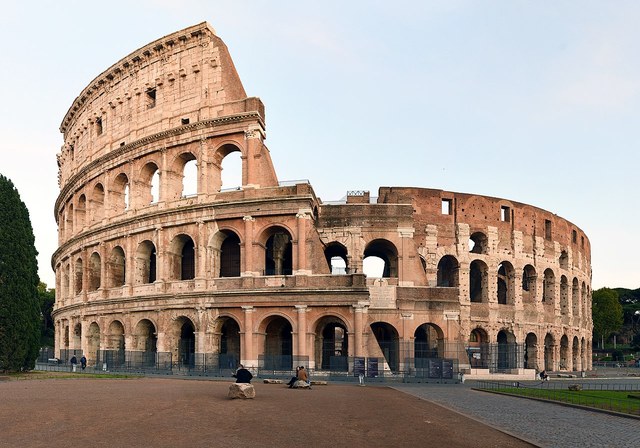
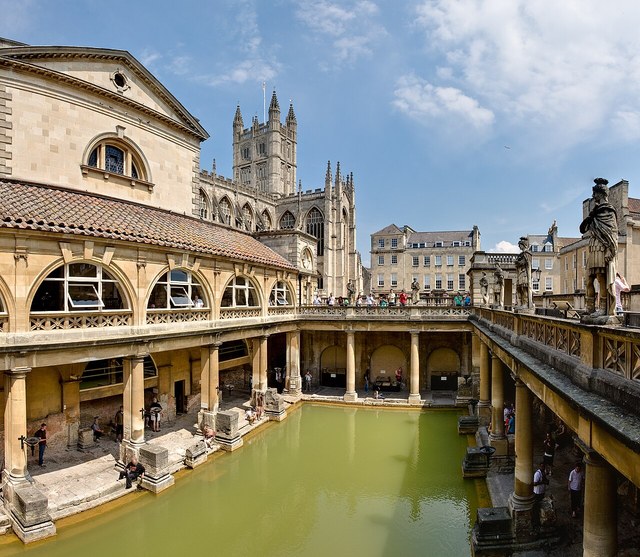
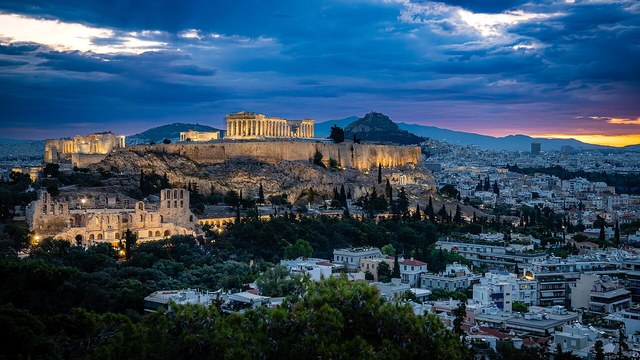
Diliff · CC BY 3.0

Ancient Italian capital city · 753 BC–present (legendary founding) · Central Italy, Tiber River

Rome was the capital of an ancient empire that dominated the Mediterranean and evolved into modern Italy's capital.

The kit

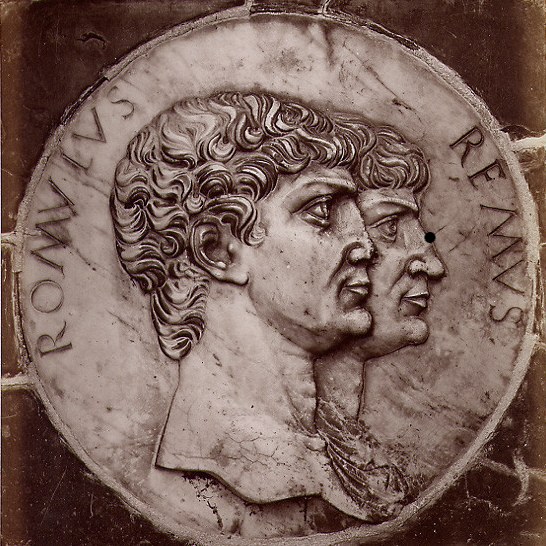
  • Founding & Geography — Rome was legendarily founded by Romulus after killing his twin Remus on Palatine Hill, one of seven hills.
  • Ancient Structures — Rome contained the Pantheon built by Hadrian in 126 AD, the Colosseum, and the Circus Maximus chariot-racing venue.
  • Sacks & Fall — Rome was sacked by Brennus after the Battle of Allia River, by Alaric's Visigoths in 410 AD, and fell in 476 AD.
  • Modern Capital — Rome became Italy's capital after Piedmont-Sardinia captured it from Papal zouaves, replacing Florence in that role.

Runs with

Nanda Empire
Rome's legions never encountered this distant Indian dynasty open card →
Nerochurch
Joe Hill
Hill was executed in Utah, far from Rome's jurisdiction open card →

The ladder · 15 clues

H

This city was sacked by Brennus after its forces were defeated at the Allia River.

H

On the orders of Hadrian, the Pantheon was built in this city in 126 AD.

H

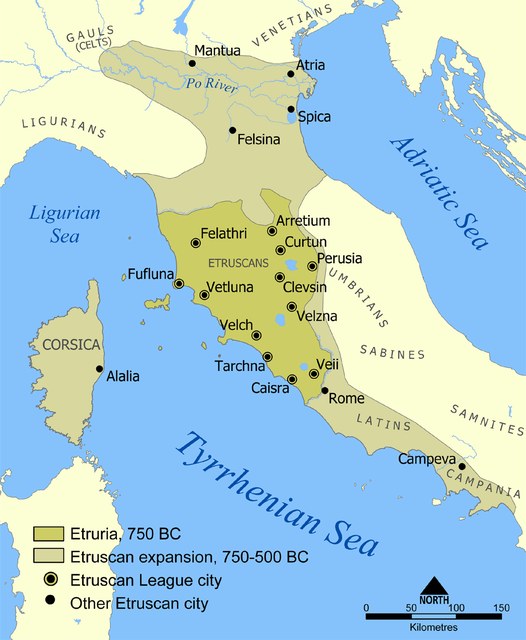
The fall of the Etruscans came with the rise of this civilization. After killing his twin Remus, Romulus founded this city on Palatine Hill.

H

The Trevi Fountain is located in this Italian city.

H

Soldiers raised in this city were trained on a large field known as the Campus Martius, and its Temple of Janus only opened its doors in times of war.

H

Romulus Augustulus was deposed after the capture of this city in 476 AD. name this city that was sacked several times during the fall of its Italy-based empire.

H

Empire that governed Israel as the province of Judea.

M

This city was situated on seven hills and was legendarily founded by Romulus and Remus. name this city on the Tiber River, the namesake of an Italian empire.

M

Piedmont-Sardinia’s capture of this city was unsuccessfully resisted by Papal zouaves, leading to the capital of a new country being moved here from Florence. name this capital city of Italy.

M

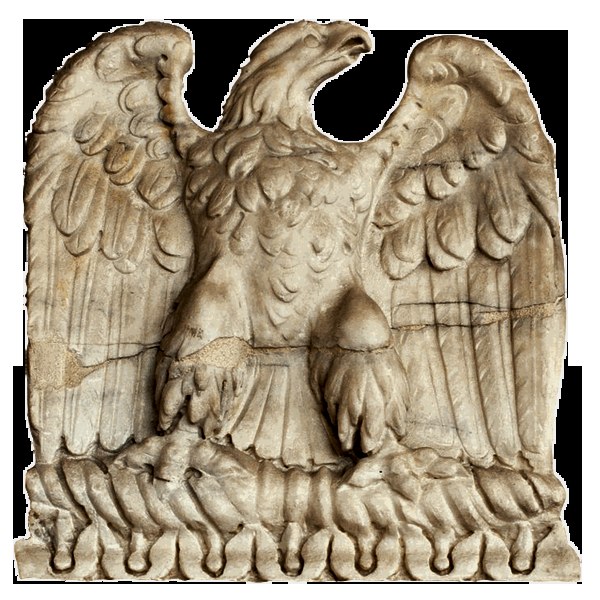
Later fighting forces of this empire were comprised of ten cohorts and carried an eagle standard. name this ancient empire whose basic fighting unit, called a legion, defended the Italian peninsula.

M

This city’s sewer, the Cloaca Maxima, drained a swamp that became the site of the first forum.

M

Capital city that was the target of a fascist march.

E

The European Economic Community and European Atomic Energy Community were both created by treaties signed in which European capital in 1957?

E

In 410 AD, King Alaric of the Visigoths sacked this city shortly after it had lost its status as capital to Ravenna.

E

An amphitheatre in this city was built during the Flavian dynasty near the site of chariot racing at the Circus Maximus. Name the city that contains St. Peter's Basilica and the Colosseum.

10 more clues from the record
H

Hegemonic empire which split into three distinct sections during the Crisis of the Third Century.

H

The early history of this city was described in Livy’s Ab Urbe Condita. name this city legendarily founded by Romulus and Remus.

H

This city was home to a lower-class district known as the Subura.

H

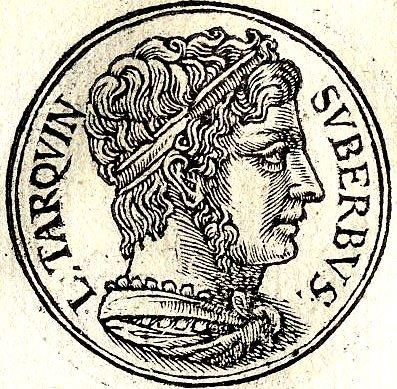
Tarquin the Proud was the final king of this city.

H

Maggie Popkin’s Souvenirs and the Experience of Empire in this place argues that souvenirs served as cultural ties for the many people who would never be able to traverse it. :Name this empire, where travellers could buy souvenirs of their trip to the Circus Maximus.

H

One statesman from this city compared the parts of the body to various social classes to end a dispute within its Conflict of the Orders.

H

After the conquest of this city by an enemy leader, that leader threw his sword on a scale and shouted "woe to the vanquished" during ransom negotiations.

H

To campaign for more rights, many residents took part in “secessions” where they left this city.

H

A breach in the Porta Pia of this city led to its capture on the Venti Settembre, and Benvenuto Cellini claimed to have shot Charles, Duke of Orleans while defending the Castel Sant’Angelo in this city.

H

A statue of a personification of this city sits on a pedestal containing reliefs of a wolf and two infants in Jacques-Louis David’s depiction of lictors bringing bodies to Lucius Junius Brutus.
Watch out: Ravenna (became Western Roman capital before Rome's 410 AD sack)
#3 · Historic Cities · Level 1

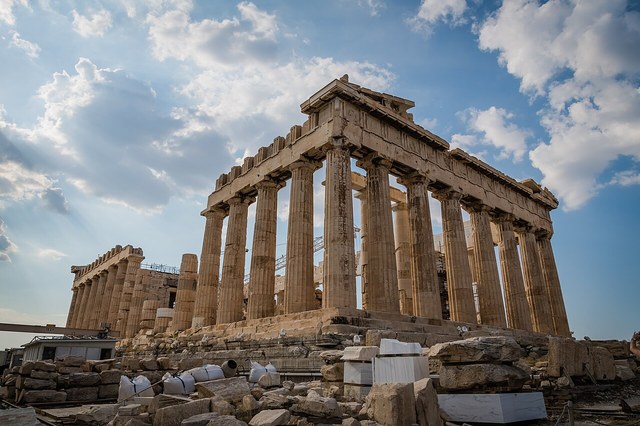
Athens

Athens
Andrew Parlette · CC BY 4.0

ancient Greek city-state · classical antiquity (5th-4th c. BCE prominence) · Attica, Greece

Athens was the ancient Greek city-state that developed democracy and led the Delian League during the classical period.

The kit

  • Rise — Athens was reformed by Cleisthenes in 508 BCE, who introduced ostracism and transformed its constitution into a democracy.
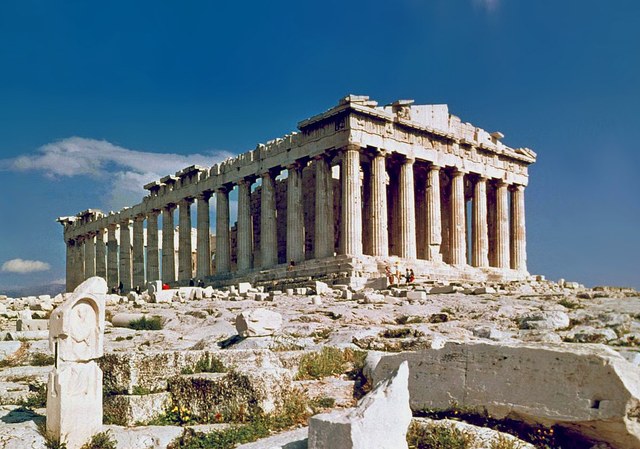
  • Achievements — Athens held the Delian League treasury in the Parthenon and funded cultural movements including Plato's Academy and Aristotle's Lyceum.
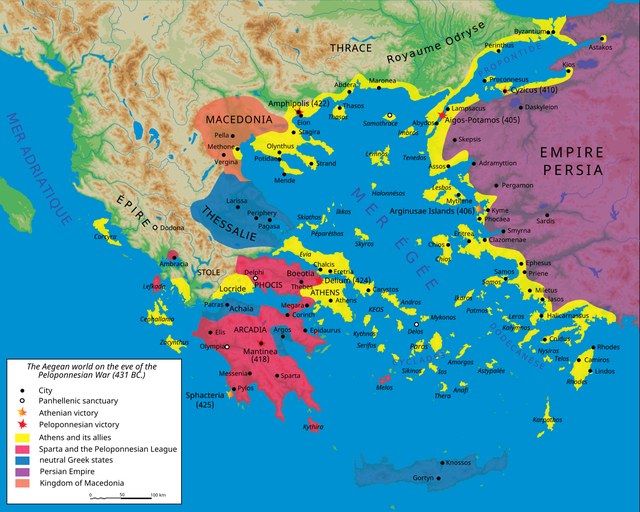
  • Conflicts — Athens was led by Pericles at the beginning of the Peloponnesian War and later defeated at Aegospotami by Sparta.
  • Legacy — Athens employed harsh laws under Draco and allowed citizens to expel others through ostracism using pottery shards.

Runs with

Peloponnesian War
Athens fought Sparta in this war under Pericles' leadership open card →
Greece
Athens was a leading city-state in ancient Greece open card →
Pericles
Pericles led Athens at the war's start open card →
Sparta
Sparta defeated Athens at Aegospotami, installing the Thirty Tyrants open card →

The ladder · 15 clues

H

The Delian League’s treasury was held in the Parthenon on this city’s Acropolis. name this ancient Greek city-state whose wealth funded broad cultural movements and the birth of democracy.

H

Cleisthenes [klay-iss-thuh-neez] reformed this city’s constitution in 508 BCE, and may have introduced the process of ostracism to this city.

H

One leader of this city faced a revolt in Miletus, which led to the treasury of the Delian League being transferred to this city.

H

Citizens of this city could vote to expel others by depositing pottery shards in urns, a process known as ostracism that was used against statesmen like Themistocles.

H

This city’s leader, Peisistratus, funded its Dionysia festivals, during which Thespis became the first named man to represent a character on stage.

H

Representatives of this city declared “the weak suffer what they must” before destroying the town of Melos.

H

After a storm prevented this city’s ships from rescuing drowning sailors, this city sentenced six of its generals to death.

M

Piraeus and Phalerum were connected to this city by the Long Walls.

M

This city was briefly ruled by the Thirty Tyrants, a client government of their rival.

M

Cleisthenes [kl’ice-theh-neez] reformed the constitution of this ancient Greek city whose other political leaders included Solon, Draco, and Pericles.

M

This city once employed a law code written in blood during the reign of the harsh-handed Draco.

M

This city won the Battle of Sphacteria, but it was later subjected to the rule of the Thirty Tyrants after losing the Battle of Aegospotami.

E

City-state which Pericles led at the beginning of the Peloponnesian War.

E

This city was ruled by the Thirty Tyrants after being defeated in the Peloponnesian War.

E

This city’s leaders included Cleisthenes and Solon, who developed the system of popular government it is known for. name this Greek city-state known for developing democracy.

10 more clues from the record
H

Akingofthislocationwasbelievedtohaveinventedthechariottohidehisserpentinefeet.Ericthonius ruled this location, as did another serpent-legged king named Cecrops, who judged an olive tree to be better than a salt water spring.

H

Greek city where Plato taught students at the Academy.

H

City-state whose schools included Aristotle’s Lyceum.

H

This city was ruled by Hippias and Hipparchus, tyrant brothers who were sons of Peisistratus.

H

The Battle of Halmyros led to the conquest of the “Duchy of” this city by the Catalan Company, which worked for the Kingdom of Aragon.

H

The Thirty Tyrants took power in this city after Lysander defeated it at the Battle of Aegospotami.

H

After the battle of Aegospotami, the Spartans installed the Thirty Tyrants, a pro-Spartan government that ruled this democratic city-state. This city-state fought Sparta in the Peloponnesian War.

H

A leader of this city organized the “hill dwellers” into a bloc after this city’s victory over Megara.

H

A general from this city who claimed that “famous men have the whole earth as their memorial” exonerated his metic(MAY-tik) mistress Aspasia (asp-AYZ-ee-uh) of immorality.

H

Pericles was a leader of this city, which was also led by a man known for his harsh laws, Draco.

Watch out: Sparta (rival city-state that defeated Athens and installed the Thirty Tyrants)
#19 · Historic Cities · Level 1

Thebes

Thebes
J. Matthew Harrington · CC BY-SA 3.0

Greek city-state · legendary founding to 316 BCE · central Greece (Boeotia)

Thebes was a Greek city-state that broke Spartan hegemony at Leuctra and fielded the elite Sacred Band of paired lovers.

The kit

  • Rise — Thebes led the Amphictyonic League and allied with Sparta during the Peloponnesian War against Athens and its ally Plataea.
  • Achievements — Thebes won the Battle of Leuctra under Epaminondas, who placed his strongest hoplites on the left flank to defeat Sparta.
  • Conflicts — Thebes' Sacred Band was wiped out at Chaeronea by Philip of Macedon's forces in 338 BCE.
  • Legacy — Thebes was destroyed by Alexander the Great for resisting him, then rebuilt by Cassander in 316 BCE.

Runs with

Philip II of Macedon
defeated Thebes' Sacred Band at Chaeronea open card →
Sparta
defeated by Thebes at Leuctra, ending Spartan hegemony open card →
Alexander the Great
destroyed Thebes for resisting Macedonian rule open card →
Battle of Leuctra
Theban victory under Epaminondas over Sparta open card →

The ladder · 15 clues

H

An elite unit of soldiers that fought for this city was made up of 150 pairs of lovers and was known as its Sacred Band.

H

This city led the Amphictyonic League, whose imposition of a fine on Phocia triggered the Third Sacred War.

H

This city’s general Pagondus capitalized on the enemy army’s friendly fire to win the Battle of Delium.

H

This city’s most influential leader was killed at the Battle of Mantinea [man-ti-nay-uh].

H

Greek city state whose army, including the Sacred Band, executed one of the first flanking maneuvers over Sparta at the Battle of Leuctra [look-tra].

H

The temple complex at Karnak was built close to the Egyptian city, which was the capital during the Middle and New Kingdoms.

H

One unit from this city was led at that battle by Pelopidas.

M

This city fielded an elite unit of spearmen known as the Sacred Band. name this Greek city-state, legendarily ruled by Oedipus.

M

This city was victorious at the Battle of Leuctra, leading this city to replace Sparta as the predominant power.

M

This city won the Battle of Mantinea and the Battle of Leuctra under the leadership of Epaminondas.

M

With his victory at the Battle of Leuctra, Epaminondas helped this city-state break free of Spartan rule.

M

First capital of the New Kingdom which shares its name with a Greek city-state.

E

An elite force from this city-state was wiped out at the Battle of Chaeronea [care-oh-nay-uh] by the forces of Philip of Macedon.

E

Under Epaminondas, this city won the Battle of Leuctra against Sparta, and it possessed an elite force called the Sacred Band. name this Greek city mythically founded by Cadmus.

E

Sharing its name with an Egyptian city, name this Greek city-state once thought to have been ruled by Oedipus.

10 more clues from the record
H

After this city was destroyed by Alexander the Great for resisting him, Cassander rebuilt its citadel in 316 BCE.

H

After seeing the corpses of this city's army, a king insisted the dead never “did or suffered anything unseemly”.

H

This state aided the Thessalians in a war with Alexander of Pherae, defeating that tyrant at the less-heralded first Battle of Cynoscephalae.

H

This city allied with Sparta during the Peloponnesian War, partly because of the support Athens gave its regional rival Plataea.

H

According to myth, this city was founded by Cadmus. …Name this city in central Greece, ruled by Oedipus in numerous works by Sophocles.

H

Several Argive champions died supporting Polynices [[PAH-lee-NYE-seez]] as the "Seven Against" [this city], though their sons eventually installed Thersander as ruler.

H

A foreign tyrant of this city dismissively remarked "urgent business for tomorrow" after receiving a letter exposing a plot led by seven crossdressing conspirators, including Pelopidas.

H

Following a defeat to this city state, Argia searched for the dead body of her husband then unsuccessfully tried to revive him with tears and kisses.

H

Also present at Thermopylae were troops from what city, which used the Sacred Band to come to prominence in the fourth century BC and was the legendary home of Oedipus (pr.

H

This city’s general Epaminondas placed his strongest hoplites on his left flank to win the Battle of Leuctra [look-tra] over Sparta.

Watch out: Egyptian Thebes (New Kingdom capital with Karnak temple complex) shares the same name
#36 · Historic Cities · Level 1

Corinth

Corinth
bdi Lovis Corinth /span /a · Public domain

Ancient Greek city-state · 8th century BC–146 BC · Isthmus of Corinth

Corinth was a powerful Greek city-state on the isthmus connecting the Peloponnese to mainland Greece, known for its wealth and tyrannical rulers.

The kit

  • Rise — Corinth was originally ruled by the aristocratic Bacchiadae clan, who claimed descent from Heracles and were overthrown by the tyrant Cypselus.
  • Achievements — Corinth's tyrant Periander constructed the massive diolkos ramp, a paved track that allowed ships to be transported overland across the isthmus.
  • Conflicts — Corinth's dispute with its colony Corcyra over Egesta was a cause of the Peloponnesian War, and a later Corinthian War ended with the Peace of Antalcidas.
  • Destruction — Corinth was sacked and razed by Lucius Mummius in 146 BC, with the melting bronze creating a namesake alloy and establishing Roman dominance.

Runs with

Philip II of Macedon
Philip II created a league named for Corinth open card →
Tyrant
Cypselus and Periander ruled Corinth as tyrants open card →
Greece
Corinth was a major Greek city-state open card →
Athens
Corinth lay on the isthmus between Athens and Sparta open card →

The ladder · 15 clues

H

This city was sacked and razed by Lucius Mummius in 146 BC, establishing Roman dominance in the region.

H

The King's Peace ended a war named for this city that broke out shortly after the Peloponnesian War and pitted Sparta against a Greek-Persian alliance.

H

One of the first Greek tyrants, Cypselus , took power in this city after overthrowing this city’s ancient Bacchiadae ruling family, who claimed descent from Heracles.

H

This city became famous for its hetairai at the extravagant Temple of Aphrodite, leading Horace to write that “not everyone is able to go to [this city.]” Periander was responsible for creating the coinage of this city.

H

The early history of this polis saw the rise to power of a tyrant named Cypselus, who expelled its ruling aristocratic clan, the Bacchiadae.

H

After Lucius Mummius burnt this city to the ground, a namesake alloy was discovered from this city’s melting bronze.

H

This city became ruled by tyrants after the establishment of the Cypselid clan.

M

Ships could be moved across the massive diolkos [dee-OL-kos] ramp constructed by this city’s tyrant Periander.

M

Cypselid rulers of this city included its second tyrant, Periander.

M

The Bacchiadae originally ruled this city but were overthrown by the tyrant Cypselus and his son Periander. identify this Greek city-state located on a namesake Isthmus.

M

The Peace of Antalcidas ended a war named for this Greek city-state, which lies on a namesake isthmus roughly halfway between Athens and Sparta.

M

This city constructed a paved road used to transport boats overland called the Diolkos.

E

This city names a type of column, that with ones named Doric and Ionic, was a Classical order. name this city located on a namesake Isthmus.

E

This city was burned to the ground after its capture by Romans under Lucius Mummius, and gives its name to a league created by Phillip II of Macedon. name this Greek city, located on a namesake isthmus between the Peloponnese and Athens.

E

The Isthmian Games were held in this ancient Greek city-state.

10 more clues from the record
H

A dispute between this city and its colony of Corcyra was a cause of the Peloponnesian War.

H

This city was ruled by one of the Seven Sages, Periander, who was also one of the Two Tyrants along with Cypselus [[SIP-seh-luss]].

H

The Romans built the Hexamilion Wall near this city to protect one landmass from Visigothic invasion in the early 400s.

H

Agesilaus's army won the Battle of Coronea during the war named for this city-state, which was ruled by Periander and controlled the diolkos.

H

The first tyrant of this city drove the Bacchiadae from power.

H

The Peace of Antalcidas ended this polity’s namesake war, during which it lost the Battles of Nemea and Coronea.

H

A ruler of this city had his concubines burnt alive after they supposedly tricked him into kicking his wife down the stairs, and that tyrant also built a paved track called the diolkos.

H

Its legendary king Telestes was overthrown by the Bacchiadae, and this city developed a system to move ships over land called the Diolkos.

H

This city sent out one ship without a herald's staff to see if their fleet would be attacked when quarreling with Corcyra over Egesta.

H

The technique of black-figure vase painting originated in this polis, and an account of Polybius tells of how Lucius Mummius sacked this city in 146 BCE.

Watch out: Corinth names the Corinthian column order, not to be confused with the Doric or Ionic orders also used in Classical architecture.
#37 · Historic Cities · Level 1

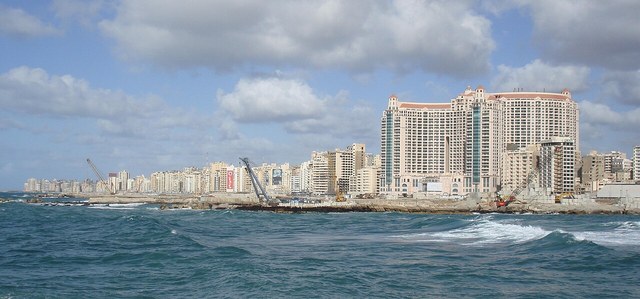
Alexandria

Alexandria
TheEgyptian · CC BY-SA 3.0

Ancient Egyptian city · 331 BC–7th century AD · Nile Delta, Egypt

Alexandria was the Ptolemaic capital of Egypt, renowned for its Great Library and Pharos Lighthouse, one of the Seven Wonders.

The kit

  • Founding — Alexandria was designed by architect Dinocrates of Rhodes after Alexander the Great founded it in 331 BC.
  • Institutions — Alexandria housed the Great Library and Musaeum, where scholars like Euclid and Callimachus worked under Ptolemaic patronage.
  • Religious center — Alexandria held the world's largest Jewish population in antiquity and was where the Septuagint translation was created.
  • Conflicts — Alexandria saw the murder of mathematician Hypatia by a Christian mob during a dispute between governor Orestes and bishop Cyril.

Runs with

Egypt
Ptolemaic capital of Egypt after the Diadochi wars open card →
Bishop
Bishop Cyril's dispute with governor led to Hypatia's murder open card →
church
Christian mobs killed Hypatia; Theodosius destroyed the Serapeum open card →
Nanda Empire

The ladder · 15 clues

H

The home of the Great Library, a Wonder of the Ancient World?

H

This city connected to the island of Pharos was home to scholars like Callimachus and Euclid when it was ruled by the Ptolemies. name this Egyptian city home to a huge lighthouse and expansive Royal Library.

H

An architect named Dinocrates of Rhodes was responsible for the design of this city, one of whose famous buildings was proposed by Demetrius of Phalerum.

H

The Septuagint (sep-TOO-uh-jint) was created in this city, which was home to the largest population of Jews in the world in the first and second centuries BC. name this city which was home to a notable "library" and "lighthouse" in Classical Egypt.

H

That engineer from this city also invented the first steam-powered engine, the aeolipile.

H

In this city, Dinocrates designed a causeway known as the Heptastadion.

H

The original plan for this city was drawn out in grains of barley, which were predictably eaten by surrounding birds.

M

During a dispute between this city’s governor Orestes and its bishop Cyril, the mathematician Hypatia was killed here by a Christian mob.

M

The Ptolemaic dynasty ruled Egypt from this city which was home to the Great Library as well as a namesake Lighthouse.

M

After the wars of the Diadochi, this city became the capital of the Ptolemaic Kingdom.

M

The Septuagint was created in this city, where religious mobs murdered the scholar Hypatia.

M

An institution in this city was damaged in sieges led by Aurelian and Diocletian, and its Serapeum was destroyed by Theodosius.

E

This city’s Musaeum [”museum”] housed an institution allegedly burned by Julius Caesar, causing a great loss of ancient texts. name this ancient Egyptian city, famed for its lighthouse and library.

E

City founded by a namesake Macedonian conqueror that boasted a famous library and lighthouse.

E

Euclid studied in this Egyptian city, the home of a famous Lighthouse and a library that suffered several devastating fires.

10 more clues from the record
H

The Septuagint was made in this city, which possessed the world’s largest Jewish population during antiquity.

H

The poet Callimachus catalogued books in this city at a facility where Ptolemy II called for a minimum of 500,000 scrolls to be held in storage.

H

That saint’s body was hidden in a crate of rotting pork and cabbages to smuggle them past port customs in that saint’s translation from this city.

H

This city was later the site of an infamous massacre of all its male inhabitants after they had directed insulting satires at Caracalla.

H

The most easterly of these cities, known as eskhata, was founded in the Fergana Valley as a way to maintain contact with the Sogdians.

H

The bones of one bishop of this city were “rediscovered” in a column by Vitale Faliero after the cathedral in which they were housed was destroyed in a fire.

H

A Christian saint from this city converted Emperor Maxentius’s wife and destroyed a breaking wheel with her touch.

H

One of the Seven Wonders of the World was located on the small island of Pharos near this city.

H

This city was restored by Decriannus on the orders of Hadrian, after it was destroyed by Lukuas during the Kitos War.

H

Another of these cities, partially named for a horse, served as a settlement for Iranian and Greek veterans.

Watch out: The Pharos Lighthouse (one of the Seven Wonders) was on an island near Alexandria, not in the city proper.
#73 · Physical Geographic Features · Level 1

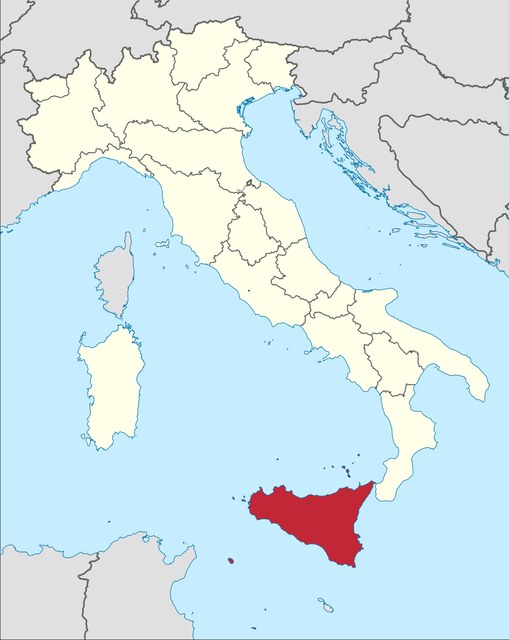
Sicily

Sicily
TUBS /a sup span typeof="mw:File" img src="https://upload.wi · CC BY-SA 3.0

Mediterranean island · ancient to modern · south of Italian peninsula

Sicily is a Mediterranean island separated from mainland Italy by the Strait of Messina, home to Syracuse and Mount Etna.

The kit

  • Ancient conflicts — Sicily was the primary theater of the First Punic War, sparked when Mamertine mercenaries requested Roman alliance against Hiero II.
  • Greek settlement — Sicily housed the powerful city of Syracuse, where tyrants Gelon, Dionysius, and Hiero ruled and Archimedes designed defensive weapons.
  • Norman conquest — Sicily was conquered by the Hauteville family led by Robert Guiscard and Count Roger I, with William I gaining the nickname Iron Arm.
  • Sicilian Vespers — Sicily rebelled against Charles of Anjou in Easter 1282 when mobs killed soldiers who mispronounced the word for chickpeas.

Runs with

Syracuse
major Greek city on Sicily's coast, ruled by tyrants Gelon, Dionysius, and Hiero open card →
Italy
Charles
Charles of Anjou ruled Sicily until overthrown in 1282 Sicilian Vespers rebellion open card →
William
William the Good married Joan of England; William I of Hauteville conquered Sicily open card →

The ladder · 15 clues

H

That attempt would be completed by the Hauteville family, led by Robert Guiscard and Count Roger I of this island.

H

On this island, the Mamertines asked Rome for assistance against Hiero, whose ancestor Gelon had earlier defeated Carthage on this island at the Battle of Himera.

H

Philistus wrote a history of this island under two tyrants who ruled on this island named Dionysius.

H

The tyrants Gelon and Theron together kept this island free of Carthaginian intervention at the Battle of Himera. name this island that became a province following the First Punic War.

H

The Strait of Messina separates it from Italy. :The Salso river flows through which island with capital Palermo?

H

Greek settlers founded the city of Syracuse on this island, of which Palermo is the modern capital.

H

The tyrants Dionysus and Hiero ruled the ancient city of Syracuse on what large Mediterranean island?

M

Much of the fighting in the First Punic War took place near this home island of the Kingdom of Syracuse.

M

A ruler of this island commissioned a world map by Muhammad al-Idrisi.

M

On this island, Mamertine mercenaries requested an alliance with Rome against Hiero II, thus sparking the First Punic War.

M

This island is separated from Calabria by the Strait of Messina, and this island contains the tallest active volcano in Europe, Mount Etna.

M

That war began with a revolt led by John of Procida which fought against Charles of Anjou in favor of Peter III of Aragon.

E

Archimedes designed a heat ray perhaps to protect this island's city of Syracuse. name this island off the coast of Southern Italy.

E

A rebellion on this island against the unpopular king Charles of Anjou in Easter 1282 became known as this island’s namesake Vespers.

E

One of the major phases of the Peloponnesian War was the disastrous Alcibiades-led Athenian expedition to take Syracuse, which is on this island.

10 more clues from the record
H

The Expedition of the Thousand forced the Bourbons out of this Italian island, which had been part of a unified kingdom with Naples.

H

Naval fighting in this region’s revolt included the use of the harpax at the Battle of Naulochus, where Marcus Agrippa defeated Sextus Pompey.

H

A 1669 eruption on this island was diverted from the city of Catania by that city’s walls.

H

Pope Adrian IV agreed to the Treaty of Benevento with a ruler from this region.

H

A ruler of this region married the daughter of Henry II, Joan of England; that man was William the Good.

H

Rumors that Emperor Constans II would move the capital from Constantinople to this island led to his death.

H

During one rebellion in this region, a mob killed soldiers who could not correctly pronounce the word for chickpeas.

H

The Mamertines were a group of mercenaries on this island hired by Agathocles.

H

The Peace of Caltabellotta and Treaty of Anagni dealt with sovereignty over this entity, where Michael VIII Palaeologus tried to foment rebellion against Charles of Anjou.

H

While fighting in this region, William I of Hauteville gained the nickname “Iron Arm.” The Aghlabid dynasty completed the Arab conquest of this region by capturing Taormina.

Watch out: Charles of Anjou (overthrown in Sicilian Vespers) vs. other rulers named Charles
#77 · Physical Geographic Features · Level 1

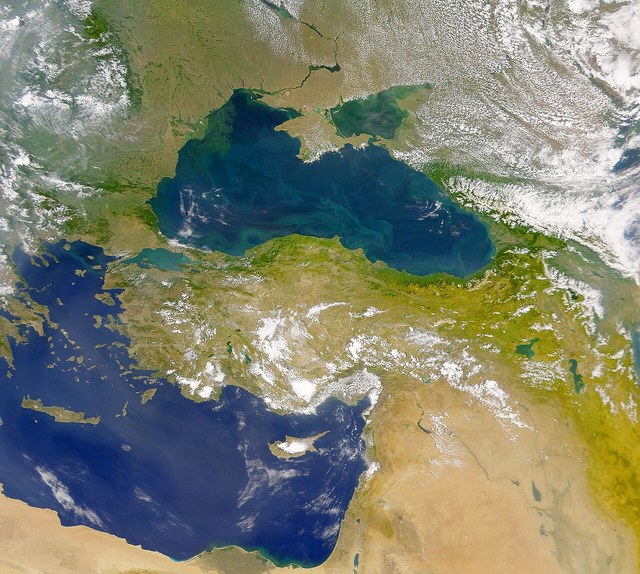
Black Sea

Black Sea
The SeaWiFS Project · Public domain

inland sea · ancient to present · between Europe and Asia

The Black Sea is an inland sea bordered by Ukraine, Turkey, and other nations, reached through the Bosporus Strait.

The kit

  • Ancient names — The Black Sea was called Pontus Euxinus by Greeks and labeled the "Inhospitable Sea" by Pindar in antiquity.
  • Greek exploration — The Black Sea was greeted with "Thalatta! Thalatta!" by Xenophon's Ten Thousand near Trebizond after their long march.
  • Medieval trade — The Black Sea hosted a Genoese slave trade centered at Kaffa, supplied by Nogai raids on the Wild Fields.
  • Crimean War theater — The Black Sea saw the Battle of Sinope, a Russian victory that prompted British and French entry into the Crimean War.

Runs with

Water
body of water open card →
Crimean War
naval theater where Battle of Sinope occurred open card →
Nanda Empire
Crimean Peninsula
Crimean Peninsula juts into the Black Sea open card →

The ladder · 15 clues

H

A "deluge" hypothesis involving this body of water might have inspired the story of Noah's Ark.

H

Chalcedon processed the grain trade from this body of water, which was grown in the Azov region. name this sea settled by some Greeks, who sailed northeast through the Bosporus by Byzantium to reach it.

H

Arrian of Nicomedia wrote a periplus of this body of water, which was known as the Euxine (YOOK-seen) Sea in antiquity.

H

Paphlagonia was a region along the southern edge of this body of water, at which Xenophon's Ten Thousand exclaimed "Thalassa!

H

An itinerary of places around this geographical feature by Arrian of Nicomedia mentioned Ionopolis and Trapezus.

H

The polymath Pindar labelled this body the "Inhospitable Sea" and considered travelling in it to be an ill-omen.

H

Thalassa!" Chersonesus was a colony on this body of water, which the Greeks called Pontus Euxinus.

M

Sea into which the Crimean Peninsula juts, forming the naval theater of the war.

M

A Russian victory on this body of water during the Battle of Sinope [[see-NOH-pee]] led to the British and French entering the Crimean War.

M

The Montreux [[mon-TROO]] Convention allowed foreign vessels to pass to and from, what sea which borders countries like Ukraine and Turkey?

M

Venice competed with the Genoese slave trade on this body of water, which was supplied by Nogai raids on the Wild Fields that brought enslaved Christians and Muslims alike to the port of Kaffa. what body of water was the southern shore of the Golden Horde and its successor, the Tatar Khanate?

M

Polities found on this sea include the Empire of Trebizond and one nation gained access to this sea by the Treaty of Kucuk-Kaynarca. One port on this sea has been besieged by such commanders as Gheorghe Avramescu, Erich von Mannstein, and Lord Raglan.

M

Upon his death, the last Spartocid ruler Paerisades V left his kingdom on the northern shore of this body of water to Mithridates VI, whose own kingdom of Pontus lay on the southern shore of this body of water. identify this body of water Greek sailors reached by passing through the Bosporus.

E

In Xenophon’s Anabasis, this sea is greeted with the cry “thalatta! thalatta!” by the Ten Thousand as they approached the city of Trebizond.

E

According to Xenophon, the Ten Thousand cried “Thalatta! Thalatta!” after seeing this sea near the city of Trebizond, meaning they had returned to Greek city-states.

10 more clues from the record
H

The Office of Saint Anthony levied a head tax on the slave trade on this body of water, which mainly trafficked women to serve as ancillae domestic servants and was similar in scale to the Atlantic slave trade until the 18th century.

H

Strabo’s Geographica claims that Leukon I, a ruler of a kingdom centered around this body of water, made a one-time donation of 2,100,000 medemni of food to Athens.

H

Two boys named Jaqmaq are among the enslaved people around this body of water whose lives are chronicled in That Most Precious Merchandise by Hannah Barker.

H

Herodotus described the Tauri people living along the northern coast of this body of water who supposedly sacrificed shipwrecked Greeks to Iphigenia.

H

This body of water occupies the only surviving fragment of the Dura-Europos route map, which was drawn onto the leather portion of a Roman shield.

H

A region on this body of water was home to Alexander of Abonoteichus (ah-boh-no-"TYKE"-us), the prophet of a cult believing that Asclepius was reborn as the snake god Glycon.

H

Herodotus also claimed that the proto-Laz and proto-Mingrelian peoples comprising one kingdom on this body of water were the descendants of the army of Senwosret III.

H

Haci I, a member of the Giray Dynasty, established one polity that was based around this sea and had its capital at Bakhchysarai [bak-chi-sarai].

H

The eastern coast of this body of water is home to the city of Batumi, capital of the Adjara Autonomous Republic and the largest port for the country of which Adjara is nominally part.

H

To defend one of its ports, Eduard Totleben ordered a fleet sunk to block the harbor, and the subsequent siege ended after the taking of Malakoff Redoubt.

Watch out: Confusion with the Red Sea or Mediterranean Sea in ancient geography
#84 · Physical Geographic Features · Level 1

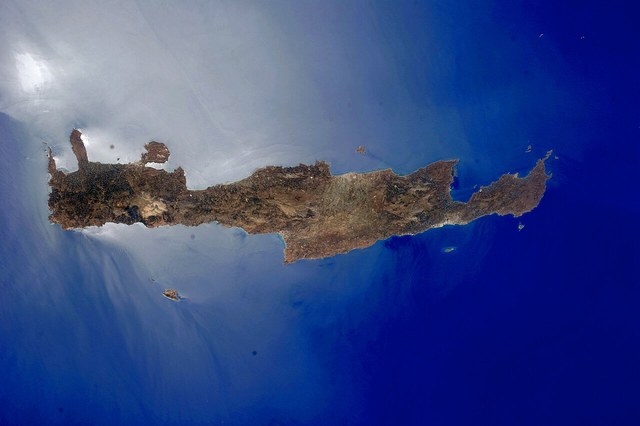
Crete

Crete
ISS Expedition 28 crew · Public domain

Greek island · Bronze Age to present · Mediterranean Sea, south of mainland Greece

Crete is the largest Greek island, home to the Bronze Age Minoan civilization centered at Knossos.

The kit

  • Bronze Age civilization — Crete was home to the Minoan civilization, which built the palace city of Knossos with advanced plumbing systems.
  • Archaeological discoveries — Crete yielded the Phaistos Disc, kamares ware pottery, and snake goddess sculptures excavated by Arthur Evans at Knossos.
  • Religious practices — Crete's inhabitants practiced ritual bull leaping depicted on frescoes and used the Horns of Consecration motif honoring sacred bulls.
  • Modern history — Crete gained autonomy through the Pact of Halepa and became part of Greece after the 1897 Greco-Turkish War.

Runs with

Minoan civilization
center of Minoan civilization at Knossos open card →
Greece
largest island of Greece open card →
Venice
known as Candia under Venetian rule open card →
Rongorongo Script
Phaistos disc is undeciphered script open card →

The ladder · 15 clues

H

lost its Minoan civilization after a volcanic eruption on Thera?

H

This island’s prominent usage of the Horns of Consecration motif was observed by Arthur Evans.

H

This island, which was known as Candia while under Venetian rule, was where the Phaistos disc was excavated.

H

Ancient culture on this island included the worship of a woman holding two serpents in her hands, “the snake goddess,” and its art used the Horns of Consecration motif in honor of a sacred bull.

H

Further autonomy was granted to this island by the Pact of Halepa, and this island saw the 1905 Theriso Revolt.

H

This island is home to Samaria Gorge National Park, established as a refuge for a population of feral goats known as kri-kri.

H

This island is home to a distinctive type of pottery known as the “kamares ware,” examples of which are on display in Heraklion.

M

This island was home to a Bronze Age civilization that was the target of Arthur Evans’ excavations and which used the still-undeciphered Linear A script.

M

Heraklion is the largest city on this Greek island whose ancient city of Knossos was the center of the Minoan civilization.

M

This island south of mainland Greece contains the ruins of Knossos, which was built by the Minoan civilization. This island is home to Mount Ida.

M

“Snake goddess” sculptures found on this island by Evans are speculated to be household goddesses in this island’s neo-palatial culture.

M

The Horns of Consecration is a religious relic found at this location, where ritual bull leaping was practiced.

E

Island on which the proto-Greek palace city of Knossos was built.

E

D name this largest Greek island, the center of the Minoan civilization.

E

Inhabitants of this island often performed bull-dancing rituals, which were depicted on frescoes at Knossos.

10 more clues from the record
H

Following the Fourth Crusade, Boniface of Montferrat traded this region to acquire Thessaloniki.

H

A king of this realm named Deucalion [[doo-KAY-lee-on]] was slain by the departing Theseus outside the gates of Knossos [[kuh-NAH-sus]], which was a major site of a Bronze Age civilization on this island.

H

This island's Revolutionary Committee secured the right to create a gendarmerie [[zhahn-DAHR-muh-ree]], as well as other general autonomy, as part of the Pact of Halepa [[hah-LEH-pah]].

H

The Ottoman Empire initially won the Greco-Turkish War of 1897, but eventually was convinced to give Greece control of this island, the site of the Vassos expedition that started the war.

H

A British security force was attacked by Muslim irregulars during this island’s Candia massacre, which led to a short state that was ruled by Alexander Zaimis and Eleftherios Venizelos.

H

At Thalamae [[THAL-ah-mee]], a cult center dedicated to a queen of this island named Pasiphaë [[PASS-if-fee]] was a pilgrimage site for travelers seeking an oracle.

H

Andalusian exiles led by Abu Hafs established an emirate in this region, which they defended from an attempted invasion by Theoktistos [[thee-OHK-tih-stohs]].

H

In the late 19th century, after excavating in this location, Arthur Evans published his theories on the existence of Linear B, this region's ancient syllabic script.

H

On this island, a 5th century BC law code inscribed on circular walls can be seen in ruins in Gortyn.

H

A civilization on this island was interrupted by the eruption of Thera where ancient palaces had plumbing systems.

Watch out: Linear A script from this island remains undeciphered, while Arthur Evans published theories on Linear B
#98 · Physical Geographic Features · Level 1

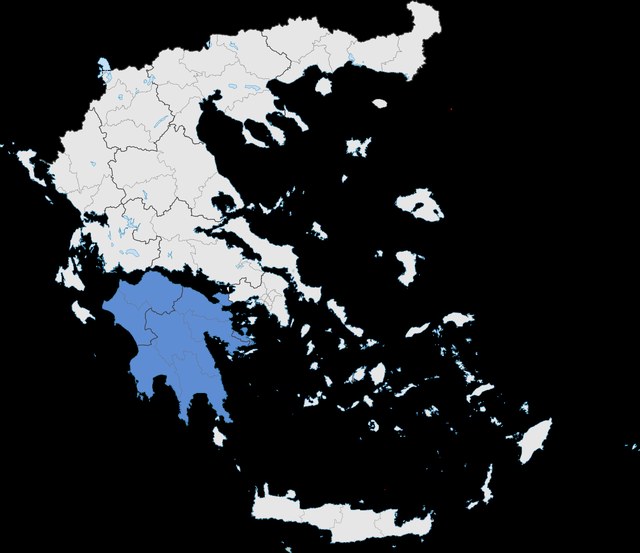
Peloponnese

Peloponnese
SilentResident /a , Philly boy92 · CC BY-SA 3.0

Greek peninsula · ancient to present · southern Greece

The Peloponnese is a large Greek peninsula separated from the mainland by the Corinth Canal, home to ancient Sparta and Mycenae.

The kit

  • Geography — The Peloponnese is separated from mainland Greece by the Corinth Canal and bounded by Cape Matapan and Cape Melea.
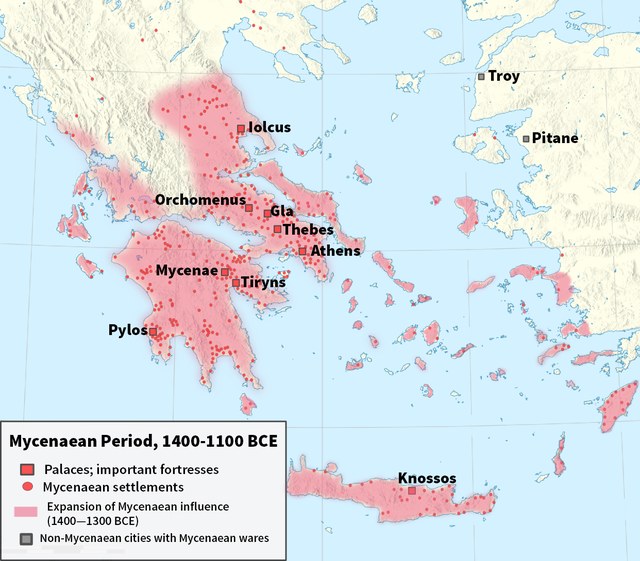
  • Ancient sites — The Peloponnese contains the ancient citadel of Mycenae with its Lion Gate, plus Bronze Age sites at Tiryns and Pylos.
  • Medieval period — The Peloponnese formed a despotate usually ruled by Byzantine emperors' sons, with Mystras as its medieval capital.
  • Venetian control — The Peloponnese was seized by Venice after the Great Turkish War and held between the treaties of Karlowitz and Passarowitz.

Runs with

Corinth
separated from mainland by Corinth Canal open card →
Sparta
major ancient city located on this peninsula open card →
Ancient Greeks
peninsula containing major Greek Bronze Age sites open card →
Venice
controlled region between Karlowitz and Passarowitz treaties open card →

The ladder · 15 clues

H

The ancient citadel of Mycenae is located on this peninsula. :Name this large Greek peninsula, home to the city of Sparta.

H

Thomas and Demetrios Palaiologos divided the rule of a despotate named for this region since Constantine XI needed Demetrios out of Constantinople. :Name this region controlled by the southernmost vassal state of the Latin Empire. Venice seized Dalmatia and this region from the Ottomans after the Great Turkish War.

H

The Arvanites under Peter Bua rose up in revolt in this principality in the 15th century. :Name this principality in the Peloponnese that was first ruled over by Manuel Kantakouzenos in 1349. Along with Epirus, the despot of this region was usually a son of the Byzantine Emperor.

H

On this peninsula, a sealstone “combat agate ” was left in a possible “Griffin Warrior Tomb” at a “sandy” site where syllabic “oxen tablets” record the palace economy of a wanax.

H

The southern end of the Rio-Antirio Bridge, the town of Nafplion, lies on its eastern coast, while Cape Matapan marks its southwestern point.

H

It’s not in Algeria, but Jean‑Baptiste Bory de Saint‑Vincent directed a scientific commission that accompanied an 1828 military expedition to this region.

H

Mesolithic seafaring is evidenced in the Franchthi Cave on this peninsula, where a marshy area contains the House of the Tiles built by the Korakou culture.

H

After conducting a campaign in this region alongside Otto Wilhelm Königsmarck that captured the Rio Castle, Francesco Morosini gained an epithet referencing this region.

H

John Asen Zaccaria and Peter Bua led peasant rebellions in this region against the brothers Thomas and Demetrius Paleologus.

M

Towns located in it include Pirgos, Kalamata, and Patras, while many towns here take their names from ancient cities found nearby, such as Argos, Corinth and Sparta.

M

It’s not Anatolia, but a type site on this peninsula contains a Lion Gate built with cyclopean masonry near beehive-shaped tholos tombs.

M

Prior to taking the Byzantine throne, Constantine XI co-ruled this region’s namesake despotate. identify this peninsula that contains the cities of Patras and Sparta.

M

The Morea expedition surveyed this peninsula’s Bronze Age sites of Tiryns and Pylos. what peninsula contains Lerna and Mycenae ?

M

Mystras was the medieval capital of this region, which belonged to the Republic of Venice during the 20-year period between the treaties of Karlowitz and Passarowitz .

M

Separated from the mainland by the Corinth canal, name this peninsula in the south of Greece.

6 more clues from the record
H

In 2019, the oldest known human fossil outside Africa was dated from this peninsula’s Apidima Cave.

H

Cape Melea marks its southeast extremity and lies across a small channel from the island of Cythera.

H

Nico Declercq found that an outdoor structure on this peninsula created a low-frequency acoustic filter.

H

This region was the main power base of a hereditary oligarchy led by village chiefs known as kodjabashis .

H

Its highest point is Mount Taygetus, and rivers here include the Alfios and the Eurotas.

H

A namesake periphery only covers part of it, and it was known as Morea in the middle ages.

Watch out: Morea (medieval name for the same peninsula)
#113 · Subnational Regions, Provinces, and Territories · Level 1

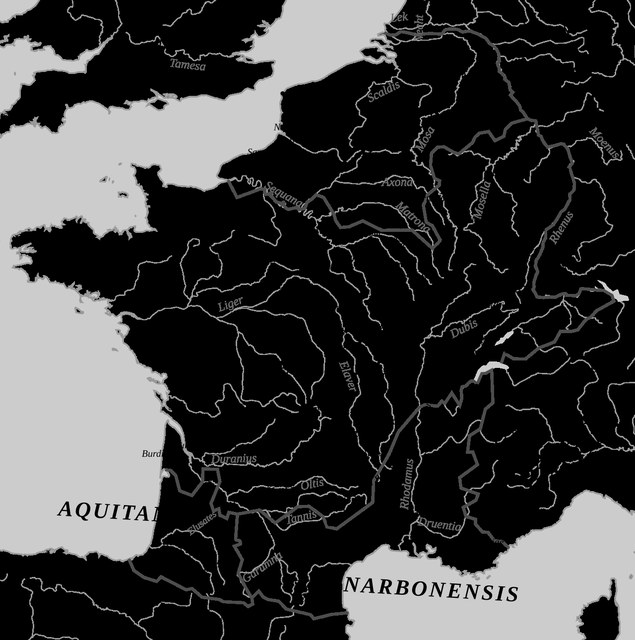
Gaul

Gaul
Feitscherg · CC BY-SA 3.0

Ancient region of Western Europe · c. 390 BC–5th century AD · Modern France and surrounding areas

Gaul was an ancient region of Western Europe, mostly modern France, conquered by Julius Caesar in the 50s BC.

The kit

  • Geography — Gaul was famously described as divided into three parts in Caesar's commentaries on his conquest campaigns.
  • Roman conquest — Gaul saw Julius Caesar defeat Vercingetorix at the Siege of Alesia using circumvallation and contravallation fortifications in 52 BC.
  • Earlier conflicts — Gaul was home to Brennus, who led forces to victory at the Allia River and sacked Rome in 390 BC.
  • Later history — Gaul became the site of the breakaway Gallic Empire under Postumus in the third century AD, eventually suppressed by Aurelian.

Runs with

Julius Caesar
conquered Gaul in the 50s BC, defeating Vercingetorix at Alesia open card →
France
Gaul comprised most of modern France open card →
Rome
sacked by Brennus from Gaul in 390 BC; later conquered the region open card →
Clovis I

The ladder · 15 clues

H

The rebellious governor Postumus created a breakaway empire named for this region that was eventually suppressed by Aurelian.

H

During a conflict in this region, one commander was baited into aiding the Aedui and was promptly defeated at the battle of Gergovia.

H

Ambiorix led a rebellion during a war in this region, which contained administrative centers at Narbo Martius and Lugdunum.

H

It was said to be divided into three parts in a set of commentaries.

H

Julius Caesar defeated Vercinegetorix in this region of Europe, now southern France.

H

A text about this region that describes the wicker-man sacrifice begins by noting its division into three parts.

H

Vercingetorix attempted to push Julius Caesar’s forces out of this region, an ancient territory of Western Europe now mostly located in France.

M

Vercingetorix was defeated at Alesia in this region, the subject of a set of commentaries by Julius Caesar.

M

Brennus led people from this region to victory against Rome at the Allia River before sacking the city in 390 BC.

M

A general won a battle in this region by constructing both a circumvallation and a contravallation and fighting from in between the two.

M

conquered by Julius Caesar in a series of namesake wars in the 50s BC?

M

The Arverni’s resistance in this region broke after an enemy used the tactics of circumvallation and contravallation at the siege of Alesia.

E

The Battle of Alesia was fought in this region where Vercingetorix clashed with Julius Caesar. name this region which composes much of Modern France.

E

This region was divided into Cisalpine and Transalpine sectors and was conquered by Julius Caesar in 50 BC.

E

This region was the site of a battle where circumvallation was used to starve out the defenders of Alesia.

10 more clues from the record
H

This region is the subject of a work that notes it is “as a whole divided into three parts.” During the siege of a Mandubii city in this region, one commander ordered the construction of a walls to complete a circumvallation.

H

A war in this region was ended at the Siege of Alesia when the Romans captured the Avernian chief Vercingetorix [ver-sin-GET-oh-ricks].

H

In a 52 BC battle in this region, the attacking side built a wall around a besieged town, then built another wall around themselves.

H

This region was the site of Ambriox’s revolt in which the Romans were told an army was about to cross the Rhine.

H

In this region, contravallation and circumvallation fortifications were built around a city held by Commius.

H

In the third century BC, a group of people from this region settled in the Anatolian region of Galatia.

H

In this region, the Battle of Gergovia allowed some natives to keep their independence.

H

This province was home to the last Roman rump state, the Kingdom of Soissons.

H

One account told of this region’s practice of burning a large effigy with people inside, known as the “wicker man.” Ariovistus was a warchief in this province, where the Aedui revolted shortly before the siege of Gergovia.

H

A group of people in what would become this province led by Brennus probably threw the Gold of Tolosa into lakes because they thought it was cursed. This province included modern-day France.

Watch out: Galatia (Anatolian region settled by people from Gaul in third century BC)
#118 · Subnational Regions, Provinces, and Territories · Level 1

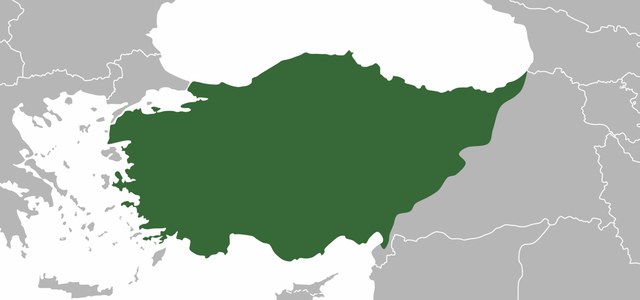
Anatolia

Anatolia
Golden · CC BY-SA 4.0

Peninsula in modern Turkey · ancient to present · between Mediterranean and Black Sea

Anatolia is a peninsula comprising most of modern Turkey that was home to the Hittites, Lydians, Phrygians, and later Byzantine and Ottoman empires.

The kit

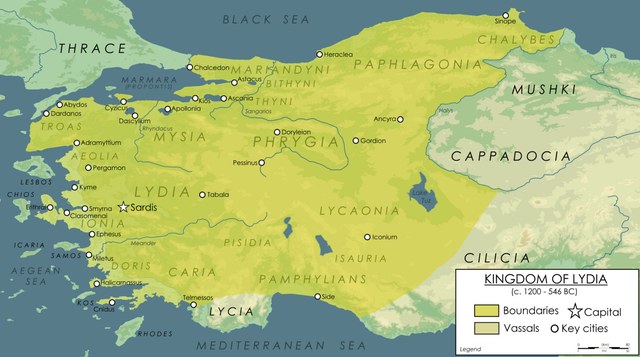
  • Ancient kingdoms — Anatolia was home to the Hittites at Hattusa, Phrygia centered at Gordion, and Lydia whose king Croesus invented metal coinage.
  • Geography — Anatolia lies south of the Sea of Marmara from Thrace and includes ancient cities like Miletus, Troy, and Sardis.
  • Byzantine loss — Anatolia was lost by the Byzantine Empire after Manzikert in 1071 when Alp Arslan defeated Romanos IV, enabling Seljuk Turkish settlement.
  • Ottoman rise — Anatolia was the region of origin of the Ottomans, who emerged from beyliks after the Sultanate of Rûm's decline and captured Bursa.

Runs with

Nanda Empire
no connection evident in clues open card →
Hittites
ruled Anatolia from **Hattusa after assimilating Hatti** open card →
Turkey
Anatolia comprises **most of modern Turkey's territory** open card →
Seljuk Empire
conquered Anatolia after **Alp Arslan's victory at Manzikert** open card →

The ladder · 15 clues

H

Lydia was a kingdom in this region, whose important ancient cities included Miletus and Troy. The region in modern-day Turkey lies south of the Sea of Marmara from Thrace.

H

Region that Pompey conquered from Mithridates the Great. It was home to the Kingdoms of Pontus and Bithynia on the eastern end of Rome’s territory.

H

Prior to Alexius’ reign, the Byzantine Empire had lost control of much of this region to the Seljuk Turks due to the Battle of Manzikert. This region was the center of the Ottoman Empire and is most of Turkey’s territory today.

H

One ruler based in this region apocryphally hid a pigeon in his shirt, swore an oath not to declare war while “this life remained in his chest” and then released the pigeon.

H

The Ahi Brotherhood semi-independently ruled a city in this region before being annexed by a state whose city of origin was first mentioned in an 8,000 line epic by Ahmedi.

H

A kingdom in the western part of this region, identified with the Mushki and king Mita, is traditionally thought to have been destroyed by a Cimmerian invasion around 675 BC.

H

A philosopher from this region compiled maps of the Roman Empire into his massive Geographica. Rebels sparked the ire of Artaphernes, a governor of this region, after besieging his capital of Sardis.

M

At its formation, most of the land covered by the Theme defensive system was in this region, and it contained a sub-region that gave its name to a dynasty that ended the Twenty Years’ Anarchy and began the policy of Iconoclasm, Isauria.

M

The generally-rejected Ghaza thesis was used to explain the rise of an empire based in this region, whose conquests included a nine-year siege leading to the capture of Bursa.

M

Both this region and Armenia began to be conquered by the Seljuk dynasty after a battle in which Alp Arslan defeated Romanos IV, the Battle of Manzikert. name this region, which makes up most of modern-day Turkey.

M

A kingdom that came to dominate this region assimilated the Hatti people and ruled from their city of Hattusa. name this region in modern-day Turkey home to Phrygia, Lydia, and the Hittites.

M

The city of Hissarlik in this region was excavated by Heinrich Schliemann during his search for Troy. name this ancient region in present-day Turkey, which is named for being a smaller version of the continent it is located in.

M

Alp Arslan’s victory at Manzikert paved the way for Turkish settlement in this peninsular region. The modern state of Turkey is primarily located on this peninsula.

M

This region was home to the culturally diverse state centered on Gordion and a state ruled by the wealthy king Croesus credited with inventing metal coinage.

M

This region was home to beyliks that emerged after the decline of the Sultanate of Rûm. name this region of origin of the Ottomans, making up the majority of modern Turkey.

8 more clues from the record
H

An imperial secretary and a tax-collector, Anastasius II and Theodosius III, were proclaimed emperor in turn by troops from this region, and the usurper Artabasdos was commander of the Opsikion province in this region.

H

One emperor from this region had a right-hand man named Illus whom his empress Ariadne tried to assassinate.

H

Herostratus gained infamy for burning down a temple in this region that was one of the original Seven Wonders of the World.

H

Non-Jewish dynasties in this region which used flags featuring the Star of David included the Jandaridsand Karamanids.

H

The conquest of this region’s western part was unsuccessfully resisted by the confederation of Assuwa and its successor Arzawa.

H

That emperor from this region faced the revolt of Basiliscus and proclaimed the Henotikon in an attempt to reconcile with the Monophysites.

H

Darius I decided to invade Greece after Athens incited the Ionian revolt in this region.

H

The southern and western parts of this region were home to speakers of Luwian.

Watch out: Asia Minor (same region, alternative classical name)
#134 · Other Named Wars and Armed Conflicts · Level 1

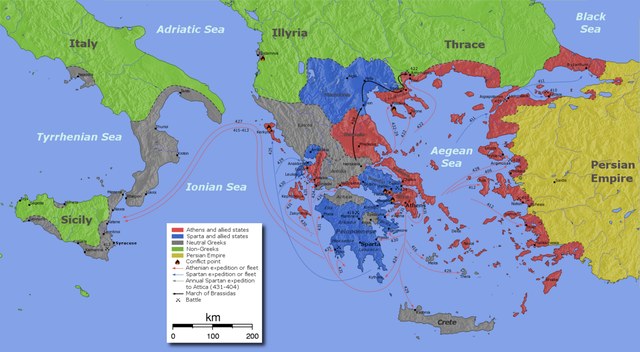
Peloponnesian War

Peloponnesian War
Translator was Kenmayer · CC BY-SA 3.0

Greek war · 431–404 BC · Greece and Aegean

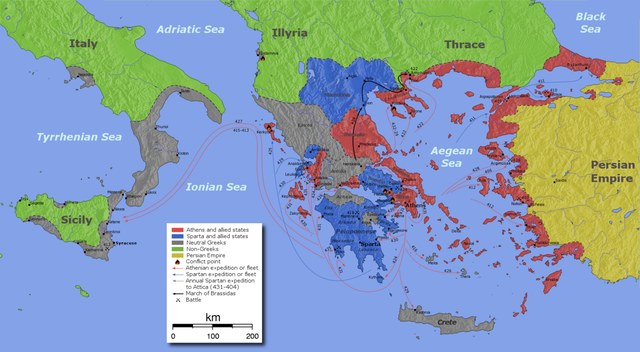
The Peloponnesian War was the 431–404 BC conflict in which Sparta and its allies defeated Athens and the Delian League.

The kit

  • Outbreak — Peloponnesian War began when Athens ignored the Thirty Years' Peace and assisted Corcyra at Sybota.
  • Athenian setbacks — Peloponnesian War saw Athens ravaged by plague in its second year, killing Pericles, and interrupted by the Peace of Nicias.
  • Sicilian disaster — Peloponnesian War included the disastrous Sicilian Expedition, where Alcibiades defected and a lunar eclipse delayed Nicias's retreat, dooming Athenian forces.
  • Spartan victory — Peloponnesian War ended when Lysander crushed the Athenian fleet at the Battle of Aegospotami with Persian financial support from Cyrus the Younger.

Runs with

Athens
led the Delian League against Sparta open card →
Sparta
defeated Athens with Persian aid open card →
Pericles
died from plague during the war open card →
Thucydides
wrote contemporary History of this war open card →

The ladder · 15 clues

H

Lasting from 431 to 404 BC on a namesake peninsula. name this conflict between Athens and Sparta.

H

The Peace of Nicias ended this war in which a plague affected a city-state ruled by Pericles.

H

Plague took the life of Pericles during this 5th century BC war between Athens and Sparta.

H

Trygaeus (trig-EY-uss) flies a dung beetle to the gods to end this war in the play Peace.

H

A four-volume history of this war was written by Yale professor Donald Kagan.

H

One play about this war concerns a power struggle between a sausage-seller and Cleon, who supported this war.

H

This conflict included the Samian War which helped bring an end to the Thirty Years’ Peace.

M

The Delian League lost this war, in part due to a plague which killed Pericles. name this war in which Sparta defeated Athens.

M

This war began after one power ignored the Thirty Years Peace and assisted the colony of Corcyra at Sybota.

M

The contemporary Thucydides [[thoo-SIH-dih-dees]] wrote a History of, what Greek conflict between two factions led by Athens and Sparta?

M

One side in this war was ravaged by a plague in its second year and interrupted by the Peace of Nicias.

M

The Thirty Years’ Peace failed to create a lasting end to this war.

E

The argument that “the strong do what they can, and the weak suffer what they must” was invoked during one side’s siege of Melos during this war.

E

Alcibiades [al- si-BYE-uh-dees] defected from one side in this war shortly before the disastrous Sicilian Expedition, then later re-defected to Athens.

E

The naval battle Aegospotami was a decisive victory in this war for Lysander. name this war in which Sparta defeated Athens.

10 more clues from the record
H

During this conflict, a navy delayed their retreat because of a lunar eclipse; that decision by Nicias doomed the entire force.

H

Once campaign in this war ominously began with the destruction of sacred hermai statues.

H

The last of these conflicts ended with Lysander crushing one side’s fleet at the Battle of Aegospotami.

H

One side of this war was massacred in harbor after a lunar eclipse led its superstitious leader to keep fleeing ships docked for twenty-seven extra days.

H

Donald Kagan wrote a celebrated history about a war of this name, in which the capture of Pylos caused one side to strand a contingent of troops on Sphacteria.

H

Cyrus the Younger provided significant financial aid and naval support to the eventual victors of this conflict, helping them win the Battle of Notium.

H

Mytilene attempted to unify with cities on the island of Lesbos during this war, and after much debate, Melos was destroyed for refusing to join one side in this war.

H

During this conflict, one side’s victory was spoiled by six generals who were executed for being unable to save a group of drowning sailors.

H

In a play that mocks this war, a farmer disguises his daughters as pigs and trades them for salt, while the main character holds a basket of charcoal hostage while trying to argue for an end to this war.

H

The Aristophanes [["air"-ih-STAH-feh-nees]] play Peace celebrated the recently-signed Peace of Nicias [[nee-KEE-us]]meant to halt this war for fifty years.

#178 · Authors, Poets, and Playwrights · Level 1

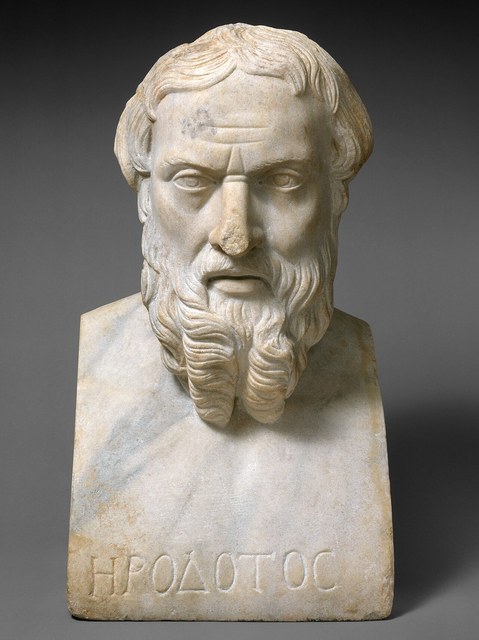
Herodotus

Herodotus
CC0

Greek historian · 5th century BCE · Halicarnassus

Herodotus wrote the Histories, a nine-volume account of the Persian Wars that earned him the title 'Father of History.'

The kit

  • Achievements — Herodotus described the Ionian revolt, Thermopylae's defense by three hundred Spartans, and the destruction of the Persian fleet at Mycale.
  • Achievements — Herodotus traveled to Egypt and described a machine for lifting heavy objects during pyramid construction, later called Herodotus's machine.
  • Legacy — Herodotus was criticized by Thucydides for unreliability, including overestimating army sizes and reporting dubious stories like giant gold-digging ants.
  • Legacy — Herodotus provided valuable information on the Scythians' use of cannabis and details about Cyrus's reign and ancient Olympic practices.

Runs with

Croesus
described Croesus's funeral pyre and his defeat after crossing the Halys River open card →
Nanda Empire
confused marmots for giant ants digging gold in India open card →
Rongorongo Script
fragments discovered at Oxyrhynchus open card →
Lydia
recounted Croesus losing his capital Sardis to the Persians open card →

The ladder · 15 clues

H

In his most famous book, he describes the great funeral pyre of Croesus, the Ionian revolt, and the defense of Thermopylae by three hundred Spartan soldiers. name this “Father of History,” a Greek historian who wrote about the Persian Wars in his 10-volume Histories.

H

While travelling in Egypt, this person described a machine that allowed heavy objects to be lifted for pyramid construction, which came to be known as this person's namesake machine.

H

Aside from the Cylinder, most of what is known of Cyrus’ reign comes from what “father of history,” who traced the origins of the Greco-Persian War in his Histories?

H

This writer’s most famous work begins by describing the rapes of Io, Europa, and Medea.

H

That essay “On the Malice of [this man]” accuses him of lying by claiming that Queen Artemisia was prophetic. Urania is the 8th of nine books named for the Muses that make up a work by this man.

H

Answer the following about historians and their works. :This man wrote Histories, which discusses the Persian War, and is known as “The Father of History.”

H

This author tells the stories of Solon and Croesus in his Histories. This man is often called the “Father of History.”

M

name this "Father of History" who wrote the Histories.

M

Wrote the first book of history, The Persian Wars?

M

This man is thought to have confused the word “marmot” for “mountain ant” because of his description of dog-sized ants in India digging up gold in sandy areas.

M

Fragments of a work by this man were discovered at Oxyrhynchus [[awk-see- RIN-kuhs]].

M

This author likely confused marmots for giant gold-digging ants in India.

E

An essay in Moralia criticizes this historian for prejudice. This author of The Histories is considered the "father of history."

E

The Oracle of Delphi tells Croesus [[KREE-sus]] that an empire will fall if he attacks the Persians in a work by this historian, who wrote about the destruction of the Persian fleet at the Battle of Mycale [[me-KAH-leh]].

E

Artemisium and Plataea [[plah -TEE-ah]] were the sites of battles recounted by this person, who was criticized by their contemporary, (*) Thucydides [[thoo- SID-it-eez]].

10 more clues from the record
H

This historian referred to that elite Persian unit as "The Immortals." This historian from Halicarnassus authored a work divided into nine books, named for each of the Muses.

H

This writer presented the dubious story that Pharaoh Sesostris led a campaign in Europe, but he also accurately described the flooding of the Nile.

H

This man describes the pharaoh Sesostris campaigning in Europe and leaving a colony in Colchia.

H

A text by this man describes how Arion was kidnapped by pirates and saved by dolphins.

H

He also told of a king being burnt on a pyre who remembers hearing that no man can be called truly happy until after his death; that king sent his troops across the Halys river only to lose his capital of Sardis.

H

Thucydides recorded what he felt needed to be said in the situations he described, rather than what was actually said, in contrast to this historian from Halicarnassus, who is known as the “father of history” and largely wrote factual transcripts of speeches.

H

Much of our information on the Scythians, including details about their archaeologically-verified fondness for cannabis, comes from this rather unreliable Greek historian known as the “Father of History.”

H

Due to its religious significance, ancient Olympic winners were not paid but received only a garland, as attested in Classical sources such as the writings of this “Father of History.”

H

This “Father of History” described how Athenian women began to wear the chiton tunic after a messenger was stabbed to death with bronze pins similar to the peplos in his Histories.

H

Despite his habit of grossly overestimating the size of forces present at any battle he described, this Greek is known as the “Father of History” for the work he did in writing his Histories.

Watch out: Thucydides, who criticized Herodotus for writing unreliable accounts rather than factual transcripts
#179 · Authors, Poets, and Playwrights · Level 1

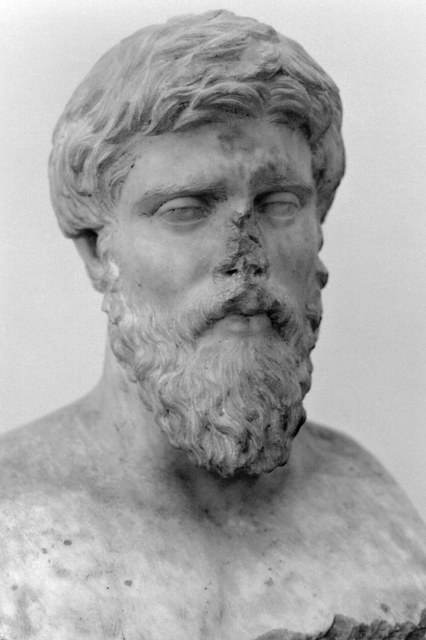
Plutarch

Plutarch
Zde · CC BY-SA 4.0

Greek biographer and essayist · c. 46–120 CE · Chaeronea, Greece

Plutarch was a Greek priest at Delphi who wrote paired biographies of Greeks and Romans exploring character through moral anecdotes.

The kit

  • Major works — Plutarch wrote the Parallel Lives, containing 48 biographies pairing one Greek with one Roman to explore common themes of character.
  • Biographical method — Plutarch paired Theseus with Romulus, Lycurgus with Numa Pompilius, Demosthenes with Cicero, and Alcibiades with Coriolanus in his comparisons.
  • Other writings — Plutarch compiled the Moralia, a collection including "Sayings of Spartans," the essay "Isis and Osiris," and "On the Malice of Herodotus."
  • Priestly role — Plutarch served for most of his life as one of the priests in charge of the Delphic Oracle at the Temple of Delphi.

Runs with

Plutarch's Parallel Lives
his most famous work pairing Greek and Roman biographies open card →
Theseus
paired Theseus with Romulus in opening comparison open card →
Pyrrhus of Epirus
wrote biography of Pyrrhus in Parallel Lives open card →
Themistocles

The ladder · 15 clues

H

This writer created a humorous dialogue between Odysseus and Gryllus, one of Circe’s pigs.

H

The most substantial account of the Sacred Band comes from this Greek-born Roman philosopher and priest of Apollo, known for his Moralia.

H

A set of “Sayings of Spartans” was collected by this one-time priest at the Temple of Delphi in a work which also contains an often-cited account of Egyptian burial rites, the Moralia [[moh-RAH-lyah]].

H

This historian asked "Why were patricians not permitted to live on the Capitoline?" as the ninety-first in a series of Questions in one of his works.

H

Answer the following about anecdotes from classical coups, .This author inserted an anecdote about a broken rope into his account of the failed coup of Cylon, which is found in a work that pairs biographies of Greeks and Romans.

H

This Greek historian used an analogy about a beautiful sandal to explain Rome's casual attitudes to divorce. This man's best-known book offers biographies of Pyrrhus and Marius.

H

As what was likely a rhetorical exercise, this man composed the treatise “On the Malice of Herodotus.” For most of his life, this historian served as one of the priests in charge of the Delphic Oracle.

M

This author is best known for a work containing 48 biographies which are grouped into pairs featuring one Greek and one Roman. name this Roman historian who wrote Parallel Lives.

M

This writer’s essay “Isis and Osiris” preserves a story about Isis attempting to burn away the mortality of the prince of Byblos, (+) Dictys.

M

That work uses moral anecdotes to link character with physiognomy, and links Eumenes with Sertorius, Cicero with Demosthenes and Theseus with Romulus. identify this Roman historian who wrote the Parallel Lives.

M

Seneca Crane's successor as Head Gamemaker has this first name, which he shares with an ancient author who wrote the Parallel Lives, a set of biographies of ancient Greek and Roman figures.

M

It was the birthplace of this author of the Moralia, whose best known work arranges anecdotes of famous Greek and Roman historical figures to explore common themes of character and morality.

M

In that work, Numa Pompilius is contrasted with Lycurgus, while Alcibiades is compared to Coriolanus. name this author who contrasts Greeks and Romans in his Parallel Lives.

M

This historian collected the pithy sayings of Laconic Women in one book. His best known work begins by comparing Theseus with Romulus.

E

Along with Proclus, this neo-Platonist writer originated the motif of the “veil of Isis.” In his most famous text, this writer paired (*) the myths of Theseus with Romulus.

6 more clues from the record
H

In addition to writing Moralia, he maintained his major goal was to not write history but “epitomize life” in the opening paragraph of his The Life of Alexander.

H

Another of this man's works criticizes two figures for extreme anger but considers Romulus less valiant than Theseus.

H

This author of the Moralia praises Marcellus and Brutus while disapproving of Sulla and Antony, and analyzes the military tactics of Fabius Cunctator and Pericles.

H

This man's Consolation to His Wife concerns the death of his daughter and his essays include On the Face Appearing on the Disk of the Moon.

H

Phocion was paired with Cato the Younger by this Greek historian in his Parallel Lives.

H

This man’s namesake paradox was that atheism is less pernicious than superstition.

#180 · Authors, Poets, and Playwrights · Level 1

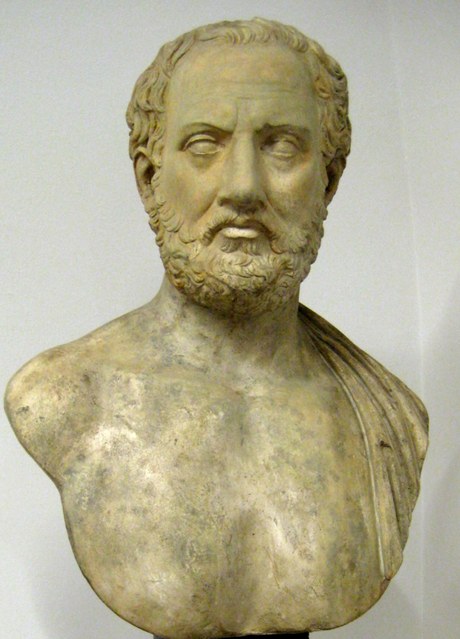
Thucydides

Thucydides
user:shakko · CC BY-SA 3.0

Ancient Greek historian · 5th century BCE · Athens

Thucydides was an Athenian general and historian who wrote the eight-book History of the Peloponnesian War.

The kit

  • Military career — Thucydides was exiled for twenty years after failing to prevent Brasidas from capturing Amphipolis in a surprise attack.
  • Historical method — Thucydides is called the 'father of scientific history' for his strict evidence-gathering procedures and fact-checking approach.
  • Major work — Thucydides recorded Pericles's Funeral Oration and the Melian Dialogue in his History of the Peloponnesian War.
  • Legacy — Thucydides inspired the concept of 'Thucydides's Trap,' describing conflict between a rising power and a declining power.

Runs with

Peloponnesian War
wrote eight-book history chronicling the war's battles and diplomacy open card →
Pericles
recorded his Funeral Oration and noted his death from plague open card →
plague
chronicled the plague of Athens in his history open card →
Athens
served as Athenian general before exile open card →

The ladder · 15 clues

H

Ancient Greek historian and author of History of the Peloponnesian War.

H

This disgraced Athenian general wrote a renowned eight-book History of the Peloponnesian War, which includes Pericles' funeral oration.

H

In one work by this man, a winning army’s diplomats state that “the strong do what they can and the weak suffer what they must.” This man’s most famous work includes the Melian Dialogue and recounts how the Delian League was led into war against Sparta.

H

This historian chronicled the Battle of Amphipolis, the plague of Athens, and numerous other events in his major text on the Peloponnesian War.

H

This man was defeated by Brasidas at the Battle of Amphipolis, and he later wrote about the murder of the tyrant Hipparchus by Harmodius and Aristogeiton.

H

This author credits one leader as saying “we are lovers of beauty without extravagance” in a passage in which that leader presents his city as the school of his entire country.

H

The tone of this man's major book may be influenced by his own twenty years of exile, which occurred after he surrendered Amphipolis (pr. am-FIP-uh-liss) as a general.

M

Historian who recorded Pericles's "Funeral Oration" in The History of the Peloponnesian War.

M

”September 1, 1939” states that this ancient Greek historian knew “All that a speech can say about/About Democracy,” alluding to his record of Pericles’ funeral oration in his most famous work.

M

One Athenian politician of this name, a son of Melesias, was ostracized after confronting Pericles. A more famous man of this name wrote The History of the Peloponnesian War.

M

This man’s most famous work discusses the Battle of Sphacteria and the Sicilian Expedition in its eight books. :Name this author of the History of the Peloponnesian War.

M

This Athenian general wrote a History of the Peloponnesian War, which notably included many reconstructed speeches. He has been called the “father of scientific history”, echoing an epithet of his countryman Herodotus.

E

This man recorded such momentous speeches as the Melian Dialogue and the Funeral Oration in a book that contains extensive information about the Delian League and Pericles. name this historian who authored the History of the Peloponnesian War.

E

Pericles’ Funeral Oration was recorded by this ancient Greek historian and author of a History of the Peloponnesian War.

E

This Athenian historian’s History of the Peloponnesian War serves as more of a mythos than an actual history, but it does contain Pericles’ Funeral Oration.

10 more clues from the record
H

This historian included an account of an unsuccessful diplomatic negotiation between emissaries of Athens and Melos in his History of the Peloponnesian War.

H

This man began his writing career after facing exile following the fall of Amphipolis.

H

According to Momigliano, Eusebius’s use of documents differentiates his work from that of this other writer, who frequently invented speeches and used his own experiences and discussions with witnesses to write about events like the Funeral Oration and conquest of Melos.

H

During this person’s research, he was strict about his procedures for gathering evidence leading his title as “father of scientific history.” :Name this Athenian historian and general who wrote about human nature in crises like plague, massacre, and civil war.

H

Pericles then died of plague two years into the Peloponnesian War, as related by this Athenian general's history thereof. Thomas Hobbes translated this man's work into English.

H

That fall from grace was due to Brasidas’ success in taking Amphipolis before this commander, who noted in one text that their subsequent exile meant they ‘had leisure to observe affairs’.

H

This other Greek advanced the study of history with his History of the Peloponnesian War, which introduced concepts like fact-checking and not just making up things for entertainment value.

H

This general was ostracized after he failed to prevent the capture of Amphipolis by the Spartan general Brasidas during a surprise attack. :Name this general who chronicled much of the Peloponnesian War in his History of the Peloponnesian War.

H

Political scientist Graham Allison has written a book on this historian’s “Trap,” envisioning conflict between a rising power and a declining power.

H

This author explained that the commonly believed story of the tyrannicides was untrue in a book that presents Brasidas as a rhetorically exceptional example of his city’s men.

Watch out: Another Athenian politician named Thucydides, son of Melesias, was ostracized after confronting Pericles
#181 · Authors, Poets, and Playwrights · Level 1

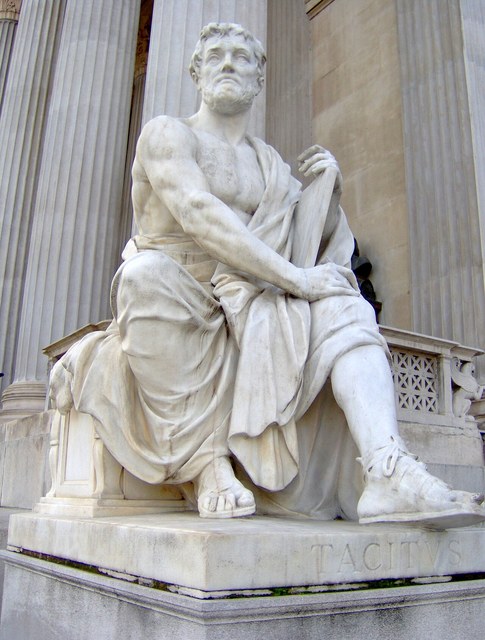
Tacitus

Tacitus
Pe-Jo · Public domain

Roman historian · 1st-2nd century CE · Roman Empire

Tacitus was a Roman historian who wrote the Annals covering Tiberius through Nero and the Histories on the Year of the Four Emperors.

The kit

  • Rise — Tacitus co-prosecuted the proconsul of Africa Marius Priscus for extortion, which inspired his Dialogue on the Orators about his teachers.
  • Achievements — Tacitus wrote a biography of his father-in-law Agricola describing ancient British customs and victories over Druids at Ynys Mon.
  • Achievements — Tacitus provided the first known pagan reference to Christ in the Annals, describing Pontius Pilate's execution of "Christus."
  • Legacy — Tacitus's Germania helped define core concepts of Nazism according to Christopher Krebs's A Most Dangerous Book argument.

Runs with

Agricola
wrote biography of his father-in-law Agricola open card →
Annals
wrote Annals covering Tiberius through Nero open card →
Tiberius
extensively covered Tiberius's reign in Annals open card →
Nero
extensively covered Nero's reign in Annals open card →

The ladder · 15 clues

H

Roman historian of Agricola whose Annals discusses Boudica’s revolt.

H

Historians who used this man’s teachings to support Republican ideals have been called his “red” supporters.

H

In A Most Dangerous Book, Christopher Krebs argued that an ethnographic work by this writer helped to define the core concepts of Nazism.

H

This author’s account of the reign of Caligula is a lost section of a text that describes the assassination attempt on Agrippina and begins just after the death of Augustus.

H

In a text written after the death of his father-in-law, this author described the customs the ancient Britons.

H

This author of Agricola described Sejanus’ manipulation of an emperor in another work.

H

One was a respected old man who was offered the throne, initially refused, accepted, appointed Florianus as Praetorian Prefect and thus held off an invasion but died after only one year.

M

This man wrote, "They have made a desert and call it peace" in a work that opens by describing the Year of the Four Emperors.

M

This historian wrote a biography of Agricola, who was his father-in-law. The reigns of Nero and Tiberius are extensively covered in his Annals.

M

This author wrote about the reigns of the emperors Tiberius, Claudius and Nero in his most famous work. name this Roman writer of a history of the Flavian emperors and the Annals.

M

A non-Christian source of evidence for the existence of Jesus can be found in this Roman historian’s Annals, which describes Pontius Pilate’s execution of “Christus.” This historian also write the Histories.

M

This Roman historian dubbed the Cherusci “lazy fools” in his Germania. This historian may have completely made up a speech attributed to Calgacus in the Agricola, a biography of his father-in-law.

E

name this Roman historian of Agricola and the Annals.

E

Much of what we know about Boudicca comes from the writings of this Roman historian, who is known for his Annals and Histories.

E

This historian wrote about the execution of a man named "Christus" by Pontius Pilate in a book that covers leaders between Augustus and Nero.

10 more clues from the record
H

One of this man’s works describes a victory over an army of Druids at the Battle of Ynys Mon and the establishment of a network of outposts stretching from Bodotria to Clota.

H

This ancient Roman author of a biography of Agricola and the Histories analyzed the Empire from the reign of Tiberius to that of Nero in his Annals, which also briefly mentions the execution of Christ.

H

Nero’s reign and the Year of the Four Emperors were recorded in the Histories by this Silver Age Roman historian, who also wrote Agricola and Germania.

H

This man's co-prosecution of the proconsul of Africa, Marius Priscus, for extortion, inspired him to write about his teachers Secundus and Aper in his Dialogue on the Orators.

H

Name these Roman historians, :He wrote that barbarian kings were “chosen by reason of their nobility, and dukes because of their good qualities” in his Germania.

H

A late 3rd-century emperor, who shares his name with this author, is generally considered to have faked descent from him.

H

Justus Lipsius relied heavily on this writer in penning his Six Books of Politics, and prepared an edition of this writer’s work for Maximilian II.

H

This author provided the first known pagan reference to Christ in his final work, which ended during the reign of Nero.

H

Pope Pius II revived interest in this author’s work after examining a forgotten manuscript found in Hersfeld Abbey.

H

This historian blamed the poor state of education for the decline of rhetoric in his Dialogue on Oratory.

Watch out: A late 3rd-century emperor sharing his name falsely claimed descent from the historian
#183 · Authors, Poets, and Playwrights · Level 1

Suetonius

Suetonius
Achille Réveil · Public domain

Roman historian · c. 69–after 122 CE · Rome

Suetonius was a Roman historian who served as Hadrian's secretary and wrote The Twelve Caesars, biographies of Rome's first emperors.

The kit

  • Career — Suetonius managed libraries and archives for Trajan before becoming ab epistulis (Imperial secretary) to Hadrian, gaining access to imperial archives.
  • Achievements — Suetonius wrote The Twelve Caesars, covering Julius Caesar through Domitian, and On Famous Men, chronicling notable Roman writers and scholars.
  • Dismissal — Suetonius was dismissed from secretarial service after getting too close to Hadrian's wife Sabina, ending his access to imperial records.
  • Legacy — Suetonius preserved vivid details like Caligula's alleged incest and Incitatus appointment and Augustus crying for Varus to return his legions.

Runs with

Boudica
general Suetonius Paulinus defeated Boudica open card →
Vespasian
listed grants by Vespasian refuting his stinginess reputation open card →
Hadrian
served as Hadrian's secretary until dismissed open card →
Nero
chronicled Nero in The Twelve Caesars open card →

The ladder · 15 clues

H

This historian and author of On Famous Men detailed Caligula’s insanity in Lives of the Twelve Caesars.

H

This historian was Hadrian’s secretary, but was dismissed after he got too close to Hadrian’s wife Sabina. :Name this author of The Twelve Caesars.

H

He declined a British military tribuneship obtained for him by Pliny the Younger, who this man may have followed to Bithynia.

H

Many stories of Caligula’s escapades, like alleged incest and placing Incitatus into the Senate, come from this historian who chronicled the lives of Caligula and other Julio-Claudians in The Twelve Caesars.

H

In 2025, Holland translated this historian's The Lives of the Caesars, which details the Roman emperors up to Domitian’s reign. This historian had access to the imperial archive by being Hadrian’s secretary.

H

Andrew Wallace-Hadrill, in a 1983 study of this writer, claimed that this writer “knew that he stood in the shadow of a giant.” It is unclear whether this writer’s reference to “Jews” incited by “Chrestus” refers to Christians.

H

The most famous man of this name was dismissed from secretarial service due to a mutual disgust for Vibia Sabina after having been aided into Imperial favor by Pliny the Younger.

M

This author wrote the Lives of the Caesars about the first 11 emperors, as well as On Famous Men.

M

He managed libraries and archives for Trajan, but his highest post was ab espistulis – Imperial secretary – to Hadrian. name this Roman historian who wrote biographies of Julius Caesar to Domitian in The Twelve Caesars.

M

Lives of the Twelve Caesarswas written by this Roman historian and secretary of Hadrian, a contemporary of Tacitus and Pliny the Younger.

M

This writer listed grants made by Vespasian in a seeming attempt refute the latter’s reputation for stinginess, and described Augustus yelling for Varus to “give me back my legions.” name this Roman historian, who according to Wallace-Hadrill sought to supplement Tacitus rather than challenge him in the work The Twelve Caesars.

M

This historian claimed the Incitatus stunt and mockery over his “feminine voice” led Cassius Chaerea to assassinate Caligula. This historian’s The Lives of the Caesars covers the first Roman emperors up to Domitian.

M

His once-popular Prata has not survived and, though he’s often considered the least rhetorical of the Silver Age authors, he recalls Julius Hyginus in his De Grammaticis.

E

The general who defeated Boudica shared his name with this Roman historian, who wrote The Twelve Caesars, a group biography of the first leaders of the Roman Empire.

E

FTP, name this family of Romans whose most famous member, with cognomen Tranquillus, was the author of De viris illustribus and De vita Caesarum, The Lives of the Caesars.

10 more clues from the record
H

This writer described how an island became known as the “old goat’s garden” because a creepy old man there trained boys to crawl between his legs.

H

This author wrote about a man who repeatedly cursed his enemies by saying that they should have “a wife and children like mine” after he banished his daughter to Pandateria.

H

This author of The Lives of the Caesars depicts Augustus crying out "give me back my legions!" upon learning of the disaster at Teutoberger Wald.

H

This author of the Playground which included De Gramaticis et Rhetoribus was dismissed along with the Praetorian Septicus Clarus for rude behavior towards Empress Sabina.

H

One of this man’s works refers to Jews being incited by a man named “Chrestus” that has been interpreted as referring to Jesus Christ.

H

Stories of Caesar’s time with pirates, as well as information about his fashion choices, come from this biographer’s Lives of the Caesars .

H

One fragmentary inscription dedicated to this man had a fourth line reference to his positions and was found in Hippo Regius.

H

Historians interpret an inscription commemorating this man’s appointment as a juror as evidence that he, like Augustine, was born in Hippo.

H

His account of an expulsion of the Jews from Rome refers to their taking up the customs of “Chrestus,” who may be Christ.

H

A man from this family with the cognomen Laetus was a Hippo Regian knight in the service of Otho.

Watch out: Suetonius Paulinus, the general who defeated Boudica, shares the same family name
#185 · Authors, Poets, and Playwrights · Level 1

Xenophon

Xenophon
a rel="nofollow" Carole Raddato · CC BY-SA 2.0

Greek historian and soldier · c. 430–354 BCE · Greece, Persia, Asia Minor

Xenophon was a Greek historian and mercenary commander who chronicled the Ten Thousand's retreat in his Anabasis.

The kit

  • Rise — Xenophon joined Cyrus the Younger's expedition to usurp the Persian throne, which ended at the Battle of Cunaxa.
  • Achievements — Xenophon led the Ten Thousand mercenaries to safety after Clearchus was killed, ending with the cry "thalatta!" at the Black Sea.
  • Legacy — Xenophon continued Thucydides' History in his Hellenica and wrote the Cyropaedia, an idealized biography of Cyrus the Great.
  • Legacy — Xenophon wrote the Memorabilia on Socrates' teachings and treatises on horsemanship, hunting, and the Spartan constitution.

Runs with

Cyrus the Great
wrote the Cyropaedia, a fictionalized biography of Cyrus the Great open card →
Black Sea
led the Ten Thousand to the Black Sea after Cunaxa open card →
Socrates
collected Socrates' teachings in his Memorabilia open card →
Peloponnesian War
continued Thucydides' account in his Hellenica open card →

The ladder · 15 clues

H

This Greek historian’s Anabasis recounts battling the Colchian armies while attempting to lead his mercenary company, the “Ten Thousand,” to the Black Sea.

H

After Clearchus was killed shortly after the Battle of Cunaxa, this man led a march of soldiers that ended with the yell “thalatta!” upon reaching freedom at the Black Sea.

H

This author continued Thucydides’ History of the Peloponnesian War in his Hellenica. Like Aristotle, this man wrote a well-regarded work discussing the constitution of the Spartans.

H

This Greek historian writes that Agesilaus and Lysander took a force of two thousand Neodamodeis on the expedition to Asia in his Hellenica. He also wrote about the Persian expedition of Cyrus in his Anabasis.

H

The death and last words of one of the Thirty Tyrants, Theramenes [[theh-RAH-meh-nees]], is described in Hellenica, by this commander of the Ten Thousand, who gives an account of their expedition in Anabasis [[an-AH-bah-siss]].

H

Two of the oldest surviving works on horse riding are this man’s treatises Hipparchicus and Peri Hippikes.

H

This author’s Memorabilia is a collection of teachings by his teacher, Socrates.

M

This man chronicled that Expedition of the Ten Thousand in one work and idealized his slain commander, a Persian king, in another work, the Cyropedia. name this Greek soldier, philosopher, and historian who wrote the Anabasis.

M

The battle and the march of the ten thousand mercenaries were documented by this Greek historian in his Anabasis.

M

One of his works was an early example of the "mirrors for princes" genre, a biography entitled the Cyropaedia.

M

This Greek mercenrary leader recounted passing through Armenia during his march with the Ten Thousand in his Anabasis.

M

This man began his Hellenica almost exactly where Thucydides left off his History. He is better known for his Anabasis, which details the return of the Ten Thousand to Greece after they were stranded in Persia.

E

Despite its title, only the first chapter of this author’s best known work describes a journey inland to join Cyrus the Younger. name this Greek who wrote about the Ten Thousand in his Anabasis.

E

The last seven years of the Peloponnesian War are chronicled in this other Greek historian’s Hellenica. This historian also described how the Ten Thousand fought on behalf of Cyrus the Younger in his Anabasis.

E

This Greek historian wrote a fictionalized biography of Cyrus the Great called the Cyropaedia. He documented Cyrus the Younger’s failed attempt to usurp the Persian throne in his Anabasis.

10 more clues from the record
H

This writer’s treatise Ways and Means says that nobody really knows when Laurion was first worked – basically true, since there is evidence of activity there in the Late Neolithic. Along with Plutarch’s Life of Lycurgus, this writer’s works are the fullest extant source on the Spartan constitution.

H

identify each of the following concerning a historian and his works.A friend and admirer of the Younger Cyrus, he composed a biographical memoir of Cyrus' youth, his Cyropaedia. Another major work is his history, Hellenika, which picks up directly where Thucydides left off.

H

He was forced to take command when Clearchus of Sparta and his officers were treacherously killed during peace negotiations by the Great King Artaxerxes II, who had just defeated and killed its leader, the Younger Cyrus, in the Battle of Cumaxa, as he recounts in his Cyropaedia.

H

A "pseudo-" version of this author is known as "the Old Oligarch." One of his works has a section about the fictional King Abradatas and tells of how its subject diverted a river to attack Babylon.

H

Gilbert Murray gave the name of “Old Oligarch” to an author usually identified as a “pseudo” version of this man, which criticizes Athens’ constitution for promoting social vice.

H

Upon reaching the mountain Thekes, the din from his vanguard at seeing the Black Sea was so great that the rearguard thought enemies had arrived.

H

This man marched with Seuthes while in Thrace, and later had a disagreement with him over his soldier’s pay.

H

A history by this man covers events leading up to the Battle of Mantinea after the final seven years of the Peloponnesian War.

H

A writing by this man relates how a pillar with Syrian characters was erected for the burial of Pantheia and Abradatas.

H

He wrote such works as On Horsemanship and Hunting with Dogs, as well as multiple Socratic dialogues.

Watch out: The "Old Oligarch" is a pseudo-Xenophon, not Xenophon himself
#186 · Authors, Poets, and Playwrights · Level 1

Livy

Livy
Acediscovery · CC BY 4.0

Roman historian · Augustan era (late 1st century BC–early 1st century AD) · Patavium (Padua), Rome

Livy was a Roman historian from Padua who wrote Ab Urbe Condita, a 142-book history of Rome from its founding.

The kit

  • Achievements — Livy wrote Ab Urbe Condita (From the Founding of the City), covering Rome's history from Aeneas's arrival through Augustus's reign.
  • Scope — Livy's work originally comprised 142 books, but only 35 survive today, including accounts of early Rome and the Second Punic War.
  • Style — Livy employed annalistic technique, narrating history year by year, and was praised by Quintilian for his "milky" rhetorical style.
  • Legacy — Livy's history inspired Machiavelli's Discourses, which analyzed Roman political lessons, and was summarized in the Periochae.

Runs with

Rome
chronicled Rome's entire history from Aeneas through Augustus open card →
Niccolò Machiavelli
subject of Machiavelli's Discourses analyzing Roman republicanism open card →
Augustus
Second Punic War
vivid surviving account of Hannibal's war against Rome open card →

The ladder · 15 clues

H

Ab Urbe Condita was written by this Roman historian, who also titles a set of Discourses by Niccolo Machiavelli.

H

FTP, give the name shared by these men, the last of whom describes the kings of Rome, the early Republic and the second Punic War in the surviving books of his massive history Ab Urbe Condita.

H

This Roman, who served in some capacity in the reign of Augustus, is best known for his book Ab Urbe Condita, or the History of Rome, which begins with the arrival of Aeneas and continues through Julius Caesar.

H

Another work by Macchiavelli is his Discourses on... this Roman historian whose From the Founding of the City covered the history of Rome from its founding through the reign of Augustus Caesar.

H

The “cutting the poppies” story is detailed in the first book of this author’s Ab Urbe Condita.

H

Answer some questions about Roman historians, .This Augustan author wrote 142 books of history tracing Rome’s development from the mythical age of Troy to his lifetime. His vivid account of the Second Punic War against Hannibal still survives.

H

Book Seven of this man’s surviving work recounts how Titus Manlius got the cognomen “Torquatus” by duelling with a Gaul, and how a solar eclipse occurred during Manlius’s consulship with Caius Marcius Rutilus, after the dedication of the temple of Moneta.

M

As its name suggests, the Annals told their history one year at a time, a technique also used by this historian in his 142-book Ab Urbe Condita, only 35 books of which are extant.

M

This historian began with the arrival of Aeneas and concluded with the death of Drusus in his massive Ab urbe condita.

M

Ancient Rome was home to many notable historians. :This man wrote of the fall of Troy and Aeneas’ founding of Rome in Ab Urbe Condita Libri, his History of Rome.

M

The most famous holder of the name was a rhetorician from Padua who published the last 22 books of his magnum opus posthumously because they dealt with the contemporary history of the Emperor Augustus.

M

Most records of the Samnite Wars come from this Roman historian, who detailed it in his Ab Urbe Condita. Only 35 of the original 142 books have survived.

M

A text called the Periochae summarizes this historian’s work, which includes an oft-disputed account of Cincinnatus returning to his farm.

E

Machiavelli also wrote a series of Discourses on this Roman historian, who wrote the now mostly lost Ab Urbe Condita.

E

Machiavelli praised Brutus in his “Discourses on” this Roman historian who authored Ab Urbe Condita, a history of Rome from its founding to the reign of Augustus.

10 more clues from the record
H

Quintilian praised the “milky” style of this historian, who rebuts his contemporary Timagenes in a digression which claims that Rome would have defeated a longer-lived Alexander the Great.

H

Only about a quarter of this man’s histories survive. :Those surviving books of this author’s Ab Urbe Condita cover the foundation and early years of Rome, and the Second Punic War.

H

This historian, one of the few to write about the secession of the plebs, made it difficult to ascertain what was fact and what was myth about the secessions since he talked about both in his Ab Urbe Condita.

H

This man’s work was summarized in the Oxyrhyncus Epitome as well as the more complete Periochae, and this man’s account of a conflict with the Curiatii inspired Pierre Corneille’s play Horace.

H

Book III of Machiavelli's "Discourses on" this Roman historian includes an analysis of conspiracies like that against king Hieronymus of Syracuse.

H

Asinius Pollio criticized this man’s use of provincial terms as “patavinity” in reference to his hometown of Patavium.

H

His son of the same name proposed a reactionary reform of the constitution and was assassinated in 91 B.C., thus triggering the Social War.

H

Name's the same: Marcus Drusus was an opponent of Gaius Gracchus and proposed a massive extension of citizenship.

H

The Romans thought their literature basically began with a translation of the Odyssey into Latin by Andronicus.

H

This historian’s work is often cross-checked against his contemporary Dionysius of Halicarnassus.

Watch out: Confusion with Livius Drusus, whose son's assassination in 91 BC triggered the Social War
#190 · Authors, Poets, and Playwrights · Level 1

Flavius Josephus

Flavius Josephus
Scan by NYPL · Public domain

Jewish-Roman historian · 1st century CE · Judea and Rome

Flavius Josephus was a Jewish commander who defected to Rome during the First Jewish-Roman War and chronicled Jewish history.

The kit

  • Rise — Flavius Josephus commanded Jewish forces in Galilee during the First Jewish-Roman War before his capture at Yodfat.
  • Defection — Flavius Josephus survived the siege of Jotapata by drawing lots and prophesied the rise of the Flavians, earning imperial pardon.
  • Major works — Flavius Josephus wrote The Jewish War covering events from the Maccabean revolt to Masada and Jewish Antiquities chronicling Jewish history.
  • Legacy — Flavius Josephus provided extra-biblical accounts of Jesus, John the Baptist, and James the Just, though some passages may contain Christian interpolations.

Runs with

Jesus
briefly discussed Jesus in Antiquities, possibly with Christian interpolations open card →
John the Baptist
provided extra-biblical account of John the Baptist in his writings open card →
Masada
sole ancient source on the siege and mass suicide at Masada open card →
Vespasian
prophesied Vespasian's rise to emperor, earning his freedom and pension open card →

The ladder · 15 clues

H

This man served as an advisor to the emperor Titus after fighting against the Romans in the First Jewish-Roman War, an event he recounted in his The Jewish War.

H

While under siege at Yodfat, this man had a divine revelation about the rise of the Flavians which led to his pardoning and allotment of an imperial pension.

H

That mass suicide followed this man’s defeat in the siege of Jotapata.

H

Using this ancient man's descriptions, archaeologist Ehud Netzer discovered the location of Herod's Tomb near Herodium.

H

A 2025 book by Tom Schmidt contends that this author’s namesake Testimonium was entirely genuine, rather than containing a Christian interpolation. :Name this Jewish historian who briefly discussed Jesus, John the Baptist, and James the Just in his Antiquities of the Jews.

H

Name some things about the Codex Gigas, the world's largest extant illuminated manuscript. :Among the many texts included in between the Old and New Testaments are two texts by this 1st century Jewish historian: Antiquities of the Jews and The Jewish War.

H

This man rejected numerous claims including the Egyptian exodus involving 110,000 men over a six day period and that Mt. Sinai is not in Arabia in one work.

M

Cassiodorus translated the Jewish Antiquities by this First Century A.D. historian of the Jewish War. He wrote about Jews.

M

Much of our knowledge about the siege of Masada comes from this Jewish historian who wrote The Jewish War.

M

Beginning with the Maccabean revolt and ending at Masada, this writer recounts the rise and downfall of his people in De Bello Judaico.

M

In that book, this historiographer gives a brief history beginning with Antiochus IV Epiphanes’ capture of Judea and end with accounts of Vespasian and Titus putting down “The Great Revolt”. identify this author of Against Apion and The Jewish War whose namesake problem is determining which person survives when every nth is killed.

M

The writings of this onetime rival of John of Gischala (ghis-KAH-lah) and governor of Galilee (GAH-lih-lee) are believed to have been tampered with to portray Jesus as the Messiah.

M

This famous Jewish historian wrote about Jesus’ death, as well as many aspects of Judaism and early Christianity. During the first Jewish-Roman War he headed the Jewish forces in Galilee.

E

name this Jewish Roman chronicler and companion of Emperor Titus who provides extra-biblical accounts of men like John the Baptist and Jesus of Nazareth.

E

The reigns of Aristobulus I and Aristobulus II were detailed by this historian. This Roman-Jewish historian detailed many facets of Jewish history, including the siege of Masada.

10 more clues from the record
H

Another work by this man describes the thirty-eight towers outside of a fortress defended by numerous men who had earlier raided Ein-Gedi.

H

This writer relates a hilarious anecdote in which a soldier named Artorius escapes being burnt alive in a tower by jumping down and crushing to death his friend Lucius.

H

That work end with an account of the false miracles of Jonathan, who is tricked into falsely accusing people of being a member of the title religion.

H

Historian Seth Schwartz argued in a 1990 book that alleged discrepancies in this man’s politics were the result of changes in the political landscape and not betrayals.

H

According to one source, this man used his connection with Poppaea Sabina to convince Nero to release a group of priests captured by Antonius Felix.

H

With help from the actor Aliturius, this man persuaded Poppea Sabina to release several priests that had been imprisoned by the procurator Felix.

H

An enemy leader named Castor tricks some emissaries into coming close before throwing rocks at them in a history by this writer.

H

This man ordered the fortification of Gamla by filling houses along the outer ring with rubble and barricading gaps between buildings.

H

This writer is the only source on a campaign which was led by Flavius Silva and which involved a giant ramp being built to a stronghold of the Sicarii.

H

This man was the sole survivor of Yodfat (yode-FAHT) after he suggested drawing lots to determine who would commit suicide.

Watch out: The Josephus Problem (determining which person survives when every nth is killed) is named after him
#191 · Authors, Poets, and Playwrights · Level 1

Pausanias

Pausanias
Katolophyromai · CC0

Ancient Greek figures · 5th century BCE; 2nd century CE · Greece

Pausanias names three notable Greeks: a Spartan general who won at Plataea, his assassin of Philip II, and a 2nd-century geographer.

The kit

  • Plataea commander — Pausanias commanded Greek forces at Plataea against Mardonius, ordering the advance after receiving a favorable goat omen.
  • Downfall — Pausanias was recalled from Byzantium for adopting Persian manners, then accused of conspiring with Persia, isolating Sparta.
  • Death — Pausanias took refuge in the Temple of Athena of the Brazen House, where he was starved out and removed before dying.
  • Geographer — Pausanias wrote Description of Greece in the 2nd century CE, linking classical myths with locales and discussing Dorian invasion theory.

The ladder · 13 clues

H

This well-traveled Greek of the 2nd century wrote Description of Greece, which links classical myth with various locales. He shares his name with the general who defeated Mardonius at the Battle of Plataea.

H

This person escaped arrest by taking refuge in the Temple of Athena of the Brazen House, where he was starved out, and he was removed from the temple before dying so as to not desecrate the temple.

H

At that battle, this person finally ordered an advance while arrows were falling around him when he finally received a favorable goat omen.

H

A son of Pleistoanax (PLEE-stow-ah-nax) with this name settled an agreement with Athens to remove the Thirty Tyrants.

H

This regent for Pleistarchus was recalled from Byzantium because he began adopting Persian manners and clothing.

H

This person attempted to take refuge at Colonae after being driven out of Byzantium by Cimon.

H

Accusations against a general with this name of conspiring with the Persians led to the isolation of his city in the Hellenic league.

H

A general of this name died in the Temple of Athena Chalkioikos because angry citizens sealed it with bricks.

M

This member of Philip II’s bodyguard assassinated him. He shares his name with a 2nd-century CE geographer who wrote Descriptions of Greece.

M

This person commanded the winning forces at a battle preceded by the death of Masistius.

M

The theory connecting the invasion of the Dorians to the descendants of Heracles was largely put forth by this second-century Greek historian in his main surviving work, Description of Greece.

M

Amompharetus joined the rest of the Greek retreat on the advice of that man with this name in a battle against the Persians led by Mardonius.

M

At that battle, this person had a debate with Amompharetus, whose division was left behind in a retreat.

Watch out: The Spartan general shares his name with Philip II's assassin and with the 2nd-century geographer
#196 · Authors, Poets, and Playwrights · Level 1

Cassius Dio

Cassius Dio
Unknown author Unknown author · Public domain

Roman historian · c. 155–235 CE · Bithynia and Rome

Cassius Dio was a Roman senator and historian who wrote an eighty-book History of Rome in Greek covering Rome's founding through 229 CE.

The kit

  • Career — Cassius Dio served as consul twice, in 205 and 229 CE, and was a senator during Septimius Severus's reign.
  • Major work — Cassius Dio's eighty-book *Historia Romana* was written in Greek in Thucydides's style and survives only in fragments.
  • Survival — Cassius Dio's final half is known mainly through the eleventh-century epitome of Joannes Xiphilinus, though Book 36 on Pompey survives complete.
  • Sources — Cassius Dio recorded Boudica's flogging, Nero's naumachia, the Colosseum's inauguration, and details about the Praetorian Guard.

Runs with

Rome
chronicled Rome from legendary founding to 229 CE open card →
Boudica
recorded her flogging by Romans open card →
Nero
blamed Nero for the Great Fire open card →
Rongorongo Script

The ladder · 14 clues

H

The flogging of Boudica was recorded by this Roman historian who published an eighty-volume history of Rome up to the reign of Severus Alexander.

H

Contrary to Appian, whose longest work shares the title of this of historian’s magnum opus, this man reported that Mithridates VI was murdered after immunity to poison thwarted a suicide attempt.

H

This man’s extant work is fragmentary, and most of the final half is only known through the eleventh-century epitome of Joannes Xiphilinus.

H

One source for the details of Nero’s naumachia comes from this man’s eighty-book history of Rome titled the Romaika.

H

The most complete book of this man’s work is the thirty-sixth, which details Pompey’s expeditions against the pirates and Pontus.

H

One section of his main text was collected into the Fragmenta Valesiana by Henri de Valois.

M

This man, who was also a consul in the reign of Commodus, wrote an 80-book volume in Greek entitled Historia Romana, that began with the legendary founding of Rome and went all the way until AD 229. Like Suetonius, he puts the blame for the fire on Nero.

M

The World of Late Antiquity emphasizes how quickly Rome’s “Crisis of the Third Century” emerged by stating that this author “lay down his pen in 229 with no sense of foreboding.” This author’s 80-book History of Rome was written in Greek.

M

Like Martial and Suetonius, this Bithynian historian’s work describes the inauguration of the Coliseum. His 80-book History of Rome, which spans the founding to the third century CE, survives in fragments.

M

His history ends with the death of Heliogabalus and is written in Greek in the style of Thucydides. name this author of the eighty-volume Roman History, a Roman historian who came just after Tacitus and Suetonius.

M

Information about the Praetorian Guard comes from this Roman historian of Greek origin, who wrote an 80-book Roman History. At one point, the Guards demanded the life of this historian.

M

This man served as consul in 205 and 229 AD and wrote a lengthy history of that went up to the time of Alexander Severus, though only portions of it survive.

M

One of the chief sources for Boudicca’s revolt comes from this Roman historian’s Romaika, a text written in Greek originally consisting of 80 books.

M

This historian was an eyewitness to the speech delivered by Septimius Severus after the latter overthrew Julian, as this man was a senator at the time.

Watch out: Appian also wrote a work titled Roman History
#198 · Authors, Poets, and Playwrights · Level 1

Polybius

Polybius
Jona Lendering, Livius Onderwijs · Public domain

Greek historian · c. 200–c. 118 BCE · Megalopolis, Rome

Polybius was a Greek historian from Megalopolis who wrote a forty-volume Histories chronicling Rome's rise to Mediterranean dominance.

The kit

  • Captivity — Polybius was taken hostage to Rome in 167 BCE after the Third Macedonian War as a prisoner from the Achaean League.
  • Patronage — Polybius tutored Scipio Aemilianus in Rome and accompanied him to witness the sack of Carthage in 146 BCE.
  • Histories — Polybius wrote a forty-volume Histories providing detailed accounts of the Punic Wars and Roman constitutional theory.
  • Legacy — Polybius praised Rome's mixed constitution as the source of its greatness, influencing Montesquieu and John Adams.

Runs with

Rome
chronicled Rome's rise and praised its mixed constitution open card →
Carthage
witnessed its destruction with Scipio Aemilianus open card →
Punic Wars
primary source for First and Second wars open card →
Corinth
praised Mummius for saving its art open card →

The ladder · 15 clues

H

Was a prisoner from the Achaean League, was present at the sack of Carthage, and wrote Histories about the Roman Republic?

H

Hellenistic scholar who wrote The Histories about the Punic Wars, including a description of the production of barley-based libations.

H

This historian claimed that a commonwealth was united by a “scrupulous fear of the gods.” This historian claimed that Cleoxenus and Democleitus invented a fire-signaling technique to communicate individual letters, known as this historian’s “square.” This was the first historian to record the story of a young Hannibal Barca placing his hand on a sacrificed animal and swearing never to be friends with Rome.

H

Identify the following about some ancient historians, .This son of Lycortas of Megalopolis was taken to Rome, where he befriended Scipio Aemilianus. A practitioner of “pragmatic history”, his The Histories contains details about the Second Punic War.

H

This 2nd-century BCE Greek historian from Achaea lauded Ephorus as the first universal historian. He wrote The Histories, a 40-volume work on the rise of Rome with five surviving books, including extensive commentaries on the Roman constitution.

H

This man, who also wrote a lost treatise on battle tactics, was taken prisoner after he led the cavalry of the Achaean League on a failed diplomatic mission, but unlike his compatriots, he was allowed to go free.

H

This man was a tutor to Scipio Aemilianus while he was being held as a Greek hostage in Rome following the Third Macedonian War. His Histories are one of the principal sources for the First and Second Punic Wars.

M

FTP, name this historian born around 200 BC who wrote the forty-book Histories on the rise of the Roman empire.

M

This man was party to the escape of Seleucid prince Demetrius from Rome which enabled the overthrow of Antiochus V. This man was given the honour of carrying the ashes of Philopoemen while a young man, and was later denounced by Callicrates, and taken as a hostage by Rome. name this Achaean politician and historian from Megalopolis, who while in exile in Rome became close friends with Scipio Aemelianus, whose family figures prominently in this man’s Histories.

M

This Roman historian’s praise of the Senate as an aristocratic check on the rights of the people heavily inspired John Adams’ “A Defense of the Constitutions.” This formulator of the concept of anacyclosis is also known for creating a grid display of letters of the alphabet often used in telegraphy and codes.

M

In 167 BC, this Greek noble was taken as a hostage to Rome. His situation wasn’t so bad, however, as he became a historian there and wrote History of Rome which is one of our best sources for the First Punic War

M

This leading statesman of the Achaean League was deported to Rome, where he began writing his 40 volume Histories; they discuss the rise of the Roman Empire and contain a notable account of the Punic Wars.

M

Another author of a work called the Histories was this Greek historian whose ideas of government influenced Montesquieu. He lived through and recorded the Roman conquest of Greece.

M

One of the primary sources for information about the Mercenary War comes from this Greek ex-patriate who posited that Rome's greatness came from its balance of power in his Histories.

E

Much of our history of the 2nd Punic War comes from the work of this captive Greek historian, who was part of the entourage of Scipio Aemilianus, adoptive grandson of Africanus.

9 more clues from the record
H

This 2nd century Greek author was a political prisoner in Rome where he tutored Scipio Aemilianus and chronicled the rise of Rome in his Histories, which contain an important description of Hannibal's invasion of Italy.

H

This historian, who was sent to Rome as a prisoner by the Achaean League, praised Mummius as “moderate” for saving Corinth’s art, despite brutalizing its people. He chronicled the Punic Wars in The Histories.

H

This politician undertook a diplomatic mission with his father to Ptolemy V while still under the legal age which ended when the king suddenly died.

H

Early on, this man wrote a biography of the politician Philopoemen, who was a friend to his father Lycortas, and whose ashes this man reportedly carried home after his death.

H

After that, he became a tutor to the sons of the general Lucius Aemilius Paulus, including Scipio Africanus, whom he followed to witness the destruction of Carthage.

H

In Book VI of his most famous work, this historian claimed that the Romans were pre-eminent due to their adoption of a mixed constitution.

H

This historian criticized Timaeus of Tauromenium for making inaccurate judgments of eyewitness testimony included in his historical works.

M

This figure, born in Megalopolis, become famous for creating what he called a "pragmatic history" which describes events like the Battle of Cynoscephalae and the razing of Corinth.

M

This historian theorized that governments cycle between “basic” and “degenerate” forms such as monarchy and tyranny. name this Greek historian and author of the Histories.

Watch out: Polybius described a fire-signaling grid for communicating letters, now called the Polybius square
#202 · Other Modern National Leaders · Level 1

Julius Caesar

Julius Caesar
a rel="nofollow" Ángel M. Felicísimo /a from Mérida, España · Public domain

Roman general and dictator · 100–44 BCE · Rome, Gaul, Mediterranean

Julius Caesar was a Roman general who conquered Gaul, crossed the Rubicon, and was assassinated on the Ides of March.

The kit

  • Rise — Julius Caesar formed the First Triumvirate with Pompey and Crassus to dominate Roman politics.
  • Achievements — Julius Caesar conquered Gaul and defeated Vercingetorix at the Siege of Alesia using double fortification rings.
  • Conflicts — Julius Caesar crossed the Rubicon River declaring "the die is cast," sparking civil war against Pompey.
  • Death & succession — Julius Caesar was assassinated by Brutus and Cassius on the Ides of March after becoming dictator for life.

Runs with

dictator
held title of dictator for life before assassination open card →
Pirates
captured by pirates, later crucified them after ransom open card →
Gaul
conquered in campaigns recorded in Commentaries on Gallic War open card →
Battle of Pharsalus
defeated Pompey, wept when presented rival's severed head open card →

The ladder · 15 clues

H

He begins one work noting that “the whole of Gaul is divided into three parts” in his Commentaries on the Gallic Wars.

H

This leader defeated the Helvetii at the Battle of Bibracte and the Nervii at the Battle of the Sabis.

H

This writer of De Bello Gallico defeated and captured the King Vercingetorix [[ver-sin-GEH-toh-riks]] during the Siege of Alesia.

H

At the Lucca Conference, this man directed his allies to run for the consulship and, in return, extend his governorship by another five years.

H

As a teen, this man was unsuccessfully nominated to succeed Lucius Merula as Flamen Dialis, starting a 72-year period during which the position was empty.

H

This man built a line of fortifications around Alesia to defeat Vercingetorix and demanded that his pirate captors ransom him for a higher sum of money.

H

Roman general who recorded his conquest of Gaul in Commentaries.

M

Roman dictator killed, as predicted, on the Ides of March?

M

Clodius Pulcher attempted to seduce this man's wife in the Bona Dea scandal, and at the Lucca conference this man had his term as governor extended for five years.

M

This man recounted his victory at the Battle of Alesia, where he defeated Ambiorix and Vercingetorix, in his Commentaries on the Gallic War.

M

This man used that extension to launch campaigns, including losing at Gergovia before winning a battle during which he besieged an opposing force with a massive double ring.

M

This man wept after he was presented with the head of his rival following a victory at the Battle of Pharsalus.

E

Along with Crassus and Pompey, this man was a member of the First Triumvirate.

E

This man described defeating Vercingetorix at Alesia in his “Commentaries on the Gallic War.” This man declared “the die is cast” before crossing the Rubicon river to seize the title of “dictator for Life.” Octavian crowned himself Emperor after the death of this man at the hands of Cassius and Brutus during the Ides of March. name this general who ended the Roman Republic.

E

Known for crossing the Rubicon this Roman who was killed on the Ides of March.

10 more clues from the record
H

Wrote about his own military campaigns in his Commentaries on the Gallic War?

H

To end a civil war, this man won the Battles of Munda and Lauro in Spain.

H

This leader won the Civic Crown at the Siege of Mytilene.

H

Cato the Elder’s great-grandson, Cato the Younger, was famous for his opposition to this Roman dictator, who won a civil war against Pompey.

H

This man may have fathered one of the men who stabbed him on the Senate floor, Marcus Junius Brutus.

H

This man defeated Juba at the Battle of Thapsus, but his former companion Titus Labienus managed to escape him.

H

After being ransomed from pirates, this man captured his kidnappers and crucified them.

H

This man captured the chief Vercingetorix at the end of the Gallic Wars, which he won.

H

This man used a military donut in the Battle of Alesia to defeat forces led by Vercingetorix.

H

This man was alleged to have had an affair with King Nicomedes of Bithynia, and also with Servilia, the mother of one of his killers.

Watch out: Marcus Junius Brutus, one of his assassins, may have been his biological son
#227 · Scientists, Mathematicians, and Inventors · Level 1

Archimedes of Syracuse

Archimedes of Syracuse
bdi Domenico Fetti /span /a · Public domain

Greek mathematician and inventor · c. 287–212 BCE · Syracuse, Sicily

Archimedes of Syracuse was an ancient Greek mathematician and inventor who defended his city with war machines and discovered fundamental principles of geometry and physics.

The kit

  • Achievements — Archimedes of Syracuse calculated 22/7 as an upper bound for pi and related the volumes of a cylinder and sphere with equal radius.
  • Achievements — Archimedes of Syracuse discovered the principle of buoyancy, allegedly shouting "Eureka!" after determining whether a crown was pure gold by measuring displaced water.
  • Conflicts — Archimedes of Syracuse defended his city during Roman siege with inventions including a mechanical claw lifting ships, catapults, and possibly parabolic mirror heat rays.
  • Death & succession — Archimedes of Syracuse was killed by a Roman soldier after telling him not to disturb his geometric circles during Marcellus's siege.

Runs with

Syracuse
defended it with war machines during Roman siege open card →
Water
invented screw to lift it; discovered buoyancy principle open card →
ships
designed claw and heat ray against Roman fleet open card →
Cicero
rediscovered his tomb in Sicily open card →

The ladder · 15 clues

H

Pierre-Henri de Valenciennes painted a lush landscape of the orator Cicero discovering this man’s tomb.

H

The tyrant Gelo II is the dedicatee of this man’s treatise, The Sand Reckoner, which includes a calculation of how many sand grains would fit in the universe.

H

His military inventions include a mechanical claw to lift ships out of the water and a “death ray” designed using parabolic mirrors to try to burn incoming ships, meant to protect his home city during the Punic wars.

H

This person was given the task of determining whether or not a blacksmith lied when claiming that a crown for the King of Syracuse was made with pure gold.

H

His geometric accomplishments include relating the volumes of a cylinder and sphere with equal radius and using a method of exhaustion to estimate 22/7 as an upper bound for pi.

H

This thinker’s work The Sand Reckoner is the most comprehensive surviving source for Aristarchus’ heliocentric theory.

H

Ancient Greek inventor of a water-lifting screw and, supposedly, a death ray.

H

Water and grain can be lifted using a screw named for this person.

M

Ran naked through the streets of Syracuse shouting "Eureka" after discovering buoyancy?

M

According to Livy, a weapon designed by this man also known as the “Iron Hand” successfully tipped over much of a Roman fleet.

M

This scientist discovered that the weight of the fluid displaced by an object is equal to the exerted force on the object. name this Ancient Greek who, when he discovered the principle of buoyancy, exclaimed “Eureka!”

M

A device that lifts liquids through rotation is a screw named for this Syracuse mathematician.

M

Roman ships implementing the corvus may have been attacked by a “heat ray” and “claw” devised by this scientist from Syracuse, who also developed a namesake screw.

M

This man likely did not actually set up burnished shields as a heat ray to defend from Roman invasion.

E

This man may have used parabolic mirrors to reflect the sun’s rays onto enemy ships approaching his home of Syracuse. name this man with a namesake “Principle” and a “Screw,” a Greek polymath.

9 more clues from the record
H

This scientist’s Ostomachion is a tangram-like puzzle with 14 pieces.

H

This man allegedly yelled “Do not disturb my circles!” upon being confronted by a Roman soldier. :Name this mathematician who was killed while studying geometry. He supposedly shouted “Eureka!” after discovering his law of buoyancy.

H

answer the following about lines in the sand.This mathematician legendarily told a Roman soldier trying to kill him to not disturb his circles, which were drawn in the sand. He names a “screw” for raising water.

H

This ancient inventor is credited with devising a catapult that could fling a 175-pound stone some 200 yards. He also came up with the idea of the compound pulley.

H

Gotthold Lessing discovered a poem by this man in which he presented a problem to count the number of cattle in the Herd of the Sun using Diophantine equations.

H

The Fields Medal bears the image of this person, whose Palimpsest includes a proof of the volume of a sphere using levers, whose mechanics he pioneered.

H

As recorded in his Tusculan Dispositions, Cicero rediscovered this person’s tomb, which is often confused with a dovehouse by modern tourists.

H

A soldier from Marcellus’s army killed this person after a siege in which he used grappling hooks to protect Syracuse.

H

This man invented a defensive device that used a grappling hook to pull a ship out of a harbor.

Watch out: His parabolic mirror "heat ray" likely was not actually used to burn Roman ships
#240 · Scientists, Mathematicians, and Inventors · Level 1

Galen

Galen
Georg Paul Busch (engraver) · Public domain

Greco-Roman physician · 2nd century AD · Pergamon, Rome

Galen was a Greco-Roman physician from Pergamon who served Marcus Aurelius and systematized humorism, dominating Western medicine until the Renaissance.

The kit

  • Rise — Galen began his career tending gladiator wounds in Pergamum before becoming personal physician to Commodus and Marcus Aurelius.
  • Achievements — Galen proved through dissection that urine was produced by the kidneys rather than the bladder wall and identified most cranial nerves.
  • Legacy — Galen's anatomical treatises like On Anatomical Procedure remained authoritative until Vesalius and Harvey disproved his circulation theories in the 16th-17th centuries.
  • Conflicts — Galen documented the Antonine Plague while in Aquileia, leading historians to identify the disease as smallpox; the plague is sometimes named for him.

Runs with

plague
documented the Antonine Plague open card →
Marcus Aurelius
served as personal physician open card →
Hippocrates
expanded and popularized humoral theory open card →
Common

The ladder · 15 clues

H

The personal physician of Commodus and a proponent of humorism, who was this extremely influential Greco-Roman doctor?

H

This thinker sings the praises of a game named harpastum, an ancient sport which combined wrestling and handball, in his treatise "On Exercise with the Small Ball." Maimonides wrote a work titled The Art of Cure – Extracts from [this ancient polymath] who also directly inspired the publishing of the Canon of Medicine by Avicenna.

H

What ancient Greek anatomist this person who gave the modern sense to the term "diagnosis," first propounded the fallacy that the liver was the source of the body's veins.

H

Opponents of this man called the Erasistrateans resisted his theory that blood flowed through arteries, instead wrongly claiming pneuma did so.

H

This man's records of treating the Antonine Plague while in Aquileia [[ah-KWIH-leh-uh]] led historians to identify the blight as smallpox.

H

This man once worked to tend the wounds of gladiators in Pergamum. :Identify this one-time physician for Marcus Aurelius and several of the emperor's successors. This author's treatises, such as On Anatomical Procedure, were massively influential to the medical theories of the Middle Ages.

H

The Antonine Plague of 166 AD is sometimes named for this man. :Name this Greek physician who served Marcus Aurelius. The 16th-century anatomist Andreas Vesalius disproved many of this scientist’s assertions in De humani corporis fabrica.

H

The aforementioned scholar was this man, who posited a tripartite soul in On the Doctrines of Hippocrates and Plato. This author of a treatise on theriac furthered the theory of humors while serving as personal physician to Marcus Aurelius.

H

The custom of serving melon with prosciutto aimed to balance hot and cold natures of the food in adherence to the theories of this doctor from Pergamon, an anatomist who expanded on the earlier theory of the four humors.

H

Name some famous anatomists, .This native of Pergamum and pioneer of animal dissection proved that urine was produced by the kidneys rather than the bladder wall, and identified a majority of the cranial nerves.

H

Humoral theory was developed by this man who alternatively names the Antonine plague. The writings of this Roman physician from Pergamon served as the basis of Western medicine through the Renaissance.

H

Rhazes was one of the first physicians to criticize this Greco-Roman physcian’s views about anatomy and illness. This man expanded and popularized Hippocrates’ theory of humors.

M

Metrodora sourced remedies from the Euporista spuriously credited to this author, who was called a student of Cleopatra in Arabic texts. Soranus’s Gynecology followed the principles of this Roman physician from Pergamon.

M

Observing famine victims you disprove this Greek physician’s theory about the formation of the jaw. This physician popularized the theory of the humors and built upon Hippocrates’ work.

M

This scholar from Pergamon documented the Antonine Plague, which is sometimes named for him. Vesalius and Harvey disproved this physician’s theories on anatomy and circulation after millennia of acceptance.

Watch out: Erasistrateans who wrongly claimed pneuma flowed through arteries instead of blood
#248 · Scientists, Mathematicians, and Inventors · Level 1

Hippocrates

Hippocrates
bdi Unidentified engraver /a · Public domain

Ancient Greek physician · 5th–4th century BCE · Kos

Hippocrates was an ancient Greek physician from Kos who established ethical medical standards and developed the theory of the four humors.

The kit

  • Achievements — Hippocrates developed a model in which the body desires a balance between the four humors.
  • Achievements — Hippocrates invented a device for treating spinal problems that may have inspired the torture rack.
  • Legacy — Hippocrates names an oath where doctors pledge to "do no harm" and abstain from intentional wrongdoing.
  • Legacy — Hippocrates was dubbed "the Asclepiad of Cos" by Plato and became known as the "Father of Medicine".

Runs with

Galen
built upon Hippocrates's work and authored treatises expanding his medical theories open card →
Rongorongo ScriptNanda EmpireThucydides

The ladder · 15 clues

H

Maimonides published a “Commentary on the Aphorisms of" this man using translations by scholar Hunain Ibn Yitzchak [[yeht-ZAHK]].

H

The often misleading work The Travels of John Mandeville claimed this historical man ruled the island of Kos and was later turned into a hundred foot dragon by Diana.

H

This man invented a device for treating spinal problems that may have inspired the rack used to torture the arsonist Herostratus. :Name this “Father of Modern Medicine” whose namesake oath is one of the foundations of medical ethics.

H

A work by this author claimed that the different climates of Asia and Europe led to Asians being gentler and more inclined to authoritarian rule. :Name this author of On Airs, Waters, and Places, which held that diseases were unique to the climates of different locations.

H

Nebros is said to have been the ancestor of this man. This physician’s theorized guilt over Nebros’s actions at Kirrha may have motivated him to establish his namesake oath, which swears to “do no harm.”

H

Greek physician Galen authored a treatise on theriac and built upon the work of this earlier physician, who names an “oath” that binds medical practitioners to uphold ethical standards.

H

This earlier Greek physician was dubbed "the Asclepiad of Cos" by Plato and is best known today for his namesake oath where doctors pledge to do no harm to their patients.

H

This statement precluded the use of pessaries to induce abortions. Named after a Greek physician, this statement usually includes the words “First, do no harm.”

H

Under Herodicus of Selymbria, this native of Kos likely began their training at the city’s asklepieion.

M

Because of Salerno's reputation for medicine, it became known as the city of this ancient Greek physician, the namesake of an oath often taken by doctors.

M

A saying named for this man included a pledge to “abstain from all intentional wrong-doing” and was rewritten into a modern version noting that “prevention is preferable to cure.” name this “father of medicine” who names an oath doctors swear to.

M

In spurning the contemporary miasma theory in favor of a belief in actual contagions, Thucydides preempted this Greek doctor from Kos, whose namesake “Oath” provides ethical standards for all doctors to abide by.

M

Hieropoioi organized cattle sacrifice on the island of Kos, the home of this Greek “father of medicine” whose namesake oath begins “First, do no harm.”

M

This scientist is credited with developing a model in which the body desires a balance between the four humors.

E

Physician’s oath to do no harm, based on the writings of a Greek physician.

2 more clues from the record
H

This scientist’s practices stood in contrast to the Knidian school which was more in line with modern practices.

H

A core component of this scientist’s theories was the “crisis”, after which a person would die or recover.

Watch out: Galen, a later Greek physician who built upon Hippocrates's work and also wrote on medical theory
#299 · Historic Buildings and Museums · Level 1

Hadrian's Wall

Hadrian's Wall
ul li Hadrians_Wall_map.png /a : b Created by NormanEinstein · CC BY-SA 3.0

Roman defensive wall · 122 AD–5th century · northern England

Hadrian's Wall was a 73-mile Roman fortification from the River Tyne to Solway Firth marking the northern boundary of Roman Britain.

The kit

  • Construction — Hadrian's Wall was built starting in 122 AD by its namesake emperor to keep out Picts and Celtic tribes from Caledonia.
  • Structure — Hadrian's Wall featured milecastles typically flanked by two turrets, with well-preserved forts like Housesteads and Vindolanda along its length.
  • Features — Hadrian's Wall was accompanied by the Vallum earthwork ditch to the south and paralleled the earlier Stanegate Road.
  • Legacy — Hadrian's Wall was preserved in the 19th century by John Clayton and remains the long-lasting marker of Roman Britain's northern border.

Runs with

John
John Clayton promoted preservation of the wall in the 19th century open card →
Roman Emperor
built by Emperor Hadrian beginning in 122 AD open card →
Trajan
Saint Helena
legendary father Coel Hen used buildings on the wall open card →

The ladder · 15 clues

H

The Vallum was a ditch found near this structure, which was built before a similar structure intended to repel the Caledonians.

H

Housesteads is a particularly well-preserved fort along this structure, whose milecastles were typically flanked by two turrets.

H

Answer some questions about Roman Britain, :This structure marked the northern boundary of Roman Britain. It stretches across northern England and is named for the emperor who built it.

H

Sebastian Sommer's hypothesis that buildings along this structure combined human barracks with horse stables was validated by excavations in the 2000s at South Shields.

H

This structure that buffered the wildlands of Caledonia extended west from the River Tyne, a waterway that empties into the North Sea.

H

Coel Hen [], the legendary father of Saint Helena, used some buildings on this structure.

H

The Carvoran Roman Fort on this structure was connected by the 20 mile Maiden Way to Bravoniacum.

M

The River Tyne was the starting point of this structure, which terminated at Solway Firth.

M

A series of tablets were found near this structure’s fort of Vindolanda.

M

The Vallum earthwork lay to the south of this structure, which added to pre-existing forts in a line from Solway Firth to the River Tyne.

M

The River Tyne was one endpoint of this structure, which was largely made of turf and built years before a structure further north was begun by Antoninus Pius. name this defensive structure built by the third of the Five Good Emperors in Britain.

M

Picts and other Caledonian tribes lived north of this structure, which began constructionin 122AD.Fortenpoints,namethis73-milebarrierthatformedthenorthernborderofRoman Britain.

E

This 73 mile long structure was intended to keep the Picts and other Celtic groups out of Roman territory.

E

This structure, whose construction started in 122 AD, was intended to keep out the Picts and Britons from the Roman Empire. name this defensive structure, built by a namesake Roman Emperor who succeeded Trajan.

E

Located on the border of the Roman Empire and similar to the Antonine this is this fortification across Scotland.

10 more clues from the record
H

The northernmost point of this structure was Limestone Corner, which was built at the site of Milecastle 30.

H

John Clayton helped preserve this structure which parallels the Stanegate Road.

H

Answer the following about an event known as the barbarica conspiratio, FTPE.The above term in part refers to a theory that defecting Roman troops guarding this defensive structure allowed a force of Picts, Attacotti, and Scots to break through it and mount a 367 AD invasion of Britain.

H

The creation of this place is referenced in a limerick which prompted its designer to write "I don't want to be a Florus, please." A revolt near this structure signaled the beginning of the Great Conspiracy, which was put down by Count Theodosius.

H

The Kingdom of Rheged was centered around the site of this structure, the long-lasting northern border of Roman-occupied Britain. Its namesake emperor had it constructed beginning in 122 AD.

H

John Clayton promoted the preservation of this structure, which has ‘Broad’ and ‘Narrow’ sections and was garrisoned by the Ala Petriana at forts such as Vindolanda and Uxelodunum.

H

This object, which spanned 73 miles, was preserved in the 19th century by John Clayton. :Name this fortification in Roman Britain named for the Emperor who oversaw its construction.

H

One text found at this site includes a request sent to the wife of Cerialis to “make the day more enjoyable” by her arrival.

H

A site near this structure known as Coria is where its namesake “Hoard” was found, which contained discarded spearheads and cuirasses.

H

A location that is part of this archaeological site was dubbed the “Murder House” due to the two skeletons that were found when it was excavated.

Watch out: Antonine Wall, a similar structure built further north in Scotland by Antoninus Pius
#313 · Historic Buildings and Museums · Level 1

Parthenon

Parthenon
a rel="nofollow" Steve Swayne · CC BY 2.0

Greek temple · 447–432 BCE · Athenian Acropolis

The Parthenon is a Doric temple dedicated to Athena, built on the Acropolis using funds from the Delian League treasury.

The kit

  • Construction — The Parthenon was designed by architects Iktinos and Kallikrates with sculptural guidance from Phidias.
  • Architecture — The Parthenon features 46 inner and 23 outer columns with entasis to create the appearance of straightness.
  • Sculpture — The Parthenon's friezes depict the war of the Lapiths and Centaurs and were removed by Lord Elgin in 1809.
  • Damage — The Parthenon was severely damaged in 1687 when Venetian shelling struck an Ottoman ammunition dump inside.

Runs with

Athens
located on the Acropolis of Athens open card →
Pericles
built using Delian League funds during his leadership open card →
Delian League
treasury was sacked to finance construction open card →
Ottoman Empire
used as ammunition dump, leading to 1687 explosion open card →

The ladder · 15 clues

H

The Delian League’s treasury was sacked to pay for the construction of this temple on the Athenian acropolis.

H

Reliefs of centaurs fighting the Lapiths were among the sculptures removed from this building by the Earl of Elgin in the 19th century.

H

In 1809, statues from the Erechtheum [erek-thee-um], Propylaea [pro-puh-LIE-uh], and this building were removed with the permission of the Ottoman Empire by the Earl of Elgin.

H

This building, whose artwork depicts the war of the Lapiths and Centaurs, was damaged in the Morean War after Venetians struck a gunpowder store hidden inside.

H

This site was damaged when Venetian troops fired on a gunpowder dump placed here by the Ottoman Empire.

H

This building was damaged in 1687 was damaged by the Morosini explosion when Venetian shelling destroyed an ammo dump inside.

H

This building was severely damaged while serving as an ammunition dump for the Ottoman Empire in the 17th century.

H

Lawrence Alma-Tadema painted a creator of this building showing its friezes to his friends.

H

Entasis is used to give the appearance of straightness to this building’s Doric columns.

H

To celebrate its 100 years of statehood in 1897, Tennessee constructed a full-scale replica of this Greek building in Nashville’s Centennial Park.

M

This building served as the treasury of the Delian League and lay next to the Propylaia and Erechtheion on the Acropolis. name this temple dedicated to Athena.

M

The central frieze of this building is in the Ionic order and was likely created under the guidance of Phidias.

M

Forty-six inner columns and 23 outer columns surround the exterior of this building. name this landmark Greek temple dedicated to Athena in Athens.

M

Iktinos and Kallikrates were the architects of this site, whose marble statues were transported to England by Lord Elgin.

E

Lord Elgin famously removed marble statues from this temple on the Acropolis. name this temple that is dedicated to Athena on the Acropolis of Athens.

Watch out: Erechtheion (separate temple on the Acropolis, also plundered by Lord Elgin)
#332 · Religious Founders, Saints, and Reformers · Level 1

Saint Augustine of Hippo

Saint Augustine of Hippo
bdi Philippe de Champaigne /span /a · Public domain

Early Christian theologian · 354–430 AD · North Africa (Hippo)

Saint Augustine of Hippo was a Church Father who converted from Manichaeism and wrote Confessions and The City of God.

The kit

  • Rise — Saint Augustine of Hippo converted to Christianity after hearing 'take up and read' while meditating in a garden in Milan.
  • Achievements — Saint Augustine of Hippo wrote The City of God, defining human history as conflict between the Earthly City and heavenly city.
  • Achievements — Saint Augustine of Hippo authored Confessions, recounting his hedonistic youth, stealing pears, and his mother Monica's conversion efforts.
  • Legacy — Saint Augustine of Hippo developed Just War Theory and the concept of amillennialism, influencing Thomas Aquinas and later theologians.

Runs with

Christian
Rome
argued Christianity was not to blame for Visigoth sacking of Rome open card →
Bishop
served as Bishop of Hippo open card →
Christianity
became Church Father after conversion by Saint Ambrose open card →

The ladder · 15 clues

H

Cicero’s Hortensius inspired this thinker, whose main theological work defines human history in terms of a conflict between the Earthly City and the title location.

H

Both Hannah Arendt and Benedict the Sixteenth wrote dissertations on this man and his doctrine, and a Botticelli painting titled [This Man] in His Study hangs in the Uffizi.

H

Catholic Church father of Berber origin who wrote Confessions and City of God.

H

This philosopher, who was criticized by John Romanides, argued that since time was just a distension of memory, God could not have created the world in six days but instead did so in a single instant.

H

This man illustrated the Just War Theory later used by Thomas Aquinas to define when war should occur, and Saint Ambrose adopted this figure as his “Spiritual Son” after his time in Milan.

H

This man was born in what is today Algeria and wrote one of the first autobiographies in Western literature in which he relates his sinful early life and the tireless efforts of his mother, Monica, to save his soul.

H

A book by this man recounts how he heard the command “take up and read” while meditating in a garden and how he needlessly stole some pears from a neighboring orchard in his youth.

M

This convert to Christianity from Manichaeism admitted to a hedonistic life in his book, Confessions. name this Bishop of Hippo and Catholic saint that wrote The City of God.

M

This coiner of the term “just war” was converted from Manichaeism [man-ih-KEE-ism] by St. Ambrose. name this saint from Hippo who died during the 430 sack of Rome and was the author of Confessions

M

In an autobiographical work, this man remembered stealing pears and throwing them to pigs, as well as the death of his mother, Monica, who converted him to Christianity.

M

This former Manichaeist [[man-ih-KEE-ist]] converted to Christianity after hearing the African Ponticianus [[pon-tik-ee-AH-noos]] preach about the life of Anthony of the Desert.

M

A Botticelli painting titled [This Man] in His Study hangs in the Uffizi.

E

This man died during the Vandal siege of Hippo in 430 AD. name this Neoplatonic Christian philosopher, the author of City of God and Confessions.

E

This man's father, Patricius, was converted on his deathbed, and this man’s own conversion took place after he heard a child's voice saying, "Take up and read." The author of Confessions and City of God was this philosopher from Hippo.

E

This man wrote a proof to explain why Rome was sacked while worshipping both pagan gods and the Christian God. name this Bishop of Hippo, the writer of City of God and Confessions.

10 more clues from the record
H

This man noted that pagan gods did nothing during the Battle of the Allia in a work that argued Christianity was not to blame for the later Visigoth sacking of Rome.

H

In Milan, this man met Saint Ambrose, who eventually baptized him into the Catholic church. what saint and Bishop of Hippo wrote the Confessions?

H

As a young man in Carthage, this future theologian was enamored of Manichaeism [[man-ih-KEE-ism]], the belief in an eternal conflict between light and darkness.

H

Saint Monica dreamed that this man, her son, would return to the Christian faith if she were patient and gentle with him.

H

After Garry Wills translated a work by this man, he published a 2011 “Biography” of the work, arguing to read it as it was read in the 5th century.

H

This thinker defined one concept as “outward signs of an inward grace” in response to the Donatists.

H

The idea of filioque [fil-ee-OH-kwee] was developed from this thinker’s writings such as On the Trinity.

H

This man explained the use of the Apostles' Creed in his Enchiridion.

H

This thinker was the first to develop a system of amillennialism.

H

This late Roman thinker tried to work out what differentiates a kingdom from a “bandit community,” or latrocinium, such as Spartacus’s rebels, in his book The City of God.

Watch out: Augustine died during the Vandal siege of Hippo in 430 AD, not during a sack of Rome
#352 · Other Families and Dynasties · Level 1

Seleucid Empire

Seleucid Empire
Hartmann Linge · CC BY-SA 4.0

Hellenistic West Asian empire · 312–63 BCE · Mesopotamia, Persia, Anatolia, Syria

The Seleucid Empire was a Diadochi kingdom ruling the eastern territories of Alexander's empire from its capital at Antioch.

The kit

  • Rise — Seleucid Empire's founder Seleucus Nicator received Babylonia at the Partition of Triparadisus and gained 500 war elephants from Chandragupta Maurya.
  • Achievements — Seleucid Empire defeated Antigonus the One-Eyed at the Battle of Ipsus using war elephants and crushed Lysimachus at Corupedium.
  • Conflicts — Seleucid Empire lost the Battle of Magnesia to a Roman-Rhodian alliance and signed the Treaty of Apamea, surrendering territory west of the Taurus Mountains.
  • Legacy — Seleucid Empire faced the Maccabean Revolt under Antiochus IV and fell to Tigranes the Great before Roman annexation in 63 BCE.

Runs with

Nanda Empire
Chandragupta Maurya overthrew the Nanda Empire before trading with Seleucus open card →
Chandragupta Maurya
gave 500 war elephants to Seleucus in exchange for territory open card →
Elephants
500 war elephants from Chandragupta proved decisive at Ipsus open card →
Alexander
Seleucid Empire ruled the eastern portion of Alexander's former territories open card →

The ladder · 15 clues

H

The founder of this empire received 500 war elephants from Chandragupta Maurya, which were effective in the battle of Ipsus against the Antigonids.

H

This empire defeated the Thracian armies of Lysimachus at the Battle of Corupedium.

H

This empire signed the Treaty of Apamea after losing to a Roman-Rhodian alliance at the Battle of Magnesia.

H

This kingdom was invaded by the forces of Tigranes the Great, and, after losing the Battle of Magnesia, it signed the Treaty of Apamea.

H

The prophecies of the “little horn” in Daniel 8 refer to this empire’s persecution of the Jews.

H

Diadochi [["DIE"-uh-DOH-kee]] state and enemy of Rome that Hannibal served in the later years of his life.

H

After the battle of Magnesia, this empire was compelled to sign the Treaty of Apamea, which gave their holdings to Pergamum and Rhodes.

M

One ruler of this empire defeated Antigonus the One-Eyed at the Battle of Ipsus and gained the nickname Nicanor, or “victor.” This empire’s founder was given Babylonia at the Partition of Triparadisus.

M

Hannibal was serving a ruler of this dynasty when he lost the Battle of Eurymedon, which along with a defeat to Glabrio led to that ruler signing the Treaty of Apamea.

M

This empire’s forces lost the Battle of Raphia to the nearby Ptolemaic kingdom while led by Antiochus the Great. name this Diadochi kingdom that ruled the eastern part of Alexander’s empire after his death.

M

This empire, once ruled by Antiochus the Great and the target of the Maccabean revolt, was founded by a man who traded land to Chandragupta Maurya in exchange for 500 elephants.

M

That founder of this empire later allied with Cassander and Lysimachus to win the Battle of Ipsus against Antigonus Monopthalmos.

E

Tigranes ended this empire, founded by a man known as Nicator and later ruled by kings named Antiochus.

E

Hellenistic West Asian state, established when Macedonia was divided, under which Armenia was a vassal until 190 BC.

E

Antioch was the capital of this empire. name this Hellenistic empire, founded by a former general of Alexander, that included Persia, Mesopotamia, and parts of Anatolia.

10 more clues from the record
H

Bacchides avenged this empire’s defeat at Adasa with victory at Elasa.

H

This empire employed Nicanor, who was defeated by Judas Maccabeus.

H

Alexander Balas was a pretender king of this empire.

H

This empire was forbidden to have territory west of the Taurus mountains by the Treaty of Apamea. :Name this empire that fought against the Ptolemaic Empire in Syria. Its founder was given Babylon following the partition of Alexander the Great’s Empire and made peace with Chandragupta Maurya.

H

One member of this dynasty, with a name meaning “Hawk,” tried to form a splinter state during the rule of his brother, a ruler from this dynasty known as “Callinicus.” Near the end of the life of this dynasty’s founder, he crushed Lysimachus of Thrace at Corupedium.

H

It descended into chaos after an ambitious Nabatean stab Alexander Balas, whose son was used to engineer the brief reign of Tryphon after conflicts with the Hasmonean dynasty destabilized this kingdom's rule.

H

The founder of this dynasty was assassinated by Ptolemy Keraunos. :Name this Persian-based Hellenistic kingdom. Its namesake founder, called “Nicator,” received lots of war elephants from Chandragupta Maurya in a matrimonial alliance.

H

This kingdom capitulated to client-state status, surrendering an annual roster of hostages per the Treaty of Apamea, in the wake of a crushing loss to the Attalid Euemenes II and Lucius Scipio.

H

One of its greatest kings lost the Battle of Magnesia after earlier winning at Raphia over a ruler of this dynasty's major rival; that rival king bore the epithet "Philopator".

H

This Diadochi kingdom stretched from Asia Minor to India at its peak. It struggled with Parthia and Armenia before falling to Rome, and its Antiochus IV was tossed out of Judea by the Maccabees.

Watch out: Ptolemaic Empire (rival Hellenistic kingdom that defeated the Seleucids at Raphia)
#385 · Other Asian Kingdoms and Empires · Level 1

Kingdom of Macedon

Kingdom of Macedon
ul li Map_Macedonia_336_BC-es.svg /a : Marsyas /a (French or · CC BY-SA 3.0

Ancient Greek kingdom · c. 808–168 BC · Northern Greece

Kingdom of Macedon was the northern Greek state ruled by the Argead Dynasty that dominated Greece under Philip II and Alexander the Great.

The kit

  • Rise — Kingdom of Macedon introduced the sarissa pike and defeated the Sacred Band of Thebes at Chaeronea in 338 BC under Philip II.
  • Achievements — Kingdom of Macedon formed the League of Corinth after Chaeronea, allying Greek city-states to campaign against Persia's Darius III.
  • Conflicts — Kingdom of Macedon lost the Battle of Cynoscephalae to Rome, then fell after Perseus was defeated at Pydna in 168 BC.
  • Legacy — Kingdom of Macedon fragmented in the Wars of the Diadochi after Alexander's death, producing the Ptolemaic and Seleucid empires.

Runs with

Alexander the Great
conquered Persia from Macedon, died triggering Diadochi wars open card →
Philip
introduced sarissa, won Chaeronea, assassinated at wedding open card →
Rome
defeated Macedon at Cynoscephalae and Pydna open card →
Perseus
last Macedonian king, killed after Pydna defeat open card →

The ladder · 15 clues

H

Kingdom he ruled in northern Greece.

H

The sarissa pike was introduced by a ruler of this kingdom who was assassinated at a wedding two years after winning the Battle of Chaeronea .

H

Lucius Aemilius Paulus defeated another of its rulers at Pydna after his aforementioned father had lost at Cynoscephalae.

H

For much of its history, this kingdom was ruled by the Argead Dynasty.

H

This empire defeated traditional phalanxes by pioneering a very long spear called the sarissa.

H

A ruler of this kingdom built a besieging machine called the Helepolis, or “Taker of Cities,” which failed to capture Rhodes.

H

A later ruler of this kingdom signed a treaty with Flamininus after losing the Battle of Cynoscephalae, ending the second of this kingdom’s namesake wars with Rome.

M

Kingdom in the north of Greece ruled by Alexander and his father.

M

That king of this empire was married to Olympias and destroyed the Theban Sacred Band at the Battle of Chaeronea. name this empire ruled by Philip II and his son, Alexander the Great.

M

A leader of this kingdom founded the League of Corinth after crushing the Sacred Band of Thebes at Chaeronea [care-oh-nay-uh].

M

Kingdom that Alexander the Great ruled, to the north of classical Greece.

M

Greek kingdom ruled by the conquerors Alexander the Great and his father, Philip II.

E

A leader of this kingdom defeated Darius III at the Battle of Issus before conquering Babylon at the Battle of Gaugamela. name this kingdom led by Philip II and Alexander the Great.

E

Under Philip II and his son Alexander the Great, this kingdom dominated the Greek city-states.

E

Philip II, the father of Alexander the Great, was a king of this Greek kingdom, which became the dominant military power after the Battle of Chaeronea.

10 more clues from the record
H

Pyrrhus managed to briefly conquer this kingdom from Antigonus II Gonatus at the Battle of Aous River. Earlier, this kingdom was led by Philip II and his son, Alexander the Great.

H

This kingdom countered Illyrian aggression by allying with the Calchidian League while led by Amyntas [“ah-MIN-tahs”] III.

H

The cremated remains of this kingdom’s rulers were put in larnax coffins, one of which was the source of the Vergina Sun symbol.

H

After a leader of this empire died, its generals feuded in the Wars of the Diadochi [die-ah-doe-kee], which produced the Ptolemaic Kingdom and Seleucid Empire.

H

This region fell under foreign control after King Perseus was slain, leading to the formation of client states at Pella and Amphipholis.

H

Cassander named himself King of this empire in 302 BC as part of the short-lived Antipatrid dynasty, which was overthrown by Antigonus.

H

This empire’s 338 BC victory at Chaeronea allowed it to ally the Greek city-states against Darius III.

H

annexed after the Antigonid dynasty lost a series of wars which included the Battles of Pydna and Cynoscephelae?

H

One ruler of this kingdom died at the wedding of his daughter to a king of Epirus.

H

Many of its aristocracy took Persian wives during the Susa weddings.

Watch out: Perseus of Macedon (final king defeated at Pydna) vs. the mythological hero Perseus
#388 · Other Asian Kingdoms and Empires · Level 1

Roman Republic

Roman Republic
Ifly6 · CC BY-SA 4.0

Roman state · 509–27 BCE · Mediterranean basin

Roman Republic was the Roman state governed by the Senate and executive magistrates including consuls and praetors before becoming the Empire.

The kit

  • Rise — Roman Republic was first led by Lucius Junius Brutus after the monarchy ended.
  • Conflicts — Roman Republic fought the Samnites, the Pyrrhic War, and the Social War.
  • Governance — Roman Republic officials followed the cursus honorum through ranks of aedile, praetor, and consul.
  • Death & succession — Roman Republic was fragmented by wars between Octavian and Marc Antony before becoming the Empire.

Runs with

Consul
two consuls served as chief executives open card →
dictatorNanda EmpireLucius Cornelius Sulla

The ladder · 5 clues

H

A powerful official in this government was the "censor," who determined eligibility for the Senate.

H

Its conflicts included the Pyrrhic War and the Social War. :Name this civilization which later gave way to a similarly named empire and was governed by a Senate and such executive magistrates as consuls and praetors

M

PRAI-tor), and finally become one of two consuls. name this governmental system which was replaced by the Empire.

M

Politicians under this government followed the "cursus honorum" to move through the ranks of aedile (pr.

E

The Samnites fought against this nation first led by Lucius Junius Brutus. It was later fragmented by the wars between Octavian and Marc Antony.
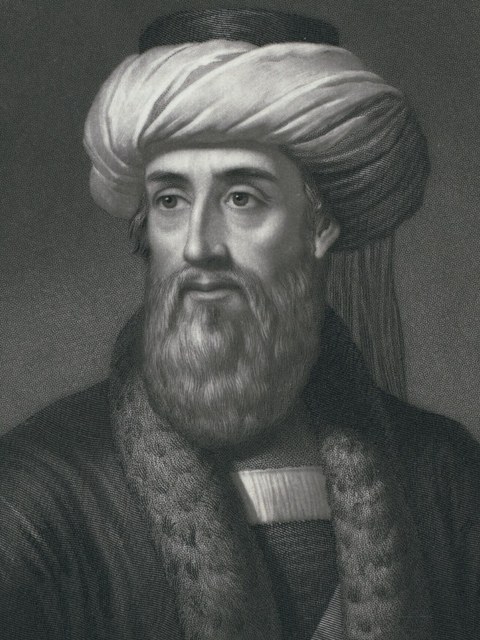
Watch out: Roman Empire (the successor state that replaced this Republic)
#393 · Other Asian Kingdoms and Empires · Level 1

Hunnic Empire

Hunnic Empire
Slovenski Volk · CC BY-SA 3.0

nomadic steppe confederation · 4th–5th centuries CE · Central Asia to Central Europe

Hunnic Empire was a nomadic confederation that ravaged 5th-century Europe under Attila before collapsing at the Battle of Nedao.

The kit

  • Rise — Hunnic Empire invaded Western Europe in the 4th century, driving the Visigoths into the Roman Empire and establishing dominance over subject tribes.
  • Achievements — Hunnic Empire forced Theodosius II to sign the Peace of Anatolius after leader Rugila's death and later extracted tribute through military pressure.
  • Conflicts — Hunnic Empire under Attila was defeated at the Battle of the Catalaunian Plains in 451 by a coalition of Romans under Flavius Aetius and Visigoths under Theodoric.
  • Legacy — Hunnic Empire collapsed when Gepid king Ardaric defeated them at the Battle of Nedao, gathering former subject tribes into a victorious coalition.

Runs with

Battle of the Catalaunian Plains
decisive 451 defeat by Roman-Visigothic coalition under Aetius and Theodoric open card →
Xiongnu
possibly descended from these Central Asian nomads per Joseph de Guignes open card →
Rome
Attila's 452 campaign against Rome ended after Pope Leo I negotiated retreat open card →
Pope Leo I
negotiated Attila's withdrawal from Rome in 452 CE open card →

The ladder · 15 clues

H

Gepid king Ardaric quickly collapsed an empire named for these people after gathering its former subject tribes and defeating them at the Battle of Nedao [[NEH- dow]].

H

These people lost the Battle of Nedao, and a coalition of the Visigoths led by King Theoderic and Romans under Flavius Aetius defeated these people at the Battle of Catalaunian Fields in 451 AD. name these nomadic people led by the so-called “Scourge of God,” Attila.

H

The Central Asian conquerors known as the Hepthalites are also called the "white" version of these people, who may also be identical to the Chinese Xiongnu (pr. shong- NOO).

H

These people signed the Peace of Anatolius with Theodosius II after the death of their leader Rugila.

H

Joseph de Guignes alleged that the Xiongnu were the ancestors of these people who first invaded Europe in the 4th century and were led by people like Rugila and Bleda.

H

Kaiser Wilhelm gave an infamous speech during the Boxer Rebellion which is usually named for these people.

H

Some Rajputs claim descent from this group of nomadic peoples, including the so-called “White” group of them who invaded India. Another branch of this group lost the Battle of Chalons in Europe.

M

Joseph de Guignes believed these people were descended from the Xiongnu [zong-nu].

M

Invasions by these people drove the Visigoths into the Roman Empire. name these people led by the “Scourge of God,” Attila.

M

Much of 5th century Europe was ravaged by this nomadic people led by Attila.

M

One ruler of these people took the gift of Honoria’s ring as a marriage proposal, beginning a campaign that ended at the Catalaunian Plains against Theodoric and Flavius Aetius [AYE-tee-us].

M

These people were once ruled by a dual monarchy of Bleda and a man who was betrothed to Honoria, the sister of Valentinian III.

E

The Visigothic king Theodoric allied with Flavius Aetius’ Romans to defeat these people at the Battle of the Catalaunian Plains.

E

These people lost the Battle of the Catalaunian Plains under a leader who was persuaded not to sack Rome by Pope Leo I. name this nomadic group that helped cause the downfall of the Roman Empire under its leader, Attila.

E

They defeated a coalition army led by Flavius Aetius and the Visigoth king Theodoric at the Battle of the Catalaunian Plains.

10 more clues from the record
H

The most famous ruler of these people became known as the “Scourge of God” but was defeated at the Catalaunian Plains in 451 CE.Name this ethnic group that traveled throughout eastern Europe in the fourth through sixth centuries CE.

H

One of three surviving words in these people's language, strava, refers to a funeral feast and was recorded by Jordanes (jor-DAN-ayz).

H

This Germanic tribe had started migrating from northern China in the first century CE. :Name this group whose most famous leader was Attila.

H

A leader of these people built himself a funeral pyre out of saddles in the middle of a battle which saw the death of Laudaricus.

H

Through their contact with China, these people introduced the seax shortsword to Western Europe, and they adopted the Alani practice of lengthening of the skull of infants born to noblemen.

H

These people advanced into Western Europe shortly after the death of Bleda, and in 452, Pope Leo I negotiated a retreat of their forces from Rome.

H

Future magister militum Flavius Aetius spent part of his childhood in this people’s court, then led by Uldin.

H

Theodoric and Flavius Aetius fought this group after it had been ruled by men like Rugila and Bleda.

H

Thorismund became king after his father died in battle against these people in Gaul.

H

The Peace of Anatolius and the Treaty of Margus were signed to stop this group’s expansion.

Watch out: Confused with the Xiongnu, whom Joseph de Guignes believed were their ancestors
#395 · Political Offices and Titles · Level 1

Roman Emperor

Roman Emperor
Mattia332 · Public domain

supreme ruler of Rome · 27 BCE–476 CE (West) · Roman Empire

Roman Emperor was the supreme ruler of the Roman Empire, first held by Octavian (Augustus) after centuries of republican government.

The kit

  • Rise — Roman Emperor was first held by Octavian (Augustus), adopted son of Julius Caesar, after Rome had spent centuries as a republic.
  • Succession crises — Roman Emperor was auctioned off to Didius Julianus by the Praetorian Guard, and during the Crisis of the Third Century military men called "barracks emperors" seized power.
  • Notable holders — Roman Emperor Valerian was killed by Shapur I either by flaying or having molten gold poured down his throat after defeat at Edessa.
  • Legacy — Roman Emperor included the "Five Good Emperors" beginning with Nerva, while 69 CE saw the "Year of the Four Emperors" including Otho and Galba.

Runs with

The ladder · 15 clues

H

The term "barracks" is used to disparage military men who seized this position during the Crisis of the Third Century.

H

One holder of this position had the nickname “Gothicus” and won the Battle of Naissus.

H

A character with this title who experiences peace during the "Age of Gold" despairs in Egypt over the sudden drowning of his lover.

H

A character known as the "arbiter of elegance" owns a Christian slave girl in a novel set during the reign of a character with this title.

H

One man with this title was the son of the author of Meditations and enjoyed participating in public wrestling matches.

H

A Syrian holder of this position took it at age 14, was plagued by numerous sex scandals, and was assassinated at age 18.

H

Was the first holder of what position, after Rome had spent centuries as a republic?

M

The Praetorian Guard worked for the holder of this position first held by Octavian.

M

Nerva began an era of these people known as the "Five Good" ones, while Otho and Vindex were among the lesser lights during the "year of the four" of these people. name this office held by men such as Tiberius and Claudius.

M

Robert Graves wrote a fictional biography of a character with this title held by Nero and Claudius.

M

Valerian the Elder, a man who held this position, was killed by Shapur I either by being flayed alive or by having gold poured down his throat. Other people who have held this position include Tiberius and Nero.

M

A thumbs down instructing combatants to show no mercy is brandished by holders of this position held by Caracalla in Gladiator II.

M

Augustus and Nero held this position that ruled a massive Italian-based empire.

E

Pertinax and Julian the Apostate were two holders of this title, while Otho and Galba were two of four people to hold this title in a particular year.

E

Nerva was the first of five successive men to hold this title who were considered “good.” name this title held by Vespasian and Antoninus Pius, who build a wall in Scotland, just like his predecessor, Hadrian.

7 more clues from the record
H

This position was auctioned off to Didius Julianus.

H

These people formed the Severan Dynasty.

H

The most notable rock relief at the Naqsh-e Rostam [“naksh ee ros-stam”] necropolis shows the triumph of the Sassanid ruler Shapur I over two holders of this position. :Name this position held by Valerian. Valerian became the only holder of this position to be captured as a prisoner of war after his defeat at the Battle of Edessa.

H

To justify a public execution, a man threatens to kill a holder of this position with the reasoning "That, my friend, is politics." After killing his brother as a mob rages outside, a holder of this position played by Fred Hechinger names his pet monkey his second in command.

H

That man, who shares this position with his brother Geta, is eventually killed by a freed slave played by Denzel Washington.

H

In one film, a quote about a holder of this position having a disease in his "loins" was criticized for suggesting he had syphilis.

H

A holder of this position may have played the fiddle during a fire, and its first holder was the adopted son of Julius Caesar.

Watch out: Confusing Julius Caesar (dictator, never held the title) with Augustus (first emperor)
#401 · Political Offices and Titles · Level 1

Consul

Consul
Notafly · CC BY-SA 3.0

Roman chief magistracy · 509 BCE–Imperial era · Rome

Consul was the highest elected office of the Roman Republic, held jointly by two men serving one-year terms with imperium and command over the army.

The kit

  • Rise — Consul emerged after Tarquin's exile when the comitia centuria vested executive power in two men serving one-year terms, with Lucius Junius Brutus as the first holder.
  • Achievements — Consul was the peak of the cursus honorum, requiring eligibility typically in one's forties, with each holder commanding the army and presiding over the Senate.
  • Conflicts — Consul holders could veto each other, and Lucius Sergius Catiline launched his revolt after failing election to this office for the third time.
  • Legacy — Consul gave their names to the year they served, and Gaius Marius held the office for an unprecedented seven terms while Caligula tried to elevate his horse Incitatus.

Runs with

Cicero
Gaius Marius
Marius held unprecedented seven consul terms open card →
Caligula
Caligula attempted to elevate horse Incitatus to consul open card →
Roman Republic
Consul was the Republic's highest elected office open card →

The ladder · 15 clues

H

During the republic, the peak of the cursus honorum was this office. The two colleagues who held this office concurrently were the most powerful men in the government.

H

Identify the following about some Roman offices, .Two men held this office for a period of one year. The holders of this office had command over the army and presided over the Senate, and each could veto his colleague.

H

Name some things about a certain political office from ancient Rome. :Two people served in this highest political position of the Roman Republic. People who held this position were chosen at annual elections.

H

Title held by Pompey three times, the highest elected position in Rome.

H

The Roman ships were led by Marcus Atilius Regulus and Lucius Manlius Vulso Longus, who both had this title. Years in ancient Rome were denoted by the holders of this high executive office.

H

answer some questions about titles bestowed upon Julius Caesar:Julius Caesar was elected to this office for the first time in 48 BCE. It was the highest political office in the Roman Republic, and these people served for 1-year terms.

H

Lucius Sergius Catiline launched his revolt after he failed to get elected to this office for the third time. Two men served in this highest regular office for one-year terms, and they were given 12 lictors.

M

Imperium was one form of authority wielded by these officials, the highest office during the Roman Republic. Two men were elected to single terms in this office.

M

Name these figures of the Roman Republic :Two of these magistrates who headed the Roman government and military were elected each year and gave their names to the year in which they served.

M

At least one plebian had to hold this office at any given time. name this executive of the Roman Republic, held by two men at once.

M

Immediately following the exile of Tarquin, the comitia centuria decided to vest the executive power in this office, which was held jointly by two men, each serving one year terms.

M

The imperium granted to the king during the monarchy was given to the holders of this highest office in the Roman Republic. They served for one-year terms and could only be reelected every ten years.

M

Caesar in 59 BC and Marius consecutively from 104 to 100 had the year named in their honor as holders of this principal executive magistracy of the Roman Republic, held by two persons at one time.

E

Usually, it took until one's forties to become eligible for this office in the cursus honorum. Two people held this highest elected office in ancient Rome, which was the chief executive of the republic.

E

Lucius Junius Brutus was the first holder of this position, while Caligula tried to elevate his horse Incitatus to this position and Gaius Marius held it for an unprecedented seven terms.

10 more clues from the record
H

Cambacères [kahm-ba-SEHR] and Lebrun were two of the three men who held it during the five years when it was an executive office in Republican France.

H

Commoners gained the right to hold this office in the Conflict of the Orders, but only fifteen “new men” took it before the civil wars.

H

Their terms could receive the prorogatio, extending them for a year, and the prefix “pro” appended to this title identifies the governor of a Senatorial province.

H

Under the Empire, twelve or more men a year could hold it, mostly on a "suffect" rather than "ordinary" basis.

H

This term first appears in Sextio-Licinian laws of 367, when this office was stripped of the power to conduct trials.

H

Years of anarchy were inserted into a sequence of people in this office in order to get the Varronian chronology to make sense.

H

The rule of the Decemviri interrupted the line of this office, which was opened to commoners by the Lex Licinia Sextia.

H

After their stay in office, these people were often given the governorship of a province and were known as pro-[this].

H

Late holders of this office commissioned ivory diptychs to distribute to their supporters.

H

The Comitia Centuriata designated the holder of this office, which was the endpoint of the cursus honorum.

Watch out: Proconsul (governor of a senatorial province after consulship, with 'pro' prefix)
#403 · Political Offices and Titles · Level 1

Senate

Senate
bdi Cesare Maccari /span /a · Public domain

Legislative chamber · Ancient Rome to present · Rome; modern democracies

The Senate is a legislative chamber that originated in ancient Rome and exists today in many democracies including the United States.

The kit

  • Roman Republic — Senate was a governing body of hundreds of men serving for life who passed laws governing taxes that funded fanum.
  • Roman conflicts — Senate members including Nasica killed Tiberius Gracchus, whose principal opponent was Nasica; Rome's motto was "Senate and the people of Rome."
  • U.S. structure — Senate is the upper house of Congress whose members gained direct election through the 17th Amendment; the Vice President serves as its President.
  • Gilded Age — Senate was depicted in an 1889 Joseph Keppler cartoon for Puck magazine showing business trusts as obese money bags looming over senators.

Runs with

American Railway UnionLyndon B. JohnsonMassachusetts
the Presidency
Vice President presides over Senate open card →

The ladder · 6 clues

H

Chief legislative body of the Republic, which shares its name with a chamber of Congress.

H

answer the following about the office of Vice President.According to the Constitution, the Vice President is the President of this upper house of the U.S. Congress.

M

Despite the decline in bicameralism following the Durham Report, Canada still holds on to an upper legislature of this name, which was plagued by an expenses scandal in 2012. Direct election to the legislature of this name in the US was secured through the 17th Amendment.

M

Laws governing taxes that funded fanum were passed during the Republic by this assembly made up of hundreds of men who served for life.

E

A frequently reprinted 1889 cartoon by Joseph Keppler for Puck magazine depicts business trusts as obese, ominous money bags looming over this specific group of people at work.

E

Tiberius Gracchus was killed by members of this governing body whose members included Nasica, the principal opponent to Tiberius Gracchus. The motto of Rome was “[this body] and the people of Rome.”

Watch out: House of Representatives (the other chamber of U.S. Congress)
#409 · Political Offices and Titles · Level 1

Tyrant

Tyrant
Shibo77 · Public domain

Ancient Greek autocratic rulers · Archaic–Classical periods · Greek city-states

Tyrants were Greek rulers who seized power illegally, often with popular support, establishing sole rule outside traditional aristocratic government.

The kit

  • Rise — Tyrants typically emerged from the aristocracy but based their rule on support from lower classes, overthrowing existing oligarchic governments.
  • Notable examples — Tyrants included Periander of Corinth, Peisistratus and Hippias of Athens, and Cypselos who overthrew the Bacchiadae dynasty.
  • Thirty Tyrants — Tyrants called the Thirty were installed in Athens by victorious Spartans after the Peloponnesian War, led by Critias and Theramenes.
  • Legacy — Tyrants employed lash-bearers to patrol streets and restricted voting rights, with Harmodius and Aristogeiton celebrated for killing the tyrant Hipparchus.

Runs with

Peisistratos
Peisistratos was a tyrant of Athens open card →
Corinth
Periander ruled Corinth as tyrant open card →
Syracuse
Athens
Athens experienced tyranny under multiple rulers open card →

The ladder · 10 clues

H

Harmodius and Aristogeiton killed one of these people named Hipparchus, who ruled Athens, while Periander was one of these people who ruled Corinth.

H

After the murder of one of these people, the courtesan Leaena was tortured to death, leading to a statue of a tongue-less lioness being erected.

H

One office similar to this position was the Aesymnetes, which Aristotle called an “elective” form of this office.

H

Those described by this term have all been “captains and generals for the people” and “pretend a love to God and religion” according to a pamphlet that weighs whether their murder is “profitable or noxious to the commonwealth.” :Name this term whose attribution to one English ruler is probed by the first of three questions in the anonymous 17th-century pamphlet Killing No Murder?

H

Identify the following about a form of government in Ancient Greece from clues, :Prevalent in the Archaic Age, this is the term for a ruler, usually from the aristocracy but who bases his rule on support from the lower classes, who rules alone and illegally. Famous ones include Theagenes of Megara and Pheidon of Argos.

H

Rulers with this title employed a series of lash-bearers to patrol the streets while ruling a city where they stripped voting rights from everyone except a group called "the Included." After overthrowing the Bacchiadae, Cypselos took this title, as did his son Periander.

H

Name these types of ancient Greek rulers .These rulers overthrew aristocratic government of a city-state and established a dictatorship in the name of the people. Peisistratus and Hippias were native examples in Athens, and Lysander established a not-so-nice group of 30 of them in 404 BC.

H

Thirty of these figures were installed in Athens by the victorious Spartans. :Name this type of authoritarian ruler who unlawfully seized power in Greek poleis.

M

Following the Peloponnesian War, Critias and Theramenes supported a government comprised of thirty of these people. name these Hellenistic absolute rulers, who may have oppressed the masses.

M

That regime whose leaders took this title was imposed on a city after its defeat in the Peloponnesian War. give this title, held by "Thirty" rulers in a pro-Spartan oligarchy that ruled Athens.

Watch out: Aesymnetes—an elective office Aristotle distinguished from tyranny proper
#413 · Political Offices and Titles · Level 1

dictator

dictator
VectorVoyager /a , Nagae Iku /a & Ziv · CC BY-SA 4.0

Roman emergency magistracy · 509–44 BCE · Roman Republic

Dictator was a Roman office granting absolute authority for up to six months during crises, accompanied by 24 lictors.

The kit

  • Rise — Dictator was appointed by the Senate to replace the two consuls during grave emergencies requiring extraordinary magistral authority.
  • Achievements — Dictator Cincinnatus rescued the trapped army at Mons Algidus, then resigned after just 16 days to return to his farm.
  • Conflicts — Dictator Fabius Maximus earned the epithet 'Cunctator' for his mocking delaying tactics during wartime command.
  • Legacy — Dictator was formally abolished by the Lex Antonia after Caesar held the position in perpetuity following his defeat of Pompey.

Runs with

Idi Amin
Julius Caesar
held dictatorship perpetually after defeating Pompey open card →
Francisco Franco
Lucius Cornelius Sulla
revived the office after Second Punic War open card →

The ladder · 15 clues

H

After the army of Minutius was trapped by the Aequi at Mons Algidus, the Roman Republic elected one of these people, who stepped down after just 16 days and returned to his farm.

H

Camillus was appointed this position five times. In Rome, this was a temporary position of extraordinary magistral authority, but today it designates any ruler who wields near-absolute power.

H

the self-appointed position Bolivar took with his Organic Decree, also taken by Roman republic rulers during emergencies.

H

Office given absolute authority for up to six months during wartime; its holders included Cincinnatus.

H

Answer the following about what happens in times of emergency during the Roman Republic, .Most people think that this leader, who had 24 fasces representing his authority, would simply supercede the two consuls. In many cases, figures like Cincinnatus would hold this title and simply relinquish their authority afterwards, but in other cases it led to ridiculous cases of usurpation.

H

Name these offices in the Roman Republic, FTPE.The Comitia Curiata was supposed to ratify the six-month term of this extraordinary official, appointed to deal with a grave crisis. Examples included Camillus, Cincinnatus, and, it goes without saying, Samnite foe L. Papirius Cursor.

H

Identify some political positions in the Roman empire, :The Senate sometimes authorized the temporary creation of this position, whose holder was granted nearly unlimited power. Cincinnatus gave up this position to return to his farm, and Caesar briefly got to hold it for life.

H

Answer the following questions about heroes of the early Roman Republic, .In times of need, the Republic could appoint a man to this supreme command office, replacing its two consuls for up to six months. Sulla held this emergency office for years.

H

Before leaving to fight, Cincinnatus was named to this position, which he ended up holding for only sixteen days. This position with absolute authority was generally only used during times of crisis.

H

One man to hold this post resigned after creating an open space called Aequimaelium and ordering the death of a man who bought up wheat during a famine.

M

Any holder of this office was accompanied by 24 lictors.

M

Sulla is credited for reviving this office which had not been used since Gaius Servilius Geminus held it following the Second Punic War.

M

One holder of this position established his namesake leap year-containing calendar and took it after defeating Pompey.

M

This position was formally abolished by the Lex Antonia and it was given to Cincinnatus in 439 BC.

E

Julius Caesar was voted into this position “in perpetuity.” name this position with absolutely authority which existed in times of crisis in the Roman Republic.

5 more clues from the record
H

Cincinnatus was widely hailed for giving up this position of absolute power immediately after he accomplished his tasks. This position is granted by the Senate for six month terms.

H

Another man was informed he had been named to this position while he was plowing his farm, which he returned to once he had finished serving.

H

While serving in this post, one man was given the epithet “Cunctator,” mocking his delaying tactics.

H

After the Battle of the Allia, Camillus took this office for the third of five times.

H

This was the original position responsible for appointing a lieutenant named the Master of the Horse.

Watch out: Modern dictators (absolute rulers) versus the Roman office (temporary emergency magistracy)
#454 · Named Literary Works · Level 1

Persians

Persians
PersianDutchNetwork · CC BY-SA 3.0

Ancient Iranian people · 6th century BCE–present · Iran and Anatolia

Persians were an ancient people of Iran who founded the Achaemenid Empire under Cyrus the Great.

The kit

  • Rise — Persians conquered Miletus and Anatolia in the 6th century BCE under Cyrus the Great.
  • Conflicts — Persians under Xerxes were defeated at the Battle of Salamis against the Greeks in 480 BCE.
  • Legacy — Persians form the majority population of present-day Iran as descendants of the Achaemenid peoples.

Runs with

Nanda Empire
both major empires of the 6th-4th centuries BCE open card →
Battle of Salamis
Xerxes's expedition defeated there in 480 BCE open card →
Battle of MarathonBattle of Thermopylae

The ladder · 5 clues

H

The ancient town of Miletus {MILL-AH-TUSS} was one of the wealthiest cities in the Greek empire until a 6th century BCE invasion from the east. …Name this empire, sometimes referred to as the Achaemenid {AH-KIM-AH-NIDD} Empire, that conquered Miletus and the rest of Anatolia under their leader, Cyrus the Great.

H

This play is the oldest extant example of Greek tragedy. :Identify this play in which Queen Atossa's ominous dreams are realized when word arrives in Susa of the title people's defeat at the Battle of Salamis.

M

The ethnicity which went to war against the Ottomans for a final time under Abbas I?

M

Name these ancient peoples that lived in modern-day Iran, :The Achaemenid Empire founded by Cyrus the Great was the first great expansion by these people. These people form the majority of the population of present-day Iran.

E

This oldest complete surviving play in the history of literature won its author, Aeschylus, first prize at the 472 BC Dionysia. In it, Queen Mother Atossa anxiously awaits news of her son Xerxes’s expedition against the Greeks.

Watch out: Aeschylus's The Persians depicts their defeat at Salamis, not a Persian victory
#458 · Named Literary Works · Level 1

Agricola

Agricola
Original uploader was Ostrich /a at data-mw-original- en.wik · Public domain

Roman general and governor · 1st century CE · Britannia

Agricola was a Roman general whose campaigns in Britannia were chronicled by Tacitus in a biographical work.

The kit

  • Achievements — Agricola won the battle of Mons Graupius during his governorship of Britain.
  • Conflicts — Agricola was recalled from Britain by Domitian following his military successes there.
  • Legacy — Agricola's career became the subject of a work noting that Romanization was called 'culture' among the ignorant when it was enslavement.

Runs with

TacitusVespasian
Annals
no connection evident in clues open card →
Domitian
recalled Agricola from Britain after Mons Graupius open card →

The ladder · 3 clues

H

This work’s preface notes that its author had held off from writing it because of the executions of Rusticus and Senecio. :Name this work, whose subject is described as preferring the talent of one people to ‘the studiousness of the Gauls’. This work claims that Romanization ‘was called “culture” among the ignorant when it was part of their enslavement’.

M

His reign also saw a revolt led by Saturninus, and he recalled Agricola from Britain after Agricola won the battle of Mons Graupius.

E

Wrote about his father-in-law’s experiences in Britannia in Agricola?

#462 · Named Literary Works · Level 1

Annals

Annals
Unknown author Unknown author · Public domain

Historical work by Tacitus · 1st–2nd century CE · Roman Empire

Annals is Tacitus's final masterpiece recording Roman history from Tiberius through Nero in year-by-year chronological structure.

The kit

  • Scope — Annals covers the reigns of Roman emperors from Tiberius to Nero, spanning the years 14–68 CE.
  • Structure — Annals is named for and popularized its pure chronological progression, organizing events year-by-year rather than thematically.
  • Survival — Annals survives only in partial form, with accounts of Tiberius and Nero remaining from the complete work.
  • Sequel — Annals was followed by the Histories, which covered the years 69–96 CE under later emperors.

Runs with

Tacitus
Tacitus wrote Annals as his final masterpiece open card →
Bakumatsu Period
Spring and Autumn Period
Spring and Autumn translated as annals for year-by-year structure open card →
Agricola

The ladder · 9 clues

H

Since “Spring and Autumn” is used as a metonym for “year,” that title is often translated with this English term. These historical records are organized year-by-year, unlike other kinds of chronicles.

H

That work is known for its heavy-handed use of alliteration, including an entire line filled with words starting with “m” and another with “t”.

H

A work with this title describes a dream in which Homer’s soul was reincarnated into a peacock.

M

The history of Britain’s fight against Rome, along with other events during the reigns of the Emperors Tiberius through Nero, is recorded in this final masterpiece of Tacitus.

M

Another work with this title cites several historians in debating whether Agrippina committed incest, and starts “at the beginning, Rome was ruled by kings”.

M

A work with this title was the first Latin poem to be written in dactylic hexameter; that is the most significant known work by Ennius.

E

This is the title of a work spanning the Roman emperors from Tiberius to Nero, written by Tacitus. name these historiographical works, titled for their year-by-year structure.

E

Tacitus wrote two major history books—name the chronologically first one. This book covers the years 14-68, while the other one covers 69-96.

E

Only accounts of Tiberius and Nero survive from this Tacitus work that is named for and popularized its pure chronological progression. It was followed by the Histories.

Watch out: Confusing Annals with Histories, Tacitus's other major historical work covering 69-96 CE
#465 · Named Literary Works · Level 1

Plutarch's Parallel Lives

Plutarch's Parallel Lives
Printer: Ulrich Han · Public domain

biographical work · c. 100 CE · Roman Greece

Plutarch's Parallel Lives is a biographical work pairing Greek and Roman leaders to illustrate moral character through comparative history.

The kit

  • Structure — Plutarch's Parallel Lives paired Greek and Roman figures, such as Fabius Maximus with a Greek counterpart, to draw moral comparisons.
  • Historical value — Plutarch's Parallel Lives provides the main source for details of Cimon's defeat of the Persians at Eurymedon River.
  • Companion work — Plutarch's Parallel Lives was written by the author of the Moralia and the Life of Alexander.

Runs with

Plutarch
author of this biographical work open card →
women
no connection evident in clues open card →
JohnWilliam

The ladder · 3 clues

H

The main source for the details of Cimon’s extraordinary defeat of the Persians at Eurymedon River is this most popular work of the author of the Moralia and the Life of Alexander.

H

In the Parallel Lives, Plutarch compared this figure with Fabius Maximus.

E

This man’s death was memorialized by the phrase “the light has gone out of our lives” after he was killed by Nathuram Godse.

Watch out: Confused with Plutarch's Moralia, his other major work
#466 · Named Literary Works · Level 1

The Iliad

The Iliad
Osama Shukir Muhammed Amin FRCP(Glasg) · CC BY-SA 4.0

Homeric epic poem · 8th century BCE · Ancient Greece

The Iliad is Homer's epic poem about the Trojan War, set before the Odyssey and focusing on Achilles' wrath.

The kit

  • Opening — The Iliad opens with a dispute over the abducted Chryseis, whom Agamemnon is forced to return to her father.
  • Structure — The Iliad includes the Catalogue of Ships in Book 2, a list of boats and their crews.
  • Central conflict — The Iliad depicts events after the wife of Menelaus is abducted by Hector's brother Paris.
  • Climax — The Iliad shows an enraged Achilles dragging Hector's corpse around the walls of Troy.

Runs with

Troy
setting of the war open card →
Joe Hill
Paris
abducts Helen, is killed open card →
Agamemnon
forced to return Chryseis open card →

The ladder · 6 clues

H

Early on this in work, a religious figure calls for the return of his daughter Chryseis, who had been abducted.

H

Book 2 of this poem largely consists of a list of boats and their crew, known as the Catalogue of Ships.

M

The “Catalogue of the Ships” is a section of this work whose central event occurs after the wife of Menelaus is abducted by the brother of Hector.

M

This poem opens with a dispute over the abducted Chryseis, whom Agamemnon is forced to return.

E

Paris is killed in this work whose aftermath is the subject of the Odyssey. name this Homeric epic that focuses on the Trojan War.

E

Later in this epic, the corpse of Hector is dragged around the walls of Troy by an enraged Achilles. name this epic poem by Homer about the Trojan War, set before his Odyssey.

Watch out: The Odyssey (Homer's other epic, set after the Iliad)
#470 · Named Literary Works · Level 1

Almagest

Almagest
bdi Ptolemy /span /a · Public domain

astronomical treatise · 2nd century CE · Alexandria

Almagest is Claudius Ptolemy's astronomical treatise incorporating Hipparchus's star catalogue and outlining the geocentric paradigm displaced by the Copernican Revolution.

The kit

  • Content — Almagest outlines methods for correcting celestial deviations using equants and epicycles, techniques later applied in the Alfonsine tables.
  • Companion works — Almagest was accompanied by the "Handy Tables," which served as the model for most subsequent zij astronomical guides.
  • Editions & commentaries — Almagest's third book was edited by Hypatia, while Theon and Pappus wrote commentaries on the text.
  • Translation — Almagest's first Latin edition by Henricus Aristippus was less widely used than Gerard of Cremona's translation.

Runs with

Ptolemy
Ptolemy authored this treatise on astronomy open card →
ParisAlexandriaAbbasid Caliphate

The ladder · 5 clues

H

The first Latin edition of this text, prepared by Henricus Aristippus, was never as widely used as that of Gerard of Cremona.

H

Ibn al-Haytham wrote that this text misunderstands the “configuration of the world,” which he expanded on in his book of “doubts” concerning this text’s author.

M

Most zij guides were modeled on a companion to this text called the “Handy Tables.” The Alfonsine tables were produced using the methods outlined in this book for correcting for deviations using equants and epicycles.

M

Notes on this text by Pappus were included in the commentaries on it by Theon, who credited his daughter Hypatia with preparing an edition of this text’s third book.

E

This text, which incorporates the catalogue of Hipparchus, outlines a paradigm that was largely displaced in the Copernican Revolution. name this treatise on astronomy by Claudius Ptolemy.

Watch out: Ibn al-Haytham wrote that the text itself misunderstands the configuration of the world, not just doubts about Ptolemy
#479 · Religious Groups and Denominations · Level 1

Christians

Christians
bdi Raphael /span /a · Public domain

followers of Jesus Christ · 1st century CE–present · originated Judea, spread globally

Christians are followers of Jesus Christ who faced Roman persecution before Constantine's Edict of Milan granted them legal status in 313 CE.

The kit

  • Persecution — Christians were blamed by Nero for the Great Fire of Rome and thrown to lions and dogs as punishment.
  • Diocletianic Persecution — Christians suffered the Diocletianic Persecution after Galerius claimed their existence prevented the Oracle at Delphi from speaking.
  • Legalization — Christians gained official toleration through the Edict of Milan in 313 CE after Constantine saw a cross in the sky.
  • Japan — Christians were persecuted by the Tokugawa shogunate after European missionaries spread the faith, culminating in the Shimabara Rebellion.

Runs with

Nanda Empire
no connection evident in clues open card →
church
Diocletian
Diocletian launched major persecution including torture at Nicomedia open card →
Nero
Nero blamed Christians for Great Fire and executed them open card →

The ladder · 15 clues

H

Though these people suffered the Diocletianic Persecution and Nero blamed them for causing the Great Fire, they were eventually granted legal status in the 313 AD Edict of Milan. Name this monotheistic faith adopted by Constantine the Great.

H

A campaign against these people began when Galerius was told that their existence prevented the Oracle at Delphi from speaking.

H

Allowed to maintain the Church of the Holy Sepulchre in Jerusalem and placed under the "protection" of the Russian tsar?

H

Religious group persecuted by the shogunate after it was spread by European missionaries.

H

The catacombs of Rome were predominantly used for the burial of these people.

H

Religious group that was suppressed after the failed Shimabara Rebellion.

H

One form of capital punishment in Rome was the Damnatio ad bestias, which involved throwing people to the lions. :Later writers likely exaggerated the number of these people executed ad bestias, though Tacitus records that Nero ordered these people to be killed by dogs after the Great Fire of Rome.

H

In another letter, Pliny asks Trajan for advice on dealing with members of this religious group. In contrast with Nero’s persecution of these people, Trajan advised that worshiping Roman gods was enough proof of repentance.

H

While governor of Bithynia-Pontus, Pliny the Younger wrote a letter to Trajan asking for advice on dealing with these people, who Decius targeted in a law requiring public sacrifice.

M

Popular religious group persecuted by Emperor Diocletian.

M

That text’s author, Julian the Apostate, is named for the fact that he rejected the ideals of this group. name this group who was persecuted in the Roman Empire after the crucifixion of their martyr Jesus Christ in 33 CE.

M

The Tokugawa shogunate had a policy of persecuting these people. Amakusa Shiro led an uprising of peasants, most of whom were these people, in the Shimabara Rebellion.

M

These people were officially tolerated after the Edict of Milan. name this religious group that Constantine I joined after he saw a cross in the sky.

M

This group, which populated much of Rome’s Aventine and Trastevere areas, made heavy use of catacombs.

M

The text Against the Galileans denounced this group.

4 more clues from the record
H

Officially, thurificati, libellatici, and traditores were classes of lapsi, a collective term for people who broke from this group, which made up the Theban Legion.

H

After refusing an order of Maximian, a Roman legion composed of 6,600 members of this group was decimated at Agaunum and later utterly massacred.

H

A member of this group had salt and vinegar poured in his wounds during a persecution of these people in Nicomedia.

H

Tertullian claimed that the “blood of [these people] is seed” while defending them in one of his works.

Watch out: Julian the Apostate rejected Christianity and wrote Against the Galileans denouncing them
#515 · Medieval European Battles and Sieges · Level 2

Battle of Thermopylae

Battle of Thermopylae
bdi Jacques-Louis David /span /a · Public domain

Greek defensive stand · 480 BC · mountain pass, Malian Gulf

Battle of Thermopylae was a 480 BC engagement where 300 Spartans and allies held a narrow pass against Xerxes' massive Persian invasion force.

The kit

  • Geography — Battle of Thermopylae took place at a coastal pass near hot springs by the Malian Gulf, whose name means 'hot gates.'
  • Defense — Battle of Thermopylae saw Leonidas command hoplites who replied 'come and take them' when Xerxes demanded they surrender their weapons.
  • Betrayal — Battle of Thermopylae ended after Ephialtes showed the Persians a goat path that allowed them to encircle the Greek defenders.
  • Aftermath — Battle of Thermopylae prompted the Athenian navy to withdraw to Salamis while Boeotia was overrun and Plataea and Thespiae were sacked.

Runs with

Greece
Greek forces including 700 Thespians and 400 Thebans fought in the defense open card →
Sparta
Spartan king Leonidas led 300 Spartans in the famous last stand open card →
Xerxes I
Xerxes I commanded the invading Persian army that killed Leonidas open card →
Persians
Persian forces won after flanking the defenders via the goat path open card →

The ladder · 9 clues

H

The Greek loss at this battle led to Boeotia [bee-OH-shuh] being overrun. 700 Thespians and 400 Thebans fought at this battle as part of the losing force.

H

The son of Eurydemus betrayed the Greeks at this battle, but was forced to flee Greece after the Battle of Salamis.

H

The Battle of Magnesia followed one battle fought at the same site as this battle. 700 Thessalians were slaughtered and a force of Phocians were bypassed during this battle, where one leader replied “come and take them” when asked prior to this battle to lay down his arms.

H

During one battle at this location in 279 BC, Brennus managed to encircle the opposing forces, allowing him to move on to a sack of Delphi.

M

Battle, whose name means “Fiery gates,” where a Persian force slaughtered 300 troops in a mountain pass.

M

Ephialtes [eff-ee-all-tees] showed an enemy commander a way to circumvent this location, where the army of Leonidas was then killed by Xerxes’ [zerk-zee’s] invading Persian army. name this battle site where, in 480 BC, over three hundred Spartan soldiers were killed in a mountain pass.

M

This battle ended after Ephialtes (pr. eph-FYE-ull-TEEZ) showed the "goat path" to the winning force, commanded by Xerxes (pr.

E

It was contemporaneous with the naval battle of Artemisium. name this battle at “hot gates” held by a small force of hoplites under Leonidas against the Persians.

E

The Athenian navy withdrew to Salamis after this 480 BC battle where Leonidas and 300 Spartans tried to hold off a larger Persian army.

10 more clues from the record
H

A 1980 paper by Paul Wallace argues that that feature used during this battle began at Vardates, and not at the other candidates such as the Asopos Gorge.

H

In Books 4 and 7 of his Guide to Greece, Pausanias describes how no soldiers from the Peloponnesus took part in a battle at this site, resulting in one side being outnumbered by over four to one.

H

This engagement occurred at the same time as a naval battle to the north, which prevented the winners’ fleet from entering the Gulf of Malis, along which this battle occurred.

H

One side in this battle was seen crossing the Malian Gulf prior to it and this battle occured 5 days after the winners landed at Anthela.

H

The winning side in this battle went on to sack Plataea and Thespiae, and Hydarnes commanded the Immortals in this battle.

H

A 700 man detachment from Thespiae stayed behind to fight in this battle where Ephialtes betrayed Spartan forces holding a coastal pass against the forces of Xerxes I.

H

A stone commemorating this battle asks passersby to “tell” their bretheren that “following their orders, we fell here” in a message called the Epitaph of Simonides.

H

This battle took place near the Malian Gulf by a series of gates and a set of hot springs.

H

This location is bound to the north by the Gulf of Malia, and is named for the presence of hot springs nearby.

H

This battle became necessary after the Vale of Tempe was proven to be avoidable by an approaching force.

Watch out: A later battle at Thermopylae in 279 BC saw Brennus defeat Greeks before sacking Delphi
#560 · Greco-Roman Mythological Figures · Level 2

Apollo

Apollo
bdi Dennis G. Jarvis /span /a · CC BY-SA 2.0

Greek god · ancient Greek/Roman mythology · Greece, especially Delphi

Apollo was the Greek god of prophecy, music, archery, and healing, twin brother of Artemis and patron of Delphi.

The kit

  • Domains — Apollo served as patron deity of Delphi, where the Pythia priestess delivered his prophecies from the Oracle's temple.
  • Conflicts — Apollo slew the Python at Delphi and founded panhellenic games in penitence, later murdering the Cyclopes for Asclepius's death.
  • Roman worship — Apollo aided Emperor Augustus at Actium and Naulochus, leading Augustus to build temples and reestablish games at Nicopolis.
  • Modern legacy — Apollo lent his name to NASA's moon-landing program that succeeded in 1969 after beginning in the mid-1960s.

Runs with

Strategic Hamlet Program
no connection evident in clues open card →
NASA
NASA's Apollo program landed first men on moon in 1969 open card →
Equestrian Statue
no connection evident in clues open card →
Artemis
Artemis was Apollo's twin sister who joined him slaying Niobe's children open card →

The ladder · 9 clues

H

This figure revealed the island of Anaphe [[AH-nah-feh]] in order to shelter the Argonauts.

H

Heracles completed his labors for Eurystheus [[yoo-RISS-thee-us]] at this being's command.

H

Kouros sculptures were originally thought to be 2013 NHB Set A Bee Round 3 depictions of this god, who lent his name to the program for which Saturn-series rockets were developed.

H

During a program named for this god, three people read from the Book of Genesis on a Christmas Eve 1968 television broadcast.

M

This deity won a music contest against Pan and turned King Midas's ears into those of a donkey.

M

The Pythia was a priestess who related this god’s words from Delphi, and this god cursed Cassandra to forsee the future but never be believed, since this son of Leto oversaw prophecy. name this Greco-Roman god of light, the twin brother of Artemis.

M

The first stage of the program named for this god killed Edward White, Roger Chaffee, and Gus Grissom, while the 13th nearly ended in disaster. identify the Greek god who lent his name to the American program that landed the first men on the moon.

M

This program began in the mid-1960’s with the goal of placing men on the Moon, which it did in 1969. It ended in 1972.

E

The patron deity of Delphi, this figure was often conflated with Helios, god of the sun. name this Greek god of prophecy, archery, and music, the twin brother of Artemis.

9 more clues from the record
H

The Oracle’s temple at Delphi was dedicated to this Greek god of music and healing, who slew the Python.

H

This god founded a panhellenic competition in penitence for killing Python, and with his sister, he slew the children of Niobe.

H

This god murdered the Cyclopes [SYE-kloh-pees] to get revenge for the death of Asclepius.

H

A ruler’s impious impersonation of this deity’s “Tormentor” aspect at a debaucherous banquet led to the cry that “the gods had eaten all the grain.” It’s not Zeus, but a serpentine mark manifested itself upon one woman’s body after this god impregnated her as a snake while she slept.

H

Suetonius relates that this god’s symbol emerged from the womb of Atia in a dream experienced by her husband, Gaius Octavius.

H

Games at Nicopolis were reestablished to honor this deity’s aid at Actium by his purported son, Emperor Augustus.

H

A bolt of lightning marked the spot of this deity’s new temple on the Palatine, which honored his intercession at Naulochus.

M

Roman kings were known to consult what god’s Oracle at Delphi?

M

A consul vowed to construct a temple to this god’s “Medicus” aspect during a plague.

Watch out: Helios, the actual sun god with whom Apollo was often conflated
#561 · Greco-Roman Mythological Figures · Level 2

Romulus

Romulus
bdi Carlo Brogi /span /a · Public domain

Legendary first king of Rome · traditional 753 BCE · Rome, Palatine Hill

Romulus was Rome's legendary first king who killed his twin brother Remus in a dispute over the city's founding location.

The kit

  • Rise — Romulus was a descendant of Aeneas and son of Mars who founded Rome after seeing six more vultures than Remus.
  • Achievements — Romulus organized games to commit the abduction of the Sabine women and created the Celeres, a 300-soldier bodyguard.
  • Conflicts — Romulus killed Remus after his brother leaped over the city wall, proclaiming that all who dishonor Rome's walls should perish.
  • Death & succession — Romulus became divine by turning into a whirlwind near Quirinal Hill before Numa Pompilius succeeded him as king.

Runs with

Rome
founded the city on Palatine Hill in 753 BCE open card →
Nanda Empire
no connection evident in clues open card →
Joe Hill
no connection evident in clues open card →
Plutarch

The ladder · 9 clues

H

Was started by this mythical founder who killed his brother Remus F

H

This man organized games to commit the abduction of the Sabine [[SAY- been]] women.

H

One account tells how this figure became divine shortly before visiting the Alban colonist Proculus [[PRAH-kyoo-luss]], who states that he turned into a whirlwind and went to the heavens.

H

This figure was guarded by a group of horsemen called the Celeres, and he may be associated with the war god Quirinus because of his disappearance near the Quirinal Hill.

M

The legendary first king of Rome was this twin brother of Remus.

M

He proclaimed “so perish every one hereafter that will leap over my wall” while killing his brother after they debated the meaning of the number of birds flying around their heads. name this brother of Remus, the first king of the Romans.

M

This king undertook his most famous act after he saw six more vultures than his brother, giving him the right to choose the location where a city was founded. name this founder of Rome and brother of Remus.

M

Fighting between factions loyal to him and factions loyal to Tatius eventually led to Numa Pompilius being crowned as this man’s successor.

E

founded Rome with his brother Remus?

9 more clues from the record
H

This descendant of Aeneas [[ay-NEE-ahss]] may have killed his sibling after arguing on which of seven hills to found this figure's namesake city.

H

Answer some questions about the kings of Rome, .According to legend, this man became the sole king of Rome after the death of his Sabine co-ruler Titus Tatius. With his brother Remus, he is credited with founding the city of Rome.

H

Susann Lusnia argues that violence played a significant role in Roman identity, which is exemplified by early Roman history. :This man killed his brother Remus over a dispute about where to found Rome.

H

Identify the following Roman kings, :This ruler, the first Roman king, also founded Rome on the Palatine Hill, although his brother had wanted to start building on the Avantine Hill.

H

Early in his history, Livy recounts the story of this first king of Rome, a son of Mars who killed his twin brother Remus for dishonoring the walls of the rising city.

H

In 476, Odoacer deposed a boy in Ravenna generally considered to be the last Western Roman emperor, who was named for this mythical founder of Rome and given the nickname Augustulus.

H

This man once threw a spear that could not be pulled out of the ground and later grew into a cornel tree.

H

This man created a personal bodyguard of 300 soldiers known as the Celeres.

H

This king’s most famous action occurred on the day of the Parilia festival.

Watch out: Romulus Augustulus, the last Western Roman emperor deposed in 476 CE, was named after this founder
#562 · Greco-Roman Mythological Figures · Level 2

Zeus Horkios

Zeus Horkios
a rel="nofollow" Gary Todd /a from Xinzheng, China · CC0

Oath-keeping aspect of Zeus · ancient Greek period · sanctuary at Olympia

Zeus Horkios was the oath-keeping aspect of Zeus, the chief Greek god who punished perjurers at his Olympian sanctuary.

The kit

  • Role — Zeus Horkios represented Zeus's role as keeper of oaths and punisher of liars in ancient Greece.
  • Sanctuary — Zeus Horkios's sanctuary at Olympia required guilty perjurers to create votive statues as punishment.
  • Broader identity — Zeus Horkios was an aspect of Zeus, the thunder-wielding king of the Olympian gods and Greek pantheon.
  • Olympic connection — Zeus Horkios was honored at Olympia, where the ancient Olympic Games were held to commemorate Zeus.

Runs with

Iran
targeted by Israeli cyber-attack named Nitro Zeus open card →
Israel
launched cyber-attack project Nitro Zeus against Iran open card →
Crete
Cretans fabricated Zeus's tomb per Callimachus open card →
The Iliad
depicts Zeus as Dione's husband, Aphrodite's father open card →

The ladder · 9 clues

H

Phidias used the ivory-and-gold material chryselephantine to depict this god for one of the Wonders of the Ancient World.

H

The pagan god Baal became known as Belos, which was later translated as the name of this Greek deity.

H

This god’s “Horkios” aspect represented his role as the keeper of oaths; guilty liars would be forced to create votive statues at this god’s sanctuary at Olympia.

H

This deity was depicted with horns in many reproductions of statues made during Roman rule, reflecting this god’s conflation with the Egyptian deity Ammon.

M

This god was believed to have survived the cannibalism of his father Cronus by being swapped with a stone. name this thunder god and head of the Greek pantheon.

M

After accidentally killing Semele [seh-meh-lee], this god sewed his son into his thigh.

M

The eagle and bull represented this husband of Hera and Greek god of thunder.

E

This father of Artemis, Apollo, and the “twice-born” Dionysus lived on Mount Olympus with his wife, Hera. name this lightning-wielding chief god of the Greek pantheon.

E

This husband of Hera and father of Heracles defeated the Titans with his thunderbolts. name this King of the Olympians, the head of the Greek Pantheon.

10 more clues from the record
H

This god was the father of Sarpedon, Radamanthus, and Minos, as well as a pair of twins born on the island of Delos to Leto.

H

According to Callimachus, the people of Crete had fabricated a tomb to this god that was the inspiration of Euhemerus’ theory.

H

According to Ovid, this god took the form of an Eagle to kidnap Ganymede to replace Hebe as cupbearer.

H

Israel targeted Iran with a cyber-attack project named after “Nitro” and this deity.

H

Was the leader of the Olympian gods and was depicted in a famous statue at Olympia?

H

The ancient Olympic Games were held to commemorate this deity.

H

This god's oracle was located at Dodona.

M

While in the form of a bull, this god kidnapped Europa.

M

This god’s cult center was located in the forest of Dodona.

E

According to the Iliad, this god was the husband of Dione and father of Aphrodite.

Watch out: Zeus's oracle at Dodona, not the Horkios sanctuary at Olympia
#563 · Greco-Roman Mythological Figures · Level 2

Hercules

Hercules
a rel="nofollow" Juanedc /a from Zaragoza, España · CC BY 2.0

Greek demigod hero · mythological era · Greece and Mediterranean

Hercules was a Greek demigod son of Zeus famed for completing the Twelve Labors and renowned for superhuman strength.

The kit

  • Achievements — Hercules completed the Twelve Labors including slaying the Nemean Lion, capturing Cerberus, and capturing the Cretan bull.
  • Legacy — Hercules was claimed as ancestor of the Dorian invaders through his son Hyllus, whose descendants became the Agiad and Eurypontid dynasties of Sparta.
  • Conflicts — Hercules was bound to service twice for murders: to Omphale for killing Iphitus and to Eurystheus for killing his own children.
  • Legacy — Hercules was syncretized with Melqart and the Italic shepherd Garanus and founded many cities during his Mediterranean travels.

Runs with

Commodus
Commodus dressed as Hercules with **lion hide and club** while fighting weakened animals open card →
Equestrian Statue
Farnese Hercules statue by **Glykon was owned by Alessandro Farnese** open card →
Spain
first-century navigational aid in **Galicia marks western limit** of his travels open card →
Sed Festival
Roman soldiers cried **'Hercules Invictus' after Pompey's victory** at Pharsalus open card →

The ladder · 9 clues

H

Commodus fought weakened wild animals while dressed as this figure, donning a lion's hide and a traditional club.

H

Records state this man's name was paired with the word "Invictus" as a victory cry by Roman soldiers following Pompey the Great's win at Pharsalus.

H

This figure was supposedly the ancestor of the Dorian invaders, including the Agiads [[ah-JEE-ids]] and Eurypontids [[yoo-rih-PON-tids]], whose dynasties co-ruled as kings of Sparta.

H

Scholars believe this mythic figure was syncretized with the Italic shepherd Garanus upon arrival to the Italian peninsula.

M

Pompeii and a city named for this mythical figure were two of the municipalities most gravely affected by the 79 AD eruption of Vesuvius.

M

The largest city on the island of Crete takes its name from this ancient mythological hero, known for slaying the Nemean Lion and capturing Cerberus among other labors.

M

One bust of this figure identifies him with the Emperor Commodus [[KAH-moh-duss]], and a statue found in Mathura [[mah-THOO-rah]], India depicts this man slaying the Nemean [[neh-MEE-an]] Lion. name this performer of Twelve Labors from Greek mythology.

M

This hero had to be purified many times for various murders, and twice was bound to service: once to Omphale for killing Iphitus, and for killing his own children, to Eurystheus, who set him his twelve labours.

E

Roman art often depicts the "Twelve Labors" of this demi-god known for his strength.

6 more clues from the record
H

The legendary progenitor of those dynasties, Hyllus [[HEE-lus]], was this man's son by Deianira [[dy-ah-NEE-rah]].

H

Mythic hero and son of Zeus from whom the kings claimed to have descended.

H

A navigational aid on the coast of Galicia in northwest Spain, dating from the first century CE, is namedafter this mythical man because it marks the western limit of his travels.Name this strongman from Roman myth who wore the skin of the Nemean Lion.

H

Paul III’s grandson, Alessandro Farnese, gained possession of a famous depiction of this mythological figure made by Glykon. This man had to complete tasks like capturing the Cretan bull.

H

Melqart was often syncretized with this Greek deity. Like Melqart, he was connected with colonization and supposedly founded a lot of cities as he traveled the Mediterranean during his Twelve Labors.

M

Cassander also slew a son of Alexander the Great with this name, whom he had fathered with his mistress Barsine. The descendants of a figure with this name allegedly invaded the Peloponnese during the Dorian Invasion.

Watch out: Alexander the Great had a son named Hercules with Barsine who was killed by Cassander
#564 · Greco-Roman Mythological Figures · Level 2

Athena

Athena
Jastrow · Public domain

Greek goddess · archaic through classical Greece · Athens and Greek world

Athena was the Greek goddess of wisdom and warfare who served as virgin patron deity of Athens.

The kit

  • Iconography — Athena is depicted in artifacts bursting from Zeus' head in full armor and holding an owl.
  • Parthenon statue — Athena Parthenos was a gold-and-ivory statue by Phidias showing her with the Aegis shield decorated with Medusa's head.
  • Naming of Athens — Athena won a contest against Poseidon by creating an olive tree, leading to Athens being named for her.
  • Panathenaic festival — Athena's quadrennial festival featured a peplos robe displayed as a ship's sail on a parade cart with sacred baskets.

Runs with

Equestrian Statue
Pesistratus hired a tall woman to impersonate Athena in a golden chariot open card →
Parthenon
the Parthenon was dedicated to and named for Athena open card →
Sed Festival
Panathenaic festival honored Athena with peplos robe procession every four years open card →
Athens
Athens was named for Athena after her olive tree victory open card →

The ladder · 9 clues

H

The Parthenon was dedicated to and named for this ancient Greek goddess, the virgin patron deity of Athens.

H

In a quadrennial festival celebrating this deity, the peplos robe was setup like a ship’s sail on a parade cart, while the kanephoroi carried sacred baskets alongside.

H

The Spartan temple of the Bronze House was devoted to this deity, who was depicted in a gold-and-ivory Parthenos statue by Phidias.

H

In the 550s BC, Pesistratus returned to power in Athens by constructing a golden chariot and hiring a "tall woman" to impersonate this deity.

H

Winners of a horse race dedicated to and named for this deity were given 140 amphorae of olive oil.

M

Pallas is an epithet of this Greek goddess of war and wisdom.

M

In another sculpture, this deity holds an owl, and a statue of this goddess as Parthenos that stood in the Acropolis showed her with the Aegis, a shield decorated with the head of Medusa.

M

One city was supposedly named for this deity after they created an olive tree, which won a contest against Poseidon’s salt water spring.

E

Artifacts depicting this deity often show her bursting out of Zeus’ head in full armor. name this Greek goddess of wisdom and warfare.

1 more clues from the record
H

Phidias sculpted this deity as Promachos for a statue that held Nike in its right hand.

Watch out: Pallas (an epithet of Athena, not a separate deity)
#565 · Greco-Roman Mythological Figures · Level 2

Jupiter

Jupiter
NASA/STSCI (S.T.A.R.S) · Public domain

Roman king of gods · worshipped throughout Roman history · Rome, Roman Empire

Jupiter was the chief deity of the Roman pantheon, equivalent to Greek Zeus, who ruled from the Capitoline Hill temple.

The kit

  • Mythology — Jupiter transformed into an eagle to kidnap Ganymede and into a bull to abduct Europa in Ovid's Metamorphoses.
  • Family — Jupiter was the son of Saturn, husband of Juno, and father of Minerva in Roman mythology.
  • Worship — Jupiter's temple on the Capitoline Hill was dedicated to him as Optimus Maximus and also housed Juno and Minerva.
  • Priesthood — Jupiter formed the Archaic Triad with Mars and Quirinus and was served by the high priest called the Flamen Dialis.

Runs with

Galileo GalileiCuban Missile Crisis
Rome
chief deity with major temple on Capitoline Hill open card →
Black Death
no connection evident in clues open card →

The ladder · 8 clues

H

When syncretized with the Egyptian god Amun, this Roman deity was depicted with ram horns.

H

Identify the following about the plays of the early Tudor comedian John Heywood, .Heywood's The Play of the Wether depicts various mortals presenting their cases for changes in the weather patterns to this king of the gods, a stand-in for Henry VIII, who at the end decides to keep the status quo.

H

Answer the following about the relationship between Roman myth and the city of Rome, .The temple dedicated to this god on the Capitoline Hill is named for his aspect as “Optimus Maximus.” Minerva and this god’s wife Juno were also worshipped at his Capitoline temple.

M

In the Metamorphoses, this deity transforms into an eagle to kidnap the Phrygian prince Ganymede; in the form of a bull, this god kidnapped Europa.

M

The Flamen Dialis was the high priest of this deity, who formed the Archaic Triad with Quirinus and Mars.

M

Mathieu Ossendrijver’s work analyzed how the Babylonians tracked the movement of this body. It’s not Mercury, but the term nibiru is believed to refer to this body which the Babylonians associated with Marduk.

E

This son of Saturn was the husband of Juno and the father of Minerva. name this chief Roman god, the Roman equivalent of Zeus.

E

Vespasian used the fiscus Judaicus, a tax on all Jewish residents of the empire, to finance the reconstruction of a temple dedicated to this god on the Capitoline Hill in Rome. This was the chief god of the Roman pantheon.

Watch out: Zeus (Greek equivalent, same mythology but different cultural context)
#566 · Greco-Roman Mythological Figures · Level 2

Lucretia

Lucretia
bdi Artemisia Gentileschi /span /a · Public domain

Roman noblewoman · 6th century BCE · Rome

Lucretia was a Roman noblewoman whose rape by Sextus Tarquinius and subsequent suicide sparked the revolt that overthrew the monarchy.

The kit

  • Virtue — Lucretia impressed her husband Collatinus's friends by spinning wool under lamplight instead of dining at banquets with other noblewomen.
  • Assault — Lucretia was raped by Sextus Tarquinius, who threatened to frame her for adultery by placing a slave's corpse beside her.
  • Death & Legacy — Lucretia stabbed herself in the heart after extracting an oath of vengeance to Mars from several men who grasped her dagger.
  • Later reception — Lucretia was cited by Tertullian and Augustine as an example of pagan virtue, though Augustine faulted her for valuing public appearance.

Runs with

Lucius Tarquinius Superbus
Lucretia's rape by his son Sextus sparked the revolt deposing him open card →
Seneca Falls ConventionElizabeth Cady Stanton
Rome
Lucretia's suicide ended Rome's monarchy and began the Republic open card →

The ladder · 9 clues

H

Several men grasped this woman’s dagger and swore an oath of vengeance to Mars after she stabbed herself in the heart. name this woman whose rape by Sextus Tarquinius sparked the revolt that overthrew Rome’s monarchy.

H

In one of his addresses, Tertullian juxtaposes the example of this woman with that of Dido in asking who is willing to do “as much as others do for that which is false.” In The Mandrake, Machiavelli mocks Augustine’s opinion that this woman exemplified pagan failures because she valued her public appearance less than her appearance before God.

H

Answer the following about Tarquin the Proud, .The beginning of the end for Tarquin’s rule came when his son Sextus raped this woman, the wife of Lucius Tarquinius Collatinus, leading to her suicide.

H

Tarquin’s son Sextus raped this daughter of Spurius Tricipitinus who precipitated Tarquin's downfall by extracting a vengeance oath before stabbing herself in the heart.

H

Livy writes that this woman’s husband won a debate when he snuck home to see what she was doing and found that she was weaving while the other wives were gossiping.

H

This native of Ardea was the wife of Collatinus, and she impressed her husband’s friends by spinning wool under lamplight instead of dining at a banquet with the other noblewomen.

M

A woman with this name, whose sexual assault resulted in the end of Roman kings, is presented as an example of virtue. A noblewoman with this first name may have used poison to murder several of her husbands with the help of her brother Cesare .

M

One of the precipitating factors for the overthrow of the Roman monarchy was Sextus Tarquinius’s assault of this woman. She was married to Collatinus.

M

The revolt that resulted in Tarquinius’ deposition was sparked by his son’s rape of this woman.

1 more clues from the record
H

After that, a man threatened to place the naked corpse of a slave next to this woman’s bed to frame her for adultery.

Watch out: Lucrezia Borgia, a Renaissance noblewoman who may have poisoned husbands with her brother Cesare
#567 · Greco-Roman Mythological Figures · Level 2

Aeneas

Aeneas
Unknown author. · Public domain

Trojan prince and hero · mythological; epic ca. 29–19 BC · Troy, Carthage, Latium

Aeneas was a Trojan prince who fled Troy and settled in Latium, becoming ancestor to Romulus and Remus.

The kit

  • Origins — Aeneas was the son of the Trojan prince Anchises and the goddess Venus.
  • Journey — Aeneas fled Troy carrying his father Anchises and later stopped at Carthage, where Queen Dido killed herself.
  • Conflicts — Aeneas slew Turnus after seeing Pallas's belt, securing his settlement in Latium.
  • Legacy — Aeneas entered the underworld with a golden bough and was later apotheosized by Venus and Numicus.

Runs with

Livy
Carthage
stopped at Carthage where Dido loved him open card →
Romulus
ancestor to Romulus and Remus open card →
Diocletian

The ladder · 9 clues

H

On an oenochoe [[eh-NAH-koh-eh]] from the 6th Century BC, this figure is depicted in full armor carrying his father, Anchises [[an-KY-sees]].

H

Virgil also wrote about what Trojan prince who fled to mainland Italy and settled the region of Latium [[LAY-shee-um]]?

H

In one account, this man was apotheosized after being anointed by his mother and having the river god Numicus cleanse him of his mortal body.

H

This man gives his companion and fellow royal, Sergestus, a Cretan slave girl name Pholoe during a funerary boat race.

H

This hero slew Turnus after being enraged at the site of Pallas's belt.

M

One lover of this hero threw herself on a pyre when he left, ending her reign as the first queen of Carthage.

M

This prince is the son of Anchises [an-KYE-zeez] and the goddess Venus. name this Trojan prince, an ancestor of Romulus and Remus and the central figure of a namesake epic poem by Virgil.

M

This hero entered the underworld using a golden bough on the advice of the Cumaean [[koo- MAY-an]] Sibyl.

M

Roman hero who ate a pizza-like food in a namesake epic poem by Virgil.

1 more clues from the record
H

name some of the other mentions of bees and beekeeping in ancient Roman works:Vergil used bees as a metaphor for the Carthaginians when this hero arrives at Carthage after being blown off his course from Troy by Juno. This hero founded the Roman people after killing Turnus.

Watch out: Romulus—Aeneas was ancestor to Romulus, not Romulus himself
#568 · Greco-Roman Mythological Figures · Level 2

Antinous

Antinous
p Marie-Lan Nguyen /a · Public domain

Hadrian's deified lover · died 130 CE · Nile River, Egypt

Antinous was a young male lover of Emperor Hadrian who drowned in the Nile and was subsequently deified.

The kit

  • Death — Antinous drowned in the Nile River during travels with Hadrian in 130 CE.
  • Deification — Antinous was deified by Hadrian, who built a city at the drowning site and established a cult.
  • Legacy — Antinous became the subject of numerous statues displayed at Hadrian's villa and throughout the empire.

Runs with

Hadrian
Hadrian deified Antinous after his drowning open card →
Trajan
lived during Hadrian's reign after Trajan open card →
Rome
deified throughout the Roman Empire open card →
Athens

The ladder · 3 clues

H

This jerk tries to prevent Telemachus from finding a ship to take to Pylos. When Telemachus does find said ship, this man plots an ambush to kill him. He and Eurymachus are the unofficial leaders of Penelope’s suitors.

M

This ruler deified his lover Antinous, who drowned in the Nile, and ordered Sextus Severus to suppress a revolt in Judea led by Simon Bar Kokhba.

E

Hadrian’s villa contained several statues depicting this lover of his. After this man drowned in the Nile, Hadrian built a city at the site and started a cult to deify him.

Watch out: Antinous the suitor in Homer's Odyssey who plots against Telemachus
#569 · Greco-Roman Mythological Figures · Level 2

Artemis

Artemis
Shonagon · CC0

Greek goddess · mythological era · Greece, Ephesus

Artemis was the virgin Greek goddess of the hunt, wilderness, and childbirth, twin sister of Apollo.

The kit

  • Divine acts — Artemis saved Iphigenia from sacrifice and turned Actaeon into a stag after he watched her bathe.
  • Worship — Artemis was honored at the Temple of Ephesus, one of the Seven Wonders, burned by Herostratus in 356 BC.
  • Festivals — Artemis was celebrated at the Brauronia festival in Brauron, where young girls wore saffron robes and pretended to be bears.
  • Conflicts — Artemis sent the Calydonian Boar to destroy King Oeneus' kingdom after he forgot to honor her in harvest sacrifices.

Runs with

Apollo
twin brother of Artemis open card →
Rongorongo Script
wormwood plant artemisia named partly for Artemis open card →
Sparta
worshipped in Sparta as Willow-Bound open card →
Syracuse
festival to Artemis enabled Roman capture of Syracuse in 212 BC open card →

The ladder · 9 clues

H

This deity saved Iphigenia from being sacrificed to her and turned Actaeon into a stag for watching her bathe.

H

On the subject of more successful malaria treatments, Tu Youyou won a 2015 Nobel Prize for her study on Chinese herbal treatments using a wormwood plant named in part for this Greek goddess of the wilderness.

H

This deity was worshipped in Sparta under an epithet that translates to "Willow-Bound." This deity, dubbed "of the Golden Shaft" was a patron of childbirth despite her personal chastity.

H

In 212 BC, an annual festival to this deity gave the Romans under Marcus Claudius Marcellus an opportunity to capture Syracuse in which Archimedes was killed.

H

In the city of Brauron, a festival to this deity had young girls wear saffron robes and pretend to be bears.

M

This goddess’ The temple at Ephesus, one of the Seven Wonders of the Ancient World, was dedicated to this virgin Greek goddess of the hunt and sister of Apollo.

M

King Oeneus forgot to honor this deity in the harvest sacrifices, prompting this goddess to send the Calydonian Boar to destroy his kingdom.

E

Agamemnon sacrificed his daughter, Iphigenia, during the Trojan War to appease this Greek goddess of hunting, the twin sister of Apollo.

E

This goddess turned Actaeon into a stag and then watched him be devoured by his own dogs.

10 more clues from the record
H

A building dedicated to this deity was burnt down by Herostratus, leading to mentioning Herostratus' name to be a crime punishable by death.

H

The destruction of a temple to this deity by Herostratus led to the expression “herostratic fame.” The Brauronia ceremony celebrated this deity.

H

A temple to this deity was destroyed on the same day as Alexander the Great’s birth and was located in Ephesus.

H

It became illegal to mention the name Herostratus after he burned down a temple to this deity in the 4th century BC.

H

This deity saved Arethusa from the river god Alpheus by turning her into a spring.

H

A queen named after this goddess sank her own ships to escape from the Battle of Salamis.

H

This goddess killed the daughters of Niobe after Niobe insulted her mother, Leto.

H

This non-water deity was conflated with the Cretan goddess Britomartis.

H

The Sacrilege Inscription mentions Sisines from the nearby village of Hieracome , which remained a center for a Persianized version of this goddess as late as the Roman period. Ephesus had a major temple to this Greek goddess.

E

Orion was a companion of this Greek goddess of the hunt.

Watch out: Diana (Roman equivalent with identical attributes and myths)
#570 · Greco-Roman Mythological Figures · Level 2

Perseus

Perseus
Sailko · CC BY 3.0

Greek hero · mythological age · Greece

Perseus was a Greek hero who slayed Medusa using a reflective shield and married Andromeda after killing a sea monster.

The kit

  • Rise — Perseus and his mother Danaë were cast to sea in a wooden chest and rescued by the fisherman Dictys.
  • Achievements — Perseus stole a shared eye from the Gray Sisters and received a magic wallet from Hermes and an invisibility helm from Hades.
  • Conflicts — Perseus accidentally killed his grandfather Acrisius with a discus, fulfilling a prophecy.
  • Legacy — Perseus became King of Tiryns by swapping thrones with his cousin Megapenthes and was grandfather to Heracles and Helen of Troy.

Runs with

Kingdom of Macedon
Xerxes claimed Persians descended from Perseus when invading Greece open card →
Florence1968 Summer Olympics1980 Summer Olympics

The ladder · 7 clues

H

The fisherman Dictys took in this man and his mother after they were cast to sea in a wooden chest.

H

This man received a magic wallet from Hermes and an invisibility helm from Hades.

H

After being unable to succeed his father’s throne, this figure became King of Tiryns by swapping thrones with his cousin Megapenthes.

H

When invading Greece, Xerxes the First claimed that the Persian people were descendants of this figure.

H

This figure accidentally killed his grandfather, Acrisius, with a discus, as was prophesied.

M

After killing a sea monster, this hero married Andromeda. name this Greek hero who used a reflective shield during his slaying of Medusa.

E

Grandfather to both Heracles and Helen of Troy, during one quest, this son of Danae stole a shared eye from the Gray Sisters.

Watch out: Heracles (Perseus's grandson, also a famous Greek hero who completed labors)
#572 · Greco-Roman Mythological Figures · Level 2

Theseus

Theseus
bdi Aison /span /a · CC BY 2.5

Athenian hero and king · mythical era · Athens and Crete

Theseus was the legendary founder-king of Athens who slew the Minotaur in the Labyrinth using Ariadne's thread.

The kit

  • Rise — Theseus killed several bandits including Sciron, Sinis, and Procrustes as a young man traveling to Athens.
  • Achievements — Theseus volunteered as tribute to Crete, where he slew the Minotaur in Daedalus's labyrinth using Ariadne's ball of string.
  • Conflicts — Theseus's stepmother Phaedra fell in love with his son Hippolytus, who was born to an Amazonian queen.
  • Death & succession — Theseus was killed when Lycomedes pushed him off a cliff after he was exiled from Athens.

Runs with

Athens
legendary founder and king of the city open card →
Plutarch
paired him with Romulus as city-founders in Parallel Lives open card →
Crete
traveled there as tribute and slew the Minotaur open card →
Romulus
paralleled by Plutarch as counterpart founder-king open card →

The ladder · 9 clues

H

In one story, this hero was killed by being pushed off a cliff by Lycomedes [[ly-koh- MEE-deez]] after this man was exiled from Athens.

H

As a young man, this hero slew several bandits, including Sciron [[SKY-ron]], Sinis, and Procrustes [[proh-KRUS-teez]].

H

This adventurer accompanied his friend Pirithous [[PEER-uh-thus]] to the underworld, where he was trapped by Hades until Heracles rescued him.

H

This hero and his friend Pirithous were once stuck to a bench in the underworld after attempting to kidnap Hades’ wife Persephone.

M

In another story, this son and successor of Aegeus fled the island of Naxos while his lover was still sleeping there; this man had previously received a golden thread from that lover, Ariadne. name this mythical king of Athens who slew the Minotaur.

M

The descendants of this figure supposedly had smaller buttocks after he escaped the Chair of Forgetfulness, but he had to leave his friend Pirithous behind in the underworld. name this mythical king of Athens who used Ariadne’s string to escape the Labyrinth after slaying the Minotaur.

M

This hero’s father, Aegeus, threw himself off a cliff in despair after this hero returned without changing his black sails to white. name this hero, the legendary founder of Athens who defeated the Minotaur in the labyrinth.

M

On the island of Crete, Ariadne gave this man a ball of string to help him find his way out of Daedalus’s labyrinth. what mythological founder of Athens slew the Minotaur?

E

This hero was able to accomplish one noted feat after being given a string by Ariadne to navigate Daedalus's labyrinth. name this Greek hero who slew the Minotaur.

8 more clues from the record
H

Plutarch's first pair of Lives parallel this mythical figure with Romulus for their roles in founding cities.

H

This victor over the Pallantidae volunteered for a contest held in honor of the dead boy Androgeus.

H

He became the ruler of Eleusis after killing the former king Cercyon in a wrestling match.

H

This hero’s second wife fell in love with his son by an Amazonian queen.

H

This hero’s son Hippolytus rejected the advances of his stepmother, Phaedra.

H

An eagle led Cimon to this mythical figure’s grave.

M

One woman abandoned by this hero was a daughter of Minos who was later found by Dionysus at Naxos.

M

“It seemed to me that I must make the founder of lovely and famous Athens the counterpart and parallel to the father of invincible and glorious Rome.” This is how Plutarch justified selecting which mythological Athenian King as the counterpart to Romulus?

Watch out: Romulus (both were paired by Plutarch as legendary city-founders)
#573 · Greco-Roman Mythological Figures · Level 2

Agamemnon

Agamemnon
Jastrow · Public domain

Mycenaean king · mythical Trojan War era · Mycenae, Greece

Agamemnon was the legendary king of Mycenae who led the Greek forces against Troy in the Iliad.

The kit

  • Rise — Agamemnon commanded the Greek army during the Trojan War as the most powerful Mycenaean ruler.
  • Conflicts — Agamemnon's refusal to return Chryseis to her father caused Apollo to send a plague on the Greek camp.
  • Conflicts — Agamemnon's seizure of Briseis from Achilles provoked Achilles to withdraw from battle in anger.
  • Legacy — Agamemnon's name was given to a golden death mask discovered by Schliemann at Mycenae despite no evidence of ownership.

Runs with

Paris
Paris's abduction of Helen triggered the Trojan War Agamemnon led open card →
Germany
German archaeologist Schliemann discovered the mask named for Agamemnon open card →
The Iliad
Agamemnon appears as Greek commander in the Iliad open card →
Gold
golden death mask at Mycenae bears Agamemnon's name open card →

The ladder · 4 clues

H

In the Odyssey, this man warns Odysseus about trusting women, and this man’s refusal to return Chryseis resulted in Apollo casting a plague on his army.

H

That golden death mask discovered by Schliemann was named for this mythical king of Mycenae, despite there being no evidence that it belonged to him.

M

This man’s taking of Briseis causes Achilles to refuse to fight.

E

A mask alleged to have been owned by this man has had its authenticity questioned due to the presence of distinct eyebrows and a Van Dyke beard and mustache. name this legendary ruler of Mycenae, the leader of the Greeks in the Iliad.

Watch out: The Mask of Agamemnon's authenticity is questioned due to its distinct eyebrows and Van Dyke beard
#574 · Greco-Roman Mythological Figures · Level 2

Dionysus

Dionysus
p Marie-Lan Nguyen /a · CC BY 2.5

Greek god of wine · mythological era · Greece

Dionysus was the Greek god of wine, fertility, and revelry, also known by the Roman name Bacchus.

The kit

  • Birth — Dionysus was the son of Semele and gained the epithet "twice-born" after being born through Zeus' thigh.
  • Marriage — Dionysus found and married Ariadne on Naxos after she was abandoned there by Theseus.
  • Worship — Dionysus was honored with an annual theatrical festival by the Athenians and had mystery cults devoted to him.
  • Legacy — Dionysus was commemorated by Herodes Atticus' odeon built next to his theater on the Acropolis in the second century AD.

Runs with

Sed Festival
No connection evident in clues open card →
Theseus
Theseus abandoned Ariadne on Naxos before Dionysus married her open card →
Athens
Athens celebrated Dionysus with an annual theatrical festival open card →
Sicily
No connection evident in clues open card →

The ladder · 6 clues

H

In the second century AD, Herodes Atticus built an odeon next to a theater honoring this god on the Acropolis.

H

The wife of Spartacus was an initiate into a cult worshipping this god.

M

This son of Semele gained the epithet “twice-born,” as he was actually born through Zeus’ thigh.

M

God of wine who Athenians celebrated with an annual theatrical festival.

E

After being abandoned by Theseus on Naxos, this god of revelry found and married Ariadne.

E

Bacchus was an alternative name of this Greek god of fertility and wine.

Watch out: Bacchus (Roman name for the same deity)
#575 · Greco-Roman Mythological Figures · Level 2

Helios

Helios
original file by Gryffindor · Public domain

Greek sun god · archaic through Hellenistic Greece · Greece, cult center at Rhodes

Helios was the Greek sun god who drove a golden chariot across the heavens and was worshipped primarily at Rhodes.

The kit

  • Rise — Helios was the son of the Titan Hyperion and was sometimes worshipped as Panoptes.
  • Achievements — Helios informed Demeter of Persephone's abduction by Hades using his all-seeing vantage point from the sky.
  • Conflicts — Helios appealed to Zeus to destroy Odysseus's ship with a thunderbolt after Odysseus's men ate his cattle.
  • Legacy — Helios was depicted as the Colossus of Rhodes holding a torch by Chares of Lindos, a Wonder of the Ancient World.

Runs with

Equestrian Statue
Colossus of Rhodes depicted Helios open card →
Rhodes
Rhodes was Helios's primary cult center open card →
Sun
Helios personified the sun open card →
Apollo
often syncretized with Apollo as sun god open card →

The ladder · 7 clues

H

Chares [[CARE-eez]] of Lindos depicted this deity as a Colossus holding a torch near Rhodes, his cult center. name this Hellenistic sun deity often conflated with Apollo.

H

This god, sometimes worshipped as Panoptes [[pan-AHP-teez]], informs Demeterof the abduction of Persephone [[per-SEH-foh-nee]] by Hades.

H

Julian the Apostate [[uh-PAH-"state"]] wrote a "Hymn to [this deity]," describing his conversion from Christianity to the worship of this god.

H

This son of Hyperion, who was sometimes syncretized with Apollo, supposedly drove a golden chariot across the heavens.

H

Another Wonder of the Ancient World was the Colossus of Rhodes this depicted what Titan god of the sun.

H

The Magical Papyri syncretized this deity with the Hebrew Yahweh and the Egyptian Horus.

M

In one story, after Odysseus's men eat this god’s cattle on the isle of Circe, he appeals to Zeus to use a thunderbolt to destroy one of their ships.

Watch out: Apollo (frequently conflated with Helios as a sun deity)
#597 · Ancient Greek Rulers · Level 2

Philip II of Macedon

Philip II of Macedon
a rel="nofollow" Richard Mortel /a from Riyadh, Saudi Arabia · CC BY 2.0

Macedonian king · reigned 359–336 BC · Macedon

Philip II of Macedon unified Greece under Macedonian hegemony and introduced the sarissa pike before his 336 BC assassination.

The kit

  • Rise — Philip II of Macedon was held hostage in Thebes during his youth and educated by Epaminondas, learning military tactics.
  • Achievements — Philip II of Macedon introduced the sarissa pike and crushed Greek resistance at Chaeronea, destroying the Sacred Band of Thebes.
  • Conflicts — Philip II of Macedon defeated Onomarchos at the Battle of Crocus Field, drowning 3,000 prisoners and winning the Third Sacred War.
  • Death & succession — Philip II of Macedon was stabbed by his bodyguard Pausanias at his daughter Cleopatra's wedding in 336 BC, succeeded by Alexander.

Runs with

Battle of Chaeronea
defeated the Sacred Band and established Macedonian hegemony open card →
Alexander the Great
father who was assassinated as Alexander began reign open card →
Pausanias
bodyguard who stabbed him at wedding celebration open card →
Alexander
father of this conqueror and successor open card →
Corinth
founded the League after Chaeronea victory open card →
Thebes
held hostage there and later destroyed Sacred Band open card →

The ladder · 9 clues

H

This man received the one word reply “If” after threatening to plunder Sparta if he captured it.

H

Previous king, his father, who was assassinated in 336 BC.

H

Father of Alexander. He was assassinated in 336 BC.

H

His namesake golden mask was found with other burial sites at the Tomb at Vergina.

M

This man seized control of Thessaly after he posed as Apollo’s champion and slaughtered Onomarchos’ men at the Battle of Crocus Field in the Third Sacred War.

M

This father of Alexander the Great was assassinated by one of his bodyguards during the wedding of his daughter, Cleopatra, and Alexander I.

M

The commander who introduced the sarissa and founded the League of Corinth after winning the Battle of Chaeronea?

E

This father of Alexander the Great crushed Greek resistance against Macedon at the Battle of Chaeronea.

E

The immediate spoils of were reaped by this Macedonian king, Alexander’s father, who established the League of Corinth the following year.

10 more clues from the record
H

He defeated the Theban Sacred Band at Chaeronea; later, his bodyguards assassinated him as he began to plan an invasion of Persia.

H

This ruler, who became the hegemon of his League of Corinth, destroyed the Sacred Band of Thebes in his victory at the Battle of Chaeronea.

H

This leader avenged two defeats by winning the Battle of Crocus Field, taking 3000 prisoners that were later drowned, leading to this leader’s eventual victory in the Third Sacred War.

H

Held as a hostage in his youth by Thebes, he received his military and diplomatic education from Epaminondas of Thebes.

H

This man lost his right eye besieging the city of Methone, and defeated Onemarchos at the bloodiest engagement in Greek history, the Battle of Crocus Field.

H

The response from the Spartans to this leader’s conditional threats of invasion was “If” and this leader’s remains are almost certainly those found in Tomb II at Aigai [eye-guy].

H

In his youth, this ruler lived with Pammenes and was educated by Epaminondas (EPP-uh-min-NON-dus) whilst living as a hostage.

H

This man’s fatal stabbing allegedly prompted his scheming wife Olympias to place a crown on the assassin’s body.

H

This general was victorious against Onomarchus at Crocus Field, one of the bloodiest battles in ancient history.

H

A stray vine prevented the escape of this man’s assassin, Pausanias.

Watch out: Alexander I (his son-in-law) vs. Alexander the Great (his son)
#623 · Security, Police, Intelligence, and Paramilitary Organizations · Level 2

Praetorian Guard

Praetorian Guard
Sunappu-shashin · CC BY-SA 4.0

Roman imperial bodyguard · 27 BCE–312 CE · Rome

The Praetorian Guard was an elite Roman military unit that served as imperial bodyguards and frequently assassinated or installed emperors.

The kit

  • Origins & organization — The Praetorian Guard originally protected judges and generals, then Augustus reorganized them into nine cohorts of 1,000 men each.
  • Political interference — The Praetorian Guard auctioned the imperial title to Didius Julianus for 25,000 sesterces during the Year of the Five Emperors.
  • Assassinations — The Praetorian Guard assassinated multiple emperors including Caligula, Pertinax, Pupienus, Balbinus, and Maximus Thrax through direct violence or conspiracy.
  • DissolutionSeptimius Severus dissolved the Praetorian Guard and replaced them with his Pannonian Legions before Constantine abolished them entirely.

Runs with

Caligula
assassinated by Praetorian prefect Cassius Chaerea at age 28 open card →
Tiberius
served by powerful Praetorian prefect Sejanus who rivaled him for power open card →
Augustus
reorganized them into nine cohorts of 1,000 men each open card →
Septimius Severus
dissolved the Guard and replaced them with Pannonian legionaries open card →

The ladder · 9 clues

H

This group held an auction that was won by Didius Julianus during the Year of the Five Emperors.

H

One prefect of this group, Arrius Aper, was accused of poisoning Carus. :Identify this group tasked with protecting the Roman emperor.

H

Following the death of this organization's leader, Sextus Afranius Burris, it split into two factions which supported or opposed Piso's conspiracy, with the latter under Tigellinus [[tih-GEH-lih-nus]] winning out.

H

A member of this institution who was strangled and thrown down the Gemonian Stairs schemed to seduce Livilla as part of his plan to marry into the Julio-Claudian dynasty.

M

Sejanus was a powerful prefect of this institution. name these bodyguards of Roman emperors.

M

Earlier that year, this elite unit's prefect paid off Narcissus to kill his wrestling partner, Emperor Commodus. name this imperial bodyguard who often interfered in Roman politics.

M

This organization originally protected important judges and generals who ranked just below consuls. name this group that evolved into bodyguards and kingmakers for the Roman emperor.

M

They were eventually abolished by Constantine.

E

Caligula was only 28 years old when he was assassinated by this elite Roman army unit, the personal bodyguards of the Emperor.

10 more clues from the record
H

Previous leaders of this organization included Cassius Chaerea [[kay-REE-ah]] and Sejanus, who respectively led the assassination of Caligula and rivaled Tiberius for power.

H

Augustus reorganized this institution into nine cohorts of 1000 men each, and only allowed three cohorts in the capital at any given time.

H

Elite Roman guards who killed emperors such as Pupienus [[poo-pee-AY-nus]], Balbinus, and Maximus Thrax.

H

Diocletian reduced the size of this bodyguard of Roman emperors, although he did keep their prefect as an important official in his empire.

H

This organization auctioned off the title of imperator, eventually bestowing the title to Didius Julianus for 25,000 sesterces.

H

A leader of this group was mocked incessantly for having a squeaky voice by Caligula, who was then murdered by this group.

H

Starting with Diocletian, this group was the army model for the much larger sacer comitatus.

H

A member of this group named Perinnis met his downfall after the ruler was shown coins with Perinnis” face on it.

H

After failing to provide the donativum to this organization, a rogue member of it slashed the throat of Pertinax.

H

Septimius Severus dissolved this institution and replaced it with members of his Pannonian Legions.

Watch out: Confused with the sacer comitatus, the larger army unit modeled after the Praetorian Guard starting with Diocletian
#637 · Explorers and Navigators · Level 2

Athenian Sicilian Expedition

Athenian Sicilian Expedition
Translator was Kenmayer · CC BY-SA 3.0

Athenian invasion of Sicily · 415-413 BCE · Sicily

The Athenian Sicilian Expedition was a disastrous Peloponnesian War campaign to capture Syracuse that ended in complete Athenian defeat.

The kit

  • Launch — The Athenian Sicilian Expedition began in response to Segesta's request for aid and was primarily advocated by Alcibiades.
  • Recall of Alcibiades — The Athenian Sicilian Expedition saw Alcibiades recalled to trial after the Hermai statues were vandalized, prompting him to defect to Sparta.
  • Turning point — The Athenian Sicilian Expedition turned disastrous when a lunar eclipse convinced Nicias not to retreat, delaying departure for 27 days.
  • Defeat — The Athenian Sicilian Expedition failed after Gylippus arrived with reinforcements and Athenian forces could not breach the Epipolae walls.

Runs with

Alcibiades
advocated for the expedition but defected after hermai vandalism charges open card →
Peloponnesian War
major campaign that severely weakened Athens and the Delian League open card →
Syracuse
primary target city that successfully resisted Athenian siege open card →
Athens
launched the expedition and suffered complete defeat open card →

The ladder · 9 clues

H

A lunar eclipse convinced one side to linger in a harbor during this event, leaving them exposed to attack from Gylippus.

H

During this campaign, Alcibiades was recalled to stand trial on charges that he had desecrated the Hermai statues, prompting him to flee to Sparta. A lunar eclipse convinced his replacement, Nicias, not to retreat when things went sour.

H

After he was falsely accused of vandalizing the hermoi statues, Alcibiades was recalled before seeing combat in this campaign.

H

This event was reinforced by Eurymedon and Demosthenes, though their men failed to breach the Epipolae walls.

M

In the Peloponnesian War while serving Athens, Alcibiades advocated for a disastrous expedition to capture Syracuse on this Mediterranean island.

M

This campaign received its first setback when the vandalization of the religious hermai statues was falsely blamed on commander Alcibiades [al-kih-bee-ah-deez], prompting him to defect to Sparta. name this disastrous Peloponnesian War expedition in which Athens attacked an Italian island.

M

This campaign’s failure severely weakened the influence of the Delian League. identify this Peloponnesian War campaign where Athens disastrously attempted to subdue an Italian island.

M

Nicias was captured during this event, which was the brainchild of Alcibiades, who had defected to Sparta immediately prior to it taking place. name this event during the Peloponnesian War, a disastrous Athenian attack on the island where Syracuse is located.

E

The destruction of the Hermai statues shortly before this campaign led to the recall of one of its leaders, Alcibiades [al-sih-by-ah-deez]. name this disastrous campaign of the Peloponnesian War in which Athens tried to invade a large Mdeiterranean island.

10 more clues from the record
H

This campaign began as a reply to Segesta’s request for aid, and it was doomed by the arrival of Gylippus’ reinforcements.

H

During this campaign, a lunar eclipse led to a harbor massacre after Demosthenes’ ships were caught lingering.

H

During this campaign, the city of Camarina declared its neutrality but secretly sent arms to Hermocrates.

H

The arrival of Gylippus during this campaign helped rally civilians to the side of this campaign’s winners.

H

Hyperbolus argued that this campaign should have included an attack on Carthage.

H

Athens suffered disastrous losses after launching an expedition to capture this Italian island, which saw the Siege of Syracuse. One leader, Alcibiades, left the campaign after being called on trial for the destruction of the Athenian hermai statues.

H

Nicias had the Athenian forces on this campaign during the Peloponnesian War wait 27 days to sail home because of a lunar eclipse, thus helping to turn this expedition into the disaster it is remembered as.

H

name some things about a certain phase of the Peloponnesian War.Beginning with an appeal from the city of Segesta, one battle from this invasion pitted Gylippus against Demosthenes and Eurymedon near Syracuse.

H

The herms were mutilated shortly before this campaign, which eventually resulted in the recall of Alcibiades, its primary advocate and leader. Command was then given to Nicias, who had opposed this campaign from the start.

H

One force in this campaign built a series of walls called “The Circle,” forcing their opponents to include a palisade-lined ditch in the second of three counter-walls near the field of Epipolae.

Watch out: Some sources mistakenly call Sicily an Italian island rather than a Mediterranean island
#651 · Technologies, Inventions, and Scientific Discoveries · Level 2

corvus

corvus
Accipiter /a (R. Altenkamp, Berlin) · CC BY-SA 3.0

Roman naval boarding device · First Punic War (264–241 BCE) · Mediterranean Sea

The corvus was a Roman naval boarding device with a spiked beak that transformed sea battles into infantry combat during the First Punic War.

The kit

  • Design — The corvus featured a hinged bridge with a spiked beak that dropped onto enemy decks, resembling a crow's beak in Latin.
  • Victories — The corvus enabled Roman victory at the Battle of Mylae, where thirty enemy quinqueremes were captured by Gaius Duillius' forces.
  • Tactics — The corvus allowed inexperienced Roman sailors to use land infantry tactics effectively at sea through hand-to-hand boarding combat.
  • Decline — The corvus was abandoned by the Battle of the Aegates because its weight caused dangerous ship instability during storms.

Runs with

ships
mounted on Roman warships as boarding bridges open card →
Punic Wars
introduced and used throughout First Punic War open card →
Carthage
used against Carthaginian quinqueremes at Mylae open card →
Archimedes of Syracuse

The ladder · 9 clues

H

Land infantry could be used effectively at sea thanks to this boarding device used by the Roman Navy during the First Punic War.

H

These objects, whose first use at the Battle of Mylae resulted in the capture of thirty enemy quinqueremes [quin-quir-eems], were named for the resemblance of a crow’s beak to the spike on their underside.

H

One general developed flanking-from-behind tactics to avoid these objects during the Battle of Cape Ecnomus, but lost the battle anyway.

H

The use of these objects was largely abandoned by the Battle of the Aegates because they caused weight imbalances during rough storms.

H

You are a sailor in the Roman navy. :Because you are inexperienced at seaborne combat, you are grateful for the invention of this device, a large hinged bridge which is slammed down on opposing ships to turn sea battles into hand-to-hand combat.

H

Use of this device contributed to victories at Mylae and Cape Ecnomus. :Name this device, used by Romans to help board enemy ships. Instability from the installation of these devices on ships may have contributed to their decline in usage.

H

This device was first used at the Battle of Mylae by Gaius Duillius’ forces. :Name this device that allowed soldiers to board enemy ships after a bridge with a spike on the bottom was lowered onto the enemy’s hull.

M

Boarding device used by Roman naval forces, from the Latin for “crow”

M

During the First Punic War, the Roman navy introduced the use of this boarding device, which worked by dropping a spiked “beak” onto enemy ships’ decks.

Watch out: Battle of Cape Ecnomus—one general developed flanking tactics to avoid the corvus but still lost
#662 · Recurring Games, Festivals, and Ceremonies · Level 2

Olympic Games

Olympic Games
Original author: Pierre de Coubertin /a (1863-1937) · Public domain

international athletic competition · 1896–present · rotating host cities worldwide

Olympic Games are quadrennial international athletic competitions that began in Athens in 1896 and have been marked by political controversies.

The kit

  • Conflicts — Olympic Games were boycotted by the U.S. in 1980 in protest of the Soviet invasion of Afghanistan.
  • Conflicts — Olympic Games in Munich in 1972 were overshadowed when Black September killed eleven Israelis in a terrorist attack.
  • Conflicts — Olympic Games in Mexico City in 1968 were preceded by the Tlatelolco massacre, when students chanting "we want revolution" clashed with soldiers.
  • Conflicts — Olympic Games in 1968 saw Tommie Smith and John Carlos expelled for making a political statement on the medal podium.

Runs with

1968 Summer Olympics
preceded by Tlatelolco massacre of protesting students open card →
Athens
site of first modern Games in 1896 open card →
Munich Massacre
Black September killed eleven Israelis in 1972 open card →
1980 Summer Olympics
boycotted by U.S. over Afghanistan invasion open card →

The ladder · 9 clues

H

Ten days before one of these events began, students clashed with soldiers at the Plaza de las Tres Culturas and were harshly repressed on the orders of future president Luis Echeverria.

H

In 1906, an “intercalated” version of one of these events was held, but is not generally counted as a legitimate version of them.

H

The Munich Massacre happened in 1972 during this competition held every four years.

H

An event codenamed “Iqrit (EEK-rit) and Biram (bee-RAHM)” took place when Black September murdered Israelis after invading one of these events.

M

Security guard Richard Jewell was falsely accused of (+) bombing one of these events, whose real culprit was Eric Rudolph.

M

Tommie Smith and John Carlos were kicked out of this event for making a political statement.

M

Operation Wrath of God was carried out in retaliation for a massacre at one of these events, in which Black September members killed eleven Israelis in Munich.

E

The Black September killed 11 Israelis during one of these events in Munich in 1972. name these athletic competitions that began in Athens in 1896.

E

The Soviet invasion of Afghanistan prompted Jimmy Carter to lead a (*) boycott against one of these events.

10 more clues from the record
H

A Time magazine article about one of these events used the phrase “angrier, nastier, uglier.” Avery Brundage, who was accused of being a Nazi sympathizer, threatened to ban an American group from this event.

H

Students chanted “We don’t want [these events], we want revolution!” while protesting one of these events, leading to the Tlatelolco massacre.

H

An incident that occurred during one of these events in the aftermath of the Hungarian Revolution received its name after Ervin Zádor got a cut above his eye.

H

A quickly assembled event named for the Liberty Bell was run in Philadelphia to “replace” this event in 1980.

H

Luz Long participated in one of these non-political events that was documented in a 1938 Leni Riefenstahl film.

H

In protest of the Soviet invasion of Afghanistan, the U.S. led a boycott of this event in 1980.

H

Ten days before one of these events, during which John Carlos made a notable gesture, the Tlatelolco massacre resulted in the deaths of forty-four anti-PRI protesters who chanted “we do not want [this event], we want a revolution!”

H

This event’s 1972 iteration was overshadowed by the death of the Israeli delegation at the hands of Black September.

H

Ahead of one of these events in the 1980s, thousands of mostly disabled “vagrants” were incarcerated in violent slave labour institutions such as the Brothers Home in South Korea.

H

In preparation for one of these events, the South Korean government produced anti-Communist propaganda against the Gwangju Massacre. South Korea underwent democratization a year before the 1988 summer iteration of this international athletic event.

Watch out: 1906 intercalated Games held but not counted as legitimate Olympics
#676 · Archaeological Sites and Ruined Cities · Level 2

Sparta

Sparta
T8612 · CC BY-SA 4.0

Greek city-state · classical period · southern Greece

Sparta was a militaristic Greek city-state ruled by dual kings and known for defeating Athens in the Peloponnesian War.

The kit

  • Rise — Sparta was governed by the Great Rhetra constitution written by lawgiver Lycurgus, who created the agoge training system.
  • Government — Sparta was ruled by dual kings from the Agiad and Eurypontid dynasties, five elected ephors, and a gerousia council.
  • Conflicts — Sparta won the Battle of Aegospotami under Lysander, ending the Peloponnesian War, and lost 300 soldiers at Thermopylae.
  • Legacy — Sparta's hegemony ended after Theban exiles won the Battle of Leuctra, and it was later annexed by the Achaean League.

Runs with

Helots
enslaved 90% of Sparta's population and were targeted by the krypteia secret police open card →
Peloponnesian War
Sparta defeated Athens in this conflict with victory at Aegospotami open card →
Athens
Sparta's rival city-state, defeated in the Peloponnesian War open card →
women

The ladder · 9 clues

H

This city was ruled by dual kings from the Agiad and Eurypontid dynasties, who were responsible to the ephors.

H

This city was governed by a constitution known as the Great Rhetra, written by Lycurgus.

H

This city was ruled by kings from the Agiad and Eurypontid lines until it was annexed by the Achaean League. name this militaristic Greek city-state that rivaled Athens.

H

In one conflict, Syracuse was defended by Gylippus, a general from this city whose governing bodies included a council of elders known as the gerousia.

M

The agoge system was created by Lycurgus in this Greek city-state. It defeated Athens in the Peloponnesian War.

M

Lycurgus was a mythical lawgiver from this city. :Name this militaristic Greek city state, which was a rival of Athens.

M

This city’s helots were slaves that made up 90% of its population. name this Greek city-state that was known for its warrior culture, which helped it beat Athens in the Peloponnesian War.

E

the Greek city-state that lost 300 soldiers under King Leonidas to Xerxes at Thermopylae.

E

City-state, famed for its infantry, that enslaved the helots and fought Athens in the Peloponnesian War.

10 more clues from the record
H

Its constitution was called the Great Rhetra and it was known for its many helot slaves. :Name this Dorian Greek city-state known for its austerity and its strong military.

H

Young men in this city were sent out with only a knife to patrol the countryside in search of revolts and misdeeds as the Krypteia [“krip-tay-ah”] secret police.

H

Another of its reformers introduced a council of twenty eight men over sixty years of age called the Gerousia and introduced the agoge program.

H

Its government incorporated one leader from each of its two royal lines, the Agiads and Eurypontids, as well as five popularly elected Ephors.

H

This city’s namesake hegemony ended after Theban exiles liberated their city after the Battle of Leuctra during the Boeotian War.

H

This polity, under its leaders Agasicles and Leon, lost the “Battle of the Fetters” to the Tegeans.

H

A fleet from this city, under the command of Lysander, won the Battle of Aegospotami near the end of the Peloponnesian War.

H

Three hundred soldiers from this city fought a valiant battle against invading Persian forces at the Battle of Thermopylae.

H

Every autumn in this city, the krypteia were permitted to slaughter slaves to prevent events like the Messenian Wars and other helot uprisings.

H

This city’s navy, led by Peisander, was destroyed at the Battle of Cnidus, part of the Corinthian War that this city fought alongside the Peloponnesian League.

Watch out: Thermopylae was a defeat for Sparta, not a victory, despite the valor of the 300 soldiers
#677 · Archaeological Sites and Ruined Cities · Level 2

Carthage

Carthage
ELEL09 /a , montage · CC BY-SA 3.0

Ancient Phoenician city-state · 814 BCE–146 BCE · Modern Tunisia, North Africa

Carthage was a Phoenician city-state in North Africa that fought three Punic Wars against Rome before being destroyed in 146 BCE.

The kit

  • Founding — Carthage was legendarily built around the Byrsa citadel, which Queen Dido encircled with cut-out strips of oxhide to claim territory.
  • Government — Carthage was governed by the Hundred and Four council and magistrates called shophets, later replaced by two officials called Suffets.
  • Conflicts — Carthage fought Rome in three Punic Wars, with generals like Hannibal crossing the Alps with war elephants and winning at Cannae.
  • Destruction — Carthage was burned to the ground by Romans in 146 BCE after Cato the Elder repeatedly demanded its annihilation.

Runs with

Rome
fought three Punic Wars against Carthage, ultimately destroying it in 146 BCE open card →
Cato the Elder
repeatedly ended speeches demanding Carthage must be destroyed open card →
Punic Wars
three wars fought between Carthage and Rome from 264–146 BCE open card →
The Phoenicians
founded Carthage as a trading post, exporting Tyrian purple open card →

The ladder · 9 clues

H

A commander from this city had his head thrown into the tent of his brother after the Battle of the Metaurus River.

H

This city was governed by a council known as the Hundred and Four and had power over magistrates called shophets.

H

Tyrian purple was a key export of the Phoenicians, who founded this North African city as a trading post. This city fought the Punic Wars with Rome.

H

This city was legendarily built around the Byrsa citadel, which was encircled with cut-out strips of oxhide by a queen to claim as her territory.

M

Cato the Elder ended his speeches by demanding that “this city” must be destroyed.

M

This city contained an internal, artificial harbor created for military use called a cothon [koh- thahn].

M

One general from this city used the double envelopment tactic at the Battle of Cannae, and had earlier crossed the Alps with war elephants.

E

Cato the Elder called for the annihilation of this city that fought the Punic Wars against Rome. name this African city once led by Hannibal that was burned to the ground by the Romans.

E

This city lost the Battle of Zama to Scipio Africanus. name this ancient North African city which was defeated by Rome in three Punic Wars.

10 more clues from the record
H

This city’s former troops revolted against it in the Mercenary War.

H

This city faced the revolt of Spendius and Mathos over unpaid soldier salaries in the Mercenary War.

H

Hanno the Navigator was a denizen of this city-state. name this Phoenician city-state in modern-day Tunisia.

H

Former armies of this city were trapped in a canyon known as “The Saw” as part of the Mercenary War.

H

After the fall of the Magonid Dynasty, this city was ruled by two officials called Suffets, and its citadel was called the Byrsa.

H

This city includes the well-preserved cisterns of La Malga.

H

settlers from what Punic city in what's now Tunisia, home to the Barca family?

H

A mercenary named Naravas defected from this city only to return during the 240 B.C. Battle of the Bagradas River.

H

The rebellion of Gordian I and II against Maximinus Thrax in the Year of the Six Emperors ended after a battle in this city.

H

Some of Djerba’s Jewish settlers legendarily helped the Phoenicians found this city that the Romans destroyed after the Third Punic War.

Watch out: Tyre (the Phoenician mother city that founded Carthage as a trading colony)
#678 · Archaeological Sites and Ruined Cities · Level 2

Syracuse

Syracuse
a rel="nofollow" John Marino /a from Pittsburgh · CC BY 2.0

Ancient Greek city · 8th century BC–212 BC · Southeast Sicily

Syracuse was a powerful Greek colony in Sicily, home to Archimedes and ruled by successive tyrants including Gelon and Dionysius.

The kit

  • Founding & rise — Syracuse began as a Corinthian colony on the island of Ortygia and became the most powerful Greek colony in the Western Mediterranean.
  • Tyrants — Syracuse was ruled by tyrant Gelon, who defeated Carthage at the Battle of Himera, and later by Dionysius the Elder, who sold Plato into slavery.
  • Peloponnesian War — Syracuse successfully defended against the Sicilian Expedition led by Nicias, Demosthenes, and Alcibiades with help from the Spartan general Gylippus.
  • Fall — Syracuse fell to Marcus Claudius Marcellus during a protracted siege in 212 BC, during which Archimedes was killed despite his defensive inventions.

Runs with

Sicily
Major Greek colony in southeast Sicily open card →
Tyrant
Ruled by successive tyrants including Gelon, Dionysius I and II, and Hiero II open card →
Carthage
Defeated Carthage at Himera; later allied with Carthage against Rome open card →
Corinth
Founded as a Corinthian colony open card →

The ladder · 9 clues

H

During a festival to Artemis, this city was captured by Marcus Claudius Marcellus after a protracted siege.

H

A ruler of this city built the fortress of Ortygia.

H

In the early fifth century BC, this city was defeated by Hippocrates of Gela, returning to power its social elite, the gamoroi.

H

A ruler of this city tortured prisoners in a cave known as his "ear" and drank himself to death after his play Ransom of Hector won a prize.

M

Archimedes allegedly used a parabolic reflector to defend this city from a Roman attack, inventing the first "heat ray." name this ancient Greek colony in the southeast of Sicily.

M

A former general of Pyrrhus of Epirus, Hiero II, served as a tyrant of this city, becoming a client of Rome during the First Punic War.

M

This city was targeted during the Peloponnesian War by the Sicilian Expedition. name this major Greek city of ancient Sicily that was home to Archimedes.

E

Sicilian city where Archimedes was killed during the war.

E

Timoleon fought to free this city, which won the Battle of Himera under the tyrant Gelon.

10 more clues from the record
H

This city was once ruled by Dionysius II. :Identify this city which the general Gylippus defended successfully from an expedition led by Nicias, Demosthenes, and Alcibiades.

H

Beginning as a Corinthian colony on the island of Ortygia, it was ruled by the tyrant Gelon, who defeated Carthage at the Battle of Himera.

H

Similarly to Athens, inhabitants of this city banished citizens via petalismos, writing the names of those they wished to exile on leaves.

H

That ruler of this city rose to power during the chaos following the sack of Akragas and conquered the nearby city of Rhegium.

H

A tyrant of this city named Dionysius the Elder arrested the philosopher Plato and sold him into slavery following a disagreement.

H

A general from this city named Hicetas took control of this city, only to be removed from power by Timoleon.

H

Sicilian city where Plato advised Dionysius [die-oh-niss-ee-us] the Younger.

H

Upstate New York city named for a Sicilian city known for candle manufacturing.

H

Greek colonies in the Western Mediterranean were quite often ignored by mainland Greek historians. :Name this most powerful of all the Greek colonies. This Sicilian colony’s tyrant Hiero I was lauded by Pindar for his chariot racing, and defeated Etruscans and Carthaginians at Cumae.

H

This city was captured by the Roman general Marcellus after the pro-Carthaginian tyrant Hieronymus was deposed. :Name this city that was supposedly defended by Archimedes’s inventions, including a giant ship-grabbing claw and a now-disproven heat ray.

Watch out: Confused with Syracuse, New York (named after the Sicilian city)
#680 · Archaeological Sites and Ruined Cities · Level 2

Troy

Troy
CherryX · CC BY-SA 3.0

Ancient Anatolian city · Bronze Age (c. 3000–1180 BCE) · Hisarlik, northwestern Turkey

Troy was an ancient city near the Dardanelles whose ruins at Hisarlik were excavated by Heinrich Schliemann and Frank Calvert.

The kit

  • Archaeology — Troy is divided into nine archaeological layers, with the seventh level dated to the 13th century BC most likely matching Homer's depiction.
  • Discovery — Troy was located by Heinrich Schliemann's excavations at Hisarlik beginning in the 1870s, where he controversially dug a trench and discovered "Priam's Treasure."
  • Legendary war — Troy was besieged by Greek troops after Paris abducted Helen, ending when Odysseus's trickery with a wooden horse led to King Priam's death.
  • Identification — Troy was called Wilusa by the Hittites and may have been part of the Assuwa Rebellion, with its location near the Scamander River.

Runs with

Turkey
located at Hisarlik in modern northwestern Turkey open card →
Paris
besieged after Paris abducted Helen open card →
The Iliad
setting of Homer's Iliad depicting the Trojan War open card →
Joe Hill

The ladder · 9 clues

H

The Tjeker tribe of Sea People may be linked to this ancient city, which was excavated by Heinrich Schliemann and Frank Calvert.

H

Golden jewelry named for a figure from this city was first publicly worn by an archaeologist's wife Sophia and is part of a set of artifacts today mostly held by Russia’s Pushkin Museum.

H

This city, which the Hittites called Wilusa, is divided into nine archaeological layers, the seventh of which is most likely identical to a fictional depiction of this city.

H

In the controversial book Where [this city] Once Stood, Iman Jacob Wilkens postulates that a war was fought between clans of Ancient Celts in Cambridgeshire.

M

The site of Hisarlik is believed to be the ruins of this city which were discovered by Heinrich Schliemann.

M

With Frank Calvert, Heinrich Schliemann conducted a controversial dig at this site, later attempting to sell Turkish artifacts to the Kingdom of Greece. name this semi-mythological site, the home of Paris and Hector, which was under siege during the Iliad.

M

Schliemann excavated the Turkish site of Hisarlik in a bid to find the real-life historical location of this city, the setting of the Homeric Iliad.

E

Frank Calvert's initial excavations at this site inspired another archaeologist to dig a trench through the mound of Hisarlik and locate "Priam's Treasure." This city located in modern Turkey near the Dardanelles was the subject of a war that began when Paris abducted Helen. name this ancient city that was depicted in the Iliad and destroyed by warriors from inside a wooden horse.

E

One example of older objects being found beneath younger objects is the site of this ancient city in Hissarlik, Turkey. The remains of this city were uncovered by Heinrich Schliemann.

10 more clues from the record
H

This city in Dardania was the site of the Palladium, and its king, Laomedon [[lay-AH-meh-don]], was killed after refusing to give a herd of magical horses to Herakles.

H

Years later, this city was sacked thanks to the trickery of Odysseus, leading to the death of its last king, Priam [[PRY- am]].

H

Architect Wilhelm Dörpfeld found the sixth and seventh levels of this city dated to the 13th century BC.

H

This city may have been located across from the Scamander River near the Aegean Sea.

H

The city in Asia Minor legendarily sacked by Greek troops after the abduction of Helen?

H

Ganymede, the cup-bearer to Zeus, was the son of this city's founder.

H

De Worde was a student of William Caxton, who introduced the printing press to England and himself wrote a history of this city that included the death of Achilles and the use of a giant wooden horse to sack it.

H

The city of Wilusa mentioned in the letter may refer to this city. Archaeological evidence for this city was found by Heinrich Schliemann, confirming a long conflict the Greeks fought against it recorded by Homer.

H

One of the kingdoms involved in the Assuwa Rebellion was Wilusiya, which has been identified with this legendary city, whose location was determined by Charles Maclaren and confirmed by Heinrich Schliemann.

H

Name these UNESCO sites, .This city’s architectural site was added to UNESCO’s World Heritage list in 1998 and is the namesake of a war that is the subject of the Greek Epic Cycle.

Watch out: Confusion with the mythological war's details versus the archaeological site's multiple historical layers and dates
#682 · Archaeological Sites and Ruined Cities · Level 2

Piraeus

Piraeus
Pitichinaccio · CC BY 3.0

Port city of Athens · 5th century BCE–present · Attica, Greece

Piraeus was the chief port of classical Athens, connected to the city by the Long Walls and designed with a grid plan by Hippodamus of Miletus.

The kit

  • Geography — Piraeus had three major parts: Munichia and Zea (exclusively military harbors) and Cantharus (mainly commercial).
  • Development — Piraeus replaced the older port of Phaleron and was laid out by Hippodamus of Miletus in a grid system commissioned by Pericles.
  • Peloponnesian War — Piraeus was blockaded by Lysander, leading to Athens's defeat, and served as a plague entry point during the war.
  • Later conflicts — Piraeus served as Thrasybulus's base during his resistance to the Thirty Tyrants and was besieged by Sulla while chasing Aristion.

Runs with

Athens
connected to Athens by the Long Walls open card →
Themistocles
shipyards built the fleet for Salamis open card →
Peloponnesian War
blockaded by Lysander, ending the war open card →
plague
entry point for the plague into Athens open card →

The ladder · 9 clues

H

The Long Walls ran from Athens to this nearby port city on the Aegean Sea.

H

Thrasybulus [[thrass-ih-BYOO-luss]] and his pro-democracy exiles occupied this city in an attempted last stand against the troops of Pausanias, who fought in support of the puppet government known as "The Thirty Tyrants." Cleisthenes [[KLY-stheh-neez]] established this city as a deme [[DEH-meh]] in the 5th century BCE, and this port in Attica is where Plato's Republic begins.

H

The modern iteration of this city is the largest passenger port in Europe, while its ancient counterpart served as the primary port of the Delian League.

H

It had three major parts, Munichia [moo-NIK-yuh], Zea [ZEE-uh] and Cantharus, the first two of which were exclusively military, while the last was mainly commercial.

M

Lysander won the Peloponnesian War by blockading this city, which was connected to its mother city by the Long Walls. name this major port city of Athens.

M

The wealthy metic Cephalus owned a house in this city that was the setting of Plato’s Republic, which begins “I went down yesterday to [this city].” This city, which largely supplanted Phaleron in its primary purpose, acted as Thrasybulus’s base in his resistance to the oligarchy of the Thirty Tyrants.

M

Archaeologists are divided as to whether the Heruli also pillaged the countryside and this port of Athens, which was put under siege later when Sulla was chasing the tyrant Aristion.

M

Its street plan was laid out by Hippodamus of Miletus, who may not have intended for it to contain a disproportionate number of its city's foreign residents.

E

A plague that hit Athens during the Peloponnesian War entered through this port, which replaced Phaleron, and was connected to Athens by the Long Walls.

10 more clues from the record
H

The man credited with inventing street grids, Hippodamus of Miletus, was hired by Pericles to lay out a grid for the rebuilding of this city that continues to serve as the main port of Athens.

H

In this city, a torch-race on horseback featured in a raucous night-time festival that honored the Thracian moon goddess Bendis.

H

This city’s hill of Munychia was taken in a night-raid by a group of men buoyed by a recent win at the fort of Phyle .

H

It was designed by a man who was said to be the first non-statesman to speculate about the best form of government.

H

After being destroyed, it was rebuilt by a man who was coming off a big victory at Cnidus.

H

This city’s agora was named for the Milesian city-planner who designed its grid-system, Hippodamus.

H

In this city, the architect Philon built an important skeuotheke in its district of Zea.

H

During the Spartan hegemony, the general Sphodrias treacherously tried to capture this city.

H

This city replaced the older Phaleron and was built according to the Hippodamian Plan.

M

This harbor was the port city of classical Athens and the chief harbor of ancient Greece. It continues to serve as Greece’s chief port. Its shipyards constructed the fleet that won at Salamis.

Watch out: Phaleron (the older port that Piraeus replaced)
#716 · Named Historical Periods and Eras · Level 2

Bronze Age

Bronze Age
User:Want · CC BY-SA 3.0 cz

prehistoric period · c. 3300–1200 BCE · Eurasia, Mediterranean

Bronze Age was the period between the Stone Age and Iron Age characterized by metalworking, urban civilization, and early writing systems.

The kit

  • Classification — Bronze Age was the second period in Christian Thomsen's three-age classification scheme based on artifacts used by people at the time.
  • Civilizations — Bronze Age saw the flourishing of the Indus Valley Civilization, Minoan civilization, Mycenaean culture, Wessex culture, and early Yamna Culture.
  • Metalworking — Bronze Age peoples learned to smelt copper and tin to create tools and weapons from the namesake metal alloy.
  • Collapse — Bronze Age ended with a collapse around 1200 BC when Hittites and Mycenaeans fell, possibly linked to the Hekla 3 Eruption and Dorian invasion.

Runs with

Iron
Iron Age directly succeeded it open card →
Bakumatsu Period
no connection evident in clues open card →
Rongorongo Script
no connection evident in clues open card →
Sea Peoples
destroyed Ugarit during its collapse open card →

The ladder · 9 clues

H

The Hittites and Mycenaeans fell apart during this period’s namesake collapse.

H

Answer the following about the LBA collapse, .LBA stands for Late [this age], which came after the Stone Age and before the Iron Age.

H

This period of history was characterized by metalworking, urban civilization, and early forms of writing.

H

The Yamna Culture existed during the early stages of this period.

M

The Indus Valley Civilization flourished during this period, which occurred between the Stone Age and Iron Age. This age is named for a metal alloy.

M

The Hekla 3 Eruption may have caused the end of this period.

M

This period was the second in a classification scheme laid out by the antiquarian Christian Thomsen based on the artifacts used by people at the time. name this period that succeeded the Stone Age and preceded the Iron Age.

E

Linear B fell out of use during the Greek Dark Age, which followed a collapse at the end of this historical period which succeeded the Stone Age.

E

The Mycenaean culture thrived during this age that was preceded by the Neolithic Age.

10 more clues from the record
H

This period marks the second of three devised by Christian Jurgensen Thomsen. :Name this period of human history, during which England's Wessex culture developed and the Minoan civilization flourished. The Greek Dark Ages began after the collapse of the civilizations from this period.

H

Greek culture abruptly stopped progressing during the “collapse” at the end of this age, which was immediately followed by the Greek Dark Ages. During this age, people everywhere learned how to smelt copper and tin.

H

answer some questions about the Indus Valley Civilization and other civilizations contemporaneous with it:The Indus Valley civilization existed during this age, which occurred after the Stone Age. The Aegean civilizations developed navigation during this time.

H

The Battle of the Delta, as well as the destruction of Ugarit, occurred during the collapse of this era, defined by the use of tools made out of an alloy of copper and tin.

H

Many drums were created during this time period by the Dong Son culture in the Red River delta.

H

Earlier in this time period, Greece had been home to the Minoans.

H

This period started in the Americas with the Moche culture.

H

The Dorian invasion occurred at the end of it.

M

This period of history suffered a "collapse" in the eastern Mediterranean around 1200 BC.

M

The Amarna Letters were sent between New Kingdom Egyptian rulers and their allies during the century before this era’s namesake “collapse.” This era named for a metal alloy preceded the Iron Age.

Watch out: Greek Dark Ages (followed the Bronze Age collapse, not part of the Bronze Age itself)
#724 · Named Historical Periods and Eras · Level 2

Year of the Four Emperors

Year of the Four Emperors
T8612 · CC BY-SA 4.0

Roman civil war period · 68–69 CE · Roman Empire

Year of the Four Emperors was a period of Roman civil war following Nero's forced suicide in 68 CE.

The kit

  • Rise — Year of the Four Emperors began when Nero's forced suicide in 68 CE shattered the stability of the Julio-Claudian Dynasty.
  • Conflicts — Year of the Four Emperors saw two battles fought at Bedriacum, where Otho stabbed himself after losing one engagement.
  • Death & succession — Year of the Four Emperors ended when Vespasian returned from Judaea and established the Flavian dynasty in 69 CE.
  • Legacy — Year of the Four Emperors coincided with the siege of Jerusalem during the Great Jewish Revolt and is treated in Dio Cassius's Histories.

Runs with

Vespasian
returned from Judaea to end the period and establish the Flavian dynasty open card →
Nero
his forced suicide in 68 CE triggered the period open card →
Tacitus
wrote about one of the period's notable figures open card →
Rome
the empire experienced this period of civil war and instability open card →

The ladder · 9 clues

H

One leader during this period was advised by the Three Pedagogues.

H

During this period, two battles were fought at Bedriacum. Tacitus wrote of one of its notable figures that "it was everyone’s opinion that he was capable of ruling the empire, had he never ruled". :Name this relatively short period of tumult in the ancient Roman empire shortly after the fall of Nero.

H

Galba was the first Emperor of this year of the Roman Empire, in which the relative regime stability of the Julio-Claudian Dynasty was shattered by the attempts of a succession of ambitious generals to secure the throne. Either the common historical name or the year number is acceptable.

H

The “three pedagogues” advised an unpopular ruler during this period who ascended to the throne with the support of Otho, the governor of Lusitania. :Name this period of upheaval after the death of Nero during which Galba and Otho briefly reigned.

H

The Batavian Revolt began during this time period, which started with an assassination led by prefect Nymphidius Sabinus. :Identify this time period which saw the rule of men like Otho and Vitelleus.

M

This period saw the assassinations of Vitellius and Galba and the suicide of Otho.

M

Ending with the Batavian Rebellion and a siege on the Fifteenth Legion led by Civis, it began with Otho's seizure of power from Galba, just a few months before he was murdered by the Praetorian Guard. —what was this period of Roman history which culminated in the accession of Vespasian?

M

Nero's death in 68 led to this period, in which Galba, Otho, and Vitellius were unable to hold onto power. Vespasian returned from Judaea at the end of this period.

E

The forced suicide of Nero brought about this time in the Roman Empire. :Name this time period that started in 68 CE after Nero’s death and ended with the start of the Flavian dynasty in 69 CE.

8 more clues from the record
H

Otho was emperor during AD 69, a year which has been given this moniker in reference to the political chaos which finally ended with the accession of Vespasian and the beginning of the Flavian Dynasty.

H

During this period, one man stabbed himself after losing the Battle of Bedriacum, while one account claims another man was executed at the Gemonian stairs.

H

It saw the exile of Cartimandua, queen of the Brigantes, after a revolt by her husband Venutius, as well as two major battles at Bedriacum or Cremona.

H

This brief period was ended by the establishment of the Flavian Dynasty. :What was this period of Roman history that saw brief reigns by Galba, Otho, and Vitellius?

H

Polycarp of Smyrna was born during this period, in which legend holds that the first documented serial killer was publicly raped by a giraffe.

H

Coinciding with the siege of Jerusalem during the Great Jewish Revolt, it is treated in Books 63 through 65 of Dio Crassus's Histories.

H

Another figure during this period controversially picked the anniversary of the Battle of Allia as the day to take on a new title.

H

One leader in this period had ascended to power after supporting Vindex’s revolt.

Watch out: Vespasian ended this period but was not one of the brief, failed emperors during it
#732 · Natural Disasters · Level 2

Eruption of Mount Vesuvius

Eruption of Mount Vesuvius
a rel="nofollow" pietro scerrato · CC BY 3.0

volcanic eruption · 79 CE · Campania, Italy

Eruption of Mount Vesuvius in 79 CE buried Pompeii and Herculaneum under ash, preserving victims and structures.

The kit

  • Destruction — Eruption of Mount Vesuvius destroyed Pompeii, Herculaneum, Stabiae, and Oplontis while relatively sparing Neapolis due to wind patterns.
  • Power & preservation — Eruption of Mount Vesuvius had 100,000 times the strength of Hiroshima and preserved graffiti, the House of the Faun's Alexander mosaic, and the Villa of Papyri.
  • Pliny the Elder's death — Eruption of Mount Vesuvius killed Pliny the Elder from asphyxiation while he rescued Rectina and Pomponianus after dispatching ships from Misenum.
  • Documentation — Eruption of Mount Vesuvius was described in letters to Tacitus by Pliny the Younger, who noted the umbrella-pine-shaped cloud from Misenum.

Runs with

Naples
occurred near Naples on the Gulf of Naples open card →
Tacitus
described in letters addressed to Tacitus by Pliny the Younger open card →
Vespasian
Edward
inspired Edward Bulwer-Lytton's novel based on Briullov's painting open card →

The ladder · 9 clues

H

It was described in letters by Pliny the Younger, and its victims were preserved by the ash that buried them. name this 79 CE disaster that destroyed Herculaneum and Pompeii.

H

This event destroyed the Villa of Papyri, the largest home in Herculaneum.

H

An account of this event describes a column of smoke “like an umbrella pine.” An observer of this event was told of it by Rectina, which prompted him to dispatch ships to Resina.

H

This event relatively spared the city of Neapolis due to wind patterns, but Nuceria, Oplontis, and Stabiae to the southeast were devastated.

M

Pliny the Elder died during this event, which buried Herculaneum in a pyroclastic flow. name this event in 79 AD that destroyed the Roman city of Pompeii.

M

While evacuating people from this event, Pliny the Elder died from asphyxiation from his weak lungs according to his nephew.

M

The city of Herculaneum on the coast of the Gulf of Naples was buried in this 79 AD natural disaster that buried hundreds of people in ash in Pompeii.

E

This cataclysm occurred in Campania, and it had 100,000 times the strength of the Hiroshima Dbombings. name this disaster that destroyed the cities of Herculaneum and Pompeii.

E

The House of the Faun, which contained a mural of Alexander the Great’s victory at Issus, was covered in ash due to this event. name this volcanic event which destroyed Pompeii.

10 more clues from the record
H

Upon seeing this phenomenon that looked “like an umbrella pine,” one man journeyed from Misenum to rescue Rectina and Pomponianus.

H

During this event, a man declared “fortune favors the brave” while hoping to save his friends, Rectina and Pomponianus at Stabiae.

H

This event preserved writings like “Gaius Pumidius Diphilus was here,” which had been written as early graffiti.

H

An observation of this event from nearby Misenum seemingly describes the prelude to a tsunami and the difficulty in seeing the island of Capraia.

H

This event was the subject of a painting by Karl Briullov that became the basis for a novel by Edward Bulwer-Lytton.

H

Prior to this event, an observer in Misenum noted an unusually dense and rapidly rising cloud.

H

Due to this event, the Jewish Princess Drusilla, daughter of King Herod, perished.

H

This event was discussed in a letter written from Misenum and addressed to Tacitus.

H

This event destroyed the town of Stabiae.

H

Pliny the Younger recorded how Pomponianus and his uncle Pliny the Elder launched a rescue fleet to save victims of this event. :Name this 79 AD event. Archaeologists have narrowed down identifying the date of this event by finding autumn fruits in braziers at Herculaneum.

Watch out: Pliny the Younger observed and documented the eruption but did not die in it; his uncle Pliny the Elder perished
#751 · Other Ethnic and Indigenous Peoples · Level 2

Vandals

Vandals
Unknown author Unknown author · Public domain

Germanic tribe · 406–534 CE · Poland to North Africa

Vandals were a Germanic tribe divided into Silingi and Hasdingi branches who sacked Rome in 455 and ruled North Africa until defeated by Belisarius.

The kit

  • Rise — Vandals originated in Poland, crossed the Rhine in 406 with the Alans and Suebi, and invaded North Africa in 428 under Genseric.
  • Achievements — Vandals under Genseric sacked Rome in 455 following the overthrow of Valentinian III by Petronius Maximus, giving their name to wanton destruction.
  • Conflicts — Vandals besieged Hippo where Saint Augustine died, repelled the Cape Bon Expedition with fire ships, and established Carthage as their capital.
  • Death & succession — Vandals' final king Gelimer deposed his Catholic cousin Hilderic and lost to Belisarius at Ad Decimum and Tricamarum in 533–534.

Runs with

Rome
sacked in 455 by Genseric open card →
Belisarius
defeated Gelimer at Ad Decimum and Tricamarum open card →
Carthage
served as Vandal capital open card →
Africa
invaded and ruled 428–534 open card →

The ladder · 9 clues

H

Rhaus and Raptus were kings of one subgroup of this people, who were divided into Silingi and Hasdingi branches.

H

These people’s king Godigisel died while this group crossed the Rhine River with the Alans and the Suebi.

H

Saint Augustine died during these people’s siege of Hippo.

H

The father of the Roman general Stilicho was one of these people, who were divided into two main groups called the Silingi and the Hasdingi.

M

The final leader of these people lost at Tricamarum and Ad Decimum.

M

Tzazo was the brother of one leader of this people, and Belisarius defeated that king, Gelimer, at Ad Decimum and Tricamerum.

M

Germanic tribe conquered by Belisarius in north Africa, whose name now refers to general destruction of property?

E

The earlier 455 sack of Rome was conducted by this Germanic people whose name became synonymous with "looting".

E

This Germanic tribe fought Belisarius at the Battle of Ad Decimum and Tricamarum near their capital of Carthage.

10 more clues from the record
H

A leader of these people deposed his cousin, Hilderic, after Hilderic converted to Catholicism.

H

Two major groups of these people were the Hasdingi and Silingii .

H

Saint Augustine died during this tribe's siege of Hippo. :Name this Germanic tribe which invaded Roman territory in North Africa in 428 CE. Under the leadership of Genseric, they sacked Rome in 455 CE.

H

These people originated in Poland before migrating through Europe and eventually settling in North Africa. :Name these people who sacked Rome in 455 AD under the leadership of Gaiseric.

H

Gelimer was the final ruler of these people, whose most notable action began following the overthrow of Valentinian III by Petronius Maximus.

H

One general who was sent by Honorius to fight them at Rhaetia, Flavius Stilicho, was actually one by birth.

H

A ruler of these people reportedly asked for a sponge, a loaf of bread, and a cithara while besieged by Pharas the Herulian.

H

A last ditch effort to save the Western Roman Empire led to the Cape Bon Expedition against these people, which was successfully repelled by Genseric's deployments of fire ships.

H

In 406, King Godigisel [[god- DIG-ih-sel]], leader of this tribe, died alongside 20,000 of his men while fighting against the Franks at the Battle of Mainz.

H

A king of these people, Genseric, was supposedly influenced into sparing the city of Rome by Pope Leo the Great after he was offered a lucrative bounty.

Watch out: Stilicho, the Roman general who fought the Vandals, was himself of Vandal birth
#752 · Other Ethnic and Indigenous Peoples · Level 2

Etruscans

Etruscans
NormanEinstein · CC BY-SA 3.0

Ancient Italian civilization · pre-Roman era, absorbed by Rome · Tuscany and Umbria

Etruscans were a pre-Roman civilization in northern Italy organized into a twelve-city league centered around Veii.

The kit

  • Origins — Etruscans may have descended from the Villanovan culture, though Herodotus claimed they fled Lydia after a drought.
  • League & cities — Etruscans formed a twelve-city league founded by Tarchon, holding councils at the sacred grove Fanum Voltumna.
  • Conflicts — Etruscans allied with Carthaginians against Phocaeans at Alalia but were defeated by Hiero of Syracuse at Cumae.
  • Legacy — Etruscans created the Sarcophagus of the Spouses and the Chimera of Arezzo, and their word phersu may root the English word person.

Runs with

Rome
absorbed by Rome after wars; Lars Porsena ruled before assimilation open card →
Italy
inhabited present-day Tuscany and Umbria in northern Italy open card →
Claudius
last known speaker of the Etruscan language open card →
bronze
created the bronze Chimera statue bought by Cosimo de Medici open card →

The ladder · 9 clues

H

According to legend, twelve cities from this ancient civilization formed an eponymous league founded by Tachron [[TAH-kron]].

H

A dictionary of this people’s language was published by the last man who was able to read their language; that man was the emperor Claudius.

H

Hostages taken by these people were legendarily freed by Cloelia, who was honored with an equestrian statue on the Via Sacra.

H

Cosimo de Medici bought a famous bronze statue of made by these people depicting a chimera.

M

The influence of these people over Southern Italy decreased after the Battle of Cumae, at which they were defeated by Hiero of Syracuse.

M

Lars Porsena was a leader of this northern Italian civilization that was led by Tarquin the Proud before it was assimilated into Rome.

M

These people supplanted the Villanovan culture, and their King Lars Porsena ruled from Clusium.

E

Present-­‐day Umbria and Tuscany were home to this Italian people who fought a series of wars with ancient Rome.

E

These people organized into a 12-city league centered around the city of Veii. name this pre-Roman civilization in Italy.

10 more clues from the record
H

These people created impasto pottery and may have come from the Villanovan culture.

H

These people allied with the Carthaginians against a Phocaean [fo-KAY-un] force at the Battle of Alalia.

H

These people allied the Greeks to defeat the Carthaginians at the Battle of Alalia, while they were defeated in the Battle of Cumae at the Bay of Naples by Hiero I.

H

Lars Porsenna was a king of Clusium, a city founded by these people.

H

Reclining married couples, such as those seen in the Sarcophagus of the Spouses, were common in these people's art, and Tarchon and Tyrrhenus led a league of twelve cities of these people.

H

This language’s word for mask, phersu, may be the ultimate root of the English word person.

H

This culture created such works of art as the Sarcophagus of the Spouses and the Chimera of Arezzo.

H

Herodotus claimed that these people fled from Lydia after a severe drought, though another major hypothesis claims that they are descendants of the Villanovan culture.

H

These people worshipped gods including Tin, Uni, and Cel, and they spoke a now-lost language whose last known speaker was the Roman emperor Claudius.

H

The Tomb of the Augurs suggests that these people played a game involving a masked character called Phersu, and they held councils at a sacred grove called the Fanum Voltumna.

Watch out: Etruscans allied with Carthaginians at Alalia, not against them
#783 · Other Pre-1800 Military Commanders · Level 2

Vespasian

Vespasian
a rel="nofollow" Carole Raddato /a from FRANKFURT, Germany · CC BY-SA 2.0

Roman emperor · 69–79 CE · Roman Empire

Vespasian was the Roman emperor who ended the Year of the Four Emperors and founded the Flavian dynasty.

The kit

  • Rise — Vespasian commanded Legio II Augusta during the British invasion under Aulus Plautius in 43 CE.
  • Rise — Vespasian seized power by allying with Syrian governor Mucianus and won the Second Battle of Bedriacum.
  • Achievements — Vespasian successfully suppressed the First Jewish Revolt and captured the historian Josephus at Yodfat.
  • Legacy — Vespasian implemented a toilet tax declaring "money does not stink" and began construction of the Colosseum.

Runs with

Colosseum
began construction of the Colosseum open card →
Nero
succeeded Vitellius shortly after Nero's death open card →
Agricola
appointed Agricola as governor of Britannia open card →
Year of the Four Emperors
last of four emperors in 69 CE open card →

The ladder · 9 clues

H

This man and his brother served during the British invasion under Aulus Plautius where he commanded Legio II Augusta.

H

This ruler allegedly threw a group of fettered Jews into the Dead Sea to test its buoyancy after destroying Jericho.

H

During the siege of Yodfat, this man captured the historian Josephus.

H

Under the command of Aulus Plautius, he captured twenty hill-forts, including the Maiden Castle in Dorset, as well as the Isle of Wright in A.D. 43.

M

The victor of the Year of Four Emperors was this Roman Emperor and founder of the Flavian dynasty.

M

The last of the four emperors to rule in 69 CE, this man founded the Flavian dynasty, which also saw his sons Titus and Domitian rule Rome.

M

Early in his life, this man invaded the Isle of Wight and later sent Agricola to conquer Scotland.

E

Shortly after the death of Nero, this man succeeded Vitellius to end the Year of the Four Emperors. name this father of Titus and founder of the Flavian dynasty.

E

This man implemented a toilet tax and began the construction of the Colosseum.

10 more clues from the record
H

This emperor’s capture of Jerusalem was celebrated in an arch erected by his brother Domitian.

H

This ruler executed Helvidius Priscus for defending the Senate’s right to manage state finances.

H

This ruler seized power by joining forces with the Syrian governor Mucianus, who encouraged this man to implement his toilet tax.

H

This man declared “money does not stink” while issuing a toilet tax.

H

This man ordered Quintus Cerialis to put down the Batavi revolt.

H

After Licinius Mucianus failed to suppress the first Jewish Revolt, this man successfully did so.

H

This last of the Four Emperors founded the Flavian dynasty. He led the invasion of Britain and put down the Great Jewish Revolt.

H

Suetonius describes how this ruler was pelted with turnips while suppressing a riot as governor of Africa. This ruler appointed Tacitus’ father-in-law Agricola as governor of Britannia.

H

His own rise to the top came with allying himself to Licinius Mucianus and when Antonius Primus led his troops into the capital.

H

The Jewish prefect of Egypt, Tiberius Julius Alexander, supported this emperor while his army was winning the Second Battle of Bedriacum.

Watch out: Vespasian succeeded Vitellius, not the other way around, as the last of the Four Emperors
#784 · Other Pre-1800 Military Commanders · Level 2

Lucius Cornelius Sulla

Lucius Cornelius Sulla
CNG · CC BY-SA 2.5

Roman general and dictator · 138–78 BC · Rome

Lucius Cornelius Sulla was the first Roman general to march on Rome with his army and the first dictator for life.

The kit

  • Rise — Lucius Cornelius Sulla received the Grass Crown, Rome's highest military honor, for his service during the Social War.
  • Conflicts — Lucius Cornelius Sulla defeated Archelaus at Chaeronea and Orchomenus during the First Mithridatic War despite being massively outnumbered.
  • Dictatorship — Lucius Cornelius Sulla introduced proscription to eliminate rivals after winning the 82 BC Battle of the Colline Gate.
  • Legacy — Lucius Cornelius Sulla doubled the Senate's size to 600 and increased the number of quaestors and praetors.

Runs with

dictator
first Roman appointed dictator for life open card →
Gaius Marius
lifelong rival whom he opposed in civil war open card →
Rome
first general to march on Rome with army open card →
Consul
held consulship before becoming dictator open card →

The ladder · 9 clues

H

He later received a Grass Crown for winning the Social War.

H

Marius’s rival late in life was this man, the first general to march on Rome.

H

During the Social War, this man was awarded the Grass Crown: Rome’s highest military honor. :Name this leader who began his namesake “proscription” after winning the 82 BC Battle of the Colline Gate.

H

After hearing of Cinna’s death, he started a rebellion that ended with his victory at the Battle of the Colline Gate.

M

He defeated his rival, Archelaus, at both Chaeronea and Orchomenus during the First Mithridatic War.

M

This man was blocked from command by Publius Sulpicius Rufus and was opposed in Hispania by Quintus Sertorius.

M

This man persuaded Bocchus I of Mauretania to betray an opponent while he was serving under a future rival.

E

After this man marched on Rome for the second time, he eliminated rivals, forcing men like Julius Caesar to flee. name this Roman dictator, who used proscription to target supporters of his rival, Gaius Marius.

E

This first dictator for life was also the first to introduce proscription and the first Roman to march on Rome with his army. name this Roman general who was rivals with Gaius Marius.

10 more clues from the record
H

Plutarch writes that this man was called a “mulberry sprinkled o’er with meal” due to his pale, blotchy face.

H

This Roman, described by Machiavelli as being half fox and half lion, routed the general Archelaus despite being massively outnumbered at the Battles of Orchomenus and Chaeronea.

H

After the 86 BC Battle of Chaeronea, Lucius Valerius Flaccus arrived to relieve this general of command, but he instead lost many of his troops to defection.

H

This man eliminated the post of princeps senatus, increased the number of quaestors and praetors, and doubled the size of the Senate from 300 to 600.

H

While serving as pro consule to the province of Cilicia, this man was the first Roman magistrate to meet a Parthian ambassador.

H

In Plutarch’s Parallel Lives, this man is paired with the Spartan general and strategist, Lycander.

H

This man captured the general Taxiles [[TAK-see-lehs]] and forced king Archelaus to flee to the Hellespont following the Second Battle of Chaeronea [[kay-roh-NEE-ah]].

H

This man remarked he went to Athens “not to take lessons, but to reduce rebels to obedience,” before defeating Aristion’s forces and burning the city down.

H

The Sack of Athens was overseen by this man, who ordered mass executions of members of the equites [[EH-kwee-tehs]].

H

This man captured Aeclanum in a conflict sparked by the assassination of Marcus Livius Drusus.

Watch out: Confused with his lifelong rival Gaius Marius, who also commanded during the Social War
#786 · Other Pre-1800 Military Commanders · Level 2

Scipio Africanus

Scipio Africanus
bdi big José Luiz /big · Public domain

Roman general · 3rd-2nd century BC · Rome, Spain, North Africa

Scipio Africanus defeated Hannibal at Zama in 202 BC, ending the Second Punic War and earning Rome's greatest military victory.

The kit

  • Rise — Scipio Africanus rescued his father at the Battle of Ticinus by charging enemy troops encircling the fallen commander when only eighteen years old.
  • Achievements — Scipio Africanus executed a 'reverse Cannae' maneuver at Ilipa using heavier flanks, driving Carthaginian forces from Spain permanently in 206 BC.
  • Conflicts — Scipio Africanus defeated Hannibal at Zama despite facing 80 war elephants, forcing the opposing commander out of Italy and ending Carthaginian resistance.
  • Death & succession — Scipio Africanus died in exile at Liternum after Cato the Elder brought charges of misappropriating money from Antiochus III against him and his brother.

Runs with

Battle of Zama
defeated Hannibal there in 202 BC using cavalry flanks open card →
Second Punic War
ended it with decisive victory over Carthage open card →
Elephants
faced 80 war elephants at Zama open card →
Carthage
defeated its forces at Zama and Great Plains open card →

The ladder · 9 clues

H

At the Battle of Ticinus, he mounted a horse and charged the Roman troops about to encircle his fallen father.

H

This man died in Liternum, to which he had retired after an incident in which his brother Lucius was tried by a faction led by his rival, Cato the Elder.

H

When this man won the Battle of the Great Plains, the opposing commander was forcedout of Italy.

H

This commander held back cavalry to outflank an opponent at the Battle of Baecula; two years later, his victory at the Battle of Ilipa drove his enemies from Spain for good.

M

This man's tombstone, which reads "Ungrateful fatherland, you will not even have my bones," was erected due to bitterness at his exile from Rome after being falsely charged with taking bribes from Antiochus the Great.

M

The Gracchi were the grandsons of this general, who defeated Hannibal at Zama.

M

This general used heavier flanks to execute a “reverse Cannae” maneuver at the Battle of Illipa in Spain.

E

What Roman general won the Battle of Zama in Tunisia in 202 BC?

E

This man is best known for winning a battle in modern Tunisia despite the larger opposing force’s use of 80 war elephants. name this man who led the Romans to victory in the Second Punic War by winning the battle of Zama.

10 more clues from the record
H

This man was depicted in an ivory piece by Ignaz Elfagen along with a general who lost the battle of Eurymedon River.

H

This man's father-in-law, Lucius Aemilius Paullus, legendarily killed the mercenary captain Viriathus.

H

Masinissa fought against and later served this general, being dispatched to dethrone King Syphax.

H

This man led a charge to rescue his father at the Battle of Ticinus, and this man and his brother won the Battle of Magnesia.

H

This man’s admiral Laelius commanded an amphibious attack during a siege of Cartagena.

H

This general made a brilliant nighttime attack against enemy tents to break up a coalition force besieging him at Utica. This general served as legate during his brother Lucius’s campaign against Antiochus III of Syria.

H

This man eventually went into voluntary retirement at Liternum following accusations against him and his brother brought by Cato the Elder of misappropriating money from Antiochus III.

H

This leader quipped that “If all the Roman people want to make me aedile , I am old enough” when tribunes objected that he did not meet the minimum age for aedile.

H

Valerius Maximus recorded that this man’s tomb had the epitaph “Thankless country, you shall not possess even my bones”.

H

This act of courage earned this then-eighteen-year-old the corona civica, the highest Roman military citation, but he refused.

Watch out: His brother Lucius Scipio, who was tried by Cato's faction and fought at Magnesia
#789 · Roman Emperors · Level 2

Augustus

Augustus
Justin Benttinen · CC BY-SA 4.0

First Roman Emperor · 63 BCE–14 CE · Rome

Augustus defeated Mark Antony and Cleopatra at Actium, ended the Republic, and became Rome's first emperor, instituting the Pax Romana.

The kit

  • Rise — Augustus gained command of an army after consuls Hirtius and Pansa were killed at Forum Gallorum and Mutina.
  • Achievements — Augustus built a round mausoleum in the Campus Martius and a temple to Mars the Avenger in his namesake forum.
  • Conflicts — Augustus shouted 'Varus, give me back my legions!' after the Teutoburg Forest defeat and set the Rhine as his empire's boundary.
  • Death & succession — Augustus died after eating figs poisoned by his wife according to Tacitus and Cassius Dio.

Runs with

Rome
ruled as first emperor open card →
Nanda Empire
Battle of Actium
defeated Antony and Cleopatra there in 31 BCE open card →
Roman Emperor
first holder of this title open card →

The ladder · 9 clues

H

Marcus Agrippa led this man’s fleets during his rise to power.

H

He included his early victory at Mutina in an account of his life put on bronze pillars and the Ancyra monument, called Res Gestae.

H

This man agreed to limit his own power in the Second Settlement shortly after he was accused of meddling in a trial involving Marcus Primus.

H

This man gained command of an army after the consuls Hirtius and Pansa were killed at the battles of Forum Gallorum and Mutina.

M

After a major defeat at Teutoburg Forest, this man shouted “Varus, give me back my legions!” and set the boundaries of his empire at the Rhine.

M

This commander is also credited with instituting the Pax Romana. name this adopted son of Julius Caesar, the first Roman Emperor.

M

This man’s fleet was commanded by Agrippa at a naval battle that led to the decisive defeat of his rival.

E

This man defeated Cleopatra and Mark Antony at the Battle of Actium bringing an end to the Second Triumvirate. name this first Emperor of Rome.

E

Along with Marc Antony and Lepidus, he formed the Second Triumvirate. name this first emperor of Rome.

10 more clues from the record
H

This man built a round mausoleum based on Etruscan tombs in the Campus Martius and built a temple to Mars the Avenger in his namesake forum.

H

This man’s fleet was commanded by Marcus Agrippa, who became his son-in-law.

H

He had his second wife, Scribonia, exiled to Pandateria.

H

Tacitus and Cassius Dio claim that this man died after eating some figs poisoned by his wife.

H

Cesarion was the last pharaoh of Egypt because this dude came and wrecked his shit. This guy was actually Caesar’s heir and adopted son and this guy’s naval commander Marcus Agrippa won the Battle of Actium.

H

After one of his generals defeated Sextus Pompeius at the Battle of Naulochus, this man removed a co-ruler governing Africa from power.

H

He is noted for writing a work known as “Res Gestae,” which described his rule in detail, and for utilizing illegal control over his five legions in the Mutina raid.

H

In those battles, Mutina and Actium, this man fought a man who had joined him and Lepidus in the Second Triumvirate.

H

This ruler exiled his daughter, Julia, to Pandateria to demonstrate harsh punishments for citizens who did not follow his strict marriage laws.

H

This ruler brought the minting of gold and silver coins under his personal control, and in order to cement an alliance with Sextus Pompey, he married Scribonia.

Watch out: Confused with Julius Caesar (his adoptive father and predecessor)
#791 · Roman Emperors · Level 2

Nero

Nero
Public domain

Roman Emperor · 54–68 CE · Rome

Nero was the fifth Roman Emperor, last of the Julio-Claudian dynasty, whose reign ended with suicide in 68 CE.

The kit

  • Rise — Nero succeeded Claudius in 54 CE and was initially advised by Seneca the Younger and Sextus Afranius Burrus.
  • Conflicts — Nero's reign saw Boudicca's Revolt by the Iceni, ended at the Battle of Watling Street, and the First Jewish Revolt.
  • Persecution & Fire — Nero persecuted Christians as scapegoats for the Great Fire of Rome in 64 CE, which he was accused of starting.
  • Death & succession — Nero's suicide in 68 CE after the Pisonian Conspiracy sparked the Year of the Four Emperors.

Runs with

Rome
ruled during Great Fire of Rome in 64 CE open card →
Claudius
succeeded Claudius as emperor in 54 CE open card →
Roman Emperor
fifth Roman Emperor, last Julio-Claudian open card →
Christians
persecuted Christians as scapegoats for Great Fire open card →

The ladder · 9 clues

H

This leader was advised by Seneca the Younger, who he ordered to commit suicide after being implicated in the Pisonian Conspiracy.

H

Claudius was succeeded by this emperor. Cassius Dio claimed that this emperor apocryphally twiddled his thumbs during the Great Fire of Rome in 68 AD.

H

This man may have devised a ship to collapse on itself in an attempt to assassinate his mother.

H

After the Pisonian conspiracy, this ruler executed the poet Lucan and his tutor, Seneca the Younger.

M

The Pisonian conspiracy sought to depose this emperor, who was the son of Agrippina the Elder and legendarily played the fiddle while Rome burned.

M

According to legend, this emperor played the fiddle during the Great Fire of Rome. In real life, he persecuted the Christians.

M

During the reign of this emperor, the siege of the Masada ended the First Jewish Revolt. This emperor is said to have fiddled during the Great Fire of Rome.

E

This man’s assassination in 68 AD prompted the Year of the Four Emperors. name this emperor who was said to have fiddled while Rome burned.

E

This Emperor used the young Christian sect as a scapegoat for the Great Fire of Rome. name this last Julio-Claudian emperor whose death sparked the Year of the Four Emperors.

10 more clues from the record
H

This unstable Roman emperor began the first persecution of Christians after the Great Fire. Cassius Dio claims he played a lyre and sang while Rome was burning.

H

answer these questions relating to the Year of the Four Emperors.Galba, the first of the Four Emperors, took power after the suicide of this successor to Claudius. He ruled during the Great Fire of Rome and the start of the Jewish Revolt.

H

This man was accused of arson to clear land out for his Domus Aurea project, though he blamed that event on the Christians he persecuted.

H

Artabanus III supported an imposter of this man that was actually Terentius Maximus as a form of revenge against Emperor Titus.

H

This ruler deposed his client king, Cotys I of the Bosporan kingdom, in favor of annexing the Crimean Peninsula.

H

Boudicca's Revolt occurred during the reign of this Julio-Claudian Roman emperor who built theDomus Aurea.

H

The word “grotesque” can be traced to Renaissance-era excavations of a lavish complex built by this emperor before his death in 68 CE. :Name this fifth Roman emperor who allegedly fiddled during the Great Fire of Rome.

H

This emperor’s general Suetonius Paulinus won the Battle of Watling Street over the Iceni.

H

This leader’s early policies, passed with the support of his advisor Sextus Afranius [af-RAH-nee-uss] Burrus, included banning capital punishment and allowing slaves to sue their masters.

H

His reign was marked by a rebellion of the Iceni, as well as an assassination plot that led to the suicide of Seneca the Younger.

Watch out: Nero did not fiddle during the Great Fire; Cassius Dio claims he played a lyre and sang
#792 · Roman Emperors · Level 2

Constantine the Great

Constantine the Great
Apaleutos25 · CC BY-SA 4.0

Roman Emperor · 306–337 CE · Roman Empire

Constantine the Great was the first Christian Roman Emperor who legalized Christianity and moved the imperial capital to Byzantium.

The kit

  • Rise — Constantine the Great was proclaimed augustus in Eboracum after fleeing the court of Galerius to join his father.
  • Achievements — Constantine the Great issued the Edict of Milan in 313, legalizing Christianity, and convened the First Council of Nicea.
  • Conflicts — Constantine the Great defeated Maxentius at the Battle of Milvian Bridge after a vision of chi and rho in the sky.
  • Death & succession — Constantine the Great executed his eldest son Crispus and had his wife Fausta killed in an overheated bath.

Runs with

Milan
issued the Edict of Milan open card →
Roman Emperor
first Christian holder of title open card →
Christianity
legalized and converted to faith open card →
Rome
ruled empire from new capital open card →

The ladder · 9 clues

H

This man defeated Licinius at the Battle of Chrysopolis [[kry-SAH-poh-lis]], and his eldest son, Crispus, won the Battle of the Hellespont.

H

This man became sole emperor after a victory against Licinius at Chrysopolis.

H

A ruler with this name is called the "Marble Emperor" and supposedly is waiting under the Golden Gate to be revived.

H

This leader defeated Licinius [[lai-SIN-ee-us]] at the Battle of Chrysopolis [[krih-SOP-oh-liss]], leading to the end of the Tetrarchy.

M

During a civil war with Maxentius, this man, inspired by a vision of the letters chi [kye] and rho in the sky, won the Battle of Milvian Bridge.

M

The 313 Edict of Milan legalizing Christianity in the Roman Empire was issued by this emperor after the Battle of Milvian Bridge.

M

Another ruler of this name fought Maxentius after seeing a cross in the sky, winning the Battle of Milvian Bridge.

E

Later in his career, this leader ordered the First Council of Nicea and issued the Edict of Milan. name this first Christian Roman Emperor.

E

In a meeting on the Tiber, this man inspired his troops with the Chi Rho [] symbol, defeating Maxentius at the Battle of the Milvian Bridge. name this first Christian Roman emperor.

10 more clues from the record
H

This ruler had his wife, Fausta, killed by leaving her in an overheated bath.

H

The 11th ruler of this name cried “the city is fallen and I am still alive” before leading a suicidal charge during the fall of his capital.

H

This ruler won battles at the Hellespont and Chrysopolis to put down a revolt led by Licinius.

H

He was the first Roman Emperor to convert to Christianity. :Name this emperor who moved his empire to Byzantium, which he would later rename after himself.

H

This emperor defeated rivals Maxentius and Licinius to secure power. :Name this son of Saint Helena who issued the Edict of Milan, allowing for religious freedom.

H

For unknown reasons, this ruler executed his oldest son, the successful admiral Crispus, who earlier helped this man defeat the Cappadocian usurper Marcius Martinianus.

H

Burckhardt also wrote a book titled The Age of [this ruler]. Renaissance-era humanist Lorenzo Valla determined that a “Donation” named for this ruler was a forgery created by the papacy.

H

This ruler fled from the court of Galerius to join his father and was subsequently proclaimed augustus in Eboracum.

H

That son was later put to death, supposedly because of indiscretions involving this man’s wife, whom he left to die in an overheated bath.

H

This ruler exiled Athanasius of Alexandria for mistreating followers of Melitius of Lycopolis, whose authority was curtailed at an earlier meeting called for by this ruler.

Watch out: Constantine XI (the 'Marble Emperor' who fell defending Constantinople in 1453)
#793 · Roman Emperors · Level 2

Trajan

Trajan
Unknown artist Unknown artist /span · Public domain

Roman emperor · AD 98–117 · Roman Empire

Trajan was the second of the Five Good Emperors who expanded Rome to its greatest territorial extent.

The kit

  • Rise — Trajan succeeded Nerva in AD 98, becoming the second of the Five Good Emperors.
  • Achievements — Trajan conquered Dacia after defeating Decebalus at the Second Battle of Tapae and capturing Sarmizegetusa.
  • Achievements — Trajan's architect Apollodorus built a massive bridge across the Danube to support the Dacian campaign.
  • Conflicts — Trajan sacked Ctesiphon, capital of the Parthian Empire, after justifying war over Armenia's kingship.

Runs with

Hadrian
Trajan's successor as emperor open card →
Dacians
defeated them in wars ending with Sarmizegetusa's capture open card →
Rome
expanded its borders to greatest extent open card →
Parthian Empire
sacked its capital Ctesiphon open card →

The ladder · 9 clues

H

This man took advantage of the death of Rabbel Il Soter to peacefully annex Nabataea.

H

This man annexed the Nabataean Kingdom and captured Ctesiphon from the Parthians.

H

This man won the Second Battle of Tapae against Decebalus and names a bridge across the Danube that assisted in his invasion.

H

During the reign of this man, Lusius Quietus ended the Kitos revolt.

M

This man’s conquests were commemorated in a spiral relief column in the Forum. name the second of the Five Good Emperors.

M

His architect Apollodorus of Damascus built a massive bridge across the Danube as part of a war against Decebalus that ended with the capture of Sarmizegetusa.

M

This man sacked Ctesiphon, capital of the Parthian Empire, and commemorated his victory against the Dacians [[DAY-shuns]] in a namesake "Column." name this second of the Five Good Emperors, declared the “best ruler” by the Roman Senate.

E

This man built a bridge over the Danube River in his most famous campaign. name this second of the Five Good Emperors who commemorated his conquest of Dacia with a namesake column.

E

When this man succeeded Nerva, he became the second of the five good emperors. a column was built in Rome by what emperor, the successor of Nerva?

10 more clues from the record
H

This man wept after realizing he was too old to invade India.

H

This man’s first act as emperor was to annex the Nabataean Kingdom to create the province of Arabia Petraea.

H

This man succeeded Nerva. :Name this Roman emperor who conquered Dacia. He also constructed a large victory column which still stands in his forum.

H

This man corresponded with Pliny the Elder about the persecution of Christians, advising Pliny to keep putting Christians on trial but to not actively seek them out.

H

Identify these “Good Emperors,” :He reigned from AD 97-117, and was known for building his namesake market, forum and column. However, he is better known for military victories over Dacia, Arabia and Parthia.

H

This ruler justified war with Osroes I of Parthia after the ascension of Axidares as King of Armenia, and sent Lusius Quietus to suppress a Jewish uprising known as the Kitos War.

H

answer the following about a Roman Emperor:This Spanish emperor, the namesake of both a forum and an arch, led his armies to extend Rome’s borders to its farthest ever.

H

This emperor instituted civil reform in the provinces by creating the office of “corrector.” He formalized his predecessor’s social welfare program, the alimenta.

H

This man improved the condition of the poor by instituting the alimenta to provide for children and increased grain allowances as emperor.

H

Under this ruler, the Alcántara Bridge was constructed, and he instituted the alimenta system of welfare grain distribution.

Watch out: Confused with Hadrian, his successor as third Good Emperor
#794 · Roman Emperors · Level 2

Hadrian

Hadrian
Djehouty · CC BY-SA 4.0

Roman Emperor · 117–138 CE · Roman Empire

Hadrian was a Roman Emperor who built a wall across northern Britain and founded a cult for his drowned lover Antinous.

The kit

  • Rise — Hadrian secured power concurrently with the mysterious death of Lusius Quietus and executions of four powerful senators.
  • Achievements — Hadrian rebuilt the Pantheon and built the Temple of Venus and Roma where Nero's Domus Aurea once stood.
  • Conflicts — Hadrian ordered Sextus Severus to suppress the Bar Kokhba Revolt in Judea led by Simon Bar Kokhba.
  • Legacy — Hadrian created the Panhellenion League to unify Greek cities and founded Antinopolis to honor his lover who drowned in the Nile.

Runs with

Trajan
Hadrian succeeded Trajan as emperor open card →
Antinous
Hadrian deified Antinous after he drowned in the Nile open card →
Nanda Empire
Roman Emperor
Hadrian was third of the Five Good Emperors open card →

The ladder · 9 clues

H

This emperor founded the city of Antinopolis to honor his lover who died in the Nile River.

H

This leader converted grain collectors known as Frumentarii into a secret police force.

H

This man created a secret police, the frumentarii, to keep order while he traveled, as well as a Panhellenion League to unify Greek cities.

H

This notable philhellene created the Panhellenion League of city-states, and early in this man’s reign he executed four consuls including Lucius Quietus.

M

This Roman Emperor built his namesake villa in Tivoli. This successor of Trajan also names a wall that marked the border of Roman Britain at the time.

M

This ruler deified his lover Antinous, who drowned in the Nile, and ordered Sextus Severus to suppress a revolt in Judea led by Simon Bar Kokhba.

M

Which "Good Emperor" was a known Grecophile who created a widespread cult to his dead lover, Antinous?

E

This third of the Five Good Emperors was succeeded by Antoninus Pius. name this Roman emperor who demarcated the northern limit of Roman Britain with his namesake wall.

E

This emperor separated the Roman Empire from the Picts with a large stone fortification. name this successor of Trajan who built a namesake wall in Britain.

10 more clues from the record
H

A cult was created for his drowned lover Antinous, and he married Vibia Sabina at the behest of his predecessor’s wife Pompeia Plotina.

H

This man’s wife Vibia Sabina may have had an affair with his secretary, the historian Suetonius.

H

He made Marcius Turbo Praetorian Prefect and employed the frumentarii as secret police.

H

This emperor secured power concurrently with the mysterious death of Lusius Quietus and the not-so-mysterious executions of four powerful senators.

H

Apollodorus of Damascus was supposedly killed for criticizing the design of the Temple of Venus and Roma that this emperor built where Nero's Domus Aurea once stood.

H

This third of the Five Good Emperors quashed the Bar Kokhba Revolt. He deified his lover Antinoüs by placing statues of him throughout the empire, including a famous one at a namesake villa in Tivoli.

H

This Spanish-born Roman emperor, who commissioned a wall on the border with the Picts in 122 AD, advocated the Antinous cult.

H

Unlike his predecessor, this ruler recognized the Parthian king Osroes I, and while he traveled abroad, this emperor employed the frumentarii and Marcius Turbo to prevent any coups.

H

This emperor attempted to build a temple of Jupiter on the site of the Temple of Solomon and rebuilt the Pantheon. :Name this 2nd century emperor who built a wall across Northern England.

H

This emperor, who ordered the founding of Aelia Capitolina, was buried in the modern-day Castel Sant’Angelo.

Watch out: Antoninus Pius succeeded Hadrian but did not build a wall in Britain
#795 · Roman Emperors · Level 2

Caligula

Caligula
a rel="nofollow" Sergey Sosnovskiy /a from Saint-Petersburg, · CC BY-SA 2.0

Roman Emperor · 37–41 CE · Roman Empire

Caligula was the third Roman Emperor, nicknamed 'Little Boot,' notorious for erratic cruelty and alleged plan to make his horse consul.

The kit

  • Rise — Caligula received the nickname 'Little Soldier's Boot' as a child accompanying his father's military campaigns.
  • Achievements — Caligula began construction of the Aqua Claudia and Aqua Anio Novus, two of Rome's four great aqueducts.
  • Conflicts — Caligula executed Ptolemy of Mauretania over a purple cloak and annexed his kingdom.
  • Death & succession — Caligula was stabbed thirty times by Cassius Chaerea and the Praetorian Guard after mocking the officer with insulting watchwords.

Runs with

Claudius
succeeded Caligula, found behind curtain after assassination open card →
Horse
allegedly planned to make Incitatus consul open card →
Praetorian Guard
Roman Emperor
third holder of this office open card →

The ladder · 9 clues

H

To spite the late soothsayer Thrasyllus of Mendes, this man constructed a three-mile pontoon bridge to ride his horse across the Bay of Baiae [“BYE-ay”].

H

What son of Agrippina the Elder and alleged lover of Agrippina the Younger gave lavish gifts and a supposed appointment as consul to Incitatus?

H

This ruler began construction of the Aqua Anio Novus and the Aqua Claudia, which were regarded as two of the four great aqueducts of Rome.

H

This man built a gigantic bridge over the Bay of Baiae to prove to a soothsayer he could ride a horse over the bay.

M

Suetonius claimed that this man planned to make his horse Incitatus consul.

M

This man’s successor was found hiding behind a curtain after the Praetorian Guard stabbed this man thirty times.

M

The nickname “Little Soldier’s Boot” was given to this insane Roman emperor.

E

This emperor, who was assassinated by the Praetorian Guard, supposedly tried to make his horse Incitatus [[in-kih-TAH-tuhss]] a Roman consul. name this insane successor of Tiberius, whose name translates to "Little Boot."

E

For the points, name this third Roman emperor who is remembered for attempting to make his horse a consul.

10 more clues from the record
H

This man was stabbed to death after he had used the nickname "Priapus" to mock Cassius Chaerea.

H

This man was assassinated by Cassius Chaeraea after attempting to permanently move to Alexandria.

H

This man supposedly diverted an invasion of Britannia to have his army collect seashells along the English Channel.

H

This man’s successor executed Cassius Chaerea who had successfully assassinated this man.

H

This man infuriated a subordinate with a genitalia wound by forcing him to use insulting watchwords such as “Priapus.” While entertaining Ptolemy of Mauretania, he executed him and annexed his kingdom.

H

The ascension of Claudius occurred after the assassination of this famously debauched emperor, who supposedly once tried to name his horse a consul.

H

This emperor, who built an enormous floating palace on Lake Nemi, declared war on the god of the sea after his failed conquest of Britain.

H

A purple cloak may have caused this ruler to have Ptolemy of Mauretania executed, after which annexed his territory.

H

This emperor established the new 15th and 22nd legions or Primigeniae [[PREE-mee- GEN-ee-"eye"]] and ordered the construction of a new lighthouse at Boulougne [[boo-LOAN]] as part of a campaign he designed after receiving the fugitive Adminius.

H

This other Roman emperor ordered a survey for the construction of the Corinth Canal, but Egyptian engineers mistakenly measured the Saronic Gulf as higher than the Corinthian.

Watch out: Claudius, who succeeded Caligula after being found hiding behind a curtain
#796 · Roman Emperors · Level 2

Diocletian

Diocletian
Dosseman · CC BY-SA 4.0

Roman Emperor · 284–305 CE · Roman Empire

Diocletian ended the Crisis of the Third Century, established the Tetrarchy dividing imperial rule, and launched the last major Christian persecution.

The kit

  • Rise — Diocletian became emperor after defeating Carinus at the Battle of the Margus following Carus's death by lightning.
  • Achievements — Diocletian established the Tetrarchy splitting the empire into four sections and reorganized provinces into twelve dioceses.
  • Conflicts — Diocletian's persecution of Christians created 20,000 martyrs in Nicomedia and sparked Donatist opposition to the traditors.
  • Legacy — Diocletian was the first Roman emperor to abdicate, retiring in 305 to his palace at Split to grow cabbage.

Runs with

Nanda Empire
Christians
launched the last major persecution, executing bishops and creating thousands of martyrs open card →
Roman Emperor
held this office 284–305, first to voluntarily abdicate open card →
Croatia
retired to his palace at Split in modern Croatia open card →

The ladder · 9 clues

H

What Roman Emperor attempted to curb inflation by issuing the Edict on Maximum Prices and also bloodily persecuted the Christian minority?

H

This man’s ascension ended the Crisis of the Third Century and, he ordered the last major persecution of Christians in his empire. name this Roman Emperor whose tetrarchy split the empire into four sections.

H

This man became emperor after defeating Carinus at the Battle of the Margus.

H

This man’s actions created 20,000 martyrs in his capital city of Nicomedia.

M

This ruler ordered the ineffective "Edict on the Maximum Prices" following a series of currency debasements during the Crisis of the Third Century.

M

The Edict on Maximum Prices was this ruler’s attempt to combat inflation by replacing the debased denarius.

M

This ruler’s actions sparked Donatist opposition to the “traditors.” This leader solidified his rule by defeating Carinus at the Battle of the Margus.

E

This leader, who signed the Edict of Maximum Prices, resolved the Crisis of the Third Century. name this Roman Emperor who established the tetrarchy.

E

This man was the first Roman emperor to abdicate, retiring to his palace at Split. name this emperor who organized the Tetrarchy and conducted the last Christian persecutions.

10 more clues from the record
H

established the Tetrachy and led the last persecution of Christians?

H

This ruler rose to his highest position after Carus was struck by lightning.

H

Answer these questions about inflation in European history, .This Roman Emperor issued the “Edict on Maximum Prices” to try and curb inflation. He also tried to stabilize the empire by partitioning it amongst the Tetrarchy and persecuting Christians.

H

This ruler reformed his empire by grouping new, smaller provinces into a system of twelve dioceses.

H

Name these Roman emperors, .This emperor retired to his palace in Croatia in 305. He is best known for creating the tetrarchy and for a persecution of Christians.

H

This leader instituted new taxes on farmable land and individuals called the jugum and the capitatio, and received gifts from the Sassanid king Bahram II.

H

This man, who declared a price ceiling in the Edict of Maximum Prices, created a new ruling system after the Crisis of the Third Century before eventually retiring to his palace in Split to grow cabbage.

H

This man put down the rebellion of Lucius Domitius Domitianus in Egypt and gave a gold stipend to Nobatia [[no-BAH-tyah]] and the Blemmyes [[BLEM-yehs]].

H

This ruler built a series of forts called the Ripa Sarmatica along the Danube for a man who defeated the Persians at the Battle of Satala.

H

Romanus of Caesaria, bishop Anthimus, and Peter Cubicularius [[kyoo-bih-kyoo-LAH-ree-us]] were executed by this man during his persecution of Christians.

Watch out: Edict on Maximum Prices—ineffective price controls to curb inflation, not a successful economic reform
#797 · Roman Emperors · Level 2

Claudius

Claudius
CC BY 2.5

Roman Emperor · 41–54 CE · Roman Empire

Claudius was the fourth Julio-Claudian emperor who unexpectedly gained power after Caligula's assassination and conquered Britain.

The kit

  • Rise — Claudius became emperor in 41 CE when the Praetorian Guard declared him ruler after his nephew Caligula was killed by Cassius Chaerea.
  • Achievements — Claudius completed major public works including two aqueducts (Anio Novus and one from Caeruleus spring) and built Portus harbor at Ostia.
  • Achievements — Claudius ordered Aulus Plautius to invade Britain, where the conquered leader Caratacus later pled his case before the emperor.
  • Legacy — Claudius was the last person able to read Etruscan, having written 20 books on Etruscan history and studied their language extensively.

Runs with

Caligula
Claudius's nephew whose assassination brought him to power open card →
Nero
Roman Emperor
Fourth emperor of the Julio-Claudian dynasty open card →
Etruscans
Wrote 20 books on their history and spoke their language open card →

The ladder · 9 clues

H

His early writings include 20 books on Etruscan history and a treatise on dice playing.

H

This man studied the Etruscan people and was the last known person to speak their language. :Name this Roman who surprisingly became emperor upon the assassination of his nephew Caligula.

H

This Roman emperor was the last person to be able to read the Etruscan language. He reigned between Caligula and Nero and co-names the first Roman imperial dynasty with Julius Caesar.

H

This man sunk the ship used to transport the Vatican Obelisk in order to create Portus, a harbor outside Ostia, and divided the province of Mauretania into Caesariensis and Tingitana.

M

Caratacus pled his case to which Roman emperor, the fourth Julio-Claudian, under whom the conquest of Britain was achieved?

M

In Hell, this character is condemned to play dice with a bottomless box in a play by Seneca titled the Apocolocyntosis, or Pumpkinification, of this man.

M

During this man’s reign, Aulus Plautius led an invasion of Britain.

E

This man’s wife, Agrippina the Younger, may have poisoned him to allow her son to become emperor.

E

Robert Graves published several fictional depictions of this emperor. name this Roman Emperor who replaced Caligula and was succeeded by Nero.

10 more clues from the record
H

As a senator, this man advocated the admittance of Gallic senators in a speech preserved on the Lyon Tablet.

H

When a killer whale became trapped in the harbor at Ostia, this man ordered it to be covered in nets so he could battle it.

H

Urgulanilla’s (UR-goo-la-nill-uh) granddaughter Plautia was this emperor’s first wife.

H

A prophetess tells this historical figure that he will be able to speak clearly in 1900 years; that occurs in a novel in which this figure catches a wounded wolf cub that is dropped from the sky by two feuding eagles.

H

A Praetorian Guard named Gratus may have declared this man ruler after his predecessor was killed by Cassius Chaerea.

H

This husband of Messalina was served by the freedman Narcissus and was tutored by the historian Livy.

H

This person affirmed the rights of Jews in the Letter to the Alexandrians.

H

Was the namesake of a book by English author Robert Graves?

H

This person built the “Portus” north of Ostia.

H

An aqueduct that this ruler finished brought water from the Caeruleus (chai-RULE-ee-us) spring. :Name this emperor who also built the Anio Novus aqueduct as a part of his public works campaign. This emperor ordered the draining of the Fucine lake in order to increase the amount of arable land for Rome.

Watch out: Confused with Nero, who succeeded him, or Caligula, his predecessor
#798 · Roman Emperors · Level 2

Marcus Aurelius

Marcus Aurelius
Daniel Martin · CC BY-SA 4.0

Roman emperor and philosopher · 161–180 CE · Roman Empire

Marcus Aurelius was the last of the Five Good Emperors who ruled Rome from 161 to 180 CE and authored the Stoic philosophical work Meditations.

The kit

  • Rise — Marcus Aurelius studied under tutors including the orator Fronto and Herodes Atticus before becoming emperor in 161 CE.
  • Conflicts — Marcus Aurelius fought the Marcomannic Wars against the Quadi in Pannonia and defeated the Sarmatians, commemorated on his victory column.
  • Achievements — Marcus Aurelius wrote Meditations while on campaign in Pannonia, a Stoic philosophical work discussing good morals and virtue.
  • Death & succession — Marcus Aurelius was succeeded by his son Commodus, ending the era of the Five Good Emperors in 180 CE.

Runs with

Commodus
Commodus was Marcus Aurelius's son and successor open card →
plague
the Antonine Plague struck during Marcus Aurelius's reign, killing co-ruler Lucius Verus open card →
Roman Emperor
Marcus Aurelius ruled as Roman emperor from 161 to 180 CE open card →
Galen
Galen described the Antonine Plague during Marcus Aurelius's reign open card →

The ladder · 9 clues

H

A co-regent of this ruler, Lucius Verus, was likely killed by a smallpox outbreak described by Galen as the Antonine Plague.

H

This man “learned good morals” from his grandfather Verus, according to a work written while on campaign in Pannonia against the Quadi.

H

This man’s general, Avidius Cassius, declared himself Emperor after false reports of this man’s death.

H

This husband of Faustina the younger had his victories over the Sarmatians depicted on his victory column.

M

With his co-ruler, Lucius Verus, this man was struck down by the Antonine Plague, bringing the era of the Five Good Emperors to an end. name this Roman emperor who was succeeded by his son Commodus and who discussed Stoic ideas in his Meditations.

M

Julian wrote the satirical The Caesars, in which he praised this stoic Roman emperor who wrote Meditations.

M

This man’s general Avidius Cassius captured the Parthian city of Ctesiphon, while his co-ruler died during the Antonine Plague.

E

name this last of the Five Good Emperors that ruled from 161 to 180 AD, a Stoic philosopher known for his Meditations.

E

This father of Commodus ruled alongside Lucius Verus in the second century AD. name this last member of the Five Good Emperors and author of the Meditations.

10 more clues from the record
H

This man’s tutors included the Homeric scholar Alexander of Cotiaeum and the orator Fronto.

H

This emperor’s reign saw a Parthian invasion of Syria that caused a plague spread by returning troops.

H

One general who served this ruler in that conflict, Gaius Avidus Cassius, later rebelled against him after hearing false rumors of his death.

H

This emperor’s tutors included Herodes Atticus and Fronto, and the legions from this man’s campaigns in the east brought back the Antonine Plague.

H

This commander of the Thundering Legion was allegedly saved from defeat at the hands of Quadi by a miraculous rainstorm.

H

This student of the tutor Fronto married his cousin Faustina the Younger and fought the Marcomannic Wars.

H

When this man’s son vomited his poison, his assassins hired the wrestler Narcissus to strangle him in the bath, leading to the ascent of Pertinax.

H

The Antonine Wall was built 100 miles north of Hadrian’s Wall, but it was abandoned by this last of the Five Good Emperors in 164 AD.

H

The Edict of Caracalla granted Roman citizenship to slaves in the empire and gave this man’s name to all free men.

H

While on deployment, James Mattis was known to carry a copy of this man’s most famous work.

Watch out: Avidius Cassius captured Ctesiphon and later rebelled after hearing false rumors of Marcus Aurelius's death
#799 · Roman Emperors · Level 2

Tiberius

Tiberius
Giovanni Dall'Orto · Attribution

Roman emperor · ruled 14–37 CE · Roman Empire

Tiberius was the second Roman emperor who succeeded his adoptive father Augustus and spent his final years in self-imposed exile on Capri.

The kit

  • Rise — Tiberius was the son of Livia Drusilla and stepson of Augustus, forced to divorce Vipsania and marry Julia the Elder.
  • Achievements — Tiberius scored a decisive victory against the Macromanni and recovered Roman standards lost at Carrhae through his invasion of Armenia.
  • Conflicts — Tiberius left the Praetorian prefect Sejanus in control of Rome during his retirement to Capri, later executing Sejanus in 31 CE.
  • Death & succession — Tiberius was smothered by prefect Macro on Capri in 37 CE and succeeded by Caligula, whom he called a "viper in Rome's bosom".

Runs with

Augustus
adoptive father whom Tiberius succeeded as emperor open card →
Roman Emperor
second holder of this office, ruling 14–37 CE open card →
Praetorian Guard
left under Sejanus's command, later gave to Macro open card →
Caligula
adoptive grandson who succeeded Tiberius in 37 CE open card →

The ladder · 9 clues

H

He met his end in Capri when he was smothered by the prefect Macro, to be succeeded by a man whom this emperor described as a “viper in Rome’s bosom.” name this son of Livia Drusilla who was succeeded as Roman emperor by Caligula.

H

Answer the following about Roman emperors. :This predecessor of Caligula despised his adopted son, General Germanicus. He spent the end of his reign on Capri, leaving Lucius Sejanus in control of Rome.

H

After growing out his hair, the slave Clemens impersonated his former master before being executed by this ruler.

H

This man scored a decisive victory against the Macromanni after forming a pincer with Gaius Saturninus.

M

This man was forced to divorce Vipsania and marry Julia the Elder; Tacitus notes that his hatred of his wife may have led him to retire to Rhodes.

M

What dilettante succeeded Augustus to become the second Roman Emperor?

M

He spent the last years of his reign in self-imposed exile on Capri. :Identify this adoptive uncle of Germanicus and second Roman emperor.

E

Jesus preached during the reign of this third husband of Julia the Elder. name this second emperor of Rome, who succeeded Augustus.

E

This leader’s rule ended with a retirement to Capri, leaving the Praetorian prefect Sejanus in charge. name this military leader who became the second Roman emperor.

10 more clues from the record
H

His invasion of Armenia allowed for the return of the Roman standards lost at Carrhae.

H

identify these key figures from the first six books of TacitusAnnals.Tacitus gives the following assessment of this emperor: “With his mother alive, he was still an amalgam of good and evil; so long as he loved, or feared, Sejanus, he was loathed for his cruelty, but his lust was veiled.”

H

This man purportedly had people dress up as Pans and nymphs to solicit passersby in a forest which locals termed the “old goat’s garden.” To make sure he was dead, this man was smothered to death under a heap of clothes by the prefect Macro.

H

This leader was asked, “How long will you allow the state to [remain] without a head?” when, according to Tacitus, his faux-humility almost led him to accidentally decline the job of emperor.

H

Name some Roman emperors of the first century CE, .His second wife was the daughter of Augustus, Julia Caesaris, and he went into exile on Rhodes after the marriage blew up. The father of Drusus, he also thwarted Sejanus’s plot in 31 CE.

H

His father of the same name fought in the civil war against his predecessor, but it was his mother, Livia Drusilla, that secured his rise to power. :Name this stepson of Augustus who would succeed him as Roman emperor.

H

This man said, “I have not yet made my peace with him,” when asked why he refused to execute his ex-wife’s second husband, Gaius Asinius Gallus.

H

This emperor’s nephew Germanicus may have been poisoned by Gnaeus Calpurnius Piso. :Name this Julio-Claudian emperor who succeeded his adopted father Augustus and ruled until 37 CE.

H

This man made Naevius Sutorius Macro the head of the Praetorian Guard. :Name this Roman Emperor, who created a vacancy when he executed his previous Praetorian Commander, Sejanus.

H

Tacitus relates how the delatores were particularly rampant during the reign of Sejanus, the “imperial aide” and de facto ruler of the empire while this emperor was living on Capri.

Watch out: Germanicus (Tiberius's adoptive nephew whom he despised, not to be confused with Tiberius himself)
#800 · Roman Emperors · Level 2

Septimius Severus

Septimius Severus
Unknown artist Unknown artist /span · CC BY 2.0

Roman emperor · 193–211 CE · Roman Empire

Septimius Severus was a Roman emperor from Leptis Magna who founded the Severan dynasty after winning the Year of the Five Emperors.

The kit

  • Rise — Septimius Severus emerged victorious from the Year of the Five Emperors by defeating rivals Pescennius Niger and Clodius Albinus.
  • Achievements — Septimius Severus repelled a Parthian invasion and annexed Mesopotamia four years after becoming emperor.
  • Conflicts — Septimius Severus disbanded the Praetorian Guard and replaced them with his own Pannonian legions upon taking power.
  • Death & succession — Septimius Severus advised his sons to 'enrich the soldiers' on his deathbed; Caracalla later killed his brother Geta.

Runs with

Roman Emperor
held the office 193–211 CE open card →
Praetorian Guard
disbanded them, replacing with Pannonian legions open card →
Libya
born in Leptis Magna open card →
Rome

The ladder · 9 clues

H

A Robin Hood-like bandit who operated during the reign of this emperor was Bulla Felix.

H

His son Geta was killed by his other son and successor Caracalla. identify this Roman emperor from 193 to 211 and founder of the Severan dynasty.

H

He outlasted Pescennius Niger and Clodius Albinus to take power in the Year of the Five Emperors. identify this father of Caracalla, known as “the African emperor.”

H

At the second century Battle of Issus, this leader defeated one of his rivals, Pescennius [pesk-EHN-ee-uss] Niger.

M

This man emerged victorious from the Year of the Five Emperors.

M

This ruler’s namesake dynasty ended with the Crisis of the Third Century. name this Roman emperor who founded the Severan dynasty.

M

Among the rivals who were killed by this man was Pescennius (+) Niger.

E

FTP, name this ruler who was a Roman emperor from Leptis Magna in North Africa and founded a namesake dynasty that included Geta and Caracalla, the Severan Dynasty.

E

Born in Leptis Magna, this man's namesake dynasty was the last to rule before the (*) Crisis of the Third Century.

10 more clues from the record
H

The Praetorian guard was disbanded by this emperor in favor of the Pannonian legions.

H

This man’s sons were Geta and Caracalla. :Name this man from Leptis Magna who became emperor after marching on Rome, ostensibly to avenge the murder of Pertinax.

H

This man ordered that Hannibal’s tomb be covered with fine marble shortly after his general Publius Cornelius conquered the Cilician pass.

H

With the help of Quintus Anicius Faustus, this ruler expanded the Limes Tripolitanus to protect against attacking nomads.

H

This man advised his sons to “be harmonious, enrich the soldiers, and scorn all other men”on his deathbed.

H

Upon taking power, this man discharged the Praetorian Guard and replaced them with his own legions.

H

This emperor died in Eboracum while campaigning in Scotland.

H

Herodian denounced this man’s nearly doubling of a soldier's pay as pandering to the army, a view which is reinforced by the spread of the title “Mother of the Camps” for his wife and his lifting of a two-century ban on active soldiers getting married.

H

Dio Cassius criticized this man’s policy of expanding the army and offering them better pay, and after defeating Pescennius Niger and Clodius Albinus, this man became sole survivor after the Year of the Five Emperors.

H

Four years after becoming emperor, in part by claiming descent from Nerva, he repelled a Parthian invasion and annexed Mesopotamia, while he was advised on legal matters by the jurists Ulpian amd Papinian.

Watch out: Confusion with other African-born emperors or with his son Caracalla who succeeded him
#801 · Roman Emperors · Level 2

Domitian

Domitian
CC BY 2.5

Roman emperor · 81–96 CE · Roman Empire

Domitian was the last Flavian emperor who ruled Rome from 81 to 96 CE and was remembered as a despotic autocrat.

The kit

  • Rise — Domitian came to power in 81 CE upon the death of his elder brother Titus, completing the Flavian dynasty.
  • Achievements — Domitian constructed the Limes Germanicus fortifications along the Rhine-Danube frontier and defeated the Chatti tribe in Germany.
  • Conflicts — Domitian fought two Dacian Wars against King Decebalus, losing the first Battle of Tapae before concluding a temporary peace.
  • Death & succession — Domitian was assassinated in 96 CE by conspirators including Maximus and Stephanus, then succeeded by the elder statesman Nerva.

Runs with

Vespasian
second son of Vespasian open card →
Suetonius
biographer who recorded his sensitivity about baldness open card →
Agricola
general who won Mons Graupius but was dismissed open card →
Plutarch's Parallel Lives

The ladder · 9 clues

H

One of this ruler's generals won the Battle of Mons Graupius, but that general was dismissed from office, contributing to the Roman historian Tacitus's hatred of this ruler. This man came to power after the short reign of his brother, and he was used as the archetype for despotic rule by later Roman historians.

H

A thaw on the Rhine prevented the Chatti from aiding a rebellion of the governor Saturninus against this emperor.

H

An event in this ruler’s reign drove him to pass an edict prohibiting two legions from sharing a camp.

H

This ruler commissioned the Cancelleria Reliefs, which were partially recarved after the Senate passed damnatio memoriae on him.

M

The last emperor of the Flavian dynasty was this authoritarian emperor.

M

What emperor of Rome was assassinated by Maximus and Stephanus, then succeeded by Nerva?

M

This emperor also fought two Pannonian Wars and died while planning a third, after having little success fighting in the first two Dacian Wars against Decebalus.

E

Agricola served this Roman Emperor, the second son of Vespasian and the last Flavian ruler.

E

He was assassinated in 96 CE and succeeded by Nerva. name this last of the Flavian emperors, who followed his elder brother Titus.

10 more clues from the record
H

Before being called back by this emperor to fight in the Dacian [[dah-KEE-ehn]] war, the governor Gnaeus Julius Agricola led a failed conquest of Caledonia after conquering modern Wales.

H

In his Epigrams, the writer Martial records how this man banned male castration despite having the eunuch Earinus as a lover.

H

The courtier Parthinus likely led the 96 AD plot to assassinate this emperor, who was succeeded by the elder statesman Nerva.

H

Unpopular with the aristocracy for such extravagances as demanding to be called dominus et deus, this emperor commanded the executions of his relatives Flavius Sabinus and Flavius Clemens and was opposed in the Senate by a coalition headed by the son of a man executed by Vespasian, Helvidius Priscus.

H

This ruler aborted his attempt to use the campaign of his brother-in-law Petilius Cerialis in the Rhineland for his own triumph; instead his first triumph was awarded for subduing the Chatti in Gaul, a victory which some called a sham.

H

This man took power upon the death of Titus in 81 CE and infuriated traditionalists by taking the title of "master and god." :Name this emperor, who instituted a reign of terror against dissenting Senators in the years prior to his 96 death.

H

Other than the Battle of Mons Graupius under his general Agricola, this man's wars were mainly defensive, and he began the construction of the Limes Germanicus and lost the first battle of Tapae to the Dacian king Decebalus.

H

This man sent an army led by Cornelius Fuscus, and that force lost the first battle of Tapae against the Dacians, before a temporary peace was concluded with Decebalus.

H

Suetonius reports that he was extremely sensitive about his baldness and wrote a work titled "On the Care of Hair," and his architect Rabirus built the Domus Augustana on the Palatine hill.

H

The first emperor since Claudius to campaign in person, this emperor took for himself the title of “Germanicus” after defeating the Chatti and was largely responsible for the construction of the Rhine-Danube fortifications.

Watch out: Confused with his brother Titus, who preceded him as emperor
#846 · Non-Classical Mythological and Legendary Figures · Level 2

Dido

Dido
Stefano Bolognini · Attribution

Queen of Carthage · legendary founder era · Carthage, North Africa

Dido was the legendary founder and queen of Carthage who fell in love with Aeneas in Virgil's epic.

The kit

  • Rise — Dido cleverly obtained land by cutting an oxhide into thin strips to encompass a nearby hill.
  • Conflicts — Dido's first husband, the Phoenician priest Sychaeus (or Acerbas), served in Tyre before her flight.
  • Death & succession — Dido stabbed herself and ordered a massive funeral pyre witnessed by departing seafarers bound for Rome.

Runs with

Carthage
Dido founded and ruled Carthage open card →
Rome
her pyre was seen by ships departing for Rome open card →
Land
she obtained land using an oxhide trick open card →
Aeneas
Dido fell in love with Aeneas open card →

The ladder · 3 clues

H

When this figure was given a plot of land equal to the area covered by an oxhide, she cut the hide into small strips to encompass a nearby hill.

H

This woman’s first husband, alternately named Sychaeus or Acerbas, was a Phoenician priest in Tyre.

M

This woman stabbed herself in front of her sister Anna and ordered a massive funeral pyre; that pyre is observed by a group of seafarers departing the African coast for Rome in an epic poem by Virgil. name this queen of Carthage who fell in love with Aeneas.

#856 · Other Twentieth-Century Battles and Campaigns · Level 2

Battle of Actium

Battle of Actium
Mark Landon · CC BY 4.0

naval battle · 31 BCE · Ambracian Gulf, Greece

Battle of Actium was the 31 BCE naval battle where Octavian's forces defeated Mark Antony and Cleopatra, establishing Roman imperial dominance.

The kit

  • Victor's strategy — Battle of Actium saw Marcus Agrippa command Liburnian vessels that outmaneuvered the losing side's unwieldy quinqueremes in the Ambracian Gulf.
  • Defection & disease — Battle of Actium's losing side suffered from Quintus Dellius' betrayal of their plans and a malaria outbreak that depleted their rowers.
  • Flight & aftermath — Battle of Actium ended when Cleopatra fled without fighting, leading Antony to follow her to Alexandria where both eventually committed suicide.
  • Legacy — Battle of Actium's victor founded the city of Nicopolis to commemorate his triumph and soon after took the title Augustus.

Runs with

Augustus
Octavian won and took the name Augustus after this battle open card →
Mark Antony
commanded the losing forces with the 17th and 18th legions open card →
Egypt
Antony and Cleopatra fled to Alexandria after their defeat open card →
Cleopatra VII
fled the battle without fighting, leading to Antony's collapse open card →

The ladder · 9 clues

H

During this battle, Quintus Dellius betrayed the plans of the losing side, whose quinqueremes proved too unwieldy to deal with Liburnians.

H

Gaius Sosius commanded the left side of one force in this battle, whose center was led by Lucius Arruntius.

H

The general who won this battle commemorated his victory by founding the city of Nicopolis.

H

One side was helped to win this battle by the use of Liburnian vessels and the defection of Quintus Dellius.

M

Titus Taurus’ ground troops were not utilized in this battle, as much of it took place in the Ambracian Gulf.

M

The victor of this battle founded the city of Nicopolis in celebration.

M

After this battle, a ruler took the name Augustus. name this 31 BC naval battle near Greece in which Cleopatra and Mark Antony lost to Octavian.

E

Marcus Agrippa (*) commanded forces on behalf of the victor at, for the points, what 31 B.C. naval battle won by forces loyal to Octavian?

E

The Roman Empire was established in the aftermath of this naval battle in which Octavian defeated the forces of Mark Antony and Cleopatra.

10 more clues from the record
H

Augustus’s general Agrippa smashed Mark Antony and Cleopatra at this naval battle in 31 BCE.

H

One leader at this battle retired to Patrae while his forces stayed on the Ambracian (am-BRAY-shun) Gulf.

H

The losing side of this battle suffered the defection of Quintus Dellius and had lost many rowers to malaria.

H

The losing side’s rear forces in this battle were led by a queen who fled without fighting, leading to a victory for Marcus Vipsanius Agrippa.

H

This battle, which took place at the same location as the later Battle of Preveza, occurred after its loser was turned back at Corcyra and wintered in the Ambracian Gulf.

H

At this battle, Titus Statilius Taurus, the last man to hold multiple consulships, received the surrender of his opponent's land forces.

H

The 17th and 18th legions this were commanded by Mark Antony, were disbanded after what 31 BC naval victory that secured hegemony for Augustus.

H

J.M. Carter argued that the losing commander knew he was trapped at this battle, where he employed a quasi-horseshoe formation.

H

This battle’s losing commander burned many of his undermanned ships after a malaria outbreak swept through his army.

H

The losers of this battle fled the Ambracian Gulf to the city of Alexandria, where they eventually committed suicide.

Watch out: Battle of Preveza occurred at the same location
#858 · Other Twentieth-Century Battles and Campaigns · Level 2

Battle of Salamis

Battle of Salamis
The Department of History, United States Military Academy · Public domain

naval battle · 480 BCE · Salamis strait, near Athens

Battle of Salamis was the 480 BCE naval engagement where Themistocles's Greek fleet crushed Xerxes's Persian navy in narrow straits.

The kit

  • Deception — Battle of Salamis began when Themistocles sent his spy Sicinnus to fake treason, luring Persian forces into the narrow Saronic Gulf.
  • Greek victory — Battle of Salamis saw the Greek fleet trap the Persians in confined waters while Xerxes watched from a nearby cliff.
  • Artemisia's escape — Battle of Salamis featured Queen Artemisia of Halicarnassus ramming her own Calyndian allies to escape, prompting Xerxes to say his men became women.
  • Aftermath — Battle of Salamis ended with Greeks slaughtering washed-up Persian sailors on Psyttaleia and was followed by the Battle of Mycale.

Runs with

Themistocles
commanded Greek fleet and devised deceptive strategy open card →
Xerxes I
Persian king who watched his navy's defeat from throne on cliff open card →
women
referenced in Xerxes's quote about Artemisia's prowess open card →
Athens
battle fought near this city in its strait open card →

The ladder · 9 clues

H

The spy Sicinnus helped entice the enemy fleet into the Saronic Gulf in this battle.

H

Prior to this battle, the winning commander sent Sicinnus to the opposing camp to fake treason, drawing their forces into an arm of the Saronic Gulf.

H

One commander at this battle avoided capture by suddenly attacking a group of friendly Calyndians, and was a Queen of Caria named Artemisia.

H

Washed up sailors were slaughtered on Psyttaleia [sit-uh-LYE-uh] by Aristides [air-uh-STY-dees], and a throne was erected for the losing commander to watch the battle.

M

A Calyndian ship was accidentally sunk by a fleeing ally during this battle; that ally, Artemisia of Halicarnassus, inspired the losing general to quip “My men have become women, and my women, men!” The winning side in this battle lured the enemy fleet into the narrow straits, trapping them as Xerxes watched from a nearby cliff.

M

Like in the previous battle of Euboea, some forces in this battle were commanded by Artemesia, the queen of Halicarnassus.

M

The battle at which Themistocles’s navy crushed Xerxes’s Persian fleet in the namesake strait?

E

Themistocles was victorious at this 480 BC naval battle, a victory for the Greeks over the Persians.

E

This battle’s fighting was concentrated around Saint George Island and, following this battle, the losing commander said, “My men have become women and women have become men.” identify this large naval battle, a victory for the Greeks over the fleet of Xerxes.

10 more clues from the record
H

The losing commander at this battle lamented “my men have turned into women, my women men,” after he observed Artemisia of Halicarnassus ramming her own ally to escape.

H

A deceptive message lured one side to the site of this battle, in which the playwright of Prometheus Bound, Aeschylus [[EH-skih-luss]], participated.

H

The losing commander of this battle exclaimed, “my men have become women, and my women men”. :Name this ancient naval battle fought in 480 BC; a major Greek victory in the Greco-Persian Wars.

H

This battle took place following one side’s retreat at Artemisium.

H

Ten years later, Darius’s son Xerxes also tried to invade Greece, but his navy was defeated by Themistocles at this 480 BC naval battle which occurred off an island near Athens.

H

Artemisia ran into one of her allies during this battle as she escaped from it, but Xerxes mistook it for a brave attack on the Greeks. :Identify this 480 BCE naval battle that was a decisive Greek victory.

H

King Damasithymus and other Calyndians were killed in this battle during the hasty retreat of a ruler of Caria.

H

It included the capture of Psyttaleia by Aristides, and was later followed up by the Battle of Mycale.

H

One commander at this battle, Ariabignes [[ah-ree-ah-BIG-nees]], was allegedly speared to death by Socles and Ameinias [[ah-MEY-nee-ahss]].

H

The spy Sicinnus enticed the evenutal losers of this battle to press the attack, despite Artemisia’s preference to fight on land.

Watch out: Battle of Artemisium (earlier naval engagement where Greeks also fought Persians and retreated before Salamis)
#859 · Other Twentieth-Century Battles and Campaigns · Level 2

Battle of Marathon

Battle of Marathon
bdi John Steeple Davis /span /a · Public domain

Greek-Persian battle · 490 BC · Marathon plain, Greece

Battle of Marathon ended Darius I's first Persian invasion of Greece in 490 BC after Athenian forces struck decisively.

The kit

  • Prelude — Battle of Marathon occurred after Callimachus broke a tied vote among strategoi in favor of attacking the Persian forces.
  • Victory — Battle of Marathon saw Athens and Plataea defeat Darius I's invasion, with Greeks losing only 192 men while Persians fled to beached ships.
  • Aftermath — Battle of Marathon ended when Persians sailed to Athens via Cape Sounion believing it undefended, but the Greek army arrived one hour earlier.
  • Legacy — Battle of Marathon inspired the legend of Pheidippides running 26 miles to Athens to announce victory, giving its name to the modern race.

Runs with

Darius I
sent the invasion force defeated at Marathon open card →
Athens
led Greek forces and was target of Persian fleet afterward open card →
Greece
first Persian invasion ended by this battle open card →
Persians
invasion force defeated and fled to ships open card →

The ladder · 9 clues

H

Battle which included a 26 mile run to Athens according to Herodotus.

H

Greek victory during the first Persian invasion, after which Phidippides legendarily ran over 25 miles to Athens.

H

In legend, its victors sent a courier named Pheidippides to report the victory in Athens. name this battle that ended the invasion of Greece by Darius I of Persia, and gave its name to a modern-day twenty-six-mile race.

H

In the aftermath of this battle, the losing side travelled to the opponent's capital, believing it undefended, but the victorious army had beaten them back by one hour.

M

The winning side in this battle struck after Callimachus broke a tied vote in favor of attacking, thus turning back an invasion sent by Darius the Great.

M

Miltiades defeated the invasion of Darius I in, what battle, after which Pheideppides ran 26 miles to bring news of victory over the Persians to Athens.

M

One side of this battle attempted to delay it until the full moon rose, so their allies could rejoin them after the Festival of Carneia.

E

This battle ended the first Persian invasion of Greece. name this battle best remembered today for Pheidippides’ 26-mile run back to Athens to announce the victory.

E

Athens prevailed over the Persian Empire in this 490 BC battle whose result was reported by Pheidippides after running 26 miles.

10 more clues from the record
H

For decades after this battle, 500 goats would be sacrificed by one side each year to commemorate their victory.

H

Datis and Artaphernes were aided in this battle by a vengeful Hippias, who had been exiled earlier by the winning side.

H

In this battle, Cynaegirus [ky-nee-gir-us] unsuccessfully tried to pull an enemy trireme back to shore, only for his hand to be cut off.

H

This battle took place on a plain where the invading army attacked on the advice of the exiled Athenian tyrant Hippias.

H

At this battle, Cynaegirus had his hand cut off while trying to reel in an enemy ship.

H

Either directly before or after this battle, the losing side sent a fleet around Cape Sounion to attack an unguarded city.

H

Before this battle, one man supposedly declared that all was lost because he had sneezed out his tooth.

H

This battle’s winning commander used a grove of trees to protect his flanks while the strategoi met.

H

The Festival of Carneia limited the forces of this battle’s winning side, who lost only 192 men in the fight.

H

The losing side at this battle fled back to their beached ships, with which they had recently raided Naxos, Karystos, and Eretria; the winners were assisted by a thousand Plataeans.

Watch out: Pheidippides' run occurred after the battle to announce victory, not before it as a call for help
#875 · Commodities and Trade Goods · Level 2

grain

grain
Thagadooran · CC BY-SA 3.0

staple commodity · ancient Rome · Mediterranean

Grain was the staple food commodity of ancient Rome, imported primarily from Egypt and North Africa through the port of Ostia.

The kit

  • Supply — Grain was Rome's main import from Egypt and North Africa, processed at facilities like the Barbegal complex and stored in warehouses called horrea.
  • Distribution — Grain was subsidized by Gaius Gracchus, then made free by Clodius Pulcher, leading Juvenal to satirize Romans as wanting only bread and circuses.
  • Trade — Grain disruption by Menas prompted the Pact of Misenum with Sextus Pompeius, while frumentarii nominally collected grain before becoming secret police.
  • Greek world — Grain was Athens' main Black Sea import by 480 BCE, with Athenian women barred from contracts exceeding one medimnos of it.

Runs with

Corn Laws
both involved government regulation of grain distribution and pricing open card →
Egypt
Egypt was Rome's largest grain supplier, especially from the Nile Delta open card →
Rome
Rome distributed free grain to citizens and imported it through Ostia open card →
American Railway Union

The ladder · 9 clues

H

As tribune of the plebs, Clodius Pulcher pushed for a “dole” of this good, which led to it being handed out to Rome’s populace for free.

H

Commodity supplied by Egypt to the Roman frumentarii, who were in charge of collecting this commodity before they became a secret police.

H

Athenian women could not enter a contract worth more than one medimnos of this good, which was processed at a special emporion in Piraeus.

H

Buildings which once traded in this commodity include the House of Diana and the House with the Wooden Balcony in Ostia, through which large quantities of this commodity were imported to Rome.

M

In the later Imperial period, most of this commodity was imported from Egypt and Africa. Saturninus and Gaius Gracchus both attempted to subsidize this commodity, which, from the time of Clodius Pulcher on, was given away for free to the poor of Rome. identify this component of a basic desire of the Roman poor, along with circuses.

M

This good was mainly imported to Rome through the port of Ostia from Egypt and Africa. Gaius Gracchus began the namesake “dole” of this good, which provided it to the poor at low prices. name this good which names a type of popular politics, along with “circus.”

M

The Roman Empire largely relied on North Africa and Egypt to provide this good, which was harvested in places like the Nile Delta. what food staple did ancient peoples use to make bread?

M

Roman Africa and Egypt were hugely important as the major producers of this good for the Empire. This good was provided free to citizens of the city of Rome, prompting a satirical line by Juvenal.

M

Egypt was Rome’s largest supplier of this commodity. Since this commodity was provided for free to Rome’s poor, Juvenal described the masses as being solely concerned with a product of this commodity and circuses.

10 more clues from the record
H

Two plebeian aediles were added by Julius Caesar in 44 BC to control the market for this good, which was often stored in warehouses called horrea.

H

The “first ship” containing this good sailed from Cyrenaica to Ostia Antica annually, and was then stored in buildings called horrea.

H

This commodity was processed using the "meta" and the "catiullus." The Barbegal complex is the largest known Roman facility dedicated to this commodity.

H

By 480 BCE, this good was the main export of Tauris, Pontus, and other Greek colonies on the Black Sea.

H

Disruption of the trade of this good by Menas was the chief reason behind the signing of the Pact of Misenum with Sextus Pompeius.

H

The collection of this good was the nominal objective of the secret police service called the frumentarii.

H

This good and its associated darnel may have given psychoactive properties to kykeon.

H

This good was supplied for export by the penestai, who were viewed as the natives of Thessaly.

H

The fourth of the Clodian Laws controlled the price of this commodity.

H

This good was personified by the goddess Annona.

Watch out: Frumentarii, though named for grain collection, actually functioned as secret police
#992 · Infrastructure Projects, Routes, and Railways · Level 2

Colosseum

Colosseum
FeaturedPics · CC BY-SA 4.0

Roman amphitheater · 70-80 AD · Rome

The Colosseum is the largest amphitheater in the world, built in Rome by Vespasian and completed by Titus.

The kit

  • Construction — Colosseum was built on a filled-in lake in Nero's Domus Aurea, near whose statue gave the structure its common name.
  • Events — Colosseum hosted gladiatorial games and mock naval battles called naumachia until its hypogeum was built to support other activities.
  • Underground — Colosseum's hypogeum is an underground network of tunnels and cages used to house slaves and end the practice of flooding.
  • Training — Colosseum stood directly east of the Ludus Magnus, a training school for its most famous gladiatorial performers.

Runs with

Vespasian
started construction of the Colosseum open card →
Rome
located in central Rome east of the Forum open card →
Gladiators
hosted gladiatorial games and combat open card →
Nero
built on site of Nero's Domus Aurea lake open card →

The ladder · 9 clues

H

For the opening of this structure, one emperor gave two events called naumachia [[now-MAY-kee-ah]], which lasted until its hypogeum [[hai-puh-JEE-um]] was built to support other activities.

H

Largest amphitheater in the world, built in Rome in the 70s AD.

H

Roman amphitheater in which they fought?

H

This building was built on a filled-in lake in the Domus Aurea of Nero, whose nearby statue gave this building its most common name. :Name this building east of the Roman Forum that was also known as the Flavian Amphitheatre. It was the largest gladiatorial arena in the city.

M

This landmark's construction was started by the emperor Vespasian and completed by his son, Titus.

M

This large Roman arena built by Vespasian and Titus was often used for gladiatorial games or mock sea battles, the “circuses” in Juvenal’s quote.

M

Vespasian constructed this Roman amphitheater, which hosted many mock naval battles and gladiator fights.

E

Also known as the Flavian Amphitheatre this is this structure in central Rome which hosted gladiator fights.

E

Built between 70 and 80 AD by the father-son pair of Vespasian and Titus, this building was also known as the Flavian Amphitheater. name this venue in Rome where gladiator combat could be viewed.

10 more clues from the record
H

Before a 1349 earthquake destroyed much of this structure, it was fortified by the Frangipani family.

H

Directly east of this building was the Ludus Magnus, which was a training school for its most famous performers.

H

The maenianum secundum was a section of this structure in which ordinary citizens could watch events.

H

Answer the following about some architectural sites of the city of Rome. :This building lies directly east of the Temple of Venus and Amor and the Arch of Constantine. Named after a statue of Nero, it completed by the Flavian emperors in order to host gladiatorial events.

H

Remains of small dogs were found in this amphitheater in central Rome, though it is believed that the dogs were used for tricks rather than in mock combat.

H

This structure was located near another that was topped with a crown and dedicated to the "Unconquered Sun." This was the largest structure where events called munera were held.

H

Thomas Cole painted the interior of this structure dotted with relics representing the Station of the Cross while on an 1830s voyage through Europe.

H

The Colossus of Nero was located near this building, whose hypogeum is an underground network of tunnels and cages used to house slaves.

H

Contrary to Macrobius’s definition, this structure’s seventy-six vomitoria were designed for rapid exit, rather than for actual vomiting.

H

The construction of a complex tunnel network at this structure, its hypogeum , ended the prior practice of flooding this place for mock naval battles.

Watch out: Flavian Amphitheatre is an alternate name for the same structure, not a different building
#996 · Infrastructure Projects, Routes, and Railways · Level 2

Appian Way

Appian Way
LuisaV72 · CC BY-SA 4.0

Ancient Roman road · begun 312 BCE · Rome to Brindisi, Italy

Appian Way was the premier Roman road stretching from Rome to Brindisi, dubbed the 'queen of roads.'

The kit

  • Construction — Appian Way was built after the Battle of Caudine Forks during the Second Samnite War to improve military supply routes.
  • Route — Appian Way connected Rome to Brindisi in Apulia, passing through the cleared Pontine Marshes in southeastern Italy.
  • Namesake — Appian Way was named for Appius Claudius Caecus, a censor who also built Rome's first aqueduct and opposed peace with Pyrrhus.
  • Spartacus aftermath — Appian Way was lined with six thousand crucified slaves after Crassus suppressed Spartacus's revolt in 71 BCE.

Runs with

Rome
started at Rome, the capital open card →
Spartacus
lined with crucified followers after his revolt open card →
roads
most famous example of Roman road construction open card →
Italy
ran length of peninsula to southern Italy open card →

The ladder · 9 clues

H

main road of Rome where his army was crucified?

H

After Spartacus’ revolt was put down, Crassus ordered the crucifixion of six thousand slaves along this road from Rome to Brindisium.

H

Early road which connected Rome to Brundisium, named for a 3rd century censor.

H

While excavating a section of this site built by two brothers named Quintilius, Gavin Hamilton uncovered the Braschi [[BRAH-skee]] Venus.

M

Construction on this site began after the Battle of Caudine Forks during the Second Samnite War.

M

It ran from the capital of its nation to the city of Brindisi in Apulia. :Name this road along which Spartacus and his followers were crucified.

M

Referred to by Statius as “the queen of the long roads,” name this landmark which stretched from Rome to Apulia, the most important Roman road.

E

Originally stretching from Brindisi to Rome this is this "queen of roads".

E

This location, which was named for a Roman censor, was lined with over six thousand crucified slaves after Spartacus's rebellion.

10 more clues from the record
H

This location’s namesake is credited with coining the phrase “Every man is the architect of his own fortune” and with inventing the letter Z, as well as having an epithet meaning “blind.” In 1776, Gavin Hamilton excavated a building on this site, discovering the “Braschi Venus” sculpture, among others.

H

According to Martianus Capella, its namesake removed the letter “Z” from the alphabet because it looked like a corpse’s teeth; that namesake ended his career by opposing peace with Pyrrhus, and won the support of the Senate despite his blindness.

H

It was the site of a high-profile murder which resulted in the trial and exile of the Optimate tribune Titus Annius Milo, and was named for the man who also initiated construction of the first Roman aqueduct.

H

Its restoration was decreed by Pope Pius VI in 1784, and under the empire its care was entrusted to a curator of praetorian rank, even before Trajan decided to add his name to it.

H

The need for this landmark was demonstrated after the Battle of Caudine Forks during the Second Samnite War, which revealed the difficulty a certain republic had in transferring supplies and personnel.

H

Wool and its role in History, FTPE:According to Pliny the finest wool was produced in Tarentum. Following a beat-down of the Samnites, the Romans extended this route to the city.

H

The most famous of Roman roads was this road that ran from Rome to the Southeast of Italy. The early Republic cleared out much of the Pontine Marshes to build this road.

H

It was dubbed the “queen of all roads.” :Name this road that spanned from Rome to southern Italy, created by its namesake censor to aid with wars on the southern tip of the peninsula.

H

Name these roads .Described by Horace and Statius as the “queen of long-distance roads”, this 132-mile route connected Rome with southern Italy.

H

A place known as the “Three Taverns” sprung up to serve travellers on this route near the legendarily remote town of Ulubrae .

Watch out: Appius Claudius is credited with both inventing and removing the letter Z from the alphabet in different sources
#1020 · Popes · Level 3

Pope Leo I

Pope Leo I
bdi Francisco Herrera the Younger /span /a · Public domain

5th-century pope · 440–461 CE · Rome

Pope Leo I was a fifth-century bishop of Rome who negotiated with Attila the Hun and authored the Tome defining Christ's dual nature.

The kit

  • Rise — Pope Leo I was sent to Gaul to broker peace between generals Aetius and Albinus before his election as pope.
  • Achievements — Pope Leo I authored a namesake Tome following the Council of Chalcedon that defined orthodox Christology after the Robber Synod rejected it.
  • Conflicts — Pope Leo I met with Attila near Mantua in 452, persuading the Hun leader to end his invasion of Italy.
  • Legacy — Pope Leo I was the first pope titled 'the Great' and secured from Valentinian III a decree affirming Rome's primacy.

Runs with

Pope
held office as bishop of Rome open card →
Rome
defended from Attila and secured primacy decree open card →
Attila the Hun
persuaded him to withdraw from Italy in 452 open card →
Hunnic Empire
negotiated with their leader near Mantua open card →

The ladder · 6 clues

H

This pope, the first of his name, is given credit for negotiating with Attila to end his invasion of Italy in 452.

H

Prior to his election as Pope, this man was sent to Gaul in an attempt to broker peace between the generals Aetius and Albinus. :Name this fifth century Pope who, during a dispute with St. Hilary of Arles, received from Valentinian III a decree of the primacy of this bishopric of Rome.

M

According to several accounts, Attila decided not to sack Rome after this pope persuaded him to leave. This was the first pope to be given the title “the Great”.

M

While the filioque wasn’t added to the Nicene Creed until the Council of Toledo, it was first proposed in the Tome of this Pope who declared the second council of Ephesus to be a “robber synod”. This pope also convinced Valentinus III to declare Rome the head of the church and met with Atilla the Hun.

M

Ricimer’s prominence coincided with the reigns of two men of this name and regnal number, one a Thracian Eastern Emperor whose reprisal campaign against the Vandals was utterly defeated in 468, the other a Pope whose intercession could not stop the Vandal sack of Rome.

M

This pope led negotiations after the Battle of Chalons organized by Valentinian III, and he met with Genseric of the Vandals to try to appease him. name this canonized pope who negotiated with Attila the Hun, the only pope besides Gregory to have the epithet “the Great.”

6 more clues from the record
H

John Cassian wrote On the Incarnation for this pope, who led a peace envoy along with Avienus and Trygetius during which the apostles Peter and Paul allegedly appeared magically and put swords over this man’s head.

H

In 452, Emperor Valentinian III sent this pope to meet with Attila near Mantua, where this pope legendarily convinced him to turn back. This pope also issued a namesake tome following the Council of Chalcedon.

H

The stance taken by this pope in his letter to Flavian led his views to be rejected by Eutyches in the “Robber Synod,” but at the subsequent Council of Chalcedon, this pope’s namesake “tome” was reinstated.

H

This pope, one of only two to have the title “The Great,” famously stopped the Huns from invading and sacking Rome in 452

H

After the bishops Celidonius and Projectus appealed to this pope, he responded by stripping Hilary of Arles of his jurisdiction over the province of Vienne.

M

Attila went on to invade Italy, but was stopped from sacking Rome by Valentinian III's envoys, which included Avienus, Trigetius, and this pope.

Watch out: Leo I and Gregory I are the only two popes called 'the Great'
#1054 · Philosophers and Economic Thinkers · Level 3

Plato

Plato
p Marie-Lan Nguyen /a · Public domain

Greek philosopher · c. 428–348 BCE · Athens

Plato was an Athenian philosopher who founded the Academy in 387 BCE and wrote philosophical dialogues featuring Socrates as speaker.

The kit

  • Achievements — Plato founded the Academy in 387 BCE, one of the earliest institutions of higher learning in the Western world.
  • Achievements — Plato postulated the existence of abstract Forms, such as the Good, as perfect ideals beyond the visible world.
  • Works — Plato wrote the Republic, which features the Allegory of the Cave and advocates rule by philosopher-kings in an ideal state.
  • Works — Plato wrote the Symposium, in which Alcibiades, Aristophanes, and others give speeches praising Eros after citing the priestess Diotima.

Runs with

Socrates
Plato's dialogues depict Socrates as speaker and teacher open card →
Syracuse
Alcibiades
Alcibiades bursts in drunk during the Symposium open card →
Athens
Plato founded the Academy in Athens open card →

The ladder · 6 clues

H

This philosopher wrote Symposium, and included the Allegory of the Cave in a work that includes his mentor as a speaker, the Republic. name this Greek philosopher, the student of Socrates and teacher of Aristotle.

H

In one of this man’s works, the title character offers to break his friend out of prison, but is stopped by that friend's insistence on following the law.

M

In that work, this man conceived of a perfect state ruled by philosopher-kings. name this author of the Crito and Republic, two of his namesake dialogues.

M

He used the parable of the divided line to explain the process of understanding and analogized the visible world as shadows on the wall of a cave. name this Greek who advocated "philosopher-kings" in The Republic.

M

In addition to Euthyphro [youth-ih-fro], this philosopher wrote a work featuring the Allegory of the Cave. name this author of The Republic whose dialogues depict the teachings of his mentor, Socrates.

M

Recent classical prosopograhies include Debra Nails’s book on the “People of” this person, who founded a school called the Academy in 387 BCE.

10 more clues from the record
H

In one work by this philosopher, the drunken Alcibiades bursts in after various luminaries take turns giving speeches about love.

H

This man coined the term "timocracy" for a government by property-owners, which he deemed the second-best of five possible governments.

H

In The Open Society and Its Enemies, Karl Popper claimed that this philosopher’s political thought contained all the elements of totalitarianism.

H

This thinker cited the priestess and philosopher Diotima in a work in which Alcibiades and Aristophanes give speeches in praise of Eros.

H

This author created analogies of the divided line and the Sun in a work featuring his brothers, Adeimantus and Glaucon.

H

One of this man's works presents four “affections” of the psyche using the Analogy of the Divided Line.

H

A work by this man inspired al-Farabi’s [ahl fuh-RAH-bee’s] book The Virtuous City.

H

In a work written by this philosopher, a man discusses the role of piety in his decision to prosecute his father.

H

This thinker postulated the existence of abstract forms, such as the Good.

H

A "Neo-" form of this man's philosophy was pioneered by Iamblichus and Plotinus.

Watch out: Neoplatonism, pioneered by Plotinus and Iamblichus, is a later philosophical movement inspired by Plato
#1056 · Philosophers and Economic Thinkers · Level 3

Socrates

Socrates
Copy of Lysippos /a (?) · Public domain

Athenian philosopher · 469–399 BC · Athens

Socrates was an Athenian philosopher executed by hemlock in 399 BC for corrupting youth, whose teachings were recorded by Plato.

The kit

  • Achievements — Socrates developed a method of hypothesis elimination through questioning and claimed "the unexamined life is not worth living."
  • Conflicts — Socrates served as leader of the Prytaneis when six generals were executed for failing to collect the dead at Arginusae.
  • Death & succession — Socrates was sentenced to death for corrupting the youth of Athens and drank hemlock after rejecting Crito's escape plan.
  • Legacy — Socrates called himself a "gadfly" sent by the gods to remind the state of its duties and appears in Plato's dialogues.

Runs with

Athens
tried and executed him for impiety and corrupting youth open card →
Plato
student who recorded his teachings in dialogues open card →
Xenophon
wrote alternative account of his Apology open card →
Alcibiades

The ladder · 6 clues

H

After being accused of corrupting the youth of Athens, this man was forced to drink hemlock as recounted in Apology. name this Greek philosopher, the teacher of Plato.

H

This man, who only “knew” that he knew nothing, was sentenced to death for corrupting youth in 399 BC. name this Athenian philosopher, whose thought is recorded in a series of dialogues by his student, Plato.

M

This man committed suicide by drinking hemlock after this self-described gadfly was accused of corrupting the youth of Athens.

M

This man believed he was a gadfly sent by the gods to remind the state of its duties.

E

This person who claimed the unexamined life is not worth living is described as a gadfly in a work in which he rejects the democracy of Athens.

E

In the Republic, this man explains the theory of forms using the allegory of the cave. name this subject of The Apology, a teacher of Plato who was executed by drinking hemlock.

10 more clues from the record
H

In one work, this figure tells Euthyphro that piety cannot be what the gods love because the gods can disagree with each other.

H

This man’s last words allegedly asked for a rooster to be returned to Asclepius after he turned down numerous pleas from Crito to escape prison.

H

Hermogenes recounts this man’s desire to die relatively young in order to escape the afflictions of old age in an account of this man’s Apology by Xenophon.

H

This man served as leader of the Prytaneis [prih-tan-ay-is] on the day that six generals were put to death for failure to collect the dead at Arginusae.

H

This man names a method of hypothesis elimination which was introduced in his student’s Theaetetus.

H

This husband of Xanthippe analogized the state as a lazy horse and himself as a gadfly.

H

He had his own execution delayed until the Delias returned to Athens.

H

This man’s “second voyaging” was a change in focus from science to virtue.

H

Was the "gadfly of Athens" whose Apology was recorded by Plato?

M

In another work, this figure responds to the story of the Ring of Gyges.

Watch out: Xenophon also wrote an account of Socrates' Apology, not just Plato
#1065 · Philosophers and Economic Thinkers · Level 3

Zeno

Zeno
ul li Nuremberg_chronicles_f_73r_1.png /a : b Hartmann Sched · Public domain

Greek philosophers; Byzantine emperor · 5th century BCE; 474–491 CE · Greece; Byzantine Empire

Zeno names two Greek philosophers—one from Elea who created paradoxes about motion, one from Citium who founded Stoicism—and a Byzantine emperor.

The kit

  • Eleatic paradoxes — Zeno of Elea defended his mentor Parmenides by creating paradoxes including Achilles and the tortoise and the flying arrow to argue motion is impossible.
  • Stoic founding — Zeno of Citium founded Stoicism, teaching from the Painted Porch on the Athenian Agora and arguing virtue is sufficient to achieve eudaimonia.
  • Byzantine reign — Zeno ruled the Byzantine Empire from 474 to 491 CE, surviving a revolt by Basiliscus and witnessing the Western Roman Empire's fall in 476.
  • Religious policy — Zeno promulgated the Henotikon to reconcile monophysite beliefs with Chalcedonian orthodoxy and supported Theodoric against the rebellious Odoacer.

Runs with

Council of Chalcedon
Zeno's Henotikon attempted to reconcile Chalcedon's edicts with miaphysite beliefs open card →
Rome
Zeno ruled the East when Rome fell to Odoacer in 476 open card →
Italy
Zeno encouraged Theodoric to invade Italy against Odoacer open card →
church
Zeno's Henotikon addressed the monophysite controversy within the church open card →

The ladder · 6 clues

H

Thomson's Lamp is a supertask that tests a postulate created by a philosopher with this name, one of whose theories was tested by Archimedes through his "method of exhaustion." Another man with this name from Cyprus taught from the "Painted Porch" on the north side of the Athenian Agora.

H

A man of this name from Citium founded a philosophy which states virtue is sufficient to achieve eudaimonia.

M

A follower of the Eleatic School with this name defended his mentor, Parmenides, in a set of namesake paradoxes that claimed that motion is an illusion. give this name of two Greek philosophers, including one from Citium [[KIT-ee-um]] who founded Stoicism.

M

This name is used by a man who engages in a dialogue with Socrates in Parmenides.

E

That man with this name was a philosopher of the Eleatic school who made a series of paradoxes such as Achilles and the tortoise and the flying arrow to demonstrate the impossibility of motion. identify this name that was borne by the founder of the Stoic school of philosophy.

E

Romulus Augustulus was not recognized as a true emperor by this man, the Eastern Roman Emperor at the time. This man sent Theodoric after Odoacer, and may be best known for passing the Henotikon to try to reconcile edicts from the Council of Chalcedon and the beliefs of the miaphysites.

3 more clues from the record
H

The Henotikon was proclaimed by this Byzantine emperor who reigned from 475 to 491, after outlasting an revolt by Basiliscus. He later forged an alliance with Theodoric the Great against Odoacer.

M

This Byzantine ruler supported Theodoric and backed him against the rebellious Odoacer. He was ruling the East when the Western Roman Empire collapsed in 476. Legend claims he was buried alive while in a drunken stupor and nobody opened the sarcophagus.

E

This emperor ruled the Byzantine Empire as Rome fell to Odoacer. He encouraged Theodoric to invade the Western Empire and promulgated the Henotikon in an effort to end the monophysite controversy.

Watch out: Three distinct historical figures share this name: Eleatic philosopher, Stoic founder, and Byzantine emperor
#1113 · Ancient Near Eastern Rulers · Level 3

Darius III

Darius III
a rel="nofollow" Carole Raddato /a from FRANKFURT, Germany · CC BY-SA 2.0

Last Achaemenid Persian emperor · reigned 336–330 BCE · Persian Empire

Darius III was the last Achaemenid emperor of Persia, defeated by Alexander the Great at Issus and Gaugamela before being assassinated by his own satrap Bessus.

The kit

  • Rise — Darius III came to power after his father was poisoned by the eunuch Bagoas, who had ruled as regent during Darius's infancy.
  • Conflicts — Darius III fled so quickly from the Battle of Issus that Alexander captured his mother, wife Stateira I, two daughters, and treasure.
  • Defeats — Darius III was routed by Alexander at the Battle of Gaugamela, after which he fled eastward toward Bactria.
  • Death — Darius III was assassinated by Bessus, the satrap of Bactria, after fleeing there following his defeat at Gaugamela.

Runs with

Alexander the Great
defeated Darius at Issus and Gaugamela open card →
Nanda Empire
Alexander
defeated Darius at Issus and Gaugamela open card →
Battle of Issus
fled leaving family and treasure behind open card →

The ladder · 6 clues

H

Alexander defeated this last Achaemenid Emperor at Issus. This emperor was killed by his generals after the Battle of Gaugamela.

H

Rival leader of that empire, who was killed after Alexander won at Issus and Gaugamela.

M

The Persian emperor, the third of his name, defeated by Alexander the Great at Gaugamela?

M

The Persian Empire was led by this man when Alexander invaded and conquered it. This man fled so quickly from the Battle of Issus that Alexander was able to capture his family.

M

This monarch was served by Memnon of Rhodes, and this man’s Cardaces were completely destroyed at a engagement in which his wife Stateria I was captured, that was the Battle of Issus.

E

Achaemenid king overthrown by Alexander’s conquest of the Persian Empire.

8 more clues from the record
H

Alexander defeated this Persian emperor at several battles, the most notable being Issus, where this man left behind his mother, wife, two daughters, and a lot of treasure in order to escape.

H

Answer the following about the historical region of Bactria. :Bessus, the Achaemenid satrap of Bactria, assassinated this last Achaemenid Persian ruler when he fled there after losing the Battle of Arbela.

H

During this man’s early reign, his southern domains had to deal with the revolt of Chababash who proclaimed himself Pharaoh of Egypt.

H

This man created an elite military unit known as the Apple Bearers that was successful in subjugating the revolt of the Sogadians.

H

This man’s father was poisoned by a eunuch who ruled as regent when this man was a infant, and that usurper was Bagoas.

H

This final effective Achaemenid emperor fled from Gaugamela, two years after abandoning his family at Issus.

M

Alexander's most impressive conquest was probably the Persians, where he routed this Persian king at theBattles of Issus and Gaugemela.

M

This leader of the Persian empire was murdered by the satrap Bessus after his loss to Alexander at Gaugamela.

Watch out: Battle of Arbela (alternate name for Gaugamela, sometimes confused as separate battle)
#1114 · Ancient Near Eastern Rulers · Level 3

Seleucus I Nicator

Seleucus I Nicator
Allan Gluck · CC BY 4.0

Macedonian general and founder · c. 358–281 BCE · Near East, Mesopotamia

Seleucus I Nicator was a general of Alexander the Great who founded the Seleucid Empire, controlling Mesopotamia, Syria, and the Levant.

The kit

  • Rise — Seleucus I Nicator served as cavalry commander under Alexander the Great during his Asian campaigns and later became one of the Diadochi.
  • Achievements — Seleucus I Nicator founded Antioch and Seleucia on the Tigris, naming sixteen cities after his father Antiochus.
  • Conflicts — Seleucus I Nicator defeated Antigonus at the Battle of Ipsus in 301 BCE with elephants from Chandragupta Maurya.
  • Death & succession — Seleucus I Nicator was killed by Ptolemy Keraunos after defeating Lysimachus at Corupedium and was succeeded by his son Antiochus.

Runs with

ChandraguptaChandragupta Maurya
Alexander the Great
served as his cavalry commander during Asian campaigns open card →
Nanda Empire

The ladder · 6 clues

H

This ruler lends his name to a city that stood opposite from Ctesiphon on the Tigris river, which he founded along with the city of Antioch.

H

This ruler, whose epithet means “the Victorious,” was killed by Ptolemy Keraunos after allying with the Ptolemaic dynasty against Lysimachus.

M

Chandragupta I of the Gupta Empire should not be confused with Chandragupta Maurya, who sent a bunch of elephants to help this Macedonian general win at the Battle of Ipsus against Antigonus.

M

Several inscriptions attest to this man’s loyalty to his wife, the Sogdian princess Apama, a daughter of Spitamenes.

E

He was succeeded by his son Antiochus and later given the surname Nicator. give this name which lends itself to the name of the dynasty that succeeded Alexander the Great in the near East.

E

Chandragupta expanded his western domains after winning a war against this former general of Alexander the Great. This ruler and his allies later defeated Antigonus the One-Eyed at the Battle of Ipsus.

10 more clues from the record
H

The victor at Curupedium was this former cavalry commander of Alexander the Great. His namesake empire included Babylon, Syria, and much of the Levant.

H

3. Answer the following about the generals who carved up Alexander the Great’s empire after his death, the Diadochi, .This man managed to grab the lion’s share of the empire, taking Mesopotamia, Persia, and Bactria. He later fought an unsuccessful war with Chandragupta Maurya.

H

This man named 16 cities after his father, Antiochus.Name this general who served under a famous Macedonian king during his Asian campaigns. He was also the first ruler of a namesake empire, the easternmost of the Macedonian successor states.

H

Early in this man’s political career, he was forced to flee when his cohort accused him of punishing a governor in Babylonia without authorization, and his supporter Bilitor was put to death after he fled.

H

This member of the Diadochi, the husband of Apama, founded a namesake dynasty and fought against Chandragupta Maurya in India. Together with Lysimachus, he defeated Antigonus I and Demetrius I at the Battle of Ipsus in 301 BC.

H

Chandragupta defeated an invasion led by this man, after which this man ceded a portion of his territory in exchange for 500 war elephants. This member of the Diadochi also founded a namesake empire in Mesopotamia.

H

Chandragupta’s wars led him to fight this general of Alexander the Great. This general lost the Indus River Valley to the Maurya Empire and ruled over a namesake empire in the Near East.

H

One of Alexander’s successors was this general, who founded a namesake empire which ruled the Levant, Anatolia, and Mesopotamia under kings like Antiochus Epiphanes.

H

In 305, Chandragupta secured the western boundaries of his nascent empire by defeating this eastern successor to Alexander the Great and then bribing him with 500 elephants.

H

That man wed the Sogdian princess Apama, while the fourth ruler of this name was killed by his treasurer Heliodorus, after he’d ordered him to plunder the temple at Jerusalem.

Watch out: Chandragupta I of the Gupta Empire (different from Chandragupta Maurya who fought Seleucus)
#1118 · Ancient Near Eastern Rulers · Level 3

Croesus

Croesus
Marco Prins · CC0

King of Lydia · ruled c. 560–546 BCE · Lydia (western Anatolia)

Croesus was the final king of Lydia whose legendary wealth and misinterpretation of the Delphic oracle led to his defeat by Cyrus the Great.

The kit

  • Rise — Croesus was the fifth ruler in the Mermnad dynasty begun by Gyges and the son of Alyattes.
  • Achievements — Croesus is credited with minting the first pure gold and silver coins and sent massive tributes to Delphi.
  • Conflicts — Croesus misinterpreted the oracle's warning that "a great empire would be destroyed" if he attacked Persia, leading to his downfall.
  • Death & succession — Croesus was defeated by Cyrus at the Battle of Thymbra and besieged at his capital Sardis in 546 BCE.

Runs with

Cyrus the Great
defeated Croesus at Thymbra and captured Sardis open card →
Nanda Empire
Lydia
final king of this Anatolian kingdom open card →
Herodotus
featured prominently in Book I of his Histories open card →

The ladder · 6 clues

H

This ruler’s downfall came after he unwisely interpreted the message that “a great empire would be destroyed” as a guarantee of his own victory.

H

This son of Alyattes is prominent in Book I of Herodotus’ Histories, which relates how he allied with Amasis of Egypt and Nabonidus of Babylon for his best-known campaign.

M

Which legendarily wealthy king of Lydia this person who supposedly issued the first pure gold coins, was defeated by Cyrus the Great.

M

The first minting of metal coins is credited to this extremely wealthy, semi-mythological king of Lydia.

E

This ruler misinterpreted the Oracle of Delphi’s warning that a mighty empire would fall if he attacked Persia. name this wealthy king of Lydia who was defeated by Cyrus the Great.

E

According to Herodotus, this ruler was the first to strike coins in gold and silver. name this final ruler of Lydia, legendary for his wealth.

10 more clues from the record
H

This ruler’s dream of his son’s death by an iron spear was fulfilled by an errant throw from the Phrygian exile Adrastus during a boar hunt.

H

This king undertook the philosophical discussion known as "Which man is Happy?" with the Greek sage Solon, who suggested material wealth was too fickle to equate to happiness.

H

According to Herodotus, a plan suggested by this client-king led to the death of Cyrus the Great while in battle with the Scythian Massagetae people.

H

This man defeated the Medians at the Halys River before fighting an indecisive battle with the Persians at Pteria.

H

Cyrus the Great destroyed this man’s kingdom at the Battle of Thymbra before besieging this man’s capital of Sardis.

H

This man's wife supposedly killed herself after the fall of his capital, Sardis.

H

According to historian Martha L. Rose, this man's second son is the "only significant instance of a deaf person's appearance in the surviving Greek literature." :Identify this king of Lydia whose other son, Atys, died prior to this man's failed conquest of Persia.

H

This king sent massive tributes to Delphi after it correctly knew that this king had boiled a lamb and tortoise together in a bronze cauldron, and this ruler was the fifth in the Mermnad line of kings begun by king Gyges, who married the widow of king Candaules.

H

When besieged by this ruler, the citizens of Ephesus attached a 4,000-foot long rope from the city walls to a statue of Artemis to seek the goddess’ protection.

H

The first book of Herodotus’s magnum opus, The Histories, includes the story of this legendarily wealthy man, who asked Solon who was the happiest man in the world.

Watch out: Students may confuse Croesus with Cyrus the Great, the Persian king who defeated him
#1124 · Church Councils and Ecclesiastical Assemblies · Level 3

First Council of Nicaea

First Council of Nicaea
C messier · Public domain

Christian ecumenical council · 325 CE · Nicaea, Bithynia

First Council of Nicaea was the 325 ecumenical council convened by Constantine I that condemned Arianism and produced the Nicene Creed.

The kit

  • Arianism condemned — First Council of Nicaea declared Arianism a heresy after Arius proclaimed Jesus subordinate to God the Father, affirming instead that Father and Son are of one substance.
  • Nicene Creed — First Council of Nicaea produced a namesake creed endorsing the Trinity, with Athanasius of Alexandria defending Trinitarian doctrine against Arian beliefs.
  • Easter dating — First Council of Nicaea set the date of Easter independent from the Jewish calendar, rejecting the Quartodeciman practice of following Jewish Passover timing.
  • Meletian Schism — First Council of Nicaea addressed the split between Alexander of Alexandria and Meletius, confining Meletius to Lycopolis and ruling on bishops he ordained.

Runs with

Fourth Lateran Council
later ecumenical council of the church open card →
church
first ecumenical council of the Christian church open card →
Jesus
defined Jesus as coequal with God the Father open card →
Alexandria
Athanasius and Alexander of Alexandria attended open card →

The ladder · 6 clues

H

Arianism was condemned at this first ecumenical council. This council’s namesake creed declared that God the Father and God the Son are of one substance.

H

This council set the date of Easter and denounced a belief claiming that Jesus was a part of the Father, called Arianism.

M

Emperor Constantine I called this council to discuss a controversy in which Jesus was proclaimed subordinate to God. name this 325 ecumenical council in which Arianism was declared heresy and a namesake creed was created.

M

Hosius of Cordoba ran this event, whose participants included the Trinitarian Athanasius of Alexandria.

E

Convened by Constantine in 325, the date for Easter was determined at this council, known for its namesake creed.

E

The Arian heresy was condemned by this meeting convened by Constantine the First. name this fourth-century ecumenical council that produced a namesake creed endorsing the Trinity.

10 more clues from the record
H

Bishop Hosius of Corduba's recommendations led to the beginning of this event, which was supposedly attended by 318 Christian bishops.

H

Hosius of Cordoba led the synod that called for the convention of this council, which rejected the Quartodecimans’ dating of Easter.

H

One goal of this event was to resolve a split between Alexander the First of Alexandria and Melitius.

H

This conference was incorrectly cited by Voltaire as the meeting that produced the Bible by establishing a canon.

H

During this event, the date of Easter was chosen to be independent from the Jewish calendar.

H

This event determined that Meletius had to stay in the town of Lycopolis.

H

One matter considered at this event was whether bishops ordained by Melitius of Lycopolis would be allowed to retain their ordination, in addition to on what terms lapsed Christians could reenter the church.

H

The organisation of this event appears to suggest a change of heart, because the emperor previously had interrupted travelling through the east because of “an excess of his Pious concern” according to Eusebius.

H

The debate between Athanasius and Arius occurred at this first ecumenical council held in Bithynia in 325, which dealt with the Meletian Schism and produced a namesake “creed.”

H

A 14th century Venetian is the earliest source to record a supposed violent episode at this event, often depicted in Orthodox icons celebrating it.

Watch out: Voltaire incorrectly claimed this council established the biblical canon
#1169 · Ancient Greek and Hellenistic Wars and Battles · Level 3

Battle of Issus

Battle of Issus
Unknown author Unknown author · Public domain

333 BC battle · 333 BC · Pinarus River, southern Anatolia

Battle of Issus was Alexander the Great's second major victory over Darius III during the conquest of Persia.

The kit

  • Context — Battle of Issus occurred after Alexander captured the Cilician Gates but found Darius had positioned behind him at the Pinarus River.
  • Tactics — Battle of Issus saw Alexander's phalanx frontally attack Greek mercenary peltasts while Companion Cavalry drove off Darius from behind.
  • Aftermath — Battle of Issus resulted in the capture of Darius's family including Sisygambis and Stateira as hostages.
  • Legacy — Battle of Issus is probably depicted on the Alexander Mosaic from Pompeii and was followed by Gaugamela two years later.

Runs with

Darius III
commanded Persian forces and fled; family captured open card →
Alexander the Great
led Macedonian victory with phalanx and Companion Cavalry open card →
Alexander
led Macedonian victory with phalanx and Companion Cavalry open card →
Septimius Severus
won unrelated 194 AD battle at same location open card →

The ladder · 6 clues

H

An anachronistic painting of this battle by Albrecht Altdorfer drew parallels with the European-Ottoman conflict. name this 333 BC victory along the Pinarus River for Alexander the Great over Darius III.

H

Mercenary survivors from this battle were recruited into the army of Spartan King Agis III which was defeated at Megalopolis.

H

Greek general Charidamus’s execution before this battle contributed to the losing army’s defeat.

H

The losing commander’s family, including Stateira and Sisygambis, was captured after this battle.

M

Alexander defeated the main Persian army under Darius III at this pivotal battle, fought in 333 BCE

M

This was Alexander’s second major battle in his war against Persia. This battle, fought close to modern Iskenderun, is probably depicted on the Alexander Mosaic from Pompeii, and was followed two years later by Gaugamela.

10 more clues from the record
H

It took place after one side had reached the Beilan Pass through the Amanus Mountains, having previously captured the Cilician Gates, only to find that the enemy had snuck behind them to the Pinarus River.

H

After this battle, Clodius Albinus would be the last remaining threat to the victor’s sovereignty. :Name this 194 battle fought in Turkey, which was chronicled by Herodian and Cassius Dio and saw the victor’s twelve legions defeat the forces of Pescennius Niger.

H

Alexander the Great took Sisygambis hostage after this battle along with other family members of Darius III . This was the first of two battles during Alexander’s conquest of Persia where Darius III personally commanded the Achaemenid army.

H

One side, composed mainly of peltasts, possessed Greek mercenaries, which were frontally attacked by the opposing phalanx before being attacked from behind by the Companion Cavalry, who had driven off the opposing leader.

H

During his rise to power, Septimius Severus defeated Pescennius Niger at this place in Turkey. In a 333 BC battle at this location, Alexander the Great defeated Darius III, setting up their final clash at Gaugamela.

H

This battle occurring after the Battle of Gaugamela saw Alexander once again defeat Darius near the Pinarus River. It marked the beginning of the downfall of the Persian Empire.

H

Following this battle, Macedonian troops captured the wife and daughters of the Persian emperor. :Name this battle in Southern Anatolia, the second major one in the Macedonian conquest of Asia.

H

In addition to that defeat of Pescennius Niger, this was the site of a 1266 battle at which King Hethum I of Armenia was defeated by Baibars.

H

At this site, a governor of Syria who tried to usurp the throne following the death of Pertinax was routed.

H

This battle included the placement of the kardakes infantry in the foothills, where they were assaulted by a group of hypaspists.

Watch out: A 194 AD battle at the same location where Septimius Severus defeated Pescennius Niger
#1170 · Ancient Greek and Hellenistic Wars and Battles · Level 3

Battle of Gaugamela

Battle of Gaugamela
bdi Pietro da Cortona /span /a · Public domain

Battle of Gaugamela · 331 BCE · northern Iraqi plain

Battle of Gaugamela was Alexander the Great's decisive 331 BCE victory over Darius III that ended the Achaemenid Persian Empire.

The kit

  • Preparation — Battle of Gaugamela saw Darius III level the battlefield beforehand to deploy scythed chariots and war elephants more effectively.
  • Alexander's tactics — Battle of Gaugamela featured Alexander rejecting a night attack, keeping his troops well-rested while Persians stayed awake all night.
  • Decisive moment — Battle of Gaugamela was won when Alexander's Companion cavalry charge split Bessus's left flank from Darius's central infantry.
  • Aftermath — Battle of Gaugamela caused Darius III to flee, leading to his later assassination by Bessus and Persian collapse.

Runs with

Alexander the Great
led Companion cavalry charge that won the battle open card →
Darius III
commanded Persian forces, fled after defeat open card →
chariots
scythed chariots deployed but proved ineffective open card →
Nanda Empire

The ladder · 6 clues

H

It occurred two years after the clash at Issus. identify this 331 BCE battle at which Darius III fought against Alexander the Great, only to lose again.

H

331 battle in Iraq, often considered his greatest victory, after which Bessus murdered Darius III.

M

Battle won by Alexander leading a charge of Companion cavalry and which ended the Persian Empire.

M

Alexander finished off Darius III and his traitorous satrap Bessus at this battle two years later.

E

Occurring two years after the Battle of Issus, this was the third and final major victory for Alexander the Great against the Persians. name this battle which led to the collapse of the Achaemenid Persian Empire.

E

Entering Babylon in triumph soon after, name this decisive 331BC victory over Darius III for Alexander the Great..

10 more clues from the record
H

During this battle, the winning commander rejected a night attack in anticipation that the opposing army would stay up all night.

H

During this battle, the losing side's Indian war elephants and scythed chariots proved useless against well-rested hypaspists and sarissa-armed phalangites.

H

Curtius Rufus describes how prior to this battle forces under Mazaeus “put the fields to the torch as if he himself were the invading enemy.'' One subordinate of the victor in this battle suggested that they make a night attack, but this was rejected as “stealing a victory”.

H

In this 331 BCE beatdown, Alexander again laid the hurt on Darius and the Persians on a northern Iraqi plain. When the rout commenced, Darius fled and was eventually assassinated by his cousin, ending Persian control of the region.

H

A Babylonian Astronomical diary records that before this battle there was a lunar eclipse after Jupiter had set, and one Greek source says that the seer Aristander thought it was a favorable omen for his side in this battle.

H

Benjamin Ide Wheeler wrote that a Phocian named Patron attempted to warn this battle’s losing commander of impending treason in its aftermath by accepting a guard of Greek mercenaries.

H

Prior to this battle, the loser worked to level the battlefield to make it easier to employ chariots, but a series of charges from the companion cavalry of the victors turned the tide.

H

A debate between historians Aurel Stein and E. W. Marsden about the site of this battle centers on a central location in this battle called “Camel Hump Hill” today.

H

The winner of this battle’s decisive attack split the left flank, commanded by Bessus, and the loser’s central infantry.

H

Prior to this battle, the victors were able to make an uncontested river crossing, probably near Jesire, during which Aristander interpreted an eclipse as a positive omen.

Watch out: Battle of Issus (occurred two years earlier, also Alexander vs. Darius III)
#1171 · Ancient Greek and Hellenistic Wars and Battles · Level 3

Battle of Chaeronea

Battle of Chaeronea
Cristiano64 · CC BY-SA 3.0

decisive Macedonian victory · 338 BC · Boeotia, Greece

Battle of Chaeronea was Philip II's 338 BC victory over Athens and Thebes that allowed Macedon to unite Greece.

The kit

  • Rise — Battle of Chaeronea saw Demosthenes rally forces against Philip II of Macedon and his eighteen-year-old son Alexander.
  • Achievements — Battle of Chaeronea featured Alexander leading the Companion Cavalry to break through the elite Sacred Band of Thebes.
  • Conflicts — Battle of Chaeronea resulted in the Sacred Band's destruction as Philip's phalanxes defeated the Athenian-Theban alliance.
  • Legacy — Battle of Chaeronea led to Philip establishing the League of Corinth with himself as hegemon over Greece.

Runs with

Philip II of Macedon
won the battle and united Greece open card →
Thebes
allied with Athens but was defeated open card →
Alexander the Great
led cavalry that broke Sacred Band open card →
Corinth
site of league Philip founded after open card →

The ladder · 6 clues

H

The League of Corinth was founded after the defeat of Demosthenes and Thebes at this battle. name this 338 BC battle in Boeotia that allowed Philip II of Macedon to unite Greece.

H

The Sacred Band was destroyed in this 338 BC battle, in which Philip soundly defeated an alliance of states led by Athens and Thebes.

M

Demosthenes helped rally forces that engaged in this battle, in which the Sacred Band was broken by an eighteen-year old commander of the Companion Cavalry who went on to conquer Persia.

M

After this battle, Philip II established the League of Corinth in Greece with himself as hegemon. Alexander the Great broke through the Sacred Band of Thebes at this battle.

M

Athens and Thebes allied against Macedonia at this 338 BC victory for a young Alexander the Great and his father, Philip II.

E

Philip II of Macedon’s best military achievement was defeating the Sacred Band of Thebes and an Athenian coalition at this 388 BCE battle.

10 more clues from the record
H

338 BC battle in Boeotia where Alexander led the cavalry to defeat an Athenian alliance of Greek cities.

H

Troezen and Megara helped provide forces to one side during this battle fought in Boeotia [[bee-oh-TEE-ah]].

H

Theagenes and Lysicles were among the losing commanders at this battle fought along the Cephissus River.

H

Following defeat at this battle, Chares avoided censure, unlike his co-commander, Lysicles, who was accused by Lycurgus of being “a living monument of our country's shame and disgrace.” and sentenced to death, while Demosthenes was drunkenly mocked by the winner for running away at this battle.

H

The Sacred Band were 150 pairs of gay lovers who were elite warriors from the city of Thebes. Answer the following about them, :The Sacred Band disbanded after this battle in the Boeotian [“bee-oh-shun”] War. A namesake lion of this battle honors the Sacred Band.

H

Answer each of the following about a certain ancient battle FTP.This 338 BCE battle in Boeotia saw two units of Athenian and Theban phalanx defeated by two opposing phalanxes and the Companion Calvary.

H

This location was the site of an 86 BC battle in which Sulla defeated a numerically superior force of Archelaus. FTPE:Name this place which also witnessed a 338 BC battle in which Philip of Macedon and his son Alexander caused the destruction of the Theban band.

H

The 254 bodies found under that four-meter-tall lion statue were likely casualties of this battle whose corpses caused the opposing leader to weep.

H

In the lead-up to this battle, its winner rebuilt Eletea to gain Phocian allies and expelled Amphissa’s citizens to support Delphi in the Fourth Sacred War.

H

Theban hegemony would come to an end at this 338 BC battle, which saw Phillip II’s army obliterate the joint Athenian and Theban force.

Watch out: An 86 BC battle at Chaeronea saw Sulla defeat Archelaus
#1172 · Ancient Greek and Hellenistic Wars and Battles · Level 3

Battle of Leuctra

Battle of Leuctra
p Edmund Ollier /p Publication date 1882 · Public domain

Ancient Greek battle · 371 BCE · Boeotia, Greece

Battle of Leuctra was the 371 BCE clash where Theban general Epaminondas shattered Spartan hegemony using revolutionary oblique-order tactics.

The kit

  • Tactics — Battle of Leuctra saw Epaminondas deploy 50-men-deep columns on his left flank to crush the Spartan right wing and royal bodyguard.
  • Outcome — Battle of Leuctra resulted in the death of Spartan King Cleombrotus I and the destruction of his elite 300-strong bodyguard.
  • Significance — Battle of Leuctra ended Spartan hegemony over Greece and established Theban supremacy, leading to the liberation of Messenian helots.
  • Forces — Battle of Leuctra featured the Theban Sacred Band under Pelopidas defeating the traditionally dominant Spartan phalanx in July 371 BCE.

Runs with

Thebes
won the battle under Epaminondas and the Sacred Band open card →
Sparta
suffered devastating defeat and loss of King Cleombrotus I open card →
Helots
Messenian helots were freed following the Theban victory open card →
Athens
hosted a conference after the battle open card →

The ladder · 6 clues

H

The victorious commander at this battle would later be killed at the Battle of Mantinea. name this July 371 BCE victory for Epaminondas and the Sacred Band over Sparta.

H

The Theban Sacred Band under Epaminondas won a stunning victory against the Spartan phalanx at this 371 BC battle.

M

Resulting in the death of King Cleombrotus, identfiy this 371 B.C.E. battle which saw a victory over the Spartans by a Theban force led by Epaminondas.

M

Spartan hegemony was broken at this 371BC battle in Boeothia. The Theban general Epaminondas and the Sacred Band managed to defeat a force under Cleombrotus I.

M

The Spartan military was destroyed by Thebes at this 371 BC battle. During this battle, Epaminondas [“eh-pah-min-OWN-dahs”] overloaded his left flank to destroy the Spartan forces.

E

Some of the trained Spartan warriors fought at this 371 BC Battle against the Thebans. The Spartans were led by King Cleombrotus at this battle where the Thebans defeated the Spartans.

10 more clues from the record
H

Thebes established hegemony over Greece following this 371 BC battle, in which the Spartans were devastated by the pioneering oblique order tactics of Epaminondas [[eh- pah-mih-NAHN-das]].

H

Prior to this battle, the winning commander saw the daughters of Scedasus weeping at their tombs, but instead of sacrifcing a blonde virgin as he was asked, he sacrifced a flly with a red mane that burst into his camp. :Name this ancient battle which ended with the defeat and death of king Cleombrotus I.

H

This battle took place after the Peace of Antalcidas led one side to hope for deliverance against the arbitrary rule of the losers of Lechaion.

H

The Theban Supremacy began at this battle over the Spartans. At this battle, Epaminondas made his left wing four times as large as the elite Spartan right wing, defeating it and killing the Spartan king in the process.

H

The leader of the losing side in this battle surrounded himself with his 300 strong bodyguard, who took a position on the left side of the twelve men deep right wing.

H

The victorious commander here put 50-men-deep columns on his left flank, allowing Pelopidas's men to crush the opposing Royal Bodyguard.

H

Before this battle recounted in Hellenika, a leader recounted two rapes committed by the opposing side which caused the two victims to commit suicide in shame.

H

One notable soldier was earlier banished by an oligarchy supported by his opposition in this battle and was taken prisoner by the forces of Alexander of Pherae.

H

The losers at this battle were allegedly victims of a curse placed on them by Scedasus for having raped and killed his daughters.

H

The Messenian helots were freed after this battle and a conference in Athens was also held after this battle.

Watch out: Battle of Mantinea (where Epaminondas was later killed)
#1173 · Ancient Greek and Hellenistic Wars and Battles · Level 3

Greco-Persian Wars

Greco-Persian Wars
Unknown · CC0

Greek-Persian conflicts · 499–449 BCE · Greece and Aegean

Greco-Persian Wars were conflicts between Greek city-states and the Achaemenid Empire under Darius and Xerxes, sparked by the Ionian Revolt.

The kit

  • Origins — Greco-Persian Wars began with the Ionian Revolt and the burning of Sardis as a prelude to Persian invasions.
  • Major battles — Greco-Persian Wars included battles at Marathon, Thermopylae (where 300 Spartans died), Salamis, Artemisium, and Plataea.
  • Naval warfare — Greco-Persian Wars saw Greeks build 200 triremes after a silver discovery and destroy Persian ships in the Salamis straits.
  • Conclusion — Greco-Persian Wars ended after Mardonius was killed at Plataea, commemorated by the Serpent Column now in Istanbul.

Runs with

Herodotus
Rongorongo Script
no connection evident in clues open card →
Nanda Empire
no connection evident in clues open card →
Delian League
Greeks formed this league after victory at Plataea open card →

The ladder · 6 clues

H

In one of these conflicts, Arimnestus cornered General Mardonius and beat him to death with a rock.

H

One of the early phases of this war was the Ionian Revolt, and other battles fought during this conflict include the battles of Thermopylae [[ther-MAH-puh-lee]] and Marathon. name this conflict, one side of which was led by men including Darius and Xerxes against a number of smaller city-states centered on the Balkan peninsula.

M

The Ionian Revolt and the burning of Sardis served as a prelude to one of these conflicts.

M

These conflicts, which began with the Ionian Revolt, included naval battles at Artemisium and Salamis and land battles at Marathon and Thermopylae. name this series of conflicts between the Greeks and the Achaemenid forces of Darius and Xerxes.

M

The winning side of this war formed the Delian League after winning the Battle of Plataea. name this series of wars in which the losing king Xerxes beat 300 Spartans at the Battle of Thermopylae.

E

During one of these conflicts, 300 soldiers under Leonidas made a final stand against encroaching troops at Thermopylae. name these conflicts in which Greece fought a neighboring empire led by rulers such as Xerxes and Darius.

10 more clues from the record
H

After a large discovery of silver during this conflict, one side created 200 triremes that fought at Artemisium.

H

During this conflict, the pincer movement was utilized in battle for the first time.

H

These conflicts were followed by the prosperous “Fifty Years.” During a battle in these conflicts, the losing commander watched from a throne on a nearby island as hundreds of his ships were destroyed after being crammed into the namesake straits.

H

The Ionian Revolt was the major catalyst for the first phase of these wars, whose four great battles took place at Plataea, Salamis, Thermopylae, and Marathon.

H

A winning commander in this war was boarded up to the point of near starvation in a temple to a deity of the Brazen House after being accused of collaborating with the losing side.

H

A king in this war ordered the construction of two pontoon bridges to cross a body of water that he had lashed for being uncooperative.

H

The losing side of this war had planned to dig a canal across the isthmus of Mount Athos.

H

The Serpent Column, now located in Istanbul, was built to commemorate the end of these conflicts.

H

They ended after Mardonius was killed at Plataea.

M

Its first phase ended with the defeat of Datis and Artaphernes by Miltiades, and began soon after the Ionian Revolt was quashed.

Watch out: Confusing the Greco-Persian Wars with the later Peloponnesian War between Greek city-states
#1208 · Abolitionists and Antislavery Figures · Level 3

Spartacus

Spartacus
a rel="nofollow" Carole Raddato /a from FRANKFURT, Germany · CC BY-SA 2.0

Thracian gladiator and rebel · died 71 BC · Italy

Spartacus was a Thracian gladiator who led the Third Servile War, a major slave rebellion against Rome in 73–71 BC.

The kit

  • Rise — Spartacus escaped from the ludus of Lentulus Batiatus in 73 BC and defeated Gaius Claudius Glaber at Mount Vesuvius.
  • Achievements — Spartacus used ropes made from vines to climb down Mount Vesuvius and ambush Glaber's forces in a surprise attack.
  • Conflicts — Spartacus lost his subordinate Crixus at Mount Garganus to Publicola and was betrayed by Cilician pirates near Messina.
  • Death & succession — Spartacus killed his own horse before his last stand and died at the Battle of the Siler River in 71 BC.

Runs with

Marcus Licinius Crassus
defeated Spartacus using decimation and a boxing-in campaign of ditches and walls in Bruttium open card →
Appian Way
site where Spartacus's followers were crucified and displayed after his defeat open card →
Pirates
Cilician pirates betrayed Spartacus by refusing to transport his forces to Sicily open card →
Sicily
destination Spartacus sought but never reached due to betrayal by hired Cilician pirates open card →

The ladder · 6 clues

H

One subordinate of this man faced a major setback after being defeated by Publicola near Mount Garganus; that man, Crixus was killed along with another of this man’s allies, Oenomaus.

H

This man’s forces were betrayed on a journey to Messina by his hired Cilician pirates; shortly after, he was denied a truce, then decisively beaten and killed at the Siler River.

M

Gaius Claudius Glaber tried to starve this man’s forces while they camped on the slopes of Mount Vesuvius.

M

Which man led the gladiator revolt, known as the Servile War, that Crassus put down?

E

This leader’s followers were crucified along the Appian Way after he was defeated by Crassus. name this Roman gladiator who led a slave rebellion.

E

The followers of this man were crucified and displayed on the Appian Way after he had been defeated by Pompey. name this former gladiator who led a rebellion against Rome.

10 more clues from the record
H

A restored scene in this film featured a historical character talking about "eating oysters" and "eating snails." The title character's life in this film is spared by an African named Draba.

H

This man killed his own horse to show that he would not run prior to his last stand at the Silarius River.

H

gladiator who led a 73 BC uprising?

H

This Thracian was betrayed by Cilician pirates who were supposed to take him and his men to Sicily.

H

In one battle, this tactician instructed troops to climb down the side of a mountain with ropes made from vines, thus ambushing the enemy commander Glaber.

H

This person was finally defeated after a boxing-in campaign of ditch-digging and wall-building trapped this person in Bruttium, where the decisive Battle of the Siler River was fought.

H

A single man volunteered to lead an army to defeat this former murmillo; the practice of killing every tenth soldier, or decimation, was reintroduced for discipline purposes by that volunteer, Crassus.

H

Stanley Kubrick also directed this historical film set during the Third Servile War, in which the protagonist is joined by Antoninus and falls in love with Varinia.

H

One of Stanley Kubrick's early films revolves around this ancient Roman gladiator- turned leader of a slave rebellion.

H

This man escaped from the ludus of Lentulus Batiatus, but was betrayed by pirates who had promised to take his forces to Sicily.

Watch out: Crixus, a subordinate who was killed at Mount Garganus before Spartacus's final defeat
#1214 · Named Philosophical and Intellectual Movements · Level 3

democracy

democracy
Kefaire · CC BY-SA 4.0

rule by the people · ancient to modern · originated Athens

Democracy is a system of government in which the people have a say through voting on legislation or representatives.

The kit

  • Origins — Democracy originated in Athens, which is considered the first polity to practice this form of government with citizen voting.
  • Athenian practice — Democracy in Athens allowed only wealthy men to participate, despite its principle of rule by common people.
  • Development — Democracy paradoxically often emerged after tyrannies served as intermediate steps toward popular rule in Greek city-states.
  • Modern symbolism — Democracy inspired the papier-mâché statue erected during Tiananmen Square protests and names a Hong Kong political camp.

Runs with

Cleisthenes
known as father of Athenian democracy open card →
Athens
first polity to practice democratic government open card →
Bakumatsu Period
Common
Greek demokratia means rule of common people open card →

The ladder · 4 clues

H

Another lawgiver, Cleisthenes, is known as the father of the Athenian form of this system of government, in which the people have a say in the government.

H

Athens is said to be the first polity in the world to have practiced this form of government in which people vote for legislation. However, only wealthy men were actually allowed to participate.

M

Paradoxically, tyrants often served as intermediate steps “toward” this form of government, whose Greek name means “rule of the common people.” Aristotle saw this system as a perversion of “polity” or republicanism.

M

Szeto and Lee were among the earliest members of a Hong Kong political camp named for this word. This word provides the common name for a papier-mâché statue erected during the Tiananmen Square protests.

Watch out: Aristotle considered democracy a perversion of polity/republicanism, not an ideal form
#1233 · Biblical and Religious Texts · Level 3

Nicene Creed

Nicene Creed
Unknown author Unknown author · Public domain

Christian statement of faith · 325 CE · Nicaea

Nicene Creed is a Christian statement of faith established at the First Council of Nicaea that declared Jesus "homoousios" (of one substance with God).

The kit

  • Purpose — Nicene Creed was formulated to reject Arianism and support Athanasius's theology of Christ's divine nature.
  • Key doctrine — Nicene Creed declares Jesus to be "homoousios" (of the same substance) with God the Father.
  • Opposition — Nicene Creed's initial refusers, including Theonas of Marmarica and Secundus of Ptolemais, were exiled to Illyria.

Runs with

church
established by ecumenical council as authoritative church doctrine open card →
Pope
promulgated with authority of assembled bishops and papal representatives open card →
Christian
defines core Christian beliefs about Trinity and Christ's nature open card →
Jesus
declares Jesus homoousios with God the Father open card →

The ladder · 3 clues

H

Initial refusers of the validity of this document, such as Theonas of Marmarica and Secundus of Ptolemais, were exiled to Illyria.

H

This document declares one figure to be “homoousios” in order to support Athanasius’s theology.

M

The second one of these events condemned the Byzantine Iconoclasm, while the first rejected Arianism. name these two ecumenical councils, the first of which established a namesake creed.

Watch out: Second Council of Nicaea (787 CE) condemned iconoclasm but did not establish the original creed
#1242 · Ancient Indian Rulers · Level 3

King Porus

King Porus
User PHGCOM · CC0

Indian king · 4th century BCE · Punjab region

King Porus was the ruler of Paurava defeated by Alexander the Great at the Battle of Hydaspes River.

The kit

  • Rise — King Porus ruled the Paurava kingdom in the Punjab near the modern Jhelum River in the 4th century BCE.
  • Conflicts — King Porus's foot infantry was routed by Pezhetairoi (dismounted Companions) accompanied by Taxila auxiliary troops at the Battle of Hydaspes.
  • Death & succession — King Porus was allowed to continue ruling as a puppet king after his defeat but was killed by Eudemus after Alexander's death.
  • Legacy — King Porus became a satrap overseen by Perdiccas, the first of the Diadochi who succeeded Alexander.

Runs with

Alexander the Great
defeated Porus at Hydaspes and made him a puppet king open card →
Nanda EmpireJoe HillElephants

The ladder · 6 clues

H

At the Battle of Hydaspes River, Alexander the Great defeated an army commanded by this Indian king.

H

At one battle, this ruler’s foot infantry was routed by Pezhetairoi, or dismounted Companions, who were accompanied by Taxila auxiliary troops.

H

Some scholars believe that this man was Shoorsaini. :Name this Hindu king of Paurava who lost to Alexander the Great at the Battle of the Hydaspes.

M

This ruler of Paurava became a satrap overseen by the first Diadochi, Perdiccas.

M

After defeating this man at the Battle of Hydaspes, Alexander allowed him to continue ruling as a puppet king. This man was killed after Alexander's death by Eudemus.

E

Near the modern Jhelum River, Alexander the Great engaged this ruler in the Punjab during the Battle of Hydaspes. name this Ancient Indian king.

Watch out: Taxila, whose auxiliary troops fought against Porus at Hydaspes
#1255 · Roman Wars and Battles · Level 3

Second Punic War

Second Punic War
bdi William Robert Shepherd /span /a · CC BY-SA 3.0

Roman-Carthaginian conflict · 218–201 BCE · Mediterranean basin

Second Punic War was Rome's conflict with Carthage in which Hannibal invaded Italy but was ultimately defeated at Zama.

The kit

  • Hannibal's invasion — Second Punic War began when Hannibal crossed the Alps into Italy after the Siege of Saguntum provoked hostilities.
  • Roman strategy — Second Punic War saw Quintus Fabius Maximus employ delaying attrition tactics at Lake Trasimene, opposed by Marcus Minucius Rufus.
  • Defections — Second Punic War witnessed Capua change sides after a reverse formation battle, later losing its civic rights as ager publicus.
  • Decisive end — Second Punic War ended when Scipio Africanus defeated Hannibal at Zama, scaring off elephants with tactical innovations.

Runs with

Carthage
Hannibal Barca
led Carthaginian invasion across Alps open card →
Battle of Zama
decisive Roman victory ended the war open card →
Rome

The ladder · 6 clues

H

After losing this war’s Battle of Metaurus, a general was executed and his head was thrown into the camp of his brother.

H

The Siege of Saguntum helped provoke this war, but the Spanish theater of this war was closed after Mago lost the Battle of Ilipa.

M

During this war, enemy elephants were scared off by the tactics of Scipio Africanus at the Battle of Zama.

M

An attrition strategy named for QuintusFabius Maximus employed delaying tactics at this war’s Battle of Lake Trasimene.

E

Hannibal crossed the Alps to start this second conflict between Rome and Carthage.

E

This war was effectively ended by Scipio Africanus’s victory at Zama. name this military conflict between Rome and Carthage.

10 more clues from the record
H

In this war, Sempronius Longus entered a trap after the enemy taunted him at the Battle of the Trebia.

H

Before a battle in this war, a general deployed his stronger troops to the wings at the last second, leading to the “reverse” formation of an earlier battle that caused the city of Capua to change sides.

H

During this conflict, the execution of Tarrentine hostages at the Tarpeian Rock triggered Tarentum's defection.

H

One siege during this conflict supposedly saw the creation of a claw that could pull ships out of water and a heat ray, though the engineer responsible for them was killed after the siege ended.

H

Cato the Elder expressed his dissatisfaction with the result of this war by declaring that a certain city must be destroyed at the end of every senate speech.

H

This conflict included a battle in which Laelius defeated Syphax; that was the Battle of Cirta.

H

A precedent for later sumptuary laws was set by the restriction of women’s displays of public wealth during this war in the Lex Oppia.

H

The first naval battle of this war was fought near Lilybaeum, and it was sparked by a debate over the city of Saguntum.

H

Marcus Minucius Rufus opposed the guerrilla tactics employed by Quintus Fabius Maximus during this war.

H

In this war, the traitorous city of Capua [[KAP-yoo-uh]] was made ager publicus [[AH-ger POO-blih-kuss]], losing its civic rights.

Watch out: Third Punic War (Cato's "Carthage must be destroyed" speeches reflected dissatisfaction with this war's outcome)
#1256 · Roman Wars and Battles · Level 3

Battle of Zama

Battle of Zama
bdi Cornelis Cort /span /a · Public domain

decisive Roman victory · 202 BCE · near Carthage

Battle of Zama was the final engagement of the Second Punic War where Scipio Africanus decisively defeated Hannibal in 202 BCE.

The kit

  • Commanders — Battle of Zama saw Scipio Africanus lead Roman troops against Hannibal, who had previously defeated Romans at Trasimene and Cannae.
  • Tactics — Battle of Zama featured Scipio creating intentional gaps between hastati and principe troops to let Hannibal's 80 war elephants charge harmlessly through.
  • Cavalry — Battle of Zama's stalemate was broken when Masinissa's and Laelius's cavalry returned to attack Hannibal's rear after driving off enemy horsemen.
  • Outcome — Battle of Zama ended the Second Punic War after Scipio demanded ten thousand silver talents from Carthage but did not destroy the city.

Runs with

Second Punic War
final engagement that ended the conflict open card →
Elephants
Hannibal deployed 80 war elephants open card →
Scipio Africanus
commanded Roman forces to victory open card →
Carthage
fought near the city; defeated power open card →

The ladder · 6 clues

H

The right wing of this battle was composed of cavalry under the direction of Massinissa.

H

Some troops here were commanded by Syphax, while a critical moment came when the losing side’s rear was attacked by Masinissa’s cavalry.

M

Scipio Africanus led the Roman troops to a decisive victory over Hannibal at this 202 BC battle that ultimately ended the Second Punic War.

M

The loser had earlier defeated Gaius Flaminius at Trasimene and Paullus and Varro at Cannae. name this victory by Scipio Africanus over Hannibal, the final battle of the Second Punic War.

E

This battle was a disastrous defeat of Hannibal by the Roman general Scipio Africanus. This battle was so detrimental to Carthage that it resulted in the immediate end of the Second Punic War.

E

Hannibal finally lost to Scipio at this 202 BCE battle fought near Carthage, which began when Hannibal unleashed 80 war elephants to confuse the enemy infantry. It was the final engagement in the Second Punic War.

10 more clues from the record
H

A bloody stalemate at this battle was broken by the return of forces under Gaius Laelius and Masinissa.

H

Prior to this battle, Tychaeus’s cavalry provided reinforcements, but fled during the fighting.

H

The victor’s plans for this battle were opposed in the Senate by Fabius Maximus.

H

The losing commander had been isolated following the Battles of Ilipa and the Metaurus River, which saw the losses of Mago and Hasdrubal, and was thwarted by the victor's formation of intentional gaps in their lines between hastati and principe troops, negating the loser's war elephants.

H

Armies throughout history have attempted to use animals as weapons. :Hannibal, noted for his use of war elephants, was defeated at this battle by Scipio Africanus, who brilliantly defeated the formidable elephants by allowing them to charge past his ranks and remove them from battle.

H

An important leading figure in this battle was called “the best man of all the kings of our time” by Polybius, and had managed to cultivate fruits in his home territory to the point where it became known as a “breadbasket of Rome”.

H

Prior to this battle, the victorious commander was able to establish a beachhead by winning the Battle of Cirta, and after this battle that commander demanded ten thousand silver talents from the losing side but did not destroy their capital.

H

Hannibal would be defeated by the Roman Scipio Africanus at this October 19th, 202 B.C. battle. A reason for his loss here was probably because some of his elephants trampled one of his flanks.

H

This battle ended a brief armistice formed after the Battle of the Great Plains, and the loser attempted to prevent the winner from repeating his strategy of targeting the center, which he had done at Illipa.

H

One commander in this battle kept back his third infantry line to prevent his center from being pinned, having seen the results of his enemy’s victory at Ilipa.

Watch out: Hannibal's earlier victories at Cannae or Trasimene
#1257 · Roman Wars and Battles · Level 3

Punic Wars

Punic Wars
derivative work: Carnby · CC BY-SA 4.0

Three Roman-Carthaginian wars · 264–146 BCE · Mediterranean basin

Punic Wars were three conflicts between Rome and Carthage that resulted in Roman dominance of the Mediterranean world.

The kit

  • First War — Punic Wars began with the First Punic War over control of Sicily, where Rome developed the corvus boarding device for naval combat.
  • Second War — Punic Wars continued when Hannibal crossed the Alps with elephants and won at Cannae before losing to Scipio Africanus at Zama.
  • Third War — Punic Wars concluded with a three-year siege under Scipio Aemilianus that destroyed Carthage after Numidian raids provoked the conflict.
  • Legacy — Punic Wars ended with Carthage's destruction, which Cato the Elder advocated in every speech he delivered to the Roman Senate.

Runs with

Carthage
lost all three wars, destroyed in 146 BCE open card →
Rome
won all three wars, gained Mediterranean dominance open card →
corvus
boarding plank Rome invented for First War open card →
Polybius

The ladder · 6 clues

H

During the first of these conflicts, a bridge called a corvus was used by the winning side at the Battle of Mylae.

H

These conflicts saw the Battle of Ilipa, and the first one was begun by the Mamertines and the tyrant Hiero II.

M

The loser of the third of these conflicts was raided by Numidians and fell after a three-year siege under Scipio Aemilianus.

M

Hannibal Barca crossed the Alps with elephants during the second of this wars fought between Rome and Carthage.

E

In the second of these wars battles occurred at Lake Trebia and Trasimene, and Scipio Africanus was victorious at the Battle of Zama.

E

Cato the Elder ended every speech advocating for the destruction of Rome’s enemy in these wars. name this series of wars between Rome and Carthage.

10 more clues from the record
H

During the first of these conflicts, the corvus, a plank designed to board ships, was developed.

H

During the first of these wars, the loser rejected a peace treaty offered by the victors after the Battle of Adys.

H

The first of these wars fought over the control of Sicily, and during the last of these wars the earth was salted.

H

Prior to one of these conflicts, several thousand rebels were ambushed and then starved in a saw-shaped canyon, after having been defeated at Utica and the Bagradas River in the Mercenary War.

H

The second of these conflicts was started after the Siege of Saguntum, and one side in these conflicts employed the Fabian Strategy.

H

The victors of these wars developed a boarding device called a corvus, allowing them to use their superior legionaries in naval combat.

H

Fabius developed a delaying strategy during the second one of these wars after an opponent won the Battle of Cannae with a massive envelopment.

H

The last of these wars began after Numidian raids on the losing side’s territory.

H

answer the following about recipients of the Grass Crown, the highest and rarest military honor in ancient Rome.Marcus Flamma and Scipio Amelianus were both given the Grass Crown for their service in the first and third of these conflicts respectively. Amelianus’ father, Scipio Africanus, defeated Hannibal in the second of these conflicts.

H

Failure to pay up the first of these three conflicts led to the Mercenary Wars with Mathos, and one of these conflicts grew out of a disagreement between Hiero II and the Mamertines.

Watch out: Scipio Africanus (Second War victor at Zama) vs. Scipio Aemilianus (Third War victor, his adoptive grandson)
#1258 · Roman Wars and Battles · Level 3

Battle of Cannae

Battle of Cannae
bdi John Trumbull /span /a · Public domain

216 BC battle · 216 BC · southern Italy, near Aufidus River

Battle of Cannae was Hannibal's greatest victory, where he encircled and annihilated 40,000-70,000 Romans through double envelopment.

The kit

  • Commanders — Battle of Cannae was co-led on the Roman side by Gaius Terentius Varro and Paulus, facing Hannibal with Maharbal commanding Numidian cavalry.
  • Tactics — Battle of Cannae saw Hannibal place Celtic and Spanish forces in the center, which pulled back to allow hidden Libyan soldiers to entrap Romans.
  • Aftermath — Battle of Cannae prompted the Roman senate to adopt the Fabian strategy and led Tarentum and Capua to revoke their allegiance with Rome.
  • Legacy — Battle of Cannae became an obsession of von Schlieffen and led to permanent adoption of Fabian tactics and deployment changes for Roman legions.

Runs with

Second Punic War
decisive Carthaginian victory following Trebia and Lake Trasimene open card →
Hannibal Barca
Hannibal's most notable tactical victory open card →
Carthage
Punic Wars
major battle in the conflict open card →

The ladder · 6 clues

H

The the Roman senate adopted the Fabian strategy as a result of this battle.

H

Prior to this battle, the winning commander praised his officer Gisgo’s skill despite his numerical disadvantage, and regularly sent cavalry to harass enemy combatants gathering water at the Aufidus River.

M

Gaius Terentius Varro survived this battle, though 70,000 Romans did not.

M

Maharbal commanded the Numidian cavalry at this battle, while Gaius Terentius Varro co-led the Roman side.

E

Victories at Trebia and Lake Trasimene were followed by a massive defeat at this 216 BC battle in southern Italy, a massive tactical victor for Hannibal.

E

Devastating victory in which Hannibal annihilated nearly 50,000 Romans in a double envelopment.

10 more clues from the record
H

Hannibal’s most notable victory came at this 216 B.C. battle near the Aufidus River where he encircled and cut down over 40,000 Roman troops under the command of Varro and Paulus.

H

The winning side placed Celtic and Spanish forces in the center, where they pulled back, allowing hidden, experienced Libyan soldiers to entrap the losing army in a double-envelopment.

H

After this battle, one man told the winner “the gods have not bestowed all things upon the same person,” since the winner could not take advantage of this victory.

H

Another of Hannibal's victories was at what battle, in which he defeated a numerically superior Roman force led by Varro and Paullus through a pincer movement?

H

This battle was fought near the Aufius River, which was used by the victors to trap the left flank of the losing side.

H

The losing general of this battle “had not despaired of the Republic” after escaping with seventy horsemen.

H

Both armies in this battle made their camps along the Aufidius River.

H

In the aftermath of this battle, Tarentum and Capua revoked their allegiance with the loser.

H

A soldier at this battle supposedly told his commander “You know how to gain victory, but you do not know how to use it.” According to Plutarch, that commander at this battle joked that what was even more amazing about his enemies than the size of their army was that none of them were named Gisco.

H

Eight legions – the most then assembled – took part in this clash, an obsession of von Schlieffen, which led to the principes being deployed farther behind the hastati and the permanent adoption of the strategy of Fabius Cunctator.

#1259 · Roman Wars and Battles · Level 3

Battle of the Milvian Bridge

Battle of the Milvian Bridge
bdi Giulio Romano /span /a · Public domain

312 AD Roman battle · October 28, 312 AD · Tiber River, Rome

Battle of the Milvian Bridge was Constantine the Great's decisive 312 victory over Maxentius that made him unchallenged Western emperor.

The kit

  • Vision — Battle of the Milvian Bridge was preceded by Constantine's vision of a cross with "in hoc signo vinces" instructing him to mark his shields.
  • Outcome — Battle of the Milvian Bridge ended when Maxentius drowned in the Tiber River and his corpse was decapitated and paraded through Rome.
  • Consequences — Battle of the Milvian Bridge led Constantine to disband the Praetorian Guard that had supported Maxentius and consolidate control over rebellious African provinces.
  • Legacy — Battle of the Milvian Bridge prompted Constantine's later conversion to Christianity and inspired him to adopt the Labarum military standard bearing the Chi Rho.

Runs with

Constantine the Great
Constantine won after his vision and became unchallenged Western emperor open card →
Christianity
Constantine's victory and vision led to his later conversion to Christianity open card →
Praetorian Guard
Constantine dissolved the Praetorian Guard after it supported Maxentius open card →
Rome
battle occurred at bridge over Tiber River at Via Flaminia endpoint open card →

The ladder · 6 clues

H

The words “In hoc signo vinces,” or “In this sign you shall conquer,” appeared to the winner of this battle, who had the losing commander, Maxentius, beheaded.

H

One painting of this battle depicts its victor riding in a chariot, below a roundel including an image of the chariot of Sol.

M

The Praetorian Guard was dissolved after Constantine the Great defeated Maxentius at this battle, where Constantine supposedly painted a Chi Rho [] on the shields of his soldiers.

M

The losing commander in this battle had his corpse decapitated and paraded around the streets a day after he drowned.

E

That winner later converted to Christianity. name this battle in which Maxentius was defeated by Constantine near a structure spanning the Tiber River.

E

Constantine the Great reportedly saw a letter in the sky which read, “In this sign you will conquer” prior to this battle, in which he defeated the army of Maxentius.

10 more clues from the record
H

Constantine defeated Maxentius at this 312 battle after having a vision instructing him to put crosses on his army's shields.

H

The loser of this battle misinterpreted the statement of the Sibylline books that “an enemy of Rome would perish.” It took place at an endpoint of the Via Flaminia.

H

This battle is the subject of the last of Lactantius’ “Deaths of the Persecutors.” The loser of this battle erroneously thought that a prophecy in the Sibylline Books favored him.

H

The winner used a military standard, the Labarum, supposedly after seeing a vision of a cross with the words “in hoc signo vinces” in the sky.

H

One monument to this battle was the finish line for the marathon at the 1960 Summer Olympics.

H

This battle was preceded by clashes at Turin and Verona, where Ruricius Pompeianus was killed.

H

After the Praetorian Guard supported this battle’s losing commander, the winner disbanded it.

H

Taking the anniversary of his coronation as a good omen, the loser of this battle decided to forgo the protection of the Aurelian Walls. :Name this 312 AD battle that took place near the namesake structure over the Tiber. After this battle, the victor brought rebellious African provinces in line by sending them Maxentius’s head.

H

Answer the following about the phrase “In hoc signo vinces,” FTPE.The phrase allegedly appeared on a flaming cross in the sky shortly before Constantine engaged in this decisive battle against the forces of Maxentius.

H

Medieval writers claimed that a cross inscribed with the phrase "in this sign you shall conquer" appeared in the sky before this battle. :Name this 312 battle at which Constantine became the unchallenged emperor of the West.

Watch out: Maxentius misread the Sibylline Books' prophecy that "an enemy of Rome would perish," thinking it favored him rather than predicting his own death
#1260 · Roman Wars and Battles · Level 3

Battle of Pharsalus

Battle of Pharsalus
The Department of History, United States Military Academy · Public domain

48 BC battle · August 9, 48 BC · Thessaly, central Greece

Battle of Pharsalus was the decisive 48 BC engagement in Thessaly where Julius Caesar defeated Pompey the Great's larger Optimate forces.

The kit

  • Prelude — Battle of Pharsalus occurred weeks after Caesar's near-disastrous attempt at Dyrrhachium, where he tried to surround Pompey's forces.
  • Tactics — Battle of Pharsalus saw Caesar use a fourth line of troops who thrust with pila to counter Pompey's superior cavalry.
  • Commanders — Battle of Pharsalus featured Titus Labienus leading Pompey's cavalry while Metellus Scipio commanded the Optimate center with Ahenobarbus left.
  • Aftermath — Battle of Pharsalus drove Pompey to flee to Egypt, where Ptolemy XIII had him assassinated on advice from Pothinus and Theodotus.

Runs with

Julius Caesar
won decisively using innovative fourth-line infantry tactics open card →
Pompey the Great
suffered defeat and fled to Egypt where assassinated open card →
Egypt
destination where Pompey fled and was killed by Ptolemy XIII open card →
Mark Antony

The ladder · 6 clues

H

Julius Caesar defeated Pompey at this 48 BC battle fought in Thessaly. An epic poem sometimes named for this battle was written by Lucan.

H

This battle was preceded by the Battle of Dyrrhachium. name this battle in which Julius Caesar decisively defeated the Optimates (pr.

M

Pompey was definitively defeated by Caesar at this 48 B.C. battle in central Greece.

M

OP-tee-MAH-tace) forces of Pompey the Great.

M

Pompey the Great warred against Julius Caesar at this August 9th, 48 BC battle. Afterwards Pompey fled the Egypt, where Ponthius and Theodotus advised Ptolemy XIII on killing Pompey.

E

After the collapse of the Triumvirate, Caesar won this battle in central Greece against a much larger force led by Pompey. After his defeat at this site, Pompey fled to Egypt, where he was assassinated.

10 more clues from the record
H

The winner of this battle used a fourth line of troops, thrusting with their pila to counter the opponent’s superior cavalry, which was led by his former lieutenant, Titus Labienus.

H

Metellus Scipio commanded the center for the losing side in this battle, with Lucius Domitius Ahenobarbus on his left.

H

The losing commander of this battle was killed under the advice of Pothinus.

H

It was fought along the bank of the Enipeus river.

H

Pompey fled to Egypt and got his head chopped off by Ptolemy XIII after a decisive victory for Caesar at this site. Pompey wanted to delay and starve out Caesar’s forces but was pressured to engage by the Senators present in his camp.

H

You know, Pompey the Great really wasn’t that great. name some failures of Pompey.Perhaps Pompey’s greatest failure is his loss to Julius Caesar here, which led directly to the establishment of Caesar as basically dictator.

H

This battle took place about a year after the siege of Massilia and a few weeks after a near-disastrous attempt by its victor to surround the loser’s forces at Dyrrhachium.

H

The victors used the River Enipeus to secure their left flank, and used infantry positioned behind cavalry to repulse the charge of Titus Labienus’s cavalry.

H

One month before this battle, its victor had lost after the two sides had spent several months building up fortifications at Dyrrhachium.

H

The winning side anticipated the defeat of their right wing and advanced on the losing cavalry using their javelins as stabbing spears.

Watch out: Battle of Dyrrhachium, where Caesar faced near-disaster one month before this engagement
#1261 · Roman Wars and Battles · Level 3

Battle of Carrhae

Battle of Carrhae
Theodore Ayrault Dodge · Public domain

Roman-Parthian battle · 53 BCE · Mesopotamia

Battle of Carrhae was a 53 BCE Parthian victory over Roman forces that ended in the death of Crassus and loss of the legionary eagles.

The kit

  • Roman defeat — Battle of Carrhae saw Crassus lead seven legions into Mesopotamia against Parthian forces commanded by the general Surena.
  • Parthian tactics — Battle of Carrhae featured Parthian horse archers using feigned retreat and their namesake shot maneuver to encircle Roman testudo formations.
  • Crassus's death — Battle of Carrhae ended with Crassus killed and molten gold poured down his throat as punishment for greed, according to legend.
  • Aftermath — Battle of Carrhae resulted in golden eagles lost until Augustus's reign and a mock triumph where a prisoner resembling Crassus was paraded in women's clothes.

Runs with

Nanda Empire
no connection evident in clues open card →
Parthian Empire
Parthian Empire won under Surena and Orodes open card →
Marcus Licinius Crassus
Crassus commanded Roman forces and was killed open card →
Gold
molten gold poured down Crassus's throat open card →

The ladder · 6 clues

H

According to legend, the loser of this battle was shown the head of his son, Publius, and had molten gold poured down his throat as punishment for greed.

H

The winners of this battle used thousands of camels to resupply their forces, and the losing commander's son Publius committed suicide rather than be overrun by enemy cataphracts.

M

After winning this battle, the general Surena forced the loser to drink a cup of molten gold. name this victory for the Parthians over Crassus.

M

Upon seeing distant cataphracts draped in blankets, Romans in this battle formed a giant square that was encircled by enemy horsemen.

M

At this battle, the winners used their namesake “shot” maneuver, in which mounted archers feigned retreat before shooting backwards at the enemy.

E

name this 53 B.C.E. Parthian victory against the Romans under Crassus.

10 more clues from the record
H

Artavasdes advised that one side in this battle send infantry over the Armenian mountains, but was ignored for a desert trip led by an Arab loyal to Orodes.

H

53 BC battle where the first of the three to die was killed, officially ending the alliance.

H

After this battle, its victors displayed copies of the pornographic Milesian Tale which had been found in the losers' baggage and held a mock triumph in which a soldier who resembled the defeated general was paraded in women's clothes.

H

Crassus was killed at this 53 B.C. battle, where as governor of Syria he led seven legions into Mesopotamia against the Parthians and was annihilated by horse archers.

H

Plutarch claims that after this battle, the prisoner of war who looked most like the losing commander was dressed as a woman and paraded through the streets.

H

Crassus was killed after his defeat at this 53 BCE battle. During this battle, Crassus refused to break his testudo formation despite suffering heavy casualties from Surena’s arrows.

H

The decapitated head of a man killed at this battle was used as an impromptu prop by the actor Jason of Tralles in a performance of The Bacchae.

H

This other battle saw the routing of an army led by Crassus in Parthia, demonstrating the weaknesses of the testudo formation in Parthia.

H

The order to attack in this battle was influenced by an Arab named Ariamnes, who was secretly on the payroll of the opposite side.

M

This battle was won by Surena, and the golden eagles lost at this battle weren't recovered until the reign of Augustus.

Watch out: Not the battle where Crassus formed the First Triumvirate; this is where he died
#1262 · Roman Wars and Battles · Level 3

Battle of Teutoburg Forest

Battle of Teutoburg Forest
Agnete · Public domain

Roman military defeat · 9 CE · Germania, Kalkriese Hill

Battle of Teutoburg Forest was a 9 CE ambush where Arminius led Germanic tribes to annihilate three Roman legions under Varus.

The kit

  • Ambush — Battle of Teutoburg Forest saw Arminius (Hermann) ambush Roman forces withdrawing to Kalkriese Hills after a heavy storm rendered bows unusable.
  • Casualties — Battle of Teutoburg Forest resulted in complete slaughter of Varus's legions defending Kalkriese Hill, including centurion Marcus Caelius and his freemen.
  • Augustus's reaction — Battle of Teutoburg Forest prompted Augustus to rage "Quintilius Varus, give me back my legions!" after learning of the catastrophic defeat.
  • Aftermath — Battle of Teutoburg Forest was avenged by Germanicus's campaigns culminating at Idistaviso, where he recovered a standard lost in the original battle.

Runs with

Augustus
raged at Varus after the defeat open card →
Publius
Publius Quinctilius Varus commanded the defeated legions open card →
Rome
lost three legions in the ambush open card →
Germany
Arminius led Germanic tribal alliance including Cherusci open card →

The ladder · 6 clues

H

A sculpture of Marcus Caelius, who was killed at this battle, depicts him flanked by the freemen Thiaminus and Privatus.

H

Following this battle, a chieftain of the Cherusci [[keh-ROO-skee]] sent the head of his opponent to the Marcomanni to secure an alliance.

M

The losing side in this battle withdrew to the Kalkriese Hills, only to be ambushed by the spy Hermann, also known as Arminius.

M

This battle’s losing side was slaughtered defending the Kalkriese Hill.

E

This battle’s result caused Augustus to rage, “Quintilius Varus, give me back my legions!” Arminius and his German allies inflicted this decisive 9 AD Roman defeat in a namesake forest.

E

After this battle, Augustus reportedly shouted “Varus, give me back my legions!” identify this 9 AD battle in which Arminius’ Germanic forces successfully ambushed three Roman legions.

10 more clues from the record
H

This battle was a crushing defeat for the early Roman Empire. :Name this 9 CE battle, during which the forces of Publius Quinctilius Varus were defeated by an alliance of Germanic tribes led by Arminius.

H

Segestes, the begrudging father-in-law of this battle’s victor, tried to warn the losing commander prior to this battle, which mostly took place at Kalkriese Hill.

H

This battle was followed by a clash on the "field of maidens," the Battle of Weser River.

H

19th century scholar Franz Mone [[MOH-nuh]] suggested the site of this battle was also the place where the hero of the Song of the Nibelung, Sigurd, slew the dragon Fafnir.

H

Segestes allied himself with the losers of this battle in an attempt to get revenge on the winner for marrying his daughter Thusnelda.

H

One side in this battle was forced to retreat after a heavy storm at Wiehen rendered their bows unusable.

H

The site of this battle was where the first "Kalkriese-type" face mask was discovered.

H

At the subsequent Battle of the Weser River, Germanicus recovered a standard lost at this battle.

H

This battle’s winning commander led an alliance of tribes including the Cherusci.

H

A campaign waged in vengeance for this battle culminated in the Battle of Idistaviso, which was won by Germanicus.

Watch out: Arminius is also called Hermann; Segestes warned Varus but was ignored
#1336 · Shared Names Held by Multiple Historical Figures · Level 3

Cato

Cato
The original uploader was Dr. Manuel /a at German Wikipedia · Public domain

Roman family name · 234–46 BCE (main figures) · Roman Republic

Cato was a Roman family name borne by Cato the Elder, who demanded Carthage's destruction, and Cato the Younger, who opposed Caesar.

The kit

  • Elder's RiseCato the Elder served as consul and censor in 184 BCE, opposing Greek cultural influence on Rome.
  • Elder's AchievementsCato the Elder wrote De Agri Cultura defending farming and Origins, pioneering Roman historiography in Latin.
  • Younger's Conflicts — Cato the Younger led the Optimates against Julius Caesar's reforms and forced Caesar to choose between triumph and consulship.
  • Younger's Death — Cato the Younger committed suicide at Utica after the collapse of the Optimates' resistance to Caesar.

Runs with

Julius Caesar
Cato the Younger opposed Caesar's reforms and forced him to choose consulship over triumph open card →
Carthage
Cato the Elder ended every Senate speech with 'Carthago Delenda Est' (Carthage must be destroyed) open card →
Peterloo MassacreStono Rebellion

The ladder · 6 clues

H

A legendary censor was the "elder" man of what name, who was also known for ending his speeches in the Senate by declaring "Carthage must be destroyed?"

H

While serving as consul, a man of this name oversaw the debate over the Oppian Law restricting the amount of wealth a woman could own, as well as two Porcian Laws protecting citizens from severe punishment.

M

A man with this family name led the Optimates [[ohp-tee-MAH-tehs]] to oppose the agricultural reforms of Julius Caesar before committing suicide in Utica. The phrase "Carthage must be destroyed" ended all speeches by a man with this family name who was considered the first Roman historian.

M

Historian Herbert Storing speculated that this pseudonym was used by George Clinton in the Anti-Federalist Papers.

E

That leader of this name committed suicide at Utica [["you"-TEE-kah]] after the collapse of the Optimates [[op-tee-MAH-tehs]]. give this name shared by a “Younger” who opposed Julius Caesar and an “Elder” who ended all of his speeches with “Carthago Delenda Est”, or “Carthage must be destroyed!”

E

Greek influence on Roman culture was opposed by a 184 BCE censor with this name known as “the Elder.” a man of what name repeatedly ended speeches with “Carthage must be destroyed”?

10 more clues from the record
H

Another man of this name defended farming as the noblest profession in his work De Agri Cultura.

H

In 1778 at Valley Forge, a play of this name was performed per request of George Washington; that play may have inspired Nathan Hale’s famous words “I only regret that I have but one life to lose for my country.” A slave of this name worked in the Culper Ring with Hercules Mulligan.

H

With Manius Acilius [[ah-KIL-ee-us]] Glabrio, this man defeated a combined Aetolian League and Seleucid army under Antiochus the Great at the 191 BC Battle of Thermopylae.

H

Citing the Twelve Tables, this thinker openly criticized the use of usury in commerce in his only surviving treatise, De Agri Cultura.

H

Using this pen-name, William Smith wrote a reply to Thomas Paine in his Reconciliation Better Than Independence.

H

This writer of the Italian historiography Origins had a "Younger" relative of the same name who opposed the rise of Caesar.

H

A man with this family name proposed sanctions against magistrates who refused to grant provocatio in the Porcian Laws.

H

Another leader of this name pioneered the use of the filibuster to force his rivals to choose between a triumph or a consulship.

H

One leader of this name feuded with his ally Valerius Flaccus [[FLAH-kus]] over the Oppian Law.

H

A man with this name opposed Julius Caesar and once forced him to choose a consulship over a triumph.

Watch out: The Elder and Younger Cato are often confused as one person rather than relatives separated by generations
#1349 · Other Ancient Civilizations and Cultures · Level 3

Ancient Greeks

Ancient Greeks
a rel="nofollow" Phanatic · CC BY-SA 2.0

Hellenic ethnic group · antiquity through 19th century · Mediterranean, Central Asia, India

Ancient Greeks were a Hellenic people who founded colonies from Marseilles to Central Asia and influenced Buddhist art in Gandhara.

The kit

  • Colonization — Ancient Greeks founded Massilia (Marseilles) around 600 BCE and established colonies including Tarentum and Cyrene.
  • Eastern expansion — Ancient Greeks settled Central Asian cities after Alexander the Great's conquests, including Bucephala named for his horse after crossing the Indus.
  • Cultural influence — Ancient Greeks are credited with making Buddhist art anthropomorphic in Gandhara, exemplified by the stupa at Sirkap and starving Buddhas.
  • Later governance — Ancient Greeks dominated the Phanariote Era beginning in the 1700s, governing Danubian Principalities and the dragoman administration.

Runs with

Peloponnese
India
settled after Battle of Hydaspes; king converted by Nagasena open card →
Common
Kushan Empire
Yuèzhī who invaded Bactrian kingdom later formed this empire open card →

The ladder · 6 clues

H

Zhang Qian’s description of the “heavenly horses” of a kingdom ruled by people of this ethnicity called Dayuan inspired Han Wudi to invade to acquire them.

H

A writer of this ethnicity wrote about an invasion in a play in which Atossa awaits news about her son; that playwright of this ethnicity legendarily died after an eagle dropped a tortoise on his head.

M

Mountain bandits known as klephts from this ethnicity fought for independence with the armatoloi.

M

Another writer of this ethnicity documented lawsuits and the "Five Ages of Man" for his brother Perses in Works and Days and described the origin of his countrymen’s gods in Theogony. name this ancient ethnic group of Aeschylus and Hesiod.

M

A Punjabi city founded by a ruler of this ethnicity was named Bucephala for his horse; that ruler faced the Opis mutiny from home-sick soldiers after he crossed the Indus River after conquering Persia. name this ethnicity that settled many Central Asian cities after the conquests of Alexander the Great.

E

Language at the bottom of the Stone, common in the Hellenistic world

10 more clues from the record
H

Mary Renault's many novels set among people of this ethnicity include Fire From Heaven and The King Must Die.

H

Means “land between the rivers” in what ancient language spoken in Corinth and Athens?

H

The Milinda Panha describes the sage Nagasena using the chariot argument to convert a king of these people to Buddhism. :Name these people, whose artistic influence in Gandhara may have led to the first images of the Buddha in human form. These people’s presence in India was entrenched after the Battle of the Hydaspes River.

H

The kodjabashis largely governed this ethnicity, elites of whom led an organization through the “Authority of the Twelve Apostles.” The Maniots participated in Count Orlov’s failed 1770 uprising in support of this ethnicity’s namesake “plan.” Many merchants of this ethnicity resided in the Phanarion quarters.

H

The 101 BᐧCᐧE defeat of a kingdom founded by people of this ethnicity in Daxia (da-shia) during the Han-Xiongnu (shyung-noo) Wars led to the Protectorate of the Western Regions.

H

People of this ethnicity founded the city of Massilia, now Marseilles, on the southern coast around 600 BCE. They also founded the colonies of Tarentum and Cyrene.

H

This ethnicity’s namesake Bactrian kingdom was invaded by the Yuèzhī after the Wūsūn drove the latter south. The Milindapañha purportedly reported a dialogue between Nāgasena and a king of this ethnicity.

H

People of this ethnicity are often credited with making Buddhist art anthropomorphic, as exemplified by the stupa at Sirkap and the “starving” Buddhas of Gandhara.

H

Island subjects of this ethnicity who harvested mastic resin were spared from a 19th-century massacre because of its value.

H

Beginning in the 1700s, influential aristocrats of this ethnicity governed the Danubian Principalities during the Phanariote Era and dominated the dragoman administration.

Watch out: The Han defeated a kingdom founded by Ancient Greeks in Daxia in 101 BCE, not the Greeks themselves
#1351 · Other Ancient Civilizations and Cultures · Level 3

Ancient Greece

Ancient Greece
a rel="nofollow" Phanatic · CC BY-SA 2.0

Mediterranean civilization · c. 800–146 BCE · Balkan Peninsula and Aegean

Ancient Greece was a Mediterranean civilization of competing city-states that developed philosophy, democracy, and distinctive artistic traditions.

The kit

  • City-states — Ancient Greece organized politically through independent poleis that sometimes fought each other over territory like Priene.
  • Philosophy — Ancient Greece produced pre-Socratic philosophers including Parmenides and Zeno of the Eleatic School in Magna Graecia.
  • Pottery — Ancient Greece created pottery in the black-figure style popularized in Corinth and the red-figure style originating in Athens.
  • Religion — Ancient Greece worshiped gods including Athena and Dionysus, the latter served by priestesses called maenads.

Runs with

Athens
Athens originated red-figure pottery style open card →
women
Queen Artemisia fought Greece at Salamis; maenads served Dionysus open card →
Corinth
Corinth popularized black-figure pottery style open card →
Germany
Adolf Kirchhoff divided Greek writing into regional styles open card →

The ladder · 6 clues

H

This civilization’s city-states may have fought each other over the island of Priene in order to please Aspasia.

H

Adolf Kirchhoff divided the writing of a culture [emphasize] originally from this country into four color-coded regional styles based on how they mapped sounds to symbols.

M

Anthony Snodgrass argued that a “structural revolution” and “intellectual revolution” bookmark a period of this country’s history when political amalgamation occurred through a process of “synecism.” Modern scholarship has questioned the number of cities an early historian from this country claimed fought in a conflict over the Lelantine Plain.

M

Ancient pottery from what became this modern-day country was often decorated in the black-figure style, which was popularized in Corinth, or the red-figure style, which originated in Athens.

E

A thinker from this civilization argued that change is impossible and founded the Eleatic School, whose other members include a deviser of paradoxes named Zeno. Those thinkers were based in a portion of southern Italy described as a “Magna,” or “Greater,” region of this civilization. name this civilization whose thinkers like Parmenides developed pre-Socratic philosophy.

E

A queen who fought against this civilization, Artemisia, was said to have made “men look like women” at Salamis.

3 more clues from the record
H

A culture in this country perfected a technique of three-phase firing of ceramics that varied the level of oxygen to produce different iron compounds.

M

An “orientalizing” period in pottery from this country followed the Protogeometric and Geometric period. name this civilization whose “Archaic Period” was marked by the emergence of the polis.

E

This civilization included priestesses called maenads who served the God of Wine, Dionysus. name this ancient civilization that worshiped Athena.

Watch out: Magna Graecia refers to Greek colonies in southern Italy, not the Greek mainland
#1352 · Other Ancient Civilizations and Cultures · Level 3

ancient Rome

ancient Rome
Roke /a ( d /a ) · CC BY-SA 3.0

Ancient Italian civilization · 753 BCE–476 CE · Italian Peninsula, Mediterranean

Ancient Rome was a civilization centered on seven hills that grew from a city-state into a vast empire dominating the Mediterranean world.

The kit

  • Geography — Ancient Rome was built on seven hills including the Palatine and Capitoline, with infrastructure including the Cloaca Maxima sewage system draining into the Tiber River.
  • Religion — Ancient Rome worshiped Jupiter as chief god alongside Janus, Minerva, and Vulcan, and operated a temple whose gates closed during peace and opened during war.
  • Daily life — Ancient Rome created garum fish sauce and moretum cheese spread, housed citizens in insulae apartment buildings, and entertained crowds at the Circus Maximus and Colosseum.
  • Legacy — Ancient Rome was the subject of Edward Gibbon's six-volume history first published in 1776 and extensive scholarship by Barthold Niebuhr.

Runs with

Gladiators
Gladiators fought in Roman arenas like the Colosseum open card →
Consul
Consul was the highest elected office in the Roman Republic open card →
Sed Festival
Sed Festival was Egyptian, not Roman open card →
Etruscans
Etruscans preceded and heavily influenced early Roman civilization open card →

The ladder · 6 clues

H

In this civilization, the high priest was required to resign upon the death of his wife, who was responsible for the Argei rituals.

H

A woman in this civilization was said to have dragged a statue of Cybele through a sandbar.

M

This civilization operated a temple whose gates were closed during times of peace and opened during war.

M

This city was built on the Palatine, Capitoline, and five other hills. name this ancient city whose entertainment venues included the Circus Maximus and the Colosseum, the capital of a vast Italian empire.

M

Garum was a fish sauce created by this civilization, whose Frumentarii secret service collected wheat. name this ancient civilization whose agricultural writings include works by Cato the Elder.

E

The two faced god Janus, Minerva, and Vulcan were worshiped in this civilization whose chief god was Jupiter.

4 more clues from the record
H

Apartment buildings in this city were called insulae, and it contained a sewage system known as the Cloaca Maxima that drained into the Tiber River.

H

This civilization built the Barbegal complex to as a watermill to process grain, and they used the Burdigala region to grow wine grapes.

H

A cheese spread made by this civilization was known as Moretum.

H

Niebuhr's son Barthold was the leading German scholar of this civilization, subject of a six-volume history first published in 1776 by Edward Gibbon.

#1353 · Other Ancient Civilizations and Cultures · Level 3

Mycenaeans

Mycenaeans
User:Alexikoua /a , User:Panthera tigris tigris /a , TL User · CC BY-SA 3.0

Bronze Age Greek civilization · c. 1600–1100 BCE · mainland Greece

Mycenaeans were a Late Bronze Age civilization of mainland Greece who used Linear B script and may have conquered the Minoans.

The kit

  • Achievements — Mycenaeans created the Mask of Agamemnon, a golden funeral mask unearthed by Heinrich Schliemann at their principal city.
  • Writing & rulers — Mycenaeans used Linear B script, deciphered by Michael Ventris, and were governed by rulers called wanax.
  • Conflicts — Mycenaean pirates may have sacked Troy in the 1300s or 1200s BCE, and they took over the Cyclades after the Theran eruption.
  • Legacy — Mycenaeans spoke the earliest known form of Greek and are associated with the state called Ahhiyawa in Hittite sources.

Runs with

Bronze Age
Mycenaeans flourished during the Late Bronze Age on mainland Greece open card →
Bakumatsu Period
no connection evident in clues open card →
Rongorongo Script
no connection evident in clues open card →
Minoan civilization
Mycenaeans may have conquered the Minoan civilization open card →

The ladder · 6 clues

H

Michael Ventris deciphered the Linear B script used by this Ancient Greek culture of the Late Bronze Age.

H

It‘s not Troy, but that city of this culture was excavated by Heinrich Schliemann [[SHLEE-mahn]], who publicized a golden death mask he found there.

H

Bronze Age mainland Greek civilization whose pirates may have sacked Troy in 1300 or 1200s BCE.

H

Rulers of this culture were known as wanax, and this culture is associated with a state known as Ahhiyawa [[ah-hee-YAH-wah]] in Hittite sources.

H

A famous golden funeral mask was unearthed at the site of this older Greek civilization, and is named after the legendary king Agamemnon. This culture used the Linear B script and may have conquered the Minoan civilization.

M

The Theran eruption paved the way for the Cyclades to be taken over by this culture. The earliest known form of Greek is named for this culture that created the Mask of Agamemnon.

Watch out: Confused with Troy, which Mycenaeans may have attacked rather than built
#1354 · Other Ancient Civilizations and Cultures · Level 3

Akrotiri

Akrotiri
Norbert Nagel · CC BY-SA 3.0

Minoan settlement · Bronze Age (destroyed c. 1600 BCE) · Santorini (Thera), Greece

Akrotiri was a Minoan Bronze Age settlement on Santorini preserved by volcanic eruption, often called the 'Bronze Age Pompeii.'

The kit

  • Preservation — Akrotiri preserved few valuables or bodies, suggesting evacuation before the eruption that buried it in ash.
  • Frescoes — Akrotiri contains vivid frescoes including the Ship Fresco in the West House and the Spring Fresco depicting flowers.
  • Earthquake damage — Akrotiri shows ellipsoidal demolition balls atop debris piles, indicating deliberate reconstruction after a major earthquake before the eruption.
  • Excavation — Akrotiri was first excavated by Spyridon Marinatos, who named one major street Telchines Road.

Runs with

Cyprus
Bronze Age
Akrotiri was a major Bronze Age settlement open card →
Gold
a gold ibex was the only gold object found at Akrotiri open card →
United Kingdom

The ladder · 6 clues

H

Bietak has disputed strongly Manning’s arguments in “A Test of Time” for a High Chronology for the Eastern Mediterranean Bronze Age based on evidence from this site.

H

Ellipsoidal “Demolition balls” on top of debris piles at this site suggest that deliberate destruction and reconstruction was undertaken following a major earthquake.

M

Xeste 3 is a key site in this location at which a non-Chinese event occurred described as three suns in the Bamboo Annals of the Song dynasty.

M

The first excavator at this site, Spyridon Marinatos, named one major street at this site Telchines Road.

E

This site is notable for preserving few objects of high value, nor any bodies, suggesting that it was evacuated before the eruption that preserved it. name this site, the “Bronze Age Pompeii” on the island of Santorini/Thera.

E

In this location a fresco called the Boxing fresco is located near two antelopes. name this civilization that was destroyed by a volcanic eruption, a Minoan colony on the island of Santorini.

6 more clues from the record
H

The Fresco of the Blue Monkeys was found in this location.

H

The House of the Thrania was found in this location.

M

A fresco depicting flowers during the title season appears in this location called the Spring Fresco.

M

Along that road lies the West House, which contains the Ship Fresco.

E

Thanks to the 1960 Treaty of Guarantee, Britain still controls military bases in two areas of Cyprus. Name either.

E

A gold ibex was the only gold object at this location.

Watch out: Cyprus (unrelated island; clue about British bases there is misplaced)
#1355 · Other Ancient Civilizations and Cultures · Level 3

La Tène culture

La Tène culture
Dbachmann · CC BY-SA 3.0

Celtic Iron Age culture · c. 450 BCE–1st century CE · Central and Western Europe

La Tène culture was a Celtic Iron Age archaeological culture named for a type-site in Switzerland that succeeded Hallstatt.

The kit

  • Rise — La Tène culture succeeded the Hallstatt culture and was named for a site beside Lake Neuchâtel in Switzerland.
  • Achievements — La Tène culture produced the carnyx and featured vegetal motifs on artifacts inspired by Greek and Italian objects.
  • Achievements — La Tène culture saw the development of oppida towns, fortified settlements recorded by Caesar during his Gallic campaigns.
  • Legacy — La Tène culture heavily influenced the artifacts of the Chernyakhov culture in later periods.

Runs with

Switzerland
named for type-site at Lake Neuchâtel open card →
Iron
defining Iron Age culture open card →
Rome
oppida recorded by Caesar open card →
chariots

The ladder · 4 clues

H

This ubiquitous Celtic Iron Age archaeological culture named for a site in Switzerland heavily influenced the artifacts of the Chernyakhov culture.

H

The carnyx emerged in this continental Celtic Iron Age material culture, which followed the Hallstatt. Greek and Italian objects inspired vegetal motifs on artifacts from this culture, which is named for a type-site in Switzerland.

H

The items from the Vix Graves overlap the end of the Hallstatt culture and the early periods of this archaeological culture, named for a site beside Lake Neuchâtel (new-shah-TELL).

H

Early Celtic people developed this culture that succeeded the Hallstatt culture. Caesar recorded the oppida towns that were first developed in this culture, which was named for its Swiss Type site north of Lake Neuchatel.

Watch out: Hallstatt culture (the preceding Celtic culture, sometimes confused with La Tène)
#1397 · Ancient Near Eastern Empires · Level 3

Lydia

Lydia
Ennomus · CC BY-SA 4.0

Anatolian kingdom · c. 680–546 BCE · western Anatolia

Lydia was an Anatolian kingdom that produced the world's first known coins and was ruled from Sardis by wealthy kings.

The kit

  • Rise — Lydia was founded by Gyges, who ended the Heraclid dynasty and established his capital at Sardis.
  • Achievements — Lydia minted the world's first known coins and separated the components of electrum from golden sand streams.
  • Conflicts — Lydia fought the Medes in a battle interrupted by a solar eclipse predicted by Thales of Miletus.
  • Fall — Lydia fell to Cyrus the Great at Thymbra after Croesus misinterpreted a Delphic oracle about destroying a great kingdom.

Runs with

Croesus
last king of Lydia, defeated by Cyrus at Thymbra open card →
Cyrus the Great
conquered Lydia at Thymbra, defeating Croesus open card →
Nanda Empire
coins
Lydia produced the world's first known coins open card →

The ladder · 6 clues

H

One battle between this kingdom and the Medes was interrupted by a solar eclipse that was predicted by Thales [thay-lees] of Miletus.

H

Solon told one ruler of this kingdom that Tellus, Cleobis, and Biton were people happier than he was.

M

That ruler of this kingdom was told by the Oracle of Delphi that if he invaded Persia, “a great kingdom would be destroyed;” that came true at Thymbra, when his kingdom was defeated by Cyrus the Great.

M

This kingdom produced the world’s first known coins. what was this wealthy Anatolian kingdom ruled from Sardis by Croesus?

E

Some ancient historians credited Pheidon with being the first ruler to mint coins. Herodotus instead credits this Anatolian kingdom, conquered by the Persians at the battle of Thymbra.

E

Gyges founded this kingdom with a capital at Sardis. name this kingdom ruled by the wealthy king Croesus, the first place where coins were minted.

10 more clues from the record
H

With his defeat of Croesus, the last king of this notoriously wealthy empire in Asia-Minor, Cyrus’ conquest was almost complete.

H

The capital of this kingdom supposedly lay on a stream with golden sand and was one of the earliest places to separate the components of electrum.

H

Other Delphic oracles reported by Herodotos deal with this kingdom, such as one which caused Alyattes to stop fighting Miletos to rebuild a temple to Athena, and one which led its king to fight against Persia and cause a great kingdom to fall, his own.

H

Claims deriving ‘tyrant’ from the language of this kingdom are uncertain, but the first Greek use of the term was applied by the poet Archilochus to Gyges, ruler of this Anatolian kingdom. Herodotus suggests that Thrasybulus secured peace with another king of this kingdom, Alyattes.

H

Herodotus described how its Heraclid dynasty was ended when the Candaules was murdered for shaming his wife and replaced by the father of Ardys, the latter of whom is often credited as the first king to mint coins.

H

Semi-mythical dynasties of this kingdom include the Tantalids and the Heraclids. FTPE:Name this kingdom whose rulers included Alyattes, who fought the Battle of the Eclipse with the Medes, as well as Gyges.

H

One ruler of this kingdom chose to patronize the Oracle of Delphi because it correctly predicted that he was eating lamb and turtle 100 days after he dispatched his envoys to visit it.

H

This kingdom fought Cyaxares in what may be the earliest battle whose date is known to the day, since Thales predicted the solar eclipse that interrupted it.

H

A ruler of this kingdom, who was identified as the biblical King Gog by Igor Diakonoff, was buried in the largest tomb in the Bin Tepe site.

H

What ancient kingdom, legendarily the homeland of Tyrrhenus, the founder of the Etruscans, was ruled by such leaders as Ninus, Belus, Alyattes, and Croesus?

Watch out: Pheidon is sometimes credited with first minting coins, but Herodotus credits Lydia
#1398 · Roman Republic Leaders · Level 3

Pompey the Great

Pompey the Great
Didier Descouens · Public domain

Roman general and triumvir · 106–48 BCE · Roman Republic

Pompey the Great was a Roman general who defeated Mediterranean pirates and Mithridates VI before joining the First Triumvirate with Caesar and Crassus.

The kit

  • Rise — Pompey the Great rose to prominence as a follower of Sulla and became known as the 'adolescent butcher' after executing Gnaeus Papirius Carbo.
  • Achievements — Pompey the Great received unlimited authority under the Lex Gabinia to eliminate Cilician pirates in the Mediterranean during the 60s BCE.
  • Conflicts — Pompey the Great replaced Lucius Lucullus in the Third Mithridatic War and defeated Mithridates VI at the Battle of Lycus.
  • Death & succession — Pompey the Great was murdered in Egypt by order of Ptolemy XIII after losing to Caesar at the Battle of Pharsalus.

Runs with

Egypt
murdered there by Ptolemy XIII's order open card →
Mithridates
Battle of Pharsalus
fled to Egypt after losing there open card →
Julius Caesar
fellow triumvir who defeated him at Pharsalus open card →

The ladder · 6 clues

H

This man helped Metellus Pius quell a revolt in present-day Spain led by Quintus Sertorius.

H

This figure captured and executed Marcus Perperna, who stabbed Quintus Sertorius to death.

M

The Lex Gabinia gave this man power to put down Cilician piracy in the Mediterranean.

M

You served under this man, who was given authority by the Lex Gabinia to take nearly unlimited measures against Mediterranean pirates, especially Cilicians, in the 60s BCE.

E

Ptolemy XIII ordered the death of this Roman in Egypt after he lost at the Battle of Pharsalus. the First Triumvirate was composed of Marcus Crassus, Julius Caesar, and which man?

E

Member of the first Triumvirate, with Caesar and Crassus, who subjugated Greater Armenia in the 1st century BC.

10 more clues from the record
H

This man was selected to replace Lucius Lucullus in a war against Mithridates VI of Pontus.

H

Member of the first Triumvirate who subjugated Greater Armenia in the 1st century BC.

H

After Cicero gave the speech Pro Lege Manilia, this man replaced Lucius Lucullus as commander in the Mithridatic Wars.

H

He did much to cultivate his physical resemblance to Alexander the Great, though it is unlikely that Alexander would have allowed an enemy to slip away at night as this man did twice, once while fighting Sertorius, once while pursuing Mithridates.

H

He was proclaimed a perfect commander because he had military knowledge, excellence, prestige, and luck in a speech by Cicero.

H

This man became known as the “adolescent butcher” following his execution of Gnaeus Papirius Carbo in Sicily.

H

This man defeated the poison-ingesting king of Pontus in the Third Mithridatic War after rising to prominence as a follower of Sulla.

H

One structure built by this man on the Campus Martius had a temple to Venus Victrix and was Rome’s first permanent theatre.

H

He forced the Senate into granting him imperium in Hispania to put down the revolt of Quintus Sertorius.

H

Due to a defeat against this leader at Lycus [[LY-kus]], Mithridates [[mith-rih-DAH- tehs]] VI attempted to kill himself with poison, though he was immune.

Watch out: Lucius Lucullus—Pompey replaced him as commander against Mithridates VI
#1399 · Roman Republic Leaders · Level 3

Mark Antony

Mark Antony
Byzantium565 · CC BY-SA 4.0

Roman general and triumvir · 83–30 BC · Rome, Egypt

Mark Antony was a Roman general who formed the Second Triumvirate, fought a civil war against Octavian, and died with Cleopatra.

The kit

  • Rise — Mark Antony delivered Julius Caesar's funeral oration and introduced a bill abolishing the dictatorship after Caesar's assassination.
  • Achievements — Mark Antony defeated Cassius and Brutus at the Battle of Philippi and appointed Herod king of Judea.
  • Conflicts — Mark Antony's general Ventidius Bassus drove the Parthians out of Asia Minor during an invasion.
  • Death & succession — Mark Antony fled the Battle of Actium after Cleopatra's retreat and committed suicide in Egypt after mistakenly believing she was dead.

Runs with

Cicero
delivered the Philippics condemning Antony open card →
Battle of Actium
Antony's decisive defeat by Agrippa in 31 BC open card →
Julius Caesar
Antony's mentor whose funeral oration he delivered open card →
Alexandria
site of Antony's Donation redistributing lands to his children open card →

The ladder · 6 clues

H

This man redistributed land between his children Alexander Helios and Ptolemy Philadelphus as part of the Donation of Alexandria.

H

His wife Fulvia, with the help of Lucius, rebelled against this Roman leader. :Identify this figure, who lost the battle of Actium after Cleopatra took her forces and went home.

M

This subject of Cicero’s Philippics defeated Cassius and Brutus at the Battle of Philippi. name this Roman general and member of the Second Triumvirate who was defeated by Octavian and committed suicide in Egypt alongside his lover, Cleopatra.

M

In 31 BC, this man fled from the Battle of Actium after the retreat of his lover, Cleopatra. name this protege of Julius Caesar who lost a civil war to Octavian.

E

Losing general at Actium, the Roman lover of that Egyptian queen.

E

His power was effectively ended after a devastating loss to Agrippa in the Battle of Actium. name this ally and friend of Julius Caesar who committed suicide after mistakenly thinking that his lover, Cleopatra, was already dead.

10 more clues from the record
H

This man was defeated by forces under the consuls Hirtius and Pansa when he attempted to capture Decimus Brutus at Mutina.

H

This man lost a wager over who could provide the most expensive feast when his competitor dissolved a pearl in wine.

H

The Philippics were delivered by Cicero in condemnation of this statesman and general. :Name this Roman general and politician who delivered Julius Caesar’s funeral oration.

H

This man appointed Herod the king of Judea after an invasion of Parthia and Aulus Hirtius was killed attacking this man’s camps.

H

This man ordered a massacre in the Colosseum during a dispute over a debt forgiveness law with Publius Cornelius Dolabella.

H

While this man was busy subduing Parthia, his wife Fulvia used the issue of disputed land grants to fight a rival in the Perusine War.

H

Aulus Hirtius and Vibius Pansa died while fighting against this man’s army, which was busy besieging Decimus Brutus at Mutina.

H

This man sent Ventidius Bassus to fight a Parthian invasion, after which he signed the Treaty of Brundisium to divide power with two other allies.

H

Following the death of Julius Caesar this of his political allies introduced a bill that abolished the dictatorship before joining Octavian in the Second Triumvirate.

H

This man’s general Ventidius [ven-TID-ee-uss] drove the Parthians [PAR-thee-uns] out of Asia Minor.

Watch out: Octavian (later Augustus) defeated Antony at Actium, not the other way around
#1400 · Roman Republic Leaders · Level 3

Marcus Licinius Crassus

Marcus Licinius Crassus
Sergey Sosnovskiy · CC BY-SA 4.0

Roman general and triumvir · c. 115–53 BCE · Rome, Syria, Parthia

Marcus Licinius Crassus was a Roman general and politician who formed the First Triumvirate with Pompey and Caesar.

The kit

  • Rise — Marcus Licinius Crassus amassed enormous wealth through real estate speculation and operating a private fire brigade that extorted burning homeowners.
  • Achievements — Marcus Licinius Crassus defeated Samnite forces at the Battle of the Colline Gate and crushed Spartacus's slave revolt at the Silarus River.
  • Conflicts — Marcus Licinius Crassus led a failed expedition against Parthia where his testudo formations could not counter Parthian horse archers at Carrhae.
  • Death & succession — Marcus Licinius Crassus was captured at Carrhae and executed by having molten gold poured down his throat to mock his legendary wealth.

Runs with

Spartacus
defeated Spartacus's slave revolt at the Third Servile War's conclusion open card →
Rome
served as co-consul with Pompey and formed the First Triumvirate open card →
Battle of Carrhae
killed by Parthians after his defeat at this battle open card →
Gold
executed by having molten gold poured down his throat open card →

The ladder · 6 clues

H

Pompey the Great took credit for defeating Spartacus, upsetting this rival Roman politician, who joined with Pompey and Julius Caesar in the First Triumvirate.

H

Ally of Pompey and member of the First Triumvirate who died fighting the Parthians at the Battle of Carrhae.

M

One of the most noted plebeians was this man, a general and politician who became rich through real estate, put down the slave revolt of Spartacus, and served as co-consul with Pompey the Great.

M

This governor of Syria ended the Third Servile War at the Battle of the Silarus River.

E

After the Battle of Carrhae, the Parthians killed this man by pouring molten gold down his throat. name this legendarily rich Roman leader, a member of the First Triumvirate with Julius Caesar and Pompey the Great.

E

After being captured at the Battle of Carrhae by Parthians, this member of the First Triumvirate had molten gold poured down his throat. name this general who was possibly the richest man in Roman history.

10 more clues from the record
H

This man was executed by having molten gold poured down his throat to represent his wealth.

H

This man formed the first firefighting brigade in Rome, which he used to buy burning houses cheaply, then put out the fire and sell at an astounding profit.

H

This man became wealthy by running a bucket brigade that would not help douse fires until homeowners paid him.

H

This man led an expedition in which men in testudo formation could not advance to meet the enemy Parthian horse archers.

H

This man befriended the Vestal Virgin Licinia to take her land.

H

This man achieved a major military success when he victoriously led the ring wing at the battle of the Colline Gate.

H

The third member of the First Triumvirate was this man whose wealth partly came from creating a private fire brigade and charging homeowners to put out fires.

H

At the Battle of the Colline Gate, this man defeated the Samnite soldiers who had attempted to overthrow Sulla.

H

This businessman created a private fire brigade of 500 men that would stop working while he negotiated with the tenants over the price of their burning home.

H

Prior to his career as a politician, this man owned a firefighting business notorious for letting properties burn down so that this man could buy the land.

Watch out: Pompey the Great took credit for defeating Spartacus despite Crassus doing the actual fighting
#1401 · Roman Republic Leaders · Level 3

Cicero

Cicero
bdi big José Luiz /big · CC BY-SA 4.0

Roman orator and statesman · 106–43 BCE · Rome

Cicero was a Roman orator, consul, and philosopher whose speeches against Catiline and Mark Antony defined late Republican rhetoric.

The kit

  • Rise — Cicero rose to prominence by prosecuting corrupt governor Gaius Verres for extortion in Sicily, defeating Quintus Hortensius at trial.
  • Achievements — Cicero served as consul and confronted the conspirator Catiline with "When do you mean to cease abusing our patience?"
  • Conflicts — Cicero was exiled after Publius Clodius Pulcher passed a law targeting those who executed Roman citizens without trial.
  • Death & succession — Cicero was assassinated after writing the Philippics, speeches attacking Mark Antony modeled on Demosthenes.

Runs with

Mark Antony
attacked him in the Philippics, leading to his assassination open card →
Consul
served as consul, confronting Catiline's conspiracy open card →
Rome
orator and statesman during the late Republic open card →
Sicily
prosecuted its corrupt governor Gaius Verres for extortion open card →

The ladder · 6 clues

H

With Panaetius, this philosopher wrote a treatise on moral obligation dedicated to his son, which he titled De Officis.

H

This man was forced into exile after Publius Clodius Pulcher passed a law targeting those who executed Roman citizens without trial.

M

As consul, this man posed the question "When… do you mean to cease abusing our patience?" to the conspiratorial senator Catiline.

M

This orator and consul of Rome attacked Marc Antony in the Philippics.

E

This philosopher was assassinated after he wrote the Philippics. name this Roman orator and enemy of Mark Anthony.

E

This man was inspired by a Demosthenes speech to deliver his Philippics, a scathing attack on Marc Antony. name this eminent Roman orator in the days of the Republic.

10 more clues from the record
H

While proconsul of Cilicia [[sih-LIH-shuh]], this man marched two battered legions to relieve the siege of fellow governor Cassius from a Parthian siege at Antioch.

H

Quintus Hortensius opposed this man during an event involving a corrupt governor of Sicily.

H

This man was the prosecutor during the trial of a man who crossdressed at a Bona Dea festival.

H

Plutarch reports that at this man’s deathbed, he said to his killer: “There is nothing proper about what you are doing, soldier, but do try to kill me properly.” This man came to prominence during his prosecution of Gaius Verres, whom he pursued for extortion charges.

H

This man rose to prominence by indicting the corrupt governor of Sicily, Gaius Verres.

H

This man was proclaimed imperator after routing bandits as governor of Cilicia.

H

As governor of Cilicia (sih-LIH-shah), this man was proclaimed imperator (im-PEH-rah-tor) by his troops upon routing bandits on Mount Amanus.

H

This man was exiled by Clodius Pulcher, prompting his defense of Titus Milo for the murder of Clodius, Pro Milonem.

H

Tironian notes were invented by this man’s slave, who compiled a series of Letters to Atticus.

H

This lifelong correspondent of Titus Pomponius Atticus bested Quintus Hortensius in the Verres trial.

Watch out: Demosthenes (Greek orator whose Philippics against Philip II inspired Cicero's speeches against Mark Antony)
#1418 · General · Level 3

Alexander the Great

Alexander the Great
Unknown author Unknown author · Public domain

Macedonian king and conqueror · 356–323 BC · Macedonia to India

Alexander the Great was the undefeated Macedonian king who conquered the Persian Empire and reached India before his death in 323 BC.

The kit

  • Rise — Alexander the Great was tutored by Aristotle and led the cavalry charge that won the Battle of Chaeronea before succeeding Philip II as king.
  • Achievements — Alexander the Great defeated Darius III at Issus and Gaugamela to conquer Persia and built a causeway to besiege the island city of Tyre.
  • Conflicts — Alexander the Great faced King Porus' war elephants at the Hydaspes River but his troops refused to push further into India.
  • Death & succession — Alexander the Great died in Babylon in 323 BC, after which his generals fought the Wars of the Diadochi for control of his empire.

Runs with

Philip
Son of Philip II of Macedon, whom he succeeded as king open card →
Nanda Empire
Darius III
Defeated Darius III at Issus and Gaugamela, ending Persian Empire open card →
India
Reached India at the Hydaspes River before troops refused further advance open card →

The ladder · 6 clues

H

During a drunken brawl, this man killed his officer Cleitus the Black, who had earlier saved this man’s life during the Battle of the Granicus River.

H

This man, who was tutored by Aristotle, was victorious at the battles of Issus and Gaugamela, at which he defeated Darius III.

M

This man dealt with King Porus’ elephants at the Battle of the Hydaspes, after which his troops refused to push further into India.

M

He built a causeway to siege the island city of Tyre and encountered war elephants at the Battle of the Hydaspes River.

E

This man defeated the scythed chariots of Darius III at Issus and Gaugamela to conquer the Persian Empire. name this king, the son of Philip II of Macedon, who conquered much of the known world by his 323 BC death.

E

This man led the charge which won the Battle of Chaeronea, and his other victories include the Battle of the Granicus River, the Battle of Issus, and the Battle of Gaugamela, where he defeated King Darius III of Persia and brought an end to the Persian empire. name this Macedonian conqueror.

10 more clues from the record
H

He took Stateira as his second wife in a mass wedding he arranged at Susa, and he met his longtime companion Hephaestion while studying under Aristotle.

H

After this man’s death, his generals fought amongst themselves in the Wars of the Diadochi. name this undefeated conqueror who succeeded Philip II as king of Macedon.

H

This ruler won the battles of Issus and Gaugamela during his conquest of Persia, and he legendarily sliced the Gordian Knot in half. name this son of Philip II and ruler of Macedon.

H

This man won the Battle of Issus over Darius III of Persia in 333 BCE, ten years before he died in Babylon.

H

This leader built a causeway to win the siege of Tyre, after distinguishing himself leading cavalry at the Battle of Chaeronea [kar-oh-nee-ah].

H

This man won the Mallian campaign, personally killing their leader but sustaining a nearly fatal arrow wound in the process.

H

Orientalist scholar Theodor Nöldeke identified this real-life person with the "two-horned" Quranic figure Dhul-Qarnayn.

H

This man defeated King Porus at the battle of the Hydaspes River.

H

This man’s military campaigns were chronicled by the historian Arrian.

H

When this ruler ascended the throne, he executed his cousin, Amyntas IV.

Watch out: Confused with Philip II, his father who was king before him
#1458 · General · Level 3

Pericles

Pericles
Copy of Kresilas · Public domain

Athenian statesman · 5th century BC · Athens

Pericles was an Athenian statesman who led Athens for over 30 years during its Golden Age between the Persian and Peloponnesian wars.

The kit

  • Rise — Pericles took power after his mentor Ephialtes was murdered in 461 BC, becoming Athens's dominant leader.
  • Achievements — Pericles gave the famous Funeral Oration honoring war dead after the first year of the Peloponnesian War.
  • Legacy — Pericles inspired the phrase "equal justice under the law" and was called Athens's "first citizen" by Thucydides.
  • Death — Pericles died from the Plague of Athens during the Peloponnesian War, along with his sons and sister.

Runs with

Athens
led Athens for over 30 years open card →
Peloponnesian War
gave funeral oration after first year open card →
plague
died in Plague of Athens open card →
Thucydides
recorded his funeral oration open card →

The ladder · 6 clues

H

In the Parallel Lives, Plutarch compared this figure with Fabius Maximus.

H

One of this man's speeches inspired the phrase "equal justice under the law." This man urged that "the reputations of many brave men" should "not be imperiled." This man, who had a relationship with Aspasia of Miletus, eliminated Kimon from political contention using ostracism.

M

Thucydides related how this man gave a noted “Funeral Oration” to honor the war dead of his city.

M

This ruler’s father Xanthippus [zanth-ip-us] was victorious at the Battle of Mycale [MI-kuh-lee].

E

According to Thucydides, this leader gave a funeral oration for those who died during the Peloponnesian War. name this Athenian statesman during its golden age.

E

Like his sons and sister, this man died from a plague that was rampaging in his city during the Peloponnesian War. name this statesman and orator during the Golden Age of Athens.

10 more clues from the record
H

This man offered “Comfort, not condolence” to the parents of fallen soldiers, as recorded by Thucydides in a funeral oration after the first year of the Peloponnesian War.

H

This man took power when his mentor Ephialtes was murdered in 461 BC.

H

Leader during the “Golden Age of Athens” who Thucydides called its “first citizen.”

H

This man’s illegitimate son was executed for impiety after failing to rescue survivors at the Battle of Arginusae.

H

The best explanation for the deaths of this man and his sons, Paralus and Xanthippus [[zan-THIP-uss], was determined to be typhus at a 1999 epidemiology conference.

H

This man claimed that the whole earth is a monument to famous men and is credited with the concept of “equal justice under law.” He received the nickname schinocephalos, or “squill head” from his critics, who also lambasted his mistress Aspasia.

H

This man prosecuted Cimon for accepting bribes from Alexander I of Macedon.

H

While pregnant, this man’s mother supposedly dreamt that she would give birth to a lion.

H

Answer some questions about a beloved Athenian statesman .This Athenian politician and general led Athens for over 30 years between the Persian and Second Peloponnesian wars. This man eventually died in the Plague of Athens.

H

Aspasia was married to this Athenian statesman from the Alcmaeonid family whose rule became known as the “Golden Age of Athens.”

Watch out: Plutarch compared Pericles with Fabius Maximus, not with other Athenian leaders
#1485 · General · Level 3

Hannibal Barca

Hannibal Barca
Fratelli Alinari · Public domain

Carthaginian general · Second Punic War era (218-201 BCE) · Italy, North Africa, Asia Minor

Hannibal Barca was the Carthaginian general who led elephants over the Alps and nearly defeated Rome in the Second Punic War.

The kit

  • Rise — Hannibal Barca led a Carthaginian army, including war elephants, over the Alps to invade Italy during the Second Punic War.
  • Achievements — Hannibal Barca won major victories at Trebia and Lake Trasimene, defeating a larger Roman army under Gaius Flaminius by charging through fog.
  • Conflicts — Hannibal Barca was defeated by Scipio Africanus at the Battle of Zama, ending his campaign against Rome in the Second Punic War.
  • Death & succession — Hannibal Barca committed suicide by poison after Prusias I of Bithynia ordered his surrender, reportedly using poison carried in his ring.

Runs with

Second Punic War
Hannibal Barca commanded Carthaginian forces throughout the Second Punic War open card →
Elephants
Hannibal Barca famously transported war elephants over the Alps into Italy open card →
Battle of Zama
Hannibal Barca was defeated by Scipio Africanus at Zama open card →
Rome
Hannibal Barca nearly defeated Rome during his Italian campaign open card →

The ladder · 6 clues

H

The severed head of this man's brother was thrown into his camp after the Battle of Metaurus (met-OW-rus).

H

After entering Italy, this general led forces to victory in the battles of Trebia and Lake Trasimene.

M

Carthaginian military leader who campaigned in Italy during the Second Punic War F

M

Rome nearly lost the Second Punic War to this Carthaginian general.

E

Led a Carthaginian army, including elephants, over the Alps during the Second Punic War?

E

At the Battle of Zama, this man was defeated by Scipio Africanus. name this Carthaginian general who led elephants through the Alps to begin a war with Rome.

10 more clues from the record
H

This man received the head of his brother after the Battle of the Metaurus River.

H

He won major victories at Trebia and Lake Trasimene.

H

FTP name this son of Hamilcar and brother of Hasdrubal, a Carthaginian general who won the Battle of Cannae after marching his entire army, including war elephants, over the Alps.

H

This man’s achievements while in exile include defeating King Eumenes II of Pergamon by notably throwing pots of venomous snakes onto enemy ships.

H

This man defeated a larger army under Gaius Flaminius at the battle of Lake Trasimene by charging through the fog caused by the lake.

H

This general committed suicide at the court of Prusias I of Bithynia [[bih-THIH-nee- yah]] after defeating Eumenes II [[YOO-meh-nees]] of Pergamon [[PEHR-gah-mun]].

H

Prusias in Bithynia is said to have ordered his surrender before he committed suicide by poison, and he had earlier commanded naval forces for Antiochus III.

H

This man killed himself with poison that he had supposedly carried in his ring following his betrayal by Prusias I, and spent some time at the court of Antiochus III of Syria, who ignored his strategic advice.

H

Despite this man’s assurance that Antiochus III’s army would be “quite enough for” his enemies, it was crushed in the Battle of Magnesia.

H

According to Plutarch, this person chose the site of and supervised the building of Artaxata.

Watch out: His brother Hasdrubal also commanded Carthaginian forces; Hasdrubal's severed head was thrown into Hannibal's camp after Metaurus
#1532 · General · Level 3

Boudica

Boudica
bdi John Opie /span /a · Public domain

Iceni queen · first century AD · Roman Britain

Boudica was widow of Prasutagus who led a major revolt against Roman rule in Britannia in the first century AD.

The kit

  • Rise — Boudica launched her revolt after Romans refused to honor Prasutagus's will dividing his kingdom between his daughters and the emperor.
  • Achievements — Boudica destroyed Camulodunum, Londinium, and Verulamium after allying with the Trinovantes and other tribes against Roman occupation.
  • Conflicts — Boudica was defeated by Gaius Suetonius Paulinus at the Battle of Watling Street, ending her systematic campaign against Roman colonies.
  • Legacy — Boudica's revolt led to an investigation by freedman Polyclitus that resulted in the deposition of governor Suetonius Paulinus.

Runs with

Suetonius
defeated Boudica at Watling Street but was later deposed open card →
Nero
Boudica's forces took a bronze head of Nero as trophy open card →
Tacitus
London
Boudica sacked Londinium during her revolt against Rome open card →

The ladder · 6 clues

H

This leader was the widow of Prasutagus, the King of the Iceni. name this leader of a native revolt against Roman rule in Britannia.

H

This woman's husband, Prasutagus [[prah- soo-TAY-gus]], willed half of his kingdom to his daughters and half to the emperor.

M

This leader allied with the Trinovantes but was defeated by Suetonius Paulinus at the Battle of Watling Street.

M

This leader destroyed the city of Camulodunum before being defeated by Gaius Suetonius Paulinus.

E

This leader’s defeat at the Battle of Watling Street came after her sack of Londinium. name this queen who launched a major revolt in Roman Britain.

E

The Battle of Watling Street ended the revolt led by this first century AD queen of the Iceni who opposed Roman rule in Britain.

10 more clues from the record
H

While Suetonius was away campaigning, this leader started a revolt by attacking the colony at Camulodunum.

H

This person released a hare from a robe in order to win the favor of the goddess Andraste.

H

This leader led a systematic dismantling of a colony established in modern-day Colchester.

H

answer the following about rebellions against Roman rule:This Iceni queen revolted against the Romans after her husband died and his territory was incorporated into Roman Britain. After laying waste to Camulodunum, Londinium, and Verulamium, she was defeated at the Battle of Watling Street.

H

In Roman Britain, the Iceni tribe’s resentment of the seizure of their land for the veteran’s colony at Camulodunum led it to be the first target of this queen’s revolt.

H

This leader led a force of allied tribes which were ultimately defeated at the Battle of Watling Street. :Name this leader of the Iceni people who destroyed Camulodunum while leading a revolt following the death of Prasutagus.

H

This ruler defeated Quintus Cerialis at Camulodunum after launching a campaign in response to Roman refusal to honor the will of Prasutagus, but the eventual arrival of Suetonius led to this ruler’s defeat at Watling Street near Londinium.

H

In the aftermath of a revolt by this figure, the freedman Polyclitus [[pah-lee-KLY-tuss]] led an investigation that deposed governor Gaius Suetonius Paulinus [["GUY"-us swee-TOH-nee-us paw-"LIE"-nuss]].

H

A divining hare was released from the folds of the clothing of this ruler, who then laid siege to a temple for Claudius for two days, taking a bronze head of Nero as a trophy.

H

After Suetonius became engaged in fighting in the far west, this woman launched a massive rebellion in which Camulodunum and Londinium were burned.

#1544 · General · Level 3

Union of England and Scotland

Union of England and Scotland
Sodacan · CC BY-SA 3.0

1707 political merger · 1707 · Great Britain

The Union of England and Scotland merged two kingdoms into Great Britain in 1707, motivated partly by The Equivalent payment.

The kit

  • Context — The Union of England and Scotland joined the kingdoms on an island home to Wales, Scotland, and England.
  • Motivation — The Union of England and Scotland was supported by the Squadrone Volante faction, motivated by a payment called The Equivalent.
  • Result — The Union of England and Scotland created Great Britain in 1707, uniting parliaments and crowns under one state.

Runs with

George
Rome
Rome built Hadrian's Wall dividing the island's peoples open card →
London
London became capital of unified Great Britain open card →
France

The ladder · 6 clues

H

Much of the Roman conquest of this island was carried out under Gnaeus Julius Agricola.

H

Chartism was a 19th century political movement in this country, the first to experience the Industrial Revolution.

M

The Antonine Wall and Hadrian’s Wall were built on this largest European island that is home to the countries of Scotland, Wales, and England.

M

The Battle of Watling Street was fought on this island after Suetonius returned to avenge the loss of the Ninth Legion to natives.

E

This island was the site of a revolt of Boudicca, a queen of the Celtic people.

E

The Gambia was a former colony of this modern day nation with capital at London whose constituent countries include England.

10 more clues from the record
H

Agricola won the Battle of Mons Graupius in the far northernmost portion of this island, which emperor Septimus Severus died while campaigning in.

H

The promise of a sum of money called The Equivalent helped motivate a faction that supported this event, the Squadrone Volante.

H

Cyclists traversing this island usually take about two weeks to go the over 800 miles from Land’s End to John o’ Groats, taking motorways like the M5, which opened in 1962.

H

Gaius Suetonius Paulinus put down a revolt on this island by the Trinovantes and the Iceni [ee-KAY-nee] at the Battle of Watling Street.

H

This island was invaded by the Great Heathen Army and Ivar the Boneless after his father Ragnar was executed by a king of Northumbria.

H

In a 1967 paper that predated his coining of the term “fractal,” Benoit Mandelbrot discussed the length of this island’s coast.

H

This island was the target of a canceled Roman invasion that ended with troops collecting seashells.

H

Island where the Romans mined silver behind the protection of Hadrian’s Wall.

H

Canute the Great conquered this island, where the Danelaw was dominated by the Norse.

H

The mercenaries Hengist and Horsa were invited to this island by Vortigern.

Watch out: Acts of Union 1800 (later merged Great Britain with Ireland to form United Kingdom)
#1576 · General · Level 3

Elephants

Elephants
bdi Diego Delso /span /a · CC BY-SA 4.0

Large mammals · Ancient–early modern warfare · Mediterranean, Asia

Elephants were large mammals used as war animals from ancient times through early modern Southeast Asia.

The kit

  • Ancient warfare — Elephants fought at the Battle of the Hydaspes River where King Porus deployed them against Alexander the Great.
  • Carthaginian campaigns — Elephants were famously brought across the Alps by Hannibal and fought at Trebia and Metaurus River before failing at Zama.
  • Diplomatic exchanges — Elephants numbering 500 were sent by Chandragupta Maurya to Seleucus I in a marriage treaty, later serving at Ipsus.
  • Southeast Asian use — Elephants served as mounts for royal combat when King Naresuan of Siam dueled Crown Prince Mingyi Swa of Burma atop them.

Runs with

Nanda Empire
Battle of Zama
Scipio's tactics neutralized Carthaginian elephants at Zama open card →
Pyrrhus of Epirus
Chandragupta Maurya
Chandragupta provided 500 elephants to Seleucus I open card →

The ladder · 6 clues

H

One of these creatures was kept as a pet by Leo X and named Hanno. One of these animals named Abul Abbas was presented to Charlemagne by Harun al Rashid.

H

At the Battle of Asculum, these weapons were countered using spiked wagons with pots of fire, following an earlier Roman defeat at the Battle of Heraclea by Pyrrhus of Epirus.

M

Earlier, King Naresuan of Siam fought against Crown Prince Mingyi Swa of Burma in a duel atop these animals. Legendarily, Thai kings gave courtiers they disliked white versions of these animals.

M

Units of this type fought at the Battle of Trebia and the Battle of Metaurus River.

E

Among the most famous use of this weapon was at the Battle of the Hydaspes River by King Porus against Alexander the Great.

E

Use of these animals failed at Zama when Scipio Africanus defeated the army of Carthage. name these large animals that Hannibal brought across the Alps.

10 more clues from the record
H

Naresuan’s duel with Mingyi Swa took place on the back of these animals. These animals were often used for war in Southeast Asia, where ivory was also harvested from their tusks.

H

Hannibal crossed the Alps with several of these animals. name these animals with ivory tusks.

H

In his Stratagems of War, Polyaenus claimed that the residents of Megara used flaming pigs to counter the use of these animals in a siege of the city.

H

Chandragupta famously sent 500 of these animals to Seleucus I in exchange for land. These animals would later help Seleucus I win the Battle of Ipsus.

H

The original-language name of the kingdom of Lan Xang describes a million of these animals and a white parasol.

H

The author of the Indica negotiated a treaty involving these animals with Seleucus I , who was paid 500 of them to go away.

H

Over 500 of these animals entered the stables of Seleucus [[seh-LOO-kus]] I after his daughter married Chandragupta Maurya [[CHAHN-drah-GOOP-tuh MAHR-yah]].

H

Pope Leo X owned one of these animals named Hanno, and a trader named Isaac helped procure one of these animals, named Abdul Abbas, for Charlemagne.

H

A marriage deal with Chandragupta Maurya gave the Seleucid Empire 500 of these animals, which served at the Battle of Ipsus.

H

These animals were countered by Tamerlane who, noticing they were easily startled, sent waves of flaming camels at them.

Watch out: White elephants were gifts to disliked courtiers (a burden), not honored recipients
#1582 · Ancient Near Eastern Rulers · Level 3

Cleopatra VII

Cleopatra VII
Louis le Grand · Public domain

Last Ptolemaic pharaoh · 69–30 BCE · Egypt

Cleopatra VII was the last ruler of the Ptolemaic dynasty who allied with Roman leaders before Egypt's conquest by Rome.

The kit

  • Rise — Cleopatra VII was forced into exile by the eunuch Pothinus and Ptolemy XIII before returning to power.
  • Achievements — Cleopatra VII bore Caesarion while serving as Julius Caesar's mistress after legendarily hiding in a rolled-up carpet to meet him.
  • Conflicts — Cleopatra VII lost the Battle of Actium with her lover Mark Antony against Octavian's forces.
  • Death & succession — Cleopatra VII allegedly committed suicide by allowing an asp to bite her breast after her defeat by Octavian.

Runs with

Egypt
last independent pharaoh before Roman conquest open card →
Julius Caesar
bore his son Caesarion as mistress open card →
Battle of Actium
defeated alongside Mark Antony by Octavian open card →
Mark Antony
lover and co-commander at Actium open card →

The ladder · 6 clues

H

This ruler’s sister, Arsinoe IV, was killed in the Temple of Ephesus for being a perceived threat.

H

This ruler supposedly won a bet by drinking a glass of vinegar with a dissolved pearl, and she seduced a lover after hiding inside of a rolled-up carpet.

M

This ruler was legendarily smuggled into a room in a rolled up carpet.

M

Masculine coinage of this ruler exists from her time in exile in the Syrian Levant.

E

This ruler, who legendarily died after letting herself get bit by an asp, lost the Battle of Actium with her lover Mark Antony. name this Queen of Egypt who had an affair with Julius Caesar.

E

This ruler allegedly committed suicide by allowing an asp to bite her breast after her forces were defeated at the Battle of Actium by Octavian. name this pharaoh, the lover of Marc Antony.

10 more clues from the record
H

This ruler had Serapios, the strategos of Cypros, killed and this ruler was forced into exile by the eunuch Pothinus.

H

Plutarch relates how this ruler hid in a carpet in order to meet with Julius Caesar.

H

The eunuch Pothinus tried to depose this ruler with help from Ptolemy XIII.

H

This woman was the last ruler of the Ptolemaic [tall-uh-may-ik] dynasty. :Name this last queen of independent Egypt before it was conquered by the Romans.

H

This ruler bore Caesarion while serving as Julius Caesar’s mistress. :Who is this female Egyptian pharaoh from the Ptolemy dynasty who notably killed herself with a snakebite?

H

This non-Roman ruler's son Alexander Helios was named king of Armenia, Media, and Parthia as part of this ruler’s Donations of Alexandria.

H

This ruler earned the enmity of the Gabiniani while warring with a younger brother who ordered the beheading of Pompey.

H

This ruler was nearly toppled by a sister while under siege; that sister was controversially executed at the Temple of Artemis.

H

In one image of this conflict, a man with a plaid shirt and his arms behind his back has a gun pointed at his head Nick Ut took a Pulitzer-winning photograph of this war in which five small children, one a completely naked girl, run down a road towards the viewer as smoke rises in the background.

H

This monarch's sister Berenice [[beh-reh-NEE-kay]] IV died at the hands of her father after he paid Aulus Gabinius [[OW-looss gah-BIH-nee-ooss]] to reclaim his throne.

Watch out: Cleopatra VII's sister Berenice IV died at their father's hands after he paid Aulus Gabinius to reclaim his throne
#1589 · General · Level 3

Helots

Helots
bdi Edgar Ravenswood Waite /span /a · Public domain

Spartan slave class · ancient period · Laconia and Messenia

Helots were subjugated farmers who made up the bulk of Sparta's population and could be killed without repercussions by the Krypteia.

The kit

  • Status — Helots primarily worked Spartan farms as conquered Messenians and paid the Apophorá barley tribute to their overlords.
  • Control — Helots could be killed with impunity by members of the Krypteia, and Spartan policy was always determined by precautions against them.
  • Revolts — Helots took advantage of an earthquake in the Eurotas Valley to revolt with the perioeci and flee to Ithome.
  • Advancement — Helots could become neodamodeis following military service and payment of 500 drachmas or semi-free mothakes through the agoge system.

Runs with

Sparta
enslaved agricultural class of Sparta open card →
Pausanias
helots caused failure of Pausanias plot open card →
Thucydides
wrote of helot massacre at Cape Taenarus open card →
Enslaved People
specific slave class in ancient Greece open card →

The ladder · 6 clues

H

An earthquake in the Eurotas Valley allowed these people to launch a revolt.

H

700 of these people who operated in Chalcidice [chal-kih-dih-kee] were named Brasidians after their commander.

M

Members of the Krypteia could kill these people without repercussions.

M

Spartan slaves were known by this name. These people could become semi-free mothakes by undergoing the agoge education system.

E

These subjugated farmers made up the bulk of the population of ancient Laconia. name this class of slaves in Sparta.

E

These people could become neodamodeis (knee-oh-DAH-mo-days) following military service and a payment of 500 drachmas.

10 more clues from the record
H

With the perioeci [perry-oh-ee-kee], many of these people took advantage of an earthquake by revolting and fleeing to Ithome [ith-oh-mee].

H

Strabo wrote that these people lost their rights during the rule of Agis I, and a group of them was massacred at the Temple of Poseidon in Taenarus.

H

A legend relates that these people came into existence after a namesake region revolted against Agis I. People born of these women were labeled as nothoi.

H

Slave class of Sparta which fought in the Third Messenian War.

H

Thucydides wrote of an instance in which these people were massacred at Cape Taenarus by Lacedaemonians.

H

According to Thucydides, one city’s policy was “always determined by the necessity of taking precautions against” these people.

H

Another important Spartan commander, Brasidas, was a member of what Spartan slave class, members of which could be killed with impunity by the Krypteia?

H

These people often had to pay the Apophorá, a barley tribute owed to their overlord.

H

Spartan farms were primarily worked by these slaves, who were primarily conquered Messalians.

H

Another group of these people was responsible for the failure of the Pausanius plot.

Watch out: Perioeci (free inhabitants of Laconia who also revolted alongside helots)
#1594 · General · Level 3

Solon of Athens

Solon of Athens
Sailko · CC BY-SA 3.0

Athenian lawgiver and reformer · early 6th century BC · Athens

Solon of Athens reformed the Athenian constitution in the early 6th century BC, repealing most of Draco's harsh laws and establishing production-based citizenship classes.

The kit

  • Reforms — Solon of Athens issued the seisachtheia, which cancelled debts and freed enslaved citizens, ending debt slavery.
  • Political structure — Solon of Athens divided citizens into four classes based on annual grain yield, with five-hundred-bushel men at the top.
  • Institutions — Solon of Athens organized the boule as a council of 400 citizens, later expanded to 500 by Cleisthenes.
  • Legacy — Solon of Athens exiled himself for ten years to avoid becoming a tyrant after implementing his reforms.

Runs with

Draco
Solon repealed most of Draco's laws but **preserved punishments for homicide**. open card →
Athens
Solon served as **archon and reformed Athens's constitution** in the 6th century BC. open card →
Herodotus
Herodotus records Solon telling Croesus that **Tellus was the happiest man** he knew. open card →
Croesus
Solon told Croesus that **humble Tellus was happier** than the wealthy Lydian king. open card →

The ladder · 6 clues

H

Under this man the citizenry was divided into four production-based classes with “five hundred bushel” men at the top.

H

This friend of the Scythian Anacharsis was a great political reformer and lawgiver of ancient Athens who repealed many of Draco’s harsh laws.

M

The power of the Areopagus was reduced by this man’s reforms, which preserved Draco’s punishments for homicide. name this leader who reformed the Athenian constitution in the early 6th century BC.

M

This man once exiled himself for ten years so that he would not become a tyrant.

E

Leader who repealed those harsh laws in the 6th century BC and reformed the Ecclesia.

E

He created a class system based on each adult man's annual grain yield, and opened up various government positions to each of the classes, and let all of them be able to participate in juries and attend the assembly of Athenian citizens. name this man credited with establishing the Athenian democracy.

10 more clues from the record
H

This man’s reforms were recorded on revolving wooden beams called axones, which scholars have struggled to distinguish from kyrbeis. :Name this “lawmaker of Athens,” whose reforms rescinded most of Draco’s laws.

H

After this man achieved power, he immediately returned seized land and freed all enslaved citizens, and during his rule, his city-state began the use of coins.

H

This Athenian archon’s constitutional reforms, followed up by Cleisthenes, overturned the Draconian system.

H

This man rose to public prominence after successfully inciting his city-state to capture Salamis from Megara.

H

This statesman removed the death penalty for many of the crimes that Draco had specified it for except for homicide.

H

He organized the boule as a council of 400 citizens, who were eligible to serve if they produced 200 medimnoi of goods or more; that council was expanded to 500 by Cleisthenes [KLICE-the-nees].

H

This leader issued the seisachtheia [says-ACK-the-uh], which cancelled debts and ended slave labor as a means of paying debts.

H

Late in his life, this man unsuccessfully warned his fellow citizens that Peisistratus was going to become a tyrant. :Identify this Athenian who supposedly told Croesus (KREE-sus), the wealthy king of Lydia, that the happiest man he had ever met was Tellus, a humble statesman with a loving family.

H

Identify the following about loans and debt in the classical world, .This 6th century BC Athenian statesman’s seisachtheia or shaking-off of burdens helped Athen’s “sixth-parters” out of debt. He eased the law code of Draco and later helped build a city in Cyprus.

H

In Herodotus, this statesman cites the story of Cleobis and Biton, who died with great renown after pulling their mother on a cart to reach a festival at Argos, and Tellus, who died in battle for his prospering polis as examples of men who were happier than his conversation partner, Croesus.

Watch out: Cleisthenes, who expanded Solon's boule and followed up his constitutional reforms
#1611 · Other Pre-1800 Military Commanders · Level 3

Pyrrhus of Epirus

Pyrrhus of Epirus
p Marie-Lan Nguyen /a · Public domain

King of Epirus · 319–272 BCE · Epirus, Italy, Sicily

Pyrrhus of Epirus was a Hellenistic king whose costly victories at Heraclea and Asculum against Rome gave rise to the term 'Pyrrhic victory.'

The kit

  • Achievements — Pyrrhus of Epirus defeated the Romans at Heraclea and Asculum using war elephants called 'Lucanian oxen.'
  • Conflicts — Pyrrhus of Epirus briefly became King of Macedon after winning the Battle of the Aous River against Antigonus II Gonatas.
  • Death & succession — Pyrrhus of Epirus died in Argos when a woman threw a roof tile that struck him in the head during street fighting.
  • Legacy — Pyrrhus of Epirus was named by Hannibal as either the greatest commander or second only to Alexander the Great.

Runs with

Elephants
used war elephants at Heraclea and Asculum open card →
Sicily
departed Sicily warning of Roman-Carthaginian conflict open card →
Rome
defeated Romans but could not prevent Tarentum's capture open card →
Italy
invaded Italy, winning costly battles there open card →

The ladder · 6 clues

H

This man’s victory at the Battle of Asculum led him to state, “if we are victorious in one more battle with the Romans, we shall be utterly ruined.” name this king of Epirus who lends his name to a victory won at too great a cost.

H

This ruler led a victorious coalition at Heraclea, and he was killed by a falling roof tile at Argos. :Name this king of Epirus, who names a type of victory that is as costly as a defeat.

M

He was killed trying to take Argos, when a woman flung a roof tile on him. name this leader of Epirus known for his costly victories against the Romans.

M

While dueling a man in a street-fight in Argos, this man supposedly died after that man’s mother dropped a roof-tile on his head.

E

This man defeated the Romans at Heraclea and Asculum with the help of his war elephants, but was unable to prevent the capture of Tarentum. name this king of Epirus who lends his name to a victory at great cost.

E

This ruler’s invasion of Italy is best remembered for victories at Heraclea and Asculum that led. identify this Hellenic ruler, a king of Epirus whose name has become synonymous for costly victory.

10 more clues from the record
H

After a failed attempt to put Cleonymus on the throne of Sparta, this man was killed by a tile thrown by a woman in Argos.

H

This man used so-called “Lucanian oxen” at two important battles in a war named for him.

H

While departing Sicily, this leader said “What a wrestling ground we are leaving, my friends, for the Carthaginians and the Romans.” This enemy of Antigonus II Gonatas died after being hit in the head by a tile thrown by an old woman in Argos.

H

Cleonymus defeated this man’s army at the Siege of Sparta, where he died.

H

This man seized the royal Macedonian tombs after winning the Battle of the Aous River.

H

Features along this construct included iron-cast bell-shaped “cloches” along with larger “ouRvrages.” This construct was panned in favor of mobility in the tract “Army of the Future” but was completed during the tenure of Chief of the Army Staff Maurice Gamelin.

H

Shortly after winning at Heraclea, this man won a battle where a Roman commander was flung into this man’s troops to provide good luck.

H

This man defeated Antigonus Gonatas at the Battle of the Aous but lost his firstborn son Ptolemy in a failed siege of Sparta.

H

This leader was briefly King of Macedon, but lost support after allowing the pillage of the Macedonian royal tombs by the Gauls.

H

Hannibal said either Alexander the Great or this king was the greatest commander the world had ever seen.

Watch out: Antigonus II Gonatas defeated Pyrrhus at Sparta (actually Pyrrhus defeated Antigonus at the Aous River)
#1618 · Roman Republic Leaders · Level 3

Gaius Marius

Gaius Marius
American Numismatic Society · Public domain

Roman general and consul · 157–86 BCE · Rome

Gaius Marius was a Roman general elected consul seven times who reformed the legions by removing property requirements.

The kit

  • Rise — Gaius Marius served under Scipio Aemilianus during the Numantian War alongside Jugurtha, whom he later defeated in Africa.
  • Achievements — Gaius Marius defeated the invading Teutones and Cimbri tribes at Aquae Sextiae and Vercellae after Rome's disaster at Arausio.
  • Reforms — Gaius Marius relaxed legion entry requirements, allowing landless citizens to enlist and promising veterans land upon retirement.
  • Conflicts — Gaius Marius engaged in a bitter rivalry with Lucius Cornelius Sulla that dominated late Republican politics and the Social War.

Runs with

Lucius Cornelius Sulla
bitter political rival throughout career open card →
Consul
held office seven times unprecedented open card →
Rome
called Third Founder of Rome open card →
Rongorongo Script

The ladder · 6 clues

H

The Sequani handed King Teutobod over to this general, who had earlier routed Teutobod at the Battle of Aquae Sextiae.

H

This man was betrayed by Quintus Catulus after he was accused of taking all the credit for a victory at Vercellae.

M

This man led forces that defeated the Teutones and Cimbri tribes at the battles of Aquae Sextiae and Vercellae.

M

This leader defeated Jugurtha and introduced the cohort in his namesake military reforms. name this Roman general and rival of Sulla.

E

This general made the Aquila the only Roman standard during his namesake reforms. name this Roman general who was elected consul seven times, known for his late rivalry with Sulla.

E

His main rival for political power throughout his career was Lucius Cornelius Sulla. name this Roman leader who held the office of consul seven times.

10 more clues from the record
H

Entry requirements to the legions were relaxed by this Roman general, a six-time consul and uncle of Julius Caesar.

H

This man, who was able to halt an invasion of the Teutones and Cimbri at the battles of Aquae Sextae and Vercellae, allegedly saw seven eagles in a nest as a child, an omen for this man’s seven consulships.

H

After a defeat at the Battle of Arausio, this man assumed command and won the Battle of Aquae Sextae.

H

This Roman general was a rival to Sulla, known for his namesake reforms that allowed landless citizens to join the army and offered land to soldiers for their retirement.

H

During the Numantian War, this man served under Scipio Aemilianus alongside Jugurtha, whom he would later defeat after taking over the African command from Metellus.

H

This politician named “Reforms” which lifted property requirements for legion service and instituted that soldiers carry all their supplies and weapons, making a baggage train unnecessary. name this Roman who was elected to the consulship seven times, sometimes known as the “Third Founder of Rome.”

H

Alongside a rival who would succeed him, he commanded forces in the Social War after the death of Publius Rutilius Lupus.

H

This ruler passed a law which limited the harassment of voters while traveling to the ballot box in order to limit the influence of aristocrats.

H

The site of the decisive loss for what populares [[poh-poo-LAH-rehs]] leader and seven-time consul?

H

He decisively defeated the Cimbri and the Teutones while serving as consul, a position that he was elected to seven times.

Watch out: Confused with Sulla, his main political rival who also held multiple consulships
#1651 · General · Level 3

coins

coins
Michael Sander · CC BY-SA 4.0

metal currency pieces · 7th century BCE–present · originated Lydia, worldwide

Coins are stamped metal currency pieces first produced in electrum by Alyattes of Lydia in the 7th century BCE.

The kit

  • Origins — Coins were first made from electrum in Lydia under Alyattes, with early examples including the Phanes coins and stater.
  • Ancient forms — Coins included the Greek obol placed in corpses' mouths, the Roman sestertius and aureus, and Chu's ant-nosed type.
  • Iconography — Coins featured sacred animals in recognizable form, including Gupta archers, Chera Lakshmi Plaques, and the Aegina sea turtle stater.
  • Reforms — Coins underwent Diocletian's reform introducing the solidus and suffered debasement during the 1620s kipper und wipper phenomenon.

Runs with

Nanda EmpireRongorongo Script
Silver
Silver was alloyed with gold to make electrum coins open card →
Lydia
Lydia under Alyattes produced the earliest known coins open card →

The ladder · 6 clues

H

The state of Chǔ produced a type of these objects now known as “ant-nosed”.

H

These objects were the subject of the "kipper und wipper" phenomenon in the 1620s, and a satire on a plan for these objects was put forth in the Drapier's Letters of Jonathan Swift.

M

One kingdom initially produced these objects using electrum.

M

Diocletian reformed these objects and introduced the solidus to replace the aureus.

E

Alyattes of Lydia made electrum into what objects that include the stater and drachma?

E

One of these objects called an obol was placed in the mouth of deceased persons before they were buried.

10 more clues from the record
H

Early examples of these things were made of electrum, an alloy of two precious metals.

H

The Phanes examples of these things are among the earliest types of them known.

H

The earliest examples of this technology were found under the temple of Artemis at Ephesus, and Roman types include the sestertius.

H

Archers and battle axes were often featured on objects of this kind made during the Gupta Dynasty.

H

According to Herodotus [heh-ROD-uh-tuss], the earliest usage of these things occurred under the rule of Alyattes [ahl-YAH-tees] in Lydia, where they were made with electrum.

H

Among the oldest recorded examples of these objects are the Lakshmi Plaques of the Chera dynasty and the Maneless Lions created by King Mahasen.

H

The earliest proto-form of these items were found in a tomb in Anyang and consist of bronze replicas of cowrie shells.

H

Sacred animals were often printed on these items, which were first cast in their recognizable form in the Kingdom of Lydia.

H

In Jaffna, the “Dutch Dumps” were examples of these items made out of copper by the Dutch East India Company.

H

The Apadana hoard included one of these items with a sea turtle imprinted in it, the Aegina stater.

Watch out: Bronze cowrie shell replicas from Anyang tombs were proto-currency, not true coins
#1712 · General · Level 3

Themistocles

Themistocles
bdi Evald Hansen /a · Public domain

Athenian statesman and admiral · c. 524–459 BC · Athens, Greece

Themistocles was the Athenian leader who built a powerful navy and commanded Greek forces to victory at Salamis in 480 BC.

The kit

  • Rise — Themistocles served as archon and convinced Athens to use silver from Laurium mines to build 200 triremes in 483 BC.
  • Achievements — Themistocles led Greek naval forces to decisive victory at the Battle of Salamis against Xerxes I's Persian fleet in 480 BC.
  • Conflicts — Themistocles rivaled Aristides over naval policy and later Xanthippus replaced him as commander at the Battle of Mycale.
  • Death & succession — Themistocles was ostracized in 472 BC and fled to Persia, where he became governor of Magnesia under Artaxerxes I.

Runs with

Battle of Salamis
commanded Greek fleet to victory using spy Sicinnus to lure Persians into Saronic Gulf open card →
Athens
served as archon and built Athens's naval power through trireme construction program open card →
Plutarch
biographer who recorded his rivalry with Aristides and love for Stesilaus of Ceos open card →
Piraeus
established first public works project converting its bays into harbors as archon open card →

The ladder · 6 clues

H

After his eventual exile, this man served in the court of Artaxerxes I. Plutarch asserts that this man’s love for Stesilaus of Ceos fueled his rivalry with Aristides.

H

Statesman who advocated improving the Athenian navy before the invasion and was ostracized in 472 BC.

M

This general at Marathon was elected archon and called for increased emphasis on his city’s naval power, which proved instrumental at a 470 BC battle against the forces of Xerxes the Great. name this leader of Greek forces against the Persians at the Battle of Salamis.

M

This man used the silver from the Laurium mines to build 100 triremes, over the objections of his rival, Aristides.

E

This naval commander was exiled to Argos, and earlier won the Battle of Artemisium. name this Athenian who led Greek forces to victory at Salamis.

E

The power of the Athenian navy grew immensely thanks to this Greek admiral who was victorious at the Battle of Salamis.

10 more clues from the record
H

This man was made governor of Magnesia after accusations that he had conspired with the traitor Pausanias forced him to flee his hometown.

H

After this man’s exile, he served in the court of Artaxerxes I as governor of Magnesia.

H

The poet Timocreon composed many drinking songs criticizing this man. :Name this man, who became the governor of Magnesia under the rule of Artaxerxes I after being drove out of Argos.

H

A bust of this man in “Severe style” is considered the “first true portrait of an individual European.” In one plot, this man fled Greece after being implicated as a co-conspirator with the treasonous Pausanias.

H

Xanthippus, the father of Pericles, rivaled this man and was ostracized, but was later allowed to return and replaced this man as commander at the Battle of Mycale.

H

This man fell out of favor after arrogantly constructing a temple to Artemis Aristoboule right next to his house.

H

In 483 BC, this man convinced his city to use profits from a silver strike at Laurium to build 200 triremes.

H

This man used the spy Sicinnus to bait an enemy fleet into fighting in the Saronic Gulf.

H

A lot of important naval battles occurred in 480 BC. Answer some questions about them, :This naval commander managed to decisively defeat the Achaemenid Persian fleet at this naval battle, fought shortly after the Battle of Thermopylae. As a result, Xerxes I was never able to conquer all of Greece.

H

As archon, he established the first public works project to convert the bays of Piraeus into harbors, and he may have aided Miltiades in his flight from Gallipoli, but he is better remembered for increasing the size of the Athenian navy in anticipation of a Persian attack after Marathon.

Watch out: Confused with Pausanias, the Spartan general implicated in treason with whom Themistocles was accused of conspiring
#1718 · General · Level 3

Delian League

Delian League
ul li Map_Peloponnesian_War_431_BC-fr.svg /a : Marsyas /a /l · CC BY-SA 3.0

Athenian-led Greek alliance · 478 BC–404 BC · Aegean Sea

Delian League was an Athenian-led alliance of Greek city-states formed in 478 BC to continue fighting Persia after the Greco-Persian Wars.

The kit

  • Formation — Delian League originally housed its treasury in the Temple of Apollo on Delos, managed by priests called hieropoioi.
  • Athenian control — Delian League's treasury was moved from Delos to the Parthenon in Athens, centralizing power and transforming the alliance into an Athenian empire.
  • Rebellions — Delian League faced revolts from Thasos over gold mine revenues and Naxos, with Athens tearing down Thasos's walls as punishment.
  • Military campaigns — Delian League won the Battle of the Eurymedon River against Persia but was weakened after supporting Inarus's failed Egyptian rebellion.

Runs with

Athens
led the league and moved its treasury to the Parthenon open card →
Pericles
transformed the league into the Athenian Empire during his leadership open card →
Peloponnesian War
dissolved as a result of this conflict with Sparta open card →
Sparta
opposed through its rival Peloponnesian League open card →

The ladder · 6 clues

H

This organization tasked priests called hieropoioi with managing the resources of the Temple of Apollo that they used as a treasury on a namesake Cycladic island. :Name this alliance of Aegean city-states led by Athens during the Peloponnesian War.

H

Athens controlled this group, founded in 478 BC, of city-states who contributed money or ships to a treasury on the namesake island after the Greco-Persian Wars.

M

The war saw the Sparta-led Peloponnesian League combat this league, led by Athens, named for the island on which it originally housed its treasury.

M

Athenian-led league of city-states formed to continue the fight against Persia.

E

Though this organization's nominal purpose was to oppose Persian aggression, its power was centralized after its treasury was moved from its namesake island to the mainland - specifically, into the Parthenon. Name this alliance of ancient Greek city-states led by Athens.

E

During Pericles’ service, this alliance of other Greek city-states tied to Athens would develop into the Athenian Empire. It was contrasted with Sparta’s Peloponnesian League.

10 more clues from the record
H

Thasos tried to leave this alliance after a dispute over gold mines. :Name this alliance of city-states which dissolved as a result of the Peloponnesian War.

H

Aristides [[air-ris-STY-DEES]], a leader of this confederacy, forced the city of Thassos to surrender and give up their mine revenues from Mt. Pangaion [[PAN-gay-on]].

H

Deserters from this organization went unpunished after it lost the Battle of Coronea, and the city of Thasos had its walls torn down as punishment for rebelling against this organization.

H

Cleruchy colonies enfored this group’s rule, and hellenotamiai [hellen-oh-TAY-mee-eye] collected payments from its members.

H

Thasos fought to leave this group after the “Nine Ways” was founded near where Amphipolis would be located.

H

In a war named for this group, Persian forces lost at the Eurymedon River while Memphis was besieged.

H

This organization was weakened after it supported the failed rebellion of Inarus in Egypt.

H

An Egyptian member of this entity was crucified after he was captured by Megazybus, and Callaescharchus records that one of its founders was a “fox by name and a fox by nature.” One conflict against this group began after one side tried to use colonists to find the “nine ways.” This group appointed people called hellenotamiae in order to collect tribute and established cleruchies at former pirate bases like Scyros and Naxos.

H

This group won a lesser known Battle of Salamis under the command of Cimon [“KEY-mon”]. :Name this confederation which fought to liberate Greek poleis after the Battle of Plataea. Its treasury was located on its namesake island in the center of the Cyclades until it was moved to Athens.

H

This entity allowed its leading member to gain naval supremacy of the Eastern Mediterranean, but the increasing control of that city over this entity led to rebellions by Naxos and Thasos.

Watch out: Peloponnesian League (rival Spartan-led alliance)
#1735 · General · Level 3

Cleisthenes

Cleisthenes
Unknown author Unknown author · Attribution

Athenian reformer · late 6th century BCE · Athens

Cleisthenes reorganized Athens from clan-based aristocracy to citizenship-based democracy through territorial demes, expanded tribes, and possibly ostracism.

The kit

  • Rise — Cleisthenes overthrew the tyranny of Hippias and outmaneuvered his aristocratic rival Isagoras to gain power in Athens.
  • Reforms — Cleisthenes divided Attica into ten tribes based on demes rather than families, expanded the Boule to five hundred, and organized prytanies.
  • Achievements — Cleisthenes advocated isonomia (equality before law) and is credited with inventing ostracism to protect his democratic constitution.
  • Legacy — Cleisthenes improved Solon's constitution and earned recognition as the Father of Athenian Democracy through his citizenship reforms.

Runs with

Athens
reorganized Athens's political system from aristocratic clans to territorial demes open card →
democracy
called Father of Athenian Democracy for creating citizenship-based government open card →
Tyrant
overthrew the tyranny of Hippias in Athens open card →
Sparta
opposed by Spartan king Cleomenes I after Isagoras appealed open card →

The ladder · 6 clues

H

This man’s great-grandfather Megacles stoned supporters of Cylon who had taken refuge at the Acropolis.

H

This man advocated the policy of isonomia, and he’s usually given credit with inventing ostracism. name this “Father of Athenian Democracy”.

M

He divided the demes of Attica into regions of ten groups of trittyes, and he organized the meetings of groups of fifty tribesmen annually which were known as the prytanies.

M

He increased the size of the Boule to five hundred and the number of tribes from four to ten.

E

He probably created the practice of ostracism and improved the constitution of Solon. name this man known as the father of Athenian democracy.

E

Credited with introducing the practice of ostracism, name this Greek lawmaker, who is often referred to as the fathter of Athenian Democracy.

10 more clues from the record
H

The more famous ruler of this name was opposed by Cleomenes I after his rival appealed to Sparta and banished this man on the basis of a curse on his Alcmaeonid line.

H

This man won a contract to rebuild the Temple at Delphi after the First Sacred War when his similarly named grandfather had ruled Sicyon.

H

This man shared his name with his grandfather, who was the tyrant of Sicyon who married off his daughter Agariste to Megacles.

H

One leader of this name ruled about twenty six hundred years before the War in Iraq, renamed the Dorian tribes of his city Swine-men, Pig-men and Ass-men, and held a competition over the hand of his daughter Agariste.

H

Some accounts state that this man introduced an alternative method for ostracism, only to have it used against him. This son of Megacles was a rival of Isagoras and transferred power in Athens from a clan-based system to one based on citizenship.

H

This man used the goodwill from that action to manipulate Cleomenes I to occupy his city, which resulted in this Alcmaeonid and son of Megacles briefly sharing power with Isagoras before being banished after the latter won the chief archonship.

H

One ruler with this name put on a banquet for 12 men to see who should marry his daughter - the favored contestant Hip-pocleides was disqualifed when he got drunk, stood on his head, and displayed his testicles to the guests.

H

This Alcmaeonid overthrew the tyranny of Hippias, but then also had to outmaneuver the aristocrat Isagoras. Once in power, this man became the principal architect of Athenian democracy, though he called it “isonomia.”

H

This post-Solon Athenian reorganized the political system based on subdivisions of land called demes, rather than families, as part of his democratizing reforms. Aristotle claims he introduced ostracism too.

H

He also created a tribal system which used the insulting epithets “swine-men”, “pig men”, and “ass-men” to describe Dorian tribes, because he was a member of the non-Dorian tribe of Orthagoras.

Watch out: Confused with his grandfather Cleisthenes, tyrant of Sicyon who insulted Dorian tribes and held a bride-contest for Agariste
#1752 · Roman Emperors · Level 3

Commodus

Commodus
Merulana /a typeof="mw:File/Frameless" img alt="Edit this at · CC BY-SA 4.0

Roman emperor · r. 180–192 CE · Roman Empire

Commodus was the Roman emperor who ended the Nerva-Antonine dynasty by fighting as a gladiator and believing himself Hercules reincarnate.

The kit

  • Rise — Commodus was the first emperor born in the purple, ending the period of adoptive emperors when he succeeded his father.
  • Achievements — Commodus added the title Britannicus after his governor Ulpius Marcellus reestablished Roman control of the Antonine Wall.
  • Conflicts — Commodus attempted to intimidate the Senate by beheading an ostrich before them, as recorded by his contemporary historian.
  • Death & succession — Commodus was strangled by the wrestler Narcissus in a bath after vomiting up poison given by his mistress Marcia.

Runs with

Marcus Aurelius
Father whom Commodus succeeded as emperor in 180 CE open card →
Hercules
Deity Commodus believed himself to be, portrayed as in sculpture open card →
Rome
Empire Commodus ruled, antagonizing its Senate with reversed inscriptions open card →
Cassius Dio
Contemporary historian who recorded Commodus's ostrich-beheading incident open card →

The ladder · 6 clues

H

Following a plot by prefect Tigidius Perennis, the Phrygian Cleander replaced Saoterus as this man’s chamberlain.

H

This man’s contemporary Cassius Dio recorded his unsuccessful attempt to intimidate the Senate by beheading an ostrich.

M

This emperor was killed by his mistress Marcia and the wrestler Narcissus.

M

In the 2000 film Gladiator, Joaquin Phoenix portrays this figure who murders his father, after hearing he was unfit to succeed him, and declares himself emperor.

E

This emperor fought as a gladiator and ended the Nerva-Antonine dynasty. name this successor of Marcus Aurelius.

E

Emperor and son of Marcus Aurelius said to have performed as a bestiarius gladiator?

10 more clues from the record
H

Name these Roman Emperors .This son of Marcus Aurelius, who believed he was Hercules, was strangled to death by an athlete in a Roman bath and succeeded by Pertinax.

H

This man added the title Britannicus to his name after one of his governors, Ulpius Marcellus, reestablished Roman control of the Antonine Wall.

H

Under the influence of his concubine Marcia, he eased persecution of Christians.

H

Tigidius Perennis may have been implicated in a plot against this emperor by the freedman Cleander.

H

This emperor was the first to be “born in the purple,” ending a period of adoptive-emperors.

H

This man placed a likeness of his own head onto the Colossus of Nero and declared that he was the “only left handed fighter to conquer twelve times one thousand men.” Twenty-five consuls were appointed in a single year after this man’s advisor Cleander sold public offices.

H

This emperor was portrayed as Hercules wearing the pelt of the Nemean lion in that aforementioned bust, in which his facial features and hair resemble his father.

H

This man gave Tigidius Perennis much of the responsibility of running his empire before he executed him in favor of Cleander.

H

On some of this man’s inscriptions, he reversed the order of the phrase “Senatus Populusque Romanus,” to “Populus Senatusque Romanus” to annoy the Senate.

H

He died when Narcissus strangled him in a bath after he vomited up poison given to him by his mistress Marcia.

Watch out: Not to be confused with the adoptive emperors before him; he was the first born to a reigning emperor
#1754 · General · Level 3

Gladiators

Gladiators
Unknown author Unknown author · Public domain

Roman arena combatants · c. 264 BCE–5th century CE · Roman Empire

Gladiators were Roman warriors who fought in amphitheaters for public entertainment, trained at specialized schools and categorized into combat types.

The kit

  • Training — Gladiators trained at schools called ludi, including the Ludus Magnus and facilities in Campania operated by managers called lanistae.
  • Combat types — Gladiators included retiarii who fought with trident and net, and Andabata who were blindfolded during combat.
  • Honors — Gladiators received the rudis, a wooden sword, as the greatest honor marking their freedom from combat obligations.
  • Legacy — Gladiators sparked the Third Servile War when fighters fled Capua, and performances continued until Saint Telemachus was stoned stopping them.

Runs with

Colosseum
fought in this amphitheater for Roman entertainment open card →
ancient Rome
trained and fought throughout this empire's territories open card →
Spartacus
led revolt after escaping from Capua ludus open card →
Commodus

The ladder · 6 clues

H

A trident and a net were among the tools used by a fisherman-like class of these people known as the retiarii.

H

The earliest known schools used to teach these individuals were located in the territory of Campania.

M

The Third Servile War began after a group of people in this profession fled Capua.

M

A mosaic in the Galleria Borghese [[bor-GEH-zeh]] which is named after these individuals includes a panel featuring two bestiarii and eight panthers.

E

With a name translating to “swordsman”, name these Roman warriors who often fought in the Colosseum.

E

These individuals were typically categorized into types, which included Andabata, who were blindfolded. Name these combatants who fought in amphitheaters like the Roman Colosseum.

10 more clues from the record
H

Music played by lunera [[loo-NEH-rah]] accompanied these people at some events before which these participants were usually massaged with oil.

H

The greatest honor that these people could achieve was receiving a wooden sword known as a Rudis.

H

These people often lived at facilities operated by lanista such as Lentulus Batiatus.

H

People of this profession trained at locations including the Ludus Magnus. :Name these people who fought each other at the Colosseum for the entertainment of Romans.

H

The Third Servile War, but not the First or Second, was sparked by one of these people who studied studying at Capua under Lentulus Batiatus.

H

Lentulus Batiatus owned a place where these people learned their assignment.

H

Near the end of this film, one character buries two figurines of the protagonist’s relatives claiming “I will see you again.” This film begins at a battle in Vindobona that occurred during the Twelve Year Campaign.

H

Septimius Severus banned women from this profession after watching men cat-call them at the Antiochene Olympic Games.

H

Saint Telemachus was stoned to death while attempting to stop an event involving these people.

H

These people, who were managed by a lanista, participated in the most famous of the munera.

Watch out: Spartacus led the Third Servile War, not the First or Second Servile War
#1763 · General · Level 3

Stonehenge

Stonehenge
garethwiscombe · CC BY 2.0

prehistoric stone circle · c. 3000–1500 BCE · Salisbury Plain, Wiltshire, England

Stonehenge is a prehistoric monument consisting of massive standing stones arranged in a circle on the Salisbury Plain.

The kit

  • Construction — Stonehenge's early construction included a round ditch and Aubrey holes, with later additions of Q and R Holes.
  • Stones — Stonehenge's components each weigh more than 20 tons and were quarried from locations identified through recent core sample analysis.
  • Alignment — Stonehenge aligns with the sunset of the winter solstice, leading to theories about its astronomical or ceremonial purpose.
  • Legacy — Stonehenge was believed by William Stukeley to be a Druidic center of worship and inspired Geoffrey of Monmouth's legend of Merlin.

Runs with

William
William Stukeley popularized belief in Druidic worship open card →
United Kingdom
located on Salisbury Plain in Wiltshire open card →
Wales
materials once thought transported from Wales open card →
Richard
Richard Atkinson directed excavations at site open card →

The ladder · 6 clues

H

This location is the subject of a myth where the Devil allegedly threw a rock at a nearby friar, creating the “Friar’s Heel” monument.

H

Early construction at this site included a round ditch and pits known as Aubrey holes.

M

In 1915, this site was sold for 6000 pounds to Cecil Chubbs, who then donated it.

M

The sunset of the winter solstice aligns with this site, which is located on the Salisbury plain. name this prehistoric monument of England, a ring of standing stones.

E

William Stukeley helped popularize the belief that this site was a Druidic center of worship. name this English prehistoric monument in which standing rocks form a circle.

E

This location stands in the Salisbury Plain. name this prehistoric monument located in England that consists of a circle of standing rocks.

10 more clues from the record
H

A replica of this structure in Alliance, Nebraska was made from cars spray-painted grey.

H

Police prevented hippies from setting up a festival in this location in the Battle of the Beanfield.

H

Scotland also has several sites containing standing stones. The most famous circle of standing stones is likely this one near Wiltshire , England.

H

The New Age collective, Peace Order, occupied this site and clashed with police in the “Battle of the Beanfield.” Geoffrey of Monmouth attributed this site's current location to the wizard Merlin, who sent Uther Pendragon and his allies to retrieve it piece-by-piece from Ireland.

H

In one poem, William Wordsworth referred to this site as an "Inmate of lonesome Nature's endless year." After stabbing Alec, Tess of the D'urbervilles finally surrenders to police at this monument, which lies in Wiltshire.

H

This site was once believed to have been imported from Africa for use in healing, then transported from Mount Killaraus after a long battle.

H

Ancient English ring monument whose components each weigh more than 20 tons.

H

Richard Atkinson, who directed excavations at this place, dismissed the theories that Gerald Hawkins put forth in a book about this landmark "Decoded." A settlement at Durrington Walls may have have housed the creators of this landmark, which is grouped with a similar place nearby at Avebury as part of a UNESCO World Heritage Site.

H

In 1985, this structure was the site of a conflict between travellers and police in what was known as the “Battle of Beanfield.” A man recently returned a drilled-out cylinder to this place on his 90th birthday, helping researchers to determine where this place’s sarsens were quarried.

H

The Q and R Holes in the middle were dug about 500 years later, and contained materials that were originally thought to have been transported from Wales but are now theorized to have been deposited near the site by the Irish Sea Glacier.

Watch out: Avebury, another stone circle nearby also part of the UNESCO World Heritage Site
#1774 · General · Level 3

Rhodes

Rhodes
European Union, Sentinel-2 Imagery · Attribution

Greek island · ancient to present · eastern Mediterranean

Rhodes is a Greek island famous for the Colossus of Helios, one of the Seven Wonders of the Ancient World.

The kit

  • Ancient prominence — Rhodes was a major trading power until Rome made Delos a free port in 166 BC to wreck its commerce.
  • Colossus — Rhodes built the bronze Colossus of Helios after defeating Demetrius I's siege, but a 226 BC earthquake destroyed it.
  • Knights Hospitaller — Rhodes served as the base of the Knights Hospitaller after their expulsion from Jerusalem in the 14th century.
  • Ottoman conquest — Rhodes fell to Suleiman the Magnificent in 1522 after Philippe de Villiers de L'Isle-Adam's defense failed.

Runs with

Knights Hospitaller
ruled Rhodes from 14th century until 1522 open card →
Suleiman the Magnificent
conquered Rhodes in 1522 siege open card →
Helios
honored by the Colossus statue at Rhodes harbor open card →
Nanda Empire

The ladder · 6 clues

H

This island names a three-millennium-old collection of Byzantine sea laws.

H

Mediterranean island whose harbor was adorned with an ancient colossus representing Helios.

M

Philippe de Villiers de L’Ilse-Adam commanded the Knights Hospitalier to defend this island against Suleiman the Magnificent in 1522.

M

The defender in that siege was Pierre Villiers de l'Isle Adam, the grand master of the Knights Hospitaller.

E

A 226 BC earthquake destroyed this island’s bronze statue of Helios. name this Greek island famed for its Colossus.

E

A 1920 treaty with Greece gave Italy control of islands such as this one, whose namesake Colossus statue was one of the Seven Wonders of the Ancient World.

10 more clues from the record
H

The most famous landmark of this island was replaced with a statue of a stag and a fawn.

H

One native of this island wrote an epic poem about the adventures of Jason, and George Frapan coordinated the more successful of the two Ottoman sieges of this island.

H

Sailors from this city established the port of Parthenope [[par-THEH-noh-peh]] in Magna Graecia, eventually becoming modern Naples.

H

Diognetus reportedly diverted mud to this island to capture a moveable siege tower; that weapon, the Helepolis, was used by Demetrius I of Macedonia during a yearlong siege of this island.

H

Ancient theories on why eclipses occur are outlined in The History of Astronomy by Eudemus [[YOO-deh-muss]], a philosopher from this city.

H

According to Strabo, in 166 BC, the Romans made Delos into a free port to wreck the trade of this island. :Name this island whose residents sold military equipment to build a structure dedicated to Helios after a failed siege. Chares of Lindos built that structure on this island.

H

The punishment consisted of proclaiming Delos a free port, indirectly leading to the rise of the Cilician Pirates, and depriving this polity of Lycia and Caria, over which it had earlier gained control as a faithful ally of Rome.

H

According to tradition, Suleiman’s army entered a city in this location through the Gate of St Athanasios when he conquered it in 1522; this location had been unsuccessfully besieged by Mehmed II in 1480.

H

Although adept at running sieges, Demetrius actually failed to capture this island city, after which Chares of Lyndus constructed a huge commemorative statue of Helios in its harbor.

H

After being expelled from Jerusalem in the 14th century, the Knights of St. John made this their base, although were forced to find a new home after it was sacked in 1522 by Suleiman the Magnificent.

Watch out: Pierre Villiers de l'Isle Adam and Philippe de Villiers de L'Isle-Adam refer to the same grand master
#1785 · General · Level 3

Alcibiades

Alcibiades
bdi François-André Vincent /span /a · CC BY-SA 4.0

Athenian general · 5th century BCE · Athens, Greece

Alcibiades was an Athenian general who defected to Sparta and Persia during the Peloponnesian War before returning to Athens.

The kit

  • Rise — Alcibiades was raised by Pericles as his guardian and gained fame funding seven chariot teams at the Olympics.
  • Sicilian Expedition — Alcibiades co-led the Sicilian Expedition with Nicias and Lamachus after calling for increased ships following a Segestan delegation.
  • Defections — Alcibiades defected to Sparta after being accused of mutilating the Hermai statues, then to the Persian court before rejoining Athens.
  • Death & succession — Alcibiades held his last command at the battle of Notium and was allegedly killed in Phrygia by agents of Pharnabazus.

Runs with

Peloponnesian War
switched sides multiple times during this conflict open card →
Sparta
defected to this city after Hermai accusations open card →
Athens
returned after the coup of the Four Hundred open card →
Sicily
co-led the failed expedition to this island open card →

The ladder · 6 clues

H

This unfaithful Athenian general from the Peloponnesian War defected to Sparta, but after escaping his arrest, he defected back to Athens.

H

This Athenian general switched sides multiple times during the war, defecting from Athens to Sparta, and then to the Persian court before finally rejoining Athens. He also led the failed Sicilian Expedition.

M

Critias helped orchestrate the return of this man to his home city, years after he was accused of desecrating the Hermai statues.

M

This Athenian demagogue was accused of mutilating statues of Hermes before the departure of the Sicilian expedition. He then defected to Sparta but returned to Athens following the coup of the Four Hundred.

E

With Nicias and Lamachus, this man led the Sicilian Expedition. name this Athenian general of the Peloponnesian War who later defected to Sparta.

E

Socrates’s attempt to seduce this man is recounted in Plato’s Symposium. name this Athenian who switched sides multiple times in the Peloponnesian War.

10 more clues from the record
H

Following the arrival of a delegation from Segesta, this man called for a more than two-fold increase in the number of ships for one campaign.

H

Pericles served as the guardian of this military figure as a child, and this man successfully captured Byzantium after his reinstatement as a general fighting for the Delian League.

H

A speech often attributed to Andocides [[an-DAH-kih-deez]] attacked this man with claims that he fathered a child with a slave from Melos.

H

This exile, who was allegedly killed in Phrygia by agents of Pharnabazus, held his last command at the battle of Notium.

H

One possibly apocryphal story claims that Socrates saved the life of this man at the battle of Potidaea.

H

A fictional version of this man shows up drunk to interrupt the proceedings in Plato’s Symposium.

H

In one work, this man is compared to a satyr after showing up drunk to a party.

H

He had formed a mercenary band to conquer Thracian tribes following the defeat at Antiochus at Notium and his subsequent exile. F10PE:Name this Athenian, who had earlier worked through Pisander to install an oligarchic government in Athens during the Peloponnesian War, in order to ensure his return from an earlier exile prompted by his stint as a Spartan advisor.

H

This man, a "playboy" according to biographer P. J. Rhodes, gave up playing the aulos because it made his face look weird and spent his wife Hipparete’s dowry on funding seven different chariot race teams at the Olympic Games, gaining fame when his teams came in first, second and fourth.

H

Despite the Peloponnesian War appearing to be one, unitary conflict, it technically ended in 421 with the Peace of Nicias. :The cause of the ceasefire's dissolution was the disastrous Sicilian Expedition proposed by this herm- castrating wunderkind and demagogue, who carried the motion over the protest of Nicias himself.

Watch out: Nicias (co-commander of Sicilian Expedition who opposed it)
#1799 · Other Continental European Monarchs · Level 3

Lucius Tarquinius Superbus

Lucius Tarquinius Superbus
Published by Guillaume Rouille (1518?-1589) · Public domain

Last king of Rome · 6th century BCE · Rome

Lucius Tarquinius Superbus was the seventh and final king of Rome, overthrown after his son Sextus raped Lucretia.

The kit

  • Rise — Lucius Tarquinius Superbus came to power after his wife ran over his predecessor Servius Tullius with a chariot on the Vicus Sceleratus.
  • Achievements — Lucius Tarquinius Superbus built the Cloaca Maxima and obtained the Sibylline Books from the Cumaean Sibyl.
  • Conflicts — Lucius Tarquinius Superbus eliminated rival Turnus Herdonius by planting swords in his home and accusing him of launching a coup.
  • Death & succession — Lucius Tarquinius Superbus was expelled by Lucius Junius Brutus after Sextus raped Lucretia, ending the monarchy and establishing the Republic.

Runs with

Rome
final king, expelled 509 BCE open card →
Lucretia
son Sextus's rape caused his overthrow open card →
Livy
chronicled his poppy-beheading habit open card →
Tyrant
known as 'the Proud' open card →

The ladder · 6 clues

H

This man was driven from the throne by Lucius Brutus after this man’s son Servius blackmailed and raped Lucretia.

H

Known as “the Proud,” name this final king of Rome.

M

This successor of Servius Tullius was overthrown after the rape of Lucretia. name this final king of Rome.

M

This man’s wife ran over his father-in-law and predecessor with a chariot in the Street of Crime.

E

This person came to power after his wife ran over her father's body with a chariot on the Vicus Sceleratus. This person obtained the Sibylline Books from the Cumaean Sibyl. He allied with Lars Porsenna to try to regain power after Lucius Junius Brutus's forces drove him out due to public indignation when his son, Sextus, raped Lucretia. Name this successor to Servius Tullius, the last king of Rome.

E

The son of Servius Tullius, this last Roman king had a tumultuous rule, including his son's rape of Lucretia and a revolt led by Lucius Junius Brutus.
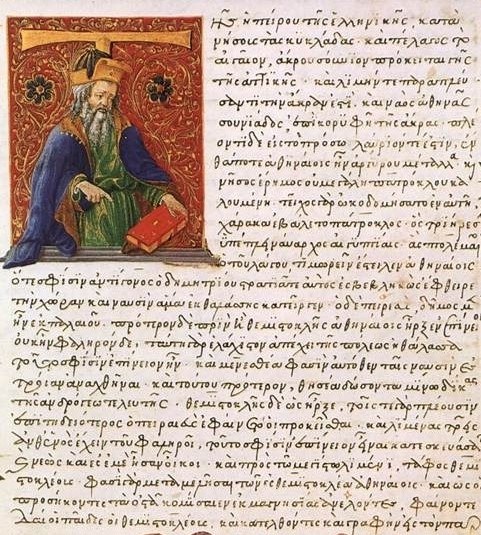
10 more clues from the record
H

This man once attempted to ally with a leader of Clusium named Lars Porsena in an attempted march on Rome.

H

The Cloaca Maxima was built by this last King of Rome, expelled for his son’s actions towards Lucretia.

H

When this man sent a messenger to his father to ask advice, the father silently lopped the heads off of the tall poppies with a stick; the confused messenger relayed the story, after which this man executed the leaders of Gabii.

H

This man’s forces were held back at the Sublician Bridge by Horatius the One-Eyed despite having earlier allied with Lars Porsena of Clusium.

H

This man eliminated Turnus Herdonius by planting swords in his home and then accusing him of launching a coup.

H

This man’s final attempt to regain power was thwarted at the battle of Lake Regillus.

H

The road on which this man’s predecessor was assassinated became known as the Street of Crime.

H

Final king, deposed in favor of establishing a Republican government.

H

A number of Livy’s “doublets” about this ruler and one of his ancestors were generally reconciled by saying the ancestor devised the plans while this ruler completed them, such as crucifying laborers who committed suicide instead of work.

H

According to Livy, this man's childhood sport was using his toy sceptre to behead tall poppies, a habit he carried into adulthood, as when his son asked him how to make the Gabians submit.

Watch out: His son was Sextus, not Servius
#1800 · General · Level 3

Minoan civilization

Minoan civilization
User:Bibi Saint-Pol · CC BY-SA 3.0

Bronze Age Aegean civilization · c. 3000–1100 BCE · Crete

Minoan civilization was a Bronze Age society on Crete that developed the undeciphered Linear A script and built palace complexes at Knossos.

The kit

  • Achievements — Minoan civilization created Kamares ware pottery with polychrome floral patterns and produced the Phaistos Disc with over 200 pressed tokens.
  • Achievements — Minoan civilization built palace complexes at Knossos, Kato Zakros, and Galatas and operated the ancient world's largest wine cellar at Tel Kabri.
  • Achievements — Minoan civilization worshiped primarily female deities like a snake goddess and practiced bull leaping while displaying double-headed axes.
  • Conflicts — Minoan civilization declined after the Thera volcanic eruption destroyed Akrotiri and was ultimately conquered by the Mycenaean army.

Runs with

Crete
home island of palaces open card →
Bronze Age
chronological period of flourishing open card →
Bakumatsu Period
Mycenaeans
conquered by their army open card →

The ladder · 6 clues

H

These people created a type of pottery known as Kamares (pr. kah-MAH-race) ware.

H

The Phaistos Disc is a relic of these people, who developed the Linear A script.

M

What Bronze Age civilization used the Linear A writing script?

M

This civilization produced the Phaistos Disc and may have declined after a tsunami from a volcanic eruption at Thera.

E

Arthur Evans discovered this civilization's Linear A script and its most famous site is Knossos palace. name this Bronze Age civilization based out of Crete.

E

This civilization’s site of Akrotiri was destroyed in the Thera eruption. :Name this seafaring civilization, who were opposed by the Mycenaeans to their north.

10 more clues from the record
H

Tell el-Daba in Egypt and Tel Kabri in Israel contain wall paintings done in the style of this civilization, which produced polychrome pottery often containing floral patterns called Kamares Ware.

H

This civilization may have used an early form of movable type to press over 200 tokens in concentric circles onto a disc found at a site excavated by Luigi Pernier.

H

The Thera eruption didn’t wipe out this civilization, but the Mycenaean army obliged. Arthur Evans excavated this civilization’s site of Knossos.

H

The ancient world’s largest known wine cellar was in use during a period of this civilization’s influence at the site of Tel Kabri.

H

Kato Zakros and Galatas are two of the smaller palaces of this civilization that have been excavated.

H

This civilization's deities were primarily female, such as a snake goddess, and its people honored them through the display of double-headed axes and the sport of bull leaping.

H

Luigi Pernier discovered this civilization's Phaistos fired clay disc. A legendary labyrinth holding a half bull half man is associated with this civilization.

H

The chronology of these people is divided into sections based on either their pottery or palace construction.

H

A writing system from this civilization contained the Quartier Mu inscription and the Petras deposit inscriptions.

H

Like the Ancient Egyptians, this civilization depicted womenaswhite-skinned and men as red.

Watch out: Linear A (Minoan) confused with Linear B (Mycenaean script)
#1816 · Physical Geographic Features · Level 3

Mediterranean Sea

Mediterranean Sea
of the modification : Eric Gaba ( Sting /a ) · Public domain

sea between Europe and Africa · ancient to present · between southern Europe, northern Africa, and western Asia

Mediterranean Sea is the body of water separating Europe from Africa, known to Romans as Mare Nostrum ('Our Sea').

The kit

  • Geography — Mediterranean Sea includes the Aegean, Adriatic, and Tyrrhenian Seas as arms or subdivisions.
  • Ancient history — Mediterranean Sea was the site of the Punic Wars between Rome and Carthage.
  • Bronze Age — Mediterranean Sea's eastern basin connected Egypt's Nile Delta to the Hittite Empire before the Bronze Age Collapse.
  • Modern scholarship — Mediterranean Sea was analyzed by Fernand Braudel in his history titled for it 'in the Age of Philip II.'

Runs with

Water
Mediterranean Sea is a large body of water open card →
Africa
Mediterranean Sea forms the northern boundary of Africa open card →
Nanda Empire
no connection evident in clues open card →
Sicily
Sicily is an island within the Mediterranean Sea open card →

The ladder · 6 clues

H

That work about this body of water is titled for it “in the Age of Philip II” and was written by Fernand Braudel. name this sea that divides southern Europe and northern Africa.

H

Known as “nostrum marum” by the Romans, and is between Europe and Africa?

M

Braudel’s most famous book is a history on this sea “in the Age of Philip II.” In that book, Braudel discussed urban functions along this sea in cities like Genoa and Rome.

M

Sea, known as Mare Nostrum [mah-ray noh-strum], that separates Africa from Rome.

E

The Aegean Sea, Adriatic Sea and Tyrrhenian Sea are all arms of this larger sea that separates Europe from Africa.

E

In order to re-establish the greatness of the Roman Empire, Benito Mussolini called this body of water "Mare Nostrum." name this sea, in which the Italian Royal Navy raided northern Crete.

10 more clues from the record
H

Two powers on this body of water fought the Punic Wars.

H

The shipwreck containing the Antikythera mechanism was found in this body of water.

H

A cartographical school in this body of water was led by Abraham Cresques.

H

Herman Sörgel [[SUHR-gul]] devised the Panropa plan to increase usable land around this body by strategically building hydroelectric dams.

H

Large sea crossed by migrants fleeing Africa to Europe. Its ancient Roman name, Mare Nostrum, names a 2014 rescue operation.

H

Glass ingots and Pistacia [[pih-STAY-shuh]] resin were found in the Uluburun shipwreck in this sea off the coast of Bodrum.

H

Sea across which Crusaders sailed to the Holy Land?

H

In a work titled for this place “in Late Antiquity,” Averil Cameron analyzes the importance of “the division between east and west.” Another work titled for this place begins by discussing “geography of a particular kind” and declares that “mountains come first.” A series of works titled for this place’s “society” was produced by Shelomo Dov Goitein , who analyzed the documents of the Cairo Genizah .

H

The Bronze Age Collapse was a sudden disruption for many major ancient civilizations. :The collapse affected civilizations around the eastern side of this body of water. Before the collapse, traders would sail on it from the Nile Delta in Egypt to the Hittite Empire in Anatolia.

H

The attack at Mers-el-Kébir was planned to prevent the Axis powers from using the French fleet to gain superiority in this body of water. Britain controlled access to this body of water from the Atlantic through the strait of Gibraltar.

Watch out: Mare Nostrum refers to this sea, not a separate body of water
#1869 · Roman Emperors · Level 3

Theodosius I

Theodosius I
www.livius.org · CC BY-SA 4.0

Roman emperor · 379–395 AD · Roman Empire

Theodosius I was the last Roman emperor to rule both eastern and western halves of the empire.

The kit

  • Rise — Theodosius I came to rule in 379 AD and defeated usurper Magnus Maximus at the Battle of the Save.
  • Achievements — Theodosius I's Edict of Thessalonica made Nicene Christianity the empire's official religion and he called the First Council of Constantinople.
  • Conflicts — Theodosius I won the Battle of the Frigidus against Arbogast and Eugenius, aided by the Bora wind reversing pagan arrows.
  • Legacy — Theodosius I banned the Vestal Virgins and the Olympics and was succeeded by his sons Arcadius and Honorius.

Runs with

Christianity
made Nicene Christianity official religion via Edict of Thessalonica open card →
Constantinople
called First Council of Constantinople open card →
Rome
last emperor to rule unified Roman Empire open card →
Nanda Empire

The ladder · 6 clues

H

A ruler of this name was supposedly raised by a Sassanian king and appointed Nestorius as Archbishop of Constantinople.

H

Won the Battle of the Frigidus [“frigid”-uss] and was the last to rule over the entire Empire?

M

He was succeeded by his sons Arcadius and Honorius after coming to rule in 379 AD, and his namesake code proclaimed religions other than Christianity illegal.

M

St. Ambrose excommunicated this emperor over a massacre in Thessalonica and this man had earlier called the First Council of Constantinople.

E

The order of Vestal Virgins and the Olympics were banned under this man, who made Nicene Christianity the official religion.

E

This man’s sons, Arcadius and Honorius, became joint rulers after his death. name the last Roman emperor to rule over both eastern and western halves.

10 more clues from the record
H

Another ruler of this name defeated usurper Magnus Maximus at the battle of the Save and appointed Arbogast as magister militum.

H

This emperor’s Edict of Thessalonica made Nicene Christianity the empire’s official religion. name this emperor who was the last to rule over a unified Roman empire.

H

During the reign of this emperor, a chariot racer’s attempt to rape a cup bearer led to the lynching of the Gothic general Butheric .

H

A law code titled after an emperor of this name was created by a commission co-established by Valentinian the Third, and that emperor of this name gave his name to a set of walls west of the original Constantinian Wall.

H

This man secured his reign when a divine wind reversed the direction of pagan arrows during the Battle of the Frigidus.

H

Another ruler of this name built a namesake system of double walls surrounding his capital.

H

Another emperor by this name bribed troops who attacked him from the rear in the Alps into joining him instead; that, as well as assistance from the “Bora” wind, occurred while he was fighting Arbogast and Eugenius in the Battle of the Frigid River.

H

This man accompanied his father to put down the Great Conspiracy, and was the last emperor of both Eastern and Western Rome. :Name this Roman emperor who established Nicene Christianity as the state religion of Rome and summoned the Council of Constantinople.

H

The second emperor of this name was basically a non-entity, and the Empire was basically run by people including his sister Pulcheria, the prefect Anthemius and the eunuch Chrysaphius during his reign which started in 408 and included the Council of Ephesus.

H

In the last years of his reign he put down the usurper Eugenius defeating him at the River Frigidus while earlier he had defeated the usurper Magnus Maximus.

Watch out: Theodosius II, a later emperor who built walls around Constantinople and convened the Council of Ephesus
#1876 · General · Level 3

Ptolemy

Ptolemy
bdi Justus van Gent /span /a /bdi / bdi Pedro Berruguete /sp · Public domain

Hellenistic Egyptian dynasty · 305 BCE–30 BCE · Egypt

Ptolemy was a Hellenistic dynasty founded by Alexander the Great's general that ruled Egypt until Roman conquest.

The kit

  • Founders — Ptolemy I Soter founded the kingdom in Egypt after Alexander's death and received the epithet 'Savior' for breaking Demetrius Poliorcetes' siege of Rhodes.
  • Conflicts — Ptolemy I often fought his rival Seleucus I, while a later Ptolemy faced a revolt by his half-brother Magas in a silphium-producing neighboring kingdom.
  • Achievements — Ptolemy IV won the Battle of Raphia against Antiochus the Great, and Ptolemy V Epiphanes issued the royal decree that created the Rosetta Stone.
  • Legacy — Ptolemy queens were often named Arsinoë or Berenice, and the dynasty ended with Cleopatra VII, whose father and brother also bore this name.

Runs with

Egypt
ruled Egypt for centuries open card →
Menander I Soter
Nanda Empire
Ptolemy II sent ambassador Dionysius to Ashoka's court open card →
Alexander the Great
founded by Alexander's general open card →

The ladder · 6 clues

H

One ruler of this name beheaded Pompey, and another erected the Rosetta Stone. :Give this regnal name of rulers whose queens were often named Arsinoë or Berenice.

H

A ruler of this name faced a revolt by his half-brother Magas, who occupied a neighboring kingdom known for producing silphium.

M

The first ruler of this name often fought against his rival Seleucus I, a fellow successor of Alexander the Great. give the shared name of several Greco-Egyptian pharaohs.

M

Cleopatra VII of Egypt belonged to this Hellenistic dynasty, which took its name from one of Alexander's generals.

E

Cleopatra’s father and brother both had this Greek name. The first ruler of the dynasty of this name ruled in 305 B.C.

E

A man by this name founded a kingdom in Egypt after Alexander’s death. Many rulers sharing this name ruled Egypt for centuries afterwards.

10 more clues from the record
H

For breaking a siege by Demetrius Poliorcetes, the Rhodians gave a ruler of this name the epithet “Savior,” or Soter.

H

This man names a theorem presented in Book XIII [“eight”] of Euclid’s Elements that relates the products of diagonal lengths for a cyclic quadrilateral to products of side lengths.

H

A royal decree by a ruler of this name, known as “Epiphanes” led to the creation of the Rosetta Stone. 4,000 Gallic mercenaries led by Bolgios were marooned in the middle of the Nile by a ruler of this name.

H

He also names a list of ancient kings and their chronology that orders rulers between the Babylonian empire and the Roman empire.

H

Dynasty founded by a member of the diadochi that governed Egypt until it was conquered by the Romans

H

A monarch with this name and the surname Philadelphus was adopted after the first monarch with this name divorced his wife Eurydice and disinherited another son of this name; that latter son of this name was the assassin of Seleucus I. The first monarch of this name used his victory at the Battle of Gaza to control parts of Lebanon not already ceded to him following the Battle of Ipsus in 310 BCE.

H

A ruler of this name was supported by the Gabiniani during a civil war following the death of his father, another ruler of this name with an epithet meaning “Flautist.” A ruler of this name reconquered territory that had been lost to the rebel Hogrunaphor after his predecessor of this name won the Battle of Raphia.

H

In one work, this author described a port on the Magnus Sinus called Cattigara, which scholars have identified as Óc Eo in Vietnam. :Name this author of the Geography. This Alexandrian mathematician expounded upon the geocentric model of the universe in his Almagest.

H

This 2nd century CE Greek astronomer invented the epicycle to account for the apparent motion of the Moon and planets in his geocentric model of the Solar System. It didn’t make him any more right.

H

That king sent the ambassador Dionysius to the court of Ashoka and had the epithet “Philadelphus.” One ruler of this name won the Battle of Raphia against Antiochus the Great and married his sister, Arsinoe III.

Watch out: Ptolemy the astronomer (2nd century CE mathematician who wrote the Almagest) vs. the Ptolemaic pharaohs
#1886 · General · Level 3

Draco

Draco
The original uploader was Orthogaffe /a at French Wikipedia · CC BY-SA 3.0

Athenian lawgiver · 7th century BCE · Athens

Draco created Athens's first written law code, so harsh that his name became synonymous with severe punishment.

The kit

  • Rise — Draco was given jurisdiction after Cylon's failed coup and Megacles killed Cylon in a temple sanctuary.
  • Achievements — Draco established the Council of Four Hundred using lots and displayed his laws on rotating wooden pyramids called kyrbeis.
  • Conflicts — Draco prescribed death for stealing cabbage and forced debtors into slavery under his notoriously severe legal code.
  • Death & succession — Draco died at a theater in Aegina when supporters suffocated him with cloaks and hats, and Solon later loosened his harsh laws.

Runs with

Solon of Athens
Athens
Draco served as first legislator of Athens open card →
Fourth Lateran Council
Slavery
Draco forced debtors into slavery open card →

The ladder · 6 clues

H

According to the Suda, this man died at a theater in Aegina, where he was suffocated by cloaks and hats thrown at him by adoring supporters.

H

A law passed by this man forced exile upon any person who killed another citizen, whether or not it was intentional.

M

One of Solon’s major reforms was the loosening of the severity of this man’s law code. He is the namesake of an English-language adjective that describes harsh laws.

M

This man was given jurisdiction after Cylon tried to seize power, and the orator Demades joked that this man wrote in blood rather than in ink.

E

This man became one of the first to punish homicide and manslaughter differently, though he prescribed death as a punishment for stealing cabbage.

E

This statesman instituted a law forcing debtors into slavery in a Greek city-state, and his name has become synonymous with the term for “harsh punishment." name this Athenian politician, the first to pass a set of comprehensive laws in Greece.

10 more clues from the record
H

The Council of Four Hundred was originally established by this man through the usage of lots.

H

This man’s policies were written on wooden tablets known as axones so that no one would be unaware of them.

H

This leader’s legislation was publicly displayed on wooden tablets attached to rotating three-sided pyramids called kyrbeis.

H

This man was given power after Cylon was killed by Megacles in the sanctuary of a temple during a failed coup.

H

According to the Byzantine Suda, this ruler met his end by suffocation when his supporters threw too many hats and cloaks upon him.

H

This man used the drawing of lots to fill out the ranks of his newly created Council of Four Hundred.

H

This politician introduced the Council of Four Hundred, made of strategoi, archons, and other prominent citizens.

H

Answer the following about weird deaths, .This Athenian lawgiver died when a crowd tried to show its approval by throwing hats and shirts on him, which led to him being smothered. He is better known for extremely harsh laws that were mostly repealed by Solon.

H

name these ancient rulers of Athens.This seventh-century BCE Athenian legislator punished debtors with slavery and minor criminals with death in his law code, which was so harsh that it inspired an English adjective for overbearing rule.

H

The first legislator of ancient Athens, this man replaced the prevailing system of oral law and blood feud by an extremely harsh written code to be enforced only by a court.

Watch out: Solon (reformed Draco's laws)
#1889 · General · Level 3

Goths

Goths
bdi Évariste-Vital Luminais /span /a · Public domain

Germanic tribal confederation · 3rd–6th centuries AD · Eastern Europe, Balkans, Italy, Spain

Goths were Germanic tribes divided into Ostrogothic and Visigothic branches who fatally weakened the Western Roman Empire through military victories and invasions.

The kit

  • Rise — Goths appeared on Europe's frontiers in the 3rd century AD, hastening Rome's fall through raids and military pressure.
  • Achievements — Goths under Fritigern killed Emperor Valens at Adrianople in 378, one of Rome's most catastrophic defeats.
  • Conflicts — Goths under Alaric I sacked Rome in 410 after failed negotiations with Emperor Honorius.
  • Legacy — Goths established kingdoms across Europe: Visigoths ruled Spain while Ostrogoths under Theodoric the Great controlled Italy.

Runs with

Rome
Nanda Empire
no connection evident in clues open card →
Bishop
Visigothic king Reccared I converted to Catholicism open card →
Spain
Visigoths established a kingdom in Spain open card →

The ladder · 6 clues

H

A century later, a group of these people led by Fritigern slaughtered the Romans and killed Emperor Valens in the Battle of Adrianople.

H

The Wielbark culture of these people is the subject of Getica, a work by Jordanes.

M

Theodoric the Great was a member of the “eastern” group of this Germanic tribe. This tribe was allowed to settle in the Balkans after killing the Emperor Valens at the Battle of Adrianople.

M

Tribes of these seafarers, like the Thurvingi, sacked Troy and destroyed the Temple of Artemis.

E

After failed negotiations with Honorius, these people sacked Rome under Alaric I. name this Germanic people split into “Ostro” and “Visi” varieties.

E

The 410 Sack of Rome was caused by Alaric, a leader of these people.

10 more clues from the record
H

This Germanic people won the battle of Adrianople. This people’s western branch established a kingdom in Spain, and their eastern branch invaded Italy under the leadership of Theodoric.

H

Flavius Aetius worked with a leader of these people named Theodoric to defeat the Huns at the battle of the Catalaunian Plains.

H

The two ruling houses of these people were the Amalings and the Balthings, and the Gepids were an offshoot of these people.

H

These people sieged Philippopolis under the leadership of Cniva before ambushing his enemies in a swamp at the Battle of Abritus.
H

This ethnic group’s 3rd century AD appearance in the frontiers of Europe hastened the fall of Rome.

H

These people were led to victory by Fritigern after their opponents refused to wait for Gratian’s reinforcements.

H

Emperor Gallienus slaughtered a force of these people at Naissus in 269 AD.

H

Herculanus of Perugia tried the same trick against Totila, a leader of these people, but it didn’t work and he was flayed alive. The “Visi-” and “Ostra-” branches of these people helped bring down the Western Roman Empire.

H

These people were reportedly forced to sell children into slavery in exchange for dog meat in a scheme of “insatiable greed” instigated by Lupicinus , whose rout by them at Marcianopolis was recorded by the contemporary Ammianus Marcellinus.
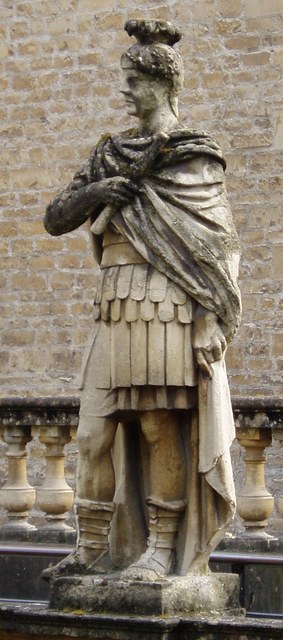
H

One group of these people converted to Catholicism under their king Reccared I. Instead of waiting for his nephew Gratian, Valens decided to engage in battle with these people, leading to his death at the hands of their leader Fritigern at the battle of Adrianople.

Watch out: Huns (distinct nomadic group that pressured Goths and fought them at Catalaunian Plains)
#1907 · General · Level 3

Dacians

Dacians
Laci3 · CC0

Ancient Thracian people · c. 1st century BCE–106 CE · modern Romania

Dacians were a Thracian people who occupied territory roughly corresponding to modern Romania and were conquered by Trajan in 106 CE.

The kit

  • Rise — Dacians were unified into a kingdom under King Burebista, who brought together nobles called tarabostes and peasants called comati.
  • Conflicts — Dacians defeated Roman forces under Cornelius Fuscus and invaded Moesia, prompting campaigns by Domitian before falling to Tettius Julianus.
  • Achievements — Dacian warriors wielded a deadly two-handed falx blade that prompted Romans to add bracing bars to legionary helmets during Trajan's wars.
  • Legacy — Dacians' defeat by Trajan is commemorated on Trajan's Column, which depicts the conquest and capture of their capital Sarmizegetusa in spiral reliefs.

Runs with

Trajan
conquered Dacians in 106 CE, capturing Sarmizegetusa after crossing Danube open card →
Romania
Dacian territory roughly corresponds to modern Romania and Moldova open card →
Domitian
launched campaigns against Dacians after their invasion of Moesia open card →
Damascus
Apollodorus of Damascus built pontoon bridge across Danube for Dacian campaign open card →

The ladder · 6 clues

H

The most important victory of Tettius Julianus was against these people at the Second Battle of Tapae.

H

These people were unified under King Burebista.

M

A pontoon bridge was constructed by Apollodorus of Damascus across the Danube during a campaign against this region, which resulted in the defeat of Decebalus and the capture of Sarmizegetusa.

M

The conquest of this region is depicted in spiral reliefs adorning a column of the victorious emperor, Trajan. name this ancient region that corresponds with modern Romania.

E

Trans-Danubian territory conquered by Trajan, roughly where Romania and Moldova are today.

E

Decebalus was a king of this people who occupied the area roughly corresponding to present-day western Romania. Their defeat by Trajan resulted is commemorated in a giant column.

10 more clues from the record
H

Their warriors used a deadly two-handed blade called a falx while defending their capital of Sarmizegetusa . what people led by Decebalus were conquered in a campaign by Trajan ?

H

After destroying the army of Cornelius Fuscus, these people fell to Tettius Iulianus at the Battle of Tapae.

H

annexed after Roman forces destroyed the city of Sarmizegethusa, and whose conquest is depicted on a 115-foot tall pillar?

H

This kingdom’s invasion of Moesia prompted Domitian to launch an intervening force, but this kingdom defeated the Romans at Tapae.

H

A war against these people spurred the formation of the Thirtieth, or Ulpia Victrix, Legion.

H

This province, abandoned by Aurelian, was the subject of the last major conquest of Constantine the Great and repelled invasions from Domitian for two decades. :Identify this Danubean province ruled from Sarmizegetusa, whose conquest during its namesake wars – depicted on an obelisk built by Apollodorus of Damascus – occurred after Nerva's successor added a bracing bar to his legionary helmets to account for the massive falx polearms deployed by its natives.

H

The first ruler was Burebista, who brought together their nobles known as tarabostes and the peasants known as comati to form a unified kingdom; he offered support to Pompey but it came too late.

H

The Senate perception of Maximinus’s barbarism was partly inspired by his Carpi ancestry from this region. Aurelian abandoned this region whose past leaders, like Decebalus, fought wars against Trajan and Domitian.

H

These people may have easily adopted Christianity because they revered a deity who lived underground for three years after explaining the afterlife at a banquet.

H

After having befriended Trajan, Hadrian was named commander of the First Legion “Minervia” during Trajan’s second war in this Transdanubian province roughly coextensive with modern Romania.

#1928 · General · Level 3

Peisistratos

Peisistratos
Statens Museum for Kunst via Europeana website · CC0

Athenian tyrant · 561–527 BC · Athens

Peisistratos was an Athenian tyrant who ruled in three separate periods from 561 BC, founding a dynasty that ended with his sons.

The kit

  • Rise — Peisistratos led the hyperakrioi faction and seized the Acropolis with his bodyguards in 560 BC.
  • Achievements — Peisistratos established the Panathenaic Games and preserved Homer's epics through archival of the Odyssey and Iliad.
  • Conflicts — Peisistratos ended his first exile by riding into Athens in a golden chariot with Phye dressed as Athena.
  • Legacy — Peisistratos ruled Athens for 33 years total and was succeeded by his sons Hippias and Hipparchus.

Runs with

Tyrant
ruled Athens as tyrant across three periods open card →
Athens
seized Acropolis and ruled as tyrant open card →
Peloponnesian War
different Peisistratos led Orchomenus during this war open card →
Herodotus

The ladder · 6 clues

H

This man controversially rode into the city in a golden chariot with a woman dressed as Athena to end his first of two stints in exile.

H

This friend of Solon led the hyperakrioi and ruled Athens as a tyrant for 33 years; he was succeeded by his sons Hippias and Hipparchus.

M

The Panathenaic Games were established during the reign of this father of Hippias and Hipparchus who led Athens as tyrant on three separate occasions in the six century BC.

M

This man’s dynasty began to collapse after one of his sons was assassinated by Harmodius and Aristogeiton in 514 BC.

E

The dynasty founded by this man fell apart after his sons were targeted by Harmodius and Aristogeiton. identify this tyrant of Athens who ruled from 561 BC and fathered both Hippias and Hipparchus.

E

This man was opposed by Lycurgus and Megacles, and he was supposedly Solon’s lover. name this father of Hippias and Hipparchos, a noted tyrant of Athens.

10 more clues from the record
H

During this man’s rule, the poor hyperakrioi were brought into politics for the first time as the “hill dweller” party.

H

This man gained power after winning the support of Megacles, head of the paralioi faction.

H

This man regained a post by having a tall girl named Phye dress as a goddess and accompany him as he entered the city.

H

This man refused to marry the daughter of Megacles [mega-kleez], causing a rivalry between the two.

H

This man’s archival of the Odyssey and Iliad helped preserve the two copies used today.

H

This man became the leader of the Highland party in 565 BC, and five years later, he seized the Acropolis with help from his bodyguards. :Identify this Greek statesman, an Athenian Tyrant whose rule saw the formation of the Party of the Plain and the Party of the Coast.

H

This winner of the Battle of Pallene near Mt. Hymettus married the daughter of the Alcmaeonid patriarch Megacles but was driven out of town for having sex with her ou kata nomon, or 'not according to custom'.

H

This man famously purified the shrine at of Apollo at Delos, and was also associated with that god's cult at Delphi, while in his own city he was remembered for the Enneakronous fountain-house and the Porch of the King-Archon.

H

This ruler established a circuit of traveling judges and opened his library and gardens to the public. This leader, who traced his ancestry to the youngest son of Nestor, led a faction called the Hillsmen.

H

Another man of this name had his body cut into pieces and smuggled away by senators after being murdered in a senate assembly and led Orchomenus during the Peloponnesian War.

Watch out: Another Peisistratos led Orchomenus during the Peloponnesian War and was murdered in a senate assembly
#1931 · General · Level 3

roads

roads
Img by Calvin Teo · CC BY-SA 3.0

transportation infrastructure · ancient times to present · worldwide

Roads are constructed pathways for travel that enabled communication and trade across empires from ancient Persia to modern America.

The kit

  • Ancient examples — Roads included the Via Appia, Rome's first paved road connecting Rome and Brindisi, and Darius's royal road across Persia.
  • Construction methods — Roads were built using macadamisation, an economical method named for Scotsman John Loudon McAdam developed in Hagerstown.
  • American development — Roads such as the Lancaster Turnpike were built by private companies when Pennsylvania lacked funds for infrastructure.
  • Political significance — Roads became controversial when Andrew Jackson vetoed the Maysville Road bill as part of the Cumberland System debate.

Runs with

Nanda Empire
Sher Shah Suri built a road on the Ganges plain later extended by British open card →
Incan Empire
Appian Way
Appian Way was Rome's first paved road and most famous example open card →
American Railway Union
Roads competed with railways for federal internal improvement funding in antebellum era open card →

The ladder · 6 clues

H

Judge Richard Henderson’s Transylvania Company in North Carolina hired a hunter to effectively create one of these things in 1755 in southern Kentucky.

H

One of these things was created by Sher Shah Suri on the plain of the Ganges and was extended by the British to include Howrah.

M

The Via Appia was the first paved one of this structures, a “Silk” one of which connected China with Rome.

M

Type of project that included the Appian Way, which connected Rome and Brindisi.

E

Darius constructed a “royal” example of this system to improve communication across the Persian empire. The Via Appia was an example of one of these things in classical Rome.

E

An urban legend alleges that a system of these structures were built wide enough to land a B-52.

10 more clues from the record
H

One of these things partly named for Lancaster was designed by John Loudon McAdam and was unusually built by a private company due to Pennsylvania being broke.

H

One of these things built by and named for Edward Braddock in 1755 is where he was eventually buried.

H

Andrew Jackson vetoed a bill that would have created one of these structures named for Maysville, which would have been part of the Cumberland System.

H

In Hagerstown, people developed one of these locations made from “macadam,” , a material named for John Loudin McAdam.

H

The Quattuorviri [[KWAH-twohr-VEE-ree]] was a quartet of magistrates appointed by the Republic who oversaw the maintenance of these structures.ThecursuspublicuswasacouriersystemunderAugustuswhichusedthese constructs to quickly deliver mail.

H

Type of infrastructure built throughout the country to allow the “alternate attendance” policy to function, including the “Five Routes.”

H

One of these structures named for Emperor Domitian inspired the Statius [[STAY-shee-us]] poem The Elements of Balance.

H

The most expensive federal internal improvement project of the antebellum era constructed one of these things.

H

One of these objects designed by Robert Moses was partially built using wartime rubble from England.

H

A Scotsman lends his name to the economical “macadamisation” method of building these things.

Watch out: Confused with railways as 19th-century American transportation infrastructure
#1939 · General · Level 3

Roman Baths

Roman Baths
Diliff · CC BY 2.5

Roman public bathing complexes · 1st century BCE–4th century CE · Roman Empire

Roman Baths were large public facilities (thermae) featuring hot rooms (caldarium) and cold pools (frigidarium) that served as social centers.

The kit

  • Architecture — Roman Baths included a caldarium (hot room) and frigidarium (cold pool) where visitors alternated between temperatures.
  • Notable examples — Roman Baths built by Trajan near the Oppian Hill and by Caracalla contained libraries within their complexes.
  • Bathing practices — Roman Baths employed slaves called unctores who used strigils to scrape olive oil off visitors' skin.
  • British site — Roman Baths in Britain were dedicated to the goddess Sulis and featured curse tablets with prayers about stolen property.

Runs with

Diocletian
built the largest Roman Baths, inspired by Caracalla's design open card →
Water
supplied to Roman Baths through aqueducts open card →
Trajan
built Roman Baths near the Oppian Hill open card →
Rome
major location of Roman Baths including those of Diocletian open card →

The ladder · 6 clues

H

Percy Shelley wrote "Prometheus Unbound" in one of these locations, which was where the Farnese Hercules was discovered.

H

Two of these structures built by Trajan and Caracalla contained libraries.

M

Facilities, known to Romans as Thermae, which Trajan built near the Oppian Hill.

M

The original design of New York's Penn Station was partly-inspired by one of these structures built by Diocletian.

E

These buildings would often include a caldarium, a hot room, and a frigidarium, a room with a cold pool.

E

Visitors to these locations would alternate between rooms called frigidarium and caldarium. aqueducts provided water for what social places where Romans would clean themselves?

10 more clues from the record
H

The largest of these locations is named for Diocletian, which were inspired by one of these locations commissioned by Caracalla.

H

One example of these buildings in Britain was dedicated to the goddess Sulis, while examples of these buildings in Rome were named after Caracalla and Diocletian.

H

Vitruvius attributes the oyster seller Sergius Orata for an invention central to these locations' operation.

H

The strigil was a curved tool commonly used at these public places to scrape olive oil off skin.

H

Unctores were slaves who worked at these locations and used a tool called a strigil on visitors to these locations.

H

Public facilities that included a caldarium and a frigidarium.

H

Answer the following about St. Olga of Kiev, .After the death of her husband Igor at the hands of the Drevlians, Olga got her revenge by killing the Drevlian leader, who was burned in one of these places. One of these places in Moscow known as the Sanduny was established by an actor during the reign of Catherine the Great.

H

A male gorgon head motif covered one of these locations in England where visitors would leave jewelry as an offering to Minerva.

H

Prayers to Sullis Minerva about stolen property are written on the “curse tablets” unearthed at one of these places.

H

One of these places located behind the Caelian Hill was used as a burial mound for pilgrims after Vitiges’ capture of .

Watch out: Confusing the Baths of Caracalla with the larger Baths of Diocletian
#1955 · Ancient Near Eastern Rulers · Level 3

Mithridates VI Eupator

Mithridates VI Eupator
Unknown artist Unknown artist /span · CC BY-SA 2.5

King of Pontus · c. 120–63 BCE · Pontus, Asia Minor

Mithridates VI Eupator was a king of Pontus who fought three wars against Rome and allegedly built immunity to poison.

The kit

  • Rise — Mithridates VI Eupator eliminated his brother Chrestus and his mother Laodice to become sole heir to the throne.
  • Conflicts — Mithridates VI Eupator ordered the Asiatic Vespers, a genocide of Romans in Asia Minor after Bythinia's invasion.
  • Conflicts — Mithridates VI Eupator's invasion of Greece was thwarted by Sulla at Chaeronea in 86 BCE.
  • Death & succession — Mithridates VI Eupator committed suicide after failing to raise an army following his son's rebellion and defeat by Pompey.

Runs with

Rome
fought three wars against Rome open card →
Athens
invaded Greece before defeat open card →
Pompey the Great
defeated by Pompey in third war open card →
Lucius Cornelius Sulla
defeated by Sulla at Chaeronea open card →

The ladder · 6 clues

H

This ruler executed his son, Xiphares [[zee-FAH-rehss]], to punish his wife for surrendering the fortress of Coenum [[KEE-num]].

H

Pliny the Elder related that this man could speak the languages of all 22 nations he governed.

M

According to Pliny the Elder, this ruler was capable of speaking all 22 languages in his kingdom, and after an invasion by the Kingdom of Bythinia, this ruler ordered the Asiatic Vespers, a genocide of Roman citizens in Asia Minor.

M

Clodius revolted against Lucullus during his war against this king of Pontus, whose third attempt at war was quashed by Pompey.

E

This ruler failed to raise an army to avenge his defeat by Pompey the Great following a rebellion by his son, leading to this man's suicide.

E

name this enemy of Rome, who was allegedly immune to poisoning.

10 more clues from the record
H

An attempt to partition the region of Paphlagonia [[pah-flah-GOH-nyah] with Nicomedes [[nik-oh-MEE-dees]] IV led to the first of this ruler’s namesake wars.

H

Quintus Sertorius sought recognition from this man for his revolt in Spain, while Appuleius Saturninus insulted an embassy from him, resulting in a trial on capitol charges.

H

This leader’s invasion of Greece was thwarted by the Roman general Sulla at the 86 BCE Battle of Chaeronea [[kay-ROH-neh-uh]].

H

This man was defeated in a series of conflicts that pitted him against military leaders like Lucius Lucullus.

H

Defeating this ruler allowed the Roman general Lucullus [[loo-KULL-us]] to gain a legendary fortune.

H

This man eliminated his brother, Chrestus, and his mother, Laodice, to become sole heir to A the throne.

H

This leader died on a mountain now named after him during the Siege of Panticapeum.

H

answer the following about the lavish retirement of Lucius Licinius Lucullus:Lucullus retired to a life of luxury following his military campaign against this king of Pontus, who retreated into Armenia. Legendarily, this king built up immunity to poisons by ingesting small amounts of lethal substances.

H

Andromachus the Elder created theriac by adding opium and snake flesh to this ruler’s daily panacea of poison. :Name this king of Pontus who used that panacea to build up immunity to assassination attempts and waged a series of three eponymous wars against Rome.

H

Pompey had a lot of enemies. :Pompey was the primary prosecutor of the third war against this man. This ruler of Pontus earlier had eighty thousand Romans and Italians murdered in the Asiatic Vespers and supposedly developed immunity to poison.

Watch out: Nicomedes IV (attempted to partition Paphlagonia with Mithridates, triggering the first Mithridatic War)
#1968 · Ancient Greek and Hellenistic Wars and Battles · Level 3

Battle of Aegospotami

Battle of Aegospotami
F. Mitchell, Department of History, United States Military A · Public domain

naval battle · 405 BC · Hellespont

Battle of Aegospotami was the decisive 405 BC naval engagement in which Lysander's Spartan fleet destroyed Athens's navy, ending the Peloponnesian War.

The kit

  • Prelude — Battle of Aegospotami followed the Athenian victory at Arginusae the prior year and the Spartan capture of Lampsacus.
  • Defeat — Battle of Aegospotami saw Lysander surprise the Athenian fleet while foraging on shore, with only Conon and nine triremes escaping.
  • Aftermath — Battle of Aegospotami cut off trade routes to Piraeus, starving Athens and forcing surrender to Sparta.
  • Consequences — Battle of Aegospotami led to the installation of the Thirty Tyrants by Lysander to rule defeated Athens.

Runs with

Peloponnesian War
final major battle that ended the war open card →
Athens
Athenian fleet decisively defeated, lost empire open card →
Sparta
Lysander's Spartan fleet won decisive victory open card →
Alcibiades
proposed moving base to Sestos before battle open card →

The ladder · 6 clues

H

The Thirty Tyrants were installed after Athens lost this 405 BC battle to Lysander.

H

Conon escaped this battle with just nine triremes.

M

This battle followed the Battle of Arginusae, and its survivors fled with the general Conon [[KON-ohn]], who traveled to meet Evagoras on Cyprus.

M

The Thirty Tyrants were installed following, what victory for Lysander’s Spartans, the last major battle of the Peloponnesian War.

E

During this battle, Conon’s fleet was decisively defeated by Lysander. name this naval battle that ended the Peloponnesian War.

E

This battle led to the defeat of the Delian League and installation of the Thirty Tyrants by Lysander to rule the vanquished enemy. name this 405 BC naval battle in which Sparta defeated Athens to end the Peloponnesian War.

10 more clues from the record
H

This battle reversed a catastrophic defeat for its winners the prior year at Arginusae.

H

The losers of this battle moved its base from Sestos while the other side was based in Lampsacus.

H

Some members of the losing side in this battle fled to Evagoras.

H

This battle’s result cut off trade routes to the harbor at Piraeus, starving defenders and citizens inside the Long Walls.

H

The losers in this battle had their base at Sestos, following Alcibiades' advice, and were killed in a surprise attack while foraging.

H

The Paralus was sent to inform one side of their loss at this battle, which historians theorize was due to the treachery of Adeimantus.
H

This battle followed the capture of Lampsacus and featured a proposal by Alcibiades [[AL-kih-BY-ah-deez]] to move to Sestos.

H

This battle may have been decided after Adeimantus swapped sides.

H

This battle was fought after the winners took control of trade routes at Lampsacus.
H

Right before this battle, a figure on one side offered to bring forces from Thrace in exchange for commanding authority, but he was rejected. :Name this 405 BCE Spartan victory over the Athenian navy, the final battle of the Peloponnesian War.

Watch out: Battle of Arginusae (Athenian victory the year before that Aegospotami reversed)
#1984 · Roman Republic Leaders · Level 3

Cato the Elder

Cato the Elder
Unknown author Unknown author · Public domain

Roman statesman and orator · 234–149 BCE · Rome

Cato the Elder was a Roman statesman who famously ended every speech with 'Carthago delenda est' (Carthage must be destroyed), inspiring the Third Punic War.

The kit

  • Rise — Cato the Elder served as consul and enacted the second and third Porcian Laws with his mentor Lucius Valerius Flaccus.
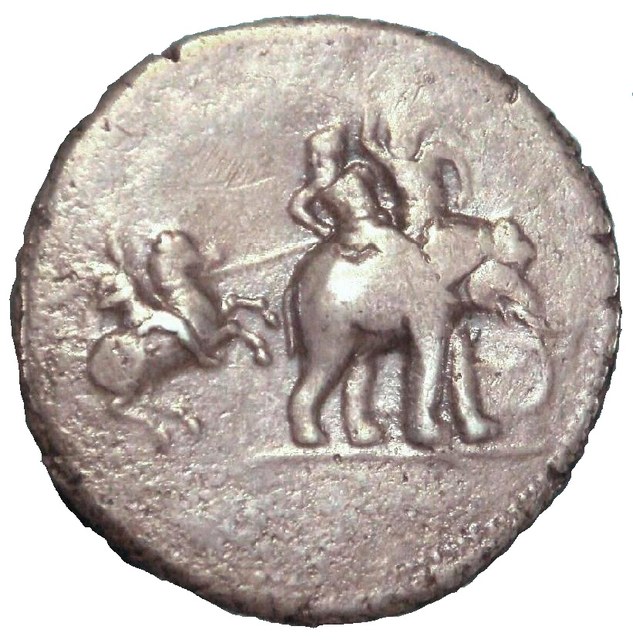
  • Achievements — Cato the Elder wrote De Agri Cultura, a manual on farm management praising cabbage, and the Origines, the first Roman history in Latin.
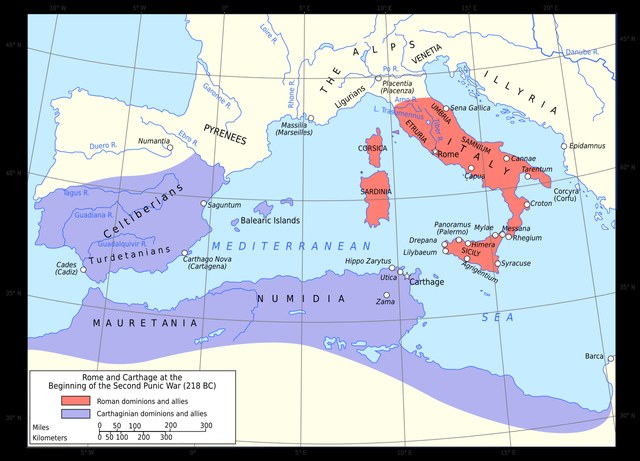
  • Conflicts — Cato the Elder opposed Scipio Africanus's adoption of Greek customs and vigorously resisted Hellenization while serving as censor.
  • Legacy — Cato the Elder's great-grandson, Cato Uticensis, committed suicide at Utica rather than accept Caesar's clemency after the Battle of Utica.

Runs with

Carthage
repeatedly called for Carthage's destruction in speeches, dropping figs to show its proximity open card →
Consul
served as consul and enacted Porcian Laws open card →
Scipio Africanus
opposed Scipio's adoption of Greek customs and Hellenization open card →
Second Punic War
his calls for Carthage's destruction inspired the Third Punic War decades later open card →

The ladder · 6 clues

H

Roman orator whose speeches ended with a call for the destruction of Carthage

H

While he was consul, this man enacted the second and third Porcian Laws with the help of his mentor, Lucius Valerius Flaccus.

M

This Roman farmer and statesman inspired the Third Punic War and sacking of Carthage by ending all of his speeches "Carthago delenda est," or "Carthage must be destroyed!"

M

His great-grandson, of the same name, was an outspoken critic of Caesar who committed suicide after the Battle of Utica rather than accepting Caesar’s clemency.

M

Plutarch paired this figure with Aristides the Just in Parallel Lives and noted that he was not poor, but frugal, since he sold off old slaves and left a large estate to descendants such as one who committed suicide at Utica. This opponent of the Oppian Laws’ repeal opposed Scipio Nasica’s view that Rome needed an external enemy and dropped a big fig to show that a resurgent enemy must be crushed. name this morally strict Roman censor who said, “Carthage must be destroyed!”

E

The author of the first Roman history composed in Latin, the Origines, name this man, who supposedly concluded every speech ‘I advise that Carthage must be destroyed’.

10 more clues from the record
H

In his early career, this Roman politician told Polybius to stop acting so much like Odysseus; as it was an early speech, it differs from this man’s later speeches and does not end with the declaration “Carthago delenda est.”

H

This author prescribes cabbage for indigestion, applying a cabbage poultice for wound healing, and bathing infants in a cabbage-eater’s urine for raising strong children. :Name this author who claims that “from the farming class . . . the bravest men and the sturdiest soldiers come” in On Agriculture. A lost prose history called Origines was written by this author, the great-grandfather of a similarly named member of the Optimates.

H

One politician with this name was given the cognomen “Uticensis” by Pliny the Elder in reference to their suicide in North Africa. :Name this conservative senator who led the Pompeian faction in Caesar’s Civil War following Pompey’s death. This politician’s great-grandfather, who had the same name, wrote the Roman history Origines.

H

This politician divorced his wife Marcia in order to allow his friend Hortensius to marry her and thus strengthen the bonds between their families. :Identify this Roman statesman nicknamed The Censor who championed conservative laws such as the Lex Voconia.

H

Ivaylo of Bulgaria wasn’t the only important “Cabbage” in European history. :This Roman republican statesman devoted two chapters of his De Agricultura to cabbage, which he claimed “surpasses all other vegetables.” He is better known for his persistent calls for the destruction of Carthage.

H

One of the most notable holders of the position of censor was this "unshorn" man, who sought to maintain the mos maiorum. He supported the Lex Orchia to curb luxuries and once dropped figs on the floor of the Senate to make a point.

H

One general of this name stated “war feeds itself” while crushing a revolt in Nearer Spain, while another was a governor of Cyprus who mounted a filibuster to deny Caesar both a triumph and the consulate.

H

As consul, this ultra-conservative Roman politician delivered a speech opposing the repeal of the Lex Oppia. This man, who opposed Scipio Africanus’s adoption of Greek customs, wrote De Agricultura and Origines.

H

The war was declared shortly before the death of this man who, in addition to working against Greek culture and women’s rights, ended his speeches with “Carthago delenda est” or “Carthage must be destroyed.”

H

This man wrote an extensive manual on farm management, De Agri Cultura, his only fully-surviving work. This man earned the epithet “the Censor” for his vigorous opposition to Hellenization while serving in that position.

Watch out: Cato Uticensis (the Younger), his great-grandson who opposed Caesar and died at Utica