The 1648 Codex

Modern Period

123 terms · 1013 ladder clues · every clue is a real line from national play.

Swipe or use the arrows. Tap a clue to rate it; your taps shape what comes back.

#33 · Historic Cities · Level 1

Berlin

Berlin
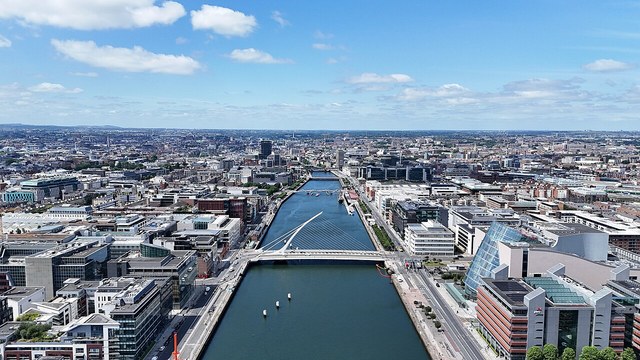
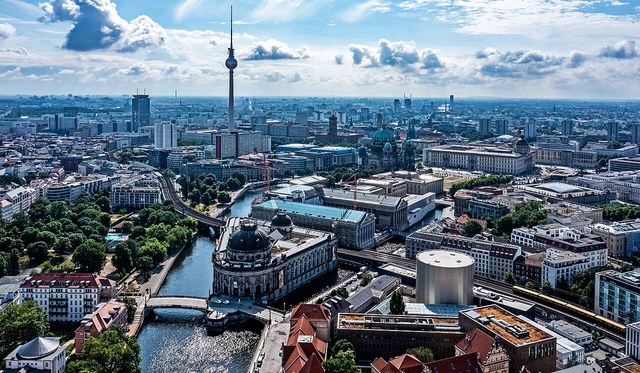
ul li File:Museumsinsel Berlin Juli 2021 1 (cropped).jpg /a · CC BY-SA 4.0

German capital city · 1871–present (capital) · northeastern Germany

Berlin is Germany's capital, divided 1945–1990 by a wall separating Soviet and Western occupation zones.

The kit

  • Division & Blockade — Berlin was blockaded by Soviet forces in 1948, prompting Operation Vittles (the Berlin Airlift) led by Lucius D. Clay.
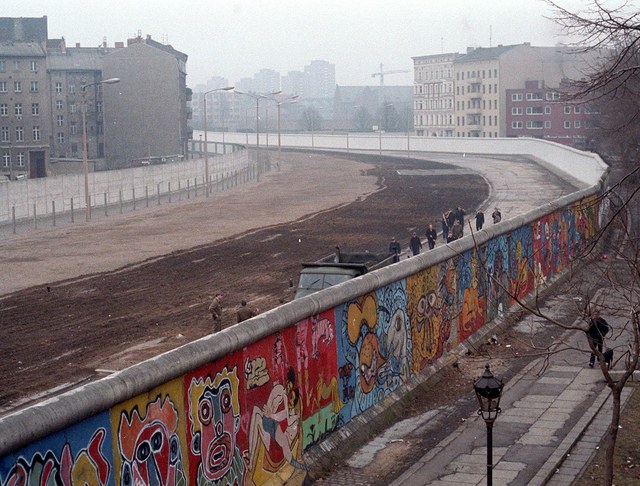
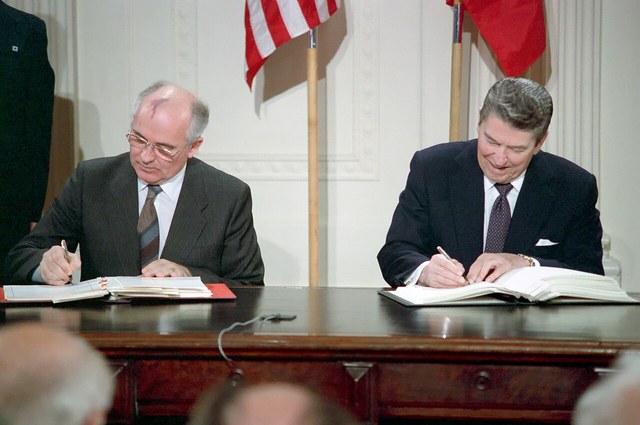
  • The Wall — Berlin was split by a namesake wall from 1961 to 1989, crossed at Checkpoint Charlie and famously condemned by Reagan.
  • Cold War symbolism — Berlin saw JFK declare being a citizen of this city 'the proudest boast' and Gorbachev urged to 'tear down' the wall.
  • Historical conferences — Berlin hosted an 1884 conference that formalized the Scramble for Africa and an 1878 congress addressing the Balkans.

Runs with

Germany
Berlin has been the capital of Germany since unification in 1871 open card →
Africa
Berlin Conference of 1884–85 partitioned Africa among European powers open card →
Nanda EmpireAmerican Railway Union

The ladder · 15 clues

H

This city’s Gauleiter for two decades was Joseph Goebbels, and a famous photo taken by Yevgeny Khaldei shows a soldier raising a Soviet flag over this city’s Reichstag.

H

Due to his actions in this city, Colonel Gail Halvorsen gained the nicknames “Uncle Wiggly Wings” and “The Chocolate Flier.” Supplies were given to this city’s residents during Operation Little Vittles by Americans, who flew planes over this city during a 1948 Soviet blockade. name this European capital city that was divided by the Allies following World War II.

H

The communist Marinus van der Lubbe was convicted of arson in this city in 1933.

H

The Four Power Agreement concerned this city, where the Basic Treaty was signed.

H

German city where that chancellor held an 1878 congress to address the Balkans.

H

The once-divided German capital city?

H

In 1963, JFK claimed that it was the “proudest boast” of a free person to be a citizen of this city.

M

Lucius D. Clay led relief during Operation Vittles which was known as this city’s “Airlift”. name this capital of Germany.

M

A structure in this city contains the mural “My God, Help Me to Survive This Deadly Love;” that structure was once crossed at Checkpoint Charlie.

M

One event in this city was codenamed Operation Vittles and was overseen by General Curtis LeMay.

M

This city was the site of a 1948 airlift which sought to relieve a blockade of it by Soviet forces.

M

The Herero genocide was an event in the Scramble for Africa, which started after an 1884 conference in this European capital.

E

Ronald Reagan asked Mikhail Gorbachev to “tear down” a structure in this European capital city that was divided by a namesake wall.

E

“Checkpoint Charlie” was a notable crossing point at this city’s namesake “Wall,” which was torn down in 1989. name this city, the capital of Germany.

E

name this city which became divided by a namesake wall, which is the capital of Germany.

10 more clues from the record
H

This city was the site of several closed subway stations that became known as “ghost stations.” The Four Power Agreement guaranteed travel to this city, which contained Checkpoint Charlie.

H

A photograph taken by Yevgeny Khaldei in this city was edited to prevent accusations of looting and depicts a man waving a Soviet flag above a destroyed building.

H

The June 17 uprising began in this city, and one conference held in this city revised the Treaty of San Stefano after the Balkan Wars.

H

Leopold II was given control of the Congo in an 1880s conference held in this German capital city.

H

This city’s underworld is the setting for the film M, and the Institute of Sexology was established in this city.

H

Speer also made plans to completely revamp this home of the Brandenburg Gate with wider streets and an improved railway system. This city is the capital of Germany.

H

A street in this city is named after the 17th of June, the date a construction-worker strike boiled over into widespread protests.

H

A photograph of the Soviet flag being lifted in this non-Russian city was doctored to remove a watch on a soldier’s wrist.

H

E. Allan Lightner was stopped trying to go to the opera in this city, leading to a tank standoff.
H

This city hosted a conference that outlined the Scramble for Africa. Frederick William II commissioned a structure in this city that is topped by Victoria wielding a staff adorned with an iron cross.

Watch out: The 1878 Berlin Congress (Balkans) vs. 1884 Berlin Conference (Africa partition)
#39 · Modern Countries · Level 1

France

France
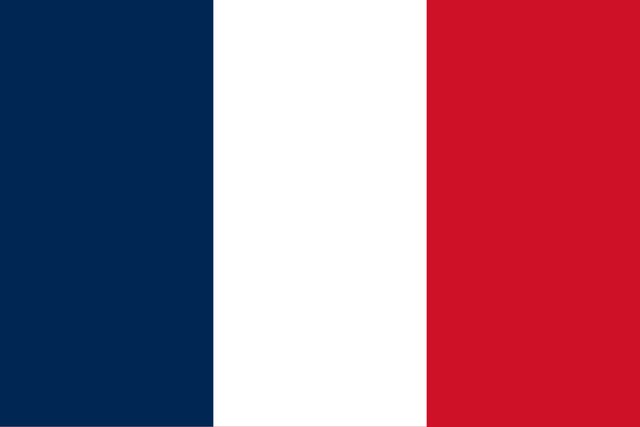
Original: /div Unknown /div Vector: /div SKopp /a · Public domain

Western European nation · antiquity to present · Western Europe, south of Belgium

France is a Western European nation whose Fifth Republic was established in 1958 under Charles de Gaulle after the Algiers Crisis.

The kit

  • Medieval conflicts — France was the site of the Battle of Tours, where Charles Martel stopped an Umayyad invasion force in the medieval period.
  • Colonial empire — France colonized Algeria, Senegal, Cameroon, and Port Royal, signing the Évian Accords in 1962 to grant Algerian independence.
  • Modern politics — France legalized abortion with the Veil Law in 1975 and experienced economic growth through dirigism during the Thirty Glorious Years.
  • International incidents — France authorized Operation Satanic, the 1985 bombing of the Greenpeace ship Rainbow Warrior protesting its nuclear policy.

Runs with

Paris
Paris is the capital city of France open card →
Nanda Empire
no connection evident in clues open card →
church
France persecuted Huguenots after the Edict of Fontainebleau as an officially Catholic country open card →
Joe Hill
no connection evident in clues open card →

The ladder · 15 clues

H

The United States clashed with a minister from this country during the XYZ Affair.

H

The U.S. signed the 1800 Treaty of Mortefontaine with this country, ending the Quasi-War.

H

Emmanuel Macron, who defeated Marine le Pen in 2017.

H

Modern-day country south of Belgium that was the site of the wars.

H

In 1962, this country signed the Évian Accords granting independence to its colony Algeria. name this country whose Fifth Republic was first led by Charles de Gaulle.

H

In 1975, this country made divorce easier and legalized abortion with the Veil Law, a few years before its anti-immigration Pasqua laws.

H

Three members of the GIGN, this country’s special forces and counter-terrorism unit, advised the raid on the Grand Mosque.

M

Country she supported against England in the Hundred Years” War.

M

After the 1958 Algiers Crisis, this current government of France came into power with Charles de Gaulle as its first president.

M

This country authorized Operation Satanic, the secret bombing of a Greenpeace ship protesting its nuclear policy, the Rainbow Warrior.

M

Substantial funding was provided by this country for Bokassa’s coronation. The Central African Republic gained independence from this country whose other African colonies included Cameroon and Algeria.

M

This nation was also the site of the medieval battle of Tours {TOO-UR}, in which Charles Martel stopped an Umayyad {OO-MY-YAHD} invasion force.

E

This country is home to cave paintings in Lascaux.

E

This officially Catholic country persecuted the Huguenots after the Edict of Fontainebleau.

E

Louis Philippe was a member of the House of Bourbon, which ruled this country. Following the overthrow of Louis Philippe, Napoleon III was elected the first President of this country.

10 more clues from the record
H

In a short story from this country, the wife of a government clerk works for years to replace the title piece of jewelry, which she later finds out is fake.

H

One of this country’s colonies, named Port Royal, was captured by the British in 1710, leading to the Great Expulsion of people from this country to regions farther south.

H

In case of war, this country planned to occupy its northern neighbor and advance to the Dyle River.

H

This country is home to Gavrinis Island, which contains neolithic stone slabs with spiral designs.

H

In 1995, the Armed Islamic Group of Algeria targeted public transportation in this country.

H

This county was divided into g´en´eraliti´es based on how they paid taxes.

H

State control of capitalism in this country, a policy known as dirigism, led to the “Thirty Glorious Years” after World War II.

H

This country worked to decentralize its government with the 1982 Defferre Laws.

H

European power which colonized Senegal.

H

Country whose pragmatic policy was made by Cardinal Richelieu (pr. ree-shell-OO)?

Watch out: Students may confuse France's Fifth Republic (1958) with earlier French republics or mistake the Évian Accords for other decolonization treaties
#45 · Modern Countries · Level 1

United Kingdom

United Kingdom
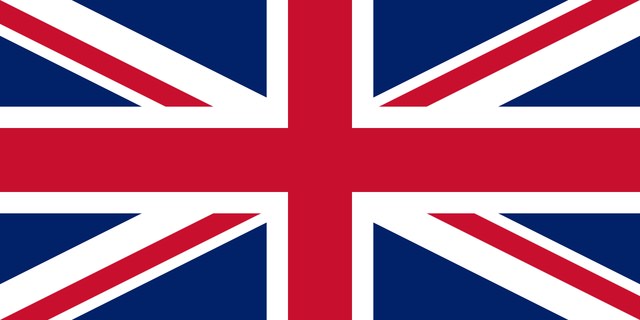
Original: /div Acts of Union 1800 /a /div Vector: /div Zscou · Public domain

Island nation · formed 1707 · northwestern Europe

United Kingdom is a European nation that built a global empire and developed a 'Special Relationship' with the United States.

The kit

  • Colonial empire — United Kingdom colonized Australia, South Africa, and the American colonies and ruled Zimbabwe before independence.
  • 19th-century diplomacy — United Kingdom resolved the Alabama claims after the Civil War and signed the Hay-Pauncefote Treaty during the Great Rapprochement.
  • 20th-century conflicts — United Kingdom faced the Blitz during World War II and joined France in Operation Musketeer during the Suez Crisis.
  • Cultural influence — United Kingdom bands like The Beatles and The Rolling Stones led the 1960s British Invasion of American rock music.

Runs with

American Railway UnionCommonJoe Hill
Northern Ireland
constituent country within the United Kingdom open card →

The ladder · 15 clues

H

A politician from this country reportedly held up a copy of The Constitution of Liberty by Austrian thinker Friedrich von Hayek and stated “This is what we believe.” Another economist from this country used wine from Portugal and cloth from this country to define comparative advantage in trade.

H

One of these two countries refused to use force to put down the revolt of Colonel Ahmed Urabi, prompting the other to intervene militarily.

H

A historian from this country was told, “Your criticism of me would damage your reputation as a historian, if you had one” during a 1961 debate.

H

This country clashed with the U.S. during the Venezuelan crisis of Grover Cleveland’s presidency.

H

This nation's stance in the 1860s was satirized in Joseph Webster's popular, contemporary tune titled "Our Neutral Friend." Two Confederate diplomats, James Murray Mason and John Slidell, were seized from a ship of this nation in the Trent Affair.

H

Country that faced the Blitz and employed the Royal Air Force.

H

Cogidubnus was a Roman client king in this modern-day country, where the Roman governor Agricola won the battle of Mons Graupius.

M

Country that colonized Australia who also colonized South Africa and the American colonies F

M

Country for which she was the first female Prime Minister

M

Another incident between these two countries featured a territorial dispute in Sudan and ended with a troop standoff in Fashoda.

M

Country that leased Hong Kong from the Qing [ching] Dynasty.

M

The U.S. and this country feuded over borders in the San Juan Islands during the Pig War.

E

European country that ruled Zimbabwe prior to independence.

E

Historians believe the late 19thcentury was the time of the “Great Rapprochement” between this country and the U.S. After the U.S. Civil War, this country resolved the Alabama claims with the U.S. and signed the Hay-Pauncefote Treaty. name this European country which, as a result of actions like these, began forming the “Special Relationship” with the U.S.

E

These two countries later worked with David Ben-Gurion in Operation Musketeer, deploying paratroopers to thwart Gamel Abdel Nasser’s nationalization of a waterway. name these two European powers that joined forces in the Suez Crisis.

10 more clues from the record
H

One band from this country helped popularize distortion in rock music when they sliced their amp with a razor to record the song "You Really Got Me." While performing in Des Moines, Iowa, one musician from this country bit off the head of a dead bat.

H

Darcus Howe was a civil rights leader in this country, where a race riot that inspired the Eddy Grant song “Electric Avenue” took place in Brixton.

H

That historian from this country verified that Hitler did not escape Berlin in the late days of the war and controversially claimed that the supposed Hitler Diaries were real.

H

Bands from this country such as The Kinks were part of a 1960s "Invasion" from this country to the United States. name this country, home to rock bands such as Black Sabbath, The Rolling Stones, and the Beatles.

H

A king of this country ordered that all children born on May Day be executed, but that didn’t kill his bastard son by Morgause.

H

What European country has been led by prime ministers like John Major, Tony Blair, and Gordon Brown?

H

Country where the Langham Place group created a women’s periodical published by Emily Faithfull’s Victoria Press

H

A legend in this country concerns the vengeful spirit Black Vaughan, who was finally exorcised by a mother with a newborn baby.

H

Citing a desire to prevent the erosion of democracy, Boris Johnson came out in favour of this cause in February 2016.

H

The beast of Bodmin was a phantom cat that terrorized much of this country’s bumpkin inhabitants.

Watch out: Northern Ireland is part of the United Kingdom, not a separate country
#49 · Modern Countries · Level 1

Russia

Russia
Peter the Great · Public domain

Eurasian nation · ancient to present · Eastern Europe and northern Asia

Russia is the successor state to the Soviet Union with its capital at Moscow.

The kit

  • Religious schism — Russia underwent the Raskol schism when Patriarch Nikon changed the sign of the cross, splitting off the Old Believers.
  • Revolutionary violence — Russia's People's Will assassinated the tsar in 1881, and over one million died in civil war between Bolsheviks and Mensheviks.
  • Musical tradition — Russia was home to the 'Mighty Handful' of five composers including Mussorgsky, who wrote Pictures at an Exhibition.
  • Early technology — Russia's Sintashta culture created the first known chariots and domesticated horses later associated with the Arya who settled India.

Runs with

Nanda Empire
Sintashta horse culture linked to Arya migration to India open card →
American Railway Union
Emma Goldman emigrated from Russia to United States open card →
Catherine the Great
Peter the Great
ruled as Tsar and led Great Northern War open card →

The ladder · 15 clues

H

This country underwent a religious schism known as the “Raskol” when Patriarch Nikon attempted to change the number of fingers used to make the sign of the cross, leading to the split of the Old Believers.

H

Successor state to the Soviet Union whose capital is Moscow.

H

The country whose Baltic Sea ports include Kaliningrad and St. Petersburg?

H

More than one million citizens of this country were killed in a civil war between the Bolsheviks and Mensheviks. In the midst of the civil war, this country signed the Treaty of Brest-Litovsk with the Central Powers to withdraw from World War I.

H

A culture based in this modern-day country created the first known chariots.

H

This country, whose navy employed Scottish-born Samuel Grieg, won the Battle of Chesme to force the Treaty of Kuchuk Kaynarca. Sailors in its navy mutinied in the Kronstadt Rebellion.

H

Peter ruled as Tsar of this country, which he led into the Great Northern War with Sweden.

M

This country was the home of the People’s Will, a revolutionary group that, in 1881, assassinated the leader of this country.

M

César Cui joined those two composers in the "Mighty Handful," a group of five composers that celebrated this country's music. Name this country where Pictures at an Exhibition was composed by Modest Mussorgsky and edited by Nikolai Rimsky-Korsakov.

M

Was the first-ever U.S. ambassador to what country, where he presented credentials at St. Petersburg?

M

During another hostage crisis, this country was criticized for indiscriminately flooding a theater with poison gas.

M

British fishermen were killed in the Dogger Bank incident when what country’s navy accidentally fired on them, thinking they were Japanese?

E

Battle of Borodino, which was depicted in War and Peace.

E

country whose delegation was led by Tsar Alexander I.

E

That pamphlet was written by an author from this country who traveled from Switzerland in a sealed boxcar and delivered the April Theses upon his return to Petrograd. name this home country of Emma Goldman and Vladimir Lenin.

10 more clues from the record
H

The Time of Troubles plagued this country, many of whose rulers called themselves “tsars.”

H

The earliest known chariots were found at this country’s type site of Sintashta, which names a horse-domesticating culture associated with the Arya that later settled in India.

H

One immigrant from this country to the United States founded the electronics company Ampex, while another invented the first practical helicopter.

H

Name some things about a recent war, :This former Soviet republic's president is Dmitry Medvedev, and its prime minister is Vladmir Putin.

H

During a performance in this country of the ballet Spartacus by Aram Khachaturian [[kah-chah-TOO-ree-ahn]], Leonid Yakobson [[YAH-kohb-sun]] abandoned the traditional pointe technique during a performance at the Bolshoi Theatre.

H

Ethnically Polish dancer Vaslav Nijinsky [[nih-JIN-skee]] helped popularize a ballet company named for this nation originally founded by Sergei Diaghilev [[dee-AH-geh-lef]].

H

A Defense Minister of this country said “it is hard to search for a black cat in a dark room, especially if it’s not there” about the presence of soldiers in a neighboring country.

H

The Navajo language has recently been shown to be distantly related to a group of languages spoken along the Yenisei River in what country?

H

The works of Viktor Hartmann inspired another composer from this country to write a suite whose final movement depicts an unbuilt celebratory gate.

H

In 2014, Barack Obama said it was a “regional power,” two years after promising he would have more “flexibility” with this country after his reelection.

#57 · Modern Countries · Level 1

Hungary

Hungary
SKopp · Public domain

Central European kingdom · 896 CE–present · Danube basin, capital Budapest

Hungary is a Central European kingdom founded by the Magyars under the Árpád Dynasty and converted to Christianity by Saint Stephen.

The kit

  • Medieval kingdom — Hungary's Golden Bull of 1222 declared all nobles equal, and Matthias Corvinus established the Black Army mercenary force.
  • Ottoman conquest — Hungary was defeated by Suleiman the Magnificent at Mohács in 1526, leading to Ottoman occupation and Habsburg control.
  • Dual Monarchy — Hungary formed a dual monarchy with Austria after the Compromise of 1867, gaining significant autonomy within the empire.
  • 1956 Revolution — Hungary's 1956 revolt led by Imre Nagy was crushed by Soviet forces, followed by János Kádár's "goulash communism" regime.

Runs with

Austria
formed Dual Monarchy after 1867 Compromise open card →
Lajos Kossuth
led 1848 revolution, wrote April Laws open card →
Nanda Empire
Magyars
founded Hungary under Árpád Dynasty open card →

The ladder · 15 clues

H

A standing mercenary army called the Black Army was established for this kingdom by Matthias Corvinus.

H

Olympians from this country participated in the “Blood in the Water”, a violent water polo match with Soviet athletes. name this country whose 1956 revolution concluded with Soviet forces occupying Budapest.

H

The Golden Bull of 1222 declared all nobles in this kingdom to be equal.

H

Country the Árpád Dynasty ruled with its modern capital at Budapest.

H

To prevent this country from surrendering, the son of its leader was kidnapped in Operation Panzerfaust by Otto Skorzeny.

H

Ferenc Szálasi's“International Ghetto” was opposed in this country’s capital by the Swedish-born Raoul Wallenberg.

H

This country was supported by Germany and Italy in the First Vienna Award which revised the Treaty of Trianon.

M

European country where Imre Nagy’s [im-reh nazh’s] 1956 revolt was violently crushed by the KGB.

M

In the interwar period, this country was threatened by the fascist Arrow Cross Party and was governed by the "regent" Miklos Horthy (HOR-tee).

M

Suleiman the Magnificent captured this country at the Battle of Mohacs [moh-hotch].

M

This country was defeated by Otto the Great at the Battle of Lechfeld, and it also saw a 1848 revolution led by Lajos Kossuth.

M

Bela Kun and Janos Kadar [yah-nosh kadar] led Communist governments in this country, whose first king was Saint Stephen of the Arpad Dynasty in the first century AD.

E

Janos Kadar was given control of this country after Nikita Khrushchev ordered the destruction of Imre Nagy’s government.

E

Following the Compromise of 1867 or Ausgleich, this country formed a dual monarchy with Austria. name this country with capital at Budapest.

E

This country’s first ruling dynasty was founded by Arpad and converted to Christianity during the rule of Saint Stephen. name this kingdom created by the Magyars whose capital joined with its eastern sister-city to form modern Budapest.

10 more clues from the record
H

This state lost Dalmatia after the pretender Ladislaus [[lawd-EH-sloh]] of Naples ceded it to Venice. John Zápolya [[ZAH-pol-yah]] was crowned king of this country under the protection of the Ottoman Empire after one battle. The Military Frontier was established by the Habsburgs in this country, which was ruled during its height by Matthias Corvinus. Name this kingdom that united with Austria in 1867 to form the Dual Monarchy.

H

One ruler from this kingdom led the “Long campaign” and was captured following a defeat at the battle of Varna.

H

This country attempted to gain self-government with the April Laws, written by nationalist leader Lajos Kossuth [LIE-osh KO-shooth].

H

During a revolution in this country, only the boots of a statue of Stalin were left after protestors pulled it down.

H

János Kádár [“YAH-nosh KAH-darr”] implemented “goulash communism” in this country after a revolution led by Imre Nagy [“IHM-ray nahj”].

H

In this non-Romania country, an apocryphal vow against the clinking of beer mugs began after 13 rebel generals were executed at Arad.

H

Béla Kun started a short-lived Communist republic in this country, which fell apart after an invasion led by King Ferdinand.

H

A king of this country defended Belgrade from the Ottoman Empire in 1456.

H

In this country, the Nazi-backed Arrow Cross party overthrew Miklos Horthy, who had been selected as regent following a series of revolutions.

H

This country twice refused the rule of Charles IV, its last king, and instead was led through World War II by Admiral Miklós Horthy.

Watch out: Béla Kun's short-lived Communist republic (1919) is often confused with the 1956 Nagy uprising
#59 · Modern Countries · Level 1

Germany

Germany
User:SKopp /a , User:Madden /a , and other users · Public domain

European nation · unified 1871 · central Europe

Germany unified in 1871 under Kaiser Wilhelm I and Chancellor Otto von Bismarck, later led by Adolf Hitler.

The kit

  • Rise — Germany sparked the Scramble for Africa by hosting the Berlin Conference and colonized Tanzania, Togoland, and Southwest Africa.
  • Conflicts — Germany sent the Zimmermann Telegram to Mexico during WWI, prompting U.S. entry, and suffered defeat leading to the Weimar Republic.
  • Achievements — Germany hosted the 1936 Berlin Olympics where Jesse Owens won the 100-meter dash, shattering myths of Aryan supremacy.
  • Legacy — Germany's Pergamon Museum displays a Hellenistic altar from Turkey and a reconstruction of the Ishtar Gate from Babylon.

Runs with

Chancellor
led by Chancellor Angela Merkel of the Christian Democratic Union open card →
American Railway Union
John Jacob Astor spent first sixteen years in Walldorf before moving to U.S. open card →
Nanda Empire
archaeologist Heinrich Schliemann discovered Mask of Agamemnon searching for Troy open card →
Otto von Bismarck
unified under Kaiser Wilhelm I with Chancellor Otto von Bismarck open card →

The ladder · 15 clues

H

Recep Erdogan [aird-oh-wan] accused this country of “Nazi practices” after pro-Erdogan rallies were cancelled in Frechen and Cologne. name this country led by the Christian Democratic Union under Chancellor Angela Merkel.

H

An archaeologist from this country discovered the Mask of Agamemnon in his search for a historical Troy.

H

This country’s early 20th century star athletes included cyclist Willy Arend and long jumper Luz Long.

H

Tanzania was colonized by this country. Namibia was once part of this country’s Southwest Africa colony, which it extended by acquiring the Caprivi Strip.

H

It was united after an 1871 war and led by Kaiser Wilhelm I and chancellor Otto von Bismarck. name this European country formerly led by Adolf Hitler.

H

Astor moved to the U.S. after the Revolutionary War, spending the first sixteen years of his life in Walldorf, which is today the home of the software company, SAP.

H

This country sent a gunboat to its rival’s territory in Morocco, causing the Agadir Crisis.

M

The Weimar [VYE-mar] Republic, which was formed after the defeat of this nation in World War I, suffered from hyperinflation after the Treaty of Versailles.

M

Operation Gunnerside was able to eliminate this country’s stockpile of heavy water, stopping its nuclear weapons program.

M

After this country was victorious at the Battle of Waterberg, Lothar von Trotha infamously marched the Herero people into the Kalahari desert, where they died of dehydration in this country’s colony of Southwest Africa. name this European country that possessed the Caprivi Strip in modern-day Namibia.

M

Kinjikitile Ngwale [kin-jee-kit-ee-lay n-WAH-lay] convinced the Matumbi tribe that the bullets of soldiers from this country would turn to water during the Maji Maji rebellion.

M

European country that sent the Zimmermann Telegram to Mexico during the revolution, trying to trigger an invasion of the US.

E

Jesse Owens won the 100 meter dash at the 1936 Olympics in this country, shattering myths of Aryan supremacy. name this country that hosted Olympic Games in Munich and Berlin.

E

This country’s holdings included Togoland and the Caprivi Strip in Namibia, which was then named South West Africa. name this country that sparked the Scramble for Africa by hosting the Berlin Conference.

E

Wunderwaffe, or wonder weapons, were produced during World War II by this country, for whom Wernher von Braun designed the V1 and V2 rockets.

10 more clues from the record
H

A series of revolutions in this modern-day country led to the election of the Frankfurt Parliament.

H

This government’s attempt to unify Protestantism was opposed by Dietrich Bonhoeffer’s Confessing Church.

H

A Hellenistic altar excavated from Turkey is now displayed in this country’s Pergamon Museum, which also includes a reconstruction of the Ishtar Gate.

H

One of this country's colonies saw the Battle of Waterberg, which led to the Herero and Namaqua genocide.

H

In this country, a coalition led by a tribe described as “lazy fools” was finally crushed at the Angrivarian Wall. :Name this modern-day country, where Arminius led three legions into an ambush in the Teutoburg Forest.

H

In response to revelations regarding NSA surveillance, this country’s leader said that “the Internet is uncharted territory for us all.” Former President of European Parliament Martin Schulz announced his intentions to run as the Social Democratic Candidate in October 2017 elections in this country.

H

One song of this country’s army is about a girl whose shares a name with a flower called “Erika”.

H

Another thinker from this country argued that a “Protestant work ethic” enabled the development of modern capitalism and suggested that the state held a monopoly on the legitimate use of violence.

H

In 2019, America’s Major League Soccer lifted a ban on imagery inspired by the Iron Front, an anti-fascist movement that developed in this country in the 1930s.

H

Its high command was led by Helmuth von Moltke, and it was accused of sending the Zimmerman Telegram, causing the United States to declare war on this country.

#61 · Modern Countries · Level 1

Italy

Italy
See below. · Public domain

European nation · unified 1861–1870 · southern Europe

Italy was unified under Victor Emmanuel II through the Risorgimento, culminating in the 1870 capture of Rome.

The kit

  • Unification — Italy's Risorgimento succeeded through Garibaldi's Expedition of the Thousand (1860) and Cavour's provocation of Austria with Napoleon III's support.
  • Conflicts — Italy lost the 1896 Battle of Adowa to Abyssinia but re-invaded Ethiopia in 1935 under Mussolini.
  • Years of Lead — Italy experienced the Years of Lead terrorism, including the Red Brigades' kidnapping and murder of Prime Minister Aldo Moro.
  • Recent politics — Italy was led by Silvio Berlusconi, known for "bunga bunga" parties, and later by Matteo Renzi and the Five-Star Movement.

Runs with

Nanda Empire
no connection evident in clues open card →
Benito Mussolini
Mussolini led Italy as **"Il Duce"** during World War II and invaded Ethiopia in 1935 open card →
Ethiopia
Italy lost at **Adowa in 1896** then successfully invaded Abyssinia under Mussolini in 1935 open card →
Rome
Rome's **1870 capture** completed Italian unification under Victor Emmanuel II open card →

The ladder · 15 clues

H

This country was the site of the 1970 “Hot Autumn” riots.

H

Settlements in this modern-day country included one ruled by the tyrant Telys, Sybaris, which was conquered by Croton.

H

In order to downplay a defeat, this country’s Gothic Line was renamed to the Green Line by Albert Kesselring.

H

This country was home to a Masonic lodge called P2, which collaborated with a NATO stay-behind program called Operation Gladio to combat Communist influence.

H

The life of a miller in this modern-day country is depicted in Carlo Ginzburg’s The Cheese and the Worms.

H

A leader of this country signed the Osimo Treaty with Yugoslavia before joining a “Historic Compromise” with his country’s communist party.

H

This European country lost the 1896 Battle of Adowa, ending its first attempt to conquer an East African country.Name this country that re-invaded Abyssinia in 1935 under Benito Mussolini.

M

During one of this country’s independence struggles, Jean-Henri Dunant established the International Red Cross after witnessing the Battle of Solferino. In 1860, the Spanish Bourbons were ousted by the Expedition of the Thousand, ensuring the success of this country’s Risorgimento. name this country that was unified under Victor Emmanuel II after the 1870 capture of Rome.

M

Magna Graecia lies in this modern-day country, where the Pyrrhic War took place.

M

Country in which the Years of Lead took place, in which terrorists killed civilians in cities like Florence.

M

“Il Duce,” [eel doo-chay], Benito Mussolini, during World War II.

M

A long-time socialist prime minister of this country was investigated for corruption as part of the so-called “clean hands” investigation.

E

A leader of this country, Aldo Moro, was kidnapped and killed by the Red Brigades as part of the Years of Lead [led].

E

One former Prime Minister of this country founded the company Mediaset and was known for his extravagant “bunga bunga” parties. name this country currently led by Matteo Renzi and recently led by Silvio Berlusconi.

E

Nicias and Alcibiades led a failed expedition to an island now owned by this country.

10 more clues from the record
H

In order to gain the support of Napoleon III, this country’s first prime minister, the Count of Cavour, provoked a war with Austria.

H

In this country, members of the Propaganda Due [DOO-ay], a secret masonic lodge, formed a shadow government.

H

One woman from what is today this country was named Isabella, known as the "First Lady of the World," and persuaded Louis XII to not send troops against her home city.

H

An artist from this country created a hyper-realistic sculpture of a pope being struck by a meteorite titled The Ninth Hour.

H

A thinker from this country wrote about King Saladin who ponders which of the three Abrahamic religions is true.

H

Prime Minister Aldo Moro was kidnapped, murdered, and abandoned in Rome.

H

The Years of Lead took place in this European country once led by Benito Mussolini.

H

That politician here is the leader of the Five-Star Movement and is a former comedian.

H

The “Historic Compromise” was made between this country's Communist and Christian Democrat parties.

H

After his service carrying artillery shells in this country, the Syrian brown bear Wojtek [VOY-tek] lived out his life in Edinburgh Zoo.

Watch out: Confusing Italy's 1896 defeat at Adowa with its later 1935 invasion of Ethiopia
#65 · Modern Countries · Level 1

Georgia

Georgia
User:Ggia · CC BY-SA 3.0

U.S. state and Caucasian nation · 1733 (colony); 1788 (statehood) · Southeastern United States

Georgia was founded as a debtors' haven and buffer colony, later becoming a major Civil War battleground.

The kit

  • Founding — Georgia was founded by James Oglethorpe in 1733 as a buffer between English colonies and Spanish Florida.
  • Colonial period — Georgia was the only colony to use Stamp Act revenue stamps due to Governor James Wright's popularity.
  • Civil War — Georgia saw Sherman's March to the Sea to Savannah and the notorious Andersonville Prison run by Henry Wirz.
  • Legal legacy — Georgia was the defendant in Furman v. Georgia (1972) imposing a death penalty moratorium and Gregg v. Georgia (1976) ending it.

Runs with

James Oglethorpe
founded Georgia as a debtors' haven and buffer colony in 1733 open card →
American Railway UnionAtlanta
Cherokee
Samuel Worcester's arrest in Georgia established tribal sovereignty in Worcester v. Georgia open card →

The ladder · 15 clues

H

In this modern-day state, British forces fought the Battle of Bloody Marsh as part of the War of Jenkins” Ear.

H

During fighting in this state, Joseph Johnston was removed from command for his failure at Kennesaw Mountain.

H

Braxton Bragg won the first major battle in this state against William Rosecrans at Chickamauga, but a strategic setback for the Confederates at Kennesaw Mountain left the path to this state's capital open.

H

Benjamin Ingham and the Wesley brothers landed in this colony, where Tomochichi of the Yamacraw and Mary Musgrove helped mediate peace.

H

Central Asian nation which has breakaway regions in Abkhazia and South Ossetia and shares its name with a U.S. sate?

H

As a debtors’ haven by James Oglethorpe?

H

One ruler of this kingdom won the Battle of Didgori, defeating the Great Seljuk Empire, thus initiating his country’s Golden Age.

M

The death of this state’s governor-elect, Eugene Talmadge, sparked the Three Governors controversy.

M

The subject of Sherman's March to the Sea which ended in Savannah

M

Henry Wirz was executed for war crimes for running this state’s Civil War-era Andersonville Prison.

M

The 1964 Civil Rights Act’s prohibitions on discrimination in private businesses was upheld after a challenge by, what U.S. state’s Heart of Atlanta Motel?

M

In a court case involving this state, William Wirt was hired by a Native American tribe that was declared a “domestic dependent nation.” A 1972 case involving this state started a nationwide moratorium on the death penalty; another case four years later, also involving this state, ended it.

E

James Oglethorpe founded this US colony that served as a southern buffer between the English colonies and Spanish Florida.

E

In this state, William Tecumseh Sherman led the March to the Sea which culminated in Savannah.

E

William Tecumseh Sherman’s March to the Sea ended with the capture of this southern state’s city of Savannah.

10 more clues from the record
H

Invading forces at the Battles of Gully Hole Creek and Bloody Marsh during the War of Jenkins Ear were defeated by this state’s founder.

H

A plan to develop a city in this colony relied on a neighboring colony’s Grand Model and used town wards consisting of four tything and four trust blocks.

H

The southern border of this colony expanded to the Saint Marys River after the English victory in the French and Indian War.

H

This state was the site of the Camilla Massacre in which blacks, and their white allies, were murdered as a reaction to the passage of the 15th Amendment.

H

The laws of Tribal Sovereignty were established in a court case stemming from Samuel Worcester’s [WOOST-er’s] arrest in this state.

H

This state was the named defendant in a 1976 Supreme Court case that reaffirmed the use of the death penalty; that case, brought by Troy Leon Gregg, reversed the Court’s moratorium on executions imposed by its 1972 decision in Furman v. this state.

H

Due to the popularity of governor James Wright, this American colony was the only one of the original thirteen to use the revenue stamps required by the Stamp Act.

H

Jimmy Carter was “attacked” by a rabbit while fishing in this state, where he had served as governor from 1971 to 1975.

H

Was the birthplace of Joseph Stalin and fought a war with Russia over South Ossetia?

H

This kingdom’s rulers patronized the Gelati Academy and the monks of the Monastery of the Cross in Jerusalem during this country’s medieval Golden Age.

Watch out: The Caucasian nation Georgia, birthplace of Stalin, fought Russia over South Ossetia and has breakaway regions
#72 · Modern Countries · Level 1

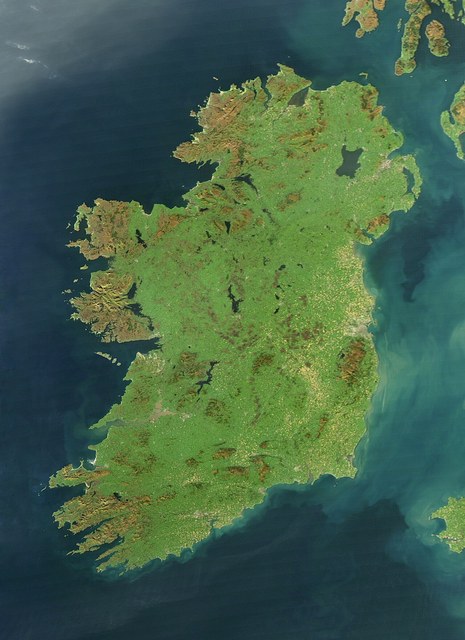
Ireland

Ireland
Jeff Schmaltz · Public domain

Island nation · medieval to present · Western Europe, west of Britain

Ireland is an island nation whose independence movement included the 1916 Easter Rising and a war against British forces.

The kit

  • Independence struggle — Ireland saw Charles Parnell advocate Home Rule in the 1800s, followed by the 1916 Easter Rising led by Patrick Pearse.
  • Revolutionary violence — Ireland experienced the Phoenix Park Murders by the Invincibles, the Croke Park massacre, and deployment of British irregulars called the Black and Tans.
  • Modern state — Ireland was led by Eamon de Valera, founder of Fianna Fail, and maintained neutrality during World War II under the Emergency Powers Act.
  • Social change — Ireland became the first country to legalize same-sex marriage by referendum in May 2015 and considered repealing abortion restrictions.

Runs with

Dublin
capital city of Ireland open card →
Oliver Cromwell
brutally suppressed Royalists from Dublin base open card →
Easter Rising
1916 rebellion in Dublin open card →
church
Article 9 forbade abortion open card →

The ladder · 15 clues

H

were repealed in part to relieve the potato famine in this country.

H

The Invincibles operated from this country where they committed the Phoenix Park Murders during a period called the Land War.

H

One hero from this island gained wisdom by sucking his thumb after burning it on a magic salmon.

H

This island was the site of an independence movement during which Bobby Sands’ died after a lengthy hunger strike.

H

Wolfe Tone led an unsuccessful rebellion in what is now this country, and this modern-day country is where the Croke Park massacre was perpetrated by the Black and Tans.

H

A rebellion in this polity involved the takeover of the General Post Office and resulted in the execution of Roger Casement.

H

Island where Oliver Cromwell brutally suppressed Royalist soldiers from his base in Dublin.

M

In May 2015, this country became the first to pass a referendum legalizing same-sex marriage, and it is considering another referendum to repeal the abortion-forbidding Article 9 of its constitution.

M

This country’s Home Rule movement was advocated for by William Gladstone in the House of Commons.

M

The unification of two regions into what country was the goal of a “Provisional” Republican Army associated with the political party Sinn Fein [shin fayn]?

M

Leaders from this country include Eamon de Valera and Patrick Pearse.

M

One early ruler on this island won the Battle of Clontarf and was named Brian Boru.

E

The Easter Rising occurred in this country, which also saw Charles Parnell advocate Home Rule during the 1800's.

E

Roger Casement was executed for treason as a revolutionary for this country that was led by Eamon de Valera, who fought during the 1916 Easter Rising.

E

The Good Friday Agreement ended the direct rule of a portion of this island in the hopes of ending the Troubles.

10 more clues from the record
H

A leader of nationalist resistance in this country was nicknamed “The Big Fellow” and employed a hit squad nicknamed the “Twelve Apostles.” The Croke Park and Phoenix Park massacres occurred in this country, where British irregulars known as the “Black and Tans” were deployed to crush nationalist resistance.

H

During World War II, this country was governed by the Emergency Powers Act while maintaining official neutrality.

H

The remains of dome shaped huts have been found on this island at Mount Sandel.

H

The potential invasion of this country by Germany led the British high command to create Plan W. It’s not India, but World War II is known as “The Emergency” in this country and saw conflict with former paramilitaries.

H

A double murderer was apprehended in the home of this country’s attorney general in the GUBU scandal.

H

In this colony, a group called the Invincibles assassinated Frederick Cavendish in the Phoenix Park Murders.

H

Prisoners of war from this country who were shipped to the Caribbean are the progenitors of modern-day Redlegs.

H

In the 1630s, a group of friars compiled a comprehensive history of this region called the Annals of the Four Masters.

H

Eamon de Valera founded this nation’s largest political party, Fianna Fail. :Name this nation, with capital at Dublin. Its northern neighbor is still part of the United Kingdom.

H

The first president of this nation, Douglas Hyde, was elected thanks to the founder of the Fianna Fail party, the Taoiseach ["tee-shock"] Eamon de Valera.

Watch out: Northern Ireland remains part of the United Kingdom, not the Republic of Ireland
#138 · Other Named Wars and Armed Conflicts · Level 1

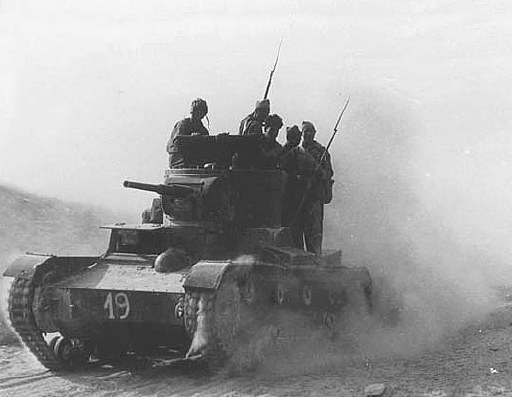
Spanish Civil War

Spanish Civil War
Unknown author Unknown author · Public domain

1936–1939 conflict in Spain · 1936–1939 · Spain

The Spanish Civil War was a 1936–1939 conflict in which Republican forces lost to Nationalist forces under Francisco Franco.

The kit

  • Rise — Spanish Civil War began after a miners' revolt triggered by CEDA-led government formation two years before the conflict.
  • Foreign involvement — Spanish Civil War saw the Abraham Lincoln Brigade fight for Republicans while the German Condor Legion supported Nationalists.
  • Atrocities — Spanish Civil War included the Condor Legion's bombing of Guernica, which killed hundreds of Basques and inspired Picasso's painting.
  • Outcome — Spanish Civil War ended when Francisco Franco captured Madrid in 1939, establishing his dictatorship over Spain.

Runs with

Francisco Franco
led Nationalist forces to victory open card →
Guernica
Basque town bombed by Condor Legion open card →
Abraham Lincoln
1930s
occurred 1936–1939 open card →

The ladder · 15 clues

H

Torkild Rieber’s Texaco company was fined 22,000 dollars for illegally supplying oil on credit to a side in this war.

H

This conflict saw the coining of the term “Fifth Column.” Manuel Azaña was the prime minister of one side at the end of this conflict.

H

In this war, the first African American to command an American military unit, Oliver Law, was killed at the Battle of Brunete.

H

During this conflict, Italy’s mass use of submarine warfare against merchant ships prompted the Nyon Conference.

H

One faction in this conflict that adopted the "Twenty-Seven Points" ideology merged with the Traditionalist Communion.

H

In support of freedom fighters in this war, U.S. folk group the Almanac Singers, led by activist Pete Seeger, wrote an album of songs such as "Jarama Valley" from a U.S. battalion which fought in this war.

H

The CNT attempted to overthrow one government during this conflict in the so-called “May Days” after Anarcho-Syndicalists allegedly gained control of Telefonico.

M

Emilio Mola coined the term "fifth column" during this conflict, which included the Abraham Lincoln Brigade.

M

Robert Capa is credited with taking the possibly faked photograph The Falling Soldier in this war.

M

Americans in the Abraham Lincoln Brigade fought for this war’s losing side, and Ernest Hemingway covered this war as a reporter, which inspired his novel For Whom the Bell Tolls. name this late 1930s war in which the Republican forces lost to the Nationalists of Francisco Franco.

M

Jose Sanjurjo died in a plane crash in this war.

M

The Abraham Lincoln Brigade was one of the International Brigades to join this conflict, and Nazi Germany supported one side in this conflict with the Condor Legion.

E

In this war, the Abraham Lincoln Brigade fought alongside republicans and the German Condor Legion bombed Guernica. name this 1936 to 1939 war that ended when Francisco Franco captured Madrid.

E

During this conflict, the Condor Legion killed hundreds of Basque civilians in an air raid, many of whom lived in Guernica. name this 1930s conflict in which the Republicans lost to the Nationalists under Francisco Franco.

E

The Condor Legion’s bombing of a town inspired Pablo Picasso to paint Guernica during this war that led to the rise of Francisco Franco.

10 more clues from the record
H

One leader of this conflict, Jose Sanjurjo, died in a plane crash after leaving Estoril.

H

During this war, Vicente Lluch was promoted by a Prime Minister who got arms in exchange for transferring much of one country’s gold reserves to Moscow.

H

During this war, Leftists perpetrated a “Red Terror” that included the “execution” by firing squad of a statue of the Sacred Heart of Jesus.

H

One side in this war subsisted on lentils nicknamed “victory pills.” This war was preceded by the “black two years” and a bloody miners’ strike.

H

During this war, the police takeover of a telephone exchange held by the anarchist CNT began street fighting against the POUM in the May Events.

H

After the beginning of this conflict, Alexander Orlov organized the shipment of all of one nation’s gold reserves to Moscow.

H

Two years before the start of this conflict, the formation of a CEDA-led government triggered a miner’s revolt.

H

During this war, a photograph was taken of a firing squad symbolically executing a statue of the Sacred Heart of Jesus.

H

The use of manufacturing plants in Nazi Germany allowed American companies like GM and Ford to provide twelve thousand vehicles to Falangist [[fah-LAHN-jist]] forces during this intranational war.

H

A work painted during this war and displayed in the Philadelphia Museum of Art depicts a brown wooden box below a monster whose arms and legs awkwardly hold one another.

Watch out: Fifth Column refers to Nationalist supporters within Republican territory, not a military unit
#147 · Other Named Wars and Armed Conflicts · Level 1

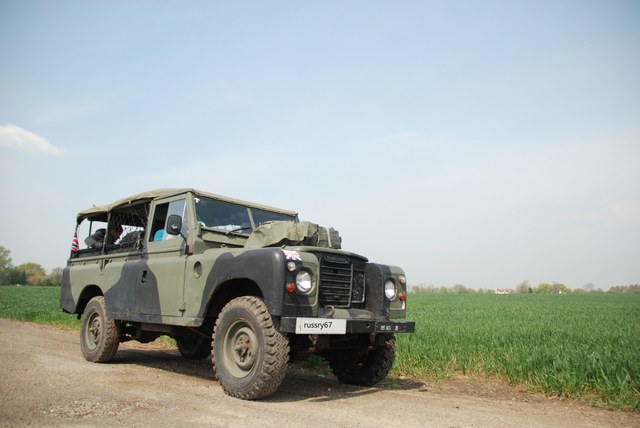
Falklands War

Falklands War
russty67 · CC BY-SA 4.0

1982 South Atlantic conflict · April–June 1982 · Falkland Islands, South Georgia

Falklands War was a 1982 conflict in which the United Kingdom recaptured the Falkland Islands from Argentina after Leopoldo Galtieri's invasion.

The kit

  • Outbreak — Falklands War began with Operation Rosario, Leopoldo Galtieri's invasion that prompted Margaret Thatcher's War Cabinet to launch a counteroffensive.
  • Naval engagements — Falklands War saw the nuclear submarine HMS Conqueror sink the General Belgrano, prompting The Sun's controversial headline "Gotcha."
  • Land campaign — Falklands War included British landings at San Carlos Water ("Blue Beach") and the Battle of Goose Green, where Herbert Jones died.
  • Outcome — Falklands War ended with the recapture of Stanley and Mount Tumbledown, leading to Galtieri's removal from power in Argentina.

Runs with

Argentina
invaded the Falklands under Galtieri; lost and Galtieri fell from power open card →
Margaret Thatcher
led UK War Cabinet that recaptured the islands open card →
United Kingdom
recaptured the Falklands after Argentine invasion open card →
1980s
fought in 1982 open card →

The ladder · 15 clues

H

Answer the following about some infamous headlines in The Sun, .The Sun ran the headline “Gotcha” after the sinking of the General Belgrano during this 1980s war.

H

One side in this war launched Operation Paraquet [“parakeet”] to retake an island on which the other side had illegally raised their flag at Leith Harbour.

H

Margaret Thatcher and her War Cabinet quickly recaptured South Georgia during this conflict.

H

During this war, hospital ships collaborated to treat patients in an area known as “Red Cross Box.” A famous photo of a “Yomper” in this war was taken after commandos navigated “Bomb Alley” to land at San Carlos.

H

A Newsweek cover about this conflict depicts the Hermes with the caption “The Empire Strikes Back.” Mount Tumbledown was captured in this war, which included landings at San Carlos Water and fighting at Goose Green.

H

This conflict began on the orders of Leopoldo Galtieri, who lost power as a result.

H

In this war, Vulcan bombers were ordered to carry out 8000-mile long raids in Operation Black Buck.

M

The Battle of Goose Green occurred as part of this conflict in which one side was led by Leopoldo Galtieri.

M

Exocet missiles helped sink the Sheffield in this war, in which the General Belgrano was also sunk.

M

This war included a nuclear-powered submarine sinking an enemy ship when the Conqueror fired upon the General Belgrano. During this war, one side made landings at San Carlos Water before winning the Battle of Goose Green.

M

Herbert Jones led forces at the Battle of Goose Green in this war but died before its conclusion.

M

the war where the Sheffield was sunk.

E

Operation Rosario, ordered by Leopoldo Galtieri [[gahl-TYEH-ree]], began this war, which included an engagement between the General Belgrano and the HMS Conqueror.

E

Leopoldo Galtieri was removed from power after Stanley was recaptured in this conflict. name this war between the UK and Argentina.

E

Thatcher was Prime Minister during this 1982 war between the United Kingdom and Argentina over a namesake island group.

10 more clues from the record
H

One country in this conflict did not receive support from Chile because of a dispute over islands in the Beagle Channel.

H

In the Black Bucks raids, one side in this war used Vulcan Bombers to destroy an enemy airfield.

H

This conflict began with the invasion of the Buzo Tactico against Governor Rex Hunt. :Name this 1982 war between Argentina and Great Britain that centered over the control of a certain archipelago in the southern Atlantic Ocean.

H

This conflict with the United Kingdom occurred when Argentinian forces invaded several islands in the Southern Atlantic. Galtieri was the military dictator of Argentina at the time.

H

This war's main theater began with an amphibious landing at San Carlos Water and a paratroop attack on the town of Goose Green.

H

Peter Holdgate's photograph of a marine with a flag attached to his radio aerial, The Yomper, was taken during this war.

H

One major beachhead in this conflict was codenamed “Blue Beach,” and the landings that took place there were designated as Operation Sutton.

H

During this war, three whales were torpedoed by the Brilliant after being mistaken for submarines.

H

During this conflict, the The Sun's headline "Gotcha" caused controversy for downplaying its casualties.

H

An incident in this war was the subject of a question asked by schoolteacher Diana Gould.

Watch out: South Georgia was recaptured early in the war (Operation Paraquet), not the main Falklands fighting
#205 · Other Modern National Leaders · Level 1

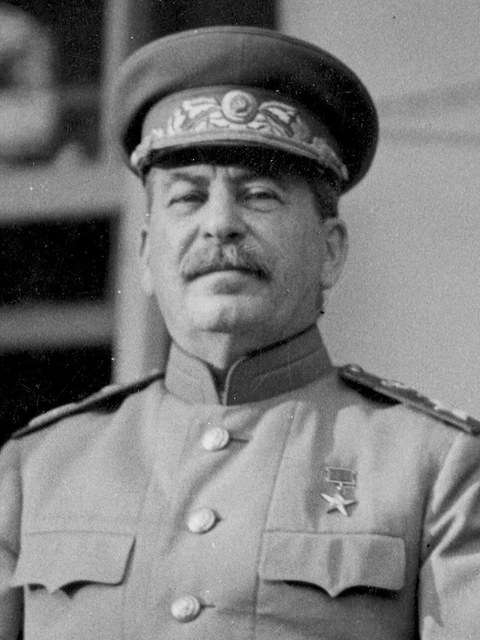
Joseph Stalin

Joseph Stalin
Franklin D. Roosevelt Library Public Domain Photographs · Public domain

Soviet dictator · 1920s–1953 · Soviet Union

Joseph Stalin was the Soviet dictator who succeeded Lenin, implemented collectivization and purges, and led the USSR through World War II.

The kit

  • Rise — Joseph Stalin propagated "Socialism in One Country" and succeeded Vladimir Lenin by rejecting the New Economic Policy in favor of five-year plans.
  • Conflicts — Joseph Stalin ordered the NKVD to carry out the "Great Purge" and had Ramon Mercador murder his rival Leon Trotsky in exile.
  • Achievements — Joseph Stalin presided over the creation of kolkhoz collective farms and declared "not one step back!" to motivate troops fighting on the Volga River.
  • Legacy — Joseph Stalin's cult of personality was criticized in Nikita Khrushchev's "Secret Speech," which denounced the former leader's brutal rule.

Runs with

Soviet Union
led the Soviet Union as dictator open card →
dictator
ruled as brutal dictator open card →
World War II
led USSR during World War II open card →
Leon Trotsky
had Mercador murder rival Trotsky open card →

The ladder · 15 clues

H

Dictator who led the Soviet Union during World War II.

H

This man’s cult of personality was criticized by his successor, Nikita Khrushchev.

H

This man presided over the Holodomor famine in the Ukraine as well as the creation of kolkhoz collective farms in the First Five Year Plan.

H

Established under the influence of this World War Two Soviet leader

H

The Holodomor was likely organized by this leader to reduce the population of the Ukraine.

H

The end of this man’s rule included the Night of the Murdered Poets, and he invented the fictitious Doctor’s Plot.

H

This man, who ruled with the aid of Lavrentiy Beria’s secret police, was given pretext to remove his political enemies during the Doctors’ Plot.

M

This man ordered the NKVD to carry out the “Great Purge,” which left the Red Army unprepared to deal with an eventual German invasion. name this “man of steel” who led the Soviet Union through World War II.

M

The New Economic Policy was rejected by this leader, who instead implemented five-year plans.

M

This man was denounced by his successor in an oration known as the “Secret Speech.” The Holodomor was a forced famine that occurred during this man’s rule.

M

This leader accused “saboteurs” of trying to overthrow him in a fabricated scheme he blamed on Jewish physicians, known as the Doctor’s Plot.

M

A poem about this ruler mentions his “thick fingers” that are bulky and “fat like live-baits” as well as his wide “Ossetian torso.” His secret police ordered the execution of Osip Mandelstam for writing a satirical epigram.

E

The theory of “Socialism in One Country” was propagated by this successor to Vladimir Lenin. name this Soviet Leader during World War II.

E

As opposed to an opponent’s idea of “permanent revolution,” this ruler promoted “socialism in one country.” This man frequently purged Old Bolsheviks in show trials and eventually had Ramon Mercador murder his rival, Leon Trotsky. name this Soviet dictator who succeeded Vladimir Lenin and ruled during World War II.

E

In Operation Barbarossa, Nazi Germany invaded this leader's country. name this brutal Soviet dictator who led the USSR during World War II.

10 more clues from the record
H

This man declared “not one step back!” to motivate troops fighting on the Volga River.

H

His foreign minister signed a non-aggression pact with Joachim von Ribbentrop, but joined the Allies after Germany invaded his country in 1941. name this Soviet dictator who succeeded Vladimir Lenin.

H

After many of his party members voted negatively of his leadership at the 17th Central Committee, this leader pointed an unloaded Mosin-Nagant rifle at the crowd.

H

Robert Conquest’s book Harvest of Sorrow details event promulgated by this leader.

H

This man’s agricultural advisor did not believe in Mendelian genetics and claimed that offspring could inherit vernalization.

H

Thousands of people died during this man’s construction of a White Sea Canal, and this man’s secret police were led by Lavrenti Beria.

H

This person's name was formerly used for the capital of Tajikistan, now known as Dushanbe (doo-SHAHN-bay), and for the mountain now called Ismail Samani (suh-MAH-nee) Peak, which was called "Communism Peak" after his death. identify this former namesake of Volgograd, where a major World War II battle was fought in the Soviet Union.

H

In a musical named for this dance, Judge Forestier (pr. for-ess-TEER) finally concludes that "It's All Right With Me." That Cole Porter musical discusses the scandal that this dance, which is in 2/4 time and based on the quadrille (pr. kwah-DREEL), caused when it was introduced to Paris in 1858.

H

This leader employed Nikolai Yezhov as the head of a secret police force and approved Lavrentiy Beria’s plan to kill thousands of dissidents in what is now called the Katyn massacre.

H

This man was spotted laughing at the romantic scenes between Sergei and Katerina and shuddering in disgust at loud orchestra hits during a performance of Lady Macbeth of the Mtsensk District.

Watch out: Leon Trotsky (rival who advocated "permanent revolution" versus Stalin's "socialism in one country")
#207 · Other Modern National Leaders · Level 1

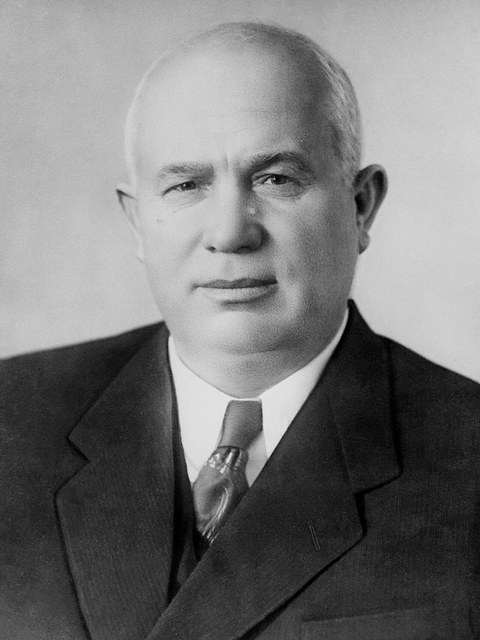
Nikita Khrushchev

Nikita Khrushchev
TASS · Public domain

Soviet premier · 1953–1964 · Soviet Union

Nikita Khrushchev succeeded Joseph Stalin as Soviet leader and denounced Stalin's cult of personality in his 1956 Secret Speech.

The kit

  • Rise — Nikita Khrushchev worked in the Donbas mines before defeating the Anti-Party Group led by Georgi Malenkov to consolidate power.
  • Achievements — Nikita Khrushchev engaged in the Kitchen Debate with Richard Nixon at the American National Exhibition in Moscow in 1959.
  • Conflicts — Nikita Khrushchev negotiated the end of the Cuban Missile Crisis by securing U.S. removal of Jupiter missiles from Turkey.
  • Legacy — Nikita Khrushchev's Virgin Lands Campaign failed to boost agricultural output despite his obsession with corn after visiting Iowa farmer Roswell Garst.

Runs with

Cult of Personality
denounced Stalin's cult of personality in Secret Speech open card →
Cuban Missile Crisis
negotiated resolution as Soviet premier open card →
Joseph Stalin
succeeded Stalin and denounced his policies open card →
American Railway Union

The ladder · 15 clues

H

This man’s visit to the home of Iowan farmer Roswell Garst inspired him to begin a series of land reforms in the Virgin Lands Campaign.

H

A visit by this leader to Roswell Garst’s farm in Iowa sparked an obsession with planting corn in his country, despite its unsuitability.

H

This man was inspired by a visit to Roswell Garst’s farm to launch the Virgin Lands Campaign.

H

On a foreign visit, this man angrily asked if he had to commit suicide before he could visit Disneyland.

H

This leader unsuccessfully attempted to increase the agricultural output of his country by sending pioneers to Kazakhstan and Siberia in the Virgin Lands Campaign.

H

This man defeated an attempted coup by the Anti-Party Group, led by former premier Georgi Malenkov.

H

This man was refused admittance to Disneyland during his visit to America, during which he visited corn farmer Roswell Garst.

M

This leader attempted to improve his country’s agricultural output with the failed Virgin Lands Campaign.

M

“We will bury you” to Western ambassadors?

M

This leader decried the use of secret police, poor economic policies, and a cult of personality in his Secret Speech.

M

Those rivals of his would come to be known as the “Anti-Party Group”, which included Lazar Kaganovich and Grigory Malenkov.

M

The most powerful explosion on Earth, the Tsar Bomba test, was carried out at the beginning of the premiership of this Soviet premier who visited the United States six years after succeeding Stalin.

E

He denounced the cult of personality of his predecessor in the “secret speech”. name this Soviet premier during the Cuban Missile Crisis, who succeeded Stalin.

E

In a namesake “thaw’, man denounced the “cult of personality” of his predecessor in his “Secret Speech.” This man coaxed the United States into removing Jupiter weapons from Turkey after he attempted to arm a Caribbean nation. name this Soviet premier who faced the Cuban Missile Crisis as Stalin’s successor.

E

In a namesake “thaw,” this man gave the “Secret Speech” to denounce the cult of personality of his predecessor. name this successor of Joseph Stalin as head of the USSR.

10 more clues from the record
H

One famous action by this leader was instigated by a remark from Filipino diplomat Lorenzo Sumulong criticizing his country.

H

This leader’s decision to raise the price of meat and butter resulted in the Novocherkassk Massacre.

H

This was the Soviet premier during the Cuban Missile Crisis. He participated in the impromptu "Kitchen Debate" with Richard Nixon, and his tenure saw a temporary "thaw" in Cold War tensions.

H

That tour occurred a few months after he debated the vice president in a model kitchen at the American National Exhibition.

H

Answer the following about a period in Soviet history, :This man was the Soviet leader following Stalin, and held the Kitchen Debate with Nixon.

H

This leader, who launched the failed Virgin Lands Campaign, left the Four Powers Summit after only a day due to tensions over the U-2 incident.

H

Towards the beginning of this man’s political career, he served as the assistant director for a mine in the Donbas region, where he had earlier been a worker.

H

This leader was opposed by the Anti-Party Group, who disagreed with his “peaceful coexistence” philosophy and preferred his predecessor.

H

This man defended his ideology to the Senate Foreign Relations Committee by saying “The wart is there, and I can’t do anything about it.” This person claimed that the Empire State Building looked like any other skyscraper and asked “Is there an epidemic of cholera or plague?” in Disneyland after his planned trip to the park was canceled due to security concerns.

H

In one speech, this man noted that “Tito did not fall” because he “had behind him a state” and “a people who gave support to its leaders;” that speech triggered four days of rioting in Tbilisi.

Watch out: Georgi Malenkov was a rival premier whom Khrushchev defeated, not his predecessor
#214 · Other Modern National Leaders · Level 1

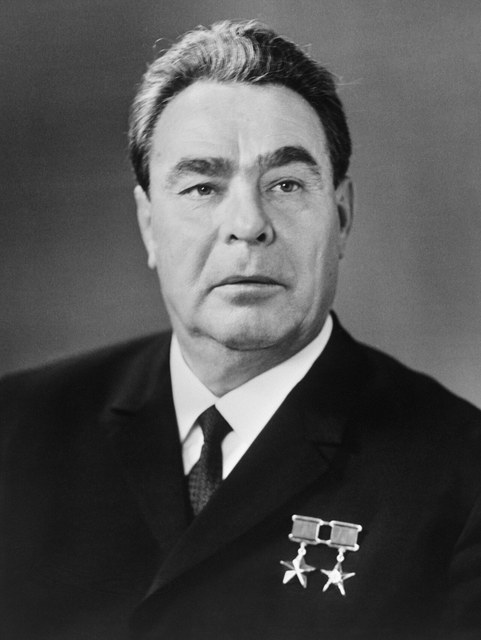
Leonid Brezhnev

Leonid Brezhnev
bdi Vladimir Musaelyan /span /a · CC0

Soviet leader · 1964–1982 · Soviet Union

Leonid Brezhnev led the Soviet Union through the 1970s during the Era of Stagnation, signing SALT I and II.

The kit

  • Rise — Leonid Brezhnev succeeded Nikita Khrushchev and initially shared power with Nikolai Podgorny and Alexei Kosygin.
  • Conflicts — Leonid Brezhnev justified the 1968 invasion of Czechoslovakia during Prague Spring with his namesake doctrine.
  • Achievements — Leonid Brezhnev signed SALT I with Richard Nixon and SALT II with Jimmy Carter during détente.
  • Legacy — Leonid Brezhnev presided over the Era of Stagnation due to poor economic planning and military spending emphasis.

Runs with

Afghanistan
began failed ten-year Soviet invasion in 1979 open card →
Prague Spring
crushed with invasion justified by Brezhnev Doctrine open card →
Soviet Union
led throughout entire 1970s until death in 1982 open card →
Czechoslovakia
invaded in 1968 to suppress liberalizing reforms open card →

The ladder · 15 clues

H

Both SALT I and II were attended by this Soviet leader, whose rule is known as the Era of Stagnation. His namesake doctrine justified the Soviet invasion of Czechoslovakia during Prague Spring.

H

This leader jumped into the arms of Chuck Connors, the star of his favorite TV show, The Rifleman, one of the few American programs aired in this man’s country.

H

This man shared power with Nikolai Podgorny and Alexander Kosygin in the early years of his leadership, and his poor economic planning led to the beginning of the Era of Stagnation.

H

This leader’s best-selling trilogy of memoirs, beginning with The Minor Land and Rebirth, was likely ghostwritten, since his health was rapidly declining when they were published.

H

In his fifth year in power, an assassination attempt was made on this man by Viktor Ilyn, who disguised himself as a policeman and wounded five cosmonauts with gunfire.

H

This leader nearly started a war over the Zhenbao [jen-bow] Islands and survived an assassination attempt while he was honoring four astronauts.

H

In one speech, this man declared an “alliance of the working class with science” to oppose the reform program of Aleksei Kosygin.

M

Despite instituting the Kosygin Reform, this man presided over a namesake “Era of Stagnation.” Along with Richard Nixon, this leader signed the SALT I treaty.

M

This leader kissed Erich Honecker in a “fraternal embrace” that was depicted on the graffiti painting My God, Help Me Survive This Deadly Love.

M

Despite reforms attempted by Premier Alexei Kosygin, this leader’s emphasis on military spending led to the Era of Stagnation.

M

Prague Spring was crushed by this Soviet premier who justified his invasion based on the earlier invasion of Hungary in 1956.

M

This leader shared power with Nikolai Podgorny and Aleksey Kosygin, and he negotiated SALT II and initiated détente.

E

This leader began a failed ten-year invasion of Afghanistan, and justified the suppression of the Prague Spring and invasion of Czechoslovakia with a namesake doctrine. name this leader of the Soviet Union throughout the 1970s.

E

The Soviet invasion of Afghanistan began under this Soviet Premier, who signed the Helsinki Accords.

E

This leader signed both SALT treaties, but that did not stop him from authorizing an invasion of Afghanistan. name this Soviet leader who succeeded Nikita Khrushchev.

10 more clues from the record
H

A minister under this man who strongly opposed the invasion of Czechoslovakia was Alexei Kosygin.

H

Viktor Ilyin tried to assassinate this man by shooting him during a celebratory motorcade of cosmonauts, an attack that the KGB tried to keep secret from the West.

H

Cosmonauts from the Soyuz 4 and 5 missions were injured while riding in a motorcade with this politician during an assassination attempt by army deserter Viktor Ilyin.

H

This leader gave himself the Order of Victory Medal, the only one awarded after World War II, which was posthumously revoked.

H

This leader joined Jimmy Carter in signing the SALT II accords.

H

A common Russian joke went, “Stalin proved that just one person could manage the country. [This man] proved that a country doesn’t need to be managed at all.” :Name this long-ruling Soviet leader who sent tanks to quash reforms undertaken by Alexander Dubček.

H

Gorbachev denounced the legacy of this earlier Soviet leader, who had clamped down on liberalizing reforms. Head of the country throughout the entire 1970’s, he sent Soviet troops into both Czechoslovakia and Afghanistan.

H

This leader promised that one of his projects would be constructed “with clean hands only!” :Name this leader whose propaganda used phrases like “project of the century” and “path to the future” to promote that project, the BAM railway.

H

Swan Lake was also broadcasted on state television following the death of this other Soviet leader in 1982. This successor of Khrushchev established a namesake doctrine to justify the 1968 invasion of Czechoslovakia.

H

In 1979, the USSR invaded Afghanistan under the leadership of this bushy-eye browed premier whose namesake “Doctrine” led to the invasion of Czechoslovakia to quell the Prague Spring.

Watch out: Alexei Kosygin (premier who shared power with Brezhnev and attempted reforms)
#217 · Other Modern National Leaders · Level 1

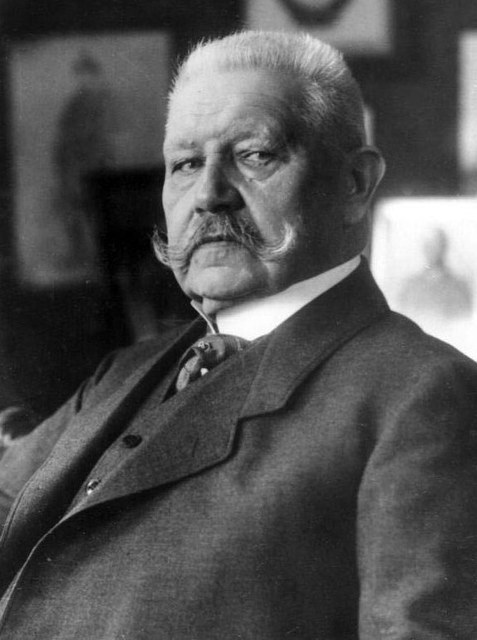
Paul von Hindenburg

Paul von Hindenburg
Unknown author. · CC BY-SA 3.0 de

German field marshal and president · 1847–1934 · Germany

Paul von Hindenburg was a German field marshal who won the Battle of Tannenberg in World War I and later served as Weimar Republic president.

The kit

  • Rise — Paul von Hindenburg commanded the Eighth Army with Erich von Ludendorff at the Battle of Tannenberg, destroying a Russian army and causing General Alexander Samsonov's suicide.
  • Achievements — Paul von Hindenburg was promoted to Field Marshal after the Battle of Lodz and became Chief of the General Staff alongside Ludendorff in 1916.
  • Presidency — Paul von Hindenburg was elected president of the Weimar Republic in 1925, defeating Wilhelm Marx after the BVP withdrew support and Communist Ernst Thälmann mounted a third-party challenge.
  • Legacy — Paul von Hindenburg appointed Adolf Hitler as Chancellor in January 1933 and signed the Enabling Act, which allowed Hitler to enact laws without the Reichstag.

Runs with

Weimar Republic
served as its last president from 1925 until his death in 1934 open card →
Chancellor
appointed Adolf Hitler to this position in January 1933 open card →
World War I
won the Battle of Tannenberg and served as Chief of the General Staff open card →
Germany
testified at 1919 parliamentary commission promoting the stab-in-the-back myth open card →

The ladder · 15 clues

H

This man’s testimony at a parliamentary commission in 1919 fueled the conspiracy theory that Germany had lost World War One due to a “stab in the back” from disloyal elements.

H

Wilhelm II appointed this man Chief of the General Staff in the second half of World War I. He later served as president of the Weimar Republic.

H

After Marinus van der Lubbe was caught attempting to set fire to government buildings, this leader suspended civil liberties in the Reichstag fire decrees.

H

This leader was promoted to Field Marshal after the Battle of Lodz and succeeded Friedrich Ebert in his highest post.

H

This winner at Tannenberg became joint commander of the German forces with Erich von Ludendorff, and appointed Adolf Hitler to succeed him as Chancellor after the war. He names a zeppelin.

H

This conservative signed the Enabling act of 1933, officially handing power to Hitler. :Name this German Field Marshal who was the namesake of a zeppelin that crashed in 1937.

H

This man served as the commander of the eighth army along with Erich von Ludendorff at the Battle of Tannenberg, at which he destroyed a Russian army.

M

Falkenhayn was replaced by a pair of leaders: Erich Ludendorff and this officer, who appointed Hitler Chancellor of Germany in 1933 and is the namesake of a zeppelin that crashed in New Jersey in 1937.

M

What President of Germany this person who appointed Hitler Chancellor in 1933, was the namesake of a zeppelin that caught fire above New Jersey in 1937.

M

This last president of the Weimar Republic signed the Enabling Act of 1933, which gave Hitler the power to enact laws without the Reichstag. This man won at the Battle of Tannenberg.

M

The day before this man died in 1934, his cabinet passed a decree eliminating his country’s presidency and giving its powers to an appointed chancellor.

M

This man implemented his namesake program to increase industrial production after the firing of Erich von Falkenhayn.

E

As President of the Weimar Republic, this man appointed Adolf Hitler as Chancellor. name this German hero who, during World War I, won the Battle of Tannenberg.

E

For the points, identify this German field marshal who was elected president of the Weimar Republic.

E

German President and World War I field marshal who aided in the Nazi dictator’s rise to power by appointing him chancellor.

10 more clues from the record
H

In one election, this man emerged victorious in a race that saw the Communists mount a third-party challenge by Ernst Thalmann.

H

A group of advisors to this man included his son Oscar and was called the camarilla.

H

This politician introduced the “Stab-in-the-back myth” to the national stage, blaming “November Criminals” for signing a 20th century treaty.

H

Hero of World War One and German president who surrendered many of his powers to the rising Nazi party.

H

World War One hero whose weak presidency allowed the Nazis to suspend civil liberties.

H

the German general who would later be elected President in 1925 and become namesake of a disastrous blimp.

H

In 1917, a 20 meter statue of this man was unveiled adjacent to the Victory Column in Königsplatz [[KUH-nigs-platts]].

H

After this field marshal was victorious at a battle near Allenstein, opposing general Alexander Samsonov committed suicide.

H

This man dissolved parliament after Franz von Papen lost heavily in a vote of no confidence.

H

This man won one election after the BVP stopped supporting Wilhelm Marx.

Watch out: The Hindenburg zeppelin that crashed in New Jersey in 1937 was named after him but crashed three years after his 1934 death
#219 · Other Modern National Leaders · Level 1

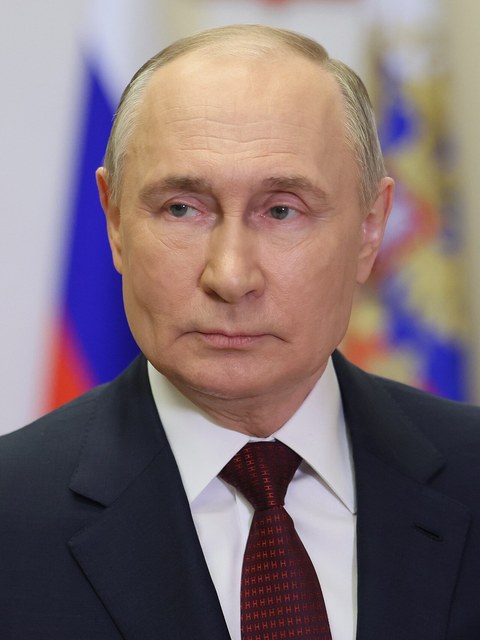
Vladimir Putin

Vladimir Putin
Пресс-служба Президента РФ · CC BY 4.0

Russian president · 2000–2008, 2012–present · Russia

Vladimir Putin is a former KGB officer who has dominated Russian politics since 2000, serving as president and prime minister.

The kit

  • Rise — Vladimir Putin succeeded Boris Yeltsin as president in 2000 after his handling of the Moscow apartment bombings boosted his popularity.
  • Achievements — Vladimir Putin secured the 2014 Winter Olympics in Sochi and implemented a flat 13% income tax during his presidency.
  • Conflicts — Vladimir Putin ordered special forces to gas the Dubrovka Theatre during a 2002 hostage crisis, killing 170 civilians, and faced another crisis at Beslan school.
  • Legacy — Vladimir Putin annexed Crimea in 2014 and has been accused of ordering the killings of critics including Alexander Litvinenko and Boris Nemtsov.

Runs with

Russia
served as president and prime minister open card →
Ukraine
forcibly seized Crimea in 2014 open card →
Boris Yeltsin
succeeded him as president in 2000 open card →
KGB
served as officer before political career open card →

The ladder · 15 clues

H

Politician who served as Prime Minister for four years in between his first and current terms as President.

H

This leader appointed Akhmad Kadyrov to one post, and one scandal early in this leader’s career was the Kursk submarine disaster.

H

This politician's handling of the Moscow apartment bombings helped him succeed Boris Yeltsin as head of the Russian state. He is the current President of Russia.

H

This leader called for a crackdown on alternative forms of alcohol after over 60 people died by drinking bath essence containing methanol.

H

A critic of this leader was mysteriously shot to death while crossing the Bolshoy Bridge; that man was Boris Nemtsov.

H

This leader lost popularity when he refused to call off a vacation after the sinking of the submarine Kursk.

H

Current world leader who once served as a KGB agent.

M

In recent years, Dmitri Medvedev has traded positions with this man, who, in 2014, sent armies to forcibly seize the Crimea from Ukraine. name this current president of Russia.

M

This leader dealt with hostage crises at the Dubrovka theater and a school in Beslan, and he ordered the arrest of Yukos CEO Mikhail Khodorkovsky.

M

US intelligence officials have accused this leader of being personally involved in November’s U.S. Presidential election. name this current President of Russia.

M

This leader ordered special forces to indiscriminately gas the Dubrovka Theatre during a hostage crisis, killing 170 civilians.

M

Russian leader who annexed Crimea in 2014 before invading parts of eastern Ukraine

M

Although this person called communism a “blind alley, far away from the mainstream of civilization,” he lamented the collapse of the his country of birth as the “greatest geopolitical tragedy of the 20th century.” He was stationed in Leningrad before being transferred to Dresden during his time as a KGB agent, and he served as Prime Minister to his predecessor and successor, Dmitry Medvedev.

E

This politician was also involved in the Second Chechen War. name this predecessor of Dmitri Medvedev, the current Prime Minister of Russia.

E

A former KGB officer and President from 2000 to 2008, name this Prime Minister of Russia.

10 more clues from the record
H

Upon the death of an orphan in Fairfax County, Virginia, this man signed a law preventing Americans from adopting children from his country, and New England Patriots owner Robert Kraft accused this former head of the FSB of stealing one of his Super Bowl rings.

H

Answer these questions about one awesome ruler, .Although he’s technically taken a back seat to Dmitri Medvedev, everyone knows this Russian prime minister is still running the show. He succeeded Boris Yeltsin as president.

H

Some critics have accused him of ushering in a period of “tandemocracy,” and as president he faced hostage crises including ones at Beslan school and one in a capital city theater.

H

The owner of the New Jersey Nets recently announced he would run in an election against this man, who, after Boris Yelstin resigned, became acting president of his country.

H

Upon taking office, this man declared Aslan Maskhadov’s Chechen government illegitimate, and he later gave medals to the soldiers who “accidentally” killed Maskhadov.

H

The Brookings Institute has argued that this leader plagiarized his 1997 dissertation in economics, 5 years after his arrest for attempting to export metals in exchange for food shipments.

H

Sergei Skripal and Alexander Litvinenko were spies allegedly killed on the orders of this leader, whose critics have included the politician Alexei Nalvany.

H

This man’s “The Strategic Planning of Regional Resources Under the Formation of Market Relations” was defended at a mining institute, and he began the National Priority Projects.

H

Some measures imposed by this politician were a flat 13% income tax and a radically different energy policy, and he put down the “Dissenter’s Marches” in 2007.

H

He was instrumental in securing the 2014 Winter Olympics in Sochi, and riots have followed his election to a third, non-consecutive term as President.

Watch out: Dmitri Medvedev served as president 2008–2012 while Putin was prime minister, but Putin remained the dominant figure
#220 · Other Modern National Leaders · Level 1

Clement Attlee

Clement Attlee
bdi Presumably Yousuf Karsh /span /a · Public domain

British Labour Prime Minister · 1945–1951 · United Kingdom

Clement Attlee led Labour to a landslide 1945 victory over Churchill and created the modern British welfare state.

The kit

  • Rise — Clement Attlee served as Britain's first Deputy Prime Minister before replacing Winston Churchill at the Potsdam Conference in July 1945.
  • Achievements — Clement Attlee established the National Health Service following the Beveridge Report and nationalized railways, coal mines, and steel industries.
  • Conflicts — Clement Attlee's government faced the Bevanite quarrel between Chancellor Hugh Gaitskell and Health Secretary Aneurin Bevan over welfare spending.
  • Legacy — Clement Attlee oversaw decolonization of India and Pakistan and lost the 1951 election to Churchill after six transformative years.

Runs with

Winston Churchill
defeated Churchill in 1945, replaced by him in 1951 open card →
Labour Party
led Labour to landslide 1945 victory open card →
church
no connection evident in clues open card →
Joe Hill
no connection evident in clues open card →

The ladder · 15 clues

H

As the first Deputy Prime Minister, he received the Beveridge Report, which he followed by creating the National Health Service.

H

This man won an election on the slogan “Let Us Face the Future” and subsequently passed the National Insurance Act on the advice of the Beveridge Report.

H

replaced his predecessor as the new Labour PM at the 1945 Potsdam Conference?

H

This leader’s party was split between supporters of Chancellor of the Exchequer Hugh Gaitskell and Health Secretary Aneurin Bevan.

H

During his prime ministership, many non-African portions of the British Empire became independent countries, such as India and Pakistan.

H

This author of The Social Worker saw his Fuel and Power Minister Emanuel Shinwell resign when coal mines froze.

H

This leader’s slogan was “Let us face the future together.” His tenure saw the decolonisation of Mandatory Palestine and the appointment of Aneurin Bevan as Minister for a new welfare system.

M

Five months after the Yalta Conference, this Labour prime minister replaced Winston Churchill at the Potsdam Conference.

M

Another notable khaki election occurred in 1945, when this Labour Party politician won a landslide victory against Winston Churchill. Nye Bevan served as this Prime Minister’s Minister of Health.

M

Labour Party leader who defeated him in 1945 and 1950 elections.

M

His administration oversaw the creation of the National Health Service and he led the Labour Party through what became known as the “Bevanite” quarrel.

M

He oversaw the failure of the Tanganyika Groundnut Scheme and for his first period in government he served in a role created specifically for him; that role was Deputy Prime Minister.

E

The National Health Service was created during the tenure of this Labour Prime Minister who lost a 1951 election to a man he had stunned in 1945, Winston Churchill.

E

The Potsdam Conference was attended by this Prime Minister who replaced Winston Churchill at the end of World War II.

E

The British railroad system was finally nationalized in 1948 under this Labour Prime Minister, who led the UK after World War II.

10 more clues from the record
H

The British welfare state began under this man, who chartered the creation of the National Health Service.

H

This man nationalised the Iron and Steel Corporation, and he sent Elliot Briggs to resolve the Malayan Emergency.

H

This man received a boost in the polls after he was accused of needing “some kind of Gestapo” to fulfill his policies.

H

This leader nationalized the Big Four railway companies and created the National Coal Board.

H

The fall of this man’s government was prompted by the divisory budget of Hugh Gaitskell.

H

Many of the ideas outlined in the Beveridge Report, such as the establishment of the National Health Service, were instituted under this Prime Minister, whose time in office also saw the independence of most of Britain’s Asian colonies, including India.

H

This prime minister presided over a food and coal shortage that was mocked with the slogan “Starve with Strachey and shiver with Shinwell.” His government passed the first New Towns Act and created the National Parks Commission.

H

He ran with the Labour Party under the slogan, “Let us Face the Future” and criticized his opponent’s use of the word “gestapo.” He expressed his socialist views in his acceptance of the Beveridge Report and his book, The Social Worker.

H

Answer the following about a British politician, :This man nationalized many utilities and led the Labour Party to a landslide victory in 1945, in addition to presiding over the decolonization of much of the British Empire.

H

This man served a term between those of Winston Churchill's, and attended the Potsdam Conference as well as starting decolonization and nationalizing many parts of the country, including creating the National Health Service.

Watch out: Winston Churchill (opponent defeated in 1945, replaced him in 1951)
#221 · Other Modern National Leaders · Level 1

Enver Hoxha

Enver Hoxha
Petrit Kumi · Public domain

Albanian Communist dictator · 1944–1985 · Albania

Enver Hoxha ruled Albania as First Secretary of the Communist Party of Labor from 1944 until his death in 1985.

The kit

  • Rise — Enver Hoxha forged an anti-Italian alliance with the Balli Kombetar and established the Sigurimi secret police in 1943.
  • Achievements — Enver Hoxha oversaw massive increases in literacy, implemented state-sponsored atheism, and built 750,000 one-man bunkers across Albania.
  • Conflicts — Enver Hoxha criticized Khrushchev, leading to Albania's exclusion from the Warsaw Pact and increasing isolation from the Soviets.
  • Legacy — Enver Hoxha broke with China in 1978 over the Three-Worlds Theory and was succeeded by Ramiz Alia.

Runs with

Albania
ruled as communist dictator 1944–1985 open card →
dictator
ruled with iron fist using Sigurimi police open card →
China
broke relations 1978 over Three-Worlds Theory open card →
Warsaw Pact
excluded after criticizing Khrushchev open card →

The ladder · 15 clues

H

This guy ruled Albania with an iron fist from 1944 until 1985 as the First Secretary of Albania's Communist Party of Labor.

H

Zog’s hopes of regaining his throne were dashed by the rise of this bunker-loving Communist dictator, who ruled Albania from 1944 until his death in 1985.

H

Leader of Communist Albania whose move toward Maoism caused a full break with the Warsaw Pact.

H

In a diary entry, this leader judged foreign pressure on his country to be purely “economic,” declaring “politically and ideologically they have never made us yield and will never be able to make us yield.” :Name this postwar European leader whose regime’s relations with China broke down due to Deng Xiaoping’s promulgation of the Three-Worlds Theory.

H

This man called the three worlds theory counterrevolutionary and chauvinist in a 1978 book that claimed that China was attempting to become a superpower through an essentially capitalist strategy, Imperialism and the Revolution, while he attacked the democratic strategy of the Carrillo revisionists in the speech Eurocommunism is Anti-Communism.

H

He presided over his country's 1976 constitution that outlawed borrowing and promoted self-reliance; earlier, after executing Koci Xoxe, he had overseen a massive increase in literacy and the implementation of state-sponsored atheism.

H

FTPE, answer the following about some of those seemingly ubiquitous European secret police groups.The Sigurimi, established in 1943, was the creation of this dictator, whose right hand man was Mehmet Shehu.

H

He kept himself in power and suppressed opposition with the Sigurimi police force. :Name this Albanian communist leader, who led Albania through a period of industrialization in the latter half of the twentieth century.

M

Communist who was dictator from 1944 to 1985?

M

For most of the Cold War, Albania was ruled by this Communist. His criticism of Krushchev led to Albania’s withdrawal from the Warsaw Pact.

M

From 1944 to 1985, Albania was led by this Communist dictator, who set up 750,000 one-man bunkers across the country to serve as gun emplacements.

M

Another Balkan leader who quarreled with the Soviets was this Party Secretary and leader of Albania from 1944 to 1985. During his tenure, Albania was excluded from the Warsaw Pact.

M

The son of a Muslim cloth merchant, he ruled Albania with an iron hand for 40 years after World War II.

M

Succeeded by Ramiz Alia, name this leader of the PLA, a communist dictator of Albania.

E

Although never technically holding office as head of state, this communist led Albania from 1944 to 1985, after forging an anti-Italian alliance with the Balli Kombetar.

2 more clues from the record
H

After breaking with Nikita Khrushchev, he led his country into increasing isolation until his final ally, China, cut him off in 1978.

H

This dictator broke from Maoism late in his rule and was nearly assassinated by Banda Mustafaj. This longtime communist dictator controlled Albania with his secret police, the Sigirumi.

Watch out: Zog I, the king whose hopes of regaining his throne were dashed by Hoxha's rise
#222 · Other Modern National Leaders · Level 1

Aldo Moro

Aldo Moro
Unknown author Unknown author · CC BY-SA 4.0

Italian prime minister · 1960s–1970s · Italy

Aldo Moro was a Christian Democracy leader who served five terms as Italian prime minister before his 1978 kidnapping and murder.

The kit

  • Rise — Aldo Moro led the Dorothean faction that deposed Christian Democrat leader Fernando Tambroni, enabling his path to power.
  • Achievements — Aldo Moro sponsored the Compromesso Storico (Historic Compromise) between Christian Democrats and Communists in Italy.
  • Death — Aldo Moro was kidnapped and murdered by the Red Brigades in 1978 after a failed papal mediation mission.
  • Legacy — Aldo Moro's body was found in a car trunk on Via Caetani two months after his abduction.

Runs with

Years of Lead
kidnapping was most notable event of Years of Lead open card →
Italy
served as prime minister of Italy open card →
Bakumatsu Period
Christian
led Christian Democracy party open card →

The ladder · 15 clues

H

This leader of the Christian Democracy party both followed and was succeeded by Giovanni Leone. FTPE:Name this Italian prime minister, who was notably kidnapped and executed by the Red Brigades in 1978.

H

Christian Democrat and prime minister who was assassinated following his 1978 kidnapping.

H

As an academic, this man refuted Nazism in his home country in by writing articles for the periodical Pensiero e Vita, As a politician, he was called the "red fish that swam in holy water" and his meeting with Giuseppe Dossetti would cause him to sponsor Catholicism in his home country when he joined Civitas Humana.

H

After leaving power, the UCIGOS special operations force executed Plan Zero in an effort to find this man, though the search was undermined by the DIGOS investigators failing to realize that an anonymous tip was referring to a street rather than a village.

H

Conspiracy theories regarding this man were popularized by such men as Robert Katz in a book entitled Days of Wrath, as well as by Sergio Flamigni, who suggested that this man may have offended a secret Masonic lodge known as Propaganda 2.

H

In 1983, this former prime minister from Andreotti's party was kidnapped by the Red Brigades on the day of a confidence vote in a new Andreotti government. This politician was killed after a papal mediation mission failed and his ransom was not paid.

H

Early in his career, this man lead the student organization F.U.C.I. while later tried to end a left-wing, right-wing split through the Civitas Humana organization.

H

He was the leader of the Dorothean faction that deposed Christian Democrat leader Fernando Tambroni, setting the stage for his five terms as Prime Minister.

M

The Red Brigades kidnapped and murdered this former Italian Prime Minister in 1978, ending the "Historic Compromise" between the Communists and Christian Democrats.

M

Christian Democrat prime minister who was kidnapped and killed in 1978 following a failed papal mediation mission.

M

As a symbol of Italian Capitalism, Agnelli was the target of attempted kidnappings by Communists, similar to that which resulted in the death of this Italian prime minister during the Years of Lead.

M

Despite police searches and a psychic séance, his body was found two months later in the trunk of a car on the Via Caetani.

M

He was leader of the Christian Democratic party, and with his home country Communists, he sponsored the Compromesso Storico.

E

Mario Moretti was the man behind this man's death, which was initially thought to have been perpetrated by Antonio Negri. name this Italian Prime Minister who was killed and kidnapped by the Red Brigades.

E

The most notable event during the Years of Lead was the kidnapping and murder of this former Italian Prime Minister by the Red Brigades.

4 more clues from the record
H

Communist gains in the election that brought down this man’s government led him to form a controversial center-left coalition.

H

Mino Picorelli was a journalist who opposed this man's policies, which lead to him being murdered.

H

Inspector Leonardi was in charge of this man’s protection, though his warnings about insufficiency of forces were ignored.

H

The trial at Turin of Renato Curcio and fourteen other accused terrorists placed him in danger.

Watch out: Giovanni Leone both preceded and succeeded Moro as prime minister, serving terms before and after him
#224 · Other Modern National Leaders · Level 1

Harold Macmillan

Harold Macmillan
Unknown photographer · Public domain

British Prime Minister · 1957–1963 · United Kingdom

Harold Macmillan was the Conservative Prime Minister who championed decolonization through his 1960 Wind of Change speech and resigned after the Profumo affair.

The kit

  • Rise — Harold Macmillan succeeded Anthony Eden in 1957 after serving as Churchill's Minister of Defense and Eden's Chancellor of the Exchequer.
  • Achievements — Harold Macmillan delivered the Wind of Change speech in Cape Town in 1960, criticizing apartheid and accelerating African decolonization.
  • Conflicts — Harold Macmillan's government was rocked by the Profumo affair, in which War Secretary John Profumo had an affair with Christine Keeler, mistress of an alleged Soviet spy.
  • Legacy — Harold Macmillan signed the Partial Test Ban Treaty and negotiated the Nassau Agreement for Polaris missiles after the U.S. canceled Skybolt development.

Runs with

John
War Secretary John Profumo's affair scandal forced Macmillan's resignation open card →
Africa
accelerated decolonization through sub-Saharan tour and independence policies open card →
South Africa
delivered Wind of Change speech to Parliament criticizing apartheid open card →
Anthony Eden
succeeded Eden as Prime Minister in January 1957 open card →

The ladder · 15 clues

H

This politician replaced his old friend Selwyn Lloyd and seven other cabinet members within 24 hours in what became known as Britain’s Night of the Long Knives.

H

This politician’s demands for strong nuclear growth contributed to a fire at the Windscale Plant.

H

This Conservative Prime Minister from 1957 to 1963 signed the Partial Test Ban Treaty, but had his government rocked by the Profumo affair, in which his Secretary of State for War had an affair with the mistress of an alleged Soviet spy.

H

In 1960, this leader gave the “Winds of Change” speech at the Parliament of South Africa in which he criticized Apartheid.

H

Hendrik Verwoerd responded to this leader by saying that there must “also be justice to the white man.” This leader, who claimed his country “has never had it so good,” was scandalized after it was uncovered that Christine Keeler was in a relationship with Secretary of State for War John Profumo.

H

Though this politician began the Polaris nuclear project, he ended the National Service and joined the USSR and United States as the third major country to sign the Partial Test Ban Treaty.

H

This leader’s navy was damaged when John Vassall was blackmailed into being a Soviet spy.

M

This man’s disapproval of apartheid became clear in a pro-decolonization speech. name this Prime Minister who delivered the Wind of Change address.

M

Gave the “Wind of Change” speech in 1960, giving tacit approval to African independence movements.

M

The Profumo affair led to the defeat of the Conservative administration under this prime minister, who had won the 1959 election under the “you’ve never had it so good” campaign.

M

A scandal for this man’s government occurred after the homosexuality of John Vassall was used to get secrets from the Admiralty by the KGB.

M

Was nicknamed "Supermac" and oversaw Britain's first H-Bomb test, resigning following the Profumo affair.

E

This man’s cabinet was rocked by the revelation that Christine Keeler had an affair with the Secretary of State for War, John Profumo.

E

This Prime Minister’s sub-Saharan tour of Africa is credited with speeding up decolonization. name this Conservative Prime Minister of the UK who gave the 1960 “Wind of Change” speech in South Africa.

E

The Federation of Malaya became officially independent in 1957 during the administration of this British prime minister, a supporter of decolonization, who had succeeded Anthony Eden in January of that year.

10 more clues from the record
H

In this man’s first speech to the House of Lords, he said that his heart was broken to see a coal mining strike carried out by the “best men in the world.” During one election, this man defeated Hugh Gaitskell by using the slogan “most of our people have never had it so good.” As Foreign Secretary, he quipped “There ain’t gonna be no war!” after returning from the Geneva Summit.

H

This Prime Minister got his start in politics as Churchill’s protege and began the decolonization of Africa. He also assisted in the creation of the Nuclear Test Ban, and endured the Profumo Affair.

H

One scandal during this man’s tenure was related to a junior civil servant named John Vassall who helped transmit important naval technology to the Soviet Union.

H

19. Identify the following about a British Prime Minister FTPE.This man served as Churchill’s minister of defense and Eden’s chancellor of the exchequer. He acceded to office in 1957.

H

He got a nickname from a comic which was subtitled “How to Try to Continue to Stay Top Without Actually Having Been There” and which was created by Vicky.

H

The Aldermaston Marches against nuclear proliferation started during the tenure of this PM, a Conservative who resigned in 1963 in the aftermath of the Profumo Affair.

H

One of his first actions was to try and boost employment as part of his One Nation philosophy, which led to the resignantion of three treasury ministers.

H

This man negotiated the purchase of Polaris missiles via the Nassau Agreement after the U.S. backed out of the development of the Skybolt system.

H

He had introduced premium bonds while serving as Chancellor of the Exchequer under his predecessor, Anthony Eden.

H

This man notably described the “growth of national consciousness” while visiting Cape Town.

Watch out: John Vassall spy scandal also occurred during his tenure but is less famous than Profumo affair
#225 · Other Modern National Leaders · Level 1

Anthony Eden

Anthony Eden
Unknown author Unknown author · CC BY-SA 3.0 nl

British Prime Minister · 1897–1977; PM 1955–1957 · United Kingdom

Anthony Eden was the British Prime Minister whose government collapsed after the failed 1956 Suez Crisis intervention.

The kit

  • Rise — Anthony Eden resigned as Foreign Secretary in 1938 to protest Chamberlain's appeasement policy after the Munich Agreement.
  • Achievements — Anthony Eden served as Churchill's Foreign Secretary during most of World War II and succeeded him as Prime Minister in 1955.
  • Conflicts — Anthony Eden compared Nasser to Mussolini and colluded with France and Israel to seize the Suez Canal in 1956.
  • Death & succession — Anthony Eden resigned in 1957 after the Suez Crisis and was succeeded by Harold Macmillan as Prime Minister.

Runs with

Suez Crisis
Eden's government collapsed after this bungled 1956 intervention open card →
Suez Canal
Eden used armed force to seize it in October 1956 open card →
Egypt
Eden invaded alongside France and Israel in 1956 open card →
France
Eden colluded with this nation and Israel for Suez intervention open card →

The ladder · 15 clues

H

The leader of the “Glamour Boys,” this man resigned his post of Foreign Secretary after the Munich Agreement.

H

Prime Minister of the UK whose administration collapsed following the bungling of the Suez Crisis

H

A “Law Not War” rally in Trafalgar Square against this leader led by Aneurin BevRan opposed Operation Musketeer.

H

Deputy and Foreign Secretary who succeeded him in 1955, leading Britain during the Suez Crisis.

H

This Englishman’s government faced questions after the disappearance of MI6 diver Lionel Crabb on a reconnaissance mission.

H

After the failure of the Hoare–Laval Pact, Hoare was replaced as Foreign Secretary by this youthful conservative, who held the post again in the Churchill ministry during most of World War II.

H

In his highest office, he began Britain’s collapse as a superpower in a bungled attempt to maintain influence in the Middle East against US and Soviet opposition.

H

According to John Colville’s The Fringes of Power, this politician rejected a French plan for Britain and France to enter into a political union.

H

This British Conservative Prime Minister and former Foreign Minister spearheaded the intervention, but its failure led to his resignation. He was succeeded by Harold Macmillan.

M

This Prime Minister was forced to resign amid allegations that he was colluding with France and Israel to seize the Suez Canal.

M

Churchill was succeeded after his second Ministry and retirement by this man. He had earlier resigned as Foreign Secretary to protest Chamberlain’s policy of appeasement.

M

This Earl of Avon became Prime Minister after Churchill’s last resignation and decided to use armed force to intervene at the Suez Canal in October of 1956.

M

He compared Gamal Abdel Nasser to Benito Mussolini and joined with France and Israel to invade Egypt. name this Prime Minister in power during the Suez Crisis.

E

Guy Mollet and this man lost their highest offices after a conflict with Gamel Abdel Nasser. name this British prime minister who resigned after the Suez Crisis.

E

British Prime Minister who resigned in its wake.

3 more clues from the record
H

A fashion leader known for his characteristic Homburg hat, this man was called “the best dressed fool in Europe” by Benito Mussolini.

H

Succeeding Winston Churchill in 1955, he was criticized for deciding to invade the area with , and he was forced to resign soon thereafter.

H

This man wrote an introduction for his great-great-great aunt’s novel The Semi-Attached Couple.

Watch out: Neville Chamberlain (Eden resigned to protest Chamberlain's appeasement, but Chamberlain was the Munich Agreement PM)
#237 · Scientists, Mathematicians, and Inventors · Level 1

Albert Einstein

Albert Einstein
bdi Oren Jack Turner /span /a · Public domain

German-born physicist · 1879–1955 · Germany, Switzerland, U.S.

Albert Einstein formulated general and special relativity and derived the mass-energy equivalence equation E=mc².

The kit

  • Rise — Albert Einstein published four groundbreaking papers in his 1905 Annus Mirabilis, including special relativity and Brownian motion.
  • Achievements — Albert Einstein won the 1921 Nobel Prize in Physics for explaining the photoelectric effect, not for relativity.
  • Conflicts — Albert Einstein co-signed a 1939 letter with Leo Szilard to FDR that inspired the Manhattan Project's creation.
  • Legacy — Albert Einstein was offered the presidency of Israel in 1952 by David Ben-Gurion but refused the post.

Runs with

Israel
offered presidency in 1952; bequeathed literary rights to Hebrew University open card →
the Presidency
refused Israeli presidency offered by Ben-Gurion in 1952 open card →
Manhattan Project
co-signed 1939 Szilard letter to FDR inspiring its creation open card →
University
guest lecturer at Göttingen 1915; helped establish Hebrew University open card →

The ladder · 15 clues

H

With Leo Szilard [zee-LAR], this scientist wrote a letter to FDR that inspired the Manhattan Project. name this scientist who formulated general and special relativity.

H

The first X-ray telescope put into space was named for this scientist, who wrote a letter with Leo Szilard [seh-LARD] warning about the dangers of atomic bombs.

H

In 1946, this figure noted “there is a somber point in the social outlook of Americans” in a lecture against racism at the historically black Lincoln University.

H

This figure is the alphabetically-prior namesake of a manifesto that inspired the Pugwash anti-WMD conference; that manifesto is named after this man and Bertrand Russell.

H

This man’s willingness to testify as a character witness convinced a judge to drop an anti-Communist trial against W.E.B. Du Bois.

H

This man’s paper, On the Electrodynamics of Moving Bodies, helped fully end belief in a luminiferous aether.

H

This man and Willem de Sitter name a flat solution to the FLRW metric. A relation named for this man and Smoluchowski models diffusion.

H

David Ben-Gurion tried to make this man the first President of Israel, a post he refused.

H

This figure’s literary rights were bequeathed to the Hebrew University of Jerusalem, which he helped establish.

H

In a speech at Lincoln University, this man called racism "a disease of white people," and he criticized capitalism's "crippling of individuals" in his essay "Why Socialism?" With Bertrand Russell, this man penned a manifesto against nuclear weapons, although he had earlier co-signed a letter with Leó Szilárd (“Sea” lard) that led to FDR's creation of the Manhattan Project.

M

This man won the 1921 Nobel Prize in Physics for his study of the photoelectric effect, published the same year as his work on Brownian motion, mass-energy equivalence, and special relativity. name this German scientist who discovered the relationship e equals mc squared.

M

This scientist explained Brownian motion using a molecular-kinetic theory of heat in “On the Movement of Small Particles Suspended in a Stationary Liquid.” Another of this scientist’s papers, called “On the Electrodynamics of Moving Bodies,” modifies Maxwell’s equations in the limiting case when speeds approach the speed of light. name this scientist who, during his “Annus Mirabilis” in 1905, proposed the theory of special relativity.

M

This scientist's namesake field equations can be used to calculate spacetime geometry and includes the cosmological constant, which is referred to as this scientist's "biggest blunder." In 1952, this scientist was offered the presidency of Israel. For ten points, name this scientist who developed the theory of relativity and the equation E equals m c squared.

M

This man won the Nobel Prize for his explanation of the photoelectric effect, which was among the four papers published in 1905, a year known as his “Annus Mirabilis.” name this scientist who formulated a mass-energy relation commonly written as E equals m c squared.

M

After this man's 1955 death, Thomas Stoltz Harvey infamously stole his brain for study. name this former patent clerk, a German physicist known for his theory of relativity and "E equals m-c-squared."

2 more clues from the record
H

The University of Gottingen {GER-TING-GEN} in Germany has produced over 40 Nobel laureates. …Name this scientist, who worked as a guest lecturer at Gottingen in 1915 and developed the general theory of relativity in 1916.

H

A believer in Spinoza's pantheistic god and a strong Zionist, in 1952 this man was offered the presidency of Israel.

Watch out: Won Nobel for photoelectric effect, not relativity
#245 · Scientists, Mathematicians, and Inventors · Level 1

Alan Turing

Alan Turing
Elliott & Fry · Public domain

British mathematician and codebreaker · 1912–1954 · England

Alan Turing broke the Enigma code at Bletchley Park, conceived the theoretical Turing machine, and pioneered artificial intelligence testing.

The kit

  • Achievements — Alan Turing developed the bombe device to decrypt Enigma messages while leading Hut 8 at Bletchley Park during World War II.
  • Achievements — Alan Turing conceived a theoretical machine with infinite memory tape that can solve any computable problem, foundational to computer science.
  • Legacy — Alan Turing's namesake test determines if a machine can mimic human speech sufficiently to be considered intelligent.
  • Death & succession — Alan Turing was prosecuted for homosexuality in 1952, posthumously pardoned, and likely committed suicide by cyanide-laced apple in 1954.

Runs with

Enigma Machine
broke its code using the bombe device at Bletchley Park open card →
World War II
decrypted German naval signals at Bletchley Park during the war open card →
church
collaborated with Alonzo Church on lambda calculus and computability hypothesis open card →
Strategic Hamlet Program

The ladder · 15 clues

H

This scientist may have committed suicide by injecting cyanide into an apple.

H

Computers capable of mimicking human speech are said to “pass” a test named for this man, who worked at Bletchley Park during World War II.

H

A finite set of user instructions, an infinitely long memory tape, and a symbol reader make up a theoretical machine conceived by this man; if a problem is computable, that device can solve it, according to a hypothesis named for this man and Alonzo Church.

H

This man developed a sequential analysis technique in statistics that measures evidence using “bans.” The highest prize that the ACM offers is named for this man, whose namesake test determines if a machine is sufficiently intelligent.

H

This man asserted a reaction-diffusion theory of morphogenesis in his namesake patterns, which explain why nature has stripes, spots, and spirals.

H

British namesake of an abstract computing “machine” and artificial intelligence test, and who committed suicide in 1954.

H

This man worked with Donald Bayley in producing the Delilah system of portable voice communications.

M

This scientist names a 2017 law that retroactively pardons British men convicted of homosexuality.

M

With Alonzo Church, this man outlined the possibilities of lambda calculus, and in his most famous role, he improved upon the Polish bombe system while working in Hut 8 at Bletchley Park.

M

This scientist's namesake machine is an idealized computer which reads symbols from an infinite tape. name this computer scientist who names a test that distinguishes between humans and machines.

M

This thinker names a modern British law that retroactively renders convictions of men for homosexuality null.

M

The German Enigma code was broken with the help of, what English “father of modern computer science?”

M

He was assigned to lead Hut 8 of Bletchley Park to help decipher navy signals during World War II.

E

This man was posthumously pardoned after he was prosecuted for homosexuality in 1952. name this British scientist who helped break the Enigma code and is considered the father of computer science.

E

This man developed a bombe device to decrypt the Enigma machine. name this British mathematician who modeled computation with his namesake machine.

10 more clues from the record
H

Brit who cracked the German Enigma machine but was ostracized for his homosexuality.

H

This scientist's views were criticized in the Blockhead and Chinese Room thought experiments.

H

An injury kept this academic from representing the UK at the 1948 Olympics as a marathon runner.

H

During his later career, this man mathematically predicted oscillating chemical reactions.

H

imagined a universal computing "machine" before his trial for homosexuality and his suicide?

H

This man developed the Banburismus method to deduce encrypted bigrams and trigrams.

H

This mathematician proved the undecidability of the halting problem.

H

This British mathematician and pioneer of computation broke the Enigma code. He committed suicide by eating a cyanide-impregnated apple.

M

A machine which can replicate any computer algorithm is named for this British computer scientist.

M

Despite the work of the Polish codebreakers, primary credit for breaking the enigma code is given to this British mathematician and computer scientist based at Bletchley Park.

Watch out: The Chinese Room thought experiment criticized his views on machine intelligence
#374 · Companies, Corporations, and Financial Institutions · Level 1

Trans-Siberian Railway

Trans-Siberian Railway
Sorovas · CC BY-SA 3.0

Russian transcontinental railroad · 1891–1916 · Russia, Moscow to Vladivostok

Trans-Siberian Railway is the world's longest railroad, connecting Moscow to Vladivostok across six thousand miles of Russia.

The kit

  • Construction — Trans-Siberian Railway construction was overseen by Finance Minister Sergei Witte and inspired by Nicholas II's travels to Vladivostok.
  • Geography — Trans-Siberian Railway circles around Lake Baikal via the Circum-Baikal Railway and passes through Yekaterinburg and Novosibirsk.
  • Military use — Trans-Siberian Railway served as the supply line for the Czechoslovak Legion during the 1918 Allied intervention supporting Alexander Kolchak.
  • World Wars — Trans-Siberian Railway transported natural rubber from Southeast Asia to Europe and supplied the Pacific theater via Lend-Lease during World War II.

Runs with

Moscow
western terminus at Yaroslavsky Terminal open card →
Russia
spans across Russia from west to east open card →
Railroad
longest railway in the world open card →
Pacific
supplied Pacific theater via Lend-Lease open card →

The ladder · 15 clues

H

The Amur River Bridge extended this project.

H

In the early years of World War Two, this route was used to transport natural rubber from Southeast Asia to Europe, and Kurt Gödel [[GUR- duhl]] and Bette Erlich Lowenstein took this transportation line during their escape from Nazi Germany.

H

Finance Minister Sergei Witte oversaw its construction, which included a section that circled around Lake Baikal and was inspired after Nicholas II traveled to Vladivostok.

H

Alexander Kolchak's government was weakened when parts of this structure between Chita and Krasnoyarsk [[krass-nuh-YARSK]] were destroyed by partisans.

H

During the early years of this route’s existence, ice-breaking ferries like the SS Angara provided a linkage over a large lake.

H

Until the completion of the Circum-Baikal Railway, a train ferry was used to connect two parts of this route.

H

Along this structure, a dispute over the repatriation of Magyar POWs led in part to the Revolt of the Czechoslovak Legion.

M

Railroad that connects Moscow and Vladivostok and was finished in 1916.

M

Major cities on this route include Yekaterinburg [[yeh-KAT-eh-rin-burg]] and Novosibirsk [[noh-voh-see-BEERSK]]. name this longest railway in the world, stretching from Moscow to Vladivodstok.

M

World War II supplies were sent from the Eastern European theater to the Pacific theater by this transcontinental railroad that traverses the large, sparsely populated majority of Russia.

M

Precursors to this railway included steamboat travel on the Ob as well as the Irkutsk-Chita line.

M

This project, which was largely the brainchild of Sergei Witte , provided the main supply line of the Czechoslovak Legion and the land-based supply chain of the Pacific Route under Lend-Lease. what infrastructure project spanned Russia with a massive railroad?

M

"Green Ukraine" declared its independence near the terminus of this structure, and during fighting along this structure, the Czech Legion captured a reserve of gold held by a government based in Omsk. name this structure, the largest of its type, which runs from Moscow to Vladivostok.

M

For 15 points—name this six thousand-mile long route between Moscow and Vladivostok.

E

This railway is the longest in the world and connects Vladivostok with Moscow. identify this railway that spans an icy region of Russia.

10 more clues from the record
H

This railway served as the supply line for the Czechoslovak Legion that aided Alexander Kolchak during a 1918 Allied intervention.

H

The Circum-Baikal Railway was once part of this rail line that runs from Vladivostok to Moscow.

H

The single track of this piece of infrastructure led to delays in supplying Russian forces during the Russo-Japanese War. :Name this Russian railway that connects Yaroslavsky Terminal in Moscow to Vladivostak originally built to supply food for the colonization of the Russian Far East.

H

The original name of one of this structure's endpoints was Haishenwei, and the head of state responsible for building an offshoot of this structure said it would be built "cleanly", which many interpreted as a signal that prisoner labor would not be used.

H

This state-sponsored project greatly facilitated the migration of a religious group called the Molokans, who set up many flour mills and a thriving butter industry.

H

In “The Geographical Pivot of History,” Halford Mackinder remarks that this project covers the “world-island,” and hints that it is the culmination of the “conquering of the Turanian” exemplified by Yermak’s expedition.

H

European History: Bounced Czechs It was recaptured from a division of Czech soldiers which seized it during World War I. Financed with a French loan, it opened in 1891.

H

One force which maintained a temporary zone of control over this structure, united with the People’s Army of Komuch to capture a gold reserve at Omsk.

H

This other railway, which was completed in 1916, was taken over by the Czechoslovak Legion two years later. This railway’s eastern terminus is at the city of Vladivostok.

H

One unit whose "Nazdar" regiment had fought in France fought to takecontrol of this structure and established the Committee of Members of the Constituent Assembly.

Watch out: Circum-Baikal Railway (originally a separate section using train ferries across Lake Baikal)
#402 · Political Offices and Titles · Level 1

mayor

mayor
Kevin Adamir · CC BY-SA 4.0

chief executive of a city · medieval to present · cities worldwide

Mayors are chief executives of cities, a position held by figures from Nicholas Brembre in 1386 London to modern leaders like Sadiq Khan.

The kit

  • Notable holders — Mayors include Willy Brandt in West Berlin, Boris Johnson in London for eight years, and Louise Schroeder under Allied occupation.
  • U.S. examples — Mayors in the United States include Muriel Bowser, supported by FreshPAC, who faced scandal when Harry Thomas Jr. embezzled funds.
  • French evolution — Mayors replaced the older Provost position after the National Assembly abolished it, with Jean Sylvain Bailly becoming a first holder.
  • Controversies — Mayors have sparked controversy, including one English holder calling St. Patrick's Day a Leftist holiday and linking taxpayer funding to Sinn Fein support.

Runs with

Chicago
major U.S. city with a mayor open card →
New York City
major U.S. city with a mayor open card →
San Francisco
major U.S. city with a mayor open card →
American Railway Union

The ladder · 8 clues

H

One holder of this type of position in the United States faced a scandal when Harry Thomas Jr. was found to be embezzling funds.

H

A petition to the House of Lords was made by the guild of mercers in 1386 lodging complaints against one Nicholas Brembre over his actions of taking an office of this type by force.

H

Louise Schroeder, the first female member of the Weimar era Reichstag rose to one of these positions under Allied occupation.

M

An English holder of this position called St. Patrick’s Day a Leftist holiday and insinuated that taxpayers who funded it were supporters of Sinn Fein.

M

FreshPAC supported that holder, Muriel Bowser.

M

Jean Sylvain Bailly (Bah-Yee) went from presiding over the Tennis Court Oath to being named a first one of these after the National Assembly abolished the older post of Provost, although that particular post was mostly nonexistent until Jacques Chirac won that position when it was recreated in 1977.

E

Sadiq Khan now holds this position after succeeding a blonde Brexit-backer from the Conservative Party. name this position that Boris Johnson previously held during eight years in London.

E

Willy Brandt first came to fame as the holder of this sort of position in West Berlin. name this sort of political position that London confusingly sort of has two of.

Watch out: London confusingly has two mayor-like positions
#406 · Political Offices and Titles · Level 1

Chancellor

Chancellor
Neoaristocrats · CC BY-SA 4.0

government position · modern era · Germany and Austria

Chancellor is the chief executive position in Germany and Austria, holding power over the government.

The kit

  • Modern role — Chancellor is the position in Germany held by Angela Merkel, wielding actual governmental power.
  • Austria — Chancellor holds power over the government in Austria, while the president is largely ceremonial.
  • Iron Chancellor — Chancellor was the title of the Iron Chancellor of Prussia who unified Germany with blood and iron.

Runs with

Germany
chief executive position in Germany open card →
Otto von Bismarck
held title as Iron Chancellor of Prussia open card →
Iron
West Germany
position existed in West Germany open card →

The ladder · 3 clues

H

The position of president of Austria is largely ceremonial, as the holder of this position has power over the government. In Germany, this position is currently held by Angela Merkel.

E

This man declared that the “great issues of the day” would be resolved with “blood and iron.” name this Iron Chancellor of Prussia who unified Germany.

E

This man was killed after he was accidentally shot by friendly forces at the Battle of Chancellorsville. name this Confederate General nicknamed “Stonewall.”

Watch out: Chancellorsville sounds similar but refers to a Civil War battle site, not this office
#442 · Social Reform and Human Rights Activists · Level 1

Emmeline Pankhurst

Emmeline Pankhurst
bdi Adam Cuerden /a · Public domain

British suffragette leader · 1858–1928 · United Kingdom

Emmeline Pankhurst founded the Women's Social and Political Union and led the militant British women's suffrage movement through hunger strikes and arson.

The kit

  • Rise — Emmeline Pankhurst founded the Women's Social and Political Union in 1903 with the slogan "Deeds not Words."
  • Conflicts — Emmeline Pankhurst endured numerous arrests and hunger strikes, prompting authorities to pass the Cat and Mouse Act allowing force-feeding.
  • Achievements — Emmeline Pankhurst's activism helped secure passage of the Representation of the People Act of 1918, granting 8.4 million women voting rights.
  • Legacy — Emmeline Pankhurst died in 1928 just before women gained full voting rights in the United Kingdom.

Runs with

women
fought to secure voting rights for women open card →
Women's Suffrage
led the militant British women's suffrage movement open card →
World War I
suspended suffrage activism to support British war effort open card →
American Railway Union

The ladder · 15 clues

H

One of the numerous arrests of this suffragette inspired Mary Richardson’s slashing of the Rokeby Venus.

H

This leader's efforts resulted in the passage of three Conciliation Bills and the Representation of the People Act.

H

This woman married a feminist who wrote The Married Women’s Property Rights Act of 1870 and 1882. :Identify this British suffragette who founded the Women’s Franchise League and engaged in numerous hunger strikes in support of suffrage.

H

The Bodyguard society was formed to protect this activist, who protested H. H. Asquith’s failure to pass a Conciliation Bill in a demonstration assaulted by police on Black Friday.

H

In 1918, women were granted limited voting rights in the United Kingdom, largely due to this leader’s activism. :This suffragette and agitator founded the Women’s Social and Political Union, but passed away in 1928 just before women were granted full voting rights.

H

This activist spoke out against prison conditions after being arrested for attempting to deliver a protest resolution to H. H. Asquith, whose refusal to meet this figure was called “Black Friday” and resulted in 200 protestors being assaulted by police.

H

While on a speaking tour with Cedomilj Mijatovic, this activist explained a particular form of civil war in a speech describing how the citizens of Hartford could easily throw out an unresponsive state legislature.

M

Force feeding during this activist and her followers’ hunger strikes in prison led to the passing of the Cat and Mouse Act.

M

The author of The Importance of the Vote, this militant and oft-imprisoned British suffragette founded the Women’s Social and Political Union along with her daughter Christabel.

M

This person gave her "Freedom or Death" speech in Hartford, Connecticut. :Name this British suffragette, whose hunger strikes were combated with the Cat and Mouse Act.

M

This woman broke with her activist daughters Sylvia and Adela, who disagreed with her tactics.

M

This person’s strong opposition to Germany during World War I helped pass the Representation of the People Act of 1918, extending to 8.4 million people the right to vote. name this leader of the British women’s suffrage movement.

E

This person founded an organization with the slogan “deeds not words,” the WSPU, which supported violent tactics like arson. name this activist who with her daughter Christabel led the militant faction of the British women’s suffrage movement.

E

This leader founded the WSPU, whose slogan was “Deeds not Words”.

E

The “cat and mouse” strategy of the British suffragettes was guided by this architect of the movement in that country, the founder of the Women’s Social and Political Union.

10 more clues from the record
H

This figure founded an organization whose slogan was “Deeds not Words,” and cycled in and out of jail due to the “Cat and Mouse Act,” as the Temporary Discharge for Ill Health Act was known.

H

This figure is the subject of a 2002 biography by Jane Purvis as well as an essay by Rebecca West titled “A Reed of Steel.” Her methods were strongly opposed by Millicent Fawcett.

H

This woman founded the WPSU and led many hunger strikes in support of women’s suffrage, but suspended her activism to support the British government during World War I.

H

Along with her sister Christabelle, this leader of the suffragist movement in Britain controversially halted activities of the Women's Social and Political Union to campaign for the war effort.

H

This woman’s daughter wrote an essay entitled “Communism and its Tactics,” which prophesied the coming of glorious socialism and was serialized in a magazine she founded, the Workers Dreadnought.

H

Supporters of this agitator set fire to David Lloyd George’s country home and defaced the Rokeby Venus.

H

A call by this orator of the “Freedom or Death” speech to “Rush the House of Commons” prompted an appearance before Parliament.

H

This politician befriended the Scottish radical Keir Hardie, and for a time became a member of Hardie’s Independent Labour Party.

H

This activist split from the Parliament Street Society over its adoption of a compromise position.

H

This leader first became interested in politics after attending a speech by Lydia Becker.

Watch out: Millicent Fawcett, who strongly opposed Pankhurst's militant methods
#502 · Massacres, Assassinations, and Named Violent Incidents · Level 2

Years of Lead

Years of Lead
Beppe Briguglio, Patrizia Pulga, Medardo Pedrini, Marco Vacc · CC BY-SA 3.0

Italian political violence era · late 1960s to early 1980s · Italy

Years of Lead was a period of political violence in Italy from the late 1960s to early 1980s marked by terrorism and bombings.

The kit

  • Violence — Years of Lead began when police officer Antonio Annarumma was struck with an iron tube and saw numerous terrorist attacks.
  • Bombings — Years of Lead included the Piazza della Loggia bombings by Ordine Nuovo and a train station bombing in Bologna commemorated by a clock reading 10:25.
  • Kidnappings — Years of Lead saw the Red Brigades kidnap Aldo Moro, who was murdered and found dead in a car, and Brigadier General James Dozier.
  • Legacy — Years of Lead ended around 1982 and inspired the Mitterrand Doctrine promising no extradition for convicts who fled during this period.

Runs with

Italy
period of domestic terrorism and unrest open card →
Bakumatsu Period
both periods of political violence ending established orders open card →
Aldo Moro
kidnapped and murdered by Red Brigades open card →
1980s
ended around 1982 in early part of decade open card →

The ladder · 9 clues

H

The Historic Compromise was formed during this period of political violence from the late 1960s to the 1980s. The Red Brigades kidnapped and murdered Aldo Moro during this period.

H

Name commonly given to the period of political violence from 1969 to the mid-1980s?

H

The Mitterrand Doctrine promised no extradition for convicts who fled during this period.

H

An organization that formed during this period called themselves the October 22nd Group; another organization kidnapped Brigadier General James Dolzier.

M

Aldo Moro was kidnapped during this period, in which a train station in Bologna was bombed. name this turbulent 20th century era of Italian history.

M

A series of strikes demanded pay raises during the Hot Autumn of this period.

M

In Italy, the violent period from the late 1960s to the early 1980s is known by this name. It included a bombing of a train station in Bologna.

E

During this period, Mario Moretti led the kidnapping of a Christian Democrat statesman, who was later killed by the Red Brigades and found dead in a car.

E

Opposition to a certain leader’s “Historic Compromise” led to his kidnapping during this period. name this two decade long period of unrest in Italy that saw the kidnapping of Aldo Moro by the Red Brigades.

9 more clues from the record
H

Members of the Ordine Nuovo were found guilty of plotting the Piazza della Loggia bombings during this period.

H

A “Black Prince” helped plan an attempted coup during this decades-long period.

H

During this period, a group with a name meaning “Continuous Struggle” targeted the National Agricultural Bank.

H

Ultras first came to Italy during this period, when the Roma-Lazio derby extended into clashes between right- and left-wing supporters. A clock reading "10:25" commemorates the Bologna train station bombing during this period.

H

The name of this period was an alternate title of the German film Marianne and Juliane. :Name this period that ended around 1982. During it, General James Dozier was kidnapped and 17 people were killed when a bomb exploded at the National Agrarian Bank.

H

This name, because of the number of bullets fired, was given to the period of unrest from the late 1960s to the early 1980s culminating in the assassination of Prime Minister Aldo Moro.

H

This period began when police officer Antonio Annarumma was struck with an iron tube.

M

The Bologna station bombing and the kidnapping of Aldo Moro took place in this violent era of 20th century Italian history.

E

The climax of Brazil’s military dictatorship was a period known by this three-word phrase. This three-word phrase also refers to a period in Italy during which Aldo Moro was killed by the Red Brigades.

Watch out: Brazil's military dictatorship also had a period called by this same three-word phrase
#506 · Massacres, Assassinations, and Named Violent Incidents · Level 2

Munich Massacre

Munich Massacre
AP Photo/Kurt Strumpf (? – 2014) · Public domain

terrorist attack · 1972 · Munich, West Germany

Munich Massacre was the 1972 killing of 11 Israeli athletes by Black September at the Summer Olympics.

The kit

  • Attack — Munich Massacre began when Black September members led by Lutiff Atif seized Israeli athletes demanding Red Army Faction leaders' release.
  • Failed rescue — Munich Massacre rescue attempt Operation Sunshine failed after perpetrators saw preparations on TV, and six armed police abandoned a Boeing 727 ambush.
  • Retaliation — Munich Massacre prompted Israel's Operation Wrath of God targeting perpetrators, accidentally killing Moroccan waiter Ahmed Bouchiki in Lillehammer, Norway.
  • Legacy — Munich Massacre led to the founding of GSG-9, Germany's elite counter-terrorism unit, and Mossad's Operation Spring of Youth.

Runs with

Olympic Games
occurred during 1972 Summer Olympics open card →
1968 Summer Olympics1980 Summer Olympics
Norway
retaliation killed Ahmed Bouchiki in Lillehammer open card →

The ladder · 9 clues

H

Because of this event, GSG 9 was created and Ahmed Bouchiki was accidentally killed in Lillehammer, Norway.

H

This event led to the death of Ahmed Bouchiki during a case of mistaken identity in Lillehammer.

H

In retaliation for this event, a Moroccan waiter was murdered in the Lillehammer affair.

H

In response to this event, Mossad launched Operation Wraith of God and Operation Spring of Youth.

M

Israel launched Operation Wrath of God to target perpetrators of this event which Abu Daoud might have planned for Black September.

M

Led by Lutiff Atif, the planners of this event demanded that leaders of the Red Army Faction be released.

M

Andre Spitzer was clubbed in view of cameras during this event.

E

Members of Black September committed this 1972 crisis in which 11 Israeli athletes were murdered.

E

The aforementioned murder was conducted by the Mossad, while this event was conducted by Black September, a Palestinian organization. name this killing of Israeli athletes at the 1972 Olympics.

10 more clues from the record
H

News of this event broke after Shaul Ladany jumped off a roof to escape.

H

Shaul Ladany warned people of this event of which "Issa" and "Tony" were the leaders.

H

The codeword “Sunshine” was supposed to be used during an attack in this event.

H

After this event, an anonymous police officer identified as “Sniper Two” admitted during an investigation that he was “not a sharpshooter.” Prior to this event, the psychologist George Sieber devised “Scenario 21,” closely predicting this event.

H

During this event, 6 armed police abandoned an ambush aboard a Boeing 727, leaving only five poorly-equipped snipers to fight after the prisoner transfer to a NATO airbase.

H

One person during this incident was thought to be too cautious because of involuntary manslaughter charges he had faced following a bank robbery the year before.

H

This event was prolonged when several people ran away from a Boeing 727, and an attempt to end it, Operation Sunshine, failed after this event’s perpetrators saw the preparations on TV.

H

A speech given after this event by Avery Brundage compared this event to losing “the Rhodesian battle against naked political blackmail.” This event led to the founding of GSG-9.

H

One response to this event led to an incident in which a Moroccan waiter was killed walking back from the cinema with his pregnant wife in Lillehammer, Norway.

H

The group behind this event was also responsible for the hijacking of Sabena 571, and was supported by Fatah.

Watch out: Ahmed Bouchiki was a victim of mistaken identity retaliation, not a perpetrator
#509 · Massacres, Assassinations, and Named Violent Incidents · Level 2

Brighton Hotel Bombing

Brighton Hotel Bombing
D4444n /a at data-mw-original- en.wikipedia · CC BY-SA 3.0

IRA assassination attempt · October 1984 · Brighton, England

Brighton Hotel Bombing was an October 1984 IRA attack that killed five people but failed to assassinate Margaret Thatcher.

The kit

  • Attack — Brighton Hotel Bombing occurred at nearly 3 AM, blowing a large hole in the Grand Hotel during a Conservative Party conference.
  • Casualties — Brighton Hotel Bombing killed Sir Anthony Berry and four others, while victims were briefly brought to the Metropole hotel.
  • Target survival — Brighton Hotel Bombing failed to kill Margaret Thatcher, who was awake and gave her scheduled speech five hours later.
  • Aftermath — Brighton Hotel Bombing prompted the warning 'We only have to be lucky once; you will have to be lucky always' from the attackers.

Runs with

Irish Republican Army
carried out the bombing open card →
Margaret Thatcher
was the intended target open card →
Conservative Party
was holding its conference at the hotel open card →
Strategic Hamlet Program

The ladder · 4 clues

H

Sir Anthony Berry and four others died in this event, which blew a large hole in the Grand Hotel. name this October 1984 terrorist attack that failed to kill Margaret Thatcher.

H

The warning “We only have to be lucky once; you will have to be lucky always” followed this event.

H

Victims of this event were briefly brought to the Metropole, until it was evacuated for fear of a second attack.

M

Despite taking place at nearly 3 AM, the target of this event was awake and uninjured, giving a scheduled speech 5 hours later.

#582 · Painters and Visual Artists · Level 2

Pablo Picasso

Pablo Picasso
b Argentina /b . Revista i b Vea y Lea /b · Public domain

Spanish Cubist painter · 1881–1973 · Spain, France

Pablo Picasso co-founded Cubism and created Guernica, a black-and-white response to Nazi bombing during the Spanish Civil War.

The kit

  • Rise — Pablo Picasso created The Old Guitarist and other melancholic works during his Blue Period in the early 1900s.
  • Achievements — Pablo Picasso co-founded Cubism and painted Les Demoiselles d'Avignon as a revolutionary modernist work.
  • Conflicts — Pablo Picasso depicted a lightbulb with an eye-shaped halo above a writhing horse in Guernica, shown at the 1937 Paris International Exposition.
  • Legacy — Pablo Picasso served as the primary financial backer of the French Communist Party in the late 1940s.

Runs with

Guernica
depicted Nazi bombing with screaming woman and wounded horse open card →
Spanish Civil War
painted Guernica responding to Basque village bombing open card →
Horse
showed writhing horse in agony in Guernica open card →
Paris
displayed Guernica at 1937 International Exposition open card →

The ladder · 9 clues

H

One painting by this artist was first shown at the 1937 Paris International Exposition where it was displayed with The Reaper and Mercury Fountain.

H

A painting of a woman with her chin in her hand looking quizzically at a blue bottle on a table, and a painting of an elderly man hunched around a string instrument were both made during this artist’s Blue Period.

H

This artistcreated a workinspired by Goya’s3rd of May, 1808 showing pregnantwomenwith children in front of a futuristic firing squad; that work was a response to U.S. involvement in the Korean War.

H

This artist depicted an obese man in all red standing with a little girl in a pink dress and four other colorful characters in the middle of a desert.

H

An earlier political painting by him shows a lightbulb, a horse, and a screaming woman in memory of a Basque village bombed by the Nazis. name this creator of Guernica.

M

That black and white painting by this artist depicts a lightbulb's halo in the shape of an eye above a writhing horse and a screaming woman.

M

A black-and-white work by this artist shows a wounded horse in agony and was painted as a response to a bombing in Basque country during his country’s 20th century civil war.

E

The Nazi bombing of Guernica was depicted by this Spanish artist and Cubist who created The Old Guitarist during his Blue Period.

E

Cubism was co-founded by this Spanish painter of Guernica, Les Demoiselles d’Avignon [lay day-mwah-ZELLS da-veen-YON], and The Old Guitarist.

4 more clues from the record
H

In the late 1940s, this wealthy artist was the primary financial backer of the French Communist Party.

H

This man’s painting of his mistress, Dora Maar, with a cat sold at auction for $95 million in 2006.

H

Another work by this artist includes a flower growing from a sword held in a severed arm.

H

This artist depicted Nazi concentration camp victims in The Charnel House.

Watch out: Georges Braque also co-founded Cubism
#609 · Security, Police, Intelligence, and Paramilitary Organizations · Level 2

NATO

NATO
Unknown author Unknown author · Public domain

Western military alliance · 1949–present · Brussels headquarters

NATO is a collective security organization formed in 1949 that includes the United States and most Western European nations.

The kit

  • Formation — NATO was created in 1949 and supported by the Vandenberg Resolution, with Lord Ismay as its first leader.
  • Cold War role — NATO opposed the Warsaw Pact during the Cold War and initiated Operation Gladio as a stay-behind resistance program.
  • Article 5 — NATO's mutual defense principle, Article 5, was first invoked after the 9/11 attacks, leading to the ISAF invasion of Afghanistan.
  • Post-Cold War — NATO conducted Operation Deliberate Force after the Srebrenica genocide and bombed during the Kosovo War.

Runs with

Warsaw Pact
opposed during Cold War open card →
Kosovo
conducted bombing campaign there open card →
American Railway UnionBrezhnev Doctrine

The ladder · 9 clues

H

Canada and the United Kingdom are members of – – what military alliance formed after WWII that once opposed the Warsaw Pact?

H

This organization’s mutual defense principle, Article 5, has only been invoked once, immediately following the 9/11 attacks.

H

It conducted yearly Able Archer readiness exercises.

H

In 1966, de Gaulle pulled France out of this organization’s Military Command Structure and ordered foreign soldiers to leave France, leading to Rusk’s aforementioned question.

M

Members of this organization were asked to leave France by Charles De Gaulle.

M

France fully returned to this military alliance in 2009.

M

It is often considered the Western European counterpart to the Warsaw Pact. :Name this mutual defense alliance between the US and most of Western Europe, which was created in 1948.

E

military alliance through which countries like the United States participating in bombing efforts during the Kosovo War?

E

Article 5 of the treaty creating this entity was first invoked after the 9/11 attacks when this organization led the ISAF invasion of Afghanistan. name this organization based in Brussels which was opposed to the Warsaw Pact during the Cold War, a mutual defense organization led by the United States.

10 more clues from the record
H

Western military alliance which orchestrated Operation Gladio in Italy?

H

1949 Collective Security organization including most Western European nations and the United States.

H

The first leader of this organization, which was supported by the Vandenberg Resolution, was Lord Ismay.

H

Following the Srebrenica [[sreh-breh-NEET-sah]] genocide, this group conducted a two-week bombing campaign, Operation Deliberate Force, and deployed a UN-mandated peacekeeping force called IFOR [].

H

This group invoked Article 5 of its charter after the September 11th attacks and conducted eight operations, including Operation Eagle Assist and Operation Active Endeavor.

H

This organization created a trust-building program with its former rivals called Partnership for Peace.

H

It initiated the stay-behind Operation Gladio to prepare for an armed resistance.

H

This organization’s motto, taken from the Roman historian Sallust, is “animus in consulendo liber,” or “A mind unfettered in deliberation.” Under Secretary General Jens Stoltenberg, this organization has held votes to decide if Sweden should join.

H

In the 1950s, a popular joke held that this organization’s purpose was “to keep the Russians out, the Americans in, and the Germans down.” :Identify this military alliance. Dwight Eisenhower served as its first Supreme Commander.

H

This organization, which pursued the Double-Track Decision in the 1980s, has been accused of violating the 1968 Non-Proliferation Treaty through its "nuclear sharing" program.

Watch out: American Railway Union is unrelated despite similar acronym structure
#612 · Security, Police, Intelligence, and Paramilitary Organizations · Level 2

Warsaw Pact

Warsaw Pact
Rob984 · CC BY-SA 4.0

Cold War military alliance · 1955–1991 · Eastern Europe

Warsaw Pact was a collective defense treaty signed by eight communist countries in response to NATO and West Germany's rearmament.

The kit

  • Formation — Warsaw Pact was created in 1955 after West Germany's acceptance into NATO, organizing Soviet-controlled republics into a military alliance.
  • Structure — Warsaw Pact members served on the Political Consultative Committee and conducted Exercise Zapad-81, their largest military operation.
  • Military actions — Warsaw Pact forces invaded Czechoslovakia to crush the Prague Spring, ending the reform movement with multinational Communist troops.
  • Dissolution — Warsaw Pact dissolved after the Cold War, with some members later joining the CSTO as a successor organization.

Runs with

NATO
formed as Soviet counterpart to NATO open card →
American Railway Union
Prague Spring
invaded Czechoslovakia to end Prague Spring open card →
Brezhnev Doctrine

The ladder · 9 clues

H

Defensive alliance formed by Eastern Bloc satellite states.

H

The Soviet Union formed this alliance to provide for mutual defense amongst its satellite states and oppose NATO.

H

Exercise Zapad-81 was the largest such activity undertaken by this group, and some of this body’s members joined the CTSO after this group’s dissolution.

H

The aforementioned Sinatra Doctrine applied to the USSR’s allies within this defensive pact, a rival to NATO during the Cold War.

M

Collective defense treaty signed by eight communist countries after World War II, created in response to NATO.

M

Soviet-led counterpart of NATO, composed of Eastern Bloc countries.

M

A supplement to the Council for Mutual Economic Assistance, people like Pal Maleter and Imre Nagy led a movement to deaffiliate with this organization.

E

Czechoslovakia was part of this alliance led by the Soviet Union, which was the Communist analogue to NATO. It was a mutual defense organization of eastern European countries.

E

The Prague Spring ended with a military invasion by the Communist states bound by this agreement, signed in a certain Polish city.

10 more clues from the record
H

The Prague Spring was crushed by a coalition of troops from this pro-Soviet alliance.

H

Anti-western pact that invaded Czechoslovakia during that previous period.

H

Multinational alliance, named for the capital of Poland, that invaded to stop it

H

After multiple rejections from NATO, and in protest of West Germany's 1955 acceptance into NATO, the USSR organized this other military alliance, named for a Polish city. It included East Germany and other Soviet-controlled republics.

H

Mongolia sought to join this organization by citing Article 9 of its founding treaty, but pressure from China caused them to remain in an observer status.

H

The first supreme commander of this alliance personally led an attack called Operation Whirlwind, easily defeating forces led by Pal Maleter.

H

This alliance drafted a secret war plan called Seven Days to the River, which was not made public until 2005.

H

An important source for primary documents on this organization comes from Vojtech Mastny’s book A Cardboard Castle?.

H

This organization carried out its largest operation in Zapad-81, and its members served on the Political Consultative Committee.

H

Pál Meléter was executed for opposing this body, and Cardinal-Archbishop Mindszenty was exiled from Esztergom by it.

Watch out: Confused with Council for Mutual Economic Assistance (COMECON), the economic counterpart to this military alliance
#618 · Security, Police, Intelligence, and Paramilitary Organizations · Level 2

Falange Española de las Juntas de Ofensiva Nacional Sindicalista

Falange Española de las Juntas de Ofensiva Nacional Sindicalista
Az88 · CC BY-SA 3.0

Spanish fascist party · 1933–1977 · Spain

Falange Española de las Juntas de Ofensiva Nacional Sindicalista was the sole legal political party in Spain for over forty years under Francisco Franco.

The kit

  • Founding — Falange Española de las Juntas de Ofensiva Nacional Sindicalista was founded in 1933 by José Antonio Primo de Rivera and outlined its views in a 27-point manifesto.
  • Unification — Falange Española de las Juntas de Ofensiva Nacional Sindicalista merged with the monarchist Carlists through the Unification Decree in 1937 under Franco's leadership during the Spanish Civil War.
  • Franco era — Falange Española de las Juntas de Ofensiva Nacional Sindicalista rebranded as the 'National Movement' during World War II and forced women to complete social service programs to obtain passports.
  • Dissolution — Falange Española de las Juntas de Ofensiva Nacional Sindicalista was dissolved in 1977 after serving as Spain's only legal party throughout Franco's dictatorship.

Runs with

Spain
sole legal party in Spain open card →
Spanish Civil War
fought for Franco during conflict open card →
Francisco Franco
Franco led party after merger open card →
Newspaper
published views in Arriba newspaper open card →

The ladder · 9 clues

H

This movement called for a transition to a national syndicalist government in their founding manifesto, the Twenty-Seven Points.

H

The “Old Shirts” faction of this party was led by Manuel Hedilla.

H

This political party outlined its views in a 27 point manifesto that was later revised to 26 points.

H

The government of Manuel Azaña [[ah-ZAHN-nyah]] imprisoned and executed an early leader of this movement,JoséAntonio Primo de Rivera.

M

Franco was a member of this Fascist party founded by Jose Antonio Primo de Rivera. Under his oversight, it merged with the monarchist Carlists.

M

Franco assumed leadership of this fascist party during the Spanish Civil War and later merged the other Nationalist factions into it to create a one-party state.

M

Franco became the leader of this fascist party in Spain after it merged with the Carlists. Its name is Spanish for a certain Roman military formation.

E

The sole legal political faction in Spain for over forty years was this party led by Francisco Franco.

E

This party was the only legal party in Spain during Franco’s rule. This fascist political party merged with the Carlists and was dissolved in 1977.

10 more clues from the record
H

During the Begon´a incident, people with this ideology attacked Carlists in Bilbao, forcing a nationalist leader to dismiss ministers.

H

Mechanic Manuel Hedilla was one of the “old shirts” of this ideology, the voice of which was the newspaper Arriba.

H

This party integrated the Carlists through the Unification degree in 1937.

H

During World War II, this organization banned referring to itself as a party and rebranded as the “National Movement.” A 1959 economic crisis saw this party lose a power struggle over the implementation of the Stabilization Plan to technocratic members of Opus Dei.

H

During his period of imprisonment this party derisively nicknamed his founder "the Absent One," or el Ausente. :Name this spectrum of movements and political parties founded by Jose Antonio Primo de Rivera, and named for an ancient military formation.

H

This party attacked Carlist forces in the Begona incident. :Name this party that merged with the Monarchist factions after the Nationalist victory in its nation’s Civil War. It was founded and initially led by Primo de Rivera.

H

The Marquis de la Eliseda withdrew financial support for this group after it published the 26 Points, which called for the church to not interfere in state affairs but affirmed the nation’s empire.

H

Answer the following about the Spanish Civil War per part.Founded in 1933 by Primo de Rivera, this party fought for Franco during the conflict.

H

In order to obtain a passport or work, this party forced women to complete the “social service” program organized by this party's women's wing, the SF.

H

One movement by this name was founded four years after the original by Pierre Gemayel, whose son Bashir commanded its military wing.

Watch out: A Lebanese movement founded by Pierre Gemayel also used this name
#669 · Recurring Games, Festivals, and Ceremonies · Level 2

1936 Berlin Olympics

1936 Berlin Olympics
No machine-readable author provided. Hubicka~commonswiki /a · CC BY 2.5

Summer Olympic Games · 1936 · Berlin, Germany

The 1936 Berlin Olympics were Summer Games hosted by Nazi Germany, notable for Jesse Owens's four gold medals and extensive propaganda filming.

The kit

  • Nazi propaganda — The 1936 Berlin Olympics received a $7 million budget for Leni Riefenstahl to film the event as propaganda for Adolf Hitler's regime.
  • Firsts — The 1936 Berlin Olympics were the first Olympics to be televised and featured the first relay of the Olympic torch.
  • Jesse Owens — The 1936 Berlin Olympics saw African-American athlete Jesse Owens win four gold medals, contradicting Nazi racial ideology about Aryan superiority.
  • Prewar context — The 1936 Berlin Olympics were the last Olympics before World War II and faced boycott calls that Avery Brundage rejected.

Runs with

1968 Summer Olympics
Both Olympics featured African-American athletes making political statements through their performances open card →
1980 Summer Olympics
Both Olympics faced boycott calls over host nation's political actions open card →
World War II
Last Olympics held before World War II began in 1939 open card →
Adolf Hitler
Adolf Hitler's Nazi government hosted and used the Games for propaganda purposes open card →

The ladder · 9 clues

H

In support of this event, Avery Brundage claimed that "politics has no place in sport.” A $7 million- dollar budget was given to Leni Riefenstahl to film this event, which saw four gold medals won by Jesse Owens.

H

At the beginning of this event, a cannon firing led to the release of 25,000 pigeons, many of whom defecated on the audience.

H

The Soviet Union boycotted this event in favor of their own Spartakiad to be hosted in Barcelona the following year.

H

The reporters of Der Stürmer [[SHTIR-muh]] were banned from the host city during this procession.

M

Avery Brundage controversially pulled Marty Glickman and Sam Stoller out of participation in this event, where Louis Zamperini competed in the 5,000 meters and Luz Long competed against an African-American track and field star who won four gold medals. name these pre-World War II Olympic games that were overseen by Adolf Hitler.

M

Prior to this event, Adidas founder Adolf Dassler convinced Jesse Owens to wear his shoes prior to the Long Jump competition. name this 1936 athletic event hosted by the government of Adolf Hitler in the German capital.

M

One leader declined to congratulate participants in this competition to avoid greeting non-Aryans like Jesse Owens.

E

This was the last event of its type held before the onset of World War II. name this sporting event held in a German city

E

name this summer set of International Games that took place in Germany, shortly before World War Two.

10 more clues from the record
H

The film Unbroken documents a participant in this event and his later military career. :Name this event, at which Louis Zamperini was given the nickname “Torrance Tornado.” A Leni Riefenstahl film prominently featured another participant of this event who received advice from Luz Long.

H

Avery Brundage prevented Sam Stoller and Marty Glickman from participating in this event, despite earlier proclaiming that it was not for politicians.

H

In a piece about his experiences at this event, Thomas Wolfe wrote about watching a man being forcibly removed from a train.

H

Avery Brundage rejected a US boycott of this event, and a never-held "People's" version in Barcelona was planned to protest it.

H

This event was captured on film by a woman who'd earlier made a propaganda film about the Blood Flag ceremony.

H

The Garmisch-Partenkirchen (PART-in-KEER-kin) was the site of a dress rehearsal for this event, the first of its type to be televised.

H

The second part of a film documenting this event includes a staged run by Glenn Morris.

H

For this event, a line from "The Song of the Bell" was inscribed on a giant bell commissioned by Theodor Lewald.

M

This competition in this year was the first of its type to be televised and saw the first relay of its iconic torch.

M

The first television signal powerful enough to reach the ionosphere was broadcast during this event, for which Werner March (VAIR-nuh MARKH) designed a building capable of housing almost 75,000 people.

Watch out: 1968 Mexico City Olympics (also featured prominent African-American athletic achievements and political controversy)
#698 · Other Rebellions, Revolts, and Uprisings · Level 2

Carnation Revolution

Carnation Revolution
Unknown author Unknown author · CC BY 4.0

1974 Portuguese coup · April 25, 1974 · Portugal

Carnation Revolution was the peaceful 1974 Portuguese coup that overthrew the Estado Novo regime and began the third wave of democratization.

The kit

  • Beginning — Carnation Revolution began after radio broadcast of "Grândola, Vila Morena" and Paulo de Carvalho's Eurovision song signaled the start.
  • Execution — Carnation Revolution was executed by the Armed Forces Movement and removed Marcello Caetano from power with only four deaths.
  • Name origin — Carnation Revolution earned its name when Celeste Caeiro placed flowers in soldiers' rifles during the peaceful overthrow.
  • Aftermath — Carnation Revolution ended the Overseas War and led to closure of Tarrafal prison camp and nationalization of industrial conglomerates.

Runs with

Portugal
occurred in and transformed Portugal open card →
Lisbon
radio stations in Lisbon broadcast the signal songs open card →
António de Oliveira Salazar
ended the Estado Novo regime Salazar had founded open card →
Mozambique

The ladder · 9 clues

H

The beginning of this event was signaled with a Paulo de Carvalho song from the prior year’s Eurovision Song Contest.

H

Flower that names the revolution in which Antonio Salazar was overthrown.

H

This event was followed by a Communist coup put down by the moderate António Ramalho.

H

The radio broadcast of the songs "Grandola, Vila Morena" and "And after the farewell" were used to signal the start of this event.

M

Samuel Huntington argued that this event was the starting point of what he considered to be "the third wave of democratization".

M

A bridge spanning the Tagus [[TAY-gus]] River is named after the 25th of April, the date on which this event took place.

M

Namesake flowers were inserted into guns during this peaceful revolution in Portugal.

E

The Estado Novo ended with this peaceful 1974 Portuguese revolution.

E

This event began after Paulo de Carvalho’s song written for Eurovision was played on a Lisbon radio station. name this 1974 bloodless coup in which the Estado Novo was overthrown in Portugal, named for the flowers placed in soldiers’ rifles after its success.

10 more clues from the record
H

Beginning on the 25th of April, this event was sparked by the attempted deposition of General Antonio de Spinola.

H

Marcello Caetano was removed from power in this event, which ended a regime began by Antonio Salazar.

H

Celeste Caiero’s [[see-LESH-tee kuh-EYE-rohs]] actions during this event led to its popular name.

H

It began after the attempted ouster of General Ant´onio de Sp´ınola and was executed by the Armed Forces Movement, or MFA.

H

The PIDE killed four people during this event that was supported by the Armed Forces Movement. :Name this revolution that overthrew Marcello Caetano.

H

The “Overseas War,”which consumed almost a quarter of the state budget in its country, ended after this event.

H

A phallic memorial to this event located in Eduardo VII (the seventh) Park is named after the day on which it started.

H

This event's initiators were signaled to begin by the playing of their country's most recent Eurovision entry.

H

This event led to the permanent closure of the Tarrafal prison camp.

H

After this event, Antonio Champalimaud’s industrial conglomerate was nationalized.

Watch out: Marcello Caetano, not regime founder Salazar, was the leader actually removed from power in 1974
#702 · Other Rebellions, Revolts, and Uprisings · Level 2

Hungarian Revolution of 1956

Hungarian Revolution of 1956
Главцентроархив · CC0

Anti-Soviet uprising · October–November 1956 · Hungary (Budapest)

Hungarian Revolution of 1956 was an anti-communist uprising in Budapest that was crushed when Soviet tanks invaded under Operation Whirlwind.

The kit

  • Rise — Hungarian Revolution of 1956 began when Ernő Gerő rejected the Sixteen Points read beneath a statue of Józef Bem.
  • Conflicts — Hungarian Revolution of 1956 turned violent when ÁVH secret police fired on demonstrators at the Radio Building.
  • Achievements — Hungarian Revolution of 1956 saw protesters topple a thirty-foot Stalin statue, leaving only its boots and inscribing "W.C." on it.
  • Legacy — Hungarian Revolution of 1956 led to tensions producing the "Blood in the Water" water polo match between Hungary and USSR at Melbourne Olympics.

Runs with

tanks
Soviet tanks invaded Budapest to crush the revolution open card →
Water
tensions sparked Blood in the Water polo match open card →
bronze
protesters toppled a bronze Stalin statue open card →
Warsaw Pact
Soviet-led Warsaw Pact forces suppressed the uprising open card →

The ladder · 9 clues

H

As an anti-communist symbol, participants in this event removed the coat of arms from a national flag representing the regime of Mátyás Rákosi .

H

This event grew violent after demonstrators at the Radio Building were fired on by members of the AVH secret police.

H

This event largely stemmed from problems created by Mátyás Rákosi and the ÁHV and was put down by Operation Whirlwind.

H

During this event, a set of sixteen demands read out beneath a statue of Polish general Jozef Bem were rejected by Ernő Gerő [“AIR-no GAIR-oh”].

M

Cardinal Mindszenty was freed from political prison during this event, and János Kádár was offered safe passage from the Yugoslav embassy, but Imre Nagy [nahj] was still executed after this event failed. Name this event in which protesters fought Soviet tanks in the streets of Budapest.

M

Tensions from this event led to Ervin Zador being punched in the face in the so-called “Blood in the Water” water polo match.

M

Tensions from this event resulted in the “blood in the water” polo match at the Melbourne Summer Olympics.

E

Imre Nagy was executed after what 1956 event crushed by the Soviets sending tanks into Budapest?

E

Janos Kadar implemented "Goulash Communism" after replacing this event's leader, Imre Nagy. name this uprising in a central European country which ended with the Soviet invasion of Budapest.

10 more clues from the record
H

This conflict included a scuffle between protesters trying to enter a radio station and the AVH, a police force, and the policies of Rákosi helped instigate it.

H

Participants in this event demanded criminal investigations into Mihaly Farkas and Matyas Rakosi.

H

Georg Lukács and other leaders of this event were given sanctuary in a Yugoslav embassy.

H

It was triggered by the rejection of the Sixteen Points and began next to a statue of Józef Bem.

H

Intellectuals grew support for this event in the Petofi Circle.

H

This revolt saw only the boots left of a statue of Stalin in the centre of the capital. Although Radio Free Europe broadcast advice on combating tanks, the USA was distracted by the Suez Crisis which started at the same time as this revolt.

H

The letters "W.C." were impishly inscribed on a thirty-foot tall statue that was pulled down early in this event in response to Erno Gero's speech condemning a list of student demands.

H

After it was put down, political leaders associated with it took refuge in the Yugoslavian Embassy and the two countries involved played a contentious water polo match at the Summer Olympics.

H

Cardinal Mindzsenty encouraged this event, which was also sparked by the ceremonial reburial of former foreign affairs minister Rajk and the subsequent protests against Mátyás Rákosi.

H

During this 20th-century event, participants quoted a national poet by chanting “we vow, we vow, that we won’t be slaves any longer!” around a statue of Józef Bem.

Watch out: Imre Nagy led this revolution but was executed afterward; János Kádár replaced him and implemented "Goulash Communism"
#754 · Other Ethnic and Indigenous Peoples · Level 2

Basque people

Basque people
Daniele Schirmo aka Frankie688 · CC BY-SA 2.5

ethnic group · ancient origins to present · western Pyrenees (Spain and France)

Basque people are an ethnic group indigenous to the western Pyrenees who speak Euskara, a language isolate predating Indo-European languages.

The kit

  • Rise — Basque people established the medieval Kingdom of Pamplona under Íñigo Arista, which collaborated with the Banu Qasi against the Emirate of Córdoba.
  • Achievements — Basque people produced Juan Sebastián Elcano, the first circumnavigator, and Jesuit founders Francis Xavier and Ignatius of Loyola.
  • Conflicts — Basque people experienced blood feuds called the War of the Bands involving burning of Dorretxeak houses in medieval times.
  • Legacy — Basque people's separatist group ETA killed Luis Carrero Blanco in Operation Ogre and was falsely blamed for 2004 Madrid bombings.

Runs with

Spain
centered in autonomous region of northern Spain including Bilbao, Vitoria-Gasteiz, and San Sebastian open card →
Iceland
Basque whalers speaking Algonquian-based pidgin were massacred in 1615 open card →
France
occupy territory in both France and Spain in western Pyrenees open card →
Venezuela
founded Caracas-based Gipuzkoan Company controlling trade into Philippines in late 18th century open card →

The ladder · 9 clues

H

Whalers of this ethnic group who spoke an Algonquian-based pidgin were massacred in 1615 in Iceland.

H

Soldiers of this ethnicity surrendered to the Italians in the Santona Treason, and a terrorist group associated with these people attacked a nuclear power station at Lemoiz.

H

Members of this ethnic group blew up the car of a prime minister nicknamed his country's "first astronaut" in Operation Ogre.

H

Dorretxeak (door-ret-SHAY-ahk) houses were burnt during a series of blood feuds among these people termed the War of the Bands.

M

The ETA want freedom for this ethnic group who speak a language isolate and are centered in a namesake region in France and Spain including Bilbao.

M

The ETA terrorist group fights for the liberation of these people, who occupy an autonomous region in northern Spain.

M

Members of this ethnic group founded a Caracas-based company that controlled trade into the Philippines in the late 18th century.

E

Restrictions on this language by the government of Francisco Franco sparked the creation of the ETA. name this language isolate spoken by a community in northern Spain.

E

Luis Carrero Blanco was killed by a terrorist group of this ethnic group called the ETA, which was falsely blamed for the 2004 Madrid train bombings.

10 more clues from the record
H

Mark Kurlansky's history of these people notes how they argued that their language was spoken in the Garden of Eden.

H

Pertur led the “p-m” branch of an organization of these people after a split from its military branch.

H

A separatist group representing these people was falsely accused of the 2004 Madrid train bombings after having plotted similar attacks in Bilbao. name these speakers of Euskara from Spain and France.

H

The first circumnavigator of the world, Juan Sebastian Elcano, was a member of this group, as were the founders of the Jesuits, Francis Xavier and Ignatius of Loyola.

H

This European ethnic group was discovered whaling off the coast of Newfoundland by French explorers during the 16th Century.

H

the people of northern Spain whose language predates the Indo-European languages of Western Europe.

H

In 2021, a bronze hand in Building Number 6000 was found at a site on Mount Iru·legui which contains the earliest writings in these people’s language. :Name these people, whose writing appears on the Hand of Irulegui. Mari and her consort, the serpent-god Sugaar, are worshiped in these people’s mythology.

H

An early medieval kingdom ruled by this ethnic group habitually collaborated with the Banu Qasi of the Upper March in defiance of the Emirate of Córdoba. :Name this ethnic group of Íñigo Arista, the first king of Pamplona. This ethnic group’s namesake “country” is centred in the western Pyrenees.

H

Answer the following about some European ethnic groups, .Sometimes called “Vascos” or “Euskaldunak,” this group lives in a region containing the cities of Vitoria-Gasteiz, San Sebastian, and Bilbao. They are indigenous to the Pyrenees Mountains of Spain.

H

A person of this ethnicity, Alonso de Ercilla , wrote an epic poem about the conquest of Chile. :Give this ethnicity of many conquerors and settlers of the New World, some of whom formed the Gipuzkoan Company in Venezuela.

Watch out: ETA falsely blamed for 2004 Madrid train bombings (actually committed by Islamist terrorists)
#889 · International Treaties and Diplomatic Agreements · Level 2

Good Friday Agreement

Good Friday Agreement
Houses of the Oireachtas · CC BY 2.0

1998 peace agreement · April 1998 · Northern Ireland

Good Friday Agreement was a 1998 peace accord that ended the Troubles by creating the Northern Ireland Assembly and decommissioning paramilitary weapons.

The kit

  • Negotiations — Good Friday Agreement was negotiated by David Trimble and John Hume with help from Tony Blair and underpinned by the Mitchell Principles.
  • Structure — Good Friday Agreement divided its goals into three strands addressing Northern Ireland's internal governance, north-south relations, and east-west relations with Great Britain.
  • Implementation — Good Friday Agreement ordered the decommissioning of Provisional IRA weapons and established the Patten Commission to investigate police procedures.
  • Approval — Good Friday Agreement was approved by over seventy percent of referendum voters and followed by the 2006 St. Andrew's Agreement.

Runs with

Northern Ireland
created the Northern Ireland Assembly and addressed internal governance open card →
Ireland
dealt with north-south issues between Ireland and Northern Ireland open card →
Irish Republican Army
ordered decommissioning of Provisional IRA weapons and released paramilitary prisoners open card →
Tony Blair
Blair helped negotiate the agreement in 1998 open card →

The ladder · 9 clues

H

This agreement, negotiated in 1998 with the help of Tony Blair, ended the Troubles by effectively dismantling the Provisional IRA.

H

A set of six principles named for George J. Mitchell was agreed to prior to the talks leading to this document.

H

The perpetrator of the Brighton bombing, Patrick Magee, was released from prison as a result of what agreement?

H

1998 agreement that led to peace in Ireland, ending the aforementioned unrest.

M

1998 agreement that created the Northern Ireland Assembly, named for a religious holiday.

M

April 1998 agreement that ended the Troubles.

M

The second strand of this document dealt with “north-south” issues, while the third strand dealt with “east-west” issues involving Great Britain.

M

Some of the tensions in Northern Ireland decreased after the signing of this 1998 agreement between the region’s political parties, Britain, and Ireland. It was followed by the 2006 St. Andrew’s Agreement.

E

This agreement ordered the decommissioning of weapons held by the Provisional IRA. name this 1998 agreement that helped end The Troubles in Northern Ireland.

10 more clues from the record
H

This document established the Patten Commission to investigate police procedures.

H

Christine Bell described the first paragraph of this agreement as “a masterpiece of ambiguity, violating all rules of legal drafting” while Arthur Aughey described it as “an institutionalised holding operation” composed of the “reworked remnants of failures.” Paul Bew described the result of this agreement as “prosaic, even dull” in contrast to the revolutionary objectives of one party.

H

The negotiations for this agreement were underpinned by the Mitchell Principles, which included the parallel processes of decommissioning and normalisation and an earlier treaty signed at Hillsborough Castle.

H

Approved by over seventy percent of referendum voters, its first condition fulfilled was the release of certain paramilitary prisoners.

H

It divided its goals into three “strands” of relationships and created the Civic Forum and the North-South Ministerial Council.

H

Bertie Ahern and David Andrews were signatories of this document, which was primarily negotiated by David Trimble and John Hume.

H

This document’s acknowledgement of the “birthright of certain people to identify themselves” was invoked by Man Lavette Chen.

H

Blair helped negotiate this 1998 “agreement” that helped bring end the violent Troubles in Northern Ireland.

H

The words “interlocking and interdependent” are used to describe the “three strands” of institutions created by this agreement.

H

Signers of this agreement include David Andrews and Mo Mowlam.

Watch out: St. Andrew's Agreement (2006 follow-up accord)
#890 · International Treaties and Diplomatic Agreements · Level 2

Maastricht Treaty

Maastricht Treaty
User:Mateus2019 · CC BY 2.0 de

1992 European integration treaty · signed 1992, effective 1993 · Maastricht, Netherlands

Maastricht Treaty transformed the European Communities into the European Union and established the euro as common currency.

The kit

  • Creation of EU — Maastricht Treaty replaced the European Economic Community with the European Union and established common citizenship rights for member states.
  • Euro criteria — Maastricht Treaty stipulated that adopting countries must maintain debt-to-GDP ratios below sixty percent and meet deficit requirements for euro adoption.
  • British opposition — Maastricht Treaty faced resistance from Conservative 'Maastricht rebels' who nearly ended John Major's government over European integration concerns.
  • Ratification crisis — Maastricht Treaty was initially rejected by Danish plebiscite but modified in the Edinburgh agreement, allowing Britain opt-outs from social directives.

Runs with

European Union
created the EU from European Communities open card →
American Railway Union
Common
established common currency and citizenship open card →
Netherlands
signed in Maastricht, Dutch city open card →

The ladder · 9 clues

H

1992 treaty creating the European Union which Britain joined?

H

Dutch city where a 1992 treaty was signed to create the EU.

H

A group of “rebels” within the Conservative Party refused to sign this 1992 treaty, almost ending John Major’s government. This treaty set up a multinational organization that replaced the European Coal and Steel Community.

H

One man claimed that, with this agreement, a “phase of benign despotism is over.” A group of MPs in the United Kingdom, who opposed John Major’s implementation of this treaty’s terms, were known as its namesake “rebels.” Debt and deficit are criteria stipulated by this treaty for the adoption of a certain currency.

M

The Treaty of Lisbon superseded this treaty which was signed in 1992 by twelve members of the European Communities. name this foundational treaty for the European Union.

M

It was altered in the Edinburgh agreement after a ratification crisis in one of the signatories.

M

This 1992 agreement, signed in the Netherlands, transformed the European Community into the European Union.

E

Identify the 1992 treaty, signed in a namesake Dutch city, which led to the creation of the euro as a common currency.

E

Treaty which formally established the EU, named for a city in the Netherlands.

10 more clues from the record
H

All constituents who signed this treaty agreed to make sure that for every year the ratio of debt to GDP does not exceed sixty percent. :Name this treaty signed between the members of the European Community that called for the phasing out of each country’s individual currency and replace it with the Euro.

H

Alan Sked, a leading figure in the Bruges Group and founder of the Anti-Federalist League, led opposition to this treaty, which was the subject of a judicial challenge by William Rees-Mogg.

H

Euroscepticism flared up in the United Kingdom after the signing of this 1992 treaty in the Netherlands, which furthered European integration by establishing a common currency and standardizing defense and migration policies.

H

Emmanuel Todd's response to this agreement coined the phrase “social fracture” that became ubiquitous during one party's national election three years later.

H

Major squinted through his large, square glasses to break with Eurosceptic elements of his own party over the signing of this treaty, which created the European Union.

H

Title VI of this document discusses “cooperation in the fields of justice and home affairs.” Douglas Hurd and Francis Maude represented the United Kingdom at the signing of this document.

H

This treaty, put into effect in 1993, transformed the European Economic Community into the EU, devised the euro currency, and established common citizenship rights.

H

The original plebiscite in Denmark refused to ratify it, and it was modified but kept provisions which allowed Britain to ignore social and financial directives.

H

Article 21 of this treaty pledges to uphold an agreement that had been reached two years earlier, the Paris Charter, which had created the OSCE.

H

A year after this treaty was signed, a meeting at in Denmark determined the standards that future signatories of this treaty would have to meet, the so-called “Copenhagen Criteria”.

Watch out: Treaty of Lisbon (later superseded Maastricht Treaty in 2007)
#906 · Labor Movements, Strikes, and Social Protests · Level 2

Women's Suffrage

Women's Suffrage
Our World In Data · CC BY 4.0

Women's right to vote · 19th–20th centuries · UK and United States

Women's Suffrage was the movement to secure voting rights for women, achieved in the US through the 19th Amendment and in Britain through the 1928 Equal Franchise Act.

The kit

  • Origins — Women's Suffrage gained awareness after the 1848 Seneca Falls Convention popularized the cause, with Elizabeth Cady Stanton and Susan B. Anthony as prominent supporters.
  • British militancy — Women's Suffrage supporters in Britain were force-fed during hunger strikes, prompting the Cat and Mouse Act allowing temporary prisoner release.
  • American tactics — Women's Suffrage advocates called the Silent Sentinels, led by Alice Paul's NWP, picketed the White House with signs demeaning Kaiser Wilson.
  • Achievements — Women's Suffrage was granted by the 19th Amendment in the US and by the 1918 Representation of the People Act for British women over thirty.

Runs with

Emmeline Pankhurst
founded the WSPU that organized militant British suffrage campaigns open card →
women
the group whose voting rights this movement sought to secure open card →
White House
picketed by Silent Sentinels holding anti-Wilson signs open card →
Alice Paul
led the Silent Sentinels and the National Woman's Party open card →

The ladder · 9 clues

H

The Cat and Mouse Act, which allowed for the temporary release of prisoners, was passed after supporters of this movement were force-fed during hunger strikes.

H

A group supporting this cause that held signs demeaning "Kaiser Wilson" outside the White House were the "Silent Sentinels" led by Alice Paul.

H

Emily Davison was trampled by King George V’s horse while advocating for British adoption of this cause at the Epsom Derby.

H

A supporter of this cause took a meat cleaver to Velasquez’s Rokeby Venus a day after another supporter had been arrested.

M

It was achieved for those over thirty by the Representation of the People Act of 1918. name this cause, fully achieved in the UK through the 1928 Equal Franchise Act.

M

After supporters of this movement were targeted by the Cat and Mouse act, a supporter of this movement was killed after jumping in front of a horse at the 1913 Epsom Derby.

M

The Silent Sentinels picketed the White House to support this cause, led by NWP leader Alice Paul, who was often at odds with rival organization NAWSA.

E

The NWSA was pro- this right, which was won in the 19th Amendment. That was after it was first popularized at the 1848 Seneca Falls Convention.

E

The 19th Amendment granted and Elizabeth Cady Stanton and Susan B. Anthony supported this right of a certain group to participate in elections.

10 more clues from the record
H

The “Cat and Mouse” Act was passed in Britain after supporters of this cause were force-fed during a hunger strike.

H

Supporters of this cause were beaten in the “Night of Terror” after being held at Occoquan Workhouse.

H

This cause first gained awareness after a petition was distributed by Ida Craig and Charlotte Manning, the president of the Kensington Society, which would later become the National Society for this cause.

H

Willoughby Dickinson failed to pass a bill in favor of this cause despite the success of the Mud March.

H

Poster advising the “Kaiser” to “take the beam out of your own eye” were used to picket for this cause by the Silent Sentinels.

H

Happersett held that it could not be enacted through the Fourteenth Amendment’s citizenship clause, and it was later addressed in Leser v.

H

The use of force feeding to end hunger strikes was commonly inflicted on supporters of this cause, which was advocated by organisations like the W·S·P·U.

H

While attempting a publicity stunt for a movement promoting this right, Emily Davison was fatally trampled by a horse.

H

One member of a group in this movement was killed after running in front of the king’s horse at a race.

H

The daughter of the last Sikh Maharaja was one of over 300 people violently expelled from the House of Commons on Black Friday during this movement.

Watch out: Minor v. Happersett (1875) ruled suffrage could not be enacted through the Fourteenth Amendment's citizenship clause
#908 · Labor Movements, Strikes, and Social Protests · Level 2

Prague Spring

Prague Spring
a rel="nofollow" The Central Intelligence Agency · Public domain

Czechoslovak liberalization period · 1968 (seven months) · Czechoslovakia

Prague Spring was a 1968 liberalization movement in Czechoslovakia promoting 'Socialism with a human face' that ended with Warsaw Pact invasion.

The kit

  • Reforms — Prague Spring's Action Programme emphasized freedom of speech, recognition of Israel, and ending democratic centralism against outdated Communist policies.
  • Manifesto — Prague Spring saw journalist Ludvík Vaculík release 'Two Thousand Words', a manifesto supporting the reform movement's goals.
  • Suppression — Prague Spring ended when Warsaw Pact forces invaded, justified by the Brezhnev Doctrine, leading to Gustav Husák's 'normalization' period.
  • Legacy — Prague Spring's suppression was protested by Jan Palach's self-immolation in Wenceslas Square and later inspired Charter 77 after band arrests.

Runs with

Czechoslovakia
occurred in Czechoslovakia under Alexander Dubček open card →
1968
took place during 1968 open card →
Brezhnev Doctrine
ended by invasion justified by this doctrine open card →
Alexander
led by Alexander Dubček promoting reform open card →

The ladder · 9 clues

H

This event included an Action Programme that emphasized freedom of speech against outdated Communist policies.

H

Following this event, Enver Hoxha [[HODJ-uh]] pulled Albania out of the Warsaw Pact.

H

After this event, the arrest of members of the band “Plastic People of the Universe” resulted in the drafting of Charter 77.

H

During this event, journalist Ludvik Vaculik [VATS-oo-leek] released a manifesto called “Two Thousand Words.” In the aftermath of this event, Gustav Husak [HOO-shock] instituted the “normalization” period.

M

In protest of the end of this event, student Jan Palach [[YAHN pah-LAHK]] set himself on fire in Wenceslas [[WEN-seh-slahss]] Square.Militaryinterventionduringthiseventwas justified by the Brezhnev Doctrine.

M

During this event, journalist Ludv´ık Vacul´ık [VATS-oo-leek] released a manifesto called “Two Thousand Words.” In the aftermath of this event, Gustav Husak [HOO-shock] instituted the “normalization” period.

M

The Two Thousand Words manifesto was issued during this period, whose end was protested by Jan Palach’s [yan pal-ok’s] self-immolation in Wenceslas Square.

E

Period of liberalization in 1968 in which “Socialism with a human face” was attempted.

E

“Socialism with a human face” was promoted during this period by Alexander Dubcek [doob-check].

10 more clues from the record
H

The Brezhnev Doctrine was used to justify the invasion that ended this period of time.

H

Eduard Goldstucker’s Literarni noviny periodical inflamed tensions before this event, and Klement Gottwald’s broken promises were attacked in one speech delivered during this event.

H

The “Two Thousand Words” was a petition in favor of this movement whose repression was protested by the self-immolation of Jan Palach .

H

This event initiated by the Action Programme was stopped by the Bratislava Declaration and also saw the writing of the “Two Thousand Words” manifesto.

H

Gustav Husak came to power after this seven-month period of protest and political liberation, which ended after an invasion by Warsaw Pact members.

H

Answer some questions about communism in Eastern Europe, .The presidency of Alexander Dubcek saw this period of political liberalization in Czechoslovakia; it ended with the Soviets invaded and Gustav Husak was installed in power.

H

While representing an M་S charity, Shirley Temple Black witnessed this period, whose goals were outlined in the Action Programme.

H

Josef Lenart was indicted in 1995 for a role in undermining this initiative, whose mediation was discussed decades earlier at the Cierná-nad-Tisou conference.

H

This period’s Action Programme included recognition of Israel and the end of democratic centralism as part of reforms made by the KSC.

H

The speech igniting this event held on the twentieth anniversary of “Victorious February” criticized the decisions of Klement Gottwald.

Watch out: Gustav Husák led the post-Spring 'normalization,' not the Spring itself
#909 · Labor Movements, Strikes, and Social Protests · Level 2

Solidarity

Solidarity
Ralph Chaplin · Public domain

Polish trade union · 1980–present · Poland

Solidarity was a Polish trade union founded during a 1980 strike at the Gdansk shipyard that led to the fall of communism in Poland.

The kit

  • Founding — Solidarity was created during the Lenin Shipyards strike by electrician Lech Walesa and published a Charter of Workers' Rights.
  • Negotiations — Solidarity engaged in the Round Table talks with Wojciech Jaruzelski's government after being banned in 1981, securing semi-free elections in 1989.
  • Electoral success — Solidarity used a modified High Noon poster during Poland's first free election and later won as the AWS in 1997.
  • Legacy — Solidarity is credited with ending Communist rule in Poland after putting forth the 21 demands of the Inter-Enterprise committee.

Runs with

Poland
led fall of communism there open card →
American Railway Union
both major trade unions open card →
Lech Walesa
founded by this electrician open card →
Gdansk
founded during strike there open card →

The ladder · 9 clues

H

This group negotiated with their government in the 1989 Round Table Agreement. :Name this trade union founded during a 1980 strike at the Gdansk shipyard.

H

Members of this group were inspired by the essay Theses on Hope and Hopelessness.

H

This trade union was created during the Lenin Shipyards strike. The actions of this trade union led to the fall of communism in Poland.

H

This organization’s precursors included the Worker’s Defense Committee, which took part in 1976 riots in the city of Radom, and an Interfactory Strike Committee.

M

A Charter of Workers’ Rights was published by this organization, which engaged in the Round Table talks with the Jaruzelski [yuh-roo-ZEL-ski] government.

M

The SB secret police targeted this group, which participated in the Round Table Talks with the government of Wojciech Jaruzelski [VOY-check yar-ooh-ZEL-skee].

M

A splinter group known as the "fighting" version of this organization formed after this group was outlawed in 1981.

E

This organization engaged in the Round Table talks with Wojciech Jaruzelski [voy-check yar-oo-zel-skee]. name this Polish trade union, created by electrician Lech Walesa [lek vah-wen-sah].

E

Led by Lech Wałęsa [[LEHK vah-WEN-suh]], what was this trade union that is credited with ending Communist rule in Poland?

10 more clues from the record
H

Leaders of this organization controversially wore buttons depicting a black Madonna, and some of those leaders ran on a doctrine of "shock therapy." Secretary Kania's lax attitude towards this group, along with the Theses on Hope and Hopelessness, may have led to his downfall.

H

During its country’s first free election, this party used a modified version of a poster for the movie High Noon. :Name this trade union founded by Lech Wałęsa that, in 1989, secured semi-free elections in a Warsaw Pact country.

H

This group published a poster using an image from the film High Noon and this group’s distinctive logo in a thick red font with a flag.

H

The newspaper Robotnik was published by a precursor to this organization called the KOR.

H

In modern day times, Poland’s leadership has included Lech Walesa, who started this movement in the Gdansk shipyards.

H

After putting forth the 21 demands of the Inter-Enterprise committee, this organization argued for reforms with Wojciech Jaruzelski [voy-check yah-roo-zel-ski].

H

Social unrest in one country led this organization to participate in the Round Table Talks after it was banned by General Jaruzelski [yar-oo-zel-skee].

H

As the AWS, this organization beat out the Democratic Left Alliance and Freedom Union in 1997, but membership has steadily declined since.

H

This group chose strategically significant dates, such as the signing of the July Manifesto and its country’s 1791 constitution, for its protests and strikes.

H

One attempt to bankrupt this organization involved transferring its funds into the Alliance of Trade Unions, or OPZZ.

Watch out: American Railway Union (different labor movement)
#910 · Labor Movements, Strikes, and Social Protests · Level 2

Bloody Sunday

Bloody Sunday
i The Illustrated London News /a · Public domain

Multiple historical massacres · 1905, 1920, 1965, 1972 · Russia, Ireland, Alabama

Bloody Sunday names several massacres, most notably the 1972 British Army shooting of unarmed protesters in Northern Ireland's Bogside.

The kit

  • 1905 Russia — Bloody Sunday in 1905 saw troops loyal to Tsar Nicholas II massacre peaceful demonstrators marching to the Winter Palace.
  • 1920 Ireland — Bloody Sunday in 1920 occurred when the Black and Tans opened fire at Croke Park, killing twelve civilians during a Gaelic Football match.
  • 1972 Northern Ireland — Bloody Sunday in 1972 saw members of 1 Para shoot 14 people mortally in the Bogside area of Derry, Northern Ireland.
  • Investigations — Bloody Sunday investigations included the Saville Report, which prompted David Cameron's apology, refuting the original Widgery Tribunal findings.

Runs with

Nicholas II of Russia
troops loyal to him massacred 1905 demonstrators open card →
Irish Republican Army
1920 event retaliated for Michael Collins's Cairo Gang massacre open card →
Northern Ireland
1972 shooting occurred in Derry/Londonderry open card →
Saint Petersburg
1905 march targeted the Winter Palace open card →

The ladder · 9 clues

H

David Cameron apologized for that event of this name after the publication of the Saville Report.

H

The victims of this event were led by Father Gapon on a march to the Winter Palace. name this 1905 massacre of peaceful demonstrators by troops loyal to Tsar Nicholas II.

H

1972 event in which unarmed protesters were shot by the British Army in Londonderry.

H

The first day of the Battle of Paardeberg during the Second Boer War was given this name, as was the beating of protesters by police during the Selma to Montgomery March.

M

Day of the week nicknamed “Bloody” after a 1920 massacre at a Gaelic Football game.

M

FTP, identify this term, also applied to a 1972 shooting of protesters in Derry, Northern Ireland.

M

This 1920 event was retaliation for a massacre of agents in the Cairo Gang, and saw twelve civilians killed in Croke Park as the Black and Tans opened fire during a soccer match.

E

Incident in 1972 in which British soldiers shot 28 civilians in Bogside.

E

Members of “1 Para” were responsible for this event, in which 14 people were mortally shot in the Bogside area of Derry. name this 1972 massacre in Northern Ireland.

10 more clues from the record
H

Despite being present when this event occurred, Bernadette Devlin was barred from speaking about it by Selwyn Lloyd and later slapped Reginald Maulding for his comments concerning it.

H

One document written for this event declared “despotism and arbitrariness are suffocating us, we are gasping for breath” and demanded measures against the poverty and ignorance of the people.

H

The Saville inquiry concerning this event refuted much of what had been said about it in the original Widgery Tribunal.

H

An iconic image of this event shows Father Edward Daly desperately trying to bring Jackie Duddy to safety.

H

This event's victims had been known to meet at a café on Grafton Street and included Hugh Montgomery.

H

A coordinated raid to assassinate spies from the Cairo Gang was planned by Michael Collins at the start of this event.

H

This event was a response to the clubbing of Cager Lee and the use of lethal force by James Bonard Fowler.

H

This event’s perpetrators were eventually brought before the Lower Mount Street Trial.

H

During this event, Jim Clark deputized all white men over the age of 21.

H

Unrest following this event led to the establishment of the Duma and the adoption of the October Manifesto.

Watch out: The 1972 event involved 14 killed, though 28 total civilians were shot
#972 · Classical Composers · Level 2

Pyotr Ilyich Tchaikovsky

Pyotr Ilyich Tchaikovsky
bdi Émile Reutlinger /span /a · Public domain

Russian Romantic composer · 1840–1893 · Russia

Pyotr Ilyich Tchaikovsky was a Russian composer whose works include the 1812 Overture and Piano Concerto No. 1 in B-flat minor.

The kit

  • Rise — Pyotr Ilyich Tchaikovsky transitioned from civil service to full-time composition after wealthy patron Nadezhda Von Meck sponsored him on condition they never meet.
  • Achievements — Pyotr Ilyich Tchaikovsky conducted at the opening night of Carnegie Hall on May 5, 1891, alongside Walter Damrosch.
  • Achievements — Pyotr Ilyich Tchaikovsky wrote his Piano Concerto No. 1 in B-flat minor after Nikolai Rubenstein rejected it; Van Cliburn performed it to win the 1958 competition.
  • Legacy — Pyotr Ilyich Tchaikovsky composed the Marche Slave in 1876 for a Red Cross benefit concert supporting wounded Serbian soldiers in the Serbo-Turkish War.

Runs with

1812 Overture
composed it to commemorate Battle of Borodino with cannons and La Marseillaise open card →
Opera
wrote music and libretto for The Oprichnik; submitted Vakula the Smith anonymously open card →
Battle of Borodino
commemorated it in 1812 Overture by pitting La Marseillaise against God Save the Tsar open card →
Tsar
used anthem God Save the Tsar in 1812 Overture to represent Russian forces open card →

The ladder · 9 clues

H

This composer reused a march from his unfinished opera Undine for the Allegretto of his second symphony, which quoted three Ukrainian folk songs.

H

Nikolai Rubenstein rejected his first piano concerto, which Van Cliburn performed in Moscow in 1958 to win his namesake piano competition.

H

This composer quoted “Come, my dearest, why so sad this morning,” in a piece written to benefit wounded Serbian soldiers in 1876.

H

This man was able to transition from civil servitude to composition full-time after the wealthy patron Nadezhda [[nah-DESH-dah]] Von Meck sponsored him on thecondition that they never meet in person.

M

This composer of the Marche Slave and Little Russian Symphony wrote another work featuring “La Marseillaise,” “God Save The Tsar,” and some cannon fire. name this Russian composer of the 1812 Overture.

M

Part of “La Marseillaise” [mar-sigh-ehz] is followed by cannon fire in one of this man’s works, which was composed to commemorate the Battle of Borodino. name this Russian composer of the 1812 Overture.

M

This composer celebrated Romanov imperialism with the polonaise that ends his Symphony no. 3, “Polish.” This composer of the Marche Slave used “La Marseillaise” to represent Napoleon’s invading army in an overture that, when played in the US, often accompanies fireworks. name this Russian composer who included cannons in his 1812 Overture.

E

This man used cannonfire and segments from the “La Marseillaise” for one of his pieces set during the Battle of Borodino. name this Russian composer of the 1812 Overture.

E

Another of his pieces commemorates the Battle of Borodino by pitting the anthems "La Marseillaise" [Mar-SAY-ez] and "God Save the Tsar" against each other. name this composer of the 1812 Overture.

10 more clues from the record
H

A B-flat minor piece by this composer opens with a four-note horn motif and a melody in D-flat major and was premiered by Hans von Bulow after being rejected by Nikolai Rubenstein.

H

On the opening night of Carnegie Hall, May 5, 1891, a concert was conducted by Walter Damrosch [[DAHM-roash]] and this Russian composer of the Pathétique Symphony.

H

At a competition in the Soviet Union, American pianist Van Cliburn [CLYE-burn] led an acclaimed performance of this composer's Piano Concerto No. 1 in B-flat minor.

H

This man used the quote “art is eternal, life is short” while anonymously submitting his opera Vakula the Smith to a competition.

H

This composer was commissioned to write a piece for a Red Cross benefit concert commemorating his country’s intervention in the Serbo-Turkish War.

H

In support of wounded Serbian veterans of a 1876 conflict with the Ottoman Empire, this man penned his “Marche slave” for charity.

H

This composer supported the eventual victors of the Serbo-Turkish War with his Marche Slave [Marsh slav].

H

This man wrote his first orchestral piece, “The Storm,” during one of his many visits to Ukraine.

H

This composer paid tribute to Mozart in a piece written for cellist William Fitzhagen.

H

This composer wrote both the music and libretto to his opera, The Oprichnik.

Watch out: Nikolai Rubenstein rejected Tchaikovsky's first piano concerto, not premiered it
#974 · Classical Composers · Level 2

Dmitri Shostakovich

Dmitri Shostakovich
Unknown author Unknown author · Public domain

Soviet composer · 1906–1975 · Soviet Union

Dmitri Shostakovich was a Soviet composer who wrote fifteen symphonies while navigating Stalin's demands and denunciations.

The kit

  • Rise — Dmitri Shostakovich's opera Lady Macbeth of the Mtsensk District was attacked in the 1936 Pravda article "Muddle Instead of Music" after Stalin disliked it.
  • Achievements — Dmitri Shostakovich wrote the Leningrad Symphony in 1941, inspired by Hitler's attack on Russia, featuring an "Invasion" theme repeated twelve times to depict Nazi invasion.
  • Conflicts — Dmitri Shostakovich was accused of Formalism by Pravda, after which he wrote his D minor Fifth Symphony to rehabilitate his standing with Soviet authorities.
  • Legacy — Dmitri Shostakovich dedicated his eighth string quartet to "victims of fascism and war" and included a motif symbolizing his own name.

Runs with

Joseph Stalin
denounced Shostakovich multiple times for formalism and unapproved artistic choices open card →
fascism
dedicated his eighth string quartet to victims of fascism and war open card →
Russia
wrote Leningrad Symphony inspired by Hitler's 1941 attack on Russia open card →
World War II
served as fireman during World War II and composed Leningrad Symphony open card →

The ladder · 9 clues

H

This composer dedicated his eighth string quartet to “victims of fascism and war.” The 1936 article “Muddle Instead of Music” attacked this man’s opera Lady Macbeth of the Mtsensk District, because Joseph Stalin didn’t like it.

H

During World War Two, this composer served his local community as a fireman, and although he was denounced several times by Josef Stalin, this composer joined the Communist Party of the Soviet Union in 1960.

H

This composer quoted the “Habanera” from Bizet’s [bee-zay’s] Carmen in the opening movement of a symphony whose finale was described as a “parody of shrillness” in the spurious autobiography Testimony.

H

A theme from a symphony by this composer, which inspired a song from Franz Lehar’s operetta The Merry Widow, is repeated twelve times to depict a Nazi invasion of his country.

M

An article in Pravda accused this composer of Formalism, after which he wrote his D minor Fifth Symphony. name this Soviet composer of the Leningrad Symphony.

M

This composer had to premiere one piece in Kuybyshev [[KOY-bish-shev]] after being evacuated due to a Nazi siege of a Russian city. name this Soviet composer of the "Leningrad Symphony."

M

The release of the film The Iron Curtain led to the lawsuit of “this composer” v. Twentieth Century-Fox, as some of his public domain music had been used in the film. His second and third symphonies are subtitled after the months of October and May.

E

This composer was inspired by Hitler’s 1941 attack on Russia to write his Leningrad Symphony, which includes a famous “Invasion” theme.

E

A total of fifteen symphonies were written by this neoclassical composer of the Leningrad Symphony whose music was often forced to follow the demands of Soviet leaders.

7 more clues from the record
H

This composer's ballet The Limpid Stream was denounced by Platon Kerzhentsev [[plah-TOHN kehr-ZHEN-tsef]] for its depiction of peasant farmers.

H

Andrei Zhdanov commissioned this composer to create a Suite on Finnish Themes that was intended to be played in Helsinki at the conclusion of the Winter War.

H

A choral symphony by this composer includes a depiction of the life of Anne Frank, and this composer’s third symphony celebrates May Day.

H

This composer's son, Maxim, supported the controversial book Testimony, which Solomon Volkov claimed were this composer's memoirs.

H

This composer’s 8th string quartet begins with a motif symbolizing his own name.

H

dedicated his eighth string quartet “to the victims of fascism and war”?

H

This composer was the alleged author of the posthumously published memoir Testimony.

Watch out: Testimony, a spurious autobiography attributed to Shostakovich and promoted by his son Maxim, is of disputed authenticity
#977 · Classical Composers · Level 2

Igor Stravinsky

Igor Stravinsky
George Grantham Bain Collection · Public domain

Russian-born modernist composer · 1882–1971 · Russia, France, United States

Igor Stravinsky was a Russian-born modernist composer whose 1913 ballet The Rite of Spring caused a Parisian riot.

The kit

  • Rise — Igor Stravinsky first collaborated with Sergei Diaghilev's Ballets Russes on The Firebird, in which Prince Ivan destroys Kashchei's magic egg.
  • Achievements — Igor Stravinsky wrote the neoclassical Dumbarton Oaks concerto in E-flat major and set W.H. Auden's four haikus in Elegy for J.F.K.
  • Conflicts — Igor Stravinsky caused a 1913 riot with The Rite of Spring, which opens with a high bassoon solo and includes "Mystic Circles of Young Girls."
  • Legacy — Igor Stravinsky greatly influenced Shostakovich and was threatened with a $100 fine by Boston police for his dissonant Star-Spangled Banner arrangement.

Runs with

World War II
wrote Symphony in Three Movements inspired by WWII footage and Allied victory open card →
Paris
caused a riot at 1913 Paris premiere of The Rite of Spring open card →
Boston
threatened with $100 fine by Boston police for dissonant national anthem arrangement open card →
Russia
Russian-born composer who wrote ballets on Russian folklore themes open card →

The ladder · 9 clues

H

This composer was inspired by footage of World War II to write his Symphony in Three Movements.

H

The Boston police threatened this person with a $100 fine for using a dominant seventh chord in his arrangement of The Star-Spangled Banner.

H

This composer set a W.H. Auden text consisting of four haikus in his Elegy for J.F.K., and wrote a neoclassical piece in E-flat major titled for a Washington, D.C. estate that also hosted a 1944 conference that helped create the UN.

H

Allied victory in World War II inspired the coda of this composer’s Symphony in Three Movements, and a dissonant chord represents the title puppet in a ballet he wrote for Serge Diaghilev’s Ballet Russes.

M

He included “Mystic Circles of Young Girls” in a work that opens with a high bassoon solo.

M

Shostakovich was greatly influenced by this Russian composer who was known for a piece which caused civil unrest after its 1913 debut, The Rite of Spring.

M

One of Shostakovich’s major influences was this other diverse, Russian-born composer, 24 years his senior, whose works range from the twelve-tone vocal Elegy for J.F.K. to the riot-inducing ballet The Rite of Spring.

M

The encroaching Wehrmacht was thought to be the inspiration of the “invasion theme” of one work by this composer dedicated to a city that withstood a nearly 900 day siege during World War Two. name this Russian composer of the “Leningrad” Symphony.

E

This man wrote a ballet in which Kaschei the Immortal is defeated when Prince Ivan destroys a magic egg. name this Russian-born modernist composer of The Firebird who caused a Parisian riot with The Rite of Spring.

4 more clues from the record
H

W.H. Auden wrote a four-haiku text for this man’s composition Elegy for J.F.K., and he collaborated again with Auden on the William Hogarth-inspired opera The Rake’s Progress.

H

Andrei Zhdanov commissioned this composer to create a Suite on Finnish Themes that was intended to be played in Helsinki at the conclusion of the Winter War.

H

For the 35th anniversary of Tchaikovsky’s death, he wrote the ballet The Fairy’s Kiss.

M

Ivan breaks Kashchei’s [ka-SHE’s] magic egg in this composer’s first collaboration with Sergei Diaghilev’s [dee-ah-guh-lev’s] Ballets Russes [ballet roose]. name this composer of Petrushka and The Firebird.

Watch out: Shostakovich (also Russian composer influenced by war, wrote "Leningrad" Symphony for besieged city)
#989 · Infrastructure Projects, Routes, and Railways · Level 2

Berlin Wall

Berlin Wall
Noir · CC BY-SA 3.0

Cold War barrier · 1961–1989 · Berlin

Berlin Wall was a barrier dividing East and West Berlin from 1961 until its fall in November 1989.

The kit

  • Construction — Berlin Wall was built in 1961 during Operation Rose under Walter Ulbricht's direction, separating East and West halves of Berlin.
  • Death Strip — Berlin Wall featured a Death Strip in its middle offering no cover, and caused U6 and U8 stations to become ghost stops.
  • Victims — Berlin Wall claimed victims including teenager Peter Fechter, who died attempting to cross near Checkpoint Charlie, prompting a memorial wreath.
  • Fall — Berlin Wall fell after Günter Schabowski announced new travel regulations effective immediately on November 9, 1989, sparking massive celebrations.

Runs with

East Germany
built and maintained by East Germany as the Anti-Fascist Protection Rampart open card →
Ronald Reagan
asked Gorbachev to tear it down in famous 1987 speech open card →
Mikhail Gorbachev
addressed by Reagan's 'tear down this wall' demand open card →
American Railway Union

The ladder · 9 clues

H

This location was home to My God, Help Me To Survive This Deadly Love, a depiction of Brezhnev and Honecker embracing, in its East Side Gallery.

H

In front of this structure while standing in a bucket crane, David Hasselhoff performed his hit song “Looking for Freedom” before thousands of activists in 1989.

H

This structure was constructed during Operation Rose under the direction of Walter Ulbricht.

H

Structure torn down after Gu¨nter Schabowski’s announcement on November 9th.

M

After the death of Peter Fechter near this structure, a wreath was placed by a mayor in his memory.

M

A teenager named Peter Fechter died attempting to cross this structure near a section known as Checkpoint Charlie.

M

In 1961, the East and West halves of the East German capital were separated by this structure, which could be crossed at Checkpoint Charlie.

E

Ronald Reagan once asked Mikhail Gorbachev to “tear down” this structure.

E

A country on one side of this structure referred to it as the Anti-Fascist Protection Rampart. name this structure which Ronald Reagan asked Mikhail Gorbachev to tear down while it still divided a German city.

10 more clues from the record
H

This structure caused stations on the U6 and U8 to become known as ghost stops.

H

This structure was the subject of the Peaceful Revolution in Alexanderplatz.

H

During a press conference, Günter Schabowski said a new travel regulation would be "effective immediately, without delay," leading to this structure’s destruction.

H

Name some stuff about the Cold War in the 1980's .Two years before this event, President Reagan asked "Mr. Gorbachev [to] tear down this wall". This event is often viewed as the beginning of the end of the Soviet Union.

H

This barrier was the backdrop of JFK’s “Ich bin ein Berliner” speech. :Name this object that Mr. Gorbachev was encouraged to tear down, by Ronald Reagan.

H

The soldier Conrad Schumann was photographed by Peter Leibing in one famous moment at this location early in its development.

H

Lucius Clay was appointed as an ambassador after the construction of this structure, and Egon Krenz oversaw its destruction.

H

A photograph of the early days of this structure shows Conrad Schumann jumping in the direction of the viewer.

H

The "Death Strip" ran in the middle of this structure, offering no cover.

H

Historian Timothy Garton Ash declared that the destruction of this structure led to “the greatest street party in the history of the world.” John F. Kennedy once said that having this structure is “a hell of a lot better than a war,” and according to a common myth, Kennedy said he was a jelly donut while giving a speech at this structure.

Watch out: JFK's 'Ich bin ein Berliner' speech is commonly but falsely said to mean 'I am a jelly donut'
#998 · Modern French Leaders · Level 2

Charles de Gaulle

Charles de Gaulle
p Office of War Information, Overseas Picture Division. a re · Public domain

French general and president · 1890–1970 · France

Charles de Gaulle led the Free French resistance during World War II and served as first president of France's Fifth Republic from 1959 to 1969.

The kit

  • Rise — Charles de Gaulle wrote *Army of the Future* before leading Free French troops against the Vichy regime after his Appeal of 18 June 1940.
  • Achievements — Charles de Gaulle founded the Fifth Republic and signed the Evian Accords granting Algeria independence in 1962.
  • Conflicts — Charles de Gaulle sparked the Empty Chair Crisis by withdrawing from the European Economic Community over the Common Agricultural Policy.
  • Legacy — Charles de Gaulle fled Paris during May 1968 student protests and was succeeded as president by Georges Pompidou in 1969.

Runs with

France
led as president 1959–1969 open card →
Algeria
granted independence via Evian Accords open card →
1968
fled Paris during student protests open card →
World War II
led Free French resistance forces open card →

The ladder · 9 clues

H

He was later criticized after Expo 67 for proclaiming “Long live free Quebec!” This man’s government ended a conflict with the FLN by signing the Evian Accords.

H

During the Empty Chair Crisis, this person ordered a withdrawal from the European Economic Community.

H

French general who wrote the book Army of the Future before becoming leader of Free France.

H

This man opposed the Common Agricultural Policy and the Luxembourg Compromise would help put an end to the subsequent Empty Chair crisis.

M

The Free French who opposed the Vichy Regime were led by thistankcommander who became president of France from 1959 to 1969.

M

Lester Pearson was angered when this leader exclaimed “Vive le Quebec libre!” at the Montreal World’s Fair.

M

Lester Pearson said “Canadians do not need to be liberated” after this man exclaimed “Long live free Quebec.” This politician signed the Evian Accords, granting independence to Algeria.

E

Georges Pompidou succeeded this first President of the French Fifth Republic, who led the Free French during World War II.

E

During World War II, this general led resistance troops that fought the Vichy regime. name this French president and leader of the Free French.

10 more clues from the record
H

In 1968, this man fled Paris during student protests, and after a 1940 military defeat, this exiled man delivered the Appeal of 18 June against the Vichy [[VEE-shee]] regime.

H

This man met with Jacques Massu at Baden-Baden after fleeing from the May 1968 student protests.

H

This man led the Free French Forces in a continued effort against Germany and later served as the first president of the Fifth Republic after bringing about its creation.

H

The Luxembourg Compromise ended this leader’s withdrawal from the European Economic Community during the Empty Chair Crisis.

H

Founder of the Fifth Republic who gave Algeria its independence.

H

This man allegedly commented “they shoot like pigs” after surviving a machine gun ambush that served as the basis for Frederick Forsyth’s The Day of the Jackal.

H

This person once asked “how can you govern a country which has two hundred and forty-six varieties of cheese.” Less cheesy exploits of this person included leading the Free French in Africa during World War II.

H

This man ordered his delegates to walk out after criticizing Walter Hallstein’s budget proposal for the Common Agricultural Policy, which helped to start the “empty chair” crisis.

H

The Day of the Jackal fictionalizes an assassination attempt on this leader by Raoul Salan’s OAS.

H

This politician replaced Pierre Pflimlin as prime minister after a failed coup led by the founder of the OAS, Raoul Salan, His policy of dirigisme led to the “Thirty Glorious Years”.

Watch out: Georges Pompidou (his successor as president)
#1004 · Modern French Leaders · Level 3

François Mitterrand

François Mitterrand
Comet Photo AG (Zürich) · CC BY-SA 4.0

French Socialist president · 1981–1995 · France

François Mitterrand was France's first Socialist president (1981–1995), who championed European integration and hid terminal cancer throughout his tenure.

The kit

  • Rise — François Mitterrand began a political "crossing of the desert" after losing his seat in 1958, eventually winning the presidency in 1981.
  • Achievements — François Mitterrand ran on the 110 Propositions platform, introducing the ISF solidarity tax on wealth and revitalizing the Grand Louvre.
  • Conflicts — François Mitterrand controversially ordered Operation Satan, the bombing of the Rainbow Warrior Greenpeace ship in New Zealand waters in 1985.
  • Legacy — François Mitterrand signed the Gayssot Act criminalizing Holocaust denial and co-architected the Maastricht Treaty with German Chancellor Helmut Kohl.

Runs with

France
served as president 1981–1995 open card →
Jacques Chirac
cohabited with him as prime minister open card →
Charles
like de Gaulle, had desert period open card →
Africa
La Baule speech promised grants to African nations open card →

The ladder · 6 clues

H

This leader signed the Gayssot Act, making it illegal to deny the Holocaust.

H

This politician hid his prostate cancer from the public and died in 1996 a few days after enjoying roast ortolan at his final meal.

M

In a speech at La Baule [], this politician spoke of a "Southern wind" to outline support for greater financial aid to African countries.

M

This man controversially ordered Operation Satan, the bombing of the Greenpeace ship Rainbow Warrior in New Zealand waters.

E

This leader’s tenure featured two cohabitations with Edouard Balladur and Jacques Chirac. name this first socialist president of France.

E

What man became France’s first Socialist president in 1981?

10 more clues from the record
H

This President introduced the ISF solidarity tax on wealth after running on the 110 Propositions platform.

H

During the La Baule speech, this leader called for democratic elections in the former colonies of West Africa. This leader's former prime minister and successor went directly against his claim that the Republic of France did not deport Jews during the Holocaust.

H

Ordered the sinking of the Rainbow Warrior and was the first Socialist elected President of France.

H

It's not Charles De Gaulle, but this person began a “crossing of the desert” after losing his seat in 1958.

H

This leader successfully hid the existence of his bastard daughter Mazarine Pingeot.

H

This man's doctor, Claude Gubler, published the book Le Grand Secret, which showed that this man had been hiding reports of cancer for over a decade.

H

This man once claimed to have dodged an assassin's bullet by diving over a fence, eliciting accusations that he was lying in what is called the Observatory Affair.

H

The Grand Louvre revitalization project was encouraged by which socialist French president of the late 20th century, the architect of the Maastricht Treaty with German chancellor Helmut Kohl?

H

This man announced his country would give grants, not loans, to African nations in a speech at La Baule describing a “south wind” of democratization.

H

In the Observatory Affair, this man was accused of staging an assassination attempt against himself in a publicity stunt.

Watch out: Charles de Gaulle also experienced a political "crossing of the desert" period
#1005 · Modern French Leaders · Level 3

Jacques Chirac

Jacques Chirac
bdi Christian Lambiotte /span /a · CC BY 4.0

French President · 1995–2007 · France

Jacques Chirac was French President from 1995 to 2007 who opposed the Iraq War and cohabited with Socialist prime ministers.

The kit

  • Rise — Jacques Chirac served as prime minister under François Mitterrand in a cohabitation government before becoming president.
  • Achievements — Jacques Chirac gave a speech at the Vel' d'Hiv Roundup site admitting French guilt in the Holocaust.
  • Conflicts — Jacques Chirac won re-election with 82% of the vote against far-right candidate Jean-Marie Le Pen in 2002.
  • Legacy — Jacques Chirac opposed the U.S. invasion of Iraq, drawing criticism from American Republicans and praise from anti-war advocates.

Runs with

France
served as President of France open card →
François Mitterrand
cohabited as prime minister under Mitterrand open card →
Iraq
opposed U.S. invasion of Iraq open card →
Paris

The ladder · 6 clues

H

President who won re-election over Jean-Marie Le Pen in a landslide in 2002

H

On Bastille Day, Unité Radicale member Maxime Brunerie fired at this president in his motorcade.

M

He was prime minister in the “cohabitation” government with Francois Mitterrand.

M

He went to a runoff with the National Front’s Jean-Marie Le Pen to win re-election in 2002. name this center-right President of France from 1997 to 2007, denounced by American Republicans for opposing the Iraq war.

E

This first modern Mayor of Paris formed the Union for a Popular Movement in 2002 and argued against the Invasion of Iraq. name this French President, the predecessor of Nicholas Sarkozy.

E

This man won his second term as president by defeating far right politician Jean-Marie Le Pen. name this President of France from 1995 to 2007 who was succeeded by Nicolas Sarkozy.

10 more clues from the record
H

This man was president when banlieue riots erupted after the deaths of two Algerian teenagers in a power station, and Maxime Brunerie attempted to kill him with a knife.

H

On national television, this politician stated "The Republic is not a dictatorship of rumours, a dictatorship of calumny" while dismissing his involvement in the Clearstream Affair.

H

At the site of the Vel' d'Hiv [[vehl-DEEV]] Roundup, this politician gave a speech admitting French guilt in the Holocaust.

H

Presidential successor of Mitterrand; he helped to negotiate an end to the student riots.

H

He said the only food worse than British food is Finnish when complaining about the Olympics, and he described British policies as part of "Anglo-Saxon ultraliberalism." This man's chosen Prime Minister was accused of investigating his rivals in the Clearstream Affair.

H

This man unilaterally rescinded the First Employment Contract in the wake of unrest following two deaths from electrocution, and he won re-election with 82% of the vote in his defeat of Jean-Marie Le Pen.

H

One of this man’s early Prime Ministers, was Alain Juppe, who became wildly unpopular after reducing of the budget, leading to a general strike in Juppe’s first year.

H

This man cohabited with Lionel Jospin, and his decision not to give his vote to the incumbent Valery Giscard d’Estaing led to the ascension of Francois Mitterrand, his predecessor.

H

That subordinate of Giscard, who was instrumental in Giscard’s election, was this man who was President of France from 1995 to 2007. He also spoke against the US invasion of Iraq.

H

This man was Prime Minister of France during a period known as the “Cohabitation.” :Name this man who attacked Giscard d’Estaing in his Call of Cochin.

Watch out: Chirac's decision not to vote for Valéry Giscard d'Estaing helped François Mitterrand win the presidency
#1013 · Popes · Level 3

Pope John Paul II

Pope John Paul II
a rel="nofollow" Gregorini Demetrio · CC BY-SA 3.0

Polish pope · 1978–2005 · Vatican City

Pope John Paul II was the first non-Italian pope since the 16th century and the first Polish pope in history.

The kit

  • Rise — Pope John Paul II became pope in 1978, ending over 450 years of Italian popes since Adrian VI.
  • Achievements — Pope John Paul II promulgated the Catechism of the Catholic Church and began celebrating World Youth Day.
  • Conflicts — Pope John Paul II survived an assassination attempt by Mehmet Ali Ağca, a Grey Wolves member, in St. Peter's Square.
  • Legacy — Pope John Paul II supported Solidarity during a 1979 Warsaw visit and criticized Augusto Pinochet's dictatorship in Chile.

Runs with

Pope
held office as bishop of Rome open card →
Poland
first Polish pope in history open card →
Solidarity
supported movement during 1979 homeland visit open card →
Benedict
succeeded by Benedict XVI in 2005 open card →

The ladder · 6 clues

H

A Member of the ultra-nationalist Grey Wolves named Mehmet Ali Ağca shot this figure during a procession in St. Peter's Square.

H

This man began the celebration of World Youth Day.

M

On a trip to his homeland, he spoke in favor of the Solidarity movement. name this first Polish pope, who was succeeded by Benedict XVI.

M

Another assassination attempt on this man was carried out by Grey Wolf member Mehmet Ali Agca. This man promulgated the Pastor bonus and the Catechism of the Catholic Church.

E

The first non-Italian pope since Adrian VI in the 16th century was this Polish-born bishop of Rome from 1978 to 2005.

E

A 1979 visit by this man to Warsaw helped inspire the creation of Solidarity. name this predecessor of Benedict XVI, a Polish-born Pope.

10 more clues from the record
H

The Mitrokhin Commission investigated an earlier attempt by a Grey Wolves member to kill this man.

H

A 2014 Jason Evert book describes the Five Loves of this man, which include young people, human love, and the Eucharist.

H

Maurizio Cattelan’s The Ninth Hour depicts this pope sprawled on the floor under a massive rock.

H

The first phase of the Bojinka plot consisted of assassinating this figure, and he was also later the target of an assassination attempt by the Turkish Grey Wolves.

H

This man argued for the importance of sexuality in marriage in the book Love and Responsibility and also claims that faith and reason are both essential in his work Fides et Ratio.

H

Following the consecration of four priests against his orders in Econe, this man excommunicated Marcel Lefebvre .

H

This man’s 1987 visit to Chile led to the decline of Augusto Pinochet’s rule after describing it as “dictatorial,” and he later ordered the dismissal of Marcel Lefebvre [le-feh-vrah] from an organization he ruled.

H

Augusto Pinochet [pee-noh-SHAY] once tricked this man into appearing in public with him, and this man once used the name “Wujek” to hide the fact that he was a priest.

H

This man formally apologized to Archbishop Christodoulos, the head of the Church of Greece, for offenses committed by Catholics against Orthodox populations during the Fourth Crusade.

H

A bank connected to this man run by Roberto Calvi faced controversy after it funneled money to both sides of the Nicaraguan Civil War.

Watch out: Benedict XVI (his immediate successor, not predecessor)
#1021 · Popes · Level 3

Pope Benedict XVI

Pope Benedict XVI
WDKrause · CC BY-SA 3.0

German pope · 2005–2013 · Vatican City

Pope Benedict XVI was the first pope to resign since 1294, stepping down in 2013 after eight years.

The kit

  • Rise — Pope Benedict XVI served as Archbishop of Munich and Freising and as a theological consultant at Vatican II.
  • Achievements — Pope Benedict XVI issued the encyclical Deus Caritas Est and restored papal use of red shoes.
  • Conflicts — Pope Benedict XVI's Regensburg Lecture drew outcry in the Muslim world after being mistranslated regarding Muhammad.
  • Death & succession — Pope Benedict XVI resigned in 2013, becoming the first pope since Celestine V in 1294 to do so, and was succeeded by Francis.

Runs with

Pope
held the office 2005–2013 open card →
Jesus
cited Jesus's choice of male Apostles to justify not appointing female bishops open card →
Pope John Paul IIRongorongo Script

The ladder · 6 clues

H

This man debated with Jürgen Habermas in The Dialectics of Secularization.

H

Answer some questions about various popes, .This pope resigned in 2013, becoming the first pope since 1294 to do so.

M

Deus Caritas Est was the first encyclical by this pope, who was interned in an American Prisoner of War camp following his forced conscription in the Hitler Youth.

M

The apostolic letter Traditionis custodes reversed a decision made by this man that allowed for easier celebration of the traditional Latin mass.

M

Francis I succeeded this retired Pope.

E

Born Joseph Ratzinger, name this pope who resigned in 2013 and was succeeded by Francis.

10 more clues from the record
H

This man served as Archbishop of Munich and Freising before ascending to the papacy, and in 2013, made an announcement that hadn’t been made since Celestine V in 1294.

H

He restored papal use of red shoes while serving as Pope, and he served as a consultant at Vatican II to Pope Paul VI.

H

This man decried a “dictatorship of relativism” while condemning science’s purported claim to knowledge.

H

Papal name of Joseph Ratzinger, a one-time member of the Hitler Youth.

H

This pope justified not appointing female bishops by saying that Jesus set the form of the Church by choosing male Apostles. :Name this pope who died in 2022. He was the first German pope since 1057.

H

Gianluigi Nuzzi published the confidential letters of this man and his secretary. :Name this man, whose butler, Paolo Gabriele, was arrested in 2007 for leaking information to Nuzzi. He was succeeded by Jorge Mario Bergoglio.

H

This man’s Regensburg Lecture drew outcry in the Muslim world after being mistranslated as saying that Muhammad brought “evil and inhuman” things.

H

This future Pope, the first to resign from the Papacy in nearly six hundred years, served as a theological consultant at Vatican II.

H

No pope had resigned for nearly 600 years when this pope resigned in 2013. He was the sixteenth pope of his name which means “blessed.”

M

Another theologian present at Vatican II was this German who went off liberal theology after the Council. Forty years later, he became, then un-became, Pope under the name “Benedict XVI”.

Watch out: Confused with Pope John Paul II, his immediate predecessor
#1025 · British Prime Ministers · Level 3

Margaret Thatcher

Margaret Thatcher
Unknown photographer · CC BY-SA 3.0

British Prime Minister · 1979–1990 · United Kingdom

Margaret Thatcher was the first female British Prime Minister, serving 1979–1990 and nicknamed the "Iron Lady."

The kit

  • Rise — Margaret Thatcher defeated Willie Whitelaw for Conservative leadership and David Steel in the general election.
  • Achievements — Margaret Thatcher led Britain to victory in the Falklands War against Argentina's Leopoldo Galtieri.
  • Conflicts — Margaret Thatcher survived the Brighton Hotel bombing by the Provisional IRA in 1984.
  • Death & succession — Margaret Thatcher resigned after Geoffrey Howe turned on her and Michael Heseltine applied pressure in 1990.

Runs with

Iron
nicknamed the Iron Lady open card →
Coal
weathered Arthur Scargill's coal miners strike open card →
Falklands War
led Britain during the conflict open card →
John Major

The ladder · 6 clues

H

This leader’s government weathered a coal miners strike led by Arthur Scargill.

H

This leader’s adoption of the Community Charge prompted the Poll Tax Riots.

M

Female British Prime Minister who was targeted in the Brighton Hotel bombing.

M

This leader lost power after supporting the Community Charge, an extremely unpopular poll tax.

E

This woman was targeted in the Brighton bombing and led her country during the Falklands War. name this UK Prime Minister dubbed “The Iron Lady” by her opponents.

E

After removing free dairy products for schoolkids, this leader was disparaged as a “milk snatcher.” name this conservative Prime Minister of the UK, known as the “Iron Lady.”

10 more clues from the record
H

This person survived an assassination attempt by the Provisional Irish Republican Army at the Grand Brighton Hotel in 1984.

H

The title “Milk Snatcher” was applied to this woman while she held the post of Education Secretary under Edward Heath.

H

This leader’s government ended the hunger strikes conducted in the Maze Prison during the Time of Troubles.

H

Geoffrey Howe turned on this leader, who resigned after pressure from Michael Heseltine.

H

Under this prime minister, a scandal over the merger of Westland Helicopters led to the resignation of Defense Secretary Michael Heseltine.

H

After a dispute with this leader over the integration of Westland Helicopters, this leader’s Defense Secretary Michael Heseltine resigned.

H

Was known as the “Iron Lady” and passed away in 2013.

H

Arthur Scargill led a coal strike against this politician, and faced a conflict against Leopoldo Galtieri.

H

This person won a leadership position over Willie Whitelaw and went on to defeat David Steel in a general election.

H

This politician was part of a team of food scientists whose breakthrough led to the production of soft-serve ice cream.

Watch out: "Milk Snatcher" nickname came from her time as Education Secretary under Edward Heath, not as Prime Minister
#1026 · British Prime Ministers · Level 3

Tony Blair

Tony Blair
Pavel Golovkin · CC BY 4.0

British Prime Minister · 1997–2007 · United Kingdom

Tony Blair led the Labour Party's "New Labour" movement and served as UK Prime Minister from 1997 to 2007.

The kit

  • Rise — Tony Blair won his first election by appealing to "Mondeo Men" and declaring "education, education, education" his top priority.
  • Achievements — Tony Blair mediated the Good Friday Agreement, which ended the Troubles and established a peaceful framework for Northern Ireland.
  • Conflicts — Tony Blair supported the 2003 invasion of Iraq despite "sexing up" evidence, earning criticism in the Chilcot Report.
  • Legacy — Tony Blair was succeeded by his Chancellor of the Exchequer, Gordon Brown, after a decade in office.

Runs with

Iraq
supported 2003 invasion despite flawed intelligence open card →
Labour Party
led "New Labour" movement as party leader open card →
Good Friday Agreement
mediated the peace accord ending Northern Ireland Troubles open card →
George W. Bush
close ally in Iraq War, called Bush's "poodle" open card →

The ladder · 6 clues

H

Moderate leader of the “New Labour” movement who was Prime Minister from 1997 to 2007.

H

This leader admitted to “sexing up” evidence that led him to sign the “letter of the eight,” a decision that was criticized in the Chilcot Report.

M

Early in his premiership, the Good Friday Agreement set up a peaceful framework to govern Northern Ireland.

M

This leader was an early proponent of “Third Way” policies and was succeeded by his Chancellor of the Exchequer, Gordon Brown. name this Labour Prime Minister of the United Kingdom from 1997 to 2007.

E

This leader, who supported George W. Bush’s campaign to invade Iraq, was succeeded by Gordon Brown. name this Prime Minister of the UK from 1997 to 2007.

E

Described as being George W. Bush’s “poodle” this Labour Party leader was prime minister of the United Kingdom from 1997 to 2007.

10 more clues from the record
H

In this man’s maiden speech at the House of Commons, he declared that Socialism stood for “Cooperation, not confrontation; for fellowship, not fear.” Under this man, the SAS was sent in to rescue hostages in Sierra Leone in Operation Barras.

H

This proponent of a “Third way” between capitalism and socialism mediated the Good Friday Agreement, which ended the Troubles in Northern Ireland.

H

The 7/7 bombings occurred during the ministry of this man, a Labour Party leader also criticized for leading Britain into the Iraq War. He was succeeded by Gordon Brown.

H

This man’s communications director put together a document known as the “Dodgy Dossier.” The Sun once asked “Is This the Most Dangerous Man in Britain?” in response to his policies regarding the Euro.

H

This man won his first election by appealing to a class he called “Mondeo Men” and mocking his opponent’s slogan, “back to basics.” This man, who was accused of crimes against humanity in the Chilcot Report, listed his top priority as “education, education, education” in a 1996 speech.

H

During a 2006 G8 meeting in St. Petersburg, George W. Bush reportedly asked this leader “Yo, what are you doing?” In July 2016, the Chilcot Report was released, detailing this leader’s decision to participate in the 2003 invasion of Iraq.

H

A music video of a George Michael song depicts this person behaving like a dog while playing with a U.S. president on the White House lawn.

H

This successor of John Smith was investigated after his party accepted loans in exchange for peerage appointments in the Cash for Honours scandal.

H

This person said he “acted in good faith” after the Chilcot Report exposed his initial downplay of the war in Iraq.

H

This man presented a “doctrine of the international community” to justify intervention in Kosovo on humanitarian grounds.

Watch out: Gordon Brown (his Chancellor who succeeded him as Prime Minister)
#1027 · British Prime Ministers · Level 3

John Major

John Major
p Series: Photographs Relating to the Clinton Administration · Public domain

British Prime Minister · 1990–1997 · United Kingdom

John Major succeeded Margaret Thatcher as Conservative Prime Minister and faced Black Wednesday and the Maastricht Treaty ratification.

The kit

  • Rise — John Major served as Chancellor of the Exchequer under Thatcher before succeeding her as Prime Minister in 1990.
  • Achievements — John Major signed the Downing Street Declaration with Albert Reynolds and removed the unpopular Community Charge Tax.
  • Conflicts — John Major's government was forced to withdraw the pound sterling from the European Exchange Rate Mechanism on Black Wednesday.
  • Legacy — John Major investigated members of his party paid by Mohamed al-Fayed in the Cash for Questions scandal and commissioned the Nolan Committee.

Runs with

Margaret Thatcher
succeeded her as PM in 1990 open card →
Conservative Party
led the party 1990–1997 open card →
Maastricht Treaty
ratified the treaty during his tenure open card →
Chancellor
held position under Thatcher open card →

The ladder · 6 clues

H

This Prime Minister investigated members of his party who were paid money on behalf of Mohamed al-Fayed to ask questions in Parliament for Harrods in the “Cash for Questions” scandal.

H

In a speech, this man kicked off the “Back to Basics” campaign as a way of fighting the sex scandals of such party members as David Mellor and Stephen Milligan.

M

This man’s government was forced to withdraw the pound sterling from the European Exchange Rate Mechanism on Black Wednesday.

M

This man succeeded Thatcher as Prime Minister, serving from 1990 to 1997 and Leader of the Conservative Party during that time

E

Margaret Thatcher was succeeded by this Conservative prime minister, who faced the Black Wednesday crisis and negotiated the Maastricht Treaty.

E

Chancellor of the Exchequer under Thatcher and her successor as Prime Minister.

10 more clues from the record
H

This man signed the Downing Street Declaration with Albert Reynolds, and removed the unpopular Community Charge Tax of his predecessor.

H

In the “War of Jennifer’s Ear,” Neil Kinnock attacked this leader with the slogan “If you want to vote Conservative, don’t fall ill” when criticizing long lines for healthcare.

H

Conservative who signed the Good Friday Agreement and ratified the treaty to join the European Union.

H

was comparably less criticized for sending troops to Iraq in 1991?

H

This man won an election that featured a controversial debate about a girl awaiting ear surgery, the “War of Jennifer's Ear.” Public services could receive special “marks” under the Citizen's Charter established by this politician, which featured a widely-derided public hotline for reporting unnecessary traffic cones.

H

This politician was made chief secretary of the treasury under his predecessor and was also named chancellor of the exchequer to that same politician who he would replace after the party’s leader’s resignation in 1990. :Identify this Tory politician who was called a “gray man” and was PM during Black Wednesday.

H

This prime minister’s government called for more school participation in sports such as football in the report Raising the Game. The Treaty of Maastricht was ratified during the tenure of this PM who defeated Neil Kinnock.

H

He commissioned the Nolan Committee to investigate bribes paid to Parliament in the “Cash for Questions” scandal. :Name this politician who removed his nation’s currency from the European Exchange Rate Mechanism after Black Wednesday.

H

After two elected officials had a love child, another was outed as gay, and a fourth died during auto-erotic asphyxiation, this man launched the apologetic “Back to Basics” campaign.

H

This man controversially asked “do we want three more of the bastards out there?” as a way of explaining why he didn’t dismiss rebellious Cabinet members.

Watch out: Margaret Thatcher (his predecessor as Conservative PM)
#1125 · Church Councils and Ecclesiastical Assemblies · Level 3

Second Vatican Council

Second Vatican Council
Peter Geymayer · Public domain

Catholic ecumenical council · 1962–1965 · Vatican City

Second Vatican Council was a Catholic ecumenical council that modernized Church practices through vernacular Mass and interfaith dialogue.

The kit

  • Convocation — Second Vatican Council was convoked by John XXIII in 1962 to pursue aggiornamento (updating) and continued under Paul VI.
  • Liturgical reforms — Second Vatican Council issued Sacrosanctum Concilium, authorizing vernacular language in Mass instead of Latin and increasing lay participation.
  • Interfaith relations — Second Vatican Council's declaration Nostra Aetate absolved Jews of collective guilt for Christ's death and called for understanding other religions.
  • Opposition — Second Vatican Council sparked the sedevacantist movement, whose adherents like Marcel Lefebvre rejected the council's legitimacy and considered its reforms blasphemous.

Runs with

Fourth Lateran Council
earlier major ecumenical council of the Catholic Church open card →
church
modernized Catholic Church practices and doctrine open card →
John
John XXIII convoked this council in 1962 open card →
Pope
convoked by Pope John XXIII, continued by Pope Paul VI open card →

The ladder · 6 clues

H

Schuckardt and other sedevacantists consider all conclusions reached at this meeting to be blasphemy.

H

Hundreds of gossipy letters about this event were published under the pseudonym Xavier Rynne.

M

This council controversially absolved Jews of guilt for the death of Jesus in Nostra Aetate (pr. eye-TAH-tay). name this Church council, convoked by John XXIII and continued by Paul VI, which allowed for the use of the vernacular in mass, among other liberalizing reforms.

M

A goal of "aggiornamento" was preached by the man who began this event, John the Twenty-third.

E

Establishing the vernacular mass, name this Catholic ecumenical council convened by John XXIII in 1962.

E

This council issued Sacrosanctum Concilium, calling for greater lay participation in the Mass and changed many of the liturgical rites to more common vernacular from Latin. name this 1962 to 1965 church council, parts of which are opposed by traditional Catholics.

10 more clues from the record
H

It began the “aggiornamento” period and sparked the sedevacantist movement.

H

Due to his opposition to this event, Francis Schuckardt was dismissed from the Blue Army of Our Lady of Fatima.

H

This council included Leo Suenens’ call for representation of both genders.

H

It opened with the declaration “Gaudet mater Ecclesia.” Sedevacantists opposed this council.

H

The Synod of Bishops was established at this event.

H

American opponents of this event rallied behind John Joseph Krol, while its leading dissenters worldwide organized as the International Group of Fathers and founded movements such as sedevacantism under leaders including Marcel Lefebvre and Hutton Gibson.

H

Historical revisionists who refuse to accept the legitimacy of this council include the sedevacantists, who believe that the Holy See was vacant at the time it was convoked. :Name this council that affirmed human rights in its declaration Dignitatis Humanae, and paved the way for the usage of vernacular language in Masses.

H

Among its most significant decrees were Sacrosanctum Concilium, dealing with the liturgy; Inter Mirifica, discussing social communication; and Nostra Aetete, calling for understanding the truths of other religions and relieving Jews of collective guilt for the death of Christ.

H

This council released four constitutions, nine decrees, and three declarations, and was attended by approximately 2860 bishops as well as leaders of other religions. :Name this council held during 1962-1964 that sought aggiornamento for the Catholic Church, and Christian Reunion.

H

Lesser-known documents produced at this event include a "decree on the means of social communication;" it also issued decrees such as Dignitatis humanae, on religious freedom, and Nostra Aetate, which revoked the doctrine of collective Jewish guilt.

Watch out: Fourth Lateran Council—earlier major Catholic council with different reforms
#1126 · Church Councils and Ecclesiastical Assemblies · Level 3

First Vatican Council

First Vatican Council
GO69 · CC BY-SA 4.0

Catholic ecumenical council · 1869–1870 · Vatican City

First Vatican Council was an 1869–1870 ecumenical council convoked by Pius IX that established the doctrine of papal infallibility.

The kit

  • Convocation — First Vatican Council was called by Pius IX, author of the Syllabus of Errors, to address rationalism and contemporary errors.
  • Decrees — First Vatican Council produced Dei Filius (on faith and reason) and Pastor Aeternus (establishing papal infallibility and Petrine primacy).
  • Opposition — First Vatican Council's conclusions were opposed under the pen name 'Janus' and by three hundred people at Munich under J.J. von Döllinger.
  • Interruption — First Vatican Council was cut short by the Franco-Prussian War before completing its planned agenda on church governance.

Runs with

Fourth Lateran Council
earlier ecumenical council that defined church doctrine open card →
church
established papal infallibility as Catholic Church dogma open card →
Pope Pius IX
convoked by Pius IX in 1869 open card →
Brezhnev Doctrine

The ladder · 6 clues

H

This meeting produced Dei Filius and Pastor Aeternus, which made dogmatic the notion of Papal infallibility.

H

Resolutions passed during this council include Dei Filius and Pastor Aeternus. :Name this council convoked in 1869 that laid out the doctrine of papal infallibility.

M

Papal infallibility was made church dogma at this council, the second of which was held in the early 1960s.

M

This council officially asserted the pope’s right to proclaim doctrines ex cathedra, which makes them free from human error and was called by Pius IX. name this 1869-1870 century ecumenical council that established papal infallibility and shares its name with the city the Pope lives in.

M

This council was called by the author of the Syllabus of Errors and was cut short by the Franco-Prussian War.

E

This meeting’s Pastor Aeternae officially documented the Church’s belief in Peter’s primacy over the other apostles.

10 more clues from the record
H

The conclusions of this meeting were opposed under the pen name “Janus.” One leading voice at this meeting was the driving force behind the Falloux Law, Felix Dupanloup, who allied here with the leader of the Croatian Nationalist Party, Joseph Strossmayer.

H

It was convened by a man who published the Syllabus of Errors and was the longest-serving Pope in history. :Name this ecumenical council convened by Pius IX, the first to be named after the city governed by the Holy See. It officially defined papal infallibility.

H

Cardinal Gibbons was the youngest member of the delegation, which in the third of its four sessions produced the canons “On God the Creator of All Things,” “On Revelation,” “On Faith,” and “On Faith and Reason,” comprising the Dogmatic Constitution of the Catholic Faith.

H

Papal infallibility was officially defined under Pius IX at this council. Nearly 100 years later, an ecumenical council at the same location as this council proclaimed support for religious liberty in the document Dignitatis humanae.

H

This meeting declared anathema on anyone who disbelieved in miracles, condemned all opposition to Ultramontanism, and enacted several principles first put forth in the Syllabus of Errors.

H

Hans Kung has harshly criticized this meeting’s most controversial decision, which was explicitly reaffirmed in the later Lumen Gentium.

H

A group of three hundred people who opposed this meeting's conclusions met at Munich under the leadership of J.J. von Dollinger.

H

This council had its roots in the publication of the Syllabus of Errors five years earlier and sought to address the issue of rationalism.

H

Conrad Martin of Paderborn was charged with revising its constitution, whose first draft was largely the work of Johann Franzelin.

H

It was preceded by a document which outlined reprehensible contemporary trends like rationalism and atheism.

Watch out: Second Vatican Council (held in early 1960s at same location)
#1168 · Diseases and Epidemics · Level 3

COVID-19 Pandemic

COVID-19 Pandemic
Gustavo Basso · CC BY-SA 4.0

global viral pandemic · 2019–present · worldwide, originated Wuhan

COVID-19 Pandemic was a global viral outbreak originating in Wuhan, China that caused the greatest economic recession since the 1930s.

The kit

  • Early epicenter — COVID-19 Pandemic hit Northern Italy particularly hard in early stages, forcing nationwide lockdown and overwhelming Bergamo's crematoriums.
  • Global disruption — COVID-19 Pandemic forced Air Tahiti Nui to operate the world's longest nonstop commercial flight from Papeete to Paris avoiding foreign stopovers.
  • Political impact — COVID-19 Pandemic indirectly caused Muhyiddin Yassin's resignation in Malaysia in 2021 and possibly killed heads of state including Pierre Nkurunziza.
  • Religious response — COVID-19 Pandemic forced churches to hold virtual services while televangelist Jim Bakker faced legal action for promoting colloidal silver as cure.

Runs with

Paris
Air Tahiti Nui flew nonstop to Paris to avoid stopovers open card →
Italy
Northern Italy was early epicenter with Bergamo overwhelmed open card →
China
pandemic originated in Wuhan, China open card →
Plutarch's Parallel Lives
no connection evident in clues open card →

The ladder · 6 clues

H

During this event, 114 soldiers were deployed in the Lombardy region to implement order, according to President Attilio Fontana.

H

Heads of state that have died from this event possibly include Pierre Nkurunziza [[nn-koo-roon-ZEE-zah]] of Burundi and Ambrose Mandvulo Dlamini [[duh-lah-MEE-nee]] of Eswatini.

H

Pandemic that indirectly led to the resignation of Muhyiddin Yassin in 2021.

M

Fifteen manned army trucks transported coffins out of Bergamo due to this event, because the city's local cemeteries and crematoriums could not keep up with the rising death toll. name this event, which affected Northern Italy particularly hard in its early stages, in which Italy eventually went into lockdown in response to a viral contagious disease.

M

Air Tahiti Nui operated the world's longest nonstop commercial flight from Papeete [[pah-peh-EH-teh]] to Paris to avoid foreign stopovers due to this event, which has caused the greatest economic recession since the 1930s.

E

IAC was forced to move its events online due to this pandemic that originated in Wuhan, China.

1 more clues from the record
H

Missouri Attorney General Eric Schmitt brought legal action against the televangelist Jim Bakker for promoting colloidal silver as a cure for this condition. :Name this disease which forced many churches to hold virtual services, and which Kenneth Copeland “executed judgment” upon in March of 2020.

#1204 · Pre-Columbian Rulers · Level 3

Montezuma

Montezuma
Joe Elliott, Photographer · Public domain

Aztec ruler name · 15th-16th centuries · Central Mexico

Montezuma was an Aztec leader whose name was given to a marsh in the Finger Lakes region.

The kit

  • Rule — Montezuma I ruled the Aztec civilization that established an empire in Central Mexico.
  • Fall — Montezuma's civilization was conquered by Hernan Cortes in the 16th century.
  • Legacy — Montezuma's Marsh in the Finger Lakes saw over a thousand canal workers afflicted with malaria or swamp fever.

Runs with

Montezuma IITenochtitlan
Aztec Empire
the empire established under his rule open card →
Mexico
location of his Central Mexican empire open card →

The ladder · 3 clues

H

Aztec leader who names a marsh in the Finger Lakes where canal workers often caught “swamp fever.”

H

Over a thousand workers on this project were afflicted with malaria while working in Montezuma’s Marsh.

M

Men like Montezuma I ruled this civilization that established a namesake empire in Central Mexico and was conquered by Hernan Cortes.

#1217 · Named Philosophical and Intellectual Movements · Level 3

Socialist Party

Socialist Party
Unknown photographer · Public domain

Left-wing political ideology and parties · late 19th–21st centuries · Europe and United States

Socialist Party refers to political parties advocating workers' ownership of production and shared capital, including France's SFIO and its successor, and America's party that ran Eugene Debs.

The kit

  • Rise — Socialist Party ideology's main holiday commemorates the Haymarket Massacre anniversary, and Rose Schneiderman advocated for a strong working-class movement after the Triangle Shirtwaist fire.
  • Achievements — Socialist Party gained power in France in 1981 under François Mitterrand and again in 2012 under François Hollande with a platform including a Robin Hood tax.
  • Electoral history — Socialist Party candidate Jasper McLevy lost thirty-seven elections before becoming Bridgeport mayor, and in 1920 another party candidate ran for President from jail.
  • Legacy — Socialist Party's American iteration was weakened by the Roosevelt-led New Deal after previously running Eugene V. Debs for president three times.

Runs with

Eugene V. Debs
Strategic Hamlet Program
no connection evident in clues open card →
Upton Sinclair
no connection evident in clues open card →
American Railway Union
Debs led the ARU during Pullman Strike before leading party open card →

The ladder · 6 clues

H

One current party named for this ideology replaced its predecessor at the Alfortville Congress; that predecessor party with this ideology was called the SFIO and was created by a man who was assassinated for his pacifism at the outbreak of WWI, Jean Jaurès.

H

This party was led by a politician who had earlier led the ARU during the Pullman Strike, Eugene Debs. name this party whose namesake leftist ideology has a “democratic” form practiced by Bernie Sanders.

M

François Mitterrand was a leader of this left-wing French party, which is now led by Francois Hollande.

M

This ideology’s first French government was achieved by the Popular Front, where parties with this ideology allied with the French Communist Party. name this left-wing ideology whose current French party was led by Fran¸cois Hollande.

E

A third party named for this ideology failed to form a government after Pablo Iglesias's Podemos refused to join a pact with the C's and Pedro Sánchez lost an investiture vote in Spain's Cortes General. Name this ideology calling for the means of production to be owned by society, a "democratic" variant of which is supported by Bernie Sanders.

E

This type of political party gained power in France in 1981 under Francois Mitterand and regained power in 2012 under Francois Hollande; Hollande’s platform included a “Robin Hood” tax and an expansion of public housing. name this political ideology that, generally, seeks shared ownership of capital, often conflated with communism.

10 more clues from the record
H

After one of these parties staged the Anpo Protests, ultranationalist Otoya Yamaguchi brandished a short sword and killed its chairman on public television during a debate. Édouard Daladier [[dah-lah-DYEH]], a member of a radical branch of this specific political party, declared war on Germany alongside Britain.

H

The Roosevelt-led New Deal weakened an American iteration of this party, which previously ran Eugene V. Debs for president three times.

H

Another party named for this ideology formed a government despite being 36 seats shorts of a majority in the 2015 Portuguese general election.

H

One of these political parties sponsored Marie-Ségolène Royal for President in 2007.

H

A party named for this ideology is the largest opposition party in Hungary.

H

answer the following about the most prolific electoral losers in U.S. history, as tallied by PoliticalGraveyard.com.A candidate from this political party, Jasper McLevy, tops the list at thirty-seven losses, though McLevy did eventually get elected mayor of Bridgeport, Connecticut. In 1920, another of this party’s candidates ran for President from jail.

H

This modern-day political party first won its country’s highest executive office two years after its CERES faction was defeated at a gathering at Metz; in that election, this party ran a platform called the 110 Propositions.

H

This end for this party in presidential elections was spelled by the failures of Darlington Hoopes. :Name this political party which boasted Victor Berger and Meyer London as its only two members elected to Congress.

H

Rose Schneiderman, a member of this ideology, advocated for a “strong, working-class movement,” in the aftermath of the Triangle Shirtwaist fire. This ideology supports workers' ownership of production.

H

This ideology’s main holiday takes place on the anniversary of the Haymarket Massacre. :Name this ideology that advocates public ownership of the means of production. Communism is often viewed as a variant of this ideology.

Watch out: Conflated with communism, though communism is a variant of socialism
#1218 · Named Philosophical and Intellectual Movements · Level 3

Brezhnev Doctrine

Brezhnev Doctrine
Mosedschurte /a at English Wikipedia · CC BY-SA 3.0

Soviet interventionist policy · 1968–1980s · Eastern Bloc

Brezhnev Doctrine was a Soviet policy justifying military intervention in Communist countries to preserve socialist regimes.

The kit

  • Justification — Brezhnev Doctrine argued nations cannot pursue 'non-affiliated' stands or true self-determination in worldwide political struggle.
  • Application — Brezhnev Doctrine justified the 1968 invasion of Czechoslovakia by asserting Soviet right to intervene militarily.
  • Decline — Brezhnev Doctrine's decline was evidenced by the USSR's bland response to Solidarity in Poland during 1980s.

Runs with

Monroe Doctrine
both doctrines asserted regional sphere-of-influence intervention rights open card →
churchSecretary of StatePope

The ladder · 3 clues

H

This statement decried the “adventurist conception of ‘exporting revolution’ [and] of ‘bringing happiness’ to other peoples” and argued that nations cannot pursue a “‘non-affiliated’ stand” and “self-determination,” characterizing the status quo as a worldwide political struggle in which nobody can avoid taking sides.

H

The USSR’s bland response to Solidarity is used as proof of the decline of this Soviet policy. This doctrine, which called for Soviet military force to intervene in Communist countries, justified the invasion of Czechoslovakia.

E

This 1954 Supreme Court case ruled the separate-but-equal doctrine unconstitutional.

Watch out: Brown v. Board of Education (1954) is unrelated despite appearing in clues about doctrines
#1219 · Named Philosophical and Intellectual Movements · Level 3

Cult of Personality

Cult of Personality
fototeca.iiccr.ro · Attribution

propaganda system venerating leaders · 20th century (term popularized 1956) · Soviet Union and communist states

Cult of Personality is a propaganda system using mass media and state power to create heroic worship of a single leader.

The kit

  • Stalin's cult — Cult of Personality surrounded Joseph Stalin through massive propaganda campaigns that venerated him as a heroic figure in the Soviet Union.
  • Khrushchev's denunciation — Cult of Personality was condemned by Nikita Khrushchev in his 1956 Secret Speech to the Communist Party following Stalin's death.
  • Sino-Soviet split — Cult of Personality and its consequences became a cause of the Sino-Soviet split after Khrushchev's criticism of Stalinist hero worship.

Runs with

Nikita Khrushchev
denounced it in his Secret Speech open card →
Joseph Stalin
subject of Soviet cult condemned by Khrushchev open card →
dictator
propaganda tool used by authoritarian leaders open card →
Soviet Union
site of Stalin's cult and Khrushchev's denunciation open card →

The ladder · 3 clues

H

Khruschev’s “Secret Speech” to his Party condemned Stalin for fostering one of these systems, in which massive propaganda campaigns venerate a single leader.

H

One cause of the Sino-Soviet split was Nikita Khrushchev’s Secret Speech “on [this concept] and its Consequences.” The speech blasted the propaganda and hero worship surrounding Joseph Stalin.

M

He denounced the cult of personality of his predecessor in the “secret speech”. name this Soviet premier during the Cuban Missile Crisis, who succeeded Stalin.

Watch out: Confusing Khrushchev as the subject of the cult rather than its critic
#1273 · Named Political and Social Movements · Level 3

Velvet Revolution

Velvet Revolution
ŠJů /a ( cs:ŠJů /a ) · CC BY-SA 3.0

1989 Czechoslovak revolution · November–December 1989 · Czechoslovakia

Velvet Revolution was the peaceful 1989 overthrow of Czechoslovakia's Communist Party, ending with Václav Havel's election as president in December.

The kit

  • Outbreak — Velvet Revolution began on International Students' Day with demonstrations commemorating Jan Opletal's murder by the Nazis.
  • Symbols — Velvet Revolution protesters jingled keys to signify unlocking doors and presented flowers to police during demonstrations.
  • Leadership — Velvet Revolution saw the formation of Civic Forum and Public Against Violence, led by Charter 77 members including Václav Havel.
  • Outcome — Velvet Revolution ended when Gustáv Husák resigned and Václav Havel became president, completing the peaceful transfer of power.

Runs with

Czechoslovakia
country where Communist rule ended open card →
Prague SpringBerlin WallBakumatsu Period

The ladder · 6 clues

H

In this 1989 event, Czechoslovakia’s Communist Party lost control of the country, with Vaclav Havel elected president in December. Its name refers to the generally peaceful nature of the change.

H

Groups that advocated this event included Charter 77 and the Civic Forum, and it came to pass in December 1989. :Identify this transfer of power, which was sealed by the resignation of Gustav Husak.

M

This event began on International Students' Day and ended when Gustáv Husák resigned and was replaced with the leader of the Charter 77 movement, Václav Havel. name this revolution in 1989 that culminated with the ending of Communist rule in Czechoslovakia.

M

The Civic Forum was established during this event by members of Charter 77, who used jingling keys as a symbol of openness.

E

Fabric-named 1989 revolution that led to the collapse of the communist regime in Czechoslovakia.

E

This event brought Václav Havel to power. name this non-violent 1989 revolution that ended Communist rule of Czechoslovakia and is named for a soft fabric.

10 more clues from the record
H

That group was the Public Against Violence, which was analogous to another country’s Civic Forum and this event would be immortalized on 2-Euro coin by a set of jingling keys.

H

The supposed death of a student named Martin Smid helped spark this event, despite later evidence suggesting that Petr Uhl passed the false rumor to Radio Free Europe.

H

Protesters during this event jingled keys to signify the unlocking of doors when Miloš Jakeš [[MEE-lohsh YAH-kehsh]] resigned as General Secretary.

H

Armenia's 2018 revolution has been nicknamed for this type of cloth, which also names the 1989 Revolution in Czechoslovakia, alluding to the lack of violence in the course of the transition.

H

1989 revolution which ended the Communist domination that intensified after Prague Spring

H

One hoax involving this event was the made-up shooting of Martin Šmíd [] by police.

H

This event was followed by a dispute known as the “hyphen war.” During this event, the police used water-cannons to disperse demonstrators carrying candles, prompting the formation of the Public Against Violence.

H

Undercover agents of the StB contributed to the outbreak of this event, which saw students presenting flowers to police during a demonstration commemorating the anniversary of Jan Opletal’s murder by the Nazis.

H

One group that was formed in response to this event eventually splintered off into another group called HZDS and later changed its name to the Civic Democratic Union.

H

This event was galvanized by false rumors of the death of Martin Smid, and several days into it, the Public Against Violence was formed.

Watch out: Martin Šmíd's shooting was a hoax; false rumors of his death helped galvanize the revolution
#1298 · Psychologists and Social Scientists · Level 3

Max Weber

Max Weber
bdi Ernst Gottmann /span /a · Public domain

German sociologist · 1864–1920 · Germany

Max Weber was a German sociologist who analyzed rationalization, bureaucracy, and the relationship between religion and capitalism in modern Western society.

The kit

  • Achievements — Max Weber argued in The Protestant Ethic and the Spirit of Capitalism that Calvinist anxiety over predestination spurred Western European economic development.
  • Achievements — Max Weber defined the state as the entity that monopolizes the legitimate use of violence in his 1919 Munich lectures Politics as a Vocation.
  • Achievements — Max Weber described Western society's prioritization of scientific rationalization as its "disenchantment" in The Sociology of Religion.
  • Legacy — Max Weber distinguished between instrumental rationality and value rationality, arguing that academic research should be "value-free."

Runs with

Munich
delivered Politics as a Vocation lectures there in 1919 open card →
ParisUnited States of America
Germany
German sociologist and founding figure open card →

The ladder · 5 clues

H

This scholar's distinction between "instrumental rationality" and "value rationality" led him to argue that academic research should be "value-free." Talcott Parsons translated an introduction by this man which noted a "line of development having universal significance and value" "in Western civilization, and Western civilization only." This man, who used the German word Beruf to describe science and politics as examples of secular calling, or "vocation," argued that Dutch concern about worldly indicators of elect status boosted the Western European economy. name this sociologist who wrote The Protestant Ethic and the Spirit of Capitalism.

H

This thinker described the prioritization of scientific rationalization in secularizing Western society as its “disenchantment” in his work The Sociology of Religion.

M

This thinker defined a state as the entity that monopolizes the legitimate use of violence in a series of 1919 Munich lectures, Politics as a Vocation.

M

Tilly's view of the state diverges from this German father of sociology, who claimed that the state is that which monopolizes the legitimate use of force in an area.

E

This thinker’s most famous work argues that Calvinist anxiety over predestination led to an economic system whose late industrial variety he described as an “iron cage.” name this sociologist who wrote The Protestant Ethic and the Spirit of Capitalism.

#1302 · East Asian Arts and Literary Traditions · Level 3

Guernica

Guernica
Papamanila · CC BY-SA 3.0

Basque town and painting · 1937 · northern Spain

Guernica was a Basque town bombed by the German Condor Legion in 1937, inspiring Pablo Picasso's famous anti-war painting.

The kit

  • The bombing — Guernica was attacked on a Monday market day by the Condor Legion and Aviazione Legionaria under Hugo Sperrle, increasing casualties.
  • The painting — Guernica depicts a screaming horse at center, a bull over a woman holding her dead child, and a detached hand holding a sword with a flower.
  • Creation & display — Guernica was begun May 1, 1937 at Juan Larrea's urging, with strangers allowed into Picasso's Paris studio to watch for publicity.
  • Political legacy — Guernica remained at MoMA until democracy was re-established in Spain, then transferred to the Queen Sofia Museum in 1992.

Runs with

Spanish Civil War
bombing occurred during this conflict open card →
Francisco Franco
disclaimed culpability for the attack open card →
Pablo Picasso
created the painting as antifascist response open card →
Spain
painting returned after republic restored open card →

The ladder · 6 clues

H

Tony Shafrazi spray-painted the words “KILL LIES ALL” onto this painting to protest the My Lai massacre.

H

In 2003, a copy of this painting was covered by a blue curtain while Colin Powell addressed the United Nations.

M

A 1937 attack by Nazi warplanes inspired this Pablo Picasso painting that depicts the aftermath of a bombing in the Spanish Civil War.

M

Operation Rugen targeted this Basque city whose bombing by the Condor Legion during the Spanish Civil War inspired a massive Pablo Picasso painting.

E

A screaming horse appears in the center of this painting that was created as a reaction to the bombing of a Basque village.

E

Smoke rises from the tail of a bull in this painting that was created in memory of an event carried out by the German Condor Legion in 1937. name this black-and-white Pablo Picasso painting depicting a bombing during the Spanish Civil War.

10 more clues from the record
H

Franco disclaimed any culpability and blamed red revolutionaries when the Condor Legion bombed this Basque town in 1937.

H

This painting’s artist insisted that it never be returned to its home country until a republic was re-established; in 1992, it was transferred to a museum known as “the Sofia.” A flower grows on a sword being held by a detached hand in this painting.

H

The boquerone creator of this painting allowed strangers into a Paris studio to watch its creation, believing the publicity would help the antifascist cause.

H

The artist of this painting loaned it to the Museum of Modern Art on the condition that it would be shipped to Spain once democracy had been re-established.

H

Work on this painting began, at the urging of the poet Juan Larrea, on May 1, 1937, just days after the event it depicts.

H

In 2017, this painting was used as the centerpiece of the “Pity and Terror” exhibition at the Queen Sofia Museum, a celebration of its 80th anniversary.

H

George Steer wrote a report about the destruction of this city, which was carried out by Hugo Sperrle’s Aviazione Legionaria.

H

One event in this city took place on a Monday, its traditional market day, which increased casualty counts.

H

Nelson Rockefeller commissioned a tapestry version of this painting after its artist refused to sell him the original.

H

On the left side of this painting, a bull stands over a woman who is holding her dead child.

Watch out: Franco blamed red revolutionaries for the bombing rather than acknowledging German involvement
#1381 · Russian and Soviet Rulers · Level 3

Mikhail Gorbachev

Mikhail Gorbachev
ul li RIAN_archive_850809_General_Secretary_of_the_CPSU_CC_M · CC BY-SA 3.0

Soviet leader · 1985–1991 · Soviet Union

Mikhail Gorbachev was the final leader of the Soviet Union who introduced glasnost and perestroika reforms before being overthrown in the August Coup.

The kit

  • Rise — Mikhail Gorbachev served as First Secretary in Stavropol and supported anti-Stalinist reforms of Nikita Khrushchev after both grandfathers were arrested in 1937.
  • Reforms — Mikhail Gorbachev introduced glasnost (government transparency) and perestroika (economic restructuring), passed the Law on Cooperatives allowing private enterprises, and restricted alcohol sales.
  • Foreign policy — Mikhail Gorbachev signed the INF Treaty, adopted the Sinatra Doctrine of non-intervention in satellite states, and replaced Andrei Gromyko with Eduard Shevardnadze.
  • Fall — Mikhail Gorbachev was arrested by the Gang of Eight during the August Coup, which failed after Boris Yeltsin stood on a tank in opposition.

Runs with

Soviet Union
served as final General Secretary and leader open card →
Berlin Wall
challenged by Reagan to tear it down open card →
Boris Yeltsin
rival who opposed the August Coup against him open card →
Ronald Reagan

The ladder · 6 clues

H

A group of hardliners sought to overthrow this leader in the August Coup.

H

This man, who suppressed rebels in Baku during Black January, began a policy of allowing satellite states to manage their internal affairs that earned the nickname “Sinatra Doctrine.” After serving as this man’s Vice President, Gennady Yanayev led a Gang of Eight coup against him that failed after Boris Yeltsin stood on a tank.

M

This architect of glasnost and perestroika was challenged by Ronald Reagan to tear down the Berlin Wall. name this final leader of the Soviet Union.

M

During the August Coup, the Gang of Eight arrested this politician, who starred in a famous Pizza Hut commercial. This politician was the last leader of the USSR.

E

The reforming policy of glasnost was championed by this final leader of the Soviet Union.

E

He introduced economic restructuring known as "perestroika" (pr. peh-rez-TROY-kuh) and government transparency called "glasnost". name this rival of Boris Yeltsin who was the final leader of the Soviet Union.

10 more clues from the record
H

This leader controversially replaced Minister of Foreign Affairs Andrei Gromyko (groh-MEE-koh) with Eduard Shevardnadze (shev-ard-NOD-zay).

H

This man once worked with Alexander Lebedev in an attempt to establish a political party, and this non-American leader signed the INF treaty.

H

This man was nicknamed the “mineral water drinking” secretary after taxing and restricting the sale of alcohol.

H

This leader passed the Law of Cooperatives, allowing private enterprises to be established, and adopted a policy of non-intervention that became known as the Sinatra doctrine.

H

This leader’s dismissal of a Kazakh leader led to the Jeltoqsan student protests.

H

If there was ever a sign that the Cold War had ended, it was the fact that this General Secretary of the USSR starred in a now infamous Pizza Hut commercial.

H

One advisor of this man, Gennadi Gerasimov, stated that “every country decides on its own which road to take”, which eventually became known as the Sinatra Doctrine for the Frank Sinatra song “My Way”.

H

Over two million people protesting this leader’s rule over their countries formed a human chain from Vilnius to Riga to Talin.

H

This leader encouraged small-scale private ownership with his Law on Cooperatives and urged economic acceleration with his slogan uskoreniye.

H

Both of this man’s grandfathers were arrested during the Great Purge of 1937, leading to this man’s support of the anti-Stalinist reforms of Nikita Kruschev while serving as First Secretary in Stavropol.

Watch out: Gennady Yanayev, not Boris Yeltsin, was Gorbachev's Vice President and led the Gang of Eight coup
#1415 · Industrial and Technological Disasters · Level 3

Chernobyl Disaster

Chernobyl Disaster
a rel="nofollow" IAEA Imagebank · CC BY-SA 2.0

Soviet nuclear disaster · April 1986 · Pripyat, Ukraine

Chernobyl Disaster was a 1986 Level 7 nuclear accident at a Soviet power plant caused by an improperly contained power surge.

The kit

  • Detection — Chernobyl Disaster was initially denied by Soviet authorities but detected the next day by Forsmark station in Sweden.
  • Immediate aftermath — Chernobyl Disaster created the Red Forest in a 30-kilometer exclusion zone and formations of lava-like corium called the Elephant's Foot.
  • Response — Chernobyl Disaster's effects were mitigated by liquidators and construction of an iron sarcophagus over the reactor.
  • Legacy — Chernobyl Disaster's long-term health effects were studied in the 2006 TORCH Report, which predicted tens of thousands of deaths.

Runs with

Ukraine
occurred at Soviet power plant in Pripyat, Ukraine open card →
Sweden
detected by Forsmark station in Sweden after initial Soviet denial open card →
DavidMikhail Gorbachev

The ladder · 6 clues

H

The TORCH Report predicted tens of thousands of deaths due to the effects of this event.

H

This event was detected by the Forsmark station in Sweden, after which it was initially denied.

M

SvetlantaAlexievichinterviewed500witnessesofthiseventforherbook“Voicesfrom”thisevent.This event created the Red Forest in the Zone of Alienation.

M

The "Red Forest" was created by this event, after which a bubbler pool was drained thanks to the efforts of three engineers who were awarded the Order of Courage by Petro Poroshenko.

E

This event created the Red Forest in a 30 kilometer exclusion zone around Pripyat. name this 1986 disaster at a Soviet nuclear power plant.

E

It was caused by an improperly contained power surge and led to about three thousand deaths. name this 1986 event in Ukraine, the first-ever "Level 7" nuclear disaster.

10 more clues from the record
H

The “liquidators” dealt with the aftermath of this event, which was detected after a day in Forsmark, Sweden.

H

The samosely were most heavily affected by this event, whose aftermath was mitigated by the Liquidators.

H

This event resulted in the formation of a dense mass of corium named for its resemblance to an elephant’s foot.

H

Attempts to alleviate this event's effects included the formation of an "exclusion zone" and the construction of an iron sarcophagus over the affected area.

H

A video taken at this event shows a Mi-8 helicopter colliding with a cable suspended from a crane, causing the helicopter to crash.

H

The long lasting effects of this event were studied in the 2006 TORCH report.

H

This event created formations of lava-like material known as corium.

H

In the aftermath of this event, a building at Ignalina, Lithuania was closed by international agreement.

H

This event was publicized after detectors in Sweden noticed it.

H

Long-suppressed footage of schoolchildren playing following this event is included in James Jones’s documentary about its “Lost Tapes.” A Nobel Laureate’s book on this event describes how authorities were unable to find a pair of shoes that fit a dying firefighter.

Watch out: Fukushima Daiichi (2011, also Level 7 nuclear disaster)
#1420 · Modern Countries · Level 3

Greece

Greece
Unknown author Unknown author · Public domain

Modern Balkan nation-state · 1832–present · Southern Balkans

Greece was established as an independent kingdom in 1832 after breaking from the Ottoman Empire, with Athens as its capital.

The kit

  • Rise — Greece won independence after Alexander Ypsilantis led its movement and a combined British, French, and Russian fleet won the Battle of Navarino in the 1820s.
  • Achievements — Greece celebrates "No Day" (Ohi Day) commemorating Prime Minister Ioannis Metaxas's 1940 refusal to cooperate with Benito Mussolini's invasion demands.
  • Conflicts — Greece fell to German invasion in 1941 after its Metaxas Line collapsed, though partisans later kidnapped Nazi general Heinrich Kreipe.
  • Legacy — Greece experienced the Regime of the Colonels military junta from 1967 to 1974, then faced a severe debt crisis in the early 2010s.

Runs with

Nanda Empire
No connection evident in clues open card →
Athens
Athens became Greece's capital after independence in 1832 open card →
Turkey
Cyprus
Greece's government lost support after failing to deter invasion of Cyprus led by Archbishop Makarios III open card →

The ladder · 6 clues

H

The London Conference of 1832 established this country and made the Bavarian prince Otto its king.

H

This country celebrates “No Day,” a holiday that commemorates a refusal to cooperate with Benito Mussolini, given by Prime Minister Ioannis Metaxas.

M

This country was ruled by the Center Union party in a military junta known as the Regime of the Colonels.

M

After several weak civilian governments, the Regime of the Colonels took over and ruled this country from 1967 to 1974; when civilian rule was restored, PASOK and New Democracy dominated this country’s politics until the rise of Syriza in the wake of the debt crisis of the early 2010s. name this country where Alexis Tsipras was replaced as Prime Minister in 2019.

E

The Ottoman Empire gained parts of Thessaly from this country in that war, which was fought seven decades after Alexander Ypsilantis led this country’s independence movement. name this country that, after leaving the Ottoman Empire, became a kingdom with capital Athens.

E

A combined British, French and Russian fleet won the important Battle of Navarino during this country’s war of independence. name this country whose King Otto ruled from Athens.

10 more clues from the record
H

Patrick Fermor, William Moss, and partisans from this country kidnapped Nazi general Heinrich Kreipe.

H

Home to the Minoans in Crete, name this country whose Classical monuments include the Parthenon.

H

In 2013, rapper Killah P was murdered in this country by a member of the Golden Dawn, which lost its last Parliamentary seat in 2019.

H

Country that entered into “Earthquake Diplomacy” with Turkey.

H

Benito Mussolini invaded Albania before failing in his 1940 invasion of this country, whose Metaxas Line fell to the Germans the next year.

H

This country’s ruler created the National Youth Organization, and his response to an invasion is celebrated as this country’s Ohi Day.

H

One leader of this country compared it to a “patient in a cast” and to himself as a “doctor.” This country’s government lost support after it failed to deter an invasion of an island nation led by Archbishop Makarios III.

H

The Indignant Citizens Movement protested a series of 2011 austerity measures in this country, where in 2012 the neo-nazi Golden Dawn entered parliament.

H

That revolt led to this country’s “Black “97” in which the Thirty Days” War was fought over control of an island whose largest city is Heraklion.

H

This country was the site of the 1909 Goudi coup, which forced its King George I to bring in a reformist prime minister.

Watch out: Otto ruled Greece, not the Ottoman Empire (which Greece left)
#1426 · Modern Countries · Level 3

Romania

Romania
AdiJapan · Public domain

Eastern European country · 1859–present · Balkans, Black Sea coast

Romania is an Eastern European nation formed from Wallachia, Moldavia, and Transylvania, ruled by Nicolae Ceaușescu during the Cold War.

The kit

  • Formation — Romania was unified in 1859 when Alexandru Cuza united the Danubian Principalities of Wallachia and Moldavia.
  • World Wars — Romania entered World War I on the Allied side but signed the Armistice of Focșani after Russia's 1917 withdrawal.
  • Fascism — Romania's far-right Iron Guard (or Legion of the Archangel Michael) was suppressed by dictator Ion Antonescu during World War II.
  • Communist era — Romania's Decree 770 banned abortion and contraception, causing spikes in birth rates and orphan populations under Ceaușescu's regime.

Runs with

Nicolae Ceaușescu
executed on Christmas Day 1989 alongside wife Elena open card →
dictator
ruled by dictators Ion Antonescu and Nicolae Ceaușescu open card →
Iron
fascist Iron Guard was suppressed by Antonescu open card →
Abortion
Decree 770 banned abortion and contraception open card →

The ladder · 6 clues

H

This country’s Decree 770 banned both abortion and contraception, leading to spikes in the birth rate and the population of orphans.

H

I am Yalta!” A woman who served as the foreign minister for this country following World War II led the Muscovite faction and was named Ana Pauker.

M

A fascist party in this country, the Iron Guard, was suppressed by Ion Antonescu, who was executed for war crimes after World War II.

M

Petru Groza deposed this country’s monarch Michael I and was replaced by Gheorghe Gheorghiu-Dej.

E

One leader of this country was executed alongside his wife, Elena, on Christmas Day 1989. name this country once ruled by Nicolae Ceausescu [chow-shess-koo] from Bucharest.

E

Country that gained Transylvania through the treaty, adding to its territories of Wallachia and Moldavia.

10 more clues from the record
H

Its first king received the keys to the capital after the so-called “Monstrous Coalition” overthrew a man styled “Domnitor,” Alexander Cuza.

H

The far-right Legion of the Archangel Michael spawned the fascist Iron Guard in this country.

H

The Armistice of Focșani withdrew this nation from World War I, and the US Army Air Forces bombed this nation’s Ploiești oil refineries in Operation Tidal Wave.

H

Orphans in this country were benefited in 1990 when the wives of the Beatles organized the Nobody’s Child charity album.

H

In this nation, the Legionnaires’ Rebellion was led by Horia Sima.

H

While fighting the Ottomans, Michael the Brave unified the three principalities which would form this country, and centuries later in 1859, Alexandru Cuza united a "Danubian" pair of them.

H

This country’s 1938 constitution made it a one party state under the National Resistance Front.

H

This country's National Salvation Front took control after a revolution sparked by an uprising in Timisoara.

H

From 1930 to 1940, this country was ruled by King Carol II. :Name this country, whose Fascist Iron Guard supported its leader Ion Antonescu. During much of the Cold War, it was ruled by Nicolae Ceausescu.

H

This nation entered World War I on the Allied side but was forced to sign an armistice with the Central Powers after Russia left the war in 1917.

Watch out: Iron Guard is often confused with other fascist paramilitary groups in interwar Europe
#1428 · General · Level 3

Francisco Franco

Francisco Franco
Unknown author Unknown author · CC0

Spanish dictator · ruled 1939–1975 · Spain

Francisco Franco was the Nationalist general who won the Spanish Civil War and ruled Spain as dictator until 1975.

The kit

  • Rise — Francisco Franco built his reputation leading the Foreign Legion in the Rif War against the Abd el-Krim brothers.
  • Civil War — Francisco Franco led the Nationalist forces that defeated the Republicans, aided by the German Condor Legion's bombing of Guernica.
  • Rule — Francisco Franco merged the Carlist and Falange parties and allowed only the Vertical Syndicate labor union in Spain.
  • Death & succession — Francisco Franco declared Juan Carlos I would succeed him and died in 1975 after nearly four decades of rule.

Runs with

Spanish Civil War
led Nationalists to victory in civil war open card →
Spain
ruled as dictator 1939–1975 open card →
dictator
held absolute power after civil war open card →
Guernica
requested Condor Legion bombing open card →

The ladder · 6 clues

H

This leader permitted the volunteer brigade known as the "Blue Division" to fight for the German military during on the Eastern Front of World War Two.

H

This man was forced to appoint the maligned Carlos Navarro as prime minister after Luis Carrero Blanco was assassinated in Operation Ogre.

M

Juan Carlos I succeeded this man, whose forces were supported by the Condor Legion during a 1930s civil war. name this Spanish dictator who ruled from 1939 to 1975.

M

The reputation of this man grew after serving as head of the Foreign Legion in the Rif War.

E

The German Condor Legion assisted this leader of the Falange by bombing the Basque city of Guernica. This man defeated the Communist-backed Republicans in his country’s 1930’s civil war. name this fascist dictator who led Spain from 1936 to 1975.

E

This man merged the Carlist and Falange parties and requested the German Condor Legion’s bombing of Guernica in his country’s civil war. name this Spanish fascist dictator.

10 more clues from the record
H

The Vertical Syndicate was the only labor union allowed in this ruler’s country.

H

The Valley of the Fallen was commissioned by this man as a symbol of reconciliation.

H

He declared that after his death, Juan Carlos would succeed him.

H

This man allowed volunteer troops from his country to fight against the Soviet Union as the Blue Division, despite maintaining official neutrality in World War II.

H

He saved the enclave of Melilla after leading a forced march of the Legión Extranjera; that campaign took place during the war against the Abd el-Krim brothers.

H

This general was the leader of the Nationalist side in the civil war and ruled until his death in 1975. He kept Spain neutral in the Second World War and is still dead.

H

This leader was sent to the Canary islands after the rise of the Popular Front and was a leader of the Foreign Legion during the Rif War.

H

This man decided to keep his country neutral after a meeting at Hendaye.

H

Leader of the Nationalist forces that won the war.

H

This leader forced political prisoners to build Carabanchel Prison and a mausoleum at the Valley of the Fallen.

Watch out: Juan Carlos I succeeded Franco, not Carlos Navarro who was briefly prime minister
#1431 · Modern Countries · Level 3

Finland

Finland
Unknown · Public domain

Nordic country · independence 1917 · northern Europe, bordering Russia

Finland is a Nordic country that fought the Soviet Union in the Winter War and Continuation War after gaining independence in 1917.

The kit

  • Independence & civil war — Finland gained independence in 1917 and immediately experienced a civil war between White and Red Guards.
  • Winter War — Finland defended the Mannerheim Line fortifications against Soviet invasion in the Winter War of 1939-1940.
  • Continuation War — Finland fought the Soviet Union again in the Continuation War beginning less than a year after the Winter War ended.
  • Cold War tensions — Finland faced Soviet pressure during the Note Crisis and Night Frost Crisis of the 1950s.

Runs with

Winter War
fought Soviet invasion 1939-1940 open card →
American Railway Union
Russia
fought USSR in Winter and Continuation Wars open card →
Sweden

The ladder · 6 clues

H

Earlier this country was forced to give up the Karelian Isthmus that was protected by its unfinished Mannerheim line.

H

An attempt to cut this country in half was stopped at the Battle of Raate Road.

M

A sniper known as the White Death fought for this country in a war that saw this country make effective use of ski troops.

M

The Soviet Union was expelled from the League of Nations in December 1939 after it invaded this Scandinavian country in the Winter War.

E

The Continuation War and Winter War were conflicts between the Soviet Union and this country governed from Helsinki.

E

The Winter War was fought against the Soviets by this Scandinavian nation.

10 more clues from the record
H

This country’s sovereignty was threatened by the USSR during the Note Crisis.

H

An English clergyman named Henry was killed in this country during a 12th-century campaign led in this modern-day country by Eric the Lawgiver.

H

The Battles of Kollaa and Suomussalmi were fought in a war where this country defended the Mannerheim Line.

H

As this country gained independence, the White and the Red Guards fought a civil war.

H

This country established a monarchy with Frederick Charles of Hesse as King-elect, but he resigned after being appointed to the position.

H

A leader of this country, Karl-August Fagerholm, was forced to resign during the Night Frost Crisis and was then succeeded by a member of the Agrarian League.

H

This modern-day country was devastated by the Great Wrath, and this country was defended by the Mannerheim Line of fortifications.

H

Kurt Wallenius was imprisoned after leading an uprising in Mantsala by the Lapua Movement in this country, whose White Guard defeated the Red Guard during a civil war.

H

Less than a year after that war ended, aggression against this country resumed in the Continuation War.

H

Nikita Khrushchev declared that this country’s relations with the USSR had deteriorated to a “night frost” in 1958.

Watch out: Often confused with other Scandinavian countries despite being Nordic but not technically Scandinavian
#1440 · Modern Countries · Level 3

Albania

Albania
Sadik Kaceli · Public domain

Balkan country · independence 1912 · Balkan Peninsula

Albania is a Balkan country with capital Tirana that gained independence from the Ottoman Empire in 1912.

The kit

  • Independence — Albania's independence was announced by Ismail Qemali in the Vlore Proclamation after the Assembly of Vlore acted in 1912.
  • Resistance — Albania was defended against Ottoman incursions in the late 1400s by nobleman Skanderbeg, known as the "Dragon of Albania."
  • King Zog — Albania's King Zog I was forced into exile when Italy annexed the country in 1939.
  • Communist era — Albania was ruled by communist dictator Enver Hoxha, who declared it the world's first atheist state in 1967.

Runs with

Enver Hoxha
ruled Albania as communist dictator, declared it atheist state open card →
Italy
annexed Albania in 1939, forcing King Zog into exile open card →
Benito Mussolini
China
criticized by Hoxha in Imperialism and the Revolution open card →

The ladder · 6 clues

H

A nationalist renaissance in this country was spurred by Naim uh Frashëri large's attempts to create a standard alphabet and the collapse of the League of Prizren.

H

A rebellion against Ottoman incursions into this modern-day country in the late 1400s was led by the nobleman Skanderbeg.

M

This country was defended by qenderzjarri forts designed by Josif Zigali and the Sigurimi secret police.

M

Enver Hoxha [[HAHDJ-uh]] and Zog I both led this country, which Italy invaded in 1939. name this Balkan country.

E

This country's King Zog I was forced into exile following Italy's annexation of it. name this Balkan country once ruled by Enver Hoxha from Tirana.

E

Name this country whose communist leader was Enver Hoxha and its capital is It is It's tough.

10 more clues from the record
H

Over three million citizens of this country lost a combined 1.2 billion dollars after a series of pyramid schemes collapsed in 1997.

H

One leader of this country discredited China’s “three worlds” interpretation of communism in his book Imperialism and the Revolution.

H

The Assembly of Vlore granted independence to this country, which was formerly a vilayet.

H

This country, the only non-microstate in Europe that did not sign the Helsinki Accords, executed a priest for baptizing a child in 1971, four years after it declared itself the world’s first atheist state.

H

Venice assisted this modern country in fighting for its independence from the Ottoman Empire during the 15th century.

H

This country's independence was announced by Ismail Qemali in the Vlore Proclamation.

H

This region was briefly ruled by the Angevin Charles I and first became an independent principality thanks to the archon Progon.

H

A prime minister of this country developed a Twenty Point Program after the June Revolution.

H

That leader of this country waged a lifelong war against the Ottomans and was known as the "Dragon of" this country.

H

Another leader of this nation fled after it was invaded by Italy in 1939.

Watch out: King Zog I (ruled Albania) vs. Enver Hoxha (communist leader who came after)
#1445 · General · Level 3

Soviet Union

Soviet Union
СССР · Public domain

Communist state · 1922–1991 · Eurasia

The Soviet Union was a communist state that competed with the United States during the Cold War and launched Sputnik in 1957.

The kit

  • Formation — The Soviet Union was formed after Vladimir Lenin's April Theses and Leon Trotsky's theory of permanent revolution shaped early Bolshevik ideology.
  • World War II — The Soviet Union occupied East Germany after defeating Nazi Germany's Operation Barbarossa on the Eastern Front under Joseph Stalin.
  • Cold War conflicts — The Soviet Union invaded Afghanistan in 1979 under the Brezhnev Doctrine and competed in the space race by launching Sputnik.
  • Cultural control — The Soviet Union censored Dmitri Shostakovich after the editorial "Muddle Instead of Music" attacked his opera Lady Macbeth of the Mtsensk District.

Runs with

American Railway Union
no connection evident in clues open card →
Joseph Stalin
Joseph Stalin led the Soviet Union during World War II and its occupation of East Germany open card →
Mikhail Gorbachev
Brezhnev Doctrine
The Soviet Union justified its 1979 Afghanistan invasion using the Brezhnev Doctrine open card →

The ladder · 6 clues

H

Former country that Nazi Germany targeted in Barbarossa, on the Eastern Front in Europe.

H

This country and Germany signed the 1922 Treaty of Rapallo, which undid much of their earlier Treaty of Brest-Litovsk.

M

Country that occupied East Germany during World War II under Joseph Stalin.

M

In the book Our Revolution, another thinker from this country argued against another thinker from here with the idea of a “permanent revolution.” One early leader of this country outlined his political philosophy in the “April Theses.” name this former country, whose political thinkers included Leon Trotsky, Joseph Stalin, and Vladmir Lenin.

E

A composer here withdrew his Mahler-inspired Fourth Symphony after the editorial “Muddle Instead of Music” attacked his modernist opera Lady Macbeth of the Mtsensk District.

E

This country invaded Afghanistan in accordance with its Brezhnev Doctrine.

10 more clues from the record
H

In a film from this country, the title character is created by a clerk’s typo; that film’s score was composed by the composer of the Scythian Suite.

H

Communist country that launched an invasion of Afghanistan in 1979.

H

Do not read to Cambridge A or Iowa A. This country’s quick early progress in the space race prompted the US government to pass the National Defense Education Act. :Name this country that launched Sputnik 1, the first artificial satellite to orbit the Earth, in 1957.

H

In this country, music called “ribs” on X-ray film appealed to the urban youth subculture of “style-hunters”.

H

A leader of this nation hurled obscenities at an art exhibition during the Manege Affair; that leader held the 6th World Festival of Youth and Students in this nation.

H

Politician Vilhelm Knorin wrote a "Short Course" history of this nation that was used in schools until it was repudiated in the speech "On the Cult of Personality and its Consequences." The fall of this nation led Francis Fukuyama to write The End of History and the Last Man, postulating an end to ideological evolution.

H

This country was home to the Repin Art Institute which was abolished in favor of a “free art studio.”In 1923, a poet in this country wrote “Land of Scoundrels” which asked how much the people were to blame for a new socialist government.

H

The Mariinsky Ballet was renamed the Kirov Ballet in this country, where Aram Khachaturian’s Gayane included the “Sabre Dance.” In 1961, a dancer from this country became the first artist to defect during the Cold War.

H

A spiraling monument that was proposed, but never built, in this country was nicknamed “Tatlin’s Tower.” This home country of El Lissitzky persecuted the painter of Black Square and White on White in the 1920s.

H

One composer from this country wrote a ballet about the Roman slave leader Spartacus and another work, set on a kolkhoz, that is known for a xylophone solo.

Watch out: Russia (the Soviet Union was a multi-republic state, not simply Russia)
#1453 · Modern Countries · Level 3

Bulgaria

Bulgaria
SKopp · Public domain

Balkan nation · 681 CE–present · Southeastern Europe

Bulgaria is a Balkan nation whose capital Sofia has endured Byzantine conquest, Ottoman rule, and modern independence struggles.

The kit

  • Rise — Bulgaria's first state was established by Asparuh, while the second was founded by brothers Ivan and Peter Asen.
  • Conflicts — Bulgaria fought on the side of the Central Powers in World War I, alongside Austria-Hungary and the Ottoman Empire.
  • Legacy — Bulgaria's April Uprising sparked the Bulgarian Horrors of 1876, which William Gladstone denounced in his Midlothian Campaign.
  • International relations — Bulgaria's size promised in the Treaty of San Stefano led to the calling of the Congress of Berlin in 1878.

Runs with

Nanda EmpireTsar
Basil II
earned epithet 'Bulgar-Slayer' for conquering Bulgaria open card →
Gold

The ladder · 6 clues

H

William Gladstone denounced the “horrors” of this country in his Midlothian Campaign.

H

Resulting from the treaty of San Stefano, this country was recognized as an autonomous region of the Ottoman Empire in 1878.

M

The size promised to this country in the Treaty of San Stefano led to the calling of the Congress of Berlin.

M

Aside from Austria-Hungary and the Ottoman Empire this other country in the Southeastern Balkans fought on the side of the Central Powers in World War I.

E

Byzantine Emperor Basil II was known as the “slayer” of this country’s people. name this European country with capital Sofia.

E

William Gladstone highlighted this country's namesake "Horrors," which occurred as a result of the April Uprising.

10 more clues from the record
H

One leader of an empire in this modern-day country, Krum the Fearsome, used the silver-lined skull of Nikephoros I as a drinking cup after winning the Battle of Pliska.

H

The first state of this name was established by Asparuh, while the second was founded by brothers Ivan and Peter Asen.

H

The last monarch of this country became the only European monarch to be later elected Prime Minister.

H

A writer from this country, Georgi Markov, was assassinated via a ricin pellet fired from an umbrella.

H

A pig farmer from this country led a rebellion against the Mongols and was named Ivaylo the Radish.

H

Early 20th century politics in this country were dominated by its Agrarian National Union.

H

The future communist leader of this country was tried in the Leipzig Trial for setting fire to the Reichstag.

H

The "Bloody Letter" was written by a revolutionary from this country declaring its independence.

H

A Prime Minister from this country was brutally murdered by members of the IMRO, who cut off the hand he used to sign the Treaty of Niš.

H

A poet from this country dedicated a poem to the American journalist Januarius MacGahan for his coverage of its atrocities like the Batak Massacre.

Watch out: Basil II 'the Bulgar-Slayer' conquered Bulgaria, but was Byzantine, not Bulgarian
#1456 · General · Level 3

Yugoslavia

Yugoslavia
ul li Derivative work of History_of_Yugoslavia.svg /a by Nik · CC BY-SA 3.0

Balkan socialist state · 1918–1992 · Balkans

Yugoslavia was a Balkan state that existed from 1918 to 1992, ruled by Josip Broz Tito for nearly forty years.

The kit

  • Establishment — Yugoslavia's monarchy was established by the Corfu Declaration of 1918, with Alexander I becoming its king.
  • Tito era — Yugoslavia split ideologically from the Soviet Union in 1948, leading to expulsion from the Comintern and the Informbiro Period.
  • Non-Alignment — Yugoslavia's capital hosted the founding of the Non-Aligned Movement during the Cold War.
  • Breakup — Yugoslavia began breaking up in 1991 when Croatia declared independence, followed by ethnic cleansing and NATO bombing of Serbia.

Runs with

Josip Broz Tito
led Yugoslavia for nearly forty years open card →
Croatia
declared independence in 1991, triggering breakup open card →
Serbia
bombed by NATO during the breakup open card →
1990s
decade when Yugoslavia dissolved into successor states open card →

The ladder · 6 clues

H

Country which faced the Informbiro Period.

H

This country’s monarchy was established by the Corfu Declaration and ended with the deposition of Peter II in 1945.

M

During World War II, this country’s royalist government-in-exile signed the Treaty of Vis in a truce with the communist-leaning partisans.

M

A leader of this country initiated its Informbiro period following a split with the Soviet Union.

E

Led for nearly forty years by Josip Broz Tito this was this country that ruled over the territory of modern- day nations like Serbia, Croatia, and Slovenia.

E

The Non-Aligned Movement was founded in its capital.

10 more clues from the record
H

In 1948, this communist country split ideologically from the Soviet Union.

H

One conflict after the fall of this country was ended by the Dayton Accords.

H

In this country, the massive popularity of the film Un Día de Vida sparked a cultural craze referred to by a portmanteau of this country’s name and Mexico.

H

This country was expelled from the Comintern after Stalin got into a disagreement with this country’s leader.

H

The breakup of this Socialist country saw ethnic cleansing in Bosnia and a NATO bombing of Serbia.

H

1991 saw the beginning of the breakup of a European country.Identify that former nation that split into the nations of Croatia, Serbia and Montenegro, Slovenia, Macedonia, and Bosnia and Herzegovina.

H

At the end of WW2, thousands of people attempted to migrate to Austria from this country during the Bleiburg repatriations.

H

This country began to break up in the late 1980s. :What country ceased to exist soon after Croatia declared independence in 1991?

H

The Goli Otok labor camp was created in this country during a period that began in part due to disagreement over the Percentages Plan.

H

Its establishment was first announced in the Corfu Declaration of 1918, which raised the ire of the Peasant Party, and Alexander I became its king.

Watch out: Peter II (deposed 1945, ending the monarchy) vs. Alexander I (earlier king who established the monarchy)
#1463 · Modern Countries · Level 3

Ukraine

Ukraine
Government of Ukraine · Public domain

Eastern European country · independence 1991 · north of Black Sea

Ukraine is an Eastern European country governed from Kyiv that gained independence from the Soviet Union in 1991.

The kit

  • Soviet era — Ukraine was the site of the Holodomor famine that killed over seven million people under Joseph Stalin.
  • World War II — Ukraine saw the Babi Yar massacre where Kurt Eberhard ordered executions of over 30,000 Jews in 1941.
  • Post-Soviet politics — Ukraine experienced the Orange Revolution in 2004 after Leonid Kuchma tried to rig the presidential election.
  • Recent conflicts — Ukraine's Euromaidan protests at Independence Square in 2014 ousted Viktor Yanukovych and preceded Russia's annexation of Crimea.

Runs with

Russia
Russia annexed Crimea and intervened militarily in Donbass region open card →
Kyiv
Kyiv is Ukraine's capital and site of Babi Yar massacre open card →
Crimean Peninsula
Russia annexed Crimea from Ukraine in 2014 open card →
Joseph Stalin
Stalin caused Holodomor famine killing seven million Ukrainians open card →

The ladder · 6 clues

H

This country’s former president, Leonid Kuchma, tried to rig a 2004 election that sparked nationwide protests in the Orange Revolution.

H

Modern country that was the site of the Holodomor famine and is the site of Russian military intervention.

M

The Minsk Protocol was meant to stop the war in this country, but fighting has continued in the Donbass region.

M

This country’s Independence Square was the site of the Euromaidan protests, part of a 2014 revolution that ousted Viktor Yanukovych.

E

The Babi Yar massacre took place in what is now this country, where the city of Pripyat was evacuated in 1986 and labeled an “Exclusion Zone” after a nuclear disaster at Chernobyl. name this former Soviet country where atrocities of the Holocaust took place near Kiev.

E

Protests in this country’s Donetsk Oblast and bombings of cities like Kharkiv and Odessa were part of a campaign in the south and east of this country advocating Russia’s annexation of Crimea. name this Eastern European country governed from Kiev.

10 more clues from the record
H

Symon Petliura led another state in this modern-day country, which was the site of an anti-Semitic nationalist movement led by Stepan Bandera during World War II.

H

In what is now this country, the anarchist "Free Territory" was established by Nestor Makhno (MOCK-noh).

H

In 2000, Oleksandr Moroz accused this country’s president of complicity in the death of Georgiy Gongadze in what became known as the Cassette Scandal.

H

This country’s president is known as the “Chocolate King” since he controls the chocolate manufacturing group Roshen.

H

In September 1941, Kurt Eberhard ordered the executions of over 30,000 Jews and well over 100,000 people total in this region’s capital city.

H

In this modern-day country, the Golden Horde was removed from “The Wild Fields” in the Battle of Blue Waters.

H

In this country, Leonid Kuchma became embroiled in “tapegate” after a recording surfaced of him ordering the arrest of a journalist.

H

Is the modern site of the former capital of the Kievan Rus?

H

In what is now this country, Nestor Makhno’s anarchist Black Army often used horse-drawn machine guns known as tachanka.

H

Joseph Stalin was largely responsible for the Holodomor, a famine that killed over seven million people in this modern-day country.

Watch out: Babi Yar massacre occurred in Ukraine, not Russia proper
#1464 · Modern Countries · Level 3

Cyprus

Cyprus
İsmet Güney /a , SVG by User:Vzb83~commonswiki · Public domain

Mediterranean island nation · independence 1960 · eastern Mediterranean Sea

Cyprus is a Mediterranean island partitioned since 1974 into Greek and Turkish zones along the UN-monitored Green Line.

The kit

  • Medieval control — Cyprus was seized from Isaac Komnenos in 1191 by Richard the Lionheart, who sold it to Guy of Lusignan.
  • Independence — Cyprus gained independence in 1960 through the London and Zürich Agreements after a 1950s Emergency involving the EOKA movement led by George Grivas.
  • Partition — Cyprus was invaded by Turkey in Operation Atilla in 1974 after Nikos Sampson overthrew Archbishop Makarios III, creating a Turkish-occupied north.
  • Modern division — Cyprus remains split by the Green Line buffer zone through Nicosia, with British bases at Dhekelia and Akrotiri still operating.

Runs with

Greece
enosis movement sought Cyprus's union with Greece open card →
Turkey
Turkey invaded in 1974, occupying northern Cyprus open card →
Copper
Richard the Lionheart
Richard seized Cyprus from Isaac Komnenos in 1191 open card →

The ladder · 6 clues

H

This modern-day country changed hands following the Battle of Tremetusia, after which Richard the Lion-Hearted sold it to Guy of Lusignan.

H

Answer these questions about Mediterranean islands, .The “Green Line” on this disputed island was established to end the 1974 conflict between Turkey and Greece over control of it.

M

This country’s modern Enosis movement prompted Operation Atilla, an invasion that helped extend this country’s Green Line of demarcation. name this island country divided between Turkish and Greek zones.

M

In 1974, Nikos Sampson overthrew Archbishop Makarios III in this country, whose incorporation with Greece was an example of enosis.

E

This island is divided by a UN buffer zone called the Green Line that passes through the capital city of Nicosia. name this third-largest Mediterranean island that is split into Turkish-occupied and Greek-aligned regions.

E

A 1974 invasion of this island led to its partition along the Green Line. name this Mediterranean island, divided into a Greek-speaking southern majority and a self-proclaimed “Turkish Republic” in the north.

10 more clues from the record
H

On this island, Marco Bragadin was infamously flayed alive after leading a heroic defense of Famagusta to delay the Ottoman Empire prior to Lepanto.

H

Bloody killings along a street in this country's capital led that street to be called "Murder Mile." The Treaty of Guarantee established the independence of this country, which was led by a man who attempted to overturn ethnic restrictions imposed on governmental positions in the London and Zurich Agreements.

H

This country's 1960 independence was established by the London and Zürich Agreements.

H

In 1914, this island was annexed by the British, who still operate military bases at Dhekelia and Akrotiri.

H

The Ninth of September Front opposed an independence movement for this island led by George Grivas known as EOKA [[ee-OH-kah]].

H

This non-Asian country's "Emergency" in the 1950s led to the signing of the London-Zurich Agreements.

H

A political movement on this island known as enosis sought to unite it with another country.

H

In 1971, General Grivas returned to this country to advocate a unification policy called enosis opposed by Archbishop Makarios.

H

This island was seized from Isaac Komnenos in 1191. :Name this island that at one point was controlled by the Knights Templar, and was the site of the Siege of Famagusta before the Battle of Lepanto.

H

This country, which contains the British military bases of Dhekelia and Akrotiri, was the site of a coup by a group that supported the process of enosis or unification.

Watch out: Enosis movement sought union with Greece, not independence
#1467 · General · Level 3

Josip Broz Tito

Josip Broz Tito
Unknown author Unknown author · Public domain

Yugoslav communist leader · 1892–1980; ruled 1945–1980 · Yugoslavia

Josip Broz Tito was the communist leader of Yugoslavia who famously split with Stalin in 1948 and co-founded the Non-Aligned Movement.

The kit

  • Rise — Josip Broz Tito led the Partisan movement during World War II, fighting Axis forces at the Neretva River and surviving Operation Knight's Move at Drvar.
  • Achievements — Josip Broz Tito secured power by executing Draža Mihailović, the Chetnik leader, for collaborating with the Ustase and gained recognition through the Treaty of Vis.
  • Conflicts — Josip Broz Tito's 1948 split with Stalin led to Yugoslavia's expulsion from Cominform and the Informbiro period, surviving 22 assassination attempts from Moscow.
  • Legacy — Josip Broz Tito became first Secretary-General of the Non-Aligned Movement, the only European leader in the organization, ruling Yugoslavia until 1980.

Runs with

Yugoslavia
ruled as communist leader from 1945 until his death in 1980 open card →
Non-Aligned Movement
co-founded and served as first Secretary-General after leaving Cominform open card →
World War II
led Partisan resistance against Axis forces during the war open card →
Joseph Stalin
famously split with Stalin in 1948, surviving 22 Soviet assassination attempts open card →

The ladder · 6 clues

H

This man’s AVNOJ and an exiled government loyal to Peter II were briefly allied by the Treaty of Vis.

H

This man was the target of Operation Knight’s Move, where SS units attempted to capture him at Drvar.

M

This European leader opted to leave Cominform and become the first Secretary-General of the Non-Aligned Movement during a 1948 split with Joseph Stalin. name this Marshal and longtime leader of communist Yugoslavia.

M

This man started the Informbiro period after his country was expelled from the Cominform in 1948 after feuding with Joseph Stalin, and this leader was the only European who helped create the Non-Aligned Movement, serving as its first Secretary-General.

E

His split with Stalin prompted him to act as the European representative of the Non-Aligned Movement. name this marshal who ruled Yugoslavia for over four decades.

E

This leader rose to prominence leading the Partisan movement in World War II. name this marshal who led communist Yugoslavia.

10 more clues from the record
H

This leader’s forces fought off a larger Axis army at the Neretva River, and this person was targeted by Operation Knight’s Move in Drvar.

H

Through the Treaty of Vis, this leader gained recognition by the royal government-in-exile of King Peter II.

H

This man secured power after executing Draza Mihailovic, the leader of the Chetnik Movement, for collaborating with the Ustase [oo-sta-shuh].

H

This leader narrowly avoided capture at Drvar when he was targeted in Operation Knight’s Move.

H

A movement known as MASPOK opposed this man, who used the Goli Otok prison for political dissidents.

H

After 22 failed assassination attempts on this man, he threatened a rival in a letter stating, “If you don't stop sending killers, I'll send one to Moscow, and I won't have to send a second.” This man feuded with Draža Mihailović’s royalist Chetniks and led the only European power in the Non-Aligned Movement.

H

This statesman overthrew a member of the Karadordevic Dynasty, named Peter II, and this co-founder of the Non-Aligned movement survived the Nazi raid on Drvar. :Name this socialist dictator who had a notable split with Stalin.

H

This man actively sought to acquire Trieste for his country after World War II. He is more famous for being the first Secretary-General of the Non-Aligned Movement.

H

Twentieth century Balkan history, .With the help of his secret police, the UDBA, this man ruled through the Informbiro schism as the leader of Yugoslavia from World War II until 1980.

H

This man merged his forces and the government of Peter II by signing the Treaty of Vis, and he was excommunicated by the Pope after imprisoning Aloysius Stepinac for aiding the Ustashi movement.

Watch out: Draža Mihailović, the rival Chetnik leader whom Tito executed
#1468 · General · Level 3

Prague

Prague
a rel="nofollow" Moyan Brenn /a from Italy · CC BY 2.0

Czech capital city · founded 9th century · Bohemia, central Europe

Prague is the capital of the Czech Republic, site of defenestrations that sparked the Hussite and Thirty Years' Wars.

The kit

  • Hussite era — Prague was the site of a 1419 defenestration that precipitated the Hussite Wars after Jan Hus was burned at Constance.
  • Thirty Years' War — Prague saw a 1618 defenestration that sparked the Thirty Years' War; the Count of Tilly routed Frederick V at nearby White Mountain.
  • Medieval landmarks — Prague's Charles Bridge was founded by Charles IV in 1357 at the palindromic moment 135797531, and Charles University in 1348.
  • Prague Spring — Prague was the center of Alexander Dubček's 1968 "socialism with a human face" liberalization, crushed by Warsaw Pact tanks.

Runs with

Thirty Years' War
1618 defenestration in Prague precipitated this conflict open card →
Fourth Lateran Council
Czechoslovakia
capital city of this nation during 1968 Spring open card →
University
Charles IV founded namesake university here in 1348 open card →

The ladder · 6 clues

H

Similarly named events in 1419 and 1618 in this city both precipitated wars, the first the Hussite Wars and the second the Thirty Years War.

H

Czechoslovak city whose liberalizing "Spring" was crushed by the Warsaw Pact.

M

In 1620, the Count of Tilly routed Frederick V at White Mountain near this city.

M

Popular uprisings in this city began after the student Jan Palach [yan pahl-ahk], a free speech protester, set himself on fire in Wenceslas Square.

E

Alexander Dubcek tried to lead a liberalization of this city in the spring of 1968, which became named for it. name this capital of the Czech Republic.

E

Alexander Dubcek [doob-check] implemented “socialism with a human face” as part of a period of liberalization in 1968 known as this city’s “Spring.” Soviet tanks eventually rolled into this capital city of Czechoslovakia.

10 more clues from the record
H

According to legend, this city’s first settlement was the Vysehrad [vi-shay-heh-rad] Castle.

H

Seven councillors of this city were killed by the followers of Jan Zelivsky.

H

The 1415 Council of Constance condemned a Protestant reformer who preached in this city named Jan Hus.

H

A later event in this city led to the scribe Philip Fabricius being granted the title “Baron of Highfall” by the emperor.

H

Charles IV founded a namesake university in this city in 1348.

H

Legend has it that five stars appeared over the death of a saint tossed off a bridge in this city when that saint refused to tell the king what the queen said in confession.

H

A dean of that university in this city translated John Wycliffe and was condemned and burned at Constance.

H

On July 9th 1357 at 5:31 AM, Holy Roman Emperor Charles IV laid the foundation for a namesake bridge in this city.

H

The palindromic number "135797531" represents the exact moment when Charles IV laid the cornerstone of his namesake bridge in this city.

H

The freedom to confess the Holy Word was one of four articles issued from this city by the Ultraquists, who held this city against the more radical Taborites.

Watch out: Student Jan Palach's self-immolation in Wenceslas Square sparked popular uprisings in this city
#1472 · Modern Countries · Level 3

Iceland

Iceland
Original: /div Matthías Þórðarson /div Vector: /div Árni Dag · Public domain

North Atlantic island nation · settled 9th century; independent 1944 · North Atlantic Ocean

Iceland is a volcanic island nation home to the Althing, the world's oldest parliament, founded in the medieval period.

The kit

  • Rise — Iceland was unified under the Old Covenant, which ended the Age of the Sturlungs and reduced the Lögrétta legislature's power.
  • Conflicts — Iceland fought three Cod Wars with the United Kingdom over territorial fishing waters and threatened to leave NATO over fishing rights violations.
  • Achievements — Iceland elected the world's first female president in 1980 and the world's first openly lesbian prime minister after the 2008 financial crisis.
  • Legacy — Iceland hosted the 1986 Reagan-Gorbachev summit that led to the Intermediate-Range Nuclear Forces Treaty and the 1972 Fischer-Spassky World Chess Championship.

Runs with

Denmark
Greenland
both North Atlantic territories with historical Danish connections open card →
NATO
threatened to leave NATO during Cod Wars disputes open card →
Vikings
settled by Vikings in the 9th century open card →

The ladder · 6 clues

H

This nation hosted the 1972 Fischer-Spassky World Chess Championship match and the 1986 Reagan-Gorbachev summit, and in 1980 it elected the world’s first female president.

H

This island was unified with another country by the Old Covenant.

M

This country’s capital city hosted a 1986 summit between Mikhail Gorbachev and Ronald Reagan that eventually led to the Intermediate Nuclear Forces Treaty.

M

This nation threatened to leave NATO after the U.K. violated their fishing rights during the Cod Wars.

E

The oldest parliament in the world is this country’s Althing. name this small volcanic country in the North Atlantic Ocean.

E

This country fought three “Cod Wars” with the United Kingdom over territorial fishing waters.

10 more clues from the record
H

An emissary named Goldenshoes helped end a war on this island, which suffered from Murat Reis's Turkish Abductions, a series of slave raids by North African pirates.

H

During World War II, the United Kingdom invaded this modern day country as part of Operation Fork.

H

The Redstockings helped inspire a strike in this country in 1975, the Women’s Day Off.

H

This country experienced the “mist hardships” after the eruption of the Laki fissure.

H

The world’s first openly lesbian prime minister was elected in this country, which saw the Kitchenware Revolution after all three of its largest banks collapsed in the aftermath of the 2008 financial crisis.

H

This country hosted an arms reduction summit that included the "double-zero" proposal and led to the signing of 1987's Intermediate-Range Nuclear Forces Treaty.

H

Secular and religious forces in this country clashed at the 1208 Battle of Vidines.

H

In this country, the Lögrétta legislature ruled during the Age of the Sturlungs, which ended with the signing of the Old Covenant.

H

The Old Covenant reduced the power of an assembly in this country whose participants gave speeches at the Law Rock.

H

According to legend, Thorgeir threw his pagan idols into a waterfall in this country.

#1479 · Modern Countries · Level 3

Croatia

Croatia
Nightstallion, Elephantus, Neoneo13, Denelson83, Rainman, R- · Public domain

Balkan country · independence 1991–1995 · Adriatic coast, capital Zagreb

Croatia is a Balkan country that won independence from Yugoslavia in 1991–1995 and joined the EU in 2013.

The kit

  • Independence — Croatia secured independence after Operation Storm in 1995 and the Erdut Agreement, fighting against Slobodan Milosevic's government.
  • World War II — Croatia was dominated by the Ustaše Nazi puppet state during World War Two, ending with the Bleiburg Repatriation massacre.
  • Historic sites — Croatia's second-largest city contains Diocletian's Palace, surveyed by Robert Adam, and its coastline hosted the Republic of Ragusa.
  • Leadership — Croatia was led during its independence war by Franjo Tudjman, who became its first president after breaking from Yugoslavia.

Runs with

Yugoslavia
broke away from Yugoslavia in 1991 open card →
Hungary
Sabor insisted on separation from Hungary during 1848 Revolutions open card →
Diocletian
Split contains ruins of Diocletian's Palace open card →
World War II
dominated by Ustaše puppet state during WWII open card →

The ladder · 6 clues

H

Balkan country with capital Zagreb that joined in 2013.

H

The state of Krajina [kry-ee-nah] failed to break away from this country, which secured its independence after winning the Battle of Drvar in Operation Storm.

M

The “Bad Blue Boys” ultra group fought for independence of this country.

M

Newest member of the EU that joined in 2013 and is governed from Zagreb.

E

This country's coastline was the location of the Republic of Ragusa, based out of Dubrovnik, and the Greek colony named Aspálathos is today known as this country's city, Split. name this country whose war of independence from 1991 to 1995 is known by natives as the "Greater Serbian Aggression."

E

The country secured its independence in the Erdut Agreement after fighting a war against the government of Slobodan Milosevic. name this country that, after breaking away from Yugoslavia, established a capital at Zagreb.

10 more clues from the record
H

During World War Two, a Nazi puppet state in this country was dominated by the Ustaše [[ooh-STAH-sheh]].

H

The second-largest city in this country was surveyed by Robert Adam in his studies of the ruins of Diocletian's Palace.

H

Tsar Samuel fought King Svetoslav Suronja in a 998 siege in this modern country, where one city named a 1358 treaty that allowed the rise of Ragusa.

H

The British refused the surrender of thousands of soldiers fleeing from this country, resulting in their massacre in the Bleiburg Repatriation.

H

It was led during its independence war by Franjo Tudman, also its first president.

H

This modern-day country was once the base of the Uskok pirates.

H

Operation Storm was carried out under its first president, Franjo Tudjman [fran-yo tudge-man].

H

Those families, the Frankopans and Zrinskis, attempted to justify the uprising under the Pacta Conventa with Coloman the Book-Lover.

H

During the Revolutions of 1848, Josip Jelacic served as this nation’s ruler, called a Ban, while its Sabor insisted on separation from Hungary.

H

An ancient culture discovered in this country produced a clay dove sculpture that is found on the back of its 20 kuna note; that culture, the Vucedol inhabited areas like Vukovar.

Watch out: Krajina—a state that failed to break away FROM Croatia (not a Croatian breakaway)
#1484 · General · Level 3

Czechoslovakia

Czechoslovakia
Jaroslav Kursa · Public domain

Central European state · 1918–1992 · Central Europe

Czechoslovakia was a Central European state that existed from 1918 until its peaceful 1993 Velvet Divorce into two nations.

The kit

  • Formation — Czechoslovakia was formed following World War I with Thomas Masaryk as its first president.
  • Coups & repression — Czechoslovakia saw Klement Gottwald overthrow democratically elected Edvard Beneš in the 1948 Victorious February Coup.
  • Prague Spring — Czechoslovakia experienced the 1968 Prague Spring uprising that ended with an invasion by the Warsaw Pact.
  • Dissolution — Czechoslovakia's Civic Forum came to power under Vaclav Havel after the Velvet Revolution before the 1993 split.

Runs with

Prague Spring
1968 uprising in Czechoslovakia open card →
Bakumatsu Period
Velvet Revolution
brought Civic Forum to power open card →
Prague
capital city open card →

The ladder · 6 clues

H

In this country, members of the rock band Plastic People of the Universe were arrested for disturbing the peace, inspiring the writing of Charter 77.

H

To curb Hungarian expansion, this nation formed the Little Entente [[ahn-TAHNT]] with Romania and Yugoslavia.

M

During the Russian Civil War, a legion from this country captured an imperial gold reserve on the Trans-Siberian railway.

M

The Civic Forum came to power under Vaclav Havel in this country after the Velvet Revolution. name this country that split apart in the 1993 Velvet Divorce and underwent the Prague Spring.

E

Alexander Dubcek [DOOB-check] promised “socialism with a human face” during a period of reform in this country which ended with an invasion by the Warsaw Pact.

E

Former country where the Prague Spring uprising took place in 1968.

10 more clues from the record
H

Jan [“yahn”] Masaryk died under suspicious circumstances in this country, and his father Thomas was the first president of this country.

H

In this former nation, the arrest of the psychedelic band PPU led to dissidents criticizing the government in the manifesto “Charter 77.” Former child actress Shirley Temple served as ambassador to this former nation, in part due to her presence during the Soviet overthrow of the Alexander Dubcek [DOOB-chek] government.

H

In this nation, former Spartakiad [[spar-tah-KEE-ahd]] trainer Klement Gottwald [[GOHT-vahlt]] overthrew the democratically elected Edvard Beneš [[BEH-nesh]] in a 1948 coup.

H

That man served Eduard Benes, the second president of this nation, who issued doctrines expelling Germans and Hungarians before he was overthrown by Klement Gottwald in the Victorious February Coup.

H

A foreign minister from this country died in his pajamas after falling out of a window, but foul play was suspected because claw marks were found on his windowsill.

H

The “Fourth Plan” was proposed by this country’s leader Edvard Benes, who passed decrees to expel ethnic Germans.

H

Political dissidents in this country met at the Magic Lantern theater, forming the Civic Forum.

H

That essay from this country gives the example of a greengrocer who hangs a sign reading "Workers of the world, unite!" in his window.

H

After this country’s formation following World War I, Thomas Masaryk served as its first president.

H

This country's government sparked a human rights crisis when twenty organizers of the Second Festival of the Second Culture were arrested at a wedding.

Watch out: Jan Masaryk (foreign minister who died suspiciously) vs. Thomas Masaryk (first president)
#1491 · General · Level 3

European Union

European Union
User:Verdy p /a , User:-xfi- /a , User:Paddu /a , User:Night · Public domain

supranational political union · 1993–present · Europe

European Union is a supranational organization of 27 member states established by the 1993 Maastricht Treaty.

The kit

  • Formation — European Union emerged from predecessors including the Coal and Steel Community and the Economic Community founded by the 1957 Treaty of Rome.
  • Governance — European Union established three pillars through Maastricht: CFSP, PJCC, and economic integration, later amended by the 2009 Treaty of Lisbon.
  • Integration — European Union members meeting convergence criteria adopted the euro as common currency, while the Schengen Agreement enabled free movement across borders.
  • Legacy — European Union earned the 2012 Nobel Peace Prize for advancing reconciliation and human rights across its member states.

Runs with

American Railway Union
No connection evident in clues open card →
Maastricht Treaty
created by this 1993 treaty establishing membership criteria open card →
Coal
predecessor Coal and Steel Community united these industries open card →
Common
established common currency and common citizenship for members open card →

The ladder · 6 clues

H

This body’s Treaty of Lisbon was initially rejected by an Irish referendum. :Identify this organization, many of whose member states, such as France and Germany, use the euro.

H

The Coal and Steel Community served as the precursor to this modern political entity. :Name this supranational organization which has 27 member nations and uses the Euro as its main currency.

M

This organization earned the 2012 Nobel Peace Prize for its support of reconciliation and human rights.

M

This organization, some of whose members allow free movement throughout the Schengen Area, was established by the 1993 Maastricht Treaty.

E

This organization was created in 1993 with the signing of the Treaty of Maastricht.

E

The Maastricht Treaty created this group and gave the criteria necessary for countries to adopt its common currency. name this organization of sovereign states, many of whom use the euro.

10 more clues from the record
H

Predecessors to this organization include an Economic Community founded by the 1957 Treaty of Rome, and a coal and steel trading organization during the Cold War.

H

Donald Tusk presides over the council that oversees this organization.

H

In 2009, this group of countries signed the Treaty of Lisbon, amending its earlier Maastricht Treaty. :Name this international union of states from its namesake continent, which all use its namesake currency.

H

The CFSP and PJCC were two of this organization’s three pillars established by the Treaty of Maastricht.

H

The ECSC was a predecessor to this modern day organization which uses a common currency and a common citizenship. In a June 2016 popular referendum, the U.K. voted to leave this organization.

H

A precursor to this organization sought to unite coal and steel industries and was part of a 1965 Merger Treaty with the EEC.

H

This organization was established by the Maastricht Treaty which absorbed groups led by the “Inner Six” and “Outer Seven.” In 2009, this organization passed the Treaty of Lisbon, which introduced Article 50 to its central document.

H

It created a set of “convergence criteria,” which included the absence of “excessive deficit,” to determine whether its members could use its common currency.

H

The Copenhagen criteria are used to determine eligibility to join this group, and the Schengen Agreement allows for freedom of travel between members of this group.

H

It is not related to Scottish independence, but one member of this organization joined only after negotiating the Edinburgh Agreement.

Watch out: Not related to Scottish independence despite Edinburgh Agreement negotiations
#1509 · Other Asian Kingdoms and Empires · Level 3

Weimar Republic

Weimar Republic
User:Mmxx · Public domain

German democratic government · 1919–1933 · Germany

The Weimar Republic was the post-World War I German democratic government that suffered hyperinflation and was dismantled by the Nazis.

The kit

  • Rise — Weimar Republic replaced the Council of the People's Deputies and was named for the city in which it was founded.
  • Conflicts — Weimar Republic faced the Spartacist Revolt led by Rosa Luxemburg and Karl Liebknecht, and the right-wing Kapp Putsch led by Wolfgang Kapp.
  • Achievements — Weimar Republic signed the Treaty of Rapallo with the Soviet Union, granting military training rights in exchange for technology exports.
  • Death & succession — Weimar Republic was targeted by the Beer Hall Putsch and dismantled by the Nazis after the Fire Decree limited civil liberties.

Runs with

Paul von Hindenburg
led the Weimar Republic open card →
Germany
post-WWI German government open card →
Chancellor
World War I
established after Germany's defeat open card →

The ladder · 6 clues

H

Polish Marxist Rosa Luxemburg co-led the Spartacus League against this government, leading to her execution by the Freikorps [[FRAI-kohr]].

H

After an attack allegedly carried out by Marinus van der Lubbe, this government limited civil liberties with the Fire Decree.

M

Government that replaced the Council of the People’s Deputies, named for the city in which it was founded A

M

Massive hyperinflation afflicted this post-World War I German government.

E

The Beer Hall Putsch targeted this democratic German government that was dismantled by the Nazis.

E

Paul von Hindenburg led this post World War I German republic.

10 more clues from the record
H

The Kapp Putsch and Spartacist Revolt targeted this government, which signed the Treaty of Rapallo with the Soviet Union.

H

This government’s first leader signed a namesake pact with Wilhelm Groener, in part to deal with a group led by Rosa Luxemburg and Karl Liebknecht.

H

This government was opposed by the Organisation Consul, which was formed by participants in the failed Kapp Putsch and members of the Freikorps.

H

The nationalist Wolfgang Kapp led a failed right-wing coup against this government.

H

The ultranationalist Organization Consul assassinated this government’s foreign minister for signing one treaty.

H

Rosa Luxemburg was executed during the Spartacist uprising, which attempted to establish a communist form of this government.

H

This polity’s foreign minister Walter Rathenau was assassinated after signing the Treaty of Rapallo with Russia, and one failed rebellion in it was put down with the help of Gustav von Kahr.

H

Despite Social Democrat attempts at moderating this government, radicals such as Alfred Hugenberg [[HYOO-gen-berg]], Ernst Thalmann's Red Front, and the Brownshirts played a key role in bringing it down.

H

Until the formation of this government, Eugene Leviné [[yoo-ZHEN leh-vee-NEH]] led a short-lived Soviet Republic in a southern state of this government's country.

H

The Treaty of Rapallo granted this polity the right to train its military in exchange for export of technology, and Walter Rathenau served as a foreign minister of this polity.

Watch out: Council of the People's Deputies (the government it replaced)
#1517 · General · Level 3

Nicolae Ceaușescu

Nicolae Ceaușescu
Unknown author Unknown author · Attribution

Romanian Communist dictator · ruled 1965–1989 · Romania

Nicolae Ceaușescu was the Communist dictator of Romania executed by firing squad with his wife Elena on Christmas Day 1989.

The kit

  • Rise — Nicolae Ceaușescu succeeded Gheorghe Gheorghiu-Dej as party leader in 1965 and created the Securitate secret police.
  • Achievements — Nicolae Ceaușescu was the only Warsaw Pact leader to criticize the 1968 invasion of Czechoslovakia in his August 21 speech.
  • Conflicts — Nicolae Ceaușescu banned birth control in Decree 770, praising "heroine mothers" but sending disabled orphans to asylums like Cighid.
  • Death & succession — Nicolae Ceaușescu was overthrown in the 1989 Romanian Revolution, tried by kangaroo court, and executed; Ion Iliescu succeeded him.

Runs with

Romania
Communist dictator of Romania 1965–1989 open card →
dictator
authoritarian Communist ruler open card →
Czechoslovakia
only Warsaw Pact leader to condemn 1968 invasion open card →
Abortion
banned contraceptives in Decree 770 open card →

The ladder · 6 clues

H

He was tried by a kangaroo court and executed on Christmas Day, 1989 along with his wife Elena. name this longtime Communist leader of Romania.

H

In a show of independence, this man was the only leader in the Warsaw pact who criticized the invasion of Czechoslovakia in 1968.

M

This man succeeded Gheorghe Gheorghiu-Dej and created the Securitate [[seh-kur-eh-TAH-tay]] secret police. name this president, overthrown in the 1989 Romanian revolution.

M

He was executed by firing squad along with his wife Elena in 1989. name this last Communist leader of Romania.

E

This leader was overthrown and executed by a firing squad with his wife Elena on Christmas Day 1989. name this former Communist dictator of Romania.

E

This man, who succeeded Gheorghe Gheorghiu-Dej as leader of his party, was succeeded as president by Ion Iliescu.

10 more clues from the record
H

This leader described the invasion of Czechoslovakia as a “serious danger to peace in Europe” in the 21st of August speech.

H

A revolution against this leader started after an attempt to evict the pastor László Tőkés from his church in Timisoara.

H

This leader sent disabled or homeless children to children’s homes in places like Cighic and Siret.

H

The Cighid asylum was the destination of many of the orphans that resulted from this non-Soviet leader banning birth control in Decree 770 and praising women with ten or more children as “heroine mothers”.

H

The Jiu Valley miners’ strike called for this leader’s deposition.

H

A coup against this leader failed after he sent the army division meant to attack him to go harvest maize instead.

H

This leader’s regime suppressed the trade union SLOMR, which was supported by the dissident Paul Goma.

H

This leader, who overhauled his security forces after the defection of Ion Pacepa, called for a “mini cultural revolution” in his July Theses and heavily restricted access to contraceptives as part of his Decree 770.

H

This leader said "the man who does not write for his entire people is not a poet" in a speech supporting his July Theses, a reverse of previous liberalization efforts.

H

This man forced scientists to put his illiterate wife, Elena, in the credits of research papers, and later, a firing squad executed both on public Television.

Watch out: His illiterate wife Elena was forced into research paper credits and executed alongside him
#1519 · Modern Countries · Level 3

Austria

Austria
Bundesministerium für Landesverteidigung · Public domain

Central European country · modern state 1918–present · Central Europe, capital Vienna

Austria is a German-speaking Alpine country that was annexed by Nazi Germany in the 1938 Anschluss and later became a neutral republic.

The kit

  • Dual Monarchy — Austria entered into a dual monarchy with Hungary led from Vienna in 1867.
  • Anschluss — Austria was annexed by Nazi Germany in the 1938 Anschluss after Chancellor Kurt Schuschnigg failed to prevent the takeover.
  • Waldheim controversy — Austria elected Kurt Waldheim president in 1986 despite revelations he had lied about his Wehrmacht service during World War II.
  • Modern politics — Austria faced EU sanctions in 2000 after the ÖVP formed a coalition with Jörg Haider's Freedom Party.

Runs with

Hungary
formed Austro-Hungarian dual monarchy 1867–1918 open card →
Nanda Empire
Vienna
capital city, called 'Red Vienna' under Social Democrats open card →
Chancellor
Schuschnigg and Seyss-Inquart held this office during Anschluss open card →

The ladder · 6 clues

H

Country whose Freedom Party’s Norbert Hofer was defeated in a 2016 presidential election by Alexander van der Bellen.

H

This country was the home of UN Secretary General Kurt Waldheim who was accused of committing war crimes with the Wehrmacht.

M

Kurt Schuschnigg failed to deter one takeover of this country after the July Putsch assassinated his predecessor, Engelbert Dollfuss.

M

Hungary entered into a dual monarchy with this country led from Vienna.

E

Politicians from this country included Jorg Haider and Kurt Weldheim. :Name this country that merged with Germany in the Anschluss.

E

Nazi Germany annexed this German speaking nation in the 1938 Anschluss. name this Alpine country centered on Vienna.

10 more clues from the record
H

Prior to World War II, this country was annexed by Germany in the Anschluss.

H

This country's capital was called "big-headed" and nicknamed "Red" under its first Social Democratic mayor in 1918.

H

This country ceded Silesia to Prussia after a 1740’s war with Frederick the Great.

H

A president of this country, Wilhelm Miklas, was forced to appoint Arthur Seyss-Inquart as its chancellor.

H

This country was the site of an empire founded after the Treaty of Pressburg by Francis I. This country began a series of conservative crackdowns after the Karlsbad Decrees were issued by Klemens von Metternich.

H

This country was rocked in 1985 by revelations that a former United Nations Secretary-General, who was running for president of this country, had been a member of the Nazi SS.

H

In an opera set in this country, the namesake courtesan murders Dr. Ludwig Schon, flees to London, and is murdered herself by Jack the Ripper.

H

In 2000 several European Union countries imposed sanctions on this country after the ÖVP entered a coalition government with Jörg Haider's political party.

H

The First Republic of this nation collapsed during a civil war where the Engelbert Dollfuss-led fascists outlawed the Social Democrats.

H

Kurt Waldheim was elected President despite lying about his service in the Wehrmacht, which he joined after the Nazis annexed this country.

Watch out: Kurt Waldheim served as UN Secretary-General before becoming Austrian president, not the reverse
#1521 · General · Level 3

East Germany

East Germany
p Deutsche Demokratische Republik /p ul li Flaggenentwurf: F · Public domain

Communist German state · 1949–1990 · Central Europe

East Germany was the Soviet-aligned German state that existed from 1949 until reunification with West Germany in 1990.

The kit

  • Rule — East Germany was governed by the SED (Socialist Unity Party) for over 40 years under leaders Walter Ulbricht, Erich Honecker, and Egon Krenz.
  • Policies — East Germany adopted "consumer socialism" under Erich Honecker and faced international isolation through the Hallstein Doctrine until the Basic Treaty normalized relations.
  • Repression — East Germany operated the Stasi secret police and built the Berlin Wall, where Peter Fechter infamously bled out attempting to escape.
  • Legacy — East Germany ran state-sponsored doping programs for Olympic athletes and produced the Trabant 601 automobile before reunification followed the 2+4 Agreement.

Runs with

Stasi
intelligence and secret police organization open card →
Berlin Wall
built to prevent escape to West open card →
Coffee
Vita Cola was its Coke knock-off open card →
Chancellor
Willy Brandt promoted rapprochement with it open card →

The ladder · 6 clues

H

The Hallstein Doctrine targeted countries that recognized this state.

H

The secret police in this country were known as the Stasi. name this country, whose people included those on the Communist side of the Berlin Wall.

M

The SED led this country for over 40 years, including periods of leadership under Erich Honecker and Walter Ulbricht.

M

This country was ruled by the SED, whose last leader, Egon Krenz, resigned before the signing of the 2+4 Agreement.

E

The Stasi was an intelligence organization in this European country that reunified with its western neighbor after the fall of the Berlin Wall.

E

Rapprochement with it was promoted by Willy Brandt. name this Soviet-aligned country that built the Berlin Wall.

10 more clues from the record
H

A refusal to recognize this former country was maintained in the Hallstein Doctrine until the Basic Treaty normalized relations.

H

Peter Fechter infamously bled out trying to leave this country.

H

Alex looks for this country’s Coke knock-off, Vita Cola, in the film Goodbye Lenin!.

H

The SV Dynamo sports club was involved in many state-sponsored doping operations in this country, where the Trabant 601 automobile was produced.

H

A general strike in this country followed the replacement of its “Constructing Socialism” movement with a “New Course.” This country’s governing party was the SED.

H

Erich Honecker advocated “consumer socialism” and Walter Ulbricht’s “New Economic System” ruffled Communist feathers.

H

This country adopted a policy of “consumer socialism” under the rule of Erich Honecker.

H

This nation was ruled by Erich Honecker from 1971 to 1989.Name this European communist country that consolidated with its western neighbor in 1989.

H

Many young Olympic athletes in this country were unwittingly given performance-enhancing drugs as part of a state-sponsored doping program.

H

Two regions in this country were called the “Valley of the Clueless,” because they could not receive international TV signals.

Watch out: West Germany (the non-Communist neighbor that East Germany reunified with in 1990)
#1523 · General · Level 3

Leon Trotsky

Leon Trotsky
Rijksmuseum · CC0

Russian revolutionary leader · 1879–1940 · Russia, Mexico

Leon Trotsky led the Red Army during the Russian Civil War and advocated Permanent Revolution against Stalin's socialism in one country.

The kit

  • Rise — Leon Trotsky served as military commissar during the Russian Civil War and created the Red Army.
  • Conflicts — Leon Trotsky opposed Stalin's "socialism in one country" with his theory of Permanent Revolution and founded the Fourth International.
  • Exile — Leon Trotsky was exiled to Kazakhstan in 1928, then spent four years on a Turkish island before moving to Mexico.
  • Death & succession — Leon Trotsky was assassinated by Ramon Mercader in Mexico in 1940 after a Moscow Show Trial sentenced him to death.

Runs with

Mexico
Trotsky lived in exile in Mexico where he was assassinated in 1940 open card →
Joseph Stalin
Trotsky's rival who outmaneuvered him after Lenin's death and drove him into exile open card →
American Railway Union
Vladimir Lenin
Trotsky split with Stalin after Lenin's death and analyzed the post-Lenin Soviet Union open card →

The ladder · 6 clues

H

As head of the Fourth International, he advocated for the doctrine of Permanent Revolution.

H

Max Eastman translated a three-volume history written by this man as well as a work in which this man claims that one leader is engaging in ineffective “zigzags” in economic policy.

M

That work by this man accuses a rival of engaging in “Bonapartism” and is titled The Revolution Betrayed.

M

This man once defined fascism as “nothing but capitalist reaction” and argued that a state of “permanent revolution” was better than a rival’s idea of “socialism in one country.” Seven years after his exile, this man published The Revolution Betrayed which analyzed the Soviet Union following the death of Vladimir Lenin.

E

This man served as military commissar during the Russian Civil War, for which he created the Red Army. name this Russian revolutionary opposed to Stalin.

E

Rival who was executed by Ramon Mercader in Mexico in 1940.

10 more clues from the record
H

This man coined the name "scissors crisis" during the period of the New Economic Policy.

H

Before being exiled to Mexico, this rival of Stalin and reformer of the Red Army spent much of 1928 in exile in Kazakhstan.

H

In the book Results and Prospects, this man claimed that the bourgeoisie would re- assert itself if given any opportunity, formulating his theory of "Permanent Revolution." After being outmaneuvered by a rival following the death of one ally, this man founded the Fourth International to oppose the Comintern.

H

Answer the following about a noted political leader, :Assassinated outside of Mexico City in 1940, this leader of the Revolution split with Stalin after Lenin’s death and was eventually expelled from the politburo.

H

This man founded the movement named Fourth International, and he was the leader of the Soviet delegation for the negotiations of the Treaty of Brest-Litovsk.

H

Mauritz Hallgren publicly resigned from a committee supporting this person, which was headed by John Dewey.

H

This man attempted to return to his homeland via the Norwegian liner SS Kristianiafjord [[kris-TYA-nya-fyord]], but was captured by the British who put him in an internment camp.

H

He also created the term "degenerated workers state" to summarize his views on what the Soviet Union became following his deposition as head of the Red Army.

H

In an article in Pravda, this man and his supporters were depicted as analogous to the German Gestapo, and he was the subject of a Moscow Show trial that sentenced him to death in 1936.

H

Before heading to France, this man lived on a Turkish island for four years under the surveillance of Ataturk’s police.

Watch out: Stalin (Trotsky's main rival who outmaneuvered him after Lenin's death)
#1529 · General · Level 3

West Germany

West Germany
User:SKopp /a , User:Madden /a , and other users · Public domain

Post-WWII German state · 1949–1990 · Central Europe, capital Bonn

West Germany was the democratic German state from 1949 to 1990 that reunified with East Germany after the Berlin Wall fell.

The kit

  • Economic Miracle — West Germany experienced an Economic Miracle orchestrated by Ludwig Erhard and Chancellor Konrad Adenauer beginning in the 1950s.
  • Ostpolitik — West Germany under Chancellor Willy Brandt adopted Ostpolitik to ease tensions with East Germany and the Eastern Bloc.
  • Internal conflicts — West Germany saw the killing of student Benno Ohnesorg during a 1967 protest and terrorism by the Red Army Faction.
  • Reunification — West Germany reunified with East Germany in 1990, one year after the fall of the Berlin Wall.

Runs with

Chancellor
led by chancellors including Adenauer and Brandt open card →
Willy Brandt
Brandt served as chancellor and formulated Ostpolitik open card →
Konrad Adenauer
Adenauer was first chancellor from 1949 to 1963 open card →
American Railway Union

The ladder · 6 clues

H

In this country, student Benno Ohnesorg was killed during a protest against the Shah of Iran.

H

This state's "Economic Miracle" was orchestrated by Ludwig Erhard [[EHR-hard]] and Chancellor Konrad Adenauer [[AH-den-ow-uh]].

M

An economic miracle in this country began under Konrad Adenauer, and it adopted the policy of “ostpolitik” under Willy Brandt to ease tensions with its neighbor. name this former country with capital Bonn that was re-unified with its eastern neighbor in 1990.

M

This state was the site of the Guillaume affair, whose subject was revealed to be a member of the Stasi.

E

This nation’s chancellor, Willy Brandt, wept and apologized for the atrocities of World War II. name this state that reunified with its eastern neighbor in 1990, a year before the fall of the Berlin Wall.

E

A leader of this country resigned after it was revealed that he inadvertently worked with the spy Gunther Guillaume.

10 more clues from the record
H

Ostpolitik was formulated by Willy Brandt, a chancellor of this country that was later reunited with its eastern neighbor in 1990 after the fall of the Berlin Wall.

H

Foreign agents within this country sponsored the far-left Red Army Faction, which was co-founded by Andreas Baader.

H

One leader of this country forcibly annexed the Sudetenland .

H

This country underwent a so-called “economic miracle” in the latter half of the 20th century.

H

The Red Army Faction was active in this central European country, which was led from 1949 to 1963 by Konrad Adenauer.

H

Future Israeli prime minister Menachem Begin [[meh-NAH-kem BEH-gin]] sent a parcel bomb meant to kill this nation's head of state, instead killing police officer Karl Reichert [["RYE"-kert]].

H

This country was the subject of a declaration by French foreign minister Robert Schuman that paved the way for the European Coal and Steel Community.

H

This country antagonized a neighbor via the Hallstein Doctrine, a brief policy of breaking diplomatic relations with countries that officially recognized that neighbor.

H

The Basic Treaty ended a period of non-engagement with an eastern neighbor of this country, first formulated in the Hallstein Doctrine.

H

Mark Twain became a leader of the Anti-Imperialist League, which opposed this war.

Watch out: Reunification occurred in 1990, one year after (not simultaneously with) the Berlin Wall's fall in 1989
#1536 · General · Level 3

Conservative Party

Conservative Party
a rel="nofollow" NCVO London · CC BY 2.0

British political party · 1834–present · United Kingdom

Conservative Party is a center-right British political party founded by Robert Peel's 1834 Tamworth Manifesto, traditionally opposing Liberals and Labour.

The kit

  • Rise — Conservative Party emerged from the Tamworth Manifesto which distinguished it from the Duke of Wellington's government.
  • Achievements — Conservative Party leaders repealed the Corn Laws under Peel and made Queen Victoria Empress of India under Disraeli.
  • Conflicts — Conservative Party regained power after the Winter of Discontent, then weakened unions and privatized state industries in the 1980s.
  • Legacy — Conservative Party's 20th-century prime ministers included Winston Churchill, Margaret Thatcher, Neville Chamberlain, Anthony Eden, and Harold Macmillan.

Runs with

Margaret Thatcher
led the party through 1980s privatization and union conflicts open card →
Labour Party
main opposition party in modern British politics open card →
Robert Peel
founder who issued the Tamworth Manifesto in 1834 open card →
John Major
led Back to Basics campaign that backfired amid ministerial scandals open card →

The ladder · 6 clues

H

The Tamworth Manifesto outlined the ideals of this modern political party.

H

This party was led by William Hague after the loss of a prime minister who pulled his country out of the Exchange Rate Mechanism on Black Wednesday.

M

It lost power in 1974 with the failure of leader Edward Heath, but regained it when its opponents suffered the “Winter of Discontent.” In the 1980s, this party dealt with a miners’ strike in its efforts to weaken unions and privatize state industries. name this British political party once led by Margaret Thatcher, which opposes the Labour Party.

M

One prime minister from this party was a rival of William Gladstone and made Queen Victoria the “Empress of India.” Another prime minister from this party repealed the Corn Laws.

E

This political party’s leaders included Benjamin Disraeli and founder Robert Peel. name this British political party, sometimes called the Tories, that traditionally stands opposed to the Liberals and Labour.

E

Both Anthony Eden and his successor Harold Macmillan were members of this British political party. Notable Hitler-appeaser Neville Chamberlain was also a member of this party.

10 more clues from the record
H

Political party led by Thatcher against the Labour Party.

H

Another leader of this political party lost power in 1974 to a minority-power government led by Harold Wilson.

H

Under Balfour and Disraeli, this party opposed the Liberals in the 19th century, and its 20th century prime ministers included Margaret Thatcher and Winston Churchill. Name this center-right party that opposes Labour in the modern United Kingdom.

H

It came to power after the Winter of Discontent, and it won the “Coupon” election of 1918 under David Lloyd George.

H

This political party was created by the Tamworth Manifesto, which aimed to distinguish it from the Duke of Wellington’s government.

H

Factions of this party include the 1992 Committee and the Cornerstone Group, and it has a controversial association with the Monday Club.

H

One leader of this political party tried to restore order with his “Back to Basics” campaign, which backfired after many of his ministers were caught in extramarital affairs.

H

One leader of this political party was criticized for attempting to appeal to young voters by wearing a baseball cap at the Notting Hill Fair.

H

A leader of this party gave the Winds of Change speech in South Africa, signaling decolonization that included this party’s suppression of the Mau Mau Rebellion.

H

Michael Haseltine challenged another leader of this party, who lost favor after trying to institute a Community Charge.

Watch out: Tories is an alternate name for the Conservative Party, not a separate entity
#1542 · Historic Cities · Level 3

Munich

Munich
b Thomas Wolf /a /b , small a rel="nofollow" www.foto-tw.de · CC BY-SA 3.0 de

Bavarian capital city · founded 1158 · southern Germany

Munich is the capital of Bavaria, site of Hitler's 1923 Beer Hall Putsch and the 1938 appeasement conference.

The kit

  • Nazi activity — Munich hosted the Beer Hall Putsch in 1923, when the SA and Adolf Hitler attempted an insurrection.
  • 1938 Conference — Munich was the site of a 1938 conference where Neville Chamberlain appeased Hitler by ceding the Sudetenland.
  • 1972 Massacre — Munich hosted the 1972 Summer Olympics, during which Black September murdered several Israeli athletes.
  • Resistance & terror — Munich was home to the White Rose group, whose members Hans and Sophie Scholl were executed for anti-Nazi leaflets.

Runs with

Bavaria
Munich is the capital and largest city of Bavaria open card →
Neville Chamberlain
Chamberlain declared 'peace for our time' after the 1938 Munich Conference open card →
Germany
Munich is a major city in southern Germany open card →
Adolf Hitler
Hitler led the Beer Hall Putsch in Munich in 1923 open card →

The ladder · 6 clues

H

According to legend, the Devil left his footprint in a church in this city after being tricked by its architect.

H

Despite receiving concessions at a conference in this city, one side regardless launched Operation Southeast.

M

The SA and Adolf Hitler led the "Beer Hall Putsch" in this city. name this southern German city, which is the capital and largest city of Bavaria.

M

This city was targeted by Black September in a 1972 incident that occurred while it was hosting the Summer Olympics. name this German city, the site of a namesake “Massacre” of Israeli athletes.

E

In 1972, members of Black September murdered several Israeli athletes during the Olympics hosted in this city.

E

Adolf Hitler led an insurrection in this Bavarian city where Neville Chamberlain declared “peace for our time” after a 1938 meeting.

10 more clues from the record
H

Hans and Sophie Scholl, part of the White Rose group, were based in this city and executed for their anti-Nazi leaflets during World War II. Dachau, the first concentration camp, was located close to this city, and the Nazi Party's national headquarters, the Brown house, was located at the center of this city.

H

A February 6, 1958 disaster in this city was caused by James Thain’s urgency to get a team back to England following a game against Red Star Belgrade; that disaster killed Duncan Edwards and other members of Manchester United.

H

The declaration “peace in our time” was made in the aftermath of that event in this city by Neville Chamberlain. the Sudetenland was given to Adolf Hitler as a form of appeasement during a 1937 conference in what GerRman city?

H

A nationalist in this city assassinated Kurt Eisner, a Jewish socialist who had earlier overthrown the local monarch.

H

Carlos the Jackal bombed this city's Radio Free Europe headquarters in the late 1980s.

H

Disgruntled with his rejection by the Thule Society, Anton Arco-Valley assassinated, in this city, the founder of a People’s State formed after the Anif Declaration.

H

A ritual dance developed by this city’s coopers to celebrate the passing of the plague is reenacted every day on this city’s Glockenspiel.

H

This city was the seat of the Wittelsbach dynasty, who built its Nymphenburg Palace.

H

A Soviet Republic based in this city collapsed after its leader, Eugen Leviné [[leh- vee-NEH]], was shot in Stadelheim [[SHTAH-del-hime]] Prison.

H

Far-right radical Anton Arco-Valley gunned down the socialist premier of this city, Kurt Eisner, while he was on his way to resign.

Watch out: The 1938 Munich Conference is sometimes confused with earlier League of Nations meetings in Geneva
#1580 · General · Level 3

Slobodan Milošević

Slobodan Milošević
bdi Stevan Kragujević /span /a · CC BY-SA 3.0

Serbian president · 1989-2000 presidency · Yugoslavia/Serbia

Slobodan Milošević was the Serbian president of Yugoslavia tried for war crimes during the Bosnian and Kosovo Wars.

The kit

  • Rise — Slobodan Milošević rose to power through the anti-bureaucratic revolution, which replaced governments in two autonomous regions with his allies.
  • Achievements — Slobodan Milošević gave the Gazimestan speech commemorating the 600th anniversary of the Battle of the Field of Blackbirds, earning him the nickname "Little Lazar."
  • Conflicts — Slobodan Milošević was targeted by Operation Allied Force, a NATO intervention during the Kosovo War ended by the Kumanovo Agreement.
  • Death & succession — Slobodan Milošević was overthrown in the 2000 Bulldozer Revolution by Vojislav Koštunica and died of heart failure at The Hague in 2006 during his trial.

Runs with

Kosovo
targeted during the Kosovo War open card →
Serbia
Yugoslavia
president of Yugoslavia 1989-2000 open card →
NATO
targeted by NATO's Operation Allied Force open card →

The ladder · 6 clues

H

A Chinese embassy was accidentally bombed during a NATO intervention against this leader called Operation Allied Force.

H

This man gave the Gazimestan speech as part of the anti-bureaucratic revolution.

M

First president of Serbia who was tried for war crimes during the Bosnian War.

M

A media building owned by this leader was rammed by a wheel-loader at the start of the Bulldozer Revolution.

E

President overthrown in the 2000 Bulldozer Revolution in Yugoslavia.

E

This man died of heart failure in 2006 in the midst of a trial at The Hague. name this Serbian president of Yugoslavia during the Kosovo War.

10 more clues from the record
H

He died in 2006 at The Hague in the midst of his trial for war crimes in such places as Croatia. name this Serbian president of Yugoslavia during the Kosovo War.

H

The “anti-bureaucratic revolution” overthrew governments of two autonomous regions in this leader’s country and replaced them with his allies.

H

This leader was dubbed “Little Lazar” after he gave a nationalist speech commemorating the 600th anniversary of the Battle of the Field of Blackbirds.

H

Operation Allied Force targeted this leader of the Anti-Bureaucratic Revolution during a war ended by the Kumanovo Agreement.

H

This man was succeeded by Vojislav Ko˘stunica [voy-SLAV kosh-tu-NEET-sa] after protesters took over the RTS television station in the Bulldozer Revolution.

H

This leader was charged with the kidnap and murder of his predecessor, Ivan Stambolic. After refusing to concede an election to Vojislav Kostunica, this man was arrested in the Bulldozer Revolution.

H

This leader’s trial resulted in the development of the “joint criminal enterprise” doctrine to prosecute him.

H

Previously, this Yugoslavian President helped carry out ethnic cleansing of Muslims in the area. In 2000, he lost an election to Vojislav Kostunica, who turned him over to The Hague.

H

This man was defeated in 2000 by Vojislav Kostunica, and he was later tried for crimes against humanity before being found dead in his prison cell in 2006. :Name this former Serbian president.

H

An April 1987 speech outside of Pristna first garnered him public support, and he eventually succeeded his friend Ivan Stambolic, whom he is now accused of killing.

Watch out: Ivan Stambolic (his predecessor whom he allegedly murdered)
#1585 · General · Level 3

Labour Party

Labour Party
Rwendland · CC BY-SA 4.0

British political party · 1900–present · United Kingdom

Labour Party is a British political party that has alternated with the Conservatives as the country's government since the early 20th century.

The kit

  • Rise — Labour Party was first represented in Parliament by Scottish coal miner Keir Hardie, whose preaching background inspired Morgan Phillips's comment about Methodism over Marx.
  • Achievements — Labour Party under Clement Attlee defeated Winston Churchill in 1945 and implemented the Beveridge report reforms, establishing Britain's modern welfare state.
  • Conflicts — Labour Party lost elections after the Zinoviev Letter hoax purported to show Soviet control, and in 1931 expelled Prime Minister Ramsay MacDonald after he formed a coalition.
  • Legacy — Labour Party's 1983 manifesto was called the "longest suicide note in history" and includes recent leaders Tony Blair, Jeremy Corbyn, and Keir Starmer.

Runs with

Clement Attlee
led Labour to 1945 victory over Churchill open card →
Tony Blair
served as Labour prime minister open card →
Conservative Party
primary opponent in British politics open card →
Winston Churchill
interrupted by Attlee's Labour government open card →

The ladder · 6 clues

H

This party’s 1983 election manifesto was called by one man as the “longest suicide note in history”.

H

One newspaper ran a cover asking the last person leaving the country to “turn out the lights” if this party won.

M

In 1931, this party expelled its own Prime Minister after he formed a coalition with Stanley Baldwin.

M

Margaret Bondfield was the first female cabinet minister from this party, and Joe Biden's 1988 presidential campaign ended after he plagiarized a speech from this party's leader, Neil Kinnock.

E

Ramsay MacDonald was the first prime minister from this party. name this British political party of Keir Starmer, Jeremy Corbyn, and Tony Blair, the primary opposition to the Conservatives.

E

This party interrupted Winston Churchill's term as prime minister under the leadership of Clement Attlee. name this currently center-left British political party, the opponent of the Conservatives.

10 more clues from the record
H

This party, whose members included Aneurin Bevan, lost power after the publication of the Zinoviev Letter while led by Ramsay MacDonald.

H

The preaching background of this party's first leader led Morgan Phillips to comment, "Socialism in Britain owed more to Methodism than Marx." That founder of this party, Keir Hardie, resigned in favor of Arthur Henderson, who won the Nobel Peace Prize for chairing the Geneva Disarmament Conference.

H

This party lost an election to Stanley Baldwin due to the Zinoviev Letter.

H

This party implemented the reforms proposed by the Beveridge report, and its first government was led by Ramsay Macdonald.

H

One member of this political party gave his name to a group of boys who were conscripted to work in the coal mines during World War II; that minister was Ernest Bevin.

H

This party was first represented in Parliament by Scottish coal miner Keir Hardie. name this party, now the more left-wing of the two largest political parties in the United Kingdom.

H

CCTV footage showed this party’s leader walking past available train seats in order to show that rail privatization has led to a shortage of space.

H

This man wrote about the execution of John Brown in “The Portent,” the first poem in his unpopular collection Battle-Pieces, and described his visit to the Middle East in Clarel.

H

Clement Attlee replaced Winston Churchill as Prime Minister when this party won the 1945 elections, the first time it had defeated the Conservatives.

H

This party was victimized by the Zinoviev letter hoax, which purported to show Soviet control of its operations and brought down its first prime minister, Ramsay Macdonald.

Watch out: Ramsay MacDonald led Labour but was expelled after forming a coalition government
#1591 · General · Level 3

red

red
a rel="nofollow" Sander van der Wel /a from Netherlands · CC BY-SA 2.0

color · ancient to modern times · worldwide

Red is a color associated with communist movements, revolutionary groups, and various historical rebellions and conflicts.

The kit

  • U.S. politics — Red names two "Scares" against left-wing movements in the United States and commonly represents the Republican Party.
  • Italian terrorism — Red Brigades kidnapped Aldo Moro during Italy's Years of Lead and included members who died suspiciously in prison.
  • Chinese rebellions — Red Turban Rebellion established the Ming Dynasty and involved leaders like Zhang Sicheng who commanded a 10,000-man force.
  • Cultural Revolution — Red Guards were students who rallied against the "Four Olds" as part of China's Cultural Revolution.

Runs with

Wang Mang
Red Eyebrows revolts opposed Wang Mang's Xin dynasty open card →
China
Red named Chinese rebellions and Cultural Revolution groups open card →
Aldo Moro
Yuan Dynasty
Red Turbans faced Yuan siege by Toqto'a's army open card →

The ladder · 6 clues

H

A terrorist group named for "Brigades" of this color kidnapped Aldo Moro during the Years of Lead.

H

A 1919 “Summer” of this color named a wave of racial unrest involving Black-white relations.

M

A paramilitary organization in Italy was named the “Brigades” of this color. Earlier, Garibaldi’s “Expedition of the Thousand” wore this color of shirt.

M

The Ming Dynasty was established in the wake of a rebellion named for turbans of this color, not to be confused with the earlier Yellow Turban Rebellion.

E

This color names two “Scares” against left-wing movements in the United States. give this color commonly used to represent Communist parties and the U.S. Republican Party.

E

That event of this color also coincided with an event named for this color which saw the Seattle General Strike and the Palmer Raids.

10 more clues from the record
H

The Treaty of Fort Laramie ended a conflict named after a leader with this adjective in his name.

H

Wang Mang’s short-lived Xin dynasty faced two agrarian peasant revolts described by eyebrows of this color.

H

This color is not white, but it names a group that won the Battle of Lake Poyang.

H

One group named for this color murdered a leader who arranged the Historic Compromise between the Christian Democrats and Italian Communist Party.

H

A leader of a group described by this color was a merchant who sold salt illegally before amassing a 10,000 man force and leading an attack on Taizhou; that man was Zhang Sicheng.

H

A man who had, as a child, been sent to a Buddhist monastery near Haozhou joined that movement described by this color.

H

During the "German Autumn," members of a group named for this color, Gudrun Ensslin and Jan-Carl Raspe, died suspiciously in prison.

H

This color names a group of students who rallied against the “Four Olds” as part of the Cultural Revolution.

H

A group described by this color faced a six-day siege conducted by a volunteer army raised by by Toqto’a.

H

One diagram of Saddam Hussein in his hiding place showed him as a silhouette of this color.

Watch out: Red Turban Rebellion is distinct from the earlier Yellow Turban Rebellion in Chinese history
#1593 · Historic Cities · Level 3

Warsaw

Warsaw
Emptywords · CC BY-SA 4.0

Polish capital city · capital since 1596 · Poland

Warsaw is the capital of Poland, site of major WWII uprisings and namesake of the Communist Warsaw Pact.

The kit

  • Early history — Warsaw became Poland's capital in 1596 under Sigismund III, replacing Krakow in that role.
  • WWII ghetto — Warsaw's Jewish ghetto, the largest in WWII Europe, was liquidated after a 1944 uprising led by Mordechai Anielewicz.
  • Home Army uprising — Warsaw's Home Army launched a 1944 uprising that was defeated, leading to planned destruction of 90% of buildings.
  • Cold War — Warsaw names the Warsaw Pact, a Communist alliance of nations led by the Soviet Union.

Runs with

Poland
capital city since 1596 open card →
American Railway Union
Willy Brandt
knelt at ghetto site open card →
Common

The ladder · 6 clues

H

Polish capital which names a "Pact" of Communist nations led by the Soviet Union.

H

Local writer Isaac Singer wrote an account of his time in this city during the interwar period titled A Day of Pleasure.

M

The Home Army launched a 1944 uprising in this city, which was defeated and led to the planned destruction of 90% of this city’s buildings.

M

In this city, the Z.O.B. and the Z.Z.W. fought a losing battle against troops under the command of Jürgen Stroop.

E

Mordechai Anielewicz [ahn-yail-eh-vitch] led an uprising against the Nazis in this city’s Jewish Quarter, the largest Jewish ghetto in World War II Europe. name this capital of Poland.

E

Polish capital city whose ghetto was liquidated after a Jewish uprising.

10 more clues from the record
H

City that Sigismund III made Poland’s capital in 1596, and which is still the capital today.

H

A shoemaker named Jan Kilinski led the armed peasantry of this city against the occupying Russian Empire in a 1794 uprising.

H

In 1603, an ice floe destroyed this city’s first permanent bridge, which connected it to the jurydyka of Praga.

H

A mass suicide occurred on 18 Ulica Mila in this city, where a failed uprising was detailed in the Stroop Report.

H

While visiting the site of a 1944 anti-Nazi uprising, Willy Brandt knelt in the middle of this city’s ghetto.

H

A battle in this city was the major thrust of a campaign known as Operation Tempest.

H

Resistance against Nazi occupation in this city was led by an organization whose logo was the letters “PW” in the shape of an anchor, the AK or Home Army.

H

City that replaced Krakow in 1793 as the Polish capital and remains the capital today.

H

The city was the subject of the Pabst Plan.

H

This city was the target of month-long siege in 1939, but much of this city’s destruction occurred during a 1944 uprising of its Jewish ghetto in anticipation of a coming Soviet offensive, which may or may not have been halted by Joseph Stalin.

Watch out: Two separate 1944 uprisings: Jewish ghetto uprising and later Home Army uprising
#1612 · General · Level 3

Willy Brandt

Willy Brandt
bdi Engelbert Reineke /span /a · CC BY-SA 3.0 de

West German Chancellor · 1969–1974 · West Germany

Willy Brandt was West German Chancellor from 1969 to 1974 who won the 1971 Nobel Peace Prize for Ostpolitik.

The kit

  • Rise — Willy Brandt used the pseudonym "Gunnar Gaasland" while living in Norway until the Quisling government rose.
  • Ostpolitik — Willy Brandt signed the Basic Treaty to normalize relations with East Germany and recognized the Oder-Neisse line border.
  • Warsaw gesture — Willy Brandt collapsed weeping in his "Kniefall" at the Warsaw Ghetto monument during a state visit to Poland.
  • Legacy — Willy Brandt commissioned a North-South report designating latitude 30 degrees north as dividing rich and poor countries.

Runs with

Chancellor
served as Chancellor 1969–1974 open card →
West Germany
led West Germany during Ostpolitik era open card →
Warsaw
knelt at Warsaw Ghetto monument open card →
Stasi
assistant Guillaume was East German spy open card →

The ladder · 6 clues

H

One of the most noted citizens of Lübeck was this Nobel Prize-winning leader of the Social Democratic Party of Germany who served as Chancellor of Germany from 1969 to 1974.

H

He lends his name to a report which designated latitude 30 degrees north as the dividing line between the prosperous northern and poorer southern parts of the globe.

M

This politician recognized his country’s eastern border at the Oder-Neisse line.

M

This chancellor collapsed weeping at the Warsaw Ghetto monument while on a state visit to Poland.

E

This man won the 1971 Nobel Peace Prize for his work to strengthen European cooperation. name this West German chancellor who pursued Ostpolitik while attempting to reconcile with East Germany.

E

This leader signed the Basic Treaty, which began to normalize relations with an eastern neighbor. name this West German chancellor who proposed the conciliatory Ostpolitik.

10 more clues from the record
H

After leaving his highest post, this man commissioned a namesake report on economic differences between the global North and South.

H

As head of the Commission on International Development Issues, this man claimed that latitude 30 degrees north demarcated rich and poor countries in his namesake report.

H

This man headed the Independent Commission on International Development Issues, which released the North-South report often named for him.

H

Answer these questions about German politics following World War Two, .This man served as chancellor of West Germany from 1969-1974, where he developed the policy of Ostpolitik in dealing with East Germany.

H

He was succeeded in office by Helmut Schmidt after it was revealed that his assistant Gunter Guillaume was a spy.

H

This left-wing figure used the pseudonym "Gunnar Gaasland" while living in Norway until the rise of the Quisling government.

H

This politician was popular with the student-led APO, Fwho had grown dissatisfied with his conservative predecessor Kurt Kiesinger.

H

This leader’s Anti-Radical Decree prevented communists from taking jobs as teachers.

H

Wiktoria Czechowska-Antoniewska and Piotr Drachal designed a monument for the 30th anniversary of an event in which this man laid down a wreath. :Name this man, a former chancellor of West Germany, who knelt and gave an unexpected moment of silence to the victims of the Nazis in his “Kniefall.”

H

The publication of the Bahr-Papier exposed collusion between a minister of this man and diplomat Valentin Falin. :Name this world leader. Foreign policy initiatives during his tenure included an attempt to normalize relations with the government of Willi Stoph.

Watch out: Succeeded by Helmut Schmidt after assistant Gunter Guillaume was revealed as a spy
#1619 · Modern Countries · Level 3

Kazakhstan

Kazakhstan
Shaken Niyazbekop · Public domain

Central Asian country · independence 1991 · northeast of Caspian Sea

Kazakhstan is the world's largest landlocked country, a former Soviet republic in Central Asia with capital Nur-Sultan (formerly Astana).

The kit

  • Soviet legacy — Kazakhstan hosted the Semipalatinsk Test Site, where the Soviet Union first tested nuclear weapons and conducted hundreds of tests.
  • Space program — Kazakhstan contains the Baikonur Cosmodrome, leased to Russia until 2050, from which Sputnik I was launched.
  • Agricultural reforms — Kazakhstan was the target of Nikita Khrushchev's Virgin Lands Campaign, which brought hundreds of thousands of Komsomol members to convert pastoral lands into wheat fields.
  • Political transition — Kazakhstan was led for nearly three decades by Nursultan Nazarbayev, whose capital renaming and the 1986 Jeltoqsan riots marked key political moments.

Runs with

Strategic Hamlet Program
no connection evident in clues open card →
Nikita Khrushchev
launched Virgin Lands Campaign to convert Kazakh pastoral lands to wheat production open card →
Soviet Union
Kazakhstan was a Soviet republic and primary nuclear testing site open card →
Russia
leases Baikonur Cosmodrome from Kazakhstan until 2050 open card →

The ladder · 6 clues

H

Present-day Central Asian country with capital Nur-Sultan from which missions were launched

H

People fell asleep for weeks at a time due to an abandoned uranium mine in this nation’s city of Kalachi.

M

The Soviet Union first tested nuclear weapons at the Semipalatinsk Test Site in which modern-day country, also home to the Baikonur Cosmodrome?

M

Nikita Khrushchev’s Virgin Lands Reforms hoped to turn pastoral lands in this modern-day nation into wheat producing lands.

E

In 2019, this country renamed its capital to Nur-Sultan. name this country once led by Nursultan Nazarbayev from Astana.

E

Astana is now the capital of this former Soviet republic, the largest landlocked country in the world.

10 more clues from the record
H

A city in this present-day country along the Irtysh River was the capital of the self-proclaimed Alash Autonomy and was the home of a facility nicknamed “The Polygon.

H

The Dawn of Liberty monument in this country commemorates the 1986 Jeltoqsan riots.

H

The Semipalatinsk nuclear test site is in this country, as is a location leased until 2050 by its northern neighbor where Sputnik I was launched.

H

The Jeltoqsan protests took place in this modern-day country and former Soviet republic. This largest landlocked country was also the primary testing site for Soviet nuclear weapons.

H

Gennady Kolbin's assumption of power in this country prompted the 1986 Jeltoqsan (jehl-tok-SAHN) riots.

H

In 2014, this country announced a multi-billion dollar infrastructure program known as “Nurly Zhol.” From December 2016 to January 2017, the Syrian government and rebels engaged in peace talks in this country’s capital city.

H

This central Asian country, which was governed for nearly three decades by Nursultan Nazarbayev [[nah-zar-BYE-yev]], lies northeast of the Caspian Sea and has the longest coastline of any country on it.

H

Hundreds of thousands of members of the Komsomol migrated to what is now this country as part of a 1953 plan to boost agricultural production.

H

In 2010, the Turkish government discovered that businessmen from this country were using the yacht MV Savarona to run a prostitution ring and seized the boat.

H

This country’s town of Stepnogorsk was home to a Soviet facility that could produce hundreds of tons of weaponized anthrax per year.

Watch out: Baikonur Cosmodrome is in Kazakhstan, not Russia, though Russia leases it
#1663 · Russian and Soviet Rulers · Level 3

Boris Yeltsin

Boris Yeltsin
Presidential Press and Information Office · CC BY 4.0

Russian president · 1991–1999 · Russia

Boris Yeltsin became the first president of post-Soviet Russia after standing on a tank during the 1991 August Coup.

The kit

  • Rise — Boris Yeltsin helped diffuse the August Coup by giving a speech atop a tank, denouncing the KGB-led revolt in 1991.
  • Achievements — Boris Yeltsin signed the Belavezha Accords as one of his first acts, formally dissolving the Soviet Union.
  • Conflicts — Boris Yeltsin faced the Chechen War and a 1993 parliamentary crisis after Alexander Rutskoy denounced his shock therapy.
  • Legacy — Boris Yeltsin implemented a voucher system and loans-for-shares scheme that enriched oligarchs like Mikhail Friedman during economic liberalization.

Runs with

Russia
served as first president of the Russian Federation open card →
Mikhail Gorbachev
replaced Gorbachev in power after the 1991 coup open card →
Vladimir Putin
preceded Putin as Russian president open card →
Alexander
faced criticism from Alexander Rutskoy over shock therapy open card →

The ladder · 6 clues

H

This politician issued vouchers to citizens as part of a “shock therapy” program designed by his prime minister Yegor Gaidar.

H

A team led by George Gorton worked to aid this man's re-election campaign, headlined by Time as "Yanks to the Rescue." In 1994, the Secret Service apprehended this man, who was standing on Pennsylvania Avenue in his underwear attempting to hail a taxi to pick up pizza.

M

Became the first president of post-Soviet Russia after standing on a tank to deliver a speech during a coup attempt.

M

This person helped diffuse the August Coup by giving a speech atop a tank. what politician served as the first President of Russia?

E

This man faced the Chechen War. name this first president of the Russian Federation, preceding Vladimir Putin.

E

In 1991, this man stood on top of a tank to denounce a revolt led by the KGB, shortly before he replaced Mikhail Gorbachev in power. name this first post-Soviet President of Russia.

10 more clues from the record
H

Oguz-Bashi mountain was renamed for this man, who left Taoiseach [[TEE-shuk]] Albert Reynolds embarrassed after he appeared drunk at Shannon Airport.

H

While visiting Germany, this man once got so drunk that he started conducting a A celebratory band and blowing kisses to the crowd.

H

This man’s “shock therapy” was denounced by Alexander Rutskoy, who briefly replaced this man after parliament dissolved in 1993.

H

Bill Clinton claims that, in 1995, this foreign leader was found on the streets of D.C. calling for pizza while drunk.

H

Yegor Ligachev’s insults prompted this man to write a resignation letter; well after, Ligachev famously noted that this man “was wrong.” In an attempt to avoid enriching his country’s mafia and bureaucrats, this leader implemented a voucher system to sell state-run enterprises, but most people sold their vouchers off.
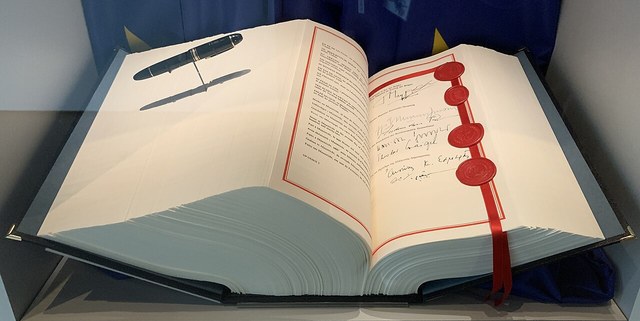
H

The chair of Sibneft was recognized as one of the “Seven Bankers” who supported this person after this person implemented the loans-for-shares scheme.

H

Acting Prime Minister Gaidar pursued an economic policy of “shock therapy” during his tenure, and this leader gave the black box of KAL Flight 007 to Roh Tae-Woo.

H

This man signed the Belavezha Accords as one of his first acts in office, and he apologized for Korean Airlines Flight 007 after meeting with South Korean President Roh Tae-Woo.

H

"Circling over Shannon" became a euphuism for inebriation in Ireland following an incident where this politician's drunkenness led to his failure to meet with Prime Minister Albert Reynolds.

H

This figure put down the Communist August Coup perpetrated by the Gang of Eight, while his economic liberalization led to the rise of the oligarchs like Mikhail Friedman.

#1667 · General · Level 3

Northern Ireland

Northern Ireland
ul li Blank map of Europe (with disputed regions).svg /a : m · CC BY-SA 3.0

UK constituent country · 1921–present · northeastern Ireland

Northern Ireland is the UK constituent country comprising six Ulster counties with capital at Belfast.

The kit

  • Geography — Northern Ireland makes up six of the nine counties of Ulster and is connected to the Republic of Ireland by the Lifford bridge at Strabane.
  • The Troubles — Northern Ireland experienced a violent conflict called the Troubles beginning with the Battle of the Bogside in 1969, including 1972's Bloody Sunday in which fourteen people died.
  • Maze Prison protests — Northern Ireland's Maze Prison saw blanket and dirty protests culminate in a hunger strike led by Bobby Sands, who won election before dying.
  • Government — Northern Ireland's assembly meets at Stormont Castle and is currently led by the Democratic Unionist Party, founded by Ian Paisley.

Runs with

Good Friday Agreement
ended the Troubles in Northern Ireland open card →
United Kingdom
Northern Ireland is a constituent country of the UK open card →
American Railway Union
Irish Republican Army
provisional IRA fought in the Troubles in Northern Ireland open card →

The ladder · 6 clues

H

Region, a part of the United Kingdom, where it took place.

H

Part of the island that remained within the United Kingdom.

M

The “blanket” and “dirty” protests at this region’s Maze Prison culminated in a hunger strike led by Bobby Sands.

M

Fourteen people died in the Bogside area of a city in this country during Bloody Sunday.

E

In this region, the Troubles were ended by the Good Friday Agreement. name this region of the U.K. with its capital at Belfast.

E

A twentieth-century conflict in this region included 1972’s “Bloody Sunday,” was called “The Troubles,” and involved the provisional IRA. name this largely Protestant region of the United Kingdom with capital Belfast.

10 more clues from the record
H

Interrogation tactics known as the “five techniques” were originally developed for use in this region as part of Operation Demetrius.

H

The escalation of the dirty protests led to a hunger striker in this region’s Maze prison winning an election before dying the next month.

H

Bernadette Devlin witnessed an event in this country and later punched Reginald Maulding for claiming one side acted in self-defense.

H

This country was home to the Glenanne Gang, which bombed a neighboring country to tank the Sunningdale Agreement.

H

Advocates for a reunification with this country often use the slogan 26+6=1.

H

A conflict in this region began in the Battle of the Bogside in 1969.

H

Botched attempts to infiltrate this polity by performing drunken karaoke led to the execution of intelligence officer Robert Nairac. Senior officials in this polity may have been allowed to maintain a child sex ring at the Kincora Boys Home in order to ensure their blackmail.

H

A 2017 election in this country was triggered after its Deputy First Minister resigned in protest over the so-called "Cash for Ash" scandal involving a failed renewable heat scheme. :Name this country whose Democratic Unionist Party and its allies failed to win a majority for the first time ever in that 2017 election.

H

This region’s assembly meets in Stormont Castle and is currently led by the Democratic Unionist Party, founded by Ian Paisley, although Paisley’s successor, Peter Robinson, lost his job as First Minister of this region in a 2010 election.

H

The Lifford bridge connects this country’s town of Strabane to its southwestern neighbor. :Name this constituent country of the U.K. where The Troubles took place before the Belfast agreement ended it. This constituent country makes up six of the nine counties of Ulster.

Watch out: Republic of Ireland (the southern neighbor; Northern Ireland remained in UK after partition)
#1678 · Modern Countries · Level 3

Serbia

Serbia
See i b File history /b /i below for details. · Public domain

Balkan nation · medieval to present · southeastern Europe

Serbia is a Balkan nation whose capital Belgrade was reclaimed after breaking away from Yugoslavia.

The kit

  • WWI trigger — Serbia received an Austro-Hungarian ultimatum during the July Crisis after Franz Ferdinand's assassination by Gavrilo Princip.
  • Modern independence — Serbia became an independent nation in 2006 after Montenegro severed their union, losing its access to the sea.
  • Milosevic era — Serbia's Bulldozer Revolution overthrew Slobodan Milosevic, who was later tried for war crimes with ally Radovan Karadžić.
  • Balkan conflicts — Serbia's forces including Arkan's Tigers aided Ratko Mladic in carrying out the Srebrenica Massacre during the Yugoslav wars.

Runs with

Yugoslavia
Serbia broke away from Yugoslavia and reclaimed Belgrade open card →
Kosovo
Kosovo declared independence from Serbia, not yet recognized worldwide open card →
Nanda Empire
Slobodan Milošević
Milosevic ruled Serbia, overthrown in Bulldozer Revolution open card →

The ladder · 6 clues

H

The Austro-Hungarian Empire declared war against this home of Gavrilo Princip to spark World War I. name this country that reclaimed its historic capital of Belgrade after breaking away from Yugoslavia.

H

This country became an independent nation after the 2006 severance of its union with Montenegro. :Name this country of Gavrilo Princip, who assassinated Archduke Franz Ferdinand.

M

Slavic state which was invaded by Austria-Hungary after the assassination of Franz Ferdinand.

M

This country’s “Bulldozer Revolution” overthrew a leader who was later put on trial for war crimes committed with his ally Radovan Karadžić .

E

In the July Crisis, Austria-Hungary sent an ultimatum to this country, whose nationalist organizations included the radical Black Hand.

E

Slobodan Milosevic once ruled this former Yugoslavian republic that lost its access to the sea after the 2006 secession of Montenegro but maintains its capital at Belgrade.

10 more clues from the record
H

This modern-day country was once ruled by renegade Janissaries known as dahije, who massacred this country’s elite, known as knez, in 1804.

H

A leader of a secret society in this country codenamed “Apis” orchestrated the murder of its king Alexander and its queen Draga in 1903.

H

The body of this nation's King Alexander I was thrown off a balcony of the "Old Palace" during its May Coup, which replaced him with Peter I. Alongside Romania and Greece, this nation seized territory from Bulgaria during the Second Balkan War.

H

This country’s forces included Arkan’s Tigers and the Scorpions, who were later charged for war crimes after aiding Ratko Mladic in carrying out the Srebrenica [sre-breh-neetza] Massacre.

H

An empire based in this country exploited a civil war between John V [the fifth] Palailogos and Anna of Savoy to conquer Macedonia.

H

Forces from a kingdom in this modern-day country defeated Michael III of Bulgaria to secure Epirus at the Battle of Velbazhd.

H

Kosovo’s independence from this state has not yet formally been recognized by much of the world.

H

One of its leaders ordered the assassination of Ivan Stambolic and was targeted by a 1999 NATO bombing.

H

An attack on this country’s broadcasting company, the RTS, took place during the Bulldozer Revolution in 2000.

H

Together with Montenegro, this opponent of Bosnia formed the Federal Republic of Yugoslavia.

Watch out: Gavrilo Princip was Serbian, but he assassinated Franz Ferdinand in Bosnia, not in Serbia itself
#1708 · British Monarchs · Level 3

Elizabeth II

Elizabeth II
bdi Donald McKague /span /a · Public domain

British monarch · 1952–2022 · United Kingdom

Elizabeth II reigned as Queen of the United Kingdom from 1952 until her death, becoming Britain's longest-reigning monarch.

The kit

  • Rise — Elizabeth II inherited the throne in 1952 from her father George VI after serving in the Auxiliary Territorial Service during World War Two.
  • Achievements — Elizabeth II surpassed Queen Victoria in 2007 to become Britain's longest-reigning queen, ultimately holding the record for all British monarchs.
  • Conflicts — Elizabeth II called 1992 her "annus horribilis" after two children's marriages ended, Windsor Castle caught fire, and Princess Diana published a tell-all book.
  • Legacy — Elizabeth II faced criticism for not flying flags at half-mast after Princess Diana's 1997 Paris car crash and for offshore tax accounts revealed in 2017.

Runs with

United Kingdom
reigned as its monarch from 1952 open card →
Queen Victoria
surpassed her as longest-reigning queen in 2007 open card →
George
succeeded her father George VI in 1952 open card →
John

The ladder · 6 clues

H

In the event of this person’s death, her government will carry out Operation London Bridge.

H

This person served in the Auxiliary Territorial Service during World War Two and was harshly criticized for being “out of touch” by John Grigg after the Suez Crisis.

M

In 1952, this woman inherited the throne from her father George VI, and, in 2007, surpassed Queen Victoria to become her country’s longest reigning queen. name this current monarch of England.

M

The term “annus horribilis” was used by this figure to describe a year in which two of her three children’s marriages ended and a fire broke out in Windsor Castle.

E

This woman was criticized for not flying a flag at half-mast after the death of her daughter-in-law Princess Diana. name this queen who succeeded her father George VI as the monarch of the United Kingdom.

E

This queen labeled 1992 her “annus horribilis”, in part due to a tell-all book by Princess Diana. name this current Queen of England.

10 more clues from the record
H

While this leader was traveling in Australia, unknown assailants used a large wood log in an attempt to derail this leader’s train in the Lithgow Plot.

H

Harold Macmillan referred to her namesake by saying she had "the heart and stomach of a man." She is married to Prince Philip, the Duke of Edinburgh. name this woman who became Queen of the United Kingdom in 1952.

H

Currently reigning monarch of the United Kingdom, the longest-reigning in British history.

H

In 1992, this woman's daughter, Anne, divorced Captain Mark Phillips, while her son, Andrew, separated from Sarah Ferguson.

H

This woman’s former daughter-in-law died in a 1997 car crash in Paris while being pursued by paparazzi.

H

In 2017, the Paradise Papers revealed that this person’s Duchy of Lancaster held offshore accounts to avoid paying taxes.

H

Canadian aboriginal William Arnold Combes accused this person of kidnapping ten indigenous children.

H

Marcus Sargent fired six blank shots at this leader in 1981 during the Trooping the Colour ceremony.

H

A teenager named Marcus Sarjeant shot at this person while she was riding her horse.

H

In a hilarious 1995 incident, a prank caller pretended to be Chrétien by phoning this person, who laughed when Chrétien said “merde” or “shit” during the signing of the 1982 Constitution Act. This person referred to the year 1992 as an “annus horribilis.”

Watch out: George VI (her father, whom she succeeded)
#1717 · General · Level 3

Sarajevo

Sarajevo
Julian Nyča · CC BY-SA 4.0

Bosnian capital city · 1914, 1992–1996 · Bosnia and Herzegovina

Sarajevo is the capital of Bosnia and Herzegovina, site of Franz Ferdinand's 1914 assassination and a brutal 1990s siege.

The kit

  • 1914 assassination — Sarajevo was where Gavrilo Princip fatally shot Archduke Franz Ferdinand after the Black Hand failed to bomb his carriage.
  • 1990s siege — Sarajevo was besieged by Republika Srpska for almost four years until relieved by the Dayton Accords in 1996.
  • Siege horrors — Sarajevo's siege featured Sniper's Alley, the Markale market shellings that prompted NATO airstrikes, and a desperate beauty pageant.
  • Memorials — Sarajevo's artillery blast marks were filled with red resin to create "roses" commemorating mortar attacks during the siege.

Runs with

Assassination of Archduke Franz Ferdinand
Gavrilo Princip shot Franz Ferdinand in Sarajevo in 1914 open card →
assassination
Franz Ferdinand's assassination occurred in Sarajevo open card →
World War I
Franz Ferdinand's assassination in Sarajevo triggered World War I open card →
Yugoslavia

The ladder · 6 clues

H

Mortar shell explosions filled with red resin were used to make “roses” named after this city, where the Markale massacres took place.

H

This city was the home of Admira Ismic and Bosko Brkic, who were known as its “Romeo and Juliet” after they were killed crossing Sniper’s Alley.

M

Archduke Franz Ferdinand was assassinated in this city, the capital of Bosnia.

M

This city was besieged by Republika Srpska for almost four years, before it was relieved by the Dayton Accords.

E

Gavrilo Princip fatally shot Archduke Franz Ferdinand in this city, the modern capital of Bosnia and Herzegovina.

E

The Black Hand failed to bomb a carriage in this city, but their goal was achieved by Gavrilo Princip. name this Bosnian capital where Franz Ferdinand was assassinated.

10 more clues from the record
H

Following mortar injuries sustained by a five-year-old named Irma, John Major led airlift evacuations in this city.

H

This city, the site of “Sniper Alley,” was besieged until 1996, after the signing of the Dayton Agreement.

H

Artillery blast marks filled with red resin, known as the “roses” of this city, were caused during a siege that was lifted by the Dayton Accords.

H

NATO airstrikes in this city were motivated by the Markale market shelling.

H

A beauty pageant in this city featured contestants holding up a banner reading "Don't let them kill us" while in a basement.

H

A cellist played Adagio in G Minor for twenty-two straight days to honor the victims of a bombing in this city.

H

An open-air market in this city was shelled in what may have been a false flag operation.

H

That event saw the death of Sophie of Hohenberg and the arrest of Black Hand member Gavrilo Princip.

H

Vladimir Perić [PEH-ditch] led the resistance in this city while it was under Ustasha rule.

H

In this city, the Zelene Beretke and Patriotic League became infamous for firing on ambulances and UN employees.

Watch out: Sophie of Hohenberg died in the same 1914 assassination as Franz Ferdinand
#1741 · Modern Countries · Level 3

Lithuania

Lithuania
Original: /div Jonas Basanavičius, Tadas Daugirdas and Antan · Public domain

Baltic state · medieval to present · Baltic Sea region, capital Vilnius

Lithuania is a Baltic state that formed a personal union and later commonwealth with Poland, with capital at Vilnius.

The kit

  • Rise — Lithuania's leader Treniota led the Samogitians against the Livonian Order at the Battle of Durbe.
  • Achievements — Lithuania was the original home of the Geminid dynasty and defeated the Mongols at the Blue Waters.
  • Union with Poland — Lithuania united with Poland in 1569 in the Union of Lublin after earlier joining through the Union of Krewo.
  • Modern era — Lithuania joined Estonia and Latvia in the anti-Soviet Singing Revolution and gained independence through the Sajudis reform movement.

Runs with

Poland
formed personal union, then commonwealth via Union of Lublin 1569 open card →
American Railway UnionCommon
Teutonic Knights
Samogitians fought related Livonian Order at Durbe open card →

The ladder · 6 clues

H

Kingdom that joined with Poland in a personal union and, later, a namesake commonwealth.

H

The leader Treniota led a group from this country called the Samogitians against the Livonian Order at the Battle of Durbe.

M

Ivan’s mother’s family hailed from a Grand Duchy that is today this modern republic on the Baltic Sea with its capital at Vilnius.

M

Mindaugas led this country, as did a national hero who ended a civil war by making peace with Jogaila.

E

The duchy that united with Poland in 1569, which is now a separate country with capital at Vilnius.

E

This modern state merged with a southern neighbor in the Union of Lublin, and it joined Estonia and Latvia in the anti-Soviet Singing Revolution. name this Baltic state that formed a historical Commonwealth with Poland.

10 more clues from the record
H

Another Grand Duke of this nation signed the Union of Krewo to marry Jadwiga of Anjou.

H

This country was the original home of the Geminid dynasty and defeated the Mongols at the Battle of the Blue Waters.

H

The Pale of Settlement on Russia’s western frontier included all of this modern Baltic state, where over 100,000 people were killed by the Nazis in Ponary Forest near Vilnius.

H

A reform movement known as Sajudis [[sah-YOO-dis]] advocated for the independence of this country ruled by the unicameral Seimas [[SAY-mas]] parliament.

H

A mayor in this nation, Arturas Zuokas [[zoo-OH-kuss]], fought illegal parking in his city by crushing a car with an armored vehicle in 2011.

H

Duke Daumantas assassinated the first Grand Duke of this country, who possibly renounced Christianity and approved the construction of the Klaipeda Castle.

H

This nation's language was preserved through the 19th-century "Book Smuggling" movement after Tsarist Russia banned its use.

H

Jonas Zemaitis was a freedom fighter in this country who relied on the code-name Vytautas [[vee-TOE-tas]].

H

Had 7 border guards killed in a Soviet assault near Vilnius?

H

A student from this country named Romas Kalanta set himself on fire in 1972.

Watch out: Confusion with other Baltic states Estonia or Latvia in the Singing Revolution
#1745 · Russian and Soviet Rulers · Level 3

Vyacheslav Molotov

Vyacheslav Molotov
G. Weil for TASS · Public domain

Soviet foreign minister · 1890–1986 · Soviet Union

Vyacheslav Molotov was Soviet foreign minister who signed the 1939 Nazi-Soviet non-aggression pact and lent his name to improvised incendiary weapons.

The kit

  • Rise — Vyacheslav Molotov was arrested for revolutionary activity during World War One and exiled to Siberia by the Czarist regime.
  • Achievements — Vyacheslav Molotov replaced Maxim Litvinov as foreign minister in 1939 and signed a pact with Joachim von Ribbentrop facilitating Poland's invasion.
  • Conflicts — Vyacheslav Molotov's Jewish wife Polina Zhemchuzhina was sent to internal exile and labor camp on suspicion of treason during Stalin's purges.
  • Legacy — Vyacheslav Molotov joined Malenkov and Beria in a post-Stalin troika but later failed in the Anti-Party Group takeover against Khrushchev.

Runs with

Winter War
Finnish troops named improvised anti-tank cocktails after Molotov during the Winter War open card →
Nazi Germany
Molotov signed the 1939 non-aggression pact with Nazi Germany's Ribbentrop open card →
Poland
The Molotov-Ribbentrop Pact facilitated Nazi Germany's invasion of Poland open card →
Marshall Plan

The ladder · 6 clues

H

Maxim Litvinov was replaced by this man, who was ordered to purge a ministry of Jews.

H

A gap in this man's highest position was filled by Andrey Vyshinsky, and he was replaced by Lavrentiy Beria on the development of the nuclear bomb.

M

The invasion of Poland was facilitated by a Pact signed by Joachim von Ribbentrop and this man, the foreign minister of the Soviet Union.

M

Georgy Malenkov and this man teamed up against Nikita Khrushchev in the failed Anti-Party Group takeover.

E

With Ribbentrop, this man names a non-aggression pact between Nazi Germany and the Soviet Union. name this Soviet minister that names a “cocktail,” first used by Finns as an incendiary weapon.

E

The foreign minister for Joseph Stalin this man who names a type of improvised explosive known as his "cocktail".

10 more clues from the record
H

This man’s wife, Polina Zhemchuzhina [zhem-SHOO-zhee-na], the onetime Soviet Minister of Fisheries, was sent into “internal exile” largely due to her Jewish faith.

H

A “troika” of Malenkov, Beria, and this minister took over immediately after the death of Joseph Stalin.

H

Following his inclusion in the “Anti-Party Group,” he became a delegate to the International Atomic Energy Agency and ambassador to Mongolia.

H

Finnish troops in the Winter War developed a makeshift anti-tank weapon named for this man, the Soviet foreign minister.

H

During World War One, the Czarist regime arrested this man for revolutionary activity and exiled him to Siberia.

H

A line of defense named for this man stretched from the Baltic Sea to the Carpathians.

H

Name these things about Alexander Scriabin’s uncle, Vyacheslav Scriabin, FTP each:Vyacheslav was initially better known by this surname for his two-times as foreign minister, the primary one being from 1939-49. Soldiers of the Finnish army mockingly named a makeshift bomb made of a breakable container filled with flammable liquid and ignited with a rag wick after him.

H

This man had the nickname “Stone Arse,” although he liked to note a more accurate nickname was “Iron Arse.” This man’s pilot, Endel Puusepp, was honored for a dangerous flight transporting this man to Washington D.C. His Jewish wife, Polina, was put in a labor camp on suspicion of treason, but was later freed after the leader this man worked for died.

H

He was almost purged along with Anastas Mikoyan before Stalin’s death, and his name means “hammer.” :Name this member of the post-Stalin troika who signed a non-aggression pact with Nazi diplomat Joachim von Ribbentrop. Finnish troops named some “bread baskets” and “cocktails” after him.

H

One accusation of treason against this man rested on him possibly owning his own railroad car, and he cast an abstaining vote when his Jewish wife Polina Zemchuzhina was accused of treason.

Watch out: Maxim Litvinov was the foreign minister Molotov replaced in 1939
#1779 · General · Level 3

universities

universities
Another Believer · CC BY-SA 3.0

institutions of higher learning · 1088–present · worldwide

Universities are institutions of higher learning, with the oldest continuously operating example founded in Bologna in 1088.

The kit

  • Medieval origins — Universities taught the trivium and quadrivium alongside Peter Lombard's Sentences at institutions including the Sorbonne and Oxford.
  • Early examples — Universities included Charles IV's foundation in Prague, Cambridge (founded 1209 by Oxford scholars fleeing violence), and Coimbra (established 1290).
  • Global spread — Universities developed worldwide, including Sankore in Timbuktu under Mansa Musa, Nalanda monastery in India, and Islamic madrasas.
  • Modern conflicts — Universities became sites of protest, including Mario Savio's 1960s speech urging listeners to put bodies upon the gears and the White Rose movement in Munich.

Runs with

church
Pope Gregory IX ended a 1229 university strike with Parens scientarium open card →
Timbuktu
Sankore university flourished in Timbuktu under Mansa Musa open card →
Paris
the Sorbonne was a major medieval university in Paris open card →
France
the Sorbonne in Paris was a leading French university open card →

The ladder · 6 clues

H

One of these locations in Prague was founded by and named for Charles IV, and the first one was founded in Bologna in 1088.

H

A 1229 strike at one of these institutions was ended two years later by Pope Gregory IX’s bull Parens scientarium.

M

At one of these locations, Mario Savio urged listeners to “put your bodies upon the gears.” Roslyn Pope drafted “An Appeal for Human Rights” in the aftermath of a series of 1960 protests at one of these locations.

M

The oldest continuously operating one of these places was founded in Bologna in 1088. the oldest example of what kind of institution in England was founded in 1096 in Oxford?

E

At these places, the trivium, the quadrivium, and Peter Lombard's Sentences were standard material. name these medieval institutions which included the Sorbonne in Paris and Oxford in England.

E

Under Mansa Musa, one of these institutions called Sankore flourished in Timbuktu. The Arabic term madrasa refers to an Islamic one of these institutions.

10 more clues from the record
H

John Filo won a Pulitzer for a picture taken at one of these institutions showing a Mary Ann Vecchio kneeling over the body of Jeffery Miller.

H

One of these institutions served as the headquarters for the White Rose anti-Nazi movement in Munich, and another of these institutions was transformed into the S-21 prison camp by the Khmer Rouge.

H

Over 100 civilians died during Operation Carthage in one of these buildings in Copenhagen when it was struck by RAF bombers as collateral.

H

In 1943, the Supreme Court ruled that people at these locations were not required to perform the pledge of allegiance.

H

William Wirt developed the Gary Plan to increase efficiency in these institutions.

H

First amendment rights while at one of these locations were outlined in Tinker v.

H

An institution of this type was founded in 1290 by Denis, the so-called Farmer King, and moved several times before reaching its current location of Coimbra in 1537. :Name this type of institution. In England, an institution of this type in Cambridge was founded in 1209 by scholars fleeing from local violence in Oxford.

H

Separate Catholic and Protestant examples of these locations in Manitoba were the subject of a namesake 1890s political question. :Name these locations. In a system of “residential” types of these locations, First Nations members were punished for speaking in their native languages to promote cultural assimilation.

H

The ability to pay gurudakshina determined whether someone attended one of these institutions at Taxila during the day or night. :Name these institutions. Another important one of these institutions in India was at the Nalanda monastery, which is estimated to have housed several thousand students at a time.

H

A federal law passed in 1990 required that “gun-free zones” be enforced within 1,000 feet of these locations. Eric Harris and Dylan Klebold committed a 1999 massacre at one of these locations in Columbine, Colorado.

Watch out: John Filo's Pulitzer Prize photograph showing Mary Ann Vecchio over Jeffrey Miller's body was taken at Kent State, not Columbine
#1784 · General · Level 3

1968

1968
/ Library of Congress · Public domain

Year of global upheaval · 1968 · Global

1968 was a year of worldwide protests, including May uprisings in Paris, the Prague Spring, and violent clashes at Chicago's Democratic National Convention.

The kit

  • Vietnam War — 1968 saw protests against the Vietnam War spike after the Tet Offensive, which ended in September of this year.
  • French unrest — 1968 witnessed massive student protests and a wildcat general strike of 22% of the French population that nearly forced Charles de Gaulle to resign in May.
  • Chicago convention — 1968's Democratic National Convention in Chicago featured a "police riot" as protesters chanting "The whole world is watching" clashed with police.
  • U.S. election — 1968 marked Richard Nixon's first presidential election victory over Hubert Humphrey in a close race predicted by Kevin Phillips.

Runs with

Tet Offensive
ended in September 1968, sparking increased Vietnam War protests open card →
Prague Spring
began in Czechoslovakia in 1968 open card →
Charles de Gaulle
nearly resigned in May 1968, fled to Baden-Baden to meet Jacques Massu open card →
Bakumatsu Period

The ladder · 6 clues

H

De Gaulle nearly resigned in May of this year, in which he faced massive student protests and a wildcat general strike of 22% of the French population.

H

Protests against the Vietnam War spiked in this year after the Tet Offensive. :In what year did a “police riot” occur at the Democratic National Convention in Chicago?

M

In this year, one president fled to Baden-Baden to meet with Jacques Massu.

M

Curtis LeMay earned controversy for suggesting the use of nuclear weapons in this year as the vice- presidential nominee for George Wallace’s third-party run.

E

Guy Debord’s pamphlet On the Poverty of Student Life led to labor strikes in this year, in which student and union protesters forced the president to temporarily flee the country. name this year in which French students protested against Charles de Gaulle’s government in May.

E

The Tet Offensive ended in September of this year, and protests in this year at the Chicago Democratic National Convention included heated confrontations between police and Vietnam War protestors. name this year, the first U.S. presidential election victory for Richard Nixon.

10 more clues from the record
H

In this election year, volunteers were encouraged to “go clean for Gene” while supporting Eugene McCarthy in the New Hampshire primary.

H

This year saw the May student uprisings in Paris. FTPE:What year also marked the beginning of the Prague Spring in Czechoslovakia?

H

At a protest opposing the visit of Mohammed Reza Shah Pahlavi in this year, Freie Universitant Berlin students Benno Ohnesorg was shot by police, leading to the formation of the 2 June Movement.

H

In this year, student demonstrations during the Mexico City Olympics led to a bloody reprisal by Mexican armed forces in the Tlatelolco [[TLAH-teh-LOHL-koh]] Massacre.

H

A convention in this U.S. presidential election year featured protests from Americans who shouted “The whole world is watching” before they were dispersed by Chicago police.

H

During this year, the minimum wage increased 35 percent via the Grenelle Agreements.

H

The Grenelle Agreements were an attempt to negotiate an end to student demonstrations by the Pompidou government. :In May of what year did student demonstrations and strikes in France force de Gaulle to secretly fiee the country?

H

Phillips worked on the Nixon campaign in this year, in which he correctly predicted a close race against Hubert Humphrey; Philips also correctly predicted the giant Republican landslide four years later.

H

The Yippies nominated a pig named Pigasus in this year. :Name this year in which Abbie Hoffman, Bobby Seale, and six others were arrested at a tumultuous, riot-inducing Democratic National Convention.

H

General Knowledge & Trivia: The FBI When the Federal Bureau of Investigations was founded in 1908, the director was appointed by the Attorney General.

#1808 · General · Level 3

António de Oliveira Salazar

António de Oliveira Salazar
bdi Manuel Alves de San Payo /span /a · Public domain

Portuguese dictator · ruled 1932–1968 · Portugal

António de Oliveira Salazar was a Portuguese economist who ruled as prime minister for thirty-six years under the authoritarian Estado Novo regime.

The kit

  • Rise — António de Oliveira Salazar established the Estado Novo in 1933, ending decades of political instability in Portugal since 1910.
  • Achievements — António de Oliveira Salazar employed the motto "God, Fatherland, and Family" and based his corporatist regime on principles from Pope Leo XIII.
  • Conflicts — António de Oliveira Salazar established the Tarrafal "Camp of the Slow Death" in Cape Verde and had opponent Humberto Delgado assassinated by PIDE.
  • Legacy — António de Oliveira Salazar justified colonial rule in Angola and Mozambique using Lusotropicalism until his 1968 removal and the 1974 Carnation Revolution.

Runs with

Portugal
Served as prime minister for thirty-six years open card →
dictator
Ruled authoritarian Estado Novo regime from 1932 to 1968 open card →
Carnation Revolution
His Estado Novo regime was ousted by this 1974 revolution open card →
Angola
Used Lusotropicalism to justify colonial rule over this territory open card →

The ladder · 6 clues

H

This man denounced fascism as a form of “pagan Caesarianism” and employed the slogan “God, Fatherland, and Family.” This man erected a “Camp of the Slow Death” in Tarrafal which was located in the islands of Cape Verde.

H

After a 1936 naval mutiny, this dictator opened a prison known as the “Camp of the Slow Death” at Tarrafal which was run by a secret police that later murdered Humberto Delgado, the PIDE.

M

Pope Leo XIII influenced the tenets of a regime led by this former professor of economic policy.

M

The Tarrafal Camp was established by this dictator, an economist who long ruled over Portugal.

E

The non-Brazilian Estado Novo was run by this dictator of Portugal for thirty-six years.

E

This leader used Gilberto Freye’s idea of Lusotropicalism and was succeeded by Marcelo Caetano. The Carnation Revolution ousted this dictator of the Estado Novo in Portugal.

10 more clues from the record
H

Portuguese politics were incredibly unstable between 1910 and the 1933 establishment of the Estado Novo under this leader.

H

Anarchist Emídio Santana organized an assassination attempt on this man that failed when a bomb hidden in an iron case exploded near his Buick.

H

One of the mottos of this man’s regime was “Deus, Pátria e Família.” :Name this authoritarian corporatist who served as Portugal’s prime minister from 1932 to 1968 and established the Estado Novo.

H

After this man recovered from an injury sustained in a bath, he was allowed to “rule,” even though he had already been removed from power.

H

This man rewrote his country’s constitution with the help of Marcelo Caetano and purged the National Syndicalist blue shirts.

H

The Tarrafal “camp of the slow death” was established by this ruler, who was targeted in a bombing by Em´ıdio Santana.

H

During World War II, this leader’s ambassador Carlos Garrido saved Jews in Hungary.

H

During the last decade of his rule, this leader described his pro-imperial policies with the credo “proudly alone.” Three years after taking power, he gave a speech promising that his motto would be “all for the nation, nothing against the nation.” This politician issued “Circular 14,” a directive denying safe haven to refugees—that decree was explicitly disobeyed by Aristides de Sousa Mendes.

H

This leader was opposed by a presidential candidate nicknamed the “General Without Fear” who famously responded to a question about what he’d do with this leader by saying “Obviously, I’ll sack him!” That man, Humberto Delgado, was assassinated by agents of this ruler, who limited Catholic Church influence with his Concordat of 1940.

H

This ruler used Gilberto Freyre’s concept of Lusotropicalism to justify his country’s colonial regime. :Name this ruler whose Estado Novo regime ruled over African countries like Angola and Mozambique in the mid-1900s.

Watch out: Confused with successor Marcelo Caetano, who helped write the constitution and later ruled until the Carnation Revolution
#1835 · Security, Police, Intelligence, and Paramilitary Organizations · Level 3

KGB

KGB
jgaray · Public domain

Soviet intelligence agency · 1954–1991 · Soviet Union

The KGB was the Soviet Union's Committee for State Security that served as the main intelligence and secret police agency during the Cold War.

The kit

  • Origins — The KGB replaced the NKVD and Cheka as the Soviet Union's primary security apparatus in 1954.
  • Operations — The KGB manufactured a ricin pellet hidden in an umbrella used to assassinate Bulgarian writer Georgi Markov.
  • Leadership — The KGB was led by Vladimir Kryuchkov, who helped plan the failed August 1991 coup attempt against Gorbachev.
  • Legacy — The KGB employed Vladimir Putin as an officer who burned thousands of files during the fall of the Berlin Wall.

Runs with

Vladimir Putin
served as KGB officer, burned files in 1989 open card →
Soviet Union
primary state security and intelligence committee open card →
Cold War
main rival of CIA in foreign intelligence operations open card →
Pennsylvania

The ladder · 6 clues

H

Vladimir Putin once served as an officer in this Soviet intelligence agency.

H

This organization, which often collaborated with GRU, was led by Vladimir Kryuchkov, who helped plan an August 1991 coup.

M

This national security agency for the Soviet Union was the main rival of the CIA in foreign affairs during the Cold War.

M

The NKVD and Cheka were replaced by this “Committee for State Security” in the Soviet Union.

E

This spy agency’s former members include Vladimir Putin and it was active in the Cold War. identify this security agency of the Soviet Union.

E

During the fall of the Berlin Wall, thousands of this organization’s files were burned by its officers, including Vladimir Putin. name this Soviet intelligence agency.

10 more clues from the record
H

Members of this organization's Laboratory 12 manufactured the ricin [[RAI-sin]] pellet used to murder Georgi Markov.

H

This agency was the secret police of the Soviet Union. This agency was responsible for spy rings in the US, such as the Rosenberg Ring.

H

Bulgarian writer Georgi Markov was poisoned by this organization using a ricin pellet hidden inside an umbrella, and it grew out of the earlier NKVD.

H

As part of Operation PANDORA, this organization tried to stir up anti-Semitism by mailing out racist fake pamphlets of right-wing Jewish organizations to civil rights organizations.

H

Members of this organization lived in a safe house in Big Spring Park in Pennsylvania, from where they planned an attack on the Hungry Horse and Flathead Dams in Montana.

H

Markus Hess was employed in the 1980s as a hacker by this organization, which created a poisoned jewel box in an attempt to kill Josip Tito.

H

This organization backed the Saur Revolution, which led to the death of Mohammed Daoud Khan and his family in the Presidential palace in Afghanistan.

H

This organization attempted to exile the author of My Country and the World before he could earn his 1975 Nobel Peace Prize.

H

This organization, which grew out of the NKVD, included a "Fifth Directorate'' created by Yuri Andropov to eliminate dissenters.

H

This organization hired a Singaporean businessman named Amos Dawe in a failed attempt to buy three California banks.

Watch out: GRU (separate Soviet military intelligence agency that often collaborated with KGB)
#1839 · General · Level 3

Sinn Féin

Sinn Féin
Yamen · CC BY-SA 4.0

Irish republican political party · 1905–present · Ireland

Sinn Féin is an Irish republican party that served as the political arm of the IRA and refuses to take Westminster seats.

The kit

  • Rise — Sinn Féin was founded by Arthur Griffith and gained prominence after leaders were wrongly blamed for the Easter Rising.
  • Achievements — Sinn Féin declared the breakaway Dáil Éireann in 1919, starting the Irish War of Independence against Britain.
  • Conflicts — Sinn Féin adopted the "Armalite and ballot box" strategy after Bobby Sands died during a 1981 hunger strike.
  • Legacy — Sinn Féin leader Gerry Adams led the party for over 30 years and participated in Northern Ireland peace negotiations.

Runs with

Irish Republican Army
political arm of the Provisional IRA open card →
Easter Rising
gained prominence when leaders wrongly blamed for the Rising open card →
Ireland
declared breakaway Dáil Éireann starting Irish independence war open card →
Common
name translates to "We Ourselves" in Irish open card →

The ladder · 6 clues

H

Irish political party, led by Gerry Adams, that refuses to sit in Westminster.

H

This party began employing the “Armalite and ballot box” strategy after Bobby Sands died of a hunger strike in prison in 1981.

M

Pro-Irish independence political party associated with the Provisional IRA and led by Gerry Adams.

M

A member of this party, Martin McGuinness, became the deputy in a power-sharing government headed by Ian Paisley.

E

Eamon de Valera left this political party to form the Fianna Fail. This party’s name translates to “We Ourselves.”

E

Political arm of the provisional IRA, a leftist party that abstains from its UK Parliament seats.

10 more clues from the record
H

Left-wing political party that declared the breakaway Dail Eireann in 1919, starting the War of Independence.

H

One prominent member of this party suggested a strategy involving “ballot paper in one hand and the Armalite in the other.” This party was founded by Arthur Griffith, and under its current President, Mary Lou McDonald, it gained a majority in the Stormont in 2022.

H

The “Republican” form of this party was formed after its organizer Danny Morrison proclaimed the “Armalite and ballot box” strategy. :Name this Irish republican and left-wing political party, whose leadership always vehemently denies links to the IRA.

H

Arthur Griffith co-founded this nationalist party, which argued that the Act of Union was inherently illegal. Many of its leaders were wrongly blamed for the Easter Rising and executed, after which it was taken over by Eamon de Valera.

H

Both the UK Home Office and RTE instituted television and radio censorship laws that targeted this left-leaning Irish republican party during the 1990s. It was led by Gerry Adams for over 30 years.

H

This party refuses to apologize for the murders of sixteen people known as the “Disappeared,” whose members included a widowed mother-of-ten whose body wasn’t found until 2003.

H

The supporters of the Easter Rising included this political party, which survives today as the de facto political arm of the IRA and is currently the second most powerful party in Ireland after Fianna Fail.

H

This party reached a landmark accord after secret negotiations with John Hume’s Social Democratic and Labour Party, and its member Alex Maskey was soon after elected to an important mayoralty.

H

In the 1980s, this party advocated a policy known as “the ballot and the Armalite,” which culminated in 1986 when it reversed its policy of not occupying seats won in elections for the Dáil.

H

The Easter Rising launched this political party, whose members in 1921 included both Collins and de Valera. De Valera left this party in 1926 to found the Fianna Fáil party.

Watch out: Fianna Fáil, founded by Éamon de Valera after he left Sinn Féin in 1926
#1841 · Security, Police, Intelligence, and Paramilitary Organizations · Level 3

Stasi

Stasi
Ministerium für Staatssicherheit der DDR · Public domain

East German secret police · 1950–1990 · East Germany

Stasi was East Germany's secret police, officially the Ministry for State Security, whose motto was 'Shield and Sword of the Party.'

The kit

  • Leadership — Stasi was headed by Erich Mielke for three decades, known as 'The Master of Fear.'
  • Operations — Stasi's HVA branch under Markus Wolf recruited Gunter Guillaume to infiltrate Willy Brandt's government.
  • Tactics — Stasi employed zersetzung, a psychological decomposition technique using informants to silence dissidents.
  • Legacy — Stasi counted over 2.5 percent of East Germans as informants by its 1990 demise.

Runs with

East Germany
operated as state security apparatus open card →
Willy Brandt
infiltrated via spy Gunter Guillaume open card →
Chancellor
forced Brandt's resignation as chancellor open card →
Berlin

The ladder · 6 clues

H

East German secret police service whose name is an abbreviation of the German for “State Security Service.”

H

That branch of this organization was led by the “man without a face” Markus Wolf.
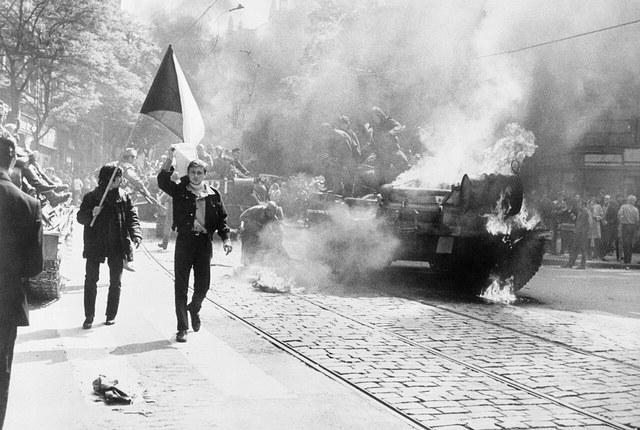
M

This organization’s HVA branch was led for over thirty years by Markus Wolf, who recruited Gunter Guillaume to infiltrate the government of Willy Brandt.
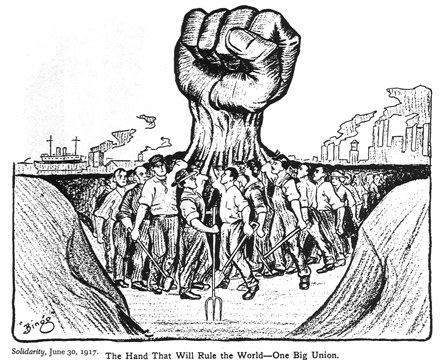
M

This East German secret police forces’ motto was “Shield and Sword of the Party.” This force was led by "The Master of Fear,” Erich Mielke, for three decades.
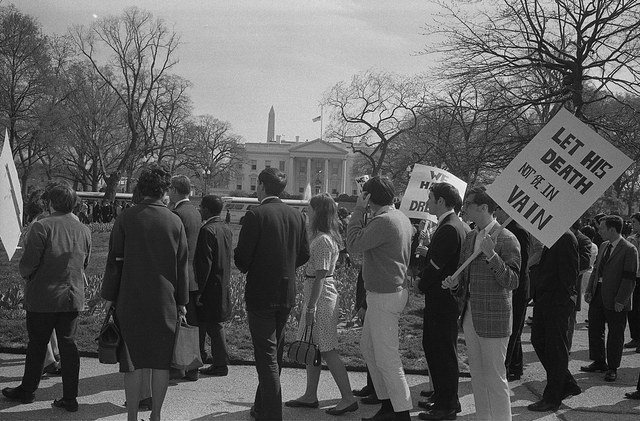
E

Secret police force headed by Erich Mielke that operated in East Germany.

E

Brandt resigned as chancellor after Gunter Guillaume, his secretary, was found to be a spy in the employ of this East German organization.

10 more clues from the record
H

This organization’s use of IMs in a “decomposition” technique was publicized by the Gauck authority.

H

This organization quietly provided technical and financial support to the Red Army Faction, and perfected its own gaslighting technique called zersetzung.

H

Police inspector Karl-Heinz Kurras shot a collaborator with this organization named Benno Ohnesorg during a 1967 student protest.

H

This group orchestrated the murder of the university student Benno Ohnesorg in an attempt to sow chaos in an enemy country.

H

Membership in this group was originally believed to have been recorded in the Rosenholz files.

H

This group subscribed to the policy of “Zersetzung,” or psychological attacks, to silence dissidents.

H

The extent of this organization’s HVA operations was revealed by the Rosenholz files.

H

A museum devoted to this organization was opened in 1990 by ASTAK, which centered its exhibit around “House 1,” this organization’s headquarters. :Identify this organization, which at the time of its demise counted over 2.5 percent of the East German population among its informants.

H

This was the name for East Germany's secret police. Officially called the Ministry for State Security, this organization allowed Libyan agents free passage in East Berlin to carry out the 1986 discotheque bombings.

H

The first large, public stand against this organization by its country’s writers was after it forcibly expatriated the singer behind the song “Ermutigung,” Wolf Biermann. :Name this East German secret police.

Watch out: KGB (Soviet secret police with similar Cold War role)
#1846 · General · Level 3

Angela Merkel

Angela Merkel
bdi Raimond Spekking /span /a · CC BY-SA 4.0

German Chancellor · 2005–2021 · Germany

Angela Merkel was the first female Chancellor of Germany, serving from 2005 and leading the Christian Democratic Union from 2000 to 2018.

The kit

  • Rise — Angela Merkel earned a doctorate in quantum chemistry in 1986 before entering politics and serving as Minister for Women and Youth.
  • Achievements — Angela Merkel played a central role in negotiating the Treaty of Lisbon and led stimulus efforts during the Great Recession.
  • Conflicts — Angela Merkel's government received a record 1.1 million asylum seekers in 2015 and phased out nuclear power after Fukushima.
  • Legacy — Angela Merkel stepped down as party chair after chosen successor Annegret Kramp-Karrenbauer resigned in 2020.

Runs with

Chancellor
held office as Germany's first female chancellor from 2005 open card →
Germany
served as chancellor and led Christian Democratic Union open card →
Christian
led Christian Democratic Union from 2000 to 2018 open card →
American Railway Union

The ladder · 6 clues

H

In 2010, this leader controversially remarked that “multiculturalism has utterly failed” despite attempts to assimilate Turkish immigrants.

H

While on a state visit to Turkey, this politician was criticized by Volker Kauder for saying that “Islam is a part” of that country.

M

The leader of the Christian Democratic Union from 2000 to 2018, this politician was elected to her highest position in 2005. For ten points, name this first female chancellor of Germany.

M

This woman was named Minister for Women and Youth in the Kohl cabinet in 1991, nearly fifteen years before she was appointed Chancellor of Germany.

E

This leader stepped down as party chair after chosen successor Annegret Kramp- Karrenbauer, or AKK, resigned in 2020.

E

In 2018, this politician was succeeded as her party’s leader by Annegret Kramp-Karrenbauer. name this long-time leader of the Christian Democrats, the current Chancellor of Germany.

10 more clues from the record
H

This leader obtained a doctorate in quantum chemistry in 1986 prior to entering politics.

H

This politician played a central role in negotiating the Treaty of Lisbon and was a main figure behind the stimulus plan to help shelter the European Union from the Great Recession.

H

During this leader's tenure, one country opened borders to Syrian refugees and phased out nuclear power after the Fukushima incident, as part of the Energiewende policy.

H

All lands east of the Oder-Neisse [NIGH-suh] line were given to Poland by this leader who was succeeded in his highest office by Gerhard Schroder.

H

During this man’s tenure, he and his Minister of the Interior, Wolfgang Schauble [SHOY-bleh] were implicated in the Schwarzgeldaffare.

H

The term “GroKo” was coined to describe this leader’s most recent coalition with the SPD.

H

This leader’s country received a record breaking 1.1 million asylum seekers in 2015.

H

This current world leader, who previously served as Minister of the Environment from 1994 to 1998, was given a creepy massage in 2006 by George Bush at a Group of 8 meeting. :Name this politician ranked #1 on the Forbes list of the World's 100 Most Powerful Women.

H

answer the following about recent claims of spying on world leaders.This leader of the Christian Democratic Union was infuriated in October 2013 when Edward Snowden leaked information that the NSA had bugged her mobile phone.

H

During the movie itself, this actress, who voiced Mrs. Potts, sang the song. She is also known for her roles in the original version of The Manchurian Candidate and the television show Murder, She Wrote.

#1877 · Historic Cities · Level 3

Stockholm

Stockholm
Steven Lek · CC BY-SA 4.0

Swedish capital city · founded 13th century · eastern Sweden, Lake Mälaren

Stockholm is the capital of Sweden, located on islands where Lake Mälaren meets the Baltic Sea.

The kit

  • Geography — Stockholm is located on Riddarfjärden bay at the easternmost point of Lake Mälaren, spanning multiple islands including Stads, Helgeans, and Riddar.
  • Bloodbath of 1520 — Stockholm was the site of a 1520 massacre ordered by Christian II, who killed at least 80 supporters of Sten Sture the Younger despite promising amnesty.
  • Royal landmarks — Stockholm's Riddarholm Church serves as a burial site for Swedish monarchs dating back to the 13th century, near the old town of Gamla Stan.
  • Norrmalmstorg robbery — Stockholm was the site of the 1973 Norrmalmstorg robbery, a bank heist that gave its name to Stockholm syndrome, in which captives show loyalty to captors.

Runs with

Sweden
capital and largest city open card →
Christian
ordered 1520 Stockholm Bloodbath massacre open card →
American Railway Union
Kalmar Union
bloodbath stemmed from dispute over union membership open card →

The ladder · 6 clues

H

The Codex Gigas was transported to this city after a sack of Prague.

H

This city is located on Riddarfjärden, the easternmost bay of the lake of Mälaren.

M

The Caps and Hats were based in this city, where supporters of Sten Sture the Younger were massacred by Christian II’s soldiers.

M

After seeing a movie with his wife, Prime Minister Olof Palme was gunned down in this city in 1986.

E

The Tre Kronor Castle in this city was replaced by a namesake castle by Gustavus Adolphus in the early 17th century.

E

In 1520 the Archbishop Trolle instigated this city’s namesake “bloodbath.” identify this capital city of Sweden.

10 more clues from the record
H

A burial site of monarchs dating back to the 13th century, the Riddarholm Church, lies near this city’s old town of Gamla Stan.

H

This city was the site of an event that included a man wandering around a bank vault singing "Killing Me Softly," the Norrmalmstorg robbery.

H

In 2003, this city's NK department store was the site of the assasination of a foreign affairs minister.

H

Name the European capital, the site of a 1973 bank robbery, that names a syndrome in which captives show loyalty to their captors.

H

In this city, a policeman was forced to sing “Lonesome Cowboy” after another was shot in the hand.

H

Starting in 1848, this city offered competing all-female water taxi services, one operated by friendly women called kullor and the other operated by rude women called “rower madams.” At the turn of the 20th century, this city had the world’s highest density of telephones, which were routed through a 250-foot tower via more than 5,000 overhead lines.

H

The Danish king Christian II massacred at least 80 people in this city in a “bloodbath” in 1520 despite promising amnesty. :Name that city, where Sten Sture and Gustavus Trolle were feuding over whether their polity should remain in a union with Denmark.

H

Its Old Town is found on Stads, Helgeans, and Riddar islands. Lake Mälar and Salt Bay are on the shores of this city, where one can find Arlanda Airport and the house of the Riksdag.

H

In order to root out supporters of Sten Sture the Younger, people in this city on an enemies list made by Archbishop Trolle were killed on the orders of the foreign king Christian II.

H

Christian II slaughtered numerous followers of Sten Sture the Younger in this city’s namesake “bloodbath.” :What Scandinavian capital was home to rulers of the Vasa Dynasty until 1672?

Watch out: Christian II of Denmark ordered the Stockholm Bloodbath, not Christian II of Sweden
#1910 · Modern Countries · Level 3

Estonia

Estonia
Original: /div Unknown author /div Vector: /div SKopp /a , P · Public domain

Baltic state · independence 1920, 1991 · northern Europe, capital Tallinn

Estonia is the northernmost and smallest of the Baltic states, bordered by Latvia to the south.

The kit

  • Independence struggles — Estonia fought a war for independence in 1920 led by General Johan Laidoner against Soviet forces.
  • Era of Silence — Estonia endured the Era of Silence after Konstantin Päts's 1934 coup, opposing the proto-fascist Vaps Movement.
  • Singing Revolution — Estonia achieved independence from the Soviet Union through the non-violent Singing Revolution, with Lennart Meri as first president.
  • Post-Soviet tensions — Estonia experienced the 2007 April Unrest when relocating a Red Army memorial from Tallinn sparked riots and embassy siege.

Runs with

American Railway Union
no connection evident in clues open card →
Lithuania
Lithuania joined Estonia in the **Singing Revolution** and formed a massive human chain in 1989 open card →
SwedenBaltic Sea

The ladder · 6 clues

H

This country experienced the Era of Silence under Konstantin Pats in opposition to the Vaps Movement.

H

Nearby Baltic nation that was invaded by Finnish forces in the Kinship Wars.

M

Lennart Meri was the first president of this country after its independence from the Soviet Union, which it gained in the Singing Revolution. name this northernmost Baltic state.

M

With Lithuania and Latvia, this country achieved a non-violent independence during the Singing Revolution. name this Baltic state that was once the target of the Livonian Crusade.

E

General Johan Laidoner [["LIE"-doh-nuh]] led this country’s war for independence in 1920.

E

After the 1934 coup of Konstantin Päts [], this country endured the Era of Silence and was incorporated into the USSR in 1940. name this European country that regained its independence after the Singing Revolution, the smallest of the Baltic states.

10 more clues from the record
H

In this nation, the 2007 April Unrest occurred due to the relocation of a memorial to fallen Red Army soldiers, resulting in this nation's Moscow embassy being besieged for a week.

H

In this country, students wore yellow T-shirts to protest increased phosphorite mining in Lääne-Viru [LAH-neh VEE-roo] County.

H

northernmost of the Baltic states and less populous than Latvia and Lithuania?

H

Baltic state which dropped its kroon currency for the Euro in 2011.

H

Soviet housing may have been bland, but Soviet war memorials were often gaudy. Answer these questions about attempts to deal with them in the post-communist era .Russian residents of this country rioted in 2007 after its government relocated a Soviet war memorial from downtown Tallinn to a remote military cemetery.

H

Answer the following about the Baltic states during their brief independence between the world wars, FTPE. Frequently led by Konstantin Päts, this country endured an abortive 1924 communist putsch, but moved right with the rise of the Kaitseliit, which nonetheless fought against the proto-fascist Freedom Fighters.

H

This country’s capital is home to Iceland Square, honoring the fact that Iceland was the first country to recognize its independence. :Name this country, whose capital was the northern end of a massive human chain in 1989. A quarter of its population gathered at a Pop Music Festival in Tartu, kicking off the Singing Revolution.

H

On May 1, citizens celebrated its entrance into the European Union by launching a campaign to plant one million trees. For 15 points, name this country, led by President Arnold Ruutel and prime minister Juhan Parts, which speaks a Finnish dialect.

H

Trip Advisor states that Toompea Hill in the Old Town presents a must-see vista of this country’s capital of Talinn. :Finland lies across a namesake gulf from what small country north of Latvia?

H

Until this country became independent, the name of its capital was Revel. :Name this nation where the interwar Vaps Movement destabilized the government of Konstantin Pats, and where intellectual life was and is centered on the University of Tartu.

Watch out: Latvia is also a Baltic state but is more populous and located south of Estonia
#1917 · General · Level 3

Konrad Adenauer

Konrad Adenauer
Katherine Young (1906–1993) · CC BY-SA 3.0 de

West German chancellor · 1949–1963 · West Germany

Konrad Adenauer was the first Chancellor of West Germany who oversaw postwar reconstruction and European integration from 1949 to 1963.

The kit

  • Rise — Konrad Adenauer served as mayor and Center Party member before being elevated to national prominence by a head of state.
  • Achievements — Konrad Adenauer declared 'this is our breakthrough' after West Germany agreed to enter the European Coal and Steel Community.
  • Achievements — Konrad Adenauer's economic minister Ludwig Erhard engineered the Wirtschaftswunder, an economic miracle under a social market economy.
  • Conflicts — Konrad Adenauer's administration faced the Der Spiegel affair when Franz Joseph Strauss accused a magazine of treason for exposing army unpreparedness.

Runs with

Chancellor
served as first Chancellor 1949–1963 open card →
West Germany
led as first Chancellor open card →
mayor
served as mayor before national career open card →
Christian

The ladder · 6 clues

H

This man was nearly killed when a mail bomb sent on the orders of Menachem Begin exploded in a Munich police station.

H

This leader’s reputation was hurt after attempting to cover up a leak of the military exercise Fallex 62.

M

This leader declared “this is our breakthrough” after a new plan to pool coal production with France was adopted in the Schuman Declaration.

M

Under this leader’s administration, his country achieved massive economic growth under the “social market economy” designed by his economic minister Ludwig Erhard.

E

His minister Ludwig Erhard oversaw the Wirtschaftswunder, an economic miracle. name this Christian Democrat politician, the first chancellor of West Germany.

E

Ludwig Erhard’s post-war economic revitalization took place under this first Chancellor of West Germany.

10 more clues from the record
H

Chancellor of West Germany whose Finance Minister Ludwig Erhard engineered an “economic miracle” after the war.

H

The Miracle on the Rhine was caused by this man’s finance minister, Ludwig Erhard.

H

This man’s brief, post-war second term as mayor ended when Gerald Templer fired him for “laziness and incompetence.” This politician aimed to pull the Zentrum “out of the tower” by uniting Protestants and Catholics in one party.

H

“This is our breakthrough” after his West Germany agreed to enter the European Coal and Steel Community?

H

His civil engineering work as mayor and member of the Center Party led a head of state to elevate him to national prominence, though he was later imprisoned as a result of the Night of the Long Knives.

H

This leader was forced to form a new government after several ministers were exposed as having taken bribes from the FIBAG construction company; those ministers tried to sue the whistleblowing newspaper for treason.

H

This leader won one election under the slogan "No Experiments." Menachem Begin organized the delivery of a mail bomb to this leader, but it only killed a bomb disposal expert.

H

During this man’s administration, federal minister of defense Franz Joseph Strauss accused a magazine of treason after it published a memo detailing the unpreparedness of the army in the DerSpiegel affair.

H

This leader said that a left-wing press organ that exposed weaknesses in the army was an “abyss of treason.” Menachem Begin tried to organize the killing of this European leader.

H

He became West Germany’s first chancellor in 1949 under the Christian Democrat banner and, as promised, resigned in 1963 after normalizing relations with France.

Watch out: Ludwig Erhard was Adenauer's economic minister, not a separate chancellor during this period
#1918 · Modern Countries · Level 3

Kosovo

Kosovo
Cradel /a (current version), earlier version by Ningyou · Public domain

Balkan state · independence 2008 · southwest of Serbia

Kosovo is a partially-recognized Balkan state that declared independence from Serbia in 2008, governed from Pristina with a majority-Albanian population.

The kit

  • Independence — Kosovo declared independence in 2008 due to its majority-Albanian population, though Serbia continues to claim the territory.
  • Historical battle — Kosovo was the site of the 1389 Battle of the Field of Blackbirds where both Sultan Murad I and Prince Lazar died.
  • Normalization — Kosovo normalized relations with Serbia through the 2013 Brussels Agreement, negotiated by Prime Minister Hashim Thaçi.
  • Recent tensions — Kosovo in 2017 prevented a red, blue, and white passenger train from Serbia from reaching the town of Mitrovica.

Runs with

Serbia
claims Kosovo as territory despite 2008 independence declaration open card →
NATO
Slobodan Milošević
labeled Kosovo's KLA a terrorist group open card →
Nanda Empire

The ladder · 6 clues

H

Former Serbian territory where a 1389 battle of the Field of Blackbirds took place.

H

Vuc Brankovic fled another battle at this location in which both commanders, Sultan Murad I and the Prince Lazar, were killed.

M

This state normalized relations with its northern neighbor as part of the 2013 Brussels Agreement.

M

With an ethnic majority of Albanians and a capital at Pristina, name this secessionist region southwest of Serbia.

E

This country declared its independence in 2008, largely due to its majority-Albanian population. name this partially-recognized country claimed by Serbia and governed from Pristina.

E

Battle this shares its name with a Balkan country that declared independence in 2008 from Serbia.

10 more clues from the record
H

The city of Prizren in this country was made an imperial capital by Dušan the Mighty and later saw a league created there opposing the Treaties of San Stefano and Berlin.

H

A 1389 eponymous battle in what is now this country resulted in the annihilation of the army commanded by Prince Lazar Hrebeljanovic [[reh-bel-YON-oh-vitch]].

H

In January 2017, this state prevented a passenger train painted in red, blue, and white from reaching the town of Mitrovica [mee-troh-veet-zah].

H

Durad Brankovic prevented Skanderbeg’s army from participating in a battle at this location, which was fought by Janos [YAHN-oash] Hunyadi after his previous defeat at Varna.

H

The Kachak movement in this province was suppressed following the death of Azem Galica. In 1981, student protests in this province led to the ouster of Mahmut Bakalli.

H

Former Yugoslavian country, unrecognized by Serbia, whose 1999 bombing led Tom Campbell to sue Bill Clinton.

H

A prime minister of this country named Hashim Thaçi [[THAH-chee]] worked to normalize relations with its northern neighbor in the Brussels Agreement.

H

This country’s second eponymous battle, in 1448, resulted in the expulsion of the Ottoman Albanian forces by the Srpska [] despotovina.

H

This country’s KLA was labeled a terrorist group by Slobodan Milošević [[mee-LOH-seh-vich]].

H

Donald Trump’s envoy Richard Grenell pressured this country’s LDK Party to leave its ruling coalition.

Watch out: A second Battle of Kosovo occurred in 1448, not to be confused with the famous 1389 battle
#1921 · General · Level 3

Liberal Party

Liberal Party
Megalit · CC BY-SA 4.0

British political party · 19th–21st centuries · United Kingdom

Liberal Party was a British political party that grew from the Whigs and opposed the Conservatives.

The kit

  • Rise — Liberal Party leaders included William Gladstone in the late nineteenth century and H.H. Asquith in the early twentieth.
  • Achievements — Liberal Party created a welfare state before the Depression, including the 1909 People's Budget drafted by David Lloyd George.
  • Conflicts — Liberal Party lost the Unionist faction in 1886 and was split by supporters of John Simon and Herbert Samuel.
  • Legacy — Liberal Party was overshadowed by Labour in the early twentieth century and lost its Commons majority to Conservatives in 2019.

Runs with

American Railway Union
William
William Gladstone led Liberal Party in late nineteenth century open card →
Conservative Party
Liberal Party opposed Conservatives ideologically and lost Commons majority to them in 2019 open card →
Labour Party
Liberal Party was overshadowed by Labour in early twentieth century open card →

The ladder · 6 clues

H

In the early twentieth century, its leaders included H.H. Asquith, while its leader in the late nineteenth century was William Gladstone. name this British political party that ideologically opposed the Conservatives.

H

Before the Depression, a welfare state was created by this party in the UK, whose leaders included H. H. Asquith.

M

Political party from which he was the last prime minister, originally growing out of the Whigs

M

That party lost the Unionist faction in 1886, and was split by supporters of John Simon and Herbert Samuel in the 1940s.

E

Disraeli, a conservative, opposed this party led by William Gladstone.

E

This party lost its majority in the House of Commons to the Conservative Party in 2019.

10 more clues from the record
H

A prime minister from this political party pushed for the passage of the 1909 People's Budget.

H

It was the chief loser of the so-called “Khaki Election” under the leadership of Henry Campbell-Bannerman.

H

Third party that joined with Labour to form several governments; its modern form entered a coalition with the Conservatives under Nick Clegg.

H

Both Trudeaus led this Canadian political party, which introduced universal healthcare in the late 1960s.

H

This political party won many seats through a "big loaf, little loaf" campaign in 1906.

H

Opponent of the Conservatives that was later overshadowed by the Labour Party in the early twentieth century.

H

Leaders of this party unsuccessfully pushed for Irish Home Rule.

H

Beveridge’s proposals looked to build on earlier reforms introduced by this party under Henry Campbell-Bannerman and H. H. Asquith. The 1909 “People’s Budget”, drafted by chancellor David Lloyd George, was central to this party’s welfare initiatives.

H

That man tried to prevent the SS Dalfram from shipping scrap metal to Japan, causing him to be nicknamed “Pig Iron Bob.” The Official Languages Act and the Charter of Rights and Freedoms were created by a political party with this name.

H

This was the name of the post-independence Italian political party led by Count Cavour, while an American version helped the centrist credentials of Republicans Jacob Javits and John Lindsay, though it usually endorses Democrats in .

Watch out: Confusion with Canadian Liberal Party led by both Trudeaus
#1941 · British Prime Ministers · Level 3

David Cameron

David Cameron
a rel="nofollow" Valsts kanceleja/ State Chancellery /a from · CC BY-SA 2.0

British Prime Minister · served 2010–2016 · United Kingdom

David Cameron was the youngest British Prime Minister since the 1810s, serving from 2010 to 2016 and resigning after the Brexit referendum.

The kit

  • Rise — David Cameron succeeded Michael Howard as Conservative Party leader and formed a coalition government with Nick Clegg's Liberal Democrats in 2010.
  • Achievements — David Cameron delivered the 'Hug a Hoodie' speech and promoted the Big Society domestic program under adviser Nat Wei.
  • Conflicts — David Cameron faced scandal when communications director Andy Coulson was involved in phone hacking at News of the World.
  • Death & succession — David Cameron resigned following the Brexit referendum results in 2016 and was succeeded by Theresa May that July.

Runs with

Conservative Party
led the Conservative Party as head open card →
United Kingdom
served as Prime Minister of the UK open card →
Prime Minister of the United Kingdom
held office 2010–2016 open card →
Common
represented Witney as MP open card →

The ladder · 6 clues

H

He succeeded Michael Howard as the head of his party, and is currently the MP for Witney.

H

This Conservative prime minister resigned as a result of Brexit. Theresa May succeeded him in July 2016.

M

Tony Blair was the youngest person appointed Prime Minister since the 1810s, but that distinction didn’t last long as this man took the title from him, holding the position from 2010 to 2016.

M

This politician was depicted as the "after" photo in a cover by the Private Eye with the headline, “World’s First Face Transplant A Success.’” This politician was heavily criticized after labeling another party as “fruitcakes, loonies, and closet racists.” The decision for the United Kingdom to opt out of the European Union led to this politician’s resignation in 2016. what Conservative politician preceded Theresa May as prime minister of the United Kingdom?

E

Headed a Conservative-Lib Dem coalition and resigned following the results of the Brexit referendum.

E

Upon forming a coalition government with Nick Clegg and the Liberal Democrats, he assumed his current office after the resignation of Gordon Brown. name this Conservative and current Prime Minister of the United Kingdom.

10 more clues from the record
H

This man hired Andy Coulson as director of communications in 2007, who served in that position until the News of the World phone hacking scandal.

H

This man recently met with Alex Salmond over a proposed independence referendum, and he has recently dealt with the backlash of fellow party member Andrew Mitchell calling police officers “plebs” for making him get off his bicycle in a restricted area.

H

This leader once came under fire for saying that another party consisted mostly of “fruit cakes,” and “closet racists.” Earlier in his career this politician was described as “board material” during his seven year stint with Carlton communications.

H

Opposition to this man refers to him as a chameleon and he generated controversy after it was revealed he made a 1989 vacation trip to apartheid era South Africa. His cabinet consists of individuals as William Hague and Kenneth Clarke.

H

He generated controversy when it was revealed that his communications director Andy Coulson had engaged in phone hacking as a news editor, and he has recently faced criticism for his policy regarding the European Union.

H

This other former British Prime Minister's ancestors were also paid compensation. This man's investments in his father Ian's offshore fund was revealed by the Panama Papers, leading to calls for his resignation.

H

This man talked about the youth of his nation in the “Hug a Hoodie” Speech. :Identify this leader who appointed Nat Wei to be the “tsar” of his domestic program, the Big Society.

H

This politician graduated from Eton College in 1984, and claimed to have been approached and recruited by KGB agents while living and working in Hong Kong.

H

Answer the following about British – not necessarily Welsh – things, :This current Prime Minister of the United Kingdom took power in 2010.

H

In August 2011, this leader controversially proposed that social media might be restricted during riots, such as the ones which swept his capital earlier that month.

Watch out: Tony Blair briefly held the record as youngest PM since the 1810s before Cameron took it
#1942 · Historic Cities · Level 3

Dublin

Dublin
瑞丽江的河水 · CC BY-SA 4.0

Irish capital city · founded 9th century CE · eastern Ireland, River Liffey

Dublin is Ireland's capital, founded by Vikings and site of the 1916 Easter Rising that sparked Irish independence.

The kit

  • Viking origins — Dublin's name translates as "black pool" and the city was ruled by Vikings including possibly Ivar the Boneless.
  • Medieval conflicts — Dublin's Viking rule ended after the Battle of Clontarf, where Brian Boru's forces defeated those including the King of Leinster.
  • Independence struggle — Dublin's General Post Office was the hub of the 1916 Easter Rising led by Patrick Pearse, whose defeat increased Sinn Féin sentiment.
  • Modern capital — Dublin became the capital of the Irish Free State in 1922 after years of IRA operations including the Cairo Gang assassinations.

Runs with

Ireland
capital and largest city open card →
Easter Rising
General Post Office served as rebellion headquarters in 1916 open card →
Vikings
founded and ruled by Vikings until Battle of Clontarf open card →
Bishop
no connection evident in clues open card →

The ladder · 6 clues

H

This city’s Viking rule ended after the Battle of Clontarf, at which Brian Boru’s forces defeated those including the King of Leinster.

H

Thomas Henry Burge and Lord Frederick Cavendish were murdered in Phoenix Park in this city, and this city is home to a war memorial known as the Garden of Remembrance located on Parnell Square.

M

The assassinations of the Cairo gang, a group of British intelligence officers, by the IRA sparked Bloody Sunday in this city. name this capital of Ireland.

M

This city’s General Post Office was the hub of a rebellion led by Patrick Pearse and the IRB whose defeat led to greater Sinn Féin sentiment.

E

This city, along with Monaghan, was the site of numerous bombings in 1974 orchestrated by the Loylaist Ulter Volunteer Force. name this city that became the capital of the Irish Free State in 1922.

E

In 1916, residents in this city, supported by German weapons, launched the Easter Rising.

10 more clues from the record
H

This city’s “working class” north and “wealthy” south are divided by the River Liffey.

H

James Larkin led the ITGWU in organizing “sympathetic strikes” during this city’s 1913 lock-out.

H

The Wide Streets Commission helped modernize this city, where Robert Emmet launched a failed 1803 “United” uprising.

H

In a story set in this city, Gretta relates how her one-time lover Michael Furey perished in a snowstorm after singing for her, causing Gretta’s husband Gabriel Conroy to contemplate the nature of mortality.

H

A story set in this city ends with Joe Hynes reading a poem to a group of people who enjoy a round of beer while gathering support for a politician on October 6th.

H

In 1907, riots were sparked in this city by nationalist outrage at the staging of John Millington Synge’s work Playboy of the Western World.

H

James Connolly led this city’s namesake “lockout,” an anti-British labor dispute that lasted for six months in 1913.

H

Capital of the Republic of Ireland, originally built by Vikings?

H

This city, whose name translates as “black pool,” was the site of sea battles between “dark foreigners” and “fair foreigners.” The Njals Saga blames Gormlaith for inciting a battle in this city, which had been ruled by a man who was probably Ragnar Lodbrok’s son Ivar the Boneless.

H

After a battle in this city, Ulf the Quarrelsome traveled to a nearby island, cut his brother’s killer's stomach open, then wrapped him around a tree until all his innards came out.

Watch out: Monaghan was also bombed by Loyalists in 1974, not just Dublin
#1970 · General · Level 3

Lech Walesa

Lech Walesa
Taiwan Presidential Office · CC BY 4.0

Polish labor leader · 1943–present; presidency 1990–95 · Poland

Lech Walesa was an electrician who founded Solidarity trade union and became Poland's first post-Communist president.

The kit

  • Rise — Lech Walesa began work as an electrician in Gdansk in 1967 and led millions of Polish workers.
  • Achievements — Lech Walesa won the 1983 Nobel Peace Prize for founding Solidarity, the Soviet Bloc's first independent trade union.
  • Presidency — Lech Walesa won Poland's first free election in 1990 after leveraging Roundtable talks to push back Soviet influence.
  • Legacy — Lech Walesa credited Solidarity's success to support from Pope John Paul II, his fellow countryman.

Runs with

Solidarity
founded and led this trade union open card →
American Railway Union
Poland
served as president 1990–95 open card →
the Presidency
held office 1990–95 open card →

The ladder · 6 clues

H

Electrician who led the Solidarity trade union against Communist rule and became President of Poland.

H

Solidarity was originally led by this man, an electrician who served as President of Poland from 1990-1995 and won the Nobel Peace Prize in 1983.

M

This founding leader of Solidarity was elected as President of Poland, and served from 1990 to ‘95.

M

In 1967, this leader began work as an electrician in Gdansk. :Name this labor activist who led millions of Polish workers before winning the 1983 Nobel Peace Prize.

E

Politician and labour activist who founded the Soviet Bloc’s first independent trade union, known as Solidarity.

E

This man won the first free Polish election in 1990 after using his leverage as leader of Solidarity to push back Soviet influence at the Roundtable talks.

10 more clues from the record
H

This man has credited his organization’s success to the support of his countryman, Pope John Paul II.

H

After holding his most powerful position, this author of The Struggle and the Triumph and A Way of Hope co-founded the AWS, and while in power he declared a “war at the top.” This enemy of the PZPR won concessions at his nation’s round-table talks.

H

This former European head of state called for the release of Pussy Riot, though he called their actions tasteless. This staunch Catholic and loser of a 1995 election in his country recently endorsed Mitt Romney for the presidency.

H

His reelection campaign was hurt by allegations that he had not paid taxes on money given to him by Warner Brothers for the film rights to his life story and by his refusal to shake his opponent’s hand.

H

This man’s presidential campaign slogan was “I don’t want to, but I’ve got no choice,” and he was blamed for initiating the so-called “war at the top” when he opposed his former advisers for the presidency.

H

This man, who declared that he’d sooner resign than sign any bill legalizing abortion, extracted promises from a general in sunglasses during the Roundtable Talks.

H

This electrician was a co-founder of the Solidarity Movement, winning the 1983 Nobel Peace Prize for his efforts. He later became the first post-Communist president of his country.

H

This leader played himself in the political film Man of Iron and led discussion with the government at the Round Table Negotiations, which promised “semi-free” elections.

H

Answer the following about Eastern European leaders, :Elected president of Poland in 1990, this man is famous for organizing the famous Soviet trade union, Solidarity.

H

This leader proposed a program by which every citizen of his country would obtain ten thousand dollars in a type of voucher privatization scheme.

#1972 · General · Level 3

1980s

1980s
President (1981-1989 : Reagan). White House Photographic Off · Public domain

decade · 1980–1989 · global

The 1980s saw Ronald Reagan's presidency, Reaganomics, the Falklands War, the Challenger disaster, and the fall of the Berlin Wall.

The kit

  • Reagan era — The 1980s began with Ronald Reagan's election and his implementation of Reaganomics, featuring tax cuts and trickle-down economics.
  • Cold War end — The 1980s ended with the fall of the Berlin Wall after Reagan told Gorbachev to tear it down in 1987.
  • Disasters — The 1980s saw the Challenger disaster kill teacher Christa McAuliffe due to O-ring failure and Black Monday stock market crash.
  • Global conflicts — The 1980s witnessed Argentina's loss in the Falklands War after sinking the General Belgrano and Guatemala's Efraín Ríos Montt driving migration.

Runs with

American Railway Union
unrelated; ARU operated in 1890s open card →
Bakumatsu Period
unrelated; Bakumatsu occurred in 1850s–1860s Japan open card →
Margaret Thatcher
Thatcher served as UK Prime Minister throughout most of decade open card →
Ronald Reagan
Reagan served as US President for most of decade open card →

The ladder · 6 clues

H

A president elected during this decade supported what was called “voodoo economics:” a belief in the Laffer Curve, trickle-down economics, and heavy tax cuts. name this decade in which the president implemented the economic policies of “Reaganomics.”

H

New Zealand’s economy was greatly impacted by Black Monday, a stock market crash that occurred during this decade. The name of Rogernomics puns on a term for an American president’s policies during this decade.

M

The General Belgrano was sunk in a war in this decade, which was started by Leopoldo Galtieri against the United Kingdom. name this decade in which Argentina lost the Falklands War.

M

Egon Krenz replaced the ailing Erich Honecker as General Secretary at the end of this decade; Krenz then lost power shortly after Günter Schabowski announced a change in border crossing protocol in Berlin. Name this decade that ended with the fall of the Berlin Wall.

M

Ted Kennedy’s ridiculing of the Strategic Defense Initiative during this decade led it to be nicknamed “Star Wars.” The teacher Christa McAuliffe died during a disaster in this decade caused by an O-ring failure. name this decade during which the Space Shuttle Challenger disaster took place under the Reagan administration.

E

The Catcher in the Rye was found in the possession of John Hinckley Jr. when he tried to kill president Ronald Reagan in this decade. Reagan told Mr. Gorbachev to tear down the Berlin Wall in this decade, which he did.

10 more clues from the record
H

In an Atlantic Monthly article, presidential aide David Stockman called a tax plan from this decade a “trojan horse.” A plan sponsored by William Roth and Jack Kemp reforming the Internal Revenue Code led to the deficit ballooning in this decade.

H

During this decade, farmers drove tractors into Washington to blockade the Eccles Building in a protest of economic policies.

H

Helmut Schmidt was forced out as Chancellor during this decade, much of which was then overseen by Helmut Kohl.

H

At the beginning of this decade, the Bundestag was controversially dissolved by Karl Carstens.

H

During this decade, the US Supreme Court decided Plyler v. Doe, which allowed public schools to educate undocumented students without reprisal. :Name this decade when some undocumented immigrants were granted amnesty. Efraín Ríos Montt’s reign in Guatemala drove migration to the US during this decade, which also started with mass immigration of “Marielitos.”

H

A speech given during this decade compared seven people to Francis Drake and ended by noting how they had “touch[ed] the face of God.” The State of the Union address was postponed for the first time in this decade due to an event investigated by Richard Feynman and the Rogers Commission.

H

This was the first of two decades whose economic growth was addressed by the Berg Report and the rival Lagos Plan of Action. :Name this “Lost Decade” of economic development in sub-Saharan Africa, characterized by neoliberal economic policies pushed by the IMF and the World Bank.

H

In this decade, a faction in the newspaper industry was nicknamed the “refuseniks” for refusing to work at a new plant during the “battle of Wapping.” News programs during this decade provided regular updates on a years-long, all-women peace protest on Greenham Common.

H

A Geoff Dale photograph taken at the beginning of this decade provided the name of the Fish and Chip Brigade; at the start of this decade, that group of four politicians failed, by one vote, to oust Labour leader Bill Rowling.

H

During this decade, a leader criticized the “Treasury troika” of David Caygill and two members of his former “Fish and Chip Brigade.” An election called during this decade was dubbed the “schnapps election” after a leader appeared visibly drunk.

Watch out: Confusing 1980s Reaganomics with 1970s stagflation or 1990s dot-com boom policies
#1990 · General · Level 3

fascism

fascism
bdi Unidentified photographer /a · Public domain

authoritarian political ideology · 1920s–1945 · Europe (Italy, Germany)

Fascism was an authoritarian ideology named for the fasces, a Roman bundle of sticks symbolizing magistrates' authority.

The kit

  • Origins — Fascism was influenced by Filippo Tommaso Marinetti's Futurist manifesto promoting youth, speed, and modernization through war.
  • Characteristics — Fascism promoted a regulated economy, masculinity, hero worship, and violence, seeking what Walter Benjamin called the aestheticization of politics.
  • Italian programs — Fascism's Italian programs included the Battle for Births and Battle for Land, later attracting Futurist artists past their peak.
  • International spread — Fascism spread to Britain through Oswald Mosley's British Union, Brazil's Integralist movement, Croatia's Ustase, and American groups like the Silver Legion.

Runs with

Benito Mussolini
led Italian Fascist Party and exemplified the ideology open card →
Italy
birthplace of fascism under Mussolini's rule open card →
Rome
source of fasces symbol from magistrates' authority open card →
Germany
adopted fascism under Hitler's regime open card →

The ladder · 6 clues

H

In Britain, Oswald Mosley led a group named for this ideology in the Battle of Cable Street.

H

Giovanni Gentile supported this political ideology. :Name this ideology supported in Italy by Benito Mussolini.

M

Promoted what ideology named for a Roman bundle of sticks?

M

The Ustase subscribed to this political ideology, much like a British group led by Oswald Mosley and an Italian party led by Benito Mussolini.

E

This ideology took its name from a symbol of Roman magistrates’ authority, a bundle of sticks tied around an axe. name this authoritarian ideology exemplified by Mussolini and Hitler.

E

The Blackshirts were proponents of——what authoritarian ideology of Benito Mussolini?

10 more clues from the record
H

One of the last written works by Madeleine Albright was a book titled for what extreme ideology, whose American examples include the German American Bund and the Silver Legion of America?

H

A pro-cleric branch of this ideology known as Integralism attempted to overthrow Getulio [[zheh-TOO-lyoh]] Vargas during the Guanabara attack in Brazil.

H

This political ideology was influenced by one manifesto by Filippo Tommaso Marinetti, who argued modernization required youth, speed, and war.

H

According to one definition, this ideology’s “goals” include a regulated economy and its “style” includes promoting masculinity, hero worship, and violence.

H

The Battle for Land and Battle for Births were programs set up as part of this ideology, which many Futurist artists later subscribed to after the peak of their careers.

H

An organization advocating this political ideology established its headquarters at Murphy Ranch under the leadership of William Dudley Pelley.

H

This belief system is said to seek "the aestheticization of politics" in a Walter Benjamin essay about the "work of art".

H

MP OswaldMosely led a British Union of this ideology, which plummeted in popularity following the Night of the Long Knives.

H

Smedley Butler claimed that a conspiracy advocating this political ideology launched the Business Plot.

H

The rise of this political ideology was allegorized in the character of Arturo Ui, a mobster created by Bertolt Brecht.

Watch out: Nazism (Hitler's ideology often conflated with fascism but distinct in racial ideology)
#1993 · Historic Cities · Level 3

Gdansk

Gdansk
bdi Diego Delso /span /a · CC BY-SA 3.0

Polish Baltic port city · medieval–present; Free City 1920–1939 · northern Poland, Baltic coast

Gdansk is a Polish port city that was a Free City 1920–1939 before Nazi demands for its return triggered World War II.

The kit

  • Free City status — Gdansk existed as an independent city-state between 1920 and 1939 following World War I.
  • WWII trigger — Gdansk's Nazi Germany's demand for the city's return led to the September 1, 1939 invasion beginning World War II.
  • Solidarity birthplace — Gdansk's 1980 strike at the Lenin Shipyard led to formation of the Solidarity movement.
  • Literary setting — Gdansk is the setting for Günter Grass's trilogy including The Tin Drum, Cat and Mouse, and Dog Years.

Runs with

Solidarity
**Solidarity movement began** in Gdansk's shipyards in 1980 open card →
Poland
Gdansk was placed under **Polish control after World War II** open card →
American Railway Union
Baltic Sea
Gdansk is a **port city on the Baltic Sea** coast open card →

The ladder · 6 clues

H

What "free city," where many Gunter Grass novels are set, was put under Polish control after World War II following its brief absorption into Nazi Germany this ended its independent status.

H

The Solidarity movement began in this Polish port city.

M

The Lenin Shipyard is found in, and now named for, this Polish city on the coast of the Baltic Sea.

M

At the start of one invasion, the Brownshirts aided local police in a fierce battle over this city’s Post Office.

E

Prior to the Nazi invasion of Poland, Hitler demanded the cession of the Polish Corridor, centered around what free city on the Baltic Sea?

E

A 1980 strike in this city’s shipyards led to the formation of Solidarity. a crisis over what “Free City” on the Baltic Sea was an immediate cause of the Nazi invasion of Poland?

10 more clues from the record
H

In January 2019, this city's progressive mayor, Pawel Adamowicz [pav-el adam-oh-vitz], was stabbed and killed. Shipyard workers in this city chanted "Bring Anna Walentynowicz [vah-went-ee-no-vitz] Back to Work!" in 1980 during a strike at the Lenin Shipyard.

H

Grass’s The Tin Drum, Cat and Mouse, and Dog Years form a trilogy named after this Polish city that existed as an independent city-state between 1920 and 1939.

H

Nazi Germany’s demand for the return of this city led to a September 1st, 1939 invasion that began World War Two between the Allies and Axis.

H

The Second Peace of Thorn led to this city’s exit from the Hanseatic League and annexation by the kingdom of Casimir IV.

H

Amphibious landings near this city were a key part of Exercise Zapad-81, the USSR’s largest military exercise.

H

Russian forces under the Irishman William de Lacy were victorious after the French fleet was forced to withdraw from Westerplätte in 1734, ending that war in Russia’s favor with the ascension of the Saxon candidate Augustus III.

H

Ships from this polity nearly caused conflict with Phillip the Good by capturing Dutch ships during the Thirteen Year’s War, and it was granted autonomy within a larger state by the Great Privilege, including recognition of its namesake Law.

H

Answer the following regarding the creation of the present unified Germany, per part.The German-Polish border was finalized in 1990, with the Germans relinquishing their claim to this city, birthplace of the Solidarity movement.

H

One siege of this city aimed at overthrowing Stanislaw Leszczynski [“Lechinsky”], whose daughter was married to Louis XV and who thus enjoyed French as well as Swedish support.

H

The golden age of the winged hussars began with the Battle of Lubieszów during this city’s rebellion against Stephen Báthory. This city’s namesake “corridor” provided access to the sea for interwar Poland.

Watch out: Danzig (German name for same city during Free City period and earlier)