The 1648 Codex

Imperialism & Modern Africa

69 terms · 546 ladder clues · every clue is a real line from national play.

Swipe or use the arrows. Tap a clue to rate it; your taps shape what comes back.

#52 · Modern Countries · Level 1

South Africa

South Africa
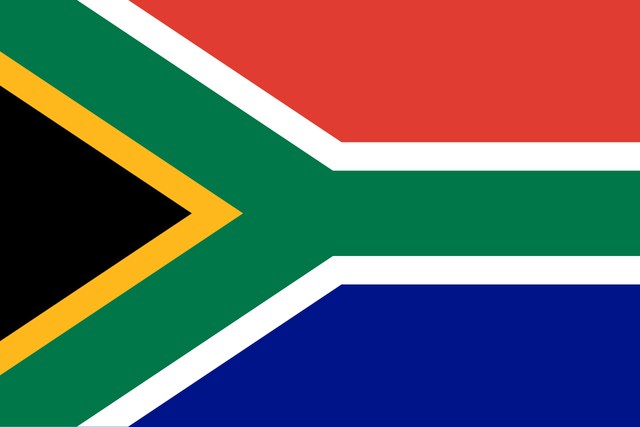
Flag design by Frederick Brownell /a , image by Wikimedia Co · Public domain

African nation · independence 1931; apartheid 1948–1994 · southern tip of Africa

South Africa is an African nation with three capitals that practiced apartheid until electing Nelson Mandela president in 1994.

The kit

  • Colonization & conflicts — South Africa saw the British drive out Dutch settlers in two Boer Wars, the second ending with the Treaty of Vereeniging.
  • Apartheid system — South Africa's Afrikaans-speaking white minority created apartheid, formalized by Daniel Malan in 1948 and enforced through pass laws.
  • Resistance & activism — South Africa imprisoned Nelson Mandela for 20 years at Robben Island before electing him president after apartheid ended.
  • International pressure — South Africa's Springboks rugby team toured New Zealand and the U.S. in 1981 despite the Gleneagles Agreement condemning the country.

Runs with

Apartheid
policy created by South Africa's white minority, formalized 1948 open card →
Nelson Mandela
imprisoned 20 years, elected South Africa's president 1994 open card →
Zulu Kingdom
South Africa suppressed Zulu anti-British rebellion in 1906 open card →
Second Boer War
fought in South Africa, ended with Treaty of Vereeniging open card →

The ladder · 15 clues

H

The Vela Incident occurred southeast of this country and may have been caused by one of its scientific programs.

H

This nation benefitted from the U.S. policy of "constructive engagement" as it was led by a politician called the "Big Crocodile".

H

Mahatma Gandhi began his career as an activist in this country, fighting for the civil rights of Indian immigrants.

H

The Cape of Good Hope lies at the tip of this African nation whose capitals include Bloemfontein, Pretoria, and Cape Town.

H

The Second Boer war was largely fought in this modern-day country, where the Afrikaans-speaking Boers mainly settled from the Netherlands.

H

Lesotho is completely surrounded by this country, which was governed by an "apartheid" regime before it elected Nelson Mandela president in 1994.

H

The Boer Wars took place in what would become this country, which imprisoned Nelson Mandela for 20 years at Robben Island, and later elected him president.

M

The British drove Dutch settlers out of this country over the course of two Boer Wars.

M

Riots against the pass laws led to this Sharpeville Massacre in this nation, where Desmond Tutu led the Truth and Reconciliation Commission.

M

The song “Sun City” protested this country, where Paul Simon broke a cultural boycott to record Graceland in its townships.

M

Many Indian laborers came on 25-­‐year fixed contracts to this country’s city of Durban.

M

This country suppressed a 1906 anti-British rebellion by the Zulu people. name this country that fully gained its independence from Britain in 1931 and splits its government between three capitals, including Cape Town.

E

An Afrikaans-speaking white minority created the policy of apartheid that Nelson Mandela opposed in this country on the tip of Africa.

E

Nelson Mandela fought racial oppression in this country that practiced Apartheid.

E

A writer from this nation told of the struggles of pastor Stephan Kumalo and of black-white relations in Cry, the Beloved Country. name this home nation of anti-Apartheid activist Alan Paton.

10 more clues from the record
H

Despite the Gleneagles Agreement condemning this country, their Springboks rugby team were allowed to tour New Zealand and the United States in 1981.

H

One war in this country ended with the signing of the Treaty of Vereeniging [[veh- REEN-uh-ying]], which gave the British control of the Transvaal and Orange Free State.

H

Under the Natives Resettlement Act of 1954, this country’s government forced evictions in suburbs like Sophiatown.

H

Country where Daniel Malan formalized apartheid in 1948?

H

During this country’s Border War, this country’s forces fought against SWAPO.

H

The Treaty of Vereeniging ended the Second Boer War, which took place in this modern-day country. Its more recent leaders include Jacob Zuma, Thabo Mbeki, and Nelson Mandela.

H

Wars around the Tugela River in this modern-day country became known as the Mfecane .

H

The states of Natal, Cape Colony, the Orange Free State, and Transvaal were united by the British to form this modern commonwealth.

H

Hendrik Verwoerd engineered a series of oppressive laws in this country.

H

An early prime minister of this country was Jan [yahn] Smuts, who served as a military commander in this country’s war against Great Britain under the leadership of Paul Kruger.
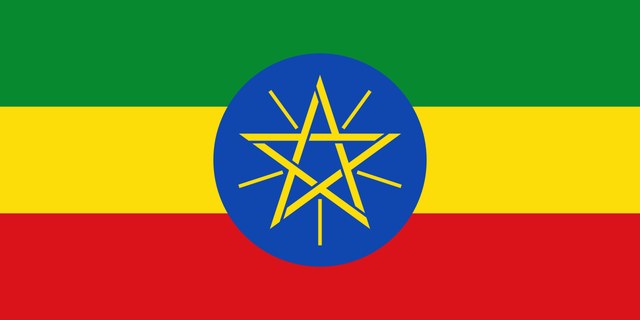
Watch out: Lesotho is completely surrounded by South Africa, not part of it
#55 · Modern Countries · Level 1

Ethiopia

Ethiopia
Drawn by User:SKopp · Public domain

East African country · ancient to present · Horn of Africa

Ethiopia is an East African country with capital Addis Ababa, ruled by the Solomonic Dynasty into the 20th century.

The kit

  • Churches — Ethiopia is home to churches carved into rock near Lalibela in the 1100s.
  • Solomonic Dynasty — Ethiopia was ruled by the Solomonic Dynasty from Gondar, whose members included Tewodros II and Haile Selassie.
  • Italian invasion — Ethiopia defeated Italian invaders at the Battle of Adowa under Emperor Menelik II.
  • Communist era — Ethiopia was controlled by the communist Derg regime led by Mengistu Haile Mariam until a 1991 civil war.

Runs with

Italy
invaded Ethiopia but lost at Adowa open card →
Menelik II
defeated Italy at Adowa as emperor open card →
Eritrea
Aksumite Empire
preceded Zagwe and Solomonic dynasties open card →

The ladder · 15 clues

H

In this country, churches were built into the rock near Lalibela in the 1100s.

H

The easternmost portion of this country was invaded in the 1977 Ogaden War.

H

According to legend, many churches in this modern-day country were burned down during a revolt by a Jewish princess named Judith.

H

One ruler of this modern day country married Taytu Betul after succeeding Yohannes IV.

H

When one of its rulers took hostages, Robert Napier led an expedition that won the battle of Magdala, during which that ruler killed himself.

H

One ruler of this modern-day country imported electric chairs; upon learning that this country had no electricity, he used one as his throne.

H

A ruler of this country fulfilled a prophecy saying he would be king by eating the head of a rooster; that man, Yekuno Amlak, restored a ruling family whose last ruler was Dil Na’od.

M

This country is home to churches cut into the rock near the town of Lalibela.

M

Hamid Idris Awate led a struggle for independence against this country, where Mengistu Haile Mariam led the communist Derg military junta.

M

This country, which was once controlled by the communist Derg regime, fought a 17-year civil war that ended in 1991 with it losing its access to the Red Sea.

M

This country was ruled from Gondar in the Solomonic Dynasty, whose members included Tewodros II.

M

Country led by Emperor Haile Selassie, who defended it against Italy.

E

The Solomonic Dynasty lasted into the 20th century as rulers of this African country with capital Addis Ababa.

E

Haile [”highly”] Selassie once led this east African country with capital Addis Ababa.

E

This empire defeated Italian invaders in the Battle of Adowa under its Emperor Menelik II. name this Christian African empire which governed a country whose capital is Addis Ababa.

10 more clues from the record
H

One leader of this country proclaimed “death to the EPRP” and smashed bottles filled with blood on the floor.

H

Captured British nationals in this country were freed by the forces of Robert Napier, leading to the suicide of Emperor Tewodros II.

H

One of this country’s emperors committed suicide after the Battle of Magdala during a British expedition led by Robert Napier.
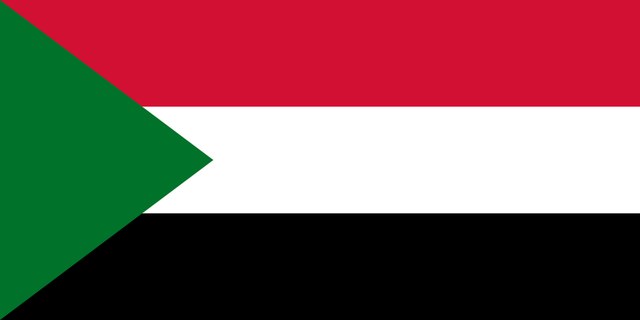
H

Following that empire’s decline, this country was ruled by the Zagwe dynasty.

H

The Zemene Mesafint or “Era of the Princes” in this country resulted from the murder of Iyasu the Great, who ruled from Gondar.
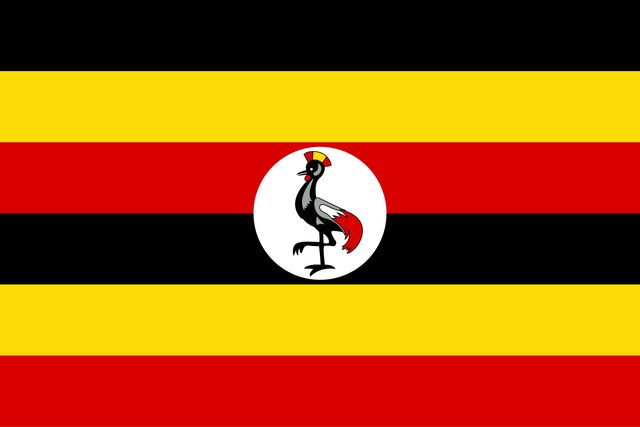
H

Susenyos I was deposed after trying to convert this empire to Catholicism. :Name this Christian empire in East Africa ruled by the Solomonic dynasty. It was known in the west as Abyssinia.
H

One Communist regime in this country was led by Mengistu and was known as the Derg, and one of its dynasties claimed descent from the Biblical king Solomon.

H

A civil war in this country began after the Spaniard Pedro Páez and other Jesuits converted this country’s ruler Susenyos I to Catholicism.

H

The Jesuit Pedro Páez wrote a two volume history of this country, where the Oromo people migrated from south to north in the 16th century.

H

This modern-day country is home to a series of churches carved into rock at Lalibela.

Watch out: Abyssinia (Western name for the same country)
#88 · Physical Geographic Features · Level 1

Robben Island

Robben Island
a rel="nofollow" South African Tourism /a from South Africa · CC BY 2.0

South African island prison · apartheid era (1960s–1990s) · near Cape Town

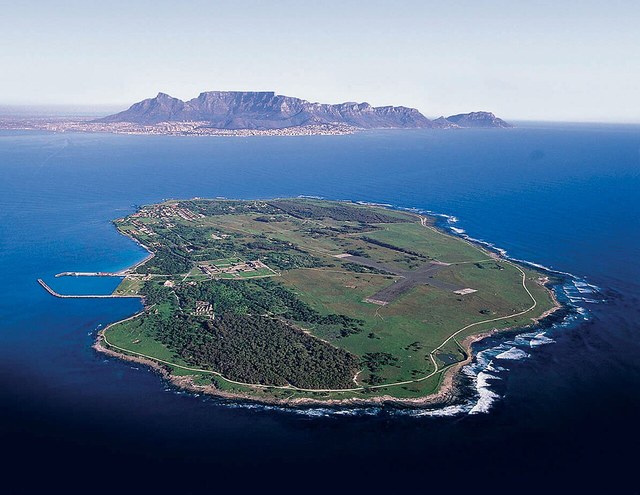
Robben Island is a prison facility near Cape Town where South African political dissidents were incarcerated during apartheid.

The kit

  • Notable prisoners — Robben Island held Nelson Mandela for almost 20 years, along with Jacob Zuma, Kgalema Motlanthe, and Govan Mbeki.
  • Political imprisonment — Robben Island imprisoned many defendants from the Rivonia Trial, where Mandela gave his "I am Prepared to Die" speech.
  • Apartheid resistance — Robben Island confined political dissidents including poet Dennis Brutus who opposed South Africa's apartheid regime.
  • Legacy — Robben Island released Mandela after 27 years of total imprisonment, enabling his 1994 election as president.

Runs with

Nelson Mandela
South Africa
island prison near Cape Town for political dissidents open card →
Apartheid
held opponents of apartheid regime including Mandela open card →
African National Congress
imprisoned ANC leaders including future presidents open card →

The ladder · 7 clues

H

Island just north of Cape Town where Nelson Mandela was imprisoned for 18 years.

H

Nelson Mandela’s “I am Prepared to Die” speech was given at the Rivonia Trial, after which he was sentenced to life imprisonment at this penal facility.

H

Mandela spent much of his incarceration on this island, at a facility that also imprisoned Jacob Zuma and Govan Mbeki.

H

During apartheid, this island held prisoners such as the poet Dennis Brutus and Nelson Mandela.

M

Many political dissidents in South Africa were sent to this island prison. Nelson Mandela spent almost 20 years here, and many of those charged in the Rivonia Trial were also sent here.

M

The ANC gained power in 1994 with the election of Nelson Mandela, following his release after 27 years of imprisonment, with most of that time spent on this island.

E

Mandela, along with many other political prisoners, served time on this island. Other prisoners who served here include Kgalema Motlanthe and current president Jacob Zuma.

Watch out: Mandela spent almost 20 years on the island, not 18; his total imprisonment was 27 years
#117 · Subnational Regions, Provinces, and Territories · Level 1

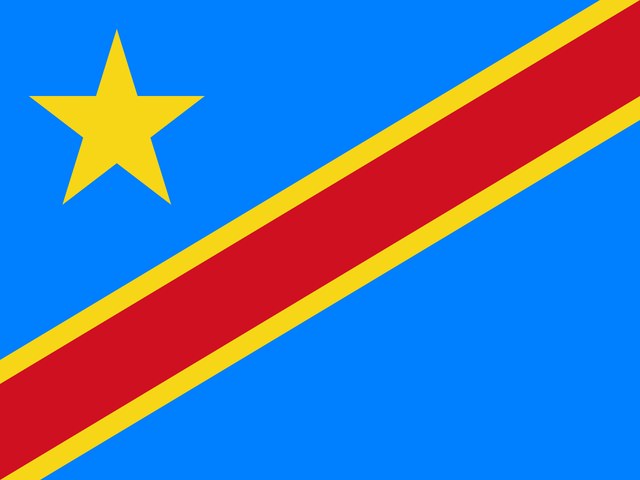
Democratic Republic of the Congo

Democratic Republic of the Congo
Nightstallion · Public domain

Central African nation · 1960–present · Central Africa, capital Kinshasa

Democratic Republic of the Congo is a Central African nation that gained independence from Belgium in 1960 and endured decades of dictatorship.

The kit

  • Independence — Democratic Republic of the Congo gained independence from Belgium in 1960 and immediately fought secessionist movements in Katanga and South Kasai.
  • Lumumba crisis — Democratic Republic of the Congo saw its first prime minister Patrice Lumumba captured and executed by Belgian officers after the Katanga Civil War outbreak.
  • Mobutu dictatorship — Democratic Republic of the Congo was renamed Zaire under dictator Mobutu Sese Seko, who ruled brutally until Laurent Kabila succeeded him in 1997.
  • Colonial legacy — Democratic Republic of the Congo's colonial predecessor saw the Force Publique sever hands of people during Belgian rule under Leopold II.

Runs with

Mobutu Sese Seko
ruled as dictator, renamed country Zaire until 1997 open card →
Patrice Lumumba
first prime minister, executed after Katanga secession open card →
Belgium
colonial power until 1960 independence open card →
Rwanda

The ladder · 15 clues

H

A mine in this country, the Shinkolobwe, provided much of the uranium for the Manhattan Project.

H

This country was the site of Operation Dragon Rouge, where foreign special forces had to be deployed to rescue hostages during the Simba Uprising.

H

The European Union deployed peacekeeping troops to the eastern portion of this country in the Ituri War.

H

Mines in this modern country supplied most of the uranium for the Manhattan Project; that mining industry was centered on this country’s city of Elisabethville, now known as Lubumbashi, the capital of its Katanga Province.

H

Mark Twain wrote a satirical “soliloquy” skewering the ruler of a colony in this modern-day nation.

H

Evening newscasts of a leader of this country opened with him descending through clouds like a god.

H

One conflict in this nation led to the death of Dag Hammarskjold.

M

Peace negotiations in this country were thwarted when Dag Hammarskjold, the UN Secretary-General, died in a plane crash.

M

After the outbreak of the Katanga Civil War in this country, its prime minister Patrice Lumumba was captured and executed by Belgian officers.

M

Katanga is a region in the south of this country, which saw the brutal rule of Mobutu Sese Seko until 1997. Mobutu was succeded by Laurent Kabila in this African nation.

M

Baudouin oversaw the independence of this country and former Belgian colony, which was renamed Zaire temporarily while ruled by Mobutu Sese Soko.

M

An Adam Hochschild book titled for a king’s ghost documents crimes in this country’s colonial predecessor, which was also the subject of the Casement Report.

E

The CIA assisted in the overthrow of Patrice Lumumba in this country, where Mobutu Sese Seko served as a dictator.

E

Joseph Kasa-Vubu and Patrice Lumumba led this country that was known as Zaire under Mobutu Sese Seko.

E

The Force Publique severed the hands of people in this modern-day country during Belgian colonization. name this African country governed from Kinshasa.

10 more clues from the record
H

As part of Operation Black Dragon, foreigners were evacuated from Isiro during a rebellion that was led by the Maoist leaders of the African Solidarity Party; that was the Simba Rebellion.

H

After its 1960 independence, this country fought secessionist movements in its regions of South Kasai and Katanga.

H

This nation gained independence from Belgium in 1960. :What African country changed the name of its capital from Leopoldville to Kinshasa in 1966?

H

Until 2015, the Katanga province was one of the eleven provinces of this nation. :Name this modern day nation with its capital at Kinshasa.

H

Irish troops with a UN contingent in this country were captured by local fighters after resisting a five-day siege at Jadotville.

H

The UN’s Operation Morthor was launched in this country, which also saw the USSR support Antoine Gizenga’s rival government.

H

One political party in this country is named Rally for Democracy, and this country's ADFLC was led by Laurent-Desire Kabila [[loh-RAHNT deh-sih-REH kah-BEE- lah]].

H

Another leader of this country was executed by a firing squad commanded by Moises Tshombe; that ruler was deposed after calling in Soviet aid to suppress the secession of its Katanga provinces.

H

The first prime minister of this nation worked with Belgian minister Walter Ganshiof and wrote an impromptu speech praising the “end to the humiliating slavery” that began under Leopold II.

H

In this nation, child-soldiers known as kadogos hatched a successful plot known as Operation Mbongo Zero to kill President Laurent-Désiré Kabila.

Watch out: Formerly called Zaire (1971–1997) under Mobutu
#148 · Other Named Wars and Armed Conflicts · Level 1

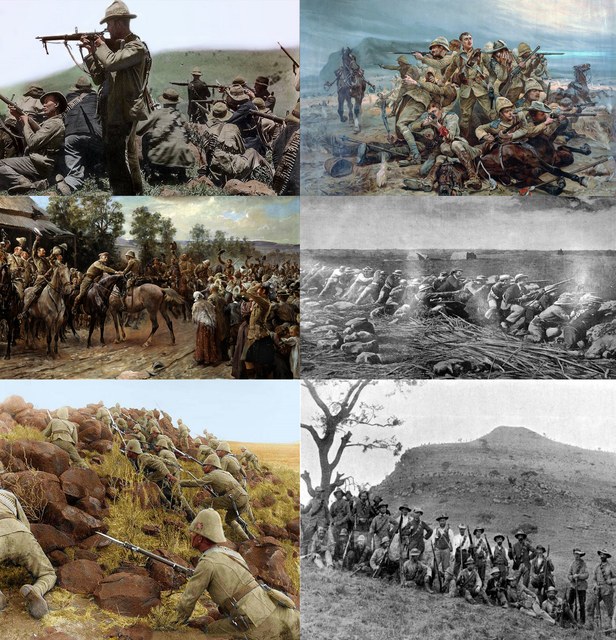
Second Boer War

Second Boer War
The British Army and The Illustrated London News · Public domain

British-Boer conflict · 1899-1902 · South Africa

Second Boer War was the 1899-1902 conflict in which Britain defeated Dutch-speaking Afrikaner settlers to control the Transvaal and Orange Free State.

The kit

  • Early setbacks — Second Boer War saw British forces suffer Black Week in December 1899, when Redvers Buller failed to relieve Colenso, Kimberley, and Mafeking.
  • Sieges — Second Boer War featured the 217-day Siege of Mafeking, which Robert Baden-Powell successfully defended before founding the Boy Scouts.
  • Concentration camps — Second Boer War saw Lord Kitchener establish concentration camps for Boer civilians, exposed by Emily Hobhouse and confirmed by the Fawcett Commission.
  • Resolution — Second Boer War ended with the Treaty of Vereeniging in 1902, granting Britain control over the Transvaal and Orange Free State.

Runs with

South Africa
fought in South Africa between Britain and Dutch Afrikaner settlers open card →
Horatio Herbert Kitchener, 1st Earl Kitchener
commanded British forces and instituted concentration camp policy open card →
Louis
Gold
precipitated by 1886 gold rush that drew British Uitlanders to the Transvaal open card →

The ladder · 15 clues

H

The government that started this war was re-elected when Lord Salisbury triumphed in the Khaki Election.

H

During this war, Australian folk-hero “Breaker” Morant was executed for murdering civilians and POWs on two occasions.

H

Following this conflict’s Battle of Colenso and the Black Week, General Butler was replaced as commander of one side by Lord Roberts.

H

An 1886 gold rush may have precipitated this conflict, as large numbers of British citizens, known as Uitlanders, rushed to the area in search of fortune.

H

Liverpool’s Anfield is one of many English stadiums to have a grandstand named Spion Kop, in reference to a 1900 battle in this war.

H

“Remember Majuba” became a rallying cry in this war, whose popularity in Europe allowed Lord Salisbury to win the first khaki election.

H

In this war, Lord Dundonald lifted the siege of Ladysmith.

M

Emily Hobhouse exposed, and the Fawcett Commission confirmed, the use of concentration camps under Lord Kitchener in this war.

M

Robert Baden-Powell would go on to found the Boy Scouts, after relieving the Siege of Mafeking during this conflict.

M

Redvers Bullers was disgraced during the Black Week in this war, in which his three attempts to relieve Colenso, Kimberley, and Mafeking all failed.

M

The all-women Fawcett Commission investigated the British use of concentration camps in this war, which was incited by Leander Starr Jameson’s raid. name this turn of the 20th-century war between Britain and Dutch Afrikaners.

M

Sir Arthur Conan Doyle volunteered as a doctor in this war, in which Robert Baden Powell outlasted a 217-day siege at Mafeking.

E

The Treaty of Vereeniging ended this war, which was partially caused by the Jameson raid. name this war between the British and Dutch settlers in South Africa.

E

This war was ended by the Treaty of Vereeniging, which provided for colonial control of the Transvaal and the Orange Free State. name this war at the turn of the 20th century between Great Britain and Dutch-speaking settlers of South Africa.

E

The British established control over the Orange Free State and the Transvaal in this South African war named for the defeated Dutch settlers.

10 more clues from the record
H

During this war, the term "khaki election," was coined to describe an election influenced by an ongoing or finished war.

H

One slogan during this war was “remember Majuba Hill”.

H

The Treaty of Vereeniging ended this conflict, which saw the first major usage of concentration camps.

H

Command of the winning side of this war passed from Redvers Buller to Lord Roberts, and then to a man who instituted a policy which was the subject of Emily Hobhouse’s activism and the Fawcett Commission.

H

It’s not World War II, but the first systematic usage of concentration camps was during this conflict.

H

This conflict’s first engagement, near the town of Dundee, was the Battle of Talana Hill, and Ladysmith was besieged during this conflict.

H

Mohandas Gandhi organized volunteer ambulance drivers and medics during this conflict, and Winston Churchill rose to prominence during this event.

H

A group of civil servants called the “Kindergarten” of a commissioner involved in this war helped with reconstruction after its conclusion.

H

In this war, "chevril" [[cheh-VREEL]] became the main foodstuff for soldiers who were besieged at Ladysmith under the command of Redvers Buller.

H

During this war, one side’s victory at the Battle of the Elands River allowed Jan Smuts to establish a base on the southern coast.

Watch out: First Boer War (1880-81), which ended at Majuba Hill and became a rallying cry in this conflict
#226 · Scientists, Mathematicians, and Inventors · Level 1

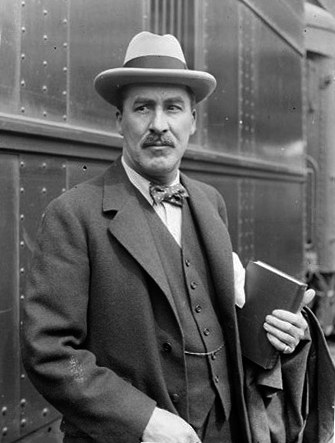
Howard Carter

Howard Carter
Chicago Daily News, Inc., photographer · Public domain

British archaeologist and Egyptologist · 1922 discovery · Valley of the Kings, Egypt

Howard Carter discovered the intact tomb of Tutankhamun in 1922, spending years cataloguing its treasures with funding from Lord Carnarvon.

The kit

  • Early career — Howard Carter studied under Flinders Petrie and worked for Gaston Maspero starting at age seventeen.
  • Discovery — Howard Carter excavated KV62 in the Valley of the Kings in 1922, uncovering Tutankhamun's previously unexcavated tomb.
  • Cataloguing — Howard Carter spent several years cataloguing the contents of King Tut's tomb after the discovery.
  • Setback — Howard Carter's career was damaged by the Saqqara affair, when he sided with local authorities over French tourists.

Runs with

Tutankhamun
discovered his intact tomb in 1922 open card →
Egypt
served as Chief Inspector for Egyptian Antiquities Service open card →
Nanda Empire
Richard
Richard Bethell was secretary to patron Lord Carnarvon open card →

The ladder · 14 clues

H

This archaeologist and Egyptologist discovered the tomb of King Tut, and spent several years cataloguing its contents.

H

Tutankhamun's tomb was discovered in the Valley of the Kings by this archaeologist.

H

One notable archaeologist was this man who famously excavated the pristine tomb of King Tut. He also served as Chief Inspector for the Egyptian Antiquities Service.

H

King Tut's tomb was discovered by this man who lost many comrades, including expedition leader Lord Carnarvon, after an alleged “mummy’s curse”.

H

This famous Egyptologist explored the Valley of the Kings, and is credited with discovering the tomb of Tutankhamun, whose wishing cup provides the inscription on his headstone.

H

This person’s career was tanked by a decision to side with local authorities over a noisy group of French tourists in the Saqqara affair.

H

Flinders Petrie taught this other archaeologist, who was hired by Lord Carnavon to excavate the Valley of the Kings.

H

Starting at age 17, this person worked for Gaston Maspero, who provided a recommendation for a later employer.

H

An exhibition of the “treasures” found under the direction of this person was directed by Lady Evelyn Herbert.

M

This British archaeologist discovered KV62 on an expedition funded by Lord Carnavon.

M

Waves of speculation by the press accompanied the death of Richard Bethell, the secretary of this person’s patron Lord Carnarvon, who had died from a mosquito bite infection two years earlier.

M

This Englishman, an understudy of Flinders Petrie, led excavation at el Amarna, where he discovered the tomb of King Tutankhamun in 1922.

M

This English archaeologist excavated KV62 in the Valley of the Kings, discovering the previously unexcavated tomb of King Tutankhamen.

E

This British archaeologist led the 1922 excavation of King Tut’s tomb in the Valley of the Kings, with funding from Lord Carnavon.

Watch out: Lord Carnarvon funded the expedition but died from mosquito bite infection, not Carter
#310 · Historic Buildings and Museums · Level 1

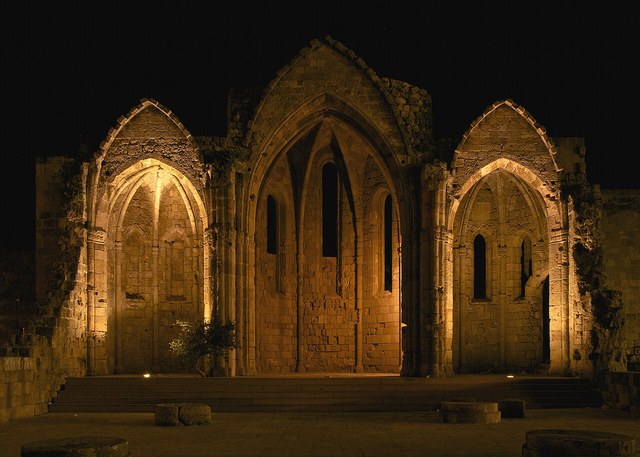
church

church
Jebulon · CC0

Christian house of worship · 1st century CE–present · worldwide

A church is a building for Christian worship, including the Wittenberg church where Martin Luther posted his 95 Theses.

The kit

  • Reformation — A church door in Wittenberg became the site where Martin Luther nailed his 95 Theses criticizing Catholic practices in 1517.
  • Architecture — Churches serve as houses of Christian worship and community gathering places for religious services and ceremonies.
  • Governance — Churches are administered by bishops and other clergy who oversee congregations and maintain religious authority structures.

Runs with

Winston Churchill
Churchill appears in clues about political succession unrelated to church buildings open card →
PopeBishopJohn

The ladder · 3 clues

M

This man outlined his criticisms of the Catholic Church in the 95 Theses, which he nailed to a Wittenberg church door. name this German priest who began the Reformation.

E

Churchill replaced what fellow Conservative this person who promised “peace for our time” after signing the Munich Agreement, as Prime Minister.

E

The National Health Service was created during the tenure of this Labour Prime Minister who lost a 1951 election to a man he had stunned in 1945, Winston Churchill.

#387 · Other Asian Kingdoms and Empires · Level 1

British Empire

British Empire
Hoshie · Public domain

colonial empire · c. 1600s–1960s · global territories

The British Empire was a global colonial power controlling territories across Africa, Asia, and the Americas on which 'the sun never set.'

The kit

  • Rise — The British Empire expanded through Atlantic commerce and slave trade in its 'first' phase, then shifted eastward after 1783 to establish direct rule over India.
  • Achievements — The British Empire controlled African colonies including Nigeria, Ghana, and Kenya, drawing borders and governing through systems like indirect rule via local emirs.
  • Conflicts — The British Empire fought the 1879 Zulu War after Sir Bartle Frere's ultimatum, suppressed the Morant Bay rebellion, and massacred unarmed crowds at Jallianwala Bagh.
  • Legacy — The British Empire began dissolving after Harold Macmillan's 'Wind of Change' speech foresaw decolonization of Ghana, Nigeria, and Rhodesia during the 1960s.

Runs with

Nanda Empire
preceded British control of India open card →
India
ruled directly after Sepoy Mutiny until 1947 independence open card →
Common
evolved into the Commonwealth of Nations open card →
Canada
controlled as dominion and colony open card →

The ladder · 15 clues

H

This empire was targeted by the Unilateral Declaration of Independence, which removed a colony from this empire to protest its plans for racial integration.

H

Peter Clarke's book about the “last thousand days of” this wondered if it had ended in a “scuttle.” Argentina was informally incorporated into this polity until the rise of Juan Manuel de Rosas, according to the “free trade” interpretation of it proposed by Cambridge historians John Gallagher and Ronald Robinson.

H

David Armitage rooted this historical state’s “ideological origins” in “composite monarchy.” Linda Colley’s book on “forging the nation” argues that this state tied together peoples like the targets of the “Blue Books” and the “tobacco lords.” This state “made the modern world” according to a controversial book by Niall Ferguson.

H

Harold Macmillan’s “wind of change” speech foresaw the end of this empire, and during the 19th century, it was often said that the Sun never set on this empire. :Name this empire that sued for peace in the 1783 Treaty of Paris and lost colonies like Hong Kong and India during the 20th century.

H

The posited hegemony of “gentlemanly capitalism” within this political entity declined after World War I. For covering up a scheme that aided the expansion of this political entity, a politician earned the nickname “screenmaster-general.” The expansion of this political entity was linked by Alfred Thayer Mahan to having command of the seas.

H

Seymour Drescher's Econocide challenged the "decline thesis" that this empire's plantations became unprofitable, as proposed by Eric Williams's revisionist history Capitalism and Slavery.

H

Although it’s not the Spanish Empire, this empire was so vast it was often referred to as the “empire on which the sun never sets”. :Name this empire, whose East India Company mainly traded with China and India.

M

In an attempt to expand this empire’s colonial territories, and in retribution for a number of raids on its South African colonies, this empire’s Sir Bartle Frere sent an ultimatum to the Zulu, culminating in an 1879 war.

M

Madhusree Mukerjee blamed a 1943 famine on a politician from this empire who won the 1953 Literature Nobel for books like A History of the English-Speaking Peoples.

M

Nigeria’s borders are a colonial creation, drawn by this empire which ruled Nigeria from Lagos. Its other African colonies included modern-day Ghana and Kenya.

M

A Muslim leader in this empire named Ahmadu Bello distrusted mercantile southern Christian ethnicities so much that he called them Jews.

M

Its 1902 alliance with Japan ended years of so-called “splendid isolation”, and its communication system was known as the “All Red Line”.

E

This empire's leader gave the Winds of Change speech as it began to give up control of Ghana, Nigeria, and Rhodesia. name this empire which, along with France, was the largest colonizer of Africa.

E

J.R. Seeley famously wrote that it had been acquired “in a fit of absence of mind.” Historians often divide this entity into a “first” one based on Atlantic commerce and the slave trade, and a “second” one that resulted in direct rule over India and much of Africa, a process sometimes called “painting the map red.” FTP, name this colonial structure on which “the sun never set.”

E

This empire let the Sokoto sultan and local emirs govern cities like Kano, but also appointed District Commissioners to govern native peoples such as the Yoruba and Igbo. name this empire which controlled Nigeria before independence.

10 more clues from the record
H

This empire took direct control of a colony after martial law was used to put down the Morant Bay rebellion.

H

Vincent Harlow argued the occurrence, around 1783, of a “swing to the east” in this political entity, creating its “second” phase.

H

Several of its soldiers were killed in the massacre of the Shangani Patrol during the Matabele War.

H

In this empire, concerns about the taxation of women prompted the Aba Women’s Riot.

M

Antoinette Burton's study of travellers “at the heart of” this place examines Cornelia Sorabji's journey across it to attend medical school.

M

By claiming the “growth of national consciousness is a political fact,” Harold MacMillan foreshadowed the fracture of this political entity in the “Wind of Change” speech.

M

The Kingdom of Mysore fought four wars against this colonizing power, which later took control of all of India.

M

During Baisakhi celebrations, troops of this empire fired upon an unarmed crowd at Jallianwala Bagh.

M

This empire won a diplomatic victory by forcing a rival to withdraw during the Fashoda Incident.

M

Under this empire, Ibadan became a trading city of over 100,000.

Watch out: Spanish Empire (also called 'empire on which the sun never sets')
#497 · Massacres, Assassinations, and Named Violent Incidents · Level 1

Rwandan Genocide

Rwandan Genocide
Fanny Schertzer · CC BY-SA 3.0

1994 mass killing · 1994 · Rwanda

Rwandan Genocide was a mass killing in which Hutus slaughtered Tutsis, ending when Paul Kagame took Kigali.

The kit

  • Trigger — Rwandan Genocide was immediately prompted by a plane crash killing President Juvenal Habyarimana.
  • Perpetrators — Rwandan Genocide was perpetrated by the Interahamwe militia, which received the order to "cut down the tall trees."
  • International response — Rwandan Genocide saw French troops introduce a safe zone during Operation Turquoise despite accusations of complicity.
  • End & aftermath — Rwandan Genocide ended when Paul Kagame's Patriotic Front took Kigali, causing a mass exodus creating the Great Lakes refugee crisis.

Runs with

Tutsi
primary victims slaughtered en masse by Hutus open card →
church
pastor accused of allowing militia access to Mugonero Complex open card →
assassination
triggered by assassination of Juvenal Habyarimana open card →
France
carried out Operation Turquoise safe zone open card →

The ladder · 15 clues

H

French troops attempted to introduce a safe zone for this event during Operation Turquoise.

H

Romeo Dallaire led a response to this event and received French assistance in Operation Turquoise.

H

Jacques-Roger Booh Booh was criticized for limiting the actions of one force during this event, which was documented in the book Shake Hands With the Devil.

H

Accusations of the French military being complicit in this event stemmed from reports of soldiers neglecting their duties during Operation Turquoise.

H

The Batwa people are often called the “forgotten victims” of this event, which was spurred by propaganda from the RTLM radio station.

H

Many perpetrators of this event were tried in Gacaca courts due to a backlog in the traditional justice system.

H

A year before this event, the Arusha Accords were signed in a neighboring country, although they were voided following the assassination of Juvenal Habyarimana [[HOO-veh-nall hob-yah-ree-MAH-nah]].

M

The order to “cut down the tall trees” was given during this event, which was perpetrated by the Interahamwe.

M

This event was immediately prompted by a plane crash that killed president Juvenal Habyarimana.

M

This event was spurred in part due to the assassination of president Juvenal Habyarimana, during which his plane was shot down by missiles.

M

A Patriotic Front led by Paul Kagame took Kigali to end this 1994 event in which the Hutus slaughtered the Tutsis.

M

This event is the subject of the memoir Shake Hands with the Devil by Canadian general Roméo Dallaire, who lamented his inability to stop it.

E

This event ended when Paul Kagame [kah-gah-may] took control of Kigali.

E

A 2004 film about this event depicts a man sheltering refugees in a namesake hotel. name this 1994 event in which Hutus killed Tutsis en masse in an African nation.

E

The French Military carried out Operation Turquoise in response to this event, which started after President Juvenal Habyarimana was killed in a plane crash.

10 more clues from the record
H

Philip Gourevitch accused one pastor during this event of allowing militias to access the Mugonero Complex.

H

Propaganda during this event included an article titled “a cockroach cannot give birth to a butterfly” published by Kangura.

H

Prior to this event, a set of protocols signed in Tanzania ending a civil war was ridiculed by one of its signatories as “scraps of paper.” A mass exodus of this event’s perpetrators resulted in the Great Lakes refugee crisis.

H

This event was made worse by inflammatory radio broadcasts by the RTLM, and it was precipitated by the shooting down of a plane carrying President Juvénal Habyarimana.

H

This event was hastened by rebel forces taking Gisenyi two weeks after the Interahamwe militia lost the capital city of Kigali.

H

Approximately one decade prior to this event, residents of the town of Kibeho saw apparitions of the Virgin Mary.

H

Critics have blamed Paul Kagame [[kuh-GAH-meh]] for retaliatory killings following this event.

H

Over 1,000 people hid from this event in the Hotel des Mille Colinnes [mil koh-lin].

H

This event's preparations were discovered by Roméo Dallaire who was forbidden from seizing secret weapon stashes.

H

The large number of refugees fleeing this event led to the Great Lakes Crisis in a neighboring country.

Watch out: Roméo Dallaire led UN response but was forbidden from seizing weapon stashes before the genocide began
#500 · Massacres, Assassinations, and Named Violent Incidents · Level 1

Sharpeville Massacre

Sharpeville Massacre
Unknown author Unknown author · Public domain

1960 South African massacre · March 21, 1960 · Sharpeville township, South Africa

Sharpeville Massacre was a 1960 incident in which South African police killed 69 anti-apartheid protesters demonstrating against pass laws.

The kit

  • Context — Sharpeville Massacre occurred when Pan-Africanist Congress protesters gathered at a police station to oppose apartheid pass laws.
  • Violence — Sharpeville Massacre saw panicked police officers fire into a crowd of approximately 20,000 demonstrators, killing 69 and injuring 180.
  • Aftermath — Sharpeville Massacre prompted the creation of Umkhonto we Sizwe, the armed wing of the African National Congress.
  • Legacy — Sharpeville Massacre's site was chosen by Nelson Mandela to sign the 1996 constitution, and its anniversary became Human Rights Day.

Runs with

Apartheid
protest against apartheid pass laws open card →
South Africa
occurred in Gauteng province township open card →
Nelson Mandela
Umkhonto we Sizwe
created in response to massacre open card →

The ladder · 15 clues

H

The militant group Umkhonto we Sizwe, or Spear of the Nation, was created in response to this 1960 massacre of protesters at a police station.

H

1960 incident in which police killed 69 anti-passbook protestors?

H

Panicked police officers fired their weapons during this event, probably because of an earlier incident in which nine constables died at Cato Manor.

H

Umkhonto we Sizwe, the military wing of the ANC, was founded in the wake of this event, which occurred after Hendrik Verwoerd expanded apartheid policies.

H

UN Resolution 134 was passed after this event, which constituted “gross human rights violations” according to the Truth and Reconciliation Commission.

H

As a result of this event, several leaders met in the Rivonia farm, which was eventually raided and saw some of its members put on trial on Robben Island. :Name this March 21, 1860 shooting which saw the death of 69 people with 180 others injured in the Gauteng province.

H

This massacre led to the outlawing of the African National Congress, :Name this 1960 massacre of blacks at the namesake township, which saw Police Commander G. D. Pienaar order police to indiscriminately fire into a crowd of 20,000.

H

Robert Subukwe organized the meeting that became this event, which D.H. Pienaar labeled a case of "learning their lesson the hard way." The site of this event was where the new constitution was formally ratified in 1996.

H

Apartheid regulation intensified after this 1960 massacre, in which white police officers shot and killed over 60 black people during a protest against the pass laws.

M

1960 massacre in South Africa against restrictive "pass laws" which led to the creation of Spear of the Nation.

M

Nelson Mandela founded the group Umkhonto we Sizwe after this March 1960 massacre where 249 people protesting pass laws were shot at a police station.

M

This 1960 event, in which police opened fire on peaceful Pan Africanist Congress protesters in its namesake town, was a turning point in the history of apartheid because South Africa found itself increasing isolated from the international community in its aftermath. Since 1994, its anniversary was commemorated as Human Rights Day.

M

Almost 70 anti-apartheid protestors were killed after police fired on demonstrators opposing the pass laws in the namesake Johannesburg suburb during this 1960 event.

M

The ANC developed an armed wing called the “Spear of the Nation” following this March 1960 massacre by South African police.

E

250 people were killed in this 1960 incident during a Pan-Africanist Congress protest of apartheid. Nelson Mandela chose the site of this event to sign the 1996 South African constitution.

1 more clues from the record
H

An explanation for this incident focuses on government skittishness in the wake of the Cato Manor incident two months earlier.

Watch out: Death toll sometimes given as 250 rather than the correct 69
#576 · Greco-Roman Mythological Figures · Level 2

Amazons

Amazons
Copy after original by Phidias. Head is a copy from Polyclit · CC BY-SA 3.0

Mythical female warriors · Greek mythological era · Scythia or Asia Minor

Amazons were a legendary race of female warriors from Greek mythology who supposedly lived in Scythia or northern Asia Minor.

The kit

  • Mythology — Amazons legendarily cut off their right breasts to better utilize bows and arrows in combat.
  • Geography — Amazons lived along the Thermodon River and annually visited the all-male Gargareans tribe to reproduce.
  • Conflicts — Amazons attacked Athens in the Attic War to rescue their queen Hippolyta from captivity.
  • Legacy — Amazons inspired the naming of Dahomey's all-female regiment and Francisco de Orellana's South American river.

Runs with

Kingdom of Dahomey
Dahomey's all-female Fon regiment was nicknamed after Amazons open card →
women
Amazons were an all-female warrior society open card →
Nanda EmpireEleanor of Aquitaine

The ladder · 9 clues

H

Though officially called the Revolutionary Nuns, a "Guard" nicknamed for this legendary culture served under Muammar Gaddafi of Libya.

H

Strabo [[STRAY-boh]] claimed that these people lived along the Thermodon [[THER-moh-don]] River though they had retreated beyond the realm of the Gargareans [[gar-GAR-ee-ans]] with whom these people reproduced children.

H

name these following about a race described in Greek myth.Supposed to live in Scythia or northern Asia Minor, this race of female warriors cut off their right breasts in order to better utilize a bow and arrow.

H

War between King Tofa and the French began after a military unit with this name executed a village chieftain while wrapping his head in the tricolour.

M

Dahomey was famed for its regiment of all-female warriors, who were given this name in reference to a race of warrior women from Greek mythology.

M

Legendarily led by Penthesilea [[pen-theh-sih-LAY-uh]] during the Attic War this was this culture of warrior women who may have lived in Scythia [[SIH-thee-ah]].

M

Once a year, these people visited the Gargareans, a tribe of all males. —give the term for these warrior women whose name Francisco de Orellana applied to a South American river.

M

Comparisons between Piraha woman warriors and a Greek mythological force gave a body of water this present-day name. give this name of the largest rainforest in the world.

M

Athens was attacked by them in the Attic War, an attempt to rescue their queen Hippolyta.

5 more clues from the record
H

When the Romans attempted to dig under their city of Themyscira [THEM-mes-SCARE-ah], these people flooded the tunnels with bees.

H

Francisco de Orellana’s [“ore-ay-anna”] expedition to a body of water with this name dispelled the myth that it was home to a network of cinnamon trees.

H

Callimachus said they built a great temple at Ephesus.

H

Members of this group included Iphito, Antandre, and Bremusa.

M

Dahomey had a force entirely made up of the Fon ethnicity that was given this name.

Watch out: Penthesilea, who led the Amazons during the Attic War
#605 · Other Continental European Monarchs · Level 2

Leopold II of Belgium

Leopold II of Belgium
bdi Alexander Bassano /span /a · Public domain

King of Belgium · 1865–1909 · Belgium and Congo

Leopold II of Belgium ruled the Congo Free State as his personal colony, enforcing brutal rubber quotas through the Force Publique.

The kit

  • Rise — Leopold II of Belgium commissioned Henry Morton Stanley to explore and claim territory in Central Africa during the 1880s.
  • Achievements — Leopold II of Belgium earned the nickname "Builder King" for public works projects including the Antwerpen-Centraal Railway Station.
  • Conflicts — Leopold II of Belgium's Force Publique severed hands of workers who failed to meet rubber quotas in the Congo Free State.
  • Legacy — Leopold II of Belgium's atrocities were exposed in the Casement Report and criticized in Mark Twain's pamphlet and Adam Hochschild's book.

Runs with

Rubber
enforced brutal quotas through hand-severing in Congo open card →
Africa
claimed Congo territory as personal colony open card →
Henry
commissioned Stanley to survey colonial boundaries open card →
Belgium
second and longest-reigning Belgian monarch open card →

The ladder · 9 clues

H

He commissioned Henry Stanley to lay claims to colonial territory in Africa; that territory later became the Congo Free State. name this Belgian monarch.

H

Belgium was led at its zenith by the second king of what name? Popular historian Adam Hochschild titled a book about [This man’s] Ghost which details the atrocities committed by the Force Publique.

H

A Mark Twain pamphlet titled for this man’s soliloquy publicized the practice of severing human hands that was carried out by this leader’s military force, the Force Publique.

H

This monarch married his mistress Caroline Lacroix five days before his death, and survived an assassination attempt by Genaro Rubio.

M

This man formed the Force Publique to enforce his rule in a certain area, but was criticized in the Casement Report, which detailed atrocities inflicted upon rubber harvesters. name this Belgian monarch best known for his exploitation of the Congo Free State.

M

The Casement Report revealed the atrocities in colonies under the ruler of this man.

M

During this man’s reign, he sent Henry Morton Stanley to explore Africa’s present-day Democratic Republic of the Congo.

E

This ruler used the Force Publique to enforce strict rubber quotas in his “Free State” in Central Africa. The Congo was the personal colony of this King of Belgium.

E

The Casement Report detailed the horrors inflicted on workers who failed to meet rubber quotas for this ruler, who sent Henry Morton Stanley to Africa. name this King of Belgium from 1865 to 1909 and ruler of the Congo Free State.

10 more clues from the record
H

Serving the longest reign of any Belgian monarch, name this second King of the Belgians and notorious personal owner of the Congo Free State.

H

This man was nearly assassinated by the Italian anarchist Gennaro Rubino in 1902.

H

An open letter written to this leader describing a disenchanting visit to his lands was authored by George Washington Williams.

H

The Stokes Affair damaged this ruler’s reputation, as did the Casement Report, which announced the brutal treatment of rubber plantation workers in a state that this leader established during the Berlin Congress.

H

Gennaro Rubino tried to assassinate this man, who was granted a lease by the British on the Lado Enclave in exchange for land that they could use to complete the Cape to Cairo Railway.

H

This man’s transgressions were documented by Jules Marchal, whose research formed the basis of Adam Hochschild’s book [this man’s] Ghost.

H

This ruler earned the nickname the “Builder King” for his public works projects, including the Antwerpen-Centraal Railway Station.

H

This ruler attempted to abolish the military policy of Remplacement after his country’s neutrality was tenuously preserved in the Franco-Prussian War.

H

This ruler hired Maximilien Strauch and Henry Morton Stanley to survey the boundaries of his colonial holdings.

H

Adam Hochschild alleged that the country ruled by this man underwent a “Great Forgetting” after his death.

Watch out: Leopold I (first King of Belgium, reigned 1831–1865)
#614 · Security, Police, Intelligence, and Paramilitary Organizations · Level 2

National Liberation Front

National Liberation Front
The National Liberation Front of Southern Vietnam (Việt Cộng · Public domain

Algerian independence party · 1954–present · Algeria

National Liberation Front was the revolutionary socialist party that won Algerian independence from France through armed struggle from 1954 to 1962.

The kit

  • Rise — National Liberation Front was formed on All Saints' Day 1954 by the CRUA as a radical socialist offshoot of the MTLD.
  • Conflicts — National Liberation Front carried out the Philippeville massacre against pieds-noirs and fought the rival MNA faction in the Café Wars.
  • Achievements — National Liberation Front signed the Evian Accords with Charles de Gaulle in 1962, achieving Algerian independence and establishing a one-party state.
  • Legacy — National Liberation Front remained Algeria's sole legal party until 1989 and has been freely elected into power since 2002.

Runs with

Algeria
led Algeria's independence war and governed as sole party until 1989 open card →
France
fought eight-year war against France ending with Evian Accords in 1962 open card →
Socialist Party
revolutionary socialist party that established one-party socialist state open card →
Josip Broz Tito

The ladder · 9 clues

H

Ben Bella was one of the original members of this revolutionary party, which was formed in 1954 to win Algerian independence.

H

Ahmed Ben Bella, the first president of Algeria, was a member of this independence party, a radical socialist offshoot of the MTLD and rival of the MNA that became the sole party after Ben Bella gained power.

H

Early English-language historiographical treatments such as Herb Greer’s A Scattering of Dust have been seen as interpreting this party’s development in a comparative lens with other global nationalist movements. :Name this party which had sole rule over its country until the legalisation of others in 1989. Insurgents from this party carried out the Philippeville massacre against pieds-noirs (p’yed nwahr”).

H

In response to the establishment of this party on All Saints’ Day, one Minister of the Interior remarked that “the only negotiation [was] war.” The military unit of this party was led by a man, who would later nationalize his country’s oil industry, Houari Boumediene.

M

Ben Bella was a leader of this revolutionary group that signed the Evian Accords with France in 1962, successfully concluding their war of independence.

M

Despite seizing on the propaganda value of women fighters in its publication El Moudjahid, no woman ever served in the governing bodies of this political party that led the Algerian War of Independence.

M

De Gaulle’s negotiations involved Ahmed Ben Bella, the leader of this Algerian party that led the independence movement. It was the country’s only legal party until 1989.

M

The crowning achievement of this party was the signing of a cease-fire known as the Evian Accords, which effectively granted its country independence from France.

E

This socialist party in Algeria sought independence from France, and they were the perpetrators of the Oran massacre of 1962.

7 more clues from the record
H

This political party was the main organizer of Algerian resistance, starting the war during Toussaint Rouge [“tu-sahng rooj”] in 1954. It established a one-party state after independence and has been freely elected into power since 2002.

H

The use of torture during the Battle of Algiers resulted in widespread support for this Algerian rebel group which later took power in Algeria after signing the Evian Accords with Charles De Gaulle in 1962.

H

They were opposed by an organization led by Raoul Salan, the OAS, and this party fought the Sand War under the leadership of Ahmed Ben Bella.

H

After losing control of its country’s government, this party signed Sant’Egidio Platform to bring civil war to an end.

H

This party was engaged in an expatriated conflict, the “Café Wars”, with one of their rival factions.

M

This group was at the front of the drive for Algerian independence. It eliminated the rival MNA faction in the Café Wars.

M

Created by the CRUA, name revolutionary socialist party, which helped to facilitate Algeria independence.

Watch out: MNA (Messali Hadj's rival Algerian nationalist faction defeated in the Café Wars)
#617 · Security, Police, Intelligence, and Paramilitary Organizations · Level 2

Umkhonto we Sizwe

Umkhonto we Sizwe
User:Arthur R · Public domain

armed wing of ANC · 1961–1994 · South Africa

Umkhonto we Sizwe was the armed paramilitary wing of the African National Congress that conducted sabotage and bombings against apartheid South Africa.

The kit

  • Rise — Umkhonto we Sizwe was officially formed in protest of the Day of the Vow, commemorating an 1838 Andries Pretorius victory.
  • Conflicts — Umkhonto we Sizwe conducted the Church Street bombing in 1983, targeting South African Air Force headquarters in response to Ruth First's assassination.
  • Legacy — Umkhonto we Sizwe's leadership was imprisoned after the Rivonia Trial, and members later received amnesty from the Truth and Reconciliation Commission.
  • Integration — Umkhonto we Sizwe was integrated into the SANDF along with the APLA following the end of apartheid.

Runs with

Nelson Mandela
Mandela helped found and led this group open card →
church
targeted Church Street in bombings open card →
Sharpeville Massacre
formed in wake of this massacre open card →
Apartheid
militant resistance to this system open card →

The ladder · 9 clues

H

During a military campaign in the Wankie Game Reserve, this group joined forces with ZIPRA.

H

This group targeted Amanzitomi and Church Street in a series of bombings, actions that were found to be excessive by the Truth and Reconciliation Commission.

H

Militant anti-apartheid group, the armed wing of Mandela’s political party, that formed in 1961.

H

This group’s Robert McBride was sentenced to death after detonating an explosive at the Magoo Bar.

M

This group was officially formed in protest of the Day of the Vow, a holiday that commemorated an 1838 victory by Andries Pretorius.

M

Nelson Mandela was a member of this armed paramilitary branch of the ANC. Due to its acts of sabotage and bombing, it was classified as a terrorist group by both South Africa and the United States.

M

Mandela and Sisulu were jailed after the Rivonia trials for leading this guerilla group which supplanted the banned ANC in 1960.

M

Much of the leadership of this group was imprisoned after the Rivonia Trial, and its members were given amnesty by the Truth and Reconciliation Commission.

E

Many of the defendants in the Rivonia Trial were members of this group, the armed wing of the African National Congress, that formed in the wake of the Sharpeville Massacre.

9 more clues from the record
H

Mandela helped found this militant wing of the ANC secretly headquartered at Liliesleaf Farm in Rivonia. In 1983, it carried out the Church Street bombing, targeting the headquarters of the South African Air Force.

H

Mandela helped found a militant branch of the ANC named after this weapon, also known as Umkhonto in Xhosa (*CLICK TONGUE*-hoe-sa). Assegai was this type of Zulu weapon which were wielded by the Impi.

H

A commander of this group, who with Denis Goldberg set up its first training camp in the town of Mamre, was the first to die while detained under the so-called 90-Day Act.

H

This party has historically sought devolution for Cornwall, including in a major 2000 campaign. The Cornish Nationalist party split from this party, which is also both Cornish and nationalist.

H

Interviews with members of this group about a set of holiday attacks open the seventh chapter of a book about them by Paul Landau.

H

Its controversial actions include sabotaging the Koeburg nuclear power plant and conducting the Church Street Bombing.

H

The founder of this organization explained its formation in the “I Am Prepared to Die” speech.

H

Along with the APLA, this group was integrated into the SANDF .

M

In response to Ruth First’s assassination, this group committed the Church Street bombing.

Watch out: Confused with APLA, another armed anti-apartheid group also integrated into SANDF
#640 · Explorers and Navigators · Level 2

Henry Morton Stanley

Henry Morton Stanley
Creator:J. Russel & Sons · Public domain

Welsh-American explorer · 1869–1890s expeditions · Central Africa, Congo

Henry Morton Stanley was a Welsh-American explorer who found David Livingstone in 1871 and later established Leopold II's Congo colony.

The kit

  • Rise — Henry Morton Stanley grew up in St. Asaph's Union Workhouse in Wales before moving to the United States and serving at Shiloh.
  • Achievements — Henry Morton Stanley uttered 'Dr. Livingstone, I presume?' when finding the missionary at Lake Tanganyika in 1871 for the New York Herald.
  • Congo colonization — Henry Morton Stanley traced the Lualaba to the Congo River and was hired by Leopold II to map and claim the Congo Free State.
  • Later expeditions — Henry Morton Stanley led a botched 1886 expedition to rescue Emin Pasha from Mahdist forces, aided by slave trader Tippu Tip.

Runs with

Belgium
established Congo colony for Belgium open card →
Africa
explored Central Africa, traced Congo River open card →
Leopold II of Belgium
hired by Leopold to map Congo Free State open card →
Battle of Shiloh
captured at Shiloh, became Galvanized Yankee open card →

The ladder · 9 clues

H

Leopold hired this explorer to establish his Congo colony. As a journalist, this man had found Livingstone in Africa.

H

After serving as a Confederate soldier at the Battle of Shiloh, this man joined the Union Army at the behest of James Mulligan.

H

This man's capture at the Battle of Shiloh led to his "conversion" by Camp Douglas commander James A. Mulligan into a "Galvanized Yankee." Prototypes of the Maxim Gun proved vital in this leader's attempt to relieve the besieged forces of Emin Pasha from the Mahdists in an 1886 relief expedition.

H

When this man heard that an officer in his “Rear Guard” handed over a girl to be eaten by cannibals, he attempted to place the blame on trader Tippu Tip; that incident occurred while he led an expedition to relieve Emin Pasha.

M

The phrase "Dr. Livingstone, I presume?" was uttered by this Welsh-American explorer.

M

In 1869, this man was sent to relieve a Scottish missionary who was searching for the source of the Nile. name this explorer who legendarily asked “Dr. Livingstone, I presume?”

M

He is better-known for finding Dr. Livingstone.

E

This British explorer was hired by Leopold to help map the Congo Free State. Supposedly, when meeting another explorer, this man said “Dr. Livingstone, I presume.”

E

In a more famous adventure, this man was hired by the New York Herald to locate a disappeared missionary at Lake Tanganyika. name this explorer who asked, “Dr. Livingston, I presume?”

10 more clues from the record
H

This man was aided by Zanzibar slave trader Tippu Tip during his trek across Africa. The Congo River was discovered by this man, who claimed surrounding lands for King Leopold of Belgium.

H

King Leopold used this British explorer, who fought on both sides in the US Civil War, to explore and claim the Congo.

H

This explorer attempted to find the source of the Nile, instead tracing the Lualaba to the Congo River, which he assisted the Belgians in colonizing.

H

He personally led a botched expedition in 1886 to rescue a governor of Equatoria threatened by Mahdist troops named Emin Pasha, while his other journeys were chronicled in Through the Dark Continent.

H

Although de Brazza is still honored, all cities named for this racist Welsh author of In Darkest Africa have been renamed. This man discovered a doctor on the shores of Lake Tanganyika .

H

The namesake of this man's boat, the Lady Alice, broke off her engagement to him and married another man while he was on assignment for the New York Herald.

H

Several decades after this man was briefly imprisoned in Fort Douglas, he crossed the Itari Forest during a campaign to rescue the governor of Equatoria, Emin Pasha.

H

George Washington Williams alleged that this man used an electric battery to shock natives off their feet to show his supposed strength.

H

He was joined on one expedition by second-in-command Frank Pocock and traveled on the Lady Alice.

H

This man grew up at St. Asaph's Union Workhouse in Wales before moving to the United States.

Watch out: David Livingstone (the missionary Stanley famously found, not Stanley himself)
#696 · Other Rebellions, Revolts, and Uprisings · Level 2

Mau Mau Uprising

Mau Mau Uprising
Ministry of Defence POST-1945 OFFICIAL COLLECTION · Public domain

Kenyan anti-colonial revolt · 1952–1956 · Kenya

Mau Mau Uprising was a Kikuyu-led rebellion against British colonial rule in Kenya that ended with Dedan Kimathi's capture.

The kit

  • Rise — Mau Mau Uprising began after the assassination of Waruhiu prompted Evelyn Baring to declare a State of Emergency.
  • Conflicts — Mau Mau Uprising saw British forces commit the Chuka and Hola massacres under commander-in-chief George Erskine.
  • Operations — Mau Mau Uprising prompted Operation Anvil, which forcibly relocated people from Nairobi, and the Swynnerton Plan for land reform.
  • End — Mau Mau Uprising effectively ended when Askari soldier shot Dedan Kimathi in the leg, leading to his 1957 execution.

Runs with

Kenya
site of this 1950s revolt open card →
China
General China participated as rebel leader open card →
Jomo KenyattaLand

The ladder · 9 clues

H

During this conflict, one side committed the Chuka and Hola massacres and was led by commander- in-chief George Erskine.

H

Members of this Kikuyu- dominated political movement were targeted in the Hola massacre after being clubbed to death by British guards.

H

In the early stages of this effort, the assassination of Waruhiu allowed Evelyn Baring to declare a State of Emergency, which included mass arrests in Operation Jock Scott.

H

An Askari soldier shot leader Dedan Kimathi in the leg and captured him, leading to his execution and the effective end of this revolt.

M

Dedan Kimathi led Kikuyu rebels during this 20th century uprising against British rule in Kenya.

M

Evelyn Baring declared a state of emergency in response to this revolt and helped oversee Operation Anvil, which forcibly relocated people from Nairobi.

M

The Swynnerton Plan attempted to implement land reform during this conflict.

E

This effort essentially ended after Dedan Kimathi was captured and killed. name this 1950s-era, Kikuyu-led revolt against the British in Kenya.

E

Kenyatta had earlier launched this failed rebellion to free Kenya from the British. After this event, the Kapenguria Six were put on trials for leading it.

10 more clues from the record
H

This event was encouraged by the Forty Group, a criminal society named for the year of its members’ military service.

H

Kikuyu activists rebelled against British authority in this movement in the 1950s. :What alliteratively named uprising mostly petered out after the capture of rebel leader Dedan Kimathi in 1956?

H

The Lari Massacre occurred during this conflict, and leaders of it include Waruhiu Itote and Dedan Kimathi. :Name this uprising against British colonial rule which began in 1952.

H

General China was one of many to take part in this event. :Name these 1950s occurrences in which rebels in the Freedom Army and Kikuyu tribes revolted against British rule.

H

name the following concerning African Independence.This 1950s Nationalist Movement of the Kikuyu people eventually led to the presidency of Jomo Kenyatta.

H

The protagonist Mugo becomes a hero of this movement after undertaking a hunger strike in a detention center in the novel A Grain of Wheat by native son Ngũgĩ wa Thiong'o [[neh-GOO-gee wah-tee-AHN-goh]].

H

A Puerto Rican street gang in the 1950s adopted this movement's name after viewing the Sidney Poitier [[pwah-TYEH]] movie Something of Value, which is set during this colonial struggle.

H

To put down this effort, colonial forces established a screening and deportation camp at Langata, clearing out the entire native population from the capital.

H

The arrested included Bildad Kaggia and the other members of the Kapenguria Six, who were accused of drinking human blood in a ritual oath.

H

Dedan Kimathi was executed in 1957 after leading an army during this event. name this event, an armed struggle between the Kenya Land and Freedom Army and the British authorities.

Watch out: General China was a rebel leader, not the country China
#746 · Other Ethnic and Indigenous Peoples · Level 2

Zulu Kingdom

Zulu Kingdom
Seb az86556 · CC BY 3.0

South African kingdom · 1816–1879 · southern Africa

Zulu Kingdom was a South African empire unified by Shaka in 1816 that fought Britain in 1879.

The kit

  • Rise — Zulu Kingdom was unified by Shaka in 1816, introducing the iklwa short spear to impi forces.
  • Achievements — Zulu Kingdom expansion caused the Mfecane or "the Crushing", a period of mass Nguni migration.
  • Conflicts — Zulu Kingdom won the Battle of Isandlwana in 1879 but lost at Rorke's Drift and Ulundi.
  • Legacy — Zulu Kingdom was absorbed into the Colony of Natal after Britain's 1879 victory at Ulundi.

Runs with

South Africa
located in southern Africa, absorbed into Colony of Natal open card →
Shaka Zulu
unified by Shaka in 1816, introduced iklwa spear open card →
HenryFlorence

The ladder · 9 clues

H

Under King Cetshwayo, these people fought the battles of Rorkes’ Drift and Isandlwana.

H

One ruler of this empire ordered the slaughter of cows so that their calves would empathize with him after the death of his mother, Nandi.

H

In the 1990s, these people formed the Inkatha Freedom Party.

H

Shaka brought the kingdom of this South African people to prominence. It won the Battle of Isandlwana against the British in 1879, but was eventually defeated.

M

This ethnic group was defeated at the Battle of Blood River, and this ethnic group’s king, Cetshwayo, was defeated at the Battle of Rorke’s Drift.

M

The British fought what southern African empire in an 1879 war that included the Battle of Rorke’s Drift?

M

Conquests by these people led to the Mfecane [[MM-feh-KAH-nee]], or “the Crushing,” a period of mass migration of Nguni [[nn- GOO-nee]] people.

E

These people, who used the buffalo horns formation, wielded spears called assegai. name this South African ethnic group whose kingdom was led by Shaka.

E

The British conquered this South African empire that was united by Shaka.

10 more clues from the record
H

They fought against the British at Isandlwana and Rorke’s Drift. :Identify this African kingdom whose rulers included Dingane and Cetshwayo.

H

A ruler of these people was assassinated when he allegedly forbade the planting of wheat and consumption of milk after his mother’s death.

H

These people were able to establish an empire during a period known as “The Crushing.” In 1837, King Dingane killed Piet Retief and 500 others in the Weenen Massacre.

H

This empire’s rise led to a chaotic period called Mfecane, or “the crushing.” One leader of this empire introduced a — short spear, the iklwa, to its impi forces.

H

These people failed to overwhelm European forces who were using the laager, or wagon fort, strategy during the Battle of Blood River.

H

That incident was avenged when these people failed to breach a laager fort set up by Andries Pretorius at the Battle of the Blood River.

H

Following a victory for these people at Isandlwana [[ee-sahn-JWAH-nah]], a contingent of their soldiers were cornered and defeated at Rorke's Drift.

H

Shaka ruled this kingdom, which greatly expanded its holdings in southern Africa during the early 19th century. This kingdom was later led by Cetshwayo during a namesake war against Britain.

H

This empire was unified by Shaka in 1816. It later fought the British in the Battles of Isandlwana, a victory, and Ulundi, a crushing defeat.

H

Dabulamanzi, a Prince of this kingdom, led a failed raid on a trading post on the Buffalo River; shortly thereafter, this kingdom was absorbed into the Colony of Natal.

Watch out: Confusion with other South African groups or kingdoms during the Mfecane period
#756 · Other Ethnic and Indigenous Peoples · Level 2

Tutsi

Tutsi
Mikhail Popov · CC BY-SA 3.0

Rwandan ethnic group · pre-colonial to present · Rwanda, Burundi, eastern DRC

Tutsi are a Central African ethnic group who ruled Rwanda and Burundi for centuries and were targeted in the 1994 Rwandan Genocide.

The kit

  • Colonial privilege — Tutsi were favored by Belgian colonial administrators in Ruanda-Urundi, who considered them racially superior to Hutus due to taller frames and lighter complexion.
  • Traditional rule — Tutsi rulers utilized the ubuhake system of cattle patronage and governed through the Nyiginya dynasty until the 1961 "Wind of Destruction" revolution.
  • Genocide — Tutsi were targeted in the 1994 Rwandan Genocide by Hutu militias including the Interahamwe, losing almost half their population after RTLM radio urged listeners to "cut down the tall trees."
  • Regional conflicts — Tutsi fled to the DRC after genocide, catalyzing the Congo Wars, and later formed the M23 militia that captured Goma in 2012 and encircled it again in 2024.

Runs with

Rwanda
ruled by Tutsi Nyiginya mwamis until 1961 open card →
Rwandan Genocide
targeted by Interahamwe, losing nearly half their population open card →
Belgium
favored Tutsi in colonial Ruanda-Urundi administration open card →
Mobutu Sese Seko
opposed by Tutsi-led forces under Kabila in First Congo War open card →

The ladder · 9 clues

H

Laurent-Désiré ["lohr-ahn day-zee-ray"] Kabila led a force primarily composed of this ethnic group against Mobutu Sese Seko during the First Congo War.

H

The M23 militia is largely composed of members of this ethnic group in the DRC and is supposedly supported by Paul Kagame .

H

Rulers of this ethnicity utilized the ubuhake system of cattle patronage.

H

Ethnicity targeted during the genocide.

M

The Interahamwe militia targeted this group. name these people who were the target of the 1994 Rwandan Genocide by members of the Hutu majority.

M

The Congo Wars were catalyzed in part by this ethnic group, which fled to the DRC from a neighboring country to escape Hutu persecution.

M

RTLM, a radio station which encouraged violence against members of this ethnicity, was controversially allowed to operate in the Zone Turquoise.

E

Paul Kagame, the current President of Rwanda, is a member of this ethnic group, who were murdered en masse during the Rwandan Genocide.

E

A radio broadcast to “cut down the tall trees” began an event in which this ethnic group was targeted by the Interhamwe.

10 more clues from the record
H

Answer the following questions about the history of Burundi. :Most of the Burundian rulers were of this ethnicity, including Ntare III. In a nearby country, people of this ethnicity fought against the Hutus in a 1990-1994 civil war.

H

This ethnicity’s Nyiginya clan were the ruling mwamis of a kingdom whose last ruler, Kigeli V, lost power in a revolution termed the “Wind of Destruction.” A conflict between rebels of this ethnicity and the MRND was paused by the Arusha Accords.

H

The Belgian administration of Ruanda-Urundi was primarily made up of this ethnic group. Eugenicists concluded that this ethnic group was racially superior to the Hutus as their taller frame and lighter complexion implied Caucasian ancestry.

H

Uganda’s Chwezi dynasty, which had relations with Buganda, may have been the ancestors of this ethnic group. In a different country, the Interahamwe targeted this ethnic group's RPF in the 1990s.

H

This Rwandan minority lost almost half its members during the genocide. Because they more closely resembled the peoples of Northern Africa, Rwanda’s colonial powers privileged this group.

H

In one legend about these people, only one of the three sons of a king kept a container of milk intact, leading his descendants to become their country’s elite.

H

In 2012, members of a militia largely made up of this ethnicity captured Goma; after losing it, that same militia encircled the same city in 2024.

H

The RTLMC radio station broadcast the phrase “cut down the tall trees” in reference to them after a plane crash killed Juvenal Habyarimana.

H

This ethnic group’s RPF militia may have shot down a plane carrying president Juvénal Habyarimana.

H

This ethnic group’s Nyiginya dynasty was overthrown in a 1961 “Wind of Destruction” that ended a feudal system in which this ethnic group dominated cattle production.

Watch out: Hutu (the majority ethnic group who perpetrated the genocide against the Tutsi)
#861 · Other Twentieth-Century Battles and Campaigns · Level 2

Battle of Adwa

Battle of Adwa
i The Graphic /i , from details supplied by survivors · Public domain

Ethiopian victory over Italy · 1896 · Tigray region, Ethiopia

Battle of Adwa was an 1896 Ethiopian victory that decisively ended Italy's First Italo-Ethiopian War and preserved Ethiopian independence.

The kit

  • Prelude — Battle of Adwa stemmed from Ethiopia's repudiation of the Treaty of Wuchale, which Italy had manipulated to claim a protectorate.
  • Combat — Battle of Adwa saw Menelik II's force of 100,000 overwhelm Oreste Baratieri's 17,000 Italian troops, aided by poor Italian maps and Russian-supplied arms.
  • Aftermath — Battle of Adwa resulted in the Treaty of Addis Ababa, brought down Francesco Crispi's government, and made Ethiopia one of two African states resisting colonization.
  • Legacy — Battle of Adwa is depicted in art with Saint George assisting Ethiopian forces and symbolized Orthodox Christian resistance to Catholic European expansion.

Runs with

Italy
defeated colonial power whose invasion ended at Adwa open card →
Menelik II
Ethiopian emperor who commanded the victorious forces open card →
Ethiopia
nation that preserved its independence through this victory open card →
Russia
supplied arms seeing Ethiopia as Orthodox ally against Catholics open card →

The ladder · 9 clues

H

At what 1896 battle did forces under Menelik II defeat the Italian army, allowing Ethiopia to ratify French Somaliland?

H

This battle led to the signing of a treaty that nullified the earlier Treaty of Wuchale.

H

During the first invasion of Ethiopia, Italy was decisively defeated at this battle, in which Menelik II was victorious over Oreste Baratieri.

H

The victors in it were assisted by a shipment of Russian arms organized by Nikolay Leontiev.

M

Soldiers captured in this battle allegedly had their right hands and left feet cut off, and at the start of this battle, troops were inadvertently led into enemy lines by a poor map.

M

Ending in the defeat of Oreste Baratieri and resulting in the Treaty of Addis Ababa, identify this clash in Eritrea, a victory over the Italians for Ethiopian emperor Menilek II.

M

This battle was the final engagement in a conflict stemming from the repudiation of the Treaty of Wuchale [wu-CHAH-lay].

E

An 1896 victory for Menelik the Second this ended the First Italo-Ethiopian War, what is this battle in the Tigray region of Ethiopia.

E

Oreste Baratieri led an unsuccessful assault in this battle, days before his troops would have run out of supplies while defending the Tigray province.

10 more clues from the record
H

One leader in this battle refused to issue newer-model rifles in order to use up old ammunition.

H

The loss at this battle, in which a force of about 17,000 was overwhelmed by a native force of about 100,000 at the titular location, resulted in the downfall of the Crespi government and the court-martial of the losing commander, who had been designated governor of the territory where the battle was fought.

H

Italy's trickery in the Treaty of Wuchale and subsequent attempt to expand south were ended at this 1896 battle won by Menelik II. It resulted in Menelik’s country being one of only two African states to resist colonization successfully.

H

This battle led to a Russian Red Cross mission being set up - Russia had supplied one side of this battle, seeing them as Orthodox allies attacked by Catholic forces.

H

An oil painting of this battle displayed at the British Museum inaccurately shows an empress on horseback wielding a pistol and depicts Saint George throwing a spear at the losing army.

H

This battle brought down Francesco Crispi’s government. :Identify this 1896 battle where Italian forces commanded by Oreste Baratieri were routed by a force under Ras Makonnen.

H

One side of this battle was eventually overrun by a reserve of 25,000 Shewan [SHOW-an] soldiers, while the other had a force of cannoneers led by Taytu Betul.

H

The Kingdom of Italy's invasion of Ethiopia was stopped at this humiliating battle. The Ethiopians, who were led by Menelik II, acquired guns from Russia which helped them achieve victory.

H

After this battle, Francesco Crispi resigned his post in humiliation, though his constituents kept trying to re-elect him. :Name this 1896 battle, in which Oreste Baratieri was crushed by the army of Menelik II.

H

Many depictions of this battle include a mounted Saint George with a lance in a red, yellow, and green semicircle above the fighting assisting the victors of this battle.

Watch out: Location sometimes confused with Addis Ababa, which was where the peace treaty was signed
#940 · African Independence and Modern Leaders · Level 2

Nelson Mandela

Nelson Mandela
Kingkongphoto & www.celebrity-photos.com /a from Laurel /spa · CC BY-SA 2.0

South African anti-apartheid leader · 1918–2013 · South Africa

Nelson Mandela was a South African anti-apartheid activist who became the country's first black president in 1994 after 27 years in prison.

The kit

  • Rise — Nelson Mandela co-founded the only black law firm in South Africa with Oliver Tambo before the Group Areas Act forced relocation.
  • Conflicts — Nelson Mandela co-founded the militant group Umkhonto we Sizwe (Spear of the Nation) and hid at Liliesleaf Farm while organizing sabotage.
  • Achievements — Nelson Mandela gave his "I Am Prepared to Die" speech during the Rivonia Trial before receiving a life sentence on Robben Island.
  • Legacy — Nelson Mandela wore a Springboks rugby shirt while presenting the Rugby World Cup trophy as a symbolic act of unity.

Runs with

South Africa
became its first black president in 1994 open card →
Apartheid
imprisoned for decades fighting this system of racial segregation open card →
Robben Island
served most of his life sentence at this prison open card →
African National Congress

The ladder · 9 clues

H

With Oliver Tambo, this man created the only black law firm in his country before being forced to move due to the Group Areas Act.

H

First black president of that country, being elected after years in prison fighting apartheid.

H

This leader was critical of the “unspeakable atrocities” of the U.S. and called for the Lockerbie bomber’s sentence to be served in Libya.

H

This man called off the CODESA negotiations after the Boipatong massacre, carried out by members of the Inkatha Freedom Party.

M

In one famous speech, this co-founder of the “Spear of the Nation” declared that he was “prepared to die” during the Rivonia trial.

M

This African National Congress leader and former prisoner at Robben Island became South Africa’s first black President in 1994.

M

This author of Long Walk to Freedom gave the “I Am Prepared to Die” speech during the Rivonia trial, where he was sentenced to life in prison, most of which was spent on Robben Island.

E

After the Rivonia Trial, this opponent of apartheid was imprisoned for years on Robben Island. name the first black President of South Africa.

E

This leader of the African National Congress was sent to Robben Island after being convicted of treason. name this anti-Apartheid activist, the first black President of South Africa.

10 more clues from the record
H

This man hid out at Liliesleaf Farm after the Treason Trial, where he organized the militant group Spear of the Nation.

H

This leader went to court with Ismail Ayob, his former lawyer, for selling prints with his signature on it.

H

This leader hid at Liliesleaf Farm along with other members of Mkhonto we Sizwe, or the Spear of the Nation.

H

This man led saboteurs known as the MK in the service of Albert Luthuli.

H

This leader received a life sentence that was to be served on Robben Island.

H

A person with this surname’s bodyguards, nicknamed their “United Football Club,” kidnapped four kids in Soweto Township.

H

This man was opposed to the demolition of Sophiatown, and later stayed for a period of time at the Liliesleaf Farm.

H

One of this man’s symbolic acts of unity involved wearing a Springboks shirt while presenting the winners’ trophy at the Rugby World Cup.

H

Arthur Goldreich helped hide this man, who was given the nickname “Pimpernel” due to his ability to evade authorities.

H

With Oliver Tambo, this man established the first black legal practice in his country.

Watch out: Oliver Tambo, his law partner and fellow ANC leader
#942 · African Independence and Modern Leaders · Level 2

Haile Selassie I

Haile Selassie I
unknown; according to a rel="nofollow" [1] /a and a rel="nof · Public domain

Emperor of Ethiopia · 1930–1974 · Ethiopia

Haile Selassie I was Ethiopia's last emperor from the Solomonic Dynasty, deposed by the Derg in 1974 and revered as divine by Rastafarians.

The kit

  • Rise — Haile Selassie I engineered the downfall of Lij Yasu in 1916, becoming regent to Empress Zauditu before taking the throne in 1930.
  • Conflicts — Haile Selassie I was exiled after Italy's 1935 invasion led by Rodolfo Graziani and warned the League of Nations "It is us today."
  • Achievements — Haile Selassie I became first chairman of the Organization of African Unity and sent the Kagnew Battalion to the Korean War.
  • Death & succession — Haile Selassie I was deposed by the Derg junta in 1974, succeeded by his son Amha, and died from respiratory failure.

Runs with

Ethiopia
ruled as negus and emperor 1930–1974 open card →
League of Nations
delivered famous speech warning against appeasement after Italian invasion open card →
Italy
invaded by Italy in 1935 from Somaliland and Eritrea open card →
Eritrea
annexed Eritrea; faced opposition from this breakaway state open card →

The ladder · 9 clues

H

He was targeted by a failed coup led by the Neway brothers, and sent the Kagnew Battalion to fight in the Korean War.

H

In a speech before the League of Nations, he warned that “It is us today.

H

This man was a close friend of British scholar Edward Ullendorff who wrote several biographies of him.

H

After this leader’s death, the Derg military junta took power.

M

This first chairman of the Organization of African Unity was deposed in a coup by the Derg and was succeeded by his son Amha.

M

Eritrea was annexed under the leadership of this man, whose 1966 arrival in Jamaica is celebrated on Grounation Day. name this long-reigning Emperor of Ethiopia and messiah of the Rastafari movement.

M

This man’s realm was invaded after being blamed for a crisis at Welwel.

E

One constitution issued by this man, whose dominion was targeted by the Hoare []–Laval Pact, replaced the Fetha Negest. name this last reigning emperor from the Solomonic Dynasty of Ethiopia, who is highly revered in the Rastafarian faith.

E

What emperor of Ethiopia from 1930-1974 is revered by Rastafarians as the reincarnation of God?

10 more clues from the record
H

It will be you tomorrow” after Italy’s invasion of his country. name this emperor of Ethiopia revered by Rastafarians.

H

This man led the successful revolution against Lij Eyasu in 1916, which put the Empress Zauditu on the throne, though this man took the throne from her in 1930.

H

The Neway brothers claimed they “removed the dirt” from this leader’s eyes as part of the Green Salon Massacre and an attempted progressive coup.

H

A period of hyperinflation during this man’s regime led to a coup orchestrated by the Derg and the executions of “Bloody Saturday.” This man, crowned the “Negusa Negast” or “King of Kings,” faced a two pronged invasion by Italy from Somaliland and Eritrea, leading to his exile in the UK.

H

Following his return from exile, this monarch formally abandoned the institutionof slavery in 1942 in an effort to finish the reforms of Yohannes IV.Thisman,whobannedthe Oromo language, was removed by the communist Derg regime.

H

After this leader was defeated by an invading army led by Rodolfo Graziani in 1935, he protested the use of chemical weapons in that war in a speech at the League of Nations.

H

This man’s bones were discovered buried under a latrine in his palace 17 years after his death from respiratory failure.

H

This man assumed the title of negus after being named regent to Zauditu, daughter of Menelik II.

H

This leader divided his state into provinces called teklay ghizats.

H

This man became regent of his country by engineering the downfall of Lij Yasu. :Name this ruler whose power was subsumed by a junta called the Derg. Opposition to his rule was concentrated in the breakaway state of Eritrea.

Watch out: Menelik II (earlier Ethiopian emperor whose daughter Zauditu preceded Haile Selassie)
#943 · African Independence and Modern Leaders · Level 2

Idi Amin

Idi Amin
bdi Bernard Gotfryd /span /a · Public domain

Ugandan dictator · 1971–1979 · Uganda

Idi Amin was a brutal Ugandan dictator who seized power in 1971 and ruled through terror until his 1979 overthrow.

The kit

  • Rise — Idi Amin overthrew Milton Obote in a 1971 coup and reversed his predecessor's socialist policies.
  • Conflicts — Idi Amin expelled all Asians from Uganda in 1972, giving them 90 days to leave the country.
  • Achievements — Idi Amin established torture centers at the Nile Mansions and created paramilitary forces including the State Research Bureau.
  • Death & succession — Idi Amin was overthrown in 1979 after his failed attempt to annex Kagera province from Tanzania sparked war.

Runs with

Uganda
ruled Uganda as dictator open card →
Milton Obote
overthrew in 1971 coup open card →
dictator
brutal authoritarian ruler open card →
Tanzania
invaded but was defeated by Julius Nyerere open card →

The ladder · 9 clues

H

This man established a torture center at the Nile Mansions and created paramilitary police forces called the Public Safety Unit and State Research Bureau.

H

Brutal Ugandan dictator and successor of Milton Obote who was overthrown in 1979.

H

This leader supported the killings of the Acholi and Lango ethnic groups at the Jinja barracks.

H

This man became the subject of the expose “The State of Blood” after his health minister, Henry Kyemba, fled to the UK.

M

In 1972, this man ordered the expulsion of all Asians from his country.

M

Earlier, this successor of Milton Obote and suspected cannibal expelled all Asians from his country. name this dictator of Uganda from 1971 to 1979.

M

This man was finally overthrown after a failed attempt to annex the Kagera province from Tanzania.

E

This Uganadan dictator declared himself Lord of all the Beasts of the Earth and Fishes of the Sea, as well as King of Scotland.

E

This man had seized power from Milton Obote in 1971. name this dictator of Uganda.

10 more clues from the record
H

This leader attempted a failed invasion of Julius Nyerere's Tanzania, and he came to power in a coup that overthrew Milton Obote.

H

He expelled Asian immigrants with British passports from his country. name this notorious Ugandan dictator who stylized himself “The Uncrowned King of Scotland.”

H

Yasser Arafat served as this leader’s best man in his 1975 wedding to a 19-year old go-go dancer nicknamed “Suicide Sarah.” Benjamin Netanyahu's brother, Yonathan, and other Israeli commandos died fighting terrorists supported by this man while rescuing hostages in Operation Entebbe.

H

This person's heavy consumption of oranges while living in Saudi Arabia led him to be nicknamed "Dr. Jaffa." Operation Mafuta Mingi was carried out by this person, whose father was a member of the Kakwa ethnic group.

H

This man appointed the British “White Rat,” Bob Astles, as head of his anti-corruption unit.

H

This general's forces massacred Acholi and Lango soldiers in the Jinja and Mbarara barracks.

H

This leader spent almost 3 million dollars on a wedding ceremony when he married a dancer from his Revolutionary Suicide Mechanised Regiment Band.

H

In 1972 this ruler forced his country’s Asian population to leave within 90 days.

H

Obote’s rule was ended by this dictator whose attempts to annex Kagera sparked animosity from Tanzania’s Julius Nyerere, and who expelled more than 80,000 Asians from Uganda.

H

One of this leader’s wives was a go-go dancer nicknamed “Suicide Sarah.” This leader ended his predecessor’s socialist policy direction, which was called the “Move to the Left.” This leader ordered the murder of Dora Bloch.

Watch out: Milton Obote (Amin's predecessor whom he overthrew, not to be confused with Amin himself)
#944 · African Independence and Modern Leaders · Level 2

Muammar Gaddafi

Muammar Gaddafi
U.S. Navy photo by Mass Communication Specialist 2nd Class J · Public domain

Libyan dictator · 1969–2011 · Libya

Muammar Gaddafi was Libya's dictator from 1969 to 2011, holding the title "Brother Leader and Guide of the Revolution."

The kit

  • Rise — Muammar Gaddafi seized power in a 1969 military coup that overthrew King Idris of Libya.
  • Ideology — Muammar Gaddafi outlined his "Third International Theory" in The Green Book, establishing a Jamahirya system of direct democracy.
  • Conflicts — Muammar Gaddafi accepted responsibility for the 1988 Lockerbie bombing of Pan Am Flight 103, paying $2 billion to victims.
  • Death — Muammar Gaddafi was killed in 2011 during the Arab Spring uprising after his regime was overthrown.

Runs with

Libya
ruled as dictator 1969–2011 open card →
dictator
held absolute power as Brother Leader open card →
The Green Book
authored outlining Third International Theory open card →
Switzerland
proposed UN abolition after son's Geneva arrest open card →

The ladder · 9 clues

H

This dictator refused to hand over the perpetrators of the Lockerbie bombing, and outlined his “Third International Theory” in The Green Book.

H

He seized power in a military coup in 1969, overthrowing King Idris. :Name this Leader and Guide of the Revolution, who is currently battling a large scale pro-democracy revolution.

H

This leader’s adopted daughter Hana may have died during Operation El Dorado Canyon, which Ronald Reagan ordered in response to his 1986 bombing of a West Berlin discotheque.

H

This leader’s Jamahirya political system implemented the “Third International Theory,” the “social basis” of which is outlined in The Green Book.

M

This leader held the position of “Brother Leader and Guide of the Revolution.” In 2003, this leader accepted responsibility for the bombing of Pan Am Flight 103.

M

This leader, who was protected by the all-female Amazonian Guard, claimed responsibility for the 1988 Lockerbie bombings.

M

This leader outlined a system of direct democracy overseen by a General People’s Committee in his Third International Theory.

E

Libyan dictator killed in 2011 at the Battle of Tripoli.

E

This author of The Green Book died in 2011 after his regime was overthrown during the Arab Spring. name this longtime dictator of Libya.

10 more clues from the record
H

This leader pitched a tent on Donald Trump’s property in Bedford, New York prior to addressing the United Nations.

H

The U.S. launched Operation El Dorado Canyon against this leader.

H

This man proposed the abolition of Switzerland to the UN, likely due to the arrest of his son, Hannibal, in Geneva for the beating of a servant.

H

This man’s forces were expelled from the Aouzou Strip by the mobile Chad military during the Toyota War.

H

Condoleezza Rice convinced this leader to provide financial compensation for victims of the Lockerbie bombing.

H

This leader paid 2 billion dollars to the victims of the bombing of Pan Am Flight 103, which occurred over Lockerbie.

H

This leader attempted to get a submarine of a neighbouring country to torpedo the RMS Queen Elizabeth 2.

H

This leader has made frequent attempts to unite his country with other Arab nations, in keeping with the ideas in his tract on Islamic socialism, the Green Book.

H

This man showered Condoleezza Rice with $200,000 worth of gifts, including a signed copy of his Green Book, at a private state dinner.

H

This man’s body was showcased in a freezer in Misrata, and a cell phone video depicts people stabbing a bayonet into his rear end.

Watch out: Not to be confused with his son Hannibal Gaddafi, arrested in Geneva for beating a servant
#945 · African Independence and Modern Leaders · Level 2

Mobutu Sese Seko

Mobutu Sese Seko
Frank Hall · Public domain

Zairian dictator · ruled 1965–1997 · Zaire (Congo)

Mobutu Sese Seko seized power in 1965, renamed the Democratic Republic of the Congo to Zaire, and ruled until overthrown by Laurent Kabila in 1997.

The kit

  • Rise — Mobutu Sese Seko deposed Joseph Kasa-Vubu in a coup and arranged the assassination of Patrice Lumumba during the Congo Crisis.
  • Achievements — Mobutu Sese Seko changed his name to mean 'invincible warrior who goes from conquest to conquest leaving fire in his wake' and sponsored the Rumble in the Jungle.
  • Conflicts — Mobutu Sese Seko orchestrated a Chinese-supported invasion of Angola that was repulsed by Cuban paratroopers and survived the Simba rebellion.
  • Legacy — Mobutu Sese Seko promoted Authenticité, built a palace at Gbadolite called the 'Versailles of the Jungle,' and mandated the abacost tunic.

Runs with

dictator
ruled Zaire as authoritarian leader open card →
Democratic Republic of the Congo
renamed it Zaire after seizing power open card →
Patrice Lumumba
arranged his assassination during Congo Crisis open card →
Paris

The ladder · 9 clues

H

This man’s Popular Movement of the Revolution party established its slogan, “Neither left nor right,” in the Manifesto of N’Sele.

H

This man’s image descended from the clouds at the beginning of every national television broadcast in his country.

H

The Safari club defended this man’s nation in the Shaba I conflict.

H

This leader resided in a city known as the "Versailles of the Jungle," Gbadolite.

M

This man sponsored a fight between Joe Frazier and Muhammad Ali and changed his name from Joseph to a Swahili phrase meaning "the invincible warrior who goes from conquest to conquest leaving fire in his wake".

M

This man, who built accommodations for Concorde jets at Gbadolite, his “Versailles of the Jungle,” killed Simba rebel leader Pierre Mulele and was overthrown by Laurent Kabila.

M

Dictator of Congo who renamed his country Zaire and ruled until 1997, when he was overthrown by Laurent-Désiré Kabila.

E

This leader seized power from Joseph Kasa-Vubu in a coup and arranged the assassination of Patrice Lumumba. name this former president who renamed the Democratic Republic of the Congo to Zaire.

E

During the Congo Crisis, this man deposed the government of Patrice Lumumba. name this long time dictator of Zaire.

10 more clues from the record
H

This dictator, who was fond of leopard-skin hats, mandated the wearing of a tunic called the abacost.

H

The Popular Movement of the Revolution promulgated this man's doctrine of "nationalism", "revolution", and "authenticity" in the Manifesto of N'Sele.

H

This man built the palace at Gbadolite, and this man mandated that all television broadcasts begin with his face descending from the clouds.

H

According to his former secret service guard, this man's favorite Disneyland ride was one named after a river in his country.

H

This leader was personally protected by the Special Presidential Division, and changed his name to refer to him going “from conquest to conquest, leaving fire in his wake” in the “Authenticity” campaign.

H

Fred Wyman persuaded this leader to hold the “Rumble in the Jungle” between Muhammad Ali and George Foreman to give his regime a national stage.

H

Laurent-Désiré Kabila overthrew this dictator, and also participated in the earlier, Cuban-supported Simba rebellion against him.

H

The MPR was the only legal party during this leader's rule, which was overthrown by AFDL rebels led by Laurent-Désiré Kabila.

H

This leader promoted a policy of Authenticité, which included removing Western names from places such as Stanleyville, which was renamed to Kisangani.

H

With Chinese support, this man orchestrated an invasion of neighboring Angola which was repulsed by Castro-deployed Cuban paratroopers.

Watch out: Joseph Kasa-Vubu was the leader Mobutu deposed, not the one he replaced Lumumba as
#946 · African Independence and Modern Leaders · Level 2

Kwame Nkrumah

Kwame Nkrumah
USSR Post · Public domain

Ghanaian independence leader · 1909–1972 · Ghana (Gold Coast)

Kwame Nkrumah led the Gold Coast to independence as Ghana in 1957 and became its first prime minister and president.

The kit

  • Rise — Kwame Nkrumah founded the Convention People's Party with the motto 'self-government now' and launched the Positive Action campaign.
  • Achievements — Kwame Nkrumah gave the 'Motion of Destiny' speech in 1953 asking for greater autonomy and co-founded the Non-Aligned Movement.
  • Conflicts — Kwame Nkrumah lost support after passing the Preventive Detention Act, which legalized arrest without due process.
  • Death & succession — Kwame Nkrumah was overthrown by Joseph Ankrah's National Liberation Council during a 1966 state visit to Ho Chi Minh.

Runs with

Ghana
first prime minister and president of independent Ghana open card →
China
overthrown while in transit from North Vietnam to China open card →
Gold
led former Gold Coast colony to independence open card →
Charles
asked to form government by Charles Arden-Clarke open card →

The ladder · 9 clues

H

A party founded by this man adopted the motto “self-government now” and launched the “Positive Action” campaign.

H

The Convention People’s Party was founded by this leader, whose attempted price controls on cocoa culminated in his overthrow by Joseph Ankrah and the National Liberation Council.

H

This man left the UGCC to form the Convention People Party, whose logo was a red chicken with the slogan “forward ever, backwards never.” This man addressed the House of Commons in the 1953 “Motion of Destiny” speech to ask for greater autonomy.

H

Shortly after this man’s Convention People’s Party won a rigged election, he was deposed by Joseph Ankrah in a coup.

M

While on a state visit to meet Ho Chi Minh, this man was overthrown by the National Liberation Council led by Joseph Arthur Ankrah.

M

This man, who gave the “Motion of Destiny” speech in support of independence, joined Nasser as an African founder of the Non-Aligned Movement.

M

The final member of the group responsible for the NAM’s “Initiative of Five” was this socialist advocate of Pan-Africanism, the first leader of an independent Ghana.

E

This man's government hosted W.E.B. DuBois in the last years of his life, during which this man took the title "Osagyefo," or "Redeemer." Large public works based on cocoa exports were a key pillar of this man's regime after he led the former Gold Coast to independence. name this first president of Ghana.

E

This advocate of Pan-Africanism helped create the Organisation of African Unity and led the Convention People’s Party. name this first prime minister and president of Ghana.

10 more clues from the record
H

He issued the seven-year "Plan for Work and Happiness" to lead his country into socialism.

H

This man returned from Britain after being appointed leader of the UGCC.

H

This leader lost support after passing the Preventive Detention Act, which legalized arrest without due process.

H

They claim it as their own and none can keep it from them" in his "Motion of Destiny" speech.

H

This man was named co-President with Ahmed Toure after he was deposed while he was on an official visit to Vietnam and China.

H

The formation of an "African High Command" was a major goal of this leader, who was overthrown in absentia by the "National Liberation Council" while he was in transit from North Vietnam to China.

H

While this man was meeting with Ho Chi Minh, Operation Cold Chop led to the capture of the Flagstaff House and this man’s overthrow.

H

This man was made honorary co-president of Guinea by Ahmed Sekou Toure while in exile in Conakry.

H

Tawia Adamafia established study groups for civil servants on this man’s leftist ideology.

H

A book by this thinker explains how to oppose imperialism in set theoretic terms and expounds a philosophy for decolonization called “Consciencism.” This politician frequently wore a cap with the letters “PG” on it, standing for “prison graduate,” after being elected from prison and asked to form a government by Charles Arden-Clarke.

Watch out: Joseph Ankrah (military leader who deposed Nkrumah, not to be confused with Nkrumah himself)
#947 · African Independence and Modern Leaders · Level 2

F.W. de Klerk

F.W. de Klerk
bdi Carol M. Highsmith /span /a · Public domain

South African president · 1989–1994 · South Africa

F.W. de Klerk was the last apartheid-era president of South Africa who released Nelson Mandela and shared the 1993 Nobel Peace Prize.

The kit

  • Rise — F.W. de Klerk defeated Barend du Plessis in an election to replace P.W. Botha in 1989.
  • Achievements — F.W. de Klerk legalized the ANC and other banned political parties in 1990 and released Mandela from prison.
  • Achievements — F.W. de Klerk voluntarily destroyed South Africa's home-grown nuclear weapons program, the only world leader to do so.
  • Legacy — F.W. de Klerk served as Vice President under Mandela after the 1994 transition to multiracial democracy.

Runs with

Apartheid
ended apartheid through reforms and negotiations open card →
Nelson Mandela
released Mandela, shared 1993 Nobel Prize, served as his Vice President open card →
South Africa
last white president of South Africa open card →
the Presidency
State President 1989–1994 open card →

The ladder · 9 clues

H

President who brokered the end of apartheid and shared the Nobel Peace Prize with Mandela.

H

Last apartheid-era President, a white politician who also ended his country’s nuclear weapons program.

H

This last white President of South Africa released Nelson Mandela from prison and worked with him to end apartheid before Mandela won the election to succeed him.

H

This man’s successor accused him of complicity in the Boipatong Massacre during negotiations that led to a power-sharing plan.

M

became the last Afrikaner President of South Africa to rule during Apartheid?

M

Mandela was released from prison by this former South African President who co-shared the 1993 Nobel Peace Prize with Mandela for ending apartheid.

M

This South African president, who freed Nelson Mandela from his imprisonment, also lifted a ban on the ANC. With Mandela, he shared the 1993 Nobel Peace Prize.

E

This South African President legalized the ANC in 1990 and released Mandela from prison, sparking the end of Apartheid.

E

This Vice President under Nelson Mandela effectively turned South Africa into a multiracial democracy and pardoned most victims of the Rivonia Trial.

10 more clues from the record
H

This politician defeated Barend du Plessis in an election to replace P.W. Botha.

H

State President who ended the policy in 1994?

H

In an interview recalling one of his policies, this leader declared that “we can account for every milli-milli-milligram” of nuclear material. :Name this leader. In 1993, he became the only world leader in history to voluntarily destroy his nation’s home-grown nuclear program.

H

Once Mandela took over, this man served as Mandela's Vice President. He's probably more famous for pardoning Mandela while State President and for sharing a Nobel Prize with Mandela.

H

Project Coast was discontinued by this last apartheid-era president of South Africa who shared a Nobel Peace Prize with Nelson Mandela.

H

Mandela was in prison until 1990 when he was freed by this man, the last leader to rule under apartheid.

H

This South African president took over from Pieter Botha in 1989 and oversaw the dismantlement of apartheid.

M

This Afrikaner, Mandela’s predecessor as President of South Africa, initiated the referendum and negotiations that ended racial segregation and let black majority rule occur.

M

This president legalized the ANC and other previously banned political parties in 1990. He and Mandela jointly received the Nobel Peace Prize for the end of apartheid.

M

After succeeding P.W. Botha as president in 1989, he instituted a series of reforms that repealed the last of the laws supporting apartheid by 1992.

Watch out: P.W. Botha was the previous apartheid-era president whom de Klerk replaced
#949 · African Independence and Modern Leaders · Level 2

Menelik II

Menelik II
Unknown author Unknown author · Public domain

Ethiopian emperor · 1889–1913 · Ethiopia

Menelik II was the Ethiopian emperor who defeated Italy at Adwa in 1896, preserving Ethiopian independence.

The kit

  • Rise — Menelik II became negus of Shewa after overthrowing Bezebeh, then succeeded Yohannes IV after Gallabat.
  • Achievements — Menelik II founded Addis Ababa, established the Bank of Abyssinia, and built railways with Swiss engineer Alfred Ilg.
  • Conflicts — Menelik II denounced the Treaty of Wuchale's translation discrepancy and crushed Oreste Baratieri's Italian forces at Adwa.
  • Legacy — Menelik II claimed direct male descent from Solomon and the Queen of Sheba, a lineage his daughter Zauditu last claimed.

Runs with

Ethiopia
ruled as emperor 1889–1913 open card →
Battle of Adwa
defeated Italian forces under Baratieri there 1896 open card →
Italy
fought over Treaty of Wuchale dispute open card →
Solomon
claimed direct male descent from him open card →

The ladder · 9 clues

H

The Russian explorer Alexander Bulatovich wrote a couple of memoirs detailing his time as a military aide to this ruler.

H

This ruler supposedly ordered three electric chairs for his kingdom, but had no means of producing electricity, and so used one as a throne.

H

He came to power after overthrowing Bezebeh and declared himself the negus of Shewa.

H

A European visitor in this man’s court once said of his wife that “[she] perhaps in another milieu would have been a Christina of Sweden or a Catherine the Great.” This ruler approached the predecessor in his most famous position with a rock on his neck in a traditional gesture of submission and that predecessor recognized him as the leader of Shewa.

M

His most important victory was crushing Oreste Baratieri’s forces in 1896. name this Ethiopian emperor whose forces won the Battle of Adwa over Italy.

M

This ruler came to power after Yohannes IV died at the battle of Gallabat.

M

This husband of Taytu Betul was supported by England, France, and Russia in a war sparked by a translation discrepancy in the Treaty of Wuchale. who was this Emperor of Ethiopia who defeated Italy at the Battle of Adwa?

E

This king's forces defeated Oreste Baratieri at Adowa. name this man who repelled an Italian invasion and founded Addis Ababa as emperor of Ethiopia at the turn of the 20th century.

E

This son of Haile Malakot took the name of the legendary son of Solomon and the Queen of Sheba.

10 more clues from the record
H

His most famous achievement came after a dispute arising from disagreements over the Treaty of Wuchale, which had ceded parts of the Tigray to a country ruled by Umberto I. This man’s daughter, Zauditu, was the last person to claim uninterrupted male descent from King Solomon.

H

During this man's rule, ninety percent of the country's cattle died in the famine known as the "Kefu Qan" or "Evil Days," and the Oromo were politically united with the Ge'ez.

H

This man succeeded Yohannes IV despite not being the chosen successor by claiming that he could trace a direct male ancestry to King Solomon.

H

This leader ordered the establishment of the Bank of Abyssinia. :Name this emperor who led his country to victory over an Italian force at the Battle of Adowa.

H

As he was dying, this man vaguely said his “noble child” or lij would succeed him, although a daughter actually took the throne.

H

He was advised by the Swiss-born engineer Alfred Ilg, who helped to establish a currency system and railway in his nation.

H

This ruler was visited by a German commercial delegation led by Friedrich Rosen, written about by his brother Felix Rosen.

H

One of this man's immediate predecessors ordered the largest mortar in the world, and another was killed at the Battle of Metema.

H

He signed the Treaty of Wuchale with an European nation, although he later denounced it and went to war with that country.

H

This man’s court physician was the Georgian Paul Merab, reflecting his strong alliance with Russia.

Watch out: Yohannes IV (immediate predecessor who died at Gallabat/Metema, not chosen successor)
#950 · African Independence and Modern Leaders · Level 2

Robert Mugabe

Robert Mugabe
Government of Zimbabwe, taken by Joseph Nyadzayo as Presiden · Public domain

Zimbabwean president · 1980–2017 · Zimbabwe

Robert Mugabe led Zimbabwe's ZANU-PF party from independence in 1980 until a 2017 coup removed him after 37 years.

The kit

  • Rise — Robert Mugabe led ZANLA guerrillas in the Second Chimurenga and signed the Lancaster House Agreement ending white-only rule in Rhodesia.
  • Conflicts — Robert Mugabe's North Korean-trained Fifth Brigade massacred Ndebele civilians in the Gukurahundi, whose name means "the early rain that washes away the chaff."
  • Achievements — Robert Mugabe's 2000 land reforms seized white-owned farms, triggering hyperinflation that reached 79 billion percent by November 2008.
  • Death & succession — Robert Mugabe was ousted in a 2017 coup by Emmerson Mnangagwa after removing him as vice president, likely to install wife Grace.

Runs with

Zimbabwe
ruled as president from independence in 1980 until 2017 open card →
Land
seized white-owned farms in 2000 reforms causing hyperinflation open card →
dictator
autocratic ruler who imprisoned rivals and destroyed slums open card →
Bishop
outmaneuvered Bishop Abel Muzorewa for control after independence open card →

The ladder · 9 clues

H

This ZANLA leader compromised in a cease-fire with Christopher Soames known as the Lancaster House Agreement.

H

This man was ousted after a power struggle between his wife Grace and vice-president Emmerson Mnangagwa.

H

After land mines and missiles were found at Ascot House, this man dismissed another leader as “a cobra in the house.” The Gukhurahundi massacres, whose name means “the early rain that washes away the chaff,” were carried out by this leader’s army.

H

Ian Smith fought the Rhodesian Bush War against this man’s ZANU-PF party. name this autocratic longtime President of Zimbabwe.

M

This leader transitioned into using the US dollar after his country’s own currency inflated by 79 billion percent in November 2008. name this leader of the ZANU-PF Party and President of Zimbabwe.

M

Many Ndebele [[nn-deh-BEH-leh]] were killed in this man's Gukurahundi, and he led the North Korea-trained 5th Brigade.

M

Dictator of Zimbabwe who ruled from 1980 to 2017.

E

This self-identified Marxist, who was replaced in a 2017 coup by Emmerson Mnangagwa [[mah-nahn-GAW-gwah]], signed the Lancaster House Agreement, toppling whites-onlyruleinRhodesia.Forthepoint,namethis leader of the ZANU-Patriotic Front and long-time president of Zimbabwe.

E

This man was opposed by the MDC party which was led by Morgan Tsvangirai.

10 more clues from the record
H

What leader of the ZANU-PF has been president of Zimbabwe since 1987?

H

In 2000, land reforms by this African leader led to extreme hyperinflation. name this head of the ZANU-PF who led Zimbabwe for 37 years.

H

This man’s government massacred Ndebele civilians as part of the Gukurahundi.

H

This leader once gave a conciliatory speech in English before switching to his native language to say “we will crush them.” This leader launched a guerrilla war known as the Second Chimurenga, and he outmaneuvered Joshua Nkomo and Bishop Abel Muzorewa to assume control of his country.

H

This man purged his rivals by using a North Korean-trained brigade that carried out the “rain that washes away the chaff.” This man’s downfall came when he removed Emmerson Mnangagwa from office, likely so he could name his wife Grace as Vice President.

H

Until 1997, this president's cabinet included a man nicknamed "Nothing Wrong Norman," who formerly headed the Commercial Farmers' Union and repeatedly denied racial divisions under this man's regime.

H

In 2008, this leader’s British knighthood was revoked after he fraudulently won against the opposing Movement for Democratic Change Party led by Morgan Tsvangarai [chon-gee-rye].

H

This man secured power after hiring North Korea to train the paramilitary Fifth Brigade, which he used to purge political enemies during the Gukurahundi period.

H

This man's removal of vice president Emerson Mnangagwa led to speculation that he planned to name his unpopular wife Grace as his successor, leading to his removal in a 2017 coup.

H

This man's government imprisoned rival Canaan Banana on sodomy charges and launched the "drive out the trash" movement to destroy slums.

Watch out: Joshua Nkomo (rival Zimbabwean liberation leader whom Mugabe outmaneuvered and later purged)
#951 · African Independence and Modern Leaders · Level 2

Milton Obote

Milton Obote
Warren K. Leffler · Public domain

Ugandan president · 1962–1971, 1980–1985 · Uganda

Milton Obote was a Ugandan president who ruled before and after Idi Amin's regime, implementing socialist policies and facing violent conflicts.

The kit

  • Rise — Milton Obote came to power in 1962 after forming an alliance with Mutesa II, the King of Buganda.
  • Conflicts — Milton Obote forced Mutesa II into exile after the Battle of Mengo Hill in 1966, then was overthrown by Idi Amin in 1971.
  • Second term — Milton Obote regained power in 1980 after Tanzania deposed Amin, but his forces committed the Luwero massacres during the Bush War.
  • Death & succession — Milton Obote was overthrown for good by Tito Okello in 1985 after losing the war against Yoweri Museveni's National Resistance Army.

Runs with

Idi Amin
Amin overthrew Obote in 1971; Obote returned after Amin's 1979 fall open card →
Uganda
led Uganda 1962–1971 and 1980–1985 open card →
the Presidency
held Uganda's presidency in two separate periods open card →
Gold

The ladder · 9 clues

H

This leader’s second rise to power ended in a conflict sometimes called the Luwero War.

H

This man’s government displaced thousands of people in Operation Bonanza during a war against the National Resistance Army, a group led by Yoweri Museveni. :Name this man whose troops committed the Ombaci Massacre during a Bush War in the 1980s. This originator of the Move to the Left policy was overthrown in 1971 but regained power eight years later.

H

This man announced a plan to nationalize various industries at a soccer stadium in his Navikubo Pronouncement, part of his political philosophy known as the “Move to the Left” Although this man was of the Lango ethnic group, he relied on Acholi allies to purge his opponents, as they did during Operation Bonanza, part of the larger Bush War of the 1980s.

H

He came to power in 1962 after forming an alliance with Mutesa II, the King of Buganda. :Name this leader of the Uganda People's Congress whose periods of rule in Uganda bookended the regime of Idi Amin, and who was himself overthrown for good by Tito Okello.

M

Paulo Muwanga preceded him in another position, and this man outlined a plan for his country in his The Common Man’s Charter.

M

Kagame’s military career started fighting in a non-Rhodesian Bush War against this other African leader. This leader’s forces killed thousands of people during that war in Operation Bonanza and the Luwero massacres.

M

He earlier came to power after ousting Mutesa II, and was able to reclaim his office after his rival was accused of cannibalism. name this man who both preceded and succeeded Idi Amin as president of Uganda.

M

Idi Amin took power by overthrowing this socialist President of Uganda. He later gained power again in 1980 in a term that featured numerous deaths in the Ugandan Bush War.

E

Amin came to power after a coup against this president of Uganda. After Nyrere deposed Amin, this man was restored to the presidency.

10 more clues from the record
H

Amin deposed this previous leader of his country, who had ruled it since independence. This leader was placed back in power by the Tanzanian army, but his regime was later overthrown by Yoweri Museveni.

H

Another crisis occurred in 1966 after this man forced the kabaka Mutesa II into exile after the Battle of Mengo Hill. This prime minister of Uganda was later overthrown in 1971 by Idi Amin.

H

So Idi Amin ruled for a bloody long time. But Amin’s rule was book-ended by the rule of this dictator, who overthrew first president Edward Mutesa II and later returned to power after Amin.

H

He angered many members of his military when he decided to appoint Smith Opon-Acak to succeed David Oyite-Ojok after the latter’s death in a helicopter crash.

H

A German mercenary named Rolf Steiner claimed that the first coup against this man was orchestrated by Beverly Barnard of MI6, in conjunction with Anyanya rebels from Sudan.

H

After this man was accused of smuggling ivory and gold by members of the KY party, he burned down the palace of their leader in what was known as the Battle of Mengo Hill.

H

As major general of the army, Amin conducted the coup as because he suspected that this Ugandan president was on the verge of arresting him for misappropriating army funds.

H

During this leader’s rule, the British diplomat Brian Lea faked his own kidnapping in this man’s country.

H

This leader initiated the Mengo Crisis when he ordered an invasion of Mutesa II’s palace.

H

During the latter portions of his rule, Paul Ssemogerere led the parliamentary opposition.

Watch out: Mutesa II was King of Buganda, not a rival president
#952 · African Independence and Modern Leaders · Level 2

Julius Nyerere

Julius Nyerere
Rob Mieremet / Anefo · CC0

Tanzanian independence leader · 1922–1999; president 1964–1985 · Tanzania

Julius Nyerere was Tanzania's first president who promoted African socialism through his ujamaa policy and earned the honorific Mwalimu ('teacher').

The kit

  • Rise — Julius Nyerere founded the Tanganyika African National Union (TANU) and led Tanganyika to independence before overseeing its union with Zanzibar.
  • Achievements — Julius Nyerere issued the 1967 Arusha Declaration outlining ujamaa ('familyhood'), his platform of African socialism emphasizing villagization and economic nationalization.
  • Conflicts — Julius Nyerere invaded Uganda after the Kagera region dispute, toppling Idi Amin's regime and restoring Milton Obote to power.
  • Legacy — Julius Nyerere served as first Chairman of the Frontline States opposing apartheid and remained Chama Cha Mapinduzi party president until 1990.

Runs with

Tanzania
served as first president after independence and union with Zanzibar open card →
Idi Amin
invaded Uganda and toppled his regime in Kagera War open card →
Uganda
restored Milton Obote to power after defeating Amin open card →
Zanzibar
oversaw its union with Tanganyika to form Tanzania open card →

The ladder · 9 clues

H

Though this man stepped down as president in 1985, he served as president of his political party, the Chama Cha Mapinduzi, for five additional years.

H

After an invasion of his country’s Kagera region, this man overthrew a neighboring dictator.

H

This man was often referred to by the honorific Mwalimu, meaning “teacher.” :Name this African leader whose 1967 Arusha Declaration promulgated the concept of ujamaa.

H

He founded the Tanganyika African National Union (TANU). :Name this first president of Tanganyika and eventual first leader of the United Republic of Tanzania.

M

This leader’s policy of ujamaa was outlined in his Arusha Declaration, a manifesto of African socialism.

M

First President of Tanzania, whose policy of ujamaa promoted a one-party system.

M

The Chama Cha Mapinduzi party was founded by this leader, who was succeeded by Ali Hassan Mwinyi.

E

This man advocated socialism and Pan-Africanism in his Arusha Declaration and oversaw the union of Zanzibar and Tanganyika. name this first president of an independent Tanzania.

E

This man issued the Arusha Declaration outlining his ujaama platform of socialism, and this man’s invasion of Uganda toppled Idi Amin’s regime. name this first Tanzanian President.

10 more clues from the record
H

Following a dispute over his country’s Kagera region, this leader restored Milton Obote to power in Uganda over the defeated Idi Amin.

H

This leader was supported by the British contingency plan Giralda, which would have prevented a coup attempt by the rival Umma party.

H

This man served as the first Chairman of the Frontline States, a group of African nations that opposed apartheid.

H

Many of this leader’s reforms were undone by the “everything goes” policy of successor Ali Mwinyi.

H

This man’s country trained revolutionaries who overthrew James Mancham in the Seychelles.

H

This man suppressed a rebellion by John Okello by slaughtering thousands of Arabs.

H

In his book Seeing Like a State, James Scott accuses this leader, among others, of following an ideology of “High Modernism” to the detriment of his subjects. :Name this leader who collaborated with Kenneth Kaunda and the Chinese government to build the Tazana Railroad and prosecuted the Kagera War against his Western neighbor.

H

The phrase “WE HAVE PUT TOO MUCH EMPHASIS ON INDUSTRIES” appears alongside a denouncement of “gifts and loans”' and a ban on party members from holding stock in this man's attempt to explain how villagization, education, and economic nationalization would create “familyhood,” or Ujammaa.

H

Early in his career, this man allied with Abeid Karume, who later became this man’s Vice President. :Identify this leader who used the term ujamaa to describe his vision for economic development via collectivization. This man laid out that vision in the Arusha declaration.

H

His translation of Shakespeare into his native language as a student inspired his initially unpopular and impractical campaign to standardize its use, while this man's final acts involved forging a key secret peace deal with members of FRODEBU.

Watch out: Ali Hassan Mwinyi succeeded Nyerere as president and undid many reforms with his 'everything goes' policy
#953 · African Independence and Modern Leaders · Level 2

Patrice Lumumba

Patrice Lumumba
unknown photographer / Anefo · CC0

Congolese independence leader · 1925–1961 · Democratic Republic of the Congo

Patrice Lumumba was the first prime minister of independent Democratic Republic of the Congo, executed in 1961 after less than ten weeks in office.

The kit

  • Rise — Patrice Lumumba founded the MNC party, his country's first nationwide political party, after being arrested for embezzlement from the post office.
  • Achievements — Patrice Lumumba gave an independence day speech in 1960 describing his people's struggles as filled with tears, fire and blood.
  • Conflicts — Patrice Lumumba fought against Moise Tshombe's separatist movement in copper-rich Katanga Province and clashed with President Joseph Kasavubu over power.
  • Death & succession — Patrice Lumumba was captured by Katangan separatists and executed by Katangan forces in 1961; Joseph Mobutu later seized power in the country.

Runs with

Democratic Republic of the Congo
served as its first prime minister after independence open card →
Mobutu Sese Seko
deposed by his coup, ruled DRC four years after Lumumba's death open card →
Belgium
fought Belgium-backed Katangan secessionists during Congo Crisis open card →
University
Russian university named for him, attended by Carlos the Jackal open card →

The ladder · 9 clues

H

First prime minister after independence, an MNC leader executed by Katangan forces.

H

This leader was captured in an attempt to meet up with partisans like Antoine Gizenga. :Name this African leader who fought against, among other enemies, a separatist movement led by Moise Tshombe.

H

In 1960, this leader gave an impromptu speech which described the struggles of his people as “filled with tears, fire and blood.” This man was captured while trying to escape his own country by separatists led by Moïse Tshombe who exerted control of the Katanga Province.

H

During his country’s independence day celebrations, this leader called a former colonial power a “friendly country with whom we deal as equal to equal;” that 1961 speech was in the presence of King Badouin.

M

Later, he was deposed by a coup led by Joseph Mobutu. name this first Prime Minister of the Democratic Republic of the Congo, murdered in 1961.

M

This man’s former political ally, Joseph Kasavubu, publicly dismissed him from office shortly before his own deposition by the general Mobutu Sese-Seko. name this first Prime Minister of the independent Democratic Republic of the Congo who was assassinated in 1961.

M

This man ruled the DRC for all of a few months before being brutally assassinated upon the orders of President Eisenhower. This Pan-African martyr was refused help from the US and UN when combating the Belgium-backed Katangan secessionists, yet was still killed by the CIA when he tried appealing to the Soviets for help.

E

Four years after his death, this man’s country was ruled by Mobutu Sese Seko. name this first prime minister of the Democratic Republic of the Congo.

E

Mobutu gained power after he overthrew this man, the first Prime Minister of the DRC, in a coup. The secession of Katanga occurred while he was in power.

10 more clues from the record
H

A copper-rich region broke away from this man’s country under Moishe Tshombe and was known as Katanga.

H

After breaking off from this man’s party, Albert Kalonji created a federalist-leaning faction.

H

Arrested for embezzlement from the post office following a study trip sponsored by the Minister of Colonies, he founded the MNC, his country’s first nationwide political party, and a university in Russia that Carlos the Jackal attended was named for him.

H

This founder of the MNC party gave an independence day speech sharply contrasting with the one given by King Baudouin, and was involved in a power struggle with Joseph Kasavubu.

H

He served as prime minister of the DRC for less than 10 weeks before being dismissed, placed under house arrest, and subsequently executed in 1961.

H

The military leader of the ABAKO was the first Prime Minister of an independent D.R. Congo. His clashes with Kasabuvu were central to the Congo Crisis, which was escalated when he called for Soviet support.

H

This man’s life was dramatized in a popular Chinese play at the beginning of the Cultural Revolution titled for the War Drums of a particular place.

H

In 1963, Ghanaian students rioted at a university named for this man after the corpse of Edmund Asare-Addo was discovered alongside a Moscow highway.

H

Larry Devlin and Sidney Gottlieb were both implicated in the murder of this man, which was attempted with poison placed in a tube of toothpaste.

H

His movement would later break into two factions, one headed by this man, and another headed by Albert Kalonji.

Watch out: Joseph Kasavubu (president who dismissed Lumumba, not the military leader who deposed him)
#1103 · African Empires and Kingdoms · Level 3

Ashanti Empire

Ashanti Empire
Public domain

West African kingdom · late 17th–early 20th century · modern Ghana

Ashanti Empire was an Akan kingdom founded by Osei Tutu that dominated the Gold Coast through trade and military power.

The kit

  • Rise — Ashanti Empire rose to power by defeating the Denkyira Kingdom at the Battle of Feyiase, gaining control of regional trade.
  • Achievements — Ashanti Empire's capital Kumasi became a center of gold trade and the site of the sacred Golden Stool summoned by priest Okomfo Anokye.
  • Conflicts — Ashanti Empire fought multiple wars with Great Britain, including one triggered when Governor Frederick Hodgson attempted to sit on the Golden Stool.
  • Legacy — Ashanti Empire was integrated into the Gold Coast colony after King Prempeh I was exiled to the Seychelles for refusing protectorate status.

Runs with

Ghana
centered in modern Ghana with capital at Kumasi open card →
Gold
dominated regional gold trade after defeating Denkyira open card →
Nanda Empire
Charles
Governor Charles McCarthy killed at Battle of Nsamankow open card →

The ladder · 6 clues

H

A person of this ethnic group named "Nanny" led the first of the Maroon Wars, which secured land for escaped slaves in Jamaica. Governor Charles McCarthy fell during the Battle of Nsamankow against these people, and his skull was used as a ceremonial cup by their king, Osei Bonsu.

H

This kingdom’s first rose to power when it defeated the neighboring state of Denkyira. :Name this West African civilization established by Osei Tutu.

M

Frederick Hodgson attempted to sit on the Golden Stool throne of this empire, prompting a fifth war with Great Britain that led to this empire’s integration into the Gold Coast colony.

M

Osei Tutu ruled from Kumasi over this gold-trading empire, which fought a series of wars with the British.

E

Great Britain fought the War of the Golden Stool against this empire. name this African empire centered in modern-day Ghana.

E

Osei Tutu expanded this empire of the Akan people, based in modern-day Ghana.

10 more clues from the record
H

At the Battle of Feyiase , this empire ended the local dominance of the Denkyira Kingdom, and it later fought a war with the neighboring Fante Confederacy.

H

After this empire refused to become a protectorate, its King Prempeh I was exiled to the Seychelles.

H

Osei Tutu founded this kingdom, a subgroup of the Akan ethnicity which developed kente cloth.

H

The Golden Stool was a central symbol to this empire, for whom it was summoned by Okomfo Anokye, priest to Osei Tutu.

H

This kingdom narrowly averted another conflict after the symbol of an axe carried by ambassadors of this polity was nearly misinterpreted.

H

This empire secured power after defeating the Denkyira kingdom made up of the Akan people. :Name this empire ruled by figures such as King Osei Tutu, whose capital was located at the city of Kumasi.

H

The location of this empire’s capital was decided after a priest planted two kum trees and picked the one that grew more.

H

Charles MacCarthy refused to surrender to this empire in 1824 and killed himself, leading to his skull being used as a drinking cup by this empire’s rulers.

H

One ruler of this kingdom was killed while trying to cross the River Pra which led to his successors being banned from crossing it.

H

These people conquered the Denkyira nation to gain access to trade with the Netherlands during the rule of Osei Tutu.

Watch out: Nanny of the Maroons in Jamaica was of Ashanti ethnicity but led resistance in the Caribbean, not Africa
#1435 · Modern Countries · Level 3

Nigeria

Nigeria
Jon Harald Søby /a . · Public domain

West African country · independence 1960 · West Africa, Gulf of Guinea

Nigeria is Africa's most populous country, formed from British protectorates consolidated by Frederick Lugard, with capital moved from Lagos to Abuja in 1991.

The kit

  • Pre-colonial & colonial — Nigeria's north was controlled by Hausa kings and Usman dan Fodio's Sokoto Caliphate, while obas ruled the south.
  • Independence & leaders — Nigeria gained independence under leaders like Nnamdi Azikiwe, and later saw military rule under Yakubu Gowon and Sani Abacha.
  • Biafran War — Nigeria's civil war over Biafran secession ended with Gowon's "no victim, no vanquished" speech and inspired Doctors Without Borders' founding.
  • Culture & activism — Nigeria produced writers Chinua Achebe and Wole Soyinka, and activist Ken Saro-Wiwa, executed for protesting Royal Dutch Shell's operations.

Runs with

Nanda Empire
no connection evident in clues open card →
Republic of Biafra
Biafra's attempted secession sparked Nigeria's civil war open card →
Africa
Nigeria is Africa's most populous country open card →
Terracotta
Nok terracotta heads were found in Nigeria open card →

The ladder · 6 clues

H

Royal Dutch Shell was sued by people from this country after Ogoniland protesters, including Ken Saro-Wiwa and the Ogoni 9, were killed.

H

This modern-day country’s borders were set by Frederick Lugard, who consolidated a “northern” and “southern” protectorate.

M

One author from this country led the MOSOP movement and was executed by this country’s government for protesting its relationship to Royal Dutch Shell.

M

Sani Abacha, whose government ordered the hanging of activist Ken Saro-Wiwa.

E

In 1991, this country moved its capital from the port city of Lagos. name this most populous country in Africa, with capital Abuja.

E

That civil war in this country led Bernard Kouchner and others to establish Doctors Without Borders.

10 more clues from the record
H

A city in this country’s northwest was once the seat of Usman dan Fodio’s Sokoto Caliphate.

H

Another contemporary author from this country set her novel Half a Yellow Sun during its civil war, and wrote We Should All Be Feminists in 2014.

H

African nation whose Biafran War inspired their establishment.

H

One leader of this country, Yakubu Gowon, gave a speech proclaiming “no victim, no vanquished” at the end of its civil war.

H

In this country, an archaeologist observed a farmer using a Nok terracotta head as a scarecrow.

H

Obas ruled this country’s south while Hausa kings controlled its north. name this modern-day country home to the Igbo and Yoruba people.

H

Identify the African country based on the event from the 1990s. :In 1991, this West African country moved its capital from Lagos to Abuja.

H

Olauduh Equiano was born here, and Nnamdi Azikiwe led an independence movement here.

H

Some of this country’s most famous writers include Chinua Achebe [shin-wa UH-sheh-bay] and Wole Soyinka, and a civil war broke out in this country when the region of Biafra attempted to secede.

H

A precolonial state based in this modern country was founded by Usman dan Fodio.

Watch out: Olaudah Equiano was born in Nigeria, not in the Caribbean where he was enslaved
#1441 · Modern Countries · Level 3

Kenya

Kenya
User:Pumbaa80 · Public domain

East African country · independence 1963 · East Africa, capital Nairobi

Kenya is an East African country that gained independence from Britain in 1963 after the Mau Mau Rebellion.

The kit

  • Independence struggle — Kenya was the site of the Mau Mau Rebellion against British rule, which led to the trial of the Kapenguria Six nationalists.
  • Early leadership — Kenya elected Jomo Kenyatta as its first president in 1964, who promoted the Harambee doctrine of "pulling together."
  • Political developments — Kenya's KANU party was founded by a Mau Mau leader, and later leader Daniel arap Moi had a stadium named for him in Kasarani.
  • Environmental activism — Kenya was home to an activist who founded the Green Belt Movement and launched the Billion Tree Campaign.

Runs with

Mau Mau Uprising
rebellion that challenged British colonial rule open card →
Jomo Kenyatta
first president elected 1964 open card →
Land
White Highlands farm owners in Happy Valley Set open card →
Gold
Goldenberg Scandal involved subsidized gold open card →

The ladder · 6 clues

H

This country subsidized possibly non-existent gold in the Goldenberg Scandal.

H

An activist from this country founded the Billion Tree Campaign and led the Green Belt Movement.

M

The neighborhood of Kasarani is home to a stadium named for this country’s second president, Daniel arap Moi [moh-ee].

M

The Mau Mau Rebellion challenged British rule of this East African country with capital Nairobi.

E

The KANU party was founded in this country by a prominent leader of the Mau Mau Uprising. name this African country whose first president was Jomo Kenyatta.

E

This country that was the site of the Mau Mau Rebellion became independent in 1963 and elected Jomo Kenyatta as its first president a year later.

10 more clues from the record
H

This country was the adopted home of Hugh Cholmondeley [chum-lee], the man who first coined the term “white hunter” for safari hunting westerners; he belonged to this country’s scandalous white Happy Valley Set.

H

This modern-day country was home to a group of European social elites called the Happy Valley Set; that group included many farm owners in its White Highlands and its last governor, Evelyn Baring.

H

A leader of this country imprisoned opposition leader Oginga Odinga, who founded this country’s Forum for the Restoration of Democracy.

H

The trial of a group of nationalists from this country known as the “Kapenguria Six” took place under the governorship of Evelyn Baring.

H

The kipande system forced natives in this country to work and the Kapurenga 6 were a group of nationalists in this country.

H

The Mackinnon-Sclater Road spanned this country and was replaced in the early 20th century by a railway described as the “Lunatic Line.” This country’s city of Port Florence was developed as the western terminus of that railway; the city is now named Kisumu.

H

The first president of this country followed a doctrine of "pulling together" called Harambee.

H

A dispute over this country’s north caused the Shifta War.

H

During a show trial in this country, Rawson Macharia accused one leader of making him drink human blood.

H

General China was part of one uprising in this nation, which was put down by Operation Anvil.

Watch out: Daniel arap Moi was Kenya's second president, not its first (Jomo Kenyatta was first)
#1446 · Modern Countries · Level 3

Algeria

Algeria
Original: /div National Liberation Front of Algeria /div Vec · Public domain

North African country · independence 1962 · North Africa

Algeria was a French colony that won independence in 1962 through an eight-year war that toppled France's Fourth Republic.

The kit

  • Independence war — Algeria's FLN (National Liberation Front) fought France from 1954-1962, employing civilian bombings in the Cafe Wars against European settlers.
  • French repression — Algeria experienced the Sétif and Guelma massacre (1945, 45,000 Muslim deaths) and the 1961 Paris Massacre where Maurice Papon drowned over 40 Algerians off Saint-Michel Bridge.
  • Military tactics — Algeria was divided into a grid by Raoul Salan's quadrillage system, while France conducted Operation Jumelles against the Kabyle people using SDECE intelligence.
  • Post-independence — Algeria gained independence through the Evian Accords (1962), after which Ahmed Ben Bella became first president while loyalist Harkis were murdered by independence forces.

Runs with

France
colonial power defeated in eight-year war open card →
Charles de Gaulle
targeted by OAS paramilitary assassination attempts open card →
Africa
North African nation, independence inspired continent open card →
Paris
site of 1961 massacre of Algerians open card →

The ladder · 6 clues

H

A group of ethnically European individuals born in what is now this country was given a name translating to “black foot.” A paramilitary organization affiliated with this country called the OAS attempted to assassinate another country’s leader, Charles de Gaulle.

H

This country was divided into a grid by Raoul Salan’s quadrillage system during its war of independence.

M

African country where Ahmed Ben Bella fought for independence from the French.

M

North African country whose war for independence led to the collapse of the French Fourth Republic.

E

In 1963, Ahmed Ben Bella was elected as the first president of this country following an eight-year war for independence from France.

E

This country’s FLN won its independence in the Evian Accords. name this North African former French colony.

10 more clues from the record
H

Radio Cairo reported that 45,000 Muslims died in this country during the Sétif and Guelma massacre.

H

In a 1961 massacre orchestrated by Maurice Papon, over 40 people from this country were driven off the Saint-Michel Bridge and drowned.

H

This country’s independence movement led to the fall of the French Fourth Republic in 1958. :Name this African country eventually recognized by the Evian Accords in 1962.

H

Following this country’s independence, many of its loyalist Harkis were murdered. :Identify this country. The use of torture in this nation was denounced by the Manifesto of the 121.

H

Members of this country’s tribes were originally intended to be members of zouave [] regiments.

H

North African nation whose FLN fought a civil war with the French in the 1950s and 1960s.

H

The Blum-Violette proposal granted citizenship to some people from this country.

H

This country was the site of Operation Jumelles [[joo-MEHL], during which the SDECE carried out Operation Blue Bird against the Kabyle [[kah-BEEL]] people.

H

A plaque on the Saint-Michel bridge commemorates a massacre of people from this country ordered by Maurice Papon; that was the Paris Massacre of 1961.

H

This country’s rebel leaders carried out civilian bombings in the Cafe Wars.

Watch out: Pieds-noirs ('black feet') were European-born Algerians, not indigenous Muslims fighting for independence
#1451 · Modern Countries · Level 3

Ghana

Ghana
Theodosia Okoh · Public domain

West African nation · independence 1957 · West Africa, capital Accra

Ghana was the first sub-Saharan African country to gain independence from colonial rule, formerly known as the Gold Coast.

The kit

  • Independence — Ghana won independence under Kwame Nkrumah, who founded the Convention People's Party and fought colonization through Positive Action.
  • Colonial history — Ghana was a British colony called the Gold Coast where the Ashanti fought several wars including the War of the Golden Stool.
  • Post-independence — Ghana experienced coups including Operation Cold Chop in 1966 led by Emmanuel Kwasi Kotoka and Joseph Arthur Ankrah deposing Nkrumah.
  • Legacy — Ghana's flag was partially inspired by Marcus Garvey's shipping line and the country is the birthplace of Kofi Annan.

Runs with

Nanda Empire
no connection stated in clues open card →
Gold
colonial name Gold Coast reflected region's gold wealth open card →
Kwame Nkrumah
first president who led independence movement open card →
Ashanti Empire
Ashanti Kingdom based here, fought British open card →

The ladder · 6 clues

H

Operation Cold Chop deposed a ruler of this country who was part of the Big Six and founded the Convention People’s Party.

H

Koumbi Saleh served as the capital of an empire named for this country.

M

Country, known as the colonial Gold Coast, whose independence was won by Kwame Nkrumah.

M

This was the first sub-Saharan African country to gain independence from a colonial power.

E

West African country, once a British colony known as the Gold Coast, where the Ashanti fought several wars.

E

Kwame Nkrumah led this country formerly known as the Gold Coast with capital Accra.

10 more clues from the record
H

An empire situated in this modern day country was overthrown by the Sosso people after taking its capital at Koumbi Saleh.

H

This country was governed by flight lieutenant Jerry Rawlings following a 1981 coup against the Convention People's Party.

H

A leader of this country created the "National Reconstruction," including Operation Keep Right to encourage driving on the right.

H

A leader of this country fought colonization through Positive Action and modified a Biblical phrase for his saying “seek ye first the political kingdom.” Rebels in what is now country were led by Yaa Asantewaa against the British Empire in the War of the Golden Stool.

H

This country was home to the Ashanti Kingdom and is the birthplace of Kofi Annan.

H

In 1966, the leader of a modern country with this name met with Zhou Enlai while Emmanuel Kwasi Kotoka and Joseph Arthur Ankrah led Operation Cold Chop, a coup d’etat.

H

Operation Feed Yourself was a program of agricultural self-suficiency implemented by the National Redemption Council following a coup against the government of Kofi Busia.

H

Nkrumah [“nuh-kroo-mah”] was the first president of this nation, formerly known as the Gold Coast. In his revolutionary days, Nkrumah was imprisoned at Fort James in this nation’s capital of Accra.

H

15. Identify these West African empires FTPE.The historian al-Bakri visited it and described its gold wealth in great detail. This first of the three great trading empires succumbed to Almoravid incursions in the 13th century.

H

Its flag was partially inspired by a shipping line created by Marcus Garvey.

Watch out: An ancient empire shared this country's name and had its capital at Koumbi Saleh before falling to the Sosso people.
#1452 · Modern Countries · Level 3

Morocco

Morocco
Denelson83 /a , Zscout370 · Public domain

North African kingdom · independence 1956 · northwest Africa

Morocco is a North African kingdom ruled by the Alaouite dynasty since the 1600s, with capital at Rabat.

The kit

  • Rise — Morocco's Alaouite dynasty took power in the 1600s, succeeding the Saadi dynasty of Ahmad al-Mansur who ruled from Marrakesh.
  • Conflicts — Morocco triggered the 1911 Agadir Crisis when Germany sent the gunboat Panther, resolved by the Treaty of Fez recognizing French dominance.
  • Achievements — Morocco defeated the Songhai Empire at the Battle of Tondibi under Sultan Ahmad al-Mansur in the late 16th century.
  • Legacy — Morocco organized the 1975 Green March to seize Western Sahara and has ongoing disputes over Spanish-held Ceuta and Melilla.

Runs with

Spain
fought Morocco in the Rif War using mustard gas after the Disaster at Annual open card →
Nanda Empire
no connection shown in clues open card →
France
gained dominance over Morocco via Treaty of Fez after Agadir Crisis open card →
Songhai Empire
fell to Moroccan invasion at Battle of Tondibi under Ahmad al-Mansur open card →

The ladder · 6 clues

H

Another occurrence in this country led to the contentious Mansion House speech in which Lloyd George claimed that England preferred honor to peace.

H

Abd el-Krim led anti-colonial resistance in this country during the Rif War.

M

An army from this modern-day country defeated a Southern neighbor at the Battle of Tondibi, and this country declared independence under a king of its Alaouite Dynasty, which succeeded the Saadi dynasty of King Ahmad al-Mansur. name this country whose kings often ruled from the city of Marrakech.

M

Spain fought forces from this country in the Rif War, and the treaty of Fez resolved the Agadir crisis here by recognizing French dominance. :Name this country.

E

A “Crisis” named for this country was triggered when the German gunboat Panther was sent to Agadir.

E

The Rif Republic was founded in this North African country that administers most of the Western Sahara and whose capital is Rabat.

10 more clues from the record
H

The Songhai Empire fell to an invasion by this country to its north. The Sultan of this country at that time was Ahmad al-Mansur, who ruled from Marrakesh.

H

This country's Alaouite [[ah-LOO-ite]] dynasty took power in the1600sandincludesitsrulersince1999,MohammadVI[[sixth]].This country organized the 1975 "Green March" to seize land claimed by the Spanish Polisario Front and has ongoing territorial disputes with Ceuta [[SYOO-tuh]] and Melilla [[meh-LEE-yah]], the only Spanish cities on Africa's mainland.Fortenpoints, name this country that occupies most of Western Sahara.

H

The Algeciras [[AL-jeh-SEE-rahs]] Conference resolved a diplomatic incident in this country.

H

The Istiqlal Party advocated for the independence of this country which was secured under the rule of Mohammed V. This country was home to the Republic of the Rif, which was defeated by a European coalition in 1927.

H

It's not Italy, but under King Hassan II, this country's "Years of Lead" saw extreme political repression.

H

A coup attempt in this nation was foiled by the king grabbing a radio and saying “Stop firing!

H

The 9th-century noblewoman Fatima al-Fihri founded this kingdom’s University of al-Qarawiyyin under its first sharīfī royal dynasty, the Idrisids.

H

At the Algeciras Conference, the Tangier Crisis between France and Germany over it was resolved.

H

Damasio Berenguer used mustard gas during a war in this country after a defeat for his country, the Disaster at Annual.

H

This modern-day country fought against its eastern neighbor in the 1963 Sand War over mineral resources.

Watch out: Nanda Empire
#1460 · Modern Countries · Level 3

Zimbabwe

Zimbabwe
See i b File history /b /i below for details. · Public domain

Southern African nation · independence 1980 · southern Africa, capital Harare

Zimbabwe is a southern African nation that gained independence in 1980 through the Lancaster House Agreement ending the Bush War.

The kit

  • Rise — Zimbabwe achieved independence when the Lancaster House Agreement ended the Bush War against Ian Smith's forces.
  • Conflicts — Zimbabwe experienced the Gukurahundi ethnic cleansing carried out by the North Korea-trained Fifth Brigade against Matabele populations.
  • Achievements — Zimbabwe's flag depicts eight soapstone birds unearthed at Great Zimbabwe, the archaeological site that gives the country its name.
  • Legacy — Zimbabwe suffered hyperinflation under ZANU-PF rule and launched Fast Track land reforms seizing property from white farmers.

Runs with

Robert Mugabe
led ZANU-PF to power and ruled Zimbabwe open card →
Cecil Rhodes
his British South Africa Company defeated Lobengula in First Matabele War open card →
American Railway Union
Land
Fast Track Reforms seized land from white minority open card →

The ladder · 6 clues

H

The Lancaster House Agreement granted this country its independence following the Second Chimurenga.

H

This country cleared out numerous slum areas during Operation Drive Out Trash.

M

This country gained independence in the Lancaster House Agreement which ended the Bush War it fought against forces loyal to Ian Smith.

M

The Great Enclosure is part of that site that partly names this modern-day country. This country’s flag depicts eight soapstone birds unearthed at that site.

E

This country saw hyperinflation under the leadership of ZANU-PF. what African country with capital at Harare is led by Robert Mugabe?

E

Morgan Tsvangirai’s [chong-ghee-rai’s] Movement for Democratic Change currently opposes this country’s ruling party, ZANU-PF. name this African country currently led by Robert Mugabe.

10 more clues from the record
H

A modern country with this name gained its independence when the Lancaster House Agreement was signed by Ian Smith.

H

While exploring this modern-day country, Diogo de Alcacova encountered the Kingdom of Ucalanga.

H

The Movement for Democratic Change opposes a one-party rule in this country.

H

A North Korea-trained military unit called the Fifth Brigade carried out an ethnic cleansing in this country during a period known as the Gukurahundi .

H

One leader of this country gave cattle and buffaloes to a witch doctor who said she would make gasoline out of rocks.

H

Sanctions against this country were partially circumvented by the passage of the Byrd Amendment, which allowed the U.S. to import its chromite ore.

H

Under Rhodes, the British South Africa Company defeated Lobengula in the First Matabele War, which took place in what is now this country.

H

In this modern-day country, the Matabele Wars grew out of resistance against British colonial rules.

H

A "Bush War" in this country ended with the rise of the ZANU-PF and its leader Robert Mugabe.

H

This country began to clear out slum areas in 2005 in Operation Drive Out Rubbish, years after launching “Fast Track Reforms” that seized land from minority white populations.

Watch out: Rhodesia (the country's colonial name before independence in 1980)
#1470 · Modern Countries · Level 3

Liberia

Liberia
Government of Liberia · Public domain

West African nation · founded 1820s · West Africa, capital Monrovia

Liberia is a West African nation founded by freed American slaves resettled by the American Colonization Society.

The kit

  • Founding — Liberia was settled by free blacks brought on ships like the Nautilus, organized by Robert Finley's colonization group.
  • True Whig era — Liberia's True Whig Party ruled for over a century, with presidents William Tubman and Joseph Jenkins Roberts.
  • Civil wars — Liberia endured civil war after Charles Taylor overthrew Samuel Doe in 1989, following Doe's 1980 coup against William Tolbert.
  • Recent leaders — Liberia elected Africa's first female head of government, Ellen Johnson Sirleaf, in 2005 and soccer star George Weah in 2018.

Runs with

Charles
Charles Taylor sparked 1989 civil war open card →
William
William Tolbert led True Whig Party open card →
Whig PartyJames Monroe

The ladder · 6 clues

H

One leader of this country issued Decree 88A, and that man overthrew the regime of William Tolbert, the final leader of the True Whig Party.

H

A leader from this country was supported by the song “He killed my ma, he killed my pa, I’ll vote for him.” This country was led for much of the 1980s by a man who was tortured and executed in 1990 by Prince Johnson on live television, Samuel Doe.

M

Another leader of this country, Joshua Blahyri, believed himself to be invincible to bullets, and was thus known as General Buck Naked.

M

The Libyan-trained Charles Taylor overthrew Samuel Doe in this country, sparking a 1989 civil war.

E

This country elected Africa’s first female head of government, Ellen Johnson Sirleaf, in 2005.

E

The American Colonization Society helped thousands of free blacks immigrate to what is now this West African country with capital Monrovia.

10 more clues from the record
H

The world’s largest rubber plantation is in this country’s city of Harbel.

H

In 2018, this nation elected its most accomplished soccer player of all time, George Weah [[WEH-uh]], as president.

H

William Tubman and Joseph Jenkins Roberts served as presidents of this country, which has a capital named for the fifth American president. name this West African country founded by freed slaves from the United States.

H

Contract slavery was carried in this country under the True Whig Party.

H

One leader of this country was filmed having his ears cut off while warlord Prince Johnson drank a Budweiser.

H

The Christy Commission investigated forced labor in this country.

H

Settlers of this country were brought by the ship Nautilus, which was built for a group founded by Robert Finley.

H

The film Pray the Devil Back to Hell depicts how white-clad women assembled in a fishmarket in this country’s capital and threatened a sex strike, led by WIPNET activist Leymah Gbowee.

H

One president of this nation was videotaped as his ear was cut off by Prince Johnson, and he came to power after disemboweling his predecessor in his bed.

H

One leader of this country was expelled from their own party after supporting an opposing party’s candidate in general elections, instead of their then vice-president.

Watch out: Joshua Blahyi (General Buck Naked) was a warlord, not a national leader
#1475 · General · Level 3

Apartheid

Apartheid
bdi Willem Blaeu /span /a · Public domain

South African racial segregation policy · 1948–1994 · South Africa

Apartheid was South Africa's institutionalized racial segregation system from 1948 to 1994, enforced through Pass Laws and Bantustans.

The kit

  • Rise — Apartheid officially began with the 1948 election of the Reunited National Party under D. F. Malan.
  • Enforcement — Apartheid divided people into different homelands through Pass Laws and the 1950 Population Registration Act.
  • Conflicts — Apartheid opponents were targeted in the Sharpeville Massacre and the Soweto Uprising against language laws.
  • Dismantling — Apartheid ended through F.W. de Klerk's negotiations with the African National Congress and Mandela's 1994 presidency.

Runs with

South Africa
country where apartheid was enforced from 1948 to 1994 open card →
Nelson Mandela
gave 'I am prepared to die' speech; became president ending apartheid in 1994 open card →
F.W. de Klerk
negotiated with ANC to dismantle apartheid open card →
Sharpeville Massacre
1960 killing of apartheid protesters, led to Umkhonto We Sizwe formation open card →

The ladder · 6 clues

H

This policy’s Terrorism Act led to Steve Biko’s [bee-kohs] death in police custody, and it was opposed by Nelson Mandela. name this policy of South African racial segregation.

H

The Soweto Uprising occurred during this period of institutionalized racial segregation in South Africa.

M

A series of Pass Laws enforce this policy which divided people into di↵erent “homelands.” An opponent of this policy gave the “I am prepared to die” speech at the Rivonia Trial.

M

This policy officially began with the 1948 election of the Reunited National Party under D. F. Malan.

E

F.W. de Klerk’s government helped end this policy through negotiations with the African National Congress. name this policy of racial segregation in South Africa.

E

This program was officially dismantled after Nelson Mandela became President in 1994. name this system of of racial segregation in South Africa.

10 more clues from the record
H

Opponents of this policy were targeted in the Sharpeville massacre, which led to the establishment of Umkhonto We Sizwe.

H

In accordance with this policy, the movement of citizens were restricted by the Pass Laws.

H

Supporters of this policy allowed for the creation of Bantustans.

H

The Suppression of Communism Act was used to quell protests against this policy.

H

Using the pseudonym "Frank Talk," Steve Biko [[BEE-koh]] wrote articles opposing this policy.

H

In protest of this policy, the Azanian People’s Liberation Army carried out the St. James Church Massacre.

H

A piece of legislation supporting this policy was the 1950 Population Registration Act.

H

Donald Woods was exiled while this policy was in place for his writings on Steven Biko, whose ideas played a large role in the student protest against a law mandating schools be taught in one language.

H

The Sharpeville Massacre, along with the Soweto uprising, was a protest against this system which prevailed in South Africa. It came from the Afrikaans for “separation.”

H

As part of this policy, Sophiatown was destroyed after the passage of the Group Areas Act.

Watch out: Steve Biko died in police custody during apartheid but did not dismantle it (that was Mandela)
#1488 · Modern Countries · Level 3

Somalia

Somalia
see upload history · Public domain

East African nation · 1960–present · Horn of Africa

Somalia is an East African nation that has experienced civil war, foreign intervention, and piracy since the late 1980s.

The kit

  • Cold War era — Somalia was led by Siad Barre, who created the Guulwaade cult of personality and switched Cold War allegiances after the Ogaden War.
  • Civil war & intervention — Somalia's civil war began in 1988, and Siad Barre's overthrow led to UN intervention under Security Council Resolution 794.
  • Battle of Mogadishu — Somalia's capital Mogadishu saw a disastrous 1993 U.S. mission against Mohamed Farah Aidid in which two Black Hawk helicopters were shot down.
  • Piracy & instability — Somalia has been the source of maritime piracy in the Gulf of Aden and was governed by the Islamic Courts Union until defeated at Jilib.

Runs with

Africa
located on the Horn of Africa open card →
Ethiopia
invaded Ethiopian Ogaden region in the Ogaden War open card →
Pirates
source of pirate attacks in Gulf of Aden open card →
American Railway Union

The ladder · 6 clues

H

One leader of this country created the “Guulwaade” cult of personality; that leader of this country effectively switched sides in the Cold War after the Soviet Union failed to support his invasion of a neighboring country in the Ogaden War.

H

In civil war since 1988, this nation has received much media attention for its problems of maritime piracy in the Gulf of Aden area. :Name this nation on the Horn of Africa.

M

The overthrow of Siad Barre led to the Battle of Mogadishu.

M

Wadaad's writing was an orthography created for this country's language, and the Dervish State was established in this modern-day country during the Mad Mullah Revolt.

E

A disastrous mission in this country's capital involved two Black Hawk helicopters being shot down. name this country where the U.S. fought the Battle of Mogadishu.

E

In 1993, when the US invaded this country’s capital to fight Mohamed Farah Aidid, two Black Hawk helicopters were shot down. name this country on the Horn of Africa where the Battle of Mogadishu took place.

10 more clues from the record
H

Security Council Resolution 794 began UN intervention in this country after the overthrow of Siad Barre.

H

A leader of this country created new settlements in the Jubba region to deal with the “Lingering Drought” and was victorious at Jijiga against another country’s Derg regime.

H

This country’s Islamic Courts Union administers sharia law. :Name this country on the Horn of Africa, which was once led by a Transitional Federal Government that had little control over piracy.

H

The Canadian Airborne Regiment was disbanded after a teenager in this country was beaten to death by two of its members.

H

Traders in this modern-day country carried cinnamon and other spices on beden ships from the Adal Sultanate’s ports of Zeila and Berbera.

H

Operation Linda Nchi [en-chee] was a military operation in this country that led to the capture of its city Kismayo.

H

The Islamic Courts Union ruled much of this modern-day nation until its defeat at the Battle of Jilib.

H

This country’s region of Puntland declared itself autonomous in 1998. :Name this lawless country on the horn of Africa which has been the source of many pirate attacks over the last decade.

H

This nation was the site of the Battle of Baidoa, and it was the last country in which Lufthansa Flight 181 landed in after being hijacked.

H

A massive scandal ensued after Canadian troops in this country - possibly in a state of Mefloquine psychosis - tortured and murdered Shidane Arone.

#1490 · Modern Countries · Level 3

Sudan

Sudan
See i b File history /b /i below for details. · Public domain

Northeast African country · ancient Kush to present · Northeast Africa, south of Egypt

Sudan is a Northeast African country that hosted the ancient Kingdom of Kush and gained independence from Britain and Egypt in 1956.

The kit

  • Ancient history — Sudan was home to the Kingdom of Kush, which moved its capital from Napata to Meroe in the 6th century BC.
  • Mahdist revolt — Sudan experienced the Mahdist uprising in which Muhammad Ahmad's forces killed Charles "Chinese" Gordon at Khartoum before British reconquest.
  • British reconquest — Sudan was reconquered by Britain after Horatio Kitchener defeated the Mahdists at the Battle of Omdurman in 1898.
  • Modern independence — Sudan became independent from Egypt and Britain in 1956, and its southern portion seceded to form South Sudan in 2011.

Runs with

Nanda Empire
no connection shown in clues open card →
Egypt
Sudan gained independence from Egypt and Britain in 1956 open card →
Muhammad
Muhammad Ahmad led the Mahdist revolt in Sudan open card →
Songhai Empire
no connection shown in clues open card →

The ladder · 6 clues

H

A kingdom in this modern country moved its capital from Napata to Meroe [mare-oh-ee] in the 6th century BC; Piye and Kashta were rulers of that ancient Kingdom of Kush.

H

The death of Chinese Gordon in this country nowhere near China prompted Herbert Kitchener to seek revenge against its Mahdists at the Battle of Omdurman.

M

The Justice and Equality Movement are fighting the Janjaweed in this African country led by Omar al-Bashir F whose Southern neighbor seceded in 2011.

M

This country was reconquered by the British after Horatio Kitchener was victorious at the Battle of Omdurman.

E

In this country, the Battle of Omdurman reasserted British control and ended the Mahdist revolt. name this country where Charlie Gordon died defending Khartoum.

E

Nubia was located in the center of what is now this country that in 2011 saw its southern portion became a new nation. name this African country with capital at Khartoum.

10 more clues from the record
H

The name Candace is derived from the title for queens who ruled a kingdom in this modern-day country.

H

Country that became independent from Egypt and Britain in 1956, and whose southern portion declared its own independence in 2011.

H

This country was the site of a military intervention after radicals ambushed William Hicks.

H

”Chinese” Gordon’s death in this country, which faced the Mahdist uprising, was a severe blow to Gladstone’s political career.

H

This region was the site of a coup by Omar al-Bashir.

H

In this country, SPLA leader John Garang was named First Vice President shortly before his death in a helicopter crash.

H

In this country, the forces of Muhammad Ahmad were besieged by Charles “Chinese” Gordon in the Mahdist Wars.

H

The Mahdi revolted against British and Egyptian rule in this modern-day country. His forces defeated Slatin Pasha in this country’s region of Darfur.

H

Ismail al-Azhari was the first prime minister of this country, where the Anyanya rebels fought a civil war from 1955 to 1972 that was ended by the Addis Ababa Agreement.

H

A decade after Garnet Wolseley’s unsuccessful expedition against Mohammad Ahmad in this country, that revolt was finally crushed by Herbert Kitchener at the Battle of Omdurman.

Watch out: Charles Gordon is called "Chinese" Gordon despite dying in Sudan, not China
#1495 · Modern Countries · Level 3

Uganda

Uganda
a rel="nofollow" tobias · Public domain

East African nation · independent 1962 · East Africa, capital Kampala

Uganda is an East African nation that gained independence in 1962 and endured decades of authoritarian rule and civil conflict.

The kit

  • Independence — Uganda became independent in October 1962 with Mutesa II as president and Milton Obote as prime minister.
  • Political turmoil — Uganda experienced the Battle of Mengo Hill in 1966 when Milton Obote assaulted the Kabaka's palace.
  • Dictatorships — Uganda was ruled by Idi Amin after 1971 and Milton Obote after 1980, both deposing each other.
  • Modern era — Uganda's Yoweri Museveni took power in 1985 after the Luwero War and Tito Okello's brief coup.

Runs with

Idi Amin
ruled Uganda after **1971 coup**, faced Entebbe Raid, expelled Asian population open card →
Milton Obote
served as Uganda's **first prime minister** and president in two separate periods open card →
Tanzania
dictator
Uganda endured **authoritarian rule** under Amin, Obote, and others open card →

The ladder · 6 clues

H

In 1976 Israeli Defense Forces staged a rescue of passengers of a hijacked Air France plane at Entebbe airport in this country. :This took place in what African country with capital Kampala?

H

In 1966, one leader of this country led an assault against Kabaka in the Battle of Mengo Hill.

M

The place of origin of the Lord’s Resistance Army, identify this modern country home to Joseph Kony, Milton Obote, and Idi Amin.

M

The Nakivubo Pronouncement, which supported the “Move to the Left”, was issued by this country’s ruler Milton Obote.

E

After helping to topple the reigns of Milton Obote and Idi Amin, Yoweri Museveni became this country’s leader in 1985. name this country with capital Kampala.

E

Milton Obote was removed from power in this country by a man who faced the Entebbe Raid. name this African country that was led by Idi Amin.

10 more clues from the record
H

It became independent in October 1962, and its first president was Mutesa II. :Name this African nation whose first prime minister was Milton Obote.

H

This country once banished 90 percent of its Indian population after all Asians were ordered to be expelled.

H

As a British protectorate, this country was ruled by leaders called “Kabakas,” one of whom was “King Freddie.” Joseph Kony leads an insurgency in this nation.

H

This modern-day country contains a still-extant kingdom whose king, or Kabaka, is Muwenda Mutebi II.

H

One king in this modern-day country, who was exiled after taking the presidency, was nicknamed "King Freddy".

H

After a power struggle, this country’s first leader removed the ceremonial president Edward Mutesa II.

H

The next president of this country wrote a pamphlet titled The Common Man’s Charter.

H

This country’s districts of Kiboga, Nakaseke and other members of the Luwero triangle experienced heavy fighting during one war.

H

After this country's Luwero War in the 1980s, short-ruling president Tito Okello was replaced with a leader of the National Resistance Army.

H

A 1985 coup in this country was led by Tito Okello and Bazilio Okara-Okello, and this country’s first prime minister was Benedicto Kiwanuka.

Watch out: Confusing Milton Obote's two separate periods as leader (1962-1971 and 1980-1985)
#1496 · Modern Countries · Level 3

Angola

Angola
Original: /div Henrique de Carvalho Santos /div Vector: /div · Public domain

Southern African country · independence 1975 · southern Africa, north of Namibia

Angola is a former Portuguese colony whose 1975 independence immediately sparked a 27-year civil war between MPLA and UNITA.

The kit

  • Independence — Angola gained independence from Portugal through the Alvor Agreement in 1975, with capital at Luanda.
  • Civil war factions — Angola's civil war pitted Agostinho Neto's MPLA against Jonas Savimbi's UNITA and Holden Roberto's FNLA.
  • Foreign intervention — Angola saw Cuban troops sent by Fidel Castro and South African forces fighting at the Battle of Cuito Cuanavale.
  • War's end — Angola's civil war ended in 2002 when Jonas Savimbi was killed, leading to a ceasefire between MPLA and UNITA.

Runs with

Portugal
colonial power until 1975 Alvor Agreement open card →
Cuba
sent troops under Castro during civil war open card →
Kingdom of Kongo
historical kingdom in northern Angola region open card →
Africa
located in southern Africa north of Namibia open card →

The ladder · 6 clues

H

This country was the site of the Battle of Cuito Cuanavale.

H

In this country, people including Jeremiah Chitunda were killed in the Halloween Massacre, which occurred in response to the Bicesse Accords.

M

This country which gained independence by the Alvor Agreement is currently led by Jose Eduardo dos Santos. name this former Portuguese colony north of Namibia whose capital is Luanda.

M

During this country's civil war, Holden Roberto’s FNLA and Jonas Savimbi’s UNITA fought against Agostinho Neto’s MPLA.

E

Following independence from Portugal in 1975, this country immediately entered a civil war between the MPLA and UNITA.

E

This country’s civil war ended when Jonas Savimbi was killed in 2002, after which the MPLA and UNITA agreed to a ceasefire. name this southern African country where fighting broke out after Portugal withdrew from Luanda.

10 more clues from the record
H

While the U.S. were tied up by the Clark Amendment, Fidel Castro notably sent troops to intervene in one conflict in this country.

H

A 27-year civil war in this country was fought between the factions of UNITA and Jose Eduardo dos Santos’s MPLA. name this African country ruled from Luanda.

H

During this country's war for independence, Jonas Savimbi and Agostinho Neto fought against Portugal. the MPLA has governed from Luanda in which country?

H

South Africa secretly intervened in this country during Operation Savannah, and the Alvor Agreement was signed between opposing sides from this country in which the battle of Quifangondo was fought.

H

A scandal involving illegal shipments of arms to this country involved Charles Pasqua, Jean-Christophe Mitterand, and several French writers and artists.

H

The Ovimbundu cities of Kuito and Huambo in this country were destroyed during a conflict which included the Battle of Cuito Cuanavale.

H

This country operates the state-owned Endiama diamond company and has been locked into a protracted independence conflict with FLEC .

H

One force here was provided military aid in Operation IA Feature, which prompted congress to pass the Clark Amendment.

H

One leading political group in this country signaled its changing affinity for Communism by adding and then dropping the phrase “party of labor” from its name.

H

South African Defense Forces repeatedly entered this country, fighting in the Battle of Cuito Cuanavale [[KWEE-toh kwah- nah-VAH-leh]].

Watch out: Students may confuse Angola's MPLA with Mozambique's FRELIMO, both Marxist liberation movements in former Portuguese Africa.
#1498 · Modern Countries · Level 3

Madagascar

Madagascar
M.Bitton · CC BY-SA 4.0

Island nation · settled ~500–1500 CE; French colony 1896–1960 · off southeast coast of Africa

Madagascar is an island nation off Africa's southeast coast, settled by Austronesians from Indonesia and later colonized by France.

The kit

  • Settlement & language — Madagascar was settled by Austronesians sailing outrigger canoes from Indonesia, whose descendants speak Malagasy, the national language.
  • Merina Kingdom — Madagascar's Merina Kingdom was ruled by Queen Ranavalona I, who employed engineer Jean Laborde to build modern foundries and munitions factories.
  • French colonization — Madagascar became a French colony after the Franco-Hova War, when Queen Ranavalona III ceded Diego-Suarez port to France.
  • Pirate colony — Madagascar hosted Libertatia, a legendary pirate utopia led by James Mission that used a language derived from Malagasy.

Runs with

Africa
island off Africa's southeast coast open card →
France
French colony governed from Antananarivo open card →
Mozambique
neighboring nation across Mozambique Channel open card →
Christianity
Welsh missionary David Jones transliterated Malagasy open card →

The ladder · 6 clues

H

Jean Laborde served as an engineer for a monarch of this country, Ranavalona I, by building modern foundries for the Merina Kingdom.

H

Human settlement of this country likely originated with Austronesians sailing on outrigger canoes from what is now Indonesia. Following the Franco-Hova War in this nation, Queen Ranavalona III granted the port of Diego-Suarez and the surrounding bay to France.

M

In a namesake charter, Joseph-François Lambert was given control of all natural resources during the reign of Radama II, a king of this country's Merina Kingdom.

M

Prior to the Final Solution, this location was proposed by Franz Rademacher as a destination for European Jews.

E

Malagasy is spoken in this former French colony governed from Antananarivo, an island off the southeast coast of Africa.

E

Queen Ranavalona I governed this East African island nation.

10 more clues from the record
H

In this modern nation, James Mission legendarily led a pirate utopia named Libertalia.

H

This country’s national language was transcribed by the Sorabe alphabet, which was inspired by Arabic and probably developed through contact with Omani traders.

H

Twelve sampy idols were collected in this country by its King Ralambo .

H

Queen Ranavalona was a ruler of this polity, an island nation where Hitler suggested all Jews be deported. Its capital is Antananarivo.

H

Answer the following about piracy in the Indian Ocean, .A pirate colony called Libertatia was founded on this large island, which was settled by migrants from Indonesia whose descendants comprise the Malagasy people.

H

A queen of this country employed Jean Laborde to create munitions factories until he tried to overthrow her.

H

Ida Pfeiffer unwittingly joined a plot against a monarch of this modern-day country who enslaved many andevo and was assisted by Jean Laborde.

H

This country’s seventeenth century pirate colony of Libertatia used a language derived from Malagasy, a native language of this country.

H

A king of this country legendarily killed a group of soldiers with a single rotten egg empowered by a set of twelve royal idols called the sampy.

H

The Welsh missionary David Jones was instrumental in transliterating the dominant language of this island into Latin script.

Watch out: Mozambique (neighboring mainland African nation on same coast)
#1501 · General · Level 3

Shaka Zulu

Shaka Zulu
James King · Public domain

Zulu king and military reformer · ruled until 1828 · southern Africa

Shaka Zulu founded the Zulu Empire through revolutionary military tactics and ruthless consolidation of power in early 19th-century southern Africa.

The kit

  • Rise — Shaka Zulu defeated his rival Zwide at the Battle of Gqokli Hill after executing Zwide's mother by having her devoured by jackals.
  • Achievements — Shaka Zulu replaced the throwing assegai with the iklwa stabbing spear and developed the "buffalo horns" formation for his impi troops.
  • Conflicts — Shaka Zulu's military innovations and expansion triggered the Mfecane ("crushing"), a period of widespread displacement and warfare across southern Africa.
  • Death & succession — Shaka Zulu was murdered in 1828 by his half-brother Dingane after ordering crops not be planted to mourn his mother Nandi's death.

Runs with

Zulu Kingdom
founded and ruled as first king open card →
Henry
treated by Fynn after assassination attempt, allowed Port Natal settlement open card →
assassination
killed in 1828 coup instigated by Dingane open card →
South Africa
ruled in region, triggered Mfecane displacement open card →

The ladder · 6 clues

H

After this man was healed by Henry Francis Fynn following an assassination attempt, he allowed Europeans to settle at Port Natal.

H

This man executed the mother of one of his rivals by allowing her to be devoured by wild jackals; that rival of his, Zwide, was later defeated by him at the Battle of Gqokli Hill.

M

This ruler was succeeded by his half-brother Dingane [“Din-gah-nay”], who killed him after this man ordered for crops not to be planted to mourn his mother Nandi’s death.

M

A major protagonist of the mfecane was this ruler murdered in 1828 at the instigation of his brother, Dingane.

E

This man replaced the assegai with the iklwa, which his impi troops utilized in the "buffalo horns" formation. name this great Zulu king.

E

This man was displeased with the standard throwing spear, so he introduced the iklwa and developed the “buffalo horn” formation for his impis.

10 more clues from the record
H

This man declared a year in which no crops could be grown and killed citizens who did not mourn enough after the death of this man's mother, Nandi.

H

Mzilikazi [m’zili-kazi] served as one of this man’s generals before founding his own kingdom, and Henry Francis Fynn served as a doctor at this leader’s court.

H

This ruler made tactical military reforms such as the development of the bull horn formation. :Name this first King of the Zulu.

H

After the death of his mother, this leader supposedly forbade the use of milk and ordered the killing of all pregnant women and their husbands.

H

The Zulu Empire was formed by this ruler and creator of the “buffalo horns.” This leader also started a period known as the Mfecane, or “crushing.”

H

At the 1827 death of his mother Nandi, he banned agriculture and the drinking of milk from his kingdom, leading to the coup which caused his death.

H

This man’s innovations included the “buffalo horns formation,” and he gradually phased out the use of the assegai.

H

Life among his people was described in the writings of Henry Flynn and Nathaniel Isaacs, two settlers of the Farewell Trading Company that passed through his lands.

H

This man killed his rival’s mother by locking her in a house with Hyenas and burning it down the next day.

H

This leader instructed his troops to envelop enemies while attacking in a “buffalo horns” formation and introduced the tactic of offensive shield hooking while using a shorter, stabbing spear called the iklwa.

Watch out: Dingane (his half-brother and assassin, not a European colonial figure)
#1507 · Modern Countries · Level 3

Libya

Libya
Various span typeof="mw:File" img src="https://upload.wikime · Public domain

North African country · ancient to present · North Africa, Mediterranean coast

Libya is a North African country led by Muammar Gaddafi until 2011, with capital at Tripoli and major city Benghazi.

The kit

  • Ancient history — Libya's territory included the Roman provinces of Cyrenaica and Tripolitania, and was birthplace of Emperor Septimius Severus.
  • Cold War conflicts — Libya's aircraft were shot down in the Gulf of Sidra Incident after firing on American jets in the 1980s.
  • Terrorism — Libya was targeted in Operation El Dorado Canyon following its bombing of La Belle nightclub in West Berlin.
  • Post-Gaddafi era — Libya saw Ambassador Chris Stevens killed in Benghazi in 2012 after the Arab Spring deposed Gaddafi.

Runs with

Muammar Gaddafi
ruled Libya until 2011 deposition open card →
Egypt
borders Libya to the east open card →
Nanda Empire
Tunisia
borders Libya to the west open card →

The ladder · 6 clues

H

Aircraft from this country were shot down after firing on American jets in the Gulf of Sidra Incident.

H

Ambassador Chris Stevens died in this North African nation whose cities include Benghazi and Tripoli.

M

This country was targeted in Operation El Dorado Canyon following its bombing of the La Belle nightclub, which killed U.S. soldiers in West Berlin.

M

In 2003, this country formally acknowledged its role in the bombing of Pan Am Flight 103 that landed in Lockerbie.

E

Christopher Stevens, a former ambassador to this country, was killed in a 2012 attack in Benghazi. name this African country led until 2011 by Muammar Gaddafi.

E

The National Salvation Government tried to take power in this country after the Arab Spring led to the deposition of Muammar Gaddafi. identify this country that has a capitalat Tripoli.

10 more clues from the record
H

After receiving over $200,000 from this country, Jimmy Carter's brother, Billy, registered as a foreign agent.

H

In October 2014, the city of Derna in this country was occupied by militant members of ISIS.

H

: answer the following about the Garamantes :The Garamantes were based in this modern-day country in Fezzan. This country was composed of the provinces Cyrenaica and Tripolitania, named after its capital of Tripoli.

H

An attack in this country resulted in the death of US ambassador J. Christopher Stevens.

H

This country is home to the Great Manmade River Project, which was intended by Muammar al-Qaddafi to supply water to the coastal cities of Benghazi and Tripoli.

H

The third-century Roman emperor Septimius Severus was born in this modern country’s town of Leptis Magna.

H

The eastern portion of this present-day country was known as Cyrenaica [sir-uh-NEY-ih-kuh] when it was paired with Crete in the name of a Roman province.

H

The Monitor Group consulted for a leader of this country who was blockaded by Operation Odyssey Dawn’s no-fly zone.

H

This nation is home to the Arkenu impact craters which were thought to have formed via double impact during the Jurassic Period.

H

In 2007, six people were extradited from this country to Bulgaria, where President Georgi Parvanov pardoned them for allegedly infecting 400 children in this country with HIV.

Watch out: Tunisia (neighboring North African country also involved in Arab Spring)
#1528 · Modern Countries · Level 3

Tanzania

Tanzania
Public domain

East African nation · 1964–present · East Africa, south of Kenya

Tanzania is an East African nation formed in 1964 from the merger of Tanganyika and Zanzibar.

The kit

  • Formation — Tanzania was created in 1964 when Tanganyika merged with Zanzibar under President Julius Nyerere.
  • Ujamaa socialism — Tanzania implemented African Socialism through the Arusha Declaration, promoting ujamaa (familyhood) and relocating farmers to communal agricultural settlements in Operation Vijiji.
  • Colonial rebellion — Tanzania was the site of the Maji Maji Rebellion against German cotton quotas, led by Kinjikitile Ngwale who promised bullets would turn to water.
  • Regional conflicts — Tanzania's annexation of Kagera province led to military intervention that defeated and deposed Idi Amin in Uganda in 1979.

Runs with

Julius Nyerere
first president who promoted ujamaa socialism through the Arusha Declaration open card →
Zanzibar
island territory that merged with Tanganyika in 1964 to form Tanzania open card →
Idi Amin
Ugandan dictator defeated and deposed by Tanzanian military intervention open card →
Uganda
northern neighbor invaded by Tanzania after Kagera annexation open card →

The ladder · 6 clues

H

The Chama Cha Mapinduzi party holds power in this country and was once led by a man who promoted “ujaama” with the Arusha Declaration.

H

A rebellion in this modern-day country that was crushed by Gustav Adolf von Gotzen was led by Kinjikitile Ngwale, who spread the belief that bullets would turn into water if warriors consumed a “war medicine” called maji.

M

The annexation of this country’s Kagera province led this country to defeat and depose Idi Amin in neighboring Uganda.

M

The concept of "Ujamaa" was promulgated in the Arusha Declaration, which called for African Socialism in this country. identify this East African country led after independence by Julius Nyerere, whose largest city is Dar es Salaam.

E

Julius Nyerere once led this African country formed in 1964 from the merger of Tanganyika and Zanzibar.

E

The cities of Dodoma and Dar es Salaam dominate, what African country formed from Tanganyika and Zanzibar?

10 more clues from the record
H

Carl Peters’ attempt to implement cotton quotas in this modern day country led to the Maji Maji Rebellion.

H

This country relocated farmers to communal agricultural settlements in Operation Vijiji.

H

In 1974, Julius Nyerere made Dodoma the capital of this nation.

H

Zanzibar merged with Tanganyika in 1964 to form this modern day African republic, whose largest city is Dar es Salaam.

H

Julius Nyerere became president of this country when he united his territorial government with that under the auspices of Oscar Kambona.

H

Answer the following about the Moissy, or the time Comoros had a secret police made up of teenagers. :The Moissy were trained in this country south of Kenya, which is near Mount Kilimanjaro.

H

This country followed the Nyalali Commission by moving to a multi-party system from the single party rule of the CCM.

H

The Ruvuma River forms the southern border of this country, which contains Kalambo Falls and Gombe National Park, as well as Pemba and Mafia Islands.

H

In Seeing Like a State, James C. Scott criticises farmers in Europe for trying to plan nationwide farming in this country.

H

A leader of this country consolidated his base of power by founding the CCM political party and promulgated a brand of socialism whose name translates as “familyhood” or “ujamaa.” In 1998, this country and Kenya suffered bombings at their U.S. embassies.

Watch out: Dodoma is the capital (since 1974), but Dar es Salaam is the largest city
#1562 · General · Level 3

Cecil Rhodes

Cecil Rhodes
Alexander Bassano · Public domain

British imperialist businessman · 1853–1902 · South Africa

Cecil Rhodes monopolized the diamond industry through De Beers and served as Cape Colony prime minister during the 1890s.

The kit

  • Rise — Cecil Rhodes co-founded De Beers Diamond Company and monopolized the diamond industry by removing competition from Barney Barnato.
  • Achievements — Cecil Rhodes envisioned a Cape to Cairo railway spanning Africa, depicted in a Punch cartoon showing him holding a telegraph wire across the continent.
  • Conflicts — Cecil Rhodes resigned after the Jameson Raid and passed the Franchise and Ballot Act raising property qualifications from 25 to 75 pounds.
  • Legacy — Cecil Rhodes funded a scholarship to Oxford and had a short-lived republic (later Zimbabwe) named after him before his burial at Matobo Hills.

Runs with

Zimbabwe
a short-lived republic named after Rhodes became Zimbabwe open card →
Cairo
envisioned Cape to Cairo railway spanning Africa open card →
South Africa
served as Cape Colony prime minister in the 1890s open card →
diamonds
monopolized the diamond industry through De Beers open card →

The ladder · 6 clues

H

The Polish princess Catherine Radziwiłł, who was obsessed with this man, was convicted of forging his signature.

H

A woman who stalked this man, Princess Catherine Radziwill, wrote a pamphlet defending his character titled The Resurrection of Peter.

M

A short-lived republic that became Zimbabwe was named after this founder of De Beers Diamond Company, who was prime minister of the Cape Colony in the 1890s.

M

A Punch cartoon depicts a gigantic version of this man holding a telegraph wire from Cape Town to Cairo in reference to his plans for an Africa-spanning railroad.

E

Though this man never fulfilled his vision of a “Cape to Cairo” railway, he managed to monopolize the diamond industry by founding De Beers. name this Prime Minister of Cape Colony in South Africa, the namesake of a scholarship to study at Oxford.

E

This man, who resigned after the Jameson Raid, co-founded the De Beers mining company. name this British businessman who funded a namesake scholarship to Oxford.

10 more clues from the record
H

In a biography titled The Founder, Robert I. Rotberg inferred that this man might have been in a homosexual relationship with Neville Pickering.

H

This man’s greatest dream was described as a “red line” on a map.

H

British businessman and owner of De Beers diamond company who once named Zimbabwe.

H

This man helped end the Second Matabele [mat-ah-bay-lay] War by walking unarmed into an enemy base to negotiate; that base, Matobo Hills, later served as his burial grounds.

H

A Labor tax to force Xhosa [[HOH-sah]] men into employment on commercial farms, called the Glen Grey Act, was passed by this politician while he headed one colony.

H

In 2015, a university movement protested a statue of this man as part of an effort to decolonize education.

H

This man originally meant to leave his estate to his supposed homosexual lover Neville Pickering, but Pickering died after a riding accident.

H

This man passed the Franchise and Ballot Act, disenfranchising Black voters by raising the property qualifications from 25 pounds to 75 pounds.

H

The Pioneer Fruit Growing company was financed by this man, whose silent partner Alfred Beit helped remove competition with Barney Barnato in a separate business venture.

H

A turn-of-the-20th century political cartoon depicts this figure standing over the continent of Africa, representing the prospective Cape to Cairo railway.

Watch out: Princess Catherine Radziwiłł, who stalked Rhodes and forged his signature, wrote a pamphlet titled The Resurrection of Peter defending him.
#1577 · Modern Countries · Level 3

Rwanda

Rwanda
Original: /div Unknown /div Vector: /div Zscout370 /a · Public domain

Central African country · independence 1962 · Central Africa

Rwanda is a mountainous Central African nation whose Hutu majority perpetrated a 1994 genocide against the Tutsi minority.

The kit

  • Independence & early rule — Rwanda gained independence from Burundi in 1962 and elected its first president, Grégoire Kayibanda, who persecuted cattle-herding Tutsis.
  • 1994 genocide — Rwanda's president Juvénal Habyarimana was assassinated when his plane was shot down over Kigali Airport in 1994, igniting genocide by Hutus.
  • Genocide execution — Rwanda's genocide was fueled by RTLM radio and Kangura magazine, while the Interahamwe youth militia used machetes to kill hundreds of thousands.
  • Post-genocide leadership — Rwanda's current president Paul Kagame led the RPF that ended the genocide and hopes to transform the nation into the "Singapore of Africa".

Runs with

Tutsi
minority group targeted in 1994 genocide open card →
Belgium
Democratic Republic of the Congo
Rwandan refugees sparked conflict that toppled Mobutu open card →
assassination
Habyarimana killed when plane shot down open card →

The ladder · 6 clues

H

A leader of this country, Juvenal Habyarimana, was assassinated along with the president of Burundi when his plane was shot down.

H

Under his successor, the RTLM radio station and Kangura magazine incited hatred towards that group in this country, referring to them as "tall trees" to be cut down.

M

Paul Kagame took over that group, the RPF, which ended a ceasefire after this country’s president, Juvenal Habyarimana, was shot down above Kigali Airport. name this central African country where hundreds of thousands of Tutsis were killed in a 1994 genocide.

M

The assassination of Juvénal Habyarimana ignited a 1994 genocide in this country. Its main clans are the Hutu, Tutsi, and Twa.

E

The current president of this nation, Paul Kagame, hopes to transform it into the “Singapore of Africa.” A genocide in this nation was perpetrated by the Hutus against the minority Tutsis. name this African nation that experienced a genocide in cities like Kigali.

E

This mountainous country elected Paul Kagame [[kah-GAH-meh]] as president in 2000 and gained its independence from Burundi in 1962. what is this central African country?

10 more clues from the record
H

A United Nations peacekeeping force called UNAMIR failed to prevent a genocide in this country, in which the Hutus attacked the Tutsis.

H

This country’s president Juvénal Habyarimana was killed in 1994 when his plane was shot down. :Name this country where that assassination sparked a barrage of genocidal violence between the Hutu and Tutsi ethnic groups.

H

A youth paramilitary organization in this country that used machetes as its main weapons was known as the Interahamwe.

H

Kangura Magazine and RTLM radio contributed to racism in this country.

H

A rebel group in this country was founded by Fred Rwigyema [we-jay-mah], who was killed on the second day of a civil war in this country.

H

This country's Volcanoes National Park was the base for Dian Fossey and is home to the largest Mountain Gorilla population in the world.

H

This country's first president was Grégoire Kayibanda, who persecuted an ethnic group known for its cattle-herding.

H

A year before an event in this country, the Arusha Accords were signed in a neighboring country.

H

From 2002 to 2012, one workday per week was sacrificed to hear over one million cases in this country's 12,000 gacaca courts. :Identify this country where, on each April 7th, the entire nation begins a 100-day commemoration based on a theme outlined at Amahoro Stadium. In 2000, it fought a Six-Day War with a northern neighbor in a third country's city of Kisangani.

H

The names of a notable radio station and hotel in this country include the French term for “thousand hills.” The Arusha Accords failed to stop a conflict in this country whose refugees sparked a [emphasize] different conflict that toppled Mobutu Sese Seko.

Watch out: Students may confuse Rwanda's 1994 genocide with other African conflicts or misattribute the assassination victim
#1647 · General · Level 3

African National Congress

African National Congress
Original: /div African National Congress /div Vector: /div U · Public domain

South African political party · 1912–present · South Africa

African National Congress is the anti-apartheid party that has governed South Africa since 1994 under leaders including Nelson Mandela.

The kit

  • Rise — African National Congress was founded in 1912 by John Langalibalele Dube and led the Defiance Campaign against Unjust Laws.
  • Conflicts — African National Congress established its militant wing Umkhonto we Sizwe (Spear of the Nation) in response to the Sharpeville massacre.
  • Achievements — African National Congress leaders were indicted in the Rivonia Trial and imprisoned on Robben Island before taking power in 1994.
  • Legacy — African National Congress engaged in violent clashes with the Inkatha Freedom Party and presided over the Marikana massacre of 34 miners.

Runs with

Nelson Mandela
led the party and its Spear of the Nation wing open card →
South Africa
has governed since 1994 after apartheid's fall open card →
Apartheid
led anti-apartheid resistance including Defiance Campaign open card →
Robben Island
leaders imprisoned there after Rivonia Trial open card →

The ladder · 6 clues

H

This party engaged in frequent violent clashes against the Inkatha Freedom Party, and one leader defected from this party to form the Economic Freedom Fighters.

H

This party led the Defiance Campaign against Unjust Laws after another party passed legislation including the Group Areas Act.

M

Jacob Zuma is the current leader of this anti-apartheid party in South Africa.

M

Mandela's Spear of the Nation was the paramilitary wing of what anti-apartheid group this has been the governing political party of South Africa since 1994.

E

Mandela led this political party, whose militant wing Spear of the Nation was banned as a terrorist group.

E

Leaders of that branch of this group, dubbed the “Spear of the Nation”, were indicted in the Rivonia Trial and sent to prison on Robben Island. name this political party whose leaders include Nelson Mandela.

10 more clues from the record
H

This political party was founded in 1912 by John Langalibalele Dube and presided over the Marikana massacre of 34 striking miners.

H

This party passed “floor crossing” legislation which allowed MPs to take their seat to a different party.

H

Party led by Nelson Mandela that took over South Africa’s government after the fall of apartheid.

H

The militant wing of this political party was commanded by Oliver Tambo and was responsible for the Church Street Bombing.

H

The government enacted the Public Safety Act in response to this organization’s Defiance Campaign, which included the burning of pass books.

H

The Congress of the People is a splinter faction named after the meeting at which this group’s Freedom Charter was declared.

H

This party’s youth league claimed that Helen Zille had a cabinet of men in order to “sleep around with them.” The leader of this party has been criticized for dismissing two finance ministers within a week in December 2015.

H

One member of this political party was assassinated by the Polish glassmaker Janusz Walus and Clive Derby-Lewis.

H

Security guards around this party’s headquarters massacred 19 supporters of an opposing party in the Shell House massacre.

H

This party’s armed division, Umkhonto we Sizwe, was established in response to the Sharpeville massacre.

Watch out: Umkhonto we Sizwe was the militant wing, not a separate organization from the ANC
#1666 · African Empires and Kingdoms · Level 3

Kingdom of Dahomey

Kingdom of Dahomey
Samhanin · Public domain

West African kingdom · c. 1600–1894 · modern-day Benin, centered at Abomey

Kingdom of Dahomey was a Fon state in modern Benin that dominated the slave trade and fielded all-female warriors.

The kit

  • Rise — Kingdom of Dahomey split from Allada under Wegbaja, then conquered Allada and Whydah under King Agaja.
  • Conflicts — Kingdom of Dahomey became a tributary of the Oyo Empire after conquering Whydah, ending its initial independence.
  • Achievements — Kingdom of Dahomey deployed the Mino (Amazons), an all-female combat regiment that held the honor of first charge.
  • Fall — Kingdom of Dahomey was defeated at the Battle of Poguessa and annexed by France after King Béhanzin's 1892–1894 resistance.

Runs with

Amazons
the Mino or Amazons were Dahomey's all-female warriors open card →
women
Dahomey fielded female soldiers with masculine physique open card →
France
France defeated Dahomey in 1892–1894 wars open card →
Nanda Empire

The ladder · 6 clues

H

This kingdom conquered Allada and Whydah under King Agaja, who accepted its status as a tributary of the Oyo Empire to its east.

H

The Fon people made up this empire, which declined following the abolition of the slave trade. name this African empire based in modern-day Benin.

M

Under Agaja, this kingdom conquered the Kingdom of Whydah, leading to its subordination under the Oyo Empire.

M

This state conquered the Whydah Kingdom but was sometimes a tributary to the Oyo Empire.

E

The Mino or Amazons was the all-female combat regiment of this state, who fought in an 1892 to 1894 war against the French. name this West African kingdom centered around Abomey in modern-day Benin.

E

This African kingdom in modern-day Benin was heavily implicated in the slave trade. It set bands of female warriors against the neighboring Oyo kingdom.

10 more clues from the record
H

This state’s Annual Customs involves a human sacrifice practice called the Xwetanu or “yearly head business,” where victims were ritually beheaded.

H

King Béhanzin ’s defeat led to this kingdom’s annexation into the French Empire.

H

The Royal Road of this kingdom connected Whydah to its capital.

H

That unit was formed after hunters called gbeto retorted that they would rather hunt men instead after this kingdom’s King Gezo praised them for attacking a herd of forty elephants.

H

This kingdom was defeated at the Battle of Poguessa, beginning its rule by France.

H

At least 4,000 prisoners were once sacrificed by this empire at a yearly event known as its namesake “Annual Customs.” Francisco Félix de Sousa was a chacha of Ouidah who helped a leader of this empire ascend to power.

H

King Ghezo was blockaded by the British over this state’s slave trade, despite having come to power with the help of trader Francisco Felix de Sousa.

H

Colonial subjects were often French nationals without being citizens, such as in the territory of this former African kingdom centered in Benin.

H

Accounts of this polity dating to the early nineteenth century claim that its corps of female soldiers held pride of place in the army, with the honor of making the first charge, and Richard Burton wrote of the “masculine physique of the women, enabling them to compete with men in enduring toil, hardship and privations.” This polity had an inland orientation, to the point that the settlement through which it carried out its chief trade before the mid-nineteenth century had no port, and today that settlement contains the Door of No Return.

H

One ruler of this empire was Wegbaja, who ascended to power after it split from the Allada state. FTPE:Name this West African empire, a popular source of slaves for just about everyone, that consisted primarily of the Fon people. It fought two namesake wars against France under its King Behanzin.

Watch out: Oyo Empire—the powerful neighbor that made Dahomey a tributary, not a rival slave-trading kingdom
#1681 · Modern Countries · Level 3

Tunisia

Tunisia
Various Wikimedia Commons' contributors · Public domain

North African country · independence 1956 · North Africa, between Algeria and Libya

Tunisia is the North African country where the Arab Spring began in 2010 and ancient Carthage was located.

The kit

  • Arab Spring — Tunisia became the birthplace of the Arab Spring after produce vendor Mohamed Bouazizi's self-immolation in Sidi Bouzid in 2010.
  • Modern politics — Tunisia was ruled by Zine El Abidine Ben Ali until the Arab Spring and previously by Habib Bourguiba's Neo-Destour Party.
  • Conflicts — Tunisia saw Rommel defeat Lloyd Fredendall at Kasserine Pass during World War II and suffered a 2015 Bardo Museum terrorist attack.
  • Legacy — Tunisia has produced more foreign fighters in Syria than any other country according to The Economist.

Runs with

Carthage
ancient Carthage was built in Tunisia open card →
Africa
northernmost country in Africa open card →
Algeria
bordered on the west by Algeria open card →
Libya
bordered on the east by Libya open card →

The ladder · 6 clues

H

The death of Chokri Belaid [[beh-lah-EED]] in this country led to accusations that the perpetrators were linked to the Ennahda Movement.

H

Modern-day African country where Carthage was built.

M

Country where the Arab Spring began in 2010 with the immolation of a street vendor.

M

In 2015, twenty tourists were killed in a terrorist attack on this country’s Bardo National Museum.

E

The Arab Spring began in this North African country.

E

In this nation, a produce vendor in Sidi Bouzid set himself on fire in 2011, starting a revolution. name this nation ruled by Zine (ZEEN) El Abidine Ben Ali until the Arab Spring.

10 more clues from the record
H

In one battle in this nation, forces led by Lloyd Fredendall were defeated by Erwin Rommel at Kasserine Pass.

H

This nation’s longtime ruling Neo-Destour Party was headed by Habib Bourgiba.

H

During the 1980s in this nation, the Islamic Ennhada movement was violently suppressed.

H

This nation was the location of the event that was the catalyst for Arab Spring. …Name this North African nation that recently voted out its Prime Minister Habib Essid {ESS-EED} with a no-confidence vote in July 2016.

H

The site of Carthage is in which present day African country, whose soccer team is thus known as the Carthage Eagles?

H

According to The Economist, this country has produced more foreign fighters in Syria than any other.

H

Country where Rommel’s tanks won the Battle of Kasserine Pass against inexperienced US troops.

H

In November 2014, Beji Caid Essebsi was elected its president, defeating incumbent Moncef Marzouki.

H

Louis IX died in this modern North African country, bordered by Algeria and Libya, the northernmost country in Africa.

H

A party that has called for a parliamentary system in this country is the Democratic Patriots' Movement.

Watch out: Confusion with other North African Arab Spring countries like Egypt or Libya
#1689 · Other Twentieth-Century Military Commanders · Level 3

Horatio Herbert Kitchener, 1st Earl Kitchener

Horatio Herbert Kitchener, 1st Earl Kitchener
bdi Bassano Ltd /span /a · Public domain

British field marshal · 1850–1916 · Britain, Sudan, South Africa

Horatio Herbert Kitchener, 1st Earl Kitchener was a British field marshal who commanded forces in Sudan and South Africa before serving as War Secretary.

The kit

  • Rise — Horatio Herbert Kitchener, 1st Earl Kitchener avenged Charles Gordon's death by defeating Mahdists at the Battle of Omdurman in 1898.
  • Conflicts — Horatio Herbert Kitchener, 1st Earl Kitchener succeeded Lord Roberts as commander in the Second Boer War and expanded the concentration camp system.
  • Achievements — Horatio Herbert Kitchener, 1st Earl Kitchener appeared on a famous 1914 recruitment poster declaring "wants you" that inspired American Uncle Sam posters.
  • Death & succession — Horatio Herbert Kitchener, 1st Earl Kitchener died when HMS Hampshire struck a German mine in the North Sea during a diplomatic mission to Russia.

Runs with

World War I
served as War Secretary during the conflict open card →
Second Boer War
commanded British forces and expanded concentration camps open card →
Sudan
defeated Mahdist revolt at Battle of Omdurman open card →
Secretary of State
held position of War Secretary 1914–1916 open card →

The ladder · 6 clues

H

This man, who was killed on the Hampshire when his ship struck a mine in the North Sea, expanded the usage of concentration camps after he succeeded Lord Roberts as commander in the Boer War.

H

This man died on a diplomatic mission to Russia after his ship, the HMS Hampshire, hit a German mine.

M

A 1914 recruitment poster demanded that this man “wants you” to join the army.

M

The British flotilla that reached Fashoda was led by this man who had just won the Battle of Omdurman. He was War Secretary during World War I and his face appeared with the words “Wants You” on recruitment posters.

E

British general who expanded concentration camps and appeared on World War One posters stating "[this man] wants you!"

E

He had helped produce a propaganda piece addressed to “BRITONS” featuring him pointing at the viewer. name this British general who declared “your country needs YOU” on a famous World War I recruitment poster.

10 more clues from the record
H

Charles Gordon’s death was “avenged” by this British officer who won the 1898 Battle of Omdurman in Sudan.

H

This man’s infighting with George Curzon caused Curzon to resign as Viceroy of India.

H

This general imprisoned many Boers in concentration camps during the Second Boer War. This general also fought against Mahdists in Sudan and preceded David Lloyd George as War Secretary during World War 1.

H

This man was attacked byThe Times and The Daily Mail over a major shell shortage, which led to him being stripped of his control of munitions and strategy.

H

This man agreed with Jean-Baptiste Marchand to fly three flags over an African fort during a tense territorial standoff in 1898.

H

This man entrusted Percy Girouard with building a military railroad during a campaign in which this man defeated Osman Digna at the Battle of Atbara.

H

This man ordered the execution of folk hero “Breaker” Morant, an Australian soldier accused of shooting civilians.

H

Army officer who won the Battle of Omdurman and appears on posters that inspired “Uncle Sam” in the US.

H

Emily Hobhouse criticized this man’s expansion of the internment camp system that he inherited from Lord Roberts.

H

British field marshal who put down the Mahdist revolt in an 1898 battle.

Watch out: Lord Roberts, whom Kitchener succeeded as Boer War commander
#1716 · General · Level 3

Zanzibar

Zanzibar
Mysid · Public domain

East African island · Roman era–present; sultanate 1856–1964 · off Tanzania coast

Zanzibar was an island sultanate and slave-trading center that united with Tanganyika in 1964 to form Tanzania.

The kit

  • Slave trade — Zanzibar was the center of the sub-Saharan African slave trade, with Tippu Tip establishing clove plantations and exchanging cloves for slaves.
  • Omani rule — Zanzibar became the capital when Said bin Sultan moved his seat there in 1837 from Oman.
  • Shortest war — Zanzibar lost the shortest war in history when Britain shelled it for thirty-eight minutes in 1896 after Sultan Khalid bin Barghash's succession.
  • Tanzanian union — Zanzibar united with Tanganyika in 1964 after John Okello massacred thousands of Shirazis during his takeover.

Runs with

Tanzania
united with Tanganyika in 1964 to form it open card →
Nanda EmpireAmerican Railway UnionJohn

The ladder · 6 clues

H

While taking over this entity in 1964, John Okello massacred thousands of Shirazis.

H

This island, which is home to a large population of Persian descent called the Shirazis, was the base of Tippu Tip’s slave trade.

M

In 1837, Said bin Sultan, the last ruler of a united Omani Empire, moved his capital to this island.

M

Tippu Tib established clove plantations on this entity while working for its leaders as a slave trader.

E

The succession of Sultan Khalid bin Barghash on this island led to it being shelled by the British for thirty-eight minutes in the shortest war in history.

E

This island was the site of a 38-minute war in 1896. name this island that united with Tanganyika in 1964, forming Tanzania.

10 more clues from the record
H

Barghash bin Said built a palace on this island that received the nickname “House of Wonders” because it used electricity.

H

The slave trader Tippu Tip worked for sultans of what island and died in its city of Stone Town?

H

The British received this island in exchange for German control of Heligoland.

H

This island lost a 38-minute war to the British Empire. :Name this island where Tippu Tip exchanged cloves for slaves. It was the center of the sub-Saharan African slave trade.

H

British consuls forced the Busaidi dynasty to end this island’s slave trade, which supported its exports of cloves and coral.

H

Prior to colonization, the village of Kizimkazi was a major node of commerce in this archipelago, which was conquered by the forces of Ruy Marques.

H

This archipelago is mentioned in the Periplus of the Erythraean Sea as containing the island of Menuthias, which may refer to Unguja.

H

This kingdom’s notoriety for slave-trafficking began when the Romans established the nearby trading post of Rhapta. :Name this semi-autonomous East African state, a source of slaves for Arab traders which broke free of the Sultanate of Oman under sultan Majid in 1861, only to see its rulers’ power slowly sapped by Britain.

H

Sailing south from Mombassa, Yusuf’s next port of call would probably be this island-kingdom a short hop away from Dar-es-Salaam in Tanganyika. It was notable for losing a war to 19th century Britain in just under 38 minutes.

H

Follow the geographical trail of Henry Morton Stanley’s adventures in Africa. :H.M. Stanley began his expedition to find Dr. Livingstone in a camp on this island north of Dar es Salaam. Located south of Pemba, it is off the shore of Tanzania.

Watch out: Pemba lies north of Zanzibar, not south
#1776 · Modern Countries · Level 3

Senegal

Senegal
Original upload by Nightstallion · Public domain

West African nation · independence 1960 · West Africa, Atlantic coast

Senegal is a Francophone West African nation with capital at Dakar that completely surrounds The Gambia.

The kit

  • Geography — Senegal is bordered by Mauritania to the north via a river sharing its name and contains Africa's westernmost point at Pointe des Alamadies.
  • Colonial history — Senegal's Gorée Island operated a holding center for African slaves awaiting export and features the Door of No Return monument at its House of Slaves.
  • First president — Senegal's first president Léopold Senghor co-founded the Négritude movement with Aimé Césaire and survived an assassination attempt by Moustapha Lo.
  • Separatism — Senegal has faced a secessionist movement in its Casamance region since 1982, led by the MFDC and the Jola ethnic group.

Runs with

Louis
The Medusa wrecked heading to Senegal's colonial capital Saint-Louis open card →
Mali
France
Senegal was a French colony until independence open card →
Nanda Empire

The ladder · 6 clues

H

Leopold Sedar Senghor Airport is in this country, the home of the Serer and Wolof ethnic groups.

H

This nation’s first president survived an assassination attempt by Moustapha Lo and was a founder of the Negritude movement.

M

A holding center for African slaves waiting to be exported operated on this country’s Goree Island.

M

An airport named for this country’s first president, L´eopold Senghor, lies on the narrow Cap-Vert peninsula near the Pointe des Alamadies, the westernmost point of the African continent. name this Francophone African country where Macky Sall holds office in Dakar.

E

The Gambia is surrounded by this former French colony, an African country with capital at Dakar.

E

It is separated from its northern neighbor, Mauritania, by a river sharing its name. name this nation which completely surrounds the Gambia and has capital at Dakar.

10 more clues from the record
H

The MFDC has advocated for the independence of this country’s Casamance region.

H

This nation has faced a secessionist movement in its Casamance region since 1982.

H

The Door of No Return is a monument at its House of Slaves on Gorée Island. name this African nation whose Serer religious tradition was reflected in the name of its president Léopold Senghor.

H

In 2008, this nation’s westernmost region, Kedougou, separated from Tambacounda, which contains this nation’s highest point near Nepen Diakha.

H

The city of Kaolack lies along Saloum River, a major waterway along which mangrove forests have been dying out.

H

The Jola ethnic group has led a decades-long separatist movement in this country’s southern Casamance region.

H

The Medusa was wrecked while heading to this country’s former colonial capital of Saint-Louis, one of this country’s Four Communes that were granted nationality by a law named for Blaise Diagne, who was from this country.

H

One politician from this country authored poetry like his Chants d'ombre as part of a movement he founded with Aimé Cesaire.

H

Another of this country's communes, the island of Gorée, was dominated by mixed race, property owning women known as signares.

H

The Portuguese built a slave trading outpost on Gorée Island in the harbor of what is now this country's capital.

Watch out: Saint-Louis was Senegal's former colonial capital, not Dakar
#1790 · Other Ethnic and Indigenous Peoples · Level 3

Boers

Boers
Joseph Rauscher · Public domain

Dutch-descended South African settlers · 17th–20th centuries · South Africa

Boers were Dutch-descended settlers of South Africa who founded the Transvaal and Orange Free State after the Great Trek.

The kit

  • Rise — Boers left the British-held Cape Colony during the Great Trek and founded the Transvaal and Orange Free State republics.
  • Conflicts — Boers defeated 15,000 Zulu warriors at the Battle of Blood River using a wagon-circle laager led by Andries Pretorius.
  • Conflicts — Boers fought a namesake war with Britain at the turn of the 20th century involving concentration camps and scorched earth tactics.
  • Legacy — Boers' Day of the Vow victory celebration was later renamed the Day of Reconciliation in modern South Africa.

Runs with

South Africa
Boers were Dutch settlers who founded republics in South Africa open card →
Horatio Herbert Kitchener, 1st Earl Kitchener
Kitchener implemented scorched earth policy and concentration camps against Boers open card →
Joe HillNanda Empire

The ladder · 6 clues

H

They fought a namesake war with the British at the turn of the 20th century.

H

A republic founded by these people agreed to outlaw slavery after being granted independence as part of the Sand River Convention.

M

Andries Pretorius led these people in forming a wagon circle to defend themselves at the Blood River.

M

Millicent Fawcett investigated concentration camps that held these people, a part of the scorched earth policy implemented by Lord Kitchener.

E

After the Great Trek, these people founded the Transvaal and the Orange Free State. name these descendents of Dutch settlers of South Africa who fought several namesake wars with Great Britain.

E

These people founded the Orange Free State after leaving the British-held Cape Colony. name these Dutch-speaking people of South Africa.

10 more clues from the record
H

These people were targeted in the Weenen massacre.

H

A victory in battle for these people was commemorated on the Day of the Vow, which has since been renamed the Day of Reconciliation.

H

In a war named for these people, the Fawcett Commission investigated concentration camps set up by Lord Kitchener.

H

This ethnic group attempted to establish the Orange Free State and the Transvaal Republic. They descended from the early Dutch settlers who came to the Cape of Good Hope.

H

Andries Pretorius led these people to victory at the Blood River by utilizing a laager fort against Zulus seeking to disrupt the Great Trek.

H

They established the state of Natalia after recovering a lost treaty from the body of their leader, Piet Retief, who had been executed by Dingaan.

H

These people launched the Maritz Rebellion at the outbreak of World War I. The first “khaki” election was held in the midst of a war against these people.

H

At the Battle of Blood River, 500 of these Dutch-descended travelers defeated 15,000 Zulu warriors.

H

These people sent a delegation under Piet Retief to negotiate with natives, but were slaughtered.

H

The term "commando" was first used to describe these people's infantry during land conflicts by the Great Fish River, which were led by men such as Piet Retief .

Watch out: Confusing Boers with other Dutch colonial groups or with Afrikaners as a broader term
#1801 · Modern Countries · Level 3

Mozambique

Mozambique
FRELIMO · Public domain

East African nation · independence 1975 · southeastern Africa, capital Maputo

Mozambique is a former Portuguese colony whose post-independence history was dominated by civil war between FRELIMO and RENAMO.

The kit

  • Independence struggle — Mozambique fought Portugal for independence, during which Kaulza de Arriaga commanded Operation Gordian Knot against rebels.
  • Civil war — Mozambique's 15-year civil war pitted the Marxist FRELIMO party against the Rhodesian-founded RENAMO led by Afonso Dhlakama.
  • Peace & politics — Mozambique president Joaquim Chissano signed the Rome Peace Accords with RENAMO in the early 1990s, ending the civil war.
  • Modern era — Mozambique was declared free of landmines in 2015 and joined the Commonwealth despite not being a British colony.

Runs with

Portugal
colonial power until 1975 independence open card →
Madagascar
Rome
site of 1992 Peace Accords open card →
Nanda Empire

The ladder · 6 clues

H

Joaquim Chissano succeeded Samora Michel as president of this country after Michel died in a 1986 plane crash.

H

Kaulza de Arriga commanded Operation Gordian Knot during this country’s war for independence.

M

It's not Rwanda, but this country is a member of the Commonwealth despite not being a British colony.

M

Uria Simango led a Marxist party in this country against the Rhodesian-founded Renamo party.

E

Chissano later signed the Rome Peace Accords with RENAMO leader Afonso Dhlakama, ending a 15-year long civil war in this country. . name this East African country that was declared free of landmines in 2015 and where the FRELIMO party has dominated the government since the country’s 1975 independence from Portugal.

E

The overseas Carnation Revolution prompted a war between RENAMO and FRELIMO in this country, whose flag features an AK-47. name this former Portuguese colony, an African country with capital at Maputo.

10 more clues from the record
H

The Rome Accords ended a civil war in this country that was fought between Afonso Dhlakama’s right-wing rebel organisation and a president who died in a plane crash in 1986.

H

This country signed the Nkomati Accord to end foreign support for a right-wing rebel group led by Afonso Dhlakama.

H

Joaquim Chissano led this site of Operation Gordian Knot, an attempt to stop one of its major rebel groups.

H

Investors cannot legally purchase land in this country, but its government has given away millions of acres for soybean farming via the ProSAVANA project.

H

A party in this state included "Dragons of Death" and FICO groups and that party uses "zebra lists" in which every third person must be a woman.

H

Eduardo Montane, a history professor at Syracuse University, led a party in this country that Samora Machel would soon govern.

H

This country's capital, nicknamed the "City of Acacias," was once named after explorer Lourenco Marques.

H

An artist from this country created a throne and "tree of life" made out of guns.

H

This country's politics have been dominated by the opposing RENAMO and FRELIMO groups.

H

A militant group in this country forced citizens into its ranks with the “Gandira” method.

Watch out: Capital Maputo was formerly named after explorer Lourenço Marques, not always called Maputo
#1826 · General · Level 3

diamonds

diamonds
DGPC/ADF Luísa Oliveira · CC0

precious gemstone · mined since ancient times · South Africa, India, Central Africa

Diamonds are the hardest natural mineral, rated 10 on the Mohs scale, mined extensively in South Africa and Central Africa.

The kit

  • Mining centers — Diamonds were discovered at the Big Hole in Kimberley, South Africa, sparking massive industry growth in the 19th century.
  • De Beers monopoly — Diamonds became controlled by Cecil Rhodes' De Beers company, which exploited African labor to build a mining monopoly centered on Kimberley.
  • Blood diamonds — Diamonds fueled human rights abuses in Sierra Leone, where Charles Taylor supported the RUF in exchange for "blood" diamonds.
  • Political scandals — Diamonds caused a scandal when Jean-Bédel Bokassa gifted two to Valéry Giscard d'Estaing, contributing to the French president's 1981 election defeat.

Runs with

South Africa
South Africa's Kimberley Big Hole became the center of the global diamond industry open card →
Jean-Bédel Bokassa
Bokassa gifted diamonds to French President Giscard d'Estaing during the Diamonds Affair open card →
Cecil Rhodes
Rhodes founded De Beers and built a diamond monopoly in South Africa open card →
Charles
Charles Taylor traded blood diamonds with Sierra Leone's RUF rebels open card →

The ladder · 6 clues

H

David Dacko allowed all Central Africans to mine for this commodity and opened a factory for it in Bangui.

H

A company that sells these objects is named for two Dutch settlers on whose land the Big Hole was later dug.

M

This industry experienced massive growth after the discovery of the “Big Hole” in the town of Kimberley.

M

Rhodesia was named for Cecil Rhodes, a British politician who, through his company De Beers, established a monopoly on this good.

E

What commodity was mined and sold by Cecil Rhodes’ De Beers company this exploited African labor.

E

De Beers built a monopoly of this commodity centered on Kimberly in South Africa. Human rights abuses in this industry have led to the “blood” variety of these goods being deemed unacceptable. name this valuable commodity that is a 10 on the Mohs hardness scale.

10 more clues from the record
H

A person who made a fortune selling these objects led the unsuccessful Jameson Raid. 15-year old Erasmus Jacobs found one of these objects on a farm on the bank of the Orange River.

H

During an affair named for these items, Jean-Bédel Bokassa gifted two of them to future French President Valéry Giscard d'Estaing.

H

The Kollur mine produced several of these items, such as the Koh-i-Noor and one named “Hope.” Cecil Rhodes made his fortune by founding a group that mined these items, De Beers.

H

Charles Weir invented a device that uses this mineral to compress materials to extremely high pressures.

H

This mineral is the ideal crystal for ATR infrared spectroscopy.

H

Identify the following about the interesting career of geologist Clarence King, .In 1872, King figured out that Philip Arnold and John Slack had salted a mine allegedly containing large quantities of these precious items. A real 19th-century mine of these gems was discovered in Kimberley, South Africa.

H

Giscard d’Estaing’s election defeat was in part due to a scandal involving a gift of these objects he received from the brutal Central African Republic dictator Jean-Bédel Bokassa. Marie Antoinette’s reputation was tarnished after a trickster impersonated her to acquire some of these objects.

H

Despite being involved in the coup, Giscard D’Estaing lost his 1981 reelection bid due to a scandal where he received two of these objects from Bokassa. Charles Taylor supported the RUF in Sierra Leone in exchange for “blood” examples of these objects.

H

Labor migrants from Sekhukhune’s Pedi Kingdom bought guns with profits from this resource in the 1860s after a Griqua shepherd started its “new rush,” which brought electric lights to the future site of Sol Plaatje University.

H

Over two hundred years after his death, a rumor began that a French merchant was torn apart by wild dogs in retribution for stealing these objects from a temple of Shiva.

Watch out: The Hope Diamond and Koh-i-Noor came from India's Kollur mine, not African sources
#1834 · African Independence and Modern Leaders · Level 3

Jomo Kenyatta

Jomo Kenyatta
Pridan Moshe · Public domain

Kenyan independence leader · 1890s–1978 · Kenya

Jomo Kenyatta was the first prime minister and president of independent Kenya, charged with masterminding the Mau Mau Uprising.

The kit

  • Rise — Jomo Kenyatta became general secretary of the Kikuyu Central Association in 1928 and founded the newspaper Muigwithania.
  • Achievements — Jomo Kenyatta briefly joined the Communist Party in the 1930s before helping organize the 5th Pan-African Conference in 1945.
  • Conflicts — Jomo Kenyatta was one of the Kapenguria Six imprisoned by British governor Evelyn Baring for allegedly masterminding the Mau Mau Rebellion.
  • Legacy — Jomo Kenyatta promoted the policy of Harambee and was succeeded by Daniel Arap Moi as president of Kenya.

Runs with

Kenya
first president of independent Kenya open card →
Mau Mau Uprising
charged with masterminding it as one of Kapenguria Six open card →
London
studied at London School of Economics under Malinowski open card →
Land
testified on land claims before 1932 Carter Commission open card →

The ladder · 6 clues

H

Rawson Macharia claimed that this leader required him to strip naked and drink human blood.

H

This first prime minister and president of Kenya was an anthropology student under Bronislaw Malinowski and first came to prominence during the Mau Mau Rebellion.

M

This leader arrested Oginga Odinga, the leader of the rival KPU party, in 1969.

M

This leader was charged with masterminding the Mau Mau Uprising. name this Kikuyu activist and first president of an independent Kenya.

E

This predecessor of Daniel Arap Moi wrote about his homeland in his study of the Kikuyu people. name this first president of independent Kenya.

E

First president of the nation who supposedly masterminded the uprising.

10 more clues from the record
H

This political leader, who studied under Bronislaw Malinowski at the London School of Economics, was one of the Kapenguria Six imprisoned by British governor Evelyn Baring.

H

This leader’s wife, Mama Ngina, amassed great wealth during his time in power, and was thought to be involved in ivory smuggling.

H

He testified on the issue of land claims before the 1932 Carter Comission, and in 1928 he founded a newspaper called He Who Brings Together.

H

Before rising to power, this leader published the newspaper Muigwithania, or “The Reconciler,” to help forge a national political identity for his people.

H

This leader is suspected to have ordered the assassination of Tom Mboya, who masterminded the mixed-economy policies this leader implemented.

H

This leader, who promoted the policy of Harambee, was tried as part of the Kapenguria Six for his role in the Mau Mau Rebellion.

H

A key opponent of British colonial rule, this man was a member of the Kapenguria Six, who were accused of instigating the Mau Mau uprising. This supporter of the Pan-African movement would eventually lead his own namesake country.

H

In 1928 he became general secretary of the Kikuyu Central Association, and after a brief foray into the Communist Party in the 1930’s, he helped organize the 5th Pan-African Conference in 1945.

H

In 1929, London’s secretary of state for colonies refused to meet with this man to discuss European colonization of Africa. George Padmore, a friend of this man, helped shape his anti-colonalist ideals.

H

While studying at the London School of Economics, this world leader controversially defended female genital mutilation in an anthropological study of his country's people.

Watch out: Daniel Arap Moi (his successor as president)
#1879 · General · Level 3

Africa

Africa
Martin23230 · CC BY-SA 3.0

continent · ancient to modern times · south of Mediterranean Sea

Africa is the continent containing Carthage, Egypt, and Mali, colonized by Europeans in the late-19th-century Scramble for Africa.

The kit

  • Ancient history — Africa was home to Leptis Magna, birthplace of Septimius Severus, and Carthage, where Scipio defeated Hannibal at Zama.
  • Colonial scramble — Africa was divided among European powers at the 1884 Berlin Conference, formalizing the Scramble for Africa.
  • Philosophical debates — Africa's character was dismissed by Hegel as 'Unhistorical, Undeveloped Spirit' in The Philosophy of History (1830).
  • Decolonization thought — Africa inspired Frantz Fanon's The Wretched of the Earth, applying Marxist principles to colonialism with a Sartre preface.

Runs with

Nanda Empire
no connection shown in clues open card →
Bakumatsu Period
no connection shown in clues open card →
Rongorongo Script
no connection shown in clues open card →
Somalia
Somalia is a country in Africa open card →

The ladder · 6 clues

H

The Battle of Gazala was fought near a northern port on this continent, Tobruk, during the Western Desert Campaign; that campaign culminated in the Second Battle of El Alamein, where Erwin Rommel’s forces were forced to retreat to this continent’s northernmost country, Tunisia. name this continent where an Allied World War 2 campaign pushed the Germans out of Libyan and Egyptian deserts.

H

The 1884 Berlin conference formalized the European “scramble” for this place. name this continent, whose empires include Mali and Kongo.

M

A 365-day tsunami devastated this province’s city of Leptis Magna, which was the birthplace of Septimius Severus.

M

Marcus Garvey declared himself provisional president of this place and supported a movement to go “back to” it.

M

Edward Said [sai-eed] argued against the stereotyping of the northern part of this non-Asia continent in his Orientalism. name this continent that was divided up by Europe during its namesake “Scramble” in the late-19th century.

E

Scipio acquired an agnomen by defeating Hannibal on this continent, home to the city of Carthage and the Roman provinces of Mauretania and Egypt.

10 more clues from the record
H

The “character” of this continent is “difficult to comprehend” according to The Philosophy of History, which argues this region’s “Unhistorical, Undeveloped Spirit” was merely “on the threshold of the World’s history.” Placide Tempels, a missionary to this continent, tried to describe this continent’s philosophical movement in Bantu Philosophy. name this continent that was called “no historical part of the World” by Hegel, who instead explained that Carthaginian history belonged to Asia.

H

A poem named for this location describes “brutish necessity wiping its hands upon the napkin of a dirty cause.” A poem named for this place, which is dedicated to the Sicilian King Robert of Naples, features historical events such as the death of Mago Barcid.

H

Jean-Paul Sartre wrote the preface to one work by an author from this country that applied Marxist principles to colonialism; that work was Frantz Fanon’s The Wretched of the Earth.

H

Syphax [[SYE-fahx]] allied with Hasdrubal on this continent, where a decisive battle at Zama ended the Second Punic War.

H

Cato the Younger killed himself on this continent, where Masinissa [[mahs-sih-NEES-uh]] united the kingdom of Numidia.

H

The tide of a war on this continent was turned by Bocchus [[BOH-kus]] switching sides and betraying Jugurtha to Sulla.

H

This non-Europe continent’s “Character” was described in an 1830 work by Hegel that elucidated the idea of the “Absolute” in philosophy.

H

A postcolonial poem named for this place describes “Kikuyu, quick as flies” and was written by Derek Walcott.

H

The Senussi opposed French influence on this continent in the early 20th century.

H

George James's book Stolen Legacy claims that Democritus drew inspiration for atomic theory from the name of a deity from this continent. :Name this continent, which Mary Lefkowitz argues did not spawn Greek civilization in a book titled Not Out of this continent. The first human is thought to have been born on this continent.

Watch out: Hegel claimed Carthaginian history belonged to Asia, not Africa
#1887 · Other Asian Kingdoms and Empires · Level 3

German Empire

German Empire
Original: /div Adolf Soetbeer /a , Otto von Bismarck /a /div · Public domain

European state · 1871–1918 · Central Europe

German Empire was the unified German state from 1871 to 1918, led by Kaisers and dissolved after World War I.

The kit

  • Rise — German Empire was formed after defeating France in the Franco-Prussian War, with Otto von Bismarck serving as its first Chancellor.
  • Colonial expansion — German Empire fostered the Scramble for Africa by hosting the Congress of Berlin and acquired colonies including South West Africa, Tanganyika, and Cameroon.
  • Conflicts — German Empire committed the Herero and Namaqua genocide after the Battle of Waterberg and suppressed the Maji Maji Rebellion in East Africa.
  • Fall — German Empire led the Central Powers in World War I, invading France and attempting to recruit Mexico through the Zimmermann Note before losing in 1918.

Runs with

Nanda Empire
no connection evident in clues open card →
World War I
led Central Powers and dissolved after defeat open card →
Chancellor
Otto von Bismarck served as first Chancellor open card →
Africa
colonized South West Africa and East Africa during Scramble open card →

The ladder · 6 clues

H

One of this empire’s colonial holdings was a company co-founded by Carl Peters and opposed by the failed Abushiri Revolt.

H

Soldiers revolting against this empire were given medicine that allegedly turned bullets to water.

M

Nation with the colony of "South West Africa" of which it was a part until 1915.

M

This empire, which put down the Maji Maji Rebellion, also carried out the genocide of the Namaqua and Herero people in a different colony.

E

The Maji Maji Rebellion opposed this empire, whose colony of South West Africa, which included modern Namibia, was lost after World War I. name this empire that fostered the Scramble for Africa by hosting the Congress of Berlin.

E

Kaisers led this member of the Central Powers, an empire that invaded France during World War I.

10 more clues from the record
H

Leading nation of the Central Powers who attempted to draw them into World War One through the Zimmerman Note.

H

After this empire won the Battle of Waterberg, it massacred a tribe led by Hendrik Witbooi; that genocide targeted both the Namaqua and Herero.

H

This empire grabbed part of the Shandong Peninsula from China by leveraging the murder of two of its missionaries by the Big Sword Society in the Juye Incident. :Name this powerful European empire that started colonizing during the late 19th-century Scramble for Africa, but still had plenty of time to commit the Herero Genocide and provoke the Agadir Crisis.

H

The Akili movement split from the Ghadar party, a group which attempted to overthrow the British with the help of this country in the failed February mutiny. It's not Ireland, but this country helped orchestrate the sale of IRB arms to the Ghadar Party aboard the Annie Larsen.

H

This empire built a Dome of the Rock-style mosque in the “Half Moon Camp,” where efforts to get POWs excited about waging a jihad were directed by the archaeologist who unearthed Tell-Hallaf.

H

This colonial power, which controlled Namibia until World War I, committed genocide against its Herero and Nama peoples that were the subject of reparations announced by Angela Merkel’s government in 2021.

H

answer the following about Otto von Bismarck:Bismarck was Chancellor of this country, which he helped form after defeating France in the Franco-Prussian War. This state was dissolved after it lost World War I to the Entente.

H

This colonial power faced the Maji Maji Rebellion in 1905, around the same time that its forces won the Battle of Waterberg in order to drive the Herero people into the desert.

H

During World War I, Namibia was a colony of this country, which was then ruled by Kaiser Wilhelm II. Other colonies of this nation include modern-day Tanzania, Cameroon, and Gabon.

H

This was the first of two powers to butt heads with the half-Swedish matai chief Olaf Nelson in a territory it secured via the Tripartite Convention.

#1909 · Modern Countries · Level 3

Eritrea

Eritrea
Unknown author Unknown author · Public domain

East African nation · independent 1993 · Red Sea coast

Eritrea is an East African nation that gained independence from Ethiopia in 1993 after a 29-year armed insurgency.

The kit

  • Independence — Eritrea secured independence through a UN-supervised referendum in 1993, ending 29 years of armed struggle by the EPLF.
  • Italian colonial era — Eritrea as an Italian colony featured a 71-kilometer cableway that reached the Red Sea Flotilla base at Massawa.
  • Ancient history — Eritrea contains Africa's oldest mosque, the Mosque of the Companions, and ruins of the ancient town of Koloe at Qohaito.
  • Recent conflicts — Eritrea fought Ethiopia in the Badme War in the late 1990s, ending with a 2018 peace treaty.

Runs with

Ethiopia
gained independence from Ethiopia in 1993, making Ethiopia landlocked open card →
Red Sea
borders the Red Sea; hosted Italian Red Sea Flotilla at Massawa open card →
Haile Selassie I
Africa
home to Africa's oldest mosque, the Mosque of the Companions open card →

The ladder · 6 clues

H

This modern country is home to Africa's oldest mosque, the Mosque of the Companions, and much of its territory was once ruled by the Bajag and Medri Bahri kingdoms.

H

A UN-supervised referendum led to this country’s formal independence in 1993, resulting in a nationalist one-party state.

M

Set free by the UNOVER referendum this is this Red Sea-bordering nation that gained independence from Ethiopia in 1993.

M

When it was still an Italian colony, a 71-kilometer cableway crossed what is now this country to reach the base of the Red Sea Flotilla, which was scuttled until the ships were raised at Massawa.

E

This country secured its independence from Ethiopia in 1993 after a 29 year armed insurgency by the EPLF, headed by Isaias Afwerki.

E

With a capital known as "Little Rome," what is this East African country, officially independent since 1993?

10 more clues from the record
H

This East African country became independent in 1993, causing Ethiopia to become landlocked in doing so.

H

The Qohaito ruins in this country are thought to be associated with the ancient town of Koloe, while its lowest elevation is near Kulul in the Denakil Depression.

H

In 1994, then-US President Bill Clinton called this country’s president, Isaias Afwerki, “a renaissance African leader.” Reporters Without Borders rates this country lowest in the world on its Press Freedom Index, and until 2018 this country was at war with Ethiopia. name this East African country, whose capital is Asmara.

H

The Medri Bahri kingdom ruled this country before its conquest by a southern neighbor, after which it fell under the control of General Oreste [[or-REST-eh]] Baratieri of the Italian Empire.

H

The Kingdom of Daʿamat was a likely indigenous state in this modern-day country that controlled cities including Matara and Qohaito.

H

In the late 1990s, this country fought against its southern neighbor in the Badme War, which was followed by the Second Afar Insurgency.

H

The Gash Group flourished in the neolithic period in this country, where excavations have been conducted at Sembel.

H

Alemseged Tesfai's Two Weeks in the Trenches is a collection of essays, stories, and plays based on the author's own experiences in the war of independence for this country, which lasted from 1961 to 1991. :Name this country on the Red Sea, which saw its Christian-dominated namesake People's Liberation Front secure its independence from Ethiopia in 1991.

H

Troops from this country are suspected of aiding Ethiopian forces in a civil war against the Tigray People’s Liberation Front. :Identify this country which signed a 2018 peace treaty with Ethiopia to end a border conflict dating back to this country’s independence in 1993.

H

For centuries, this country’s highlands were controlled by a Christian state some historians contend was the only republican polity in Africa at the time, which was led by a “Sea King” and called Medri Bahri.

Watch out: Students may confuse Eritrea's independence leader Isaias Afwerki with Ethiopian leaders
#1914 · African Independence and Modern Leaders · Level 3

Jean-Bédel Bokassa

Jean-Bédel Bokassa
unknown, image comes from the National Archives · Attribution

Central African dictator · 1966–1979 · Central African Republic

Jean-Bédel Bokassa ruled the Central African Republic from 1966 to 1979, overthrowing and later being replaced by David Dacko.

The kit

  • Rise — Jean-Bédel Bokassa seized power in the Saint-Sylvestre coup on New Year's Eve, killing security chief Jean Izamo and defeating David Dacko.
  • Achievements — Jean-Bédel Bokassa crowned himself Emperor in a Napoleon-inspired coronation held in a Yugoslav-built basketball stadium that cost nearly $20 million.
  • Conflicts — Jean-Bédel Bokassa personally murdered schoolchildren who refused to buy the expensive school uniforms he mandated, standing on rooftops shooting rioters.
  • Death & succession — Jean-Bédel Bokassa was overthrown in Operation Barracuda, a French-led coup that restored David Dacko, and was later acquitted of cannibalism charges.

Runs with

David
overthrew and was later overthrown by David Dacko open card →
dictator
ruled Central African Republic as dictator 1966–1979 open card →
diamonds
spent $5 million on diamond crowns for coronation open card →
Islam
converted to Islam for Gaddafi's aid, reverted after three months open card →

The ladder · 6 clues

H

This leader, who spent a third of his country’s budget on a lavish 1977 coronation as Emperor, was acquitted of cannibalism when put on trial. name this dictator of the Central African Republic during the 1970s.

H

This leader was overthrown in the French led Operation Barracuda, which restored David Dacko to power.

M

He came to power after killing security chief Jean Izamo and defeating incumbent David Dacko during the New Year’s Eve Saint-Sylvestre coup.

M

Like Amin, this erstwhile dictator of the Central African Republic may have practiced cannibalism. This man overthrew David Dacko and once personally murdered schoolchildren who refused to wear the uniforms he mandated.

E

Released from prison by Andre Kolingba, name this man who dodged cannibalism charges upon his ouster as dictator of the Central African Republic.

E

This man had himself crowned Emperor 1976 in a ceremony that cost a third of his country’s budget. He ruled the Central African Republic from 1966 until a French-backed coup in 1979.

10 more clues from the record
H

This leader was accused of personally beating students to death for refusing to buy the expensive school uniforms he mandated. :Name this leader of the Central African Republic who was tried for but ultimately cleared of cannibalism charges. This leader spent nearly 20 million dollars on a Napoleon-inspired coronation.

H

He was overthrown in Operation Barracuda, after which David Dacko succeeded him.

H

This leader converted to Islam in order to receive aid from Gaddafi, but converted back to Christianity three months later when the aid did not arrive.

H

Pope Paul VI declined to visit this leader's coronation ceremony which was held in a Yugoslav-built basketball stadium. :Name this dictator who spent $5 million on diamond crowns for his coronation. He was sentenced to life in prison after a 1987 trial that found him guilty of murder, but not of cannibalism.

H

In honor of this event, its organizer received a Limoges bowl and presidential plates of Millard Fillmore and Chester Arthur from diplomat Anthony Quainton, who had to inform him that aid was being halted because of this event shortly afterwards.

H

David Dacko was both succeeded and preceded by this lunatic dictator, who was dressing people in his wife's school uniforms when he wasn't eating them. He ruled the Central African Republic from 1966 to 1979.

H

This man enforced his nepotism-fueled school uniform policy by personally standing on a rooftop and shooting rioters. :Name this man who ousted Daniel Dacko and was tried in absentia for, among other things, cannibalism.

H

On December 4, 1976, this man returned to the Catholic Church after his October 20 conversion to Islam, which has usually been described as a ploy to secure aid, because of the latter's timing to coincide with a visit by Qaddafi.

H

In addition to killing Alexandre Banza, he abolished his nation’s “lifeless organ,” the National Assembly, and established the Revolutionary Council while banning all political parties except MESAN.

H

This man ordered one of his sons-in-law, Jean-Bruno Dedeavode, to murder his five-day-old grandson after that child's father, Fidele Obrou, attempted a coup against this man.

Watch out: Idi Amin, another African dictator also accused of cannibalism
#1925 · Modern Countries · Level 3

Namibia

Namibia
SVG by Vzb83~commonswiki /a et al. · Public domain

Southern African nation · independence 1990 · southwestern Africa

Namibia is a southern African nation that gained independence from South Africa in 1990 after decades of occupation.

The kit

  • German colonization — Namibia became a German possession in 1884 after Adolf Lüderitz founded a colony in 1882, governed as German South West Africa.
  • Herero genocide — Namibia was the site of the Herero and Namaqua genocide committed by German colonial troops in the early 1900s.
  • Geography — Namibia contains the Caprivi Strip, a corridor added to access the Zambezi River, and has the Orange River as its southern border.
  • Independence — Namibia gained independence in 1990 under the SWAPO party, with Sam Nujoma inaugurated as first president and Windhoek as capital.

Runs with

Germany
colonized Namibia from 1884, committed Herero genocide open card →
Africa
located in southwestern Africa open card →
South Africa
occupied Namibia until 1988, granted independence 1990 open card →
Nanda Empire

The ladder · 6 clues

H

Germany’s African colonial history includes its genocide of the Herero people in this modern-day country in southwest Africa.

H

Modern-day country where colonial Germans committed a genocide of the Herero and Namaqua people.

M

The Herero genocide occurred in this modern day African nation, which was occupied by South Africa until 1988. In 1990, Sam Nujoma was inaugurated as the first president of this country,

M

Former German colony which became independent from South Africa in 1990.

E

Desert nation in which the Germans committed the Herero Genocide, formerly known as South West Africa.

E

The Caprivi Strip is part of this country whose southern border is the Orange River and which gained control of Walvis Bay in 1994 from its former ruler, South Africa. name this arid nation in southwestern Africa where Hage Geingob [HA-gey GINN-gob] leads from Windhoek.

10 more clues from the record
H

This country was once governed as German South West Africa, where German troops committed genocide against the Herero and Namaqua peoples.

H

Supported by the Portuguese, Louis Botha led an invasion of this former colony during the First World War.

H

Otto von Bismarck’s successor added a corridor to this territory allowing it to access the Zambezi River.

H

This nation’s only natural harbor is protected by Pelican Point.

H

From 1893 to 1894, Hendrik Witbooi attempted to rebel against European colonists in what is now this country. :Adolf Lüderitz founded a colony in this modern day country in 1882, and it officially became a German possession in 1884. Its capital city of Windhoek contains three German castles.

H

During apartheid, some bantustans were established in this modern-day country's Caprivi (cah-PREE-vee) Strip. Two bantustans in what became this country, Namaland and Hereroland, are named for two ethnic groups subjected to a genocide near Windhoek.

H

The Herero people were from this modern-day African country, which gained independence under the SWAPO party. Other ethnics groups from this country include the Namaqua and the Ovambo.

H

A small strip of land in this modern-day country was ceded to Germany in the Heligo-Zanzibar Treaty.

M

Windhoek is the capital of this country formerly ruled by Germany and South Africa.

M

In the late 1990s, Mishake Muyongo of the CANU led an independence movement in this nation’s Caprivi Strip.

Watch out: South West Africa (former colonial name for Namibia)
#1969 · General · Level 3

Republic of Biafra

Republic of Biafra
Mysid · CC BY-SA 3.0

Igbo secessionist state · 1967–1970 · southeastern Nigeria

Republic of Biafra was an Igbo-majority breakaway state in southeastern Nigeria that fought a bloody civil war from 1967 to 1970.

The kit

  • Secession — Republic of Biafra declared independence in 1967 under Colonel Odumegwu Ojukwu, centered on Enugu, triggering the Nigerian Civil War.
  • War effort — Republic of Biafra adopted a flag with red, black, and green stripes overlaid with half a yellow sun as its emblem.
  • Humanitarian crisis — Republic of Biafra's blockade-induced famine caused millions to starve and led Bernard Kouchner to found Doctors Without Borders.
  • Defeat — Republic of Biafra surrendered in 1970 after Port Harcourt's capture, with Vice President Philip Effiong assuming leadership after Ojukwu fled.

Runs with

Nigeria
parent state from which Biafra seceded open card →
John Brown
nom de guerre of Jan Zumbach who led Biafran air force open card →
Land
referenced in anthem 'Land of the Rising Sun' open card →
Philip
Philip Effiong facilitated Biafra's surrender as vice president open card →

The ladder · 6 clues

H

At the Dodan Barracks, a leader of this state named Philip Effiong gave a speech declaring its recognition of a rival nation’s government.

H

Yakuba Gowon successfully defeated this breakaway republic that was led by Odumegwu Ojukwu.

M

This polity’s eventual surrender was facilitated by its vice president, Phillip Effiong, who assumed leadership of this state after President Odumegwu fled to the Ivory Coast, one of the few countries to recognize this breakaway state.

M

The song “Land of the Rising Sun” was the official anthem of this state and was based on Jean Sibelius’ Finlandia.

E

This polity faltered in 1970 after the capture of Port Harcourt. name this breakaway African state composed of Igbo nationalists that attempted to secede from Nigeria.

E

This state was centered on the city of Enugu and led by Colonel Ojukwu for the three years of its existence. name this Igbo-majority state that broke from Nigeria in 1967.

10 more clues from the record
H

In 1967, the eastern portion of Nigeria declared independence as this abortive state. The creation of this state lead to the Nigerian Civil War.

H

This Igbo-led breakaway state in southeastern Nigeria lost a bloody civil war in the late 1960s, during which Doctors Without Borders was founded.

H

The Abandoned Properties Act attempted to return the homes of many who fled this polity.

H

Soldiers from this state adopted a flag featuring red, black, and green stripes overlaid with half of a yellow sun. :Name this state founded largely as a response to retaliation over the killings of the Sardauna and other Northern leaders in an army coup. A famine in this state led Bernard Kouchner to found Doctors Without Borders.

H

Carl Gustaf von Rosen smuggled a group of fighter planes into this polity that became known as its namesake “babies.” :Name this state on the Bight of Bonny, proclaimed from 1967 to 1970. Its namesake secessionist war saw the Ahiara Declaration of President Ojukwu and inspired Doctors Without Borders.

H

What secessionist state with capital at Enugu features in the novel Half of a Yellow Sun, in reference to the emblem at the centre of its flag this was nominally independent from 1967-70, and as of 2017 has been campaigning to re-secede under the IPOB led by Nnamdi Kanu.

H

Under the nom de guerre John Brown, the Polish ace Jan Zumbach led this country’s air force, which used planes smuggled by Carl Gustaf von Rosen.

H

Odumegwu Ojukwu led the secession of this state, which led to the Nigerian Civil War. It fell in 1970, after a blockade of humanitarian support led to the starvation of millions.

H

This country was founded by a former coup leader who had brought a man of his ethnic group, Johnson Aguiyi-Ironsi, to power.

H

This country’s Research and Production Group improvised a rocket-propelled weapons system to deliver landmines, grenades, and IEDs up to 8 kilometers.

Watch out: John Brown was the nom de guerre of Polish pilot Jan Zumbach, not the American abolitionist
#1973 · Other Named Wars and Armed Conflicts · Level 3

Algerian War of Independence

Algerian War of Independence
Zdravko Pečar · CC BY-SA 4.0

Algerian independence conflict · 1954–1962 · Algeria and France

Algerian War of Independence was a conflict in which Algeria fought to gain independence from France, ending with the 1962 Evian Accords.

The kit

  • Rise — Algerian War of Independence began with thirty attacks on Red All Saints' Day (November 1, 1954) by the nationalist FLN.
  • Conflicts — Algerian War of Independence saw the Philippeville massacre reprisals by Jacques Soustelle that led to several thousand deaths.
  • Conflicts — Algerian War of Independence included Zohra Drif smuggling bombs in a beach bag into the Milk Bar using her sundress.
  • Legacy — Algerian War of Independence ended with the Evian Accords, which allowed France to retain the naval base at Mers El Kébir.

Runs with

France
women
Zohra Drif smuggled bombs during the conflict open card →
Charles de Gaulle
National Liberation Front
FLN carried out Red All Saints' Day attacks open card →

The ladder · 6 clues

H

A group known as the “throat-cutters” supported this objective, as did a group that carried out thirty attacks on Red All Saints’ Day.

H

The definitive history of this conflict is considered to be A Savage War of Peace by Alistair Horne.

M

DThis conflict saw several bombings from the OAS, which opposed negotiations with Ahmed Ben Bella.

M

The Secret Army Organization worked to prevent a ceasefire in this conflict, whose aftermath included a mass migration of pied-noirs [peed-nwar].

E

The Evian Accords ended this war, which was led on one side by the nationalistic party FLN. name this war in which an African nation gained independence from France.

E

The OAS opposed the designs of Ahmed Ben Bella and the FLN in this confict. name this confict which began in 1954 and resulted in the independence of a French colony.

10 more clues from the record
H

During this conflict, a leader used transistor radio to gather troops to put down the General’s Putsch.

H

An offshoot of the SDECE called the Red Hand carried out assassinations during this conflict.

H

Reprisals against the Philippeville massacre by Jacques Soustelle during this war led to several thousand deaths.

H

One side in this conflict was called either “road cutters” or “throat cutters” due to a mistranslation.

H

During one incident in this confict, a frst-year law student named Zohra Drif used her sundress to smuggle a beach bag full 3 of bombs into the Milk Bar.

H

This war started with a series of attacks on Toussaint Rouge - the 1st November 1954. :Name this war that saw a French department of North Africa fight for independence.

H

At the entrance to an underground transit station, nine people protesting this war were killed by the police after being crushed by iron gratings.

H

The signers of the Manifesto of the 121 denounced the use of torture devices in this conflict, such as a telephone electrocutor called a gégène.

H

When an author was asked about terrorist attacks during this conflict, he responded “between justice and my mother, I choose my mother.” Frantz Fanon’s The Wretched of the Earth discusses patients who suffered trauma during this conflict.

H

The new Fifth Republic managed to negotiate the Évian Accords, ending this conflict and allowing France to retain the naval base at Mers El Kébir.

Watch out: The OAS opposed negotiations with the FLN and Ahmed Ben Bella, not independence itself
#1989 · General · Level 3

Desmond Tutu

Desmond Tutu
Benny Gool · Public domain

South African Anglican archbishop · 1980s–1990s prominence · South Africa

Desmond Tutu was a South African Anglican archbishop who won the 1984 Nobel Peace Prize for opposing apartheid.

The kit

  • Rise — Desmond Tutu served as Anglican Bishop of Johannesburg before becoming Archbishop of Cape Town in 1986.
  • Achievements — Desmond Tutu coined the term "Rainbow Nation" to describe a racially diverse post-apartheid South Africa.
  • Conflicts — Desmond Tutu condemned Reagan as "utterly racist" for refusing to impose sanctions against apartheid.
  • Legacy — Desmond Tutu chaired the Truth and Reconciliation Commission established by Mandela in 1995 to address apartheid-era crimes.

Runs with

Apartheid
opposed through international media, won Nobel Prize for fighting it open card →
South Africa
served as Anglican Archbishop of Cape Town open card →
Bishop
Nelson Mandela
appointed by Mandela to chair Truth and Reconciliation Commission open card →

The ladder · 6 clues

H

This South African Anglican theologian and Nobel Peace Prize laureate compared the persecution of the Rohingya people to Apartheid.

H

South African cleric and Nobel laureate who condemned Reagan as “utterly racist” for refusing to fight apartheid.

M

South African archbishop who won a Nobel Peace Prize for fighting apartheid.

M

This anti-Apartheid activist was named Anglican archbishop of Cape Town in 1986. In 1995, he became the head of the Truth and Reconciliation Commission.

M

This South African archbishop was apointed by Mandela to lead the Truth and Reconcilliation Comission after the end of apartheid. This theologian earlier supported the anti-apartheid Spear of a Nation which was founded after the Sharpeville’s massacre.

E

Mandela established the Truth and Reconciliation Commission in South Africa, which was chaired by this Anglican bishop of Cape Town, who promoted “ubuntu” theology.

9 more clues from the record
H

During much of the 20th century many African leaders stepped up to resist colonial rule and establish independence for their own nations. :This civil rights activist and former Bishop of Johannesburg championed the anti-apartheid movement alongside Nelson Mandela. His work sought to establish a racially diverse government he termed the “Rainbow Nation.”

H

While the ANC used more militant means, this Anglican Bishop of Johannesburg opposed apartheid through the international media. He later became the chairman of the Truth and Reconciliation Commission.

H

This Anglican Archbishop of Cape Town concluded "things went horribly wrong" under Winnie in Soweto while chairing the Truth and Reconciliation Commission.

H

This bishop of Lesotho also expressed his resentment over the decree that led to the Soweto Uprising by calling Afrikaans “the language of the oppressor”.

H

This first chairman of “The Elders” described an alienating and racist “final solution” in his country during the 1984 Nobel Peace Prize lecture.

H

Jerry Falwell labeled this person a “phony” for appealing for American sanctions during a visit to Kentucky to attend his daughter’s graduation.

H

Presiding over the funeral was this Nobel Peace-prize laureate and archbishop.

M

This South African cleric coined the term "Rainbow Nation" to describe post-Apartheid South Africa, and was the long-serving Anglican Archbishop of Cape Town.

M

Winnie Mandela’s former bodyguard, Jerry Richardson, accused her of authorizing kidnappings and murders at a Truth and Reconciliation Commission chaired by this person.

#1998 · Modern Countries · Level 3

Ivory Coast

Ivory Coast
See i b File history /b /i below for details. · Public domain

West African country · independence 1960 · West Africa, Gulf of Guinea coast

Ivory Coast is a Francophone West African nation whose capital is Yamoussoukro, though its economic center remains the port city of Abidjan.

The kit

  • Leadership — Ivory Coast's first president was Félix Houphouët-Boigny, who built the enormous Basilica of Our Lady of Peace in Yamoussoukro.
  • Civil war — Ivory Coast experienced a civil war in the 2000s that saw Laurent Gbagbo captured after refusing to accept electoral defeat to Alassane Ouattara.
  • French intervention — Ivory Coast saw France destroy its air force in 2004 after nine French peacekeepers were killed in Bouaké during the civil conflict.
  • Economy — Ivory Coast is the world's largest exporter of cacao beans and contains Lakes Kossou and Buyo, created by damming rivers.

Runs with

France
former colonial power that intervened militarily in 2004 and helped oust Gbagbo open card →
Ghana
eastern neighbor that hosted talks to end Ivory Coast's civil war open card →
church
home to Basilica of Our Lady of Peace, possibly world's largest church open card →
Louis
explorer Louis Gustave Binger ended expedition at Grand-Bassam open card →

The ladder · 6 clues

H

This country is home to the Basilica of Our Lady of Peace, which may be the largest church in the world and is located in its capital, though this country’s economic capital and main port is Abidjan. name this Francophone West African country whose capital is Yamoussoukro.

H

Laurent Gbagbo led this West African country home to Yamoussoukro and Abidjan.

M

The Dukoukoue massacre occurred during this country’s civil war, which saw the capture of Laurent Gbagbo.

M

This country’s first president was Felix Houphouet Boigny.

E

More recently, France helped Alassane Ouattara oust this country’s president Laurent Gbagbo. name this country whose capital was moved from Abidjan to Yamoussoukro.

E

This country’s enormous Basilica of Our Lady of Peace was built under Président Félix Houphouët-Boigny . what West African country’s current leader Alassane Ouattara governs from Yamoussoukro?

10 more clues from the record
H

In 2004, Jacques Chirac ordered the destruction of this country's air force after 9 French peacekeepers were killed in Bouaké.

H

General Robert Gu´e¨ı [GAY-ee] seized power in this nation for nine months but eventually lost D in an election to the only opposition leader allowed, Laurent Gbagbo [BAHG-boh].

H

While a French colony, this nation's capital of Grand-Bassam was temporarily abandoned after an outbreak of yellow fever in favor of the city of Bingerville.

H

Explorer Louis Gustave Binger [banh-zhay] ended an expedition in this modern day country’s settlement of Grand Bassam.

H

The Linas-Marcoussis Agreement failed to end a civil war in this country which began after the RDR’s candidate was disqualified by the FPI’s leader.

H

Henri Konan Bédié ruled this country after the death of its longtime first president Felix Houphouët-Boigny.

H

A leader of this nation hosted Jean Bedel-Bokassa after French paratroopers toppled his regime.

H

This country is home to the Vridi Canal.

H

This country’s large Lakes Kossou and Buyo were created by damming its Bandama and Sassandra Rivers. :Name this country of sub-Saharan Africa, the largest exporter of cacao beans in the world. Its capital is Yamoussoukro. Talks to end an early-2000s civil war in this country took place in its Eastern neighbour, Ghana.

H

identify these African countries going through difficult political times.This country’s 2005 elections were delayed until 2010, when Laurent Gbagbo (LAR-rent BAG-bow) refused to accept his defeat to Alassane Ouattara (ah-lah-SAH-nay wah-TAR-ah).

Watch out: Abidjan is the economic capital and main port, but Yamoussoukro is the official capital