The 1648 Codex

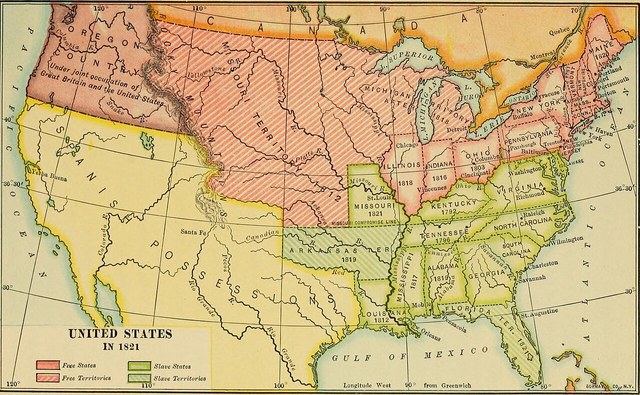
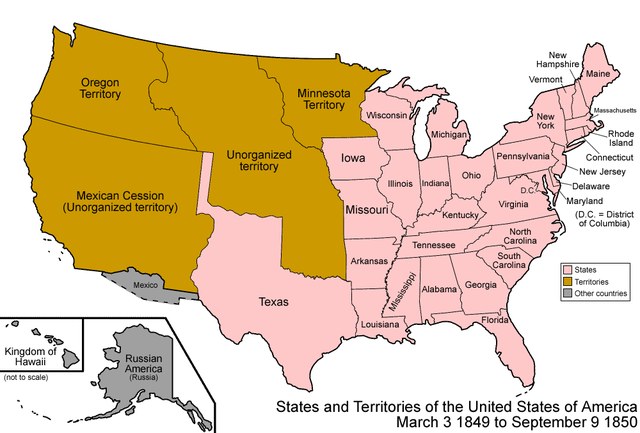
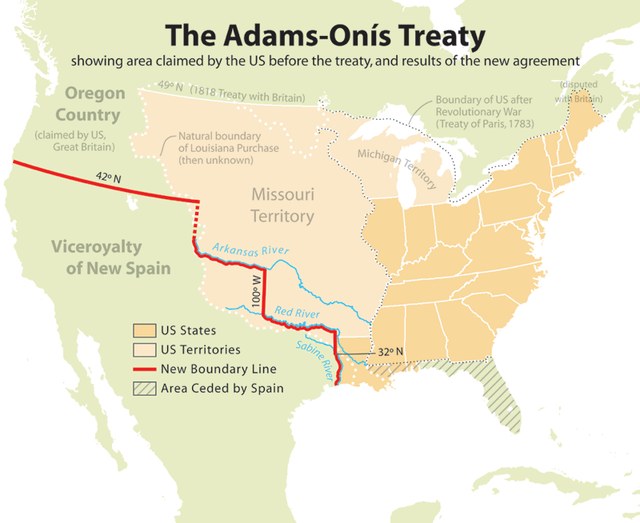
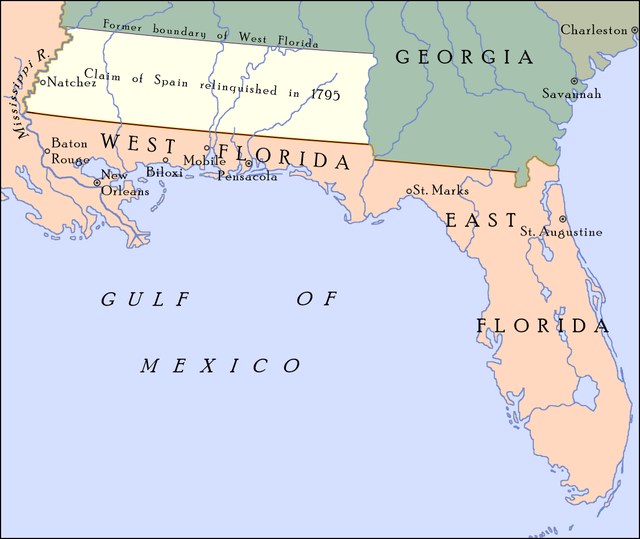
Expansion Westward

181 terms · 1675 ladder clues · every clue is a real line from national play.

Swipe or use the arrows. Tap a clue to rate it; your taps shape what comes back.

#1 · Historic Cities · Level 1

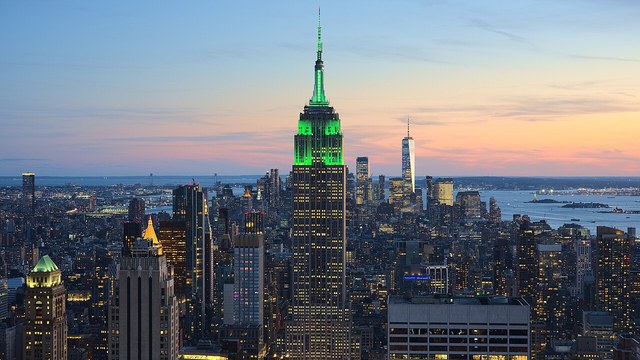
New York City

New York City
Dllu · CC BY-SA 4.0

American city · founded 1624 · southeastern New York State

New York City was legendarily purchased from the Lenape by Peter Minuit for 24 dollars worth of glass beads.

The kit

  • Colonial & Revolutionary Era — New York City served as a Loyalist stronghold during the American Revolution where Nathan Hale was captured while spying.
  • 19th-century conflicts — New York City experienced the 1863 Draft Riots sparked by a 300-dollar commutation fee, during which the Colored Orphan Asylum was burned.
  • Political corruption — New York City housed the political machine Tammany Hall, which Thomas Nast depicted in scathing cartoons.
  • 20th-century events — New York City was the site of the 1904 General Slocum steamboat disaster that killed over 1,000 people.

Runs with

mayor
Fernando Wood served as mayor and suggested secession open card →
John
Tammany Hall
Tammany Hall political machine was based here open card →
William
William Howe landed at Gravesend Bay to attack open card →

The ladder · 15 clues

H

The steamboat General Slocum sank in this city in 1904, leading to the deaths of over 1,000 people.

H

In this city, William Cosby lost a seditious libel case he brought against John Peter Zenger.

H

Jacques Cortelyou created a late map of this city called the Castello [[kah- STEH-loh]] Plan.

H

This city's Municipal Police opposed the Metropolitan Police after the appointment of Charles Devlin as City Street Commissioner by Mayor Fernando Wood.

H

This city’s mayor Fernando Wood called for its secession in the wake of its draft riots.

H

identify some things about cartoonist Thomas Nast:Thomas Nast was known for his scathing representations of the political machine Tammany Hall, which was based in this city.

H

In 1922 in this city, a mob of boys brawled with dock workers who were wearing straw hats two days before the traditional date on which they became unfashionable.

M

The Straw Hat Riot took place in this city, where youths living in dumbbell tenements were photographed in Jacob Riis’ How the Other Half Lives.

M

In this city’s Kew Garden area, 38 neighbors allegedly watched Winston Moseley murder Kitty Genovese.

M

This city's Colored Orphan Asylum was burned after the implementation of a 300-dollar commutation fee sparked the 1863 Draft Riots.

M

A riot in this city occurred after two Black children were hit by a car that was part of Rebbe Menachem (men-AH-um) Mendel Schneerson's motorcade.

M

Nathan Hale was captured while spying in this city, a Loyalist stronghold during the American Revolution. American soldiers retreating from this city were defeated at the Battle of Brooklyn.

E

Peter Minuit legendarily purchased the land for this city from the Lenape [LEN-ah-peh] for 24 dollars worth of glass beads.

E

Another riot in this city was quelled by Union troops pulled from the Battle of Gettysburg, a riot that burned down the Colored Orphan Asylum. name this city that faced the 1863 draft riots.

E

Philadelphia temporarily lost its status as capital of the United States after Congress was forced to flee to this city during a 1783 revolt.

10 more clues from the record
H

A battle in this city started when forces under William Howe landed at Gravesend Bay and culminated with a daring night retreat by George Washington.

H

In this state, utopian socialist John Humphrey Noyes led a “free-love” community in the town of Oneida [[oh-NAI-dah]].

H

During the Revolutionary War, Edward Hand helped delay the British invasion of this state’s Throg’s Neck peninsula.

H

The first European to inhabit what would become this city was Portuguese merchant Juan Rodriguez.

H

John Glover defended this city from attack at Pell’s Point after the enemy landed at Throg’s Neck.

H

A headline from this city's Daily News attributed the phrase "Drop dead" to President Gerald Ford.

H

Mayors of this city in the 19th century included Robert Van Wyck, who resigned amid the American Ice scandal and served as its first post-consolidation mayor, and Fernando Wood, who supported the Confederacy and suggested that this city secede from the Union.

H

An event in this US state was the subject of Heather Ann Thompson’s 2016 book Blood in the Water and was discussed by the mostly sealed Meyer Report.

H

In 1989, Matias Reyes committed a crime in this city but only confessed in 2002, well after full-page ads demanding the death penalty were made by Donald Trump.

H

A Flour Riot in this state, part of the larger Panic of 1837, was led by the Locofoco faction of this state’s Democratic Party.
Watch out: Fernando Wood was mayor of New York City, not New York State governor
#9 · Historic Cities · Level 1

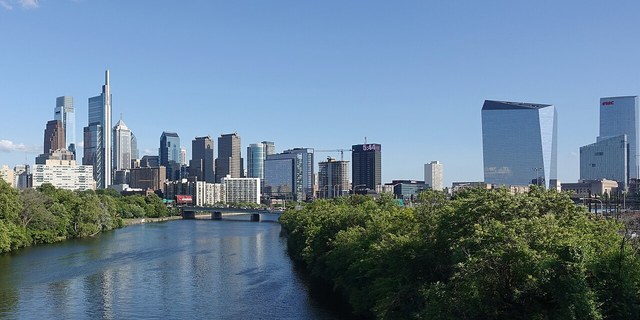
Philadelphia

Philadelphia
颐园居 · CC BY-SA 4.0

Pennsylvania city · founded 1682 · southeastern Pennsylvania

Philadelphia is Pennsylvania's largest city, site of Independence Hall where the Declaration of Independence was signed in 1776.

The kit

  • Founding documents — Philadelphia hosted the Second Continental Congress, which signed the Declaration of Independence at Independence Hall in 1776.
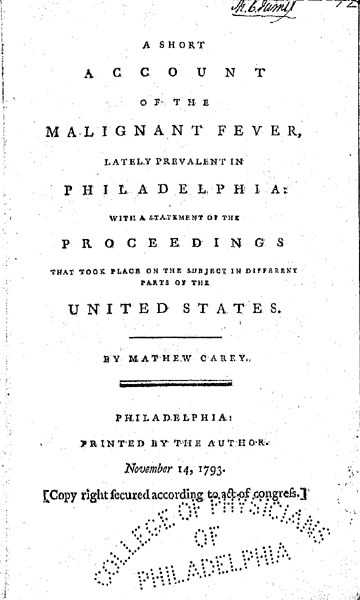
  • Yellow fever epidemic — Philadelphia suffered a disastrous yellow fever epidemic in 1793, during which the Free African Society helped fight the outbreak.
  • Revolutionary War — Philadelphia was captured by British General William Howe after the Battle of Brandywine, forcing the Continental Congress to flee.
  • MOVE bombing — Philadelphia police dropped a helicopter bomb on a MOVE compound in 1985, destroying sixty-five houses on Osage Avenue.

Runs with

Pennsylvania
largest city in Pennsylvania open card →
Yellow FevermayorWilliam Penn

The ladder · 15 clues

H

One resident of this city, Mumia Abu-Jamal, was sentenced to death for the 1981 murder of police officer Daniel Faulkner.

H

Sixty-five houses were destroyed in this city in 1985 when police dropped a helicopter bomb on a compound led by John Africa. MOVE was based in this city, where a pavilion was built in 1976 to house an object that cracked before it was rung to celebrate the Declaration of Independence. what city’s Independence National Historical Park is home to the Liberty Bell?

H

After moving to an all-white suburb of this city, Daisy Myers endured months of harassment before gaining the nickname "Rosa Parks of the North." Henry Box Brown shipped himself to freedom in a crate to an Anti-Slavery Society in this city.

H

During one event in this city, the estate of Bush Hill was seized and turned into a makeshift hospital.

H

The 1742 “Bloody Election” riots in this city pitted Isaac Norris II against the Proprietary Party.

H

A painting created and set in this city shows a woman in a black dress shielding her eyes from a doctor making an incision in a patient’s thigh.

H

Seth Luther helped lead Dorr’s Rebellion and this city’s unrelated 1835 general strike.

M

Absalom Jones and Richard Allen founded the Free African Society in this city.

M

British general William Howe captured this city in a campaign that also included the Battle of Brandywine and the Battle of Germantown.

M

Gangs like the Moyamensing Killers and the Blood Tubs reigned in this city, which faced the nativist Bible Riots of 1844 in the Kensington and Southwark districts.

M

In 1793, the Free African Society was asked to help fight a disastrous yellow fever epidemic in this city.

M

William Howe captured this city in the aftermath of the Battle of Brandywine, a victory that forced the Continental Congress to flee to nearby Lancaster.

E

Benjamin Rush wrote a letter falsely claiming that blacks were immune to yellow fever during a 1793 outbreak in this Pennsylvania city.

E

The Liberty Bell is located in this city where the Declaration of Independence was signed, the largest city in Pennsylvania.

E

The Second Continental Congress signed the Declaration of Independence in this city’s Independence Hall. name this largest city in Pennsylvania.

10 more clues from the record
H

The arrest of Odessa Bradford, in a predominantly Black northern neighborhood of this city, led to the 1964 Columbia Avenue Riot, and the first Black mayor of this city, Wilson Goode, classified John Africa's organization in this city as a terrorist group.

H

This city was home to a radical group founded by John Africa named MOVE, which was bombed by this city’s police force.

H

It is the home of a black liberation group called MOVE which was bombed by officials in 1985.

H

Police in this city targeted a house at Osage Avenue after James Ramp was killed.

H

A house on Osage Avenue in this city’s Cobbs Creek section was bombed by the city’s own police force.

H

In the First Barbary War, this city was the namesake of a ship that was burned by Stephen Decatur after this city was captured.

H

In 2022, Heba Adly and Basem Gehad discovered fragments of Euripides’s plays Ino and Polyidus in this city. :Identify this ancient city founded by Ptolemy II near Fayum and named after Ptolemy’s epithet. The Roman city which is now Jordan’s capital, Amman, also had this name.

H

This city’s Navy Yard is located at the confluence of the Schuylkill {SKOOL-KILL} River and Delaware River, the latter of which separates this city from Camden, New Jersey.

H

Caesar Rodney defended this city’s Society of Journeymen Cordwainers in the first American court case concerning a labor strike.

H

Under Mayor Wilson Goode, this city’s government killed eleven people by dropping a bomb from a helicopter on John Africa’s MOVE organization.

Watch out: Ancient Philadelphia was a separate city founded by Ptolemy II near Fayum, Egypt, not the Pennsylvania city.
#15 · Historic Cities · Level 1

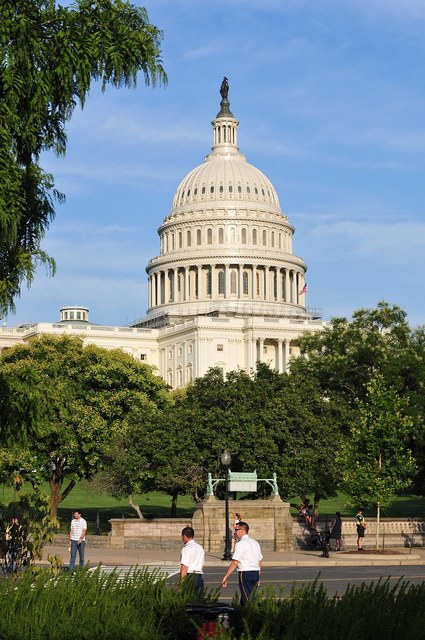
Washington, D.C.

Washington, D.C.
Ralf Roletschek /a ( talk /span /a ) - a rel="nofollow" Info · CC BY-SA 3.0

U.S. capital city · founded 1790s · Potomac River, between Maryland and Virginia

Washington, D.C. is the U.S. capital city planned by Pierre L'Enfant and built on the Potomac River following the Residence Act.

The kit

  • Planning — Washington, D.C. was designed by Pierre Charles L'Enfant with radial streets, later revised by Andrew Ellicott who surveyed boundaries with Benjamin Banneker.
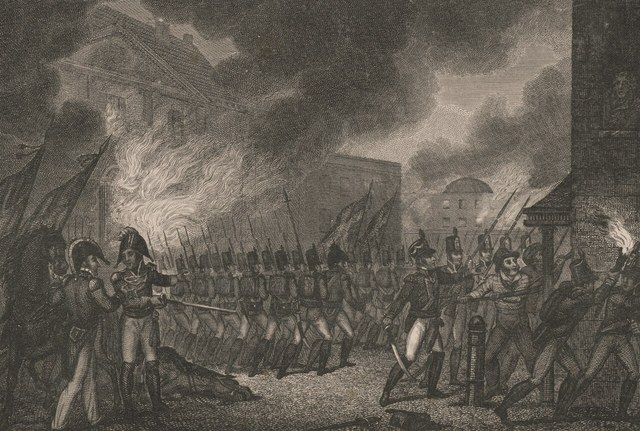
  • War of 1812 — Washington, D.C. was burned by British troops in 1814 after the Battle of Bladensburg, when Dolley Madison saved George Washington's portrait.
  • Civil Rights — Washington, D.C. hosted the 1963 March organized by Bayard Rustin and A. Philip Randolph, where Martin Luther King delivered "I Have a Dream."
  • Modern era — Washington, D.C. mayor Marion Barry was arrested for crack cocaine in 1990 after exclaiming the woman "set me up!"

Runs with

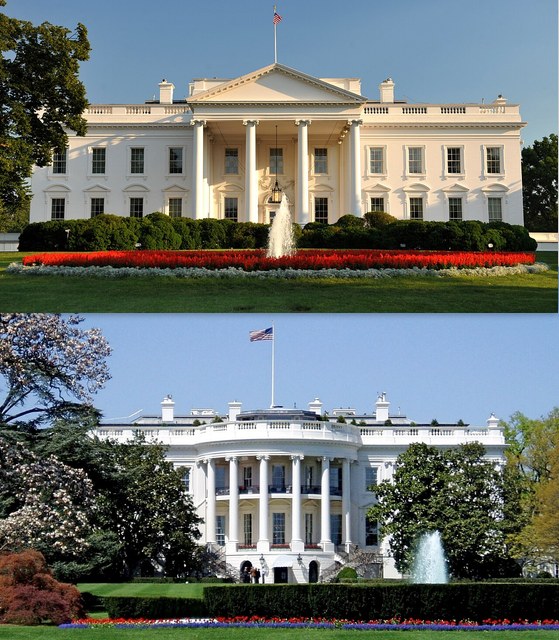
White House
contains the White House designed by James Hoban open card →
mayor
Marion Barry served as mayor during 1990 arrest open card →
Martin Luther
site of King's 1963 Dream speech open card →
Bayard Rustin
Rustin organized 1963 March here open card →

The ladder · 15 clues

H

Protestors in this city built the Resurrection City shantytown during the Poor People’s Campaign.

H

One building in this city was designed by James Hoban and contains the Blue Room.

H

A coordinated siege in this city was directed by Hamaas Khaalis and demanded that the government surrender the killers of Malcolm X and destroy all copies of the film Mohammad, Messenger of God.

H

Andrew Ellicott revised the initial design for this city created by Pierre Charles L’Enfant.

H

This city’s boundaries, which are marked by stones placed a mile apart, were surveyed by a team including African-American Benjamin Banneker who was born in a county bordering this city.

H

This city’s tallest commercial building is One Franklin Square, which was granted an exemption to the 1910 Height of Buildings Act and reaches 210 feet.

H

Walter Reuther helped support an event in this city, where the Big Six spoke.

M

The Residence Act was passed after a compromise allowed the federal government to assume state debts in exchange for this city being built in the south. name this city planned by Pierre L’Enfant and built on the Potomac River to be the U.S. capital.

M

Paul Jennings recounted Dolley Madison’s efforts to save the portrait of George Washington from a burning building in this city. name this city, burned by British troops near the end of the War of 1812.

M

The White House can be found in this capital of the United States.

M

The 1871 Organic Act reformed the municipal government of this city, where in 1932, Douglas MacArthur was ordered to remove people from Anacostia Flats.

M

In 1990, the mayor of this city was videotaped exclaiming, “[she] set me up!” while being arrested for crack cocaine.

E

Bayard Rustin and Asa Philip Randolph organized a 1963 March on this city where Martin Luther King delivered the “I Have a Dream” speech.

E

Dolly Madison legendarily saved a portrait of George Washington during one attack on this city.

E

This city’s streets were mapped out by Charles L’Enfant [lahn-FAHN], and it is home to a Maya Lin-designed wall with the names of casualties of the Vietnam War.

10 more clues from the record
H

The next Allied conference was held in what city this was planned by Pierre L'Enfant and burned down after the Battle of Bladensburg in 1814.

H

Jubal Early launched an attack on this city in the Battle of Fort Stevens.

H

The Anacostia River divides this city, which was partially built on a swamp, and its neighborhoods include Foggy Bottom and Georgetown.

H

Manhattan’s planners opted for a grid instead of the radial streets of the L’Enfant Plan of this US city.

H

A speech given in this city asserts that a certain group, “will quietly and nonviolently” help “implement the Supreme Court’s decision of May 17, 1954.” During the Prayer Pilgrimage, the “Give Us the Ballot” speech was delivered in this city.

H

A Pulitzer Prize-winning story describing an eight year-old heroin addict in this city, "Jimmy's World," was promoted by Mayor Marion Barry even after he discovered it was fabricated.

H

Detailed logs about an event in this city from "Deep Throat" are recorded in All the President's Men by Carl Bernstein and Bob Woodward, who broke the Watergate scandal.

H

Alexander Hamilton convinced several delegates from this city to support his Assumption Bill by supporting the Residence Act, which provided for the purchase of lands near this city.

H

The destruction of Port Dover was used as an excuse to attack this city, but a hurricane allowed the defending side to move back from Brookeville.

H

A never built location in this city was called “Randolph Square” after Thomas Jefferson’s mother and was nixed on the orders of the Jefferson-supported Andrew Ellicott.

Watch out: Andrew Ellicott revised L'Enfant's plan, not a separate designer
#108 · Subnational Regions, Provinces, and Territories · Level 1

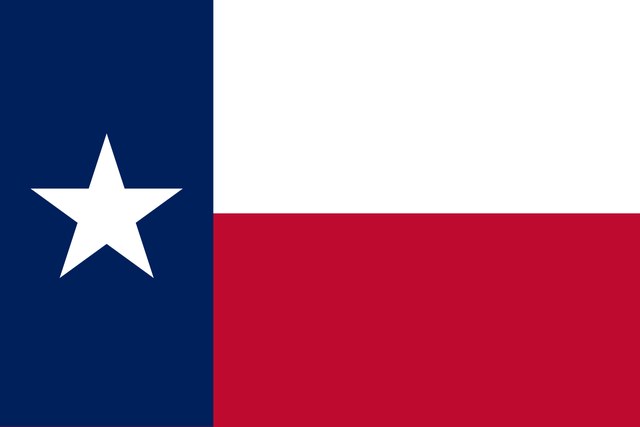
Texas

Texas
Paul B. Joiner · Public domain

U.S. state · 1845–present (republic 1836–1845) · Southern United States

Texas was an independent republic from 1836 to 1845 after winning independence from Mexico at San Jacinto.

The kit

  • Independence — Texas declared independence from Mexico and became the Lone Star Republic led by Sam Houston and Stephen Austin.
  • Republic era — Texas president Mirabeau Lamar issued "redback" currency to drive up inflation during the republic period.
  • Annexation — Texas was recognized as independent after the Treaties of Velasco and annexed to the U.S. in 1845.
  • Modern politics — Texas politician Lyndon B. Johnson announced his Great Society progressive policies at the University of Michigan in 1964.

Runs with

Sam Houston
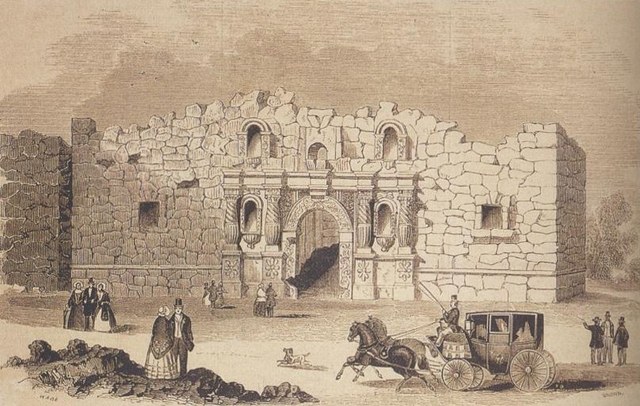
The Alamo
site of siege where Davy Crockett died in Texas open card →
American Railway Union
Mexico
Texas declared independence from Mexico in 1836 open card →

The ladder · 15 clues

H

This modern-day state was the site of the Runaway Scrape, where civilians would flee in terror from an invading army.

H

Debate over the location of this country’s capital sparked the 1842 Archive War.

H

During the tenure of a governor of this state who also served as Secretary of Energy under Donald Trump, a thirteen-hour filibuster against the anti-abortion Senate Bill 5 was launched by Wendy Davis.

H

A month after Appomattox, men in this state fought the last battle of the Civil War, the Battle of Palmito Hill.

H

Mirabeau [mee-ruh-bow] Lamar, a president of this country, issued the “redback” currency to drive up inflation.

H

This state was the site of the SS Grandcamp disaster, in which nearly 600 people died after over 4 million pounds of ammonium nitrate exploded in 1947.

H

This non-Alabama state’s “Huntsville Unit” was the first to carry out an execution by lethal injection in 1982.

M

Anson Jones, the “Architect of Annexation,” served as president of this country which was recognized as independent after the Treaties of Velasco.

M

A politician from this state was gifted a 1947 Cadillac that was paid for with fifty $25 checks; that man served as the longest-serving Speaker of the House and mentored a man who intimidated his colleagues with “the treatment.” A politician from this state spoke at the University of Michigan, announcing several progressive policies as part of his “Great Society” in 1964. name this home state of Sam Rayburn and Lyndon B. Johnson, the latter of whom was inaugurated as President in this state’s city of Dallas.

M

State whose Galveston Hurricane of 1900 was the deadliest natural disaster in U.S. history.

M

Soldiers from this state used the slogan “Remember Goliad!” during the Battle of San Jacinto.

M

Another governor of this state, John Connally, received three wounds from Lee Harvey Oswald in 1963 while riding in JFK's car.

E

This state was the site of the “Lone Star Republic” after declaring independence from Mexico but before being annexed by the United State. name this state led by men such as Sam Houston and Stephen Austin.

E

Secretary of Energy Rick Perry, Beto O’Rourke, and Senator Ted Cruz are all from this southern state.

E

Significant battles that occurred in this state include the Battle of San Jacinto, and a siege at a mission where Davy Crockett died. name this state, the site of the Alamo in its city of San Antonio

10 more clues from the record
H

Thomas Van Orden sued this state in 2002 to take down a display of the Ten Commandments; the case was argued at the Supreme Court by this state’s Attorney General, who became Governor after defeating pro-choice State Senator Wendy Davis in 2014.

H

An 1869 Supreme Court case involving this state held that its bond sales during the Civil War were invalid.

H

This state conducted over a third of all of the United States’ executions from 1976 to 2016, though Alabama executed more prisoners per capita.

H

In April 2013, this state’s town of West was rocked by another ammonium nitrate explosion.

H

A case named for this state overturned the Court’s earlier decision in Bowers v.

H

An attempt to move this nation’s national documents was interrupted by a cannon shot fired by Angelina Eberly in the Archive War.

H

A 1954 case from this state brought by Pete Hernandez ruled that the equal protection clause applied to all nationalities.

H

Name some short-lived governments established by Americans. :While president of this republic, Mirabeau Lamar printed currency known as “redbacks”. This republic was created after victory at the Battle of San Jacinto and annexed to the US in 1845.

H

Santa Anna ceded its territory after his loss at the Battle of San Jacinto to Sam Houston.

H

The “Old Three Hundred” were the first white settlers of this country.

Watch out: The Archive War (1842) involved moving national documents, not currency policy
#111 · Subnational Regions, Provinces, and Territories · Level 1

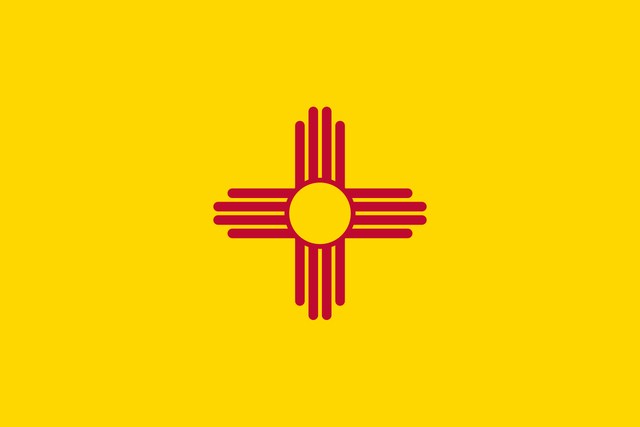
New Mexico

New Mexico
Public domain

U.S. state · 1912 statehood · Southwest, Four Corners

New Mexico is a southwestern state admitted to the Union in 1912 with capital Santa Fe.

The kit

  • Colonial era — New Mexico was named by Francisco de Ibarra searching for the Seven Golden Cities of Cibola.
  • Pueblo Revolt — New Mexico saw Popé force Antonio de Otermín to barricade himself in the Palace of the Governors during a 1680 rebellion.
  • Civil War — New Mexico was the site of the Battle of Glorieta Pass during Henry Hopkins Sibley's campaign against Edward Canby.
  • Manhattan Project — New Mexico hosted the Trinity Test at White Sands and the Los Alamos Laboratory where the atomic bomb was designed.

Runs with

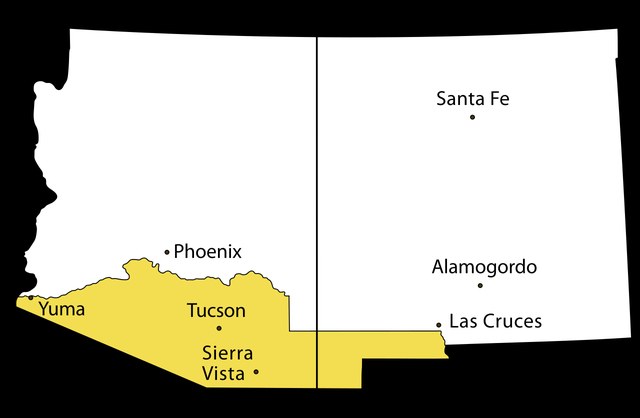
Pancho VillaGadsden Purchase
Pueblo Revolt
Popé led 1680 revolt forcing Otermín into Palace of Governors open card →
Manhattan Project

The ladder · 15 clues

H

Eight howitzers were left buried in what is now this state during a Civil War retreat led by Henry Hopkins Sibley a few weeks after the Battle of Glorieta Pass here.

H

Henry Hopkins Sibley led forces against Edward Canby during a Civil War campaign named for this state that included the Battle of Glorieta Pass.

H

This state contains the Blackwater Draw, a major archaeological site of the pre- Columbian Clovis culture.

H

In this modern state, the Acoma Massacre was carried out after Zutacapan [[zoo- TAH-cah-pahn]] attacked soldiers who were raiding his people's homes.

H

The name of this state was coined by Francisco de Ibarra who was searching for the Seven Golden Cities of Cibola [[SEE-bowl-ah]].

H

A battle in this state involved a flanking attack on a supply train that was inflicted at Johnson’s Ranch.

H

In 1998, a statue in this state had its right foot cut off to protest a massacre of native people in this state where each man's right foot was cut off.

M

This state was where Gary Johnson was governor before he ran for president with the Libertarian Party.

M

A former school in this state near San Ildefonso was converted into a facility that contains Bathtub Row and which was once called “Site Y.” The McDonald Ranch House is located in this state’s White Sands Missile Range, which is near the town of Alamagordo and was the site of an event for which the “Jumbo” containment vessel was built.

M

Glorieta Pass and the Battle of Valverde were Civil War battles fought during the campaign of Henry Sibley in this present U.S. state.

M

That rebellion, also known as the Pueblo Revolt, started in Taos. name this modern-day state that retains its colonial capital of Santa Fe.

M

The Battle of Glorieta Pass occurred on a trail linking one of this state's major cities to Franklin, Missouri.

E

Trinity, the world’s first nuclear test, was detonated here and designed in its Los Alamos Laboratory. name this southwestern state whose capital is Santa Fe.

E

In this state, the Trinity Test was conducted following the construction of the atomic bomb at Los Alamos. name this Four Corners state, the 47th to be admitted to the Union.

E

The town of Los Alamos, the site of a nuclear research program, is located just north of Albuquerque. name this state led from Santa Fe.

10 more clues from the record
H

Native people in this modern-day state killed the first Berber man to explore much of North America, the enslaved person Estevanico.

H

An act that prohibits federal employees from political campaigning is named for a former Senator from this state, Carl Hatch.

H

A gang of bandits in this state were known as the “Las Gorras Blancas.” Medieval Mesoamerican cacao was detected in pottery sherds within this state’s Pueblo Bonito great house, part of this state’s Chaco Culture.

H

This state was where Robert Oppenheimer recited the line from the Bhagavad Gita “I have become death, destroyer of worlds” while watching the Trinity Test.

H

A pair of cities in Kansas and a city in this state name the ATSF Railway; the same city names a trail blazed by William Becknell that linked with El Camino Real.

H

The Texas Mounted Rifles drew with Chivington’s Union forces at the Battle of Glorieta Pass in what is now this U.S. state which entered the Union in 1912.

H

Pueblo rebels in this state started the Taos Revolt, and Kit Carson took Navajo prisoners A to a reservation in this state during the Long Walk of the Navajo.

H

Antonio de Otermin was forced to barricade himself in this state's Palace of the Governors during a rebellion led by Popé [[poh-PAY]].

H

This modern-day state was the site of a revolt against Spanish settlers under Antonio de Oterm´ın by Po’Pay.

H

Billy the Kid died at this state's Fort Sumner, which was charged with the internment of Apache and Navajo in the 1860s.

Watch out: Battle of Valverde also occurred in New Mexico during Sibley's campaign, not just Glorieta Pass
#116 · Subnational Regions, Provinces, and Territories · Level 1

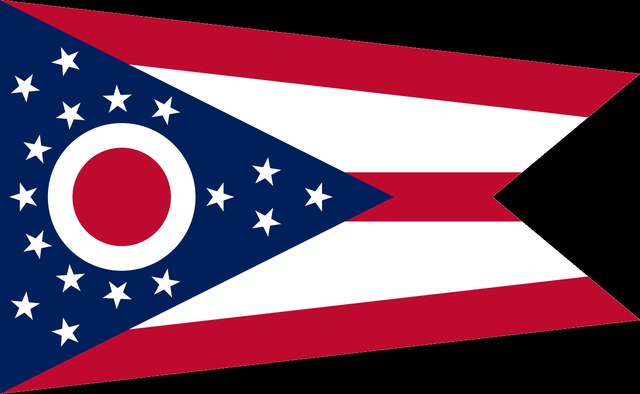
Ohio

Ohio
bdi John Eisenmann /span /a · Public domain

U.S. state · admitted 1803 · Midwest

Ohio has produced more U.S. presidents than any state except Virginia, including Hayes, Garfield, McKinley, and Harding.

The kit

  • Presidential politics — Ohio sent both major-party candidates to the 1920 presidential election, Warren Harding and James Cox, who both hailed from this state.
  • Territorial expansion — Ohio was expanded by the Symmes Purchase and its northeastern portion was originally part of the Connecticut Western Reserve.
  • Military history — Ohio was the site of the 1794 Battle of Fallen Timbers, where Mad Anthony Wayne defeated a Shawnee-Miami alliance in the Northwest Territory.
  • Legal landmarks — Ohio was the defendant in Brandenburg v. Ohio (1969), which established the "imminent lawless action" test for violent speech, and Mapp, which applied Fourth Amendment protections.

Runs with

Northwest Ordinance
governed Ohio as part of Northwest Territory before statehood open card →
American Railway UnionJohnWilliam McKinley

The ladder · 15 clues

H

This state was home to presidents Rutherford B. Hayes and James Garfield, and aside from Virginia has sent more presidents to the White House than any other.

H

A case originating in this state gave rise to the “imminent lawless action” test and arose after a reporter was asked to cover a KKK rally.

H

This territory was expanded by the Symmes Purchase.

H

The site of the 1794 Battle of Fallen Timbers in the Northwest Territory?

H

Home state of Senator Warren Harding and Governor Rutherford B. Hayes.

H

The downtown of one city in this state was flooded in 1913 by the Great Miami River.

H

The northeastern part of this state was originally part of the Connecticut Western Reserve.

M

State sued by Clarence Brandenburg in a 1969 case about violent speech.

M

Both candidates in 1920, Harding and James Cox, hailed from this state, as did Harding advisors Joseph Foraker and Harry Daugherty.

M

Midwestern state in which Connecticut had its "Western Reserve."

M

Co-sponsor Benjamin Wade was a senator from this state, which was also the home state of John Sherman and William McKinley.

M

Rob Portman and Sherrod Brown represent this state, which is governed by John Kasich. name this state also represented by John Boehner.

E

The Kent State Massacre occurred in this US state where environmental activism increased after the Cuyahoga [ky-uh-ho-ga] River caught fire in Cleveland.

E

In this state, Mad Anthony Wayne defeated a Shawnee-Miami alliance at the 1794 Battle of Fallen Timbers.

E

The Supreme Court ruled that prosecutors could not use evidence obtained in violation of the Fourth Amendment in this state, the defendant in the Mapp case.

10 more clues from the record
H

The Fort Ancient culture is believed to have built the Great Serpent Mound found in this state.

H

A court case from this state was the origin of Potter Stewart’s comment “I know it when I see it” with respect to pornography.

H

A 1968 Supreme Court case upheld this non-New York state’s use of “stop and frisk”-style policing, which is thus known as a Terry stop after that case.

H

In a 2021 special election, the loser of a contest for this state's 11th District attributed her loss to "evil money." One of this state's congressional districts has been compared to a duck, and another has been described as "the snake on the lake." Jim Jordan has served as the representative for this state's 4th District, while Senator Sherrod Brown formerly represented its 13th.

H

Carl and Louis Stokes, a pair of politicians from this state, testified before Congress after two railroad bridges were damaged near the Republic Steel Mill in an oil fire that inspired the creation of Earth Day.

H

A 1964 Supreme Court decision dealt with the constitutionality of whether this state could prohibit theaters from running Louis Malle’s film The Lovers.

H

A former member of the Connecticut General Assembly stumbled across a river in this state in 1796, finding a site to found a city along it.

H

An amendment proposed by a senator from this state led Walter George to complain that it would block him from killing cats in his back alley.

H

A senator from this state names the act that gave Puerto Rico its first civilian government after the Spanish-American War, the Foraker Act.

H

That law was meant to shield "Domestic Institutions" according to its writer from this state, the "Wagon Boy," Tom Corwin.

Watch out: Connecticut Western Reserve was in northeastern Ohio, not a separate state
#125 · Subnational Regions, Provinces, and Territories · Level 1

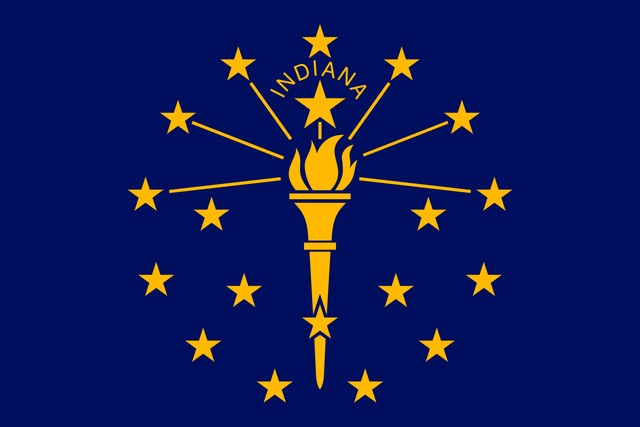
Indiana

Indiana
The Indiana state flag was designed by Paul Hadley in 1917. · Public domain

U.S. Midwestern state · territory 1800, statehood 1816 · east of Illinois, capital Indianapolis

Indiana is a Midwestern state that experienced major industrialization during its 1880–1920 gas boom and became a KKK stronghold in the 1920s.

The kit

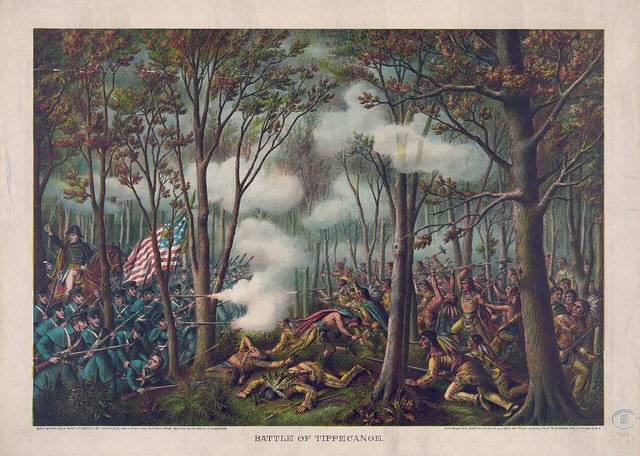
  • Early history — Indiana's territorial governor William Henry Harrison built a fort on the Wabash River before the Battle of Tippecanoe.
  • Industrialization — Indiana's Trenton gas field boom from 1880–1920 drove industrialization, enriching alloy tycoon Elwood Haynes and attracting Eli Lilly's headquarters.
  • KKK dominance — Indiana became a major KKK base in the 1920s under D.C. Stephenson, whose branch counted over 250,000 members statewide.
  • Notable institutions — Indiana is home to Purdue University, founded with John Purdue's $150,000 donation, and cities including Fort Wayne and South Bend.

Runs with

William Henry Harrison
served as Indiana's first territorial governor open card →
Ku Klux Klan
established major 1920s base with 250,000+ members open card →
Battle of Tippecanoe
Harrison built fort in preparation for battle open card →
John
John Purdue donated $150,000 to found university open card →

The ladder · 15 clues

H

Madge Oberholtzer was kidnapped from a train station in this state and ultimately murdered by D.C. Stephenson.

H

This state was the site of a voter fraud campaign to elect Benjamin Harrison, the Blocks of Five Scandal.

H

Based in this state’s capital, Madam C.J. Walker became the first black female self- made millionaire with her cosmetics company.

H

In the 1920s this state became a major base for the KKK under the leadership of D.C. Stephenson.

H

Ryan White was from this state, which suffered its largest AIDS outbreak in 2015.

H

George Rogers Clark won a Revolutionary War battle at this state’s Fort Vincennes, and this state’s city of Muncie was the subject of the 1920s Middletown Studies.

H

After being convicted on murder charges, a prominent resident of this state released documents that implicated governor Ed Jackson: the Little Black Boxes.

M

The first governor of this territory, William Henry Harrison, constructed a namesake fort overlooking the Wabash River in preparation for the Battle of Tippecanoe.

M

D.C. Stephenson’s branch of the KKK counted well over 250,000 members in this US state, where Stephenson operated in Evansville and addressed a crowd of over 100,000 in Kokomo in 1923.

M

George Rapp originally founded a utopian community in this state that banned money and religion.

M

A gangster imprisoned in this state used a fake gun to escape from the Crown Point jail.

M

In this state, over 200,000 people may have gathered to hear the Grand Dragon speak in the city of Kokomo in 1923.

E

This state was home to the New Harmony commune, as well as a university founded after a large donation from John Purdue.

E

Cities in this state include Fort Wayne and South Bend, where presidential candidate Pete Butigieg is mayor. name this Midwestern state located east of Illinois.

E

In its city of Lafayette, businessman John Purdue donated $150,000 to found a namesake university. name this home of President Benjamin Harrison, with capital at Indianapolis.

10 more clues from the record
H

A Republican senator representing this state interrupted the two non- consecutive terms of Grover Cleveland by winning the Election of 1888.

H

The state that Secretary of the Interior Caleb Blood Smith came from, becoming the first ever cabinet member from that state

H

In this state, Ed Jackson offered governor Warren McCray a $10,000 bribe to corrupt public offices.

H

The Reno Gang formed in this state, committing the first train robbery in U.S. history in its town of Seymour.

H

Another Revolutionary War hero names this state’s city of Fort Wayne.

H

In 2008, FiveThirtyEight.com only failed to predict this state's Presidential result.

H

This was the easternmost state home to the possibly Crypto-Muslim Ben Ishmael Tribe.

H

In 1813, this territory moved its capital to Corydon in fear of increasing native attacks.

H

This state’s city of Evansville was the birth place of its own branch of the Ku Klux Klan.

H

The Great Flood of 1913 damaged Eli Lilly’s headquarters in this state’s capital, where streetcar workers led a successful Halloween night strike near the end of its literary “golden age.” :Name this state where rural terrorists called “White Caps” arose. The alloy tycoon Elwood Haynes exploited the Trenton field gas boom that drove this state’s 1880–1920 industrialization, as depicted by Booth Tarkington.

Watch out: D.C. Stephenson led Indiana's KKK branch, not the national organization
#153 · US Congressional Figures · Level 1

Andrew Jackson

Andrew Jackson
bdi Ralph Eleaser Whiteside Earl /span /a · Public domain

seventh U.S. President · 1767–1845; presidency 1829–1837 · Tennessee, United States

Andrew Jackson was the seventh President of the United States, nicknamed 'Old Hickory,' who won election in 1828 after losing the 1824 'corrupt bargain.'

The kit

  • Rise — Andrew Jackson won the Battle of Horseshoe Bend, forcing William Weatherford's surrender, and later won the Battle of New Orleans in 1815.
  • Achievements — Andrew Jackson vetoed the Second Bank of the United States and fought Nicholas Biddle over its recharter, issuing the Specie Circular requiring land purchases in gold and silver.
  • Conflicts — Andrew Jackson faced the Nullification Crisis with South Carolina, during which the first Force Bill was passed, and survived an assassination attempt by Richard Lawrence.
  • Legacy — Andrew Jackson was censured for executing Arbuthnot and Ambrister, attacked in the Coffin Handbills, and appointed Roger Taney to the Supreme Court.

Runs with

the Presidency
served as seventh President 1829–1837 open card →
Second Bank of the United States
vetoed recharter and dismantled it open card →
Bank
fought Nicholas Biddle over Second Bank open card →
Martin Van Buren

The ladder · 15 clues

H

This man was censured for executing Alexander Arbuthnot and Robert Ambrister, and he forced the surrender of William Weatherford after winning the Battle of Horseshoe Bend.

H

This president was shot by Charles Dickinson and vetoed a bill that would have constructed a road through Kentucky known as the Maysville Road.

H

Under this president, the US debt was paid off for the only time in history.

H

This man, who was accused of cannibalism in the Coffin Handbills, won a battle after the opposing soldiers forgot to bring ladders to climb the fortifications that this man had constructed.

H

This president and his Secretary of the Treasury, Levi Woodbury, called for land purchases to be made in gold and silver in the Specie Circular.

H

He won his first term four years after losing to John Quincy Adams in the "corrupt bargain." name this seventh President of the United States.

H

He lost the election of 1824 due to a “corrupt bargain” but came back to win election in 1828.

M

This man supposedly declared “Marshall has made his decision, now let him enforce it” in response to the Supreme Court decision in Worcester v.

M

President, nicknamed “Old Hickory,” who killed Charles Dickinson in a duel.

M

That battle, the Battle of New Orleans, was won by this 7th president of the United States who is depicted on the 20 dollar bill.

M

The Specie Circular was issued by this first Democratic president, whose other economic initiatives included dismantling the Second Bank of the United States.

M

Richard Lawrence attempted to assassinate this President, but his gun misfired twice, and this President ended up beating Lawrence with his cane.

E

Henry Clay and John Quincy Adams conspired to keep this man out of office in the Corrupt Bargain of 1824. name this Tennesseean, nicknamed “Old Hickory,” who was the seventh President of the United States.

E

He appointed Roger Taney to the Supreme Court and fought with Nicholas Biddle over the Second Bank of the United States.

E

The first Force Bill was passed under this man during his confrontation with South Carolina in the Nullification Crisis.

10 more clues from the record
H

The Scott massacre prompted an invasion led by this man, during which he executed two British citizens, Ambrister and Arbuthnot.

H

Arthur Schlesinger won a Pulitzer for his work about the “age” of this man, who was identified with the ascent of American capitalism by Hofstadter.

H

This man fired Robert Randolph for embezzling from the Navy, and Richard Lawrence made this man the first U.S. President to be the subject of an attempted assassination.

H

During one campaign, this man executed Alexander Arbuthnot and Robert Ambrister for allegedly aiding enemy forces.

H

This man was nearly assassinated at the funeral of Warren Davis by Richard Lawrence.

H

When this man was chased back to the U.S. Capitol after a visit to Fredericksburg, Richard Lawrence attempted to shoot him twice, but failed, resulting in a brutal caning by this politician.

H

This man was the subject of the “Coffin Handbills” alleging he executed soldiers.

H

William Duane briefly served as Secretary of the Treasury under this president, during whose term “Hard Times tokens” began to be minted as private currency.

H

The “Bloody Deeds” of this politician were attacked in the Coffin Handbills.

H

One political cartoon depicts this leader slaying a snake-like “many-headed monster” led by a man in a top hat, while another shows him stepping on the Constitution and wielding a “veto” in his left hand.

Watch out: Charles Dickinson—Jackson killed him in a duel, but was also shot by him (not the assassination attempter Richard Lawrence)
#157 · US Congressional Figures · Level 1

Henry Clay

Henry Clay
Julian Vannerson or Montgomery P. Simons · Public domain

Kentucky politician · 1777–1852 · Kentucky, Washington D.C.

Henry Clay was a Kentucky politician nicknamed the 'Great Compromiser' who advocated the American System and lost multiple presidential elections.

The kit

  • Rise — Henry Clay joined the War Hawks contingent in Congress advocating for the War of 1812 alongside Felix Grundy.
  • Achievements — Henry Clay promoted the American System, a plan including protectionist tariffs and federal infrastructure projects like the National Road.
  • Conflicts — Henry Clay was accused of a 'Corrupt Bargain' with John Quincy Adams after the 1824 election went to a House runoff.
  • Legacy — Henry Clay introduced eight resolutions that became the Compromise of 1850, beginning with California statehood.

Runs with

Kentucky
Clay was a Kentucky politician who owned Ashland hemp plantation open card →
Secretary of State
Adams appointed Clay Secretary of State after the 1824 election open card →
Compromise of 1850
Clay's eight resolutions formed the basis of this compromise open card →
John Quincy Adams
Adams appointed Clay after alleged corrupt bargain in 1824 open card →

The ladder · 15 clues

H

After having worked on this man’s estate of Ashland, this man’s slave, Charlotte Dupuy, unsuccessfully sued for her freedom in Washington D.C..

H

This man advocated for high tariffs and regular infrastructure improvements as part of his American System.

H

This man was forced to duel Humphrey Marshall after proposing a law that banned British cloth in favor of homespun cloth.

H

This man was sued by his slave, Charlotte Dupuy, for her freedom, though he also helped found the colony of Liberia as president of the American Colonization Society.

H

This man was shot in a duel by Humphrey Marshall over this man’s support of the Embargo Act. :Name this Kentucky politician who ran for president unsuccessfully five times and was known as the Great Compromiser.

H

This man lost presidential elections in 1824, 1832, and 1844. :Name this Kentucky Senator known as the “Great Compromiser,” who devised the Compromise of 1850 after the Mexican War.

H

This proponent of the American System also introduced the Compromise of 1850. name this Kentucky Whig who served as Speaker of the House and was nicknamed “The Great Compromiser”.

M

In 1824, this man was appointed as Secretary of State by John Quincy Adams after the presidential election went to a House runoff.

M

This proponent of the "American System" of roads and canals was defeated both during Andrew Jackson's re- election bid and by James K. Polk in two presidential runs as the Whig nominee. name this "Great Compromiser" from Kentucky.

M

As the National Republican party’s nominee, this politician lost the 1832 presidential election to Andrew Jackson.

M

Andrew Jackson’s biggest presidential regret was supposedly that he didn’t hang John C. Calhoun and didn’t shoot this man.

M

This politician advocated for investment in infrastructure, higher tariffs, and a national bank as part of his American System.

E

This man was accused of striking a “corrupt bargain” with John Quincy Adams that led to him becoming Secretary of State. name this Kentucky politician labeled the “Great Compromiser.”

E

This proponent of the American System was accused of arranging a “Corrupt Bargain” with John Quincy Adams. name this “Great Compromiser” from Kentucky.

E

John Quincy Adams made an infamous “Corrupt Bargain” with this War Hawk nicknamed the “Great Compromiser” from Kentucky.

10 more clues from the record
H

A personal grudge against this man may have led to the veto of the Maysville Road.

H

Charlotte Dupuy sued this man for her freedom after being a slave at his hemp plantation at Ashland.

H

This politician fought a duel with John Randolph in which both escaped unscathed.

H

This politician wrote that the Mexican-American War would produce “some military chieftain who will conquer all of us” before his son died in the Battle of Buena Vista.

H

Like William Jennings Bryan, this man won a significant portion of electoral votes in multiple elections without becoming president.

H

This man fought an indecisive duel with John Randolph and advocated for the War of 1812 as a War Hawk.

H

This man promoted a plan including protectionist tariffs and federal infrastructure projects like the National Road and the Maysville Road.

H

Though a local rival of Felix Grundy, this man joined Grundy in the "War Hawks" contingent in Congress.

H

A set of eight resolutions named for this man, beginning with California statehood, were the basis for the Compromise of 1850.

H

This politician was the target of a freedom suit by one of his enslaved persons, Charlotte Dupuy.

Watch out: John C. Calhoun (Jackson regretted not hanging Calhoun and not shooting Clay)
#158 · US Congressional Figures · Level 1

James Madison

James Madison
bdi John Vanderlyn /span /a · Public domain

Fourth U.S. President · 1751–1836; presidency 1809–1817 · Virginia, Washington D.C.

James Madison was the fourth President of the United States, known as the Father of the Constitution for drafting the Virginia Plan and creating the Bill of Rights.

The kit

Runs with

Virginia
represented Virginia at Constitutional Convention open card →
Bill of Rights
Thomas Jefferson
served as Jefferson's Secretary of State open card →
Secretary of State
served as Jefferson's Secretary of State open card →

The ladder · 15 clues

H

This man, Jefferson’s Secretary of State, encouraged the Embargo Act and participated in a court case which found that the writ of mandamus was unconstitutional.

H

This man wrote that “Ambition must be made to counteract ambition” in an essay claiming that “if men were angels, no government would be necessary.” In an earlier essay, this man compared getting rid of liberty to getting rid of air, when cautioning about efforts to abolish factions.

H

This man wrote that “The ‘power to regulate commerce among the several States’ cannot include a power to construct roads and canals” in his veto of the Bonus Bill.

H

During this man's presidency the House launched an investigation into the conduct of General James Wilkinson.

H

Both of this president’s vice presidents, George Clinton and Elbridge Gerry, died in office.

H

Is known as the Father of the Constitution and took notes of the debates?

H

A slave born on this man’s estate attempted the largest slave escape in American history, the Pearl Incident; that man, Paul Jennings, was one of over a hundred slaves belonging to this man.

M

During one event, this man’s wife legendarily saved a portrait of George Washington from the soon to be damaged White House.

M

This man’s dinner was allegedly eaten by British troops, who burned Washington D.C. during his tenure. name this fourth President of the United States.

M

This man drafted a document arguing for population-based representation called the Virginia Plan.

M

This politician and Thomas Jefferson wrote the Virginia and Kentucky Resolutions in response to the Alien and Sedition Acts.

M

Judicial review was established by a Supreme Court case which saw William Marbury sue this man.

E

This man opposed the divisiveness of factions in the tenth entry in a series of papers he wrote with John Jay and Alexander Hamilton.

E

A George Washington painting was saved by this man’s wife as Washington D.C. was burned by the British. name this President during the War of 1812, known as the “father of the Constitution.”

E

The Bill of Rights was created by this Virginia founding father who became the Fourth President of the United States.

10 more clues from the record
H

This man, with Thomas Je↵erson, co-founded the Democratic-Republican Party.

H

On this man’s last day in office, he vetoed a Bonus Bill proposed by John Calhoun.

H

Federalist No. 51 was written by this author, who, along with Alexander Hamilton and John Jay, wrote the Federalist Papers under the pseudonym Publius. This person would later become the fourth president of the United States.

H

This man allegedly justified using government funds for a Tunisian envoy’s concubines since they were “appropriations for foreign intercourse.” This man’s first vice president was the first to die in office and was named George Clinton.

H

Edmond-Charles Genêt [[zhuh-NAY]] publicly compared this man to a French aristocrat in an attempt to bolster the electoral prospects of George Clinton.

H

Under the name "Publius," this man published "The Utility of the Union as a Safeguard Against Domestic Faction and Insurrection," also known as Federalist No. 10.

H

This man’s former slave and valet, Paul Jennings, wrote a memoir of this man’s time in the White House.

H

As Secretary of State, this man’s refusal to deliver a commission for a judgeship led to the establishment of judicial review.

H

After initially vetoing the proposal, this President signed a second bill chartering a second national bank.

H

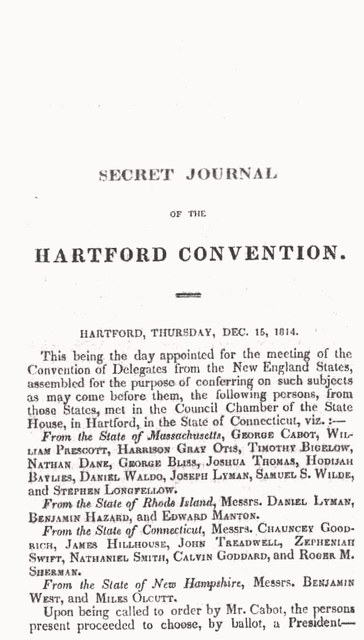
A group of Federalists organized the Hartford Convention during this president’s second term.

Watch out: William Marbury sued Madison over an undelivered judicial commission, establishing judicial review in Marbury v. Madison
#160 · US Congressional Figures · Level 1

John Quincy Adams

John Quincy Adams
Mathew Brady · Public domain

6th U.S. President · 1767–1848 · United States

John Quincy Adams served as sixth U.S. President after winning the 1824 election through a "Corrupt Bargain" with Henry Clay.

The kit

  • Rise — John Quincy Adams served as James Monroe's Secretary of State, negotiating the Adams-Onís Treaty to acquire Florida and formulating the Monroe Doctrine.
  • Presidency — John Quincy Adams defeated Andrew Jackson in the 1824 presidential election after Henry Clay's support in the House secured his controversial victory.
  • Post-presidency — John Quincy Adams returned to the House of Representatives after his single term, where he argued the Amistad case before the Supreme Court.
  • Death — John Quincy Adams died of a cerebral hemorrhage suffered in the House while opposing a resolution to honor Mexican-American War generals.

Runs with

Henry Clay
orchestrated the Corrupt Bargain as Speaker of the House in 1824 open card →
Andrew Jackson
defeated Jackson in 1824 election through House vote open card →
Secretary of State
held this position under Monroe, negotiating Adams-Onís Treaty open card →
Florida
negotiated acquisition from Spain via Adams-Onís Treaty with Luis de Onís open card →

The ladder · 15 clues

H

This man died of a cerebral hemorrhage suffered in the House of Representatives while opposing a resolution to honor victorious Mexican-American War generals.

H

This man forced George Troup to replace the Treaty of Indian Springs with the Treaty of Washington after learning that unfavorable terms had been forced upon the Muscogee.

H

The survivors of The Amistad affair presented this man with the Mendi Bible for representing them in court.

H

Defeated Jackson in the 1824 Presidential election?

H

This man argued before the U.S. Supreme Court in Fletcher v.

H

James Madison appointed this man the first ever U.S. Minister to Russia.

H

This president died while giving a speech in Congress opposing a proposal to honor Mexican-American veterans.

M

As Secretary of State, this man negotiated with Luis de Onis to acquire Florida and formulated the Monroe Doctrine.

M

Gallatin was nominated as vice-presidential candidate with William Crawford for the election in 1824, the year that this man won through a “corrupt bargain.”

M

This president returned to the House of Representatives after his single term in office, won through a "Corrupt Bargain" with Henry Clay.

M

An ardent abolitionist, this man argued Don behalf of slaves who had revolted in U.S. v.

M

This diplomat gave recognition of the U.S.’s Texas border at the Sabine in exchange for Spanish Florida as part of a treaty he negotiated with Luis de Onís.

E

In a presidential election, this man defeated Andrew Jackson in a so-called “Corrupt Bargain” orchestrated, in part, with Speaker Henry Clay. name this son of the second U.S. president.

E

This man successfully argued in favor of the Africans who revolted on the Amistad in a U.S. court case.

E

This man negotiated the acquisition of Florida with Luis de Onis in his role as James Monroe’s Secretary of State. name this career politician who returned to Congress after serving as 6th President of the United States.

10 more clues from the record
H

During his first State of the Union address, this president stated “we were palsied by the will of our constituents.” Worcester's cause in Worcester v.

H

With Roger Sherman Baldwin, this man argued for a group of Mende tribesmen led by Joseph Cinqué in the case U.S. v.

H

This man's Secretary of the Treasury, who also served as his running mate in one election, was Richard Rush.

H

This president officially appointed Joel Poinsett as Minister to Mexico and supported sending an American delegation to the Congress of Panama, which was blocked by his political opponents.

H

This politician’s son George Washington drowned in the Long Island Sound after possibly jumping off the Benjamin Franklin.

H

This lawyer and former President argued on behalf of the Africans on board the Amistad before the Supreme Court in 1841.

H

This president’s son disappeared after boarding the steamship Benjamin Franklin and was thought to have committed suicide.

H

This Congressman convinced colleagues to use the funds from James Smithson's trust to create a scientific institution.

H

Congressmen opposed to this president harped on things like his purchasing of a pool table for the White House.

H

During this man’s presidency, David Porter was court martialed for invading part of Puerto Rico.

Watch out: Son of second president John Adams, not to be confused with his father
#163 · US Congressional Figures · Level 1

Martin Van Buren

Martin Van Buren
bdi Mathew Benjamin Brady /span /a · Public domain

8th U.S. President · 1837–1841 · United States

Martin Van Buren succeeded Andrew Jackson as president and faced the Panic of 1837 after enforcing the specie circular policy.

The kit

  • Rise — Martin Van Buren founded the Albany Regency political machine and organized the Jacksonian Democratic party as a state senator.
  • Achievements — Martin Van Buren created an independent treasury system that stored government funds in vaults rather than state banks.
  • Conflicts — Martin Van Buren ordered Winfield Scott to carry out his predecessor's Indian Removal Act and faced the Aroostook War.
  • Legacy — Martin Van Buren ran on the Free Soil Party ticket in 1848 after breaking with the Albany Regency over slavery.

Runs with

Andrew Jackson
the Presidency
served as 8th president from 1837 to 1841 open card →
Free Soil Party
ran as Free Soil candidate in 1848 election open card →
William Henry Harrison
lost 1840 election to Harrison after Panic of 1837 open card →

The ladder · 15 clues

H

Was nicknamed “Old Kinderhook” and succeeded Andrew Jackson as President.

H

This President faced a war that was sparked by the Caroline Affair, and he was criticized by Charles Ogle in the Gold Spoon Oration.

H

This man’s nomination as Minister to Great Britain was blocked by a vengeful John Calhoun.

H

This man's vice president, the only one elected by the Senate through the 12th Amendment, was the supposed killer of Tecumseh, Richard Mentor Johnson.

H

This man ordered that the government store its funds in vaults rather than banks as part of the independent treasury he created.

H

This man attempted to move money from state banks into his “independent treasury” system.

H

A political machine led by this man was originally named the Holy Alliance.

M

The popularity of this man plummeted after Charles Ogle accused him of lavish spending in the Gold Spoon Oration.

M

This president ran with Charles Francis Adams on the Free Soil Party ticket.

M

The Aroostook War began during the presidency of this former leader of the Bucktails faction, who previously established the Albany Regency political machine.

M

This principal founder of the Democratic party ran on the Free Soil ticket in 1848.

M

He was the target of Charles Ogle's "Gold Spoon Oration," and resigned as Secretary of State amid the Petticoat Affair.

E

This man ordered Winfield Scott to carry out his predecessor’s Indian Removal Act, causing the Trail of Tears. name this US president who succeeded Andrew Jackson.

E

This man’s attempt to enforce his predecessor’s specie circular policy prompted the Panic of 1837, hurting his chances in the 1840 election against William Henry Harrison. name this Dutch-American president who succeeded Andrew Jackson.

E

As a state senator, this man led the state opposition to Governor DeWitt Clinton and organized the Albany Regency political machine.

10 more clues from the record
H

This man’s daughter-in-law, Angelica, was mocked for reportedly trying to re-landscape the White House gardens to resemble those in Europe.

H

During his presidency, the Battle of Caribou was a skirmish between lumberjacks on the border between Maine and New Brunswick.

H

The key organiser of the Jacksonian Democratic party, and vice-president under Jackson this former president stood for the anti-slavery Free Soil party at the 1848 election.

H

This man’s vice president had to be elected by the senate after Virginia’s electoral college delegation refused to vote for him, causing a deadlock.

H

Under this president, the British agreed to payments regarding the Comet and the Encomium, two slave ships that had run aground in the Bahamas.

H

John C. Calhoun’s efforts to block this man from becoming Minister to Britain led this man to be appointed Vice President instead.

H

This man attempted to deter American militia from fighting in the Patriot War to support the fledgling Republic of Canada.

H

Ralph Waldo Emerson wrote an open letter to this man to cease any further removal of the Cherokee.

H

This president dispatched Winfield Scott to the Canadian border in response to the Upper and Lower Canada Rebellions.

H

This man founded the Albany Regency but later broke with them over the morality of slavery.

Watch out: William Henry Harrison (defeated Van Buren in 1840 election)
#165 · US Congressional Figures · Level 1

Aaron Burr

Aaron Burr
John Vanderlyn · Public domain

American politician · 1756–1836 · New York, Louisiana

Aaron Burr was Thomas Jefferson's first Vice President who killed Alexander Hamilton in an 1804 duel at Weehawken, New Jersey.

The kit

  • Rise — Aaron Burr won election to the Senate after building a coalition against Philip Schuyler and transformed Tammany Hall into a political machine.
  • Vice Presidency — Aaron Burr presided over the impeachment of Samuel Chase and oversaw the Senate's elimination of speaking limits as Vice President.
  • Duel — Aaron Burr shot and killed Alexander Hamilton in an 1804 duel at Weehawken, New Jersey, after Hamilton insulted him during an election.
  • Treason trial — Aaron Burr was tried for treason in 1807 after James Wilkinson exposed his plot to seize Louisiana territory, but John Marshall found him not guilty.

Runs with

Alexander Hamilton
killed him in 1804 duel at Weehawken open card →
James Wilkinson
Thomas Jefferson
served as his first Vice President open card →
New Jersey
site of his duel with Hamilton open card →

The ladder · 15 clues

H

This man lost the governorship of New York to the then unknown Morgan Lewis, in part due to former governor George Clinton campaigning against him.

H

This man was behind the Tammany Society’s initial transition from a social organization to a political machine, and he presided over the impeachment of Samuel Chase as Vice President.

H

This man leased the Bastrop Tract in Louisiana and Arkansas for a militia he was developing to attack colonial Spanish territory.

H

An expedition led by this man created a base of operations on Harman Blennerhassett’s island in the Ohio River.

H

This man asked Anthony Merry for help in obtaining the land from the Mississippi and Ohio Valleys as part of an anti-government scheme for which he was found not guilty by John Marshall.

H

This man refused to acknowledge that abolitionist John Pierre was his illegitimate son with his East Indian servant, Mary Emmons.

H

This man transformed Tammany Hall from a “speech-making club” into a political machine for anti-federalists.

M

This man’s daughter died aboard the schooner Patriot during the War of 1812 and was married to the then-Governor of South Carolina.

M

This New York lawyer received the second-highest amount of votes in one election, resulting in this man becoming vice president. name this early leader of the Democratic- Republicans, the vice president under Thomas Jefferson.

M

This man was arrested after being betrayed by James Wilkinson.

M

This man won election to the Senate after building a coalition against Philip Schuyler.

M

In an 1807 trial presided over by John Marshall, this man’s lawyers were allowed to subpoena Thomas Jefferson, whom this man had earlier served as Vice President. name this politician who was tried for treason after allegedly trying to seize land in Louisiana.

E

Thomas Jefferson’s first Vice President was this man who gained infamy at Weehawken, New Jersey when he killed Alexander Hamilton in a duel.

E

(1) Shot and killed Alexander Hamilton in an 1804 duel.

E

In Weehawken, New Jersey, this figure gunned down his political rival Alexander Hamilton. name this Vice President of Thomas Jefferson.

10 more clues from the record
H

Two men working under this person were charged of treason in the case of Ex parte Bollman.

H

James Wilkinson exposed this man’s plot to lodge war against Mexico and seize part of the Louisiana Purchase.

H

Charles James Fox discovered this politician’s attempt to gain support from British diplomat Anthony Merry.

H

This man conspired with James Wilkinson in an attempt to conquer Spanish territories and rule over a new empire, leading to a scandalous 1807 treason trial.

H

William Van Ness delivered a series of letters to a man who insulted this politician at a dinner party during an election against Morgan Lewis.

H

This man was arrested for, but not convicted of, treason after he was involved in a plot to create another country in the American West.

H

This man’s daughter disappeared and was never seen again while travelling aboard the ship Patriot.

H

This politician was accused of taking bribes from the Holland Land Company by John Barker Church.

H

As Vice President, this man oversaw the Senate’s elimination of speaking limits and the impeachment of Supreme Court Justice Samuel Chase for partisan opinions.

H

In preparation for one event, this man storied supplies at Blennerhassett Island but was betrayed by possible Spanish double agent James Wilkinson.

Watch out: His daughter Theodosia, not Aaron Burr himself, disappeared aboard the Patriot
#167 · US Congressional Figures · Level 1

William Henry Harrison

William Henry Harrison
bdi Albert Gallatin Hoit /span /a · Public domain

9th U.S. President · 1773–1841 · Virginia; Indiana Territory; Ohio

William Henry Harrison was the 9th U.S. President who died of pneumonia just 31 days into office, the shortest presidential term in American history.

The kit

  • Rise — William Henry Harrison served as first governor of the Indiana Territory starting in 1801 and built Grouseland near Vincennes.
  • Achievements — William Henry Harrison defeated Tenskwatawa at the Battle of Tippecanoe in 1811, destroying Prophetstown and earning his famous campaign nickname.
  • Election of 1840 — William Henry Harrison won the presidency using the slogan "Tippecanoe and Tyler Too" and symbols of log cabins and hard cider to appeal to common voters.
  • Death — William Henry Harrison gave the longest inaugural address ever and died of pneumonia 31 days later, making him the shortest-serving president.

Runs with

John Tyler
Tyler was Harrison's running mate and vice president open card →
Indiana
Harrison governed Indiana Territory and built Grouseland there open card →
Battle of Tippecanoe
Harrison defeated Tenskwatawa at this 1811 battle open card →
Martin Van Buren
Harrison defeated Van Buren in the 1840 election open card →

The ladder · 15 clues

H

Clair Jr. by a single vote to serve as a non -voting representative for the Northwest Territory, and this person was appointed by John Adams to govern the Indiana Territory, where he built (+) Grouseland near Vincennes.

H

Among the residents who escaped Berkeley Plantation through secret tunnels as Arnold approached was this then seven-year-old, who later became the shortest-serving president in U.S. history, dying shortly after giving the longest inauguration speech ever read.

H

This president’s supporter Charles Ogle delivered the “Gold Spoon Oration,” which accused this man’s rival of being too extravagant.

H

A derogatory Baltimore news article inspired the grass roots association of this president with log cabins and hard cider.

H

First struck what man this person who fought at Tippecanoe and died after just 31 days in office.

H

In one election, this man was the leading candidate of a party who ran three other candidates, including Hugh Lawson White, in a failed strategy to force the contest to the House of Representatives.

H

This man once asked Daniel Webster to read a note that stated John Chambers, not James Wilson, would be governor of Iowa.

M

This man suffered pneumonia after giving that speech, becoming the U.S. president with the shortest time in office. identify this man who won the Election of 1840 with the slogan "Tippecanoe and Tyler Too," the grandfather of a president named Benjamin.

M

Tecumseh’s brother Tenskwatawa was defeated by this general and future president at the Battle of Tippecanoe, inspiring their campaign slogan “Tippecanoe and Tyler too.”

M

As a result of this man's success during the War of 1812, his slogan in the Election of 1840 was "Tippecanoe and Tyler too." name this president who died of pneumonia, serving the shortest presidential term in history in 1841.

M

This one-time governor of the Indiana Territory gave the longest speech ever given at a presidential inauguration.

M

This future president defeated Tecumseh’s brother Tenskwatawa and destroyed Prophetstown at the Battle of Tippecanoe. This 9th president became the shortest-serving president after he died of Pneumonia.

E

A slogan for this man in the election of 1840 was “Tippecanoe and Tyler too.” name this President who died a month after taking office.

E

This man won election after using symbols of log cabins and hard cider to appeal to the common man.

E

This first governor of the Indiana Territory won an election using the slogan “Tippecanoe and Tyler Too.” A mere 31 days into his presidency, this man died of pneumonia. name this ninth president of the United States.

10 more clues from the record
H

Following one speech, in which the editor noted that he had “killed seventeen Roman proconsuls,” this man went to a ball at Carusi’s Saloon.

H

This man eloped with his wife in 1795 after being rejected by that woman's father, Judge John Cleves Symmes.

H

During a presidential campaign, this man was nicknamed “General Mum” because he rarely expressed political opinions.

H

President who defeated Tenskwatawa [tensk-wah-ta-wah] at Tippecanoe and used the victory in his campaign slogan.

H

Prior to Ronald Reagan, this man held the distinction of being the oldest man elected U.S. president.

H

This builder of Grouseland signed the Treaty of St. Louis, forcing the Sauk to cede land in Illinois.

H

Died thirty days into his term after catching pneumonia during his inauguration

H

E.C. Booz’s distinctive whiskey bottles in support of this candidate are the source for the term “booze.” Supporters of this candidate pushing leather and tin spheres to campaign stops originated the phrase “keep the ball rolling.” A speech supporting this candidate argued that an opponent was shaping gardens like “an Amazon’s bosom” in the Gold Spoon Oration.

H

He served as Governor of the Indiana Territory starting in 1801, leading an attack on Prophetstown at the Tippecanoe River in 1811. :Name this Whig president who won his election in 1840 by beating Martin van Buren. He was the first president to die in office, after doing basically nothing.

H

Black Hawk warred with the U.S. over the 1804 Treaty of St. Louis signed by Quashquame and this then-Governor of the Indiana Territory. He famously parlayed his victory at Tippecanoe into a presidential victory with running mate John Tyler.

Watch out: His grandson Benjamin Harrison also served as U.S. President
#168 · US Congressional Figures · Level 1

John C. Calhoun

John C. Calhoun
bdi George Peter Alexander Healy /span /a · Public domain

South Carolina politician · 1782–1850 · South Carolina, Washington D.C.

John C. Calhoun served as Vice President under both John Quincy Adams and Andrew Jackson, championing states' rights and nullification theory.

The kit

  • Rise — John C. Calhoun served as Secretary of War under James Monroe, creating the Bureau of Indian Affairs in that role.
  • Achievements — John C. Calhoun outlined his theory of "concurrent majority" in his Disquisition on Government to protect minority interests.
  • Conflicts — John C. Calhoun resigned as Andrew Jackson's Vice President to defend nullification in Congress after the Tariff of 1828 crisis.
  • Legacy — John C. Calhoun declared slavery a "positive good" in an 1837 Senate speech, shaping Southern pro-slavery ideology.

Runs with

South Carolina
represented South Carolina in Senate open card →
Nullification
developed nullification theory in Exposition and Protest open card →
Andrew Jackson
served as his Vice President, resigned over nullification open card →
Tariff of Abominations
called it unconstitutional in Exposition and Protest open card →

The ladder · 15 clues

H

This man replaced Abel Upshur after the USS Princeton incident, and as James Monroe’s Secretary of War, he created the Bureau of Indian Affairs.

H

This man accidentally sunk John Tyler’s attempts to annex Texas after a letter to Richard Pakenham hoping for the expansion of slavery was exposed.

H

James Madison vetoed this man’s proposed 1817 Bonus Bill.

H

In his A Disquisition on Government, this man outlined his belief of “concurrent majority” as a way to protect the subjugated South.

H

This politician criticized the United Kingdom for pushing abolition in Texas in a letter written to British ambassador Richard Pakenham.

H

He introduced the declaration of war against Britain on the floor of the Senate in 1812. :Identify this, a Vice President under Andrew Jackson and John Quincy Adams and States’ rights activist.

H

This man served as the Secretary of State for one year at the end of the John Tyler administration.

M

This politician explained his views of federalism in his Disquisition on Government, and he described slavery as a “positive good.” He succeed Abel Upshur, who was killed in the USS Princeton explosion, as Secretary of State under John Tyler. name this South Carolina politician who served as Vice President for John Quincy Adams and Andrew Jackson who supported nullification.

M

This man, who became Secretary of State after the USS Princeton disaster, declared slavery to be a “positive good” in an 1837 Senate speech.

M

His wife, Floride, organized Cabinet wives against Peggy Eaton in the Petticoat Affair during the Jackson presidency.

M

This figure and his wife, Floride, orchestrated the Peggy Eaton Affair, ostracizing the title woman for marrying too quickly.

M

Peggy Eaton was ostracized by Floride (Florida), the wife of this South Carolina politician who resigned as Jackson's Vice President.

E

This man resigned as Andrew Jackson’s vice president so that he could defend the right of nullification in Congress. name this influential senator from South Carolina.

E

In his “Exposition and Protest” this man stated that the Tariff of 1828 was unconstitutional.

E

Nullification was developed by this South Carolina politician.

10 more clues from the record
H

During this man’s tenure as Secretary of War under James Monroe he called for the censure and trial of Andrew Jackson due to his capture of Spanish Florida.

H

This politician became Secretary of State after the explosion of one of the guns on the U.S.S. Princeton killed Abel P. Upshur.

H

This man noted that “a vast majority of mankind is entirely biased by motives of self-interest” while arguing in favor of a minority veto in his posthumous Disquisition on Government.

H

This first head of the Bureau of Indian Affairs faced an uproar when his wife Floride refused to speak with the adulterous wife of the Secretary of State, Peggy Eaton.

H

This man formulated a namesake doctrine which held that the federal government had not power to limit slavery as it deprived the people to their right to property.

H

In an address to the Senate, this man claimed that the gravest question, “How can the Union be preserved?”, could only be answered by the North, not the South.

H

This man resigned during his lame duck period after casting the most tie-breaking votes of any U.S. vice president.

H

This man railed against those who would use governmental power to pursue personal gain in his Disquisition on Government.

H

On his deathbed, Andrew Jackson regretted that he had not executed this man, his former Vice President, for treason.

H

This politician organized the Nashville Convention in reaction to the Compromise of 1850, discussing the possibility of Southern secession.

Watch out: Abel Upshur—Calhoun replaced him as Secretary of State after the USS Princeton explosion
#169 · US Congressional Figures · Level 1

James Monroe

James Monroe
bdi Samuel Finley Breese Morse /span /a · Public domain

Fifth U.S. President · 1817–1825 · United States

James Monroe was the fifth U.S. President who presided over the Era of Good Feelings and issued a doctrine opposing European colonization in the Americas.

The kit

  • Rise — James Monroe negotiated the Louisiana Purchase alongside Robert Livingston after serving as Ambassador to France and rescuing Thomas Paine from jail.
  • Achievements — James Monroe's administration acquired Florida through the Adams-Onís Treaty and demilitarized the Great Lakes via the Rush-Bagot Treaty with Britain.
  • Conflicts — James Monroe suppressed Gabriel Prosser's Rebellion as Virginia governor and oversaw resolution of the Arbuthnot and Ambrister incident during the First Seminole War.
  • Legacy — James Monroe's Secretary of State John Quincy Adams drafted the Monroe Doctrine forbidding European intervention in the Western Hemisphere during the Era of Good Feelings.

Runs with

William
William Plumer cast the only electoral vote against Monroe in 1820 open card →
Louisiana Purchase
negotiated the Louisiana Purchase with Robert Livingston as diplomat open card →
Secretary of State
Florida
acquired Florida through the Adams-Onís Treaty during his administration open card →

The ladder · 15 clues

H

As governor, this man suppressed Gabriel Prosser’s Rebellion, and he was later sent with Robert Livingston to negotiate the Louisiana Purchase.

H

Along with Robert Livingstone, this man met with Francois Barbe-Marbois to negotiate the Louisiana Purchase.

H

As Ambassador to France, this man secured the release of Thomas Paine by claiming his American citizenship.

H

This president saw the Fort Scott Massacre, which was resolved later by Treaty of Moultrie Creek and this man also vetoed the Cumberland Road Bill.

H

This man’s pamphlet “A View of the Conduct of the Executive” defended his actions as Minister to France, including rescuing Thomas Paine from jail.

H

This President oversaw the resolution of the Arbuthnot and Ambrister incident during the First Seminole War.

H

John Riker saved this man’s life at the Battle of Trenton after he was struck in the shoulder by a musket ball.

M

While governor, this man called out the state militia to put down Gabriel Prosser's rebellion in Virginia.

M

The acquisition of Florida occurred in this president’s tenure via the Adams-Onis Treaty.

M

William Plumer voted for Richard Rush and John Quincy Adams instead of Daniel Tompkins and this man, becoming the only elector to vote against him in 1820.

M

During this man’s administration, the United States acquired Florida via the Adam-Onis Treaty.

M

Answer the following about the Era of Good Feelings, during which Democratic-Republicans dominated. :The Era of Good Feelings occurred in the two terms of this fifth president and successor to James Madison.

E

The Era of Good Feelings was led by this President who protected Latin America from European interference with a famous doctrine.

E

This president’s Secretary of State, John Quincy Adams, drafted a doctrine that opposed European intervention in the Americas.

E

This man, who became the namesake of the capital of Liberia, was president during the Era of Good Feelings and the Panic of 1819. name the 5th U.S. President whose namesake doctrine forbade European colonization in the Western Hemisphere.

10 more clues from the record
H

William Plumber prevented this man from becoming the second unanimously elected President.

H

This man and William Pinkney produced a never-ratified agreement to extend Jay’s Treaty.

H

In his first election, this man defeated William Crawford for his party’s nomination and defeated Rufus King to take a higher office.

H

This American negotiated the Louisiana Purchase along with Robert Livingston. A city in Louisiana is named for this Secretary of State under James Madison.

H

One of this man’s Secretaries of the Navy, Smith Thompson, would later become his only appointment to the Supreme Court.

H

This President’s administration passed the Relief for Public Land Debtors’ Act in response to a financial panic. This president convinced Great Britain to reduce the size of its navy on Lake Champlain in the Rush-Bagot Treaty.

H

During this man’s presidency, a drop in the price of cotton started a panic in which William Jones was replaced by Langdon Cheeves as head of the Bank of the United States.

H

William Wirt served this man, who warmed relations with Britain by starting to demilitarize the Great Lakes via the Rush-Bagot treaty.

H

In one election, this president exacerbated a split in his party by joining with the “quids.” As governor of Virginia, this man dealt with the revolt of Gabriel Prosser.

H

After being tipped off by Mosby Shepherd, this politician stopped Gabriel Prosser from carrying out his planned slave revolt.

Watch out: William Plumer (not William Plumber) cast the sole electoral vote against Monroe in 1820
#170 · US Congressional Figures · Level 1

James Knox Polk

James Knox Polk
ul li James_Polk.jpg /a : Brady, Mathew B., 1823 (ca.)-1896, · Public domain

11th U.S. President · 1845–1849 · United States

James Knox Polk was the only Speaker of the House elected President, serving one term marked by territorial expansion.

The kit

  • Rise — James Knox Polk emerged as a 'dark horse' candidate in 1844, defeating Henry Clay with expansionist slogans like '54-40 or fight!'
  • Achievements — James Knox Polk settled the Oregon Question at the 49th Parallel, acquired vast territory through the Mexican-American War, and established the Naval Academy at Annapolis.
  • Domestic policy — James Knox Polk reestablished the Independent Treasury System, replaced the Black Tariff with the Walker Tariff, and created the Department of the Interior.
  • Death & succession — James Knox Polk had the shortest presidential retirement, surviving only three months after leaving office in 1849.

Runs with

Oregon
settled Oregon boundary at 49th Parallel via treaty with Lord Aberdeen open card →
Mexican-American War
engineered war ended by Treaty of Guadalupe-Hidalgo open card →
Horse
nicknamed the original 'Dark Horse' candidate open card →
John
no connection evident in clues open card →

The ladder · 15 clues

H

This man made substantial reductions to the “Black Tariffs” he inherited from the previous administration, replacing them with the less adversarial Walker Tariff.

H

This president reestablished the Independent Treasury System and lowered import duties via the Walker Tariff.

H

This president vetoed a bill that he thought was unfairly supportive of Midwestern shipping companies, the Rivers and Harbors Bill.

H

This man’s presidency saw the establishment of the Naval Academy at Annapolis by his first Navy Secretary, George Bancroft.

H

Under his tenure as Speaker of the House, discussion of anti-slavery petitions became banned under the gag rule.

H

George Bancroft’s recommendation of this man was unanimously accepted, ending a debate between Lewis Cass and Martin Van Buren.

H

This President won the presidency thanks to James Birney’s Liberty Party sapping his opponent’s anti-slavery support in states like New York.

M

The Oregon Question was settled by this man, the only Speaker of the House to be elected President.

M

Abraham Lincoln asked this president to point out the exact spot where American blood was shed in opposing a war fought during his presidency.

M

Campaigned for what "dark horse" to be elected in 1844?

M

This man had the shortest presidential retirement, surviving only three months after leaving office, and was the only president who was previously Speaker of the House.

M

ANSWER: Zodiac (8) This man reestablished the Independent Treasury System and reduced the rates set by the Black Tariff by signing the Walker Tariff.

E

Supporters of this “dark horse” winner chanted “54-40 or fight!” in endorsing his policy of expansionism. name this U.S. President during the Mexican-American War.

E

This president endorsed the Texas Annexation and engineered a war that was ended by the Treaty of Guadalupe-Hidalgo. name this “dark horse” president who oversaw the Mexican-American War.

E

This president defeated Henry Clay using the slogan “Fifty-four forty or fight!”, but he abandoned that position with the Oregon Treaty.

10 more clues from the record
H

This man, the original “Dark Horse,” was given the nicknames “Young Hickory” and “Napoleon of the stump” during his campaign.

H

As President, he created the Department of the Interior and signed the Walker Tariff into law.

H

This man’s Secretary of the Treasury, Robert Walker, devised a tariff that helped repair relations with Great Britain after a border dispute in the Oregon territory.

H

This president’s opponents chanted, “Who is [this man],” while he was supported by Robert Walker, the namesake of a tariff.

H

This president’s minister Benjamin Bidlack guaranteed Colombian sovereignty in exchange for U.S. right of way across the Isthmus of Panama.

H

One of these men, while campaigning against the other, wrote the “Alabama Letter,” reversing his views to gain support from slave owners.

H

During the campaign between these men, the incumbent president briefly revived Thomas Jefferson’s “Democratic-Republican Party” to run as a third party candidate.

H

He defeated Lewis Cass to obtain his party’s nomination and negotiated with Lord Aberdeen to obtain a boundary at the 49th Parallel for Oregon.

H

One of these goals, which was rooted in opposition to re-establishing the national bank, was accomplished with the creation of the Independent Treasury system.

H

These two men squared off in the only presidential election featuring two former Speakers of the House.

Watch out: Confused with other Speakers of the House who ran for President (Henry Clay was his opponent, not a fellow president)
#171 · US Congressional Figures · Level 1

Daniel Webster

Daniel Webster
bdi Possibly John Adams Whipple /span /a · Public domain

American senator and orator · 1782–1852 · Massachusetts

Daniel Webster was a Massachusetts senator and orator famous for defending the Union in debates with Robert Hayne and supporting the Compromise of 1850.

The kit

  • Rise — Daniel Webster opposed conscription during the War of 1812 and won 14 electoral votes as a Whig presidential candidate in 1836.
  • Achievements — Daniel Webster declared 'Liberty and Union, now and forever, one and inseparable!' in his second reply to Robert Hayne during debates over protectionism.
  • Conflicts — Daniel Webster controversially supported the Compromise of 1850 in his Seventh of March speech, declaring himself 'an American' rather than a Massachusetts man.
  • Legacy — Daniel Webster described government as 'made for the people, made by the people, and answerable to the people,' later paraphrased by Abraham Lincoln.

Runs with

Massachusetts
represented as senator open card →
Secretary of State
served under three presidents, signed Webster-Ashburton Treaty open card →
Henry Clay
formed Great Triumvirate with Clay and Calhoun open card →
Compromise of 1850

The ladder · 15 clues

H

This man noted “your eyes and mine are never destined to see [the] miracle” of “peaceable secession” in a “plea for Harmony and Peace.” That speech, given on the seventh of March, controversially supported the Compromise of 1850, leading to this man’s resignation from the Senate.

H

Maryland. who was this Massachusetts senator perhaps best known for his 1843 treaty with Ashburton?

H

A speech by this man begins with an analogy in which a mariner is advised to take heed of his latitude after being tossed about in a storm.

H

His “Plea for Harmony and Peace” speech was defended by John F. Kennedy in Profiles in Courage.

H

This politician noted that the government was “made for the people” and “answerable to the people” in a debate with Robert Hayne.

H

During the War of 1812, this man called a proposed conscription law “despotism embraced in its worst form.” In 1836, he won 14 electoral votes as one of four Whig Party presidential candidates.

H

The Know-Nothing Party put this man’s name on the ballot in the 1852 election.

M

This man declared that “peaceable secession” was impossible and that he was not a “Northern man, but an American” in the Seventh of March speech.

M

In another case, this man noted “and yet there are those who love it” in defense of his alma mater in Dartmouth v.

M

This man tried to restrict Western land sales in his debates with a South Carolina Senator, Robert Hayne.

M

This man became the only person not to resign from John Tyler’s Cabinet, where as Secretary of State he signed a treaty settling Maine’s northern border.

M

This politician gained acclaim for his debate with Robert Hayne over protectionism, and this man successfully argued in Dartmouth College v.

E

This man declared “Liberty and Union, now and forever, one and inseparable!” in his second reply to Robert Hayne.

E

A member of the "Great Triumvirate" with Henry Clay and John C. Calhoun this nineteenth-century Senator from Massachusetts.

E

This man supported the Compromise of 1850 by describing himself “not a Massachusetts man” but “an American”, in his Seventh of March speech. name this senator who formed the Great Triumvirate with John Calhoun and Henry Clay.

10 more clues from the record
H

Ralph Waldo Emerson criticized this man’s “profound selfishness” after he voted for the Compromise of 1850.

H

This politician’s “Syracuse speech” defended the Fugitive Slave Law in the Compromise of 1850, earning him ire from Horace Mann.

H

This lawyer presented the argument that “a law cannot exceed the authority of the lawgiver” in a case involving the selling of D.C. lottery tickets in another state, Cohens v.

H

In one speech, this man identified himself as an American, not a "Northern man" or a "Massachusetts man." While serving as secretary of state, this man signed a treaty with Baron Ashburton that put an end to the Aroostook War.

H

This man was the first to serve as secretary of state for three different presidents, and unlike other Whigs, remained in the Cabinet after William Henry Harrison’s death.

H

This man helped represent two men who had sold National Lottery tickets that were prohibited in the state of Virginia during the Cohens case.

H

This man claimed New England was not guilty of an intent to dissolve the Union in a speech against James Monroe’s conscription plan.

H

This man pleaded “Let us make our generation one of the strongest and brightest links in the golden chain” in his Seventh of March Speech.

H

This man demanded “Let that spot be purified, or let it cease to be of New England” in a speech denouncing slavery given at Plymouth Rock.

H

Later paraphrased by Abraham Lincoln, this man described the U.S. government as "made for the people, made by the people, and answerable to the people," while debating Robert Hayne.

Watch out: Henry Clay, fellow member of the Great Triumvirate with Webster and Calhoun
#177 · US Congressional Figures · Level 1

Stephen Douglas

Stephen Douglas
Original Photo by Julian Vannerson. Edited by Kosobay. · CC BY-SA 4.0

Illinois Senator · 1813–1861 · Illinois

Stephen Douglas was an Illinois senator nicknamed 'The Little Giant' who drafted the Kansas-Nebraska Act and debated Abraham Lincoln in 1858.

The kit

  • Rise — Stephen Douglas won election to the U.S. Senate from Illinois and became known for his forceful political presence despite short stature.
  • Achievements — Stephen Douglas authored the Kansas-Nebraska Act with Franklin Pierce, establishing popular sovereignty for territories on the slavery question.
  • Conflicts — Stephen Douglas articulated the Freeport Doctrine during his 1858 debates with Lincoln, arguing territories could lawfully exclude slavery before statehood.
  • Legacy — Stephen Douglas ran as the Northern Democratic nominee in 1860 against Lincoln after Southern delegates walked out over his popular sovereignty stance.

Runs with

Kansas-Nebraska Act
drafted this act establishing popular sovereignty open card →
Illinois
served as U.S. Senator from this state open card →
Abraham Lincoln
debated him seven times in 1858 Senate race open card →
American Railway Union

The ladder · 15 clues

H

Northern Democratic candidate in the 1860 election, a longtime rival of Lincoln in Illinois politics.

H

This man, who once declared “I believe this government was made on the white basis,” argued that territories could choose to outlaw slavery in the Freeport Doctrine.

H

This man noted that the American government was “made by our fathers on the white basis” in a speech made in Galesburg.

H

This man put forth the “Freeport Doctrine” during one of his 1858 debates with Abraham Lincoln that successfully secured his third term in the Senate.

H

This man was nominated for President after the convention overruled Caleb Cushing’s decision that a nominee needed two-thirds of the vote.

H

This man was criticized in a political cartoon showing him pushing a black man down the throat of a reluctant abolitionist.

H

This man defended his idea of "Squatter Sovereignty" in a doctrine that would later alienate southern voters.

M

Given that he had both a short stature and a forceful political presence, this politician was nicknamed “The Little Giant.” While serving as senator, this man drafted the Kansas-Nebraska Act.

M

This "Little Giant" was the creator of the Freeport Doctrine in his namesake debates with Abraham Lincoln. This person beat Abraham Lincoln in an 1858 Senate election in their home state of Illinois.

M

This architect of the Kansas-Nebraska Act was a Senator from Illinois and the Northern Democratic nominee for president in 1860.

M

As of 1858, this man was considered the favorite for the 1860 presidential nomination. :What senator won re-election from Illinois, defeating Abraham Lincoln after a series of debates?

M

This man, who allowed the charter for a Mormon settlement in Nauvoo, was on the receiving end of the “A House Divided” speech.

E

With Franklin Pierce, this man co-wrote the Kansas-Nebraska Act. name this Illinois politician who engaged in numerous debates with Abraham Lincoln.

E

Politician he opposed for a Senate seat in 1858; they engaged in a series of crucial debates.

E

Herschel V. Johnson was this man’s running mate in the Election of 1860.

10 more clues from the record
H

This man reaffirmed his stance on popular sovereignty in the face of the Dred Scott decision in his Freeport Doctrine.

H

Illinois senator who debated Abraham Lincoln years before losing to him in 1860.

H

This man’s defense of slavery prompted voters to elect Lyman Trumbull to check his power.

H

William Yancey walked out of a party convention to oppose this man’s nomination.

H

Pushed the Kansas-Nebraska Act through Congress as a Senator from Illinois?

H

Democrat he debated seven times during an 1858 election

H

In one political cartoon, this man is being spanked by Columbia who calls him “a bad boy.” That cartoon was called “[This Man] Finding His Mother,” a reference to his claim that he was visiting his mother while going on a speaking tour throughout New England.

H

There can be no neutrals in this war; only patriots and traitors.” Earlier, this person stated “the people of a Territory can, by lawful means, exclude slavery from their limits prior to the formation of a State constitution”, which became known as the Freeport Doctrine.

H

He became the first Presidential candidate to make an extensive campaign tour on his own behalf, two years after winning re-election to the Senate despite the debating skills of his challenger.

H

This Northern Democrat opposed John C. Breckinridge for his party’s presidential nomination in 1860.Name this “Little Giant” from Illinois who defended popular sovereignty in his Freeport Doctrine.

Watch out: Not Eugene V. Debs, who led the American Railway Union decades later
#197 · Authors, Poets, and Playwrights · Level 1

Publius

Publius
No machine-readable author provided. Kugamazog~commonswiki / · CC BY-SA 2.5

Pseudonym · 1787–1788 · United States

Publius was the collective pseudonym used by Hamilton, Madison, and Jay when writing the Federalist Papers.

The kit

  • Origin — Publius honored the Roman consul who helped establish the Roman Republic after the overthrow of the monarchy.
  • Authorship — Publius signed all eighty-five Federalist Papers despite three different authors contributing to the collection.
  • Purpose — Publius advocated for ratification of the Constitution through detailed arguments about republican government and federalism.

Runs with

Federalist Papers
signed every essay in this collection open card →
James Madison
one of three authors writing as Publius open card →
Mark AntonyCicero

The ladder · 10 clues

H

The Federalist Papers were written by Jay, Hamilton, and Madison under this pseudonym.

H

Every writer of the various Federalist Papers published under what pseudonym?

H

It isn’t Lucretius, but Poggio Bracciolini and Niccolo de Niccoli discovered many of this historian’s lost texts in the Hersfeld Abbey; Bracciolini was later accused of forging this historian’s most famous work.

H

Giuseppe Toffanin identified two types of followers of this historian: “red” types who follow his republican ideals and “black” types who identify with his version of realpolitik.

H

His reference to the execution of Jesus during Tiberius’s reign is a rare non-Christian reference to the origins of Christianity. :Name this Roman historian who wrote the Annals.

H

It is not Josephus, but this historian detailed Titus’s suppression of the Great Jewish Revolt in the fifth section of one of his works.

H

Although written by three men, the Federalist Papers were signed by this one word pseudonym.

M

That book takes place after the assassination of Domitian and details the conquest of Britain by his father-in-law, Agricola. name this historian who chronicled the lives of emperors Augustus through Nero in the Annals.

M

“To ravage, to slaughter, to usurp under false titles, they call empire” ends one of many diatribes against Rome in one of this historian’s books.

M

The authors of the Federalist Papers used this pseudonym in honor of the Roman consul who helped established the Roman Republic.

#201 · Authors, Poets, and Playwrights · Level 1

Harriet Beecher Stowe

Harriet Beecher Stowe
not specified · Public domain

American abolitionist author · 19th century · United States

Harriet Beecher Stowe was an American abolitionist author whose novel Uncle Tom's Cabin influenced antislavery sentiment before the Civil War.

The kit

  • Rise — Harriet Beecher Stowe was the daughter of Lyman Beecher, a college president and prominent reformer.
  • Achievements — Harriet Beecher Stowe wrote Uncle Tom's Cabin, in which Simon Legree beats the title character to death.
  • Achievements — Harriet Beecher Stowe promoted Florida tourism through her book of letters titled Palmetto Leaves.
  • Legacy — Harriet Beecher Stowe was supposedly greeted by Abraham Lincoln as the little woman who started the Civil War.

Runs with

Aaron Burr
painted an unflattering portrait of him in The Minister's Wooing open card →
Rongorongo Script
Abolition of Slavery
led white abolitionist movement through Uncle Tom's Cabin open card →
Florida
bolstered its reputation as tourist destination in Palmetto Leaves open card →

The ladder · 13 clues

H

This author fictionalized Vice-President Aaron Burr in her novel The Minister's Wooing and depicted fugitives in the Great Dismal Swamp in Dred.

H

In a novel by this author, the slave Harry runs Nina Gordon’s southern plantation while another character preaches violent retribution for slavery.

H

This author bolstered the reputation of Florida as a tourist destination through a book of letters titled Palmetto Leaves.

H

This author was a close friend and travel companion of Elizabeth Campbell, the Duchess of Argyll.

H

In an 1864 essay, this author argued that coal-fired stoves hurt family unity compared to gathering around an open hearth. Abe Lincoln supposedly called this author of Uncle Tom’s Cabin “the little woman who made this great war.”

H

answer the following about the abolition of slavery in the United States:The white abolitionist movement in the northern US was led by reformers like William Lloyd Garrison, and writers like John Greenleaf Whittier and this author of Uncle Tom’s Cabin.

H

So-called “white slave propaganda” was employed by abolitionists to expose the hypocrisies of the one-drop rule, including this author, who described Eliza as “all but white” in Uncle Tom’s Cabin.

H

The response to the debates was overseen by the college’s president Lyman Beecher, whose children included this author of Uncle Tom’s Cabin.

M

Writer who Abraham Lincoln might have greeted by saying, "you are the little woman who wrote the book that started this great war."

M

The title character is beaten to death by Simon Legree in this author’s novel, Uncle Tom’s Cabin.

M

This writer and abolitionist wrote the introduction to the second edition of the Narrative of Sojourner Truth, though she is far more famous for writing Uncle Tom’s Cabin.

M

Truth was described as the “Libyan Sibyl” by this woman who wrote the introduction to Truth’s autobiography and wrote Lady Byron Vindicated.

E

This author, who painted an unflattering portrait of Aaron Burr in The Minister’s Wooing, also wrote a novel in which Eva St. Clair urges those around her to convert to Christianity and Simon Legree orders one of his slaves to be beaten to death. name this author of Uncle Tom’s Cabin.

Watch out: Aaron Burr appears in her novel The Minister's Wooing, not Uncle Tom's Cabin
#231 · Scientists, Mathematicians, and Inventors · Level 1

Benjamin Rush

Benjamin Rush
bdi Charles Willson Peale /span /a · Public domain

Founding Father and physician · 1746–1813 · Philadelphia, Pennsylvania

Benjamin Rush was a signer of the Declaration of Independence who served as Continental Army surgeon general and pioneered American psychiatry.

The kit

  • Medical practice — Benjamin Rush controversially treated the 1793 Philadelphia yellow fever epidemic using bloodletting and purging, methods that likely worsened patient outcomes.
  • Achievements — Benjamin Rush wrote Medical Inquiries and Observations Upon the Diseases of the Mind, founding modern American psychiatry, and supplied Lewis and Clark with mercury laxative pills called thunderclappers.
  • Conflicts — Benjamin Rush resigned as surgeon general after accusing William Shippen of misappropriating food and wine meant for soldiers and supporting the Conway Cabal against Washington.
  • Legacy — Benjamin Rush encouraged Thomas Paine to write Common Sense, championed abolition and women's rights, and reconciled Adams and Jefferson in 1812.

Runs with

Philadelphia
practiced medicine and led epidemic response there open card →
Yellow Fever
treated it with bloodletting during 1793 epidemic open card →
1793 Philadelphia Yellow Fever Epidemic
organized government response and treated patients open card →
Pennsylvania
signed Declaration as Pennsylvania delegate open card →

The ladder · 12 clues

H

Which signer of the Declaration of Independence this person who served as surgeon general in the Continental Army, unsuccessfully tried to treat the Philadelphia yellow fever epidemic.

H

This man argued that long-time incarceration was the most severe, but also most humane, punishment, in a campaign that resulted in the establishment of Walnut Street Prison.

H

A feud with William Shippen caused this man to resign from one position after he accused Shippen of misappropriating food and wine meant for soldiers.

H

This man provided the Lewis and Clark Expedition with mercury-containing “bilious pills” meant to prevent the transmission of syphilis. :Name this Founding Father, a physician who organized the government response to the 1793 Philadelphia Yellow Fever epidemic. His son, Richard, negotiated an 1818 treaty that demilitarized the Great Lakes.

H

His other works were collected in Essays: Literary, Moral, and Philosophical, and he confronted William Shippen about the organization and attention given by medical hospitals.

H

A lifetime believer in women’s rights, he also championed abolition in works like An Address to the British Inhabitants in America Upon Slave Keeping.

H

His own time in the army expired after it was revealed that he supported the Conway Cabal, though he did end up returning to public service as Treasurer of the Mint.

H

He trained Meriwether Lewis and his namesake “jalaps” were often used on the explorer’s expeditions.

M

Before the Battle of Trenton, this Founding Father noticed George Washington write the passphrase “Victory or Death.” This physician used bloodletting to treat yellow fever in Philadelphia and supplied the Lewis and Clark Expedition with mercury-filled laxative pills known as “thunderclappers.”

M

FTP identify this Colonial dude who helped fight the spread of yellow fever and wrote a book, Medical Inquiries and Observations Upon the Diseases of the Mind, which helped found modern psychiatry.

M

In 1812, Adams was convinced to reconcile with Jefferson by this man, a Philadelphia physician, abolitionist, and signer of the Declaration of Independence.

M

Well known for encouraging Thomas Paine to write Common Sense.

Watch out: His son Richard Rush negotiated the 1818 Rush-Bagot Treaty demilitarizing the Great Lakes
#234 · Scientists, Mathematicians, and Inventors · Level 1

Samuel Morse

Samuel Morse
bdi Mathew Benjamin Brady /span /a · Public domain

American inventor and painter · 1791–1872 · United States

Samuel Morse invented the single-wire telegraph and the dot-dash code bearing his name while also working as a portrait painter.

The kit

  • Rise — Samuel Morse studied art in Italy under Washington Allston and became prominent for watercolor portraits of figures like James Monroe.
  • Achievements — Samuel Morse was inspired by Charles Jackson's work on electromagnetism to create the telegraph, collaborating with Leonard Gale and Alfred Vail.
  • Conflicts — Samuel Morse ran for Mayor of New York in 1836 on an anti-Catholic Nativist platform and wrote Foreign Conspiracy Against the Liberties of the United States.
  • Legacy — Samuel Morse inaugurated his telegraph by sending "What hath God wrought?" from Washington DC to Baltimore using his dot-dash code.

Runs with

the telegraph
invented the single-wire telegraph system open card →
York
ran for Mayor of New York in 1836 on Nativist ticket open card →
Baltimore
sent first telegraph message to Baltimore reading 'What hath God wrought?' open card →
James Monroe
painted portrait of President James Monroe open card →

The ladder · 15 clues

H

This man was inspired to create his best-known invention by Charles Jackson’s work on electromagnetism.

H

This man’s namesake code represented the English letters through dots and dashes. name this American inventor of the single wire telegraph.

H

This man was inspired by the work of Francois Marius Granet [grah-NEH] to create the painting The House of Representatives in 1821.

H

This man espoused his hate for Catholics in the book Foreign Conspiracy Against the Liberties of the United States.

H

This man lamented the fact that Americans did not appreciate his large painting Dying Hercules, and he also included copies of thirty-eight earlier paintings in his own Gallery of the Louvre.

H

Mathew Brady studied painting with this man, a noted portraitist who painted luminaries such as James Monroe and the Marquis de Lafayette.

H

Despite receiving a golden medal from the emperor of Austria, this man wrote letters to the New York Observer claiming that the Leopoldine Society promoted mass immigration from Austria to undermine American institutions; those letters were written while this man’s brother Sidney edited the newspaper.

M

This Nativist quoted the Book of Numbers by saying "What hath God wrought?" while telecommunicating to Baltimore from DC.

M

This American painter also was inspired by his failure to say goodbye to his dying wife to invent a device which he inaugurated by sending a message to Baltimore reading "What hath God wrought?" name this inventor of the telegraph and a dot-dash code.

M

This man took Henry O. Reilly to court to defend a patent and worked on that invention with Leonard Gale and Alfred Vail.

M

This man unsuccessfully ran for Mayor of New York in 1836 on an anti-Catholic platform as part of the Nativist party.

M

This man, also noted as an inventor, learned the daguerreotype process directly from Louis Daguerre and passed his knowledge on to Brady.

E

The words “what hath God wrought” were sent by this man using a namesake code, in which dots and dashes to communicate letters and numbers long-distance. name this man who is widely credited with inventing the telegraph.

E

This man's project along the Baltimore and Ohio Railroad culminated in the message, “What hath God wrought!” Western Union relied on the invention of this creator of the single-wire telegraph.

E

For a public demonstration of his invention at the Supreme Court, Annie Ellsworth chose the phrase, “What hath God wrought.” name this telegraph pioneer.

10 more clues from the record
H

This man’s father pushed a bizarre anti-Federalist Illuminati conspiracy after gaining prominence popularizing the study of geography in early America. This founder of Vassar College launched a vigorous lawsuit against Alexander Bain.

H

Juan Carlos Ortiz came up with a plan using this system to raise the spirits of hostages. :Name this system. During the Vietnam War, Jeremiah Denton used this system as a POW in a propaganda interview by pretending to be affected by bright lights.

H

This man turned his ideas into a viable business with the help of the author of Elements of Chemistry, Leonard Gale, and by giving a 25 percent share in profits to the manufacturer Alfred Vail.

H

Among the members of the Cable Cabinet Field was this American inventor who designed the telegraph used in the U.S. This man names the code used to transmit text via telegraphy.

H

This man was originally employed as a portrait painter. This Yale graduate is better known for developing the first single-wire telegraph system.

H

After being assaulted by a Catholic soldier in , he returned to and used the pseudonym “Brutus” to argue that Catholic immigrants were being deployed by the Church to win control of the West for .

H

The Locust Grove estate owned by this man in Poughkeepsie [pah-KIP-see], New York houses many of his artistic works.

H

He studied art in Italy under Washington Allston and became prominent for watercolor portraits of such figures as James Monroe.

H

He ran for mayor of New York on the Nativist ticket and later rebuilt his Poughkeepsie home as an Italian villa named Locust Grove.

H

Sultan Abdulmecid I, who initiated the Tanzimat, issued this American artist his first patent for the telegraph, which he invented.

Watch out: Mathew Brady studied painting under Morse and learned daguerreotype from him, but Brady is famous for Civil War photography
#241 · Scientists, Mathematicians, and Inventors · Level 1

Robert Fulton

Robert Fulton
Public domain

American steamboat pioneer · late 18th–early 19th century · United States

Robert Fulton was an American inventor who built the Clermont, the first commercially successful steamboat.

The kit

  • Early work — Robert Fulton began as a painter and protégé of Benjamin West before turning to engineering and publishing a treatise on canal navigation.
  • Submarine experiments — Robert Fulton constructed an early submarine called the Nautilus for Napoleon, bringing him to the attention of partner Robert Livingston.
  • Steamboat success — Robert Fulton launched the North River Steamboat (Clermont) on the Hudson River using a Boulton and Watt engine design.
  • Legacy — Robert Fulton served on the Erie Canal Commission and received exclusive navigational rights that led to the Gibbons v. Ogden case.

Runs with

Gibbons v. Ogden
case arose from Fulton's exclusive navigational rights open card →
New York City
launched Clermont on Hudson River in New York open card →
Mississippi River
rival Evans deployed designs on Western waters open card →
Chancellor

The ladder · 9 clues

H

This man constructed an early submarine called the Nautilus but is better known for his pioneering North River Steamboat.

H

A protege of Benjamin West, this painter-turned-engineer designed a proto-submarine called the Nautilus that brought him to the attention of his partner Robert Livingston.

H

His contemporary rivals included Oliver Evans, whose designs were deployed in Western waters.

H

During his years in England, this man published A Treatise on the Improvement of Canal Navigation.

M

One of the inventors near Minerva in The Apotheosis of Washington was this man, who built the first practical submarine for Napoleon and the Clermont, the first commercially successful steamboat.

M

He used a design from Boulton and Watt to propel his launch of the Clermont on the Hudson River. identify this American founder of the first successful steamboat venture.

M

Ogden stemmed from exclusive navigational rights given to this man, who created The North River Steamboat.

M

This member of the Erie Canal Commission and inventor designed the North River Steamboat, also known as the Clermont, which was the world’s first successful commercial steamboat.

E

Shipping was also made more efficient by the steamboat, the creation of this early American inventor.

Watch out: Oliver Evans was a contemporary rival whose steamboat designs were deployed in Western waters
#249 · US Vice Presidents, Cabinet Secretaries, and Executive Officials · Level 1

Thomas Jefferson

Thomas Jefferson
bdi Rembrandt Peale /span /a · Public domain

Third U.S. President · 1743–1826 · Virginia

Thomas Jefferson was the third U.S. President who authored the Declaration of Independence and completed the Louisiana Purchase.

The kit

  • Rise — Thomas Jefferson served as Secretary of State under Washington and Vice President under John Adams before winning the 1800 election.
  • Achievements — Thomas Jefferson authorized the Louisiana Purchase and sent the Lewis and Clark expedition to explore western territories.
  • Conflicts — Thomas Jefferson signed the Embargo Act to protect American shipping and declared war on Tripoli, starting the First Barbary War.
  • Legacy — Thomas Jefferson outlined his belief in separation of church and state in a letter to the Danbury Baptist Church.

Runs with

Virginia
lived at Monticello estate in Virginia open card →
the Presidency
first Democratic-Republican president, elected 1800 open card →
Louisiana Purchase
authorized the Louisiana Purchase during his presidency open card →
Declaration of Independence
authored the Declaration of Independence in 1776 open card →

The ladder · 15 clues

H

This president told Henry Dearborn "if we are constrained to lift the hatchet (+) against any tribe," then that tribe could be exterminated or forced beyond the Mississippi.

H

To protect American shipping from the British and French navies, this man signed the Embargo Act.

H

This man responded to an attack on the USS Philadelphia by declaring war on Tripoli and starting the First Barbary War.

H

A dialogue between a “Head” and “Heart” was written by this man and was addressed to Maria Cosway.

H

A political cartoon depicts an act signed by this President as a turtle who bites a man shouting at the “cursed Ograbme;” that act was later replaced by the Non-Intercourse Act.

H

The Louisiana Purchase was made during the Presidency of this man. He had been Secretary of State under Washington and Vice President under John Adams.

H

In one number, this character tells another “you’re driving me to homicide” because he has not seen his wife in six months.

M

For the points, name this president who carried out the Louisiana Purchase.

M

This man may have fathered six children with his slave Sally Hemings.

M

This creator of the Embargo Act repealed the Alien and Sedition Acts of his predecessor, and this man donated his library to the Library of Congress from his Monticello estate.

M

This president sent the Lewis and Clark expedition and authorized the Louisiana Purchase.

M

In a letter to Isaac H. Tiffany, this man argued that liberty is rightful when it is limited by the rights of others.

E

In a letter to the Danbury Baptist Church, this man outlined his belief in the separation of church and state.

E

The first president from the Democratic-Republican party was this man who first won the presidency in 1800 over incumbent John Adams.

E

Monticello was the home of this statesman, the author of the Declaration of Independence.

10 more clues from the record
H

A building designed by this man was sold to Confederate officer and co-founder of the Pony Express Benjamin Franklin Fricklin after the building was illegally seized.

H

In letters sent to Abbe Henri Gregoire and Benjamin Banneker, this man acknowledged the accomplishments of black people.

H

This man composed The Life and Morals of Jesus of Nazareth by cutting and pasting the non-supernatural parts of the New Testament.

H

This politician responded to Francois Barbe-Marbois in his Notes on the State of Virginia.

H

The first US battle on foreign soil, the Battle of Derna, occurred under this president during the Barbary War.

H

Answer the following about some losers of early American Presidential elections, :This person lost the election of 1796 to John Adams. He then beat Adams in the 1800 election to become the 3rd president of the US 24 years after he wrote the Declaration of Independence.

H

Answer the following about a presidential scandal. .This former president stated "We are all Republicans, we are all Federalists" in his inaugural address, and wrote the letter to Francis Hopkinson entitled "On the New Constitution."

H

One criticism of this president’s policies featured a snapping turtle named “Ograbme,” embargo backward.

H

Marshall’s second cousin, with whom he often feuded, was this author of the Virginia Statute for Religious Freedom and winner of the election of 1800.

H

James Monroe and Robert R. Livingston negotiated a treaty for this president that allowed for westward expansion.

Watch out: Lost the 1796 election to John Adams before defeating him in 1800
#252 · US Vice Presidents, Cabinet Secretaries, and Executive Officials · Level 1

Alexander Hamilton

Alexander Hamilton
bdi John Trumbull /span /a /bdi / bdi Giuseppe Ceracchi /spa · Public domain

Founding Father, first Treasury Secretary · 1755–1804 · New York, United States

Alexander Hamilton was the first Secretary of the Treasury who established the First Bank and was killed by Aaron Burr in 1804.

The kit

  • Rise — Alexander Hamilton commanded troops that captured Redoubt 10 at Yorktown and served as George Washington's aide during the Revolution.
  • Achievements — Alexander Hamilton wrote 51 of the Federalist Papers with Madison and Jay, arguing for a single chief executive and strong federal government.
  • Treasury policies — Alexander Hamilton's First Report on Public Credit urged consolidation of state and federal debt and proposed the First Bank of the United States.
  • Death & scandal — Alexander Hamilton died in an 1804 duel in Weehawken, New Jersey with Aaron Burr after the Reynolds affair scandal damaged his reputation.

Runs with

Aaron Burr
killed Hamilton in 1804 duel at Weehawken open card →
Secretary of the Treasury
first person to hold this Cabinet position open card →
Federalist Papers
wrote 51 of these 85 essays open card →
Federalist Party
staunch member who supported strong federal power open card →

The ladder · 15 clues

H

This man, who urged consolidation of state and federal debt in his “First Report on Public Credit,” joined George Washington to put down a rebellion in Pennsylvania over a whiskey tax that this man implemented.

H

In an attempt to prevent smuggling on the seas, this man created the Revenue Cutter Service, a predecessor of the Coast Guard.

H

This man unsuccessfully conspired to get Thomas Pinckney elected president in 1796.

H

This man was married to Eliza Schuyler [SKY-lur], but had an affair with Maria Reynolds.

H

This man led the battalion that captured Redoubt 10 at Yorktown.

H

He founded the New York Post, the US Coast Guard, and wrote 51 of the Federalist Papers.

H

He paid James Reynolds blackmail money to temporarily avoid reports that he was having an affair with Reynolds' wife, Maria.

M

James Callender wrote about this man’s affair with Maria [mah-RYE-uh] Reynolds.

M

This man argued for a single chief executive in a series of papers he wrote with James Madison and John Jay.

M

Assassinated by Aaron Burr, name this man who, in recognition of his work as the first Secretary of the Treasury, is depicted on the ten-dollar bill.

M

This man’s pro-industry Report on Manufactures inspired Henry Clay’s American System.

M

In one post, this man ordered the creation of the First Bank of the United States.

E

This man was killed in Weehawken, New Jersey in a duel with his political rival Aaron Burr. name this first Secretary of the Treasury.

E

The First Bank of the United States was founded by this first Secretary of the Treasury who was killed in a duel with Aaron Burr.

E

name this staunch Federalist who died in Weehawken in a duel with Aaron Burr.

10 more clues from the record
H

Answer the following about Patriot spy Hercules Mulligan, .This man lived with Mulligan after arriving in New York City. He attended Columbia University and served as the first Secretary of the Treasury.

H

James Reynolds blackmailed this politician after discovering this man’s affair with Reynolds’ wife.

H

This man wrote that courts have "neither FORCE nor WILL, but merely judgment." This man proposed funding-at-par and assumption of state debts in his First Report on Public Credit.

H

Before joining the Congress of the Confederation, this politician served as an aide to George Washington during the revolution and commanded troops at Yorktown.

H

Along with Rufus King, this man wrote a series of essays in support of Jay’s Treaty using the pseudonym Camillus.

H

During the 1786 Annapolis Convention, this politician wrote a report proposing that the Constitutional Convention be held.

H

The absences of John Lansing and Robert Yates made this man the only delegate from his state present at the Constitutional Convention.

H

While a student, this man saved his college president, Myles Cooper, from being attacked by an angry mob.

H

In one work, this writer describes himself as “naturally of a grave and phlegmatic disposition;” that allows him to take “abundant merriment” from attacking the “illiterate” criticisms laid out in A View of the Controversy, one of the Letters of a Westchester Farmer that this man “refuted” in a 1775 essay.

H

A series of publications by James Callender prompted this man to expose a blackmail scheme involving over $1,300 paid by this man to John Reynolds in order to keep an affair with his wife Maria secret.

Watch out: Aaron Burr (his killer and political rival, not to be confused with Hamilton himself)
#254 · US Vice Presidents, Cabinet Secretaries, and Executive Officials · Level 1

John Adams

John Adams
bdi Gilbert Stuart /span /a · Public domain

Second U.S. President · 1735–1826 · Massachusetts, United States

John Adams was the second President of the United States who signed the Alien and Sedition Acts during the Quasi-War with France.

The kit

  • Rise — John Adams defended British soldiers after the Boston Massacre, arguing that "Facts are stubborn things" and securing acquittal for six redcoats.
  • Achievements — John Adams negotiated the Staten Island Peace Conference with General Howe alongside Benjamin Franklin and Edward Rutledge during the Revolutionary War.
  • Conflicts — John Adams signed the Alien and Sedition Acts to suppress dissent during the Quasi-War, which began after the XYZ Affair bribery demands.
  • Legacy — John Adams served as first Vice President under George Washington and fathered John Quincy Adams, the sixth President of the United States.

Runs with

Alien and Sedition Acts
signed these laws to quell dissent and deport French immigrants during Quasi-War open card →
Boston Massacre
defended British soldiers in trial, securing acquittal for six redcoats open card →
XYZ Affair
diplomatic scandal during his presidency that sparked the Quasi-War with France open card →
the Presidency
served as second President from 1797 to 1801 open card →

The ladder · 15 clues

H

During this man’s presidency, John Fries led a rebellion against the Direct House Tax.

H

With Edward Rutledge and Benjamin Franklin, this man negotiated the Staten Island Peace Conference with General Howe.

H

During this man’s Presidency, John Fries launched a rebellion against the taxes that this man used to build a navy.

H

The house that this man built during his ambassadorship to the Netherlands became the first American embassy on foreign soil.

H

New taxes imposed by this man’s administration prompted an auctioneer to rally Pennsylvania Dutch farmers in Fries’s Rebellion.

H

This man’s Thoughts on Government was written in praise of mixed constitutions.

H

During the administration of this man, British mutineer John Nash became one of the first people to be deported from the United States.

M

This man signed the Alien and Sedition Acts to quell dissent during the Quasi-War. name this second President of the United States.

M

As a lawyer, he claimed that “Facts are stubborn things” as he acquitted six British soldiers who participated in the Boston Massacre.

M

The XYZ affair took place during the presidency of this Federalist who passed the Alien and Sedition Acts before losing to Thomas Jefferson.

M

This man attempted to pack the judiciary with the Midnight Judges, leading to the case Marbury v.

M

During this man’s presidency, the United States fought a two-year conflict with France known as the Quasi-War. name this second President of the United States.

E

This man successfully defended the British soldiers responsible for the Boston Massacre.

E

This man served as the first Vice President of the United States, and fathered the sixth President of the United States. name this second U.S. president.

E

In response to growing tensions with European countries, this President signed the Alien and Sedition Acts into law.

10 more clues from the record
H

This man anonymously denounced the Stamp Act with his article series “A Dissertation on the Canon and Feudal Law.” He quipped that “Facts are stubborn things” to justify his legal defense of the redcoats who perpetrated the Boston Massacre.

H

A bill signed into law by this president increased from five years to fourteen years the minimum time needed for naturalization and was passed during the Quasi-War with France.

H

A law passed by this president’s administration implicated Matthew Lyon, who won reelection in Congress while imprisoned.

H

This man served as U.S. President during the XYZ Affair.

H

The Treaty of Mortefontaine was signed under this man’s government, and he levied the Direct Tax to finance six naval frigates, which spurred Fries’ Rebellion.

H

One war during this man’s presidency began after his diplomats refused to accept bribery demands from Charles Talleyrand in the XYZ Affair.

H

This man addressed Ebenezer Thayer in a letter named for the “Instructions” of his home town.

H

This composer won the 2003 Pulitzer Prize for music for a piece for orchestra, chorus, children’s choir, and pre- recorded soundtrack, titled On the Transmigration of Souls and reflecting on the September 11th attacks.

H

This President signed a set of four laws that increased his power to deport French immigrants and that criminalized anti-government libel, the Alien and Sedition Acts.

H

During this man’s presidency, Secretary of the Treasury Oliver Wolcott was forced to resign when he was accused of trying to burn down the State Department.

Watch out: Confused with son John Quincy Adams, the sixth President
#256 · US Vice Presidents, Cabinet Secretaries, and Executive Officials · Level 1

John Marshall

John Marshall
bdi James Lambdin /span /a /bdi / bdi Henry Inman /span /a · Public domain

Chief Justice · 1801–1835 · United States

John Marshall was the longest-serving Chief Justice of the Supreme Court, serving from 1801 to 1835 and establishing judicial review.

The kit

  • Judicial review — John Marshall established the Supreme Court's power of judicial review in Marbury v. Madison by striking down Section 13 of the Judiciary Act.
  • Commerce power — John Marshall clarified the Interstate Commerce Clause in Gibbons v. Ogden and upheld federal supremacy in Cohens v. Virginia with allies Story and Washington.
  • Contract protection — John Marshall used the Contract Clause to protect Dartmouth College's independence from New Hampshire and ruled Georgia could not void Yazoo land grants in Fletcher v. Peck.
  • Limited Bill of Rights — John Marshall wrote in Barron v. Baltimore that the Bill of Rights applied only to the federal government and not to state actions.

Runs with

Georgia
Land
protected Yazoo land grants in Fletcher v. Peck and defended Fairfax heirs' Virginia land open card →
Virginia
upheld federal supremacy over Virginia in Cohens case and defended Fairfax land claim open card →
Gibbons v. Ogden
clarified Interstate Commerce Clause in this case involving steamboat monopoly open card →

The ladder · 15 clues

H

Ogden. name this longest-serving Supreme Court Chief Justice.

H

This chief justice presided over a court case that ruled that Georgia could not repeal a law that allowed for the sales of Yazoo land grants, Fletcher v.

H

The Charming Betsy, this man argued that Congressional law should avoid violating foreign law.

H

This man ruled that the Bill of Rights did not apply to state actions in Barron v.

H

Man he appointed Chief Justice in 1801 and served for 35 years.

H

This Supreme Court Justice supported sanctity of contract in Dartmouth College v.

H

This man’s legal career vaulted when he argued the losing side in the Supreme Court case of Ware v.

M

Andrew Jackson may have said this man “has made his decision; now let him enforce it” after a case concerning the rights of the Cherokee.

M

Cohens v. Virginia and Gibbons v. Ogden were presided over by this longest serving chief justice who also presided over Marbury v Madison.

M

Section 13 of the Judiciary Act of 1789 was struck down in an opinion by this man.

M

This man’s court held that land sales could not be voided despite the Yazoo scandal in Georgia in the case of Fletcher v.

M

Madison, established the Supreme Court’s power of judicial review.

E

Georgia was handed down by this longest-serving Chief Justice who had earlier established judicial review in Marbury v.

E

Maryland. name this longest serving Chief Justice who retired in 1835.

E

This Chief Justice decided the case of the “midnight judges” in Marbury v.

10 more clues from the record
H

Baltimore, he wrote that the Bill of Rights only applied to the federal government and not to the states.

H

Bushrod Washington and Joseph Story allied themselves with this man when he enforced the supremacy clause in Cohens vs. Virginia.

H

He was the target of Andrew Jackson's derisive remark "now let him enforce it," and he asserted his Court's power in a case about "midnight appointments." name this Chief Justice whose ruling in Marbury v.

H

As chief justice, this man upheld a fine against two brothers who had tried to sell federal lottery tickets outside the District of Columbia in the case Cohens v.

H

This man's son ran the Manassas Gap Railroad, and Bushrod Washington asked this man to write a biography of his uncle.

H

This man's court halted the state of New Hampshire's attempt to make the University of Dartmouth public in a namesake case.

H

This justice’s opinion used the Contract Clause to protect the independence of Dartmouth College, and he clarified the Interstate Commerce Clause in his opinion in Gibbons v.

H

In one case, this man defended the heirs of Lord Fairfax in a dispute over a plot of land in northern Virginia.

H

This figure wrote the majority opinion on a case that sent the slaves on board the Antelope to Liberia as early settlers.

H

Under this Chief Justice, the court heard a case arising from the Yazoo land scandal, Fletcher v.

#273 · US Laws, Amendments, and Official Documents · Level 1

Missouri Compromise

Missouri Compromise
a rel="nofollow" Internet Archive Book Images · No restrictions

1820 slavery compromise · 1820 · United States

Missouri Compromise was an 1820 law that admitted Missouri as a slave state, Maine as a free state, and banned slavery north of the 36°30′ parallel.

The kit

  • Provisions — Missouri Compromise established the 36°30′ parallel as the boundary prohibiting slavery in territories to the north.
  • State admissions — Missouri Compromise admitted Missouri as a slave state and Maine as a free state to maintain sectional balance.
  • Opposition — Missouri Compromise prompted Thomas Jefferson to warn it was a 'firebell in the night' signaling the Union's death knell.
  • Overturn — Missouri Compromise was repealed by the Kansas-Nebraska Act and ruled unconstitutional in Dred Scott v. Sanford.

Runs with

Maine
admitted as free state open card →
Thomas Jefferson
denounced it as firebell open card →
John
Holmes received Jefferson's letter open card →
Henry Clay
helped create agreement open card →

The ladder · 15 clues

H

Sanford. name this 1820 law that allowed slavery above the 36-30 line.

H

One politician described this law as a “title page to a great, tragic volume.” John Taylor and Jesse Thomas introduced many parts of this law that was described as a “Fire bell in the night” by Thomas Jefferson.

H

One part of this legislation was the Tallmadge amendment.

H

This legislation led John Holmes to accuse Rufus King of plotting to create a new political party.

H

Former president Thomas Jefferson denounced this law as creating something that "held up to the angry passions of men, will never be obliterated." Jesse Thomas introduced the key geographic provision of this act which was passed a year after the Tallmadge Amendment was proposed regarding the same location.

H

In a letter to John Holmes, Thomas Jefferson commented that this law had “awakened and filled me with terror.” James Tallmadge unsuccessfully proposed that this law make children of slaves free after reaching 25 years old.

H

The Tallmadge Amendment was submitted prior to this agreement and would have achieved the opposite result.

M

This agreement was called a “firebell in the night” that would be the “death knell of the Union” by Thomas Jefferson.

M

James Tallmadge attempted to add a proposal to this law that would have made children of slaves free after the age of 25.

M

This legislation prevented slavery in territories north of the 36-30 parallel, and admitted Maine as a free state in exchange for a namesake territory being admitted as a slave state.

M

The Dred Scott case overturned this legislation by which the namesake state and Maine gained statehood. This legislation set the boundary between free and slave states at the thirty-six thirty parallel.

M

It was overturned by the Kansas-Nebraska Act and ruled unconstitutional in Dred Scott v.

E

Both the title state and Maine were admitted as slave and free states respectively due to this legislation. name this “Compromise” that created a line below the namesake state banning slavery above the 36th parallel.

E

This law led to the formation of Maine as a free state and was declared unconstitutional in Dred Scott v.

E

Henry Clay helped create this agreement which outlawed slavery north of the 36’30 parallel. name this compromise that admitted a Midwest territory as a slave state.

10 more clues from the record
H

Jesse Thomas added a key piece of this legislation, and it was criticized in the Peoria speech.

H

During the debates that led to the passage of this law, William Cobb attacked an opponent by saying “You have kindled a fire which all the waters of the ocean cannot put out, which seas of blood can only extinguish.” The final version of this law passed with a proviso named for Jesse Thomas that created a boundary at the 36’30 parallel.

H

A former president noted that this legislation “awakened and filled me with terror” “like a firebell in the night.” Directly prior to this legislation, the Senate rejected the Tallmadge Amendment.

H

Much of this bill, which became known as the “bombshell to the Era of Good Feelings,” came from the earlier framework of the Tallmadge Amendment.

H

The Tallmadge Amendment served as a precursor to this bill which prohibited the expansion of one institution beyond Parallel 36 degrees 30 seconds.

H

An aging Thomas Jefferson claimed this act would destroy the Union in a letter addressed to John Holmes.

H

This agreement took land that was formerly part of Massachusetts and created the new state of Maine.

H

This legislation was the subject of the proposed Tallmadge Agreement which mandated the freeing of slaves at age 25.

H

Joshua Cushman was a member of a group of six congressmen strongly opposed to this legislation, and claimed it would result in a “pestiferous mischief” that would “take deep root in that luxuriant soul.”A speech by Felix Walker during debates about this legislation is the origin of the word “bunk” to describe inflated rhetoric. The debates concerning this legislation also led John Randolph to coin the term doughface to refer to pliant politicians.

H

Thomas Jefferson described the prospect of this law as "like a firebell in the night." This law specified the thirty-six-and-a-half degree latitude line as a border that was, thirty-four years later, repealed by the Kansas-Nebraska Act.

Watch out: Tallmadge Amendment—proposed before this compromise to free slave children at age 25, but was rejected
#275 · US Laws, Amendments, and Official Documents · Level 1

Compromise of 1850

Compromise of 1850
Made by User:Golbez /a . See Charles O. Paullin and John K. · CC BY 2.5

1850 sectional compromise · 1850 · United States

Compromise of 1850 was a package of five laws brokered by Henry Clay and Stephen Douglas that admitted California as a free state while strengthening fugitive slave protections.

The kit

  • California & territories — Compromise of 1850 admitted California as a free state while establishing New Mexico and Utah territories under popular sovereignty.
  • Fugitive Slave Act — Compromise of 1850 included a harsher Fugitive Slave Law and banned the slave trade in the District of Columbia.
  • Texas boundaries — Compromise of 1850 set Texas's western border near the Rio del Norte and paid ten million dollars for relinquished territorial claims.
  • Passage & impact — Compromise of 1850 failed as an omnibus bill but passed as separate measures shepherded by Stephen Douglas, postponing the Civil War a decade.

Runs with

Henry Clay
Clay brokered the compromise and assembled the coalition to pass its five separate bills open card →
California
California was admitted as a free state under the compromise's terms open card →
Fugitive Slave Act of 1850
The compromise included a stricter Fugitive Slave Law requiring Northern aid in returning fugitives open card →
Texas
Texas received ten million dollars for relinquishing western land claims and settling its borders open card →

The ladder · 15 clues

H

William Seward gave the “Higher Law” speech to oppose this proposal, which was supported by the Georgia Platform.

H

This legislation created New Mexico and Utah as territories and led to the admission of California as a state.

H

The terms of this legislation were debated by delegates from nine southern states in the Nashville Convention.

H

The Supreme Court ruled that Wisconsin could not nullify a part of this bill in Ableman v.

H

The issue of slavery in the new territories prompted the signing of this agreement, which saw California admitted as a free state and the establishment of popular sovereignty for deciding whether or not a territory would allow slavery.

H

It set the western border of Texas near the Rio del Norte and promised ten million dollars to the state if it relinquished claims to land west of that border.

H

An alternative to this measure was proposed by a president who had sent T. Butler King to bring a certain state into the union without it first going through the territorial phase.

M

In this legislation, California was admitted as a free state, but the New Mexico and Utah Territories were established under popular sovereignty. name this deal brokered by Henry Clay and Stephen Douglas that many historians believe postponed the Civil War for a decade.

M

During a debate over this legislation, Henry Foote pulled a gun on Thomas Hart Benton.

M

Signed what omnibus bill which sought to resolve free-slave state concerns?

M

Group of laws drafted by Henry Clay that admitted California as a free state.

M

By the terms of this legislation, Texas gave up claims to western lands in exchange for trading off ten million dollars of debt.

E

Provisions of these laws included the admission of California as a free state and a harsher Fugitive Slave Law. name this compromise proposed by Henry Clay, which revised the earlier Compromise of 1820.

E

Under this proposal, California was admitted as a free state, the slave trade was banned in the District of Columbia, and a stronger Fugitive Slave Law was enacted. name this compromise that prolonged the Civil War for ten years.

E

The boundaries of Texas were set by this agreement in exchange for the assumption of $10 million of debt.

10 more clues from the record
H

A senator gave the Seventh of March speech in support of this agreement, resulting in him being mocked in the poem “Ichabod.” The “Higher Law” speech was an attack on this agreement given by William Seward.

H

This legislation failed in its original omnibus form because of its unpopularity with Democrats and Whigs, but Stephen Douglas was able to usher these laws through Congress separately.

H

A dying Daniel Webster was carried into the Senate chamber on a litter to speak in favor of this law, which got Webster condemned as “Ichabod” in a John Greenleaf Whittier poem.

H

This agreement was supported by a platform written by Charles J. Jenkins in Milledgeville, which fought back against the radicalism of William Lowndes Yancey.

H

The main thrust of this law was admitting California as a free state in exchange for increased Northern aid in returning fugitives to the south.

H

This proposal set the present borders of Texas and rejected a law governing the Utah and New Mexico territories, the Wilmot Proviso.

H

The Oklahoma panhandle exists because Texas gave up its land north of 36-30 as part of a compromise passed in this year.

H

In anticipation of this bill’s consequences, the Nashville Convention was held.

H

This piece of legislation was shepherded through Congress by Henry Clay, who put together a coalition to pass each separate bill. :Name this compromise that, among other things, added California as a free state and included a stricter Fugitive Slave Law.

H

One part of this compromise involved taking away of parts of Texas above the Missouri Compromise line. :Name this compromise signed in a namesake year. It consisted of five bills that reduced tension surrounding the territories acquired after the Mexican-American war.

Watch out: Students confuse this with the Missouri Compromise of 1820, which it revised
#277 · US Laws, Amendments, and Official Documents · Level 1

Bill of Rights

Bill of Rights
National Archives and Records Administration. Office of the · Public domain

First ten Constitutional amendments · proposed 1789, ratified 1791 · United States

Bill of Rights is the first ten amendments to the U.S. Constitution, ratified in 1791 to protect individual liberties.

The kit

  • Origins — Bill of Rights was promised in the Massachusetts Compromise negotiated by John Hancock and Sam Adams to secure ratification.
  • Authorship — Bill of Rights was authored by James Madison in 1789, originally containing 39 provisions though only 10 were ratified.
  • Protections — Bill of Rights protects freedom of speech in its first section and prohibits cruel and unusual punishment in another.
  • Application — Bill of Rights was ruled inapplicable to states in Barron v. Baltimore but later incorporated through the Fourteenth Amendment.

Runs with

James Madison
authored and proposed in 1789 open card →
Glorious Revolution
English Bill of Rights (1689) followed this event open card →
U.S. Constitution
first ten amendments added in 1791 open card →
Massachusetts
compromise promised their creation for ratification open card →

The ladder · 15 clues

H

Their absence had been a reason why many Anti-Federalists had opposed the Constitution. give the name used to refer to the first ten constitutional amendments.

H

The line “half a loaf is better than no bread” was used to describe these things by Thomas Jefferson.

H

This document originally contained 39 separate provisions, though only 10 were ratified. :Name this set of 10 amendments added to the U.S. Constitution in 1791.

H

Baltimore ruled that this document could not be applied to state governments; now, courts use the 14th amendment to incorporate parts of this document to the states.

H

The Massachusetts Compromise negotiated by John Hancock and Sam Adams promised the creation of these things, which were proposed by James Madison in 1789.

H

An article arguing these things are unnecessary uses the term “parchment barriers” to refer to their usage by the states.

H

This group of things included a proposed-yet-never-implemented regulation on congressional apportionment.

M

A 1689 act with this name in England created free elections and let Parliament levy taxes.

M

Set of the first ten Constitutional amendments, introduced in the House in 1789.

M

A document with this name that granted parliamentary privilege was passed in the aftermath of the Glorious Revolution. The first ten amendments of the US constitution were proposed in a different document with this name.

M

In 2003, the FBI recovered a copy of a document with this name that went missing in the Civil War.

M

Perhaps one of the most famous individual Federalist Papers is Federalist 84, written by Hamilton. In Federalist 84, Hamilton argues against the need for these, later introduced by James Madison, decrying them as unnecessary exceptions to powers not explicitly granted by the Constitution.

E

One part of this document protects against cruel and unusual punishment, and its first section protects freedom of speech. name this set of the first ten amendments to the U.S. Constitution.

E

The 27th Amendment was originally proposed as a part of this set of the first ten amendments.

E

A rejected addition to a document with this name suggested that each state should have at least two representatives.

4 more clues from the record
H

Set of Constitutional amendments authored by Madison.

H

This document ratified in the Massachusetts Compromise was derided as a “parchment barrier” by James Madison, and William Douglas argued that its penumbra protected a “zone of privacy” in Griswold v Connecticut.

H

A second version of this document was proposed by Franklin D. Roosevelt in 1944.

M

The Exclusionary rule is grounded in the 4th Amendment, which was part of this document consisting of the first 10 amendments.

Watch out: English Bill of Rights (1689) created free elections and parliamentary tax authority after Glorious Revolution
#278 · US Laws, Amendments, and Official Documents · Level 1

U.S. Constitution

U.S. Constitution
Constitutional Convention · Public domain

U.S. founding document · 1787–1788 · Philadelphia

The U.S. Constitution replaced the Articles of Confederation and established the supreme law of the United States in 1788.

The kit

  • Drafting — The U.S. Constitution was largely written by James Madison at the 1787 Philadelphia convention.
  • Compromises — The U.S. Constitution incorporated the Connecticut Compromise, which merged the Virginia and New Jersey plans for representation.
  • Ratification — The U.S. Constitution's preamble begins with "We the People" and promises to "form a more perfect union."
  • Controversies — The U.S. Constitution included the three-fifths clause, counting each enslaved person as three-fifths for representation purposes.

Runs with

Articles of Confederation
replaced by the Constitution in 1788 open card →
Federalist Papers
argued for ratification and protection of property open card →
Bill of Rights
first ten amendments added after ratification open card →
Charles
Beard's Economic Interpretation argued Framers' property interests shaped it open card →

The ladder · 15 clues

H

Answer these questions about prominent ideas from the study of American history, .Charles Beard's Economic Interpretation of [this document] argued that the property interests of its Framers heavily influenced the form of government it laid out.

H

This document was the subject of the Virginia and New Jersey plans, which were eventually combined by the Connecticut Compromise.

H

Was the third state, after only Delaware and Pennsylvania, to ratify what document?

H

An issue during the drafting of this document was resolved by the Connecticut Compromise.

H

This document’s predecessor was revised by the Annapolis Convention.

H

While arguing in support of this document, one writer discussed how a large republic was necessary to prevent single factions from taking too much power.

H

Garrison shocked even his abolitionist allies when he wrote in The Liberator that this legal document was “a covenant with death and an agreement from hell” due to its allowance of slavery.

H

In books subtitled for this thing’s “Intellectual Origins” and “Economic Origins,” Forrest McDonald repudiated an earlier analysis of this thing that discussed its role in protecting public securities.

M

Garrison burned a copy of this document after calling it a “covenant with death.”

M

This document replaced the Articles of Confederation, and its first article describes the powers and structure of Congress.

M

The beginning of this document promises to “Promote the general welfare” and “Insure Domestic Tranquility.” Edmund Randolph and George Mason refused to sign this document until the introduction of a Bill of Rights. name this document, largely written by James Madison, the foundational document of the United States.

M

This thing was created to antagonize small landowners and debtors according to an “Economic Interpretation” of it by Charles Beard, which cites an earlier essay that supported this thing over the dangers of class-based “factions.” the Federalist Papers supported the protection of property enshrined in what document that was drafted at a namesake 1787 convention?

M

The Articles of Confederation were replaced in 1788 by this current supreme law of the U.S. According to its preamble, it was established in order to "form a more perfect union."

M

In 1882, Bancroft published a book on the formation of this document. Eric Foner's The Second Founding is subtitled for how Reconstruction “Remade” this 1787 document.

E

This document was written to replace the Articles of Confederation. the Bill of Rights added the first ten amendments to what foundational document of US law?

5 more clues from the record
H

Arthur M. Schlesinger Jr. claimed that politicians had far exceeded the powers allotted by this document in The Imperial Presidency. :Name this document that was amended by the Bill of Rights.

H

Much jurisprudence concerns itself with interpretations of this document and its meaning. Original intent approaches seek to interpret this document from its framers’ perspective.

H

One thinker compared this thing to the Norman Conquest, since both benefited their recipients but were not implemented in the name of justice.

H

This document opens its preamble with the words “We the People.”Name this document that was created in 1787 to replace the Articles of Confederation.

H

This document’s three-fifths clause agreed to count eachslave as three-fifths of a person.

Watch out: William Lloyd Garrison called it a "covenant with death," not the Compromise of 1850
#279 · US Laws, Amendments, and Official Documents · Level 1

First Amendment

First Amendment
Ssolbergj · Public domain

Constitutional amendment · ratified 1791 · United States

First Amendment guarantees freedoms of religion, speech, press, assembly, and petition in the Bill of Rights.

The kit

  • Religious freedom — First Amendment begins with the Establishment Clause and protects free exercise of religion through separation of church and state.
  • Speech protections — First Amendment protects speech except 'clear and present danger' situations like shouting fire in crowded theaters or using fighting words.
  • Incorporation & scope — First Amendment was applied to states through Gitlow v. New York and protects flag desecration and corporate political donations.
  • Press freedom — First Amendment requires 'actual malice' standard for libel cases against public figures, established in New York Times Co. v. Sullivan.

Runs with

York
applied to states in Gitlow v. New York open card →
Joe Hill
Eugene Debs argued conviction violated First Amendment rights open card →
Brezhnev Doctrine
Texas
cited in Texas v. Johnson flag desecration ruling open card →

The ladder · 15 clues

H

This amendment guarantees freedom of religion and freedom of the press. :Name this amendment that also establishes freedom of speech.

H

The clause is found in this amendment of the Constitution’s Bill of Rights, which offers freedom of speech, religion, and press.

H

The Supreme Court’s requirement that “actual malice” be involved in libelous pieces was the basis for their ruling in New York Times v.

H

One section of this amendment is praised in an 1802 reply to the Danbury Baptists for “building a wall of separation between Church and State.”Name this Constitutional amendment that guarantees freedom of religion, as well as four other fundamental freedoms.

H

The Supreme Court ruled that this amendment protects corporate donations to political campaigns in the Citizens United case.

H

New Hampshire unanimously declared that “fighting words” did not apply under this amendment.

H

An exception to this Constitutional amendment which was applied in the 1940s and 1950s was established in the Chaplinsky v.

M

Gitlow applied this amendment to the states through incorporation. This amendment was also applied in Near v. Minnesota and New York Times Co. v. Sullivan.

M

Des Moines established that this amendment applies to public school students, and this document’s incorporation by the ruling in Gitlow v.

M

The Establishment Clause is found in this amendment to the United States Constitution, which protects the free exercise of religion.

M

This amendment was cited in Texas v.

M

Shouting “Fire!” in a crowded theater is often cited as an exception to this amendment of the United States Constitution protecting the freedom of speech.

E

This amendment is held to imply a right to freedom of association, and it begins with the Establishment Clause. name this Constitutional amendment, which protects freedom of religion and speech.

E

Oliver Wendell Holmes ruled that this amendment was subject to the “clear and present danger” test, as exemplified by shouting fire in a crowded theater. name this amendment that guarantees freedom of speech.

E

Johnson, a ruling that found it protected flag desecration.

10 more clues from the record
H

Valeo used this amendment to overturn the Federal Election Campaign Act.

H

This amendment was also the subject of the West Virginia v.

H

Barnette decision and the draft card case U.S. v.

H

Supreme Court judge (and Hunter College High School alum) Elena Kagan analyzed this text in her journal article about draft-card burning and flag burning. :Name this text, relied on in United States v. Alvarez to strike down the Stolen Valor Act, which had prohibited false statements about military awards.

H

A test used to interpret this amendment was described by Antonin Scalia as a “a ghoul in a late-night horror movie that repeatedly sits up in its grave.” Laws accused of violating this amendment must not fail the “purpose,” “effect,” or “excessive entanglement” prong under a three-part test established in 1971.

H

In connection with the Griswold decision, Bork was grilled by Joe Biden about an article that he had written about “Neutral Principles and Some,” problems concerning this legislation. Bork argued that the Court was not sufficiently theoretical and advocated a narrow reading of this Amendment.

H

In his opinion in Gertz, Lewis Powell wrote that under this amendment, “there is no such thing as a false idea.” This amendment prohibits infringements on the freedom of the press and speech in general.

H

Clarence Brandenburg successfully challenged an Ohio law as unconstitutional under this amendment, and Eugene Debs argued his conviction violated his rights granted by this amendment.

H

The case Gitlow v. New York ruled that this amendment does apply on the state level. :Name this amendment, which guarantees the freedoms of speech, religion, and assembly.

H

This document was interpreted in an 1802 letter to the Danbury Baptists and by William Jennings Brennan’s 1989 majority opinion in the case Texas v.

Watch out: Students confuse First Amendment incorporation case Gitlow v. New York with other incorporation cases
#280 · US Laws, Amendments, and Official Documents · Level 1

Kansas-Nebraska Act

Kansas-Nebraska Act
U.S. Government · Public domain

1854 territorial organization law · 1854 · Kansas and Nebraska territories

Kansas-Nebraska Act created two western territories in 1854 and allowed popular sovereignty to determine slavery's legality, repealing the Missouri Compromise.

The kit

  • Origins — Kansas-Nebraska Act was drafted by Stephen Douglas to organize land for a transcontinental railroad through Illinois and win support from the F Street Mess.
  • Popular sovereignty — Kansas-Nebraska Act repealed the Missouri Compromise and established popular sovereignty, letting territorial settlers vote on slavery's legality in the new territories.
  • Opposition — Kansas-Nebraska Act was denounced in the Appeal of the Independent Democrats by Joshua Giddings and Salmon Chase, and in Lincoln's Peoria speech.
  • Legacy — Kansas-Nebraska Act sparked interstate violence from border ruffians and provided the impetus to create the Republican Party in response.

Runs with

Stephen Douglas
drafted and championed the act open card →
Missouri Compromise
repealed by this act open card →
Republican Party
created in response to this act open card →
Charles Sumner
opposed act in speeches, later caned open card →

The ladder · 15 clues

H

The wording in this law was changed by Philip Phillips partially to please a group of congressmen known as the “F Street Mess.” Joshua Giddings co-wrote the “Appeal of the Independent Democrats” denouncing this law, which Thomas Hart Benton said was “breaking down the sacred laws.” This law was denounced in a former congressman’s Peoria speech, and the Illinois senator who drafted it was most focused on organizing land that a transcontinental railroad would pass through. name this 1854 law championed by Stephen Douglas, which allowed for popular sovereignty regarding slavery in two newly created territories.

H

Ohio representative Joshua Giddings contributed to a manifesto outlining opposition to this legislation, the Appeal of the Independent Democrats.

H

This legislation was meant to increase support for a transcontinental railroad which would pass through its sponsor’s home state.

H

During the debate over this law, Louis T. Campbell's prolonged obstruction nearly led to an assault by Henry A. Edmundson.

H

This legislation was opposed by Theodore Parker in a speech in which he cautioned that "Spain... stands there a perpetual warning for all of us," while Charles Sumner's notable "landmark" speech was delivered in opposition to this act.

H

Some of the main objections to this piece of legislation were given in the “Peoria” speech.

H

This act was the impetus to create the Republican Party and led Senator Thomas Hart Benton to declare, "What is the excuse for all this turmoil and mischief?” after it led to interstate violence.

M

This 1854 act created the two namesake territories and allowed them to decide whether to become slave states using the doctrine of popular sovereignty.

M

The authors of this act were attacked in a speech by Charles Sumner, who was later beaten with a cane by Preston Brooks.

M

Stephen Douglas designed this 1854 act, which repealed the Missouri Compromise, allowing slavery according to the vote of a territory's settlers.

M

Josiah Miller and R.G. Elliott organized the Sandbank Convention as a consequence of the passage of this act, which also stimulated the activity of the Emigrant Aid Company.

M

Also denounced in the Peoria Speech, this bill’s underpinnings were central to its formulator’s “Freeport Doctrine”.

E

Introduced by Stephen Douglas, identify this 1854 act which repealed the Missouri Compromise and established the principle of popular sovereignty in its namesake western states.

E

"Border ruffians" arrived after this legislation implemented popular sovereignty.

E

name this 1854 act that would have used popular sovereignty to determine slavery's legality in new states.

10 more clues from the record
H

The person who drafted this bill believed that it would enable the construction of a transcontinental railroad.

H

Duringthedebates,Douglaswasheavilyquestionedabouthissupportforthispieceoflegislation, which repealed the Missouri Compromise.

H

Salmon P. Chase signed a manifesto opposing this piece of legislation called the “Appeal of the Independent Democrats.” The proposed Lecompton Constitution had many fraudulent votes and therefore did not conform to a standard set in this act.

H

A fourteenth section was added to this legislation to meet the demands of a group of politicians named for the house where they all resided during the negotiations, the “F-Street Mess.” In response to this legislation, Eli Thayer convinced a group of businessmen to form the Emigrant Aid Company.

H

In one speech, a critic of this legislation denounced it for “enabl[ing] the enemies of free institutions, with plausibility, to taunt us as hypocrites.” The final version of this legislation was influenced by the F Street Mess, whose members included David Atchison.

H

Lewis D. Campbell staged a filibuster of this legislation called the “ham sandwich speech” because he constantly ate food as he spoke, until he was nearly attacked by Henry Edmundson.

H

One political cartoon related to this bill depicts a man being pushed into the mouth of a giant, and a group called the “F Street Mess” was influential in revising it.

H

Another response to this bill was a propaganda piece in the Cincinnati Gazette called the “Appeal of the Independent Democrats,” signed by men like Joshua Giddings.

H

Alice Malavasic's book about this legislation's passage focuses on how it was rewritten due to a group of Congressmen who schemed at a house on F Street.

H

The man who introduced this law did so to win the approval of a congressional bloc called the "F Street Mess," which included Senator David Atchison.

Watch out: Lecompton Constitution—fraudulent pro-slavery Kansas constitution that violated this act's popular sovereignty standard
#281 · US Laws, Amendments, and Official Documents · Level 1

Articles of Confederation

Articles of Confederation
The U.S. Government. · Public domain

first U.S. governing document · 1777–1789 · United States

Articles of Confederation established a weak federal government with a unicameral legislature where each state had one vote.

The kit

  • Structure — Articles of Confederation created a unicameral legislature where a majority of nine states was needed to pass legislation.
  • Limitations — Articles of Confederation denied Congress the power to levy taxes or maintain an army, leaving it unable to deal with Shays' Rebellion.
  • Achievements — Articles of Confederation enabled passage of the Northwest Ordinance of 1787, the major law under this framework.
  • Replacement — Articles of Confederation were replaced by the U.S. Constitution in 1789 after failed revision attempts at the Annapolis Convention.

Runs with

Shays' Rebellion
exposed the document's weakness and federal inability to muster troops open card →
U.S. Constitution
replaced this document in 1789 open card →
Canada
included provision allowing automatic admission without a vote open card →
Quebec
Article XI pre-approved Quebec's potential joining open card →

The ladder · 15 clues

H

The first president under this document was Samuel Huntington, and a majority of nine states was needed to pass any legislation under it.

H

This document contained a provision for uniting with Canada and was supposed to be revised at the Annapolis Convention.

H

The Treaty of Peace and Friendship between Morocco and the US was signed by a congress governed by this document. This document established the first unicameral legislature in the US.

H

The thirteen articles of this document include provisions to admit Quebec and limited powers of taxation to states.

H

In this document, a provision was included to allow Canada to join the United States at any time.

H

The eleventh section of this document promised Canada automatic admission, should they wish to join the United States.

H

The Northwest Ordinance of 1787 was passed under this document. :Name this weak governing document which was replaced by the United States Constitution in 1789.

M

A committee of 13, chaired by John Dickinson, drafted this document, which was first ratified by the state of Virginia.

M

The major law passed under this framework was the Northwest Ordinance.

M

Shays’ Rebellion demonstrated the weakness of this document which governed the United States prior to the creation of the Constitution.

M

This document left the government unable to deal with Shays’ Rebellion, since it denied Congress the power to levy taxes or maintain an army. name this predecessor to the U.S. Constitution, a document that provided for a weak federal government.

M

The eleventh section of this document pre-approved the potential joining of Quebec. The Annapolis Convention was called to revise this document, under which each state had one vote in a unicameral legislature.

E

The weakness of this document was exposed by Shays’ Rebellion which proved that the federal government was unable to effectively muster troops.

E

The lack of tax powers and the requirement for unanimous consent of states created a weak federal government under, what document that was replaced by the U.S. Constitution?

E

Approved by the Second Continental Congress this is this agreement that served as the first organizing framework of the United States.

10 more clues from the record
H

After a failed attempt to revise this document to include impost taxing, frustrated officers began planning the Newburgh Conspiracy.

H

The first draft of this document was written by John Dickinson, who chaired an attempt to fix this document at Annapolis.

H

This document’s Article XIII [”thirteen”] stated that “the union shall be perpetual,” a phrase omitted from its successor.

H

The flaws of this document were addressed at the Annapolis Convention which focused on reducing protectionist trade tariffs.

H

This document excluded "paupers, vagabonds, and fugitives from justice" from a right to interstate travel.

H

The government created by this document negotiated the Treaty of Fort Stanwix with the Iroquois.

H

Under this document, two land ordinances stipulated the layout of townships.

H

This agreement allowed for a union with the Providence of Quebec without a vote.

H

This document allowed the national government to set standards of weights and measures and to declare war, but did not provide a national mechanism for taxation. :Identify this document, drawn up in 1777 but not fully ratified by all 13 colonies until 1781, which provided a working government for the United States for six years.

H

Its sixth provision allowed for the outfitting of “vessels of war” without prior approval in the advent of piracy, while the fifth section prohibited anyone from being a delegate more than three years out of six.

Watch out: Samuel Huntington was the first president under this document, not George Washington
#282 · US Laws, Amendments, and Official Documents · Level 1

Alien and Sedition Acts

Alien and Sedition Acts
United States Federal Government · Public domain

1798 federal laws · 1798 · United States

Alien and Sedition Acts were four 1798 laws that extended naturalization to fourteen years, enabled deportation of foreigners, and criminalized criticism of government.

The kit

  • Passage — Alien and Sedition Acts were passed by the Federalist-controlled Congress during the Quasi-War with France following the XYZ Affair.
  • Provisions — Alien and Sedition Acts increased the residency requirement for citizenship from five to fourteen years and allowed presidential deportation of dangerous non-citizens.
  • Prosecutions — Alien and Sedition Acts led to the arrest of Vermont congressman Matthew Lyon, who won reelection while jailed, and Philadelphia Aurora editor Benjamin Franklin Bache.
  • Opposition — Alien and Sedition Acts were secretly denounced by Thomas Jefferson and James Madison in the Kentucky and Virginia Resolutions, contributing to Jefferson's 1800 victory.

Runs with

John Adams
Adams approved these laws during his presidency open card →
Kentucky
Kentucky Resolutions secretly authored by Jefferson opposed these laws open card →
Virginia
Virginia Resolutions written by Madison denounced these laws open card →
Thomas Jefferson
Jefferson secretly wrote Kentucky Resolutions against these laws open card →

The ladder · 15 clues

H

These laws were used by Samuel Chase to target the author of The Prospect Before Us, James Callender.

H

A subsection of one of these acts was used during World War II to detain former citizens of Axis countries.

H

The first person prosecuted under this legislation was Vermont congressman Matthew Lyon, and another of its targets was the Philadelphia Aurora.

H

While he was in jail for violating these laws, Matthew Lyon won a congressional reelection campaign.

H

The unpopularity of these laws contributed to Thomas Jefferson’s win in 1800.Name these laws that were passed amid fear of a war with France. One of these laws, the Naturalization Act, increased the residency requirement for citizenship from 5 years to 14 years.

H

Under these laws, the naturalization period for some immigrants was changed from five to fourteen years, and non-citizens deemed dangerous could be deported.

H

The first of these laws forced foreigners to reside in the country for 14 years before receiving citizenship, but was repealed four years following its passage.

M

Thomas Jefferson and James Madison secretly denounced these acts in the Kentucky and Virginia Resolutions.

M

The Kentucky and Virginia Resolutions opposed this set of four controversial laws passed in 1798 during the Adams Administration.

M

Set of 1798 laws he passed restricting freedom of speech and delaying the time before an immigrant could become a citizen R

M

John Adams approved what 1798 set of laws that punished dissident speech and expelled foreigners?

M

One of them resulted in the arrest of both congressman Matthew Lyon and Benjamin Bache.

E

These acts were passed in response to the Quasi-War with France, with one allowing deportation from the US. name this John Adams-era legislation that made it harder to immigrate to the United States.

E

These laws, passed during the Quasi-War, were criticized by the Democratic-Republican Party. name these controversial national security laws enacted under John Adams.

E

As President, Adams enacted this set of laws. They include the Naturalization Act, which increased the amount of time it took to become a citizen from five years to fourteen years.

10 more clues from the record
H

An opponent to this set of laws originated the argument of interposition, whereby the action of several states could invalidate a federal statute.

H

Benjamin Franklin Bache's arrest came shortly after the implementation of this act due to his fiery rhetoric in the Aurora.

H

These laws required a 14-year pre-residency requirement before immigrants could become citizens.

H

These statutes were addressed in James Madison's Virginia Resolution and the anonymously-authored Kentucky Resolutions.

H

Set of four controversial laws for which the incumbent party was accused of subverting democratic principles.

H

Answer the following about a 1798 piece of legislation, for the stated number of points.1. points) This name is given to four laws enacted by the Federalist-controlled congress partly in response to hostile French actions. The most controversial part proscribed nearly all criticism of the government.

H

Answer stuff about xenophobic American legislation of the 1790s, FTPE.This infamous set of four acts passed in 1798 included the Naturalization Act, setting a period of 14 years of residence, and an act facilitating deportment.

H

Another casualty of that day was Thomas Jefferson, whose criticism of Adams led to these laws. These laws criminalized making false statements about the government and allowed the president to deport non-citizens.

H

Allegedly a response to a possible war with sparked by the XYZ affair, one of them increased the naturalization period and another empowered the President to deport persons considered a threat to the national government.

H

These laws were first denounced in the House by Albert Gallatin, and one victim was Matthew Lyon, who would later be elected to Congress while serving time for breaking these laws.

Watch out: Samuel Chase used these laws to prosecute James Callender, but Chase is known for his later impeachment trial
#285 · US Laws, Amendments, and Official Documents · Level 1

Monroe Doctrine

Monroe Doctrine
Louis Dalrymple · Public domain

U.S. foreign policy statement · 1823 · United States

Monroe Doctrine was an 1823 policy declaring that European attempts to colonize or interfere in the Americas would be considered hostile acts against the United States.

The kit

  • Origins — Monroe Doctrine was formulated in response to the Russian Ukase of 1821 asserting sovereignty over present-day Alaska and concerns about Spanish reconquest.
  • Content — Monroe Doctrine stated that Europe was unsettled and that further European colonization or intervention in the Western Hemisphere would not be tolerated.
  • Enforcement limits — Monroe Doctrine was appreciated by Simón Bolívar, though he understood the United States could not actually stand against European powers to enforce it.
  • Expansions — Monroe Doctrine was expanded by the Roosevelt Corollary in the early 20th century, allowing U.S. intervention in Caribbean and Latin American affairs.

Runs with

Brezhnev Doctrine
Soviet Cold War analog limiting satellite state sovereignty open card →
America
Policy declared the Americas off-limits to European colonization open card →
John Quincy Adams
Theodore Roosevelt
Issued the Roosevelt Corollary expanding the doctrine open card →

The ladder · 15 clues

H

Was the Secretary of State who composed what statement against European intervention in the Americas?

H

This policy was formulated in response to the Russian Ukase of 1821, and it was used by Richard Olney to insist on mediation in a border dispute between Great Britain and Venezuela in 1895.

H

Simon Bolivar appreciated this policy, but understood that the United States ultimately could not stand against European powers to enforce it. name this policy that stated the Americas were off-limits for European colonization, issued by the 5th President of the United States.

H

In the speech announcing this policy, its namesake stated that “the late events in Spain and Portugal show that Europe is still unsettled.” In 1833, a failure to act on this policy angered Argentina after the United Kingdom reaffirmed its claims on the Falkland Islands.

H

Secretary of State Cordell Hull openly condemned a violation of this edict committed by the Free French after their seizure of Vichy-held Saint Pierre and Miquelon [[meek-LOHN]].

H

The Russian ukase that asserted sovereignty over present-day Alaska led to the formulation of this policy, which was extended by the Clark Memorandum and Roosevelt Corollary.

H

This political doctrine officially stated, in 1823, that the United States would not allow Europeans to control independent states in the Western Hemisphere.

M

European attempts to further colonize the New World were seen as an affront to the U.S. via this “doctrine” named for the fifth president.

M

The refusal by Venezuela to pay back foreign debts led toamodificationof this edict known as the Roosevelt Corollary.

M

Roosevelt’s corollary allowing intervention in the Caribbean was a modification of this doctrine that told European powers to stay out of affairs on the American continent.

M

Debt collection and other enforcement actions were subsumed into U.S. responsibility under the Roosevelt Corollary to this statement, which was formulated in response to Russian advances on the Pacific Northwest. identify this 1823 proclamation against European involvement in the Americas, named for the fifth president.

M

Richard Olney cited this policy to justify interference with British negotiations in the Venezuela Crisis. name this decree opposing European intervention in the Western Hemisphere, named for the successor to James Madison.

E

In the early 20th century, the Roosevelt Corollary expanded this policy.

E

The Roosevelt Corollary modified this policy, allowing the U.S. to intervene in the affairs of neighboring countries. name this “Doctrine” opposing European intervention in the politics of newly- independent nations in the Americas.

E

The Roosevelt Corollary expanded American influence under this doctrine, which was originally created to dissuade Spain from reconquering its former colonies. name this doctrine formulated by the fifth president of the United States, which defended Latin America from European influence.

10 more clues from the record
H

George Canning had originally proposed a joint effort to enact this decree, but it was rejected by John Quincy Adams.

H

What 1823 political statement proclaimed that European interference in North and South America would not be tolerated?

H

The Lodge Resolution issued a modification to this decree, which halted a Japanese company from buying Magdalena Bay in Baja California.

H

A 2011 book by Jay Sexton argues that this policy was ironically most often invoked against Americans.

H

This policy was the subject of the Clark Memorandum, which noted that the United States had the right to use intervening force.

H

From 1895 to 1933, this principle was subject to a clarification about border disputes known as the Olney Interpretation.

H

The purview of this statement included foreign-controlled corporations as deemed by the 1912 Lodge Resolution.

H

A speech to Congress noted “We owe it [...] to candor and to amicable relations” to engage in this policy.

H

: name some policies of the United States concerning its relations with Latin America.This first American policy on Latin America was named after the fifth president that declared that any further European colonial incursions in Latin America will be considered ill will towards the United States.

H

The United States has an extensive history of getting involved in Caribbean countries and politics. :This doctrine named for a former U.S. president asserted that European intervention in the Americas would be considered hostile to the U.S. The Roosevelt corollary to this doctrine justified U.S. intervention in the Caribbean.

Watch out: Confused with the Brezhnev Doctrine, a Soviet policy limiting Eastern European sovereignty
#287 · US Laws, Amendments, and Official Documents · Level 1

Fugitive Slave Act of 1850

Fugitive Slave Act of 1850
U.S. Government · Public domain

Federal slavery enforcement law · 1850 · United States

Fugitive Slave Act of 1850 was a federal law requiring Northern states to return escaped slaves and criminalizing assistance to runaways.

The kit

  • Rise — Fugitive Slave Act of 1850 was part of the Compromise of 1850 and superseded a similarly named 1793 law.
  • Conflicts — Fugitive Slave Act of 1850 sparked the Christiana Riot where Edward Gorsuch was shot and the Oberlin-Wellington Rescue.
  • Conflicts — Fugitive Slave Act of 1850 led to Anthony Burns's arrest in Boston, contested unsuccessfully by Richard Henry Dana.
  • Legacy — Fugitive Slave Act of 1850 was upheld in Ableman v. Booth after Wisconsin's Supreme Court refused to enforce it.

Runs with

Compromise of 1850
was part of this compromise open card →
Boston
enforced in Anthony Burns trial open card →
Wisconsin
Supreme Court refused enforcement open card →
Pennsylvania
prompted by Prigg v. Pennsylvania ruling open card →

The ladder · 15 clues

H

The Wisconsin Supreme Court’s refusal to enforce this law was ruled unconstitutional in Ableman v Booth.

H

1850 “bloodhound” law that was briefly ruled unconstitutional in Wisconsin, until the case of Abelman v. Booth.

H

Edward Gorsuch was shot to death after citing this act in front of William Parker’s house in Christiana.

H

This act was proposed after the Supreme Court ruling in Prigg v.

H

The legality of this bill was upheld by the 1859 decision in Abelman v. Booth. :What was this 1850 act which superseded a similarly named bill of 1793 and stated that anyone helping or harboring those who had fled servitude in the South could be fined $1,000?

H

Groups which resisted enforcement of this law engaged in the Oberlin-Wellington Rescue and the Christiana Riot.

H

Defiance of an early version of this law led to a mass migration to Cass County, Michigan.

M

This law was contested by Richard Henry Dana unsuccessfully after it led to the arrest of Anthony Burns in Boston.

M

Booth ruled Wisconsin’s overturning of this law unconsitutional.

M

Riots over the enforcement of this act did not prevent Anthony Burns from being returned to the South. name this 1850 act that required Northerners to assist in the capture of escaped slaves.

M

This law mandated higher pay for judges who found this law applicable than for those who ruled in favor of accused escapees. name this controversial part of the Compromise of 1850 that mandated free states return slaves to the South.

M

After the passage of this legislation, John Whittier crusaded for the Habeas Corpus law during Vermont’s jury nullification controversy.

E

This law led to a contentious trial in Boston over Anthony Burns. name this portion of the Compromise of 1850 which required northern free states to help recapture escaped slaves.

E

Richard Henry Dana protested how this law, which was prompted by the ruling in Prigg v Pennsylvania, was applied to Anthony Burns in Boston.

E

This act was called the “Bloodhound Law” by abolitionists. name this act, part of the Compromise of 1850, that required Northerners to return runaway slaves to the South.

10 more clues from the record
H

This act was opposed by William Parker who took up arms during the Christiana Incident.

H

Booth, which invalided the "personal liberty laws" many states passed to undermine it.

H

Law that criminalized aiding an escaped slave and inspired massive civil disobedience.

H

Wisconsin's attempt to invalidate this law was thwarted by the Supreme Court in Ableman v.

H

This act was declared indisputable and superior to state laws in Prigg v.

H

Tubman’s efforts were partially stymied by this 1850 act, which required all runaway slaves found in the North to be returned to their masters. Tubman bypassed this act by extending the Underground Railroad to Canada.

H

The Habeas Corpus Law in Vermont was meant to challenge this law, whose offenders were defended by the writer Richard Henry Dana Jr. and other members of the revived Boston Vigilance Committee.

H

Fergus Bordewich claims that while this legislation was in the House of Representatives, many individuals in New York quickly attempted to gain job positions working on the Erie Canal.

H

The Compromise of 1850 also reinforced this piece of legislation which enforces Article 4, Section 2 of the Constitution. It fined officers who did not arrest a certain category of people.

H

The Compromise of 1850 also passed a harsher version of this law which governed the recapture of the title people. Many people protested Anthony Burns’s conviction under this law.

Watch out: Confusion with the earlier Fugitive Slave Act of 1793, which this law superseded
#288 · US Laws, Amendments, and Official Documents · Level 1

Tariff of Abominations

Tariff of Abominations
James Baillie · Public domain

1828 protectionist tariff · 1828 · United States

Tariff of Abominations was the 1828 protectionist law raising import duties to nearly 50 percent, triggering the Nullification Crisis.

The kit

  • Purpose — Tariff of Abominations raised duties on iron, wool, and hemp to nearly 50 percent to protect Northern manufacturers.
  • Southern opposition — Tariff of Abominations enraged slave states because it reduced the price at which Great Britain would purchase cotton.
  • Political response — Tariff of Abominations prompted John C. Calhoun to write the South Carolina Exposition and Protest arguing geographically biased taxes were unconstitutional.
  • Crisis — Tariff of Abominations triggered the Nullification Crisis four years later when South Carolina threatened secession over federal authority.

Runs with

South Carolina
threatened secession and nullified the tariff open card →
Nullification
sparked the Crisis four years later open card →
John Quincy Adams
signed the tariff into law open card →
John C. Calhoun
wrote Exposition and Protest opposing it open card →

The ladder · 15 clues

H

Along with a similar law passed four years later, this legislation triggered the Nullification Crisis.

H

Name these tariffs, :This tariff was passed by John Quincy Adams and earned its nickname for its effect on the Southern economy, which would later lead to the Nullification Crisis.

H

Also described as “Black,” John Calhoun wrote the South Carolina Exposition and Protest against it.

H

One president pledged to enforce this law in a speech called "Proclamation to the People" which asked, "Can you consent to become traitors?" William Harper was among the strident opponents of this law, which was backed by promises to send the military in the Force Bill.

H

It was unusually proposed by Southern Democrats, who planned it to be voted down by New England Whigs opposed to its impact on wool imports.

H

A cartoon about this law shows an extremely fat man and an extremely thin man standing on either side of a weather vane.

H

A document written to oppose this law differentiates between government and sovereignty to argue that geographically biased taxes are unconstitutional.

M

William Harper organized a nullification ordinance for this legislation. :Name this controversial law signed by John Quincy Adams that severely taxed imported goods and raw materials, leading to the nullification crisis in South Carolina.

M

John Randolph claimed that the only thing this legislation would manufacture was the next President of the United States.

M

A compromise that was worked out five years after this law also allowed military personnel to ensure policies via the Force Bill.

M

This law raised duties up to 50 percent on iron, hemp, and wool in a backfired scheme to create a law too destructive to New England manufacturers to garner Congressional support, name this 1828 excise measure that caused South Carolina to threaten secession.

M

It saw charges on foreign iron, wool, and hemp increase to nearly 50 percent, while rates on clothing rose to 45 percent, creating the highest import duties until the Morrill Tariff. what was this * 1828 tariff whose universally loathed nature led to its nickname?

M

The Kentucky Resolution proposed state nullification of “unjust” federal laws, which inspired South Carolina to nullify this 1828 bill. This bill was designed to fail by targeting both Northern and Southern imports, but passed anyway.

E

The South Carolina Exposition and Protest was written by John Calhoun in opposition to this 1828 tariff, the highest ever in American history, which triggered the Nullification Crisis four years later.

E

John C. Calhoun’s South Carolina Exposition and Protest opposed this 1828 tariff.

10 more clues from the record
H

Slave states opposed this law’s 38 percent tax rate on most imported goods.

H

This protectionist act was expected to be repealed with the defeat of John Quincy Adams.

H

Future governor George McDuffie led a boycott in response to this act.

H

1828 tariff that enraged the South and inspired Calhoun’s Exposition and Protest.

H

Answer the following about an 1828 controversy per part.At the urging of northern manufacturers and western material producers, this 1828 tarriff raised both import and export prices, screwed up the economy for years, and rightly led John C. Calhoun to develop the nullification doctrine.

H

Enacted as a protectionist measure against imported goods from Europe, this act sparked controversy in the South as it reduced the price at which Great Britain would purchase cotton. :Name this American law passed in the wake of the Napoleonic Wars. Its effects would eventually initiate the Nullification Crisis.

H

This legislation was criticized in two anonymously published manuscripts which stated, “The unequal lot is ours; we are serfs of a system.” A “rich and flourishing Danzig” being sustained by a “poor and wretched Poland” were parts of a criticism of this legislation cited by Rollin Mallory.

H

Answer the following about tariffs in American history, .This tariff on low-cost imports, the highest in US history, was passed towards the end of the presidency of John Quincy Adams. This tariff was especially resented in the South.

H

This law was passed by John Quincy Adams and set a certain rate to 38%. :Name this law which was amended in a compromise in 1832 that was seen as insufficient by many in the South. It sparked an “Exposition and Protest” by the sitting vice president.

H

Robert Remini argued in one of his works that Martin van Buren did not introduce this bill to congress just to have it defeated, and support for this bill grew after a meeting in Harrisburg.

Watch out: Kentucky Resolution (1798-99) proposed nullification earlier but did not directly cause this tariff
#290 · US Laws, Amendments, and Official Documents · Level 1

Embargo Act of 1807

Embargo Act of 1807
U.S. Government · Public domain

U.S. trade ban · 1807 · United States

Embargo Act of 1807 was a law banning all American foreign trade to pressure Britain and France over impressment and ship attacks.

The kit

  • Rise — Embargo Act of 1807 was passed by Congress in response to the Chesapeake-Leopard Affair and British Orders in Council.
  • Achievements — Embargo Act of 1807 aimed to punish Britain and France by banning all foreign trade at U.S. ports without military confrontation.
  • Conflicts — Embargo Act of 1807 was widely circumvented by smuggling at Passamaquoddy Bay and Lake Champlain into Canada.
  • Legacy — Embargo Act of 1807 was satirized as "Ograbme" the snapping turtle biting a merchant in a famous political cartoon.

Runs with

Thomas Jefferson
signed by Jefferson; repealed in final days of his presidency open card →
France
targeted alongside Britain for attacks on American ships open card →
George
George Washington Cabell led committee to revise the act open card →
Alexander

The ladder · 15 clues

H

1807 Act represented as “this cursed Ograbme” biting a merchant.

H

George Washington Cabell from Tennessee led a committee that decided to revise this act instead of preparing for war.

H

This law was particularly ignored at Passamaquoddy Bay, where smugglers moved barrels of flour from Maine into New Brunswick.

H

This Jeffersonian act was repealed two years later by the Nonintercourse Act, and it was created in part to stop the impressment of U.S. sailors by European powers. name this 1807 law that banned U.S. trade to foreign states.

H

Henry Dearborn threatened to occupy Lake Champlain to enforce this legislation.

H

The first supplementary act to this legislation removed an exception for individuals possessing a letter of marque, as well as whaling vessels.

H

In a famous cartoon criticizing its effects, a man carrying a barrel labeled “super fine” attempts to break free of a snapping turtle’s grasp.

M

This act was personified as a turtle in a political cartoon biting a man who says “Oh!

M

A cartoon satirizing this law shows a man holding a barrel of flour being bitten by a turtle named "Ograbme" (oh-GRAB-me).

M

This legislation, which was precipitated by the Orders in Council and the Chesapeake-Leopard affair, was circumvented by smuggling goods into Canada.

M

One response to this law features the saying “Darn it, how he nicks ‘em.” This legislation, passed in response to the Chesapeake-Leopard Affair, was replaced two years later by the Non-Intercourse Act in the final days of Thomas Jefferson’s presidency.

M

Superseded by Macon’s Bill No. 2 and earlier by the Non-Intercourse Act, name this 1807 piece of legislation that forbade all US trade with Britain and France.

E

This law was replaced by the milder Non-Intercourse Act. name this 1807 attempt to punish Britain and France for attacks on American ships by banning all foreign trade at U.S. ports.

E

A political cartoon of the snapping turtle Ograbme lampooned this unpopular 1807 law attempted to prevent any American exports.

E

This law, prompted by the Chesapeake- Leopard Affair, was replaced by the Non-Intercourse Act, which was in turn replaced with Macon’s Bill No. 2.

10 more clues from the record
H

This act was opposed by Secretary of the Treasury Albert Gallatin, who proposed Macon’s Bill Number One as an alternative.

H

Act signed into law by Thomas Jefferson that succeeded the Non-Importation Act, preceding the War of 1812.

H

Jedidiah Huntington led efforts to circumvent this law, which was succeeded by Macon’s Bill No. 2 shortly after its repeal.

H

This law was entirely unenforceable in the Lake Champlain region, which consequently became a hotbed for smuggling.

H

This legislation reacted to the execution of Jenkin Ratford, who worked for James Barron.

H

This act was meant to pressure another country into repealing its Orders in Council.

H

This bill, a replacement for the Non-Importation Act, failed diplomatically and economically.

H

Acknowledgingmilitaryinferiority,ThomasJeffersonchampionedthisbillthatalsoaddressedimpressment.

H

Congress passed this piece of legislation thanks to public pressures over incidents like the Chesapeake-Leopard affair. A political cartoon about this act depicts a turtle biting the butt of a man clinging to a barrel.

H

Tudor's ice empire was hurt by this bill, but nonetheless he managed to ship much of his goods to Havana. This bill, which was repealed by Macon's Bill No. 2, was satirized as a cursed snapping turtle in one political cartoon.

Watch out: Non-Importation Act preceded this law; Non-Intercourse Act replaced it
#291 · US Laws, Amendments, and Official Documents · Level 1

Northwest Ordinance

Northwest Ordinance
Isochrone · CC BY-SA 4.0

1787 federal land ordinance · 1787 · Territory north of Ohio River

Northwest Ordinance was a 1787 law organizing territory north of the Ohio River into future states and banning slavery there.

The kit

  • Framework — Northwest Ordinance allowed for creation of three to five states once they reached populations of 60,000 free inhabitants.
  • Governance — Northwest Ordinance established a five-man council of large landholders as one legislative house for the territorial government.
  • Slavery ban — Northwest Ordinance's Article 6 prohibited slavery in the territory, making the Ohio River the dividing line between free and slave states.
  • Legacy — Northwest Ordinance's protections of freedom of worship and natural rights influenced the Bill of Rights written two years later.

Runs with

Ohio
first state created from territory, admitted 1803 open card →
Slavery
banned in territory by Article 6 open card →
Land
organized land north of Ohio River open card →
Articles of Confederation
most significant act passed under this government open card →

The ladder · 15 clues

H

This law allowed for the creation of between three to five states, which today include Indiana and Michigan.

H

act of Congress that organized the land that became midwestern states from Ohio to Minnesota.

H

Under this law, a five-man council of large landholders comprised one house of newly established legislatures.

H

Arthur St. Clair was removed as governor of this territory after saying that its people had no more an obligation to listen to Congress than they did to the first consul of France.

H

Maxwell’s Code was the first written law of this region, which had subdivisions such as Randolph, Ross, and Wayne.

H

Five thousand free males were required to have a representative in office according to this law, which called for the creation of a public educational institution, later called Ohio University.

H

This law’s protection of things like freedom of worship has led to it being called the first National Bill of Rights.

M

This law provided for three to five states to be established within its namesake territory once they reached a population of 60,000, the first of which became Ohio. name this 1787 land management ordinance.

M

The 1787 ordinance that established this territory specifically banned slavery within it, leading the Ohio River to serve as the dividing line between free and slave states. name this massive tract of land that included what became Illinois, Indiana, and Ohio.

M

Little Turtle's War was fought in the territory created by this act, which mandated appointments for governors and population thresholds for future statehood. name this organic act that established a namesake territory between the Mississippi and Ohio rivers.

M

The Congress of the Confederation created the first U.S. Territories through this 1787 law.

M

A provision on natural rights in this act is thought to have influenced the Bill of Rights written two years later. name this act which created a territory encompassing an area now including Indiana and Ohio.

E

Territory that Ohio’s land was part of, prior to statehood in 1803.

E

For the points, identify this 1787 law that organized territories across the Ohio River from the south into a directionally named unit.

E

This law was possibly the most significant act passed under the Articles of (*) Confederation.

10 more clues from the record
H

Manasseh Cutler helped secure Congressional support for this bill, after which a group called “the forty-eight” established a settlement at Marietta.

H

This law partially preserved an idea from Thomas Jefferson that required new states to copy the constitution and law code of an existing state.

H

Graham held that this law's prohibition of slavery did not extend to states created from the territory it covered.

H

Article 7 of this law was supposedly written by Nathan Dane or Manasseh Cutler and banned slavery in one region.

H

This territory names a university in Illinois, whose name currently does not make geographical sense.

H

Nathan Dane claimed to have authored the sixth article of this act which included a prohibition on slavery.

H

A five- man government was to run this act’s central location while its population was under five thousand.

H

Area past the Ohio river that British troops were forced to vacate after the signing of Jay’s Treaty.

H

An earlier law that shares its name with this legislation provided the definition of a township as a unit of 36 square miles.

H

After the passage of this law, a newly appointed governor negotiated the Treaty of Fort Harmar.

Watch out: An earlier 1785 law sharing the name defined townships as 36 square miles
#292 · US Laws, Amendments, and Official Documents · Level 1

Indian Removal Act

Indian Removal Act
U.S. Government · Public domain

1830 federal law · 1830 · United States

Indian Removal Act was Andrew Jackson's 1830 legislation forcing Native Americans from southern lands west of the Mississippi River.

The kit

  • Passage — Indian Removal Act was championed by Andrew Jackson and opposed by Tennessee congressman Davy Crockett, who voted against it.
  • Opposition — Indian Removal Act faced resistance from Theodore Frelinghuysen's six-hour Senate speech and missionary Jeremiah Evarts's William Penn Essays.
  • Implementation — Indian Removal Act led to treaties including Dancing Rabbit Creek with the Choctaw and New Echota with the Cherokee.
  • Impact — Indian Removal Act primarily targeted the Five Civilized Tribes and directly caused the Trail of Tears deportation of Cherokee westward.

Runs with

Andrew Jackson
championed and endorsed the act open card →
Trail of Tears
direct result of the act's enforcement open card →
Cherokee
resisted and were forcibly removed under it open card →
Davy Crockett
only Tennessee delegate voting against it open card →

The ladder · 15 clues

H

The declaration “Marshall has made his decision, now let him enforce it” was legendarily made after the ruling in Worcester v.

H

Edward Everett claimed that this legislation would “stain the fair fame” of the United States, and Jeremiah Evarts led the ABCFM in its opposition to this act.

H

In support of this piece of legislation, the sitting president gave a speech that said “progress requires moving forward,” and described how the South would soon have “twelve million happy people.” This act led to the signing of the Treaty of New Echota [[eh-KOH- tah]].

H

Tennessee congressman Davy Crockett declared that his opposition to this act would "not make [him] ashamed in the Day of Judgment." This act led to John Eaton negotiating the Treaty of Dancing Rabbit Creek with the Choctaw nation.

H

Government ability to carry out this law was secured after the signing of the treaties of Cusseta and New Echota.

H

This policy was opposed by Davy Crocket, and primarily targeted land held by the Five Civilized Tribes. FTPE:Name this Act that relied on the ruling in Johnson v. M'Intosh and was passed under the Presidency of Andrew Jackson, forcing the relocation of the namesake peoples.

H

Davy Crockett was the only member of the Tennessee delegation to vote against this act, which provided the background for the court case Worcester v.

H

Its main opponent in the Senate was New Jersey's Theodore Frelinguysen, who gave a six-hour speech against it.

H

The missionary Jeremiah Evarts opposed it in his William Penn Essays, and Davy Crockett also voted against it.

H

William Wirt and John Ross brought a case against this law to the Supreme Court.

M

For 10, points name this bill, championed by Andrew Jackson, that led to the Trail of Tears.

M

Resistancetothislawledtomany Cherokee being sent west on the "Trail of Tears." The Southern Native Americans were deported west of the Mississippi by this Andrew Jackson-era legislation.

M

Chief resistance to it came from the "Five Civilized Tribes" including the Chicasaw and Cherokee, and Seminole nations.

E

The Trail of Tears took place as this law forced the Cherokee tribe into Oklahoma. name this 1830 act in which Native Americans were evicted from their lands in the American South.

E

Georgia undermined this legislation, which was endorsed by Andrew Jackson.

2 more clues from the record
H

Georgia, it provided for negotiation on the basis of payment for lands.

H

This law overturned George Washington’s acculturation policy.

Watch out: Johnson v. M'Intosh provided the legal basis for this act, not Worcester v. Georgia
#293 · Historic Buildings and Museums · Level 1

White House

White House
b (top) /b br Cezary p /a br b (bottom) /b br MattWade · CC BY-SA 4.0

Presidential residence · 1792–present · Washington, D.C.

The White House is the official residence at 1600 Pennsylvania Avenue housing the President and containing the Oval Office.

The kit

  • Design & construction — White House architect James Hoban won $500 in a design contest and was likely influenced by Ireland's Leinster House.
  • Interior spaces — White House features include the Oval Office with the Resolute Desk, the Cabinet Room overlooking the Rose Garden, and the Situation Room.
  • War of 1812 — White House was damaged when Dolley Madison saved the Lansdowne portrait of George Washington before the building burned in 1814.
  • Renovations & features — White House underwent extensive renovations starting in 1949 after a piano crashed through the floor, and had solar panels installed in the 1970s.

Runs with

the Presidency
official residence of the President open card →
Pelican Portrait
no connection stated in clues open card →
Huey Long
Women's Suffrage
Silent Sentinels picketed daily 1917-1919 open card →

The ladder · 15 clues

H

This building's architect, James Hoban, won $500 in a design contest.

H

In 1974, Samuel Byck attempted to hijack a plane so that he could crash it into this location.

H

Isamu Nogachi's sculpture Floor Frame is displayed in this building's garden, making him the first artist of Asian lineage to be exhibited here.

H

This building's entrance hall was adorned with a massive multi-colored glass screen by Louis Comfort Tiffany, which was later removed by Charles McKim.

H

During a renovation of this building, Oscar Collazo and Griselio Torresola killed Leslie Coffelt but failed to kill their target at the Blair House.

H

Unity College in Maine currently owns and uses a set of solar panels that this building had installed in the 1970s.

H

In 2011, a resident of this location started homebrewing a Honey Ale, using honey from beehives on the South Lawn.

M

One family moved to the Octagonal House from this building after an event that saw Dolly Madison save a portrait of George Washington from it. name this building on 1600 Pennsylvania Avenue, the residence of U.S. Presidents.

M

After learning that they would move to this location, Malia and Sasha got a new dog, Bo. name this residence at 1600 Pennsylvania Avenue whose occupants have included Jimmy Carter and Barack Obama.

M

An enslaved person rescued the Lansdowne portrait from this building during the War of 1812. name this building in Washington, D.C., whose decoration has historically been overseen by the First Lady.

M

Nathan Wyeth drew inspiration from this structure's Blue Room for his design of another part of this building.

M

This building underwent an extensive series of renovations starting in 1949 after a piano crashed through the floor.

E

The Cabinet Room overlooks the Rose Garden at this residence that contains the Oval Office.

E

The Oval Office is located in this official residence of the President of the United States.

E

A room in this building often contains the Resolute Desk.

10 more clues from the record
H

James Hoban was most likely influenced by the Leinster House while constructing this building.

H

James McNeill Whistler and Thomas Jeckyll collaborated on the Peacock Room in this building.

H

For “exercise and amusement” at this location, a billiards table was controversially purchased for $61 in 1825.

H

Childe Hassam's painting The Avenue in the Rain is displayed in this building.

H

Florence Bayard Hiles, the chairman of the Delaware Branch of the National Woman’s Party, was arrested in front of this building and sentenced to time in the Occoquan Workhouse. :Name this building the Silent Sentinels of the National Woman’s Party picketed daily from 1917 to 1919 with posters asking questions like “how long must women wait for liberty?”

H

A book by Gary Aldrich claimed this location had employees with "shaggy hair" who wore "jeans," and also claimed that condoms and drug paraphernalia were used as Christmas decorations.

H

While wearing a sari to honor the Indian Prime Minister, Real Housewives cast member Michaele Salahi and her husband effectively snuck into this building in 2009.

H

An architect of this surname won MIT’s first Guy Lowell Traveling Fellowship to study in Rome, and formed Oregon’s longest-running architecture firm with Lazarus and Fouilhoux.

H

James Hoban and Benjamin Henry Latrobe helped to design this building. —Name this building at 1600 Pennsylvania Avenue. Its space includes the Situation Room and the Oval Office.

H

An activist with this married surname coined the term “video nasties” and showed MPs a supercut of the grisliest scenes from The Evil Dead in 1983.

#298 · Historic Buildings and Museums · Level 1

The Alamo

The Alamo
Unknown author Unknown author · Public domain

San Antonio mission · 1836 · San Antonio, Texas

The Alamo was a San Antonio mission where Mexican forces under Santa Anna killed every Texan defender in 1836.

The kit

  • Defenders — The Alamo's garrison included William Travis, James Bowie, and Davy Crockett, all of whom died in the battle.
  • Siege — The Alamo endured a 13-day siege by Santa Anna's army following the earlier Siege of Bexar.
  • Line in the sand — The Alamo was where William Travis legendarily drew a line in the sand, allowing those who crossed to leave.
  • Legacy — The Alamo's fall sparked the Runaway Scrape evacuation and the rallying cry "Remember the Alamo" during the Texas Revolution.

Runs with

Texas
site of pivotal 1836 battle in Texas Revolution open card →
Antonio López de Santa Anna
besieged and captured the mission with his army open card →
Davy Crockett
led Tennessee volunteers and died defending the mission open card →
James
James Bowie commanded forces at the mission and died there open card →

The ladder · 15 clues

H

William Travis declared “Victory or Death!” in an open letter he wrote before dying at this battle.

H

At this location, Moses Rose legendarily refused to cross a line in the sand drawn by William Travis.

H

Remember Goliad by providing the following about the Texas war of independence, .Jim Bowie commanded forces. including Davy Crockett. that died defending this mission in San Antonio.

H

Hugo & Schmeltzer, a mercantile firm, occupied this location, which Tom Rife managed during an incident in which a devout Catholic smashed several statues.

H

During a meeting in this battle, William Travis drew a line in the sand and allowed all who stepped across to leave.

H

Constructed in 1758, this building may have gained its name from a corps of Spanish lancers known as the Second Flying Company.

H

During one of his presidencies, Santa Anna conducted a siege of this mission in Texas. The slogan “Remember [this place]” became a rallying cry during the Texas Revolution.

M

The place where William Travis, James Bowie, and Davy Crockett met their end this San Antonio mission was the site of a Texan last stand.

M

The cruelty of Santa Anna’s forces at this battle led to increased support for Texan independence. name this battle where Mexican soldiers captured a San Antonio mission.

M

Moses Rose was labeled the coward of this battle for supposedly being one of the few people to flee.

M

General Adrian Woll occupied this location briefly before retreating following the nearby Battle of Salado Creek.

M

Immediately after this battle, the losing side launched a massive retreat called the Runaway Scrape.

E

Tennessee volunteers were led by Davy Crockett in this battle, a victory for Santa Anna at a San Antonio mission.

E

Jim Bowie and Davy Crockett were killed fighting Santa Anna’s forces at this 1836 battle during the Texas Revolution.

E

James Bowie and Davy Crockett died at this San Antonio mission, the site of an 1836 battle where every Texan soldier was killed by Santa Anna’s army.

10 more clues from the record
H

The news of events at this place sparked mass evacuation of homes known as “The Runaway Scrape.” To test loyalty, a line was drawn in the sand at this location.

H

Almaron Dickinson commanded artillery at this battle, for which Colonel James Niell was not present; Niell’s elected successor proceeded to get drunk and ravage the surrounding town of Bexar.

H

VYUH cah-RAY) area was the subject of a controversy called the "Second Battle of New Orleans." The financial viability of this system was assessed by the Clay Committee.

H

This location was supposedly where Moses Rose refused to cross a line in the sand.

H

Because this site had no holes cut out to fire guns through, a catwalk system was hastily constructed under the direction of Green Jameson.

H

Two months after the Siege of Bexar [“bear”], an army led by General Santa Anna started this battle with a 13-day siege.

H

answer the following about the Texan Revolution:In this March 1836 battle fought in San Antonio, a Texan force under William Travis and James Bowie was wiped out by Santa Anna’s Army.

H

During this battle, Robert Evans died before he could ignite his gunpowder stores, a failure that saved the life of Susanna Dickinson.

H

A leader at this location wrote a letter to “All Americans in the World” in which he claimed he was determined to die like a soldier.

H

Upon inspecting this place, one colonel wrote, “if there has ever been a dollar here, I have no knowledge of it.” Another lieutenant defending this place described how he answered calls for surrender with cannon fire in a letter he gave to courier Albert Martin.

Watch out: Moses Rose, labeled the "coward" for supposedly fleeing the Alamo, may be confused with the defenders who stayed
#314 · Historic Buildings and Museums · Level 1

Fort McHenry

Fort McHenry
Fort McHenry Social Media Team · Public domain

American coastal fort · 1814 bombardment; Civil War use · Baltimore Harbor

Fort McHenry is an American fort whose bombardment by British forces in 1814 inspired "The Star-Spangled Banner."

The kit

  • War of 1812 — Fort McHenry was commanded by George Armistead during its 1814 bombardment by British forces including Alexander Cochrane.
  • Star-Spangled Banner — Fort McHenry's bombardment was observed by a lawyer conducting prisoner exchange from HMS Tonnant, inspiring Francis Scott Key's poem.
  • Civil War detention — Fort McHenry held John Merryman, whose imprisonment triggered Ex parte Merryman, and Baltimore Mayor George William Brown on Confederate suspicions.
  • Legacy — Fort McHenry flew the first official 49-star and 50-star flags and hosts commemorations on Defenders' Day.

Runs with

Baltimore
overlooks Baltimore Harbor open card →
War of 1812
bombarded by British in 1814 open card →
William
William Williams pseudonym used by Frederick Hall open card →
mayor
held Mayor George William Brown open card →

The ladder · 11 clues

H

This location was named after an officer who said to George Washington "you are now a king under a different name." John Merryman was imprisoned here while petitioning for habeas corpus.

H

Mayor George William Brown, the mayor of the city where this facility is located, was held prisoner here during the Civil War on suspicion of having Confederate sympathies.

H

African-American soldier William Williams was one of four men killed during an attack on this fort carried out by Alexander Cochrane.

H

The first official 49-star and 50-star flags flew over the main building of this facility, which was named for a Secretary of War during the Washington and Adams administrations.

H

Fort besieged by the British in 1814, the subject of a Francis Scott Key poem.

H

Injuries sustained at this place led to the death of the runaway slave Frederick Hall, who used the pseudonym “William Williams.” Warren G. Harding delivered one of the first presidential speeches over radio at the dedication of this place’s statue Orpheus with the Awkward Foot.

H

Before their use in John Franklin’s lost expedition, the original Erebus and Terror warships were used to attack this place.

H

Both the Battle of North Point and an event at this place are commemorated on Defenders’ Day.

M

Fort whose bombing inspired “The Star-Spangled Banner.”

M

An imprisonment at this place triggered the case Ex parte Merryman.

E

George Armistead commanded this fort during its most famous action, which was observed from the HMS Tonnant by a lawyer conducting prisoner exchange. name this fort overlooking Baltimore Harbor whose bombardment by the British during the War of 1812 inspired the “Star Spangled Banner.”

Watch out: William Williams was the pseudonym of runaway slave Frederick Hall, not a separate person
#320 · Religious Founders, Saints, and Reformers · Level 1

Brigham Young

Brigham Young
Charles William Carter (1832 - 1918) br a rel="nofollow" Det · Public domain

Mormon leader · 1801–1877 · Utah Territory

Brigham Young was the second president of the Mormon Church who led followers from Illinois to Utah after Joseph Smith's death.

The kit

  • Rise — Brigham Young defeated Sidney Rigdon in the Succession Crisis following Joseph Smith's 1844 murder in Illinois.
  • Achievements — Brigham Young founded Salt Lake City after declaring "this is the place" and proposed the state of Deseret.
  • Conflicts — Brigham Young led Mormons during the Utah War against James Buchanan's troops and faced federal prosecution over Mountain Meadows Massacre.
  • Legacy — Brigham Young instituted a ban on Black priesthood ordination that lasted until Spencer Kimball's leadership in 1978.

Runs with

Utah
led Mormon migration to and served as territorial governor open card →
church
served as second president and Quorum of Twelve Apostles leader open card →
The Church of Jesus Christ of Latter-day Saints
led westward migration and founded Salt Lake City open card →
Joseph Smith
succeeded as church president after Smith's 1844 assassination open card →

The ladder · 15 clues

H

Recognized Utah as a territory under the leadership of what Mormon church president?

H

Man who took over church leadership from the slain founder, the namesake of a large Mormon university.

H

The proposed state of “Deseret” was spearheaded by this man, who lost much of his national credibility following the Mountain Meadows Massacre.

H

He had led followers after being expelled from Nauvoo, Illinois. name this founder of Salt Lake City and Mormon leader after Joseph Smith.

H

This man struggled against Sidney Rigdon to take leadership as a founding member of the Quorum of the Twelve.

H

During this man’s term as governor, he sent an army to exterminate the Timpanogos [[tim-pah-NOH-gis]].

H

This figure created the Valley Tan Whisky Distillery, prompting charges of hypocrisy.

M

The Mormons were led to Utah by this successor of Joseph Smith.

M

This figure allegedly scapegoated his son-in-law, John Lee, after the Mountain Meadows massacre.

M

This man sought to found the state of Deseret and inadvertently led his followers against James Buchanan’s troops during the Utah War.

M

A monument stands at the alleged site where this leader said "this is the place" that his people would settle; a vision told him to "make the desert blossom like a rose" at that location, Deseret. name this Mormon leader who led his people's migration to modern-day Utah.

M

However, it wasn’t until 1832 that he and members of his immediate family were baptized near Mendon, New York. name this man who became committed to Mormonism and organized their migration to present-day Salt Lake City.

E

Second President of the Mormon Church who led their relocation from Illinois.

E

This second president of the Quorum of the Twelve Apostles instituted a ban on Black members receiving traditional blessings. identify this former Mormon leader who names the church’s biggest school.

E

The federal government spent twenty years trying to prove that this President of the Quorum of Twelve Apostles ordered the Mountain Meadows massacre after leading the move to Winter Quarters from Nauvoo and eventually founding the State of Deseret. name this successor of Joseph Smith as leader of the Mormons.

10 more clues from the record
H

This leader banned black men in his clergy, claiming they were sons of Cain.

H

This man took control of a religious group after its founder died in Illinois.

H

This leader tasked Lot Smith to form a militia and eliminate the Timpanogos.

H

A remonstrance submitted to Congress accused this man of ordering his opponents “circumcised across the throat.” In a somewhat less violent episode, he defeated Sidney Rigdon for a leadership position before being jailed under the Poland Act.

H

This man came into conflict with Broughton Harris and Perry Brocchus, who would later be two of the “Runaway Officials.” He competed for leadership with men such as James Strang and Sidney Rigdon.

H

This man claimed that “mixing with the seed of Cain” required “death on the spot” in a letter that forbade the marriage of Walker Lewis’ son and led to the restriction of the priesthood until the leadership of Spencer Kimball.

H

After the Succession Crisis, most LDS faithful ended up following this man, who led the Mormon Pioneers west from Nauvoo to present-day Utah and oversaw their war with the United States.

H

The so-called “Miracle of the Gulls” occurred under the leadership of this man when a settlement led by him was saved from famine by a flock of birds that ate up a plague of locusts.

H

When this figure foolishly ordered the construction of a church on swampy ground, his followers drove crushed rock into the ground with a cannon from the Napoleonic Wars that they dragged from California.

H

Woodruff was the first president of the St. George’s temple where this leader helped him direct the establishment of the endowment ordinances. This man founded Salt Lake City.

Watch out: Sidney Rigdon also competed for Mormon leadership after Joseph Smith's death
#322 · Religious Founders, Saints, and Reformers · Level 1

Joseph Smith

Joseph Smith
Likely William Warner Major see a rel="nofollow" https://web · Public domain

Mormon Church founder · 1805–1844 · New York, Ohio, Missouri, Illinois

Joseph Smith founded the Latter Day Saint movement after claiming the angel Moroni gave him golden plates in upstate New York.

The kit

  • Rise — Joseph Smith claimed to read Reformed Egyptian using seer stones Urim and Thummim to translate the Book of Mormon from golden plates.
  • Achievements — Joseph Smith established religious communities at Kirtland and Independence, then founded Nauvoo, Illinois after renaming the city Commerce.
  • Conflicts — Joseph Smith faced Missouri governor Lilburn Boggs' Extermination Order in 1838, forcing him and 10,000 followers to relocate to Illinois.
  • Death & succession — Joseph Smith was assassinated by a mob in Carthage jail in 1844 after ordering destruction of the Nauvoo Expositor printing press.

Runs with

The Church of Jesus Christ of Latter-day Saints
founded the church in upstate New York open card →
church
established the Latter Day Saint movement open card →
Illinois
relocated there after Missouri persecution, founded Nauvoo open card →
Brigham Young
succeeded him as church president after 1844 assassination open card →

The ladder · 15 clues

H

His failed joint stock company, Kirtland Safety Society, led him to relocate in an area he called “Zion”.

H

Founder of the Latter Day Saint movement who established a settlement at Nauvoo, Illinois.

H

Missouri governor Lilburn Boggs attempted to reduce this man’s power by issuing the Extermination Order.

H

This politician ran with Sidney Rigdon on the newly created Reform Party ticket.

H

One work dictated by this man was partially lost by his neighbor, Martin Harris, and was allegedly verified in the presence of the Three Witnesses.

H

In 1838, W.W. Phelps and John Whitmer established Far West, Missouri based on this man’s design plan.

H

This man’s reputation was hurt by a Chenango County trial in which he stood accused of fraudulent gold-digging.

M

Lilburn Boggs’ “extermination order” drove him from Missouri to Illinois, where he renamed the city of “Commerce” after the Hebrew word for “Beautiful Place.” A mob in Carthage, Illinois murdered this founder of Nauvoo along with his brother Hyrum in 1844.

M

This man died in 1844, when a mob stormed the Carthage, Illinois jail in which he was being held.

M

This man claimed to be able to read the "Reformed Egyptian" language using the seer stones Urim and Thummim.

M

After this leader’s death, an organization he founded was taken over by Brigham Young, who led a migration to Utah. name this founder of the Mormon Church.

M

This man’s order to destroy the facilities of the newspaper Nauvoo Expositor led to his execution by a mob while in jail, after which he was succeeded as his group’s president by Brigham Young. name this founder of Mormonism.

E

This man claimed to have been given two golden plates containing sacred texts by the angel Moroni. name this founder of the Mormon Church.

E

Translator of the Book of Mormon who was killed by an angry mob in his jailcell.

E

Founder of the LDS church who was killed with his brother Hyrum by a mob in 1844.

10 more clues from the record
H

This man's romantic life is the subject of Todd Compton's book In Sacred Loneliness.

H

This man was murdered by a mob after he ordered the destruction of a printing press for the Expositor.

H

Religious communities established by this man included those in Kirtland and Independence.

H

This man was told, “I can do nothing for you” by Martin Van Buren, leading him to publish a pamphlet decrying Van Buren’s “priest-craft.” A recent book by Spencer W. McBride evaluates this man’s presidential campaign, which called for replacing prisons with “seminaries of learning.” This man supposedly prophesied that the Constitution would be saved by a “White Horse” and created a Council of Fifty before his 1844 assassination.

H

This man's eldest son stayed in Nauvoo and formed the Community of Christ, or RLDS, when the majority of the Latter Day Saints followed Brigham Young to modern Utah after this man was killed in the Carthage jail.

H

This politician called for “reason and friendship [to] reign over the ruins of ignorance and barbarity.” This politician’s platform called for prison abolition and the gradual abolition of slavery, with slaveholders compensated through funds raised by lowering the salary of Congress.

H

This Mormon prophet was court-martialled near the end of the Missouri Mormon War. He founded the Mormon religion after being shown the Golden Plates by the angel Moroni in upstate New York.

H

The Council of Fifty formed to support this man’s presidential campaign, which ended when he became the first ever candidate to be assassinated.

H

Revelations given to this man were consolidated in texts such as the Book of Moses, which was later included in the Pearl of Great Price.

H

He and his 10,000 followers were forced out of Missouri and into Illinois during a war that saw the death of 22 people in 1838.

Watch out: Brigham Young—succeeded Smith as LDS president and led Utah migration
#360 · Companies, Corporations, and Financial Institutions · Level 1

Second Bank of the United States

Second Bank of the United States
Bestbudbrian · CC BY-SA 4.0

Federal banking institution · 1816–1841 · Philadelphia

The Second Bank of the United States was a federal financial institution chartered in 1816 whose controversial recharter veto by Andrew Jackson sparked the Bank War.

The kit

  • Leadership — The Second Bank of the United States was led by first president William Jones, then Langdon Cheves, and finally Nicholas Biddle, who owned Andalusia estate.
  • Bank War — The Second Bank of the United States faced Andrew Jackson's veto of its recharter in 1832, depicted in cartoons as a "many-headed monster" being slain.
  • Conflicts — The Second Bank of the United States saw Jackson appoint Roger Taney as Treasury Secretary to withdraw deposits into "pet banks" selected by Amos Kendall.
  • Collapse — The Second Bank of the United States lost its charter in 1836, contributing to the Panic of 1837 after Biddle called in loans and hard-money policies prevailed.

Runs with

Andrew Jackson
Vetoed its recharter and withdrew federal deposits open card →
William
William Jones served as its first president open card →
McCulloch v. Maryland
Established its constitutionality in 1819 open card →
James Madison

The ladder · 15 clues

H

Langdon Cheves once headed this institution that is depicted as a “many-headed monster” in a famous cartoon.

H

The de-chartering of this institution led to the Panic of 1837 after its president, Nicholas Biddle, failed to defeat the "hard money" movement.

H

Ralph Catterall praised the leadership of this organization in his book about its history.

H

One man who opposed this organization was John Taylor of Caroline, who argued that its creation could lead to the end of slavery.

H

During a debate over this organization’s status, a politician was described as “reckless and as full of fury as a drunken man in a brothel” by his censured rival.

H

William Jones resigned as the first president of this institution and was replaced by Langdon Cheves.

H

William Duane and Louis McLane were removed from cabinet positions for their perceived support of this organization.

M

Nicholas Biddle was the final president of——what central financial institution that succeeded the one proposed by Alexander Hamilton?

M

The Supreme Court ruled that an Ohio tax on this organization was “repugnant to the Constitution” in the Osborn case.

M

Andrew Jackson appointed Roger Taney as Secretary of the Treasury while battling against the renewal of this institution’s charter.

M

An iconic political cartoon satirizes this institution as a “many headed monster” being slain by the President.

M

Andrew Jackson feuded with Nicholas Biddle over what institution which controlled the finances of the early 19th-century United States?

E

Financial institution led by Nicholas Biddle which Jackson refused to renew?

E

The Specie Circular attempted to counteract the policies of this institution whose last president was Nicholas Biddle.

E

This institution’s attempt to renew its charter was vetoed by the sitting president in 1836. name this American financial institution that Andrew Jackson often fought with.

10 more clues from the record
H

Amos Kendall's "summer tour" pre-selected the "pet" replacements for this institution.

H

This body’s members are depicted running around collapsing Greek columns hit by lightning bolts, or as leftward-facing heads, one of which has a top hat, on a hydra-like monster threatened by a sword in two political cartoons.

H

In 1832 the National Republicans nominated Clay as their candidate to run against Democrat Andrew Jackson. The main issue was the continuation of this entity headed by Nicholas Biddle, whose charter expired in 1836.

H

William Strickland built this institution in a Greek Revival style for its President, Nicholas Biddle. :Name this national institution that was destroyed by the Distribution Act of 1836, which forced currency to be only gold and silver.

H

By vetoing a charter, Jackson dissolved this financial institution, which he believed was a corrupt monopoly and did not serve the needs of the common man. It was the successor to an institution spearheaded by Alexander Hamilton.

H

The most famous man to run this organization owned an estate called Andalusia and edited the literary magazine Port Folio – that man took over after Langdon Cheves.

H

Jackson declared war on this entity after Nicholas Biddle called in all loans, sparking the Panic of 1837. By 1841, this entity was forced to liquidate after Jackson failed to renew it.

H

The Panic of 1819 caused many to question the integrity of this body headed by Nicholas Biddle. Its constitutionality had been established in the 1819 case McCulloch v. Maryland.

H

Nicholas Biddle popularized the spelling “Sacajawea” in his edition of Lewis and Clark's journals. Biddle directed this federal financial institution, which was dismantled by Andrew Jackson.

H

It floundered upon losing the support of Governor George Wolf, who had backed it during the administration of William Jones, the former Secretary of the Navy.

Watch out: First Bank of the United States (Alexander Hamilton's earlier institution that this succeeded)
#364 · Companies, Corporations, and Financial Institutions · Level 1

The Liberator

The Liberator
bdi Ricardo Acevedo Bernal /span /a · Public domain

abolitionist newspaper · 1831–1865 · Boston

The Liberator was a strident anti-slavery newspaper founded by William Lloyd Garrison in Boston in 1831.

The kit

  • Founding — The Liberator was co-founded by Isaac Knapp and carried the motto "Our Country is the World – Our Countrymen are All Mankind."
  • Editorial stance — The Liberator advocated for immediate emancipation and initially covered issues like women's rights before focusing on abolition.
  • Notable content — The Liberator published a letter from Angelina Grimké that brought the white southern abolitionist to prominence.
  • Legacy — The Liberator's first issue included "To the People," an article ending with "AND I WILL BE HEARD" and "So help me God!"

Runs with

William Lloyd Garrison
founded and published by Garrison open card →
Simón Bolívar
Boston
published in Boston open card →
Newspaper
abolitionist newspaper open card →

The ladder · 8 clues

H

This strident anti-slavery newspaper was founded in 1831. :Name this mouthpiece for William Lloyd Garrison that was published in Boston.

H

Nickname he earned for fighting against colonial oppressors.

H

Received which nickname after the Admirable Campaign?

H

This newspaper brought the white southern abolitionist Angelina Grimké to prominence when it published one of her letters. :Name this Boston-based newspaper co-founded by Issac Knapp and a man who advocated for “immediate emancipation.”

H

This abolitionist paper founded in 1831 by William Lloyd Garrison began with an article named “To the People,” which ends with the line “such is the vow I take- So help me God!”

M

Lundy was the mentor to William Lloyd Garrison, who founded this famous anti-slavery paper in Boston in 1831, with its motto “Our Country is the World – Our Countrymen are All Mankind.”

M

The Lane Rebels wrote a statement in this abolitionist newspaper, whose publisher feuded with Frederick Douglass. A letter published in this Boston-based newspaper ended with the line “AND I WILL BE HEARD.”

M

Garrison initially used this newspaper to advocate for issues like women’s rights before focusing on abolition.

Watch out: Simón Bolívar earned the nickname "The Liberator" for fighting against colonial oppressors, unrelated to this newspaper.
#394 · Political Offices and Titles · Level 1

Secretary of State

Secretary of State
Enews · CC BY-SA 4.0

U.S. Cabinet position · 1789–present · United States

Secretary of State is the Cabinet position responsible for managing U.S. foreign affairs and diplomatic relations.

The kit

  • Role — Secretary of State receives written communication from the President upon resignation and is fourth in line for the presidency.
  • Notable holders — Secretary of State Thomas Jefferson was the first holder; Madeleine Albright was the first woman in 1997.
  • Diplomatic achievements — Secretary of State William Seward bought Alaska from Russia, and John Hay formalized the Open Door Policy with China.
  • Cold War era — Secretary of State George Marshall described an anti-Communist Western European recovery plan at Harvard University in the 1940s.

Runs with

Brezhnev Doctrine
Henry Clay
Clay received this position from John Quincy Adams in alleged corrupt bargain open card →
William Jennings Bryan
the Presidency
fourth in presidential succession line but foreign-born holders ineligible open card →

The ladder · 15 clues

H

In 1824, Clay dropped his presidential bid and swung his electoral votes to John Quincy Adams in return for this powerful Cabinet office, leading to allegations of a “corrupt bargain”.

H

Holders of this position are responsible for receiving written communication from the President when he resigns, and the second one presented the Virginia Plan.

H

In this position, Elihu Root helped design the 1901 Platt Amendment, and another holder of this Cabinet position named John Hay formalized the Open Door Policy to keep trade with China balanced.

H

James Byrnes served in this position under Harry Truman, and was succeeded by George Marshall, who was succeeded by Dean Acheson, who was succeeded by John Foster Dulles.

H

Madeleine Albright was the first female holder of this position, and in George Washington's cabinet, Thomas Jefferson became its first holder.

H

Acheson held this position in Truman’s cabinet. Dean Rusk also held this position under both John F. Kennedy and Lyndon B. Johnson, where he helped divide Korea along the 38th parallel.

H

The longest serving holder of this position was unable to stop the SS Quanza from disembarking due to the efforts of Eleanor Roosevelt.

M

The man who bought Alaska from Russia, William Seward, held this position, and the first female one was Madeleine Albright.

M

Madeleine Albright was the first woman to hold this post. name this Cabinet position that manages foreign affairs.

M

Cabinet position held by James Madison when he argued that the purchase was Constitutional.

M

Cabinet position he held under John Adams, for whom he negotiated an end to the Quasi War.

M

A Nobel Peace Prize laureate who held this position organized a program that replaced the Morgenthau Plan, while another holder of this position controversially won the Nobel Prize for organizing the Paris Peace Accords with Lê Đức Thọ.

E

During Thomas Jefferson’s presidency, Madison held this cabinet position, where he oversaw the Louisiana Purchase. This position is currently held by John Kerry.

E

President Clinton’s wife Hillary currently holds this position in President Obama’s cabinet.

E

The holder of this position is usually fourth in line for the presidency, although some holders of this position such as Henry Kissinger and Madeleine Albright were ineligible to succeed to the presidency.

10 more clues from the record
H

Cyrus Vance, the secretary of defense under LBJ held this position under Jimmy Carter.

H

One of these people claimed the U.S. went to Afghanistan to "deal with the folks who attacked us on 9/11 and we have succeeded in that mission" in response to comparisons of the fall of Kabul with the capture of Saigon.

H

Eight years after the passage of the Sherman Antitrust Act, John Sherman was serving in this role under President McKinley when the USS Maine was sunk in Cuba.

H

A holder of this position became the highest-ranking U.S. official to visit Antarctica in 2016, staying overnight at McMurdo Station.

H

Between his stints on the Supreme Court, Charles Evans Hughes served in this Cabinet position under Harding and Coolidge.

H

When asked about sanctions on Iraq, the first woman to hold this post infamously said that “the price is worth it” in a 60 Minutes interview; that person was involved in the Wye River Memorandum and was born in Czechoslovakia.

H

One person with this position used his “necessary art” of Brinkmanship in the 1950’s, and another holder of this post, in an address at Harvard University, described an anti-Communist Western European recovery plan.

H

Seward held this role under both Lincoln and Johnson. Other holders of this office included the first, Thomas Jefferson, as well as Henry Clay.

H

Another holder of this position was called “everyone’s number 2” and nearly resigned when his daughter planned to marry a black man who worked for NASA.

H

Seward served in Abraham Lincoln’s “Team of Rivals” in this diplomatic cabinet position, also held by John Hay, Cordell Hull, and Condoleezza Rice.

Watch out: Henry Kissinger and Madeleine Albright were ineligible for presidential succession despite holding this position
#397 · Political Offices and Titles · Level 1

Secretary of the Treasury

Secretary of the Treasury
U.S. Government. The original 1780s seal is believed to have · Public domain

U.S. Cabinet position · 1789–present · United States

Secretary of the Treasury is a Cabinet position first held by Alexander Hamilton that manages federal finances and oversees the U.S. Mint.

The kit

  • Rise — Secretary of the Treasury was inaugurated in 1789 by Alexander Hamilton, who supported the First Bank of the United States.
  • Achievements — Secretary of the Treasury holders drafted the Report on Manufactures and established a cutter service that merged in 1915 to form the Coast Guard.
  • Achievements — Secretary of the Treasury Henry Morgenthau worked at the Bretton Woods Conference to institute the World Bank and the IMF.
  • Legacy — Secretary of the Treasury Roger Taney became the first nominee to this position rejected by the Senate before later becoming Chief Justice.

Runs with

Alexander Hamilton
first holder, killed by Burr open card →
the Presidency
Cabinet position under presidents open card →
Roger Brooke Taney
William
William McAdoo held position open card →

The ladder · 15 clues

H

The Report on Manufactures, as well as a report advocating for public credit, was written by a holder of this position.

H

Prior to the election, William Crawford served in this Cabinet position, also held in the 19th century by Albert Gallatin and Robert Walker.

H

The nomination of Roger Taney [TAWny] to hold this position, which was also held by William McAdoo, was the first to be rejected by the Senate.

H

The most famous man to hold this position was succeeded by Oliver Wolcott Jr., and it has been held by men such as Albert Gallatin, Levi Woodbury, and Andrew Mellon.

H

A man who served in this position under Jefferson and Madison moved from his estate of Friendship Hill to New York City when he became the first president of NYU.

H

The first holder of this position drafted the Report on Manufactures and lobbied for a tax on whiskey to help pay down the national debt.

H

The first holder of this position established a “cutter” service that, in 1915, merged to form the Coast Guard.

M

This cabinet position was held from 1801 to 1814 by Albert Gallatin.

M

The US Mint is overseen by this cabinet position first held by Alexander Hamilton.

M

The Walker Tariff was named for Robert J. Walker who held this cabinet position under Polk, a position previously held by Oliver Wolcott, Jr. and more recently held by Steven Mnuchin.

M

Henry Morgenthau held this position under FDR, in which capacity he worked at the Bretton Woods Conference to institute the World Bank and the IMF. what is this cabinet position currently held by Tim Geithner, in charge of US fiscal policy?

M

During the Great Recession, this position was held by Henry Paulson, who led the organization of the bailout plan. Janet Yellen is the current holder of this cabinet position.

E

Elizabeth Schuyler's husband, Alexander Hamilton, inaugurated this Cabinet position in part by supporting the First Bank of the United States.

E

The first holder of this position was killed in a duel by Aaron Burr. name this position, first held by Alexander Hamilton, that deals with finances.

E

Henry Adams also wrote a biography of Albert Gallatin, who held this cabinet position under Jefferson and Madison. Salmon P. Chase was the first man to serve in this post under President Lincoln.

10 more clues from the record
H

Well before that man, Lloyd Bentsen, the longest holder of this position founded the American Ethnological Society after his term in this position, while under Thomas Jefferson he attempted to decrease the national debt.

H

Once held by Albert Gallatin, its current holder devised a namesake “plan” to buy undervalued assets and previously acted as head of the New York Federal Reserve.

H

William Henry Harrison appointed Lancaster, Ohio native Thomas Ewing Jr. to this position, which was held by Roger B. Taney prior to becoming Supreme Court Chief Justice.

H

William H. Crawford served in this position under James Monroe. Other people to serve in this position include Levi Woodbury, Thomas Corwin, and Benjamin Bristow.

H

This was the highest position held by a person who lost support in a presidential campaign after being supported by the KKK at the 1924 Democratic convention.

H

The second person to hold this position, Oliver Wolcott Jr., was forced to resign after being accused of setting fire to the State Department.

H

The longest-serving holder of this position was a Pennsylvanian who helped map out the territory explored by Lewis and Clark.

H

William Gibbs McAdoo invoked the emergency provisions of the Aldrich-Vreeland Act while holding this position during WWI.

H

Hamilton became the first Secretary of this branch of government in 1789 when Washington became the first President of the United States.

H

One man who held this position helped pass the Uruguay Round during the tenure of John F. Kennedy.

Watch out: Roger Taney is better known as Chief Justice, not for this Cabinet role
#400 · Political Offices and Titles · Level 1

Secretary of War

Secretary of War
United States Department of War · Public domain

U.S. Cabinet position · 1789–1947 · United States

Secretary of War was the U.S. Cabinet position responsible for military affairs, replaced by Secretary of Defense in 1947.

The kit

  • First holders — Secretary of War was first held by Henry Knox and later by figures including Joel Poinsett, namesake of the poinsettia.
  • Notable tenures — Secretary of War was held by Jefferson Davis under Franklin Pierce before Davis became president of the Confederacy.
  • Johnson impeachment — Secretary of War Edwin Stanton's dismissal by Andrew Johnson violated the Tenure of Office Act, resulting in Johnson's impeachment.
  • Abolition — Secretary of War was last filled by Kenneth Royall before the position was replaced by Secretary of Defense in 1947.

Runs with

Edwin Stanton
held position under Lincoln; dismissal led to Johnson impeachment open card →
Henry Knox
first person to hold the position open card →
Jefferson Davis
held position under Pierce before Confederate presidency open card →
American Railway Union

The ladder · 15 clues

H

Andrew Johnson’s attempt to appoint Lorenzo Thomas to this position resulted in his impeachment.

H

Simon Cameron held this post at the time of a scandal in which he was accused of discriminating against the Baltimore and Ohio Railroad.

H

Thaddeus Stevens quipped that a holder of this position, Simon Cameron, “wouldn’t steal a red hot stove” in defense of the corruption charge that led to his resignation in 1862.

H

This position was taken by Jacob M. Dickinson after William Howard Taft chose not to retain its previous holder for the role.

H

Robert Todd Lincoln served in this position during the James Garfield and Chester Arthur administrations, putting down the Cincinnati Riots of 1884.

H

The eldest son of Abraham Lincoln, Robert, was the 35th person to hold this position before becoming the Minister to the United Kingdom.

H

Albert Gallatin criticized one holder of this position after a disastrous series of events including the surrender of William Hull.

M

Stanton was fired from what Cabinet position this was replaced by the Secretary of Defense in 1947.

M

Andrew Johnson violated the Tenure of Office Act by sacking a man in this position, leading to his impeachment. name this Cabinet position held by Jefferson Davis and Edwin Stanton, now known as the Secretary of Defense.

M

Cameron was succeeded in this post by a man who led the manhunt for John Wilkes Booth and whose dismissal ultimately led to Andrew Johnson’s impeachment.

M

Before becoming president of the Confederacy, Davis held this position in Franklin Pierce’s cabinet. Edwin Stanton held this cabinet position for most of Abraham Lincoln’s tenure.

M

A person in this position brought attention to George W. Bush that Iraq supposedly was stockpiling Weapons of Mass Destruction.

E

“Mad Dog” Mattis served in this cabinet position until he resigned in 2019. name this Cabinet position held first by Henry Knox.

E

Edwin Stanton was a holder of, what now-defunct U.S. cabinet position in charge of military affairs?

E

After confusing mix-ups in Tyler’s cabinet, a holder of this cabinet position named William Wilkins was the only remaining Northerner. Henry Knox and Edwin Stanton held this position.

10 more clues from the record
H

Floride and John Calhoun led the Cabinet in socially ostracising a man in this position and his new wife in The Petticoat Affair.

H

A man in this position, Newton Baker, rejected David Lloyd George’s advice on how to mobilize a nation.

H

Though not Minister to Mexico, this cabinet position was occupied by Joel Roberts Poinsett in the 1830s.

H

It’s not the Secretary of the Interior, but starting in 1835, one man in this position ordered George McClellan to lead the search for a feasible transcontinental railroad route in the American West.

H

One man to hold this Cabinet position under Martin Van Buren was the namesake of the poinsettia flower, Joel Poinsett.

H

Under Andrew Jackson, this post was held by the man married to the controversial Peggy Eaton.

H

Senator Hiester Clymer’s investigation forced one man to resign this position.

H

That man was Simon Cameron.

M

Between his stints as Postmaster General and Secretary of State, Pickering became the second man to hold this cabinet position, doing so briefly in 1795. He was succeeded by James McHenry.

M

Calhoun also served in this position under James Monroe. Last filled by Kenneth Royall, this cabinet position was also held by Henry Stimson.

Watch out: Secretary of Defense (the modern successor position created in 1947)
#408 · Political Offices and Titles · Level 1

United States House of Representatives

United States House of Representatives
Ipankonin · Public domain

Lower chamber of Congress · 1789–present · United States Capitol, Washington, D.C.

The United States House of Representatives is the 435-member lower chamber of Congress with sole power to originate appropriations bills and impeach federal officials.

The kit

  • Powers — The United States House of Representatives selects the president if no candidate achieves an electoral majority, as occurred in the 1800 Jefferson-Burr tie.
  • Apportionment — The United States House of Representatives assigns its 435 seats among states by population using the Huntington-Hill method.
  • Leadership conflicts — The United States House of Representatives saw Speaker Joseph Cannon's near-absolute power broken in the Revolution of 1910 and Speaker Reed end the disappearing quorum tactic.
  • Symbols & violence — The United States House of Representatives is symbolized by a silver mace and witnessed Preston Brooks cane Senator Charles Sumner and Leo Ryan's assassination at Port Kaituma.

Runs with

South Carolina
Preston Brooks represented this state when he caned Charles Sumner open card →
Thomas Jefferson
tied with Burr in 1800, election decided by House open card →
Senate
upper chamber of Congress; tries impeachments the House brings open card →
Silver
mace made of this metal symbolizes House authority open card →

The ladder · 7 clues

H

Answer the following about the budgetary process in the United States, :All budgetary amendments and appropriations bills must originate in this chamber of the US Congress. This 435-member legislative body uniquely has a Committee on Rules.

H

The Huntington-Hill method assigns this body's 435 delegates to each state. :Name this body of Congress, where representation from each state is determined by its population.

H

The Revolution of 1910 overthrew Joseph Cannon and his “Old Guard,” who had assumed near absolute power over this organization.

M

Leo Ryan was shot at Port Kaituma, becoming the first member of this political body to be killed in the line of duty.

M

“Czar” Reed won the Battle of the Reed Rules to remove this body’s ability to use the disappearing quorum, and Preston Brooks, who was a member of this group from South Carolina, nearly caned to death Charles Sumner, who was not.

E

A silver mace represents the power of this body, which has the power to select a new president if no candidate achieves an electoral majority. name this United States legislative body with sole power of impeachment, composed of 435 members who are notably not Senators.

E

The feud between Hamilton and Burr deepened after the Election of 1800, when Burr and Thomas Jefferson tied in the Electoral College. The election was decided by this body, which, with the Senate, makes up the United States Congress.

Watch out: Senate (the upper chamber; House uniquely originates appropriations and impeaches, while Senate tries impeachments)
#437 · Social Reform and Human Rights Activists · Level 1

Susan B. Anthony

Susan B. Anthony
Unknown author Unknown author · Public domain

American suffragist · 1820–1906 · Rochester, New York

Susan B. Anthony was an American suffragist arrested for illegally voting in 1872 and later honored on the dollar coin.

The kit

  • Rise — Susan B. Anthony became the New York State agent for the Anti-Slavery Society in 1856 before turning to women's rights.
  • Achievements — Susan B. Anthony co-founded the newspaper The Revolution with Elizabeth Cady Stanton to advocate for women's suffrage.
  • Conflicts — Susan B. Anthony was arrested for voting in the 1872 presidential election and fined $100 by Judge Ward Hunt, which she never paid.
  • Legacy — Susan B. Anthony's portrait appeared on the dollar coin from 1979 to 1981, later replaced by Sacagawea in 2000.

Runs with

Elizabeth Cady Stanton
women
advocated for women's suffrage and women's rights throughout her career open card →
Newspaper
Women's Suffrage
arrested for voting in 1872, inspiring first suffrage amendment attempt open card →

The ladder · 15 clues

H

This figure had been brought before the court for illegally voting in the 1872 presidential election. name this suffragette who worked closely with Elizabeth Cady Stanton.

H

American who was arrested for voting in the 1872 election and was briefly honored on American coinage.

H

Former President Millard Fillmore attended this woman’s trial before judge Ward Hunt in 1873.

H

This woman was arrested after attempting to vote in the 1872 presidential election. She is now depicted on the one-dollar coin.

H

This woman protested a “high-handed outrage upon my citizen’s rights” after Ward Hunt ordered her to stop talking during a trial.

H

This person got in trouble with the National Labor Union after she supported using female strikebreakers during a printers’ strike.

H

This figure published the newspaper Revolution.

M

Suffragette and friend of Elizabeth Cady Stanton who was arrested in 1872 and was honored with a dollar coin in 1979.

M

This figure founded a publication called the Revolution along with Elizabeth Cady Stanton.

M

Carrie Chapman Catt succeeded this activist as President of NAWSA.

M

In one speech, she asked “is it a crime for a US citizen to vote” and she was referred to as a “dictator” by her friend, Elizabeth Cady Stanton. name this American suffragette who wrote the History of Women’s Suffrage.

M

This figure refused to pay a $100 fine after a rigged trial sparked by her illegal voting during the election of 1872.

E

Four years earlier, this woman co-founded The Revolution with Elizabeth Cady Stanton to advocate for women’s suffrage. name this American suffragette whose portrait once appeared on the dollar coin.

E

From 1979 to 1981, this figure’s face was printed on the dollar coin.

E

This woman received a $100 fine that was never paid after attempting to vote in the 1872 presidential election. name this advocate of women’s suffrage.

10 more clues from the record
H

This person is often criticised for accepting money from George Francis Train in order to publish a newspaper called ‘The Revolution’.

H

The pro-life group Feminists for Life argues that this woman would have been a modern pro-life activist, based on her use of the phrase “unborn little ones” in her writings.

H

American activist who once appeared on the dollar coin, later replaced by Sacagawea [[sah-kah-jah-WEH-ah]].

H

Ida Husted Harper served as the biographer for this figure, who organized conventions with the help of William Henry Channing.

H

Suffragette who inspired the first attempt at an amendment in 1872, the same year she was arrested for voting in New York.

H

Ward Hunt fined this woman a hundred dollars for illegally casting a vote in the 1872 election in Rochester.

H

In 1856, the Anti-Slavery Society made this Rochester native its agent from New York State.

H

Sacagawea began appearing on the U.S. dollar coin beginning in 2000, replacing this women's rights activist.

H

Laura Bullard’s support for patent medicines upset this woman, who sold Bullard her newspaper in 1870.

H

President McKinley invited this woman to celebrate her 80th birthday at the White House.

Watch out: Not Elizabeth Cady Stanton, her close collaborator who called her a 'dictator'
#480 · Religious Groups and Denominations · Level 1

The Church of Jesus Christ of Latter-day Saints

The Church of Jesus Christ of Latter-day Saints
Kerry Raymond · CC BY 4.0

American religious movement · founded 1830 · New York; Utah

The Church of Jesus Christ of Latter-day Saints is an American religious movement founded by Joseph Smith based on golden plates revealed by the angel Moroni.

The kit

  • Rise — The Church of Jesus Christ of Latter-day Saints was founded by Joseph Smith after he claimed to receive golden plates from the angel Moroni that became its central text.
  • Conflicts — The Church of Jesus Christ of Latter-day Saints faced violent persecution including the Haun's Mill Massacre and Missouri Executive Order 44, an "Extermination Order" issued by Lilburn Boggs.
  • Mountain Meadows — The Church of Jesus Christ of Latter-day Saints perpetrated the 1857 Mountain Meadows Massacre against the Baker-Fancher wagon train, led by Isaac C. Haight and John D. Lee.
  • Migration & settlement — The Church of Jesus Christ of Latter-day Saints migrated to Nauvoo, Illinois, then to Salt Lake City under Brigham Young, briefly establishing the state of Deseret.

Runs with

Joseph Smith
founded the church after receiving golden plates open card →
Illinois
established Nauvoo as major settlement open card →
Utah
settled Salt Lake City and Utah Territory open card →
Brigham Young
led westward migration to Salt Lake City open card →

The ladder · 15 clues

H

Perpetrated the Mountain Meadows Massacre and was founded by Joseph Smith?

H

After suspicions of well poisoning arose, members of this group attacked the Baker-Fancher wagon train in the Mountain Meadows Massacre.

H

Isaac C. Haight [hate] and John D. Lee led these people in an attack on the Baker-Fancher party.

H

A leader of this religion named James Strang established a controversial “kingdom” on Beaver Island in Lake Michigan in the mid 19th Century.

H

These people lost a namesake 1890 court case after their Perpetual Emigration Fund was outlawed by the Edmunds–Tucker Act.

H

Adherents of this religion believe that in the afterlife, one is classified into one of three degrees of glory.

H

The ultimate goal in this religion is a God-like state called exaltation.

M

To deal with members of this group after the 1838 Battle of Crooked River, Lilburn Boggs put out Missouri Executive Order 44, an “Extermination Order.” A leader of this group who was killed in Carthage, Illinois allegedly met with Moroni, an angel who handed down golden plates that became this religion’s central text.

M

The Mountain Meadows massacre was carried out by members of this religion, whose members had earlier been exiled from Jackson County, Missouri.

M

A militia comprised by members of this religion committed the 1857 Mountain Meadows Massacre.

M

An early slang term for allies of this faith were known as Jack “this faith”.

M

This religion’s founder wished to create a utopian “Zion” after being forced by Lilburn Boggs’s Extermination Order to migrate to Nauvoo, Illinois. name this religion founded by Joseph Smith, whose members make up the majority of the population in Utah.

E

Brigham Young led these people in Salt Lake City. name this religious group founded by Joseph Smith.

E

Members of this religion were led to Nauvoo, Illinois by Joseph Smith and then to Salt Lake City by Brigham Young. name this religion whose members founded the Utah Territory.

E

Members of this religion briefly created the state of Deseret, which was governed by Brigham Young.

10 more clues from the record
H

One of these people named George Reynolds was charged under the Morrill Anti-Bigamy Act.

H

An army raised by this group, the Danites, fought government forces at the Battle of Crooked River.

H

A militant faction of this group known as the Danites were the targets of Executive Order 44 issued by Lillburn Boggs.

H

One leader of a faction of this group proclaimed himself king of Michigan’s Beaver Island before being murdered by several of his followers.

H

Its members were targets at Haun’s Mill Massacre, which resulted in this group founding the city of Nauvoo.

H

Warren Jeffs, the leader of a “Fundamentalist” offshoot of this religion, was on the FBI Most Wanted list until his arrest in 2011.

H

A leader of this religion founded the territorial capital of Fillmore after his plans to found the state of Deseret fell through.

H

Solomon Spalding's historical fiction, "The Oberlin Manuscript," may have been plagiarized by this religion.

H

This religion's founder may have created several names based off of an expedition to the Comoros.

H

Members of this religion founded colonies in Mexico around the Sierra Madre mountains starting in 1885.

Watch out: James Strang's breakaway faction on Beaver Island, not the main church
#503 · Massacres, Assassinations, and Named Violent Incidents · Level 2

Mountain Meadows Massacre

Mountain Meadows Massacre
Mangoman88 · CC BY-SA 3.0

1857 Mormon militia massacre · September 1857 · southern Utah Territory

Mountain Meadows Massacre was an 1857 atrocity in which Mormon militiamen and Paiute allies killed over 120 California-bound settlers from the Baker-Fancher wagon train.

The kit

  • Context — Mountain Meadows Massacre occurred during the Utah War when Buchanan sent troops under Albert Sidney Johnston to assert federal sovereignty over Mormon settlers.
  • Deception — Mountain Meadows Massacre involved Nauvoo Legion militiamen dressed as Native Americans besieging the wagon train, then deceiving survivors into abandoning their fortification under pretense of safe surrender.
  • Aftermath — Mountain Meadows Massacre was investigated by James Henry Carleton, who built a cairn and found bones of children; eighteen surviving children were integrated into local families.
  • Justice — Mountain Meadows Massacre resulted in only John D. Lee being executed by firing squad in 1877, despite evidence implicating local leader Isaac Haight and possibly Brigham Young himself.

Runs with

Utah
occurred in southern Utah Territory during the Utah War open card →
The Church of Jesus Christ of Latter-day Saints
perpetrated by Mormon militia members of the Nauvoo Legion open card →
John
John D. Lee was sole person executed for the massacre open card →
Brigham Young
Brigham Young possibly ordered and helped cover up the massacre open card →

The ladder · 9 clues

H

1857 massacre of the Fancher-Baker party by Mormons that led to conflict between the Mormons and the U.S.

H

Massacre on the Baker-Fancher wagon train, in which over 100 civilians were killed by Mormon militia.

H

The only man executed for this event declared he had been “sacrificed in a cowardly, dastardly manner.” James Henry Carleton led an investigation into this event, during which he found the bones of small children secretly buried by Jacob Hamblin.

H

While investigating at the site of this event, U.S. Army officer James Henry Carleton and his men built a cairn for this event's victims.

M

The “Confessions of John D. Lee” detailed his participation in this event as a member of the Nauvoo Legion.

M

John D. Lee, a local leader in the Nauvoo [[NAW-voo]] Legion, was the only one convicted for this atrocity.

M

This event targeted the Baker-Fancher Party and may have been directly ordered by Brigham Young. name this 1857 massacre of a wagon train by Mormons.

M

Young helped cover up this event, in which California-bound settlers were besieged and murdered under pretense of surrender by Nauvoo Legion militiamen dressed as Native Americans and their actual Paiute allies.

E

Series of 1857 attacks by Mormons on the Baker–Fancher wagon train party in southern Utah.

10 more clues from the record
H

D. Michael Quinn cited the proclamation “vengeance is mine and I have taken a little” as evidence that a man was responsible for this event.

H

Juanita Brooks is best known for her books about this event, which her grandfather Dudley Leavitt may have participated in. :Name this event. The only person tried for participating in it, John D. Lee, said “I have been sacrificed in a cowardly, dastardly manner” before being executed by firing squad.

H

Ken Jennings’ calling Jerry Vinokurov an asshole on the HSQB forum is mildly reminiscent of this 1857 incident where John Doyle Lee and his Mormon followers teamed up with some Paiute Indians and slaughtered some 120 immigrants in a wagon train.

H

This notorious episode of the Utah War occurred when the Baker-Fancher Party was besieged while camping in the namesake place. The party was deceived into abandoning their fortification and all but a few small children were killed to eliminate witnesses.

H

One person involved in this event was later implicated by a man he called “Dirty Fingered Jake,” and Will Bagley argues that a letter saying a group will “do as they please” was meant to authorize this event.

H

One of the first moves after passing the Poland Act was to indict several people believed to be responsible for this 1857 massacre, in which members of the Fancher party were slaughtered in Utah territory.

H

Philip Klingensmith testified about this event, some participants of which were recruited by being told they had to bury the victims of an Indian attack.

H

This event was partly instigated by an approaching army under Stewart Van Vliet, and its aftermath was described by James Henry Carleton.

M

Buchanan sent troops under Albert Sidney Johnston to Utah to assert US sovereignty over Mormon settlers. During the “Utah War,” Mormon militiamen committed this atrocity on a wagon train of settlers from Arkansas.

M

Eighteen children were integrated into local families after surviving this event, which was organized by John D. Lee and Isaac Haight and which was carried out with the help of Paiute Indians.

Watch out: Confusion with other Utah War incidents or conflicts between Mormons and federal authorities in 1850s
#505 · Massacres, Assassinations, and Named Violent Incidents · Level 2

Pottawatomie Massacre

Pottawatomie Massacre
John Bowles (1833-1900) small (per User:Postdlf /a ) /small · Public domain

1856 anti-slavery killings · May 24-25, 1856 · Kansas Territory

Pottawatomie Massacre was John Brown's retaliatory killing of five pro-slavery settlers in Kansas following the sacking of Lawrence.

The kit

  • Catalyst — Pottawatomie Massacre followed the destruction of the Free State Hotel and Herald of Freedom offices in Lawrence by Border Ruffians.
  • Victims — Pottawatomie Massacre killed James Doyle and two of his sons, plus William Sherman and Allen Wilkinson near Mosquito Creek.
  • Perpetrators — Pottawatomie Massacre was led by John Brown with participants including James Townsley and Theodore Weiner, who failed to find Dutch Henry Sherman.
  • Aftermath — Pottawatomie Massacre prompted Henry Clay Pate to capture some perpetrators before surrendering at the Battle of Black Jack.

Runs with

John Brown
Kansas
occurred in Kansas Territory during Bleeding Kansas open card →
James
James Doyle killed with two sons open card →
American Railway Union

The ladder · 9 clues

H

The primary target of this event, “Dutch Henry” Sherman, was not home when it occurred, but his brother William was killed after being found at James Harris’s cabin.

H

Five meRn were killed in this event, including James Doyle and two of his sons.

H

James Townsley claimed he was forced to participate in this event, which resulted in the deaths of three members of the Doyle family.

H

The destruction of the offices of the Herald of Freedom and the Free State Hotel precipitated this event.

H

Minor participants in this event were James Townsley and Theodore Weiner, who were dispatched to Dutch Henry’s Crossing only to find that their target had escaped.

M

The sacking of Lawrence was the impetus of this retaliatory 1856 massacre in Kansas led by John Brown.

M

This event was preceded by the Border Ruffian’s take of Lawrence. :Name this May 24th to May 25th 1856 event that took place in Kansas in which five supporters of slavery were killed.

M

This event, which Frederick Douglass called “a terrible remedy for a terrible malady,” followed the receipt of a telegram about Preston Brooks’s caning of Charles Sumner the day before.

E

Massacre of pro-slavery Kansas settlers by a Missouri militia led by John Brown.

4 more clues from the record
H

Henry Clay Pate briefly captured some of this event’s perpetrators, but then surrendered to the others at the Battle of Black Jack.

H

James Doyle and his neighbor Allen Wilkenson were murdered when the perpetrators of this event crossed Mosquito Creek to catch them.

H

Whig representative Mordecai Oliver published an independent report on this incident as the only dissenter in a congressional committee that refused to investigate it.

H

One of the sons of this event’s instigator was later killed in the aftermath of this event by the forces of Major General John W. Reid.

Watch out: Not led by a Missouri militia; John Brown was an anti-slavery radical from the North
#530 · US Civil Rights Figures and Events · Level 2

Frederick Douglass

Frederick Douglass
bdi George Kendall Warren /span /a · Public domain

Abolitionist and orator · 1818–1895 · Maryland; Rochester, New York

Frederick Douglass escaped slavery in Maryland to become America's leading Black abolitionist, founding The North Star and authoring influential slave narratives.

The kit

  • Rise — Frederick Douglass learned to read from Sophia Auld before being sent to the brutal slave-breaker Edward Covey in Baltimore.
  • Achievements — Frederick Douglass founded the abolitionist newspaper The North Star and wrote three autobiographies including My Bondage and My Freedom.
  • Conflicts — Frederick Douglass delivered his famous "What to the Slave is the Fourth of July?" speech at Corinthian Hall in Rochester.
  • Legacy — Frederick Douglass was nominated for Vice President by the Equal Rights Party in 1872 alongside Victoria Woodhull without his consent.

Runs with

The North Star
founded and published this abolitionist newspaper open card →
Slavery
escaped from this institution in Maryland to become leading abolitionist open card →
Newspaper
founded The North Star as abolitionist publication open card →
Victoria Woodhull
reluctant running mate on her 1872 Equal Rights Party ticket open card →

The ladder · 9 clues

H

In 1872, this figure was nominated for Vice President by the Equal Rights Party, pairing him with Victoria Woodhull, the first woman to run for President.

H

In one speech, this man claimed “the Fourth of July is yours, not mine.” William Lloyd Garrison inspired this person to publish the newspaper The North Star.

H

This man disguised himself as a sailor to take a train from Baltimore to Wilmington and later delivered a speech at Corinthian Hall asking, "What to the Slave is the Fourth of July?" name this author of several autobiographies about his escape from slavery, the editor of The North Star.

H

Hugh Auld collected this man’s wages during his time as a caulker in Baltimore.

M

This supporter of the Seneca Falls Convention published three autobiographies, including My Bondage and My Freedom. name this founder of the newspaper The North Star, a former slave turned abolitionist.

M

This abolitionist and author of My Bondage and My Freedom asked “What, to the Slave, Is the Fourth of July?”

M

This person was Victoria Woodhull’s reluctant running mate in the 1872 presidential election.

E

This man wrote the autobiography My Bondage and My Freedom, the follow-up to a “narrative” about his life. who was this former slave, a noted orator and abolitionist?

E

William Lloyd Garrison authored the preface for the autobiographical slave narrative of this abolitionist, who published the North Star.

10 more clues from the record
H

This man began to learn to read under Sophia Auld prior to being sent to the "breaker," Edward Covey.

H

This man was speaking to a "sewing society" in Rochester when he asked "What to the slave is the Fourth of July?" This husband of Helen Pitts did not consent to his nomination as the Equal Rights Party's Vice-Presidential candidate on the Victoria Woodhull ticket.

H

This publisher of the newspaper The North Star wrote the book My Bondage and My Freedom, which describes his escape from slavery in Maryland. name this former slave who became a leading orator and abolitionist.

H

Brown requested this abolitionist’s help with the raid, but this author of My Bondage and My Freedom and a Narrative of his life as a slave declined.

H

A David W. Blight book titled for this person as a “Prophet of Freedom” documents how he named himself after a family in The Lady of the Lake.

H

In one work, this man recalls his views of white-sailed ships in the distance, the shooting of Demby, and his fight with Edward Covey.

H

This man, who succeeded Benjamin Harrison as ambassador to Haiti, fled to Canada after John Brown’s raid of Harper’s Ferry to avoid being charged as a co-conspirator.

H

This man posited that had Henry Box Brown not popularized his methods, thousands of slaves could have escaped per year.

H

This man was taught the alphabet by Sophia Auld and was later sent to Mr. Covey, who was defeated by this man after a two-hour long fight.

H

This man accompanied Shields Green to a secret meeting in a stone quarry where he declined to join John Brown's plot.

Watch out: Booker T. Washington (later prominent Black leader and orator)
#532 · US Civil Rights Figures and Events · Level 2

John Brown

John Brown
Hills & Saunders · Public domain

Radical abolitionist · 1800–1859 · Kansas and Virginia

John Brown was a radical abolitionist who led the 1859 raid on Harpers Ferry federal armory and was hanged for treason.

The kit

  • Rise — John Brown led the killing of five pro-slavery settlers at Pottawatomie Creek in 1856 during Bleeding Kansas.
  • Achievements — John Brown defeated Henry Clay Pate at the Battle of Black Jack and negotiated his sons' release in a prisoner exchange.
  • Conflicts — John Brown led a raid on the federal armory at Harpers Ferry in 1859, aided by former slave Dangerfield Newby.
  • Death & succession — John Brown wrote before his execution that "the crimes of this guilty land will never be purged away but with blood."

Runs with

Pottawatomie Massacre
Brown led the massacre killing five pro-slavery men in retaliation for Lawrence's sacking open card →
Kansas
Brown fought pro-slavery forces during Bleeding Kansas including at Pottawatomie and Black Jack open card →
Virginia
Brown raided Harpers Ferry armory in Virginia and was executed there in 1859 open card →
Robert E. Lee
Lee commanded federal troops that captured Brown at Harpers Ferry open card →

The ladder · 9 clues

H

This man is shown holding a gun and a paper in front of a massive tornado and a raging fire in John Stuart Curry’s mural Tragic Prelude.

H

An English mercenary named Hugh Forbes threatened to expose this leader’s “Secret Six.” This leader defeated Henry Clay Pate at the Battle of Black Jack as revenge for the A sack of Lawrence.

H

This man negotiated the release of two of his sons in a prisoner exchange with Henry Pate after he won the Battle of Black Jack.

H

Led a group that killed five pro-slavery settlers at Pottawatomie Creek?

M

This man led in the killing of five people at the Pottawatomie Massacre during the fighting in Bleeding Kansas. name this radical abolitionist who raided a federal armory at Harpers Ferry.

M

The Sack of Lawrence prompted this man to participate in the Pottawatomie Massacre.

M

On the morning of his execution in Virginia, he wrote that "the crimes of this guilty land will never be purged away but with blood." name this radical abolitionist who led a failed 1859 raid at Harpers Ferry.

E

This man was aided by “General Tubman” who was unable to join him in an attack in Virginia. name this abolitionist who led a raid on Harpers Ferry.

E

Julia Ward Howe’s “The Battle Hymn of the Republic” was adopted into a song about this man’s body after he was hanged for attacking a Virginia armory. name this abolitionist who raided Harpers Ferry.

10 more clues from the record
H

This man rented the Kennedy Farm in Maryland under the alias of Isaac Smith.

H

The Secret Six funded this man who had earlier received support from William Lloyd Garrison.

H

This man helped form the League of Gileadites in Springfield, Massachusetts to oppose the Compromise of 1850.

H

He reacted to the sacking of Lawrence by committing the Pottawatomie Massacre, a pivotal moment during the "Bleeding Kansas" conflict.

H

This man led a group including the former slave Dangerfield Newby, and while leading a constitutional convention in Chatham, Ontario, this man met with Harriet Tubman.

H

This man was ridiculed as a horrible entrepreneur after the failure of a wool business he started with Simon Perkins.

H

In one speech, this man claimed that if he had taken his alleged actions on behalf of the rich, then "every man in this court would have deemed it an act worthy of reward rather than punishment." Prosecutor Andrew Hunter dispelled the notion that this man kissed a Black baby while walking to the gallows.

H

This man and his sons killed James Doyle, two of Doyle’s sons, and two other men in a May 24th, 1856 attack that was inspired by the sacking of Lawrence a week prior.

H

Lydia Marie Child wrote letters defending this man, against whom prosecutor Andrew Hunter presented Lewis Washington to testify.

H

This person is referred to as “an old man” in the poem “Year of Meteors.” He declined to run off to New York or Canada with friend Silas Soule.

Watch out: Prosecutor Andrew Hunter dispelled the false story that Brown kissed a Black baby walking to the gallows
#535 · US Civil Rights Figures and Events · Level 2

Elizabeth Cady Stanton

Elizabeth Cady Stanton
Unknown author Unknown author · Public domain

American suffragist and reformer · 1815–1902 · New York

Elizabeth Cady Stanton authored the Declaration of Sentiments and co-founded the National Woman Suffrage Association with Susan B. Anthony.

The kit

  • Rise — Elizabeth Cady Stanton was barred from speaking at the World Anti-Slavery Convention in 1840, prompting her turn to women's rights advocacy.
  • Achievements — Elizabeth Cady Stanton co-organized the Seneca Falls Convention with Lucretia Mott and wrote the Declaration of Sentiments modeled on the Declaration of Independence.
  • Conflicts — Elizabeth Cady Stanton opposed the Fifteenth Amendment, using derogatory language against extending voting rights to Black men before women, drawing Frederick Douglass's criticism.
  • Legacy — Elizabeth Cady Stanton published The Woman's Bible in 1896 to counter scriptural arguments for women's subservience, though NAWSA repudiated it.

Runs with

Susan B. Anthony
co-founded National Woman Suffrage Association and co-edited The Revolution newspaper open card →
Seneca Falls Convention
co-organized the 1848 convention with Lucretia Mott open card →
Bible
wrote The Woman's Bible challenging scriptural justifications for women's subordination open card →
women
championed women's suffrage, property rights, and dress reform including Bloomers open card →

The ladder · 9 clues

H

Colleague of Anthony who wrote The Woman’s Bible and co-organized the Seneca Falls Convention.

H

This activist published The Woman’s Bible, to counter pseudo-Biblical arguments against women’s suffrage.

H

This person’s last speech to the Committee on the Judiciary, “The Solitude of Self,” argued about the central value of the individual.

H

This other abolitionist attended the World Anti-Slavery Convention in 1840 and wrote the Declaration of Sentiments in 1848.

M

This primary author of the Declaration of Sentiments organized a New York conference after not being allowed to speak at the World Anti-Slavery Convention. name this first-wave feminist who, with Lucretia Mott, organized the Seneca Falls Convention.

M

This co-editor with Parker Pillsbury of The Revolution was chastised by Frederick Douglass for using derogatory language in her increasingly strident opposition to extending the vote to Black men before women.

M

This activist, with the support of 26 women, wrote The Woman’s Bible to challenge the idea that woman should be subservient to man.

E

This Dprimary author of the Declaration of Sentiments co-founded the National Woman Suffrage Association with Susan B. Anthony. name this women’s rights advocate.

E

Lucretia Mott and this woman held the Seneca falls Convention. name this woman's rights leader who worked with Susan B. Anthony.

10 more clues from the record
H

A 1776 work served as a model for a document primarily authored by this individual that was signed by Frederick Douglass and Lucretia Mott among others.

H

This reformer championed her neighbor Amelia Bloomer’s namesake clothing innovation, and she created the Women's Loyal National League to advocate for abolition.

H

This figure claimed that the “God of thunder speaks through” the people of New York in an abolitionist work called The Slave’s Appeal.

H

This woman's cousin, Gerrit Smith, founded the Secret Six and financially backed John Brown.

H

This woman was the primary author of The Woman's Bible, which Rachel Foster Avery of NAWSA opposed.

H

This woman advocated for improving an Ernestine Rose-proposed property law.

H

Another of this woman's cousins brought Bloomers to fame in New York.

H

This woman gave the lecture "Our Girls" on the Lyceum circuit.

H

An 1896 convention voted to remove one of this author’s works from its platform because it posited that the trinity was composed of a heavenly mother, father, and son.

H

This New Yorker also attended the Seneca Falls Convection and was the primary author of the Declaration of Sentiments. She also wrote The Women’s Bible.

Watch out: Lucretia Mott also organized Seneca Falls but did not write the Declaration of Sentiments
#538 · US Civil Rights Figures and Events · Level 2

Seneca Falls Convention

Seneca Falls Convention
a rel="nofollow" https://pbs.twimg.com/media/CKXzBSKWwAEzQT8 · CC BY-SA 4.0

women's rights convention · 1848 · New York

Seneca Falls Convention was the first women's rights convention in U.S. history, organized by Elizabeth Cady Stanton and Lucretia Mott in 1848.

The kit

  • Impetus — Seneca Falls Convention was prompted by a state property tax extension and a slight at the 1840 World Anti-Slavery Convention.
  • Declaration of Sentiments — Seneca Falls Convention produced the Declaration of Sentiments, modeled on the Declaration of Independence, calling for women's suffrage.
  • Debate & support — Seneca Falls Convention saw Frederick Douglass argue for universal suffrage in the most fervent debate over the ninth resolution.
  • Venue & planning — Seneca Falls Convention was held at the Wesleyan Methodist Chapel after planning at Mary Ann M'Clintock's and the Hunt House.

Runs with

women
advocated for women's rights and suffrage open card →
Elizabeth Cady Stanton
co-organized with Lucretia Mott open card →
Frederick Douglass
spoke supporting universal suffrage open card →
1848
held in July 1848 open card →

The ladder · 9 clues

H

Impetus for this event was provided by an extension of state property tax passed just months before and a slight eight years prior at the World Anti-Slavery Convention.

H

During the second day of this event, Thomas McClintock read portions of Blackstone’s Commentaries on the Laws.

H

Many participants in this event came from Mary Ann M'Clintock's Yearly Meeting movement, which sought to reform decision-making among Quakers.

H

Participants in this event were surprised to discover that they were locked out of a Wesleyan chapel at the start of its first day.

M

Thomas M’Clintock read several passages of William Blackstone’s Commentaries, and Frederick Douglass gave a speech at this event.

M

1848 women’s rights convention organized by Stanton, the first in U.S. history.

M

The Declaration of Sentiments was read at this event, where Frederick Douglass argued in favor of universal suffrage.

E

The Declaration of Sentiments was drafted at this 1848 convention organized by Lucretia Mott and Elizabeth Cady Stanton, the first women’s rights convention.

E

1848 meeting in New York at which the Declaration of Sentiments, calling for women’s suffrage, was issued.

10 more clues from the record
H

This meeting, whose planning was done at the home of Mary Ann M’Clintock, was hosted at the Wesleyan Methodist Chapel.

H

What became the key demand of this meeting was originally objected to with the complaint "thee will make us ridiculous." This event began by lifting a child through a window to unlock the Wesleyan Methodist Chapel.

H

This event was conceived at the Hunt House in Waterloo, and prior to it, organizers replaced the phrase “present King of Great Britain” with the word “mankind” in a reworking of the Declaration of Independence.

H

The nephew of an organizer of this event needed to crawl through an open window to open chapel doors which had carelessly never been unlocked.

H

Held in a Wesleyan church, the most fervent debate at this event saw Frederick Douglass advocate for the ninth resolution.

H

This event was followed up by a similar gathering in Rochester and was planned primarily at the Quaker Hunt House in Waterloo.

H

This meeting declared that the “great precept of nature” is the statement “Man shall pursue his own true and substantial happiness.” A document produced at this meeting notes that its participants could commit many crimes with impunity, as they are “civilly dead” if married.

H

Before this event, one group involved in it visited the Cattaraugus Reservation to gain insight into a particular group's societal position.

H

Local businessman Ansel Bascom refused to sign a document produced during this event because he was contemplating running for office later in the year.

H

The “moving spirit of the occasion” read a humorous work on overworked mothers at this event, which was held in the Wesleyan Methodist Chapel.

#540 · US Civil Rights Figures and Events · Level 2

Dred Scott v. Sandford

Dred Scott v. Sandford
b Original: /b /a /div Optimager /a /div Vector: /div Ipanko · Public domain

1857 Supreme Court case · 1857 · United States

Dred Scott v. Sandford ruled that African Americans could not be citizens and declared the Missouri Compromise unconstitutional.

The kit

  • Background — Dred Scott v. Sandford arose after the plaintiff traveled to Fort Armstrong in Illinois and Fort Snelling in Wisconsin with army surgeon John Emerson.
  • Ruling — Dred Scott v. Sandford held that African Americans were not citizens under the Constitution and therefore could not sue in federal court.
  • Missouri Compromise — Dred Scott v. Sandford declared the Missouri Compromise unconstitutional, ruling that living in free territory did not make a slave free.
  • Dissent & Legacy — Dred Scott v. Sandford drew dissents from John McLean and Benjamin Curtis, who cited the Northwest Ordinance as valid precedent.

Runs with

John
Army surgeon John Emerson owned Scott during travels to free territories open card →
Wisconsin
Scott lived at Fort Snelling in Wisconsin Territory with Emerson open card →
Missouri Compromise
Declared the Missouri Compromise unconstitutional in its ruling open card →
Illinois
Scott traveled to Fort Armstrong in Illinois with his owner open card →

The ladder · 9 clues

H

The Missouri Compromise was deemed unconstitutional by, what controversial 1857 Supreme Court case that determined slaves could not sue in court because they were not U.S. citizens?

H

This case revolved around the central figure’s travels to Fort Armstrong in Illinois and Fort Snelling in Wisconsin in the service of John Emerson.

H

In the precursor to this case, Samuel Russell’s testimony was ruled hearsay and he hired Samuel Bay.

H

John McLean and Benjamin Curtis dissented from the majority opinion in this case, citing a lack of opposition to similar provisions in the Northwest Ordinance.

M

Robert Cooper Grier was pressured by James Buchanan to side with the majority in this case.

M

In this landmark Supreme Court case, Taney ruled that African Americans, whether free or slave, were not citizens. The case is named after an African American who unsuccessfully sued for his freedom.

M

The plaintiff in this case, with Harriet Robinson, accompanied army surgeon John Robinson to the Wisconsin Territory.

E

The constitutionality of the Missouri Compromise was challenged by Roger Taney [TAW-nee] in this 1857 decision which ruled that its central figure “could not be an American citizen” because of the color of his skin. name this Supreme Court case dealing with a slave’s attempts to appeal for his freedom.

E

The Missouri Compromise was declared unconstitutional in this case and Roger Taney [TAW-nee] ruled that living in a free territory does not make a slave a free man. name this 1857 case which ruled that slaves are not citizens under the Constitution.

10 more clues from the record
H

name these court cases that have shaped American society.This 1857 case, that ruled that slaves were property and had no rights, began after a slave moved with his owner to a free territory and back.

H

Dissenting justice John McLean cited a provision in the Northwest Ordinance as a valid precedent for the law overturned in the majority decision of this case.

H

One justice in this case claimed that the founders had intended for a “perpetual and impassable barrier” between two groups.

H

This case ruled that certain laws did not apply at Fort Snelling despite the fact that the plaintiff had lived there with John Emerson.

H

The ruling in this case differentiated between national and state citizenship and used the Privileges and Immunities Clause to determine that the plaintiff could not sue.

H

The outcome of this Supreme Court case helped trigger an economic panic that included the failure of the Ohio Life Insurance and Trust Company.

H

The original defendant in this case was Irene Emerson, widow of an army doctor who moved from Missouri to Wisconsin.

H

After the ruling of this case, Calvin C. Chafee and Taylor Blow provided protection for the plaintiff.

H

The ruling in this case was criticized by Benjamin Curtis for striking down the Missouri Compromise.

H

This case's subject based his legal argument on precedents such as Winny v.

Watch out: Original defendant was Irene Emerson, not Dred Scott; case name reflects later appeal with John Sanford
#571 · Greco-Roman Mythological Figures · Level 2

Phoenix

Phoenix
MPF · CC BY 2.5

Arizona capital city · founded 1860s · Maricopa County, Arizona

Phoenix is the capital and largest city of Arizona, located in Maricopa County on the Sonoran Desert's northeastern edge.

The kit

  • Founding — Phoenix was founded by Jack Swilling, who later died awaiting trial for robbing a stagecoach in Wickenburg.
  • Pre-Columbian history — Phoenix sits where the Hohokam people built the largest pre-Columbian irrigation system using handheld tools in the 3rd Century.
  • Geography — Phoenix lies on the northeastern reaches of the Sonoran Desert in Maricopa County.
  • Political figures — Phoenix's city council was Barry Goldwater's first political post before his national career.

Runs with

The ladder · 4 clues

H

Originally inhabited by Hohokam people, this city's European founder Jack Swilling died while awaiting trial for robbing a stagecoach in Wickenburg.

H

In the 3rd Century, the Hohokam people native to the area around this modern city built the largest pre-Columbian irrigation system using handheld tools.

M

Barry Goldwater's first political post was on this city's council, and it lies on the northeastern reaches of the Sonoran Desert. name this city in Maricopa County, the capital and largest city of Arizona.

M

Herodotos reports that he was shown images of this bird at Heliopolis, where it reportedly brings the ashes of its dead father covered in myrrh once every 500 years, though he says nothing of it immolating itself and rising again.

Watch out: The mythological phoenix bird that immolates and rises again is described by Herodotus at Heliopolis, not this city
#590 · Painters and Visual Artists · Level 2

Gilbert Stuart

Gilbert Stuart
bdi Gilbert Stuart /span /a · Public domain

American portrait painter · 1755–1828 · America and England

Gilbert Stuart was an American portrait painter best known for his iconic images of George Washington.

The kit

  • Career — Gilbert Stuart left America at the Revolutionary War's onset to return to England and avoid career disruptions.
  • Absence — Gilbert Stuart did not return to America for 18 years after his departure to England.
  • Achievements — Gilbert Stuart created the presidential portraits of George Washington, including the copy Dolley Madison rescued from the White House.

Runs with

John
painted portraits of early American figures open card →
James
painted portraits of early American figures open card →
House of Stuart
shares surname with British royal house open card →
Mary
painted portraits of early American figures open card →

The ladder · 3 clues

H

This man left America at the onset of the Revolutionary War to return to England in order to avoid disruptions to his career.

H

He did not return for 18 years.

M

The presidential portraits of George Washington, including the copy rescued by Dolley Madison, were created by what American painter?

Watch out: Name similarity to the House of Stuart royal dynasty
#632 · Explorers and Navigators · Level 2

Lewis and Clark Expedition

Lewis and Clark Expedition
Public domain

U.S. western exploration · 1804–1806 · Louisiana Territory to Pacific

Lewis and Clark Expedition was the Corps of Discovery's journey commissioned by Thomas Jefferson to explore the Louisiana Purchase and reach the Pacific.

The kit

  • Mission — Lewis and Clark Expedition was tasked with exploring the newly purchased Louisiana Territory and finding a route to the Pacific Ocean.
  • Journey — Lewis and Clark Expedition constructed Fort Clatsop on the Columbia River shortly before reaching the Pacific Ocean in 1805.
  • Personnel — Lewis and Clark Expedition included translator Toussaint Charbonneau and his wife Sacagawea, slave York, and suffered only one death when Charles Floyd died of appendicitis.
  • Legacy — Lewis and Clark Expedition's route has been tracked by trace amounts of mercury left from their Dr. Rush's Bilious Pills.

Runs with

Sacagawea
served as guide and translator alongside her husband Toussaint Charbonneau open card →
Thomas Jefferson
commissioned the expedition to explore the Louisiana Purchase open card →
Louisiana
the expedition explored the newly acquired Louisiana Territory open card →
York
slave brought by William Clark who accompanied the entire journey open card →

The ladder · 9 clues

H

A leader of this group later became Governor of Upper Louisiana and died a mysterious death along the Natchez Trace trail.

H

Charles Floyd was the only member of this group to die, likely the result of a ruptured appendix.

H

This expedition constructed Fort Clatsop on the Columbia river shortly before reaching the Pacific Ocean.

H

During this event, Pierre Cruzatte shot a man in the thigh after confusing him for an elk.

M

Sacajawea was a member of this group tasked by Thomas Jefferson with exploring the newly purchased Louisiana Territory.

M

A slave named York and the translator Toussaint Charbonneau aided this journey, which Thomas Jefferson ordered to explore the newly bought Louisiana Territory.

M

The route of this group has been tracked by trace amounts of mercury left over from their Dr. Rush’s Bilious Pills.

E

Also known as the Corps of Discovery, name this expedition that explored the Louisiana Territory and the western U.S.

E

This group was assisted by Toussaint Charbonneau and his wife Sacagewea. name this group of explorers that Thomas Jefferson sent to explore Louisiana.

10 more clues from the record
H

An obelisk stands at the death site of this group’s member Charles Floyd, one of the “nine young men from Kentucky.” Toussaint Charbonneau was hired to serve as a translator for this group.

H

This event’s only casualty was Charles Floyd, who died of appendicitis in present-day Sioux City.

H

Paul Allen edited a two-volume history of this event written by banker Nicholas Biddle.

H

A leader of this group brought his slave York, who may have escaped after experiencing freedom.

H

Fort Cladsop was constructed by members of this group, which quartermaster Charles Floyd accompanied.

H

Charles Floyd was the only person to die while traveling with this group, and one of its members carved his name onto Pompey’s Pillar.

H

Contemporary historian James Ronda has written several books about this event, one of which claims that a comparable event was led by James Mackay and John Thomas Evans.

H

The leader of this event either shot himself or was murdered at an inn a few years later while on his way to demand money from the War Department.

H

Participants of this event were assisted by Cameahwait [kam-eh-wait], a Shoshone [sho-SHO-nee] chief who was the brother of another participant.

H

Sheheke [[sheh-HEH-kay]], a Mandan chief, accompanied the return journey of this expedition from his village on the Missouri River.

Watch out: James Mackay and John Thomas Evans led a comparable earlier expedition to the West
#634 · Explorers and Navigators · Level 2

John C. Frémont

John C. Frémont
Unknown author Unknown author · Public domain

American explorer and politician · 1813–1890 · American West, California

John C. Frémont was an explorer nicknamed the 'Pathfinder' who became the first Republican presidential nominee in 1856.

The kit

  • Rise — John C. Frémont mapped the American West with Kit Carson and taught mathematics aboard the warship Natchez.
  • Achievements — John C. Frémont led the Bear Flag Revolt and served as first president of the California Republic for 25 days.
  • Conflicts — John C. Frémont was court-martialed by Stephen Kearney for refusing to step down as military governor of California.
  • Legacy — John C. Frémont lost to James Buchanan in 1856 as the first Republican Party candidate for president.

Runs with

California
signed Treaty of Cahuenga, served as military governor, owned Las Mariposas estate open card →
Republican Party
first presidential nominee in 1856 election open card →
Missouri
Bear Flag Revolt
led revolt and served as first president for 25 days open card →

The ladder · 9 clues

H

Buchanan defeated this first Republican Party candidate for president in 1856.

H

This army officer ordered the murder of many indigenous people near Sacramento while aiding the Bear Flag Revolt. He later became the first Republican candidate for president in 1856.

H

After victories at the Rio San Gabriel and La Mesa, this man accepted ​ ​ the surrender of Governor Andrés Pico in the Treaty of Cahuenga.

H

answer these questions about congressman Thomas Hart Benton.Benton’s daughter Jessie married what western explorer, the first presidential candidate of the Republican Party?

M

His refusal to step down as the military governor of California led to being court martialed by Stephen Kearney.

M

This man lost and retook Springfield, Missouri as commander of F the Western Department in 1861. name this man who spent 25 days as the first president of the California Republic after leading the Bear Flag Revolt.

M

This man succeeded Nathaniel Lyon as the Commander of the Department of the West during the Civil War.

E

He finished second in the 1856 Presidential election to James Buchanan. name this explorer who was the first Republican presidential nominee.

E

This general annexed the Bear Flag Republic and was known as the “Pathfinder” during the Mexican-American War, later becoming the first Presidential candidate of the Republican Party.

10 more clues from the record
H

During the Civil War, this man proclaimed Missouri under federal law and emancipated all slaves owned by rebels.

H

This man, who first came to California with Kit Carson while trying to map the American West, was arrested for trying to claim governorship of California.

H

After being court-martialed and pardoned, this man led a disastrous mission in an effort to find a rail route to San Francisco along the 38th parallel.

H

This man issued an unauthorized emancipation edict after he was given command of the Department of the West, although it was later revoked after pressure from Abraham Lincoln.

H

This man had a legal dispute with the Merced Mining Company over territory in his gold rich estate, Las Mariposas.

H

This commander attempted to declare martial law in Missouri, instituting executions for Confederate irregulars and freeing all slaves.

H

This man’s wife ghostwrote A Year of American Travel, and he was charged with incompetence by political rival Frank Blair.

H

Fighting during the Mexican-American War was ended in one territory after this man signed the Treaty of Cahuenga.

H

This senator was born in Savannah, Georgia, but names a city near Silicon Valley.

H

In the early 1830s, this man taught mathematics on board the U.S. warship Natchez.

Watch out: Not to be confused with Thomas Hart Benton, his father-in-law and fellow western expansionist congressman
#638 · Explorers and Navigators · Level 2

Davy Crockett

Davy Crockett
Chester Harding · Public domain

American frontiersman and congressman · 1786–1836 · Tennessee and Texas

Davy Crockett was a Tennessee congressman and folk hero known as the "King of the Wild Frontier" who died defending the Alamo.

The kit

  • Rise — Davy Crockett served in the Lawrence County militia before being elected to the Tennessee General Assembly and then the U.S. House of Representatives.
  • Conflicts — Davy Crockett opposed Indian Removal in Congress and broke with Andrew Jackson, leading the Whigs to court him as an ally.
  • Death & succession — Davy Crockett died at the Alamo alongside James Bowie and William Travis after undertaking a mission to recruit reinforcements from Goliad.
  • Legacy — Davy Crockett became a folk hero depicted wearing a coonskin cap in stories and a Disney miniseries that popularized his frontier image.

Runs with

The Alamo
died defending the fort in 1836 open card →
Tennessee
represented the state in Congress open card →
William
died alongside William Travis at the Alamo open card →
James
died alongside James Bowie at the Alamo open card →

The ladder · 9 clues

H

"King of the Wild Frontier" and Tennessee representative who died at the Alamo alongside James Bowie.

H

This “King of the Wild Frontier” fought for the Republic of Texas, dying at the Alamo. This man is depicted in folk-lore stories and a Disney mini-series that popularized the image of him wearing a coonskin cap.

H

After getting his start in the Lawrence County militia, this man was elected to the Tennessee General Assembly and then to the House of Representatives, where he opposed Indian Removal.

H

A slave named Ben claimed to have found this man’s dead body surrounded by sixteen corpses, one of which had this man’s knife stuck in it.

M

This folk hero is often portrayed as wearing a coonskin hat and carrying a rifle. name this Tennessee frontiersman who died defending the Alamo.

M

With William Travis, this man undertook a daring mission to try to recruit fellow rebelling Texans in Goliad to reinforce one fort.

M

This frontiersman and hater of Andrew Jackson died alongside James Bowie and William Travis while defending the Alamo.

M

He was courted by the Whigs after breaking with his fellow statesman Andrew Johnson.

E

With James Bowie and William Travis, he died as a volunteer at the Alamo. name this American known as the “King of the Wild Frontier,” who wore a coonskin cap.

10 more clues from the record
H

While a representative, this figure attempted to shut down the US Military Academy due to it exclusively being attended by the wealthy.

H

This man is the namesake of the smallest and lightest nuclear weapons unit designed by the United States.

H

According to one legend, this Tennessee native used a knife to hold off Santa Anna’s troops.Name this two-time U.S. Representative, the “King of the Wild Frontier,” who left his home state to fight in the Texas Revolution.

H

A Mexican tricolor emblazoned with the year 1824 flew over the Alamo when this frontiersman was killed. Controversy exists over whether this former Tennessee congressman famed for his coonskin cap was executed.

H

As a youth, he got into an argument with a classmate over a spilled bottle of ink, leading him to flee his home for three years.

H

Yee-haw! name the following men of the American frontier:This “King of the Wild Frontier” died at the Alamo, and represented Tennessee in the House of Representatives.

H

This man was contrasted with Fanny Trollope in a depiction of him as the character "Nimrod Wildfire” in James K. Paulding's The Lion of the West.

H

While in Congress, this “gentleman from the cane” argued against supporting a Navy widow in the “Not Yours To Give” speech.

H

William Carroll helped defeat this Congressman, leading this man to exclaim, “you may all go to Hell”.

H

This man introduced a resolution to close West Point on the grounds that it only benefited the wealthy.

Watch out: William Travis also died at the Alamo alongside Crockett
#657 · Technologies, Inventions, and Scientific Discoveries · Level 2

Frontier Thesis

Frontier Thesis
CC BY 2.5

historical thesis · 1893 · United States

Frederick Jackson Turner's Frontier Thesis argued that westward expansion and free land shaped American democracy and national character.

The kit

  • Origins — Frontier Thesis was presented at the World's Columbian Exposition in 1893 following the 1890 census declaring the frontier closed.
  • Core argument — Frontier Thesis claimed 'continuous recession' of free land and advancing settlement explained American democracy's development, not European theories.
  • Historiography — Frontier Thesis was meant to replace the Anglo-Saxon thesis promoted by Herbert Baxter Adams in Johns Hopkins seminars.
  • Critiques — Frontier Thesis was criticized for ignoring development of market towns and economic migrant selection in explaining frontier settlement.

Runs with

democracy
argued American democracy arose from frontier experience open card →
William
Woodrow Wilson supported Turner's views in footnote open card →
Paper
presented in 1893 paper on frontier's significance open card →
Mayflower
rejected idea democracy arrived via Mayflower open card →

The ladder · 9 clues

H

An article by William Appleman Williams connects this idea to a foreign policy advocated by Brooks Adams.

H

TheoryproposedbyFrederickJacksonTurnertoexplainchangesindemocracyasAmericanexpansion progressed.

H

Description acceptable This idea was first discussed in the Johns Hopkins history seminar supervised by Herbert Baxter Adams, one of the originators of the “Anglo-Saxon thesis” this idea was meant to replace.

H

The fact that economic migrants are positively selected, and the contemporaneous development of market towns and infrastructure with the title phenomenon, are two counts against this idea as a matter of historical interpretation.

M

The progenitor of this idea summarized it with the statement “American democracy was born of no theorist's dream; it was not carried in the Susan Constant to Virginia, nor in the Mayflower to Plymouth.

M

The paper that originated this idea was written following the 1890 census, and claims that the "existence of an area of free land, its continuous recession, and the advance of American settlement" explains the development of American democracy. name this idea developed by Frederick Jackson Turner in a paper titled for its namesake boundary’s "significance" in American history.

M

Its title object was compared to “the Mediterranean Sea for Greeks” in an address given to the World’s Columbian Exposition in 1893. name this concept whose “significance” in “American history” was explained by Frederick Jackson Turner.

M

Historian Takahashi Tomio applied this argument from another country’s historiography to Japanese history, but was criticized for portraying Tōhoku as backward. The namesake concept of this argument was deemed to no longer exist in 1890.

E

"Thesis" put forth by Frederick Jackson Turner that the flux experienced by the North American pioneer shaped America's national character.

10 more clues from the record
H

The "populist" and "progressive" strains of this idea are discussed by Richard Slotkin in the final book of a trilogy which began with the books Regeneration Through Violence and The Fatal Environment.

H

The work in which it was introduced discusses the view of Achille Loria that understanding it would be useful for economics in the same way that studying mountains is useful to geology.

H

It also discusses a monograph on salt by Victor Hehn, and suggests that a similar study of salt springs in another country might be helpful.

H

This idea pushed back against the Germanic germ theory, noting enfranchisement movements usually began in western counties.

H

The essay which originated this idea expresses agreement with Achille Loria’s idea that the study of economic development is aided through the study of colonial life.

H

The author acknowledged that the central concept of this idea had disappeared in a seminal work published after the 1890 US Census.

H

When it originally appeared, a footnote thanked the author of Division and Reunion, Woodrow Wilson, for his support of the author’s views.

H

This idea was a creature of the perceived decline in social mobility and rising class conflict of the Gilded Age.

M

This impactful 1893 thesis claims that American values and priorities were indelibly shaped by western expansion.

M

William Cronon argued that this idea was insufficiently connected to the development of markets in his book Nature’s Metropolis.

Watch out: Anglo-Saxon thesis (the Germanic germ theory Turner's idea was meant to replace, not challenge)
#691 · Other Rebellions, Revolts, and Uprisings · Level 2

Slave Rebellion

Slave Rebellion
bdi Hermann Vogel /span /a · Public domain

Enslaved people's uprisings · 1739–1865 · American South, Caribbean

Slave Rebellions were armed uprisings by enslaved people in the Americas seeking freedom from bondage before emancipation.

The kit

  • Major U.S. revolts — Slave Rebellions included the Stono Rebellion in South Carolina, Nat Turner's 1831 Virginia uprising, and Charles Deslondes's German Coast revolt.
  • Planned conspiracies — Slave Rebellions were planned by Gabriel Prosser near Richmond and Denmark Vesey in Charleston, though both plots were betrayed before execution.
  • Amistad case — Slave Rebellions occurred aboard the Amistad ship, with captives defended by John Quincy Adams and Roger Sherman Baldwin in court.
  • Caribbean influence — Slave Rebellions drew inspiration from Toussaint L'Ouverture's Haitian uprising against French colonial rule, which enabled the Louisiana Purchase.

Runs with

Nat Turner
led 1831 Virginia rebellion inspired by biblical signs and solar eclipse open card →
Stono Rebellion
1739 South Carolina uprising led by man called Cato open card →
Haiti
Toussaint L'Ouverture's successful revolt inspired American conspiracies open card →
Denmark
Denmark Vesey planned 1822 Charleston conspiracy after lottery win open card →

The ladder · 9 clues

H

The so-called "Land Pirate," John Murrell, faced allegations of starting one of these events along the Mississippi River in a namesake "Excitement." The testimony of George Wilson and Joe LaRoche quashed another of these events planned by a man known as Telemaque [[teh-leh-MAHK]] in Charleston.

H

The largest of these events in American history was led by Charles Deslondes and named after the German Coast.

H

In the aftermath of one of these events, Roger Sherman Baldwin and John Quincy Adams served as lawyers for one party.

H

In Pointe Coupee, several members of the Mina community organized one of these events during a ball hosted at the estate of Widow Provillar.

M

One of these events was carried out aboard the Amistad.

M

The perpetrators of one of the events were defended by John Quincy Adams, and attempted events of this type were led by Gabriel Prosser and Denmark Vesey.

M

One of them near Richmond was planned by Gabriel Prosser, and one near Charleston was attempted by freedman Denmark Vesey.

E

A man going by the name “Cato” led one of these events named for the Stono river in South Carolina. name these uprisings carried out by men like Nat Turner in an attempt to free themselves from bondage.

E

Name these events, which saw men like Nat Turner rebel against Southern white plantation owners in the U.S. before the Emancipation Proclamation.

10 more clues from the record
H

The leader of one of these events fixated on the biblical passage “Seek ye the kingdom of Heaven and all things shall be added unto you.” An abortive one of these events ended when mayor James Hamilton arrested a carpenter who had won 1500 dollars in the lottery.

H

Denmark Vesey attempted one of these events, while another one took place near the Stono River.

H

The eruption of Mount Saint Helens and a partial solar eclipse in 1831 were taken as signs to start one of these events.

H

The impetus for one was a Security Act that mandated carrying firearms to church services, and another is the subject of an Arna Bontemps novel partially titled after “Thunder.” This type of event was planned to occur on Bastille Day by a man who had previously won 1,500 dollars in a lottery.

H

After one of these non-French events, Edwin Holland described one group as “Jacobins of the country.” The organizer of one of these events was a “class leader” who called a group of people the “New Israelites.” One of these events was possibly influenced by the passage of the Security Act of 1739.

H

A novel about this type of event begins when Old Bundy is trampled by a horse and ends with the protagonist saying his last words, “let the rope talk.” An instance of this type of event ended after a drunken revelry at the Combahee Swamp.

H

The Louisiana Purchase was made possible after Toussaint L’ouverture [too-sahn low-ver-ture] led one of these rebellions against their French masters in Haiti.

H

The leader of one of these conflicts was Salvius, who was a flute player at women’s festivals before renaming himself King Typhon and making Athenion his general.

H

Winning $1500 in a city lottery allowed a man given the name Telemarque the resources to plan one of these events in 1822 which was foiled before it began.

H

A group referred to as the “Cuba People” were suspected by many of setting fires around New York City in one of these events in 1741.

Watch out: Denmark Vesey is a person who planned a rebellion, not the country Denmark
#739 · Natural Disasters · Level 2

the New Madrid Earthquake

the New Madrid Earthquake
Sara Boore and Susan Mayfield · Public domain

1811-1812 seismic event · 1811–1812 · New Madrid, Missouri

The New Madrid Earthquake was a series of powerful tremors in Missouri exponentially stronger than the 1906 San Francisco quake.

The kit

  • Native American response — The New Madrid Earthquake was taken as a sign by many Native American tribes to join Tecumseh in his war.
  • Physical effects — The New Madrid Earthquake created Reelfoot Lake and reportedly caused the Mississippi River to run backwards.
  • Tecumseh connection — The New Madrid Earthquake occurred while Tecumseh was visiting allies in Cape Girardeau, roughly 50 miles from its center.
  • Cultural impact — The New Madrid Earthquake was widely believed to have been caused by the contemporaneous Great Comet and confirmed Tenskwatawa's legitimacy.

Runs with

Tecumseh
visiting allies near epicenter; tribes joined his war after quake open card →
Shawnee
San Francisco
1906 quake exponentially weaker than New Madrid open card →
Mississippi River
reportedly ran backwards during event open card →

The ladder · 8 clues

H

This natural disaster was taken as a sign by many Native American tribes to join Tecumseh in his war in 1811 and 1812.

H

This event won many supporters for the pro-war party of Josiah Francis and Peter McQueen since it seemed to confirm a man’s threat that he would destroy Tuckabatchee from Detroit.

H

The first wedding aboard a steamship was officiated on the New Orleans after this event, which was being tested by its builder Nicholas Roosevelt and his wife Lydia Latrobe during it.

H

This event interrupted the efforts of Thomas Jefferson’s nephews Lilburne and Isham Lewis to destroy the evidence of their brutal murder of a slave named George.

H

This natural event was widely believed to have been caused by the contemporaneous Great Comet.

M

When this event took place, Tecumseh was visiting allies in Cape Girardeau, roughly 50 miles from its center.

M

Jay Feldman’s When the Mississippi Ran Backwards is titled for one of the reported effects of this disaster. name this 1811 natural disaster named for a Missouri town that was exponentially stronger than a 1906 one in San Francisco.

M

This event created Reelfoot Lake and seemingly confirmed the legitimacy of the prophet Tenskwatawa.

Watch out: 1906 San Francisco earthquake (much weaker than New Madrid)
#758 · US Political Parties and Factions · Level 2

Republican Party

Republican Party
Republican Party of American Samoa · CC BY-SA 4.0

American political party · 1854–present · United States

Republican Party is the American political party founded in 1854 to oppose the Kansas-Nebraska Act and slavery expansion.

The kit

  • Rise — Republican Party formed in Ripon, Wisconsin in 1854 and nominated John C. Fremont as its first Presidential candidate in 1856.
  • Achievements — Republican Party first won the White House in 1860 when Abraham Lincoln was elected President.
  • Conflicts — Republican Party split into Stalwart and Half-Breed factions over the spoils system until the Pendleton Civil Service Act passed.
  • Legacy — Republican Party's Radical wing pushed for impeachment during Reconstruction under the leadership of Thaddeus Stevens.

Runs with

the Presidency
won in 1860 with Lincoln open card →
Kansas-Nebraska Act
founded in opposition to it open card →
James G. Blaine
Abraham Lincoln
first Republican President, 1860 open card →

The ladder · 9 clues

H

Thaddeus Stevens lead a "Radical" wing of this party during Reconstruction. :Name this political party that won the Presidency in 1860 when Abraham Lincoln won office.

H

In 1856, Fremont became the first Presidential candidate from this new political party that had formed in Ripon, Wisconsin.

H

This political party formed in 1854 in opposition to the Kansas-Nebraska Act. It nominated John C. Fremont as its first Presidential nominee in 1856 and first won the White House in 1860.

H

Roscoe Conkling notably led one faction of this party, of which Charles Guiteau claimed to be a member.

M

A candidate from this political party was supported by the “A Time For Choosing” speech and used the slogan “AuH O.” [spell it out] This party nominated Barry Goldwater for President in 1964; he lost 2 to Lyndon Johnson, but his nominating convention featured a breakthrough moment for future President from this party, Ronald Reagan.

M

This party sponsored John C. Fremont in its first presidential election.

M

One election that saw the rise of the "merit system" involved the Stalwart and Half-Breed factions of this party.

E

Garfield, Blaine, and Guiteau were all members of this political party, which had split into the factions of half-breeds, stalwarts, mugwumps.

E

The GOP is an alternate name for this American political party that opposes the Democrats.

10 more clues from the record
H

In 1980, a strategist for this party leaked to the press that Tom Turnipseed “got hooked up to jumper cables,” thus making fun of depression.

H

When preceded by “National”, this names a short-lived political party led by Henry Clay and John Quincy Adams.

H

When preceded by “Liberal”, this word names a splinter party that nominated Horace Greeley for president.

H

Political party, founded to oppose slavery, that nominated him for President in 1860.

H

Most commonly, this word names a party founded in Ripon, Wisconsin.

H

This party was the subject of Rick Perlstein's 2001 book Before the Storm.

H

Party's "Radical" members pushed for the impeachment?

H

The issue of the spoils system divided this political party into factions called Stalwarts and Half Breeds until the passage of the Pendleton Civil Service Act by Chester Arthur, himself a member of this political party.

H

More recently, eight members of the Georgia State Assembly did this in 2010, though former Senator Zell Miller has notably not done this act.

H

In the first decades of the twentieth century, this organization was divided into “lily-white” and “black and tan” factions over the issue of African-American participation.

Watch out: National Republican Party was a separate short-lived party led by Henry Clay and John Quincy Adams
#759 · US Political Parties and Factions · Level 2

Democratic Party

Democratic Party
bdi Iris Tong /span /a · Public domain

U.S. political party · 1828–present · United States

The Democratic Party is a U.S. political party founded by Andrew Jackson that opposes the Republicans and is symbolized by a donkey.

The kit

  • Rise — The Democratic Party evolved from Thomas Jefferson's party after an ideological split between James Monroe and Martin van Buren in the 1820s.
  • Historical factions — The Democratic Party's historical factions included the white supremacist Redeemers, the pro-big business Bourbons, and William Jennings Bryan's Populists.
  • Solid South — The Democratic Party controlled the "Solid South" until losing it after the 1964 Civil Rights Act and Reagan-era Republican Southern Strategy.
  • Legacy — The Democratic Party was supported by Tammany Hall in New York and experienced a 1954 revolution in Hawai'i when it won the Territorial Legislature.

Runs with

Andrew Jackson
founded the Democratic Party open card →
Martin Van Buren
split with Monroe led to party's evolution open card →
ChancellorStrategic Hamlet Program

The ladder · 9 clues

H

Represented by a donkey, what U.S. political party opposes the Republicans?

H

The Whigs were founded to counter this political party led by Andrew Jackson.

H

This party evolved out of one founded by Thomas Jefferson after an ideological split between James Monroe and Martin van Buren.

H

This party's historical factions included the white supremacist Redeemers, the pro-big business Bourbons, and the Populists of William Jennings Bryan.

M

Bryan ran on this party’s ticket in 1896, gaining Populist votes. This party was founded by Andrew Jackson and opposes the Republican Party.

M

Polk belonged to this American political party, which opposed the Whigs from the 1820s to the 1850s. Andrew Jackson also belonged to this party, which took as its symbol a donkey.

M

One leader of this party reportedly claimed that it had “lost the South for a generation” after he signed the Civil Rights Act of 1964, and this party’s Presidential nominee has only won South Carolina once since 1960. name this American political party opposed by the Republicans.

M

Tammany Hall tried to make sure that candidates of this political party were elected, supporting members such as Robert Wagner and Al Smith.

E

Stephen Douglas ran for president as a member of this party, but lost to a rival party led by Abraham Lincoln. name this American political party that opposes the Republicans.

10 more clues from the record
H

Azariah Flagg and Silas Wright led a wing of this party that opposed corruption as a farmer would oppose rats in a barn.

H

This party accepted opponent William Pitt Kellogg's election as governor of Louisiana in exchange for house seats in the Wheeler Compromise.

H

Perceived progressive members of this party, who favored internal improvements and state banks, were labeled Hunkers.

H

This party controlled the "Solid South," though it lost control of Southern states during the Reagan era.

H

The Albany Regency was opposed by this party’s Barnburner faction which also opposed James Polk.

H

Its rival used the “Southern Strategy” to convert members of this party.

H

Wilson was the first president from this party since Grover Cleveland.

H

Was in what party opposed by the Whigs during his term?

H

Members of this party formed the Barnwell Ring.

H

John A. Burns was the first member of this party to be elected Governor of Hawai'i. :Name this party, which experienced a namesake revolution in 1954, where it won a majority in Hawai'i's Territorial Legislature over the Republicans.

Watch out: Whig Party (opposed Democrats in 1820s–1850s, not to be confused as Democratic faction)
#763 · US Political Parties and Factions · Level 2

Federalist Party

Federalist Party
Raymond1922A · CC BY-SA 3.0

Early American political party · 1789–1816 · United States

Federalist Party was the conservative, centralizing party of Alexander Hamilton and John Adams that dominated the First Party System.

The kit

  • Rise — Federalist Party shaped its platform around Alexander Hamilton's vision of strong central government and commercial development.
  • Conflicts — Federalist Party opposed the War of 1812 and discussed removing the Three-Fifths Compromise at the Hartford Convention.
  • Death & succession — Federalist Party collapsed after the Hartford Convention, with Rufus King as its last presidential nominee in 1816.
  • Legacy — Federalist Party members wore black cockades in their hats and were accused of treason as the Blue Light faction.

Runs with

Hartford Convention
Federalist delegates dominated this convention opposing the War of 1812 open card →
John Adams
Alexander Hamilton
Hamilton shaped the Federalist Party platform and ideology open card →
War of 1812
Federalist Party opposition to this war led to Hartford Convention open card →

The ladder · 9 clues

H

Several members of this party who opposed a provisional constitution of Massachusetts were derisively called the Essex Junto.

H

Other members of this party were accused of signaling for British ships and were called the Blue Light faction.

H

A subset of this political party based in Essex County advocated secession from the United States.

H

Members of this party wore black cockades in their hats, and at one point were accused of treason for using “blue lights” to guide enemy warships.

M

This party collapsed after discussing the removal of the Three-Fifths Compromise and the possible secession of New England at the Hartford Convention.

M

Most delegates to the Hartford Convention were members of this party, whose platform was shaped by Alexander Hamilton.

M

At the Hartford Convention, members of this party discussed its opposition to the War of 1812.

E

The First Party System included the Democratic- Republicans and this centralizing conservative party. name this party of John Adams and Alexander Hamilton.

E

This party’s last presidential nominee was Rufus King, who ran in the Election of 1816.

10 more clues from the record
H

Rufus King was the last presidential candidate nominated by this party, which formed the Hartford Convention to galvanize opposition to the War of 1812.

H

This party twice nominated Charles Pinckney for President, with Pinckney soundly losing both times.

H

Early U.S. political party which collapsed following the Hartford Convention of 1814-15.

H

Despite not running a candidate in the Election of 1820, this party managed to earn sixteen percent of the popular vote.

H

Fisher Ames was a leader of this party in the House of Representatives.

H

This party fielded its final presidential candidate in the same year that candidate lost the New York governorship election to Daniel D. Tompkins.

H

Some members of this party were called “blue-lighters” for sending treasonous maritime signals.

H

This party's last informal presidential nominee, Rufus King, lost in a landslide to the man who previously succeeded him as Ambassador to Great Britain.

H

In the Philadelphia paper The Port Folio, members of this party wrote a welcome platform under pseudonyms until Nicholas Biddle became its editor.

H

To maintain this party’s base of power, Arthur St. Clair wanted to split the state of Ohio into two parts.

Watch out: Essex Junto—a derisive name for Massachusetts Federalists who opposed a provisional state constitution, not a separate party
#765 · US Political Parties and Factions · Level 2

Whig Party

Whig Party
N. Currier (firm) · Public domain

American political party · 1834–1856 · United States

Whig Party was an American political party formed in 1834 to oppose Andrew Jackson and the Democrats.

The kit

  • Rise — Whig Party was created in 1834 as an opposition party to Jacksonian Democrats and shared its name with a British anti-Tory party.
  • Achievements — Whig Party supported the American System of national improvements and ran war heroes William Henry Harrison and Zachary Taylor for president.
  • Conflicts — Whig Party split into "Cotton" and "Conscience" factions over slavery, with the latter founding the Free Soil Party.
  • Legacy — Whig Party evolved into the Republican Party after nominating Millard Fillmore as its final candidate in 1856.

Runs with

Henry Clay
founded party and promoted American System open card →
Liberia
William Henry Harrison
won log cabin campaign as nominee open card →
John Tyler
shunned as His Accidency after tariff open card →

The ladder · 9 clues

H

This political party split along the issue of slavery into its “Cotton” and “Conscience” factions.

H

The hair color of Francis Granger named the “Silver Gray” faction of this party, whose southern successor, the Constitutional Union Party, ran John Bell the “Great Apostate” for president.

H

One member of this party gave the longest Presidential inauguration speech in history.

H

This party supported national improvements as part of the American System. name this American political party whose members included a young Abraham Lincoln, as well as leaders such as William Henry Harrison and Henry Clay.

M

What American political party of Henry Clay nominated both William Henry Harrison and Zachary Taylor?

M

Proponents of the American System, this party ran William Harrison, Zachary Taylor, and Henry Clay for president.

M

Political party to which Walpole belonged. They opposed the Tories and the concept of absolute monarchy.

E

Following the Mexican-American War, Winfield Scott and Zachary Taylor competed for the nomination of this political party.

E

Created in 1834 as an opposition party to the Jacksonian democrats, name this American Party that shared its name with a British Party that opposed the Tories.

10 more clues from the record
H

William Tubman served as president for 27 years under a party with this name, which is the oldest political party in Liberia.

H

Horace Mann, who established a model for public schools in Massachusetts, was a member of this party, as was its “Conscience” faction that founded the Free Soil Party.

H

In its first presidential election, this party tried to split the vote regionally by running four different candidates.

H

This party won the “log cabin and apple cider” campaign by depicting a wealthy nominee as a man of the people nicknamed “Tippecanoe.” Its only two elected presidents were both generals who died in office.

H

In 1856, this political party nominated Millard Fillmore as their final Presidential candidate, despite the fact that he had already been nominated by the Know-Nothing Party.

H

One member of this political party had an affair with Georgianna Cavendish and helped craft a document that outlawed slavery in the British Empire.

H

A President from this party known as “His Accidency” was shunned by this party after signing the Tariff of 1842.

H

One faction of this group which was led by Francis Granger supported the former editor of the Buffalo Commercial Advertiser, who had been earlier defeated in a governor's race by Silas Wright, against his intra-party rival, a future Secretary of State and ally of Thurlow Weed.

H

During the speech, Ogle compared William Henry Harrison to a “silver spoon” in an attempt to showcase him as the ideal candidate for this party. This party was split into Conscience and Cotton factions during disputes over slavery.

H

This political party evolved into the Republican Party and was created by Henry Clay. :Name this party formed in opposition to Andrew Jackson. This political party nominated war heroes like Winfield Scott for President.

Watch out: British Whig Party (opposed Tories and absolute monarchy; American party borrowed the name)
#766 · US Political Parties and Factions · Level 2

Know Nothing Party

Know Nothing Party
American Party (1844-1860) · Public domain

American nativist political party · 1844–1860 · United States

Know Nothing Party was a nativist political party that opposed Catholic and immigrant influence in 1840s–1850s America.

The kit

  • Rise — Know Nothing Party grew out of the secret Order of the Star Spangled Banner beginning in 1849.
  • Achievements — Know Nothing Party won all but three seats in the Massachusetts legislature in 1854 and finished second nationally.
  • Conflicts — Know Nothing Party clashed with Catholics on "Bloody Monday" in Louisville and sparked riots after Thomas Swann's Baltimore mayoral election.
  • Legacy — Know Nothing Party fielded Millard Fillmore for president in 1856, winning only Maryland before dissolving.

Runs with

Baltimore
riots broke out after Thomas Swann elected mayor open card →
Millard Fillmore
nominated him as presidential candidate in 1856 open card →
mayor
Levi Boone closed Sunday taverns as Chicago mayor open card →
Philadelphia

The ladder · 9 clues

H

This party's members included Levi Boone, who closed taverns on Sundays in the lead-up to the Lager Beer riot of German immigrants.

H

This party clashed with Catholics on “Bloody Monday” in Louisville, Kentucky.

H

This party expanded women’s rights after winning all but three seats in the Massachusetts legislature in 1854.

H

Moniker given to the nativist American Party because its members professed ignorance of it when asked.

M

This party’s candidate won a single state, Maryland, in the 1856 US presidential election. name this US nativist party which nominated Millard Fillmore in 1856 and held to anti-Catholic and anti-immigrant platforms.

M

First led by Lewis Charles Levin, this party was originally created as the Native American Party.

M

Officially the Native American Party, what is this nativist political party whose colloquial name came from members denying its existence?

E

This party grew out of the secret “Order of the Star Spangled Banner.” Millard Fillmore ran as a member of this party in the 1856 election.

E

In 1856, Fillmore was nominated for president by this nativist third party, whose main political goal was to reduce immigration.

10 more clues from the record
H

Riots named for this party broke out after Thomas Swann was elected mayor of Baltimore.

H

One political party was created because it felt that Catholic immigrants were gaining too much control of the US in the 1840's. :Name this party which only fielded a presidential candidate in 1856.

H

During the 1854 electoral season, this party won the second-most popular votes ahead of the Whigs but behind the dominant Democratic Party.
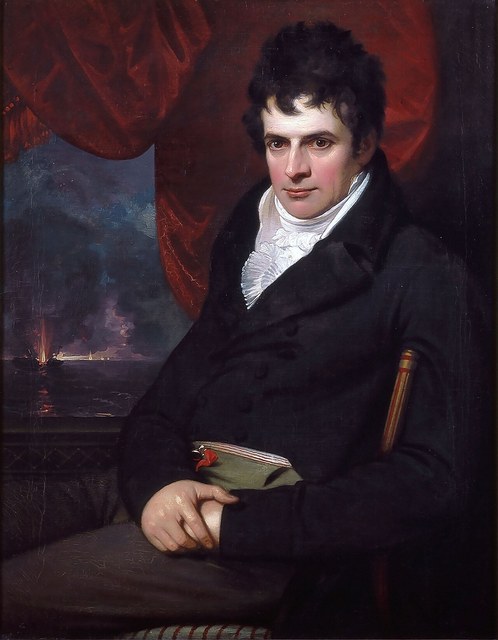
H

John Edward Bouligny, a Creole member of this party, was the only Louisiana representative to refuse to sign the secession from the Union.

H

Members of this party include a governor who ordered the burning of railroad bridges leading to Baltimore.

H

A major leader of this party defected to become the Republican governor of Massachussetts; that was Nathaniel Banks.

H

Answer the following about an American history, :This movement, which sought to curb the influence and power of newly arrived Roman Catholics, was composed of loosely associated secret orders including the “Order of the Spangled Banner.”

H

It emerged from the Order of the Star-Spangled Banner, which began holding secret meetings in 1849. :Identify this political party, which was officially known as the American party but took its better-known name from a catchphrase used by its members.

H

Poole was an active member of this nativist political party founded in 1844 by Lewis Levin whose derisive-sounding nickname referred to its members' extreme secrecy.

H

Although some supported temperance, the only vice presidential candidate of this political party was based out of Tulip Grove and was Andrew Donelson.

Watch out: Officially called the American Party or Native American Party, not to be confused with modern Native American political movements
#767 · US Political Parties and Factions · Level 2

Free Soil Party

Free Soil Party
Nathaniel Currier firm · Public domain

Anti-slavery third party · 1848–1854 · United States

Free Soil Party was an American third party that opposed slavery's expansion into new territories from 1848 until absorption by Republicans.

The kit

  • Formation — Free Soil Party formed in 1848 when Barnburner Democrats withdrew support from Lewis Cass at a Buffalo convention.
  • Platform — Free Soil Party supporters favored the Wilmot Proviso and opposed the Compromise of 1850 and Kansas-Nebraska Act.
  • Electoral performance — Free Soil Party nominated Martin Van Buren in 1848, capturing ten percent of the popular vote, mostly from New York.
  • Collapse — Free Soil Party collapsed after its second national election when John Hale and George Washington Julian failed to capture 5% of votes.

Runs with

Martin Van Buren
former president who ran as Free Soil presidential nominee in 1848 open card →
Slavery
party opposed slavery's expansion into new western territories open card →
1848
year the party formed and ran its first presidential ticket open card →
John
John Hale served as senator and final presidential nominee for the party open card →

The ladder · 9 clues

H

This party collapsed after only its second national election when a ticket of John Hale and George Washington Julian failed to capture even 5% of the popular vote.

H

This party, whose final presidential nominee was John P. Hale, emerged when the Barnburners withdrew their support from Lewis Cass, instead nominating Martin Van Buren for the presidency. name this anti-slavery party tht was active from 1848 until its absorption by the Republican Party.
H

This party, which partially formed from Barnburner Democrats, nominated a former president as its candidate, though it only won ten percent of the popular vote.

H

Salmon P. Chase served six years in the Senate as a member of this political party.

M

In 1844, Charles Francis Adams and Martin van Buren ran as a ticket for, what mid-19th century American third party which opposed the expansion of slavery?

M

Supporters of this party favored the Wilmot Proviso, though it failed to stop the Kansas -Nebraska Act. (*) For ten points , name this anti -slavery third party whose ticket in the 1848 presidential election was led by Martin Van Buren.

M

This party's members included Senators Salmon P. Chase and John Hale.

E

This political party nominated John Hale and Martin van Buren for president, and this party strongly opposed the Compromise of 1850. name this party named for its opposition to slavery in new lands.

E

The Barnburners helped form this party after the Democratic Convention refused to endorse the Wilmot Proviso.

10 more clues from the record
H

This party's vice-presidential candidates included George Julian and Charles Francis Adams.

H

Running on this party's ticket, education reformer Horace Mann lost an election for governor of Massachusetts.

H

All six signers of the Appeal of the Independent Democrats left to join this party.

H

An Indianapolis newspaper named for this political party's Banner published from 1948 to 1954.

H

Nearly a third of supporters in its best year came from New York State, which prevented that state from going Democratic. Many of its backers were New York Democrats who quarreled with the Hunkers and started this party at a convention in Buffalo.

H

This third party came together in 1848, breaking from the Democrats. :What party demanded that slavery be outlawed in new territories, captured in their slogan which also included “Free Speech, Free Labor, and Free Men”?

H

Its second vice presidential candidate went on to propose a constitutional amendment providing for women’s suffrage and delivered a notable speech, “The Gospel of Reform,” in support of Samuel Tilden.

H

The political cartoon "Shooting the Christmas Turkey" shows another candidate from this party as a fox grabbing the turkey while two candidates from other parties bicker.

H

Its first vice presidential candidate wrote Conservatism and Reform and Struggle for Neutrality in America, and served as ambassador to Great Britain during the Civil War.

H

David Terry, the Chief Justice of the Supreme Court of California, mortally wounded senator David Broderick in a duel for supporting this political party.

Watch out: Charles Francis Adams was the first vice presidential candidate in 1848, not a presidential candidate in 1844
#772 · US Political Parties and Factions · Level 2

Anti-Masonic Party

Anti-Masonic Party
Public domain

American third party · 1828–1838 · United States

Anti-Masonic Party was America's first significant third party, formed after William Morgan's 1826 disappearance and opposing Freemasonry.

The kit

  • Rise — Anti-Masonic Party grew in popularity after William Morgan's alleged killing by Freemasons on the Niagara River in 1826.
  • Achievements — Anti-Masonic Party held the first presidential nominating convention in 1831, subsequently nominating William Wirt for president in 1832.
  • Electoral success — Anti-Masonic Party won Vermont's electoral votes in 1832 and controlled governorships in Vermont under William Palmer and Pennsylvania under Joseph Ritner.
  • Legacy — Anti-Masonic Party eventually merged with the Whig Party and counted future president Millard Fillmore among its members.

Runs with

William
William Wirt was the party's 1832 presidential nominee open card →
Vermont
Vermont gave its electoral votes to the party in 1832 open card →
York
Solomon Southwick ran unsuccessfully for New York governor in 1828 open card →
Solomon
Solomon Southwick was an early party leader and newspaper publisher open card →

The ladder · 9 clues

H

This political party was supported by the Albany Evening Journal, which was founded by Thurlow Weed.

H

This party’s presidential nominee despairingly called his supporters a “motley crew” and its leadership refused to let him drop out of the race months before the election.

H

Solomon Southwick was this party’s unsuccessful nominee for Governor of New York in 1828, and it grew in popularity after William Morgan’s alleged killing by a group on the Niagara River.

H

One member of this organization was defeated as the incumbent governor of Pennsylvania by David Porter, a result which sparked the Buckshot War, started by partisans of Joseph Ritner.

M

In response to the mysterious disappearance of William Morgan, Thurlow Weed co-founded this party, which he used to oppose the Albany Regency.

M

This party held the first presidential nominating convention; it chose William Wirt, who won Vermont’s electoral votes in 1832.

M

At its height, the Vermont governorship was held by this party’s William Palmer.

E

This party held the nation's first convention to nominate a presidential candidate and subsequently nominated William Wirt in 1832.

E

This earliest 3rd party in the U.S. nominated William Wirt for President in the 1832 election. name this single-issue party that eventually merged with the Whig Party and opposed a certain secret society.

10 more clues from the record
H

Its presidential ticket, consisting of Amos Ellmaker and William Wirt, received seven electoral votes in the 1832 election. It was formed in reaction to the disappearance of William Morgan.

H

Another one of their candidates for higher office in a later incarnation was the first president of Wheaton College, Jonathan Blanchard.

H

After this party took over the Rhode Island legislature, it passed a state law banning any type of oath or obligation made outside a courtroom.

H

While serving in the New York State Assembly and Senate, both Millard Fillmore and William Seward were members of this party, which nominated William Wirt for the presidency.

H

Solomon Southwick’s National Observer was a newspaper for this party, whose loss in an 1828 New York election started a rivalry with the Democratic-Republicans.

H

John W. Phelps ran on this party’s ticket in the 1880 Presidential election, but received just over 1,000 votes.

H

State lottery organizer Solomon Southwick was a leader of this party, the original one backed by the Enquirer newspaper of Thurlow Weed.

H

Under the banner of this party, Pennsylvania's Joseph Ritner and Vermont's William Palmer both served gubernatorial terms.

H

Answer the following about a third party per part.The first-ever political nominating convention was held in 1831 by this party opposed to the re-election of Andrew Jackson, among other things.

H

People who didn’t vote for either of the two big parties generally went for this first major U.S. third party, a single-issue party that was strongest in states with weak opposition.

Watch out: William Wirt called his supporters a 'motley crew' and tried to drop out before the 1832 election
#773 · US Presidential Also-Rans · Level 2

Winfield Scott

Winfield Scott
Charles D. Fredricks & Company · Public domain

U.S. general · 1786–1866 · United States

Winfield Scott was a U.S. general who served from the War of 1812 through the Civil War, capturing Mexico City in 1847.

The kit

  • War of 1812 — Winfield Scott was captured at the Battle of Queenston Heights but later showed professional leadership at Lundy's Lane in 1814.
  • Mexican-American War — Winfield Scott won the battles of Cerro Gordo and Churubusco following his amphibious assault on Veracruz, then captured Mexico City in 1847.
  • Civil War strategy — Winfield Scott developed the Anaconda Plan to blockade the South during the Civil War despite his advanced age.
  • Legacy — Winfield Scott, nicknamed "Old Fuss and Feathers," holds the distinction of being the longest-serving general in American history.

Runs with

Anaconda Plan
Scott developed this Union blockade strategy during the Civil War open card →
Mexican-American War
Scott captured Mexico City in 1847, defeating Santa Anna open card →
Veracruz
Scott launched an amphibious assault on this city in 1847 open card →
Mexico
Scott captured this nation's capital in 1847 open card →

The ladder · 9 clues

H

Created the Anaconda Plan and served in the War of 1812 and the Mexican- American War.

H

A lack of proper uniforms among this man’s troops caused Phineas Riall to treat them as militia in the Battle of Chippewa.

H

This man offered to duel Henry Clay after Clay struck him with a cane in retaliation for siphoning votes in the Election of 1840.

H

This man carried out a controversial mass execution of seventy-two deserters from the St. Patrick’s battalion.

M

What General, nicknamed “Old Fuss and Feathers,” captured Mexico City in the Mexican-American War, defeating Santa Anna?

M

During the Civil War, this man developed the Union strategy known as the Anaconda Plan. name this American general who defeated Santa Anna and captured Mexico City in 1847.

M

Forces under Zachary Taylor were absorbed by this man in anticipation of his amphibious assault on Veracruz.

E

The Civil War plan to blockade the South was devised by, what Mexican-American War general, nicknamed “Old Fuss and Feathers?”

E

The Anaconda Plan was developed by, what general known as “Old Fuss and Feathers?”

10 more clues from the record
H

This man ordered Gideon Pillow to fix official reports that gave Pillow too much credit for this man’s victories.

H

This man negotiated with James Douglas after a bloodless war over the San Juan Islands, the Pig War.

H

This man headed the US Navy’s intimidation of South Carolina during the Nullification Crisis.

H

During the War of 1812, he was captured at the Battle of Queenston Heights.

H

In his best-known command, this man won the battles of Cerro Gordo and Churubusco in a follow-up to his amphibious assault on Veracruz.

H

This man led a battalion in a desperate attempt to break Gordon Drummond’s line during the 1814 Battle of Lundy’s Lane, where this man's leadership showed that the U.S. had a truly professional army.

H

During the Election of 1852, this man only won four states against Franklin Pierce, who had earlier served under him in the Mexican-American War.

H

This man oversaw the process of Indian Removal from Florida, and though he never graduated from West Point, this man holds the distinction of being the longest-serving general in American history.

H

This man captured a fort defended by six “Heroic Cadets” and Nicolas Bravo, and he commanded alongside Jacob Brown at the Battle of Lundy’s Lane.

H

This general had his orders disobeyed by future electoral opponent Franklin Pierce during the Battle of Churubusco [[choo- roo-BOO-skoh]].

Watch out: Franklin Pierce (electoral opponent in 1852 who had served under Scott in Mexico)
#811 · Monumental Statues and Memorials · Level 2

Washington Monument

Washington Monument
Greyfiveys · CC BY-SA 4.0

obelisk in Washington D.C. · 1848–1885 · Washington D.C., east of Reflecting Pool

Washington Monument is a 555-foot obelisk whose construction was delayed over 25 years by costs and the Civil War.

The kit

  • Design — Washington Monument's original design by Robert Mills featured a colonnade, but it was never built due to cost.
  • Construction delays — Washington Monument construction began in 1848 but was delayed when a memorial stone was stolen by the Know-Nothing Party.
  • Completion — Washington Monument was completed in 1885 and has a 100-ounce aluminum cap cast before the Hall-Héroult process made aluminum cheaper.
  • Recent damage — Washington Monument, the world's tallest obelisk, was damaged in a 2011 earthquake.

Runs with

1848
construction began in 1848 open card →
Charleston
Alexander Hamilton
Eliza Schuyler Hamilton helped fundraise for it open card →
Abraham Lincoln

The ladder · 6 clues

H

The original design for this structure by Robert Mills featured a colonnade, but it was never built due to cost.

H

The cap of this 555-foot tall obelisk is a 100-ounce piece of aluminum, cast two years before development of the Hall-Héroult process made aluminum significantly cheaper.

H

In 1848, construction began on this more famous obelisk, but was delayed when a memorial stone was stolen by the Know-Nothing Party. This tallest obelisk in the world lies east of the Reflecting Pool.
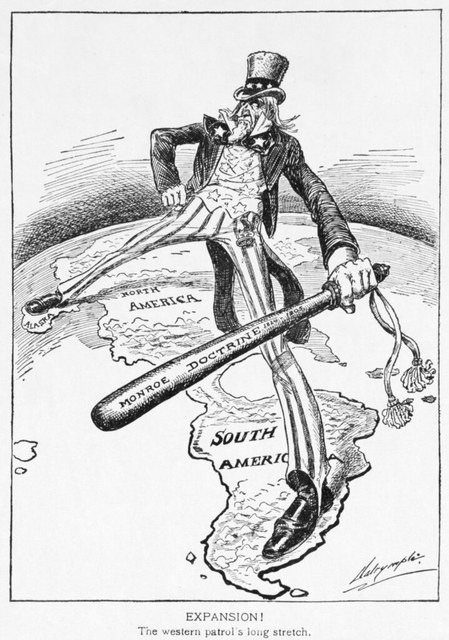
H

Robert C. Winthrop gave an address at the laying of the cornerstone for this structure in 1848, and sent a letter for its 1885 dedication, since he was unable to travel and give it in person.

M

This building of this structure was delayed by costs and the Civil War for over 25 years until its completion in 1885. name this obelisk, which was damaged in a 2011 earthquake, located in Washington D.C. east of the Reflecting Pool.

M

With Dolley Madison and Louisa Adams, Eliza Schuyler helped fundraise for this structure, which was designed by Robert Mills.

#822 · Modern US Military Commanders · Level 2

Oliver Hazard Perry

Oliver Hazard Perry
bdi Jane Stuart /span /a /bdi / bdi Gilbert Stuart /span /a · Public domain

American naval commander · 1785–1819 · Lake Erie, Venezuela

Oliver Hazard Perry commanded American forces to victory at the Battle of Lake Erie in 1813, declaring 'We have met the enemy and they are ours.'

The kit

  • Rise — Oliver Hazard Perry oversaw the building of nine ships at Erie, Pennsylvania and commanded the USS Lawrence during the War of 1812.
  • Achievements — Oliver Hazard Perry commissioned a battle flag bearing 'Don't Give Up the Ship,' the dying words of his friend James Lawrence.
  • Conflicts — Oliver Hazard Perry transferred command from the destroyed USS Lawrence to the USS Niagara during battle at Put-in-Bay.
  • Death & succession — Oliver Hazard Perry died of yellow fever while traveling to negotiate an anti-piracy agreement with Simon Bolivar's government.

Runs with

Battle of Lake Erie
Perry defeated British commander Robert Henry Barclay at this 1813 engagement open card →
War of 1812
Perry earned the title 'Hero of Lake Erie' during this conflict open card →
ships
Perry captured British vessels and built nine American ships at Erie open card →
James
Perry's battle flag honored James Lawrence's dying words open card →

The ladder · 9 clues

H

This man commissioned a battle flag with a motto sewn on it that he attributed to James Lawrence, "Don't Give Up the Ship." This man opposed Jesse Elliot, the captain of the Niagara, at Put-In Bay.

H

This naval commander earned the title “Hero of Lake Erie” for leading the American forces to victory. With Jesse Eliot, this man defeated the British Robert Henry Barclay.

H

This man was court-martialed for running the USS Revenge onto land while patrolling Rhode Island waters during the enforcement of the Embargo Act.

H

This man sent a telegram to William Henry Harrison which read “We have met the enemy and they are ours,” in reference to ships which he had captured.

H

This commander died from malaria while on a diplomatic mission to sign an anti-piracy treaty with the Bolivarian government.

M

American naval commander who said “we have met the enemy, and they are ours” at the Battle of Lake Erie.

M

This man died of yellow fever while traveling on the USS Nonsuch to negotiate an anti-piracy agreement with Simon Bolivar.

E

After defeating a British fleet in an engagement during the War of 1812, this man declared “We have met the enemy and they are ours.” name this victor of the Battle of Lake Erie.

E

This ​ ​ ​ ​ admiral's battle flag bore the dying words of his friend James Lawrence, who uttered "Don't Give up the Ship." name this U.S. admiral who won the Battle of Lake Erie during the War of 1812.

8 more clues from the record
H

A free Black sailor named Cyrus Tiffany shielded this commanding officer during a transfer from the USS Lawrence to the USS Niagara.

H

This man led a squadron of ships past a blockade of Presque Isle Bay to sail to Put-in-Bay.

H

In one battle, this man transferred his command from the Lawrence to the Niagara when his first flagship was destroyed.

H

Answer the following about the Battle of Lake Erie per part.He oversaw the building of nine ships at Erie, Pennsylvania and led the American forces in the battle from aboard the U.S.S. Niagara.

H

This commodore, who had previously served in the West Indies during the Quasi Wars, led the United States fleet by commanding the Lawrence at the Battle of Lake Erie.

H

He filed court-martial charges against Jesse Elliott and was long embittered over the slowness of the USS Niagara to provide assistance.

H

This man was challenged to a duel by his nemesis Jesse Elliott, but declined and attempted to have him court-martialed instead.

H

While in Naples, this man slapped John Heath, prompting a non-fatal duel in Weehawken.

Watch out: Perry opposed Jesse Elliott and filed court-martial charges against him, not a simple subordinate relationship
#843 · Non-Classical Mythological and Legendary Figures · Level 2

Daniel Boone

Daniel Boone
bdi Chester Harding /span /a · Public domain

American frontiersman · 1734–1820 · Kentucky frontier

Daniel Boone blazed the Wilderness Road through the Cumberland Gap and founded Boonesborough, opening Kentucky to colonial settlement.

The kit

  • Rise — Daniel Boone served as a wagoner on Edward Braddock's and John Forbes's expeditions to Fort Duquesne before becoming a frontiersman.
  • Achievements — Daniel Boone blazed the Wilderness Road through the Cumberland Gap and founded Boonesborough as a waystation for the Transylvania Company.
  • Conflicts — Daniel Boone was captured by Chief Blackfish and adopted as "Sheltowee" (Big Turtle), but escaped to warn settlers of attack.
  • Legacy — Daniel Boone's rescue of daughter Jemima from the Shawnee inspired The Last of the Mohicans, and his exploits were popularized by John Filson.

Runs with

Kentucky
founded Boonesborough and explored Kentucky open card →
Shawnee
captured by Shawnee Chief Blackfish, adopted as Big Turtle open card →
John
served under John Forbes on expedition to Fort Duquesne open card →
Richard
worked with Richard Henderson and the Transylvania Company open card →

The ladder · 9 clues

H

This man was given the name "Big Turtle" after becoming the adopted son of Chief Blackfish following his capture by the Shawnee.

H

Blackfish took this man to Chillicothe after he was forced to run the gauntlet.

H

Derry Coburn often accompanied this man in his later life, and William Russell and this man led an expedition during which they had a meeting at Sycamore Shoals with Richard Henderson.

H

This man’s son James was killed by members of the Shawnee tribe, sparking Dunmore’s War, and his son Israel was killed at the Battle of Blue Licks.

M

This man lost his son Israel at the Battle of Blue Licks, and was later captured by Chief Blackfish.

M

Two brothers-in-law of this person helped establish the settlement known as Bryan's Station, and during a hunting expedition, this person was captured by men loyal to Chief Blackfish.

M

This man was named Sheltowee after he was captured during a fight with Chief Blackfish, though he returned to being a Fayette County militia colonel in 1778.

E

The Cumberland Gap was the site of efforts led by this early American frontiersman, who blazed the Wilderness Road.

E

This explorer founded a namesake borough in Kentucky while traveling with the Transylvania Company. name this pioneer who traveled through the Cumberland Gap.

10 more clues from the record
H

This man served as a wagoner on both Edward Braddock’s and John Forbes’s expeditions to Fort Duquesne (pr. doo-KAIN).

H

The capture of this man's daughter, Jemima, and her friends by Shawnee and this man's rescue of them inspired the novel The Last of the Mohicans.

H

This head of the TransylvaniaCompany founded a namesake "Borough," one of the first colonial settlements west of the Appalachians.

H

In his last years, this man served as syndic in what is now St. Charles County, Missouri.

H

A "borough" founded by and named for this man was used as a waystation for Richard Henderson's Transylvania Company.

H

This former Quaker led an expedition to scout the area which became the Wilderness Road.

H

Schoolteacher John Filson and Timothy Flint helped popularize stories about this man, who is shown in a G.W. Fasel drawing holding his daughter and standing on a Native American after an incident that also involved Betsy and Fannie Callaway.

H

Boy Scouts founder Dan Beard modeled his organization after this pioneer. :Identify this explorer who helped create a path through the Cumberland Gap. On a trip to Kentucky he forged the Wilderness Road.

H

This man violated the Proclamation of 1763 when he blazed the Wilderness Road through the Cumberland Gap. :Name this American woodsman best known for exploring and organizing the settlement of modern-day Kentucky.

H

During the American Revolution, this man traveled 160 miles in four days after escaping from Chief Blackfish to warn settlers of an attack on his namesake settlement.

Watch out: Confused with James Fenimore Cooper's fictional Natty Bumppo (Hawkeye) from The Last of the Mohicans
#862 · Other Twentieth-Century Battles and Campaigns · Level 2

Battle of San Jacinto

Battle of San Jacinto
bdi Henry Arthur McArdle /span /a · Public domain

1836 Texas independence battle · April 21, 1836 · near present-day Houston

Battle of San Jacinto was the decisive 18-minute engagement where Sam Houston routed Santa Anna's forces, securing Texas independence.

The kit

  • Decisive victory — Battle of San Jacinto saw Sam Houston defeat Santa Anna in less than 20 minutes, ending the Texas Revolution.
  • Tactics — Battle of San Jacinto began after Deaf Smith burned Vince's Bridge, cutting off Mexican retreat while Mirabeau Lamar led cavalry.
  • Artillery — Battle of San Jacinto featured the only use of the Twin Sisters cannons, donated by Cincinnati and smuggled down the Mississippi.
  • Battle cries — Battle of San Jacinto troops shouted "Remember the Alamo" and "Remember Goliad" as rallying cries during their assault.

Runs with

Sam Houston
commanded Texas forces to victory open card →
Texas
secured independence from Mexico open card →
Antonio López de Santa Anna
captured after his army was routed open card →
The Alamo
avenged six weeks after its fall open card →

The ladder · 9 clues

H

1836 battle where that general routed Santa Anna’s men in less than 20 minutes, securing independence.

H

The “Twin Sister” cannons were used in this battle, in which Deaf Smith was ordered to destroy Vince’s Bridge during this battle and Mirabeau Lamar provided reinforcements.

H

The monument to this battle is known as the “twin sisters”, and consists of two artillery pieces originally used by Major George Hockley during it.

H

This battle saw the only use of the Twin Sisters, two cannons donated by the government of Cincinnati.

M

Decisive, 18-minute-long battle in the Texan War of Independence won by Sam Houston.

M

Battle in what is now Houston at which the Texans ended the revolution six weeks after the Alamo fell

M

The “Twin Sister” cannons were smuggled down the Mississippi River in preparation for this battle.

E

Sam Houston secured the independence of Texas from Mexico by winning this 20-minute rout, at which the forces of Santa Anna were defeated

E

The rallying cries “Remember Goliad” and “Remember the Alamo” were used at this battle, where Santa Anna was captured.

10 more clues from the record
H

A flag flown at this battle was created by the wife of General Sidney Sherman and hangs today in a certain state house of representatives.

H

Before this battle, Thomas Rusk was told to take control if another commander refused to fight.

H

Prior to this battle, James Neill had given way as chief of staff to Major George Washington Hockley, who is credited with nursing the shattered ankle of the winning commander.

H

After Erasmus "Deaf" Smith reported the burning of Vince's Bridge, the winning force was able to aggressively advance its right flank under Henry Millard.

H

It began immediately after the burning of Vince’s Bridge, and Mirabeau Lamar commanded a cavalry unit of 61 men that circled the opposing force.

H

The “Twin Sisters” were first used at this 18-minute battle, where Sam Houston effectively won the independence of Texas from Mexico.

H

Beforehand, Sidney Sherman led an expeditionary skirmish and Deaf Smith destroyed Vince’s Bridge, cutting off the retreat.

H

It quickly devolved into hand-to-hand combat between the American forces and some 400 men commanded by Juan Almonte.

H

Some men who participated in this battle were James C. Neill and the later president of a certain polity, Mirabeau Lamar.

H

A cavalry charge by Colonel Sidney Sherman the day before this military confrontation did very little.

#876 · Commodities and Trade Goods · Level 2

Cotton

Cotton
Public domain

fiber crop · 18th–21st centuries · American South, Egypt, India

Cotton was a fiber crop whose global production fueled textile industrialization and created modern capitalism through slave labor and colonial exploitation.

The kit

  • Processing innovations — Cotton processing was revolutionized by Eli Whitney's cotton gin, which dramatically increased production and entrenched slavery in the American South.
  • Economic dominance — Cotton was called "King Cotton" by James Hammond, who claimed the South's invincibility rested on its control of this essential commodity.
  • Lancashire Famine — Cotton imports to Britain were blocked during the Civil War, causing the Lancashire Famine that devastated English textile mills and spurred Egyptian production.
  • Global capitalism — Cotton's empire rested on violence at every step according to Sven Beckert's Bancroft-winning history, which traced the transition to modern capitalism.

Runs with

Egypt
Egypt expanded long-staple cotton under Muhammad Ali; production surged during Civil War blockade open card →
American Railway Union
No connection evident in clues open card →
Anne Hutchinson
No connection evident in clues open card →
India
India was a major colonial cotton source for British textile mills open card →

The ladder · 9 clues

H

Historian Sven Beckert’s Empire of [this commodity] described its importance in creating a global capitalist system.

H

The 1817 "Alabama Fever" was a land rush due to high demand for this crop, global production of which was hurt by the Lancashire Famine.

H

The crop sourced from Egypt, India, and the American South, which fueled textile mills.

H

A reduction in the green-seed variety of this crop caused the Lancashire Famine.

M

The Stalybridge riots occurred after a depression in Lancashire began during this good’s “famine,” which also led to increased production of it in Egypt.

M

In 2003, the World Trade Organization settled a dispute between Brazil and the United States after the US used loopholes to dump this crop in developing nations.

M

Irrigation for this good drained most of the Aral Sea in Uzbekistan, and a machine for processing this good was invented in America by Eli Whitney. name this trade good nicknamed “King” in the antebellum US south.

E

James Hammond delivered a speech claiming his home was invincible because this crop “is king.” This crop’s production greatly increased due to an invention by Eli Whitney. name this cash crop of the American South that was picked by slaves and processed by a special “gin.”

E

Eli Whitney invented a gin that revolutionized the processing of this crop. name this crop grown in the American South that was harvested with slave labor.

10 more clues from the record
H

A pest known as the boll weevil began to infest places in America that grew this crop in the early 1900s.

H

This commodity, a shortage of which triggered a famine in Lancashire, surged in production in Egypt following an American Civil War-era blockade.

H

The industrialization of this commodity rested at every step on violence according to a Bancroft-winning book titled for the "Empire" of it by Sven Beckert.

H

Reduced imports during the Civil War caused an industry in Lancashire, England to suffer a “famine” named for this crop.

H

Sven Beckert wrote a history about the “Empire of” this good that outlines a transition to modern capitalism.

H

This good’s processing in Ancoats made it the “world’s first industrial suburb.” Methods to process this good were improved by James Hargreaves and Richard Arkwright.

H

Despite the fact that this good is not edible, the British lamented a “famine” of it caused by a Union Navy blockade.

H

A luxurious "long-staple" variant of what inedible crop has been grown in Egypt since Muhammad Ali Pasha's rule?

H

France attempted to establish plantations for this good in the Niger Bend after Britain successfully did so in Sudan’s Gezira Triangle.

H

A crash in prices for this good led Egypt’s debt to skyrocket in the 1860s, thus leading to a British protectorate over it.

Watch out: The Lancashire "famine" involved cotton (inedible fiber), not food shortage
#879 · Commodities and Trade Goods · Level 2

Cotton Gin

Cotton Gin
Tom Murphy VII · Public domain

seed-separation machine · 1793 · Southern United States

Cotton Gin was a machine invented by Eli Whitney in 1793 that used rotating cylinders with hooks to separate cotton seeds from fiber.

The kit

  • Invention — Cotton Gin was developed in Catharine Greene's workshop with her funding, though Matilda Gage later claimed Greene was the true inventor.
  • Mechanism — Cotton Gin used a rotating cylinder with small hooks and brushes, plus oppositely arranged rows of teeth, to separate cotton bolls from seeds.
  • Economic impact — Cotton Gin made short staple cotton cultivation lucrative, reducing processing time from 16 months to days for 500-pound bales.
  • Legacy — Cotton Gin's inventor made his fortune in gunsmithing after his patent was widely ignored, securing a government contract for interchangeable muskets.

Runs with

Slavery
made cotton production profitable, **expanding slavery** in the South open card →
Georgia
Massachusetts
invented by **Massachusetts farmer Eli Whitney** open card →
tobacco
displaced tobacco as **primary Southern export** after 1793 open card →

The ladder · 9 clues

H

Phineas Miller sold this invention at exorbitant rates after it was first created in Catherine Greene’s workshop.

H

This invention allowed the cultivation of the short staple variety of its namesake substance, which made its cultivation more lucrative and eventually allowed for the expansion of slavery. :What 1793 invention used oppositely arranged rows of teeth for quicker and easier separation of the boll from the seed?

H

Answer these questions about the history of agricultural technology .Able to separate seeds from the raw fiber, this apparently very important machine was the creation of Massachusetts farmer Eli Whitney.

H

Catharine Greene provided much of the funding for the development of this device. :Name this device invented in 1793 by Eli Whitney that revolutionized the production of a certain cash crop in the Southern United States.

M

William Longstreet improved upon this invention with his “breast roller.” Its inventor made his fortune in gunsmithing after his patent for this creation was ignored.

M

Tobacco rivaled a certain textile crop as the primary export of the South until 1793, when this machine simplified production of a certain textile crop by quickly separating the seeds from the fiber.

M

Because the wire teeth in these devices caused damage, they were typically not used on Sea Island variants of one product.

E

This machine used a rotating cylinder to move small hooks and brushes. name this machine invented by Eli Whitney that separated lint from seed in a slavery-intensive textile crop.

E

Removing the seeds from a crop widely used to make textiles was made much easier by this machines invented by Eli Whitney.

5 more clues from the record
H

A self-feeding antecedent to these devices invented by Joseph Eve greatly cut down on hernia risk.

M

Matilda Gage claimed that the true inventor of these devices was Catharine Littlefield Greene.

M

Hodgen Holmes’s patent for one of these devices using saw teeth was nullified.

E

Prior to the invention of these devices, it took upwards of 16 months to process a 500-pound bale of a certain good.

E

The inventor of these devices became rich after securing a government contract to make interchangeable muskets.

Watch out: Catharine Littlefield Greene, who funded development in her workshop, was claimed by some as the true inventor
#884 · International Treaties and Diplomatic Agreements · Level 2

Constitutional Convention

Constitutional Convention
The original uploader was Tarmstro99 /a at English Wikisourc · Public domain

1787 Philadelphia gathering · May–September 1787 · Independence Hall, Philadelphia

Constitutional Convention was the 1787 meeting where delegates replaced the Articles of Confederation with the U.S. Constitution.

The kit

  • Purpose — Constitutional Convention convened to address governance failures under the Articles of Confederation after receiving only $663 of expected $3.8 million.
  • Key compromises — Constitutional Convention adopted the Connecticut Compromise creating a bicameral legislature and the Three-Fifths Compromise for counting slaves in the census.
  • Leadership — Constitutional Convention was presided over by George Washington and featured John Rutledge chairing the Committee of Detail that inserted essential principles.
  • Outcome — Constitutional Convention concluded with Benjamin Franklin observing that the sun carved into a chair was rising, symbolizing the new government's promise.

Runs with

Philadelphia
held at Independence Hall in this city open card →
Connecticut
namesake of the compromise creating bicameral legislature open card →
Patrick Henry
declined to attend, saying he 'smelt a rat' open card →
Pennsylvania
state where this meeting occurred open card →

The ladder · 9 clues

H

During this meeting, John Rutledge spoke out against the Supreme Court’s ability to give advisory opinions and chaired its Committee of Detail.

H

In a speech during this meeting, Alexander Hamilton stated that “All governments, even the most despotic, depend in a great degree on opinion” and advocated a so-called “British” system.

H

Though William Jackson was appointed secretary at this event, notes about its proceedings were compiled by Richard Yates.

H

As of September 2017, Mark Meckler's COS group has secured support from 12 state legislatures for one of these events centered on a balanced budget amendment. :Identify these events that can happen with approval from two-thirds of state legislatures according to Article V of the Constitution. There hasn't been one of these events since 1787.

M

Patrick Henry avoided this event because he “smelt a rat.” At this event, which took place one year after a similar gathering in Annapolis, James Wilson proposed the three-fifths compromise and Roger Sherman presented the “Connecticut Compromise.” name this 1787 gathering in Philadelphia to amend the faulty Articles of Confederation.

M

This meeting adopted the three-fifths compromise about how to count slaves in the census and the Connecticut Compromise in creating a bicameral legislature. name this 1787 meeting that created an American governing document.

M

At the conclusion, one man predicted it “will astonish our enemies,” while a Virginian declined to go because he “smelt a rat.” identify this event presided over by George Washington in 1787 at Philadelphia which set up a system of government to replace the Articles of Confederation.

M

Compromises at this event include the Connecticut Compromise between the Virginia and New Jersey Plans and the Three-Fifths Compromise. name this 1787 event held in Independence Hall in Philadelphia where delegates drafted and signed the central document of U.S. law.

M

A different plan here provided for officials who served terms contingent on “good behavior.” name this meeting, where both “The Connecticut Compromise” and “The Three-Fifths Compromise” were made.

10 more clues from the record
H

This event included an agreement that appeased both small and large states known as the Connecticut Compromise. :Name this 1787 meeting of delegates in Philadelphia, which replaced the Articles of Confederation with the current supreme law of the United States.

H

Convening to address issues of governance under the Articles of Confederation, attendees of this meeting included John Lansing Junior and Gouverneur Morris. :Name this 1787 meeting in Pennsylvania, presided over by George Washington.

H

This event was precipitated by receiving only $663 instead of an expected $3.8 million, outstanding debts to the Netherlands, and the veto of Robert Morris’s twenty-five year plan.

H

Answer these questions about the somewhat shady 18th century politician William Blount. …Blount represented North Carolina at this 1787 gathering which rewrote America’s government.

H

A participant in this event declared at its end that a sun carved into the back of a chair must have been rising instead of setting.

H

One of the oldest attendees was the oddly named Daniel of St. Thomas Jenifer, while another attendee, James Wilson, developed an infamous proposal.

H

At this event, a proposal to “insert essential principles only” was made by a “Committee of Detail.” Robert Yates wrote “Notes of the Secret Debates” of this event.

H

Another issue was an agreement between Virginia and Maryland about the navigation of the Chesapeake Bay that Delaware and Pennsylvania wished to join.

H

In one account of this event, Elizabeth Willing Powel replied ‘And why not keep it?’ in response to a quip at its conclusion.

H

A depiction of this event was produced by Howard Chandler Christy in the sail lot of the Washington Naval Yard because it was so large.

Watch out: Annapolis Convention (1786 gathering one year before this event)
#893 · US Treaties and Diplomatic Agreements · Level 2

Louisiana Purchase

Louisiana Purchase
William Morris · CC BY-SA 4.0

1803 U.S. land acquisition · 1803 · French territory west of Mississippi River

Louisiana Purchase was the 1803 acquisition of 800,000 square miles from France that doubled the size of the United States.

The kit

  • Negotiation — Louisiana Purchase was negotiated by Robert Livingston and James Monroe with French Treasury Minister François Barbé-Marbois for fifteen million dollars.
  • Catalyst — Louisiana Purchase became possible after the Haitian Revolution ended Napoleon's Caribbean ambitions and made him focus on European conflicts.
  • Transfer — Louisiana Purchase's official transfer occurred at Place d'Armes (Jackson Square), with Amos Stoddard serving as initial military governor before William Henry Harrison.
  • Opposition — Louisiana Purchase faced criticism from Timothy Pickering, who threatened Northern secession, and Henry Adams, who questioned Spain's Third Treaty of San Ildefonso claims.

Runs with

Thomas Jefferson
authorized the purchase as president open card →
Land
doubled U.S. territorial holdings open card →
James Monroe
negotiated the purchase with Livingston open card →
France
sold the territory under Napoleon open card →

The ladder · 9 clues

H

The U.S. president behind this agreement sent Robert Livingston and James Monroe to negotiate it.

H

An argument that this agreement was invalid claimed one side had never fulfilled the terms of the Third Treaty of San Ildefonso.

H

This deal was precipitated by a Slave Revolt in Saint-Domingue [[sahn doh- MAHNG]] and by Napoleon Bonaparte’s desire to focus on his European position.

H

The costliness of the Haitian revolution led to this sale of territory by Napoleon to the United States.

M

The Jefferson administration facilitated this "Purchase" which doubled the size of the United States.

M

One side in this agreement spent fifteen million dollars to nearly double the size of the United States.

M

François de Barbé-Marbois [bar-bay mar-bwah] was a key negotiator of this agreement, which arose after an insurrection on Saint Domingue [sahn doh-meeng].

E

The size of the United States was doubled by this 1803 purchase of French land under Thomas Jefferson.

E

Thomas Jefferson presided over this 1803 deal in which the United States acquired 800,000 square miles of land from France.

10 more clues from the record
H

Treasury Minister François Barbé-Marbois [[bar-BEH-mar-BWAH]] negotiated this agreement with James Monroe and Robert R. Livingston.

H

The official transfer of power over this territory, illustrated by Thure de Thulstrup in Harper's Weekly, took place in the Place d'Armes [], today Jackson Square.

H

Francois de Barbe-Marbois officially presented this agreement to Robert Livingston, the American negotiator of this agreement, and the Haitian Revolution reinforced this agreement’s necessity to Napoleon.

H

This agreement resulted in Amos Stoddard being appointed a military governor, a position he held until handing his lands over to William Henry Harrison.

H

This treaty was opposed by Henry Adams, who noted Spain might still have a right of reclamation despite the earlier Treaty of San Ildefonso.

H

In response to this agreement, Timothy Pickering wrote a letter to Rufus King denouncing slave states and threatening the creation of a Northern confederacy.

H

The president who authorized this agreement wrote a letter outlining his diplomatic strategy to Governor James Gerrard of Kentucky.

H

Secretary of the Treasury Albert Gallatin informed the sitting president that this acquisition was protected by the treaty-making provision in the Constitution.

H

This negotiation went ahead after the success of Toussaint L’Ouverture’s rebellion in Haiti, ending Napoleon’s hopes of a Caribbean empire.

H

John Randolph rhetorically asked about this agreement if the president realized “that no treaty is binding” until Senate approval.

Watch out: Treaty of San Ildefonso (separate agreement between France and Spain that preceded this purchase)
#894 · US Treaties and Diplomatic Agreements · Level 2

Treaty of Ghent

Treaty of Ghent
bdi Amédée Forestier /span /a · CC0

1814 peace treaty · December 24, 1814 · Ghent, Belgium

Treaty of Ghent ended the War of 1812 by restoring pre-war borders and agreements to status quo.

The kit

  • Negotiations — Treaty of Ghent was negotiated by American commissioners including Henry Clay, John Quincy Adams, and Albert Gallatin.
  • Terms — Treaty of Ghent promised to establish commissions to decide boundary disputes, dodging the issues that precipitated the war.
  • Native Americans — Treaty of Ghent's unenforced ninth article was supposed to restore land to Native Americans after British demands for a barrier state.
  • Aftermath — Treaty of Ghent was signed approximately two weeks before the Battle of New Orleans took place in January 1815.

Runs with

War of 1812
ended this conflict in 1814 open card →
Battle of New Orleans
signed two weeks before this battle open card →
Henry Clay
served on five-member negotiating team open card →
New Orleans
site of battle fought after signing open card →

The ladder · 9 clues

H

To commemorate the 100th anniversary of this treaty, Lorado Taft created a sculpture called the Fountain of Time.

H

The War of 1812 was ended in 1815 with the signing of this treaty, which generally returned most borders and agreements to the status quo from before the war.

H

One side of this treaty initially demanded the creation of an Indian barrier state in the American Northwest Territory.

H

A five member team including Albert Gallatin and Henry Clay negotiated this treaty, whose unenforced ninth article was supposed to restore land to Native Americans.

M

Weeks after the signing of this treaty, Edward Pakenham's British Regulars were defeated by Andrew Jackson at the Battle of New Orleans. name this treaty that ended the War of 1812.

M

Viscount Castlereagh [["CASTLE"-RAY]] was advised to take the pre-war status quo when negotiating this treaty across from John Quincy Adams and Henry Clay.

M

The Duke of Wellington suggested his government ask for no territorial concessions during this treaty’s negotiations.

E

This treaty was signed approximately two weeks before the Battle of New Orleans took place. identify this treaty, named for a Belgian city, that ended the War of 1812.

E

The Regency period was ruled over by George IV, who signed this treaty that ended the War of 1812.

10 more clues from the record
H

During the negotiations for this treaty, Henry Goulburn demanded the creation of a Native American buffer state in present-day Ohio.

H

The Convention of 1818 and the Rush-Bagot Treaty dealt with military controls around a border established by this treaty.

H

During negotiations for this treaty, the British launched several simultaneous invasions; one that originally marched south from Canada before being stopped at the Battle of Plattsburg and another that landed and won the battle of Bladensburg prior to burning Washington DC but failed to seize Baltimore.

H

One group in this event decided against naming Bathurst head of their commission as they felt it did not need a ranking minister, while members of the other commission included Jonathan Russell and James A. Bayard.

H

Pierre Burton’s comments on this document state, “For nothing has changed; everything is as it was in the beginning [ . . . ]” One portion of this document outlined the creation of an “Indian Barrier State” in the Northwest Territory.

H

This treaty’s tenth article calls “traffic in slaves irreconcilable with the principles of humanity and justice,” and its ninth article urges the U.S. to end hostilities with the Indians and restore their land.

H

This treaty promised to set up numerous commissions to properly decide various boundary disputes, thus dodging the issues that precipitated the war it ended.

H

Another man associated with it got the nation’s first bankruptcy act passed while serving as a congressman from Delaware.

H

Yet another man associated with it took time away from his work Anglicizing the legal system of Trinidad to work on it.

H

Its provision involving the islands in Passamaquoddy Bay was administered by one of its signers, John Holmes.

Watch out: Battle of New Orleans occurred after the treaty was signed, not before the war ended
#896 · US Treaties and Diplomatic Agreements · Level 2

Treaty of Guadalupe Hidalgo

Treaty of Guadalupe Hidalgo
Governments of USA and Mexico · Public domain

1848 peace treaty · 1848 · Guadalupe Hidalgo, Mexico

Treaty of Guadalupe Hidalgo ended the Mexican-American War and transferred California and the Southwest to the United States.

The kit

  • Negotiation — Treaty of Guadalupe Hidalgo was negotiated by Nicholas Trist, who was fired for insubordination upon returning to Washington.
  • Territorial provisions — Treaty of Guadalupe Hidalgo established the Rio Grande as Texas's southern boundary and granted California to the United States.
  • Failed amendments — Treaty of Guadalupe Hidalgo rejected the Wilmot Proviso banning slavery in acquired territories, opposed by anti-expansionist Whigs.
  • Enforcement problems — Treaty of Guadalupe Hidalgo's Article XI was annulled after the U.S. found containing Comanche and Apache raids impossible.

Runs with

Mexican-American War
ended this conflict after the Thornton Affair open card →
Wilmot Proviso
failed amendment attempting to ban slavery in acquired lands open card →
Mexico
ceded California and Southwest territories to U.S. open card →
the Presidency
negotiator Trist fired by administration for insubordination open card →

The ladder · 9 clues

H

A failed amendment to this treaty obtaining even more land was proposed by Jefferson Davis, but opposed by Democratic leadership.

H

It was negotiated by a man who was fired upon returning to Washington for ignoring instructions to return home instead of negotiating; that man was a former pro-slavery consul in Havana named Nicholas Trist.

H

A reporter for the New York Herald named John Nugent was questioned by the Senate after he attained a leaked copy of this treaty.

H

Article XI [] of this treaty was annulled a year later after the U.S. found it impossible to contain Comanche raids.

M

The Wilmot Proviso was also not added to this treaty, which was opposed by anti-expansionist Whigs. name this 1848 treaty in which the US acquired California while ending the Mexican-American War.

M

This treaty’s Article 11 promised protection against Apache raids but proved unenforceable.

M

The Rio Grande was set as the southern boundary of Texas in this treaty, which granted California to the United States. For ten points, name this treaty that ended the Mexican-American war.

E

The Wilmot Proviso was a failed attempt at banning slavery in the territories acquired in this treaty. name this treaty that ended the Mexican-American War.

E

The chief negotiator of this treaty was Nicholas Trist.

10 more clues from the record
H

The goals of this agreement had been brought up earlier by John Slidell, and this treaty put an end to the war that began with the Thornton Affair.

H

This treaty’s Protocol of Queretaro was later ignored because one side’s representatives did not have the power to agree to it.

H

Rights established in this treaty’s Article 9 were affirmed by a three-amendment protocol signed by Nathan Clifford and others.

H

Dr. Richard Madden criticized a negotiator of this treaty because that man profited from slaving fees as U.S. Consul in Havana.

H

Amendments to this treaty were included in the Protocol of Queretaro, and it was preceded by a cessation of hostilities known as the Capitulation of Cahuenga.

H

This treaty’s American negotiator was immediately fired for insubordination when news of its signing reached Washington.

H

The Treaty of Cahuenga [[kah-HWENG-ah]] was a predecessor to this treaty, signed in-part by prominent rancher Andrés Pico.

H

The Wilmot Proviso banning slavery in the territory acquired failed to be added to this treaty.

H

This treaty superseded a partial agreement signed the previous year in the Treaty of Cahuenga.

H

Delays in the drafting of this document led to the seizure of the merchant ship Betsey until this document was finalized. :Name this treaty, whose final version was negotiated by Thomas Barclay and notably did not include stipulations about tribute.

Watch out: Treaty of Cahuenga, a predecessor agreement signed the previous year
#899 · US Treaties and Diplomatic Agreements · Level 2

Jay's Treaty

Jay's Treaty
Public domain

1794 U.S.-Britain treaty · 1794 · United States and Britain

Jay's Treaty was negotiated by the first Chief Justice to resolve issues from the Treaty of Paris and end British occupation of frontier forts.

The kit

  • Negotiations — Jay's Treaty was designed by Alexander Hamilton and negotiated by Chief Justice John Jay, who threatened to join a league of neutrality with Denmark and Sweden.
  • Provisions — Jay's Treaty secured British evacuation of frontier forts in the Northwest Territories, expanded American trade with most-favored-nation status, but failed to end impressment.
  • Controversy — Jay's Treaty sparked massive opposition when details leaked to the Aurora newspaper, leading to Jay being burned in effigy across the country and Frederick Muhlenberg being stabbed.
  • Legacy — Jay's Treaty was supported in Alexander Hamilton's "Camillus" letters and Fisher Ames's congressional speech, but helped usher in the First Party System through Democratic-Republican opposition.

Runs with

Alexander Hamilton
designed the treaty and defended it in "Camillus" letters open card →
Treaty of Paris
resolved lasting issues from this earlier agreement open card →
Native Americans
Article III protected Canadian-born Native emigration rights open card →
Paris

The ladder · 9 clues

H

In this settlement, a former minister to Spain negotiated the evacuation of frontier forts and the expansion of American trade, but when details of this pact were leaked to the Aurora newspaper, its negotiator was burned in effigy.

H

Copies of this document were burned in front of George Hammond's house, and Frederick Muhlenberg was stabbed for signing this document.

H

This treaty, which was supported in the “Camillus” letters, references the non-existent St. Croix River as a boundary.

H

It was supported under the pseudonym of Camillus by Alexander Hamilton, while Fisher Ames gave a speech in favor of it as a Congressman from .

M

That namesake of this treaty said that he could travel across the country by the light of effigies depicting him being burned.

M

The Monroe-Pinkney Treaty, which would have replaced this treaty after its expiration, was rejected by a vocal opponent of this treaty, Thomas Jefferson.

M

Fort au Fer [] was vacated through this treaty, which granted most-favored-nation status.

E

Meant to resolve lasting issues from the Treaty of Paris and the French Revolution, what treaty was negotiated by the first Chief Justice of the U.S. Supreme Court?

E

Frederick Muhlenberg, who provided the tie-breaking vote to ratify this agreement, was stabbed by his own brother-in-law over his vote. name this agreement, designed by Alexander Hamilton, that failed to end the impressment of American sailors by British ships but opened trade with the U.K.

10 more clues from the record
H

This treaty's Article III outlined legal protections for the emigration of Canadian- born Native Americans into the United States.

H

Chief Justice Oliver Ellsworth wrote an advisory opinion rejecting the House's right to decide this treaty's merits.

H

Issues over forts in the Mackinac [[MAK-in-aw]] and Maumee regions, as well as sailor impressment, were dealt with in this treaty.

H

According to this treaty, Native Americans born in Canada can get domestic tuition fees in the US.

H

The First Party system was partially ushered in by this treaty, which was heavily opposed by Democratic-Republicans.

H

During the negotiations for this treaty, the U.S. ineffectively threatened to join a league of neutrality with Denmark and Sweden.

H

name these treaties signed by America in the 18th century.A future Supreme Court justice negotiated this 1794 treaty with Great Britain designed by Alexander Hamilton to resolve some issues left over from the Revolutionary War.

H

Rutledge's downfall was sparked by his vociferous criticism of this 1794 treaty, which extended the Treaty of Paris and was negotiated and named for Rutledge's aforementioned predecessor in his highest office. It resulted in British troops vacating the Northwest Territories.

H

This unpopular US-Britain agreement failed to end naval impressment, but did negotiate Britain’s withdrawal from forts in the west. Washington sent its American signatory in his role as Chief Justice.

H

Granting free passage between the and to all those half Native American or more, it set the Saint Croix river as the northeastern boundary of the .

Watch out: Monroe-Pinkney Treaty was proposed to replace it after expiration
#900 · US Treaties and Diplomatic Agreements · Level 2

Adams-Onís Treaty

Adams-Onís Treaty
CC BY-SA 2.5

1819 U.S.-Spain treaty · 1819 · United States and Spain

Adams-Onís Treaty was an 1819 agreement in which Spain ceded Florida to the United States and established the southwestern boundary.

The kit

  • Territory exchange — Adams-Onís Treaty saw the United States trade its claims to Texas for Florida and Spanish Oregon.
  • Boundary terms — Adams-Onís Treaty established the "step boundary" and set Spain's northern claims at the 42nd parallel.
  • Negotiation context — Adams-Onís Treaty followed Andrew Jackson's raids on Seminole lands in Florida, pressuring Spain to negotiate.
  • Implementation — Adams-Onís Treaty's ratification was delayed because Spain wanted to withhold recognition from South American revolutionaries.

Runs with

Florida
Spain ceded Florida to U.S. open card →
Spain
Mexico
gained independence 1821, altering treaty terms open card →
Texas

The ladder · 9 clues

H

One party to this treaty renounced all land claims above the 42nd parallel in exchange for recognition of its then- ownership of Texas to the Sabine River.

H

A portion of the region discussed in this treaty was claimed in the 1792 voyage of Robert Gray.

H

1819 agreement in which James Monroe’s Secretary of State secured Florida for the United States.

H

Hyde de Neuville intervened to pass this treaty, which caused controversy because the Neches and Sabine Rivers were found to be reversed on maps.

M

Favorable terms were negotiated for one side in this treaty afteRr Andrew Jackson continually raided Seminole lands.

M

John Quincy Adams negotiated this treaty as Secretary of State. name this 1819 treaty by which Spain sold Florida to the U.S.

M

The following year, this treaty traded American claims to Texas for Florida and Spanish Oregon.

E

This treaty did not remain in force for long, because in 1821, Mexico gained its independence. name this 1819 treaty in which Spain ceded Florida to the United States.

E

1819 treaty that finalized the purchase of Florida from Spain, named for its two negotiators.

10 more clues from the record
H

Under the terms of this treaty, Tobias Watkins led a commission that heard private compensation claims, for which the U.S. assumed financial responsibility.

H

Ratification of this treaty was delayed because one country wanted to withhold diplomatic recognition from South American revolutionaries.

H

The "step boundary" was established by this treaty, which cleared the way for Stephen Long's scientific expedition the following year.

H

Some negotiations over land grants in this treaty were conducted by John Forsyth in his first overseas position.

H

Many of the provisions of this treaty were altered two years later by the Treaty of Cordoba, which officially recognized the independence of Mexico.

H

The territory in question was demarcated using Melishe’s Map and one measure guaranteed that one side had not been compensated for the actions of French privateers to avoid double reparations.

H

Article 12 reaffirmed the Treaty of Limits and Navigations signed between the two parties 24 years earlier and the sixteenth and final article confirmed the signatures of the two negotiators of this Treaty of Amity, Settlement and Limits.

H

This treaty created the “Step Boundary” due in part to the belief that the source of a certain river lay near the 42nd parallel.

H

During his tenure, Adams also negotiated this treaty with Spain in which the United States bought Florida and formally established its border with Mexico.

H

One impetus for this agreement was the raids conducted from the “Negro Fort”, now Fort Gadsden.

Watch out: Treaty provisions were altered by the 1821 Treaty of Cordoba recognizing Mexican independence
#901 · US Treaties and Diplomatic Agreements · Level 2

Pinckney's Treaty

Pinckney's Treaty
Drdpw · CC BY-SA 4.0

1795 U.S.-Spain treaty · 1795 · San Lorenzo, Spain

Pinckney's Treaty resolved the West Florida Controversy and established American navigation rights on the Mississippi River.

The kit

  • Borders — Pinckney's Treaty set the 31st parallel as the northern boundary of Spanish Florida and the southern U.S. border.
  • Navigation rights — Pinckney's Treaty guaranteed free navigation of the Mississippi and the right of deposit in New Orleans for three years.
  • Territorial outcomes — Pinckney's Treaty led to the formation of a territory with capital Natchez and resolved ownership of the Tombigbee and Natchez districts.
  • Legacy — Pinckney's Treaty was the subject of a 1927 Pulitzer Prize-winning book by Samuel Flagg Bemis.

Runs with

Florida
set northern boundary at 31st parallel open card →
Mississippi River
guaranteed U.S. navigation rights open card →
Spain
signed with Manuel de Godoy open card →
New Orleans
granted right of deposit for 3 years open card →

The ladder · 9 clues

H

As a result of this treaty, a surveying team placed the Ellicott Stone on the Saint Stephens meridian.

H

Following the Peace of Basel, the "Prince of Peace" moved to sign this treaty, which was the subject of a 1927 Pulitzer Prize-winning book by Samuel Flagg Bemis.

H

In part, it guaranteed free navigation of the Mississippi and the right of deposit in New Orleans for 3 years.

H

The cessation of a line between the Pearl and Perdido Rivers was agreed upon as part of this treaty.

M

Ownership rights over the Tombigbee and Natchez districts were discussed as part of this treaty, which resolved the West Florida Controversy and gave the United States navigation rights of the Mississippi River.

M

earlier treaty which had established the southern border of the U.S. along the Florida-Georgia line?

M

A territory with capital Natchez was formed as a result of this treaty, which also granted the United States the right to navigate the Mississippi River.

E

Under this treaty, the 31st parallel was set as the northern boundary for the Florida colony. name this 1795 treaty of friendship between Spain and the United States.

E

This treaty was signed with Manuel de Godoy and named for a South Carolina politician. name this 1795 treaty between the U.S. and Spain, which defined the border of Florida and guaranteed American navigation on the Mississippi River.

4 more clues from the record
H

The evacuation of Walnut Hills was overseen by Andrew Ellicott after the signing of this treaty.

H

In the wake of Pavia, Francis negotiated this 1526 treaty which purported to renounce all claims to Burgundy, Flanders, and Artois.

H

In 1839 the Spanish invoked Article 9 of this treaty in its petition that the cargo and slaves of the Amistad be returned.

M

Necessary to settle issues left unresolved by the Jay-Gardoqui Treaty and the Treaty of 1783, it is also called the Treaty of San Lorenzo. identify this 1795 American-Spanish treaty that set the southern US boundary at the 31st parallel.

#902 · US Treaties and Diplomatic Agreements · Level 2

Gadsden Purchase

Gadsden Purchase
b Original: /b /a /div PhilFree /a /div Vector: /div Xceptic · Public domain

1853 U.S.-Mexico land purchase · 1853–1854 · southern Arizona and New Mexico

Gadsden Purchase was an 1853 treaty in which the United States paid Mexico ten million dollars for land to secure a southern transcontinental railroad route.

The kit

  • Purpose — Gadsden Purchase was intended to provide a route for a transcontinental railroad and resolve border disputes from the Treaty of Guadalupe Hidalgo.
  • Territory — Gadsden Purchase included large portions of southern Arizona and New Mexico, encompassing the Mesilla Valley and cities such as Tucson and Sierra Vista.
  • Provisions — Gadsden Purchase resolved Mesilla Valley land claims and included provisions for moving mail and goods across the Isthmus of Tehuantepec.
  • Ratification — Gadsden Purchase was ratified after northern senators reduced the payment by five million dollars, which bankrupt Mexico accepted.

Runs with

Railroad
secured land for southern transcontinental railroad route open card →
Mexico
sold territory to U.S. for ten million dollars open card →
Land
New Mexico
southern portion acquired in purchase open card →

The ladder · 9 clues

H

The Treaty of Guadalupe Hidalgo was later altered by this 1853 land deal which was meant to secure a route for a transcontinental railroad.

H

2: It was intended to be used as a route for a future transcontinental railroad, and also served to clear up border disputes that had arisen from the Treaty of Guadalupe-Hidalgo.

H

Christopher Ward advised a negotiator on one side of this agreement to settle the rejection of the Garay colonies project.

H

This agreement included a provision for moving mail and goods across the Isthmus of Tehuantepec, and this treaty resolved disputes over Mesilla Valley land claims.

M

Pierce’s ambassador to Mexico negotiated this namesake purchase, in which he obtained part of what now makes up southern New Mexico and Arizona.

M

The ratified version of this agreement included protections for land on which both Peter Hargous and A.G. Sloo planned to build a railroad.

M

It included large portions of southern Arizona and New Mexico, and cities such as Tucson and Sierra Vista. :Name this 1854 agreement between U.S. and Mexico, which enabled the construction of a transcontinental railroad.

E

President Pierce signed this 1853 treaty in which America paid 10 million dollars to Mexico for a strip of land in southern New Mexico and Arizona.

E

That railroad secured in this agreement was never built but had been intended to cross the Isthmus of Tehauntepec. Ownership of the Mesilla Valley was resolved in this agreement which had been left undecided at the earlier negotiations to end the Mexican-American War. name this American land acquisition agreement with Mexico.

10 more clues from the record
H

Governor William Lane forced the negotiation of this event, which was the high-water mark for William Marcy and other proponents of a southern route for the Transcontinental Railroad.

H

This event resulted in a ten million dollar price being paid for the Mesilla Valley area.

H

The resulting nine article treaty resolved the confusion created by John Disturnell’s mapping errors, and, in its text, authorized commercial transit across the Isthmus of Tehuantepec and voided the sixth and seventh articles of the treaty signed between the same two nations five years earlier, with the exception of the provision involving the Rio Bravo del Forte.

H

Some of the causes for its negotiation were the issuance of almost identical rival grants to P.A. Hargous and Albert Sloo for a vital communications corridor and the failure of the United States to control American Indian migration under Article IX of a previous treaty.

H

An article by A.B. Gray described the "exceedingly beautiful and silky" cotton made available by this agreement; that article was reported on in DeBow's Review, whose editor J.D.B. DeBow was a major publicizer of this agreement's benefits.

H

An immediate predecessor to this agreement came when a commission under Robert Campbell allowed William Emory to complete a survey to revise an earlier compromise made by Bartlett and Conde.

H

A block of northern senators held up its ratification until the sum of money involved was reduced by five million dollars, which the Mexican government accepted due to bankruptcy.

H

Another notable land deal in American history is this $10 million purchase from Mexico, intended to provide land for a southern transcontinental railroad. The land involved is home to the city of Tucson.

H

Five years later, the McLane–Ocampo Treaty reinforced this agreement’s Article 8, which called for a port in the area near present-day Rocky Point.

H

The failure of this agreement's namesake to negotiate an unrelated 1832 treaty led to the Second Seminole War, during which that namesake served as quartermaster-general of the Florida Volunteers.

Watch out: Treaty of Guadalupe Hidalgo—earlier 1848 treaty that Gadsden Purchase modified
#903 · US Treaties and Diplomatic Agreements · Level 2

Treaty of New Echota

Treaty of New Echota
p Anthony Finley Co. of Philadelphia br /p Uploaded by WillO · Public domain

1835 Cherokee removal treaty · December 29, 1835 · New Echota, Georgia

Treaty of New Echota was signed by a minority Cherokee faction agreeing to relocate the tribe west of the Mississippi River.

The kit

  • Signing — Treaty of New Echota was signed by Elias Boudinot, John Ridge, and Stand Watie without Principal Chief John Ross's approval.
  • Opposition — Treaty of New Echota faced resistance from John Ross, who collected over 14,000 signatures protesting its invalid signing.
  • Ratification — Treaty of New Echota was ratified by the Senate by only one vote despite lacking support from the Cherokee National Party.
  • Enforcement — Treaty of New Echota provided the legal basis for the Trail of Tears, forcing Cherokee relocation to Oklahoma.

Runs with

Cherokee
ceded Cherokee lands east of Mississippi for Oklahoma territory open card →
John
John Ross led opposition and collected 14,000 protest signatures open card →
Trail of Tears
provided the legal justification for forced Cherokee removal open card →
Andrew Jackson
strongly supported by President Andrew Jackson open card →

The ladder · 9 clues

H

This treaty resulted in the payment of five million dollars in exchange for a tribe's lands east of the Mississippi River.

H

John Walker Jr. was assassinated for supporting the policy advanced by this treaty, which was signed by Elias Boudinot, John Ridge, and Stand Watie.

H

During a reading of the text of this treaty by Benjamin Currey, the roof of the house containing negotiators caught fire, which one bystander thought “emblematical of the indignation of Heaven at the unlawful proceedings within.” Hugh White's vote in favor of this treaty helped him win the state of Tennessee in the following presidential election.

H

John Ross and his National Party led opposition to this document, which was ratified in the Senate by only one vote. :Name this document, whose legitimacy derived from the minority opinion of a group led by Stand Watie and Elias Boudinot.

M

This treaty, named for the capital of the Cherokee nation, agreed to exchange Cherokee lands for settlements in Oklahoma. The Senate ratified it even though it lacked Principal Chief John Ross’ signature.

M

The Trail of Tears began after some Cherokee signed this 1835 treaty. John Ross tried to stop the US from ratifying and enforcing this treaty.
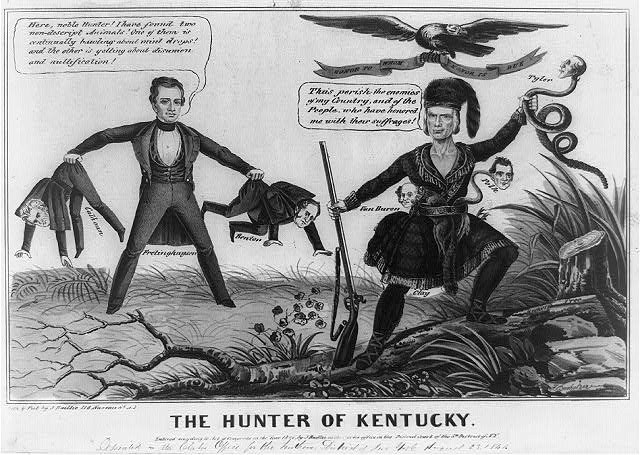
M

A group of Cherokees claiming to speak for the entire tribe signed this 1835 treaty promising that the tribe would relocate west of the Mississippi. Chief John Ross’s letter protesting this treaty was ignored.
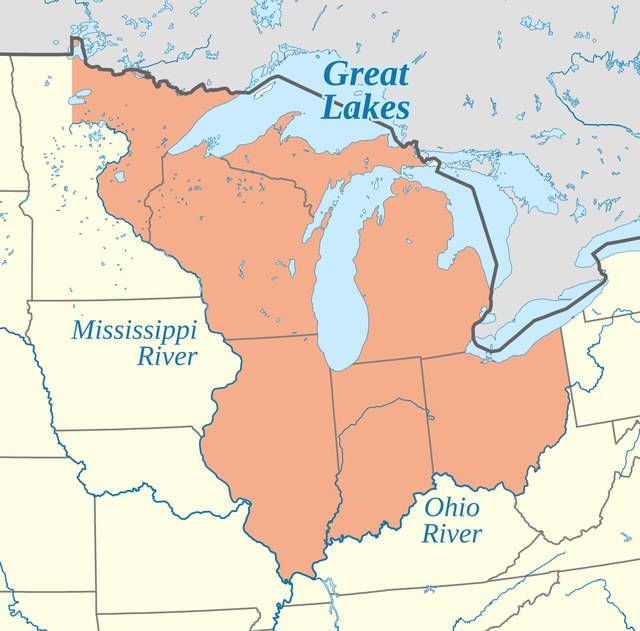
E

Signed on December 29, 1835, and strongly supported by Andrew Jackson, name this treaty which relocated the Cherokee, whose enforcement led to the Trail of Tears.

E

In 1835, the Cherokee signed this treaty, agreeing to give up their territory in the southeast and move to Indian territory. It was the legal basis for the subsequent trail of tears.

9 more clues from the record
H

The signing of this treaty prompted John Ross, the leader of a group opposed to this treaty, to collect more than 14,000 signatures attesting to its invalid signing and submit them to Lewis Cass.

H

In the Cherokee community, there is still a rift over the signing of this notorious 1835 treaty, which was supposed to guarantee Cherokee representation in Congress.

H

Part of the impetus for the Cherokee Trail of Tears was this 1836 treaty signed in Georgia that set the terms for the removal of the entire Cherokee tribe.

H

It provided for the Board of Commissioners for Foreign Missions to be paid according to appraisals made by George Vashon, Abraham Redfield, and A. P. Chouteau.

H

General John Wool resigned his command in protest instead of enforcing this treaty, which was negotiated by William Carroll and John Schermerhorn.

H

Some of the Cherokee signed this treaty in 1835, although none of their chiefs agreed. This treaty, named after the last Cherokee capital, ceded their land to the US.

H

It was steadfastly opposed by John Ross, and the group that was involved in it, known as the “Ridge Party,” was in violation of the law.

H

It followed an earlier council at Red Clay, after which William Carroll and John Schmerhorn were appointed commissioners.

M

John Ross lobbied against the ratification of this 1836 treaty by which the conditions for the removal of the Cherokees were outlined.

#904 · US Treaties and Diplomatic Agreements · Level 2

Webster-Ashburton Treaty

Webster-Ashburton Treaty
US Government · Public domain

1842 US-British border treaty · 1842 · US-Canada border

Webster-Ashburton Treaty was an 1842 agreement between the United States and Great Britain that settled the border between Maine and New Brunswick.

The kit

  • Border settlement — Webster-Ashburton Treaty ended the Aroostook War by granting 7,015 square miles of disputed territory to the parties involved.
  • Western boundaries — Webster-Ashburton Treaty reaffirmed existing boundaries between the US and Canada, including the Northwest Angle and Lake of the Woods.
  • Slave trade provision — Webster-Ashburton Treaty's Article 9 required both parties to maintain cruisers off the coast of Africa to suppress the slave trade.
  • Extradition clause — Webster-Ashburton Treaty's Article 10 addressed extradition issues highlighted by the Caroline Affair involving political fugitives from Upper Canada Rebellion.

Runs with

Maine
set border between Maine and New Brunswick open card →
Aroostook War
ended the Aroostook War open card →
Canada
settled multiple border disputes with Canada open card →
John
negotiated by John Tyler's Secretary of State open card →

The ladder · 9 clues

H

Tyler worked with his Secretary of State in 1842 to negotiate this treaty with Great Britain, which set a border between Maine and New Brunswick, ending the Aroostook War.

H

Its ffh article created a “Disputed Territory Fund” and required payment of three hundred thousand dollars.

H

The boundary line negotiated in this treaty was largely based on stone markers laid 70 years earlier by surveyors Thomas Valentine and John Collins.

H

After Benjamin fled to England, this treaty made extradition impossible, because he was not directly involved in the Lincoln assassination.

M

The Aroostook war was ended by this treaty, which set the boundary between Lake Superior and the Lake of the Woods. It also attempted to end the slave trade on the high seas.

M

Existing boundaries between the U.S. and Canada such as the border around the Northwest Angle were reaffirmed by this treaty, which settled a dispute between loggers along the Saint John River. name this treaty that ended the Aroostook War.

M

Granting 7,015 square miles of disputed territory to one of the parties, it also defined the boundaries from Lake of the Woods 49 degrees north to the Rocky Mountains, but the question of Oregon was left undecided. – name this US-Britain treaty of 1842 named after two diplomats, which concluded the so-called Aroostook War.

E

In 1842, this treaty settled the boundary between Maine and New Brunswick and normalized relations between the U.S. and Britain.

E

This 1842 agreement primarily settled the border with Canada but also clarified treatment of fugitives and settled the Creole case, which Benjamin had argued.

10 more clues from the record
H

During the negotiations for this treaty, both parties ignored the ramifications of a contemporary slave revolt in the Creole case.

H

This treaty laid out conciliatory statements regarding the arrest and trial of Alexander McLeod.

H

In Article 9, the parties agreed to maintain cruisers off the coast of Africa to help enforce the abolition of the slave trade, while Article 10 dealt with extradition, an issue highlighted by the Caroline Affair involving political fugitives from the failed Upper Canada Rebellion.

H

Its eighth article, which was stipulated to last for five years, dealt with the suppression of the slave trade through the stationing of ships on the coast of Africa. One border dispute that it resolved involved the construction of the appropriately named Fort Blunder inside foreign territory.

H

Negotiated by the only cabinet holdover of one participating country’s previous administration, a coup of signing this document, which had been presaged by terms John Harvey and Winfield Scott had earlier established, was gaining the Mesabi Range.

H

Among the few accomplishments of Tyler’s presidency was this treaty of 1842 which officially set the US-Canadian border. Its American namesake was the only Cabinet member not to resign upon Tyler’s taking office. After finishing the treaty, he resigned too.

H

The tensions between Britain and the United States caused by the Creole rebellion were lessened by this 1842 treaty, which clearly defined the borders separating Maine and New Brunswick. It resulted in the United States gaining control of the Arostook Valley.

H

Nelson Hackett's case helped introduce a clause into this treaty protecting slaves from extradition. :Name this treaty, which addressed several border disputes between the U.S. and Canada. This 1842 treaty is partially-named after John Tyler's Secretary of State.

H

This treaty assigned ownership of a ruined citadel called Fort Blunder and aimed to remedy a dispute arising from reliance on the Mitchell Map, which erroneously displayed the Mississippi River watershed.

H

Fort Montgomery was built on Island Point after it was ceded to the United States in this agreement. :Name this 1842 agreement that fixed the border between Maine and New Brunswick, which was the point of contention in the Aroostook War.

Watch out: Fort Montgomery was built on Island Point after it was ceded to the United States in this agreement
#905 · US Treaties and Diplomatic Agreements · Level 2

Treaty of Payne’s Landing

Treaty of Payne’s Landing
U.S. Government. 3/4 · Public domain

1832 US-Seminole treaty · 1832 · Florida

Treaty of Payne's Landing was an 1832 agreement forcing the Seminoles to relocate west from Florida, leading to the Second Seminole War.

The kit

  • Context — Treaty of Payne's Landing followed the Treaty of Moultrie Creek a decade earlier, which had confined Seminoles to Floridian reservations.
  • Terms — Treaty of Payne's Landing gave the Seminoles a three-year period to vacate Florida and relocate to Indian Territory in Oklahoma.
  • Negotiation — Treaty of Payne's Landing included provisions that Seminole interpreters Abraham and Cudjo would receive two hundred dollars, with Ya-ha Hadjo among the leaders.
  • Resistance — Treaty of Payne's Landing sparked the Second Seminole War when tribes refused to relocate, with Osceola openly opposing the agreement.

Runs with

Seminole people
forced the Seminoles to relocate west to Oklahoma open card →
Osceola
openly opposed by Osceola who resisted relocation open card →
Florida
required Seminoles to vacate Florida within three years open card →
Indian Removal Act
implemented the Indian Removal Act against Seminoles open card →

The ladder · 9 clues

H

A decade after taking control of Floridian land in the Treaty of Moultrie Creek, the US government forced the Seminoles into this 1832 agreement that coerced them into moving west.

H

1832 treaty that forced the aforementioned tribe out of Florida following the Indian Removal Act.

H

Osceola openly opposed the signing of this 1832 treaty, which gave the Seminoles a three year period to vacate Florida and relocate to Indian territory in Oklahoma.

H

One side in this treaty negotiated that their interpreters Abraham and Cudjo would receive two hundred dollars in payment, and one leader of that side was Ya-ha Hadjo.

H

This treaty ended a war that was sparked when Neamathla refused to surrender some of his warriors.

H

It followed the signing of a treaty at Camp Moultrie earlier in the conflict it ended.

M

The refusal of some tribes to go led to the Second Seminole War.

M

Another war between the parties to this treaty began three years after its ratification, and that war saw the Dade Massacre occur.

E

This 1832 treaty called for the Seminoles to move west out of Florida. The Seminoles’ refusal to relocate after this treaty was signed led to the Second Seminole War.

Watch out: Treaty of Moultrie Creek (earlier 1823 treaty that confined Seminoles to Florida reservations)
#913 · Native American Peoples · Level 2

Native Americans

Native Americans
Abbasi786786 · CC BY-SA 4.0

Indigenous peoples of North America · pre-Columbian to present · North America

Native Americans are Indigenous peoples of North America whose tribes include the Apache and Lakota, subjected to federal policies and military conflicts.

The kit

  • Conflicts — Native Americans were fired upon by the 7th Cavalry Regiment near Wounded Knee Creek in a massacre that exemplified violent government suppression.
  • Policy & activism — Native Americans were subjects of Ulysses S. Grant's Peace Policy and the Civilization Fund Act, which established schools for assimilation purposes.
  • Modern activism — Native Americans founded AIM (American Indian Movement), which occupied Alcatraz in 1969 and clashed with government forces at Pine Ridge.
  • Documentation — Native Americans were photographically documented by J.P. Morgan-funded Edward Curtis and painted extensively by artist George Catlin in the 1830s.

Runs with

California
Alcatraz occupation in California open card →
OklahomaTrail of TearsBacon's Rebellion

The ladder · 9 clues

H

An activist group founded by these people, which clashed with the government at Pine Ridge, occupied Alcatraz in 1969 and was called AIM.

H

The Peigan Massacre and Modoc War strained Ulysses S. Grant’s “Peace Policy” towards this ethnic group.

H

In the late 1960s and early 1970s, an activist group involving these people occupied Mount Rushmore and Alcatraz.

H

Helen Hunt Jackson lambasted the treatment of this ethnic group in her book A Century of Dishonor.

M

As Secretary of War, John C. Calhoun appointed Thomas McKenney as the first leader of a government bureau named for these people.

M

Elizabeth “Libbie” Bacon fought to preserve the legacy of her husband, a Major General who was killed by this ethnic group.

M

Scott O'Dell wrote about a woman from this general group of people in Island of the Blue Dolphins, and these general people are the subjects of most books by Vine Deloria and Sherman Alexie. name these people who appear in pre- Columbian North American histories.

E

The 7th Cavalry Regiment opened fire on people of this ethnic group near Wounded Knee Creek. name this broad ethnic group whose tribes include the Apache and Lakota.

E

Some of these people walked to DC on the "Trail of Broken Treaties." name these people, most of whom today live in cities rather than on reservations.

10 more clues from the record
H

In a marathon speech opposing an act named for these people, Theodore Frelinghuysen said “Do the obligations of justice change with the color of the skin?” The Civilization Fund Act established a set of schools for these people.

H

An extensive study of these people was compiled by Thomas McKenney and James Hall in the 1830s.

H

J.P. Morgan funded Edward Curtis’ project to photographically document the lives of these people.

H

These people are the subject of Helen Hunt Jackson's book A Century of Dishonor.

H

Artist George Catlin specialized in portraiture of these people.

H

Right-wing parties in Europe such as Switzerland's Ticino League have used images of these people to rally their supporters against immigration. :Name these people who often appear in German-language books by Karl May. David Treuer's 2019 book about the "heartbeat" of these people traces their history from 1890.

H

An artist whose work fuses the modern culture of members of this group with hip hop responded to environmental crises with a series depicting gas masks as medicine; that artist also created a painting of Shrek and one titled “If Yoda Was” [one of them].

H

After 1834, 450,000 immigrants of this ethnicity entered a depot in Trou Fanfaron in the “great experiment.” In 1953, Britain overthrew a socialist “father of the nation” of this ethnicity who broke with the rival PPP leader Forbes Burnham .

H

Mestizos were officially defined as people born to a Spanish father and a mother of this race. The first Mestizo was traditionally held to be the offspring of Hernan Cortes and La Malinche, a member of this race.

H

In 1987, elections empowered a president of this ethnicity from the Progressive Reform Party until he was dismissed in the “telephone coup” by the leader who ordered the December murders.

Watch out: Mestizos were defined as offspring of Spanish fathers and Native American mothers, with the first traditionally held to be Cortés and La Malinche's child.
#914 · Native American Peoples · Level 2

Cherokee

Cherokee
bdi Henry Inman /span /a · Public domain

Native American tribe · pre-contact to present · Southeast, later Oklahoma

Cherokee were a Native American tribe forcibly removed from Georgia to Oklahoma on the Trail of Tears after the Treaty of New Echota.

The kit

  • Rise — Cherokee were the most populous of the Five Civilized Tribes alongside Chickasaw, Choctaw, Creek, and Seminole.
  • Achievements — Cherokee literacy rapidly increased after Sequoyah created a syllabary for their language in the early 19th century.
  • Conflicts — Cherokee prevailed in Worcester v. Georgia, but Andrew Jackson ignored the ruling and forced their westward removal anyway.
  • Legacy — Cherokee leader Stand Watie became a Confederate brigadier general and was the last Confederate general to surrender in 1865.

Runs with

Trail of Tears
Cherokee removal journey called Nu na da ul tsun yi in their language open card →
Treaty of New Echota
signed by Treaty Party faction despite Chief John Ross's opposition open card →
Georgia
Cherokee homeland before forced removal to Oklahoma open card →
John
John Ross led Cherokee National Party opposing removal open card →

The ladder · 9 clues

H

This tribe was the primary audience for Elias Boudinot's Phoenix newspaper.

H

A member of this tribe became the final Confederate general to surrender in the Civil War.

H

These people prevailed in a Supreme Court case against Samuel Austin Worcester.

H

A syllabary for this tribe’s language was created by Sequoyah. name this Native American tribe, the largest forcibly displaced from the Southeast to Oklahoma in the Trail of Tears.

M

This tribe signed the Treaty of New Echota, which, despite the ruling in Worcester v.

M

Members of this tribe signed the Treaty of New Echota, leading to their forcible removal to Oklahoma on the Trail of Tears. name this Native American tribe whose writing system was invented by Sequoyah.

M

In response to a court case involving this tribe, Andrew Jackson may have claimed “John Marshall has made his decision; now let him enforce it.” Sequoyah created the syllabary for, what tribe whose sovereignty was recognized in Worcester v.

E

This group was led by John Ross after the Treaty of New EchRota forced them to relocate from Georgia. name this Native American tribe who were forced west along the Trail of Tears.

E

This tribe rapidly became more literate after Sequoyah created their syllabary. name this Native American tribe who were removed from Georgia by way of the Trail of Tears.

10 more clues from the record
H

Andrew Jackson forcibly removed this Native American tribe that underwent the Trail of Tears.

H

Stand Watie of this tribe raised a regiment of troops to fight for the Confederacy, and he was one of two Native American brigadier generals in the Civil War.

H

A faction of this tribe were led by the only Native American to reach the rank of general during the U.S. Civil War, Stand Watie, while fighting for the Confederacy. 19th century writer John Howard Payne wrote an oral historiography of this people after being invited as a guest of Chief John Ross.

H

A minority party within this tribe signed the Treaty of New Echota [[eh-KOH-tah]] that, despite the lack of approval from John Ross, led to an event they called Nu na da ul tsun yi.

H

This tribe split into factions known as the “Treaty Party,” which wanted to negotiate with the US, and the “National Party” led by Chief John Ross, which hoped to maintain autonomy.

H

This tribe’s “beloved women” were allowed to serve on councils, and included Nancy Ward, who warned Revolutionary soldiers about an impending attack by her cousin, Dragging Canoe. name this Native American group, the most populous of the Five Civilized Tribes and the subject of the Supreme Court decision Worcester v.

H

Major Ridge was part of a triumvirate of leaders of this tribe and was among the signatories of the Treaty of New Echota, which provided for this tribe’s westward migration.

H

One member of this tribe was hunted down for killing Dan Maples during Ned Christie’s War.

H

This tribe, along with Chickasaw, Choctaw, Creek, and Seminole, was among the “Five Civilized Tribes.” One member of this tribe, Sequoyah, developed a syllabary to represent this tribe’s language in writing.

H

Stand Watie, a leader of this group, was the last Confederate Army general to surrender, and he signed the Treaty of New Echota which ceded this polity’s western territory.

Watch out: John Ross led the Cherokee National Party, not John Marshall who decided Worcester v. Georgia
#917 · Native American Peoples · Level 2

Seminole people

Seminole people
a rel="nofollow" State Library and Archives of Florida · Public domain

Native American tribe · 18th century–present · Florida

Seminole people were a Florida tribe who fought three wars against the United States to resist removal from the Everglades.

The kit

  • Rise — Seminole people included the Alachua branch led by Ahaya (called Cowkeeper) and the Mikasuki branch attacked at Fowltown.
  • Conflicts — Seminole people fought Andrew Jackson in 1818 and later intercepted Francis Dade's military column en route to Fort King, killing all but two.
  • Resistance — Seminole people were led by Osceola against Zachary Taylor and signed the treaties of Moultrie Creek and Payne's Landing establishing reservations.
  • Legacy — Seminole people abandoned log cabins for thatch-roofed chickee houses during wartime and purchased several Hard Rock Cafes in 2007.

Runs with

Florida
fought three wars in Florida's Everglades and Big Cypress Swamp open card →
Osceola
led by Osceola until his capture under false truce open card →
Treaty of Payne’s Landing
refused removal to Arkansas under this treaty's terms open card →
Andrew Jackson
fought Jackson in 1818 foreign territory invasion open card →

The ladder · 9 clues

H

Led by Osceola, these people fought to remain in their homeland in the Everglades. name this Florida tribe that fought a series of wars with the United States.

H

The Treaty of Moultrie Creek sought to place this tribe on a reservation.

H

This tribe began a conflict when it intercepted a military column en route to Fort King, killing all but two of Francis Dade’s group.

H

This tribe faced a force dominated by immigrants and led by Abner Doubleday in the Big Cypress Swamp campaign.

M

Quartermaster General Thomas Jesup was accused of using a false flag of truce to capture leaders of this people.

M

Thomas Jesup took advantage of a flag of truce to capture this tribe’s leader Osceola. name this Native American tribe that fought three wars in Florida.

M

Zachary Taylor earned his nickname of “Old Rough and Ready” when fighting against this people, who signed the Treaty of Payne’s Landing years after fighting Andrew Jackson when he invaded foreign territory in 1818.

E

Native American tribe that fought a war against Andrew Jackson.

E

The treaties of Moultrie Creek and Payne’s Landing were signed by these people, who were led by Osceola.

10 more clues from the record
H

Neamathla negotiated an agreement on behalf of this people that gave them a four-million-acre reservation.

H

A leader of the Alachua branch of these people named Ahaya was referred to as Cowkeeper for owning many cattle.

H

One conflict with this tribe involved an attack on its Mikasuki branch at Fowltown, which was followed by the Scott Massacre.

H

General Edmund Gaines’ attack on Fort Negro provoked Commander Garcia, a member of this group, towards one conflict, and other leaders of this group included Sam Jones.

H

While at war, this tribe abandoned log cabins in favor of thatch-roofed, bald cypress-based houses called chickees.

H

Leaders of this group such as Wild Cat and John Horse met with President Polk, but those leaders eventually left for Mexico.

H

A tribe of these people purchased several Hard Rock Cafes in 2007.

H

After the passage of the Indian Removal Act, this tribe refused to depart to Arkansas under the terms of the Treaty of Payne’s Landing.

H

A leader of these people known as Sam Jones won the Battle of Pine Island Ridge over American troops.

H

Members of this ethnicity killed people on Richard Scott’s ship, which was sending supplies to Fort Scott in retaliation for the Fowltown massacre.

Watch out: Mikasuki were a branch of the Seminole, not a separate opposing tribe
#919 · Native American Peoples · Level 2

Shawnee

Shawnee
bdi Charles Bird King /span /a · Public domain

Native American nation · 18th–19th centuries · Ohio River Valley

The Shawnee were an Ohio Valley nation whose leaders included Cornstalk, Blue Jacket, Blackfish, Tecumseh, and his brother Tenskwatawa the Prophet.

The kit

  • Rise — The Shawnee fought alongside the Mingo under Chief Cornstalk in Lord Dunmore's War, losing at the Battle of Point Pleasant in 1774.
  • Conflicts — The Shawnee chief Blue Jacket inflicted massive casualties at the Battle of the Wabash alongside Miami leader Little Turtle before defeat at Fallen Timbers.
  • Achievements — The Shawnee chief Blackfish captured Daniel Boone and led the Siege of Boonesborough during the American Revolution while allied with the British.
  • Legacy — The Shawnee leader Tenskwatawa used the New Madrid earthquake and a comet to assemble a confederacy, later defeated at Prophetstown by William Henry Harrison.

Runs with

Tecumseh
Daniel Boone
Daniel Boone was captured by Shawnee chief Blackfish during the Siege of Boonesborough open card →
Ohio
The Shawnee were natives of the Ohio River Valley open card →
Battle of Fallen Timbers
Blue Jacket led Shawnee forces at Fallen Timbers alongside Little Turtle open card →

The ladder · 9 clues

H

This nation and the Mingo fought in Lord Dunmore’s War under Cornstalk, and its chief Blue Jacket led the native forces at Fallen Timbers with the Miami Little Turtle. Tecumseh was a later leader of this nation.

H

The man who led this tribe during Lord Dunmore’s War was murdered at Fort Randolph, three years after he allied with the Mingos and lost the Battle of Point Pleasant.

H

A comet and the New Madrid earthquake helped a member of this tribe called “the Prophet” assemble a confederacy.

H

Peter Chartier tried to limit the sale of rum to these people, a group of whom were led by John Linney into Mexico and later compensated by Mirabeau Lamar.

M

Blackfish was a chief of what Native American tribe, whose later leaders included Tecumseh and his brother, the Prophet?

M

Blue Jacket was a leader of this tribe. These natives of the Ohio valley were supported by the Delaware, the Miami and the British in the Battle of Fallen Timbers.

M

Lord Dunmore fought a war against these Native Americans, as well as the Mingo. One later leader of these people temporarily lived among the Chickamauga in the South.

E

Another leader sought to unite other tribes after the New Madrid earthquake, was known as the "Prophet," and was defeated by William Henry Harrison at the Battle of Tippecanoe.

E

Apart from Tenskwatawa the Prophet, another leader of this tribe was allegedly killed by Richard M. Johnson. name this tribe from the Ohio River valley led by Tecumseh.

10 more clues from the record
H

Tecumseh was a member of this tribe, which was based in the Ohio River Valley and fought at the battle of Point Pleasant under Chief Cornstalk.

H

One of these people named Blackfish led the Siege of Boonesborough and captured Daniel Boone.

H

A war led by one of these people was motivated by the Treaty of Fort Wayne.

H

A leader of this tribe angrily yelled at Henry Procter for not stopping a massacre at Fort Meigs and was himself killed, possibly by Richard Mentor Johnson, at the Battle of the Thames.

H

The first federal bill addressing militias was passed in response to Arthur St. Clair’s disastrous loss to this tribe’s leader Blue Jacket. A later leader of this tribe was defeated at Prophetstown.

H

This tribe was attacked in Logan’s Raid, in which Edward McGarry murdered the elderly chief Moluntha when Moluntha mistakenly said that he had been at the Battle of Blue Licks.

H

Fighting alongside Little Turtle of the Miamis, a chief from this tribe inflicted casualties equal to about a fourth of the entire US Army during the Battle of the Wabash.

H

George Rogers Clark led two punitive expeditions against this tribe, burning down two successive villages named Chillicothe.

H

One leader of this tribe was Black Bob, who led a band which separated from the Hathawekala and lived in Kansas until 1868.

H

Apart from Chief Cornstalk, other leaders of this tribe included Blackfish, who allied with the British during the American Revolution.

Watch out: Confusion with the Miami tribe, whose leader Little Turtle fought alongside Shawnee chief Blue Jacket at the Battle of the Wabash
#920 · Native American Peoples · Level 2

Muscogee Creek Nation

Muscogee Creek Nation
Tcr25 · CC BY-SA 4.0

Southeastern Native American tribe · pre-contact–present · Alabama and Georgia

Muscogee Creek Nation was a Southeastern tribe whose Red Stick faction fought Andrew Jackson in 1813–14, ending in defeat at Horseshoe Bend.

The kit

  • Rise — Muscogee Creek Nation was one of the Five Civilized Tribes with a matrilineal huti clan system and talwa laws.
  • Conflicts — Muscogee Creek Nation's Red Stick faction attacked Fort Mims after an ambush at Burnt Corn Creek, beginning the Creek War.
  • Conflicts — Muscogee Creek Nation was defeated at the Battle of Horseshoe Bend where John Coffee blocked escape via the Tallapoosa River.
  • Legacy — Muscogee Creek Nation's members migrated to Florida in the 18th century, forming the Seminole tribe by mixing with local groups.

Runs with

William
William McIntosh signed unauthorized Treaty of Indian Springs, murdered by Law Menders open card →
Andrew Jackson
Andrew Jackson defeated Red Sticks at Horseshoe Bend, imposed Treaty of Fort Jackson open card →
Florida
Muscogee members migrated to Florida in 18th century, becoming Seminoles open card →
Augustus
William Augustus Bowles married into tribe, declared short-lived state named for it open card →

The ladder · 9 clues

H

Opothleyahola led a band of this tribe to Fort Row, Kansas on the Trail of Blood on Ice.

H

The militant faction of this tribe, the Red Sticks, were defeated by Andrew Jackson at Horseshoe Bend. name this member of the "Five Civilized Tribes" of the Southeastern U.S., also known as the Muscogee.

H

David Mitchell was falsely accused of smuggling Spanish slaves into this tribe’s territory in 1820.

H

Among the Native American tribes who participated in the rebellion was this one, whose “Red Stick” faction had earlier fought a war in which they were defeated at the Battle of Horseshoe Bend.

M

In response to an ambush at Burnt Corn Creek, William Weatherford and Peter McQueen led this tribe in an attack on Fort Mims.

M

William McIntosh was murdered by the Law Menders of this tribe under Chief Menawa after negotiating an unauthorized treaty with the US government.

M

William Augustus Bowles married into this tribe and declared a short-lived state named for it.

E

The Treaty of Fort Jackson forced this tribe’s surrender shortly after their defeat at Horseshoe Bend. name this tribe, whose Red Stick faction fought a namesake war against Andrew Jackson as part of the larger War of 1812.

E

This tribe lost a war that had begun with the Battle of Burnt Corn.

10 more clues from the record
H

Following one defeat, corpses of these people were looted for items to send back "to the ladies of Tennessee." At a climactic battle, John Coffee's forces prevented this tribe from escaping via the Tallapoosa River.

H

This tribe negotiated with Maryland Loyalist leader William Bowles, who successfully convinced them to reinforce the British fort in Pensacola during the Revolutionary War.

H

The Seminole were originally from this non-Florida tribe, who migrated to Florida in the 18th century and mixed with local tribes like the Calusa.

H

Southeastern U.S. tribe from which most Seminole descend which fought a regional war in 1813-14.

H

A landmark 1851 state supreme court case evaluated this tribe’s matrilineal huti clan system and norms of serial monogamy when a rebel leader’s son sued half-brothers born to Polly Moniac. This tribe’s McGhee Reserve became the center of its Poarch Band.

H

The Red Sticks were part of this one of the Five Civilized Tribes, whose Lower group supported the United States forces. Their leader William McIntosh signed the Treaty of Indian Springs, which ceded land to Georgia.

H

Members of this group’s police force, known as the Law Menders, burnt down the plantation of one of its leaders, William McIntosh, and shot him fifty times.

H

The Seminoles moved into Florida in the 18th century, breaking away from this larger Muskogean people whose Red Stick faction was attacked by Andrew Jackson.

H

This tribe’s members did not include Elias Boudinot, but one of its leaders was assassinated by Menawa for signing the Treaty of Indian Springs.

H

Members of this group specifically targeted mixed-race locals who refused to obey their talwa laws during an attack on a stockade at Lake Tensaw.

Watch out: Seminoles are descendants who broke away from the Muscogee, not the same tribe
#965 · American Revolution Commanders · Level 2

James Wilkinson

James Wilkinson
Unknown author Unknown author · Public domain

American general and Spanish spy · late 1700s–early 1800s · Louisiana Territory and Kentucky

James Wilkinson was a U.S. Army general who secretly served as Spanish Agent 13 while holding senior American military positions.

The kit

  • Espionage — James Wilkinson spied for Spain under the alias 'Agent 13' while serving as Senior Officer of the U.S. Army.
  • Burr Conspiracy — James Wilkinson initially conspired with Aaron Burr to create an independent empire in the West but betrayed Burr by sending his cipher letter to Jefferson.
  • Military failures — James Wilkinson was defeated by a smaller British force at the Battle of Crysler's Farm during the War of 1812's St. Lawrence Campaign.
  • Legacy — James Wilkinson was called by Teddy Roosevelt 'the most despicable character' in American history for his treachery and corruption.

Runs with

Aaron Burr
conspired with then betrayed Burr over western empire plot open card →
Louisiana
served as first governor of Louisiana Territory open card →
Spain
worked as paid Spanish agent while U.S. officer open card →
Kentucky
plotted revolution in Kentucky with Spanish support open card →

The ladder · 9 clues

H

Burr had earlier been put on trial for conspiring with this general and governor of the Louisiana Territory to create an empire in the West.

H

During the Ohio campaign, Anthony Wayne was consistently undermined by this subordinate, who was posthumously revealed to be an agent for the Spanish Crown.

H

Teddy Roosevelt said there was “no more despicable character” in American history than this man. :Name this first governor of the Louisiana Territory and veteran of the American Revolution. A potential Spanish agent, he apparently plotted with Aaron Burr to take over western territories, although he eventually ratted Burr out.

H

This man supposedly demonstrated his loyalty to a Democratic-Republican government by banning the Federalist-favored pigtail hairstyle. :Name this “agent 13” who spied for Spain while Senior Officer of the US Army. This man received a “cipher letter” from another politician as part of their conspiracy to form an independent state in the Southwestern US.

M

As Governor of Louisiana, this officer participated in Burr's Conspiracy.

M

The Cabal was uncovered after this man, who was then Secretary of War, messed up while delivering a letter. A generally seedy fellow, while governor of Louisiana of plotted to found a new nation of Aaron Burr, but he betrayed him after he realized the scheme was going south.

M

Pike was ordered to go on both exhibitions by this Governor of the Upper Louisiana Territory. This general was secretly in the pay of Spain, and collaborated with Aaron Burr on a plot to take over the western half of the United States.

M

One candidate for the commander of the Legion of the United States was this man, who was humiliated by a smaller British force at the Battle of Crysler’s Farm. He was arrested in Natchez for sending the “cipher letter.”

M

Wayne later investigated this man for his connections with Spain. This man translated the “cipher letter” that helped reveal the role his collaborator played in a plot to create a country in the southwest.

4 more clues from the record
H

Under the alias “Agent 13,” this man attempted to secure Kentucky a monopoly on trading on the Mississippi River. :Name this scandalous Spanish agent and American soldier who betrayed Aaron Burr in his conspiracy by sending Burr’s private “cipher letter” to Thomas Jefferson.

H

The Americans abandoned the St. Lawrence Campaign of the War of 1812 after William Mulcaster defeated this general at Crysler’s Farm. :Name this governor of the Louisiana territory. He attempted to create an independent nation with Aaron Burr.

H

Conway’s dissatisfaction with Washington was revealed after a drunken tirade by this officer. This man asked Esteban Miró to support his efforts for a revolution in Kentucky and reportedly conspired with Aaron Burr.

M

Burr’s plan to secede from the U.S. was ratted out by this Louisiana governor, who was later charged with instigating a similar plot in Kentucky.

Watch out: Anthony Wayne, whom Wilkinson undermined as a subordinate during the Ohio campaign
#994 · Infrastructure Projects, Routes, and Railways · Level 2

Erie Canal

Erie Canal
Joshua Karn · CC BY-SA 3.0

New York canal · 1817–1825 · Albany to Buffalo, New York

Erie Canal was a 363-mile waterway connecting the Hudson River at Albany to Lake Erie at Buffalo, completed in 1825.

The kit

  • Conception — Erie Canal was conceived by Jesse Hawley, a debtor imprisoned in Canandaigua, who wrote advocacy letters under the pseudonym "Hercules" to boost the grain industry.
  • Construction — Erie Canal was built under chief engineer Benjamin Wright using Canvass White's newly developed cement and a "flight of five" locks at Lockport to cross the Niagara Escarpment.
  • Challenges — Erie Canal construction saw over a thousand workers afflicted with malaria in Montezuma's Marsh and required Canvass White to study in the United Kingdom due to lack of American civil engineers.
  • Impact — Erie Canal's 1825 completion, celebrated with the "Wedding of the Waters" ceremony aboard the Seneca Chief, made New York City the largest port in the United States.

Runs with

York
connected upstate New York to Atlantic trade open card →
New York City
made it the largest U.S. port by 1825 open card →
Mohawk
Montezuma
workers suffered malaria in Montezuma's Marsh open card →

The ladder · 9 clues

H

This project was conceived in the Canandaigua debtor prison by Jesse Hawley, who was looking to boost the grain industry.

H

It was derided by its critics as “DeWitt Clinton’s big ditch,” but this structure’s completion in 1825 helped make New York City the largest port in the United States.

H

A flour merchant named Jesse Hawley advocated that the path of this project was conceived by the “Author of Nature” as it would bring more business to the Finger Lakes.

H

Thomas Allen’s song “Low Bridge” focuses on this structure whose creation was overseen by the “father of American Civil Engineering,” Benjamin Wright.

M

Over a thousand workers on this project were afflicted with malaria while working in Montezuma’s Marsh.

M

This project’s completion festivities included Samuel Wilkinson performing the “Wedding of the Waters” aboard the Seneca Chief.

M

This project was the focus of the song “Low Bridge,” which speaks of “fifteen years” on its end result.

E

This waterway ends with the Black Rock Lock in Buffalo. name this canal in New York, derisively called “Clinton’s Big Ditch,” that connected the Hudson River to the namesake Great Lake.

E

Built from 1817 to 1825, this structure came to be known as Clinton’s Ditch. name this engineering project that connected the city of Albany to a Great Lake.

10 more clues from the record
H

To complete this project, Canvass White was forced to study in the United Kingdom as there were no civil engineers in the United States at the time.

H

Canvass White developed a new type of cement while working on this structure.

H

Writing under the name “Hercules,” Jesse Hawley put forth an idea for this object, which was laid out by James Geddes and Benjamin Wright.

H

A series of letters advocating this project were written under the pseudonym “Hercules” by inmate Jesse Hawley.

H

Clinton was a major backer of the project to build this artificial waterway running from Albany to Buffalo, connecting the Atlantic with the Great Lakes.

H

Joseph Ellicott sent William Peacock to survey land for this project’s “southern route.” James Geddes designed the Great Embankment near Mann’s Mills as part of this project.

H

A song about this structure included a chorus with the lines “And you’ll always know your neighbor / And you’ll always know your pal” and was written by Thomas Allen.

H

James Geddes and Jesse Hawley helped work on this 363-mile long structure, whose completion was known as the Wedding of the Waters.

H

This structure’s chief engineer was Benjamin Wright, and it used a “flight of five” at Lockport to cross the Niagara Escarpment.

H

Cities like May’s Point and Lockport were along this structure, whose construction was opposed by the Bucktails.

Watch out: DeWitt Clinton (political backer, not the imprisoned conceiver Jesse Hawley)
#997 · Infrastructure Projects, Routes, and Railways · Level 2

Oregon Trail

Oregon Trail
CC BY-SA 3.0

19th-century overland route · 1840s–1860s · Missouri to Oregon

Oregon Trail was the primary overland route used by settlers traveling from Independence, Missouri to the Willamette Valley in the Pacific Northwest.

The kit

  • Route — Oregon Trail extended from Independence, Missouri to the Willamette Valley, following paths now traced by Interstates 80 and 84.
  • Early exploration — Oregon Trail was first trekked by Wilson Price Hunt's crew from the Tonquin, who established Fort Astoria at its western terminus.
  • Key features — Oregon Trail included South Pass, discovered by fur trapper Jedediah Smith, and Fort Laramie, purchased by the U.S. to protect settlers.
  • Cultural legacy — Oregon Trail inspired a classic MECC educational computer game where players lead wagon parties and choose routes like the Barlow Road.

Runs with

Missouri
started at Independence, Missouri open card →
Pacific
terminated in Pacific Northwest's Willamette Valley open card →
York
preceded by York Factory Express fur-trading route open card →
California

The ladder · 9 clues

H

Covered wagons could only be carried as far as Fort Hall along this route, which split off into the Mormon and Bozeman roads.

H

In the 1971 edition of this game, success was determined by how fast and accurately they typed words like “BANG” or “WOW.” MECC produced this game, in which taking the Barlow Road or floating across the Columbia River Gorge are the two options for players as they approach Willamette Valley.

H

This route's eastern half was used by people who split off onto the Mormon or Bozeman paths instead of finishing this route.

H

Francis Parkman examined this route in a work subtitled Sketches of Prairie and Rocky-Mountain Life.

M

The Missouri city of Independence was the start of what route this settlers took to reach the Willamette Valley.

M

At the end of its use, it went all the way to the Willamette Valley. name this iconic route used by settlers to the Pacific Northwest.

M

The United States purchased Fort Laramie to protect settlers moving along this route.

E

Jesse Applegate described his journey on this route in his essay "A Day with the Cow Column." Modern Interstate 80 and 84 follow this historical migrant trail from Missouri to the Willamette Valley in the Pacific Northwest.

E

The player is responsible for leading for leading a wagon party starting at Independence, Missouri in this classic educational computer game that shares its name with a pioneer route.

10 more clues from the record
H

Rebecca Winters died on this route, which included the Lander Road.

H

People who used this system relied on the Donation Land Act to officially guarantee their land rights, which had been quasi-legally promised by a set of Organic Laws.

H

This route was first trekked by the crew of the Tonquin and Wilson Price Hunt, who would go on to establish Fort Astoria here.

H

One location on this route became known as “Fort Sacrifice” due to the number of unnecessary items which were discarded there.

H

This route existed for twenty-five years before it became suitable for wagon usage as far as Fort Hall.

H

This route’s first major expedition was co-led by Marcus Whitman who was later murdered by the Cayuse natives.

H

This route was preceded by the similar York Factory Express, which carried fur traders of Hudson’s Bay Company.

H

The objective of the York Factory Express was similar to that of this system, for which Thomas Farnham and John Gantt served as guides.

H

Jedediah Smith, one of the early fur trappers to map this route, discovered its South Pass.

H

The Bartleson-Bidwell Group was among the first to use this route after leaving Fort Hall.

Watch out: Mormon Trail (split off from Oregon Trail's eastern half at Fort Hall)
#1066 · Early US Foreign Wars · Level 3

War of 1812

War of 1812
Clockwise, from top: George Munger, John David Kelly, Anton · Public domain

American-British conflict · 1812–1815 · North America

War of 1812 was an American-British conflict ending with the Treaty of Ghent after battles including New Orleans and Fort McHenry.

The kit

  • Naval battles — War of 1812 saw Oliver Hazard Perry win the Battle of Lake Erie and a repurposed ship defeat five enemy vessels including Guerriere.
  • Canadian front — War of 1812 included George Drummond defeating Jacob Brown at Lundy's Lane and Tecumseh repelling US invasions of Canada at Queenston Heights.
  • Capital burned — War of 1812 saw Robert Ross's troops burn the White House after Bladensburg and inspired the Star-Spangled Banner at Fort McHenry.
  • Treaty & aftermath — War of 1812 ended with the Treaty of Ghent, though Andrew Jackson won New Orleans afterward and the Creek suffered defeat at Horseshoe Bend.

Runs with

Treaty of Ghent
ended the War of 1812 in 1815 open card →
Battle of New Orleans
won by Jackson after treaty signing open card →
Tecumseh
repelled US invasions of Canada during war open card →
Battle of Bladensburg
preceded British troops burning White House open card →

The ladder · 6 clues

H

In a bloody engagement during this war, forces under George Drummond defeated Jacob Brown and Winfield Scott at the Battle of Lundy’s Lane.

H

The Chesapeake-Leopard Affair led Thomas Jefferson to issue an embargo on American exports, helping provoke this war.

M

Fort Niagara was captured in this war in which Oliver Hazard Perry won the Battle of Lake Erie.

M

After the signing of the Treaty of Ghent ending this war, Andrew Jackson heroically won at the Battle of New Orleans. name this early American war against Great Britain.

E

Andrew Jackson won the Battle of New Orleans after the signing of the Treaty of Ghent, which ended this war. name this war between Great Britain and United States that ended in 1815.

E

During the battle of Fort McHenry, Francis Scott Key wrote "The Star-Spangled Banner" in this war between the US and British named for a 19th-century year.

10 more clues from the record
H

During this war, Stephen Van Rensselaer defeated Isaac Brock and his Mohawk forces at the Battle of Queenston Heights.

H

This war saw the Battle of Chrysler’s Farm. :Name this war during which troops burned the White House after the Battle of Bladensburg.

H

Teddy Roosevelt wrote a book about the Naval War of this conflict, which claimed the winning side's naval victories offered no major advantage, despite a morale boost.

H

In this war, Robert Ross’s troops marched to the capital after winning the Battle of Bladensburg.

H

During this war, the Creek tribe suffered a defeat at the Battle of Horseshoe Bend.

H

The Battle of Queenston Heights was a major battle of this war, during which Tecumseh repelled US invasions of Canada. The Treaty of Ghent concluded this war.

H

During one battle in this war, Laura Secord warned James FitzGibbon of an impending attack from a force marching from Fort George.

H

During this war, forces marching from Fort George launched an attack during the Battle of Beaver Dams.

H

A battle in this war became the subject of a slogan beginning “rumpsey, dumpsey” that was used by Richard Mentor Johnson.

H

In this war, a ship originally made in response to Barbary pirates was repurposed into one that defeated 5 enemy ships, including the Guerriere.

Watch out: Battle of New Orleans occurred after the Treaty of Ghent was signed, not before the war ended
#1068 · Early US Foreign Wars · Level 3

Mexican-American War

Mexican-American War
bdi Adolphe Jean-Baptiste Bayot /span /a /bdi / bdi Carl Neb · Public domain

U.S.-Mexico conflict · 1846–1848 · Mexico and southwestern U.S.

Mexican-American War was the 1846–1848 conflict in which the United States defeated Mexico and acquired California and other southwestern territories.

The kit

  • Origins — Mexican-American War began when U.S. forces crossed the Nueces River, prompting Abraham Lincoln's "Spot Resolutions" questioning the skirmish's location.
  • Major campaigns — Mexican-American War saw Winfield Scott capture Mexico City after the Battle of Chapultepec, defended by young "boy heroes."
  • St. Patrick's Battalion — Mexican-American War included the Saint Patrick's Battalion, Irish immigrants who deserted the U.S. Army and fought for Mexico.
  • Outcome — Mexican-American War ended with the Treaty of Guadalupe Hidalgo, giving the U.S. California and other territories despite the Wilmot Proviso's slavery ban.

Runs with

Winfield Scott
commanded U.S. forces, captured Mexico City open card →
Treaty of Guadalupe Hidalgo
ended the war in 1848 open card →
California
acquired by U.S. through treaty open card →
1848
year war ended with treaty open card →

The ladder · 6 clues

H

During this war, members of the St. Patrick’s Battalion was executed for treason.

H

In 1848, the Treaty of Guadalupe-Hidalgo was signed, ending this conflict, :Name this 1846-1848 conflict, which saw the U.S. gained ownership of California, among other territories.

M

The Wilmot Proviso banned slavery in U.S. land obtained in this war.

M

Abraham Lincoln authored the “Spot Resolutions” questioning whether a skirmish prior to this war was on American soil.

E

This war began when US forces crossed the Nueces River and ended in the Treaty of Guadalupe Hidalgo. name this war where the United States fought its southern neighbor.

E

This war was ended by the treaty of Guadalupe Hidalgo. :Name this war, where one side was led by President James Polk.

10 more clues from the record
H

Irish defectors from one army in this conflict joined the Saint Patrick’s Battalion of the opposing army.

H

In this war, a group of immigrant deserters formed Saint Patrick's Battalion and fought against the United States.

H

In the opening phase of this conflict, forces under Seth Thorton were captured by the Division of the North.

H

Upon the declaration of this war, Ohio congressman Joshua Giddings wrote an open letter to the president outlining how this war was against an "unoffending people" and a thinly veiled attempt to "safeguard slavery." One president was angry at a peace negotiator in this war for forgoing the acquisition of Baja California for fifteen million dollars in reparations from the government of Santa Anna.

H

During this war, a castle was valiantly defended by young soldiers called the “boy heroes.” John Riley led the Saint Patrick’s Battalion of deserters in this war, in which they captured two cannons at the Battle of Buena Vista.

H

This conflict included the Saint Patrick’s Batallion, Irish immigrants who deserted from the US Army.

H

The refusal to accept an envoy led by John Slidell helped start this conflict.

H

This bonus is about the life of explorer and politician John C. Fremont. …Frémont led a number of expeditions into the Rocky Mountains and was in California when this war broke out between America and its southern neighbor.

H

After the Battle of Chapultepec allowed the occupation of the losing side’s capital by Winfield Scott, it culminated in the Treaty of Guadaloupe-Hidalgo.

H

An apocryphal command to “give them a little more grape” during this war became a campaign slogan for one of the winning generals.

Watch out: War of 1812 (earlier U.S. conflict with different neighbor)
#1069 · Early US Foreign Wars · Level 3

Battle of New Orleans

Battle of New Orleans
Painting by Jean Hyacinthe de Laclotte (1766 - 1829), a memb · Public domain

War of 1812 battle · January 8, 1815 · Chalmette, Louisiana

Battle of New Orleans was an American victory occurring two weeks after the Treaty of Ghent had already ended the War of 1812.

The kit

  • American defense — Battle of New Orleans saw Andrew Jackson's forces defend earthworks along the Rodriguez Canal at Chalmette Plantation against British frontal assault.
  • British failure — Battle of New Orleans resulted in catastrophic British defeat when troops under Thomas Mullins forgot ladders needed to breach American lines.
  • Casualties — Battle of New Orleans killed British commander Edward Pakenham while inflicting over 2,000 British casualties against only 62-71 American losses.
  • Support — Battle of New Orleans was aided by pirate Jean Lafitte and Ursuline nuns who prayed to Our Lady of Prompt Succor.

Runs with

Andrew Jackson
commanded American forces in the battle open card →
Edward
Edward Pakenham led British forces and was killed open card →
War of 1812
final major battle of the war open card →
Treaty of Ghent
fought two weeks after treaty ended the war open card →

The ladder · 6 clues

H

The losing side in this battle planned a frontal attack whose failure was blamed on Alexander Cochrane.

H

The losing side in this battle was denied reinforcements after they failed to seize Fort St. Phillip.

M

During this battle, troops under Thomas Mullins failed to breach enemy lines after forgetting to bring along ladders.

M

Jean Lafitte [la-feet] aided the winners of this battle, in which Edward Pakenham was killed while only eight American soldiers died.

E

This battle unfortunately occurred after the Treaty of Ghent had already been signed. name this War of 1812 victory for Andrew Jackson.

E

This battle took place two weeks after the Treaty of Ghent was signed. name this victory for Andrew Jackson during the War of 1812, a defense of the most populous city in Louisiana.

10 more clues from the record
H

A group of Ursuline nuns prayed to a devotional image titled "Our Lady of Prompt Succor" prior to this battle.

H

In the prelude to this battle, Thomas Jones was captured while attempting to defend Lake Borgne [].

H

This battle was preceded by a clash at Lake Borgne that resulted in British troops establishing a garrison on Pea Island.

H

A convent of Ursuline nuns legendarily saved the target of this battle from the forces of Edward Pakenham.

H

One side at this battle failed to penetrate earthworks along the Rodriguez Canal, suffering over two thousand casualties to the Americans’ seventy-one.

H

The losing commander, Edward Pakenham, was killed, but the Americans suffered only 62 casualties at this battle.

H

Much of this battle took place at the Chalmette Plantation.

H

Soldiers had to drag their boats through heavy mud to get to this battle because their commander insisted on traveling by ship instead of taking Chef Menteur Road.

H

This battle is the subject of two popular songs which describe stepping on an alligator’s tail to form a makeshift cannon and running “where the rabbits wouldn’t go.” Slaves who defected during this battle were evacuated to Bermuda.

H

Churchill described this 19th century battle as “one of the most unintelligent maneuvers in the history of British warfare.” Named for a nearby city, this battle was actually fought in the current-day suburb of Chalmette.

Watch out: Edward Pakenham commanded the British forces, not King Edward
#1070 · Early US Foreign Wars · Level 3

Quasi-War

Quasi-War
Rear Admiral John William Schmidt (Ret.) (1906–1981) · Public domain

undeclared naval war · 1798–1800 · Caribbean and Atlantic

Quasi-War was an undeclared naval conflict between the United States and France fought largely in the Caribbean from 1798 to 1800.

The kit

  • Causes — Quasi-War was sparked by the XYZ Affair, in which French agents solicited bribes from American diplomats including Charles Cotesworth Pinckney.
  • Naval battles — Quasi-War saw Thomas Truxton capture L'Insurgente and defeat La Vengeance, while Silas Talbot captured the Sandwich at Puerto Plata Harbor.
  • Domestic impact — Quasi-War prompted taxes on households that fueled Fries's Rebellion in Pennsylvania and divided the ruling Federalist Party.
  • Resolution — Quasi-War ended with the Treaty of Mortefontaine (Convention of 1800), resolving disputes over American debt to pre-revolutionary France.

Runs with

France
French opponent in conflict open card →
John Adams
president during war open card →
XYZ Affair
diplomatic incident that sparked war open card →
ships

The ladder · 6 clues

H

Silas Talbot captured the Sandwich at this war's Battle of Puerto Plata Harbor.

H

One of those ships was eventually captured by Captain Thomas Truxton, commander of the USS Constellation, and was taken as a prize to Saint Kitts during this war.

M

The frigates L'Insurgente and La Vengeance were captured by Thomas Truxton during this war, and this conflict was ended by the Treaty of Mortefontaine in 1800.

M

This conflict was partially fueled by one side’s attempt to solicit bribes in the XYZ affair. name this undeclared war fought between the United States and France.

E

The XYZ Affair helped cause this undeclared war between the United States and France which was ended by the Convention of 1800.

E

The Treaty of San Lorenzo contributed to the outbreak of this conflict, which was ended by the Treaty of Mortefontaine.

10 more clues from the record
H

Undeclared naval war with France fought largely in the Caribbean during Adams’s administration

H

Taxes on households brought on to fund this conflict directly led to Pennsylvania's Fries's [[FREE-zes]] Rebellion.

H

The XYZ Affair was one cause of, what officially-not-declared war that lasted from 1798 to 1800.

H

The first capture of a foreign ship by a U.S. Navy vessel occurred during this conflict, when the USS Delaware trapped the privateering vessel La Croyable [[kroi- YAH-bluh]] in Great Egg Harbor.

H

Thomas Truxton won a hollow victory in this conflict after the Constellation's main mast fell over, preventing the capture of the defeated Vengeance.

H

During this conflict, in response to Quaker George Logan’s attempt to create peace, Congress banned citizens from making unauthorized international diplomacy.

H

Diplomats Charles Cotesworth Pinckney, John Marshall, and Elbridge Gerry’s failed attempt to meet Talleyrand led to this war.

H

This event was caused by a breakdown in diplomatic relations regarding American debt owed to the pre-revolutionary government in France.

H

During this war, Captain William Bainbridge, commander of the USS Retaliation, surrendered after he mistakingly believed the ships he encountered were his allies.

H

This conflict divided the ruling party of one side, the leader of which feared a rival’s call for an expanded army.

Watch out: War of 1812 (later declared war also involving naval conflict)
#1072 · Early US Foreign Wars · Level 3

Aroostook War

Aroostook War
Nwbeeson · CC BY-SA 4.0

Bloodless border dispute · 1838–1839 · Maine–New Brunswick border

Aroostook War was a bloodless 1838–39 border dispute between Maine and New Brunswick over logging rights in the Aroostook River valley.

The kit

  • Rise — Aroostook War tensions escalated when Canadian lumberjacks seized an American land agent in the disputed territory during winter 1838–39.
  • Conflicts — Aroostook War saw Governor Edward Kent establish a garrison of ten thousand men at Hancock Barracks, though they never deployed.
  • Resolution — Aroostook War ended through the Webster-Ashburton Treaty, which resolved the boundary left ill-defined by the Treaty of 1783.
  • Legacy — Aroostook War's only casualty was Hiram T. Smith, earning it the nickname the Pork and Beans War.

Runs with

Maine
Maine lumberjacks disputed logging rights with New Brunswick open card →
John
John Harvey negotiated temporary truce with Winfield Scott open card →
Webster-Ashburton Treaty
Winfield Scott
Winfield Scott intervened to prevent bloodshed open card →

The ladder · 6 clues

H

Hiram T. Smith is considered the only casualty in this conflict, which saw lumberjacks defend the home of Barbary War hero William Eaton at the Battle of Caribou.

H

After the Battle of the Caribou, John Fairfield elevated to governor, who utilized the Penobscot County Sheriff to arrest New Brunswickers.

M

FTP, name this 1838 conflict over some land disputed by Maine and New Brunswick.

M

Governor Edward Kent set up a garrison of ten thousand men at Hancock Barracks, but they never left the compound due to the intervention of General Winfield Scott.

E

Ended by the Webster-Ashburton Treaty, name this 1838-39 conflict over the New Brunswick-Maine border.

E

This war, also known as the Pork and Beans War, saw the French speaking Brayons declare the Republic of Madawaska.

10 more clues from the record
H

The cause of this incident had failed to be settled by an earlier mediation attempt by William I of the Netherlands.

H

In order to resolve this war, Jared Sparks helped find a map with a line drawn by Benjamin Franklin, while the other side hid the Mitchell Map.

H

John Baker was arrested in the lead up to this war, while Isaac Hodgson and Winfield Scott led troops.

H

WarwascausedbyaborderdisputeinvolvingMaineloggersandwasendedbytheWebster-Ashburton Treaty?

H

It became heated in the winter of 1838 and 1839, when Canadian lumberjacks used the disputed area for logging and seized an American land agent. For 15 points, name this conflict between citizens of Maine and New Brunswick.

H

Another incident around that time centered on a boundary left ill-defined by the Treaty of 1783. Canadian lumberjacks were moving into a river region, which led to this bloodless "war" between them and Americans.

H

Harvey and Winfield Scott arranged a truce about occupation of the upper St. John River valley and the namesake region as a prelude to negotiations that gave part of Minnesota’s Mesabi Range to the United States.

H

A border dispute between the state of Maine and the Canadian province of New Brunswick over the border between them nearly led to bloodshed in this “war,” named after the disputed valley in which it took place.

H

During this incident, Lieutenant Governor John Harvey negotiated a temporary truce before full negotiations started in this event, which was partly caused by the building of Fort Blunder.

H

It was agitated by the actions of John Baker, and also by the capture of Rufus McIntire. :Name this 1838 conflict over lumber rights on the Maine-New Brunswick border.

Watch out: Fort Blunder, whose construction partly caused this incident
#1073 · Early US Foreign Wars · Level 3

Battle of the Thames

Battle of the Thames
William Emmons · Public domain

War of 1812 battle · October 1813 · Canada, near Moraviantown

Battle of the Thames was an 1813 American victory in Canada that killed Tecumseh and routed British forces under Henry Procter.

The kit

  • American victory — Battle of the Thames saw William Henry Harrison's forces, mostly Kentucky volunteers, decisively defeat the British after crossing Lake Erie.
  • British retreat — Battle of the Thames occurred after Henry Procter retreated from Fort Malden, which he abandoned and burned, causing dissension with his Native allies.
  • Tecumseh's death — Battle of the Thames resulted in Tecumseh's death during stiff fighting by Native American allies after British forces were quickly routed.
  • Political legacy — Battle of the Thames made Richard Mentor Johnson a vice-presidential candidate with the slogan "Rumpsey Dumpsey" referencing events in the battle.

Runs with

Tecumseh
killed fighting alongside British forces open card →
War of 1812
decisive American victory in Canada open card →
William Henry Harrison
commanded American forces to victory open card →
Richard
led cavalry charge that routed British open card →

The ladder · 6 clues

H

FTP, identify this battle of the War of 1812 that proved a victory for General William Henry Harrison, named after an English river.

H

Identify these battles of the War of 1812, .American forces crossed Lake Erie and decisively defeated the British under General Proctor, killing Tecumseh in the process.

M

Battle did Tecumseh die at this shares its name with the river that flows through London.

M

A noted battle-cry during the fighting was “Remember the Raisin!,” a reference to the earlier River Raisin Massacre.

E

Henry Proctor's retreat from Detroit was interrupted at this battle, whose victorious forces were mostly volunteers from Kentucky who shouted "remember the River Raisin" and were commanded by Richard Mentor Johnson. name this 1813 battle in which William Henry Harrison defeated and killed Tecumseh in Canada.

E

Tecumseh was killed at this battle of the War of 1812. He and members of his confederacy had been assisting the British during this battle located in Canada.

10 more clues from the record
H

Name these battles from the war of 1812, .American forces under Harrison and Johnson routed the British under Henry Proctor at this October 1813 battle, which also saw the death of Tecumseh.

H

A man who died at this battle expressed astonishment at the losing commander's tactics, complaining that "our father with one arm" was acting like "a fat animal" dropping its tail.

H

One combatant in this battle was later left off the 1840 Democratic ticket, leaving Van Buren without a runningmate, and used a Vice Presidential political slogan beginning “Rumpsey Dumpsey” that referred to events in this battle; that was Richard Mentor Johnson.

H

Precipitated by the cavalry charge of Colonel Richard Johnson, the English were quickly routed under General Proctor, though stiff fighting came from their Native American allies under Tecumseh, who died at this battle.

H

This battle occurred after one side retreated from Ford Malden, and their commanding general allegedly left the troops with Colonel Warburton while he delivered his personal luggage and family to safety.

H

Shortly before this battle, the losing side had abandoned and burned Fort Malden, which caused dissension between Henry Procter and his allies.

H

Because of his service leading troops in this battle, Kentucky governor Isaac Shelby was awarded the Congressional Gold Medal.

H

The night prior to this battle saw Walk-in-the-Water defect to the American side with sixty followers.

H

The Americans pursued the British, who retreated from Malden and fortified themselves at this site.

H

This battle was fought near Moraviantown.

Watch out: Named after the Thames River in England, but fought in Canada
#1074 · Early US Foreign Wars · Level 3

Battle of Bladensburg

Battle of Bladensburg
Charles Waterhouse · Public domain

1814 battle in Maryland · August 1814 · Bladensburg, Maryland

Battle of Bladensburg was an 1814 War of 1812 engagement where British forces under Robert Ross defeated William Winder, enabling the Burning of Washington.

The kit

  • American defeat — Battle of Bladensburg saw William Winder's militia forces break under fire from Congreve rockets deployed by British commander Robert Ross.
  • Barney's resistance — Battle of Bladensburg featured the stiffest American resistance from Joshua Barney's naval flotilla of 480 troops, who engaged in hand-to-hand combat before Barney was wounded.
  • Consequences — Battle of Bladensburg's American loss opened the path for British forces to burn Washington, D.C. during the Chesapeake campaign.
  • Aftermath — Battle of Bladensburg's victorious commander Robert Ross was killed at the Battle of North Point one year later in 1815.

Runs with

War of 1812
part of Chesapeake campaign open card →
Burning of Washington, D.C.
American defeat enabled British march open card →
William
William Winder commanded losing American forces open card →
Pelican Portrait

The ladder · 6 clues

H

Tobias Stansbury dug artillery earthworks on Lowndes Hill during this battle.

H

1814 battle in Maryland which led to the Burning of Washington D.C.

M

The U.S. loss at this battle during the War of 1812 under General William Winder led to the burning of Washington D.C.

M

Ex-slave Charles Ball wrote of his experiences in this battle, where he served in Joshua Barney’s flotilla.

E

Congreve rockets were used to defeat William Winder by Robert Ross in this battle. name this battle during the Chesapeake campaign of the War of 1812 that enabled the burning of Washington.

E

William Winder’s forces were defeated at this battle by Robert Ross.

10 more clues from the record
H

The winning commander at this battle was killed just one year later at the Battle of DNorth Point.

H

The losing side at this battle scuttled its gunboats at Pig Point to prevent their capture.

H

At this battle, Congreve rockets fired into American forces caused confusion, leaving Joshua Barney’s flotilla force of African-Americans on its own.

H

A never-removed bullet wound was received by Joshua Barney during this battle, in which he led 480 troops that engaged in hand-to-hand fighting.

H

The losing commander was a political appointee who had been captured at Stoney Creek after mixing up his own side and the enemy, in stark contrast to his opponent, who had served well under Wellesley during the Peninsular War.

H

Commodore Joshua Barney’s naval battalion and a detachment of marines put up the stiffest resistance at this battle, as the British forced a crossing of the Eastern Branch and used Congreve Rockets to scatter militia.

H

The defending forces organized in three prongs with the colonels Sterett and Beall under General Tobias Stansbury, but alas, the Commodore Joshua Barney was eventually wounded and captured.

H

Most casualties were caused by the dismounted naval guns of Joshua Barne at this battle, where the mostly-militia forces of one side broke under the fire of Congreve rockets.

H

A contingent of militia under George Minor arrived at this battle too late to make much difference after assembling at Falls Church and finding that they had no guns.

H

One side’s commander made it appear as if he was going to move his troops towards Wood Yard, but he then doubled back towards Upper Marlboro.

Watch out: William Winder was a political appointee previously captured at Stoney Creek after confusing his own troops with the enemy
#1075 · Early US Foreign Wars · Level 3

Battle of Lake Erie

Battle of Lake Erie
William Henry Powell · Public domain

naval battle · 1813 · Lake Erie, Put-in-Bay

Battle of Lake Erie was an 1813 naval engagement where Oliver Hazard Perry defeated a British squadron, securing American control of Lake Erie.

The kit

  • Preparation — Battle of Lake Erie was preceded by American shipbuilding at Presque Isle behind a sandbar and a ten-day blockade.
  • Turning point — Battle of Lake Erie's turning point came when the Detroit collided with the Queen Charlotte, enabling American victory after the Lawrence sank.
  • Victory — Battle of Lake Erie ended with Perry writing "We have met the enemy and they are ours" after achieving the first surrender of a full British naval squadron.
  • Legacy — Battle of Lake Erie is commemorated by the world's largest Doric column monument.

Runs with

Oliver Hazard Perry
commanded American forces, transferred from Lawrence to Niagara during battle open card →
War of 1812
one of the greatest American victories of the war open card →
ships
Ohio
occurred near Put-in-Bay, Ohio open card →

The ladder · 6 clues

H

Jesse Elliot was the second-in-command during this battle, whose combatants included the Queen Charlotte and the Caledonia.

H

The winning commander here and four others escaped gunfire while in a rowboat after the Lawrence sunk.

M

In honor of James Lawrence, one side in this battle used a flag reading “Don’t Give up the Ship.” In the aftermath of this battle, the winning commander wrote “We have met the enemy and they are ours.” Oliver Hazard Perry won this 1813 naval battle for control of a Great Lake.

M

The turning point of this battle came when the Detroit collided with the Queen Charlotte.

E

Upon his victory in this battle, that leader wrote to his superior that “We have met the enemy and they are ours.” name this 1813 naval victory for Oliver Hazard Perry at a namesake Great Lake.

E

1813 naval battle in a Great Lake’s Put-in-Bay where Oliver Hazard Perry fought from the Lawrence and Niagara.

10 more clues from the record
H

This battle was preceded by a ten day blockade of Presque Isle.

H

One the greatest American victories in the War of 1812 was this naval battle in which Oliver H. Perry brought about the first surrender by a full British naval squadron. It occurred near Put-in-Bay, Ohio.

H

During this battle, Lieutenant George Inglis took command of one side when his superior officer was wounded.

H

At this battle, Daniel Turner commanded the brig, USS Caledonia, instrumental to the winning side as it was their longest ranged ship.

H

A monument commemorating this battle consists of the world's largest doric column.

H

This battle included the capture of the Lawrence which caused its commander to flee to the Niagara.

H

Prior to this battle, one side built six ships in the same amount of time as it took the other side, under the management of William Bell, to build one.

H

In anticipation of this battle, the winning side moved its base away from Black Rock and started building ships behind a sandbar at Presque Isle.

H

The commander of this battle had once been court-martialed for losing a ship, and the builder of the ships used at this battle had been twice captured and released by the British.

H

Controversy surrounds the role of Jesse Elliot, who appeared to purposefully stay out of the early part of this battle.

Watch out: Jesse Elliot controversially appeared to stay out of the early fighting despite being second-in-command
#1076 · Early US Foreign Wars · Level 3

Barbary Wars

Barbary Wars
bdi Edward Moran /span /a · Public domain

U.S.-North African conflicts · 1801–1805, 1815 · Mediterranean, North Africa

Barbary Wars were two conflicts in which the United States fought North African pirate states over tribute payments and Mediterranean shipping.

The kit

  • Origins — Barbary Wars began after Thomas Jefferson refused to pay bribes to North African pirates demanding tribute from U.S. ships.
  • First War highlights — Barbary Wars saw William Eaton capture Derne, memorialized in the Marines' Hymn, and Stephen Decatur burn the captured USS Philadelphia.
  • Naval operations — Barbary Wars included American naval blockades of Tripoli and other pirate strongholds in the Mediterranean Sea.
  • Second War conclusion — Barbary Wars ended after a squadron led by USS Guerriere destroyed opposing forces near Cape Gata during the Madison presidency.

Runs with

Philadelphia
burned by Decatur during blockade open card →
Pirates
North African pirates demanded tribute open card →
William
Eaton captured Derne; Bainbridge concluded second war open card →
Africa
fought against North African states open card →

The ladder · 6 clues

H

The turning point in the first of these wars was William Eaton’s capture of Derne, which is memorialized in the second line of the Marines’ Hymn.

H

The United States became involved in North African affairs during these conflicts, which saw American naval vessels blockade Tripoli and other pirate strongholds.

M

During these conflicts, the ship Intrepid exploded, killing all 13 sailors on board. :Name these conflicts between the U.S. and pirates on the North African coast.

M

The second of these conflicts was concluded in part due to efforts by William Shaler and William Bainbridge.

E

Stephen Decatur became a war hero during this war between the United States and a set of namesake pirate states in North Africa.

E

That war began after Dey Omar Agha repudiated the Congress of Vienna, while the first of these wars included the burning of the USS Philadelphia.

10 more clues from the record
H

Decatur's burning of the Philadelphia took place during these conflicts against namesake states in North Africa, which demanded increased tribute from US ships on the Mediterranean.

H

One of these conflicts saw Tobias Lear sent as a peace envoy following a decisive victory at the Battle of Derne.

H

In one of these conflicts, William Eaton led an expedition to capture Derna, and one ship ran aground by William Bainbridge was burned by the crew of the USS Intrepid.

H

Series of conflicts that started after Thomas Jefferson refused to pay a bribe to pirates.

H

Edward Preble negotiated for the use of the ports of Messina during the first of these conflicts.

H

Crushing international piracy has been a priority of the US Navy since its inception. :Along with Sweden and Sicily, the US fought this series of wars in the 1800s against Tripoli, Algiers, and other pirate-sponsoring states in North Africa.

H

The first line of the Marines’ Hymn references the Mexican-American War and this other conflict. :Name these conflicts in which the U.S. Navy sought to prevent North African pirates from disrupting shipping in the Mediterranean.

H

Rais Hamidou was killed during the second of these wars. They were fought between the US and the namesake Mediterranean states over tribute payments and occurred during the Jefferson and Madison presidencies.

H

Decatur had previously achieved fame for ordering the burning of the captured USS Philadelphia in this series of wars against North African pirates.

H

The second of these wars =ended after a squadron led by the USS Guerriere destroyed an opposing force near Cape Gata.

Watch out: The ship Intrepid both burned the Philadelphia and later exploded killing 13 sailors
#1078 · Early US Foreign Wars · Level 3

Burning of Washington, D.C.

Burning of Washington, D.C.
Cundee, J. (James), publisher · Public domain

British attack on U.S. capital · August 1814 · Washington, D.C.

Burning of Washington, D.C. was a British raid during the War of 1812 that destroyed the White House and Capitol.

The kit

  • Prelude — Burning of Washington, D.C. followed British general Robert Ross's victory over American militia at Bladensburg.
  • Destruction — Burning of Washington, D.C. saw British forces torch the White House and Capitol but spare the Patent Office after architect William Thornton intervened.
  • Rescue effort — Burning of Washington, D.C. prompted Dolley Madison to save the Lansdowne Portrait of George Washington before evacuating the White House.
  • End — Burning of Washington, D.C. ended after one day when a sudden hurricane-force storm forced commanders Alexander Cochrane and George Cockburn to withdraw.

Runs with

Battle of Bladensburg
Ross's victory here routed William Winder's militia open card →
War of 1812
major British raid during this conflict open card →
William
architect Thornton saved Patent Office during raid open card →
White House
torched by British forces during occupation open card →

The ladder · 6 clues

H

This event led to a day-long occupation, ended by a sudden hurricane, forcing Alexander Cochrane and George Cockburn to withdraw their forces.

H

Partially motivated by the American invasion of Upper Canada, Robert Ross's victory at the Battle of Bladensburg led to this violent incursion.

M

In the prelude to this event, Robert Ross routed American militia forces at the Battle of Bladensburg.

M

The British victory at the "Bladensburg races" opened the door for this action. name this event during the War of 1812, during which Dolly Madison orchestrated the rescue of paintings from the White House.

E

Dolley Madison saved a portrait of George Washington during, what destructive event during the War of 1812 that followed the capture of the U.S. national capital?

E

Robert Ross led troops to victory at the Battle of Bladensburg before this event, which was prematurely ended by a tornado.

10 more clues from the record
H

This event caused an evacuation of a copy of the Lansdowne Portrait, which was legendarily saved by Dolley Madison. name this 1814 event in which British forces torched the capital of the United States.

H

William Thornton helped save the Patent Office during this event.

H

This event occurred soon after the Battle of Bladensburg.

H

During this action, a man entered the offices of the National Intelligencer and destroyed all type of the letter "C." This action was implemented under Robert Ross, who likely intended to mitigate Alexander Cochrane's orders to "destroy and lay waste" but was forced to end this action early due to the arrival of a hurricane-force storm.

H

Architect William Thornton convinced one side during this event to spare the Patent Office, which briefly hosted Congress following this event.

H

In preparation for this event, the Octagon House was converted into a French consulate for its protection; it was later converted into federal housing.

H

Robert Ross ordered this event, which was largely stopped by a strong tornado.

H

A soldier paraded a leader’s hat around on a bayonet during this event, in which one man allegedly jumped in front of a cannon yelling “Are you… Goths or Vandals?” in order to save a patent office.

H

The majority of the deaths in this event happened when the aggressors tried to ruin gunpowder at Greenleaf’s Point by dropping it down a well, but 30 men died when 150 barrels ignited.

H

Robert Ross marched up the Patuxent River and overwhelmed General William Winder at the Battle of Bladensburg, allowing the British free reign to do this. :Name this demoralizing action in the War of 1812.

Watch out: Confused with British burning of York (Toronto) in 1813
#1081 · US Presidential Elections · Level 3

1824 United States Presidential Election

1824 United States Presidential Election
AndyHogan14 /a · Public domain

U.S. presidential election · 1824 · United States

The 1824 United States Presidential Election was the only election after the Twelfth Amendment decided by the House of Representatives.

The kit

  • Candidates — The 1824 United States Presidential Election featured Andrew Jackson, John Quincy Adams, William Crawford, and Henry Clay in fourth place.
  • Corrupt bargain — The 1824 United States Presidential Election saw Speaker Henry Clay break a deadlock, leading to accusations of a "corrupt bargain" after Adams won.
  • Crawford's stroke — The 1824 United States Presidential Election saw third-place finisher William Crawford's viability hurt by a stroke suffered a year prior.
  • End of King Caucus — The 1824 United States Presidential Election marked the end of the King Caucus system and was satirized by "A Foot Race."

Runs with

Henry Clay
finished fourth, then named Secretary of State open card →
William
William Crawford finished third after suffering stroke open card →
John Quincy Adams
won after House vote, accused of corrupt bargain open card →
Andrew Jackson
runner-up who decried result as corrupt bargain open card →

The ladder · 6 clues

H

Nathaniel Macon served as a running mate in this election year to William H. Crawford, who died of a heart attack before voting.

H

One side in this election year used the song “Hunters of Kentucky” to rally support.

M

A stroke hurt the viability of third-party candidate William Crawford in this election year, which proved to be the last victory for the Democratic-Republican party.

M

In this election year, Nathaniel Macon replaced Albert Gallatin as the vice presidential candidate on a ticket led by the sitting Secretary of the Treasury.

E

The Speaker of the House broke a deadlock in this election, leading to claims that Henry Clay struck a “corrupt bargain.” name this election year in which John Quincy Adams defeated Andrew Jackson.

E

John Quincy Adams was elected President in what year’s election, decried as a “corrupt bargain” by the runner-up, Andrew Jackson?

10 more clues from the record
H

One candidate in this election was opposed in North Carolina by a group called the People’s Ticket and supported in New York by a coalition called the People’s Party.
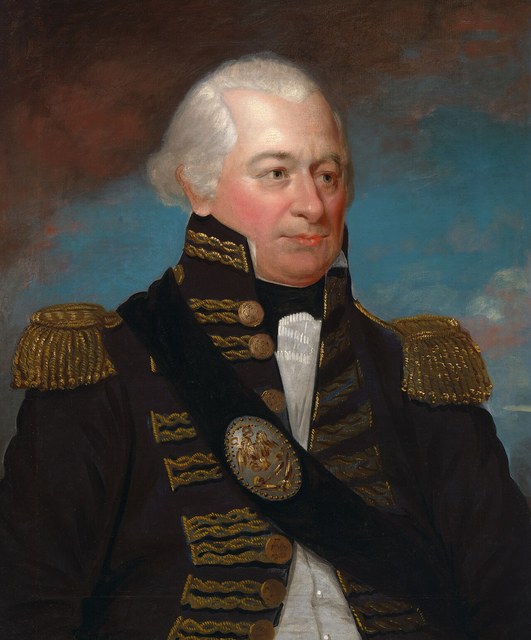
H

Opponents of this election’s winner would later spread claims that he pimped prostitutes to the Czar during his time as Ambassador to Russia.

H

While serving as chancellor of New York, Nathan Sanford ran in this presidential election year, winning 30 vice-presidential votes.

H

This election year included strong personal attacks against Albert Gallatin who withdrew his nomination as a result.

H

The presidential election of this year was satirized by the political cartoon “A Foot Race” and marked the end of the King Caucus system.

H

In this election year, a group of old Republicans, supported by or supported a Georgian candidate who finished in third place.

H

The third-place finisher in this U.S. election year suffered a stroke a year prior to it, leading to his poor performance.

H

William Crawford took third in this election, the only election after the Twelfth Amendment to be decided by the House of Representatives.

H

The Tertium Quids [[TER-shum KWIDS]] were represented by that man, William H. Crawford, in this election year.

H

Its fourth-place finisher, Henry Clay, was subsequently named Secretary of State.

Watch out: William Crawford suffered a stroke before this election, but Nathaniel Macon (not Crawford) served as his running mate throughout
#1084 · US Presidential Elections · Level 3

1860 United States Presidential Election

1860 United States Presidential Election
bdi Alexander Hesler /span /a · Public domain

Presidential election · 1860 · United States

The 1860 United States Presidential Election saw the Democratic Party split into Northern and Southern factions, enabling Abraham Lincoln's victory.

The kit

  • Candidates — The 1860 United States Presidential Election featured four major candidates: Republican Abraham Lincoln, Northern Democrat Stephen Douglas, Southern Democrat John Breckinridge, and Constitutional Unionist John Bell.
  • Democratic split — The 1860 United States Presidential Election saw William Lowndes Yancey and fellow Fire-Eaters walk out of the Democratic convention, splitting the party into geographic factions.
  • Fusion efforts — The 1860 United States Presidential Election featured losing candidates joining forces in three Mid-Atlantic states to cast fusion ballots against Lincoln.
  • Outcome — The 1860 United States Presidential Election ended in Abraham Lincoln's victory, which helped trigger the siege of Fort Sumter and preceded the Civil War.

Runs with

John
John Bell ran as Constitutional Union candidate open card →
Abraham Lincoln
Abraham Lincoln won the election as Republican candidate open card →
Stephen Douglas
Stephen Douglas ran as Northern Democratic candidate and lost open card →
Tennessee

The ladder · 6 clues

H

This year featured a presidential campaign by John Bell whose Constitutional Union party dissolved one year later.

H

One party formed for this election year was comprised of remnants of the earlier Opposition party.
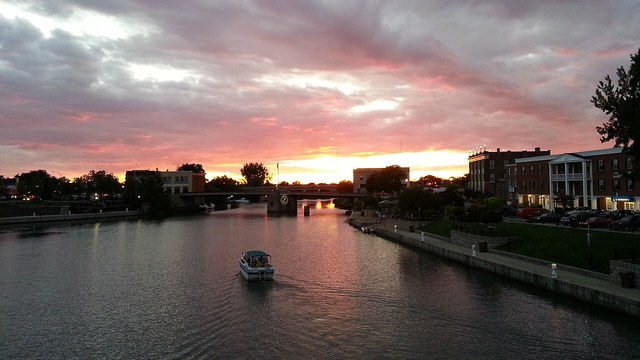
M

A convention in this election year featured William Lowndes Yancey leading his fellow “fire-eaters” out of the hall.

M

The Democrats split into two distinct Northern and Southern factions during this election, with one side running Stephen A. Douglas and the other John Breckinridge. name this electoral cycle which preceded the Civil War, ending in a victory for Abraham Lincoln.

E

John Breckenridge and Stephen Douglas lost this Presidential election that helped trigger the siege of Fort Sumter after Abraham Lincoln won.

E

The Lecompton Constitution was discussed during this election, whose winning ticket included Hannibal Hamlin.

10 more clues from the record
H

Included three former Republican rivals in what year’s Presidential election this Lincoln won.

H

A vice-presidential candidate in this election year had taken over Walter Colquitt’s vacated Senate seat and would go on to become Governor of Georgia.

H

The short-lived Constitutional Union party ran its first and only presidential candidate, Tennessee senator John Bell, during this election cycle.

H

In this election year, William Yancey, a member of the Fire-Eaters, helped split one party into geographic factions.

H

In this election year, losing candidates joined forces in three Mid-Atlantic states to cast “fusion” ballots.

H

Two minor parties in this election included the People’s Party and Liberty Party, the latter of which nominated Gerrit Smith.

H

Supporters of a candidate in this election marched with banners reading “mind your eye.” A Texan “People’s Party” in this election nominated Sam Houston against his will.

H

The illiterate cousin of a candidate in this election joined the campaign when opponents predictably alleged that letters dictated to Richard Oglesby were forged.

H

That party eventually chose John Bell of Tennessee as their choice for the Presidency, and Bell would carry his home state, Kentucky, and Virginia.

H

A candidate in this election was mocked in the cartoon "Three to One You Don't Get It" which showed him carrying pieces of wood.

Watch out: Stephen Douglas ran as the Northern Democratic candidate, not as Lincoln's running mate
#1085 · US Presidential Elections · Level 3

Election of 1800

Election of 1800
Hamilton, Alexander, 1757-1804 · Public domain

U.S. presidential election · 1800 · United States

Election of 1800 was the fourth U.S. presidential election in which Thomas Jefferson defeated incumbent John Adams, producing the first peaceful transfer of power between parties.

The kit

  • Electoral tie — Election of 1800 produced a 73-73 electoral vote tie between Thomas Jefferson and Aaron Burr, sending the contest to the House.
  • House resolution — Election of 1800 was resolved when James Bayard convinced Maryland and Vermont allies to cast blank ballots, breaking the deadlock.
  • Constitutional reform — Election of 1800 exposed flaws in the electoral system, leading directly to passage of the Twelfth Amendment to prevent future ties.
  • Political realignment — Election of 1800 is called the "Revolution of 1800" because it achieved the first peaceful transfer of power between opposing parties.

Runs with

Thomas Jefferson
won with 73 electoral votes after House deadlock open card →
John Adams
Aaron Burr
tied Jefferson with 73 electoral votes open card →
James
James Bayard brokered House resolution through blank ballots open card →

The ladder · 6 clues

H

In this election, James Bayard played an important role by convincing his allies in Maryland and Vermont to cast blank ballots.

H

During this election, James A. Bayard and some of his political allies decided to abstain in a key vote.

M

William Freehling claims that the Three-Fifths clause was central to the incumbent’s loss in this election year, whose winner gave a diplomatic inaugural address in which he claimed “We are all Republicans, we are all Federalists.” A Federalist supported a rival in this election year by claiming he was “by far not so dangerous a man” as Aaron Burr.

M

Aaron Burr initially received 73 electoral votes in this election year, tying him with the eventual winner.

E

The 12th Amendment was enacted in response to this year’s election in which incumbent John Adams was defeated by Thomas Jefferson.

E

Chaos in the voting system for this election resulted in the Twelfth Amendment’s passage soon afterwards. name this election in which the U.S. peacefully transferred power for the first time as Thomas Jefferson unseated John Adams.

10 more clues from the record
H

The incumbent in this election lost votes within his party due to a split between him and Charles Pinckney, and a single electoral vote was cast for John Jay.

H

During this election, the loser was attacked in the pamphlet “The Prospect Before Us,” which led to the arrest of its author James T. Callender.

H

This election partly turned on a party leader writing a fifty- page letter that attempted to get Charles Cotesworth Pinckney elected President.

H

In the months before this year’s election, the author of The Prospect was prosecuted for attacking the incumbent President.

H

During this election year, a defective certificate of election from Georgia was ignored, which eliminated a mandated runoff vote.

H

Edward Larson wrote a history of this election year titled A Magnificent Catastrophe.

H

During this election, New York’s William P. Van Ness sent a secret letter to Edward Livingston, detailing an ultimately failed plan to defeat the winning candidate.

H

This election is often referred to as a “Revolution” due to the major political realignment that occurred. :Name this fourth ever U.S. presidential election, in which Thomas Jefferson defeated John Adams.

H

The losing candidate in this election was condemned for his “reign of terror” by the newspaper Aurora, and his own party sought to dump him for his running mate, Charles C. Pinckney.

H

Though problems with the electoral process had been exposed in the previous election, it was this election that got the Twelfth Amendment proposed and ratified.

Watch out: Election of 1796 also had electoral process problems but did not trigger the Twelfth Amendment
#1091 · US Supreme Court Cases · Level 3

Marbury v. Madison

Marbury v. Madison
b Original: /b /a /div Optimager /a /div Vector: /div Ipanko · Public domain

1803 Supreme Court case · 1803 · United States

Marbury v. Madison established judicial review when the Supreme Court struck down part of the Judiciary Act of 1789.

The kit

  • Background — Marbury v. Madison arose when William Marbury requested a writ of mandamus after being denied his federal commission.
  • Midnight judges — Marbury v. Madison concerned a justice of the peace appointed by John Adams at the tail end of his administration.
  • Ruling — Marbury v. Madison declared section 13 of the Judiciary Act unconstitutional because it violated Article Three's original jurisdiction parameters.
  • Legacy — Marbury v. Madison established that determining what is constitutional is "emphatically the province and duty" of the judicial branch.

Runs with

John Adams
appointed Marbury as midnight judge open card →
John Marshall
wrote majority opinion establishing judicial review open card →
Secretary of StateWilliam

The ladder · 6 clues

H

The plaintiff in this Supreme Court case had asked for a writ of mandamus after the defendant refused to deliver a federal commission to him.

H

This case involved a justice of the peace of Washington, D.C.’s “midnight appointment” by John Adams.

M

The issue of the “midnight judges” led to this 1803 Supreme Court Case that struck down the Judiciary Act of 1789 and established the principle of judicial review.

M

The majority opinion in this case stated the court had no jurisdiction in mandamus proceedings, and declared section 13 of the Judiciary Act of 1789 unconstitutional.

E

The Judiciary Act was ruled unconstitutional by John Marshall in this case. name this 1803 Supreme Court case that created the process of judicial review.

E

This case concerned the appointment of "midnight judges" at the tail end of the administration of John Adams.

10 more clues from the record
H

Answer some questions about Chief Justice John Marshall .In what 1803 Supreme Court case did Marshall's Court establish the principle of judicial review? The case, which involved a Secretary of State, featured a judicial appointee who had been denied his commission.

H

During testimony in this case, former acting Secretary of State Levi Lincoln controversially requested time to consider whether he should answer any questions.

H

Jacob Wagner and Daniel Brent attempted to refuse to testify during this event.

H

This court case defined the difference between appellate jurisdiction and original jurisdiction.

H

Levi Lincoln helped cause this court case on behalf of a man that later rebuked the final decision by saying “you seem to consider judges the ultimate arbiters of all constitutional questions”.

H

The ruling in this case was compared to an “irresistible implication” in a later dissent by John Gibson, which formed the only memorable part of Eakin v.

H

This case, whose majority opinion cited Federalist Papers No. 78, began as a result of James Markham Marshall failing to deliver commissions prior to a presidential inauguration.

H

A quotation from the ruling in this case about what is "emphatically the province and duty" of a government body is now inscribed at the Supreme Court.

H

This case found that the Judiciary Act of 1789 contained provisions contrary to the original jurisdiction parameters of Article Three of the Constitution.

H

This case laid out the official terms of a policy that had begun seven years prior in Hylton v.

Watch out: Hylton v. U.S. began a policy seven years before this case
#1093 · US Supreme Court Cases · Level 3

Worcester v. Georgia

Worcester v. Georgia
a rel="nofollow" Internet Archive Book Images · No restrictions

1832 Supreme Court case · 1832 · United States

Worcester v. Georgia was an 1832 Supreme Court case ruling that state law did not apply within Cherokee territory.

The kit

  • Plaintiff — Worcester v. Georgia involved missionary Samuel Worcester, who co-founded the newspaper Phoenix with Elias Boudinot.
  • Ruling — Worcester v. Georgia saw Chief Justice John Marshall rule that only the federal government had the right to deal with Native American tribes.
  • Jackson's defiance — Worcester v. Georgia was ignored by Andrew Jackson, who reportedly said "John Marshall has made his decision, now let him enforce it!"
  • Outcome — Worcester v. Georgia failed to prevent Cherokee removal despite overturning the conviction of seven missionaries including Elizur Butler.

Runs with

Cherokee
ruled Georgia law had no force in Cherokee territory open card →
Andrew Jackson
refused to enforce the ruling open card →
John Marshall
wrote the majority opinion open card →
Native Americans
defended tribal sovereignty against state interference open card →

The ladder · 6 clues

H

Andrew Jackson ignored this 1832 Supreme Court case which defended the sovereignty of Native Americans against the states.

H

Wilson Lumpkin offered to give a pardon to a side involved in this court case.

M

This 1832 Supreme Court case ruled that state law did not apply to the Cherokee. Jackson’s refusal to enforce the ruling resulted in the Nullification Crisis.

M

Jackson showed his disrespect for Native Americans as well as his willingness to enforce quasi-dictatorial powers when he refused to enforce this Supreme Court decision protecting the Cherokee from complying with the directives of state governments.

M

Andrew Jackson flat-out ignored the ruling in this 1832 case, which recognized Indian nations as sovereign and prohibited a certain state’s attempt to redraw its border with the Cherokee.

E

The response, “John Marshall has made his decision, now let him enforce it!” followed this 1832 Supreme Court case which held that state governments, including the named defendant, could not interfere with the Cherokee Nation.

9 more clues from the record
H

This case overturned a state law that prohibited non-Native Americans from coming into contact with Natives on tribal land.

H

The plaintiff in this case co-founded the newspaper Phoenix with Elias Boudinot.

H

Governor George Gilmer withdrew one of its namesake's tenure as postmaster so that the state could prosecute him under a licensing law.Name this Supreme Court case that overturned the conviction of seven missionaries including Elizur Butler.

H

After retiring as attorney general, Wirt became an advocate of Cherokee rights, arguing this case before the Supreme Court. John Marshall ruled in favor of the Cherokee as an independent nation, but Andrew Jackson just ignored him.

H

That plaintiff argued that the actions of a state government violated Article I, Section 8 of the Constitution, an argument which found favor with six of seven justices, who held that the territory in question was a "distinct community" in which the laws of the state held no force.

H

The missionary plaintiff in this case was initially released when he claimed that he operated under federal authority as the postmaster of New Echota, but was relieved of his duties and rearrested.

H

The Cherokee were removed despite the ruling of this 1832 court case. This court case, which was levied against Georgia, found that the state had no place in Native affairs.

H

The ruling Jackson was responding to was this one, which ruled a state's law prohibiting non-Indians being on Indian land unconstitutional.

M

This Supreme Court case saw Chief Justice John Marshall rule that only the federal government had the right to deal with Native American tribes.

#1094 · US Supreme Court Cases · Level 3

McCulloch v. Maryland

McCulloch v. Maryland
a rel="nofollow" swatjester · CC BY-SA 2.0

1819 Supreme Court case · 1819 · United States

McCulloch v. Maryland was an 1819 Supreme Court case that struck down Maryland's tax on the Second Bank of the United States.

The kit

  • Rise — McCulloch v. Maryland arose when Baltimore financier James McCulloch refused to pay Maryland's tax on out-of-state banks.
  • Achievements — McCulloch v. Maryland established that Congress has implied powers to enforce the Constitution's express powers through necessary and proper means.
  • Achievements — McCulloch v. Maryland ruled that the power to tax is the power to destroy, preventing states from taxing federal institutions.
  • Legacy — McCulloch v. Maryland was cited as precedent in D'Emden v. Pedder, the first major case of Australia's High Court.

Runs with

Bank
established federal authority to create banks via implied powers open card →
Second Bank of the United States
protected the Bank from Maryland's taxation attempt open card →
Daniel Webster
Maryland
the state whose tax on federal banks was struck down open card →

The ladder · 6 clues

H

1819 court case which concerned Maryland's attempt to tax the Second Bank of the United States.

H

A state could not tax the Second Bank of the U.S. in what 1819 Supreme Court case?

M

The ruling in this case argued that the Necessary and Proper Clause provided the federal government the right to establish the Second Bank of the United States. name this case in which a Baltimore financier refused to pay a tax on out-of-state banks.

M

In this case, a rejection of the narrow interpretation of the word “necessary” by John Marshall led to a balance between federal and state powers.

E

This case claimed that the power to tax is the power to destroy, in striking down a specific tax. name this case that found that a certain state couldn’t tax the Bank of the United States.

E

The representative of the namesake Mid-Atlantic state in this case, which sought to impose a tax on a federal institution, argued that the “Constitution is silent on the subject of banks." name this 1819 case argued by Daniel Webster, who represented the Second Bank of the U.S.

10 more clues from the record
H

This was the first Supreme Court case to make official Alexander Hamilton’s concept of the implied powers of the Constitution.

H

This case established that Congress’ implied powers could enforce the Constitution’s express powers.

H

The ruling in this case overruled an appelate ruling that found that the “Constitution is silent on the subject,” thereby protecting the implied power of Congress to carry out constitutional laws by “necessary and proper” means.

H

The word “expressly” greatly affected this case’s ruling, which established the implied powers of Congress to enforce expressed powers, citing Hamilton’s criteria.

H

In the Australian case D’Emden v Pedder, Attorney General James Drake referenced this American court case, which arose from a lawsuit John James filed.

H

This case’s definition of laws that allow for the “beneficial exercise” of other laws was applied by the Supreme Court in the 2010 case U.S. v.

H

This U.S. case was cited as a primary example in the first major case overseen by the High Court of Australia, D'Emden v.

H

Pedder, which helped flesh out the Australian Constitution.

H

This case was used as precedent during D’Emden v.

H

The authority of the bank was challenged by the state of Maryland in this 1819 Supreme Court Case. It ruled that the federal government has the right to establish a national bank.

Watch out: Students may confuse this with other early Marshall Court cases establishing federal supremacy, such as Gibbons v. Ogden
#1095 · US Supreme Court Cases · Level 3

Gibbons v. Ogden

Gibbons v. Ogden
p White, Emma Siggins, b. 1857; /p Maltby, Martha Humphreys · No restrictions

Supreme Court case · 1824 · United States

Gibbons v. Ogden upheld Congress's right to regulate interstate commerce, breaking New York's steamboat monopoly.

The kit

  • Background — Gibbons v. Ogden arose after New York's Court of Chancery issued an injunction against a company operating from Elizabethtown.
  • Monopoly dispute — Gibbons v. Ogden challenged Robert Livingston and Robert Fulton's monopoly on New York navigation granted by state law.
  • Constitutional interpretation — Gibbons v. Ogden interpreted the word "among" as "intermingled with" regarding Congress's commerce power in Article I, Section 8.
  • Outcome — Gibbons v. Ogden established the federal government's sole ability to decide matters of interstate commerce including navigation.

Runs with

John Marshall
Marshall wrote the opinion interpreting Article I, Section 8 open card →
Cornelius Vanderbilt
Vanderbilt captained the ship for appellant Gibbons open card →
York
New York state granted the monopoly struck down open card →
New York City
route ran from Elizabethtown to New York City open card →

The ladder · 6 clues

H

Congress's right to regulate interstate commerce was upheld in this 19th century court case.

H

In this case, Attorney General William Wirt argued that the federal patent preemptively applied for by the plaintiff superseded any regulation from the state.

M

Cornelius Vanderbilt worked as a captain for the appellant in this case who was sued over a route from Elizabethtown to New York City.

M

In this case, the word “among” was interpreted as “intermingled with” in regards to regulation.

E

1824 case that ruled that New York could not regulate steamboat navigation on its waters because it was interstate commerce.

E

Robert Livingston and Robert Fulton’s monopoly on New York navigation resulted in this case that established the federal government’s sole ability to decide on matters of interstate commerce.

10 more clues from the record
H

Vanderbilt captained the ship at the center of this Supreme Court case, which held that Congress’s power over interstate commerce extended to navigation.

H

John Marshall found that the word “among” in Article I, Section 8 of the Constitution was central to the decision of this case, which came about after one state’s Court of Chancery issued an injunction against a company operating out of Elizabethtown.

H

One namesake of this court case was represented by Samuel Southard and a member of the United Irishmen, Thomas Addis Emmet.

H

In this author’s autobiography, he described suffering shrapnel wounds to the lung duRring the Battle of Somme while a member of the Royal Welsh Fusiliers.

H

William Wirt helped argue this case, which included a ship owner who hired Cornelius Vanderbilt to run a ferry.

H

The primary attorney of the defendent in this case, Thomas Addis Emmet, previously served as barrister for the revolutionary Society of the United Irishmen.

H

Elizabethtown was one terminus of the industry at the center of this court case, one of whose employees was a young Cornelius Vanderbilt.

H

Stiffel, which questioned whether patent law was sufficient to resolve its question.

H

In this 1824 case, Vanderbilt’s employer won rights to operate his steamboats in the Hudson River, while the federal government broke a ferry monopoly by two other owners issued by the state of New York.

H

The act under review granted rights to John Fitch and then transferred the privilege to Robert Livingston, who licensed another man to run between Elizabeth Point and New York City.

#1145 · Other National Independence Leaders · Level 3

Roger Sherman

Roger Sherman
bdi Ralph Earl /span /a · Public domain

Founding Father · 1721–1793 · Connecticut

Roger Sherman was the only person to sign the Declaration of Independence, Articles of Confederation, and U.S. Constitution.

The kit

  • Rise — Roger Sherman received his only education from Reverend Samuel Dunbar but later became treasurer for Yale College.
  • Achievements — Roger Sherman served on the Committee of Five tasked with writing the Declaration of Independence.
  • Connecticut Compromise — Roger Sherman proposed the Connecticut Compromise, creating the House and Senate with proportional and equal state representation.
  • Legacy — Roger Sherman was the inaugural Mayor of New Haven, Connecticut, succeeded by his son-in-law Simeon Baldwin.

Runs with

Connecticut
represented Connecticut at Constitutional Convention open card →
Declaration of Independence
served on Committee of Five that drafted it open card →
Constitutional Convention
proposed Connecticut Compromise there with Ellsworth open card →
Oliver Ellsworth
co-formulated Connecticut Compromise with him open card →

The ladder · 6 clues

H

Proposed the Connecticut Compromise, creating the House and Senate?

H

The Connecticut Compromise was proposed by this man, the only signatory of the Declaration of Independence, Articles of Confederation, and U.S. Constitution.

M

Senator and signer of the Constitution who proposed the Connecticut Compromise.

M

This man is the only one to sign all four "great state papers" of the United States and was the second oldest member, behind Benjamin Franklin, at the Constitutional Convention?

M

He represented a state at the Constitutional Convention with Oliver Ellsworth. name this politician whose Great Compromise was adopted by the legislative branch giving each of the states proportional representation, a founding father from Connecticut.

E

The Connecticut Compromise is also named for this Founding Father.

7 more clues from the record
H

While in that same position, he published a work which stated “What does the creditor have a right to demand a debt to be contracted, or for the debtor to oblige that payment?” and explains the role of “Bills of Credit.” This author of A Caveat Against Injustice obtained his highest position when William Johnson resigned from his position in the Senate.

H

At one meeting, this member of the Committee of Five put forth an idea which was modified in the Committee of Detail; that plan opposed other ideas proposed by William Paterson, and James Madison.

H

In one position, this man worked with Ephraim Williams in an expedition where Seth Pomeroy lost most of his contingent in the Crown Point Campaign.

H

Despite dying of typhoid fever, this man’s cause of death was originally reported by the pro-Federalist Gazette of the United States to be illness of the liver.

H

With his fellow delegate Oliver Ellsworth, this man formulated the Connecticut Compromise. Earlier, he was on the Committee of Five that was tasked with writing the Declaration of Independence.

H

This man’s son-in-law, Simeon Baldwin, succeeded him in a post of which he was the inaugural holder; that post was Mayor of New Haven, Connecticut.

H

This man’s only education was received from the Reverend Samuel Dunbar, but he later became a treasurer for Yale College.

Watch out: William Paterson also proposed a plan at the Constitutional Convention opposing Sherman's ideas
#1147 · Other National Independence Leaders · Level 3

Oliver Ellsworth

Oliver Ellsworth
bdi Ralph Earl /span /a · Public domain

American statesman and jurist · 1790s · Connecticut and United States

Oliver Ellsworth was the third Chief Justice of the United States who also authored the Judiciary Act of 1789.

The kit

  • Rise — Oliver Ellsworth served at the Constitutional Convention and supported Roger Sherman's Connecticut Compromise proposal.
  • Achievements — Oliver Ellsworth coauthored the Judiciary Act of 1789 with William Paterson as one of Connecticut's first two senators.
  • Diplomacy — Oliver Ellsworth negotiated the Treaty of Mortefontaine with William Vans Murray and William Richardson Davie, ending the Quasi-War.
  • Legacy — Oliver Ellsworth promoted ratification through his Letters of a Landholder though he did not sign the Constitution.

Runs with

William
negotiated with William Vans Murray and William Richardson Davie open card →
Roger Sherman
supported Sherman's Connecticut Compromise proposal open card →
Connecticut
one of Connecticut's first two U.S. senators open card →
John
succeeded John Rutledge as Chief Justice open card →

The ladder · 6 clues

H

After serving at the Constitutional Convention, this person penned Letters of a Landholder.

H

Though this man did not sign the Constitution, he promoted its ratification in his Letters of a Landholder.

M

Succeeding John Rutledge in his highest post, this politician had earlier supported Roger Sherman’s proposal of their state’s namesake compromise at the Constitutional Convention.

M

Along with William Vans Murray and William Richardson Davie, this man was one of the three commissioners who negotiated the Treaty of Mortefontaine.

E

name this envoy to France who also served as the third chief justice of the United States Supreme Court.

E

Author of the Judiciary Act of 1789, a Connecticut Senator who was later Chief Justice.

9 more clues from the record
H

One of Connecticut’s first two senators under the Constitution, this politician coauthored the Judiciary Act of 1789 with William Paterson.

H

He was accused of fastening “chains of slavery” on children with a “birth-duty of allegiance” for his decision that Isaac Williams could not renounce citizenship without the consent of the community.

H

He reluctantly agreed to be appointed commisioner to France in 1799, three years after he took a position which had been declined by William Cushing.

H

A signatory of the Treaty of Mortefontaine, ending the Quasi-War, this man was also the primary author of the Judiciary Act of 1789.

H

John F. Kennedy contributed the Encyclopædia Britannica’s article on this politician, the only one he ever wrote.

H

John Taylor of Caroline was horrified at a secession proposal produced by this man and Rufus King.

H

This man’s son Henry was the first United States commissioner of patents.

M

This advocate of the Jay Treaty signed the Convention of 1800, or Treaty of Mortefontaine, to end the undeclared Quasi-War.

M

He proposed the use of the phrase “United States” as a member of the five-man committee which drafted the Constitution; that committee was chaired by the man who preceded him in his most prominent position, John Rutledge.

Watch out: John Rutledge preceded Ellsworth as Chief Justice and also chaired the committee that drafted the Constitution
#1164 · Diseases and Epidemics · Level 3

1793 Philadelphia Yellow Fever Epidemic

1793 Philadelphia Yellow Fever Epidemic
Matthew Carey · Public domain

mosquito-borne disease outbreak · 1793 · Philadelphia

The 1793 Philadelphia Yellow Fever Epidemic was a mosquito-borne disease outbreak that forced George Washington's cabinet to flee the capital.

The kit

  • Causes — The 1793 Philadelphia Yellow Fever Epidemic was likely initiated by Caribbean refugees, though Benjamin Rush blamed unsanitary conditions in the central city.
  • Medical response — The 1793 Philadelphia Yellow Fever Epidemic saw Benjamin Rush advocate bloodletting and mercury powders, unaware that breeding mosquitoes were exacerbating the crisis.
  • Community aid — The 1793 Philadelphia Yellow Fever Epidemic prompted the Free African Society to volunteer after a letter falsely claimed Black people had immunity.
  • Facilities — The 1793 Philadelphia Yellow Fever Epidemic led to Bush Hill becoming a makeshift medical facility where Stephen Girard helped after finding unqualified staff.

Runs with

Benjamin Rush
treated victims with bloodletting and mercury open card →
Philadelphia
the City of Brotherly Love struck by epidemic open card →
George Washington
fled the capital with his cabinet open card →
mayor
Matthew Clarkson led response efforts open card →

The ladder · 6 clues

H

Matthew Clarkson was mayor during this event, during which the Free African Society volunteered to help victims.

H

Stephen Girard stayed to help victims of this event after Bush Hill and other medical facilities were found to have unqualified staffF.

M

The unsanitary conditions of the central city were theorized by Benjamin Rush to have caused this event, which historians now think was initiated by Caribbean refugees.

M

Benjamin Rush treated victims of this event with bloodletting. name this event that forced George Washington to flee his capital, a mosquito-borne epidemic that struck Philadelphia in 1793.

E

This event caused George Washington’s cabinet to reassemble in the nearby city of Germantown. name this 1793 epidemic that affected the “City of Brotherly Love.”

E

During this event, doctor Benjamin Rush urged the usage of “purge and bleed” techniques upon jaundiced patients. name this 1793 epidemic that befell Philadelphia thanks to the presence of mosquitoes.

10 more clues from the record
H

This event was exacerbated after a letter from Anthony Benezet misinformed townspeople that black people had immunity, leading the mayor to request the aid of the Free African Society.

H

Benjamin Rush advocated bloodletting and taking mercury powders to combat this event, unaware that it was being exacerbated by breeding mosquitoes.

H

Mathew Carey wrote contemporary accounts of this event, which was believed at the time to have been caused by rotten coffee beans.

H

One of the first deaths during this event was James Hutchinson, the doctor supervising the Arch Street port.

H

Many people died in this event in a makeshift facility on Bush Hill.

H

The Guardians of the Poor assisted people during this event, during which a man who used the pseudonym Anthony Benezet called for Black residents to “offer your services.” During this event, which provided the backdrop to Charles Brockden Brown’s novel Arthur Mervyn, Richard Allen and Absalom Jones helped organize Black workers, who were falsely believed to have medical immunity.

H

One instance of this problem correlated with a ship called the Hankey as it sailed the Atlantic. Early 20th-century experiments at Camp Lazear worked to solve this problem, which was treated in early America at the Bush Hill building by free black nurses after Haitian immigrants apparently brought it to the US.

H

J. M. Powell’s book Bring Out Your Dead chronicled Matthew Clarkson’s role in responding to this event, despite the departure of some Common Council members.

H

In response to this event, the Guardians of the Poor repurposed the arena belonging to circus pioneer John Bill Ricketts.

H

William Gorgas worked on addressing this medical condition at the Panama Canal zone.

Watch out: William Gorgas (worked on yellow fever at Panama Canal, not this epidemic)
#1192 · American Frontiersmen and Pioneers · Level 3

Sam Houston

Sam Houston
Oldag07 /a ( talk /a ) · Public domain

Texas general and politician · 1793–1863 · Texas and Tennessee

Sam Houston was the general who defeated Santa Anna at San Jacinto and served as first president of the Republic of Texas.

The kit

  • Rise — Sam Houston earned the nickname 'The Raven' after being adopted by Cherokee chief John Jolly and living among the tribe.
  • Achievements — Sam Houston smuggled the artillery pieces called the Twin Sisters down the Mississippi River before his victory at San Jacinto.
  • Conflicts — Sam Houston beat Congressman William Stanberry with a hickory cane after Stanberry accused him of defrauding Native Americans in a Cherokee land scheme.
  • Legacy — Sam Houston served as first, third, and seventh Governor of Texas and was forced from office in 1861 for refusing a Confederate loyalty oath.

Runs with

Texas
served as its first president and multiple-term governor open card →
Battle of San Jacinto
commanded Texan forces to decisive victory over Santa Anna open card →
William
beat William Stanberry with a cane over fraud accusations open card →
Cherokee
lived among them and signed treaty with Chief Bowl open card →

The ladder · 6 clues

H

William Stanbery accused this politician of fraud leading this man to brutally beat him with a cane.

H

While lobbying in Washington D.C., he beat senator William Stanberry with a cane and hired Francis Scott Key as his lawyer in the ensuing trial.

M

This man claimed an enemy moved "with the perseverance of a mighty avalanche." This man was defended by Francis Scott Key after he assaulted Congressman William Stanberry.

M

This man smuggled the Twin Sisters down the Mississippi River in preparation for one fight.

E

He was succeeded as President by Mirabeau Lamar. name this first President of the Republic of Texas and namesake of the state's most populous city.

E

This man served as the first, third, and seventh Governor of Texas. name this general who defeated Santa Anna at San Jacinto [[hah-SEEN-toh]] and names the largest city in Texas.

10 more clues from the record
H

This man was accused of working with John van Vossen and Robert Rose in aiding the Cherokees, a charge that prompted him to beat accuser William Stanberry with a cane.

H

What future national leader was wounded two separate times, once by an arrow and once by gunshot, during the Battle of Horseshoe Bend?

H

This man beat Congressman William Stanbery with a hickory cane on Pennsylvania Avenue after Stanbery suggested that this man had defrauded Native Americans.

H

This man signed a treaty with Chief Bowl to guarantee Cherokee land rights, though his friendship with the natives led to a feud with senator William Stanberry, who this man attacked with a cane.

H

This man was known as “Raven” to the Cherokee following his adoption by chief John Jolly.

H

This politician earned the nickname “The Raven” after living with a Cherokee tribe.

H

This politician resigned as governor and moved to live with a tribe after the 19 year old Eliza Allen left him.

H

Alexis de Tocqueville interviewed this man when he ran a trading post among his friends, the Cherokee Indians.

H

This man unsuccessfully attempted to force Thomas Jefferson Rusk to disband his vigilante army, leading to the end of the Cordova Rebellion.

H

This man defeated Hardin Runnels in an 1859 election, but was forced out two years later after refusing to swear an oath of loyalty to the Confederacy.

Watch out: Mirabeau Lamar succeeded him as President of the Republic of Texas
#1197 · American Frontiersmen and Pioneers · Level 3

Sacagawea

Sacagawea
bdi Edgar Samuel Paxson /span /a · Public domain

Shoshone interpreter and guide · c. 1788–1812 or 1884 · Louisiana Territory, Pacific Northwest

Sacagawea was a Lemhi Shoshone interpreter who guided the Lewis and Clark Expedition through the Louisiana Territory and Pacific Northwest.

The kit

  • Recruitment — Sacagawea and her husband Toussaint Charbonneau joined the Corps of Discovery at Fort Mandan in North Dakota.
  • Early life — Sacagawea was captured by the Hidatsa people at age twelve in a raid near modern-day Washburn, North Dakota.
  • Achievements — Sacagawea successfully navigated the expedition through Gibbons Pass in the Rocky Mountains and rescued items from a capsized boat.
  • Legacy — Sacagawea is the namesake of a lake formed by the Garrison Dam, the largest of six artificial lakes along the Missouri River.

Runs with

Lewis and Clark Expedition
guided the expedition as interpreter and navigator open card →
Pacific
helped guide the Corps through the Pacific Northwest open card →
Susan B. AnthonyCharles

The ladder · 6 clues

H

This Shoshone interpreter and her husband Toussaint Charbonneau joined the Lewis and Clark Expedition at Fort Mandan.

H

This member of the Shoshone gave birth to a son at Fort Mandan in North Dakota while assisting the Corps of Discovery. name this woman who served as a guide on the Lewis and Clark Expedition.

M

This woman, who was sold to trapper Toussaint Charbonneau [[shahr-bah-NOH]], helped guide a party through the Pacific Northwest. name this Lemhi Shoshone [[shoh-SHOH-neh] woman who helped the Lewis and Clark expedition across the Louisiana Territory.

M

This woman successfully navigated a group through the Gibbons Pass in the Rocky Mountains.

E

Toussaint Charbonneau was married to this Shoshone woman who guided the Lewis and Clark Expedition.

E

The Corps of Exploration was aided by this woman, a Shoshone [sho-sho-ne] guide who assisted Lewis and Clark.

10 more clues from the record
H

After a group of explorers identified Cameahwait [“kuh-may-ah-wait”] as this figure’s long-lost brother, he gifted horses to those explorers.

H

This figure provided the advice to travel through what are now called the Gibbons and Bozeman Passes; that advice was given to colleagues met at Fort Mandan.

H

This woman is the namesake of a body of water formed by the Garrison Dam that is the largest of a set of six artificial lakes along the Missouri River.

H

At twelve years old, this person and several others were taken captive by the Hidatsa people in a raid near modern day Washburn.

H

Late in life, this woman may have taken on the name Porivo, as Charles Eastman discovered while trying to locate her remains.

H

This woman’s son, Jean Baptiste, spent half a decade in the retinue of explorer Duke Paul Wilhelm of Wurttemberg.

H

This woman gave birth at Fort Mandan shortly after the Corps of Discovery recruited her and her husband as guides and interpreters.

H

When this figure rescued fallen items from a capsized boat on the Missouri River, her name was given to a tributary of the Mussellshell river.

H

This woman’s story was first brought to the public eye in a 1902 novel by Eva Emery Dye.

H

Despite being kidnapped by the Hidatsa people, this woman was able to reunite with her brother Cameahwait.

Watch out: Toussaint Charbonneau was her husband and fellow expedition member, not a separate guide
#1209 · Abolitionists and Antislavery Figures · Level 3

William Lloyd Garrison

William Lloyd Garrison
Liljenquist Family Collection of Civil War Photographs · Public domain

Abolitionist editor · 1830s–1870s · Boston, Massachusetts

William Lloyd Garrison was the firebrand abolitionist editor who founded The Liberator and publicly burned the Constitution in 1854.

The kit

  • Rise — William Lloyd Garrison founded the American Anti-Slavery Society and convinced Wendell Phillips to abandon law for abolitionism.
  • Conflicts — William Lloyd Garrison spent seven weeks in jail after Maryland sued him for libel over accusations against slave trader Francis Todd.
  • Achievements — William Lloyd Garrison declared in The Liberator 'I will not retreat a single inch' and publicly burned the Constitution, calling it 'a covenant with death.'
  • Legacy — William Lloyd Garrison joined Lucy Stone in 1870 to edit The Woman's Journal, a suffragist newspaper.

Runs with

The Liberator
founded and published this abolitionist newspaper open card →
Slavery
led the American Anti-Slavery Society against this institution open card →
Newspaper
edited The Liberator and later The Woman's Journal open card →
Boston
nearly lynched and tarred here in 1835 open card →

The ladder · 6 clues

H

In his most famous publication, this man declared “I will not retreat a single inch, and I will be heard.” name this abolitionist editor of The Liberator.

H

Another prominent abolitionist was this publisher of The Liberator, who set fire to the Constitution in 1854.

M

The American Anti-Slavery Society was founded by this abolitionist and publisher of The Liberator.

M

The state of Maryland sued this man for libel for his accusations concerning Francis Todd, causing him to spend seven weeks in jail.

E

In 1854, this man spoke against "a covenant with death and an agreement with hell" during his public burning of the Constitution. name this abolitionist firebrand who published The Liberator.

E

This leader publicly burned a copy of the Constitution in protest, calling it “a covenant of death.” This man was a close ally of Wendell Phillips, who succeeded him as president of the American Anti-Slavery Society. name this fierce abolitionist and orator who published The Liberator.

10 more clues from the record
H

Douglass's New Bedford speech followed a speech delivered by this publisher of The Liberator, who called the U.S. constitution “a Covenant with Death.”

H

In 1835, this man replaced a scheduled speaker, George Thompson, who canceled due to a $100 reward for the first person to injure him; this man was then nearly lynched.

H

This man and Benjamin Lund faced a libel suit after he reported on the barbarity of Francis Todd's practices in the local slave trade, resulting in the state of Maryland fining this writer.

H

This man convinced Wendell Philips to give up his law practice in favor of focusing on his social movement, which this man advocated for in a Quaker newspaper, Genius of Universal Emancipation.

H

Intervention by mayor Theodore Lyman prevented this man from being tarred, feathered, and dragged through Boston Commons.

H

A faction led by Lewis Tappan split off from this man’s organization over the election of Abby Kelley.

H

In 1870, this man joined Lucy Stone and others to edit the suffragist newspaper The Woman's Journal.

H

This man narrowly avoided the same fate as Elijah Lovejoy at a speech given by George Thompson.

H

This man failed in his attempts to gain clemency for Washington Goode's death sentence in 1849.

H

This man spearheaded the unsuccessful effort to overturn the death sentence of Christopher Goode.

#1211 · Abolitionists and Antislavery Figures · Level 3

The North Star

The North Star
film screenshot (RKO) · Public domain

Abolitionist newspaper · 1847–1851 · Rochester, New York

The North Star was an abolitionist newspaper founded and edited by Frederick Douglass, named for the celestial guide used by escaping slaves.

The kit

  • Founding — The North Star was inspired by William Lloyd Garrison's The Liberator and began publication in 1847.
  • Mission — The North Star used the slogan "Right is of no Sex—Truth is of no Color—God is the Father of us all, and all we are Brethren."
  • Funding & merger — The North Star received personal funding from Free Soil representative Gerrit Smith and merged with his Liberty Party Paper in 1851.
  • Content — The North Star published Douglass's essays denouncing minstrelsy and promoting photography as a counterpoint to racist caricatures.

Runs with

Frederick Douglass
founded, edited, and published it open card →
Newspaper
was an abolitionist periodical open card →
The Liberator
inspired Douglass to create it open card →
Abolition of Slavery
advocated for ending slavery open card →

The ladder · 6 clues

H

Douglass was inspired by William Lloyd Garrison's The Liberator to publish this abolitionist newspaper.

H

This periodical, headquartered in Rochester, New York, used the slogan "Right is of no Sex—Truth is of no Color—God is the Father of us all, and all we are Brethren." This publication was founded after a former slave was inspired by the production of The Liberator.

H

Free Soil representative Gerritt Smith personally funded this periodical due to his ties to its primary editor.

H

Frederick Douglass, who’s done an amazing job and is being recognized more and more, saw photography as a counterpoint to minstrelsy, which he denounced often in essays for this newspaper that he edited from 1847 to 1851.

M

From 1847 to 1851, Douglass published this anti-slavery newspaper. This abolitionist publication eventually merged with Gerrit Smith’s Liberty Party Paper.

M

Frederick Douglass founded and published this abolitionist newspaper named for celestial object followed by escaping slaves.

Watch out: The Liberator (William Lloyd Garrison's paper that inspired Douglass)
#1212 · Abolitionists and Antislavery Figures · Level 3

Henry Ward Beecher

Henry Ward Beecher
bdi Mathew Benjamin Brady /span /a · Public domain

Congregationalist preacher and abolitionist · 19th century (active 1840s-1880s) · New England and Indianapolis

Henry Ward Beecher was a Congregationalist preacher who sent rifles labeled as Bibles to Kansas abolitionists and became embroiled in a sensational adultery trial.

The kit

  • Rise — Henry Ward Beecher founded periodicals including The Independent and The Christian Union after studying at Lane Theological Seminary founded by his father.
  • Achievements — Henry Ward Beecher raised funds through the New England Emigrant Aid Society to send Sharps rifles, nicknamed his Bibles, to Kansas abolitionists during Bleeding Kansas.
  • Conflicts — Henry Ward Beecher was tried for adultery after Victoria Woodhull publicized his affair with Elizabeth Tilton, wife of Theodore Tilton, in 1872.
  • Legacy — Henry Ward Beecher wrote Seven Lectures to Young Men warning against vices and the novel Norwood, earning a Pulitzer-winning biography titled The Most Famous Man in America.

Runs with

Victoria Woodhull
published rumors of his affair with Elizabeth Tilton in 1872 open card →
Kansas
sent Sharps rifles nicknamed Beecher's Bibles to abolitionists there open card →
church
served as prominent Congregationalist minister and periodical editor open card →
America
subject of Pulitzer-winning biography The Most Famous Man in America open card →

The ladder · 6 clues

H

Congregationalist clergyman who supplied rifles to abolitionists during Bleeding Kansas, his namesake Bibles

H

Debby Applegate won a Pulitzer Prize for a biography of this man titled The Most Famous Man in America. A confession that was reported to Elizabeth Cady Stanton resulted in a court case that challenged this man’s denouncement of free love.

M

Abolitionist lecture circuit-rider who raised funds to send rifles to Kansas, known as his Bibles.

M

That widely reported trial dealt with this man’s affair with Elizabeth Tilton.

E

Sharps manufactured a set of weapons sent to abolitionists in Kansas that became known as this man’s namesake "bibles." name this abolitionist orator who was the brother of the author of Uncle Tom’s Cabin.

E

Victoria Woodhull published rumors of a love affair between the wife of Theodore Tilton and this man. For 15 points, name this nineteenth century celebrity, a Congregational preacher and the brother of a best-selling author.

10 more clues from the record
H

He wrote one notable work of fiction, the novel Norwood: A Tale of Village Life in New England, but is more known for such nonfiction works as Evolution and Religion and the product of eight years working in Indianapolis, which led him to explain the special needs of frontier town preaching in his Seven Lectures to Young Men.

H

This abolitionist wrote, "A traitor is good fruit to hang from the boughs of the tree of liberty." In 1872, a paper run by Victoria Woodhull publicized this man's affair with Elizabeth Richards Tilton.

H

Late in life, this man was put on trial for adultery after he allegedly had an affair with Elizabeth Tilton – allegations that were released to the public by Victoria Woodhull.

H

He founded such periodicals as The Independent and The Christian Union, which expounded the moderate Congregationalism he learned at Lane Theological Seminary, a school founded by this man’s father.

H

This man’s first published book, Seven Lectures to Young Men, warned against vices such as “strange women” and “amusements”.

H

In 1861, this man became the editor of The Independent.

M

The conflation of speculators and gamblers was promoted by this Congregationist, who argued in his Seven Lectures to Young Men that both groups “depend more upon fortune than skill.” Victoria Woodhull exposed this preacher’s affair with Elizabeth Tilton.

M

This man’s most notable action was conducted via the New England Emigrant Aid Society for the benefit of supporters of the Leavenworth Constitution. name this abolitionist preacher famous for arms trafficking to Kansas using boxes labeled “Bibles.”

M

Daniel McFarland’s defense claimed he was driven mad by a “free love conspiracy” involving this man, who officiated a death-bed marriage between the ex-wife and her lover. Sharps rifles were once nicknamed for this man.

M

This man controversially said “the man who cannot live on bread and water is not fit to live” while criticizing striking railroad workers in 1877.

Watch out: Brother of Harriet Beecher Stowe, author of Uncle Tom's Cabin
#1213 · Abolitionists and Antislavery Figures · Level 3

Nat Turner

Nat Turner
William Henry Shelton (1840–1932) sup id="cite_ref-corbis_1- · Public domain

Virginia slave rebellion leader · 1831 · Southampton County, Virginia

Nat Turner led the deadliest slave revolt in American history in Southampton County, Virginia, in 1831.

The kit

  • Rise — Nat Turner preached Baptist sermons describing his frequent visions and saw a solar eclipse as a divine message to begin his rebellion.
  • Conflicts — Nat Turner led followers who killed white residents including Jim Travis and marched toward the town of Jerusalem in Southampton County.
  • Death & succession — Nat Turner was captured by Benjamin Phipps in the Great Dismal Swamp, hanged in Jerusalem, and his body was drawn and quartered.
  • Legacy — Nat Turner's actions led Virginia to ban literacy among slaves and inspired figures like Henry 'Box' Brown.

Runs with

Virginia
led 1831 rebellion in Southampton County, Virginia open card →
Slave Rebellion
led deadliest slave revolt in American history open card →
Jerusalem
marched toward and was hanged in Jerusalem open card →
William

The ladder · 6 clues

H

This man recounts his life to the lawyer Thomas Gray in a novel by William Styron.

H

His actions led Virginia to ban literacy among slaves. name this leader of the deadliest slave revolt in American history.

M

This man, who had a vision of dew falling on grass during a solar eclipse, was interviewed by Thomas Gray after his capture.

M

Thomas Gray wrote on the “Confessions of” [this man]. name this Virginian slave who led a namesake slave revolt in 1831.

E

Thomas Gray recorded the “confessions” of this man who may have ordered his followers to “kill all the white people.” name this slave who led an 1831 rebellion in Southampton County, Virginia.

E

Thomas R. Gray compiled the “confessions” of this man, who was hanged after being captured in the Great Dismal Swamp. name this man who led an 1831 slave rebellion in Southampton County, Virginia.

10 more clues from the record
H

When asked if he regretted his actions, this man responded “Was Christ not crucified?” After being found in a hole by Benjamin Phipps, this man was hanged and had his body drawn and quartered by the residents of Jerusalem.

H

Thomas Ruffin Grey recorded a series of conversations with this man shortly before this man died, producing a book that lent its name to a William Styron novel.

H

After his capture, this man was hanged in a town named Jerusalem, and parts of his body may have been distributed as souvenirs.

H

The protagonist of this book recalls being sexually propositioned by Eppes and taught carpentry by Travis before beginning to have visions of fighting angels.

H

This man related his frequent visions in his Baptist sermons and started his most notable action upon seeing a solar eclipse.

H

The eruption of Mount Saint Helens caused a blueish-green solar eclipse that this man took as a divine message.

H

This man, who was discovered lurking in the woods by Benjamin Phipps, is discussed as an inspiration in the autobiography of Henry “Box” Brown.

H

He was captured by Benjamin Phipps after having marched towards Jerusalem in Southampton county following a solar eclipse.

H

This man was finally defeated by Benjamin Phipps after visions of hieroglyphics on corn stalks prompted this man to raise an army.

H

Jim Travis was one of the targets of an event organized by this man, who was inspired by the viewing of a solar eclipse.

Watch out: Thomas R. Gray (sometimes called Thomas Ruffin Gray) recorded his confessions, not a different Thomas Gray
#1220 · Named Philosophical and Intellectual Movements · Level 3

Nullification

Nullification
Fluffycritter · CC BY-SA 4.0

state invalidation of federal law · 1828–1833 crisis · South Carolina

Nullification is the constitutional theory that individual states can invalidate federal laws they deem unconstitutional.

The kit

  • Origins — Nullification was first articulated in the Kentucky and Virginia Resolutions and later in the South Carolina Exposition and Protest.
  • Crisis — Nullification triggered a crisis when South Carolina attempted to invalidate the Tariff of Abominations of 1828 and Tariff of 1832.
  • Opposition — Nullification was opposed by Daniel Webster in a debate with Robert Hayne, declaring 'liberty and union, now and forever, one and inseparable.'
  • Resolution — Nullification ended with passage of the Force Bill and compromise Tariff of 1833, forcing South Carolina to back down.

Runs with

South Carolina
attempted nullification of federal tariffs in 1832 open card →
John C. Calhoun
advocated nullification in Fort Hill Address and concurrent majority theory open card →
Tariff of Abominations
sparked nullification crisis as target of invalidation open card →
Brezhnev Doctrine

The ladder · 6 clues

H

The South Carolina Exposition and Protest began a "crisis" named for this theory that states can invalidate federal laws.

H

A speech opposing this idea described "liberty and union, now and forever, one and inseparable," and was given during a debate between Daniel Webster and Robert Hayne.

M

The South Carolina (*) Exposition and Protest began a "crisis" named for, for the points, what theory that states can invalidate federal laws?

M

Spelled out in the “South Carolina Exposition and Protest,” it was first called for in the Kentucky and Virginia Resolutions.

M

It was the namesake of a “crisis” following the Tariff of Abominations. name this action advocated by Thomas Jefferson, James Madison, and John C. Calhoun that supported the invalidation of an unconstitutional law by a state.

E

Calhoun was ultimately withdrawn following the passage of the Force Bill and the compromise Tariff of 1833.

10 more clues from the record
H

A Senator in favor of this issue defended it in the Fort Hill Address, and supported it with his theory of the “concurrent majority.” A resolution introduced by Samuel Foot sparked a debate over this issue between Robert Hayne and Daniel Webster.

H

This legal practice was attempted in response to the Tariff of Abominations of 1828 and the successive Tariff of 1832. :Name this constitutionally-dubious action by which a state declares laws passed by the U.S. Congress unconstitutional. Its precursors include the idea of "interposition."

H

Then-vice president and South Carolina native John C. Calhoun advocated that state’s rights allowed South Carolina to ignore tariff laws that favored the North, which led to a crisis named for this term.

H

One early presentation of this doctrine was the “South Carolina Exposition and Protest.” :What term is used to describe the idea that a state can invalidate federal laws that it interprets as unconstitutional?

H

Calhoun wrote a treatise about this practice, focusing on two federal tariffs passed in 1828 and 1832. It was supported by the Virginia and Kentucky Resolutions.

H

Daniel Huger, James Petrigru, and Joel Poinset founded the Union Party in order to oppose proponents of this issue.

H

James Hamilton led the political campaign in favor of this issue, and called a special convention to discuss it.

H

This doctrine was put forth in a report commissioned by William Preston and prompted the retaliatory Force Bill.

H

George McDuffie galvanized public support for this issue by propounding his “forty-bale” theory.

H

A campaign of this name was launched by James Hamilton, Jr., but was opposed by William Drayton and Robert Hayne.

Watch out: Interposition, a related but distinct doctrine also involving state resistance to federal authority
#1286 · US Supreme Court Justices and Federal Judges · Level 3

John Jay

John Jay
bdi Gilbert Stuart /span /a · Public domain

Founding Father, first Chief Justice · 1780s–1795 · New York, United States

John Jay was the first Chief Justice of the United States and a key diplomat who negotiated the 1795 treaty with Britain.

The kit

  • Diplomacy — John Jay served as U.S. chief negotiator at the Treaty of Paris and secured a $170,000 loan while minister to Spain.
  • Federalist Papers — John Jay wrote about "Dangers from Foreign Force and Influence" in his collaboration with Hamilton and Madison on the Federalist Papers.
  • Chief Justice — John Jay established the "cases and controversies" precedent on the Supreme Court, contrasting with John Marshall's more activist philosophy.
  • Abolition — John Jay founded the New York Manumission Society and drafted a state law to abolish slavery.

Runs with

York
served as governor of New York open card →
Treaty of Paris
chief U.S. negotiator at the treaty open card →
Federalist Papers
co-authored with Hamilton and Madison open card →
Alexander Hamilton
co-wrote Federalist Papers with him open card →

The ladder · 6 clues

H

As governor of New York, this man rejected a gerrymandering proposal from Alexander Hamilton.

H

This man founded the New York Manumission Society and had earlier drafted a state law to abolish slavery.

M

In 1795, this man negotiated the removal of British troops from the Northwest Territory with a treaty fixing many of the issues of the earlier Treaty of Paris.

M

This man wrote about the "Dangers from Foreign Force and Influence" during his collaboration with James Madison and Alexander Hamilton on the Federalist Papers.

E

This man signed a namesake 1795 treaty with Great Britain. name this Founding Father and first Chief Justice of the Supreme Court.

E

With Alexander Hamilton and James Madison, this man wrote the Federalist Papers. name this first Chief Justice of the United States.

10 more clues from the record
H

This early president of the American Bible Society claimed the “Christian Religion” was “the fundamental precept of governance.” This man lost a gubernatorial election to George Clinton after three counties’ votes were disqualified.

H

While minister to Spain in the 1780s, this man secured a $170,000 loan to help the early American government.

H

This man served as the U.S. chief negotiator at the Treaty of Paris.

H

Minister of Foreign Affairs who later served as the first Chief Justice.

H

This man served as the second and final U.S. Secretary for Foreign Affairs.

H

He served as ’s first secretary of foreign affairs and drafted the Address to the People of Great Britain for the First Continental Congress.

H

A treaty negotiated by this man and Diego de Gardoqui [[gahr-DOH-kee]], which aimed to open Spanish New World ports to U.S. trade, was never ratified due to opposition by a Madison-Monroe coalition.

H

The “Camillus papers” supported this man’s work on a treaty in which Britain was forced to evacuate the Northwest Territories; that treaty established peaceful trade with Britain after the Revolution.

H

On the Supreme Court, this leader established the “cases and controversies” precedent, in contrast to the more activist philosophy of John Marshall.

H

This man told tales about his childhood to author James Fenimore Cooper, inspiring his novel The Spy.

Watch out: Confused with John Marshall, the more famous Chief Justice who followed him
#1287 · US Supreme Court Justices and Federal Judges · Level 3

Roger Brooke Taney

Roger Brooke Taney
bdi Mathew Benjamin Brady /span /a · Public domain

U.S. Chief Justice · 1777–1864 · United States

Roger Brooke Taney served as Andrew Jackson's Attorney General and Treasury Secretary before becoming Chief Justice, authoring the Dred Scott decision.

The kit

  • Rise — Roger Brooke Taney served as Andrew Jackson's Attorney General, arguing the Second Bank was unconstitutional during the Bank War.
  • Treasury role — Roger Brooke Taney became the first rejected cabinet nominee when the Senate refused to confirm him as Secretary of the Treasury.
  • Chief Justice — Roger Brooke Taney succeeded John Marshall as Chief Justice and presided over cases including Dred Scott, Amistad, and Ex parte Merryman.
  • Legacy — Roger Brooke Taney ruled in Dred Scott that African Americans lacked standing and declared the Missouri Compromise unconstitutional.

Runs with

Secretary of the Treasury
Charles
wrote majority opinion in Charles River Bridge case open card →
Bank
argued Second Bank unconstitutional as Attorney General open card →
Andrew Jackson
served as Attorney General and Treasury Secretary under Jackson open card →

The ladder · 6 clues

H

As Attorney General, this man argued that the Second Bank was unconstitutional.

H

This man's court oversaw the Dred Scott decision. As Andrew Jackson's Secretary of the Treasury, he ended the deposit of Federal money into the Second Bank of the United States.

M

Jackson’s Attorney General who became Chief Justice, later authoring the Dred Scott opinion?

M

As Attorney General under Andrew Jackson, this man won the Bank War against Nicholas Biddle. name this Chief Justice whose tenure included Dred Scott.

E

Succeeding John Marshall this Chief Justice presided over the Dred Scott case.

E

This chief justice of the Supreme Court presided over the Dred Scott case. He assisted Andrew Jackson in the Bank War and also heard the Amistad case.

10 more clues from the record
H

This man became the first rejected cabinet nominee in American history after the Senate refused to authorize him as Secretary of the Treasury.

H

This man wrote a majority opinion in a case rejecting Martin Luther’s contention that the Supreme Court should enforce the Guarantee Clause in the Constitution.

H

A never-acted upon arrest warrant was issued for this man after his ruling in Ex parte Merryman that the president could not suspend habeas corpus, even during wartime.

H

This person spent a brief term as Secretary of the Treasury after William Duane was dismissed from the role.

H

Like Rob Carson, this man was nicknamed “King Coody” in his youth. :Name this jurist and Chief Justice whose court heard cases like Prigg v. Pennsylvania and Ex Parte Merryman.

H

Charles Sumner was believed to have written a pamphlet that criticized this person’s career, referring to him as the “unjust judge.” This person was a part of the minority who held that the president did not have authority to blockade ships in the Prize Cases.

H

This Chief Justice at the time of the Amistad case also wrote a controversial opinion denying the plaintiff standing on account of his race and ruling the Missouri Compromise unconstitutional.

H

This justice argued for a narrow interpretation of contracts and for community rights in his majority opinion in a dispute between the Warren Bridge and the Charles River Bridge.

H

This man heard Simon Greenleaf argue against Daniel Webster while heading the court in the Charles River Bridge case.

H

This chief justice joined a dissent by Samuel Nelson in holding that only Congress has the power to declare war in the Prize Cases.

Watch out: Confusion with John Marshall, the Chief Justice he succeeded
#1308 · Named Musical Works · Level 3

Billy the Kid

Billy the Kid
bdi Ben Wittick /span /a · Public domain

American Old West outlaw · 1859–1881 · New Mexico Territory

Billy the Kid was a youthful outlaw shot by Sheriff Pat Garrett in 1881 at age 21.

The kit

  • Rise — Billy the Kid became a leader of the McSween group after J. H. Tunstall's death during the Lincoln County War.
  • Conflicts — Billy the Kid was charged alongside the Lincoln County Regulators in the murder of William J. Brady.
  • Death — Billy the Kid was shot and killed by Sheriff Pat Garrett after his last words "¿Quién es?"
  • Legacy — Billy the Kid is the subject of an Aaron Copland ballet commissioned by Lincoln Kirstein and premiered in 1938.

Runs with

Aaron Copland
composed 1938 ballet depicting his life and death open card →
New Mexico
site of Lincoln County War and death open card →
Arizona
William
used as part of pseudonym William H. Bonney open card →

The ladder · 6 clues

H

This ballet was commissioned by Lincoln Kerstein and premiered in 1938 by a company headed by Eugene Loring.

H

This man arranged a secret meeting with Ben-Hur author Lew Wallace at which he informed on the murderers of Huston Chapman in exchange for clemency.

M

This outlaw was killed by Pat Garrett after fleeing to Arizona Territory. name this American gunfighter of the Old West who was nicknamed for his youthful appearance.

M

The arrest warrant for this man was issued by the author of Ben-Hur, Lew Wallace.

E

Outlaw, known by the pseudonym William H. Bonney, who was shot down by Pat Garrett in New Mexico.

E

One of Aaron Copland’s most well known ballets depicts this Wild West outlaw who was shot and killed in 1881 at age 21.

10 more clues from the record
H

Aaron Copland wrote a ballet about this outlaw whose birth name was Henry. This figure died at the young age of 21 after he was shot by sheriff Pat Garrett.

H

Other sections of that ballet about this figure include “Mexican Dance,” “Card Game,” and a movement depicting his death at the hands of Sheriff Pat Garrett.

H

Aaron Copland wrote a ballet about this man, who was charged alongside the Lincoln County Regulators in the murder of William J. Brady.

H

This figure is the subject of a ballet commissioned by Lincoln Kirstein that opens and closes with “open” harmonies in the woodwind section in the “Open Prairie” theme.

H

Agnes DeMille’s Rodeo was a sequel to this other Copland ballet, which depicts a “Gun Battle.”

H

This man committed his first crime after being insulted by a blacksmith in Bonita.

H

This New Mexico gunslinger, who was shot by Pat Garrett, had been involved in the Lincoln County War as a member of the Regulators.

H

He became a leader of the McSween group after the death of J. H. Tunstall during the Lincoln County cattle war. :Name this American outlaw, who was killed in 1881.

M

This youthful outlaw of the Old West is said to have killed 21 people before he turned 21, the same age at which he was shot and killed by Sheriff Pat Garrett.

M

This man's last words were "¿Quién es?"

Watch out: Birth name was Henry; used pseudonym William H. Bonney
#1324 · Early American Rebellions · Level 3

Whiskey Rebellion

Whiskey Rebellion
bdi Frederick Kemmelmeyer /span /a · Public domain

1794 tax revolt · 1791–1794 · western Pennsylvania

The Whiskey Rebellion was a 1794 uprising in western Pennsylvania against Alexander Hamilton's federal excise tax on distilled spirits.

The kit

  • Rise — The Whiskey Rebellion was fueled by the Mingo Creek Association and followers of Tom the Tinker protesting the 1791 spirits tax.
  • Conflicts — The Whiskey Rebellion included the Battle of Bower Hill, where rebels burned tax collector John Neville's home and James McFarlane was killed.
  • Suppression — The Whiskey Rebellion was suppressed when George Washington personally led troops under Lighthorse Harry Lee into western Pennsylvania in 1794.
  • Legacy — The Whiskey Rebellion resulted in only two treason convictionsPhilip Wigle and John Mitchell—both later pardoned by Washington.

Runs with

Pennsylvania
site of the rebellion in western counties open card →
John
tax collector John Neville's home burned at Bower Hill open card →
George Washington
personally led federal troops to suppress the uprising open card →
James
rebel James McFarlane killed at Bower Hill open card →

The ladder · 6 clues

H

Riots in Hagerstown cascaded into Carlisle during this event, in which the slogan “Liberty or Death” was raised on a number of poles.

H

During this conflict, James McFarlane was shot and killed at Bower Hill while attempting to surround and burn a key commander’s house.

M

The Mingo Creek Association pushed for this conflict, which included the Battle of Bower Hill, part of an attack on the tax collector John Neville’s home.

M

During this event, Bower Hill, the home of General John Neville, was burned to the ground.

E

This revolt was put down by troops led by Lighthorse Harry Lee and George Washington. name this 1791 revolt against a tax on distilled goods.

E

1791 rebellion in western Pennsylvania against Alexander Hamilton’s tax on spirits.

10 more clues from the record
H

Albert Gallatin tried to prevent this event, in which Robert Johnson was tarred and feathered by a mob and John Neville’s house was ambushed during the Battle of Bower Hill.

H

In order to stop this rebellion, George Washington was forced to personally lead troops again. name this 1794 rebellion over a tax on liquor.

H

Participants in this event followed Tom the Tinker and were radicalized by the Mingo Creek Association.

H

Participants in this event met at Braddock’s Field after Revolutionary War officer James McFarlane was killed.

H

Philip Wigle’s beating of a tax collector during this unrest led to him being one of only two men, out of thousands of participants, who were federally convicted for participating in this uprising.

H

Philip Wigle and John Mitchell had their death sentences commuted for their roles in this event.

H

In the aftermath of this event, John Mitchell and Philip Wigle were the only people convicted of treason, and both were pardoned.

H

In the prelude to this event, taxman George Clymer pretended to be Henry Knox to gain intel on a rebel group.

H

Shortly after this event, Susanna Bowdoin wrote a farcical play called The Volunteers.

H

Mediators at the conventions held to prevent this conflict from occurring included Albert Gallatin, a future Treasury Secretary, and Hugh Henry Brackenridge.

Watch out: Shays' Rebellion (earlier 1786–87 Massachusetts tax revolt also suppressed by federal force)
#1327 · Early American Rebellions · Level 3

Shays' Rebellion

Shays' Rebellion
C. Kendrick · Public domain

1786-87 Massachusetts uprising · 1786-1787 · Massachusetts

Shays' Rebellion was a 1786 Massachusetts uprising of debt-ridden farmers that exposed critical weaknesses in the Articles of Confederation.

The kit

  • Causes — Shays' Rebellion began when participants attempted to shut down debtors' courts at Great Barrington, Concord, and Northampton.
  • Military actions — Shays' Rebellion included a failed attempt to seize the Springfield Armory, where William Shepard's militia defeated rebels expecting reinforcements from Luke Day.
  • Suppression — Shays' Rebellion ended at the Battle of Petersham, where Benjamin Lincoln's forces defeated the Regulators after Governor James Bowdoin declared martial law.
  • Legacy — Shays' Rebellion prompted Thomas Jefferson to write that blood was natural manure for liberty and demonstrated federal government weakness under the Articles.

Runs with

Massachusetts
occurred in Massachusetts in 1786-87 open card →
Articles of Confederation
exposed weaknesses of the Articles open card →
Benjamin Lincoln
commanded forces that suppressed it at Petersham open card →
William
William Shepard defended Springfield Armory open card →

The ladder · 6 clues

H

The only men executed for participating in this event were common burglars, Charles Rose and John Bly.

H

James Bowdoin [[BOU-dun]] declared martial law during this event and authorized direct reimbursements to Benjamin Lincoln.

M

The Battle of Petersham was the downfall of this rebellion that occurred under the Articles of Confederation in Massachusetts.

M

An attempted shutdown of courts at Great Barrington and Concord preceded this event, in which Benjamin Lincoln managed to keep the Springfield Armory in federal hands.

E

name this 1786 Massachusetts rebellion, led by a veteran of the Revolutionary War, which exposed the weaknesses of the Articles of Confederation.

E

William Shepard worked with Benjamin Lincoln to put down this revolt, which the federal government struggled to handle due to limitations in the Articles of Confederation. name this 1780s revolt a revolt in Massachusetts in which rebels tried to seize weapons at the Springfield Armory.

10 more clues from the record
H

During this revolt in which Lord Dorchester was promised support from Joseph Brant's Mohawk warriors, Eli Parsons led a force at Chicopee, stationed across the river from Ludlow today.

H

One side in this event was forced to ask Quebec governor Lord Dorchester for help after suffering defeat at Petersham.

H

In 1927, the city of Petersham erected a memorial for this event, which included an inscription containing the line "Obedience to the law is true liberty." This event's participants targeted the Court of Common Pleas in Northampton and forced the closure of debtors' courts.

H

During this event, an encampment for the “Regulators” was set up with help from Job Shattuck.

H

This rebellion faltered after a skirmish in which militia under William Shepard defeated troops who erroneously believed they would receive reinforcements from Luke Day.

H

The towns of Colrain and Granby petitioned one side of this conflict not to use force, and John Paterson commanded a militia unit during this event.

H

One military regiment involved in this event was commanded by John Paterson, and one man failed to receive reinforcements from Luke Day.

H

This event was referred to by Thomas Jefferson in a letter which claimed that blood was “natural manure” for liberty.
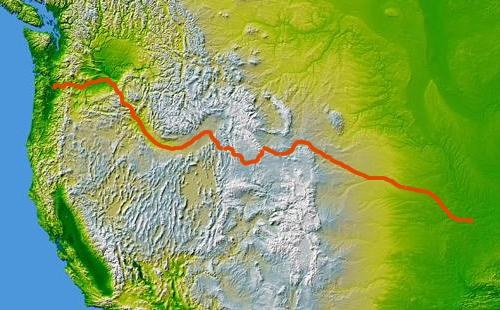
H

James Bowdoin, who took over as Governor for the ill John Hancock, responded brutally to this event and promptly lost the next gubernatorial election to Hancock.

H

At the end of this event, Lieutenants Eli Parsons and Luke Day were stopped by forces mustered at Petersham under Benjamin Lincoln.

Watch out: Only common burglars Charles Rose and John Bly were executed, not the rebellion's leaders
#1328 · Early American Rebellions · Level 3

Dorr's Rebellion

Dorr's Rebellion
E. W. Bouve Lithography · Public domain

Rhode Island suffrage uprising · 1841–1842 · Rhode Island

Dorr's Rebellion was an 1841–1842 uprising in Rhode Island seeking universal male suffrage against property requirements in the 1663 colonial charter.

The kit

  • Rise — Dorr's Rebellion began when its leader organized the People's Convention in opposition to Rhode Island's charter requiring land ownership to vote.
  • Conflicts — Dorr's Rebellion saw its leader call off an arsenal attack after a cannon misfired and killed a bystander during the attempted insurrection.
  • Government response — Dorr's Rebellion prompted newly elected governor Samuel Ward King to declare martial law, though John Tyler declined to send federal troops.
  • Legacy — Dorr's Rebellion produced the Supreme Court case Luther v. Borden, which ruled that government legitimacy questions are non-justiciable.

Runs with

Rhode Island
occurred in Rhode Island over its 1663 charter open card →
John Tyler
Tyler refused to send federal troops open card →
Land
opposed charter requiring land ownership for voting open card →
James
James Fenner elected after Law and Order document passed open card →

The ladder · 6 clues

H

Samuel Ward King declared martial law to suppress this rebellion, which directly led to the Supreme Court case of Luther v.

H

The Law and Order party pardoned the leader of this rebellion, who called off an attack on a local arsenal after a cannon misfired and killed a bystander.

M

John Tyler declined to send federal troops to stop this uprising, which stemmed from a state’s outdated 1663 colonial charter requiring ownership of $134 worth of property to vote. name this 1841 rebellion in Rhode Island.

M

John Tyler refused to send troops to end this event, and newly elected governor Samuel Ward King declared martial law in response to it. name this 1841 rebellion that attempted to extend the franchise in Rhode Island.

E

Newly elected governor Samuel Ward King declared martial law before this rebellion. name this failed rebellion which sought to achieve universal male suffrage in Rhode Island.

E

This rebellion began after its namesake organized the People’s Convention in opposition to his state’s charter that required land ownership to vote. name this 1842 insurrection in Rhode Island.

10 more clues from the record
H

TheSupreme Court ruled that the legitimacy of the government that this rebellion opposed is non-justiciable in the case Luther v.

H

One side in this event called for the rejection of the “Tory Constitution,” and their opponents passed the so-called “Algerine Law” due to its harshness.

H

During this event, Samuel Ward King requested aid from federal troops because many of his state militiamen supported the opposing side.

H

After the People’s Convention had been held, government officials attempted to stop this event with concessions in the Freemen’s Constitution.

H

The leader of this event considered including black men in his “People’s Constitution” but was stopped by pressure from white immigrants.

H

In response to this movement, a new "Law and Order" document was passed, resulting in the election of James Fenner.

H

Following this event, Ichabod Northup and James Jefferson pushed for expanding suffrage to African Americans.

H

A suit arising from this movement invoked the "republican form of government" clause.

H

This event included a meeting at Acotes [[ah-KOH-tehs]] Hill.

H

Borden, which ruled that it was constitutional to change governments.

Watch out: The People's Constitution was drafted by Dorr's supporters; the Freemen's Constitution was the government's concession attempt.
#1332 · Early American Rebellions · Level 3

Nat Turner's Rebellion

Nat Turner's Rebellion
bdi Aaron Martinet /span /a /bdi / bdi Alphonse-Charles Mass · Public domain

1831 Virginia slave uprising · August 1831 · Southampton County, Virginia

Nat Turner's Rebellion was an 1831 insurrection in Southampton County, Virginia led by an enslaved preacher who killed over 50 whites.

The kit

  • Rise — Nat Turner's Rebellion began after its leader interpreted a solar eclipse and bluish-green sun as divine signs to revolt against slavery.
  • Conflicts — Nat Turner's Rebellion grew to over 70 enslaved and free blacks who killed more than 60 white people including John Travis.
  • Death & succession — Nat Turner's Rebellion ended when Benjamin Phipps captured Turner hiding in a fallen tree in the Great Dismal Swamp.
  • Legacy — Nat Turner's Rebellion prompted many states to outlaw teaching slaves to read or write and tighten restrictions on enslaved people.

Runs with

Virginia
occurred in Southampton County, Virginia in August 1831 open card →
Jerusalem
Turner's forces marched toward the Virginia town of Jerusalem open card →
Bible
Turner preached from the Bible and was captured carrying one open card →
Slave Rebellion
major American slave uprising that killed over 60 whites open card →

The ladder · 6 clues

H

1831 insurrection in Southampton County, Virginia led by a namesake enslaved preacher.

H

When asked if he felt any remorse, the planner of this event asked “was Christ not crucified?” A vision of blood on cornstalks preceded this event, whose beginning was signaled by a solar eclipse.

M

It became unlawful for slaves to read or write in some states after this 1831 Virginia slave revolt.

M

Thomas Gray wrote up Confessions of its fervently religious leader, who was captured in the Great Dismal Swamp and hanged. name this 1831 rebellion in Southampton County, Virginia, which led many states to tighten restrictions on slaves.

M

They were told to kill all the white people they saw, and over 60 deaths came about. name this slave rebellion that took place in Southampton County, Virginia during August 1831.

E

Benjamin Phipps found this event’s instigator, who began it after a bluish-green tinge over the sun closely followed a solar eclipse, and tried to take a small town called Jerusalem.

10 more clues from the record
H

The planner of this event was stopped before he could reach Jerusalem in Southampton County, but not before a few dozen whites were killed.

H

William Styron wrote a controversial Pulitzer-Prize-winning novel about this conflict. :Name this conflict whose leader’s “confessions” were compiled by local lawyer Thomas Gray. This rebellion’s literate leader carried a Bible around before being tried at the Southampton County Courthouse.

H

This rebellion’s leader was termed “the Prophet” because he would preach the Bible to other slaves. :Name this leader of an 1831 slave rebellion who was caught with his Bible in hand 6 weeks after his rebellion that killed 60 white people before it was put down by local Virginian militia.

H

Sailors from the USS Natchez and USS Warren were called in to help put down this event, whose leader was later found by Benjamin Phipps hiding in a hole left by a fallen tree.

H

This uprising’s leader saw blood on an ear of corn and interpreted a solar eclipse as a sign from god to revolt. :Name this 1831 uprising that targeted plantation owners in Southampton County, Virginia.

H

It started out with a few trusted fellow slaves, but the insurgency ultimately number for than 70 enslaved and free blacks, some of whom were mounted on horseback.

H

Lerone Bennett wrote that this event was the "word made flesh" of David Walker's Appeal, a pamphlet published two years prior.

H

John Travis was one of the over 50 white people killed in this event, whose forces were marching to the town of Jerusalem.

H

After this event, a college president named Thomas R. Dew wrote an influential review of a legislative debate over how to react.

H

The leader of this event claimed that the "Serpent was loosened" and he had to fight against it.

Watch out: Jerusalem was the Virginia town Turner marched toward, not the Middle Eastern city
#1333 · Early American Rebellions · Level 3

Fries's Rebellion

Fries's Rebellion
Jerrye & Roy Klotz, MD · CC BY-SA 4.0

1799 Pennsylvania tax revolt · 1799 · Pennsylvania (Lower Milford, Bethlehem)

Fries's Rebellion was an 1799 uprising by Pennsylvania Dutch farmers against a federal direct tax on houses and windows levied to fund the Quasi-War.

The kit

  • Cause — Fries's Rebellion was sparked by the Direct House Tax, which assessed properties based on the number of windows in taxpayers' houses.
  • Key actions — Fries's Rebellion saw participants storm Milford Township, march on Quakertown, and free eighteen prisoners from federal custody at Bethlehem.
  • Suppression — Fries's Rebellion was suppressed when troops under William McPherson were raised and the climactic attempt to free prisoners at Bethlehem failed.
  • Aftermath — Fries's Rebellion ended with John Adams pardoning the leader from a death sentence, calling participants "obscure, miserable Germans" ignorant of English laws.

Runs with

Pennsylvania
occurred in Pennsylvania, centered around Lower Milford and Bethlehem open card →
John Adams
Adams pardoned the leader and dismissed participants as ignorant Germans open card →
Quasi-War
sparked by direct tax levied to fund the Quasi-War open card →
Whiskey Rebellion
also a Pennsylvania tax revolt; dog named Whiskey betrayed Fries open card →

The ladder · 6 clues

H

George Gettman and Fred Hainey were key participants in this event which saw a confrontation at the tavern of Enoch Roberts, where Everard Foulke was held captive.

H

Participants in this event were pardoned by a president who described them as being “as ignorant of our language as they were of our laws." A $2 million direct tax to fund the Quasi-War was an immediate cause of this event, during which a group of assessors from Quakertown was targeted.

M

During this event, a few men met at the inn of Conrad Marks, from which they marched to Sun Inn to meet up with Captain Henry Jarrett.

M

The Federalist concept of constructive treason was used to convict the namesake of this event, who was pardoned from a death sentence when John Adams dismissed this event as the work of "obscure, miserable Germans" who could not read laws in English. name this 1799 uprising that began against a levy on windows in Pennsylvania.

M

This event was sparked by the Direct House Tax, which was levied to fund the Quasi-War. name this revolt over taxes during John Adams’s administration, perpetrated by Pennsylvania Dutch farmers.

E

It broke out in response to a tax based on the number of windows in taxpayers’ houses. :Name this insurrection which broke out in 1799, and which was also known as the Hot Water Rebellion.

10 more clues from the record
H

Alexander Hamilton responded to this event by advising that "the government…in arms…ought to appear like a Hercules." Eighteen prisoners were freed from federal custody in Bethlehem in the central act of this event.

H

One politician called participants in this event “ignorant of our language” and said they were being “used by great men,” leading to his pardon of their leader.

H

The leader of this event had his followers march to the Sun Inn to demand the release of a group of prisoners.

H

This event’s climax came when its participants failed to free a marshal’s prisoners at F Bethlehem.

H

Early actions in this event included the storming of Milford Township and a march on Quakertown.

H

This uprising was driven by resentment over intrusive auditors who traveled from town to town surveying amounts of windows on houses as part of a controversial direct land tax. :Identify this uprising of mostly ethnic Germans during the Quasi-War.

H

It was sparked by what was derisively dubbed the “Hot-Water” bill, alluding to the way in which housewives were instructed to resist its enforcement – that bill levied a tax based on the number of windows in one’s house.

H

The barking of a dog named Whiskey in reference to the Whiskey rebellion betrayed the namesake of this rebellion. This rebellion also occurred in Pennsylvania and was a response to the home tax enacted by John Adams.

H

Troops were raised under William McPherson to quell the unrest, which centered around Lower Milford.

H

A recent history of this "Enduring Struggle" was written by Paul Douglas Newman.

Watch out: Confused with the Whiskey Rebellion (also a Pennsylvania tax revolt; a dog named Whiskey betrayed Fries)
#1342 · Shared Names Held by Multiple Historical Figures · Level 3

Bancroft

Bancroft
P199 · CC BY-SA 3.0

George Bancroft, American historian · 1800–1891 · United States

George Bancroft was an American historian and Secretary of the Navy who published a comprehensive ten-volume History of the United States.

The kit

  • Achievements — Bancroft published a History of the United States covering events up to the 1780s in the 1840s, earning him the title "Father of American History."
  • Naval service — Bancroft served as Secretary of the Navy under James K. Polk, succeeding John Mason and establishing the US Naval Academy in Annapolis.
  • Historiography — Bancroft co-wrote a book with John Palfrey proposing progress, patria, providence, and pan-democracy as America's founding ideals.
  • Legacy — Bancroft's name is honored by a prize awarded annually to two books on the history of the Americas and on diplomacy.

Runs with

King James BibleHaiti
James Knox Polk
Bancroft served as Secretary of the Navy under Polk open card →
Cotton

The ladder · 6 clues

H

A historian and Secretary of the Navy with this name published a History of the United States up to the 1780s. A prize of this name is awarded annually to two books on history of the Americas and on diplomacy.

H

Another man of this last name co-wrote a book with John Palfrey, which proposed the four values of progress, patria, providence, and pan-democracy as the founding ideals of America. The first man by this surname may have poisoned Silas Deane, and worked in Paris as a double agent for the British.

H

Wood won an American history prize of this name for The Creation of the American Republic. A man of this surname moved the Naval Academy to Annapolis as Naval Secretary and penned the first comprehensive History of the United States in the 1840s.

H

A man with this surname wrote letters addressed to “Mr. Richards,” signed as “Edward Edwards,” which he allegedly bottled and tied around a box tree.

H

That man of this surname wrote The Natural History of Guiana and the epistolary History of Charles Wentworth after researching in Suriname.

M

The second succeeded John Mason as Secretary of the Navy under James K. Polk, wherein he established the US Naval Academy in Annapolis. give this name shared by the colonial spy Edward and George, whose massive 10-volume work led him to be dubbed the “Father of American History.”

Watch out: Edward Bancroft was a colonial spy and double agent, not the historian George Bancroft
#1344 · Native American Resistance Conflicts · Level 3

Battle of Tippecanoe

Battle of Tippecanoe
Kurtz & Allison, Popular Graphic Arts · Public domain

1811 frontier battle · November 7, 1811 · Prophetstown, Indiana Territory

Battle of Tippecanoe was an 1811 clash where William Henry Harrison defeated Tenskwatawa's confederacy near Prophetstown, Indiana.

The kit

  • Rise — Battle of Tippecanoe began as a surprise attack on sleeping troops who had just received supplies from Vincennes.
  • Conflicts — Battle of Tippecanoe saw Joseph Daviess killed leading a counter-charge while Spier Spencer's Yellow Jackets supported Harrison's forces.
  • Achievements — Battle of Tippecanoe gave Harrison a nickname used in his 1840 campaign with the slogan "Tippecanoe and Tyler, too."
  • Legacy — Battle of Tippecanoe inspired a supposed curse killing presidents every 20 years beginning in 1860.

Runs with

William Henry Harrison
Harrison commanded U.S. forces and gained his presidential campaign nickname open card →
Indiana
fought near Prophetstown where Tippecanoe River meets the Wabash open card →
Tecumseh
Tecumseh's brother Tenskwatawa commanded the confederacy forces open card →
Shawnee
Shawnee leader Tenskwatawa led the defeated confederacy open card →

The ladder · 6 clues

H

Joseph Daviess was killed in this battle while leading a counter-charge near Prophetstown.

H

The losing side of this battle interpreted the subsequent New Madrid Earthquakes as an omen to renew their war effort.

M

This battle’s winning side was supported by Spier Spencer’s Yellow Jackets, and victory was secured with a cavalry charge led by Joseph Daviess.

M

The victory at this battle inspired a song that began “What’s the cause of this commotion, motion, motion...” and notes “Van is a used up man.” The winning side in this battle was reinforced by the Yellow Jacket militia, and the losing commander later blamed the Winnebagos for attacking too early.

E

Shawnee forces were defeated in Indiana in this 1811 battle that gave William Henry Harrison a nickname used in his campaign with “Tyler, too”.

E

This battle is named for a river which meets the Wabash at “Prophetstown,” the base of Shawnee leader Tenskwatawa. name this 1811 battle in which William Henry Harrison defeated the brother of Tecumseh.

10 more clues from the record
H

Joseph Hamilton Daveiss was mortally wounded while leading a counter-charge during this battle.

H

The night before this battle, a general was nearly killed when a Black wagon driver named Ben led assassins to his tent.

H

At the same site as this earlier battle, Samuel Hopkins’s troops retreated by digging their spurs into their horses in the Battle of Wild Cat Creek.

H

Chiefs White Loon and Stone Eater led poorly organized attacks during this battle, turned back by a company led by Josiah Snelling.

H

Battle did he lose to William Henry Harrison this person who then incorporated it into a campaign slogan.

H

Prior to this battle, failed negotiations at Grouseland led to a buildup of troops at a fort in modern day Terre Haute.

H

Commander Joseph Daviess was lost in a cavalry charge in this battle, whose victors were joined by the Yellow Jackets.

H

It began as a surprise attack on sleeping troops who had just received supplies from Vincennes.

H

A supposed “curse” named for this battle was responsible for the deaths of presidents every 20 years beginning in 1860.

H

A commander in this battle claimed that out of control Ho-Chunk allies started the attack.

Watch out: Tenskwatawa (the Prophet) commanded at Tippecanoe, not his more famous brother Tecumseh
#1346 · Native American Resistance Conflicts · Level 3

Battle of Fallen Timbers

Battle of Fallen Timbers
R. F. Zogbaum · Public domain

1794 American military victory · August 20, 1794 · Maumee River, Northwest Territory

Battle of Fallen Timbers was the 1794 American victory that ended the Northwest Indian War and broke Native resistance in the Ohio country.

The kit

  • Commanders — Battle of Fallen Timbers saw 'Mad' Anthony Wayne's Legion defeat a confederacy led by Chiefs Little Turtle and Blue Jacket.
  • Course of battle — Battle of Fallen Timbers featured a decisive cavalry charge by Robert Campbell's dragoons that decimated Blue Jacket's forces along the Maumee River.
  • Aftermath — Battle of Fallen Timbers led to the Treaty of Greenville, which secured American territorial concessions and ended the Northwest Indian War.
  • Context — Battle of Fallen Timbers avenged Arthur St. Clair's earlier defeat at the Battle of Wabash three years prior.

Runs with

Ohio
secured American control of the Northwest Territory including Ohio open card →
Shawnee
Blue Jacket led Shawnee warriors in the defeated confederacy open card →
Pasquale Paoli
William
William Campbell closed Fort Miami's doors to fleeing Natives open card →

The ladder · 6 clues

H

One commander at this battle had destroyed the forces of Arthur St. Clair at the Wabash river three years prior to it.

H

The Legion of the United States was created in anticipation of this battle.

M

This battle, which was fought along the Maumee River, led to the defeat of Chiefs Little Turtle and Blue Jacket.

M

Blue Jacket decided to take up a spot along the Maumee River during this battle, but his forces were decimated by a cavalry charge.

E

The Treaty of Greenville was signed following the aftermath of this battle, which ended the Northwest Indian War. identify this 1794 battle in which Anthony Wayne defeated a confederacy of Native Americans.

E

The Treaty of Greenville solidified the territorial concessions following this battle. name this 1794 battle won by "Mad" Anthony Wayne over the natives of the Northwest Territory west of the Ohio River.

10 more clues from the record
H

Prior to this battle, Little Turtle lost status for considering a negotiation offer which had been sent out from Fort Recovery.

H

That commander followed this success with another victory at the Battle of Wabash, defeating the forces of Arthur St. Clair.

H

The treaty that resulted from this battle promised a payment of 500 dollars to the Kickapoos and established Fort Defiance as one of three acceptable places for the exchange of hostages.

H

In this battle, William Campbell closed the doors of Fort Miami after the Odawa chief Turkey Foot was sniped while speaking from a rock.

H

Robert Todd flanked a Canadian force at this battle, in which Jean Francois Hamtramck led an advance after a charge by Robert Campbell's dragoons.

H

Historians sometimes call this battle the last stand of a "Western Confederacy" of tribes which included the Lenape leader Buckongahelas.

H

A group of Canadian volunteers under Alexander McKillop fought alongside Buckongahelas on the losing side of this battle.

H

This battle was part of a larger campaign that sought to avenge the losses of territorial governor Arthur St. Clair.

H

This battle was the culmination of an intermittent ten-year war that included the Harmar and Blackberry campaigns.

H

In the aftermath of this battle, Caleb Swan and William Wells were among the representatives at treaty negotiations.

Watch out: Little Turtle defeated St. Clair at the Wabash, not Wayne at Fallen Timbers
#1348 · Native American Resistance Conflicts · Level 3

Black Hawk War

Black Hawk War
bdi George Catlin /span /a · Public domain

1832 conflict · 1832 · Illinois and Michigan Territory

Black Hawk War was an 1832 conflict in which the Sauk and Fox tribes fought U.S. settlers and militia over disputed territory in Illinois.

The kit

  • Rise — Black Hawk War began when the British Band, led by Sauk chief Black Hawk, crossed the Mississippi River from Iowa into Illinois, disputing the Treaty of St. Louis.
  • Conflicts — Black Hawk War featured the British Band's victory at the Battle of Stillman's Run and the Buffalo Grove ambush against U.S. militia forces.
  • Achievements — Black Hawk War saw Abraham Lincoln serve as a militia captain, and a contingent of wives led by Elizabeth Armstrong defended Apple River Fort.
  • Death & succession — Black Hawk War culminated in tribal defeats at the Battles of Wisconsin Heights and Bad Axe, where the steamboat Warrior participated in the massacre.

Runs with

Illinois
primary theater of conflict open card →
Abraham Lincoln
served as militia captain open card →
Henry
Henry Atkinson commanded at Bad Axe open card →
Michigan
Michigan Territory was theater alongside Illinois open card →

The ladder · 6 clues

H

This war began as a dispute over the Treaty of St. Louis, when this war's namesake led the British Band out of the Iowa territory and into Illinois.

H

It culminated in tribal losses at the Battles of Wisconsin Heights and Bad Axe. name this 1832 war in Illinois named for a leader of the Sauk people.

M

This war featured the Buffalo Grove ambush and the British Band won the Battle of Stillman's Run in this war.

M

The Sauk [] and Fox tribes fought for control of the Midwest withU.S. settlers in this 1832 war.

E

Abraham Lincoln briefly fought in this 1832 war which started after the namesake Sauk chief crossed into Illinois.

E

A steamboat called the Warrior took part in this war at the Battle of Bad Axe, and Abraham Lincoln was a militiaman in this war. name this 1832 war between the U.S. and a Sauk chief, which took place in Michigan Territory and Illinois.

10 more clues from the record
H

Identify the following about the Bad Axe Massacre, :The Bad Axe Massacre, which followed the Battle of Wisconsin Heights, resulted in the defeat of the Sauk and Fox as part of this conflict, which saw the “British Band” fight against militia in Illinois and the Michigan territory.

H

In it, Governor John Reynolds put out a call for troops to assemble afer a party known as the “British Band” refused to retreat.

H

At one point in this war, a force of 950 troops were sent westward, but gradually lost men due to a cholera outbreak, so only about 350 men were left when they disembarked their steamboat.

H

A story from this war recalls the ingenuity of a captain who was given no protocol for marching a column through a small gate and improvised by ordering the column to break ranks and reassemble on the other side of the fence.

H

Andrew Jackson appointed Winfield Scott to take field command from Henry Atkinson during this war, despite the latter's victory at the Battle of Bad Axe and the collapse of the British Band.

H

In punishment for participating in this war, Chief Metea [[meh-TEH-uh]] and his Potawatomi [[PAH-toh-WAH-toh-mee]] tribe were forced to move west of the Mississippi.

H

During this war, a detachment that had just fought at the Second Battle of Kellogg's Grove arrived to help bury the dead from Stillman's Run.

H

This war included a battle caused after Joseph Throckmorton, commander of the Warrior, failed to understand one side’s attempt to surrender.

H

This war began when the “British Band” crossed the Mississippi River, and it featured a young Abraham Lincoln serving as a captain.

H

In this conflict, a contingent of wives led by Elizabeth Armstrong joined a militia company in their defense of the Apple River Fort.

Watch out: Winfield Scott replaced Henry Atkinson as field commander despite Atkinson winning at Bad Axe
#1374 · US Territorial Acquisitions and Expansion Documents · Level 3

Ostend Manifesto

Ostend Manifesto
Not specified · Public domain

1854 diplomatic document · 1854 · Ostend, Belgium

Ostend Manifesto was an 1854 document drafted in Belgium proposing U.S. purchase or seizure of Cuba from Spain.

The kit

  • Context — Ostend Manifesto was created after the Black Warrior Affair and fueled by fears of a "second Santo Domingo."
  • Authors — Ostend Manifesto was drafted by diplomats Pierre Soulé, James Buchanan, and John Mason at William Marcy's urging.
  • Content — Ostend Manifesto declared the U.S. would be "justified in seizing" Cuba if Spain refused to sell the island.
  • Legacy — Ostend Manifesto damaged Franklin Pierce's administration and was attacked at the 1856 Republican National Convention as embodying "might makes right."

Runs with

Cuba
proposed U.S. acquisition as slave state open card →
Franklin Pierce
damaged his administration when made public open card →
Spain
targeted Spanish possession for purchase or seizure open card →
James Buchanan
co-author as U.S. diplomat open card →

The ladder · 6 clues

H

The platform adopted at the 1856 RNC attacked the “highwayman’s plea that might makes right,” as embodied in this aggressive 1854 foreign policy document that was drafted in Belgium.

H

This document, whose creation was fueled by anger arising from the Black Warrior Affair, noted that a certain region “belongs naturally to that great family of states of which the Union is the Providential Nursery.” William Marcy urged for the creation of this document, which was prepared by three men, including John Mason.

M

Issued from the namesake Belgium city in 1854, this document stated if Spain wouldn't sell Cuba, the United States would be justified in seizing the island.

M

This 1854 document, named for a Belgian city, floated the idea of the United States annexing Cuba from the Spanish as a slave state.

E

Fear of a "second Santo Domingo" led this document to be drafted in Belgium by Pierre Soulé [[soo-LEH]], John Mason, and James Buchanan. name this 1854 document regarding the potential purchase of Cuba.

E

This document proposed that "by every law, human and divine, we shall be justified" in a plan that arose from a meeting among U.S. diplomats John Mason, James Buchanan, and Pierre Soulé [[soo-LEH]]. name this 1854 document proposing the purchase or conquest of Cuba from Spain, that was drafted after a meeting in Belgium.

10 more clues from the record
H

Franklin Pierce’s administration was damaged by, what 1854 document that threatened U.S. annexation of Cuba?

H

Horace Greeley claimed this document was for "the Brigands," and this document was written after William Marcy described the "next desirable object." This document was created after the Black Warrior Affair and was prepared in Aachen during the presidency of Franklin Pierce.

H

After this document was made public, Mansfield Lovell and John Quitman had to be dissuaded at the last moment by the president from launching a military expedition.

H

Young America member Pierre Soulé participated in the writing of this document, named for a Belgium city.
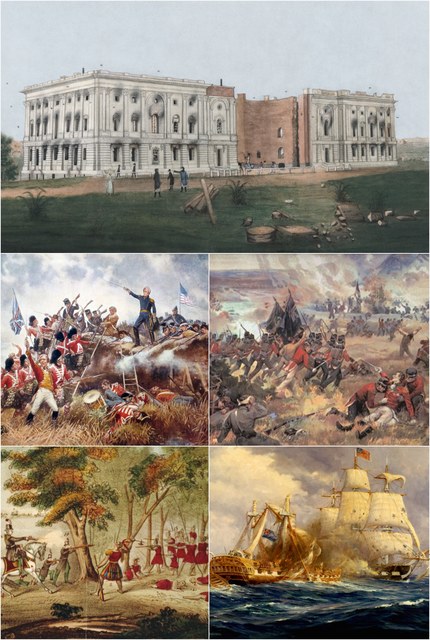
H

The manifesto written by Pierre Soule [soo-LAY] that declared that the U.S. should acquire Cuba?

H

A cartoon lampooning this document depicts James Buchanan wielding a club.

H

It was drawn up at Aix-La-Chappelle and was largely based on the machinations of the American ambassador to Spain. :Identify this document that publicly stated the desire of several American diplomats including James Buchannan and John L. Mason to annex Cuba.

H

Relations between the United States and Cuba got off to a bad start in the 19th century. :This 1854 missive from Mason, Buchannan, and Soule to William Marcy suggested that the United States seize Cuba from Spain.
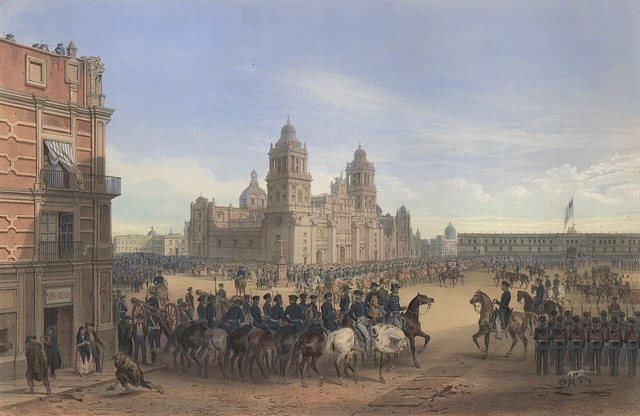
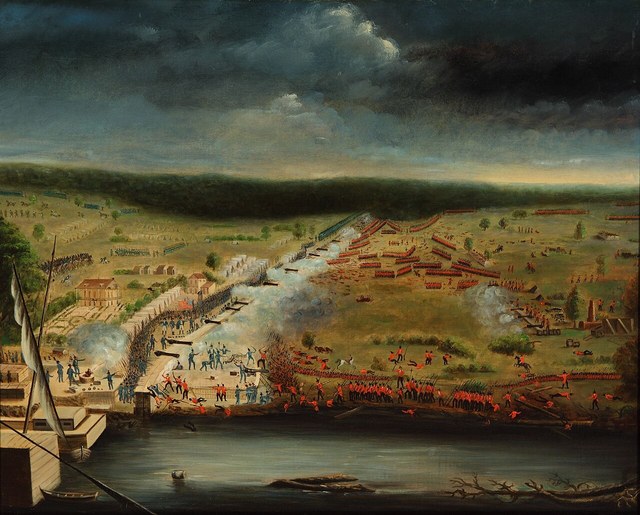
H

It appeals to recent French railroad-building efforts and “the great law of self-preservation” as support for its primary objective. :Name this 1854 document that advocated American acquisition of Cuba.

H

One of the men who signed it was a longtime rival of John Slidell, while another had served as Tyler’s secretary of the navy and as Polk’s attorney general.

Watch out: Drafted in Ostend, Belgium, but also prepared at Aachen (Aix-la-Chapelle); both cities mentioned in sources
#1421 · General · Level 3

California

California
ul li b Original: /b Donald Graeme Kelley /a /li li b Vector · Public domain

U.S. state · 1769–present (Spanish exploration to statehood 1850) · Pacific coast of North America

California is a U.S. state where the 1849 Gold Rush at Sutter's Mill triggered massive migration and urban growth.

The kit

  • Exploration & colonization — California was explored by Gaspar de Portolá starting in 1767 and claimed as New Albion by Francis Drake during his circumnavigation.
  • Gold Rush & violence — California's 1849 Gold Rush began with a discovery at Sutter's Mill, leading to mass killings of Native Americans including the Bridge Gulch Massacre.
  • Native conflicts — California was the site of the Modoc War in the 1870s, where Captain Jack fought along Tule Lake, and the Yuki kidnappings by Walter Jarboe.
  • 20th-century movements — California hosted the Free Speech Movement led by Mario Savio at Berkeley and the founding of the Black Panther Party at Merritt College.

Runs with

San Francisco
boomed as a major city during the 1849 Gold Rush open card →
American Railway Union
Gold
discovered at Sutter's Mill in 1848, triggering the 1849 Rush open card →
Los Angeles
major city that grew in southern California open card →

The ladder · 6 clues

H

Francis Drake landed in this modern-day state during his circumnavigation, claiming it as New Albion for the English.

H

Slave labor in this state built New Helvetia, a fort owned by John Sutter. name this state where many Native Americans were killed during an 1849 gold rush.

M

Fort Ross was established in this state with a sealing station on the Farallon Islands.

M

The Free Breakfast for Children Program was established by an organization in this state that released a Ten-Point Program and included Eldridge Cleaver.

E

A discovery of a precious metal at Sutter’s Mill began an 1849 event in this state. name this state where a gold rush led to the boom of cities such as San Francisco.

E

That man, John C. Fremont, rose to fame by supporting this Western state’s “Bear Flag” Revolt. name this state where a finding at Sutter’s Mill led to an 1849 gold rush.

10 more clues from the record
H

In this state, Clark Kerr declined to expel student protestors belonging to the Mario Savio-led Free Speech movement.

H

The “bodies upon the gears” speech was given in this state after the arrest of activist Jack Weinberg at one of this state’s universities.

H

In this state, William Dixon responded to the death of John Anderson by killing over 150 members of the Wintu during the Bridge Gulch Massacre.

H

John C. Fremont supported a revolt in this state which succeeded in capturing Sonoma. name this modern-day state, the site of the Bear Flag Revolt.

H

A movement in this state was led by Mario Spavio who gave the “bodies upon the gears speech.” The Black Panther Party was started in this state after its founders met at Merritt College.

H

This was the southernmost of two states where a chief named Captain Jack took up positions along Tule Lake during the 1870’s Modoc War.

H

A war that took place in this state and a northern neighbor featured a man named Captain Jack who fled to nearby lava beds.

H

Walter Jarboe operated a gang of mercenaries in this state, kidnapping Yuki natives.

H

Much of this present-day state was explored by Gaspar de Portola who expelled its Jesuits in 1767.

H

A photograph taken in this state taken at the Travis Air Force Base depicts Lorrie Stirm about to hug her POW father, titled Burst of Joy.

Watch out: Fort Ross (Russian outpost) is often confused with Spanish missions in California
#1461 · General · Level 3

Kansas

Kansas
Xrmap · Public domain

U.S. state · 1854 territory, 1861 statehood · Great Plains, central U.S.

Kansas was a U.S. territory whose violent 1850s conflict between pro- and anti-slavery settlers earned it the label "Bleeding Kansas."

The kit

  • Bleeding Kansas — Kansas became a battleground after the 1854 Kansas-Nebraska Act allowed popular sovereignty to determine its slavery status.
  • Violence — Kansas saw the Pottawatomie Massacre by John Brown, the sacking of Lawrence by Border Ruffians, and Quantrill's 1863 raid.
  • Constitutions — Kansas's Lecompton Constitution promoted slavery expansion while the rival Topeka Constitution opposed it under Governor Charles Robinson.
  • Legacy — Kansas attracted Exodusters in the 1880s and populist leader Mary Lease urged farmers to "raise less corn and more hell."

Runs with

Slavery
popular sovereignty in Kansas determined whether it would permit slavery open card →
John Brown
John Brown carried out the Pottawatomie Massacre in Kansas open card →
Pottawatomie Massacre
Pottawatomie Massacre occurred in Kansas as retaliation for Lawrence's sacking open card →
Charles Sumner

The ladder · 6 clues

H

A newspaper editor in this state, William Allen White, attacked the Populists in an article wondering “what’s the matter with” this state.

H

A woman known as the “pythoness” of this state, Mary Lease, advised its farmers to “raise less corn and more hell.” An editorial written by a native of this state called on politicians to “Legislate the thriftless man into ease” and was used by McKinley supporters to disparage his opponent during the 1896 election.

M

This state was labeled “bleeding” during a period in which the Border Ruffians fought the Free-Staters. name this state that contains cities like Wichita and Topeka.

M

In this state, John Brown carried out the Pottawatomie Massacre in response to the sacking of Lawrence.

E

This territory, along with Nebraska, was created by an 1854 act drafted by Stephen Douglas.

E

During the 1850s, this state was labeled “Bleeding” due to conflict between pro- and anti-slavery settlers. name this state originally governed by the Topeka Constitution.

10 more clues from the record
H

In retaliation for the collapse of a makeshift women’s prison, William Quantrill massacred the residents of a Unionist town in this state.

H

This territory’s Governor Charles Robinson opposed the expansion of slavery as promoted by its Lecompton Constitution.

H

Quantrill’s Raiders burned a city in this state in 1863, and five settlers were killed by John Brown here in the Pottawatomie massacre.

H

Smugglers used crates labeled “books” to bring Henry Ward Beecher’s rifles into this territory.

H

This state was the home of John Brinkley, a frequent gubernatorial candidate and quack doctor who claimed to cure impotence by sewing goat testicles on to his patients.

H

William Quantrill’s pro-slavery bushwhackers destroyed the Free State Hotel in this state.

H

An unrelated Dow, Charles Dow, was killed in this state’s city of Lawrence during a period named for its “Bleeding.” Carrie Nation carried out her first attack on a saloon in this state’s city of Kiowa .

H

The colony of Linconia was proposed by Samuel Pomeroy, one of the first two senators from this state. The Black town Nicodemus in this state was founded by a group of Exodusters.

H

One conflict in this state began when Franklin Coleman was not arrested for murdering Charles Dow in a land dispute.

H

This state was the destination of the vast majority of African-American migrants called Exodusters in the early 1880s.

Watch out: Nebraska territory, also created by the 1854 act and subject to popular sovereignty debates
#1499 · General · Level 3

Missouri

Missouri
Marie Watkins Oliver · Public domain

U.S. state · statehood 1820 · central United States

Missouri entered the Union as a slave state in 1820 under the Missouri Compromise, paired with free state Maine.

The kit

  • Statehood — Missouri became a state in 1820, with Thomas Hart Benton becoming its first Senator that same year.
  • Mormon conflict — Missouri Governor Lilburn Boggs issued Executive Order 44 in 1838, empowering citizens to kill Mormons on sight.
  • Civil War violence — Missouri saw battles at Wilson's Creek and Westport plus Confederate bushwhackers like William Quantrill and Bloody Bill Anderson.
  • Westward expansion — Missouri's city of Independence served as the starting point for Oregon Trail settler groups traveling west.

Runs with

American Railway UnionSt. Louis
Pacific
settlers departed Missouri on westward trails open card →
Oregon Trail
Independence, Missouri was the trail's starting point open card →

The ladder · 6 clues

H

One Senator from this state was nicknamed “Old Bullion” for his opposition to paper money; that was Thomas Hart Benton.

H

Crime boss Charles Binaggio operated in this state, hoping to take over local politics to allow the mob to grow.

M

A governor of this state named Lilburn Boggs issued the “extermination order” against the Mormon church.

M

Was the only state won by Stephen Douglas?

E

Most settlers travelling the Oregon Trail started out in Independence, a town in this state.

E

This state ultimately joined the Union along with a free state that had been part of Massachusetts, Maine. name this state that became a slave state as part of a namesake compromise in 1820.

10 more clues from the record
H

This state’s Camp Jackson riot and subsequent massacre was triggered by Nathaniel Lyon’s arrest of the state militia.

H

State’s city of New Madrid names an earthquake he interpreted as a sign that he should fight the US?

H

Confederate “bushwhacker” paramilitary leaders such as the victor of the Battle of Centralia, “Bloody” Bill Anderson, and Jesse James’ commander, William Quantrill, operated primarily in this state.

H

That man was a 48er who led German troops as a Brigadier General in the Civil War.

H

One Senator from this state served as Hayes’ Secretary of the Interior.

H

The video game Oregon Trail starts in this state, where settler groups traveled west from cities along this state’s namesake river.

H

In 1820, Benton became the first Senator from this new state.

H

During the Civil War. the battles of Westport and Wilson’s Creek occurred in this state.

H

This state's Executive Order 44, issued by Governor Lilburn Boggs, empowered its citizens to shoot and kill Mormons on sight as part of an 1838 "War".

H

This is the home state of John Ashcroft, as well as a Democratic Senate candidate who assembled an AR-15 rifle while blindfolded in a 2016 campaign ad; that man, Jason Kander, lost to incumbent Senator Roy Blunt.

Watch out: Stephen Douglas won only Missouri in the 1860 presidential election, not multiple states
#1522 · General · Level 3

Maine

Maine
Enzwell · CC BY-SA 4.0

U.S. state · admitted 1820 · northern New England

Maine is a U.S. state admitted in 1820 as part of the Missouri Compromise, having separated from Massachusetts.

The kit

  • Statehood — Maine was admitted to the Union in 1820 under the Missouri Compromise, breaking off from Massachusetts as a free state.
  • Border disputes — Maine's northern border with New Brunswick was disputed in the bloodless Aroostook War of the 1830s, resolved by the Webster-Ashburton Treaty.
  • Political figures — Maine was the home state of James G. Blaine, the 1884 Republican presidential candidate, and Hannibal Hamlin, Lincoln's first vice president.
  • Social reform — Maine enacted a namesake prohibition law under Mayor Neal Dow, which sparked the 1855 Rum Riot in Portland.

Runs with

American Railway Union
no connection evident in clues open card →
Missouri Compromise
Maine admitted as free state balancing Missouri's entry open card →
Prohibition
Neal Dow's Maine Law pioneered statewide prohibition open card →
James G. Blaine

The ladder · 6 clues

H

John Nutting and John Calef led a British strategy to create “New Ireland” in this state.

H

Later, Mayor Neal Dow tried to enforce prohibition in this state by a namesake law which led to the June Riot, aka the Rum Riot.

M

Part of its northern border was set at the St. John’s River by the Webster-Ashburton Treaty, which settled the Aroostook War.

M

Mistakes in the 1789 Treaty of Paris led to the Aroostook War in what is now this state.

E

Alexander Baring and Daniel Webster signed a treaty setting the border between this state and New Brunswick.

E

The home state of Hannibal Hamlin and “Continental Liar” James Blaine was from, what New England state that was admitted to the Union in the Missouri Compromise, breaking off of Massachusetts?

10 more clues from the record
H

In the 1830s, the US and UK fought over this state’s border in the bloodless Aroostook War.

H

The diary of the herbalist and midwife Martha Ballard in this state became the basis of the social history A Midwife’s Tale by Laurel Thatcher Ulrich.

H

Joshua Chamberlain led a volunteer infantry regiment from this state, of which he became governor after the war. He also served as president of this state’s Bowdoin College.

H

A Republican politician from this state led the Half-Breeds and lost the 1884 presidential election; that man was James G. Blaine.

H

The Appalachian Trail’s northern end is in, what U.S. state that was originally part of Massachusetts in the north of New England?

H

Chief Mog was killed in what is now this state, where the Norridgewock Raid took place.

H

State bordering Canada whose cities of Bangor and Castine were looted by several Redcoat expeditions.

H

Other than Vermont, this is the only state to be represented by an independent in the Senate, Angus King, who serves alongside senior Senator Susan Collins.

H

In this state, Socialist CIO leader Powers Hapgood instigated the Lewiston-Auburn Shoe Strike.

H

The boundaries of this modern-day state were not set by the Treaty of Utrecht, leading to war with the French-backed Wabanaki Confederacy after fort construction near the Kennebec River.

Watch out: Missouri (state) - both connected to the Missouri Compromise of 1820
#1527 · General · Level 3

Oklahoma

Oklahoma
xrmap · Public domain

U.S. state · admitted 1907 · south-central United States

Oklahoma was admitted as the 46th state in 1907 after decades as Indian Territory and site of the 1889 Land Rush.

The kit

  • Indian Territory — Oklahoma was the destination of the Trail of Tears and home to the Five Civilized Tribes relocated from the Southeast.
  • Land Rush of 1889 — Oklahoma's Unassigned Lands were opened to white settlement in 1889, attracting "Sooners" who entered before the official start.
  • Statehood — Oklahoma was formed in 1907 after Congress rejected the proposed state of Sequoyah and incorporated the western "No Man's Land" panhandle.
  • Conflicts — Oklahoma saw the Green Corn Rebellion against WWI conscription and the "Reign of Terror" murders documented in Killers of the Flower Moon.

Runs with

Trail of Tears
forced relocation route ending in Oklahoma's Indian Territory open card →
Land
Unassigned Lands opened in 1889 Land Rush open card →
Cherokee
one of Five Civilized Tribes relocated to Oklahoma open card →
Dust Bowl

The ladder · 6 clues

H

A proposed state named Sequoyah was rejected in favor of the proposal that created this state.

H

State, formerly known as the Indian Territory, which was opened up to white settlement in 1889, causing a land rush.

M

This state’s Unassigned Lands were opened up to settlement with the Land Rush of 1889, and the “Neutral Strip,” or “No Man’s Land,” became this state’s western panhandle.

M

State with a federally recognized Seminole nation which was also the destination of the Cherokee on the Trail of Tears.

E

The Five Civilized Tribes were moved from the Southeast to, what state where an 1889 land rush was exploited by “Sooners?”

E

The Trail of Tears took Native Americans to this state, which was then called “Indian Territory.” The “Sooners” settled this state directly north of Texas.

10 more clues from the record
H

A series of murders in this state known as the “Reign of Terror” and widely believed to be the work of William Hale were documented in the recent book Killers of the Flower Moon.

H

This state was the site of a multiracial socialism-inspired uprising during World War I that opposed conscription called the Green Corn Rebellion.

H

This state includes a region once known as “No Man’s Land” whose southern border is on the 36-30 latitude line.

H

46th state admitted to the Union, having been an unorganized Indian Territory until the early 20th century.

H

A portion of this modern-day state was organized into the self-governing Cimarron Territory by settlers who moved before the land was surveyed.

H

Greer County eventually was ruled to be part of this state after a dispute over the Adams-Onis Treaty with its southern neighbor.

H

There were two "Boomer" movements in this state, and the "Sooners" travelled to this state which included Indian Territory.

H

Chicken-thief Jack Skinner successfully legally challenged this state’s 1935 habitual Criminal Sterilization Act in a landmark supreme court eugenics case.

H

A traditionalist faction in this present-day U.S. state led by Chitto Harjo, also known as “Crazy Snake,” was opposed by Pleasant Porter.

H

Angie Debo wrote about the five civilized tribes living in the territory that is now this state in And Still the Waters Run.

Watch out: Sequoyah (rejected proposed state name for Indian Territory before Oklahoma was created)
#1530 · US Congressional Figures · Level 3

William Henry Seward

William Henry Seward
ul li Unknown author Unknown author /span /li li Restoration · Public domain

U.S. Secretary of State · 1801–1872 · New York, Washington D.C.

William Henry Seward served as Lincoln's Secretary of State and purchased Alaska from Russia for $7.2 million in 1867.

The kit

  • Rise — William Henry Seward succeeded William Marcy as Governor of New York and was previously a member of the Anti-Masonic party.
  • Achievements — William Henry Seward purchased Alaska for $7.2 million while serving as Secretary of State under Abraham Lincoln.
  • Conflicts — William Henry Seward declared 'there is a higher law than the Constitution' in an 1850 speech opposing the Fugitive Slave Act.
  • Death & succession — William Henry Seward survived an attack by Lewis Powell on the same night John Wilkes Booth assassinated Abraham Lincoln at Ford's Theatre.

Runs with

Secretary of State
held this position under Lincoln open card →
Alaska
purchased this territory from Russia open card →
York
served as governor of this state open card →
William
shares this first name open card →

The ladder · 6 clues

H

This man succeeded William Marcy as Governor of New York, and this man was friends with political boss Thurlow Weed.

H

Late in life, this man adopted his traveling companion and memoir co-author Olive Risley as his daughter.

M

name these governors of New York.This first Whig governor later purchased Alaska while serving as Secretary of State.

M

This politician and Lord Lyons wrote a treaty that ended the transatlantic slave trade between the U.S. and the UK.

E

US Secretary of State who purchased Alaska for 7.2 million dollars.

E

In opposition to the Compromise of 1850, this man declared “There is a higher law than the Constitution.” This man was nearly killed by Lewis Powell on the same night that his president was assassinated in Ford’s Theatre. name Lincoln’s Secretary of State.

10 more clues from the record
H

During his tenure as Governor of New York, this man prosecuted Alexander McLeod for his involvement in the Caroline Affair.

H

This man survived an attack from Lewis Powell on the same night Abraham Lincoln was assassinated.

H

In 1850, this politician promoted the anti-slavery cause with a speech on the Senate floor appealing to “a higher law than the Constitution.” Lewis Powell stabbed this man on the same night that John Wilkes Booth killed the president.

H

Name some important Secretaries of State .This New York Senator was the frontrunner for the Republican Presidential nomination in 1860 but was beaten out by Lincoln. He served as Secretary of State instead and had a notable “folly” with his purchase of Alaska.

H

This Senator professed belief in a "higher law" than the Constitution in a speech denouncing the Fugitive Slave Act. As Governor of New York, he passed a law guaranteeing trials for fugitive slaves.

H

This man defeated William Marcy to become governor of his state, and was previously a member of the Anti-Masonic party.

H

This politician declared "there is a higher law than the Constitution" in opposition to the Compromise of 1850. This Cabinet member's work with foreign minister Eduard de Stoeckl allowed a foreign government to pay back a loan from the Rothschilds.

H

Charles Sumner heavily influenced the name of a land negotiated by this politician, whose work in the Senate included an attack on the Compromise of 1850, his “Higher Law” speech.

H

This politician fell for a hoax accusing Franklin Pierce of plotting against the United States, resulting in some of his powers being transferred to the War Department.

H

When the wheel of this man's carriage was damaged, he received assistance from Thurlow Weed, who also helped this man become governor of New York.

Watch out: Seward succeeded William Marcy as New York governor; he did not defeat Marcy in an election for the position.
#1541 · General · Level 3

Kentucky

Kentucky
Commonwealth of Kentucky · Public domain

U.S. border state · admitted 1792 · south-central United States

Kentucky is a border state that remained in the Union during the Civil War despite its Southern cultural ties and Confederate sympathies.

The kit

  • Early settlement — Kentucky was opened to settlement via the Wilderness Road blazed by Daniel Boone and includes the world's largest cave system.
  • Antebellum politics — Kentucky politician Henry Clay outlined the American System and became Secretary of State in 1824 through the Corrupt Bargain.
  • Civil War — Kentucky's Union control was secured at the Battle of Perryville, which stopped Braxton Bragg's Confederate invasion attempt.
  • Political legacy — Kentucky was the birthplace of Abraham Lincoln and home to Senate Majority Leader Mitch McConnell and Senator Rand Paul.

Runs with

Henry Clay
represented Kentucky in Congress open card →
American Railway Union
the Presidency
birthplace of Abraham Lincoln open card →
Daniel Boone
blazed Wilderness Road into state open card →

The ladder · 6 clues

H

Andrew Jackson vetoed funding of a construction project in this state called the Maysville Road.

H

This state’s westernmost region, purchased from the Chickasaw Indians by Andrew Jackson, includes an exclave known as its namesake “bend.” Most of the unrecognized Transylvania Colony was located in this state.

M

Before he was killed, a legislator in this state named Solomon Sharp was involved in the Old Court-New Court controversy.

M

Along with James Madison, Jefferson wrote a set of resolutions opposing the Alien and Sedition Acts named after Virginia and this other state.

E

Braxton Bragg’s attempt to capture and turn this state to the Confederacy was stopped at the Battle of Perryville.

E

A politician who represented this state outlined the American System and became Secretary of State in 1824 in the Corrupt Bargain.

10 more clues from the record
H

Union control was solidified in this U.S. state after Don Carlos Buell's strategic victory at the Battle of Perryville.

H

The birth state of Abraham Lincoln, name this Southern border state.

H

In 1900, this state's governor William Goebel [Go-BELL] became the only sitting governor in U.S. history to be assassinated.

H

William Barry was made Chief Justice of a second court of appeals in this state after Joseph Desha became governor.

H

A battle in this state included fighting on Open Knob.

H

This state’s Red River meeting house was the nucleus of the Revival of 1800, and Barton W.

H

Republican presidential candidate Rand Paul hails from this state. :Name this southern U.S. state, also home to Senate majority leader Mitch McConnell.

H

The most successful team from this state has the most wins in college basketball history.

H

This state’s governor was criticized during a 2014 Senate run for attending a rally in support of cockfighting; in 2018, that man called striking teachers in this state “selfish and shortsighted” after this state’s SB170 prompted a legal challenge by Attorney General Andy Beshear.

H

A national forest here contains the Red River Gorge and is named after a frontiersman who blazed the Wilderness Road into this state, also home to the world’s largest cave system.

Watch out: Not Virginia, the other state named in the Kentucky and Virginia Resolutions opposing the Alien and Sedition Acts
#1550 · General · Level 3

Tecumseh

Tecumseh
attributed to Owen Staples /a (1866–1949), based on the engr · Public domain

Shawnee leader · died 1813 · Indiana Territory, Great Lakes

Tecumseh was a Shawnee leader who built a pan-Indian confederacy, allied with Britain in the War of 1812, and died at the Battle of the Thames.

The kit

  • Rise — Tecumseh refused to recognize the Treaty of Greenville and started a revolt after the Treaty of Fort Wayne was signed in the Indiana Territory.
  • Achievements — Tecumseh predicted the New Madrid earthquake of 1811, using it and a comet as omens to recruit followers across tribes including the Red Sticks.
  • Conflicts — Tecumseh worked with Isaac Brock to capture Detroit by tricking William Hull, repeatedly marching troops through woods to create the impression of larger numbers.
  • Death & succession — Tecumseh was killed at the Battle of the Thames in 1813, possibly by Richard Mentor Johnson, while his brother "the Prophet" had earlier been defeated at Tippecanoe.

Runs with

Battle of the Thames
killed there in 1813, possibly by Richard Mentor Johnson open card →
Shawnee
led this tribe in building a pan-Indian confederacy open card →
War of 1812
allied with Britain and fought against American forces open card →
Detroit
captured this city with Isaac Brock using deceptive troop movements open card →

The ladder · 6 clues

H

This man started a revolt in the Indiana territory after the signing of the Treaty of Fort Wayne.

H

This man worked with general Isaac Brock to carry out the siege of Detroit shortly after the New Madrid Earthquake was interpreted by citizens as a sign to join this man’s army.

M

John Sugden wrote about the last stand of this man, who was supposedly killed by Martin Van Buren’s future vice president, Richard Johnson.

M

This leader’s large army at Fort Malden helped capture Detroit, but after this man retreated with the British he was killed at the Battle of the Thames [].

E

Shawnee leader who allied with Britain during the War of 1812 and was killed at the Battle of the Thames.

E

This man was killed at the Battle of the Thames while his brother, “the Prophet,” was defeated at Tippecanoe by William Henry Harrison. name this Shawnee leader of a pro-British confederacy in the War of 1812.

10 more clues from the record
H

James Drain claimed that William Whitley killed this man, though Richard Mentor Johnson often gets the credit for doing so at the Battle of the Thames [].

H

Is alternately named for what leader of the Shawnee who was killed two years after the Battle of Tippecanoe?

H

This man rebuked Henry Proctor, saying “I conquer to save, you [conquer] to kill” after their joint army perpetrated a massacre of prisoners at Fort Meigs.

H

This leader, who demanded the repeal of the Treaty of Fort Wayne, influenced the Red Sticks during his visit to the South.

H

The campaign slogan of future vice president Richard Johnson claimed that he killed this leader, who died at a battle that followed a retreat from Fort Maldon.

H

On a trip south, he won over members to his cause by predicting the New Madrid earthquakes and claiming that a comet was a good omen, because his name meant Shooting Star.

H

The son of Pucksinwah, he predicted the New Madrid earthquake of 1811, and Colonel Richard Johnson claimed to have killed this Shawnee chief during his run for the Vice Presidency.

H

After the fall of Detroit, this man attempted to defeat American forces at Moraviantown but was killed during a charge led by Richard Mentor Johnson.

H

This man forced the surrender of William Hull by repeatedly marching his troops through the woods to create the impression of bigger numbers.

H

Why not sell the air?” He refused to recognize the Treaty of Greenville, and decried the “peace chiefs” who had signed it.

Watch out: His brother Tenskwatawa ("the Prophet") was defeated at Tippecanoe by William Henry Harrison, not Tecumseh himself
#1557 · General · Level 3

New Orleans

New Orleans
George Bannister · CC BY 2.0

Louisiana city · founded 1718 · Mississippi River mouth, Louisiana

New Orleans is a Louisiana port city captured by David Farragut in 1862 and birthplace of jazz music.

The kit

  • Civil War — New Orleans fell to the Union in 1862 after David Farragut seized Forts Jackson and St. Philip guarding its approaches.
  • Occupation — New Orleans saw Benjamin Butler earn the nickname "Spoons" for taking silverware and execute William B. Mumford for flag desecration.
  • Reconstruction violence — New Orleans experienced the 1874 Battle of Liberty Place, when the White League briefly ousted Governor William Pitt Kellogg.
  • Jazz origins — New Orleans was the birthplace of jazz, home to Louis Armstrong and "Jelly Roll" Morton, with musicians parading on Bourbon Street.

Runs with

Louisiana
most populous city in Louisiana open card →
Hurricane Katrina
Mississippi River
located at the Mississippi River's mouth open card →
American Railway Union

The ladder · 6 clues

H

David Farragut seized Forts Jackson and St. Philip en route to capturing this city for the Union during the Civil War.

H

The acquittal of suspects in the murder of this city’s police chief David Hennessy led to the March 1891 lynchings of 11 Italian-Americans in this city.

M

In this city, Governor William Pitt Kellogg was turned out by the White League in the Battle of Liberty Place.

M

This city was the intended destination of the largest slave revolt in US history, the Charles Deslondes-led German Coast Uprising.

E

In another conflict, Edward Pakenham was defeated in this city by a force assisted by pirate Jean Lafitte [[lah-FEET]] in a battle fought after the signing of the Treaty of Ghent.

E

The fall of Fort Jackson and St. Philip doomed this city.

10 more clues from the record
H

During this city's Great Fire, priests refused to allow church bells to be rung as an alarm due to the fire having broken out on Good Friday of 1788.

H

Slaves in this city were permitted to dance and play music in Congo Square, located in this city’s Faubourg Trem é .

H

Civil War general Benjamin Butler was given the nickname “Spoons” for taking silverware from a woman during the Union’s occupation of this city, the most populous in the Confederacy.

H

In this city, the Crescent City White League led an attempted uprising during the Battle of Canal Street.

H

Attempts to centralize the meat industry in this city were protested by butchers using the 14th Amendment, resulting in the Slaughterhouse Cases.

H

William B. Mumford was executed in this city for tearing down an American flag.

H

An unpopular general in this city threatened to arrest local women who threw their chamber pots at soldiers as prostitutes.

H

An Ida B. Wells book describes the “Mob Rule” during riots in this city that began when Robert Charles killed two police officers.

H

A genre of music developed in this city was originally called “la-la” and was pioneered by Clifton Chenier, “The King of Zydeco.” A band leader from this city headed the Red Hot Peppers and composed the “King Porter Stomp.” The Original Dixieland Jass Band pioneered traditional jazz in this city, which was also home to a trumpeter who recorded “West End Blues” and “What a Wonderful World.” “Jelly Roll” Morton and Louis Armstrong hailed from this city where musicians parade down Bourbon Street during Mardi Gras.

H

One of the oldest surviving structures in this city is a former blacksmith’s shop that later became home to the oldest gay bar in the U.S. The first mention of this city’s name came in a register of the company of Scottish economist John Law, who named it to honor his patron.

Watch out: Battle of New Orleans (1815) with Andrew Jackson occurred here but involved Edward Pakenham, not Farragut's Civil War capture
#1575 · General · Level 3

California Gold Rush

California Gold Rush
Unknown author Unknown author · Public domain

1848–1855 migration event · 1848–1855 · California

California Gold Rush was the mass migration to California after James Marshall discovered gold at Sutter's Mill in 1848.

The kit

  • Origins — California Gold Rush began when James Marshall discovered gold at Sutter's Mill in 1848, disrupting plans for the utopian New Helvetia.
  • Migration — California Gold Rush drew migrants called "forty-niners" who sought fortune, including Chinese seeking "Gum San" who sailed around South America.
  • Economic impact — California Gold Rush enabled Samuel Brannan to profit by buying prospecting supplies and reselling at markup, while Levi Strauss sold denim overalls.
  • Violence — California Gold Rush violence included the Bridge Gulch Massacre, a retaliatory slaughter of Wintu following an attack on JR Anderson.

Runs with

San Francisco
grew from a small settlement into a major boom town open card →
James
James Marshall discovered gold at Sutter's Mill open card →
California
occurred in California after Marshall's 1848 discovery open card →
America

The ladder · 6 clues

H

This event led to the slaughter of a group of Wintu in retaliation for an attack on JR Anderson, called the Bridge Gulch Massacre.

H

This event disrupted plans to create a utopian society known as New Helvetia.

M

The newspaper editor Samuel Brannan was the first person to publicize this event with a headline about James Marshall and the American River.

M

A Skookum king offers over $1000 gained from one of these events to buy a character that is mistreated by Hal, Charles, and Mercedes before befriending John Thornton.

E

This event was started after James Marshall made a discovery at Sutter’s Mill, and it led to the growth of San Francisco. name this economic event in which “forty-niners” traveled to California.

E

Samuel Bannan made a fortune during this event by buying up all the prospecting supplies in San Francisco and reselling at a high markup. name this 1848 event sparked by the discovery of a precious metal at Sutter’s Mill.

10 more clues from the record
H

Mormon leader Samuel Brannan publicized this event by running up and down the street while shouting.

H

Joaquin Miller illustrated how natives would be pushed out of their homeland due to this event in his Life Amongst the Modocs.

H

The land where this event began was granted to its owner by Juan Alvarado, the local governor, and was known as New Helvetia.

H

In Isabel Allende’s novel Daughter of Fortune, one of these events causes Joaquin to leave a pregnant Eliza.

H

Many Chinese people who took part in this event wanted to come to “Gum San,” while others had to sail all the way around South America to arrive.

H

During this period many people called “forty-niners” moved to California in hopes of striking it rich. :Name this period of American history spurred by the discovery of a certain valuable substance.

H

Samuel Brannan made a fortune during this event. :Name this event that created boom towns like San Francisco. Some of its participants were nicknamed “forty-niners.”

H

Newspaper owner Samuel Brannan heavily promoted this event, which led Levi Strauss to sell dry goods and denim overalls.

H

A businessman opened a dry goods business during this event, then shifted from selling tents to selling denim pants in the 1870s.

H

People attempting to join this event took the Siskiyou Trail and the Gila River trail.

Watch out: Samuel Brannan (not Bannan) was the newspaper editor who publicized the discovery
#1581 · General · Level 3

Trail of Tears

Trail of Tears
data-mw-original- http://en.wikipedia.org/wiki/User:Cculber0 · Public domain

forced Native American relocation · 1830s · Georgia to Oklahoma

Trail of Tears was the forced relocation of Native Americans from the Southeast to Indian Territory following the 1830 Indian Removal Act.

The kit

  • Causes — Trail of Tears was partially enabled by the Treaty of New Echota and the discovery of gold in Northern Georgia Mountains.
  • Implementation — Trail of Tears was overseen by George Gaines and began under Winfield Scott, with Secretary of War Lewis Cass implementing much of the policy.
  • Victims — Trail of Tears forced the Five Civilized Tribes including the Cherokee and Seminole to give up all land east of the Mississippi River.
  • Death toll — Trail of Tears caused over 4,000 deaths during Martin Van Buren's presidency, with many victims dying at Mantle Rock waiting for ferries.

Runs with

Cherokee
Cherokee were forced west after Treaty of New Echota open card →
Oklahoma
destination of the forced relocation open card →
Treaty of New Echota
treaty that enabled the removal open card →
Andrew Jackson

The ladder · 6 clues

H

This event, which was partially enabled by the Treaty of New Echota, caused Major Ridge to claim he signed his own death warrant.

H

Elias Boudinot and John Ridge were executed for their part in negotiations that led to this event.

M

Oklahoma had earlier been the destination of this forced relocation of the Cherokee that occurred following the 1830 Indian Removal Act.

M

The Dade Massacre was part of a decade-long war to avoid this event, which began for the Seminole after the signing of the Treaty of Payne's Landing.

E

This event caused over 4,000 deaths during Martin Van Buren’s presidency, and required its victims to give up all land east of the Mississippi. identify this forced removal of Native Americans from Georgia to present-day Oklahoma.

E

Alexis de Tocqueville claimed people made this trip “to be free” and described it as having “an air of rain and destruction.” The Seminoles fought a war resisting this event which was partially caused by the discovery of gold in the Northern Georgia Mountains. name this force migration of the Five Civilized Tribes to modern Oklahoma.

10 more clues from the record
H

George Gained was appointed to oversee this event, which came after the signing of the Treaty of New Echota and led to the death of thousands of members of the Five Civilized Tribes, including the Cherokee, along a route to modern Oklahoma. name this forced relocation of Native Americans to the Indian Territory in the 1830’s.

H

Ordered the removal of Cherokee on what "trail?"

H

Winfield Scott was ordered to start this event and allowed John Ross, a member of the Treaty Party, to supervise it.

H

One document that led to this event was denounced as illegitimate by John Ross, and many of its victims died under Mantle Rock while waiting for John Berry’s overpriced ferry.

H

Essays opposing this policy were written under the pen name William Penn by the missionary Jeremiah Evarts.

H

The leaders of Major Ridge’s “Treaty Party” were assassinated for supporting this policy.

H

The implementation of this policy was preceded by the discovery of gold in Lumpkin County.

H

Secretary of War Lewis Cass was charged with implementing much of this event, part of which was agreed to by Greenwood LeFlore at the Treaty of Dancing Rabbit Creek.

H

Forced relocation march that Great Smoky Mountain Cherokee residents underwent.

H

Tsali led attacks on federal soldiers during this event.

Watch out: Winfield Scott ordered the removal, not Andrew Jackson who signed the Indian Removal Act
#1608 · General · Level 3

Michigan

Michigan
Public domain

U.S. state · 1837 statehood · Great Lakes region

Michigan is a U.S. state that became the center of the American automobile industry and fought the Toledo War with Ohio.

The kit

  • Conflicts — Michigan forces under Tecumseh assisted British troops in massacring American soldiers at the Battle of River Raisin.
  • Territory — Michigan received the Upper Peninsula from the Jackson administration in exchange for halting the Toledo War with Ohio.
  • Automobile industry — Michigan became home to the Ford Motor Company and Detroit's automobile hub, including the River Rouge Complex where Walter Reuther was beaten during the Battle of the Overpass.
  • World War II — Michigan's Willow Run plant produced a B-24 Liberator every 63 minutes during World War II starting in 1941.

Runs with

Detroit
Detroit is Michigan's largest city and automobile industry hub open card →
Strategic Hamlet ProgramGerald FordAmerican Railway Union

The ladder · 6 clues

H

In what is now this state, forces under Tecumseh assisted British soldiers in massacring American troops in the Battle of River Raisin.

H

While leading striking workers in this state during the Battle of the Overpass, Walter Reuther was beaten by security forces at the River Rouge Complex.

M

In exchange for halting the Toledo War with neighboring Ohio, this state was given the Upper Peninsula by the Jackson administration.

M

The Willow Run plant in this state produced a B-24 Liberator every 63 minutes during World War II.

E

Ford Motor Company. name this state, where the hub of the U.S. automobile industry is located in Detroit.

E

The Flint water crisis continues to affect this state which is home to a recent charitable initiative known as the Motor City Blight Busters. name this state that saw the US auto industry grow in and around Detroit.

10 more clues from the record
H

State to its north with which it fought the Toledo War.

H

Darrell Early was among an eight-member team in this state appointed by its governor Rick Snyder to investigate a municipal issue in one of its cities.

H

In 1941, construction began on the Willow Run plant in this state which produced hundreds of B-24 bombers.

H

An island in this state, which remains car-free to this day, was the headquarters of John Jacob Astor’s American Fur Company.

H

Lewis Cass, the 1848 Democratic nominee for president, was a territorial governor of what became this state for 18 years starting in 1813.

H

In this state, police officers were attacked in an incident jokingly called “The Battle of Bulls Run.” Harry Bennett’s security force brutally attacked Richard Frankensteen in this state while the latter was posing for a photo.

H

The Battle of the Overpass in this state took place in 1937 at a company’s River Rouge Plant complex, which was owned by the author of a racist text called The International Jew.

H

A wave of police attacks at a facility in this state were nicknamed the "Battle of Bulls Run." A factory worker in this state, Geraldine Hoff, inspired the famous "We Can Do It!" poster.

H

A Potawatomi [[pah-tah-WAH- toh-mee]] militia massacred frontiersmen in this modern state in the Battle of St. Joseph during the larger Pontiac's War.

H

In this state, the Percy Jones Army Hospital was built on the grounds of the former Battle Creek Sanitarium, which was operated by J. H. Kellogg, the inventor of Corn Flakes.

Watch out: Ohio—Michigan's opponent in the Toledo War over disputed border territory
#1610 · General · Level 3

Oregon

Oregon
User:Denelson83 · Public domain

Pacific Northwest state · 1859 statehood · Pacific Northwest USA

Oregon is a Pacific Northwest state whose 1844 Black Exclusion Law banned African Americans from residing within its borders.

The kit

  • Early settlement — Oregon was home to Astoria, founded by John Jacob Astor as a Pacific Fur Company hub near Lewis and Clark's winter site.
  • Exclusion laws — Oregon's 1844 Black Exclusion Law prohibited all blacks from entering and authorized punishment by Burnett's Lash law after the Cockstock Incident.
  • Progressive reforms — Oregon pioneered U'Ren's direct referendum system and passed the 1994 Death with Dignity Act, America's first euthanasia law.
  • Land controversies — Oregon congressman Binger Hermann caused 'cadastral mayhem' with his land policy, and the 2016 Malheur Wildlife Refuge occupation followed arson charges against the Hammonds.

Runs with

James Knox Polk
Pacific
Pacific Fur Company hub at Astoria open card →
John
senator John Mitchell indicted in land fraud scandal open card →
Louis Brandeis

The ladder · 6 clues

H

A congressperson from this US state caused "cadastral mayhem" by issuing the Binger Hermann Policy.

H

This state’s largest city has the highest proportion of white people of any major American city, partially as a result of an 1844 law banning non-whites.

M

Ammon Bundy instigated the armed occupation of the Malheur National Wildlife Refuge in this Pacific Northwest state.

M

John Jacob Astor established a namesake outpost which acted as a hub for his Pacific Fur Company in this state. name this terminus of a namesake pioneer trail, the home state of Astoria and Portland.

E

One of this state's first senators, Joseph Lane, was John Breckinridge's running mate in 1860, and this state's senator John Mitchell (+) was indicted in a namesake "land fraud scandal." A city in this state named for the founder of the American Fur Company and called Astoria (*) is located near a site where Lewis and Clark wintered.

E

A territory that shares its name with this modern-day state fought to protect its northern border with the slogan "Fifty-Four Forty or Fight!" name this state, the end point of a trail that brought travelers from Missouri to Portland.

10 more clues from the record
H

In this state, after the Cockstock Incident, African Americans were banned from residing here and could be punished by Burnett’s Lash law.

H

U’Ren pioneered a form of governance in this state characterized by direct referendums and known as its namesake “System.” This territory’s 1844 Black Exclusion Law prevented all slaves and blacks from entering its borders.

H

George Washington Bush attempted to travel to the region of this modern-day state but was prohibited by the 1844 Black Exclusion Law.

H

The largest city in this state was founded by men like William Overton and Asa Lovejoy.

H

In 1994 this state's namesake ballot measure system produced the Death with Dignity Act, the US's first euthanasia law.

H

In this state, a perennial Congressional candidate publishes Access to Energy, a climate change- denying newsletter that claims prolonged exposure to radiation is good for you; that man, Art Robinson, has run against incumbent Congressman Peter DeFazio five times.

H

In the Election of 1876, the electoral votes in Florida, Louisiana, and South Carolina were disputed by both parties, while the final, deciding vote came from this western state, where an elector was declared illegal.

H

Sam Barlow built a road in this state that began at The Dalles, and the city of Champoeg [[sham-POO-ee]] was one of the earliest European settlements in this state's Willamette Valley.

H

This state's largest city performed a mock- evacuation during Operation Greenlight after officials deemed the Willamette [[wih-LAM-et]] Valley a possible Soviet bombing target.

H

Charges of arson on this state’s federal land against Dwight and Steven Hammond led the Citizens for Constitutional Freedom to protest in this state’s city of Burns.

Watch out: Washington Territory also had northern border disputes in the Pacific Northwest
#1634 · US Congressional Figures · Level 3

John Tyler

John Tyler
bdi George Peter Alexander Healy /span /a · Public domain

10th U.S. President · 1841–1845 · United States

John Tyler was the first vice president to assume the presidency after his predecessor's death, establishing succession precedent despite being dubbed 'His Accidency.'

The kit

  • Rise — John Tyler ran as Whig vice president in 1840 with William Henry Harrison, winner of the Battle of Tippecanoe.
  • Conflicts — John Tyler vetoed Henry Clay's national bank bill, prompting Clay and Tyler's entire cabinet except Daniel Webster to resign.
  • Achievements — John Tyler signed the bill authorizing Texas annexation two days before leaving office in 1845.
  • Legacy — John Tyler was elected to the Confederate House of Representatives after his presidency and was draped in the Confederate flag at his funeral.

Runs with

William Henry Harrison
Tyler's predecessor; died in office after one month open card →
the Presidency
first VP to assume it via death succession open card →
Secretary of State
Daniel Webster
only cabinet member who did not resign over bank veto open card →

The ladder · 6 clues

H

This man's Secretary of State, Abel P. Upshur, and Navy Secretary, Thomas Walker Gilmer, died in an explosion aboard the USS Princeton.

H

Lawyer Caleb Cushing was deployed to Qing China by this man to negotiate the Treaty of Wangxia, giving the U.S. a "Most-favored Nation" status.

M

This Whig ran as Vice President in 1840 with the winner of the Battle of Tippecanoe. name this man who was dubbed “his Accidency” when he became President after William Henry Harrison’s death.

M

This president opposed Henry Clay’s American System despite running on the Whig ticket.

E

This man was the first vice-president to ascend to the presidency after his predecessor died in office. :Name this man who ran with William Henry Harrison in the presidential election of 1840.

E

He refused to open mail addressed to the "Acting President" after he took office following the death of his popular war hero predecessor. name this man who completed the Presidential term of William Henry Harrison.

10 more clues from the record
H

US President who signed the bill authorizing that process, two days before he left office.

H

John Botts tried to impeach this man, who was elected to the Confederate House of Representatives after his presidency.

H

This man resigned his Senate seat because the house of delegates that elected him was about to force him to vote in favor of a bill revoking his censure of the sitting president.

H

After this president vetoed Henry Clay’s bill to resurrect a national bank, Clay and this president’s whole cabinet, save Secretary of State Daniel Webster, resigned.

H

A Democratic faction named for and founded by this man which ran on the sole platform of annexation of Texas dissolved following the nomination of dark horse candidate James K. Polk.

H

By claiming to be a Whig, Edgar Allan Poe attempted to get a clerical post in this president's bureaucracy but was too drunk to show up to that 1841 meeting.

H

In a Senate election, this man narrowly defeated the one-time leader of the Tertium Quid faction, John Randolph.

H

Due to intervention from Jefferson Davis, this man was the only president draped in the Confederate flag instead of the American flag during his funeral.

H

This president’s Secretary of the Treasury nominee, Caleb Cushing, was rejected by Congress three times in one day.

H

This man resigned from the US Senate when told he had to vote to expunge Henry Clay's censure of Andrew Jackson.. :Identify this man, a Virginia aristocrat who became the first president to have a veto overridden and supported his Secretary of State Daniel Webster's negotiation of an 1842 treaty with the British.

Watch out: William Henry Harrison—Tyler's predecessor who died after one month in office
#1645 · General · Level 3

Vermont

Vermont
User:Simtropolitan /a br Original by User:Denelson83 · Public domain

U.S. state · independent 1777–1791, statehood 1791 · New England

Vermont was an independent republic led by Thomas Chittenden before becoming the fourteenth U.S. state in 1791.

The kit

  • Rise — Vermont's Green Mountain Boys under Ethan Allen revolted against New York land claims before independence.
  • Achievements — Vermont became the first state to legislate same-sex marriage through its legislature in 2009.
  • Conflicts — Vermont witnessed the St. Albans Raid, the northernmost Civil War battle, when Confederate Bennett H. Young robbed banks.
  • Legacy — Vermont was the only state ever carried by the Anti-Masonic Party in a presidential election.

Runs with

Ethan Allen
led Green Mountain Boys revolt open card →
Anti-Masonic Party
only state ever carried in presidential election open card →
John
York
Green Mountain Boys resisted New York land claims open card →

The ladder · 6 clues

H

A representative from this U.S. state spit tobacco juice in the face of Connecticut politician Roger Griswold.

H

A senator from this state named John P. Hale co-founded the Free Soil Party, later losing the 1852 nomination for its presidential candidate to Martin van Buren.

M

John Burgoyne’s men lost to a coalition led by John Stark and Seth Warner ten miles from this state’s city of Bennington.

M

That politician from this state, who made a famous “scream” after losing the 2004 Iowa Democratic Caucus, was Howard Dean.

E

By Ethan Allen’s “Green Mountain Boys” revolt?

E

For the points, name this polity, a briefly independent country that later became a New England state.

10 more clues from the record
H

This home-state of Matthew Lyon was primarily led during its time as an independent republic by Thomas Chittenden.

H

In 2009, this state became the first to legislate same sex marriage.

H

This state and Utah were the only two won by William Howard Taft while running for re-election, and this state is the only one ever carried by the Anti-Masonic party.

H

This state’s governor, a former stock car driver, faced a primary challenge from Keith Stern after signing a gun control bill; that governor, Phil Scott, was first elected in 2016.

H

In this modern day state, coins printed with the motto "Stella quarta decima" were produced by a republic that was led by Moses Robinson and Thomas Chittenden.

H

That action, the St. Albans Raid, was the northernmost battle of the Civil War.

H

During the Civil War, one incident in this state saw Bennett H. Young lead Confederate raiders into a small village to rob banks.

H

Patrick Leahy, one of this state’s senators, once sponsored legislation to have its largest body of water listed as the sixth Great Lake.

H

Leaders from what is now this state negotiated with representatives of George Germain but failed to reach terms with Quebec governor Frederick Haldimand.

H

After the 2018 elections, one senator from this state was the longest-serving senator but was only six months older than his junior senator.

Watch out: Confused with New Hampshire (both New England states with Revolutionary War battles)
#1646 · General · Level 3

XYZ Affair

XYZ Affair
Published by SW Fores · Public domain

1797 diplomatic bribery scandal · 1797–1798 · France

XYZ Affair was a 1797 scandal in which French agents demanded bribes from American diplomats, leading to the undeclared Quasi-War.

The kit

  • Background — XYZ Affair involved Charles Talleyrand orchestrating demands for bribes from American envoys John Marshall, Charles Pinckney, and Elbridge Gerry.
  • The demand — XYZ Affair saw French agents Pierre Bellamy, Jean-Conrad Hottinguer, and Lucien Hauteval (given simplified aliases) demand money from the American delegation.
  • American response — XYZ Affair prompted Charles Pinckney to reject informal negotiations by exclaiming 'No, no, not a sixpence!' in response to bribe requests.
  • Aftermath — XYZ Affair led to the Quasi-War and annulment of the Treaty of Alliance, later resolved by the Treaty of Mortefontaine.

Runs with

John Adams
occurred during his administration open card →
Quasi-War
directly triggered this undeclared naval conflict open card →
France
French agents demanded the bribes open card →
Charles
Charles Talleyrand orchestrated the bribery scheme open card →

The ladder · 6 clues

H

This scandal, orchestrated by Charles Talleyrand, led to the undeclared Quasi-War. name this event during the John Adams administration in which French envoys requested bribes from American diplomats.

H

In response to this event, American delegates responded with the phrase, “Million for defense, sir, but not one cent for tribute!” :Identify this 1798 incident which saw three French agents attempt to coerce bribes from American diplomats.

M

In this event, Jean-Conrad Hottinguer [[oh-teen-GEHR]], Pierre Bellamy, and Lucien Hauteval [[oht-VAHL]] were given simplified aliases.

M

US-French foreign relations were strained by this 1797 scandal with a three-letter name.

E

Talleyrand engaged with Gerry, Charles Pinckney, and John Marshall in this affair in which France required bribes from the Americans.

E

Those agents, Jean-Conrad Hottinguer and Lucien Hauteval, along with Pierre Bellamy, were central to this event which led to the Quasi War.

10 more clues from the record
H

During this event, Pierre Bellamy stated "you must pay a great deal of money" after being introduced to a commission by Jean-Conrad Hottinguer [[hoh-TAHN-geh]].

H

In this event, Nicholas Hubbard and the playwright Pierre Beaumarchais were part of one side, while Francis Dana declined an offer to participate for the other.

H

The Treaty of Alliance was annulled in the aftermath of this event during which one man attempted to isolate Elbridge Gerry.

H

One of the participants in this event was present because he was considered one of the “two most impartial men in America” by the president, the other being the president himself.

H

Initial meetings during this event were hosted by Englishman Nicholas Hubbard, who worked for a Dutch bank.

H

A political cartoon depicting this scandal shows John Bull, standing atop “Shakespeare’s Cliff,” laughing as five men rob an American woman.

H

William Vans Murray was appointed to resolve tensions following this event, which was done with the Treaty of Mortefontaine.

H

During this event, Charles Pinckney rejected negotiations through informal channels by exclaiming “No, no, not a sixpence!” Lucien Hauteval approached Elbridge Gerry during this event to secure a $50,000 bribe on the orders of Charles-Maurice de Talleyrand.

H

One of the agents in this event joined with Jules Paul Benjamin Delessert to form France's first savings bank and had a business relationship with the Bishop of Autun.

H

The Quasi War erupted in the wake of this scandal, in which Charles Cotesworth Pinckney said “No, no, not a sixpence!” in response to a request for a bribe to meet with Charles Talleyrand.

Watch out: Charles Pinckney and Charles Cotesworth Pinckney are both credited with the 'not a sixpence' quote
#1671 · Historic Cities · Level 3

Baltimore

Baltimore
Matthew Binebrink · CC BY-SA 4.0

Maryland port city · founded 1729 · Chesapeake Bay, Maryland

Baltimore is Maryland's largest city and busiest port, site of Fort McHenry's defense that inspired the Star-Spangled Banner.

The kit

  • War of 1812 — Baltimore's Fort McHenry withstood British naval bombardment in 1814, inspiring Francis Scott Key to write the Star-Spangled Banner.
  • Civil War violence — Baltimore's 1861 Pratt Street Riot saw pro-Confederate mobs attack Union militia, causing the Civil War's first combat deaths.
  • Labor unrest — Baltimore gave its name to the B&O Railroad, whose wage cuts sparked the Great Railroad Strike of 1877 at Camden Yards.
  • Civil rights — Baltimore students held one of America's first civil rights sit-ins at Read's Drug Store in 1955.

Runs with

Maryland
largest city and principal port open card →
Fort McHenry
harbor defended by the fort during 1814 bombardment open card →
Know Nothing Party
Railroad
namesake of B&O Railroad, epicenter of 1877 strike open card →

The ladder · 6 clues

H

A pro-Confederate mob attacked a contingent of Union militia in its Pratt Street Riot.

H

During a battle for this city, sniper fire killed General Robert Ross, who turned command over to Arthur Brooke moments before dying.

M

An 1861 riot on this city’s Pratt Street led to the first deaths of the U.S. Civil War.

M

Union soldiers en route to Washington DC killed Confederate sympathizers in this city as part of the Pratt Street Riots.

E

In this city, the valiant defense of Fort McHenry inspired Francis Scott Key to write the “Star Spangled Banner.” During the War of 1812, British soldiers invaded, what largest city in Maryland

E

In an invasion of this city, the British navy bombarded Fort McHenry, an attack that inspired Francis Scott Key to write the “Star-Spangled Banner.” name this city which flourished as the busiest port in Maryland.

10 more clues from the record
H

Mayor Edward Johnson dissuaded a group in this city from destroying a house with a cannon.

H

Fort McHenry is found guarding the harbor of what major city?

H

The repeated wage cuts of a railroad named for this city was the impetus for the Great Railroad Strike of 1877, which saw a state militia besieged by strikers in this city’s Camden Yards. name this city that provided the “B” in the B&O Railroad.

H

Eighteenth-century American privateers used an ancestor of the clipper ship named for this city.

H

Students held one of the first civil rights sit-ins in this city’s Read's Drug Store in 1955.

H

Men in this city asserted "the laws of the land must sleep" regarding a "Temple of Infamy…supported with English gold." In this city, the butcher John Mumma led a crowd that stormed a prison and murdered Revolutionary War hero James Lingan.

H

In 1910, the mayor of this city, J. Barry Mahool, passed an ordinance barring blacks from moving into white majority areas such as the Eutaw Place neighborhood.

H

Samuel Morse’s transmission “What hath God wrought” was sent from the Capitol Building to a station in this city.

H

City where Allan Pinkerton prevented him from being assassinated on the day of his first inaugural address

H

One festival dedicated to this deity was celebrated with a hippo hunt, because hippos were sacred to this deity’s enemy.

Watch out: British General Robert Ross was killed by sniper fire during the Baltimore campaign, not at Fort McHenry itself
#1683 · Subnational Regions, Provinces, and Territories · Level 3

Utah

Utah
The State of Utah · Public domain

Western U.S. state · statehood 1896 · Rocky Mountain region

Utah is a Western state founded by Mormon pioneers under Brigham Young in 1847, with a majority LDS population.

The kit

  • Settlement — Utah was settled in 1847 when Brigham Young led Mormon pioneers to found Salt Lake City.
  • Religion — Utah is the only U.S. state with a majority belonging to one church, over half Mormon.
  • Transcontinental Railroad — Utah's Promontory Summit hosted the Golden Spike ceremony joining the first Transcontinental Railroad in 1869.
  • Geography — Utah contains the Great Salt Lake, Uinta Mountains with Dinosaur National Monument, and Arches National Park.

Runs with

Brigham Young
led Mormon pioneers to Utah in 1847 open card →
church
majority of Utah's population belongs to LDS church open card →
Mountain Meadows Massacre
The Church of Jesus Christ of Latter-day Saints
settled Utah and comprise majority of state population open card →

The ladder · 6 clues

H

This state is the site of Promontory Summit, where two lines from Sacramento to Omaha were joined to create the first Transcontinental Railroad.

H

The Mountain Meadows Massacre, in which the Paiute tribe slaughtered over 100 members of the Baker-Fancher train, took place in what is now this US state.

M

This state was home to the “Miracle of the Gulls” where a flock of birds ate a swam of katydids.

M

Western state where women’s suffrage was removed by Congress as a punishment for the Mormon practice of polygamy.

E

This US state is the only one to have a majority of its population belonging to a single church. name this Western U.S. state where, in 1847, Brigham Young founded Salt Lake City.

E

The Mountain Meadows Massacre occurred in this state, which was settled by pioneers led by Brigham Young. name this state whose population is over half Mormon.

10 more clues from the record
H

This state's Uinta Mountains contain the Dinosaur National Monument, site of a 1950s activism campaign against the proposed Echo Park Dam.

H

This state's Nutty Putty Cave was permanently filled in with concrete after John Jones became fatally stuck upside down in a narrow passageway in 2009. 19th century French fur trapper Étienne Provost inspired the name of a city in this state after he followed the Green River to discover this state's largest body of water.

H

Leland Stanford hit the “Golden Spike” to signify the linking of the Transcontinental Railroad in this state’s town of Promontory.

H

A territory in this modern state had its first capital in the town of Fillmore in the Pahvant Valley until raids made settlers flee to Cove Fort.

H

The Senate held three years of hearings on whether to seat this state’s Reed Smoot.

H

In 1970, Robert Smithson built a 1,500 foot long earthwork sculpture titled Spiral Jetty in this state’s largest body of water.

H

A man who lived in this state dated teenage widow Nicole Baker after being paroled from an Illinois prison.

H

In 2002, an Olympic torch relay passed under the Delicate Arch in this state’s Arches National Park.

H

This state contains a clonal colony of quaking aspen called Pando that is the heaviest known organism.

H

This state is home to a film festival sponsored by Robert Redford which is named for a character Redford famously played.

Watch out: Mountain Meadows Massacre sometimes misattributed solely to Paiute tribe rather than Mormon militia involvement
#1686 · US Civil Rights Figures and Events · Level 3

Charles Sumner

Charles Sumner
Brady-Handy Photograph Collection · Public domain

Radical Republican senator · 1850s–1870s · Massachusetts

Charles Sumner was a Massachusetts senator nearly killed when Preston Brooks caned him after his 1856 "Crime Against Kansas" speech.

The kit

  • Rise — Charles Sumner began as a Conscience Whig before becoming a leading Radical Republican senator during Reconstruction.
  • Conflicts — Charles Sumner delivered a 112-page speech condemning the Kansas-Nebraska Act as a "swindle" using rape imagery and comparing Andrew Butler to Don Quixote.
  • Achievements — Charles Sumner chaired the Foreign Relations Committee and successfully opposed President Grant's proposal to annex Santo Domingo.
  • Legacy — Charles Sumner was condemned for an 1872 resolution calling for battle names not to be placed on regimental colors of the U.S. army.

Runs with

Kansas
denounced crimes against in famous speech open card →
Massachusetts
represented as senator open card →
Senate
caned on floor by Brooks open card →
Kansas-Nebraska Act
called it a swindle open card →

The ladder · 6 clues

H

In his most famous oration, this politician noted his rival had a “mistress, who though ugly to others, is lovely to him,” then compared that rival to Don Quixote.

H

In his eulogy for this man, Lucius Lamar stated “My countrymen!

M

Was caned after giving a speech denouncing "The Crime Against Kansas"?

M

As chair of the Foreign Relations committee, this man opposed the annexation of Santo Domingo.

E

Radical Republican senator who was caned on the floor of the Senate by Preston Brooks.

E

Know one another, and you will love one another.” In May 1856, this man delivered a 112-page speech that accused Andrew Butler of having an ugly mistress - the “harlot,” slavery. name this Massachusetts politician whose “Crime Against Kansas” speech earned him a vicious caning on the Senate floor by Preston Brooks.

10 more clues from the record
H

He was condemned for an 1872 resolution calling for the names of battles between U.S. citizens not to be placed on the regimental colors of the United States army, and he helped defeat President Grant’s proposal to annex Santo Domingo.

H

This Conscience Whig was a brother-in-law of the leader of the Cotton Whigs, Nathan Appleton. He was caned by Preston Brooks after giving the "Crime Against Kansas" speech.

H

Several days after the speech, Preston Brooks assaulted this senator with a cane. During Reconstruction, this man led the Radical Republicans in the Senate.

H

In one speech, this man condemned a senator for taking “a mistress...polluted in the sight of the world;” after that speech, Laurence Keitt brandished a pistol to prevent a brawl from breaking out.

H

This man was called “no better than a drunkard” by Laurence Keitt, who prevented his friend from challenging this man to a duel.

H

This man claimed that slaveholders were reliant on the “bludgeon, revolver, and the bowie-knife” after he was re-elected to the Senate.

H

Answer the following about congressman Laurence Keitt, FTSNOP:Keitt used a pistol to hold off senators who attempted to rescue this man, a Massachusetts senator beaten by Preston Brooks.

H

This Massachusetts senator was beaten with a cane by “Bully” Brooks after delivering the “Crime against Kansas” speech, in which this man spoke out against the Kansas-Nebraska Act using rape imagery.

H

This Republican called the Kansas-Nebraska Act “in every respect a swindle” in a speech that compared Andrew Butler to Don Quixote. He was nearly caned to death by Preston Brooks.

H

In one oration, this man argued that alleging "fanaticism" as a negative trait discredits brave historical figures such as Martin Luther and John Milton.

Watch out: Preston Brooks (the South Carolina congressman who caned him)
#1724 · Abolitionists and Antislavery Figures · Level 3

Sojourner Truth

Sojourner Truth
Randall Studio · Public domain

Abolitionist and women's rights activist · 1797–1883 · New York, Ohio, Michigan

Sojourner Truth was a formerly enslaved woman born Isabella Baumfree who became a leading abolitionist and women's rights advocate.

The kit

  • Rise — Sojourner Truth escaped slavery in New York in the 1820s and became the first Black woman to win a case against a white man.
  • Achievements — Sojourner Truth delivered her famous "Ain't I a Woman" speech at an 1851 women's convention in Ohio, asserting she could work as hard as any man.
  • Conflicts — Sojourner Truth was falsely accused of killing evangelist Elijah Pierson while working as a servant to Prophet Matthias.
  • Legacy — Sojourner Truth advocated for "forty acres and a mule" for freedmen in an 1872 meeting with Ulysses S. Grant.

Runs with

women
invited Black women into the women's movement open card →
York
born enslaved in Ulster County, New York open card →
Ohio
delivered "Ain't I a Woman" at Ohio women's convention open card →
Slavery
escaped slavery in 1820s, became abolitionist leader open card →

The ladder · 6 clues

H

While working as a servant to the religious leader “Prophet Matthias,” this person was accused of killing evangelist Elijah Pierson.

H

former slave who invited blacks into the women’s movement with her “Ain’t I A Woman” speech?

M

Deliverer of the “Ain’t I a Woman” speech, a former slave who was born Isabella Baumfree.

M

Marius Robinson published the only accurate version of a speech by this person in The Anti-Slavery Bugle.

E

In that 1851 speech, this woman claimed she could “do as much work as any man.” name this African-American woman who gave the “Ain’t I a woman?” speech.

E

Given to the Anti-Slavery Bugle, this early feminist gave the “Ain’t I a Woman” speech. name this abolitionist once named Isabella Baumfree who escaped slavery in the 1820s.

10 more clues from the record
H

At the Northampton Camp Meeting, this woman calmed a frenzied mob by singing “It was Early in the Morning.” This woman advocated for “Forty acres and a mule” in an 1872 meeting with Ulysses S. Grant.

H

A speech by this person inspired the name of a book by bell hooks that analyzes the effect of racism on Black women.

H

One work associated with this figure was later adapted by Frances Gage, who changed the dialect even though the first language of the work’s creator was Dutch.

H

This activist declared, “the Spirit calls me, and I must go” before becoming a Millerite.

H

In commemoration of the deployment of the 1st Michigan Coloured Regiment, this figure wrote "the Valiant Soldiers." This former slave said, "I...can do as much work as any man" in an oration given at a women's convention in Ohio.

H

Despite growing up in New York speaking Dutch as a first language, this African American civil rights activist's most famous speech was rewritten with a Southern accent and made famous as "Ain't I a Woman?"

H

A speech by this woman drew contemporary scrutiny after editor Francis Gage changed the script to imitate the Southern slave dialect despite this woman being from Ulster County, New York.

H

A "project" named for this historical figure in Detroit led to 1942 riots between white homeowners from Conant Gardens who wished to stop the expansion of Black housing in the inner city.

H

This woman, who attempted to earn freedmen their "forty acres and a mule," was the first Black woman to win a case against a white man.

H

This person lived for over 25 years near Battle Creek, Michigan, and worked from there as a recruiter for the Union Army during the Civil War.

Watch out: Frances Gage rewrote the speech in Southern dialect despite Truth speaking Dutch as her first language and being from New York
#1761 · Religious Movements and Awakenings · Level 3

Second Great Awakening

Second Great Awakening
p Dubourg, M., engraver /p Milbert, Jacques Gérard, 1766-184 · Public domain

Christian revival movement · early 19th century · United States

Second Great Awakening was an early 19th-century Christian revival in America that followed a similar mid-1700s movement.

The kit

  • Leaders — Second Great Awakening was led by figures including Charles Grandison Finney, Barton Stone, Alexander Campbell, and Lyman Beecher.
  • Camp meetings — Second Great Awakening featured a 20,000-strong camp meeting at Cane Ridge, Kentucky organized by Barton Stone that lasted for days.
  • Burned-over district — Second Great Awakening saturated western New York with Baptist and Methodist converts, creating the "burned-over district" that later hosted Millerites and Shakers.
  • Organizations — Second Great Awakening led to the founding of the American Tract Society and the Disciples of Christ sect by Thomas and Alexander Campbell.

Runs with

York
burned-over district in western New York open card →
church
Charles
Charles Finney led revivals and coined term open card →
Kentucky
Cane Ridge camp meeting in Bourbon County open card →

The ladder · 6 clues

H

A massive log hall was built in Cane Ridge, Kentucky by the followers of Barton Stone to house a camp meeting during this movement.

H

During this period, the illiterate freeman Black Harry Hosier was nicknamed the “Great American Orator” by Benjamin Rush.

M

A portion of New York was labeled the “burned-over district” during this period which was partially led by Alexander Campbell and Charles Finney.

M

Influential figures in this movement included Barton Stone and Lyman Beecher.

E

The so-called “burned-over district” referred to areas saturated by Baptist and Methodist converts during this movement. identify this Christian revival in early 19th-Century America, so named because it followed a similar movement in the mid-1700s.

E

One participant in this movement was Charles Grandison Finney, who coined the phrase "burned-over district." During this movement, a region of New York was home to the Millerites, the séance-leading Fox sisters, and the Shaker society.

10 more clues from the record
H

This movement led to the founding of the American Tract Society and involved meetings at Gasper River and Cane Ridge.

H

During this period, James McGready organized Kentuckians at the Red River Meeting House.

H

During this event, much of western New York was labeled as the “Burned Over District” due to its religious fervor. :Name this religious revival period in the 1800s, when a Cane Ridge outdoor camp meeting lasted for days.

H

The newspaper Signs of the Times promoted the ideas of one group from this event in the lead-up to the “Great Disappointment.” A 20,000-strong camp meeting in Bourbon County, Kentucky during this event was called the Cane Ridge Revival.

H

During this period, Ellen G. White developed the "Great Controversy Theme" which outlined the "28 Fundamental Beliefs." In the 1830s, the second best-selling book in the U.S. after the Bible was an autobiography by a figure in this movement, Lorenzo Dow.

H

The Restoration Movement began during this larger historical period as an ideology which aimed to remove all the denominational labels from Christianity and uniting the church.

H

An African-American orator nicknamed “Black Harry” Hosier was a popular circuit-rider during this event.

H

As part of this movement, Thomas Campbell and his son Alexander founded a sect called the Disciples of Christ.

H

An illiterate speaker named “Black Harry” preached during this era.

H

Dispensationalism and Adventism began during this period.

Watch out: First Great Awakening (mid-1700s predecessor with similar name)
#1772 · Native American Peoples · Level 3

Navajo

Navajo
Unknown author Unknown author · Public domain

Native American tribe · pre-contact to present · Southwest United States

Navajo are the most populous Native American tribe in the United States, residing in the Four Corners region.

The kit

  • Forced relocation — Navajo were driven from Canyon de Chelly by Kit Carson's scorched-earth campaign and forced on the Long Walk to Bosque Redondo.
  • Code talkers — Navajo code talkers, including Chester Nez, transmitted radio messages in their native language during World War Two in the Pacific Theater.
  • Livestock Reduction — Navajo suffered a mandatory Livestock Reduction orchestrated by John Collier during the Great Depression in response to the Dust Bowl.
  • Culture — Navajo live in sacred dwellings called hogans and celebrate babies' first laughs as detachment from the spirit world.

Runs with

World War II
used native language as unbreakable code in Pacific Theater open card →
New Mexico
Arizona
Nation spans this state and Four Corners region open card →
Philip
no connection evident in clues open card →

The ladder · 6 clues

H

Kit Carson’s scorched earth campaign failed to evict these people from their homeland, but they were forced to Bosque Redondo anyway in an event called the Long Walk.

H

John MacRae Washington helped negotiate with this tribe, and its leader, Narbona, signed the Bear Springs Treaty.

M

Chester Nez was a member of this tribe who used a radio to transmit messages in their native language. name this tribe which lives in a namesake “Nation” in the southwest and worked as code talkers during World War Two.

M

James Carleton launched a "total war" against this tribe, which was forced onto the "Long Walk to Bosque Redondo" by Kit Carson.

E

The Four Corners Monument is administered by this second-largest native tribe in America, whose code- talkers served in the Pacific Theater of World War Two.

E

This tribe’s language was the basis for American cryptography in World War II, which led to many of its members becoming “code talkers.” name this Southwestern Native American tribe, the most populous in the United States.

10 more clues from the record
H

This tribe’s sacred dwellings are called "hogans." After the invasion of Canyon de Chelly, Kit Carson forcibly relocated members of this tribe in the "Long Walk" to Bosque Redondo.

H

Kit Carson forced these people to undertake the “Long Walk” to the Bosque Redondo.

H

This tribe was forced to relocate by General James Carleton, aided by the legendary Kit Carson. :Name this tribe that had to endure a several-hundred-mile journey on the Long Walk.

H

Three years after signing the Bear Springs Treaty, this tribe’s Chief Narbona was shot and killed during peace talks at Fort Wingate.

H

A woman in this myth system named Naste Estsan is said to eat children who misbehave and instructed women how to build the first loom.

H

The medicine god of this myth system, Hatdastsisi, cures diseases through priests who flagellate the afflicted body parts.

H

Their mythos includes the figures of the Spider Woman and Spider Man, whose weavings lead these people to craft wedding baskets.

H

During the Great Depression, John Collier orchestrated this tribe's namesake "Livestock Reduction" in response to the growing Dust Bowl.

H

The federal government forced a mandatory livestock reduction on these people, whom Thomas Henry Dodge represented.

H

These people celebrate the first laughs of their babies, on the belief that the action signals detachment from the spirit world.

Watch out: Kit Carson also conducted campaigns against other Southwestern tribes during the same period
#1781 · General · Level 3

Wyoming

Wyoming
User:Dbenbenn · Public domain

U.S. state · admitted 1890 · western United States

Wyoming was the first U.S. state to grant women the right to vote, doing so in 1869 as a territory.

The kit

  • Women's suffrage — Wyoming allowed women to vote beginning in 1869 when it was a territory governed from Cheyenne.
  • Statehood — Wyoming insisted on keeping women's suffrage when it joined the Union in 1890, making it the first state with that right.
  • Governors — Wyoming elected Nellie Ross, who along with Miriam Ferguson was the first female governor in the United States.
  • Violence — Wyoming was the site of Matthew Shepard's 1998 murder in Laramie, leading to 2009 federal hate crime legislation named for him.

Runs with

women
first to grant voting rights open card →
Cheyenne
territorial capital from 1869 open card →
Women's Suffrage
pioneered in territory then statehood open card →
Teapot Dome Scandal
named for oil reserve location open card →

The ladder · 6 clues

H

The governor of this state ordered the use of a howitzer during a manhunt for Earls Durand.

H

A 2009 expansion of federal hate crime legislation was named for the aforementioned James Byrd and Matthew Shepard; in 1998, Shepard was tortured and left to die in this state’s town of Laramie.

M

This state elected Nellie Ross who, along with Miriam Ferguson, was the first female governor in the United States.

M

The first state to allow women to vote, beginning in 1869 when it was a territory governed from Cheyenne?

E

Upon being admitted to the Union in 1890, this state became the first to give women the right to vote.

E

Former Vice President Dick Cheney is from this state led from Cheyenne.

10 more clues from the record
H

In this state, Frank Canton led a band of Texans known as Wolcott’s Regulators in Powder River Country during the Johnston County War.

H

Thomas J. Walsh led an investigation of a scandal named for a location in this state; as a result, Albert Fall was imprisoned for accepting bribes.

H

In this western state, Frank Wolcott and former sheriff Frank Canton led a murderous group of “Regulators” at the behest of business interests.

H

This person replied to ABC news reporter Martha Raddatz by saying, “So?” when being questioned about war support.

H

In this U.S. state, a team of death row inmates played baseball as the "Alston's All- Stars" to postpone their own execution date.

H

Benjamin Harrison sent the Sixth Cavalry to this state to protect a group of gunmen hiding at the TA Ranch on Crazy Women Creek.

H

Western state where women could vote in 1869 and which insisted on keeping women’s suffrage when it joined the Union in 1890.

H

Colin Powell claimed that this man’s advisor David Addington was responsible for NSA wiretaps on American citizens.

H

This state's Fort Laramie served as a staging ground for army offensives during the Great Sioux [] Wars of the 1870s.

H

The Plame Affair led this man’s Chief of Staff, Scooter Libby, to resign.

Watch out: Miriam Ferguson was also among the first female governors, elected in Texas around the same time as Nellie Ross
#1787 · General · Level 3

Bank

Bank
Adrian Pingstone · Public domain

Financial institutions · Medieval period–present · Europe and United States

Banks are financial institutions that store money and offer loans, historically constrained by religious prohibitions on usury.

The kit

  • Medieval origins — Banks began as "mounts of piety" in the Middle Ages, including Monte dei Paschi di Siena, one of the oldest examples.
  • Religious restrictions — Banks developed systems involving usance to avoid papal bans on usury; Catholic prohibitions led Jewish men to operate these institutions.
  • Jackson's veto — Banks became controversial when Andrew Jackson refused to renew the charter of the Second Bank, depicted as a "many-headed monster."
  • 20th-century regulation — Banks were regulated by the Glass-Steagall Act during the Hundred Days and later deregulated by the Gramm-Leach-Bliley Act in 1999.

Runs with

The ladder · 6 clues

H

A member of a family dedicated to this profession, Francesco Salviati, was hanged in the aftermath of the Pazzi Conspiracy.

H

In a political cartoon, one of these organizations is told, “by the Great Eternal, I’ll cleave thee to the earth!” by a man wielding a cane labeled “Veto.” State, rather than federal, charters established the “wildcat” type of these institutions, some of which were called “pets,” as they were given excess federal money.

M

In a feud with Nicholas Biddle, Andrew Jackson refused to renew the charter of one of these institutions.

M

Another one of these institutions developed a system involving usance to avoid a papal ban.

E

The FDIC or “Federal Deposit Insurance Corporation” was created to restore public confidence in this financial institutions.

E

The Catholic ban on usury led to Jewish men operating this institutions that offered loans and stored money.

10 more clues from the record
H

A political cartoon depicts one of these institutions as a “many-headed monster” with its leader as one of the heads in a top hat.

H

Some of the oldest examples of these institutions were begun as “mounts of piety” in the Middle Ages, one of which is Monte dei Paschi di Siena.

H

The activities of these institutions were deregulated by the Gramm-Leach-Bliley Act, which repealed a key portion of the earlier Glass-Steagall Act.

H

A leader of one of these institutions ensured electors chose the younger Charles V over Francis I as Holy Roman Emperor.

H

Many reforms of these institutions were created through a law passed in the Hundred Days in 1933 but which only had lukewarm support from FDR; that law was the Glass-Steagall Act.

H

The prices charged by these companies were the subject of Regulation Q. In the 1980s and early 90s, a “crisis” caused over a thousand of one variant of these companies to fail.

H

A law affecting these institutions had an amendment added by Arthur Vandenberg supported by Vice-President John Garner over the president’s wishes.

H

Langdon Cheeves was selected to manage one of these businesses, two early examples of which were commissioned with twenty-year charters.

H

One of these institutions gained part of the Maestrazgo and founded the world’s oldest social housing complex.

H

An institution of this type in Michigan inspired the name of its wildcat variety, which were created under state law.

Watch out: The Second Bank of the United States (Nicholas Biddle's institution) versus state-chartered "wildcat" or "pet" banks
#1807 · US Presidents · Level 3

Zachary Taylor

Zachary Taylor
ul li Zachary_Taylor_half_plate_daguerreotype_c1843-45.png / · Public domain

12th U.S. President · 1784–1850 · United States

Zachary Taylor was a Mexican-American War hero nicknamed 'Old Rough and Ready' who served as 12th U.S. President until his 1850 death.

The kit

  • Rise — Zachary Taylor earned his nickname 'Old Rough and Ready' for victories during the Second Seminole War, building forts like Fort Gardiner and Fort Basinger.
  • Achievements — Zachary Taylor defeated Santa Anna at the Battle of Buena Vista in 1847, leading a volunteer army against a far larger Mexican force.
  • Presidency — Zachary Taylor won the 1848 presidential election as the Whig candidate, defeating Democrat Lewis Cass and rival Whig Winfield Scott.
  • Death & succession — Zachary Taylor died in office in 1850 of cholera, succeeded by Vice President Millard Fillmore, whose administration passed the Compromise of 1850.

Runs with

Mexican-American War
defeated Arista, Ampudia, and Santa Anna in campaign culminating at Buena Vista open card →
the Presidency
served as 12th president after 1848 election victory open card →
1848
elected president in this year on strength of military reputation open card →
Millard Fillmore
Vice President who succeeded him after 1850 death open card →

The ladder · 6 clues

H

Succeeded what “Old Rough and Ready” Mexican War hero this person who died in office.

H

This President’s Secretary of State negotiated an effort to build the Nicaragua Canal in the Clayton-Bulwer Treaty.

M

Major General who successfully ran for President on the strength of his victory at Buena Vista.

M

For his victories during the Second Seminole War, this man earned the nickname “Old Rough and Ready.” name this twelfth U.S. president, who was elected in 1848.

E

Earlier, this commander successively defeated Mariano Arista, Pedro de Ampudia, and Santa Anna in a campaign culminating at Buena Vista. name this Mexican War hero whose presidency ended with his 1850 death and succession by Millard Fillmore.

E

This man defeated Winfield Scott as the Whig candidate in the U.S. presidential election of 1848. name this president who died in office and was known as “Old Rough and Ready.”

10 more clues from the record
H

This man was politically damaged by tje involvement of his Secretary of War, George Galphin, in a brazenly corrupt inheritance case.

H

The State of Deseret was founded during the presidency of this man who had defeated Democrat Lewis Cass.

H

This man built Fort Gardiner and Fort Basinger prior to fighting in the Battle of Lake Okeechobee.

H

This president agreed to the Clayton-Bulwer Treaty with Great Britain, promising that he would not attempt to control Nicaragua’s canal.

H

This president earlier defeated Santa Anna at the Battle of Buena Vista, three years before he would die in office of cholera.

H

Prior to his presidency, this man led a volunteer army against a far larger force led by Santa Anna at the Battle of Buena Vista.

H

As president, this man ruled against Hansborough Bell's attempt to claim what is now New Mexico for Texas.

H

George Crawford was appointed Secretary of War by this president, but later resigned due to the Galphin Affair.

H

President, known as “Old Rough and Ready,” whose death led to the passage of the Compromise of 1850.

H

This man established Fort Jesup, a fortification west of Natchitoches, Louisiana.

Watch out: Winfield Scott was Taylor's rival for the Whig nomination and another Mexican-American War general
#1828 · General · Level 3

Federalist Papers

Federalist Papers
Publius (pseudonym) [ Alexander Hamilton /a , John Jay /a , · Public domain

85 essays · 1787-88 · New York

Federalist Papers were 85 essays written by Hamilton, Madison, and Jay under the pseudonym Publius to defend the U.S. Constitution.

The kit

  • Purpose — Federalist Papers advocated separation of powers and checks and balances to prevent tyranny of the majority.
  • Key arguments — Federalist Papers Number 10 argued that large republics lower the influence of factions through diverse representation.
  • Famous quotes — Federalist Papers Number 51 stated "if men were angels, no government would be necessary" while defending checks and balances.
  • Opposition — Federalist Papers were countered by Anti-Federalist essays written by Robert Yates, George Clinton, and Mercy Otis Warren under pseudonyms like Brutus and Cato.

Runs with

Alexander Hamilton
co-authored all 85 essays open card →
Publius
pseudonym used by all three authors open card →
James Madison
co-authored all 85 essays open card →
U.S. Constitution
written to explain and defend ratification open card →

The ladder · 6 clues

H

A separation of powers was advocated in this collection of essays that warns against the tyranny of the majority, written by John Jay, James Madison, and Alexander Hamilton.

H

One of these documents claims to lay the foundation of a government of “men for men”, rather than “angels” for men.

M

John Jay, James Madison, and Alexander Hamilton collaborated on, what series of 85 essays written in 1787-88 to explain and defend the U.S. Constitution?

M

Set of papers that James Madison co-wrote under the pseudonym Publius in support of the U.S. Constitution.

E

One of these works, which asked "What is government itself but the greatest of all reflections on human nature?," states "if men were angels, no government would be necessary." The tenth of these works argues that a large republic lowers the influence of factions.

E

The name"Publius"wasusedbyMadison, Hamilton, and Jay to write, what collection of essays supporting the ratification of the U.S. Constitution?

10 more clues from the record
H

The fifty-first section of this collection asserts "If men were angels, no government would be necessary," and that "Ambition must be made to counteract ambition" in the form of checks and balances.

H

One of them rebutted Robert Yates by stating that the judiciary has “neither FORCE nor WILL but merely judgment,” and another argues that large republics best restrain faction.

H

George Clinton may have been one of the writers who used the pen names Brutus and Cato to counter these documents, which themselves were written under the pseudonym Publius.

H

Both "checks and balances" and "separation of powers" are advocated for in the 51st piece of this collection, which also states the legislative branch is the true voice of the people.

H

The New York Packet published a section of this work that argues for paying the President an ample salary, thereby avoiding the temptation for corruption.

H

John Jay authored five essays on “dangers from foreign force and influence” for this collection, published under the pseudonym “Publius”.

H

A series of works titled Anti-[this collection] were written by political figures including John Dewitt and George Clinton.

H

This work and a work accusing Samuel Chase of using insider knowledge to corner the flour market were published under the same name.

H

In opposing these works, Robert Yates and Samuel Bryan used surnames such as "Cato" in one collection.

H

Responses to these documents were penned by Robert Yates, George Clinton, and Mercy Otis Warren.

Watch out: George Clinton may have written Anti-Federalist responses, not the Federalist Papers themselves
#1833 · US Congressional Figures · Level 3

James Buchanan

James Buchanan
From Brady daguerreotype (Mathew Brady) (1822-1896) · Public domain

15th U.S. President · 1857–1861 · United States

James Buchanan was the only unmarried U.S. president, whose failure to prevent Southern secession preceded the Civil War.

The kit

  • Rise — James Buchanan defeated John C. Frémont, the Republican Party's first presidential candidate, in 1856.
  • Achievements — James Buchanan served five terms in Congress and was appointed U.S. Ambassador to Russia by Andrew Jackson.
  • Conflicts — James Buchanan accepted the pro-slavery Lecompton Constitution in Kansas and the Dred Scott decision during his presidency.
  • Legacy — James Buchanan was investigated by the Covode Committee seeking grounds for impeachment over his controversial actions.

Runs with

Ostend Manifesto
drafted it with Pierce's request alongside Mason and Soulé open card →
John
Abraham Lincoln
his failure to prevent secession preceded Lincoln's Civil War presidency open card →
Brigham Young
attempted to remove him as Utah Governor in the Utah War open card →

The ladder · 6 clues

H

This man defeated the Republican Party’s first candidate, John C. Fremont, to win the presidency.

H

This man, who defended his actions in a series of letters in the National Intelligencer newspaper, was investigated by the Covode Committee that looked for ways to impeach him.

M

Franklin Pierce asked this man, along with John Mason and Pierre Soule, to draft the Ostend Manifesto.

M

For Dthe point, name this president who accepted the pro-slavery Lecompton Constitution in Kansas and the Dred Scott decision during his presidency.

E

The Dred Scott case occurred during the term of this president who was the only president in history who never married.

E

The failure to prevent the Civil War is a common criticism of this 15th President of the United States.

10 more clues from the record
H

After serving five terms in Congress, this man was selected by Andrew Jackson to be US Ambassador to Russia.

H

This figure led the Amalgamators political faction, which was opposed by his friend and rival George M. Dallas.

H

His attempts to replace Brigham Young as Governor of the Utah Territory became known as his namesake Blunder.

H

This president attended the trial and shook the hand of congressman Daniel Sickles, who was tried with killing Francis Scott Key's great-nephew for having an affair with his wife.

H

Contemporaries like Postmaster General Aaron V. Brown implied that this man and William R. King were in a same-sex relationship, as they spent a decade as roommates.

H

This man was originally nominated to fill a seat vacated by Henry Baldwin; on denying that nomination, that seat was filled by Robert Cooper Grier.

H

This man’s Secretary of War, John Floyd, was accused of moving hundreds of thousands of rifles to different armories in the United States.

H

This politician tried to remove Brigham Young as Governor of Utah, resulting in a confrontation between the army and Mormon settlers.

H

This man’s Secretary of State, Lewis Cass, resigned due to this man’s perceived failure to protect Southern interests.

H

This man sent the army to confront the Mormons in the Utah War, and the Mountain Meadows massacre occurred during his administration.

Watch out: Confused with Franklin Pierce, who also served immediately before Lincoln and dealt with Kansas tensions
#1838 · Infrastructure Projects, Routes, and Railways · Level 3

Pony Express

Pony Express
pony express · Public domain

horseback mail service · 1860–1861 · Missouri to California

Pony Express was a short-lived mail delivery service that used relay teams of mounted riders to transport letters across the western United States.

The kit

  • Founding — Pony Express was founded by Russell, Majors, and Waddell to compete with the Butterfield stagecoach route.
  • Operations — Pony Express riders carried a Colt revolver and a Bible and used relay stations to reduce coast-to-coast delivery time to ten days.
  • Conflicts — Pony Express operations were disrupted by the Pyramid Lake War, during which rider Robert Haslam was shot in the jaw and lost three teeth.
  • End — Pony Express was made obsolete by the transcontinental telegraph in 1861 after operating for only eighteen months.

Runs with

Missouri
eastern terminus of route open card →
California
western terminus of route open card →
William
no connection evident in clues open card →
American Railway Union
no connection evident in clues open card →

The ladder · 6 clues

H

This company was founded by Alexander Majors to compete with the Butterfield route.

H

An employee of this organization incited the Pyramid Lake War, and it was founded by Russell, Majors, and Waddell.

M

It only ran from 1860 to 1861. name this institution which physically transported mail from Missouri to California on horseback.

M

Short-­‐lived mail carrier service that employed hundreds of horses to make quick exchanges between stations.

E

Operating only between 1860 and 1861, what company delivered mail across the United States on horseback?

E

This short-lived service was made obsolete by the development of the transcontinental telegraph in 1861. name this American mail service done by a system of couriers on horse.

10 more clues from the record
H

This service was temporarily disrupted by the Paiute War which included attacks on its trading posts in modern Nevada.

H

Robert Haslam rose to prominence in this organization during its involvement in the Pyramid Lake War.

H

Its employees carried a colt revolver and a Bible with them.

H

Ellis wrote two books about the routes of this service, which established rapid communication between Missouri and California prior to the telegraph.

H

A brief rival business of the U.S. Postal Service was what express mail service that used relay teams to reduce the time to get messages from coast to coast to ten days?

H

Quick mail service that used mounted riders and survived less than two years until the telegraph’s invention.

H

This company helped put Butterfield's stagecoach line out of business despite operating for only eighteen months.

H

Robert Haslam was shot in the jaw and lost three teeth while accomplishing the best-known feat of this company.

H

This group’s standard supply issue consisted of a Bible, a Colt and a rifle, and an airhorn to warn people of arrival.

H

During this organization’s eighteen- month run, only six riders died according to the National Park Service.

Watch out: Butterfield route (stagecoach competitor, not the Pony Express itself)
#1847 · Other Rebellions, Revolts, and Uprisings · Level 3

Bear Flag Revolt

Bear Flag Revolt
User:Smurrayinchester · Public domain

1846 California uprising · June 1846 (26 days) · Sonoma, California

Bear Flag Revolt was an 1846 uprising against Mexican rule in California that established a short-lived republic symbolized by a grizzly bear.

The kit

  • Origins — Bear Flag Revolt began when Ezekiel Merritt captured Sonoma and arrested Mexican general Mariano Vallejo after sharing drinks with him.
  • Leadership — Bear Flag Revolt was led by William B. Ide as governor and included participants like Robert Semple and John Nash as chief justice.
  • Military actions — Bear Flag Revolt included the Battle of Olúmpali and scouting missions for gunpowder, with support from Commodore John Sloat's USS Portsmouth.
  • End & legacy — Bear Flag Revolt ended after Joseph Warren Revere raised the American flag at Sonoma Barracks, with many participants joining Frémont's battalion in the Mexican-American War.

Runs with

William
William B. Ide served as governor open card →
California
uprising against Mexican rule in California open card →
John
John C. Frémont encouraged the rebellion open card →
John C. Frémont
Frémont encouraged revolt, led battalion afterward open card →

The ladder · 6 clues

H

This rebellion occurred in Sonoma and was encouraged by the "Pathfinder," John C. Fremont. name this 1846 revolt in California that adopted a grizzly as its symbol.

H

It was led by William B. Ide and lasted for 26 days. :Name this unofficial government that captured Sutter’s Fort and the general Mariano Vallejo.

M

This nation was founded by William B. Ide after the capture of Sonoma by Ezekiel Merritt.

M

This event began in low-key fashion when Mariano Vallejo [[vah-YEH-ho]] shared drinks with Ezekiel Merritt prior to being put under arrest by William Ide [["EYED"]].

E

Kit Carson claimed to have a "shoot to kill" order while leading a group of osos in this event. identify this 1846 uprising against the Mexican government in California that was named for a banner with an animal on it.

E

In its aftermath, many members ended up joining a John Fremont-led battalion to fight in the Mexican-American War. name this 1846 revolt against the Mexican government in California.

10 more clues from the record
H

Its chief justice was John Nash and its governor was William B. Ide.

H

We are robbers, or we must be conquerors!,” according to the account of this event by Robert Semple, who was a participant in it along with Ezekiel Merritt.

H

A speech during this event concluded "We are robbers, or we must be conquerors!" Ezekiel Merritt helped organize this event, at which Henry Ford led troops to victory at the Battle of Olúmpali.

H

Joseph Warren Revere raised the American flag for this nation after reading out naval commander John Sloat’s proclamation.

H

This event effectively ended after Paul Revere's grandson, Joseph, performed a specific action at Sonoma Barracks.

H

In the aftermath of this event, William Todd used blackberry juice to create a design on a piece of brown cloth.

H

Participants were supported by Commodore John Sloat's USS Portsmouth during this event which included the Battle of Olumpali.

H

A call to resist this uprising urged to "imitate that noble example" of dying at Thermopylae and was issued by Pío Pico.

H

During this conflict, an outlaw known as "Five-Fingered Jack" tortured Cowie and Fowler to death.

H

Scouting missions to obtain gunpowder during this rebellion led to a skirmish with militiamen in the Battle of Olumpali.

#1849 · Native American Peoples · Level 3

Comanche

Comanche
Robfergusonjr · Public domain

Native American tribe · 1706–1875 wars · Southern Great Plains

Comanche dominated the Southern Great Plains through the mid-1800s, controlling territory from Texas to Kansas before surrendering in 1875.

The kit

  • Rise — Comanche established an empire across the Great Plains by trading with and raiding other Native peoples and Mexican and U.S. settlements.
  • Territory — Comanche territory, called an empire by historian Pekka Hämäläinen, encompassed much of Texas and extended north to Kansas.
  • Conflicts — Comanche fought the Council House Fight in 1840, where over thirty chieftains were massacred, prompting Buffalo Hump's Great Raid.
  • Legacy — Comanche were known as "Lords of the Plains" for their exceptional horsemanship and military dominance of the region.

Runs with

Texas
fought Texas Rangers and controlled much of Texas territory open card →
Horse
renowned as Lords of the Plains for horsemanship open card →
Mexico
raided Mexican settlements from their Plains empire open card →
Cheyenne
fought alongside Cheyenne in Red River War open card →

The ladder · 6 clues

H

Buffalo Hump, a leader of these people, led the Great Raid of 1840 after over thirty of their chieftains were massacred in the Council House Fight.

H

By the middle of the 1800s, this Native American nation dominated the Great Plains by trading with and raiding other Native peoples as well as Mexican and U.S. settlements.

M

Their last independent chief was the son of Cynthia Parker, a white woman captured as a child by these people in the Fort Parker massacre.

M

A chieftain of this native people named Quanah Parker surrendered in 1874 along with the Kiowa and Cheyenne, ending the Red River War.

E

Native American tribe that fought with the Texas Rangers and were led by Quanah Parker in the Red River War.

E

The Santa Fe Trail crossed the northwestern portion of the territory of this Native American nation who fought a series of namesake wars from 1706 until their final surrender in 1875.

10 more clues from the record
H

The Kiowa and this tribe agreed to relocate to smaller reservations as part of the first Medicine Lodge Treaty.

H

That last chief, Quanah Parker, led their Quahadi branch in the Red River War.

H

These people, who signed a treaty with German farmer John Meusebach, were originally divided into the Yamparikas or “root-eaters,” the Jupes, and the Kotsotekas.

H

An award-winning 2008 history of this indigenous group by Finnish-born historian Pekka Hämäläinen called its territory an Empire.

H

Among the tribes that made up the Code Talkers were what noted horsemen sometimes referred to as “Lords of the Plains"?

H

Tribe of the Southern Plains which established an "empire" from Texas to Kansas that collapsed in the 1870s due to smallpox.

H

Cynthia Ann Parker lived most of her life among this Native American group.

H

This tribe captured Cynthia Ann Parker before the Council House Fight. These people, whose territory encompassed much of Texas, fought alongside the Kiowa, Cheyenne, and Arapaho in the Red River War.

H

An iconic headdress worn by a leader of this people, which Wilfred O. Martinez claims was eventually given to the pope, was taken as a war prize after his death while fighting Juan Bautista de Anza.

H

A.S.C. Gwynne’s book Empire of the Summer Moon chronicles a chief of this tribe who surrendered to Ranald S. Mackenzie during the Red River War and was the son of the assimilated White woman Naduah.

Watch out: Quanah Parker was their last independent chief, not Buffalo Hump who led the Great Raid
#1891 · US Laws, Amendments, and Official Documents · Level 3

Homestead Act

Homestead Act
A Milton, North Dakota, photographer · Public domain

1862 land grant law · 1862–1976 · United States western territories

Homestead Act granted 160 acres of public land to citizens who lived on and improved it for five years.

The kit

  • Provisions — Homestead Act allowed settlers to claim 160 acres of public land for a filing fee after five-year residency.
  • Expansion — Homestead Act promoted westward expansion, including the 1889 Oklahoma Land Rush in newly-opened territories.
  • Modifications — Homestead Act was modified by the Kinkaid Act for Nebraska Sandhills and supported by Timber Culture Act.
  • End — Homestead Act was effectively repealed in 1976, with a ten-year extension for Alaskan claims.

Runs with

Land
granted 160-acre parcels of public land open card →
Oklahoma
promoted 1889 Land Rush opening Oklahoma Territory open card →
Alaska
remained in use ten years after mainland repeal open card →
Abraham Lincoln
passed during Lincoln administration in 1862 open card →

The ladder · 6 clues

H

1862 act that granted 160 acres of land to citizens willing to work and improve the land for five years.

H

give the following about the American West.This 1862 act gave about 160 acres of land to those who lived on and improved the land for five years.

M

George Henry Evans supported the passage of this act by using the phrase "Vote Yourself a Farm." 160 free acres of government land were offered to U.S. citizens by this 1862 act during the Lincoln administration.

M

This act, whose first beneficiary was Daniel Freeman, led to many people moving west to territories such as Oklahoma.

E

This act allowed settlers to purchase 160 acres of public land for the cost of a filing fee. name this 1862 act that promoted westward expansion.

E

1862 law that granted millions of acres to small farmers, commonly 160 acres at a time.

10 more clues from the record
H

The 1889 Land Rush in Oklahoma was promoted by this 1862 act, which gave settlers 160-acre parcels of land in newly-opened western territories.

H

This act was limited to citizens who had never taken up arms against the United States and was effectively repealed in 1976, with a ten-year extension for Alaskan claims.

H

Grover Cleveland's last speech to Congress requested that this act be amended to allow the Indian Territory, now in modern Oklahoma, to be opened to prospective settlers.

H

This legislation superseded the Preemption Act, and the Kinkaid Act modified it to apply to full sections in western Nebraska.

H

Poor wording in this legislation allowed swindlers to interpret a 12 by 14 requirement to be in inches rather than feet.

H

This law's namesake representative introduced the Kinkaid Act to modify it, aiming to settle the Nebraska Sandhills.

H

This act was supported by the Timer Culture Act, which gave additional benefits in exchange for planting trees.

H

1862 Act that allowed for settlers to claim farms, conflicting with ranchers.

H

The 1934 Taylor Grazing Act severely curtailed this legislation.

H

This act remained in use in Alaska for ten years after it was abandoned in the rest of the country. :Name this legislation that essentially replaced the 1841 Preemption Act by creating a new set of guidelines for giving an applicant 160 acres of land in exchange for living on it for five years.

Watch out: Preemption Act of 1841, which this legislation replaced
#1893 · US Congressional Figures · Level 3

Millard Fillmore

Millard Fillmore
Mathew Benjamin Brady · Public domain

13th U.S. President · 1800–1874; presidency 1850–1853 · United States

Millard Fillmore was the last Whig president, who assumed office upon Zachary Taylor's death in 1850 and lost Northern support by signing the Fugitive Slave Act.

The kit

  • Rise — Millard Fillmore served as a New York delegate opposing Andrew Jackson in 1828 and was elected to Congress as an Anti-Mason in 1837.
  • Achievements — Millard Fillmore became New York's first popularly-elected Comptroller after narrowly losing a gubernatorial race to Silas Wright.
  • Conflicts — Millard Fillmore was opposed for re-nomination by his own Secretary of State, Daniel Webster, and lost the 1852 Whig nomination to Winfield Scott.
  • Legacy — Millard Fillmore ran as the Know Nothing candidate in 1856, finishing third but winning Maryland, then served as University of Buffalo chancellor.

Runs with

the Presidency
assumed office in 1850 upon Taylor's death open card →
Know Nothing Party
ran as their presidential candidate in 1856 open card →
Zachary Taylor
succeeded him as president after his 1850 death open card →
Compromise of 1850
signed the Fugitive Slave Act as part of it open card →

The ladder · 6 clues

H

This man served as a New York delegate in opposition to Andrew Jackson’s candidacy in 1828 and was an Anti-Mason when elected to Congress in 1837.

H

Early in his career, he narrowly lost a gubernatorial election to Silas Wright, before becoming the first popularly- elected Comptroller in the history of New York.

M

Later in this man’s career, Dhe became a “Know Nothing” and finished third in the U.S. presidential election of 1856.

M

In 1852, the Whig party decided not to re-nominate this sitting president who assumed the office upon the death of Zachary Taylor.

E

He lost northern support by signing the Fugitive Slave Act as part of the Compromise of 1850. name this last Whig president, who succeeded Zachary Taylor.

E

This former Whig president won Maryland as the Know Nothing candidate in the Election of 1856. During his presidency, this man approved the Fugitive Slave Act.

10 more clues from the record
H

name these people who ran for president of the United State with third parties in the nineteenth century.He ran with the Know-Nothings in 1856 but is better known for becoming the 13th president after the death of Zachary Taylor.

H

This president’s second secretary of State was Edward Everett, who replaced Daniel Webster.

H

This president’s opponents organized the Young America movement to support the independence of eastern European countries after he hosted Lajos Kossuth [LIE-osh KO-shooth] in Washington.

H

While living in East Aurora, this president appointed Nathan Hall as his clerk, and he would go on to serve as this man’s Postmaster General.

H

This man’s wife organized private lectures with William Thackeray and Charles Dickens after creating the White House library.

H

While trying to run for a 2nd term, this man lost the Whig nomination to Winfield Scott.

H

After his retirement from politics, this person served as chancellor of the University of Buffalo, which he had helped found.

H

This president was opposed for re-nomination by his own Secretary of State, Daniel Webster.

H

This final Whig President gained power after the 1850 death of his predecessor.

H

The filibuster Narciso Lopez was executed in Havana during this man’s presidency.

Watch out: Confused with Zachary Taylor, whose death elevated him to the presidency
#1895 · General · Level 3

Newspaper

Newspaper
bdi Charles Ransom Miller /span /a · Public domain

Print periodical publication · 1605–present · Worldwide

Newspapers are periodicals first introduced in Strasbourg by Johann Carolus in 1605 to compile news stories.

The kit

  • Origins — Newspapers began with Johann Carolus's Strasbourg publication and the first American example focused on 'Both Forreign and Domestick' before offending colonial authorities.
  • Press freedom — Newspapers figured in the 1735 Zenger trial after John Peter Zenger attacked Governor William Cosby, and Elijah Lovejoy's Alton press was destroyed by a mob.
  • Yellow journalism — Newspapers were central to yellow journalism when William Randolph Hearst supposedly told Frederic Remington 'I'll furnish the war' during the Spanish-American War era.
  • Legacy — Newspapers include the Wall Street Journal, New York Times, and publications owned by Rupert Murdoch and Joseph Pulitzer, who established journalism prizes.

Runs with

American Railway Union
Chicago Tribune
major example published in Chicago open card →
Chicago
home to the Tribune open card →
Frederick Douglass

The ladder · 6 clues

H

One of these businesses was destroyed by a mob in Alton, Illinois, that killed Elijah Lovejoy.

H

This type of business was run by William Parks in Williamsburg.

M

New York’s pre-independence governor William Cosby arrested the owner of another, leading to the 1735 Zenger trial.

M

John Peter Zenger used this type of business to attack a governor, leading to a 1735 libel case.

E

William Randolph Hearst and Joseph Pulitzer were leaders in this industry that includes the Wall Street Journal and New York Times.

E

What Crisis?” and is one of several of them owned by Rupert Murdoch. name these businesses that include The Sun and the London Times.

10 more clues from the record
H

An account titled “Heed Their Rising Voices” was published by one organization that created these entities and led to a lawsuit that established the standard of “actual malice” with regards to libel.

H

An heiress to many of them joined the Symbionese Liberation Army after they kidnapped her in 1974.

H

One of these works named the Massachusetts Spy featured entries by "Centinel," "Mucius Scaevola," and "Leonidas." One of the leading examples of these items was The Port Folio, written by Joseph Dennie, Paul Allen and Nicholas Biddle.

H

In response to Frederic Remington’s quiet report, one leader in this industry supposedly wrote back “I’ll furnish the war.” Another leader in this industry established prizes in this field of work, as well as music and literature.

H

John Fenno published one of these works for the Federalist Party, and the Hell-Fire Club created one of these things with James Franklin under the title The New England Courant.

H

A series of documents provided to one of these businesses was written under the pseudonym of Silence Dogood because it was owned by the author’s brother, James Franklin.

H

The first American entity in this industry that focused on "Both Forreign and Domestick" was shut down after a few days for offending the colonial governor.

H

Prior to becoming Prime Minster of France, Georges Clemenceau (clem-en-SO) operated one of these institutions called L'Aurore.

H

William Cosby was the target of one man who made his fortune through the sale of these entities.

H

Type of periodical first introduced in Strasbourg by Johann Carolus in an effort to compile "Commemorable Stories."

Watch out: Confusing John Peter Zenger's newspaper with Benjamin Franklin's New England Courant (run by his brother James)
#1927 · General · Level 3

Osceola

Osceola
bdi George Catlin /span /a · Public domain

Seminole war leader · died 1838 · Florida

Osceola was a Seminole leader who resisted U.S. removal efforts during the Second Seminole War until his controversial capture in 1837.

The kit

  • Rise — Osceola was born Billy Powell, son of British trader William Powell and great-grandson of Scotsman James McQueen.
  • Conflicts — Osceola rejected the Treaty of Payne's Landing and killed agent Wiley Thompson at Fort King after Thompson humiliated him by locking him up.
  • Achievements — Osceola coordinated his raid on Fort Brooke with Chief Micanopy's ambush of Francis Dade's regiment, beginning the Second Seminole War.
  • Death & succession — Osceola was captured by General Thomas Jesup under a false white flag of truce and died in captivity from an abscess in 1838.

Runs with

Seminole people
adviser to Chief Micanopy who led Seminole resistance open card →
Florida
led resistance to U.S. removal efforts in Florida open card →
Treaty of Payne’s Landing
rejected this treaty, triggering the Second Seminole War open card →
Plutarch's Parallel Lives

The ladder · 6 clues

H

Wiley Thompson was killed by this man after Thompson humiliated him by locking him up at Fort King.

H

The Second Seminole War occurred after this chief rejected the Treaty of Payne’s Landing.

M

Quartermaster General Thomas Jesup captured Micanopy and this man under a false white flag, after which he died in captivity of an abscess.

M

This man was the great-grandson of a Scotsman named James McQueen.

E

This chief orchestrated the breaking of the Treaty of Payne’s Landing, beginning a second conflict between his tribe and the U.S. army. name this Florida chief, the primary Native American leader during the Second Seminole War.

E

This A man sent John Horse to meet Joseph Hernández but was captured and taken to Fort Peyton, near where the Treaty of Moultrie Creek was signed.

10 more clues from the record
H

During the Second Seminole War, Native American forces were led by this man who resisted the Treaty of Payne’s Landing. He died in 1838 after being captured on the orders of General Jesup.

H

Answer the following about an Indian chief FTPE:Also known as Billy Powell, he grew up with the Tallahassee tribe and opposed the U.S. in the Second Seminole War.

H

His father was a British trader named William Powell, but he became better known by a name derived from a ceremonial black drink.

H

General Thomas Jesup captured this leader under a false “white flag” truce, and the poor conditions at Fort Moultrie led to this man's death.

H

This man’s raid on Fort Brooke coincided with his ally Micanopy’s [[mih-CAN-oh- pees]] ambush of Francis Dade’s U.S. army regiment.

H

Advisor to Chief Micanopy who led the Seminole resistance to removal.

H

Among the displaced peoples were the Seminoles, whose resistance to American troops in Florida was led by this adviser to Micanopy. He fought one of the most effective Native campaigns until his capture in 1837.

H

An attack on Francis Dade was delayed so that this chief could participate. :Name this chief, who rejected the Treaty of Payne’s Landing, leading to his tribe’s second war with the US government.

H

Jesup’s most controversial action was his capture of this famous Seminole leader, who was taken captive when he arrived under a white flag of truce.

H

Jesup also used a false flag of truce to capture this best-known leader of the Seminole. His name lives on in the Florida county that includes Kissimmee.

Watch out: Micanopy was the actual chief; Osceola was his adviser
#1935 · General · Level 3

Hartford Convention

Hartford Convention
Public domain

1814-15 New England meeting · December 1814–January 1815 · Hartford, Connecticut

Hartford Convention was a meeting where New England Federalists debated secession and proposed constitutional amendments protesting the War of 1812.

The kit

  • Participants — Hartford Convention was presided over by George Cabot and attended by delegates including Harrison Gray Otis and "Blue Lights."
  • Proposals — Hartford Convention delegates proposed constitutional amendments removing the three-fifths compromise and excluding immigrants from holding government office.
  • Outcome — Hartford Convention was undermined by the victory at New Orleans and ended in January 1815 after moderates rejected Timothy Pickering's secession proposal.
  • Aftermath — Hartford Convention supporters were satirized in a "LEAP NO LEAP" cartoon showing three men on a cliff edge.

Runs with

Federalist Party
attended exclusively by Federalist delegates from New England open card →
Connecticut
held at Old State House in Hartford open card →
War of 1812
convened to protest the war and discuss opposition open card →
George
presided over by George Cabot open card →

The ladder · 6 clues

H

FTP, identify this meeting where secession was debated by a bunch of New England Federalists protesting the War of 1812.

H

Delegates known as “Blue Lights” attended this meeting, which was presided over by George Cabot.

M

The final statement of this gathering suggested a constitutional amendment removing the three-fifths compromise.

M

A special session called by Massachusetts governor Caleb Strong preceded this event, whose attendees included Harrison Gray Otis, who claimed that the “main and avowed object” of this event was “the defense of this part of the country.” The Adams family perpetrated the idea that this convention aimed to destroy the Union.

E

The victory at the Battle of New Orleans undermined this meeting of New England federalists held at the Old State House in Connecticut.

E

Moderates at this meeting wrote a statement identifying Washington's farewell address as "conclusive" and followed Harrison Gray Otis's leadership in rejecting Timothy Pickering's proposal of secession. name this meeting that ended in January 1815, at which Federalists discussed opposition to the War of 1812.

10 more clues from the record
H

At this event, John Lowell, Jr. proposed immediate sequestration of taxes.

H

A cartoon satirizing this meeting shows three men on the edge of a cliff and is partly titled LEAP NO LEAP.

H

Merchant Harrison Gray Otis wrote Letters in Defense of [this meeting] while serving as overseer of Harvard University.

H

10. Chauncey Goodrich and James Hillhouse were among those at this conference. :Name this 1814 meeting in which various delegates from New England proposed seceding from the nation.

H

Supporters of this meeting were able to temper the extreme views of Timothy Pickering and others who pushed for secession by not sending them to it as delegates.

H

Secretary Timothy Dwight wrote a history of this meeting, but George Cabot’s notes were so sparse that it is impossible to know the results of any of its votes.

H

The final statement of this gathering suggested constitutional amendments excluding all immigrants from holding government office and removing the three- fifths compromise.

H

A one-term presidential limit and prohibition of lengthy trade embargos were proposed at this convention populated exclusively by New England representatives.

H

Despite voting unanimously to not send a delegate to this meeting, a Vermont county sent one representative, William Hall Jr, anyway.

H

A debate in Pennsylvania’s senate opposed this meeting’s proposal to overturn the Three-Fifths Compromise.

Watch out: Adams family falsely claimed the convention aimed to destroy the Union
#1963 · US Laws, Amendments, and Official Documents · Level 3

Wilmot Proviso

Wilmot Proviso
David Wilmot; scanned by Bob Burkhardt · Public domain

Proposed 1846 antislavery amendment · 1846 · United States Congress

The Wilmot Proviso was an 1846 amendment that would have banned slavery in any territory acquired from Mexico during the Mexican-American War.

The kit

  • Rise — The Wilmot Proviso was introduced as an amendment to an emergency two million dollar spending authorization during negotiations with Santa Anna.
  • Conflicts — The Wilmot Proviso passed the House as a rider but was voted down in the Senate, with John Davis attempting to force a vote.
  • Legacy — The Wilmot Proviso's dispute was resolved by the Compromise of 1850, which addressed the status of slavery in newly-won territories.

Runs with

Slavery
banned slavery in new territories open card →
Mexican-American War
attached to appropriations bill ending the war open card →
Treaty of Guadalupe Hidalgo
targeted land acquired in this treaty open card →
Pennsylvania
sponsored by a Pennsylvania Democrat open card →

The ladder · 6 clues

H

Never-passed bill that would have banned slavery in territory acquired during the war.

H

What proposal, named after its Pennsylvania sponsor, attempted to ban slavery in territory acquired by America in the Treaty of Guadalupe Hidalgo?

M

Proposed American law to ban slavery in any territory acquired from Mexico

M

Attached as a rider to a two million dollar appropriations bill to end the Mexican-American War this was this unsuccessful 1846 proposal by a Pennsylvania Democrat to ban slavery in the newly won territories.

E

This law was introduced as an amendment to an emergency two million dollar spending authorization during negotiations with Santa Anna. name this proposed law which aimed to ban slavery in any territory acquired as a result of the Mexican-American War.

E

The Compromise of 1850 resolved the dispute over this resolution that would have banned slavery in any land gained from Mexico. It was passed as a rider in the House before being voted down in the Senate.

10 more clues from the record
H

This piece of legislation is depicted as a stone tripping a carriage in which the driver asks his companion “Do slack up a little there, Horace.” The Congressional Library holds the original draft of this document, written by Jacob Brinkerhoff.

H

John Davis tried to force a vote on this legislation, but his efforts were marred by an eight-minute difference between clocks in the House and the Senate.

H

In a cartoon titled Whig Harmony, this legislation is depicted as a boulder impeding a wagon being pulled by Zachary Taylor and Henry Clay.

H

The same bill which originally attracted this amendment was targeted by John Berrien's addition enshrining the aims of "No Territory" Whigs.

H

Voting on this proposal immediately followed a proposal by Indiana Democrat William A. Wick to simply extend the line of the Missouri Compromise.

H

This proposal came out of a series of meetings with several Barnburners like Preston King and Hannibal Hamlin.

H

Backlash to this amendment caused its sponsor to lose renomination for his House seat in favor of Galusha Grow.

H

Jacob Brinkerhoff wrote this piece of legislation, which was opposed by the Democratic Party’s ideology of popular sovereignty.

H

The namesake of this bill was a member of the Free Soil Party.

H

Failedlawthatwouldhavepreventedtheextensionofslaveryinnewly-acquiredterritoryfromMexico.

Watch out: Jacob Brinkerhoff wrote the original draft held by the Congressional Library, though the proposal bears another Pennsylvania Democrat's name.
#1967 · US Civil Rights Figures and Events · Level 3

Underground Railroad

Underground Railroad
p a rel="nofollow" https://lccn.loc.gov/68003375 /a /p Siebe · Public domain

secret escape network · antebellum era · United States to Canada

Underground Railroad was a network of secret routes and safe houses that helped enslaved people escape to freedom in Northern states and Canada.

The kit

  • Operations — Underground Railroad used 'conductors' like Harriet Tubman to guide escaped slaves along routes with 'stations' as safehouses, often run by Quakers including Levi Coffin.
  • Communication — Underground Railroad employed coded messages such as 'four large hams and two small hams' (four adults and two children) recorded by leader William Still.
  • Symbolism — Underground Railroad used code phrases like 'the Promised Land' for Canada and 'the River Jordan' for the Ohio River as destinations.
  • Legacy — Underground Railroad is commemorated by a monument in Windsor, Canada, and the Rankin House served as one of its stops.

Runs with

Harriet Tubman
served as most successful 'conductor,' nicknamed 'Moses' open card →
Canada
primary destination, called 'the Promised Land' in code open card →
William
John
John van Zandt sued for damages by Wharton Jones open card →

The ladder · 6 clues

H

A leader who used this system, William Still, claimed that coded messages like “four large hams and two small hams” referred to four adults and two children.

H

"Conductors" who used this network used "stations" as safehouses often run by members of theQuakerdenomination including Levi Coffin.

M

Another song, "Follow the Drinking Gourd," may have helped people follow the North Star. name this system of safe houses used to transport escaped slaves in the United States.

M

Harriet Tubman was one of the most successful “conductors” of this secret system that transported escaping slaves to freedom in the North.

E

Guides in this system were known as “conductors,” one of which was Harriet Tubman. name this system of secret routes that helped slaves escape to Canada.

E

Numerous “conductors” like Harriet Tubman served as guides in this system that helped numerous escaped slaves journey to freedom.

10 more clues from the record
H

Minkins eventually made it to Canada using this clandestine escape channel, whose "conductors" included Harriet Tubman.

H

The Rankin House was a stop on this route, that used “conductors” like Harriet Tubman to lead escaped slaves to freedom in Northern states and Canada.

H

One legend about this system says that quilt designs, such as the Canada Goose pattern, were placed on fences as signals and codes.

H

Code phrases in this system included “the River Jordan,” which meant the Ohio River, and “the Promised Land,” which meant Canada, two destinations within this system.

H

Due to using this network, John van Zandt was taken to court for punitive damages by plantation owner Wharton Jones.

H

Another legend about this system is that songs like "Now Let me Fly" and "Go Down, Moses" were used to convey instructions.

H

William Still helped facilitate this network as part of the Vigilant Association of Philadelphia, and the city of Windsor contains a monument to this network.

H

The nickname "Moses" was given to this entity's most successful guide, Harriet Tubman.

H

The song “Follow the Drinkin’ Gourd” is sometimes interpreted as directions used in this system.

H

A reverse version of this entity was implemented in Delaware by Patty Cannon's gang.

Watch out: Patty Cannon's gang operated a reverse Underground Railroad in Delaware, capturing free Black people
#1978 · US Presidents · Level 3

Franklin Pierce

Franklin Pierce
bdi Mathew Benjamin Brady /span /a /bdi / bdi Adam Cuerden / · Public domain

14th U.S. President · 1853–1857 · United States

Franklin Pierce was the 14th U.S. President and the only president from New Hampshire, whose administration signed the Kansas-Nebraska Act.

The kit

  • Rise — Franklin Pierce was lampooned as the "fainting general" after passing out at the Battle of Contreras during the Mexican-American War.
  • Achievements — Franklin Pierce's administration signed the Gadsden Purchase treaty and established the U.S. Camel Corps under Secretary of War Jefferson Davis.
  • Conflicts — Franklin Pierce lost popularity by supporting the Kansas-Nebraska Act and faced backlash after his diplomats authored the Ostend Manifesto.
  • Legacy — Franklin Pierce was called an "arch-traitor" by Stowe for his dislike of abolition and was the first "doughface" president.

Runs with

Ostend Manifesto
Pierce's diplomats authored it, causing immense backlash for his administration open card →
Jefferson DavisWinfield Scott
Kansas-Nebraska Act
Pierce lost popularity by supporting this act during his presidency open card →

The ladder · 6 clues

H

Guy Hopkins attempted to implicate this man as a member of the Knights of the Golden Circle, and James Dobbin's speech for this man aided his nomination.

H

This man was lampooned as the "fainting general" for supposedly passing out at the Battle of Contreras.

M

This man was tied to his saddle at the Battle of Churubusco to prevent him from falling off his horse but he passed out regardless.

M

Before taking his highest office, this person and his wife survived a train wreck that killed their son, Benjamin, who was named for this man's father, a former New England governor.

E

Losing popularity by supporting the Kansas-Nebraska Act, who was this fourteenth president, the only U.S. president from New Hampshire?

E

The Kansas-Nebraska Act and Gadsden Purchase treaty were signed by this 14th president of the United States, the only one from New Hampshire.

10 more clues from the record
H

His Secretary of State selection appeased the Albany Regency; he chose William Marcy, who helped negotiate the Gadsden Purchase with the approval of this president.

H

The US Camel Corps was established by this man's Secretary of War, while his short-lived vice president remains the only one ever sworn in on foreign soil.

H

Shortly after his election, this man's son, Benjamin, was killed in a train crash, causing the First Lady to avoid public events for two years.

H

This man's vice president was forced to take the oath of office in Havana due to illness and died only a month later.

H

This man purchased part of Mexico with the Gadsden Purchase and his diplomats authored the Ostend Manifesto. name this 14th US president.

H

Guy S. Hopkins wrote a hoax letter suggesting this person was a part of a plan to overthrow the government.

H

Nathaniel Hawthorne wrote this person’s campaign biography and died in his company.

H

This man was forced to defend his patriotism after an angry mob asked why he did not raise a flag after the death of Lincoln, and he was also embarrassed when his 4th of July speech denouncing the Civil War as "fruitless" was interrupted by news of victory at Gettysburg.

H

Stowe referred to this president as an “arch-traitor” for his dislike of abolition. Jefferson Davis created the United States Camel Corps while serving as Secretary of War for this first of the “doughface” presidents.

H

Two weeks before this president’s inauguration, his oldest surviving son died in a train accident, and his administration faced immense backlash after the release of the Ostend Manifesto.

Watch out: Guy Hopkins wrote a hoax letter falsely implicating Pierce in the Knights of the Golden Circle conspiracy