The 1648 Codex · study package

US Presidents

43 terms drawn from across the corpus, in study-list order. Art and cross-links point back to the home category cards.

#153 · US Congressional Figures · Level 1

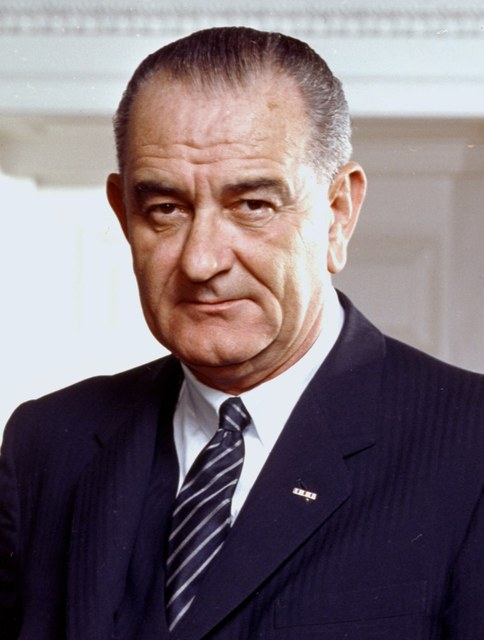
Andrew Jackson

Andrew Jackson
bdi Ralph Eleaser Whiteside Earl /span /a · Public domain

seventh U.S. President · 1767–1845; presidency 1829–1837 · Tennessee, United States

Andrew Jackson was the seventh President of the United States, nicknamed 'Old Hickory,' who won election in 1828 after losing the 1824 'corrupt bargain.'

The kit

  • Rise — Andrew Jackson won the Battle of Horseshoe Bend, forcing William Weatherford's surrender, and later won the Battle of New Orleans in 1815.
  • Achievements — Andrew Jackson vetoed the Second Bank of the United States and fought Nicholas Biddle over its recharter, issuing the Specie Circular requiring land purchases in gold and silver.
  • Conflicts — Andrew Jackson faced the Nullification Crisis with South Carolina, during which the first Force Bill was passed, and survived an assassination attempt by Richard Lawrence.
  • Legacy — Andrew Jackson was censured for executing Arbuthnot and Ambrister, attacked in the Coffin Handbills, and appointed Roger Taney to the Supreme Court.

Runs with

the Presidency
served as seventh President 1829–1837 open card →
Second Bank of the United States
vetoed recharter and dismantled it open card →
Bank
fought Nicholas Biddle over Second Bank open card →
Martin Van Buren

The ladder · 15 clues

H

This man was censured for executing Alexander Arbuthnot and Robert Ambrister, and he forced the surrender of William Weatherford after winning the Battle of Horseshoe Bend.

H

This president was shot by Charles Dickinson and vetoed a bill that would have constructed a road through Kentucky known as the Maysville Road.

H

Under this president, the US debt was paid off for the only time in history.

H

This man, who was accused of cannibalism in the Coffin Handbills, won a battle after the opposing soldiers forgot to bring ladders to climb the fortifications that this man had constructed.

H

This president and his Secretary of the Treasury, Levi Woodbury, called for land purchases to be made in gold and silver in the Specie Circular.

H

He won his first term four years after losing to John Quincy Adams in the "corrupt bargain." name this seventh President of the United States.

H

He lost the election of 1824 due to a “corrupt bargain” but came back to win election in 1828.

M

This man supposedly declared “Marshall has made his decision, now let him enforce it” in response to the Supreme Court decision in Worcester v.

M

President, nicknamed “Old Hickory,” who killed Charles Dickinson in a duel.

M

That battle, the Battle of New Orleans, was won by this 7th president of the United States who is depicted on the 20 dollar bill.

M

The Specie Circular was issued by this first Democratic president, whose other economic initiatives included dismantling the Second Bank of the United States.

M

Richard Lawrence attempted to assassinate this President, but his gun misfired twice, and this President ended up beating Lawrence with his cane.

E

Henry Clay and John Quincy Adams conspired to keep this man out of office in the Corrupt Bargain of 1824. name this Tennesseean, nicknamed “Old Hickory,” who was the seventh President of the United States.

E

He appointed Roger Taney to the Supreme Court and fought with Nicholas Biddle over the Second Bank of the United States.

E

The first Force Bill was passed under this man during his confrontation with South Carolina in the Nullification Crisis.

10 more clues from the record
H

The Scott massacre prompted an invasion led by this man, during which he executed two British citizens, Ambrister and Arbuthnot.

H

Arthur Schlesinger won a Pulitzer for his work about the “age” of this man, who was identified with the ascent of American capitalism by Hofstadter.

H

This man fired Robert Randolph for embezzling from the Navy, and Richard Lawrence made this man the first U.S. President to be the subject of an attempted assassination.

H

During one campaign, this man executed Alexander Arbuthnot and Robert Ambrister for allegedly aiding enemy forces.

H

This man was nearly assassinated at the funeral of Warren Davis by Richard Lawrence.

H

When this man was chased back to the U.S. Capitol after a visit to Fredericksburg, Richard Lawrence attempted to shoot him twice, but failed, resulting in a brutal caning by this politician.

H

This man was the subject of the “Coffin Handbills” alleging he executed soldiers.

H

William Duane briefly served as Secretary of the Treasury under this president, during whose term “Hard Times tokens” began to be minted as private currency.

H

The “Bloody Deeds” of this politician were attacked in the Coffin Handbills.

H

One political cartoon depicts this leader slaying a snake-like “many-headed monster” led by a man in a top hat, while another shows him stepping on the Constitution and wielding a “veto” in his left hand.
Watch out: Charles Dickinson—Jackson killed him in a duel, but was also shot by him (not the assassination attempter Richard Lawrence)
#154 · US Congressional Figures · Level 1

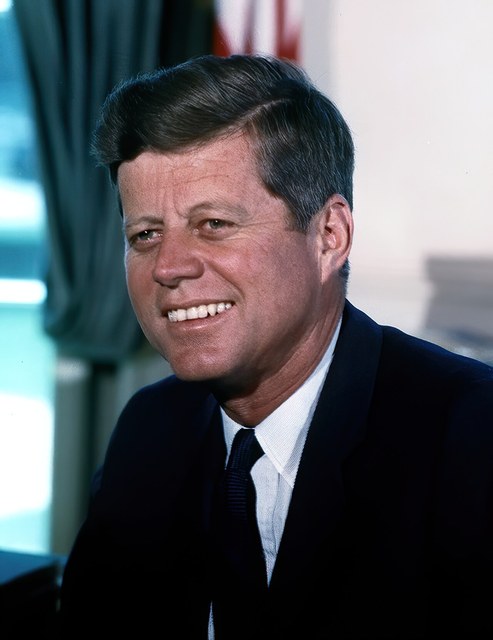
Lyndon B. Johnson

Lyndon B. Johnson
bdi Arnold Newman /span /a · Public domain

36th U.S. President · 1963–1969 · United States

Lyndon B. Johnson succeeded John F. Kennedy after his assassination and enacted the Great Society domestic programs while escalating the Vietnam War.

The kit

  • Rise — Lyndon B. Johnson won a controversial 1948 Senate primary by 87 votes over Coke Stevenson, earning the nickname "landslide."
  • Achievements — Lyndon B. Johnson signed the Civil Rights Act of 1964 and Voting Rights Act as part of his Great Society agenda.
  • Achievements — Lyndon B. Johnson created Medicare and Medicaid as components of his War on Poverty domestic welfare programs.
  • Conflicts — Lyndon B. Johnson escalated U.S. involvement in Vietnam after the Gulf of Tonkin Resolution, leading to his decision not to seek reelection in 1968.

Runs with

Great Society
his domestic agenda including War on Poverty programs open card →
Senate
won controversial 1948 primary by 87 votes open card →
John F. Kennedy
succeeded him as president after assassination in 1963 open card →
Barry Goldwater
defeated him in 1964 using "Daisy" ad open card →

The ladder · 15 clues

H

This president’s domestic welfare policies and so-called “War on Poverty” were collectively known as the Great Society.

H

The biography The Means of Ascent argues that this politician stole a Senate election from Coke Stevenson by 87 votes, earning him the nickname “landslide”.

H

During this man’s presidency, the Gulf of Tonkin Resolution increased U.S. involvement in one conflict.

H

Was the President of the United States who did not seek re-election because of the unpopularity of the Vietnam War?

H

This man narrowly won a primary election with the help of a box of 202 ballots from Jim Wells County written in the same handwriting.

H

This man, whose “treatment” intimidated opponents by moving uncomfortably close to them, was mentored by Speaker of the House Sam Rayburn.

H

A namesake Texas law he helped pass allowed this man to win reelection to the US Senate and the Vice Presidency in the same election.

M

Robert Caro wrote that four-volume biography of what man who took the presidential oath on an airplane?

M

The Voting Rights Act was signed by this President who created a series of programs called the “Great Society.” name this 36th President of the United States who succeeded the assassinated John F. Kennedy.

M

This man used a helicopter called the "City Windmill" to take on Coke Stevenson in one race.

M

To protest the war, some chanted “hey hey, [this president], how many kids did you kill today?” This successor of John F. Kennedy declined to run for reelection in 1968.

M

The “Daisy” spot promoted the campaign of this incumbent president over Barry Goldwater. This man took over after John F. Kennedy was assassinated.

E

This president signed the Voting Rights Act and the Social Security Act as part of his Great Society. name this successor to John F. Kennedy.

E

This man created Medicare and Medicaid as part of his “War on Poverty.” The Great Society was sponsored by, what president who succeeded John F. Kennedy?

E

President who signed the 1964 Civil Rights Act into law.

10 more clues from the record
H

This man declared that “Education is the key to opportunity in our society” and signed a bill doubling federal spending on education.

H

Governor "Pappy" O'Daniel was the only man to beat this person in a race for elected office.

H

This man won a run-off election thanks to Frank W. Mayborn rushing home from a business trip.

H

This man acquired the nickname “landslide” following an 87 vote victory in a highly-contested 1948 Senate primary.

H

This leader appointed Abe Fortas and Thurgood Marshall to the Supreme Court.

H

answer the following about famous campaign ads:The "Daisy" ad was aired in 1964 by this successor of John F. Kennedy. It depicted a girl counting petals on a daisy, followed by the explosion of a nuclear weapon.

H

name some things about the 1964 Presidential Election.The victor was this incumbent Texas Democrat, who had previously become president in 1963 when John F. Kennedy was assassinated.

H

identify the following about Abe Fortas.Fortas was nominated to be Chief Justice by this president, but the nomination was withdrawn due to scandal.

H

This president’s Press Secretary, Bill Moyer, influenced the creation of an act this president signed, which chartered the Corporate for Public Broadcasting.

H

This American politician, who outlined the “San Antonio formula” for peace, refused his Secretary of Defense’s suggestions to freeze troop numbers, causing that Secretary to resign and take a job as President of the World Bank.

Watch out: Barry Goldwater (opponent in 1964 election, not successor)
#155 · US Congressional Figures · Level 1

John F. Kennedy

John F. Kennedy
bdi Cecil W. Stoughton /span /a · Public domain

35th U.S. President · 1917–1963 · United States

John F. Kennedy was the youngest elected U.S. president, serving from 1961 until his assassination in Dallas in 1963.

The kit

  • Rise — John F. Kennedy commanded PT-109 during World War II and defeated Henry Cabot Lodge Jr. in the 1952 Senate race.
  • Achievements — John F. Kennedy delivered his 1962 Rice University speech vowing to put a man on the Moon within the decade.
  • Conflicts — John F. Kennedy negotiated with Nikita Khrushchev during the Cuban Missile Crisis, agreeing to remove Jupiter missiles from Turkey.
  • Death & succession — John F. Kennedy was assassinated by Lee Harvey Oswald in Dallas; the Warren Commission concluded Oswald acted alone.

Runs with

Lyndon B. Johnson
Kennedy's vice president after defeating him in Democratic primaries open card →
Richard Nixon
lost the 1960 presidential election to Kennedy open card →
Strategic Hamlet Program
the Presidency
Kennedy served as 35th president from 1961 to 1963 open card →

The ladder · 15 clues

H

This politician paraphrased John Galbraith in a speech by stating “Let us never negotiate out of fear.

H

In a 2 AM speech at the University of Michigan, this man announced the creation of the Peace Corps.

H

During one election, fourteen Democratic electors chose to vote for Harry F. Byrd instead of this politician.

H

U.S. President who inspired the race to the Moon with a 1962 speech at Rice University.

H

This man asked, “why does Rice play Texas?” to illustrate that “we choose to go to the Moon in this decade” because it is difficult.

H

He wrote the book Profiles in Courage and was known for commanding PT-109.

H

Lee Harvey Oswald shot this president in Dallas. The Warren Commission claimed Oswald was this man’s only assassin, but conspiracy theorists claim that a second shooter was present on the Grassy Knoll.

M

The Whiz Kids were part of his Department of Defense led by Robert McNamara, and his administration executed the unsuccessful Bay of Pigs invasion.

M

Just prior to his assassination, this president opened a new section of Interstate 95 along the Mason-Dixon line in one of his last public appearances.

M

Speaking in a Houston football stadium, this man compared one goal to the question "Why does Rice play Texas?" name this man whose 1962 address is often named “We Choose to go to the Moon.”

M

The youngest person ever elected president was this Massachusetts politician.

M

This politician claimed that we wish for “not merely peace in our time but peace for all time” in his “A Strategy of Peace” speech, which he gave as the commencement address for American University.

E

The line “ask not what your country can do for you, ask what you can do for your country” was spoken by this US president who delivered his inaugural address in 1961.

E

After defeating Lyndon B. Johnson in the Democratic Primaries, this man asked Johnson to be his Vice President. name this Massachusetts politician who defeated Richard Nixon to win the Election of 1960.

E

This man declared “we shall pay any price, bear any burden... oppose any foe... to assure the survival of liberty.” This President established a hotline between the Kremlin and Washington D.C. He agreed to remove Jupiter missiles from Turkey while working with Nikita Khrushchev to resolve the Cuban Missile Crisis. identify this Catholic president who was assassinated by Lee Harvey Oswald.

10 more clues from the record
H

During World War II he commanded the patrol boat PT 109, and his administration was proven to have had knowledge of the plot to assassinate Ngo Dinh Diem.

H

Pulitzer Prize-winning journalist Arthur Krock helped redraft this man's thesis, "Appeasement At Munich," into a book examining the failures of the British government to take steps to prevent World War Two called Why England Slept.

H

But let us never fear to negotiate.” This leader claimed that we accomplish objectives not “because they are easy, but because they are hard” in a speech in which he vowed to put a man on the moon within ten years.

H

This man was unknowingly given small dosages of methamphetamines by Max Jacobson, who was nicknamed "Dr. Feelgood." This politician defeated incumbent Henry Cabot Lodge Jr. in a 1952 Senate race.

H

This speech notes that the “torch has passed” to a new generation and declares that “we shall pay any price” and “oppose any foe” to protect liberty.

H

This man's hotel room, which he was sharing with Inga Arvad, was bugged by J. Edgar Hoover due to believing the former Miss Denmark to be a Nazi spy.

H

Ted Sorenson wrote much of a work by this man which chronicles acts such as Sam Houston’s denunciation of the Kansas-Nebraska Act.

H

This technology was named by Stuart Cramer after early models by John Gorrie and Edward Elis were perfected in 1902 in Buffalo, by Willis Carrier.

H

This president negotiated with Nikita Khrushchev [[KROO-shev]] during the Cuban Missile Crisis and was in office during the botched Bay of Pigs invasion.

H

Critic Fred Hobson mused that this technology would have made writing the novels of William Faulkner impossible.

Watch out: Richard Nixon (Kennedy's opponent in 1960, not his vice president)
#156 · US Congressional Figures · Level 1

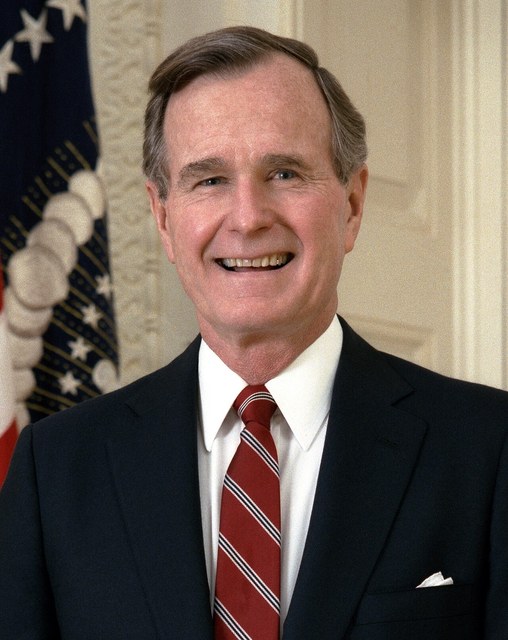
George H. W. Bush

George H. W. Bush
bdi David Valdez /span /a · Public domain

41st U.S. President · presidency 1989–1993 · United States

George H. W. Bush was the 41st U.S. President who served one term from 1989 to 1993 after serving as Ronald Reagan's Vice President.

The kit

  • Rise — George H. W. Bush defeated Michael Dukakis in the 1988 presidential election using the Willie Horton ad attacking his opponent's furlough program.
  • Achievements — George H. W. Bush ordered Operation Just Cause to overthrow Manuel Noriega and restore Guillermo Endara to power in Panama.
  • Achievements — George H. W. Bush promoted volunteerism in his "thousand points of light" speech comparing volunteer organizations to stars spread across the nation.
  • Death & succession — George H. W. Bush lost his 1992 reelection bid to Bill Clinton after breaking his "read my lips: no new taxes" pledge.

Runs with

Ronald Reagan
served as Reagan's Vice President after calling supply-side economics "voodoo economics" in 1980 primary open card →
Bill Clinton
lost 1992 reelection to Clinton after breaking tax pledge open card →
China
George
father of George W. Bush, 43rd president open card →

The ladder · 15 clues

H

Told voters to “read [his] lips...no new taxes” before losing to Bill Clinton in 1992.

H

This president implemented Carla Hills's recommendation to end reprisal tariffs on Japan.

H

He promoted volunteerism with his “thousand points of light” speech and defeated a Democratic opponent with an ad featuring escaped convict Willie Horton.

H

This politician attacked his opponent’s support for weekend furlough passes in the Willie Horton ad.

H

This U.S. president, the former vice-president of Ronald Reagan, concluded the START I and II treaties with Mikhail Gorbachev.

H

Dukakis lost the election to this vice president under Ronald Reagan, whose son would later win the 2000 presidential election. He lost to Bill Clinton in 1992.

H

This man claimed to have “Big Mo” on his side during his first presidential run.

M

Geronimo’s skull may have been stolen by Prescott, a politician from this family, whose son was accused of being “born with a silver foot in his mouth” by Ann Richards.

M

During Reagan’s first Presidential campaign, this primary opponent called Reagan’s supply-side economic policies “voodoo economics.” That didn’t hinder this man’s career; he served as Reagan’s Vice President and succeeded him as President.

M

He ordered a military intervention to restore Guillermo Endara to power as part of Operation Just Cause, overthrowing Manuel Noriega.

M

A president with this last name attacked Michael Dukakis (du-KAH-kiss) in the "Revolving Door" and "Willie Horton" ads. This was the last name of two presidents named George.

M

“Read my lips: no new taxes” was a gaffe by this 41st US President that would cost him in his reelection campaign against Bill Clinton. His son later became president.

E

This man lost a tennis match to Emperor Akihito hours before vomiting on the lap of the Japanese Prime Minister. name this President whose many political gaffes contributed to his 1992 loss to Bill Clinton.

E

Peggy Noonan and Craig Smith wrote a speech for this man that compared volunteering organizations to “a brilliant diversity spread like stars.” Lee Atwater aided this man in attacking an opponent with the “Revolving DDoor” ad during the 1988 Presidential Election, in which this man read the “Thousand Points of Light” speech. name this 41st U.S. president who said, “Read my lips: No new taxes.”

E

This man’s re-election bid was hampered by the failed pledge, “Read my lips: no new taxes.” name this 41st U.S. President who defeated Michael Dukakis in 1988 and fathered the 43rd U.S. President.

10 more clues from the record
H

Michael Dukakis was defeated in the election by this former Vice President under Reagan, and father of a president who won the 2000 election against Al Gore.

H

Andrew Rosenthal claimed this man had been awe-struck by an electronic grocery scanner in an article showing he was out of touch with the middle-class.

H

After refusing to debate an opponent, this man’s speeches were heckled by a man in a chicken suit who was accompanied by “Colonel James Baker III” who would translate his chicken noises.

H

Under the administration of a politician with this name, John Yoo authored a set of legal "torture memos" to justify enhanced interrogation of terrorists.

H

This President responded to the “Capitol Crawl” by signing a civil rights law that required reasonable accommodations in the workplace.

H

This politician’s inability to communicate with China’s U.N. delegation led to the selection of Kurt Waldheim as Secretary-General in 1971.

H

In another ad, this man listed his opponent’s opposition to military bills while his opponent rode in a tank.

H

One speech by this man provoked satire and reference to “blight”-ed communities.

H

This man coined a term describing organizations like “the Knights of Columbus, the Grange, Hadassah,” that have a “brilliant diversity spread like stars.” A speech conceding the presidential nomination to this man proclaimed “a cultural war… for the soul of America” and asked the speaker’s namesake “brigades” to support this man.

H

Answer this bonus about the unique 27th Amendment to the U.S. Constitution. …The 27th Amendment passed in May, 1992, during the final year of this man’s Presidency. This man served as Vice-President under Ronald Reagan and is the last one term President as of 2018.

Watch out: Father George H. W. Bush (41st president) confused with son George W. Bush (43rd president)
#158 · US Congressional Figures · Level 1

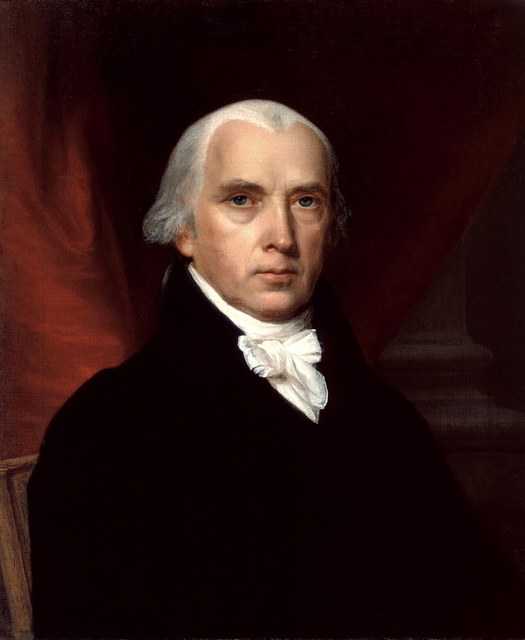
James Madison

James Madison
bdi John Vanderlyn /span /a · Public domain

Fourth U.S. President · 1751–1836; presidency 1809–1817 · Virginia, Washington D.C.

James Madison was the fourth President of the United States, known as the Father of the Constitution for drafting the Virginia Plan and creating the Bill of Rights.

The kit

Runs with

Virginia
represented Virginia at Constitutional Convention open card →
Bill of Rights
Thomas Jefferson
served as Jefferson's Secretary of State open card →
Secretary of State
served as Jefferson's Secretary of State open card →

The ladder · 15 clues

H

This man, Jefferson’s Secretary of State, encouraged the Embargo Act and participated in a court case which found that the writ of mandamus was unconstitutional.

H

This man wrote that “Ambition must be made to counteract ambition” in an essay claiming that “if men were angels, no government would be necessary.” In an earlier essay, this man compared getting rid of liberty to getting rid of air, when cautioning about efforts to abolish factions.

H

This man wrote that “The ‘power to regulate commerce among the several States’ cannot include a power to construct roads and canals” in his veto of the Bonus Bill.

H

During this man's presidency the House launched an investigation into the conduct of General James Wilkinson.

H

Both of this president’s vice presidents, George Clinton and Elbridge Gerry, died in office.

H

Is known as the Father of the Constitution and took notes of the debates?

H

A slave born on this man’s estate attempted the largest slave escape in American history, the Pearl Incident; that man, Paul Jennings, was one of over a hundred slaves belonging to this man.

M

During one event, this man’s wife legendarily saved a portrait of George Washington from the soon to be damaged White House.

M

This man’s dinner was allegedly eaten by British troops, who burned Washington D.C. during his tenure. name this fourth President of the United States.

M

This man drafted a document arguing for population-based representation called the Virginia Plan.

M

This politician and Thomas Jefferson wrote the Virginia and Kentucky Resolutions in response to the Alien and Sedition Acts.

M

Judicial review was established by a Supreme Court case which saw William Marbury sue this man.

E

This man opposed the divisiveness of factions in the tenth entry in a series of papers he wrote with John Jay and Alexander Hamilton.

E

A George Washington painting was saved by this man’s wife as Washington D.C. was burned by the British. name this President during the War of 1812, known as the “father of the Constitution.”

E

The Bill of Rights was created by this Virginia founding father who became the Fourth President of the United States.

10 more clues from the record
H

This man, with Thomas Je↵erson, co-founded the Democratic-Republican Party.

H

On this man’s last day in office, he vetoed a Bonus Bill proposed by John Calhoun.

H

Federalist No. 51 was written by this author, who, along with Alexander Hamilton and John Jay, wrote the Federalist Papers under the pseudonym Publius. This person would later become the fourth president of the United States.

H

This man allegedly justified using government funds for a Tunisian envoy’s concubines since they were “appropriations for foreign intercourse.” This man’s first vice president was the first to die in office and was named George Clinton.

H

Edmond-Charles Genêt [[zhuh-NAY]] publicly compared this man to a French aristocrat in an attempt to bolster the electoral prospects of George Clinton.

H

Under the name "Publius," this man published "The Utility of the Union as a Safeguard Against Domestic Faction and Insurrection," also known as Federalist No. 10.

H

This man’s former slave and valet, Paul Jennings, wrote a memoir of this man’s time in the White House.

H

As Secretary of State, this man’s refusal to deliver a commission for a judgeship led to the establishment of judicial review.

H

After initially vetoing the proposal, this President signed a second bill chartering a second national bank.

H

A group of Federalists organized the Hartford Convention during this president’s second term.

Watch out: William Marbury sued Madison over an undelivered judicial commission, establishing judicial review in Marbury v. Madison
#160 · US Congressional Figures · Level 1

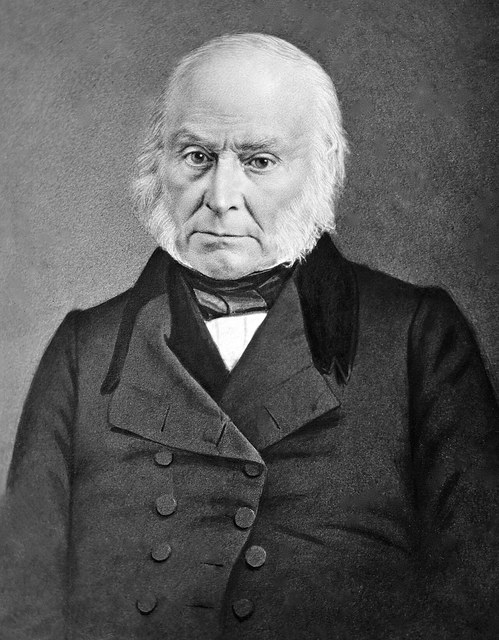
John Quincy Adams

John Quincy Adams
Mathew Brady · Public domain

6th U.S. President · 1767–1848 · United States

John Quincy Adams served as sixth U.S. President after winning the 1824 election through a "Corrupt Bargain" with Henry Clay.

The kit

  • Rise — John Quincy Adams served as James Monroe's Secretary of State, negotiating the Adams-Onís Treaty to acquire Florida and formulating the Monroe Doctrine.
  • Presidency — John Quincy Adams defeated Andrew Jackson in the 1824 presidential election after Henry Clay's support in the House secured his controversial victory.
  • Post-presidency — John Quincy Adams returned to the House of Representatives after his single term, where he argued the Amistad case before the Supreme Court.
  • Death — John Quincy Adams died of a cerebral hemorrhage suffered in the House while opposing a resolution to honor Mexican-American War generals.

Runs with

Henry Clay
orchestrated the Corrupt Bargain as Speaker of the House in 1824 open card →
Andrew Jackson
defeated Jackson in 1824 election through House vote open card →
Secretary of State
held this position under Monroe, negotiating Adams-Onís Treaty open card →
Florida
negotiated acquisition from Spain via Adams-Onís Treaty with Luis de Onís open card →

The ladder · 15 clues

H

This man died of a cerebral hemorrhage suffered in the House of Representatives while opposing a resolution to honor victorious Mexican-American War generals.

H

This man forced George Troup to replace the Treaty of Indian Springs with the Treaty of Washington after learning that unfavorable terms had been forced upon the Muscogee.

H

The survivors of The Amistad affair presented this man with the Mendi Bible for representing them in court.

H

Defeated Jackson in the 1824 Presidential election?

H

This man argued before the U.S. Supreme Court in Fletcher v.

H

James Madison appointed this man the first ever U.S. Minister to Russia.

H

This president died while giving a speech in Congress opposing a proposal to honor Mexican-American veterans.

M

As Secretary of State, this man negotiated with Luis de Onis to acquire Florida and formulated the Monroe Doctrine.

M

Gallatin was nominated as vice-presidential candidate with William Crawford for the election in 1824, the year that this man won through a “corrupt bargain.”

M

This president returned to the House of Representatives after his single term in office, won through a "Corrupt Bargain" with Henry Clay.

M

An ardent abolitionist, this man argued Don behalf of slaves who had revolted in U.S. v.

M

This diplomat gave recognition of the U.S.’s Texas border at the Sabine in exchange for Spanish Florida as part of a treaty he negotiated with Luis de Onís.

E

In a presidential election, this man defeated Andrew Jackson in a so-called “Corrupt Bargain” orchestrated, in part, with Speaker Henry Clay. name this son of the second U.S. president.

E

This man successfully argued in favor of the Africans who revolted on the Amistad in a U.S. court case.

E

This man negotiated the acquisition of Florida with Luis de Onis in his role as James Monroe’s Secretary of State. name this career politician who returned to Congress after serving as 6th President of the United States.

10 more clues from the record
H

During his first State of the Union address, this president stated “we were palsied by the will of our constituents.” Worcester's cause in Worcester v.

H

With Roger Sherman Baldwin, this man argued for a group of Mende tribesmen led by Joseph Cinqué in the case U.S. v.

H

This man's Secretary of the Treasury, who also served as his running mate in one election, was Richard Rush.

H

This president officially appointed Joel Poinsett as Minister to Mexico and supported sending an American delegation to the Congress of Panama, which was blocked by his political opponents.

H

This politician’s son George Washington drowned in the Long Island Sound after possibly jumping off the Benjamin Franklin.

H

This lawyer and former President argued on behalf of the Africans on board the Amistad before the Supreme Court in 1841.

H

This president’s son disappeared after boarding the steamship Benjamin Franklin and was thought to have committed suicide.

H

This Congressman convinced colleagues to use the funds from James Smithson's trust to create a scientific institution.

H

Congressmen opposed to this president harped on things like his purchasing of a pool table for the White House.

H

During this man’s presidency, David Porter was court martialed for invading part of Puerto Rico.

Watch out: Son of second president John Adams, not to be confused with his father
#161 · US Congressional Figures · Level 1

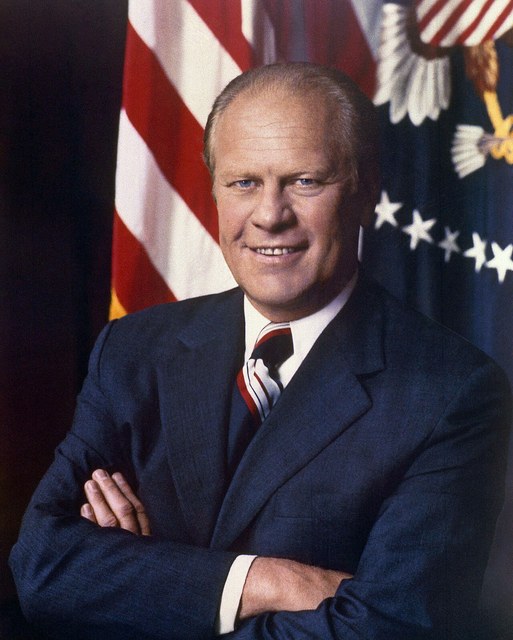
Gerald Ford

Gerald Ford
bdi David Hume Kennerly /span /a · Public domain

38th U.S. President · 1974–1977 · United States

Gerald Ford became president in 1974 after Nixon's resignation, declaring "our long national nightmare is over."

The kit

  • Rise — Gerald Ford replaced Spiro Agnew as vice president, then succeeded to the presidency under the 25th Amendment in 1974.
  • Achievements — Gerald Ford signed the Helsinki Accords to improve relations with communist Europe and gave federal recognition to Black History Month.
  • Conflicts — Gerald Ford survived two assassination attempts within three weeks by Lynette Fromme and Sara Jane Moore in 1975.
  • Legacy — Gerald Ford's pardon of Richard Nixon for Watergate angered the public and helped Jimmy Carter win the 1976 election.

Runs with

Richard Nixon
pardoned Nixon for Watergate open card →
Michigan
played center for Michigan Wolverines open card →
Jimmy Carter
pardon helped Carter win 1976 open card →
the Presidency
succeeded to office in 1974 open card →

The ladder · 15 clues

H

The Hart-Scott-Rodino Act was passed during the tenure of what president this person who once claimed that "there is no Soviet domination of Eastern Europe".

H

This politician, who encouraged fiscal responsibility to combat inflation in the Whip Inflation Now campaign, signed the Helsinki Accords to improve relations with communist Europe.

H

Lynette Fromme and Sara Jane Moore both attempted to assassinate this man over a span of three weeks.

H

This man denied a federal bailout to Abraham Beame, prompting a newspaper headline where this man told New York City to “drop dead.” Forty-one Marines died in an operation ordered by this President to retake the Mayaguez.

H

Donald Rumsfeld served as his Chief of Staff.

H

This president’s press secretary resigned after he issued Proclamation 4311, a decision this man made after considering the case Burdick v.

H

As part of his attempted political comeback, this man wrote the autobiography A Time to Heal and criticized the incumbent's SALT TWO negotiations before proposing a "co- presidency" with Ronald Reagan.

M

In The Age of Turbulence, Alan Greenspan lambasted this President for his “Whip Inflation Now” campaign.

M

Vice President who replaced Spiro Agnew, then became president after the scandal.

M

Nelson Rockefeller was vice president under this president that pardoned his predecessor Richard Nixon for his role in the Watergate Conspiracy.

M

Which vice president of Richard Nixon later pardoned him during his own two-year presidential term, a deal often dubbed a "corrupt bargain"?

M

This president was mocked for suggesting carpooling and vegetable gardens to “whip inflation now.” This man promised an end to “our long national nightmare” after his inauguration, but instead angered the public when he controversially pardoned his predecessor.

E

This president declared “our long national nightmare is over” after taking office in 1974. name this US president who pardoned his predecessor, Richard Nixon.

E

This man’s decision to pardon his predecessor helped Jimmy Carter win the Election of 1976. name this man who became President after Nixon resigned.

E

This man, who pledged to "Whip Inflation Now," was targeted by two former Manson Family members in two failed assassination attempts within three weeks after taking office under the terms of the 25th Amendment. name this Michigan native who succeeded to the presidency in 1974 on the resignation of Richard Nixon.

10 more clues from the record
H

This leader created the Economic Policy Board in an attempt to revive the economy, but was instead mocked for giving out buttons that read “Whip Inflation Now” to supporters.

H

This man was the only one to defend black athlete Willis Ward’s right to play football while playing in the South while serving as Center for the Michigan Wolverines.

H

Andrew Johnson, Harry Truman, and this man are the only Presidents to have at least 10 vetoes overridden by Congress.

H

James Schlesinger was removed as Secretary of Defense by this President who assumed the office after his predecesor resigned in 1974.

H

the United States president who dealt with the Mayaguez incident.

H

Black History Month gained federal recognition under this president. In college, this man declared that he would sit out a football game against Georgia Tech if William Ward, Michigan's only African American player, was not allowed to play.

H

The target of a failed attempt to perform this action had to wear a bulletproof trench coat due to one of them 17 days earlier. :Describe this action attempted by Squeaky Fromme, a member of the Manson family who targeted a person speaking at the Host Breakfast.

H

Name the U.S. presidents who survived these assassination attempts .Lynette Fromme tried to shoot him during an appearance in Sacramento, but she forgot to rack the gun before pulling the trigger and was captured by Secret Service agents.

H

This politician’s wife was criticized after she compared her generation’s beer drinking to the new generation’s weed use in a “60 Minutes” interview in which she also said it was possible that premarital sex would lower divorce rates.

H

This man unusually presented video testimony in a trial during which John Virga said “Sandy Koufax couldn’t have thrown a better pitch” after a woman hurled an apple at Dwayne Keyes.

Watch out: Nelson Rockefeller (Ford's vice president, not Ford himself)
#162 · US Congressional Figures · Level 1

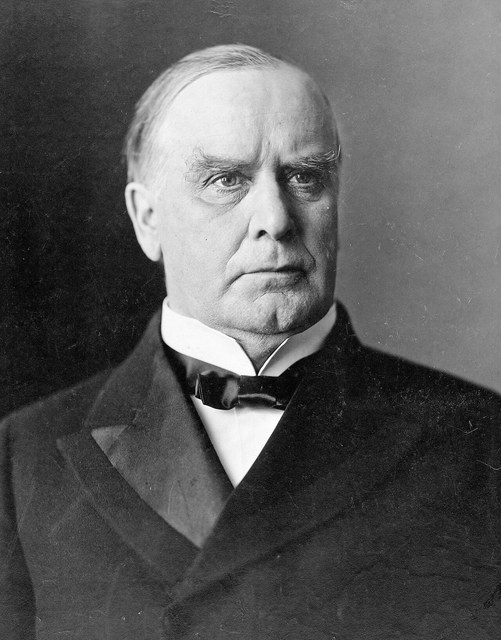
William McKinley

William McKinley
Unknown author Unknown author · Public domain

25th U.S. President · 1897–1901 · United States

William McKinley was the 25th U.S. President who led during the Spanish-American War and was assassinated by Leon Czolgosz in 1901.

The kit

  • Rise — William McKinley won the 1896 presidential election using a 'front porch campaign' from his Canton, Ohio home managed by Mark Hanna.
  • Achievements — William McKinley passed the Gold Standard Act to end bimetallism and oversaw the annexation of Hawaii and retention of the Philippines.
  • Conflicts — William McKinley defeated William Jennings Bryan twice and was criticized for appointing the possibly senile John Sherman as Secretary of State.
  • Death & succession — William McKinley was assassinated by Leon Czolgosz at the Pan-American Exposition in Buffalo in 1901, leading to Theodore Roosevelt's succession.

Runs with

Theodore Roosevelt
succeeded McKinley after his 1901 assassination open card →
Ohio
Spanish-American War
president during the war, retained Philippines afterward open card →
Secretary of State
appointed possibly senile John Sherman to the post open card →

The ladder · 15 clues

H

The Wilson–Gorman Tariff Act replaced a high tariff framed by this politician.

H

This man supposedly won a campaign delivering speeches only from the front porch of his house in Canton, Ohio.

H

Harding became known across Ohio by campaigning for this former Ohio governor who won the 1896 U.S. presidential electioAn.

H

During this man’s presidency, the longest-serving cabinet member in U.S. history, Secretary of Agriculture James Wilson, began his post.

H

This president, who was referred to by a future ally as having “no more backbone than a chocolate eclair,” picked the possibly senile John Sherman as his first secretary of state.

H

Hawaii was annexed by this president, who passed the Gold Standard Act to end bimetallism. name this 25th U.S. President, who was succeeded by Theodore Roosevelt.

H

He was criticized for his nomination of the possibly senile John Sherman to Secretary of State.

M

This man advocated the "full dinner pail" in his second "front porch campaign" under the management of Mark Hanna.

M

U.S. President who led during the Spanish-American War and retained the Philippines thereafter.

M

This man names an extremely high 1890 tariff that was replaced just four years later by the Wilson-Gorman Tariff.

M

An opponent of William Jennings Bryan, name this president who was shot at the Pan-American Exposition by Leon Czolgosz, after which he was succeeded by Theodore Roosevelt.

M

In the Election of 1900, this man used a Canton-based front porch campaign to beat Democrat William Jennings Bryan.

E

answer these questions about the Spanish-American War:This man, later assassinated by Leon Czolgosz , was President during the Spanish-American War.

E

Leon Czolgosz [CHOW-gaw] assassinated this president at the Pan-American Exposition in Buffalo. name this president who was succeeded by Theodore Roosevelt.

E

The first campaign of William Jennings Bryan lost to this Ohioan who managed the Spanish-American War during a presidency cut short by his 1901 assassination.

10 more clues from the record
H

Marcus Hanna encouraged this man to stay at home while raising money for this man’s “front-porch” campaign.

H

A subordinate once cracked this man had the "backbone of a chocolate éclair." He was mocked by an ambassador in the "De Lome Letter," and his wife was an epileptic named Ida.

H

The Secret Service was given the task of guarding the President after this President was assassinated in Buffalo in 1901 by Leon Czolgosz {ZOL-GOTCH)

H

This president passed the Newlands Resolution to appoint a five-member commission to recommend laws for Hawaii.

H

In 1894, Cleveland signed the Wilson-Gorman Tariff, reducing tariff rates from those set in 1890 by this Ohio representative and future President.

H

Ohio politician who defeated him in the general election twice using the "Front Porch" strategy.

H

This man was called a "modern Caesar" and a leader of “the money kings and trust magnates” by Emma Goldman.

H

Prospector William Dickey named a geographic feature after this politician to garner support for one of his campaigns.

H

This man’s “triumph” is the subject of a recent book by George W. Bush adviser Karl Rove.

H

Guam was transferred to US Navy control in December, 1898 by this US president.

Watch out: His 1890 tariff is confused with the 1894 Wilson-Gorman Tariff that replaced it
#163 · US Congressional Figures · Level 1

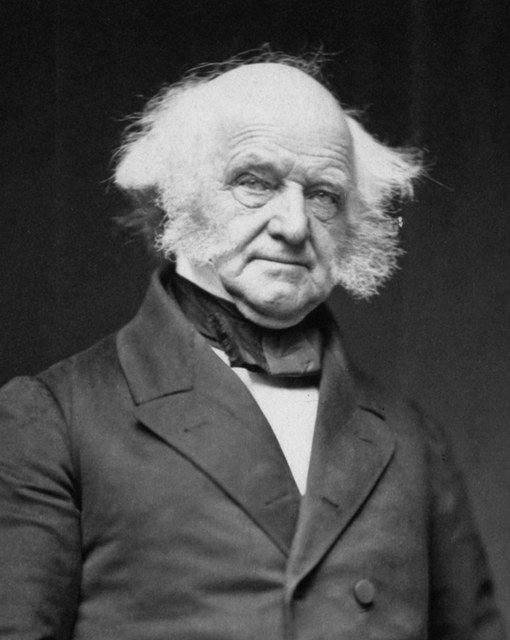
Martin Van Buren

Martin Van Buren
bdi Mathew Benjamin Brady /span /a · Public domain

8th U.S. President · 1837–1841 · United States

Martin Van Buren succeeded Andrew Jackson as president and faced the Panic of 1837 after enforcing the specie circular policy.

The kit

  • Rise — Martin Van Buren founded the Albany Regency political machine and organized the Jacksonian Democratic party as a state senator.
  • Achievements — Martin Van Buren created an independent treasury system that stored government funds in vaults rather than state banks.
  • Conflicts — Martin Van Buren ordered Winfield Scott to carry out his predecessor's Indian Removal Act and faced the Aroostook War.
  • Legacy — Martin Van Buren ran on the Free Soil Party ticket in 1848 after breaking with the Albany Regency over slavery.

Runs with

Andrew Jackson
the Presidency
served as 8th president from 1837 to 1841 open card →
Free Soil Party
ran as Free Soil candidate in 1848 election open card →
William Henry Harrison
lost 1840 election to Harrison after Panic of 1837 open card →

The ladder · 15 clues

H

Was nicknamed “Old Kinderhook” and succeeded Andrew Jackson as President.

H

This President faced a war that was sparked by the Caroline Affair, and he was criticized by Charles Ogle in the Gold Spoon Oration.

H

This man’s nomination as Minister to Great Britain was blocked by a vengeful John Calhoun.

H

This man's vice president, the only one elected by the Senate through the 12th Amendment, was the supposed killer of Tecumseh, Richard Mentor Johnson.

H

This man ordered that the government store its funds in vaults rather than banks as part of the independent treasury he created.

H

This man attempted to move money from state banks into his “independent treasury” system.

H

A political machine led by this man was originally named the Holy Alliance.

M

The popularity of this man plummeted after Charles Ogle accused him of lavish spending in the Gold Spoon Oration.

M

This president ran with Charles Francis Adams on the Free Soil Party ticket.

M

The Aroostook War began during the presidency of this former leader of the Bucktails faction, who previously established the Albany Regency political machine.

M

This principal founder of the Democratic party ran on the Free Soil ticket in 1848.

M

He was the target of Charles Ogle's "Gold Spoon Oration," and resigned as Secretary of State amid the Petticoat Affair.

E

This man ordered Winfield Scott to carry out his predecessor’s Indian Removal Act, causing the Trail of Tears. name this US president who succeeded Andrew Jackson.

E

This man’s attempt to enforce his predecessor’s specie circular policy prompted the Panic of 1837, hurting his chances in the 1840 election against William Henry Harrison. name this Dutch-American president who succeeded Andrew Jackson.

E

As a state senator, this man led the state opposition to Governor DeWitt Clinton and organized the Albany Regency political machine.

10 more clues from the record
H

This man’s daughter-in-law, Angelica, was mocked for reportedly trying to re-landscape the White House gardens to resemble those in Europe.

H

During his presidency, the Battle of Caribou was a skirmish between lumberjacks on the border between Maine and New Brunswick.

H

The key organiser of the Jacksonian Democratic party, and vice-president under Jackson this former president stood for the anti-slavery Free Soil party at the 1848 election.

H

This man’s vice president had to be elected by the senate after Virginia’s electoral college delegation refused to vote for him, causing a deadlock.

H

Under this president, the British agreed to payments regarding the Comet and the Encomium, two slave ships that had run aground in the Bahamas.

H

John C. Calhoun’s efforts to block this man from becoming Minister to Britain led this man to be appointed Vice President instead.

H

This man attempted to deter American militia from fighting in the Patriot War to support the fledgling Republic of Canada.

H

Ralph Waldo Emerson wrote an open letter to this man to cease any further removal of the Cherokee.

H

This president dispatched Winfield Scott to the Canadian border in response to the Upper and Lower Canada Rebellions.

H

This man founded the Albany Regency but later broke with them over the morality of slavery.

Watch out: William Henry Harrison (defeated Van Buren in 1840 election)
#164 · US Congressional Figures · Level 1

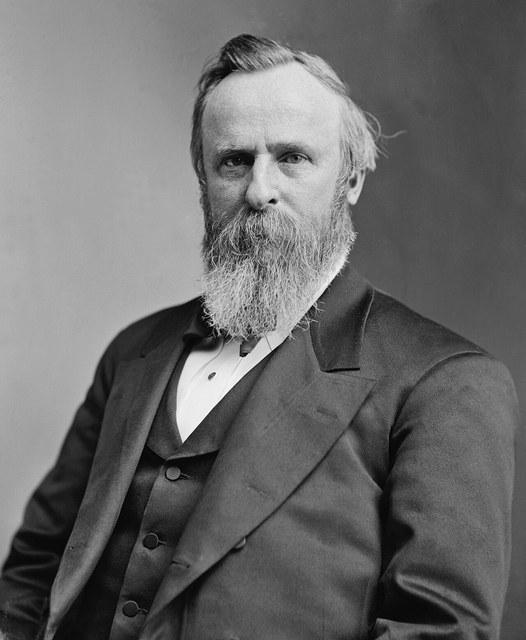
Rutherford B. Hayes

Rutherford B. Hayes
bdi Mathew Benjamin Brady /span /a · Public domain

19th US President · 1877–1881 · United States

Rutherford B. Hayes became president through the Compromise of 1877, ending Reconstruction in exchange for resolving the disputed 1876 election.

The kit

  • Rise — Rutherford B. Hayes served three terms as Governor of Ohio and was wounded at South Mountain during the Civil War.
  • Achievements — Rutherford B. Hayes arbitrated the War of the Triple Alliance, awarding Gran Chaco to Paraguay, which named a department for him.
  • Conflicts — Rutherford B. Hayes broke the Great Railroad Strike by sending federal troops to guard railway installations.
  • Legacy — Rutherford B. Hayes vetoed the Bland-Allison Act to preserve the gold standard, though Congress overrode his veto.

Runs with

Paraguay
arbitrated territorial dispute awarding Gran Chaco to Paraguay after War of Triple Alliance open card →
the Presidency
won disputed 1876 election through Compromise of 1877 open card →
1876 United States Presidential Election
defeated Samuel Tilden in disputed election resolved by Electoral Commission open card →
Ohio
served three terms as Governor of Ohio open card →

The ladder · 15 clues

H

During his time with Ohio’s 23rd Regiment in the Civil War, this man was wounded at the Battle of South Mountain and served alongside another future president, William McKinley.

H

This politician told his wife “I am ashamed to say, who is Wheeler?” shortly before William Wheeler was nominated as his running mate.

H

After this man arbitrated for Paraguay to receive what is now sixty percent of the nation, a department in Paraguay was named in his honor.

H

This President chose to break the Great Railroad Strike.

H

This man vetoed the Bland-Allison Act in order to preserve the gold standard.

H

This man was elected president in 1876 in a heavily-contested race.

H

This man sent Federal troops to guard railway installations, breaking the Great Railroad Strike.

M

This president, whose wife was known as “Lemonade Lucy” for banning alcoholic beverages in the White House, won the election of 1876.

M

A city and department in Paraguay are named for this man because he arbitrated the end of the War of the Triple Alliance.

M

name this president who won election due to the Compromise of 1877.

M

The back-door compromise that assured him the presidency promised the effective end of Reconstruction.

M

A department in Paraguay is named for this President, who awarded Gran Chaco to Paraguay after the War of the Triple Alliance.

E

The Compromise of 1877 determined that Samuel Tilden lost the presidency to this US President who ended Reconstruction.

E

This president advocated for the gold standard and vetoed the Bland-Allison Act.

E

He was the first man to win three elections as Governor of Ohio but required a little assistance from Congress to win election to higher office. who ended Reconstruction upon becoming President after the Compromise of 1877?

10 more clues from the record
H

Congress overturned his veto of a bill to put silver into circulation, the Bland-Allison Act.

H

This president’s Indian policy was largely dictated by his Secretary of the Interior, Carl Schurz.

H

This man's election was secured when David Davis took a Senate seat, leaving Joseph Philo Bradley with the deciding vote on the Electoral Commission.

H

This Ohio-born president believed in a government that treated people equally based on merit as shown by his appointment of reformer Carl Schurz to Secretary of the Interior.

H

This office was held by a man who praised the middle class in the “Forgotten People” speech, and by a man who disappeared while swimming in the ocean.

H

This president, who appointed Carl Schurtz to Secretary of the Interior, advocated for the gold standard and vetoed the Bland-Allison Act.

H

During this President’s administration, Southern senators limited federal use of domestic troops via the Posse Comitatus Act.

H

This president unsuccessfully tried to end the spoils system by appointing the German reformer Carl Schurz.

H

This president sent in federal troops after the Reading [[RED-ding]] Railroad Massacre.

H

After this politician arbitrated a land dispute between Argentina and Paraguay, a department in Paraguay was named for him.

Watch out: Samuel Tilden actually won the popular vote in 1876 but lost the presidency to Hayes
#166 · US Congressional Figures · Level 1

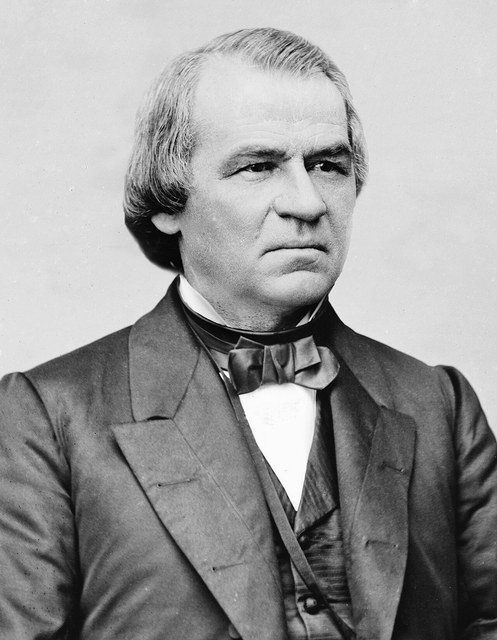
Andrew Johnson

Andrew Johnson
bdi Mathew Benjamin Brady /span /a · Public domain

17th U.S. President · 1865–1869 · United States

Andrew Johnson succeeded Abraham Lincoln and became the first president impeached after violating the Tenure of Office Act by dismissing Edwin Stanton.

The kit

  • Rise — Andrew Johnson was the only Southern senator not to resign when his state seceded and replaced Hannibal Hamlin as Lincoln's running mate in 1864.
  • Conflicts — Andrew Johnson lost support after his "Swing Around the Circle" speaking tour, during which he compared himself to Jesus Christ and accused Thaddeus Stevens of plotting assassination.
  • Impeachment — Andrew Johnson was impeached for violating the Tenure of Office Act after suspending Secretary of War Edwin Stanton, with Chief Justice Salmon P. Chase presiding over the trial.
  • Legacy — Andrew Johnson served in the Senate after leaving the White House, having backed quick re-instatement for the South and opposed civil rights legislation during Reconstruction.

Runs with

Tennessee
served as military governor and senator from Tennessee open card →
Edwin Stanton
impeached for dismissing Stanton as Secretary of War open card →
Abraham Lincoln
succeeded Lincoln after his assassination in 1865 open card →
Radical Republicans
clashed with Radical Republicans over Reconstruction policy open card →

The ladder · 15 clues

H

This man, who served in the Senate after leaving the White House, lost support after comparing himself to Jesus Christ in his “Swing Around the Circle” speeches.

H

During one speech meant to honor George Washington, this politician instead accused Thaddeus Stevens of plotting to assassinate him.

H

This president lost support after a speaking campaign known as the Swing Around the Circle.

H

This politician used the line "it is not for the purpose of making speeches that I now appear before you" when beginning his speeches.

H

This Democrat shouted “Why don’t you hang Thad Stevens and Wendell Phillips” at a heckler during the debacle that was his “Swing Around the Circle” speaking tour.

H

President who was impeached during the Reconstruction Era?

H

He replaced Hannibal Hamlin in one office after serving as governor of Tennessee.

M

This president claimed that the passage of a Civil Rights Bill would be an act “against the white race.” Landowners with property valuations exceeding $20,000 were surprisingly pardoned after being barred from giving oaths of allegiance under this man’s presidency.

M

This man was chosen for the position of running mate on the National Union Party due to his status as a leader of the War Democrats.

M

The Radical Republicans impeached this President who succeeded Abraham Lincoln.

M

This, according to the Senate, was a violation of that Tenure of Office Act and led to his impeachment.

M

That leader of the Tennessee unionist movement was this man, who became president after the assassination of Abraham Lincoln. His disagreements with Congress led to his impeachment.

E

This man was impeached for violating the Tenure of Office Act after suspending Secretary of War Edwin Stanton.

E

The first president to be impeached was this man who succeeded Abraham Lincoln.

E

This man violated the Tenure of Office Act after the attempted removal of Secretary of War Edwin Stanton, and which led to him being the first president to be impeached.

10 more clues from the record
H

After he was the only Southern senator not to resign when his state seceded, he was elevated to replace Hannibal Hamlin.

H

This embattled President vetoed the Tenure of Office Act and then dismissed against its terms when it was passed anyway.

H

This politician backed quick re-instatement for the South during reconstruction, angering Radical Republicans.

H

This leader gave a speech in the U.S. Senate stating that the phrase “all men are created equal” did not apply to African-Americans while attempting to position himself as a "compromise candidate" for the Democratic Party in 1860.

H

A Republican said, “I almost literally looked into my open grave” before casting the deciding vote in favor of this man at a trial presided over by Chief Justice Salmon P. Chase.

H

This man screamed “I don’t care about my dignity!” at a heckler during a campaign tour attended by assistants like Postmaster General Alexander Randall.

H

This politician, who attempted to stall the Fenian Raids into Canada, defeated William Brownlow for Congress in 1845 as a defender of the poor.

H

This man sent Lorenzo Thomas to deliver a dismissal notice to one of his subordinates, who had barricaded himself in his office.

H

This man was said to have given a "Post Orfis" appointment to the satirical Southern character Petroleum Vesuvius Nasby.

H

During his term as military governor of Tennessee, this man attempted to eliminate rebel influence, although he supported slavery.

Watch out: Edwin Stanton (the Secretary of War whose dismissal triggered Johnson's impeachment)
#167 · US Congressional Figures · Level 1

William Henry Harrison

William Henry Harrison
bdi Albert Gallatin Hoit /span /a · Public domain

9th U.S. President · 1773–1841 · Virginia; Indiana Territory; Ohio

William Henry Harrison was the 9th U.S. President who died of pneumonia just 31 days into office, the shortest presidential term in American history.

The kit

  • Rise — William Henry Harrison served as first governor of the Indiana Territory starting in 1801 and built Grouseland near Vincennes.
  • Achievements — William Henry Harrison defeated Tenskwatawa at the Battle of Tippecanoe in 1811, destroying Prophetstown and earning his famous campaign nickname.
  • Election of 1840 — William Henry Harrison won the presidency using the slogan "Tippecanoe and Tyler Too" and symbols of log cabins and hard cider to appeal to common voters.
  • Death — William Henry Harrison gave the longest inaugural address ever and died of pneumonia 31 days later, making him the shortest-serving president.

Runs with

John Tyler
Tyler was Harrison's running mate and vice president open card →
Indiana
Harrison governed Indiana Territory and built Grouseland there open card →
Battle of Tippecanoe
Harrison defeated Tenskwatawa at this 1811 battle open card →
Martin Van Buren
Harrison defeated Van Buren in the 1840 election open card →

The ladder · 15 clues

H

Clair Jr. by a single vote to serve as a non -voting representative for the Northwest Territory, and this person was appointed by John Adams to govern the Indiana Territory, where he built (+) Grouseland near Vincennes.

H

Among the residents who escaped Berkeley Plantation through secret tunnels as Arnold approached was this then seven-year-old, who later became the shortest-serving president in U.S. history, dying shortly after giving the longest inauguration speech ever read.

H

This president’s supporter Charles Ogle delivered the “Gold Spoon Oration,” which accused this man’s rival of being too extravagant.

H

A derogatory Baltimore news article inspired the grass roots association of this president with log cabins and hard cider.

H

First struck what man this person who fought at Tippecanoe and died after just 31 days in office.

H

In one election, this man was the leading candidate of a party who ran three other candidates, including Hugh Lawson White, in a failed strategy to force the contest to the House of Representatives.

H

This man once asked Daniel Webster to read a note that stated John Chambers, not James Wilson, would be governor of Iowa.

M

This man suffered pneumonia after giving that speech, becoming the U.S. president with the shortest time in office. identify this man who won the Election of 1840 with the slogan "Tippecanoe and Tyler Too," the grandfather of a president named Benjamin.

M

Tecumseh’s brother Tenskwatawa was defeated by this general and future president at the Battle of Tippecanoe, inspiring their campaign slogan “Tippecanoe and Tyler too.”

M

As a result of this man's success during the War of 1812, his slogan in the Election of 1840 was "Tippecanoe and Tyler too." name this president who died of pneumonia, serving the shortest presidential term in history in 1841.

M

This one-time governor of the Indiana Territory gave the longest speech ever given at a presidential inauguration.

M

This future president defeated Tecumseh’s brother Tenskwatawa and destroyed Prophetstown at the Battle of Tippecanoe. This 9th president became the shortest-serving president after he died of Pneumonia.

E

A slogan for this man in the election of 1840 was “Tippecanoe and Tyler too.” name this President who died a month after taking office.

E

This man won election after using symbols of log cabins and hard cider to appeal to the common man.

E

This first governor of the Indiana Territory won an election using the slogan “Tippecanoe and Tyler Too.” A mere 31 days into his presidency, this man died of pneumonia. name this ninth president of the United States.

10 more clues from the record
H

Following one speech, in which the editor noted that he had “killed seventeen Roman proconsuls,” this man went to a ball at Carusi’s Saloon.

H

This man eloped with his wife in 1795 after being rejected by that woman's father, Judge John Cleves Symmes.

H

During a presidential campaign, this man was nicknamed “General Mum” because he rarely expressed political opinions.

H

President who defeated Tenskwatawa [tensk-wah-ta-wah] at Tippecanoe and used the victory in his campaign slogan.

H

Prior to Ronald Reagan, this man held the distinction of being the oldest man elected U.S. president.

H

This builder of Grouseland signed the Treaty of St. Louis, forcing the Sauk to cede land in Illinois.

H

Died thirty days into his term after catching pneumonia during his inauguration

H

E.C. Booz’s distinctive whiskey bottles in support of this candidate are the source for the term “booze.” Supporters of this candidate pushing leather and tin spheres to campaign stops originated the phrase “keep the ball rolling.” A speech supporting this candidate argued that an opponent was shaping gardens like “an Amazon’s bosom” in the Gold Spoon Oration.

H

He served as Governor of the Indiana Territory starting in 1801, leading an attack on Prophetstown at the Tippecanoe River in 1811. :Name this Whig president who won his election in 1840 by beating Martin van Buren. He was the first president to die in office, after doing basically nothing.

H

Black Hawk warred with the U.S. over the 1804 Treaty of St. Louis signed by Quashquame and this then-Governor of the Indiana Territory. He famously parlayed his victory at Tippecanoe into a presidential victory with running mate John Tyler.

Watch out: His grandson Benjamin Harrison also served as U.S. President
#169 · US Congressional Figures · Level 1

James Monroe

James Monroe
bdi Samuel Finley Breese Morse /span /a · Public domain

Fifth U.S. President · 1817–1825 · United States

James Monroe was the fifth U.S. President who presided over the Era of Good Feelings and issued a doctrine opposing European colonization in the Americas.

The kit

  • Rise — James Monroe negotiated the Louisiana Purchase alongside Robert Livingston after serving as Ambassador to France and rescuing Thomas Paine from jail.
  • Achievements — James Monroe's administration acquired Florida through the Adams-Onís Treaty and demilitarized the Great Lakes via the Rush-Bagot Treaty with Britain.
  • Conflicts — James Monroe suppressed Gabriel Prosser's Rebellion as Virginia governor and oversaw resolution of the Arbuthnot and Ambrister incident during the First Seminole War.
  • Legacy — James Monroe's Secretary of State John Quincy Adams drafted the Monroe Doctrine forbidding European intervention in the Western Hemisphere during the Era of Good Feelings.

Runs with

William
William Plumer cast the only electoral vote against Monroe in 1820 open card →
Louisiana Purchase
negotiated the Louisiana Purchase with Robert Livingston as diplomat open card →
Secretary of State
Florida
acquired Florida through the Adams-Onís Treaty during his administration open card →

The ladder · 15 clues

H

As governor, this man suppressed Gabriel Prosser’s Rebellion, and he was later sent with Robert Livingston to negotiate the Louisiana Purchase.

H

Along with Robert Livingstone, this man met with Francois Barbe-Marbois to negotiate the Louisiana Purchase.

H

As Ambassador to France, this man secured the release of Thomas Paine by claiming his American citizenship.

H

This president saw the Fort Scott Massacre, which was resolved later by Treaty of Moultrie Creek and this man also vetoed the Cumberland Road Bill.

H

This man’s pamphlet “A View of the Conduct of the Executive” defended his actions as Minister to France, including rescuing Thomas Paine from jail.

H

This President oversaw the resolution of the Arbuthnot and Ambrister incident during the First Seminole War.

H

John Riker saved this man’s life at the Battle of Trenton after he was struck in the shoulder by a musket ball.

M

While governor, this man called out the state militia to put down Gabriel Prosser's rebellion in Virginia.

M

The acquisition of Florida occurred in this president’s tenure via the Adams-Onis Treaty.

M

William Plumer voted for Richard Rush and John Quincy Adams instead of Daniel Tompkins and this man, becoming the only elector to vote against him in 1820.

M

During this man’s administration, the United States acquired Florida via the Adam-Onis Treaty.

M

Answer the following about the Era of Good Feelings, during which Democratic-Republicans dominated. :The Era of Good Feelings occurred in the two terms of this fifth president and successor to James Madison.

E

The Era of Good Feelings was led by this President who protected Latin America from European interference with a famous doctrine.

E

This president’s Secretary of State, John Quincy Adams, drafted a doctrine that opposed European intervention in the Americas.

E

This man, who became the namesake of the capital of Liberia, was president during the Era of Good Feelings and the Panic of 1819. name the 5th U.S. President whose namesake doctrine forbade European colonization in the Western Hemisphere.

10 more clues from the record
H

William Plumber prevented this man from becoming the second unanimously elected President.

H

This man and William Pinkney produced a never-ratified agreement to extend Jay’s Treaty.

H

In his first election, this man defeated William Crawford for his party’s nomination and defeated Rufus King to take a higher office.

H

This American negotiated the Louisiana Purchase along with Robert Livingston. A city in Louisiana is named for this Secretary of State under James Madison.

H

One of this man’s Secretaries of the Navy, Smith Thompson, would later become his only appointment to the Supreme Court.

H

This President’s administration passed the Relief for Public Land Debtors’ Act in response to a financial panic. This president convinced Great Britain to reduce the size of its navy on Lake Champlain in the Rush-Bagot Treaty.

H

During this man’s presidency, a drop in the price of cotton started a panic in which William Jones was replaced by Langdon Cheeves as head of the Bank of the United States.

H

William Wirt served this man, who warmed relations with Britain by starting to demilitarize the Great Lakes via the Rush-Bagot treaty.

H

In one election, this president exacerbated a split in his party by joining with the “quids.” As governor of Virginia, this man dealt with the revolt of Gabriel Prosser.

H

After being tipped off by Mosby Shepherd, this politician stopped Gabriel Prosser from carrying out his planned slave revolt.

Watch out: William Plumer (not William Plumber) cast the sole electoral vote against Monroe in 1820
#170 · US Congressional Figures · Level 1

James Knox Polk

James Knox Polk
ul li James_Polk.jpg /a : Brady, Mathew B., 1823 (ca.)-1896, · Public domain

11th U.S. President · 1845–1849 · United States

James Knox Polk was the only Speaker of the House elected President, serving one term marked by territorial expansion.

The kit

  • Rise — James Knox Polk emerged as a 'dark horse' candidate in 1844, defeating Henry Clay with expansionist slogans like '54-40 or fight!'
  • Achievements — James Knox Polk settled the Oregon Question at the 49th Parallel, acquired vast territory through the Mexican-American War, and established the Naval Academy at Annapolis.
  • Domestic policy — James Knox Polk reestablished the Independent Treasury System, replaced the Black Tariff with the Walker Tariff, and created the Department of the Interior.
  • Death & succession — James Knox Polk had the shortest presidential retirement, surviving only three months after leaving office in 1849.

Runs with

Oregon
settled Oregon boundary at 49th Parallel via treaty with Lord Aberdeen open card →
Mexican-American War
engineered war ended by Treaty of Guadalupe-Hidalgo open card →
Horse
nicknamed the original 'Dark Horse' candidate open card →
John
no connection evident in clues open card →

The ladder · 15 clues

H

This man made substantial reductions to the “Black Tariffs” he inherited from the previous administration, replacing them with the less adversarial Walker Tariff.

H

This president reestablished the Independent Treasury System and lowered import duties via the Walker Tariff.

H

This president vetoed a bill that he thought was unfairly supportive of Midwestern shipping companies, the Rivers and Harbors Bill.

H

This man’s presidency saw the establishment of the Naval Academy at Annapolis by his first Navy Secretary, George Bancroft.

H

Under his tenure as Speaker of the House, discussion of anti-slavery petitions became banned under the gag rule.

H

George Bancroft’s recommendation of this man was unanimously accepted, ending a debate between Lewis Cass and Martin Van Buren.

H

This President won the presidency thanks to James Birney’s Liberty Party sapping his opponent’s anti-slavery support in states like New York.

M

The Oregon Question was settled by this man, the only Speaker of the House to be elected President.

M

Abraham Lincoln asked this president to point out the exact spot where American blood was shed in opposing a war fought during his presidency.

M

Campaigned for what "dark horse" to be elected in 1844?

M

This man had the shortest presidential retirement, surviving only three months after leaving office, and was the only president who was previously Speaker of the House.

M

ANSWER: Zodiac (8) This man reestablished the Independent Treasury System and reduced the rates set by the Black Tariff by signing the Walker Tariff.

E

Supporters of this “dark horse” winner chanted “54-40 or fight!” in endorsing his policy of expansionism. name this U.S. President during the Mexican-American War.

E

This president endorsed the Texas Annexation and engineered a war that was ended by the Treaty of Guadalupe-Hidalgo. name this “dark horse” president who oversaw the Mexican-American War.

E

This president defeated Henry Clay using the slogan “Fifty-four forty or fight!”, but he abandoned that position with the Oregon Treaty.

10 more clues from the record
H

This man, the original “Dark Horse,” was given the nicknames “Young Hickory” and “Napoleon of the stump” during his campaign.

H

As President, he created the Department of the Interior and signed the Walker Tariff into law.

H

This man’s Secretary of the Treasury, Robert Walker, devised a tariff that helped repair relations with Great Britain after a border dispute in the Oregon territory.

H

This president’s opponents chanted, “Who is [this man],” while he was supported by Robert Walker, the namesake of a tariff.

H

This president’s minister Benjamin Bidlack guaranteed Colombian sovereignty in exchange for U.S. right of way across the Isthmus of Panama.

H

One of these men, while campaigning against the other, wrote the “Alabama Letter,” reversing his views to gain support from slave owners.

H

During the campaign between these men, the incumbent president briefly revived Thomas Jefferson’s “Democratic-Republican Party” to run as a third party candidate.

H

He defeated Lewis Cass to obtain his party’s nomination and negotiated with Lord Aberdeen to obtain a boundary at the 49th Parallel for Oregon.

H

One of these goals, which was rooted in opposition to re-establishing the national bank, was accomplished with the creation of the Independent Treasury system.

H

These two men squared off in the only presidential election featuring two former Speakers of the House.

Watch out: Confused with other Speakers of the House who ran for President (Henry Clay was his opponent, not a fellow president)
#175 · US Congressional Figures · Level 1

James A. Garfield

James A. Garfield
Unknown; part of Brady-Handy Photograph Collection. · Public domain

20th U.S. President · 1831–1881 · United States

James A. Garfield was the 20th U.S. President, assassinated in 1881 by Charles Guiteau after serving only seven months in office.

The kit

  • Rise — James A. Garfield was the only sitting House of Representatives member ever elected president, winning the 1880 election on the 36th ballot.
  • Achievements — James A. Garfield defeated Winfield Scott Hancock by less than 2,000 popular votes in the 1880 election and appointed James Blaine as Secretary of State.
  • Conflicts — James A. Garfield's administration faced the Star Route scandal involving campaign manager Stephen Dorsey and investigated by Attorney General Wayne MacVeagh.
  • Death & succession — James A. Garfield was shot by Charles Guiteau, who shouted "I am a Stalwart of the Stalwarts," and was succeeded by Chester A. Arthur after the second-shortest presidential term.

Runs with

Charles
assassinated by Charles Guiteau in 1881 open card →
Ohio
elected to House from Ohio during Civil War service open card →
Secretary of State
appointed James Blaine as Secretary of State open card →
Winfield Scott
defeated Winfield Scott Hancock in 1880 election open card →

The ladder · 15 clues

H

During one event, this President was attacked by a man who declared “I am a Stalwart of the Stalwarts!” Charles Guiteau [GHEE-toe] assassinated, what President who was succeeded by Chester A. Arthur?

H

Was assassinated in 1881 by Charles Guiteau.

H

During one election, this president’s opposition forged a letter from him to a Massachusetts union supposedly voicing his support for Chinese immigration.

H

Charles Guiteau shouted “I am a Stalwart of the Stalwarts” after shooting this man. :This exclamation followed the assassination of what president in 1881?

H

This politician is the only sitting member of the House of Representatives to be elected president, and his administration faced the Star Route scandal.

H

Guiteau assassinated this president, who served only seven months in office. This man's Secretary of State was James Blaine, and he was succeeded by Chester A. Arthur.

H

During his Civil War service in the Army of the Cumberland at Shiloh and Chickamauga, he was elected to the House of Representatives from Ohio.

M

This man defeated Winfield Scott Hancock in the Election of 1880.

M

Which U.S. President this person who developed a proof of the Pythagorean Theorem, was shot by Charles Guiteau.

M

Chronologically, the next American president to be assassinated after Lincoln was which man?

M

The Pendleton Act was in part a response to the assassination of this predecessor of Arthur by deranged office seeker Charles Guiteau.

M

This man left the presidency, as well as this mortal coil, after being assassinated by Charles Guiteau, who was angry over this man's attempted civil service reforms. He is the only sitting member of the House to be elected president.

E

Morrison Waite was made Chief Justice under this president, who appointed William Robertson as Collector of the Port of New York.

E

This man’s death at the hands of a Stalwart left him with the second-shortest Presidential term in history. name this U.S. President who was assassinated in 1881 by Charles Guiteau and succeeded as President by Chester Arthur.

E

The death of this man prompted the passage of the Pendleton Civil Service Act under his successor. name this president who was assassinated in 1881 by Charles Guiteau.

10 more clues from the record
H

This politician was nominated for President on the 36th ballot after 35 ballots were split between former President Grant and this man’s choice for Secretary of State, James Blaine.

H

This politician detested porridge so much that he joked that the then-imprisoned and starving Sitting Bull should be fed his oatmeal as it was a worse fate.

H

This man’s campaign manager Stephen Dorsey was implicated in the Star Routes scandal, leading to investigation by his attorney general Wayne MacVeagh.

H

During one event, this man was attacked by a man who had been passed over as consul to Paris by Secretary of State James G. Blaine.

H

William Henry Hunt was appointed Secretary of the Navy by this president, who called for the abandonment of the Clayton-Bulwer Treaty.

H

The popular vote margin between this man and Winfield Scott Hancock was less than 2,000 votes.

H

During an earlier man’s presidency, this man refused ten shares offered by Oakes Ames during the Credit Mobilier Scandal.

H

This man was treated by Dr. Willard Bliss who used cabinet members’ wives instead of trained nurses.

H

A predecessor said of him, “No man ever started so low that accomplished so much, in all our history.”:Name this President, the first to employ James G. Blaine as Secretary of State, through whom his administration intervened diplomatically in the War of the Pacific.

H

The late 19th and early 20th centuries were a dangerous time for U.S. Presidents. :This president was killed by Charles Guiteau, who planned to use his trial as a springboard for an 1884 presidential run. This president was succeeded by his VP Chester Arthur.

Watch out: Winfield Scott Hancock (his 1880 opponent, not Winfield Scott)
#249 · US Vice Presidents, Cabinet Secretaries, and Executive Officials · Level 1

Thomas Jefferson

Thomas Jefferson
bdi Rembrandt Peale /span /a · Public domain

Third U.S. President · 1743–1826 · Virginia

Thomas Jefferson was the third U.S. President who authored the Declaration of Independence and completed the Louisiana Purchase.

The kit

  • Rise — Thomas Jefferson served as Secretary of State under Washington and Vice President under John Adams before winning the 1800 election.
  • Achievements — Thomas Jefferson authorized the Louisiana Purchase and sent the Lewis and Clark expedition to explore western territories.
  • Conflicts — Thomas Jefferson signed the Embargo Act to protect American shipping and declared war on Tripoli, starting the First Barbary War.
  • Legacy — Thomas Jefferson outlined his belief in separation of church and state in a letter to the Danbury Baptist Church.

Runs with

Virginia
lived at Monticello estate in Virginia open card →
the Presidency
first Democratic-Republican president, elected 1800 open card →
Louisiana Purchase
authorized the Louisiana Purchase during his presidency open card →
Declaration of Independence
authored the Declaration of Independence in 1776 open card →

The ladder · 15 clues

H

This president told Henry Dearborn "if we are constrained to lift the hatchet (+) against any tribe," then that tribe could be exterminated or forced beyond the Mississippi.

H

To protect American shipping from the British and French navies, this man signed the Embargo Act.

H

This man responded to an attack on the USS Philadelphia by declaring war on Tripoli and starting the First Barbary War.

H

A dialogue between a “Head” and “Heart” was written by this man and was addressed to Maria Cosway.

H

A political cartoon depicts an act signed by this President as a turtle who bites a man shouting at the “cursed Ograbme;” that act was later replaced by the Non-Intercourse Act.

H

The Louisiana Purchase was made during the Presidency of this man. He had been Secretary of State under Washington and Vice President under John Adams.

H

In one number, this character tells another “you’re driving me to homicide” because he has not seen his wife in six months.

M

For the points, name this president who carried out the Louisiana Purchase.

M

This man may have fathered six children with his slave Sally Hemings.

M

This creator of the Embargo Act repealed the Alien and Sedition Acts of his predecessor, and this man donated his library to the Library of Congress from his Monticello estate.

M

This president sent the Lewis and Clark expedition and authorized the Louisiana Purchase.

M

In a letter to Isaac H. Tiffany, this man argued that liberty is rightful when it is limited by the rights of others.

E

In a letter to the Danbury Baptist Church, this man outlined his belief in the separation of church and state.

E

The first president from the Democratic-Republican party was this man who first won the presidency in 1800 over incumbent John Adams.

E

Monticello was the home of this statesman, the author of the Declaration of Independence.

10 more clues from the record
H

A building designed by this man was sold to Confederate officer and co-founder of the Pony Express Benjamin Franklin Fricklin after the building was illegally seized.

H

In letters sent to Abbe Henri Gregoire and Benjamin Banneker, this man acknowledged the accomplishments of black people.

H

This man composed The Life and Morals of Jesus of Nazareth by cutting and pasting the non-supernatural parts of the New Testament.

H

This politician responded to Francois Barbe-Marbois in his Notes on the State of Virginia.

H

The first US battle on foreign soil, the Battle of Derna, occurred under this president during the Barbary War.

H

Answer the following about some losers of early American Presidential elections, :This person lost the election of 1796 to John Adams. He then beat Adams in the 1800 election to become the 3rd president of the US 24 years after he wrote the Declaration of Independence.

H

Answer the following about a presidential scandal. .This former president stated "We are all Republicans, we are all Federalists" in his inaugural address, and wrote the letter to Francis Hopkinson entitled "On the New Constitution."

H

One criticism of this president’s policies featured a snapping turtle named “Ograbme,” embargo backward.

H

Marshall’s second cousin, with whom he often feuded, was this author of the Virginia Statute for Religious Freedom and winner of the election of 1800.

H

James Monroe and Robert R. Livingston negotiated a treaty for this president that allowed for westward expansion.

Watch out: Lost the 1796 election to John Adams before defeating him in 1800
#250 · US Vice Presidents, Cabinet Secretaries, and Executive Officials · Level 1

Richard Nixon

Richard Nixon
Department of Defense. Department of the Army. Office of the · Public domain

37th U.S. President · 1913–1994 · United States

Richard Nixon served as Eisenhower's Vice President and resigned the presidency in 1974 following the Watergate scandal.

The kit

  • Rise — Richard Nixon gained national prominence through his role in the Alger Hiss case and served as Eisenhower's Vice President for both terms.
  • Achievements — Richard Nixon engaged in the Kitchen Debate with Nikita Khrushchev in 1959 and participated in the first televised presidential debate against John F. Kennedy.
  • Conflicts — Richard Nixon caused the Saturday Night Massacre by attempting to remove special counsel Eliot Richardson and claimed "I am not a crook" during Watergate.
  • Legacy — Richard Nixon gave the "Checkers speech" defending a slush fund and a cocker spaniel gift, and started the strategy of Vietnamization in Vietnam.

Runs with

Watergate Scandal
resigned presidency in 1974 due to this scandal open card →
Gerald Ford
succeeded by Ford after resignation open card →
the Presidency
held office 1969–1974 open card →
China

The ladder · 15 clues

H

The Saturday Night Massacre was caused by this President’s attempt to remove special counsel Eliot Richardson.

H

What U.S. Vice-President engaged in the "Kitchen Debate" with Nikita Khruschev in 1959?

H

In 1952, this politician lost to Pat Brown in a California gubernatorial election.

H

This politician delivered a speech about “a little cocker spaniel dog in a crate” which his daughter named Checkers.

H

This man was said to have been "embalmed before he even died" by Richard Daley.

H

In 1950, this politician distributed a “Pink Sheet” attacking the voting record of his opponent, Helen Gahagan Douglas.

H

This man co-sponsored a bill with Karl Mundt to force members of the Communist Party to enter a government registry.

M

Vice President under Eisenhower during both of his terms.

M

Gave the “Checkers” speech following a campaign fund controversy.

M

The Watergate Scandal affected the presidency of what man this person who resigned in its aftermath.

M

He claimed that his wife wore a "respectable Republican cloth coat." This man vigorously debated Nikita Khrushchev in the "Kitchen Debate." In a speech, this man said he would not return "a little cocker spaniel" and defended the use of a slush fund. name this man who gave the 1952 "Checkers speech" and who was Vice-President under Dwight Eisenhower.

M

Despite being a Democrat, Connally served as Secretary of the Treasury for this Republican president, who resigned following the Watergate scandal.

E

Dwight Eisenhower’s Vice President was this politician who resigned as President after the Watergate scandal.

E

During a press conference, this President dubiously claimed that “I am not a crook.” name this President who resigned due to the Watergate Scandal.

E

Former Vice President who participated in the first televised debate with John F. Kennedy.

10 more clues from the record
H

After this man lost a 1962 election to Pat Brown, this man claimed to give his last press conference and told the media they “won’t have [him] to kick around anymore.” This man refused to wear makeup in the first televised presidential debate, which pitted him against John F. Kennedy.

H

Won the U.S. Presidential election on his second try, defeating Hubert Humphrey?

H

This man won a Senate seat over “the Pink Lady,” Helen Gahagan Douglas, in 1950, but served less than a full term and resigned after successfully running for Vice President.

H

This man described being attacked by a mob in Venezuela in his book Six Crises.

H

John Birt produced a series of interviews between this man and David Frost.

H

Before becoming president, this man argued with Khrushchev about American versus Soviet lifestyles in the Kitchen Debate.

H

All the President’s Men covered the Watergate scandal surrounding this president, who was reelected in 1972.

H

This Vice President to Eisenhower started the strategy of Vietnamization.

H

This man earlier achieved national prominence for his role in the Alger Hiss case.

H

This man praised “the only man that can save America,” Dwight Eisenhower, and disclosed loans from his parents in a speech that became nicknamed for a cocker spaniel.

Watch out: Students confuse Nixon with Gerald Ford, who succeeded him as president after the resignation
#251 · US Vice Presidents, Cabinet Secretaries, and Executive Officials · Level 1

Theodore Roosevelt

Theodore Roosevelt
bdi Adam Cuerden /a · Public domain

26th U.S. President · 1858–1919; presidency 1901–1909 · United States

Theodore Roosevelt was the 26th U.S. President who championed trust-busting, conservation, and assertive foreign policy under his 'Big Stick' diplomacy.

The kit

  • Rise — Theodore Roosevelt led the Rough Riders at San Juan Hill during the Spanish-American War before becoming Governor of New York.
  • Achievements — Theodore Roosevelt won the Nobel Prize for brokering the Treaty of Portsmouth ending the Russo-Japanese War and sent the Great White Fleet.
  • Conflicts — Theodore Roosevelt survived an assassination attempt by John Schrank in Milwaukee, then delivered an 84-minute speech declaring it takes more to kill a Bull Moose.
  • Legacy — Theodore Roosevelt ran as the Progressive Party candidate in 1912, splitting votes with Taft and enabling Woodrow Wilson's victory.

Runs with

William McKinley
became president in 1901 after McKinley's assassination in Buffalo open card →
Bull Moose Party
founded the Progressive Party for his 1912 presidential campaign open card →
John
shot by John Schrank before Milwaukee speech open card →
William Howard Taft
split Republican votes with Taft in 1912 election open card →

The ladder · 15 clues

H

This president once said that "speak softly and carry a big stick" described his foreign policy.

H

Both Richard Nixon’s victory and resignation addresses quoted this orator’s “Citizenship in a Republic” speech, which notes “It is not the critic who counts,” but rather “the man who is actually in the arena.” At Carnegie Hall in 1915, this man attacked “Hyphenated Americans” and argued for assimilation of immigrant cultures.

H

As US President, this man authorized the voyage of the Great White Fleet and brokered the Treaty of Portsmouth, ending the Russo-Japanese War.

H

This president strengthened the Interstate Commerce Commission by passing a law fining railroads offering rebates, the Elkins Act.

H

This author’s books include The Naval War of 1812 and a four-volume history of American westward expansion, The Winning of the West.

H

This leader sent the Great White Fleet across the globe to showcase the superiority of the United States.

H

This man criticized the leadership of Oliver Hazard Perry in his book The Naval War of 1812.

M

Future U.S. President who led the Rough Riders in Cuba.

M

After a speech for the Progressive Party in Milwaukee, this president was shot by John Schrank. name this politician who, after that shooting, claimed “it takes more than that to kill a Bull Moose.”

M

This man was influenced by The Jungle to sign the Pure Food and Drug Act into law.

M

This third party candidate split votes with William Howard Taft, allowing Woodrow Wilson to take victory in the Election of 1912. name this founder of the Bull Moose party, a former trust-busting president.

M

This man established the Bull Moose Party for the election of 1912. name this trust-busting monocled president.

E

This president heroically fought at the Battle of San Juan Hill as the leader of the Rough Riders during the Spanish- American War.

E

This man won a Nobel Prize for his efforts in helping end the Russo-Japanese War.

E

John Schrank shot this man which led him to tell a crowd “it takes more than that to kill a bull moose.” This man attempted to secure a third term with his Progressive Party but lost to Woodrow Wilson. name this president who believed America should “speak softly and carry a big stick.”

10 more clues from the record
H

This President ordered the dishonorable discharge of 167 innocent black soldiers in the Brownsville Affair.

H

He was appointed assistant secretary of the Navy, but resigned to go to war.

H

Muir was a friend of this conservationist president who championed the “Square Deal” and ran as the Progressive Party candidate in 1912.

H

Later, he became Governor of New York.

H

This man appointed Gifford Pinchot and sent out the Great White Fleet.

H

He signed the Gentleman’s Agreement with Japan, and John Schrank attempted to assassinate this man while he was giving a speech.

H

This person published the article “Nature Fakers” to support John Burroughs’ criticism of anthropomorphic nature writing.

H

This President was the first to visit a foreign nation during his term in office. …Name this President who took over in 1901 after William McKinley was assassinated in Buffalo, New York.

H

This person stated that the US would protect other countries in the west, part of their namesake corollary to the Monroe Doctrine.

H

This president's "Square Deal" initiative broke up monopolies, and he gave an 84-minute campaign speech in Milwaukee despite being shot just before it.

Watch out: William Howard Taft (Roosevelt's chosen successor who later became his rival in the 1912 election)
#253 · US Vice Presidents, Cabinet Secretaries, and Executive Officials · Level 1

Harry S. Truman

Harry S. Truman
National Archives and Records Administration. Office of Pres · Public domain

33rd U.S. President · 1945–1953 · United States

Harry S. Truman succeeded Franklin Roosevelt in 1945, authorized atomic bombs on Japan, and championed the Fair Deal domestic program.

The kit

  • Rise — Harry S. Truman chaired a 1941 committee investigating war profiteering and exposed wasteful spending at Fort Leonard Wood.
  • Achievements — Harry S. Truman desegregated the armed forces with Executive Order 9981 and proposed the Fair Deal domestic program.
  • Conflicts — Harry S. Truman's veto of the Taft-Hartley Act was overridden by Congress, and he recalled Douglas MacArthur during the Korean War.
  • Legacy — Harry S. Truman won a surprise 1948 victory over Thomas Dewey despite the Chicago Tribune's erroneous headline declaring his defeat.

Runs with

Missouri
Truman's mentor **Tom Pendergast** was from Missouri open card →
Thomas Dewey
Dewey lost to Truman in **1948 election** open card →
Secretary of State
Truman succeeded Roosevelt as president in **1945** open card →
World War II
Truman authorized **atomic bombs on Japan** ending WWII open card →

The ladder · 15 clues

H

During an unsuccessful assassination attempt on this president, Leslie Coffelt killed and was killed by Griselio Torresola, a Puerto Rican nationalist.

H

This president fired his Attorney General, J. Howard McGrath, when McGrath refused to cooperate with a corruption investigation.

H

Griselio Torresola and Oscar Collazo attempted to assassinate this man to promote Puerto Rican nationalism.

H

President’s veto was overridden by Congress to pass the union-restricting Taft-Hartley Act?

H

Blair House, when Puerto Rican assassins tried to kill him?

H

This man chaired a 1941 committee that investigated war profiteering.

H

This President signed Executive Order 9981 which desegregated the armed forces.Name this successor to Franklin Roosevelt whose namesake doctrine provided aid to Turkey and Greece.

M

The Conservative Coalition opposed this architect of a “Fair Deal,” whose veto of the Taft-Hartley Act was overridden by Congress.

M

As president, this man vetoed the Taft-Hartley Act and desegregated the armed forces.

M

This U.S. president participated in the later Potsdam Conference. He authorized the use of the atomic bomb against Japan after succeeding FDR.

M

Puerto Rican nationalists attempted to assassinate this president at Blair House. He won a surprise victory over Thomas Dewey in the 1948 presidential election.

M

This man attacked the “Do-Nothing” Congress after they overrode his veto of the Taft-Hartley Act, and he desegregated the military with Executive Order 9981.

E

During the Election of 1948, the Chicago Daily Tribune mistakenly stated that Thomas Dewey defeated this man. name this man who took office after the death of Franklin Roosevelt in 1945.

E

This man, who desegregated the American armed forces, was the reason the US Presidential Pension was established.

E

Was re-elected despite an erroneous Chicago Tribune headline?

10 more clues from the record
H

This man once claimed that American “efforts have brought new hope to all mankind.” Another speech this man delivered introduced a term describing a 21-point program for domestic improvement.

H

This man exposed wasteful spending during the construction of Fort Leonard Wood as head of the Special Committee to Investigate the National Defense Program.

H

A famous picture of this president shows him holding up a mistaken Chicago Tribune claiming he had lost to Thomas Dewey.

H

The Republican victory in the 1946 midterms was a referendum on this sitting president, who had recently succeeded Franklin Delano Roosevelt.

H

This proponent of a "Fair Deal" recalled Douglas MacArthur during the Korean War.

H

This man joked that “a statesman is a politician who’s been dead ten or fifteen years,” and once hilariously threatened to beat the shit out of Paul Hume for insulting this man’s daughter.

H

The Long Telegram was written in 1946, during this president’s administration. This president succeeded Franklin Delano Roosevelt and ordered the atomic bombing of Hiroshima and Nagasaki.

H

This president who enunciated the “Fair Deal” issued Executive Order 9981 to desegregate the military.

H

The Supreme Court ruled this president’s seizure of steel production facilities unconstitutional in the Youngstown Steel case.

H

One speech by this man concluded with an optimistic image of a future “world of justice, harmony, and peace.” That 1949 speech by this man is sometimes called the “Four Point Speech.” One of this man’s speeches was attended by the family of this man’s mentor Tom Pendergast.

Watch out: Thomas Dewey, whom the Chicago Tribune mistakenly reported as defeating Truman in 1948
#254 · US Vice Presidents, Cabinet Secretaries, and Executive Officials · Level 1

John Adams

John Adams
bdi Gilbert Stuart /span /a · Public domain

Second U.S. President · 1735–1826 · Massachusetts, United States

John Adams was the second President of the United States who signed the Alien and Sedition Acts during the Quasi-War with France.

The kit

  • Rise — John Adams defended British soldiers after the Boston Massacre, arguing that "Facts are stubborn things" and securing acquittal for six redcoats.
  • Achievements — John Adams negotiated the Staten Island Peace Conference with General Howe alongside Benjamin Franklin and Edward Rutledge during the Revolutionary War.
  • Conflicts — John Adams signed the Alien and Sedition Acts to suppress dissent during the Quasi-War, which began after the XYZ Affair bribery demands.
  • Legacy — John Adams served as first Vice President under George Washington and fathered John Quincy Adams, the sixth President of the United States.

Runs with

Alien and Sedition Acts
signed these laws to quell dissent and deport French immigrants during Quasi-War open card →
Boston Massacre
defended British soldiers in trial, securing acquittal for six redcoats open card →
XYZ Affair
diplomatic scandal during his presidency that sparked the Quasi-War with France open card →
the Presidency
served as second President from 1797 to 1801 open card →

The ladder · 15 clues

H

During this man’s presidency, John Fries led a rebellion against the Direct House Tax.

H

With Edward Rutledge and Benjamin Franklin, this man negotiated the Staten Island Peace Conference with General Howe.

H

During this man’s Presidency, John Fries launched a rebellion against the taxes that this man used to build a navy.

H

The house that this man built during his ambassadorship to the Netherlands became the first American embassy on foreign soil.

H

New taxes imposed by this man’s administration prompted an auctioneer to rally Pennsylvania Dutch farmers in Fries’s Rebellion.

H

This man’s Thoughts on Government was written in praise of mixed constitutions.

H

During the administration of this man, British mutineer John Nash became one of the first people to be deported from the United States.

M

This man signed the Alien and Sedition Acts to quell dissent during the Quasi-War. name this second President of the United States.

M

As a lawyer, he claimed that “Facts are stubborn things” as he acquitted six British soldiers who participated in the Boston Massacre.

M

The XYZ affair took place during the presidency of this Federalist who passed the Alien and Sedition Acts before losing to Thomas Jefferson.

M

This man attempted to pack the judiciary with the Midnight Judges, leading to the case Marbury v.

M

During this man’s presidency, the United States fought a two-year conflict with France known as the Quasi-War. name this second President of the United States.

E

This man successfully defended the British soldiers responsible for the Boston Massacre.

E

This man served as the first Vice President of the United States, and fathered the sixth President of the United States. name this second U.S. president.

E

In response to growing tensions with European countries, this President signed the Alien and Sedition Acts into law.

10 more clues from the record
H

This man anonymously denounced the Stamp Act with his article series “A Dissertation on the Canon and Feudal Law.” He quipped that “Facts are stubborn things” to justify his legal defense of the redcoats who perpetrated the Boston Massacre.

H

A bill signed into law by this president increased from five years to fourteen years the minimum time needed for naturalization and was passed during the Quasi-War with France.

H

A law passed by this president’s administration implicated Matthew Lyon, who won reelection in Congress while imprisoned.

H

This man served as U.S. President during the XYZ Affair.

H

The Treaty of Mortefontaine was signed under this man’s government, and he levied the Direct Tax to finance six naval frigates, which spurred Fries’ Rebellion.

H

One war during this man’s presidency began after his diplomats refused to accept bribery demands from Charles Talleyrand in the XYZ Affair.

H

This man addressed Ebenezer Thayer in a letter named for the “Instructions” of his home town.

H

This composer won the 2003 Pulitzer Prize for music for a piece for orchestra, chorus, children’s choir, and pre- recorded soundtrack, titled On the Transmigration of Souls and reflecting on the September 11th attacks.

H

This President signed a set of four laws that increased his power to deport French immigrants and that criminalized anti-government libel, the Alien and Sedition Acts.

H

During this man’s presidency, Secretary of the Treasury Oliver Wolcott was forced to resign when he was accused of trying to burn down the State Department.

Watch out: Confused with son John Quincy Adams, the sixth President
#257 · US Vice Presidents, Cabinet Secretaries, and Executive Officials · Level 1

Herbert Hoover

Herbert Hoover
Underwood & Underwood · Public domain

31st U.S. President · 1929–1933 · United States

Herbert Hoover led the U.S. Food Administration during World War One and served as president during the onset of the Great Depression.

The kit

  • Rise — Herbert Hoover created 'meatless Monday' and 'wheatless Wednesdays' while heading the U.S. Food Administration during World War One.
  • Achievements — Herbert Hoover was appointed by Calvin Coolidge to oversee relief efforts after the Great Mississippi Flood of 1927.
  • Conflicts — Herbert Hoover ordered Douglas MacArthur to confront the protesting Bonus Army at Anacostia Flats, hindering his reelection chances.
  • Legacy — Herbert Hoover's name became attached to shantytowns called 'Hoovervilles' after the stock market crashed on Black Thursday in 1929.

Runs with

Great Depression
stock market crashed during his term on Black Thursday open card →
Bonus Army
ordered MacArthur to disperse the veterans' camp open card →
Douglas MacArthur
dispatched him to Anacostia Flats against Bonus Army open card →
the Presidency
served as 31st president 1929–1933 open card →

The ladder · 15 clues

H

This man created “meatless Monday” and “wheatless Wednesdays” while head of the US Food Administration during World War One.

H

This politician oversaw the response to the Great Mississippi Flood, although that effort did not fall under his role as Secretary of Commerce.

H

This president’s government passed a law outlawing yellow-dog contracts co-sponsored by George Norris and Fiorello LaGuardia.

H

This man's secretary of state, Henry Stimson, stated the United States would not recognize territorial gains made through force.

H

This politician issued a namesake Moratorium in an attempt to give Germany more time to catch up on reparation payments.

H

A game named for this man was often played by him and the “Medicine Ball Cabinet” on the White House Lawn.

H

Argentine anarchist Severino Di Giovanni attempted to assassinate this man by blowing up his train.

M

This politician was later appointed to lead the U.S. Food Administration and ordered Douglas MacArthur to confront the Bonus Army, hindering his chances of reelection.

M

The Smoot-­‐Hawley Tariff was signed by this man, who promised “a chicken in every pot” during his presidential campaign.

M

This man won election to his highest office by promising a “chicken in every pot and a car in every garage” in a race against Al Smith. name this president during the Great Depression

M

This man was appointed by Calvin Coolidge to oversee relief efforts after the Great Mississippi Flood of 1927.

M

Douglas MacArthur was dispatched to the Anacostia Flats to disperse the protesting Bonus Army by this politician.

E

Shantytowns became known as this president’s “villes” after an economic downturn. name this president who faced the beginning of the Great Depression.

E

The Smoot-Hawley Tariff was signed by this President, whose term in office saw the start of the Great Depression, leading to his electoral defeat in 1932.

E

During this man’s administration, the stock market crashed as part of Black Thursday. name this Republican President who oversaw the start of the Great Depression before being succeeded by Franklin Roosevelt.

10 more clues from the record
H

Douglas MacArthur ignored this president's order to halt the tear-gassing and eviction of the Bonus Army camp under the guise that the veterans planned to overthrow the government. Shantytowns during the early Great Depression were named for this president.

H

As the leader of one governmental agency, this man claimed “whatever their politics, they shall be fed!” and refused to deny relief for the Soviet Union.

H

This man was appointed by Harry Truman to chair a commission eliminating federal inefficiencies.

H

Future US President trapped in China during the rebellion while working as a mining engineer.

H

This politician struck a deal with Robert Moton to gain African-American support after gaining popularity from his plan for flood relief in Mississippi.

H

Though the Clark Memorandum was written during his predecessor's administration, this man attempted to implement it by withdrawing troops from Nicaragua and Haiti.

H

This man vetoed George Norris’s Muscle Shoals Bill, though it later became part of the Tennessee Valley Authority.

H

This man and his wife would frequently converse in Mandarin to foil eavesdroppers, and this former engineer authored a widely read textbook on the Principles of Mining.

H

This US president was scolded by Southern politicians in 1929 after Oscar De Priest's wife, Jessie, was invited to the White House for tea with his First Lady, Lou.

H

This President signed an Agricultural Marketing Act that created a Federal Farm Board, a plan opposed to the controversial-yet-popular McNary-Haugen plan.

Watch out: Not Franklin Roosevelt, who succeeded him in 1933
#258 · US Vice Presidents, Cabinet Secretaries, and Executive Officials · Level 1

William Howard Taft

William Howard Taft
Pach Brothers, restored by Adam Cuerden · Public domain

27th U.S. President · 1857–1930 · United States

William Howard Taft is the only person to serve both as U.S. President and Chief Justice of the Supreme Court.

The kit

  • Rise — William Howard Taft served as first civilian governor of the Philippines from 1901 to 1903 before becoming Secretary of War.
  • Achievements — William Howard Taft advocated dollar diplomacy through Secretary of State Philander Knox, offering loans to Latin America in exchange for political influence.
  • Conflicts — William Howard Taft's presidency was damaged by the Ballinger-Pinchot affair over conservation policy and support for the protectionist Payne-Aldrich Tariff.
  • Legacy — William Howard Taft served as Chief Justice from 1921 to 1930 and was the main proponent of building the new Supreme Court Building.

Runs with

Philippines
served as first civilian governor 1901–1903 open card →
Theodore Roosevelt
Woodrow Wilson
lost 1912 re-election to Wilson open card →
Secretary of War
served as Secretary of War under Roosevelt open card →

The ladder · 15 clues

H

This politician is the only person to have served both as U.S. president and Chief Justice and was the main proponent of building the new Supreme Court Building during the 1920s.

H

With Prime Minister Katsura Taro, this man names an agreement which established de jure Japanese hegemony over Korea and protection of U.S. control of Philippines.

H

Was the only President to later serve on the court.

H

First civilian governor of the Philippines, serving from 1901 to 1903; he later served as President.

H

This President’s political position was damaged by his vocal support of the highly protectionist Payne-Aldrich Tariff.

H

This man was forced to respond to the rebellion of Luis Mena by beginning a twenty year military intervention in Nicaragua.

H

This Chief Justice's court decided the pro-zoning case Village of Euclid v.

M

This man selected Philander Knox as Secretary of State and began offering loans to Latin America as a form of Dollar Diplomacy.

M

Along with Theodore Roosevelt, Wilson defeated this Republican incumbent in 1912.

M

Richard Ballinger served as Secretary of the Interior under this man, whose Secretary of State, Philander Knox, guaranteed loans to foreign countries in exchange for political leeway. name this President who engaged in “Dollar Diplomacy” after succeeding Theodore Roosevelt.

M

During his presidency, his Secretary of the Interior, Richard Ballinger, had a dispute with Forestry Service Chief Gifford Pinchot.

M

Three U.S. presidents have received their undergraduate degrees from Yale, the Bushes and this 20tRh century president whose father was U.S. Attorney General and Secretary of War.

E

This former governor of the Philippines advocated "dollar diplomacy" through his Secretary of State, Philander Knox, and finished third in his re-election bid in 1912. name this Republican President, the only executive to become a Supreme Court justice after his time in the White House.

E

This man defeated Theodore Roosevelt in the Election of 1912.

E

When he ran for re-election, this man finished third behind Woodrow Wilson and third-party candidate Theodore Roosevelt. name this man who was the only person to be both U.S. President and Chief Justice.

10 more clues from the record
H

This man appointed Edward Douglass White as Chief Justice.

H

This person succeeded Tomas Estrada Palma as Provisional Governor of Cuba, having much earlier served as Benjamin Harrison’s second Solicitor General.

H

The Ballinger–Pinchot affair was the first nail in the executive coffin of this President, although he continued his political career as Chief Justice of the Supreme Court from 1921 to 1930.

H

A cabinet member in this man’s administration fired Louis Glavis and removed protections around lands used for hydroelectric energy, enraging Gifford Pinchot.

H

This man forced Henry White to resign as Ambassador of France and nearly removed Whitelaw Reid as well, but he enjoyed reading Reid’s reports.

H

Serial killer Carl Panzram committed at least ten murders with a gun stolen from this judge during the burglary of his New Haven mansion.

H

This leader replaced Elihu Root as Secretary of War after serving an apprenticeship starting in 1901 as the first civilian U.S. Governor of the Philippines.

H

This president was devastated after ordering an advisor, Archibald Butt, to go on vacation, only for Butt to die when his ship sank.

H

After George Washington and FDR, this president made the most Supreme Court appointments.

H

U.S. case, which ruled that the exclusionary rule did not generally apply to wiretaps.

Watch out: Taft defeated Theodore Roosevelt in 1912 (actually Wilson won; Taft finished third behind both)
#259 · US Presidents · Level 1

Abraham Lincoln

Abraham Lincoln
bdi Alexander Gardner /span /a · Public domain

16th U.S. President · 1809–1865 · United States

Abraham Lincoln led the Union through the Civil War, issued the Emancipation Proclamation, and delivered the Gettysburg Address before his 1865 assassination.

The kit

  • Rise — Abraham Lincoln debated Stephen Douglas in the 1858 Senate election, articulating anti-expansion views on slavery in his Cooper Union speech.
  • Achievements — Abraham Lincoln signed the Emancipation Proclamation and delivered the Gettysburg Address proclaiming government of the people shall not perish.
  • Conflicts — Abraham Lincoln suspended habeas corpus three times during the Civil War and nearly went to war with Britain over the Trent Affair.
  • Death & succession — Abraham Lincoln was assassinated by John Wilkes Booth at Ford's Theater near the start of his second term in 1865.

Runs with

American Railway Union
Illinois
Lincoln served as Illinois politician and delivered House Divided speech at Springfield capitol open card →
John Wilkes Booth
Booth assassinated Lincoln at Ford's Theater in 1865 open card →
Emancipation Proclamation
Lincoln signed this proclamation freeing slaves during Civil War open card →

The ladder · 15 clues

H

On the day that this man said “Let us have faith that right makes might” in the Cooper Union speech, he was photographed at Mathew Brady’s studio in New York.

H

A 2005 biography of this president reportedly inspired Barack Obama to name Hillary Clinton as Secretary of State. name this president, the focus of Doris Kearns Goodwin’s Team of Rivals, in which he appoints men like Salmon Chase and William Seward to his Cabinet before the Civil War.

H

A speech by this man notes “Fondly do we hope, fervently do we pray, that this mighty scourge of war may speedily pass away.” In that speech, this man advocated for a policy of “malice toward none with charity for all.” This man noted that a “government by the people... will not perish from this earth” in a speech that began “Four score and seven years ago...” name this President who delivered the Gettysburg Address.

H

Doris Kearns Goodwin wrote a work about this man’s cabinet titled Team of Rivals.

H

This man delivered the Peoria speech in opposition to the Kansas-Nebraska Act.

H

James Buchanan was succeeded as president by this man. He declared "A house divided against itself cannot stand" and delivered the Gettysburg Address.

H

This president’s only military service came as a militiaman in the Black Hawk War. Before becoming president, he debated Stephen A. Douglas.

M

At a speech at the capitol in Springfield, this man stated a “house divided against itself cannot stand.” name this Illinois politician who won the Presidential Election of 1860.

M

Near the start of his 2nd term, this President was assassinated while at Ford’s Theater by John Wilkes Booth. name this 16th President of the United States.

M

A brigade of international volunteers in the Spanish Civil War was named after this namesake of Nebraska’s capital city.

M

Another depiction of this man was carved by the Piccirilli brothers and designed by Daniel Chester French for his seated memorial, which is located opposite the Washington Monument. name this president, whose memorial and image are featured on the American penny.

M

Hank Thompson was the only person to ever throw this man, whom he fought while a soldier in the Black Hawk War.

E

This leader gave the "House Divided" speech, and he engaged in a series of debates with Stephen Douglas during the 1858 Senate election.

E

During the Civil War, this man suspended the writ of habeas corpus three times, to much controversy. :Name this man who signed the Emancipation Proclamation.

E

Stephen Douglas engaged in a series if debates with this man in 1856 for control of a Midwestern Senate seat.

10 more clues from the record
H

Douglas articulated the Freeport Doctrine during a series of debates against this Illinois politician, who served as president of the United States from 1861 until his assassination in 1865.

H

At the start of the Mexican-American war, he introduced the never debated Spot Resolutions and later established his anti-expansion views on slavery in his Cooper Union Speech.

H

A poem about this man describes how a “great star early droop’d in the western sky at night”.

H

Jim Kennally planned to steal this object and ransom it for $200,000, but was caught in a sting operation by Lewis Swegles.

H

The case Ex parte Merryman questioned this man’s decision to suspended habeas corpus in Maryland.
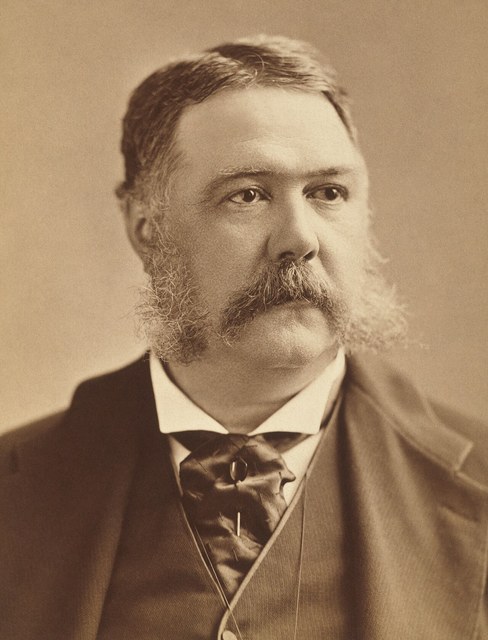
H

This man contested the Mexican-American War with his Spot Resolutions as a representative from Illinois.

H

A biography of this man ends with a Lydia Marie Child quote about how he was “willing to grow.” That book, The Fiery Trial, won a Pulitzer Prize for Eric Foner.

H

This President nearly went to war with Great Britain after the USS San Jacinto arrested John Slidell and James Mason from aboard the RMS Trent.

H

John Power created a “Guard of Honor” to protect this object, which he hid in a muddy basement for over 20 years before it was protected under concrete.

H

When this man’s re-election hopes looked grim, he asked his cabinet to sign a pledge to end an ongoing war during his lame duck term.

Watch out: Students may incorrectly date the Lincoln-Douglas debates to 1856 rather than 1858
#260 · US Presidents · Level 1

George Washington

George Washington
bdi Gilbert Stuart /span /a · Public domain

First U.S. President · 1732–1799 · Virginia, United States

George Washington commanded the Continental Army, presided over the Constitutional Convention, and served as first U.S. President from 1789 to 1797.

The kit

  • Rise — George Washington surrendered at Fort Necessity in 1754 during the French and Indian War after attacking French forces at Jumonville Glen.
  • Achievements — George Washington ended the Newburgh Conspiracy by dramatically putting on spectacles and declaring he had grown almost blind in his country's service.
  • Presidency — George Washington tasked Light-Horse Harry Lee and the Watermelon Army with peacefully suppressing the Whiskey Rebellion sparked by an unpopular excise tax.
  • Legacy — George Washington warned against entangling alliances and political parties in his Farewell Address before retiring to Mount Vernon in 1797.

Runs with

Pelican Portrait
depicted in Constantino Brumidi's Apotheosis and Gilbert Stuart's Lansdowne Portrait open card →
Whiskey Rebellion
tasked Light-Horse Harry Lee with peacefully suppressing this revolt open card →
New Jersey
exclaimed about a fine fox chase at Battle of Princeton open card →
Virginia
served as colonel of Virginia Regiment and retired to Mount Vernon open card →

The ladder · 15 clues

H

This man was depicted with Commerce, Science, Mechanics, and 13 maidens in his Apotheosis by Constantino Brumidi.

H

With support from Henry Knox's artillery, this man successfully defeated British forces during the Siege of Boston. name this American commander-in-chief of the Continental Army.

H

This man ordered the construction of Fort Necessity which failed to prevent this man’s only military surrender.

H

After issuing his farewell address warning against political parties, this leader retired to Mount Vernon. name this first President of the United States.

H

This man warned America against meddling in foreign affairs and dividing into factions in his Farewell Address.

H

In a work partially named for this figure, Minerva points to a printing press near famed inventors and Liberty holds a fasces and wears a Phrygian cap.

H

On a campaign with Edward Braddock, this general allegedly had two horses shot from under him and four bullets lodged in his coat.

M

In 1754, this man surrendered at Fort Necessity as part of the French and Indian War in which he attainted the rank colonel of the Virginia regiment.

M

This politician’s Farewell Address warned against entangling alliances and political parties. name this Commander-in-Chief of the Continental Army and first President of the United States.

M

Constantino Brumidi created an Apotheosis of this man, who was the subject of Gilbert Stuart’s Lansdowne Portrait.

M

This man declared that he had grown “almost blind in the service of my country” in a speech that ended the Newburgh Conspiracy, and he was the target of the Conway Cabal.

M

This president tasked "Light-Horse Harry" Lee and the "Watermelon Army" with peacefully putting down a revolt sparked by an unpopular excise tax. name this president who put down the Whiskey Rebellion.

E

The tradition of the two-term Presidency was established by this man after he was succeeded by John Adams. name this First President of the United States.

E

Parson Weems composed many stories about this man, including the fable of his chopping down a cherry tree. Name this literature-inspiring first president of the United States.

E

This man’s troops were trained by the Baron von Steuben as they tried to survive the winter at Valley Forge. name this general, America’s first President.

10 more clues from the record
H

An enslaved person belonging to this man was named William Lee and was assisted by Christopher Sheels after injuring his knee.

H

A sculpture of this man “Enthroned” was created by Horatio Greenough in the style of Zeus of Olympia.

H

As a member of the Virginia Regiment, the first professional American force, this man led the Forbes expedition to capture Fort Duquesne [do-cane].

H

This surveyor helped begin the French and Indian War by attacking the French at Jumonville Glen.

H

This man dramatically put on his spectacles while squelching the Newburgh Conspiracy.

H

This man authorized John Sullivan to attack the Iroquois.

H

This general was the target of the plot. In the French and Indian War, this Virginian was forced to surrender at the Battle of Fort Necessity.

H

This man stopped the Newburgh Conspiracy and led a death-free retreat after the Battle of Long Island.
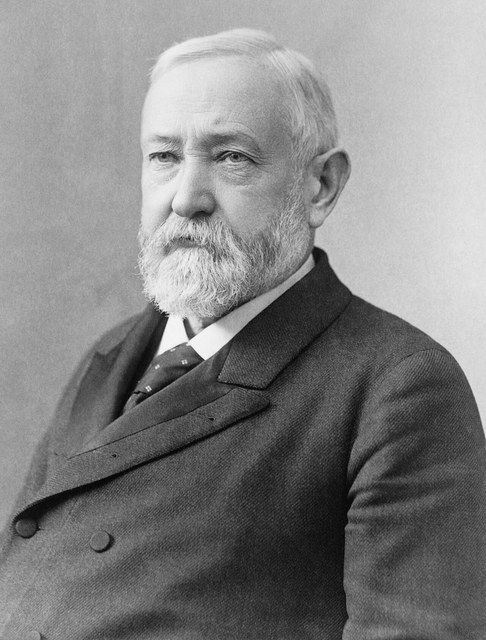
H

This man was targeted in the Conway Cabal, which was partially due to his losses at Germantown and Brandywine.

H

This man was aided by the Mingo chief Tanacharison at the Battle of Jumonville Glen and exclaimed “It’s a fine fox chase my boys!” during the Battle of Princeton.

Watch out: Conway Cabal targeted Washington, not a conspiracy he led
#261 · US Presidents · Level 1

Franklin Delano Roosevelt

Franklin Delano Roosevelt
bdi Leon Perskie /span /a · CC BY 2.0

32nd U.S. President · 1882–1945 · United States

Franklin Delano Roosevelt served four terms as president, leading America through the Great Depression and World War II.

The kit

  • Rise — Franklin Delano Roosevelt served as Assistant Secretary of the Navy under Wilson and became Governor of New York in 1928.
  • Achievements — Franklin Delano Roosevelt created the New Deal, establishing the Tennessee Valley Authority and Social Security Administration to combat the Great Depression.
  • Conflicts — Franklin Delano Roosevelt threatened to pack the Supreme Court after the Four Horsemen struck down New Deal legislation like the NIRA.
  • Legacy — Franklin Delano Roosevelt delivered fireside chats and issued Executive Order 9066 authorizing Japanese internment during World War II.

Runs with

New Deal
created this domestic program with Brain Trust advisors open card →
World War II
led United States into this conflict as president open card →
York
served as governor of this state 1929-1932 open card →
Great Depression
formulated New Deal to lead nation out of this crisis open card →

The ladder · 15 clues

H

This man forced the Supreme Court to make the “switch in time that saved nine” after threatening to pack the court if they didn’t support his legislation.

H

One of this man's speeches included what is now known as the "Economic Bill of Rights." This man served as assistant secretary of the Navy during the Wilson administration.

H

This President’s policies were opposed by the “Four Horseman” of the Supreme Court.

H

This man unsuccessfully ran as James Cox’s Vice President in a bid against eventual winner Warren G. Harding. name this former governor of New York who served as US president during World War Two.

H

The four-term New Deal architect who succeeded him

H

He was James M. Cox’s running mate in 1920, and eight years later he would succeed Al Smith as Governor of New York.

H

was the only man to defeat what future President in a national election, on the Vice Presidential tickets in 1920?

M

The New Deal was formulated by this President who led the United States out of the Great Depression.

M

Executive Order 9066, authorizing internment, was issued by this president in 1942.

M

Owen Roberts joined the liberal Three Musketeers in a move known as the “switch in time that saved nine,” a reference to this man’s court-packing scheme.

M

During the Wilson administration, this man served as Assistant Secretary of the Navy following a brief stint in the New York Senate.

M

The NIRA was passed during the administration of this president. This four-term president’s New Deal was aimed at getting the United States out of the Great Depression.

E

This man’s orations repeatedly ended with the belief that “together, we cannot fail.” In another speech, this man declared “the money lenders have fled from their high places.” This man noted “the only thing we have to fear is fear itself” during his first inaugural. name this president who gave the fireside chats as he led the United States into World War II.

E

The Tennessee Valley Authority and Social Security Administration were part of this president's main domestic program. name this four-term president who promoted the New Deal.

E

This president's first two vice presidents were John Nance Garner and Henry A. Wallace. name this president who promoted the New Deal to curb the effects of the Great Depression.

10 more clues from the record
H

The "brain trust" advised, what man during his four terms as U.S. President?

H

He offered John Nance Garner the position of vice president to help him win the Democratic nomination.

H

Answer some questions about the New Deal. :The New Deal was the brainchild of this longest-serving US president.

H

An agency established by this president is still the largest energy utility in the American South and is called the Tennessee Valley Authority.

H

This president attempted to pack the Supreme Court to obtain support for his liberal policies.

H

Figures like Harry Hopkins were members of this man’s advisory committee the “Brain Trust,” and he delivered a record 307 Executive Orders.

H

He signed a law that let meat producers create “straight killing” codes, which were struck down in the “sick chicken” case.

H

This president proposed the court packing plan due to his frustration over much of his New Deal legislation being rejected by the Court.

H

The failure of one man to defeat this politician was mocked by the phrase “As Maine goes, so goes Vermont;” that opponent of this man lost the governorship of Kansas in the same election cycle.

H

Going against his superior’s wishes, this cabinet member preserved the Navy Aviation Division after the First World War, citing it as the future of warfare.

Watch out: Ran as Vice President with James Cox in 1920, losing to Warren G. Harding
#262 · US Presidents · Level 1

Ronald Reagan

Ronald Reagan
bdi Michael Evans /span /a · Public domain

40th U.S. President · 1911–2004; presidency 1981–1989 · United States

Ronald Reagan defeated Jimmy Carter in 1980 and governed through most of the 1980s, surviving an assassination attempt and ending the Cold War.

The kit

  • Rise — Ronald Reagan gained national prominence with his "A Time for Choosing" speech supporting Barry Goldwater in 1964.
  • Achievements — Ronald Reagan won re-election in 1984 with the "morning again in America" advertisement, defeating Walter Mondale in every state except Minnesota and D.C.
  • Conflicts — Ronald Reagan broke the air traffic controllers' strike by firing over 11,000 striking members in August 1981.
  • Legacy — Ronald Reagan called for Mikhail Gorbachev to tear down the Berlin Wall and proposed the Strategic Defense Initiative nicknamed "Star Wars."

Runs with

the Presidency
served as 40th President 1981–1989 open card →
California
served as California governor, signed Mulford Act and Therapeutic Abortion Act open card →
Jimmy Carter
defeated Carter in 1980 presidential election open card →
American Railway Union
broke air traffic controllers' strike, not railway union open card →

The ladder · 15 clues

H

Who defeated Jimmy Carter to become President?

H

One speech by this man mourned heroes who had touched “the face of God.” This man gained national prominence with his “A Time for Choosing” speech supporting Barry Goldwater.

H

This man yelled, “I’m paying for this microphone” when a debate moderator tried to mute him.

H

Was inaugurated minutes before the end of the Iran hostage crisis.

H

After an attack on American soldiers at a Berlin nightclub, this man ordered the bombing of air defense networks and barracks in Libya.

H

In one speech, this man sought to render “nuclear weapons impotent and obsolete.” This politician urged the National Association of Evangelicals to “beware the temptation” to ignore “the aggressive impulses of an evil empire.” Although his staff denied that “evil empire” was a pop culture reference, weeks later, this man announced the Strategic Defense Initiative, which was nicknamed “Star Wars” by the press. name this politician who, when The Empire Strikes Back was released in 1980, was in the midst of his first successful Presidential campaign.

H

An inaugural address delivered by this U.S. president relates the story of soldier Martin Treptow, who died in World War I. Yellow ribbons were worn to celebrate the inauguration of this president.

M

This politician rose to national attention with the “A Time for Choosing” speech.

M

The U.S. President who broke the air traffic controllers’ strike in August 1981?

M

This President ordered Operation Urgent Fury to unseat Communist leader Maurice Bishop from power.

M

This man’s press secretary, James Brady, received wounds that contributed to his death 33 years later when, due to his fixation on Jodie Foster, John Hinckley Jr. fired six shots at this man. name this Republican President who was the target of an assassination attempt in 1981.

M

This man ran a successful advertisement proclaiming it was "morning again in America." name this man who defeated Walter Mondale in 1984 to win re-election as President.

E

John Hinckley Jr. carried out an assassination attempt on this president who called for Mikhail Gorbachev to tear down the Berlin Wall.

E

This man somehow obtained his opponent's briefings with the help of James Baker in an event dubbed "Debategate." This man's Attorney General, Edwin Meese, resigned over the Wedtech bribery scandal, and his Secretary of Defense, Caspar Weinberger, was pardoned for an attempt to siphon money from an Iran arms deal to Nicaraguan Contras. name this Republican president who governed for most of the 1980s.

E

The Iran-Contra affair tainted the presidency of this former actor who led the United States through much of the 1980s.

10 more clues from the record
H

This man’s Presidential re-election opponent only won D.C. and Minnesota.

H

This politician joked “it’s just too bad we can’t have an epidemic of botulism” after the Symbionese Liberation Army demanded food be given to the poor after kidnapping Patty Hearst.

H

Suzanne Massie taught this politician to “trust, but verify.” As governor, he signed the Therapeutic Abortion Act and banned public carry of firearms with the Mulford Act.

H

This politician promised “No more appeasement” during an event known as “Bloody Thursday,” in which he called in the National Guard to put down student protests at Berkeley.

H

This man’s autobiography Where’s the Rest of Me? took its title from a line this man uttered while playing a double amputee in the movie King’s Row.

H

As a presidential candidate, this man spoke at the Neshoba County Fair in favor of states’ rights.

H

Another speech was given as a part of Rendezvous with Destiny, and it helped raise over 1 million dollars for Barry Goldwater’s presidential campaign.

H

After the failed nomination of Douglas Ginsburg, he appointed Anthony Kennedy to the Supreme Court.

H

This president fired over 11,000 striking members of the Air Traffic Controllers Unions. :Name this president. In an attempt to impress Jodie Foster, John Hinckley Jr. attempted to assassinate this president in 1981.

H

His presidency saw the passage of the Simpson-Mazzoli Act that granted amnesty to some illegal immigrants.

Watch out: American Railway Union strike (different labor dispute; Reagan broke air traffic controllers' strike)
#263 · US Presidents · Level 1

Woodrow Wilson

Woodrow Wilson
Harris & Ewing, photographer · Public domain

28th U.S. President · 1913–1921 · United States

Woodrow Wilson led the United States through World War I and proposed the Fourteen Points and League of Nations at Versailles.

The kit

  • Rise — Woodrow Wilson served as Princeton University's president before becoming Governor of New Jersey and outmaneuvering Champ Clark for the presidential nomination.
  • Achievements — Woodrow Wilson signed the Federal Reserve Act, the Underwood Tariff, the Clayton Anti-Trust Act, and the Keating-Owen Act outlawing child labor.
  • Conflicts — Woodrow Wilson entered World War I despite using the slogan 'He Kept us Out of War' in his 1916 reelection campaign.
  • Legacy — Woodrow Wilson suffered a stroke in his second term, after which his wife Edith took over many of his presidential responsibilities.

Runs with

World War I
led U.S. through war, appointed Creel to propaganda committee open card →
William Jennings Bryan
served as Secretary of State, resigned after Lusitania response open card →
Treaty of Versailles
attended negotiations, formed Big Three with Lloyd George and Clemenceau open card →
League of Nations
proposed League but U.S. refused to join open card →

The ladder · 15 clues

H

In addition to advocating the Adamson Act and the Keating-Owen Act, this president signed the Glass-Owen Act, creating the Federal Reserve.

H

This man appointed George Creel to head the Committee on Public Information, a propaganda machine.

H

He ran for president in 1916 with the slogan “He Kept us Out of War.” :Name this president who resisted the 19th amendment and who entered the United States into World War I.

H

Under this president, child labor was made illegal by the Keating-Owen Act, which was struck down two years later.

H

This president initially viewed the "Preparedness Movement" with skepticism and dismissed Cabinet secretary Lindley Garrison for being too supportive.

H

Before becoming the Governor of New Jersey, this politician served as Princeton University’s president.

H

This man’s Postmaster General, Albert S. Burleson, spearheaded the segregation of federal offices.

M

The Fourteen Points speech was given by this twenty-eighth US president. After this president suffered a stroke in his second term, his wife Edith took over many of his responsibilities.

M

This president screened Birth of a Nation at the White House, making it the first American film to be screened at the White House.

M

During a political convention, this man outmaneuvered Champ Clark to earn the presidential nomination.

M

This President was called “a man of high ideals but no principles” by his own Secretary of War Newton Baker.

M

U.S. president who attended the Treaty of Versailles, forming the Big Three with David Lloyd George and Georges Clemenceau [[cleh-mehn-SOH]].

E

The United States was led through World War I by this President who proposed his Fourteen Points during negotiations for the Treaty of Versailles.

E

U.S. president who intervened by occupying Veracruz and led the US during World War I.

E

During one election, this man used the slogan “he kept us out of war.” William Jennings Bryan resigned as this man’s Secretary of State after his response to the sinking of the Lusitania.

10 more clues from the record
H

This president authorized Marines to begin the U.S. occupation of Haiti.

H

Bryan later served as Secretary of State under this president. This president won reelection in 1916 using the slogan "He kept us out of war".

H

This president stressed that “the world must be made safe for democracy” in one speech.

H

The Glass-Owen act was also passed during his presidency, which created the Federal Reserve and the passage of the Underwood Tariff.

H

The League of Nations was doomed from the beginning after the United States refused to join, even though it was the brainchild of this U.S. president.

H

A task force known as “The Inquiry,” which would become Foreign Affairs magazine, was directed by his advisor Edward House.

H

This man supported bills such as the Underwood Tariff, the Clayton Anti-Trust Act, and the Federal Reserve Act.

H

This president sent out the Polar Bear Expedition to intervene in an international conflict.

H

This president’s Secretary of the Treasury, William McAdoo, closed the New York Stock Exchange for months to keep foreign money in the U.S. despite the outbreak of war.

H

A special session of Congress was called by this president to revise the Payne-Aldrich tariff, eventually replacing it with one sponsored by Oscar Underwood.
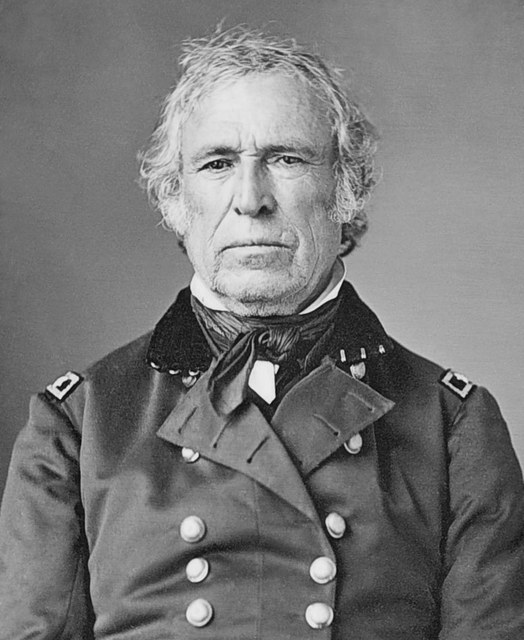
Watch out: William Jennings Bryan (served as Wilson's Secretary of State before resigning)
#264 · US Presidents · Level 1

Ulysses S. Grant
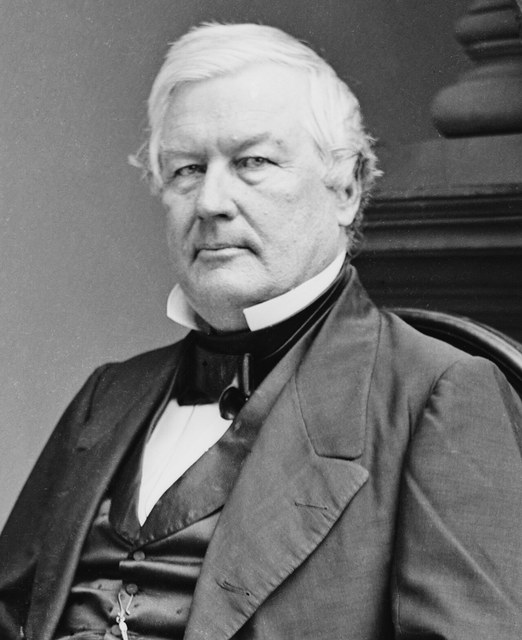
Ulysses S. Grant
Brady-Handy Photograph Collection, Library of Congress · Public domain

18th US President · 1869–1877 presidency · United States

Ulysses S. Grant was the 18th US President and Union general-in-chief who accepted Lee's surrender at Appomattox Courthouse.

The kit

  • Rise — Ulysses S. Grant earned the nickname "unconditional surrender" after capturing Fort Donelson during the Civil War.
  • Achievements — Ulysses S. Grant established Yellowstone as the first national park and used the Justice Department to prosecute Klansmen.
  • Conflicts — Ulysses S. Grant's administration was plagued by the Whiskey Ring and Crédit Mobilier scandals involving widespread bribery.
  • Legacy — Ulysses S. Grant wrote his memoirs with the assistance of Mark Twain while dying of cancer.

Runs with

American Railway Union
No connection evident in clues open card →
John
No connection evident in clues open card →
Andrew Johnson
Grant succeeded Andrew Johnson as president in 1869 open card →
Battle of Shiloh
No connection evident in clues open card →

The ladder · 15 clues

H

This politician was inspired by the Quakers to appoint Ely S. Parker as his Commissioner for Indian Affairs.

H

During this man’s Presidency, Oakes Ames was caught overcharging the Union Pacific Railroad as part of the Credit Mobilier scandal.

H

This man’s Secretary of War appointed Caleb Marsh to be a trader at Fort Sill for a bribe; that man was William Belknap.

H

This man’s treasury secretary, Benjamin Bristow, exposed widescale bribery involving taxes on alcohol.

H

This man’s personal secretary, Orville Babcock, was implicated in the Whiskey Ring scandal.

H

While dying, this President wrote his memoirs with the assistance of Mark Twain.

H

As Union general-in-chief received Confederate surrender at Appomattox?

M

This man’s brother-in-law, Abel Corbin, provided inside information to Jay Gould and Jim Fisk as they tried to corner the gold market.

M

This man’s private secretary, Orville Babcock, helped St. Louis distillers create an infamous Whiskey Ring.

M

This man gained the nickname “unconditional surrender” after capturing Fort Donelson.

M

Benjamin Bristow resigned as Secretary of the Treasury after a conflict with this man’s personal secretary.

M

Answer some questions about controversial Secretary of War William Belknap {BELL-NAPP}. …Belknap was appointed as Secretary of War by this President, who succeeded Andrew Johnson in 1869.

E

The Whiskey Ring and Crédit Mobilier scandals plagued the administration of this 18th US president and prominent Civil War general.

E

This man accepted the surrender of the Army of Northern Virginia, under the command of Robert E. Lee, at Appomattox Courthouse. name this Civil War general who led the Union Army.

E

During this man’s re-election campaign against Horace Greeley, his opponents railed against his vice president, Schulyer Colfax, and others for taking bribes from a railroad construction company. name this U.S. president whose administration was plagued by the Whiskey Ring and Credit Mobilier [moh-beel-yay] scandals, but whose reputation as a Union general earned him re-election.

10 more clues from the record
H

A cabal of politicians and distillers working within this man's administration were revealed by Benjamin Bristow to be avoiding state taxes.

H

This president’s treasury secretary, George Boutwell, was influenced by businessman Daniel Butterfield.

H

This leader ordered a military expedition led by John Rodgers to the island of Gangwha in an unsuccessful attempt to establish trade relations with Korea.

H

This president, who established Yellowstone as the first national park in the United States, used the Department of Justice, which he created, to prosecute Klansmen.

H

Name these Civil War generals, .He was made general-in-chief of the Union army in 1864 following his victory at Vicksburg. Later he would accept Lee’s surrender at Appomattox Courthouse.

H

This president’s private secretary, Orville Babcock, was implicated in a scandal involving unpaid liquor taxes.

H

The Alabama Claims were resolved by his administration's Treaty of Washington made with Britain, and in order to stabilize the economy this president signed the Resumption of Specie Act.

H

This president fired John Lothrop Motley as ambassador to Great Britain in the aftermath of the Senate’s rejection of his plan to annex Santo Domingo.

H

His secretary of the interior, Columbus Delano, and his secretary of the navy, George Robeson, both got caught taking bribes for contracts.

H

The biographer of Alexander Hamilton, Ron Chernow, published a biography about this man in 2017.

Watch out: Andrew Johnson (Grant's immediate predecessor as president, succeeded Lincoln)
#265 · US Presidents · Level 1

Bill Clinton

Bill Clinton
Bob McNeely, The White House sup id="cite_ref-1" [ /span 1 ] · Public domain

42nd U.S. President · 1993–2001 · United States

Bill Clinton was the 42nd U.S. President, impeached in 1998 for perjury related to the Monica Lewinsky affair.

The kit

  • Rise — Bill Clinton served as the 40th and 42nd governor of Arkansas before winning two presidential elections with less than 50% of the popular vote.
  • Achievements — Bill Clinton signed NAFTA into law in 1994 and enacted the Brady Bill mandating background checks on firearms purchases.
  • Conflicts — Bill Clinton was impeached in 1998 after denying sexual relations with White House intern Monica Lewinsky, with a blue dress among the perjury evidence.
  • Legacy — Bill Clinton repealed the Glass-Steagall Act and introduced the Don't Ask Don't Tell policy in the U.S. military.

Runs with

Arkansas
served as governor and faced Fort Chaffee Cuban refugee incident open card →
the Presidency
served as 42nd president from 1993 to 2001 open card →
George H. W. Bush
White House
fired travel office members in Travelgate scandal open card →

The ladder · 15 clues

H

His administration oversaw the introduction of the Don’t Ask Don’t Tell Policy in the United States military.

H

As governor, this man was criticized for overseeing the execution of mentally impaired inmate Ricky Ray Rector.

H

This man and the McDougals were investigated for suspicious real estate investments as part of the Whitewater scandal.

H

One of this man’s early Presidential acts was signing the Family and Medical Leave Act.

H

This president was the first to be born after the end of World War II.

H

This president repealed the Glass-Steagall Act, citing it was "no longer appropriate." This president signed a law mandating background checks on firearms purchases, the Brady Bill, and dealt with "Troopergate" when several officers from his home state alleged they had arranged romantic liaisons for him.

H

One of this man’s failed investments led to Jim and Susan McDougal being investigated by independent counsel Kenneth Starr.

M

Which U.S. President was investigated for his role in the Whitewater scandal and for an affair with Monica Lewinsky?

M

An affair with Monica Lewinsky nearly destroyed the career of this Democratic president who was impeached in 1998.

M

The U.S., Mexico, and Canada signed the trade agreement NAFTA during his first term in 1994. name this president who was impeached for his affair with intern Monica Lewinsky.

M

Toni Morrison referred to this man as the “first black President” in reference to his saxophone performance on the Arsenio Hall Show.

M

Tipper Gore helped this man campaign for reform with a sixteen-bus caravan called the Health Security Express. name this Democrat who served as the 40th and 42nd governor of Arkansas.

E

NAFTA was signed into law by this man who was the target of the most recent presidential impeachment. name this president who was succeeded by George W. Bush.

E

This man was attacked for his involvement in the “travelgate” and “Whitewater” scandals. name this former Arkansas governor who was inaugurated as president in 1993.

E

A blue dress was among the evidence used to charge this man of perjury after he denied having sexual relations with Monica Lewinsky. name this president who was the target of a failed impeachment campaign in the 1990s.

10 more clues from the record
H

He was mocked for giving an overly long nomination speech for Michael Dukakis at the 1988 Democratic National Convention.

H

This politician, the subject of Linda Tripp's recorded phone calls, was asked the meaning of the word "is" during a hearing.

H

This man’s Deputy White House Counsel, Vince Foster, committed suicide in the aftermath of the Travelgate scandal.

H

This five-term governor of Arkansas won two Presidential elections with less than 50% of the popular vote due to competition by third-party candidate Ross Perot.

H

While governor, this man faced an incident in which his state’s Fort Chaffee lost a group of Cuban refugees from the Mariel boatlift.

H

This man fired members of the White House travel office, possibly a reason for Vince Foster’s suicide.

H

He performed “Heartbreak Hotel” and “God Bless the Child” on the Arsenio Hall Show, and used Fleetwood Mac’s “Don’t Stop (Thinking About Tomorrow)” as his campaign song.

H

This politician launched Operation Restore Hope in an attempt to aid Somalia but the operation ended in failure when army rangers engaged in a firefight in Mogadishu.

H

The infamous “Harry and Louise” television advertisement opposed a failed proposal by this man and showed an elderly couple despairing over a complex new system.

H

Linda Tripp leaked intimate phone calls between a White House intern and this man, leading to perjury charges and an impeachment trial.

#266 · US Presidents · Level 1

Dwight D. Eisenhower

Dwight D. Eisenhower
White House · Public domain

U.S. President · 1890–1969 · United States

Dwight D. Eisenhower served as Supreme Allied Commander in World War II before becoming U.S. President during the 1950s.

The kit

  • Rise — Dwight D. Eisenhower was mentored by Fox Conner in Panama and later became Supreme Allied Commander during World War II.
  • Achievements — Dwight D. Eisenhower signed the Interstate Highway Act, ended the Korean War, and sent the 101st Airborne to integrate Little Rock Central High School.
  • Conflicts — Dwight D. Eisenhower's CIA overthrew Mohammed Mossadegh in Iran and Jacobo Arbenz in Guatemala under his "New Look" policy.
  • Legacy — Dwight D. Eisenhower warned against the military-industrial complex in his farewell address, calling defense spending "theft from those who hunger."

Runs with

World War II
served as Supreme Allied Commander open card →
D-DayJohn Foster Dulles
Secretary of State
John Foster Dulles held this position open card →

The ladder · 15 clues

H

This leader argued that "the prospect of domination of the nation's scholars by Federal employment [...] is gravely to be regarded." This man delivered a "message of leave-taking and farewell" that explained "American makers of plowshares could [...] make swords as well" and warned against the military-industrial complex. Name this 20th century President whose advice regarding the defense industry derived from his service as Allied Commander in World War II.

H

This president’s group of advisers were dubbed “eight millionaires and a plumber’.

H

This president’s “New Look” policy led to the overthrow of Guatemalan Jacobo Arbenz.

H

Later, this man ordered the 101st Airborne Division to ensure the integration of Little Rock Central High School.

H

This President’s doctrine pledged support to Middle Eastern governments, including military support for Camille Chamoun of Lebanon.

H

During this man's term, Surgeon General Leroy Burney became the first public official to identify the link between cigarettes and cancer.

H

During this man’s service in Panama, he was mentored by Fox Conner, whom he considered “the ablest man [he] ever knew.” This man prophetically stated that the Vietnam War would “absorb our troops by divisions,” and he alluded to William Jennings Bryan in his “Chance for Peace” speech.

M

This man signed the interstate highway act and ended the Korean War. name this former Allied commander and president during the 1950's.

M

During this man’s presidency, the CIA overthrew Mohammed Mossadegh in Iran and Jacobo Arbenz [yuh-KOH-boh ARR-benz] in Guatemala.

M

Supreme Allied Commander during the battle who later became President of the United States

M

Board of Education overturned the doctrine of “separate but equal.” This president sent members of 101st Airborne Division to escort the Little Rock Nine. name this president and former World War II Supreme Allied Commander.

M

That operation was the culmination of this man’s namesake doctrine, penned by John Foster Dulles. name this president of the United States, who previously served as a five-star General of the Army.

E

John Foster Dulles was Secretary of State under this man whose vice president was Richard Nixon. name this U.S. president for most of the 1950s.

E

This president compared military spending to theft in a speech given after the death of Stalin, and warned of the danger of the "military-industrial complex" in his farewell address.

E

The Interstate Highway System was devised and implemented by what US President this person who was inspired by the Autobahn in Germany.

10 more clues from the record
H

The “K1C2” strategy was employed by this Presidential candidate during his first election campaign, after which he stepped down as President of Columbia University.

H

This man warned that “every rocket fired” is a “theft from those who hunger” in his Chance for Peace speech.

H

Sherman Adams, this man’s Chief of Staff, was forced to resign after accepting a rug from a company under investigation.

H

This man announced Operation Wetback, the deportation of over 1.5 million Mexican immigrants.

H

The first bill for the Interstate Highway System was signed into law by this president, a former World War II general.

H

John Foster Dulles was himself secretary of state in this President’s cabinet, in which position he helped to end the Korean War and dealt with the Suez Crisis.

H

Both Operation PBSUCCESS, which kicked Jacobo Arbenz out of office, and Operation Ajax were overseen by this president’s administration.

H

This man’s Chief of Staff was dubbed the “Abominable No Man” and resigned after it was revealed he had taken an overcoat as a gift.

H

This man engaged in a speaking campaign known as Operation Candor, intending to garner an “informed and careful public.” At the U.N. General Assembly, this man gave a speech he “would have preferred never to use” calling for nonproliferation of nuclear weapons.

H

A Frank Gehry-designed memorial to this man controversially plans to include a tapestry of stainless steel cables, which may depict peaceful imagery of France or Kansas.

#267 · US Presidents · Level 1

Jimmy Carter

Jimmy Carter
Department of Defense. Department of the Navy. Naval Photogr · Public domain

39th U.S. President · 1977–1981 · United States

Jimmy Carter was the 39th U.S. President, a Georgia Democrat who lost reelection in 1980 largely due to the Iran Hostage Crisis.

The kit

  • Rise — Jimmy Carter defeated Gerald Ford in 1976 after publishing *Why Not the Best?* and overcoming primary opponents including "Cufflinks Carl" Sanders.
  • Achievements — Jimmy Carter mediated the Camp David Accords between Egypt's Anwar Sadat and Israel's Menachem Begin and signed treaties returning the Panama Canal to Panama.
  • Conflicts — Jimmy Carter faced stagflation and an energy crisis that prompted his "malaise" speech warning of a "crisis of confidence" in America.
  • Legacy — Jimmy Carter won the 2002 Nobel Peace Prize for post-presidential activism including Habitat for Humanity work and efforts to eradicate Guinea-worm disease.

Runs with

Ronald Reagan
Lost the 1980 election to Reagan after the Iran Hostage Crisis open card →
Georgia
Georgia peanut farmer before entering politics open card →
Iran Hostage Crisis
Failed to resolve the crisis despite Operation Eagle Claw rescue attempt open card →
the Presidency
Served one term as 39th President from 1977 to 1981 open card →

The ladder · 15 clues

H

This man hurt his reputation in one election after a Playboy interview in which he confessed to “adultery many times” in his heart.

H

During his term, this President oversaw the evacuation of Love Canal and the passing of the Superfund law.

H

This President spoke of the “moral equivalent of war,” and of “a crisis of confidence” in what would later be called the “malaise” speech.

H

An organization founded by this man led efforts to eradicate Guinea-worm disease without medicine.

H

1976 Democratic nominee who noted that he had “committed adultery many times in his heart.”

H

This politician published the autobiography Why Not the Best? shortly before declaring to run in the primary elections.

H

A 1980 Boston Globe article about this man had the accidental, but humorous, headline “Mush from the Wimp.” The Washington Post created a political cartoon parodying Jaws, creatively named PAWS, to mock this man after he was “attacked” by a swamp rabbit.

M

This man faced an economy known by a term that means “a combination of stagnation and inflation.” This president’s National Security Advisor, Zbigniew Brzezinski [ZBIG-nyef bruh-ZIN-skee], clashed over foreign policy with his Secretary of State, Cyrus Vance, who pushed for SALT II talks with the USSR.

M

After signing a treaty with Omar Torrijos, this man agreed to return the Panama Canal.

M

This president delivered the “malaise” speech during an energy crisis. name this president who lost his re-election bid in 1980, a Georgian peanut farmer.

M

U.S. President who signed the treaties returning the Panama Canal to Panama.

M

This President ordered the disastrous Operation Eagle Claw, a failed attempt to end the Iran-Hostage Crisis. name this oft-mocked President who only served one term after being elected in 1976.

E

This president negotiated with Omar Torrijos to return the canal zone to Panama and mediated peace talks between Egypt’s Anwar Sadat and Israel’s Menachem Begin at Camp David. name this president whose handling of the Iranian Hostage Crisis probably cost him the 1980 election against Ronald Reagan.

E

This president failed to resolve the Iran Hostage Crisis which may have contributed to his defeat in the 1980 election. name this Democrat who preceded Ronald Reagan.

E

After his political career, this man became an activist with Habitat for Humanity. name this former President who won the Nobel Prize in 2002.

10 more clues from the record
H

This President created the Department of Energy to counter an oil crisis that prompted him to claim America was facing a “crisis of confidence” in the “Malaise” speech.

H

This man was mocked by the press for being attacked by a “killer rabbit” while fishing in a swamp.

H

In one election, this man defeated Hal Suit after overcoming a man he labeled “Cufflinks Carl” in the primary.

H

Brzezinski and Vance both served under this Democratic president, on whose watch the Iran hostage crisis started.

H

Frank Church, Mo Udall, and Jerry Brown led a coalition named “Anybody But” this man.

H

When this man secured the Democratic nomination, Ted Kennedy conceded with the “Dream Shall Never Die” speech, ending a rare primary challenge against an incumbent President.

H

The Love Canal crisis occurred during the Presidency of what man this person who also installed solar panels on the roof of the White House.

H

Serving as this man’s Ambassador to the U.N., Andrew Young successfully negotiated an end to the Rhodesian Bush War, which paved the way for the founding of Zimbabwe.

H

This president announced, a week after 22 amateur boxers were killed in a plane crash in Poland, that the U.S. would boycott the upcoming Summer Olympics.

H

Tony Fratto accused this man of increasing his own irrelevance after he called the Bush administration the worst in US history.

Watch out: Confused with Ronald Reagan, who defeated him in 1980
#268 · US Presidents · Level 1

George W. Bush

George W. Bush
bdi Eric Draper /span /a · Public domain

43rd U.S. President · 2001–2009 · United States

George W. Bush was the 43rd U.S. President who led America during the 9/11 attacks and launched the War on Terror.

The kit

  • Rise — George W. Bush defeated Ann Richards in 1995 with help from Karl Rove and won the presidency after a Supreme Court-ended Florida recount.
  • War on Terror — George W. Bush coined the term "axis of evil" in his 2002 State of the Union address and authorized invasions of Iraq and Afghanistan.
  • Domestic policy — George W. Bush signed the No Child Left Behind Act and expanded Medicare with prescription drug coverage known as Part D.
  • Legacy — George W. Bush was reading The Pet Goat to schoolchildren when informed of the second plane hitting the Twin Towers on 9/11.

Runs with

Iraq
authorized the 2003 invasion during Operation Iraqi Freedom open card →
the Presidency
served as 43rd president, 2001–2009 open card →
Texas
defeated Ann Richards as Texas governor in 1995 open card →
2000 United States Presidential Election
won after Supreme Court ended Florida recount open card →

The ladder · 15 clues

H

This man coined the term “axis of evil” to describe targets of the War on Terror.

H

This president devised the No Child Left Behind Act.

H

Al-Zaidi threw his shoes at this President. This man served from 2001-2009, and was succeeded by Barack Obama.

H

This leader gave a controversial speech aboard the USSAbraham Lincoln, claiming "Mission Accomplished" six weeks into an eight-year-long war.

H

As president, this man signed an expansion of Medicare for prescription drugs into law, known as Part D. This man’s first attorney general was appointed after losing a Senate election to a dead opponent in Missouri.

H

This man declared, "I can hear you" when speaking to first responders while standing next to a fireman with a bull horn. name this US president from Texas who faced 9/11.

H

This man also landed on the USS Abraham Lincoln and gave the “Mission Accomplished” speech, despite the fact that the Iraq War was still being fought.

M

This man was mocked for giving a speech under a banner reading “Mission Accomplished.” During a State of the Union address, this man denounced an “axis of evil.” name this president during the 9/11 terrorist attacks.

M

This president controversially dismissed eight U.S. attorneys, which led to Attorney General Alberto Gonzales resigning.

M

This President, in an attempt to strengthen the education system, created the No Child Left Behind program.

M

Answer the following about the “Axis of Evil,” .The phrase “Axis of Evil” was coined by this US President in the 2002 State of the Union address, given just months after the 9/11 attacks.

M

His lawyers Jay Bybee and John Yoo defended the legality of “enhanced interrogation” in the “Torture Memos.” His namesake pro-interventionist “doctrine” emerged from a State of the Union in which he attacked a so-called “Axis of Evil.” what U.S. president presided over the 2003 invasion of Iraq?

E

This man won the state of Florida by 537 votes after the Supreme Court ended a recount. name this man who defeated Al Gore in the Election of 2000.

E

The 9/11 attacks took place under this 43rd President of the United States.

E

The Plame Affair occurred during the administration of this 43rd President, who authorized the invasion of Iraq and Afghanistan during the War on Terror in the first decade of the 2000s.

10 more clues from the record
H

Those documents, which featured Lieutenant Colonel Jerry Killian complaining about this man receiving preferential treatment, were later repudiated by Dan Rather.

H

This person nominated Harriet Miers to the Supreme Court, and under his administration, Scooter Libby was implicated in the Valerie Plame Affair.

H

While reading The Pet Goat to schoolchildren, this man was informed that a second plane had hit the Twin Towers.

H

A scandal involving documents supposedly about this politician led to the firing of Mary Mapes.

H

This man founded PEPFAR, a five-year strategy for global emergency AIDS relief.

H

During this man’s administration, the FBI gained the authority to search emails due to the Patriot Act.

H

Charles Krauthammer defined a doctrine named for this politician in the wake of withdrawing from the ABM treaty.

H

In a 1995 election, this politician defeated Ann Richards with the help of Karl Rove.

H

U.S. president born there who was in office during Operation Iraqi Freedom.

H

This leader gathered support for Operation Enduring Freedom in a speech denouncing a new “axis of evil.” While speaking on the USS Abraham Lincoln, this leader infamously stood in front of a “Mission Accomplished” banner.

Watch out: The "Mission Accomplished" banner speech occurred six weeks into the Iraq War, which lasted eight years total
#269 · US Presidents · Level 1

Barack Obama

Barack Obama
Official White House Photo by Pete Souza · Public domain

44th U.S. President · 2009–2017 · United States

Barack Obama was the first African-American president of the United States, serving from 2009 to 2017.

The kit

  • Rise — Barack Obama defeated John McCain in 2008 with slogans like "Yes We Can" and won re-election against Mitt Romney in 2012.
  • Achievements — Barack Obama signed the Lilly Ledbetter Fair Pay Act, the Dodd-Frank Act establishing the Consumer Financial Protection Bureau, and repealed Don't Ask, Don't Tell.
  • Achievements — Barack Obama nominated Elena Kagan to the Supreme Court after John Paul Stevens stepped down and signed the Matthew Shepard Hate Crimes Prevention Act.
  • Legacy — Barack Obama appeared in popular media including Key and Peele sketches with Luther his "anger translator" and recorded skits with Vice President Joe Biden.

Runs with

Joe Hill
no connection evident in clues open card →
Chicago
taught law at University of Chicago in Kenwood neighborhood open card →
John McCain
defeated McCain in 2008 presidential election; co-sponsored bill creating USAspending.gov open card →
Joe Biden
served as his vice president and recorded White House sketches together open card →

The ladder · 15 clues

H

Other major statutes passed under this president include the Ledbetter Fair Pay Act and a repeal of the Don’t Ask, Don’t Tell policy.

H

The attempted sale of this man’s vacated Senate seat led to the resignation of governor Rod Blagojevich [blah-GOY-ah-vich].

H

This politician’s two Portuguese Water Dogs are named Bo and Sunny. name this politician, the first African-American Editor-in-Chief of the Harvard Law Review, who defeated Mitt Romney for re-election in 2012.

H

Partially fueled by slogans like “Yes We Can,” this man defeated John McCain in the 2008 presidential election.

H

A seated depiction of this man uses a background of leaves with chrysanthemums, jasmine and blue lilies; Kehinde Wiley, the artist of that portrait of this man for the National Portrait Gallery, intended for those flowers to represent this man's heritage.

H

He’s not Hoover, but an economic plan of this president was opposed in an ad signed by almost 200 economists, including Nobel winner Edward Prescott.

H

Which U.S. president met with Kendrick Lamar at the oval office after citing "How Much a Dollar Cost" as his favorite song of the year?

M

After John Paul Stevens stepped down, this president nominated Elena Keegan to the Supreme Court.

M

name this president who recorded several skits with his vice president, Joe Biden.

M

At a White House Correspondents Dinner, this man dropped his microphone after saying “[his name] out.” At the previous year’s dinner, this man utilized a character played by Keegan-Michael Key, Luther, his “anger-translator.” This man recorded a sketch in which he expresses his existential dread over leaving the White House to his sunglasses-toting vice president.

M

This president signed the Matthew Shepard Hate Crimes Prevention Act, which expanded the 1969 federal hate-crimes law and required the FBI to track statistics on hate crimes on the basis of gender.

M

During his presidency, the Dodd-Frank Act established the Consumer Financial Protection Bureau. name this president who signed the stimulus package known as the Recovery Act shortly after taking office in 2009.

E

In a sketch from Key and Peele, Luther serves as this man’s “Anger Translator.” In an Epic Rap Battle of History, this man claims that a rival’s victory would result in a “first, second, and a third lady.” name this president, who appeared frequently in popular media during his 2012 campaign against Mitt Romney.

E

Shephard Fairey designed a poster of this man that sometimes had variations with words like "change" and "progress." This President began the process of the Cuban Thaw via talks began by Pope Francis between him and Raúl Castro. name this 44th President, a Democrat from Illinois.

E

This man’s first signed bill into law was The Lilly Ledbetter Fair Pay Act.

10 more clues from the record
H

This man defeated Alan Keyes in a 2004 Senate election despite Keyes not being a state resident.

H

This president established the Simpson-Bowles Commission in order to find ways to lower the national debt.

H

This man wrote an essay in Glamour for his 55th birthday describing the reasons why he became a feminist.

H

This man co-sponsored a bill with John McCain that led to the establishment of USAspending.gov.

H

U.S. president who first called for strategic airstrikes in Syria in 2014.

H

Kenwood, just north of the University of Chicago, where he taught law?

H

Programs known as HAMP and HARP were started by this president.

H

Illinois senator promised "Change we can believe in?"

H

One act signed by this president was named after a man who was tortured and murdered in Wyoming and another after a man who was decapitated in Texas and provided fifteen million dollars to local authorities over a three year time span to fight a certain type of criminal offense.

H

Another act signed by this president amended the Civil Rights Act of 1964 to alter the definition of a 180 day time-stamp that had caused a woman suing Goodyear company to have her case struck down in the Supreme Court.

Watch out: Confusion with other Illinois senators or with Alan Keyes, whom he defeated in 2004 Senate race
#270 · US Presidents · Level 1

Grover Cleveland

Grover Cleveland
bdi Napoleon Sarony /span /a · Public domain

22nd and 24th U.S. President · 1885–1889, 1893–1897 · United States

Grover Cleveland was the only U.S. president to serve two non-consecutive terms, defeating Benjamin Harrison in 1892 after losing to him in 1888.

The kit

  • Rise — Grover Cleveland won the 1884 election after Mugwumps defected from Republican James G. Blaine, whose supporter's "Rum, Romanism, and Rebellion" remark alienated Irish voters.
  • Achievements — Grover Cleveland set the record for most vetoes in one term at 414, including hundreds of Civil War pensions and the Texas Seed Bill.
  • Conflicts — Grover Cleveland ordered federal troops to break the Pullman Strike in 1894, then established Labor Day as a national holiday to ease tensions.
  • Legacy — Grover Cleveland signed the Dawes Act dividing Native American lands into allotments and allowing citizenship for those who moved onto tribal land.

Runs with

Pullman Strike
ordered federal troops to break the strike in 1894 open card →
Benjamin Harrison
lost 1888 election to him, defeated him in 1892 open card →
James G. Blaine
defeated him in 1884 after Mugwumps defected open card →
the Presidency
only president to serve two non-consecutive terms open card →

The ladder · 15 clues

H

Four years earlier, this man benefitted from another swing in Irish votes when Samuel Burchard denounced him as the candidate of "rum, Romanism, and rebellion." This candidate defeated James G. Blaine before splitting two elections with Benjamin Harrison. name this only Democratic president of the Gilded Age, who served two non- consecutive terms.

H

This president prolifically used his veto power, which included hundreds of Civil War veterans’ pensions and the Texas Seed Bill.

H

This man won one election after the phrase “Rum, Romanism, and Rebellion” became associated with James G. Blaine.

H

During his presidency, the Wilson-Gorman Tariff Act reduced tariffs but also established a small income tax.

H

The Mugwumps left the Republican Party to support this man, who both lost and won a presidential election against Benjamin Harrison.

H

He was hurt by the Murchison letter in one election.

H

This man was praised in an embarrassing letter sent by the British ambassador to a Republican operative using the alias “Charles Murchison.” As president, he still holds the record, at 414, of the most presidential vetoes during one term, and while in office, he married a 21-year old, the youngest ever First Lady.

M

This president was aided by the Mugwumps, who disapproved of his first Republican opponent, James Blaine.

M

A bill passed under this president that allowed for the division of Native American lands into allotments was the Dawes Act.

M

This man allowed Native Americans to become citizens if they moved onto tribal land after signing the Dawes Act.

M

In another election, this former Mayor of Buffalo was taunted due to his affair with Maria Halpin with the slogan “Ma, Ma where’s my Pa?" He emerged victorious in that election after the Mugwumps defected from the writer of the Mulligan letters, the “Continental Liar from the State of Maine” named James G. Blaine. name this only president to serve two non-consecutive terms.

M

This President ordered federal troops to stop the Pullman Strike.

E

This man was defeated by Benjamin Harrison in the 1888 election only to defeat Harrison in 1892. name this president who served two non-consecutive terms.

E

This man’s tenure was divided by the presidency of Benjamin Harrison. name this president who served two non-consecutive terms.

E

This Democrat won the 1884 presidential election despite Blaine’s supporters deriding him with the question “Ma, ma, where’s my Pa?” This man is the only president to serve non-consecutive terms.

10 more clues from the record
H

The Interstate Commerce Act was passed under this president, as was an act dividing native landholdings named for Henry Dawes.

H

This person set the record for most vetoes in one term and also vetoed the Texas Seed Bill.

H

A group of Republicans who supported this man took their name from an Algonquian word roughly meaning “war chief.” :Name this man who won the Presidency in 1884, thanks in part to the support of the aforementioned mugwumps. He is the only US President to serve two non-consecutive terms.

H

This President ordered federal troops to break the Pullman Strike, then established Labor Day as a national holiday to ease tensions. He served two non-consecutive terms as U.S. President.

H

Many Mugwumps from the opposing party supported this person’s candidacy due to his anti-corruption credentials, but a panic at the start of this man's second term dealt a major blow to him and his party.

H

This man defeated an opponent denounced as “the continental liar from the state of Maine.” That opponent’s supporters responded with the chant, “Ma, Ma, where’s my Pa?” to publicize this man’s relationship with Maria Helpin.

H

This candidate was dubiously endorsed by British ambassador Lionel Sackville- West in the Murchison Letter, which resulted in this man losing New York.

H

This man became President by defeating former Civil War general Benjamin Butler of the Greenback Party and Prohibition candidate John St. John.

H

This President sent James Blount to Hawaii after a coup overthrew Queen Liliuokalani [”lily”-oh-kah-lah-nee].

H

This man defended Irish Republicans from the US who attacked British forts and customs offices in the Fenian Raid.

Watch out: Benjamin Harrison (defeated Cleveland in 1888 but lost to him in 1892)
#1533 · US Presidents · Level 1

Calvin Coolidge

Calvin Coolidge
bdi Harris & Ewing /span /a · Public domain

30th U.S. President · 1923–1929 · United States

Calvin Coolidge became president after Warren Harding's death and was known for his taciturn nature and repeated vetoes of farm relief legislation.

The kit

  • Rise — Calvin Coolidge gained national recognition as Governor of Massachusetts by breaking the 1919 Boston Police Strike with Edwin Curtis.
  • Achievements — Calvin Coolidge signed the Indian Citizenship Act (Snyder Act) enfranchising all Native Americans and agreed to the Kellogg-Briand Pact outlawing war.
  • Conflicts — Calvin Coolidge repeatedly vetoed the McNary-Haugen farm relief bill that would have established a federal board to purchase crop surplus from farmers.
  • Legacy — Calvin Coolidge earned the nickname "Silent Cal" for his quiet nature, allegedly telling a woman "you lose" after a bet to make him say more than two words.

Runs with

Boston
broke the Boston Police Strike open card →
John
defeated John W. Davis in 1924 election open card →
Warren G. Harding
succeeded Harding after his death open card →
Massachusetts
served as Governor of Massachusetts open card →

The ladder · 15 clues

H

This man, who repeatedly vetoed the McNary-Haugen farm relief bill, agreed to the Kellogg- Briand Pact outlawing war.

H

Twice did Congress fail to pass a bill over this man’s vetoes that would have established a federal farm board that would have purchased crop surplus from farmers.

H

He was criticized for his leadership during the “Great Mississippi Flood.” This man signed the Indian Citizenship Act into law.

H

Vice President who was sworn in as president at 3 AM after Harding’s death.

H

This president declined to veto the Asian Exclusion Act due to it being an election year during which he defeated a compromise candidate who had been nominated on the 103rd ballot, John W. Davis.

H

His reputation greatly increased after working with Edwin Curtis in handling the Boston Police Strike while serving as the governor of Massachusetts.

H

This president pardoned a raccoon sent to be eaten and kept it as a pet in the White House.

M

While Governor of Massachusetts, this man gained national recognition for his response to the 1919 Boston Police Strike.

M

Democrat John W. Davis and Progressive Robert LaFollette both lost an election to this man.

M

Became President after the death of Warren Harding.

M

This man refused to visit victims of the Great Mississippi Flood due to his belief that it would be political grandstanding.

M

Dawes served as VP under this President, a Vermont native who arose to the position following Warren Harding’s death.

E

He came to prominence as the governor of Massachussetts, where he broke the Boston police strike. name this taciturn successor of Warren Harding.

E

This man allegedly told a woman “you lose” after she made a bet to get him to say more than two words, a tale reflecting his quiet nature.

E

This man succeeded the scandal-plagued Warren Harding. name this 30th President of the United States, a man labeled “Silent Cal.”

10 more clues from the record
H

In one position, he repeatedly vetoed the McNary-Haugen Farm bill, and his victory over Robert La Follette and John W. Davis led to his presidential inauguration being the first one broadcast live on radio.

H

This president’s 16-year-old son died of an infected blister while playing tennis on the White House lawn.

H

Kurt Shmoke's 2013 article on this President's little-known civil rights record discussed his advocacy of increasing funding for the medical college at Howard University.

H

This man's inauguration was administered by his father at his family home in Vermont, where he was born on Independence Day.

H

This man signed the Snyder Act, which provided for the enfranchisement of all Native Americans.

H

His "Silent" predecessor in the White House

H

In addition to opposing the McNary-Haugen Act, the Washington Naval Treaty was ratified during his term, and during this man's presidency the United States ratified an agreement outlawing warfare "as an instrument of national policy," the Kellogg-Briand Pact.

H

This President granted citizenship to all American Indians. :Name this Republican, an Amherst graduate who “did not choose to run”, having finished his own term after his predecessor’s death in office.

H

Harlan Fiske Stone served as chief justice during the internment camp cases. He had earlier been appointed Attorney General by this president, who defeated John W. Davis to become president.

H

John Derbyshire wrote a novel about Chai, a former Red Guard member who becomes fascinated with this president, who was the subject of Gamaliel Bradford's essay "The Genius of Average".

Watch out: Preceded, not succeeded by, Warren G. Harding
#1634 · US Congressional Figures · Level 3

John Tyler

John Tyler
bdi George Peter Alexander Healy /span /a · Public domain

10th U.S. President · 1841–1845 · United States

John Tyler was the first vice president to assume the presidency after his predecessor's death, establishing succession precedent despite being dubbed 'His Accidency.'

The kit

  • Rise — John Tyler ran as Whig vice president in 1840 with William Henry Harrison, winner of the Battle of Tippecanoe.
  • Conflicts — John Tyler vetoed Henry Clay's national bank bill, prompting Clay and Tyler's entire cabinet except Daniel Webster to resign.
  • Achievements — John Tyler signed the bill authorizing Texas annexation two days before leaving office in 1845.
  • Legacy — John Tyler was elected to the Confederate House of Representatives after his presidency and was draped in the Confederate flag at his funeral.

Runs with

William Henry Harrison
Tyler's predecessor; died in office after one month open card →
the Presidency
first VP to assume it via death succession open card →
Secretary of State
Daniel Webster
only cabinet member who did not resign over bank veto open card →

The ladder · 6 clues

H

This man's Secretary of State, Abel P. Upshur, and Navy Secretary, Thomas Walker Gilmer, died in an explosion aboard the USS Princeton.

H

Lawyer Caleb Cushing was deployed to Qing China by this man to negotiate the Treaty of Wangxia, giving the U.S. a "Most-favored Nation" status.

M

This Whig ran as Vice President in 1840 with the winner of the Battle of Tippecanoe. name this man who was dubbed “his Accidency” when he became President after William Henry Harrison’s death.

M

This president opposed Henry Clay’s American System despite running on the Whig ticket.

E

This man was the first vice-president to ascend to the presidency after his predecessor died in office. :Name this man who ran with William Henry Harrison in the presidential election of 1840.

E

He refused to open mail addressed to the "Acting President" after he took office following the death of his popular war hero predecessor. name this man who completed the Presidential term of William Henry Harrison.

10 more clues from the record
H

US President who signed the bill authorizing that process, two days before he left office.

H

John Botts tried to impeach this man, who was elected to the Confederate House of Representatives after his presidency.

H

This man resigned his Senate seat because the house of delegates that elected him was about to force him to vote in favor of a bill revoking his censure of the sitting president.

H

After this president vetoed Henry Clay’s bill to resurrect a national bank, Clay and this president’s whole cabinet, save Secretary of State Daniel Webster, resigned.

H

A Democratic faction named for and founded by this man which ran on the sole platform of annexation of Texas dissolved following the nomination of dark horse candidate James K. Polk.

H

By claiming to be a Whig, Edgar Allan Poe attempted to get a clerical post in this president's bureaucracy but was too drunk to show up to that 1841 meeting.

H

In a Senate election, this man narrowly defeated the one-time leader of the Tertium Quid faction, John Randolph.

H

Due to intervention from Jefferson Davis, this man was the only president draped in the Confederate flag instead of the American flag during his funeral.

H

This president’s Secretary of the Treasury nominee, Caleb Cushing, was rejected by Congress three times in one day.

H

This man resigned from the US Senate when told he had to vote to expunge Henry Clay's censure of Andrew Jackson.. :Identify this man, a Virginia aristocrat who became the first president to have a veto overridden and supported his Secretary of State Daniel Webster's negotiation of an 1842 treaty with the British.

Watch out: William Henry Harrison—Tyler's predecessor who died after one month in office
#1751 · US Presidents · Level 3

Chester Alan Arthur

Chester Alan Arthur
bdi Abraham Bogardus /span /a /bdi / bdi Adam Cuerden /a · Public domain

21st U.S. President · 1881–1885 · United States

Chester Alan Arthur became president after James Garfield's assassination and signed the Pendleton Civil Service Reform Act, ending the spoils system.

The kit

  • Rise — Chester Alan Arthur was appointed Collector of the Port of New York by Ulysses Grant before becoming Vice President.
  • Achievements — Chester Alan Arthur signed the Pendleton Civil Service Reform Act, mandating ten percent of federal jobs be filled by examination.
  • Conflicts — Chester Alan Arthur signed the Chinese Exclusion Act, banning immigration of Chinese laborers into the United States.
  • Legacy — Chester Alan Arthur as a young lawyer represented Elizabeth Jennings Graham in a case that desegregated New York's streetcar system.

Runs with

York
served as Collector of the Port of New York open card →
James
succeeded James Garfield as president open card →
Chinese Exclusion Act
signed it into law open card →
assassination
became president after Garfield's assassination open card →

The ladder · 6 clues

H

This president signed the Mongrel Tariff, and Congress overrode his veto of the Rivers and Harbors Act.

H

This man was appointed by Ulysses Grant to serve as Collector of the Port of New York prior to his highest elected office.

M

This man served as Vice President under a man who was assassinated by Charles Guiteau. name this President who succeeded James Garfield.

M

This man banned the immigration of Chinese laborers into his country by signing the Chinese Exclusion Act into law.

E

The Pendleton Civil Service Reform Act was signed by this man who became President after the assassination of James Garfield.

E

The spoils system was ended by this man who pushed for the passage of the Pendleton Civil Service Act.

10 more clues from the record
H

This politician defended Elizabeth Jennings Graham in a case that helped pave the way for the desegregation of streetcars in his home state.

H

This man was Elizabeth Jennings Graham’s lead attorney in a case that led to desegregation of streetcars in New York City.

H

Robert Todd Lincoln finished his service as Secretary of War under this president.

H

While a young lawyer, this politician represented Elizabeth Jennings Graham in a case which desegregated New York’s streetcar system.

H

What attorney this person who later became President of the United States upon the assassination of James Garfield, filed the suit that desegregated public transit in New York City.

H

This president signed another act which initially mandated that ten percent of federal jobs be filled by examination, despite his history as a Stalwart in Roscoe Conkling’s patronage system.

H

This man was inaugurated by John Brady after spending 80 days secluded in his New York apartment.

H

While in office, this man vetoed the Rivers and Harbors Act for its high cost.

H

This man’s administration signed the Shufeldt Treaty with Korea.

H

Third Avenue Railway Company, this person re-organized his state’s militia in his role as state quartermaster during the Civil War, a position which helped get him the patronage of his most famous mentor and a post from which he would be ousted in 1878.

Watch out: Charles Guiteau assassinated Garfield, not Arthur
#1789 · US Presidents · Level 3

Benjamin Harrison

Benjamin Harrison
bdi Adam Cuerden /a · Public domain

23rd U.S. President · 1889–1893 · United States

Benjamin Harrison was the 23rd U.S. President, serving between Grover Cleveland's two non-consecutive terms from 1889 to 1893.

The kit

  • Rise — Benjamin Harrison won election partly due to the Murchison Letter, which falsely claimed the British backed his opponent Grover Cleveland.
  • Achievements — Benjamin Harrison signed the Sherman Silver Purchase Act and admitted six states, including North and South Dakota simultaneously.
  • Conflicts — Benjamin Harrison threatened war with Chile after two sailors from the USS Baltimore were killed in a Valparaíso bar brawl.
  • Legacy — Benjamin Harrison supported the Federal Elections Bill drafted by Henry Cabot Lodge to enforce the Fifteenth Amendment in the South.

Runs with

Grover Cleveland
served immediately before and after Harrison's single term open card →
Silver
signed the Sherman Silver Purchase Act during his presidency open card →
James G. Blaine
made enemies by limiting Blaine's influence on cabinet appointments open card →
the Presidency
served as 23rd president 1889–1893 open card →

The ladder · 6 clues

H

During this man’s presidency, a sailor spat on a photo of Arturo Prat in Chile, sparking a bar brawl in which two sailors from the USS Baltimore were killed.

H

This president supported a bill that would have enforced the Fifteenth Amendment in the South; that Federal Elections Bill was drafted by Henry Cabot Lodge.

M

The Sherman Silver Purchase Act was signed into law under this president, who served between Grover Cleveland’s two terms.

M

This man was supported by William Wade Dudley, who controversially suggested bribing voters in “blocks of five.” The Dependent and Disability Pension act was championed by this Ohio Congressman, who later signed it into law.

E

The 51st Congress, nicknamed the Billion Dollar Congress, served alongside, what U.S. President who was succeeded and preceded in office by Grover Cleveland?

E

This Republican owed his election to the Murchison Letter, which falsely claimed the British backed his opponent. name this president who served between Grover Cleveland and Grover Cleveland.

10 more clues from the record
H

William Wade Dudley was accused of bribing electoral voters into selecting this man in the Blocks of Five Scandal.

H

When this president signed the statehood papers for North and South Dakota, he was deliberately unaware of which was signed first.

H

This president threatened war with Chile over an attack on sailors from the U.S.S. Baltimore in Valparaiso.

H

The Johnston County War ended after this President called in the cavalry.

H

This U.S. president admitted the United States's only pair of twin-born states after shuffling their papers to conceal which was the first admitted.

H

The final state this president admitted, out of six, was the first to grant women the vote as a territory.

H

This president was inaugurated in a replica of George Washington’s first inauguration in New York City.

H

Near the end of his administration, this man’s plan to annex Hawaii was blocked by the Senate.

H

This man became an international lawyer for Venezuela as it disputed its Guyanese border with Britain.

H

This president spent much of the considerable federal government surplus he inherited on providing pensions for veterans; that helped lead to the high-spending “Billion-Dollar Congress.” This Republican made enemies within his party by attempting to limit James G. Blaine’s influence on cabinet appointments.

Watch out: Grover Cleveland (served as president immediately before and after Harrison)
#1807 · US Presidents · Level 3

Zachary Taylor

Zachary Taylor
ul li Zachary_Taylor_half_plate_daguerreotype_c1843-45.png / · Public domain

12th U.S. President · 1784–1850 · United States

Zachary Taylor was a Mexican-American War hero nicknamed 'Old Rough and Ready' who served as 12th U.S. President until his 1850 death.

The kit

  • Rise — Zachary Taylor earned his nickname 'Old Rough and Ready' for victories during the Second Seminole War, building forts like Fort Gardiner and Fort Basinger.
  • Achievements — Zachary Taylor defeated Santa Anna at the Battle of Buena Vista in 1847, leading a volunteer army against a far larger Mexican force.
  • Presidency — Zachary Taylor won the 1848 presidential election as the Whig candidate, defeating Democrat Lewis Cass and rival Whig Winfield Scott.
  • Death & succession — Zachary Taylor died in office in 1850 of cholera, succeeded by Vice President Millard Fillmore, whose administration passed the Compromise of 1850.

Runs with

Mexican-American War
defeated Arista, Ampudia, and Santa Anna in campaign culminating at Buena Vista open card →
the Presidency
served as 12th president after 1848 election victory open card →
1848
elected president in this year on strength of military reputation open card →
Millard Fillmore
Vice President who succeeded him after 1850 death open card →

The ladder · 6 clues

H

Succeeded what “Old Rough and Ready” Mexican War hero this person who died in office.

H

This President’s Secretary of State negotiated an effort to build the Nicaragua Canal in the Clayton-Bulwer Treaty.

M

Major General who successfully ran for President on the strength of his victory at Buena Vista.

M

For his victories during the Second Seminole War, this man earned the nickname “Old Rough and Ready.” name this twelfth U.S. president, who was elected in 1848.

E

Earlier, this commander successively defeated Mariano Arista, Pedro de Ampudia, and Santa Anna in a campaign culminating at Buena Vista. name this Mexican War hero whose presidency ended with his 1850 death and succession by Millard Fillmore.

E

This man defeated Winfield Scott as the Whig candidate in the U.S. presidential election of 1848. name this president who died in office and was known as “Old Rough and Ready.”

10 more clues from the record
H

This man was politically damaged by tje involvement of his Secretary of War, George Galphin, in a brazenly corrupt inheritance case.

H

The State of Deseret was founded during the presidency of this man who had defeated Democrat Lewis Cass.

H

This man built Fort Gardiner and Fort Basinger prior to fighting in the Battle of Lake Okeechobee.

H

This president agreed to the Clayton-Bulwer Treaty with Great Britain, promising that he would not attempt to control Nicaragua’s canal.

H

This president earlier defeated Santa Anna at the Battle of Buena Vista, three years before he would die in office of cholera.

H

Prior to his presidency, this man led a volunteer army against a far larger force led by Santa Anna at the Battle of Buena Vista.

H

As president, this man ruled against Hansborough Bell's attempt to claim what is now New Mexico for Texas.

H

George Crawford was appointed Secretary of War by this president, but later resigned due to the Galphin Affair.

H

President, known as “Old Rough and Ready,” whose death led to the passage of the Compromise of 1850.

H

This man established Fort Jesup, a fortification west of Natchitoches, Louisiana.

Watch out: Winfield Scott was Taylor's rival for the Whig nomination and another Mexican-American War general
#1893 · US Congressional Figures · Level 3

Millard Fillmore

Millard Fillmore
Mathew Benjamin Brady · Public domain

13th U.S. President · 1800–1874; presidency 1850–1853 · United States

Millard Fillmore was the last Whig president, who assumed office upon Zachary Taylor's death in 1850 and lost Northern support by signing the Fugitive Slave Act.

The kit

  • Rise — Millard Fillmore served as a New York delegate opposing Andrew Jackson in 1828 and was elected to Congress as an Anti-Mason in 1837.
  • Achievements — Millard Fillmore became New York's first popularly-elected Comptroller after narrowly losing a gubernatorial race to Silas Wright.
  • Conflicts — Millard Fillmore was opposed for re-nomination by his own Secretary of State, Daniel Webster, and lost the 1852 Whig nomination to Winfield Scott.
  • Legacy — Millard Fillmore ran as the Know Nothing candidate in 1856, finishing third but winning Maryland, then served as University of Buffalo chancellor.

Runs with

the Presidency
assumed office in 1850 upon Taylor's death open card →
Know Nothing Party
ran as their presidential candidate in 1856 open card →
Zachary Taylor
succeeded him as president after his 1850 death open card →
Compromise of 1850
signed the Fugitive Slave Act as part of it open card →

The ladder · 6 clues

H

This man served as a New York delegate in opposition to Andrew Jackson’s candidacy in 1828 and was an Anti-Mason when elected to Congress in 1837.

H

Early in his career, he narrowly lost a gubernatorial election to Silas Wright, before becoming the first popularly- elected Comptroller in the history of New York.

M

Later in this man’s career, Dhe became a “Know Nothing” and finished third in the U.S. presidential election of 1856.

M

In 1852, the Whig party decided not to re-nominate this sitting president who assumed the office upon the death of Zachary Taylor.

E

He lost northern support by signing the Fugitive Slave Act as part of the Compromise of 1850. name this last Whig president, who succeeded Zachary Taylor.

E

This former Whig president won Maryland as the Know Nothing candidate in the Election of 1856. During his presidency, this man approved the Fugitive Slave Act.

10 more clues from the record
H

name these people who ran for president of the United State with third parties in the nineteenth century.He ran with the Know-Nothings in 1856 but is better known for becoming the 13th president after the death of Zachary Taylor.

H

This president’s second secretary of State was Edward Everett, who replaced Daniel Webster.

H

This president’s opponents organized the Young America movement to support the independence of eastern European countries after he hosted Lajos Kossuth [LIE-osh KO-shooth] in Washington.

H

While living in East Aurora, this president appointed Nathan Hall as his clerk, and he would go on to serve as this man’s Postmaster General.

H

This man’s wife organized private lectures with William Thackeray and Charles Dickens after creating the White House library.

H

While trying to run for a 2nd term, this man lost the Whig nomination to Winfield Scott.

H

After his retirement from politics, this person served as chancellor of the University of Buffalo, which he had helped found.

H

This president was opposed for re-nomination by his own Secretary of State, Daniel Webster.

H

This final Whig President gained power after the 1850 death of his predecessor.

H

The filibuster Narciso Lopez was executed in Havana during this man’s presidency.

Watch out: Confused with Zachary Taylor, whose death elevated him to the presidency
#1978 · US Presidents · Level 3

Franklin Pierce

Franklin Pierce
bdi Mathew Benjamin Brady /span /a /bdi / bdi Adam Cuerden / · Public domain

14th U.S. President · 1853–1857 · United States

Franklin Pierce was the 14th U.S. President and the only president from New Hampshire, whose administration signed the Kansas-Nebraska Act.

The kit

  • Rise — Franklin Pierce was lampooned as the "fainting general" after passing out at the Battle of Contreras during the Mexican-American War.
  • Achievements — Franklin Pierce's administration signed the Gadsden Purchase treaty and established the U.S. Camel Corps under Secretary of War Jefferson Davis.
  • Conflicts — Franklin Pierce lost popularity by supporting the Kansas-Nebraska Act and faced backlash after his diplomats authored the Ostend Manifesto.
  • Legacy — Franklin Pierce was called an "arch-traitor" by Stowe for his dislike of abolition and was the first "doughface" president.

Runs with

Ostend Manifesto
Pierce's diplomats authored it, causing immense backlash for his administration open card →
Jefferson DavisWinfield Scott
Kansas-Nebraska Act
Pierce lost popularity by supporting this act during his presidency open card →

The ladder · 6 clues

H

Guy Hopkins attempted to implicate this man as a member of the Knights of the Golden Circle, and James Dobbin's speech for this man aided his nomination.

H

This man was lampooned as the "fainting general" for supposedly passing out at the Battle of Contreras.

M

This man was tied to his saddle at the Battle of Churubusco to prevent him from falling off his horse but he passed out regardless.

M

Before taking his highest office, this person and his wife survived a train wreck that killed their son, Benjamin, who was named for this man's father, a former New England governor.

E

Losing popularity by supporting the Kansas-Nebraska Act, who was this fourteenth president, the only U.S. president from New Hampshire?

E

The Kansas-Nebraska Act and Gadsden Purchase treaty were signed by this 14th president of the United States, the only one from New Hampshire.

10 more clues from the record
H

His Secretary of State selection appeased the Albany Regency; he chose William Marcy, who helped negotiate the Gadsden Purchase with the approval of this president.

H

The US Camel Corps was established by this man's Secretary of War, while his short-lived vice president remains the only one ever sworn in on foreign soil.

H

Shortly after his election, this man's son, Benjamin, was killed in a train crash, causing the First Lady to avoid public events for two years.

H

This man's vice president was forced to take the oath of office in Havana due to illness and died only a month later.

H

This man purchased part of Mexico with the Gadsden Purchase and his diplomats authored the Ostend Manifesto. name this 14th US president.

H

Guy S. Hopkins wrote a hoax letter suggesting this person was a part of a plan to overthrow the government.

H

Nathaniel Hawthorne wrote this person’s campaign biography and died in his company.

H

This man was forced to defend his patriotism after an angry mob asked why he did not raise a flag after the death of Lincoln, and he was also embarrassed when his 4th of July speech denouncing the Civil War as "fruitless" was interrupted by news of victory at Gettysburg.

H

Stowe referred to this president as an “arch-traitor” for his dislike of abolition. Jefferson Davis created the United States Camel Corps while serving as Secretary of War for this first of the “doughface” presidents.

H

Two weeks before this president’s inauguration, his oldest surviving son died in a train accident, and his administration faced immense backlash after the release of the Ostend Manifesto.

Watch out: Guy Hopkins wrote a hoax letter falsely implicating Pierce in the Knights of the Golden Circle conspiracy
#1979 · US Presidents · Level 1

Joe Biden

Joe Biden
bdi Adam Schultz /span /a · Public domain

46th U.S. President · 1942–present; President 2021– · Delaware, Washington D.C.

Joe Biden served as Delaware senator for seven terms and Barack Obama's Vice President before becoming 46th U.S. President in 2021.

The kit

  • Senate career — Joe Biden chaired the Senate Judiciary Committee, where he prevented witnesses from testifying on Anita Hill's behalf during Clarence Thomas's confirmation hearings.
  • Legislative work — Joe Biden drafted the 1994 Crime Bill with harsh mandatory minimums and a ten-year assault rifle ban, plus the Violence Against Women Act.
  • Presidential campaigns — Joe Biden ended his 1988 presidential run after plagiarizing a speech by Labour politician Neil Kinnock.
  • Presidency — Joe Biden signed the American Rescue Plan providing $1,400 direct payments and was inaugurated two weeks after the Capitol was stormed.

Runs with

Delaware
represented as senator for seven terms open card →
Barack Obama
served as Vice President under him 2009-2017 open card →
Senate
served seven terms as Delaware senator open card →
Robert Bork
opposed his Supreme Court nomination as Judiciary chair open card →

The ladder · 15 clues

H

As Chair of the Senate Judiciary Committee, this man prevented witnesses from testifying on Anita Hill’s behalf during Clarence Thomas’s Supreme Court nomination hearings.

H

While serving as a Senator, this man drafted the Violence Against Women Act and oversaw Robert Bork’s Supreme Court confirmation hearing as chair of the Senate Judiciary Committee.

H

In 2006, this politician controversially claimed you needed a “slight Indian accent” to go to a 7/11 in his state.

H

During the 2012 election campaign, this politician said that the opposing party’s policies on regulation would “put y’all back in chains.” In 2008, Christine O’Donnell ran against this man for his Senate seat, which he resigned nine days into his seventh term.

H

This man’s son served as state Attorney General and planned to run for governor until he died of brain cancer in May 2015.

H

France withdrew its diplomat Philippe Étienne [[EH-tee-ehn]] from the U.S. following this man's administration's sale of nuclear-powered submarines to Australia.

H

After after sharing confidential details from a conversation with President Erdogan [AIR-doh-ahn] in October 2014, he was forced to officially apologize to Turkey.

M

This man was accused of plagiarizing a speech by Labour politician Neil Kinnock during his 1988 Presidential run.

M

The Presidential Medal of Freedom was given in January 2017 to this Delaware politician who declined to run for President in 2016 after serving as Barack Obama’s Vice President.

M

This man was the head of the Senate Judiciary committee, and opposed Bork’s nomination on the grounds that Bork sought to overly expand executive power. He is now serving as the vice-president.

M

He once asked a colleague to get him “some of those real throwing stars” while on a diplomatic trip to Japan; in December 2016, this man forged that colleague’s signature on an executive order naming December “Dokken History Month.” name this politician, nicknamed “Diamond Joe” according to the last eight years of Onion articles about the hijinks of America’s “President of Vice.”

M

This man proposed the American Rescue Plan, which included $1,400 direct payments to Americans, and nominated cabinet officials including Marcia Fudge, Deb Haaland [[HAH-lund]], and Lloyd Austin. name this U.S. senator from Delaware and 46th U.S. president.

E

former Delaware senator who stole speech material from Neil Kinnock before becoming Obama’s VP.

E

In another campaign, this man called a “lecture on embassy security” a “bunch of malarkey” in a debate with 2012 Paul Ryan. name this current Vice President of the United States.

E

This figure, who led the Senate Judiciary Committee during the controversial confirmation of Clarence Thomas, was forced to end his presidential run in 1988 after plagiarizing a speech by Neil Kinnock. name this seven-term Delaware senator, the 46th and current president of the United States.

10 more clues from the record
H

A sticker of a politician saying "I Did That" next to the gas pump display went viral following grassroots Republican support.

H

Americans received fourteen hundred dollar checks following this president's signing of the American Rescue Plan Act.

H

In June 2016, this figure lined up a “sweet summer gig” installing above-ground swimming pools.

H

This man introduced harsh mandatory minimums in the 1994 Crime Bill, which he wrote during his fourth term as Senator.

H

This person forced TC Energy to lay off one thousand employees after cancelling a major project.

H

This figure penned the 1994 Crime Bill, which included a ten-year ban on assault rifles.

H

A Georgia representative filed six articles of impeachment against this person for abuse of power.

H

Was inaugurated two weeks after the U.S. Capitol was stormed by supporters of his predecessor

H

During one campaign, this politician said of Rudy Giuliani that “"There's only three things he mentions in a sentence: a noun, and a verb and 9/11.” In 1987, this politician made a namesake report that scrutinized Supreme Court nominee Robert Bork.

H

The 1994 Violence Against Women Act was introduced by this then-Senator, who remarked in 2016 that if he were still in high school, he would have loved to take Donald Trump "behind the gym."

Watch out: Neil Kinnock was the Labour politician whose speech Biden plagiarized, not Biden himself
#1980 · US Presidents · Level 1

Donald Trump

Donald Trump
bdi Daniel Torok /span /a · Public domain

45th U.S. President · b. 1946; presidency 2017–2021 · United States

Donald Trump was a real estate developer, reality TV host, and 45th U.S. President who won the 2016 election.

The kit

  • Rise — Donald Trump announced his 2016 presidential candidacy riding down an escalator, making controversial statements about Mexican immigrants bringing crime and drugs.
  • Achievements — Donald Trump defeated Hillary Clinton in the 2016 presidential election despite polls favoring his opponent.
  • Conflicts — Donald Trump was twice impeached during his presidency and lost the 2020 election to Joe Biden.
  • Legacy — Donald Trump became the latest president not to attend his successor's inauguration when he skipped Biden's ceremony.

Runs with

the Presidency
held office 2017–2021 as 45th president open card →
Hillary Clinton
defeated her in 2016 election open card →
Joe Hill
America
promised to Make America Great Again open card →

The ladder · 15 clues

H

Was the latest president not to attend his successor’s inauguration

H

Jesse Ventura convinced this man to run for the Reform Party presidential candidacy in 2000, and he won two primaries before dropping out.This author of The America We Deserve claimed that he could “beat that Democratic-Republican apparatus” andwas uninvited from a RedState meeting after remarking that Megyn Kelly had “blood coming out of her wherever”.

H

Ronald Reagan may be the most famous president to have been on film, but he’s not the only one to have been involved in the filmmaking process. :This president has appeared in films like Home Alone 2: Lost in New York. He surprisingly defeated Hillary Clinton in the 2016 presidential election and was twice impeached.

H

This man announced his presidential candidacy while riding down an escalator. :Name this candidate for the Republican presidential nomination, whose contract with NBC to star in The Apprentice was terminated as a result of his comments about Mexican immigrants bringing crime and drugs.

H

Name some people who, as of the writing of this bonus in early October, were Republican candidates for President. :This bombastic real estate magnate has been a leading candidate in the polls for several months.

H

This man became a national name in 1973 when the Justice Department accused his company of violating the Fair Housing Act at rental properties owned by his namesake company.

H

answer the following questions about a candidate in the 2016 Republican primaries.This candidate is famous for being the author of The Art of the Deal and star of NBC’s The Apprentice.

M

This man, who won a raspberry award for Ghosts Can’t Do It, threatened to sue one rapper for royalties on a song whose lyrics include “take over the world” and “look at all this money.” An Anthony BaxterdocumentarytitledforthismandocumentedhisattemptstobullyScotsintosellingtheirproperties for an “International” resort.

M

Due to China's growth of missile forces and the suggestion of Russian non- compliance, this U.S. president suspended the 1987 Intermediate-Range Nuclear Forces Treaty.

M

Clarence Thomas, a current Supreme Court justice, has been faced with calls to resign after his wife Ginni helped plot to overturn the 2020 presidential election, which this man lost to Joe Biden.

M

This former owner of the New Jersey Generals wrote in the New York Times that he was leaving the Reform Party because of the involvement of Lenora Fulani, Pat Buchanan and David Duke in 2000.

M

This man claimed he had forced Kim and Terrence Pegula to pay over the odds for the Buffalo Bills and, in April 2014, this man purchased Turnberry golf resort.

E

This man accused immigrants of causing America’s problems in a June, 2016 speech announcing his candidacy for President, which caused NBC to drop coverage of his Miss Universe pageant. name this controversial businessman and Presidential candidate who wrote “The Art of the Deal” and likes to refer to himself as “A Winner!”

E

This man failed to stop the airing of a BBC2 documentary into his attempt to develop an estate north of Aberdeen into a golf resort, while in 2011 this man stated he had doubts over Barack Obama’s US citizenship.

E

This author of The Art of the Deal promises to “Make America Great Again”, as well as build a wall and make Mexico pay for it. name this Republican presidential candidate, the onetime host of The Apprentice.

7 more clues from the record
H

Alex Salmond called this person “three times a loser” after this person attempted to stop some wind farms from being built in Scotland.

M

He had walk-on movie roles in Home Alone 2 and The Little Rascals and once owned the New Jersey Generals of the USFL.

M

An advertisement funded by this man that compared wind farms to terrorism was banned by the Advertising Standards Authority.

E

Our Principles PAC ran attack ads against this man featuring some of his statements about women. name this winner of the 2016 Presidential election.

E

During the 2000 primaries, this politician briefly ran against Buchanan, likening his policies to that of Attila the Hun. This politician was later elected president in 2016.

E

This owner of Wollman Ice Rink and Mar-a-Lago switched parties again in 2009.

E

Possessing the worst hair known to humankind, this is this entrepreneur and star of NBC’s The Apprentice.

Watch out: Not Ronald Reagan, the other president famous for film appearances