The 1648 Codex

Mexico, Central & South America

110 terms · 844 ladder clues · every clue is a real line from national play.

Swipe or use the arrows. Tap a clue to rate it; your taps shape what comes back.

#30 · Historic Cities · Level 1

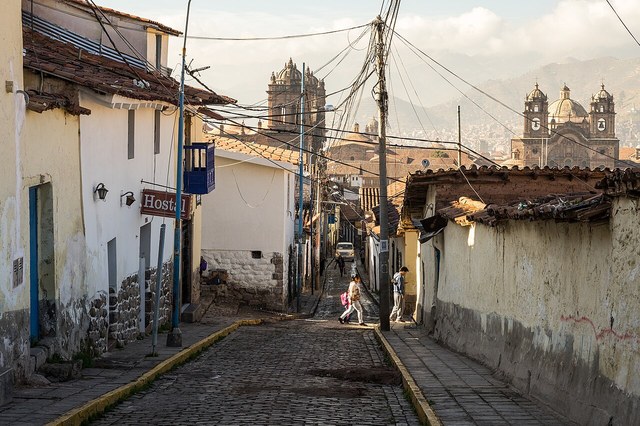
Cusco

Cusco
tomscoffin · CC BY 2.0

Incan capital city · founded 12th century; fell 1533 · Andes highlands, Peru

Cusco was the capital of the Incan Empire, shaped like a sacred puma and home to the gold-covered Coricancha temple.

The kit

  • Layout — Cusco was shaped like a sacred puma, with the Sacsayhuamán fortress forming its head and divided into hanan and hurin sections.
  • Coricancha — Cusco's Coricancha temple featured walls covered in gold sheets and was dedicated to worshiping the sun god Inti.
  • Spanish conquest — Cusco's gold was stripped to pay ransom for its captured ruler, and the Church of Santo Domingo was built atop Coricancha's ruins.
  • Sieges — Cusco withstood a ten-month siege by Manco Yapanqui despite his force of over two hundred thousand soldiers after the Spanish conquest.

Runs with

Incan Empire
capital and political center open card →
Nanda Empire
Pachacuti
legendary founder who built the empire from Cusco open card →
Peru
located in Andes highlands open card →

The ladder · 15 clues

H

This city, which was divided into sections called hanan and hurin, was the site of a temple whose walls once featured sheets of gold.

H

This Inca city was shaped like a puma and served as the capital of the empire. Legend holds that it was built by Pachacuti.

H

This city, built in the shape of the sacred puma, had its Coricancha temple stripped of gold in order to pay a ransom for its ruler.

H

Conflict over the jurisdiction over this city resulted in the Battle of Las Salinas, after which Diego de Almagro was executed.

H

This city’s fortress of Sacsayhuamán [“sawk-say-wah-MAHN”] was constructed by the Killke [“KEY-ke”] culture.

H

Manco Yapanqui failed to capture this city after a ten-month siege, despite possessing over two hundred thousand soldiers.

H

One ruler was locked in this city’s “Ransom Room”after being ambushed at nearby Cajamarca by conquistadors.

M

This city’s Church of Santo Domingo was built atop the ruins of the Temple of the Sun after its destruction.

M

This city is defended by the fortress of Sacsaywaman , which forms the “head” of its puma-shaped layout.

M

A Late Intermediate kingdom based in this city built a mortarless ashlar house where women learned to weave, the main acllahuasi .

M

This city’s Saksaywaman (SAK-say-WHY-man) walls were built by the Killke (KILL-ik) culture during its early history.

M

Pachacuti built the empire from this city.

E

This capital city of the Incan Empire is home to the Coricancha temple.

E

Atahualpa was strangled to death by Francisco Pizarro in this former capital city of the Incan Empire.

E

A temple called the Coricancha was one of the most important landmarks in this city and was used to worship the sun god Inti.

10 more clues from the record
H

Incan capital city, the site of the Sacsayhuaman [sak-say-wha-man] fortress.

H

In order to pay his mita public service tax that finances roads and temples, Andy might have to travel to this Incan capital. He might just travel there anyway, because he heard they are in need of high school tossups on PEP carboxylase.

H

Watered by the Hua·ta·nay, Huan·ca·ro, and Chun·chull·ma·yo rivers, this city experienced an earthquake in 1650, allowing for its namesake “Baroque” period. :Name this city whose Quechua name means “center.”

H

This city’s name means “navel” due to its central temple, whence 41 paths called ceques led out to sacred huacas in the “Four Parts Together,” or suyus.

H

The “stone of the twelve angles” was an archaeological relic found in this city and exemplifies its builders’ common technique of cutting stones geometrically to do away with the need for mortar.

H

The so-called “navel of the world”, it was said to be founded when Mama Ocllo and her brother-husband Manco arrived at the hill Huanacaure and saw a scepter submerge.

H

One citadel on the northern outskirts of this city was the site of a siege by the puppet ruler Manco II who retreated to the jungle where his son succeeded him.

H

A man who claimed to be a direct descendant of that son two centuries later staged an indigenous uprising before being executed in this city.

H

Juan Veramendi erected a Basilica Cathedral here, and Vicente Valverde served as the first bishop of this city, where Diego Almagro was executed.

H

The Battle of Las Salinas was fought just outside this city, which later became the center of a rebellion led by Mateo Pumacagua.
Watch out: Atahualpa was ambushed at Cajamarca, not Cusco, though he was later strangled in Cusco itself.
#42 · Modern Countries · Level 1

Brazil

Brazil
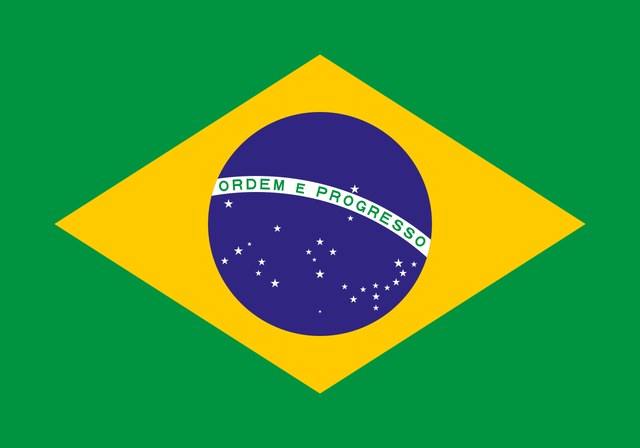
Raimundo Teixeira Mendes · Public domain

South American country · independence 1822 · eastern South America

Brazil is the largest South American country, independent from Portugal since 1822, last Western nation to abolish slavery in 1888.

The kit

  • Independence — Brazil's independence was declared at the Cry of Ipiranga by its first emperor Pedro I in 1822.
  • Territorial expansion — Brazil acquired the rubber-tree-rich State of Acre from its neighbor through the Treaty of Petropolis.
  • Abolition — Brazil became the last Western Hemisphere nation to abolish slavery when Princess Isabel passed the Golden Law in 1888.
  • Modern development — Brazil tried to kickstart its economy under Juscelino Kubitschek's 'Fifty Years of Progress in Five' program.

Runs with

Portugal
gained independence from Portugal in 1822 open card →
Rio de Janeiro
capital until 1960, replaced by Brasilia open card →
Slavery
last to abolish in Western Hemisphere, 1888 open card →
Getúlio Vargas
led through WWII under Estado Novo regime open card →

The ladder · 15 clues

H

In the Treaty of Petropolis, this country acquired territory from its neighbor that would become the rubber-tree-rich State of Acre.

H

This country tried to kickstart its economy under the “Fifty Years of Progress in Five” program of Juscelino Kubitschek.

H

In 1888, this country’s Princess Imperial emancipated all of its slaves with the Golden Law.

H

The Duke of Caxias led this nation’s forces to victory over Paraguay in the War of the Triple Alliance.

H

Along with the US Fourth Corps, soldiers from this country were victorious at the Battle of Monte Castello, and a cemetery dedicated to soldiers from this country is in the Tuscan city of Pistoia.

H

The Rua Tuonelero incident led to the suicide of one president of this country.

H

This empire fought the Cisplatine War over the status of the Banda Oriental [or-ee-en-TALL], and it decisively defeated Francisco Solano Lopez in the War of the Triple Alliance.

M

Slavery in this country was abolished in the 1888 Golden Law. name this South American country ruled by the Emperor Pedro II.

M

A European-inspired Estado Novo period in this country marked the end of “coffee with milk” politics.

M

The first leader of this country gave the Cry of the Ipiranga, starting its war of independence.

M

Until 1960, Rio de Janeiro was the capital of this South American country.

M

This country’s independence was announced at the Cry of Ipiranga by its first emperor, Pedro I. name this South American country once led from Rio de Janeiro.

E

Uruguay and Argentina joined the War of the Triple Alliance against Paraguay after it declared war on this largest country in South America.

E

Led through World War Two under Getulio Vargas's Estado Novo regime this is this Allied South American power.

E

This country became the last in the Western Hemisphere to abolish slavery when its Princess Isabel passed the Golden Law.

10 more clues from the record
H

A ruler of this country declared independence through the Fico, or “I am Staying” speech.

H

After the Civil War, thousands of pro-slavery southerners founded the city of Americana in this country, where they became known as confederados.

H

The bandeirantes crossed the Tordesillas line and led settlement expeditions on behalf of this modern-day country. They added the Mato Grosso region, among others, to their homeland.

H

The Inconfidência Mineira resulted in a man named Tiradentes’s quartering in the Minas Gerais region in this nation.

H

A “conservative regression” dominated late 1830s politics in this country, where the Balaiada took place.

H

The Cry of Ipiranga declared this country’s independence from Portugal, and in 1960 it moved its capital from Rio de Janeiro. name this country whose modern capital is Brasilia.

H

The first ruler of this country fought the Confederation of the Equator and supposedly declared its independence with the Cry of Ipiranga.

H

A composer from this country who wrote a series of Chˆoros [SHO-roos] and took inspiration from Bach for his Bachianas was commissioned to write his Third Symphony, subtitled “War,” as a celebration of the Treaty of Versailles.

H

A religion that developed in this country exclusively uses oral tradition and syncretizes the Orishas of Yoruban belief with the vodun of West Africa. That faith of this country, Candomblé, is practiced by the povo de santo and incorporates aspects of Roman Catholicism, this country's majority religion.

H

Portuguese-speaking country, ruled by Pedro I, that claimed the Cisplatine Province, now Uruguay.

Watch out: Rio de Janeiro was Brazil's capital until 1960, not currently
#54 · Modern Countries · Level 1

Argentina

Argentina
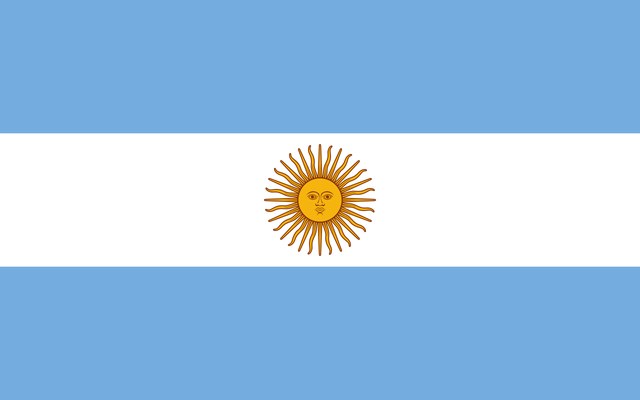
Manuel Belgrano · Public domain

South American nation · independence 1816 · southern South America

Argentina is a South American nation ruled from Buenos Aires that experienced military dictatorship and state terrorism in the late twentieth century.

The kit

  • Independence — Argentina declared independence at the Congress of Tucuman following the May Revolution of 1810 after British invasions of its capital.
  • Expansion — Argentina carried out the Conquest of the Desert, which killed or displaced much of the indigenous population in its south.
  • Perón era — Argentina was led by Juan Perón, supported by the descamisados or 'shirtless ones,' whose wife Evita was extremely popular.
  • Dirty War — Argentina experienced the Dirty War in the 1970s-80s, when Jorge Videla's junta purged leftists and attacked students in the Night of the Pencils.

Runs with

Dirty War
period of state terrorism in the 1970s-80s under military junta open card →
Falklands War
fought war with Britain over these islands after Dirty War open card →
Juan Domingo Perón
president supported by descamisados, married to Eva Perón open card →
Falkland Islands
fought Britain over these islands in 1982 open card →

The ladder · 15 clues

H

In this country, Alberto Nisman was killed for investigating the 1994 bombing of a Jewish Community Center.

H

In this country, students were attacked in the Night of the Pencils during Jorge Videla’s presidency.

H

One leader of this country carried out the Conquest of the Desert, which killed or displaced much of the indigenous population in its south.

H

A dictator of this country was ousted after his defeat at the Battle of Caseros to Justo Urquizo, who in turn was defeated by Bartolomeo Mitre.

H

Left-wing Montoneros were killed at the Ezeiza Airport during a rally for a returning leader of this country who had been supported by the descamisados, or “shirtless ones.” In the 1970s and 80s, this country experienced a period of state terrorism called the Dirty War.

H

A military junta in this nation fought against the Montoneros and committed the Trelew [truh- LEW] massacre as part of its Process of National Reorganization, actions protested against by the mothers of the Plaza del Mayo.

H

One ruler of this country had a secret police force whose name meant “The Ear of Corn,” the Mazorkas.

M

Jorge Videla ordered a purge of leftist opponents in this country during the Dirty War.

M

The Dirty War took place in this country, formerly led by Juan Perón. This country fought a war with Britain over the Falkland Islands.

M

The 1973 Ezeiza Massacre was perpetrated against the Montoneros in this country.

M

Juan Perón was president of this South American country, where many Nazi war criminals were allowed to resettle.

M

This nation, along with Brazil and Uruguay, defeated Paraguay in the War of the Triple Alliance.

E

One leader attempted to run for office with his extremely popular wife Evita on the ticket. name this country where Juan Peron ruled from Buenos Aires.

E

Rival country to the south that opposed him from Buenos Aires across the Rio de la Plata.

E

After the death of ​ ​ that man’s wife, Eva, this country entered a period of state terrorism known as the “Dirty War” and fought the Falklands War with Great Britain. name this country whose president Juan Perón ruled from Buenos Aires.

10 more clues from the record
H

This nation’s May Revolution of 1810 came about after the 1806 and 1807 invasions of its capital, and its independence was declared at the Congress of Tucuman.

H

A French-born pirate who fought for this country captured Monterey, California for six days and was named Hippolyte Bouchard [[ee-poh-LEET boo- SHARD]].

H

Lewis Jones led a fleet of Welsh settlers to the southern region of this nation, founding a colony along the Chubut River that grew into the city of Puerto Madryn.

H

In this country’s win over England at the 1986 World Cup, the “Hand of God” scored one goal for Diego Maradona. name this country whose soccer team, led by Lionel Messi, placed second in the 2014 World Cup.

H

The Generation of ‘80 dominated this country’s government until the Saenz Pena Law guaranteed universal male suffrage.

H

One leader of this country, Justo Jose de Urquiza [[uhr-KEE-zah]] fought Manuel Oribe [[oh-REE-beh]] and beat Juan Manuel de Rosas at Caseros [[kah-SEH-rohs]].

H

This country experienced the Infamous Decade after the overthrow of Hipolito Yrigoyen.

H

After Hipólito Yrigoyen was ousted, this country was ruled by a political coalition known as the Concordancia during “the Infamous Decade”.

H

Members of this country’s military were absolved from prosecution by the Law of Due Obedience.

H

Mario Kempes led this country to a 1978 World Cup win as the host nation.

#58 · Modern Countries · Level 1

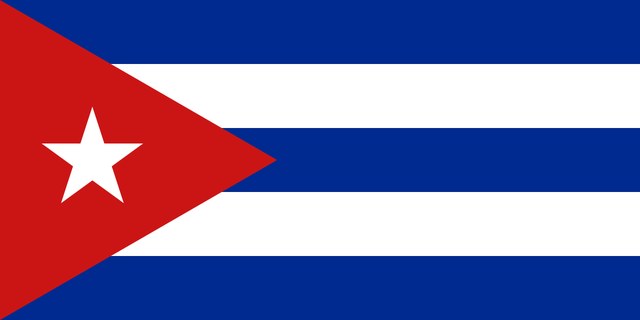
Cuba

Cuba
Miguel Teurbe Tolón and Narciso López · Public domain

Caribbean island nation · Spanish colony until 1898; independent 1902 · Caribbean Sea, south of Florida

Cuba is a Caribbean island that fought the Ten Years' War for independence, endured Batista's dictatorship, and became communist under Fidel Castro.

The kit

  • Independence struggles — Cuba fought the Ten Years' War starting in 1868 after Carlos Manuel de Céspedes freed his slaves and proclaimed independence.
  • Revolution — Cuba's 26th of July Movement attacked the Moncada Barracks in 1953, leading to Castro's "History Will Absolve Me" speech and eventual 1959 revolution.
  • Cold War conflicts — Cuba survived the Bay of Pigs invasion in 1961 and deployed troops to Angola in Operation Carlota against South African forces.
  • Economic crises — Cuba's Special Period began in 1989 after losing Soviet backing, causing severe deprivation including laws protecting cattle over people.

Runs with

Fidel Castro
led Cuba's revolution, delivered "History Will Absolve Me," ruled from Havana open card →
Ostend Manifesto
outlined U.S. rationale for purchasing Cuba from Spain open card →
Bay of Pigs Invasion
failed 1961 attempt to overthrow Castro's Cuban government open card →
Spanish-American War
began after USS Maine exploded in Havana harbor in 1898 open card →

The ladder · 15 clues

H

A future leader of this country led the 26th of July Movement and gave the “History Will Absolve Me” speech after his attack on the Moncada Barracks.

H

During an economic depression in this country, killing a cow merited a longer prison term than murdering a person.

H

This country’s anthem ”La Bayamesa” was composed during the Ten Years War.

H

This country’s Special Period of deprivation and economic depression began in 1989, after the loss of Eastern Bloc backing.

H

Edward Lansdale directed Operation Mongoose against this country, which was also the focus of the Helms-Burton Act.

H

An American ship seeking to aid a rebellion in this modern-day country was detained in the Virginius affair.

H

The Ten Years’ War was fought in this country, in which General Valeriano Weyler ran concentration camps.

M

A leader of this country attacked the Moncada Barracks in 1953, delivered the "History Will Absolve Me" speech, and led the 26 of July Movement.

M

The U.S. invasion of Grenada was more successful than the U.S.-supported Bay of Pigs invasion, which failed to topple Fidel Castro’s government on this island.

M

The 10th of October Manifesto was created by Carlos Manuel de Cespedes during this country’s war for independence.

M

The “wet foot, dry foot” policy applied to immigrants from this country, who emigrated to the U.S. in the Mariel Boatlift.

M

The Sergeants’ Revolt of 1933 propelled Fulgencio Batista to power.

E

John F. Kennedy ordered the unsuccessful invasion of this country’s Bay of Pigs. name this country that was led by Fidel Castro from Havana.

E

The Maleconazo uprising took place in this country, where the collapse of the USSR necessitated a “Special Period in a Time of Peace.” Carlos Pr´ıo Socarr´as helped a future leader of this country buy a yacht called Granma for a journey from Mexico to this country, where a revolution against Fulgencio Batista succeeded in 1959. name this Caribbean country once ruled by Fidel Castro.

E

Frederic Remington painted a charge up Kettle Hill in this modern-day country, as carried out by the Rough Riders in the Battle of San Juan Hill. name this Caribbean island where the USS Maine blew up in 1898, shortly before the Spanish-American War began.

10 more clues from the record
H

This country, which led Operation Carlota, won the Battle of Quifangondo with the MPLA while fighting South African Defense Forces in Angola.

H

In Operation Northwoods, the Department of Defense proposed intentionally killing immigrants and blaming it on this nation as a false flag.

H

Valeriano Weyler was called “the Butcher” after his brutal suppression of rebels in this modern-day country.

H

The Knights of the Golden Circle would have had their headquarters on this island, and the Ostend Manifesto described the US rationale for purchasing this island from Spain.

H

This country’s Sierra Maestra mountains have been the site of many guerilla wars, including against the American-supported Fulgencio Batista who fled to the Dominican Republic after he was deposed.

H

The Independent Party of Color was dissolved in this country following the 1912 Little Race War.

H

An independence movement in this modern-day country started when Carlos Cespedes freed all his slaves and proclaimed the October 10th Manifesto.

H

This country is of primary interest to the activist group Brothers to the Rescue, which had planes shot down in 1996.

H

A 1946 Conference in this nation’s capital was coordinated by "Lucky" Luciano to coordinate mob policies and discuss collective business interests.

H

The Caribbean island, with capital Havana, that gained independence from Spain after the war?

Watch out: Grenada (also site of U.S. invasion, but Bay of Pigs was in Cuba)
#60 · Modern Countries · Level 1

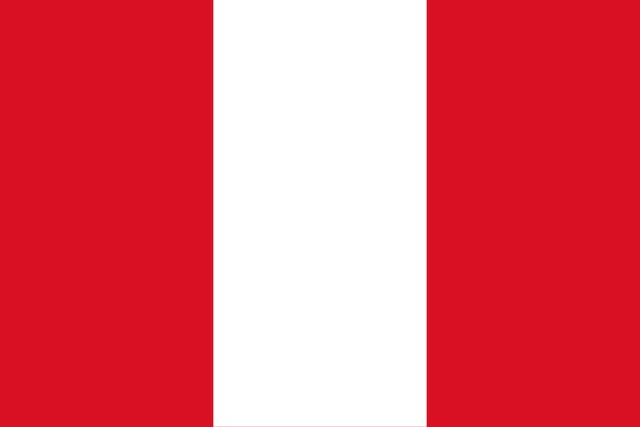
Peru

Peru
David Benbennick · Public domain

South American country · 1821–present (independence) · western South America, Pacific coast

Peru is a South American country that was home to the Incan Empire and earlier civilizations including Norte Chico and Chavín.

The kit

  • Ancient civilizations — Peru was home to the Norte Chico civilization at Caral, the Chavín culture with its Lanzón Stela, and the Nazca desert glyphs.
  • Incan period — Peru contained the Incan capital at Cuzco and Machu Picchu before Francisco Pizarro captured the ruler at Cajamarca.
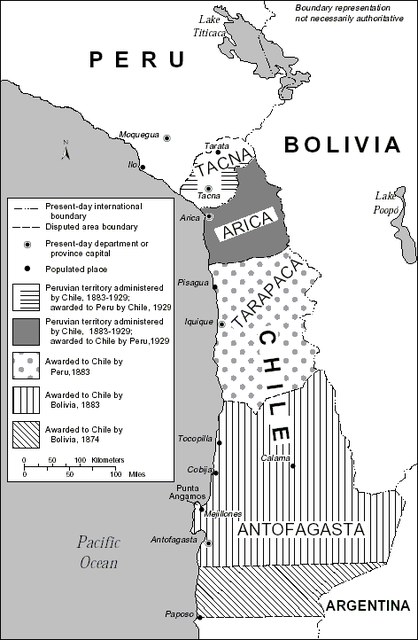
  • War of the Pacific — Peru and Bolivia fought Chile in the War of the Pacific in the late 19th century.
  • Modern conflicts — Peru experienced the Shining Path insurgency led by Abimael Guzmán and hyperinflation before autocratic President Alberto Fujimori ended the crisis.

Runs with

Incan Empire
capital at Cuzco, conquered by Pizarro open card →
Nanda Empire
War of the Pacific
fought alongside Bolivia against Chile open card →
Pacific
located on Pacific coast open card →

The ladder · 15 clues

H

This country fought a month-long conflict with Ecuador in 1995 known as the Cenepa War.

H

The Norte Chico civilization lived in this modern day country, which built the city of Caral.

H

Luis Sánchez Cerro won a controversial 1931 presidential election over Víctor Haya de la Torre, the founder of this country’s leftist APRA party.

H

One group in this nation suffered after the capture of its leader Abimael Guzmán and conducted the Lucanamarca massacre in the province of Huanca Sancos.

H

That civilization often depicted a “Staff God,” which spread to other cultures from this country such as the Chavin [“cha-VEEN”].

H

Art featuring the spider-like “Decapitator God” was produced by a culture in this country that built Huaca del Sol.

H

An archaeological site in this country includes the intricately carved stone Lanzón Stela built by the Chavín people.

M

Abimael Guzman led the Shining Path guerrillas in this country, which fought against the presidency of Alberto Fujimori. name this South American country that was home to the Incan civilization.

M

This country where the Norte Chico civilization lived was also where a ruler was captured after throwing Friar Valverde’s Bible at Cajamarca. This country is the location of giant Nazca glyphs drawn in the desert sands.

M

This country and its neighbor Bolivia fought Chile in the War of the Pacific. name this South American country, the home of the Inca.

M

This country's Lucanamarca massacre was carried out by a Maoist group founded by Abimael Guzmán named Shining Path.

M

An anti-government faction in this country took over its Japanese embassy in 1996; that group, the MRTA, is named for an older revolutionary in this country, Tupac Amaru.

E

The Shining Path insurgency was concurrent with hyperinflation and a severe debt crisis in this country, ended by its autocratic President Alberto Fujimori.

E

The communist Shining Path guerrilla group fought in this country against president Alberto Fujimori.

E

The modern-day country with capital Lima that was home to the Incan empire?

10 more clues from the record
H

Alan García, a former president of this country, committed suicide in 2019 before he could be arrested for his involvement in the Odebrecht [[OH-duh-brekt]] scandal.

H

Jose Bustamante became president of this country with the assistance of the APRA.

H

One president of this country was known as “el Chino” despite being of Japanese origin.

H

One civilization from this modern-day country used shicra-bags to reinforce structures at Caral.

H

During this country’s rule by the Cambio 90 party, Vladimir Montesinos operated the SIN secret police.

H

That empire in this country had its capital at Cuzco and was conquered by Francisco Pizarro. name this modern-day country where the Incas built Machu Picchu.

H

The Band of Holes appears on a plateau in this country.

H

This country’s communist party was founded by Jose Mariategui.

H

In this country, controversy over an American oil company’s claims to the La Brea oil fields led to a military coup against president Fernando Belaúnde.

H

NOTE TO MODERATOR: “VRAEM” rhymes with “frame” A terrorist group in this country had its headquarters in a region called VRAEM and was temporarily led by Comrade Artemio.

Watch out: Confusing Peru with Bolivia as Chile's opponent in the War of the Pacific (both fought together against Chile)
#62 · Modern Countries · Level 1

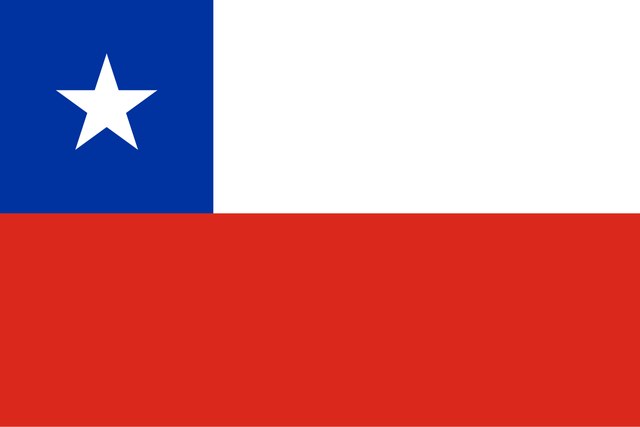
Chile

Chile
See i b file history /b /i below for details. · Public domain

South American nation · independence 1810–1818 · western South America, Pacific coast

Chile is a South American nation that gained independence under Bernardo O'Higgins and endured Augusto Pinochet's 1973–1990 dictatorship.

The kit

  • Independence — Chile's independence movement began in 1810 and was led by Bernardo O'Higgins, who fought alongside José de San Martín.
  • War of the Pacific — Chile expanded its coastal territory through the War of the Pacific fought against Peru and Bolivia.
  • Allende overthrow — Chile's democratically-elected Salvador Allende was overthrown in a 1973 coup by American-backed Augusto Pinochet at La Moneda Palace.
  • Pinochet dictatorship — Chile's DINA secret police executed dissidents in the Caravan of Death and assassinated Orlando Letelier in Washington DC.

Runs with

Mapuche
native Mapuche killed conquistador Pedro de Valdivia open card →
Pacific
expanded territory through War of the Pacific open card →
Augusto Pinochet
Pinochet led military dictatorship from 1973 open card →
Salvador Allende
Allende overthrown at La Moneda Palace in 1973 open card →

The ladder · 15 clues

H

The assassination of Orlando Letelier was accomplished in Washington DC, with US aid, by this country’s DINA secret police as part of Operation Condor.

H

This South American nation expanded its coastal territory through the “War of the Pacific,” which it fought against its neighbors Peru and Bolivia.

H

In this country, Gabriel Gonzales Videla outlawed Communism with the Ley Maldita.

H

The Battle of Chacabuco led to the independence of this modern-day country, where one of its early heads of state fought alongside Jose de San Martin.

H

Grove and fellow Marxists formed this nation's Partido Socialista, which was overthrown in 1973 after the seizure of Moneda [[moh-NEH-dah]] Palace.

H

In this country, Gui Bonsiepe designed an operations room in accordance with Gestalt psychology.

H

A leader of this country created a complex system of telex machines in Operation Cybersyn, a plan to aid his economic planning.

M

The DINA secret police operated in this country where the Caravan of Death executed political dissidents.

M

Augusto Pinochet [[pee-noh-SHEH]] took power in a 1973 coup in this South American nation.

M

During a coup d'état, a socialist leader of this country gave a defiant speech before committing suicide at the La Moneda Palace.

M

This country was led through a military dictatorship by Augusto Pinochet. name this South American country.

M

This country was the site of the Baltimore Crisis, in which two American sailors were stabbed after one of them spit on a photo of Arturo Prat.

E

In this country, the democratically-elected Salvador Allende [ah-YEHN-day] was overthrown by the American-backed Augusto Pinochet.

E

Augusto Pinochet led, what South American country led from Santiago.

E

Long live the workers!” This country was home to La Moneda Palace where Salvador Allende (pr. eye-­‐EN-­‐day) lived before being deposed by the military dictator Augusto Pinochet. name this skinny South American country which has seen relative political stability in its capital of Santiago over the past three decades.

10 more clues from the record
H

The Seguro Obrero Massacre took place in this country in response to an attempted 1938 National Socialist coup.

H

In this country, Project Fubelt led to the murder of Rene Schneider, while another general from this country, Carlos Prats, was assassinated with a car bomb.

H

Pedro de Valdivia was killed by native Mapuche in this country, which won a war caused by a tax on saltpeter mining.

H

Answer the following about South American independence movements, :This country’s independence movement from Spain was led by Bernardo O’Higgins.

H

Mariano de Osorio aided the colonial “reconquista” of this country for Spain following the Royalist victory at the Disaster of Rancagua.
H

European potatoes may also originate from an island governorate of this former Spanish colony. Amédée-François Frézier introduced Europe to the giant strawberries grown by this country’s cattle-raiding Mapuche people.

H

A dissident from this country, Orlando Letelier, was killed by a car bomb in Washington D.C. A leader of this country was supported by the Schneider Doctrine and was the subject of the CIA's Project Fubelt.

H

After the Disaster of Curalaba, colonizers of this country gradually abandoned settlements in the Destruction of the Seven Cities.

H

On the so-called “Day of National Dignity,” one leader of this country passed a law to nationalize its copper industry.

H

The independence movement in this South American nation began in 1810 and one leader of that movement in this nation was Bernardo O’Higgins.

Watch out: La Moneda Palace was the site of Allende's suicide, not Pinochet's headquarters
#66 · Modern Countries · Level 1

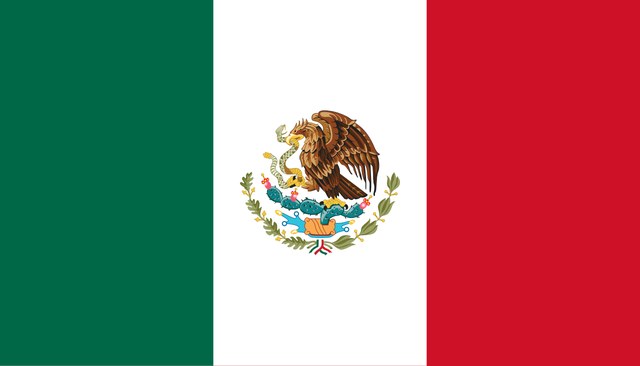
Mexico

Mexico
b Alex Covarrubias /a /b , 9 April 2006. /div Based on the a · Public domain

North American country · 1821–present · south of United States

Mexico is a North American country that gained independence from Spain and fought the United States in an 1846–1848 war.

The kit

  • Revolution & instability — Mexico experienced the Ten Tragic Days coup in 1913 when U.S. ambassador Henry Lane Wilson arranged President Francisco Madero's murder.
  • Conflicts — Mexico lost California to the United States in a war ended by the Treaty of Guadalupe Hidalgo in 1848.
  • Modern governance — Mexico's Lázaro Cárdenas nationalized the oil industry in the 1930s, creating state company Pemex and introducing communal ejido farms.
  • Legacy — Mexico's PRI party has dominated politics, with Andrés Manuel López Obrador succeeding Enrique Peña Nieto as president in 2018.

Runs with

Nanda EmpireLeon TrotskyBenito Juárez
Tenochtitlan
Tenochtitlan was Aztec capital in Mexico open card →

The ladder · 15 clues

H

This country was once led by Pedro Lascurain, who ruled for less than an hour before resigning in the Ten Tragic Days.

H

This country’s Cristero War was initiated by Plutarco Calles. name this country, where Lazaro Cardenas established state oil company Pemex.

H

Modern-day country where the Aztec empire flourished.

H

Henry Lane Wilson, a U.S. ambassador to this country, is believed to have arranged the murder of its president as part of a 1913 coup known as the Ten Tragic Days.

H

The Liberation Army of the South was a paramilitary group in this country, where the US occupied a port city for seven months after the Tampico Affair.

H

The Cristero War was a pro-Catholic revolt in response to this country’s Constitution of 1917.

H

A war between the United States and this country was the subject of Abraham Lincoln’s Spot Resolutions.

M

Francisco Madero called for an armed rebellion after Porfirio Díaz was named president of this country for the sixth time in a fraudulent 1910 election.

M

Communal farms known as ejidos were introduced by a president of this country who also nationalized its oil industry in the 1930s.

M

Another artist from this country created a double self-portrait in which two versions of herself are linked by exposed veins.

M

Graham Greene’s The Power and the Glory takes place entirely within this country.

M

Another work by that artist from this country was ordered destroyed by Nelson Rockefeller.

E

The U.S. obtained California following a war with this neighboring country to its south.

E

This country was defeated in an 1846 to 1848 war that was ended by the Treaty of Guadalupe Hidalgo. name this country that fought a war with the United States, its northern neighbor.

E

Porfirio Diaz was a dictator of this North American country where rebels were led by Emiliano Zapata and Pancho Villa.

10 more clues from the record
H

Argentina, Brazil, and Chile organized a peace conference to prevent a conflict in this country from being subsumed into World War I at Niagara Falls.

H

The US ambassador Dwight Morrow helped end a conflict in this country that began after an attempt to enforce the anti-clerical elements of this country’s Constitution of 1917.

H

A composer from this country called for instruments like deer hooves and butterfly cocoons in his Sinfonia India.

H

In 1864, Maximilian I [the first] became emperor of this country after accepting an offer from Napoleon III [the third].

H

The book Merchants of Labor chronicles the abuses of workers hired from this country.

H

Immigrants from this country were targeted in the Zoot Suit Riots.

H

Emperor Maximilian was executed after failing to conquer this country where Cinco de Mayo commemorates a victory over France.

H

One group in this country had a city at Tollan and claimed to have migrated from Aztlan.

H

The PRI [spell it] currently leads this country where Enrique Pena Nieto was succeeded in 2018 by Andres Manuel Lopez Obrador.

H

This country's first president, Guadalupe Victoria, was among only a few of its early leaders to complete a full term.

Watch out: Cinco de Mayo commemorates a victory over France, not independence day
#90 · Physical Geographic Features · Level 1

Hispaniola

Hispaniola
Earth Science and Remote Sensing Unit /a , Lyndon B. Johnson · Public domain

Caribbean island · 1492–present · between Cuba and Puerto Rico

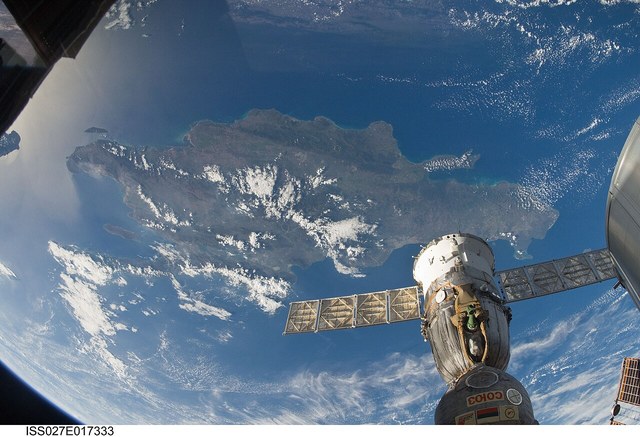
Hispaniola is the Caribbean island where Columbus established the first European settlements in the Americas in 1492.

The kit

  • Columbus arrival — Hispaniola was where Christopher Columbus landed on December 6, 1492, losing the Santa Maria and building La Navidad from its remains.
  • Indigenous population — Hispaniola's native Taíno people were divided into five chiefdoms and subjected to slavery after Columbus's arrival.
  • Colonial division — Hispaniola's western third was ceded to France in the 1697 Treaty of Ryswick, creating the colony of Saint-Domingue.
  • Modern nations — Hispaniola now contains Haiti and the Dominican Republic, making it the most populous island in the Americas.

Runs with

Haiti
occupies western third, formerly Saint-Domingue open card →
the Caribbean
most populous island in region open card →
Dominican Republic
occupies eastern portion with Haiti open card →
Christopher Columbus
landed December 1492, built La Navidad open card →

The ladder · 15 clues

H

is shared by the Dominican Republic and Haiti and is where Columbus lost the Santa Maria?

H

The western third of this island was ceded from Spain to France in the 1697 Treaty of Ryswick.

H

Leaders of this island's indigenous population, including Hatuey [[ah-TWAY]], took the title cacique [[kah-SEE-keh]].

H

This island was home to the French colony of Saint-Domingue, once the richest colony in the Western Hemisphere. :Name this island that contains the modern-day nations of Haiti and the Dominican Republic.

H

A rebellion on this island was led by the cacique [[kuh-SEE-kay]] Enriquillo [[en-ree- KEE-yo]] and began after his father and other leaders were killed by Nicolás de Ovando.

H

This island west of Puerto Rico was the site of the first European settlement in the New World, La Navidad, as well as the first permanent settlement, Santo Domingo.

H

Was the site of the Parsley Massacre, in which people fled one of its countries for the other.

M

A rebellion launched in this island was led by the cacique Enriquillo.

M

This next largest Caribbean island, the most populous island in the Americas, contains the nations of Haiti and the Dominican Republic.

M

This Caribbean island was home to many Taino, and Columbus built the first European settlements in the Americas on it. This island now contains the modern-day countries of Haiti and the Dominican Republic.

M

After independence, this location was home to a separatist movement called La Trinitaria, which was led by Juan Pablo Duarte.

M

Like the Bahamas, the Arawak-related Taíno people were encountered by the crew of Christopher Columbus on this island. name this island, home to the Santo Domingo colony which later became the countries of the Dominican Republic and Haiti.

E

After Christopher Columbus landed on this island on December 6, 1492, the native Taino [[TIE-noh]] people were divided into five chiefdoms and subjected to slavery.

E

In 1806, troops under General Henri Christophe attempted to seize the entirety of this island from the French. name this Caribbean island divided between two countries.

E

The settlement of La Navidad was established on this island.

10 more clues from the record
H

The Spanish recognized French claims on this island through the Treaty of Ryswick.

H

Christopher Columbus used the remains of his ship the Santa Maria to build the encampment of La Navidad on this island. :Columbus landed on what Caribbean island, currently comprising two countries, the western of which was the second in the New World after the US to declare independence?

H

Smaller islands off the coast of this island include Gonˆave [go-nahv] Island near Port-au-Prince and Tortuga off the northern coast.Name this island whose land is divided between two modern countries.

H

The use of an alloy called guanine by the Taino people on this island has led some scholars to theorize that it was visited by Africans before Columbus, who founded the city of La Isabela on this island.

H

Guarionex, Enriquillo, and Hatuey were caciques on this island, where Anacaona ruled Jaragua before she was captured by Nicolás de Ovando. This Caribbean island’s Taíno name, Ayiti, was given to one of its two countries.

H

An event, whose most bloody period was known as “the cutting”, saw citizens of this island murdered by troops if they were unable to roll the r in perejil during the Parsley Massacre.

H

This island’s indigenous people have elongated craniums as a result of wood planks being tied around the head of their infants to toughen their skulls.

H

Landowners and laborers both fled this island en masse rather than produce crops for export under the restrictive 1826 Rural Code.

H

This location was known to its original inhabitants as Quizqueya, and one conflict here ended with a local chief named Caonabo burning a colonial settlement.

H

On this island, millenia-old rock art created by the prehistoric Igneri group has been found in the extensive Pomier Caves.

Watch out: Puerto Rico (also a major Caribbean island colonized by Spain)
#92 · Physical Geographic Features · Level 1

Pacific Ocean

Pacific Ocean
CIA World Factbook · Public domain

World's largest ocean · Named 1520 · Between Americas and Asia

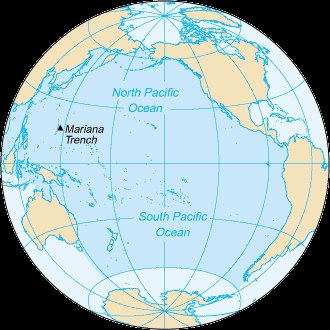
Pacific Ocean is the world's largest ocean, named by Magellan in 1520 and site of major World War II battles.

The kit

  • Geography — Pacific Ocean was first seen by European Balboa in 1513 and named by Magellan for its calm currents in 1520.
  • Indigenous cultures — Pacific Ocean was home to the Lapita culture's dentate-stamped pottery, the Saudeleur dynasty's capital at Nan Madol, and Rapa Nui moai.
  • War of the Pacific — Pacific Ocean named the 1879-1884 war in which Chile defeated Peru and Bolivia, costing Bolivia its coastline including Antofagasta.
  • World War II theater — Pacific Ocean saw island-hopping campaigns by Nimitz and Halsey, including battles at Midway, Guadalcanal, and the attack on Pearl Harbor.

Runs with

Pacific
Same geographic feature open card →
Water
Largest single body of water on Earth open card →
Panama Canal
Canal links Pacific to Caribbean Sea open card →
the Caribbean
Connected to Pacific via Panama Canal open card →

The ladder · 15 clues

H

Detante-stamped pottery characterizes this region’s Lapita culture.

H

The Saudeleur dynasty in this region built a capital at Nan Madol.

H

Bolivia lost its coastline, including the port city of Antofagasta, to Chile in what conflict, named for a body of water?

H

The discovery of pre-Clovis sites prompted theories about a “kelp highway” along this body of water as an alternative to an “ice-free corridor.” This is the largest body of water along which the Chimú Empire controlled territory and along which the Norte Chico civilization flourished.

H

Answer the following about German operations overseas during the World War I, :After the capture of Qingdao, the German Asia Corps fled all the way across this ocean. Germany’s colonial possessions in this ocean at the war’s outbreak included the Solomon Islands.

H

Michael E. Moseley argued that an ancient culture on this body of water had a “maritime foundation” rather than an agricultural one, pointing to a sparsity of ceramics at sites like Aspero.

H

A coalition of countries along this body of water fought against the Numancia(noo-mahn-SEE-ah) and other ironclads in the Chincha (CHEEN-chah) Islands War.

M

A war named for this body of water was nearly ended by the Lackawanna conference.

M

(1) Ocean the Jesup Expedition explored off the coast of British Columbia.

M

A leader’s wealth was demonstrated through gift-giving in potlatch ceremonies developed by people living along this large body of water. the Incan Empire controlled territory along the coast of what ocean?

M

Explorer Vasco Núñez de Balboa discovered the east side of this large body of water, historically crossed by the Manila galleons and later linked to the Caribbean Sea by the Panama Canal.

M

This place names a Canadian railway company that recruited many Antiguans and sent steamships to St. Kitts. It also names an 1872 scandal over John A. MacDonald’s rail contracts.

M

In 1579, Ortelius created a namesake map of this body of water, the first dedicated map of it. Vasco Nuñez de Balboa was the first European to see this body of water, which Ferdinand Magellan named for its relatively calm currents.

M

The Rapa Nui people of this body of water built giant stone heads called Moai on Easter Island. name this ocean which was home to Micronesian and Polynesian cultures.

E

This body of water was the namesake of a war fought between Chile and the combined forces of Peru and Bolivia. It was also the location of the Battle of Midway during World War II.

10 more clues from the record
H

Guadalcanal was contested in this “theater” of World War II. Chester Nimitz and Bull Halsey took U.S. troops “island-hopping” across this geographic feature.

H

Ri-metos, trained navigators on this body of water, created "meddo" and "matang" varieties of "stick charts" to map locations, winds, and currents in it.

H

In another engagement on this body of water, Graf Maximilian von Spee defeated a Royal Navy squadron near the city of Coronel.

H

Guadalcanal was the first major land campaign during a theater of World War II named for this ocean. The Midway Atoll and Pearl Harbor were used by the Navy in this ocean.

H

On May 21, a country celebrates Navy Day to commemorate a battle in which the Esmeralda sank in this body of water.

H

Pierre-Antoine Véron was the first to precisely estimate the width of this body of water.

H

The Entangled Bank and Express Train models concern migrations across this region.

H

In this body of water, German vessels raided a British cable station on Fanning.

H

The Yapese culture in this body of water built large rai stones.

H

In this body of water, an early example of fishhooks was discovered on Cedros Island.

Watch out: Atlantic Ocean (other major ocean with World War II theater)
#96 · Physical Geographic Features · Level 1

Andes Mountains

Andes Mountains
bdi Diego Delso /span /a · CC BY-SA 3.0

South American mountain range · site of civilizations from ancient times · western South America

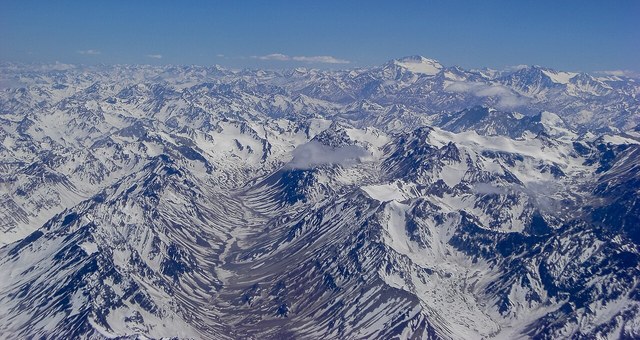
Andes Mountains are a South American range where the Incan Empire flourished and potatoes were first domesticated.

The kit

  • Incan civilization — Andes Mountains contain Machu Picchu and other Inca ruins, connected by bridges and roads for communication.
  • Agriculture — Andes Mountains are where potatoes, quinoa, and alpacas were first domesticated by indigenous peoples.
  • Ancient cultures — Andes Mountains were home to cultures creating double-spout ceramic vessels and trophy heads discovered in Vitor Valley.
  • Indigenous peoples — Andes Mountains are inhabited by the Aymara people, whose yatiri healers sell goods at the Witches' Market.

Runs with

Incan Empire
flourished in this range, building Machu Picchu open card →
Nanda Empire
Potatoes
first cultivated in this mountain range open card →
America
major mountain range in South America open card →

The ladder · 15 clues

H

The Incan empire flourished in this large South American mountain range.

H

In this mountain range, yatiri folk healers sell goods at the Witches' Market to an ethnic group whose flag is known as Wiphala [[wih-FAH-lah]].

H

A popular hiking trail in this mountain range passes through a pass nicknamed the “Dead Woman” and often begins near the city of Ollantaytambo.

H

The terminus of that trail visits a “lost city” in this mountain range whose terraces and mortar-less masonry were rediscovered by Hiram Bingham.

H

The Aymara people are indigenous to what mountain range, where they speak a Native American language with dubious connections to Quechua?

H

Irish geographer Joseph Barclay Pentland and English traveler Woodbine Parish surveyed the northern reaches of this range in the 1820s.

H

The iron-hulled SS Yavari was launched on this range's largest lake in 1862 and is today a tourist attraction in Puno Bay.

H

W. C. Bennett proposed a localized chronology in this mountain range and inspired Gordon Willey to study regional settlement patterns in its Virú Valley Project. :Name this mountain range where eclectic Vicús ceramics challenged the seriation of the Moche culture.

H

A city in this mountain range was built with puzzle-piece-like stones to resist earthquake damage and is in the shape of a puma.

M

A civilization near this mountain range created geoglyphs known as the Nazca lines.

M

Wool or cotton was used in this region to make knotted quipus. name this natural region where the alpaca and llama were first domesticated.

M

A culture in this mountain range depicted a spider called the “Decapitator” and created a mummy known as the Lord of Sipán.

M

The Incas lived in this mountain range, in which they developed a series of bridges and roads to improve communication.

M

This region’s people were the first to domesticate quinoa and potatoes.

E

The city of Machu Picchu is one of many Inca ruins in this major mountain range of South America.

10 more clues from the record
H

Chasquis were teenage runners who would deliver messages in this mountain range, which is where potatoes were first cultivated.

H

According to one source, animals raised in this region were attended by a lower class michi and a supervising camayo.

H

Depictions of shamans in this range often wore nose rings in order to denote their high status.

H

The Chavín people raised an animal in this region to make ch’arky, inspiring the English word jerky.

H

In a divination ceremony from this natural region, a completely black or white animal was sacrificed with a tumi and cremated.

H

The Guinea pig was first domesticated in this natural region and commonly features in the art of the Moche culture.

H

Ceramic vessels created in this range often featured a double spout connected by a bridge.

H

“Trophy heads” created by a culture in this range were discovered in the Vitor Valley.

H

The “discontinuous warp and weft” technique of weaving developed in this mountain range.

H

Cavies in this region were likely domesticated to become animals called cuy.

Watch out: Nazca lines were created by a civilization near, not in, the Andes Mountains
#107 · Subnational Regions, Provinces, and Territories · Level 1

the Caribbean

the Caribbean
Central Intelligence Agency /a (CIA) · Public domain

transnational region · colonial era to present · islands and coasts between North and South America

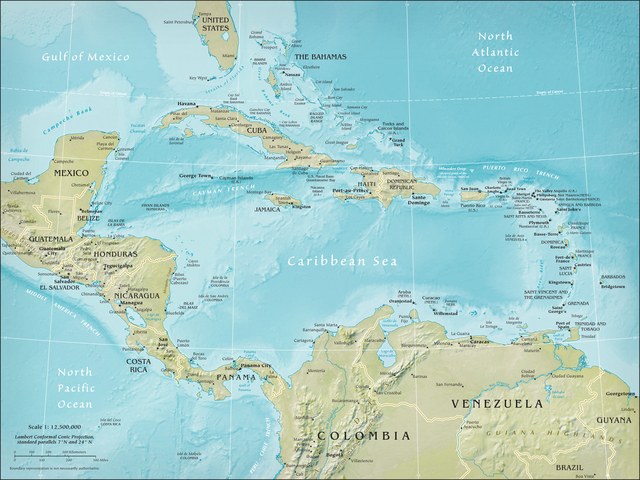
The Caribbean is a transnational region that was the setting for events detailed in C. L. R. James's The Black Jacobins.

The kit

  • Migration — The Caribbean was the origin of half a million "Windrush Generation" immigrants who left for Britain after World War II.
  • British connections — The Caribbean was the ancestral home of Stephen Lawrence's parents, a youth whose murder London's police force did not fully probe.
  • Cold War intervention — The Caribbean island of Grenada was invaded by the United States in 1983's Operation Urgent Fury after Maurice Bishop was killed.
  • New Jewel Movement — The Caribbean island targeted in Operation Urgent Fury had been seized by the New Jewel Movement under Maurice Bishop before Ronald Reagan ordered invasion.

Runs with

sugar
major colonial crop throughout the region open card →
Hispaniola
Spain
colonial power in the region open card →
Fidel Castro

The ladder · 3 clues

H

London’s police force did not fully probe the murder of Stephen Lawrence, a youth whose parents were from this region. :Name this transnational region that half a million “Windrush Generation” immigrants left for Britain. C. L. R. James’s The Black Jacobins details an event in this region.

M

American action in this conflict was code-named Operation Urgent Fury. name this 1983 American invasion of a Caribbean island.

M

The New Jewel Movement seized power on this island, but when its leader Maurice Bishop was killed, Ronald Reagan ordered an invasion. 1983’s Operation Urgent Fury targeted this Caribbean island.

#145 · Other Named Wars and Armed Conflicts · Level 1

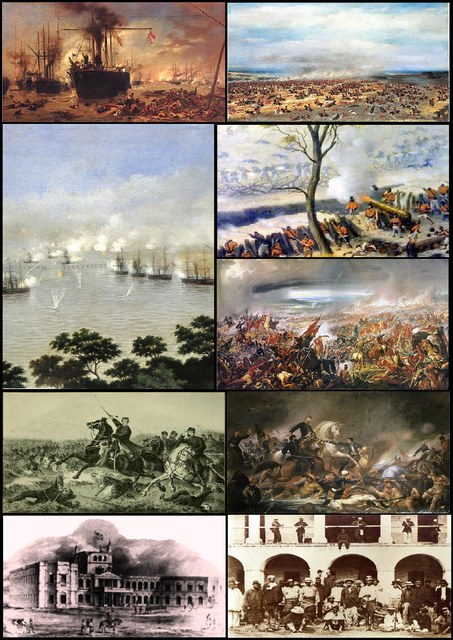
Paraguayan War

Paraguayan War
Inkratt · CC BY-SA 3.0

South American conflict · 1864–1870 · Paraguay and surrounding regions

Paraguayan War was a devastating South American conflict in which Paraguay fought a coalition of Brazil, Argentina, and Uruguay, losing up to 90% of its male population.

The kit

  • Outbreak — Paraguayan War began with Francisco Solano López's invasion of Mato Grosso and an attack on Corrientes seeking Urquiza's support.
  • Major battles — Paraguayan War featured the naval Battle of Riachuelo won by Admiral Barroso and the siege of Humaitá Fortress with its chain boom.
  • Climax — Paraguayan War ended with the Campaign of the Hills and the Battle of Cerro Corá, where Francisco Solano López was killed.
  • Aftermath — Paraguayan War's boundary disputes were arbitrated by Rutherford B. Hayes, resulting in the naming of Presidente Hayes Department.

Runs with

Paraguay
losing side, suffered catastrophic male population losses open card →
Uruguay
coalition member against Paraguay open card →
Brazil
coalition member; Duke of Caxias commanded open card →
Argentina
coalition member against Paraguay open card →

The ladder · 15 clues

H

One leader during this conflict was killed by a corporal nicknamed "Chico Diabo." The Count D'Eu briefly commanded forces during this conflict, in which Admiral Barroso won a major naval battle which later allowed 8 steamers to run the gauntlet at Humaitá Fortress.

H

Name the following about a South American War, FTPE.Fought between 1864 and 1870, this war resulted in the utter defeat of Paraguay by the namesake group.

H

A commander in this war brought troops across the Pikysyry [[pee-KEE-see-REE]] River during a series of three victories at Ytororó [[ee-toh-ROH-roh]], Avay, and Lomas Valentinas that comprised the "Deed of December." This was the last war in which the Duke of Caxias [[kah-SHEE-us]] commanded troops in battle.

H

One country in this war invaded Mato Grosso and lost its capital, Asunción. Name this devastating 1864 to 1870 war in which it is estimated Paraguay lost 70% of its male population while fighting Uruguay, Argentina and Brazil.

H

The losing side in this conflict lost nearly seventy percent of its male population. :Identify this war in which Paraguay lost to a coalition of Argentina, Brazil, and Uruguay.

H

A national holiday was declared in this war’s losing country in honor of child soldiers who died during the Battle of Acosta Ñu.

H

One side sought the support of Justo Jose de Urquiza by invading Corrientes, after an attempted diversionary attack on Mato Grosso.

M

Eliza Lynch, leader of “Las Residentas”, survived the Battle of Cerro Corá during this war, of whose instigator she was the mistress.

M

Lopez's invasion of Mato Grosso marked the start of this war, in which Brazil, Argentina, and Uruguay formed the namesake coalition.

M

Jose Camara led the victorious side of the final battle of this conflict, which resulted in the losing side’s leader’s death at Cerro Cora.

M

Francisco Barroso led his side to victory at a key naval battle that was fought near the Corrientes province, the Battle of Riachuelo.

M

The Presidente Hayes Department was so named following a boundary dispute after this conflict.

E

Francisco Solano López was killed in this war in which Paraguay was defeated by Argentina, Brazil, and Uruguay.

E

Up to 90% of the losing country's male population died in this war. name this late 1860s war in which Paraguay lost to Uruguay, Argentina, and Brazil.

E

During this war's climactic Battle of Cerro Corá, the dictator Francisco Solano López was killed.

10 more clues from the record
H

Rutherford B. Hayes helped lead negotiations in the aftermath of this conflict which included the Battle of Tuyut´ı.

H

The leader of the losing side of this war was killed by a man known as "Frank the Devil." The Campaign of the Hills was the final phase of this conflict, which included the siege of the Fortress of Humaitá.

H

Rutherford B. Hayes helped to arbitrate the treaty ending this conflict.

H

During this war, the Duke of Caxias [ka-HEE-us] won the Battle of Lomas Valentinas, which was before the Campaign of the Hills.

H

The London battery and a chain boom protected a fortress in this war.

H

During this war, the French Count of Eu led veteran troops to victory against mostly underage soldiers in beards at the Battle of Acosta Nu.

H

The first major land battle of this war was fought at Yatay and included a capture of Corrientes.

H

The guerilla war stage of this conflict was ended after one leader was killed at the Battle of Cerro Cora. :Name this 19th century South American conflict between Paraguay and a namesake coalition.

H

At the end of this conflict, US President Rutherford B. Hayes was asked to arbitrate over territory redistribution.

H

In one battle of this war, Colonel Bruguez set up at Bella Vista while Captain Meza navigated his fleet in the namesake river.

Watch out: War of the Triple Alliance (same conflict, alternate name)
#211 · Other Modern National Leaders · Level 1

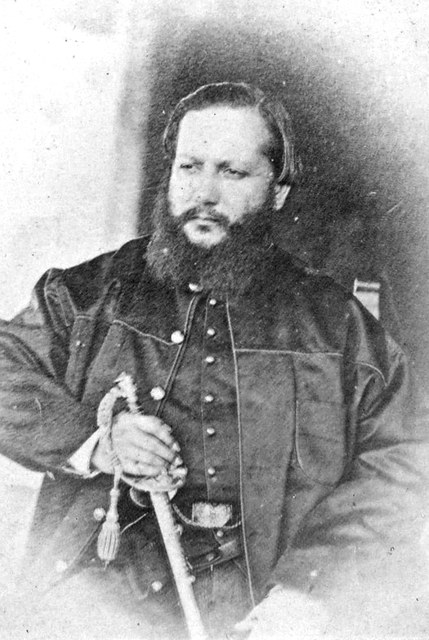
Francisco Solano López

Francisco Solano López
Domenico Parodi · Public domain

Paraguayan president · 1862–1870 · Paraguay

Francisco Solano López was Paraguay's president who led his nation into the catastrophic War of the Triple Alliance and died at Cerro Corá.

The kit

  • Rise — Francisco Solano López assumed power from his father and commanded South America's largest army at the war's outset.
  • Conflicts — Francisco Solano López invaded Mato Grosso and demanded access to Corrientes province, triggering war with Brazil, Argentina, and Uruguay.
  • Defeats — Francisco Solano López's forces lost the Battle of Tuyutí and the Humaitá fortress, while his navy fell at Riachuelo.
  • Death & succession — Francisco Solano López was killed at Cerro Corá in 1870, ending the war that killed approximately 90% of Paraguayan males.

Runs with

Paraguay
served as president open card →
dictator
ruled as dictator open card →
Paraguayan War
initiated and led Paraguay through open card →
Brazil
declared war on after Brazilian intervention in Uruguay open card →

The ladder · 15 clues

H

President of Paraguay who died in the Battle of Cerro Cora, ending the war

H

president who launched that war after assuming power from his father?

H

Answer the following about the War of the Triple Alliance, :This dictator of Paraguay declared war on Brazil after the Brazilians intervened for the Colorado party in Uruguay. At the time, he had the largest army in South America.

H

This man ordered the flogging of his 70 year-old mother because he believed she was conspiring against him. :Name this South American president whose grave was dug by his mistress Eliza Lynch after he died at the Battle of Cerro Cora.

H

Alyn Brodsky wrote a book rehabilitating the image of a lover of this leader who supposedly turned him into a "bloodthirsty dictator." :Name this leader whose mistress Eliza Lynch has been declared a "national heroine."

H

This man was the leader of Paraguay that did a bunch of dumb things that led to the War of the Triple Alliance. History tells us that about 90% of male Paraguayans died during his reign.

H

Another Paraguayan dictator was this invader of Brazil and Uruguay, who led Paraguay into a disastrous 1860s conflict that ended with losses at Tuyutí and Humaitá.

M

This man led Paraguay into the War of the Triple Alliance but was killed at the Battle of Cerro Corá, thus bringing an end to the war.

M

President of Paraguay who initiated the conflict and was killed in action at that battle.

M

This Paraguayan leader ordered the invasion of Mato Grosso, starting the war. He was later captured and executed at the Battle of Cerro Cora, ending the war.

M

This earlier Paraguayan president died at Cerro Cora after leading his country into the disastrous War of the Triple Alliance, which killed so much of its male population that polygamy became popular for decades afterward.

M

This Paraguayan dictator ordered his mother whipped for revealing that he was a bastard, and wasted his country’s money on gifts for his Irish prostitute wife Eliza Lynch. His armies lost the War of the Triple Alliance.

E

This was the President of Paraguay during the War of the Triple Alliance. He died fighting during the Battle of Cerro Caro.

E

Paraguay was led through that disastrous war by this dictator, who refused to capitulate to the triple alliance until he was killed at the Battle of Cerro Corá.

E

This president led Paraguay into the conflict. He died after making a last stand against Brazilian forces at Cerro Corá.

5 more clues from the record
H

This Paraguayan president, noted for his relationship with Eliza Lynch and attempting to help Atanasio Aguirre against Flores, cemented his failure at the Battle of Tuyuti.

H

His demand for his army to have access to Corrientes province led to another conflict, in which his country lost the Humaitá fortress and the Battle of Tuyutí.

H

This leader was killed at the Battle of Cerro Cora. :Name this Paraguayan leader whose invasion of Mato Grasso sparked a conflict with Brazil, Argentina, and Uruguay.

M

This Paraguayan aggressor of the War of the Triple Alliance declared war on Bartolomé Mitre. His navy was soundly defeated by Admiral Barosso in the Battle of Riachuelo.

M

This eccentric Paraguayan president died at the Battle of Cerro Corá (SAY-roh koh-RAH), marking the end of the war.

Watch out: Not to be confused with his father, who preceded him as Paraguayan leader
#216 · Other Modern National Leaders · Level 1

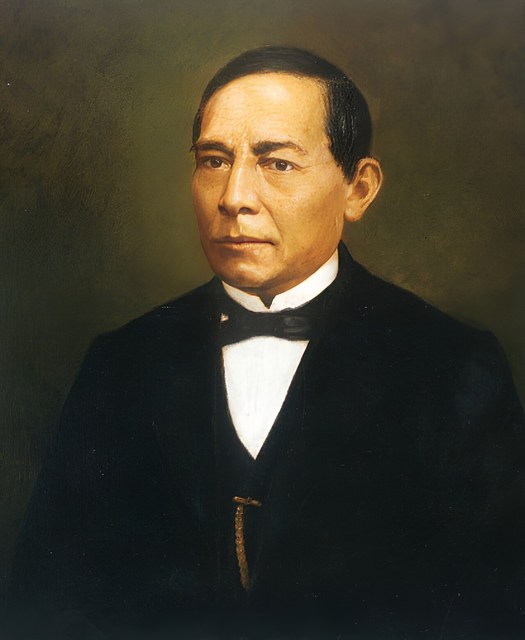
Benito Juárez

Benito Juárez
Public domain

Mexican president · 1858–1872 · Mexico

Benito Juárez was a Zapotec Liberal president who confiscated Church lands, defeated Emperor Maximilian, and became Mexico's first indigenous head of state.

The kit

  • Rise — Benito Juárez helped draft the Plan of Ayutla to oust Santa Anna and became Chief Justice of the Supreme Court.
  • Achievements — Benito Juárez's namesake law abolished special courts for the clergy and military, ending their fueros.
  • Conflicts — Benito Juárez led Liberals in the Reform War after conservative opposition to the Constitution of 1857 triggered French intervention.
  • Legacy — Benito Juárez declared that "Respect for the rights of others is peace" after executing Santiago Vidaurri without trial.

Runs with

Mexico
served five terms as president open card →
New Orleans
exiled there for opposing Santa Anna open card →
church
confiscated land via Law of Nationalization open card →
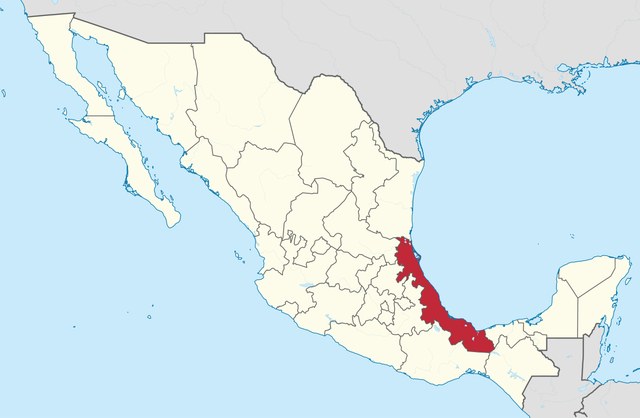
Veracruz

The ladder · 15 clues

H

The War of the Reform was faced by this Liberal Party president who took back power from Emperor Maximilian.

H

Upon the election of Ignacio Comonfort, this man was selected to preside over the Supreme Court, and his namesake law abolished special courts for the clergy and military.

H

This leader, who defined peace as “respect for the rights of others,” confiscated Catholic Church land in the Law of the Nationalization of the Ecclesiastical Wealth.

H

This man’s country faced occupation by France, Spain and England after he suspended payments of international debts for two years.

H

He helped draft the Plan of Ayutla to oust Santa Anna. :Name this Zapotec Indian who served five terms as the President of Mexico.

H

This man declared that “Respect for the rights of others is peace” a week after he executed Santiago Vidaurri without trial.

H

He oversaw the writing of the Plan of Ayutla which outlined the principles of the rebellion against Santa Anna.

M

government signed the unratified McLane-Ocampo Treaty, which would have granted the United States rights across the Isthmus of Tehuantepec. This president led the liberals in the Reform War after conservative opposition to the Constitution of 1857.

M

Porfirio Diaz first rose to prominence after rising up against what Liberal politician, the first indigenous president of Mexico?

M

This man’s Minister of the Interior, Francisco Zarco, created the rurales, a mounted police force that was expanded by Porfirio Diaz.

M

After this judge was elected head of his country's supreme court, he rapidly succeeded the conservative Ignacio Comonfort [[koh-mohn-FOR]] as president.

M

Catholic clergy rights and the fueros were taken away in this man's namesake law.

E

Victory in that war triggered a French intervention against this man.

E

His forces won the Battle of Puebla, prompting the holiday of Cinco de Mayo.

E

Maximilian’s rule was opposed by what Zapotec president who led Mexico from 1858 to 1872?

10 more clues from the record
H

This man’s government negotiated the McLane-Ocampo Treaty, and established separate religious and military courts under his namesake law.

H

After the execution of Emperor Maximilian, this man became the first indigenous head of state in 1858.

H

This man established a federal constabulary known as the rurales [[roo-RAH-les]], whose members later adopted the look of cowboys known as Charros.

H

Earlier, this man was exiled from Oaxaca [wah-HAH-kah] to New Orleans for his opposition to Santa Anna’s insistance on continuing to fight the Americans.

H

Philip Sheridan claimed he often dropped off supplies for this man on the orders of President Andrew Johnson.

H

Shortly after a key victory, the French forced this man to move his capital to San Luis Potosi.

H

This man's administration created "ports of deposit" in the McLane- Ocampo Treaty.

H

This man faced a war over his party's Plan of Ayutla, the Reform War.

H

This rival of Felix Zuloaga was arrested as part of the Plan of Tacubaya.

H

The composer of the song “The Crabs” once saved the life of this ruler, whose name is borne on a law abolishing of immunities of the clergy; this ruler had helped it pass before becoming the Chief Justice of the Supreme Court.

Watch out: Maximilian I (French-backed emperor whom Juárez defeated and executed)
#365 · Companies, Corporations, and Financial Institutions · Level 1

United Fruit Company

United Fruit Company
Di (they-them) · Public domain

American banana corporation · 1899–1990 · Central America

United Fruit Company was an American corporation that dominated banana production in Central America through land ownership and political manipulation.

The kit

  • Rise — United Fruit Company was formed through a Minor Keith-led merger with a Boston-based company founded by Andrew Preston.
  • Operations — United Fruit Company pioneered ice-cooled steamships and operated the Great White Fleet, including the Admiral Dewey and Admiral Farragut.
  • Political influence — United Fruit Company lobbied for Operation PBSUCCESS, the 1954 CIA coup that overthrew democratically elected Guatemalan president Jacobo Árbenz.
  • Legacy — United Fruit Company was nicknamed "El Pulpo" (the Octopus) and rebranded as Chiquita in 1990.

Runs with

Guatemala
owned over 40% of Guatemala's land before Árbenz's reforms open card →
Bananas
dominated Central American banana production open card →
Land
Guatemala's largest landowner at time of 1954 coup open card →
Jacobo Árbenz
lobbied for his 1954 overthrow via Operation PBSUCCESS open card →

The ladder · 15 clues

H

Admiral Schley and Admiral Samson were part of this entity’s group of ships known as the Great White Fleet.

H

This private company, which pioneered the use of ice-cooled steamships, was formed through a Minor Keith-led merger with a Boston-based company founded by Andrew Preston.

H

The Admiral Dewey and Admiral Farragut were two of the many ships that made up this company’s Great White Fleet.

H

Marcus Garvey began his political career after leaving Jamaica to work as a timekeeper for this company, which later welcomed Black Star Line representatives hoping to sell stock to workers. :Name this company whose striking workers were massacred after General Cortés Vargas received Decree Number 1 from Colombian President Miguel Amadía Méndez.

H

Its Associated Growers Program helped restore some credibility to its tarnished legacy. :Name this U.S. based company and ancestor of today's Chiquita corporation, which was nicknamed “el pulpo” or "the octopus" among locals and became Central America’s largest employer by 1930.

H

It was created by a merger of ventures controlled by Minor Keith and Andrew Preston. :Name this organization that prospered during its control by Sam Zemurray. It was accused of being the force behind a massacre carried out by Cortes Vargas.

H

Operation PBSUCCESS, which overthrew Jacob Arbenz in Guatemala, was largely a product of the efforts of this U.S. corporation, derisively referred to as “the Octopus” for its penchant of manipulating regimes and establishing so-called “Banana Republics.”

M

Later rebranded as Chiquita, this is, what, US company that exploited Central America to produce bananas?

M

This American banana producer was Guatemala’s largest land owner and employer at the time of the 1954 coup. It was the only company to have a CIA cryptonym.

M

Jorge Gaitan claimed that this company instructed Cortes Vargas to massacre strikers gathered in Cienaga, and this company also lobbied for Operation PBSUCCESS, a CIA plot to overthrow Jacopo Arbenz. name this multinational corporation that controlled banana republics in Central America.

M

This company paid the American government a 25 million dollar fine for funding the AUC, a right-wing paramilitary group, to protect their workers from drug traffickers. This company’s predecessor massacred striking workers in Ciénaga in 1928.

M

The period of “Ten Years of Spring” in Guatemala saw land reform, necessary because this banana-producing company owned over 40% of the country’s land. It was known colloquially as “El Pulpo,” or “the Octopus.”

E

Through lobbying, this company was able to call for one action that was accomplished with 1954's Operation PBSuccess, which overthrew the democratically elected Jacobo Árbenz in Guatemala.

E

Arbenz’s land reforms involved redistributing this company’s land in Guatemala. This company’s consumer base in the United States helped it prompt his overthrow by the CIA and the US State Department.

E

Later rebranded as (*) Chiquita, this is, for the points, what, US company that exploited Central America to produce bananas?

10 more clues from the record
H

This company was acquired by the AMK group under Eli M. Black, who later jumped out a window after discovering this company had far more debt than he realized.

H

A series of telegrams to Frank Kellogg details this company’s possible complicity in a massacre occurring as strikers demanding a six hour work week gathered after Sunday Mass.

H

John Foster Dulles convinced Eisenhower to support a coup in Guatemala on behalf of this corporation, whose activities in the region created numerous “banana republics.”

H

Ubico granted many privileges to this company, which lobbied the US government to overthrow Árbenz in Operation PBSUCCESS. This company, which was nicknamed “El Pulpo,” rebranded to Chiquita in 1990.

H

The law firm of Covington and Burling asked the State Department to cover up 2.5 million dollar bribe on behalf of this company as part of one scandal.

H

While working at Sullivan and Cromwell, John Foster Dulles represented this entity, which was later controlled by the likes of Eli Black and Carl Lindler.

H

Carlos Cortés Vargas violently put down a strike against this company at Magdalena. :Name this company that was nicknamed el pulpo, or “the octopus,” in Latin America.

H

This company lobbied for US intervention during the Guatemalan Revolution. This company’s economic influence led several Central American countries to be known as “banana republics”.

H

This company sold a product called the "Big Mike", and this company was saved from unprofitability during the Great Depression by its long-time CEO Samuel Zemurray.

H

An 1871 contract signed by railroad magnate, Henry Meiggs, was seminal to the creation of this entity by Andrew Preston and Minor Keith.

#372 · Companies, Corporations, and Financial Institutions · Level 1

Mita System

Mita System
Unknown author Unknown author · Public domain

Incan labor tax system · Inca period; adapted 1573 · Andean Peru

Mita System was the Incan empire's taxation through mandatory labor, requiring males aged 15-50 to work on public projects.

The kit

  • Incan structure — Mita System organized rotations from household units called ayllu to build rope bridges and stations for the Qhapaq Ñan road network.
  • Labor allocation — Mita System permitted 65 days for subsistence farming, dividing remaining time between temple service and public works like terrace farms.
  • Spanish adaptation — Mita System was revived by Francisco de Toledo in 1573 to draft workers for Potosí and Huancavelica mines.
  • Colonial burden — Mita System under Spanish rule required one-seventh of male workers to labor in mines, expanding far beyond the original framework.

Runs with

Silver
drafted workers for Potosí silver mines open card →
Nanda Empire
Incan Empire
core taxation system of the empire open card →
roads
built Qhapaq Ñan road system open card →

The ladder · 12 clues

H

The Incan empire used this system of taxation, in which males over the age of 15 were required to provide labor for construction projects.

H

After Pizarro’s conquests, this system was initially replaced with the encomienda system typical in the rest of the Spanish Americas. :Name this Inca system under which all able-bodied men from age 15 to 50 were mandated to work on government projects, often for more than 100 days per year.

H

Answer these questions about the Inca, :This mandatory public service tax permitted 65 days for sufficiency farming, and divided the remainder of an ayllu’s time for work between the temple and public works. Pizarro used it to enslave the Incan miners.

H

This system was instituted by the Spanish in 1573 to draft people to work the mines of Potosí. :Identify this form of labor tax which used by the Incans for such infrastructure projects as the construction of the extensive network of roads.

H

This labor system, adapted from existing Andean models, drafted peasants to work in mining or plantation agriculture for an ever-expanding portion of the year. Huancavelica was the most dreaded assignment under this system.

H

John Murra argued this system organized the “energy” of social units in areas that he called “islands” and that it mimicked values of hospitality, as organizers called kuraka were expected to provide generous portions of beer.

H

Las Casas would likely not have approved of the Spanish adoption of this Incan labor system which allowed them to conscript natives for public service work.

H

A form of this system called faena is still used in rural communities like the town of Ocra, which were founded during 1960s land reforms.

M

A revival of this system that ignored traditional boundaries was created by Francisco de Toledo to support the new mining town of Huancavelica. This system organized rotations of people from different households called ayllu to build rope bridges and stations for the Qhapaq Ñan road system.

M

Citizens of the Inca empire paid this tax where they worked on public projects for a few months out of the year. Under Spanish rule, one-seventh of a community’s male workers were required to work in mines to pay this tax.

M

Women were selected for the acllahuasi similar to to this Incan system of mandatory labor. Other than the 65 days needed to farm, families were expected to participate in this system and build roads and terrace farms.

M

Spanish authorities in Peru continued the use of what system of state-mandated labor created by the Inca?

Watch out: encomienda system (replaced mita initially after Pizarro's conquest)
#472 · Religious Groups and Denominations · Level 1

Roman Catholic Church

Roman Catholic Church
Jebulon · CC0

Christian religious institution · 33 CE–present · worldwide, headquartered in Vatican City

The Roman Catholic Church is the largest Christian denomination, led by the Pope and historically involved in European and Latin American politics.

The kit

  • Conflicts — The Roman Catholic Church was targeted by Otto von Bismarck's Kulturkampf, which included the May Laws reducing its power in Germany.
  • Conflicts — The Roman Catholic Church lost property under Mexico's Lerdo Law, sparking the Reform War and later facing attacks during the Cristero War.
  • Legacy — The Roman Catholic Church opposed Nazism in Mit brennender Sorge and communism under John Paul II while inspiring Liberation Theology in Latin America.
  • Achievements — The Roman Catholic Church regained standing through Napoleon's Concordat of 1801 after revolutionary upheaval in France.

Runs with

church
the Roman Catholic Church is a specific church institution open card →
Pope
the Pope serves as supreme leader of the Roman Catholic Church open card →
Kulturkampf
Kulturkampf was Bismarck's campaign against the Roman Catholic Church's political power open card →
Christian
the Roman Catholic Church is the largest Christian denomination open card →

The ladder · 15 clues

H

Plutarco Calles [kai-ays] attacked the power of this organization, sparking the Cristero War.

H

During the Salvadoran Civil War, ARENA soldiers assassinated one member of this institution, Óscar Romero.

H

Jean Gerson helped resolve a crisis in this organization by rejecting two candidates to lead it, while Emperor John VIII joined the Council of Ferrara-Florence to seek the aid of this organization.

H

Members of this organization were represented in the Reichstag by the Centre Party.

H

This organization expressed "burning anxiety" about Nazi Germany in Mit brennender Sorge .

H

Answer the following about the Kulturkampf, .Bismarck’s Kulturkampf targeted this church.

H

The Gordon Riots occurred as a backlash against a legislation supporting these people.

M

This institution was stripped of property by the Lerdo Law, which was opposed by Conservative leader Félix Zuloaga during the Reform War in Mexico.

M

The Mexican War of Independence began with the Cry of Dolores delivered by a member of this institution named Miguel Hidalgo.

M

This organization was targeted by Adalbert von Falk's May Laws, part of the Kulturkampf (pr.

M

Napoleon restored the standing of this organization with the Concordat of 1801.

M

A member of this institution named Gustavo Gutiérrez emphasized its responsibility to stand with the poor.

E

Adalbert Falk issued the May Laws to reduce this organization’s power as part of Otto von Bismarck’s Kulturkampf. name this organization that criticized Nazism under Pius XII .

E

Latin American revolutionaries combined this institution’s teachings with Marxism to create Liberation Theology. name this religious institution that opposed communism under the leadership of Pope John Paul II.

E

This organization was based out of Avignon with the support of Philip IV, but it moved back to its original home after the Council of Constance.

10 more clues from the record
H

A one-armed leader was assassinated by a defender of this organization during a conflict whose peace was brokered by John Burke and Ambassador Dwight Morrow.

H

This institution was stripped of property by the Lerdo Law, which sparked the Reform War in Mexico.

H

Chicago Seven member David Dillinger and a member of this faith founded the magazine Liberation; that woman of this faith was sentenced to thirty days in jail for protesting the ideals laid out in the “Atoms for Peace” speech.

H

A movement to expand legal rights for these people was opposed by the "Brunswick clubs" and was largely financed by "forty-shillingers" in an association founded by Richard Shiel and Daniel O'Connell.

H

In addition to the aforementioned Oscar Romero, another assassination target from this organization was targeted in the Bojinka plot by the Grey Wolves and Mehmed Ali Agca [AH-jah].

H

Jose Ramos-Horta shared the 1996 Nobel Peace Prize for advocating independence with Carlos Belo, who represented this organization.

H

The Pulpit Law excluded officials in this organization from endangering the peace by commenting on politics, part of an effort to fight this organization by Otto von Bismarck.

H

When asked about gathering support from this organization, Joseph Stalin asked how many legions it had.

H

Religious group that, according to Titus Oates, supposedly planned the Popish Plot to assassinate the king in 1678.

H

In one colony, these people lost their political rights after Coode’s Rebellion overthrew the Lord Proprietor.

Watch out: Protestant churches or Eastern Orthodox Church (similar Christian institutions with different leadership structures)
#494 · Massacres, Assassinations, and Named Violent Incidents · Level 1

Dirty War

Dirty War
U.S. Government · Public domain

Argentine state terror campaign · 1976–1983 · Argentina

The Dirty War was Argentina's state-sponsored campaign of repression under Jorge Videla's junta that disappeared tens of thousands of leftists.

The kit

  • Rise — Dirty War began after the National Reorganization Process seized power in 1976 following the downfall of the Peronists.
  • Methods — Dirty War victims included leftists abducted by masked men in the Night of the Pencils and prisoners held at ESMA naval school.
  • Death Flights — Dirty War killings involved Death Flights in which desaparecidos were drugged and dropped into the Atlantic Ocean and Rio de la Plata.
  • Legacy — Dirty War aftermath saw the Mothers of the Plaza de Mayo hold annual vigils displaying pictures of their disappeared children.

Runs with

Argentina
military dictatorship in Argentina open card →
Operation Condor
part of Operation Condor's regional anti-leftist coordination open card →
Juan Domingo Perón
followed the downfall of Peronist government open card →
Bakumatsu Period

The ladder · 15 clues

H

In the leadup to this period, 16 prisoners were executed in Rawson Prison in the Trelew Massacre.

H

Jorge Videla’s government instigated this period of violence against perceived leftist insurgents in Argentina.

H

Following the downfall of the Peronists, Jorge Videla instituted this campaign of political repression and terror against leftists which was officially known as the “National Reorganization Process.”

H

During this period, masked men abducted people like Emilce Moler and Pablo D´ıaz in the “Night of the Pencils.” The Nobel Peace Prize was awarded to Adolfo P´erez Esquivel for his opposition to actions such A as the “disappearing” of “los desaparacidos” under Jorge Rafael Videla during this period.

H

During this period, Catholic priest Christian von Wernich was prosecuted for doing a bunch of nefarious shit after repeal of the Full Stop Law.

H

The Montoneros were a guerrilla group during this period, many of whose leaders were pardoned by president Carlos Menem but retried under Nestor Kirchner.

H

This period included the issuing of the “annihilation decrees” which allowed soldiers to use near unlimited forces in Operation Independence.

M

The Mothers of the Plaza de Mayo hold annual protests over people who disappeared in this event, many of whom were dropped into the Atlantic Ocean during Death Flights.

M

Campaign, part of Operation Condor, in which the junta and Argentine Anticommunist Alliance death squads hunted down leftists.

M

The National Reorganization Process was better known by this colloquial name, referring to the state-sponsored crackdown on left-wing dissidents. The Mothers of the Plaza de Mayo hold vigils for its victims.

M

This later awful period in Argentine history refers to the terrorist campaign carried out under Jorge Videla from 1976 to 1983, which saw lots of left-leaning activists disappear.

M

The “Group of Seven” was targeted by this initiative, which included the Night of the Pencils.

E

Also known as Guerra sucia, this period of state-sponsored terrorism under Operation Condor was perpetrated against left-wing dissidents and political opponents in Argentina.

E

The Mothers of the Plaza de Mayo held up pictures of their abducted children during this troubled period from 1976 to 1983 in Argentina.

E

Period under a military dictatorship during which suspected left wing activists disappeared

10 more clues from the record
H

During this event, thousands of prisoners were held at the ESMA, a former school for naval mechanics.

H

Near the end of this conflict, the National Reorganization Process seized control of the country.

H

During this period, the Jesuit priests Francisco Jalics and Orlando Yorio were kidnapped.

H

A series of kidnappings during this conflict was called the Night of the Pencils.

H

Officials during this event operated under a document known as "Directive 404/75" and its ten annexes, and launched operations targeting the "parallel government" in , including the infamous “Annihilation Decree.” Its victims included journalist Jacobo Timerman and it was notably opposed by Adolfo Esquivel.

H

Eighteen people, including 91-year-old Miguel Etchecolatz, are currently on trial for torture and baby theft that occurred during this conflict, the aftermath of which has seen the Grandmothers of the Plaza de Mayo recover 130 stolen children.

H

Answer some things about twentieth century Argentina. :This event saw between ten and twenty-four thousand young activists abducted, tortured, and murdered in an attempt to stamp out Argentina’s militant Left.

H

The group "Los Madres de Plaza de Mayo" continues to condemn the actions of this conflict. :Name this conflict that lasted from 1976-1983 during which "Los desaparecidos" were dumped into the Rio de la Plata under the direction of General Jorge Rafael Videla.

H

In 1989 and 1990, Menem pardoned Jorge Rafael Videla and other state officials who had orchestrated mass disappearances during this period under the National Reorganization Process.

H

Walsh criticized the mass disappearance of people during this period in his "Open Letter to a Military Junta". Many Montoneros were assassinated during this repressive campaign organized by Jorge Videla's junta.

Watch out: Trelew Massacre (1972) preceded the Dirty War's 1976 start
#619 · Security, Police, Intelligence, and Paramilitary Organizations · Level 2

Sandinista National Liberation Front

Sandinista National Liberation Front
User:Inti /a ; User:Stannered · Public domain

Nicaraguan socialist party · 1961–present · Nicaragua

Sandinista National Liberation Front was a Nicaraguan socialist party that overthrew Anastasio Somoza in 1979 and fought U.S.-backed Contras throughout the 1980s.

The kit

  • Rise — Sandinista National Liberation Front took its name from a peasant guerrilla leader murdered in 1933 who supported Liberal general José María Moncada.
  • Achievements — Sandinista National Liberation Front ousted Anastasio Somoza in 1979 and established the Junta of National Reconstruction with the Right.
  • Conflicts — Sandinista National Liberation Front fought the Contras during the 1980s, rebels funded by arms sales to Iran.
  • Legacy — Sandinista National Liberation Front peacefully ceded power after Violeta Chamorro defeated Daniel Ortega in a 1990 election.

Runs with

Nicaragua
ruled Nicaragua after 1979 revolution open card →
Newspaper
founded El Nuevo Diario newspaper open card →
1980s
fought Contras throughout decade open card →
Iran
Contras funded by Iran arms sales open card →

The ladder · 9 clues

H

This political party was split into three "tendencies" called the "prolonged popular war," "proletariat," and "terceristas." This political organization allied with the Right in establishing the Junta of National Reconstruction, which was led by Violetta Chamorro.

H

A faction known as the "Group of Twelve" declared their loyalty to this party in a neighboring country.

H

This group's main democratic foes were the National Opposition Union, under whose banner Violeta Chamorro defeated them in a 1990 election.

H

Despite this group's campaigns to improve literacy, the country it rules still has the lowest literacy rate in Central America. A "National Opposition Union" against this group was led by Violeta Chamorro.

M

Opposed by a group of rebels called Contras who were funded by arms sales to Iran this is this socialist political party in Nicaragua.
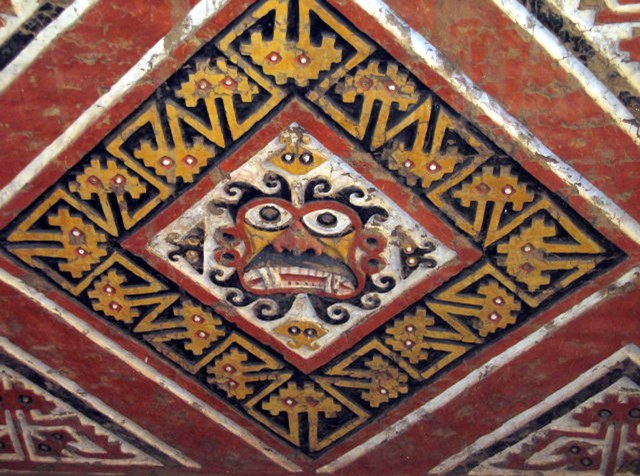
M

This party ousted Anastasio Somoza and was subsequently led by Daniel Ortega.

M

Daniel Ortega first came to power in the wake of the Nicaraguan Revolution as the leader of this party, which was opposed by the Contras.

E

Chamorro ran on a fusion ticket of liberal and conservative parties who opposed this left-wing movement, named for an anti-U.S. rebel and led by Daniel Ortega. Throughout the 1980s, its soldiers fought the Contras.

E

This Nicaraguan socialist political party overthrew Anastasio Somoza. This party waged a war against the U.S-backed Contras during the 1980s.

10 more clues from the record
H

A member of this group was shot and killed while assisting Leila Khaled in hijacking El Al Flight 219 in 1970.

H

The founder of this group was arrested alongside Victor Tirado, after which he wrote From Prison, I Accuse the Dictatorship.

H

This group founded the newspaper El Nuevo Diario after the publication La Prensa criticized them.

H

Jaime Wheelock Roman led the “Proletarian Tendency” subgroup of this party.

H

In power, this group mandated that all radio stations switch their broadcasts to recarry a government propaganda channel every six hours, and instituted other censorship according to the "Law for the Maintenance of Order and Public Security." This party advocated the "Zero Hunger Program" during their second stint in office.

H

Answer this bonus on everyone’s favorite 1980’s scandal. FTPE:The Iran-Contra Scandal stemmed from Reagan’s desire to support the rebels who were fighting this Cuban-backed leftist ruling party that had taken control of Nicaragua in 1979.

H

This party took its name from a peasant guerrilla leader who supported the Liberal general José María Moncada in the non-Brazilian Constitutionalist War. :Name this left-wing political party that took power in Nicaragua in 1979.

H

Identify the following about a rebel group, :Named for a resistance fighter murdered in 1933, this group led the overthrow of the Somoza regime in 1979 and battled the counter-revolutionary contras for parts of the 1980s.

H

The priest Ernesto Cardenal served in the cabinet of this party, whose ideology was heavily shaped by Carlos Fonseca. After losing an election in 1990, this party peacefully ceded power to Violeta Chamorro.

H

This group split into three factions over a theory called “GPP”, but was reunited by the “Group of Twelve”, who represented the Tercerist faction that would bring this group into power.

Watch out: Violeta Chamorro led the Junta of National Reconstruction with the Sandinistas, not against them initially
#627 · Explorers and Navigators · Level 2

Francisco Pizarro

Francisco Pizarro
bdi Amable-Paul Coutan /span /a · Public domain

Spanish conquistador · 1470s–1541 · Peru

Francisco Pizarro was the Spanish conquistador who conquered the Incan Empire in 1532 and founded Lima.

The kit

  • Rise — Francisco Pizarro led an expedition recalled by Pedro de los Ríos but defiantly drew a line in the sand asking loyal men to follow him.
  • Achievements — Francisco Pizarro won the Battle of Cajamarca in 1532 with 180 men, capturing Atahualpa and conquering the Incan Empire.
  • Conflicts — Francisco Pizarro collected rooms full of gold and silver as ransom for Atahualpa but executed him anyway despite the payment.
  • Death & succession — Francisco Pizarro was assassinated by supporters of Diego de Almagro's son who stormed his palace, making Almagro the new Governor of Peru.

Runs with

Incan Empire
conquered it in 1532 after Cajamarca open card →
Nanda Empire
Atahualpa
captured him at Cajamarca, ransomed then executed him open card →
Gold
demanded rooms filled with it as Atahualpa's ransom open card →

The ladder · 9 clues

H

This man’s life ended when supporters of Diego de Almagro's son stormed a palace and assassinated him, making Almagro the new Governor of Peru. name this conquistador who founded Lima after destroying the Inca Empire.

H

This man’s crew was nearly recalled by Juan Tafur, but the members who chose to stay with this man became known as the “Famous Thirteen.” After an enemy leader threw a Bible to the ground in the face of the priest Valverde, this man captured and ransomed that leader for a room full of gold.

H

When one of this man’s expeditions was recalled by Pedro de los Ríos, he defiantly drew a line in the sand and asked all loyal men to follow him.

H

This man’s body was allegedly placed in a glass coffin, but a team of forensic scientists discovered it was incorrectly identified.

M

This explorer later collected rooms full of gold and silver as ransom, but killed that leader, Atahualpa, anyway. name this Spanish conquistador who conquered the Inca Empire.

M

This Spanish conquistador conquered the Inca people of Peru in 1532 after winning the Battle of Cajamarca [[KAH-hah-MAR-kuh]].

M

This man defeated his former ally Diego de Almagro at the Battle of Las Salinas.

E

This victor of the Battle of Cajamarca founded the city of Lima after executing Atahualpa. name this Spanish conquistador who conquered the Incan empire.

E

Conquistador who led the expedition against the Incan Empire.

10 more clues from the record
H

This man was authorized to perform one action by the Capitulation of Toledo.

H

This man’s half-brother led a revolt eventually put down by a bishop named Pedro de la Gasca, but managed to kill viceroy Blanco Nunez at the Battle of Anaquito.

H

Answer the following about the fall of the Inca Empire, .This conquistador and 180 men conquered the Inca Empire.

H

Those men became known as the “famous thirteen.” This man was accompanied on his most famous expedition by Hernando de Soto.

H

After this man executed the loser of the Battle of Cajamarca [[kah-hah-MAHR-kah]], this man had two sons with his widow, renamed Dona Angelina.

H

According to Guns, Germs, and Steel , this man’s victory at Cajamarca could be attributed to better domesticated animals. Since the Inca Empire lacked livestock other than llamas, they were more susceptible to diseases like smallpox.

H

This Spanish conquistador captured Athualpa and took over the Inca. He had earlier served under Gonzalo de Cordoba and built up his career by helping Pedarias Davila lynch Balboa.

H

Jared Diamond, in Guns, Germs, and Steel, questionably asserts that this man achieved victory over an enemy because this man’s civilization had access to writing while his opponent was illiterate.

H

This leader of the “famous thirteen” ambushed a certain opponent at Cajamarca and retrieved twenty-four tons of gold and silver after ordering a room to be filled with precious metal.

H

This founder of the city of Lima who conquered the Inca Empire held Atahualpa prisoner in a room full of gold before executing him.

Watch out: Confused with Hernán Cortés, who conquered the Aztecs rather than the Incas
#628 · Explorers and Navigators · Level 2

Hernán Cortés

Hernán Cortés
Unknown artist Unknown artist /span · Public domain

Spanish conquistador · 1485–1547 · Mexico

Hernán Cortés was the Spanish conquistador who conquered the Aztec Empire with European and Tlaxcalan allies in 1519–1521.

The kit

  • Rise — Hernán Cortés burned his ships after landing at Veracruz and allied with the people of Tlaxcala against the Aztecs.
  • Conflicts — Hernán Cortés and Pedro de Alvarado were wounded fleeing Tenochtitlan during La Noche Triste (the Night of Sorrows).
  • Achievements — Hernán Cortés became the first governor of New Spain and established Mexico City after conquering the Aztecs.
  • Legacy — Hernán Cortés had a son with his interpreter La Malinche who was one of the first mestizos.

Runs with

Aztec Empire
conquered it in 1519–1521 with Tlaxcalan allies open card →
Nanda Empire
Tenochtitlan
fled it during La Noche Triste before returning to conquer open card →
Montezuma
killed the Aztec emperor during his conquest open card →

The ladder · 9 clues

H

This man's relationship with Catalina Juárez infuriated her brother, Diego Velázquez de Cuéllar, until he finally married her.

H

This man was threatened by a rival expedition led by Francisco de Garay.

H

This man sent Cristóbal de Olid to conquer Honduras, but later sent two warships after him when he declared independence.

H

Montezuma was killed by this Spanish conquistador who conquered the Aztecs.

M

In his letters to Charles V, this man claimed that enemy soldiers had confused him for Quetzalcoatl. name this Spanish conquistador who conquered F the Aztec Empire.

M

This commander, along with Pedro de Alvarado, was wounded while fleeing a capital city in the La Noche Triste.

M

This man burned his ships after landing at modern Veracruz and allied with the people of Tlaxcala [t’lahsh-kah-lah].

E

La Malinche served as a translator for this man, who commanded European and Tlaxcala forces at the Battle of Otumba.

E

The conquistador who overthrew Montezuma and conquered the Aztecs?

10 more clues from the record
H

This Spaniard conquered the Aztec Empire. He destroyed his own ships to encourage his men to press on.

H

This man was the first governor of New Spain, and he established Mexico City. :Name this conquistador who conquered the Aztecs after they mistook him to be Quetzalcoatl.

H

La Malinche acted as his advisor and bore him a son and many of his followers died after Cuitlahuac’s followers attacked his settlement on La Noche Triste or the Night of Sorrows, forcing him to retreat from Tenochtitlan.

H

This man's son, Martin [[mahr-TEEN]], was exiled by Philip II of Spain after being in a plot to overthrow the Marqués de Falces [[FAHL-sess]].

H

This man ordered the execution of Cuauhtémoc while en route to remove his rival Cristóbal de Olid at Triunfo de la Cruz.

H

This man was attacked by his rivals Diego Velazquez and Bishop Fonseca in the Council of the Indies.

H

This man had a son with his interpreter, La Malinche, who was one of the first mestizos.

H

He invaded Honduras to defeat his rebellious lieutenant Cristóbal the Old.

H

This man's forces were nearly routed in La Noche Triste (pr.

H

Were conquered by forces led by which Spaniard?

Watch out: Montezuma (the Aztec emperor he defeated, not the conquistador)
#648 · Technologies, Inventions, and Scientific Discoveries · Level 2

Chinampas

Chinampas
The original uploader was Kristinoller /a at English Wikiped · CC BY-SA 3.0

Aztec floating gardens · Pre-Columbian era · Lake Texcoco, Valley of Mexico

Chinampas were rectangular artificial islands built by Aztecs in shallow lake beds to grow crops on highly fertile soil.

The kit

  • Construction — Chinampas were built using dredged mud, interwoven reed fences, and canals to create rectangular parcels in shallow lakes.
  • Agriculture — Chinampas grew maize, tomatoes, beans, and diverse crops with soil replenishment supporting seven harvests yearly according to Spanish sources.
  • Scale — Chinampas on Lake Texcoco supported hundreds of thousands of people in the Valley of Mexico before Spanish conquest.
  • Legacy — Chinampas were drained after Montezuma's death when Spanish eliminated Lake Texcoco, though 1975 INIREB experiments attempted revival in Veracruz.

Runs with

Nanda Empire
no connection evident in clues open card →
Aztec Empire
built and maintained chinampas throughout Valley of Mexico open card →
Tenochtitlan
chinampas were constructed around Tenochtitlan on Lake Texcoco open card →
Mexico
located in Valley of Mexico beginning on Lakes Chalco and Xochimilco open card →

The ladder · 9 clues

H

Technique for growing crops in shallow lake beds on small rectangular areas.

H

Agricultural method that used interwoven reeds beneath the surface of lakes to create artificial “fences.”

H

Agricultural innovation used to grow crops on the shallow beds of bodies of water.

H

These rectangular parcels of land, often nicknamed "floating gardens," were constructed by the Aztecs along the shores of Lake Texcoco to grow maize, tomatoes, and many other crops.

M

Beginning on Lake Chaclo and Lake Xochimilco, the Mesoamericans built these artificial “floating gardens” on Lake Texcoco, where crops could be grown.

M

The replenishment of soil in these artificial places helped to support the hundreds of thousands of people living in the Valley of Mexico before the Spanish conquest. name these incredibly fertile places built around Tenochtitlan in Lake Texcoco to grow a diverse variety of crops.

M

Critics of the cannibalism hypothesis contend beans produced in these “floating gardens” formed a healthy protein diet for inhabitants of the Valley of Mexico, reducing the need for cannibalism.

M

In Pre-Columbian America, the Mexica developed this method of agriculture. This method relied on organizing the usable soil into rectangular beds on lakes.

M

These places, which Spanish sources describe supplying 7 harvests a year, were first built with dredged mud, fences, and canals by the Xochimilca people.

6 more clues from the record
H

An early New Philology work was Sarah Cline’s thesis on Culhuacán, which may have been the first town that planted crops on these “floating islands” in the Valley of Mexico.

H

According to one story, these non-city places were constructed after a leader, Acatonallo, built the first one after migrating over mountains.

H

In 1975, the INIREB experimented with the construction of these places in Veracruz and Tabasco, outside their traditional range, with mixed success.

H

These places are traditionally protected with lines of bonpland willow trees planted to act like fences.

H

The name of these places translates to “square made of canes place”, reflecting their construction using zoquimatl with wattle.

M

The Spanish drained Lake Texcoco after Montezuma’s death, depriving water from these rectangular gardens named for the Nahuatl word for “in the fence of reeds."

#670 · Recurring Games, Festivals, and Ceremonies · Level 2

1968 Summer Olympics

1968 Summer Olympics
ArturM · Public domain

Olympic Games in Mexico · 1968 · Mexico City

The 1968 Summer Olympics were the first Olympic Games held in Latin America, taking place in Mexico City.

The kit

  • Prelude — The 1968 Summer Olympics were preceded by the Tlatelolco Massacre, in which up to 300 students were killed ten days before opening ceremonies.
  • Achievements — The 1968 Summer Olympics saw Vera Čáslavská win six medals before she refused to deny signing the Two Thousand Words manifesto.
  • Legacy — The 1968 Summer Olympics featured Hans-Gunnar Liljenwall becoming the first Olympic athlete disqualified for failing a drug test.

Runs with

Gold
Vera Čáslavská won six medals at these Games open card →
1980 Summer OlympicsWater
1968
these Olympics occurred in this year open card →

The ladder · 3 clues

H

After winning six medals at this Olympics, Vera Caslaskva refused to deny having signed the Two Thousand Words.

H

During this Olympics, Hans-Gunnar Liljenwall became the first Olympic athlete to be disqualified for failing a drug test.

M

Ten days before its opening ceremonies, up to 300 students were killed in the Tlaltelolco Massacre. which Olympic Games were the first to be held in Latin America?

#685 · Archaeological Sites and Ruined Cities · Level 2

La Venta

La Venta
Alfonsobouchot · Public domain

Olmec archaeological site · after San Lorenzo's decline · Tabasco, Mexico

La Venta was the second capital of the Olmec civilization, featuring the 100-foot-tall Great Pyramid complex and colossal stone heads.

The kit

  • Rise — La Venta became the center of Olmec culture after the decline of San Lorenzo.
  • Achievements — La Venta features the 100-foot-tall Great Pyramid complex.
  • Monuments — La Venta contains colossal heads found at Complex B at this site.

Runs with

San Lorenzo
became Olmec center after San Lorenzo declined open card →
Olmec Civilization
served as second capital of this civilization open card →
Mexico
located in Tabasco state open card →
Common

The ladder · 3 clues

H

This Olmec site in modern Tabasco, Mexico features the 100-foot-tall “Great Pyramid” complex and four massive heads.

M

After the decline of San Lorenzo, the center of the Olmec culture shifted to this city, which became its second capital.

M

Several colossal heads have been found in the sites of San Lorenzo, Tres Zapotes, and Complex B in this Olmec archaeological site in Tabasco. This site also contains the Great Pyramid.

#686 · Archaeological Sites and Ruined Cities · Level 2

San Lorenzo

San Lorenzo
Livioandronico2013 · CC BY-SA 4.0

Olmec ceremonial center · 1200–900 BCE peak · Veracruz, Mexico

San Lorenzo was the earliest major center of Olmec civilization, known for monumental stone heads before decline around 900 BCE.

The kit

  • Rise — San Lorenzo served as the original center of Olmec civilization in Mesoamerican history.
  • Achievements — San Lorenzo became known for building large stone heads characteristic of Olmec culture.
  • Decline — San Lorenzo was supplanted by La Venta and Tres Zapotes as the primary Olmec centers.

Runs with

Olmec Civilization
earliest major ceremonial center of this civilization open card →
La Venta
succeeded San Lorenzo as primary Olmec center open card →
Florence
shares name with Lorenzo the Magnificent's city open card →
Pope

The ladder · 3 clues

M

This city was the original center of Olmec civilization, before it was supplanted by La Venta and Tres Zapotes.

E

Sandro Botticelli was patronized by a leader of this city known as Lorenzo the Magnificent. name this Italian city ruled by the Medici family.

E

La Venta and San Lorenzo were centers of this early Mesoamerican civilization that became known for building large stone heads.

Watch out: Lorenzo the Magnificent (ruled Florence, not related to this site)
#699 · Other Rebellions, Revolts, and Uprisings · Level 2

Mexican Revolution

Mexican Revolution
Osuna · CC BY-SA 3.0

Mexican civil war · 1910–1920 · Mexico

The Mexican Revolution overthrew Porfirio Díaz's 35-year Porfiriato dictatorship and saw a decade of civil war among competing factions.

The kit

  • Origins — The Mexican Revolution began with the Plan of San Luis Potosí, which scheduled the uprising for 6pm on November 20, 1910.
  • Leadership struggles — The Mexican Revolution saw Francisco Madero elected president in 1911, then assassinated during the Ten Tragic Days in 1913 by Victoriano Huerta.
  • Military factions — The Mexican Revolution featured agrarian armies led by Emiliano Zapata and Pancho Villa fighting against Venustiano Carranza's Constitutionalist forces.
  • Legacy — The Mexican Revolution produced the 1917 Constitution restricting the Catholic Church and led to the creation of the PRI political party.

Runs with

Porfirio Díaz
His 35-year Porfiriato dictatorship was overthrown in 1911 open card →
Emiliano Zapata
Led agrarian faction demanding land reform open card →
Pancho Villa
Led northern military faction until pacification ended fighting open card →
Venustiano Carranza
Constitutionalist leader who held Convention of Aguascalientes open card →

The ladder · 9 clues

H

The U.S. intervened to stop the German ship Ypiranga from arming militants in this conflict.

H

The creation of the PRI was triggered by this event that also saw uprisings led by Pancho Villa and Emiliano Zapata. :Identify this period from 1910 to 1920 that saw the presidencies of Victoriano Huerta and Venustiano Carranza.

H

The Neutral White Cross was established to provide medical relief during this period.

H

The U.S. also interfered in this conflict by occupying a port in the Tampico Affair.

M

This conflict was slated to start at 6pm on November 20 according to the plan of San Luis Potosi.

M

During this conflict, Henry Lane Wilson was implicated in several assassinations during the Ten Tragic Days.

M

This war stemmed from a reign called the “Porfiriato,” and the political party PRI is named for this conflict.

E

The Ten Tragic Days this resulted in the assassination of Francisco Madero, took place during, what decade-long revolution that began with the ousting of Porfirio Diaz and whose military actions ended with the pacification of Pancho Villa.

E

During this conflict's Ten Tragic Days, Victoriano Huerta took power from Francisco Madero.

10 more clues from the record
H

Soldaderas were female soldiers in this civil war who adopted male names to fight.The 1917 Constitution passed during this civil war restricted the Catholic Church and led to the Cristero War of the 1920s under Plutarcho Calles.

H

Venustiano Carranza held the Convention of Aguascalientes during this period, which was ushered in by the Plan of San Luis Potosi.

H

The distraction of this conflict caused the government to literally forget they had just installed an outpost on Clipperton Island, causing its lighthouse keeper to begin a monarchy aimed at sexually enslaving all of its young women, only to be foiled when they promptly came together and butchered him with a hammer.

H

In the years before this conflict, the Cananea strike led by Sonora’s copper miners and the Río Blanco strike of textile workers in Veracruz and Puebla epitomized popular discontent with the government. :Emiliano Zapata led an agrarian faction during what 1910–1920 civil war that ended the 35-year administration of the Porfiriato?

H

After the failure of the presidency of Porfirio Diaz, this event saw the election of liberal president Francisco Madero, who was assassinated two years later by conservatives. FTPE:Name this period of upheaval that partially coincided with World War I and lasted from 1910-1920.

H

One side in this conflict was supported by so-called “city boys” and was lead by a man attacked as “the Attila of the South.” A major catalyst for this conflict was a letter sent from prison that demanded “free suffrage and no reelection.” One of the losers of this conflict employed a paramilitary force called the rurales.

H

Luis González narrated historical events like this one through their effects on the villagers of San José de Gracia in Michoacán. This event saw the 1911 overthrow of the dictatorship of Porfirio Díaz.

H

One combatant during this event had a henchman who once shot a man to see which way he would fall , and rescheduled battles and executions to accommodate a film crew.

H

The newspaper Regeneration popularized the anarcho-communist “Magonist” movement that fueled one faction in this conflict, during which a brief detention of U.S. sailors resulted in a 6-month occupation.

H

Madero served as president from 1911 to 1913 during this conflict sparked when Díaz announced a new election. Emiliano Zapata fought for agrarian rights during this conflict.

Watch out: Cristero War (1920s Catholic uprising that followed, not part of the Revolution itself)
#770 · US Political Parties and Factions · Level 2

the Squad

the Squad
w:Jahangir Razmi · Public domain

militant unit or group · 20th century · Ireland and Peru

The Squad refers to two distinct groups: an IRA assassination unit and a Peruvian communist guerrilla organization.

The kit

  • Irish unit — The Squad was an IRA unit commanded by Mick McDonnell that assassinated members of the Cairo Gang.
  • Peruvian guerrillas — The Squad was a communist guerrilla group in Peru fought by the government death squad Grupo Colina.
  • Barrios Altos — The Squad's student sympathizers were massacred by Grupo Colina during the Barrios Altos Massacre.

Runs with

ships
no connection evident in clues open card →
dictator
Japan
no connection evident in clues open card →
Pacific
no connection evident in clues open card →

The ladder · 3 clues

H

Unit, founded by that strategist and commanded by Mick McDonnell, that assassinated members of the Cairo Gang.

M

Communist guerrilla group that was fought by the government death squad Grupo Colina.

M

Student sympathizers of this movement were brutally massacred by the anti- leftist death squad known as Grupo Colina during the Barrios Altos Massacre.

Watch out: Two unrelated groups share this name: an Irish Republican unit and a Peruvian communist organization
#842 · Non-Classical Mythological and Legendary Figures · Level 2

Quetzalcoatl

Quetzalcoatl
Unknown author Unknown author · Public domain

Aztec feathered serpent deity · pre-Columbian era · Mesoamerica

Quetzalcoatl was an Aztec deity whose name means 'feathered serpent' who retrieved human bones from the underworld and restored mankind.

The kit

  • Creation role — Quetzalcoatl contributed his own blood to create the fifth world-cycle and invented books and the calendar.
  • Divine conflicts — Quetzalcoatl fought with Tezcatlipoca and burned himself to death after sleeping with a celibate priestess while drunk.
  • Mayan equivalents — Quetzalcoatl had two Mayan equivalents, Gukumatz and Kukulkan, whose names also translate to 'feathered serpent.'
  • Spanish conquest — Quetzalcoatl was identified with Venus and supposedly with conquistador Hernán Cortés when he arrived in Mexico in 1519.

Runs with

Aztec Empire
Hernán Cortés
some Aztecs believed him an incarnation open card →
Tezcatlipoca
fought with this rival deity open card →
Nanda Empire

The ladder · 9 clues

H

This Aztec deity, who possesses a name meaning “feathered serpent,” retrieves the bones of mankind from the underworld and dips them in his own blood to restore the human race to life.

H

In one version of a myth often compared to the story of Jesus Christ, this god was born to a virgin named Chimalman, to whom the god Onteol appeared in a dream.

H

This god is sometimes referred to as the White Tezcatlipoca, the god of light and the ruler of the western cardinal direction.

H

This god burned himself to death after he slept with a celibate priestess while drunk.

M

This god contributed his own blood to create the fifth world-­‐cycle, and supposedly invented books and the calendar.

M

In Mayan culture, this god had two equivalents: Gukumatz and Kukulkan, whose names also roughly translate to “feathered serpent.” name this Aztec god of the wind.

M

According to popular legend, some Aztecs believed Hernan Cortez to be an incarnation of this god.

M

Altar Q claims Yax K’uk’ Mo’ came from the city of Teotihuacán, from which people named for this creature also conquered Tikal. Deities like Kukulkan who took this specific form were worshiped by many Mayans.

E

This brother of Xolotl [sho-LOT-ull] was identified with Venus and, supposedly, also with the conquistador Hernan Cortes when he arrived in Mexico in 1519. name this Aztec God who fought with Tezcatlipoca, a feathered serpent.

Watch out: Tezcatlipoca, who fought with Quetzalcoatl and is sometimes called the Black Tezcatlipoca in contrast
#850 · Non-Classical Mythological and Legendary Figures · Level 2

Tezcatlipoca

Tezcatlipoca
Unknown author Unknown author · Public domain

Aztec deity · pre-Columbian era · Mesoamerica

Tezcatlipoca was a Nahua god who served as patron deity of Tlaxcala and legendarily brought down a Toltec ruler using a mirror.

The kit

  • Worship — Tezcatlipoca was invoked through septum piercings given to teteuctin upon their initiation in Tlaxcalan religious practices.
  • Toltec legend — Tezcatlipoca legendarily brought down a Toltec ruler by making him look in a mirror, demonstrating his power over leadership.
  • Origins — Tezcatlipoca evolved from earlier Nahua gods according to the Continuity Hypothesis of Mesoamerican religious development.

Runs with

Quetzalcoatl
Quetzalcoatl fought with Tezcatlipoca in Aztec mythology open card →
Aztec Empire
deity worshiped in Aztec religious system open card →
Tlaxcala
served as patron god of Tlaxcala open card →
Mexico
worshiped in pre-Columbian Mexico open card →

The ladder · 3 clues

H

Upon initiation, teteuctin were given a septum piercing to invoke this patron god of Tlaxcala. This Nahua god legendarily brought down a Toltec ruler by getting him to look at himself in a mirror.

H

The "Continuity Hypothesis" claims these people's gods evolved into figures like Tezcatlipoca [tehz-KAHT-leh-POH-cah]].

M

This brother of Xolotl [sho-LOT-ull] was identified with Venus and, supposedly, also with the conquistador Hernan Cortes when he arrived in Mexico in 1519. name this Aztec God who fought with Tezcatlipoca, a feathered serpent.

#871 · Commodities and Trade Goods · Level 2

Silver

Silver
Alchemist-hp /a ( talk /span /a ) ( a rel="nofollow" www.pse · CC BY-SA 3.0 de

precious metal · ancient times–present · worldwide

Silver is a precious metal central to monetary systems, mined extensively at Potosí, Bolivia, and subject of U.S. Free Silver movement.

The kit

  • Mining — Silver was extracted at Cerro Rico near Potosí, Bolivia using the patio process and forced mit'a labor under Spanish colonial rule.
  • Colonial trade — Silver was carried by galleons from Acapulco to Manila across the Pacific to trade with China, which Ming dynasty required for tribute payments.
  • U.S. monetary policy — Silver was the focus of the Bland-Allison Act (passed over Hayes's veto) and Sherman Silver Purchase Act, which mandated government purchases.
  • Free Silver movement — Silver bimetallism was championed by William Jennings Bryan's 'Cross of Gold' speech and Senator Henry M. Teller's Free Silver political party.

Runs with

Gold
paired metal in bimetallism debates and 'Cross of Gold' speech open card →
Nanda Empire
no connection evident in clues open card →
coins
used to make Pieces of Eight and early U.S. coins open card →
bimetallism
Free Silver movement advocated bimetallic standard using this metal open card →

The ladder · 9 clues

H

Senator Henry M. Teller created a political party as part of a “Free” movement in support of this commodity.

H

This material was used to create distinctive bulging-bottom drinking mugs known as "canns." This substance comprised the "Flowing Hair" and "Draped Bust" items issued in the 1790s.

H

The patio process was used to extract this metal, which was often mined at Cerro Rico, or “rich mountain” near the Bolivian city of Potosi.

H

John Sherman proposed an 1890 act doubling the government’s purchasing of this resource.

M

As President, Hayes vetoed the Bland-Allison Act, a bill that would have required the US Treasury to purchase this commodity and convert it into currency.

M

During the colonial era, galleons regularly carried this commodity across the Pacific from Acapulco to Manila, to trade with China.

M

The vetoed Bland-Allison Act would have required the government to purchase this good.

E

As a bimetallist, William Jennings Bryan supported the “freeing” of this resource in his “Cross of Gold” speech. name this precious metal.

E

Asunción is the longest-inhabited city in a basin named for this precious metal, which was mined under a Spanish encomienda in Bolivia’s Potosí region.

10 more clues from the record
H

Charlie Siringo worked undercover in this specific industry to bust an 1892 labor strike in Coeur d’Alene.

H

A party named for this material was led by Governors John Jones and Reinhold Sadler in Nevada.

H

The supply of a different good in Huancavelica allowed for the mass mining of this metal via mercury amalgamation.

H

In Congress, this substance overlooked by the “crime of ‘73” was the subject of a bill passed over Hayes’s veto, the Bland-Allison act.

H

The Grosh brothers discovered one notable site for this resource, which WH Harvey advocated for with his pamphlet Coin’s Financial School.

H

Ming China was described as the world’s suction pump of this commodity, and the Single Whip law required tributes to be paid in this commodity.

H

Viceroy Francisco de Toledo used the mit’a system to recruit forced labor to extract this resource, which was used to make coins known as Pieces of Eight.

H

A political party named for this was able to get two governors elected in Nevada in the early 20th century.

H

The Spanish appropriated the mita system to force Native Americans to mine this metal at the mountain of Cerro Rico, near Potosi in Bolivia.

H

Utah’s Little Cottonwood District is notable for its production of this commodity that Ed Schieffelin discovered near Apache lands.

Watch out: Gold was the other metal in bimetallism debates and paired with silver in the 'Cross of Gold' speech
#923 · Native American Peoples · Level 2

Mapuche

Mapuche
Al2 · CC BY 3.0

Indigenous people · pre-Columbian to present · Southern Chile and Argentina

Mapuche are indigenous people of southern Chile and Argentina who resisted Spanish conquest in the Arauco War.

The kit

  • Rise — Mapuche encountered Incan expeditions around the Bio-Bio River and later became Chile's largest indigenous population today.
  • Conflicts — Mapuche defeated and killed conquistador Pedro de Valdivia and forced Spanish abandonment of settlements south of the Bio-Bio River.
  • Achievements — Mapuche toqui Lautaro won the Battle of Tucapel, while later leader Caupolicán killed a Spanish commander after that battle.
  • Legacy — Mapuche launched the Destruction of the Seven Cities uprising and speak a language isolate still used around Temuco.

Runs with

Chile
homeland in southern Chile open card →
Argentina
inhabited Pampas and Patagonia open card →
Nanda EmpirePacific

The ladder · 9 clues

H

These people launched malón cattle raids and had their toes cut off by a commander who was killed after the Battle of Tucapel by Caupolicán.

H

After both of his hands were amputated, a warrior among these people tied two knives to his wrists to keep on fighting.

H

One expedition against these people was defeated at the Battle of Tucapel by their toqui , or war chief, Lautaro.

H

These people lived around the town of Temuco and the River Bio-Bio, and they speak a language isolate.

M

All Spanish settlements south of the Bio-Bio River were attacked during these people’s Destruction of the Seven Cities.

M

Uprisings by these people led to the abandonment of settlements in their lands south of the Bio-Bío River.

M

These indigenous people of southern Chile fought several wars against Pedro da Valdivía, and killed him, before the Spanish began exploiting mineral resources there.

E

These native people of the Pampas and Patagonia were targeted by the Conquest of the Desert. Today, they make up the majority of Chile’s indigenous population.

E

These people were led by chieftains called lonco, who appointed military leaders called toqui, who defeated and killed the conquistador Pedro de Valdivia.

10 more clues from the record
H

These people’s traditional assembly, the coyag, was the basis for a parliament proposed by the Frenchman Orélie-Antoine I , who declared himself king of these people.

H

These people, who built the wooden funerary statues known as Chemamull [[che-mah-MUHL]], were led by Chief Lautaro [[low-TAH-roh]] in their victory against the Spanish at Tucapel.

H

According to the Spanish chronicler Diego de Rosales, these people encountered Incan expeditions around the Bio-Bio River and later defeated the conquistador Pedro de Valdivia.

H

Polynesian chicken bones at the El Aranal site have been used as evidence that these people were visited by Trans-Pacific travelers from Tonga.

H

A 1640 volcanic eruption may have persuaded these people to sign a peace treaty at the Parliament of Quillin.

H

News of an ambush at Curalaba prompted these people to launch an uprising that culminated in the Destruction of the Seven Cities.

H

Philip II referred to the conflict against these people as the “Indian Flanders” due to the number of Spanish soldiers they killed. :Name these native people of Chile and Argentina, who forced the destruction of the Seven Cities during the Arauco War under the leadership of Toqui like Caupolican.

H

Answer the following about black conquistadors .The former slave Juan Valiente, after participating in the conquest of Peru, died while fighting this tribe. Wars against this tribe inspired the writing of the Araucaniad and were led by Pedro de Valdivia.

H

Catalina de Erauso received the rank of ensign while fighting these people, passing as a man, and later becoming immortalized as the “Lieutenant Nun.” Pelantaro led an uprising of these people that ended in the Battle of Curalaba.

H

Guillaume Boccara classed these people’s military actions into vindictive attacks called tautulun, defensive wars called weichan, and a type of rapid supply raid.

Watch out: Lautaro and Caupolicán were separate Mapuche leaders at different times, not the same person
#926 · Pre-Columbian Civilizations and Empires · Level 2

Incan Empire

Incan Empire
Adapted from Huhsunqu /a , made by Pachakutec · CC BY-SA 2.5

Pre-Columbian South American empire · c. 1438–1572 · Andes, centered in Peru

Incan Empire was the largest pre-Columbian American empire, organized into four suyus and using quipu knotted strings for record-keeping.

The kit

  • Rise — Incan Empire expanded southward until the Mapuche people defeated them at the Battle of the Maule River.
  • Achievements — Incan Empire built Machu Picchu stone citadel around 1450 and the Qhapaq Ñan road network using mit'a forced labor.
  • Conflicts — Incan Empire was weakened by the War of the Two Brothers civil war between Huascar and Atahualpa after Huayna Capac's death.
  • Fall — Incan Empire fell after Atahualpa was defeated at the 1532 Battle of Cajamarca and Spanish conquest was completed in 1572.

Runs with

Francisco Pizarro
conquered the empire after Cajamarca open card →
Nanda Empire
unrelated empire with similar name open card →
Atahualpa
last sovereign ruler, defeated 1532 open card →
Cusco
capital city of the empire open card →

The ladder · 9 clues

H

This empire, which was divided into four suyus, used quipu [[KEE-poo]] for communication and record-keeping.

H

This empire’s southern expansion was ended at the Maule River by the Mapuche people, and the Battle of Cajamarca secured its decline.

H

Tupac Amaru’s 1572 uprising could not reverse the fate of this empire. :Identify this empire that was weakened by the civil war between the sons of Huayna Capac.

H

This empire built the Qhapaq Ñan by pioneering a forced labor system called mit'a.

M

Around 1450, this empire built a stone citadel in the Andes Mountains. name this South American empire that built Machu Picchu in Peru.

M

This empire had Chasqui runners who ate coca leaves and used quipu [[KEE-poo]] knotted strings to keep records. name this Quechua [[KEH-chwah]]-speaking South American empire.

M

One general claimed that this civilization's god Viracocha told him in a vision that a foreign ruler should surrender, culminating in the Battle of Cajamarca [[KYE-yuh-mar-kuh]].

E

Atahualpa was the last sovereign ruler of this pre-colonial empire in South America, which was conquered by Francisco Pizarro.

E

This empire that used the knot system of quipu experienced a civil war between Huascar and Atahualpa. name this South American empire conquered by the conquistador Francisco Pizarro.

10 more clues from the record
H

This empire's Qhapaq Ñan (KAH-pak NYAHN) road network was used to transmit information with strings called quipu (KEE-poo).

H

This empire was the largest in pre-Columbian America.Name this empire centered in modern-day Peru. It was conquered by the Spanish in 1572.

H

This empire was organized into more than 80 wamani, and was more generally divided into four quarters called suyu.

H

This empire was divided during the War of the Two Brothers, during which Huascar’s claim to the throne was suppressed.

H

Forces of this empire were defeated at the Battle of the Maule by the Mapuche.

H

This empire had feminine schools called Aklla wasi, and these people used abacus-type devices called yupana.

H

A Dominican named Vincent de Valverde was spared by a man who usurped this empire's throne after ruling over Quito; that man was defeated at the 1532 Battle of Cajamarca and was the half-brother of its earlier leader Huáscar. Name this South American empire that was conquered by Francisco Pizarro.

H

This empire was attacked by foreign troops after its ruler threw a Bible at the ground, insulting friar Vicente.

H

This empire used knotted ropes known as quipu as record-keeping devices. :Name this South American empire centered at Cuzco.

H

This empire used a system of labor taxation called mita, while messengers used by this empire were called chasqui.

Watch out: Nanda Empire (different ancient empire, similar name pattern)
#927 · Pre-Columbian Civilizations and Empires · Level 2

Aztec Empire

Aztec Empire
ul li File:Aztec Empire (orthographic projection).svg /a : K · CC BY-SA 3.0

Mesoamerican empire · 1428–1521 · Valley of Mexico

The Aztec Empire was a Mesoamerican power formed by the Triple Alliance of Tenochtitlan, Texcoco, and Tlacopan after the Tepanec War.

The kit

  • Rise — Aztec Empire was founded near Lake Texcoco after a priest witnessed an eagle eating a snake on a cactus.
  • Achievements — Aztec Empire developed chinampas, floating gardens on shallow lake beds that ringed the capital city of Tenochtitlan.
  • Conflicts — Aztec Empire engaged in ritualized flower wars with neighbors and practiced human sacrifice at religious ceremonies.
  • Death & succession — Aztec Empire fell in 1521 after Hernán Cortés conquered Tenochtitlan, following the disaster of La Noche Triste.

Runs with

Nanda Empire
unrelated empire with similar name open card →
Tenochtitlan
capital city and primary altepetl open card →
Hernán Cortés
Spanish conquistador who conquered the empire in 1521 open card →
Montezuma
Moctezuma II ruled when Cortés invaded open card →

The ladder · 9 clues

H

The people of this empire let all sacred fires burn out every 52 years for a New Fire ceremony called the Binding of the Years.

H

The Tepanec War led to a Triple Alliance of this empire’s cities, including Tlacopan.

H

This empire developed the chinampa as means of farming on shallow lake beds. :This empire’s capital city at Tenochtitlan fell in 1521.

H

An important primary account of this empire’s mythology was compiled by Bernardino de Sahagun and is named the Florentine Codex.

M

Floating gardens called chinampas ringed this civilization’s capital.

M

This empire was formed from the unification of three cities into the Triple Alliance but collapsed shortly after the events of La Noche Triste.

M

In trying to escape from the capital of this empire, Spanish soldiers experienced La Noche Triste [la no-chay tree-stay]. :Name this empire, led by Montezuma, which was conquered by Hernan Cortes in 1521.

E

Montezuma ruled this Mesoamerican empire that practiced human sacrifice and was conquered by Hernan Cortes.

E

This civilization was ruled by Montezuma II. identify this Mesoamerican civilization conquered by Hernan Cortes in 1521.

10 more clues from the record
H

This empire built floating gardens used for agriculture called chinampas.

H

La Noche Triste was one event during Hernán Cortés’s invasion of this empire, once led by Moctezuma II. This Mesoamerican empire was centered in the Valley of Mexico.

H

It was founded near Lake Texcoco after a priest witnessed an eagle eating a snake on a cactus.

H

Other military groups in this empire had names like Otomies and Eagle Knights.

H

Tenochtitlan was the primary altepetl (ahl-TAY-peh-tull), or city-state, of this empire, which was ruled by Moctezuma II (MOCK-teh-ZOO-muh the second) and overthrown by Hernán Cortés (air-NAHN kor-TAYZ).

H

The people of this empire were divided into organizational units called calpulli.

H

Forces under Hernán Cortés caused the fall of this empire, which built floating gardens called chinampas at Tenochtitlan. Moctezuma II was a ruler of this empire.

H

This empire engaged in ritualized "flower wars" with its neighbors. :Identify this Mesoamerican empire whose capital was Tenochtitlan. They were defeated by Hernan Cortez.

H

This kingdom’s culture was depicted in the Florentine Codex, while Bernal Diaz del Castillo's catalogues of this empire describes La Malinche’s help of the invaders who ultimately conquered it.

H

Described at length in the Florentine Codex of Bernardino de Sahagún., the ruler of one of its three ruling cities, Fasting Coyote, was famed as a poet in the Nahuatl (NA-wa-tl) language.

Watch out: Nanda Empire (different ancient empire with similar name)
#928 · Pre-Columbian Civilizations and Empires · Level 2

Maya Civilization

Maya Civilization
Kmusser · CC BY-SA 3.0

Mesoamerican civilization · c. 2000 BCE–1500s CE · Yucatán Peninsula

Maya Civilization was a Mesoamerican culture centered in the Yucatán that built major city-states including Tikal, Palenque, and Chichen Itza.

The kit

  • Rise — Maya Civilization developed city-states in the Petén Basin including Tikal and Calakmul ruled by leaders called ajaws.
  • Achievements — Maya Civilization created the Long Count calendar with a 260-day cycle and produced the Dresden and Madrid codices.
  • Conflicts — Maya Civilization city-states fought "star wars" against each other and were defeated by rival Spear-thrower Owl of Teotihuacan.
  • Legacy — Maya Civilization sites were documented in Frederick Catherwood's drawings made during expeditions with John Lloyd Stephens in the 1800s.

Runs with

Chichen Itza
major Maya city in Yucatán with ballcourts open card →
Tikal
major Maya city-state in Petén Basin open card →
Palenque
Maya city where Temple of the Cross was built open card →
Pacal the Great

The ladder · 9 clues

H

Coronation glyphs from this culture are found on Altar Q at the site of Copan.

H

Several city-states of this civilization were defeated by their rival, Spear thrower Owl, a leader of Teotihuacan [[teh-oh-tee-HWAH-kan]].

H

The Dresden and Madrid codices were produced by this Mesoamerican civilization. This civilization’s major cities included Tikal, Calakmul, and Chichen Itza.

H

Tikal was a city of this Mesoamerican civilization of the Yucatán, whose other cities included Uxmal and Copán.

M

A ruler of this civilization, Pacal the Great, built the “Olvidado”, a forgotten temple.

M

King Pacal of these people was born on 9.8.9.13.0 in this people’s “Long Count” calendar.

M

These people’s plight during a decades-long civil war was documented by Nobel Peace Prize winner Rigoberta Menchú .

E

This civilization, centered in the Yucatan peninsula, underwent a collapse in the 9th century AD. :Name this civilization whose major sites include Uxmal and Chichen Itza.

E

civilization whose Long Form calendar was unsuccessfully used to predict a 2012 apocalypse?

10 more clues from the record
H

The Petén Basin is home to this civilization’s cities of Tikal and Calakmul.

H

Rivals within this group of people fought a series of battles known as “star wars” and leaders of these people were known as ajaws.

H

The Mesoamerican ballgame was played by this civilization in cities like Palenque and Chichen Itza. Their Long Count calendar was used to (incorrectly) predict that the world would end in 2012.

H

The Temple of the Cross was built by this civilization in its city of Palenque.

H

Frederick Catherwood was known for his drawings of these people’s sites, made while on an expedition with John Lloyd Stephens.

H

These people were ruled by a queen named Sak K’uk , who was the mother of these people’s longest-reigning Ajaw [a-HOW].

H

This civilization's spiritual rituals were recorded in the Chilam Balam manuscripts and were based on a 260-day cycle that was extended by the Long Count system.

H

Several bead necklaces and an elaborate jade mask of over 200 pieces were found on the remains of one of these people’s rulers.

H

Like the Polynesians, these people created a cloth out of tree bark called tapa, which was used with sistal to make clothing.

H

These people’s Snake Kingdom fought a civil war known as the Star War and ruled the city of Calakmul [cuh-LOCK-mool].

Watch out: Teotihuacan (rival city that defeated Maya city-states under Spear-thrower Owl)
#929 · Pre-Columbian Civilizations and Empires · Level 2

Olmec Civilization

Olmec Civilization
Urielzarur · CC BY-SA 4.0

Early Mesoamerican civilization · c. 1500–400 BCE · Gulf Coast of Mexico

Olmec Civilization was Mesoamerica's first major civilization, known for colossal stone heads and originating the ritualistic ball game.

The kit

  • Rise — Olmec Civilization established major centers at San Lorenzo and La Venta, building monumental architecture and ceremonial sites.
  • Achievements — Olmec Civilization created colossal stone heads and jade artifacts like the Kunz Axe featuring the were-jaguar motif.
  • Achievements — Olmec Civilization developed the Cascajal Block writing system that may have influenced later Mayan hieroglyphics.
  • Legacy — Olmec Civilization originated the Mesoamerican ball game and venerated jaguars whose gods evolved into later deities like Tezcatlipoca.

Runs with

San Lorenzo
earliest known Olmec building site where Cascajal Block was found nearby open card →
La Venta
major Olmec ceremonial center featuring colossal stone heads open card →
Rubber
extracted latex from trees, earning name 'rubber people' open card →
Mexico
centered on Gulf Coast region of southern Mexico open card →

The ladder · 9 clues

H

The Cascajal [kas-kah-hal] Block hints at a writing system for this culture.

H

Jaguars were venerated by this early Mesoamerican civilization, which built colossal stone heads at sites like La Venta.

H

The "Continuity Hypothesis" claims these people's gods evolved into figures like Tezcatlipoca [tehz-KAHT-leh-POH-cah]].

H

An excavation at this culture’s El Manati site unearthed the Las Limas figure, a prominent example of were-jaguar art.

M

These people, the first to play the “ball game,” were also known as the “rubber people” for their ability to extract latex from trees.

M

Which Mesoamerican people built colossal stone heads and originated the ritualistic "ball game"?

M

This civilization’s writing system is displayed by the Cascajal [cas-ca-hall] Block found in Lomas de Tacamichapa.

E

La Venta and San Lorenzo were centers of this early Mesoamerican civilization that became known for building large stone heads.

E

Their major sites included San Lorenzo and La Venta. name this earliest known Meso-American F civilization noted for producing giant stone heads.

10 more clues from the record
H

The Cascajal [cass-cuh-HALL] Block may demonstrate evidence of a written language among these people.

H

These people produced the Kunz Axe, a notably large ritual artifact made of jade that was consistent with the “were -jaguar motif” common in the art of these people.

H

This civilization’s God IV is often called the “rain baby,” as it is as an infantile example of the were-jaguar motif.

H

One portrait from this culture, nicknamed “Uncle Sam”, was used by Thor Heyerdahl to assert a Norwegian origin for it.

H

The Kunz axes were created by these people, named for their production of rubber.

H

The Kunz Axe is a jade artifact from this culture.

H

The discovery of elongated wooden busts and ceremonial axes at El Manati suggests that this civilization used it as a human sacrificial bog.

H

The Colossal Heads were created by this earliest major civilization of Mesoamerica, who were the first to play the mesoamerican ballgame. This culture’s writing system may have influenced the later Mayan hieroglyphics system.

H

One of this civilization’s main cities was Tres Zapotes. :Name this pre-Columbian civilization known for its giant heads.

H

Examples of this civilization's writing have been found in the village of Cascajal outside their earliest known building site, San Lorenzo.

Watch out: Tres Zapotes was an Olmec city but less prominent than San Lorenzo or La Venta
#930 · Pre-Columbian Civilizations and Empires · Level 2

Tikal

Tikal
Mundo Maya · CC BY-SA 4.0

Maya city · Classic Period (c. 200-900 CE) · Petén region, Guatemala

Tikal was a major Maya city in Guatemala's Petén region, seat of the Kingdom of Mutal and rival of Calakmul.

The kit

  • Rise — Tikal's ruling dynasty was overthrown in 378 CE by forces of Spearthrower Owl from Teotihuacan.
  • Conflicts — Tikal fought a proxy war with Calakmul (the Snake Kingdom), suffering defeat in 562 CE that separates Early and Late Classic periods.
  • Achievements — Tikal contains nine twin-pyramid complexes, the most in Mesoamerica, plus the Temple of the Great Jaguar and Lost World complex.
  • Geography — Tikal controlled most Petén cities, established a colony at Dos Pilas, and ruled Copan to its east.

Runs with

Maya Civilization
seat of Kingdom of Mutal during Classic Period open card →
Guatemala
located in Petén region of modern Guatemala open card →
Teotihuacan
conquered by Spearthrower Owl from Teotihuacan in 378 CE open card →
Bakumatsu Period

The ladder · 9 clues

H

The people of this Maya city, located near Uaxactun, established a colony at Dos Pilas in the 7th century. This city in modern-day Guatemala contains the Plaza of the Seven Temples and the Lost World Pyramid.

H

Some of the best-preserved ball courts are at this Mayan site in modern-day Guatemala. It contains the Lost World complex and the Temple of the Great Jaguar.

H

This city reached its greatest power after its ruler Chak Tok Ich’aak was deposed by an invasion from the north. :Name this Mayan city, the seat of the Kingdom of Mutal. The “lady of” this city governed it in the 6th century, and for much of its history, it also ruled the city of Copan to its East.

H

Fire is Born, a warrior-emissary from Teotihuacán, invaded this city in the Petén region to expand the influence of Teotihuacán. :Name this Pre-Columbian city in northern Guatemala whose kings included Ah Cacaw and which is home to the Temple of the Giant Jaguar.

M

Mayan city in Guatemala’s Peten region, a rival of Calakmul and home of the Lost World complex.

M

This polity constructed the Lost World complex and the Temple of the Great Jaguar Paw.

M

The ruler Spearthrower Owl of Teotihuacan conquered this Mayan city in the fourth century, allowing for the rise of Chichén Itzá in the Postclassic period. This site is located in present-day Guatemala near El Zotz and its colony of Dos Pilas.

M

This Mayan city in modern-day Guatemala had a long-standing feud with Calakmul (kah-laak-MOOL). This city’s Plaza of the Seven Temples has an unusual triple ballcourt.

E

This city controlled most of the cities of the Peten region, and fought a proxy war with the city of Calakmul. name this classic Maya city in modern Guatemala.

10 more clues from the record
H

With nine, this city contains the largest number of twin-pyramid complexes in Mesoamerica. This city was defeated by its rival Calakmul and its ally Caracol in 562 CE, an event now used to separate the Early and Late Classic Periods.

H

Answer the following about some North American ruins. :These ruins contain The Temple of the Golden Jaguar. This site was ruled by Spearthrower Owl and First Crocodile and is located in the Petén Region of Guatemala.

H

LIDAR uncovered a new set of ruins at this Mayan city that was invaded by forces from Teotihuacan in 378. Temple IV, the tallest structure at this site, is a pyramid commemorating the reign of Yik’in Chan K’awil.

H

This city’s conquest by Calakmul marks the boundary between the Early Classic and Late Classic periods of Mesoamerican civilization. :Name this city home to a dynasty founded by Yax Ehb Xook, or First Step Shark.

H

This polity’s rival was called the Snake Kingdom, and this polity’s namesake hiatus began after its ruler Wak Chan K’awiil was defeated by this polity’s rival and Caracol.

H

This polity’s ruler Nuun Ujol Chaak accepted a rival’s overlordship after a conflict that saw him fight the ruler of Dos Pilas, which was ruled by the same dynasty as this polity.

H

A famous complex in this city was its primary funerary location until around the accession of Siyaj K’ak’ and was connected to the North Acropolis via a sakbe.

H

This city’s ruling dynasty was overthrown in 378 CE by the forces of a ruler known in modern times by his name glyph Spearthrower Owl.

H

The "cold war" in which this kingdom fought involved the vassal state of Caracol , with which another kingdom attempted to encircle this one.

H

This ceremonial center of the Mayan civilization is located in modern-day Guatemala, and features a notable Temple of the Jaguar.

#932 · Pre-Columbian Civilizations and Empires · Level 2

Zapotecs

Zapotecs
nsaum75 /span /a sup span lang="he" dir="rtl" ¡שיחת! /span / · CC BY-SA 3.0

Mesoamerican civilization · c. 500 BCE–Spanish conquest · Oaxaca Valley, Mexico

Zapotecs were a Mesoamerican civilization centered in the Oaxaca Valley who built Monte Albán and developed an early writing system.

The kit

  • Rise — Zapotecs controlled early cities including San José Mogote, the key settlement during the Rosario Phase and Tierras Largas.
  • Achievements — Zapotecs built Monte Albán, their capital featuring hundreds of danzante sculptures and the distinctive arrowhead-shaped Building J with conquest slabs.
  • Achievements — Zapotecs developed a writing system found on Monument 3 at San José Mogote and created a calendar including day names like "1 Earthquake."
  • Conflicts — Zapotecs were subjugated by Ahuitzotl and Montezuma, who conquered these people from the Valley of Oaxaca during Aztec expansion.

Runs with

Mexico
centered in Oaxaca Valley of southern Mexico open card →
Olmec Civilization
Divination
used 102 divination manuals similar to Borgia Codex open card →
Montezuma
subjugated Zapotecs alongside predecessor Ahuitzotl open card →

The ladder · 9 clues

H

People of this culture built a religious center containing the massive Hall of Columns called Mitla.

H

This civilization whose culture flourished in the Oaxaca Valley from around 500 B.C. up until the Spanish conquest built Monte Alban.

H

This civilization constructed a temple now known as the yohopàe (yo-ho-PA-yay).

H

This civilization's arrowhead-shaped building decorated with upside-down heads is sometimes called the "Conquest Slab." A calendar designed by this civilization includes the day name "1 Earthquake." A site built by this civilization contains only one building that does not align with the other structures, known as Building J. This civilization created Monument Three at the San José Mogote site, which depicts a blood-stained sacrifice victim whose conventional name reflects a nineteenth-century misinterpretation.

M

Mixtec influence can be seen at this civilization's Mitla site. name this Mesoamerican civilization based in the Oaxaca (wah-HAH-kuh) Valley that built Monte Alban.

M

These people controlled the cities of Tierras Largas and the key city in the Rosario Phase of this civilization, San Jose Mogote.

M

About 300 reliefs called “dancers” or “danzantes” were found in this civilization’s richest site, whose collapse prompted many people to relocate to Mitla.

E

Montezuma and his predecessor Ahuitzotl earlier subjugated these people from the Valley of Oaxaca. Monte Albán was the center of these people's civilization.

E

A concurrent city much further south in ancient Mexico was Monte Albán, the capital of this Mesoamerican culture whose writing system is still mostly untranslated.

10 more clues from the record
H

Even though all those damn Mesoamerican civilizations are pretty much the same, try to keep track of the one this bonus is asking about. FTPE:Cosijo was the rain god of this civilization, which built cities at Mitla and Yagul and counted Cosijoeza among its kings.

H

Ground-penetrating radar used to analyze three of this civilization’s structures that were present during its Pe and Nisa phases may provide evidence for a “major renovation.” Scholars such as Berger question a traditional interpretation of figures from this civilization’s site of Dainzú , suggesting instead that they depict warriors.

H

One artifact from this civilisation was a jade mosaic mask of a “bat god”. :Identify this pre-Columbian civilisation which had its capital at Monte Albán. The first known artifact that includes this civilisation’s writing is a danzante stone depicting a dead and bloodied man strung upside-down.

H

This civilization's largest city in the Early and Middle Formative Periods was San José Mogote . :Name this civilization centered around Monte Albán in the Classic Period. They shared the Oaxaca Valley with the Mixtec prior to the Spanish Conquest.

H

A famous turquoise skull was found in the re-used burial place of Tomb 7 at a site built by this culture, which produced hundreds of sculptures of male nudes with glyphs between their legs called danzantes.

H

Descendants of this civilization who were concentrated in the Villa Alta district of their former capital—known in their language as Nduu’ah—rebelled against colonial forces several times in the 16th century.

H

Tombs constructed by this civilization can be found at Lambityeco, while early evidence of this civilization’s writing system can be found on Monument 3 at their site of San Jose Mogote.

H

Alfonso Caso identified rocks containing these people’s script in Building J as “conquest slabs,” and an early form of their script is found on Monument 3.

H

Historians have reconsidered the calendar of these people after translating 102 divination manuals which were surprisingly similar to the Borgia Codex.

H

The golaba, bigaña and coqui were officials in this civilization, whose site of Lambityeco is home to depictions of its chief lightning god.

Watch out: Mixtecs—shared the Oaxaca Valley with Zapotecs and influenced their later site at Mitla
#933 · Pre-Columbian Civilizations and Empires · Level 2

Palenque

Palenque
Ricraider · CC BY-SA 3.0

Maya city · flourished Late Classic Period (7th century CE) · Chiapas, Mexico

Palenque was a Maya city in Chiapas whose Temple of Inscriptions housed the tomb of Pacal the Great.

The kit

  • Architecture — Palenque contains the Temple of Inscriptions, the Temple of the Cross, and the Temple of the Count.
  • Rulers — Palenque was ruled for 68 years by Pacal the Great, who inherited the throne from his mother Lady Sak K'uk'.
  • Archaeology — Palenque's Temple of Inscriptions tomb was discovered in 1952 by Alberto Ruz Lhuillier, enabling decipherment of many Maya glyphs.
  • Conflicts — Palenque fought wars with Toniná to the south and earlier with Calakmul under Pacal the Elder.

Runs with

Maya Civilization
major archaeological site of Maya Civilization open card →
Pacal the Great
tomb beneath Temple of Inscriptions held Pacal the Great open card →
Rongorongo Script
Tikal
smaller city than Tikal; Calakmul fought both open card →

The ladder · 9 clues

H

Many Mayan glyphs were deciphered after the discovery of the tomb of Pacal the Great in this city's Temple of Inscriptions. It also contains the Temple of the Cross.

H

Alberto Ruz Lhuillier (lweel-YAY) was buried at this site in honor of his work excavating it, and Jean-Frederic Maximilien de Waldeck supposedly lived on top of its Temple of the Count for three years while illustrating its ruins. :Identify this city that flourished during the Late Classic Period. A tomb was found beneath the Temple of the Inscriptions at this site in 1952.

H

Lady Sak K’uk’ was regent of this city when she bestowed the “drum major” headdress to her son, Pakal the Great, which had previously been governed by her mother, or possibly grandmother, Yohl Ik’nal.

H

This city, which fought several wars with the nearby site of Toniná to the south, contains a skeleton covered in cinnabar powder at its recently-discovered Tomb of the Red Queen.

M

That ruler was Pacal the Great. name this most significant archeological site in the state of Chiapas, which was a smaller Mayan city than either Tikal or Copán.

M

Though Calakmul’s efforts at conquest were usually directed at the vassals of Tikal, it also fought a war against this city’s leader Pacal the Elder. Pacal’s grandson was Pacal the Great, who ruled this city for 68 years.

M

After Landa’s alphabet was identified as an incomplete syllabary, a 1973 roundtable at this site produced the first Mayan king list. That list allowed this city’s rulers like Pacal the Great to be identified with Mayan names.

M

This site is home to the Temple of the Count, the Temple of Inscriptions, and the Temple of the Cross, all of which were built a ruler who’s shown in a mural entering the jaws of the underworld monster.

M

Seventh century CE rulers of this city adopted the title of "ball player" when they took the throne of this Maya city in modern-day Chiapas.

4 more clues from the record
H

The French explorer Jean-Frédéric Waldeck resided for a time at this city, where a leafy corn plant mural is located at its “foliated cross” complex.

H

A panel at this ancient city shows its ruler transferring power to his son Chan Bahlum by handing him a scepter.

H

That ruler inherited the throne of this city from his mother, known by scholars as Lady Beastie, which endangered his rule.

M

Mayan Script was found at the Temple of Inscriptions which was dedicated to the funeral of K'inich Janaab' Pakal at this archaeological site near the Ucumacinta River.

Watch out: Pacal the Elder (grandfather of Pacal the Great) vs. Pacal the Great himself
#936 · Pre-Columbian Civilizations and Empires · Level 2

Tlaxcala

Tlaxcala
Luis Beltran · CC BY-SA 4.0

Nahua confederation · pre-1519 to colonial era · central Mexico

Tlaxcala was a confederation of four Nahua city-states that allied with Cortés to destroy their longtime Aztec rivals.

The kit

  • Rise — Tlaxcala was governed by a council of teteuctin drawn from four sub-āltepētls including Tizatlan, led by figures like Xicotencatl the Elder.
  • Conflicts — Tlaxcala fought against the Aztecs in the Flower Wars and was completely surrounded by Aztec territory by 1519.
  • Achievements — Tlaxcala allied with Hernán Cortés and provided the larger part of the force that destroyed Tenochtitlan in 1521.
  • Legacy — Tlaxcala maintained an autonomous cabildo with hidalgo governors within the Spanish viceroyalty and founded Chichimeca colonies.

Runs with

Hernán Cortés
allied with Cortés against the Aztecs open card →
Aztec Empire
fought Aztecs in Flower Wars, allied with Spanish against them open card →
Nanda Empire
Tenochtitlan
provided main force for destruction of Tenochtitlan open card →

The ladder · 9 clues

H

This confederation of four city-states was ruled by a council of teteuctin.

H

Xicotencatl [she-co-ten-cah-tell] the Younger led this Mexican city, which allied with Cortes against the Aztecs.

H

According to Motolinia, people aspiring to this city’s council had to undergo public abuse, then seclusion, fasting, sleep deprivation, bloodletting, and moral instruction, before a coming out party which allowed them to take office. :Name this city, whose leaders Xicotencatl the Elder and Mixixcatzin debated policies toward the Spanish.

H

A famous warrior from this polity was forced to become a general for his former enemies, in which capacity he took the city of Tangimora from the Purépechas, and was eventually sacrificed after fighting numerous soldiers while chained to a temacalatl stone.

M

Hernan Cortes allied with these enemies of the Aztecs who had fought against them in the Flower Wars.

M

This independent state, a victim of the flower wars, was completely surrounded by the Aztecs by the time Cortes landed. It eventually allied with Cortes's Spaniards to destroy their long-time rivals.

M

People from this state convinced the Spanish to massacre residents of Cholula, believing them to practice paganism. This state, whose residents were victims of the Flower Wars, allied with Hernán Cortés.

M

Its four sub-āltepētls included Tizatlan, whose tlatoāni Xīcohtēncatl betrothed his daughter to Pedro de Alvarado to cement an alliance with Hernán Cortés.

M

This polity is most famous for allying with Cortés in the destruction of Tenochtitlan. identify this polity, the namesake of a modern Mexican state and one of the primary rivals of the Aztecs.

8 more clues from the record
H

Within a viceroyalty, this state’s honorary hidalgo governors ran an autonomous cabildo whose Actas record them founding Chichimeca colonies.

H

Descendants of this historical state illustrated its past with a paneled lienzo canvas and staged Corpus Christi pageants described by Motolinía .

H

The Dawn of Everything argues that a deliberative democratic council led this state, citing a chronicle rediscovered by Zelia Nuttall.

H

This state provided the larger part of the force that massacred hundreds of people performing the Serpent Dance on the Patio of the Dances.

H

Leaders of this confederacy detained Totonac emissaries and led Otomí warriors in ambush before burning Cholula.

H

This city-state is named for tortillas.

M

Aztec Flower Wars targeted what nearby Nahua confederacy that names a small state northwest of Puebla?

M

This home of Tlahuicole was brought into its most famous alliance by Xicotencatl the Elder and Maxixcatl .

Watch out: Cholula (Tlaxcalans convinced Spanish to massacre Cholula residents and burned the city)
#937 · Pre-Columbian Civilizations and Empires · Level 2

Moche civilization

Moche civilization
CC BY-SA 3.0

Pre-Columbian Peruvian civilization · c. 100–800 CE · northern coastal Peru

Moche civilization was a decentralized culture of northern coastal Peru (c. 100–800 CE) known for monumental adobe pyramids and sophisticated ceramics.

The kit

  • Rise — Moche civilization built Huaca del Sol, the largest structure in Pre-Columbian Peru, near modern Trujillo around 450 AD.
  • Achievements — Moche civilization pioneered gold gilding, sintering, and electroplating techniques that spread across the Americas.
  • Achievements — Moche civilization produced realistic stirrup-spout portrait vessels and fineline ceramic drawings depicting deities, warfare, and erotic scenes.
  • Legacy — Moche civilization inspired Chimu religion and construction after its collapse, possibly caused by El Niño events.

Runs with

Peru
centered in northern coastal Peru open card →
Gold
pioneered gold gilding and electroplating open card →
Andes Mountains

The ladder · 9 clues

H

Walter Alva discovered unlooted mummies from this culture at Sipan.

H

This culture’s art often depicted “ulluchu,” an unidentified fruit.

H

The primary museum for this culture’s artifacts was established by Cornell grad Rafael Larco Hoyle in Lima. name this culture that inhabited coastal Peru for much of the first millennium CE.

H

A lunar dog may be the subject of a stirrup spout vessel known as this culture's namesake "Crawling Feline." This culture's chief deity was a being called Ai apaec [['EYE' AY-pake]], who is sometimes known as the "headsman." The Lady of Cao is a mummified woman from this culture, which also built a brick pyramid called Huaca del Sol.

M

The largest structure in Pre-Columbian Peru, Huaca del Sol, was made by this culture. name this main culture of North Coast Peru in the mid-first millennium.

M

Rafael Larco proposed that this culture worshipped “Ai Apaec” , a spider “decapitator” god, and set aside an “erotic gallery” in his museum of their ceramics.

M

El Nino may also have destroyed this Peruvian culture centered near Trujillo. This culture made temples such as Huaca del Sol and flat-topped pyramids in semi-autonomous river valleys. It inspired Chimu religion and construction.

E

Civilization that built the Huaca del Sol temple in the Peruvian desert around 450 AD, known for their pottery and conquest by the Chimu.

E

This Andean civilization of northern Peru existed from about 100-800 CE and erected the El Brujo complex and the Huaca del Sol; they probably had contact with the Nazca and Ico cultures to the south.

8 more clues from the record
H

A large mural complex from this culture was discovered in 2013 at Panamarca, including several depictions of one of this civilization’s heroes, Ai-Apaec. A priestess-queen’s tomb discovered at a site translating as “Temple of the Moon” caused a reimagining of this civilization’s history.

H

This Peruvian civilization pioneered techniques like gold gilding and sintering used across the Americas and was the first in the world to develop electroplating. This civilization built the massive Huaca del Sol near Trujillo.

H

Dumbarton Oaks holds drawings of art from this culture by Donnan and McClelland that they used to discover “themes” like “The Burial Theme” and “The Revolt of the Objects.” Izumi Shimada named one descendant of this culture the Sican .

H

The first four periods of this culture’s ceramics have increasingly realistic stirrup-spout portrait heads, while the fifth uses “fineline” drawings.

H

The Lord of Sipan, famed for his massive quantity of grave goods, came from this culture, and Huaca del Sol and Huaca de la Luna were this civilization’s largest centers.

M

This civilization is known for its pottery depicting figures engaged in several varieties of non-procreative sex. name this Peruvian civilization prominent before the rise of the Inca, rivals of the neighboring Chimu civilization.

M

In the first millennium AD, this decentralized civilization built many canals along the coast of Peru. They are known for their realistic ceramic art and gold masks. They are associated with the city of Sipan.

E

With a capital that is now located in the modern province of Trujillo [[troo-HEE-yoh]], this is, what ancient civilization sometimes known as the Proto-Chimú that flourished from 100 to 700 CE in northern Peru?

Watch out: Chimu civilization (conquered Moche territory and adopted their religious and architectural traditions)
#938 · Pre-Columbian Civilizations and Empires · Level 2

Chimú Empire

Chimú Empire
Trustsongs · CC BY-SA 3.0

Pre-Columbian Peruvian empire · c. 900–1470 CE · coastal Peru

Chimú Empire was a coastal Peruvian civilization centered at Chan Chan that succeeded the Moche and was conquered by the Inca.

The kit

  • Rise — Chimú Empire arose around 900 CE as a successor to the Moche culture on Peru's northern coast.
  • Achievements — Chimú Empire operated workshops harvesting Spondylus shells for jewelry and currency, with divers reaching over 55 yards deep.
  • Achievements — Chimú Empire built its capital Chan Chan with ten large complexes called ciudadelas and developed black shiny pottery.
  • Conflicts — Chimú Empire was conquered around 1470 by Tupac Inca Yupanqui after resistance by last emperor Minchancaman.

Runs with

Nanda Empire
no connection shown in clues open card →
Pacific Ocean
sacrificed 200 fishermen to Ni, personification of Pacific Ocean open card →
Pachacuti
Mexico
clue clarifies Chimú not in Mexico open card →

The ladder · 9 clues

H

These people operated workshops to harvest Spondylus shells to produce jewelry and currency, with their free divers travelling over 55 yards to capture the bivalve.

H

These people invented one of the first medium distance communication systems with two resin-coated gourds connected by a 75m length of twine :Name these people who had their capital at Chan Chan and who made use of the Spondylus shellfish and produced notably black shiny pottery.

H

It's not in Mexico, but specialized craftsmen in this civilization made beads out of Spondylus shells. :Name this civilization that built pyramids at sites like Huaca del Dragon in its capital. This civilization was defeated and annexed in a war by Topa Inca Yupanqui.

H

This civilization had its capital at Chanchán, to the north of Trujillo, and its language of Quingnam has been called the "Fisherman's language." :Name this South American civilization that arose around 900 AD, and was known for its pottery and metallurgy.

M

In modern Punta Lobos, these people massacred 200 fisherman in the 14th century as a sacrifice to their personification of the Pacific Ocean, Ni.

M

Atahualpa’s grandfather Tupac Inca Yupanqui subjugated this Moche culture, whose capital was at Chan Chan, around 1470. Arising in approximately 900 CE, their pottery is known for its molded human figures.

M

The use of knotted strings, or quipu, for record-keeping may have originated in this culture with a capital at Chan Chan. Pachacuti’s expansion of the Inca state allowed it to conquer this successor to the Moche culture.

E

These non- Inca people provided the precious metals to build the temple of Coricancha, dedicated to the sun God Inti, after they were conquered by Tupac Yupanqui [[yoo- pahn-KEY]]. name this Pre-Columbian, coastal Peruvian society centered on the city of Chan Chan.

E

It’s not the Moche, but, the Spondylus shell was often used in the art of this culture, whose capital contains a building known as the Nik An which depicts fish and and a potential representation of the Humboldt current.

6 more clues from the record
H

These people may have committed the Punta Lobos massacre, and their conquest was resisted by their last emperor Minchancaman.

M

Chan Chan was the capital of this empire, that was largely conquered by Topa Inca Yupanqui (shu-PAHN-kee). With the Huari, this empire partly supplanted the Moche (MOH-chay) culture.

M

This culture’s capital was dominated by ten large complexes known as ciudadelas.

E

This opponent of the Incas included such cities as Chan Chan and such rulers as Tacaynamo. The last major opponents of the Incas, they were conquered by Tupac Inca and Huayna Capac.

E

These people succeeded the Moche, and they ruled from their capital at Chan Chan. name this culture who controlled the Peruvian coast prior to their conquest by the Inca.

E

Pachacuti began the subjugation of this powerful empire by the Inca. This empire had its capital at Chan Chan and worshipped a moon god.

Watch out: Moche culture (Chimú succeeded the Moche, not to be confused with them)
#939 · Pre-Columbian Civilizations and Empires · Level 2

Toltec Civilization

Toltec Civilization
Unknown author Unknown author · Public domain

Mesoamerican civilization · c. 950–1150 CE · Central Mexico

Toltec Civilization was a Postclassic Mesoamerican culture centered at Tula that preceded and influenced the Aztecs.

The kit

  • Rise — Toltec Civilization established its capital at Tula (Tollan) in Hidalgo and faced conflicts with nomadic Chichimec people.
  • Achievements — Toltec Civilization created distinctive Atlantean warrior columns and military orders including the Eagle and Coyote adopted by successors.
  • Fall — Toltec Civilization's last ruler Huemac razed Tula around 1100 CE and reportedly hanged himself during Chichimec invasions.
  • Legacy — Toltec Civilization inspired Tenochtitlan's layout when the Mexica passed through Tula's ruins, and later rulers claimed Toltec descent.

Runs with

Mexico
ruled central Mexico from Tula open card →
Teotihuacan
Quetzalcoatl
Aztecs adopted Quetzalcoatl from Toltec mythology open card →
Renaissance

The ladder · 9 clues

H

This civilization sacked the Mayan city of Teotihuacan. They had their capital at Tula, Hidalgo and faced the nomadic Chichimec people.

H

Under their leader, Huemac [[HWAY-mahk]], these people settled around Chapultepec. A word meaning “artisan” provides the name for these people, who lived in cities including Hidalgo and Tula.

H

Michael Smith and Lisa Montiel claimed that this civilization did not constitute an "empire" despite the influence of its chief city.

H

Military empire centered at Tula that was destroyed in the 1100s, centuries before the Aztecs rose to power in the area.

M

This other Mesoamerican culture was seen as the predecessor to the Aztecs. It had its capital at Tula and a name meaning “reed people”.

M

Like one successor, these people settled along Lake Texcoco. name these Nahuatl [[nah-HWAH-tul]]-speaking predecessors of the Aztecs.

M

This culture’s Corral phase, whose diaspora may coincide with the Nicarao and Pipil migrations, preceded its innovations of serpent columns and basalt Atlantean warriors in Hidalgo during a Postclassic phase named for a mythic “place of reeds.” A discredited theory held that this culture of circa 950 to 1150 CE invaded the Maya city of Chichén Itzá.

M

It’s not Teotihuacan, but the Mexica (“may-SHE”-kah) passed through the ruins of this culture’s capital on their way to settling the Valley of Mexico, which inspired the layout of Tenochtitlan and other Aztec cities. name this Pre-Columbian culture of central Mexico, whose capital was Tula.

E

Later Maya and Aztec rulers frequently claimed descent from this people which established their capital at Tula.

10 more clues from the record
H

A later people used a metaphor about having the heart of these people to indicate excellence at certain activities.

H

Jorge Acosta excavated several “Atlantean figures” in this culture’s capital and interpreted them as the supports for the superstructure of its Pyramid B. Pulque (“POOL”-kay) was legendarily invented by a woman named Xochitl (“SHOW”-cheetle) and presented to Tecpancaltzin, a ruler of this culture.

H

Name these Meso-American cultures FTPE.These guys preceded the Aztecs in central Mexico, ruling from their capital, Teotihuacan, from the tenth to the twelfth centuries. The Aztecs ripped off much of their mythology from them, including Quetzalcoatl.

H

In addition to controlling a city with two ball courts and that five-stepped temple pyramid, this people formed military orders later adopted by other groups, including the Eagle and the Coyote.

H

That temple's roof was supported by four fifteen-foot statues of warriors, and was located in a city of this people which characteristically used colonnades and columns to support flat roofs of buildings.

H

Charles Di Peso misattributed Paquimé’s Medio period to turquoise merchants from this culture, whose possible artifacts include skull racks and butterfly pectorals.

H

A “Wall of Serpents” and four Atalantean columns are among the surviving art from this culture’s capital city. :Name this Postclassic culture whose empire was governed from Tollan , or Tula.

H

Some sources state that their last ruler, Huemac (HWAY-mac), hanged himself after razing their capital around 1100 CE to keep it from the invading Chichimecs.

H

Charnay was also the first to point out the similarity of Temple B in their capital to the Temple of the Warriors in a city whose namesake structures include the Cenote of Sacrifice.

H

The reliefs on this people’s major temple showed snakes with human heads, birds eating hearts, and marching ranks of cats and dogs.

Watch out: Teotihuacan was not a Toltec city; the Mexica passed through Tula's ruins, not Teotihuacan
#981 · Other Twentieth-Century Military Commanders · Level 2

Antonio López de Santa Anna

Antonio López de Santa Anna
Meade Brothers · Public domain

Mexican general and president · 1794–1876 · Mexico

Antonio López de Santa Anna was a Mexican general and president who lost half of Mexico's territory during the Texas Revolution.

The kit

  • Rise — Antonio López de Santa Anna became a national hero after defeating Isidro Barradas at the Battle of Tampico in 1829.
  • Achievements — Antonio López de Santa Anna overthrew Emperor Agustín I by signing the Plan of Casa Mata in 1822.
  • Conflicts — Antonio López de Santa Anna commanded the siege that defeated defenders at the Alamo, killing Davy Crockett and Jim Bowie.
  • Death & succession — Antonio López de Santa Anna was removed from power by the Plan of Ayutla, replaced by Ignacio Comonfort.

Runs with

The Alamo
commanded the siege and defeated its defenders open card →
Mexico
served multiple terms as president open card →
Battle of San JacintoVeracruz

The ladder · 9 clues

H

Early in his career, this man successfully defended his country from Isidro Barradas and earned the nickname “Hero of Tampico.” This man, who came to power after signing the Plan of Casa Mata in 1822 to overthrow Agustin Iturbide [ee-TOOR-bee-day], lost his leg during the Pastry War against France.

H

President of Mexico who lost half of Mexico's territory, beginning with the Texas Revolution.

H

Supported by Guadalupe Victoria, this figure rose in rebellion against Emperor Augustin I [[ow-goo-STEEN the first]] in the Casa Mata Plan Revolution.

H

During his exile on Staten Island, this man introduced the American public to chicle, used to make chewing gum.

M

After this man was wounded in the Pastry War, he gave his leg a full military burial.

M

Mexican President and General who commanded the siege and called himself the Napoleon of the West

M

Davy Crockett and Jim Bowie were killed in fighting against the forces of this Mexican leader who was victorious at the Alamo.

E

Mexican General whose forces defeated the Alamo’s defenders.

E

This man signed the Treaty of Velasco with the Republic of Texas after the Battle of San Jacinto. name this wooden-legged Mexican general who won the Battle of the Alamo.

10 more clues from the record
H

His political career began when he stopped the Barradas Expedition at Tampico and ended when he was replaced by Ignacio Comonfort through the Plan of Ayutla.

H

This person was removed from power for the last time by the Plan of Ayutla, and his fake leg was lost at the Battle of Cerro Gordo.

H

This man adopted the Plan of Cuernavaca and the Seven Laws, though he dissolved Congress afterwards regardless.

H

This man ordered a massacre at Goliad, weeks after his troops killed James Bowie.

H

This man sent his forces to join with the Cherokee at the Dawson massacre to repudiate the Treaty of Velasco.

H

This leader’s secretary Thomas Adams used a shipment of chicle [“chi-kl”] brought by this leader to invent chewing gum.

H

After another exile he returned to his country to fight the French in the Pastry War, during which he lost a leg.

H

This man became a national hero after defeating an expedition led by Isidro Barradas at the Battle of Tampico.

H

Mexicancaudillo[[kow-DEE-yoh]] who invaded theRepublic of Texas before losing the Battle of San Jacinto [[jah-SEEN-toh]].

H

Scottish noblewoman Frances Erskine Inglis wrote a travelogue about her visit to this man’s estate following his rise after the Pastry War.

Watch out: Called himself the Napoleon of the West, but was not Napoleon III who invaded Mexico later
#982 · Other Twentieth-Century Military Commanders · Level 2

Porfirio Díaz

Porfirio Díaz
Aurelio Escobar Castellanos, Archive · Public domain

Mexican dictator · ruled 1876–1911 · Mexico

Porfirio Díaz was a Mexican dictator who ruled from 1876 to 1911 and was overthrown in the Mexican Revolution.

The kit

  • Rise — Porfirio Díaz seized power after winning the Battle of Tecoac in 1876, which forced Sebastián Lerdo de Tejada into exile.
  • Rise — Porfirio Díaz drafted the Plan of Tuxtepec to oppose Sebastián Lerdo de Tejada's presidency and disavow his rule.
  • Achievements — Porfirio Díaz was advised by the científicos, an inner circle including Ramón Corral and José Yves Limantour.
  • Legacy — Porfirio Díaz falsely promised journalist James Creelman in 1908 that he would not seek reelection in 1910.

Runs with

Mexican Revolution
overthrew him in 1910–1911 open card →
Mexico
ruled as de facto dictator open card →
dictator
governed with authoritarian control open card →
James
promised retirement to Creelman open card →

The ladder · 9 clues

H

This man’s inner circle of advisors included Ramon Corral and Jose Yves Limantour and were known as the cientificos.

H

This man took power using the Plan of Tuxtepec, which disavowed the presidency of Sebastian Lerdo de Tejada.

H

This man fought in the Battle of Tecoac, where he defeated then-president Sebastián Lerdo de Tejada’s forces and forced him into exile in New York.

H

This man’s nephew, Felix, led some of the revolts within the Ten Tragic Days alongside Bernardo Reyes.

M

He rose to power by winning the Battle of Tecoac and subsequently drafting the Plan of Tuxtepec against Sebastian Lerdo de Tejada.

M

President, advised by the cientificos, who was challenged by Francisco Madero as the target of the initial rebellion in 1910.

M

The Mexican Revolution overthrew this long-time Mexican dictator who gained power after the Battle of Tecoac in 1876.

E

This issuer of the Plan of San Luis Potosi was eventually ousted by Francisco Madero. identify this longtime Mexican dictator who was overthrown in the Mexican Revolution.

E

Madero opposed the rule of this man, who ruled as the de facto dictator of Mexico from 1884 to 1911.

10 more clues from the record
H

This man commanded the winning forces at the Battle of La Carbonera and the Battle of Miahuatlán.

H

This man, the author of the Plan of Tuxtepec, reneged on a promise to not run for another term in an interview with the American journalist James Creelman.

H

This leader falsely claimed to James Creelman that he would not seek reelection in 1910.

H

This Mexican dictator, who had earlier risen to prominence fighting Emperor Maximilian, came to power following a victory at the Battle of Tecoac, part of his "Plan de Tuxtepec."

H

This leader announced his retirement in an interview with the Pearson Magazine reporter James Creelman.

H

This man seized power after a victory at Tecoac allowed him to exile Sebastian Tejada, whom he had earlier opposed by issuing the Plan of Tuxtepec [toosh-teh-pek].

H

After this man's starving forces flanked Carlos Oronez at the Miahuatlán River, he marched on Oaxaca [wah-HAH-kah].

H

Several men in drag were among arrested in 1901 at the Dance of the 41 in Tabacalera (tah-bah-kah-LAIR-ah) during the administration of this president, who, despite announcing a "no re-election" policy, was re-elected six times. :Name this president, who was advised by a group named for governing according to "scientific" principles.

H

Under this leader, the Banco de Avio bankrolled carpet factories like those owned by CIDOSA [“see-doh-sa”]. Cientificos advised this leader, who relied on guardias rurales to enforce debt peonage on behalf of wealthy landowners.

H

This leader described his own policy with the slogan “bread or the club.” During an interview with James Creelman, this man promised tha t he would retire from politics after a certain date and allow others to run for his office.

Watch out: His nephew Felix Díaz led revolts during the Ten Tragic Days, not Porfirio himself
#1028 · Modern Latin American Leaders · Level 3

Fidel Castro

Fidel Castro
bdi Bernard Gotfryd /span /a · Public domain

Cuban revolutionary leader · 1926–2016 · Cuba

Fidel Castro led the Cuban Revolution that overthrew Fulgencio Batista in 1959 and ruled Cuba as a Communist dictator until 2008.

The kit

  • Rise — Fidel Castro led the July 26th Movement that attacked the Moncada Barracks in 1953, after which he delivered his famous "History Will Absolve Me" speech.
  • Achievements — Fidel Castro sailed from Mexico aboard the Granma yacht with Che Guevara and successfully overthrew Batista's regime in the Cuban Revolution.
  • Conflicts — Fidel Castro survived Operation Mongoose assassination attempts including exploding cigars and was targeted by the failed Bay of Pigs invasion in 1961.
  • Legacy — Fidel Castro sent troops to support the MPLA in Angola's civil war and allowed dissidents to leave during the 1980 Mariel boatlift.

Runs with

Cuba
ruled as Communist dictator from 1959 to 2008 open card →
Fulgencio Batista
overthrew this dictator in the Cuban Revolution open card →
Che Guevara
sailed with him aboard the Granma yacht open card →
the Caribbean
led revolution in this region's largest island open card →

The ladder · 6 clues

H

This man delivered a speech declaring “History will absolve me” while on trial for leading an attack on July 26, 1953, on the Moncada Barracks.

H

This man’s forces were targeted in Operation Verano in the Sierra Maestra mountains.

M

In the July 26th Movement, this man attacked Fulgencio Batista’s forces at the Moncada Barracks.

M

He gave the “History will absolve me” speech following his arrest after the failure of the assault of the 26th of July Movement on the Moncada barracks.

E

Fulgencio Batista was overthrown by this leader, who was targeted in the Bay of Pigs invasion. name this long time Cuban Communist leader who was succeeded by his brother Raul.

E

This man disembarked from the Granma alongside Che Guevara during his successful second attempt at overthrowing Fulgencio Batista. name this dictator who ruled from 1959 to 2008 in Cuba.

10 more clues from the record
H

Operation Mongoose was an effort to kill this man that included plans for an exploding cigar.

H

This leader sent a significant portion of his nation’s military to assist Agustinho Neto’s MPLA during the Angolan Civil War in the 1970s.

H

In 1980, this man sent a large number of criminals and mental patients among a group of dissidents allowed to leave his country in the Mariel boatlift.

H

In the early 1990s, this leader’s country suffered through a depression known as the “Special Period”.

H

This man was the leader of a group that used the Granma yacht.

H

This man negotiated a cease-fire with General Eulogio Cantillo [can-tee-yoh] to avoid being trapped after the Battle of Las Mercedes.

H

This man commandeered the Granma to begin a revolution with his supporters from the 26th of July movement.

H

This leader published the newspaper The Accuser while leading a group simply called The Movement, after which he planned an attack on the Moncada Barracks.

H

Batista was overthrown by this Communist revolutionary in the Cuban Revolution. This man led Cuba after the Revolution until 2008.

H

This man’s “History Will Absolve Me” speech became the manifesto of the Twenty-sixth of July Movement.

Watch out: Succeeded by his brother Raul Castro in 2008, not another revolutionary figure
#1029 · Modern Latin American Leaders · Level 3

Augusto Pinochet

Augusto Pinochet
Ministerio de Relaciones Exteriores de Chile. · CC BY 2.0 cl

Chilean military dictator · 1973–1990 · Chile

Augusto Pinochet was a Chilean general who seized power in a 1973 CIA-backed coup and ruled as dictator until 1990.

The kit

  • Rise — Augusto Pinochet overthrew President Salvador Allende in a 1973 coup that bombed La Moneda Palace with U.S. support.
  • Repression — Augusto Pinochet commanded the DINA secret police and participated in Operation Condor, executing dissidents like Victor Jara in soccer stadiums.
  • Economic policy — Augusto Pinochet implemented free-market reforms directed by the Chicago Boys, based on the research paper El Ladrillo.
  • Legacy — Augusto Pinochet's atrocities were documented in the Rettig Report and he was placed under house arrest in 2001 before dying in 2006.

Runs with

Chile
ruled as military dictator open card →
Salvador Allende
overthrew in 1973 coup open card →
dictator
ruled as authoritarian dictator open card →
Chicago
Chicago Boys directed economic reforms open card →

The ladder · 6 clues

H

Leader who overthrew his predecessor in 1973

H

This leader took power after the bombing of La Moneda Palace during a CIA-sponsored coup.

M

This man commanded the DINA secret police and was a key player in Operation Condor.

M

A 1973 coup at La Moneda Palace led to the rule of this man who deposed Salvador Allende [eye-EN-day] as leader of Chile.

E

Henry Kissinger endorsed his 1973 coup against Salvador Allende. name this dictator of Chile.

E

This man orchestrated a coup that deposed Salvador Allende in 1973. name this right-wing dictator of Chile.

10 more clues from the record
H

Authoritarian dictator who implemented economic reforms under the direction of the Chicago Boys

H

This man was succeeded as president of his nation by Patricio Aylwin, after which he assumed the title of senator-for-life.

H

This leader’s policies were based on a research paper of Emilio Sanfuentes known as El Ladrillo, or “the brick.” This leader used a car bombing in Washington D.C. to eliminate the ambassador Orlando Letelier.

H

Juan Guzmán Tapia investigated this man’s regime and the disappearance of American journalist Charles Horman, finally placing this man under house arrest in 2001.

H

This man’s security forces held mass executions in soccer stadiums which targeted dissidents such as singer Victor Jara.

H

Atrocities committed under this leader’s rule were the subject of the Rettig Report.

H

This leader’s rule was investigated by Patricio Aylwin’s government, which commissioned the Rettig Report.

H

Five of this man’s bodyguards were killed by the FPMR in an assassination attempt, and this man’s son was paid 3 million dollars for the Valmoval rifle company, even though he didn’t own it.

H

This leader used an isolated location known as Dignity Colony and a ship named the Esmeralda as torture locations under his reign.

H

Singer Victor Jara was executed under this man’s regime, an event that notably took place in a stadium.

Watch out: Salvador Allende was the democratically elected socialist president Pinochet overthrew, not a fellow dictator
#1030 · Modern Latin American Leaders · Level 3

Salvador Allende

Salvador Allende
a rel="nofollow" Biblioteca del Congreso Nacional de Chile · CC BY 3.0 cl

Chilean Marxist president · 1970–1973 · Chile

Salvador Allende was a Chilean Marxist president who committed suicide during a 1973 military coup at La Moneda Palace.

The kit

  • Rise — Salvador Allende won election as head of the Popular Unity coalition by defeating Jorge Alessandri with a plurality vote.
  • Achievements — Salvador Allende nationalized industries under the Vuskovic Plan and used Project Cybersyn, an early computer system, to manage the economy.
  • Conflicts — Salvador Allende survived the Tank Putsch with help from General Carlos Prats, whom he later appointed Minister of the Interior.
  • Death & succession — Salvador Allende gave a radio-transmitted farewell speech and committed suicide as army forces surrounded La Moneda Palace on September 11, 1973.

Runs with

Augusto Pinochet
succeeded Allende after the 1973 coup open card →
Chile
served as president of Chile open card →
Copper
Christian
defeated Christian Democrat Jorge Alessandri in election open card →

The ladder · 6 clues

H

The CIA's Track One and Track Two opposed this ruler, and even before he took office, Operation FUBELT was used against him.

H

This man defeated Jorge Alessandri in an election that would have been opposed by the CIA’s Project FUBELT.

M

Marxist president who committed suicide during a military coup at La Moneda Palace

M

As La Moneda palace was surrounded by army forces on September 11, 1973, this leader gave a radio-transmitted farewell speech and committed suicide. name this Chilean socialist who was overthrown in a 1973 coup by Augusto Pinochet.

E

While at the La Moneda Palace, this man committed suicide during a 1973 coup. name this Chilean socialist president who was succeeded by Augusto Pinochet.

E

Augusto Pinochet succeeded what Marxist president of Chile?

10 more clues from the record
H

This leader put Stafford Beer in charge of a computer-run system to manage the economy that was named Project Cybersyn.

H

This man attained his highest office by obtaining a plurality vote over Jorge Alessandri as a candidate for the Popular Unity Coalition.

H

This leader used an early internet called Cybersyn to manage his nation’s economy under the Vuskovic Plan.

H

He was a member of the Popular Unity coalition, and defeated Jorge Allesandri to win his highest office.

H

The Tank Putsch was put down by this man’s general Carlos Prats whom he later appointed as his Minister of the Interior.

H

To protect their holdings in the El Teniente mine, the Anaconda and Kennecott companies may have helped fund Da coup against this man, who killed himself after rebels stormed the Palacio de La Moneda.

H

This man attempted to restructure his country’s economy with the help of Pedro Vuskovic. Another prominent advisor of this man, Carlos Prats, was removed after the failed Tank Putsch.

H

As president, this man supported education for the indigenous Mapuche [[mah-POO-cheh]] people and embarked on a Marxist nationalization campaign under the Vuskovich plan.

H

Roberto Viaux (pr. vee-OH) headed a group in one attempt to overthrow this man, codenamed FUBELT.

H

This leader was elected as the head of the Popular Unity coalition, and won support after the death of Rene Schneider.

Watch out: Jorge Alessandri (electoral opponent, not successor)
#1031 · Modern Latin American Leaders · Level 3

Juan Domingo Perón

Juan Domingo Perón
Unknown author Unknown author · Public domain

Argentine president · 1946–1955, 1973–1974 · Argentina

Juan Domingo Perón was an Argentine populist president who served two non-consecutive terms and founded the Justicialist Party.

The kit

  • Rise — Juan Domingo Perón was supported by the descamisados ("shirtless ones") and created a Department of Labour under Edelmiro Farrell.
  • Achievements — Juan Domingo Perón industrialized Argentina via state intervention during his first presidency from 1946 to 1955.
  • Conflicts — Juan Domingo Perón's first term ended with a 1955 coup, after which he fled on a gunboat owned by Alfredo Stroessner.
  • Death & succession — Juan Domingo Perón died in 1974 and was succeeded by his third wife, Isabel, a year before the Dirty War began.

Runs with

Argentina
served as president and industrialized the country open card →
Dirty War
Spain
appointed López Rega as ambassador there open card →
dictator
populist leader who ruled during two separate periods open card →

The ladder · 6 clues

H

In 1973, left wing supporters of this ruler were massacred at the Ezeiza Airport, a year before this man’s death and the beginning of the Dirty War.

H

This politician's left-wing supporters were killed at an airport in the Ezeiza (ayz-ay-EE-zah) massacre.

M

The descamisados supported this man and his third wife, President Isabela. name this Argentine populist and president.

M

A leader with this last name had a tumultuous first term which ended in a 1955 coup, after which he fled on a gunboat owned by Alfredo Stroessner.

E

This man, who was supported by the descamisados, or the shirtless ones, died in 1974 and was succeeded by his third wife, Isabel. name this president of Argentina.

E

This leader’s supporters were known as the “descamisados.” name this president of Argentina and husband of Evita.

10 more clues from the record
H

Several of this leader's right-wing supporters killed Montoneros in the Ezeiza [[eh-ZEH-zah]] Massacre.

H

Another person with this last name went on the diplomatic Rainbow Tour.

H

The Justicialist Party was founded by a man with this surname.

H

One person with this surname appointed a resigned Minister of Social Welfare as ambassador to Spain, Lopez Rega.

H

This man’s third wife Isabel succeeded him after his death in 1974. :Identify this Argentine leader, whose second wife, Eva, was wildly popular in his country.

H

During the Ezeiza Massacre, the Montoneros had gathered to see this man, the husband of Evita, return from exile.

H

This leader claimed Ronald Richter had created nuclear fusion energy and that this man’s country would sell energy in milk bottles.

H

Diplomat Spruille [sprool] Braden tried to discredit this leader’s campaign with the “Blue Book.” Edelmiro Farrell helped this politician create a Department of Labour.

H

Protesters during Loyalty Day demanded the release of a person with this last name who, ten years later, was attacked during the Bombing of Plaza de Mayo.

H

This President of Argentina had a notable wife named Eva and industrialized Argentina via state intervention as President from 1946 to 1955 and 1973 to 1974.

Watch out: Isabel Perón (his third wife who succeeded him) or Evita/Eva Perón (his famous second wife)
#1032 · Modern Latin American Leaders · Level 3

Pancho Villa

Pancho Villa
D.W. Hoffman, an El Paso photographer · Public domain

Mexican revolutionary general · 1910s · northern Mexico

Pancho Villa led the Division of the North during the Mexican Revolution and raided Columbus, New Mexico in 1916.

The kit

  • Rise — Pancho Villa led the División del Norte and won the Battle of Tierra Blanca against José Inés Salazar, witnessed by Ambrose Bierce.
  • Conflicts — Pancho Villa was decisively defeated at the Battle of Celaya by Alvaro Obregon despite outnumbering enemy forces nearly two to one.
  • Columbus raid — Pancho Villa led a raid on Columbus, New Mexico in 1916, prompting a failed U.S. expedition led by John Pershing and George Patton.
  • Death — Pancho Villa was assassinated after going into town without his bodyguards, the Dorados, apocryphally saying "Don't let it end like this."

Runs with

Mexico
fought in Mexican Revolution open card →
New Mexico
raided Columbus in 1916 open card →
John
Pershing led expedition to capture him open card →
Venustiano Carranza
worked with Zapata to overthrow Carranza open card →

The ladder · 6 clues

H

Leader of the Division of the North who led a raid on Columbus, New Mexico.

H

George Patton was among the leaders of a force sent to capture this man following his cross-border raid on Columbus, New Mexico.

M

The Division of the North was led by this Mexican revolutionary who led a raid on Columbus.

M

This general was decisively defeated at the battle of Celaya despite outnumbering enemy forces nearly 2 to 1.

E

George Patton and John Pershing failed to capture this man. name this Mexican revolutionary who attacked Columbus, New Mexico.

E

John Pershing led an expedition to capture this man.

10 more clues from the record
H

This man's victory over José Inés Salazar at the Battle of Tierra Blanca was witnessed by Ambrose Bierce, who embedded with this man's forces just before vanishing.

H

A Clifford Berryman cartoon shows this man fleeing from Uncle Sam, who mutters "I've had about enough of this" while leaping over a barbed wire fence.

H

This man was defeated at the Battle of Agua Prieta due to logistical assistance provided to his enemy by the United States.

H

This post-Madero head of the División del Norte worked with Emiliano Zapata to overthrow Venustiano Carranza.

H

His defeat at the Battle of Celaya by Alvaro Obregon led him to escape to Chihuahua.

H

This man was assassinated after going into town without his bodyguards called the "Dorados," upon which he apocryphally said "Don't let it end like this.

H

Under the command of George Dodd, the 7th Cavalry marched 55 miles in one night to pursue this man, a move that culminated in the Battle of Guerrero.

H

This man was photographed wearing a dark jacket and sitting in the presidential chair with one of his allies who has taken off his hat.

H

Woodrow Wilson tasked John Pershing with hunting down this leader following a 1916 incursion into New Mexico.

H

During a campaign against this man, George A. Dodd led the so-­‐called “last true cavalry charge” of the US army.

Watch out: Emiliano Zapata (another major Mexican revolutionary leader who worked with Villa)
#1033 · Modern Latin American Leaders · Level 3

Fulgencio Batista

Fulgencio Batista
Unknown Unknown /span · Public domain

Cuban military dictator · 1933–1959 · Cuba

Fulgencio Batista was a Cuban dictator who seized power in the Revolt of the Sergeants and was overthrown by Fidel Castro in 1959.

The kit

  • Rise — Fulgencio Batista rose to power in 1933 through the Revolt of the Sergeants against Gerardo Machado.
  • Achievements — Fulgencio Batista transformed Havana into the "Latin Las Vegas" through close ties with Meyer Lansky and Lucky Luciano.
  • Conflicts — Fulgencio Batista survived a failed assassination attempt announced prematurely by José Antonio Echeverría over national radio.
  • Death & succession — Fulgencio Batista fled Cuba after the 26th of July Movement led by Fidel Castro overthrew his regime.

Runs with

Cuba
ruled Cuba during two periods of dictatorship open card →
Fidel Castro
overthrown by Castro's guerrilla war and revolution open card →
dictator
served as repressive military dictator open card →
Che Guevara
defeated by Guevara in 1959 revolution open card →

The ladder · 6 clues

H

This man rose to his highest post following the overthrow of Gerardo Machado in the Revolt of the Sergeants.

H

Like Pope Pius IX, this leader was presented with a Golden Telephone by the ITT Corporation, and this man imprisoned the leaders of the Conspiracy of the Pure.

M

The American government supported this Cuban dictator, the predecessor to Fidel Castro, who was overthrown by the 26th of July Movement.

M

Dictator overthrown by Fidel Castro in the Cuban Revolution.

E

Castro led a guerrilla war against this previous leader of Cuba, who himself led the Sargeants’ Revolt against Carlos Manuel de Céspedes y Quesada.

E

His excess in office was represented by a famous solid gold telephone presented to him by ITT.

10 more clues from the record
H

The capital of this leader became known as the “Latin Las Vegas” thanks to his close ties with Lucky Luciano and Meyer Lansky.

H

Answer the following about Cuba under Fidel Castro .Castro overthrew this man in 1959.

H

You are a Cuban in 1961. Answer some questions about your life, :You are a supporter of this former president and military dictator of Cuba, who was overthrown in a revolution by Fidel Castro and Che Guevara in 1959.

H

This leader of the United Action coalition stepped down from office after the withdrawal of American support for his regime, having faced an attack on the Moncada Barracks.

H

This man came to power after cancelling an election in which he was opposed by the Orthodox Party and the Authentic Party.

H

This leader sent threatening letters to newspapers saying they could publish what they wanted through “a friendly sort of subtle censorship.” This leader escaped his office through a hidden staircase during a failed assassination attempt that was announced as a success over national radio by José Antonio Echeverría.

H

The anti-corruption politician Eduardo Chibás predicted that this leader would attempt a military coup before committing suicide live on air. :Name this leader who helped lead the Sergeants’ Revolt and became increasingly repressive after a failed assault on the Moncada Barracks.

H

This man's intelligence services claimed a major victory after arresting German spy Heinz Luning, despite the fact that Luning was reportedly so stupid he could not even fix a broken radio to begin his espionage.

H

Opposition forces against this leader kidnapped Formula One legend Juan Manuel Fangio before a Grand Prix in a capital city to debunk this leader’s claims of a “calm” political atmosphere.

H

In response, he led the “Revolt of the Sergeants” and for his second term, he lost to Agramonte and Hevia but just before the incumbent Socarras left office, this man led a coup and succeeded.

Watch out: Batista led revolts against both Gerardo Machado and Carlos Manuel de Céspedes y Quesada
#1034 · Modern Latin American Leaders · Level 3

Che Guevara

Che Guevara
Alberto Korda, restored by Adam Cuerden · Public domain

Argentine Marxist revolutionary · 1928–1967 · Cuba, Congo, Bolivia

Che Guevara was an Argentine Marxist revolutionary whose militia helped Fidel Castro succeed in the 1959 Cuban Revolution.

The kit

  • Rise — Che Guevara traveled to a leper colony with Alberto Granado as a medical student, documented in his memoir The Motorcycle Diaries.
  • Achievements — Che Guevara captured an armored train after leading the winning side at the Battle of Santa Clara during the Cuban Revolution.
  • Conflicts — Che Guevara's admiration for Patrice Lumumba led him to assist Laurent-Desire Kabila in the Simba Rebellion in the Congo.
  • Death & succession — Che Guevara was executed by Mario Terán in Bolivia in 1967 after being captured by CIA-backed Bolivian officers near Vallegrande.

Runs with

Bolivia
executed by CIA-backed Bolivian officers in 1967 open card →
Fidel Castro
Cuba
led winning side at Battle of Santa Clara during revolution open card →
Fulgencio Batista
helped Castro's forces in 1959 Cuban Revolution open card →

The ladder · 6 clues

H

This man’s admiration for Patrice Lumumba led him to assist Laurent-Desire Kabila in the Simba Rebellion.

H

Alberto Korda took an iconic photograph of this man in a beret, seven years before he was killed in Bolivia. :Name this Argentine-born Marxist revolutionary who helped Fidel Castro take over Cuba.

M

This leader of the Nancahuazú guerrilla unit declared “Shoot, coward; you are only going to kill a man” to the man who predictably shot him in Bolivia.

M

Marxist revolutionary, instrumental in the 1959 Cuban revolution, who also aided movements in the Congo and Bolivia.

E

Argentinian revolutionary whose militia helped Castro succeed in the 1959 Cuban Revolution.

E

After the failure of the Bay of Pigs invasion, this man wrote a thank you letter to John F. Kennedy. name this man, whose “Heroic Guerrilla Fighter” portrait has become a revolutionary symbol.

10 more clues from the record
H

Alberto Korda took photograph of this man, a trained doctor, who responded to the disaster at a memorial service for the La Coubre explosion.

H

This man captured an armored train after leading the winning side at the Battle of Santa Clara.

H

An iconic photo of this man was captured by Alberto Korda in Guerrillero Heroico (gheh-ree-YEH-roh eh-RO-ee-co).

H

Sankara is sometimes styled as the African version of this Argentine revolutionary. Alberto Korda's Guerrillero Heroico depicts this Marxist revolutionary.

H

As a medical student, this leader traveled with Alberto Granado on a trip to a leper colony as documented in his memoir The Motorcycle Diaries.

H

Journalist Bjorn Kumm wrote an eyewitness account of this event, which took place near Vallegrande, for The New Republic. The corpse of this event's victim was tied to the landing shafts of a helicopter and then flown away from U.S.-trained Rangers who watched it occur.

H

Mario Terán offered to execute this man because three of his friends, also soldiers named Mario, had just been killed in a skirmish with this man's forces.

H

In the 2002 miniseries Fidel, Gael Garcia Bernal played what other revolutionary, a role that he reprised in the 2004 film The Motorcycle Diaries?

H

This author of the memoir The Motorcycle Diaries and a handbook on guerilla warfare was captured by CIA-backed Bolivian officers in October 1967.

H

This man described the need to rid his continent of the "Yankee-Friend" and how he met a Communist miner in his memoir The Motorcycle Diaries.

Watch out: Thomas Sankara is sometimes styled as the African version of Che Guevara
#1035 · Modern Latin American Leaders · Level 3

Eva Perón

Eva Perón
bdi Annemarie Heinrich /span /a · Public domain

Argentine First Lady · 1946–1952 · Argentina

Eva Perón was Argentina's First Lady who championed women's suffrage and the descamisados before dying of cervical cancer in 1952.

The kit

  • Rise — Eva Perón started a charitable foundation after the Sociedad de Beneficencia refused her support due to her actress past.
  • Achievements — Eva Perón received the title "Spiritual Leader of the Nation" just one month before her 1952 death from cervical cancer.
  • Conflicts — Eva Perón organized the "Rainbow Tour" of European capitals to visit Franco and Salazar and raise support for her Justicialist husband.
  • Legacy — Eva Perón's embalmed body was reburied in Milan by Pedro Ara after the Montoneros kidnapped Aramburu's corpse to pressure repatriation.

Runs with

Argentina
First Lady whose husband Juan Perón ruled as dictator open card →
Milan
city where her embalmed body was reburied open card →
women
championed women's suffrage as activist open card →
Mary
Mary Main wrote critical biography Woman with the Whip open card →

The ladder · 6 clues

H

A city built by that foundation was temporarily renamed Ciudad General Belgrano following the "Liberating Revolution" that removed this woman’s husband from power.

H

This person’s namesake charitable foundation was started after the Sociedad de Beneficencia refused her support due to her past career as an actress.

M

The title “Spiritual Leader of the Nation” was given to this women’s suffrage activist and supporter of the descamisados, a former First Lady of Argentina.

M

This musical was based on Mary Main's book about a "woman with a whip." A mistress in this musical sings the song "Another Suitcase in Another Hall," shortly after the funeral of the title character is depicted in "Oh What a Circus." Che Guevara narrates this musical, whose most famous song asserts "The truth is I never left you" and asks "don't cry for me." name this Tim Rice and Andrew Lloyd Webber musical about a first lady of Argentina.

E

This person was named "Spiritual Leader of the Nation" just one month before dying of cervical cancer.

E

This woman, who was accused of siphoning funds to a Swiss Bank from her namesake charitable "Foundation," went on a "Rainbow Tour" of European capitals to raise support for her Justicialist husband. name this first wife and First Lady of Argentine dictator Juan Perón.

10 more clues from the record
H

In order to visit Francisco Franco and Antonio Salazar without repercussions, this person organized the "Rainbow Tour" of Europe.

H

On her Rainbow Tour of Europe, this woman controversially bought lots of Christian Dior clothes.

H

When the Sociedad de Beneficencia [[soh-cee-eh-DAHD deh beh-neh-fee-SEN-see- ah]] did not offer this person its presidency, she started a charitable foundation in her own name.

H

This woman began wearing a black lace gown by Christian Dior in public after a trip in which she was greeted by Francisco Franco and snubbed by King George VI of Britain.

H

This figure, who said "When the rich think about the poor, they have poor ideas," replaced the Sociedad de Beneficencia with her own namesake foundation.

H

Daniel E. Nijensohn did an analysis of this person’s skull x-rays and suggested that she was given a pre-frontal lobotomy months before her death.

H

The Montoneros kidnapped the body of Pedro Eugenio Aramburu in an effort to repatriate this figure's corpse back to her home nation from Spain.

H

Pedro Aramburu’s corpse was used to pressure the repatriation of this woman’s body, which had been embalmed by Pedro Ara and reburied in Milan.

H

This person may have cut funding to the Society of Beneficence, because they elected another president.

H

For decades, the only English-language biography of this woman was Mary Main's The Woman with the Whip, which fiercely criticized her.

Watch out: Mary Main wrote the critical biography The Woman with the Whip, not a sympathetic account
#1036 · Modern Latin American Leaders · Level 3

Getúlio Vargas

Getúlio Vargas
Governo do Brasil · Public domain

Brazilian president and dictator · 1930–1945, 1951–1954 · Brazil

Getúlio Vargas was a Brazilian president who established the Estado Novo regime in 1930 and committed suicide in 1954.

The kit

  • Rise — Getúlio Vargas came to power in the 1930 revolution that overthrew Washington Luis and ended coffee-and-milk politics.
  • Achievements — Getúlio Vargas established the Estado Novo regime, created the Petrobras state oil monopoly, and suppressed the fascist Integralists.
  • Conflicts — Getúlio Vargas seized emergency powers after announcing discovery of the Cohen Plan, a supposed communist plot against him.
  • Death — Getúlio Vargas shot himself in 1954 to prevent a military coup after the Rua Tonelero assassination attempt on Carlos Lacerda.

Runs with

Brazil
ruled as president and dictator open card →
dictator
established Estado Novo dictatorship open card →
Coffee
ended coffee-and-milk politics open card →
Petroleum
nationalized oil via Petrobras monopoly open card →

The ladder · 6 clues

H

This leader wrote that he would “take my first step on the road to eternity [and] leave life to enter history” before he shot himself with a revolver.

H

This man was forced to step down after the Rua Tonelero incident, in which an assassination attempt was launched on rival Carlos Lacerda.

M

This man seized emergency powers after announcing the discovery of the Cohen Plan, a supposed communist plot against him.

M

Dictator who committed suicide in 1954 after ordering a hit on Carlos Lacerda.

E

A South American Estado Novo was established by this President of Brazil during the 1930s.

E

The Petrobras state monopoly on oil was created by this Estado Novo-era president of Brazil.

10 more clues from the record
H

This man suppressed the fascist movement of Integralism and curbed the power of Minas Gerais’ gentry to end the era of coffee with milk politics.

H

Leader who established Brazil’s Estado Novo regime in 1930.

H

The rise to power of this “Father of the Poor” led to the end of his country’s “coffee and milk” politics.

H

Integralists attempted to overthrow this man’s regime in the “Pajama Putsch,” a night attack on Guanabara Palace.

H

The revolution of 1930 overthrew Washington Luis and brought this man to power.

H

His bodyguard Gregório Fortunato was accused of masterminding one assassination plot for this man, which led to him writing the Letter of Testament.

H

Discovery of petroleum in this leader's country gave rise to the slogan "The oil is ours!" Coming to power during a Constitutionalist Revolution, this leader was supported by integralists and by the military in states like Paraiba and Minas Gerais.

H

This man declared that he would “leave life to enter history” before shooting himself with a Colt pistol in 1954 to prevent a military coup.

H

This Brazilian president and dictator was overthrown in a 1945 coup but returned to power in 1951, at which point he nationalized Brazil’s oil industry.

H

During this man’s rule, his country sent an expeditionary force that was mocked as “cannon fodder for the Americans” by Radio Auriverde.

Watch out: Committed suicide to prevent coup, not after ordering the hit on Lacerda
#1037 · Modern Latin American Leaders · Level 3

Francisco Ignacio Madero González

Francisco Ignacio Madero González
Unknown author Unknown author /span · Public domain

Mexican revolutionary president · 1873–1913 · Mexico

Francisco Ignacio Madero González led the initial Mexican Revolution with the Plan of San Luis Potosí and became president after Porfirio Díaz.

The kit

  • Rise — Francisco Ignacio Madero González issued the Plan of San Luis Potosí against the rigged 1910 elections won by Porfirio Díaz.
  • Presidency — Francisco Ignacio Madero González became president in 1911 after the Treaty of Ciudad Juárez ended Díaz's rule.
  • Conflicts — Francisco Ignacio Madero González faced the Plan of Ayala calling for his removal and revolts by generals Pascual Orozco and Bernardo Reyes.
  • Death & succession — Francisco Ignacio Madero González was assassinated during the Ten Tragic Days coup and succeeded by Victoriano Huerta in 1913.

Runs with

Mexico
served as President of Mexico 1911–1913 open card →
Mexican Revolution
led initial revolution that sparked conflict open card →
Henry
Henry Lane Wilson aided coup during Ten Tragic Days open card →
Democratic Party
ran for Nationalist Democratic Party open card →

The ladder · 6 clues

H

The man who led the initial revolution with the Plan of San Luis Potos´ı. He became president after the Treaty of Ciudad Ju´arez.

H

He himself was overthrown during the Ten Tragic Days, a coup supported by US Ambassador Henry Lane Wilson.

M

The Plan of Ayala called for the removal of this President of Mexico, who established his own ideas in his Plan of San Luis Potosi.

M

Porfirio Diaz was succeeded by this guy, who issued the Plan of San Luis Potosi against the rigged 1910 elections which Diaz won.

E

Popular moderate president who was assassinated during the Ten Tragic Days of the Mexican Revolution.

E

This man was President of Mexico from 1911 to ‘13 and opposed Porfirio Diaz. He was executed during the Ten Tragic Days and succeeded by Victoriano Huerta.

10 more clues from the record
H

His creation of “The House of the World Worker” influenced his nation's labour movement, and this man had to deal with revolts by former generals Pascual Orozco and Bernardo Reyes.

H

Pino Suarez and this man, the president of Mexico, were driven into a back alley and murdered outside Lecumberri prison during the Ten Tragic Days. Post death, he was succeeded by Huerta after a brief rule by Lascuráin.

H

Zapata launched an armed rebellion against this Mexican president for what he perceived as overly slow land reform. This liberal president was assassinated following a coup d’état during the Ten Tragic Days.

H

This man founded the satirical The Fly, and he published works under the pseudonyms Bhima and Arjuna on the subject of Spiritism, while he first ran for office thanks to the spirit of his dead brother Raul.

H

This man claimed to commune with a number of spirits, including his deceased brother Raul and a much more militant spirit named Jose, who pushed this man to commit his most famous act.

H

He commuted the sentence of Pancho Villa, and Henry Lane Wilson aided the siege of The Citadel during the Ten Tragic Days, resulting in this man's capture and shooting.

H

Earlier, he was arrested while running for president for the Nationalist Democratic Party and the National Anti-Reelection Party.

H

One document issued by this man attacked Ramon Carrol, a man originally picked to succeed his predecessor.

H

Aquiles Serdán was killed in a police raid after stockpiling weapons for an action called for by this figure.

H

An army led by this man lost the Battle of Casas Grandes.

Watch out: Victoriano Huerta (his successor who orchestrated the coup against him)
#1038 · Modern Latin American Leaders · Level 3

Jacobo Árbenz

Jacobo Árbenz
Gobierno de Guatemala · Public domain

Guatemalan president · 1951–1954 · Guatemala

Jacobo Árbenz was a Guatemalan president overthrown in 1954 by CIA Operation PBSUCCESS after his land reforms threatened the United Fruit Company.

The kit

  • Rise — Jacobo Árbenz joined a coup against dictator Jorge Ubico, then served as defense minister and suppressed a 1949 military coup.
  • Achievements — Jacobo Árbenz enacted Decree 900, redistributing uncultivated plantation land to peasants to end the semi-feudal latifundia system.
  • Conflicts — Jacobo Árbenz angered the United Fruit Company by expropriating unused lands, prompting CIA-backed Operation PBSUCCESS to depose him in 1954.
  • Death & succession — Jacobo Árbenz died bizarrely by asphyxiating in a bathtub covered by boiling water, discovered when police broke into his locked bathroom.

Runs with

Guatemala
served as president 1951–1954 open card →
Land
redistributed uncultivated land via Decree 900 open card →
United Fruit Company
expropriated its unused holdings open card →
Bananas
threatened company controlling banana plantations open card →

The ladder · 6 clues

H

Guevara’s distrust of the United States was amplified by the 1954 overthrow of this president of Guatemala. This man was overthrown in the CIA Operation PBSUCCESS after angering members of the United Fruit Company.

H

Some historians describe this politician’s relationship with a certain company as being “a critical turning point in US dominance in the hemisphere”. :Name this politician who was ousted from power in a 1952 coup, one impetus for which was their Decree 900 agrarian reform law that redistributed unused land to peasants.

M

In 1954, Ríos Montt participated in the CIA Operation PBSUCCESS, which overthrew this president who redistributed land from huge estates to peasants in Decree 900.

M

Another of the Legion’s supporters was Juan José Arévalo, who was succeeded by this leader. The period from Arévalo’s presidency to Carlos Castillo Armas’s coup against this man is called the “Ten Years of Spring.”

M

He ascended to defense minister after joining a coup against Jorge Ubico.

E

This Guatemalan President spearheaded land reforms that the United Fruit Company disagreed with, so they lobbied the C·I·A to overthrow this President in Operation P·B·SUCCESS.

9 more clues from the record
H

This man was deposed with CIA help after trying to expropriate lands held by the United Fruit Company. :Identify this man who was part of an officer revolt against Jorge Ubico and succeeded Juan Jose Arevalo as president of his nation.

H

This man was deposed after he tried to expropriate and redistribute land through Decree 900. :Name this president known as “The Big Blonde” and “The Swiss,” who was removed from power by the CIA-backed Operation PBFORTUNE, which became Operation PBSUCCESS.

H

Che Guevara met this president of Guatemala in 1953. He attempted to end the latifundia system and enacted land reforms. Before serving as president, he served as defense minister, when he suppressed a 1949 military coup.

H

The book Red Design for the Americas claimed that this man's government was filled with Communists. :Name this leader, whose "Decree 900" attacked "semi-feudal" practices and called for the confiscation of uncultivated plantation land.

H

This man's bizarre death apparently involved him asphyxiating in a bathtub covered by boiling water, discovered when police broke into his locked bathroom.

H

Events during his rule included the passing of Decree 900, aimed at massive land redistribution, and the Alfhem affair, named for a Swedish boat that linked this man's administration to arms from .

H

The military junta that briefly replaced Ubico was overthrown by a coup led by this man, who was elected president of Guatemala in 1951 but overthrown with help from the CIA.

H

This Guatemalan Communist pushed through agrarian reforms that targeted the United Fruit Company; as a result, the CIA assisted in his overthrow in 1954.

H

His daughter Arabella infamously had a love affair with the matador Jaime Bravo, and publicly shot herself in front of him.

Watch out: Carlos Castillo Armas (the leader who replaced Árbenz after the 1954 coup)
#1039 · Modern Latin American Leaders · Level 3

Rafael Trujillo

Rafael Trujillo
Unknown author. · Public domain

Dominican dictator · 1930–1961 · Dominican Republic

Rafael Trujillo ruled the Dominican Republic as dictator from 1930 to 1961, nicknamed "El Jefe."

The kit

  • Rise — Rafael Trujillo rose to power after agreeing with Rafael Estrella not to intervene in a coup against Horacio Vásquez.
  • Conflicts — Rafael Trujillo ordered the Parsley Massacre in 1937, killing tens of thousands of Haitian immigrants along the border.
  • Repression — Rafael Trujillo had the Mirabal Sisters assassinated and maintained control through the SIM secret police led by Johnny Abbes García.
  • Death & succession — Rafael Trujillo was ambushed by his own military in 1961 after OAS sanctions followed his failed assassination attempt on Venezuelan president Rómulo Betancourt.

Runs with

Dominican Republic
ruled as authoritarian dictator for three decades open card →
dictator
maintained absolute control through secret police and violence open card →
assassination
the Caribbean
dominated Dominican politics in mid-20th century open card →

The ladder · 6 clues

H

Johnny Abbes Garcia led this leader’s secret police force, known as the SIM.

H

This man ordered an assassination attempt against Venezuelan president Rómulo Betancourt, as well as the Mirabal sisters.

M

The OAS imposed sanctions on this leader’s country after he ordered a failed assassination attempt on Venezuelan president Romulo Betancourt.

M

This leader of the Dominican Republic had the Mirabal sisters executed and infamously ordered his troops to carry out the Parsley Massacre.

E

In the Parsley Massacre, this leader's troops killed thousands of neighboring Haitians. name this man who, in 1937, became dictator of the Dominican Republic.

E

This man ordered the Parsley massacre against the Haitian community, and the city of Santo Domingo was renamed for him. name this authoritarian who served as the dictator of the Dominican Republic between 1930 and 1961.

10 more clues from the record
H

The Mirabal Sisters were dissidents who opposed this leader, nicknamed El Jefe. His most brutal act was the murder of tens of thousands in the Parsley Massacre.

H

This man destroyed the Pittsburgh Crawfords by recruiting all of its best players, starting with Satchel Paige, to play for his personal baseball team.

H

What dictator of the Dominican Republic renamed Santo Domingo to his own name in the mid-20th century?

H

The International Day for the Elimination of Violence against Women is on the anniversary of the assassination of the Mirabal sisters, who opposed this leader.

H

This leader offered to take in 100,000 Jewish refugees at the Evian Conference, although only 800 Jews were settled in the town of Sosua.

H

This longtime dictator of the Dominican Republic oversaw the Parsley massacre. This man’s rule was opposed by the Mirabal Sisters, and he was assassinated in 1961.

H

This man caused international outcry when he had the writer Jesus Galindez assassinated in New York City.

H

While serving in the National Guard, this man agreed with Rafael Estrella to not intervene in a coup against Horatio Vasquez.

H

This leader ordered the killing of the Mirabal Sisters and the mass execution of Haitian immigrants in the Parsley Massacre.

H

Caribbean leader known as “el Jefe” [el HAY-fay] who was ambushed by his own military in 1961.

Watch out: Not confused with other Caribbean dictators of the era
#1040 · Modern Latin American Leaders · Level 3

Hugo Chávez

Hugo Chávez
Office of the President of Brazil · CC BY-SA 2.0

Venezuelan president · 1954–2013; presidency 1999–2013 · Venezuela

Hugo Chávez was a Venezuelan socialist president who led a failed 1992 coup before winning election in 1999 and ruling until 2013.

The kit

  • Rise — Hugo Chávez founded the MBR-200 movement in 1982 and led a failed bloody coup against President Carlos Andrés Pérez in 1992.
  • Achievements — Hugo Chávez drafted a new constitution in 1999 granting himself additional presidential power and allowing indefinite re-election.
  • Conflicts — Hugo Chávez called George W. Bush 'the devil' at the UN in 2006 and prompted King Juan Carlos I to ask him 'Why don't you shut up?'
  • Legacy — Hugo Chávez was succeeded by Nicolás Maduro in 2013 after his socialist policies contributed to Venezuela's economic instability.

Runs with

Venezuela
served as president 1999–2013 open card →
George W. Bush
called him 'the devil' at UN open card →
Cuba
the Presidency
held Venezuelan presidency 1999–2013 open card →

The ladder · 6 clues

H

This leader was supported by the Fifth Republic Movement that evolved out of his MBR-200, which led a failed 1992 coup against Carlos Andrés Pérez.

H

This man led the MBR-200, which failed to overthrow Carlos Andres Perez in 1992.

M

President of Venezuela who called George W. Bush “the devil” at the UN in 2006.

M

Nicolás Maduro succeeded this longtime president of Venezuela who died in 2013.

E

This leader called Vincente Fox “the puppy dog of the empire.” During an Ibero-American Summit, King Juan Carlos I asked this leader “Why don’t you shut up?” This leader’s funding led to the establishment of the TeleSUR TV network.

E

Socialist president of Venezuela elected in 1999 whose policies led to a shaky economy in the 2010s.

10 more clues from the record
H

This leader was first elected as part of the Fifth Republic Movement.

H

In 1982, this future politician created the MBR-200, which evolved into the Movement for the Fifth Republic. In 1992, this man launched a failed coup to replace Carlos Andrés Pérez with Rafael Caldera.

H

This leader used the example of Florentino fighting the Devil to encourage people to vote “No” in a recall, while those who voted “Yes” were publicized in the Tascón List.

H

Following the tenth anniversary of the Caracazo in 1999, this man drafted a new constitution granting himself additional presidential power, the abuse of which led him to be temporarily removed from office in 2002.

H

Thislong-timepresidentofVenezuelaestablisheda2008commissiontoinvestigate if Bolívar was assassinated.

H

A charismatic populist, he led the Patriotic Pole alliance after serving two years in prison for a bloody coup against President Carlos Andrés Pérez in 1992. He has revised the constitution to allow indefinite re-election and sent the police against protestors. For 15 points—name this confidant of Fidel Castro and president of Venezuela.

H

After accusing the Spanish prime minister José Maria Anzar of being a fascist, Juan Carlos I told this leader, “Why don’t you shut up?” In 2002, during a general strike against this leader, he fired about half of the employees of the PDVSA oil company.

H

This lieutenant colonel led the first unsuccessful coup attempt against Pérez. After his arrest, he declared on national television that he had failed “for now”, which turned out to be true since he was elected president in 1998.

H

His September 2006 speech at the United Nations referred to George W. Bush as “the devil,” but just seven months earlier he had offered discounted heating oil to poor Americans.

H

He secured Russian help to build the first nuclear power plant in his country in October 2010 and in April 2011 offered to negotiate between Libya’s Transitional Council and Muammar Qaddafi.

Watch out: Carlos Andrés Pérez (the president Chávez tried to overthrow in 1992, not Chávez himself)
#1143 · Other National Independence Leaders · Level 3

Venustiano Carranza

Venustiano Carranza
Harris & Ewing · Public domain

Mexican revolutionary leader · 1859–1920 · Mexico

Venustiano Carranza led the Constitutionalist Army to defeat Victoriano Huerta and served as Mexican president from 1914 to 1920.

The kit

  • Rise — Venustiano Carranza ran on the Plan of Guadalupe and led the Constitutionalist Army that ousted dictator Victoriano Huerta.
  • Achievements — Venustiano Carranza oversaw the 1917 Constitution, which legalized divorce, established an eight-hour workday, and remains Mexico's constitution today.
  • Conflicts — Venustiano Carranza demanded the exile of former allies Emiliano Zapata and Pancho Villa after they opposed him at the Convention of Aguascalientes.
  • Death & succession — Venustiano Carranza was assassinated after the Plan of Agua Prieta forced him from power and he supported Ignacio Bonillas for president.

Runs with

Pancho Villa
Demanded Villa's exile after defeating Huerta together open card →
Mexico
Served as president 1914–1920 open card →
Mexican Revolution
Led Constitutionalist faction to victory open card →
Emiliano Zapata
Demanded Zapata's exile after their alliance ended open card →

The ladder · 6 clues

H

This man, whose name inspired a new verb meaning “to steal,” called the Big Four to meet at the Convention of Aguascalientes [ah-gwa-scall-ee-en-tays].

H

This man was assassinated after he supported Ignacio Bonillas for president.

M

Av´aro Obreg´on betrayed this President of Mexico who defeated Victoriano Huerta.

M

Man whose Constitutionalist Army ousted the previous answer; he was assassinated in the wake of the Plan of Agua Prieta.

E

This man oversaw the 1917 Constitution, which remains Mexico’s Constitution today. which man overthrew Victoriano Huerta to serve as President during the Mexican Revolution?

E

This man demanded the exile of his former allies Emiliano Zapata and Pancho Villa, who had helped him depose Victoriano Huerta. name this leader of the Mexican Revolution who served as president from 1914 to 1920.

10 more clues from the record
H

President who was assassinated - or possibly committed suicide - after the Plan of Agua Prieta forced him from power.

H

He was succeeded as president by the author of the Plan of Agua Prieta, his former general Alvaro Obregon.

H

The Convention of Aguascalientes [ag-wah-skal-ee-ehn-tays] called on this general to resign from power, though he only retreated to Veracruz.

H

Six years later, as an elected leader, this man controversially named Ignacio Bonillas [boh-NEE-yahs] as his preferred successor.

H

Due to his control over the ports of Tampico and Veracruz, this man was able to collect more revenue than Pancho Villa.

H

The “Renewal Faction” attended a Constitutional Convention that this man called, which created Article 123 establishing an 8 hour work day.

H

The Zimmermann Telegram was sent to this man’s government.

H

An important step in reducing the influence of the principle of Patria Potestad, by which fathers' interests took precedence in family law, was this Mexican president's legalization of divorce. This governor of Chihuahua and leader of the Constitutionalist Army took power during the Mexican revolution before being deposed by Alvaro Obregon.

H

The Cristeros complaints dated back to anti-Catholic provisions of the Mexican Constitution adopted under this president, who ran on the Plan of Guadalupe and served for six years prior to Alvaro Obregon.

H

Name these presidents of Mexico, :In March 1917 this leader became the first president under a new constitution. The following month, he declined the German overtures in the Zimmerman Telegram.

Watch out: Álvaro Obregón (his general who betrayed and succeeded him)
#1144 · Other National Independence Leaders · Level 3

Emiliano Zapata

Emiliano Zapata
bdi Agustín Casasola /span /a · Public domain

Mexican revolutionary leader · 1910s (died 1919) · Morelos, Mexico

Emiliano Zapata led the Liberation Army of the South during the Mexican Revolution, championing agrarian reform under the slogan 'Tierra y Libertad.'

The kit

  • Rise — Emiliano Zapata led a peasant revolution in Morelos state advocating for land redistribution and agrarian reform.
  • Achievements — Emiliano Zapata authored the Plan of Ayala with Otilio Montaño Sánchez, denouncing Francisco Madero's failure to implement land reforms.
  • Conflicts — Emiliano Zapata's Liberation Army of the South fought against Francisco Madero and Venustiano Carranza's Constitutionalists throughout the revolution.
  • Death & succession — Emiliano Zapata was assassinated in 1919 at Chinameca, Morelos in an ambush organized by Jesús Guajardo on Carranza's orders.

Runs with

Mexico
led revolutionary forces in Morelos state open card →
Mexican Revolution
commanded Liberation Army of the South during conflict open card →
Land
championed agrarian reform and ejido system restoration open card →
Pancho Villa
met at Aguascalientes Convention of 1914 open card →

The ladder · 6 clues

H

This man, who met with Pancho Villa at the Aguascalientes Convention of 1914, led the Liberation Army of the South against the government of Francisco Madero. name this agrarian revolutionary during the Mexican Revolution.

H

This man, along with Otilio Montaño Sánchez, wrote the Plan of Ayala, in which they accused Francisco Madero of not executing his ideas outlined in the Plan of San Luis Potosí.

M

Revolutionary who led a peasant revolution in Morelos, authored the Plan of Ayala, and inspired an agrarian movement.

M

This man detailed his vision of reform with his Plan of Ayala.

E

This leader of the Liberation Army of the South proposed the Plan of Ayala, which was rejected by Venustiano Carranza’s Constitutionalists. name this mestizo who led a guerrilla army during the Mexican Revolution.

E

A champion of agrarian reform, this is, what revolutionary leader, who fought for "Land and Freedom!" during the Mexican Revolution?

10 more clues from the record
H

A meeting with Jesus Guajardo was the backdrop to the assassination of this man, who was based out of the state of Morelos.

H

This figure took inspiration from the writings of anarchist and fellow countryman Ricardo Flores Magón to adopt the slogan "Tierra y Libertad." Under the guise of a meeting, Jesús Guajardo [[gwah-HAR-doh]] assassinated this resident of Morelos state in 1919 on the orders of Venustiano Carranza.

H

This man was aided by the political theorist Antonio Díaz Soto y Gama, and adopted the slogan “Tierra y Libertad,” or “Land and Liberty.” He was killed in an ambush after Jesús Guajardo organized a secret meeting with him in Chinameca, Morelos.

H

This man authored a document that includes a declaration from the Junta of the State of Morelos and denounces a rival's Plan de San Luis Potosí.

H

In a letter to William Jennings Bryan, John Lind discussed the need for peace with this man's army in the state of Morelos.

H

This man was mentored by Otilio Montaño Sánchez, who became acquainted with this man's cousin Amador Salazar.

H

Rvolutionary who called for land reforms in Mexico under the Plan de Ayala.

H

The American envoy William Gates visited and wrote articles about this man.

H

The transgender guerrillero Amelio Robles Ávila ascended to the rank of colonel while commanding this leader’s forces. :Lil Peep’s grandfather John Womack is the foremost historian of what revolutionary? Subcomandante Marcos leads a far-left militant group named for this man in Chiapas.

H

This man employed the writing talents of Antonio Díaz Soto y Gama and Otilio Montaño, and he supported a return to the ejido system.

Watch out: Pancho Villa (another major revolutionary leader who met with Zapata at Aguascalientes)
#1159 · Diseases and Epidemics · Level 3

Yellow Fever

Yellow Fever
Erskine Palmer, Ph.D. · Public domain

mosquito-borne viral disease · identified 1900–1901 · tropical Americas, Africa

Yellow Fever is a mosquito-borne viral disease that caused devastating epidemics in Philadelphia (1793) and among Panama Canal workers.

The kit

  • Philadelphia outbreak — Yellow Fever killed roughly 5,000 people in Philadelphia in 1793, prompting Benjamin Rush to lead the response effort.
  • Vector discovery — Yellow Fever's mosquito vector was discovered by Carlos Finlay, then confirmed by Walter Reed during Panama Canal construction.
  • Haiti campaign — Yellow Fever killed Charles Leclerc and most French troops attempting to retake Haiti from Toussaint Louverture in 1802.
  • Eradication efforts — Yellow Fever was targeted by William Gorgas's mosquito control in the Panama Canal Zone and Oswaldo Cruz's brigades in Brazil.

Runs with

Philadelphia
killed 5,000 in 1793 epidemic open card →
Panama Canal
Reed and Gorgas fought it among workers open card →
Haiti
decimated French expedition under Leclerc open card →
the Caribbean
spread via sugar plantation conditions open card →

The ladder · 6 clues

H

Stubbins Ffirth proved that this disease was not spread directly between people by drinking infected vomit.

H

Benjamin Rush used the pseudonym Anthony Benezet to claim that African-Americans had a natural immunity to this disease and thus should volunteer as nurses.

M

This disease was shown to be mosquito-borne by Walter Reed during his work on the Panama Canal.

M

Carlos Finlay first discovered the vector of this disease, which led to William Gorgas ending it among workers on the Panama Canal.

E

Disease spread by mosquitoes that killed roughly 5,000 people in a 1793 outbreak in Philadelphia.

E

Benjamin Rush led a response to an outbreak of this disease in Pennsylvania. name this tropical disease that caused an epidemic in Philadelphia in 1793.

10 more clues from the record
H

Charles Leclerc was felled by this disease, which killed off a majority of the French expedition to retake Haiti from Toussaint Louverture.

H

Church became a millionaire after investing in real estate during an 1873 epidemic of this disease. Walter Reed led an army task force on this disease in the Panama Canal Zone.

H

The conditions for the spread of this disease and a related protozoan infection were created by the establishment of sugar plantations according to J.R. McNeill's environmental history Mosquito Empires.

H

During an outbreak of this disease, the Guardians of the Poor seized William Hamilton’s estate, Bush Hill, to be converted into a temporary hospital.

H

The diary of Elizabeth Drinker chronicles an outbreak of this disease that historian Billy Smith claimed stemmed from the Hankey.

H

During an outbreak of this disease, Matthew Carey reported on alleged cases of greed and theft by Black nurses.

H

In 1927, the virus causing this disease became the first to be isolated in a lab.

H

Along with smallpox and the bubonic plague, this disease was among the subjects of a 1904 sanitation campaign that led to the Vaccine Revolt. :Oswaldo Cruz established a “Council of the People” and created brigades armed with sulfur to help eradicate what disease’s carrier Aedes aegypti from his city?

H

The steamship John D. Porter attempted to evacuate people from Memphis during an epidemic of this disease, but when nowhere would allow the passengers to disembark, the ship had to wander the Mississippi River for two months.

H

Guadeloupean sailors fought slavery in Curaçao and Maracaibo with Alexandre Pétion, who led the Republic of Haiti before he died of this “tropical disease” that killed many French troops in Saint-Domingue.

Watch out: Stubbins Ffirth incorrectly proved it was not contagious by drinking infected vomit (actually mosquito-borne)
#1198 · Pre-Columbian Rulers · Level 3

Atahualpa

Atahualpa
bdi span title='unknown creator of a work (do not use as val · Public domain

Final Incan emperor · ruled 1532–1533 · Incan Empire (Peru)

Atahualpa was the final Incan emperor who won a civil war against his brother Huascar but was captured and executed by Francisco Pizarro.

The kit

  • Rise — Atahualpa won the War of the Two Brothers against his half-brother Huascar, culminating in victory at the Battle of Quipaipan.
  • Conflicts — Atahualpa was captured by Francisco Pizarro at Cajamarca in 1532, just months after defeating Huascar in civil war.
  • Death & succession — Atahualpa offered to fill a room with gold and twice with silver as ransom, but Pizarro executed him in 1533.
  • Legacy — Atahualpa allegedly threw a Bible at Friar Vicente de Valverde, provoking the Spanish attack at Cajamarca.

Runs with

Nanda Empire
no connection shown in clues open card →
Incan Empire
final emperor who ruled briefly before Spanish conquest open card →
Francisco Pizarro
captured him at Cajamarca, held him for ransom, and executed him in 1533 open card →
Huascar
half-brother defeated in five-year civil war at Battle of Quipaipan open card →

The ladder · 6 clues

H

Final emperor of the Inca who defeated his brother Huascar in a civil war.

H

In order to avoid being burned at the stake, he converted to Christianity with the help of Vincente de Valverde.

M

This son of Huayna Capac fought a five-year civil war with his sibling, Huascar.

M

This last Incan emperor won a civil war with his half-brother, only to be captured and executed by an enterprising Francisco Pizarro in 1533.

E

This ruler offered to fill a ransom room with precious materials after being captured at Cajamarca. name this ruler of the Incan empire who was captured by Francisco Pizarro.

E

This man offered a ransom of a large room filled once with gold and twice with silver after he was captured at Cajamarca. Francisco Pizarro ordered the execution of this final Incan emperor.

10 more clues from the record
H

Miguel Cabello de Balboa disputed a claim that this ruler was captured by the Cañari people after he destroyed their city of Tumebamba .

H

He rose to power after winning the Battle of Quipaipan in the War of the Two Brothers against Huascar.

H

This man allegedly used the skins of the vanquished generals Atoc and Hango as drums.

H

This man provoked an attack by throwing a Bible to the ground in the presence of the friar Vincente de Valverde.

H

This leader’s top generals included Atoc and Quizquiz.

H

He allegedly threw a Bible in the face of Friar Vicente de Valverde.

H

He offered to fill a large room with gold and silver for his ransom, but the Spaniards didn’t release him.

H

This ruler was captured at the Battle of Cajamarca just months after defeating his brother Huáscar in a civil war. This final Inca ruler was executed on the orders of Francisco Pizarro.

H

This ruler’s general Quizquiz defeated his brother’s army at Quipaipán to end a bloody civil war.

H

This man ruled the Incan empire for a few months before Pizarro captured him, briefly let him rule as a puppet, collected his ransom rooms, and executed him in 1533.

Watch out: Huascar (his half-brother and rival in the civil war)
#1199 · Pre-Columbian Rulers · Level 3

Huascar

Huascar
Public domain

Incan emperor · ruled 1525–1532 · Incan Empire

Huascar was the penultimate Incan emperor who lost a civil war to his half-brother Atahualpa after their father's death.

The kit

  • Succession — Huascar succeeded his father Huayna Capac in 1525, but controversy arose when Atahualpa received part of the empire.
  • Civil war — Huascar was defeated by Atahualpa's forces at the battles of Chimborazo and Quipaipan after their father died from smallpox.
  • Death — Huascar was captured by General Quizquiz at Quipaipan and burned to death by Atahualpa's forces in 1532.
  • Legacy — Huascar's name was given to a Peruvian ironclad ship captured by Chile during the War of the Pacific.

Runs with

Atahualpa
half-brother who defeated him in civil war and ordered his death open card →
Nanda Empire
Incan Empire
penultimate ruler before Spanish conquest open card →
War of the Pacific
namesake of Peruvian ironclad captured by Chile open card →

The ladder · 6 clues

H

This emperor was the penultimate ruler of the Incan Empire. He vied with his half brother Atahualpa for control of the throne.

H

Mere months before being captured at Cajamarca, Atahualpa had defeated this brother of his to become the sole claimant to the Incan throne.

M

This Incan ruler lost a civil war to his half-brother Atahualpa, after their father Huayna Capac’s death from smallpox led to a succession crisis.

M

Before the arrival of Pizarro’s conquistadors, Atahualpa fought this man, his step-brother, in a civil war. This man was captured by Atahualpa at the Battle of Quipaipan.

M

Atahualpa had just defeated this man, his older half-brother, in a bloody war of succession after their father’s death. Chile commandeered an armored ship named for him during the 19th-century War of the Pacific.

E

Atahualpa ascended to power after winning a civil war against this brother of his. This man was captured by the forces of the general Quizquiz at the Battle of Quipaipan.

6 more clues from the record
H

Grau captained the turret ship by this name at , which is now a floating museum in . It shares its name with the son of Araua Occlo who supposedly humiliated the messengers of his half-brother Atahualpa before being captured.

H

He succeeded his father in 1525, but controversy arose when his brother received part of the empire. :Name this Incan who was known as “Sun of Joy,” and who died in 1532, possibly on the orders of his brother.

H

Answer some questions about the Inca emperor Atahualpa. :After the death of his father Huayna Capac, Atahualpa fought this brother for control of the Inca Empire. He was defeated and imprisoned after losses at Chimborazo and Quipaipan.

H

He was burned to death by forces led by Quizquiz, Atahualpa’s lead general. :Who was this Inca whose forces were crushed at the pass of Tumibamba by his brother’s men?

H

This Peruvian ironclad ship was captured by Chile during the War of the Pacific and later fought against the Peruvian Manco Cápac. It was named for the brother of Athualpa.

M

This ship was purchased by Peru from the Laird Brothers Yards in London, which was commanded by Admiral Miguel Grau. It was used in the Chincha Islands War and is named for the son of Huyana Capac.

Watch out: Atahualpa (his half-brother and victor in their civil war)
#1200 · Pre-Columbian Rulers · Level 3

Montezuma II

Montezuma II
Unknown author Unknown author · Public domain

Aztec emperor · ruled until 1520 · Tenochtitlan

Montezuma II was the Aztec emperor who first encountered Cortés and died during the Spanish conquest of Mexico.

The kit

  • Rise — Montezuma II held the titles "Lord of Men" and "Person from the House of Darts" before his accession.
  • Conflicts — Montezuma II was captured by Spanish forces during the Massacre in the Great Temple, where hundreds of his subjects were killed.
  • Death & succession — Montezuma II died after his subjects pelted him with stones while he spoke from a balcony during an uprising.
  • Legacy — Montezuma II's death preceded La Noche Triste, when Spanish forces were driven from Tenochtitlan the following day.

Runs with

MontezumaNanda Empire
Aztec Empire
Montezuma II widened the divide between commoners and the pipiltin noble class open card →
Tenochtitlan
Montezuma II's sons were killed by inhabitants of this capital city open card →

The ladder · 6 clues

H

An expedition sent out by a leader of this name apocryphally found a land whose residents’ ages changed based on how far up a certain hill they stood.

H

That ruler of this name was supposedly conceived when a princess swallowed a jewel shot into her compound on an arrow by his father.

M

Aztec ruler who first made contact with Europeans, but was killed when Spanish invaders took over the capital.

M

Depictions of a god with black skin and the late date, and likely biased nature, of existing accounts make it unlikely that a ruler of this name perceived a Spanish hidalgo as a returning Queztalcoatl. what is this name held by the ruler of the Aztecs upon Cortés’ arrival in Mexico?

E

La Noche Triste occurred the day after this man’s death.

E

An Aztec emperor of this name carried out expeditions against the Mixtecs and began the Flower Wars. The second emperor of this name was taken prisoner and killed by the Spanish under Hernán Cortes.

10 more clues from the record
H

Jacinto Canek (ha-SEEN-toe kah-NAKE) styled himself a “little” ruler of this name during his 1761 rebellion.

H

This leader was captured, and hundreds of his subjects killed, in the Massacre in the Great Temple.

H

The Massacre in the Great Temple may have led to this ruler’s unpopularity and “La Noche Triste,” in which his captors were driven out of one city.

H

This man’s death and physical attributes were described in the most well-known historical work by Bernal Diaz del Castillo.

H

His mysterious death came shortly after an uprising, in which his subjects branded him a traitor and pelted him with stones.

H

By the time of his accession to his highest position, this figure had earned the titles "Lord of Men" and "Person from the House of Darts." This monarch widened the divide between commoners and the pipiltin noble class, resulting in his eventual abandonment and death by stoning.

H

Fray Francisco de Aguilar records how, along with Huitlacoche [[weet-lah-KOH- cheh]], this man consumed the flesh of humans to appease his war deity.

H

Bernal Diaz del Castillo’s Historia describes this man, speaking from a balcony, being stoned by his subjects while telling them to retreat from their enemy.

H

This ruler was succeeded by the brief reign of Cuitláhuac [[kweet-LAH- hwak]], and all his sons were killed by the inhabitants of Tenochtitlan.

H

A shower of darts and stones by his countrymen led to this figure's death after his replacement by his brother, Cuitláhuac [[kweet-LAH-hwak]].

Watch out: Montezuma I carried out expeditions against the Mixtecs and began the Flower Wars
#1201 · Pre-Columbian Rulers · Level 3

Pachacuti

Pachacuti
Public domain

Incan emperor · ruled 1438–1471 · Andes, South America

Pachacuti was the ninth Sapa Inca who transformed the Kingdom of Cuzco into the vast Incan Empire.

The kit

  • Rise — Pachacuti seized power after defeating the Chanca invasion of Cuzco, humiliating his father Viracocha by forcing him to wear women's clothing.
  • Achievements — Pachacuti reorganized his realm into four suyus called Tahuantinsuyu, established the mit'a tribute system, and built agricultural terraces and road networks.
  • Expansion — Pachacuti expanded the empire from Ecuador to northern Chile and Argentina, conquering the Chimu and subduing the Huanca through gifts and diplomacy.
  • Legacy — Pachacuti built Machu Picchu as his estate, rebuilt Cuzco in a puma shape, and established the Raymi festival expanding Inti worship.

Runs with

Nanda Empire
no connection shown in clues open card →
Incan Empire
transformed the Kingdom of Cuzco into the Incan Empire open card →
Cusco
reorganized Cuzco into the empire's capital, rebuilt in puma shape open card →
Manco Capac

The ladder · 6 clues

H

name this son of the ruler Viracocha, a Sapa who reorganized the Kingdom of Cuzco into the Incan Empire.

H

This ruler's name means "earth-shaker" or "he who overturns space and time." After defeating the Chancas, this leader reorganized his empire into four quarters or "suyus" and established a system of tribute called mit'a.

M

Much of the land of the Chimu people was conquered by this king who built Machu Picchu and transformed the Kingdom of Cuzco into the Inca Empire.

M

This king, who supposedly introduced the hanan and hurin social classes, is also credited with forcibly moving populations between the four suyus of his realm in the first instance of the mitma policy and with rebuilding his capital in the shape of a puma.

M

This first historically-attested ruler of Cuzco was this man, who reorganized his empire into four provinces known as Tahuantinsuyu. He expanded his empire as far south as modern-day Chile, and ordered the construction of Macchu Picchu.

E

This ruler's son Tupac expanded the empire he built, and he ordered the creation of agricultural terraces on mountains and established a network of roads spanning thousands of miles. name this ninth Sapa Inca who transformed a small regional state into the vast Inca Empire.

10 more clues from the record
H

Machu Picchu is believed to have been built as an estate for this ruler, the ninth Sapa Inca. This grandfather of Huayna Capac ruled until 1471.

H

This ruler wrote a series of sacred hymns called jaillis [[hah-EE-yees]] to accompany the situa [[see-TOO-ah]] purification ceremony.

H

This ruler, who legendarily subjugated the Chanka people with stone warriors, organized his realm into four suyus.

H

This man established the Raymi festival, which greatly expanded the worship of the sun deity Inti.

H

This emperor was responsible for the greatest period of Inca expansion. Though the Inca controlled little more than the valley of Cuzco upon his ascent in 1438, due to a series of successful campaigns his dominion extended from Ecuador to northern Chile and Argentina by the time of his death.

H

This emperor expanded the empire by showering gifts on his neighbors and inviting them to join him. In this way, he subdued Huanca and assimilated the Huari, then used the mita to build a network of roads and storehouses.

H

This emperor of the Inca wrote special hymns for the Situa Festival. This man, whose name means “Earthshaker,” pacified the Chanca peoples and his son, Tupo Inca, built the Saqsaywaman Fort in Cusco.

H

This ruler exempted Quechua speakers from taxation. :Name this son of Viracocha who defeated the Chanca invasion of Cuzco. The sun temple Coricancha, and possibly Machu Picchu, were built by this ruler.

H

This king made his father wear women’s clothing and drink beer from a dirty pot after seizing the royal tassel in a power struggle with his brother Urco.

H

A chronicler who took the name of this king sketched a map of the cosmos depicting binary opposites like man and woman and the dry season and rain season.

Watch out: Manco Capac, the legendary founder of Cuzco
#1202 · Pre-Columbian Rulers · Level 3

Huayna Capac

Huayna Capac
bdi Felipe Huaman Puma de Ayala /span /a · Public domain

Incan emperor · died c. 1527 · Incan Empire (Andes)

Huayna Capac was the Incan emperor whose death triggered a civil war between his sons Atahualpa and Huáscar.

The kit

  • Rise — Huayna Capac's name means "splendid youth" and he ruled the Incan Empire at its territorial peak.
  • Achievements — Huayna Capac conquered Chachapoyas and Moyopampa, expanding the empire to its largest land area ever.
  • Death & succession — Huayna Capac probably died of smallpox while on campaign, leaving most of the empire to Huáscar.
  • Legacy — Huayna Capac's death five years before the Spanish invasion provoked a devastating civil war between his sons.

Runs with

Manco Capac
Manco Capac founded the dynasty Huayna Capac later ruled open card →
Atahualpa
Atahualpa was Huayna Capac's son who fought for succession open card →
Nanda Empire
Incan Empire
Huayna Capac ruled the Incan Empire at its height open card →

The ladder · 6 clues

H

The Incan Civil War was directly caused by the death of this father of Huáscar and Atahualpa who ruled the Incan empire at the height of its territorial extent.

H

This father of Atahualpa married the queen of the Quito Confederacy and was served by generals like Quizquiz. He probably died of smallpox while on campaign and left most of the empire to Huáscar.

M

This Incan emperor conquered Chachapoyas and Moyopampa, bringing the empire to its largest land area, but his death provoked an ill-timed civil war between his sons Atahualpa and Huascar.

M

Atahualpa and his half-brother Huáscar were both sons of this last great Inca king, whose name means "splendid youth".

M

This father of Atahualpa died five years before the Spanish invasion, leading to a civil war between Atahualpa and his brother Huascar.

E

This Incan ruler was the father of both Atahualpa and his brother Huascar.

1 more clues from the record
M

Huáscar and Atahualpa were sons of this emperor, under whom the Inca Empire reached the height of its power.

Watch out: Manco Capac (legendary founder of the Incan Empire, not this late emperor)
#1203 · Pre-Columbian Rulers · Level 3

Pacal the Great

Pacal the Great
ul li PacalII.jpg /a : Sergio /a /li li derivative work: Tas · Public domain

Mayan ruler of Palenque · 7th century CE · Palenque, Mesoamerica

Pacal the Great reigned for 68 years, the longest dated reign of any monarch in the Americas.

The kit

  • Rise — Pacal the Great's predecessor is unclear, as records give Muwaan Mat, the name of a creator deity.
  • Achievements — Pacal the Great built a subterranean throne and a temple with six piers labeled A through F.
  • Death & succession — Pacal the Great was buried in the Temple of the Inscriptions, where his sarcophagus was later discovered.
  • Legacy — Pacal the Great's wife Tz'akbu Ajaw is thought to be buried in the Tomb of the Red Queen.

Runs with

Maya Civilization
ruled during the Classic period of Maya Civilization open card →
Palenque
was the great ruler of the city-state Palenque open card →
Rongorongo Script

The ladder · 5 clues

H

At 68 years, this ruler’s reign is the longest dated reign for any monarch in the Americas. name this great ruler of the Mayan city state of Palenque .

H

This ruler’s first major construction project is given a name meaning “The Forgotten One” because of its distance from his capital; his closer constructions include a subterranean throne and a temple with six “piers” labeled A through F. The identity of this ruler’s predecessor is not entirely clear, as they are given as Muwaan Mat, which is the name of a creator deity.

H

Based on comparisons of facial reconstructions with profile portraits, it is now generally thought that the Tomb of the Red Queen contained this ruler’s wife Tz’akbu Ajaw .

H

Erich von Däniken claimed that this ruler’s sarcophagus, which was found in the Temple of the Inscriptions, depicted smoke being emitted from an ancient spaceship.

M

7th century Mayan ruler of Palenque who had the longest-known reign of any American ruler.

Watch out: Erich von Däniken falsely claimed Pacal's sarcophagus depicted an ancient spaceship
#1205 · Pre-Columbian Rulers · Level 3

Manco Capac

Manco Capac
Public domain

Legendary first Sapa Inca · mythical founder · Cuzco, Peru

Manco Capac was the legendary first Sapa Inca who founded the Incan Empire and established Cuzco as its capital.

The kit

  • Rise — Manco Capac emerged from a cave with his siblings and led his people to the site of present-day Cuzco.
  • Achievements — Manco Capac conquered the valley of Cuzco and established it as the center of Incan civilization.
  • Legacy — Manco Capac married his sister Mama Ocllo and was succeeded by his son Roca.

Runs with

Huayna Capac
later Sapa Inca ruler open card →
Atahualpa
descendant ruler of the empire he founded open card →
Peru
founded Cuzco in present-day Peru open card →
Incan Empire
legendary founder of this empire open card →

The ladder · 3 clues

H

Name the following Inca leaders, .This legendary first Inca supposedly emerged from a cave with his siblings and eventually conquered the valley of Cuzco from whatever poor fools were living there already. He also married his sister, Mama Ocllo.

H

According to Inca legend, this first Incan ruler and son of the creator god Virakocha founded the Incan empire by leading his people to the site of present-day Cuzco.

M

This Sapa Inca served as the first king of the Inca Empire and ruled from Cuzco. He was supposedly the son of the sun god Inti and Mama Quilla and his son Roca succeeded him.

Watch out: Huayna Capac (a later Sapa Inca, not the legendary founder)
#1206 · Pre-Columbian Rulers · Level 3

Cuauhtémoc

Cuauhtémoc
Luis Alvaz · CC BY-SA 4.0

Last Aztec emperor · early 16th century · Tenochtitlan

Cuauhtémoc was the last Aztec emperor, nephew and son-in-law of Montezuma II, who was captured and hanged by Cortés.

The kit

  • Rise — Cuauhtémoc was the nephew and son-in-law of Montezuma II and became the last Aztec emperor.
  • Conflicts — Cuauhtémoc was captured by the Spanish during the conquest of the Aztec Empire.
  • Death & succession — Cuauhtémoc refused to speak after his capture but was hanged by Cortés upon hearing of a plot against the Spanish.

Runs with

Hernán Cortés
captured and hanged Cuauhtémoc open card →
Montezuma II
uncle and father-in-law of Cuauhtémoc open card →
Mexico
country where Cuauhtémoc Cárdenas was a politician open card →
Tenochtitlan
capital where Cuauhtémoc ruled open card →

The ladder · 3 clues

H

This nephew and son-in-law of Montezuma II was the last Aztec emperor. He was captured by the Spanish and refused to speak, but hanged by Cortés upon hearing of a plot against the Spanish.

H

This ruler’s nephew, Cuauhtémoc, was the last ruler of his polity. :Name this emperor whose subjects beat up some enemies during La Noche Triste after his capture.

M

Lázaro and Cuauhtémoc Cárdenas were politicians from this country, which was led by a party called the PRI from 1929 to 2000.

Watch out: Montezuma II (his uncle and father-in-law, the previous emperor)
#1207 · Pre-Columbian Rulers · Level 3

Ahuitzotl

Ahuitzotl
Public domain

Eighth Aztec king · ruled until 1502 · Tenochtitlan

Ahuitzotl was the eighth king of the Aztecs, named after a mythical water beast, who ruled until succeeded by Moctezuma II in 1502.

The kit

  • Rise — Ahuitzotl succeeded his brother Tizoc, who had ruled for only five years.
  • Achievements — Ahuitzotl dedicated the Templo Mayor and constructed the temple of Malinalco, advised by his uncle Tlacaellel.
  • Conflicts — Ahuitzotl battled the Tarascans and built a temple of skulls from sacrificed victims of the Flower Wars.
  • Death & succession — Ahuitzotl ordered a second aqueduct constructed but it failed and caused a huge flood in his capital.

Runs with

Water
named after mythical water beast that drags humans underwater open card →
Montezuma II
succeeded by his nephew in 1502 open card →
mayor
dedicated the Templo Mayor open card →
Aztec Empire
eighth king of the Aztecs open card →

The ladder · 5 clues

H

One story about this ruler says that he ordered a second aqueduct constructed in his capital - and when the ruler of Coyoacan refused to supply water for that project, this ruler had him killed, only to see the aqueduct fail and cause a huge flood.

H

This ruler constructed the temple of Malinalco and succeeded his brother Tizoc, who had ruled for only five years.

M

The Tarascans battled this eighth king of the Aztecs, who was succeeded by Moctezuma II in 1502. This fellow famously built a temple of skulls from the sacrifced victims of the Flower Wars, and took his name from a legendary water monster.

M

Advised by his uncle Tlacaellel, this man dedicated the Templo Mayor, and gained infamy for his massive displays of human sacrifice.

E

He draws his name from a mythical water beast which feasts on human eyes, teeth, and nails - after using its big hand to pull humans into the water. name this 8th king of the Aztecs, a great conqueror who was succeeded in 1502 by his nephew Moctezuma II.

Watch out: Montezuma II (his nephew and successor, not a contemporary rival)
#1280 · Latin American Independence and Nineteenth-Century Leaders · Level 3

Simón Bolívar

Simón Bolívar
Luis Enrique Toro Moreno (1897-1933) · Public domain

South American liberator · 1783–1830 · northern South America

Simón Bolívar led independence wars against Spain across northern South America and served as first president of Gran Colombia.

The kit

  • Rise — Simón Bolívar issued the Decree of War to the Death during the Admirable Campaign, ordering the murder of peninsulares who opposed independence.
  • Achievements — Simón Bolívar won the battles of Boyacá and Carabobo while his lieutenant Antonio José de Sucre won at Pichincha and Ayacucho.
  • Conflicts — Simón Bolívar escaped the Septembrine Conspiracy assassination attempt when his lover Manuela Saenz forced him out a window.
  • Legacy — Simón Bolívar met José de San Martín at the Guayaquil Conference and authored the Letter from Jamaica to Henry Cullen.

Runs with

Gran Colombia
served as first president of this state open card →
America
led independence wars across South America open card →
Venezuela
fought for independence of this country open card →
Jamaica

The ladder · 6 clues

H

This man was the first president of Gran Colombia, and he won the battles of Boyaca and Carabobo. :Name this South American leader known as “The Liberator.”

H

This ally of José Félix Ribas pondered the fate of numerous occupied countries in a letter to Henry Cullen sent from Jamaica. He argued for the death of all unsupportive peninsulares in his "Decree of War to the Death," which was issued shortly after he took Mérida in the Admirable Campaign.

M

Peninsulares who opposed this man were subject to murder after this man issued the “Decree of War to the Death” during the Admirable Campaign.

M

This leader met José de San Martín at the Guayaquil [[GWAI-uh-keel]] Conference.

E

This general acted as the first and only president of the monarchy of Gran Colombia. name this “Liberator” who overthrew the Spanish in South America. R

E

This man met his fellow libertador, José de San Martín, at the Guayaquil [[gwah-yah-KEEL]] Conference. name this “Liberator” of South America, the first president of Gran Colombia.

10 more clues from the record
H

While in the city of Trujillo, this man issued the Decree of War to the Death, and his chief underling won at the battle of Ayacucho.

H

O’Leary refused to obey this man’s orders to burn his personal letters after his death.

H

What general was honored as “the Liberator” due to his numerous wars against Spain for the independence of Venezuela and other South American countries?

H

This commander of the British Legion was targeted in the Septembrine Conspiracy, which was foiled by his lover Manuela Saenz [SAW-enz].

H

Major influences in his life were boyhood tutor Simon Rodriguez and his mistress Manuela Saenz.

H

man, known as “El Libertador,” who founded Gran Colombia and conquered Ecuador.

H

Manuela Saenz protected this man from an assassination attempt.

H

This man was forced out of a window by his lover Manuela Saenz to avoid assassins in the September Conspiracy.

H

He won the Battle of Boyacá while his lieutenant, Antonio José de Sucre, won the Battle of Pichincha.

H

The Letter from Jamaica was authored by this Libertador who led much of South America in revolt against the Spanish Empire.

Watch out: José de San Martín (fellow liberator who met Bolívar at Guayaquil)
#1281 · Latin American Independence and Nineteenth-Century Leaders · Level 3

Pedro II of Brazil

Pedro II of Brazil
bdi Mathew Benjamin Brady /span /a /bdi / bdi Levin Corbin H · Public domain

Brazilian Emperor · r. 1831–1889 · Brazil

Pedro II of Brazil was the last emperor of Brazil, ruling for 49 years before being overthrown in an 1889 military coup.

The kit

  • Rise — Pedro II of Brazil succeeded to the throne at age five upon his father's abdication in 1831.
  • Achievements — Pedro II of Brazil signed the Law of the Free Womb, freeing children born to enslaved mothers, while his daughter Isabel later passed the Golden Law.
  • Conflicts — Pedro II of Brazil led his nation in the War of the Triple Alliance against Paraguay, earning the nickname Number One Volunteer for his eagerness to fight.
  • Death & succession — Pedro II of Brazil was overthrown in an 1889 military coup led by Deodoro da Fonseca after 49 years of rule.

Runs with

Brazil
last emperor, ruled 49 years open card →
Slavery
signed Law of Free Womb; daughter abolished slavery open card →
Argentina
allied in War of Triple Alliance open card →
Uruguay
allied in War of Triple Alliance open card →

The ladder · 6 clues

H

This leader put down the Praieira Revolt in Pernambuco, which occurred following Liberal and Conservative tension after the Ragamuffin War.

H

Brazilian Emperor who became known as the Number One Volunteer for his desire to travel to the front

M

Leader of Brazil during the War of the Triple Alliance, its last Emperor.

M

This last emperor of Brazil ruled for 49 years across 36 cabinets, before being forced to abdicate in an 1889 coup.

E

Emperor of Brazil whose daughter Isabel signed the Golden Law while serving as regent.

E

A law abolishing slavery was signed by his daughter Isabel and he joined his nation with Argentina and Uruguay in the War of the Triple Alliance.

10 more clues from the record
H

This man's daughter, Isabel, passed the Golden Law, emancipating all the enslaved people in their nation in 1888.

H

The military successes of the Duke of Caxias overshadowed this ruler, who also clashed with wealthy planters following his passage of the Law of the Free Womb.

H

His reformist daughter Isabel served as regent during his many tours of Europe.

H

This ruler reestablished cordial relations with Britain following the visit of Edward Thornton.

H

This Brazilian Emperor from the House of Braganza signed the Law of the Free Womb, the predecessor to the Golden Law. He was the last emperor of Brazil.

H

He succeeded to the throne at the age of five upon abdication of his father.

H

This man led his country into the Platine War against the Argentinian Confederacy. :Name this monarch who was later overthrown by a military coup led by Deodoro da Fonesca.

H

This leader severed diplomatic relations with the United Kingdom after they refused to provide reimbursement for five ships they seized in the Christie Question.

H

This ruler deployed the Marquis of Erval to rebuff Paraguayan president Francisco Solano López's invasion during the War of the Triple Alliance.

H

This man's forces fought the Ragamuffin War, a rebellion started by nomadic cowhands known as gauchos.

Watch out: His daughter Isabel signed the Golden Law (1888), not Pedro himself
#1282 · Latin American Independence and Nineteenth-Century Leaders · Level 3

Toussaint Louverture

Toussaint Louverture
Alexandre-François-Louis, comte de Girardin · Public domain

Haitian revolutionary leader · 1791–1803 · Saint-Domingue (Haiti)

Toussaint Louverture led the 1791 slave rebellion in Saint-Domingue that laid the foundation for Haitian independence from France.

The kit

  • Rise — Toussaint Louverture became the most prominent leader after a ceremony at Bois Caïman conducted by Dutty Boukman began the revolt.
  • Achievements — Toussaint Louverture proclaimed himself ruler for life in 1801 and invaded Santo Domingo against Napoleon's orders.
  • Conflicts — Toussaint Louverture fought the War of the Knives against André Rigaud, wrestling leadership away from the mulatto commander.
  • Death & succession — Toussaint Louverture was arrested by Jean Baptiste Brunet under Charles Leclerc's orders and deported to France, imprisoned at Fort de Joux.

Runs with

Haiti
founded after his slave revolt open card →
Haitian Revolution
led the 1791 rebellion open card →
Jean-Jacques Dessalines
Charles
Leclerc captured and deported him open card →

The ladder · 6 clues

H

Haiti’s independence movement from France was led by this man who was later betrayed by Jean-Jacques Dessalines.

H

This leader was imprisoned in Fort de Joux after his capture, during which he declared his captors had only cut down the “trunk of the tree of liberty.” This leader fought the War of the Knives against his rival, André Rigaud.

M

Gabriel, comte d'Hédouville, favored André Rigaud over this man during the War of Knives.

M

Against Napoleon's orders, he invaded Santo Domingo in 1801, and he worked closely with his lieutenant Jean-Jacques Dessalines.

E

Jean Baptiste Brunet [[broo-NEH]] arrested this leader under orders from Charles Leclerc, and deported him to the French Republic. A former ally of this man, Jean-Jacques Dessalines, played a major role in his arrest in the colony of Saint Domingue [[sahn doh-MAHNG]]. name this revolutionary hero of Haiti.

E

This man fought the War of Knives with Andre Rigaud, and he was eventually captured by Charles Leclerc. This man's officers included future emperors Henri-Christophe and Jean-Jacques Dessalines. name this leader of the Haitian Revolution.

10 more clues from the record
H

He wrestled leadership away from the mulatto Andre Rigaud in the War of the Knives. :Name this military leader who led a 1791 slave rebellion at the French colony of Saint Domingue.

H

This man quipped that he had "undertaken vengeance" in a declaration at Camp Turel.

H

His lieutenants included Henri Christophe and Jean-Jacques Dessalines.

H

Haiti was founded after a slave revolt led by this man overthrew colonial rule. He proclaimed himself ruler for life in 1801, but was deported to France before Haiti achieved full independence.

H

The leader’s envoy, Joseph Bunel, negotiated the first trade agreement between the U.S. and this leader’s country.

H

This man exiled the mulatto commander Jean-Louis Villatte for openly exhibiting racism against his black troops.

H

This man became the most prominent leader of an event which began after a ceremony at Bois Caiman conducted by Dutty Boukman.

H

This leader is cast as a "Jacobin" in a history by C. L. R. James.

H

In conversation with Marie-Francois Cafferelli towards the end of his life, this person claimed to have fathered 16 children between his two wives and multiple mistresses, despite being a staunch Roman Catholic. A letter written by this man was signed "General Doctor", and was only identified as being from him in the 1930s; this letter was addressed to the rebel slave Georges Biassou during the Boukman Rebellion.

H

Charles Leclerc offered to make peace with this leader, only to capture him and ship him off to France. :Name this patriot, a Haitian Revolutionary who led the slave revolt which took control of what was then Saint- Dominigue and laid the foundation for modern Haiti.

Watch out: Jean-Jacques Dessalines (his lieutenant who later betrayed him and played a major role in his arrest)
#1283 · Latin American Independence and Nineteenth-Century Leaders · Level 3

José de San Martín

José de San Martín
The exact author is disputed. Some sources attribute it to J · Public domain

Argentine independence leader · 1778–1850 · South America

José de San Martín led the Army of the Andes to liberate Argentina, Chile, and Peru from Spanish rule in the 1810s–1820s.

The kit

  • Rise — José de San Martín fought in the Peninsular War under General Antonio Malet, earning a gold star at the Battle of Bailén.
  • Achievements — José de San Martín led the Army of the Andes to victory at Chacabuco and Maipú, liberating Chile alongside Bernardo O'Higgins.
  • Conflicts — José de San Martín became the first Protector of Peru and worked with British admiral Thomas Cochrane to create a new navy.
  • Legacy — José de San Martín met Simón Bolívar at the Guayaquil Conference in Ecuador, then retreated from Peru and ended his military career.

Runs with

Peru
became first Protector of Peru open card →
Chile
liberated Chile at Chacabuco and Maipú open card →
Argentina
led Argentine independence movement open card →
Simón Bolívar
met at Guayaquil Conference in Ecuador open card →

The ladder · 6 clues

H

Bolívar met with this Argentinian General at Guayaquil [“Gway-ah-keel”], Ecuador. This man led the Army of the Andes to a victory in the Battle of Chacabuco.

H

In the Peninsular War, this man served under General Antonio Malet during the Battle of Bailen, after which he returned to his home country.

M

This man replaced Manuel Belgrano as General of the Army of the North in the Yatasto Relay.

M

While commanding the Regiment of the Mounted Grenadiers, this man and his troops hid in a convent to defeat Antonio Zabala at the Battle of San Lorenzo.

E

O’Higgins co-led the Chilean independence with this Argentine, who became the first Protector of Peru, and met Simon Bolivar at the Guayaquil Conference.

E

General who liberated Argentina and Chile from Spain then retreated from Peru after a meeting with Simon Bolivar

10 more clues from the record
H

This leader’s subordinate Juan Cabral sacrificed himself to save this leader who was trapped under his dead horse at the Battle of San Lorenzo.

H

During one part of his career, this officer worked with the British admiral Thomas Cochrane to create a new navy.

H

While still a teenager, this man fought in the War of the Second Coalition where he was held prisoner by the British after his ship was captured.

H

This man received a gold star for his efforts in the Battle of Bailén and was promoted to Lieutenant Colonel during the Peninsular War.

H

This man's victory at the Battle of Maipú [[mah-ee-POOH]] is celebrated in one nation as "Armor Day," and his forces were reinforced at that battle by militia under his successor, Bernardo O'Higgins.

H

This man's refusal to return José Rondeau [[rohn-DOH]] led to a period of civil war known as "The Anarchy of the Year XX" [["Twenty"]].

H

Ally of Simón Bolívar at the Guayaquil [[wye-yah-KEEL]] Conference.

H

This man was promoted to be a member of the Sagunto Dragoons following the Battle of Albuera in Spain. :Identify this general, who replaced Manuel Belgrano following the Battle of Tucuman. He’d win the Battle of Maipu and liberate Santiago, Chile.

H

This man may have used the Maitland Plan as the blueprint for a military campaign in which he made multiple unsuccessful requests for aid from the British admiral William Bowles.

H

This Argentine liberator fought in the Peninsular War and was given the title "Protector of Peru." He was the winning commander at Chacabuco and Maipu, and helped liberate Chile from Spanish rule.

Watch out: Simón Bolívar, who also liberated South American nations and met San Martín at Guayaquil
#1284 · Latin American Independence and Nineteenth-Century Leaders · Level 3

Jean-Jacques Dessalines

Jean-Jacques Dessalines
Louis Rigaud · Public domain

First Emperor of Haiti · 1758–1806 · Haiti

Jean-Jacques Dessalines was Toussaint Louverture's lieutenant who declared Haitian independence in 1804 and crowned himself emperor.

The kit

  • Rise — Jean-Jacques Dessalines won the Battle of Vertières over Donatien de Rochambeau, forcing French retreat from Haiti.
  • Achievements — Jean-Jacques Dessalines made Haiti the first nation to ban slavery in the Americas after independence in 1804.
  • Conflicts — Jean-Jacques Dessalines ordered the 1804 massacre of all white French remaining on the island after independence.
  • Death & succession — Jean-Jacques Dessalines was assassinated in 1806 during a revolt led by Alexandre Pétion and Henri Christophe.

Runs with

Haiti
declared its independence and became its first emperor open card →
Toussaint Louverture
served as his lieutenant before succeeding him as leader open card →
the Caribbean
Haitian Revolution
completed this conflict by defeating French forces at Vertières open card →

The ladder · 6 clues

H

Haiti became an empire after this man, L’Ouverture’s successor and lieutenant, declared himself emperor.

H

This man’s victory at the Battle of Vertiere forced the retreat of the Vicomte de Rochambeau. :Name this man who declared himself emperor of a newly independent country in 1804.

M

Man became the first emperor of independent Haiti?

M

After Haitian independence, this man became its first ruler in 1804 and soon proclaimed himself the country’s first emperor. He was assassinated two years later amid a revolt against him.

E

Under this man, an island nation became the first to ban slavery in the Americas. name this emperor who succeeded Toussaint Louverture as leader of Haiti.

E

This successor of Louverture officially declared the independence of Haiti and crowned himself emperor. He ordered the massacre of all white French who remained on the island in 1804.

10 more clues from the record
H

Dédée Bazile buried this man's mutilated body, who won the Battle of Vertières over Donatien de Rochambeau.

H

Marie-Jeanne Lamartinière dressed in men's clothing and fought for this general's side at the Battle of Crête-à-Pierrot.

H

This man carried out an 1804 massacre but was overthrown by Alexander P´etion and Henri Chrisophe.

H

This man called the Poles, “the White Negros of Europe” and protected them after they joined his side.

H

A 1986 study by Jan Pachonski and Reuel K. Wilson discusses how this man became fascinated by conscripted Polish soldiers invading his country, came to see them as similar victims, and thus treated them better than other invaders, sparing many of them when he ordered that all white men in his country should be slaughtered.

H

He occasionally referred to himself as Duclos, his original name, and upon taking power promulgated a constitution which allowed freedom of religion and mandated that all citizens be called “black,” though soon after that he was assassinated by Alexandre Petion, who set up a state in the south, while Henri Christophe did likewise in the north.

H

By restoring that ally’s fermage forced labor system, and refusing to create a nobility, this man alienated the gens de coleur (zhens deh coh-LOOR) elite, who supported the insurrection of Alexandre Pétion (PAY-tee-on).

H

This leader claimed that “our avenging climate” differentiated the Haitians from the French. :Name this Haitian leader, who leveraged yellow fever to drive out Napoleon’s armies, and later ordered the massacre of all French whites remaining in the country in 1804.

H

This man gained fame as a ruthless general - he allegedly threatened to cane a subordinate to death for failing to move a cannon quickly enough and he used the slogan “cut heads, burn houses” as strategy in battle.

H

In 1804, this man ordered the deaths of all white people remaining in Haiti in an example of what Nicholas Robins and Adam Jones have termed “subaltern genocide.” This man was the first emperor of an independent Haiti.

Watch out: Toussaint Louverture was Dessalines's predecessor, not his successor, as Haitian leader
#1285 · Latin American Independence and Nineteenth-Century Leaders · Level 3

Bernardo O'Higgins

Bernardo O'Higgins
bdi José Gil de Castro /span /a · Public domain

Chilean independence leader · 1810s–1820s · Chile

Bernardo O'Higgins was a Chilean independence leader of Irish descent who became the first head of state in 1817.

The kit

  • Rise — Bernardo O'Higgins was elected to the National Congress from the Laja district in 1811 and served as governor of Concepción.
  • Conflicts — Bernardo O'Higgins fought ally Luis Carrera at Las Tres Acequias and suffered defeat at the Battle of Rancagua in 1814.
  • Achievements — Bernardo O'Higgins crossed the Andes with José de San Martín and won the Battles of Chacabuco and Maipú, liberating Chile.
  • Legacy — Bernardo O'Higgins became the first Chilean head of state in 1817 before being deposed by Ramon Freire in 1823.

Runs with

Chile
became first head of state in 1817 open card →
José de San Martín
crossed Andes together, won Chacabuco and Maipú open card →
dictator
served as Supreme Director and Dictator open card →
Peru
assisted in obtaining Peruvian independence open card →

The ladder · 6 clues

H

Independence leader who won the Battle of Chacabuco over Spanish forces alongside Jose de San Martin

H

During the Battle of El Roble, this man famously said “Lads!

M

This man fought his ally Luis Carrera at the Battle of Las Tres Acequias, and he was later defeated by Mariano Osorio at the Battle of Rancaqua.

M

Live with honor, or die with glory!

E

After crossing the Andes, this man and his ally Jose de San Martin won the Battles of Chacabuco and Maipu, leading to the capture of Santiago and the liberation of his home country. name this Chilean independence leader and Second Supreme Director of Chile.

E

This second Supreme Director of the newly independent Chile allied with San Martin at the Battle of Chacabuco and was notably of Irish descent.

10 more clues from the record
H

San Martin was aided by this Chilean general of Irish descent, who became famous for his charge breaking through the Spanish forces at the Battle of Rancagua.
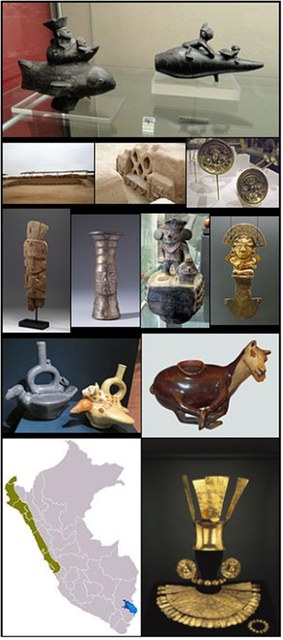
H

By usurping control of his army at the Battle of El Roble, this man caused a power struggle that led to his loss at the Battle of Las Tres Acequias.

H

He was elected to the National Congress as a representative from the Laja district in 1811, and was a close friend of Juan Martinez de Rosas.

H

He who is brave, follow me”.

H

Though he was badly beaten at Rancagua, this governor of Concepcion (kun sepp see ON) escaped and returned to fight, ultimately deefating the royalists at Chacabuco. For 15 points, name this revolutionary leader who became the first Chilean head of state in 1817.

H

He eventually became the third Supreme Director of Chile after commanding forces in the Chilean War of Independence. :Name this son of an Irish soldier who also assisted in obtaining Peruvian independence.

H

This person of Irish and Basque descent co-led the Chilean independence movement. He was later deposed by his former “closest ally,” Ramon Freire, in 1823.

H

He simultaneously served as militia general and governor of Concepción, a distraction which may have led to his armies losing at the Battle of Rancagua in 1814.

H

After losing at Rancagua, this man later returned to drive out the Spaniards and become Supreme Director of Chile. His dad was born in Ireland.

H

Chilean troops at the Battle of Chacabuco were led by this man, who later succeeded Jose Miguel Carrera as Supreme Dictator of Chile.

Watch out: Confused with José Miguel Carrera, whom he succeeded as Supreme Dictator
#1408 · Sports Teams, Franchises, and Organizations · Level 3

Major League Baseball

Major League Baseball
bdi Major League Baseball /span /a · Public domain

Professional baseball organization · 1869–present · United States and Canada

Major League Baseball is the professional baseball organization whose color barrier was broken by Jackie Robinson in 1947.

The kit

  • Integration — Major League Baseball's color barrier was broken by Jackie Robinson of the Brooklyn Dodgers, the first Black player in the modern era.
  • Origins myth — Major League Baseball was supposedly invented by Abner Doubleday, a Union officer who took over from the killed John Reynolds on the first day of a battle.
  • Historic franchises — Major League Baseball includes teams like the Boston Red Sox at Fenway Park, which ended an 86-year championship drought after selling Babe Ruth.

Runs with

Brooklyn Dodgers
Jackie Robinson broke the color barrier with the Dodgers open card →
Chicago Cubs
York
Babe Ruth was sold to a New York rival team open card →
Charles

The ladder · 3 clues

H

Dwight Evans spent all but one year of his career with this team, which fielded three generations of Hall of Fame left fielders in Jim Rice, Carl Yastrzemski, and “The Kid.” Pedro Martinez moved to this team from the Montreal Expos and helped the team end its championship drought of 86 years, allegedly caused by the team’s sale of Babe Ruth to a certain rival team based in New York. name this Major League baseball team that plays its home games in Fenway Park.

M

Color is not one of them." The first Black man to break the color barrier in Major League Baseball was this Brooklyn Dodgers baseball player.

E

Supposed inventor of baseball, a Union officer who took over from the killed John Reynolds on the first day.

Watch out: Abner Doubleday is often credited with inventing baseball, but this claim is historically disputed
#1422 · Modern Countries · Level 3

Haiti

Haiti
p (colours and size changes of the now deleted versions) Mad · Public domain

Caribbean nation · independence 1804 · western Hispaniola

Haiti became the only nation in history to gain independence through a successful slave revolt in 1804.

The kit

  • Revolution — Haiti's revolution was led by Toussaint L'Ouverture and Jean-Jacques Dessalines against French colonial rule.
  • Independence — Haiti achieved independence after Charles Leclerc's reconquest attempt was thwarted by a massive yellow fever outbreak.
  • U.S. occupation — Haiti was occupied by American troops after a revolt threatened President Vilburn Guillaume Sam's regime.
  • Geography — Haiti shares the island of Hispaniola with the Dominican Republic and was ruled by Papa Doc Duvalier.

Runs with

Jean-Jacques Dessalines
became Jacques I after leading Haiti to independence open card →
Hispaniola
Haiti occupies the western portion of this island open card →
Dominican Republic
shares Hispaniola with Haiti on the eastern side open card →
Toussaint Louverture
led Haiti's slave revolt alongside Dessalines open card →

The ladder · 6 clues

H

A massive yellow fever outbreak prevented Charles Leclerc from reconquering this country.

H

La Navidad, the settlement established by Columbus's men on Hispaniola, was built from the remains of the Santa Maria.

M

Only nation to gain independence via a slave revolt, led by Toussaint L'Overture [[too-SAHNT loh-vehr-TYOOR]] and Jean-Jacques Dessalines [[deh-sah-LEEN]].

M

Papa Doc Duvalier led this country which shares Hispaniola with the Dominican Republic.

E

Jean-Jacques Dessalines became Jacques I of this country after leading the only slave revolt which led to the successful creation of a country.

E

Charles Leclerc deported a rebel in this country, which was the subject of the book The Black Jacobins. 1804 brought an end to a revolution in this country led by Toussaint L’Ouverture. name this island nation, the only state in history established by a successful slave revolt.

10 more clues from the record
H

In this country, Cécile Fatiman and Dutty Boukman presided over a ceremony which may have involved sacrificing a black pig.

H

A king of this non-Prussian country built the Sans-Souci [“Sahns Soo-see”] Palace and committed suicide with a silver bullet.

H

Jean-Jacques Dessalines ruled this Caribbean country, which successfully revolted against France under the leadership of Toussaint L'Overture.

H

American troops occupied this country after a revolt threatened the regime of its president Vilburn Guillaume Sam.

H

Country where Adams supported Toussaint L’Ouverture’s revolution.

H

This country's occupation was opposed by Stenio Vincent.

H

The constitution of this nation that was in place until 1987 was written by U.S. Assistant Secretary of the Navy, Franklin D. Roosevelt.

H

A civil war in this country called the War of the Knives ended with the exile of André Rigaud.

H

Woodrow Wilson sent troops to this country to quell the Cacos.

H

Benjamin Harrison appointed and then fired Frederick Douglas to the position of minister to this country.

Watch out: Dominican Republic also occupies Hispaniola but gained independence from Spain, not through slave revolt
#1448 · Modern Countries · Level 3

Colombia

Colombia
See i b File history /b /i below for details. · Public domain

South American country · 1819–present · northwestern South America

Colombia is a South American country whose capital Bogotá was center of New Granada and site of decades-long civil conflicts.

The kit

  • Thousand Days' War — Colombia's Liberal and Conservative parties fought the Thousand Days' War, ended by Wisconsin and Neerlandia treaties.
  • La Violencia — Colombia suffered La Violencia, a decade-long civil war sparked by the 1948 assassination of Jorge Eliécer Gaitán.
  • National Front — Colombia's Liberals and Conservatives agreed to the National Front power-sharing arrangement from 1958 to 1974.
  • FARC peace deal — Colombia's president Juan Manuel Santos won the 2016 Nobel Peace Prize for brokering peace with FARC guerrillas.

Runs with

Panama
Panama separated from Colombia's northern department in 1903 open card →
assassination
Jorge Eliécer Gaitán's 1948 assassination triggered La Violencia open card →
Panama CanalSimón Bolívar

The ladder · 6 clues

H

The assassination of Jorge Eliecer Gaitan in this country led to a 1950s civil war known as La Violencia.

H

One organization in this country grew out of the Southern Bloc, which had earlier governed the Marquetalia Republic. The Pact of San Carlos initiated this country's National Front following Gustavo Pinilla's dictatorship. Jorge Gaitán's murder sparked a ten-year period of unrest in this country; bandoleros terrorized this country during that period, La Violencia.

M

In 2016, this country’s president won the Nobel Peace Prize for brokering a peace deal that this country’s people rejected in a referendum.

M

The assassination of liberal presidential candidate Jorge Eliécer Gaitán in 1948 set off a 10 year period of violence in this country.

E

Its current president, Juan Manuel Santos, has worked to establish peace with the guerilla group FARC.

E

In 1903, this country’s northern department separated to become Panama. name this South American country whose capital is Bogota.

10 more clues from the record
H

This country’s 19th of April movement is often called M19, and laid siege to its Palace of Justice in an attempt to try President Belisario Betancur.

H

In this country, a decade-long civil war between Liberals and Conservatives was known as La Violencia.

H

In this country, the Wisconsin and Neerlandia treaties ended the Thousand Days War.

H

This country’s Liberal and Conservative parties agreed to trade off the presidency in a 16-year period called the National Front.

H

In this country, the 19th of April Movement formed after the possibly fraudulent election of Misael Pastrana as president.

H

Gonzalo Jiménez de Quesada conquered the Muisca in this country, leading to a colony called New Granada.

H

Shortly after becoming a republic, this country’s Liberal Party and Conservative Party fought each other during the Thousand Days’ War.

H

Alberto Lleras Camargo was the first Liberal leader to take power in this country’s power sharing agreement from 1958 to 1974, the National Front.

H

The M-19 guerrilas became active in this country after Gustavo Rojas Pinilla lost a 1970 election.

H

The state of Cundinamarca [koon-deen-uh-mark-uh] was set up in this modern-day country, whose capital was recaptured at the end of the “Foolish Fatherland” period.

Watch out: M-19 and FARC are distinct guerrilla groups in Colombia
#1455 · Modern Countries · Level 3

Venezuela

Venezuela
Various, see i b File history /b /i below for details. · Public domain

South American country · independence 1823 · northern South America

Venezuela is a South American country with the world's largest proven oil reserves that gained independence at the Battle of Lake Maracaibo.

The kit

  • Independence — Venezuela gained independence from Spain after the Battle of Lake Maracaibo in 1823, following earlier failed attempts by Francisco de Miranda.
  • Oil economy — Venezuela experienced an economic boom caused by oil as a founding member of OPEC that lasted until the 1980s.
  • Democratic era — Venezuela's leading parties signed the Punto Fijo Pact after ousting Marcos Pérez Jiménez, with Rómulo Betancourt becoming the Father of Democracy.
  • Modern leadership — Venezuela is currently led by Nicolás Maduro, who was chosen by a socialist who died in 2013.

Runs with

Hugo Chávez
Simón Bolívar
issued Decree of War to the Death during Venezuelan independence struggle open card →
Grover Cleveland
Petroleum
Venezuela holds largest proven oil reserves, discovered in 1914 open card →

The ladder · 6 clues

H

This country’s leading parties signed the Punto Fijo Pact after the ouster of Marcos Pérez Jiménez , promising to uphold the Betancourt Doctrine.

H

Erastus D. Culver accidentally diplomatically recognized this country's first president José Antonio Páez.

M

South American member with the largest proven oil reserves, once led by Hugo Chavez.

M

That leader of this country sheltered Juan Bosch, prompting Rafael Trujillo to order an assassination attempt.

E

country currently led by Nicolas Maduro, chosen by a socialist who died in 2013.

E

Simon Bolivar’s Decree of War to the Death primarily pertained to this country. name this South American country that gained independence after the Battle of Lake Maracaibo.

10 more clues from the record
H

A brackish inlet in this country was home to a 1914 oil discovery and an 1823 naval battle that earned this country’s independence from Spain.

H

This country suffered an outburst of violence known as the sacudon in 1989 after the election of the rightist president Carlos Andres Perez.

H

Francisco de Miranda failed to earn the independence of this country, which was later won at the Battle of Carabobo.

H

The British Legions under Miguel de la Torre lost to Jose Antonio Paez, who led this nation’s forces at the Battle of Carabobo.

H

From 1945 to 1948, it was led by the Democratic Action party in a period called “El Trienio Adeco.” The so-called “Father of Democracy” in this country was longtime president Romulo Betancourt.

H

An economic boom caused by oil in this founding member of OPEC lasted until the 1980’s.

H

Domingo de Monteverde led troops against this nation at the battle of La Victoria.

H

One leader of this country had a namesake doctrine of denying diplomatic recognition to regimes that used force to come to power, although it was reversed by later successor Rafael Caldera.

H

Following atrocities committed by the enemy, an independence fighter from this country issued the Decree of War to the Death.

H

During the Wars of Independence, Jose Tomas Boves fought for Spanish control of this country by commanding its grassland cowboys, the llaneros.

Watch out: Battle of Carabobo also secured Venezuelan independence but came before Lake Maracaibo
#1469 · Modern Countries · Level 3

Nicaragua

Nicaragua
C records · Public domain

Central American country · independence 1821 · Central America, capital Managua

Nicaragua is a Central American country governed from Managua that experienced U.S. interventions and the Sandinista-Contra civil war.

The kit

  • U.S. interventions — Nicaragua requested U.S. Marine intervention in 1912 during a rebellion, leading to American occupation from 1912 to 1933.
  • Somoza dynasty — Nicaragua was ruled by the Somoza family presidential dynasty until Anastasio Somoza was overthrown by revolutionaries.
  • Civil war — Nicaragua saw fighting between the Sandinistas and the Contras, with the U.S. mining commercial harbors in 1986.
  • Modern governance — Nicaragua has been led by Daniel Ortega and saw destruction of expensive "trees of life" public sculptures.

Runs with

Iran-Contra Affair
arms sales to Iran funded Contra opposition to Sandinistas open card →
Sandinista National Liberation Front
Sandinista forces fought Contras in civil war open card →
William
filibuster William Walker became president in 1854 open card →
Ronald Reagan

The ladder · 6 clues

H

This country gave up the Great and Little Corn Islands to the U.S. in the Bryan-Chamorro Treaty.

H

One government in this country killed ABC journalist Bill Stewart, which inspired outrage in the United States.

M

American filibuster William Walker became president of this country in 1854.

M

The Somoza family was a presidential dynasty in this Central American country governed from Managua.
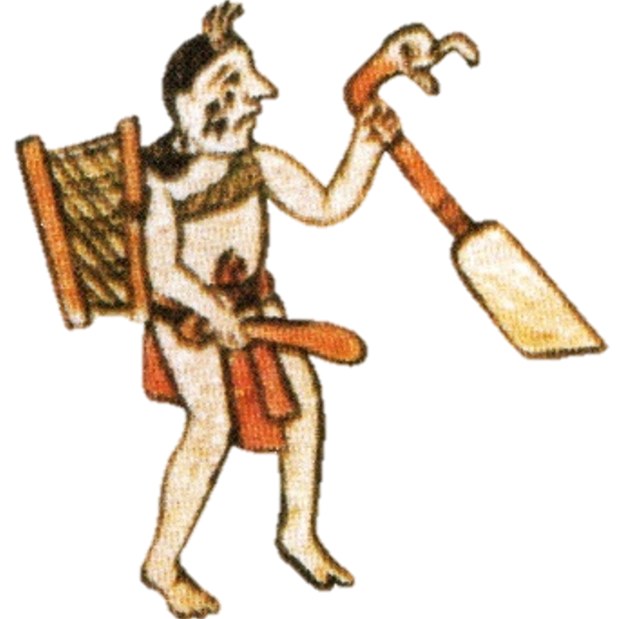
E

Anastasio Somoza was overthrown in this country, where arms sales to Iran were used to fund opposition to the Sandinistas. name this Central American country led by Daniel Ortega from Managua.
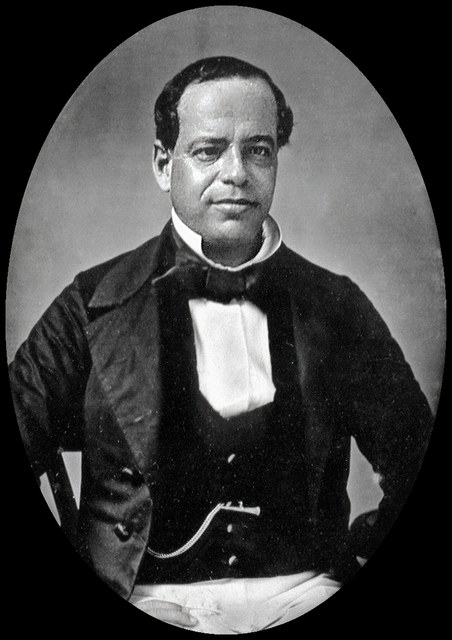
E

Country where China is planning to build an alternate canal through Punta Gorda.
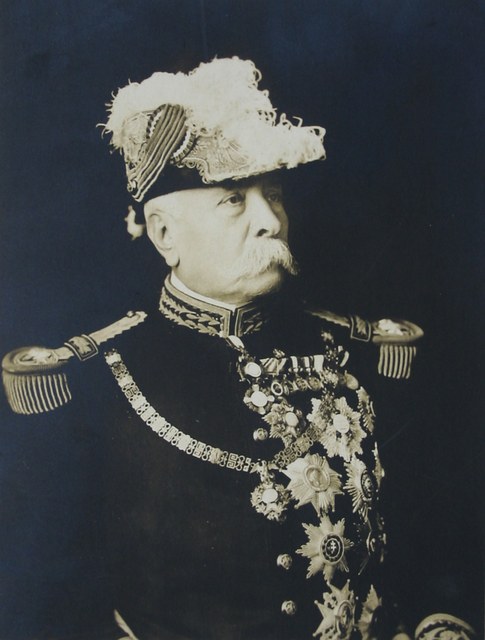
10 more clues from the record
H

The Boland Amendment prevented the US from assisting rebels in this country.

H

President Adolfo Diaz asked U.S. Marines to intervene during a rebellion in this country, leading to an American occupation from 1912 to 1933.

H

In 1986, the U.S. was censured by the International Court of Justice for mining this country’s commercial harbors.

H

The Pact of Espino Negro ended one civil war in this country.

H

The founder of modernismo hailed from, this Central American country with its capital at Managua.
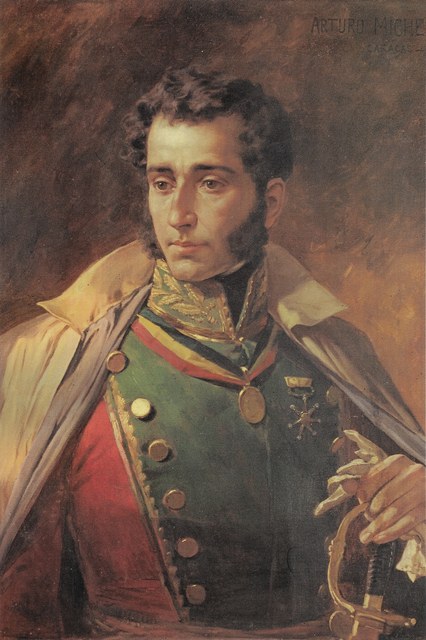
H

Highly expensive public sculptures known as “trees of life” have been destroyed in this country to rapturous applause.

H

Leonard Grace and Leroy Cannon were executed in this country for attempting to blow up the ship Diamante.

H

A newspaper here, La Prensa, was destroyed in a 1972 earthquake in its capital, although many relief funds were misappropriated by the right-wing government.

H

The U.S. supported the overthrow of Jose Zelaya in this country to protect its financial interests. Three years later, in 1912, marines were sent to support the provisional president Adolfo Diaz.

H

Name this country which saw fighting between the Sandinistas and the Contras in its capital of Managua.
Watch out: William Walker became president in 1854, not 1856
#1474 · General · Level 3

Tenochtitlan

Tenochtitlan
thomas kole · CC BY 4.0

Aztec island capital · founded 1325, fell 1521 · Lake Texcoco, central Mexico

Tenochtitlan was the Aztec capital built on an island in Lake Texcoco, now the site of Mexico City.

The kit

  • Founding — Tenochtitlan was founded where an eagle perched on a cactus with a snake in its mouth, as illustrated in the Codex Mendoza.
  • Geography — Tenochtitlan was divided into four zones called campan and eighty districts accessible by removable wooden bridges over canals.
  • Infrastructure — Tenochtitlan featured chinampas or floating gardens, twin pipe aqueducts from nearby springs, and the Templo Mayor dedicated to Huitzilopochtli.
  • Fall — Tenochtitlan saw the Alvarado Massacre of noblemen that triggered La Noche Triste, forcing Hernán Cortés to flee the city.

Runs with

Aztec Empire
capital and political center of the empire open card →
Nanda Empire
no connection evident in clues open card →
Montezuma
Mexico
modern Mexico City built directly on its ruins open card →

The ladder · 6 clues

H

This city, which was divided in four by canals, featured a “sacred precinct” with a double pyramid called the Templo Mayor.

H

The frontispiece of the Codex Mendoza illustrates the founding of this capital city where an eagle landed on a cactus. name this city, the center of the Aztec Empire and basis of modern-day Mexico City.

M

Pedro de Alvarado’s killing of noblemen in this Mesoamerican city led to “La Noche Triste,” causing Hernan Cortes and his fellow conquistadors to flee this city.

M

This capital city in Lake Texcoco included sites like the Templo Mayor, dedicated to Huitzilopochtli. name this capital of the Aztec Empire at the center of modern Mexico City.

E

Capital city, later the site of Mexico City, which was built on an island within Lake Texcoco.

E

This city and Tlatelolco were built on an island in Lake Texcoco after a tribe found a eagle perched on a cactus with a snake in its mouth.

10 more clues from the record
H

This city was the site of the Alvarado Massacre.

H

This city was divided into four zones called camps and eighty districts accessible by removable wooden bridges.

H

The denizens of this city built Chinampas, or “floating gardens,” on Lake Texcoco.

H

Another large city-state in Mesoamerica was this one located on an island in Lake Texcoco, which was divided into campan and calpullis. Mexico City stands on the site of this Aztec metropolis.

H

This city was built south of Tlatelolco [t-lah-tell-ohl-koh] on a small island in Lake Texcoco [tesh-koh-koh].

H

This city was supplied water by two parallel aqueducts built on artificial islands.

H

A twin pipe aqueduct built in this city brought in drinking water from a nearby spring.

H

This city had districts called “calpulli.” It was surrounded by floating farms called chinampas.

H

Ahuitzotl expanded this city and rebuilt its Templo Mayor, which was the site of a major massacre carried out by Pedro de Alvarado.

H

A publication commissioned for Charles V illustrates previous rulers based in this city, the amount of tribute they paid, and different types of professions including lapidaries and featherworkers.

Watch out: Tlatelolco, a separate city-state also on Lake Texcoco, built north of Tenochtitlan
#1480 · Modern Countries · Level 3

Guatemala

Guatemala
K21edgo · Public domain

Central American country · independence 1821 · south of Mexico, bordering Chiapas

Guatemala is a Central American country that experienced a CIA-backed 1954 coup and Latin America's longest civil war.

The kit

  • 1954 coup — Guatemala's president Jacobo Árbenz was overthrown in Operation PBSUCCESS after Decree 900 seized United Fruit Company holdings.
  • Civil war — Guatemala endured Latin America's longest civil war, during which Efraín Ríos Montt implemented the 'guns and beans' campaign against guerrilla fighters.
  • Mayan persecution — Guatemala saw 36 Committee for Peasant Unity members killed at a Spanish embassy and attacks on Mayan people under Ríos Montt.
  • Indigenous activism — Guatemala's Rigoberta Menchú won the Nobel Peace Prize for activism on behalf of the country's native Mayan population.

Runs with

United Fruit Company
Decree 900 seized United Fruit holdings, prompting the company to lobby for the 1954 coup open card →
Tikal
Mexico
Guatemala borders Mexico's southernmost state Chiapas open card →
Jacobo Árbenz
Árbenz was Guatemala's president overthrown in 1954 after instituting land reform open card →

The ladder · 6 clues

H

Che supported Jacobo Arbenz in this Central American country.

H

A leader of this country nicknamed “Number 5” was overthrown in a revolution called the Ten Years of Spring.

M

Guerilla fighters were opposed in the “guns and beans” campaign implemented by its former president Efrain Rios Montt.

M

Another leader of this nation passed Decree 900, which seized much of the holdings of the United Fruit Company.

E

Nobel Peace Prize winner Rigoberta Menchu is an activist for the native Mayan people of what Central American country where Jacobo Arbenz was overthrown in 1954?

E

In 1954, the CIA-led Operation PBSuccess, lobbied for by the United Fruit Company, overthrew another of its revolutionary opponents, Jacobo Árbenz. name this Central American country where Efraín Ríos carried out attacks on the Mayan people.

10 more clues from the record
H

In this country, 36 members of the Committee for Peasant Unity were killed by police while occupying a Spanish embassy.

H

The William Wrigley Jr. Company stopped doing business with this country after it instituted land reform under Decree 900.

H

Operation PBSUCCESS installed US-backed dictator Carlos Castillo Armas in this country in 1954, toppling Jacobo Árbenz Guzmán.

H

In 1954, radical land reform under president Jacobo Arbenz ceased in this country following a coup backed by the United States to sustain plantations belonging to United Fruit.

H

Like Panama City and Mexico City, this country’s capital city shares the name of the country.

H

An indigenous Nobel Peace Prize winner from this country may have fabricated parts of her autobiography.

H

A U.S. Ambassador to this country named John Gordon Mein was shot by rebels of this country’s Rebel Armed Forces.

H

A 20th century president of this country was described as “crazier than a half dozen opium smoking frogs” for dressing his troops in 18th century French uniforms.

H

Chiapas, the southernmost Mexican state, borders this Central American country, which along with Belize, is on Mexico's southeast border.

H

The Operations Kufire and Kugown affected this country, which had the longest civil war in Latin American history.

Watch out: Belize also borders Mexico's southeast alongside Guatemala
#1481 · Modern Countries · Level 3

Paraguay

Paraguay
Republica del Paraguay · Public domain

South American nation · independence 1811 · landlocked, central South America

Paraguay is a landlocked South American nation whose capital Asunción was established in 1617.

The kit

  • Early dictatorships — Paraguay fell under José de Francia's regime with its "hairy feet" secret police soon after independence.
  • War of the Triple Alliance — Paraguay lost over half its adult male population in the War of the Triple Alliance under Francisco Solano López.
  • Military conflicts — Paraguay's forces routed an army in the Campo Vía pocket led by German WWI veteran Hans von Kundt.
  • Modern era — Paraguay was ruled by Alfredo Stroessner, who gave refuge to exiled Juan Perón and Anastasio Somoza.

Runs with

Paraguayan War
devastating 1864-70 conflict against Brazil, Argentina, and Uruguay open card →
Rutherford B. Hayes
Francisco Solano López
president who led Paraguay during Triple Alliance War open card →
Bolivia

The ladder · 6 clues

H

Soon after independence, this country fell under the domination of the "hairy feet" secret police of José de Francia.

H

This country entered a prolonged military buildup under its presidents, Carlos Lopez and Gaspar de Francia.

M

Under the regime of Francisco Solano Lopez, this country lost over half its adult male population in a 19th century war against three other South American countries in the War of the Triple Alliance.

M

This nation faced a Triple Alliance of Brazil, Argentina, and Uruguay while led by Francisco Solano López. name this South American nation whose capital was established in 1617 in Asunción.

E

This country was ruled by the eccentric Francisco Solano Lopez when it lost the majority of its male population to the War of the Triple Alliance. identify this country which has developed oddly due to its landlocked position in South America.

E

It was where the exiled Juan Peron and Anastasio Somoza fled to. name this South American country led by Alfredo Stroessner.

10 more clues from the record
H

Eliza Lynch was a mistress to a ruler of this country who lost the fort of Humaita .

H

Fulgencio Yegros was the first man to hold the role of "consul" in this country.

H

The indigenous Guarani language is the most widely spoken language in this country. During the rule of Alfredo Stroessner, this country’s Aché people were openly massacred and enslaved.

H

This other South American nation governs most of the Gran Chaco from its capital of Asuncion (ah-SOON-see-ohn).

H

In another war, forces from this nation routed an army in the Campo Vía pocket led by German World War I veteran Hans von Kundt.

H

One leader of this country delayed a shipment from England until he could learn English and read the ship's books, which he did for all incoming ships.

H

In a speech on the Senate floor, Huey Long supported the war effort of this country and accused Standard Oil of backing its northwestern neighbor.

H

Rafael Franco led this country during the short-lived Febrerista Revolution, which overthrew Eusebio Alaya and his general José Félix Estigarribia.

H

Prior to her involvement in the Civil War, the USS Water Witch was involved in a diplomatic incident after being fired upon by a fort in this country.

H

Like its southern neighbor, this country also has a Colorado Party, which dominated national politics until 2008.

Watch out: Bolivia (Paraguay's northwestern neighbor in the Gran Chaco region)
#1486 · Modern Countries · Level 3

Jamaica

Jamaica
span typeof="mw:File" img src="https://upload.wikimedia.org/ · Public domain

Caribbean island nation · British colony 1655–1962 · Caribbean Sea, south of Cuba

Jamaica is a Caribbean island that was a British colony from 1655 to 1962, with capitals at Spanish Town, Port Royal, and Kingston.

The kit

  • Maroon resistance — Jamaica's Cockpit Country and Blue Mountains sheltered maroons led by Cudjoe and Queen Nanny during the Maroon Wars against British colonial forces.
  • Baptist War — Jamaica experienced the 1831 Baptist War led by Samuel Sharpe, a Christmas Day slave rebellion that contributed to the abolition of slavery on the island.
  • Morant Bay Rebellion — Jamaica's colonial governor Edward Eyre brutally suppressed the 1865 Morant Bay Rebellion led by Paul Bogle, prompting a British investigation by J.S. Mill.
  • Port Royal — Jamaica's Port Royal served as a base for privateer Henry Morgan and other pirates until a 1692 earthquake sank the city.

Runs with

Simón Bolívar
Bolívar wrote to Henry Cullen from Jamaica describing his vision for a free Latin America open card →
Henry
Henry Morgan used Jamaica's Port Royal as his privateer base open card →
the Caribbean
Edward
Edward Eyre governed Jamaica during the Morant Bay Rebellion open card →

The ladder · 6 clues

H

In this colony, Samuel Sharpe led a slave rebellion on Christmas Day sometimes called the Baptist War.

H

Former Australian explorer Edward Eyre was the colonial governor of this country during the Morant Bay Rebellion.

M

An activist born in this country founded the Black Star Line as part of his Back to Africa movement.

M

British island where he wrote a letter to Henry Cullen, describing his vision for a free Latin America.

E

This island’s largest port city served as a base for privateer Henry Morgan and other pirates. name this Caribbean island, a former English colony with colonial capitals at Spanish Town, Port Royal, and Kingston.

E

The Maroon Wars occurred in this Caribbean island nation.

10 more clues from the record
H

On this island, Edward Eyre’s brutal suppression of a rebellion led by Paul Bogle was investigated by a committee led by J.S. Mill.

H

Island in that sea where pirates docked at Port Royal. It’s now a country with capital Kingston.

H

This country’s Cockpit Country was the home of the first of the Maroon Wars.

H

A nurse born on this island ran the “British Hotel” during the Crimean War.

H

British colony where the Maroon Wars involving escaped slaves took place?

H

Quao [] led this island's Crawford's Town uprising, and Charles Lyttelton signed treaties on this island with Juan de Bolas.

H

A neighborhood in this country controlled by Christopher Coke’s Shower Posse was developed by a future Prime Minister, Edward Seaga.

H

Slavery was abolished after Samuel Sharpe waged the 1831 Baptist War on this island, where Cudjoe and Queen Nanny led maroons in the Cockpit Country and Blue Mountains.

H

A 1692 earthquake sank this country's city of Port Royal, where pirates like Henry Morgan took refuge.

H

On Good Friday, this country's prime minister ordered the round-up of a religious minority during the 1963 Coral Gardens incident.

Watch out: Port Royal is often confused with other Caribbean pirate havens or mistakenly thought to be in the Bahamas
#1500 · Modern Countries · Level 3

Panama

Panama
Zscout370 /a et al. · Public domain

Central American country · independence 1903 · Central America, between Pacific and Caribbean

Panama is a Central American country that gained independence from Colombia in 1903 with U.S. support to facilitate canal construction.

The kit

  • Rise — Panama declared independence from Colombia in 1903 with U.S. backing, later ceding sovereign canal rights in the Hay-Bunau-Varilla Treaty.
  • Conflicts — Panama's 1964 Martyrs' Day Riots erupted when students attempted to raise their flag at a high school flying the U.S. flag.
  • Achievements — Panama regained control of the Canal Zone through a 1977 treaty signed by dictator Omar Torrijos and Jimmy Carter.
  • Legacy — Panama was invaded in Operation Just Cause in 1989, when U.S. forces deposed dictator Manuel Noriega for violating canal neutrality.

Runs with

Pacific
Panama connects Pacific and Caribbean via its canal open card →
Colombia
Panama broke from Colombia in 1903 with U.S. support open card →
Manuel Noriega
Noriega ruled Panama until deposed in 1989 invasion open card →
Scotland
Scotland's Darién colony in Panama bankrupted the nation open card →

The ladder · 6 clues

H

This home of the Dignity Battalions was where the Vatican embassy was targeted by loud rock music in Operation Nifty Package.

H

A controversy over the U.S. flag and this country’s flag sparked the Martyrs’ Day Riots.

M

This country's dictator Omar Torrijos (toh-REE-hoce) signed a treaty with Jimmy Carter that gave this country control over a formerly extraterritorial "zone." name this country which the U.S. encouraged to declare independence from Colombia in order to build a canal.

M

This country’s Paitilla airfield was destroyed as part of Operation Nifty Package.

E

Operation Just Cause was an invasion of this Central American country where US forces deposed Manuel Noriega.

E

Manuel Noriega was removed from power in this Central American country where he had violated the neutrality of a namesake canal.

10 more clues from the record
H

William Paterson's disastrous attempt to establish the colony of Caledonia in this country helped spur the 1707 Act of Union by bankrupting Scotland.

H

This country declared its independence in the Grito de La Villa de Los Santos at Azuero, which was led by José de Fábrega.

H

This country broke off from Colombia with support from the US, and later gave sovereign rights to the US in the Hay-Bunau-Varilla Treaty. :Name this Central American country where a major canal is located.

H

The 1964 “Flag Riots” in this country began when students tried to hoist a national flag over their high school, which had a US flag flying above it.

H

Noriega was a dictator of this Central American nation that gained independence from Colombia in 1903.

H

This country elected the first Jewish president in the Western Hemisphere, Eric Arturo Delvalle.

H

Eric Delvalle (del-va-yay) attempted to overthrow a leader of this country whose paramilitary beat up Billy Ford and were known as the Dignity Battalions.

H

A photograph of a 1964 riot in this country commemorated on Martyrs’ Day depicts a line of students climbing a pole to raise its flag.

H

Mireya Moscoso ran for this country's presidency, often using the phrase "Vox populi, vox dei," and her countrymen in this nation called the election a race between "two corpses." Three times, Arnulfo Arias was removed by coup after being elected this country's president.

H

Drake died while raiding Portobelo in what modern-day country, where the bulk of Scotland's disastrous Darién colony was later located?

Watch out: Scotland's failed Darién colony (1698) was located in Panama, not a separate Central American territory
#1535 · Modern Countries · Level 3

Bolivia

Bolivia
See i b file history' /b below for details. · Public domain

South American country · 1825–present · central South America

Bolivia is a landlocked South American nation named for Simón Bolívar that lost its Pacific coastline in the War of the Pacific.

The kit

  • Geography — Bolivia shares Lake Titicaca with Peru and has two capitals, Sucre and La Paz.
  • Territorial losses — Bolivia lost its coastline to Chile after the War of the Pacific following dictator Hilarión Daza's saltpeter tax.
  • Chaco War — Bolivia ceded the Gran Chaco region to Paraguay in 1935 after its defeat in the Chaco War.
  • Modern conflicts — Bolivia experienced the Gas War in October 2003 over President Gonzalo Sánchez de Lozada's proposed gas trade plan.

Runs with

War of the Pacific
Bolivia lost its coastline to Chile in this 1879–1884 conflict open card →
Pacific
Bolivia lost access to this ocean after the War of the Pacific open card →
Che Guevara
Che Guevara died in Bolivia in 1967 while leading the Ñancahuazú Guerrilla open card →
Chile
Chile gained Bolivia's coastal territory including Arica and Tacna open card →

The ladder · 6 clues

H

Modern South American country which is named for Simón Bolívar

H

A proposed gas trade plan by this country’s President, Gonzalo Sanchez de Lozada, led to the “Gas War” in October 2003.

M

This country also lost the ports of Arica and Tacna in a war over a nitrate-rich coastal region that left it landlocked.

M

This former owner of the State of Acre was the site of a Spanish colonial mint near the silver mines of Potosi, and it lost much of the Gran Chaco in a war with Paraguay. name this “plurinational” country in South America that shares Lake Titicaca with Peru and whose two capitals are Sucre and La Paz.

E

This country lost the Chaco War as well as the War of the Pacific. name this South American country whose navy was confined to Lake Titicaca after it lost its coastline.

E

In 1935, this country ceded the Gran Chaco region to Paraguay following its defeat in the Gran Chaco War. name this landlocked South American country which is home to La Paz and Sucre.

10 more clues from the record
H

Following its defeat in the War of the Pacific, this nation became landlocked after ceding its only maritime department to Chile.

H

Guevara died in what country this also sheltered Klaus Barbie, who may have helped capture Guevara.

H

This country's dictator Hilarión Daza sparked a war by instituting a saltpeter tax, leading to this country losing its coastline in the Treaty of Ancón.

H

That loss along with others led this country’s President Daniel Salamanca to remove General Hans Kundt from command.

H

The United Restoration Army defeated this country in the War of the Confederation, in which it lost control of its northern neighbor.

H

You are only going to kill a man.” While leading this country’s Ñancahuazú Guerrilla against René Barrientos, Che Guevara died here.

H

Czechoslovak military advisers were hired by this country to assist the German confidante Hans Kundt after the disastrous battle of Campo Via.

H

This country’s Foreign Minister Mariano Baptista signed an 1874 treaty settling its western border, but this country reneged on the agreement a year later.

H

Prisoners of war in this country built the Unduavi-Yolosa highway in the 1930s, which is one-way and has an extremely high fatality rate.

H

This country lost land in a war that has been theorized as a proxy conflict between Royal Dutch Shell and Standard Oil.

Watch out: Students may confuse Bolivia with Paraguay, its opponent in the Chaco War
#1553 · Modern Countries · Level 3

Ecuador

Ecuador
President of the Republic of Ecuador, first uploaded by Dene · Public domain

South American country · independence 1809–1830 · northwestern South America

Ecuador is a South American country that declared independence in 1809 and hosted the 1822 Guayaquil Conference between Bolívar and San Martín.

The kit

  • Geography — Ecuador contains Quito, the second highest world capital after La Paz, located in the Andes.
  • Independence era — Ecuador hosted the Guayaquil Conference, a secret 1822 meeting between José de San Martín and Simón Bolívar.
  • Rise — Ecuador was the first South American nation to call for independence in 1809 during Spanish colonial rule.
  • Leaders — Ecuador was led by Eloy Alfaro during the Liberal Revolution of 1895 and by Gabriel García Moreno.

Runs with

Peru
fought the 1981 Paquisha War over a land dispute open card →
Simón Bolívar
met José de San Martín at the Guayaquil Conference in 1822 open card →
Gran ColombiaPacific

The ladder · 6 clues

H

This country was led by Eloy Alfaro, who led the Liberal Revolution of 1895.

H

During a conflict with police, one leader of this country said, “If you want to kill the president, here he is, kill him if you have the guts." This country faced 2019 anti-austerity demonstrations at Carondelet [[kah-ROHN-deh-let]] Palace.

M

The second highest world capital after La Paz is this country’s city of Quito.

M

Incan Emperor Tupac Yupanqui built Cuenca in what is now this country in order to rival Cuzco.

E

Jose de San Martin and Simon Bolivar held a secret meeting in this country’s city of Guayaquil. name this modern-day country where the Canari once ruled from Quito.

E

Gabriel Garcia Moreno and Eloy Alfaro were leaders of this country, where Mechor Aymerich lost an 1822 battle to Antonio Jos´e de Sucre on the slopes of the Pichincha Volcano. Jos´e de San Martin met Sim´on Bol´ıvar in this country that hosted the Guayaquil Conference and, in Spanish rule, included the autonomous Real Audiencia de Quito.

10 more clues from the record
H

Though not Chile, this country's Santa Elena Province was the home of the Valdivia culture, which succeeded the Las Vegas culture.

H

In 2016, an earthquake in this country devastated the provinces of Manabi and Esmaraldas.

H

A land dispute between this country and its eastern neighbor led to the 1981 Paquisha War.

H

Manuela Saenz was born in what is now this modern-day country. Forces led by Antonio José de Sucre defeated Spanish royalists at the battle of Pichincha in what is now this modern-day country.

H

In this modern-day country, Stephen Rosain used LIDAR to uncover the cities of Kilamope and Sangay in its Upano Valley.

H

A pair of skeletons known as the Amantes de Sumpa were found buried together in a cemetery belonging to this country’s Las Vegas culture.

H

This country’s Las Vegas culture preceded a culture that Betty Meggers falsely claimed had contact with the Jōmon, the Valdivia culture.

H

After a 1972 coup, this country implemented a "Return to the Constitution Plan.” One party in this country was named "Alfaro Lives, Dammit!” In 2017, this country's president, Lenín Moreno, succeeded Rafael Correa. name this South American nation, the first to call for independence in 1809.

H

In a letter to Pope Pius IX [ninth], a leader of this country noted that Masonic Lodges, “instigated by Germany, are vomiting against me all sorts of atrocious insults and horrible columnities;” that leader of this country predicted his own assassination, which came by machete at the hands of Faustin Rayo.

H

This country defaulted on $3 billion of debt in 2008 under a president who also supported a 2011 lawsuit judgment demanding $19 billion from Chevron; that president is Rafael Correa.

Watch out: Valdivia culture (in Ecuador's Santa Elena Province, not Chile)
#1558 · General · Level 3

Slavery

Slavery
bdi Mathew Benjamin Brady /span /a · Public domain

forced labor system · ancient times–1888 · global, especially Americas

Slavery was a system in which humans were claimed as property and forced to work, abolished in Brazil by the 1888 Golden Law.

The kit

  • Legal battles — Slavery was banned in England and Wales by Lord Mansfield's ruling in Somersett's case, which found it had never been legal there.
  • Religious opposition — Slavery was opposed by many popes, including Gregory XVI in his bull In Supremo and Benedict XIV in Immensa Pastorum.
  • American origins — Slavery is often said to have begun in America with a Northampton County court case between Anthony Johnson and Robert Parker.
  • Abolition — Slavery was abolished in Brazil when Princess Isabel signed the Golden Law during her third regency in 1888.

Runs with

Brazil
abolished slavery via Golden Law in 1888 open card →
American Railway UnionKansasBakumatsu Period

The ladder · 6 clues

H

This practice was banned by Lord Mansfield’s ruling in Somersett’s case, which found that it had never been legal in England and Wales.

H

John Punch is sometimes seen as the first American subject of this practice, which the Code Noir, requiring Catholic education, established in New France.

M

Practice that was abolished in Brazil by the 1888 Golden Law.

M

During Isabel’s third regency, she signed the Golden Law, abolishing this practice in Brazil.

E

Many popes opposed this system in which human beings were forced to work by people over whom ownership was claimed.

E

A series of Virginia codes in 1705 defined this state as applying to anyone not belonging to a Christian nation. name this practice that began with indentured servants of African descent.

10 more clues from the record
H

Pope Gregory the Sixteenth's bull In Supremo was written in response to this issue but was misinterpreted by Bishop John England.

H

In Brazil, this institution was abolished when Princess Isabel signed the Golden Law.

H

It’s not drinking, but James Oglethorpe asked for this practice to be banned in Georgia by Parliament.

H

“The World [people with this condition] made” subtitles Eugene Genovese’s study Roll Jordan Roll.

H

In protest of this practice, a medallion depicting a man kneeling was designed by Josiah Wedgwood.

H

Institution abolished by Magnus IV of Sweden. It resulted in a largely free peasant class, but Sweden still engaged in the African form of this institution until 1813.

H

This practice is often said to have begun in America with a Northampton County court case between Anthony Johnson and Robert Parker.

H

Proponents of this activity included a soil chemistry pioneer who discovered the value of spreading marl to neutralize acidic soil, Edmund Ruffin.

H

Individuals of who escaped this status were allowed to be apprehended under the “Bloodhound” Law.

H

Benedict the Fourteenth attacked this issue in Immensa Pastorum, which was addressed to the bishops of Brazil.

Watch out: Somersett's case is sometimes confused with Dred Scott, another landmark slavery ruling
#1560 · Other Named Wars and Armed Conflicts · Level 3

War of the Pacific

War of the Pacific
United States Federal Government · Public domain

South American territorial war · 1879–1883 · Pacific coast of South America

War of the Pacific was an 1879–1883 conflict in which Chile defeated Peru and Bolivia, seizing coastal territories.

The kit

  • Naval battles — War of the Pacific saw the ironclad Huáscar defeat the Esmeralda at the Battle of Iquique before being captured at Angamos.
  • Opening moves — War of the Pacific began with Chile's occupation of the port of Antofagasta and the Battle of Topater.
  • Diplomacy — War of the Pacific was ended by the Treaty of Ancón after failed peace talks at the Lackawanna Conference off Arica.
  • Territorial outcome — War of the Pacific cost Bolivia its entire coastline on the Pacific Ocean and gave Chile the Tarapacá Province.

Runs with

Pacific
named for the ocean along whose coast the war was fought open card →
Bolivia
lost its coastline and fought alongside Peru open card →
Peru
allied with Bolivia against Chile and lost Tarapacá open card →
Chile
victorious nation that seized coastal territories open card →

The ladder · 6 clues

H

During this war, the Cochrane and the Blanco Encalada defeated the ironclad Huáscar in the Battle of Angamos.

H

The winner of this war demanded the Tarapaca Province at the Lackawanna Conference.

M

During this war’s Battle of Iquique [ee-­‐kee-­‐kay], the Esmeralda was sunk by the Huascar, an ironclad commaned by Miguel Grau.

M

During this war, captain Miguel Grau sank the Esmerelda at the Battle of Iquique, but lost his ironclad Huascar at the Battle of Angamos.

E

Peru and Bolivia fought Chile in this 1879 to 1883 war named for a nearby ocean.

E

Bolivia lost its coastline on the title ocean in this 19th century war fought by Chile and Peru.

10 more clues from the record
H

The territories exchanged at the end of this conflict were further defined in the “Treaty of Peace and Friendship.” One side raised funds for this conflict through the tax collecting expedition of Patricio Lynch, and it opened with one side occupying the port of Antofagasta.

H

The Esmeralda was sunk by the Huascar in this conflict, which was ended through the Treaty of Ancon.

H

During this war, the “Red Prince” led a charge of several hundred freed Chinese slaves with Jose Francisco Gana.

H

A five day conference on the USS Lackawanna off the port of Arica attempted to resolve this conflict.

H

This conflict began with the Battle of Topater and at the appropriately named Battle of the Halt of the Alliance.

H

During this war, the Lynch Expedition freed over a thousand Chinese slaves.

H

A commander in this war nicknamed the “Red Prince” led a group of Chinese workers during the Lynch Expedition.

H

One battle in this war included Patricio Lynch’s capture of Marcavilca Hill and Jose Francisco Gana’s capture of Papa Hill and included the participation of hundreds of freed Chinese slaves.

H

After this war, one side hired Emil Körner to modernize their army with German innovations such as goose stepping.

H

One side in this war was destabilized when Mariano Ignacio Prado traveled to buy armaments in Panama, willingly giving up power to his vice president, who was promptly overthrown.

Watch out: Not to be confused with the Pacific Theater of World War II
#1574 · Modern Countries · Level 3

Uruguay

Uruguay
See i b File history /b /i below for details. · Public domain

South American nation · independence 1825–1828 · between Brazil and Argentina

Uruguay is a South American nation whose capital Montevideo was the site of prolonged civil wars between the Colorado and Blanco parties.

The kit

  • Independence — Uruguay's founding fathers, the Thirty-Three Orientals led by Juan Antonio Lavalleja, secured independence from Brazil's Cisplatina province in 1825.
  • Civil conflicts — Uruguay experienced years of civil war between the Colorado and Blanco parties, including a nine-year siege of Montevideo by Manuel Oribe.
  • Tupamaros — Uruguay's communist guerrilla group, the Tupamaros led by Raul Sendic, prompted President Juan María Bordaberry to dissolve Parliament in the 1970s.
  • World Cup — Uruguay both hosted and won the first World Cup in 1930, and eliminated England from the 2014 tournament with a 2-1 victory.

Runs with

Brazil
absorbed Uruguay as Cisplatina province before independence open card →
Paraguayan WarArgentina
Giuseppe Garibaldi
made his home in Montevideo, fought for Colorado party open card →

The ladder · 6 clues

H

In this country, a national holiday on May 18th celebrates the Battle of Las Piedras, where José Artigas commanded troops fighting for its independence.

H

England was eliminated from the 2014 World Cup after a 2-1 group stage loss to this team, which both won and hosted the first World Cup in 1930.

M

Giuseppe Garibaldi fought for the Colorado party in this country surrounded by its allies in the War of the Triple Alliance, Brazil and Argentina.

M

A civil war between this country’s Colorados and Blancos was the cause of the War of the Triple Alliance. name this country where political factions frequently clashed in the capital of Montevideo.

E

Garibaldi made his home in this country’s capital, Montevideo.

E

Its western border is a river named for this country; that river combines with the Parana River to form the Rio de la Plata. name this country southwest of Brazil whose capital is Montevideo.

10 more clues from the record
H

This country’s founding fathers are known as the thirty-three Orientals, a reference to its colonial name, Banda Oriental.

H

Raul Sendic led communist revolutionaries known as the Tupamaros in this country; this country's former president Jose Mujica used to be a Tupamaro.

H

Independence from its neighbors was secured when the 33 orientales of Juan Antonio Lavalleja took power.

H

This country was riven for years by civil war between its Red and White Parties, and a guerrilla group named for an Incan rebel leader operated in this country.

H

The words “LIBERTY OR DEATH” appear on a flag flown by this country’s Thirty-Three Orientals.

H

To combat the urban guerilla group known as the Tupamaros, the Colorado party president Juan María Bordaberry called a state of emergency and later dissolved Parliament.

H

The pocket battleship Admiral Graf Spee hid in this nation's port after being pursued by the British navy, but was ordered to leave after 72 hours by the Hague Convention.

H

Following his decisive victory at Arroyo Grande over Fructuoso Rivera, Manuel Oribe commenced a nine-year naval siege of this country’s capital.

H

Jose Artigas secured independence for this country at the Battle of Las Piedras, only for it to be absorbed into its neighbor’s province of Cisplatina a decade later.

H

After fleeing a death sentence, Garibaldi joined the Colorados during the Ragamuffin War to liberate this country, then known as Rio Grande do Sul.

Watch out: Rio Grande do Sul was the region Garibaldi fought to liberate during the Ragamuffin War, not Uruguay itself
#1592 · General · Level 3

Enslaved People

Enslaved People
Private H. Miller. (Army) · Public domain

Enslaved people · ancient times–1888 · worldwide

Enslaved people were individuals held in bondage across civilizations, from Spartan helots to victims of the transatlantic Triangle Trade.

The kit

  • Ancient systems — Enslaved people in Sparta included helots captured during war, while Roman debtors became enslaved through nexum contracts.
  • Revolts — Enslaved people rebelled under Eunus in Sicily after visions from Atargatis and defeated Gaius Claudius Glaber by rappelling down Mount Vesuvius.
  • Triangle Trade — Enslaved people were transported from Africa via the Middle Passage in Portuguese tumbeiros, with 40% destined for Brazil.
  • Abolition — Enslaved people in Brazil benefitted from the Law of the Free Womb before Empress Isabel passed the Golden Law in 1888.

Runs with

Africa
forcibly abducted via Middle Passage open card →
Brazil
received 40% of Triangle Trade victims open card →
Virginiasugar

The ladder · 6 clues

H

Eunus led a rebellion of members of this class after he claimed to have received visions from Atargatis, the Sicilian version of Demeter.

H

The Portuguese term for ships hauling people of this status was tumbeiros or "coffin bearers." :Brazil was the final destination for about 40% of all people of what status brought to the New World?

M

Empress Isabel passed the Golden Law to change the status of these people, who also benefitted from the Law of the Free Womb.

M

The participants in the Samba Rebellion were these kind of people brought from Africa via the Triangle Trade.

E

Debtors could be absorbed into this class of people by a type of contract called a nexum.

E

In Sparta, helots were this class of people, many of whom had been captured during war.

10 more clues from the record
H

The annual declaration of war on a group of these people allowed kryptes [crip-tees] to freely kill them in order to complete the agoge [ah-goh-gay].

H

This type of person was the subject of the question “Am I not a man and a brother?” :Harriet Tubman led thirteen expeditions to help this type of person.

H

In 1888, a revolt of these people created the state of Palmares led by a man named Zumi, while another revolt of these people took place on the German Coast in 1811.

H

After their conquest of the Incas, the Spanish adapted their Mita tax to apply to these people, and the Code Noir was an edict issued on the rights of these people by Louix XIV.

H

A group of these people defeated Gaius Claudius Glaber after rappelling down Mount Vesuvius on vines.

H

One of these people leans back with a hand on his chest, and another twists against a binding strapped across his chest in a pair of sculptures created for the tomb of Pope Julius II.

H

An Abastenia Eberle sculpture named for one of these people shows the title figure beside a shouting man who holds her hands behind her back.

H

A life size nude depicting a female Greek one of these people holds a small cross in a marble sculpture by Hiram Powers.

H

Edmonia Lewis sculpted one of these people with an empty jug at her feet, praying for her son in a representation of a biblical scene from Genesis.

H

Arose over a company which transported what kind of people in the "Middle Passage" after forcible abduction from Africa?

Watch out: Helots were enslaved people in Sparta, not Athens
#1616 · Commodities and Trade Goods · Level 3

Coffee

Coffee
Bex Walton · CC BY 2.0

caffeinated beverage · discovered ~9th century CE · Ethiopia; spread globally

Coffee is a caffeinated beverage brewed from beans, legendarily discovered in Ethiopia by Kaldi after his goats consumed it.

The kit

  • Origins — Coffee may derive its name from the Ethiopian kingdom of Kaffa, where legends say Kaldi discovered its effects.
  • Spread — Coffee reached Damascus in 1530 with the first coffeehouse, and Gabriel de Clieu brought plants to Martinique in 1720.
  • Economic impact — Coffee dominated 19th-century Brazilian economy, shipped from Santos during the Paraiba Valley boom starting in the 1890s.
  • Political role — Coffee producers' contention with dairy interests in Minas Gerais gave rise to 'café com leite' politics in Brazil.

Runs with

Brazil
dominated 19th-century economy; café com leite politics open card →
Bakumatsu Period
East Germany
Honecker bought large surplus in 1976 shortage open card →
Getúlio Vargas

The ladder · 6 clues

H

During the Old Republic, the contention between producers of this good and dairy producers in Minas Gerais provided a common nickname for politics.

H

In his History of the World in Six Glasses, Tom Standage notes how the first venue at which this good was sold in Damascus was established in 1530.

M

Legends claim that an Ethiopian named Kaldi discovered the major effects of this good after his goats conRsumed it.

M

Substance that, with milk, names a period of rule by landowners in Sao Paulo and Minas Gerais.

E

The Ethiopian kingdom of Kaffa may have inspired thenameof this beans that are brewed into a caffeinated beverage.

E

Sufis allegedly used this substance while performing rituals that required them to stay awake for long periods. name this substance whose variations include Ristretto, Turkish, and Cappuccino.

10 more clues from the record
H

This industry, which provided the wealth of the “Fourteen Families,” was supported in another country by the protectionist “valorization” program.

H

The dying indigo industry was replaced with this crop by the oligarchy of the Fourteen Families in El Salvador.

H

A common historical tale states that Gabriel de Clieu stole one of these plants and brought it to Martinique in 1720.

H

The Hakimani brothers were bribed by Kha’ir Beg to support a 1511 ban on this good in Mecca that was later overturned by the Sultan of Cairo.

H

In 2012, nearly half the Honduran farmers of this good lost their yield due to a namesake "Rust." A religious form of this drink known as kishir was used by Sufi Dervishes to present to guests as they entered the home.

H

Turks leaving leftover sacks of this good during the 1683 Siege of Vienna led to the construction of the first European house dedicated to this drink.

H

Beverage whose industry dominated the 19th century Brazilian economy, often paired with milk in historical studies.

H

In 1976, a critical shortage of this good forced Erich Honecker’s East German government to buy a large surplus of it.

H

Augustus the Strong donated a sculpture to a place that sold this good showing a Turk offering it to Cupid.

H

This commodity was produced in the Paraiba Valley in a boom starting in the 1890s, where it was shipped from Santos.

Watch out: The 1683 Siege of Vienna coffeehouse origin story involves Turks leaving sacks, not a specific individual's heroism
#1630 · Modern Countries · Level 3

El Salvador

El Salvador
See i b File history /b /i below for details. · Public domain

Central American nation · 1980s civil war; 1969 Football War · Central America, smallest country

El Salvador is Central America's smallest country, site of a devastating 1980s civil war between ARENA and FMLN parties.

The kit

  • Civil War — El Salvador endured a twelve-year civil war ending with the Chapultepec Peace Accords in the early 1990s.
  • Violence & repression — El Salvador saw the El Mozote massacre by the Atlacatl Battalion, killing roughly 800 villagers in the 1980s.
  • Archbishop Romero — El Salvador's Archbishop Óscar Romero was assassinated in 1980, possibly ordered by ARENA founder Roberto D'Aubuisson.
  • Football War — El Salvador fought the Soccer War with Honduras in 1969, a hundred-hour conflict targeting Ilopango airbase.

Runs with

CoffeeGuatemala
Bishop
Óscar Romero held this office open card →
assassination
Romero and Rutilio Grande killed open card →

The ladder · 6 clues

H

An activist in this country named Farabundo Martí lends his name to its FMLN party.

H

The Chapultepec Peace Accords ended a twelve- year civil war in this country, which contains the ARENA and FMLN parties.

M

The Football War was fought between this country and its northeastern neighbor, Honduras. name this Central American country which fought a 13-year Civil War.

M

In this country, Roberto D'Aubuisson [[doh-bwee-SOHN]], who founded the ARENA party, may have ordered the killing of Bishop Óscar Romero.

E

This country’s ARENA party murdered its Archbishop Óscar Romero. name this Central American country that invaded Honduras in the Soccer War.

E

Romero hailed from this smallest country in Central America, which fought a devastating civil war throughout the 1980s. Earlier it fought the Soccer War with its neighbor Honduras.

10 more clues from the record
H

In this country, one leader gave the Apopa sermon following the deportation of Mario Londono. A U.N. Truth Commission held the Atlacatl [[aht-lah-KAH-tul]] Battalion responsible for a massacre that killed roughly 800 inhabitants in this county’s village of El Mozote.

H

In this country, a march on Sonsonate [[sohn-soh-NAH-teh]] was organized by Feliciano Ama.

H

This country was home to the city of Cuscatlán, built by the Pipil people.

H

This country, which receives major law enforcement funding from the U.S. under the Territorial Control Plan, attempted to depose its Attorney General and five supreme court justices in May 2021.

H

Rufina Amaya witnessed a massacre in this country that Raymond Bonner reported on while another incident in this country was the rape and killings of four American Maryknoll missionaries.

H

The killing of Rutilio Grande in this country prompted liberation theologian, Archbishop Óscar Romero, to refuse to attend state occasions.

H

In 2021 this country pardoned three women who received 30-year sentences after undergoing medically necessary abortions.

H

A soldier who founded a major party in this country gained the nickname “Blowtorch Bob” for his use of blowtorches in interrogations.

H

A death squad in this country was named for an occultist politician who believed that colored lights could cure small pox.

H

A neighbor targeted this country’s Ilopango airbase during a war named for its hundred hour length.

Watch out: Students confuse El Salvador with Guatemala, another Central American country with civil conflict
#1636 · Commodities and Trade Goods · Level 3

Rubber

Rubber
Gradstudentscholar · CC BY-SA 4.0

Natural latex commodity · 19th–early 20th century boom · Amazon Basin, Congo, Southeast Asia

Rubber was a natural latex commodity whose extraction drove brutal labor systems in the Amazon and Congo Free State during the late 19th and early 20th centuries.

The kit

  • Production centers — Rubber production fueled the growth of Amazonian cities like Manaus, Belém, and Santarém during the 19th century.
  • Labor abuses — Rubber harvesting in the Congo Free State involved the Force Publique cutting off workers' hands to enforce production quotas, documented in the Casement Report.
  • Expansion — Rubber production expanded to Southeast Asia after Henry Wickham stole hundreds of thousands of seeds from Brazil in the 1870s.
  • Industrial projects — Rubber supplied the automobile tire industry through projects like Fordlândia, Henry Ford's massive Brazilian plantation, where workers revolted in the Breaking Pans uprising.

Runs with

Henry Ford
built Fordlândia plantation in Brazil to supply his automobile factories with rubber open card →
Brazil
lost Acre territory in Treaty of Petrópolis over rubber; source of Wickham's stolen seeds open card →
Olmec Civilization
Belgium
King Leopold II's Congo Free State brutally harvested rubber as chief commodity open card →

The ladder · 6 clues

H

Henry Wickham expanded the production of this good into Southeast Asia by stealing hundreds of thousands of seeds from Brazil.

H

The Asháninka, who backed Juan Santos, were enslaved by Carlos Fitzcarrald to produce this good. In Brazil, an artificial city where this resource was produced was home to an “Island of Innocence.”

M

Roger Casement produced a report that exposed abuses by the Force Publique in the harvesting of this good.

M

The Casement Report detailed atrocities committed against workers in this industry, including the cutting off of hands of native workers by the Force Publique.

E

The chief commodity produced by the Congo Free State was this resource used in tires for automobiles.

E

The Force Publique enforced production quotas of this commodity in the Congo Free State through brutal methods such as cutting off workers’ hands.

10 more clues from the record
H

Walter Hardenburg indicted the “devil’s paradise” created by J. C. Arana’s control of this resource in Putumayo .

H

Carlos Fitzcarrald became obscenely wealthy by enslaving Native Americans to extract this crop. A massive plantation for this crop, Fordlandia, was built in the Brazilian Amazon to supply the auto industry.

H

A railroad to transport this good between Madeira and Mamoré was constructed after one country ceded the territory of Acre in the Treaty of Petrópolis.

H

Adam Hochschild described abuses in the production of this good in a book titled for a certain ruler’s “Ghost”.

H

Production of this crop contributed to the 19th-century growth of cities like Santarém , Belém , and Manaus .

H

In 1910, a Russian scientist invented a synthetic form of this substancecalled polybutadiene [[pah-lee-BYOO-tah-deen]], made from potatoes.

H

Bolivia and a neighboring nation signed the Treaty of Petropolis in an effort to avert war over the Acre [[AH-kruh]] state, a center for this commodity.

H

After being fed canned fruits and hamburgers, workers harvesting this resource revolted in the Breaking Pans against Henry Ford.

H

A book by Michael Taussig claims that a “space of death” was imposed on workers in this industry living near the Putumayo River.

H

In the Madre de Dios region of Peru, Carlos Fitzcarrald forced workers in this industry to carry a ship over a mountain.

Watch out: The Casement Report documented abuses in both Congo rubber harvesting and separate Putumayo rubber atrocities
#1654 · Modern Countries · Level 3

Dominican Republic

Dominican Republic
Juan Pablo Duarte · Public domain

Caribbean nation · independence 1844 · eastern Hispaniola

Dominican Republic is a Caribbean nation that gained independence from Haiti in 1844 after the Trinitaria movement led by Juan Pablo Duarte.

The kit

  • Independence — Dominican Republic's independence was advocated by La Trinitaria, a group led by Juan Pablo Duarte fighting against western neighbor Haiti.
  • Trujillo dictatorship — Dominican Republic was ruled by Rafael Trujillo from 1930 to 1961, who ordered the Parsley massacre and assassinated the Mirabal sisters.
  • U.S. occupation — Dominican Republic faced American occupation from 1916 to 1924 led by Harry Knapp and Sumner Welles, opposed by gavilleros rebels.
  • Legacy — Dominican Republic built a massive cross-shaped monument to Christopher Columbus for the 500th anniversary of his landing in the Americas.

Runs with

Rafael Trujillo
dictator 1930-1961, ordered Parsley massacre open card →
Haiti
western neighbor from which independence was won open card →
dictator
ruled by Trujillo 1930-1961 open card →
Hispaniola
occupies eastern side of island open card →

The ladder · 6 clues

H

A group known as “La Trinitaria” advocated for the independence of this nation, which was governed by Jean-Pierre Boyer’s Code Rural.

H

This country’s city of Pico Duarte was renamed after the dictator who ordered the Parsley massacre.

M

In what is now this country, the Juan Pablo Duarte-led Trinitaria fought for independence from its western neighbor.

M

Name this Carribean country that the Mirabel Sisters were from, which Trujillo was the dictator of. This country is ruled from Santo Domingo.

E

Another leader of this country had three sisters of the Mirabal family assassinated in 1960 and notoriously executed people who pronounced the word “parsley” a certain way. name this country once ruled by Rafael Trujillo that borders Haiti.

E

That ruler, who led this country from 1930 to 1961, was succeeded briefly by his son, Ramfis, and was named Rafael Trujillo [[troo-HEE-yoh]].

10 more clues from the record
H

Rafael Trujillo began his tenure as dictator in this country after overthrowing Horacio Vazquez.

H

Trujillo led this Caribbean country that occupies the eastern side of the island of Hispaniola.

H

That man organized a crackdown on illegal loggers and established his country's largest national park at Yaque del Sur.

H

One leader of this country attempted several times to have it annexed, and was opposed by the poet Salome Urena.

H

One leader of this country was the originator of the maxim "theconstitution is just a piece of paper".

H

A dictator of this country negotiated the end of U.S. financial oversight with Cordell Hull and organized a racially integrated baseball league that attracted many American stars in the 1930s.

H

During one massacre in this country, the fate of the victims was determined by how they pronounced the term "perejil'' [[peh-reh-HEEL]] when soldiers held up a certain herb.

H

This country renamed its capital after its then-dictator in the 1930s and built a massive cross-shaped monument to Christopher Columbus for the 500th anniversary of his landing in the Americas.

H

This country's gavilleros [[gah-vee-YEH-rohss]] opposed Harry Knapp and Sumner Welles's American occupation of this country, which lasted from 1916 to 1924.

H

A revolt among tobacco planters in this country led to the assassination of its president, Ulises Heureaux [you-lee-zays ay-oh-rokes], in 1899.

Watch out: Pico Duarte was a city renamed after dictator Trujillo, not the independence leader Juan Pablo Duarte
#1685 · General · Level 3

Bananas

Bananas
TimothyPilgrim · CC BY-SA 3.0

tropical fruit crop · major trade 1870s–present · Central America, Caribbean

Bananas were the yellow fruit that drove United Fruit Company's dominance and inspired the term 'banana republic' for corrupt export-dependent states.

The kit

  • Trade dominance — Bananas were shipped worldwide by United Fruit's Great White Fleet and grown by Minor C. Keith for Chiquita.
  • Disease crisis — Bananas suffered when Panama disease wiped out the Gros Michel variety, which was replaced by the Cavendish type.
  • Political corruption — Bananas sparked a -gate scandal when Eli Black's company bribed Oswaldo López Arellano to lower export taxes before Black's suicide.
  • Cultural impact — Bananas inspired O. Henry's term 'banana republic' and Miguel Ángel Asturias's trilogy on Guatemalan exploitation by producers.

Runs with

United Fruit Company
dominated banana trade with Great White Fleet open card →
Guatemala
natives exploited by banana producers per Asturias trilogy open card →
Henry
coined 'banana republic' term for corrupt states open card →
Land

The ladder · 6 clues

H

Yellow fruit that Minor C. Keith grew for Chiquita and United Fruit.

H

Minor C. Keith founded a company that dominated the trade in this commodity with its Great White Fleet.

M

After the Panama disease wiped out the Gros Michel variety of this foodstuff, it was replaced by the Cavendish.

M

Corrupt Latin American countries dependent on one export were known as this kind of “republic.” The United Fruit Company was the predecessor of Chiquita this primarily distributes, what curved yellow fruit.

E

A Fusarium mold threatened this fruit's Gros Michel [[GROH mee- "SHELL"]] variety, which was largely replaced by the Cavendish type.

E

The United Fruit Company dealt primarily in this crop. O’Henry coined a pejorative term to describe Latin American puppet states that incorporates the name of this crop.

10 more clues from the record
H

These objects were sold by Sam Zemurray, the founder of the Cuyamel Company.

H

In a scandal called [this good]-gate, the UPEB bribed head of state Oswaldo López Arellano to lower taxes on it.

H

A -gate scandal named for this good was exposed after Eli Black jumped from the Pan-Am building.

H

Minor Keith and Samuel Zemurray got wealthy mainly from producing this good for a company which launched a non-federal Great White Fleet.

H

The sea captain Lorenzo Dow Baker introduced this crop to America before partnering with Andrew Preston to form a company that became its largest producer.

H

Author Gianna Braschi’s novel United States of...this good is a postmodern allegory that addresses the colonial status of Puerto Rico and Latin American immigration.

H

A Miguel Ángel Asturias trilogy tells of how Guatemalan natives were exploited by producers of this good.

H

A shortage of these objects supposedly inspired the novelty song “Yes!

H

The U.S. occupation of Nicaragua occurred during a set of "Wars" named for this fruit.

H

This product was moved throughout the world with the Admiral Dewey and USS Tivivies, two ships of a "Great White Fleet." This product's namesake "-gate" was a scandal in which President Oswaldo Arellano was given over a million dollars to reduce export taxes on it.

Watch out: The 'Great White Fleet' of banana ships is distinct from the U.S. Navy's Great White Fleet
#1725 · Commodities and Trade Goods · Level 3

sugar

sugar
Romain Behar · Public domain

agricultural commodity · 1500s–present · Caribbean, Americas

Sugar is a sweet commodity extracted from cane that drove plantation slavery and triangular trade across the Atlantic world.

The kit

  • Production — Sugar was grown on Caribbean engenhos plantations and extracted from cane by enslaved laborers under the harsh gang system.
  • Trade & taxation — Sugar reached Europe and New England as molasses via triangular trade, prompting Britain's 1733 sixpence tax and American cries of no taxation without representation.
  • Economic importance — Sugar made Saint-Domingue France's most valuable colony and sustained Brazil's economy until the 1888 Golden Law ended slavery.
  • U.S. expansion — Sugar dominated by Hawaii's Big Five companies led to the 1875 Reciprocity Treaty granting the U.S. a Pearl Harbor naval base.

Runs with

the Caribbean
site of major plantations in triangular trade open card →
Barbados
British colony and production center open card →
Brazil
economy sustained by sugar until 1888 open card →
Hawaii
Big Five companies dominated production open card →

The ladder · 6 clues

H

EC Knight Co, which limited the scope of the interstate commerce clause.

H

This commodity was brought to Europe and New England via the triangular trade in the form of molasses. identify this commodity once called “white gold.”

M

A 1791 pamphlet by William Fox sought to encourage a boycott of this commodity among citizens of Britain, whose colony of Barbados was a center for the production of this commodity.

M

“Engenhos” were plantations that produced this good. :Name this good produced from namesake canes and used to sweeten food.

E

After the passage of an act named for this good and the Stamp Act, American colonists shouted, “No taxation without representation.” Colonial New Englanders produced and traded molasses after refining this sweet good.

E

Many Caribbean plantations produced this sweet substance which enslaved people extracted from its namesake cane.

10 more clues from the record
H

Merchants who purchased a type of this good in New England were subject to a 1733 sixpence tax introduced by Robert Walpole, leading to the growth of whiskey.

H

Baronne Street was a center for the production of this good, which named “houses” in New York that were used as Revolutionary War prisons.

H

The main crop of Cuba, whose workers were organized into a revolution by Carlos Cespedes [SESS-pay-dace] and which is used to make rum?

H

Crop harvested under the “gang system” in the most harsh form of slavery?

H

To describe protectionist policies that limited market activities that added value to this commodity, Lloyd Best coined the term “Muscovado bias.” In a country where the MINAZ department is tasked with administering production and marketing of this commodity, an essay by Alvaro Reynoso on the scientific management of its crop brought major gains in the production of this commodity.

H

The tobacco industry isn't the only industry to suppress potentially damaging internal research. .In 2012, Cristin Kearns and Gary Taubes broke the news that, starting in the 1950s, executives from this industry funded Frederick Stare's research overemphasizing the negatives of saturated fat. Domino Foods is a major player in this industry.

H

In his request for an empresario contract, Austin proposed cultivating cotton and this crop. The Williams brothers cultivated this crop along the Brazos River on land that became an aptly named company town after Isaac H. Kempner bought their business.

H

E.H. Dyer established the United States’ first successful mill for this good, which prompted Arthur Stayner to restart the Mormon Church’s attempts to build an industry in this commodity after the failure of the Desert Manufacturing Company.

H

The Golden Law ended slavery in Brazil, which had previously sustained the Brazilian economy primarily through this commodity. Saint-Domingue became France’s most valuable colony due to this commodity’s export.

H

The Reciprocity Treaty of 1875 granted the United States a naval base at Pearl Harbor in exchange for lowering tariffs on this commodity dominated by the “Big Five” companies in the Kingdom of Hawaii.

Watch out: Sugar Houses were Revolutionary War prisons in New York, not production facilities
#1738 · Physical Geographic Features · Level 3

Falkland Islands

Falkland Islands
Original: /div Government of the United Kingdom /span /a /di · Public domain

South Atlantic archipelago · disputed since 1833; 1982 war · South Atlantic, east of Argentina

Falkland Islands are a British-controlled South Atlantic archipelago claimed by Argentina as the Malvinas, sparking a 1982 war.

The kit

  • Geography — Falkland Islands are divided by Grantham Sound, with the Lafonia Peninsula in the plains region and Cape Pembroke lighthouse near capital Stanley.
  • Early settlement — Falkland Islands saw Port Louis founded by French explorer Louis-Antoine de Bougainville as the archipelago's first settlement.
  • 1982 conflict — Falkland Islands were invaded by Argentina in 1982, leading to British air raids in Operation Black Buck from Ascension Island.
  • Naval battles — Falkland Islands witnessed the sinking of General Belgrano by British forces and loss of HMS Sheffield to Exocet missiles in 1982.

Runs with

Argentina
claimed sovereignty, invaded in 1982 open card →
Margaret Thatcher
World War I
site of 1914 naval battle open card →
ships
General Belgrano, HMS Sheffield sunk nearby open card →

The ladder · 6 clues

H

This archipelago's plains region is located on the Lafonia Peninsula, named for a British-born, Uruguayan merchant and the site of the 1982 Battle of Goose Green.

H

Near this island chain, the rusted iron barque the Lady Elizabeth is beached close to Whalebone Cave.

M

Group of islands claimed by Argentina as the Malvinas, the subject of a 1982 war.

M

This archipelago was targeted by British air raids in Operation Black Buck, in which planes took off from Ascension Island to get there in 1982.

E

The General Belgrano was sunk near this island chain by the Royal Air Force during one conflict. name this archipelago in the South Atlantic Ocean, the subject of a 1982 between the United Kingdom and Argentina.

E

The General Belgrano was sunk during a 1982 war between Britain and Argentina over this South Atlantic island chain.

10 more clues from the record
H

Operation Mikado was a major offensive launched over this location, where Exocet missiles sunk the Sheffield.

H

The first settlement on this archipelago was Port Louis, founded by French explorer Louis-Antoine de Bougainville [[boo-gahn-VEEL]].

H

The USS Lexington raided this archipelago after three American ships were captured in a seal hunting dispute.

H

That war saw ships like Alantic Conveyor, Antelope, and Sheffield lost to the combination of Etendards and Exocet missiles.

H

Confusingly, this archipelago has two different inlets named for the Spanish ship San Carlos, which visited in 1768.

H

A year after losing this war, a military junta led by Jorge Videla lost power.

H

During this war, the Santa Fe was captured near King Edward Point.

H

The Scharnhorst and Gneisenau were sunk in one battle fought at this location.

H

Southeast of the Jason islands, it is divided in half by Grantham Sound, and has a lighthouse at Cape Pembroke on its East Island next to Stanley, which was held for 10 weeks by a foreign power in the early 80s.

H

In a World War I battle at this location, British gunners initially missed the German ships by about a hundred meters because the Coriolis force corrections in their sights were of the opposite sign.

Watch out: A World War I naval battle also occurred at the Falklands, where British forces sank German ships Scharnhorst and Gneisenau
#1742 · General · Level 3

Operation Condor

Operation Condor
IHateWikipediaNameRestrictions · CC0

South American anti-communist campaign · 1970s–1980s · Southern Cone

Operation Condor was a coordinated campaign by right-wing South American dictatorships to eliminate leftist dissidents across borders.

The kit

  • Participants — Operation Condor was officially implemented by right-wing governments in Argentina, Chile, Uruguay, Brazil, and Paraguay to suppress opposition.
  • Methods — Operation Condor exchanged targets across borders and used secret police like DINA to torture and eliminate communist activists.
  • Notable attacks — Operation Condor assassinated Orlando Letelier in Washington D.C. by car bomb and may have murdered exiled president Jango Goulart.
  • Support — Operation Condor received CIA backing and aid from Operation Charly, with foreign operatives like Stefano delle Chiaie participating.

Runs with

America
provided CIA backing and support open card →
Dirty War
Argentina's component of the campaign open card →
Argentina
participated under Jorge Videla's regime open card →
Chile
led by Pinochet through DINA open card →

The ladder · 6 clues

H

Officially implemented by right-wing governments in countries like Argentina, Chile, Uruguay, and Brazil, this was a campaign to control opposition parties and to deter the spread of left-wing ideas by exchanging targets.

H

Stroessner’s Paraguay participated in this campaign of coordinated political terror by the right-wing dictatorships of South America, supported for a time by the United States.

M

DINA contributed greatly to this operation, which forced Martin Almada to listen to the torture of his wife over telephone.

M

The Dirty War in Argentina was part of what larger operation this sought to eliminate dissent against right-wing South American governments.

E

Manuel Contreras was one of the early masterminds of this initiative, which was originally run by the DINA secret police but soon expanded to include Jorge Videla’s Dirty War in Argentina. name this 1970s-era operation in which South American governments silently eliminated communist dissidents.

E

This campaign expanded into the "Dirty War" in Jorge Videla's Argentina. name this covert operation in which dictators ring-led by Agusto Pinochet suppressed and killed South American leftists.

10 more clues from the record
H

Argentina’s Dirty War was a part of this larger campaign. :Name this CIA-backed campaign that suppressed left wing activism and leadership in South America.

H

Court judges were impeded from ruling against this initiative via Operation Silence, and MIR leaders Edgardo Enriquez and Jorge Fuentes were attacked in this initiative.

H

Right wing campaign of repression and terror carried out in Chile for more than 20 years

H

This larger operation was supported by Operation Silence, which hampered judges by transporting witnesses out of their jurisdiction.

H

This initiative may have led to the murder of exiled president Jango Goulart.

H

This initiative received aid from foreign intelligence in Operation Charly.

H

People involved in this action include Paul Schafer, the leader of a commune of Germans known as the 'Dignity Colony', and an Italian who had previously been involved in Operation Gladio, Stefano delle Chiaie.

H

The assassination of Orlando Letelier was part of Phase III of this program of state terrorism which targeted alleged leftist “terrorists” and repressed citizens in the countries of the Southern Cone of Latin America.

H

Stroessner participated in this coordinated campaign between right wing Latin American regimes to attack leftist opponents. This campaign famously killed Orlando Letelier by blowing up his car in Washington D.C.

H

Even though Isabel Perón was decidedly on the right wing of Peronism, her overthrow was part of this broad US-backed operation in South America that broadly aimed to repress left-wing movements.

Watch out: Argentina's Dirty War was a component part of Operation Condor, not a separate operation
#1743 · General · Level 3

Teotihuacan

Teotihuacan
Hdlrosa · CC BY-SA 4.0

Mesoamerican city · c. 100 BCE–550s CE · Valley of Mexico

Teotihuacan was a massive Mesoamerican city featuring the Pyramids of the Sun and Moon along the Avenue of the Dead.

The kit

  • Geography — Teotihuacan's Avenue of the Dead connected the Pyramid of the Sun and Pyramid of the Moon in the Valley of Mexico.
  • Achievements — Teotihuacan's Ciudadela contained the Temple of the Feathered Serpent, filled with snake-heads at each level.
  • Conflicts — Teotihuacan's general Fire Is Born and ruler Spearthrower Owl led the 378 CE invasion of Tikal, overthrowing King Jaguar Paw.
  • Fall — Teotihuacan was burned down in the 550s during a peasant revolt, then later sacked by the Toltecs.

Runs with

Mexico
located in Valley of Mexico open card →
Tikal
invaded Tikal in 378 CE open card →
Toltec Civilization
sacked by Toltecs after 550s open card →
Quetzalcoatl
Temple of Feathered Serpent precursor open card →

The ladder · 6 clues

H

This site’s inscriptions included the plundered Wagner Murals and numerous inscriptions of “Spearthrower Owl,” a king who reigned for many decades.

H

This city was burned down in the 550s during a peasant revolt. :Name this “birthplace of the gods,” later sacked by the Toltecs for good measure. This city was home to the Avenue of the Dead.

M

This site’s Avenue of the Dead leads to the Pyramid of the Sun. name this Mesoamerican city prominent in Pre-Columbian Mexico.

M

Other colorfully-named kings from Maya records include Spearthrower Owl, who conquered Tikal while leading this non-Maya city. The Pyramids of the Sun and Moon are near this city’s Avenue of the Dead.

E

The Avenue of the Dead is in this eminent Mesoamerican city in the Valley of Mexico, the home of the Pyramids of the Sun and Moon.

E

An early precursor to the Aztec god Quetzalcoatl is the subject of this site’s Temple of the Feathered Serpent.

10 more clues from the record
H

Cholula was second among Aztec cities to this metropolis, which was home to a Pyramid of the Sun and the scenic Avenue of the Dead.

H

The Ciudadela of this city contains a pyramid filled with snake-heads at each level, leading archaeologists to name it after a later deity, Quetzalcoatl.

H

Many of this city’s inscriptions were illegally removed by Harald Wagner.

H

The Florentine Codex recorded that the Toltecs built this other city in the Valley of Mexico, though scholars now dispute that account of its origin. Human sacrifices probably took place in honour of this city’s ‘Great Goddess’ at its Pyramid of the Moon.

H

In the early 20th century, Architect Leopoldo Batres damaged the Pyramid of the Sun in this city by removing some of its original stones to add a fifth level to it. :Identify this large Mesoamerican city, which also contains the Avenue of the Dead.

H

Answer the following about the 378 CE coup d'etat against King Jaguar Paw. :An invading party from this city led by the general Fire Is Born overthrew Jaguar Paw. This city's Pyramid of the Sun is among Mexico's largest.

H

Historians have debated whether rulers from this city such as Spearthrower Owl conquered Maya cities, or if this city’s influence was primarily economic and cultural. This massive ancient city in the Valley of Mexico is home to the Pyramid of the Sun and the Pyramid of the Moon.

H

The use of ballcourts ceased for centuries among vassals of this city, which preferred a stick game shown on the Tepantitla murals. Spearthrower Owl and Siyaj K’ak led this city’s invasion of Tikal 700 miles to its east in 378.

H

Some archaeologists have classified the basic social units of this city, identifying open three-temple squares in the northwest sector that were focused on some particular craft, in addition to “elite” and “peripheral multiethnic” neighbourhoods.

H

Recent excavations in this city by Sergio Gómez have failed to resolve disputes about how this site was governed, due to the lack of tombs discovered here versus at other sites in the same country.

Watch out: Cholula was the second-largest Aztec city after Teotihuacan, but Teotihuacan predated the Aztecs
#1766 · General · Level 3

Bartolomé de las Casas

Bartolomé de las Casas
bdi span title='unknown creator of a work (do not use as val · Public domain

Spanish Dominican friar · 16th century · Spanish Empire, New Spain

Bartolomé de las Casas was a Spanish Dominican friar who condemned Spanish atrocities against Native Americans and debated indigenous rights at Valladolid.

The kit

  • Rise — Bartolomé de las Casas served as the first Bishop of Chiapas and initially controversially argued for the importation of African slaves.
  • Achievements — Bartolomé de las Casas wrote A Short Account of the Destruction of the Indies, denouncing the encomienda system and Spanish persecution of the Taino.
  • Conflicts — Bartolomé de las Casas argued against Juan Ginés de Sepúlveda at the Valladolid Debate, defending the rights of indigenous peoples in the Americas.
  • Legacy — Bartolomé de las Casas convinced Charles V to pass the Leyes Nuevas (New Laws), which replaced the Laws of Burgos.

Runs with

Charles V
convinced him to pass the Leyes Nuevas open card →
Native Americans
defended their rights at Valladolid and chronicled Spanish atrocities against them open card →
Land
attempted to pacify the 'Land of War' using peaceful methods open card →
Bishop
served as first Bishop of Chiapas open card →

The ladder · 6 clues

H

This man argued with Juan de Sepulveda at the Valladolid (pr. vie-uh-DOE-leed) Debate.

H

The Short Account of the Destruction of the Indies was written by what Spanish Dominican who advocated more humane treatment of Native Americans?

M

This dude went up against Juan Gines de Sepulveda in the Valladolid debate, in which he argued for the rights of indigenous peoples in the Americas. He also served as the first Bishop of Chiapas.

M

This person controversially argued for the importation of African slaves and advocated for the New Laws.

E

This Dominican friar condemned Spanish persecution of the Taino in the Valladolid Debate, and chronicled Spanish atrocities in A Short Account of the Destruction of the Indies.

E

His "Account of the Destruction of the Indies" denounced the encomienda system. name this friar who argued for the rights of Native Americans in the Spanish Empire.

10 more clues from the record
H

This man supported the enslavement of Africans, although he attacked the encomienda system in “A Short Account of the Destruction of the Indies.” identify this Dominican friar, who argued against the enslavement of Indians in the Spanish New World.

H

This man from Salamanca opposed Juan Gines de Sepulveda in the Valladolid debates, expressing his famous support for indigenous populations of the New World.

H

In a work titled "Memorial", this person suggested a plan to eliminate the town of Asunción and create hospitals with wings in a cross shape.

H

Legislation promoted by this man replaced the Laws of Burgos.

H

This person wrote a treatise called “The Only Way” where he laid out methods, like teaching songs, that he would later use to pacify the “Land of War.” This person created a settlement at Cumana that was undercut by a slave raid conducted by Gonzalo Ocampo.

H

This man’s writings include a treatise on “The Eighth Remedy” published with twenty reasons and a tract entitled “Concerning the Only Way of Drawing All Peoples to the True Religion,” while he was charged with treason for his confiscated tract Confesionario.

H

This 16th-century Spanish priest was an early proponent of a “high count” of pre-Columbian populations, estimating that 8 million people lived in Haiti before Columbus’s arrival. He defended Indian rights in the Valladolid Debates.

H

The contents of Columbus’s letter to Ferdinand and Isabella are largely known through a summary by this man. He raged against the destruction caused by the encomienda system and suggested the use of African slaves in his Short Account of the Destruction of the Indies.

H

This man convinced Charles V to pass the Leyes Nuevas and debated a rival at the Council of Valladolid. :Name this Dominican missionary who exposed the atrocities committed by Spanish conquistadores in his A Short Account of the Destruction of the Indies.

H

This man's books are often illustrated with plates produced by the Liege-born engraver Theodore de Bry, including images of a man carrying a giant anchor, a series of mass hangings, and enforced cannibalism.

Watch out: Juan Ginés de Sepúlveda—his opponent at the Valladolid Debate who argued against indigenous rights
#1795 · General · Level 3

Gran Colombia

Gran Colombia
Milenioscuro · CC BY-SA 3.0

South American confederation · 1819–1831 · northern South America

Gran Colombia was a confederation uniting Venezuela, Ecuador, Panama, and New Granada under Simón Bolívar's presidency from 1819 to 1831.

The kit

  • Formation — Gran Colombia was proclaimed at the Congress of Cúcuta following the 1819 Battle of Boyacá.
  • Territory — Gran Colombia mirrored the Viceroyalty of New Granada and was divided into three districts including Cundinamarca.
  • Internal conflicts — Gran Colombia faced the La Cosiata movement led by José Antonio Páez seeking Venezuelan secession.
  • Dissolution — Gran Colombia collapsed in 1831 after Bolívar's death and Rafael Urdaneta's brief military dictatorship.

Runs with

Simón Bolívar
first president proclaimed by Congress of Angostura, later served as dictator open card →
Venezuela
one of three main territories; Páez led secession movement from it open card →
Panama
one of the territories comprising the confederation open card →
Ecuador
one of the territories comprising the confederation open card →

The ladder · 6 clues

H

19th-century state founded by that leader, who served as its first president.

H

This state’s first Constitution had an article which renamed the city of Angostura to the name of a revolutionary who led the "Admirable Campaign." The Cosiata nearly led to the secession of the army of General José Antonio Páez from this state, leading to negotiations in Maracaibo.

M

1820s state which mostly mirrored the territory of the Viceroyalty of New Granada.

M

United South American nation that Bol´ıvar created out of the remnants of New Granada.

E

Country of which he was named the first President by the Congress of Angostura

E

Simon Bolivar later became the first president of this short-lived republic, which covered present-day Venezuela, Ecuador, and Panama.

10 more clues from the record
H

Jose Antonio Paez led the La Cosiata movement to break away from this country.

H

Bol´ıvar was the first president of this massive northern South American confederation that fell apart in 1831, just after Bol´ıvar’s death.

H

Francisco Zea and Francisco Santander were vice presidents of this entity, which was organized by congresses at Cucuta and Angostura.

H

the “great” country that gained its independence from Spain in 1819 at Boyaca but broke apart in 1831

H

This country’s ports were blockaded by its southern neighbor after it lost the Battle of Punta Malpelo.

H

Became dictator of which country comprised of several modern day nations?

H

Another blow came in the form of a military coup that created a short-lived dictatorship under Rafael Urdaneta, after which Jose Caicedo helped create a revised constitution for New Grenada.

H

This polity was founded in the aftermath of the Battle of Boyaca. Lasting until 1830, it was formally established at the Congress of Cucuta and saw Simon Bolivar serving as both president and dictator.

H

It originated at the Congress of Angostura, though its government was centralized two years later at the Congress of Cucuta. :Name this nation which was originally divided into three districts, one of which was Cundinamarca.

H

The creation of this historical state was proclaimed during the Congress of Cúcuta. :Name this short-lived historical state, which was formed after the Liberation Campaign of 1819 from territory once governed by the Viceroyalty of New Granada.

Watch out: New Granada (the viceroyalty Gran Colombia replaced and the state that succeeded it)
#1897 · General · Level 3

Institutional Revolutionary Party

Institutional Revolutionary Party
PuebloUnited · Public domain

Mexican political party · 1929–present · Mexico

The Institutional Revolutionary Party ruled Mexico continuously for 71 years until Vicente Fox's 2000 victory ended its dominance.

The kit

  • Rise — The Institutional Revolutionary Party was founded by Plutarco Elías Calles during the Maximato period after Álvaro Obregón's assassination.
  • Rule — The Institutional Revolutionary Party selected successors through the dedazo process and dominated Mexican politics for six decades starting in the 1940s.
  • Conflicts — The Institutional Revolutionary Party faced student protests at Tlatelolco and the YoSoy132 movement, and caused the 1994 December mistake currency devaluation.
  • Legacy — The Institutional Revolutionary Party lost power to Vicente Fox's PAN in 2000 but regained the presidency with Enrique Peña Nieto in 2012.

Runs with

Mexico
governed Mexico continuously 1929–2000 open card →
assassination
founded after Obregón's assassination open card →
1968 Summer Olympics

The ladder · 6 clues

H

R This party was formed in the Maximato period by Plutarco El´ıas Calles as the National Revolutionary Party.

H

This party devalued its nation’s currency in 1994’s “December mistake,” after which it plunged into debt paying off the tesobonos that were issued by this party’s outgoing leader to raise support for the incoming Ernest Zedillo [zeh-dee-yoh].

M

Dissatisfaction with this party, which ruled Mexico for 71 years straight, inspired the student protestors at Tlatelolco. Vicente Fox dislodged them in 2000.

M

Plutarco Calles [kai-yes] founded this party in the aftermath of A´lvaro Obreg´on’s assassination. name this political party that, after seven decades in power through leaders like Carlos Salinas, was defeated by Vincente Fox’s PAN in 2000’s Mexican presidential election.

E

This party lost power after the election of PAN candidate Vicente Fox in 2000. name this political party that for much of the 20th century dominated Mexican politics.

E

The modern form of this party was founded by Lazaro Cardenas and ruled for 6 decades before losing a 2000 election to Vicente Fox, but has since regained power in the 2012 Mexican election. name the party of Enrique Pena Nieto.

10 more clues from the record
H

A candidate in this political party controversially won a 1988 presidential election after computer systems crashed.

H

Plutarco Calles founded this political party, whose other presidents included the aforementioned Ernesto Zedillo and PEMEX founder Lazaro Cardenas.

H

The National Strike Council protested rule by this party in the “Silence March,” which united students from IPN and UNAM.

H

This party first took power during the Maximato period where Plutarco Calles attempted to restore order after the assassination of president Alvaro Obregon.

H

The “Hashtag YoSoy132” student movement protested against this party after it won a 2012 election against the PRD.

H

This party fractured over the issue of foreign debt, leading to a break from the Democratic Current.

H

Party who dominated their politics for six decades starting in the 1940s.

H

Hand picked successors in this party were given approval in the dedazo process.

H

A member of this party nationalized the oil company PEMEX.

H

That man was Lorenzo Cardenas.

Watch out: Confusion with PAN (National Action Party), the opposition party that defeated it in 2000
#1902 · Historic Cities · Level 3

Veracruz

Veracruz
TUBS /a sup span typeof="mw:File" img src="https://upload.wi · CC BY-SA 3.0

Mexican Gulf port city · founded 1519 · Gulf of Mexico coast, eastern Mexico

Veracruz is a Mexican Gulf port city that served as the landing site for major invasions including Cortés's conquest and Winfield Scott's 1847 campaign.

The kit

  • Conquest era — Veracruz was where Hernán Cortés first landed in 1519 before conquering the Aztec Empire.
  • Mexican-American War — Veracruz was captured by Winfield Scott's amphibious assault in 1847, the first such operation in U.S. military history.
  • Tampico Affair — Veracruz was occupied by U.S. forces for six months in 1914 after Mexico detained American sailors in the Tampico Affair.
  • Ancient culture — Veracruz names a classic culture that built El Tajín and the Pyramid of the Niches to the north.

Runs with

Winfield Scott
led the 1847 amphibious assault and siege open card →
Mexico
major Gulf port and invasion route open card →
Mexican-American War
Scott's landing point for Mexico City campaign open card →
Antonio López de Santa Anna

The ladder · 6 clues

H

A six-month-long occupation of this city began after several of Admiral Mayo's sailors were detained here, leading to the 1914 Tampico Affair. Winfield Scott and Matthew Perry organized the U.S. military's first large-scale amphibious assault in history to capture this port en route to Mexico City. Name this Gulf of Mexico port city, at which Hernán Cortés first landed before conquering the Aztec Empire.

H

Port city where American troops made an amphibious landing, starting the invasion route to Mexico City.

M

Villa had been celebrated by Americans after his support of the occupation of this Mexican city on the Gulf of Mexico after the Tampico Affair.

M

After Mexico imprisoned a group of American sailors in the Tampico Affair, the United States occupied this Mexican port city on the Caribbean for seven months.

E

Winfield Scott led an invasion of central Mexico through this Mexican port city.

E

Troops were sent to occupy this city after soldiers refused to perform a 21-gun salute as an apology for American sailors being detained in Tampico. name this key Mexican port that was taken by Winfield Scott during the Mexican-American War.

10 more clues from the record
H

Scott would later lead troops in capturing this city during the Mexican-American War, which involved an amphibious landing and a 20 day siege.

H

The classic culture that shares its name with this modern city includes the site of El Tajín, home to the Pyramid of the Niches.

H

An impending munitions delivery from the SS Ypiranga [[ee-pee-RAHN-gah]] led to an attack in this city, which was then under a six-month occupation by one country following the Tampico Affair, which in turn led to the downfall of Victoriano Huerta.

H

Half a century earlier, this city was the subject of the first amphibious assault in U.S. military history.

H

Worries about arms being stockpiled in this city were prompted by the arrival of the German ship SS Ypiranga. :Name this city, which was put under the command of Frederick Funston after its capture, which served as a low point in United States-Mexico relations.

H

A culture in this modern-day state produced u-shaped yugos often decorated with frog carvings and smiling, childlike ceramic figures called sonrientes that were ritually decapitated and broken; those figurines were made by this state’s Remojadas culture.

H

In response to the arrest of nine American sailors and the subsequent refusal of a salute in the Tampico Affair, as well as an incoming German arms shipment, Woodrow Wilson gave orders to seize this Mexican port.

H

answer the following related to the United States’ involvement in the Mexican Revolution.From April to November of 1914 American forces occupied this Mexican port under the orders of President Woodrow Wilson.

H

The Manga de Clavo is an hacienda located in this city’s metropolitan area. :Name this port city that was occupied by U.S. forces during the Tampico Affair. It was also where Santa Anna lost his leg during the Pastry War.

H

Just to the north of this city is a site featuring three ceremonial stone rings beneath its great pyramid, perhaps used to predict eclipses by Totonac priests.

Watch out: Not on the Caribbean Sea (it is on the Gulf of Mexico)
#1905 · General · Level 3

Chichen Itza

Chichen Itza
Daniel Schwen · CC BY-SA 4.0

Mayan city · Late Classical period · Yucatan Peninsula, Mexico

Chichen Itza is a Late Classical Mayan city in the Yucatan Peninsula famous for its massive step pyramid El Castillo.

The kit

  • Architecture — Chichen Itza contains El Castillo, a step pyramid temple complex dedicated to the feathered serpent god Kukulcán with 365 steps.
  • Sacred sites — Chichen Itza was founded around and named for a large cenote where gold, jade, and humans were sacrificed.
  • Ball court — Chichen Itza features the largest preserved ball court in Mesoamerica, located near the Temple of the Bearded Man.
  • Excavation — Chichen Itza was purchased in 1894 by Edward Herbert Thompson, who excavated the Sacred Cenote and sent artifacts to the Peabody Museum.

Runs with

Maya Civilization
major Late Classical city of Maya Civilization open card →
Bakumatsu Period
no connection evident in clues open card →
Mexico
located on Yucatan Peninsula in Mexico open card →
Edward
Edward Herbert Thompson excavated site starting 1894 open card →

The ladder · 6 clues

H

Mayan city where the Temple of Kukulcan, a massive step-­‐pyramid, is found.

H

built what Yucatan peninsula site home to a big step pyramid?

M

large city from that civilization home to the El Castillo step pyramid and the Great Ball Court?

M

Gold, jade, and humans were sacrificed at the Sacred Cenote in this location.

E

Large Mayan city that is home to the step pyramid of El Castillo and the Temple of Kukulcan.

E

Nearby this city's Temple of the Bearded Man is the largest preserved ball court in Mesoamerica. El Castillo [[cah-STEE-yoh]] contains a temple complex in this city dedicated to the feathered serpent Kukulcán [[koo-kool-KAHN]]. name this Late Classical Mayan city in the Yucatan.

10 more clues from the record
H

Baudez and Latsanopoulos have interpreted two panels as representing the training and graduation of jaguar warriors under the guidance of a jaguar-serpent-man in this city’s Temple of the Wall Panels.

H

The puuc style was used for all of this city’s Las Manjas, which includes an observatory nicknamed for its spiral staircase.

H

This location was founded around and named for a large cenote [suh-NOH-tee] that was excavated by Edward Herbert Thompson.

H

After capturing this city, the founder of the Cocom dynasty, Hunac Ceel supposedly threw himself down its sacred cenote [[seh-NOH-teh]] in an act of courage.

H

An early recorded name for this location translates as "Seven Lines of Abnal." Désiré Charnay provided a modern survey of this site, which was conquered by Hunac Ceel.

H

A road called a sacbe connects this site to a location at which Chaac was worshiped; that sinkhole, north of this city, is the Sacred Cenote [sen-OH-teh].

H

In 1894, Edward Herbert Thompson purchased this location and sent many of its artifacts to the Peabody Museum.

H

The Temple of the Warriors and the Group of a Thousand Columns are features of this location, as is the Osario Group.

H

A statue named Chac Mool was discovered at this location.

H

This archeological site contains a temple called El Castillo, dedicated to the god Kukulcán, which has 365 steps representative of the number of days in the year. :Name this archeological site in the Yucatan peninsula, which was excavated by the American archaeologist Edward Herbert Thompson. The first chacmool, a statue depicting a reclining figure, was discovered at this site.

Watch out: El Castillo is also called the Temple of Kukulcan (same structure, different names)
#1938 · Latin American Independence and Nineteenth-Century Leaders · Level 3

Antonio José de Sucre

Antonio José de Sucre
Arturo Michelena · Public domain

Venezuelan independence general · 1795–1830 · South America

Antonio José de Sucre was Simón Bolívar's chief lieutenant who won the decisive battles of Pichincha and Ayacucho that liberated Ecuador and Peru.

The kit

  • Rise — Antonio José de Sucre served as second-in-command under Simón Bolívar and led the Southern Army during South American independence campaigns.
  • Achievements — Antonio José de Sucre defeated Melchor Aymerich at Battle of Pichincha and José de la Serna at Ayacucho, earning promotion to Marshal.
  • Leadership — Antonio José de Sucre became second president of Bolivia and was president of the Admirable Congress in the newly independent nation.
  • Death & succession — Antonio José de Sucre was assassinated at La Jacoba by Juan Gregorio Sarria on orders from José María Obando, causing Francisco Santander's exile.

Runs with

Bolivia
second president, namesake of capital open card →
Simón Bolívar
served as chief lieutenant open card →
Peru
liberated at Ayacucho open card →
Ecuador
liberated at Pichincha open card →

The ladder · 6 clues

H

General who, as Bolívar's lieutenant, won the Battle of Ayacucho

H

Argentine general and close friend of Bolivar who succeeded him as president of Bolivia.

M

Those victories were the Battles of Pichincha and Ayacucho. name this primary lieutenant of Simon Bolivar, the namesake of one of the capital cities of Bolivia.

M

This general led the rebel forces at the Battle of Pichincha. He later helped liberate Peru at the Battle of Ayacucho.

E

This man helped liberate Ecuador and served under S´ımon Bolivar. name this leader who is the namesake of one of Bolivia’s capitals.

E

This man was defeated at the Second Battle of Huachi, after which he rallied his troops at Latacunga before ultimately defeating Melchor Aymerich.

10 more clues from the record
H

This president of the Admirable Congress was the first president of a country later ruled by Andres de Santa Cruz.

H

Juan Gergorio Sarria assassinated this man at La Jacoba, an action ordered by Jos´e Maria Obando and which caused the exile of Francisco Santander.

H

This second-in-command helped defeat Jos´e de la Serna at the Battle of Ayachucho, leading to his promotion to Marshal.

H

Despite being outnumbered by 2 to 1, this man defeated José de La Mar in the Battle of Tarqui.

H

either capital city of the country which was named in his honor in 1825.

H

This general's mysterious assassination in the Benuecos woods was blamed on agents loyal to fellow general José Maria Obando to weaken Obando's leaderly ambitions. :Name this "Grand Marshal of Ayacucho," who also defeated Melchior Aymerich on the slopes of an active volcano at Pichincha.

H

After winning the Battle of Junín, Bolívar left the conquest of Bolivia to this minion of his, who decisively won the Battle of Ayacucho. He would later become president of Bolivia.

H

In this man’s first major victory as a general, he was aided by the heroism of Abdon Calderon, and his later victories were primarily due to cavalry led by William Miller.

H

This independence fighter was the second president of Bolivia. He fought alongside a more well-known fighter at Ayacucho and Junin and commanded the Southern Army.

H

The Independentist army was led by this man, Simón Bolívar’s lieutenant. He would later lend his name to a capital city of Bolivia.

Watch out: Confused with José de la Mar, whom Sucre defeated at Tarqui
#1944 · General · Level 3

Guano

Guano
en:User:Acatenazzi · CC BY-SA 3.0

seabird and bat droppings · 19th century boom · Pacific islands, Peru

Guano is nitrogen-rich bird and bat excrement mined as fertilizer and explosives material until the Haber Process made it obsolete.

The kit

  • Sources — Guano was extensively mined from Peru's Chincha Islands and Pacific deposits including Nauru, Banaba, Navassa, Howland, and Baker Islands.
  • Economic impact — Guano trade made William Gibbs the richest commoner in England and funded renovation of the Gothic Revival mansion Tyntesfield.
  • U.S. expansion — Guano enabled U.S. territorial claims through an 1856 Islands Act allowing citizens to annex any guano-bearing land, seizing Midway, Kingman Reef, and Johnston Atoll.
  • Conflicts — Guano sparked the War of the Pacific, Peru's Chincha Islands War with Spain deploying the ironclad Numancia, and the 1889 Navassa Revolt by Black miners.

Runs with

Peru
heavily exported guano in 19th century from Chincha Islands deposits open card →
Pacific
guano deposits mined along Pacific coast of South America open card →
War of the Pacific
fought partly over guano deposits and taxation open card →
Spain
Queen Isabella II deployed Numancia in Chincha Islands War over guano open card →

The ladder · 6 clues

H

The trade in this commodity funded the renovation of the Gothic Revival mansion Tyntesfield and at one point made William Gibbs the richest commoner in England.

H

This substance was extensively mined from the Chincha Islands in the 19th century. :Identify this material widely used for fertilizer before the invention of the Haber Process.

M

The War of the Pacific was fought in part over deposits of this animal-derived nitrogenous resource, which was found in the Chincha Islands and which could be turned into fertilizer or explosives.

M

Peru heavily exported this nitrogen-rich resource in the nineteenth century. name this fertilizer produced from the droppings of bats and seabirds.

E

Fertilizer whose presence on an island allowed U.S. citizens to seize that island, according to an 1856 law.

E

Navassa, Howland, and Baker Islands were all taken over in order to extract this resource, the excrement of birds or bats. This substance is often used as fertilizer.

10 more clues from the record
H

After a visit to Callao , Alexander von Humboldt raised awareness of this substance in Europe.

H

In a minor war over control of this resource, Queen Isabella II deployed the Numancia, the first ironclad to circumnavigate the world.

H

An 1856 law allowed the United States to claim Midway Atoll because it was a source of this commodity.

H

A dispute with Honduras concerned an 1856 act that claimed this resource in Jarvis and Tokelau soon after their surveys on the US Exploring Expedition. :Name this resource whose Black miners led the 1889 Navassa Revolt. France and Mexico disputed the Clipperton case over this resource, which sparked Namibia’s Ichaboe rush and Peru’s Chincha War.

H

Anybody who found land with this product, often obtained on the Chincha Islands, could annex it by its namesake “Islands Act.” Along with saltpeter, this resource was heavily mined along the Pacific coast of South America. This resource was rendered obsolete by the Haber process and is most prominently produced by a cormorant.

H

A mania for this material in the 1850s led to a bill that enabled any U.S. citizen to claim an island for the country if it was a source of it. :Name this material whose economic importance during the 19th century greatly diminished after the invention of the Haber process.

H

In the 1890s, Albert Ellis discovered rich deposits of this resource on Nauru and Banaba Island. :Name this resource, which was also the subject of the Chincha Islands dispute in the 1860s. Imperialists desired it as a convenient means of creating fertilizer.

H

The Talambo Incident presaged the Chinca Islands War, which was primarily fought for this resource. :Name this resource, which names an act that seized islands like Kingman Reef and Johnston Atoll. A tax on this resource helped initiate the War of the Pacific.

H

Robert Coker and Henry Ogg Forbes wrote reports on sustainable practices in the extraction of this commodity on behalf of a government that canceled its debt by ceding ownership of railroads and this commodity in the Grace Contract.

H

This commodity's presence on Navassa Island led to a border dispute between the US and Haiti, and slavery continued to be practiced in mines for this quantity by confederate exiles in the Caribbean after the 13th amendment was passed.

Watch out: Saltpeter (also mined on South America's Pacific coast and used for fertilizer/explosives)
#1959 · Historic Cities · Level 3

Rio de Janeiro

Rio de Janeiro
Rafael Rabello de Barros · CC BY-SA 3.0

Brazilian coastal city · founded 1565 · Guanabara Bay, southeastern Brazil

Rio de Janeiro served as Brazil's capital from 1763 to 1960 and is the nation's second-largest city after São Paulo.

The kit

  • Colonial capital — Rio de Janeiro became capital of colonial Brazil in 1763 and remained capital of independent Brazil until 1960.
  • Portuguese refuge — Rio de Janeiro became seat of the Braganza dynasty when King John VI fled Lisbon during Napoleon's 1807 invasion.
  • Slave trade hub — Rio de Janeiro saw two million slaves pass through the city, many disembarking at Valongo Wharf before the Golden Law ended slavery in 1888.
  • Landmarks — Rio de Janeiro is overlooked by the Christ the Redeemer statue and features Jorge Selaron's mosaics on the 215-step Escanderia Selaron staircase.

Runs with

Brazil
served as national capital 1763-1960 open card →
France
received Portuguese court fleeing Napoleon's invasion open card →
1968 Summer Olympics1980 Summer Olympics

The ladder · 6 clues

H

This city was its nation’s capital from 1763 until Juscelino Kubutschek had a new capital built in 1960.

H

The Vaccine Revolt occurred in this coastal city, the second largest in Brazil behind nearby São Paulo.

M

The Christ the Redeemer statue overlooks this city, the second-most Dpopulous after S˜ao Paulo in Brazil.

M

During the Peninsular War, King John VI moved his capital to this city, fleeing across the Atlantic from Portugal. name this former capital of Brazil.

E

Two kings named Pedro ruled from — — what coastal city, once Brazil's capital?

E

Capital of colonial Brazil from 1763 to 1822. It also served as the capital of independent Brazil until 1960.

10 more clues from the record
H

Euclides da Cunha (yoo-KLEE-deez dai COIN-yuh) popularized the name for a hilltop slum in this city populated by disgruntled veterans from the War of Canudos.

H

An astonishing two million slaves passed through this city, many disembarking at Valongo Wharf. From this capital city, the Golden Law was proclaimed in 1888.

H

Milton Banana supposedly created the beat central to a Samba style native to this city, which sees the Mangueira school participate in its yearly parade.

H

The first Europeans in the region of this city landed at Guanabara Bay in 1502 and were part of the fleet of Pedro Álvarez Cabral.

H

The government of this city allowed sanitation workers to forcibly inoculate its citizens, a move which resulted in the Vaccine Revolt.

H

In 1910, black sailors on the Minas Geraes seized control of the ship and threatened to fire on this city.

H

In this city, Jorge Selaron’s mosaics decorate a 215-step staircase called the Escanderia Selaron.

H

A series of tests detecting the beta-lactamase KPC enzyme led to fears that its Guanabara Bay may be teeming with unstoppable “super bacteria.” This city had a 2010 security crisis after criminals began torching hundreds of vehicles, and it employed controversial UPPs, or Pacifying Police Units.

H

An absurd saga unfolded in this city when a local militia began using the Bat Symbol to mark territory and rebranded itself as “the Justice League.” That group’s leader, Batman, escaped prison and his daughter, Batgirl, was elected to city council.

H

Denizens of this city used to be known as fluminense before that word was replaced by the Tupi word carioca. Napoleon's invading army forced John VI to flee from Lisbon to this city in 1807, which later became the seat of the Braganza dynasty.

Watch out: São Paulo is Brazil's largest city, not Rio de Janeiro
#1977 · Modern Countries · Level 3

Barbados

Barbados
User:Denelson83 · Public domain

Caribbean island nation · British colony 1625–1966; independent 1966–present · easternmost Lesser Antilles

Barbados is a Caribbean island whose sugar wealth exceeded the Thirteen Colonies' combined exports and whose planters shaped South Carolina's early settlement.

The kit

  • Economy — Barbados exported sugar that was supposedly worth more than all Thirteen Colonies exports combined during the colonial period.
  • Migration & influence — Barbados planters called the Goose Creek Men immigrated to South Carolina in the 1670s, bringing slave codes and influencing Gullah language development.
  • Resistance — Barbados experienced Bussa's Revolt beginning Easter Sunday 1816 at Bailey's Plantation, following an earlier 1675 conspiracy betrayed by a slave named Fortuna.
  • Modern politics — Barbados became a republic in 2021 under PM Mia Mottley, with Sandra Mason as first president, removing Elizabeth II as head of state.

Runs with

sugar
primary export worth more than Thirteen Colonies combined open card →
South Carolina
Goose Creek Men emigrated from Barbados bringing slave codes and cultural influence open card →
the Caribbean
easternmost island in Lesser Antilles open card →
Jamaica
both negotiated individual CARICOM Shiprider Agreements separately open card →

The ladder · 6 clues

H

Thor Heyerdahl travelled from Morocco to this nation in a two month journey on the papyrus boat Ra II to prove Egyptians could have reached the New World.

H

Planters from this country called the Goose Creek Men immigrated to South Carolina.

M

This non-U.S. nation has a Creole language which mixes the pidgin of Gullah with British English.

M

The Quakers Ann Austin and Mary Fisher were deported to this country after being imprisoned in Boston for five weeks.

E

Sugar exports from this nation in the Windward Islands were supposedly worth more money than all the exports of the Thirteen Colonies combined.

E

The City of Bridgetown serves as the capital of this Caribbean island.

10 more clues from the record
H

Caribbean island on which Bussa's Revolt began on Easter Sunday at Bailey's Plantation.

H

Answer the following about people associated with interwar pan-Africanist organizations, like the International African Service Bureau in London, .The IASB’s organizing secretary Chris Brathwaite emigrated from this then-colony with the British merchant navy. Sandra Mason served as the first president of this Caribbean country when it became a republic in 2021.

H

This island was hit hard by the Great Hurricane of 1780, with one account claiming that it felled and stripped every tree of its bark. Many small landholders forced off their land by large sugar plantations moved from this British island to the Carolinas in the 1670s.

H

Richard Stoffle traced the origin of this country’s game of Warri to an Asante variant of mancala and argued that it was used to organize resistance against colonialism. Under PM Mia Mottley, this country officially removed Elizabeth II as a head of state.

H

The "Act for the Better Ordering of Slaves" was based on slave codes in this Caribbean colony, the easternmost island in the Lesser Antilles, from which many Goose Creek Men had emigrated and from which the "provision ground" system was adopted.

H

Historians like Richard Stockton link Charleston’s single houses to this modern-day country where Stede Bonnet was born. The Goose Creek Men were early settlers of the Carolina Colony from this country.

H

Answer the following about the early history of South Carolina .Much of South Carolina's early gentry originated from this Caribbean island. This island's Bajan creole likely influenced the development of South Carolina's Gullah language.

H

A 1675 slave revolt at this colony ended with the execution of over half of its conspirators after they were betrayed by a female slave named Fortuna. :Name this colony, where a slave ranger known as "Bussa" and his collaborators staged the "Easter Rebellion" revolt of 1816.

H

CARICOM negotiated “Shiprider Agreements” for its members, with the exceptions of Jamaica and this country, who both negotiated individually. In 2021, Sandra Mason was elected as the first president of this country with support from Mia Mottley.

H

One song from this country attacks tourism minister Jack Deer for closing off some beaches to the public; another song by that artist attacks the US invasion of Grenada with the chant “government boots, government boots”.

Watch out: Jamaica also negotiated individual CARICOM Shiprider Agreements and is a nearby Caribbean island
#1996 · Slave Revolts · Level 3

Haitian Revolution

Haitian Revolution
bdi Aaron Martinet /span /a /bdi / bdi Alphonse-Charles Mass · Public domain

Slave revolt · 1791–1804 · Saint-Domingue (Haiti)

Haitian Revolution was an anti-slavery, anti-colonialist revolt in Saint-Domingue that resulted in the independence of the French colony.

The kit

  • Rise — Haitian Revolution may have been planned at a ceremony led by Dutty Boukman at Bois Caïman, though this event's existence is disputed.
  • Conflicts — Haitian Revolution saw Charles Leclerc's invasion force crippled by yellow fever and the costly Battle of Crête-à-Pierrot near the Cahos Mountains.
  • Achievements — Haitian Revolution's victory was secured at the Battle of Vertières and led to Jean-Jacques Dessalines being named Emperor Jacques I.
  • Legacy — Haitian Revolution was analyzed in C.L.R. James's The Black Jacobins and Michel-Rolph Trouillot's Silencing the Past regarding its historical retelling.

Runs with

Toussaint Louverture
Charles
brother-in-law Charles Leclerc led Napoleon's invasion force open card →
Yellow Fever
crippled Leclerc's expedition during the revolution open card →
Jean-Jacques Dessalines
defended Crête-à-Pierrot fort, became Emperor Jacques I open card →

The ladder · 6 clues

H

Gabriel, comte d'Hédouville sowed dissent on one side of this conflict, leading to the War of the Knives.

H

Some historians point to a ceremony at Bois [bwah] Caiman as the beginning of this event.

M

One of this conflict’s battles, fought near the Artibonite River, was the battle of Crete-a-Pierrot, in which an expedition led by Charles Leclerc eventually captured a fort held by Jean-Jacques Dessalines.

M

The existence of a ceremony led by Dutty Boukman at Bois Caiman, at which this event may have been planned, is disputed. name this event in which slaves in the French colony of Saint-Domingue successfully won their independence.

E

An invasion force in this conflict led by Napoleon’s brother-in-law, Charles Leclerc, was crippled by yellow fever.

E

This conflict led to Jean-Jacques Dessalines being named Emperor Jacques I. name this rebellion led by Toussaint Louverture that led to the independence of a French colony in the Caribbean.

10 more clues from the record
H

One history of this event was initially written as a 1934 play starring Paul Robeson.

H

During this conflict, General Charles Dugua died in a costly fort assault near the Cahos Mountains called the Battle of Crête-à-Pierrot.

H

This movement's victory was secured at the Battle of Vertières (pr.

H

During this event, Victor Hugues attempted to capture Martinique , communicated with Julien Fédon’s rebels in Grenada , and sent aid to the Black Caribs of Saint Vincent and “brigands” of Saint Lucia. :What 1791–1804 revolution led by Toussaint L’ouverture inspired later revolts of enslaved Afro-Caribbean sugar workers in Curaçao , Demerara, and Jamaica?

H

Julius S. Scott analyzed the circulation of news among diasporic communities during the “age of” this event in his book The Common Wind. :Name this event whose power dynamics influenced its historical retelling according to the book Silencing the Past. A history of this event was partially informed by a meeting with Alfred Auguste Nemours.

H

A leader in this event fought under a banner declaring the words “Liberty or Death” on a blue and red background from which the white band of the French Tricolore had been pointedly removed. :Name this event that overthrew colonial rule of Saint Domingue under the leadership of Toussaint Louverture.

H

Claude Ribbe controversially argued that a leader in this conflict’s use of a sulfur dioxide-filled cargo hold as a gas chamber provided a “Blueprint for Hitler.” This conflict began after Cécile Fatiman presided over a meeting at Bois Caïman with Dutty Boukman.

H

A 1938 book on this event separates one society into “small whites” and “big whites” whose class divide left them “sleeping at the edge of Vesuvius.” A leader of this event inspired by Abbe Reynal was imprisoned at the Fort de Jeux .

H

Olson’s Subaltern Silence considers “times of exception” like this event, the focus of the second chapter of Trouillot’s Silencing the Past. The Black Jacobins emphasizes the leadership of Toussaint L’Ouverture in this late 18th-century event.

H

Answer some questions about the largest slave uprising since Spartacus’s revolt :This event, an anti-slavery, anti-colonialist revolt in Saint Domingue, resulted in the independence of a certain French colony.