The 1648 Codex

Industrial Revolution & Progressive Era

91 terms · 821 ladder clues · every clue is a real line from national play.

Swipe or use the arrows. Tap a clue to rate it; your taps shape what comes back.

#7 · Historic Cities · Level 1

Chicago

Chicago
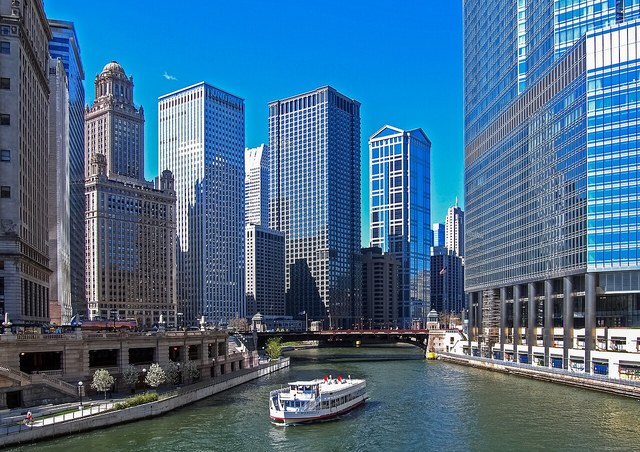
ul li File:Chicago River ferry.jpg /a : a rel="nofollow" Joh · CC BY 2.0

Illinois city · founded 1833 · northeastern Illinois, Lake Michigan shore

Chicago is Illinois's largest city, site of major labor conflicts, the 1871 Great Fire, and the violent 1968 Democratic Convention.

The kit

  • Great Fire — Chicago suffered a Great Fire in October 1871 allegedly started by Mrs. O'Leary's cow knocking over a lantern.
  • Violence & crime — Chicago was the site of the St. Valentine's Day Massacre targeting Bugs Moran's gang and the 1919 race riot after Eugene Williams's death.
  • Political events — Chicago hosted the 1968 Democratic National Convention where police used "Gestapo tactics" against protesters including the Chicago Seven.
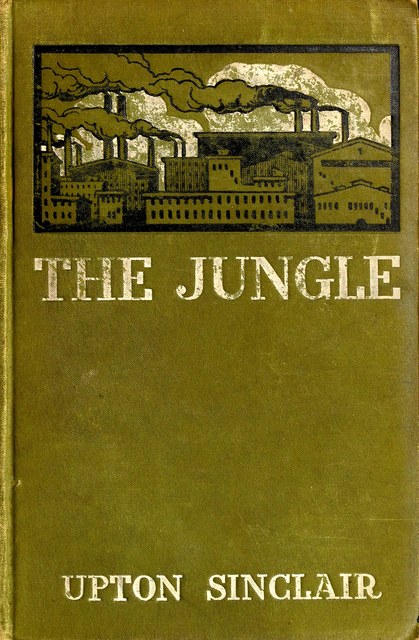
  • Social reform — Chicago was home to Jane Addams's Hull House settlement and the setting of Upton Sinclair's The Jungle about meatpacking.

Runs with

mayor
Harold Washington became Chicago's first black mayor during the Council Wars open card →
Haymarket Square Riot
occurred near Chicago's McCormick factory; Governor Altgeld pardoned three participants open card →
Illinois
Chicago is the largest city in Illinois open card →
American Railway Union

The ladder · 15 clues

H

A fire in this city may have been started by Mrs. O’Leary’s cow.

H

The role of the environment in the development of this city was analyzed in William Cronon’s book Nature’s Metropolis.

H

This city’s “Inter Ocean” paper was bought by Charles Yerkes during his fight to control its streetcars.

H

Operation Greylord, an investigation into the judiciary of this city, resulted in the conviction of fifteen judges for corruption.

H

In addition to that event near the McCormick factory, an event in this city saw Pigasus the Pig nominated for President by people like Jerry Rubin and Abbie Hoffman.

H

A 1919 race riot broke out in this city after Eugene Williams was killed while swimming on an unofficially segregated beach.

H

During a different event held in this city, demonstrators originated the phrase “the whole world is watching,” which they chanted while being beaten by police.

M

In this city, members of Bugs Moran's gang were killed in the St. Valentine's Day Massacre.

M

Robert S. Abbott started this city’s Bud Billiken Parade and Picnic and founded the Defender newspaper.

M

One venture here, co-founded by Ellen Gates Starr, was Jane Addams’ Hull House, and its namesake “Seven” violently protested the 1968 Democratic Convention.

M

This city’s Humboldt Park is the setting of The House on Mango Street.

M

A building in this city called the Wigwam hosted the 1860 Republican National Convention.

E

This city’s police force used “Gestapo tactics” according to a speaker at the 1968 Democratic National Convention, which this city hosted.

E

The Louisa Luetgert murder took place in this city, the center of the meatpacking industry and the setting of Upton Sinclair’s The Jungle.

E

According to legend, Mrs. O’Leary’s cow knocking over a lantern caused a Great Fire in October 1871 in this city. name this home of the Tribune, the largest city in Illinois.

10 more clues from the record
H

Anton Cermak, the mayor of this city, was killed in Miami in 1933 by Giuseppe Zangara in a failed assassination attempt on the newly-inaugurated Franklin D. Roosevelt.

H

A leader of the North Side Gang, Bugs Moran, was killed in this city during the St. Valentine’s Day Massacre.

H

This city's namesake university was established in 1890 in its Hyde Park neighborhood, while older colleges and universities in and around the city include DePaul, in the Lincoln Park neighborhood, and Northwestern, in nearby Evanston.

H

An event that started in this city was undermined by Richard Olney's injunctions.

H

In 1993, this city's Hyde Park neighborhood supported Carol Moseley Braun for US senator. name this Midwest city where Barack Obama served as a voter organizer.

H

This city’s “Council Wars” occurred when a faction of its Democratic Party split off to oppose Harold Washington, its first black mayor.

H

This city’s second African-American alderman, Louis B. Anderson, succeeded the first, Oscar Stanton De Priest, who was defended from graft by Clarence Darrow.

H

This city’s sewers, sometimes named for their designer, Ellis S. Chesbrough, involved building a Gothic Revival water tower and raising this city’s buildings by as much as ten feet.

H

Governor John Altgeld pardoned three people involved in a conflict in this city, but he was unable to save August Spies [spees].

H

Experienced a massive race riot in July in what Midwestern city?
Watch out: Bugs Moran's gang members were killed in the St. Valentine's Day Massacre, not Moran himself
#159 · US Congressional Figures · Level 1

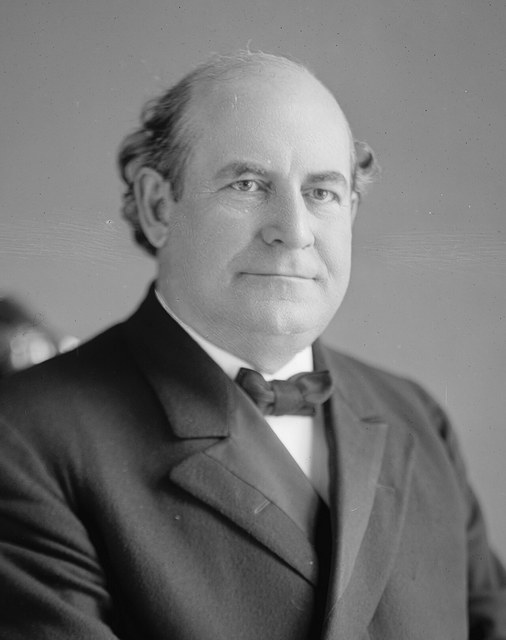
William Jennings Bryan

William Jennings Bryan
Harris & Ewing, photographer · Public domain

American politician and orator · 1860–1925 · United States

William Jennings Bryan was a three-time Democratic presidential nominee famous for his "Cross of Gold" speech and opposition to evolution.

The kit

  • Rise — William Jennings Bryan electrified the 1896 Democratic National Convention with his "Cross of Gold" speech supporting bimetallism, becoming the youngest person to receive an electoral vote at age 36.
  • Achievements — William Jennings Bryan served as Woodrow Wilson's Secretary of State, negotiating "cooling off" treaties to avoid wars and advocating citizenship for Puerto Ricans.
  • Conflicts — William Jennings Bryan resigned as Secretary of State in 1915 after the sinking of the Lusitania, opposing harsh retaliation and America's entry into World War I.
  • Death & succession — William Jennings Bryan died days after arguing against Clarence Darrow in the Scopes Monkey Trial, where he defended Christian morals and opposed teaching evolution.

Runs with

Gold
delivered "Cross of Gold" speech demanding Republicans not crucify mankind on gold standard open card →
Secretary of State
served as Wilson's Secretary of State, resigning over Lusitania response open card →
Woodrow Wilson
appointed Bryan Secretary of State, accepted his resignation after Lusitania open card →
Scopes Monkey Trial

The ladder · 15 clues

H

This orator served in the House of Representatives and as Woodrow Wilson’s Secretary of State.

H

This bimetallist ran for President in 1896, electrifying the audience at the Democratic National Convention with the “Cross of Gold” speech.

H

This man’s natural oration skills were countered by Mark Hanna in one election who organized a front porch campaign for the winning candidate. name this politician who lost the election of 1900 to William McKinley

H

This man wrote in support of progressive politics in his Commoner magazine, and he noted that Christian values laid a foundation for group morality in his “Prince of Peace” speech, which he recited repeatedly on the Chautauqua circuit.

H

His opposition to harsh retaliation after the sinking of the Lusitania caused this politician to resign as Woodrow Wilson's Secretary of State.

H

As Secretary of State, he signed various "cooling off" treaties to avoid wars with other countries, but resigned that post following the sinking of the Lusitania. name this perennial Democratic candidate for president who gave the "Cross of Gold" speech.

H

This politician negotiated a treaty with Emiliano Chamorro that gave the United States full rights over any future canal built through Nicaragua.

M

In the wake of the sinking of the Lusitania, this man resigned as Woodrow Wilson’s Secretary of State.

M

The Lusitania disaster prompted this man to resign as Woodrow Wilson’s secretary of state as he firmly opposed America’s entry into World War I. The “Cross of Gold” speech was given by this Democratic presidential nominee who lost in 1896, 1900, and 1908.

M

This man died just days after arguing against Clarence Darrow in the Scopes Trial.

M

This man defended Christian morals in his “Prince of Peace” oration while part of the Chautauqua circuit.

M

During one campaign, this man was dubbed the Boy Orator and became the youngest person to receive a vote in the electoral college at the age of 36.

E

This bimetallist declared that “you shall not crucify mankind” in an 1896 speech. name this populist politician and orator of the “Cross of Gold” speech.

E

Secretary of State who resigned in 1915, years after delivering the “Cross of Gold” speech?

E

He rose to prominence after delivering an oration at an 1896 convention supporting bimetallism, demanding that Republicans not “crucify mankind” on the title object. name this Democratic presidential candidate who delivered the “Cross of Gold” speech.

10 more clues from the record
H

In an 1894 senate election, this man challenged the influence of railroads in Nebraska by running against John Thurston.

H

Also known as the "Great Commoner" this man advocated bimetallism in his "Cross of Gold" speech. He resigned as Wilson's Secretary of State after the sinking of the Lusitania.

H

This man was a prosecutor in the Scopes Monkey Trial. :Name this Populist who ran unsuccessfully for president three times and served as Woodrow Wilson's Secretary of State.

H

He advocated citizenship for Puerto Ricans during an election in which his running mate was John Kern.

H

Both Arthur Sewall and Thomas Watson were vice presidential nominees for this person in one election.

H

This man argued against American annexation of the Philippines in his speech “The Paralyzing Influence of Imperialism.” A political cartoon depicted him as a snake swallowing a donkey.

H

This man once noted “it is just as easy to believe the miracle of Jonah as any other miracle in the Bible.” This man argued that “man is essentially devout” in his “Prince of Peace” speech, given at many Chautauqua gatherings in 1904.

H

This man ran to be Moderator of the Presbyterian Church during the Fundamentalist-Modernist controversy, losing to Charles Wishart, who refused this man's request to end funding for schools that taught evolution.

H

This Cabinet member questioned President Wilson’s sharp response, asking “why be so shocked by the drowning of a few people, if there is to be no objection to starving a nation?”, and resigned a month after the sinking.

H

This man wrote that "science is a magnificent material force, but it is not a teacher of morals" after being denied a chance to give closing statements at a 1925 event.

Watch out: Not to be confused with William McKinley, who defeated Bryan in 1896 and 1900
#162 · US Congressional Figures · Level 1

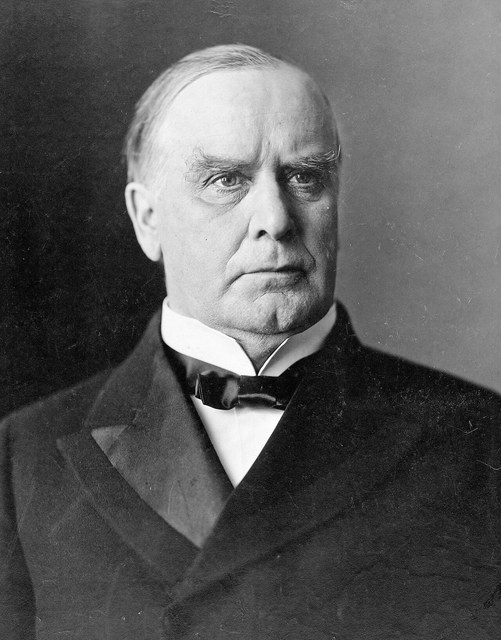
William McKinley

William McKinley
Unknown author Unknown author · Public domain

25th U.S. President · 1897–1901 · United States

William McKinley was the 25th U.S. President who led during the Spanish-American War and was assassinated by Leon Czolgosz in 1901.

The kit

  • Rise — William McKinley won the 1896 presidential election using a 'front porch campaign' from his Canton, Ohio home managed by Mark Hanna.
  • Achievements — William McKinley passed the Gold Standard Act to end bimetallism and oversaw the annexation of Hawaii and retention of the Philippines.
  • Conflicts — William McKinley defeated William Jennings Bryan twice and was criticized for appointing the possibly senile John Sherman as Secretary of State.
  • Death & succession — William McKinley was assassinated by Leon Czolgosz at the Pan-American Exposition in Buffalo in 1901, leading to Theodore Roosevelt's succession.

Runs with

Theodore Roosevelt
succeeded McKinley after his 1901 assassination open card →
Ohio
Spanish-American War
president during the war, retained Philippines afterward open card →
Secretary of State
appointed possibly senile John Sherman to the post open card →

The ladder · 15 clues

H

The Wilson–Gorman Tariff Act replaced a high tariff framed by this politician.

H

This man supposedly won a campaign delivering speeches only from the front porch of his house in Canton, Ohio.

H

Harding became known across Ohio by campaigning for this former Ohio governor who won the 1896 U.S. presidential electioAn.

H

During this man’s presidency, the longest-serving cabinet member in U.S. history, Secretary of Agriculture James Wilson, began his post.

H

This president, who was referred to by a future ally as having “no more backbone than a chocolate eclair,” picked the possibly senile John Sherman as his first secretary of state.

H

Hawaii was annexed by this president, who passed the Gold Standard Act to end bimetallism. name this 25th U.S. President, who was succeeded by Theodore Roosevelt.

H

He was criticized for his nomination of the possibly senile John Sherman to Secretary of State.

M

This man advocated the "full dinner pail" in his second "front porch campaign" under the management of Mark Hanna.

M

U.S. President who led during the Spanish-American War and retained the Philippines thereafter.

M

This man names an extremely high 1890 tariff that was replaced just four years later by the Wilson-Gorman Tariff.

M

An opponent of William Jennings Bryan, name this president who was shot at the Pan-American Exposition by Leon Czolgosz, after which he was succeeded by Theodore Roosevelt.

M

In the Election of 1900, this man used a Canton-based front porch campaign to beat Democrat William Jennings Bryan.

E

answer these questions about the Spanish-American War:This man, later assassinated by Leon Czolgosz , was President during the Spanish-American War.

E

Leon Czolgosz [CHOW-gaw] assassinated this president at the Pan-American Exposition in Buffalo. name this president who was succeeded by Theodore Roosevelt.

E

The first campaign of William Jennings Bryan lost to this Ohioan who managed the Spanish-American War during a presidency cut short by his 1901 assassination.

10 more clues from the record
H

Marcus Hanna encouraged this man to stay at home while raising money for this man’s “front-porch” campaign.

H

A subordinate once cracked this man had the "backbone of a chocolate éclair." He was mocked by an ambassador in the "De Lome Letter," and his wife was an epileptic named Ida.

H

The Secret Service was given the task of guarding the President after this President was assassinated in Buffalo in 1901 by Leon Czolgosz {ZOL-GOTCH)

H

This president passed the Newlands Resolution to appoint a five-member commission to recommend laws for Hawaii.

H

In 1894, Cleveland signed the Wilson-Gorman Tariff, reducing tariff rates from those set in 1890 by this Ohio representative and future President.

H

Ohio politician who defeated him in the general election twice using the "Front Porch" strategy.

H

This man was called a "modern Caesar" and a leader of “the money kings and trust magnates” by Emma Goldman.

H

Prospector William Dickey named a geographic feature after this politician to garner support for one of his campaigns.

H

This man’s “triumph” is the subject of a recent book by George W. Bush adviser Karl Rove.

H

Guam was transferred to US Navy control in December, 1898 by this US president.

Watch out: His 1890 tariff is confused with the 1894 Wilson-Gorman Tariff that replaced it
#175 · US Congressional Figures · Level 1

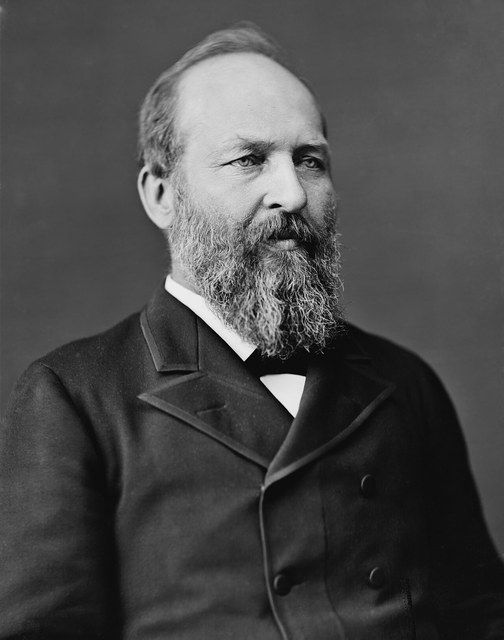
James A. Garfield

James A. Garfield
Unknown; part of Brady-Handy Photograph Collection. · Public domain

20th U.S. President · 1831–1881 · United States

James A. Garfield was the 20th U.S. President, assassinated in 1881 by Charles Guiteau after serving only seven months in office.

The kit

  • Rise — James A. Garfield was the only sitting House of Representatives member ever elected president, winning the 1880 election on the 36th ballot.
  • Achievements — James A. Garfield defeated Winfield Scott Hancock by less than 2,000 popular votes in the 1880 election and appointed James Blaine as Secretary of State.
  • Conflicts — James A. Garfield's administration faced the Star Route scandal involving campaign manager Stephen Dorsey and investigated by Attorney General Wayne MacVeagh.
  • Death & succession — James A. Garfield was shot by Charles Guiteau, who shouted "I am a Stalwart of the Stalwarts," and was succeeded by Chester A. Arthur after the second-shortest presidential term.

Runs with

Charles
assassinated by Charles Guiteau in 1881 open card →
Ohio
elected to House from Ohio during Civil War service open card →
Secretary of State
appointed James Blaine as Secretary of State open card →
Winfield Scott
defeated Winfield Scott Hancock in 1880 election open card →

The ladder · 15 clues

H

During one event, this President was attacked by a man who declared “I am a Stalwart of the Stalwarts!” Charles Guiteau [GHEE-toe] assassinated, what President who was succeeded by Chester A. Arthur?

H

Was assassinated in 1881 by Charles Guiteau.

H

During one election, this president’s opposition forged a letter from him to a Massachusetts union supposedly voicing his support for Chinese immigration.

H

Charles Guiteau shouted “I am a Stalwart of the Stalwarts” after shooting this man. :This exclamation followed the assassination of what president in 1881?

H

This politician is the only sitting member of the House of Representatives to be elected president, and his administration faced the Star Route scandal.

H

Guiteau assassinated this president, who served only seven months in office. This man's Secretary of State was James Blaine, and he was succeeded by Chester A. Arthur.

H

During his Civil War service in the Army of the Cumberland at Shiloh and Chickamauga, he was elected to the House of Representatives from Ohio.

M

This man defeated Winfield Scott Hancock in the Election of 1880.

M

Which U.S. President this person who developed a proof of the Pythagorean Theorem, was shot by Charles Guiteau.

M

Chronologically, the next American president to be assassinated after Lincoln was which man?

M

The Pendleton Act was in part a response to the assassination of this predecessor of Arthur by deranged office seeker Charles Guiteau.

M

This man left the presidency, as well as this mortal coil, after being assassinated by Charles Guiteau, who was angry over this man's attempted civil service reforms. He is the only sitting member of the House to be elected president.

E

Morrison Waite was made Chief Justice under this president, who appointed William Robertson as Collector of the Port of New York.

E

This man’s death at the hands of a Stalwart left him with the second-shortest Presidential term in history. name this U.S. President who was assassinated in 1881 by Charles Guiteau and succeeded as President by Chester Arthur.

E

The death of this man prompted the passage of the Pendleton Civil Service Act under his successor. name this president who was assassinated in 1881 by Charles Guiteau.

10 more clues from the record
H

This politician was nominated for President on the 36th ballot after 35 ballots were split between former President Grant and this man’s choice for Secretary of State, James Blaine.

H

This politician detested porridge so much that he joked that the then-imprisoned and starving Sitting Bull should be fed his oatmeal as it was a worse fate.

H

This man’s campaign manager Stephen Dorsey was implicated in the Star Routes scandal, leading to investigation by his attorney general Wayne MacVeagh.

H

During one event, this man was attacked by a man who had been passed over as consul to Paris by Secretary of State James G. Blaine.

H

William Henry Hunt was appointed Secretary of the Navy by this president, who called for the abandonment of the Clayton-Bulwer Treaty.

H

The popular vote margin between this man and Winfield Scott Hancock was less than 2,000 votes.

H

During an earlier man’s presidency, this man refused ten shares offered by Oakes Ames during the Credit Mobilier Scandal.

H

This man was treated by Dr. Willard Bliss who used cabinet members’ wives instead of trained nurses.

H

A predecessor said of him, “No man ever started so low that accomplished so much, in all our history.”:Name this President, the first to employ James G. Blaine as Secretary of State, through whom his administration intervened diplomatically in the War of the Pacific.

H

The late 19th and early 20th centuries were a dangerous time for U.S. Presidents. :This president was killed by Charles Guiteau, who planned to use his trial as a springboard for an 1884 presidential run. This president was succeeded by his VP Chester Arthur.

Watch out: Winfield Scott Hancock (his 1880 opponent, not Winfield Scott)
#176 · US Congressional Figures · Level 1

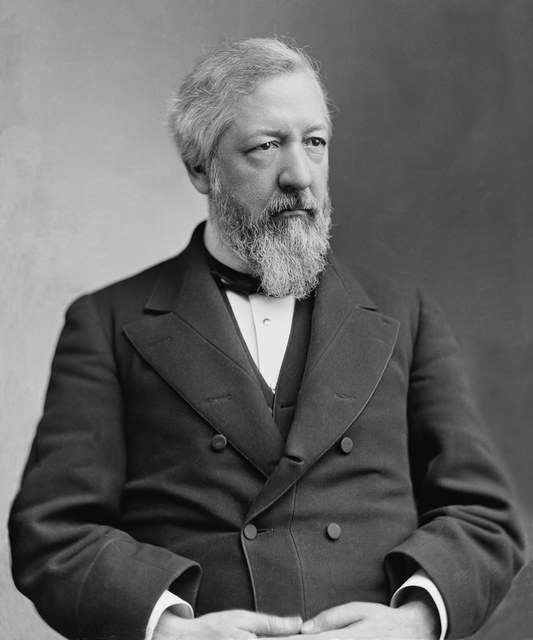
James G. Blaine

James G. Blaine
bdi Mathew Benjamin Brady /span /a /bdi / bdi Levin Corbin H · Public domain

Republican politician · 1830–1893 · Maine, Washington D.C.

James G. Blaine was a Republican leader whose 1884 presidential loss to Grover Cleveland followed corruption scandals and the Mulligan Letters.

The kit

  • Rise — James G. Blaine led the Half-Breed faction of the Republican Party and earned the nickname "Plumed Knight" from Robert Ingersoll's 1876 nomination speech.
  • Conflicts — James G. Blaine was implicated in railroad corruption when the Mulligan Letters revealed he accepted bribes from Union Pacific and Little Rock railroads.
  • Achievements — James G. Blaine served as Secretary of State under Garfield and Harrison, organizing the First International Conference of American States.
  • Legacy — James G. Blaine's namesake constitutional amendments sought to ban government funding of religious schools, particularly parochial institutions.

Runs with

Maine
represented Maine in Congress, mocked as 'continental liar from the state of Maine' open card →
Grover Cleveland
lost the 1884 presidential election to Cleveland open card →
Secretary of State
served twice as Secretary of State under Garfield and Harrison open card →
James
shared first name with President Garfield whom he served open card →

The ladder · 15 clues

H

The use of public funds by religious schools are banned by this man’s namesake amendments.

H

Cleveland defeated this Republican candidate, depicted in cartoons as a tattooed man before artists, in the 1884 presidential election.

H

This politician was accused of taking bribes from the Union Pacific Railroad in the Mulligan Letters.

H

This politician pushed a constitutional amendment that would have prohibited government funding for parochial schools.

H

answer these questions about an American politician.This two-time Secretary of State, a Half-Breed, was the namesake of a failed constitutional amendment that would have prevented state-level funding of religious schools.

H

One of this man’s nicknames was derived from Robert Ingersoll’s speech nominating him at the 1876 RNC.

H

As secretary of state, he organized the First International Conference of American States.

M

James Mulligan released letters between Little Rock and Fort Smith Railroad bookkeeper Warren Fischer and this man, who led the Mugwump faction of his party.

M

This man was supported by Samuel Burchard, who gave a disastrous speech criticizing “rum, Romanism, and rebellion” and cost this man the presidential election.

M

This man was found to have accepted bribes in the Mulligan Letters.

M

This "Half-Breed" Republican Speaker's corruption in railroad charter deals led him to be called the "Continental liar from the state of Maine" in the 1884 presidential election.

M

Despite being targeted with the phrase “Ma Ma, Where’s My Pa” over his affair with Maria Halpin, Cleveland won the 1884 election against this Republican who was nicknamed the “continental liar from the state of Maine.”

E

This leader of the Half-Breeds was mocked as a “continental liar from the state of Maine” in 1884. name this Republican candidate who lost to Grover Cleveland.

E

This leader of the Half-Breed faction was eventually opposed by the more reform-minded Mugwumps, who refused to support him in the 1884 election against Grover Cleveland. name this Secretary of State under James Garfield and Benjamin Harrison, a Republican mocked as the “continental liar from the state of Maine.”

E

He was dubbed the Plumed Knight during his presidential run, in which the opposing party was accused of Rum, Romanism, and Rebellion.

10 more clues from the record
H

When writing to clerk James Mulligan, this man ended messages with the phrase “Burn this letter.” Robert Ingersoll referred to this man as the “Plumed Knight” when nominating him for president.

H

The book Twenty Years of Congress was written by this man, who created the First International Conference of American States as Benjamin Harrison’s Secretary of State.

H

As a congressman, this man was the primary force behind excluding Jefferson Davis from a post-Civil War amnesty bill.

H

In another cartoon, Whitelaw Reid whisks this man’s robe off to reveal a bib that reads “MAGNETIC PAD” in “Phryne Before the Chicago Tribunal.” He is shown about to push John Logan off the roof of the White House in another cartoon, and in the cartoon "At His Old Tricks Out West," this man conjures above mugs of ale while wearing three feathers on his head.

H

This man is represented by a large magnet breaking an elephant’s back in the cartoon “Too Heavy to Carry.” He also appears wearing star-covered boxer shorts in the bottom right of “The National Dime Museum,” across from a pig who is dealing cards.

H

This man names a constitutional amendment which prohibited the use of government funds for religious schools, and he was given a famous epithet by Robert Ingersoll. :Identify this Secretary of State and leader of the Half-Breed faction of the Republican Party.

H

In his highest post, this figure arbitrated a deal with Britain over seal fisheries in the Bering Sea, and also had to deal with the fallout from a group of sailors from the USS Baltimore getting into a brawl in Valparaiso.

H

A speech in praise of this politician described them tearing from the “throat of treason the tongue of slander,” and “snatching the tongue of democracy.” That speech gave this politician their most enduring nickname and was given by Robert Ingersoll.

H

The Mulligan Letters implicated him in corruption in awarding contracts to the Northern Pacific Railway, and he names a series of amendments that bans the use of federal money to religious schools.

H

This man served as Garfield’s secretary of state. He was later defeated in his own bid for the presidency in the election of 1884 by Grover Cleveland, and was fondly known as the “Continental Liar from the State of Maine.”

Watch out: Not the leader of the Mugwumps—that reform faction opposed him in 1884
#184 · Authors, Poets, and Playwrights · Level 1

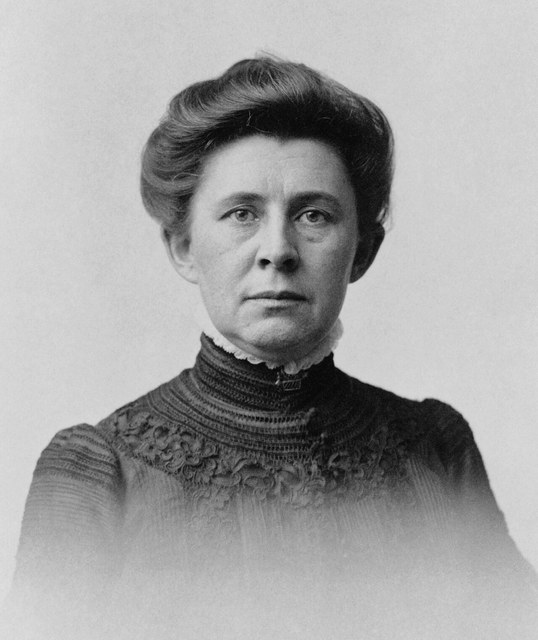
Ida Tarbell

Ida Tarbell
bdi James E. Purdy /span /a /bdi / bdi Adam Cuerden /a · Public domain

Muckraking journalist · late 19th–early 20th century · Pennsylvania, United States

Ida Tarbell was a muckraking journalist who exposed Standard Oil's monopolistic practices in her groundbreaking investigative work.

The kit

  • Rise — Ida Tarbell's father Franklin manufactured wooden oil tanks until Standard Oil's practices drove him into bankruptcy.
  • Achievements — Ida Tarbell published The History of the Standard Oil Company in McClure's magazine as a 19-part exposé.
  • Achievements — Ida Tarbell exposed Rockefeller's underhanded pricing tactics and monopolistic practices, inspiring public outcry against the company.
  • Legacy — Ida Tarbell is often called the inventor of investigative journalism for her meticulous documentation of corporate wrongdoing.

Runs with

Standard Oil Company
exposed its monopolistic practices in her 19-part investigative series open card →
John D. Rockefeller
attacked his underhanded pricing tactics in her muckraking work open card →
Petroleum
her father competed in the oil industry open card →
Pennsylvania
her father was an oilman there open card →

The ladder · 8 clues

H

Rockefeller’s underhanded pricing tactics were exposed by this muckraker, who published The History of the Standard Oil Company in McClure’s magazine.

H

Rockefeller and Standard Oil were both attacked by this muckraker in her book The History of the Standard Oil Company.

H

This writer’s father Franklin became the first person to manufacture wooden oil tanks. :Name this writer who wrote a 19 part book on the company that eventually put Franklin out of business, often called the inventor of investigative journalism.

H

She’s not Nellie Bly, but this author became a frequent Sanatorium visitor following the success of her biography of Abraham Lincoln.

H

Standard Oil’s monopolistic practices raised the ire of this muckraking journalist, whose father had been a Pennsylvania oilman.

H

5: This author once described Samuel McClure as a “will of the wisp” after he missed a train.

M

The History of the Standard Oil Company was written by this muckraker who based the work on her father’s experiences with the company.

E

Inspired by the bankruptcy of her father’s competing business, this muckraking journalist inspired public outcry with her book, The History of the Standard Oil Company.

Watch out: Nellie Bly (another prominent female investigative journalist of the era)
#192 · Authors, Poets, and Playwrights · Level 1

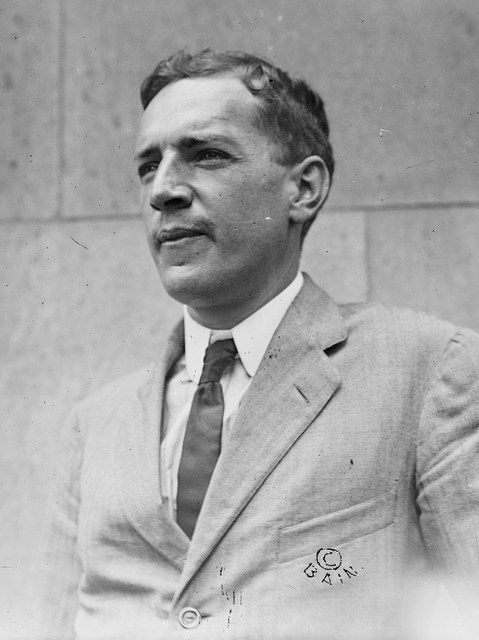
Upton Sinclair

Upton Sinclair
Bain News Service, publisher · Public domain

American muckraking author · early-to-mid 20th century · United States

Upton Sinclair was a Socialist author whose 1906 novel The Jungle exposed meatpacking conditions and prompted the Pure Food and Drug Act.

The kit

  • Rise — Upton Sinclair first serialized The Jungle in Appeal to Reason before its publication as a novel.
  • Achievements — Upton Sinclair coined the phrase "white collar" in 1919 while analyzing clerical and administrative workers.
  • Conflicts — Upton Sinclair ran for California governor in 1934 on the EPIC (End Poverty in California) platform after switching from Socialist to Democratic Party.
  • Legacy — Upton Sinclair's novel Oil! provided the basis for the film There Will Be Blood.

Runs with

The Jungle
wrote exposé of meatpacking featuring Lithuanian immigrant Jurgus Rudkus open card →
California
lost 1934 gubernatorial race despite EPIC platform open card →
Chicago
set The Jungle in meatpacking plants there open card →
Coal
wrote King Coal about mining industry open card →

The ladder · 15 clues

H

This man wrote I, Candidate for Governor: And How I Got Licked after losing the 1934 California gubernatorial election.

H

This author stated, "I was aiming for the public’s heart, and by accident I hit it in the stomach" after one of his novels led Congress to pass the Pure Food and Drug Act.

H

A police officer supposedly said we'll have "none of the Constitution stuff here, see?" after this man was arrested reading the Bill of Rights in San Pedro in 1923.

H

His novel Oil! provided the basis for the film There Will Be Blood. :Who was this Socialist author of King Coal and a series of books about Lanny Budd?

H

After this man campaigned as the Democratic candidate for governor of California, he observed, “The American People will take Socialism, but they won’t take the label.” This man created left-leaning works like The Flivver King, a direct attack on Henry Ford, and Oil!, which inspired the film There Will Be BloRod.

H

At the launch of a political campaign, this man circulated a pamphlet called "I, Governor of California, and How I Ended Poverty." This man depicted the graceful scion of an arms magnate who interacts with world leaders in the 1930s and 40s in his twelve-book series about Lanny Budd.

H

While analyzing clerical and administrative workers, this author coined the term “white collar.” This man’s “Dead Hand” series includes a work that critiques newspaper moguls like William Randolph Hearst titled The Brass Check.

M

The Pure Food and Drug Act was passed in response to this author's novel The Jungle.

M

Ona dies during childbirth in a novel by this author that centers on Lithuanian immigrant Jurgus Rudkus's contempt for the Chicago meatpacking industry.

M

After losing the 1934 California gubernatorial election, this man authored I, Candidate for Governor: And How I Got F Licked.

M

This author penned The Jungle and also unsuccessfully ran for Governor of California.

M

However, he is better remembered for books like Boston, his treatment of the Sacco and Vanzetti case, and a novel which was first serialized in Appeal to Reason. name this author who wrote about Jurgis Rudkus in The Jungle.

E

This man attacked the Associated Press monopoly in his book The Brass Check, and he used the EPIC platform in a failed 1934 bid for the governorship of California after switching from the Socialist Party to a Democratic ticket. name this muckraking author who wrote King Coal and an expose of the meatpacking industry, The Jungle.

E

That novel by this author concerned the Lithuanian immigrant Jurgus Rudkus, who works in Chicago's historic meatpacking industry. name this activist and author of The Jungle.

E

Earlier, this socialist depicted the end of Tamoszius's [[taa-MOH- zee-us's]] violin career and the travails of Lithuanian immigrant Jurgis Rudkis. name this author who said, "I aimed at the public's heart, and by accident I hit it in the stomach" about his novel set in Chicago meatpacking plants, The Jungle.

10 more clues from the record
H

A memoir by this man subtitled How I Got Licked details a failed political campaign in which he advocated government seizure of farms and factories with unpaid back taxes.

H

This activist's EPIC platform was based on his idea for an experimental community he called the Helicon Home Colony.

H

This writer compared journalists with prostitutes in his expose The Brass Check.

H

Answer the following about the history of co-ops in the United States, .This person envisioned a vast network of co-operative farms which would “[produce] for use” in his pamphlet I, Governor of California, and How I Ended Poverty. He ran against Frank Meriam on his platform EPIC.

H

The political consulting firm Campaigns, Inc. ran the first attack ads against this politician. :Name this 1934 gubernatorial candidate who left the Socialist Party to run as a Democrat in his “End Poverty in California” campaign.

H

This person coined the phrase “white collar” in a 1919 book attacking yellow journalists like William Randolph Hearst, who later spearheaded negative press coverage of this activist’s EPIC (E-P-I-C) campaign.

H

He ran for governor in 1934 on the End Poverty in California platform, and after his narrow defeat he produced novels based on the trial of Sacco and Vanzetti and the Teapot Dome scandal, respectively entitled Boston and Oil!.

H

Clem Whitaker and Leone Baxter headed a league in opposition to this man, and may have pressured his supporter Aimee Semple McPherson from publicly endorsing him until late in that campaign.

H

The Poison Squad argues that Dr. Wiley’s efforts became synonymous in the public mind with the works of this muckraker. This socialist penned a novel that garnered widespread public support for the Meat Inspection Act.

H

This author used the technocracy movement’s idea of “production for use” in his platform, called End Poverty in California. He claimed to have accidentally “hit [the public] in the stomach” with his novel The Jungle.

Watch out: His novel Boston, not The Jungle, treated the Sacco and Vanzetti case
#244 · Scientists, Mathematicians, and Inventors · Level 1

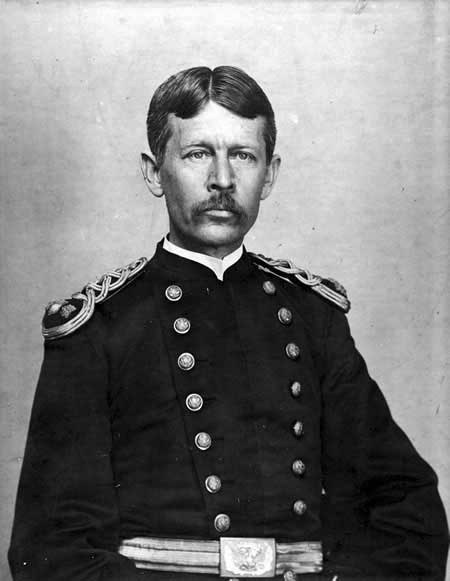
Walter Reed

Walter Reed
bdi Unidentified photographer /a · Public domain

U.S. Army physician · late 19th–early 20th century · Cuba, Panama

Walter Reed was a U.S. Army physician who confirmed that mosquitoes transmit yellow fever through experiments in Cuba.

The kit

  • Rise — Walter Reed studied at the Johns Hopkins University Hospital Pathology Laboratory before serving in the U.S. Army.
  • Achievements — Walter Reed led an investigative board under George Miller Sternberg that confirmed Carlos Finlay's theory about mosquito transmission of yellow fever.
  • Achievements — Walter Reed conducted experiments at Camp Lazear in the Panama Canal Zone, assisted by Jesse William Lazear.
  • Legacy — Walter Reed's research enabled William C. Gorgas's mosquito-control efforts and a major military medical center in Bethesda, Maryland bears his name.

Runs with

Panama Canal
his mosquito research enabled construction work open card →
Yellow Fever
confirmed mosquito transmission through Camp Lazear experiments open card →
Panama
conducted experiments in the Panama Canal Zone open card →
George
led investigative board under George Miller Sternberg open card →

The ladder · 11 clues

H

Under the direction of George Miller Sternberg, this person confirmed a theory of Carlos Finlay, using subjects at Camp Lazear in the Panama Canal Zone.

H

Jesse William Lazear assisted this man, who led an investigative board under Brigadier General George Miller Sternberg.

H

Findings by this man led to a series of failed inoculations conducted by William C. Gorgas at the behest of Leonard Wood.

H

This person served at Fort Robinson, where they were able to save Jules Sandoz's foot after initially wanting to amputate.

H

This man conducted experiments at a camp he named for his former assistant, Jesse Lazear.

M

This man studied a t the Johns Hopkins University Hospital Pathology Laboratory before making a (+) discovery while serving in the U.S.

M

Confirming that yellow fever was spread by mosquitos and naming an Army Medical Center in Washington D.C. this doctor.

M

A facility named for this person was used by Donald Trump to treat his case of COVID-19.

E

This man’s research greatly affected work on the Panama Canal.

E

Active during the Spanish-American War, (*) this is, for the points, what physician who confirmed that mosquitos transmit yellow fever?

E

identify this man who names a major military medical center in Bethesda, Maryland.

Watch out: Jesse William Lazear (Reed's assistant who died during the yellow fever experiments)
#247 · Scientists, Mathematicians, and Inventors · Level 1

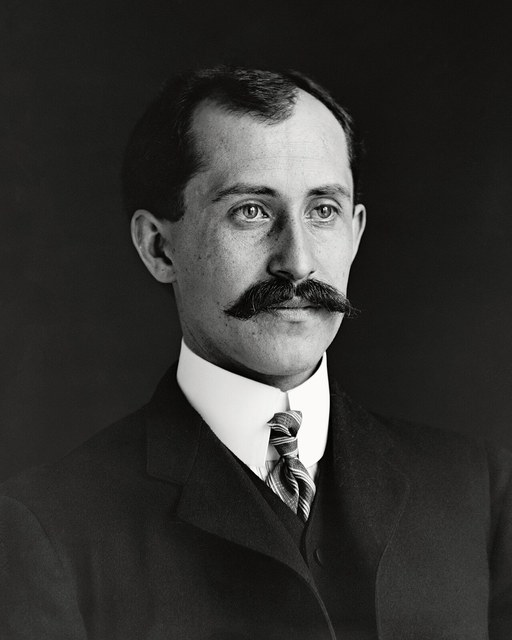
Wright Brothers

Wright Brothers
Orville Wright and Wilbur Wright (credited as photographers) · Public domain

American aviation pioneers · 1903 · Kitty Hawk, North Carolina

Wright Brothers were Wilbur and Orville Wright, who achieved the first sustained, controlled, powered airplane flight in 1903.

The kit

  • Rise — Wright Brothers operated a bicycle shop in Dayton, Ohio and applied their manufacturing expertise to aeronautical experiments.
  • Achievements — Wright Brothers corrected Otto Lilienthal's errors by recalculating the Smeaton coefficient and pioneered the wing-warping technique for control.
  • Achievements — Wright Brothers achieved three-axis control in their 1903 design, maintaining stability during tests at Kill Devil Hills sand dunes.
  • Legacy — Wright Brothers' first flight traveled 120 feet in 12 seconds, establishing the foundation for modern fixed-wing aircraft.

Runs with

North Carolina
tested their airplane at Kitty Hawk open card →
Joe Hill
Ohio
operated bicycle shop in Dayton open card →
NASA
surname used for Ingenuity Mars helicopter field open card →

The ladder · 15 clues

H

A site in Kitty Hawk, North Carolina was used by two members of this family.

H

After the success of one of this group’s efforts, George Besanc¸on wrote that they had “completely dissipated all doubts.” Henry Toulmin helped attain a patent for this group, who were assisted by mechanic Charlie Taylor.

H

The major theoretical advance of these people was recalculating the Smeaton coefficient to correct errors made by Otto Lilienthal.

H

Two members of this family studied the work of Otto Lilienthal to pioneer the technique of wing-warping.

H

An employee of these two men, John T. Daniels, snapped a photo of them in which one of them is prone.

H

The heirs of these two men supposedly suppressed information about Gustave Whitehead's innovations.

H

These inventors developed three-axis control, which is key to maintaining a fixed-wing aircraft, in a patent filed in 1903.Name this pair of brothers who built and flew the first successful airplane.

H

Their first flight went 120 feet and lasted 12 seconds. :Name this pair of brothers credited with taking the first flight in what would evolve into modern airplanes, their namesake flyer.

H

Santos-Dumont was contemporaneous with, and met with, this American aviation duo. This pair of brothers tested their first plane in Kitty Hawk in 1903.

H

Wind tunnel experiments conducted by two people with this surname contributed to the development of the lift equation.

M

These brothers used expertise gained from manufacturing bicycles to build the world’s first successful airplane, which they tested in Kitty Hawk, North Carolina.

M

This group used a forward elevator in their design of a machine that maintained three-axis control during testing near sand dunes in the Kill Devil Hills. name this duo who, in 1903 near Kitty Hawk, achieved the first sustained flight.

M

These rivals of Samuel Langley worked as publishers of The West Side News and as bicycle salesmen before their breakthrough at Kill Devil Hills. identify this pair of Ohio brothers who made the first airplane flight in 1903.

M

A pair of brothers in this family owned a bicycle shop in Dayton which they used to conduct numerous experiments.

E

The first successful airplane was created by, two members of what family named Wilbur and Orville?

1 more clues from the record
H

The take-off and landing field for NASA’s Ingenuity Mars helicopter included this surname.

Watch out: Samuel Langley, their rival who also attempted early powered flight
#251 · US Vice Presidents, Cabinet Secretaries, and Executive Officials · Level 1

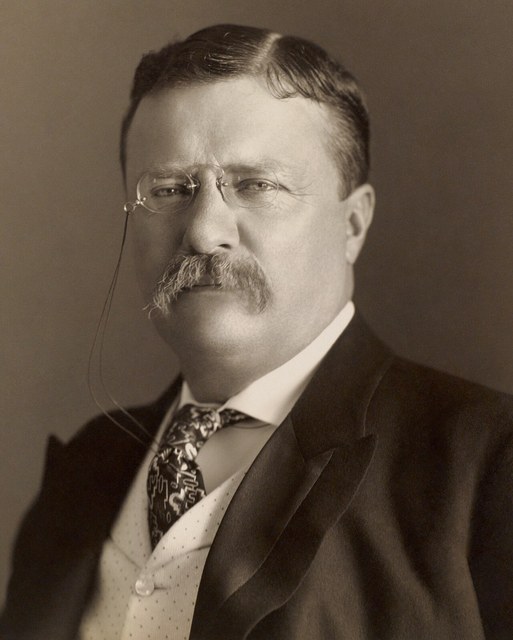
Theodore Roosevelt

Theodore Roosevelt
bdi Adam Cuerden /a · Public domain

26th U.S. President · 1858–1919; presidency 1901–1909 · United States

Theodore Roosevelt was the 26th U.S. President who championed trust-busting, conservation, and assertive foreign policy under his 'Big Stick' diplomacy.

The kit

  • Rise — Theodore Roosevelt led the Rough Riders at San Juan Hill during the Spanish-American War before becoming Governor of New York.
  • Achievements — Theodore Roosevelt won the Nobel Prize for brokering the Treaty of Portsmouth ending the Russo-Japanese War and sent the Great White Fleet.
  • Conflicts — Theodore Roosevelt survived an assassination attempt by John Schrank in Milwaukee, then delivered an 84-minute speech declaring it takes more to kill a Bull Moose.
  • Legacy — Theodore Roosevelt ran as the Progressive Party candidate in 1912, splitting votes with Taft and enabling Woodrow Wilson's victory.

Runs with

William McKinley
became president in 1901 after McKinley's assassination in Buffalo open card →
Bull Moose Party
founded the Progressive Party for his 1912 presidential campaign open card →
John
shot by John Schrank before Milwaukee speech open card →
William Howard Taft
split Republican votes with Taft in 1912 election open card →

The ladder · 15 clues

H

This president once said that "speak softly and carry a big stick" described his foreign policy.

H

Both Richard Nixon’s victory and resignation addresses quoted this orator’s “Citizenship in a Republic” speech, which notes “It is not the critic who counts,” but rather “the man who is actually in the arena.” At Carnegie Hall in 1915, this man attacked “Hyphenated Americans” and argued for assimilation of immigrant cultures.

H

As US President, this man authorized the voyage of the Great White Fleet and brokered the Treaty of Portsmouth, ending the Russo-Japanese War.

H

This president strengthened the Interstate Commerce Commission by passing a law fining railroads offering rebates, the Elkins Act.

H

This author’s books include The Naval War of 1812 and a four-volume history of American westward expansion, The Winning of the West.

H

This leader sent the Great White Fleet across the globe to showcase the superiority of the United States.

H

This man criticized the leadership of Oliver Hazard Perry in his book The Naval War of 1812.

M

Future U.S. President who led the Rough Riders in Cuba.

M

After a speech for the Progressive Party in Milwaukee, this president was shot by John Schrank. name this politician who, after that shooting, claimed “it takes more than that to kill a Bull Moose.”

M

This man was influenced by The Jungle to sign the Pure Food and Drug Act into law.

M

This third party candidate split votes with William Howard Taft, allowing Woodrow Wilson to take victory in the Election of 1912. name this founder of the Bull Moose party, a former trust-busting president.

M

This man established the Bull Moose Party for the election of 1912. name this trust-busting monocled president.

E

This president heroically fought at the Battle of San Juan Hill as the leader of the Rough Riders during the Spanish- American War.

E

This man won a Nobel Prize for his efforts in helping end the Russo-Japanese War.

E

John Schrank shot this man which led him to tell a crowd “it takes more than that to kill a bull moose.” This man attempted to secure a third term with his Progressive Party but lost to Woodrow Wilson. name this president who believed America should “speak softly and carry a big stick.”

10 more clues from the record
H

This President ordered the dishonorable discharge of 167 innocent black soldiers in the Brownsville Affair.

H

He was appointed assistant secretary of the Navy, but resigned to go to war.

H

Muir was a friend of this conservationist president who championed the “Square Deal” and ran as the Progressive Party candidate in 1912.

H

Later, he became Governor of New York.

H

This man appointed Gifford Pinchot and sent out the Great White Fleet.

H

He signed the Gentleman’s Agreement with Japan, and John Schrank attempted to assassinate this man while he was giving a speech.

H

This person published the article “Nature Fakers” to support John Burroughs’ criticism of anthropomorphic nature writing.

H

This President was the first to visit a foreign nation during his term in office. …Name this President who took over in 1901 after William McKinley was assassinated in Buffalo, New York.

H

This person stated that the US would protect other countries in the west, part of their namesake corollary to the Monroe Doctrine.

H

This president's "Square Deal" initiative broke up monopolies, and he gave an 84-minute campaign speech in Milwaukee despite being shot just before it.

Watch out: William Howard Taft (Roosevelt's chosen successor who later became his rival in the 1912 election)
#258 · US Vice Presidents, Cabinet Secretaries, and Executive Officials · Level 1

William Howard Taft

William Howard Taft
Pach Brothers, restored by Adam Cuerden · Public domain

27th U.S. President · 1857–1930 · United States

William Howard Taft is the only person to serve both as U.S. President and Chief Justice of the Supreme Court.

The kit

  • Rise — William Howard Taft served as first civilian governor of the Philippines from 1901 to 1903 before becoming Secretary of War.
  • Achievements — William Howard Taft advocated dollar diplomacy through Secretary of State Philander Knox, offering loans to Latin America in exchange for political influence.
  • Conflicts — William Howard Taft's presidency was damaged by the Ballinger-Pinchot affair over conservation policy and support for the protectionist Payne-Aldrich Tariff.
  • Legacy — William Howard Taft served as Chief Justice from 1921 to 1930 and was the main proponent of building the new Supreme Court Building.

Runs with

Philippines
served as first civilian governor 1901–1903 open card →
Theodore Roosevelt
Woodrow Wilson
lost 1912 re-election to Wilson open card →
Secretary of War
served as Secretary of War under Roosevelt open card →

The ladder · 15 clues

H

This politician is the only person to have served both as U.S. president and Chief Justice and was the main proponent of building the new Supreme Court Building during the 1920s.

H

With Prime Minister Katsura Taro, this man names an agreement which established de jure Japanese hegemony over Korea and protection of U.S. control of Philippines.

H

Was the only President to later serve on the court.

H

First civilian governor of the Philippines, serving from 1901 to 1903; he later served as President.

H

This President’s political position was damaged by his vocal support of the highly protectionist Payne-Aldrich Tariff.

H

This man was forced to respond to the rebellion of Luis Mena by beginning a twenty year military intervention in Nicaragua.

H

This Chief Justice's court decided the pro-zoning case Village of Euclid v.

M

This man selected Philander Knox as Secretary of State and began offering loans to Latin America as a form of Dollar Diplomacy.

M

Along with Theodore Roosevelt, Wilson defeated this Republican incumbent in 1912.

M

Richard Ballinger served as Secretary of the Interior under this man, whose Secretary of State, Philander Knox, guaranteed loans to foreign countries in exchange for political leeway. name this President who engaged in “Dollar Diplomacy” after succeeding Theodore Roosevelt.

M

During his presidency, his Secretary of the Interior, Richard Ballinger, had a dispute with Forestry Service Chief Gifford Pinchot.

M

Three U.S. presidents have received their undergraduate degrees from Yale, the Bushes and this 20tRh century president whose father was U.S. Attorney General and Secretary of War.

E

This former governor of the Philippines advocated "dollar diplomacy" through his Secretary of State, Philander Knox, and finished third in his re-election bid in 1912. name this Republican President, the only executive to become a Supreme Court justice after his time in the White House.

E

This man defeated Theodore Roosevelt in the Election of 1912.

E

When he ran for re-election, this man finished third behind Woodrow Wilson and third-party candidate Theodore Roosevelt. name this man who was the only person to be both U.S. President and Chief Justice.

10 more clues from the record
H

This man appointed Edward Douglass White as Chief Justice.

H

This person succeeded Tomas Estrada Palma as Provisional Governor of Cuba, having much earlier served as Benjamin Harrison’s second Solicitor General.

H

The Ballinger–Pinchot affair was the first nail in the executive coffin of this President, although he continued his political career as Chief Justice of the Supreme Court from 1921 to 1930.

H

A cabinet member in this man’s administration fired Louis Glavis and removed protections around lands used for hydroelectric energy, enraging Gifford Pinchot.

H

This man forced Henry White to resign as Ambassador of France and nearly removed Whitelaw Reid as well, but he enjoyed reading Reid’s reports.

H

Serial killer Carl Panzram committed at least ten murders with a gun stolen from this judge during the burglary of his New Haven mansion.

H

This leader replaced Elihu Root as Secretary of War after serving an apprenticeship starting in 1901 as the first civilian U.S. Governor of the Philippines.

H

This president was devastated after ordering an advisor, Archibald Butt, to go on vacation, only for Butt to die when his ship sank.

H

After George Washington and FDR, this president made the most Supreme Court appointments.

H

U.S. case, which ruled that the exclusionary rule did not generally apply to wiretaps.

Watch out: Taft defeated Theodore Roosevelt in 1912 (actually Wilson won; Taft finished third behind both)
#270 · US Presidents · Level 1

Grover Cleveland

Grover Cleveland
bdi Napoleon Sarony /span /a · Public domain

22nd and 24th U.S. President · 1885–1889, 1893–1897 · United States

Grover Cleveland was the only U.S. president to serve two non-consecutive terms, defeating Benjamin Harrison in 1892 after losing to him in 1888.

The kit

  • Rise — Grover Cleveland won the 1884 election after Mugwumps defected from Republican James G. Blaine, whose supporter's "Rum, Romanism, and Rebellion" remark alienated Irish voters.
  • Achievements — Grover Cleveland set the record for most vetoes in one term at 414, including hundreds of Civil War pensions and the Texas Seed Bill.
  • Conflicts — Grover Cleveland ordered federal troops to break the Pullman Strike in 1894, then established Labor Day as a national holiday to ease tensions.
  • Legacy — Grover Cleveland signed the Dawes Act dividing Native American lands into allotments and allowing citizenship for those who moved onto tribal land.

Runs with

Pullman Strike
ordered federal troops to break the strike in 1894 open card →
Benjamin Harrison
lost 1888 election to him, defeated him in 1892 open card →
James G. Blaine
defeated him in 1884 after Mugwumps defected open card →
the Presidency
only president to serve two non-consecutive terms open card →

The ladder · 15 clues

H

Four years earlier, this man benefitted from another swing in Irish votes when Samuel Burchard denounced him as the candidate of "rum, Romanism, and rebellion." This candidate defeated James G. Blaine before splitting two elections with Benjamin Harrison. name this only Democratic president of the Gilded Age, who served two non- consecutive terms.

H

This president prolifically used his veto power, which included hundreds of Civil War veterans’ pensions and the Texas Seed Bill.

H

This man won one election after the phrase “Rum, Romanism, and Rebellion” became associated with James G. Blaine.

H

During his presidency, the Wilson-Gorman Tariff Act reduced tariffs but also established a small income tax.

H

The Mugwumps left the Republican Party to support this man, who both lost and won a presidential election against Benjamin Harrison.

H

He was hurt by the Murchison letter in one election.

H

This man was praised in an embarrassing letter sent by the British ambassador to a Republican operative using the alias “Charles Murchison.” As president, he still holds the record, at 414, of the most presidential vetoes during one term, and while in office, he married a 21-year old, the youngest ever First Lady.

M

This president was aided by the Mugwumps, who disapproved of his first Republican opponent, James Blaine.

M

A bill passed under this president that allowed for the division of Native American lands into allotments was the Dawes Act.

M

This man allowed Native Americans to become citizens if they moved onto tribal land after signing the Dawes Act.

M

In another election, this former Mayor of Buffalo was taunted due to his affair with Maria Halpin with the slogan “Ma, Ma where’s my Pa?" He emerged victorious in that election after the Mugwumps defected from the writer of the Mulligan letters, the “Continental Liar from the State of Maine” named James G. Blaine. name this only president to serve two non-consecutive terms.

M

This President ordered federal troops to stop the Pullman Strike.

E

This man was defeated by Benjamin Harrison in the 1888 election only to defeat Harrison in 1892. name this president who served two non-consecutive terms.

E

This man’s tenure was divided by the presidency of Benjamin Harrison. name this president who served two non-consecutive terms.

E

This Democrat won the 1884 presidential election despite Blaine’s supporters deriding him with the question “Ma, ma, where’s my Pa?” This man is the only president to serve non-consecutive terms.

10 more clues from the record
H

The Interstate Commerce Act was passed under this president, as was an act dividing native landholdings named for Henry Dawes.

H

This person set the record for most vetoes in one term and also vetoed the Texas Seed Bill.

H

A group of Republicans who supported this man took their name from an Algonquian word roughly meaning “war chief.” :Name this man who won the Presidency in 1884, thanks in part to the support of the aforementioned mugwumps. He is the only US President to serve two non-consecutive terms.

H

This President ordered federal troops to break the Pullman Strike, then established Labor Day as a national holiday to ease tensions. He served two non-consecutive terms as U.S. President.

H

Many Mugwumps from the opposing party supported this person’s candidacy due to his anti-corruption credentials, but a panic at the start of this man's second term dealt a major blow to him and his party.

H

This man defeated an opponent denounced as “the continental liar from the state of Maine.” That opponent’s supporters responded with the chant, “Ma, Ma, where’s my Pa?” to publicize this man’s relationship with Maria Helpin.

H

This candidate was dubiously endorsed by British ambassador Lionel Sackville- West in the Murchison Letter, which resulted in this man losing New York.

H

This man became President by defeating former Civil War general Benjamin Butler of the Greenback Party and Prohibition candidate John St. John.

H

This President sent James Blount to Hawaii after a coup overthrew Queen Liliuokalani [”lily”-oh-kah-lah-nee].

H

This man defended Irish Republicans from the US who attacked British forts and customs offices in the Fenian Raid.

Watch out: Benjamin Harrison (defeated Cleveland in 1888 but lost to him in 1892)
#276 · US Laws, Amendments, and Official Documents · Level 1

Sherman Antitrust Act

Sherman Antitrust Act
U.S. Government · Public domain

1890 federal antitrust law · 1890 · United States

Sherman Antitrust Act was an 1890 federal law giving government power to oppose trusts and monopolies, later modified by the Clayton Act.

The kit

  • Major cases — Sherman Antitrust Act was first tested in U.S. v. E.C. Knight Company, where the Supreme Court limited its application to manufacturing.
  • Enforcement — Sherman Antitrust Act broke up Standard Oil Company and was used by Theodore Roosevelt against Northern Securities Company in 1902.
  • Legal doctrines — Sherman Antitrust Act violations are evaluated using the "rule of reason" doctrine, distinguishing unreasonable restraints from per se violations.
  • Unintended use — Sherman Antitrust Act was applied against labor unions in Danbury Hatters and during the Pullman Strike, contradicting its original purpose.

Runs with

Ohio
sponsored by an Ohio senator open card →
Standard Oil Company
broken up under this law open card →
George
Theodore Roosevelt
first used it to sue Northern Securities in 1902 open card →

The ladder · 15 clues

H

Antitrust litigation used to break up unions, later replaced by the Clayton Act.

H

This law may be legally circumvented using the Noerr-Pennington Doctrine and the Parker immunity doctrine of state sovereignty.

H

In the Federal Baseball Club case, Oliver Wendell Holmes, Jr. stated that this law did not apply to Major League Baseball.

H

Potential violations of this law are considered using the “rule of reason” doctrine.

H

In U.S. vs. E.C. Knight, the Supreme Court ruled that this act could did not give Congress the power to disrupt local manufacturing.

H

Alan Greenspan claimed that this act “kept our standard of living lower than would otherwise have been possible." This 1890 act was sponsored by a senator from Ohio who also sponsored a silver purchase act in the same year.

H

This act is broken into violations “per se” and violations of “rule of reason.” Though the E.C. Knight case held that this act could not be applied to manufacturing, this act was used against the American Railway Union during the Pullman Strike.

M

Alan Greenspan claimed this law killed many products and inventions.

M

The Danbury Hatters court case applied this law to labor unions, but it did not apply to manufacturing after the government failed in their suit against the E.C. Knight Company.

M

U.S. v. E.C. Knight was the first case concerning this piece of legislation. :Name this 1890 act that gave the federal government the right to oppose the formation of trusts.

M

Its effectiveness was limited by the Supreme Court in a case involving the E. C. Knight Company. name this 1890 act sponsored by a senator from Ohio, the first federal law to regulate trusts.

M

Theodore Roosevelt first used the powers granted by this act in 1902 to sue the Northern Securities Company.

E

The Standard Oil Company was broken up using this 1890 antitrust law, named for an Ohio senator and later modified by the Clayton Antitrust Act.

E

An Ohio senator names this law which deals with violations that are "per se" and of the "rule of reason." This law, which was modified by the Clayton Act, was used against Northern Securities Company and Standard Oil, among other monopolies. name this 1890 antitrust act.

E

The “Billion Dollar Congress” under Harrison passed this antitrust law, which was supplemented by the 1914 Clayton Act.

10 more clues from the record
H

Earlier, Kennesaw Mountain Landis struck down a civil suit brought by the newly created "Federal League" against the MLB this the Federal League brought to court using which 19th century antitrust act.

H

It has been argued that this law’s namesake used it to lessen the blow of his ally William McKinley’s harsh tariff passed three months later.

H

George Toolson, who he believed he was too good for the minor leagues, unsuccessfully used this law to sue Major League Baseball.

H

William Radovich used this law to sue the NFL after he was blacklisted from signing in the Pacific Coast League.

H

This earlier antitrust act was also meant to break up monopolies, but was often used against labor unions instead. It was passed under Benjamin Harrison’s “Billion Dollar Congress”.

H

This law was deemed unconstitutional in the E.C. Knight case. :Name this law that established the "rule of reason" test. The Danbury Hatters case, also known as Loewe v. Lawlor, established that secondary boycotts were illegal under this law.

H

Earlier, however, the Court had greatly weakened the spirit of this legislation in the E.C. Knight case of 1895, arguing that a company controlling 98% of the trade in sugar was not in violation of the letter of this legislation.

H

Former Judge Robert Bork’s 1966 article on this legislation insisted its only goal was “consumer welfare,” a position which greatly influenced the Chicago School’s economic analysis of this legislation.

H

The aforementioned doctrine is in line with the ideas of George Hoar, this law’s part-author, and states that only unreasonable situations are governed; it is appropriately known as the Rule of Reason.

H

The decision of the Supreme Court in the Northern Securities case of 1904 applied the so-called “rule of reason” to this legislation, arguing that the title entities in and of themselves were not illegal.

Watch out: Clayton Antitrust Act—later law that modified and replaced Sherman Act provisions, especially regarding labor unions
#286 · US Laws, Amendments, and Official Documents · Level 1

Chinese Exclusion Act

Chinese Exclusion Act
U.S. Government · Public domain

1882 immigration ban · 1882–1943 · United States

The Chinese Exclusion Act was an 1882 law signed by Chester Arthur that banned Chinese laborers from immigrating for ten years.

The kit

  • Passage — Chinese Exclusion Act reversed immigration provisions in the Burlingame Treaty and followed the less-comprehensive Page Act of 1875.
  • Support — Chinese Exclusion Act was supported by Denis Kearney and the Workingman's Party, who blamed coolies for depressed wages in San Francisco.
  • Extensions — Chinese Exclusion Act was extended by the Geary Act, which added residency permit requirements and removed the right to be a witness.
  • Repeal — Chinese Exclusion Act was repealed in 1943 by the Magnuson Act, supported by Franklin Roosevelt during World War II.

Runs with

San Francisco
supporters blamed coolies for depressed wages there open card →
Chester Alan Arthur
signed this law in 1882 open card →
Knights of Labor
America
banned Chinese laborers from entering open card →

The ladder · 15 clues

H

This piece of legislation, which was ultimately repealed by the 1943 Magnuson Act, reversed provisions set forth in the Burlingame Treaty.

H

This law was opposed by the man who wrote the essay "Why Am I a Heathen?" The Scott Act expanded upon this law, leaving over twenty thousand people stranded.

H

The Magnuson Act repealed this law, which negated immigration provisions in the Burlingame Treaty.

H

The Geary Act extended this law, which was meant to last 10 years.

H

This act was preceded by D the less-comprehensive Page Act and later repealed by the Magnuson Act.

H

Name these things from U.S.-Asia relations .This 1882 bill ended immigration from a certain country and prohibited the extension of citizenship to its laborers.

H

A precursor to this law known as the 15 Passenger Bill was resolved by Richard Angell after it was struck down by Rutherford Hayes.

M

Wong was detained at Angel Island because of this law. Chester A. Arthur signed this law which restricted the immigration of a certain Asian ethnic group.

M

This law extended the Page Act of 1875 and followed the Angell Treaty.

M

Passed in response to growing unrest in the western U.S., this 1882 act banned the immigration of Chinese laborers for 10 years.

M

This infamous 1882 act reversed the Burlingame Treaty to limit immigration of a certain group of people who became prominent in the west coast because of the California gold rush.

M

This law was extended indefinitely by the Geary Act and was annulled by the Magnuson Act.

E

A reaction to the "Yellow Peril," what was this 1882 law which restricted immigration to the U.S. from a certain Asian country?
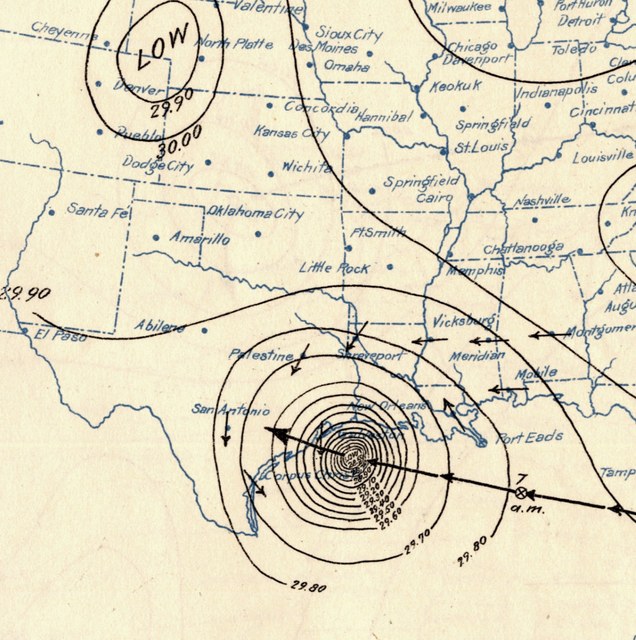
E

1875 act, supported by the earlier Page Act, meant to limit Asian workers supported by the Knights of Labor

E

In 1892, Thomas Geary added to this law by removing the right to be a witness and adding a residency permit requirement.

10 more clues from the record
H

For helping write this law, Ambassador Henry Blair was denied entry into another nation.

H

This Congressional act was extended 10 years later by the Geary Act, which added a residential permit requirement for those affected.

H

Supporters of this act blamed “coolies” for depressed wages in places like San Francisco.

H

A confession program was created for families who violated this act with the “paper son” ruse.

H

This policy was expanded by the Scott Act, which prohibited re-entry to the United States.

H

In 1943, Franklin Roosevelt supported the Magnuson Act to repeal this legislation.

H

Support for this act was drummed up by Denis Kearney and the Workingman’s Party.

H

Answer the following about shameful US immigration Laws,Most infamous, this law passed by Chester Arthur banned Chinese laborers for 10 years. This law flamed anti-chinese sentiment and led to the Rock Springs and Hells Canyon massacres

H

Despite the ruling in Yick Wo v. Hopkins, the Supreme Court limited certain rights of immigrants after this 1882 act was signed by Chester A. Arthur. This act restricted an Asian ethnic group from coming to the U.S.

H

Wong Kim Ark made it up to the Supreme Court because he was prohibited by this 1882 act to be eligible for naturalization, despite the fact that it allowed members of his nationality already in the US to stay.

Watch out: Page Act of 1875 (earlier, less comprehensive Asian immigration restriction)
#361 · Companies, Corporations, and Financial Institutions · Level 1

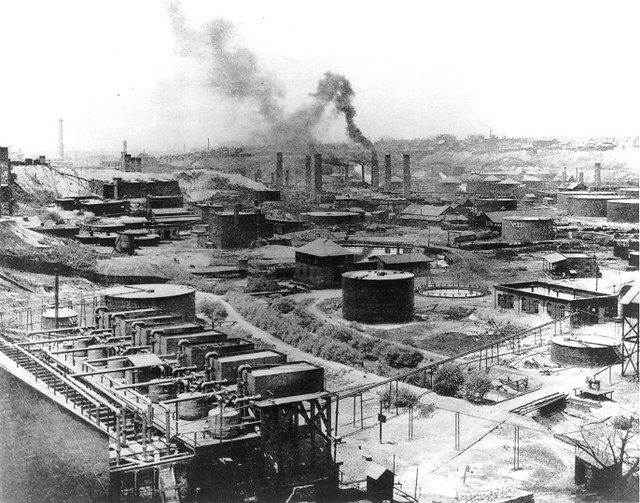
Standard Oil Company

Standard Oil Company
Public domain

American oil monopoly · 1870–1911 · Cleveland, Ohio; nationwide

Standard Oil Company was an oil refining monopoly founded by John D. Rockefeller that dominated the American petroleum industry until antitrust breakup.

The kit

  • Rise — Standard Oil Company grew through aggressive tactics including the Cleveland Massacre, absorbing 22 competitors, and securing railroad shipping rebates negotiated by co-founder Henry Flagler.
  • Monopoly practices — Standard Oil Company fixed railroad prices, silenced opposition through the Compromise of 1889, and expanded internationally by distributing Mei Foo lamps in China.
  • Exposure — Standard Oil Company faced exposés including Henry Demarest Lloyd's Wealth Against Commonwealth and Ida Tarbell's serialized History in McClure's magazine revealing monopolistic practices.
  • Breakup — Standard Oil Company was ruled a monopoly by the Supreme Court in 1911 and broken into 34 separate firms including predecessors of Exxon, Mobil, and Chevron.

Runs with

Ida Tarbell
wrote exposing History serialized in McClure's open card →
John D. Rockefeller
founded and chaired until 1911 breakup open card →
Henry
Sherman Antitrust Act
basis for 1911 Supreme Court breakup open card →

The ladder · 15 clues

H

John Dustin Archbold served as the primary spokesman for this company in which role he survived a 1915 assassination attempt by the IWW.

H

A Puck cartoon depicts this company as a snake fighting an infant.

H

Lloyd published the 1894 book Wealth Against Commonwealth as an exposé against this company. Ida Tarbell wrote a “History of” this company run by John D. Rockefeller.

H

This company grew out of a partnership with Henry Flagler and Samuel Andrews, and it absorbed its early competition in the Cleveland Massacre.

H

This company gained a foothold in China by distributing lamps under the name Mei Foo.

H

This company’s attempts to reuse waste included the purchase of Chesebrough Manufacturing, the original producer of Vaseline.

H

This company, which was targeted by Henry Demarest Lloyd’s book Wealth Against Commonwealth, was preceded by a firm whose partners included Henry Flagler.

M

McClure’s magazine exposed the practices of this company via muckraking journalist Ida Tarbell.

M

One of this company’s founders was the father of Palm Beach and Miami, Florida, Henry Flagler, who pioneered this company’s tactic of working with railroads to get shipping rebates.

M

Muckraker Ida Tarbell wrote a lengthy history of this company, which was split into 34 separate entities after it was prosecuted under the Sherman Antitrust Act in 1911.

M

This organization absorbed 22 of its competitors in the Cleveland Massacre.

M

The actual size of this company was revealed by the Hepburn Committee while it was investigating railroad rebates.

E

This company was broken into 34 firms in 1911 in accordance with the Sherman Antitrust Act. name this company founded by John D. Rockefeller.

E

Ida Tarbell wrote a report titled The History of “ this company.” This company was broken up into branches like Chevron by antitrust laws. name this company founded by John D. Rockefeller.

E

The muckraker Ida Tarbell wrote a “History” of this organization, which was broken up under the Sherman Antitrust Act. name this company founded by John D. Rockefeller.

10 more clues from the record
H

Along with a US Navy boat, three ships belonging to an offshoot of this institution were attacked by the Japanese in the 1937 Panay incident.

H

After the Supreme Court ruled that this company was a monopoly in 1911, it broke into many other companies, two of which became Exxon and Mobil.

H

This company is the subject of a work whose final chapter, “The Compromise of 1889”, explores how it silenced organized opposition and individual complaint.

H

Henry Rogers fueled backlash against this company’s practices after interviewing Ida Tarbell, who wrote an exposing “history” of this company.

H

Three companies partially named after this company were part of the Seven Sisters, which dominated their industry in the mid-20th century.

H

Simon Sterne questioned this company’s leadership as part of the Hepburn Committee.

H

This company was incorporated in 1870 as an oil refining business in Cleveland, Ohio. :Name this oil firm which monopolized all aspects of the petroleum business in the United States before being forcibly broken up in 1911 due to legal action.

H

McClure’s serialized Ida Tarbell’s articles about this huge company, including the fact that they had fixed railroad prices, which helped lead to its break-up by the Supreme Court in 1911.

H

One company added to the Dow Jones index in 1928 was the New Jersey successor company of this petroleum monopoly, chaired by John D. Rockefeller until its 1911 breakup.

H

answer some questions about muckraker journalism:This petroleum trust was broken up in 1911 by the Supreme Court, thanks in part to muckraker Ida Tarbell’s History of [It].

#375 · Companies, Corporations, and Financial Institutions · Level 1

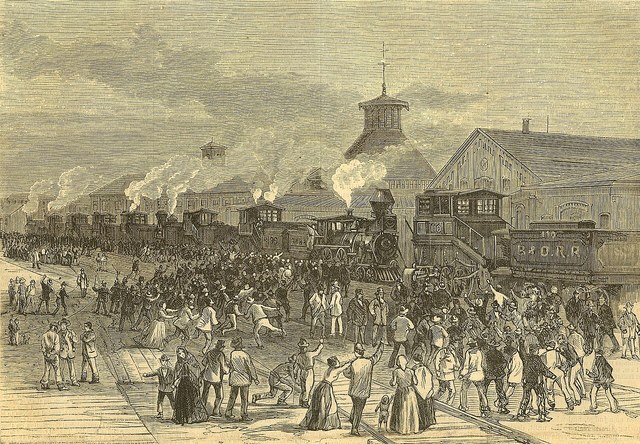
Great Railroad Strike of 1877

Great Railroad Strike of 1877
Public domain

1877 nationwide labor strike · July–August 1877 · Mid-Atlantic United States

The Great Railroad Strike of 1877 was a 45-day labor uprising against wage cuts that became the largest 19th-century American strike.

The kit

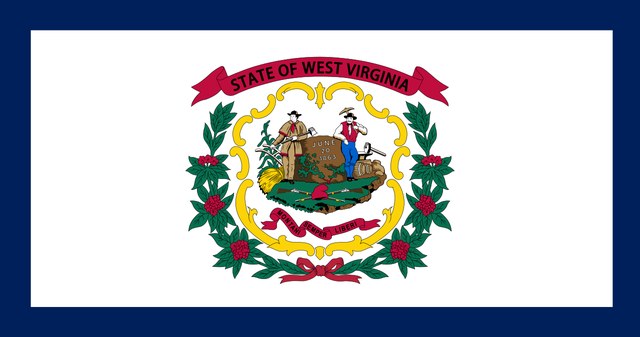
  • Origins — Great Railroad Strike of 1877 began in Martinsburg, West Virginia after B&O president John Work Garrett announced 10% wage cuts.
  • Spread — Great Railroad Strike of 1877 expanded to Pittsburgh following the introduction of "doubleheaders" (longer trains without additional crew).
  • Violence — Great Railroad Strike of 1877 saw Philadelphia militia kill 17 people, after which rioters destroyed 1200 cars and 104 engines.
  • Resolution — Great Railroad Strike of 1877 ended when President Rutherford Hayes ordered federal troops into Philadelphia following failed negotiations at Fort Wayne.

Runs with

West Virginia
strike began in Martinsburg open card →
Philadelphia
federal troops deployed there to end strike open card →
Pennsylvania
Tom Scott advocated "rifle diet" against strikers open card →
John
John Work Garrett announced the wage cuts open card →

The ladder · 14 clues

H

The first violence during this event occurred after Governor Henry Matthews ordered militia to intervene at Martinsburg.

H

A man who thought the participants in this event should receive a “rifle diet” was Pennsylvania executive and former Secretary of War, Thomas Alexander Scott.

H

This is the name given to the removal from French Canadians by the British following the French and Indian War; the majority of the Cajun settlers of Louisiana were a part of that group.

H

During this event, tycoon Thomas Scott claimed that people should try a “rifle diet” to get them to stop protesting low wages. :Name this event, also called the “Great Upheaval.” Thomas Scott’s advice on using the army to end it led to the passage of the Posse Comitatus Act and led to massacres in Pittsburgh, Scranton, and Reading .

H

Robert Brinton led a National Guard brigade during this event after Alfred Pearson argued that his Sixth Regiment would not fire on "fellow townsmen." During this event, the initial demands were presented to Alexander Cassatt, who refused to send them on to Tom Scott.

H

The genesis of this event lay in one corporation’s attempt to double the length of eastbound trains without increasing the size of the crews. :Identify this large strike which broke out in Martinsburg, West Virginia, and quickly spread across the mid-Atlantic region.

H

After opening a volley that killed 17 people during this event, a group of Philadelphia militia retreated to the Allegheny Arsenal, following which rioters destroyed 1200 cars, 104 engines, and the Union Depot building.

H

Many of the participants in this event were held in contempt by Thomas Drummond of the Seventh Circuit, who had also used the cases arising from this event to pioneer injunctions backed by the power of the US Army.

M

John Work Garrett was the president of the central company targeted in this event that occurred after participants had their wages cut by 10%.

M

This event began at Camden, Maryland in response to John Garret's announcement of wage cuts.

M

Beginning in Martinsburg, West Virginia, this event spread to Pittsburgh as a reaction to the introduction of "doubleheaders," and ended when, following the breakdown of negotiations at Fort Wayne, Rutherford Hayes ordered federal troops into Philadelphia.

M

Lasting for 45 days throughout much of the mid-Atlantic region, identify this event launched against the Pennsylvania Railroad by the Trainmen's Union in 1877, the largest of its kind in the 19th century.

E

This event began in a town in Martinsburg, West Virginia, and after this event, the Employee Relief Association was created by the “B&O.” Federal troops were called in to deal with this event by Rutherford B. Hayes. name this 1877 strike.

E

The Workingmen's Party attempted to gain support during this event, which was ended by federal troops sent by President Hayes. name this summer 1877 labor action which chiefly targeted Tom Scott and Jay Cooke's rolling stock and locomotives.

#377 · Companies, Corporations, and Financial Institutions · Level 1

American Railway Union

American Railway Union
Unknown author Unknown author · Public domain

labor organization · 1893–1894 · United States

American Railway Union was a labor organization founded by Eugene Debs in 1893 whose failure in the Pullman strike drove Debs toward socialism.

The kit

  • Rise — American Railway Union was founded by Eugene Debs in 1893 as an industrial labor organization.
  • Conflicts — American Railway Union's first major action was the Pullman strike in 1894, which ultimately failed.
  • Legacy — American Railway Union's failure in the Pullman strike led Debs to turn to socialism afterward.

Runs with

Soviet Union
no connection in clues open card →
European Union
no connection in clues open card →
John
no connection in clues open card →
Kalmar Union
no connection in clues open card →

The ladder · 3 clues

H

The Pullman strike was the first major action of this union, founded by Debs the previous year. Its failure led Debs to turn to socialism.

E

This man declared “Liberty and Union, now and forever, one and inseparable!” in his second reply to Robert Hayne.

E

The Soviet Union was expelled from the League of Nations in December 1939 after it invaded this Scandinavian country in the Winter War.

Watch out: Soviet Union—different entity entirely, not a labor organization
#436 · Social Reform and Human Rights Activists · Level 1

W.E.B. Du Bois

W.E.B. Du Bois
bdi James E. Purdy /span /a /bdi / bdi Adam Cuerden /a · Public domain

African-American scholar and activist · 1868–1963 · United States

W.E.B. Du Bois was a Harvard-trained sociologist who co-founded the NAACP and wrote The Souls of Black Folk.

The kit

  • Achievements — W.E.B. Du Bois coined the term "double consciousness" in his 1903 essay collection The Souls of Black Folk.
  • Achievements — W.E.B. Du Bois argued that a "talented tenth" of educated African-Americans would lift up the race.
  • Conflicts — W.E.B. Du Bois publicly debated Booker T. Washington over strategies for African-American advancement and progress.
  • Legacy — W.E.B. Du Bois challenged the Dunning School in Black Reconstruction in America, reframing Reconstruction as a Black phenomenon.

Runs with

NAACP
co-founded it in 1909 and edited its magazine The Crisis open card →
Booker T. Washington
debated him over African-American uplift strategies open card →
America
wrote Black Reconstruction in America challenging Dunning School open card →
Philadelphia
mapped Black population in The Philadelphia Negro open card →

The ladder · 15 clues

H

Historian who wrote Black Reconstruction in America and The Souls of Black Folk and debated Booker T. Washington.

H

This author of Black Reconstruction in America served as editor of the magazine The Crisis and this Harvard-trained civil rights activist wrote The Talented Tenth.

H

This man, who publicly debated KKK member Lothrap Stoddard, formed the Niagara Movement with his fellow African-American lawyers.

H

This thinker posited that “the problem of the twentieth century is the problem of the color-line” in a work that includes the chapter “Of Our Spiritual Strivings.” This man mapped the Black population of Philadelphia for his book The Philadelphia Negro.

H

This author of a work containing the essay later republished as of the dawn of freedom, also wrote an essay titled Reconstruction and its benefits.

H

In 1909, this man praised free Reconstruction era schools and lamented lack of property redistribution in the last speech by a black man to the American Historical Association until 1940.

H

This man has been credited with changing how the white U.S. public saw the crime of lynching through his reports on the death of Jesse Washington published in the paper The Crisis.

M

This man, who created the term “double consciousness,” argued that a “talented tenth” would lift up African-Americans. name this co-founder of the NAACP who authored The Souls of Black Folk.

M

Anna Louise Strong developed a friendship with this African-American leader of the Niagara Movement and author of The Souls of Black Folk.

M

This prominent black intellectual opposed the views of the Dunning School in his book Black Reconstruction. In his book The Souls of Black Folk, he coined the term “double consciousness.”

M

This man stated, “I am the smoke king/I am black” in a 1907 essay entitled, “The Song of the Smoke.” …Name this author and civil rights leader from Massachusetts who wrote the 1903 essay collection The Souls of Black Folk.

M

In "Of Our Spiritual Strivings", he argued that Negroes had a "double-consciousness".

E

The collection The Souls of Black Folk was written by, what rival of Booker T. Washington and NAACP founder?
E

This man’s Black Reconstruction challenged Dunning school ideas of Reconstruction as a mostly white phenomenon.

E

A co-founder of the National Association for the Advancement of Colored People and the author of The Souls of Black Folk. who was this activist? a for .

10 more clues from the record
H

This man published the book Dusk of Dawn: An Essay Toward an Autobiography of a Race Concept, wherein he promulgated the "Basic Negro Creed" and discussed his break with the NAACP.

H

This black sociologist described spirituals as “sorrow songs” in his 1903 essay collection The Souls of Black Folk, which opens each chapter with a selection of spiritual music.

H

This man spoke of the "Black World beyond the Veil" and the illusion of money in the chapter "Of the Wings of Atlanta," found in his best-known 1903 work.

H

This man’s Congressional hearing for supposed leftist sentiments was throw out after the judge heard Albert Einstein would appear as a character witness.

H

In one debate, this man claimed Klansman Lothrop Stoddard was wrong because he never traveled under Jim Crow accommodations.

H

This founder and editor of The Crisis magazine broke with an organization he co-founded over his opinion of the “separate but equal” doctrine.

H

This man described his New England childhood and the shock of anti-Black rhetoric at Fisk University in Dusk of Dawn.

H

With William Monroe Trotter, this scholar convened a meeting near Ontario to discuss his people's uplift in 1905.

H

This man refused to support the Scottsboro Boys as editor-in-chief of the newspaper The Crisis.

H

This author founded a journal whose literary editor was Jessie Faucet.

Watch out: Booker T. Washington (rival who advocated accommodation rather than immediate civil rights)
#440 · Social Reform and Human Rights Activists · Level 1

Emma Goldman

Emma Goldman
bdi Takuma Kajiwara /span /a · Public domain

Lithuanian-born anarchist activist · early 20th century · United States, Russia

Emma Goldman was a Lithuanian-born anarchist who edited Mother Earth, opposed World War One conscription, and was deported to Soviet Russia.

The kit

  • Rise — Emma Goldman founded the journal Mother Earth and became a leading voice for American anarchism in the early twentieth century.
  • Conflicts — Emma Goldman plotted with lover Alexander Berkman to assassinate Henry Clay Frick during the Homestead Strike, though the attempt failed.
  • World War One — Emma Goldman co-founded the No Conscription League with Alexander Berkman to oppose the World War One draft.
  • Legacy — Emma Goldman wrote My Disillusionment in Russia after deportation to the USSR, critiquing the shortcomings of Communism.

Runs with

Russia
deported to USSR; wrote My Disillusionment in Russia open card →
Alexander
lover and collaborator Alexander Berkman open card →
Henry Clay
plotted Frick assassination with Berkman open card →
assassination

The ladder · 15 clues

H

In response to World War One, this editor of the journal Mother Earth co-founded the No Conscription League with Alexander Berkman who tried to assassinate Henry Clay Frick. name this Lithuanian-born anarchist.

H

She later wrote My Disillusionment in Russia about the shortcomings of Communism. name this leader of American anarchism in the early twentieth century.

H

Army officer William Buwalda was court-martialed for sympathizing with this person's oratory.

H

ThispersondefendedassassinLeonCzolgosz[CHOW-gaw]asa“supersensitivebeing.”Thelasttwelve Dchapters of a work by this author about the Kronstadt Rebellion were removed entirely by Doubleday, Page & Co., resulting in her book My Further Disillusionment in Russia.

H

In the work Prisons: A Social Crime and Failure, this person argued that inmates, “return to the world an emaciated, deformed, will-less, shipwrecked crew of humanity”.

H

The instigator of the Johnstown Flood, financier Henry Clay Frick, was the target of an assassination attempt by this anarchist’s lover, Alexander Berkman.

H

Louis Post confirmed the revocation of this woman’s husband’s citizenship, and her friend tried to assassinate Henry Clay Frick.

M

With lover Alexander Berkman, she plotted to intervene in the Homestead Strike by assassinating Henry Clay Frick.

M

Ricardo Flores Magon contributed to a magazine this person founded called Mother Earth.

M

This activist faced deportation to her homeland of Russia after she worked to undermine the World War One draft. name this Jewish activist, known as “Red Emma.”

M

My Further Disillusionment in Russia was written by this anarchist who often worked with her lover Alexander Berkman.

M

This female anarchist was originally thought to be Czolgosz’s accomplice, but investigators should have gotten a clue that she wasn’t involved when McKinley died, since her life companion Alexander Berkman managed to shoot Henry Frick three times and stab him twice without killing him.

M

Zinn's fiction includes a play about this woman, who helped plan Alexander Berkman's attempted assasination of Henry Clay Frick and later wrote My Disillusionment in Russia.

E

This Jewish anarchist advocated for the Flores Magón brothers in her journal Mother Earth. She was eventually deported to the USSR along with Alexander Berkman.

E

This woman co-founded the No-Conscription League with Alexander Berkman to oppose the draft. This anarchist orator was deported to Russia after the war in the Palmer Raids.

10 more clues from the record
H

This person adopted the pseudonym “E.G. Smith” after refusing to condemn the assassination of William McKinley by Leon Czolgosz [[CHOH-gohsh]].

H

This woman helped organize the No Conscription League and was inspired Johann Most’s idea of “Propaganda of the Deed”.

H

This publisher of Mother Earth gave lectures which influenced assassin Leon Czolgosz (CHOL- gosh).

H

This woman once publicly whipped Johann Most for failing to support her actions.

H

The publication The Blast originated from a magazine written by this woman.

H

Answer the following about a hyphenated American tracked by the government prior and during WWI, FTPE.This Jewish feminist and anarchist was arrested but eventually released for her alleged involvement in the McKinley assassination, despite Czolgosz's claim to the contrary. She also wrote My Disillusionment in Russia.

H

Czolgosz was inspired to support anarchism after hearing this woman speak in Cleveland. Although she did not condone his assassination of William McKinley, she asked, "Who knows but what he, too, was willing to 'fight for his country and die for her liberty?'" in her defense of Czolgosz.

H

The Doubleday-published American edition of a memoir by this one-time mentee of Johann Most cut chapters like “Exploiting the Famine”, “Death and Funeral of Peter Kropotkin” and “The Socialist Republic Resorts to Deportation”.

H

This person used proceeds from an ice-cream parlour in Worcester and an unsuccessful attempt at sex work to fund an assassination attempt, and then attacked their mentor Johann Most with a horsewhip for not being sufficiently supportive.

H

Leon Czolgosz [CHOL-gozh], McKinley’s assassin, tried and failed to befriend this free-loving female anarchist orator from Russia, but she was held in custody for his actions anyway. The US later deported her.

Watch out: Leon Czolgosz (McKinley's assassin) attended her lectures but she was not his accomplice
#443 · Social Reform and Human Rights Activists · Level 1

Alice Paul

Alice Paul
Unknown author Unknown author · Public domain

American suffragist and activist · 1885–1977 · United States

Alice Paul founded the National Woman's Party with Lucy Burns and drafted the Equal Rights Amendment in 1923.

The kit

  • Rise — Alice Paul formed the Congressional Union for Woman Suffrage with Lucy Burns after graduating from Swarthmore.
  • Achievements — Alice Paul organized the 1913 Woman Suffrage Procession where Inez Milholland rode a white horse in white.
  • Conflicts — Alice Paul led hunger strikes at the District Jail after arrests during World War One suffrage protests.
  • Legacy — Alice Paul co-wrote the Equal Rights Amendment with Crystal Eastman, first proposing it in 1923.

Runs with

Equal Rights Amendment
Paul drafted and first proposed it in 1923 open card →
Women's Suffrage
Paul led militant protests and the National Woman's Party open card →
Nineteenth Amendment
Paul's activism contributed to women winning the vote open card →
Senate
Two Kansas Republicans brought Paul's ERA proposal to the floor open card →

The ladder · 13 clues

H

The Equal Rights Amendment was drafted by, what activist who, with Lucy Burns, founded the National Woman’s Party.

H

While in a procession organized by this person, Inez Milholland dressed completely in white and rode on a white horse.

H

In one photo, this woman is shown toasting with a glass of grape juice in front of a flag with two rows of stars on it.

H

This person and Amelia Brown “took their stand” against H.H. Asquith when Brown used her shoe to break a pane of glass.

H

Alva Belmont donated money to an organization founded by this woman, who planned the 1913 Woman Suffrage Procession.

H

This activist was sentence to one month of hard labor after assisting Amelia Brown in throwing a shoe at H. H. Asquith.

H

Founder of the militant National Woman's Party, a suffragist movement which later supported the ERA.

H

With Crystal Eastman, this woman co-wrote an amendment that has yet to be adopted by the United States.

H

This founder of the National Woman’s Party with Lucy Burns orchestrated hunger strikes at the District Jail after being arrested during women’s suffrage protests in World War One. This woman was one of the original authors of the Equal Rights Amendment.

H

This suffragette first proposed the Equal Rights Amendment in 1923, forty-nine years before the House and Senate both voted in favor of it. Two Kansas Republicans quickly brought her proposal to the Senate floor.

M

This suffragist founded the National Woman’s Party to fight for gender equality and proposed the Equal Rights Amendment in 1923.

M

Out of Swarthmore, she formed the Congressional Union for Woman Suffrage with her longtime friend Lucy Burns, and later authored an Equal Rights Amendment. If it helps, she was played by Hilary Swank in “Iron Jawed Angels.”

E

This champion of women’s suffrage was a part of the “silent sentinels” that occupied the Occoquan Workhouse. She also was the founder of the National Woman’s Party.

Watch out: Lucy Burns co-founded the National Woman's Party with Paul
#444 · Social Reform and Human Rights Activists · Level 1

Carrie Nation

Carrie Nation
bdi Adam Cuerden /a · Public domain

Temperance activist · late 1800s–1911 · Kansas

Carrie Nation was a temperance activist who became notorious for destroying saloons with a hatchet before Prohibition.

The kit

  • Rise — Carrie Nation founded a Women's Christian Temperance Union chapter in Medicine Lodge, Kansas after hearing God command her to "go to Kiowa."
  • Tactics — Carrie Nation destroyed saloons with a hatchet engraved "Death to Rum" and paid bail by selling souvenir versions of her weapon.
  • Conflicts — Carrie Nation was jailed over two dozen times for her bar-smashing campaign and was attacked by prostitutes and Belle Schilling in Enterprise.
  • Legacy — Carrie Nation published the Smasher's Mail newspaper and applauded McKinley's assassination, believing he secretly drank alcohol.

Runs with

Prohibition
preceded and advocated for the anti-alcohol laws open card →
Kansas
based her saloon-smashing campaign in this state open card →
American Railway Union
Volstead Act
her activism preceded this Prohibition enforcement law open card →

The ladder · 15 clues

H

This woman, a member of the temperance movement before Prohibition, was known for destroying saloons with a hatchet. She started a chapter of the Women’s Christian Temperance Union in Medicine Lodge, Kansas.

H

This anti-corset activist, who commonly used the salutation “Good morning, destroyer of men’s souls,” was jailed over two dozen times.

H

This woman’s husband David became involved in a Democratic factional dispute called the Jaybird-Woodpecker War, forcing them to evacuate Texas.

H

“Hatchet woman” whose bar-smashing tactics earned her dozens of arrests.

H

In a revisionist history, Mark Lawrence Schrad emphasizes this activist's attention towards the "head of the government" and severely criticizes a 1959 article by David Shaw that calls this activist a "Party Pooper" suffering from "glandular difficulties." While in the town of Enterprise, Belle Schilling punched this activist in the face as four prostitutes attacked with sticks.

H

This woman's granddaughter Belle McNabb Fitch became a left-wing activist in south central Los Angeles and wrote a Marxist interpretation of this woman's actions in response to Douglas Moore's opera about her "wound that never healed." She first became an activist after the Supreme Court case of Leisy v.

H

This woman's activism may have been inspired by her upbringing by a mother who believed she was Queen Victoria. :Name this activist who heard God tell her to “go to Kiowa” and that “I'll stand by you” in Medicine Lodge, Kansas, and was killed in 1911 by a woman whose business she was attacking.

M

This woman infamously claimed that the assassinated William McKinley “got what he deserved,” because she believed he secretly flouted her work with the WCTU. name this temperance activist who attacked taverns and bars with a hatchet.

M

Her later causes included a campaign against eating foreign foods, but she became nationally known for the campaign chronicled in her Ten Nights in a Bar-room, which she attempted to bring to the Topeka governor’s mansion several times. name this temperance advocate who led crowds of hymn-singing women with hatchets in the destruction of saloons.

M

This Kansas-based terrorist campaigned against “fraternal orders, tobacco, foreign foods, corsets, skirts of improper length, and mildly pornographic art,” chiefly by destroying saloons with a hatchet.

M

This woman paid bail with the proceeds from souvenir versions of a piece of equipment she used to destroy certain property. name this woman known for taking a hatchet to rum barrels in saloons.

M

Supporting prohibition is much easier if you have weapons: this hatchet-wielding woman attacked many Kansas bars in support of the Temperance movement.

M

Thi woman became founder of a local WCTU in her Kansas hometown but eventually became better known for smashing up local saloons with a hatchet.

M

This supporter of Prohibition famously took a hatchet to barrels of liquor in saloons, being arrested dozens of times for destroying bars.

M

This temperance activist began her campaign after hearing a voice commanding her to “go to Kiowa” . She published a newspaper called the Smasher’s Mail.

6 more clues from the record
H

The temperance movement led to the illegality of the manufacture, sale, and transportation of alcoholic beverages in the United States during the early 1900s. :This radical anti-alcohol activist of the temperance movement, sometimes referred to as Hatchet Granny, attacked establishments selling alcohol prior to Prohibition.

H

This person applauded the 1901 death of McKinley since he was allegedly a secret drinker. This radical member of the temperance movement was a hatchet-wielding lady who went into saloons and taverns to hamper people partaking in sin.

H

This activist first responded to a county attorney refusing to investigate evidence provided about "jointers." This activist first gained notoriety by heading to Kiowa, Kansas and making use of billiard balls and a paper-bag filled with bricks.

H

Identify these things about the early Temperance movement, :After hearing “go to Kiowa” from God, this woman began her spree of smashing bars and saloons to save men from “a drunkard’s fate.” She was famous for using a hatchet.

H

Prior to the passage of the Volstead Act, this activist for the temperance movement became notorious for attacking taverns with her hatchet, engraved with the phrase “Death to Rum.”

M

This anti-alcohol activist was legendarily told to “Go to Kiowa,” where she first began beating up saloons with a hatchet.

Watch out: Douglas Moore wrote an opera about her, not a historical account
#445 · Social Reform and Human Rights Activists · Level 1

Jane Addams

Jane Addams
bdi Adam Cuerden /a · Public domain

American social reformer · 1860–1935 · Chicago, Illinois

Jane Addams co-founded Hull House settlement in Chicago with Ellen Gates Starr and became the first American woman to win the Nobel Peace Prize.

The kit

  • Rise — Jane Addams graduated from Rockford Seminary and visited Toynbee Hall with Ellen Gates Starr, inspiring her settlement work.
  • Achievements — Jane Addams co-founded Hull House on South Halsted Street to provide kindergarten and programs aiding Chicago's poor.
  • Conflicts — Jane Addams was booed offstage at Carnegie Hall in 1915 for criticizing U.S. involvement in World War One.
  • Legacy — Jane Addams won the 1931 Nobel Peace Prize for pacifist efforts and is considered the founder of American social work.

Runs with

Chicago
women
first American woman to win Nobel Peace Prize open card →
America
founded American Settlement House movement open card →
World War I

The ladder · 15 clues

H

After graduating from Rockford Seminary, this woman visited Toynbee Hall with Ellen Gates Starr, inspiring a new profession.

H

This person was self-described as a “radical pragmatist” and wrote books such as Democracy and Social Ethics.

H

This figure wrote A New Conscience and Ancient Evil, the subject of which was prostitution.

H

This figure connected government policies to domestic initiatives in "Utilization of Women in City Government." Though not Helen Keller, this woman helped co-found the ACLU and was the first American woman to receive the Nobel Peace Prize.

H

Leo Tolstoy criticized this woman’s sleeves and described her as an “absentee landlord,” as her farm was one hundred miles away from her work on Halsted Street.

H

This woman, a member of the Anti-Imperialist League, was booed offstage at Carnegie Hall for a 1915 speech criticizing U.S. involvement in World War One.

H

Mary Rozet Smith was in a “marriage” with this woman, who befriended Ellen Gates Starr while studying at Rockford Female Seminary.

M

This pacifist and author of Newer Ideals of Peace founded a Chicago settlement with Ellen Gates Starr. name this “Mother of Social Work” who founded Hull House.

M

This frequent lecturer on the Chautauqua circuit later won the 1931 Nobel Peace Prize for her pacifist efforts during World War I. Toynbee Hall inspired an institution created by this activist.

M

This author of My Friend Julia Lathrop helped found the Juvenile Protection Association in Chicago, which worked alongside America's first juvenile court.

M

Upon returning to the U.S., this woman acquired an abandoned house on South Halstead Street and developed programs to aid her city’s poor people.

M

This member of the Anti-Imperialist League formally nominated Teddy Roosevelt at the Progressive party convention in 1912.

E

This person wrote Newer Ideals of Peace to support pacifism and later became the first American woman to win the Nobel Peace Prize.

E

Along with Ellen Gates Starr, this woman is best known for her efforts running an institution in Chicago to help the needy. name this social activist who co-founded Hull House.

E

In 1931, for her "assiduous effort to revive the ideal of peace... in their own nation and mankind," this person became the first American woman to win a Nobel Peace Prize.

10 more clues from the record
H

This author’s The Long Road of Woman’s Memory recounts the hysteria around a baby supposedly born with cloven hoofs and pointed ears.

H

This woman wrote A New Conscience and the Ancient Evil, which inspired Lois Weber's 1916 film Shoes.

H

This figure and Barack Obama are studied in Erik Schneiderman’s The Size of Others’ Burdens.

H

This thinker espoused pacifism in books such as Newer Ideals of Peace.

H

She worked with George Mead in the Chicago School of Sociology, where his symbolic interactionism influenced her ideas. FTPE:Name this first American woman to be awarded the Nobel Peace Prize, considered the founder of the American Settlement House movement, one example of which is her Hull House.

H

Name these activists in American history for fifteen points each.She and Ellen Gates Starr rented an abandoned home at 800 South Halsted Street to start a kindergarten, which became one of the first social settlements in the United States.

H

This philosopher’s Stanford Encyclopedia of Philosophy entry argues that her response to three Italian women who believed in a possessed infant called the Devil Baby was an early example of feminist standpoint theory.

H

This reformer tried to prevent youths at the Hull House from going to jail by setting up a juvenile court system in Chicago. She became President of the National Conference of Charities and Corrections in 1909.

H

In “Newer Ideals of Peace,” this activist attacked proponents of so-called “negative” peace and promoted a peace platform she carried into the conference Women at The Hague, from which she emerged as president of Women’s International League for Peace and Freedom.

H

A book by Charlene Haddock Seigfried argues that this philosopher and Ella Flagg Young both influenced one of their male colleagues, and not just the other way around.

Watch out: Helen Keller also co-founded the ACLU and was a prominent activist
#447 · Social Reform and Human Rights Activists · Level 1

Margaret Sanger

Margaret Sanger
Los Angeles Times, restored by Adam Cuerden · CC BY 4.0

Birth control advocate · 1914–1960s · United States

Margaret Sanger founded the American Birth Control League in 1921, which became Planned Parenthood in 1942.

The kit

  • Rise — Margaret Sanger was arrested under the Comstock Act for distributing her magazine The Woman Rebel with the slogan 'No Gods, No Masters.'
  • Achievements — Margaret Sanger opened the first birth control clinic in the United States and coined the term 'birth control' itself.
  • Achievements — Margaret Sanger brought together philanthropist Katharine McCormick and researcher Gregory Pincus to develop the first birth control pill.
  • Legacy — Margaret Sanger's support of eugenics led a building on Bleecker Street to remove her name in 2020.

Runs with

York
wrote 'What Every Girl Should Know' for The New York Call open card →
David
David Kennedy wrote skeptically about her Sadie Sachs story open card →
Gregory
brought Gregory Pincus and Katharine McCormick together for birth control pill open card →
Abortion
prosecuted for sending abortion information through the mail open card →

The ladder · 15 clues

H

This person’s niece, Olive Byrne, whom this writer once rescued from a snowbank, is a possible inspiration for the character of Wonder Woman.

H

This person worked with Kato Shidzue six years after she accused Kato of murder, and she may have fabricated the story of Sadie Sach's death.

H

This woman won funding from Theodore Schroeder and Edward Foote's Free Speech League after an introduction by Emma Goldman.

H

This figure wrote the article “What Every Mother Should Know” for the socialist magazine The New York Call.

H

In 2020, a building on Bleecker Street that was named for this woman chose to remove her name in response to her support of eugenics.

H

This author of the book The Pivot of Civilization once said “we don’t want the word to get out that we want to exterminate the Negro population,” a line frequently taken out of context.

H

This woman’s estranged husband was arrested for giving one of her pamphlets to an agent of Anthony Comstock.

M

This woman founded the group that evolved into Planned Parenthood. name this woman who opened the first birth control clinic in the United States.

M

In her late 70s, this woman brought together philanthropist Katharine McCormick and medical researcher Gregory Pincus for a project that extended her lifelong work.

M

Angela Davis claimed that this woman wanted "to exterminate the Negro population." She founded a newsletter called The Woman Rebel, whose slogan was "No Gods, No Masters." This person wrote a regular column called "What Every Girl Should Know" for a New York newspaper.

M

This abortion activist founded what eventually became Planned Parenthood. She started the first legal birth control clinic.

M

This female co-founder of Planned Parenthood coined the term “birth control” and helped encourage Gregory Pincus to develop the first birth control pill.

E

This woman was arrested under the Comstock Law for distributing her magazine The Woman Rebel. name this family planning advocate who founded the predecessor to Planned Parenthood.

E

In 1914, she wrote the novel The Woman Rebel, and she was arrested under the Comstock Act for sending the magazine of the same name through the mail. —name this founder of the American Birth Control League, which later became Planned Parenthood.

E

This woman worked with her sister, the hunger striker Ethel Byrne, and she was prosecuted under the Comstock Act for writing Family Limitation.

10 more clues from the record
H

Sex educator and eugenicist who popularized the term "birth control."

H

She suceeded in getting Augustus Hand to legalize her cause, after she began her second marriage, to a man who had made millions selling Three-in-One Oil, This opponent of Archbishop Patrick Hayes used the alias Bertha Watson to flee to Canada.

H

Answer these questions about another feminist .Born the sixth of 11 children, this midwife was deeply horrified at the suffering that came on poor women who bore many children. Name this woman, a birth control advocate.

H

This activist defended eugenics in her speech “The Morality of Birth Control.” This cofounder of Planned Parenthood was fined under the Comstock Act for sending information about abortion through the mail.

H

This figure was not a fan of the Comstock Act and together with Lothrop Stoddard and C. C. Lewis founded the American Birth Control League organization in 1921. It changed its name to "Planned Parenthood" in 1942.

H

Barbara Walters called a photo of this figure “this century’s first photo op.” In that photograph, this woman gagged herself to protest the censoring of her movement while Arthur Schlesinger delivered her speech.

H

This author of The Pivot of Civilization used the death of Sadie Sachs in speeches to promote causes advanced in a newspaper with the slogan “No Gods, No Masters,” The Woman Rebel.

H

David Kennedy wrote a book about this woman's career that skeptically treated her story of experiencing a vision following the death of Sadie Sachs.

H

This woman's visit to Spain with Lorenzo Portet resulted in a series of anti-clerical articles she wrote for the magazine of the New York Modern School.

H

This nurse published the newsletter The Women Rebel advocating for birth control, but it was suppressed by the postal service due to the Comstock laws.

Watch out: Her sister Ethel Byrne, not Margaret herself, was the hunger striker
#449 · Social Reform and Human Rights Activists · Level 1

Victoria Woodhull

Victoria Woodhull
bdi Mathew Benjamin Brady /span /a /bdi / bdi Adam Cuerden / · Public domain

American suffragist and presidential candidate · 1872 campaign; active 1860s-1870s · New York City; later England

Victoria Woodhull was the first woman to run for U.S. president, campaigning in 1872 for the Equal Rights Party while advocating free love and women's suffrage.

The kit

  • Rise — Victoria Woodhull became the first female stockbroker on Wall Street after working as spiritual advisor to Cornelius Vanderbilt, founding a brokerage with sister Tennessee Claflin.
  • Achievements — Victoria Woodhull ran her own weekly newspaper, published the first English translation of the Communist Manifesto in America, and advocated for free love and women's rights.
  • Conflicts — Victoria Woodhull exposed Henry Ward Beecher's adultery with Elizabeth Tilton in her newspaper, triggering Anthony Comstock's anti-obscenity campaign and the 1873 Comstock Act that led to her arrest.
  • Legacy — Victoria Woodhull nominated Frederick Douglass as vice president without his consent in 1872 and was vilified in Thomas Nast cartoons depicting her as Satan promoting free love.

Runs with

Frederick Douglass
nominated him for vice president in 1872 without his approval open card →
Henry Ward Beecher
exposed his affair with Elizabeth Tilton in her newspaper open card →
Tennessee
co-founded Wall Street brokerage firm and weekly newspaper with her sister open card →
Cornelius Vanderbilt
conducted séances for him and used his support to found brokerage open card →

The ladder · 15 clues

H

With Tennessee Claflin, this “Free Lover” became the first female stockbroker on Wall Street.

H

This person was vilified in a caricature by Thomas Nast showing a depiction of Satan holding a sign that reads, “Be saved by free love.” Theodore Tilton sued Henry Ward Beecher after a newspaper, co-published by this person, exposed the latter’s affair with Tilton’s wife.

H

On Cornelius’ death, William Henry Vanderbilt paid this mystic $1000 to leave the United States.

H

This activist’s role as a spiritual advisor to Cornelius Vanderbilt helped her found the first female brokerage firm on Wall Street.

H

A disheveled woman carrying her drunken husband on her back refuses this historical figure’s assistance in Thomas Nast’s cartoon “GET THEE BEHIND ME SATAN.” After being introduced to spiritualist theology by Colonel James Blood, this person found work in New York City conducting seances for Cornelius Vanderbilt.

H

This activist lived the last fifty years of her life in England, where she gave lectures such as “The Human Body, the Temple of God.” At the age of 15, this activist escaped a medicine show her con man father forced her to perform in, and she later married Colonel James Harvey Blood.

H

Her support of “free love,” her role in the adultery trial of Henry Ward Beecher, and her fervent support of women’s suffrage have all largely been overshadowed by her groundbreaking 1872 presidential campaign.

M

This woman founded a brokerage firm and a newspaper in partnership with her sister Tennessee Claflin.

M

Anthony Comstock began his anti-obscenity campaign after this person published a salacious article about Elizabeth Tilton’s affair with Henry Ward Beecher.

M

This woman invited scandal after divorcing her first husband, Canning, but continuing to live with him even after marrying James (+) Blood.

M

With Tennessee Claflin, this advocate of “free love” ran a namesake weekly newspaper and operated the first female-owned brokerage firm on Wall Street.

M

Grant sent Frederick Douglass to the Dominican Republic as a part of an expedition to gauge interest in annexation. Unknown to him, Douglass was this politician’s choice for vice president during the election of 1872.

E

In 1872, Frederick Douglass became the first African-American to be nominated for vice president after this Equal Rights Party candidate nominated him without his approval.

E

For the points, name this American suffragette and presidential candidate for the Equal Rights Party.

E

name this American suffragette and presidential candidate for the Equal Rights Party.

7 more clues from the record
H

The 1873 Comstock law was named after her prosecutor. :Name this first female Presidential candidate. She ran the Equal Rights Party, and was an advocate of “free love” who was later rejected by the NWSA.

H

Using the profits, she hired Stephen Andrews to write in favor of the free-love movement Pantarchy.

H

She claimed to receive a vision of Demosthenes instructing her to start a brokerage firm with Cornelius Vanderbilt’s money.

H

This publisher was the first American to print an English translation of the Communist Manifesto.

M

This activist wrote a massively controversial expose of Henry Ward Beecher’s adultery that led to the passage of the Comstock Act.

E

Frederick Douglass ran on a ticket with which first female presidential candidate?

E

Arrested for obscenity charges before one election, this woman ran with Frederick (*) Douglass without his consent.

Watch out: Frederick Douglass did not actually accept or participate in the vice-presidential nomination
#452 · Social Reform and Human Rights Activists · Level 1

Ida B. Wells

Ida B. Wells
bdi Adam Cuerden /a · Public domain

Anti-lynching journalist and activist · 1862–1931 · Memphis, Chicago

Ida B. Wells was an investigative journalist who documented lynchings in Southern Horrors and The Red Record and co-founded the NAACP.

The kit

  • Rise — Ida B. Wells sued the Chesapeake and Ohio Railway for forcibly removing her to a segregated railway car early in her career.
  • Achievements — Ida B. Wells wrote Southern Horrors and The Red Record, statistical pamphlets documenting lynchings and debunking claims that only black criminals were targeted.
  • Conflicts — Ida B. Wells's editorial about the 1892 People's Grocery lynching so inflamed readers that a white mob destroyed her Memphis Free Speech office.
  • Legacy — Ida B. Wells co-founded the Alpha Suffrage Club with Belle Squire, helping elect Oscar DePriest in Chicago.

Runs with

Memphis
owned Free Speech newspaper; fled after People's Grocery editorial open card →
NAACP
co-founded the organization open card →
Newspaper
owned Memphis Free Speech and Headlight open card →
Chicago
founded Alpha Suffrage Club; helped elect DePriest open card →

The ladder · 15 clues

H

In retaliation for this woman's writings, a mob destroyed the Free Speech and Headlight newspaper offices, in which she denounced the 1892 People's Grocery incident and urged readers to move out of Memphis.

H

This newspaper owner wrote an editorial about three grocery store workers who were lynched which so inflamed some local readers that they destroyed her Memphis office and printing press.

H

This author wrote the chapter "Miss Willard's Attitude" which exposed derogatory rhetoric used by the president of the Women's Christian Temperance Union.

H

This anti-lynching advocate was inspired by a lynching at the People’s Grocery in Memphis to write The Red Record.

H

This woman’s husband Frederick Lee Barnett founded the Chicago Conservator and her work, The Red Record explores how Southern Whites often killed more blacks than any whites were injured.

H

A lynching at the People’s Grocery in Memphis led this activist to urge blacks to leave Memphis, and sparked her investigation into extrajudicial killings.

H

This person, along with Belle Squire and Virginia Brooks, co-founded Chicago’s Alpha Suffrage Club.

M

Helping to found the NAACP, name this civil rights leader who wrote of the “Southern Horrors”.

M

With Belle Squire, this woman founded the Alpha Suffrage Club, which helped elect Oscar DePriest.

M

Early in their career, this person sued the Chesapeake and Ohio Railway for forcibly removing them to a segregated railway car.

M

This author wrote a preface addressed “To The Seeker After Truth” for a pamphlet on The Reason Why the Colored American Is Not in the World’s Columbian Exposition.

M

This editor of the Free Speech newspaper in Memphis sued a railroad company after she was forcibly removed from her seat.

E

This writer denounced "white Delilahs" in Southern Horrors, which was followed by the more statistical Red Record. name this NAACP co-founder who wrote against lynching.

E

Co-founder of the NAACP who researched lynching in Memphis until a white mob burned down her office.

E

The pen name Iola was used by this woman, who wrote the pamphlets The Red Record and Southern Horrors.

10 more clues from the record
H

This person was forcefully dragged off a train, as depicted in the work The Living Way.

H

Identify the following about individuals whom the New York Times has written "Overlooked" obituaries for, .In its obituary of this woman, "the most famous black woman in the United States during her lifetime," the Times pointed to the influence of her book Southern Horrors in documenting lynchings.

H

After this woman published one of her newspaper editorials, white mobs destroyed her press and forced her into exile. :Name this woman who began to campaign against lynching after the 1892 murder of her friends and later published Southern Horrors.

H

This author angered Lady Somerset by criticizing remarks about people like “the locusts of Egypt” congregating at the “grog shop.” This then-resident of “The Curve” neighborhood publicized the murder of the owners of the People’s Grocery.

H

This person toured the UK giving speeches after the publication of their pamphlet The Red Record, which debunked claims that only black criminals were subjected to a particular punishment.

H

In one column, this writer advocated an exodus to the Oklahoma Territory after the murder of Thomas Moss.

H

A biography by Paula Giddings describes this person as A Sword Among Lions in its title.

H

Late in life, this activist helped Oscar DePriest get elected in Chicago.

M

This other Fisk alum documented the history of lynching in the pamphlet Southern Horrors: Lynch Law in all its Phases as the co-owner of the Memphis Free Speech and Headlight newspaper.

M

In 1913, organizers of a women’s suffrage march tried to exclude this journalist from marching because she was black. She is better known for documenting lynchings in the American South.

Watch out: Frances Willard (Wells criticized the WCTU president's derogatory rhetoric in 'Miss Willard's Attitude')
#457 · Named Literary Works · Level 1

The Jungle

The Jungle
Unknown author Unknown author /span · Public domain

1906 muckraking novel · 1906 · Chicago

The Jungle is Upton Sinclair's 1906 novel exposing Chicago meatpacking conditions that accidentally spurred the Pure Food and Drug Act.

The kit

  • Publication — The Jungle was first published serially in the socialist newspaper Appeal to Reason edited by J.A. Wayland.
  • Plot — The Jungle follows Lithuanian immigrant Jurgis Rudkus working in Chicago's Packingtown slaughterhouses amid unkempt factories and tragedy.
  • Tragedies — The Jungle depicts Ona dying in childbirth and Jurgis's son drowning in a mud puddle of dirty water.
  • Impact — The Jungle prompted President Theodore Roosevelt to send Labor Commissioner Charles P. Neill to investigate and led to FDA creation.

Runs with

Upton Sinclair
author who lamented hitting the public's stomach instead of heart open card →
Chicago
setting in Packingtown meatpacking district open card →
Mobutu Sese SekoDemocratic Republic of the Congo

The ladder · 15 clues

H

The phrase “Chicago will be ours!” is chanted at a socialist rally attended by the Lithuanian immigrant Jurgis Rudkus at this novel’s conclusion.

H

A rousing cry of “Chicago will be ours!” distracts the protagonist of this novel at its end.

H

As a result of this book’s publication, one president sent Labor Commissioner Charles P. Neill to investigate working conditions.

H

A boy in this novel drowns in a puddle of dirty water after his teenage mother Ona dies in childbirth.

H

After a character in this novel is fired from her job, she stops trying to woo the violinist Tamoszius [tam-osh-ee-us].

H

J.A. Wayland gave this work early exposure by publishing it serially in his socialist paper, Appeal to Reason.

H

The cousin of the protagonist’s wife is forced into prostitution, shortly after Ona’s death in childbirth.

H

The final place of employment for this novel’s protagonist is at Tommy Hind’s hotel.

M

The author of this book lamented "I aimed at the public's heart, and by accident I hit it in the stomach" after this book led to the passing of the Pure Food and Drug Act. name this novel about Chicago meatpacking by Upton Sinclair.

M

Sinclair is best known for this novel about Jurgis Rudkus’s tough life and work in the Chicago slaughterhouses, which famously helped spur the creation of the Food and Drug Administration.

M

Theodore Roosevelt privately described an “utter contempt” for this novel’s author, though he signed legislation creating the FDA after this novel “hit the public’s stomach”. name this muckraking novel about Jurgis Rudkus, a Lithuanian immigrant working in the meat-packing industry, written by Upton Sinclair.

M

This novel’s protagonist converts to socialism after seeing Antanas drown in a mud puddle.

M

Some 400 homeless people were living in the East Duwamish Greenbelt section of Seattle, better known by this name, prior to a 2016 shooting. Another place with this name originally developed around a Seveso Zone landfill in Calais.

E

The 1906 Pure Food and Drug Act was passed in response to this novel about the Chicago meatpacking industry, written by Upton Sinclair.

E

This novel’s protagonist, Jurgis Rudkus, moves to Packingtown from Lithuania, but only finds work in unkempt factories whose depiction enraged readers. name this novel that exposed Chicago’s meatpacking industry, written by Upton Sinclair.

2 more clues from the record
H

This work was first published in serial form in the newspaper Appeal to Reason.

H

Although this novel by Upton Sinclair was meant to draw attention to the poor working conditions suffered by factory workers like Jurgis Rudkus, the American public was shocked by the appalling food safety measures this novel described.

Watch out: Sinclair aimed at readers' hearts regarding worker conditions but hit their stomachs with food safety horrors
#489 · Religious Groups and Denominations · Level 1

Roman Catholicism

Roman Catholicism
Jebulon · CC0

Christian denomination · 1st century–present · worldwide, centered in Rome

Roman Catholicism is the largest Christian denomination, led by the Pope in Rome and historically dominant in Europe, Latin America, and the Philippines.

The kit

  • American politics — Roman Catholicism was first represented in a presidential nomination by Al Smith in 1928, and John F. Kennedy became the first Catholic president in 1960.
  • Japan & persecution — Roman Catholicism was banned by sakoku law in Japan, where twenty-six Catholics were executed and hidden Christians revolted in the Shimabara Rebellion.
  • Colonial expansion — Roman Catholicism spread to the Americas through Spanish and Portuguese rule, to India through Francis Xavier's efforts, and to China via Jesuit missionaries.
  • European conflicts — Roman Catholicism was the official religion of Habsburg possessions, opposed Protestantism in Switzerland's central cantons, and was targeted by Bismarck's Kulturkampf in Germany.

Runs with

Christian
Roman Catholicism is the largest branch of Christianity open card →
church
Roman Catholicism is organized as a hierarchical church led by the Pope open card →
Maryland
Maryland was the only British colony tolerant of Roman Catholicism until Coode's Rebellion open card →
James
James II's conversion to Roman Catholicism intensified persecution of recusants open card →

The ladder · 15 clues

H

Al Smith and John F. Kennedy made history as Presidential candidates who followed what religion?

H

This denomination was attacked in the “Rum, Romanism, and Rebellion” slogan, possibly losing James Blaine the election of 1884.

H

Religion of Cardinal Jaime Sin, who was instrumental in the Philippines’ regime change in 1986.

H

Twenty-six members of this religion were executed after their protection was revoked by the Shimazu clan.

H

Official religion of possessions of the Hapsburg family, which opposed the Protestant Union.

H

Branch of Christianity followed by the majority of Irish citizens and a minority of Northern Irish citizens.

H

Religion whose persecution intensified in her later years as she embraced Protestantism.

M

Religion he converted to on his deathbed whose recusants were persecuted

M

This religion was banned by sakoku law in Japan. name this religion that was spread to Qing China by Jesuit missionaries.

M

A large community of this religion in Mangalore was established by members who had migrated from Goa. name this religion that attempted to identify crypto-Hindus during the Goa Inquisition after it was established in India through the efforts of Francis Xavier.

M

Another colonial rebellion in the late 1600s, Coode's Rebellion, targeted this religion in Maryland. Maryland was the only British colony tolerant of this religion, but after Coode's Rebellion it was punished by a hole through the tongue.

M

Many Igbo were converted to this Christian denomination by the efforts of missionaries during British rule. Spanish and Portuguese rule in the Americas has led to many people in the region adhering to this denomination.

M

Léon Degrelle created Belgium's Rexist Party, which was aligned with the politics of this Christian denomination. This denomination also made up one side of Belgium's School Wars.

M

In 2020, Joe Biden became the second president in American history to be a member of this "Roman" Christian denomination.

E

In 1928, Al Smith became the first member of this denomination to be nominated for President, and in 1960, a member of this denomination was elected President for the first time. name this denomination of John F. Kennedy, who critics claimed would be pressured by the Pope.

10 more clues from the record
H

Majority religion of the independent Republic of Ireland, putting it at odds with the majority of UK citizens.

H

Fumi-e were pictures that members of this religion stepped on to prove innocence.

H

The Mount Fortress was built to protect members of this religion.

H

“Hidden” members of this religion revolted in the Shimabara Rebellion.

H

Religion he targeted in the kulturkampf, as he favored the Protestant majority.

H

religion targeted by Adalbert Falk’s May Laws.

H

Religion it converted to after the baptism of its king in 966 AD.

H

“The Vicar of Bray” is a satirical 18th century song about how the title character switches sides in British religious debates. :After the ascension of “Royal James” the vicar converted to this Christian denomination after finding that “The Church of Rome / would fit full well [his] constitution,” conveniently just as “popery grew in fashion”.

H

The original cantons within the Old Swiss Confederacy chose to adhere to this faith when the doctrine of cuius regio, eius religio spread to Swiss lands. :Name this faith that traditionally dominated the rural central cantons of Switzerland, like Uri and Schwyz , in opposition to Huldrych Zwingli’s Zürich.

H

The Gordon Riots broke out in response to an act that revoked many of the legal sanctions against members of this faith. :Name this faith that was reinstated in England by Mary I. The emancipation, or relief, of members of this faith, thereby restoring many of their rights, was passed by the British parliament in 1829.

Watch out: Confused with Protestantism or Eastern Orthodoxy as branches of Christianity
#534 · US Civil Rights Figures and Events · Level 2

Booker T. Washington

Booker T. Washington
Harris & Ewing · Public domain

African American educator and leader · 1856–1915 · Alabama

Booker T. Washington founded the Tuskegee Institute and advocated gradual economic advancement over immediate political equality in his Atlanta Compromise speech.

The kit

  • Rise — Booker T. Washington walked across Virginia to attend Hampton Institute, where Samuel C. Armstrong later appointed him to lead Tuskegee.
  • Achievements — Booker T. Washington partnered with Julius Rosenwald to build over five thousand schools across the South for Black education.
  • Conflicts — Booker T. Washington's 1901 White House dinner with Theodore Roosevelt sparked outrage among Southern congressmen and inspired Scott Joplin's lost opera.
  • Legacy — Booker T. Washington wrote the autobiography Up From Slavery and became the first African American depicted on a U.S. postage stamp.

Runs with

Atlanta
delivered Atlanta Compromise speech urging Blacks to cast down your bucket where you are open card →
W.E.B. Du Bois
criticized by Du Bois for advocating gradual change over immediate equality open card →
Theodore Roosevelt
dined with Roosevelt at White House in controversial 1901 meeting open card →
White House
first Black leader invited to dine there by Roosevelt in 1901 open card →

The ladder · 9 clues

H

This man's visit to the White House is the subject of the lost Scott Joplin opera A Guest of Honor; his dining with Theodore Roosevelt sparked the ire of Southern Congressmen.

H

This African American founded the Tuskegee Institute where the Airmen trained.

H

This man partnered with the president of Sears on the construction of over five-thousand “Rosenwald Schools.” This man founded a business league for “commercial and financial development” with support from Andrew Carnegie.

H

This person secretly funded a challenge to grandfather clauses in the Supreme Court case Giles v Harris.

M

The philosophy presented by this man attempted to "dignify common labor." This man told Black people to "cast down [their] bucket" in a speech that was criticized by W.E.B. Du Bois [dew BOYSS], this man's "Atlanta Compromise." name this early civil rights activist who founded the Tuskegee Institute.

M

This person was described as having a “personality that had vanished into the roles it had played” in a Bancroft and Pulitzer-winning two-volume biography by Louis Harlan.

M

Invited to dine in the White House by Theodore Roosevelt, he argued for more gradual social change in the Atlanta Compromise. name this first leader of the Tuskegee Institute.

E

In his most famous oration, this man declared “cast down your bucket where you are” in the Atlanta Address.

E

The Atlanta Compromise was proposed by this founder of Hampton University, principal of the Tuskegee Institute, and author of Up From Slavery.

10 more clues from the record
H

This author of My Larger Education and The Man Farthest Down received support from Andrew Carnegie when he established the National Negro Business League in 1900.

H

The Rosenwald Fund was created to honor this man who, many years earlier, had been placed in charge of an Alabama institution by Samuel C. Armstrong.

H

Author of the autobiography, Up From Slavery, this man was the first African- American to be depicted on a United States postage stamp. name this first president of the Tuskegee Institute.

H

In one speech, this man told an allegory in which a ship lost at sea is able to draw water from the Amazon river.

H

This man once walked all the way across Virginia lengthwise to secure a promised spot in college at Hampton.

H

Former President of Sears Julius Rosenwald was asked by this man to serve on the board of directors for an institute he headed.

H

This man was aided by Julius Rosenwald in the funding of new schools across the South to help educate blacks.

H

This leader faced a backlash after giving the Atlanta Compromise speech in support of white political rule.

H

Despite initially angering Isaac Wise with the phrase "Jew or white man" in his article "Taking Advantage of Our Disadvantages", this man later had fruitful collaborations with Wise and other Jewish leaders. :Name this man who used the Jews as a model for how an oppressed race could become successful in The Future of the American Negro, and successfully solicited Jewish donations as president of a certain university.

H

He argued that the chance to "earn a dollar in a factory is worth infinitely more than…spend[ing] a dollar at the opera house" in a speech urging his comrades to "Cast down your bucket where you are." This man founded an institution which later told over 400 black men that they had "bad blood" after injecting them with syphilis.

Watch out: Founded Tuskegee Institute, not Hampton University (he attended Hampton as a student)
#536 · US Civil Rights Figures and Events · Level 2

Plessy v. Ferguson

Plessy v. Ferguson
b Original: /b /a /div Optimager /a /div Vector: /div Ipanko · Public domain

1896 Supreme Court case · 1896 · Louisiana

Plessy v. Ferguson established the 'separate but equal' doctrine, allowing racial segregation in public accommodations until Brown v. Board overturned it in 1954.

The kit

  • Background — Plessy v. Ferguson arose from a test case organized by a New Orleans citizens' committee challenging Louisiana's segregated train car law.
  • Plaintiff — Plessy v. Ferguson involved a one-eighth black man, represented by Albion Tourgée, who was arrested for riding in a whites-only car.
  • Decision — Plessy v. Ferguson's majority opinion, written by Henry Billings Brown, denied the existence of a 'badge of inferiority' in segregation.
  • Legacy — Plessy v. Ferguson served as precedent for cases like Pace v. Alabama and Cumming v. Rice, justifying racial segregation nationwide.

Runs with

Separate but Equal
established this doctrine in its majority opinion open card →
Louisiana
case challenged this state's train car segregation law open card →
William Rehnquist
wrote memo supporting this decision before Brown overturned it open card →
John Marshall

The ladder · 9 clues

H

Justice Harlan dissented in, what 1896 Supreme Court case that was overturned by Brown v.

H

One lawyer in this case wrote the newspaper column “A Bystander’s Notes,” calling for resistance against the central law in this case.

H

This case’s plaintiff was originally going to be musician Dan Desdunes [day-doon], but the state law in consideration did not apply to him.

H

David Josiah Brewer did not participate in this case’s decision on account of his daughter’s death.

M

William Rehnquist wrote a “Random Thought” supporting this decision two years prior to the 1954 case that would overturn it.

M

William Rehnquist affirmed this case’s outcome, whose majority opinion was written by Henry Billings Brown.

M

Samuel F. Phillips took part in this case, defending the plaintiff.

E

Board partially overturned this 1896 Supreme Court case, which developed the concept “separate but equal” accommodations.

E

Albion Tourgée [tour-zhay] represented the plaintiff of this case, a one-eighth black man sponsored by a New Orleans citizens' committee to ride in a whites-only train car. Name this 1896 case that established the "separate but equal" doctrine.

10 more clues from the record
H

The majority opinion in this case denied the existence of a “badge of inferiority.” Lum v.

H

This case was the subject of Otto Olsen’s book Thin Disguise, and the majority opinion referenced Roberts v.

H

Pace v. Alabama used this case as precedent in affirming Alabama's anti-miscegenation laws. :Name this Supreme Court case that arose from a test case aboard a Louisiana train car.

H

This case was preceded by the test trial of Daniel Desdunes , which was organized by Louis Martinet’s Comité des Citoyens.

H

One side in this trial was represented by Samuel Phillips who was opposed by Milton Joseph Cunningham, a man arrested during Reconstruction for restoring white supremacy.

H

Three years after it was decided, the verdict in this Supreme Court case was used to justify the closing of an educational facility in Richmond, Georgia in Cumming v.

H

Henry Billings Brown reasoned that the matters of “health, safety, and morals” belong to the state government in this majority decision for this case.

H

Albion W. Tourgée [[toor-ZHAY]] is said to have introduced the metaphor "color blind justice" while litigating this case.

H

Milton Joseph Cunningham prepared a legal brief for this case, which arose after Chris Cain arrested the plaintiff.

H

Rice applied this case to decide that a Mississippi public school was justified in denying a Chinese-American student.

Watch out: Justice Harlan dissented; Henry Billings Brown wrote the majority opinion
#584 · Painters and Visual Artists · Level 2

Gutzon Borglum

Gutzon Borglum
Unidentified photographer · Public domain

American sculptor · early 20th century · United States

Gutzon Borglum was an American sculptor who created Mount Rushmore and sought to memorialize American achievement through monumental art.

The kit

  • Rise — Gutzon Borglum sculpted figures for the Cathedral of St. John the Divine and created The Aviator statue at the University of Virginia.
  • Achievements — Gutzon Borglum carved Mount Rushmore on a site called "Six Grandfathers" by local Native Americans, patronized by Senator Peter Norbeck.
  • Conflicts — Gutzon Borglum was dismissed from the Stone Mountain project after completing the head of Robert E. Lee.
  • Legacy — Gutzon Borglum's failure to respond to Standing Bear's letter led Standing Bear to approach Ziolkowski about the Crazy Horse Memorial.

Runs with

Mount Rushmore
carved four presidential faces at this South Dakota monument open card →
Stone Mountain
dismissed after completing Robert E. Lee's head for this project open card →
Crazy Horse Memorial
Robert E. Lee
completed this general's head before Stone Mountain dismissal open card →

The ladder · 8 clues

H

This man, who sculpted figures for the Cathedral of St. John the Divine, sought to create art that was “American, drawn from American sources, memorializing American achievement.” After completing the head of Robert E. Lee, this man was dismissed from the Stone Mountain project.

H

This artist resigned from the Armory Show, because it favored painting over sculpture.

H

On a site previously owned by the Venable Brothers, this man also sculpted the largest bas relief in the world, which depicts Stonewall Jackson, Robert E. Lee, and Jefferson Davis.

H

Standing Bear approached Ziolkowski after this man, the creator of Mount Rushmore, did not respond to Standing Bear’s letter proposing the Memorial.

H

This man's most famous design was patronized by Senator Peter Norbeck and violated the terms of the Treaty of Fort Laramie.

H

This man's statue The Aviator stands on the campus of the University of Virginia.

M

Stone Mountain was a work by this Danish sculptor who carved four other faces in his signature work, Mount Rushmore.

E

This man’s greatest project was a monument carved in what local Native Americans called “Six Grandfathers.” what sculptor designed the Mount Rushmore Memorial?

Watch out: Danish sculptor (he was American, though of Danish descent)
#645 · Technologies, Inventions, and Scientific Discoveries · Level 2

Ford Model T

Ford Model T
ModelTMitch · Public domain

automobile · 1908–1927 · United States

Ford Model T was the first mass-produced affordable automobile, manufactured using assembly-line methods and nicknamed the Tin Lizzie.

The kit

  • Design & production — Ford Model T was designed by Childe Wills, Joseph Galamb, and Eugene Farkas to be large enough for families yet easy to maintain.
  • Manufacturing innovation — Ford Model T was produced at River Rouge's assembly line at a rate of one every ten seconds using revolutionary mass-production techniques.
  • Worker wages — Ford Model T manufacturing plants offered workers an unprecedented five dollars per day wage so employees could afford the cars they built.
  • Cultural impact — Ford Model T wood scraps led to the formation of Kingsford Charcoal, and the car became the best-selling automobile of the early 20th century.

Runs with

Henry Ford
created by Ford, who said it came in any color so long as it is black open card →
Ford Motor Company
breakout success that put the company on the map open card →
John
referenced in Steinbeck's Cannery Row regarding American knowledge open card →
steel

The ladder · 9 clues

H

Car, nicknamed the Tin Lizzie, that put his company on the map.

H

Waste from the production of this commodity was originally used by the Kingsford Company to make charcoal.

H

Childe Wills, Joseph Galamb, and Eugene Farkas designed this product, which was “large enough for the family, but small enough for the individual to run and care for.” Scraps of wood from its production led to the formation of Kingsford Charcoal.

H

The plant manufacturing these items offered "an honest day's pay for an honest day's work," which amounted to a previously unheard-of five dollar per day wage.

M

The creator of this product joked that you can have it "any color, so long as it is black" during a board meeting.

M

The "Tin Lizzie" was a nickname for this first mass-produced car created by the Ford Motor Company.

M

These items were produced at a rate of one every ten seconds at River Rouge's assembly line. identify this car, an iconic early American automobile which succeeded the Model A and was produced by Henry Ford's company.

M

They were initially available in several colors, though by 1914 the company producing them had adopted its founder’s dictum that they be available in any color, “so long as it is black”. identify this automobile made affordable by its assembly line production, a breakout success for the Ford Motor Company.

E

Answer the following about Henry Ford. :Ford used the Assembly line system to mass produce this affordable car in 1908. Ford once said it could be purchased in “any color so long as it is black.”

10 more clues from the record
H

Polish forces deployed an armored variant of this product known as the "FT-B" in an effort to repel a Russian invasion during the 1920 Polish-Soviet War.

H

That was done so that the employees who built these items could afford one.

H

This was the most sold automobile of the early 20th century.

H

—answer the following about the irresistible rise of Henry Ford:Ford rose to fame after his use of the assembly line allowed him to introduce this affordable car in 1908. This car was designed by Joseph Galamb and Eugene Farkas, and came in “any color…so long as it is black.”

H

It was claimed that more Americans knew about one part of these items than about the clitoris or the solar system in Cannery Row by John Steinbeck, who also asserted that the introduction of these items caused “part of the concept of private property” to disappear.

H

The living conditions and drinking habits of workers who constructed this product were investigated by the a company's “Sociological Department.” The Hungarian engineers Eugene Farkas and Jozsef Galamb designed several components of this product.

H

Versions equipped with skis were known as “Snowflyers”, and they had the first-ever detachable-head engine block, making repairs easier.

H

This product often featured in cartoons lampooning a voyage its creator took with Rosika Schwimmer aboard the Oskar II, his “peace ship” expedition.

H

Popular nicknames for this product included “the Flivver” and the “Miss Lizzie,” and it superseded one designed by Ransom E. Olds.

H

One of these is on display at the Lyndon Johnson Presidential Library because it was given to the President as a reminder of his childhood.

Watch out: Ford Model T succeeded the Model A, not the other way around
#661 · Recurring Games, Festivals, and Ceremonies · Level 2

World's Columbian Exposition

World's Columbian Exposition
C. D. Arnold (1844-1927); H. D. Higinbotham · Public domain

1893 Chicago World's Fair · 1893 · Chicago

World's Columbian Exposition was the 1893 Chicago World's Fair commemorating the quadricentennial of Columbus's voyage to the New World.

The kit

  • Design & attractions — World's Columbian Exposition featured Daniel Burnham's "White City" design, the first Ferris Wheel, and helped launch the City Beautiful Movement.
  • Cultural events — World's Columbian Exposition hosted Frederick Jackson Turner's Frontier thesis presentation, Dvořák's American string quartet premiere, and the World's Congress of Representative Women.
  • Dark history — World's Columbian Exposition provided cover for H.H. Holmes's "Murder Castle" serial murders and ended with Patrick Eugene Prendergast's assassination of Mayor Carter Harrison.
  • Legacy — World's Columbian Exposition inspired Florenz Ziegfeld to create the Ziegfeld Follies and serves as the backdrop for Erik Larson's The Devil in the White City.

Runs with

Chicago
held in Chicago to showcase the city's recovery from the 1871 fire open card →
Cairo
featured the musical sequence "Streets of Cairo" open card →
women
hosted the World's Congress of Representative Women with Susan B. Anthony open card →
Paris

The ladder · 9 clues

H

Near the end of this event, Patrick Eugene Prendergast assassinated Carter Harrison.

H

Holmes operated his “Murder Castle” during this event, where Frederick Jackson Turner first described his Frontier thesis.

H

Daniel Burnham was the Director of Works for this event which helped start the City Beautiful Movement.

H

Antonín Dvořák [[DVOR-jahk] premiered his American string quartet at this event, having composed it during his time among Czech immigrants in Iowa.

M

A false claim to be building a hotel for tourists visiting this event was used to explain the final additions to the "Murder Castle" of H.H. Holmes. name this historical event that provides the backdrop for Erik Larson's novel The Devil in the White City.

M

Daniel Burnham helped design the “White City” for this 1893 World’s Fair held in Chicago that commemorated the quadricentennial of a voyage to the New World.

M

A 2003 book by Erik Larson chronicles this event, during which H.H. Holmes occupied a building dubbed the “Castle” and serially murdered several women.

E

1893 event in Chicago where Anthony served in the World’s Congress of Representative Women.

E

The first Ferris Wheel, an illuminated pyramid, and the White City were built for this global exhibition held in Chicago.

10 more clues from the record
H

One character's grandfather is abandoned at this event in a flashback sequence from the graphic novel Jimmy Corrigan, the Smartest Kid on Earth.

H

A man who committed a crime during this event became the only client of Clarence Darrow ever to receive the death penalty.

H

Prior to this event, despite iron rivets tearing holes due to hull twisting, the Viking expedition succeeded.

H

The opening chapters of Thomas Pynchon's Against the Day take place at this event.

H

Chicago-native Florenz Ziegfeld was inspired by the Folies-Bergère (foh-LEE-bair-JAIR) of Paris to begin his own show, the Ziegfeld Follies. :Ziegfeld’s first taste of show-business came when his father opened a nightclub to cash in on this 1893 extravaganza, which sought to show a midwestern city’s recovery from an 1871 fire.

H

In response to poor conditions at this event, Simon Pokagon wrote the "Red Man's Rebuke." The musical sequence "Streets of Cairo" was composed for this event.

H

The Bethlehem Steel Corporation produced the largest hollow forging to date for one structure at this event.

H

During it, a man committed a crime after not becoming Corporation Counsel in spite of his support for railroad improvements.

H

Much of the funding for this event was provided by future Cabinet official Lyman Gage.

H

During this event, 16 people died when the Cold Storage building caught on fire.

Watch out: Not the 1871 Great Chicago Fire that the fair demonstrated recovery from
#664 · Recurring Games, Festivals, and Ceremonies · Level 2

World's Fair

World's Fair
bdi Henri Privat-Livemont /span /a · Public domain

international exhibitions · 1851–present · various host cities

World's Fairs are international exhibitions showcasing technological advancements, cultural achievements, and national pavilions, sanctioned as specialized, international, or universal events.

The kit

  • Notable structures — World's Fairs debuted iconic landmarks including the Eiffel Tower (Paris 1889), Crystal Palace (London 1851), and Space Needle (Seattle 1962).
  • 1893 Columbian Exposition — World's Fairs included Chicago's 1893 Columbian Exposition, which featured the "White City" designed by Daniel Burnham and the first Ferris Wheel.
  • Cultural impact — World's Fairs popularized foods like the hamburger and ice cream cone (St. Louis 1904) and inspired the City Beautiful movement.
  • Themes — World's Fairs promoted themes like "Peace Through Understanding" (New York 1964), "The World of Tomorrow" (New York 1939), and "Energy Turns the World" (Knoxville 1982).

Runs with

Paris
hosted 1889 Fair with Eiffel Tower and 1900 Fair with Du Bois exhibit open card →
St. Louis
hosted 1904 Fair celebrating Louisiana Purchase centennial open card →
1968 Summer Olympics1980 Summer Olympics

The ladder · 9 clues

H

One event that symbolized the Belle Époque was this 1889 event, which was held in Paris and resulted in the construction of the Eiffel Tower. The 1851 event of this type in London led to the construction of the Crystal Palace.

H

One of these events was the subject of an Erik Larson book that describes H.H. Holmes's "Murder Castle" and is titled The Devil in the White City .

H

That event, the 1893 Columbian Exposition, fell under this larger category of events designed to showcase the achievements of various countries. 1964 saw one of them hosted in New York, themed around “Peace Through Understanding.”

H

One of these events was held in Knoxville, Tennessee in 1982, with the theme “Energy Turns the World.” Another of these events was held in St. Louis in 1904, coinciding with the Summer Olympics and the centennial of the Louisiana Purchase.

M

The Ford Mustang was introduced at one of these events where landmarks such as the Space Needle and Eiffel Tower debuted.

M

One edition of this annual event featured a replica of the Gokstad Viking Ship as well as the Niña, the Pinta, and the Santa María.

M

Another of these events in the United States was termed “The World of Tomorrow” and was held in New York City on the eve of World War II. name these months-long events, which are sanctioned as “specialized,” “international,” or “universal,” featuring new technological advancements and cultural exhibitions.

M

One of these events featured the world’s first Ferris Wheel and was held on the four hundredth anniversary of Columbus reaching America. name these international public exhibitions.

E

The "White City" was created for a Chicago edition of one of these events known as the 1893 Columbian Exposition. identify these types of international exhibitions.

6 more clues from the record
H

The Louisiana Purchase was celebrated with a 1904 event of this kind in St. Louis, which has been cited for the nationwide spread of foods like the hamburger and the waffle cone.

H

During one of these events, Patrick Prendergast shot Mayor Carter Harrison, and Frederick Jackson Turner first presented his Frontier Thesis.

H

The super-racist "Anthropology" section of one of these events featured a human zoo of pygmies, along with Geronimo.

H

The "City Beautiful" movement was inspired by one of these events designed by Daniel Burnham.

M

A machine that printed Braille’s decapoint lettering was exhibited at one of these events in Paris in 1855. W.E.B. Du Bois organized a showcase of African-American achievements at one of these events in Paris in 1900.

M

Another of these events featured a long "Pike" and is where the ice cream cone was popularized.

Watch out: 1904 St. Louis Fair coincided with Summer Olympics but was a separate event
#666 · Recurring Games, Festivals, and Ceremonies · Level 2

Pan-American Exposition

Pan-American Exposition
p Mabel Barnes /p Arms & White, Buffalo, NY · Public domain

1901 world's fair · 1901 · Buffalo, New York

The Pan-American Exposition was a 1901 world's fair in Buffalo featuring electricity from Niagara Falls and the Temple of Music.

The kit

  • Purpose — Pan-American Exposition celebrated Joshua Slocum's circumnavigation of the globe on the ship Spray three years earlier.
  • Technology — Pan-American Exposition used alternating current from Niagara Falls forty miles away to power its electrical displays and attractions.
  • Architecture — Pan-American Exposition featured John Galen Howard's Electric Tower and the Temple of Music as prominent buildings.
  • McKinley assassination — Pan-American Exposition was the site where anarchist Leon Czolgosz shot President McKinley inside the Temple of Music.

Runs with

William McKinley
shot by Leon Czolgosz at this exposition open card →
York
held in Buffalo, New York open card →
Galen
John Galen Howard designed the Electric Tower open card →
Joe Hill

The ladder · 5 clues

H

An attraction at this event, known as A Trip to the Moon, later became the keystone at Luna Park in Coney Island.

H

This event celebrated Joshua Slocum’s circumnavigation of the globe on the ship Spray three years earlier.

M

A nearby X-ray machine was left unused during the most famous occurrence at this event, which happened inside the Temple of Music. During this event, alternating current brought electricity from Niagara Falls forty miles away, and powered the electric chair that eventually executed the anarchist Leon Czolgosz (pr.

M

McKinley was shot while attending this specific event in Buffalo. Buildings used in this event include the John Galen Howard-designed Electric Tower and the Temple of Music, the site of the assassination.

E

Czolgosz killed McKinley during this event. This event in Buffalo, New York, featured the Temple of Music and the dark ride A Trip to the Moon.

Watch out: An X-ray machine was nearby but left unused during McKinley's shooting
#672 · Recurring Games, Festivals, and Ceremonies · Level 2

May Day

May Day
a rel="nofollow" Bryan Ledgard · CC BY 2.0

Spring holiday and labor celebration · May 1 · International observance

May Day is a spring holiday on May 1 celebrated both as a traditional fertility festival and as International Workers' Day.

The kit

  • Traditional celebrations — May Day features fertility ceremonies in England where a maypole is erected and danced around.
  • Labor observance — May Day became International Workers' Day to commemorate labor movements, with Eugène Pottier's song commonly sung.
  • U.S. history — May Day saw the 1919 Cleveland riot involving Charles Ruthenberg and is officially designated Loyalty Day in the United States.
  • Cultural references — May Day names an F. Scott Fitzgerald story about Yale graduates Phillip Dean and Gordon Sterrett preparing for the Gamma Psi dance.

Runs with

Haymarket Square Riot
American Railway Union
labor holiday associated with workers' movements open card →
New York City
Fitzgerald's May Day story set in New York City open card →
London

The ladder · 6 clues

H

Yale graduates like Phillip Dean and Gordon Sterrett prepare for the Gamma Psi dance in New York City in an F. Scott Fitzgerald story named for this holiday.

H

In 1919, Charles Ruthenberg was involved in a Cleveland riot on this holiday.

M

Labor holiday named for a month whose date commemorates the affair.

M

As the most-attended wrestling event ever, the Collision in Korea packed 340,000 people into Pyongyang’s Rungrado stadium, which is formally named for this event. A song written by Eugène Pottier is commonly sung during instances of this event.

E

Fertility ceremonies are held in England on this day, which is also celebrated as International Workers’ Day. name this spring holiday where a pole is erected.

E

This day is officially Loyalty Day in the United States, while in Germany the eve of this holiday is celebrated as Walpurgis Night.

Watch out: Walpurgis Night, celebrated on the eve of May Day in Germany
#674 · Recurring Games, Festivals, and Ceremonies · Level 2

St. Louis World's Fair

St. Louis World's Fair
bdi Alphonse Mucha /span /a · Public domain

1904 international exposition · 1904 · St. Louis, Missouri

St. Louis World's Fair was a 1904 international exposition commemorating the centennial of the Louisiana Purchase.

The kit

  • Purpose — St. Louis World's Fair commemorated the Louisiana Purchase centennial and featured Cass Gilbert's Palace of Fine Art.
  • Innovations — St. Louis World's Fair introduced the waffle-textured ice cream cone and was the first national marketing venue for Dr. Pepper.
  • Controversies — St. Louis World's Fair displayed Ota Benga and Geronimo in a human zoo organized by William McGee's Anthropology Days.
  • Attractions — St. Louis World's Fair featured Henri Poincaré's relativity lecture, Beautiful Jim Key the talking horse, and a Second Boer War reenactment.

Runs with

Geronimo
displayed as captive in human zoo exhibit open card →
Second Boer War
battle reenacted as attraction at fair open card →
Empress Dowager Cixi
Louisiana Purchase
fair commemorated centennial of this territorial acquisition open card →

The ladder · 6 clues

H

During this event, an athlete named Carleton Bass killed Don Manuel Cervera a day after an arena built by the Norris Amusement Company completely burned down.

H

During this event, Henri Poincaré gave a lecture on an early form of the theory of relativity in which he surmised the equivalence of mass and energy.

M

It is often said that the waffle-textured ice cream cone was first introduced at this event, which was the first event at which Dr. Pepper was marketed on the national level.

M

A group known as the "Department of Exploitation" was responsible for promoting parts of this event, during which William McGee put on "Anthropology Days".

E

Unfortunately, the "savage" Ota Benga and the imprisoned Geronimo were displayed as part of this event, for which Cass Gilbert designed the "Palace of Fine Art". name this 1904 international exposition that commemorated the Louisiana Purchase and took place in a Midwest city.

E

Ota Benga, a Congolese pygmy held in the Bronx Zoo, was displayed with Geronimo in a human zoo at this event. This event included a reenactment of the Second Boer War and the talking horse Beautiful Jim Key.

#728 · Natural Disasters · Level 2

1906 San Francisco Earthquake

1906 San Francisco Earthquake
Chadwick, H. D · Public domain

devastating earthquake and fire · April 18, 1906 · San Francisco, California

The 1906 San Francisco Earthquake was a magnitude 7.9 rupture along the San Andreas Fault that devastated the Bay Area.

The kit

  • Destruction — The 1906 San Francisco Earthquake killed thousands and nearly leveled the city, with Mercalli intensity reaching nine.
  • Military response — The 1906 San Francisco Earthquake prompted Mayor Eugene Schmitz to order troops under Adolphus Greely and Frederick Funston to shoot looters.
  • Fires — The 1906 San Francisco Earthquake sparked fires including the "Ham and Eggs" Fire started by a woman cooking breakfast.
  • Legacy — The 1906 San Francisco Earthquake destroyed recordkeeping offices, allowing Chinese immigrants to claim U.S. citizenship as "paper sons".

Runs with

California
struck Bay Area cities including San Francisco, San Jose, and Monterey open card →
mayor
Mayor Eugene Schmitz ordered shoot-to-kill policy against looters open card →
Frederick Funston
Paper
destroyed records enabled paper son citizenship claims open card →

The ladder · 9 clues

H

After this event, mayor Eugene Schmitz ordered troops under Adolphus Greely and Frederick Funston to “shoot to kill” any looters.

H

Fires that broke out during this event were described in “The Story of an Eyewitness,” written for Collier’s by Jack London.

H

A group called the “Committee of Fifty” was informally organized to provide civil authority after this event, during which George Pardee was governor.

H

The night before this event, Enrico Caruso performed at the Palace Hotel.

M

Thousands of people died in this 1906 natural disaster in Northern California’s Bay Area.

M

The destruction of numerous recordkeeping offices in this event allowed many Chinatown residents to claim U.S. citizenship.

M

Psychologist William James, then working at a nearby university, witnessed the behavior of survivors of this event, which he wrote about in Memories and Studies.

E

The Lawson Report found that the underlying rupture that caused this event extended from San Juan Bautista to the Cape Mendocino triple junction along the San Andreas fault, with a Mercalli intensity as high as nine. identify this natural disaster that, along with a related fire, nearly leveled a northern California city in 1906.

E

A rupture in the San Andreas Fault caused this 1906 earthquake that struck the Bay Area of northern California.

10 more clues from the record
H

In the aftermath of this event, Daniel Burnham’s attempts at restoration led to the construction of Coit Tower.

H

Andrew Lawson’s namesake report explained its causes, while Arnold Genthe, who worked in the city in which it took place, produced a famous photograph of a crowd watching this event.

H

Frederick Funston declared martial law in response to this event, which left insurance companies facing fees over $250 million.

H

After this event, a woman cooking breakfast accidentally started what became known as the “Ham and Eggs” Fire.

H

This event afflicted Monterey and San Jose, among other cities near the San Andreas Fault.

H

This event immediately killed Dennis Sullivan, crippling emergency response efforts.

H

During this event, Alice Eastwood saved the 1500 rarest items from a botanical collection.

H

Edmund Creffield claimed to have caused this event, an account accepted by the Oregon cult he led known as the “Holy Rollers.” In As I Remember, Arnold Genthe described his recollection of this event and the famous photographs he took during it.

H

Following this event, future Bank of America founder Amadeo Giannini hid the gold from his Bank of Italy vaults in an orange cart and began offering loans in the streets.

H

This event enabled numerous Chinese immigrants to adopt the “paper son” strategy, claiming American citizenship based on missing papers.

Watch out: 1989 Loma Prieta earthquake (also struck San Francisco Bay Area on San Andreas Fault)
#734 · Natural Disasters · Level 2

Johnstown Flood

Johnstown Flood
E. Benjamin Andrews · Public domain

1889 Pennsylvania dam disaster · May 31, 1889 · Johnstown, Pennsylvania

Johnstown Flood killed over 2,200 people when the South Fork Dam failed due to poor maintenance by a private fishing club.

The kit

  • Cause — Johnstown Flood resulted from the collapse of a poorly maintained dam owned by the South Fork Fishing and Hunting Club.
  • Destruction — Johnstown Flood destroyed the Cambria Iron Works and Gautier Wire Works, and a fire at Stone Bridge worsened casualties.
  • Legal aftermath — Johnstown Flood victims' lawsuits failed when courts ruled the disaster an "Act of God" and club members escaped liability.
  • Relief efforts — Johnstown Flood survivors received aid from Clara Barton and 50 Red Cross volunteers in the organization's first peacetime relief mission.

Runs with

Pennsylvania
Henry Clay
Henry Clay Frick was South Fork Club member blamed for poor dam maintenance open card →
Clara Barton
led Red Cross relief with 50 volunteers, first peacetime mission open card →
Andrew Carnegie

The ladder · 9 clues

H

This event's middle stages destroyed the Cambria Iron Works and Gautier Wire Works, leading to barbed wire being dragged through subsequently affected areas.

H

This event was the subject of historian David McCullough’s first book.

H

Relief efforts for survivors of this catastrophe were aided by Clara Barton and 50 volunteers. 777 of the victims of this event are buried in the “Plot of the Unknown” in Grandview Cemetery.

H

Frick was one of the co-founders of the South Fork Fishing and Hunting Club, a group whose poor maintenance of their property caused this 1889 disaster.

M

A failed dam caused this 1889 catastrophe in Pennsylvania, the deadliest flood in American history.

M

This event led to a trial where a group was successfully defended by member Philander Knox.

M

This event was made worse when a fire broke out on the Stone Bridge.

E

This event, which the courts labeled an “Act of God,” was caused by a lack of maintenance by a Fishing and Hunting Club, of which Henry Clay Frick was a member.

E

Over 2,200 people died in this 1889 flood in Pennsylvania.

10 more clues from the record
H

In the aftermath of this event, “Oklahoma houses” were built in Moxham to shelter the homeless, and Andrew Carnegie built a library that now houses a museum dedicated to this event.

H

Woodvale was destroyed in this event, which bore remarkable similarities to a later 1936 disaster on St. Patrick’s Day.

H

Legal difficulties encountered by this event's victims led to the incorporation of the British case of Rylands v.

H

Over two thousand people died when this event struck the Conemaugh Valley.

H

Criticism of this event led to nationwide adoption of the precedent set in Rylands v.

H

Fletcher into U.S. liability law.

H

This event was first broadcast in by radio in the nearby city of Sang Hollow, and namesake “hotels” were set up by the Red Cross, who aided after this event in their first peace-time relief effort.

H

During this events, news correspondents lived in brick works and called themselves the “Lime Kiln Club,” and this was the first major event covered by Richard Harding Davis.

H

The town affected by this event was given a new library by a man who was a member in the organization blamed for this event.

H

John Parke and Elias Unger unsuccessfully attempted to prevent this event at the last moment.

Watch out: Henry Clay Frick was a club member, not Henry Clay the 19th-century statesman
#738 · Natural Disasters · Level 2

1900 Galveston Hurricane

1900 Galveston Hurricane
NOAA · Public domain

Category 4 hurricane · September 8, 1900 · Galveston, Texas

The 1900 Galveston Hurricane killed between 6,000 and 12,000 people, making it the deadliest single-day event in US history.

The kit

  • Forecast failure — The 1900 Galveston Hurricane was dismissed as impossible by meteorologist Isaac Cline, who tragically lost his pregnant wife Cora in the storm.
  • Destruction — The 1900 Galveston Hurricane devastated the "Wall Street of the Southwest" so severely that Houston replaced Galveston as Texas's main commercial hub.
  • Seawall construction — The 1900 Galveston Hurricane prompted construction of a seawall chaired by Henry Martyn Robert, which prevented similar casualties in the 1915 hurricane.
  • Reporting — The 1900 Galveston Hurricane was first reported by Winifred Bonfils dressed as a man and inspired Erik Larson's book Isaac's Storm.

Runs with

Texas
struck Galveston, then Texas's main commercial hub open card →
Henry
Henry Martyn Robert chaired seawall construction project open card →
William McKinley
survivors incorrectly told McKinley only 500 died open card →
California

The ladder · 9 clues

H

Prior to this event, meteorologist Isaac Cline dismissed the possibility of it happening. :Name this 1900 natural disaster, a Category 4 storm that killed between six and twelve thousand people and is still the deadliest single-day event in US history.

H

Joseph Cline wrote a memoir of this event titled When the Heavens Frowned, in which he controversially claimed that a certain type of defense was unnecessary.

H

This event led to the creation of the “White City on the Beach”, a village for refugees.

H

This disaster inspired the construction of a project whose chairman was the author of Robert’s Rules of Order, Henry Martyn Robert.In the period following this disaster, the place most affected was the home of the Maceo crime family during the so-called “Free State” period.

M

Henry Robert, who wrote Robert's Rules of Order, built a structure to prevent this event from happening again.

M

Survivors aboard the Pherabe incorrectly told William McKinley that only 500 were killed in this event.

M

A similar event to this one fifteen years later, in 1915, resulted in much less loss of life because of the construction of a seawall. name this 1900 disaster in which a massive storm surge destroyed an island city in Gulf Coast Texas.

E

The site of this event was so heavily damaged that it was replaced by Houston as its state’s main commercial hub. name this 1900 disaster that decimated a Texas city, the deadliest hurricane in American history.

E

Over 8,000 people died in this meteorological event which crushed the “Wall Street of the Southwest.” name this deadliest hurricane in American history, which smashed a Texas town in 1900.

6 more clues from the record
H

The Weather Bureau lost credence with the American public after failing to foresee this 1900 disaster that killed around eight thousand people and devastated a city known as the “Wall Street of the Southwest.”

H

Afterwards, a man falsely claimed to be on a horse warning people during it; that man had actually erroneously predicted it would never happen and tragically lost his pregnant wife Cora during it.

H

The first reporter to the scene of this event was a female William Randolph Hearst employee who was dressed as a man, Winifred Bonfils.

H

As a child, the film director King Vidor survived this event and wrote about it decades later for Esquire magazine.

H

Passengers on the Pherabe were deputized to report this disaster, which resulted in a “White City on the Beach” of tents springing up.

M

This non-California event, which devastated the so-called "Ellis Island of the West," is the subject of Erik Larson's book about the title meteorologist called Isaac's Storm.

Watch out: Isaac Cline falsely claimed after the storm that he rode a horse warning people, though he had actually predicted it would never happen
#760 · US Political Parties and Factions · Level 2

Tammany Hall

Tammany Hall
PBrieux · CC BY-SA 4.0

New York political machine · 1789–1960s · New York City

Tammany Hall was a Democratic Party political machine in New York City notorious for corruption under Boss Tweed and control through patronage.

The kit

  • Rise — Tammany Hall was founded by William Mooney as its first Grand Sachem and developed by Aaron Burr into a powerful organization.
  • Achievements — Tammany Hall maintained control of lower-class votes, particularly poor Irish immigrants, through machine tactics and the spoils system.
  • Conflicts — Tammany Hall's leader fell from grace after failing to prevent the Orange Riots, a clash between Irish Protestants and Catholics.
  • Legacy — Tammany Hall declined after Fiorello La Guardia's 1934 mayoral election and faded under Carmine De Sapio in the 1960s.

Runs with

New York City
controlled New York City politics through Democratic Party machine open card →
William Marcy Tweed
reached peak corruption under Boss Tweed's leadership open card →
William
founded by William Mooney as first Grand Sachem open card →
Thomas Nast
exposed by Thomas Nast's cartoons depicting Tweed with money-bag head open card →

The ladder · 9 clues

H

A leader of this organization fell from grace after failing to prevent the Orange Riots, a clash between Irish Protestants and Catholics.

H

This organization, which declined after the mayoral election of Fiorello La Guardia in 1934, achieved notoriety for its corruption and abuse of the spoils system under Boss Tweed. name this New York City political machine.

H

This organization partially titles the autobiography of its one-time leading member, George Plunkitt.

H

A 1911 Act named after a leader of this organization known as "Big Tim" was one of the U.S.'s first gun control laws.

M

This group was led by a Grand Sachem, the first of which was William Mooney.

M

Bourbons such as Tilden put the nail in the coffin of Boss Tweed, the head of this notoriously corrupt New York City political machine that enjoyed the support of poor Irish immigrants.

M

Later leaders of this organization include Charles Murphy and Bowery tough “Big Tim” Sullivan.

E

Thomas Nast depicted the “boss” of this political organization, William Tweed, with a money bag for a head. name this corrupt political machine from New York.

E

Political machine of New York led by the infamous "Boss" Tweed which was known for its rampant corruption.

10 more clues from the record
H

This organization’s last gasp of power was under Carmine De Sapio.

H

Plunkitt was a member of this political machine, whose leaders were known as Sachems.

H

This organization turned off the lights in meetings to stifle dissidents, leading their opposition to be called the Locofocos.

H

This organization, led by “Honest” John Kelly, faded away shortly after the fall of Carmine DiSapio.

H

A member of this organization, George Washington Plunkitt, distinguished between “dishonest” and “honest graft.” This organization tried to break up a meeting of William Legget’s Locofocos by shutting off gaslights at a meeting.

H

Name these players in New York City politics .This executive circle of the city’s Democratic Party used machine tactics to maintain control of the lower class vote until it was outmaneuvered by Franklin Roosevelt.

H

After this organization shut off the gaslights to silence their opposition, a group that opposed this organization started meeting under matchlight and became known as the locofocos.

H

This group pulled its support for Jimmy Walker, partly because of his frequent affairs with “chorus girls.” An image captioned “Let Us Prey” depicted this group’s members as vultures.

H

The first Catholic nominee for president, Al Smith, was strongly backed by this organization, which was developed by Aaron Burr but lost influence during Franklin D. Roosevelt’s governorship.

H

This institution was very popular among Irish immigrants, was mocked by the cartoons of reformer Thomas Nast, and was once led by the corrupt “Boss” Tweed.

Watch out: Students may confuse leaders William Mooney (first Grand Sachem) with Boss Tweed (most notorious leader)
#761 · US Political Parties and Factions · Level 2

Bull Moose Party

Bull Moose Party
span lang="en" Anonymous /span Unknown author · Public domain

American political party · 1912, revived 1924 and 1948 · United States

Bull Moose Party was Theodore Roosevelt's 1912 third-party vehicle that finished second, beating incumbent Republican William Howard Taft.

The kit

  • Rise — Bull Moose Party earned its nickname after Roosevelt declared he was "fit as a bull moose" when launching his 1912 presidential campaign.
  • Achievements — Bull Moose Party became the only third party to finish ahead of the Republicans, with Roosevelt winning California in the state's closest race.
  • Conflicts — Bull Moose Party candidate Roosevelt continued his campaign speech after John Flammang Schrank shot him, saved by a steel eyeglass case.
  • Legacy — Bull Moose Party was revived for Robert La Follette's 1924 presidential run and again for Henry Wallace decades later.

Runs with

Theodore Roosevelt
Roosevelt was the Bull Moose Party's 1912 presidential nominee and its leader open card →
George
George Perkins provided major funding but was mocked as 'Gabby George' by Gifford Pinchot open card →
Henry
California
Bull Moose Party won California in the state's closest presidential race open card →

The ladder · 9 clues

H

One of these parties earned a nickname after a politician running on its party’s ticket quipped that he was as “fit as a bull moose.” Robert La Follette’s 1924 presidential bid and Teddy Roosevelt’s final presidential bid were made under the banners of this political ideology that sought reform in the early 20th century.

H

One political party of this name adopted the slogan “Fight for Peace.” Hiram Johnson ran for vice president with a party of this name, and three decades later, Henry Wallace revived this political party for his presidential run.

H

It was chaired by Hiram Johnson, who became its Vice-Presidential candidate.

H

This party’s national candidate won California in the state's closest race in a presidential election.

M

Political party he ran for President with in 1912.

M

This party earned its popular name after that candidate declared he was "strong as a" certain animal. name this party that nominated Theodore Roosevelt for U.S. president in 1912.

M

In that election, this party's presidential candidate continued a campaign speech after being shot.

E

This political party nominated Henry Wallace and Robert LaFollete as its candidates for President.

E

A party with this name actually garnered more votes in a Presidential election than a major candidate, beating the incumbent Republican president William Howard Taft. name this party that Teddy Roosevelt ran under in the Election of 1912.

10 more clues from the record
H

This party, later revived for reformer Robert La Follette’s [[luh-FAH-lets]] 1924 presidential run, first formed after William Howard Taft beat an opponent at the RNC.

H

This party claimed to adhere to "New Nationalism" and a "Square Deal," becoming the only third party to finish ahead of the Republicans when that party nominated William H. Taft.

H

Saloon owner John Flammang Schrank shot a candidate of this party, failing to kill him due to the presence of a steel eyeglass case.

H

A presidential candidate from this party continued a speech despite having a bullet lodged inside him after an assassination attempt by John Flammang Schrank.

H

This party's initial financial backers included U.S. Steel magnate Frank Munsey.

H

One of its financial backers freely distributed copies of its leader's "Confession of Faith" and was denounced by another member of this party as "Gabby George." George Perkins was thus mocked by Gifford Pinchot, whose conflict with Ballinger contributed to the founding of this party at Chicago's Orchestra Hall.

H

Its leader declared that “We stand at Armageddon” in the “Confession of Faith ” speech given at its formative convention in Chicago, while funding for it was largely provided by Frank Munsey and George Perkins, both of whom were criticized for their corporate ties.

H

For their first terms, Walter Marion Chandler of New York and Roy Woodruff of Michigan were elected to Congress under the banner of this party, and Miles Poindexter spent two years as its only serving senator.

H

Roosevelt led this center-left party after 1912 and beat William Taft and only lost toWoodrow Wilson in that year’s election. It is also called the “Bull Moose” party after Roosevelt survived an assassination attempt.

H

One of this party's candidates for Boston mayor commissioned the writing of the song “Charlie on the MTA” and was fined ten dollars for his only apparent campaign activity, which was driving around Boston in a van blasting the song from a loudspeaker.

Watch out: Henry Wallace ran under a Progressive Party banner, but this was a later revival, not the original 1912 Bull Moose organization
#764 · US Political Parties and Factions · Level 2

Populist Party

Populist Party
Namkhanh02 · Public domain

American political party · 1892–1908 · United States

Populist Party was a left-wing agrarian third party that advocated for farmers and workers against banks and railroads.

The kit

  • Rise — Populist Party incorporated the Ocala Demands into its Omaha Platform, which called for rail nationalization and free silver coinage.
  • Achievements — Populist Party nominated James B. Weaver in 1892, who won five western states and split North Dakota's electoral votes.
  • Conflicts — Populist Party nominated William Jennings Bryan for president and Thomas Watson for vice president in 1896 in a temporary alliance with Democrats.
  • Legacy — Populist Party collapsed after Bryan's defeat, with Thomas Watson receiving only 29,000 votes as its last presidential nominee in 1908.

Runs with

James
James B. Weaver was first presidential nominee in 1892 open card →
William Jennings Bryan
nominated for president in 1896 alliance with Democrats open card →
Silver
Omaha Platform called for free silver coinage open card →
Gold

The ladder · 9 clues

H

Marion Butler ran on a fusion ticket combining this party with Republicans in North Carolina.

H

A predecessor to this party articulated its goals in the Ocala Demands, which this party incorporated in its Omaha platform.

H

Ignatius Donnelly partially wrote this party’s Omaha Platform, which called for the elimination of private banks.

H

A member of this party earned the nickname “Sockless Jerry” in a election against J.R. Hallowell.

M

This party outlined its beliefs in the Omaha Platform.

M

This party nominated Thomas Watson for vice president in a temporary alliance with the Democrats.

M

Along with the Democrats, this left-wing party nominated William Jennings Bryan in 1892 shortly before collapsing. name this late-19th century agrarian third party.

E

In 1896, this party nominated a ticket of Thomas Watson and William Jennings Bryan for president. name this left- wing agrarian party.

E

This party, which issued the Omaha Platform, supported rail nationalization and free silver coinage. name this farmers' party which enjoyed brief success behind William Jennings Bryan.

10 more clues from the record
H

This third party nominated James B. Weaver in 1892, who won five western states. This party advocated for the rights of farmers and urban workers.

H

Bryan’s presidential campaign was backed by this third party, which crusaded against banks and railroads on behalf of poor farmers.

H

Thomas E. Watson was this party’s last nominee for President, receiving just over 29,000 votes in 1908.

H

Ignatius Donnely wrote the preamble to the platform for this party, and its first presidential candidate, who won only four states, was James Baird Weaver.

H

A novel promoting this political party explained that Baron Rothe was manipulating American currency and was written by the creator of its pamphlet Coin's Financial School.

H

With Grover Cleveland and Benjamin Harrison, this party’s candidate, James Weaver, evenly split North Dakota's three electoral votes.

H

Left-wing agrarian party that supported him through many of his presidential runs.

H

L.L. Polk founded this party, almost becoming its 1892 presidential nominee.

H

This party was dubbed "gibbering idiots" by the "sage of Emporia," William White.

H

In 1900, members of this party gathered in Cincinnati to nominate William Baker.

Watch out: Bryan was the Democratic nominee; Populists endorsed him rather than originating his candidacy
#774 · US Presidential Also-Rans · Level 2

Eugene V. Debs

Eugene V. Debs
Unknown author Unknown author · Public domain

American socialist leader · 1855–1926 · United States

Eugene V. Debs was an American socialist who ran for president five times and helped lead the Pullman Strike.

The kit

  • Rise — Eugene V. Debs helped found the American Railway Union and led it into the Pullman Strike in 1894.
  • Achievements — Eugene V. Debs ran for president five times as the Socialist Party candidate between 1900 and 1920.
  • Conflicts — Eugene V. Debs was imprisoned under the Espionage Act of 1917 for a Canton, Ohio speech urging draft resistance.
  • Legacy — Eugene V. Debs campaigned from a prison cell in 1920, earning three percent of the popular vote.

Runs with

American Railway Union
Debs helped found the ARU open card →
Socialist Party
Debs ran five times as Socialist candidate open card →
Pullman Strike
Debs led the ARU into the strike open card →
Industrial Workers of the World

The ladder · 9 clues

H

This man ran for president five times as the candidate for the Socialist Party, one time during which he was imprisoned under the Espionage Act of 1917.

H

This man helped lead the American Railway Union into the Pullman Strike. name this American socialist.

H

The Pullman Strike was organized by this socialist who earned three percent of the popular vote in the 1920 Presidential election, despite being in prison.

H

This labor leader helped lead the Pullman Strike, years before he ran as a Socialist Party candidate for President from a jail cell.

M

Aforementioned socialist who also campaigned in the 1920 election, but from a prison cell.

M

In 1912 Seidel was the VP candidate alongside this man who ran five times for President of the US as the candidate for the Socialist Party.

M

Mother Jones co-founded the IWW with “Big Bill” Haywood and this man, who ran for president five times on the Socialist ticket.

E

This Socialist candidate took 6% of the vote when Wilson was elected.

E

Five-time Socialist candidate for President who helped found the American Railway Union.

10 more clues from the record
H

One cartoon drawn of this man shows him looking out a window while lamenting, "there are worse places than a front porch!" This man's actions during one event led to his being jailed as part of the Woodstock Eight.

H

This perennial Socialist candidate ran for president 4 times from 1904 to 1920, the last time while in prison for violating the Espionage Act of 1917.

H

Karl H. Wiik nominated this man for the Nobel Peace Prize, and a radio station named in his honor was later taken over by The Jewish Daily Forward.

H

This man rejected his status as a leader by saying “if you are looking for a Moses to lead you out of this capitalist wilderness, you will stay right where you are.” In the aftermath of the Panic of 1893, this man, with the ARU, organized the Pullman Strike.

H

During one of his presidential campaigns, this man criticized his party's description of him as a "Grand Old Man." This man was once visited by Victor Berger, who gave him a copy of Das Kapital to read.

H

At a New York rally for this man, fifteen thousand working men sang “The Internationale” after listening to an inspiring speech by this man's running mate, Emil Seidel.

H

In Canton, Ohio, this leader compared Wall Street to the German Junker class and urged people to resist the draft, after which he was prosecuted under the Sedition Act.

H

Clarence Darrow represented this head of the American Railway Union in his 1895 court case against the United States.

H

To turn down this man’s appeals in a 1919 court case, the Supreme Court used the legal precedent set in Schenck v.

H

In one of this man’s speeches, he lamented the suppression of the writings of Scott Nearing, Max Eastman, and John Work.

Watch out: Victor Berger gave Debs a copy of Das Kapital
#805 · Monumental Statues and Memorials · Level 2

Statue of Liberty

Statue of Liberty
AskALotl · CC0

Colossal neoclassical statue · Completed 1886 · Liberty Island, New York Harbor

Statue of Liberty is a copper statue designed by Frédéric Bartholdi with an iron framework by Gustave Eiffel, standing in New York Harbor.

The kit

  • Origins — Statue of Liberty was proposed by Édouard de Laboulaye as an international effort between France and America.
  • Construction — Statue of Liberty features a steel framework by Gustave Eiffel and a pedestal designed by Richard Morris Hunt.
  • Symbolism — Statue of Liberty depicts a woman holding a tablet reading "July 4, 1776" with a broken chain at her feet.
  • Legacy — Statue of Liberty is inscribed with Emma Lazarus's poem "The New Colossus," asking for "your tired, your poor."

Runs with

Equestrian Statue
Both are monumental statues, though this depicts a standing figure open card →
York
Stands in New York Harbor on Liberty Island open card →
Copper
Exterior constructed from copper sheets, giving green patina open card →
France
Gift from France, proposed by Laboulaye and designed by Bartholdi open card →

The ladder · 9 clues

H

After this structure was completed on Bedloe’s Island, it was celebrated with its city’s first ticker-tape parade.

H

German saboteurs damaged this landmark in the 1916 Black Tom explosion.

H

A controversy erupted in August 2019 when Kenneth Cuccinelli suggested adding the phrase “who can stand on their own two feet” to the poem “The New Colossus,” which was written for this sculpture.

H

Originally planned as a lighthouse on the Suez Canal, this project was built on an exclave called Bedloe's Island and rests on steel infrastructure designed by Gustave Eiffel.

H

Édouard René de Laboulaye proposed this sculpture, for which fundraising was done by Joseph Pulitzer and by Emma Lazarus, who wrote the sonnet "The New Colossus" for it.

H

It was built on what was then known as Bedloe’s Island, thanks in part to Joseph Pulitzer’s fundraising drive.

M

This sculpture is inscribed with the poem The New Colossus, which asks “give me your tired, your poor/Your huddled masses yearning to breathe free.” identify this torch-carrying sculpture that adorns the passage of New York Harbor.

M

This statue depicts a broken chain at the feet of a woman holding a tablet reading “July 4, 1776.” Frederic Bartholdi designed this green-hued statue in New York Harbor.

E

Gustave Eiffel built the frame of this sculpture, whose copper exterior was designed by Frederic Bartholdi. name this statue in New York City’s harbor.

5 more clues from the record
H

A broken chain lies at the feet of this sculpture, whose title figure holds a tablet in her left arm.

H

Copper statue standing on Liberty Island in New York Harbor, built by Gustave Eiffel.

H

This sculpture’s concrete and granite pedestal was designed by architect Richard Morris Hunt.

H

This sculpture was first unveiled to Levi P. Morton by the architect Ferdinand de Lesseps.

H

Edouard de Laboulaye proposed this structure as an international effort.

Watch out: Originally planned as a lighthouse on the Suez Canal before becoming New York Harbor monument
#819 · Modern US Military Commanders · Level 2

Nelson Miles

Nelson Miles
Brands Studios, Chicago · Public domain

US Army general · 1839–1925 · United States

Nelson Miles was the last Commanding General of the US Army, nicknamed the 'Brave Peacock,' who captured Chief Joseph and Geronimo.

The kit

  • Rise — Nelson Miles commanded Fort Monroe after the Civil War, where he was accused of mistreating the imprisoned Jefferson Davis.
  • Achievements — Nelson Miles captured Chief Joseph at Bear Paw ravine after Oliver Howard's forces did most of the chase, then captured Geronimo at Skeleton Canyon.
  • Conflicts — Nelson Miles commanded the military assault on the Pullman strikers and led the invasion of Puerto Rico during the Spanish-American War, landing at Guánica.
  • Legacy — Nelson Miles exposed the embalmed beef scandal during the Spanish-American War, possibly influencing passage of the Pure Food and Drug Act.

Runs with

Geronimo
Spanish-American War
Miles commanded Puerto Rico invasion and exposed embalmed beef scandal as highest-ranking general open card →
Puerto Rico
Miles led invasion landing at Guánica and became first military governor open card →
Pullman Strike
Miles commanded National Guard forces that put down the strike open card →

The ladder · 9 clues

H

Commissary General Charles Eagan was court-martialed for denying a report authored by this man that claimed Secretary of War Russell A. Alger was providing embalmed beef to soldiers.

H

Chief Joseph’s surrender was to this man, though it had been Oliver Howard’s forces doing most of the chase. He also commanded the forces who captured Geronimo, and later quashed the Pullman strike.

H

After he succeeded George Crook as commander of the army, he retained Charles Gatewood as leader of a campaign which climaxed at Skeleton Canyon.

H

At age 77, this man volunteered to serve in World War I, but Woodrow Wilson said no. While onboard the USS Yale, this man landed his troops at Guánica during the Puerto Rico campaign.

M

This Commanding General of the US Army led the criticism of the embalmed beef scandal during the Spanish-American War, less than a decade after his subordinate failed to handle what became the Wounded Knee Massacre.

M

This man commanded the invasion of Puerto Rico during the Spanish-American War.

M

His other achievements include putting down the Pullman strike.

E

Chief Joseph was captured by this man, the last to receive the rank of Commanding General in the American army.

E

Geronimo was captured by this general, nicknamed the “Brave Peacock,” who earned the scorn of his predecessor George Crook by exiling his Apache scouts to Florida along with Geronimo.

10 more clues from the record
H

After Davis’ capture, he was imprisoned at Virginia’s Fort Monroe, which was then led by this young Union colonel.

H

The strike got ugly when the National Guard was called out under this general, who would later distinguish himself by leading the invasion of Puerto Rico in the Spanish-American War and capturing Geronimo.

H

The embalmed beef drum was beaten by this senior Army officer during the Spanish-American War, who had earlier been a rival of Howard and Crook in his many expeditions against Indian leaders.

H

This man failed to notify his superiors before changing the location of an invasion from Fajardo to Guánica. While commander of Fort Monroe, this man was accused of mistreating the imprisoned Jefferson Davis.

H

At the age of 63, this man traveled the 90 miles between Forts Reno and Sill on horseback in 90 degree heat in one day to prove that he was still physically fit for military command.

H

As the final Commanding General of the United States Army, this man led the US invasion of Puerto Rico and later became its first military governor.

H

This man may have influenced the passage of the Pure Food and Drug Act with his denunciation of the “embalmed beef” provided to the army.

H

Henry Howard Whitney provided intelligence for one of this military leader’s campaigns and later served as his aide-de-camp.

H

His other notable success was shared with Oliver Otis Howard and saw its climax at Bear Paw ravine.

M

This rival of Oliver Howard and George Crook captured Geronimo, led the military's assault on the Pullman strikers, and was the highest-ranking general in the Spanish-American War.

Watch out: Confused with Oliver Howard, who chased Chief Joseph, or George Crook, whom Miles succeeded and rivaled
#821 · Modern US Military Commanders · Level 2

Admiral George Dewey

Admiral George Dewey
Admiral George Dewey, scanned from photogravure from 1899 bo · Public domain

U.S. naval commander · 1898 · Philippines

Admiral George Dewey commanded the Asiatic Squadron and destroyed the Spanish fleet at Manila Bay during the Spanish-American War.

The kit

  • Rise — Admiral George Dewey served with David Farragut on the USS Mississippi during the Civil War as executive lieutenant.
  • Manila Bay — Admiral George Dewey gave the famous command "You may fire when you are ready, Gridley" at the Battle of Manila Bay.
  • Manila Bay — Admiral George Dewey destroyed the entire Spanish fleet under Patricio Montojo in a six-hour fight costing one American life.
  • Legacy — Admiral George Dewey was promoted to the rank of Admiral of the Navy following his victory at Manila Bay.

Runs with

Philippines
commanded Asiatic Squadron there during Spanish-American War open card →
Manila
worked with Wesley Merritt to increase scope of victory open card →
Battle of Manila Bay
destroyed Spanish fleet there in 1898 open card →
Emilio Aguinaldo
brought him back to Philippines; worked with him open card →

The ladder · 9 clues

H

The Admiral of the Navy who won the Battle of Manila Bay?

H

Answer the following about military engagements in the Philippines .On April 30, 1898, this American admiral told Gridley to fire when ready, wiping out Spanish admiral Montejo’s fleet in Manila Bay.

H

This man was promoted to captain in the same year in which he was given command of the USS Dolphin upon its launch.

H

During the Civil War, this man served with David Farragut as an executive lieutenant on the USS Mississippi.

H

This person was expelled from Norwich military school after herding sheep into the barracks.

H

This leader’s major victory was a six-hour fight against troops under Patricio Montojo y Pasarón [pah-TREE-see-oh mohn-TOH-hoh ee pah-sah-ROHN].

M

This admiral gave the command “You may fire when you are ready, Gridley” while leading the American fleet at Manila Bay.

M

Aguinaldo was brought back to the Philippines by this American Admiral, who won the Battle of Manila Bay.

E

Commander of the Asiatic Squadron during the Spanish-American War

3 more clues from the record
H

This U.S. Admiral led the naval victory at Manila Bay, in which the entire Spanish fleet was destroyed at the cost of one American sailor.

H

Leading up to that second battle, this person worked closely with Emilio Aguinaldo [ah-gwee-NAHL-doh].

H

Four months after his biggest victory, this person helped Wesley Merritt increase its scope.

#824 · Modern US Military Commanders · Level 2

Leonard Wood

Leonard Wood
Charles Walinger · Public domain

U.S. Army general · 1890s–1920s · Cuba, Philippines, United States

Leonard Wood was a U.S. Army general who co-organized the Rough Riders, served as military governor of Cuba, and became Army Chief of Staff.

The kit

  • Rise — Leonard Wood resigned as White House physician to command the Rough Riders regiment he organized with Theodore Roosevelt.
  • Achievements — Leonard Wood replaced John R. Brooke as military governor of Cuba and oversaw the election of Tomas Estrada Palma as Cuba's first president.
  • Conflicts — Leonard Wood allowed the Moro Crater Massacre during the Philippine–American War and later broke up strikes in the Midwest for Woodrow Wilson.
  • Legacy — Leonard Wood strengthened the General Staff and Mobile Army as Army Chief of Staff before running unsuccessfully in the 1920 Republican presidential primary.

Runs with

Cuba
served as military governor open card →
Joe Hill
broke up labor strikes open card →
Philippines
allowed Moro Crater Massacre there open card →
Theodore Roosevelt
co-organized Rough Riders with him open card →

The ladder · 8 clues

H

This colonel was the first commander of the Rough Riders and the man referenced in the “Weary Walkers” nickname.

H

The Army Chief of Staff and surgeon whose brigade included the Rough Riders?

H

America's involvement in the First World War required a substantial degree of organization. :This general and medical doctor strengthened the role of the General Staff and the Mobile Army before being replaced as Chief of Staff in 1914.

M

Although recruited by Theodore Roosevelt, the Rough Riders were commanded by this future governor of Cuba, who resigned as White House physician to command the regiment.

M

Hochschild’s most recent book, American Midnight, describes how Woodrow Wilson tasked this veteran of the Philippine–American War with breaking up strikes in the Midwest. This general ran unsuccessfully in the 1920 Republican presidential primary.

M

This leader of the Rough Riders wasn’t able to lead the charge on San Juan Hill, as he had been promoted to command the Second Cavalry,

M

John R. Brooke was replaced as military governor of the Cuba by this man who oversaw the election of Tomas Estrada Palma as Cuba’s first president.

E

This general was a leading figure of the movement. He had earlier allowed the Moro Crater Massacre and organized the Rough Riders along with Teddy Roosevelt.

Watch out: Wood was promoted to command the Second Cavalry and could not lead the charge on San Juan Hill
#825 · Modern US Military Commanders · Level 2

Frederick Funston

Frederick Funston
Harris & Ewing, photographer · Public domain

American general · early 20th century · Philippines, San Francisco

Frederick Funston was an American general who captured Emilio Aguinaldo in 1901 and commanded San Francisco during the 1906 earthquake.

The kit

  • Rise — Frederick Funston won the Medal of Honor for crossing the Pampanga River under heavy fire during the Philippine-American War.
  • Achievements — Frederick Funston captured Emilio Aguinaldo by posing as a prisoner alongside Macabebe Scouts who infiltrated the camp at Palanan.
  • Conflicts — Frederick Funston suggested domestic critics of officers like Littleton Waller should be lynched and was satirized by Mark Twain.
  • Legacy — Frederick Funston ordered martial law in San Francisco during the 1906 earthquake and foolishly used dynamite to stop fires.

Runs with

Emilio Aguinaldo
captured him at Palanan using Macabebe Scouts open card →
Philippines
commanded forces during the Philippine-American War open card →
San Francisco
commanded the Presidio during the 1906 disaster open card →
1906 San Francisco Earthquake
ordered martial law and dynamiting of buildings open card →

The ladder · 9 clues

H

This man's "inborn disposition" was blamed for his actions in a satirical "defense" by Mark Twain.

H

This man suggested that domestic critics of men like Littleton Waller and Jacob Smith should be “dragged out of their homes and lynched.” While trying to stop fires that destroyed the Palace Hotel, this man foolishly ordered the use of dynamite to blow up buildings.

H

This commander oversaw a victory at Calumpit, after which he was tasked with organizing the capture of the self-proclaimed president under the Malolos Constitution.

H

This man was awarded the Medal of Honor during a battle in which he crossed the Pampanga River under heavy fire.

M

General who captured that aforementioned freedom fighter and later ordered martial law in the San Francisco Earthquake of 1906

M

This general worked with the Macabebe [[mah-kah-BEH- beh]] Scouts to infiltrate a camp in Palanan.

M

That act led this American to capture a man named by the Malolos Constitution as president of his country. name this man who captured Emilio Aguinaldo during the Philippine-American War, an American general called “Fighting Fred.”

M

This general was lampooned by Mark Twain in a mock “defence,” describing how this man was promoted to brigadier general after posing as a prisoner of the Macabebe Scouts.

E

A general who became the symbolic target of the anti-imperialist movement, who is this man who took Emilio Aguinaldo prisoner during the U.S. pacification of the Philippines?

5 more clues from the record
H

This man’s command was at Sideco House, which was once his enemy’s headquarters.

H

General Otis investigated claims that this “little colonel” ordered the shooting of Filipino prisoners. He was promoted to brigadier general after an action taken alongside Macabebe Scouts while his men posed as POWs.

H

Like Frederick V. Coville, this man was recruited by Clinton Hart Merriam as a botanist for the Death Valley expedition, which occurred while this man was working as a newspaper reporter in Kansas City.

H

He unsuccessfully tried to declare martial law and demanded that all looters be shot while he was commander of the Presidio of San Francisco during the earthquake in 1906.

H

This commander swam across the Bagbag River toward the enemy camp and ordered a rope ferry built across the Pampanga during the Battle of Calumpit.

Watch out: Not Arthur MacArthur Jr., who also served as a general in the Philippines
#868 · Commodities and Trade Goods · Level 2

Petroleum

Petroleum
Nefronus · CC0

Fossil fuel hydrocarbon · Industrial use since 1850s · Global extraction and trade

Petroleum is a fossil fuel hydrocarbon extracted globally and refined into gasoline, whose production and pricing have driven nationalization campaigns and international cartels.

The kit

  • Nationalization — Petroleum production was nationalized by Mohammed Mossadegh in Iran and by Mexico under the PRI in the 1930s, creating Pemex.
  • Strategic resource — Petroleum's inadequacy from the Fushun process led Japan to invade the Dutch East Indies to fuel the Imperial Navy during World War II.
  • U.S. development — Petroleum was first discovered in the United States by Edwin Drake in Titusville, Pennsylvania, and later extracted at Spindletop by Anthony Lucas.
  • Price control — Petroleum prices are regulated by OPEC, an IGO including Ecuador and Venezuela, founded after reforms by Juan Pablo Pérez Alfonzo during El Trienio Adeco.

Runs with

Standard Oil Company
Venezuela
founding member of OPEC petroleum cartel open card →
John D. Rockefeller
Iran
nationalized by Mossadegh in 1950s open card →

The ladder · 9 clues

H

A Brazilian company in this industry was the subject of an embezzlement scandal named Operation Car Wash.

H

During El Trienio Adeco, this commodity’s trade was reformed by minister Juan Pablo Pérez Alfonzo.

H

The inadequacy of the Fushun process to produce enough of this non-rubber good led to an invasion of the Dutch East Indies.

H

The largely ineffective Operation Tidal Wave attempted to destroy this industry’s infrastructure in Romania.

M

Under the PRI, Mexico nationalized this industry in the 1930s, creating Pemex.

M

A "spill" of this product by the BP Deepwater Horizon led to devastation in the Gulf of Mexico.

M

Albert Fall was jailed after accepting bribes to lease this resource in the Teapot Dome scandal.

E

Fossil fuel whose production was nationalized by Mohammed Mossadegh.

E

An IGO involving Ecuador and Venezuela is meant to control the price of this good, and is called OPEC. name this natural resource used to produce gasoline.

10 more clues from the record
H

This resource was the source of wealth for J. Paul Getty, who ran a company named after it.

H

Croatian immigrant Anthony Lucas built a facility to produce this resource at the Spindletop, and it was first discovered in the United States by Edwin Drake in Titusville, Pennsylvania.

H

An Upton Sinclair work titled solely for this commodity tells the story of the Ross family, who become wealthy due to finding this resource on the Watkins's Ranch.

H

Fuel resource which Norway led Europe in producing in the 1990s due to the expansion of North Sea platforms.

H

Land in the Amazon rich in this resource was sold off to Chinese companies by Rafael Correa’s Ecuadorian government.

H

The Brent Blend is one classification of this commodity, which is labeled “sweet” if it has low sulfur concentration.

H

Resource Japan acquired by conquering the Dutch East Indies, as it was necessary to fuel the Imperial Navy.

H

A commando raid on Kwale killed 11 Italians working in this industry and also captured 14 more workers.

H

The Kaiama Declaration demanded the withdrawal of this industry from land held by the Ijaw people.

H

Lázaro Cárdenas invoked Article 27 of the Constitution of Mexico to nationalize this industry in 1938.

Watch out: Students may confuse petroleum nationalization in Iran (Mossadegh) with Mexico's earlier nationalization under Cárdenas
#911 · Labor Movements, Strikes, and Social Protests · Level 2

Haymarket Square Riot

Haymarket Square Riot
bdi Thure de Thulstrup /span /a · Public domain

1886 labor riot · May 4, 1886 · Chicago, Illinois

Haymarket Square Riot was an 1886 Chicago labor protest for the eight-hour workday that turned deadly when a bomb killed police officer Mathias Degan.

The kit

  • Trigger — Haymarket Square Riot began during a speech by Samuel Fielden at a protest following a strike at the McCormick Reaper Factory.
  • Violence — Haymarket Square Riot turned deadly when someone threw a bomb at police, killing officer Mathias Degan and triggering gunfire.
  • Trials — Haymarket Square Riot led to eight convictions, with Albert Parsons and August Spies hanged despite Parsons having left early due to rain.
  • Aftermath — Haymarket Square Riot's backlash greatly weakened the Knights of Labor and prompted Governor John Peter Altgeld to pardon three survivors.

Runs with

Chicago
site of the riot in the square open card →
John
Governor Altgeld pardoned three convicted men open card →
Louis
anarchist Lingg killed himself with blast cap in cigar open card →
Knights of Labor
greatly weakened by the riot's backlash open card →

The ladder · 9 clues

H

An anarchist accused of starting this event, Louis Lingg, killed himself in jail with a blast cap concealed in a cigar.

H

While in prison for supposedly perpetrating this violent event, German- American Louis Lingg killed himself with a blast cap hidden in a cigar rather than going to trial.

H

In the aftermath of this event, Louis Lingg committed suicide before he could be executed.

H

Governor John Peter Altgeld pardoned the participants during this event, which began as a strike at the McCormick Reaper Factory.

M

Three of the eight men convicted over this incident were pardoned by Governor John Peter Altgeld, though Albert Parsons and August Spies [] were hanged.

M

August Spies [spees] was hung for his role in this event, which broke out during a speech by Samuel Fielden advocating for an eight-hour workday.

M

The word “Ruhe” was supposedly used as a codeword to signal this event, in which police officer Mathias Degan was killed.

E

Occurring during a protest in favor of the eight-hour workday, name this 1886 event triggered by a bombing in a Chicago square.

E

Its backlash greatly weakened the Knights of Labor. name this 1886 Chicago riot that began when a bomb was thrown at police.

10 more clues from the record
H

Pastor Samuel Fielden spoke at an open wagon before this event.

H

The day after this event, the very similar Bay View Massacre happened in Wisconsin.

H

This event may have been planned at the “Monday Night Meeting” by George Engel.

H

did an 1886 labor demonstration turn deadly after someone threw a bomb into the crowd?

H

Although he had left early from this event due to rain with his wife Lucy, this event's organizer Albert Parsons was hanged for his part in this event.

H

This event was commemorated by an Albert Weinert-designed monument which today stands in a cemetery in the Forest Park suburb.

H

A statue commemorating this event was destroyed by The Weathermen during the 1969 Days of Rage.

H

The newspaper Arbeiter-Zeitung was heavily criticized after this event for having incited violence.

H

One suspect in this event was arrested twice before fleeing the country; that man was Rudolph Schnaubelt.

H

A “concise history” of the trials after this event was written by Dyer Lum.

Watch out: Bay View Massacre (similar labor violence in Wisconsin the day after)
#912 · Labor Movements, Strikes, and Social Protests · Level 2

Pullman Strike

Pullman Strike
Unknown author Unknown author /span ; 'Pullman Company negat · Public domain

1894 labor strike · 1894 · Illinois (Chicago area)

Pullman Strike was an 1894 labor action against a sleeping-car company in Illinois that federal troops crushed after it disrupted mail delivery.

The kit

  • Rise — Pullman Strike began after workers received pay reductions while rent and prices in the company town remained unchanged.
  • Conflicts — Pullman Strike saw Eugene Debs and the American Railway Union defy an injunction from Richard Olney despite a rally at Blue Island.
  • Federal intervention — Pullman Strike prompted Grover Cleveland to send troops under Nelson Miles, angering Illinois Governor John Peter Altgeld over federal overreach.
  • Legacy — Pullman Strike resulted in at least forty deaths and $80 million in damage before Cleveland designated Labor Day a federal holiday.

Runs with

Grover Cleveland
sent federal troops citing mail disruption open card →
American Railway Union
led the strike under Debs open card →
Railroad
targeted sleeping-car company open card →
Eugene V. Debs
arrested for leading the strike open card →

The ladder · 9 clues

H

Grover Cleveland deemed that this event disrupted mail and sent in troops, angering the Governor of Illinois, John Peter Altgeld.

H

A rally to drum up support for this event was held at Blue Island, and it occurred despite an injunction from Richard Olney.

H

Strike against a sleeping-car company that was busted by Grover Cleveland.

H

This event began after workers received pay reductions, despite rent and other prices in the "company town" remaining unchanged.

M

Soldiers under Nelson Miles were ordered to respond to this event, in which Richard Olney ordered injunctions to be used against participants.

M

In the aftermath of this event, Lyman Trumbull and Clarence Darrow defended its leaders against the charges of Attorney-General Richard Olney.

M

Grover Cleveland put down this 1894 strike using troops to keep the mail moving on the rails.

E

Eugene Debs was arrested for his role in this 1894 strike in an Illinois company town by the American Railway Union.

E

For the points, name this event, a 1894 Chicago area -strike against a railroad car company known for its sleeper cars.

10 more clues from the record
H

This event was ended when Attorney General Richard Olney noticed that it was interfering with delivery of the U.S. Mail, giving him broad powers to restrict it.

H

During this event, acts of arson followed a peaceful meeting on Blue Island.

H

Rioting during this event on July 5 set ablaze World’s Fair buildings in Jackson Park, and this event began due to a dispute over the lowering of rent on company housing despite cutting wages.

H

After this event, William Graham was criticized for memorializing members of the 5th Artillery who were killed on a dynamite-laced bridge while en route to stop this event.

H

Samuel Gompers and the AFL opposed that action during thisRevent, and to conciliate organized labor, Grover Cleveland designated Labor Day an official holiday.

H

During this event, riots requiring the U.S. Army’s intervention under Nelson Miles led to at least forty deaths and $80 million dollars of damage.

H

Richard Olney faced this event, one side of which was represented by Clarence Darrow in a subsequent court case.

H

Obstruction of mail delivery was ultimately the reason an injunction was given to Grover Cleveland to end this 1894 event.

H

The leader of this event ran with Emil Seidel during one of five presidential elections in which he was a third-party candidate.

H

Richard Olney helped mitigate this event by obtaining an injunction barring labor leaders from joining it.

Watch out: Haymarket Affair (earlier Chicago labor violence)
#990 · Infrastructure Projects, Routes, and Railways · Level 2

Panama Canal

Panama Canal
Thoroe · CC BY-SA 2.0

Central American waterway · 1904–1914 · Panama

Panama Canal is a waterway connecting the Atlantic and Pacific Oceans whose construction was completed by the United States after a French failure.

The kit

  • French failure — Panama Canal construction was first attempted by Ferdinand de Lesseps, whose company faced financial scandal and halted work at the Culebra Cut.
  • American construction — Panama Canal was built by Americans under George Washington Goethals after the Hay-Bunau-Varilla Treaty granted the US a twenty-mile-wide strip.
  • Disease control — Panama Canal construction required William Gorgas to manage sanitation and Walter Reed to combat malaria and yellow fever.
  • Sovereignty transfer — Panama Canal control was transferred to Panama through the Torrijos-Carter Treaties of 1977, undoing earlier American control arrangements.

Runs with

Pacific
connects to Atlantic Ocean open card →
Ferdinand de Lesseps
led failed French attempt open card →
America
completed construction 1904-1914 open card →
Yellow Fever
combated during construction open card →

The ladder · 9 clues

H

A namesake corruption scandal halted the first attempt to build this structure for which Gustave Eiffel had been contracted under Ferdinand de Lesseps.

H

The Hay-Bunau-Varilla treaty provided the land for this project, and one attempt at this project was started by Ferdinand de Lesseps at the Culebra Cut.

H

The financial troubles behind the construction of this structure caused a scandal for a company created by Ferdinand de Lesseps and led to the Spooner Act.

H

The Darien Scheme was a failed attempt to create this structure.

M

Philippe-Jean Bunau-Varilla orchestrated a controversial treaty, later undone by the Torrijos-Carter Treaties, granting the US control over this project.

M

During the development of this location, Walter Reed led efforts to combat malaria and yellow fever.

M

The Hay-Bunau-Varilla Treaty provided a strip of land twenty miles wide for this structure, whose construction was supervised by George Washington Goethals.

E

Theodore Roosevelt supported the construction of this Central American waterway that connects the Atlantic and Pacific Oceans.

E

The Hay-Bunau-Varilla Treaty began construction of this waterway, which connects the Pacific and Atlantic Ocean through its namesake country.

10 more clues from the record
H

John Stevens replaced John Wallace as head of this project.

H

In 1977, it was the subject of two treaties signed by a general who would die in a mysterious plane crash a year later, Omar Torrijos.

H

Ellsworth Bunker and Rómulo Betancourt helped negotiate the ownership of this structure, a development that Strom Thurmond responded to by noting "we bought it; we paid for it; it is ours." Chief Sanitary Officer William Gorgas helped construct this structure, whose construction was advised by George Washington Goethals.

H

William Gorgas helped manage sanitation for this project, drawing on Walter Reed's research into yellow fever.

H

24,000 tons of dynamite were detonated at once so that this project could utilize the Culebra Cut.

H

Engineering project was not built by Frenchman Ferdinand de Lesseps and was built by Americans in former Colombia?

H

The Gatun Lake was formed during the building of this structure, where William C. Gorgas worked to prevent the spread of yellow fever.

H

This project was preceded by Scotland’s Darien Scheme.

H

Near this structure, David du Bose Gaillard oversaw construction of the Culebra Cut.

H

“Huele a quemado” was the name of a backup plan, never put into action, to have guerrillas destroy this structure.

Watch out: Darien Scheme (earlier failed Scottish attempt at same location)
#1067 · Early US Foreign Wars · Level 3

Spanish-American War

Spanish-American War
Barbudo Barbudo /a and TEP · CC BY-SA 4.0

1898 U.S.-Spain conflict · 1898 · Cuba, Philippines, Caribbean

The Spanish-American War was an 1898 conflict triggered by the USS Maine explosion that resulted in U.S. acquisition of overseas territories.

The kit

  • Causes — The Spanish-American War began after the USS Maine exploded in Havana Harbor and was fueled by William Randolph Hearst's yellow journalism.
  • Major battles — The Spanish-American War saw the U.S. win the Battle of Manila Bay and Theodore Roosevelt's Rough Riders charge up San Juan Hill.
  • Scandals — The Spanish-American War was marred by the Embalmed Beef scandal, in which Russell Alger supplied cut-rate rations that killed hundreds.
  • Outcome — The Spanish-American War ended with Spain ceding Puerto Rico, Guam, and the Philippines to the United States per treaty terms.

Runs with

Philippines
ceded to U.S. after war open card →
Cuba
major theater of fighting open card →
Explosion of the USS Maine
triggered the war's outbreak open card →
Puerto Rico
ceded to U.S. after war open card →

The ladder · 6 clues

H

“Fighting Joe” Wheeler led a failed charge on Las Guasimas during this conflict which was caused in part by the de Lome letter.

H

During this war, hundreds of soldiers died thanks to Russell Alger’s cut-rate rations in the Embalmed Beef scandal.

M

Frederic Remington was told to furnish pictures so that William Randolph Hearst could furnish this war, which was supported by yellow journalism.

M

The yellow journalism of William Randolph Hearst fueled sentiment for this “splendid little war” that began after the Maine sank in Havana Harbor in 1898.

E

Secretary of State John Hay characterized this relatively brief conflict as a “splendid little war.” One of the final actions of this conflict was a lopsided U.S. victory in the Battle of Manila Bay, which book-ended the origin of this conflict on the other side of the globe, an explosion in Havana’s harbor that destroyed the U.S.S. Maine. name this war, during which Theodore Roosevelt and his “Rough Riders” charged up San Juan Hill.

E

The explosion of the USS Maine caused this conflict in which the United States fought a European power in Cuba and the Philippines.

10 more clues from the record
H

This war was declared by one side in part due to a wave of negative publicity toward the concentration camps overseen by a commander known as "Butcher" Weyler.

H

Causes of this war included the execution of the crew of the Virginius.

H

This war included the Battle of El Caney, where the winning side was led by Henry Lawton.

H

One side of this war created defensive formations known as the Lines of Torres Vedras after the Battle of Talavera.

H

Another battle fought during this war included a heroic charge up San Juan Hill.

H

Eight decades after this war, Hyman Rickover led a commission refuting the initial claim behind this war.

H

During this war, Nelson Miles criticized the “embalmed” beef supplied to his troops.

H

During a bloodless battle in this conflict, naval fire from Henry Glass’s USS Charleston was misinterpreted as a salute of respect.

H

The Battle of Manila Bay was the opening battle of this war, which began after the explosion of the USS Maine. Guam and Puerto Rico were ceded to the US in the aftermath of this war.

H

This dispute started after an explosion in Havana Harbor. :Name this late 19th century war triggered by the explosion of the USS Maine. During this war, the US gained the territories of Puerto Rico and the Philippines.

#1071 · Early US Foreign Wars · Level 3

Battle of Manila Bay

Battle of Manila Bay
James Gale Tyler (1855–1931) · Public domain

1898 naval battle · May 1, 1898 · Manila Bay, Philippines

Battle of Manila Bay was the opening naval engagement of the Spanish-American War in which George Dewey's U.S. Asiatic Squadron destroyed Spain's Pacific Squadron.

The kit

  • Commanders — Battle of Manila Bay saw George Dewey order Charles Gridley "You may fire when you are ready" before destroying eight Spanish ships.
  • Spanish defense — Battle of Manila Bay featured Patricio Montojo's fleet anchored near Cavite Arsenal aboard Reina Cristina, which unsuccessfully attempted to ram USS Olympia.
  • Casualties — Battle of Manila Bay produced zero American combat deaths, with engineer Francis Randall dying of a heart attack aboard the McCulloch.
  • Aftermath — Battle of Manila Bay ended in hours with complete American victory, followed by an amphibious landing on Cavite to secure the position.

Runs with

Spanish-American War
opening major naval engagement of the conflict open card →
Philippines
fought in the harbor of the Philippine capital open card →
George
George Dewey commanded the victorious U.S. fleet open card →
Water
decisive naval engagement fought in Manila's harbor open card →

The ladder · 6 clues

H

In this battle, Francis Randall’s heart attack caused the only fatality for the winning side.

H

Camara’s Flying Relief Column was sent to aid the losing side in this battle, which had originally wanted to fight at Subic Bay until the Castilla started leaking.

M

The winning fleet suffered only one casualty during this battle. what decisive naval battle of the Spanish-American war took place in the capital of the Philippines?

M

Defending forces at this battle under Patricio Montojo anchored near the Cavite Arsenal aboard the Reina Reina Cristina.

E

The order “You may fire when ready Gridley” was given by the winning commander at this decisive victory for George Dewey in the Philippines during the Spanish-American War.

E

In this battle, George Dewey’s U.S. fleet lost one sailor to heatstroke and sunk 8 Spanish ships. name this May 1, 1898 battle of the Spanish-American War, fought in the harbor of the Philippine capital city.

10 more clues from the record
H

George Dewey led a squadron that destroyed the opposition fleet in only a few hours at this 1898 naval battle, at which Charles Gridley was told "You may fire when you are ready."

H

During this battle, the Reina Cristina unsuccessfully attempted to ram the USS Olympia. :Name this 1898 naval battle in which the US Asiatic Squadron decisively defeated the Spanish Pacific Squadron.

H

One side in this battle halted fire due to a miscommunication about the remaining ammunition; to maintain morale, that side informed its men that the pause was to have breakfast.

H

The McCulloch lost engineer Francis Randall to a heart attack in this battle.

H

This battle’s victors followed up their success with an amphibious landing on Cavite.

H

At this battle, American store ships were safeguarded by the USS McCulloch.

H

Prior to this engagement, explosives requisitions meant for mines by Patricio Montojo y Pasaron were instead sold by colonial authorities to various local construction companies. :Identify this naval engagement that saw zero combat casualties for the US, despite Spain's attempts to attack George Dewey's flagship Olympia with Camara's Flying Relief Column.

H

This first major engagement of the Spanish-American war saw Patricio Montojo’s squadron defeated by the fleet of George Dewey.

H

It was the first battle experienced by Frank Upham, who gathered preliminary intelligence for it by posing as a civilian in Hong Kong.

H

Supplies were continuously restocked by the Nanshan and Zafiro, which were left unarmed despite orders back home from John Long.

Watch out: Camara's Flying Relief Column was sent to aid Spain but did not participate in the actual battle
#1077 · Early US Foreign Wars · Level 3

Battle of San Juan Hill

Battle of San Juan Hill
w:Kurz and Allison · Public domain

1898 battle · July 1, 1898 · Cuba

Battle of San Juan Hill was the decisive 1898 assault where American forces captured Spanish positions outside Santiago de Cuba.

The kit

  • Commanders — Battle of San Juan Hill saw American commanders Joseph Wheeler and William Rufus Shafter defeat Spanish General Arsenio Linares's undermanned positions.
  • Assault — Battle of San Juan Hill featured Theodore Roosevelt's Rough Riders charging up Kettle Hill alongside Buffalo Soldiers supported by Gatling guns.
  • Challenges — Battle of San Juan Hill forced Americans to endure deadly Mauser rifle fire at Hell's Pocket while waiting for Henry Lawton's delayed reinforcements.
  • Outcome — Battle of San Juan Hill succeeded despite Spanish advantages in faster-reloading Mauser rifles and Linares failing to deploy ten thousand reserve troops.

Runs with

Joe Hill
Manhattan neighborhood named for battle was razed for Lincoln Center open card →
Spanish-American War
decisive land battle leading to Santiago's fall open card →
Cuba
fought outside Santiago during American invasion open card →
Theodore Roosevelt
led Rough Riders' famous charge up Kettle Hill open card →

The ladder · 6 clues

H

This battle took place simultaneously with the assault on nearby El Caney.

H

The losing side of this battle was able to gain a temporary edge thanks to using Mauser rifles that reloaded faster than Krag rifles.

M

name this Spanish-American war battle in which Theodore Roosevelt led a successful charge by the Rough Riders.

M

Henry Lawton’s 2nd Division was unable to reach this battle in time because they were held up at the Battle of El Caney.

E

Action at El Caney swiftly followed this battle, a victory under commanders Joseph Wheeler and William Rufus Shafter, and the scene of heroism by a group formerly led by Leonard Wood.

E

The American side in this battle suffered casualties in "Hell's Pocket" before Gatling guns opened up (+) Kettle Hill.

10 more clues from the record
H

At this battle, troops under Jacob Kent and Samuel Sumner were subjected to deadly Mauser fire while waiting for Lawton in an area known as Hell’s Pocket or Bloody Ford.

H

A particularly dangerous amount of gunfire entrenched some soldiers at Hell’s Pocket at this battle.

H

The winning side at this battle came under fire from Mausers at a location called “Bloody Ford.” Troops from El Caney provided support for this side’s victors.

H

At this battle, Charles Wikoff and three other commanders were injured or killed in under an hour, leading Ezra Ewers to assume command.

H

This battle names a lost neighborhood of Manhattan which was paved over to build Lincoln Center.

H

The attacking army suffered the death of Lieutenant Jules Ord and Hamilton Hawkins, whose brigade used a small trail revealed by Colonel Derby, when he ascended in a hydrogen Signal Corps balloon which was soon shot down.

H

Commanders William Rufus Shafter and Joseph Wheeler commanded the forces here, a misconception of this battle was revealed when it was published in the U.S that horses never made it off the ship.

H

Spanish General Arsenio Linares forgot to reinforce his position here which was due to a lack of communication because he had ten thousand reserve troops waiting in Santiago.

H

Richard Harding Davis was a war correspondent that witnessed this battle, and he noted how one side’s general blundered by pitching camp next to the enemy’s rifle pits.

H

"Gatling Gun" Parker earned his nickname for supporting the Buffalo Soldiers and "Wood's Weary Walkers" at this battle, where they captured a feature named for its many sugar pots.

Watch out: Confused with simultaneous Battle of El Caney, which delayed Lawton's division from reinforcing the main assault
#1083 · US Presidential Elections · Level 3

1912 United States Presidential Election

1912 United States Presidential Election
Nakor · Public domain

presidential election · 1912 · United States

1912 United States Presidential Election saw Democrat Woodrow Wilson defeat Republican William Howard Taft and Progressive Theodore Roosevelt in a four-way race.

The kit

  • Democratic nomination — 1912 United States Presidential Election featured Democrat Champ Clark losing frontrunner status after Tammany Hall endorsed him, alienating progressives at the convention.
  • Republican split — 1912 United States Presidential Election occurred after William Howard Taft fired Gifford Pinchot as head of the Bureau of Forestry, causing a split in the Republican Party.
  • Campaign — 1912 United States Presidential Election contrasted Woodrow Wilson's New Freedom platform with Theodore Roosevelt's New Nationalism after Roosevelt declared he felt like a "bull moose."
  • Results — 1912 United States Presidential Election saw Socialist Eugene Debs finish fourth behind Wilson, Roosevelt, and Taft, while John Schrank failed to assassinate Roosevelt.

Runs with

John
John Schrank attempted to assassinate Roosevelt during campaign open card →
Woodrow Wilson
Wilson won with New Freedom platform open card →
Indiana
Theodore Roosevelt
Roosevelt ran as Progressive Party candidate open card →

The ladder · 6 clues

H

The front runner for the nomination of one party in this election, Champ Clark, lost his momentum after he was endorsed by Tammany Hall.

H

Speaker of the House Champ Clark was initially the Democratic frontrunner of this election, but negotiated votes to the winner.

M

In this election year, the firing of Gifford Pinchot as the head of the Bureau of Forestry caused a split in one political party.

M

A candidate in this election year ran on the ideas of New Freedom, in contrast with another candidate’s New Nationalism.

E

Election year in which the Socialist candidate finished fourth behind Woodrow Wilson, William Howard Taft, and Theodore Roosevelt.

E

Despite feeling like a "bull moose," Theodore Roosevelt lost this election to Woodrow Wilson two years before the start of World War I.

10 more clues from the record
H

This presidential election year featured Emil Seidel running for Vice President on a Socialist ticket.

H

John Schrank failed to assassinate one candidate in this election.

H

In addition to Emil Seidel and James Sherman, candidates in this election included the sitting Governor of Indiana, who was the winner’s running mate.

H

Nicholas M. Butler replaced the running mate of a losing ticket in this election after that running mate passed away.

H

Milwaukee mayor Emil Seidel was a vice-presidential candidate in this election, whose running-mate was a former State Senator from Indiana.

H

During this election year, Champ Clark was an early frontrunner at the convention until Tammany Hall announced its support for him, alienating the progressives.

H

One candidate in this election lost the support of progressives when he fired conservationist Gifford Pinchot as head of the Bureau of Forestry and endorsing the Payne-Aldrich tariff.

H

Minor third party competition came from Eugene Chafin, in his second run with the Prohibition Party, as well as the fourth and final Socialist ticket headed by Eugene Debs.

H

At the Democratic Party convention in this election, many Southerners supported Oscar Underwood, who was later offered a vice-presidential nomination by its winner.

H

A political cartoon about this election year shows a candidate dressed as a circus clown and beating a drum to invite people to vote for his party.

Watch out: Confusing this with 1916 election (also Wilson, also pre-WWI)
#1087 · US Presidential Elections · Level 3

1884 United States Presidential Election

1884 United States Presidential Election
bdi Napoleon Sarony /span /a · Public domain

U.S. presidential election · 1884 · United States

The 1884 United States Presidential Election was the first Democratic victory since before the Civil War, won by Grover Cleveland over James G. Blaine.

The kit

  • Candidates — The 1884 United States Presidential Election featured Republican James G. Blaine after William Tecumseh Sherman refused with his famous Shermanesque statement.
  • Campaign issues — The 1884 United States Presidential Election saw Cleveland taunted with "Ma, Ma, where's my Pa?" over an illegitimate child scandal.
  • Decisive factors — The 1884 United States Presidential Election was damaged for Blaine by Samuel Burchard's "Rum, Romanism, and Rebellion" slogan alienating Catholic voters.
  • Third parties — The 1884 United States Presidential Election included Belva Ann Lockwood of the Equal Rights Party and Prohibition nominee John St. John.

Runs with

Grover Cleveland
won his first presidency open card →
William
Sherman declined nomination with Shermanesque pledge open card →
John
St. John ran as Prohibition Party nominee open card →
James G. Blaine
lost despite Republican nomination open card →

The ladder · 6 clues

H

During this year, one candidate gave the Shermanesque statement, "I will not accept if nominated and will not serve if elected." Belva Ann Lockwood was nominated by the Equal Rights Party in this year, in which Samuel Burchard's slogan "Rum, Romanism, and Rebellion" hurt one candidate.

H

In this presidential election year, Allen Thurman and Benjamin Butler were proposed as Anti-Monopoly candidates, with Absolom Madden West as a running mate.

H

The phrase “Sherman pledge” is derived from William Sherman’s refusal to run in this election year.

M

A candidate in this election year was tarnished by Samuel Burchard’s comment that his party was becoming that of “rum, Romanism, and rebellion.” The victor in this election year was taunted with the phrase “Ma, Ma, where’s my Pa?” This election year was the first won by a Democrat since the Civil War.

M

Sherman also notably stated that “I will not accept if nominated and will not serve if elected” upon hearing that he was a potential Republican nominee in this presidential election that ended with the first of Grover Cleveland’s two presidential victories.

E

James G. Blaine lost in this election year in which Grover Cleveland was first elected President.

4 more clues from the record
H

One decisive element in this election was the campaigning of Kansas governor and Prohibition Party nominee John St. John, while the loser of this election had been previously investigated for his brokership of the Little Rock and Fort Smith Railroad.

H

In this election, Bernhard Gilliam drew the influential cartoon, “The Tattooed Man”, which portrayed the eventual loser’s scandals, such as the “Mulligan Letters.” The loser obtained his party’s nomination after William Temcumseh Sherman declined.

H

The first woman to practice law in front of the Supreme Court, Belva Lockwood, first ran for president in this year. A key political smear in this year centered around the taunt "Ma, Ma, Where's My Pa?"

H

The losing candidate was tainted by his past association with the so-called “Mulligan letters,” which suggested he sold his influence to businesses while serving in Congress.

Watch out: The "Mulligan letters" scandal involved Blaine, not Cleveland, despite Cleveland facing the illegitimate child smear
#1097 · US Supreme Court Cases · Level 3

Lochner v. New York

Lochner v. New York
Michael Reschke · CC BY-SA 3.0

1905 Supreme Court case · 1905 · United States

Lochner v. New York struck down a New York law limiting bakers' working hours, establishing a constitutional 'liberty of contract.'

The kit

  • Constitutional basis — Lochner v. New York held that 'liberty of contract' was implicit in the Fourteenth Amendment's due process clause.
  • Majority opinion — Lochner v. New York's majority opinion by Rufus Peckham claimed baking had never been regarded as an unhealthy trade.
  • Holmes dissent — Lochner v. New York prompted Oliver Wendell Holmes to dissent that 'The Fourteenth Amendment does not enact Mr. Herbert Spencer's Social Statics.'
  • Legacy — Lochner v. New York began a forty-year era of Supreme Court opposition to economic regulation, ending with West Coast Hotel v. Parrish.

Runs with

York
struck down New York state law open card →
Fourteenth Amendment
found liberty of contract implicit in due process clause open card →
Louisiana
Henry
defendant represented by Henry Weismann open card →

The ladder · 6 clues

H

Parrish ended a forty-year era named for this case in which the Supreme Court consistently sided against economic regulation. name this 1905 Supreme Court case that cited due process in overturning a law limiting the work hours of bakers in New York.

H

The plaintiff in this case hired attorney Henry Weismann, who described locations as "well ventilated" and "always sweet smelling." The majority opinion in this case claimed a certain trade "has never been regarded as an unhealthy one" and was written by Rufus Peckham.

M

This case held that a “liberty of contract” was implicit in the Fourteenth Amendment after a New York bakery tried to regulate its bakers’ working hours.

M

Louisiana by Rufus Peckham, who cited usury laws in the majority decision for this case.

E

A dissent in this case insisted that the "Fourteenth Amendment does not enact Mr. Herbert Spencer's Social Statics." name this 1905 Supreme Court case defending "liberty of contract," which struck down a New York law limiting the number of hours a baker could work each day.

E

Parrish marked the end of a period named for this court case, in which Oliver Wendell Holmes wrote a dissent claiming, “The Fourteenth Amendment does not enact Mr. Herbert Spencer's Social Statics.” name this Supreme Court case arising from a state law capping the number of hours bakers could work.

10 more clues from the record
H

Guaranteed “liberty of contract” against state regulation and involved bakers’ working hours?

H

One brief in this case focused on the “lack of knowledge” of citizens and was written by Julius Mayer.

H

BONUS. Name these labor cases brought before the Supreme Court, .Justice Peckham wrote that a state law limiting the workweek of bakers violated the freedom of contract in this 1905 case.

H

In the majority opinion of this case, its author pre-empted a dissenting argument by claiming, “This is not a question of substituting the judgment of the court for that of the legislature.” The case West Coast Hotel v.

H

One dissent written in this case said that the word "liberty" was perverted when it was used to prevent the will of the majority and thought the judgment was contradicted by usury laws and injunctions against Sunday trading.

H

A dissent in this case cited the need for “a plain, palpable invasion of rights” to justify the “power of the courts to review legislative action.” Henry Weismann argued for the defendant in this case, which overturned the earlier ruling of Holden v.

H

Louisiana began this period, which ended when the Three Musketeers were joined by Owen Roberts in a case that upheld a minimum wage law, West Coast Hotel v.

H

This case’s decision lost influence with the “switch in time that saved nine” which ruled the government could restrict the liberty of contract in West Coast Hotel v.

H

In Harlan cited a plague in Marsailles in 1720 that wiped out all members of a certain profession to show that the work was unusually harsh.

H

In a case three years later, David Brewer claimed that his opinion only differed from this decision on the issue of sex, and this case was upheld in Adkins v.

Watch out: Lochner v. New York overturned the earlier ruling of Holden v. Louisiana, not the reverse
#1154 · US Federal Programs and Agencies · Level 3

Federal Reserve System

Federal Reserve System
U.S. Government · Public domain

U.S. central banking system · 1913–present · United States

Federal Reserve System is the central bank of the United States, established by Wilson-era legislation and organized into 12 regional districts.

The kit

  • Creation — Federal Reserve System was planned at a secret Jekyll Island meeting led by Nelson Aldrich and created by the Owen-Glass Act of 1913.
  • Structure — Federal Reserve System divided the country into 12 regional districts with branches in cities like Cleveland, Richmond, and two in Missouri.
  • Mandate — Federal Reserve System pursues goals of maximum employment, price stability, and long-term interest rate control through monetary policy.
  • Leadership — Federal Reserve System has been chaired by Alan Greenspan, Ben Bernanke, and Janet Yellen, with an Open Market Committee added in 1933.

Runs with

Bank
serves as lender of last resort to banks open card →
Woodrow Wilson
signed by Wilson in 1913 open card →
Alan Greenspan
chaired by Greenspan before Bernanke open card →
York

The ladder · 6 clues

H

This body was planned at a secret meeting at Jekyll Island led by Nelson Aldrych.

H

James Reed’s decisive vote helped create this institution, resulting in his home state of Missouri being granted two of its 12 major branches.

M

That head of this institution, Alan Greenspan, was succeeded in 2006 by Ben Bernanke. name this Central Banking system of the United States.

M

Wilson signed legislation creating this central banking system.

E

In 1933, an Open Market Committee was added to this organization, which serves as the “lender of last resort.” Janet Yellen currently chairs this central banking system of the United States.

E

This group's "Dual Mandate" involves controlling prices and long-term interest rates. name this central bank of the U.S.

10 more clues from the record
H

This entity publishes a report informally known as the Beige Book and was formed partly as a result of the chaos caused by the Panic of 1907.

H

This institution was the main topic of a secretive meeting of the “First Name Club” at Jekyll Island.

H

Charles Lindbergh Sr. called this system’s creation “the worst legislative crime of the ages.” While almost no Republicans voted for this system, it was similar to an earlier plan proposed by Republican Nelson Aldrich.

H

This institution was created after Charles Lindbergh, Sr. helped inspire the creation of the Pujo Committee.

H

The Gramm–Leach–Bliley Act gave this institution the designation of "super-regulator." A head of this institution caused a namesake "Put" due to his monetary policy, leading to Wall Street investors overusing "Repurchase Agreements" and contributing to the real estate mortgage bubble of the 1990s and 2000s.

H

This organization uses monetary policy to meet those goals, as in December 2015 when its Board of Governors announced a quarter-point increase in the federal funds rate.

H

Created by a law introduced by Senator Robert L. Owen, it was described as “the farmer’s greatest foe” by one-time supporter William Jennings Bryan.

H

The Act establishing this organization names maximum employment, price stability, and long-term interest rate stability as its three goals.

H

Carter Glass also cosponsored a 1913 bill with Robert Owen which founded what banking organization during the Wilson administration?

H

This system divided the country into 12 regional districts, with institutions located in cities like Cleveland and Richmond.

Watch out: Nelson Aldrich planned it but almost no Republicans voted for it
#1190 · Popular Musicians and Groups · Level 3

Joe Hill

Joe Hill
Public domain

Swedish-American labor activist · executed 1915 · Utah

Joe Hill was a Swedish-American labor activist executed in 1915 after a controversial murder conviction in Utah.

The kit

  • Rise — Joe Hill immigrated from Sweden and wrote pro-union songs for the IWW including "The Preacher and the Slave."
  • Achievements — Joe Hill coined the phrase "pie in the sky" to mock the Salvation Army in his labor songs.
  • Death & succession — Joe Hill was convicted of murdering John Morrison after appearing at a doctor's office with a gunshot wound.
  • Legacy — Joe Hill is memorialized in a folk song declaring "Where workers strike and organize" is where you'll find him.

The ladder · 4 clues

H

This man was apparently shot by Otto Applequist, his rival for the affection of Hilda Erickson, which led him to show up at a doctor’s office in Salt Lake City with a gunshot wound and then be convicted of murdering a man named John Morrison. :Name this Swedish labor activist who, before being executed in 1915, wrote a lot of songs for the IWW such as “The Preacher and the Slave,” in which he coined the phrase “pie in the sky.”

H

This immigrant from Sweden wrote pro-union songs such as "The Tramp" and "The Preacher and the Slave." :Name this union organizer, who was controversially executed in November 1915. A folk song about him begins "I dreamed I saw" this man "last night, alive as you or me," and declares "From San Diego up to Maine / in every mine and mill / Where workers strike and organize / That's where you'll find" this man.

H

This labor activist was executed after a controversial trial resulted in him being found guilty of a grocery store robbery in Utah. :Name this labor activist who coined the term “pie in the sky” to mock the Salvation Army. This Swedish-American labor activist wrote a parody of “The Ballad of Casey Jones,” calling him a union scab.

H

Paul Jones claimed that the "powerful trinity" of the Mormon Church, the Utah Construction Company, and the Utah Copper Company conspired to kill this man. :Name this man who was convicted of the murders of John and Arling Morrison after a speedy and controversial trial, and was executed in 1915 despite multiple pleas of clemency.

Watch out: Otto Applequist shot Joe Hill in a love triangle, not the Morrison murder
#1221 · Named Philosophical and Intellectual Movements · Level 3

bimetallism

bimetallism
Atlas of the World's Commerce, A New Series of Maps with Des · CC BY-SA 4.0

monetary system · late 19th century · United States

Bimetallism was a monetary system using both gold and silver as currency backing, advocated to expand the money supply.

The kit

  • Rise — Bimetallism became a main tenet of the Populist Party at the end of the 19th century.
  • Support — Bimetallism was supported by farmers who favored an expansive monetary supply despite potential inflation.
  • End — Bimetallism ended when William McKinley signed the Gold Standard Act in the early 20th century.

Runs with

Gold
gold backing under Gold Standard Act open card →
Silver
silver as second metal in bimetallic system open card →
William Jennings Bryan
William McKinley
signed Gold Standard Act ending movement open card →

The ladder · 3 clues

H

Movement that aimed to expand a bimetallic money system

H

At the end of the 19th century, farmers turned to the Populist, party, which had as one of its main tenets a move towards this economic philosophy that argued for an expansive monetary supply at the expense of inflation.

H

Name some things about a late 19th century political movement, :This movement advocated for the U.S. to adopt bimetallism. It was ended when McKinley signed the Gold Standard Act.

#1289 · US Supreme Court Justices and Federal Judges · Level 3

Charles Evans Hughes

Charles Evans Hughes
Underwood & Underwood · Public domain

Supreme Court Chief Justice · 1862–1948; Chief Justice 1930–1941 · United States

Charles Evans Hughes served twice on the Supreme Court, with a political career between stints including a presidential run and Secretary of State.

The kit

  • Rise — Charles Evans Hughes was appointed to the Supreme Court in 1910 by William Howard Taft, replacing David Brewer.
  • Political career — Charles Evans Hughes resigned from the Court in 1916 to run for president against Woodrow Wilson, losing narrowly.
  • Secretary of State — Charles Evans Hughes served as Warren Harding's Secretary of State and led negotiations for the 1922 Washington Naval Treaty.
  • Chief Justice — Charles Evans Hughes became Chief Justice in 1930 and wrote majority opinions striking down NIRA in Schechter Poultry and supporting press freedom in Near v. Minnesota.

Runs with

Secretary of State
served as Secretary of State under Harding 1921–1925 open card →
Woodrow Wilson
lost 1916 presidential election to Wilson open card →
York
William Howard Taft
appointed to Supreme Court by Taft in 1910 open card →

The ladder · 6 clues

H

In between this man’s two stints on the Supreme Court, he ran for president against Woodrow Wilson in 1916 and was Warren G. Harding’s Secretary of State. name this Chief Justice who succeeded William Howard Taft and served in that office for almost all of the 1930s.

H

The leading U.S. negotiator of the 1922 Washington Naval Treaty was this Secretary of State who had previously served on the Supreme Court and later returned to the Court as Chief Justice.

M

When David Brewer died, William Howard Taft nominated this man to replace him in his highest office.

M

In 1935, his majority opinion invalidated the National Industrial Recovery Act's “voluntary codes” in the "sick chicken" case. name this Supreme Court Chief Justice of the 1930s, a former Republican who initially opposed the New Deal.

E

This man resigned from the Supreme Court in 1916 to unsuccessfully run for president against Woodrow Wilson, and in 1921, this man became Warren Harding's Secretary of State. name this man who returned to the court to serve as Chief Justice from 1930 to 1941.

E

This man became chief justice over a decade after losing the 1916 election to Woodrow Wilson.

10 more clues from the record
H

He oversaw the Washington Naval Conference while serving as Warren Harding’s Secretary of State.

H

This man’s presidential run was defeated by a candidate who used the slogan “He Kept Us Out of War.” While serving as Chief Justice, this man’s court ruled the NIRA and AAA unconstitutional in U.S. v.

H

This man wrote the majority opinion in the freedom of the press case Near v.

H

This man served on the Supreme Court from 1910 to 1916, then was appointed Chief Justice in 1930, where he wrote such majority opinions as West Coast Hotel v. Parrish. :Name this man who lost to Woodrow Wilson as the Republican candidate in 1916.

H

This politician advocated for the Moreland Act after defeating William Randolph Hearst to become the Governor of New York.

H

He and Owen Roberts were seen as the key swing votes in between the “Three Musketeers” and “Four Horsemen” factions.

H

This politician and one-time New York governor names a Cornell Law School building.

H

Minnesota, but became more famous for conservative opinions like Schechter Poultry Corp. v.

H

This man’s snub of Hiram Johnson may have cost him the 1916 election.

H

When this man joined the Supreme Court, his son had to resign as Solicitor General.

#1293 · Psychologists and Social Scientists · Level 3

John Dewey

John Dewey
Underwood & Underwood · Public domain

American philosopher and educator · 20th century · United States

John Dewey was an American philosopher who founded the Laboratory School of Chicago and authored Democracy and Education.

The kit

  • Philosophy — John Dewey developed an "instrumentalist" philosophy similar to American pragmatism, emphasizing experiential learning and practical problem-solving.
  • Educational reform — John Dewey founded the Laboratory School of Chicago to promote hands-on learning and argued education bridges the gap between immature and experienced.
  • Democracy and Education — John Dewey authored Democracy and Education, arguing education should be seen as a continuation of civil society and democratic community formation.
  • Public engagement — John Dewey served on the first board of trustees at Jane Addams' Hull House and advised Turkey on schooling reforms.

Runs with

Mustafa Kemal Atatürk
advised Turkey on schooling open card →
democracy
wrote Democracy and Education on democratic education open card →
Chicago
founded Laboratory School of Chicago open card →
Leon Trotsky

The ladder · 6 clues

H

This man’s “instrumentalist” philosophy was similar to the American school of pragmatism, and he founded the Laboratory School of Chicago to promote experiential learning.

H

This man’s presence on the first board of trustees at Jane Addams’ Hull House reflected his interest in the formation of a democratic community.

M

American author of Democracy and Education who advised Turkey on schooling

M

This man was targeted by one of his former students, Randolph Bourne, in the critical essay “The Twilight of the Idols.” This thinker complained that technology distracted people from more important problems in a text written to refute Walter Lippman, titled The Public and Its Problems. name this 20th century psychologist and reformer who authored Democracy and Education.

M

This philosopher argued that education should be seen as a continuation of civil society. name this liberal education advocate and author of Democracy and Education.

M

Tresca was a member of the Commission headed by this public intellectual which investigated the claims made against Trotsky in the Moscow Trials. He outlined some of his ideas on journalism in a book responding to Walter Lippmann.

3 more clues from the record
H

Pragmatic reformer who argued in Democracy and Education that education bridges the gap between the immature and experienced.

H

This man’s work in epistemology, Knowing and the Known, was co-written with Arthur Bentley.

M

Elsewhere in America, the ideas of this theorist advocated progressive education and hands-on learning and established a Laboratory school while at the University of Chicago.

Watch out: Confused with psychologist rather than philosopher (clue incorrectly labels him as psychologist)
#1317 · Named Musical Works · Level 3

Symphony No. 9 "From the New World"

Symphony No. 9 "From the New World"
bdi Antonín Dvořák /span /a · Public domain

Dvořák symphony · 1893 · New York City

Symphony No. 9 'From the New World' is Antonín Dvořák's final symphony, inspired by American themes including African-American spirituals and Native American poetry.

The kit

  • Composition — Symphony No. 9 'From the New World' was written while Dvořák served as director of an American conservatory.
  • Influences — Symphony No. 9 'From the New World' incorporated spirituals taught by Harry Burleigh and themes from The Song of Hiawatha.
  • Movements — Symphony No. 9 'From the New World' features a 'Swing Low, Sweet Chariot' melody and an English horn Largo later adapted as 'Goin' Home'.
  • Legacy — Symphony No. 9 'From the New World' was taken on the 1969 Apollo 11 mission by Neil Armstrong.

Runs with

America
inspired by American spirituals and themes open card →
church
inspired by trip to Spillville, Iowa's oldest Czech church open card →
Apollo
taken on Apollo 11 mission by Armstrong open card →

The ladder · 6 clues

H

This piece was written while its creator was serving as the temporary director of an American conservatory, and its third movement was inspired by The Song of Hiawatha.

H

The song Goin’ Home was later adapted from an English horn solo in this piece’s Largo second movement.

H

A tape recording of this symphony was taken by Neil Armstrong on the 1969 Apollo 11 mission.

H

This symphony was inspiredbyatriptothetownwiththeoldestCzech[["CHECK"]] church in America, Spillville, Iowa.

M

A solo melody resembles the African-American spiritual "Swing Low, Sweet Chariot" in the first movement of thissymphony.Forthepoint, name this symphony inspired by "American" themes, a work of Antonín Dvořák [[duh-VOHR-zhahk]].

M

Harry Burleigh introduced the Czech composer of this symphony to African- American spirituals. name this final Antonin Dvorak symphony whose nickname reflects the source of its inspiration.

#1412 · Industrial and Technological Disasters · Level 3

Triangle Shirtwaist Factory fire

Triangle Shirtwaist Factory fire
Unknown author Unknown author · Public domain

Industrial fire · 1911 · New York City

Triangle Shirtwaist Factory fire was a 1911 industrial disaster in New York's Asch Building that killed over 100 garment workers.

The kit

  • Cause & victims — Triangle Shirtwaist Factory fire killed over 100 women when locked exits forced workers to jump from windows.
  • Trial — Triangle Shirtwaist Factory fire led to a trial where Max Steuer discredited Kate Alterman's testimony by making her repeat it.
  • Acquittal — Triangle Shirtwaist Factory fire resulted in owners Max Blanck and Isaac Harris avoiding criminal penalties despite the deaths.
  • Legacy — Triangle Shirtwaist Factory fire prompted passage of the Sullivan-Hoey Law and founding of the American Society of Safety Professionals.

Runs with

York
occurred in New York open card →
Frances Perkins
New York City
occurred in New York City open card →
American Railway Union

The ladder · 6 clues

H

In a trial resulting from this event, Kate Alterman’s testimony was judged to have been memorized after Max Steuer made her repeat her story multiple times.

H

During this event, Joseph Zito and Gaspar Mortiallo helped usher escaping civilians to safety.

M

Attorney Max Steuer worked to discredit Kate Alterman’s testimony as he defended Max Blanck and Isaac Harris for their role in this event.

M

Locked exits in the Asch building forced workers to jump from windows in this 1911 industrial disaster at a garments factory in New York.

E

The Asch building was gutted in this 1911 fire that killed over 100 women in a New York garments factory.

E

The American Society of Safety Professionals was founded in the wake of this industrial disaster. name this 1911 fire which killed hundreds of garment workers in New York City.

10 more clues from the record
H

Michael Hirsch investigated victims of this event buried at the Evergreens Cemetery.

H

It was preceded by an event that caused the creation of the Joint Board of Sanitary Control, the Cloakmakers’ Strike, and by the Uprising of Twenty Thousand.

H

During the trial for this event, Max Steur made Kate Alterman constantly repeat her story, and then accused her of memorizing the facts when she did so.

H

After this event, John Kenlon found 200 potential buildings with unacceptable conditions.

H

This event directly led to the passage of the Sullivan-Hoey Law.

H

Two months after this event, Rhinelander Waldo, who investigated it, took a new position with the city police department.

H

In the aftermath of this event, Clara Lemlich led the Uprising of the 20,000.

H

Joe Zitto and Joe Gaspar were minor players in this event.

H

Max Steuer’s expert defense helped Max Blanck and Isaac Harris avoid criminal penalties after this event, which took place at the former Asch Building.

H

Kate Altman’s testimony of this event was discredited after one lawyer asked her to repeat her version multiple times.

Watch out: The Uprising of Twenty Thousand preceded this fire, not followed it (though Clara Lemlich was involved in both)
#1417 · Industrial and Technological Disasters · Level 3

Explosion of the USS Maine

Explosion of the USS Maine
Unknown author Unknown author · Public domain

1898 battleship explosion · 1898 · Havana Harbor, Cuba

Explosion of the USS Maine was a 1898 battleship disaster in Havana Harbor that sparked the Spanish-American War.

The kit

  • Incident — Explosion of the USS Maine occurred in Havana Harbor in 1898, killing crew and destroying the American battleship.
  • Investigations — Explosion of the USS Maine was investigated by the Sampson Board, which made controversial findings, and later by Hyman Rickover in the 1970s.
  • Cause theories — Explosion of the USS Maine was likely caused by a coal bunker fire near a magazine, though some believed frame 18 bending indicated a mine.
  • Impact — Explosion of the USS Maine sparked the Spanish-American War after William Randolph Hearst offered a $50,000 reward for information about the sinking.

Runs with

Spanish-American War
the sinking served as a catalyst for this war open card →
Cuba
the ship exploded while in this island's Havana Harbor open card →
Coal
bunker fire involving this fuel likely caused the explosion open card →
Consul
Fitzhugh Lee held this position during the incident open card →

The ladder · 6 clues

H

Francis W. Dickins called this event an accident, and the merchant vessel City of Washington rescued people after this event.

H

American battleship sunk in Havana harbor, leading to the declaration of war.

M

The Sampson Board investigated this event, as did Hyman Rickover, though a proposed joint investigation into this event was planned to include Spanish authorities. name this explosion of a ship in Havana harbor, one cause of the Spanish-American War.

M

Exploded in Havana Harbor in 1898, sparking the Spanish-American war

E

This vessel was likely destroyed by a boiler explosion while in a Cuban port. name this ship that sank in Havana in 1898, sparking the Spanish-American War.

E

William Randolph Hearst announced a $50,000 reward to those who could discover why this ship sank.

10 more clues from the record
H

Fitzhugh Lee served as Consul-General during this event, which involved a Theodore Wilson-designed object made of Harvey steel.

H

A fifty thousand dollar reward for information about the perpetrator of this event was published by William Randolph Hearst.

H

The construction of this ship, as well as the similar Texas, was delayed by the Homestead Strike.

H

In the 1970's, Hyman Rickover hypothesized this event was accidental.

H

The Sampson Board made a controversial finding about this ship, which was the subject of a 1976 book by Hyman Rickover.

H

A vehicle involved in this event was built in response to the purchase of the Riachuelo by Brazil; the mast of that vehicle is now in Arlington National Cemetery.

H

An issue with the coal damper which that had been built near a magazine was the likely cause of this incident.

H

Using an aquarium, filmmaker Georges Méliès [[mel-YAY]] simulated exploring this ship's wreckageina19thcenturysilentshortfilm.The1898DelPeral[[peh-RAHL]]Inquiry found that this ship's demise was not caused by hitting a mine.

H

An event involving this object was investigated by the Mangrove and the Sampson Board and later by Hyman Rickover, who noted that Consul Fitzhugh Lee and Charles Sigsbee had expected no problems to come to it from Valeriano Weyler.

H

The bending of frame 18 led many to believe that this ship was sunk by a mine, rather than by a fire in its coal bunkers. :Name this battleship, whose sinking was investigated years after the fact by Admiral Rickover.

Watch out: Del Peral Inquiry (Spanish investigation that found no mine caused the explosion)
#1487 · General · Level 3

Puerto Rico

Puerto Rico
Original: /div Unknown /div Vector: /div Cerejota /a · Public domain

U.S. Caribbean territory · U.S. possession since 1898 · Caribbean Sea, east of Hispaniola

Puerto Rico is a U.S. commonwealth territory acquired after the Spanish-American War and governed from its capital San Juan.

The kit

  • Acquisition & governance — Puerto Rico transferred to U.S. control after the Spanish-American War, with the Foraker Act creating civil government in 1900.
  • Citizenship & rights — Puerto Rico's residents gained U.S. citizenship through the Jones-Shafroth Act, which replaced the earlier Foraker Act.
  • Economic transformation — Puerto Rico's economy was transformed by Operation Bootstrap, a mid-20th-century industrialization program.
  • Independence movements — Puerto Rico saw nationalist violence including the Ponce Massacre, the 1950 Jayuya Rebellion, and a failed Blair House assassination attempt on Truman.

Runs with

Spanish-American War
transferred Puerto Rico to U.S. control in 1898 open card →
the Caribbean
Puerto Rico is the largest U.S. commonwealth in the Caribbean open card →
Nelson Milessugar

The ladder · 6 clues

H

A program called Operation Bootstrap transformed the economy of this location.

H

Luis A. Ferre became the first member of the New Progressive Party to hold power in this polity, whose Popular Democratic Party was allowed to gain influence under Governor Rexford Tugwell.

M

The citizenship rights for people from this place were granted in the Jones-Shafroth Act.

M

At the Blair House, two people from this place carried out a failed assassination attempt on Harry Truman.

E

The Foraker Act was replaced by the Jones-Shafroth Act, which granted US citizenship to people born in this region. name this US commonwealth territory governed from San Juan.

E

Like Guam and the Philippines, this commonwealth’s ownership transferred to the U.S. after the Spanish-American War. name this Caribbean island territory where activists in its capital, San Juan, wish to become the 51st U.S. state.

10 more clues from the record
H

The Foraker Act created a civil government on this island, which had been acquired by the U.S. after the Spanish-American War.

H

One island in this territory was home to a naval bombing range that, after the death of David Sanes, was closed after protests in 2003.

H

This territory is the origin of the African-inspired dance “The Bomba.” The Jayuya Rebellion occurred in this territory after troops fired on nationalists in the Ponce Massacre.

H

This island's capital city of San Juan is the oldest European settlement in what is now the United States. name this Spanish-speaking island, the largest U.S. commonwealth.

H

In 1950, Blanca Canales burned a post office in Jayuya during an anti-American uprising.

H

This island, which locals called Boriken, was led by the cacique [[kah-SEE-keh]] Agüeybaná [[AH-gway-bah-NAH]], whose successor fought Ponce de León in the 1511 Taino Rebellion. name this U.S. commonwealth in the Caribbean.

H

Blanton Winship was removed as governor of this region after a massacre on Palm Sunday.

H

In 1950, independence activists from this colony almost assassinated the president during the Blair House plot against Harry Truman.

H

In 1903, President Theodore Roosevelt set aside this island's Crown Lands of El Yunque [[YOON-keh]] to establish a forest reserve, and today, that region of this island is the only tropical U.S National Forest.

H

Arthur Hays led an investigation into a police shooting at a Cadets of the Republic march in this region, whose then-governor Blanton Winship was not prosecuted for the Ponce Massacre.

Watch out: Guam and the Philippines, which also transferred to U.S. control after the Spanish-American War
#1506 · General · Level 3

Illinois

Illinois
Denelson83 · Public domain

Midwestern state · 1818–present · Great Lakes region, north-central U.S.

Illinois is a Midwestern state whose largest city, Chicago, was the site of the Haymarket Square riot and whose capital, Springfield, was home to Abraham Lincoln's political career.

The kit

  • Politics — Illinois senator Stephen Douglas introduced the Kansas-Nebraska Act and debated Abraham Lincoln in towns like Alton and Freeport during their 1858 Senate race.
  • Labor conflicts — Illinois experienced the Haymarket Square riot, after which Governor John Peter Altgeld pardoned three convicted anarchists.
  • Race riots — Illinois saw a 1908 race riot that razed the Black Badlands neighborhood and a 1917 riot where National Guardsmen refused to help while police joined the fighting.
  • Reforms — Illinois was the site of a 1920 convention where Carrie Chapman Catt founded the League of Women Voters and the origin of the Wabash Case that created the ICC.

Runs with

Chicago
Chicago, Illinois's largest city, was site of Haymarket riot and setting of immigrant exposé novel open card →
Abraham Lincoln
Lincoln served as politician in Springfield, Illinois and debated Douglas statewide in 1858 open card →
American Railway UnionStephen Douglas

The ladder · 6 clues

H

A senator from this state introduced the Kansas-Nebraska Act.

H

Midwestern state which Stevenson governed.

M

In this state, a Black neighborhood known as the Badlands was razed as part of a 1908 race riot.

M

One 1906 novel set in this state attempted to expose the harsh living conditions for its largest city's immigrant population.

E

A race for this state’s senate seat was marked by a series of debates on slavery in towns such as Alton and Freeport.

E

(1) State where Lincoln served as a politician in Springfield

10 more clues from the record
H

The Haymarket Square riot took place in this state.

H

Its governor, John Peter Altgeld, eventually pardoned three of the convicted anarchists.

H

At a 1920 convention held in this state, Carrie Chapman Catt founded the League of Women Voters.

H

A Supreme Court case that originated in this state upheld the police search of Sam Wardlow.

H

The ICC was created after a railroad company brought this state to court in the Wabash Case.

H

Patrick Fitzgerald charged one governor of this state with corruption after he tried to sell a Senate seat, causing Pat Quinn to become governor.

H

In 1917, this state’s governor, Frank Lowden, sent National Guardsmen to stop a race riot, but most Guardsmen refused to help while police joined the fighting; a 1917 Silent Protest Parade in New York City was a direct response to that riot in this state.

H

Ragen's Colts, an Irish gang in this state, attempted to incite a riot by wearing blackface and burning down Polish homes in the Back of the Yards.

H

Mike Madigan, Speaker of the House in this state, faced a 2020 investigation over a bribery scandal and was urged to step down by Governor J. B.

H

The Lewis and Clark Expedition set off from Camp Dubois [doo-bwah] in this state, from which they entered modern-day Missouri.

Watch out: Students may confuse Illinois's multiple race riots (1908 in Springfield, 1917 elsewhere in the state) or misattribute events in Chicago to the entire state.
#1537 · General · Level 3

Henry Ford

Henry Ford
Ford Motor Company. Photographic Department · Public domain

American industrialist · early-mid 20th century · Michigan

Henry Ford mass-produced the Model T at his River Rouge plant, famously offering it in any color so long as it is black.

The kit

  • Rise — Henry Ford founded a car company that produced a vehicle every ten seconds at the River Rouge assembly plant.
  • Achievements — Henry Ford oversaw creation of the River Rouge Plant, which became the world's largest factory at its opening.
  • Conflicts — Henry Ford published anti-Semitic pamphlets titled "The International Jew" in his newspaper, the Dearborn Independent.
  • Legacy — Henry Ford's company faced the Hunger March of 1932 when unemployed workers protested at River Rouge during the Great Depression.

Runs with

Rubber
founded failed Fordlandia rubber plantation in Amazon open card →
Brazil
built Fordlandia plantation where workers revolted in 1930 open card →
Michigan
operated River Rouge plant in Dearborn open card →
Newspaper
ran Dearborn Independent publishing anti-Semitic content open card →

The ladder · 6 clues

H

This company was bolstered by the “Whiz Kids”, a group of 10 Air Force veterans that included future Secretary of Defense Robert McNamara.

H

This man narrowly lost a senate seat to Truman Handy, who was later investigated for spending irregularities.

M

Security guards for this company’s River Rouge plant thrashed Walter Reuther and other union organizers at the Battle of the Overpass.

M

The Dearborn Independent was a newspaper ran by this man where he published his anti semitic pamphlets titled “The International Jew”.

E

This company produced a vehicle every ten seconds at their River Rouge assembly plant; those vehicles came in “any color [...] so long as it is black.” name this American car company that produced the Model T.

E

This man noted you could buy his main product in any color “so long as it is black”.

10 more clues from the record
H

This man oversaw the creation of a Brazilian rubber planation and city named for him, as well as the River Rouge Plant in the US.

H

This man founded a failed rubber plantation in Brazil, his namesake “landia”.

H

Following a speech by William Z. Foster, employees of this company undertook a 1932 “Hunger March,” partially organized by the Communist Party USA.

H

This company operated a military production facility at Willow Run and a plant at River Rouge that was the world’s largest factory at its opening.

H

In 1930, native workers under this company cut telegraph lines and forced their managers to flee into the jungle during a revolt partly sparked by being forced to eat American food. :Name this company, whose founder invented the Model T.

H

In 1928, this man founded a namesake rubber plantation in the Amazon rainforest that was abandoned within six years.

H

Mayor Frank Murphy denounced this company’s head of security, Harry Bennett, for firing into a crowd of unemployed workers during the Hunger March.

H

An Unemployment Council led a Hunger March later named for this company during the Great Depression against its River Rouge manufacturing plant.

H

Trying to control all aspects of production, this man tried to build a model community in Brazil to supply rubber.

H

This businessman is named Secretary of the Interior in Philip Roth’s The Plot Against America. A product made by this man’s company is taken as the name of a Betelgeusian alien who saves Arthur Dent from the destruction of Earth in The Hitchhiker’s Guide to the Galaxy.

Watch out: River Rouge plant (Ford's facility) vs. Willow Run (also Ford's military production facility)
#1561 · General · Level 3

Andrew Carnegie

Andrew Carnegie
bdi Theodore C. Marceau /span /a · Public domain

Scottish-American steel magnate · 1835–1919 · Pittsburgh, Pennsylvania

Andrew Carnegie was a Scottish-American industrialist who built a steel empire centered in Pittsburgh and sold it to J.P. Morgan in 1901.

The kit

  • Rise — Andrew Carnegie began as a telegraph operator and worked for the Pennsylvania Railroad under Thomas A. Scott before founding Keystone Bridge Company.
  • Achievements — Andrew Carnegie expanded his holdings by purchasing the Homestead factory and eventually dominated the American steel industry from his Pittsburgh base.
  • Legacy — Andrew Carnegie wrote 'The Gospel of Wealth' in 1889, arguing the rich must donate to philanthropy, and funded libraries nationwide.
  • Death & succession — Andrew Carnegie sold his company for $480 million to J.P. Morgan in 1901, who rebranded it as U.S. Steel.

Runs with

steel
built Pittsburgh-based empire that dominated American steel production open card →
J.P. Morgan
sold his steel company to Morgan for $480 million in 1901 open card →
Pennsylvania
worked for Pennsylvania Railroad; centered steel operations in Pittsburgh open card →
Henry Clay

The ladder · 6 clues

H

This man once worked for the Pennsylvania Railroad under Thomas A. Scott, and James Eads designed a structure built by this man’s Keystone Bridge Company.

H

This man’s early investing in Story Farm made him enough money to purchase the Keystone Bridge Company; he later expanded again by buying out the Homestead factory.

M

An article this man wrote in 1889 encouraging the rich to donate to philanthropy was titled “The Gospel of Wealth.” In 1901, this man sold his namesake company for nearly $500 million to J.P. Morgan.

M

A proponent of the “Gospel of Wealth” that highlighted the obligation of the wealthy to donate this Scottish- American steel magnate whose companies centered on Pittsburgh.

E

In 1901, this Gilded Age tycoon sold his Pittsburgh-based company to J.P. Morgan, who re-branded it as U.S. Steel. name this Scottish-American steel magnate and philanthropist.

E

This author of the article, "The Gospel of Wealth," eventually sold his company for $480 million in 1901 to J.P. Morgan. name this Scottish American founder of a steel company.

10 more clues from the record
H

A close friendship with Thomas Scott gave this man the resources to set up his first enterprise, the Keystone Bridge Company.

H

This founder of the Keystone Bridge company began his career as a telegraph operator.

H

This man founded the Simplified Spelling Board in an attempt to make English easier to learn.

H

This man funded the construction of the Peace Palace, the current headquarters of the International Court of Justice.

H

He joined the American Anti-Imperialist League and personally offered $20 million for Filipinos to purchase their independence after the Spanish-American War.

H

A supposed mission from this person to learn how people had achieved success led to books including The Law of Success by his claimed associate Napoleon Hill.

H

This man served as Superintendent of Military Railways during the Civil War before creating the Keystone Bridge Company.

H

The Amalgamated Association led an 1892 strike targeting one of this man’s mills.

H

This man denounced "the selfish millionaire" who dies rich in an article explaining why he helped fund numerous libraries across the country.

H

This man used the name of his supervisor, Thomas A. Scott, to issue an order to burn a group of wrecked railroad cars blocking the Pennsylvania Railroad.

Watch out: The 1892 Homestead Strike targeted his mill, though he was not directly present during the violent confrontation
#1596 · Subnational Regions, Provinces, and Territories · Level 3

Colorado

Colorado
Original: /div Andrew Carlyle Carson /span /a /div Vector: / · Public domain

U.S. state · 1858–present · Rocky Mountain region

Colorado is a U.S. state where the 1868 Sand Creek Massacre killed approximately 150 Cheyenne and Arapaho people under John Chivington.

The kit

  • Gold rush — Colorado attracted thousands of miners during the Pikes Peak Rush, creating towns like Denver and Cripple Creek.
  • Labor conflicts — Colorado saw violent labor wars in 1903-1904, including the 1914 Ludlow Massacre where Rockefeller-organized forces killed striking coal miners.
  • Political turmoil — Colorado had three governors in one day after a corrupt 1904 election with the slogan 'Anybody but Peabody'.
  • Modern development — Colorado developed a successful ski industry along I-70 at resorts like Vail and Copper, and legalized marijuana growing in 2012.

Runs with

American Railway Union
Gold
Pikes Peak Rush brought thousands of gold miners to the state open card →
Uruguay
John
John Chivington led volunteers at Sand Creek; John Galen Locke was KKK Grand Dragon open card →

The ladder · 6 clues

H

This present-day state was the location of an 1868 event in which approximately 150 Cheyenne Indians were massacred by troops under John Chivington, the Sand Creek Massacre.

H

In this state, John Chivington led a group of “Volunteers” during a mass killing of Arapaho and Cheyenne people.

M

During a conflict in this state, the “Death Special,” an armored car with a mounted machine gun, was used by the Baldwin–Felts Detective Agency.

M

This state later developed a successful ski industry along I-70 including resorts such as Copper and Vail. name the state in which Katherine Lee Bates was inspired to write “America the Beautiful” while viewing the landscape from the summit of Pikes Peak.

E

The Pikes Peak Rush led to thousands of gold miners flocking to this state. name this state where miners created towns like Denver.

E

The Sand Creek Massacre occurred in this state, where a John D. Rockefeller-organized attack on striking workers became known as the Ludlow Massacre.

10 more clues from the record
H

Cripple Creek was a popular mining settlement during this state’s gold rush.

H

Many “lungers” came here to be treated for tuberculosis, giving it the nickname the “World's Sanatorium”.

H

Cripple Creek is in this state, which saw much unrest during the “Labor Wars” of 1903-1904. A famous poster of the time asked “Is [this state] in America?” alluding to the suspension of habeas corpus there.

H

Coal miners in this state were killed in the 1914 “Black Hole of Ludlow”.

H

In this state in 1914, two women and eleven children who suffocated in a pit under a tent that was set afire were among the many miners and labor activists killed by company guards in the Ludlow massacre.

H

A corrupt 1904 election in this state that included the slogan “Anybody but Peabody” led to this state having three governors in one day.

H

What American state is home to the world’s largest coin mint and, with Washington, legalized marijuana growing in 2012?

H

This state’s Grand Dragon John Galen Locke engineered the election of Clarence Morley as governor of this state in 1924.

H

A car known as Death Special was used to target a group in this state led by Louis Tikas.

H

The Ten-Day War was fought in this state, where Ed Boyce unionized residents of Cripple Creek.

Watch out: John Chivington led troops at Sand Creek, not to be confused with other Johns in Colorado history
#1601 · General · Level 3

Wisconsin

Wisconsin
Public domain

Midwestern U.S. state · 1848 statehood · Great Lakes region

Wisconsin is a Midwestern state whose capital Madison sits on an isthmus between Lake Mendota and Lake Monona.

The kit

  • Progressive Era — Wisconsin governor Robert La Follette championed state universities and citizens' recall as early 20th-century reforms.
  • Political figures — Wisconsin senators included Progressive "Fighting Bob" La Follette, anti-communist Joseph McCarthy, and Earth Day founder Gaylord Nelson.
  • Labor politics — Wisconsin governor Scott Walker passed a 2011 bill weakening public-sector unions, surviving a failed 2012 recall election.
  • Urban movements — Wisconsin's largest city Milwaukee hosted the "Sewer Socialist" movement led by Victor Berger and Emil Seidel.

Runs with

Joseph McCarthy
McCarthy replaced La Follette Jr. as Wisconsin senator open card →
Robert La Follette
La Follette served as Wisconsin governor and senator open card →
American Railway UnionDred Scott v. Sandford

The ladder · 6 clues

H

One senator from this state delivered an identical speech 3,211 times and awarded the “Golden Fleece” to wasteful government programs.

H

Victor Berger and Emil Seidel were also part of the “Sewer Socialist” movement active in this state’s largest city, and its capital sits on an isthmus between Lake Mendota and Lake Monona.

M

Before a failed 2012 recall here, its college dropout governor passed a bill weakening public-sector unions. name this state led by Scott Walker.

M

A politician from this state was labeled the “Pepsi-Cola Kid” due to his fight against wartime price controls on sugar.

E

Those progressive reforms were pioneered by a former governor of this state, Robert La Follete.

E

The progressive Robert La Follette and the Communist-hunting Joseph McCarthy were both from this state. name this state that contains Milwaukee and Madison.

10 more clues from the record
H

Another politician from this state created a short-lived Progressive Party to support his bid for the 1924 Presidential election.

H

A senator from this state delivered the same speech supporting the Genocide Convention Treaty 3,211 times before it was finally passed and gave out the “Golden Fleece” award for wasteful projects.

H

Gaylord Nelson, a senator from this state, advocated for environmental teach-ins and is often considered the founder of Earth Day. An earlier senator from this state was rebuked by the Tydings Committee.

H

The 1924 Progressive Party presidential candidate, known as “Fighting Bob”, was from this state.

H

A senator from this state chaired a 1930s committee investigating the strike-breaking activities of the Burns Agency and the Pinkertons.

H

Russ Feingold, McCain’s co-sponsor on campaign finance reform, was a three-term senator from this Midwestern state, which has also been represented by Isaac Walker and Herb Kohl.

H

A governor of this state, who ran in the 2016 presidential primaries using the slogan "Our American Revival," lost a reelection bid to Democratic educator Tony Evers.

H

In February 2011, all 14 Democrats in this state's State Senate inspired a similar tactic in Indiana by fleeing rather than vote on a bill they opposed.

H

McCarthyreplacedLaFollette,Jr.assenatorfromthismidwesternstate,whereRobertLaFollete, Sr. had championed state universities and instituted citizens’ recall of elected officials as an early 20th century governor.

H

This state’s least populous and most recently-created county, Menominee, was founded in 1959 in response to its namesake tribe losing federal recognition.

Watch out: Robert La Follette, Sr. and Robert La Follette, Jr. (father and son both served as Wisconsin senators)
#1602 · General · Level 3

Sinking of the Titanic

Sinking of the Titanic
bdi Willy Stöwer /span /a · Public domain

1912 maritime disaster · April 15, 1912 · North Atlantic Ocean

Sinking of the Titanic was the 1912 disaster in which a supposedly unsinkable British passenger liner struck an iceberg on its maiden voyage.

The kit

  • The disaster — Sinking of the Titanic occurred when the White Star Line ship hit an iceberg during its maiden voyage from Southampton to New York.
  • Victims & survivors — Sinking of the Titanic killed over 1,000 people including John Jacob Astor and Benjamin Guggenheim; survivors were rescued by the Carpathia.
  • Response failures — Sinking of the Titanic was worsened when Captain Edward Smith gave confusing orders and the nearby Californian ignored distress rockets.
  • Investigation & legacy — Sinking of the Titanic was investigated by William Alden Smith, who attributed it to an "act of God"; Wallace Hartley's band reportedly played hymns.

Runs with

Edward
Captain Edward Smith died during the sinking open card →
John
John Jacob Astor perished in the disaster open card →
William
William Alden Smith led the U.S. inquiry open card →
New York City
ship was traveling to New York on maiden voyage open card →

The ladder · 6 clues

H

William Alden Smith led an inquest into the causes of this event, in which reporters incorrectly noted that its victims had been saved by the Virginian.

H

Sunk on its maiden voyage in 1912 after hitting an iceberg, killing well over 1,000 people.

M

Wallace Hartley led a band during this event which may have played “Nearer, My God, to Thee.” Captain Edward Smith died during this event having last been seen entering the wheelhouse. name this 1912 disaster in which an “unsinkable” ship struck an iceberg.

M

This ship’s captain, Edward Smith, gave confusing orders and failed to give an “abandon ship” order at all during its sinking, which took place in April 1912. name this ship that was considered “unsinkable” until its maiden voyage, when it struck an iceberg.

E

Survivors of this event were rescued by the Carpathia from lifeboats. name this 1912 disaster involving a British passenger liner that struck an iceberg in the North Atlantic.

E

The Carpathia rescued survivors of this 1912 disaster in which an “unsinkable” ship struck an iceberg en route to New York.

10 more clues from the record
H

The White Star Line commissioned this ship, along with the Olympic and Britannic, to be the most luxurious experience possible. name this “unsinkable” ship which, despite the previous claim, sank on its maiden voyage after striking an iceberg.

H

Cricketer John Thayer died during this event, but Milton Hershey didn’t due to an urgent need to attend to business affairs.

H

This ship of the White Star Line sank during her maiden voyage after hitting an iceberg April 15th, 1912.

H

This disaster for the White Star Line occurred despite warnings from the SS Californian about dangerous icebergs. identify this 1912 event in which a supposedly unsinkable ship capsized.

H

Frederick Fleet was among the lookout crew when this event began and later testified about his lack of company-issued binoculars.

H

Masabumi Hosono was publicly shamed for surviving this event, which was chronicled in a popular account by Archibald Gracie.

H

Six weeks after this movie’s release, seven percent of American teenage girls had seen it twice, and it made more money in its eleventh week in theaters than in its first. name this 1997 James Cameron-directed movie, the first to ever gross more than a billion dollars, named for the title doomed ocean liner.

H

This event was investigated by Alden Smith, which found that it could be attributed to an “act of God.” Benjamin Guggenheim died in this event, to which the Mount Temple reacted immediately, but the Californian ignored the rockets and Morse code signals.

H

During this event, a band is said to have played "Nearer, My God, to Thee." J. Bruce Ismay controversially fled this event early, while Margaret Brown stayed to help.

H

Benjamin Guggenheim, John Jacob Astor, and captain Edward Smith were killed during this event, which occurred during a journey between Southampton and New York City.

Watch out: Survivors were rescued by the Carpathia, not the Virginian as incorrectly reported
#1606 · General · Level 3

John D. Rockefeller

John D. Rockefeller
Published by Scientific American Compiling Dep't, New York. · Public domain

American oil industrialist · 1839–1937 · United States

John D. Rockefeller founded Standard Oil in 1870 and became the richest American in history through monopolizing petroleum.

The kit

  • Rise — John D. Rockefeller started his first company with Henry Flagler before absorbing 22 competitors in the Cleveland Massacre.
  • Achievements — John D. Rockefeller co-founded Standard Oil in 1870 and proceeded to monopolize the American petroleum industry.
  • Conflicts — John D. Rockefeller's corrupt business practices were exposed by muckraker Ida Tarbell in McClure's magazine.
  • Legacy — John D. Rockefeller made the initial donation to create the General Education Board, which shaped medical school curricula.

Runs with

Standard Oil Company
founded in 1870, monopolized petroleum until Sherman Act breakup open card →
Ida Tarbell
exposed his corrupt practices in McClure's magazine open card →
Petroleum
monopolized this industry through Standard Oil open card →
Henry
Henry Flagler was his early business partner open card →

The ladder · 6 clues

H

This man started his first company with Henry Flagler but later grew his own enterprises after absorbing his competitors in the Cleveland Massacre.

H

This man made the initial donation to create the General Education Board, which shaped medical school curricula in the Flexner Report and eradicated hookworm in the South.

M

The Sherman Antitrust Act eventually broke up his company into branches like Shell and Chevron. name this American tycoon, the founder of Standard Oil.

M

Ida Tarbell exposed this man’s shady business practices in the “Secret History” of his company.

E

This man’s corrupt business practices were exposed by muckraker Ida Tarbell, who wrote a history of his company. name this richest ever American, the founder of Standard Oil.

E

This man referred to company critic and muckraker Ida Tarbell as "Miss Tarbarrel." name this patriarch of a wealthy family who founded the Standard Oil Company.

10 more clues from the record
H

This man died in his sleep at his summer home in Florida, The Casements. In a depiction by Puck, this man's company was shown as an octopus grabbing lawmakers and reaching for the White House.

H

Starting in 1909, this businessman’s namesake Sanitary Commission led a campaign to eradicate hookworm in the south. This founder of Standard Oil was the richest American of all time.

H

Answer the following about the Gilded Age, :This philanthropist and founder of Standard Oil became the world’s richest man during the Gilded Age.

H

Name the following American robber barons, .This man, often considered the richest person in history, co-founded Standard Oil in 1870 and proceeded to monopolize the petroleum industry.

H

Federal Judge Kenesaw Landis fined this man’s business’s Indiana subsidiary $22 million dollars for violating federal railroad tariff laws.

H

This man absorbed 22 competing companies in the “Cleveland Massacre” including one owned by his early rival, Charles Pratt.

H

In one scheme, this man attempted to negotiate a secret rebate with railroad companies by creating the South Improvement Company.

H

Along with Henry Flagler and several investors, he led the "Cleveland Conquest" to take out business competitors.

H

This man’s reputation suffered when two dozen miners were killed in a firefight at his Ludlow colony.

H

The shrewd tactics of what American industrialist was exposed in Ida Tarbell in McClure's magazine?

Watch out: Henry Flagler was Rockefeller's early business partner, not a competitor
#1632 · Labor Movements, Strikes, and Social Protests · Level 3

Industrial Workers of the World

Industrial Workers of the World
IWW · Public domain

radical labor union · founded 1912 · United States

Industrial Workers of the World was a syndicalist union whose members, called 'Wobblies,' sought to unite all workers into 'one big union.'

The kit

  • Founding — Industrial Workers of the World was partly created from the United Mine Workers and other affiliated unions.
  • Leadership — Industrial Workers of the World included leaders 'Big Bill' Haywood and 'Mother' Jones among its prominent members.
  • Activities — Industrial Workers of the World distributed little red song books subtitled 'Songs to fan the flame of discontent.'
  • Conflicts — Industrial Workers of the World members suffered the 1917 Tulsa Outrage, when 17 were tarred and feathered by the KKK.

The ladder · 6 clues

H

offended what union, led by Big Bill Haywood, in his mediation of the “Bread and Roses” strike?

H

In the 1917 Tulsa Outrage, 17 people who worked for this organization were tarred and feathered byRthe KKK.

M

This Socialist-leaning union included “Mother” Jones and “Big Bill” Haywood.

M

FTP, identify this Syndicalist organization led by Eugene V. Debs and Big Bill Haywood.

E

Radical anarcho-socialist union whose members were known as “Wobblies.”

E

Little red song books were distributed by this syndicalist union whose founding members include Bill Haywood.

10 more clues from the record
H

Frank Little was affiliated with this labor union, whose other members included “Mother” Jones and “Big Bill” Haywood. Members of this socialist-leaning union were referred to as “wobblies.”

H

It was partly created from the UMW and other affiliated unions. :Name this group attempting to be “one big union” for workers in all imaginable trades; its members were nicknamed “wobblies.”

H

“Songs to fan the flame of discontent” was the subtitle of little red song books carried by members of this organization.

H

This group adopted the slogan “an injury to one is an injury to all.” During the Centralia Massacre, members of this group got into a deadly fight with members of the American Legion.

H

"Slim" Evans, part of the On-To-Ottawa trek, was once a member of this group, which was housed in the Finnish Labor Temple in Canada.

H

Arbitrated the 1912 “Bread and Roses” strike, put on by members of what “wobbly” union?

H

Members of this union were charged with treason as the Sydney Twelve after the Tottenham Tragedy.

H

This union published the Hungarian newsletter Bérmunkás.

H

This organization used stickers called “Silent Agitators,” to spread its messages, and its charter states that “we must inscribe on our banner the revolutionary watchword, ‘Abolition of the wage system.’” The motto of this organization was “An injury to one is an injury to all,” and this organization was outraged when Frank Little was lynched in Montana.

H

The Western Federation of Miners was called the “mining section” of this organization until splitting off from this organization, leading to riots in Butte [byoot], Montana. :Name this large union. Members of this group sometimes went by the nickname “Wobblies.”

Watch out: Eugene V. Debs was a founding member but not the active leader like Big Bill Haywood
#1673 · Labor Movements, Strikes, and Social Protests · Level 3

Knights of Labor

Knights of Labor
Published in the United States prior to 1923, public domain · Public domain

American labor union · 1869–1890s · United States

Knights of Labor was a labor union founded in 1869 by Philadelphia tailor Uriah Stephens that became the first to advocate one union for all workers.

The kit

  • Rise — Knights of Labor was founded by nine tailors in Philadelphia and led by Uriah Stephens, who opened membership to all who toiled.
  • Achievements — Knights of Labor was the most inclusive labor organization of its era, accepting women, blacks, and unskilled workers into its membership.
  • Conflicts — Knights of Labor members murdered Chinese miners in the Rock Springs Massacre and suffered reputational damage from the Haymarket Square Riot.
  • Legacy — Knights of Labor declined after the Archbishop of Quebec condemned its largely Catholic membership for using Masonic rituals and was supplanted by the American Federation of Labor.

Runs with

Haymarket Square Riot
heavily damaged the Knights' reputation open card →
American Railway Union
American Federation of Labor
supplanted the Knights as dominant labor organization open card →
Louisiana
Black sugar harvesters who joined were targeted in Thibodaux massacre open card →

The ladder · 6 clues

H

Investigator Leonora Barry advocated for women within this organization.

H

This organization lobbied heavily for the Chinese Exclusion Act and its members murdered Chinese miners in the Rock Springs Massacre.

M

This organization was led by a "Grand Master Workman" and was an expansion of a Philadelphia-based tailors' union led by Uriah Stephens.

M

Leaders of this group were known as “Grand Master Workmen.” :Name this labor union founded by Uriah Stephens, a Philadelphia tailor. Terence Powderly led this union at its height.

E

The Haymarket Square Riot heavily damaged the reputation of this labor union founded by Uriah Smith Stephens.

E

Its first leader was Uriah Stephens, who was succeeded by Terence Powderly. name this labor union of the late 1800's, often contrasted with the American Federation of Labor.

10 more clues from the record
H

Labor group, led by Terence Powderly, whose membership plummeted after the riot.

H

This labor union was the first to advocate one union for all workers. :Name this labor group founded in 1869 by Uriah Stephens, which was ultimately supplanted by Samuel Gompers’ craft union, the American Federation of Labor.

H

Name these entities involved in American unionism .This organization was led by Uriah Stephens, who opened it to those who “toiled,” and grew under Terence Powderly.

H

This group’s ritual manual dictated members had to deliver the sign of obliteration to a venerable sage upon entering a local assembly.

H

One controversial member of this organization was Frank Ferrell, who caused an incident when it was suggested that he introduce the governor of Virginia.

H

James Sovereign and John Hayes presided over this organization in its declining years, which were instigated when the Archbishop of Quebec condemned its largely Catholic membership due to its use of Masonic rituals.

H

A group of Black sugar harvesters who joined this organization was targeted in the Thibodaux [[TEE-bo-doh]] massacre.

H

Name these bulwarks of organized labor, FTPE:Formed in 1869, this labor organization was by far the most inclusive of any of its contemporaries, accepting women and blacks into their membership, but later ran into trouble when disputes arose between skilled craft unionists and unskilled industrial workers.

H

Many of its rituals were drawn from the Freemasons, and it was founded by nine tailors who chose as their leader Uriah Stephens. :Name this labor union, one of the first such organizations to attain a high level of national prominence.

H

Its later leaders include Henry Hicks and John Williams Hayes, who was accused of misappropriating funds as its treasurer and conspired with another leader James Sovereign to lead a rival faction of this organization.

Watch out: American Federation of Labor (rival craft union that supplanted the Knights)
#1694 · General · Level 3

steel

steel
ArcelorMittal Kryvyi Rih · CC BY-SA 4.0

iron-carbon alloy · ancient to modern · global

Steel is an iron-carbon alloy whose production drove major industrial strikes and the formation of the European Union's predecessor.

The kit

  • Early production — Steel in the form of Wootz cakes was produced in southern India as early as 600 BC and widely exported.
  • Military advantage — Steel was first adopted by Prussia for artillery, helping it win the Franco-Prussian War.
  • US industry — Steel production became the focus of Andrew Carnegie's company, which merged with J.P. Morgan's in 1901.
  • Labor conflicts — Steel strikes led to Pinkerton agents' intervention at Homestead, martial law in Gary, Indiana, and Truman's 1952 nationalization.

The ladder · 6 clues

H

During the governorship of Robert Pattison, Emma Goldman encouraged Alexander Berkman to launch an attempt on the life of Henry Clay Frick during a strike in this industry.

H

The “Little Strike” in this industry occurred after the SWOC failed to secure a bargain.

M

The Eads bridge in St. Louis was the first bridge made of this material, which was produced by the first billion dollar company in the US.

M

Harry Truman attempted to seize control of mills in this industry in 1952.

E

Pinkerton agents attempted to break up a strike in this industry on the orders of Henry Clay Frick.

E

The writer of “The Gospel of Wealth” merged his company in this industry with J.P. Morgan’s in 1901.

10 more clues from the record
H

In 1952, Harry Truman nationalized this industry hours before a strike was set to begin.

H

Secretary of Commerce Charles Sawyer was sued by a Youngstown-based company due to the President’s response to a strike in this industry.

H

Cakes of this material called Wootz were widely exported from Southern India.

H

The London headquarters of the Hanseatic League was named for a “yard” of this material.

H

Robert Mushet improved one method of creating this good by adding manganese-containing spiegeleisen; that method of producing this good uses a blast of air to burn off impurities.

H

Prussia was the first country to adopt the use of this material for making artillery, which helped it win the Franco-Prussian War.

H

The European Union grew out of a commercial community overseeing the production of coal and this alloy of carbon and iron.

H

A banded form of this substance known as Wootz was produced in southern India as early as 600 BC.

H

During a 1919 strike in this industry, the US military seized Gary, Indiana and declared martial law.

H

By tonnage, the majority of goods shipped on the Great Lakes are raw ingredients used in the production of this material. :Name this material. Henry Clay Frick hired the Pinkertons to put down a strike of workers who made this material.

Watch out: Damascus steel (a different historical steel type from a different region)
#1695 · General · Level 3

West Virginia

West Virginia
Militaryace /a , Denelson83 · Public domain

U.S. state · admitted 1861 · Appalachian region

West Virginia separated from Virginia during the Civil War through the efforts of delegates at the Wheeling Convention.

The kit

  • Formation — West Virginia was created by two conventions in Wheeling and entered the Union in 1861 after seceding from Confederate Virginia.
  • Industry — West Virginia's economy centered on coal mining, with Charleston serving as the state capital and industrial hub.
  • Labor conflicts — West Virginia saw the Battle of Matewan in 1920 when Baldwin-Felts detectives shot striking coal miners.
  • Blair Mountain — West Virginia's Battle of Blair Mountain in Logan County pitted workers led by Bill Blizzard against Don Chafin's forces.

Runs with

Coal
coal mining prominent industry open card →
American Railway UnionSenate
Charleston
state capital open card →

The ladder · 6 clues

H

Mother Jones spoke at a rally in this state to encourage workers in the Paint Creek-Cabin Creek strike to keep going.

H

This state was created through the efforts of delegates of the Wheeling Convention.

M

This state’s Logan County was the site of a labor clash between Bill Blizzard and Don Chafin, the Battle of Blair Mountain.

M

Striking workers in this state clashed with the Baldwin–Felts Detective Agency in the Battle of Matewan [[MAH-teh-WAN]].

E

This state is the modern-day site of John Brown’s raid on Harpers Ferry. name this Appalachian state that separated from Virginia during the Civil War.

E

Coal mining has been a prominent industry in this state with capital at Charleston.

10 more clues from the record
H

The strike began in this state, which was governed by Francis Pierpoint during the Civil War. The Baldwin-Felts Detective Agency shot strikers in this state at the 1920 Battle of Matewan.

H

This state’s governor, Okey Patteson, built the “Turnpike that goes nowhere.” In an 1871 case, Berkeley and Jefferson counties were confirmed to be part of this state.

H

Two conventions in the city of Wheeling led to the creation of this state. what state entered the union in 1861 after seceding from a Confederate state to its southeast?

H

In another incident in this state, that police chief and friend Ed Chambers were assassinated on the courthouse steps as a retribution killing.

H

Bill Blizzard was acquitted for treason for his actions in this state, while Don Chafin’s private air force of biplanes dropped leaflets and pipe bombs on opponents here.

H

Deputies fired indiscriminately from an armored train nicknamed the “Bull Moose Special” during a strike in this state led by Frank Keeney.

H

This state’s Kanawha River Valley was contaminated in a 1985 leak at a Union Carbide plant a mere 8 months after the Bhopal disaster.

H

The Supreme Court case of Strauder v. this state held that all-white juries violated the Equal Protection Clause.

H

A city in this state takes its name from the chemical nitrocellulose which it used during World War I to produce tens of thousands of explosives a day.

H

A 2006 explosion near the Buckhannon River here killed twelve workers at the Sago Coal Mine.

Watch out: Harpers Ferry is now in West Virginia but was in Virginia when John Brown raided it in 1859
#1721 · General · Level 3

J.P. Morgan

J.P. Morgan
Unknown author Unknown author · Public domain

Gilded Age financier · 1837–1913 · New York

J.P. Morgan was a Gilded Age financier who organized U.S. Steel, General Electric, and personally resolved the Panic of 1907.

The kit

  • Rise — J.P. Morgan was junior partner to Anthony Drexel in forming a company that financed U.S. Steel.
  • Achievements — J.P. Morgan merged Thomas Edison's businesses into General Electric and owned the first private New York house wired for electricity.
  • Conflicts — J.P. Morgan locked over 100 bankers in his library until they agreed to save Lincoln Trust Company during the 1907 Panic.
  • Legacy — J.P. Morgan's resolution of the Panic of 1907 with personal wealth prompted creation of the Federal Reserve.

Runs with

steel
formed U.S. Steel in 1901 deal with Elbert Gary and William Henry Moore open card →
Andrew Carnegie
bought Carnegie's company for over $300 million in 1901 open card →
Bank
lent federal government money during Panics of 1893 and 1907 open card →
York
founded Metropolitan Club and owned first electrified private house there open card →

The ladder · 6 clues

H

Charles Tyson Yerkes [[YUR-kees]] prevented this man from gaining parliamentary approval to build the Piccadilly, City, and North East London Railways.

H

This man founded New York’s Metropolitan Club and orchestrated a business deal with Elbert Gary and William Henry Moore in 1901.

M

Under this man, General Electric and U.S. Steel Corporation were formed. name this American banker, the namesake of a bank that has merged with Chase.

M

This man lent crucial money to the federal government during both the Panic of 1893 and the Panic of 1907.

E

This leader pledged much of his fortune to save U.S. credit during the Panic of 1907. name this Gilded Age financier whose namesake bank merged with Chase.

E

This person was the junior partner of Anthony Drexel in the formation of a company that ended up financing U.S. Steel.

10 more clues from the record
H

This person was the primary beneficiary in the Hall Carbine Affair.

H

American financier who bought Carnegie’s company for over $300 million in 1901.

H

This figure locked over 100 bankers in his library until they struck a deal to save the Lincoln Trust Company, prompting the creation of the Federal Reserve.

H

Resolved the Panic of 1907 with his personal wealth and helped consolidate U.S. Steel and General Electric.

H

This man owned the first private house in New York to be wired for electric power and worked with Anthony Drexel to merge Thomas Edison's businesses into the new General Electric Company.

H

This man worked with Treasury Secretary George Cortelyou and colleague James Stillman to distribute federal bailout money among New York banks to resolve the Panic of 1907.

H

The Pujo [[POO-joh]] Report claimed that men like Paul Warburg and Jacob Schiff were part of a massive financial empire this man controlled.

H

This man had no choice but to prop up his competitor, the Tennessee Coal and Iron company, in order to prevent the failure of the Moore and Schley broker house.

H

This man attempted to monopolize the shipping trade by forming International Mercantile Marine, which included the ill-fated White Star Line.

H

As a war profiteer, this man sold overpriced weapons that John Frémont eventually bought in the Hall Carbine Affair.

Watch out: Charles Tyson Yerkes blocked his London railway plans, not another financier
#1730 · US Supreme Court Justices and Federal Judges · Level 3

Oliver Wendell Holmes Jr.

Oliver Wendell Holmes Jr.
Harris & Ewing Collection · Public domain

Supreme Court Justice · 1902–1932 · United States

Oliver Wendell Holmes Jr. served on the Supreme Court for three decades and established foundational free speech and evidence doctrines.

The kit

  • Free speech doctrine — Oliver Wendell Holmes Jr. formulated the "clear and present danger" test in Schenck v. United States, comparing unprotected speech to shouting fire in a crowded theater.
  • Evidence law — Oliver Wendell Holmes Jr. established the "fruit of the poisonous tree" doctrine in Silverthorne Lumber, barring illegally obtained evidence from court use.
  • Dissents — Oliver Wendell Holmes Jr. dissented in Lochner v. New York, arguing the Fourteenth Amendment does not enact Herbert Spencer's Social Statics or freedom of contract.
  • Eugenics ruling — Oliver Wendell Holmes Jr. wrote "three generations of imbeciles is enough" in Buck v. Bell, upholding forced sterilization laws.

Runs with

First Amendment
formulated clear and present danger test defining its limits open card →
Schenck v. United States
wrote unanimous opinion establishing clear and present danger open card →
Common
wrote The Common Law stating law's life is experience not logic open card →
Theodore Roosevelt
angered Roosevelt by dissenting in Northern Securities breakup open card →

The ladder · 6 clues

H

In defense of forced sterilizations, this man wrote “three generations of imbeciles is enough” in his majority opinion in Buck v.

H

This man argued that evidence obtained during an illegal search was inadmissible in the Silverthorne Lumber case, forming the “fruit of the poisonous tree” doctrine.

M

Argued that the 14th Amendment “does not enact Mr. Herbert Spencer’s Social Statics” in his Lochner dissent.

M

Outlined the “clear and present danger” doctrine in Schenck v United States

E

The “clear and present danger” test was advocated by, what Supreme Court Justice who wrote the unanimous opinion in Schenck v.

E

US was formulated by this Supreme Court justice who wrote that shouting “fire” in a crowded theater is not protected by free speech.

10 more clues from the record
H

This man noted, “We cannot all be Descartes or Kant, but we all want happiness” in his essay, “The Path of the Law.” This man’s opinion in Buck v.

H

This man’s opinion in a case involving Silverthorne Lumber established the doctrine of “fruit from the poisonous tree.” Abrams v.

H

A criticism of one of his opinions by Zechariah Chafee may have inspired him to dissent in a related case about a pamphlet published in Yiddish, the Abrams v.

H

This justice’s opinion in the Silverthorne Lumber case warned against the usage of illegally obtained evidence, the first instance of the “fruit from the poisonous tree” doctrine.

H

This man briefly acted as Chief Justice of the U.S. Supreme Court during a vacancy between the death of William Howard Taft and the confirmation of Charles Evans Hughes.

H

One of this justice’s famous dissents invoked freedom of contracts and Spencer’s Social Statics to illustrate limitations of the Fourteenth Amendment in Lochner v.

H

This man wrote that the “life of the law has not been logic but experience” in his 1881 book, The Common Law.

H

This man’s father, a Fireside Poet, wrote “Old Ironsides” to preserve the USS Constitution.

H

Theodore Roosevelt was angered by this man’s decision to dissent in the breakup of the Northern Securities Company.

H

Zechariah Chafee criticized this man’s decision in a case later upheld by Whitney v.

Watch out: His father, Fireside Poet Oliver Wendell Holmes Sr., wrote "Old Ironsides"
#1751 · US Presidents · Level 3

Chester Alan Arthur

Chester Alan Arthur
bdi Abraham Bogardus /span /a /bdi / bdi Adam Cuerden /a · Public domain

21st U.S. President · 1881–1885 · United States

Chester Alan Arthur became president after James Garfield's assassination and signed the Pendleton Civil Service Reform Act, ending the spoils system.

The kit

  • Rise — Chester Alan Arthur was appointed Collector of the Port of New York by Ulysses Grant before becoming Vice President.
  • Achievements — Chester Alan Arthur signed the Pendleton Civil Service Reform Act, mandating ten percent of federal jobs be filled by examination.
  • Conflicts — Chester Alan Arthur signed the Chinese Exclusion Act, banning immigration of Chinese laborers into the United States.
  • Legacy — Chester Alan Arthur as a young lawyer represented Elizabeth Jennings Graham in a case that desegregated New York's streetcar system.

Runs with

York
served as Collector of the Port of New York open card →
James
succeeded James Garfield as president open card →
Chinese Exclusion Act
signed it into law open card →
assassination
became president after Garfield's assassination open card →

The ladder · 6 clues

H

This president signed the Mongrel Tariff, and Congress overrode his veto of the Rivers and Harbors Act.

H

This man was appointed by Ulysses Grant to serve as Collector of the Port of New York prior to his highest elected office.

M

This man served as Vice President under a man who was assassinated by Charles Guiteau. name this President who succeeded James Garfield.

M

This man banned the immigration of Chinese laborers into his country by signing the Chinese Exclusion Act into law.

E

The Pendleton Civil Service Reform Act was signed by this man who became President after the assassination of James Garfield.

E

The spoils system was ended by this man who pushed for the passage of the Pendleton Civil Service Act.

10 more clues from the record
H

This politician defended Elizabeth Jennings Graham in a case that helped pave the way for the desegregation of streetcars in his home state.

H

This man was Elizabeth Jennings Graham’s lead attorney in a case that led to desegregation of streetcars in New York City.

H

Robert Todd Lincoln finished his service as Secretary of War under this president.

H

While a young lawyer, this politician represented Elizabeth Jennings Graham in a case which desegregated New York’s streetcar system.

H

What attorney this person who later became President of the United States upon the assassination of James Garfield, filed the suit that desegregated public transit in New York City.

H

This president signed another act which initially mandated that ten percent of federal jobs be filled by examination, despite his history as a Stalwart in Roscoe Conkling’s patronage system.

H

This man was inaugurated by John Brady after spending 80 days secluded in his New York apartment.

H

While in office, this man vetoed the Rivers and Harbors Act for its high cost.

H

This man’s administration signed the Shufeldt Treaty with Korea.

H

Third Avenue Railway Company, this person re-organized his state’s militia in his role as state quartermaster during the Civil War, a position which helped get him the patronage of his most famous mentor and a post from which he would be ousted in 1878.

Watch out: Charles Guiteau assassinated Garfield, not Arthur
#1789 · US Presidents · Level 3

Benjamin Harrison

Benjamin Harrison
bdi Adam Cuerden /a · Public domain

23rd U.S. President · 1889–1893 · United States

Benjamin Harrison was the 23rd U.S. President, serving between Grover Cleveland's two non-consecutive terms from 1889 to 1893.

The kit

  • Rise — Benjamin Harrison won election partly due to the Murchison Letter, which falsely claimed the British backed his opponent Grover Cleveland.
  • Achievements — Benjamin Harrison signed the Sherman Silver Purchase Act and admitted six states, including North and South Dakota simultaneously.
  • Conflicts — Benjamin Harrison threatened war with Chile after two sailors from the USS Baltimore were killed in a Valparaíso bar brawl.
  • Legacy — Benjamin Harrison supported the Federal Elections Bill drafted by Henry Cabot Lodge to enforce the Fifteenth Amendment in the South.

Runs with

Grover Cleveland
served immediately before and after Harrison's single term open card →
Silver
signed the Sherman Silver Purchase Act during his presidency open card →
James G. Blaine
made enemies by limiting Blaine's influence on cabinet appointments open card →
the Presidency
served as 23rd president 1889–1893 open card →

The ladder · 6 clues

H

During this man’s presidency, a sailor spat on a photo of Arturo Prat in Chile, sparking a bar brawl in which two sailors from the USS Baltimore were killed.

H

This president supported a bill that would have enforced the Fifteenth Amendment in the South; that Federal Elections Bill was drafted by Henry Cabot Lodge.

M

The Sherman Silver Purchase Act was signed into law under this president, who served between Grover Cleveland’s two terms.

M

This man was supported by William Wade Dudley, who controversially suggested bribing voters in “blocks of five.” The Dependent and Disability Pension act was championed by this Ohio Congressman, who later signed it into law.

E

The 51st Congress, nicknamed the Billion Dollar Congress, served alongside, what U.S. President who was succeeded and preceded in office by Grover Cleveland?

E

This Republican owed his election to the Murchison Letter, which falsely claimed the British backed his opponent. name this president who served between Grover Cleveland and Grover Cleveland.

10 more clues from the record
H

William Wade Dudley was accused of bribing electoral voters into selecting this man in the Blocks of Five Scandal.

H

When this president signed the statehood papers for North and South Dakota, he was deliberately unaware of which was signed first.

H

This president threatened war with Chile over an attack on sailors from the U.S.S. Baltimore in Valparaiso.

H

The Johnston County War ended after this President called in the cavalry.

H

This U.S. president admitted the United States's only pair of twin-born states after shuffling their papers to conceal which was the first admitted.

H

The final state this president admitted, out of six, was the first to grant women the vote as a territory.

H

This president was inaugurated in a replica of George Washington’s first inauguration in New York City.

H

Near the end of his administration, this man’s plan to annex Hawaii was blocked by the Senate.

H

This man became an international lawyer for Venezuela as it disputed its Guyanese border with Britain.

H

This president spent much of the considerable federal government surplus he inherited on providing pensions for veterans; that helped lead to the high-spending “Billion-Dollar Congress.” This Republican made enemies within his party by attempting to limit James G. Blaine’s influence on cabinet appointments.

Watch out: Grover Cleveland (served as president immediately before and after Harrison)
#1796 · Labor Movements, Strikes, and Social Protests · Level 3

Homestead Strike

Homestead Strike
bdi Thure de Thulstrup /span /a · Public domain

1892 labor strike · 1892 · Homestead, Pennsylvania

Homestead Strike was an 1892 labor confrontation at Carnegie Steel Company that broke the Amalgamated Association union's power after violent clashes with Pinkerton agents.

The kit

  • Outbreak — Homestead Strike began when Henry Clay Frick called in Pinkerton detectives to break a strike by steelworkers at a Carnegie plant near Pittsburgh.
  • Violence — Homestead Strike saw workers fire on barges carrying Pinkerton agents on the Ohio River, pouring oil on the water and throwing dynamite before the detectives surrendered.
  • Escalation — Homestead Strike prompted Governor Robert Pattison to call in state militia under George Snowden after anarchist Alexander Berkman's assassination attempt on Frick.
  • Outcome — Homestead Strike ended with the Amalgamated Association of Iron and Steel Workers broken, with organizer Hugh O'Donnell arrested and martial law enforced.

Runs with

steel
strike at Carnegie Steel Company open card →
Alexander
Berkman's assassination attempt on Frick open card →
Henry Clay
Frick managed Carnegie plant open card →
Pinkerton National Detective Agency
agents attacked on barges open card →

The ladder · 6 clues

H

John McLuckie called members of an organization in this event as “dirty, filthy, stinking.” Hugh O’Donnell was arrested for participating in this event, which led the National Guard to be called in by Governor Robert Pattison.

H

George Snowden headed the militia's response to this event, and during it, Sheriff William McCleary wrote of a dire situation for law enforcement to Governor Robert Pattison.

M

The Knights of Labor marched alongside the Amalgamated Association of Iron and Steel Workers in this 1892 strike at the Carnegie Steel Company in a town near Pittsburgh.

M

Governor Robert Pattison called in the state militia to enforce martial law during this event, which broke the power of the Amalgamated Association union.

E

This event, which saw the surrender of Pinkerton detectives, ended soon after Alexander Berkman tried to assassinate Henry Clay Frick.

E

Pinkerton agents working for Henry Clay Frick failed to break this 1892 strike of Pennsylvania steelworkers at a Carnegie plant.

10 more clues from the record
H

William Foy and Frederick Heinde were the first two men to be wounded in this event.

H

One side during this event was represented by future Attorney General Philander Knox.

H

One side was headquartered at the Bost Building during this event.

H

Identify the following about strikes, .Henry Frick infamously called in Pinkerton guards in this 1892 strike, leading to a violent clash outside a Carnegie-owned steel plant in a Pennsylvania town.

H

William H. McCleary failed to keep the peace during this event after Philander Knox devised a plan for an assembly on the Davis Island Dam.

H

A song named for this event denounces "bum detectives" while praising "the man that fights for honor." Hugh O'Donnell became a prominent organizer during this event, which first became violent during an attempt to land the steamboat Little Bill full of Pinkerton agents.

H

One side in this event cut holes in barges to fire guns, and the other side poured oil on a river and threw dynamite to try to damage the barges.

H

During this event, leftover fireworks from recent Independence Day celebrations were fired on two ships containing Pinkerton agents on the Ohio River.

H

This event’s end was hastened by the intervention of George Snowden’s militia, despite William McCleary’s numerous attempts at peaceful negotiation.

H

This event was wrapped up quickly so that Robert Attison would not have an excuse to use state militia.

Watch out: Governor Robert Pattison (not Attison) called in the militia
#1797 · US Supreme Court Justices and Federal Judges · Level 3

Louis Brandeis

Louis Brandeis
Harris & Ewing · Public domain

Supreme Court Justice · 1856–1941; Court 1916–1939 · United States

Louis Brandeis was the first Jewish Supreme Court Justice, appointed by Woodrow Wilson in 1916 after unprecedented public hearings.

The kit

  • Rise — Louis Brandeis co-authored the influential article "The Right to Privacy" with law partner Samuel Warren in 1890.
  • Achievements — Louis Brandeis compiled sociological testimony into his namesake brief for Muller v. Oregon, supporting state restrictions on women's working hours.
  • Achievements — Louis Brandeis wrote Other People's Money opposing large trusts and oligarchs, inspiring Wilson's New Freedom antitrust platform.
  • Legacy — Louis Brandeis established the Erie doctrine requiring federal courts to apply state law and dissented against wiretapping in Olmstead v. United States.

Runs with

Oregon
argued Muller v. Oregon with namesake brief open card →
women
defended state limits on women's working hours open card →
Woodrow Wilson
appointed Brandeis to Supreme Court in 1916 open card →
Massachusetts
practiced law with Samuel Warren open card →

The ladder · 6 clues

H

The first ever public hearings for a Supreme Court nomination were held to discuss this man, the author of books like Other People’s Money.

H

This man is the alphabetically first author of the article “The Right to Privacy”.

M

Oregon, this man presented his namesake brief. name this first Jewish Supreme Court Justice.

M

This man compiled testimony in favor of a state law restricting the number of hours women could work into his namesake “brief” for the case Muller v.

E

Oregon, eight years before Woodrow Wilson nominated him for the court. name this first Jewish Supreme Court justice.

E

This man opposed large trusts and oligarchs in his Other People’s Money and How the Bankers Use It.

10 more clues from the record
H

With his law partner, Samuel Warren, this man wrote the article "Right to Privacy", and later argued for a privacy right in his dissent in Olmstead v.

H

The intellectual inspiration for the antitrust planks of Woodrow Wilson’s New Freedom, this justice wrote the book Other People’s Money--and How the Bankers Use It.

H

With Samuel Warren, this pioneer of the Erie doctrine authored an article on “The Right to Privacy” and later condemned wiretapping in his dissent in Olmstead.

H

This man was helped in producing a legal argument for a case by his sister-in-law, Josephine Clara Goldmark of the National Consumers League.

H

A majority opinion from this justice established the Erie doctrine which holds that state law must be applied by federal courts.

H

This man's decision on stare decisis led to a split into strong and weak forms after Burnet v.

H

Minnesota, this man defended Freedom of Speech, and he aided Thomas Masayrk's Washington Declaration.

H

This justice wrote “if a government becomes a lawbreaker, it breeds contempt for law” in his dissent from Olmstead v.

H

Wilson appointed this advocate of “sociological jurisprudence” known as “the People’s Lawyer” to the Supreme Court.

H

This man overruled the doctrine of Swift v.

Watch out: Samuel Warren co-authored "The Right to Privacy" but was Brandeis's law partner, not a justice
#1804 · General · Level 3

St. Louis

St. Louis
a rel="nofollow" Jefferson National Expansion Memorial, NPS · CC BY 2.0

Missouri city · founded 1764 · Mississippi River

St. Louis is Missouri's largest city, founded by Auguste Chouteau and named for a French king.

The kit

  • Founding & growth — St. Louis celebrates Three Flags Day, commemorating when French, Spanish, and U.S. flags flew over it during the 1804 Louisiana Purchase.
  • 1904 events — St. Louis hosted both the 1904 World's Fair and Olympics, where Fred Lorz used a car during the marathon.
  • Landmarks — St. Louis features the Gateway Arch, an Eero Saarinen-designed inverted catenary commemorating the Lewis and Clark Expedition's departure.
  • Legal history — St. Louis was the origin of Shelley v. Kraemer, the Supreme Court case striking down racial restrictions on real estate purchases.

Runs with

Charles Lindbergh
Missouri
largest city in the state open card →
ParisCahokia

The ladder · 6 clues

H

This city was the point of origin of the Supreme Court case that struck down racial restrictions on real estate purchases, Shelley v.

H

In a publicity stunt, Andrew Carnegie led an elephant across this city’s Eads Bridge to prove the stability of the steel used in its construction.

M

Legend holds that the waffle cone was invented in this city that hosted the 1904 iteration of both the World’s Fair and the Olympics, the largest city in Missouri.

M

Auguste Chouteau helped found this city, where Minoru Yamasaki built the Pruitt-Igoe housing project.

E

An Eero Saarinen-designed inverted catenary commemorates the beginning of the Lewis and Clark Expedition, which departed from this city.

E

This city is commemorated as the origin of the Lewis and Clark Expedition with the Gateway Arch. name this Missouri city located along the Mississippi River.

10 more clues from the record
H

This city's royal namesake was depicted by Charles Henry Niehaus [[NEE-haus]] in an equestrian statue known as the Apotheosis of [this city].

H

In this city, a troubled Minoru Yamasaki public housing project was demolished on live television in 1972.

H

Marguerite Scypion filed one of the first “freedom suits” in this city.

H

German immigrants to this city published Puck Magazine and the Western Post, founded by its resident Carl Schurz.

H

A pair of wild dogs chased Len Tau for over a mile during a competition held in this city, which also hosted an event in which a Christiaan de Wet impersonator jumped into a pool twice a day as part of a massive reenactment of the Second Boer War.

H

An Olympics in this city featured a Marathon where Fred Lorz used a car to finish the race and the eventual winner, Thomas Hicks, consumed rat poison.

H

This city celebrates Three Flags Day, which commemorates the two days in 1804 on which the French, Spanish, and U.S. flags flew over it during the Louisiana Purchase.

H

During an Olympic marathon in this city, Thomas Hicks won while suffering hallucinations after his trainers fed him strychnine and raw eggs.

H

The Pruitt-Igoe housing projects were built in this city, which is home to an early terra cotta skyscraper designed by Adler and Sullivan.

H

During the Civil War, Nathaniel Lyon captured a state militia at Camp Jackson that was planning to attack this city’s arsenal.

Watch out: Confused with St. Paul, Minnesota (similar name, both major Mississippi River cities)
#1818 · US Congressional Figures · Level 3

Robert La Follette

Robert La Follette
Harris & Ewing Collection · Public domain

Progressive politician · 1855–1925 · Wisconsin

Robert La Follette was a Wisconsin politician who championed Progressive reforms and ran as a third-party presidential candidate in 1924.

The kit

  • Rise — Robert La Follette led a campaign against Wisconsin's political machine after Senator Philetus Sawyer offered him a bribe to fix a court case.
  • Achievements — Robert La Follette established the "Wisconsin Idea" as governor, using university professors to write bills and creating workers' compensation and graduated income tax.
  • Conflicts — Robert La Follette opposed US entry into World War I and was nearly expelled from the Senate after being misquoted about Germany, prompting Roosevelt to call him a "Hun."
  • Legacy — Robert La Follette ran for president in 1924 on the Progressive Party ticket with Democrat Burton Wheeler, winning Wisconsin and 17% of the popular vote.

Runs with

Wisconsin
served as Wisconsin governor 1901–1906 and senator, carrying the state in 1924 open card →
Teapot Dome Scandal
deferred to Thomas Walsh to lead the Congressional Teapot Dome investigation open card →
Senate
Bull Moose Party
ran third-party Progressive campaign in 1924, distinct from Roosevelt's 1912 effort open card →

The ladder · 6 clues

H

One politician from this family worked with Andrew Furuseth to sponsor an act ensuring the rights of naval workers.

H

That bribe led this man to lead a campaign against his home state’s political machine.

M

Leading third party candidate in that election, a senator who carried his home state of Wisconsin.

M

In the Senate, he helped pass the Seamen’s Act of 1915 and opposed the Espionage Act. name this man, the Republican Governor of Wisconsin from 1901 to 1906 and the Progressive presidential candidate in 1924.

E

This one-time running mate of Burton Wheeler was succeeded in the Senate by a son of the same name, who was in turn succeeded by Joe McCarthy. name this advocate of the pro-labor union "Wisconsin idea," a 1924 third-party presidential candidate and leading Progressive nicknamed "Fightin' Bob".

E

Reformist governor of Wisconsin who ran as a Progressive in the Election of 1924.

10 more clues from the record
H

After losing a Congressional election, this man was offered a bribe to fix a court case by Senator Philetus Sawyer.

H

He established workers’ compensation and a graduated income tax as part of his state’s namesake “idea.” This Republican chose Democrat Burton Wheeler as his running mate for a third-party campaign that won his home state in 1924.

H

This husband of the suffragist Belle Case set himself aside in favor of Montana Democrat Thomas Walsh when it came time to pick a leader of the Congressional Teapot Dome investigation.

H

The civil rights advocate Belle Case married into this family, one of whose members lost a close Republican Senate primary to Joseph McCarthy.

H

This man led a filibuster against the Aldrich-Vreeland Act and exposed Philetus Sawyer’s attempt to bribe him to fix a court case.

H

Teddy Roosevelt called this politician a “Hun within our gates” and a “skunk who ought to be hanged” after he was misquoted as saying the US had “no grievances towards Germany.” This man worked with Charles von Hise to create a legislative reference library, and edited a namesake Weekly magazine with his wife Belle Case.

H

As state governor, he sent agents to read off the results of roll-call votes in the home districts of nay-voting legislators, and he formulated an "idea" named for his state, in which university professors played a large role in writing bills and filling regulatory positions.

H

name these men who ran as third-party Presidential candidates in the twentieth century.This Progressive Governor and Senator originated the “Wisconsin Idea” and was almost expelled from the Senate for his anti-war advocacy. He ran for President against Calvin Coolidge in 1924.

H

This man ran for US President in 1924 under his own Progressive Party, winning his home state. :Name this Wisconsin Congressman and Governor, who worked to establish political primaries and limit the power of railroad companies.

H

This Wisconsin senator and fiery opponent of trade unions, trusts, the League of Nations, and US involvement in foreign wars ran on the Progressive Party ticket in 1924, winning 17% of the popular vote.

Watch out: His son, also named Robert La Follette, succeeded him in the Senate and was later succeeded by Joseph McCarthy
#1824 · General · Level 3

Chinese-Americans

Chinese-Americans
Lightandtruth · CC BY-SA 4.0

Asian immigrant group · 1850s–present · United States

Chinese-Americans are an ethnic group who built the Central Pacific Railroad and faced the 1882 Chinese Exclusion Act.

The kit

  • Immigration & labor — Chinese-Americans arrived via the credit-ticket system and built the western legs of the Transcontinental Railroad.
  • Discrimination — Chinese-Americans were targeted by California's Anti-Coolie Act and the 1882 Chinese Exclusion Act signed by Chester Arthur.
  • Violence — Chinese-Americans suffered the Rock Springs Massacre (28+ killed) and an 1871 Los Angeles pogrom some historians call America's largest mass lynching.
  • Legal battles — Chinese-Americans challenged discriminatory laundry permit laws in Yick Wo v. Hopkins and were required to carry documents under the Geary Act.

Runs with

California
faced Anti-Coolie Act and 1877 pogrom there open card →
Railroad
built western legs of Transcontinental Railroad open card →
Paper
required to carry legal documents under Geary Act open card →
San Francisco
established Chinatowns in this city open card →

The ladder · 6 clues

H

Large numbers of people with this ethnicity worked on the Central Pacific Railroad. name these people who were subject to a namesake "Exclusion Act."

H

Many immigrants of this ethnicity arrived in the U.S. by the credit-ticket system.

M

This people group, who were killed en masse in the Rock Springs Massacre, experienced California's discriminatory Anti-Coolie Act.

M

This ethnic group was targeted by members of the Knights of Labor in the Rock Springs massacre.

E

An 1882 "Exclusion Act" was passed to limit immigration by this Asian ethnic group, many of whom immigrated during the late Qing [] Dynasty.

E

People of this ethnicity were brought to America to build the western legs of the Transcontinental Railroad, and their immigration was targeted by an 1882 Exclusion Act. name this immigrant group who established namesake “towns” in cities like San Francisco.

10 more clues from the record
H

The Magnuson Act repealed one piece of discriminatory legislation directed at this specific group of people, who were encouraged to immigrate to the US by the Burlingame Treaty.

H

One speech about people of this ethnicity proposes hanging capitalists and was delivered by Workingmen’s Party leader Denis Kearney.

H

The Geary Act required these people to carry around certain legal documents.

H

A person of this ethnicity sued Peter Hopkins for unequal issuing of fines after Hopkins shut down a laundry in a wooden building.

H

A law requiring permits for laundromats in wooden buildings led to a Supreme Court case concerning members of this group against Sheriff Peter Hopkins.

H

In 1982, two laid-off Chrysler workers killed a man of this ethnic group in Highland Park, Michigan due to their anger at their company being outcompeted by the Japanese auto industry.

H

During an 1877 pogrom against people of this ethnicity in California, Mayor Andrew Jackson Bryant created a Committee of Safety to counter attacks on businesses like Mission Woolen Mills.

H

After rumors that people of this ethnicity "were killing whites wholesale," a mob killed 500 people of this ethnicity in Los Angeles in what some historians consider the largest mass lynching in American history.

H

At least 28 of these people were killed in the Rock Springs Massacre, an event that may have inspired an offensive term about their “chance,” which means having no chance at all.

H

In 1882, President Chester Arthur signed an act discriminating against this group, which grew in America during the building of the Transcontinental Railroad.

Watch out: Not Japanese-Americans, though a Chinese-American was killed in 1982 by workers angry at Japanese auto competition
#1892 · US Vice Presidents, Cabinet Secretaries, and Executive Officials · Level 3

John Milton Hay

John Milton Hay
Miscellaneous Items in High Demand, PPOC, Library of Congres · Public domain

American diplomat and author · 1838–1905 · United States

John Milton Hay served as Secretary of State under McKinley and Theodore Roosevelt, formulating the Open Door Policy toward China.

The kit

  • Rise — John Milton Hay began his career as Abraham Lincoln's personal secretary and later co-wrote a ten-volume Lincoln biography with John Nicolay.
  • Achievements — John Milton Hay issued the Open Door Notes calling for spheres of influence in China and preserving its territorial integrity during the Boxer Rebellion.
  • Achievements — John Milton Hay negotiated the Hay-Pauncefote Treaty with Lord Pauncefote in 1901, nullifying Clayton-Bulwer and enabling the Panama Canal.
  • Legacy — John Milton Hay famously described the Spanish-American War as a 'splendid little war' while serving as Ambassador to the United Kingdom.

Runs with

Secretary of State
Served as Secretary of State under McKinley and Theodore Roosevelt open card →
Panama Canal
Negotiated Hay-Pauncefote Treaty enabling its construction open card →
Abraham Lincoln
Served as Lincoln's personal secretary and co-wrote his biography open card →
John
First name John open card →

The ladder · 6 clues

H

Future Secretary of State who described the affair as a “splendid little war.”

H

While Ambassador to the United Kingdom, this man originated the phrase “splendid little war.” The Clayton-Bulwer treaty was nullified by an agreement co-named for this man, who called for “spheres of influence” in China as part of the Open Door Policy.

M

A treaty signed by this man and Lord Pauncefote helped provide a legal basis for building the Panama Canal. name this Secretary of State under William McKinley and Theodore Roosevelt.

M

With John George Nicolay, this man co-wrote a ten-volume biography of Abraham Lincoln based on his experience as the President’s personal secretary.

E

This man sent a note to various European powers after the First Sino-Japanese War which formulated the Open Door Policy. name this Secretary of State under William McKinley and Theodore Roosevelt who names the treaty that allowed the building of the Panama Canal.

E

The US leased the 10 mile strip of the Panama Canal Zone after this Secretary of State negotiated the 1903 treaty with Philippe-Jean Bunau-Varilla.

10 more clues from the record
H

This Secretary of State issued the original Open Door Note while serving under President McKinley.

H

Horace Greeley once stated that this man was the greatest ever writer of “breviers” in the New York Tribune’s history.

H

This man wrote a “Mormon Prophet’s Tragedy” based on his eyewitness account of the mob that killed Joseph Smith.

H

This man’s early distinctions included being chosen president of the International Sanitary Conference, and he got his start as assistant to William Evarts. :Identify this author of the supposedly-not-too-bad book The Bread Winners who also played a key role in the negotiations that kept the Philippines an American possession following the Spanish-American War.

H

Elihu Root succeeded to the position of Secretary of State after this predecessor died. It is believed he authored the Bixby letter while serving as a private secretary to Lincoln, and this man co-names a Washington hotel with his neighbor and good friend Henry Adams.

H

This man introduced us to the heroic boatman Jim Bludso, who had one wife in Mississippi and another in Illinois, in his Pike County Ballads. He also worked with Lord Pauncefote on a 1901 treaty which renounced the Clayton-Bulwer Treaty.

H

This man displayed a proclivity for writing while working for the New York Tribune under Whitelaw Reid and brought his experience managing the investments of this father-in-law Amasa Stone into his novel The Bread-Winners.

H

This Secretary of State issued the second of his Open Door Notes during the Boxer Rebellion, calling on European powers to preserve China’s territorial integrity. As a young man, this statesman served as a secretary for Abraham Lincoln.

H

This cabinet member pressured the Sultan of Morocco to accept the outrageous demands of the bandit Raisuli, who had kidnapped a Greek-American playboy named Ion Perdicaris.

H

This politician married into the family of Cleveland railroad tycoon Amasa Stone, and he is the subject of John Taliaferro’s recent biography All the Great Prizes.

Watch out: Not to be confused with John Nicolay, his co-author on the Lincoln biography
#1957 · Security, Police, Intelligence, and Paramilitary Organizations · Level 3

Pinkerton National Detective Agency

Pinkerton National Detective Agency
Pinkerton Consulting & Investigations, Inc. · Public domain

Private detective agency · 1850–1999 · United States

Pinkerton National Detective Agency was America's first professional detective agency, founded by a Scottish immigrant and known for strikebreaking.

The kit

  • Rise — Pinkerton National Detective Agency gained notoriety after foiling the Baltimore Plot to assassinate Abraham Lincoln in 1861.
  • Achievements — Pinkerton National Detective Agency employed Kate Warne, its first female member, who helped thwart the 1861 Baltimore assassination plot.
  • Conflicts — Pinkerton National Detective Agency was hired as strikebreakers during the Homestead Strike and infiltrated the Western Federation of Miners.
  • Legacy — Pinkerton National Detective Agency used the slogan "we never sleep" and helped capture H.H. Holmes after finding the Pitezel children's bodies.

Runs with

James
employed James McParlan in Pennsylvania coal fields open card →
Homestead Strike
hired as strikebreakers during this conflict open card →
George
New York office headed by George Bangs open card →
Abraham Lincoln
foiled Baltimore Plot; personally hired by Lincoln open card →

The ladder · 6 clues

H

One division of this company arrested Big Bill Haywood after the murder of Idaho Governor Frank Steunenberg.

H

Named for a Scottish immigrant, identify this first professional detective agency in America.

M

This company's first female member, Kate Warne, played a major role in foiling an alleged 1861 plot in Baltimore against Abraham Lincoln.

M

The founder of this organization thwarted the Baltimore Plot resulting in this group being personally hired by Abraham Lincoln.

E

The Homestead Strike was opposed by this detective group, known for their strikebreaking.

E

This group, whose slogan was "we never sleep," was hired to break up the Homestead Strike. name this private detective agency.

10 more clues from the record
H

One member of this group, Charlie Siringo, wrote the book Two Evil Isms comparing this group to anarchism.

H

Frank Geyer, a member of this organization, discovered the bodies of the three murdered Pitezel children, and thereby helped capture H.H. Holmes.

H

The book Two Evil Isms alleged that this organization rigged the election of Senator Edward Wolcott of Colorado.

H

This organization wiped out the Western Federation of Miners’ treasury by infiltrating its staff and providing too much food to strikers.

H

Private detective agency which employed the capable female P.I. Hattie Lawton to scout in the northern Virginia theater.

H

The founder of this organization gained notoriety after foiling an apparent plot to assassinate Abraham Lincoln through Baltimore.

H

Organization hired as strikebreakers whose agents may have thrown the bombs that led to the riot.

H

Its New York office was headed by George Bangs, while other notable employees include James McParlan, whose published adventures in the coal fields of Pennsylvania were analyzed in Michael Denning’s Mechanic Accents.

H

This organization’s founder was responsible for retrieving Charles Anderson and Frank Reno after they were extradited from Canada, although those men were soon hung by the mob that attacked the New Albany Jail.

H

A member of this organization secured a confession from Harry Orchard that he had carried out the lethal dynamite bombing of Frank Steunenberg, the governor of Idaho.

Watch out: Charlie Siringo's book Two Evil Isms compared Pinkertonism to anarchism
#1974 · Labor Movements, Strikes, and Social Protests · Level 3

American Federation of Labor

American Federation of Labor
Published by the American Federation of Labor, Washington, D · Public domain

American labor union federation · 1886–1955 · United States

American Federation of Labor was a federation of craft unions founded in 1886 that organized skilled workers under Samuel Gompers's leadership.

The kit

  • Rise — American Federation of Labor split from the Knights of Labor in 1886 after cigar makers had a tense dispute with that organization.
  • Achievements — American Federation of Labor called the Clayton Antitrust Act the "Magna Carta" and won Supreme Court reversal of Gompers's contempt conviction.
  • Conflicts — American Federation of Labor backed the plaintiff in Loewe v. Lawlor and organized the Danbury Hatters' strike and boycott case.
  • Legacy — American Federation of Labor merged with the CIO in 1955 after the United Mine Workers rejoined in 1944 under John L. Lewis.

Runs with

American Railway Union
rival union model from same era open card →
Knights of Labor
split from Knights after cigar makers' dispute in 1886 open card →
John
John L. Lewis led United Mine Workers back in 1944 open card →
Pacific

The ladder · 6 clues

H

Labor union led by Samuel Gompers which organized the demonstrations.

H

Union merged with the Congress of Industrial Organizations, or CIO, in 1955?

M

Samuel Gompers was the first leader of this alliance of craft unions and skilled workers that eventually merged with the CIO.

M

This union was founded in 1886 by Samuel Gompers and later combined with the Congress of Industrial Organizations or CIO.

M

The IWW was created due to desires for a more radical union alternative to this more centrist union founded by Samuel Gompers.

E

At its founding in 1886, this organization elected its first president, Samul Gompers. name this union that split from the Knights of Labor and later merged with the CIO.

10 more clues from the record
H

This organization’s longtime head, an English-born Jew, referred to the Clayton Antitrust Act as the “Magna Carta” and co-founded it in 1886, after a group of cigar makers had a tense dispute with the Knights of Labor.

H

This organization called Henry Wallace “a front for the Communist Party,” Dand it merged with an organization which was defeated in 1946’s “Operation Dixie.” This organization was joined by the United Mine Workers in 1944, led by John L. Lewis.

H

For about the first 48 years of this organization’s history, it had the same leader aside from one year when John McBride was in charge.

H

The leader of this organization became chair of the Labor Advisory Board during World War I in exchange for his support of the war effort and opposition to wartime strikes.

H

A Supreme Court case co-named for the head of this organization reversed his conviction for contempt after he opposed Buck’s Stove and Range Company.

H

Lawlor which concerned non-corporate application of the Sherman Antitrust Act.

H

This organization backed the plaintiff in Loewe v.

H

Breaking off from the Knights of Labor, this much more conservative labor organization dealt almost exclusively with skilled workers and was led by the president of the Cigar Makers’ International Union, Samuel Gompers.

H

Gompers was the head of this organization that included craft unions who were not allowed to join the Knights of Labor. Other leaders of this organization include William Green and John McBride.

H

The Danbury Hatters’ case resulted from the strike and boycott backed by this labor union, led by Samuel Gompers until his death in 1924.

Watch out: Industrial Workers of the World (IWW) was created as a more radical alternative to this more centrist union
#1987 · General · Level 3

Charles J. Guiteau

Charles J. Guiteau
C. M. Bell · Public domain

Garfield's assassin · 1841–1882 · United States

Charles J. Guiteau assassinated President James Garfield in 1881, claiming he was a "Stalwart of the Stalwarts" seeking political patronage.

The kit

  • Rise — Charles J. Guiteau joined the Oneida Community but was expelled by John Humphrey Noyes, then founded an unsuccessful newspaper in Hoboken.
  • Achievements — Charles J. Guiteau plagiarized Noyes's work for his book *The Truth* and revised a speech against Winfield Scott Hancock for Republicans.
  • Conflicts — Charles J. Guiteau shot Garfield at Baltimore and Potomac Railway Station after being denied an ambassadorship to Paris or Vienna.
  • Death & succession — Charles J. Guiteau recited his poem "I am Going to the Lordy" at his execution after his insanity defense failed in court.

Runs with

James
shot President James Garfield twice at a railway station open card →
Baltimore
assassinated Garfield at Baltimore and Potomac Railway Station open card →
France
demanded appointment as ambassador to France before the assassination open card →
New Jersey
founded unsuccessful newspaper The Daily Theocrat in Hoboken open card →

The ladder · 6 clues

H

This man gave his testimony partly as epic poetry and requested that an orchestra accompany his reading of “I am Going to the Lordy.” This man revised a speech against Winfield Scott Hancock to support a different man.

H

This man's book, The Truth, was plagiarized from John Humphrey Noyes.

M

This man declared “I am a Stalwart of the Stalwarts!, as Arthur is president now!”. name this man who assassinated James Garfield.

M

This author of the hymn “I am going to the Lordy,” pleaded for an ambassadorship to France, and this man’s most notable action resulted in the passage of the Pendleton Civil Service Act.

E

“I am a stalwart of the stalwarts” was shouted by, this man who fired two shots in the Baltimore and Potomac Railway Station to kill James Garfield.

E

This man told James G. Blaine that while he preferred a consulship in Paris, he would settle for one in Vienna.

10 more clues from the record
H

This man's last request for an orchestral accompaniment to his poem "I am Going to the Lordy" was denied by authorities.

H

After John Humphrey Noyes kicked this man out of the Oneida community, he went to Hoboken, New Jersey to start an unsuccessfuFl newspaper called The Daily Theocrat.

H

name the assassins of the following people.James Garfield

H

This man told the jury that convicted him that they were "low, consummate jackasses." This person's speech against Winfield Scott Hancock was not taken seriously by Republicans in the 1880 election.

H

This man called off one attack after discovering his target’s wife, who was on her way to Long Branch, was in poor health.

H

An expected source of patronage by what man who shot that President?

H

This person claimed “I saved my party and my land. Glory hallelujah!” in one poem. :Name this man who recited "I am Going to the Lordy" on his way to the gallows. This man was executed for actions that took place at the Baltimore and Potomac Railroad Station in Washington, DC.

H

This member of the Oneida Community became incensed upon not being appointed ambassador to France. :Name this man who declared "I am a Stalwart of the Stalwarts!" after assassinating a sitting U.S. president.

H

Leigh Robinson and George Scoville tried to defend this man in court as he insisted on representing himself, pleading not guilty on account of others' medical malpractice.

H

This mentally insane person believed himself to be responsible for the election of James Garfield, and when refused a position, he assassinated him.

Watch out: John Humphrey Noyes—Guiteau plagiarized his work and was expelled from Noyes's Oneida Community