The 1648 Codex

World War II

39 terms · 491 ladder clues · every clue is a real line from national play.

Swipe or use the arrows. Tap a clue to rate it; your taps shape what comes back.

#127 · Other Named Wars and Armed Conflicts · Level 1

World War II

World War II
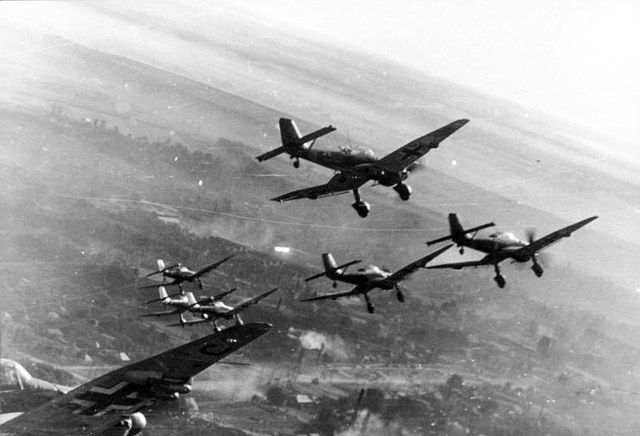
Richard Opitz · CC BY-SA 3.0 de

global conflict · 1939–1945 · worldwide

World War II was a global conflict during which the Lend-Lease Act supplied military aid and Canadian troops captured Juno Beach.

The kit

  • Major battles — World War II included the Battle of El Alamein in Egypt, the Battle of the Bulge where MacAuliffe declared "Nuts!", and Monte Cassino.
  • Pacific theater — World War II saw Joe Rosenthal photograph the flag-raising on Iwo Jima's Mt. Suribachi and Natives guide wounded down the Kokoda Trail.
  • Home fronts — World War II prompted Canada's second Conscription Crisis over men refusing overseas service, called "Zombies," during Mackenzie King's third term.
  • Cultural impact — World War II inspired Slaughterhouse Five about the Dresden bombing, From Here to Eternity ending with Pearl Harbor, and Penderecki's commemorative piece.

Runs with

American Railway Union
no connection stated in clues open card →
Strategic Hamlet Program
no connection stated in clues open card →
Pacific
major theater of operations including Iwo Jima and Kokoda Trail open card →
church

The ladder · 15 clues

H

During this war, the Lend-Lease Act allowed the United States to provide military supplies to one side.

H

Men from one country who refused to fight overseas during this war were known as "Zombies," leading to the second Conscription Crisis.

H

A text written in a prison in Zakopane [zah-ko-pahn-eh] during this war was used for the second movement of Henryk Gorecki’s Symphony of Sorrowful Songs.

H

During this conflict, V.J. Oinonen captured a photo of his regiment hoisting the Finnish flag at the three nation cairn.

H

During this conflict, the "Desert Fox" Erwin Rommel lost the Battle of El Alamein in Egypt.

H

Natives who aided one side in this war were hailed as "Fuzzy Wuzzy Angels" for guiding wounded men down the Kokoda Trail.

H

An Akimel O’odham soldier in this conflict named Ira Hayes was sent to Vella Lavella and fought at a battle modeled on the Battle of Peleliu.

M

Mackenzie King’s third term as prime minister included the duration of this war. name this war during which Canadian troops captured Juno Beach on D-Day.

M

One book set during this war, Slaughterhouse Five, is named for a prison in Dresden whose bombing in this war is described.

M

War in which the Texas 36th Infantry fought in the battles of Salerno and Monte Cassino.

M

Was overwhelmed by the Blitzkrieg at the start of what war?

M

War in which he served as Prime Minister of the UK.

E

Photographer Joe Rosenthal depicted soldiers in this war raising a flag above Mt. Suribachi. name this war, the setting of the photo Raising the Flag on Iwo Jima.

E

The novel From Here to Eternity ends with the start of this war, in which the Hawaii-based characters experience the attack on Pearl Harbor. name this 1940s war.

E

Yevgeny Khaldei took a photo during this conflict of Russian man hoisting a flag above a parliament building.

10 more clues from the record
H

General Anthony MacAuliffe famously declared "Nuts!" after being demanded to surrender at the Battle of the Bulge in this war.

H

A memoir about an Indigenous group stationed at Camp Elliott during this war was written by Chester Nez.

H

Apaches unloaded beds during this conflict at sites including Poston and Gila River.

H

During this war, a piece scored for violin, cello, piano and clarinet was premiered in a POW camp; that piece was Olivier Messiaen's [mess-ay-en's] Quartet for the End of Time. Twelve-tone composer Anton von Webern was accidentally killed during this conflict while breaking curfew.

H

A piece inspired by this war begins with a tone cluster for fifty-two strings and was originally called 8 Minutes, 37 Seconds by Krzysztof Penderecki [krish-toff pen-der-etz-kee].

H

One book set during this war is about a soldier named Billy Pilgrim who is “unstuck in time,” allowing him to have flashbacks to his past experiences.

H

Following this war, Krzysztof Penderecki [[kuh-SHEE-shtoff pen-deh-RETS-kyee]] wrote a piece to commemorate the destruction of one city during it.

H

One military in this war had two rival commands called the OKW and OKH, and an intelligence service called the Abwehr.

H

The legitimacy of Robert Capa’s story regarding his "Magnificent Eleven" photographs of this war has been questioned by historians.

H

During this conflict, the French navy was destroyed at the Battle of Mers el-Kebir to prevent it from falling into enemy hands.
#152 · Other Named Wars and Armed Conflicts · Level 1

Winter War

Winter War
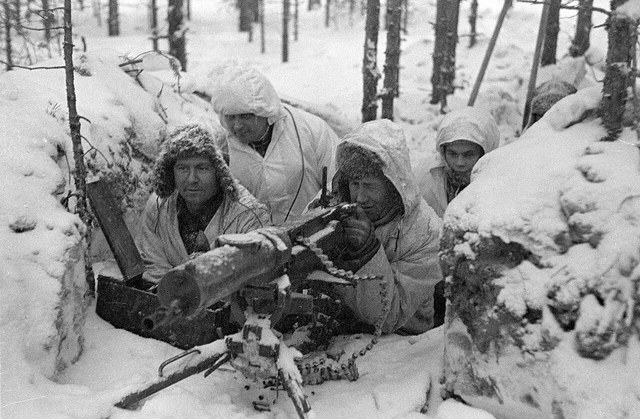
Unknown author. · Public domain

Soviet-Finnish conflict · November 1939–March 1940 · Finland

Winter War was the 1939-1940 Soviet invasion of Finland that ended with Finnish territorial concessions despite fierce resistance.

The kit

  • Outbreak — Winter War began with the Soviet shelling of Mainila, a false flag operation, in November 1939.
  • Finnish defense — Winter War saw Finnish forces use motti encirclement tactics and ski troops to defeat larger Soviet forces at Raate Road and Suomussalmi.
  • Soviet breakthrough — Winter War ended after Soviet forces broke through the Mannerheim Line at the Battle of Summa in early 1940.
  • Outcome — Winter War concluded with the Moscow Armistice, ceding Karelia and Viipuri to the Soviets and granting them a naval base at Hanko.

Runs with

Finland
defended against Soviet invasion open card →
American Railway Union
no connection evident in clues open card →
Molotov Cocktail
first used by Finns against Soviet tanks open card →
Soviet Union
invaded Finland and won territorial concessions open card →

The ladder · 15 clues

H

One side in this conflict set up the Terijoki [teri-yo-kee] government in a failed attempt to gain legitimacy.

H

The eventual winners in this war sought to cross the Mannerheim Line.

H

The winners of this war were able to lease a naval base at Hanko and occupy the city of Vyborg.

H

This war began after the attacking side shelled its own village of Mainila in a false flag operation.

H

The phrase “Kollaa will hold” originated during this war in which one side employed an encirclement strategy known as motti.

H

Finland engaged in bitter conflict with Russia in this bitter 1939-1940 conflict that included the Battle of Suomussalmi and ended with the Moscow Armistice.

H

The Mannerheim Line was a defensive fortification during this conflict in which “Molotov cocktails” were first used. :Name this 1939-1940 “seasonal” conflict during which the Soviet Union attempted to invade Finland.

M

War between the Soviets and Finland in the opening months of World War II, followed by the Continuation War.

M

A year after the conclusion of this conflict, the two central countries began the Continuation War.

M

Using the motti tactic, one side was able to ambush and defeat an enemy force that outnumbered them during the Battle of Raate Road.

M

A sniper for one side in this war, Simo Hayha, earned the nickname "White Death" for his over 500 confirmed kills during this war.

M

Ryti was prime minister during the later part of this conflict, which included a battle at Raate Road, and was followed by the Continuation War.

E

The Continuation War followed this conflict between Finland and the Soviet Union, simultaneous with the start of World War II.

E

Lasting from 1939 to 1940, name this conflict that began with the Soviet invasion of Finland.

E

The Mannerheim Line was destroyed following the end of this conflict during World War II between Finland and the Soviet Union.

10 more clues from the record
H

name these wars involving Finland:This war began when the Soviet Union invaded Finland in November, 1939, and ended in March of 1940.

H

This conflict was initiated by the shelling of a guard post at Mainila in a false flag operation.

H

After one minister in this war claimed to be feeding a certain population, his country's bombs were dubbed his namesake "bread baskets." The two belligerents in this war fought the Continuation War about a year later.

H

The peace treaty ending this war led to a fifteen month "Interim Peace" and ceded one side's second-largest city of Viipuri [[VEE-poo-ree]].

H

Season which names a war between Finland and the USSR, stalemated in part due to cold weather.

H

The losers were forced to cede Karelia after the fall of the Mannerheim Line, despite the use of ski troops.

H

This war saw the invention of Molotov [[MOH-loh-tohff]] cocktails.

H

Its victors suffered heavy losses due to the effects of the Great Purge.

H

This conflict featured tanks breaking through defenses at the Battle of Summa. :Name this conflict that lasted about three months and featured invaders trying to break through the Mannerheim Line. Defenders threw glass bottles filled with flammable liquids at opposing tanks.

H

The main naval engagement in this conflict was fought near the island of Russaro and saw one side nearly lose a cruiser due to coastal bombardment; the other side deployed its ships in harbor as an anti-aircraft measure.

Watch out: Continuation War (the subsequent 1941-1944 conflict between the same belligerents)
#203 · Other Modern National Leaders · Level 1

Winston Churchill

Winston Churchill
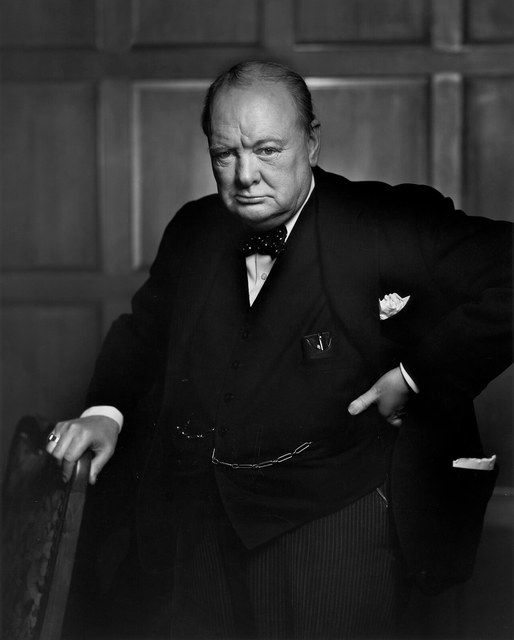
bdi Yousuf Karsh /span /a · Public domain

British Prime Minister · 1874–1965 · United Kingdom

Winston Churchill led the United Kingdom through World War II, delivering iconic speeches that rallied British resistance against Nazi Germany.

The kit

  • Rise — Winston Churchill served as First Lord of the Admiralty under Herbert Asquith but resigned after the failed Gallipoli Campaign.
  • Achievements — Winston Churchill won the 1953 Nobel Prize in Literature for his historical works including History of the English-Speaking Peoples.
  • World War II leadership — Winston Churchill declared "we shall fight on the beaches" following Dunkirk and praised the RAF with "never was so much owed by so many to so few."
  • Legacy — Winston Churchill coined the term "Iron Curtain" in a 1946 Fulton, Missouri speech describing Soviet domination of Eastern Europe.

Runs with

Joe Hill
no connection evident in clues open card →
church
no connection evident in clues open card →
World War II
served as Prime Minister during most of World War II open card →
Gallipoli Campaign
resigned as First Lord of the Admiralty after Gallipoli's failure open card →

The ladder · 15 clues

H

Herbert Asquith named this man the First Lord of the Admiralty, but he was forced to resign from that post after the failed Gallipoli Campaign.

H

Following the Dunkirk evacuation, this PM gave the "This was their finest hour" speech to the House of Commons. name this prime minister of the UK during the majority of World War Two.

H

This man likely paraphrased Giuseppe Garibaldi when, in a speech to parliament, he stated he had nothing to offer but “blood, toil, tears, and sweat.” This man stated that never “was so much owed by so many to so few” in praise of the Royal Air Force.

H

This man described fighting with the 21st Lancers at the Battle of Omdurman under Lord Kitchener in his work The River War.

H

Won the 1953 Literature Nobel for his work on the Second World War, during which he was Prime Minister of Britain?

H

While serving as Chancellor of the Exchequer under Stanley Baldwin, his man controversially returned his country to the gold standard.

H

As Home Secretary, this man authorized sending troops to help quell the Tonypandy riots. :Name this British Prime Minister during most of World War II.

M

served during most of World War II, offering nothing but “blood, toil, tears, and sweat?”

M

This man wrote about his ancestor, in Marlborough: His Life and Times and late in his life produced the four-volume History of the English Speaking Peoples.

M

First Lord of the Admiralty and future prime minster who resigned after his failure to defeat the F Ottomans

M

“An Iron Curtain has descended across the Continent” in a speech delivered in Fulton, Missouri?

M

With Austen Chamberlain, this Conservative was a major advocate for British re-armament during the 1930s. He later served as Prime Minister for most of World War II.

E

Facing a Nazi invasion of his country, this man triumphantly declared “we shall fight on the beaches.” name this Prime Minister who led the United Kingdom through World War II.

E

This successor to Neville Chamberlain coined the term "Iron Curtain" in a speech at Fulton, Missouri. name this British prime minister during World War II.

E

This leader claimed never was “so much owed by so many to so few” as the Royal Air Force fought the Battle of Britain. name this Prime Minister whose speeches bolstered the United Kingdom during World War II.

10 more clues from the record
H

Former British Prime Minister who questioned the early end to hostilities.

H

Gave the “we shall fight on the beaches” speech in May 1940 during his first month as PM.

H

While on the way to the Malakand Campaign, this man wrote of the Lauranian dictator Antonio Molara in Savrola.

H

During the Boer War, this man served as a journalist and escaped from prison after being captured by Boer troops.

H

This man recounted his escape from a Boer POW camp in London to Ladysmith via Pretoria.

H

This man’s longtime bodyguard was the ex-grocer Walter H. Thompson.

H

answer the following about World War I at sea.This man was Britain’s First Lord of the Admiralty during World War I until the failure of the Dardanelles expedition. He later became Prime Minister during World War II.

H

This man penned A History of the English-Speaking Peoples, and Clement Attlee served between his two terms in his most famous office.

H

During a speech in Fulton, Missouri, this leader claimed that an "iron curtain" had descended across Europe.

H

This author of A History of the English-Speaking Peoples coined the term “special relationship.” This politician was replaced by Clement Attlee in a post-war election, then replaced Attlee six years later.

Watch out: Neville Chamberlain (Churchill's predecessor as Prime Minister)
#204 · Other Modern National Leaders · Level 1

Adolf Hitler

Adolf Hitler
bdi Heinrich Hoffmann /span /a · CC BY-SA 3.0 de

Nazi dictator · 1889–1945 · Germany

Adolf Hitler led the Nazi Party, became German chancellor in 1933, and ruled as Führer during World War II.

The kit

  • Rise — Adolf Hitler led the failed Beer Hall Putsch in 1923 and wrote Mein Kampf while imprisoned at Landsberg.
  • Rise — Adolf Hitler was appointed chancellor by Paul von Hindenburg in 1933 and declared himself Führer of Germany.
  • Conflicts — Adolf Hitler survived the July 20 plot (Operation Valkyrie) when Colonel Stauffenberg planted a bomb at the Wolf's Lair.
  • Death & succession — Adolf Hitler committed suicide in his bunker with Eva Braun as Allied forces closed in on Berlin.

Runs with

Nazi Party
founded and led the party to power open card →
Germany
ruled as dictator during World War II open card →
Chancellor
appointed to this office in 1933 open card →
Nazi Germany
served as Führer of this state open card →

The ladder · 15 clues

H

While in prison he wrote Mein Kampf (MINE KOMF).:Name this Nazi leader who became German chancellor in 1933 and led Germany during the Second World War.

H

In 1933, Paul von Hindenburg appointed this politician chancellor. name this politician who later led Germany during the Second World War.

H

The 20th of July plot, or Operation Valkyrie, was an attempt to kill this Nazi leader, who committed suicide in a bunker with his girlfriend Eva Braun.

H

While visiting the Quirinal Palace, this man was informed by Victor Emmanuel that the Italian boot had 52 nails in the sole and 22 nails in the heel.

H

After previously hearing of an opposing plan proposed at the Hanover Meeting, this leader proposed a twenty-five point plan at the Bamberg Conference.

H

This man forced his army to swear the Soldiers Oath’ promising servitude directly to him rather than to the constitution.

H

Soldier who was wounded at the Somme and blinded in a gas attack, then later led Nazi Germany.

M

After leading the failed Beer Hall Putsch, this man was sent to Landsberg prison where he created Mein Kampf.

M

Nazi leader who had all of the leading German Communists arrested in the early 1930s.

M

Declaring himself as the führer was this leader of Nazi Germany.

M

This leader of the 1923 Beer Hall Putsch also carried out a large killing of Jews on the Night of Broken Glass or Kristallnacht.

M

Another action of his was “Operation Hummingbird,” which led to the death of Ernst Rohm during the Night of the Long Knives.

E

In Valkyrie, Cruise plays Colonel Stauffenberg, who leads a plot to assassinate this man at the Wolf’s Lair.

E

Though he did not sign it, this man was present at the signing of the Pact of Steel between his country and Italy.

E

Dictator who ruled Nazi Germany for over a decade.

10 more clues from the record
H

One of these events was blamed on the British secret service after two MI5 agents were captured in the Venlo Incident.

H

This man commissioned Albert Speer to create the “cathedral of lights” which supported his Nuremberg rallies.

H

One of these actions involved the placing of a bomb in the Wolf's Lair and was to be followed by Operation Valkyrie.

H

Austrian figure who assumed leadership of the Nazis over Anton Drexler.

H

The Kreisau Circle supported one of these actions, and an unimplemented one was dubbed Operation Foxley.

H

The Todt Organization built a facility in the Masurian woods for use by this man.

H

This man allegedly snubbed athlete Jesse Owens.

H

A Martin Niemoller poem reflecting on this politician’s anti-religion policies begins with the lines “First they came for the socialists, and I did not speak out - because I was not a socialist.” :Name this leader who brought the German Protestant church under state control in 1934. After World War II, Niemoller apologized for his previous support of this leader’s anti-Semitic policies.

H

This leader, whose policies were condemned in the Christmas address, is likely the "mad prophet" described in a work written "with burning anxiety." At Barmen, a declaration rejecting this leader's influence was issued by the Confessing Church.

H

Browning’s book was much criticized by Daniel Goldhagen, who argued instead that an “eliminationist anti-semitism” in German political culture transformed soldiers into “willing executioners” for this German dictator.

Watch out: Anton Drexler—Hitler assumed leadership of the Nazi Party from him
#206 · Other Modern National Leaders · Level 1

Benito Mussolini

Benito Mussolini
Public domain

Italian Fascist dictator · 1922–1945 · Italy

Benito Mussolini was the Fascist dictator of Italy during World War II, known as Il Duce.

The kit

  • Rise — Benito Mussolini became Italy's youngest Prime Minister in 1922 after his Blackshirts marched on Rome.
  • Achievements — Benito Mussolini signed the Lateran Treaty with Pope Pius XI, resolving the Roman Question.
  • Conflicts — Benito Mussolini allied with Nazi Germany through the Pact of Steel and fought in World War II.
  • Death & succession — Benito Mussolini was murdered by partisans and hanged upside down at an Esso gas station.

Runs with

Italy
led Italy as Prime Minister and dictator open card →
dictator
ruled as Fascist dictator known as Il Duce open card →
Rome
marched on Rome with Blackshirts in 1922 open card →
World War II
led Italy during World War II open card →

The ladder · 15 clues

H

After being rescued in the Gran Sasso raid, this man was made leader of the Republic of Salo.

H

Before rising to power, this man wrote the anti-clerical work The Cardinal’s Mistress.

H

Otto Skorzeny attempted to break this man out of prison in the failed Gran Sasso raid.

H

This prime minister organized the Lateran Treaty with Pius XI [[the ELEVENTH]] following a March on Rome with his Blackshirts. name this Fascist known as Il Duce [[DOO- chay]] who led Italy during World War Two.

H

This man’s party was the target of the Aventine Secession after he changed his country’s voting system with the Acerbo [uh-chair-bow] Law.

H

While serving as Prime Minister, this man helped ratify the Lateran Treaty, thus resolving the Roman Question. :Name this man who led Italy during World War II.

H

This journalist wrote for the newspaper Avanti!, but during World War One abandoned both it and his country's Socialist Party.

M

This man and his mistress were murdered by partisans and hanged upside down at an Esso gas station.

M

This man reclaimed land in the Battle for Land, and it was claimed that this man finally "made trains run on time." In 1922, after the March on Rome, this man became the youngest Italian Prime Minister and signed the Lateran Treaty with the Vatican. name this man who created the Rome-Berlin Axis with Adolf Hitler.

M

This leader’s party was given a majority in parliament through the Acerbo [ah-chair-boh] Law.

M

After his deposition, this man was installed as the head of the puppet Salo Republic. Pius XI signed the Lateran Accords with this leader.

M

This dictator’s alliance with Nazi Germany was called the Pact of Steel. name this fascist dictator of Italy who was known as Il Duce.

E

Victor Emmanuel III granted power to this man after his Blackshirts marched on Rome. name this fascist dictator of Italy during World War II.

E

Fascist leader of Italy during World War II, called “Il Duce” [eel doo-chay].

E

He rose to power in 1922 as the Blackshirts marched on Rome. name this fascist dictator, known as "Il Duce," who led Italy during World War II.

10 more clues from the record
H

This man's daughter Edda had an affair with a Chinese warlord, and his men fought Omar Mukhtar in the "Pacification of Libya.” To delay an annexation and war, this man participated in the Stresa Front.

H

This editor of the Avanti! newspaper threatened to invade Greece in the Corfu Affair and saw members of Parliament leave after supporters of his party killed Giacomo Matteotti.

H

This future leader denounced his country’s PSI party due to their belief in neutrality during the First World War.

H

Answer some questions about the Italian government during World War II. :Name this leader of Italy for most of World War II. He was backed by the Blackshirts.

H

The Blackshirts were a part of the National Fascist Party and swore loyalty to this man. This man was nicknamed Il Duce.

H

He ordered a bombing campaign on the Greek island of Corfu in 1923. :Name this fascist Italian dictator known as “Il Duce” who allied with Hitler and Hirohito in World War II.

H

This man called for an initiative awarding automatic control of two-thirds of the legislature to the party winning a plurality of votes, the Acerbo Law.

H

This man rescued in the Gran Sasso raid gained power with the passing of the Acerbo Law. :Name this fascist Italian dictator during World War Two.

H

This leader threatened to invade Greece after a general was murdered while surveying the Albanian-Greek border during the Corfu Incident.

H

This man’s forces were nearly encircled by the Christmas Offensive, and he passed the Acerbo Law to gain control of his country’s legislature.

Watch out: Otto Skorzeny successfully rescued Mussolini in the Gran Sasso raid
#213 · Other Modern National Leaders · Level 1

Neville Chamberlain

Neville Chamberlain
bdi Bassano Ltd /span /a · Public domain

British Prime Minister · 1937–1940 · United Kingdom

Neville Chamberlain was the British Prime Minister whose appeasement policy toward Hitler culminated in the Munich Agreement and his resignation in 1940.

The kit

  • Rise — Neville Chamberlain became MP for Birmingham Ladywood at age 49 and succeeded Stanley Baldwin as Prime Minister in 1937.
  • Achievements — Neville Chamberlain passed major social legislation including the Factories Act and Holidays with Pay Act during his political tenure.
  • Conflicts — Neville Chamberlain conceded the Sudetenland to Germany at Munich in September 1938, declaring "peace for our time" upon his return.
  • Death & succession — Neville Chamberlain resigned after the disastrous Allied expedition to Norway in 1940, replaced by Winston Churchill as Prime Minister.

Runs with

Munich
signed Munich Agreement there September 30, 1938 open card →
Winston Churchill
resigned in his favor May 1940 open card →
Norway
failed expedition prompted his resignation open card →
Chancellor
served as Chancellor of the Exchequer under Baldwin open card →

The ladder · 15 clues

H

Leo Amery attacked this man in Parliament by quoting Cromwell’s “In the name of God, go!” speech.

H

This man’s half-brother Austen won a Nobel Peace Prize for helping to negotiate the Locarno Treaties.

H

This man came to power after Stanley Baldwin retired from his highest post.

H

Some major pieces of legislation passed during this man’s political tenure, including the Factories Act and the Holidays with Pay Act.

H

This British Prime Minister was one of the main supporters of appeasement, and after the Munich Agreement he announced that he had secured “peace for our time”.

H

While Director of National Service, this man had disagreements with David Lloyd George that would result in mutual contempt for the rest of their careers.

H

While serving as Chancellor of the Exchequer, this man once quipped England was finished with Bleak House and was moving on to Great Expectations.

M

The disastrous Allied attempt to save Norway resulted in the resignation of this British prime minister, who claimed there would be “peace in our time” after the Munich Agreement with Hitler.

M

This other prime minister was heavily criticized in the book Guilty Men for his policy of appeasement towards Nazi Germany after declaring “peace for our time.”

M

This man’s intention to recognise Italy’s conquest of Ethiopia led Anthony Eden to resign as Foreign Secretary, Lord Halifax being appointed as his replacement.

M

This man recommended the abdication of Edward VIII, while serving as Chancellor of the Exchequer to Stanley Baldwin.

M

Leo Amery quoted Oliver Cromwell in attacking this man’s foreign policy by saying “in the name of God, go!” This man waved a paper at Heston Aerodrome before issuing his most famous proclamation.

E

Churchill replaced what fellow Conservative this person who promised “peace for our time” after signing the Munich Agreement, as Prime Minister.

E

This man’s concession of the Sudetenland in Czechoslovakia to one leader became synonymous with this man’s policy of “appeasement.” This man signed the Munich Agreement with Adolf Hitler prior to the invasion of Poland the following year. name this prime minister of the United Kingdom at the beginning of World War II.

E

This Conservative Prime Minister is known for stepping down in favor of Winston Churchill after his policy of appeasement failed to prevent aggression by Hitler.

10 more clues from the record
H

On September 30, 1938, this man conceded the Sudetenland to Germany, and declared war on the latter after its invasion of Poland in 1939. name this man, who served as Prime Minister of the United Kingdom from 1937 to 1940.

H

In 1924, Mosley came within 100 votes of defeating this MP from Birmingham Ladywood, who went on to succeed Stanley Baldwin as prime minister.

H

This man spoke of the “innocent people of Holland, Belgium and France” in a resignation address which drove Princess Elizabeth to tears.

H

This man failed to prevent the German invasion of Norway, which prompted the Norway Debate in the British House of Commons.

H

This man became a Member of Parliament for Birmingham Ladywood, his first elected position, at the age of 49.

H

This man was forced to resign after the failure of the expedition to Norway.

H

Name these British Prime Ministers of the 20th century .Most of the focus on this Conservative’s term is placed on his appeasement of Hitler, giving areas of to in the Munich Conference. His declaration of “peace in our time” proved foolish.

H

This British prime minister and proponent of appeasement was given a hero’s welcome after negotiating the Munich Agreement in 1938, but would resign the next year in favor of Winston Churchill.

H

This man used Walter Runciman and the Earl of Halifax to negotiate with men such as Konstantin von Neurath, and he signed one agreement on September 30, which Slovaks refer to as a diktat.

H

This man's brother won the Nobel Peace Prize for leading the Locarno Conference negotiations and his predecessor, Stanley Baldwin, was implicated in the May Report.

Watch out: His half-brother Austen Chamberlain won the Nobel Peace Prize for negotiating the Locarno Treaties
#233 · Scientists, Mathematicians, and Inventors · Level 1

J. Robert Oppenheimer

J. Robert Oppenheimer
Unknown author Unknown author · Public domain

American theoretical physicist · 1904–1967 · United States

J. Robert Oppenheimer directed the Los Alamos Laboratory during World War II and became known as the 'father of the atomic bomb.'

The kit

  • Rise — J. Robert Oppenheimer worked at UC Berkeley and calculated the Oppenheimer-Volkoff limit for neutron star mass with George Volkoff.
  • Manhattan Project — J. Robert Oppenheimer was appointed by Leslie Groves to head the Los Alamos Laboratory's secret weapons development from 1943 to 1945.
  • Legacy — J. Robert Oppenheimer reportedly quoted 'I am become death, the destroyer of worlds' from the Bhagavad Gita after the Trinity nuclear test.
  • Security clearance — J. Robert Oppenheimer lost his security clearance in 1954 after William Borden accused him of being a Soviet agent.

Runs with

Manhattan Project
directed Los Alamos Laboratory for weapons development open card →
Strategic Hamlet Program
William
William Borden accused him of Soviet ties open card →
Soviet Union
accused of being agent; Chevalier offered to pass secrets open card →

The ladder · 15 clues

H

A month-long hearing in 1954 ended with this man losing his security clearance due to claims, by William Borden, of Communist ties.

H

Opponents of this man argued that his politics had been influenced by his affair with Jean Tatlock.

H

This man’s attempt to get his student Robert Serber appointed to a faculty position was blocked by Raymond Birge, who remarked “One Jew in the department is enough.” Haakon Chevalier offered to pass secrets from this man to the Soviets through George Eltenton.

H

This friend of Richard Tolman and teacher of George Volkoff noted that stars of a certain mass could not become neutron stars.

H

At a hearing, this man admitted to obscuring the identity of Haakon Chevalier [[haw- KOHN shuh-vahl-YEH]] after an espionage attempt.

H

This man, whose loyalty was questioned by the Borden Letter, was approached by a literature professor with Soviet ties in the Chevalier Incident.

H

Scientist who headed the project and quoted the Bhagavad Gita while observing the aforementioned test.

H

William Borden accused this man of being a Soviet agent in a letter sent to J. Edgar Hoover.

M

Physicist who quoted “I am become death, the destroyer of worlds” after the Trinity nuclear test.

M

This man had his security clearance and connections to the AEC suspended in 1953 on suspicion of his Communist sympathies.

M

With Max Born, this man names a simplification of molecular wave functions that assumes nuclear motion and electron motion is separable. name this UC Berkeley physicist known for his leading role in the Manhattan Project.

M

While at Cambridge, this other member of the Manhattan Project attempted to kill Patrick Blackett with a poisoned apple. This person had a relationship with Jean Tatlock and was described as ‘among the second rank of American physicists’ in the Borden letter, which denounced them as an agent of the Soviet Union.

M

This long-time director of the Institute for Advanced Study at Princeton lost his security clearance following a 1954 hearing over his alleged communism.

E

William Borden's letter labeled this man "more probable than not...an agent of the Soviet Union." A faction led by Lewis Strauss succeeded in revoking this man's security clearance in 1954, nine years after he possibly quoted Hindu scripture while observing the Trinity test. name this director of the Los Alamos Laboratory who oversaw development of the first atomic bomb.

E

Accusations of communist sympathies tarnished the reputation of this scientist who directed the Los Alamos Laboratory as part of the Manhattan Project.

10 more clues from the record
H

This man chose Norris Bradbury to replace him as Director of a laboratory that he left in 1945.

H

Head of the Manhattan Project who was later accused of being a Communist spy.

H

Lobbying on this man's behalf prevented Lewis Strauss from getting a Cabinet position.

H

This person is alphabetically the first namesake of the maximum limit of mass in a neutron star.

H

In his college years, this man was reprimanded after giving a poisoned apple to his professor and future Nobel laureate, Patrick Blackett. :Name this theoretical physicist whose work on nuclear weapons for the United States earned him the name “father of the atomic bomb.”

H

This scientist was appointed by Leslie Groves to head the Manhattan Project’s secret weapons lab. He became chief advisor to the Atomic Energy Commission after the war and campaigned against nuclear proliferation.

H

This subject of the Borden Letter had a controversial conversation in his kitchen with a Berkeley colleague named Haakon Chevalier, which was later used against him by Lewis Strauss.

H

This man headed the Los Alamos Laboratory responsible for much of the work on the Manhattan Project. He also calculated the photoelectric effect for hydrogen under X-rays.

H

While working under the title “Coordinator of Rapid Rupture”, this man employed students such as Emil Konopinski and Felix Bloch.

H

The FBI investigated this man’s connection with the American Civil Liberties Union after he was accused of being a communist by his colleague Haakon Chevalier.

Watch out: Haakon Chevalier was a colleague who offered to pass secrets, not Oppenheimer himself passing them
#381 · Other Asian Kingdoms and Empires · Level 1

Nazi Germany

Nazi Germany
German government · Public domain

German totalitarian state · 1933–1945 · Germany

Nazi Germany was Adolf Hitler's totalitarian regime that perpetrated the Holocaust and initiated World War II through its 1939 invasion of Poland.

The kit

  • Rise — Nazi Germany dissolved the Catholic Centre Party after an agreement between Ludwig Kaas and Franz von Papen, who served as Vice Chancellor.
  • Domestic policy — Nazi Germany promoted workers through Strength Through Joy and Winter Aid programs while arresting hundreds of Swing Kids who preferred English music.
  • Persecution — Nazi Germany held massive rallies in Nuremberg and passed the Nuremberg Laws to persecute Jews before engineering the Holocaust at Auschwitz and Treblinka.
  • Military campaigns — Nazi Germany launched its 1939 invasion of Poland using blitzkrieg tactics and sent the Afrika Korps to North Africa before retreating to Italy.

Runs with

American Railway Union
No connection evident in clues open card →
World War II
Nazi Germany initiated World War II with its 1939 invasion of Poland open card →
Adolf Hitler
Adolf Hitler led Nazi Germany as its dictator from 1933 to 1945 open card →
Spanish Civil War
No connection evident in clues open card →

The ladder · 15 clues

H

This government used the Winter Aid and Strength Through Joy programs to support its workers.

H

This country arrested hundreds of “Swing Kids,” who preferred English language music. The opera Jonny Strikes Up by Ernst Krenek was criticized in a music exhibition in this country, which commissioned Carl Orff to write incidental music for Shakespeare’s Midsummer Night’s Dream to replace Felix Mendelssohn’s work.

H

While working for this government, an orphaned radio specialist aids in the hunt for the Sea of Flame jewel in Anthony Doerr’s Pulitzer-winning novel All the Light We Cannot See.

H

The Catholic Centre Party was dissolved after an agreement between Ludwig Kaas and Franz von Papen, who served as Vice Chancellor in the early years of this government.

H

Annemarie Johansen fools a canine unit employed by this government using a basket laced with cocaine in a novel in which a group of refugees flee to Sweden from this government’s reach.

H

In this country, insurance companies paid the government instead of afflicted parties after a series of attacks on homes and businesses called the Night of Broken Glass.

H

The statement “I aim at the stars but sometimes I hit [the enemy’s capital],” was used to mock a scientist conducting tests on “vengeance weapons” for this country.

M

Leni Riefenstahl’s film Triumph of the Will was produced with the help of Joseph Goebbels, this government’s propaganda minister. name this regime that created the Nuremberg Laws to persecute Jews before engineering the Holocaust.

M

Pope Pius XII was controversially accused of ignoring, and therefore being complicit in the crimes of this government that perpetrated the Holocaust.

M

Lois Lowry’s novel Number the Stars is set during what government’s occupation of Denmark in 1943?

M

Daniel Jonah Goldhagen wrote that citizens under this government were “willing executioners.” A memoir of one member of this government recalls the author’s surprise appointment as Minister of Armaments and describes its leader as a layman and bohemian who worked in spurts and saw himself as an artist rather than a technocrat.

M

It rejected quantum physics and relativity in favor of classical physics, and it labeled avant-garde artists “degenerate.” This government promoted large-scale book burnings and inculcated a “blood and soil” ideology with massive youth movements. name this government that passed the Nuremberg laws to persecute its Jews.

M

This government held massive rallies in Nuremberg and launched a 1939 invasion of Poland employing tactics which were inaccurately called blitzkrieg. name this government that ruled Germany during World War II, led by Adolf Hitler.

M

Evans has also written a “trilogy” of books detailing the history of this government that operated concentration camps at Auschwitz and Treblinka.

E

Vorwarts!, Horst Wessel Lied, and Panzerlied.

10 more clues from the record
H

An embrace of Savitri Devi splintered a group that used this regime’s ideology and was founded by George Lincoln Rockwell.

H

Fritz Kuhn led a group that sought to promote this regime in the US, using Camp Norland as its largest headquarters.

H

The Red Orchestra and White Rose groups opposed this government, which attacked modernist art at the Degenerate Art Exhibition.

H

Country that sent the Afrika Korps to fight in North Africa but was forced to retreat to allied Italy.

H

The papal encyclical Mit Brennender Sorge condemned “with burning concern” the beliefs and policies of this government.

H

A group promoting this regime’s ideology unsuccessfully marched in Skokie, Illinois.

H

Country that launched their final major offensive to begin the battle F

H

The Black Book contains a list of people who were to be arrested should one operation of this country have succeeded. :Identify this country which planed to invade England by crossing the English Channel in Operation Sea Lion. It was cancelled after the unsuccessful Battle of Britain.

H

This government’s intellectuals sidestepped the fact that Nietzsche opposed anti-Semitism in promoting biologically questionable theories about the Übermensch. :Name this government, which tried to produce a “Fifth Gospel” depicting an Aryan Jesus, based on the theories of Alfred Rosenberg.

H

This government’s early agricultural policy was overseen by the Argentinian-born Richard Walther Darré. :Name this government which introduced the State Hereditary Farm Law and which organized a National Harvest Thanksgiving Festival attended at its peak by 1.2 million people.

Watch out: Pope Pius XII (controversially accused of ignoring Nazi crimes, not a Nazi leader)
#496 · Massacres, Assassinations, and Named Violent Incidents · Level 1

Attack on Pearl Harbor

Attack on Pearl Harbor
Imperial Japanese Navy · Public domain

Japanese surprise attack · December 7, 1941 · Oahu, Hawaii

The Attack on Pearl Harbor was Japan's surprise assault on the U.S. Pacific Fleet that brought America into World War II.

The kit

  • Planning — The Attack on Pearl Harbor was codenamed Operation Z and began after Japanese forces signaled "Tora! Tora! Tora!" to confirm surprise.
  • Execution — The Attack on Pearl Harbor targeted Battleship Row and airfields including Hickam and Wheeler, sinking the USS Arizona and Oklahoma.
  • Heroes — The Attack on Pearl Harbor saw cook Dorie Miller become the first African-American to win the Navy Cross for manning anti-aircraft guns.
  • Aftermath — The Attack on Pearl Harbor prompted FDR's "Infamy Speech" declaring December 7th a date that would live in infamy and U.S. entry into war.

Runs with

Arizona
sunk during the attack on Battleship Row open card →
World War II
brought the United States into the war open card →
Pacific
crippled the U.S. Pacific Fleet open card →
Hawaii
occurred at naval base on Oahu island open card →

The ladder · 15 clues

H

The Doolittle raids served as revenge for Japan’s surprise attack on this Hawaiian naval base on December 7th, 1941.

H

FDR claimed December 7th would "live in infamy" after the Japanese surprise attack on this Hawaiian naval base.

H

This event was investigated by the Roberts Commission, which determined that Husband Kimmel was guilty of dereliction of duty.

H

The Japanese invasion of Hong Kong occurred before Britain and Japan declared war and started four hours after this other Japanese surprise attack.

H

This event was the subject of numerous books by historian Gordon Prange.

H

Who said conspiracy theories are a modern concept? Answer the following about conspiracy theories of the 1940s, .As early as 1944, men like John T. Flynn were arguing that the US government had advance knowledge of the Japanese assault on this Hawai'ian base.

H

This attack began with a signal to “Climb Mount Niitaka.” :Name this World War II battle in which Japanese aircraft crippled the U.S. Navy’s Pacific Fleet.

M

The cook Dory Miller became the first African-American to win a Navy Cross during this event, in which Hickam and Wheeler Fields were attacked.

M

The USS Oklahoma and Arizona were lost during this event. —Name this attack by the Japanese on a U.S. naval base at the Hawaiian island of Oahu.

M

A sneak attack on this location prompted the entry of the United States into World War II. FDR’s “Infamy Speech” was delivered in response to this location’s attack.

M

December 7 was declared a “date that will live in infamy” by President Roosevelt after this surprise attack in which Japan attacked a Hawaii naval base.

M

This event included a raid on "battleship row" and was followed by FDR's "Infamy" Speech. name this 1941 attack by Japan on a Hawaiian naval base.

E

Its date was labeled “a date which will live in infamy” by Franklin Roosevelt. what December 7, 1941 event was a sneak attack by the Japanese on a U.S. naval base?

E

Tora!" The day on which this event occurred was referred to as a “date that will live in infamy.” name this December 1941 attack that led to the United States’ entry into World War II.

E

The West Loch Explosion rocked this body of water where the cook Dorie Miller earned the Navy Cross after manning an anti-aircraft gun during an assault that led to the sinking of the USS Arizona. name this lagoon west of Honolulu that was attacked by Japan on December 7, 1941, thus bringing the U.S. into World War Two.

10 more clues from the record
H

Mitchell’s argument that battleships were susceptible to air attack was ironically proved correct when the Japanese attacked this Hawaiian naval base on December 7, 1941.

H

This attack, codenamed Operation Z, began after one side exclaimed, "Tora!

H

The Doolittle Raid took place three months after Isoroku Yamamoto attacked this American naval base in Hawaii, after which the U.S. declared war on Japan.

H

The Doolittle raid was in retaliation for this Japanese attack on the US Pacific Fleet in Hawaii, which prompted the US to formally enter World War II.

H

This place was attacked on December 7, 1941. :Name this place on the island of Oahu in Hawaii, where four U.S. ships were sunk and four others were damaged.

H

Before this event, one side used a Type 97 cipher to transmit a fourteen-part message.

H

One speech about this event claims that it was made possible by “false statements and expressions for hope of a continued peace.” The decision to carry out this event was taken when a prime minister declared “this is an ultimatum” after receiving the Hull Note.

H

The USS England was named for a man who died in this event.

H

The Roberts Commission that investigated this event concluded thatHusband Kimmel was guilty of errorsin judgment.

H

Chuichi Nagumo decided against launching a third wave against supplies of fuel and torpedoes. :Name this December 7, 1941 attack that forced America into the Pacific chapter of World War II.

Watch out: The Doolittle Raid (April 1942 retaliatory bombing of Japan, not the Pearl Harbor attack itself)
#524 · Medieval European Battles and Sieges · Level 1

Battle of Midway

Battle of Midway
USN, photographed from USS i Pensacola /i (CA-24) · Public domain

naval battle · June 1942 · Midway Atoll, Pacific

Battle of Midway was a June 1942 naval engagement where the U.S. sunk four Japanese carriers, marking the Pacific War's turning point.

The kit

  • Codebreaking — Battle of Midway's location was discovered when Joseph Rochefort's Station HYPO broke the JN-25 code and identified target "AF."
  • Command — Battle of Midway saw Raymond Spruance replace William Halsey, who was sidelined by eczema, commanding from Enterprise and Hornet.
  • Losses — Battle of Midway resulted in the sinking of four Japanese aircraft carriers including Akagi and the American carrier Yorktown.
  • Significance — Battle of Midway is considered the turning point in the Pacific theater, occurring six months after Pearl Harbor.

Runs with

Pacific
fought in the central Pacific Ocean open card →
Battle of the Coral Sea
preceded by one month; Coral Sea losses weakened Japanese carrier strength open card →
World War II
decisive World War II naval battle open card →
George
George Gay sole survivor of VT-8's 30-bomber force open card →

The ladder · 15 clues

H

This battle was the first mission of the VT-8 and resulted in George Gay being the only survivor of a 30-bomber force.

H

This battle coincided with the attack on Dutch Harbor.

H

Prior to this battle, Joseph Rochefort, who was in charge of Station HYPO, helped forecast an invasion by breaking the JN-25 code.

H

Before this battle, one side planned a surprise attack on “AF” but gave the location away when the message “AF is short on water” was intercepted.

H

William Halsey was sidelined from a battle at this location due to an outbreak of eczema and had to be replaced by Raymond Spruance.

H

This battle’s winning side was greatly aided when they learned that an attack at “A-F” would take place; that information came by breaking the JN25 code.

H

In the prelude to this battle, Jasper Holmes created a false message claiming a shortage of fresh water to verify they had broken JN-25b.

M

Raymond Spruance replaced William Halsey for this battle after the latter was placed on medical leave.

M

Dauntless dive bombers were used at this battle, in which the Mikuma and Akagi were lost.

M

The naval code JN-25 was broken shortly before this battle, in which the Hornet and Enterprise provided air support.

M

The Battle of the Coral Sea was followed by this June 1942 naval battle, the most important decisive victory for the Americans over the Japanese. The USS Yorktown was sunk during it.

M

Tamon Yamaguchi [[tah-MOHN yah-mah-GOO-chee]] was killed during this battle when his ship was scuttled following attacks by aircraft from the Enterprise.

E

The Yorktown and four Japanese carriers were sunk in this 1942 battle, considered to be the turning point in the Pacific theater of World War II.

E

William Halsey’s illness forced Raymond Spruance to take command during this battle, in which four Japanese aircraft carriers were sunk. name this 1942 battle near a namesake atoll, often identified as a turning point in the Pacific theater.

E

Occurring one month after the Battle of Coral Sea, name this decisive 1942 World War II naval battle in the center of the Pacific Ocean.

10 more clues from the record
H

The location of this battle was codenamed by one side as "A-F", although some thought the real target was the Aleutian Islands.
H

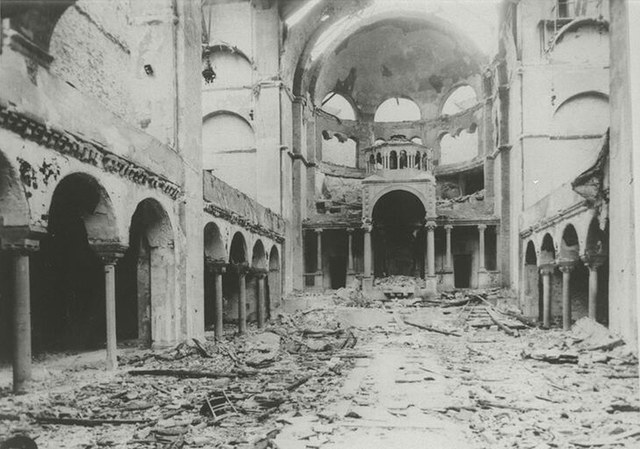
Japan lost four aircraft carriers in this battle. :Name this battle in which Admiral Nimitz inflicted a crippling blow to Japanese naval power, thanks to the work of American codebreakers. It was a decisive victory that occurred six months after Pearl Harbor.

H

name the following World War II battles in the Pacific.Six months after Pearl Harbor, the U.S. sunk four of Japan’s aircraft carriers during this battle, named after the atoll where it took place. The USS Yorktown was sunk during this battle.

H

This battle’s location was deciphered from “AF” through breaking the JN-25 code.

H

Messages about this battle often included the phrase “AF.” The Aleutian Islands Campaign attempted to divert attention away from this battle.

H

One side's losses at this battle hinged on the breaking of the JN-25 code, as well as the critical return of a vessel they'd thought lost at the earlier Battle of the Coral Sea.

H

In this battle, an I-168 sank the USS Hammann, which was picking up survivors from a ship captained by Elliot Buckmaster; that ship lagged behind the Enterprise and Hornet.

H

The loss of the light carrier Shoho at the Battle of the Coral Sea weakened the capacity of the Combined Fleet to execute Admiral Yamomoto’s plan at this battle.

H

The ships Shokaku [[shoh-KAH-koo]] and Zuikaku [[zwee-KAH-koo]] missed this battle due to losses in the Battle of the Coral Sea a month earlier.

H

This battle occurred simultaneously with an attempt to seize the Aleutian Islands to draw some of the U.S. Pacific Fleet away to the north.

Watch out: Aleutian Islands attack—a simultaneous Japanese diversion meant to draw U.S. forces away from Midway
#616 · Security, Police, Intelligence, and Paramilitary Organizations · Level 1

Irish Republican Army

Irish Republican Army
Unknown author Unknown author · Public domain

Irish paramilitary organization · 1919–present · Ireland and Northern Ireland

The Irish Republican Army fought for Irish independence from Britain and later for Northern Ireland's unification with the Republic of Ireland.

The kit

  • Rise — Irish Republican Army descended from the Irish Volunteers and was organized by Michael Collins during Ireland's War of Independence.
  • Conflicts — Irish Republican Army killed British officers during Bloody Sunday in 1920 and later split when anti-treaty members opposed the Anglo-Irish Treaty.
  • Achievements — Irish Republican Army's Provisional wing fought during the Troubles and signed the Good Friday Agreement in 1998 to end the conflict.
  • Legacy — Irish Republican Army received Armalite rifles from Muammar Gaddafi and carried out bombings including the Brighton hotel attack on Margaret Thatcher.

Runs with

Northern Ireland
fought to transfer Northern Ireland from UK control to the Irish Republic open card →
Good Friday Agreement
signed this 1998 agreement ending the Troubles open card →
Bloody Sunday
killed British officers during this 1920 massacre open card →
Brighton Hotel Bombing
executed this 1984 attack attempting to assassinate Thatcher open card →

The ladder · 15 clues

H

This group bombed the fishing boat of Lord Mountbatten and pushed for the “five demands” during a hunger strike led by Bobby Sands.
H

The provisional wing of this group split off from its official wing in 1969, and fought in the Troubles.

H

One wing of this group developed the Long War strategy, and one leader of this group eventually died during a hunger strike in 1981.

H

This group descended from the Irish Volunteers and de facto led by Michael Collins killed several British Army officers in the Bloody Sunday massacre of 1920. After the 1921 Anglo-Irish Treaty, the anti-treaty group split from this group and fought the Irish Free State.

H

Irish independence organization that attempted to kill her at Brighton

H

This insurgent group saw a 1922 schism by members who opposed a certain treaty, and would later split into “Provisional” and “Official” branches. :Name this organization which fought the Black and Tans during their country’s War of Independence.

H

This group provided the muscle in the “Armalite and ballot box” strategy and often forced people to drive cars to targets as “proxy bombs.” This group announced a “cessation of military operations” under the influence of Gerry Adams.

M

This group attempted to provide intel about the UK war effort to Nazi Agent Gunter Scheutz to assist in aerial bombings.

M

Anthony Berry was among the victims of the Brighton hotel bombing that was executed by this group during a failed attempt to assassinate Margaret Thatcher.

M

This group carried out the Border Campaign, which failed since they failed to gain support from nationalists in the area of their campaign.

M

This group claimed responsibility for killing MP Airey Neave as well as the 1984 Brighton hotel bombing which nearly killed Margaret Thatcher. name this militant Catholic group which advocated transferring Northern Ireland away from the United Kingdom.

M

Responsible for the assassination of Lord Mountbatten in 1979 this organization’s goal was to drive out the British presence from Northern Ireland.

E

This group signed the Good Friday Agreement with the British Government, halting “The Troubles.” name this paramilitary organization that fought for Irish Home Rule.

E

Paramilitary organization that was the largest group to fight the British in the Troubles.

E

This military group received early funding and organization from revolutionary Michael Collins.

10 more clues from the record
H

A shipment of arms to this group aboard the Eksund was intercepted by the French and discovered to have been sent by Muammar Gaddafi.

H

Under the leadership of Michael Collins, this paramilitary organization secured Irish independence in 1923. Various branches continued agitating for the incorporation of Northern Ireland into the Republic, in concert with their political wing, Sinn Féin.

H

Members of this organization helped set up Wolfe Tone Societies under the leadership of Cathal Goulding, who caused a rift by passing motions to join a “national liberation front” and end parliamentary abstentionism.

H

A mission that killed three of this organization’s men in Gibraltar led to the European Court of Human Rights overseeing a court case investigating Operation Flavius.

H

Members of an organization of this name killed Collins because they opposed his signing of the Anglo-Irish Treaty. This name was later used by various anti-Unionist militant and terrorist groups during The Troubles.

H

A 1992 memo by John Major revealed his belief that this group could not be militarily defeated.

H

This group assassinated members of the Cairo Gang during Bloody Sunday. :Name this revolutionary organization led by Eamon de Valera during a War of Independence against the United Kingdom.

H

This group was led by Brendan Burns during an ambush that killed 50 soldiers at Narrow Water Castle.

H

The informer "Stakeknife" infiltrated this organization, which began the "Long War" in the early 1970s.

H

This group was given their iconic Armalite rifles by Libyan dictator Muammar Gaddafi.

Watch out: The anti-treaty faction that split from the IRA in 1922 also used the IRA name during the Irish Civil War
#652 · Technologies, Inventions, and Scientific Discoveries · Level 1

Molotov Cocktail

Molotov Cocktail
Ministerie van Defensie · CC BY-SA 4.0

improvised incendiary weapon · 1939–present · Finland (origin)

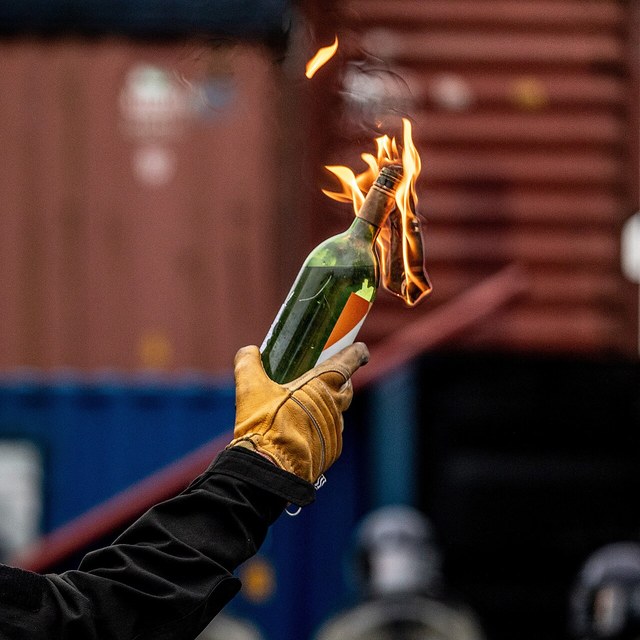
Molotov Cocktails are improvised incendiary weapons named after Soviet foreign minister Vyacheslav Molotov during the Winter War.

The kit

  • Rise — Molotov Cocktails were mass-produced in Finland during the Winter War, with over 450,000 manufactured alongside matches.
  • Production — Molotov Cocktails were produced at an Alko facility in Rajamäki, using potassium chlorate as one ingredient.
  • Design — Molotov Cocktails are commonly created from a flaming rag and bottle of alcohol.
  • Legacy — Molotov Cocktails share their name with Soviet cluster bombs called "bread baskets".

Runs with

Winter War
mass-produced during this 1939–40 conflict open card →
tanks
Finland
manufactured over 450,000 at Rajamäki open card →
Soviet Union
named mockingly after foreign minister Molotov open card →

The ladder · 3 clues

H

Potassium chlorate was one of the ingredients used to make these weapons, which share a name with cluster bombs that became known as “bread baskets.” Over 450,000 of these weapons were produced during the Winter War, in which they were often manufactured alongside matches.

H

A location in Rajamäki belonging to Alko became a major producer of these weapons.

M

A foreign minister of Russia during World War II names this makeshift explosive commonly created from a flaming rag and a bottle of alcohol.

Watch out: Vyacheslav Molotov (Soviet foreign minister for whom the weapon is named, not its inventor)
#655 · Technologies, Inventions, and Scientific Discoveries · Level 1

Enigma Machine

Enigma Machine
Alessandro Nassiri · CC BY-SA 4.0

German encryption machine · World War II (1939-1945) · Nazi Germany

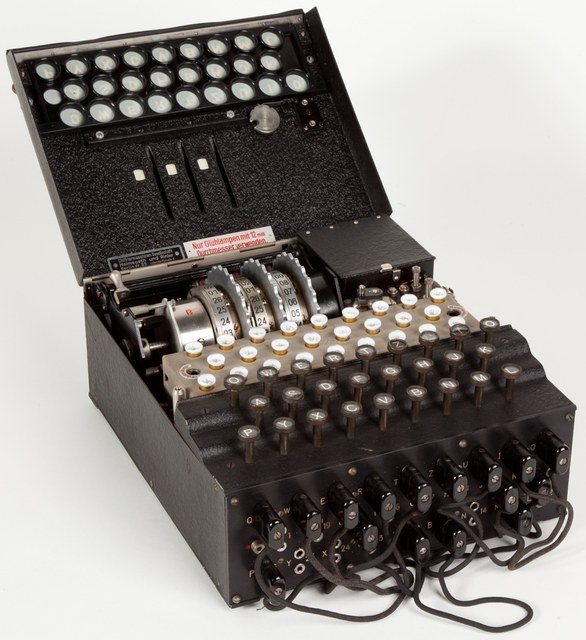
Enigma Machine was a German encryption device with rotors and a plugboard that created codes the Allies cracked at Bletchley Park.

The kit

  • Design — Enigma Machine used a keyboard, plugboard, and rotors to encrypt messages, with a display lamp showing the output.
  • Breaking the code — Enigma Machine was initially analyzed by Polish mathematician Marian Rejewski, who connected three machines together to study their patterns.
  • Allied codebreaking — Enigma Machine intercepts were deciphered at Bletchley Park using the bombe, an early computer developed by Alan Turing and Gordon Welchman.
  • Military impact — Enigma Machine intercepts helped the Allies fight U-boats during the Battle of the Atlantic and aided the defense of Crete.

Runs with

Alan Turing
developed the bombe to crack Enigma settings open card →
World War II
used by Nazi Germany throughout the war open card →
United Kingdom
broken by codebreakers at Bletchley Park open card →
Poland
Rejewski's early work guided later Allied efforts open card →

The ladder · 14 clues

H

The Bletchley Park codebreakers successfully cracked the encryption used by this German machine during World War II.

H

During World War Two, Alan Turing developed a machine that could find settings for this previously unbreakable Nazi cipher device.

H

To analyze these machines, people used the nonsense mnemonic “Royal Flags Wave Kings Above.” A product of these machines was analyzed using the process of “banburismus,” which measured the weight of evidence in “bans” and “decibans.” Marian Rejewski connected three of these machines to each other to create a device which was improved upon by Gordon Welchman’s “Diagonal Board.” Arthur Scherbius invented this machine, whose output appeared on a display lamp.

H

Answer the following about codebreaking during World War II, .The Ultra project was an effort to break this notoriously difficult-to-crack code. Working at Bletchley Park, Alan Turing invented a machine called the Bombe that was able to decipher messages in this code.

H

Marian Rajewski initially worked on breaking this code, which was finally completed thanks to the efforts of Bletchley Park. :Identify this code used by the Nazis during World War II. It consisted of a device with a keyboard, a plugboard, and a set of rotors.

H

This was the name given to various German encryption machines during World War II. In a major boost for the Allies, British codebreakers, using intelligence code-named Ultra, broke the codes created by this machine.

H

Marian Rejewski’s “chains” were crucial to early research on this device, guiding later study into sets of known patterns called “cribs.” This device was combated by the bombe, a form of early computer.

H

In order to crack this German code, Polish and British cryptographers designed mechanical devices called “bombes” [bombs]. :Name this supposedly unbreakable code that was finally cracked by codebreakers at Bletchley Park.

H

The defense of Crete was aided by intelligence gathered by the cracking of this German encryption machine, which was first broken by a Polish team of mathematicians in 1932.

H

Purple suffered from some of the same weaknesses as this Nazi encryption system, which was partially cracked by Alan Turing and others during the war.

H

This device was meant to be the primary target of Operation Ruthless, which called for a staged plane crash in the English Channel.

M

Women called Wrens worked on devices that simulated these machines called “bombes.” A plugboard and fourth rotor enhanced the security of these machines, whose output was analyzed in GC&CS’s Hut 8 at Bletchley Park, which employed Alan Turing. name these machines used to create Nazi Naval codes.

M

Several centuries later, the Nazis ruthlessly bombed Coventry. According to myth, the British had discovered beforehand but chose not to warn Coventry to hide their discovery of the solution to this “code” using a device at Bletchley Park.

M

Intercepts from this device helped fight U-boats during the Battle of the Atlantic and were deciphered at Bletchley Park. name this German encryption machine cracked by Alan Turing.

Watch out: Purple encryption system (Japanese, not German)
#658 · Technologies, Inventions, and Scientific Discoveries · Level 1

tanks

tanks
Bain News Service · Public domain

armored combat vehicles · 1915–present · global battlefields

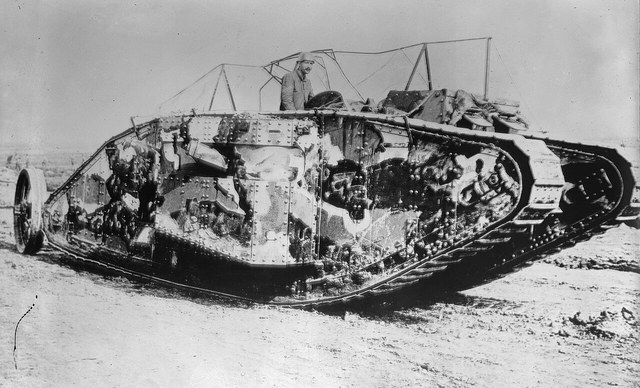
Tanks are tracked, heavily armored combat vehicles first developed in 1915 to break World War I trench warfare stalemate.

The kit

  • Origins — Tanks originated with Little Willie, the first prototype constructed by William Foster & Co in 1915 for British forces.
  • WWI deployment — Tanks were first used in combat by Douglas Haig at the Battle of the Somme, ending years of static trench warfare.
  • WWII models — Tanks in World War II included the American M4 Sherman, German Panzer and Tiger, and Soviet T-26 and Kliment Voroshilov.
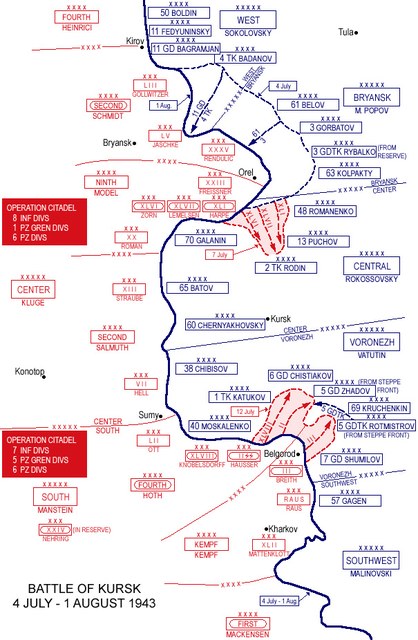
  • Modern era — Tanks saw their largest engagement at the 1943 Battle of Kursk and remain central to armored warfare today.

Runs with

World War II
used extensively including M4 Sherman, Panzer, and Tiger models open card →
Hungarian Revolution of 1956
Battle of Kursk
largest tank engagement in history occurred here in 1943 open card →
World War I
first deployed at Somme to break trench warfare stalemate open card →

The ladder · 15 clues

H

This class of vehicle’s first prototype was Little Willie which was constructed by William Foster & Co in 1915.

H

During World War II, the Locust and Hellcat were designed to replace the Stuart “light” type of these vehicles.

H

These vehicles were countered by Finnish troops in the Winter War with the Molotov Cocktail.

H

That speech given from one of these objects led to the Belavezha Accords, and was delivered in support of Gorbachev by Boris Yelstin to stop a 1991 coup.

H

Under the Regime of the Colonels, one of these weapons was used to destroy a university gate during the Athens Polytechnic Uprising.

H

These weapons were first organized into a corps by Samuel Rockenbach, who used the foreign Star variant heavily in the Meuse-Argonne offensive.

H

The 2nd Division unit dedicated to the use of this technology won a decisive American victory in the Battle of Norfolk.

M

American forces in World War II used a “medium” one of these vehicles called the M4 Sherman. name these armored vehicles which included the German Panzer.

M

George Patton commanded the first American unit dedicated to the use of these weapons in World War I. name these armored battle vehicles.

M

Roberto Souper's failed coup against Salvador Allende in Chile is named for these objects, many of which faced off at Checkpoint Charlie in the Berlin Crisis of 1961.

M

The Battle of the Somme saw the deployment of Mark I, the first of these vehicles with rotating gun turrets. The Germans called them panzer.

M

Developed in response to stagnant trench warfare in WWI this vehicles, such as the M4 Sherman, use tracks instead of wheels and have a lot of armor.

E

During World War Two, the Kingdom of Italy developed a model of these objects called the Carro Armato M Celere Sahariano. The first of these vehicles to be produced in series in Italy was the Fiat 3000, which was based on the French Renault FT. name these heavily armored, tracked combat vehicles.

E

They were first used by Douglas Haig during the Battle of the Somme. name these heavily armored vehicles that include the Panzer and M1 Abrams and run on caterpillar tracks.

E

The largest engagement of these weapons was the 1943 battle of Kursk. name these mobile weapons used in Blitzkrieg tactics, which included the Tigers and Panzers.

10 more clues from the record
H

Modified versions of these objects, including Crocodiles and Crabs, carried flails and laid bridges and were named Hobart’s Funnies.

H

The Landship Commission developed the Mark line of these objects, which were first used in the Battle of Cambrai.

H

Vehicles known as "landships," produced to break the stalemate of trench warfare.

H

The M4 variety of these weapons, used extensively in World War II, was named after William T. Sherman.

H

In 1980, the U.S. introduced a new generation of these weapons named after Creighton Abrams.

H

The introduction of these machines ended years of trench warfare in World War I, since they could shield soldiers from gunfire. Types of them such as the Panzer were used heavily in World War II.

H

A speech proclaimed from one of these objects warned of those who would "bring eternal night" and was delivered in front of a parliamentary building called the White House.

H

The Battle of Kursk saw the largest engagement in the history of the world between this type of vehicle; Soviet ones used during World War II include the Kliment Voroshilov and the T-26.

H

During the siege of Leningrad, an especially heavy variant of these vehicles, known as “Tigers,” became stuck in muddy ground on their very first mission.

H

That photograph showed Michael Dukakis sitting in one of these vehicles, some of which were called MBTs and included ones named for Patton and Sherman.

Watch out: The M4 Sherman tank was named after William T. Sherman, not the Civil War general directly commanding tank units
#690 · Other Rebellions, Revolts, and Uprisings · Level 1

Norway

Norway
Original: /div Fredrik Meltzer /div Vector: /div Gutten på H · Public domain

Scandinavian country · medieval to present · northern Europe, west of Sweden

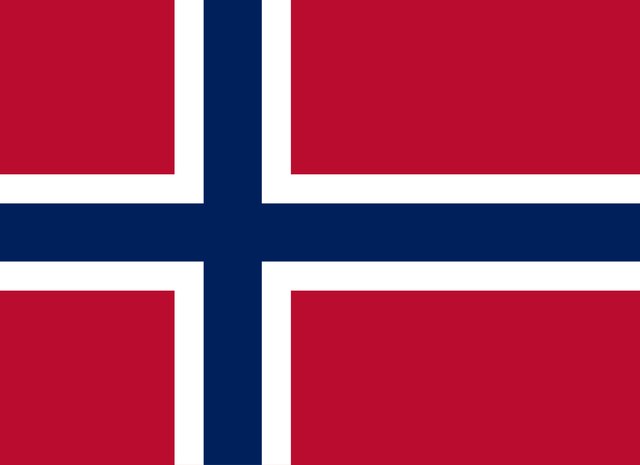
Norway is a Scandinavian country occupied by Nazi Germany during World War II and led by collaborator Vidkun Quisling.

The kit

  • World War II occupation — Norway was invaded in Operation Weserübung and run by Reichskommissar Josef Terboven with puppet Minister President Vidkun Quisling.
  • Resistance operations — Norway's Milorg group collaborated with Allies in Operation Gunnerside, sabotaging the Vemork heavy water plant with ski commandos.
  • Historical unions — Norway formed a dual monarchy with Denmark after the Kalmar Union collapsed in 1521 and surrendered to its neighbor in 1814.
  • Modern era — Norway possesses remote territories including Bouvet Island, Jan Mayen, and Svalbard and experienced the 2011 Utøya terror attack by Anders Breivik.

Runs with

American Railway Union
no connection evident in clues open card →
Denmark
Norway formed a dual monarchy with Denmark after the Kalmar Union collapsed open card →
Vidkun Quisling
Vidkun Quisling led Norway's collaborationist regime and is now synonymous with traitor open card →
Kalmar Union
Norway formed a dual monarchy with Denmark after the Kalmar Union collapsed in 1521 open card →

The ladder · 15 clues

H

Josef Terboven replaced a Nazi collaborator who led this country during World War II who is considered a national traitor in this country, Vidkun Quisling.

H

This country was the site of Operation Gunnerside, which saw a plant that was producing heavy water sabotaged by ski commandoes.

H

During World War II, this country was run by Josef Terboven, though its official Minister President was Vidkun Quisling.

H

This country was the site of the first coup d'etat broadcast over radio, which occurred after the success of Operation Weserübung.

H

John Lyng came to power after a series of mining accidents in this country during the Kings Bay Affair, where protests arose over the damming of the Alta River.

H

Reichskommissar Josef Terboven led this nation, where horsa gliders targeted a heavy water plant.

H

Josef Terboven helped run this country during its Nazi occupation.

M

The Milorg group in this country collaborated with Allied forces in Operation Gunnerside to sabotage facilities producing heavy water.

M

Oscar II renounced his claim to the throne of this country, leading to Haakon VII becoming king.

M

During World War II, it was led by puppet Nazi stooge Vidkun Quisling. name this Scandinavian country, the site of horrific 2011 shootings carried out by Anders Breivik.

M

The SF Hydro was sunk in a series of raids shortly after Operations Freshman and Gunnerside targeted this country’s heavy water production facility in Vemork to prevent the Nazis from using it.

M

A contentious parliamentary debate named for this country resulted in the resignation of Neville Chamberlain as British Prime Minister.

E

This country was led by the Nasjonal Samling party under a traitor who agreed to collaborate with the Nazis. name this Scandinavian country where Vidkun Quisling “led” from Oslo.

E

The Nazi invasion of Denmark was simultaneous with the invasion of this Scandinavian country where a pro-Nazi puppet government was led by Vidkun Quisling west of Sweden.

E

During World War II, Vidkun Quisling led a collaborationist regime in what country, whose people now use “Quisling” as a synonym for traitor?

10 more clues from the record
H

In 2016, the leader of this country's Liberal Party and the prime minister, Erna Solberg, were both caught playing Pokemon GO during official meetings.

H

A leader of this country fled to England aboard the HMS Devonshire.

H

This country surrendered to its neighbor in the 1814 Convention of Moss.

H

This country’s secret police, the Statspolitiet [stahtz-poe-lee-too], was reestablished soon after a milk strike occurred during the reign of Governor-General Joseph Terboven.

H

This country formed a dual monarchy with Denmark after the collapse of the Kalmar Union in 1521. :Name this country whose kings include Harald Hardrada.

H

The world’s most remote island is Bouvet Island, which belongs to this country, which also possesses Jan Mayen and Svalbard and borders Sweden to the west.

H

The death of Duke Skule in battle ended a civil war in this country which saw fighting by rival parties the Birkebeiner and the Bagler.

H

The Altmark incident occurred when British destroyers sank a German tanker in this country’s neutral waters.

H

A strike against milk rationing in this country prompted commissioner Josef Terboven to declare martial law.

H

This country, the site of a 2011 terror event on its island of Utøya [[OOH-tau-wah]], also experienced a landslide in its village of Ask [] in 2020.

Watch out: Josef Terboven was the actual Nazi administrator; Vidkun Quisling was the puppet figurehead Minister President
#812 · Monumental Statues and Memorials · Level 1

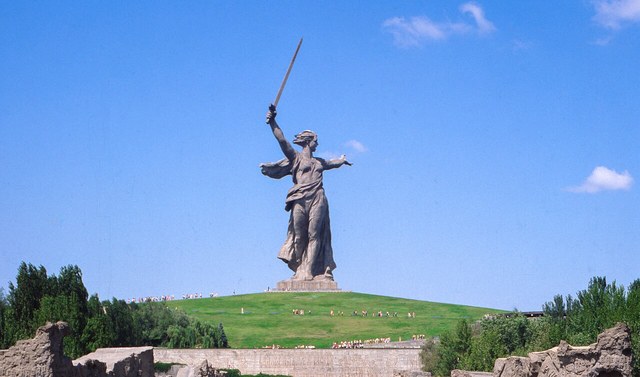
Mamayev Kurgan

Mamayev Kurgan
p Leo Medvedev/Лев Леонидович Медведев · CC-BY-SA-4.0

Hill in Volgograd · 1942–1943 battle site · Volgograd, Russia

Mamayev Kurgan is a strategic hill in Volgograd that was the site of intense fighting during the Battle of Stalingrad.

The kit

  • Battle — Mamayev Kurgan saw bitter fighting during the Battle of Stalingrad, along with Railway Station Number One.
  • Memorial — Mamayev Kurgan now holds a memorial complex including the grave of Marshal Vasily Chuikov, Soviet commander at Stalingrad.
  • Monument — Mamayev Kurgan is topped by The Motherland Calls, a statue depicting a woman with a raised sword.

Runs with

Battle of Stalingrad
site of intense fighting during this decisive Soviet victory open card →
Burial Mounds
name derives from kurgan, a type of burial mound open card →
Black SeaJoe Hill

The ladder · 3 clues

H

Intense fighting in this battle took place at Mamayev Kurgan and Railway Station Number One.

H

This battle is commemorated by a memorial complex on the heights of Mamayev Kurgan including the grave of Marshal Vasily Chuikov.

E

That work, depicting a woman with a raised sword, is The Motherland Calls, and is located on Mamayev Kurgan, a site of bitter fighting during this battle. name this decisive Soviet victory on the Volga.

Watch out: Burial mounds (kurgans) are ancient earthen structures, not this modern battle site
#820 · Modern US Military Commanders · Level 1

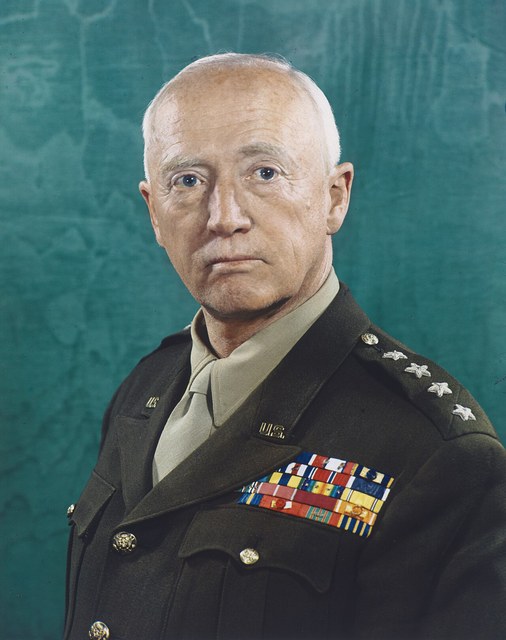
George S. Patton Jr

George S. Patton Jr
bdi Robert F. Cranston /span /a /bdi / bdi Harry Warnecke /s · CC0

U.S. Army general · 1885–1945 · European & North African theaters

George S. Patton Jr. commanded the Third Army in World War II and earned the nickname "Old Blood and Guts."

The kit

  • Rise — George S. Patton Jr. designed the M1913 Cavalry Saber at West Point and competed in the 1912 Olympics pentathlon.
  • Achievements — George S. Patton Jr. beat Bernard Montgomery in the Race to Messina while commanding the Seventh Army in Sicily.
  • Conflicts — George S. Patton Jr. was investigated after slapping Private Charles Kuhl, a hospitalized soldier suffering from battle fatigue.
  • Legacy — George S. Patton Jr. led the relief of Bastogne during the Battle of the Bulge with his Third Army.

Runs with

Battle of the Bulge
commanded Third Army relief of Bastogne siege open card →
Sicily
commanded Seventh Army, won Race to Messina open card →
World War II
commanded Third Army in European theater open card →
John
served under John Pershing in Pancho Villa expedition open card →

The ladder · 15 clues

H

This man, who was investigated by reporter Drew Pearson, beat Bernard Montgomery in the Race to Messina.

H

This man challenged Bernard Montgomery to the “Race to Medina” after leading an invasion of Italy.

H

While this man was enrolled at West Point, he designed the M1913 Cavalry Saber and competed in the 1912 Summer Olympics.

H

At the Battle of Gela, this man led his troops against the Hermann Göring Division.

H

He won a race to Messina against his British counterpart Bernard Montgomery.

H

While serving as military governor of Bavaria, this man compared Nazis to Democrats and Republicans.

H

At the 1912 Olympics, this man was the U.S. representative in the first modern pentathlon.

M

Prior to Operation Overlord, this man gave a series of speeches to his Third Army. name this American general nicknamed “Old Blood and Guts.”

M

Before D-Day, this general led a phantom army to confuse German forces, and he directed the relief of the 101st Airborne during the Battle of the Bulge. name this American general who controversially slapped a soldier suffering from shell shock.

M

The siege of Bastogne was lifted by this American commander of the Third Army.

M

He drew the ire of his fellow officers for killing two mules after his forces captured Messina during the Allied invasion of Sicily.

M

The relief of Bastogne was engineered by this general, who claimed that “Americans love to fight” during a speech he gave to the Third Army.

E

Infamously chastised for slapping two shell-shocked soldiers, name this successful American general known as "Old Blood and Guts."

E

While commanding the Seventh Army, this general was nearly ruined after he slapped two hospitalized soldiers suffering from

E

At a hospital in Sicily, this man drew controversy after slapping Private Charles Kuhl, who was suffering from "battle fatigue." name this US general, nicknamed "Old Blood and Guts."

10 more clues from the record
H

This man replaced Lloyd Fredendall as commander of the II Corps in World War II after the Battle of the Kasserine Pass.

H

After news of the Biscari Massacre reached this man, he purportedly said, "Try the bastards." This man was the first Allied commander to reach Messina while commanding the US Seventh Army.

H

This officer gave Court Chaplain James O'Neil a bronze star on the spot after the priest's prayer was closely followed by the clearing of poor weather at the Battle of the Bulge.

H

This man once quipped “Fame never yet found a man who waited to be found,” a quote that appears in his memoir War As I Knew It.

H

This man first served under John Pershing in an attempt to capture Pancho Villa following the attack on Columbus.

H

In a series of speeches to American troops, this man called a man fixing a telegraph wire in Africa the bravest he’d met.

H

He was a key part of Operation Fortitude, which convinced the Germans he was leading a force to invade Calais [cuh-lay].

H

John Pershing nicknamed this man "bandito" after he killed Mexican rebel leader Julio Cárdenas.

H

This leader commanded the fictional First United States Army Group as part of Operation Fortitude.

H

This man controversially organized Task Force Baum to rescue his son-in-law, John K. Waters.

Watch out: Bernard Montgomery (British rival in Race to Messina)
#1000 · Modern French Leaders · Level 1

Philippe Pétain

Philippe Pétain
Imprimerie Draeger à Montrouge en région parisienne) · Public domain

French marshal and collaborator · 1856–1951 · France

Philippe Pétain was a French marshal who defended Verdun in World War I but later led the Nazi-collaborationist Vichy regime.

The kit

  • Rise — Philippe Pétain commanded French forces at the Battle of Verdun in 1916, rallying troops with "On les aura!" ("We'll get them!").
  • Achievements — Philippe Pétain established the Sacred Way supply line at Verdun and later suppressed mutinies after the failed Nivelle Offensive.
  • Conflicts — Philippe Pétain headed the collaborationist government at Vichy after France's 1940 surrender, promoting the slogan "Work, family, fatherland."
  • Death & succession — Philippe Pétain received a death sentence commuted to life imprisonment by Charles de Gaulle, dying on Île d'Yeu in 1951.

Runs with

Vichy France
Pétain served as head of state of Vichy France from 1940 to 1944 open card →
World War I
Pétain became a national hero defending Verdun and suppressing mutinies in World War I open card →
Battle of Verdun
Pétain commanded French Second Army at Verdun against Erich von Falkenhayn's assault open card →
France
Pétain served as Marshal of France and later its Vichy head of state open card →

The ladder · 15 clues

H

After Erich von Falkenhayn declared that he would bleed this man’s troops white in one battle, this man allegedly rallied his men with the cry “they shall not pass.” The “Sacred Way” supply line was established by this marshal, who worked with Pierre Laval in a post-military position that earned him life imprisonment. name this war hero at Verdun who collaborated with the Nazis as the head of Vichy France.

H

Name some things about a certain French General .This man was made Marshal after World War I and would later become the leader of Vichy France.

H

This general who rallied his men in 1916 with the cry “On les aura!” is rarely commemorated because of his tenure as the president of the Vichy regime. name this French World War I general who was the hero of Verdun.

H

This other figure in the Vichy regime, an elderly World War I hero, was the head of state during the occupation. His death sentence was commuted to life imprisonment by Charles de Gaulle.

H

This man was replaced with Fernand de Brinon after he refused to lead a "government in exile" at Sigmaringen. :Name this World War I hero who betrayed France by becoming the chief of state of the Vichy regime.

H

In 1926, this man was appointed the leader of a joint Franco-Spanish effort in the Rif War against the Berbers of Morocco, and was appointed France’s ambassador to Spain in 1939.

H

This man was appointed to his highest post after troops nearly mutinied in the wake of the failed Chemin des Dames offensive of Robert Nivelle.

M

Vichy France’s president was this World War I hero who led French forces at Verdun.

M

This man succeeded Albert Lebrun as head of the Vichy government. In World War I, he became a hero for defeating the forces of Erich von Falkenhayn during the Battle of Verdun.

M

This other World War 1 leader led the Second Army at the Battle of Verdun, which led to his nickname “The Lion of Verdun”.

M

At the Battle of Verdun, the French forces were led by this general, who also set up his forces along the Meuse to delay the Germans.

M

This leader’s government in the “Free Zone” used the slogan “work, family, fatherland” and promoted the deceptively reactionary Révolution nationale . name this French war hero who led a collaborationist government out of the spa town of Vichy.

E

After rising to fame at the Battle of Verdun, this man helped spearhead a government with Pierre Laval that collaborated with the Nazis. name this war hero of World War I’s Battle of Verdun who led Vichy France.

E

A cabinet led by this man formally surrendered to Nazi Germany during the Peace at Compiègne [[cohm-pee- EHN]] following a 1940 blitzkrieg. name this Marshal of France who led the collaborationist Vichy Regime.

E

This man replaced his country’s motto with the slogan “Work, family, fatherland” and was influenced by the ideas of Charles Maurras in implementing the National Revolution.

10 more clues from the record
H

During one conflict, this man's defensive strategy prevented mass mutinies following the disastrous Nivelle Offensive against Imperial Germany.

H

In his role as Inspector-General, this man led a foreign army in support of Francisco Franco’s Spaniards in the Rif War.

H

This man ended a mutiny by declaring to his men “I am waiting for the tanks and the Americans” before launching another attack.

H

This leader used a three-colored throwing axe as his personal emblem and was accused of “pessimism” by Ferdinand Foch.

H

To end one mutiny, this general promised no offensives until American troops arrived.

H

This general became the commander of his country’s armies after a predecessor’s offensive on the Ladies’ Walkway failed.

H

This man established a short-lived Government-in-exile known as the Sigmaringen Enclave.

H

He put down mutinies after the Second Battle of the Aisne, succeeding Nivelle before becoming minister of war and eventually secretary of state. :Name this man who succeeded Paul Reynaud as premier but eventually lived out his life imprisoned on Ile d’Yeu.

H

answer the following questions about the leaders of the Third French Republic during its last days:The last Prime Minister of the Third Republic was this “Hero of Verdun.” After surrendering to Nazi Germany, he formed the French State and collaborated with the Nazis out of his capital of Vichy.

H

This man was succeeded as commander of the Second Army by Robert Nivelle, whom he later proceeded to replace as commander-in-chief of the army. :Name this man who later served outside the military with Pierre Laval and Francois Darlan as the head of government.

Watch out: Robert Nivelle—Pétain replaced Nivelle as commander-in-chief after Nivelle's disastrous Chemin des Dames offensive failed
#1096 · US Supreme Court Cases · Level 1

Korematsu v. United States

Korematsu v. United States
Image courtesy of the family of Fred T. Korematsu · CC BY 2.0

Supreme Court case · 1944 · United States

Korematsu v. United States was a 1944 Supreme Court case that upheld the constitutionality of Japanese-American internment during World War II.

The kit

  • Decision — Korematsu v. United States ruled 6-3 that national security needs trumped individual rights, with Hugo Black writing the majority opinion.
  • Legal impact — Korematsu v. United States established the strict scrutiny test for racial issues that would later be used against segregation.
  • Dissents — Korematsu v. United States featured dissents by Frank Murphy, who first used "racism" in a Supreme Court opinion, and Robert Jackson warning of a "loaded weapon."
  • Later reversal — Korematsu v. United States was overturned in 1983 after Dale Minami filed a coram nobis writ, though it has not been officially overruled by the Supreme Court.

Runs with

Charles
Charles Fahy suppressed naval intelligence evidence open card →
Japanese-American Internment
upheld constitutionality of Executive Order 9066 open card →
John
John Roberts repudiated it in Trump v. Hawaii open card →
World War II
wartime detention case during WWII open card →

The ladder · 15 clues

H

The dissenting opinion in this case noted “precedent lies like an open weapon in the hand that can bring a plausible claim for an urgent need” and notes how the plaintiff was given two contradictory orders: one to stay in one place, and one to evacuate.

H

Charles Fahy was accused of suppressing evidence in this case by hiding a report from naval intelligence.

H

Justice Frank Murphy’s dissent in this case, along with his concurrence in Steele, marked the first uses of the word “racism” in a Supreme Court opinion.

H

Name these discrimination cases in Supreme Court history, .Frank Murphy made a vociferous dissent to this 1944 ruling, in which the majority upheld FDR's racially based Civilian Exclusion Order Number 34.

H

Robert Jackson’s dissent in this case noted that the central figure was “born on our soil” and that the central law would have been indefensible in less uncertain times.

H

As Acting Solicitor General, Neal Katyal released a 2011 statement accusing one of his predecessors, Charles Fahy, of covering up evidence relevant to this case.

H

Frank Murphy's dissent in this case noted "all residents of this nation are kin" and denounced the "the ugly abyss" of discrimination on display.

M

John Roberts specifically repudiated the decision made during this court case by the Harlan Stone-led court in the decision of the 2018 case Trump v.

M

This 1944 Supreme Court decision concerning interned Japanese-Americans during World War II was the first case to withstand strict scrutiny.

M

This case has controversially not been officially overturned.

M

Hugo Black wrote the majority opinion for this 1944 Supreme Court case, which upheld the constitutionality of Japanese internment camps and involved an Oakland man who refused to report to one.

M

This wartime case upheld Japanese internment but established the strict scrutiny test for racial issues that would be later used against segregation.

E

United States. name this controversial 1944 Supreme Court case that upheld the legality of Japanese-American internment.

E

This case, which dealt with the legality of Executive Order 9066, was preceded by Hiribayashi v.

E

Upheld the internment of Japanese-Americans?

10 more clues from the record
H

This case's plaintiff had been recently fired as a welder and had been denied admission into the service because of ulcers.

H

The plaintiff in this case underwent plastic surgery and changed his name to Clyde Sarah.

H

In his concurrence with this case’s decision, Felix Frankfurter cited Hamilton v.

H

In his dissent of this case, Justice Jackson stated that allowing wartime detention based on Japanese ethnicity would be a “loaded weapon” for an authority that can plausibly argue that a need exists for it to be used. :Name this 1944 case which affirmed the consitutionality of internment camps.

H

This Supreme Court case ruled that Japanese Internment was constitutional because it was necessary to remove threats and it was impracticable to separate, “the disloyal from the loyal.” This case is still accepted precedent, though it is viewed with suspicion by most jurists.

H

Japanese internment was unsuccessfully challenged in this 1944 court case. In a 6-3 decision, the Supreme Court ruled that the need for national security trumped the plaintiff’s individual rights.

H

This ruling was overturned by a federal court in 1983 after the plaintiff, who was working as a florist upon his arrest, appealed his original conviction on new grounds.

H

Dale Minami led a group of lawyers that sought to correct this decision by filing a coram nobis writ that Judge Patel certified.

H

Hugo Black’s majority opinion in this case drew upon an earlier case that involved a university student accused of violating a curfew.

H

Ruth Bader Ginsberg cited the odiousness of this other court case in her concurring opinion for the court case Adarand Constructors v.

Watch out: Hirabayashi v. United States (earlier curfew case involving a university student that Black's majority opinion drew upon)
#1131 · World War II Battles and Campaigns · Level 1

D-Day

D-Day
Chief Photographer's Mate (CPHoM) Robert F. Sargent /a · Public domain

Allied invasion of Normandy · June 6, 1944 · Normandy, France

D-Day was the June 6, 1944 Allied amphibious invasion of Normandy, the largest such operation in history.

The kit

  • Planning — D-Day was preceded by Operation Fortitude, which deceived Germans into defending Pas-de-Calais instead of Normandy.
  • Landings — D-Day established five beachheads at Sword, Gold, Juno, Utah, and Omaha, with heaviest American casualties at Omaha.
  • Airborne operations — D-Day paratroopers captured bridges on the River Orne and the town of Saint-Mère-Église behind enemy lines.
  • Legacy — D-Day is known as "the Longest Day" and opened the Western Front against Nazi Germany in World War II.

Runs with

Normandy
invasion site with five beaches open card →
World War II
largest amphibious invasion of the war open card →
France
liberated by this invasion open card →
Dwight D. Eisenhower

The ladder · 15 clues

H

The First US Army Group participated in Operation Quicksilver prior to this campaign, and was commanded by General Patton.

H

answer the following about Operation Overlord.Operation Overlord, the Allied invasion of France during World War II, was also known by this nickname.

H

Participants in this event move away from the camera in the photo Into the Jaws of Death.

H

Alex Kershaw’s book The Bedford Boys chronicled the story of Company A of the 116th Infantry, which suffered heavy losses during this battle.

H

Prior to this event, crossword puzzle writer Leonard Dawe was arrested on suspicion of using his puzzles to relay secrets.

H

A darkroom technician ruined all but eleven of Robert Capa’s photographs of this event.

H

The VENTRILOQUIST network was informed of this event when its planners broadcast two lines of Verlaine’s “Autumn Song” over the radio.

M

In the prelude to this event, Operation Fortitude attempted to trick one side into defending Pas-de-Calais.

M

Hobart’s Funnies were, like Mulberry harbors, designed after the failed Dieppe Raid to meet the challenges of this 1944 invasion in Northern France.

M

James Rudder’s Army Rangers suffered heavy losses while storming the cliffs of Pointe-du-Hoc during this battle.

M

Before this event, its participants were told that they were “about to embark on the Great Crusade.” The fictitious George Patton-led First US Army Group was created to disguise the true location of this event.

M

It consisted of amphibious landings by American and British troops. name this Allied invasion of Normandy that occurred on June 6, 1944.

E

Five beachheads were established at Sword, Gold, Juno, Utah, and Omaha during this battle. name this June 6, 1944 Allied invasion of Normandy.

E

American troops suffered the heaviest casualties during this invasion after landing at Omaha Beach. name this 1944 invasion of Normandy by Allied forces.

E

In the prelude to this event, “Rommel’s Asparagus”, anti-paraglider logs, were deployed.

10 more clues from the record
H

This battle is the setting of Robert Sargent’s “Into the Jaws of Death” which shows soldiers leaving their landing craft and wading towards shore.

H

Operation Bodyguard was an elaborate series of deceptions meant to fool onlookers as to where and when this event would take place.

H

One side in preparation for this operation set up traps known as "Rommel's asparagus" to deter aerial landing.

H

The only woman working in this event was Ernest Hemingway’s third wife, reporter Martha Gellhorn.

H

During this event, paratroopers captured bridges on the River Orne and Saint-M`ere-E´glise.

H

The operational code name of D-Day?

H

Two rejected operations that would have preceded this event were code-named “ROUNDUP” and “SLEDGEHAMMER.” The decision to launch this operation was made at the Trident Conference, and it was decided after the disastrous 1942 raid on Dieppe to use artificial harbors instead of a well-defended port for this operation.

H

It is known as "the Longest Day". :Allied forces invaded Normandy in this invasion, the largest amphibious invasion in history. American troops landed at the Utah and Omaha beaches during this invasion, while Canadian troops landed at Juno beach.

H

Band of Brothers tells the story of Easy Company and their deployment from Georgia during World War II to this key battle of the war where they came ashore at Omaha Beach.

H

In preparation for this military event, George Patton led Operation Bodyguard, which successfully deceived one side in this battle to keep their troops at Calais.

Watch out: Operation Bodyguard (the overall deception plan) is sometimes confused with Operation Fortitude (the specific Pas-de-Calais deception)
#1132 · World War II Battles and Campaigns · Level 1

Operation Barbarossa

Operation Barbarossa
p Bundesarchiv, Bild 146-1974-099-19 / Kempe / CC-BY-SA 3.0 · CC0

Nazi invasion of USSR · June 22, 1941 · Soviet Union

Operation Barbarossa was the 1941 Nazi invasion of the Soviet Union, the largest military operation in history involving over 4.5 million soldiers.

The kit

  • Launch — Operation Barbarossa began on June 22, 1941, ending the Molotov-Ribbentrop Pact and opening World War II's Eastern Front.
  • Strategy — Operation Barbarossa deployed three army groups across a 2,900-kilometer front, with Army Group South targeting Caucasus oil reserves.
  • Objectives — Operation Barbarossa prioritized destroying the Red Army over capturing Moscow, avoiding Napoleon's strategic mistakes in Russia.
  • Outcome — Operation Barbarossa failed to take Moscow and ended with a Soviet counterattack on December 5th that defeated Operation Typhoon.

Runs with

Soviet Union
primary target of the invasion open card →
Battle of Stalingrad
World War II
opened the Eastern Front theater open card →
Joseph Stalin
leader whose forces ultimately repelled the invasion open card →

The ladder · 15 clues

H

The targets of this campaign were to be starved out by the strategies of the Hunger Plan.

H

This campaign is named after a red-bearded Holy Roman Emperor, and effectively ended the Molotov-Ribbentrop Pact.

H

Operation Citadel was the last major offensive in this campaign that was doomed after Operation Case Blue failed.

H

This event’s success was to be followed by a “Hunger Plan” that was detailed in a Green Folder.

H

The Great Patriotic War began after this event, in which Army Group South planned on taking control of the oil reserves of the Caucasus.

H

Earlier, Nazi Germany failed to quickly invade the Soviet Union and capture Moscow in what 1941 operation?

H

Prisoner of war camps for people captured during this campaign served as the recruiting grounds for the Trawniki men.

M

Code name for the Nazi invasion of the Soviet Union, named for a leader of the Holy Roman Empire.

M

German operation that called for an invasion of the U.S.S.R.?

M

What German operation invading the Soviet Union caused Communists to switch their support to the pro-war side?

M

Afraid of Napoleon’s failure, the overseer of this 1941 campaign focused on destroying the Red Army rather than taking Moscow. name this Nazi invasion of Russia.

M

Hundreds of thousands of troops from Romania and Hungary supplemented the main force in this campaign, which was launched on June 22nd. name or describe this largest invasion in history, which opened World War II’s Eastern Front but failed to take Moscow.

E

Overall operation name of the Nazi invasion of the Soviet Union.

E

Took part in what 1941 invasion of the USSR, code-­‐named for a red-­‐bearded ruler?

E

The German invasion of the Soviet Union used this name, after a crusading Holy Roman Emperor of the twelfth century.

10 more clues from the record
H

Was the German code name for the invasion?

H

Army Group North’s thrust in this campaign resulted in a two-year siege in which the defenders built the Road of Life; that country also moved many factories beyond the Urals as a response to this campaign.

H

This action's planner noted when it took place that "the world will hold its breath and make no comment." This action was outlined in the Lossberg study developed under Alfred Jodl.

H

It was launched on June 22, 1941. :Name this operation involving over 4.5 million soldiers and stretching across 2900 kilometers, which was the largest military operation in history and constituted the German invasion of the USSR.

H

A smaller force in this event attacked from the North in the Continuation War.The final stage in this event was codenamed Operation Typhoon and commanded by Fedor von Bock.

H

Historians debate whether Operation Marita delayed the start of this campaign, which ended with a major counterattack on December 5th with the defeat of Operation Typhoon.

H

Operation Barbarossa was the Nazi plan for this action. :Name this military action that the Germans achieved by attacking Ukraine before laying siege to Leningrad.

H

The defenders in this campaign ignored accurate details provided by the Lucy Spy Ring based in Switzerland regarding its key dates.

H

The 1988 book Icebreaker stated that this campaign was launched as a pre-emptive strike, prompting the "offensive plans" controversy.

H

Mannerheim, an ally of Adolf Hitler, personally participated in planning this Nazi operation, the invasion of Russia during World War II.

Watch out: Operation Typhoon (the final stage focused on Moscow within Barbarossa)
#1133 · World War II Battles and Campaigns · Level 1

Battle of the Bulge

Battle of the Bulge
U.S. Army · Public domain

World War II battle · December 1944–January 1945 · Ardennes Forest, Belgium

Battle of the Bulge was Germany's last major Western Front offensive, creating a bulge in Allied lines during winter 1944-45.

The kit

  • German offensive — Battle of the Bulge began as a surprise German winter attack through the Ardennes Forest aiming to capture Antwerp.
  • Siege of Bastogne — Battle of the Bulge saw Anthony McAuliffe famously reply "Nuts!" to German surrender demands during the Siege of Bastogne.
  • Malmedy Massacre — Battle of the Bulge included the Malmedy Massacre, where Joachim Peiper's forces killed 84 American POWs at Baugnez crossroads.
  • Allied victory — Battle of the Bulge ended when George Patton's Third Army relieved Bastogne and pushed back the German salient.

Runs with

George S. Patton Jr
led Third Army relief of Bastogne open card →
World War II
last major German offensive on Western Front open card →
Antwerp
primary German objective of the offensive open card →
Germany
launched the surprise Ardennes counteroffensive open card →

The ladder · 15 clues

H

A city in the province of Liege was home to the Malmedy Massacre at this battle.

H

During this battle, Omar Bradley was detained when one of his men believed that the capital of Illinois was Chicago.

H

During this battle, Otto Skorzeny led a unit of soldiers wearing U.S. uniforms in Operation Greif.

H

One objective of this battle was primarily centered at the Losheim Gap, which was closed after the first day of this battle.

H

In this battle, Friedrich von der Heydte failed to secure the Baraque Michel crossroads, partly due to the 12th Panzer division’s failure at Elsenborn Ridge.

H

During this battle, Mathias Langer attempted to hide 11 black soldiers but was unable to prevent the Wereth Massacre.

H

During this battle, an attempt by the Luftwaffe to gain control of the skies was known as Operation Bodenplatte.

M

During this battle, 84 American prisoners of war were killed at the Baugnez [bone-yay] crossroads by Joachim Peiper [yo-ah-keem pie-per] in the Malmedy Massacre.

M

The German goal of this battle was to reach north Belgium through the Ardennes Forest.

M

An aggressive attack by the Third Army allowed George Patton to relieve Bastogne during this battle, at which Anthony McAuliffe replied “Nuts” to a call for surrender. name this 1944 battle in the Ardennes forest, named for the shape made by the Allied front line.

M

During this battle, American troops were fired on after surrendering at Malmedy.

M

Beginning with a German winter offensive through the Ardennes to try and capture Antwerp, name this “last Blitzkrieg,” a defeat for the Nazi army on the Western Front in World War II.

E

The word “Nuts” was sent in a message to German high command at this World War Two battle, sometimes called the Ardennes Counteroffensive.

E

Anthony McAuliffe responded “NUTS!” in response to a demand to surrender at this battle’s Siege of Bastogne. name this 1944 battle where American lines bent in response to a sudden German attack.

E

name this World War Two battle which is named for a distinct shape in Allied lines.

10 more clues from the record
H

In this battle, eleven African-American soldiers were massacred near Wereth.

H

In this battle, Corporal Mager Bradley was among 228 casualties for the 333rd Field Artillery Battalion.

H

Operation Stösser was the only nighttime German paratroop raid of the war during this battle.

H

During this battle, troops were asked questions about baseball scores and Mickey Mouse’s girlfriend to weed out enemy undercover agents carrying out Operation Greif .

H

One side at this battle had been pushed back to the Siegfried Line and had Antwerp as its objective, while the other believed it would be victorious by Christmas.

H

During a siege at this battle, one commander responded to a surrender demand by simply replying "Nuts!" Also known as the Ardennes Counteroffensive, this battle is considered the last roll ofthe dice for Adolf Hitler.

H

Heavy fog prevented effective air cover during the beginning of this battle, which was ended when Patton’s Third Army was able to relieve defending forces.

H

The losing side of this battle attempted to gain air superiority in Operation Baseplate and used a rare night time paratrooper raid during Operation Stosser.

H

During this battle, defenders were pocketed in the Schnee Eifel [shnay eye-fell] while defending St. Vith, managing to significantly delay the offensive.

H

Desperate, late German offensive, also known as Operation Watch on the Rhine, that made a namesake shape in Allied lines.

Watch out: Ardennes Counteroffensive (alternate name for same battle)
#1134 · World War II Battles and Campaigns · Level 1

Battle of Stalingrad

Battle of Stalingrad
Unknown author Unknown author · Public domain

World War II siege · 1942-1943 · Volga River, Soviet Union

Battle of Stalingrad was a decisive World War II siege where Soviet forces encircled and destroyed Germany's Sixth Army.

The kit

  • Encirclement — Battle of Stalingrad saw Operation Uranus launched by Georgy Zhukov to encircle Friedrich Paulus's German Sixth Army.
  • Urban combat — Battle of Stalingrad featured intense fighting at Pavlov's House, where one platoon held an apartment building for two months.
  • Soviet defense — Battle of Stalingrad prompted Soviet Order Number 227, commanding soldiers to take "not a step back" from the city.
  • Legacy — Battle of Stalingrad is commemorated by The Motherland Calls statue on Mamayev Kurgan, tallest statue worldwide in 1967.

Runs with

World War II
turning point battle on the Eastern Front open card →
Mamayev Kurgan
heavily contested height that changed hands repeatedly during the siege open card →
Operation Barbarossa
part of Germany's broader invasion of the Soviet Union open card →
Russia
fought on the Volga River in Soviet territory open card →

The ladder · 15 clues

H

This battle featured the 1077th Anti-Aircraft Regiment, which was composed entirely of women, and a stubborn defense of Pavlov’s House.

H

This battle featured an attempt to keep troops supplied by air at Pitomnik after one side was encircled in Operation Uranus.

H

During this battle, the Romanian and Hungarian flanks supporting the 6th Army Division were targeted by Georgy Zhukov [[ZHOO-kuff]] during Operation Uranus.

H

This battle included heavy fighting at an apartment building labeled Pavlov’s House.

H

A general in this battle was promoted to field marshal in an attempt to force him to continue fighting.

H

The winning side of this battle issued Order Number 227 before its start, commanding soldiers to take "not a step back." Mamayev [[MAH-mah-yev]] Kurgan and Pavlov’s House were heavily contested locales during this battle.

H

The encirclement of one side at this battle led to a failed offensive to break through in Operation Winter Storm led by Field Marshal Erich von Manstein’s panzers.

M

World War II battle memorialized by the statue The Motherland Calls on Mamayev Kurgan.

M

At the time of its 1967 completion, the tallest statue in the world was dedicated to those who fought in this battle.

M

Lost the Sixth Army in what massive 1942 battle along the Volga River in Russia?

M

This battle, which was part of a larger thrust called Case Blue towards Baku, included heavy fighting around Pavlov’s House.

M

One side in this battle used the Pitomnik airfield to supply bomber raids on the Red October factory and Barrikady tractor works.

E

Operation Uranus encircled Field Marshal Paulus’ Sixth Army during this World War II siege on the Volga, a failed Nazi attempt to capture a city named after a Soviet leader.

E

Georgy Zhukov implemented a plan known as Operation Uranus to encircle Friedrich Paulus’s German 6th Army during this battle.

E

In this battle, a counteroffensive was launched by the Soviets under Operation Uranus. Name this turning point of World War II, fought over a city on the Volga River.

10 more clues from the record
H

A medal commemorating the 40th anniversary of the end of one conflict depicts the Gasitel operating amid a raging fire at this battle.

H

This battle is commemorated by a memorial complex on the heights of Mamayev Kurgan including the grave of Marshal Vasily Chuikov.

H

The Sportpalast speech, in which the audience were rhetorically asked if they wanted “total war”, occurred 14 days after the end of which battle?

H

One scene of heavy fighting in this battle was Pavlov's House, where one platoon held out against heavy German assault for more than two months.

H

To demoralize enemy troops, one side at this battle announced through loudspeakers that “every seven seconds” an enemy soldier would die, which was accompanied by the sound of a ticking clock.

H

A giant sword-wielding statue on Mamayev Hill commemorates this battle; the initial objective of one side’s Operation Blue, capturing the oil at Maikop and Grozny, was abandoned after it.

H

The victors of this battle kept their front line as close to the opponents as possible, a strategy called “hugging,” which forced most of the fighting onto Mamayev Kurgan Hill.

H

The command of Mamayev Kurgan altered several times during this battle, during which Yakov Pavlov used an apartment building as a fortress.

H

One soldier in this battle, William Hoffman, wrote a diary of his experiences which was chronicled through the eyes of a doctor in a work by Heinz Konsalik.

H

Anthony Beevor won a Wolfson Prize for a book about this battle, which was the subject of a Heinrich Gerlach novel about a Breakout at [its central location].

Watch out: Operation Barbarossa (the 1941 invasion of the Soviet Union, not the 1942-43 Stalingrad campaign)
#1135 · World War II Battles and Campaigns · Level 1

Battle of Britain

Battle of Britain
Australian armed forces · Public domain

1940 aerial campaign · July–October 1940 · United Kingdom airspace

Battle of Britain was the 1940 Luftwaffe campaign for air superiority over the UK that the RAF successfully defended, preventing German invasion.

The kit

  • German strategy — Battle of Britain began with Eagle Day (Adlertag), the main Luftwaffe assault ordered by Directive No. 17 to destroy RAF defenses.
  • British defense — Battle of Britain saw the RAF use Hurricanes and Spitfires alongside the Dowding System, which relayed Chain Home radar data to commanders.
  • German failure — Battle of Britain's failure forced Germany to cancel Operation Sea Lion, the planned amphibious invasion of Britain, and shift to nighttime Blitz attacks.
  • Churchill's tribute — Battle of Britain prompted Winston Churchill's famous praise: "Never was so much owed by so many to so few" honoring RAF pilots.

Runs with

Winston Churchill
delivered famous speech praising RAF pilots during the battle open card →
The Blitz
nighttime bombing campaign Germany launched after failing to win air superiority open card →
churchJoe Hill

The ladder · 15 clues

H

The failure of this campaign led one side to cancel Operation Sea Lion, a planned amphibious invasion.

H

Directive No. 17 ordered one side in this battle to begin with an assault on Adlertag, or Eagle Day.

H

One side in this battle launched an unsuccessful attack on “Eagle Day.” Keith Park and Hugh Dowding were key commanders for the defending side in this battle.

H

Two commanders in this battle, Keith Park and Trafford Leigh-Mallory, disagreed about the use of “Big Wing” squadrons during it.

H

This battle, which prevented the amphibious invasion Operation Sea Lion, inflicted what would become known as “Channel Sickness,” a form of combat fatigue, among the Luftwaffe.

H

One side in this battle benefited from the Dowding System, which used data from Chain Home stations to produce maps.

H

In the ground portion of this campaign, the London Irish Rifles captured four soldiers in the Battle of the Graveney Marsh.

M

Failure in this battle led to the cancellation of Operation Sealion, prompting the statement of gratitude “never [...] was so much owed by so many to so few” from Winston Churchill. name this air battle of 1940 in which the RAF defended their home from Nazi invasion.

M

Biggin Hill was temporarily shut down during this battle that began with a series of “nuisance raids.” Operation Eagle Attack was the central assault conducted during this battle which was to be followed by an invasion known as Operation Sea Lion.

M

Hurricanes and Spitfires were the most useful weapons for the R.A.F. in this 1940 aerial battle in which Germany’s Luftwaffe was defeated by the namesake country.

M

During this campaign, the Dowding System was developed to quickly relay information from radar to ground forces.

M

This battle led to the cancellation of the invasion plan Sealion and prompted the losing side to carry out the Blitz. name this 1940 battle where the RAF thwarted the Luftwaffe over home airspace.

E

A speech delivered during this battle declared that “Never in the field of human conflict was so much owed by so many to so few.” This battle prevented Operation Sea Lion from being carried out.

E

In one speech, Winston Churchill claimed that this battle was to start after claiming the “Battle of France is over.” name this 1940 battle above the United Kingdom.

E

Failure to succeed in this battle led one side to commit exclusively to nighttime attacks, known as "The Blitz." name this campaign for air superiority by the Luftwaffe [[LOOFT-vah-fuh]] over the namesake island.

10 more clues from the record
H

In response to this campaign, Winston Churchill praised the pilots of the Royal Air Force.

H

Name these significant military operations of World War II, FTPE:This decisive 1942 battle affirmed the superiority of the Royal Air Force over the German air force Luftwaffe and showed that Britain was well-equipped to handle German’s trademark blitzkrieg invasion.

H

In response to it, one leader of this battle refused to let food through a blockade because the belligerents have “declared a new unified economy of Europe.” The winning commander at this battle published the book Twelve Legions of Angels after it.

H

American pilots who flew in this conflict were known as the “Eagle Squadron.” …Name this July-October 1940 battle in which the United Kingdom fought Nazi Germany in an air war for survival.

H

Bader was an infiuential participant in this 1940 campaign, after which Prime Minister Winston Churchill famously said "Never in the field of human confiict was so much owed by so many to so few."

H

The RAF defeated the Luftwaffe on Eagle Day during this aerial "battle" fought over a namesake country, ending German hopes of launching Operation Sea Lion.

H

Directives Number 16 and 17 laid out the German plans which necessitated this battle, which marked the first active overseas engagement for a squadron of the Royal Canadian Air Force.

H

This engagement was by Fighter Squadron Number 1, who were situated at Croydon Airfield when bombs were mistakenly dropped upon it by German forces during this battle.

H

Devices given names such as the Vickers Wellington were often employed during this battle, which saw Hugh Dowding responsible for deterring the opposing forces.

H

As part of this battle, Wilhelm-Richard Roesseger was ordered to take the port of Rye, and Hugo Sperle advised on the destruction of the opposing side’s Fleet 3 during it.

Watch out: Not the Blitz (the subsequent nighttime bombing campaign that followed this daytime air battle)
#1136 · World War II Battles and Campaigns · Level 1

Battle of the Coral Sea

Battle of the Coral Sea
Unknown author Unknown author /span · Public domain

1942 naval battle · May 1942 · Coral Sea, northeast of Australia

Battle of the Coral Sea was the first naval engagement where aircraft carriers fought without surface ships sighting each other.

The kit

  • Strategic context — Battle of the Coral Sea thwarted Operation Mo, Japan's plan to invade Port Moresby and threaten Australia.
  • Carrier losses — Battle of the Coral Sea saw the USS Lexington scuttled after heavy damage and the Japanese carrier Shoho sunk.
  • Tactical innovation — Battle of the Coral Sea marked the first battle where all combat occurred via aircraft launched from carriers.
  • Strategic outcome — Battle of the Coral Sea damaged USS Yorktown and Shokaku, causing Shokaku to miss Midway one month later.

Runs with

Battle of Midway
Shokaku's damage here caused it to miss Midway open card →
Australia
prevented Japanese invasion of Port Moresby and Australia open card →
World War II
first carrier-versus-carrier engagement of the war open card →
Pacific
fought in Coral Sea near Great Barrier Reef open card →

The ladder · 15 clues

H

May 1942 naval battle that marked the first "carrier" battle in which all combatants were in aircraft

H

This battle centered around the defense of Port Moresby. :Name this naval battle of World War II in which the Japanese carrier Shoho was sunk.

H

This battle marked the first time aircraft carriers engaged each other and the first time neither side’s ships saw each other. This naval battle halted Japan's advance to Australia.

H

During this battle, the oiler Neosho was attacked by Japanese pilots who mistook it for an aircraft carrier.

H

This battle’s result was conveyed by a message that read, “scratch one flattop” from Robert Dixon.

H

Jack Crace combined forces with the American fleet during this naval battle, which resulted in the demotion of Admiral Takagi.

H

After this engagement, TIME speculated that Herbert Leary had actually been in command due to its location, while Milton Ricketts earned a medal of honor here for turning on a fire hose before expiring from shrapnel.

M

Prior to this battle, one side had successfully invaded the island of Tulagi as part of Operation Mo, whose objective led to this battle.

M

The Lexington was scuttled after taking heavy fire in this battle, the first World War II clash between aircraft carriers. name this May 1942 battle that was fought off the coast of Australia.

M

Battle off the coast of Australia where the Lexington was lost.

M

The Shoho was sunk and the Lexington was critically damaged in this battle, which prevented the Japanese from invading Port Moresby.

M

Japan claimed victory after this battle, in which the US lost the USS Lexington, although it failed to achieve its objective of Port Moresby.

E

The USS Yorktown was damaged in this battle, which caused the Japanese ship Shokaku to miss the Battle of Midway. name this 1942 battle that took place in a sea near the Great Barrier Reef.

E

This battle was the first in history where neither of the naval fleets involved saw each other.

E

The Lexington was severely damaged in this battle that prevented the Japanese invasion of Port Moresby.

10 more clues from the record
H

Near mastery of the Ro code aided the winning side, while the losing commander was forced to take a position at a war college after his side was forced into the Kokoda Track campaign.

H

Oscar V. Peterson suffered third-degree burns in the process of closing several steam-line valves during this battle, for which he won a posthumous Medal of Honor.

H

John Crace led a supporting column at this engagement and James Flatley led a group which incapacitated the Shokaku, after triggering this battle by sinking the light carrier Shoho.

H

One side launched from a base at Tulagi, and a windstorm destroyed the Zuikaku at the beginning on this battle, which also saw the sinking of the Shoho.

H

This battle saw the sinking of the aircraft carrier Shoho, while the flagship of Admiral Frank Fletcher was badly damaged.

H

On May 7, the first major day of battle, the Kikuzuki and the Shoho were both destroyed, and the next day the Shokaku was forced to retreat.

H

Prior to this battle, the Hornet and Enterprise were sent on a surprise bombing mission, leaving them out of the US fleet.

H

Task Force 44 defended one path in this battle, while the main force was Task Force 17, which consisted of the Australia, Hobart, and Chicago.

H

This battle thwarted Operation Mo, which was later reattempted later the same year by an advance through the Kokoda Track.

H

The oiler USS Neosho was sunk during this battle after being misidentified as a larger ship.

Watch out: USS Neosho oiler was mistaken for an aircraft carrier by Japanese pilots during the battle
#1137 · World War II Battles and Campaigns · Level 1

Battle of Kursk

Battle of Kursk
Public domain

World War II tank battle · July–August 1943 · Soviet salient near Kursk

Battle of Kursk was the largest tank battle in history, fought in 1943 when German forces unsuccessfully attacked a Soviet salient.

The kit

  • German offensive — Battle of Kursk was codenamed Operation Citadel by Germany and aimed to pincer the Soviet salient using forces under Walther Model and Erich von Manstein.
  • Armored clashes — Battle of Kursk featured the clash of Tigers and T-34s at Prokhorovka and saw Germany delay its attack two months awaiting new Panther and Elephant tanks.
  • Soviet intelligence — Battle of Kursk's German plan was discovered by Rudolf Roessler's Lucy spy ring, allowing Georgiy Zhukov to build extensive defensive lines that stopped the German advance.
  • Outcome — Battle of Kursk ended when Allied invasion of Sicily prompted withdrawal of German forces, marking the last major German offensive on the Eastern Front.

Runs with

tanks
World War II
largest tank battle of the war on the Eastern Front open card →
Invasion of Sicily
Allied landing in Sicily prompted German withdrawal from battle open card →
Germany
last major German offensive on Eastern Front open card →

The ladder · 15 clues

H

large tank battle that the Germans called Operation Citadel?

H

Erich von Manstein commanded the losing side of this battle, which the Germans codenamed Operation Citadel.

H

This battle featured fierce fighting over the village of Ponyri, which gave one side the opportunity to launch Operation Kutuzov.

H

This battle on the Eastern Front was the largest tank battle in history and occurred after the Battle of Stalingrad. A Russian submarine named after it exploded in 2000.

H

The Allied invasion of Sicily led Heinz Guderian to argue that Nazi forces should be held back as a reserve during this battle.

H

One side’s plan for this battle was discovered by Rudolf Roessler, the head of the Lucy spy ring in Switzerland.

H

One general at this battle yelled the word “Steel” three times to signal the commencement of his side’s attack.

M

Tigers and T-34s clashed at Prokhorovka in this 1943 battle on the Eastern Front, the largest tank battle in history.

M

Fought in what largest tank battle of the war, codenamed Citadel?

M

Strongly opposed by Guderian, the German attack was broken off on news of the Allied invasion of Sicily, and the operation, code-named Zitadelle, would be the last German offensive on the Eastern front.

M

This largest tank battle in history saw fierce fighting at Prokhorovka and dense Soviet fortifications. German losses at this battle removed their strategic advantage against the Soviets.

M

Many T-34s were used in this massive World War II tank battle.

E

Walther Model and Erich von Manstein aimed to pincer the namesake salient during this battle.

E

An unsuccessful 1943 German assault on a Soviet salient around the namesake city, this battle was the largest tank battle in history and effectively marked the end of German offensive power on the Eastern front.

E

Lydia Litvyak, the first female fighter pilot to shoot down an enemy plane, was killed in this battle. The Germans brought Tiger and Panther tanks but were forced to withdraw in this largest tank battle in history.

10 more clues from the record
H

Codenamed Citadel, this battle was delayed so that one side could wait for more Panthers.

H

This battle, which was temporary suspended during the rainy rasputitsa season, saw fighting at Prokhorovka.

H

A counterattack during this battle that resulted in the capture of Orel was codenamed Operation Kutuzov.

H

Prokhorovka Cathedral commemorates the victory in this battle, which was followed by the Third Battle of Kharkov.

H

It marked the battlefield debut of the Ferdinand, a vehicle designed by the Porsche factory that was later reintroduced as the Elefant, though the German advance ran into defensive lines that Georgiy Zhukov had been encouraged to build by intelligence from the Lucy Spy Ring.

H

The other side’s eventual attack was led by the army groups of Hoth and Modell [MOH-duhl] under the overall command of von Manstein, who later claimed he could have won if Hitler had allowed him to persist.

H

The attacking forces, who referred to the battle as "Operation Citadel," had delayed the attack for two months while waiting for their new Elephant and Panther tanks to be ready, thus bringing the total tank force to nearly 3,000.

H

This battle that was fought in July and August 1943 was the largest series of armored clashes and contained the costliest single day of aerial warfare in history. Warned of the attack months in advance, Soviets were able to stop the German Blitzkrieg.

H

answer the following questions about Russian disasters:In August 2000, this Russian nuclear submarine exploded in the Barents Sea, killing all 118 aboard. This submarine blew up with such force that it registered a 2.2 on the Richter scale.

H

Recent analysis on this battle has disproven the belief that German forces were hindered by sending three SS divisions through a narrow gap between the Psel River and a railroad.

Watch out: A Russian submarine named Kursk exploded in 2000, unrelated to the battle
#1138 · World War II Battles and Campaigns · Level 1

The Blitz

The Blitz
German Air Force photographer · Public domain

Nazi bombing campaign · September 1940–May 1941 · Britain

The Blitz was Nazi Germany's sustained bombing campaign against British cities from September 1940 to May 1941.

The kit

  • Operations — The Blitz included Operation Moonlight Sonata, which flattened much of Coventry, and targeted factories like the Beardmore Diesel Works.
  • Defense — The Blitz was countered by ARP wardens, decoy "starfish sites," and Anderson and Morrison shelters named for government ministers.
  • Outcome — The Blitz's failure to break British morale led to the cancellation of Operation Sea Lion, Germany's planned invasion of Britain.
  • Cultural impact — The Blitz inspired works including Graham Greene's The End of the Affair and Dylan Thomas's poem about a child's death by fire.

Runs with

London
primary target, including the "Second Great Fire of London" raid open card →
Battle of Britain
preceded the Blitz; its failure prompted shift to city bombing open card →
United Kingdom
target nation that withstood the campaign open card →
Germany
launched the campaign under Nazi directive open card →

The ladder · 15 clues

H

H.D.’s poem Trilogy is a reaction to this event, which is also discussed in a book by Angus Calder about its “Myth.” This event provides the backdrop of Graham Greene’s novel The End of the Affair, and Greene’s short story “The Destructors” concerns a boys’ gang that destroys a house that had survived this event.

H

A man gave the “Every Man to his Post” speech during this event, the failure of which led to the cancellation of Operation Sea Lion.

H

People affected by this event frequently used a device named for Minister of Home Security Herbert Morrison.

H

This event is described as "dark as the world of man, black as our loss / Blind as the nineteen hundred and forty nails / Upon the cross" in Edith Sitwell's poem "Still Falls the Rain." After Maurice Bendrix's home is destroyed in this event, Sarah Miles breaks off her affair in Graham Greene's novel The End of the Affair.

H

This event led Edward Addison to develop decoy radio signals to mislead the navigation of the enemy.

H

To escape this event, a group of four characters are sent to live in the house of professor Digory Kirke.

H

Trinidad’s “Coconut Bomber” aided the Auxiliary Fire Service in this event, which was countered by ARP wardens, decoy “starfish sites,” and “Anderson” and “Morrison” structures.

M

The failure of this campaign resulted in the cancellation of Operation Sea Lion.

M

Churchill’s resolve remained unshaken despite facing this Nazi bombing campaign from September 1940 to May 1941.

M

Saint Paul’s Cathedral miraculously survived this event, even though a night raid during it became known as the “Second Great Fire of London”.

M

A poem about this historical event ends, "After the first death, there is no other" and features a speaker who will not mourn the "death, by fire, of a child." name this often memorialized German bombing campaign against Britain during World War Two.

M

While fleeing to the countryside from this event, the Pevensie children discover a gateway to Narnia. name this World War Two-era bombing of London.

E

Its name is taken from the German word for “Lightning.”

E

During this event, Operation Moonlight Sonata flattened much of Coventry.

E

This offensive began shortly after one side failed to destroy the RAF and instead began targeting metropolitan centers. name this 1940 bombing campaign that the Nazis carried out on English cities.

10 more clues from the record
H

During this campaign, Home Intelligence monitored morale that was said to become national “spirit” after the Daily Mail published the iconic photo St. Paul's Survives.

H

During this event, the Black Book was written, outlining a plan for Lord Halifax to be arrested and to place Oswald Moseley at the head of a new government.

H

Angus Calder wrote a book titled after “The Myth” of this event, claiming that the perceived civilian response to it was itself a product of wartime propaganda.

H

This event prompted the distribution of cage-like items named for Herbert Morrison and iron, arch-shaped structures named for John Anderson.

H

The documentary Swinging into [this event] shows the death of the Guyanese musician Ken “Snakehips” Johnson at the Café de Paris.

H

During this event, the destroyer ORP Piorun was set up to defend the Beardmore Diesel Works, which were the intended landing point for KD-40.

H

One part of this event got its name because it focused on places given "three stars" in the Baedeker guides.

H

During the “Battle of the Beams,” this campaign targeted a factory city that made Standard Motor and Jaguar cars.

H

During this event, Directive 23 was launched, ordering the X Gerat instruments to destroy searchlight emplacements at Chesil Beach.

H

During this event, Reginald V. Jones developed an "Aspirin" plan to deal with the "Headache" of the Knickebein system.

Watch out: Battle of Britain (aerial combat preceding the Blitz)
#1139 · World War II Battles and Campaigns · Level 1

Invasion of Sicily

Invasion of Sicily
United States Military Academy · Public domain

Allied amphibious assault · July 1943 · Sicily

Invasion of Sicily was the Allied amphibious assault codenamed Operation Husky that transferred troops from Tunisia to capture an Italian island.

The kit

  • Deception — Invasion of Sicily was preceded by Operation Mincemeat, which used papers on a corpse to divert Axis troops to Greece and Sardinia.
  • Execution — Invasion of Sicily began with American capture of Licata port and Comiso Airfields, while strong winds scattered paratroopers but left Italian defenses unprepared.
  • Race to Messina — Invasion of Sicily featured Generals Patton and Montgomery racing to reach Messina first, with Americans also capturing Palermo during the campaign.
  • Consequences — Invasion of Sicily forced Hitler to cancel the Kursk Offensive and led to Benito Mussolini's arrest and removal from power.

Runs with

Benito Mussolini
arrested following this assault open card →
George S. Patton Jr
raced Montgomery to Messina open card →
Battle of Kursk
canceled by Hitler during invasion open card →
Spain
corpse dropped off coast for deception open card →

The ladder · 13 clues

H

During this event, strong winds blew paratroopers and gliders off course but also left Italian Coastal Divisions unprepared for an assault on Licata.

H

During this specific campaign, infantry under Troy Middleton captured the Comiso Airfields before traveling to Ragusa to link-up with Canadian troops.

H

Harold Alexander led an Army Group that oversaw this campaign which forced Adolf Hitler to abandon a planned Kursk Offensive and reinforce its central area.

H

The book The Man Who Never Was details an effort during this campaign that involved Ewen Montagu’s goading of one side to divert troops to another country.

H

Amphibious operation, hidden by Operation Mincemeat, that caused Hitler to cancel an offensive at Kursk.

H

During this campaign, Operation Avalanche targeted the western part of its central region.

M

Prior to this event, papers found on a corpse dropped off the coast of Spain led to the redeployment of troops to Greece and Sardinia.

M

The German offensive at Kursk was canceled and Benito Mussolini arrested following this amphibious assault on an Italian island.

M

During this campaign, Generals Patton and Montgomery engaged in a race to see who could first reach Messina. name this Allied campaign to capture an Italian island.

M

American advances in this campaign started with the capture of the port city of Licata.

M

The Allied invasion of Sicily was given this canine-related codename. It culminated in Benito Mussolini being driven out of power.

E

American advances in this campaign started with the capture of the port city of Licata. (+) This campaign for an island was codenamed Operation Husky and involved a massive transfer of troops across the Mediterranean from (*) Tunisia.

E

For the points, name this offensive at the start of the Italian campaign of World War Two, which included the capture of Palermo.

Watch out: Operation Avalanche (targeted mainland Italy, not Sicily)
#1149 · US Federal Programs and Agencies · Level 1

Manhattan Project

Manhattan Project
Unknown author Unknown author /span or not provided · Public domain

U.S. nuclear weapons program · 1942–1946 · Los Alamos, Oak Ridge, Hanford

Manhattan Project was the secret U.S. program during World War II that developed the first atomic bombs under Leslie Groves and J. Robert Oppenheimer.

The kit

  • Origins — Manhattan Project began after Leo Szilard and Albert Einstein sent a letter to President Roosevelt warning about nuclear weapons potential.
  • Key sites — Manhattan Project operated major facilities at Los Alamos, New Mexico for design, Oak Ridge, Tennessee for uranium enrichment, and Hanford, Washington for plutonium production.
  • Trinity test — Manhattan Project successfully tested its first device, called "the gadget," at the Trinity Test on July 16, 1945, at Alamogordo, New Mexico.
  • Final products — Manhattan Project produced the atomic bombs "Little Boy" and "Fat Man" that were later dropped on Japan to end World War II.

Runs with

J. Robert Oppenheimer
directed Los Alamos Laboratory and the scientific work open card →
Nuclear Weapons
developed the first atomic bombs open card →
Tennessee
housed Oak Ridge facility with Y-12 uranium enrichment plant open card →
New Mexico
site of Los Alamos Laboratory and Trinity Test open card →

The ladder · 15 clues

H

Leona Libby, a grad student at the University of Chicago, helped construct an experiment at Stagg Field for this project.

H

Secret information concerning this project was central to an accusation made of Haakon Chevalier.

H

For this project, Kenneth Nichols negotiated with the Eldorado Gold Mines and the Union Miniere [[meen-YEHR]] du Haut-Katanga which ran the Shinkolobwe [[sheen-koh- LOH-bweh]] Mine in Belgian Congo.

H

This project’s employees included Lilli Hornig, who was initially given typist orientation instructions.

H

The Alsos Mission in Europe fulfilled this project’s secondary goal of coordinating foreign intelligence.

H

Oppenheimer was appointed director of the Los Alamos Laboratory for this top-secret nuclear weapons research and development project undertaken by the United States in the early 1940s.

H

The Y-12 enhancer for this project was built at the Clinton Engineer Works in Oak Ridge, Tennessee.

M

A device known as “the gadget” was used at the White Sands Proving Ground during this project, which began after a letter was sent by Leo Szilard and Albert Einstein to President Roosevelt.

M

Maria Goeppert Mayer won a Nobel Prize for her work done with this project.

M

Washington’s Hanford Site was one complex operated by this project, whose final products were designed and tested at a site in New Mexico, Los Alamos. name this Allied project to produce the atomic bomb.

M

The results of this project were tested at an event code-named “Trinity.” This project produced the items “Little Boy” and “Fat Man.” name this project in which scientists at Los Alamos produced nuclear weapons during World War II.

M

A man who led this project declared "I have become death, the destroyer of worlds" during the Trinity Test south of its Los Alamos Laboratory.

E

Leslie Groves and J. Robert Oppenheimer led this World War Two project that produced the world's first nuclear weapons.

E

Leslie Groves and Robert Oppenheimer directed this project, which had sites in Oak Ridge and Los Alamos. name this project which produced the first atomic bomb.

E

One of its facilities was built to take advantage of TVA hydroelectric dams at Oak Ridge, and it used a gun range at Alamogordo to carry out the July 16, 1945 Trinity test. name this program led by J. Robert Oppenheimer from Los Alamos National Labs, where the first nuclear weapons were produced.

10 more clues from the record
H

This operation had sites at Hanford, Washington and Oak Ridge, Tennessee; 60,000 acres of the latter were bought by the Army Corps of Engineers.

H

This operation was detailed by the Smyth Report and involved the merger with a similar venture called Tube Alloys.

H

A letter drafted by Leo Szilard (ZIL-ard) helped kickstart this program, which was also the target of spying by David Greenglass, and was supervised by Leslie Groves.

H

Charlotte Serber attempted to share her story about working for this initiative in Standing By and Making Do, but publishers rejected the manuscript for over ten years.

H

A “Special Engineer Detachment” who worked on it operated IBM punch-card calculators under the supervision of Hans Bethe and Richard Feynman.

H

Despite his acts of treason, Klaus Fuchs [] was a key component on this project's development but later served nine years in prison for his actions.

H

DuPont president Walter Carpenter Jr. declined to profit from this operation, which was purposely relocated to the isolated Hanford Site near Richland, Washington.

H

This program refurbished the Cominco plant as part of its P-9 Project, and it absorbed the similar British “Tube Alloys” program under the direction of Leslie Groves.

H

The head of this project, Leslie Groves, had just presided over the construction of what became the Pentagon.

H

Dupont’s P-9 Project produced substances for this project, for which Kenneth Nicholas helped buy pitchblende ore from the Belgian Congo.

Watch out: Tube Alloys was the separate British nuclear program that merged into Manhattan Project
#1311 · Named Musical Works · Level 1

Shostakovich's Symphony No. 7

Shostakovich's Symphony No. 7
bdi Pavel Filonov /span /a · Public domain

Shostakovich orchestral work · 1941 · USSR

Shostakovich's Symphony No. 7 is an orchestral work dedicated to Leningrad during its Nazi siege, famous for its first-movement invasion theme.

The kit

  • Composition — Shostakovich's Symphony No. 7 features a 22-bar recurring theme inspired by a song from Franz Lehár's The Merry Widow.
  • Invasion theme — Shostakovich's Symphony No. 7 is best known for its first movement's "invasion theme" depicting the Nazi assault.
  • Premiere — Shostakovich's Symphony No. 7 was premiered by the Bolshoi Theatre Orchestra instead of Leningrad's orchestra, whose musicians were starving or fighting.
  • Dedication — Shostakovich's Symphony No. 7 was dedicated to Leningrad, a Russian city besieged by the Nazis for over two years.

Runs with

Dmitri Shostakovich
composed this symphony during the Siege of Leningrad open card →

The ladder · 3 clues

H

A 22-bar recurring theme in this work was inspired by a song from Franz Lehar’s The Merry Widow.

M

The Bolshoi Theatre Orchestra ended up premiering this piece in place of the intended city’s orchestra, because the musicians in the latter were either starving or fighting.

E

Best known for its first movement’s “invasion theme,” what Dmitri Shostakovich symphony was dedicated to a Russian city which the Nazis besieged for over two years?

#1315 · Named Musical Works · Level 1

Fanfare For The Common Man

Fanfare For The Common Man
CBS Television · Public domain

orchestral fanfare · 1942 · United States

Fanfare For The Common Man is a 1942 orchestral work commissioned by Eugene Goossens of the Cincinnati Symphony Orchestra.

The kit

  • Commission — Fanfare For The Common Man was commissioned by Eugene Goossens of the Cincinnati Symphony Orchestra in 1942.
  • Inspiration — Fanfare For The Common Man was inspired by Vice President Henry Wallace's declaration of the "Century of the Common Man."
  • Composer — Fanfare For The Common Man was written by Aaron Copland during World War II.

Runs with

Common
titled for the common man open card →
United States of America
commissioned by Cincinnati Symphony Orchestra open card →
World War II
composed in 1942 during the war open card →
Aaron Copland
composed by Copland open card →

The ladder · 2 clues

H

Copland was inspired by Vice President Henry Wallace’s declaration that it was the “Century of” these people, for whom Copland wrote a namesake “Fanfare.”

M

This fanfare was commissioned by Eugene Goossens of the Cincinnati Symphony Orchestra in 1942.

#1483 · General · Level 1

Vichy France

Vichy France
Original: /div Unknown /div Vector: /div SKopp /a · Public domain

French collaborationist regime · 1940–1944 · unoccupied France

Vichy France was a Nazi puppet government that administered unoccupied France during World War II under Marshal Philippe Pétain.

The kit

  • Establishment — Vichy France succeeded the Third Republic in July 1940 with the motto "Work, Family, Fatherland" replacing liberty, equality, and fraternity.
  • Collaboration — Vichy France created the Milice paramilitary force headed by Joseph Darnand to hunt down resistance fighters and collaborated with Nazi deportations.
  • Vel d'Hiv roundup — Vichy France held thousands in the Winter Velodrome during the Vel d'Hiv roundup and sent them to Drancy internment camp.
  • Military forces — Vichy France maintained an Army of the Armistice to protect overseas holdings, though its navy was destroyed at Mers-el-Kebir.

Runs with

Philippe Pétain
led by Marshal Pétain, victorious commander at Verdun open card →
France
administered unoccupied France as successor to Third Republic open card →
World War II
Nazi puppet government during World War II open card →
Nazi Germany
collaborationist regime installed by Nazi Germany in 1940 open card →

The ladder · 15 clues

H

The French Gestapo was a collaborationist organization within this regime, which ruled France during World War II.

H

This government was allowed an “Army of the Armistice” to protect overseas holdings, though its navy was controversially crippled at Mers el-Kebir.

H

A paramilitary group in this state called the Milice was headed by its Prime Minister, Pierre Laval.

H

Puppet government that opposed him, set up by Nazi Germany to administer southern France.

H

This government created a “Foundation for the Study of Human Problems” that advocated the use of eugenics.

H

This government adopted the motto, "Work, Family, Fatherland" and was led by Philippe Pétain. Name this collaborationist puppet government that was established under duress from Germany in July 1940.

H

Answer some questions about Nazi collaborationist governments. :After taking over France, the Nazis installed this puppet government led by Philippe Petain.

M

During the Vel D'hiv roundup, it held thousands in the Winter Velodrome and sent them to an internment camp at Drancy.

M

Citizens under this government were targeted in the Vel d’Hiv [vell deev] roundup, which transported them to the Winter Velodrome under the orders of Pierre Laval.

M

Its slogan was “Work, Family, Fatherland”. :Name this World War II French government, which succeeded the Third Republic and was based in a resort town.

M

The motto “Labor, Family, Fatherland” was created by this government to replace a similar one that called for liberty, equality, and fraternity.

M

This government created the Milice, an organization to hunt down resistance fighters.

E

This successor government to the Third Republic, whose motto was “Work, Family, Fatherland,” was headed by the victorious commander at the Battle of Verdun. name this fascist French government led by Marshal Philippe Petain during World War II.

E

Charles de Gaulle led the Free French against this Nazi-collaborationist regime of occupied France, which was led by Philippe Pétain.

E

Joseph Darnand headed its paramilitary force, the Milice, and this government’s motto was "Work, Family, Fatherland" under Marshal Pétain. name this government led by Pierre Laval from a former spa town, a French Nazi puppet state.

10 more clues from the record
H

Travail, Famille, Patrie! FTPE:The above phrase was the motto of this Nazi puppet regime, whose prime minister was Pierre Laval during its 1940-1944 tenure.

H

Several battleships belonging to this government were destroyed in a surprise attack on Mers-el-Kebir.

H

This regime's Admiral of the Fleet was assassinated by royalist Fernand de la Chapelle, who hoped to place Henry VI [[the sixth]] on the throne. As a result of Case Anton, this regime's naval secretary Gabriel Auphan [[oh-FAHN]] scuttled its fleet at Toulon [[too-LOHN]].

H

Due to visiting this city's hot springs, diarist Madame de Sévigné [[seh-vee-NEH]] supposedly cured her paralysis of the hands which allowed her to write letters.

H

A motto translating as “Work, family, fatherland” was used by this regime, which was founded at a town formerly best known as a resort.

H

Varian Fry led efforts to rescue artists from this regime, which committed the Vel d’Hiv [vell deev] massacre.

H

Another Arthur Miller play, Incident at this location, is set before a World War II interrogation.

H

Arthur Miller was inspired by the historic Vel d'Hiv [] Roundup to write the play Incident at this city.

H

This state promoted a traditional view of motherhood, one of many conservative reforms promoted as National Regeneration.

H

The members of this regime were subject to the Legal Purge and "national degradation," through which they lost civil rights.

Watch out: Philippe Pétain led Vichy France, not Charles de Gaulle who led the Free French opposition
#1633 · US Civil Rights Figures and Events · Level 2

Japanese-American Internment

Japanese-American Internment
bdi Dorothea Lange /span /a · Public domain

forced relocation program · 1942–1945 · Western United States

Japanese-American Internment was a World War II policy of forced relocation and imprisonment of people of Japanese ancestry from the West Coast.

The kit

  • Authorization — Japanese-American Internment began with Executive Order 9066 signed by Franklin Roosevelt and was carried out by John DeWitt.
  • Camps — Japanese-American Internment confined people at facilities including Manzanar (photographed by Ansel Adams and Dorothea Lange), Tule Lake, Heart Mountain, Topaz, and Poston.
  • Legal challenges — Japanese-American Internment's constitutionality was upheld in Korematsu v. United States, though the Ringle Report opposed the policy and was withheld by Charles Fahy.
  • Reparations — Japanese-American Internment victims received $20,000 compensation when Ronald Reagan signed the Civil Liberties Act of 1988.

Runs with

World War II
implemented during World War II citing fears after Pearl Harbor open card →
John
carried out by John DeWitt who issued Military Proclamation Number One open card →
Attack on Pearl Harbor
justified by fears of disloyalty after Pearl Harbor open card →
Korematsu v. United States
upheld as constitutional in Korematsu v. United States open card →

The ladder · 9 clues

H

This policy was carried out by John DeWitt, and reparations were granted years after the enactment of this policy in the Civil Liberties Act of 1988.

H

The Ringle Report opposed this policy, which was implemented under John DeWitt at facilities like Tule Lake and Manzanar. 1942’s Executive Order 9066 instituted this policy, whose constitutionality was upheld in the Supreme Court decision Korematsu v.

H

John DeWitt’s support of this policy including the issuing of “Military Proclamation Number One.” This policy was implemented at sites like Heart Mountain and Topaz, as well as a site photographed by Ansel Adams and Dorothea Lange, Manzanar.

H

This policy was undermined by the Ringle Report, which was purposely withheld by Charles Fahy.

M

This policy began with Executive Order 9066 and led to the establishment of the site of Manzanar.

M

This policy, upheld in the Korematsu case, targeted George Takei's family and other Nisei, who were confined to places such as Manzanar. name this World War II policy which removed an immigrant group from the West Coast to camps.

M

Tule Lake was also one of the residential sites in this governmental program, ordered by Executive Order 9066, which also took place at other sites throughout the West such as Manzanar.

E

Executive Order 9066 put into effect this American policy of forced relocation and imprisonment of people of a certain Asian nationality during World War II.

E

Fears of disloyalty after Pearl Harbor were used to justify this American policy of forcefully relocating certain Asian-Americans during World War II.

10 more clues from the record
H

Targets of this policy who responded negatively to questions 27 and 28 on a certain form were called “no-nos” and were encouraged to take advantage of the Renunciation Act.

H

Prime Minister Mackenzie King ordered this action, causing nearly 20,000 people to be relocated to facilities such as Slocan Valley. Executive Order 9066 did this in the US.

H

Tule Lake and Poston were the largest of these sites. :Name these places authorized under Executive Order 9066 whose constitutionality was challenged in Ex parte Endo.

H

At one of these places, people could earn sixteen dollars a month writing articles for a newspaper called its Free Press.

H

The plaintiff in a case centered on this policy got plastic surgery and changed his name to Clyde Sarah in an attempt to evade it.

H

Those affected by it were asked 28 questions; the last two were the “loyalty questionnaire.” Begun by Executive Order 9066, this event was upheld by the Supreme Court in Korematsu v.

H

Fred Korematsu lost his lawsuit against the US government over this policy, which was enacted in Executive Order 9066 by Franklin Roosevelt.

H

Victims of these locations were compensated $20,000 when Ronald Reagan signed the Civil Liberties Act into law.

H

These locations were judged to be constitutional in Korematsu v United States, which ruled that the security interests of the United States outweighed the individual rights of the plaintiff.

H

Set during this event, a nameless family serves as the protagonists of When the Emperor Was Divine by Julie Otsuka.

Watch out: Canadian internment under Mackenzie King (separate but similar policy)
#1664 · Other Twentieth-Century Military Commanders · Level 2

Erwin Rommel

Erwin Rommel
Otto · CC BY-SA 3.0 de

German field marshal · 1891–1944 · Germany, North Africa, France

Erwin Rommel was a German field marshal nicknamed the 'Desert Fox' who commanded the Afrika Korps in World War II.

The kit

  • Rise — Erwin Rommel won the Blue Max at Caporetto by single-handedly capturing an Italian division in World War One.
  • Achievements — Erwin Rommel captured Tobruk from Claude Auchinleck and won the Battle of Kasserine Pass in Tunisia.
  • Conflicts — Erwin Rommel commanded a tank division nicknamed the 'Ghost' Division for moving too fast to be tracked.
  • Death & succession — Erwin Rommel was forced to commit suicide with cyanide pills after being implicated in the July 20th plot against Hitler.

Runs with

Normandy
designed Atlantic Wall defenses with 'asparagus' poles open card →
World War II
commanded Afrika Korps and Army Group B open card →
Adolf Hitler
commanded Hitler's escort battalion before Poland invasion open card →
Africa
earned 'Desert Fox' nickname commanding Afrika Korps open card →

The ladder · 9 clues

H

This man was allowed to commit suicide, rather than face trial, after being implicated in Claus von Stauffenberg’s July 20th plot.

H

Though this general was pushed back to Gazala during Operation Crusader, he managed to capture Tobruk from Claude Auchinleck shortly after.

H

Desmond Young wrote the popular first biography of this man, which propagated his namesake “myth” of being an apolitical figure.

H

Nazi field marshal known as the "Desert Fox" who manned the Atlantic Wall fortifications.

M

While this man recovered from injuries sustained in a strafing raid, he was offered cyanide pills after he was implicated in the Valkyrie assassination plot against Hitler.

M

This man referred to a defensive framework extending to the Qattara Depression as the “Devil’s gardens.” This man won the Battle of Kasserine Pass while fighting in Tunisia.

M

This commander was forced to commit suicide after his role in the July 20th plot was discovered.

E

Nicknamed the “Desert Fox,” name this commander of the Afrika Corps, a German general during World War II.

E

Commander of the Afrika Korps who gained the nickname “Desert Fox” for his success in Africa.

10 more clues from the record
H

The highest profile Nazi to be linked to an assassination plot against Hitler was this "Desert Fox" who commanded forces in North Africa.

H

This man won a Blue Max for single-handedly capturing an Italian division at the Battle of Caporetto.

H

Having earned a reputation for bravery during World War One, this man was tapped to command the personal escort battalion of Adolf Hitler in the years prior to the invasion of Poland.

H

This man employed logs to hamper paratroop landings, a tactic that became known as his namesake Asparagus when this man oversaw defenses at the Atlantic Wall.

H

He commanded Army Group B in defense of Northern Italy and designed the Atlantic Wall.

H

A tank division he commanded was nicknamed the “Ghost” Division for moving to fast to be tracked.

H

Twenty years later, he published a book of lectures on tactics entitled Infantry Attacks, and three years after that he led an army division that became known as the “ghost division.” The of his career was the capture of Tobruk but after defeat at Mareth Line he was recalled and was preparing coastal defenses in in his last official position.

H

This man’s namesake “asparagus” refers to wooden poles meant to deter aerial invasion, while he dismissed the idea of an Atlantic Wall as “cloud cuckoo land.” He rose to prominence after capturing a 10,000-man division retreating after Caporetto.

H

This man’s characterization as an apolitical victim of his country’s regime is known as his namesake “myth.”This military leader’s namesake “asparagus” consisted of fifteen foot logs placed in fields and meadows to cause damage to hang gliders and paratroopers.

H

Poles stuck upright in the ground to foil glider-borne troops were known as this general’s “asparagus.” He was the highest-ranking commander to refuse to shoot enemy commandos on sight, disobeying the infamous Commando Order.

Watch out: Confused with other German generals in North Africa like Albert Kesselring
#1675 · General · Level 2

Nazi Party

Nazi Party
RsVe /a , corrected by Barliner /a . · Public domain

German fascist political party · 1920–1945 · Germany

The Nazi Party was the fascist political party that ruled Germany under Adolf Hitler from 1933 to 1945.

The kit

  • Rise — Nazi Party published a 25-point platform at the Hofbräuhaus including immigration restrictions and land reforms that was never changed.
  • Consolidation — Nazi Party purged its paramilitary SA during the Night of the Long Knives, killing Ernst Roehm and other enemies.
  • Rule — Nazi Party gained unprecedented control through the Enabling Act signed at the Knoll Operahouse, resisted only by Social Democrats.
  • Ideology & crimes — Nazi Party promoted Lebensraum expansion into Eastern Europe and systematically executed over 6 million Jews, Poles, and Roma.

Runs with

Adolf Hitler
led the party and became Führer open card →
Germany
ruled Germany as sole party 1933–1945 open card →
World War II
Chancellor
Hitler held this office after Enabling Act open card →

The ladder · 9 clues

H

The White Rose movement opposed this political party, which signed an Anti-Comintern pact with Japan in 1936.

H

This party’s economic policies were financed by MEFO bills, which allowed arms companies to take illegally large loans.

H

At the Knoll Operahouse, this party signed the Enabling Act which was only resisted by the Social Democrats.

H

Operation Anthropoid was an attempted assassination against a member of this group.

M

This party purged its paramilitary wing, the SA, during the Night of the Long Knives. name this fascist political party that ruled Germany under Adolf Hitler.

M

This party’s associated militia would occasionally beat up political opponents outside the beer halls where this party held rallies and were called the “brownshirts.” Capitalism, Bolshevism, and Jews were frequent targets of this political party led by Adolf Hitler.

M

The Third Reich was started by this German political party led by Adolf Hitler.

E

Attempts to purge enemies in this party led to the Night of the Long Knives and the death of Ernst Roehm, the head of the Sturmabteilung.

E

This party included propaganda minister Joseph Goebbels and SS leader Heinrich Himmler. name this party that ruled over Germany between 1933-1945.

10 more clues from the record
H

The Enabling Act gave unprecedented control to the head of this party, who had earlier tried to seize power by capturing a beer hall.

H

This party published a 25-point platform, including immigration restrictions, the abolition of mercenaries, and the banning of war profiteering, that was never changed during its existence; that platform was developed by leaders like Anton Drexler and Dietrich Eckart.

H

An extension of old-age pensions and land reforms to justify expropriating land were two of this political party's 25-Point Program, which were introduced in a speech at the Hofbräuhaus.

H

These people are the antagonists of Martin Sherman's play Bent, and spy Howard Campbell is put on trial for being one of these people in Kurt Vonnegut's Mother Night.

H

Anton Drexler founded one predecessor to this political party, the Free Workers’ Committee for a Good Peace.

H

This party’s members received labor benefits as part of the Strength Through Joy Program.

H

This group’s first hundred thousand members were given a golden badge, while members joining after a successful election were derisively called “March Violets.” A house owned by William Barlow was redesigned by the architect Paul Troost for this group and was called the Brown House.

H

Starting in 1935, this party aimed to raise its country’s birth rate with the Lebensborn, or “Font of Life,”program. Its leader also promoted the concept of Lebensraum, which called for expansion into Eastern Europe.

H

The quote Jackson posted had been attributed to Adolf Hitler, the leader of this political party. This party systematically executed over 6 million Jews, Poles, Roma and other minorities during WW2.

H

Although not directly named, the leader of this political party is understood to be the “mad prophet” described by Pius XI in “Mit Brennender Sorge” for his promotion of Aryans as a “master race” in need of Lebensraum.

Watch out: SA (Sturmabteilung/brownshirts) was the party's paramilitary wing, not a separate opposition group
#1780 · General · Level 2

Vidkun Quisling

Vidkun Quisling
a rel="nofollow" Riksarkivet (National Archives of Norway) / · No restrictions

Norwegian Nazi collaborator · 1887–1945 · Norway

Vidkun Quisling was a Norwegian fascist who led the Nazi puppet government during World War II, making his name synonymous with traitor.

The kit

  • Rise — Vidkun Quisling served as defense minister under Jens Hundseid's Farmer Party and founded the Nasjonal Samling fascist party.
  • Collaboration — Vidkun Quisling seized power via radio broadcast coup during Operation Weserübung in 1940, working with Nazi Reichskommissar Josef Terboven.
  • Repression — Vidkun Quisling executed labor leader Viggo Hansteen for leading a milk strike and created the Hirden paramilitary force.
  • Death & Legacy — Vidkun Quisling was executed at Akershus fortress in 1945, and his surname became a universal synonym for traitor.

Runs with

Norway
led Nazi puppet government of Norway open card →
World War II
collaborated with Germany during World War II open card →
Sweden
Germany
installed by Germany during Operation Weserübung open card →

The ladder · 9 clues

H

As a young intelligence officer, this man wrote a report on the League of Nations’s relief in Kharkiv, Ukraine.

H

This man began a series of crackdowns after executing Viggo Hansteen for his role in leading a milk strike.

H

This man, who was also accused of smuggling rubles with Frederik Prytz, worked with Fridtjof Nansen to alleviate the 1921 Russian famine.

H

This man created a branch of philosophy inspired by Jan Jakob Maria de Groot called Universism.

M

He served as a defense minister for Jens Hundseid’s Farmer Party early in his career and came to power when Operation Weserubung prompted Johan Nygaardsvold to flee.

M

This leader worked with the Nazi Reichskommissar Josef Terboven.

M

The Nazis also replaced Johann Nygaardsvold with this leader of the Nasjonal Samling party, who governed with Josef Terboven.

E

This man was executed at Akershus fortress for his dealings with Josef Terboven while serving as head of the Nasjonal Samling party. name this Norwegian Nazi collaborator.

E

Curt Brauer ordered King Haakon VII to appoint this man as prime minister, leading to the monarch’s establishment of a government-in-exile in the U.K. The name of this leader of the Nasjonal Samling became synonymous with being a traitor to one’s home country. name this fascist prime minister of Norway who collaborated with the Nazi government.

10 more clues from the record
H

Identify these allies of Adolf Hitler .When Hitler invaded , he left this Norwegian fascist in charge. His name has become a synonym for traitor.

H

This politician combined religion and the theory of relativity into an all-encompassing philosophy called Universism.

H

This man came to power after a foreign power invaded in Operation Weserübung, which enabled him to succeed Johan Nygaardsvold after King Haakon VII fled the country.

H

This politician was forced to appoint his rival, Jonas Lie, as head of the police force, and his cabinet was replaced by an Administrative Council under the orders of Curt Bräuer.

H

Josef Terboven forced this man’s cabinet to elect this man Minister President in 1942, two years after this man tried to announce a coup d’etat over the radio.

H

During the Great Depression, this defense minister sent troops to break the Menstad conflict, and as prime minister, he created the Hirden paramilitary.

H

Following the German invasion of his country in Operation Weser Exercise, this man launched a coup via radio broadcast.

H

Established a Nazi puppet government in World War II-era Norway, where his name now means traitor.

H

Nazi collaborator who led German-occupied Norway and whose name became synonymous with "traitor."

H

This man claimed that he drew from the general theory of relativity to create a new religion called Universalism.

Watch out: Johan Nygaardsvold was the prime minister Quisling replaced, not a collaborator
#1857 · General · Level 2

Kristallnacht

Kristallnacht
a rel="nofollow" Center for Jewish History, NYC · Public domain

1938 anti-Jewish pogrom · November 9-10, 1938 · Nazi Germany

Kristallnacht was a coordinated pogrom in which SA Brownshirts destroyed thousands of Jewish businesses and synagogues across Nazi Germany.

The kit

  • Pretext — Kristallnacht was instigated by the assassination of diplomat Ernst vom Rath by Herschel Grynszpan in Paris.
  • Coordination — Kristallnacht followed Reinhard Heydrich's secret telegram with instructions and Joseph Goebbels's announcement that demonstrations would not be hampered.
  • Arrests — Kristallnacht resulted in more than 30,000 Jewish men being sent to concentration camps including Dachau.
  • Aftermath — Kristallnacht prompted a collective fine of one billion marks and led Britain to allow the Kindertransport refugee program.

Runs with

Paris
site of vom Rath assassination that triggered pogrom open card →
Germany
location of coordinated attacks on Jewish businesses open card →
France
home of diplomat whose death was pretext open card →
United Kingdom
allowed Kindertransport program in response open card →

The ladder · 9 clues

H

This event's pretext was the death of Ernst vom Rath, who was shot to death in Paris by Herschel Grynszpan (pr.

H

Aboriginal leader William Cooper led a march in Melbourne protesting this event, one of the few global protests against it.

H

In the aftermath of this event, the British government allowed the Kindertransport program to be set up by the Refugee Children’s Movement.

H

Reinhard Heydrich sent a secret telegram with instructions for this event, which included the arrests of tens of thousands of men.

M

This event was instigated by the assasination of diplomat Ernst Vom Rath by Herschel Grynspan in Paris.

M

SA Brownshirts carried out this massive attack on the night of November 9, 1938 against Jewish stores and synagogues in Germany.

M

Over ten thousand men were taken to Dachau concentration camp after this event, which was a reaction to the death of diplomat Ernst von Rath. name this 1938 event in Nazi Germany in which thousands of Jewish businesses and synagogues were destroyed.

E

More than 30 thousand Jewish men were sent to concentration camps after this 1938 pogrom.

E

What name is given to the night of November 9th, 1938, on which the SA destroyed thousands of Jewish businesses and synagogues in retaliation for the death of Ernst vom Rath?

10 more clues from the record
H

Speculation about this event theorizes that the man who ordered it wished to make amends after his affair with Lida Baarova.

H

Three years after this event, a show trial for that assassin was scheduled during which former French foreign minister Georges Bonnet was to declare that "world Jewry" caused France's loss in World War Two.

H

A speech noting that demonstrations “should not be prepared or organized” but “are not to be hampered” helped fuel this event, which was triggered after Herschel Grynszpan assassinated diplomat Ernst vom Rath.

H

This event, which inspired Michael Tippet’s oratorio A Child of Our Time, caused many people to flee to the Restricted Sector for Stateless Refugees in Shanghai.

H

An assassin on whom this event was blamed was said to have met his victim at a bar called Le Boeuf sur le Toit.

H

This event followed the announcement that “spontaneous” demonstrations would not be hampered, made by Joseph Goebbels.

H

Immediately after this event, a collective fine of one billion marks was levied and insurance reimbursements were forbidden.

H

Answer the following about the report of the Bergier commission, a panel of historians who investigated the actions of Switzerland before, during, and after World War II, .The report found that Swiss insurers complied with a German demand that payments to the victims of this pogrom should go to the Nazi state and not the Jews, many of whom had their businesses’ windows smashed.

H

This other “Night” in Nazi history saw paramilitary forces and civilians destroy the homes, businesses, and synagogues of Jews living in the Third Reich.

H

Though it did not take place in Australia, Aborigine William Cooper issued a petition against this event.

Watch out: The Night of the Long Knives, another major 'Night' event in Nazi history
#1949 · General · Level 2

Japanese Americans

Japanese Americans
Lightandtruth · CC BY-SA 4.0

American ethnic group · 1907–present (major persecution 1942–1945) · United States, especially West Coast

Japanese Americans were an ethnic minority subjected to mass incarceration in internment camps during World War II under Executive Order 9066.

The kit

  • Persecution — Japanese Americans were targeted by the 1913 Alien Land Law and had immigration restricted by the 1907 Gentlemen's Agreement.
  • Internment — Japanese Americans numbering 120,000 were relocated to ten internment camps including Manzanar after Executive Order 9066 in 1942.
  • Legal challenges — Japanese Americans challenged internment in Korematsu v. United States, where the Supreme Court upheld the government's persecution authority.
  • Military service — Japanese Americans served in the 442nd Infantry Regiment, whose motto was "Go for Broke" and included Medal of Honor recipient Daniel Inouye.

Runs with

World War II
incarcerated in camps after Pearl Harbor during the war open card →
John
General John DeWitt issued Executive Order 9066 open card →
Land
targeted by 1913 Alien Land Law open card →
Senate
Daniel Inouye served 49 years as senator open card →

The ladder · 9 clues

H

People of this ethnicity were photographed by Dorothea Lange pledging allegiance at a San Francisco public school.

H

Solicitor General Charles Fahy intentionally withheld the “Ringle Report” which contained FBI and FCC evidence exonerating this ethnic group.

H

Karl Bendetsen co-authored a brief attacking members of this ethnic group.

H

Ansel Adams’s request to photograph these people in the Owens Valley led to the piece Born Free and Equal.

M

That politician of this F ethnicity served with the 442nd Regiment, was a Medal of Honor recipient, and lost an arm in World War Two before serving in the Senate for forty-nine years. name this ethnicity shared by Senators Daniel Inouye and S.I. Hayakawa.

M

The Gentlemen’s Agreement of 1907 limited this group’s immigration to the West Coast. the case Korematsu v.

M

These people were affected by Executive Order 9066, which was challenged in the Supreme CouRrt by civil rights activist, Fred Korematsu. name these people, 120 thousand of whom were impacted when Franklin Roosevelt’s government relocated and incarcerated people of a certain ancestry after the Pearl Harbor attacks.

E

United States. name this ethnic minority that was imprisoned in American internment camps during World War II.

E

John DeWitt’s Executive Order 9066 moved this ethnic group to ten interment camps in 1942. name this ethnic group, members of which were the plantiffs in the Hirabayshi and Korematsu cases.

10 more clues from the record
H

The motto “Go for Broke” was used by a US Army regiment composed of soldiers of this ethnicity, the 442nd Infantry.

H

The 2011 Ringle report reassessed official policy towards these people, who were antagonized by John L. deWitt.

H

A politician of this ethnicity said the U.S. should keep the Panama Canal, claiming, “We stole it fair and square.” That politician was a PhD linguist and semanticist before entering politics.

H

A Gentlemen’s Agreement between two governments allowed this ethnic group to immigrate to the US, bypassing the Chinese Exclusion Act.

H

These people were guaranteed equal access to public schools as part of the "Gentlemen's Agreement" which restricted their further immigration.

H

Another politician of this ethnicity condemned the “shadowy government with its own Air Force” during the Iran-Contra investigation.

H

Members of this ethnic group were depicted with large glasses and thin mustaches in racist propaganda cartoons by Dr. Seuss.

H

Many of these people could be found at Manzanar in the Sierra Nevada Mountains of California.

H

The Supreme Court affirmed the ability to persecute these people in Korematsu v.

H

These people were the target of 1913's Alien Land Law.

Watch out: S.I. Hayakawa (Japanese American senator) versus Daniel Inouye (also Japanese American senator who served 49 years)
#1971 · US Civil Rights Figures and Events · Level 2

Zoot Suit Riots

Zoot Suit Riots
Harold P. Matosian · Public domain

1943 Los Angeles riots · June 1943 · Los Angeles, California

Zoot Suit Riots were 1943 clashes in Los Angeles where white servicemen attacked Mexican-American youth wearing flamboyant clothing.

The kit

  • Causes — Zoot Suit Riots erupted after tensions from the Sleepy Lagoon murder trial and ongoing appeals of the 38th Street Gang.
  • Violence — Zoot Suit Riots saw servicemen use taxi convoys to hunt pachucos, beating and stripping victims of their distinctive clothing.
  • Official response — Zoot Suit Riots prompted Governor Earl Warren to order the McGucken Committee investigation into the disturbances' causes.
  • Aftermath — Zoot Suit Riots led Los Angeles to criminalize wearing zoot suits, while Eleanor Roosevelt faced Communist accusations for her commentary.

Runs with

Los Angeles
primary location of the riots in June 1943 open card →
California
riots occurred throughout the state with largest in Los Angeles open card →
World War II
occurred during wartime when fabric rationing made suits seem unpatriotic open card →
mayor
Mayor Fletcher Bowron blamed Southerners for the violence open card →

The ladder · 9 clues

H

Off-duty policemen who identified as the "Vengeance Squad" participated in this event.

H

While these incidents occurred throughout California, the largest was in Los Angeles where, in June of 1943, servicemen roamed the streets, beating people of Black and Mexican ethnicity and stripping off their clothes.

H

Mayor Fletcher Bowron said this event was mostly carried out by Southerners.

H

Eleanor Roosevelt was labeled a Communist after she wrote "it is a problem with roots going a long way back" in response to these events.

M

In 1943, soldiers stationed in Los Angeles clashed with Mexican-American youth in this race-fueled riot.

M

Jack Tenney, the head of California’s Un- American Activities Committee, claimed that this period of unrest was a Nazi-sponsored attempt to hurt the US war effort.

M

Tensions were high prior to it because of the Sleepy Lagoon murder case the year before.

E

In Los Angeles during World War II, this set of riots occurred after increased conflict between Navy servicemen and the native Latino population, and are named for a fashionable type of clothing.

E

Since certain types of fabric were rationed during World War Two, the ostensible motive behind these attacks was that the flamboyant clothing worn by members of certain ethnic groups was un-American. what World War Two-era disturbances were triggered by long, brightly colored coats worn over puffy, high-waisted pants?

10 more clues from the record
H

That accusation led to the Sleepy Lagoon trial, which helped spark these riots.

H

This conflict took place during ongoing appeals from members of the 38th Street Gang who were convicted in the prior year's Sleepy Lagoon murder.

H

During this event, off-duty officers known as “Vengeance Squads” walked around the Main Street of a US city to find pachucos.

H

After this event, Senator Jack Tenney's Committee called the National Lawyers Guild "Communists" and blamed Nazis for it.

H

Governor Earl Warren ordered the McGucken Committee to investigate this event's causes.

H

The McGucken Committee was called in response to this event, which was sparked by the wounding of Joe Dacy Coleman. :Name these disturbances in 1943 which saw servicemen employ taxis to comb the city looking to exact revenge upon pachucos.

H

The day after these riots were put down, a city ordinance made wearing the namesake clothing a crime punishable by a jail sentence. :Name this 1943 clash between white servicemen and Mexican-American civilians.

H

During this event, a group of fourteen off-duty policemen formed a group called the Vengeance Squad with the intent of cleaning up the streets, and a convoy of taxi cabs delivered two hundred members of the U.S Navy to the site of this event.

H

Answer the following questions about race riots in the United States, .This series of 1943 riots targeted Latinos. It is named after the wide-shouldered articles of clothing popular among Mexican-Americans at the time.

H

These 1943 riots saw servicemen in California attacking young people wearing the eponymous clothes, nominally because they were a waste of fabric, but probably because most of them happened to be immigrants.

Watch out: Sleepy Lagoon murder trial (occurred the year before and helped spark the riots)