The 1648 Codex

The Great Depression

18 terms · 254 ladder clues · every clue is a real line from national play.

Swipe or use the arrows. Tap a clue to rate it; your taps shape what comes back.

#257 · US Vice Presidents, Cabinet Secretaries, and Executive Officials · Level 1

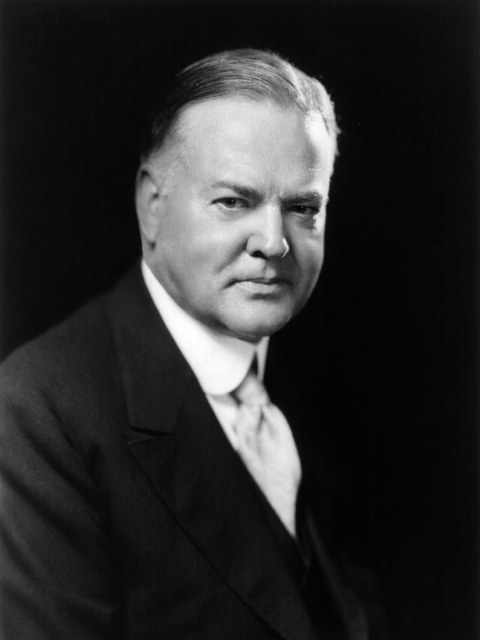
Herbert Hoover

Herbert Hoover
Underwood & Underwood · Public domain

31st U.S. President · 1929–1933 · United States

Herbert Hoover led the U.S. Food Administration during World War One and served as president during the onset of the Great Depression.

The kit

  • Rise — Herbert Hoover created 'meatless Monday' and 'wheatless Wednesdays' while heading the U.S. Food Administration during World War One.
  • Achievements — Herbert Hoover was appointed by Calvin Coolidge to oversee relief efforts after the Great Mississippi Flood of 1927.
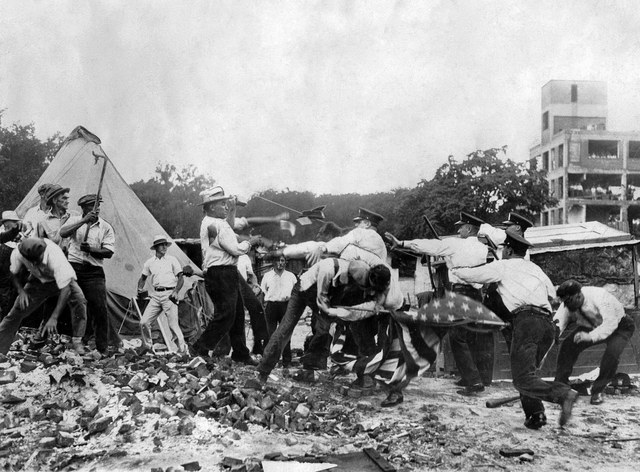
  • Conflicts — Herbert Hoover ordered Douglas MacArthur to confront the protesting Bonus Army at Anacostia Flats, hindering his reelection chances.
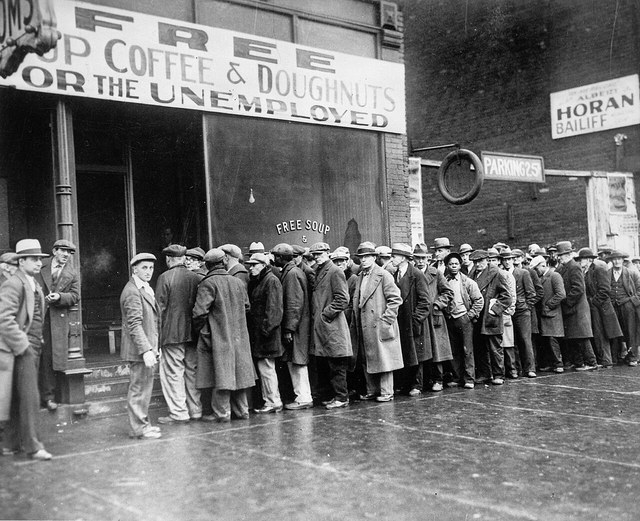
  • Legacy — Herbert Hoover's name became attached to shantytowns called 'Hoovervilles' after the stock market crashed on Black Thursday in 1929.

Runs with

Great Depression
stock market crashed during his term on Black Thursday open card →
Bonus Army
ordered MacArthur to disperse the veterans' camp open card →
Douglas MacArthur
dispatched him to Anacostia Flats against Bonus Army open card →
the Presidency
served as 31st president 1929–1933 open card →

The ladder · 15 clues

H

This man created “meatless Monday” and “wheatless Wednesdays” while head of the US Food Administration during World War One.

H

This politician oversaw the response to the Great Mississippi Flood, although that effort did not fall under his role as Secretary of Commerce.

H

This president’s government passed a law outlawing yellow-dog contracts co-sponsored by George Norris and Fiorello LaGuardia.

H

This man's secretary of state, Henry Stimson, stated the United States would not recognize territorial gains made through force.

H

This politician issued a namesake Moratorium in an attempt to give Germany more time to catch up on reparation payments.

H

A game named for this man was often played by him and the “Medicine Ball Cabinet” on the White House Lawn.

H

Argentine anarchist Severino Di Giovanni attempted to assassinate this man by blowing up his train.

M

This politician was later appointed to lead the U.S. Food Administration and ordered Douglas MacArthur to confront the Bonus Army, hindering his chances of reelection.

M

The Smoot-­‐Hawley Tariff was signed by this man, who promised “a chicken in every pot” during his presidential campaign.

M

This man won election to his highest office by promising a “chicken in every pot and a car in every garage” in a race against Al Smith. name this president during the Great Depression

M

This man was appointed by Calvin Coolidge to oversee relief efforts after the Great Mississippi Flood of 1927.

M

Douglas MacArthur was dispatched to the Anacostia Flats to disperse the protesting Bonus Army by this politician.

E

Shantytowns became known as this president’s “villes” after an economic downturn. name this president who faced the beginning of the Great Depression.

E

The Smoot-Hawley Tariff was signed by this President, whose term in office saw the start of the Great Depression, leading to his electoral defeat in 1932.

E

During this man’s administration, the stock market crashed as part of Black Thursday. name this Republican President who oversaw the start of the Great Depression before being succeeded by Franklin Roosevelt.

10 more clues from the record
H

Douglas MacArthur ignored this president's order to halt the tear-gassing and eviction of the Bonus Army camp under the guise that the veterans planned to overthrow the government. Shantytowns during the early Great Depression were named for this president.

H

As the leader of one governmental agency, this man claimed “whatever their politics, they shall be fed!” and refused to deny relief for the Soviet Union.

H

This man was appointed by Harry Truman to chair a commission eliminating federal inefficiencies.

H

Future US President trapped in China during the rebellion while working as a mining engineer.

H

This politician struck a deal with Robert Moton to gain African-American support after gaining popularity from his plan for flood relief in Mississippi.

H

Though the Clark Memorandum was written during his predecessor's administration, this man attempted to implement it by withdrawing troops from Nicaragua and Haiti.

H

This man vetoed George Norris’s Muscle Shoals Bill, though it later became part of the Tennessee Valley Authority.

H

This man and his wife would frequently converse in Mandarin to foil eavesdroppers, and this former engineer authored a widely read textbook on the Principles of Mining.

H

This US president was scolded by Southern politicians in 1929 after Oscar De Priest's wife, Jessie, was invited to the White House for tea with his First Lady, Lou.

H

This President signed an Agricultural Marketing Act that created a Federal Farm Board, a plan opposed to the controversial-yet-popular McNary-Haugen plan.
Watch out: Not Franklin Roosevelt, who succeeded him in 1933
#261 · US Presidents · Level 1

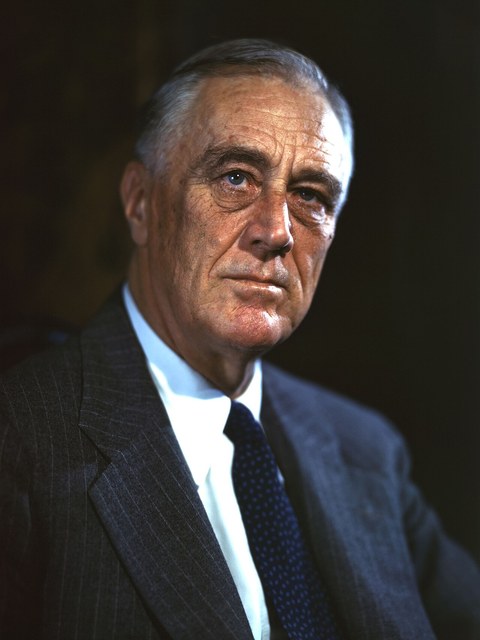
Franklin Delano Roosevelt

Franklin Delano Roosevelt
bdi Leon Perskie /span /a · CC BY 2.0

32nd U.S. President · 1882–1945 · United States

Franklin Delano Roosevelt served four terms as president, leading America through the Great Depression and World War II.

The kit

  • Rise — Franklin Delano Roosevelt served as Assistant Secretary of the Navy under Wilson and became Governor of New York in 1928.
  • Achievements — Franklin Delano Roosevelt created the New Deal, establishing the Tennessee Valley Authority and Social Security Administration to combat the Great Depression.
  • Conflicts — Franklin Delano Roosevelt threatened to pack the Supreme Court after the Four Horsemen struck down New Deal legislation like the NIRA.
  • Legacy — Franklin Delano Roosevelt delivered fireside chats and issued Executive Order 9066 authorizing Japanese internment during World War II.

Runs with

New Deal
created this domestic program with Brain Trust advisors open card →
World War II
led United States into this conflict as president open card →
York
served as governor of this state 1929-1932 open card →
Great Depression
formulated New Deal to lead nation out of this crisis open card →

The ladder · 15 clues

H

This man forced the Supreme Court to make the “switch in time that saved nine” after threatening to pack the court if they didn’t support his legislation.

H

One of this man's speeches included what is now known as the "Economic Bill of Rights." This man served as assistant secretary of the Navy during the Wilson administration.

H

This President’s policies were opposed by the “Four Horseman” of the Supreme Court.

H

This man unsuccessfully ran as James Cox’s Vice President in a bid against eventual winner Warren G. Harding. name this former governor of New York who served as US president during World War Two.

H

The four-term New Deal architect who succeeded him

H

He was James M. Cox’s running mate in 1920, and eight years later he would succeed Al Smith as Governor of New York.

H

was the only man to defeat what future President in a national election, on the Vice Presidential tickets in 1920?

M

The New Deal was formulated by this President who led the United States out of the Great Depression.

M

Executive Order 9066, authorizing internment, was issued by this president in 1942.

M

Owen Roberts joined the liberal Three Musketeers in a move known as the “switch in time that saved nine,” a reference to this man’s court-packing scheme.

M

During the Wilson administration, this man served as Assistant Secretary of the Navy following a brief stint in the New York Senate.

M

The NIRA was passed during the administration of this president. This four-term president’s New Deal was aimed at getting the United States out of the Great Depression.

E

This man’s orations repeatedly ended with the belief that “together, we cannot fail.” In another speech, this man declared “the money lenders have fled from their high places.” This man noted “the only thing we have to fear is fear itself” during his first inaugural. name this president who gave the fireside chats as he led the United States into World War II.

E

The Tennessee Valley Authority and Social Security Administration were part of this president's main domestic program. name this four-term president who promoted the New Deal.

E

This president's first two vice presidents were John Nance Garner and Henry A. Wallace. name this president who promoted the New Deal to curb the effects of the Great Depression.

10 more clues from the record
H

The "brain trust" advised, what man during his four terms as U.S. President?

H

He offered John Nance Garner the position of vice president to help him win the Democratic nomination.

H

Answer some questions about the New Deal. :The New Deal was the brainchild of this longest-serving US president.

H

An agency established by this president is still the largest energy utility in the American South and is called the Tennessee Valley Authority.

H

This president attempted to pack the Supreme Court to obtain support for his liberal policies.

H

Figures like Harry Hopkins were members of this man’s advisory committee the “Brain Trust,” and he delivered a record 307 Executive Orders.

H

He signed a law that let meat producers create “straight killing” codes, which were struck down in the “sick chicken” case.

H

This president proposed the court packing plan due to his frustration over much of his New Deal legislation being rejected by the Court.

H

The failure of one man to defeat this politician was mocked by the phrase “As Maine goes, so goes Vermont;” that opponent of this man lost the governorship of Kansas in the same election cycle.

H

Going against his superior’s wishes, this cabinet member preserved the Navy Aviation Division after the First World War, citing it as the future of warfare.

Watch out: Ran as Vice President with James Cox in 1920, losing to Warren G. Harding
#370 · Companies, Corporations, and Financial Institutions · Level 1

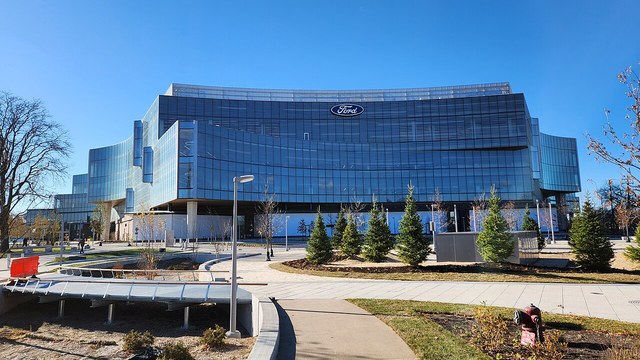
Ford Motor Company

Ford Motor Company
42-BRT · CC BY 4.0

American automobile manufacturer · 1903–present · Dearborn, Michigan

Ford Motor Company is an American automaker founded by Henry Ford that revolutionized manufacturing with the assembly line and mass production.

The kit

  • Achievements — Ford Motor Company introduced the assembly line and instituted the 40-hour work week for industrial workers.
  • Achievements — Ford Motor Company produced the Model T, which its founder said came in any color "so long as it is black."
  • Conflicts — Ford Motor Company security and Dearborn police injured over 60 workers following the 1932 Hunger March.
  • Legacy — Ford Motor Company's Edsel line, named for the founder's son, became synonymous with commercial failure in the 1950s.

Runs with

Michigan
headquartered in Dearborn open card →
Ford Model T
signature mass-produced automobile open card →
General Motors
major Detroit competitor open card →
the Presidency
executive Robert McNamara later served as Secretary of Defense open card →

The ladder · 5 clues

H

Josef Stalin sent employees of this company’s Gorki plant in Nizhny Novgorod to a gulag during the Great Purge.

H

Outside of the River Rouge Plant, agents from this company were photographed beating Walter Reuther during the Battle of the Overpass.

M

In 1932, more than 60 workers were injured by this company's security and Dearborn police following [this company's] "Hunger March." This company’s “Edsel” line of cars was named for the son of its founder and became synonymous with failure in the 1950s. name this company which made the popular Escort, F-Series, and Model T automobiles.

M

The Whiz Kids, which included Robert McNamara, helped reform this company’s operations.

E

This company’s founder stated that one of its products was available “in any color the customer wants, so long as it is black.” This company introduced the 40-hour work week and the assembly line. name this Dearborn, Michigan-based auto company whose namesake founder created the Model T.

Watch out: General Motors (rival Detroit automaker)
#589 · Painters and Visual Artists · Level 1

Grant Wood

Grant Wood
bdi Grant Wood /span /a · Public domain

American regionalist painter · 20th century · Iowa

Grant Wood was an Iowa regionalist painter best known for American Gothic, depicting a farmer with pitchfork beside a woman before a Carpenter Gothic house.

The kit

  • Signature work — Grant Wood painted American Gothic, showing a farmer holding a pitchfork next to a woman (posed by his sister Nan) in front of a white Carpenter Gothic house.
  • Historical subjects — Grant Wood used a bird's-eye view of moonlit Massachusetts streets in The Midnight Ride of Paul Revere and depicted a red truck colliding with a black car in Death on the Ridge Road.
  • Satirical portraiture — Grant Wood created Daughters of the Revolution, showing three old women before Washington Crossing the Delaware, accused of satirically depicting Founding Fathers as cross-dressers.
  • Educational commission — Grant Wood painted children outside a white schoolhouse in a work commissioned by the Cedar Rapids School Board for a teacher who conducted annual tree plantings.

Runs with

Massachusetts
depicted Lexington streets in Midnight Ride of Paul Revere open card →
Delaware
showed Leutze's Washington Crossing the Delaware in Daughters of Revolution background open card →
Paul Revere
painted The Midnight Ride of Paul Revere with aerial view open card →
George Washington
included Washington Crossing the Delaware painting in satirical Daughters of Revolution open card →

The ladder · 9 clues

H

Three members of the Daughters of the Revolution stand in front of a painting of Washington crossing the Delaware in a painting by this man.

H

This man opted to use a high altitude view of the well-lit streets of Lexington, Massachusetts in his interpretation of the The Midnight Ride of Paul Revere.

H

This man depicted Leutze’s (LOYT-zuh’s) Washington Crossing the Delaware in the background of a satirical portrait of three old women intended to be crossdressed depictions of the Founding Fathers.

H

This artist painted children outside a white schoolhouse in a work commissioned by the Cedar Rapids School Board to memorialize a teacher who conducted an annual tree plantin g.

H

This artist used a birds-eye view to show a road winding through a Massachusetts town in bright moonlight in his depiction of The Midnight Ride of Paul Revere.

H

This artist is frequently accused of portraying members of a local historical society as cross- dressers in his satirical Daughters of Revolution.

H

This man painted a red truck about to smash into a black car in his Death on the Ridge Road.

M

This man’s sister, Nan, posed in one of his paintings that shows her next to an old farmer holding a pitchfork. name this artist of American Gothic.

E

This Iowa man’s best known work features a white house in the Carpenter Gothic style with a farmer and his wife in the foreground. name this painter of American Gothic.

Watch out: Daughters of the Revolution features Leutze's Washington Crossing the Delaware painting in background, not Wood's own version
#731 · Natural Disasters · Level 1

Dust Bowl

Dust Bowl
bdi Arthur Rothstein /span /a · Public domain

Ecological disaster · 1930s · Great Plains

Dust Bowl was a partially human-caused disaster during the Great Depression in which drought and sandstorms ravaged agriculture across the southern Great Plains.

The kit

  • Causes — Dust Bowl resulted from cattle overgrazing, the belief that "rain follows the plow," and the "great plow-up" that removed native grasses.
  • Black Sunday — Dust Bowl worsened on Black Sunday in April 1935, when 20 black blizzards formed at once and AP reporter Robert Geiger coined the term.
  • Migration — Dust Bowl caused the migration of "Okies" along Route 66 to California's Central Valley, where they faced "Bum Blockades" organized by the LAPD.
  • Response — Dust Bowl prompted the Soil Conservation Service, the Shelterbelt Project planting over 200 million trees, and the Frazier-Lemke Bankruptcy Act.

Runs with

Great Depression
worsened the Depression's economic effects and inspired relief agencies open card →
California
destination for displaced Okies fleeing drought along Route 66 open card →
Oklahoma
particularly hard-hit state whose farmers migrated west open card →
1930s
decade of the disaster, nicknamed "Dirty Thirties" open card →

The ladder · 15 clues

H

Partially human-caused disaster during the Great Depression in which sandstorms ravaged the Western U.S.

H

AP reporter Robert Geiger first coined this term after witnessing Black Sunday.

H

This event’s name was coined on an infamous April Sunday after 20 black blizzards formed at once.

H

Cattle overgrazing and the belief that “rain follows the plow” were catalysts for this event.

H

Two weeks after a Robert Geiger news story coined a name for this event, Hugh Bennett was made director of a new agency within the Interior Department.

H

Resilient people during this time period used the slogan "grab a root and growl" and formed Last Man Clubs.

H

People affected by this phenomenon founded the Last Man Club, and one attempt to fix it was the Shelterbelt Project.

M

While fleeing from this event, Florence Owens Thompson was photographed by Dorothea Lange in a print titled Migrant Mother.

M

This disaster was named in the aftermath of Black Sunday and was preceded by the “great plow-up.” Many individuals affected by this period’s “black blizzards” migrated along Route 66 to California’s Central Valley, where they were branded as “Okies”. name this ecological disaster during the Great Depression in which drought caused storms of topsoil across the southern Great Plains.

M

Tugwell also helped create the Soil Conservation Service which helped counteract this period of severe drought in the Great Plains.

M

The Joad family fled for California due to this ecological disaster in the novel The Grapes of Wrath.

M

Borlaug’s passion for solving world hunger was inspired by his childhood experiences during this agricultural disaster, which worsened the effects of the Great Depression. Farmers in states like Oklahoma moved west in response to this event.

E

This event worsened on Black Sunday, and it caused the migration of Okies. name this period in which storms and drought destroyed agriculture on the Great Plains.

E

Many “Okies” went to California to escape this Depression-era ecological disaster that ruined agriculture in the Great Plains.

E

The destitution caused by this period of natural disaster is depicted in Dorothea Lange’s Migrant Mother.

10 more clues from the record
H

The effects of this crisis are documented in Walker Evan's Let Us Now Praise Famous Men.

H

This event prompted the Soil Conservation Act, as it was partly caused by cattle overgrazing.

H

A shelterbelt of over 200 million trees was planted by the CCC in the wake of this event.

H

This era led to the passage of the Frazier-Lemke Bankruptcy Act.

H

The SCS was created by Harold Ickes to deal with the aftermath of this event.

H

This period was mitigated by the creation of shelterbelts by the Forestry Service.

H

The Department of Commerce launched the Dalhart Control Project to examine its occurrence in Texas, and the FSA and SCS agencies were created to help relocate victims, many of whom faced “Bum Blockades” and border closings organized by the LAPD, and to teach them proper conservation techniques.

H

Another nickname for this region and period is “the Dirty Thirties”, and one of the days in 1935 became known as Black Sunday. :Give this two-word phrase for areas affected by drought and storms in the 1930s that hurt agricultural output. Oklahoma and Kansas were particularly hard-hit.

H

Answer the following about documentaries in the National Film Registry that covered pivotal moments in American history, .The documentary The Plow that Broke the Plains describes how damaging farming practices led to the widespread agricultural collapse and drought of the Great Plains during this part of the Great Depression.

H

One never-implemented plan for dealing with this ecological catastrophe was to place junk cars throughout the Great Plains to hold down the soil. :Identify this term for an environmental disaster during the Great Depression that sent many farmers in the Great Plains to California.

#807 · Monumental Statues and Memorials · Level 1

Mount Rushmore

Mount Rushmore
b Thomas Wolf /a /b , small a rel="nofollow" www.foto-tw.de · CC BY-SA 3.0

Presidential monument · 1927–1941 · Black Hills, South Dakota

Mount Rushmore is a monumental sculpture carved by Gutzon Borglum depicting the 60-foot faces of Washington, Jefferson, Theodore Roosevelt, and Lincoln.

The kit

  • Origins — Mount Rushmore was proposed by historian Doane Robinson, who originally planned to honor Red Cloud, Lewis and Clark at the Needles.
  • Construction — Mount Rushmore was carved by Gutzon Borglum after he abandoned a Stone Mountain relief honoring Confederate leaders like Stonewall Jackson.
  • Indigenous controversy — Mount Rushmore was built on land called "Six Grandfathers" by the Lakota, seized in violation of the Treaty of Fort Laramie.
  • Legacy — Mount Rushmore prompted construction of the Crazy Horse Memorial in 1948 as a protest response by Native Americans.

Runs with

Gutzon Borglum
designed and carved Mount Rushmore open card →
Crazy Horse Memorial
begun in 1948 as protest response to Mount Rushmore open card →
Joe Hill
Stone Mountain
Confederate relief Borglum abandoned before Mount Rushmore open card →

The ladder · 15 clues

H

After 1885, this natural formation was named for a New York lawyer and prospector, but its original Lakota Sioux name means “Six Grandfathers.” Historian Doane Robinson’s original plan for this formation included Red Cloud, Meriwether Lewis, William Clark, and “Buffalo Bill” Cody.

H

Funding for this site was secured for Peter Norbeck, though it was supposed to originally be placed in the Needles region to honor Red Cloud and Lewis and Clark.

H

This monument was originally proposed by Doane Robinson, who intended to build it on the Needles.

H

This location was the subject of a 2007 controversy when John Fire Lame Deer symbolically planted a prayer staff into the ground.

H

This site was the home of Benjamin Black Elk, who became widely photographed interacting with tourists.

H

This location, which is called the “Six Grandfathers” by the Lakota, was seized in violation of the Treaty of Fort Laramie.

H

Doane Robinson initially intended for Lewis and Clark to be honored at this site.

M

This monument was made in the Black Hills by the sculptor Gutzon Borglum. name this large mountain carving located in South Dakota, which depicts four U.S. presidents.

M

Gutzon Borglum designed this South Dakota landmark that features the faces of Washington, Lincoln, Roosevelt, and Jefferson.

M

This monument was built on a site whose local name means "Six Grandfathers," and the construction of this monument led to creation of the Crazy Horse Memorial in protest.

M

Its sculptor, Gutzon Borglum, thought this formation needed to appeal to a broader audience and chose four other subjects.

M

In opposition to this sculpture, a memorial depicting a famous Oglala Lakota warrior has been under construction since 1948. name this National Memorial sculpted by Gutzon Borglum that features 60-foot tall heads of four US Presidents.

E

After abandoning a similar commission at Stone Mountain venerating Stonewall Jackson and Robert E. Lee, Gutzon Borglum designed this monument in the Black Hills. name this South Dakota monument featuring the faces of four presidents.

E

To work on this project, its sculptor abandoned a relief honoring Jefferson Davis and Stonewall Jackson at Stone Mountain.

E

Located in the Black Hills, name this South Dakota monument that honors Washington, Jefferson, Lincoln, and Roosevelt.

5 more clues from the record
H

This monument was intended to house a vault containing valuable U.S. documents.

H

The Sturgis rally fills hotel rooms down the road in Rapid City; the rest of the year, tourists stay in Rapid City to visit this national memorial, a Gutzon Borglum rock sculpture of four US Presidents.

H

This landmark, located a few miles away from Harney Peak, has been heavily criticized by Native Americans due to its use of tribal lands granted through the Treaty of Fort Laramie.

H

In response to the construction of this landmark, the construction of would be the largest sculpture in the world was initiated, but never finished, in 1948.

H

George H.W. Bush spoke at the official dedication to this work on its 50th anniversary in 1991.

Watch out: Stone Mountain (Borglum abandoned that Confederate memorial to work on Rushmore)
#1148 · US Federal Programs and Agencies · Level 1

New Deal

New Deal
LordHarris /a at English Wikipedia · Public domain

U.S. domestic program · 1933–1930s · United States

New Deal was Franklin Delano Roosevelt's series of domestic programs enacted from 1933 to combat the Great Depression through relief, recovery, and reform.

The kit

  • Rise — New Deal began with a bank holiday and passage of the Glass-Steagall Act in 1933.
  • Achievements — New Deal created the Civilian Conservation Corps, which employed over 3 million men in outdoor work projects.
  • Achievements — New Deal established the Tennessee Valley Authority and the Federal Deposit Insurance Corporation.
  • Conflicts — New Deal faced Supreme Court challenges including the Schechter Poultry case, which ruled the National Industrial Recovery Act unconstitutional.

Runs with

Strategic Hamlet Program
unrelated Vietnam War program open card →
Franklin Delano Roosevelt
launched New Deal in 1933 open card →
Tennessee Valley Authority
created by New Deal open card →
Great Depression
New Deal responded to this crisis open card →

The ladder · 15 clues

H

"Relief, Recovery, and Reform" were the goals of this program. :Name this series of domestic programs, first enacted in 1933 by Franklin Delano Roosevelt in response to the Great Depression.

H

The Tennessee Valley Authority was established as part of this domestic program by Franklin Roosevelt that fought to end the Great Depression.

H

The AAA was part of this program that also included the Works Progress Administration and the Civilian Conservation Corps.

H

One part of this initiative employed over 3 million men in outdoor work projects and was known as the Civilian Conservation Corps.

H

This program introduced She-She-She Camps, which were championed by Frances Perkins.

H

Early fireside chats promoted this program, which included legislation like the National Industrial Recovery Act and the Social Security Act. name this broad series of programs proposed by Franklin Roosevelt to lift the U.S. out of the Great Depression.

H

Harry Hopkins led the Works Progress Administration, a large component of this program.

M

Parts of this program were enforced using a quasi-military organization headed by Hugh Johnson which inspected shop windows for the "blue eagle." This program was undermined by the Sick Chicken Case but partially upheld in Wickard v.

M

The Tennessee Valley Authority was created by this program, as was the Civilian Conservation Corps in an attempt to create work.

M

Johnson, as a congressional aide, and Rayburn both supported this series of programs against the Great Depression established by Franklin Delano Roosevelt.

M

The Agricultural Adjustment Act was part of this expansive set of programs launched by the Roosevelt administration, aimed at lifting the U.S. out of the Great Depression.

M

The labor of children under the age of 16 was banned as part of this program.

E

The Civilian Conservation Corps was established by this policy. name this FDR program meant to combat the Great Depression.

E

FDR launched what program in response to the Great Depression?

E

The Supreme Court declared parts of this program, such as the Agricultural Adjustment Act, unconstitutional. name this broad Franklin Roosevelt program that provided relief from the Great Depression.

10 more clues from the record
H

This program was initially challenged by the Supreme Court before the “switch in time that saved nine”.

H

The Works Progress Administration was among the “alphabet agencies” that made up this program, began by the 32nd U.S. president, to provide relief, recovery, and reform after the Great Depression.

H

Democrat Jouett Shouse [[JO-ett SHOUSS]] opposed this program which was attacked by the American Liberty League, including Empire State Building creator John J. Raskob and the du Pont brothers.

H

This program was introduced in a speech that declared “millions cannot and shall not hope in vain.” One of this program’s initiatives was ruled unconstitutional in the Schechter Poultry case.

H

Attempts to desegregate various entities of this plan led to public backlash against the Secretary of the Interior, Harold Ickes [[ICK-eez]].

H

Set of anti-Great Depression programs that the Supreme Court commonly attacked with the Commerce Clause.

H

This program created the FDIC and allowed for farmers to have electricity in the Rural Electrification Act.

H

This program was allegorized as Fascism by Kurt Weill [] and Maxwell Anderson in Knickerbocker Holiday.

H

This program produced the American Guide Series through the Federal Writers’ Project.

H

This program began with a bank holiday and the passing of the Glass-Steagall Act.

Watch out: Strategic Hamlet Program was a Vietnam War relocation initiative, not a New Deal program
#1151 · US Federal Programs and Agencies · Level 1

Tennessee Valley Authority

Tennessee Valley Authority
U.S. Government · Public domain

New Deal agency · 1933–present · Tennessee River valley

Tennessee Valley Authority is a federally-owned corporation created in 1933 to provide flood control, navigation, and hydroelectric power across the rural South.

The kit

  • Creation — Tennessee Valley Authority was championed by Senator George Norris after his earlier Muscle Shoals bill failed.
  • Achievements — Tennessee Valley Authority built hydroelectric dams that provided electricity for uranium enrichment at Oak Ridge during World War II.
  • Leadership — Tennessee Valley Authority was led by David Lilienthal, who later chaired the Atomic Energy Commission.
  • Conflicts — Tennessee Valley Authority's Tellico project was delayed for years over concerns about the endangered snail darter.

Runs with

New Deal
created as New Deal agency in 1933 open card →
Strategic Hamlet Program
no connection evident in clues open card →
David
David Lilienthal served as chairman open card →
George
George Norris championed its creation open card →

The ladder · 15 clues

H

The constitutionality of this program was upheld in Ashwander v. [this agency].

H

19. Identify the following about a New Deal agency FTPE.This agency was established to control flooding and allow navigation through Muscle Shoals, Alabama, along the namesake river.

H

Harry Truman rallied support during negotiations for one of this organization’s projects by stating, “I want aluminum, I don’t care if I get if from Alcoa or Al Capone”, leading to the Fontana agreement.

H

The Ashwander case found this institution to be constitutional. :Name this federally-owned New Deal agency established to oversee power generation and flood control in the namesake watershed, which includes portions of Alabama and Kentucky.

H

Answer the following about Senator George Norris, .Norris sponsored the 1933 act establishing this New Deal organization, which built dams and provided power in the rural South.

H

Reportedly, GE fired Ronald Reagan as a spokesman after he criticized this agency, while Barry Goldwater was himself criticized for suggesting selling this agency to private companies.

H

Eleanor Roosevelt made sure one of this organization’s projects protected the only town named for Martha Washington.

M

Program to provide economic development to the namesake river valley

M

This organization provided much of the electricity needed for uranium enrichment at Oak Ridge.

M

David Lilienthal was known as “Mr” this organization.

M

This agency’s three-person head included the future head of the Atomic Energy Commission, David Lilienthal.

M

This government agency, set up during the New Deal, built many dams in its namesake valley to provide electricity for the rural South.

E

George Norris championed its creation after the failure of his earlier Muscle Shoals bill.

E

This organization, which was inspired by George Norris’ failed Muscle Shoals Bill, was declared constitutional after winning a case against Ashwander.

E

The doctrine of constitutional avoidance was introduced in a Supreme Court case between Ashwander and this corporation.

10 more clues from the record
H

This organization’s co-leader later led the Atomic Energy Commission after writing a report with Dean Acheson.

H

Limited flooding and generated hydroelectric power in several Southern states via dams?

H

Its Tellico project was delayed for years over concerns about the snail darter.

H

Built hydroelectric dams in Tennessee?

H

Not everybody liked Ike. FTPE, answer these questions about some controversies during Eisenhower’s presidency.Opposed to the socialist nature of this regional New Deal creation, Eisenhower attempted to replace it with a consortium of private companies in the failed Dixon-Yates proposal.

H

Its most famous leader was David Lilienthal. :Name this famed Alphabet Agency, responsible for generating hydroelectric power, flood control, and navigation along its namesake waterway, whose drainage basin includes Alabama, Mississippi, and Kentucky.

H

An ad depicting an auction atop a dam attacked Barry Goldwater for his support of privatizing this corporation. :Name this energy provider, a New Deal creation designed to provide power to its namesake state and its neighbors, like Alabama and Mississippi.

H

It originated with a scheme to end dependance on Chilean nitrate imports during the First World War, and one of its chief opponents was John Lewis, who feared for the economic health of the coal mines.

H

The author of Change, Hope, and the Bomb, David Eli Llienthal, served as its chairman for five years. For 15 points, name this New Deal agency which brought electric power to the rural Southeast.

H

The St. Patrick’s Day Flood prompted a burst of New Deal flood control legislation, which earlier included the act creating this hydroelectric and water management agency championed by George Norris.

Watch out: Confused with other New Deal alphabet agencies or regional development programs
#1155 · US Federal Programs and Agencies · Level 1

Works Progress Administration

Works Progress Administration
Works Progress Administration, artist unknown · Public domain

New Deal relief agency · 1935–1943 · United States

Works Progress Administration was the largest New Deal agency, employing over eight million Americans on public construction and Federal Project Number One arts programs.

The kit

  • Creation & leadership — Works Progress Administration was created by the Emergency Relief Appropriation Act of 1935 and directed by Harry Hopkins throughout most of its existence.
  • Construction projects — Works Progress Administration built public roads, bridges, parks, and airports and constructed Camp David as part of its infrastructure work.
  • Federal Project Number One — Works Progress Administration employed artists, writers, and musicians in Federal Project Number One, which produced the American Guide Series and recorded slave narratives.
  • Scale & legacy — Works Progress Administration paid out eleven billion dollars to over eight million workers before merging with other agencies under the 1943 Reorganization Act.

Runs with

New Deal
largest and most expensive program of Roosevelt's New Deal open card →
Strategic Hamlet Program
roads
built roads and highways as major construction projects open card →
Franklin Delano Roosevelt
created by Roosevelt via 1935 executive order open card →

The ladder · 15 clues

H

Agency that conducted public works and employed artists in Federal Project Number One

H

This organization’s largest project was an entity that supplied the South with hydropower, the TVA. name this New Deal agency that employed millions for public works projects.

H

Mary McLeon Bethune helped manage this organization’s National Youth Administration.

H

This largest New Deal agency headed by Harry Hopkins built public parks, bridges, roads and other structures.

H

This organization’s Federal Project Number One created the American Guide Series and anRart division headed by Holger Cahill.

H

This organization’s Coit Tower murals in San Francisco were blamed for encouraging the 1934 West Coast Waterfront Strike.

H

Conductor Nikolai Sokoloff directed a branch of this agency that gave over 131,000 performances.

M

Largest New Deal project, which employed millions of people to build public buildings and roads.

M

This organization, the largest New Deal agency, hired many unemployed adult men who worked on public construction projects. It was run by Harry Hopkins between 1935 and 1943.

M

This largest New Deal agency was created by the Emergency Relief Appropriation Act of 1935 and provided jobs and income to the unemployed; it also operated large arts, media, and literacy projects.

M

This agency was merged with the Bureau of Public Roads and Public Works Administration under the Reorganization Act.

M

The Hatch Act was in some ways a response to the activities of this New Deal program, which was headed by Harry Hopkins. Casey Bill Weldon created a blues song about this agency.

E

Richard Wright's career was launched thanks to this agency's Federal Writers' Project, and the Historical Records Survey was conducted by this agency, which superseded FERA and was led by Harry Hopkins. name this New Deal agency that employed millions of people to build public constructions.

E

Roosevelt also created this agency, which designed and implemented Federal Project Number One and other public infrastructure projects. Harry Hopkins notably administered it.

E

The “Black Cabinet” also pushed this organization to record over two thousand first-person accounts of former slaves. This Second New Deal organization employed hundreds of artists, musicians, and writers as part of Federal Project Number One.

10 more clues from the record
H

Included putting writers and artists to work on programs building culture?

H

Camp David was constructed under this Harry Hopkins-led agency.

H

One branch of this organization was led by Hallie Flanagan, under whose leadership that branch undertook news reenactments called the “Living Newspaper,” series, while another branch of this organization was responsible for producing the American Guide Series.

H

Begun by another 1935 executive order, this largest New Deal agency was basically a method of employing people. It mainly worked on public building projects, but was also involved with the arts.

H

The existence of this organization was notably opposed by Clifton Woodrum, and a failed amendment proposed by James Byrnes sought to correct what Byrnes saw as the regional unevenness of this organization’s financial impact.

H

Funds distributed by this organization were used as leverage by Secretary of War George Dern in an argument with House Military Affairs Committee chair John McSwain.

H

While working for this organization, Elmer Rice produced Ethiopia, an example of a “Living Newspaper” play that dramatized current events.

H

This organization created the Index of American Design, a collection of about 18,000 watercolors of American decorative art.

M

It employed over eight million people and paid out eleven billion dollars, building roads and airports and sponsoring the Federal Arts Project and Federal Writers’ Project.

M

Lasting from its 1935 creation via the Emergency Relief Appropriations act until 1943, identify this massive relief and public works program championed by Roosevelt.

Watch out: Public Works Administration (PWA), a separate New Deal construction agency often confused with WPA
#1406 · Sports Teams, Franchises, and Organizations · Level 1

National Rifle Association

National Rifle Association
National Rifle Association · Public domain

Gun rights advocacy organization · 1871–present · United States

The National Rifle Association is a gun rights lobby group co-founded by William Conant Church and George Wingate in 1871.

The kit

  • Leadership — The National Rifle Association was first led by president Ambrose Burnside and is currently led by Executive Vice President Wayne LaPierre.
  • Prominent figures — The National Rifle Association was headed by actor Charlton Heston, who famously declared "from my cold, dead hands" at a 2000 convention.
  • Internal conflicts — The National Rifle Association experienced the "Revolt at Cincinnati" when Harlon Carter and Neal Knox unseated Maxwell Rich after he fired the Institute for Legislative Action.
  • Controversies — The National Rifle Association's president controversially called federal agents "jack-booted government thugs" after the Oklahoma City Bombing in 1995.

Runs with

Ambrose Burnside
New Deal
shares acronym with New Deal agency created by NIRA open card →
York
no connection evident in clues open card →
Mark Twain
co-founder Church edited Galaxy Magazine employing Twain open card →

The ladder · 15 clues

H

The National Industrial Recovery Act created this agency to write “codes of fair competition.” Symbolized by a blue eagle, it secured the power of unions but was ruled unconstitutional in 1935 and replaced by the Wagner Act.

H

A review board analyzing this agency was led by Clarence Darrow, claimed it led to the creation of cartels, and was largely ignored.

H

The business community soured on the 1933 law creating this agency, which was directed by Hugh Samuel Johnson and symbolized with a blue eagle. The “sick chicken” case, Schechter v. US, eliminated it.

H

“Eddie Eagle” was developed by this group, whose Executive Vice President, Franklin Orth, has supported bans on “Saturday Night Specials.” Opponents of this organization were told that only a “clenched fist of truth” could fight off lies in a video.

H

In 2019, this organization cut ties with the advertising firm Ackerman McQueen.

H

Harlon Bronson Carter served as Chief of the USBP and also headed this other organization, known for its Executive Vice President, Wayne LaPierre, and celebrity spokesman, Charlton Heston.

H

A man whose career ended as head of this agency was denounced by Frances Perkins for handing out the Italian Fascist economics tract The Corporate State to influential politicians.

M

Ambrose Burnside was the first president of this lobbyist organization, currently led by Wayne LaPierre.

M

American lobby group that advocates for gun rights, once led by actor Charlton Heston.

M

This agency was first led by Hugh S. Johnson, who promoted the adoption of a “blanket code.” Its logo featured a figure holding lightning bolts and a gear.

M

Name either the federal agency invalidated by Schechter Poultry Corp v. US or the law that created it. Under this program, participating businesses displayed a blue eagle.

M

This organization’s president controversially called federal agents “jack-booted government thugs” after the Oklahoma City Bombing.

E

US, this agency was promoted with a blue eagle and the slogan “We Do Our Part”. name this New Deal administration that removed competition by setting prices and fair standards.

E

Agency created by the National Industrial Recovery Act to reduce competition, symbolized by a blue eagle R

E

Until it was unanimously declared unconstitutional by the Supreme Court in Schechter Poultry Corp. v.

10 more clues from the record
H

A man who led this organization after replacing Maxwell Rich had, in his youth killed Ramon Casiano over suspicions of a car robbery.

H

This agency’s first head, retired General Hugh Johnson, advocated for a “blanket code,” and its Section 7a guaranteed the right of labor to collectively bargain.

H

That man was William Conant Church, who co-founded this organization with an author of a popular manual its members often read.

H

George Wingate was an early leader of this organization, the national profile of which was raised when Ambrose Burnside became president.

H

This agency’s first head was serving as an army captain when he co-wrote the Selective Service Act of 1917.

H

Charles Evans Hughes held that it overstepped the legislature’s Commerce Clause power in the “sick chicken” case.

H

A co-founder of this organization, along with his brother, Francis, oversaw Galaxy Magazine which employed Mark Twain.

H

Was struck down by the Supreme Court after attempting to create large scale industrial codes?

H

Maxwell Rich fired the entirety of this organization’s Institute for Legislative Action, which prompted Neal Knox and Harlon Carter to unseat him in the “Revolt at Cincinnati.” Ackerman McQueen runs PR for this organization, which hosted a 2000 convention at which its leader yelled “from my cold, dead hands;” Ackerman McQueen also backed a challenge against its leader led by Oliver North.

H

When asked to head this agency, Hugh Johnson bizarrely declared “It will be red fire at first and dead cats afterward.” :Name this New Deal agency that asked employers to sign the Presidential Reemployment Agreement, an industrial code designed to maintain wages and limit production, as part of his “Blue Eagle” campaign.

Watch out: Shares initials with New Deal agency (National Industrial Recovery Act agency) symbolized by blue eagle
#1515 · US Congressional Figures · Level 1

Huey Long

Huey Long
Uncredited news photographer. · Public domain

Louisiana populist politician · 1893–1935 · Louisiana

Huey Long was a Louisiana governor and U.S. senator nicknamed 'the Kingfish' who promoted his radical Share Our Wealth program.

The kit

  • Rise — Huey Long fought Standard Oil and Cumberland Telephone & Telegraph as Public Service Commission chairman, winning rate-increase refunds for consumers.
  • Achievements — Huey Long's Share Our Wealth plan advocated caps on income, inheritance, and net worth under the motto 'Every Man a King.'
  • Conflicts — Huey Long survived 19 impeachment charges after proposing an oil tax, facing opposition from the Dynamite Squad and Old Regulars.
  • Death & succession — Huey Long was assassinated by dentist Carl Weiss in 1935 after ousting Weiss's father-in-law Judge Benjamin Pavy from office.

Runs with

Louisiana
exercised near-dictatorial control as governor and senator open card →
White House
wrote My First Days in the White House outlining presidential plans open card →
Senate
left seat vacant one year to block successor open card →
Strategic Hamlet Program

The ladder · 15 clues

H

The sponsor of the Share Our Wealth plan, name this politician with the motto “Every Man a King,” a Louisiana swindler known as the Kingfish.

H

As Chairman of the Public Service Commission of his state, this man fought the Cumberland Telephone & Telegraph Company, and earlier, he had won fame by opposing the Standard Oil.

H

During his legal career, this man successfully prosecuted the Cumberland Telephone and Telegraph Company for unfair rate increases.

H

This man’s attempt to dislodge Judge Benjamin Pavy led Pavy’s son-in-law Carl Weiss to attack this man at the State capital.

H

This leader was the basis for Willie Stark in the novel All the King's Men.

H

This politician left his senate seat vacant for a year to prevent Paul Cyr from succeeding him in his previous office.

H

The “Dynamite Squad” led by Cecil Morgan, an ex-Standard Oil executive, attempted to impeach this man.

M

Using the catchphrase of his “Share Our Wealth Program,” this politician sang a song outlining his basic tenets named “Every Man a King.” name this A Southern populist governor of Louisiana.

M

This politician laid out his plans for a potential presidency in the book My First Days in the White House.

M

This man advocated caps on income, inheritance, and net worth in his "Share Our Wealth" plan as a U.S. senator, three years before his assassination by Carl Weiss. name this "Kingfish" who exercised near- dictatorial control over Louisiana from 1929 to 1935.

M

This author of My First Days in the White House ousted Benjamin Pavy from office, leading this governor to be assassinated by dentist Carl Weiss in 1935.

M

A radical populist, he was assassinated by Dr. Carl Weiss in 1935.

E

This creator of the "Share Our Wealth" program was shot by Carl Weiss. name this Louisiana governor nicknamed "the Kingfish," who was poised to run against FDR until his 1936 assassination.

E

Governor, nicknamed the “Kingfish,” who was assassinated in 1935.

E

Robert Penn Warren fictionalized this man’s political career with the character Willie Stark in All the King’s Men.

10 more clues from the record
H

An oil company founded by this politician and James Noe called Win or Lose made 800 million dollars off a 70-year lease.

H

As a member of his state’s Public Service Commission, this politician successfully sued the Cumberland Telephone Company for unfair rate increases.

H

His argument before the Supreme Court led to the issuance of 80,000 refund checks by Cumberland Telephone and Telegraph Company.

H

As he was dying, this man’s last words were allegedly, "I wonder what will happen to my poor university boys." The Regular Democratic Organization engaged in a feud with this man, who was also opposed by the Dynamite Squad.

H

In one speech, this man twice cited the Bible to illustrate how countries cannot survive in the long run and how debts should be remitted every seven years.

H

This politician secretly profited as a co-founder of the Win or Lose oil company, and largely was able to control the governor of his state, Oscar K. Allen.

H

This governor recruited prison labor to completely destroy the governor's mansion in order to build a replica of the White House in its place.

H

A speech by this man references a conversation between Plato and Socrates in which they compare the grinding of a mill to the fate of the rich and the poor.

H

This leader was impeached after proposing a five-cent per barrel oil tax and was opposed by the Old Regulars.

H

A brawl known as "Bloody Monday" took place after this figure was given 19 impeachment charges, including blasphemy.

Watch out: Willie Stark (fictional character based on Long in All the King's Men)
#1794 · US Congressional Figures · Level 1

Fiorello La Guardia

Fiorello La Guardia
New York Times Studios · Public domain

New York City mayor · 1930s–1940s · New York City

Fiorello La Guardia was a Republican mayor of New York City from 1933 to 1945 who broke Tammany Hall's control.

The kit

  • Rise — Fiorello La Guardia became mayor in 1933 after Italian defection from Tammany Hall following the Hofstadter Committee's downfall of Jimmy Walker.
  • Achievements — Fiorello La Guardia collaborated with Robert Moses on infrastructure projects including the Brooklyn-Battery Tunnel and upgraded the city during the New Deal.
  • Conflicts — Fiorello La Guardia targeted organized crime by dumping slot machines into the ocean, seizing artichoke supplies at Bronx Terminal Market, and appointing Thomas Dewey as prosecutor.
  • Legacy — Fiorello La Guardia read Sunday comics on his radio show during a newspaper strike and now names a major Queens airport opened in 1939.

Runs with

mayor
served three terms as mayor open card →
New York City
led New York City 1933–1945 open card →
York
led New York City 1933–1945 open card →
Tammany Hall
broke Tammany Hall's political control open card →

The ladder · 15 clues

H

This man ran the "Talk to the People" radio program, and while in Congress, this man sponsored a namesake act with George Norris to ban yellow-dog labor contracts.

H

This politician targeted Frank Costello by ordering the dumping of thousands of slot machines into the ocean.

H

This man challenged Henry Frank to a debate conducted in Yiddish after Frank accused this man of antisemitism.

H

When newspaper deliverymen in his city went on strike, this man read the Sunday Dick Tracy comics out loud on the radio show Talk to the People.

H

A namesake committee established by this man found that smoking marijuana "does not lead to addiction in the medical sense of the word".

H

This politician dubbed the Smedley Butler-alleged "Business Plot" a "Cocktail Putsch." This man's first act in office was to order the arrest of gangster "Lucky" Luciano, just before this man instituted a ban on the sale of artichokes.

H

This man, who led the talk show Talk to the People, worked with Thomas Dewey to “drive the bums out of town” and collaborated with Robert Moses to build such projects as the Brooklyn A Battery tunnel.

M

Politician who became mayor of New York in 1933 due to the defection of Italians from Tammany Hall.

M

This collaborator of Robert Moses curbed the strength of Tammany Hall and was the first Italian-American to serve as mayor of a major city.

M

This man appointed Thomas E. Dewey as a prosecutor to help “drive the bums out of town.” With the help of Robert Moses and Herbert Lehman, he upgraded the infrastructure of the city he led.

M

This man participated in a campaign where he avidly destroyed pinball machines with sledgehammers. :Name this Italian-American mayor who was dubbed “the Little Flower.” He co-sponsored an act with Senator George Norris which banned yellow-dog contracts.

M

This man took his highest office after the Hofstadter Committee brought about the downfall of Jimmy Walker.

E

A 1932 act this man co-signed with George Norris banned yellow-dog contracts. name this “Little Flower”, an Italian-American mayor of New York City during the New Deal who now names one of the city’s major airports.

E

A Queens airport is named for this New York City mayor during the 1930s and '40s.

E

O’Brien, breaking Tammany Hall’s control of the New York mayoralty.

10 more clues from the record
H

This politician used his weekly radio show, Talk to the People, to read the Sunday comics to listeners during a newspaper deliveryman’s strike.

H

This man defeated “Holy Joe” McKee’s Recovery Party in a three-way election as the head of the “Fusion” group.

H

At the Bronx Terminal Market, this man seized his city’s supply of artichokes to break mob control of their market.

H

An act co-sponsored by this New Yorker was first fully applied in New Negro Alliance v.

H

This Republican defeated John P.

H

Ambassador Thomas Page Nelson forced this man into an impromptu propaganda tour, where he often had to literally dash off after speeches to fly dangerous combat missions during World War I. Despite serving as the head of a UN relief agency, this man let his sister languish in a refugee camp for years after she was liberated from Ravensbruck concentration camp.

H

Big on charisma and energy, he was known as “The Little Flower” for his diminutive stature. :Name this former congressman and FDR supporter who helped to reinvigorate New York City during the Great Depression and WWII. A site originally named for Glenn H. Curtiss was renamed for this man in 1953.

H

This host of the “Talk to the People” radio program organized a mob to destroy Frank Costello’s slot machines, years after joining a Nebraska progressive to co-sponsor an act banning yellow-dog labor contracts.

H

After this politician called Hitler a “brown-shirted fanatic,” the Nazi press referred to him as a “Dirty Talmud Jew”; and during World War II, his sister Gemma was sent to the Ravensbruck concentration camp.

H

Answer the following about the namesakes of airports around the world. :This former New York City mayor is the namesake of an airport which Joe Biden compared to a "third world country".

Watch out: Called a 'Dirty Talmud Jew' by Nazis despite being Italian-American; he debated in Yiddish to counter antisemitism accusations
#1823 · Labor Movements, Strikes, and Social Protests · Level 1

Bonus Army

Bonus Army
Signal Corps Photographer · Public domain

1932 veterans' march · summer 1932 · Washington, D.C.

Bonus Army was a 1932 march of World War I veterans demanding early payment of service certificates promised for 1945.

The kit

  • Formation — Bonus Army was led by Walter Waters and comprised roughly 15,000-20,000 Great Depression-era veterans seeking immediate cash redemption.
  • Encampment — Bonus Army built a shanty town at Anacostia Flats and received food donations from police chief Pelham D. Glassford.
  • Dispersal — Bonus Army was violently evicted in the Battle of Anacostia Flats using tear gas and federal troops including cavalry charges.
  • Aftermath — Bonus Army's dispersal killed two veterans and a baby, heavily damaging Herbert Hoover's reputation during the Depression's worst period.

Runs with

Douglas MacArthur
led federal troops that tear-gassed and dispersed the encampment open card →
Herbert Hoover
ordered the military eviction and faced severe criticism open card →
World War I
veterans sought early payment of WWI service certificates open card →
William
Attorney General Mitchell ordered initial eviction from government property open card →

The ladder · 15 clues

H

Walter Waters led this group, which was violently dispersed in the Battle of Anacostia Flats by Douglas MacArthur. name this group that demonstrated for early payment of World War One certificates in 1932.

H

During the dispersion of this group, two veterans and an eleven-week-old baby were killed by a police force led by Pelham D. Glassford.

H

Identify the following about some so-called “armies” from American history, .In 1932, these thousands of World War I veterans, led by Walter Waters, descended on Washington to demand payment for their wartime service.

H

William D. Mitchell ordered the eviction of this group. :Name this group of World War I veterans who marched on Washington for the immediate payment of money promised to them in 1924 by the Federal Government.

H

Eric Carlson and William Hushka died when police fired on this group, whose leader later attempted to organize a fascist organization called the Khaki Shirts.

H

An attempt to organize a second incarnation of this group was mostly ended by hiring members to work at Fort Hunt as part of the Civilian Conservation Corps.

H

This group built a shanty town outside the Capitol called Anacostia Flats, where this group was attacked with gas by Douglas MacArthur’s army.

M

Walter Waters led this group, whose members camped on the Anacostia Flats after they were forced to wait until 1945 to redeem certificates for cash.

M

This group was initially ordered off government property by Attorney General William D. Mitchell.

M

This group received food donations from police chief Pelham D. Glassford and was led by Oregonian Walter Waters.

M

Herbert Hoover was heavily criticized for his response to this “expeditionary force” of twenty thousand men who, in 1932, demanded early payment of their World War I service certificates.

M

This march of thousands of disgruntled veterans demanding the payment of their pension assembled on Anacostia Flats in Washington, D.C., only for Hoover to order them to be driven out with military force.

E

Led by Walter W. Waters, for the point, what group of Great War veterans marched on Washington, D.C. to demand payment during the worst of the Great Depression?

E

Douglas MacArthur led federal troops to break up, what group of disgruntled World War I veterans who marched on Washington D.C. in 1932?

E

On the orders of Herbert Hoover, the U.S. Army, led by Douglas MacArthur, tear-gassed this group which was gathered in Washington, D.C. name this “Army” of World War One veterans who demanded cash stipends during the lowest point of the Great Depression.

10 more clues from the record
H

The leader of this group tried to restructure it into the fascist "Khaki Shirts." This group of Americans was visited and supported by General Smedley Butler.

H

A popular piece of propaganda during this scandal was the fabricated story of a boy being stabbed with a bayonet while trying to save his bunny.

H

Future generals Patton, MacArthur, and Eisenhower were among the forces called to action in this event, which took place on the Anacostia Flats.

H

This organization cheered on a parade of the 3rd Cavalry Regiment immediately before that regiment turned and charged to attack them.

H

This group formed after the passing of the Adjusted Compensation Act and had the support of Smedley Butler.

H

1,000 sandwiches were ordered for this group by the owner of the Hope Diamond, Evelyn Mclean.

H

Pelham Glassford resigned as police superintendent in the wake of this event.

H

The dispersal of this group was facilitated by an offer of free train fare, after they were pelted with large quantities of tear gas in the Battle of Anacostia Flats. :Identify this group of veterans who marched on Washington in 1932, demanding that the Hoover administration provide them an advance on their wartime pensions.

H

Name these things about an American political crisis during the Great Depression, :Led by Walter Waters, this group included of 15,000 WWI veterans gathered in Washington over the summer of 1932 to demand promised payments from the US government.

H

Its members wanted immediate payment of Service Certificates that could not be legally cashed in until 1945. :Name this group of disgruntled veterans that marched on Washington and was dispersed by troops commanded by Douglas MacArthur.

Watch out: Douglas MacArthur led the dispersal but was not the Bonus Army's leader (that was Walter Waters)
#1830 · General · Level 1

Great Depression

Great Depression
Unknown author Unknown author /span or not provided · Public domain

Economic crisis · 1929–late 1930s · United States and worldwide

The Great Depression was a severe economic downturn beginning with the 1929 stock market crash and lasting through the 1930s.

The kit

  • Origins — The Great Depression began with the stock market crash on Black Tuesday in 1929 and was worsened by the Smoot-Hawley Tariff.
  • Social impact — The Great Depression saw widespread poverty documented in Dorothea Lange's Migrant Mother photograph of Florence Owens Thompson and the proliferation of Hoovervilles.
  • Government response — The Great Depression prompted Franklin Roosevelt's New Deal programs including the Civilian Conservation Corps and the Tennessee Valley Authority.
  • Legislative reforms — The Great Depression led to passage of the Glass-Steagall Act and creation of the SEC to regulate banking and securities markets.

Runs with

Herbert Hoover
Hoover's name was given to Depression-era shantytowns called Hoovervilles open card →
New Deal
Roosevelt's New Deal programs attempted to address the Depression's effects open card →
Strategic Hamlet Program
1930s
the Depression dominated the economic landscape of the 1930s open card →

The ladder · 15 clues

H

During this period, Adam Richetti and “Pretty Boy” Floyd perpetrated the Kansas City Massacre.

H

One photograph from this period shows a billboard that reads “There’s no way like the American way,” while another shows Florence Thompson with three of her children.

H

The Dust Bowl exacerbated this extended period of economic downturn, which began with a stock market crash in 1929.

H

Many historians argue that the Smoot-Hawley Tariff exacerbated this prolonged period of economic downturn which began with the Stock Market Crash of 1929.

H

During this time period, a hunger march called the Jarrow Crusade marched to London, where the House of Commons completely ignored them.

H

In this time period, Francis Townsend proposed a two-percent transaction tax to fund an Old Age Revolving Pension Plan.

H

Oswald Mosely advocated for greater pensions and control over banks in this period before founding his own Fascist Party.

M

Economic crisis beginning in 1929 that the New Deal attempted to address

M

Hoovervilles were predominant during this 1930s era of U.S. history. This massive economic downturn began after the stock markets crashed on Black Tuesday.

M

Migrant Mother was taken during what economic downturn in the 1930s that Franklin Roosevelt tried to solve with his New Deal?

M

Dorothea Lange (LANG) took a famous photograph of Florence Owens Thompson during it, and it was exacerbated by drought in the Midwest leading to the Dust Bowl.

M

The Smoot Hawley Act may have worsened the effects of this time period, in which vagrants were arrested for “riding the rails” and living in Hoovervilles. name this period of history that followed the 1929 Wall Street Crash and adversely affected economies around the world.

E

Shanty towns named for Hebert Hoover were common during this period. name this period of severe economic downturn in the United States throughout the 1930s.

E

The Glass-Steagall Act was passed during this period to allow the Federal Reserve to give loans to member banks.

E

The NRA was part of a series of programs known as the New Deal, passed by Roosevelt to alleviate this long national crisis brought about by a massive stock market crash.

10 more clues from the record
H

During this period, the May Report advocated for expenditure cuts, and the Left Book Club produced monthly warnings during this period.

H

Hunger marches in this era included one by ship workers from Jarrow.

H

The death of Benjamin Strong may have led to government inaction prior to this period, which led to the creation of a federal agency headed by Jesse H. Jones. 25,000 Pennsylvanians under James Renshaw Cox marched on Washington during this period, which saw the creation of an agency symbolized by a blue eagle that was declared unconstitutional in the “sick chicken” case.

H

Photographs from this era include Russell Lee's picture of patrons of a Craigville, Minnesota bar, Saturday Night in a Saloon. :Name this economic period during which the Farm Security Administration paid Lee and Walker Evans to document poverty.

H

Blame for this event is variously laid on insufficient stimulus, monetary contraction, or the passage of disastrous interventions like the Hawley-Smoot Tariff. :Name this economic contraction, which brought about the rise of the Social Credit movement in Canada.

H

Early in its history, the ALP split over how to deal with this event, leading to Joseph Lyons forming the United Australia Party. In Canada, so-called “Bennett buggies” proliferated due to this event’s consequences.

H

President Franklin D. Roosevelt started the New Deal to help the U.S. address the effects of this economic downturn that began with a 1929 stock market crash and extended into the 1930s.

H

During this period, shanty towns and horse-pulled cars were nicknamed Bennett boroughs and Bennett buggies. :Name this period of economic downturn during the 1930s that was worsened in Canada by the Hawley–Smoot tariff.

H

Part of a response to this event created the Civilian Conservation Corps and the Tennessee Valley Authority.

H

The Reconstruction Finance Corporation was an early attempt to address this event, which resulted in the formation of the SEC.

#1852 · US Vice Presidents, Cabinet Secretaries, and Executive Officials · Level 1

Frances Perkins

Frances Perkins
Harris & Ewing, photographer · Public domain

U.S. Secretary of Labor · 1880–1965; served 1933–1945 · United States

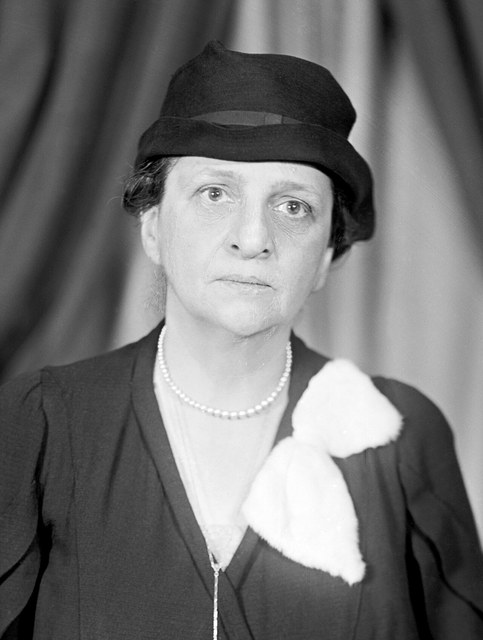
Frances Perkins was the first woman to serve in a U.S. presidential Cabinet, holding the position of Secretary of Labor for twelve years under FDR.

The kit

  • Rise — Frances Perkins witnessed the Triangle Shirtwaist Factory fire and subsequently dedicated her life to workers' rights and safety advocacy.
  • Achievements — Frances Perkins drafted the Social Security Act and implemented the first federal minimum wage through the Fair Labor Standards Act.
  • Achievements — Frances Perkins instituted a 48-hour workweek for women as the first industrial commissioner of New York state.
  • Legacy — Frances Perkins served as Secretary of Labor from 1933 to 1945, the longest tenure in that position in U.S. history.

Runs with

Triangle Shirtwaist Factory fire
witnessed the fire, spurring her lifelong workers' rights advocacy open card →
York
served as industrial commissioner and Consumers League director in New York open card →
New Deal
helped develop She-She-She Camps and drafted Social Security Act open card →
Franklin Delano Roosevelt
served as his Secretary of Labor for entire presidency open card →

The ladder · 15 clues

H

After witnessing the Triangle Shirtwaist Factory fire, this public servant dedicated their life to workers’ rights and safety advocacy.

H

This figure joined the National Consumers League and advocated for a 54-hour work week after witnessing the Triangle Shirtwaist Factory Fire.

H

This woman was working as the director of the Consumers League of New York when she heard a commotion while visiting a friend in Washington Square.

H

Lewis Schwellenbach succeeded this figure, who had an affair with Mary Harriman Rumsey, the founder of the Junior League, until her death.

H

This person was appointed to an Industrial Commission by then-Governor Al Smith and served as head of the New York Consumer's League.

H

In her twenties, this chemistry teacher worked at Chicago’s Hull House, before attending the Wharton School.

H

This woman witnessed the fire and joined NYC’s new Committee of Public Safety.

H

This person was succeeded by Lewis Schwellenbach after spending a record length of time in that role.

M

This politician drafted the Social Security Act which was presented to Congress and implemented the first federal minimum wage through the Fair Labor Standards Act.

M

Eleanor Roosevelt and this woman oversaw the development of She-She-She Camps during the New Deal.

M

This woman helped draft the Social Security Act as Roosevelt’s Secretary of Labor.

M

This administrator instituted a 48-hour workweek for women as the first industrial commissioner of New York state.

E

Spending twelve years as the U.S. Secretary of Labor, who was this first woman to serve in a presidential Cabinet?

E

Leading the Department of Labor under FDR, name this first female cabinet member.

E

This woman, who personally witnessed the Triangle Shirtwaist Fire, wrote The Roosevelt I Knew to reflect on her twelve years in the Cabinet. name this Secretary of Labor in the FDR administration.

8 more clues from the record
H

This professor at Adelphi College helped pass a “fifty hour bill” on workdays.

H

This woman investigated the Freeman plant fire in Birmingham, New York.

H

After being denied the right to publicly address thousands of steelworkers in a local park, this person walked to federal property and delivered a speech in front of a Homestead, Pennsylvania post office.

H

This woman and Eleanor Roosevelt developed She-She-She camps as an offshoot of the all-male Civilian Conservation Corps. :Name this woman, the longest serving Secretary of Labor in US history.

H

A member of HUAC named J. Parnell Thomas attempted to get this person impeached for failing to deport longshoreman Harry Bridges.

H

This person has the fourth-most time served in the U.S. Cabinet, which she belonged to from 1933 to 1945. :Name the first female cabinet member.

H

Identify these alums of Mount Holyoke .This graduate of 1902 was the first woman appointed to a Presidential cabinet post.

E

First woman to serve in the Cabinet; she served for FDR’s entire administration.

Watch out: Lewis Schwellenbach (her successor as Secretary of Labor)
#1865 · US Laws, Amendments, and Official Documents · Level 1

Smoot-Hawley Tariff Act

Smoot-Hawley Tariff Act
U.S. Government · Public domain

1930 U.S. tariff legislation · 1930 · United States

The Smoot-Hawley Tariff Act raised import duties on over 20,000 goods to the second-highest level in American history.

The kit

  • Passage — The Smoot-Hawley Tariff Act was signed by Herbert Hoover in 1930 despite opposition from over 1,000 economists who petitioned against it.
  • Economic impact — The Smoot-Hawley Tariff Act worsened the Great Depression by triggering retaliatory tariffs worldwide and cutting American trade roughly in half.
  • International effects — The Smoot-Hawley Tariff Act prompted Canada's Dunning Act, Spain's Wais Bill, and contributed to Cuba's sugar crisis that brought Batista to power.
  • Reversal — The Smoot-Hawley Tariff Act was largely reversed by the 1934 Reciprocal Trade Agreements Act signed by Franklin Roosevelt.

Runs with

Great Depression
considered a main cause by raising tariffs that deepened the crisis open card →
Cuba
created sugar crisis leading to Sergeants Revolt and Batista's rise open card →
Herbert Hoover
signed the act in 1930 attempting to improve economy open card →
Senate
co-sponsored by Utah Senator Reed Smoot, a Mormon apostle open card →

The ladder · 15 clues

H

Thomas Lamont of J.P. Morgan called this bill "asinine" and said it "intensified nationalism all over the world." This bill was co-sponsored by a Republican Senator from Utah who was the subject of a four year debate about whether his Mormon apostle status rendered him ineligible to serve.

H

This tariff passed during Herbert Hoover’s administration raised import duties to the second-highest level ever in American history. It is considered to be a main cause of the Great Depression.

H

The “repercussions” of this legislation are the subject of a 1934 book by Joseph Jones.

H

In a Clifford Berryman cartoon, this law is labeled a "tonic" while Pat Harrison and John Nance Garner are looking on as alternate doctors.

H

This bill was sometimes named after Pennsylvania senator Joseph Grundy.

H

Paul Douglas and Irving Fisher were two of over 1,000 economists throughout the United States who requested the president to not sign this bill. :Name this controversial bill passed in 1930 which raised tariffs on over 20,000 goods entering the U.S.

H

Canadian Conservative Party leader Richard Bedford Bennett railed against this act in a speech which claimed “we’ve got the soup kitchens,” and its effects led to the Sergeants Revolt in Cuba.

M

This law was largely reversed by the 1934 Reciprocal Trade Agreements Act.

M

The disastrous 1930 tariff bill which worsened the Depression

M

This 1930 tariff raised taxes on about 20,000 goods and led to a decline in U.S. trade, contributing to the Great Depression.

M

This law's second namesake was a representative from Oregon, while its first namesake also served as one of the Twelve Apostles of the Mormon Church, while also serving as a Senator from Utah.

M

This high tariff enacted soon after Black Tuesday helped deepen the crisis when other nations also enacted similar retaliatory tariffs in response. As a result of this tariff, international trade fell by around fifty percent.

E

In 1930, Hoover signed this act, which raised tariffs in an attempt to improve the economy; it unfortunately ended up worsening the Depression.

E

1930 tariff act that significantly worsened the Great Depression by inviting retaliation.

E

1930 tariff act that was opposed by over 1,000 economists.

10 more clues from the record
H

The Dunning Act was Canada’s pre-emptive response to the signing of this bill, whose passage was protested to the president in a statement by Clair Wilcox of Swarthmore, which was backed by the signatures of 1028 professors.

H

The reaction to this legislation directly contributed to the electoral victory of Robert Bennett over William Lyon MacKenzie King, and it prompted Spain’s passage of the Wais Bill.

H

Al Gore gifted Ross Perot a framed photo referencing this legislation on The Larry King Show while using this legislation to dismiss Perot’s anti-NAFTA sentiments.

H

Rand Paul warned, “We lost the House and the Senate for 60 years” due to this legislation in comments made regarding similar proposals.

H

Name these tariffs .This 1930 tarriff was as high as fifty-nine percent for certain imports and is blamed for helping to cause the Great Depression.

H

Franklin Delano Roosevelt signed the Reciprocal Trade Agreements Act of 1934 as a direct Democratic response to this Republican legislation.

H

It is blamed for triggering the “beggar-thy-neighbor” phenomenon and for creating the sugar crisis which brought Fulgencio Batista to power in Cuba.

H

The Senate proposal for this bill emphasized rates for farm products, while the House version focused on manufactured goods.

M

Like its predecessor, the Young Plan also failed, although it was mainly due to the Wall Street crash and this massively high import duty passed in 1930 which essentially cut American trade in half.

M

Hoover signed this act in 1930 in an effort to help the depression. Instead it reduced American imports and exports by half and negatively impacted the world economy.

Watch out: Sometimes called the Grundy Tariff after Pennsylvania Senator Joseph Grundy
#1878 · General · Level 1

1930s

1930s
A work by User:CatJar /a , from a variety of images credited · CC BY-SA 3.0

decade · 1930–1939 · global

The 1930s saw the Great Depression spur New Deal reforms in America while fascism rose in Europe and Spain.

The kit

  • New Deal reforms — The 1930s witnessed Franklin Roosevelt's New Deal programs including the CCC, WPA, and Civil Works Administration to combat the Great Depression.
  • Labor rights — The 1930s brought landmark labor legislation including the Wagner Act codifying unionization rights and the Norris–LaGuardia Act guaranteeing strikes.
  • European upheaval — The 1930s saw Francisco Franco rise to power after the Spanish Civil War and Britain abandon the gold standard following the Invergordon Mutiny.
  • Social documentation — The 1930s produced iconic Depression-era photography like Walker Evans's portrait of Allie Mae Burroughs and coverage of Aleksei Stakhanov's coal-mining record.

Runs with

Great Depression
New Deal programs in 1930s directly responded to Great Depression open card →
Bakumatsu Period
no connection evident in clues open card →
Strategic Hamlet Program
no connection evident in clues open card →
American Railway Union

The ladder · 15 clues

H

John Lewis negotiated the recognition of the UAW by General Motors after the Flint sit-­‐down strike in this decade.

H

A president elected in this decade was advised by the “Black Cabinet” organized by Mary McLeod Bethune.

H

In this decade, an inquiry by the Pecora Commission led to the passage of the Glass–Steagall Act.

H

During this decade, Harry Bridges organized longshoremen into a general strike in San Francisco, and A. J. Muste enlisted the unemployed in the Toledo Auto-Lite Strike.

H

Sailors protesting pay cuts in the "Invergordon Mutiny" forced Great Britain to move off the gold standard in this decade.

H

During this battle, Milo Reno created the Farmers Holiday Association which used I'm sorry, during this decade, Milo Reno created the Farmers Holiday Association which used slogans like stay at home, buy nothing, sell nothing.

H

During this decade, the “switch in time that saved nine” referred to Owen Roberts’ vote in West Coast Hotel Co. v.

M

The first woman in a presidential cabinet, Frances Perkins, advocated for the passage of the Fair Labor Standards Act during this decade.

M

Yellow Dog contracts were outlawed in this decade, in which the Wagner Act codified the right to unionize.

M

Women filled positions in the newly founded Civil Works Administration and Works Progress Administration in this decade.

M

Louis Ludlow names an amendment proposed in this decade that called for a referendum on declarations of war.

M

An organization whose logo was a white thunderbolt against a blue circle fought the Battle of Cable Street in this decade.

E

The CCC planted trees to ameliorate the Dust Bowl in this decade in which Franklin Roosevelt introduced the New Deal.

E

The Norris–LaGuardia Act guaranteed the right to unionize and strike in this decade, during which the Smoot-Hawley Tariff was passed to improve the economy following a stock market crash the decade prior. name this decade in which measures were taken to counteract the Great Depression.

E

The CEDA was defeated by the Popular Front led by Manuel Azaña in an election in this decade, the last one held by the Second Republic. In this decade, the Carlists were merged into the Falangists founded earlier in this decade. name this decade in which Francisco Franco rose to power after the Spanish Civil War.

10 more clues from the record
H

This decade was when the Supreme Court issued the “White Monday” decisions, which upheld the Frazier-Lemke Act.

H

Senator Joseph Robinson died before he received a promised Supreme Court appointment in this decade.

H

In this decade, the power company CHADE was accused of turning officials into “chadistas” via bribery, and Enzo Bordabehere was shot dead in Senate debates on a treaty granting Britain transport monopolies in exchange for guaranteed beef exports, the Roca–Runciman Treaty.

H

An infrastructure project that opened in this decade spurred the growth of Belomorsk and connected the White Sea to the Baltic. In the first year of this decade, the Cathedral of Christ the Savior was destroyed as part of a state atheism campaign.

H

This decade saw the rule of two regimes called Concordancia, one of which began with José Félix Uriburu’s coup against the Radical Civic Union and Hipólito Yrigoyen.

H

A statement named for a Secretary of State during this decade affirmed the principle of ex injuria jus non oritur and continued commitment to an “open door policy” in light of violations of the Nine Power Treaty.

H

In this decade, Judge Albert Oberweger called a defendant’s story “too stupid to believe” after an assassin shot a politician because he could not identify his target in the dark.

H

In the middle of this decade, Time magazine ran a cover story on a man who mined record-breaking 102 tons of coal in just 6 hours named Aleksei Stakhanov.

H

After an investigation discovered that there were no snipers on the roofs as previously claimed, August Lutgens, who was executed in this decade, was posthumously rehabilitated for his involvement in Altona Bloody Sunday.

H

A photo taken in this decade of Allie Mae Burroughs by Walker Evans was published five years later in Let Us Now Praise Famous Men.

Watch out: Confusing 1930s labor reforms with earlier Pullman Strike era (1890s)
#1890 · US Presidential Also-Rans · Level 1

Henry A. Wallace

Henry A. Wallace
Photo copyrighted by D.N. Townsend; no renewal in the U.S. C · Public domain

American Vice President · 1888–1965 · United States

Henry A. Wallace served as FDR's Agriculture Secretary, third-term Vice President, and 1948 Progressive Party presidential candidate.

The kit

  • Rise — Henry A. Wallace served as Secretary of Agriculture during FDR's first two terms, overseeing controversial New Deal programs including livestock slaughter and crop destruction.
  • Vice Presidency — Henry A. Wallace succeeded John Nance Garner as FDR's second Vice President in 1941, delivering the famous "Century of the Common Man" speech during his term.
  • 1948 Campaign — Henry A. Wallace ran as the Progressive Party presidential candidate in 1948, garnering only two percent of the vote and finishing behind Strom Thurmond.
  • Controversies — Henry A. Wallace's political career was damaged by revelations of his "Dear Guru" letters to mystic Nicholas Roerich, whom he funded for a Gobi Desert expedition.

Runs with

Common
delivered "Century of the Common Man" speech open card →
John
succeeded John Nance Garner as Vice President open card →
Franklin Delano Roosevelt
served as Agriculture Secretary and Vice President under FDR open card →
1948 United States Presidential Election
ran as Progressive Party candidate in 1948 open card →

The ladder · 15 clues

H

Agriculture and Commerce Secretary who also served as VP for FDR’s third term.

H

Ran for the Progressive Party after serving as FDR's second Vice-President?

H

This politician’s correspondence with the theosophist Nicholas Roerich [[ROH- rik]] sank one of his presidential campaigns.

H

A scandal involving this man was the discovery of his “Dear Guru” letters to Nicholas Roerich.

H

Was replaced on the incumbent ticket by Harry Truman due to his incompetence.

H

In one speech, this man claimed that "the Götterdammerung has come for Odin and his crew" and asked, "Is there any hell hotter than that of being a Quisling, unless it is that of being a Laval or a Mussolini?". :Name this Vice President from Iowa who proclaimed the "four duties" in his "Century of the Common Man" speech, and had earlier served in FDR's cabinet during the New Deal.

H

Name these Americans whom Oliver Stone regarded as unsung heroes in his Untold History of the United States, :This labor-friendly, pacifist VP from 1940-44 might have become president had Democratic party bosses not colluded to nominate Truman in 1944 instead. He later made an unsuccessful presidential bid in 1948.

M

Name this American politician who preceded Harry Truman as Franklin Roosevelt’s Vice President.

M

This politician delivered the “Century of the Common Man” speech, and he advocated the ever-normal granary philosophy as Secretary of Agriculture, a post also held by his corn-farming enthusiast father.

M

FDR’s Vice President during his third term was this Iowan, formerly made Agriculture Secretary due to his experiments with hybrid corn. He was noted for his pro-Soviet stance.

M

As Secretary of Agriculture for Roosevelt’s first two terms, this man oversaw controversial programs like slaughtering pigs and destroying cotton fields to raise prices. Harry Truman succeeded this man as FDR’s vice president.

M

In 1948 this editor of The New Republic coupled with Glen Taylor and was cross-endorsed by the Communist Party, but finished behind Strom Thurmond as well as the major candidates as the Progressive Party's Presidential candidate.

E

In one speech, this man claimed that the coming century “must be the century of the common man.” This man promoted the Good Neighbor Policy after succeeding John Nance Garner, before being forced off the ticket in 1944 by conservative Democrats. name this Secretary of Commerce and second vice president under FDR.

E

Former vice president who ran as a Progressive in 1948 but only garnered two percent of the national vote.

E

His speech "The Price of Free World Victory" inspired Aaron Copland's "Fanfare for the Common Man".

10 more clues from the record
H

This man was accompanied by Owen Lattimore during a famously incompetent expedition to Kolyma, and his early career was financed by his development of the “copper cross” strain with his company, Pioneer Hi-Bred.

H

The Agricultural Adjustment Act was primarily developed and championed by this author of works like America Must Choose. He would become vice-president to Roosevelt in 1940.

H

This subject of John Culver and John Hyde's biography American Dreamer used money from his wife Ilo Browne to establish one of the first hybrid seed companies.

H

During this man’s time as the head of the Board of Economic Warfare, he came into conflict with Commerce Secretary Jesse Jones over the planting of cryptostegia in Haiti.

H

He became editor of The New Republic after serving as Secretary of Commerce. :Name this politician, whose similarly-named father served as Secretary of Agriculture under Warren Harding.

H

Threats to reveal extramarital affairs of Wendell Wilkie were used to counter revelations abou this man's relationship with Russian mystic Nicholas Roerich.

H

Westbrook Pegler attacked this man for writing the “Dear Guru” letters to a mystic who developed Living Ethics, Nicholas Roerich.

H

While serving as a cabinet member, this man funded a scandalous expedition to the Gobi Desert led by his spiritual teacher, Nicholas Roerich.

H

Butler; that law written by him paid farmers subsidies to destroy livestock and reduce crop production, and was the Agricultural Adjustment Act.

H

This man claimed that shipments of quinine to soldiers dying of malaria had been delayed during his feud with Jesse Jones.

Watch out: His father, also Henry Wallace, served as Secretary of Agriculture under Warren Harding