The 1648 Codex

Revolutions, Scientific, Industrial and Civil

211 terms · 1801 ladder clues · every clue is a real line from national play.

Swipe or use the arrows. Tap a clue to rate it; your taps shape what comes back.

#10 · Historic Cities · Level 1

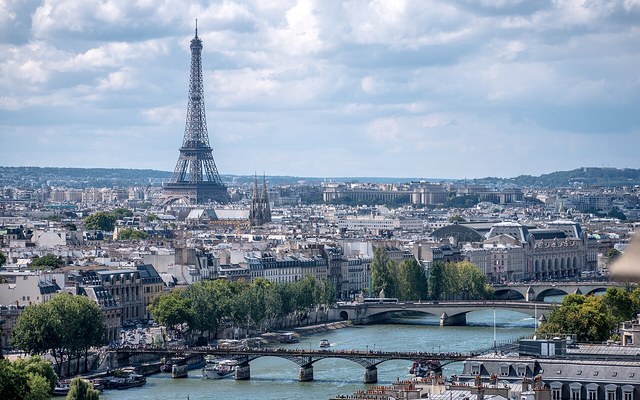
Paris

Paris
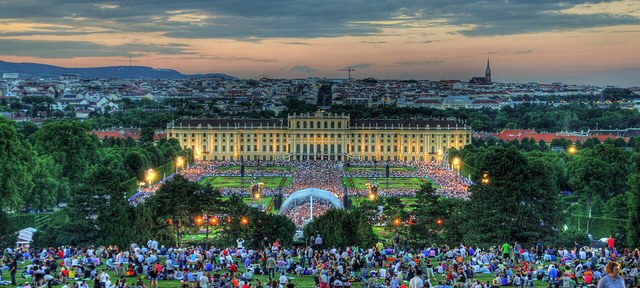
a rel="nofollow" Yann Caradec /a from Paris, France · CC BY-SA 2.0

French capital city · founded antiquity; major events 1789–2015 · north-central France

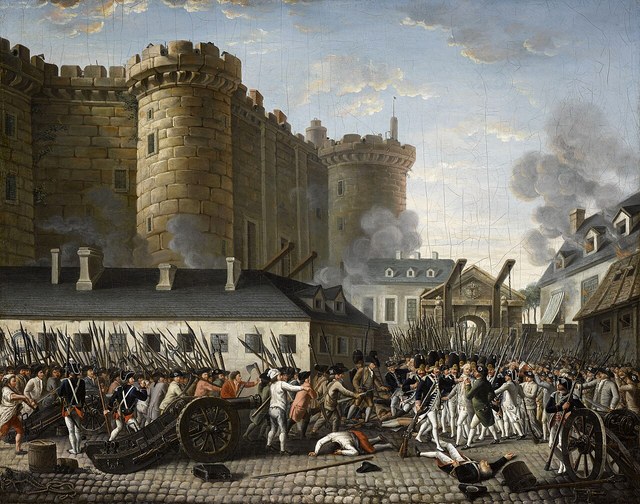
Paris is the capital of France, site of the 1789 Bastille storming and repeated revolutionary upheavals through modern terrorism.

The kit

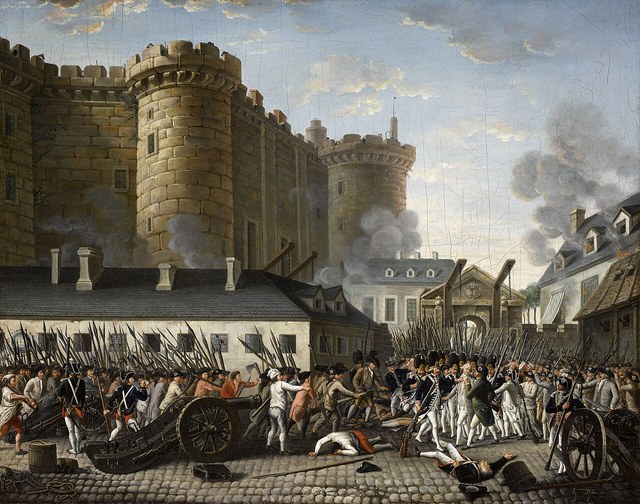
  • Revolution — Paris saw citizens storm the Bastille in 1789 and thousands killed in the September Massacres.
  • Urban redesign — Paris underwent Baron Haussmann's renovations widening streets to prevent barricade construction and ease troop movement.
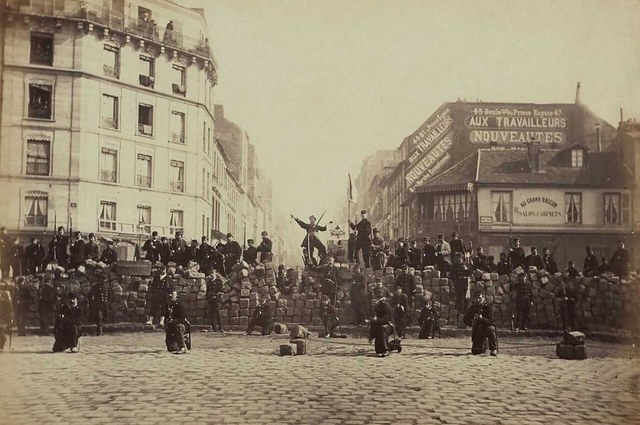
  • Commune — Paris was seized by the 1871 socialist Commune, suppressed during Bloody Week with a massacre at Père-Lachaise Cemetery.
  • Modern attacks — Paris suffered ISIS-claimed attacks on November 13, 2015, including the Bataclan theater, following the January Charlie Hebdo shooting.

Runs with

France
capital city of France open card →
Treaty of Paris
1856 treaty signed here demilitarized Black Sea open card →
Paris Commune
1871 socialist commune seized city, suppressed in Bloody Week open card →
University
University of Paris founded 1150, also called Sorbonne open card →

The ladder · 15 clues

H

In 1871, government forces reclaimed this city during the “Bloody Week” after it was seized by a namesake commune.

H

The patron saint of this city is said to have picked up his head after being martyred and walked for 6 miles, That man names a suburb of this city, St. Denis.

H

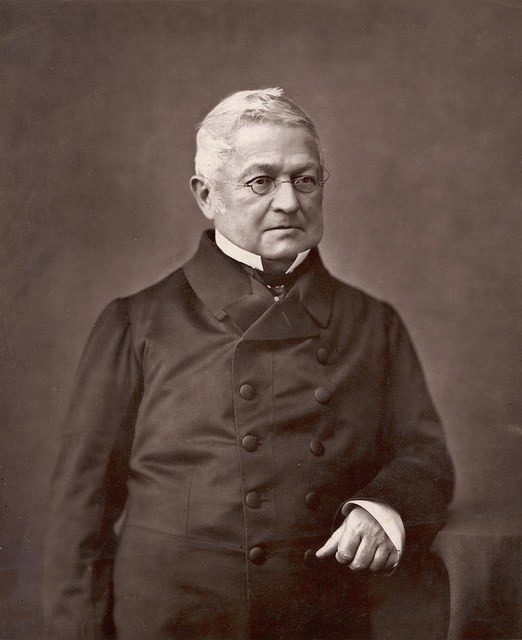
In this city, Adolphe Thiers clashed with a namesake commune during an 1871 uprising.

H

The European Coal and Steel community was established by a treaty in this city, in which an 1856 treaty demilitarised the Black Sea.

H

Four days after a series of events in this city, a similar event was avoided in Hanover thanks to the findings of a paramedic. After the events in this city, a grey Volkswagen Polo with foreign license plates was recovered which served as evidence that led to a raid on the Molenbeek [moh-lun-bek] area of Brussels.

H

During a siege of this city, National Guard troops bivouacked in a partially-built opera house designed by Charles Garnier.

H

The European capital where the treaty ending the war was signed?

M

City where an 1871 socialist “Commune” was suppressed following its country’s loss to Prussia.

M

The Bataclan theater was attacked in this city, the site of the January 2015 Charlie Hebdo shooting and a November 13th attack claimed by ISIS.

M

Its namesake university was founded in 1150 and is sometimes called the Sorbonne.

M

Baron Hausmann oversaw a set of renovations in this city, which was the site of a massacre at Père- Lachaise [PAIR luh-SHAYS] Cemetery in 1871.

M

The events in this city occurred despite heightened security following an attack earlier that year in this city at the offices of Charlie Hebdo.

E

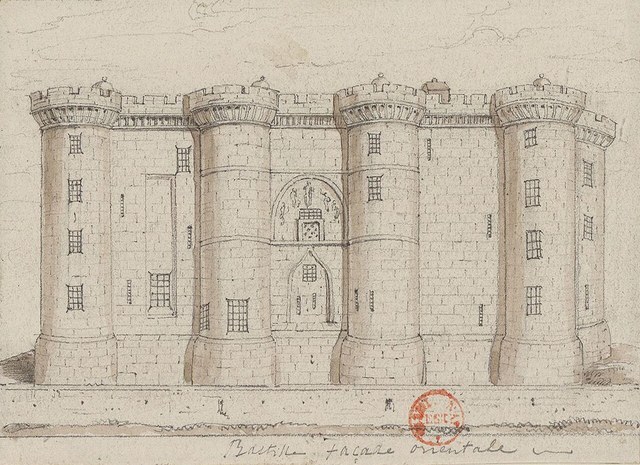
In 1789, citizens in this city stormed the Bastille in this capital of France.

E

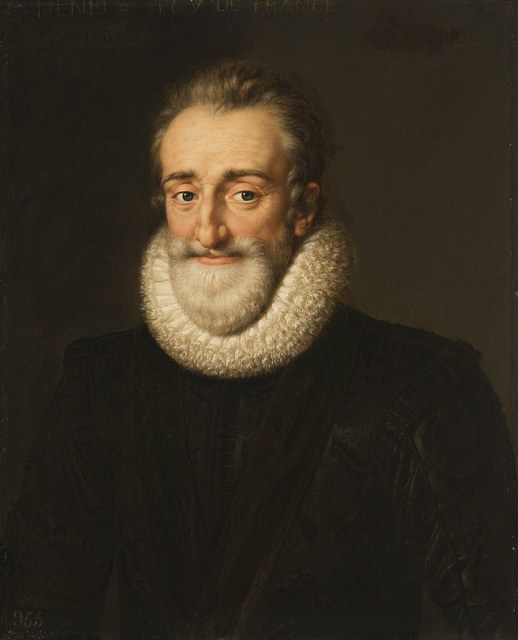
In converting to Catholicism, Henry IV claimed that this city was “well worth a mass.” name this capital city, the site of much strife during the French Wars of Religion.

E

Baron Haussmann led a renovation of this city during which he widened the streets to prevent the construction of barricades.

10 more clues from the record
H

That attack targeted a stadium where Francois Hollande was watching a sports match. name this city that was targeted in a series of 2015 attacks.

H

A 1229 student strike at a university in this city began on Shrove Tuesday and ended when Gregory IX issued the bull Parens scientiarum [[PAH-rens see-en-TAH-room]].

H

Controversy of this city’s placement of 400 bronze cannons in Belleville and other working-class neighborhoods led to riots.

H

Thousands of prisoners were killed in this city during the September Massacres.

H

A woman nicknamed the “Red Virgin” of a neighbourhood in this city is credited with the first use of the anarchist black flag.

H

An “infernal machine” used in this city targeted a king overthrown in February 1848.

H

The wildcat strike took to the streets in the Latin Quarter of this capital city.

H

During a siege of this city, two zoo elephants were eaten by a crowd and Leon Gambetta fled in a balloon.

H

Jules Ferry blasted the 19th-century redesign of this city as “triumphant vulgarity,” while other critics noted that wider streets could be used in this city to more easily maneuver troops to counter uprisings.

H

A college in this city was the origin of the slogan "Under the paving stones, the beach." A medieval school in this city had four "nations" with a set number of students from Pignerol [[pee-neh-ROHL]] and Flanders.
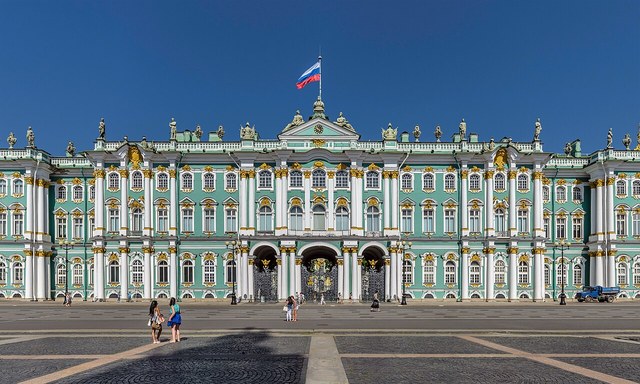
Watch out: Multiple Treaties of Paris exist (1763, 1783, 1856, 1898); clues reference 1856 treaty demilitarizing Black Sea
#16 · Historic Cities · Level 1

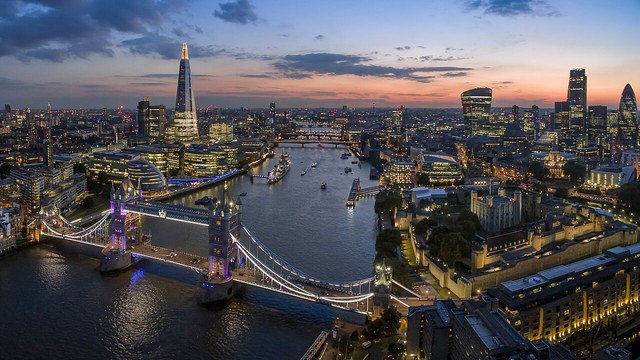
London

London
a rel="nofollow" Ilya Grigorik /a · CC BY-SA 3.0

British capital city · 43 CE–present · southeastern England, Thames River

London is Britain's capital, burned by Boudica in 61 CE, devastated by plague and the Great Fire of 1666, and host to the 1851 Great Exhibition.

The kit

  • Ancient & early modern — London was destroyed by Boudica's forces in 61 CE, leaving a red ash destruction horizon across Roman Britain's capital.
  • Disasters & infrastructure — London suffered the Great Fire of 1666 starting on Pudding Lane and the 1858 Great Stink, prompting Joseph Bazalgette's sewer system.
  • Crime & social issues — London's Whitechapel district saw the unsolved Jack the Ripper murders, and its police were found institutionally racist after Stephen Lawrence's stabbing.
  • Modern development — London hosted the 2012 Summer Olympics and built the millennium Ferris wheel known as the London Eye in 2000.

Runs with

Common
London Common does not exist; the term likely confuses it with Boston Common in Massachusetts open card →
Paris
church
London's Aldersgate Moravian church sparked John Wesley's 1738 conversion, founding Methodism in the city open card →
American Railway Union

The ladder · 15 clues

H

A secret 1915 treaty signed in this city established Italy as a member of the Allies.

H

In 1858, this city experienced a “Great Stink” that resulted in the construction of a new sewer system.

H

This city’s police force was found to be institutionally racist in a 1998 report ordered after the stabbing of Stephen Lawrence at a bus stop.

H

In this city’s Battle of Cable Street, Oswald Mosley’s Fascists clashed with counter-protesters in the East End.

H

Joseph Bazalgette designed this city’s sewer system, which reduced the frequency of cholera outbreaks and prevented a recurrence of the 1858 “Great Stink.” This city was one of first sites for rubber to be grown outside of South America, as part of a botanical research project at Kew.

H

Thomas Bloodworth was the governor of this city during a calamity that began here on Pudding Lane.

H

This city was home to a gang of Latvian immigrants led by Peter the Painter, who gained fame for allegedly surviving the Siege of Sidney Street.

M

Samuel Pepys’ diary records this city’s last bubonic plague pandemic, as well as the devastating Great Fire of 1666.

M

Capital city that hosted a League trading post at the Steelyard until Elizabeth I ended their license.

M

This is the largest city to have a “destruction horizon” of red ash, marking a 61 A.D. disturbance in which it was burned to the ground by the forces of Boudica. name this capital of Roman Britain.

M

The Steelyard was built by the Hanseatic League in this city, which was later home to a police force known as the Bow Street Runners.

M

A landmark known as this city’s Eye was built to commemorate the millennium in 2000; that Ferris wheel became a common sight in television coverage of the 2012 Summer Olympics. name this city whose less modern architecture includes Westminster Palace, the meeting place of British Parliament.

E

Its Whitechapel district was home to a series of unsolved murders. the Great Exhibition of 1851 took place in what city this was also home to the Jack The Ripper killings.

E

Canaletto painted The Thames and the City depicting this English capital city that contains the Tate Modern.

E

A follow-up to the Washington Naval Conference was this agreement named for the capital city of the UK.

10 more clues from the record
H

City that was the world’s most populous throughout Victoria’s reign?

H

City where the Jubilee underground line on the tube was extended?

H

The name of an insane asylum in this city is the source of the word “bedlam.” John Snow discovered that the Broad Street Pump was the source of a cholera outbreak in this city.

H

The Kray Twins were major gangsters during the 1960s in this city, where the Bow Street Runners were formed to fight crime.

H

This city names an 1802 poem that opens with a cry for one of its native sons, “thou shouldst be living at this hour.” A poem about this city that opens “I wander thro’ each charter’d street” and describes hearing “how the Chimney-sweepers cry” was written by William Blake.

H

In 1738 in this city's Aldersgate ward, an intense religious experience at a Moravian church sparked a new denomination. General William Booth founded the Salvation Army in this city, where its headquarters remain.

H

This city is the capital of a country toward which a plane carrying Gibreel Farishta and Saladin Chamcha travels in a novel subject to a fatwa by Ayatollah Khomeini, The Satanic Verses.

H

This city was home to Philip Astley’s Amphitheater, a venue that is the subject of one of the Sketches by Boz and whose performers included equestrian performer Pablo Fanque [fank].

H

This city is the home of Karim Amir, who desperately tries to escape the southern section of this city in the autobiographical novel The Buddha of Suburbia by Hanif Kureishi.

H

This city’s Docklands area was revitalized in the 1980s, and its Canary Wharf has since become a major financial center, alongside its more traditional City.

Watch out: Paris also hosted major international conferences and exhibitions in the same era
#17 · Historic Cities · Level 1

Saint Petersburg

Saint Petersburg
b Florstein /a /b ( i b Telegram: a rel="nofollow" WikiPhoto · CC BY-SA 4.0

Russian city · founded 1703 · Baltic Sea coast

Saint Petersburg is a Russian city founded by Peter the Great in 1703 as his country's 'Window to the West.'

The kit

  • Founding — Saint Petersburg was constructed on a grid of canals designed by Domenico Trezzini and Jean-Baptiste Alexandre le Blond.
  • Imperial capital — Saint Petersburg's Winter Palace was the home of the Romanovs and the site of the Bloody Sunday massacre.
  • World War II siege — Saint Petersburg endured an 872-day Nazi siege from 1941 to 1944, resupplied via the Road of Life across frozen Lake Ladoga.
  • Soviet era — Saint Petersburg was renamed in 1924 after Lenin, who led the storming of its Winter Palace during the Revolution.

Runs with

Russia
capital of Imperial Russia open card →
World War II
besieged 872 days by Army Group North open card →
Moscow
Baltic Sea
built on Baltic Sea coast open card →

The ladder · 15 clues

H

During one event, the defenders of this city stripped the guns from the Aurora to combat an encroaching army.

H

After its deployment in the Crimea, the Gustav rail gun was to be used for the second time in fighting over this city.

H

During a siege of this city, one of the only access points for supplies was the “Road of Life” through Lake Ladoga.

H

This city was known as its country’s “Window to the West” after its founding in 1703, and this city’s Senate Square was the site of a Decembrist revolt.

H

An equestrian statue of this city’s founder was camouflaged with sandbags to protect it during World War II and sits on the massive Thunder Stone.

H

The Finnish Army indirectly participated in the 872 day Nazi siege of this city that is currently called Saint Petersburg.

H

Domenico Trezzini created a grid of canals for this city, which was constructed under Jean-Baptiste Alexandre le Blond.

M

A supply route called the Road of Life helped resupply this city by ferrying supplies across Lake Lagoda.

M

Target of Army Group North during the invasion. The siege of this city lasted 872 days.

M

Army Group North and their Finnish allies retreated after 900 days of fighting in this Soviet city that was besieged from 1941 to 1944.

M

In this city’s Senate Square, rebels declared support for Grand Duke Constantine in the Decembrist Revolt.

M

Dmitri Karakazov failed to kill a ruler in this city who was ultimately killed here by a bomb in 1881.

E

This city’s defenders were resupplied by the Road of Life, where vehicles would travel across a frozen lake east of this besieged city.

E

The Bloody Sunday massacre occurred outside this city’s Winter Palace, the home of the Romanovs. name this one time capital of Imperial Russia founded by Peter the Great.

E

An event in this city started with cannon fire from the Aurora and included an attack on the Winter Palace. name this city on the Baltic Sea founded by a namesake westernizing Tsar of Russia.

10 more clues from the record
H

This city’s namesake affair was a series of purges orchestrated by Malenkov and Beria.

H

Virginia siege at which the USCT fought valiantly at the Battle of the Crater?

H

An institute for girls in this city was the site of the Kirov assassination.

H

For much of the twentieth century, the harbor of this city contained a war ship called the Aurora.This city was built after the fall of Nienshants.

H

This city is home to the Admirality Shipyard, which was originally built in 1704 by this city’s namesake, as well as the Lakhta Center, the tallest building in Europe, which is slated to be the headquarters of Gazprom.

H

This city was renamed in 1924 after the man who led the storming of its Winter Palace, and it was put under prolonged siege during the Second World War.

H

A palace in this city is filled with paintings commemorating victory over the Ottomans at the Battle of Cesme [chez-mah].

H

This city is home to the Aurora, a museum ship whose cannons were used to defend an 872-day siege.

H

titled a song for what Soviet city where a "child of sacrifice" named Viktor was born in 1944?

H

An attack on this city was led by Ritter von Leeb and carried out during Operation Northern Light.

Watch out: Petersburg, Virginia was the site of the Battle of the Crater during the Civil War
#23 · Historic Cities · Level 1

Vienna

Vienna
Superbass · CC BY-SA 3.0

Austrian capital city · medieval to present · Danube River, Austria

Vienna is the capital of Austria and former seat of Habsburg power, famously besieged by Ottoman forces in 1529 and 1683.

The kit

  • Ottoman sieges — Vienna withstood Suleiman the Magnificent's siege in 1529, halting Ottoman westward expansion into Europe.
  • 1683 relief — Vienna was saved from Kara Mustafa Pasha when Jan III Sobieski led 20,000 Winged Hussars in a decisive cavalry charge.
  • Habsburg seat — Vienna housed the Schönbrunn Palace and imperial palace of the Habsburgs, making it the center of central European rule.
  • Intellectual center — Vienna's Circle, led by Moritz Schlick, advocated logical empiricism and included Gödel and Carnap around 1918.

Runs with

Austria
capital and largest city open card →
Suleiman the Magnificent
besieged Vienna in 1529 open card →
Nanda Empire
Ottoman Empire
besieged twice, 1529 and 1683 open card →

The ladder · 15 clues

H

In 1529, Suleiman the Magnificent’s forces failed to take this city, ending their westward expansion into Europe.

H

Lifted a 1683 siege of what Austrian capital city after the arrival of Jan III Sobieski’s hussars?

H

Gabriel D’Annunzio dropped thousands of propaganda leaflets over this city during a “flight over” it.

H

After backing the forces of the Croatian leader Josip Jelačić , Count Baillet von Latour was lynched in this city.

H

Austrian city that names the original version of the Concert, created following the Napoleonic wars.

H

Austrian capital city he besieged in 1529.

H

A leader of a "Circle" named for this city, Moritz Schlick, was gunned down by a fascist-leaning former student who took offense to his anti-metaphysical philosophy.

M

The croissant was allegedly invented during a battle for this city that was saved from Kara Mustafa by the arrival of Jan III Sobieski in 1683.

M

John III Sobieski led a charge of Winged Hussars during a defeat for Kara Mustafa Pasha here.

M

One siege of this city was ended when John Sobieski led a cavalry charge of 20,000 Winged Hussars.

M

During a battle, this city was saved by a timely charge led by John III Sobieski [John the third soh-bee-ess-kee] and his Winged Hussars.

M

It's not Berlin, but this city's Burgtheater re-opened after the end of its division between Soviet and Allied Forces.

E

The Kahlenberg hill lies within this city, where King Jan Sobieski of Poland repelled Ottoman forces in 1683. name this former resident city of the Habsburgs and capital city of Austria.

E

This largest city on the Danube contains the Schönbrunn Palace as well as the imperial palace of the Hapsburgs. name this capital of Austria.

E

Suleiman the Magnificent's conquest of Europe was stopped at this city. name this city from which the Habsburgs ruled central Europe.

10 more clues from the record
H

The extremely anti-Semitic Karl Lueger modernized this city as its mayor for 13 years.

H

Jan III Sobieski led the Holy League in a battle near this city, after which Kara Mustafa Pasha was executed.

H

After one battle for this city, the losing commander was strangled by a silk cord upon returning home thanks to his failure to breach the defenses of Ernst von Starhemberg.

H

This city used a luxury tax to keep rents artificially low in public housing projects like the enormous Karl-Marx-Hof during a period from 1918-34 in which this city was nicknamed “Red.” Moritz Schlick organized an influential intellectual group in this city around 1918; that group, which included members like Godel and Carnap, advocated for logical empiricism and was called this city’s Circle. name this home city of Sigmund Freud, the capital of Austria.

H

Matthias Corvinus captured this city during his conflict with Frederick III.

H

This city houses the headquarters of OPEC as well as the International Atomic Energy Agency.

H

Georg Franz Kolschitzky opened the first coffeehouse in this city after finding beans left behind by the attackers in a 1529 siege here.

H

Nicholas of Salm commanded the defense of this city atop walls that were partially financed by the ransom of Richard the Lionheart.

H

While attending the Realschule [[ray-AHL-shoo-luh]] in this city, philosopher Ludwig Wittgenstein [[VIT-gen-stine]] and Adolf Hitler were classmates together.

H

The political structure of this city was weakened by Ferdinand I who carried out his “Blood Judgment,” killing many of its leaders and putting it under direct imperial control.

Watch out: The 1529 and 1683 Ottoman sieges are often confused or conflated despite being 154 years apart
#32 · Historic Cities · Level 1

Naples

Naples
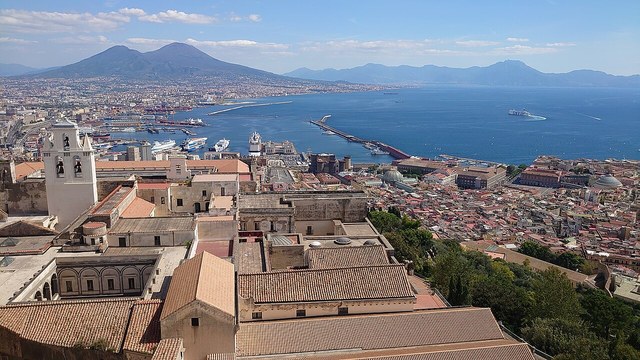
Richard Nevell · CC BY-SA 4.0

Southern Italian city · ancient to present · Campania, near Mount Vesuvius

Naples was the capital of the Kingdom of the Two Sicilies and site of multiple revolts including Masaniello's 1647 uprising.

The kit

  • Medieval rule — Naples became an independent Byzantine duchy in 763 CE and was later controlled by Spanish Habsburgs until the seventeenth century.
  • Revolts — Naples saw the 1647 Masaniello revolt against a fruit tax and the 1799 pro-French Parthenopean Republic opposed by the lazzaroni.
  • Napoleonic era — Naples was ruled by Joseph Bonaparte and Joachim Murat during the Napoleonic Wars, with Murat reforming the city's law code.
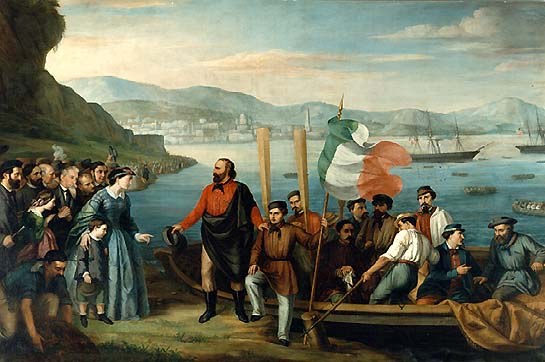
  • Unification — Naples was targeted by Garibaldi's Expedition of the Thousand, and the Kingdom of the Two Sicilies ended at the Siege of Gaeta.

Runs with

Sicily
capital of Kingdom of Two Sicilies after Sicily reunited with Naples in 1504 open card →
Council of Florence
Hungary
queen ruling from Naples murdered first husband Andrew of Hungary open card →
Italy
southern Italian city conquered by Romans during Samnite Wars open card →

The ladder · 15 clues

H

In this city, a new tax on fruit brought about the revolt of the fisherman Masaniello, who was soon shot.

H

A pro-French revolt in this city led to the formation of the Parthenopean Republic, which was opposed by the lower class lazzaroni.

H

A queen who ruled from this city was accused of murdering her first husband Andrew of Hungary.

H

An attempt to tax fruit by this city's Spanish rulers led to the rebellion of Masaniello.

H

One leader of a kingdom centered at this city was executed at Castello de Pizzo after an ill-advised expedition that ended at the Battle of Tolentino; that man was Joachim Murat.

H

The Battle of Cerignola confirmed Bourbon Spanish rule of this city, which was abandoned just before the Battle of the Volturnus.

H

Pompeii is close to this modern Italian city, which was conquered by the Romans during the Samnite Wars.

M

One of the characters in The Mute Girl of Portici is the fisherman Masaniello, who led a 1647 revolt in this Italian city against the Habsburgs.

M

A kingdom with capital at this city was ended at the Siege of Gaeta.

M

Later in the Napoleonic era, this home of the Camorra was ruled by Joseph Bonaparte and Joachim Murat.

M

Republics based in this city include one led by the fisherman Masaniello, and a six-month state called the Parthenopean Republic in 1799, before it was ruled by Joachim Murat under Napoleon. name this capital of the Campania region just west of the slopes of Mount Vesuvius.

M

The embargo cut both ways, as the end of Dutch grain imports caused famine in this Habsburg city, the second largest in Europe, which declared itself an independent republic in 1647 but was soon crushed by the Spanish viceroy.

E

The Sicilian Vespers removed Sicily from the control of this city, which was targeted by the Expedition of a Thousand. name this southern Italian city, the capital of the Kingdom of the Two Sicilies.

E

This target of Garibaldi’s Expedition of the Thousand was the seat of the Kingdom of the Two Sicilies. name this Italian city in the environs of Vesuvius.

E

This city’s law code was reformed under the rule of Napoleon’s brother-in-law, Joachim Murat.

10 more clues from the record
H

Robert Davis notes how a 1544 raid on this city where 7000 men were captured drove the price of slaves so low that one could swap a Christian “for an onion.” Every Easter Monday, a class of third-gender people in this city would find a “husband” and board a carriage to ride around.

H

Spain took control of this city after the battle of Garigliano, and Jan Hus opposed Baldassare Cossa’s attempts to organize a crusade against a ruler of this city who controlled Innocent VII, Ladislaus.

H

Charles invaded Italy in order to press his claim to the throne of this kingdom, after the death of its king Ferdinand I. In 1504, Ferdinand II of Aragon united this kingdom with Sicily, reuniting the Two Sicilies.

H

In a folk custom from this city called “bitchy Lucia,” a man would cross-dress, wear blackface, and dance while a crowd screamed obscenities at him.

H

Statesman Bernardo Tanucci modernized a government based in this city before being overthrown by Queen Maria Carolina, the wife of the incompetent King Ferdinand IV.

H

Kings of this city built a massive Baroque palace whose extensive gardens feature a “Grand Cascade” by the fountain of Diana and Actaeon in the town of Caserta.

H

This place became an independent Duchy of Byzantium in 763 CE and was later ruled by Spaniards until the 1647 uprising led by the fisherman Masaniello.

H

In the ninth century, this city’s duke Andrew II entered the Pactum Sicardi after calling in Saracen mercenaries to repel an attack of Sicard.

H

The marble calendar of this city claims its first bishop was Asprenas, who was converted by an old woman called Candida the Elder.

H

After being deposed, Romulus Augustulus was imprisoned in this city, which was captured from Conon by Totila three years before he took Rome.

Watch out: Masaniello led a revolt in Naples in 1647, not in Sicily during the Sicilian Vespers
#44 · Modern Countries · Level 1

Spain

Spain
Antonio Valdés y Fernández Bazán · Public domain

European nation · unified 1469; modern state 1978 · Iberian Peninsula

Spain unified after the marriage of Castile and Aragon's monarchs and expelled Jews with the 1492 Alhambra Decree.

The kit

  • Reconquista & Empire — Spain's Battle of Covadonga in 722 sparked centuries-long war against Islamic forces ending in Reconquista.
  • Colonial power — Spain colonized most of Latin America except Brazil, calling peninsulares those colonists born in Spain itself.
  • Conflicts — Spain fought the Eighty Years War against Dutch independence, recognized Netherlands in 1648 under Philip IV.
  • Civil War & Franco — Spain's 1930s civil war drew American volunteers in Abraham Lincoln Brigade; Francisco Franco became caudillo afterward.

Runs with

Nanda Empire
no connection evident in clues open card →
Francisco Franco
became Spain's caudillo after Falange victory in 1930s civil war open card →
Bakumatsu Period
Reconquista
Spain's Reconquista began with Battle of Covadonga in 722 open card →

The ladder · 15 clues

H

One force commanded by this country was defeated at the Battle of Gravelines.

H

Contribute volunteers to the Abraham Lincoln Brigade in this country's 1930s civil war?

H

In 1973, this country’s Prime Minister was assassinated by separatists in Operation Ogre.

H

This country fought the early 20th century Rif War against forces of Berber tribes in Morocco.

H

Country that granted the Netherlands independence after the Eighty Years’ War.

H

In this modern-day country, the 722 Battle of Covadonga sparked a centuries-long war against Islamic forces.

H

Residents of this country’s colonies that were born in this country were called peninsulares. :Name this country which colonized most of Latin America aside from Brazil.

M

The Dutch fought this country for independence in the Eighty Years War. This country’s monarch Philip IV recognized The Netherlands in 1648.

M

The Alhambra Decree expelled practicing Jews from this country, which was unofficially unified after the marriage of monarchs from Castile and Aragon.

M

European country from which the Philippines declared its independence in 1898.

M

Fought the Peninsular War when trying to install his brother on what country’s throne?

M

Empire that held the Netherlands as a personal union prior to the Eighty Years’ War.

E

The Falange seized power in this country after a 1930s civil war resulted in Francisco Franco becoming caudillo. name this country that is ruled by Felipe VI from Madrid.

E

This country was briefly ruled by Napoleon's brother, Joseph Bonaparte.

E

Thomas Pinckney negotiated a 1795 treaty with, what country that signed the Adams-Onis Treaty with the U.S., in which it ceded claims to Florida?

10 more clues from the record
H

In one work, Bill Gorton, Robert Cohn, and Jake Barnes travel to the northeast of this nation for a two-week long fishing trip.

H

A proposed marriage with a royal from this country was supported by Pope Gregory XV though preacher John Everard opposed the union.

H

Privateer Henry Jennings attacked salvagers of this country’s ships that had sunk in a hurricane in 1715.

H

"Bandits led by monks" were blamed for a defeat in this country at Bailén, which Chilean soldiers referenced at Maipú.

H

Hannibal's attack on Saguntum in this present-day country began the Second Punic War.

H

European country that colonized the islands after their discovery by Ferdinand Magellan.

H

European nation whose South American colonies he liberated.

H

The Abraham Lincoln Brigade was a group of Americans who came here to fight in its civil war, which George Orwell described in Homage to Catalonia.

H

In the nineteenth century, this country experienced the Liberal Triennium.

H

Colonized by what European power, after whose king Philip II it was named?

Watch out: Joseph Bonaparte briefly ruled Spain, not France, during Napoleonic period
#47 · Modern Countries · Level 1

Poland

Poland
See below. · Public domain

Central European nation · 966 CE–present · Central Europe

Poland was established by Mieszko I in 966, partitioned three times in the 18th century, and invaded by Germany in 1939 to start World War II.

The kit

  • Rise — Poland was established by Mieszko I of the Piast Dynasty, who was baptized in 966 and founded the first historical Polish state.
  • Golden Liberty — Poland operated under the Golden Liberty system, where the sejm parliament and szlachta nobles held power strengthened by the Nihil novi act.
  • Partitions — Poland was partitioned three times by Prussia, Austria, and Russia during the 18th century, erasing it from maps until 1918.
  • Modern era — Poland's Solidarity Movement, led by Lech Walesa after strikes at Gdansk's Lenin Shipyards, negotiated the Round Table Agreement that reformed the government.

Runs with

American Railway Union
no connection evident in clues open card →
Warsaw
Lithuania
joined with Poland through the Union of Lublin open card →
Solidarity
Polish trade union led by Lech Walesa that negotiated democratic reforms open card →

The ladder · 15 clues

H

This country was partitioned three separate times during the 19th century, and was the largest country divided by the secret Molotov-Ribbentrop Pact.

H

Under the Golden Liberty system, this country was effectively run by the sejm (pr. same) parliament. nobles called szlachta (pr.

H

This country was established by Mieszko I of the Piast Dynasty.

H

The Nihil novi act gave this country’s nobles power which was strengthened under a system known as Golden Liberty.

H

A pianist from this country composed the opera Manru and spent ten months as its Prime Minister, during which time he signed the Treaty of Versailles.

H

A king of this country attempted to reform the power of the nobility by writing the 3rd of May Constitution, which was opposed by nobles in the Targowica Confederation.

H

The first historical leader of this nation, Mieszko I, founded the Piast dynasty and was baptized in 966.

M

The Union of Lublin created this country governed from Krakow and Vilnius.

M

Country invaded on September 1, 1939, marking the beginning of World War II.

M

As a result of the Molotov-Ribbentrop Pact this country was invaded, and then split between, the Soviet Union and Germany.

M

Country that was invaded by the Nazis to start the war after the Gleiwitz incident.

M

This country’s government was reformed after the Round Table Agreement, which included the trade union Solidarity.

E

Country first organized by the Piast Dynasty this was later invaded by its neighbor Germany to start World War II.

E

In this nation, Lech Walesa led the “Solidarity Movement.” That movement was supported by Pope John Paul II, who was born in this country.

E

That Round Table Agreement was primarily negotiated by a union that formed after a strike at the Lenin Shipyards in Gdansk. name this country where Solidarity leader Lech Walesa became president.

10 more clues from the record
H

This country's succession war ended in 1738 following fracture on the death of Augustus the Strong.

H

One composer from this modern-day country used a "sacred minimalist" sound that is exemplified by his Symphony of Sorrowful Songs and the Copernican Symphony.

H

A strike in this country led to the 21 Demands of MKS, and in 1981, this country faced hunger demonstrations and a four-hour national warning strike.

H

Waltzes by a composer from this country make up pianist Dinu Lipatti’s most enduring recording.

H

In this modern-day country, the 21 Demands of MKS were hung on Ostrow Island in A August, 1980.

H

A Valois prince was elected king of this state but returned to France with much of its treasury.

H

A cavalry charge at the Battle of Krojanty started a myth that forces from this country used horses against German tanks.

H

Prussia, Austria, and Russia partitioned this country three times.

H

This country’s power was broken by a Swedish invasion in the Deluge.

H

The President of the European Council, Donald Tusk, was Prime Minister of this country during the early 2010s.

Watch out: The Battle of Krojanty created a myth that Polish cavalry charged German tanks with horses
#48 · Modern Countries · Level 1

Sweden

Sweden
Jon Harald Søby /a and others. · Public domain

Scandinavian kingdom · medieval to present · northern Europe, Baltic region

Sweden is a Scandinavian kingdom that dominated the Baltic after the Thirty Years' War and fought Russia in the Great Northern War.

The kit

  • Rise — Sweden entered the Thirty Years' War under Gustavus Adolphus, the "Lion of the North", and dominated the Baltic following its success.
  • Conflicts — Sweden won the Battle of Narva under Charles XII but suffered a crushing defeat at Poltava during the Great Northern War against Russia.
  • Expansion — Sweden occupied Poland-Lithuania during the Deluge following the Khmelnytsky Uprising and established a short-lived Delaware Valley colony centered at New Christiana.
  • Legacy — Sweden built one million publicly funded homes in the Million Program starting in 1965 and produced assassinated Prime Minister Olof Palme in 1986.

Runs with

American Railway Union
Gustavus Adolphus
Gustavus Adolphus led Sweden into the Thirty Years' War as the Lion of the North open card →
Kalmar Union
Sweden was once ruled jointly with Norway and Denmark in a Scandinavian union open card →
Stockholm
Stockholm served as Sweden's capital from which rulers like Christina governed open card →

The ladder · 15 clues

H

A colony named for this non-Polish country built Fort Casimir, or Fort Trinity, and was led by men like Johan Printz and Johan Risingh.

H

This nation won the battle of Narva before suffering a major loss at Poltava. name this northern European nation, which under Charles XII lost the Great Northern War to Russia.

H

A ruler of this country founded the Arcadian Academy in Rome after being converted to Catholicism by Pope Alexander VII.

H

Following the Khmelnytsky Uprising, Poland and Lithuania were occupied by this country in a period known as the Deluge.

H

One king of this nation was opposed by the Anjala Cospiracy, which sought to avoid a repeat of this nation’s occupation in the Lesser Wrath.

H

A king of this nation died at Fredriksten, forcing his men to endure the Carolean Death March to return home.

H

This kingdom established a short-lived colony in the Delaware Valley centered at New Christiana.

M

This country entered the Thirty Years’ War under the leadership of the “Lion of the North”, Gustavus Adolphus. name this Scandinavian country where rulers have led from Stockholm.

M

Olof Palme was a prime minister of this country. Centuries earlier, opponents of Christian II in this country were massacred in the Stockholm bloodbath.

M

Country that dominated the Baltic following its success in the Thirty Years War.

M

René Descartes was employed by Christina, a Queen of this country that she ruled from Stockholm.

M

Rene Descartes died in this country after being invited by a queen who was nicknamed “The Minerva of the North” for her interest in learning, Christina. name this Scandinavian nation with its capital at Stockholm.

E

The House of Vasa once ruled this country led by Charles XII and Gustavus Adolphus in the Great Northern War and Thirty Years’ War, respectively.

E

Queen Christina and Gustavus Adolphus both ruled which Scandinavian kingdom this was once ruled jointly with Norway and Denmark.

E

Peter the Great defeated the forces of this country during the Great Northern War. They won the Battle of Narva under the leadership of Charles XII.

10 more clues from the record
H

In a bout of insanity, one ruler of this country murdered various noblemen from the Sture family.

H

A series of attacks on bailiffs in this country led to a revolt known as the Dacke War.

H

Another leader from this country was a prime minister assassinated in 1986 whose main suspect was Christer Pettersson.

H

A ruler of this country was captured during the Kalabalik of Bender by the Ottoman Empire, where he was hiding in exile. This country faced Augustus the Strong's coalition of Saxony and Poland-Lithuania, which wanted to claim Livonia from Charles XII.

H

Another king of this country led the March Across the Belts, after which it received Scania from Denmark.

H

A U.N. Secretary General from this country died in a 1961 plane crash en route to peace talks over conflict in the Congo Crisis.

H

A queen of this country converted to Catholicism shortly after abdicating the throne at age 28.

H

Starting in 1965, this country carried out the Million Program which built one million publicly funded homes over 10 years.

H

In one battle in modern Ukraine, this country’s forces were defeated by Boris Sheremetev.Name this country which fought a Russian-led coalition in the Great Northern War. Despite early successes, its invasion force was crushed at the battle of Poltava.

H

During that intervention, one ruler of this country died at the battle of Lutzen.

Watch out: Denmark (also Scandinavian, fought Sweden for Scania, part of Kalmar Union)
#68 · Modern Countries · Level 1

Netherlands

Netherlands
Zscout370 · Public domain

European nation · independence 1648; Golden Age 17th century · Low Countries, North Sea coast

Netherlands won independence from Spain in the Eighty Years' War and became a global commercial power with revolutionary financial institutions.

The kit

  • Independence — Netherlands fought the Eighty Years' War against Spain, led by William the Silent, establishing the House of Orange.
  • Golden Age — Netherlands hosted the first stock exchange and first publicly traded company, the VOC (United East India Company).
  • Trade monopoly — Netherlands was the only country allowed to trade with Japan at Dejima during the Tokugawa shogunate.
  • World War II — Netherlands suffered the Hunger Winter of 1944-45, relieved by Operations Chowhound and Manna.

Runs with

Indonesia
ruled Indonesia through the VOC open card →
American Railway Union
Belgium
both were part of Low Countries under Spanish rule open card →
Spain
fought Spain for independence in Eighty Years' War open card →

The ladder · 15 clues

H

This country’s financial innovations included hosting the first publicly traded company and the first stock exchange.

H

This European power harassed enemy colonies in a policy whose name translates as the “Grand Design.” The Amboyna Massacre was perpetrated by an organization based in this country whose emblem was the initials VOC.

H

This country launched a raid on the Medway River and signed the secret Treaty of Dover with England.

H

The iconoclast Beeldenstorm took place in this country where the Bourse stock exchange was established for the United East India Company.

H

Operations Chowhound and Manna provided relief to this country’s citizens during its “Hunger Winter” of 1944 to 1945.

H

The Eighty Years’ War is considered to be a War of Independence for this modern-day nation with capital at Amsterdam.

H

In The Embarrassment of Riches, Simon Schama described the culture of this country’s “golden age”.

M

Country against whom he fought two wars in an alliance with Louis XIV

M

For a time, this country was the only one allowed to enter Dejima to trade with Japan.

M

Pillarisation was strongly promoted in this country by prime minister Abraham Kuyper under its longest-reigning Queen, Wilhelmina, who was of the house of Orange-Nassau.

M

A filmmaker from this country was assassinated by Mohammed Bouyeri for criticizing the treatment of women in Islam in his film Submission.

M

This country’s seven provinces elected stadtholders.

E

William the Silent led this country in the 80 Years’ War, earning its independence and establishing the House of Orange.

E

To gain independence from Spain, this country fought the Eighty Years’ War. name this country whose leaders have historically lived in The Hague and Amsterdam.

E

Roving privateers from this country called the Sea Beggars captured Brielle from the Spanish in 1572, a turning point of the Eighty Years’ War.

10 more clues from the record
H

British explorer Henry Hudson was sponsored by this foreign country for his third voyage, during which he sailed the Half-Moon.

H

A religious leader from this country led the Doleantie schism and founded the Anti- Revolutionary Party.

H

Country that ruled over the colony through its “United East India Company”

H

Low country in Northern Europe ruled by Queen Beatrix in the 20th century.

H

Operation Market Garden aimed to liberate this nation by capturing bridgeheads across the Rhine.

H

During World War II and the inter-war period, 90% of the world’s quinine was produced by colonies owned by this European country.

H

In this modern-day country, the Five Articles of Remonstrance were signed by followers of a man whose teachings were condemned at the Council of Dort, Jacobus Arminius.

H

This modern-day country was outraged by the Council of Blood being imposed as its ruler, as well as by the Tenth Penny tax.

H

This country was attacked by England and France during its Disaster Year, which resulted in the lynching of Cornelius and Jan de Witt.

H

A rhyming slogan coined in this country in 1672 described it as senseless, leaderless, and rudderless during its “year of disaster,” which culminated in the lynching of the De Witt brothers.

Watch out: Don't confuse with Belgium, which was part of the Spanish Netherlands but became separate
#83 · Physical Geographic Features · Level 1

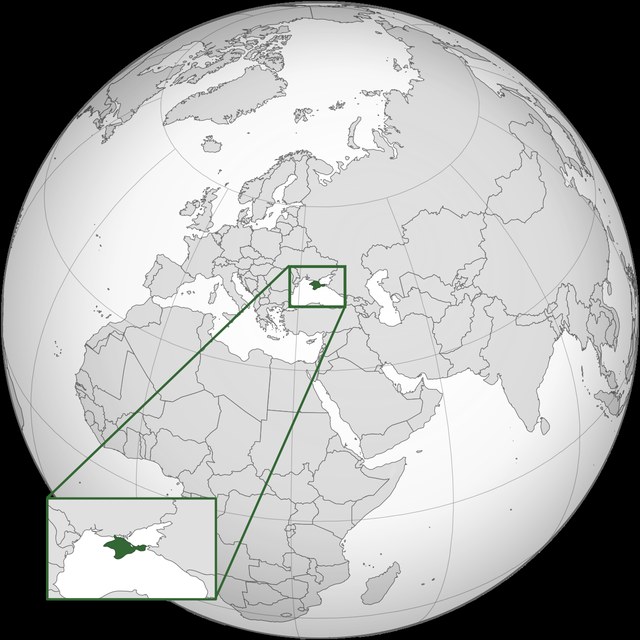
Crimean Peninsula

Crimean Peninsula
The Emirr /a , Spesh531 · CC BY-SA 3.0

Black Sea peninsula · ancient to present · between Ukraine and Russia

Crimean Peninsula is a strategically important Black Sea peninsula bordered by the Sea of Azov, recently annexed by Russia from Ukraine in 2014.

The kit

  • Geography — Crimean Peninsula juts into the Black Sea and borders the Sea of Azov, with major cities Sevastopol and Simferopol.
  • Khanate — Crimean Peninsula was ruled by the Crimean Khanate from 1449 to 1783, the longest-lasting Golden Horde successor state.
  • Conflicts — Crimean Peninsula was the site of the Charge of the Light Brigade during the 1850s Crimean War siege of Sevastopol.
  • Modern annexation — Crimean Peninsula was seized by "little green men" in 2014 after a controversial referendum, leading to Russian annexation from Ukraine.

Runs with

Black Sea
juts into this sea and hosts strategic ports open card →
Ukraine
annexed from Ukraine by Russia in 2014 open card →
Russia
annexed by Russia in 2014 after referendum open card →
Golden Horde
Crimean Khanate was longest-lasting successor state open card →

The ladder · 15 clues

H

On this geographical feature, a Turkic khanate known as the Little Tartary, the longest-lasting successor to the Golden Horde, ruled from 1449 to 1783.

H

Haci Giray [ha-ji ge-rai] established this region’s namesake khanate after breaking off from the Golden Horde.

H

East Germanic Gothic culture persisted in this area well into the 18th century, though the Gothic-dominated state Theodoro fell 400 years prior.

H

A state named for this region targeted neighboring “wild fields” for slave raids and was granted independence from the Ottoman Empire in the Treaty of Kuchuk-Kainarji.

H

The Black Plague entered Europe via corpses lobbed into this region’s Genoese colony of Kaffa.

H

In an earlier conflict, the 93rd Highlanders became honored as the Thin Red Line in this region, where Lord Raglan made his name launching a courageous assault upon a Russian battery during the siege of Sevastopol.

H

Prosecutor Natalia Poklonskaya [[pohk-lohn-SKY-yah]] attempted to ban this region's Mejlis [[MEHJ-leess]] autonomous assemblies, forcing legislators to flee north.

M

This peninsula borders the Sea of Azov and juts into the Black Sea. name this peninsula that was recently annexed by Russia from Ukraine.

M

The Charge of the Light Brigade took place on this Russian peninsula in the Black Sea, the subject of an 1850s war.

M

Launched Operation Bustard Hunt in what peninsula in the Black Sea during the Siege of Sevastopol?

M

A Mongol siege of Genoa's colony in this region, Caffa, may have introduced the Black Death to Europe.

M

Fake villages along the Dnieper in this region were built by Gregory Potemkin to woo Catherine the Great after its peaceful annexation.

E

Those cities, Simferopol and Sevastopol, are major population centers on this strategically- important peninsula. name this territory recently annexed by Russia, a peninsula in the Black Sea.

E

This peninsula’s port of Sevastopol was besieged in a 1850s conflict.

E

Florence Nightingale treated soldiers during a war named for this Ukrainian peninsula.

10 more clues from the record
H

This region’s inhabitants launched raids against its northern neighbors, called “harvesting the steppes,” to fuel its slave trade, which was based out of Kefe.

H

Using cattle trains, Lavrentiy Beria and the NKVD emptied this region of its Tatar minority due to largely false claims they collaborated with the Nazis.

H

During World War II, this region was targeted by Operation Bustard Hunt, where one side struck the Kerch Peninsula in an attempt to break a siege.

H

“Little green men” seized the Supreme Council in this region in 2014, shortly after the Supreme Council examined the possibility of holding a controversial referendum.

H

This region features a walking trail called the “Tsar’s Path” and was inhabited by Tatars with who had a capital at Bakhchisaray.

H

The entire indigenous Turkic ethnic group of this region was forcibly deported to Kazakhstan in 1944 for ostensibly collaborating with the Nazis.

H

In two cities in this place, Euromaidan protests took place at the same time as protests against the Ukrainian government.

H

The longest lasting community of the Goths was based in this peninsula, which is surrounded by the Sea of Azov and the Black Sea.

H

The Eltigen bridgehead was destroyed during an attack on this territory commanded by Fyodor Tolbukhin that included the Separate Coastal Army where Tolbukhin’s forces inflicted heavy casualties on German forces ordered not to retreat due to Hitler’s belief that loss of this territory would allow bombing of Romania, and this region formed the southern part of the Taurida Governorate.

H

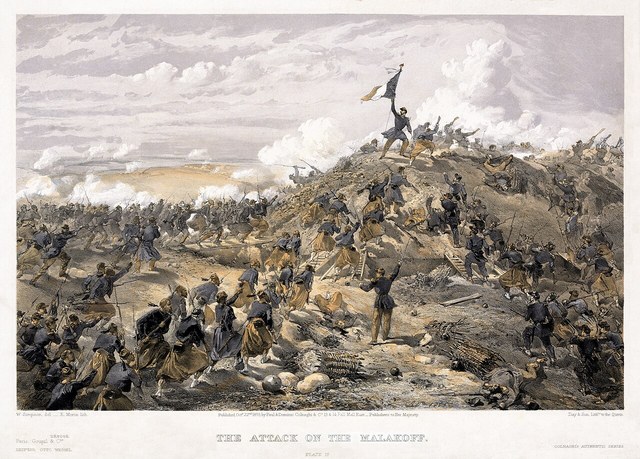
Taganrog was beseiged during one war over this territory, which ended after the Battle of Malakoff allowed the capture of its principal city, and Stalin conducted the Surgun in this area, deporting many of its resident Tartars.

Watch out: Kerch Peninsula (a smaller peninsula within Crimea, targeted separately in WWII operations)
#91 · Physical Geographic Features · Level 1

Rhine River

Rhine River
Lucazzitto · CC BY-SA 3.0

Major Western European river · Ancient times–present · Western Germany, France border

Rhine River is the main waterway of western Germany that formed the northern border of the Roman Empire alongside the Danube.

The kit

  • Roman frontier — Rhine River marked the border between Gaul and Germania after Rome withdrew from the Teutoburg Forest disaster.
  • Engineering — Rhine River was crossed by a Roman army subduing the Ubii via a 300-foot bridge built in ten days and demolished eighteen days later.
  • WWII operations — Rhine River was the target of Operation Market Garden's failed crossing attempt and featured a bridge at Remagen captured intact by Americans.
  • Political borders — Rhine River sparked an 1840 crisis when Adolphe Thiers proposed it as the France-Germany border and named Napoleon's Confederation of German states.

Runs with

Germany
main waterway flowing through Düsseldorf and Bonn open card →
Land
Rhineland was remilitarized illegally by Hitler open card →
France
forms part of border with Germany open card →
Louis XIV

The ladder · 15 clues

H

Main waterway of western Germany, a river that named a confederation of German states created by Napoleon.

H

The historic border between France and Germany?

H

A capital city on this river was Bonn, and this river served with the Danube as the northern border of the Roman Empire. name this prominent river in western Germany.

H

Adolphe Thiers’ [tee-ayrz] desire to establish this river as a border led to an 1840 crisis.

H

The Hercynian Forest stretched eastward from this river in antiquity, and the Ubii lived along its banks.

H

The Batavians invaded Rome by crossing what border river, home to legions loyal to the third of the four emperors?

H

This river shares a delta with the Scheldt and Meuse that was the site of heavy damage in the 1953 North Sea flood.

M

River that marked the border of Gaul, and later, the Roman Empire.

M

This river is crossed by the John Frost Bridge, which replaced a structure fought over in the Battle of Arnhem during Operation Market Garden.

M

After the disaster at the Teutoburg Forest, Rome began to withdraw from Germania to west of this river, which became the boundary between Gaul and Germania.

M

A Roman army subdued the Ubii by building a 300-foot bridge over this river in ten days and demolishing it eighteen days later.

M

Peter exhorted crowds to massacre Jews in communities along this river that forms part of the border between France and Germany.

E

A legendary rock known as Lorelei overlooks this major Western European river that, like the Danube, formed much of the northern border of the Roman Empire.

E

The Germans named the battle “Operation Watch on” this 2nd longest central European river

E

The Nazi codename for the Ardennes Counteroffensive was "Operation Watch on [this river]." Following the dissolution of the Holy Roman Empire, Napoleon Bonaparte created a "Confederation" of German states named for this river.

10 more clues from the record
H

In an effort to capture bridges along this river, Operation Lumberjackwaslaunched by the 1st Army under Courtney Hodges.

H

Operation Market Garden was a failed attempt to cross this river, which passes by the heavily industrialized Ruhr region.

H

A bridge over this river at Remagen was notably captured intact by American forces during World War II.

H

Neanderthals are named for the Neander Valley, which is formed by a tributary of this major west German river.

H

A crisis was sparked in 1840 when Adolph Thiers proposed this river as a border.

H

This river was turned red in 1986 due to a chemical spill at a Sandoz factory. Cornelius Ryan wrote a 1974 war book about an attempt to cross this river that was made into a Richard Attenborough film.

H

Two pairs of wooden piles were driven obliquely into its riverbed with a winch, then protected with further pilings upstream, in a feat of military engineering.

H

One section of this river passes through Lake Tuma on its way through the town of Chur, where it turns to the north and flows into the Obersee of a certain lake.

H

In his writings, Gregory of Tours moved the site of the martyrdom of the possibly mythical Theban Legion from Agaunum in modern Switzerland to Colonia Agrippensium, a city on this river.

H

This river’s tributaries include the Main, the Moselle, and the Ruhr. :Name this river of Eastern Germany that flows through Düsseldorf and Bonn. Its namesake "land" was remilitarized by Hitler illegaly.

Watch out: Danube River also formed Rome's northern frontier
#112 · Subnational Regions, Provinces, and Territories · Level 1

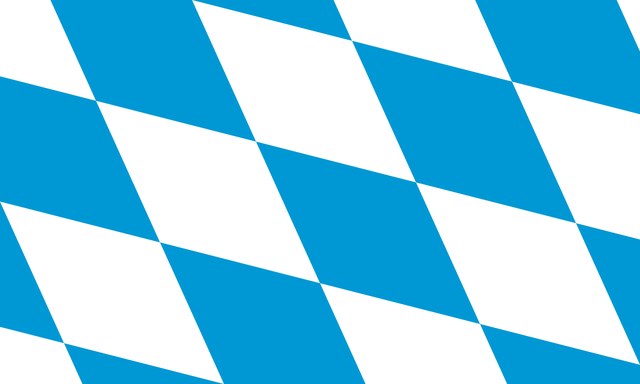
Bavaria

Bavaria
diese Datei: Jwnabd · Public domain

Southern German state · independent kingdom 1806–1871 · southern Germany

Bavaria is Germany's largest state by area, a Catholic region ruled by the Wittelsbach dynasty for seven centuries until 1918.

The kit

  • Rise — Bavaria became an independent kingdom in 1806 and remained so until German unification in 1871.
  • Conflicts — Bavaria's War of Succession, also called the "Potato War," began in 1777 after Maximilian Joseph's death and ended with the Treaty of Teschen.
  • Rulers — Bavaria's "Mad King" Ludwig II built Neuschwanstein Castle, patronized Richard Wagner, and drowned mysteriously near Lake Starnberg in 1886.
  • Legacy — Bavaria was the only state to protest signing the 1949 Basic Law establishing West Germany, though it agreed to follow it.

Runs with

Munich
Munich served as Bavaria's capital open card →
Germany
Bavaria is Germany's largest state by area open card →
Joseph IISaint Stephen I of Hungary

The ladder · 15 clues

H

A succession war named for this area began on the death of Maximilian Joseph in 1777 and was also known as the "potato war." Motifs from Wagner (pr.

H

After being denied membership from this state’s Thule Society, Anton Arco-Valley assassinated Kurt Eisner, a leader of this state’s Soviet Republic. Ashkenazi Jews were targeted during the 1819 Hep-Hep riots in this state.

H

This region’s ruler once perished mysteriously on a walk near Lake Starnberg, leaving his palace Herrenchiemsee incomplete.

H

Nuremberg is the largest city in the northern part of this largest state of Germany by area.

H

The Merovingian kingdom extended as far east as what is today this largely Catholic German state, an independent kingdom from 1806 to 1871, whose largest city is Munich.

H

A war over the electorate that ruled this region was ended by the Treaty of Teschen.

H

Hundreds of this region’s peasants were killed on Christmas 1705 in the Sendling night of murder.

M

The Wittelsbach kings were rulers from this region, which faced a “Potato War” that is also known as this region’s war of succession.

M

Three kings named Maximilian from the House of Wittelsbach ruled this region.

M

The Landshut War of Succession was fought between rival duchies in this location, which was officially neutral in the Schmalkaldic War.

M

Region of southern Germany in which Kurt Eisner established a Bolshevik state centered on Munich.

M

One king of this state, ruled by the Wittelsbachs, was declared mad due to his artistic patronage, including supporting Richard Wagner and building Neuscwhanstein [noysh-von-shtein] Castle.

E

A Wagner-loving ruler of this kingdom built Neuschwanstein [NOYSH-van-stein] Castle. name this kingdom that “Mad King” Ludwig II ruled from Munich.

E

Its “Mad King,” Ludwig II, built Neuschwanstein [noysh-van-stein] castle in this region and allied with Austria against Prussia. name this southern region of Germany, governed from Munich.

E

The 1918 Anif declaration ended seven centuries of Wittelsbach rule over this German state that saw “Mad King” Ludwig II’s rule from its capital at Munich.

10 more clues from the record
H

The monarchy in this region was replaced by a republic after the Anif declaration.

H

The ceding of lands held by Charles Theodore, a ruler of this region, led to this region's namesake war of succession.

H

A king of this place built the castle of Neuschwanstein and patronized Richard Wagner.

H

To prevent a coup against a ruler of this region, Esperanza de Saráchaga attacked the conspirators with an umbrella.

H

This polity was governed by Luitpold after one leader who was treated by Dr. Gudden mysteriously drowned.

H

According to Amos Elon, pogroms beginning in this kingdom inspired an Eduard Gans-led movement that aimed to normalize Judaism in German culture, Wissenschaft des Judentums; those pogroms were the Hep-Hep riots.

H

People from this kingdom dominated the early army and regency of the Greek King Otto I, whose father ruled this kingdom until he abdicated after riots triggered by Lola Montez’s perceived influence on his cabinet.

H

Southern German Free State whose city of Munich adopted the first beer purity laws in the 16th century.

H

This state was the only one to protest the signing the 1949 Basic Law, but agreed to follow it anyway.

H

The Treaty of Teschen resolved an 18th century war over succession in this kingdom that was nicknamed the Potato War.

Watch out: Confused with other German states or Austrian regions due to shared Catholic culture and Habsburg conflicts
#119 · Subnational Regions, Provinces, and Territories · Level 1

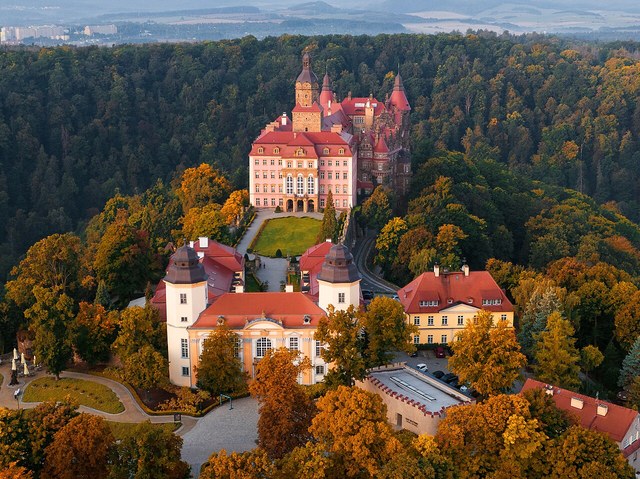
Silesia

Silesia
Lukaszmalkiewicz.pl · CC BY-SA 4.0

Central European region · medieval to modern · modern Poland, Czech Republic, Germany

Silesia was a mineral-rich Central European region whose 1740 Prussian invasion by Frederick the Great triggered the War of the Austrian Succession.

The kit

  • Medieval rule — Silesia was controlled by the Piast Dynasty as a duchy and passed from Bohemia to Poland to Hungary by 1469.
  • Prussian conquest — Silesia was invaded by Frederick the Great in 1740, violating the Pragmatic Sanction and sparking the War of the Austrian Succession against Maria Theresa.
  • Prussian retention — Silesia's control was established by Prussia at the Battle of Leuthen during the Seven Years' War after Maria Theresa failed to recapture it.
  • 20th-century partition — Silesia was awarded to Poland after Wojciech Korfanty's 1921 uprising culminating at the Battle of Annaberg, with its capital Breslau renamed Wrocław.

Runs with

Frederick the Great
War of the Austrian Succession
began with Frederick's 1740 invasion of Silesia open card →
Maria Theresa
lost Silesia to Frederick despite attempts to recapture it open card →
Prussia
seized Silesia from Austria in 1740s, retained it through Seven Years' War open card →

The ladder · 15 clues

H

Frederick the Great's 1740 occupation of this region triggered the War of the Austrian Succession.

H

The East Operation Group formed during one conflict in this region that included the Battle of Annaberg.

H

Wojciech [[VOH-chek]] Korfanty led an uprising in this region which culminated in the Battle of Annaberg against the Freikorps of the Weimar Government.

H

Mojmir I established the Great Moravian Empire in this region, and after a conflict in this region, the Duke of Brunswick surrendered Breslau to Charles of Lorraine.

H

Wilhelm von Bruddenbrock’s cavalry was routed at the Battle of Chotusitz during a subconflict named for this region, which also included the Battle of Mollwitz.

H

saw what productive province of her realm invaded by Frederick the Great, sparking the aforementioned war?

H

Though it is not Transylvania, a voivoideship in this region was granted control of Teschen and Ratibor in the 1920s.

M

The War of the Austrian Succession began with King Frederick II of Prussia’s invasion of this region, violating the Pragmatic Sanction.

M

A conflict ended by the Treaty of Aix-la-Chapelle began after this region was invaded by Frederick the Great. name this region at the center of the War of the Austrian Succession.

M

The Pragmatic Sanction failed to prevent an invasion of this mineral rich region, contested by Maria Theresa and Frederick the Great.

M

The Treaty of Versailles stipulated that the inhabitants of the Upper part of this region had to hold a plebiscite, involving an invasion of the southeastern Cieszyn (SEE-zin) subregion before being resolved by the Spa Conference.

M

FTP, identify this European territory famously ceded by Maria Theresa to Frederick II of Prussia.

M

This region’s capital was the city of Breslau, now known as Wrocław .

E

Frederick won this mineral rich Austrian province in the war. Nowadays, it is split between Poland, the Czech Republic, and Germany.

E

This region was awarded to Poland after an uprising in 1921, which changed this region’s capital’s name from Breslau to Wroclaw.

10 more clues from the record
H

German miners expelled from this region were relocated to the Ruhr Valley by the West German government.

H

Germans were expelled from this region after World War II, when it was awarded to Poland.

H

The Prussian victory at the Battle of Leuthen [LOY-tun] established control over this region during the Seven Years’ War. :Name this rich mining region won by Prussia during the War of the Austrian Succession.

H

This region was first inhabited by the Lygii and the Silingii, and Frederick Barbarossa appointed its first dukes, Boleslaw the Long and Henry the Bearded, who defeated the Tatars at Wahlstatt in 1241.

H

The most famous ruling family of this region were the Piasts, who somehow managed to retain rule as this area passed from Bohemia to Poland and then to Hungary in 1469.

H

Many of Maria Theresa’s troubles started in this affluent Bohemian province, which was invaded by Prussia at the start of the War of the Austrian Succession. She failed to recapture it in the Seven Years War.

H

This region, whose large cities include Katowice and Ostrava, was, by 990 CE, under the control of a nation that would control it until it became a duchy under a the Piast Dynasty.

H

The Auschwitz concentration camp was located in the upper part of this historical region, which was split between Germany and Poland following an inconclusive 1921 plebiscite.

H

A duke of this region called Henry II the Pious was killed in a battle fought against invading Mongols at Legnica (leg-NIT-zuh).

H

During one uprising in this region, a group called the “Werewolves” under Peter von Heydebreck (high-duh-BRECK) captured the Annaberg.

Watch out: Transylvania (also a mineral-rich region contested by European powers)
#126 · Subnational Regions, Provinces, and Territories · Level 1

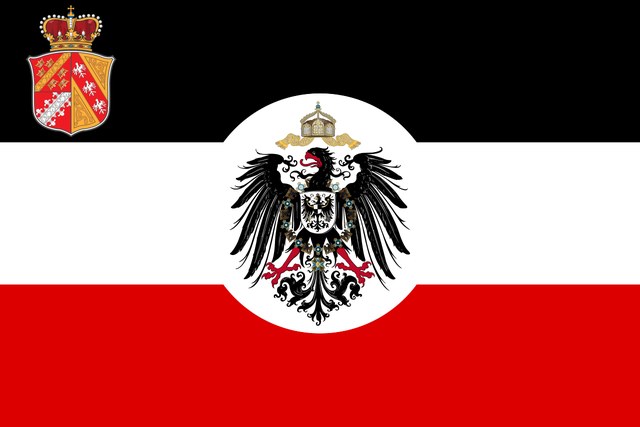
Alsace-Lorraine

Alsace-Lorraine
Drawing created by David Liuzzo · Attribution

Disputed border region · annexed 1871, returned 1919 · France-Germany border, Rhine

Alsace-Lorraine was a border region annexed by Germany after the Franco-Prussian War and returned to France after World War I.

The kit

  • Geography — Alsace-Lorraine contained 80 percent of France's iron ore deposits and included cities like Strasbourg, Nancy, Metz, and Colmar.
  • Franco-Prussian War — Alsace-Lorraine was ceded to Germany under the Treaty of Frankfurt, with residents given one year to relocate to France.
  • German rule — Alsace-Lorraine saw the Zabern Affair protests against Prussian military authority, leading to Theobald von Bethmann-Hollweg's censure.
  • Legacy — Alsace-Lorraine became the focus of French revanchism, championed by populist Georges Boulanger, and was reclaimed at Versailles in 1919.

Runs with

Franco-Prussian War
ceded to Germany after this war under Treaty of Frankfurt open card →
France
lost region in 1871, regained it at Versailles in 1919 open card →
Germany
annexed region in 1871, held until World War I open card →
Otto von Bismarck

The ladder · 15 clues

H

A brief republic was declared in this region following its transfer after World War I by the Soviet of Strasbourg. name this region named for two French provinces on the Rhine, annexed by Germany after the Franco-Prussian War.

H

Insults aimed at inhabitants of this region led to protests against the military known as the Zabern Affair, which caused the resignation of Theobald von Bethmann-Hollweg.

H

This territory was home to the southernmost Franconian dialects but also included a Romance speaking zone around Metz.

H

Men from this region conscripted into the German Army became known as malgré-nous.

H

The territory formed from two border regions that was annexed by Germany from its western neighbor?

H

Otto removed Conrad the Red as duke of this region.

H

It was divided into western and eastern sections by the Treaty of Meerssen, and it was split for good into Upper and Lower portions after the death of Bruno the Great. :Name this territory oft-disputed between East and West Francia, ruled first as a kingdom by a namesake grandson of Louis the Pius, and later ruled as a duchy.

M

Nancy was the capital of this region, which would become paired with Alsace after the Franco-Prussian war.

M

The eldest son of Louis the Pious claimed this region between France and Germany as part of the Treaty of Verdun.

M

The city of Colmar was once part of this region which lay west of Baden-Württemberg.

M

“Revanchism” was termed due to French desire to take back this region.

M

This other house intermarried into the Habsburg line after the Pragmatic Sanction in 1713, when Maria Theresa married Francis of this house, and other members governed Parma, Tuscany, and even Mexico under a Maximillian.

M

Most of France’s iron deposits were located in this region, which names the cross used as a symbol by the Free French. A duke of this region became Holy Roman Emperor after marrying the subject of the Pragmatic Sanction.

M

This French région borders the Saarland, and has traditionally been passed back and forth between Germany and France depending on who has won the most recent war between the two.

M

Bethmann Hollweg was censured while presiding over the Zabern Affair in this region. One and a half million residents of this region gained German citizenship under the Treaty of Frankfurt.

9 more clues from the record
H

The northern part of Middle Francia was split into upper and lower duchies with this name in 959. Annexed by France in 1766, it, together with much of Alsace, was partially re-annexed by Germany after the Franco-Prussian War.

H

At the time of their transfer, these two territories contained 80 percent of France's known iron ore deposits. :Name these two territories that France ceded to the Germans after its defeat in the Franco-Prussian War.

H

The War of Polish Succession ended in Stanislaw Leszcynski gaining this territory in exchange for French support of the Pragmatic Sanction. Following Leszcynski’s death, this territory with capital at Nancy became French.

H

World War I ended with many land exchanges. :At the Treaty of Versailles, France took back this territory along the border with Germany. Its capital is Strasbourg.

H

Residents of these two regions were given a year to move to France under the Treaty of Frankfurt. :Name these two territories that were taken from France following the Franco-Prussian War.

H

The Zabern affair in this region in 1913 occurred when two regiments of Prussian soldiers arbitrarily put it under martial law.

H

The flag of this region is known as the Rot un Wiss and dates back to the 11th-century rule of Duke Gerard the Wonderful.

H

The revanchist cause for this territory was the key issue for populist leader Georges Boulanger.

M

Nancy and Metz are located in what region, part of which was lost to Germany along with Alsace?

Watch out: Lorraine alone (Nancy was capital of Lorraine before it was paired with Alsace)
#132 · Other Named Wars and Armed Conflicts · Level 1

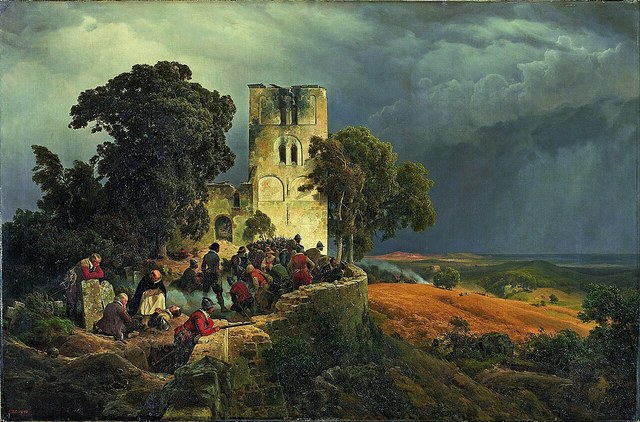
Thirty Years' War

Thirty Years' War
bdi Karl Friedrich Lessing /span /a · Public domain

European religious war · 1618–1648 · primarily Germany and Holy Roman Empire

Thirty Years' War was a 1618–1648 conflict between Protestant and Catholic alliances fought largely in Germany, ended by the Peace of Westphalia.

The kit

  • Outbreak — Thirty Years' War began with the Second Defenestration of Prague in 1618, when Protestant nobles threw Imperial officials from windows.
  • Major battles — Thirty Years' War saw Protestant forces win at Battle of Breitenfeld but lose their champion Gustavus Adolphus at Battle of Lützen.
  • Key phases — Thirty Years' War included a Danish phase ended by the Treaty of Lübeck and a Swedish phase following the Treaty of Stettin.
  • Resolution — Thirty Years' War ended with the Peace of Westphalia after the duc d'Enghien defeated Spain at Battle of Rocroi.

Runs with

Gustavus Adolphus
Swedish king who died at Battle of Lützen fighting for Protestants open card →
Peace of Westphalia
1648 treaty that ended the war open card →
Prague
site of 1618 defenestration that sparked the war open card →
Sweden
Protestant power that intervened, occupying Pomerania under Treaty of Stettin open card →

The ladder · 15 clues

H

During this war, the Duc of Enghein won the second Battle of Nordlingen and defeated a Spanish invasion at the Battle of Rocroi.

H

The Treaty of Stettin allowed one nation to occupy the Duchy of Pomerania and began a phase in this conflict which would end after the death of Gustavus Adolphus.

H

Ended by the Peace of Westphalia, name this war between Protestants and Catholics fought largely in Germany, named for its length.

H

One participant in this war was advised by Axel Oxenstierna, won the Battle of Breitenfield, and was killed at the Battle of Lutzen.

H

A sub-war within this larger conflict named for general Lennart Torstenson resulted in Sweden's annexation of Gotland, Saaremaa [[sah-reh-MAH]], and Halland with assistance from the Dutch Republic. During this war, Saxony and Brandenburg-Prussia led the formation of the Heilbronn League in the wake of the Battle of Lutzen.

H

The Battle of Dessau Bridge took place in this war, which Denmark withdrew from via the Treaty of Lubeck.

H

Albrecht von Wallenstein’s forces at the Battle of Lutzen killed Gustavus Adolphus during this war.

M

In this war, Frederick the Winter King was forced to abdicate after losing to Hapsburg forces at the Battle of White Mountain.

M

The Catholic League under Count Tilly lost at the Battle of Breitenfeld in this war, in which Gustavus Adolphus died at the battle of Lützen.

M

This war’s Battle of the Rain led to the death of Count Tilly and his replacement by Albrecht von Wallenstein.

M

Gustavus Adolphus died in this war, largely between Protestant and Catholic alliances, ended by the Treaty of Westphalia.

M

Ended by the Peace of Westphalia, name this war largely fought between Protestants and Catholics in the Holy Roman Empire from 1618 to 1648.

E

The Second Defenestration of Prague kicked off this war which was ended by the Peace of Westphalia. name this conflict that raged from 1618 to 1648.

E

The Peace of Westphalia ended this 17th century European war sparked by the Second Defenestration of Prague.

E

This war began when Protestants led by Count Thum [] committed the "Second Defenestration of Prague." name this 17th-century war primarily fought in Germany, ended by the Treaty of Westphalia.

10 more clues from the record
H

The Augsburg Settlement only stalled the religious tensions that led to the outbreak of this European conflict. The Second Defenestration of Prague sparked this conflict that was ended by the Peace of Westphalia.

H

The more famous 1618 Defenestration of Prague led to this conflict, whose Bohemian phase ended with the Battle of White Mountain. This conflict pitted the Catholic League against various Protestant kingdoms.

H

One side in this war lost the Battle of Rain when a general was able to cross the Lech River while the enemy was bombarded by artillery.

H

During this war, the end of the House of Gonzaga resulted in the War of the Mantuan Succession.

H

The Edict of Restitution was passed during the Danish phase of this conflict by Holy Roman Emperor Ferdinand II.

H

During one battle in this war, Jean de Gassion led a successful cavalry charge that allowed one commander to encircle forces under Francisco de Melo.

H

One side in this war employed a light cavalry whose cries of “Cut them down!” led to them being called the Hackapells.

H

The city of Magdeburg was besieged ten times during this conflict, and peace settlements began after the duc d'Enghien defeated the Spanish at the Battle of Rocroi.

H

One side in this conflict was at one point led by Axel Oxenstierna while one phase in this conflict was ended by the Battle of White Mountain.

H

During this conflict, the conclusion of the Uskok War allowed an Imperial army under Count Bucquoy to defeat Count Mansfeld at the Battle of Sablat.

Watch out: Battle of White Mountain (ended only the Bohemian phase, not the entire war)
#135 · Other Named Wars and Armed Conflicts · Level 1

Crimean War

Crimean War
ul li William Simpson, artist (1823-1899) /li li E[dmond]. M · Public domain

1850s Russo-European war · 1853–1856 · Crimean Peninsula, Black Sea

Crimean War was an 1850s conflict in which Britain, France, the Ottoman Empire, and Sardinia defeated Russia on a Black Sea peninsula.

The kit

  • Major battles — Crimean War featured the Siege of Sevastopol, the Battle of Balaclava with its disastrous Charge of the Light Brigade, and the Thin Red Line stand.
  • Medical care — Crimean War saw Florence Nightingale earn fame as "The Lady with the Lamp" for nursing wounded soldiers, while Mary Seacole ran the British Hotel.
  • Documentation — Crimean War was documented by Roger Fenton's photographs, including "Valley of the Shadow of Death," and journalist William Howard Russell's battlefield reporting.
  • Outbreak — Crimean War began with Russia's failed invasion of the Danubian Principalities and a Russian naval victory at Sinope using explosive shells.

Runs with

Russia
lost war against alliance of European powers open card →
Florence Nightingale
gained fame nursing wounded soldiers as Lady with the Lamp open card →
Black Sea
fought on Crimean Peninsula along its coast open card →
France
allied with Britain and Ottomans against Russia open card →

The ladder · 15 clues

H

That infantry corp, the Italian Bersaglieri, fought in the Battle of the Chernaya and the Siege of Sevastopol during this war. name this war, fought between an alliance of Britain, France, Turkey, and Sardinia against Russia on a namesake peninsula.

H

This war was prompted when one nation sent the gunship Charlemagne, a violation of the London Straits Convention.

H

Photographer Roger Fenton traveled to battle sites in this war, where he took photos of many cannonballs on a road in what he titled “Valley of the Shadow of Death.” Another photo by Fenton from this conflict shows the railway station at Balaclava.

H

During this war, the “British Hotel,” where sick soldiers were quartered and fed, was cofounded by the Jamaican immigrant Mary Seacole.

H

You must die where you stand.” A Roger Fenton photograph taken during this conflict depicts cannonballs lying scattered on a deserted road.

H

The first engagement in this war began in Wallachia at the Battle of Oltenita.

H

Lord Raglan was criticized for another failed siege during this war.

M

This war’s Battle of Balaclava included the heroism of the Thin Red Line and the disastrous Charge of the Light Brigade.

M

This war featured a clash between cavalry and British highlanders which led to the term “thin red line.” Florence Nightingale was called “The Lady with the Lamp” for her role in this war.

M

The Thin Red Line participated in the Battle of Balaclava, part of the effort to besiege Sevastopol during this war.

M

During this earlier war, an error by Lord Raglan led to British cavalry charging through a different “Valley of Death” during the Battle of Balaclava.

M

Another poem about this conflict describes riding into the “jaws of Death” and “mouth of Hell.” That poem describes the “half a league, half a league, half a league onward” that a group of six hundred rode “into the valley of Death” near the city of Sevastopol.

E

The Siege of Sevastopol occurred in this war named for a Russian peninsula on the Black Sea.

E

Florence Nightingale received the nickname “Lady with the Lamp” for tending to soldiers wounded in this war.

E

The Charge of the Light Brigade took place in this war fought on a peninsula on the Black Sea.

10 more clues from the record
H

This war began with a failed invasion of the Danubian Principalities.

H

During this war, the Russian fleet won a victory at the Battle of Sinope [[sin-OH- pee]] thanks to the use of explosive shells, but the battle led other nations to join in this war against Russia.

H

Isambard Kingdom Brunel designed the prefabricated Renkioi Hospital for use during this war.

H

During this conflict, Timothy the Tortoise was the mascot for an artillery ship.

H

Answer the following about Florence Nightingale, :Nightingale rose to fame for serving as a nurse during this war, which included fighting at the Battle of Balaclava and the Siege of Sevastopol.

H

Pioneering celebrity chef Alexis Soyer designed a "magic stove" for soldiers in this war, which was documented by journalist William Howard Russell and photographer Roger Fenton.

H

The siege of Sevastopol was a key event in this 1850s war, in which Russia lost to an alliance of opponents including France, Britain, and the Ottomans.

H

The final conflict of this war was fought by William Williams, who led a contingent of forces that fought Muravyov-Karsky at the town of Kars.

H

Mary Seacole ran a hospital for soldiers injured on the front of this war, which William Howard Russell gained fame for reporting on.

H

One participant in this war developed namesake “rose diagrams” to visualize the causes of death among soldiers in a field hospital.

Watch out: Battle of Balaclava (in this war) vs. Balaklava helmet (different origin)
#136 · Other Named Wars and Armed Conflicts · Level 1

Seven Years' War

Seven Years' War
Blaue Max · CC BY-SA 4.0

global European conflict · 1756–1763 · Europe, North America, India

The Seven Years' War was a global conflict from 1756 to 1763 involving European powers fighting across multiple continents.

The kit

  • Rise — Seven Years' War began with Frederick the Great's invasion of Saxony following the Diplomatic Revolution, which reversed traditional alliances by pairing France with Austria and Britain with Prussia.
  • Achievements — Seven Years' War saw British victories including Robert Clive's recapture of Calcutta and triumph at Plassey over Siraj ud-Daulah, plus Frederick's victories at Rossbach and Leuthen.
  • Conflicts — Seven Years' War included the Prussian defeat at Kunersdorf by Saltykov and Loudon, the execution of Admiral John Byng after losing Minorca, and the Battle of Quiberon Bay during the Annus Mirabilis.
  • Legacy — Seven Years' War ended with the 1763 Treaty of Paris making Canada British and the Treaty of Hubertusburg preserving Prussian boundaries after the Miracle of the House of Brandenburg saved Frederick.

Runs with

French and Indian War
North American theater of this war open card →
Prussia
Led by Frederick the Great against Austria open card →
France
Allied with Austria, lost Canada to Britain open card →
Treaty of Paris
Ended war between Britain and France in 1763 open card →

The ladder · 15 clues

H

The Diplomatic Revolution led to the setup of this war’s alliances.

H

During this war, Robert Clive recaptured Calcutta and followed that with a victory over Siraj ud-Daulah, the Nawab of Bengal, at Plassey.

H

This war’s victor was saved by the death of rival Empress Elizabeth, an event termed the “Miracle of the House of Brandenburg.” The Treaty of Hubertusburg allowed the winner of this conflict to keep its pre-war boundaries.

H

In this war, the Siege of Madras and the Battle of Quiberon Bay occurred during the Annus Mirabilis.

H

During this war, John Byng was executed for failing to stop the “fall” of Minorca. In a theater of this war, twelve Mingo warriors helped win the Battle of Jumonville Glen.

H

This war began with a British naval defeat at Minorca, leading to the execution of British commander John Byng, and a land battle at Lobositz.

H

During this war, one king defeated a force led by the Prince de Soubise and Joseph of Saxe-Hildburghausen.

M

This war was preceded by a change in alliances, in which France allied with Austria and Britain allied with Prussia, and it was ended by a 1763 Treaty of Paris.

M

Saltykov [SALT-yuh-koff] and Loudon [loo-dohn] dealt a heavy loss to the Prussians at Kunersdorf [KOON-urs-dorf] in this war in which Rossbach [ROSS-bock] and Leuthen [LOY- tunn] were sites of victories by Frederick the Great.

M

It began with an invasion of Saxony and ended with the Treaty of Paris between Britain and France. name this global war between European powers that ended in 1763, often considered the first “World War” for its theaters in North America and India.

M

William Pitt the Elder served as Prime Minister during this war. It was known as the French and Indian War in America.

M

It followed the War of the Austrian Succession in a series of “world wars.” The French and Indian War was the American theater of——what war that lasted from 1756 to 1763, the namesake period of time?

E

Frederick the Great participated in this expansive conflict that included the French and Indian War.

E

Canada became a British colony after the Treaty of Paris that ended this war. name this worldwide war that lasted from 1756 to 1763.

E

This war’s European campaign included French defeats at the Battles of Minden, Villinghausen, Krefeld, and Rossbach.

10 more clues from the record
H

A string of British victories in this war led one year to be termed the Annus Mirabilis.

H

A smaller conflict within this war was known as the Fantastic War, in which Portugal defeated Spain.

H

A commander in this conflict successfully concluded a defense of his territory in the Treaty of Hubertusburg; that man nearly committed suicide after a loss at Kunersdorf, though he had earlier won a great victory at Rossbach in this war.

H

In this war, Hanover was forced to withdraw after the Convention of Klosterzeven, then re-entered after the Battle of Rossbach.

H

In this war, the French captured Minorca [min-OR-cuh], which was returned at its end.

H

During an offshoot of this conflict, a series of small mountain shelters called the Casuchas del Rey were constructed to improve communication for a state that dispatched expeditions led by Pedro Antonio de Cevallos to capture Colonia del Sacramento.

H

Shortly after the onset of this war, Admiral John Byng was executed for losing the island of Minorca. Colonel William Draper successfully defended Madras during this conflict, whose Indian theater was called the Third Carnatic War.

H

John Byng was executed for failing to carry out a naval attack at the beginning of this war. :Name this war in which forces under John Wolfe captured Quebec. It was a great success for the British Empire under the leadership of William Pitt.

H

This conflict is sometimes known as the first truly world-wide conflict. FTPE:It saw victories for Prussia at the battle of Kunersdorf, which would have lost the war if not for the fortunate death of Elizabeth I of Russia.

H

Battles during this war included Rossbach and Leuthen, and treaties related to its end includ the Truce of Hamburg. :Identify this war, also known as the Third Silesian war, begun in 1756 by Frederick the Great of Prussia.

Watch out: Confused with War of the Austrian Succession, which immediately preceded it in the series of global conflicts
#137 · Other Named Wars and Armed Conflicts · Level 1

Franco-Prussian War

Franco-Prussian War
bdi Anton von Werner /span /a · Public domain

1870-71 European conflict · 1870–1871 · France and German states

The Franco-Prussian War was the 1870-71 conflict instigated by Bismarck that unified Germany and toppled Napoleon III's Second Empire.

The kit

  • Outbreak — Franco-Prussian War began after Bismarck edited the Ems Dispatch to provoke France into declaring war on Prussia.
  • Major battles — Franco-Prussian War saw French defeats at Sedan where Napoleon III was captured and at Gravelotte where Krupp artillery overcame Chassepot rifles.
  • Siege operations — Franco-Prussian War featured the Siege of Metz trapping Marshal Bazaine's Army of the Rhine and blocking relief by the Army of Châlons.
  • Outcome — Franco-Prussian War ended with the Treaty of Frankfurt, which gave Alsace-Lorraine to Germany and completed German unification under Prussian leadership.

Runs with

Napoleon III
captured at Sedan, regime collapsed open card →
Alsace-Lorraine
ceded to Germany by Treaty of Frankfurt open card →
Nanda Empire
Otto von Bismarck
instigated war by editing Ems Dispatch open card →

The ladder · 15 clues

H

During this war, the volunteer Army of the Vosges [vohzh] came to the aid of the losing side.

H

Oskar van Blumenthal sent Constantin von Alvensleben to Metz in this war’s Battle of Mars-la-Tour, which saw the retreat by the Army of the Rhine.

H

One side’s attack on Saarbrucken early in this war showed the value of their Chassepot [sha-say-poh] rifles, but was defeated at the Battle of Wissembourg [VISS-em-boorg].

H

The Army of Chalons was formed during this war to rescue troops encircled at Metz, and this war was ended by the Treaty of Frankfurt.

H

Bismarck’s editing of the Ems Dispatch sparked this 1870-71 conflict with his western neighbor, whose leader, Napoleon III, was captured at Sedan and lost Alsace-Lorraine.

H

Otto von Bismarck helped instigate this war in 1870 by editing the Ems Telegram to make it seem like the Prussian king had insulted a rival.

H

Name these things associated with the unification of Germany .Germany had been unified after various German lands had come together to defeat France in this war in 1870.

M

The Chassepot rifle was unable to defeat steel Krupp artillery in this war, which saw Marshal Bazaine was besieged in Metz with the Army of the Rhine.

M

After this war, Baden, Wu¨rtemburg, and Bavaria joined a country that also gained Alsace-Lorraine through the Treaty of Frankfurt.

M

Helmuth von Moltke pincered the Army of Châlons [[shah-LOHN]] while it was en route to relieve the Siege of Metz during this war.

M

Other engagements in this war saw the successive defeat of forces under Bazaine at the battles of Mars-la-Tour and Gravelotte.

M

In this war, Léon Gambetta escaped his capital in a hot air balloon to organize resistance.

E

1870 to 1871 was between Otto von Bismarck and Napoleon III during which Hans Herzog was Swiss General.

E

Bismarck instigated this war by sending the Ems Dispatch, and the Napoleon III regime collapsed after their loss at Sedan. name this 1870-71 war between the Second Empire and a German confederation.

E

Napoleon III was captured at the Battle of Sedan during this war.

10 more clues from the record
H

This war caused the Second French Empire to collapse and led to the Government of National Defense being appointed after a popular revolt.

H

One dramatized document related to this conflict related a meeting between Count Vincent Benedetti and one side’s leader.

H

It is not World War One, but the Armistice of Versailles ended this war, nd was signed by Jules Favre.

H

In one story set during this war, characters satirically described as “representatives of virtue” ignore the title character, even though she had a picnic basket of food with those characters.

H

In that story, a caravan of refugees from this war accidentally wander into an inn held by the enemy, and are only let go when a prostitute sleeps with the enemy officer.

H

The Battle of Gravelotte was the largest battle during this conflict which was brought about due to an altered telegram sent to one side’s ruler in the spa town of Ems.

H

During this war, murderous mitrailleuse [mih-tray-uhs] and Chassepot [shass-poh] fire stalled one side’s attacks at the Battle of Gravelotte.

H

The superiority of Krupp artillery proved decisive during this war’s Battle of Gravelotte, and its Battle of Beaumont preceded a disastrous defeat that resulted in the capture of a leader.

H

During this war, the International Red Cross established the first “Basel [[BAH- zuhl]] Agency” which tracked POW numbers and locations.

H

One of the first engagements in this conflict was the Battle of Wörth, which followed a brief advance towards Saarbrücken.

#140 · Other Named Wars and Armed Conflicts · Level 1

English Civil War

English Civil War
Unknown author Unknown author · Public domain

17th-century British conflict · 1642–1651 · England, Scotland, Ireland

English Civil War was a series of conflicts between Royalist Cavaliers and Parliamentarian Roundheads that resulted in Charles I's execution and Oliver Cromwell's rise.

The kit

  • Opening battles — English Civil War began with a siege of a weapons depository at Hull and the Battle of Edgehill featuring Prince Rupert's cavalry.
  • Parliamentary victory — English Civil War saw the New Model Army defeat Prince Rupert at Marston Moor and Naseby, leading to Royalist collapse at Worcester.
  • Political transformation — English Civil War produced Pride's Purge, which reduced the Long Parliament to the Rump Parliament that tried Charles I for treason.
  • Cromwell's ascendancy — English Civil War ended with Charles I's execution and Oliver Cromwell's rise as Lord Protector during a decade-long interregnum.

Runs with

Charles I
executed for treason after trial by Rump Parliament open card →
Oliver Cromwell
led Parliamentarians to victory, became Lord Protector open card →
Gilbert Stuart
New Model Army
defeated Royalists at Marston Moor and Naseby open card →

The ladder · 15 clues

H

During this conflict, Prince Rupert of the Rhine lost the battles of Marston Moor and Naseby to the New Model Army.

H

After a defeat in this war’s Battle of Worcester, a man who was later restored as king of his country escaped pursuit by hiding in the Royal Oak.

H

The opening fighting of this war was the Battle of Edgehill, in which one side characteristically included cavalry commander Prince Rupert.

H

The Engagers took part in the Putney debates and were crushed at the battle of Preston during this war.

H

In the “Storm over the Gentry”, Trevor-Roper argued with the Marxist Christopher Hill over the causes of this war. That debate centered on the class status of leaders of this war like Oliver Cromwell and Thomas Fairfax.

H

A siege of a weapons depository at Hull marked the beginning of this conflict, during which the “Ironsides” were an elite cavalry unit.

H

One of the causes of this conflict was the marriage of Henrietta Maria 17 years beforehand, and it was preceded by a period known as the Eleven Years’ Tyranny.

M

Prince Rupert of the Rhine was decisively defeated at Marston Moor during this conflict, in which Pride’s Purge abolished the Long Parliament.

M

During this conflict, the Long Parliament was shrunk into the Rump Parliament, which tried Charles I for treason.

M

The Diggers were a dissenting group that arose during this conflict between Roundheads and Cavaliers.

M

During this war, Richard Overton led a group of agitators against grandees like Henry Ireton at the Putney Debates.

M

In this war, Prince Rupert hid in a bean field after his cavalry were outflanked at the Battle of Marston Moor.

E

The New Model Army was created during this war, whose opposing sides were nicknamed the Cavaliers and the Roundheads. name this war that culminated with the execution of Charles I on the orders of Oliver Cromwell.

E

This conflict, a clash between the Cavaliers and the Roundheads, included the execution of Charles I. Oliver Cromwell participated in this war for control of a European nation.

E

This war, with battles at Worcester [[WOO-ster]] and Marston Moor, ended with the rise of the Lord Protector, Oliver Cromwell. name this war which resulted in the death of the Stuart monarch, Charles I.

10 more clues from the record
H

One of the longest-held prisoners from Pride's Purge was William Waller, who participated in this 1639 to 1653 series of conflicts between England, Scotland, and Ireland, which included the Bishops' Wars, the English Civil Wars, and Oliver Cromwell's conquests.

H

The chaos of this conflict led to the rise of the proto-anarchist radicals known as “The Diggers,” who sought to farm communal land.

H

An imprisoned leader in this war struck an alliance, dubbed The Engagement, with a subset of the Covenanters.

H

Conflict which he and his Parliamentarians won over the Royalists, facilitating his rise to power.

H

The Treaty of Newport was one attempt to end this conflict.

H

Shortly before the outbreak of this conflict’s first phase, the reigning monarch involved issued the “Wellington Declaration,” stating he’d uphold the “Protestant religion.” Soon after that monarch’s forces fought an army led by Robert Deveraux, the Earl of Essex, at the Battle of Edgehill, opening hostilities in this conflict.

H

By the time of this conflict, the punishment of cunning folk was transferred from ecclesiastical to secular courts in one country. Self-proclaimed “Witchfinder General” Matthew Hopkins executed about 100 people for witchcraft during this conflict, but local support prevented him from going after cunning folk.

H

Like the Wars of the Roses two centuries earlier, this conflict included a confusing number of smallerwars and conflicts, many of which involved the New Model Army.Name this seventeenth-century war between the Royalists and the Parliamentarians that led to a decade-longinterregnum.

H

A derisive nickname given to factions in this conflict came from comparison to Spanish knights that oppressed Dutch protestants, while another faction gained its own derogatory nickname from their closely cropped short hair cuts.

H

The rapid enclosure that later laid the basis for the industrial revolution took place largely during these conflicts, which saw battles at Edgehill, Langport, Naseby, and Worcester and saw Oliver Cromwell overthrow Charles I.

Watch out: Wars of the Roses (also multi-phase English dynastic conflict two centuries earlier)
#141 · Other Named Wars and Armed Conflicts · Level 1

War of the Spanish Succession

War of the Spanish Succession
DavidDijkgraaf · CC0

European dynastic war · 1701–1714 · Europe, North America

War of the Spanish Succession was a European conflict fought to prevent the union of the French and Spanish crowns under the Bourbon dynasty.

The kit

  • Cause — War of the Spanish Succession began when childless Habsburg Charles II bequeathed the Spanish throne to Bourbon Philip V in 1701.
  • Major battles — War of the Spanish Succession saw the Duke of Marlborough and Eugene of Savoy win victories at Blenheim, Ramillies, and Malplaquet against French forces.
  • North American theater — War of the Spanish Succession was called Queen Anne's War in North America, where the British captured Port Royal in Acadia.
  • Resolution — War of the Spanish Succession ended with the Treaty of Utrecht, which granted Britain Gibraltar and the asiento slave-trade monopoly.

Runs with

Charles
Charles II's death without heirs triggered the succession crisis open card →
Treaty of Utrecht
ended the war in 1713–14 open card →
Philip
Philip V's accession as Spanish king sparked the conflict open card →
Louis XIV
supported grandson Philip V's claim to Spanish throne open card →

The ladder · 15 clues

H

Queen Anne’s War was an extension of this war, and during this war, the Battle of Ramillies was won by the Duke of Marlborough, who also won at the Battle of Blenheim.

H

Two Partition Treaties were signed to prevent this war, while the Barrier Treaties allowed one of the victors to set up a series of forts as a buffer.

H

The Duc de Villars won the Battle of Friedlingen during this conflict.

H

The Battle of Blenheim was part of this war, which also included the Battle of Malplaquet. It was fought over whether the House of Bourbon would unite the thrones of France and an Iberian nation.

H

One side in this conflict was forced to abandon the Siege of Turin after their defeat by Victor II Amadeus and his cousin at the Battle of the Stura.

H

The Battle of Blenheim occurred during this conflict, known as Queen Anne's War in the Americas, which was sparked by the death of the Habsburg king Charles II.

H

The Duc of Villeroi lost the Battle of Ramillies in this war.

M

The capture of Port Royal in Acadia occurred in its North American theater, which was called Queen Anne’s War.

M

The Duke of Marlborough partnered with Eugene of Savoy during their many victories during this war, which was ended by the Treaty of Utrecht.

M

Great Britain gained Gibraltar after this war, during which Marshal Tallard was crushed at the Battle of Blenheim [BLEN-um].

M

The Treaty of Rastatt was signed during this conflict, after which the English were given control of the asiento.

M

A monopoly over the slave trade was given to England in the treaty ending this conflict.

E

The Treaty of Utrecht ended this war that broke out in 1701 after Philip V became the king of a certain Iberian country.

E

The forces of Eugene of Savoy and the Duke of Marlborough won the Battle of Blenheim during this conflict.

E

Great Britain was granted the asiento in the Treaty of Utrecht that ended this war. name this war fought over the throne of its namesake Iberian country.

10 more clues from the record
H

Charles II’s bequeath of the throne to Phillip V was the nominal cause of this war. :Name this European conflict which raged from 1701 to 1714.

H

An army in this war supporting future Holy Roman Emperor Charles VI won a Pyrrhic victory under Eugene of Savoy at Malplaquet.

H

In North America, this conflict was known as Queen Anne’s War. :Name this war which was fought to prevent the uniting of the French and Spanish crowns.

H

A set of “Barrier Treaties” were signed during this war, which Ferenc Rákóczi used as an opportunity to lead an independence revolt.

H

In this conflict, George Rooke fought a French fleet to a standstill off the coast of Malaga after capturing Gibraltar.

H

The expulsion of residents who were later dubbed "Cajuns" occurred during this war's American theater, known as "Queen Anne's War." The death of the childless Charles II, a member of the Habsburg family, led to this multi-continental war.

H

During this war, Sébastien Rale [[RAH-leh]] had a price put on his head by Massachusetts governor Joseph Dudley, who wrongly assumed he had led a raid in Maine.

H

A 70-day siege of Tournai [[toor-NAY]] occurred during this conflict, in which one side lost over 10,000 men in a victory over the Duke of Villars.

H

Great Britain gained a monopoly on the Atlantic slave trade when the asiento was transferred at the end of this war, in which the Battle of Blenheim [BLEN-em] was fought.

H

During this war, the Treaty of Ilbersheim stripped Maximilian Emanuel of his lands after he was defeated, along with the Duc de Tallard, near Hochstadt.

Watch out: Queen Anne's War (the North American theater, not a separate conflict)
#143 · Other Named Wars and Armed Conflicts · Level 1

Great Northern War

Great Northern War
Imonoz · CC BY-SA 4.0

Early 18th-century conflict · 1700–1721 · Northern Europe

The Great Northern War was an early 18th-century conflict in which a Russia-led coalition curbed Sweden's growing power in Northern Europe.

The kit

  • Opening phase — The Great Northern War began with Sweden's Charles XII defeating Russia at Narva in a blinding snowstorm despite being outnumbered.
  • Turning point — The Great Northern War's decisive battle was Poltava in 1709, where Peter the Great crushed Charles XII's army after Cossack leader Ivan Mazepa defected to Russia.
  • Naval battles — The Great Northern War saw Russia achieve its first naval victory at Gangut, with the final decisive naval engagement occurring at Grengam.
  • Resolution — The Great Northern War ended with the Treaty of Nystad in 1721, forcing Sweden into an Age of Liberty and confirming Russia's dominance.

Runs with

Peter the Great
defeated Charles XII at Poltava and won the war open card →
Sweden
lost its Baltic dominance after Charles XII's defeat open card →
Russia
led the coalition and gained Baltic territories open card →
Charles
Charles XII won at Narva but lost at Poltava open card →

The ladder · 15 clues

H

One leader during this war was killed at the Siege of Fredriksten, after he convinced one country to conduct the Pruth River Campaign.

H

One side in this war accomplished its first ever naval victory in the Battle of Gangut, while the final, decisive naval battle in this war was the Battle of Grengam.

H

This war’s winning side was forced to return Azov to the Ottoman Empire after a failed campaign on the Pruth River.

H

One side was forced to withdraw from this war in the Treaty of Traventhal.

H

Augustus the Strong was dethroned during this war, and one side in this war attacked in a blinding snowstorm, winning the Battle of Narva.

H

The losing ruler of this conflict was shot and killed during a siege of Fredriksten.

H

However, that army in this conflict was later decimated when it was forced to retreat through the Tydal mountains in an action called the Carolean Death March.

M

Augustus the Strong entered this war to win Livonia for Poland.

M

To this day, the navy of one side of this war always has one ship named Gangut, named after a victorious battle during this war.

M

The Greater Wrath and this war were ended by the Treaty of Nystad.

M

Poland-Lithuania participated in this early 18th century war in which a Russia-led coalition curbed the growing power of Sweden.

M

In this war’s decisive battle, one side’s attempts to appoint Alexander Menshikov as head of the Cossacks led Ivan Mazepa to defect.

E

The Treaty of Nystad ended this war in which Sweden’s Charles XII was defeated by Peter the Great of Russia.

E

Despite an early victory at Narva, a European empire faded after Carl Gustav Rehnskiold was crushed at Poltava. name this 18th century war between Peter the Great of Russia and Charles XII of Sweden.

E

During this conflict, Charles XII lost the Battle of Poltava to Peter the Great. name this 18th century war in which Sweden was defeated by Russia.

10 more clues from the record
H

A leader in this war was lampooned as a coward for leaving his army under the command of the foreigner Charles Eugène de Croÿ the night before a major battle.

H

One treaty signed during this war handed over its instigator, the Livonian Johann Patkul, and replaced Augustus the Strong on the throne.

H

The brutal occupation of one region during this war was known as the “Greater Wrath.” Johann Patkul was executed by one side in this war for treason.

H

A breaking wheel was used to execute Johann Patkul after one treaty during this conflict, during which the Peace of Travendal and Treaty of Altranstadt were concluded.

H

The losing side of this war entered a period of democracy known as the “Age of Liberty” after signing the Treaty of Nystad.

H

During this war, the fortress of Tonning was besieged twice, with the first siege being lifted by the Peace of Travendal.

H

In a poem set during this war, a daughter of the nobleman Kochubei named Maria falls for the central character; that poem was inspired by a Lord Byron work about a figure in this war who served under John II Casimir.

H

During this war, an imprisoned king rode across Europe in fifteen days to rejoin his troops, only to die a few years later at the siege of Frederiksten.

H

Following a battle in this war, a monarch fled into the protection of Sultan Ahmed III and sparked the Pruth River Campaign.

H

The turning point of this war saw General Adam Lewenhaupt and his Caroleans defeated while attempting to storm the Great Redoubt.

Watch out: Battle of Narva was an early Swedish victory, not a Russian one
#144 · Other Named Wars and Armed Conflicts · Level 1

War of the Austrian Succession

War of the Austrian Succession
DavidDijkgraaf · CC0

European dynastic conflict · 1740–1748 · Europe, North America, India

War of the Austrian Succession was a 1740–1748 conflict sparked by Frederick the Great's invasion of Silesia after Maria Theresa's accession to the Habsburg throne.

The kit

  • Causes — War of the Austrian Succession began when Frederick the Great invaded Silesia following Emperor Charles VI's death and disputes over the Pragmatic Sanction.
  • Major battles — War of the Austrian Succession saw Prussian victories at Mollwitz and Hohenfriedberg and Maurice de Saxe's triumph over the Duke of Cumberland at Fontenoy.
  • Global theaters — War of the Austrian Succession included King George's War in North America, the First Carnatic War in India, and merged with the War of Jenkins' Ear.
  • Resolution — War of the Austrian Succession ended with the Treaty of Aix-la-Chapelle in 1748, celebrated by Handel's Music for the Royal Fireworks.

Runs with

Maria Theresa
her disputed succession to Habsburg throne sparked the conflict open card →
Silesia
Frederick the Great's invasion of this region began the war open card →
Prussia
won key battles at Mollwitz and Hohenfriedberg open card →
Frederick the Great
invaded Silesia to trigger the war's outbreak open card →

The ladder · 15 clues

H

A Prussian army won the Battle of Hohenfriedberg during this war.

H

During this war, Charles Hay’s troops toasted his enemies and asked them to fire first; Maurice de Saxe prevailed over the Duke of Cumberland in that Battle of Fontenoy.

H

sparked what 1740 to 1748 war supposedly over whether she could inherit the throne?

H

The American theater of this war began when Spanish captain Juan de Le ́on Fandin o cut off Robert Jenkins’s ear as a penalty for smuggling.

H

Conflated with the naval War of Jenkins Ear, a British expedition captured a French fortress on Cape Breton Island in this North American analog of the War of the Austrian Succession.

H

This war, which saw the Battles of Assietta and Chotusitz, began with the defeat of Neipperg at the Battle of Mollwitz.

H

An 86 year old general in this conflict led the defense of the fortress town Bergen op Zoom, which resulted in a French victory.

M

The Battle of Dettingen, fought in this war, was the last time a British monarch led troops into battle, and Louisbourg was captured during this war’s American phase, King George’s War.

M

The second Treaty of Aix-la-Chapelle ended this war, which began when Prussia’s Frederick II invaded Silesia after the death of Emperor Charles VI.

M

The treaty that ended this conflict saw the Duchies of Parma and Piacenza ceded to the Spanish and was signed at Aix–la-Chapelle .

M

The 1745 capture of Louisbourg occurred in the North American theatre of this war, which was called King George’s War.

M

The First Carnatic War and King George's War were extensions of this conflict.

E

The treaty of Aix-la-Chapelle ended this war fought after Maria Theresa’s ascension to the Habsburg throne.

E

Disagreements over whether Charles VI could violate Salic law in proclaiming his heir helped prompt this war, which began when Silesia was invaded by Frederick the Great of Prussia. name this 1740 war over Maria Theresa’s succession to a Habsburg throne.

E

The War of Jenkin’s Ear was a subsidiary of this war, which was sparked by Frederick the Great’s invasion of Silesia. name this war, caused by resistance to the Pragmatic Sanction and the inheritance of Empress Maria Theresa.

10 more clues from the record
H

This conflict resulted in a reshuffle of the “stately quadrille” in which Britain and Prussia signed the Westminster Convention, taking place as part of the Diplomatic Revolution.

H

During this conflict, two combatants concluded the Convention of Klein-Schnellendorf, thereby removing a major coalitional pillar from one side in this war.

H

The Indian theatre of this war was known as the First Carnatic War, and the naval operations of this war were merged with the War of Jenkins’ Ear between Britain and Spain.

H

Piedmontese forces crushed the Chevalier de Belle Isle at the Battle of Assietta during this conflict, which saw the British beaten at Fontenoy by Maurice de Saxe.

H

Fog and snow, as well as inexperience, did not stop Frederick the Great from winning at Mollwitz during this war.

H

Handel’s Music for the Royal Fireworks was written to celebrate the Treaty of Aix-la-Chapelle and the end of this war in 1748.

H

During this war, the Glorioso survived attacks at the Azores and Cape Finisterre with millions of silver dollars on board.

H

Sardinian forces defended Villafranca in this war, and George Townshend also blockaded Genoa.

H

During this war, George Anson was deployed to the Pacific to disrupt the Acapulco to Manila trade route.

H

One side’s superior discipline and training were shown at the Battles of Kesselsdorf and Hohenfriedberg.

Watch out: War of Jenkins' Ear (separate naval conflict between Britain and Spain that merged with this war)
#149 · Other Named Wars and Armed Conflicts · Level 1

Eighty Years' War

Eighty Years' War
bdi Cornelis Claesz van Wieringen /span /a /bdi / bdi Former · Public domain

Dutch revolt against Spain · 1568–1648 · Low Countries

Eighty Years' War was the Dutch revolt against Spanish rule that ended with the Peace of Münster and independence of the Dutch Republic.

The kit

  • Outbreak — Eighty Years' War began after the Duke of Alba's brutal suppression of the Beeldenstorm iconoclastic riots and his establishment of the Council of Blood.
  • Key events — Eighty Years' War saw the Sea Beggars capture Brielle, revitalizing resistance, and was divided into two phases by the Twelve Years' Truce and Synod of Dort.
  • Leadership — Eighty Years' War featured stadtholders William the Silent and Maurice of Nassau leading the United Provinces against Philip II of Spain and Alessandro Farnese.
  • Resolution — Eighty Years' War ended in 1648 with the Peace of Münster, part of the Peace of Westphalia, granting independence to the Dutch Republic.

Runs with

William the Silent
led Dutch forces as stadtholder open card →
Spain
ruled by Philip II, fought to retain control open card →
William
stadtholder William the Silent led revolt open card →
Netherlands
became independent Dutch Republic open card →

The ladder · 15 clues

H

Prior to this conflict, one ruler sent the Letters from the Segovia Woods, refusing to relax persecution of Protestants.

H

The Dutch revolt against Spanish rule is generally known as this war, referring to its length. It was ended by the Peace of Munster and the independence of the Dutch Republic.

H

It was during this war that the Duke of Alba ran the Council of Blood, and the war would not be resolved until the Treaty of Münster.

H

The outbreak of this conflict was spurred by correspondence called the Letters from the Segovia Woods, which refused to abolish heresy ordinances.

H

The capture of Brielle by the Sea Beggars in this conflict revitalized one side after a brutal campaign by the ‘Iron Duke’ of Alva.

H

Calvinists were granted concessions by Margaret of Parma in an attempt to prevent this conflict, but she was replaced by a leader who failed to suppress this conflict with the Councils of Blood, the Duke of Alba.

H

William II [[the second]] de La Marck led a raiding group in this war which attacked Brielle under Willem Bloys van Treslong.

M

Italian engineer Frederico Giambelli helped design fire ships during this war, during which Balthasar Gerard assassinated a leader.

M

The Sea Beggers participated in this conflict that was ended by the Treaty of Munster, and Diego Velasquez painted a depiction of this conflict’s siege of Breda.

M

The Synod of Dort occurred during this conflict, whose two phases were separated by the Twelve Years’ Truce.

M

This conflict started following the brutal suppression of the Beeldenstorm by the Duke of Alba. :Name this conflict that saw the Republic of the Seven United Provinces fight for their independence against Spain. This conflict ended in 1648 with the Peace of Münster .

M

The Dutch Revolt sparked the beginning of this conflict during the Duke of Alba’s rule; like the Thirty Years War, it was ended by the Peace of Westphalia.

E

The Twelve Years Truce and the Synod of Dort divided this war into two sections.

E

One side was led by stadtholders Maurice of Nassau and William the Silent in this war, fought against Phillip II of Spain, which created the United Provinces.

E

The Council of Troubles, or the Blood Council, was created in this war by the Duke of Alba.

10 more clues from the record
H

That group in this war used the slogan "Rather Turkish than Pope" and were known as the Watergeuzen [[VAH-tuh-guhr-zen]].

H

Frederick Henry lost support in this conflict following his defeat at Kallo, and the Twelve Years Truce was broken by the Duke of Olivares in this conflict.

H

This conflict was partially caused by the Beeldenstorm, and was often compared with Claudius Civilis’ Batavian revolt against the Roman Empire.

H

One side in this conflict established its naval superiority following the Battle of the Downs.

H

Ghent was pacified, and Antwerp was sacked in this war.

H

Although a group of Catholic noblemen tried to prevent this conflict, Philip II of Spain immediately invaded when violent Protestant riots took place nationwide. :In what 16th century rebellion did the Seventeen Provinces of the defunct Duchy of Burgundy successfully resist the rule of Spain and form the United Provinces, creating a namesake country with capital at The Hague?

H

Francis, Duke of Anjou, was given sovereignty over one side in this war but was forced out after his troops were massacred by the citizens of a key city; despite Federigo Giambelli’s (jahm-"BELLY's") use of “hellburners” to destroy a pontoon bridge, that city surrendered to Alessandro Farnese (far-NAY-zay), Duke of Parma, during this war.

H

T-Bonus 2. It began as a military reaction by new monarch Phillip II to the iconoclastic Calvinists opposing his reign. :Name this conflict, which saw the Seventeen Provinces split into the Unions of Arras and Utrecht, the latter of whom were led by William the Silent.

H

Kenau Hasselaer recruited a regiment of 300 women to defend her hometown during this war. :Name this war during which one side employed “sea beggars” and “hell-burners” against Alessandro Farnese's forces. That side in this war was led by a prince nicknamed “the silent”.

H

A commander in this war innovatively spread out his infantry so that his lines were only ten men deep, then had those men volley, run to the back, and reload repeatedly to simulate continuous fire.

Watch out: Thirty Years' War (also ended by Peace of Westphalia in 1648)
#182 · Authors, Poets, and Playwrights · Level 1

Voltaire

Voltaire
bdi Nicolas de Largillière /span /a · CC0

French Enlightenment philosopher · 1694–1778 · France, Prussia, Switzerland

Voltaire was a French Enlightenment philosopher who satirized optimism in Candide and championed free speech with his motto 'crush the infamy!'

The kit

  • Achievements — Voltaire wrote the satirical novel Candide, whose protagonist is mentored by the optimist Professor Pangloss and mocks Leibniz's philosophy.
  • Achievements — Voltaire compiled the Philosophical Dictionary while spying during the War of the Austrian Succession, arguing that God must be invented if nonexistent.
  • Conflicts — Voltaire campaigned for Jean Calas' posthumous exoneration after his unjust execution, writing the Treatise on Tolerance about the trial.
  • Legacy — Voltaire championed radical free speech and attacked the Catholic Church, ending letters to monarchs with 'crush the infamy!'

Runs with

Catherine the Great
Voltaire corresponded regularly with Catherine, writing letters to advise her open card →
Frederick the Great
Voltaire lived at Frederick's court at Sanssouci and helped publish his Anti-Machiavel open card →
Holy Roman Empire
Candide
Voltaire wrote Candide to satirize Leibniz using the Lisbon Earthquake open card →

The ladder · 15 clues

H

In a letter to Jean-Jacques Rousseau, this thinker claimed he changed his name “primarily so as to cease to be confused with the poet Roi.” While spying on Frederick the Great during the War of the Austrian Succession, this man began working on his Philosophical Dictionary.

H

This man created a Babylonian philosopher whose love, Sémire abandons him after his rival strikes him in the eye in his work Zadig. This man argued "If God did not exist, it would be necessary to invent him" in his Philosophical Dictionary.

H

This French philosopher used the Great Lisbon Earthquake as a counter to the idea that "this is the best of all possible worlds" in his Candide.

H

This man fought for Jean Calas’ innocence after his execution, writing about Calas’ trial in the Treatise on Tolerance.

H

What earlier resident of the Bastille wrote Candide (can-DEED)?

H

A radical free speech advocate and the author of Candide?

H

This man paid a visit to Louis XVIII in the Low Countries, earning the pejorative nickname “The Man of Ghent.” :Name this man who loomed large over pre-1848 French politics as a jack-of-all-trades minister to Citizen King Louis Philippe.

M

This thinker mocked Leibniz’s “optimistic determinism” in a philosophical satire. name this French enlightenment thinker, the author of Candide.

M

This lumière often attacked the Catholic Church, ending his letters with "crush the infamy!"

M

The second lettre de cachet issued against this author of Letters on the English was for his dispute with the Chevalier de Rohan-Chabot (shuh-vahl-YAY duh roh-AWN-shah-BOH). This man often used the expression "crush the infamous!" in his letters to monarchs like Frederick II and Catherine the Great.

M

This man was tasked as a spy during the War of the Austrian Succession, but came to exchange letters with Frederick the Great. name this French writer who satirized Leibniz's philosophy in Candide.

M

Prominent French watchmakers such as Jean-Antoine Lépine worked at the Manufacture Royale founded by this man in Ferney. This man campaigned to posthumously exonerate Jean Calas after his unjust execution.

M

This man stayed as a guest in the newly-built palace of Sanssouci (sawn-soo-SEE), where he completed the proto-science fiction story Micromégas.

M

Frederick was a frequent correspondent of this Enlightenment thinker, who came to live in his court. This Frenchman also corresponded regularly with Catherine the Great.

E

In a work by this author, the title character is mentored by the optimist Professor Pangloss. name this enlightened French writer who created Candide.

5 more clues from the record
H

This Enlightenment writer and philosopher wrote about Frederick the Great’s homosexuality in his memoir. While in Frederick’s court, this man’s attack on Maupertuis led Frederick to put him under house arrest.

H

This man's feud with Pierre Louis Maupertuis (moh-pair-TWEE), the president of an Academy of Science, resulted in an essay whose copies were all burned by Maupertuis's patron.

H

This French intellectual wrote letters to Catherine the Great to advise her. He helped publish the treatise Anti-Machiavel after befriending Frederick the Great of Prussia.

H

After spending time in England, this man helped popularize the anecdote of an apple falling on Isaac Newton's head.

H

This man moved to Geneva after breaking from a friend who he assisted in completing and distributing a refutation of The Prince.

Watch out: Confused with the poet Roi, prompting Voltaire to change his name
#193 · Authors, Poets, and Playwrights · Level 1

Lord Byron

Lord Byron
bdi Thomas Phillips /span /a · Public domain

English Romantic poet · 1788–1824 · England; Greece

Lord Byron was an English Romantic poet who died fighting for Greek independence at Missolonghi in 1824.

The kit

  • Rise — Lord Byron gained fame with Childe Harold's Pilgrimage, a narrative poem about a disillusioned traveler's journey.
  • Achievements — Lord Byron wrote Don Juan and "She Walks in Beauty," comparing a woman to "cloudless climes and starry skies."
  • Political activism — Lord Byron gave an impassioned speech against the frame-breaking law in the House of Lords, supporting the Luddites.
  • Death & Legacy — Lord Byron died of sepsis at Missolonghi during the Greek War of Independence, becoming the Romantic Age's exemplar.

Runs with

Greek War of Independence
Byron died fighting for Greek independence at Missolonghi in 1824 open card →
Luddite Movement
Byron supported the Luddites in the House of Lords open card →
Sennacherib
Nanda Empire
no connection evident in clues open card →

The ladder · 15 clues

H

This man, who described the travels of a disillusioned man in Childe Harold’s Pilgrimage, died in Missolonghi in 1824.

H

This man once offered 500 pounds for the purchase of the twelve-year-old girl Teresa Makri, a failed bid that led to his poem “Maid of Athens, ere we part.” After meeting his cousin at a ball, he compared her to “the night of cloudless climes and starry skies” in another poem.

H

This poet of the narrative poem The Siege of Corinth is regarded as a hero for his participation in the Greek War of Independence during which he got sick and died.

H

This author's alleged incestuous relationship with his half-sister may have resulted in the birth of Elizabeth Medora Leigh.

H

A poem by this man popularized the legend of the Ukrainian Ivan Mazepa, who deserted the Russian Army for Sweden.

H

This author was described as "mad, bad, and dangerous to know" by his mistress Lady Caroline Lamb.

H

This person’s many poems include The Siege of Corinth and the thirty selections in Hebrew Melodies.

H

Among the supporters of the Luddites was this father of computer programming pioneer Ada Lovelace.

M

“She Walks in Beauty” and Don Juan [JOO-un] were written by this English poet who died fighting in the Greek War of Independence.

M

This person’s only legitimate child is often regarded as the world’s first computer programmer.

M

This author died of sepsis before he could help attack the Ottoman fortress of Lepanto during the Greek War for Independence. name this Romantic poet, the author of "She Walks in Beauty."

M

Later on, this writer developed sepsis during the siege of Lepanto.

M

This literary member of the House of Lords supported the Luddites and wrote the poem Song for the Luddites. He may be better known for Don Juan [].

E

Shelley drowned in a boat named the Don Juan in homage to what other poet this person who wrote Childe Harold’s Pilgrimage and died fighting in the Greek War of Independence.

E

This person helped to make Greek independence a fashionable cause. name this person, whose death during the siege of Missolonghi [[mee- soh-LOHN-gee]] enshrined him as the exemplar of the Romantic Age.

2 more clues from the record
H

A nobleman with this surname was nicknamed "the Wicked Lord" after his duel with William Chaworth, supposedly leading him to worship Satan. :Give this surname of a British Royal Navy officer nicknamed "Foul-Weather Jack" due to his poor luck at sea, which may have inspired his grandson with this surname to write Childe Harold's Pilgrimage.

H

This British poet gave an impassioned speech against the frame-breaking law in the House of Lords; you know him better for the fame he was experiencing at the time for his “Childe Harold’s Pilgrimage.”

Watch out: Shelley drowned in a boat named Don Juan in homage to Byron
#194 · Authors, Poets, and Playwrights · Level 1

Friedrich Engels

Friedrich Engels
William Hall (1826–ca. 1898) (cropped and sepia tone removed · Public domain

German socialist philosopher · 1820–1895 · Germany, England

Friedrich Engels co-authored The Communist Manifesto with Karl Marx and wrote The Condition of the Working Class in England.

The kit

  • Achievements — Friedrich Engels wrote The Condition of the Working Class in England, analyzing Manchester's exploited textile workers during the Industrial Revolution.
  • Achievements — Friedrich Engels co-authored The Communist Manifesto, which begins 'A spectre is haunting Europe,' providing support but less than half the writing.
  • Achievements — Friedrich Engels wrote The Peasant War in Germany, examining Thomas Müntzer's role, and attacked utopian socialist Charles Fourier in Socialism: Utopian and Scientific.
  • Legacy — Friedrich Engels wrote The Origin of the Family, Private Property, and the State, opposing marriage, and Anti-Dühring, arguing force enables economic advantage.

Runs with

Manchester
studied Manchester's textile industry exploitation in The Condition of the Working Class open card →
Germany
wrote The Peasant War in Germany examining Thomas Müntzer's revolt open card →
Strategic Hamlet Program
Florence
Florence Kelley translated his Condition of the Working Class into English open card →

The ladder · 10 clues

H

This man provided support, but far less than half the writing, for a text that begins “A spectre is haunting Europe.” name this author of The Condition of the Working Class in England and co-author of The Communist Manifesto with Karl Marx.

H

This man argued that Robinson Crusoe’s enslavement of Friday used force as a means to the end of economic advantage in his work Anti-Durhing.

H

A book by this man was translated into English by Florence Kelley in 1885 and discusses the exploitative practices of the textile industry in Manchester.

H

This historian wrote that people “only regard each other as useful objects,” in the manner of another author’s book The Ego and Its Own, in a passage examining St. Giles and other neighborhoods in “great towns.” This historian used Wilhelm Zimmerman’s data as a source for his monograph The Peasant War in Germany.

H

Name these Marxist historians, FTPE.Perhaps the earliest example of Marxist historiography is this man’s discussion of Thomas Muentzer in The Peasant War in Germany. However, he is better known as the author of The Condition of the Working Class in England.

H

He attacked the French utopian socialist Charles Fourier in Socialism: Utopian and Scientific, and he spoke out against the institution of marriage in The Origin of the Family, Private Property, and the State.

H

At the request of Paul Lafargue , this historian excerpted three chapters from one of his polemics in a pamphlet that examines “utopian and scientific” forms of the title ideology.

M

19th century thinker who studied the German Peasants’ War and wrote The Condition of the Working Class in England.

M

Kelley was also a keen correspondent with this man whose The Condition of the Working Class in England in 1844 she translated into English. Her translation is in print to this day.

M

This thinker analyzed the residents of Manchester in The Condition of the Working Class in England, arguing that they were disadvantaged by the Industrial Revolution.

Watch out: Karl Marx, who co-authored The Communist Manifesto but wrote the majority of it
#208 · Other Modern National Leaders · Level 1

William Ewart Gladstone

William Ewart Gladstone
bdi Samuel Alexander Walker /span /a · Public domain

British Prime Minister · served 1868–1894 · United Kingdom

William Ewart Gladstone was a Liberal British Prime Minister who served four terms and feuded with Conservative rival Benjamin Disraeli.

The kit

  • Rise — William Ewart Gladstone revolutionized political campaigning with his Midlothian Campaign, delivering fiery speeches attacking Disraeli's indifference to Bulgarian atrocities.
  • Achievements — William Ewart Gladstone's governments passed the Ballot Act requiring secret voting, the 1884 Reform Act extending suffrage to laborers, and the Cardwell Reforms abolishing purchase of officer ranks.
  • Conflicts — William Ewart Gladstone ordered British forces to bombard Alexandria during the 'Urabi revolt and issued the Irish Coercion Act allowing arbitrary detention after Secretary Cavendish's assassination.
  • Legacy — William Ewart Gladstone supported Irish Home Rule, a policy leaked during the Hawarden Kite incident, but failed to secure it despite working with Charles Parnell.

Runs with

Benjamin Disraeli
Conservative rival whom Gladstone attacked over Bulgarian Horrors response open card →
church
praised Church's structure after Rome's fall in Romanes Lecture open card →
Charles
Charles Parnell negotiated Treaty of Kilmainham with Gladstone open card →
Alexandria
ordered bombardment during 'Urabi revolt open card →

The ladder · 15 clues

H

Under this man, the purchase of officer ranks was abolished in the Cardwell Reforms.

H

This Prime Minister’s government introduced mandatory secret voting in the Ballot Act.

H

This man served as Prime Minister of Britain four times in the late 1800s. :Name this leader of the Liberals who was opposed by Conservative Benjamin Disraeli.

H

The Cardwell military reforms took place under this man.

H

This politician verbally attacked a rival for doing nothing against the “Bulgarian Horrors” during his Midlothian Campaign.

H

This bonus is about Benjamin Disraeli fan fiction. :Fan fiction writers enjoy commenting on the underlying sexual chemistry between Disraeli and this man, his Liberal arch-nemesis who served as Prime Minister four times and was known as the Grand Old Man.

H

As President of the Board of Trade, this politician gave the government power to oversee a private company with the Railway Regulation Act.

M

This leader of the Midlothian campaign supported Irish Home Rule. name this British Prime Minister who feuded with Benjamin Disraeli.

M

This so-called "Grand Old Man" gave a series of fiery speeches to his constituents in the Midlothian Campaign.

M

After Secretary Cavendish was assassinated, this man ordered arbitrary detainment via the Irish Coercion Act.

M

This politician's pamphlet Bulgarian Horrors criticized both the Ottoman reprisal against the title minority and Benjamin Disraeli's government indifference to the matter. name this Liberal politician and four- time Prime Minister of Great Britain during the late 19th century.

M

This man ran the world’s first political campaign in Midlothian.

E

Extending voting to laborers in the 1884 Reform Act this "Murderer of Gordon," a Liberal British prime minister and rival of Benjamin Disraeli.

E

This leader attacked a prominent political rival over their response to the “Bulgarian Horrors” in his Midlothian campaign. name this four-time Liberal British prime minister during the nineteenth century and rival of Benjamin Disraeli.

E

This man launched one of the first modern political campaigns in the Midlothian Campaign but was less successful working with Charles Parnell in securing Irish home rule.

10 more clues from the record
H

Answer some questions about 19th Century British Politics. :This man served as Prime Minister four separate times. A member of the Liberal Party, he revolutionised political campaigning with his Midlothian campaign.

H

He resigned as president of the Board of Trade after an increased grant to Maynooth Seminary.

H

This leader’s support for a certain policy was leaked by his son Herbert during the Hawarden Kite incident.

H

This politician signed the treaty of Kilmainham with Charles Parnell, and he used his own money to save “fallen women.” The Bulgarian horrors were denounced in the Midlothian campaign of this politician who was ousted by Lord Salisbury following the death of “Chinese” Gordon.

H

This politician gave one of the first Romanes Lectures at Oxford with his oratory "An Academic Sketch," which begins by celebrating the structure created by the Church following the fall of Rome.

H

This leader worked with the Earl of Rosebery to expose Ottoman atrocities in Bulgaria in an early instance of modern political campaigning, the Midlothian campaign.

H

The Hawarden [[HAR-den]] Kite was an infamous news scoop that suggested this man supported Irish Home Rule.

H

This prime minister ordered British forces to bombard Alexandria in response to the 'Urabi [[oo-RAH-bee]] revolt.

H

This man's government required the blind and deaf to be educated in the Elementary Education Act.

H

Identify these British Prime Ministers, :This Prime Minister and eternal rival of Benjamin Disraeli waged the particularly horrible Midlothian Campaign, in which he warned that angry, morlock-like Turks were preparing to pour into England from Bulgaria and eat everyone's children.

Watch out: Benjamin Disraeli was his Conservative rival, not a Liberal ally
#209 · Other Modern National Leaders · Level 1

Robert Peel

Robert Peel
bdi Henry William Pickersgill /span /a · Public domain

British Prime Minister · 1788–1850 · United Kingdom

Robert Peel is largely considered the founder of the Conservative Party and established London's Metropolitan Police.

The kit

  • Rise — Robert Peel authored the Tamworth Manifesto, laying the foundations of the modern Conservative Party.
  • Achievements — Robert Peel established the Metropolitan Police in London, inspiring their nickname "bobbies."
  • Conflicts — Robert Peel repealed the Corn Laws during the Irish Potato Famine, sparking backlash that ended his career.
  • Legacy — Robert Peel's secretary Edward Drummond was murdered by Daniel M'Naghten, leading to the insanity defense test.

Runs with

Corn Laws
repealed them to provide food during Irish famine, ending his career open card →
Benjamin Disraeli
began career as Peel's supporter, later opposed Corn Laws repeal open card →
London
established the Metropolitan Police there as Home Secretary open card →
Queen Victoria
precipitated Bedchamber Crisis demanding removal of her Whig ladies-in-waiting open card →

The ladder · 15 clues

H

Insane lumberjack Daniel M’Naghten sought to kill this man, but shot his secretary, Edward Drummond, instead.

H

This politician’s first ministry fell after the Lichfield House Compact, in which Daniel O’Connell agreed to ally with the opposition.

H

This British Prime Minister worked with Whigs to repeal the Corn Laws. Earlier he had helped establish the modern metropolitan police force in London.

H

This man precipitated the Bedchamber Crisis when he demanded the removal of Whigs from Queen Victoria’s personal retinue.

H

This man invited controversy by increasing the funding of the Maynooth seminary.

H

An attempted assassination of this man led to the formation of the M’Naghten test for the criminal insanity defense.

H

This man was the Prime Minister when the common law rules for insanity defenses were developed, following Daniel M’Naghten’s murder of this man’s private secretary Edward Drummond.

M

This man sparked the Bedchamber Crisis and penned the Tamworth Manifesto, one of the cornerstones of the Conservative Party.

M

This man refused to succeed Lord Melbourne unless Queen Victoria fired many ladies-in-waiting in the Bedchamber Crisis.

M

This man accepted the Reform Act of 1832 as "a final and irrevocable settlement of a great constitutional question" and advanced Conservative policies in the Tamworth Manifesto.

M

This Conservative was the British Prime Minister during the potato famine. He urged the repealing of the Corn Laws in an effort to provide more food for the starving Irish.

M

Early in his career, he refused to become Prime Minister after Queen Victoria would not dismiss certain ladies of the bedchamber.

E

This man established the Metropolitan Police in London and inspired their nickname of “bobbies.” name this 19th century British Prime Minister who repealed the Corn Laws.

E

His other achievements include responding to the Irish Potato Famine. name this British Prime Minister who founded the London police and repealed the Corn Laws.

E

When Victoria first came to power, this man led the Conservative opposition. As Prime Minister, he issued the Tamworth Manifesto and repealed the Corn Laws.

10 more clues from the record
H

He chaired the Bullion Committee and brought his country to the gold standard, and he laid the foundations of a modern political party by issuing the Tamworth Manifesto.

H

Disraeli began his political career as a supporter of this prominent Conservative, but eventually opposed him over his repeal of the Corn Laws.

H

This man’s first term as prime minister ended after Daniel O’Connell allied with Lord Melbourne to block any law this man proposed.

H

This leader’s subordinate Richard Pakenham negotiated the Oregon boundary dispute.

H

Daniel O’Connell challenged this leader to a duel for opposing Catholic emancipation.

H

This leader tried to ease tensions by granting money to Maynooth College.

H

This man is largely considered to be the founder of the Conservatives.

H

This politician authored a document that stated his objectives as “the firm maintenance of established rights, the correction of proved abuses and the redress of real grievances.” His home secretary, James Graham, sponsored a bill that prevented women and children from working in factories for more than twelve hours or from working in mines.

H

While serving as home secretary to Arthur Wellesley, he helped carry out the concessionary Emancipation Act, allowing Catholics to sit in Parliament, though it cost him his own seat.

H

The 1823 Gaols Act was introduced by this politician, who served as Home Secretary. This politician's career ended following backlash to his successful efforts to repeal the Corn Laws.

Watch out: Benjamin Disraeli, who began as Peel's supporter but opposed him over Corn Laws repeal
#210 · Other Modern National Leaders · Level 1

Benjamin Disraeli

Benjamin Disraeli
bdi Cornelius Jabez Hughes /span /a · Public domain

British Prime Minister · 1868, 1874–1880 · United Kingdom

Benjamin Disraeli was Britain's only Jewish Prime Minister, serving twice and rivaling Liberal William Gladstone throughout his career.

The kit

  • Rise — Benjamin Disraeli led the Young England movement after Robert Peel denied him a cabinet position, later becoming Chancellor of the Exchequer.
  • Achievements — Benjamin Disraeli purchased Suez Canal shares using a Rothschild loan and passed the Royal Titles Act crowning Victoria Empress of India.
  • Conflicts — Benjamin Disraeli called the Congress of Berlin to override the Treaty of San Stefano and ordered an invasion of Ethiopia to rescue Protestant hostages.
  • Legacy — Benjamin Disraeli authored novels including Vivian Grey, Sybil, and Coningsby and inspired the One Nation moderate Conservative faction with his writings.

Runs with

William
Queen Victoria
Disraeli was Queen Victoria's favorite and crowned her Empress of India open card →
William Ewart Gladstone
Disraeli alternated as Prime Minister with Gladstone, his Liberal rival open card →
Suez Canal
Disraeli purchased major Suez Canal shares using Rothschild financing open card →

The ladder · 15 clues

H

This politician led a movement known as Young England, and he was Chancellor of the Exchequer under Lord Derby.

H

A quote from this man inspired the name of the “One Nation” movement, a moderate faction of this man’s political party.

H

This man gave the title “Empress of India” to Queen Victoria. :Name this conservative Prime Minister of the United Kingdom. He had a rivalry with William Gladstone, and he is the only Jewish Prime Minister in history.

H

In his side career as an author, he wrote Vivian Grey, Sybil, and Coningsby.

H

This politician successfully ordered Sir John Napier to rescue Protestant hostages taken by Tewodros II of Ethiopia.

H

Lionel de Rothschild loaned this man money to finance the purchase of the Suez Canal.

H

This man ordered Robert Napier to invade Ethiopia.

M

Politically, this man traded power with William Gladstone.

M

This man represented the British delegation during the Congress of Berlin and used money from the Rothschild family to purchase shares for the Suez Canal.

M

This man led two governments, the first of which ended public executions and the second of which passed the Royal Titles Act.

M

Later, this politician was criticized for not stopping the Bulgarian Horrors in a series of speeches known as the Midlothian Campaign, which were given by rival William Gladstone. name this Victorian era Prime Minister of Great Britain of Jewish descent.

M

This man became the leader of the Young England movement after Robert Peel refused to give him a cabinet position.

E

This politician was a favorite of Queen Victoria and crowned her Empress of India. name this Conservative prime minister of Great Britain and rival of William Gladstone.

E

This man introduced the Royal Titles Act to name Queen Victoria as the Empress of India. name this Conservative Prime Minister, the first Jew to take the office.

E

Preceded and succeeded by William Gladstone, this is this Conservative politician, the only British Prime Minister of Jewish descent.

10 more clues from the record
H

This man reportedly remarked, “I have climbed to the top of the greasy pole” upon reaching his highest office.

H

This man tried to start a newspaper titled The Representative, which focused on the mining bubble, but when the bubble burst, the newspaper failed.

H

After acquiring a loan from Lionel de Rothschild, this leader purchased a major interest in the Suez Canal.

H

This man was appointed Chancellor of the Exchequer while serving under the “Who?

H

This leader called a Congress of Berlin in order to override the Treaty of San Stefano. He supported Lord Derby’s attempts to pass a Reform Act prohibiting rotten boroughs.

H

This politician controversially used the phrase “coffee-house babble” to describe a report of foreign atrocities, but he regardless sent Lord Salisbury to negotiate at the Constantinople Conference.

H

This leader’s foreign policies included buying out the Suez Canal Company and ordering a failed invasion of Afghanistan as part of the Great Game with Russia.

H

This man's last finished novel features William Pitt Ferrars, whose sister is a companion to Adrian Neuchatel, titled Endymion [[en-DIM-ee-on]].

H

This leader, who with George Smythe co-founded the Young England group, was criticized by one politician about the Bulgarian Horrors in the Midlothian Campaign.

H

This man once refused to believe reports of a Bulgarian massacre and dispatched Lord Roberts to put down an uprising in Afghanistan.

Watch out: Confused with William Gladstone, his Liberal rival who alternated with him as Prime Minister
#218 · Other Modern National Leaders · Level 1

Robert Walpole

Robert Walpole
bdi Studio of Jean-Baptiste van Loo /span /a · Public domain

British Prime Minister · 1721–1742 · Great Britain

Robert Walpole is considered the first Prime Minister of Great Britain, serving under George I and George II during the Robinocracy.

The kit

  • Rise — Robert Walpole rose to prominence after managing Britain's economic recovery from the South Sea Bubble in 1720 using a sinking fund.
  • Achievements — Robert Walpole passed the Licensing Act, placing the Lord Chamberlain in charge of theatre censorship to prevent government criticism.
  • Conflicts — Robert Walpole faced opposition from the Patriot Whigs led by William Pulteney and from Viscount Bolingbroke, who criticized him in The Craftsman.
  • Death & succession — Robert Walpole was forced to resign from Parliament after losing the War of Jenkins' Ear in 1742.

Runs with

George
served under George I and George II open card →
John
pardoned John Porteous, sparking Edinburgh riots open card →
Charles
no connection stated in clues open card →
William
opposed by William Pulteney and William Pitt open card →

The ladder · 15 clues

H

This man put the Lord Chamberlain in charge of theatre censorship after passing the Licensing Act.

H

This man was frequent rivals with William Pulteney and Viscount Bolingbroke, the former of which created a faction called the Patriot Boys to oppose him.

H

William Pulteney led a faction against this politician called the “Patriot Whigs.” This politician's pardon of a police captain led to the Porteous Riots.

H

This man passed the Licensing Act in an attempt to prevent playwrights from criticizing the government through drama.

H

Riots in Edinburgh occurred in this man’s premiership, after John Porteous killed several civilians.

H

During this man’s time as prime minister, Francis Atterbury was found to be in a Jacobite plot.

H

This politician was derisively nicknamed The “Screenmaster-General” after he saved Lord Stanhope from punishment.

M

George Grenville and William Pitt the Elder opposed this man with the “Boy Patriots.” This prime minister lost power during the War of Jenkins’ Ear.

M

This man’s propensity to cover up scandals, such as a financial scandal involving the Lords Stanhope and Sunderland, earned him the nickname The Screen.

M

This man’s tenure was dubbed the “Robinocracy” and included the introduction of a “sinking fund” to combat the South Sea Bubble.

M

The Porteous Riots took place during his term, and he helped England overcome the South Sea Bubble disaster by instituting the “sinking fund” in his role as Chancellor of the Exchequer.

M

The Earl of Bath founded the Patriot Boys to oppose this man, whose popularity dipped after the Porteous Riots.

E

This leader oversaw the country’s economic recovery after the South Sea Bubble in 1720. name this first prime minister of Great Britain.

E

This man was forced to resign from the Parliament after losing the War of Jenkins’ Ear. name this man, usually considered the first Prime Minister of Great Britain.

E

This politician first rose to prominence during the reign of George the First in the fallout of the South Sea Bubble. (*) For the points, name this politician, typically considered the first Prime Minister of England.

10 more clues from the record
H

While lord of the treasury, he introduced the first "sinking fund." :Name this man, considered the first British prime minister.

H

During his time at the Leicester House, this person successfully led the opposition to the Peerage Bill.

H

A leading member of the Kit-Cat Club, this man chaired the secret committee that impeached Viscount Bolingbroke for treason.

H

This politician is credited with coining the phrase "every man has his price." This man built the estate of Houghton Hall in Norfolk.

H

This man helped uncover Christopher Layer’s conspiracy to kidnap the royal family, the Atterbury Plot.

H

A coalition known as the Country Party formed to oppose this politician, whose enemies Lord Bolingbroke and Robert Pulteney criticized him in The Craftsman.

H

This man’s attempts to keep the country gentlemen who opposed him in check led him to oppose the Peerage Bill.

H

This politician’s influence diminished after he tried to commute John Porteous’ sentence for firing on protestors.

H

This politician’s tenure, which was dubbed the Robinocracy, spanned two decades in the service of kings George I and II.

H

De facto first PM, in power during the beginning of the War of the Austrian Succession.

Watch out: Walpole chaired the committee that impeached Viscount Bolingbroke, but the impeachment was for treason broadly, not a single specific charge
#223 · Other Modern National Leaders · Level 1

Henry John Temple, 3rd Viscount Palmerston

Henry John Temple, 3rd Viscount Palmerston
bdi Herbert Watkins /span /a · Public domain

British Prime Minister · 1784–1865 · Britain

Henry John Temple, 3rd Viscount Palmerston was a British statesman who served as Foreign Secretary and Prime Minister during the mid-19th century.

The kit

  • Rise — Palmerston became Foreign Secretary under Earl Grey in 1830, helping establish Belgian independence and negotiating the 1840 Treaty of London.
  • Achievements — Palmerston defended British citizen Don Pacifico in his famous Civis Romanus Sum speech, comparing Britain's empire to Rome's.
  • Prime Minister — Palmerston became Prime Minister in January 1855 after Lord Aberdeen's government collapsed, gaining popularity for his handling of the Crimean War.
  • Conflicts — Palmerston initiated the Arrow War and faced the Trent seizure during the American Civil War, when cotton dependence complicated British policy.

Runs with

London
negotiated 1840 London Convention as Foreign Secretary open card →
American Civil War
served as Prime Minister during war; faced Trent crisis open card →
Crimean War
gained popularity for handling the war as Prime Minister open card →
Chancellor
served as Foreign Secretary under multiple governments open card →

The ladder · 15 clues

H

His belief in British military superiority was evident in his famous Civis Romanus Sum speech regarding the Don Pacifico incident.

H

As foreign minister, this man feuded with the French Francois Guizot after he suggested Prince Leopold marry Queen Isabella in the Affair of the Spanish Marriages.

H

This politician gave a speech endorsing the “Conspiracy to Murder” bill in response to the Orsini affair.

H

He drafted legislation requiring childhood vaccination when he was Home Secretary for Lord Aberdeen.

H

This man was once forced to resign over the Orsini Affair, where a bomb made in Britain was used in an assassination attempt on Louis Napoleon.

H

After rejecting the governorship of both Jamaica and India, he became Secretary of State for Foreign Affairs under Earl Grey in 1830 and promptly used his position to ensure the creation of an independent Belgium as well as negotiating the 1840 Treaty of London and negotiating a compromise between rebelling Portuguese liberals and Queen Maria.

H

Identify the following British Prime Ministers .As chairman of the London Conference, he helped establish the independence and protection of Belgium. He believed that Austria had to be a great power in order for Europe to be politically independent.

M

Foreign Secretary who intervened in the Don Pacifico Affair and became prime minister during the American Civil War?

M

Prime minister who initiated the Arrow War and resolved the Don Pacifico affair in 1850.

M

This man argued that an English citizen overseas should "feel confident that the watchful eye and strong arm of England will protect him against injustice and wrong" after an anti-Semitic mob attacked a British citizen from Gibraltar.

M

As Foreign Secretary, he had supported Don Pacifico’s claims in Greece.

M

This Prime Minister, Home Secretary under Lord Aberdeen, took power after the collapse of Lord Aberdeen's government in January 1855, several months after the Battle of Balaclava.

E

This man came to the defence of a merchant attacked by a mob in Athens by invoking the principle of Civis Romanus Sum in the Don Pacifico Affair.

E

During his tenure, the RMS Trent was seized while carrying two representatives of a country on which his country was dependent for cotton. name this British Prime Minister who served during the U.S. Civil War.

E

This prime minister gained popularity for his handling of the Crimean War and for suppressing the Sepoy Mutiny, and he maintained British neutrality in the American Civil War.

10 more clues from the record
H

His first stint as prime minister saw the seizure of the Arrow.

H

After this politician was dismissed for recognizing Napoleon III's coup, he vowed to go "tit for tat with little Johnny Russell." Right before his death, this politician led an election campaign with the slogan "Leave it to Pam".

H

Following a short stint as a Lieutenant-Colonel of the Romsey Volunteers, this man gave his first speech in front of Parliament where he spoke in favor of the destruction of the Danish navy.

H

During his time as foreign minister, he compared his nation’s empire to the Roman Empire in an incident involving the attack of a Jewish man in Greece known as the Don Pacifico affair.

H

That quote is attributed to this British politician. While Foreign Secretary, he negotiated the 1840 London Convention that made Muhammad Ali’s position in Egypt hereditary.

H

This man argued that his politics only had a tendency to produce war, a statement which was used by a “little cabal in … [his] own ranks” to undermine him.

H

This man nearly caused an international scandal by inviting Lajos Kossuth to his house, but was convinced not to do so at the last moment by a vote of the cabinet.

H

He was called Lord Cupid for keeping leading patronesses of the Almack’s social club as mistresses, including his future wife Lady Cowper.

H

Sir Leonard Holmes assured this man a seat in Parliament representing a district on the Isle of Wight on the condition that he never visit the area.

H

This man voted for the Ten Hours Bill after a workers’ delegation made him push lounge chairs around his dining room.

Watch out: Lord John Russell (Palmerston vowed 'tit for tat with little Johnny Russell' after dismissal)
#229 · Scientists, Mathematicians, and Inventors · Level 1

Galileo Galilei

Galileo Galilei
bdi Justus Sustermans /span /a · Public domain

Italian astronomer and physicist · 1564–1642 · Pisa and Florence

Galileo Galilei championed heliocentrism, discovered Jupiter's four largest moons, and faced Inquisition trial for his Dialogue Concerning the Two Chief World Systems.

The kit

  • Achievements — Galileo Galilei discovered the four largest moons of Jupiter (Io, Europa, Ganymede, and Callisto), which he called the Medicean stars.
  • Achievements — Galileo Galilei observed the phases of Venus, sunspots, and Saturn's rings, which he mistakenly described as two ears.
  • Conflicts — Galileo Galilei was placed under house arrest in Arcetri after the Catholic Church declared his Dialogue Concerning the Two Chief World Systems heretical.
  • Legacy — Galileo Galilei is considered the Father of Observational Astronomy and names a form of relativity based on observations below a ship's deck.

Runs with

Jupiter
discovered its four largest moons using his telescope open card →
church
tried and condemned by the Catholic Church for supporting heliocentrism open card →
Dialogue Concerning the Two Chief World Systems
wrote this work featuring Simplicio caricaturing Pope Urban VIII open card →
Egypt

The ladder · 15 clues

H

The four largest moons of Jupiter were discovered by this Italian physicist and astronomer who controversially taught that the Earth orbits the Sun.

H

This man addressed and refuted the Joshua argument in a letter to the Grand Duchess Christina.

H

This scientist names a form of relativity based on the assumed experience of a scientist below the deck of a ship; that idea is posed in a debate among Salviati, Sagredo, and Simplicio regarding the Ptolemaic and Copernican systems.

H

In one work, this man caricatured Urban VIII as an unintelligent Aristotelian named Simplicio.

H

After this man was defended in a treatise by Paolo Antonio Foscarini, a dispute that he started was adjudicated by Robert Bellarmine.

H

A NASA spacecraft named for this man explored the moons of Jupiter, which this man once named the Medicean [[meh-dih-SEE-un]] stars after his Florentine patrons.

H

This man supposedly noted “eppur si muove,” or “and yet it moves,” in response to the incorrect judgment made by the Catholic church.

M

The Dialogue Concerning the Two Chief World Systems was written by this scientist from Pisa who is considered the "Father of Observational Astronomy".

M

This scientist was placed under house arrest over his Dialogue Concerning the Two World Systems, which Pope Urban VIII declared heretical. name this Italian scientist who taught that the Earth revolved around the Sun.

M

He also discovered Callisto, Io, Ganymede, and Europa. name this Italian scientist who championed the Copernican model of the solar system.

M

This man set his telescope upon Jupiter to discover moons like Io and Ganymede.

M

This scientist studied sunspots and the rings of Saturn, and after this man championed heliocentrism, the Catholic Church forced him into house arrest. what Florentine scientist supposedly dropped two cannonballs from the Tower of Pisa?

E

This man wrote a scathing critique of Aristotelian view with the character Simplicio, who appears in this man’s Dialogue Concerning the Two Chief Systems.

E

This man was censured by the papacy for supporting Copernicus’ heliocentric model. name this Italian astronomer who apocryphally dropped a cannonball off a Leaning Tower.

E

This author of Dialogue Concerning the Two Chief World Systems notably refuted a system developed by Tycho [TYKE-oh] Brahe that maintained geocentricism.

10 more clues from the record
H

This scientist disputed Christoph Scheiner's claims in the Apelles letters by claiming his observations took place first in the Letters on Sunspots.

H

This man spent the final years of his life under house arrest in Arcetri after a verdict was read by Cardinal Bellarmine.

H

A 1999 biography of this man by Dava Sobel concerns his relationship with his daughter, whom he sent to a convent.

H

The fourth and final section of a book by this man incorrectly tries to explain the origins of Earth’s tides.

H

When observing Saturn, this scientist claimed to see two “ears” that were later shown to be its rings.

H

This man supported one of his arguments by citing the phases of Venus and apparent motion of sunspots.

H

In another work by this man, Simplicio represents the church in a heretical book that was banned in 1633.

H

This man’s last book The Two Sciences, introduces his paradox about infinite sets.

H

This man outlined his mathematical methods in The Assayer, which wrongly disputed the nature of comets.

H

This man quipped “and yet it moves” after he was forced to recant his beliefs as heresy.

Watch out: Tycho Brahe also developed an astronomical system, but maintained geocentrism unlike Galileo's heliocentrism
#230 · Scientists, Mathematicians, and Inventors · Level 1

Isaac Newton

Isaac Newton
bdi Godfrey Kneller /span /a · Public domain

English physicist and mathematician · 1643–1727 · England

Isaac Newton formulated the three laws of motion and universal gravitation in his Principia Mathematica, feuding with Leibniz over calculus credit.

The kit

  • Achievements — Isaac Newton published his three-volume Principia Mathematica, laying the framework for classical mechanics and universal gravitation.
  • Achievements — Isaac Newton developed calculus independently of Gottfried Leibniz, sparking a bitter 17th-century priority dispute between them.
  • Achievements — Isaac Newton's book Opticks explained light separation through prisms and introduced the corpuscular theory of light.
  • Legacy — Isaac Newton served 33 years as Lucasian Professor of Mathematics at Cambridge and as twelfth president of the Royal Society.

Runs with

the Presidency
served as twelfth president of the Royal Society open card →
Voltaire
Persians
examined Persians' rise and fall in The Chronology of Ancient Kingdoms open card →
Hundred Days

The ladder · 15 clues

H

This physicist laid the framework for classical mechanics in his three-volume Principia Mathematica, and he feuded with Gottfried Leibniz over credit for the invention of calculus. name this British physicist and mathematician who devised three laws of motion.

H

Fortenpoints,namethisEnglishpolymath who also theorized three eponymous laws of motion.

H

This scientist's Mathematical Principles of Natural Philosophy explained his law of universal gravitation, developed using a calculus notation he derived independently of Gottfried Leibniz [[LIBE-nitz]].

H

This natural philosopher included the section “On the System of the World” in his magnum opus, whose title was borrowed by Alfred North Whitehead and Bertrand Russell for a later work.

H

A debate has existed since the 17th century regarding whether this mathematician or Gottfried Wilhelm Leibniz developed calculus.

H

This scientist claimed to have once dissected a dolphin in the Grecian Coffee House with Edmund Halley and Hans Sloane.

H

This man, who served as the twelfth president of the Royal Society, co-names a root-finding method with Joseph Raphson.

H

This scientist examined the rise and fall of the Assyrians and Persians in his occult treatise The Chronology of Ancient Kingdoms.

M

This man stated rules for mechanics in his Principia Mathematica, including the fact that force equals mass times acceleration. name this English physicist who described three laws of motion.

M

This man claimed that he could not “calculate… the madness of the people” in reference to his failed investments in the South Sea Company.

M

This eccentric scientist, who developed a complex Biblical chronology, is best known for developing the three fundamental laws of his namesake type of physics. name this British physicist who allegedly discovered the principle of gravity after an apple fell on his head.

M

This scientist’s book Opticks explained how light separated when passing through a prism.

M

1666 was proclaimed an annus mirabilis in part due to the achievements of this man, who supposedly observed an apple falling from the tree and formulated the law of universal gravitation.

E

He once wrote in a letter to Robert Hooke that states “if I have seen further, it is by standing on the shoulders of giants.” name this author of the Principia Mathematica who supposedly derived his universal law of gravitation after an apple fell on his head.

E

Long before Bertrand Russell this scientist also published major scientific discoveries in a work entitled Principia Mathematica. This scientist discovered calculus independently of Leibniz. name this English physicist who described the three laws of motion and who apocryphally had an apple fall on his head

10 more clues from the record
H

Charles II excused this scientist from having to become an ordained priest after he became a fellow of Trinity College.

H

This alchemist and pursuer of the philosopher's stone developed a theory of color he discussed in the book Opticks.

H

This man angered John Flamsteed when, as head of the Royal Society, he published his work.

H

This man succeeded Isaac Barrow and served 33 years as Lucasian Professor of Mathematics in Cambridge.

H

This man stuck a needle in his own eye during his studies on light and color, which he published in Opticks.

H

This man worked with Roger Cotes on a set of formulas for numerical integration.

H

This scientist was accused of plagiarizing ideas from the Micrographia by Robert Hooke.

H

His treatise Opticks introduced the corpuscular theory of light.

H

At this battle, the appearance of the musketeers of the 25th Regiment in the woods of Chantelet resulted in the mass retreat of one side. One commander at this battle committed his Young Guard to reinforce the Comte de Lobau and recapture Plancenoit. This battle was preceded by fighting at Ligny and Quatre Bras. Michel Ney’s troops were unable to break infantry squares before the arrival of Gebhard von Blucher’s forces sealed the outcome of this battle. This battle marked the end of the Hundred Days and resulted in the loser’s exile to St. Helena. name this 1815 victory for the Duke of Wellington, the final battle of the Napoleonic Wars. 13. Gottfried Leibniz objected to Samuel Clarke’s defense of this thinker’s natural philosophy.Name this thinker, who argued with Leibniz about atomism, vis-viva, and who first invented calculus.

H

An earlier English reference text by "Technical" Harris supposedly had entries written by this author of Principia Mathematica and co-inventor of calculus.

Watch out: Gottfried Leibniz (rival claimant to calculus invention)
#235 · Scientists, Mathematicians, and Inventors · Level 1

Charles Darwin

Charles Darwin
ul li Charles_Darwin_seated.jpg /a : Henry Maull /a (1829–19 · Public domain

British naturalist and evolutionary theorist · 1809–1882 · England

Charles Darwin proposed evolution through natural selection in On the Origin of Species after observing finches and tortoises during his HMS Beagle voyage.

The kit

  • Rise — Charles Darwin voyaged five years aboard HMS Beagle, collecting thousands of specimens in the Galapagos and experiencing an earthquake in Chile.
  • Achievements — Charles Darwin published On the Origin of Species in 1859, twenty years after returning to England, articulating evolution through natural selection.
  • Achievements — Charles Darwin wrote The Descent of Man, The Expression of the Emotions, and predicted a Madagascar pollinator moth from orchid structure.
  • Legacy — Charles Darwin's ideas were championed by Thomas Huxley (his "Bulldog") and influenced Herbert Spencer's social Darwinism and Daniel Dennett's philosophical work.

Runs with

John
recommended by John Stevens Henslow for Beagle voyage open card →
America
traveled to South America observing foxes and Tierra del Fuego natives open card →
Florence
Chile
experienced earthquake and its aftermath while traveling there open card →

The ladder · 15 clues

H

His work was defended by the “Bulldog” Thomas Huxley as superior to the similar theories proposed by Lamarck.

H

In a book titled for this man’s “Black Box,” Michael Behe coined the term “irreducible complexity” to argue against this man’s theories.

H

Upon receiving a plant from Madagascar, this man predicted the existence of a pollinator moth that evolved along with it in his Fertilization of Orchids.

H

This man's vast selection of scientific works ranged from The Power of Movement in Plants to The Expression of the Emotions in Man and Animals.

H

This scientist's home was the Down House, whose grounds contain a "sandwalk" which this scientist called his "thinking path." On one journey to South America, this scientist wrote that a native species of fox "would undermine the stability of species." This scientist's observations of tortoises helped him formulate his idea that species change over time.

H

Daniel Dennett discussed this person’s “dangerous idea.” This person’s ideas were championed by Thomas Huxley, who was nicknamed this person’s “bulldog.” Herbert Spencer developed a “social” form of this person’s thought.

H

This medical school dropout enrolled in divinity school at Cambridge where he mapped strata in Wales with Adam Sedgwick and developed his ideas on the "divine design" in nature.

M

Daniel Dennett wrote a book titled for this man’s “Dangerous Idea.” Some of this man’s work was jointly published with Alfred Russel Wallace.

M

This man studied finches in the Galapagos while voyaging on the HMS Beagle. name this English naturalist who authored On the Origin of the Species.

M

The theory of evolution through natural selection was first articulated by this Victorian naturalist.

M

Syms Covington and Robert FitzRoy helped this man collect specimens that ornithologist John Gould later determined to be separate species of Galapagos finches.

M

This man described his journey to the Galapagos Islands in 1839’s The Voyage of the Beagle. name this British scientist whose On the Origin of Species is considered the cornerstone of evolutionary biology.

E

Various species of finches were observed in the Galapagos by this British scientist who proposed the theory of evolution in The Origin of Species.

E

After gathering thousands of specimens and fossils on a five-year journey, this man returned to England aboard the HMS Beagle.

E

John Stevens Henslow recommended that this scientist take a five-year trip aboard the HMS Beagle, captained by Robert Fitzroy.

10 more clues from the record
H

A work titled [this man]’s Dangerous Idea won philosopher Daniel Dennett the 1996 Pulitzer Prize for General Non-Fiction.

H

This man called the rapid spread of angiosperms during the Cretaceous Period an “abominable mystery” in a letter to the director of the Kew Gardens, Joseph Hooker.

H

This man became the namesake of a port after it was sighted by his friend John Stokes off the northern coast of Australia.

H

This author wrote The Descent of Man, which was inspired by his encounter with natives of Tierra del Fuego.

H

This man's visit to the Keeling Islands inspired his book The Structure and Distribution of Coral Reefs.

H

Twenty years later, in 1859, this author published On the Origin of Species.

H

The analysis of siliceous structures from plants known as phytoliths has proved useful to historians as they outlive plants, often by thousands of years. :The earliest scheme for analysis of phytoliths was developed by Christian Gottfried Ehrenberg. Ehrenberg gained some of his samples from this naturalist who sent him dust he had gathered from sails while aboard the HMS Beagle in the Cape Verde Islands.

H

He became a naturalist on a scientific expedition which lasted five years, and experienced an earthquake and its aftermath while traveling in Chile.

H

This author was trained in the medical field, but chose to pursue natural science, inspired by the works of Charles Lyell.

H

This scientist and author’s final book was about the effects of worms on soil they inhabit.

Watch out: Jean-Baptiste Lamarck proposed an earlier evolutionary theory that Huxley considered inferior to Darwin's
#238 · Scientists, Mathematicians, and Inventors · Level 1

Ferdinand de Lesseps

Ferdinand de Lesseps
bdi Nadar /span /a · Public domain

French canal builder · 1805–1894 · France, Egypt, Panama

Ferdinand de Lesseps was a French diplomat and engineer who built the Suez Canal and led a disastrous failed attempt to construct the Panama Canal.

The kit

  • Rise — Ferdinand de Lesseps served as a diplomat who negotiated the return of Pope Pius IX to the Vatican before turning to engineering projects.
  • Achievements — Ferdinand de Lesseps founded the company that constructed the Suez Canal, outside of which a large bronze statue of him once stood.
  • Conflicts — Ferdinand de Lesseps led a failed Panama Canal attempt in the 1880s, stymied by mosquito-borne diseases and ending in financial collapse in 1889.
  • Legacy — Ferdinand de Lesseps formally presented the Statue of Liberty to the United States and caused financial ruin for half a million French investors.

Runs with

Suez Canal
founded the company that built it open card →
Panama Canal
led disastrous 1880s attempt, sold assets to US in 1904 open card →
Panama
his company's failure there sparked major financial scandal open card →
Statue of Liberty
formally presented it to the United States open card →

The ladder · 9 clues

H

This builder of the Suez Canal proposed construction of the Panama Canal.

H

This man credited the genesis for his second great venture to a land survey completed by eccentric sea captain, George Peacock, who had invented an early life jacket and a sailboat that delighted rail passengers by looking like a swan.

H

The French originally tried to build the Panama Canal in the 1880s but were horribly stymied by mosquito-borne diseases. That effort was headed by this man who also developed the Suez canal.

H

This diplomat negotiated the return of Pope Pius IX to the Vatican. :Name this French politician who negotiated the construction of the Suez canal, outside of which a large bronze statue of this man used to stand.

H

Arendt argued that, before the Dreyfus affair, modern antisemitism emerged in the wake of a scandal in which Jewish middlemen facilitated this man and his son’s bribes to government ministers.

H

This man’s “hopes of a miracle” led to the financial ruin of a half-million of his countrymen according to Hannah Arendt’s The Origins of Totalitarianism.

M

This Frenchman founded the company which constructed the Suez Canal. He would later lead a failed attempt to build the Panama Canal and would formally present the Statue of Liberty to the United States.

M

This man was forced to sell off one of his companies to the US despite already hiring Gustave Eiffel after realizing the folly of his plans to build a structure at sea level. the Panama scandals disgraced what builder of the Suez Canal?

M

When the began construction on the canal in 1904, it bought the assets from the company formed by this man, who led the construction of the and made an ill-fated attempt at the ending in 1889.

Watch out: Gustave Eiffel, whom de Lesseps hired for the Panama project before its failure
#242 · Scientists, Mathematicians, and Inventors · Level 1

Tadeusz Kosciuszko

Tadeusz Kosciuszko
bdi Karl Gottlieb Schweikart /span /a · Public domain

Polish-American military engineer · 1746–1817 · Poland and United States

Tadeusz Kosciuszko was a Polish military engineer who fortified Saratoga and West Point before leading the failed 1794 uprising against Russia.

The kit

  • Rise — Tadeusz Kosciuszko emigrated to America and designed the winning fortifications at Bemis Heights during the Saratoga campaign.
  • Achievements — Tadeusz Kosciuszko strengthened the defenses of West Point and served as advisor to Nathaniel Greene during his Southern campaign.
  • Conflicts — Tadeusz Kosciuszko issued the Proclamation of Polaniec freeing serfs and won at Raclawice before defeat at Maciejowice ended his uprising.
  • Legacy — Tadeusz Kosciuszko left money in his will to free Thomas Jefferson's slaves, though Jefferson never executed the bequest.

Runs with

West Point
designed and strengthened its fortifications as chief engineer open card →
American Revolutionary War
served as fortifications expert at Saratoga and in Southern campaign open card →
Poland
led 1794 uprising defending Constitution of May 3rd against partition open card →
Russia
defeated at Maciejowice by Russian forces under Catherine the Great open card →

The ladder · 15 clues

H

Sent what engineer of West Point to aid the American Revolution? He later led an uprising against Russia.

H

This man, who strengthened the defenses of West Point, served as an advisor to Nathaniel Greene during his Southern campaign. name this military engineer who led the 1794 Polish rebellion and also served as a fortifications expert during the American Revolution.

H

This man emigrated to the U.S. following his capture at the Battle of Maciejowice [[mah-cheh-yoh-WIT-seh]] and the subsequent partition of his homeland.

H

This man's only wound during a war was a bayonet to the posterior while investigating a trench he constructed during the Siege of Ninety-Six.

H

This issuer of the Proclamation of Polaniec left money in his will to purchase and free all of Thomas Jefferson's slaves, though Jefferson never executed it. :Identify this man who led an uprising that ended at the Battle of Praga in defense of the Constitution of May 3rd .

H

This man beat the Russians at Raclawice with an army mostly armed with pikes and war scythes. :Name this man better known for fortifying Saratoga against Burgyone and becoming the chief of the engineering corps during the American Revolutionary War.

H

This man's will was supposed to go towards freeing as many slaves as possible, but Thomas Jefferson failed to carry it out.

H

This man was grouped with a US president and his one-time orderly Agrippa Hull in the 2008 triple biography, Friends of Liberty.

M

This Polish military engineer created defenses for the Americans at the Battle of Saratoga. He led a namesake uprising against Russia during the Third Partition of Poland.

M

This American Revolution veteran issued the Manifesto of Polaniec (POLE-AHN-EE-YETS) and won at Raclawice (RAHTS-WAH-FEE-TSAY) before being defeated at Maciejowice (MAHTS-YAY-OH-VEE-TSAY).

M

This man designed the winning fortifications at Bemis Heights during the Saratoga campaign. This engineer of the defenses at West Point left the continent after the war.

M

This Polish general led a rebellion against the last partition of Poland, and had earlier fought in the American Revolutionary War.

M

He supervised the construction of the defenses on Bemis Hill at Saratoga. name this Polish aristocrat who fought in the Revolutionary War.

M

Before being captured by the Russians, he proclaimed freedom and citizenship for the serfs of his country on May 7, 1794.

E

This other Polish hero of the American Revolutionary War led a desperate uprising against Catherine the Great that failed to prevent the third partition.

2 more clues from the record
H

He proclaimed, "I hold in equal esteem the Jew, the peasant, the nobleman and the freeman" in his namesake oath given during the National Uprising.

H

He issued the Proclamation of Polaniec and rejected the legitimacy of the Congress Kingdom.

Watch out: Casimir Pulaski, another Polish hero who fought in the American Revolutionary War
#246 · Scientists, Mathematicians, and Inventors · Level 1

Sigmund Freud

Sigmund Freud
bdi Max Halberstadt /span /a · Public domain

Austrian psychoanalyst · 1856–1939 · Vienna, Austria

Sigmund Freud founded psychoanalysis and developed theories of the unconscious mind, dream interpretation, and psychosexual development.

The kit

  • Achievements — Sigmund Freud divided the psyche into id, ego, and superego and theorized the Oedipus complex in psychosexual development.
  • Achievements — Sigmund Freud wrote The Interpretation of Dreams, dividing dreams into manifest and latent content to reveal unconscious desires.
  • Achievements — Sigmund Freud proposed eros and thanatos as life and death drives in Beyond the Pleasure Principle.
  • Death & succession — Sigmund Freud fled to London after daughter Anna's Gestapo interrogation, remarking Nazis burned only his books, not him.

Runs with

Vienna
practiced and developed psychoanalysis in Vienna open card →
America
visited Clark University to lecture on psychoanalysis open card →
Akhenaten
claimed Moses was relative of Akhenaten in Moses and Monotheism open card →
Moses
argued Judaism influenced by Akhenaten in Moses and Monotheism open card →

The ladder · 15 clues

H

This thinker theorized about the origins of religion in his book The Future of an Illusion.

H

This man was able to flee Nazi Germany after his consultation and analysis of the royal Princess Marie Bonaparte led to a lifelong friendship between the two.

H

This author of “On Aphasia” wrote the essay “On Coca” to describe his love for cocaine.

H

In one book, this man proposed that Moses was a relative of the Egyptian Akhenaten.

H

After his papers were burned by the Nazis, this psychologist told Ernest Jones that “they are content with burning my books,” whereas Medieval clerics would have burned him as well.

H

In another work, this thinker theorized the “death drive” in an attempt to accomplish the title task of going Beyond the Pleasure Principle.

H

With novelist Romain Rolland, this man developed the idea that religious sentiments arise from an “oceanic feeling” of unity.

M

This thinker, the author of The Interpretation of Dreams, formulated the Oedipal Complex. name this Austrian psychologist, the father of psychoanalysis.

M

This man conceived of the "death drive" in a book attributing human behavior to sexual drive. name this psychologist who conceived of the Oedipus complex and founded psychoanalysis.

M

This man divided the title constructs into manifest and latent content in his The Interpretation of Dreams.

M

This thinker divided the subconscious into the ego, superego, and the id.

M

Controversially claiming that young men develop an Oedipal [[ED- ih-"pull"]] complex this Austrian psychologist is considered the father of psychoanalysis.

E

This man developed the idea of the id, ego, and superego, which were founding ideas of psychoanalysis. name this Austrian psychologist who wrote The Interpretation of Dreams.

E

This author of Civilization and its Discontents developed a model of the psyche as id, ego, and super-ego. name this Austrian psychologist, the author of The Interpretation of Dreams.

E

In addition to Carl Jung, this man’s other students included Alfred Adler. name this Austrian psychologist, the F author of The Interpretation of Dreams and the founder of psychoanalysis.

10 more clues from the record
H

Early works by this thinker include a search for the eel’s reproductive organs and “On Coca” on the medicinal properties of cocaine.

H

This thinker claimed that human motivation was divided between eros and thanatos, or the life and death drives.

H

Now, they are content with burning my books." This thinker claimed that Judaism was influenced by Akhenaten in Moses and Monotheism.

H

This man investigated views of incest among the Aborigines in the first section of his book Totem and Taboo.

H

The heiress to Tiffany & Co., Dorothy Burlingham, was in a relationship with this man's daughter and fellow psychoanalyst, Anna.

H

He fled from the Nazis after his daughter, the author of The Ego and Mechanisms of Defense, was interrogated by the Gestapo.

H

After being forced to flee his home, this thinker remarked, "What progress we are making.

H

This man’s daughter Anna was among the first researchers to discuss defense mechanisms.

H

This author compared the “Mental Lives of Savages and Neurotics” in one work.

H

After eating a steak prepared over a campfire in the Adirondacks, this man decried American culinary “savages” and blamed the U.S. for his developing “colitis.” This man claimed that one of his two goals in visiting America was “to catch sight of a wild porcupine,” thus coining the phrase “finding one’s porcupine.” The day before setting sail to the U.S. to speak at Clark University, this man notoriously fainted while questioning a companion’s fascination with peat-bog mummies.

Watch out: Carl Jung, fellow psychoanalyst and former student who later broke with Freud
#294 · Historic Buildings and Museums · Level 1

Palace of Versailles

Palace of Versailles
ToucanWings · CC BY-SA 3.0

French royal palace · built 1660s–1680s · near Paris

Palace of Versailles was Louis XIV's opulent royal residence that replaced Paris as France's seat of government and later hosted the 1919 peace conference.

The kit

  • Construction — Palace of Versailles was built by Louis XIV with gardens designed by André Le Nôtre and a famous Hall of Mirrors supervised by Charles Le Brun.
  • Royal residence — Palace of Versailles housed the French court until the Women's March of October 1789 forced Louis XVI to relocate to the Tuileries Palace in Paris.
  • Treaty site — Palace of Versailles hosted the 1919 peace conference where the Treaty of Versailles imposed war guilt and reparations on Germany after World War I.
  • Features — Palace of Versailles contained seven planetary rooms named for classical gods, a labyrinth with thirty Aesop's Fables fountains, and Marie Antoinette's working farm retreat.

Runs with

Louis XIV
built Versailles and moved the royal court there from Paris open card →
Paris
located about 50 miles outside Paris; replaced it as royal seat open card →
Germany
unified in its Hall of Mirrors; signed 1919 treaty there open card →
World War I
Treaty of Versailles ending the war signed in Hall of Mirrors open card →

The ladder · 15 clues

H

At this location, the Marquis de Lafayette’s willingness to kiss a queen’s hand helped calm tensions during the October Days after cannons from the Hotel de Ville were dragged here by angry women protesting the price of bread.

H

This location once contained more than 30 fountains depicting scenes from Aesop's Fables in a labyrinth within its gardens.

H

Louis XIII [the thirteenth] was staying at this location during an attempted coup called the Day of the Dupes.

H

In 1752, this structure’s Ambassador’s Staircase was destroyed to allow the expansion of a royal apartment.

H

In 1686, an embassy from Narai travelled to the court of King Louis XIV at this palace in a suburb of Paris.

H

The Grand Trianon in this city was built by Jules Mansart, and another building in it includes seven rooms named after the Roman gods like Jupiter and Neptune.

H

During the Nine Years’ War, one country raised additional funds by melting silver from a salon at this site, and this location’s grounds include an artificial grotto found in one resident’s 86­acre “Domaine”.

M

French palace whose Hall of Mirrors was the location of Germany’s unification.

M

Paris was replaced as the site of the royal court by this French palace complex built by Louis XIV [14].

M

Charles Le Brun helped supervise the construction of this facility, which featured gardens designed by Andre Le Notre and a Hall of Mirrors.

M

Austerlitz by François Gérard and Bouvines by Horace Vernet are among the largest paintings in this location's "Battles Gallery." An antechamber in this location contains a Charpentier painting of a famous resident who maintained an 86-acre "Petit Domaine" here, Marie Antoinette. Name this opulent royal palace of Louis XIV [fourteenth], known for its Hall of Mirrors.

M

A Women’s March on this place led its residents to relocate to the Tuileries.

E

French city where the treaty ending World War I was signed.

E

In this location’s Hall of Mirrors, the Allies signed its namesake treaty with Germany to end World War I. name this palatial complex 50 miles outside Paris built by Louis XIV.

E

A treaty named for this building ordered Germany to pay 132 billion marks in the War Guilt clause. name this palace outside of Paris who lends its name to the treaty ending World War I.

10 more clues from the record
H

In 1768, the Genoese signed a treaty at this location giving up control of Corsica. Negotiations in this location defined the modern borders of Hungary, agreed to in the Treaty of Trianon.

H

This location is the current home of The Tent of Darius, a work by the decorator and painter Charles le Brun.

H

Louis Philippe replaced several apartments at this location with the Gallery of Battles.

H

Though the subject of much contemporary ridicule, the Hameau de la Reine within this French estate was actually a fully-operational, if idealised, farm. Contrary to later imaginings, Marie Antoniette did not dress up as a milkmaid to run it, preferring to use it as a retreat from this estate’s regimented court.

H

name the following about treaties ending WWI.Named for a palace near Paris, this 1919 treaty forced Germany to accept responsibility for provoking the war and to cede all its overseas territories and much of Poland. The U.S. refused to ratify it.

H

A makeshift theater housed the Pleasures of the Enchanted Isle, performed for the opening of this site’s gardens, where the Fountain of Latona can be found near the Grand Canal and the Orangerie designed by Mansart.

H

Locales in this building include the “Cabinet des Chiens” or “Study for Dogs”. :Name this palace where a certain monarch would undergo the daily lever and coucher rituals.

H

At the beginning of the French Revolution, Louis XVI and his family lived in this palace built by Louis XIV until a “woman’s march” forced him to relocate to Paris.

H

This location once contained a suite of seven rooms named for the classical planets, and still houses a theater built of wood painted to resemble marble.

H

This 1919 meeting was convened to discuss how to end the First World War. …Name this meeting in the title French city which discussed how to punish Germany for “causing” World War I.

Watch out: The city of Versailles, not the palace itself, is sometimes credited as the treaty signing location
#312 · Historic Buildings and Museums · Level 1

House of Commons

House of Commons
bdi Francis Wheatley /span /a · Public domain

British legislative chamber · 1265–present · Palace of Westminster, London

House of Commons is the lower and more powerful house of the British Parliament, meeting at Westminster alongside the House of Lords.

The kit

  • Origins — House of Commons traces its origins to a 1265 gathering called by Simon de Montfort to generate support against Henry III.
  • Reform — House of Commons had its composition radically altered by the Great Reform Bill of 1832, which eliminated rotten and pocket boroughs.
  • Power — House of Commons gained supremacy when the House of Lords lost its veto power after the People's Budget crisis.
  • Leadership — House of Commons has been led by the prime minister as majority leader almost exclusively since 1902.

Runs with

Common
the word 'Commons' in its name open card →
Joe Hill
Chartists demanded payment for members of this body open card →
Robert Walpole
United Kingdom
serves as the lower house of UK Parliament open card →

The ladder · 9 clues

H

Since 1902, the prime minister has almost exclusively been the majority leader of this body, the lower house of British Parliament, which meets at the Palace of Westminster alongside the House of Lords.

H

This body's composition was radically altered by the elimination of "rotten boroughs" and "pocket boroughs" in the Great Reform Bill.

H

Payment for members of this body was a plank of the Chartist movement.

H

The ability of wealthy men to purchase housing and instill tenants willing to vote as they wished, along with the outsized representation possible in districts with a tiny number of residents, led to reform of this body in 1832.

H

This entity first met on its own in 1332, in the wake of the Battle of Dupplin Moor. :Identify this legislative body that evolved to form the lower house of the various incarnations of the English state.

H

This legislative body started an investigation of the South Sea Bubble, finding that at least three ministers had accepted bribes. It is the lower house of the United Kingdom’s parliament.

H

This entity can trace its origins to a 1265 gathering called by Simon de Montfort to generate support for his rule in place of Henry III.

M

The People's Budget crisis led to the effective end of the veto over this body held by the House of Lords. name this lower and more important house of the British Parliament.

M

Those “pocket” and “rotten” boroughs were eliminated as election districts for this body, which grew in power when what had been a more powerful chamber of landed interests was reduced to having only the power to delay legislation. what counterpart of the House of Lords is the representative legislative body of the UK?

Watch out: House of Lords—the upper chamber that lost veto power over the Commons
#331 · Religious Founders, Saints, and Reformers · Level 1

Saint Helena

Saint Helena
Patricia Fidi · Public domain

British Atlantic island · 1815–1821 (Napoleon's exile) · South Atlantic Ocean

Saint Helena was a British island in the South Atlantic where Napoleon Bonaparte spent his final exile from 1815 until his death in 1821.

The kit

  • Exile site — Saint Helena became Napoleon's final place of exile after the failure of the Hundred Days in 1815.
  • Longwood House — Saint Helena's Longwood House served as Napoleon's residence, where he frequently complained about Governor Hudson Lowe.
  • Death — Saint Helena was where Napoleon died of stomach cancer in 1821, possibly poisoned by arsenic wallpaper.
  • Other history — Saint Helena reached a population over 9,000 when numerous Boer prisoners were held there in 1901.

Runs with

Napoleon Bonaparte
Napoleon was exiled to Saint Helena after Waterloo, dying there in 1821 open card →
WaterlooParis
Jamestown
Saint Helena has a non-American Jamestown that served as an East India Company supply port open card →

The ladder · 13 clues

H

The British established a garrison on Ascension Island in preparation for moving a former general to this island in 1815. name this British island in the South Atlantic, the site of Napoleon’s final exile.

H

The Times published several articles suggesting that the government was deliberately leaving this location's Longwood A House in a state of disrepair.

H

Lord Bathurst was convinced by the testimony of Gaspard Gourgard not to utilize this site’s Rosemary Hall.

H

Emmanuel, comte de Las Cases, wrote a “memorial” named for this location.

H

An Irish surgeon named Barry Edward O'Meara wrote a book about his time on this island, claiming that its governor was nothing but an "executioner." This island has a non-American Jamestown and was an important supply port for English East India Company ships on return voyages to Britain.

H

Manning joined William Amherst’s disastrous embassy to China, after which they stopped by this island and met an exiled man at Longwood House. That man played tons of two-deck solitaire on this island before dying of stomach cancer.

H

Since 1858, the French government has owned Longwood House on this island. :Name this island where one resident may have been poisoned by arsenic wallpaper in 1821.

H

A person who lived on this island frequently complained about Governor Hudson Lowe and resided in Longwood House.

H

Edmond Halley came to this place in 1676 to set up a telescope near Saint Mathew's Church.

M

This island's most famous resident was taken there aboard the Bellerophon after the failure of the Hundred Days. name this Atlantic island, the final place of exile for Napoleon.

M

This woman was Constantine's mother. She converted to Christianity in 313, and tradition holds that she found the relic of the true cross and identified the location of the Holy Sepulcher.

M

Napoleon later wrote to Rutger while living in the Longwood House after being exiled to this island in 1815, where he died of stomach cancer.

M

It reached its height of population of over 9,000 when numerous Boer prisoners were held there in 1901.

Watch out: Helena of Constantinople (Constantine's mother who found the True Cross) shares the name
#340 · Other Families and Dynasties · Level 1

House of Habsburg

House of Habsburg
CC BY-SA 3.0

Austrian royal dynasty · 1273–1918 · Austria, Spain, Holy Roman Empire

House of Habsburg was an Austrian dynasty that ruled the Holy Roman Empire for over three centuries and controlled vast European territories through strategic marriages.

The kit

  • Rise — House of Habsburg began its imperial rule when Rudolf I defeated Ottokar II at the Battle on the Marchfeld and became King of the Romans.
  • Achievements — House of Habsburg forged the Privilegium Maius and adopted the motto AEIOU (All the world is subject to Austria) under Frederick III.
  • Conflicts — House of Habsburg fought many Little Wars with the Ottoman Empire after Ferdinand I turned back Suleiman the Magnificent's 1529 siege of Vienna.
  • Legacy — House of Habsburg's extensive inbreeding produced a characteristic pronounced jaw deformation visible in many members, especially in the Spanish branch that ended with Charles II.

Runs with

Charles V
Holy Roman Emperor from this house who ruled Spanish branch open card →
Austria
homeland and primary power base of the dynasty open card →
Spain
ruled by Habsburg branch 1516-1700 starting with Charles I open card →
Maria Theresa
empress whose succession via 1713 Pragmatic Sanction sparked war open card →

The ladder · 15 clues

H

Dynastic house from Austria that, at the time, ruled that country.

H

Ruling family dynasty, which had previously ruled the Holy Roman Empire for more than three hundred years.

H

One man from this family defeated Ottokar II at the Battle on the Marchfeld while another man from this family won the Battle of Mulhberg against the Schmalkaldic League.

H

ruled Austria until 1918 and included Maria Theresa?

H

Members of this family forged the Privilegium Maius.

H

Maria Theresa was a ruler of this house, which ruled over the Austro-Hungarian empire. This family’s inbreeding led to elongated jaws.

H

Was the royal house which previously ruled Spain and also ruled Austria?

M

That ruler from this family took the throne thanks to the 1713 Pragmatic Sanction, which prompted the War of the Austrian Succession. what ruling family of the Holy Roman Empire included Joseph II and Maria Theresa?

M

That man from this family suffered from its namesake “jaw,” possibly caused by this royal family’s inbreeding.

M

One of its members, Francis I, was forced to give up his title by Napoleon and become emperor of Austria. name this dynasty, which made prolific use of marriages to solidify and expand its control over the Holy Roman Empire and Europe.

M

Inbreeding in this family resulted in a characteristic “lip” in this family, whose last monarch was removed from power after World War I. name this ruling house of the Holy Roman Empire, also known as the House of Austria.

M

House that often warred with France, whose Spanish branch included Charles V?

E

The 1713 Pragmatic Sanction was created by this family, whose members included Philip II and Maria Theresa. name this European house, originally from Austria, that once ruled Spain and the Holy Roman Empire.

E

The death of Charles II of Spain ended the nearly 200-year Spanish reign of this family that began with Charles I, the grandson of Holy Roman Emperor Maximilian I.

E

Frederick III from this family coined the family motto, “AEIOU,” an acronym that translates to “All the world is subject to Austria.” name this family which included Holy Roman Emperor Charles V.

10 more clues from the record
H

Austrian royal house whose hereditary rule was passed to Maria Theresa via the Pragmatic Sanction.

H

A member of this family became King of the Romans after beating his rival Ottokar II of Bohemia.

H

Maria Theresa was a Holy Roman Empress from this Austrian dynasty. Spanish rulers from this dynasty developed a pronounced namesake jawline due to rampant inbreeding.

H

Charles V was a member of this house, which took its name from a fortress built in Switzerland. This house produced many Holy Roman Emperors and eventually split into Austrian and Spanish branches.

H

This royal family employed the diplomat Count von Trauttmansdorff, who represented their interests during the Thirty Years War.

H

This family included the Holy Roman Emperors Rudolf I and Charles V. An empress from this dynasty lost Silesia during the Seven Years’ War.

H

One member of this family contested the Hungarian throne with Janos Zapolyas [YAHN-osh ZAHP-oll-yas] and incited a rebellion against him that ended up with that member of this family winning the Battle of Tarcal.

H

A member of this family named Ferdinand I fought many “Little Wars” with the Ottoman Empire after turning back Suleiman the Magnificent's 1529 siege of this family’s capital.

H

A severe jaw deformation was present among many members of this family, a genetic defect caused by numerous inter-marriages.

H

Dynasty of Holy Roman Emperors from Austria who fought to reinstitute Catholicism as the majority faith in the realm.

Watch out: House of Bourbon (rival dynasty that replaced Habsburgs in Spain after Charles II's death)
#348 · Other Families and Dynasties · Level 1

House of Stuart

House of Stuart
Sodacan · CC BY-SA 3.0

British royal dynasty · 1371–1714 · Scotland, England

House of Stuart ruled Scotland from 1371 and England from 1603 until deposed in the Glorious Revolution of 1688.

The kit

  • Rise — House of Stuart came to power in Scotland after David II's death in 1371 and entered England when James I succeeded the Tudors in 1603.
  • Conflicts — House of Stuart faced the English Civil War, which ended with Charles I's execution, followed by an interregnum under Cromwell's Protectorate.
  • Death & succession — House of Stuart lost the throne when James II was deposed in the Glorious Revolution, replaced by William and Mary and succeeded by Hanovers.
  • Legacy — House of Stuart inspired the Jacobite movement, which sought restoration through the Old and Young Pretenders until defeat at Culloden in 1746.

Runs with

Gilbert Stuart
shares surname only open card →
Scotland
ruled Scotland from 1371 open card →
James
James I and James II were Stuart monarchs open card →
Glorious Revolution
ended Stuart rule by deposing James II open card →

The ladder · 15 clues

H

By the time of this English house's rule, the Star Chamber was seen as the king's tool for punishing dissidents. This house included such members as James I and his son, Charles I.

H

A ruler of this house was killed at the 1513 Battle of Flodden Field.

H

The deposed James II was a member of this house. It had ruled Scotland since the 14th century, and came to rule England in 1603 under James II’s grandfather, James I.

H

This ruling house came to power in one country after the death of David II in 1371, and it fell from power shortly after Mary of Modena gave birth to a son.

H

A ruler of this dynasty used “Hanging Judge” George Jeffreys to punish participants of a rebellion against him in the Bloody Assizes.

H

Samuel Pepys’s diary begins with the restoration of this dynasty’s King Charles II, much to Pepys’s unhappiness as he was a supporter of Oliver Cromwell.

H

An interregnum during this dynasty was dominated by elites known as the Grandees and included a government called the Protectorate.

M

That last monarch of this house oversaw the Act of Union between England and Scotland.

M

Mary I of Scotland was of this royal house. :What Scottish royal house died out after Queen Anne died childless?

M

This house which faced the Popish Plot included a ruler who was the namesake of a North American theater of the War of the Spanish Succession; that woman was Queen Anne.

M

William and Mary’s Glorious Revolution overthrew a ruler from this dynasty that succeeded the Tudor Dynasty when James I ascended to the English throne.

M

The Convention Parliament brought its rule to an end, though its restoration in the persons of the Old and Young Pretenders was advocated throughout the eighteenth century by the Jacobites, who sought to reverse the Glorious Revolution. name this dynasty which moved out of Scotland to succeed the Tudors in England in the person of James I.

E

Robert Catesby and Guy Fawkes attempted the Gunpowder Plot against a ruler from this Scottish royal house that entered a personal union with England under James the first and sixth in 1603.

E

The last monarch of this house failed to regain the throne after losing the Battle of the Boyne, and he gave his name to a movement led by his descendant Bonnie Prince Charlie, the Jacobites.

E

It was founded in Scotland, preceded by the Tudors, and succeeded by the Hanovers. which royal house of Britain included James I and Charles II?

10 more clues from the record
H

A war with the Dutch during this dynasty’s reign included the devastating Raid on the Medway.

H

Charles I was a member of what royal house this was overthrown in the Glorious Revolution.

H

The defeat at Culloden Moor crushed Bonnie Prince Charlie's aspirations to restore this English and Scottish dynastic order, whose earlier monarch Charles I had been executed near the end of the English Civil War.

H

One ruler from this house faced John Hampden’s legal challenge against a policy called “ship money”, and in his Book of Sports, another ruler from it permitted games for those who attended services.

H

Between the beheading of Charles I[first]and the rise of Charles II[second], this royal houselost powerover England for a decade. This house initially took power in 1603 after the death of Elizabeth I[first]ended theHouse of Tudor.

H

In the aftermath of the Bawdy House Riots, one ruler of this house saw his mistress, Lady Castlemaine, criticized in the Poor Whores’ Petition, years before he allied with France in the Treaty of Dover.

H

The 45 Rebellion was part of the Jacobite movement, which sought to restore members of this family to the English throne. The last member of this family to hold the throne, James II, was deposed in the Glorious Revolution.

H

A third member of this house relied on the advice of William Laud and fought the First Bishops' War after implementing the Book of Common Prayer in Scotland.

H

Flora MacDonald disguised a male member of this house as the maid Betty Burke after he ignored the advice of George Murray and lost the Battle of Culloden.

H

Another ruler of this dynasty began to favor Abigail Masham over Sarah Churchill due to political differences with the latter.

Watch out: Gilbert Stuart (American portrait painter) shares the surname but is unrelated to the royal house
#349 · Other Families and Dynasties · Level 1

House of Romanov

House of Romanov
Taubiy (original uploader) · CC BY-SA 4.0

Russian imperial dynasty · 1613–1918 · Russia

House of Romanov was the Russian imperial dynasty that ruled from 1613 until the Bolshevik execution of Nicholas II in 1918.

The kit

  • Rise — House of Romanov began when a zemsky sobor elected Michael I in 1613, ending the Time of Troubles.
  • Achievements — House of Romanov rulers included Peter the Great, Catherine the Great, and Alexander the Blessed during over 300 years of rule.
  • Conflicts — House of Romanov rulers faced the Decembrist Revolt and established the Third Section secret police in response to succession disputes.
  • Death & succession — House of Romanov ended when Nicholas II and his entire family were executed by Bolshevik soldiers in 1918 at Yekaterinburg.

Runs with

Russia
ruled Russia as imperial dynasty open card →
Time of Troubles
came to power when Michael I ended crisis open card →
Tsar
provided Russia's tsars from Michael I to Nicholas II open card →
church

The ladder · 15 clues

H

In 1613 a zemsky sobor elected Michael as the first ruler from this dynasty, ending the Time of Troubles.

H

The Church of the Savior on Blood was erected at the site where a ruler from this house was assassinated in 1881.

H

It was the successor to the House of Rurik. :Name this last ruling house of Russia, which began with Michael I and included such figures as Peter the Great and Alexander the Blessed.

H

Succeeded by the Rurikids, its first member, elected to end the Time of Troubles, was Michael.

H

A ruler from this house established the Third Section secret police in response to a revolt that favored the succession of his older brother, Constantine.

H

A member of this dynasty secretly renounced the throne in 1823, though a contingent of soldiers attempted to press his claim anyway, resulting in the Decembrist Revolt.

H

Nobility serving under this dynasty followed the "Table of Ranks" to determine bureaucratic advancement.

M

This house's last tsar was executed alongside his entire family in 1918 by Bolshevik soldiers. name this long-time ruling house of the Russian empire.

M

Peter I was a part of this Russian Dynasty which ruled Russia until the fall of Nicholas II.

M

In 1918, the family of its last ruler, Nicholas II, was killed alongside him by the Bolsheviks. name this final dynasty to rule Russia.

M

That ruler from this house instituted a form of local government through assemblies called zemstvos and emancipated his country’s serfs in 1861.

M

Members of this dynasty were executed while in exile at Yekaterinburg, although Anna Anderson claimed to be one member of that family, Anastasia.

E

Catherine the Great was a ruler from this longest Russian dynasty that ended with the murder of Tsar Nicholas II’s family in 1917.

E

The Time of Troubles ended when this dynasty's Michael took the throne. name this house of Nicholas II that was the final imperial dynasty of Russia.

E

This royal house came to power after three different "False Dmitris" were suppressed during the Time of Troubles. name this house founded by Mikhail I in 1613, which remained in control of Russia until the twentieth century.

10 more clues from the record
H

Dynasty which ruled Russia for over 300 years, starting with Mikhail I in 1613.

H

Dynastic house that Nicholas II belonged to. It began to rule Russia in 1613.

H

was overthrown by Vladimir Lenin?

H

One member of this dynasty was assassinated by Ignacy Hryniewicki.

H

The last ruler of the agnatic line of this dynasty failed to follow up on a victory in the Battle of Kunersdorf in the Seven Years’ War in the Miracle of the House of Brandenburg, as she died and passed the throne to her nephew of the House of Holstein-Gottorp.

H

A ruler of this dynasty supported such reforms as replacing a two-finger sign of the cross with a three-fingered one; that occurred during the Raskol reforms of Nikon, who fought the Old Believers of a church.

H

Answer the following about various Russian impostors, :After the execution of seven members of this house in 1918, several impostors claimed to be survivors of the incident. The last emperor of this Russian dynasty was Nicholas II.

H

One ruler of this dynasty briefly kissed Napoleon in a meeting on a barge, and another member established zemstvos and abolished serfdom before his assassination by the group People’s Will.

H

The assassination of Rasputin preceded the death of Tsar Nicholas II and his family, ending the reign of this Russian dynasty that had remained in power since the Time of Troubles.

H

One monarch from this family ordered the beheading of the brother of his mistress Anna Mons, after which the head was placed on display at his nation’s first museum, the Kunstkamera.

Watch out: Confused with House of Rurik, which the Romanovs succeeded
#371 · Companies, Corporations, and Financial Institutions · Level 1

Asiento de Negros

Asiento de Negros
1713 Treaty between Britain and Spain · Public domain

Spanish slave-trade monopoly contract · 1713–1743 · Spanish American colonies

Asiento de Negros was a monopoly contract granting exclusive rights to supply enslaved Africans to Spanish colonies in the Americas.

The kit

  • Treaty of Utrecht — Asiento de Negros was granted to Britain for thirty years in the 1713 Treaty of Utrecht after the War of Spanish Succession.
  • South Sea Company — Asiento de Negros was exploited by the South Sea Company, which Britain partially created to take advantage of this slave-trade monopoly.
  • Operation — Asiento de Negros allowed British merchants to transport slaves from Africa to Spanish New World colonies including Cuba.
  • Spanish revenue — Asiento de Negros contracts were short-term revenue sources for Spain, contrasted with long-term debt instruments called juros.

Runs with

Treaty of Utrecht
granted Britain the asiento in 1713 open card →
Spain
issued asiento contracts as monopoly licenses open card →
Africa
source region for enslaved people open card →
Cuba
received slaves under this system open card →

The ladder · 13 clues

H

Following the 1713 Treaty of Utrecht, the South Sea Company earned the ability to carry out this monopoly.

H

One of these contracts was held by Joseph Coymans, who promised to send ten Capuchin monks to Africa. These short term contracts were contrasted with long term debt, or juros, as a method of raising revenue.

H

Enslaved Africans were brought to certain non-English New World colonies via these contract.

H

The South Sea Company was partially created to take advantage of one of these trade monopoly licenses that Spain gave to England in 1713’s Treaty of Utrecht.

H

After the war of the Spanish Succession, England was given a thirty-year contract to supply the Spanish colonies with slaves, FTPE:What is the name given to that contract?

M

One provision of the Treaty of Utrecht gave the British this concession, which allowed British merchants to transport slaves from Africa to New World colonies.

M

Spain had an official monopoly on, what contracts that allowed certain companies the right to transport slaves across the Atlantic.

M

After securing his throne, Philip was forced to give this privilege, literally meaning an “Agreement of Blacks” in Spanish, to Britain. This agreement allowed merchants a thirty-year monopoly over the trade of slaves to the Spanish Empire.

M

Many of the slaves in Cuba were brought over under this system, by which the Spanish government gave the right to import slaves into its colonies to other entities.

M

England's South Sea Company gained exclusive rights to provide slaves to Spanish colonies under an agreement of this name negotiated in the Peace of Utrecht.

M

As a result of the treaty of Utrecht, the English secured this monopoly, giving them the exclusive right to supply the Spanish Empire with slaves.

M

After the War of Spanish Succession, the Treaty of Utrecht (OO-trekt) granted Britain this license, a monopoly contract on the slave trade in the Spanish Empire.

E

The monopoly that Spain granted the British Empire to provide slaves to its American colonies in the Treaty of Utrecht is referred to by which Spanish language term?

Watch out: South Sea Company (held the asiento but is not the contract itself)
#383 · Other Asian Kingdoms and Empires · Level 1

Kingdom of England

Kingdom of England
Original: /div traditional /div Vector: /div Nicholas Shanks · Public domain

historic European monarchy · 927–1707 · southern Britain

Kingdom of England was the medieval and early-modern state that ruled most of Britain before uniting with Scotland in 1707.

The kit

  • Roman origins — Kingdom of England emerged from territory where Romans built Hadrian's Wall and defeated Boudicca's Iceni rebellion at Watling Street.
  • Medieval rule — Kingdom of England endured civil war during the Anarchy between Stephen and Empress Matilda, ending with Henry II's Plantagenet reign.
  • Legal developments — Kingdom of England restricted land grants to the Church through the Statute of Mortmain to maximize royal revenue.
  • Union — Kingdom of England united with Scotland to form the Kingdom of Great Britain in 1707, having previously incorporated Wales.

Runs with

London
capital city, site of Roman Londinium open card →
IndiaAgricola
Hadrian
emperor who built wall in northern Britain open card →

The ladder · 15 clues

H

A governor of this region brutally defeated Calgacus (kal-GAK-us) to the north of this region at the Battle of Mons Graupius (MAHNZ GRAO-pee-us).

H

This country was once ruled by a "Softsword king.” name this country that borders Wales and Scotland.

H

Country ruled by the Plantagenets that fought France in the war.

H

The rebel Valentinus led a failed revolt to Roman rule in this region during the Great Conspiracy.

H

A composer from this country adapted his Lachrimae pavane [LACK-ree-may puh- VONN] into the lute song “Flow my tears.” Another composer from this country was inspired by the horrors of World War I to write an E minor cello concerto that was popularized by Jacqueline du Pre [zhock-uh-leen doo pray].

H

One composer from this country co-wrote the Cantiones Sacrae with his mentor and collected virginal music in My Ladye Nevelles Booke after receiving a 21-year monopoly on music publishing from this country’s monarch.

H

A shot that hit the crossbar and bounced onto the goal line gave this team its only World Cup victory, over West Germany in 1966.

M

Was united with Wales and this other country to form the Kingdom of Great Britain F

M

This country gained the Protectorate of Wituland in the Heligoland-Zanzibar Treaty.

M

The term “Whig” was used to describe histories of this European country, where the Whigs rivaled the Tories in its Parliament.

M

Another medieval philosopher from this country developed a “law of parsimony” that seeks to solve problems by working with the hypothesis with the fewest assumptions; that “razor” was developed by William of Ockham. name this home country of Roger Bacon where medieval scholars studied at the University of Oxford.

M

That composer from thsi country depicted Augustus Jaeger [YAY-gurr] in the “Nimrod” movement of his Enigma Variations and wrote six Pomp and Circumstance marches often heard at graduations. name this country, the home of John Dowland and Edward Elgar.

E

Another musician from this country wrote the forty-voice motet Spem in Alium and the melody to a Fantasia by Ralph Vaughan Williams.

E

The Battle of Watling Street ended a rebellion in this region led by the Iceni [“eye-seen-eye”] queen, Boudicca. [“boo-dih-kah”] The Romans built Hadrian’s Wall in the north of this region. name this island where the Roman city of Londinium would become the modern-day city of London.

E

Suetonius defeated the rebellion of the Iceni and other tribes under Boudicca on this island.

10 more clues from the record
H

A period of civil war in this country known as the Anarchy ended with the conflict between Stephen and Empress Matilda and led to the reign of Henry II.

H

A composer from this country wrote a Rondo for Abdelazar that was used as the theme for a piece that taught instruments to children, A Young Person’s Guide to the Orchestra.

H

European colonizer and traditional ally of the Iroquois who fought alongside the Confederacy in the French and Indian War.

H

This team won a match referred to by their opponents as the “robbery of the century” because Antonio Rattin was sent off.

H

A composer in this country used a repeated B pedal tone to imitate the sound of a hammer on an anvil in The Harmonious Blacksmith.

H

The Democratic-Republican Party coalesced following an unpopular treaty with this country negotiated by John Jay.

H

In an effort to maximize revenue, land in this kingdom was restricted from being given to the Church by the Statute of Mortmain.

H

This country possibly tried to ally with Muhammad al-Nasir of the Almohads according to Matthew Paris.

H

A medieval philosopher from this country was the first Westerner to record the formula for gunpowder in his Opus Majus.

H

Members of the Blue Lights and Essex Junto were accused of collaborating with this foreign power.

Watch out: Roman Britain (the province that preceded the kingdom)
#390 · Other Asian Kingdoms and Empires · Level 1

Austro-Hungarian Empire

Austro-Hungarian Empire
Public domain

Central European dual monarchy · 1867–1918 · Central Europe

The Austro-Hungarian Empire was a dual monarchy formed in 1867 under the Hapsburg dynasty that dissolved after World War I.

The kit

  • Rise — The Austro-Hungarian Empire was created by the Compromise of 1867, which divided administration along the Leitha River after Austria's defeat by Prussia.
  • Conflicts — The Austro-Hungarian Empire suffered 750,000 casualties in the Brusilov offensive and embarrassingly large losses during the Carpathian campaign to relieve Przemyśl fortress.
  • Legacy — The Austro-Hungarian Empire's declaration of war against Serbia in 1914 triggered World War I after Gavrilo Princip assassinated Archduke Franz Ferdinand in Sarajevo.
  • Death & succession — The Austro-Hungarian Empire was dissolved by the Allied Powers through the separate treaties of Saint-Germain-en-Laye and Trianon in 1919–1920.

Runs with

Nanda Empire
No connection evident in clues open card →
Serbia
declared war on Serbia in 1914 after Franz Ferdinand's assassination open card →
Franz Joseph I
ruled by Emperor Franz Joseph I from 1867 open card →
World War I
triggered World War I by invading Serbia open card →

The ladder · 15 clues

H

The “Basic State Act” of this empire supposedly recognized all of its ethnic groups, although the status of languages as “customary” was often debated.

H

Administration within this country was divided along the Leitha River as part of the Compromise of 1867, which sought to restore stability after its defeat by Prussia.

H

This empire’s only colonial possession, located in Tianjin, was granted in return for their meager participation in the Eight-Nation Alliance.

H

Arthur Griffith advocated emulating this event in the British Isles in the book A Parallel for Ireland.

H

Franz Joseph I ruled this dual monarchy that formed in 1867, the final stage of the House of Hapsburg.

H

One of the victims of this event was the commoner Sophie Chotek, whom this event’s intended target told to “live for our children” before he was killed by the Black Hand.

H

During this event, one fleeing perpetrator attempted to jump into the Miljacka [meel-YOCK-ah] river only to find it was less than a foot deep.

M

DANSWER: Assassination of Archduke Franz Ferdinand (accept any answer that indicates the killing of Franz Ferdinand) BONUS: Franz Ferdinand was the son of Emperor Franz Joseph I of this empire.

M

The “compromise” which formed the Austro-Hungarian empire is known in German by this name.

M

The phrase kaiserlich und königlich, meaning Imperial and Royal, was used to refer to this country’s sovereign, as he ruled over both an empire and a kingdom.

M

This dual-monarchy started World War I when it invaded Serbia. Along with Germany and the Ottoman Empire it was a main member of the Central powers.

M

Friedrich Ferdinand von Beust supported this event in a failed attempt to exact his revenge over a defeat at Königgrätz.

E

A member of the Black Hand assassinated this empire’s Archduke Franz Ferdinand in 1914, provoking the First World War. name this dual-monarchy led by the Hapsburg dynasty until its dissolution in 1918.

E

Franz Ferdinand was the son of Emperor Franz Joseph I of this empire.

E

The Allied Powers dissolved this state with the separate treaties of Saint-Germain-en-Laye and Trianon. name this dual monarchy whose 1914 declaration of war against Serbia triggered the First World War.

10 more clues from the record
H

Gavrilo Princip carried out, what 1914 assassination that sparked World War One?

H

Unity within this empire was symbolized with the abbreviation k.u.k., indicating its “imperial and royal” nature.

H

This event was planned by a man named “Apis” and later coordinated by Danilo Ilic [EE-litch].

H

Country from which Franz Ferdinand was heir apparent, and which controlled the Serbian territory.

H

This empire suffered embarrassingly large losses in the Brusilov offensive.

H

A parliamentary revolt against the foreign minister of this polity occurred in reaction to the Congress of Berlin, where that man had secured the right to station troops in the Sanjak of Novi-Bazar and planned to send an army to Thessalonika--thus threatening to incorporate more Slavs into this polity, angering a longstanding pro-Turkish faction.

H

Congratulations, you have just been elected King of Hungary. Answer the following about your next steps .During the coronation, the Archbishop of Esztergom will place this crown on your head. It is named for the first Christian king of Hungary and is notable for the tilted cross on its top.

H

Helene Kottanner stitched this object into a cushion to steal it on behalf of a non-French ruler known as “the Posthumous.” This object has a “Latin” part, and a “Greek” part gifted to Queen Synadene by Michael VII Doukas.

H

Conrad von Hötzendorf’s attempt to relieve this polity’s besieged fortress of Przemysl led to a disastrous campaign in the Carpathians, and its army was unable to recover from its 750,000 casualties in the Brusilov offensive.

H

This country had more than 100,000 casualties during the siege of Przemyśl , but it recovered the fortress two months later after breaking through in the Gorlice–Tarnów offensive.

Watch out: Austria-Hungary vs. Austrian Empire (the dual monarchy formed in 1867, not the earlier single empire)
#391 · Other Asian Kingdoms and Empires · Level 1

Russian Empire

Russian Empire
Peter the Great · Public domain

Imperial state · 1721–1917 · Eastern Europe and Northern Asia

The Russian Empire was the tsarist state ruled from Moscow and St. Petersburg that collapsed in the 1917 revolutions.

The kit

  • Expansion — The Russian Empire was rapidly westernized under Peter the Great, who forced boyars to pay a beard tax.
  • Conflicts — The Russian Empire suffered defeats at the Battles of Eylau and Friedland, forcing diplomats to sign the Treaty of Tilsit on barges.
  • Policies — The Russian Empire confined Jews to the Pale of Settlement and forced them into cantonist schools for military service.
  • Fall — The Russian Empire collapsed when Bolsheviks took power in the October Revolution after deposing the Tsar in 1917.

Runs with

Nanda Empire
No connection evident in clues open card →
Poland
Tsar
Ruled by tsars including Peter I, Alexander II, and Nicholas II open card →
Alexander
Tsar Alexander II conquered Central Asia in the 19th century open card →

The ladder · 15 clues

H

A philosopher from this country created the Black Repartition and the "Emancipation of Labor Group,” and authored The Development of the Monist view of History.

H

Fur traders from this country were based at Fort Ross in California.

H

The non-UK country that was involved in the Dogger Bank Incident

H

This country had its Jews move to the Pale of Settlement.

H

This country briefly established an outpost named for its capital at Sagallo in Djibouti.

H

This country occupied Kokand and Khiva in the late 19th century.

H

After violating the subsequent treaty, this nation used the Unicorn artillery piece, the Bagration Fleches, and the Raevsky redoubt to defend its home soil at Borodino. Because this nation refused to follow the Treaty of Tilsit and join the Continental System against Britain, it was invaded in 1812.

M

This country’s troops crossed the Alle River in an attempt to defeat Jean Lannes before aid arrived; however, that assault backfired, and this country was forced to sign the Treaty of Tilsit.

M

Under the Treaty of Shimoda, this country divided the Kuril islands with Japan.

M

Central Asia was conquered in the 19th century by what empire’s Tsar Alexander II?

M

This country was rapidly westernized under Peter I [the first], who forced the boyars to pay a beard tax. name this country where Catherine the Great was crowned Tsarina in Moscow.

M

Peter the Great and Nicholas II were rulers of this empire where a 1917 revolution toppled the government in Moscow.

E

Empire in which the Bolsheviks took power following the October Revolution after the deposition of the Tsar.

E

Empire that fought with the UK for influence over Afghanistan in the 19th century "Great Game."

E

The loser at the Battles of Eylau and Friedland was this country whose refusal to follow the Continental System prompted a French invasion in 1812.

10 more clues from the record
H

A composer from this country created the unfinished multi-sensory Mysterium, subsequently viewed in the West as "evil music." A former military engineer, César Cui [[TSAY-zahr KWEE]], is one of this nation’s Mighty Five.

H

A revolt in this country’s “Central Agricultural Zone” was described as the “Jacquerie of 1905.” A rebel in this country took the cathedral at Yaitsk while disguised as a pilgrim but failed to take Simbrisk.

H

Menahim Beilis was accused by this empire’s officials of murdering a young boy and dumping his body near a brick factory, as related in Bernard Malamud’s novel The Fixer.

H

Another author from this country, an anarchist who spent 41 years in exile in Switzerland, worked with Jean Grave on the Manifesto of the Sixteen and authored The Conquest of Bread.

H

This country was saved by the arrival of Anton von L’Estocq’s forces during a battle in which 11,000 enemy cavalry charged through a heavy snowstorm.

H

This country’s general Bennigsen once attempted to cross the Alle River to quickly strike an enemy army, only to be rebuffed by reinforcements.

H

This nation’s diplomats were forced to attend a peace conference held atop barges after they suffered defeats at the Battles of Eylau and Friedland.

H

Jews living under this empire were recruited into cantonist schools and forced to complete years of military service.

H

George Simpson helped negotiate an agreement with an official from this country over clashes at Redoubt Saint Dionysius.

H

Cecil Spring Rice orchestrated an Anglo-Japanese alliance, as he believed it was the only way to contain this country.

Watch out: Poland (frequently partitioned and controlled by this empire)
#392 · Other Asian Kingdoms and Empires · Level 1

Polish-Lithuanian Commonwealth

Polish-Lithuanian Commonwealth
117-M-I-K-E /a , with assets by Sodacan /a , Heralder /a , O · CC BY-SA 4.0

Early modern European state · 1569–1795 · Central-Eastern Europe

The Polish-Lithuanian Commonwealth was a dual state formed by the 1569 Union of Lublin under the Jagiellon Dynasty.

The kit

  • Formation — Polish-Lithuanian Commonwealth forces defeated the Teutonic Knights at Grunwald before formal union in 1569.
  • Governance — Polish-Lithuanian Commonwealth nobility, called the szlachta, included about 10% of the population as a 'barefoot aristocracy.'
  • Decline — Polish-Lithuanian Commonwealth underwent three partitions beginning in the 1770s, ending with its 1795 dissolution.
  • Legacy — Polish-Lithuanian Commonwealth's 1791 constitution abolished the liberum veto that had allowed any noble to block legislation.

Runs with

Common
clues do not establish connection open card →
Bakumatsu Period
clues do not establish connection open card →
American Railway Union
clues do not establish connection open card →
Catherine the Great

The ladder · 10 clues

H

Charles XII forced Augustus the Strong to give up the throne of this country, although he later regained it.

H

These two states besieged Marienburg during a conflict which had been temporarily, but unsuccessfully, pushed off by a truce organized by Wenceslas IV of Bohemia. :Name these two states, who defeated the Teutonic Knights at the Battle of Grunwald. These two countries were united in a medieval confederacy by the 1569 Union of Lublin, after which they were united under the Jagiellon Dynasty.

H

The concubine Hürrem helped one leader of this kingdom ally with Suleiman the Magnificent.

H

About 10% of its population were nobles, including the “barefoot aristocracy”.

M

Pulaski was a cavalry officer from this country, which had recently undergone its first partition when the Revolutionary War broke out.

M

The “five eternal principles” guided its legislative council, called the Sejm.

M

One song describes cavalry of this country as ‘Painted Boys’, or uhlans.

E

This country caused a namesake succession war following Augustus’ death.

E

Before it was repeatedly partitioned, this nation’s 1791 constitution abolished the liberum veto of its szlachta nobility. name this nation once personally united with Lithuania, with a capital at Warsaw.

E

The epic Lord Thaddeus, named for Tadeusz Kosciuszko, described this nation’s past.

Watch out: Union of Lublin (1569) formalized the Commonwealth; Battle of Grunwald (1410) preceded it by over a century
#396 · Political Offices and Titles · Level 1

Tsar

Tsar
bdi Alphonse Mucha /span /a · Public domain

Russian imperial title · 1547–1917 · Russia

Tsar was the title of Russian monarchs from 1547 to 1917, derived from the Roman title Caesar.

The kit

  • Origins — Tsar derives from the term Caesar, similar to the German title Kaiser.
  • Dynastic transitions — Tsar Boris Godunov's election preceded the Time of Troubles, during which three False Dmitrys claimed the title.
  • Rurikid end — Tsar stability ended after one holder killed his son with a scepter, ending the Rurikid Dynasty's control.
  • Final holder — Tsar Nicholas II, the last holder, was forced to abdicate in the February Revolution of 1917, ending the Romanov Dynasty.

Runs with

Ivan the Terrible
killed his son with a scepter in a fit of rage open card →
Peter the Great
Nicholas II of Russia
last Tsar, abdicated in February Revolution 1917 open card →
Nanda Empire

The ladder · 8 clues

H

Title held by Nicholas II as ruler of Russia.

H

After one holder of this position killed his son with a scepter in a fit of rage, this position saw a period of instability that ended the Rurikid Dynasty’s control of it.

H

In the middle of his reign, Simeon I adopted what specific title to replace Knyaz, or Prince?

H

Boris Gundunov was elected to this position before the Time of Troubles, during which it was claimed by three False Dmitrys.

H

After he was murdered, the ashes of a claimant to this position were apocryphally shot out of a cannon toward his home country.

M

Title last held by Nicholas II, derived from the term Caesar.

M

Like the German Kaiser, this title is derived from the word Caesar. :Name this title given to Russian monarchs from 1547 until 1917.

E

The last holder of this position was forced to abdicate in the February Revolution of 1917, ending the Romanov Dynasty. identify this royal position that ruled imperial Russia.

Watch out: Kaiser (German equivalent also derived from Caesar)
#404 · Political Offices and Titles · Level 1

Prime Minister of the United Kingdom

Prime Minister of the United Kingdom
Dgp4004 · CC BY-SA 4.0

British head of government · 1721–present · United Kingdom

Prime Minister of the United Kingdom is the head of the British government who resides at 10 Downing Street and chairs the Cabinet.

The kit

  • Origins — Prime Minister of the United Kingdom was first held by Robert Walpole after the South Sea Bubble burst in 1721.
  • Powers — Prime Minister of the United Kingdom derives authority from Standing Order 66, which limits the proposal of expenditure bills.
  • Residence — Prime Minister of the United Kingdom traditionally serves as First Lord of the Treasury and lives at 10 Downing Street.
  • Recent holders — Prime Minister of the United Kingdom was held by Boris Johnson from 2019 to 2022, then briefly by Liz Truss.

Runs with

David Cameron
Neville Chamberlain
ceded the Sudetenland in 1938 while serving open card →
Tony Blair
held the position in the late 20th/early 21st century open card →
Margaret Thatcher
served 1979–1990, survived IRA Brighton bombing open card →

The ladder · 15 clues

H

As a result of that order, the first holder of this position was also First Lord of the Treasury and came to power after the burst of the South Sea Bubble; that man was Robert Walpole. name this political position whose holder lives in 10 Downing Street and is currently the head of Queen Elizabeth’s Cabinet.

H

The two Pelham brothers successively held this post; the elder was forced from office after the loss of Minorca. This position’s foundation came from Standing Order 66, which limits the proposal of expenditure bills.

H

Earl Grey tea is named for one holder of this position, while another names the capital of the Australian state of Victoria.

H

A Canadian, Andrew Bonar Law, held this position for 211 days between 1922 and 1923.

H

One man who served in this role set up the first National Institute for Houseworkers in his country; that man was opposed by the Keep Left pamphlet and set up the Cripps Mission.

H

The 1903 Wyndham Act, meant to induce English landlords to give up lands to Irish tenants, was passed during the tenure of Arthur Balfour in this position.

H

Thatcher served in this position from 1979 to 1990; she was succeeded by John Major. This position, the British head of government, is currently held by David Cameron.

H

The shortest tenure in this executive office in the 20th century was that of Andrew Bonar Law, who resigned it upon a diagnosis of throat cancer.

H

Earl Grey, namesake of the tea, resigned this position over a dispute regarding appropriation of Catholic tithe money for protestant churches.

H

The Sudetenland was ceded in 1938 by another holder of this position who called for “peace in our time.” The holder of this position lives at 11 Downing Street.

M

As a result of the Brexit controversy, Theresa May resigned from this position in July 2019. name this position, held since 2019 by Boris Johnson from 10 Downing Street, the head of the British government.

M

During the Troubles, a member of the Provisional IRA attempted to assassinate Margaret Thatcher, who held this position, in a hotel in Brighton, England. Liz Truss formerly held this position, which Boris Johnson was forced to resign from in 2022.

M

Horace Walpole was the first holder of what position later held by Neville Chamberlain, Tony Blair, and Theresa May?

M

The first and longest holder of this position served under George the First and Second.

M

Clement Attlee held this position also held by Winston Churchill.

1 more clues from the record
H

The Carlton Club meeting was organized after another man in this position dealt poorly with the Chanak Crisis.

Watch out: 11 Downing Street (actually the Chancellor of the Exchequer's residence, not the Prime Minister's)
#448 · Social Reform and Human Rights Activists · Level 1

Henry Dunant

Henry Dunant
Frédéric Boissonnas · Public domain

Swiss humanitarian · 1828–1910 · Switzerland, Italy

Henry Dunant was a Swiss humanitarian who founded the Red Cross and originated the Geneva Conventions after witnessing the Battle of Solferino.

The kit

  • Rise — Henry Dunant traveled to Solferino to speak to Napoleon about business interests in Algeria but witnessed the 1859 battle's bloodshed instead.
  • Achievements — Henry Dunant organized ramshackle hospitals using the slogan 'All are Brothers' and wrote A Memory of Solferino recounting his founding of the Red Cross.
  • Achievements — Henry Dunant advocated at the 1864 Geneva Convention for neutrality for doctors and wounded soldiers, originating the Geneva Conventions.
  • Legacy — Henry Dunant won the 1901 Nobel Peace Prize after being cared for by Wilhelm Sonderegger in Heiden following his Geneva exile.

Runs with

Geneva
exiled from Geneva for mismanaging Credit Genevois open card →
Clara BartonBakumatsu Period
Algeria
traveled to Solferino regarding business interests there open card →

The ladder · 5 clues

H

At the 1864 Geneva Convention, this activist drew upon his experiences in the Battle of Solferino to call for neutrality for doctors and wounded soldiers. He won the 1901 Nobel Peace Prize for founding the Red Cross.

H

Wilhelm Sonderegger cared for this man in the Swiss village of Heiden after he was exiled from Geneva for mismanaging the Credit Genevois. :Name this man who was awarded a 1901 prize alongside Frederic Passy. The women of Castiglione feature prominently in his memoir A Memory of Solferino.

H

Identify the following about attempts to establish peace among nations in the early twentieth century, .dAn eyewitness to the bloodshed at the Battle of Solferino, this Swiss humanitarian founded the Red Cross and originated the Geneva Conventions.

H

This person had arrived in Solferino to speak to Napoleon about their business interests in Algeria. On witnessing the battle, they advocated for a neutral organisation, which became the Red Cross; in 1901, this person was awarded the first Nobel Peace Prize.

M

At around the same time, this man organized ramshackle hospitals using the slogan “All are Brothers.” His book A Memory of Solferino recounts his founding of the Red Cross.

Watch out: Frederic Passy was awarded a 1901 prize alongside Dunant
#467 · Named Literary Works · Level 1

Dialogue Concerning the Two Chief World Systems

Dialogue Concerning the Two Chief World Systems
Giovanni Battista Landini · Public domain

Galileo's astronomical treatise · 1632 · Italy

Dialogue Concerning the Two Chief World Systems was Galileo's 1632 book comparing Copernican and Ptolemaic cosmology through three speakers.

The kit

  • Structure — Dialogue Concerning the Two Chief World Systems featured three speakers: Salviati the academic, Sagredo, and Simplicio the simpleton.
  • Controversy — Dialogue Concerning the Two Chief World Systems offended Pope Urban VIII because his views were represented by Simplicio rather than Salviati.
  • Suppression — Dialogue Concerning the Two Chief World Systems was banned by the Inquisition shortly after its 1632 publication.
  • Author — Dialogue Concerning the Two Chief World Systems was written by Galileo from Pisa, the Father of Observational Astronomy.

Runs with

Pope
Pope Urban VIII's views appeared as Simplicio's arguments open card →
Water
no connection evident in clues open card →
America
no connection evident in clues open card →
China
no connection evident in clues open card →

The ladder · 3 clues

H

Pope Urban VIII had previously met with Galileo to discuss what was to become this book. The Pope was offended when his views were represented in this work not by Salviati the academic, but instead by Simplicio the simpleton.

M

Salviati, Sagredo, and Simplicio are the speakers in this Galileo work, which compares the Copernican and Ptolemaic systems. Published in 1632, this work was banned by the Inquisition.

E

The Dialogue Concerning the Two Chief World Systems was written by this scientist from Pisa who is considered the "Father of Observational Astronomy".

Watch out: Simplicio represented Pope Urban VIII's views, not Salviati's
#471 · Named Literary Works · Level 1

Candide

Candide
bdi Voltaire /span /a · Public domain

satirical novel · 1759 · France

Candide is a 1759 satirical novel by Voltaire that mocks philosophical optimism through the misadventures of its naive title character.

The kit

  • Tutor — Candide is tutored by the overly-optimistic Professor Pangloss, who parodies philosopher Gottfried Leibniz's optimism.
  • Travels — Candide travels with the valet Cacambo and takes sheep laden with gems away from the utopian El Dorado.
  • Misfortunes — Candide loses his friend Jacques the Anabaptist during a massive earthquake in Lisbon and is swindled by Dutch sea captain Vanderdendur.
  • Encounters — Candide dines at an inn with Martin and six deposed monarchs, including Charles Edward Stuart, during his travels.

Runs with

Voltaire
author of the novel open card →
Lisbon
setting of earthquake killing Jacques open card →
1755 Lisbon Earthquake
disaster depicted in the novel open card →
Leonard Bernstein
composed 1956 operetta adaptation open card →

The ladder · 6 clues

H

The overly-optimistic Professor Pangloss tutors this title character of a 1759 satire by Voltaire.

H

In this novel, a character describes the Seven Years War as over “a few acres of snow somewhere around Canada.” The title character of this work travels with the aforementioned Martin and the valet Cacambo, with whom he takes sheep laden with gems away from El Dorado.

H

This character dines at an inn with Martin and a group of men who turn out to be six deposed monarchs, including Charles Edward Stuart.

H

Leonard Bernstein also wrote the music for what operetta, based on a Voltaire work that parodied Gottfried Liebniz as Dr. Pangloss?

H

This character is swindled out of 30,000 gold coins by the Dutch Sea Captain Mynheer Vanderdendur.

H

This character loses his friend Jacques the Anabaptist during a massive earthquake in Lisbon.

Watch out: Professor Pangloss (the optimistic tutor character within the novel)
#504 · Massacres, Assassinations, and Named Violent Incidents · Level 2

Peterloo Massacre

Peterloo Massacre
bdi Richard Carlile /span /a · Public domain

1819 Manchester massacre · August 16, 1819 · Manchester, England

Peterloo Massacre was an 1819 cavalry charge on parliamentary reform demonstrators in Manchester, satirically named after Waterloo.

The kit

  • Rise — Peterloo Massacre occurred when a crowd gathered in Manchester to hear Henry Hunt speak about parliamentary reform and the Corn Laws.
  • Conflicts — Peterloo Massacre saw magistrate William Hulton dispatch cavalry including Hugh Birley's allegedly drunk Yeomanry and the 15th Hussars to charge the crowd.
  • Legacy — Peterloo Massacre prompted Parliament to pass Lord Sidmouth's repressive Six Acts including the Seditious Meetings Act and Training Prevention Act.
  • Legacy — Peterloo Massacre inspired witness John Edward Taylor to found The Guardian newspaper and Arthur Thistlewood to plan the Cato Street Conspiracy.

Runs with

Manchester
site of the massacre open card →
Henry
scheduled speaker Hunt open card →
William
magistrate Hulton ordered cavalry open card →
Corn Laws
grievance prompting demonstration open card →

The ladder · 9 clues

H

The aftermath of this event led to the formation of the newspaper The Guardian and passage of the Six Acts.

H

Unlawful Drilling and Blasphemous Libel were outlawed by Lord Sidmouth in response to this August 16 event, which also inspired the Cato Street Conspiracy.

H

Henry Hunt was scheduled to speak at this event before it was broken up by Thomas Trafford’s Yeomanry.

H

This event’s outcome was reported by James Wroe and Richard Carlile.

M

were protested by a crowd in Manchester that was charged by cavalry in an event given this name.

M

The Corn Laws led in part to a demonstration outside Manchester to listen to Henry Hunt, which was broken up by the British cavalry in this massacre.

M

The Training Prevention Act and the Seditious Meetings Act were two of the “Six Acts” passed by Parliament in response to this event.

E

Lord Sidmouth’s repressive Six Acts were passed in the aftermath of this event. :Name this event in which William Hulton’s 15th Hussars cavalry charged upon a crowd of reformers in Manchester.

E

Lord Sidmouth passed the suppressive “Six Acts” in response to this event, in which advocates of parliamentary reform were attacked by English cavalry. name this 1819 massacre in Manchester, satirically named for the final defeat of Napoleon.

10 more clues from the record
H

Prior to this event, magistrates met at Star Inn, and during it Hugh Birley led an allegedly drunk Yeomanry regiment.

H

A participant at this event, James Wroe, wrote a “Faithful Narrative of the Events,” reprinted by the Black Dwarf journal.

H

Following this event, Francis Philips led a group that met at the Star Inn to praise it, and it took place two years after the Blanketeers March.

H

One appalled witness at this event, John Edward Taylor, was inspired to “enforce the principles of civil liberty” and founded the Guardian newspaper.

H

One of the individuals arrested after this event was speaker Harry Hunt.

H

A year after it took place, Arthur Thistlewood led a group that planned an attack on a party at Lord Harrowby’s house, though they were arrested at their house in Cato Street before anyone could be killed.

H

This event inspired a group of businessmen called the Little Circle to found a new publication after James Wroe, who coined the name of this event, was forced to close his newspaper, The Observer, because of it.

H

Thomas Tatton claimed that there was a crowd of only thirty thousand people at this event, while James Wroe, in the Observer, gave the highest estimate at 153 thousand.

H

The Guardian newspaper was founded by a witness to this event, which saw William Hulton dispatch a Yeomanry regiment under the drunken Captain Hugh Birley.

H

Thomas Trafford was the commanding officer of the perpetrators of this event, but they were led during the event itself by Captain Hugh Birley, who was possibly drunk at the time.

Watch out: Waterloo (the massacre's name satirically references Napoleon's final defeat at Waterloo)
#577 · Greco-Roman Mythological Figures · Level 2

Neptune

Neptune
NASA / Voyager 2 / PDS / OPUS / Ardenau4 · CC0

Farthest planet from Sun · discovered 1846 · outer Solar System

Neptune is the farthest planet from the Sun, discovered by Johann Galle using predictions by Urbain Le Verrier and John Couch Adams.

The kit

  • Discovery — Neptune's existence was theorized due to irregularities in the orbit of Uranus before its observation.
  • Observation — Neptune was first observed by Johann Galle after George Airy delayed the British team's search.
  • Features — Neptune was home to the Great Dark Spot, a storm on this planet's surface.
  • Moons — Neptune is orbited by Triton, the only major moon to have a retrograde orbit.

Runs with

Florence
no connection evident in clues open card →
D-Day
no connection evident in clues open card →
John
John Couch Adams predicted Neptune's existence open card →
Pakistan

The ladder · 9 clues

H

Johann Galle was the first person to observe this body, although its existence had been predicted by John Couch Adams and Urbain Le Verrier.

H

George Airy was blamed for the British team failure to discover this object first after Johann Galle used calculations by Urbain Le Verrier to do so.

H

An exterior part of this planet named for John Couch Adams has subdivisions called Fraternité, Égalité, and Liberté.

H

Francois Arago suggested naming this body after its discoverer, although names such as Janus were proposed.

H

Some scientists believed there lay a further "Planet X" beyond it.

M

This body was home to the Great Dark Spot, a storm on this planet’s surface.

M

This body is orbited by the only major moon to have a retrograde orbit.

E

Before its discovery, this planet's existence was theorized due to irregularities in the orbit of Uranus. name this farthest planet from the Sun.

E

This planet is orbited by moons such as Triton.

2 more clues from the record
H

Three bright arcs around this object were named for the motto of the French Revolution.

H

A pig named after this figure was used to fundraise for the Illinois during WWII. :Name this god who lends his name to a recent covert operation chronicled by the movie Zero Dark Thirty; that operation is named for this god’s spear.

Watch out: Planet X—hypothetical body some scientists believed lay beyond Neptune
#580 · Painters and Visual Artists · Level 2

Jacques-Louis David

Jacques-Louis David
bdi Jacques-Louis David /span /a · Public domain

French Neoclassical painter · late 18th–early 19th century · France

Jacques-Louis David was a French Neoclassical painter who depicted Revolutionary and Napoleonic subjects in dramatic historical scenes.

The kit

  • Revolutionary works — Jacques-Louis David painted The Death of Marat, showing the fatally stabbed Revolutionary slumped in his bathtub holding a pen.
  • Roman themes — Jacques-Louis David depicted three brothers saluting swords held by their father in The Oath of the Horatii, based on Roman legend.
  • Napoleonic commissions — Jacques-Louis David painted Napoleon with hand tucked in his clothes in his study at the Tuileries and crossing the Alps.
  • Imprisonment — Jacques-Louis David was imprisoned during the Reign of Terror despite painting many works during the French Revolution.

Runs with

Napoleon Bonaparte
painted him crossing the Alps and in his study at Tuileries open card →
Paris
worked during the French Revolution open card →
Equestrian Statue
depicted Napoleon on a charger in Napoleon Crossing the Alps open card →
Marie Antoinette

The ladder · 9 clues

H

In a painting by this man, a French Revolutionary who was fatally stabbed by Charlotte Corday lies holding a pen in his bathtub. name this French Neoclassical artist of The Oath of the Horatii and The Death of Marat.

H

This Neoclassicist painter later depicted Napoleon with a hand tucked in his clothes in his study at the Tuileries [too-leh-ree], and on a rearing horse crossing the Alps.

H

In a painting by this man inspired by Livy, three brothers salute swords held by their father while swearing to fight three brothers from Alba Longa.

H

This artist showed three women crying as three brothers raise their arms toward swords in one work based on Roman legend.

M

This artist's The Lictors Bring to Brutus the Bodies of His Sons was painted to symbolize the ideas of sacrificing for the greater good and equality before the law.

M

The subject of one of this artist’s works lies slumped over a desk in his bathtub after being stabbed by Charlotte Corday. identify the French painter of The Oath of the Horatii and The Death of Marat.

M

This painter included the names of Charlemagne and Hannibal in a work showing a finger being pointed upward by Napoleon as he crosses the Alps.

E

Napoleon was falsely depicted on a charger in Napoleon Crossing the Alps, which was painted by this French neoclassicist, who also painted the Oath of the Horatii.

E

Imprisoned during the Reign of Terror, name this painter of many works during the French Revolution.

1 more clues from the record
H

This man intended to paint a sequel to a Roman-themed Poussin work with one that focused on the Intervention of the Sabine Women.

Watch out: Charlotte Corday was the assassin of Marat, not the artist
#585 · Painters and Visual Artists · Level 2

Rembrandt van Rijn

Rembrandt van Rijn
bdi Rembrandt /span /a · Public domain

Dutch Golden Age painter · 1606–1669 · Leiden and Amsterdam

Rembrandt van Rijn was a Dutch Golden Age master renowned for dramatic group portraits and innovative use of light.

The kit

  • Major works — Rembrandt van Rijn painted The Night Watch, depicting the Militia Company of Captain Frans Banning Cocq with a boy carrying gunpowder.
  • Achievements — Rembrandt van Rijn created ingeniously arranged group portraits including The Anatomy Lesson of Dr. Nicolaes Tulp and Syndics of the Drapers' Guild.
  • Biblical & historical scenes — Rembrandt van Rijn depicted Belshazzar's Feast with Hebrew writing and The Conspiracy of Claudius Civilis showing the Batavian Rebellion.
  • Legacy — Rembrandt van Rijn's Storm on the Sea of Galilee was stolen from Boston's Isabella Stewart Gardner Museum in 1990 and remains missing.

Runs with

Boston
his Storm on the Sea of Galilee was stolen from Boston's Gardner Museum open card →
Claudius
painted The Conspiracy of Claudius Civilis depicting the Batavian Rebellion open card →
Alexander the Great
Gunpowder
The Night Watch shows a boy carrying a horn of gunpowder open card →

The ladder · 9 clues

H

One work by this artist depicts a one-eyed leader taking a word-oath during the Batavian Rebellion and is titled The Conspiracy of Claudius Civilis.

H

This Leiden native was popular for his ingeniously arranged group portraits, such as his painting of the Syndics of the Drapers Guild and his huge canvas of the Militia Company of District Two under the Command of Captain Frans Banning Cocq.

H

This subject of one of this artist’s paintings wears a medallion given to him by Alexander the Great while resting his hand on a bust of an ancient poet.

H

A 1990 burglary at Boston's Isabella Stewart Gardner Museum targeted this man's painting Storm on the Sea of Galilee, which remains missing.

H

A turbaned king is horrified by a disembodied hand writing Hebrew on the wall in one work by this artist, Belshazzar’s Feast.

M

A woman holds a chicken in his depiction of the Shooting Company of Frans Banning Cocq. name this Dutch artist of The Anatomy Lesson and The Night Watch.

M

One of this painter’s works depicts Aristotle, in Baroque dress, contemplating a bust of the Greek poet Homer. what Dutch artist painted The Anatomy Lesson of Dr. Nicholaes Tulp and The Night Watch?

M

In 1632, this Dutch painter depicted a medical school class conducted by Nicholas Tulp. name this painter of Return of the Prodigal Son and The Night Watch.

M

Another work by this painter is held in the Rijkmuseum and depicts the militia company of Franz Banning Cocq. name this Dutch painter of The Night Watch.

6 more clues from the record
H

This artist’s painting of six cloth inspectors is known either as The Sampling Officials or as Syndics of the Drapers” Guild.

H

This artist depicted himself holding a beer with his wife Saskia on his lap in The Return of the Prodigal Son in the Tavern.

H

In another of his paintings, seven men observe as Aris Kindt’s corpse is being examined by the title doctor.

H

This painter provided a visual record of the dress of the Schlachta (pr. shlak-TAH) class in his A Polish Nobleman.

H

This artist’s numerous self-portraits include one etching with his wife, Saskia.

H

A boy carrying a horn of gunpowder appears on the left side of a painting by this artist.

Watch out: The Anatomy Lesson depicts Dr. Nicolaes Tulp, not Dr. Tulip
#588 · Painters and Visual Artists · Level 2

Claude Monet

Claude Monet
bdi Nadar /span /a · Public domain

French Impressionist painter · 1840–1926 · France

Claude Monet was a French painter whose 1872 work Impression, Sunrise gave the Impressionist movement its name.

The kit

  • Rise — Claude Monet was mentored by Eugène Boudin, who taught him the en plein air technique of painting outdoors.
  • Achievements — Claude Monet painted the Rouen Cathedral under different light conditions, switching canvases throughout the day as the light changed.
  • Giverny estate — Claude Monet built a garden-filled estate in Giverny featuring Japanese-style bridges and water lilies that became his painting subjects.
  • Legacy — Claude Monet created series of paintings depicting haystacks and water lilies, with later gigantic canvases painted as his eyesight declined.

Runs with

Water
painted water lilies at Giverny open card →
London
painted Charing Cross Bridge open card →
Paris
faced rejection from Salon de Paris open card →
Japan
painted Japanese-style bridges at Giverny open card →

The ladder · 9 clues

H

RA caricaturist as a young man, this artist was mentored by Eugène Boudin who taught him the "en plein air" technique for which this man became known.

H

In 1865, this man created a large, clothed version of Manet's Le déjeuner sur l'herbe [[luh deh-zhuh-NEH soor LEHRB]] but spent many years facing rejection from the Salon de Paris.

H

This artist, who observed and painted the Rouen Cathedral under several different light conditions, built a garden-filled estate in Giverny [zhi-vair-nee] that is now a museum dedicated to him.

H

This man often worked on several paintings of the same subject, such as his Rouen [[roo-ANH]] Cathedral Series, throughout the day, switching canvases as the light changed.

H

After serving for a year with the Light Cavalry in Algeria, this man contracted typhoid fever, left the military, and became a student of Charles Gleyre.

M

Japanese-style bridges and water lilies were popular subjects of paintings by this French painter whose painting of a sunrise gave its name to the Impressionist movement.

M

Later in life, with his eyesight declining, this Frenchman painted gigantic canvases of aquatic flowers near his home in Giverny [[zhi-vehr-NEE]]. name this French Impressionist who painted several series of haystacks and water lilies.

E

In 1874, this man and his fellow rejected painters began the Salon des Refusés [[reh-fyoo- SEH]]. name this painter of Impression, Sunrise?

E

This man depicted a Japanese footbridge at his garden house in Giverny [zhi-vair-nee], which is now a public museum. name this French painter of haystacks and water lillies whose painting of a sunrise coined the term for the Impressionist movement, which he led.

4 more clues from the record
H

This creator of The Cliffs at Etretat [[eht-reh-TAH]] loved to paint “en plein air” [[anh plen-EHR]], or outdoors.

H

One of this man's several dozen depictions of London's Charing Cross Bridge was stolen and probably burned in 2012.

H

As a boy in Le Havre [[luh HAHV]], this man studied with Jacques-François Ochard [[oh-SHARD]].

H

John Singer Sargent created a portrait of this man “painting by the edge of a wood” with his wife Alice.

Watch out: Édouard Manet (similar name; Monet painted a clothed version of Manet's Le déjeuner sur l'herbe)
#592 · Painters and Visual Artists · Level 2

William Hogarth

William Hogarth
Public domain

English painter and satirist · 18th century · London

William Hogarth was an English painter who created satirical series depicting moral decline in Georgian society.

The kit

  • Social commentary — William Hogarth created the political cartoon Gin Lane, showing a scene of depravity in London streets due to easily accessible spirits.
  • Marriage satire — William Hogarth created six paintings in Marriage A-la-Mode about an ill-conceived betrothal where her lover kills her husband.
  • Moral decline — William Hogarth featured a rich merchant's son in the eight-part series A Rake's Progress, wasting his money on vices and ending up in a sanatorium.

Runs with

London
depicted London street scenes in Gin Lane open card →
Molotov Cocktail
Gregorian calendar
no connection evident in clues open card →
Glorious Revolution

The ladder · 3 clues

H

This artist created the political cartoon Gin Lane, showing a scene of depravity in London street due to easily accessible spirits.

M

This artist created six painting series about an ill-conceived betrothal where her lover kills her husband in Marriage A-la-Mode.

E

This artist featured a rich merchant’s son in an 8 part series wasting his money on vices and ending up in a Sanitorium. name this English painter A of Rake’s Progress.

#598 · Other Continental European Monarchs · Level 2

Catherine the Great

Catherine the Great
bdi After Alexander Roslin /span /a · Public domain

Russian Empress · 1762–1796 · Russia

Catherine the Great was the longest-serving Russian empress who seized power from her husband Peter III in 1762.

The kit

  • Rise — Catherine the Great gained power in a coup against her husband, Peter III, in Saint Petersburg in 1762.
  • Achievements — Catherine the Great formulated the Nakaz law code, quoting Montesquieu's The Spirit of the Laws to replace Muscovite legal codes.
  • Conflicts — Catherine the Great suppressed Pugachev's Rebellion, led by Yemelyan Pugachev who claimed to be her overthrown husband.
  • Legacy — Catherine the Great established the Smolny Institute, the first publicly funded higher-education institution for women in Russia.

Runs with

Russia
ruled as empress and expanded territory open card →
Poland
placed her lover Stanislaw Poniatowski on throne open card →
Voltaire
exchanged letters with the philosopher open card →
Cossacks

The ladder · 9 clues

H

In order to protect shipping in the American Revolutionary War, this ruler formed the League of Armed Neutrality.

H

Assignation Bank, the first to issue paper money in the country, was created under this ruler.

H

This leader formed the League of Armed Neutrality in order to trade with the U.S. and Britain during the American Revolution.

H

This ruler quoted Montesquieu’s The Spirit of the Laws while creating a replacement for Muscovite law codes called the Nakaz.

M

This ruler faced a revolt from Yemelyan Pugachev, who claimed to be a man that Grigory Orlov and this ruler overthrew.

M

Her many lovers included Grigory Orlov, Stanislaw Poniatowski, and Grigory Potemkin. :Name this Russian Empress who suppressed Pugachev’s Revolt and exchanged letters with Voltaire.

M

This ruler put Stanislaw Poniatowski on the throne of Poland.

E

Fake villages to show prosperity were constructed by this ruler’s lover, Grigory Potemkin. name this enlightened despot and 18th century Empress of Russia.

E

This ruler gained power in a coup against her husband, Peter III, in Saint Petersburg. name this Russian empress who ruled in the late 18th century.

10 more clues from the record
H

This ruler established the first publicly funded higher-education institution for women, the Smolny Institute.

H

This ruler formulated a law code known as the Nakaz.

H

Pugachev’s Rebellion targeted this woman, whose lovers included Grigory Orlov and Grigory Potemkin. name this longest serving Russian empress.

H

This leader’s threat to intervene in the War of the Bavarian Succession led to the signing of the Treaty of Teschen.

H

Besides King Stanisław Poniatowski, this ruler was also courted by Ivan Rimsky-Korsakov and a man who died negotiating the Treaty of Jassy with the Ottomans.

H

This monarch signed the Treaty of Jassy [[YAH-see]] with the Ottoman Empire, which was negotiated by the founder of Sevastopol and the Black Sea Fleet, Grigori Potemkin.

H

This ruler’s forces were victorious at Kozludzha, allowing for an annexation of the Crimea in the Treaty of Kuchuk Kainarji.

H

This ruler was given a large diamond from Golconda, India, called the Orlov.

H

This ruler annexed the lands of the Crimean Khanate with the Treaty of Kuchuk-Kainarji.

H

This ruler signed the Treaty of Kucuk-Kaynarca following the Battle of Chesme, and later confined all Jewish subjects to the Pale of Settlement.

Watch out: Grigory Orlov (lover who helped her seize power) vs. Grigory Potemkin (later lover who built fake villages)
#599 · Other Continental European Monarchs · Level 2

Gustavus Adolphus

Gustavus Adolphus
bdi Presumably Jacob Hoefnagel /span /a · Public domain

Swedish king · r. 1611–1632 · Sweden, Germany

Gustavus Adolphus was the Swedish king who led Protestant forces in the Thirty Years' War until his death at Lützen.

The kit

  • Rise — Gustavus Adolphus ended the Kalmar War with Denmark through the Treaty of Knäred and signed the Treaty of Stolbovo with Russia.
  • Achievements — Gustavus Adolphus used his Hakkapeliitta cavalry to defeat Count Tilly at Breitenfeld and win the Battle of the River Lech.
  • Death — Gustavus Adolphus allegedly claimed 'the Lord God is my armor' before dying unprotected in a cavalry charge at Lützen in 1632.
  • Legacy — Gustavus Adolphus left his daughter Christina under the regency of Chancellor Axel Oxenstierna, who continued the war effort.

Runs with

Sweden
King of Sweden, 1611–1632 open card →
Thirty Years' War
Led Protestant intervention in Germany open card →
Battle of Lützen
Killed fighting Wallenstein there in 1632 open card →
Chancellor
Axel Oxenstierna served as his chancellor open card →

The ladder · 9 clues

H

Commander of Swedish forces during the Thirty Years’ War until his death at Lu¨tzen.

H

This ruler signed the Treaty of Altmark with his cousin Sigismund III, ending his country’s war with Poland.

H

This ruler’s cavalry unit was called the Hackapelits, which translates to “cut them down”.

H

This man ended the Kalmar War with the Treaty of Knared, and he outgunned enemy tercio formations in one battle, defeating the Count of Tilly.

M

King of Sweden who was killed at the Battle of Lutzen?

M

Axel Oxenstierna ruled as chancellor after this man was fatally shot in a cavalry charge.

M

This ruler’s chancellor, Axel Oxenstierna, continued to fight the war in which this ruler died while fighting Wallenstein at the Battle of Lützen.

E

Axel Oxenstierna ruled as a regent after the death of this “Lion of the North,” who fought in the Thirty Years War as King of Sweden.

E

This man ruled with the support of Axel Oxenstierna, who served as regent for his daughter Christina after this king’s death at the Battle of Lutzen. name this “Lion of the North”, the Swedish king during the start of the Thirty Years War.

10 more clues from the record
H

This man supposedly went into battle unprotected, believing that “the Lord God [was his] armor.” French aid in the Treaty of Barwalde allowed this man to launch an intervention in Germany.

H

This man allegedly claimed that “the Lord God is my armor” before fighting without protection and dying at the Battle of Lutzen.

H

This king ended the Ingrian War with Russia by signing the Stolbovo.

H

This man signed the Peace of Knäred after he lost the Kalmar War to Christian IV of Denmark, and he signed the Treaty of Stolbovo with Michael Romanov.

H

This man used his Hakkapeliitta cavalry to win the Battle of the River Lech and threaten Bavaria.

H

This man won at the Battles of Lech and Breitenfeld in the Thirty Years' War. name this Vasa king of Sweden.

H

A Treaty of Stettin allowed this man to occupy Pomerania as the launching ground of an invasion.

H

This “Lion of the North” launched an invasion of central Europe from his Protestant kingdom of Sweden during the Thirty Years’ War. He died in battle against Wallenstein in 1632.

H

This man nearly drowned in the Battle of Vittsjö during the Kalmar War.

H

He signed the Treaty of Stolbovo with Michael Romanov, and Gustav Horn and John Banér took command of his army after his death.

Watch out: Confused with Christian IV of Denmark, his opponent in the Kalmar War
#600 · Other Continental European Monarchs · Level 2

Frederick the Great

Frederick the Great
bdi Johann Georg Ziesenis /span /a · Public domain

Prussian king · ruled 1740–1786 · Prussia

Frederick the Great was an enlightened despot who ruled Prussia through the War of Austrian Succession and Seven Years' War.

The kit

  • Rise — Frederick the Great was imprisoned at Küstrin fortress after attempting to flee to England with Hans Hermann von Katte, whom he was forced to watch be executed.
  • Achievements — Frederick the Great commissioned Sanssouci Palace in Potsdam, wrote the Anti-Machiavel rebutting The Prince, and was a close friend of Voltaire.
  • Conflicts — Frederick the Great launched a 1742 invasion of Silesia against Maria Theresa and was defeated at Kunersdorf before the Miracle of the House of Brandenburg saved Prussia.
  • Legacy — Frederick the Great was cited by Immanuel Kant in 'What is Enlightenment?' as a shining example of the title concept.

Runs with

Prussia
ruled Prussia as enlightened despot for much of the mid-18th century open card →
Silesia
launched 1742 invasion of Silesia in response to Maria Theresa's rise open card →
Voltaire
War of the Austrian Succession
led Prussia through this war after invading Silesia in 1742 open card →

The ladder · 9 clues

H

This ruler was imprisoned in the fortress of Küstrin and nearly executed after he attempted to flee with his boyhood friend Hans Hermann von Katte, but he was captured and forced to watch Katte's execution.

H

This ruler’s father captured him in the act of fleeing to England, then forced him to watch the execution of his lover, Hans van Katte.

H

This ruler constructed the Sanssouci Palace in Potsdam and was a close friend of Voltaire. name this “great” monarch who ruled Prussia for much of the mid-18th century.

H

This ruler’s sister Wilhelmine was an important confidante of this ruler, who owned the rococo palace of Sanssouci.

M

This man was disastrously defeated at the Battle of Kunersdorf with his capital only being “saved” by the Miracle of the House of Brandenburg.

M

This king commissioned Hans Knobelsdorff to design his summer palace in Potsdam, Sanssouci [sahn-soo-see].

M

A tract titled Anti-Machiavel was written by this king, whose forces were victorious at the Battle of Hohenfriedberg.

E

This man launched a 1742 invasion of Silesia in response to the rise of Maria Theresa. name this “great” king who led Prussia through the War of Austrian Succession.

E

This ruler preemptively invaded Saxony to start a war in which his country was saved by the Miracle of the House of Brandenburg. name this “enlightened despot,” a “great” king of Prussia.

10 more clues from the record
H

This man wrote 120 sonatas for the transverse variety of one instrument.

H

This ruler wrote that all men are motivated by “fear of punishment and hope of reward” in his Political Testament; despite that view, this ruler was held to be a “shining example” of the title concept in Immanuel Kant’s “What is Enlightenment?” This ruler disputed Voltaire’s edits to a work in which this ruler described himself as the “first servant of the state,” the Anti-Machiavel.

H

This man was saved from imminent doom by the death of empress Elizabeth, an event he called the “Miracle of the House of Brandenburg.” Count Kaunitz’s Diplomatic Revolution helped isolate this ruler, whose sole ally became Great Britain after France defected to the side of Maria Theresa.

H

This author rebutted The Prince chapter-by-chapter in his Anti-Machiavel.

H

This man was briefly imprisoned at Kustrin fortress after attempting to flee to England with his alleged lover Hans von Katte.

H

Early in his reign, this monarch fled a battle he had actually won at Mollwitz.

H

This man won a decisive victory against Charles of Lorraine at the battle of Hohenfriedberg, for which the Hohenfriedberg march was legendarily composed by this man himself.

H

After the thwarting of their attempt to escape to Britain, this person’s father forced them to witness the execution of their friend Katte.

H

The so-called “Miracle of the House of Brandenberg” saved this ruler’s country from defeat during the war. This Prussian ruler was an enlightened despot and known for his military successes.

H

After the merchant Johann Gotzkowsky almost went bankrupt, this ruler bought his porcelain factory and renamed it KᐧPᐧM.

Watch out: Hans Hermann von Katte (Frederick's executed friend, not a ruler)
#601 · Other Continental European Monarchs · Level 2

Ivan the Terrible

Ivan the Terrible
Shakko · CC BY-SA 3.0

First Tsar of Russia · r. 1547–1584 · Russia

Ivan the Terrible was the first Tsar of Russia who descended into madness, killed his own son, and established the oprichniki secret police.

The kit

  • Rise — Ivan the Terrible called Russia's first zemsky sobor (assembly of the land) and organized the standing army known as the streltsy.
  • Achievements — Ivan the Terrible conquered Kazan, Astrakhan, and Siberia and established trade with England through Richard Chancellor's Muscovy Company.
  • Conflicts — Ivan the Terrible suffered defeat in the Livonian War against Stephen Batory and Sigismund II, and ordered the Sack of Novgorod.
  • Death & succession — Ivan the Terrible killed his son in a rage with a staff, leaving the incapable Feodor as successor and triggering the Time of Troubles.

Runs with

Tsar
first Russian ruler to formally adopt the title open card →
Russia
first Tsar who expanded territory eastward into Siberia open card →
Time of Troubles
succession crisis triggered by his killing of his heir open card →
Rurikid Dynasty

The ladder · 9 clues

H

This ruler organized the standing army known as the streltsy and he called his country’s first “assembly of the land,” or zemsky sobor.

H

This ruler attempted to establish the Kingdom of Livonia as a vassal state, and this ruler established his country’s first printing press at Kitai-gorod.

H

This ruler built the first printing yard in his country, though the printers fled to Lithuania after an arson attack.

H

This ruler conquered the lands of Khazan, Astrakhan, and Siberia but was defeated by Stephen Batory and Sigismund II in the Livonian War.

M

This man may have blinded the architect of St. Basil’s Cathedral so that he could not create something so beautiful again.

M

This ruler ordered the Sack of Novgorod during the Livonian War and established a secret police called the oprichniki.

M

The disastrous Livonian War occurred under this ruler, who empowered the Stroganov family to conquer Siberia and killed his son in a fit of rage. name this fearsome tsar of Russia.

E

Feodor succeeded this man after he killed his son in a rage, leading to the Time of Troubles. name this Russian tsar named for his cruelty.

E

The incapable Feodor succeeded this man after this man had killed his son in a rage. name this Russian tsar known for his cruelty.

10 more clues from the record
H

He called the first Zemsky Sobor, and he had his private army of Oprichniks harass the boyars.

H

This ruler accused Archbishop Pimen of treason, which later caused him to commit a certain military action.

H

16th century Russian Tsar famous for killing and torturing many of his subjects, including his own son and heir.

H

With the Polish-Lithuanian Commonwealth, this man agreed to the Truce of Yam-Zapolsky to help end the Livonian War.

H

This man began his country’s trade with England after allowing Richard Chancellor to create the Muscovy Company.

H

This ruler pretended to abdicate for a year in favor of Simeon Bekbulatovich as part of a political ploy to seize the assets of his country’s monasteries.

H

Richard Chancellor established relations between this ruler and England by sailing through the White Sea to Archangel.

H

This man led his country to defeat in the Livonian War. :Name this first tsar of Russia, who descended into madness towards the end of his life and fatally wounded his son with a staff.

H

During his reign, a military campaign to retake western Slavic lands in the Livonian War ended badly.

H

He created a secret police called the Oprichniki and he created the first “assembly of the land,” the Zemskii Sobor.

Watch out: Not to be confused with other tsars; he was specifically the first to use the title Tsar
#602 · Other Continental European Monarchs · Level 2

Maria Theresa

Maria Theresa
bdi Martin van Meytens /span /a · Public domain

Austrian empress · 1740–1780 (reign) · Austria

Maria Theresa was the Habsburg empress whose succession sparked the War of the Austrian Succession after Frederick the Great invaded Silesia.

The kit

  • Rise — Maria Theresa's legitimacy was secured by her father Charles VI's Pragmatic Sanction, which overcame Salic Law restrictions on female succession.
  • Conflicts — Maria Theresa lost Silesia to Prussia after Frederick the Great's invasion sparked the War of the Austrian Succession, ending with the Treaty of Aix-la-Chapelle.
  • Achievements — Maria Theresa allied with Louis XV in the Diplomatic Revolution arranged by minister Wenzel Anton von Kaunitz, reversing traditional Habsburg-Bourbon enmity.
  • Legacy — Maria Theresa sent physician Gerard van Swieten to investigate vampire reports in Moravia and implemented general smallpox inoculation after surviving the disease herself.

Runs with

Joseph II
her son and successor open card →
War of the Austrian Succession
sparked by her accession to throne open card →
Nanda Empire
Silesia
lost to Frederick the Great open card →

The ladder · 9 clues

H

Abraham Mendel Theben used his influence with this ruler to exonerate Jews accused of blood libel.

H

Austrian empress whose accession to the throne began the War.

H

Vampires in Moravia were investigated by this ruler’s physician Gerard van Swieten .

H

In the Treaty of Aachen, this monarch was forced to cede Parma to Bourbon Spain.

M

This monarch allied with Louis XV in a deal arranged by her minister, Wenzel Anton von Kaunitz, in the Diplomatic Revolution.

M

This ruler was influenced by Jewish courtier Abraham Theben and sent physician Gerard van Swieten to investigate reports of vampires.

M

This daughter of Charles VI fought a war with Frederick II which resulted in Prussia seizing control of Silesia.

E

Frederick the Great invaded this ruler’s territory of Silesia, sparking the War of Austrian Succession. name this Austrian empress guaranteed the throne by her father’s Pragmatic Sanction.

E

Salic Law threatened the legitimacy of this monarch’s rule, leading her father, Charles VI, to pass a Pragmatic Sanction. name this Austrian Empress who lost the War of the Austrian Succession.

10 more clues from the record
H

A chess playing automaton, the Mechanical Turk, was invented to impress this monarch.

H

Joseph II was the son of this Habsburg, the daughter of Charles VI who came to power after her father issued the Pragmatic Sanction.

H

This leader was forced to cede Silesia in the Treaty of Aix-la-Chapelle .

H

Among this ruler’s successes were the hospital reorganization carried out by Gerhard van Swieten.

H

This ruler passed a law decreeing that each Jewish family could only have one son, and forced Jews to pay a fee known as the malke-geld to keep their lands.

H

After she barely survived smallpox, she promulgated a general inoculation policy, and this female ruler also regulated the payment for peasant labor via the Robot Patent.

H

This ruler, who commuted Magda Logomer after she was accused of witchcraft, held a royal dinner for children who had been inoculated for smallpox.

H

A physician who worked for this woman wrote Discourse on the Existence of Ghosts, which explained that lack of oxygen could cause failure for corpses to decompose.

H

This leader released Wilhelm Reinhard von Neipperg from prison to provide much needed military leadership; Neipperg promptly lost the Battle of Mollwitz.

H

This ruler employed a physician who combated rampant paranoia about the undead in Moravia and worked with the Count von Haugwitz to reform the empire.

Watch out: Frederick the Great (Prussian king who invaded her territory, not her ally)
#604 · Other Continental European Monarchs · Level 2

Charles XII of Sweden

Charles XII of Sweden
bdi Workshop of Hyacinthe Rigaud /span /a · Public domain

Swedish king · ruled 1697–1718 · Sweden, Eastern Europe

Charles XII of Sweden ruled from 1697 to 1718, winning early victories before catastrophic defeat at Poltava ended Swedish dominance.

The kit

  • Rise — Charles XII of Sweden became king at age 17 when a coalition declared war, forcing immediate military action.
  • Achievements — Charles XII of Sweden won the Battle of Narva in 1700, defeating 37,000 Russians with only 8,500 troops under Rehnskiöld.
  • Conflicts — Charles XII of Sweden lost the Battle of Poltava in 1709 to Peter the Great despite allying with Ivan Mazepa.
  • Death & succession — Charles XII of Sweden was killed instantly by a shot to the head during the Siege of Fredriksten in 1718.

Runs with

Great Northern War
lost this war after Poltava defeat open card →
Peter the Great
Sweden
ruled this kingdom 1697–1718 open card →
Ottoman Empire
fled here after Poltava, stayed at Bender fortress open card →

The ladder · 9 clues

H

This ruler had the traitor Johann Patkul broken on the wheel for engineering an alliance against this man.

H

This leader was killed instantly by a shot to the head during the Siege of Fredriksten. :Name this monarch who ruled Sweden from 1697 to 1718.

H

This Swedish monarch was 17 when the coalition declared war; he went into exile after the disastrous Battle of Poltava.

H

This ruler had Stanislaw I installed in his place in the Treaty of Altranstädt.

M

One of Voltaire’s best known works is the History of... this King of Sweden who achieved an unlikely victory at the Battle of Narva before suffering defeat and being wounded at the Battle of Poltava.

M

During one campaign, this ruler deposed Augustus the Strong after crossing the Düna river.

M

This ruler escaped to the Turkish fortresses located at Bender, Moldava, when again in Ukraine, forces outnumbered two to one led by Rehnskiold and Ivan Mazepa would be defeated.

E

Despite entering into an alliance with Ivan Mazepa, this ruler was completely defeated in a 1709 Battle against Peter the Great. name this Swedish king who lost the Great Northern War.

E

Although this man's armies found early success at the Battle of Narva, they lost the devastating Battle of Poltava. name this Swedish king who lost the Great Northern War.

10 more clues from the record
H

This ruler and Devlet II Giray successfully worked to undermine Baltacı Mehmet Pasha for his soft settlement with Peter the Great after the Pruth River Campaign, which was triggered by the Ottoman refusal to turn this ruler over. :Name this ruler who holed up for four years in a fortress in Bendery before the Ottomans grew tired of his habit of running up large debts, shelled his fortress, and kicked him out.

H

This king's ambassador to England was imprisoned in London after marrying the Jacobite Sara Wright, leading Daniel DeFoe to call him a "Stockfish Lunatic." This monarch, who was wounded by a bullet to the foot, was carried on a stretcher toward Turkey as his army surrendered at Perevolochna.

H

This king persuaded Sultan Ahmad III to give him refuge in the Ottoman Empire after his failure in a campaign. :Name this king whose decisive loss at the Battle of Poltava likely occurred due to his troops starving during Europe’s extremely cold winter of 1709.

H

This monarch created a base 64 numbering system to accommodate the cubic boxes used to store war supplies like gunpowder. :Name this king who was victorious at the Battle of Narva. This king was later forced to flee to the town of Bender after losing the Battle of Poltava.

H

In Estonia, eight thousand five hundred troops led by Carl Gustav Rehnskiold who assisted this ruler defeated thirty-seven troops led by Charles Eugene de Croy at one battle.

H

Nine years earlier, this monarch's forces capitalized on the Peace of Travendal to win a battle in which 10 enemy generals and the personal physician of the tsar were captured, the first Battle of Narva.

H

This ruler received early military instruction under General Rehnskjold, putting it to great use in his army's successful crossing of the Western Dvina River.

H

He was forced to give up resisting and be arrested after a fire broke out in a house where he was staying, after which he escaped incognito from Turkey and returned to his home country.

H

Meatballs allegedly first arrived in Sweden after this monarch fled to the Ottoman Empire after losing the Battle of Poltava . This monarch led Sweden during the Great Northern War.

H

This ruler’s chief minister, Georg Heinrich von Görtz, became hated for debasing his nation’s currency through the issuing of copper tokens.

Watch out: Augustus the Strong—Charles XII deposed him and installed Stanisław I via the Treaty of Altranstädt
#606 · Other Continental European Monarchs · Level 2

Alexander I of Russia

Alexander I of Russia
bdi George Dawe /span /a · Public domain

Russian Tsar · 1801–1825 · Russia

Alexander I of Russia reigned during the Napoleonic Wars and negotiated the Treaty of Tilsit with Napoleon on a raft.

The kit

  • Rise — Alexander I of Russia came to the throne in 1801 after the assassination of his father, Paul I.
  • Achievements — Alexander I of Russia created the State Council and the category of Free Agriculturalists, advised by reformer Mikhail Speransky.
  • Conflicts — Alexander I of Russia appointed Mikhail Kutuzov to command his forces after his own failures during the Napoleonic Wars.
  • Death & succession — Alexander I of Russia's mysterious 1825 death sparked the Decembrist Revolt by supporters of his brother Constantine; Nicholas I succeeded him.

Runs with

Tsar
held this title 1801–1825 open card →
Congress of Vienna
brought Russia to this 1815 congress open card →
Russia
ruled this empire during Napoleonic Wars open card →
Finland

The ladder · 9 clues

H

While on a raft in the Neman River, this ruler pledged to join the Continental System in the first Treaty of Tilsit.

H

This man was advised by Mikhail Speransky during his reform of the government and Aleksey Arakcheev during his military reforms.

H

This ruler fell under the influence of the mystic Barbara von Krüdener and was advised by Mikhail Speransky.

H

With noblemen like Nikolay Novosiltsev, he formed the Private Committee.

M

This tsar met with Napoleon on a raft in the Neman River, where they agreed to the Treaty of Tilsit.

M

After this man’s death, supporters of his brother started the Decembrist Revolt.

M

Russia was brought into the Congress of Vienna by this tsar who was succeeded by Nicholas I after his 1825 death.

E

This Tsar’s death sparked the Decembrist Revolt. name this Tsar who reigned during Napoleon’s invasion of Russia.

E

He came the throne after the assassination of his father, Paul. name this Russian czar succeeded by his brother Nicholas I who ruled from 1801 to 1825.

10 more clues from the record
H

This tsar ruled Russia during the Napoleonic Wars and was also the first Russian king of Poland. He attempted a series of reforms, which he later revoked himself.

H

During this figure's rule, his nation acquired the territory of Karabakh under the Treat of Gulistan.

H

Pushkin called this person who died mysteriously "the Sphinx who took his riddle with him to the grave." This man rose to power after his father was murdered in a conspiracy in which the British government may have played a part.

H

After this man's advisor tried to reorganize the Masonic order, Mikhail Speranksy was made a scapegoat and tried with others including Fyodor Rostopchin.

H

This ruler’s army inspector designed an artillery improvement in the “System of 1805” and notoriously ordered all cats to be hanged.

H

This leader’s failures as commander in chief led him to appoint Mikhail Kutuzov to lead his army.

H

This tsar’s forces were commanded by Levin August von Bennigsen at the Battle of Eylau.

H

The State Council was created by this man, who created the category of Free Agriculturalists.

H

A close confidant of this tsar was a liberal reformer named Mikhail Speransky.

H

Besides Mikhail Speransky, his other advisors included Aleksey Arakcheyev, and the mystic Barbara Juliane von Krüdener, who probably influenced him into forming the Holy Alliance with other European monarchs.

Watch out: Nicholas I (his brother and successor, not to be confused with Alexander himself)
#607 · Other Continental European Monarchs · Level 2

Alexander II of Russia

Alexander II of Russia
bdi Attributed to W. & D. Downey /span /a · Public domain

Russian Tsar (r. 1855–1881) · 1855–1881 · Russian Empire

Alexander II of Russia emancipated the serfs in 1861 and was assassinated by the People's Will in 1881.

The kit

  • Rise — Alexander II of Russia reorganized the Black Sea Fleet in response to Article 11 of the Paris Peace Treaty.
  • Achievements — Alexander II of Russia freed the serfs with the Emancipation Act of 1861 and created the zemstvo system of local government.
  • Conflicts — Alexander II of Russia put down the January Uprising in Poland after declaring "Gentlemen, let us have no dreams!"
  • Death & succession — Alexander II of Russia was assassinated in St. Petersburg by a bombing organized by the People's Will party.

Runs with

Tsar
held this title while ruling Russia open card →
Poland
suppressed the January Uprising there open card →
Russia
ruled as tsar from 1855 to 1881 open card →
Crimean War
reorganized Black Sea Fleet after this conflict open card →

The ladder · 9 clues

H

A speech in which this ruler exclaimed, “Gentlemen, let us have no dreams!” sparked the January Uprising in Poland.

H

The Land and Liberty Society was formed in opposition to this ruler, who reorganized the Black Sea Fleet in response to Article 11 of the Paris Peace Treaty.

H

This ruler’s forces were victorious at the Battle of Shipka Pass, securing the Treaty of San Stefano and the liberation of Bulgaria from the Ottomans.

H

The Treaty of San Stefano gave this ruler Bessarabia while guaranteeing Bulgarian independence.

M

This emperor was assassinated in a bombing organized by the People's Will party. name this Russian emperor who emancipated the serfs.

M

The zemstvo system of local government was created during this ruler’s reign, which also included the sale of Alaska to the United States.

M

This man’s legal reforms were carried out with the aid of Mikhail Loris-Melikov and included the adoption of small local governments called zemstvos.

E

A terrorist group called the People’s Will assassinated this ruler in his capital city, St. Petersburg. name this Russian tsar who emancipated the serfs.

E

What Russian tsar freed the serfs in 1861 and was assassinated twenty years later?

10 more clues from the record
H

One Scottish king of this name and number signed the Treaty of York after supporting the barons against King John.

H

The Black Repartition party was a faction of the early Land and Liberty secret society that formed in opposition to this ruler.

H

This man's country expanded eastward by signing the Treaty of Aigun.

H

Answer the following about being a Russian peasant. :Russian peasants were given freedom after this liberator tsar signed the Emancipation Act of 1861 that abolished serfdom.

H

This ruler replaced the Third Department with a secret police force called the Okhrana which was headed by his interior minister Loris Melikof.

H

This ruler banned the use of the Ukranian language with the Ems Ukaz and banned Polish after he put down the January Uprising.

H

This monarch spurned his wife Marie of Hesse and entered a morganatic marriage with his mistress Catherine Dolgorukov.

H

He employed Dmitri Milyutin to open army recruitment to all social classes, and he encouraged the new zemstvo system of local government.

H

Dmitry Milyutin reformed the military while serving this tsar, whose most impactful reform established the zemstvo system.

H

He put down the January Uprising in Poland and created a pair of legislative commissions by signing the Loris-Melikov Constitution.

Watch out: Alexander I of Russia (predecessor who defeated Napoleon)
#608 · Other Continental European Monarchs · Level 2

Henry IV of France

Henry IV of France
bdi Frans Pourbus the Younger /span /a · Public domain

French king · r. 1589–1610 · France

Henry IV of France founded the Bourbon dynasty after converting to Catholicism and ending the French Wars of Religion.

The kit

  • Rise — Henry IV of France defeated the Duke of Mayenne at Arques and Ivry during the Wars of Religion against the Catholic League.
  • Achievements — Henry IV of France issued the Edict of Nantes granting religious toleration to Huguenots after his conversion to Catholicism.
  • Achievements — Henry IV of France governed with the Duke of Sully and completed the Pont Neuf during his reign.
  • Death & succession — Henry IV of France was assassinated by François Ravaillac in 1610, leaving Marie de Medici as regent.

Runs with

Paris
converted to Catholicism to secure, saying **'Paris is worth a mass'** open card →
Edict of Nantes
issued it in 1598 to grant **religious freedom to Huguenots** open card →
France
first Bourbon king, reigning 1589–1610 open card →
Huguenots
granted them toleration through the **Edict of Nantes** open card →

The ladder · 9 clues

H

This monarch defeated the Duke of Mayenne at Ivry during a larger war in which this man was opposed by the Duc de Guise and the Catholic League.

H

This man responded to a papal bull with Brutum fulmen Pape Sixti V, and his Treaty of Vervins saw peace with Spain.

H

This ruler was assassinated by Francois Ravaillac, though he survived the St. Bartholomew’s Day massacre.

H

This man's predecessor endured the Day of the Barricades, while he governed with the aid of the Duke of Sully after defeating the Duke of Mayenne at Arques.

M

The Edict of Nantes was promulgated by this founder of the Bourbon dynasty, who converted to Catholicism after winning the French Wars of Religion.

M

The Edict of Nantes was passed by this king which provided religious freedoms to the Huguenots.

M

King of France who converted to Catholicism after the Wars of Religion

E

He issued the Edict of Nantes to institute toleration for Huguenots, but converted to Catholicism to become king, declaring “Paris is worth a mass.” name this first Bourbon king of France.

E

He signed the Edict of Nantes to give the Huguenots religious freedom, but also converted to Catholicism to be coronated in Paris. name this first Bourbon ruler of France.

10 more clues from the record
H

He defeated Anne, Duke of Joyeuse at the Battle of Coutras [“koot-RAH”].

H

This leader was victorious at the battle of Coutras, and this man first married Margaret of Valois.

H

This man was raised and influenced by his mother, Jeanne d’Albret, after his father, Antoine of Navarre, was killed at the Siege of Rouen.

H

This man’s intervention helped end the War of the Julich Succession, and his plan to marry Gabrielle d’Estrées failed when she died in childbirth.

H

Francois Ravaillac [rah-vye-ak] assassinated this man, who had planned to invade the Spanish Netherlands shortly after defeating the Duke of Guise [gheez] in the Wars of Religion.

H

The Duke of Mayenne failed to block the ascension of this man, who was aided by the Welsh mercenary Roger Williams in the Battle of Arques [ark].

H

The Pont Neuf was completed during the reign of this French monarch; its financing was overseen by this man’s chief minister, Maximilien de Bethune, the Duke of Sully.

H

This man was stabbed to death by Franc¸ois Ravaillac [rah-vah-YAK], leaving his wife, Marie de Medici, in charge of his country.

H

This monarch received the territories of Bresse and Gex in exchange for Saluzzo from Savoy as part of the Treaty of Lyon.

H

This monarch negotiated the return of Calais by signing the Treaty of Vervins with Philip II.

Watch out: Survived the St. Bartholomew's Day massacre before becoming king
#621 · Security, Police, Intelligence, and Paramilitary Organizations · Level 2

Red Shirts

Red Shirts
a rel="nofollow" State Archives of North Carolina Raleigh, N · No restrictions

Paramilitary volunteer groups · 1860s–1870s primarily · Italy and South Carolina

Red Shirts were paramilitary volunteer groups named for their distinctive colored uniforms, most notably Garibaldi's Italian forces and South Carolina militias.

The kit

  • Italian campaign — Red Shirts under Garibaldi conquered the Kingdom of the Two Sicilies during the Expedition of the Thousand in 1860.
  • Origins — Red Shirts' distinctive uniforms reportedly derived from inability to deliver items to Argentine slaughterhouses, providing available red fabric.
  • South Carolina — Red Shirts formed paramilitary militias supporting Hampton's campaign and guarding against Republican state government fraud in the 1870s.
  • Modern usage — Red Shirts in Thailand, led by Nattawut Saikua and Jatuporn Prompan, opposed the People's Alliance for Democracy in 2010.

Runs with

Giuseppe Garibaldi
commanded Italian Red Shirts volunteers during Risorgimento campaigns open card →
Italy
Red Shirts fought for unification under Victor Emmanuel II open card →
South Carolina
Red Shirts supported Hampton against Republican government open card →
Expedition of the Thousand
Red Shirts conquered Two Sicilies in this 1860 campaign open card →

The ladder · 6 clues

H

Garibaldi was a leader of this faction of volunteers commonly known by the color of their apparel.

H

In March 2010, this group collected ten milliliters of blood from volunteers and symbolically poured it out at the Government House. :Name this coalition headed by Nattawut Saikua and Jatuporn Prompan, which opposes the People's Alliance for Democracy.

H

In a speech addressed to this group, its leader referred to its members’ “scars which adorn their youthful brows.” It is believed that this group’s namesake entities derived from an inability to deliver certain items to slaughterhouses in Argentina.

H

This group sparked the victory of Victor Emmanuel II over Francis II of the Two Sicilies. :Name this Italian Risorgimento group, also known as the Thousand, which took its name from its uniformly colored clothing.

M

This term describes paramilitary militias that were formed to support Hampton by campaigning for him and attempting to guard against fraud by the Republican-run state government. This term is derived from a distinctive article of clothing.

M

This group of volunteers under Garibaldi took part in the Expedition of the Thousand, conquering the Kingdom of the Two Sicilies. They are named for their distinctive vestments.

Watch out: Multiple distinct groups used this name in different times and places
#630 · Explorers and Navigators · Level 2

Expedition of the Thousand

Expedition of the Thousand
Unknown author Unknown author /span · Public domain

1860 military campaign · 1860 · Sicily and southern Italy

Expedition of the Thousand was Giuseppe Garibaldi's 1860 campaign in which roughly one thousand Redshirt volunteers conquered the Kingdom of the Two Sicilies.

The kit

  • Launch — Expedition of the Thousand began when Garibaldi's volunteers departed Quarto on two ships and landed at Marsala in Sicily.
  • Victories — Expedition of the Thousand won its first battle at Calatafimi, then captured Palermo after Fernandino Lanza surrendered the city.
  • Climax — Expedition of the Thousand culminated at the Battle of the Volturno, after which Bourbon king Francis II fled to Gaeta fortress.
  • Conclusion — Expedition of the Thousand ended with the Handshake at Teano, where Garibaldi relinquished his conquests to Victor Emmanuel II.

Runs with

Giuseppe Garibaldi
led the Redshirt volunteers and declared dictatorship for Victor Emmanuel II open card →
Sicily
first target, where expedition landed at Marsala and won at Calatafimi open card →
Italian Unification
key Risorgimento campaign that brought southern Italy into unified Italy open card →
Italy
conquests transferred to Kingdom of Sardinia after October plebiscite open card →

The ladder · 9 clues

H

During this campaign, peasants in the city of Bronte revolted but were put down by forces under Nino Bixio.

H

Civitella del Tronto offered some of the last resistance to this campaign, which ended with the Handshake at Teano. The Battle of the Voltornus drove one side in this campaign into the fortress of Gaeta, which was surrendered by Queen Marie-Sophie and Francis II.

H

The victorious commander of this campaign gave up his territorial gains with the “handshake of Teano.” After landing at Marsala, the eventual victorious force in this campaign won its first battle at Calatafimi.

H

Garibaldi’s redshirts landed in Sicily to kick off this expedition of the Risorgimento, known for the approximate number of volunteer troops involved.

M

1860 event in which the Redshirts traveled to Marsala to conquer the Kingdom of the Two Sicilies.

M

Fernandino Lanza surrendered Palermo during this campaign, shortly after the leader of one side declared dictatorship in the name of Victor Emmanuel II of Sardinia. name this campaign in the Risorgimento in which Garibaldi’s Redshirts conquered southern Italy.

M

The republicanism espoused during this event by Francesco Crispi led him to be replaced at the behest of Cavour during this event, which began when the central group left Quarto on Il Piemonte and Il Lombardo.

M

Its success was largely guaranteed by the incompetence of Bourbon opposition and within a few weeks Messina and Palermo had also fallen.

E

After the decisive Battle of the Volturnus in this campaign, Bourbon king Francis II relinquished his throne. name this campaign in which forces under Giuseppe Garibaldi conquered the Kingdom of the Two Sicilies, named for the number of men in the expedition force.

10 more clues from the record
H

This campaign’s aftermath included the rise of brigandage in a certain region, which was combated with the Legge Pica law.

H

Seasoned troops drawn from one central participant's Army of the Alps helped expedite engagements during this action like the Battle of Volturnus, after which Francis II fled his kingdom.

H

This campaign’s first victory came at the Battle of Calatafimi, and it defeated the forces of Francis II at the Battle of the Volturno. :Name this Risorgimento campaign in which Sicily and southern Italy were taken by the Red Shirts of Garibaldi.

H

This expedition ended with a victory at the Battle of the Volturno River. 10 points each:Name this military effort which conquered the Kingdom of the Two Sicilies and brought it into the Kingdom of Sardinia.

H

This event was preceded by the Gancia revolt which roused popular support, while a major envoy during this arrested and replaced with the scheming Depretis.

H

The financial backing for this event was in great part driven by Britain's need for a steady supply of sulfur for their steam ships.

H

The primary opponent was Francis II, who was decisively defeated at Milazzo after failing to stop a landing at Marsala.

H

This expedition ended following the successful siege of Gaeta. :Name this Sicilian expedition which overthrew the Bourbon king Francis II.

H

It began with embarkation from Quarto and included major conflicts at Calatafimi and finally at the Volturno River.

H

It ended by disbanding after a plebiscite in October after reinforcements arrived from Marche.

Watch out: Battle of the Volturno (not Voltornus or Voltornus River)
#646 · Technologies, Inventions, and Scientific Discoveries · Level 2

Guillotine

Guillotine
Christian Ries · CC BY-SA 3.0

decapitation device · 1790–1977 · France

Guillotine was a decapitation machine invented by Antoine Louis and used extensively during the French Revolution's Reign of Terror.

The kit

  • Invention — Guillotine was originally named for doctor Antoine Louis and debuted at Nicolas Jacques Pelletier's execution in 1790.
  • Reign of Terror — Guillotine executed thousands during the Reign of Terror, including Louis XVI and Marie Antoinette, earning the nickname "national razor".
  • Design — Guillotine featured a slanted blade designed for efficient beheading and was considered more humane than previous execution methods.
  • Final use — Guillotine remained France's standard execution method until Hamida Djandoubi's execution in 1977, before capital punishment abolition under Mitterrand.

Runs with

French Revolution
primary execution device during Revolution open card →
Reign of Terror
executed thousands of victims open card →
Louis XVI
beheaded the king in 1793 open card →
Marie Antoinette
executed the queen publicly open card →

The ladder · 9 clues

H

This device was originally named for doctor Antoine Louis.

H

Popular, sharp method of execution, which became a symbol of the excessive violence during the Reign of Terror.

H

TRICK-aw- tooz) were women who knitted next to this object.

H

The machine used to behead enemies of the state?

M

Later, when the French Revolution turned into the Reign of Terror, thousands of people were executed with this decapitation device named for the doctor who invented it.

M

Most of the victims of the Reign of Terror were executed by this device, which decapitated them. This device was used to execute Marie Antoinette and Louis XVI.

M

Supposedly humane tool invented during the Revolution to behead prisoners.

E

Implement used to kill Louis XVI [16] during the French Revolution.

E

The drownings at Nantes occurred during the Reign of Terror, during which this device, nicknamed the “national razor,” was commonly used to carry out public beheadings.

10 more clues from the record
H

This device was the subject of a comic song after its namesake made a joking remark about working it in a “twinkling of an eye.” Its inventor was influenced by the similar Scottish Maiden and Halifax Gibbet.

H

Louis XVI and Marie Antoinette, along with thousands of others during the Reign of Terror, died via this “national razor,” which was intended to be a more humane form of execution.

H

This device debuted at the execution of Nicolas Jacques Pelletier (pell-uh-tee-AY) in 1790. :Name this device used to behead aristocrats like Marie Antoinette during the French Revolution.

H

One of the oldest of these devices was sold by its primary user, Charles Henri Sanson, in order to make a profit.

H

Parisians spat at Marie Antoinette before she was executed by one of these machines.

H

Sanson supported the usage of this device as it was less physically exerting.

M

Robespierre, Danton, and Corday all met their deaths amidst the French Revolution at the hands of this contraption nicknamed the “national razor.” Its final use in France was to execute Hamida Djandoubi in 1977.

M

Before the abolition of the death penalty, Ranucci and the other last executees were executed using this machine. It was popularized during the Reign of Terror and killed, among others, King Louis XVI.

M

This device remained the standard means of execution in its country until Francois Mitterrand’s initiative to abolish capital punishment. name this device which beheads people that was frequently used during the French Revolution.

M

Executions during the French Revolution, including those of Louis XVI and his wife, were often done using this device invented during the revolution. Its slanted blade makes it especially good at beheading.

#650 · Technologies, Inventions, and Scientific Discoveries · Level 2

Continental System

Continental System
TRAJAN 117 · CC BY-SA 3.0

Napoleonic trade embargo · 1806–1814 · Europe

Continental System was Napoleon's economic blockade forbidding France and its allies from trading with Britain.

The kit

  • Origin — Continental System was established by the Berlin Decree of 1806 and strengthened by the Milan Decree.
  • British response — Continental System prompted Britain to issue the Orders in Council of 1807 in retaliation.
  • Enforcement — Continental System led to the Peninsular War when Portugal refused compliance and the French invasion of Russia after Russian desertion.
  • Economic effects — Continental System caused sugar beet production to expand in Europe due to reduced availability of British cane sugar.

Runs with

Napoleon Bonaparte
developed and enforced the policy open card →
Berlin
site of 1806 decree establishing it open card →
Milan
site of 1807 decree strengthening it open card →
Russian Empire
joined at Tilsit, later deserted prompting invasion open card →

The ladder · 9 clues

H

Used what program to impose a trade embargo on Britain?

H

This initiative was brought into effect by the Berlin Decree and subsequently escalated by the Orders in Council, which prompted Scandinavian nations to form the Second League of Armed Neutrality.

H

At a series of confrontations fought to undermine this policy, Joachim Castenschiold lost the "clogs-battle" at Koge and the King's German Legion joined Lord Cathcart, who used Congreve rockets against Ernst Peymann.

H

Name these things created or destroyed by Napoleon, .Napoleon hoped to cripple Great Britain using this program established in the Berlin and Milan decrees, in which his European allies placed an embargo on all British trade.

M

Foreign isolationist policy developed by Napoleon, forbidding allies from trading with Britain.

M

Britain’s 1807 Orders in Council, another cause of the war, responded to this policy. This policy of Napoleon banned the French Empire and all its allies from trading with the U.K.

M

Napoleon refused to allow Europeans to trade with Britain under this economic policy, which was instituted because of the French defeat at the Battle of Trafalgar.

M

This policy was begun by the Berlin Decree and strengthened by the Milan Decree.

E

Following the Battle of Friedland and the signing of the Treaty of Tilsit, one nation joined this initiative; however, that nation later deserted this system, prompting a French invasion of Russia. name this Napoleonic system that attempted to impose an economic blockade on Great Britain.

6 more clues from the record
H

This system was promulgated with the decrees of Berlin and Milan, and it caused the United Kingdom to pass the Orders in Council of 1807 in response. :Name this system by which France, her allies, and neutral parties were forbidden from trading with the UK during the Napoleonic Wars.

H

The initiator of this policy claimed that its target was a “nation of shopkeepers.” The immediate response to this policy included Lord Cathcart’s bombardment of Copenhagen and the issuance of the Orders of Council.

H

Benjamin Delessert was awarded the Legion of Honor for research on beets made necessary by this policy, which greatly reduced the availability of cane sugar.

H

Non-compliance with this policy forced John VI and Maria I to flee with their 15,000 person court to Salvador, Brazil.

H

Portugal's refusal to comply with this policy sparked the Peninsular War, and Russia's cooperation with this policy was secured in the Treaty of Tilsit.

H

This policy prompted the creation of factories to implement Franz Achard’s theories of sugar beet production.

Watch out: Orders in Council (British response to Continental System, not the System itself)
#653 · Technologies, Inventions, and Scientific Discoveries · Level 2

Gregorian calendar

Gregorian calendar
V. Ulyanov ( Lenin /a ) and his People's Commissars · Public domain

modern civil calendar · introduced 1582 · papal decree, adopted globally

Gregorian calendar is the modern civil calendar introduced by papal bull Inter Gravissimas to replace the Julian calendar.

The kit

  • Adoption — Gregorian calendar was mandated by the Council of Trent for Catholic realms but did not reach Greece until 1923.
  • British adoption — Gregorian calendar came to Great Britain in 1751 via Chesterfield's Act of 1750, prompting debtors to cry for their eleven days.
  • Development — Gregorian calendar was developed by Aloysius Lilius and replaced the earlier standard named for Julius Caesar.
  • Usage notation — Gregorian calendar use was once denoted with the Latin abbreviation st.n. in historical documents.

Runs with

Pope
named for 16th-century pope who devised it open card →
Council of Trent
mandated Catholic realms adopt this calendar open card →
Fourth Lateran CouncilSweden

The ladder · 7 clues

H

When it was introduced to Great Britain in 1751, monthly debtors cried "give us back our eleven days." identify this modern calendar named for the Pope who devised it.

H

The Council of Trent mandated that Catholic realms adopt this standard, which did not arrive in Greece until 1923.

H

This system was developed by Aloysius Lilius and introduced in the papal bull Inter Gravissimas.

H

The use of this system was once denoted with the Latin abbreviation st.n.

H

It replaced an earlier standard named for Julius Caesar.

M

Chesterfield’s Act of 1750 brought Britain into line with the Continent by making the legal year start on January 1 rather than Lady Day and adopting a calendar identical to this modern civil calendar, named for a 16th century pope.

M

The decimalized calendar was introduced to weaken the power of the Catholic Church by replacing this other calendar, the most widely used today. This calendar named for a pope replaced the Julian calendar.

Watch out: Julian calendar (the earlier standard this calendar replaced)
#654 · Technologies, Inventions, and Scientific Discoveries · Level 2

Steam Engine

Steam Engine
Petar Milošević · CC BY-SA 4.0

Heat-powered mechanical device · 1712–late 1800s · Britain

Steam engines converted heated water into mechanical work, powering mines, factories, and locomotives during the Industrial Revolution.

The kit

  • Early development — Steam engines were first successfully patented by Thomas Newcomen in 1712 for pumping water out of mines.
  • Watt's improvements — Steam engines were revolutionized when James Watt added a separate condenser, vastly improving efficiency over Newcomen's design.
  • Manufacturing — Steam engines were manufactured by Matthew Boulton and James Watt for businesses in Cornwall and across England.
  • Transportation — Steam engines powered George Stephenson's Rocket and locomotives tested at the Rainhill Trials on the Great Western Railway.

Runs with

Industrial Revolution
provided primary power source for factories and transportation open card →
James
James Watt improved design with separate condenser open card →
Water
pumped water from mines; used heated water to produce work open card →
Alexandria
Hero of Alexandria built aeolipile precursor device open card →

The ladder · 9 clues

H

Thomas Newcomen patented the first successful one of these devices, which was used to pump water out of mines.

H

Hero of Alexandria’s aeliopile was a progenitor to this device, and John Smeaton created a competitor one of these products in England in the 1750s.

H

Invention that powered many plants when moving water was unavaliable, invented by James Watt.

H

Identify the following about some innovators from the Industrial Revolution, .Although Thomas Newcomen developed a commercially viable one of these devices, a later Scottish inventor added the condensation chamber, which vastly improved their power.

H

Versions of these devices, which use heated water to produce work, were invented by such people as Thomas Newcomen, who used them in mines, and James Watt, who manufactured them with Matthew Boulton.

H

An object nicknamed “Catch Me Who Can” was the centerpiece of a “circus” that showed off this technology organized by Richard Trevithick.

M

Matthew Boulton worked to manufacture these devices with a man who installed a separate condenser to improve the efficiency of these devices. name this invention, refined by James Watt, which provided power for the First Industrial Revolution in England.

M

George Stephenson’s Rocket was powered by this technology, as were many vehicles that traveled on the Great Western Railway. name this technology harnessed by James Watt that powered locomotives and factories during the Industrial Revolution.

M

The introduction of a separate condenser into this technology improved upon the design of Thomas Newcomen.

4 more clues from the record
H

George Henry Corliss exhibited his improvements to this technology at the 1876 Centennial Exhibition.

H

A 1753 Act of Parliament prohibited the manufacture of these items outside of the Home Islands.

H

Matthew Boulton partnered with a pioneer in this technology to supply it to businesses in Cornwall.

H

The capabilities of this technology were demonstrated in the Rainhill Trials.

Watch out: Hero of Alexandria's aeolipile (ancient precursor, not a practical steam engine)
#659 · Technologies, Inventions, and Scientific Discoveries · Level 2

machine gun

machine gun
MathKnight /a and a rel="nofollow" Zachi Evenor · CC BY 4.0

automatic firearm · late 19th–20th century · global

Machine guns are fully automatic weapons that fire continuously, first perfected by Hiram Maxim and used devastatingly in World War I.

The kit

  • Origins — Machine guns were first created by Swedish officer D.H. Fridberg, who produced the "Kjellman" version for his army.
  • Development — Machine guns were perfected by Hiram Maxim into the first practical form, later manufactured by Vickers and Hotchkiss companies.
  • WWI use — Machine guns used belt feeders and bipod stands, firing hundreds of bullets per minute with deadly effect in No Man's Land.
  • Aviation — Machine guns equipped Sopwith Camels with Lewis-produced models, using synchronization gear developed after capturing Roland Garros' equipment to fire through propellers.

Runs with

Joe Hill
World War I
used with deadly effect in No Man's Land open card →
Franco-Prussian War
John
John Browning designed the M1919 model open card →

The ladder · 8 clues

H

This invention is believed to have been first created by the Swedish army officer D.H. Fridberg, who produced the “Kjellman” [k’yell-man] version.

H

Sopwith Camels were equipped with two of these devices, often produced by Lewis.

H

In a book about the Social History of this weapon, John Ellis argued that it was the primary enabler of European imperialism. :Name this weapon, an early example of which was built by Hiram Maxim.

M

The capture of Roland Garros’ equipment helped German engineers like Anthony Fokker develop synchronization gear, permitting these closed-bolt weapons to operate through the gaps of a spinning propeller.

M

Later versions of this device were manufactured by Hotchkiss and Vickers.

M

Vickers was a company that, before merging, was known for producing a variety of this weapon. Hiram Maxim developed an early type of this weapon for use by British forces.

E

Hiram Maxim perfected the first practical form of this weapon, which was used to sustained, deadly effect in No Man’s Land during World War I. John Browning also designed this fully automatic weapons that often use a belt feeder and a bipod stand.

E

The Browning M1919 replaced many Vickers-produced examples of this weapons that were mounted on World War I-era aircraft and could fire hundreds of bullets per minute.

#688 · Other Rebellions, Revolts, and Uprisings · Level 2

French Revolution

French Revolution
bdi Unidentified painter /a · Public domain

Revolutionary upheaval in France · 1789–1799 · France

French Revolution overthrew Louis XVI, executed the king and Marie Antoinette, and established the First Republic after the storming of the Bastille.

The kit

  • Rise — French Revolution began with the storming of the Bastille and saw the Third Estate take the Tennis Court Oath during the Estates-General crisis.
  • Conflicts — French Revolution witnessed Robespierre's Reign of Terror, during which the guillotine killed thousands, and the Brunswick Manifesto attempted to protect participants captured at Varennes.
  • Legacy — French Revolution prompted Edmund Burke's Reflections criticizing the event, Thomas Paine's Rights of Man defending it, and Mary Wollstonecraft's Vindication of the Rights of Woman.
  • Aftermath — French Revolution ended with the Thermidorian Reaction moderating the National Convention, which had issued the Declaration of the Rights of Man.

Runs with

Paris
executions of Louis XVI and Marie Antoinette occurred in Paris open card →
Louis XVI
Louis XVI was overthrown and executed open card →
Storming of the Bastille
began with the storming of the Bastille open card →
Guillotine
guillotine killed thousands during Reign of Terror open card →

The ladder · 9 clues

H

The Tennis Court Oath was taken by members of the Third Estate during this event, which started after the storming of the Bastille.

H

Marie Antoinette and Louis XVI were executed in Paris during this revolution.

H

Thomas Paine defended this event in his pamphlet “Rights of Man”.

H

The Estates-General broke apart following the Tennis Court Oath, which preceded this event.

M

Robespierre’s guillotine killed thousands in the Reign of Terror during this revolution that overthrew Louis XVI.

M

During this period, a legislative body pledged “not to separate until the constitution of the kingdom is established” during the Tennis Court Oath.

M

Edmund Burke argued for gradual change in a book titled Reflections on this event that was triggered by the fall of the Bastille.

E

Edmund Burke criticized this event in a book titled Reflections on this event, which defended monarchies.

E

It saw the execution of King Louis XVI (16) and the establishment of the 1st Republic. :Name this event which began with the storming of the Bastille.

10 more clues from the record
H

Mary Wollstonecraft wrote A Vindication of the Rights of Woman in response to this event.

H

Richard Price supported this event in the sermon A Discourse on the Love of our Country, which ignited the namesake "controversy" over this event.

H

In a book condemning this event, a thinker stated “Kings will be tyrants by policy when subjects are rebels from principle.” Mary Wollstonecraft responded to that book condemning this event with a book defending republicanism titled A Vindication of the Rights of Men.

H

One uprising against this event occurred on the 13 of Vend´emaire and was crushed with a “whiff of grapeshot” by the man who won the Siege of Toulon during this event.

H

During a part of this event, the “infernal columns” of Louis Tourreau tied humans into rafts to drown in the Loire.

H

During this period, the seating arrangements in the National Assembly gave rise to the modern left-right political spectrum.

H

During this event, the scientist who names the operator for the divergence of the gradient was appointed Minister of the Interior for six weeks.

H

During this event, the Brunswick Manifesto attempted to protect certain participants, who would later be captured at Varennes.

H

The Thermidorian Reaction attempted to moderate this event, during which the National Convention issued the Declaration of the Rights of Man.

H

Joseph de Maistre wrote a critique of this event, which focused on “abstract” rights to food and medicine.

#689 · Other Rebellions, Revolts, and Uprisings · Level 2

Glorious Revolution

Glorious Revolution
Johan Herman Isings · Public domain

1688 English revolution · 1688–1691 · England, Ireland

The Glorious Revolution overthrew Catholic James II in 1688, installing Protestant William and Mary after William's invasion at Torbay.

The kit

  • Rise — The Glorious Revolution was sparked by the birth of Mary of Modena's son, threatening a Catholic succession in England.
  • Achievements — The Glorious Revolution resulted in the English Bill of Rights, establishing parliamentary supremacy and Protestant succession.
  • Conflicts — The Glorious Revolution was secured militarily at the Battle of the Boyne and concluded with Patrick Sarsfield's retreat at Reading.
  • Legacy — The Glorious Revolution inspired colonial uprisings including Leisler's Rebellion in New York and the overthrow of Edmund Andros's Dominion of New England.

Runs with

William
invaded at Torbay and became co-monarch open card →
James II
Catholic Stuart king overthrown and replaced open card →
Mary
invited to rule jointly with William open card →
Bill of Rights
ratified this revolution's settlement open card →

The ladder · 9 clues

H

This event concluded with Patrick Sarsfield’s retreat at the Battle of Reading [redding].

H

After hearing of this non-North-American event, Bostonians overthrew the Dominion of New England led by Edmund Andros.

H

The colonial effects of this event included Leisler's Rebellion in New York.

H

This event was precipitated in part when John Sharp was not removed from his position by Henry Compton.

M

Henry Sydney, on behalf of the “Immortal Seven,” wrote an invitation letter seeking this event.

M

This event was sparked by the birth of Mary of Modena’s son.

M

This event was secured at the Battle of the Diamond and Battle of the Boyne, and it was ratified along with the English Bill of Rights.

E

The English Bill of Rights was written after this event in which the Protestant William and Mary were invited to replace James II on the throne.

E

This event replaced a Catholic member of the Stuart dynasty, James II, on the throne. name this 1688 revolution that brought William and Mary to power in England.

10 more clues from the record
H

One leader in this event asked Gilbert Burnet, “Well, Doctor, what do you think of predestination now?” after landing his forces at Brixham.

H

Edmund Andros was deposed of his colonial governorship after this event, which was preceded by the Declaration of Indulgence and an attempted repeal of the Test Act.

H

After this event, William Lloyd, William Sancroft, and George Hicks rejected its religious implications and became nonjuring bishops in the nonjuring schism.

H

A letter written by Henry Sidney led to this conflict, and one side in this conflict was supported by the Immortal Seven.

H

Event in which the last Catholic monarch, James II, was overthrown?

H

Members of the MacDonald clan were killed in the Glencoe Massacre for failing to swear loyalty to a king installed in this event; that king won the Battle of the Boyne and was a stadtholder from the House of Orange.

H

A successful invasion of Torbay, crucial to the beginning of this event, was followed by support from the Immortal Seven.

H

Gaspar Fagel spread pamphlets supporting this event, and new French tariffs on herring imports led directly to its occurrence.

H

Near its end, false rumors of an army revolt began in the “Irish night” hysteria.

H

A mass panic called the Irish Fright took place near the end of this event, and Richard Price compared this English event to another on in his sermon A Discourse on the Love of Our Country.

Watch out: nonjuring schism (religious split after the revolution, not the revolution itself)
#706 · British Monarchs · Level 2

Queen Victoria

Queen Victoria
bdi Alexander Bassano /span /a · Public domain

British monarch · 1837–1901 · United Kingdom

Queen Victoria reigned for 63 years during Britain's industrial and imperial zenith, becoming Empress of India in 1876.

The kit

  • Rise — Queen Victoria was raised under the strict Kensington system devised by John Conroy before ascending the throne in 1837.
  • Achievements — Queen Victoria's husband Prince Albert organized the 1851 Crystal Palace Exhibition, showcasing British industrial might.
  • Conflicts — Queen Victoria's early reign saw the Bedchamber Crisis and Hastings Affair, though Lord Melbourne provided crucial guidance.
  • Legacy — Queen Victoria wore only black after Albert's death and employed Abdul Karim, the Munshi, as her Urdu teacher and confidant.

Runs with

Benjamin Disraeli
served as Prime Minister and formed a longtime friendship with her open card →
India
proclaimed Empress of India in 1876, only British monarch to hold this title open card →
John
rumored to be secretly married to servant John Brown open card →
Edward
survived assassination attempt by Edward Oxford early in her reign open card →

The ladder · 9 clues

H

During this ruler's tenure, it became popular for women to wear purple or gray dresses to show that they were in "half-mourning." The Kensington system, which educated this leader, was devised by John Conroy to instill weakness.

H

The Hastings Affair and Bedchamber Crisis tainted the beginning of this monarch’s reign, which was heavily influenced by the tutelage of Lord Melbourne.

H

British Queen who was proclaimed Empress of India in 1876.

H

Abdul Karim, "the Munshi," served this person, and this figure's husband, who was from Coburg, helped set up the Great Exhibition.

M

This monarch only wore black after the death of her husband, Prince Albert. name this 2nd longest reigning monarch in English history, who was Queen for most of the 1800s.

M

This ruler, who lost a personal union with Hanover due to Salic law, was raised with the strict Kensington system and was the first to live in Balmoral Castle.

M

Monarch after whom two Australian states were named A

E

This woman married a man who planned the 1851 Crystal Palace Exhibition. name this Queen of England who married Prince Consort Albert and ruled for over six decades.

E

The only other monarch to have a Diamond Jubilee was this 19th century queen from the house of Hanover. She was the only British monarch to hold the title "Empress of India."

10 more clues from the record
H

She was the last monarch of the house of Hanover. :Name this wife of Prince Albert, who allied herself with Benjamin Disraeli.

H

John Conroy, the lover of this ruler’s mother the Duchess of Kent, raised this ruler under the tyrannical Kensington system.

H

This woman employed the Munshi Abdul Karim as an Urdu teacher, and she described her grandson, William, as possessing "little heart and tact." This person was advised in her early rule by Lord Melbourne, before forming a longtime friendship with Prime Minister Benjamin Disraeli.

H

This monarch was rumored to be secretly married to her servant John Brown.

H

Gordon’s life was one of four profiled in Lytton Strachey’s book about eminent people in this era. This period of British history is named for the queen who reigned from 1837 to 1901.

H

Benjamin Disraeli served as Prime Minister during the reign of this queen, who married Prince Albert and reigned for 63 years.

H

She was also known as Alexandrina. :Name this monarch whose reign was the longest in British history until Elizabeth II’s overtook it in 2015.

H

A group of Somerset farmers gifted this ruler a massive cheese as a wedding gift. According to Shrabani Basu, this ruler befriended the royal servant Abdul “the Munshi” Karim after having his chicken curry.

H

This ruler fought with the Royal Household to ensure the rights of a rumored member of the Muslim Patriotic League, the Munshi Abdul Karim.

H

Edward Oxford tried to assassinate this ruler, whose early reign also witnessed the Hastings scandal.

Watch out: Confused with Elizabeth II, who surpassed her reign length in 2015
#707 · British Monarchs · Level 2

Charles II of England

Charles II of England
bdi John Michael Wright /span /a · Public domain

English Restoration monarch · r. 1660–1685 · England

Charles II of England restored the monarchy in 1660 after Oliver Cromwell's Protectorate, ruling through the Restoration era.

The kit

  • RiseCharles II escaped capture after the Battle of Worcester by hiding in an oak tree near Boscobel House before fleeing to France.
  • AchievementsCharles II rebuilt London after the Great Fire of London and received Tangiers and Mumbai islands as dowry from Catherine de Braganza.
  • ConflictsCharles II signed the Secret Treaty of Dover, converting to Catholicism and providing warships to assist Louis XIV against the Dutch.
  • LegacyCharles II approved the Clarendon Code, which banned non-Anglican ministers from coming within five miles of towns and their former parishes.

Runs with

Oliver Cromwell
succeeded Cromwell's Protectorate; Cromwell had executed his father after the Civil War open card →
London
rebuilt the capital after the Great Fire open card →
France
fled there after Worcester; later allied with Louis XIV open card →
English Civil War
his father was executed following this conflict open card →

The ladder · 9 clues

H

During this man’s rule, non-allied ministers were banned from coming within five miles of their former parishes as part of the Clarendon Code, passed by the Cavalier Parliament.

H

Nell Gwynn was one of many women to have had affairs with this man, who hid in an oak tree near Boscobel House to avoid capture after the Battle of Worcester.

H

This man’s marriage to Catherine de Braganza included a dowry of Tangiers and several islands off the coast of Mumbai.

H

As part of the Clarendon Code passed by this man, non-Anglican Church Ministers had to stay five miles away from towns.

M

Received its charter from this English king who came to power during the Restoration

M

Titus Oates invented a fictitious plot to kill this monarch in the Popish Plot.

M

The Whigs targeted this man in the Rye House Plot.

E

This king rebuilt his capital after the Great Fire of London. name this king who came to power shortly after the death of Oliver Cromwell.

E

The Convention Parliament welcomed this king, who began the English Restoration. name this king who ruled after Oliver Cromwell, who had earlier ordered the execution of his father after the English Civil War.

10 more clues from the record
H

This man escaped hidden in an oak tree at the Battle of Worcester.

H

identify the following about printing Parliamentary proceedings.This monarch who signed the Treaty of Dover renewed a Parliament printing ban following his Restoration to the English throne in 1660.

H

The chemist Christopher Kirkby delivered a letter naming one hundred Jesuits to this leader who sold Dunkirk to France, and the Treaty of Dover made him convert to Catholicism and join a fight against the Dutch.

H

During this man’s reign, he forbade banned clergymen from living close to certain districts with the Five Mile Act.

H

After his defeat at the Battle of Worcester, this leader fled to France.

H

One king of this name and number, a 14th century ruler of Navarre called “the Bad,” tried to poison the king of France.

H

During this king's reign, rumors abounded that he had a secret marriage to Lucy Walter and had hidden the certificate in a black box.

H

Under the Secret Treaty of Dover, this monarch converted to Catholicism and assisted Louis XIV (the fourteenth) with warships.

H

This man signed the Clarendon Code into law in order to prohibit non-Anglicans from holding power.

H

Was the king of Spain who died at the onset of the war, causing the succession crisis?

Watch out: Charles II of Navarre, called 'the Bad,' was a 14th-century ruler who tried to poison the French king
#708 · British Monarchs · Level 2

George III

George III
bdi Allan Ramsay /span /a · Public domain

British monarch · reigned 1760–1820 · Great Britain

George III was the British king during the American Revolution who later suffered from mental illness possibly caused by porphyria.

The kit

  • Rise — George III appointed the Earl of Bute as Prime Minister for eleven months early in his reign.
  • Conflicts — George III rejected the Olive Branch Petition and lost control over the thirteen American colonies during the Revolution.
  • Achievements — George III's reign saw the Seven Years' War and the service of William Pitt the Younger as prime minister.
  • Death & succession — George III's mental illness and blue urine led his son to become regent during his final years.

Runs with

William
William Pitt the Younger served as prime minister during his reign open card →
Lord North
Lord North passed the Townshend and Intolerable Acts under him open card →
the American Revolution
rejected the Olive Branch Petition and lost the colonies open card →
John
John Wilkes was imprisoned after mocking his speech open card →

The ladder · 9 clues

H

This ruler was almost killed by James Hadfield at the Drury Lane Theatre.

H

Issue 45 of the North Briton mocked a speech made by this man, leading to the imprisonment of John Wilkes.

H

The thirteen colonies were ruled by this monarch of Great Britain prior to the American Revolution. He may have suffered from porphyria.

H

This ruler’s prime minister, Lord Bute, faced rumors of an affair with this king’s mother.

M

King of England during the American Revolution.

M

The mental state of this monarch was believed to have been a symptom of a liver disease, porphyria, which may have been caused by digesting high doses of arsenic. During this man's reign, William Pitt the Younger served as prime minister and the Seven Years’ War occurred.

M

Monarch who imposed duties and other restrictions on the American colonies.

E

Lord North passed the Townshend Acts and the Intolerable Acts while serving, what English king who rejected the Olive Branch Petition.and lost control over the colonies in the American Revolution?

E

This king’s government passed a set of unpopular laws that came to be known as the Intolerable Acts. name this king of England during the American Revolution.

10 more clues from the record
H

A group of advisors to this king were dubbed “the ministry of all the talents” and included Lord Grenville.

H

George Grenville worked under this monarch, who barred expansion west of the Appalachians.

H

Mental illness during the last years of this man’s life led to his son becoming regent. :Name this British monarch whose reign saw the American Revolution and Seven Years’ War.

H

James Hadfield shot at this man at Drury Lane, but then told him "I like you very well." This man was depicted in one cartoon as a giant using a spyglass to observe a Frenchman standing in his palm.

H

This person wrote several articles under the pen name of Ralph Robinson.

H

This ruler’s blue urine indicates he may have suffered from porphyria, which could have been a cause for his madness.

H

This ruler’s miserliness was frequently satirized in cartoons that depict him as a farmer, by James Gillray.

H

This king, who proposed the Royal Marriages Act, was told to "obey and show no negligence" by the Qianlong Emperor following a George Macartney mission.

H

His reign saw a week of rioting led by Gordon in response to the Catholic Relief Act, and the Earl of Bute served as his prime minister for 11 months.

H

Margaret Nicholson was among the attempted assassins of this person, who appointed John Stuart, the Earl of Bute, as Prime Minister.

Watch out: William IV (later British king, different reign and era)
#709 · British Monarchs · Level 2

Charles I

Charles I
bdi Anthony van Dyck /span /a · Public domain

English Stuart monarch · reigned 1625–1649 · England

Charles I was the English king executed in 1649 after losing the English Civil War to Parliamentary forces.

The kit

  • Rise — Charles I succeeded James I in 1625 and controversially married the Catholic Henrietta Maria of France.
  • Conflicts — Charles I imposed unpopular ship money taxes and ruled without Parliament during the Eleven Years' Tyranny (1629–1640).
  • Death & succession — Charles I was beheaded in 1649 after his defeat at Naseby, becoming England's only executed monarch.
  • Legacy — Charles I allegedly wrote the spiritual autobiography Eikon Basilike while imprisoned, later refuted by John Milton's Eikonoklastes.

Runs with

English Civil War
Lost the war to Parliament, leading to his trial and execution open card →
Bishop
Declared Bishops' War against Scotland; appointed William Laud as Archbishop open card →
Oliver Cromwell
Defeated by Cromwell's forces; Cromwell purged Parliament before his trial open card →
Common
Faced common-law challenge from five knights over forced loans open card →

The ladder · 9 clues

H

William Juxon recorded this man's last speech, and John Cook declared the prosecution of this man as fighting "tyranny itself." Some of this man's last words before reaching the Banqueting House were to his children, Henry of Oatlands and Elizabeth Stuart.

H

This king's nephew, Prince Rupert of the Rhine, unsuccessfully led his army at Marston Moor and Naseby. name this king who lost the English Civil War to Oliver Cromwell and was beheaded in 1649.

H

This ruler was forced to sign the embarrassing Treaty of Ripon with the Covenanters, and his attempts to call “ship money” taxes ended in fiasco.

H

One person supported by this king authored A New Gag for An Old Goose; that man was Richard Montagu.

M

The Long Parliament was first called by this king, and it was purged by his successor, Oliver Cromwell. name this English King who succeeded James I and was executed following his loss in the English Civil War.

M

A part of this king's reign was dubbed the "Eleven Years' Tyranny." This king controversially married Henrietta Maria and appointed William Laud as Archbishop of Canterbury.

M

Before he came to power, this ruler was nearly married to the Infanta Maria Anna in the Spanish Match.

E

Stuart monarch executed during the Civil War.

E

Either William Hulet or Richard Brandon were responsible for beheading this English king, the only one to be executed.

10 more clues from the record
H

A plan to increase this ruler’s power was called “Thorough” by advisor Thomas Wentworth, the first Earl of Strafford.

H

A list of grievances against this king was collected in the Grand Remonstrance.

H

Thomas Darnell was among the “five knights” who brought a common-law challenge to this king’s “forced loans,” which he used to raise funds alongside an unconventional “ship money” tax on people living within fifteen miles of the sea.

H

John Milton refuted a book attributed to this author point-by-point in Eikonoklastes. :Name this author who allegedly wrote the pious diary Eikon Basilike. This ruler's death was preceded by Pride's Purge, in which some members of Parliament were blocked from entering the House of Commons.

H

This man's murderers fled to New Haven, where Goffe, Whalley, and Dixwell avenues commemorate them. :Name this king reviled for his attempts to raise ship money and for his marriage to the Catholic Henrietta Maria. He was beheaded in 1649.

H

While imprisoned for supporting this person, Eleanor Davies claimed to have been visited by an angel wearing a glove oiled in ambergris. This prisoner supposedly wrote the autobiography Eikon Basilike.

H

The supposed writer of the spiritual autobiography Eikon Basilike, this ruler’s advisers supported strict policies that were known as “Thorough.” Such advisers included a man assassinated during this man’s reign by John Felton.

H

The Western Rising occurred during this king’s “Eleven Years’ Tyranny,” a period that took place after he forced Parliament to dissolve. He was later beheaded during the English Civil War.

H

This King of England is said to have worn two shirts to his execution, to prevent from shivering in the cold and appearing afraid. He was killed during the English Civil War.

H

This king declared a "Bishops' War" against Scotland and was opposed by John Pym. :Name this English king who was targeted by the Petition of Right and executed in 1649.

Watch out: James I (his father and predecessor, also a Stuart king)
#710 · British Monarchs · Level 2

James II

James II
Public domain

English Stuart monarch · reigned 1685–1688 · England, Scotland, Ireland

James II was the last Catholic monarch of England, overthrown in the 1688 Glorious Revolution after three years of religious controversy.

The kit

  • Rise — James II succeeded his brother Charles II as Stuart king in 1685 and had previously served as Lord High Admiral.
  • Conflicts — James II defeated the Duke of Monmouth's rebellion at Sedgemoor in 1685, followed by the brutal Bloody Assizes trials under George Jeffreys.
  • Religious policy — James II issued the Declaration of Indulgence to ease religious restrictions, imprisoning seven bishops including William Sancroft for opposing it.
  • Death & succession — James II lost the Battle of the Boyne in Ireland and was overthrown by William and Mary in the Glorious Revolution.

Runs with

Glorious Revolution
deposed in this 1688 revolution open card →
Gilbert Stuart
Mary
overthrown by Mary and William open card →
William
overthrown by William and Mary open card →

The ladder · 9 clues

H

The Bloody Assizes targeted enemies of this king, whose forces won the Battle of Sedgemoor over Monmouth. This Stuart king was the last Catholic to reign in England.

H

Archibald Campbell led a rebellion in Scotland against this ruler, who took advantage of the decision in Godden v.

H

This man lost the Battle of the Boyne.

H

This king was overthrown in the Glorious Revolution, which was partly caused by his Catholicism. His reign also saw the Bloody Assizes and the Duke of Monmouth’s uprising.

M

Had this future king of England as its second governor

M

An attempt to overthrow this monarch ended at Sedgemoor with the defeat of the Duke of Monmouth’s army.

M

William Sancroft was one of seven bishops imprisoned by this leader for opposing his Declaration of Indulgence.

E

King of England overthrown by William and Mary in the 1688 Glorious Revolution.

E

This successor of Charles II served as the Stuart king before being replaced by the House of Orange. name this King of England overthrown in the Glorious Revolution.

10 more clues from the record
H

This figure corruptly removed half of the judges presiding over the court case Godden v.

H

This monarch introduced religious freedom in his kingdom with the Declaration of Indulgence, which was partially meant to protect his own Catholicism.

H

George Jeffreys was appointed by this man to severely punish the instigators of the Monmouth Rebellion in the Bloody Assizes.

H

One rebel against this king was captured in peasant garb at the meeting of the Black Cart and White Cart Waters, and revealed himself by shouting “Alas, Unfortunate Argyll !” The next rebel against this king offered six guineas to the executioner Jack Ketch to behead him in one stroke, but it took five bloody hacks anyway.

H

This husband of Mary of Modena allegedly threw the Great Seal of the realm into the Thames upon fleeing. :Name this Catholic Stuart monarch whose overreach resulted in the Glorious Revolution deposing him.

H

This leader eased religious restrictions in the Declaration of Indulgence, which resulted in the overturning of a law that mandated heavy discrimination against Roman Catholics in public office positions called the Test Act.

H

This man, the first governor of the Royal African Company, supervised recovery from the Raid on the Medway before resigning his post of Lord High Admiral following the passage of the Test Act.

H

In 1686, the unruly colonists in Massachusetts were brought into the Dominion of New England by this king, the last Catholic king of England. Two years later, this man was ousted in the Glorious Revolution.

H

While serving as Lord High Admiral, this man was blamed for disbanding the fleet before peace had been secured, allowing Michiel de Ruyter to attack at Chatham.

H

In a battle that took place two days after a disastrous naval defeat at the Battle of Beachy Head, this king abandoned his Irish supporters, causing him to be nicknamed “the shit” in Ireland.

Watch out: Not to be confused with James I, the first Stuart king of England who preceded Charles I
#711 · British Monarchs · Level 2

James I of England

James I of England
bdi Attributed to John de Critz /span /a · Public domain

English and Scottish monarch · reigned 1603–1625 · England and Scotland

James I of England united the English and Scottish crowns in 1603, beginning the Stuart dynasty and the Jacobean era.

The kit

  • Rise — James I of England inherited the throne as great-grandson of Margaret Tudor after Elizabeth I's death in 1603.
  • Achievements — James I of England commissioned a namesake Bible and convened the Hampton Court Conference with Puritans in 1604.
  • Conflicts — James I of England survived the Gunpowder Plot led by Guy Fawkes and Robert Catesby in 1605.
  • Legacy — James I of England wrote A Counterblast to Tobacco denouncing smoking and The True Law of Free Monarchies advocating divine right.

Runs with

tobacco
denounced in A Counterblast to Tobacco open card →
Bible
commissioned the King James Bible open card →
Scotland
ruled as James VI before 1603 open card →
King of England
first Stuart king of England open card →

The ladder · 9 clues

H

He denounced smoking in his pamphlet A Counterblast to Tobacco and advocated the divine right of kings in The True Law of Free Monarchies.

H

Sir Walter Raleigh plotted against this man in the Main Plot, which was paired with the Bye Plot.

H

He attempted to arrange a marriage between his son and the Infanta Maria in the Spanish Match and was called “the wisest fool in Christendom”.

H

This man was targeted by the Ruthven Raid, which briefly imprisoned him.

M

As great-grandson of Margaret Tudor, he earned the right to rule on the death of Elizabeth I. name this king who began the Jacobean era and united the crowns of Scotland and England in 1603.

M

Puritans met with this king in the Hampton Court Conference.

M

This man’s favorite George Villiers, Duke of Buckingham, attempted to negotiate a marriage between this man’s son and the Infanta Maria in an affair called the Spanish Match.

E

King who first united the crowns of England and Scotland.

E

This king faced the Bye Plot and an assassination attempt carried out by Roger Catesby and Guy Fawkes known as the Gunpowder Plot. name this first Stuart King of England who commissioned a namesake Bible.

10 more clues from the record
H

The Ruthven Raid kidnapped this monarch who wrote Basilikon Doron and the True Law of Free Monarchies.

H

This man wrote the Basilikon Doron for his short-lived son Henry and failed to extract a “benevolence” from the Addled Parliament.

H

Identify the following about some Parliaments from English history, .The Addled Parliament convened during the reign of this first Stuart king of England.

H

This man tried to promote civilization by assembling the "Gentleman Adventurers of Fife." Enemy Presbyterians kidnapped him during the Ruthven Raid.

H

Plots to remove this king of England from power include the Main and Bye plots. :Identify this king whose reign was threatened by the Gunpowder plot.

H

During this king’s reign Richard Bancroft oversaw the most lasting result of the Millenary Petition, the Hampton Court Conference.

H

Catesby and Fawkes were dissident Catholics disappointed that this Protestant king, who united the Scottish and English crowns, was less tolerant of Catholics than they had hoped.

H

This author attacked the jurist George Buchanan in a pamphlet partly titled for a “reciprocal and mutual duty.” This man ordered Thomas Sackville to place a tariff on a certain good, the popularity of which he blamed on “wild, godless, slavish Indians” in his treatise A Counterblaste to Tobacco.

H

This king annoyed the Puritans by allowing activities such as Whitsun-ales and dancing on Sundays. :Name this monarch who was presented with the requests of 1,000 Puritan ministers in the Millenary Petition. This monarch's intolerance for Catholicism made him the target of Robert Catesby.

H

answer the following about the history of tobacco in Virginia:This king described smoking as “a custom loathsome to the eye, hateful to the nose” and “harmful to the brain” in his treatise A Counterblaste to Tobacco. Nevertheless, in 1606 he chartered the unsuccessful Virginia Company to bring tobacco to London.

Watch out: James VI of Scotland (same person; he was James VI before becoming James I of England)
#718 · Named Historical Periods and Eras · Level 2

Reign of Terror

Reign of Terror
Unknown author Unknown author · Public domain

Revolutionary purge period · 1793–1794 · France

Reign of Terror was a year-long phase of the French Revolution when thousands of political dissidents were executed by guillotine.

The kit

  • Leadership — Reign of Terror saw the Committee of Public Safety take control under Maximilien Robespierre, executing over 17,000 people including Georges Danton.
  • Legal framework — Reign of Terror was marked by the Law of 22 Prairial, which required accused parties to prove their innocence and strengthened the Law of Suspects.
  • Methods — Reign of Terror included mass drownings at Nantes by Jean-Baptiste Carrier and Louis Marie Turreau's Infernal Columns tactic in the War in the Vendée.
  • End — Reign of Terror ended with the Thermidorian Reaction against Robespierre, triggered partly by the Battle of Fleurus, leading to his own execution.

Runs with

Maximilien Robespierre
led the Committee of Public Safety during this period until his execution open card →
Guillotine
primary execution method for thousands of political dissidents open card →
Bakumatsu Period
French Revolution
year-long phase within this larger revolutionary period open card →

The ladder · 9 clues

H

At the height of this period, Jean-Baptiste Carrier [[kah-ree-YEH]] facilitated the death of former magistrates and members of the Catholic church in the Drowning at Nantes [].

H

The Marquis de Condorcet gave himself away as an aristocrat during this period by ordering an omelette.

H

During this period, Louis Marie Turreau [[too-ROH]] used the “Infernal Columns'' tactic in the War in the Vendée [[vahn-DEH]].

H

This period came to an end when the Battle of Fleurus helped trigger the Thermidorian Reaction against one of this period’s leaders.

H

During this period, accused parties were ordered to prove their innocence by the Law of 22 Prairial, which strengthened the Law of Suspects.

M

Robespierre presided over this period of the French Revolution, during which thousands of political dissidents were put to death by guillotine.

M

Marie Antoinette was killed at the beginning of this bloody period of the French Revolution. This period ended when its leader, Maximilian Robespierre, was also executed.

E

The Committee of Public Safety took control during this period, which ended with Maximilien Robespierre’s own execution. name this year-long phase of the French Revolution in many political enemies were guillotined.

E

During this period, the first Levee en masse military conscription of 18 to 25 year olds was levied by the government.

8 more clues from the record
H

period of mass political executions led by that man, which was ended by the Thermidorian Reaction.

H

During this bloody stage of the revolution, Robespierre’s government executed over 17,000 people, including Committee of Public Safety members like Georges Danton.

H

After the French Revolution, France entered this period of paranoia and fear. :Name this period in which many people were executed by guillotine. France was effectively led by Robespierre during this period.

H

It was marked by legislation like the Law of Suspects and by incidents like the noyades, where priests and nuns were tied together and drowned.

H

The sans-culottes were influential in ending this period of the Revolution, during which Maximilien Robespierre executed thousands of political dissidents.

H

That group, the Montagnards [MONT-añards], supported the author of The Friend of the People, who was assassinated during this period.

H

This period takes its name from a speech claiming that “virtue is powerless” without its central concept.

H

One ruling party during this event was named for their elevated position in an assembly.

Watch out: Confusion with the broader French Revolution, of which this was one phase
#720 · Named Historical Periods and Eras · Level 2

Time of Troubles

Time of Troubles
bdi Konstantin Makovsky /span /a · Public domain

Russian succession crisis · 1598–1613 · Russia

Time of Troubles was a succession crisis in Russia that began after Feodor I's death ended the Rurikid dynasty and concluded with the Romanovs' rise.

The kit

  • Start — Time of Troubles began when Feodor I's death ended the Rurikid dynasty, allowing Boris Godunov to seize power and sparking underlying tensions.
  • False Dmitris — Time of Troubles saw three False Dmitris claim the throne as supposed sons of Ivan the Terrible, supported by Marina Mniszech and Polish nobles.
  • Battle of Klushino — Time of Troubles featured the Battle of Klushino, where winged hussars destroyed Jacob de la Gardie's forces and prompted Sweden's Ingrian War.
  • Resolution — Time of Troubles ended when Kuzma Minin and Dmitry Pozharsky defeated Polish forces with Nizhny Novgorod volunteers, enabling Michael Romanov's accession in 1613.

Runs with

Ivan the Terrible
False Dmitris claimed to be his son during the crisis open card →
Boris Godunov
ruled Russia early in this period after Feodor's death open card →
Poland
supported False Dmitris and invaded during the crisis open card →
House of Romanov
Michael Romanov's 1613 accession ended this period open card →

The ladder · 9 clues

H

The reign of the first False Dmitri came during this period of Russian history which began after the death of Ivan the Terrible’s son Feodor.

H

During this period, the Battle of Klushino prompted a succession crisis that led Sweden to initiate the Ingrian War.

H

During this period, Jacob de la Gardie’s forces were destroyed by a cavalry charge at the Battle of Klushino. Marina Mniszech [MI-sheck] fought to have her two husbands crowned as Dmitry during this period with the support of Poland-Lithuania.

H

Marinka the Witch’s first two marriages allowed Polish nobles to meddle during this period; her first husband was killed, cremated, and had his ashes shot out of a cannon in Poland’s direction.

M

Period started after the death of his son which ended with the rise of the Romanovs

M

Three False Dmitris attempted to claim the throne during this period, whcih began with the ascension of the disabled Feodor and ended with the establishment of the Romanov dynasty. name this tumultuous period of early 17th century Russian history.

M

During this period, a merchant named Kuzma Minin funded a volunteer army after Ryazan governor Prokopy Lyapunov fell in battle.

E

Boris Godunov ruled during this complicated period of Russian history before the rise of the Romanovs.

E

The pretender was one of the three “False Dmitrys” who claimed the Tsardom of Russia during this chaotic period that ended with the accession of Michael Romanov.

10 more clues from the record
H

For her role during this period, Marina Mniszech entered folklore as Marinka the Witch.

H

The first false Dmitri claimed right to the throne during this period after the death of Boris Godunov before the establishment of the Romanov Dynasty.

H

This chaotic period in Russian history began with the death of Fyodor, which marked the end of the Rurikid dynasty and allowed Boris Godunov’s ascent to power.

H

Tensions underlying this period were sparked by the removal of the St. George’s Day privilege of peasant departure.

H

Jacob De La Gardie helped defeat the Rebel of Tushino during this period, but defected when Dmitri Shuisky failed to lift the Siege of Smolensk after being defeated by winged hussars at the Battle of Klushino. This period began after Feodor the Bellringer was briefly succeeded by Boris Gudonov.

H

During this period, the de la Gardie unit upheld the rule of Prince Shuisky before it was completely destroyed at the Battle of Klushino, which led to Gustavus Adolphus waging the Ingrian War.

H

Kuzma Minin and Dmitry Pozharsky became patriotic heroes for defeating a Polish army during this period after raising funds from the city of Nizhny Novgorod.

H

That man was this period’s first “False Dmitri,” an impostor claiming to be the son of Ivan the Terrible and the heir to the Rurik Dynasty.

H

During this time period, one man fell asleep while leading forces at the Battle of Klushino, leading to his defeat and death.

H

During this period, a recent convert to Catholicism was publicly executed and fired out of a cannon in the general direction of Poland.

Watch out: Confusing the multiple False Dmitris (three different impostors) with each other or with the real Dmitri
#722 · Named Historical Periods and Eras · Level 2

Hundred Days

Hundred Days
Ruedi33a · CC BY-SA 4.0

Napoleon's 1815 return · March–June 1815 · France and Belgium

Hundred Days was the period between Napoleon's return from Elba exile and his final defeat at Waterloo.

The kit

  • Return — Hundred Days began with Napoleon's return from exile in Elba in spring 1815.
  • Battles — Hundred Days included the battles of Ligny and Quatre Bras before the climactic engagement at Waterloo.
  • End — Hundred Days ended with Napoleon's defeat by the Duke of Wellington on June 18, 1815.
  • Aftermath — Hundred Days concluded with the second restoration of Louis XVIII to the French throne.

Runs with

Waterloo
final battle ending the period open card →
Empress Dowager Cixi
Battle of Waterloo
June 18, 1815 defeat ending the period open card →
Napoleon Bonaparte
returned from Elba to rule during this period open card →

The ladder · 9 clues

H

The final battle of this period, Wavre, failed to affect its outcome as it prevented the troops of Emmanuel de Grouchy from being deployed elsewhere.

H

One reform movement described by this term ended with the execution of the Six Gentlemen, and supporters of it included Kang Youwei; it aimed at the abolition of the imperial exam system and was crushed by Prince Duan, among others.

H

Arthur Wellesley commanded the allied army, along with a Prussian army under Blücher, at the Battle of Waterloo during this period between Napoleon’s return from exile and the second restoration of Louis XVIII [“the eighteenth”].

H

This historical event ended with the defeat of the French by the Duke of Wellington on June 18, 1815. :What is this named time period encompassing Napoleon’s return from Elba until his defeat at Waterloo?

M

Waterloo brought an end to what period of time this started with Napoleon’s return from exile in Elba.

M

The best-known time period known by this name included the battles of Ligny and Quatre Bras. identify this common term, which applied to the timespan between Napoleon's return from Elba and the Battle of Waterloo.

M

Both the last phase of World War I and a period concluding with Waterloo when Napoleon briefly returned to rule have this name. give this name that marks a certain number of days.

M

This term was used to describe a period which included the passing of the Glass-Steagall Act, that being the start of FDR's first term.

E

Though Gebhard von Blucher was shot off his horse at this period’s battle of Ligny, he returned to aid the British during an engagement in a Belgian town. identify this period in which Napoleon’s return to power culminated in a defeat at Waterloo, named for its approximate length in the spring and summer of 1815.

6 more clues from the record
H

This phrase describes a period which saw the issuing of the Tamworth Manifesto, as well as a publicity stunt by Amnesty International which aimed at the closing of Guantanamo Bay.

H

One period described by this phrase started after the end of Operation Michael and included the Battle of Cambrai and the breaking of the Hindenburg Line; that was this kind of 'Offensive'.

H

During the Cultural Revolution, one conflict at Tsinghua University had this name.

H

A campaign in Beirut during the Lebanese Civil War also had this name.

H

This expression described the first term of Robert Peel.

M

A famous film about the Rwandan genocide has this name.

Watch out: A different Hundred Days describes FDR's first term reforms including the Glass-Steagall Act
#723 · Named Historical Periods and Eras · Level 2

Industrial Revolution

Industrial Revolution
Illustrator T. Allom, Engraver J. Tingle · Public domain

Period of mechanization and industrialization · late 18th–19th century · Britain, then U.S. and Europe

The Industrial Revolution was the shift from cottage industries to mechanized factory production, driven by steam power and innovations in textiles.

The kit

  • Rise — The Industrial Revolution began in Britain with textile innovations like the spinning jenny and water frame in the late 18th century.
  • Technology — The Industrial Revolution saw widespread adoption of James Watt's steam engine and coal power, enabling large-scale manufacturing.
  • Social impact — The Industrial Revolution caused peasants to migrate from villages to cities like Manchester to work in new textile mills and factories.
  • Resistance — The Industrial Revolution sparked the Luddite movement in England, which opposed mechanization and the replacement of cottage industries.

Runs with

Coal
coal power became widely used during this period open card →
Luddite Movement
opposed mechanization and factory production during this era open card →
Steam Engine
James Watt's engine was a key technology open card →
Manchester
Manchester was an epicenter of manufacturing growth open card →

The ladder · 9 clues

H

Non-political revolution characterized by increased use of steam power and mechanization.

H

Period of urban migration and swift technological improvement that began in Britain in the early 19th century.

H

Long-term economic phenomenon in which mechanized factories became the dominant sector of the economy?

H

Portugal’s focus on colonial resource economies in Africa meant it was late to embrace this 19th-century period in which inventions like steam power, manufacturing tools, and factories led to greatly increased economic output.

M

This process further weakened English village economies as peasants moved to cities to staff the textile mills it created. Key events in the beginning of this historical movement include John Kay's invention of the water frame and James Hargreaves' invention of the spinning jenny

M

Manchester was an epicenter of this 19th-century period, in which small, home-based labor was replaced with large-scale manufacturing, often taking place in factories using new machines and innovations such as steam power.

M

The Luddite movement was a response to this general cultural shift in England, which was driven by new machines like James Watt’s steam engine and a shift from cottage industries to large-scale factory production.

M

The first book in Hobsbawm’s trilogy on the “long 19th century” centers around the French Revolution and this other simultaneous revolution, which saw the rapid expansion of manufacturing in the U.K. and U.S.

M

Cultural interpretations of this event point to attitudes that encouraged innovation by figures like James Watt. name this event in which coal power began to be widely used in Britain.

10 more clues from the record
H

Hobsbawm focused on two “revolutions” as the driving impetuses behind modern history. One was the French Revolution, and the other was this one, relevant figures in which include Richard Arkwright.

H

Slater's espionage helped jump-start this era in the United States. In Britain, enclosure precipitated this period of massive technological and manufacturing growth.

H

The people displaced by enclosure became the labor supply needed for the period known by this name, when manufacturing exploded in Great Britain and elsewhere.

H

The existence of “ghost acres” helps explain why this event did not take place in China according to The Great Divergence.

H

The water frame was one of many new devices produced during this technological “revolution” that occurred around the turn of the 19th century.

H

The title of a 2023 book by Maxine Berg and Pat Hudson paired this event with slavery and capitalism.

H

The development of locomotives came during the start of this period, during which new technologies resulted in more manufacturing and urbanization.

H

Prasannan Parthasarathi’s study of this event’s origins noted the absence of protectionist legislation in the Ottoman Empire.

H

Propositional and prescriptive knowledge are central to one explanation of this event by Joel Mokyr.

M

Carlyle believed that England’s social issues stemmed from this general event in which mechanized processes took over Great Britain’s textile industry.

Watch out: The French Revolution (occurred simultaneously; Hobsbawm studied both as twin revolutions)
#726 · Natural Disasters · Level 2

Irish Potato Famine

Irish Potato Famine
James Mahony · Public domain

1840s agricultural catastrophe · 1845–1852 (peak 1847) · Ireland

The Irish Potato Famine killed over one million people when blight destroyed Ireland's staple crop in the 1840s.

The kit

  • Causes — Irish Potato Famine resulted from blight on a staple crop that devastated Irish agriculture during the 19th century.
  • Government response — Irish Potato Famine relief efforts were opposed by Charles Trevelyan, who viewed it as divine judgment and favored laissez-faire policies.
  • Worsening factors — Irish Potato Famine was worsened by the Gregory Clause, which denied aid to anyone owning more than a quarter-acre.
  • Consequences — Irish Potato Famine caused mass evictions leading to retaliations like the shooting of landlord Major Denis Mahon.

Runs with

Corn Laws
repealed by Robert Peel to combat the famine open card →
Charles
Charles Trevelyan opposed relief efforts during the famine open card →
Ireland
occurred in Ireland during the 1840s open card →
ships
McCorkell Line brought famine refugees to the Americas open card →

The ladder · 9 clues

H

Following this event, a demand for the “three Fs” was issued by the Tenant Right League.

H

This event was worsened by the Gregory Clause, which prohibited anyone owning more than a fourth of an acre from receiving aid.

H

Attempts to mitigate this event were opposed by Charles Trevelyan, who viewed it as a judgement of God.

H

John Mitchel was sent to Bermuda as punishment for his writings about this event.

M

Robert Peel ordered the repeal of the Corn Laws in an attempt to combat this event.

M

Mass eviction of tenants during this event led to retaliations such as the shooting of Major Denis Mahon [].

M

Jules Gossin and Paul Cullen raised funds to alleviate this event, in which certain people were called "cat breacs." The landlord Denis Mahon was murdered during this event in revenge for evicting tenants, while the McCorkell Line brought people to the Americas.

E

Over one million people died during this 19th century agricultural disaster caused by a blight on a staple crop in Ireland.

E

Lord John Russell failed to respond to this event, which Robert Peel’s repealing of the Corn Laws tried to remedy.

10 more clues from the record
H

During this event, over a dozen people died in the Doolough Tragedy in County Mayo.

H

Popular names for this event include an Gorta Mor and the Black 47.

H

This event caused a typhus epidemic to break out on Grosse Isle, where many people affected by this event died.

H

Charles Trevelyan was blamed for his laissez-faire response to this event.

H

Charles Trevelyan claimed that this event was “an all-wise and all-merciful Providence”.

H

During this event, Lord John Russell became prime minister, whose response to this event has been criticized.

H

The absence of the “Three F’s” might have contributed to the onset of this event, and the Chocktaw Indians famously raised thousands of dollars to aid in its relief.

H

The Cheap Ejectment Acts worsened this event by shifting the burden of relief to local landlords.

H

Grosse Island in Quebec was used to quarantine people fleeing this event.

H

During this event, the town of Ballinlass was demolished by a landlord who wanted more grazing land, rendering 300 people homeless.

Watch out: Charles Trevelyan vs. Robert Peel (Trevelyan opposed relief; Peel repealed Corn Laws to help)
#730 · Natural Disasters · Level 2

1755 Lisbon Earthquake

1755 Lisbon Earthquake
USGS · Public domain

devastating earthquake · 1755 · Lisbon, Portugal

The 1755 Lisbon Earthquake struck on All Saints' Day, triggering fires and tsunamis that devastated Portugal's capital.

The kit

  • Disaster — 1755 Lisbon Earthquake occurred on All Saints' Day, when candles lit for the holiday worsened subsequent fires.
  • Destruction — 1755 Lisbon Earthquake destroyed the Royal Palace and Opera House and caused tsunamis that ravaged Cascais and Peniche.
  • Response — 1755 Lisbon Earthquake prompted the Marquis of Pombal to advise 'bury the dead and feed the living.'
  • Rebuilding — 1755 Lisbon Earthquake led to buildings in the Baixa being rebuilt in the Pombaline style with flexible wooden cages.

Runs with

Portugal
devastated the capital and economy of Portugal open card →
Candide
depicted in Candide as a catastrophic event open card →
Charles
Charles Davy authored an eyewitness account open card →
India
destroyed the Casa da India diamond cache open card →

The ladder · 9 clues

H

A 60-question survey inquiring about local landforms and rivers formed the “Parochial Memories” distributed after this event.

H

A pamphlet on the “True Cause” of this event was authored by the Italian priest Gabriel Malagrida.

H

The massive amounts of candles lit for All Saints' Day worsened the fires in the wake of this event, which led to the modernizing Marquis of Pombal taking power.

H

During this event, a cache of diamonds worth over 1.5 percent of the national economy was lost at the Casa da India.

M

The advice “bury the dead and feed the living” was given after this event.

M

It was believed to have occurred on the Azores-Gibraltar fracture zone and featured prominently in Candide. what 1755 event destroyed much of the capital city of Portugal?

M

Afterwards, a fire destroyed the city's Royal Palace and Opera House, and a tsunami ravaged nearby cities such as Cascais and Peniche.

M

Many buildings in the Baixa were rebuilt in the Pombaline style after this event, which occurred on All-Saints Day. name this 1775 event that destroyed the Portuguese capital.

E

A slip on the Azores-Gibraltar faultline caused this event, which is depicted in Candide. identify this 1755 natural disaster which devastated the capital of Portugal.

10 more clues from the record
H

Natural disaster that struck the Portuguese capital, causing fires and a tsunami in 1755.

H

A flexible wooden "cage" was named for a man tasked with rewriting building codes after this event.

H

Answer the following about an epic disaster that wasn’t East Coast Summer Open 2006, FTPE.Charles Davy authored an eyewitness account of this 1755 disaster, which killed tens of thousands and caused both a prolonged fire and a tsunami that hit the mouth of the Tagus River.

H

A poem written about this event attacks Alexander Pope’s dictum of “what is, is right.” Gabriel Malagrida argued that this event was of divine provenance, causing a feud with a minister who later had him executed during the Tavora affair.

H

In the wake of this event, Gabriel Malagrida got into a dispute with the Marquis of Pombal, who issued the command, “bury the dead and take care of the living." Court rivalries exploded into mass-executions in the Tavora Affair in the aftermath of this event.

H

The Marquis of Pombal famously replied “bury the dead and feed the living” when asked about what was to be done after this other earthquake. As a result of it, King Joseph I reportedly developed a fear of living within walls.

H

Philosopher Walter Benjamin gave a series of radio broadcasts teaching children about this historical event, which also led Marquis of Pombal to ask everyone “which animals were behaving strangely?” to everyone in his home country.

H

During this event, the three two-ton branches of the giant tree at Glocksdorf were made to vibrate for an hour and the waters of Loch Lomond were made to rise for 80 centimeters before falling back down again.

H

“Deluded philosophers who cry, ‘All is well’”were attacked in a poem about this event, which took place on All Saints' Day and imparted a permanent phobia of masonry to King Joseph I of Braganza.

H

The Marquis of Pombal collaborated with the architect Eugenio dos Santos on a massive urban renewal program after this 1755 event that destroyed much of his capital.

#736 · Natural Disasters · Level 2

Rampjaar

Rampjaar
bdi Johannes van Wijckersloot /span /a · Public domain

Dutch disaster year · 1672 · Netherlands

Rampjaar was 1672, when the Netherlands faced simultaneous Anglo-French invasion, military collapse, and the lynching of the De Witt brothers.

The kit

  • Military disasters — Rampjaar began with the Battle of Groenlo, where Prince-Bishop Bernhard von Galen's 100,000 troops defeated 600 defenders.
  • Dutch response — Rampjaar saw the Dutch use the Water Line to flood the countryside, blocking Vicomte de Turenne's advance into Holland.
  • Political violence — Rampjaar witnessed the lynching of Cornelis and Johann De Witt amidst chaos described as redeloos, radeloos, and reddeloos.
  • Naval action — Rampjaar included the Battle of Solebay, a brief setback for one faction during the Anglo-French invasion.

Runs with

Netherlands
invaded and flooded during crisis open card →
Water
Water Line flooded countryside open card →
Louis XIV
French invasion force open card →
Spain
historical context open card →

The ladder · 4 clues

H

A series of military successes in this year began with the Battle of Groenlo , in which 600 defenders were defeated by 100,000 troops led by Prince-Bishop Bernhard von Galen.

H

Alexandre Dumas fictionalized an incident during this year in which a mob sold slices of the flesh of hanging victims at ten sous each.

E

A saying about this year calls the people as “irrational,” the government “distraught,” and the country “irretrievable,” or redeloos, radeloos, and reddeloos, as Cornelis and Johann De Witt were lynched amidst the chaos of an Anglo-French invasion. give the common name or the date of this year of the 17th century which was terrible for the Netherlands.

E

One faction suffered a brief setback during this year when it lost the Battle of Solebay and the Vicomte de Turenne’s advance was blocked when the Water Line was used to flood the countryside.

#781 · Other Pre-1800 Military Commanders · Level 2

Arthur Wellesley, 1st Duke of Wellington

Arthur Wellesley, 1st Duke of Wellington
bdi Thomas Lawrence /span /a · Public domain

British general and prime minister · 1769–1852 · Britain, Iberian Peninsula, Belgium

Arthur Wellesley, 1st Duke of Wellington commanded Allied forces at Waterloo and later served as British Prime Minister during Catholic emancipation.

The kit

  • Rise — Arthur Wellesley defeated the Marathas at the Battle of Assaye in 1803, his first major victory in India.
  • Achievements — Arthur Wellesley won the Peninsular War with victories at Salamanca and Vitoria, liberating Madrid and defending Portugal.
  • Waterloo — Arthur Wellesley commanded Allied forces alongside Gebhard von Blücher at Waterloo in 1815, ending Napoleon's Hundred Days.
  • Prime Minister — Arthur Wellesley secured Catholic emancipation in 1829 by threatening to resign if George IV refused to sign the Relief Act.

Runs with

Waterloo
commanded Allied forces there in 1815 open card →
India
defeated Marathas at Assaye during service there open card →
Battle of Waterloo
commanded Allied victory ending Napoleon's return open card →
William

The ladder · 9 clues

H

This prime minister secured Catholic emancipation by threatening to resign if George IV refused to sign the 1829 Relief Act.

H

As Prime Minister, this man challenged Lord of Winchilsea to a duel to save his honor after passing the Catholic Relief Act.

H

This British prime minister inspired the nickname for the "Who?

H

As a lieutenant-colonel, this man led a bayonet charge on the left flank during the Battle of Mallavelly before failing in his first attack on Seringapatam in the Anglo-Mysore War.

M

This British General commanded Allied forces at Waterloo. Earlier in his career, this man led Anglo-Spanish troops in the Peninsular War.

M

This man’s victories at Salamanca and Vitoria were key in winning the Peninsular War and defending his ally, Portugal.

M

This leader defeated Anthony Pohlmann, a German who defected to the side of Daulat Rao Sindhia, at the Battle of Assaye.

E

Along with Gebhard von Blucher, this man won a battle that ended one French emperor’s return to power. name this British general who won over Napoleon at Waterloo.

E

General who was victorious at Waterloo joined Castlereagh in representing the UK?

10 more clues from the record
H

This man referred to his troops as “scum of the earth” after they looted a retreating army at a battle which followed his successful siege of Badajoz.

H

Richard Fletcher took orders from this man to build the massive Lines of Torres Vedras.

H

This Prime Minister oversaw the passing of the Great Reform Bill of William IV.

H

This general defeated the Marathas at the Battle of Assaye in his first major victory.

H

Forces under this man liberated Madrid following his victory at the Battle of Salamanca, and crushed the forces of King Joseph at Vitoria to end the Peninsular War.

H

He fought a duel with the Earl of Winchilsea at Battersea Fields when the latter accused him of supporting “Popery.” Due to his deafness, this man’s shouting of “Who?

H

William Huskisson was distracted shaking this man’s hand and thus became the world’s first railway casualty after getting hit by a train.

H

This man signed the Relief Act to repeal the Test Act and allow Catholics to hold office while serving as prime minister.

H

This man’s superiors forced him to agree to the Convention of Cintra; he was later court-martialed for it after his enemy escaped.

H

Lies on the Cook Strait between the North and South Islands and is home to New Zealand’s parliament?

Watch out: Confused with William IV, the king during whose reign he served as Prime Minister
#788 · Other Pre-1800 Military Commanders · Level 2

Horatio Nelson

Horatio Nelson
bdi Lemuel Francis Abbott /span /a · Public domain

British naval admiral · 1758–1805 · Britain, Mediterranean, Atlantic

Horatio Nelson was the British admiral who died winning the Battle of Trafalgar in 1805, breaking Napoleon's naval power.

The kit

  • Rise — Horatio Nelson served under his uncle Maurice Suckling and lost his right eye at the Battle of Calvi.
  • Achievements — Horatio Nelson defeated the French fleet at Aboukir Bay (Battle of the Nile) and signaled "England expects every man to do his duty" at Trafalgar.
  • Conflicts — Horatio Nelson ignored Sir Hyde Parker's retreat order at Copenhagen by claiming blindness in his right eye, creating the idiom "turning a blind eye".
  • Death & legacy — Horatio Nelson died aboard HMS Victory after being shot at Trafalgar, where he defeated Pierre-Charles Villeneuve's Franco-Spanish fleet.

Runs with

Battle of Trafalgar
died winning this 1805 battle open card →
Battle of the Nile
defeated French at Aboukir Bay open card →
Napoleon Bonaparte
victories undermined Continental System open card →
Charles
defeated Pierre-Charles Villeneuve at Trafalgar open card →

The ladder · 9 clues

H

the admiral who died at, but won, the Battle of Trafalgar.

H

This man exclaimed “Westminster Abbey or Glorious Victory” after he seized the San Nicholas during the Battle of Cape Vincent.

H

This man executed Francesco Caracciolo of the Parthenopean Republic as a favor to Queen Maria Carolina of Austria.

H

This man's early service in the West Indies with Prince William Henry led the future king to give away this man's bride, Frances Nisbet.

M

This man disregarded Sir Hyde Parker’s signal at the Battle of Copenhagen after claiming that he could not see a signal due to his blind right eye.

M

This man defeated the French at the Battle of Aboukir Bay and defeated Pierre de Villeneuve while commanding the HMS Victory. name this British admiral who won the Battle of Trafalgar.

M

Seven years after winning at Aboukir Bay, he gave a signal saying "England expects that every man will do his duty" from the HMS Victory on Spain's southern coast. name this naval commander honored by a London "column", who was killed at the Battle of Trafalgar.

E

At a battle off the coast of Spain, this man said “England expects every man to do his duty.” name this captain of the HMS Victory who died at Trafalgar.

E

This man sent a famous message claiming that “England expects every man will do his duty” at an 1805 battle against a joint French-Spanish fleet.

10 more clues from the record
H

While serving under his uncle Maurice Suckling, this man went on an expedition looking for the Northwest Passage.

H

This man’s actions led to the creation of the idiom “turning a blind eye” when he ignored orders at the Battle of Copenhagen.

H

This man’s forces intercepted Pierre-Charles Villeneuve after they left Cadiz.

H

This man's disastrous expedition against Antonio Gutierrez, conducted at the behest of John Jervins, failed primarily due to his use of sailor instead of soldiers to fight through San Cristobal Castle.

H

This figure signed an armistice with the future Frederick VI after one victory, leading to the dissolution of an alliance between Prussia, Sweden, Denmark, and Russia made to protect trade interest, the League of Armed Neutrality.

H

Identify some figures related to the Napoleonic Wars, .This English Vice Admiral was responsible for the failure of the Continental System and won tremendous victories at the Battle of the Nile, the Battle of Copenhagen, and the Battle of Trafalgar.

H

This victor at Santa Cruz de Tenerife defeated Olfert Fischer despite heavy fire from the Tre Kroner forts, ignoring Hyde Parker's order to retreat.

H

Having to serve on a ship was a good way to lose a limb. This admiral, who lost an arm at the Battle of Santa Cruz de Tenerife, ultimately died at Trafalgar.

H

Name these military leaders who died in battle, FTPE.This man was tended to by William Beatty after being shot during the Battle of Trafalgar. He also won victories at the Battle of Copenhagen and the Battle of the Nile.

H

He was victorious at the Battle of Calvi, where he was blinded in his right eye, and while married to Frances Nisbet, he famously had an affair with Emma Hamilton.

Watch out: Sir Hyde Parker gave orders Nelson famously ignored at Copenhagen
#853 · Non-Classical Mythological and Legendary Figures · Level 2

the Wandering Jew

the Wandering Jew
Gustave Doré · Public domain

legendary immortal figure · medieval Christian legend · Europe

The Wandering Jew is a legendary figure condemned to walk the earth until the Second Coming.

The kit

  • Literary tradition — The Wandering Jew was the subject of Caroline Norton's poem *The Undying One*.
  • 19th-century works — The Wandering Jew appeared in Lew Wallace's novel *Prince of India*.
  • Legend origins — The Wandering Jew was said to have taunted Christ on the way to the Crucifixion.

Runs with

Paris
India
Wallace's *Prince of India* references India in its title open card →

The ladder · 1 clues

H

Identify this legendary figure who was the subject of Caroline Norton’s poem The Undying One and Lew Wallace’s Prince of India.

Watch out: Ahasuerus (a name sometimes given to the Wandering Jew, but also a Persian king)
#855 · Other Twentieth-Century Battles and Campaigns · Level 2

Battle of Waterloo

Battle of Waterloo
bdi William Sadler /span /a · Public domain

1815 battle · June 18, 1815 · near Waterloo, Belgium

Battle of Waterloo was Napoleon's final defeat in 1815, ending the Hundred Days and leading to his exile at St. Helena.

The kit

  • Prelude — Battle of Waterloo was preceded by fighting at Quatre Bras and Ligny, where Blücher's Prussians were defeated two days earlier.
  • Fighting — Battle of Waterloo began with a diversionary attack on Hougoumont chateau and featured fierce combat at La Haye Sainte farmhouse.
  • Tactics — Battle of Waterloo saw Wellington employ his reverse slope defense while Napoleon's Imperial Guard made a final unsuccessful assault.
  • Outcome — Battle of Waterloo ended the Hundred Days after Blücher's Prussians arrived from Wavre to reinforce Wellington's Seventh Coalition forces.

Runs with

Waterloo
fought near this Belgian town open card →
Napoleon Bonaparte
suffered final defeat here open card →
Hundred Days
this battle ended the period open card →
Arthur Wellesley, 1st Duke of Wellington
commanded Coalition forces to victory open card →

The ladder · 9 clues

H

This battle is commemorated by the Lion’s Mound, where a commander was shot off his horse.

H

This battle was the site of an alleged last stand at La Belle Alliance where one unit declared “the Guard dies, it does not surrender.” The Lion’s Mound monument commemorating this battle overlooks the house of La Haye Sainte.

H

Victor Hugo's Les Misérables claimed that the fate of Europe would have been changed had it not rained the night before this battle.

H

The loser of this battle sent his Imperial Guard to capture La Haye Sainte and Plancenoit [[PLAHN-sen-NWAH]] but was later pushed back by Foot Guards under Sir Peregrine Maitland.

M

battle where he met his final defeat in 1815?

M

Ney’s assault on La Haye Sainte occurred at this battle, which was preceded by failed attacks at Quatre-Bras and Ligny and began with a bombardment of Hougoumont Farm.

M

During this battle, fierce fighting took place at the Chateau Hougoumont and La Haye Sainte.

E

This battle’s loser was forced into exile at St. Helena after he was defeated by the Duke of Wellington. name this final defeat of Napoleon.

E

After his Prussians were defeated at the Battle of Ligny [[leen-YEE]], two days before this battle, Gebhard von Blücher [[BLOO-kuh]] withdrew north to Wavre []. name this 1815 battle at which the Seventh Coalition led by the Duke of Wellington ensured the final defeat of Napoleon Bonaparte.

10 more clues from the record
H

This battle marked the end of the Hundred Days. :Identify this battle, after which Napoleon was exiled to St. Helena for good. It was preceded by a brief battle at Quatre Bras, and the Lion’s Mound marks the location of William II’s wounding during it.

H

A tactic involving forces situated on the opposite side of a hill that was named the reverse slope defence was used in this battle.

H

The victor in this battle used his famous “reverse slope defense.” One group was prevented from fighting in it by the Battle of Wavre.

H

Karl von Bulow's attack on the Eastern flank occupied much of the French firepower at this battle, which saw the death of Thomas Picton.

H

During a last stand at this battle, one man said, “the Guard dies, it does not surrender!” Two days before this battle, Michel Ney delayed one force at Quatre Bras .

H

John Children purchased an elm tree from the site of this battle which was later used by Thomas Chippendale to craft a chair that is now part of the Royal Collection.

H

This engagement began with a diversionary attack at Hougoumont, and one side was unable to receive reinforcements for this battle due to the Battle of Wavre.

H

General Johann von Thielmann prevented troops under Marshall Grouchy from reaching this battle, fighting instead at the concurrent Battle of Wavre .

H

A diversionary attack on one of those farms started this battle, but wet ground delayed the main assault until midday.

H

This battle began with attacks on a chateau called Hougoumont [oo-goo-mon].

Watch out: Battle of Wavre (concurrent engagement that prevented French reinforcements from reaching Waterloo)
#857 · Other Twentieth-Century Battles and Campaigns · Level 2

Battle of Lützen

Battle of Lützen
Artist: FLEISCHMANN, Andreas Johann (1811 – 1878) · Public domain

1632 Thirty Years' War battle · November 1632 · Lützen, near Leipzig

Battle of Lützen was a 1632 Protestant victory in which Swedish king Gustavus Adolphus was killed leading a cavalry charge.

The kit

  • Rise — Battle of Lützen began in heavy fog when Swedish forces under Gustavus Adolphus engaged Albrecht von Wallenstein's Imperial army near Leipzig.
  • Conflicts — Battle of Lützen saw Pappenheim fatally struck by a cannonball after being hastily summoned from Halle to reinforce Wallenstein's left wing.
  • Death & succession — Battle of Lützen killed Gustavus Adolphus during a cavalry charge, after which Bernard of Saxe-Weimar assumed command and won the battle.
  • Legacy — Battle of Lützen's aftermath saw Axel Oxenstierna take control of the Swedish war effort and form the Heilbronn Alliance.

Runs with

Gustavus Adolphus
killed leading cavalry charge during the battle open card →
Thirty Years' War
major Protestant victory during the conflict open card →
Sweden
won battle despite losing their king open card →
Chancellor
Oxenstierna became chancellor after Gustavus's death open card →

The ladder · 9 clues

H

Gustavus Adolphus was killed at this battle during the Thirty Years' War. Albrecht von Wallenstein lost Field Marshal Pappenheim at this battle.

H

In this November 1632 battle, Gustavus Adolphus was killed, though the Swedes still managed to defeat Imperial forces under Wallenstein.

H

Difficulty traversing the Flossgraben canal presented a challenge for one side at this battle, where Dodo von Knyphausen crossed the Via Regia.

H

The Heilbronn Alliance was formed in the aftermath of this battle, in which a cavalry charge was led by Pappenheim before he was mortally wounded.

M

Axel Oxenstierna took the reins of a war effort in the aftermath of this 1632 battle, following the death of "the Lion of the North". name this battle of the Thirty Years' War in which Gustavus Adolphus was killed.

M

The defender's left side was commanded by Heinrich Holk until reinforcements arrived from nearby Halle led by Pappenheim, who was later killed.

M

Albrecht von Wallenstein and the Catholic League narrowly lost this 1632 battle, but succeeded in killing the Swedish king Gustavus Adolphus.

M

Bernhard of Saxe-Weimar assumed command of one side after its leader died in this battle, while the losing side was commanded by Albrecht von Wallenstein.

E

Gustavus Adolphus died while leading a cavalry charge during this battle. After his death, Bernard of Saxe-Weimar took over and won the battle for the Protestants.

10 more clues from the record
H

Prior to this battle, the losing commander had dispatched Pappenheim to take over Halle, and a hill with windmills near a dirt road towards Leipzig was integral to the victors' plans. :Identify this battle, which saw the death of Pappenheim after he was hastily summoned by Wallenstein.

H

Two months before this engagement, the opposing commanders had met at the Battle of the Alte Veste, and the Vicomte de Turenne served as an attache to this battle's eventual victor, bringing his ideas on military improvement back to France.

H

During this battle, Field Marshal Pappenheim was fatally struck by a cannonball. :Name this battle, the outcome of which prevented one side from forcing Saxony out of a war. Axel Oxenstierna became chancellor of his country after the death of a monarch during this battle.

H

This battle began when Russian commander Peter Wittgenstein attacked Napoleon’s right wing near Leipzig. :Name this 1813 battle which halted the advance of the Sixth Coalition.

H

During this engagement, the preacher Jakob Fabricius famously sang a psalm and Dodo von Knyphausen held one side’s position for over two hours.

H

One side featured the cavalry commander Torsten Stalhandske, while this battle featured early skirmishing at the Rippach river.

H

Gustavus Adolphus died during the war fighting in this battle, which still ended as a victory for Swedish forces.

H

Both sides in this battle were slow to mobilize due to its namesake heavy fog.

H

This battle’s winning side won again nine years later at the Battle of Oldendorf.

H

At the start of this battle, Count Gottfried zu Pappenheim died after being wounded by a cannonball.

Watch out: A different Battle of Lützen in 1813 involved Napoleon and the Sixth Coalition near Leipzig
#863 · Other Twentieth-Century Battles and Campaigns · Level 2

Battle of Austerlitz

Battle of Austerlitz
bdi François Gérard /span /a · Public domain

Napoleonic battle · December 2, 1805 · Austerlitz, Moravia (now Czech Republic)

Battle of Austerlitz was Napoleon's decisive 1805 victory over Austria and Russia that ended the Third Coalition and dissolved the Holy Roman Empire.

The kit

  • Strategy — Battle of Austerlitz saw Napoleon strategically abandon the Pratzen Heights to bait the Allies into attacking his weak right flank.
  • Execution — Battle of Austerlitz featured Marshal Soult's Fourth Corps attacking up the Pratzen Heights under heavy fog while Davout reinforced the right.
  • Outcome — Battle of Austerlitz ended with Allied troops drowning in Lake Satschan when ice broke during retreat, forcing the Treaty of Pressburg.
  • Legacy — Battle of Austerlitz earned the nickname Battle of the Three Emperors and led to creation of the Confederation of the Rhine.

Runs with

Holy Roman Empire
dissolved after this battle and the subsequent Treaty of Pressburg open card →
Alexander
Napoleon Bonaparte
commanded French forces and orchestrated the strategic deception at Pratzen Heights open card →
Vienna

The ladder · 9 clues

H

Commanders of the winning side included Marshal Davout and Marshal Soult who led the attack on the central Pratzen Heights.

H

Napoleon strategically abandoned the Pratzen Heights in the leadup to what December 1805 battle that ended the Third Coalition?

H

This battle occurred after one side ignored the advice of Mikhail Kutuzov to retreat into Carpathia, after being defeated during the Ulm Campaign.

H

The losing side in this battle suffered additional casualties while retreating across the frozen Satschan pond once the ice broke.

M

This battle featured an attack on the Pratzen Heights and led to the creation of the Confederation of the Rhine and the signing of the Treaty of Pressburg.

M

One loser of this battle slammed his non-attendant allies, saying that they were “dealers in flesh” who “pay others to fight in their place.” A British statesmen allegedly threw away a map of Europe following this battle, noting that “it will not be wanted these ten years” in a reference to the following Treaty of Pressburg.

M

This battle’s victor used Nicholas Soult’s Fourth Corps to attack the Pratzen Heights after baiting an attack onto his right flank.

E

Decisive 1805 victory that ended the War of the Third Coalition, often nicknamed the Battle of the Three Emperors.

E

The Third Coalition and the Holy Roman Empire was dissolved after this Battle of the Three Emperors, an 1805 victory for Napoléon.

10 more clues from the record
H

The winning general declared, “never interrupt your enemy when he is making a mistake” during this battle, where a heavy fog helped obscure Nicholas Soult’s attack up the Pratzen Heights.

H

This battle began with skirmishes at Telnitz and Sokolnitz.

H

The only standard lost by one side in this battle was lost to Grand Duke Constantine and his Imperial Guards.

H

Karl von Stutterheim provided a firsthand account of this battle, while retreating troops under von Buxhowden drowned after the ice broke over Lake Satschan.

H

This battle was preceded by the Battle of Ulm, and von Buxhowden’s forces drowned in Lake Satschan while marching to this battle.

H

Prior to this battle, Joachim Murat [yoh-ah-keem mu-rah] was admonished for declaring an armistice at Schöngrabern [SCHUN-grah-bern] without his superior's consent, giving the enemy time to join forces near Brno [BIR-no].

H

One general, who sought to begin this battle before the entrance of Prussia into the war, baited Franz von Weyrother’s [VIE-roh-ter’s] forces by abandoning the Pratzen Heights.

H

Napoleon was able to remove Austria and the Holy Roman Empire from the Third Coalition opposing him with what great 1805 victory in what is now the Czech Republic?

H

During this battle, Louis Davout marched 50 miles to reinforce Claude Legrande, whose weak division served to bait an attack on the right flank.

H

Prince Bagration stalled for time prior to this battle at the Battle of Schöngrabern, and the plan for one side in this battle was created by Franz von Weyrother.

Watch out: Battle of Ulm (preceded Austerlitz in the same campaign)
#865 · Other Twentieth-Century Battles and Campaigns · Level 2

Battle of Trafalgar

Battle of Trafalgar
bdi Clarkson Frederick Stanfield /span /a · Public domain

Naval battle · 1805 · Off Cape Trafalgar, Spain

Battle of Trafalgar was the 1805 naval engagement where Horatio Nelson's outnumbered fleet destroyed the combined French-Spanish navy, securing British naval supremacy.

The kit

  • Tactics — Battle of Trafalgar saw Nelson and Cuthbert Collingwood lead two columns in perpendicular charges against the enemy's crescent formation, breaking tradition.
  • Victory — Battle of Trafalgar resulted in the capture of Pierre-Charles Villeneuve's flagship Bucentaure after the Royal Sovereign and Victory split the Franco-Spanish line.
  • Nelson's death — Battle of Trafalgar cost Nelson his life when he was killed by sniper fire; his body was preserved in brandy for transport.
  • Legacy — Battle of Trafalgar is commemorated by Trafalgar Square in London and remains the Royal Navy's greatest victory of the Napoleonic Wars.

Runs with

Horatio Nelson
commanded the winning fleet and died from sniper fire during the battle open card →
ships
included HMS Victory, Royal Sovereign, Fighting Temeraire, and captured Bucentaure open card →
London
commemorated by Trafalgar Square in the city open card →
John

The ladder · 9 clues

H

Pierre Villeneuve’s Bucentaure was captured in this battle after Cuthbert Collingwood’s Royal Sovereign joined up with the Victory to split a French and Spanish column.

H

The battle at which Lord Nelson died?

H

This battle's namesake route was used by John Richards Lapenotière [[la-peh-noh- TYEHR]] and John Sykes to race back to Falmouth to relay an account of this battle.

H

This battle’s winning commander and Cuthbert Collingwood broke tradition by leading two outnumbered lines in charges perpendicular to enemy lines.

M

Decisive 1805 naval victory in which Horatio Nelson destroyed a combined Napoleonic/Spanish fleet.

M

Perhaps the Royal Navy’s greatest victory came when they were led by Horatio Nelson at this 1805 naval engagement against a combined French and Spanish fleet.

M

The flagship of one side in this battle, the Bucentaure, was captured along with its commander, Pierre-Charles Villeneuve [vee-ya-noov].

E

A commander in this battle signaled “England expects every man to do his duty” after he drove his ships towards a French fleet.

E

Horatio Nelson was killed by sniper fire in the heat of this battle. name this 1805 naval battle of the Napoleonic Wars, now commemorated by a namesake square in London.

10 more clues from the record
H

Cuthbert Collingwood commanded the second column which attacked the rear of Pierre de Villeneuve's fleet in this battle which took place off the coast of Cadiz.

H

In 2003, this person was identified as the "Younger Queen" mummy by the minority faction of archaeologists which holds that she was the same person as the pharaoh Smenkhkare.

H

The Fighting Temeraire was one of the last remaining ships to have fought in this 1805 battle, where she rammed the Redoutable.

H

To prepare for this battle, the winning commander designed a namesake “chequer” of yellow and black lines to better identify his ships.

H

A storm following this battle allowed one side to launch the Cosmao sorties and reclaim the Neptune.

H

A light wind forced the losing side of this battle to assume a loose crescent-like formation.

H

A tactic mirroring John Jervis’ maneuvers at Cape St. Vincent was employed at this battle to isolate the Bucentaure.

H

In the aftermath of this battle, the body of the winning commander was stored in a barrel of brandy for transport.

H

One commander in this battle was pressured to advance from Cadiz towards Boulogne [boo-LON-yuh] on the French coast, and unexpectedly met the enemy arranged in two columns, one of which was headed by Cuthbert Collingwood.

H

Before this battle, the officer who recaptured the island fort of Diamond Rock retreated to Cadiz, believing a false report that an enemy was residing in the Bay of Biscay.

Watch out: Confused with Battle of Cape St. Vincent (1797), whose tactics John Jervis used were mirrored at Trafalgar
#882 · International Treaties and Diplomatic Agreements · Level 2

Peace of Westphalia

Peace of Westphalia
bdi Dietmar Rabich /span /a · CC BY-SA 4.0

1648 peace treaty · 1648 · Westphalia (Osnabrück and Münster)

Peace of Westphalia ended the Thirty Years' War in 1648 through negotiations at Osnabrück and Münster.

The kit

  • Territorial settlements — Peace of Westphalia gave France the Decapole cities, Metz, and Verdun, establishing a French foothold in Alsace.
  • Religious recognition — Peace of Westphalia recognized Calvinism as an official religion, prompting Pope Innocent X to condemn it in Zelo Domus Dei.
  • Independence grants — Peace of Westphalia recognized Swiss independence and ended the Eighty Years' War between Spain and the Dutch Republic.
  • Swedish gains — Peace of Westphalia awarded Western Pomerania to Sweden while Bremen claimed imperial immediacy to avoid Swedish annexation.

Runs with

Thirty Years' War
ended this war in 1648 open card →
Sweden
France
gained Decapole, Metz, and Verdun open card →
Spain
ended Eighty Years' War but fought France until 1659 open card →

The ladder · 9 clues

H

One nation received the majority of the cities of the Decapole through this agreement, and Fabio Chigi, the future Pope Alexander VII, was the Papal legate to it.

H

By annexing the Decapole, Metz, and Verdun, this treaty gave France a foothold in Alsace-Lorraine.

H

After this treaty was signed, Bremen claimed imperial immediacy to avoid being annexed by Sweden, which also received Western Pomerania.

H

One part of this treaty attempted to confirm the independent status of the city of Bremen.

M

Pope Innocent X penned the bull Zelo Domus Dei criticizing this treaty, which recognized Calvinism as an official religion.

M

Pope Innocent X called this agreement “null, void...and empty of meaning and effect for all time” in Zelo Domus Dei.

M

treaty ending the Thirty Years War which first recognized Swiss independence, allowing neutrality.

E

Peace agreement that ended the war in 1648.

E

The Eighty Years’ War was ended as a result of this treaty, which combined negotiations at Osnabruck and Munster. name this peace treaty that ended the Thirty Years War.

10 more clues from the record
H

Answer stuff about the Thirty Years War, .Said war was ended by this monumental 1648 treaty, often said to have established the modern sovereign nation-state.

H

The city of Bremen claimed imperial immediacy in this agreement and separated from the Prince-Archbishopric of Bremen, which later caused conflict in the Swedish-Bremen Wars.

H

The negotiations for this treaty were delayed by the outbreak of the Torstenson War, named for a commander in the war that it ended.

H

This treaty ceded the 10-city “Decapole” alliance of Alsacian cities to France.

H

Despite this treaty, Spain and France did not cease hostilities until the Treaty of the Pyrenees, and Sweden annexed Bremen after the signature of this treaty.

H

This treaty led to a controversy over whether Mecklenburg had to concede more than the city of Wismar.

H

Another part of this treaty gave Western Pomerania to Sweden, while Prussia gained Eastern Pomerania.

H

This treaty outlawed mainland European countries from issuing letters of marque to privateers.

H

German region which names a series of peace treaties ending the war.

H

Peace negotiated to conclude the war, the result of the treaties of Osnabru¨ck and Mu¨nster.

Watch out: Treaty of the Pyrenees (Spain and France continued fighting until 1659 despite Westphalia)
#885 · International Treaties and Diplomatic Agreements · Level 2

Treaty of Utrecht

Treaty of Utrecht
ul li The_Treaty_of_Utrecht.jpg /a : Original uploader was R · Public domain

1713 peace treaty · 1713 · Utrecht, Dutch Republic

Treaty of Utrecht ended the War of the Spanish Succession in 1713, granting Britain Gibraltar and the Asiento slave-trade monopoly.

The kit

  • Spanish succession — Treaty of Utrecht allowed Philip of Anjou to become king of Spain but required him to renounce any claim to the French throne.
  • British gains — Treaty of Utrecht granted Britain Gibraltar and Minorca, the Asiento monopoly on South American slave trade, and French territorial claims in Newfoundland.
  • French concessions — Treaty of Utrecht forced France to cede claims to Hudson's Bay Company lands and Newfoundland while retaining Prince Edward Island and Cape Breton Island.
  • Aftermath — Treaty of Utrecht was followed in 1714 by the Treaties of Rastatt and Baden, which resolved lingering disputes between France and the Holy Roman Empire.

Runs with

War of the Spanish Succession
France
ceded Newfoundland, Hudson's Bay claims, and colonial territories open card →
Asiento de Negros
granted this slave-trade monopoly to Britain open card →
Nanda Empire

The ladder · 9 clues

H

In these treaties, one party received the Asiento, a monopoly on South American slave trade.

H

One party recovered the Colonia da Sacramento, land in present day Uruguay, in these treaties.

H

Viscount Bolingbroke and Robert Harley urged for the creation of twelve new “Tory peers” to ratify this treaty.

H

This treaty forced North American tribes formerly loyal to France to open trade with all nations.

M

France gave up its claims to the lands of the Hudson’s Bay Company in this 1713 treaty, which ended the War of the Spanish Succession.

M

The War of Spanish Succession was ended by this treaty, whose provisions included the transfer of Gibraltar to Great Britain. This treaty was followed a year later by the treaties of Rastatt and Baden.

M

Victor Amadeus II of Savoy gained Sicily in this treaty, though he was forced to exchange it for Sardinia after the soon-following War of the Quadruple Alliance.

E

Philip, duke of Anjou, renounced his claim to the French throne as a result of this treaty that ended the War of the Spanish Succession.

E

As a result of these treaties, Philip of Anjou became king of Spain but renounced any claim to the French throne. name this series of treaties signed in 1713 which ended the War of the Spanish Succession.

10 more clues from the record
H

Britain increased its hold on the slave market when it was given the asiento, along with Gibraltar, in this treaty.

H

As a result of this document, Queen Anne rose to the throne over James Edward Stuart.

H

Lingering issues in them were resolved by the later Treaties of Rastatt and Baden.

H

John Wilkes once mockingly referred to it with a reference to Philippians 4:7, as according to him it “passes all understanding.” Representatives included John Robinson and Thomas Wentworth, and temporary results included Savoy receiving the crown of Sicily and France recovering what are now Prince Edward Island and Cape Breton Island.

H

Joseph Addison’s The Late Tryal and Conviction of Count Tariff was critical of this agreement‘s attached Treaty of Commerce, which would have violated the Methuen Treaty but was voted down by Whig opposition.

H

This treaty was followed the next year by the Treaties of Rastatt and Baden to settle a dispute between the Holy Roman Empire and France, which was allowed to keep Prince Edward Island and Cape Breton Island.

H

Negotiations for this treaty began soon after the capture of Lord Stanhope, and they were made possible by a change of office partly caused by the scandalous trial of Henry Sacheverell.

H

The Salic Law was introduced in Spain in May of 1713, one month after this treaty that saw England retain Gibraltar, Minorca, and sign the Asiento agreement.

H

Named for a Dutch city, this treaty concluded major hostilities in the War of the Spanish Succession, leaving only France, Austria, and the Holy Roman Empire as belligerents.

H

France ceded claims to Newfoundland and other areas in Eastern Canada as a provision of this treaty, which ended the War of Spanish Succession.

Watch out: War of the Spanish Succession is the conflict ended, not a separate treaty
#966 · Classical Composers · Level 2

Richard Wagner

Richard Wagner
bdi Franz Hanfstaengl /span /a · Public domain

German opera composer · 1813–1883 · Germany, Bavaria

Richard Wagner was a German composer who pioneered the concept of Gesamtkunstwerk (total work of art) and founded the Bayreuth Festival.

The kit

  • Achievements — Richard Wagner composed the four-opera Ring Cycle and introduced the concept of Gesamtkunstwerk or total work of art.
  • Patronage — Richard Wagner received patronage from King Ludwig II of Bavaria, who settled his debts and enabled the Bayreuth Festival Theater.
  • Conflicts — Richard Wagner wrote the anti-Semitic tract Judaism in Music attacking Mendelssohn and Meyerbeer and was exiled after Dresden's May Uprising.
  • Legacy — Richard Wagner's Bayreuth Festival Theater opened in 1872 and annually performs his Ring Cycle and other music dramas.

Runs with

Opera
pioneered music dramas including Tannhäuser and Tristan und Isolde open card →
Bavaria
received patronage from Ludwig II who funded Bayreuth theater open card →
Paris
never premiered works there after Tannhäuser demonstration against Napoleon III open card →
church

The ladder · 9 clues

H

The founder of the Bayreuth [bye-ROYT] opera house, where his Ring Cycle is annually performed?

H

In Judaism in Music, this man criticized the influence of Meyerbeer and Mendelssohn.

H

This man never premiered his works in Paris again after the Jockey Club used a performance of his Tannhauser [TAHN-hoyz-er] to stage a demonstration against Napoleon III.

H

This composer orchestrated an arrangement of Beethoven’s 9th Symphony for the 1872 opening of the Bayreuth Festival Theater, where this man premiered his Ring cycle four years later.

M

The patronage of King Ludwig II allowed this composer of Tannhäuser to construct a theater for his "music dramas" at Bayreuth. Name this German opera composer of the Ring Cycle.

M

This man's music was criticized as pandering to extremists in the Untimely Meditations of Friedrich Nietzsche, which includes an essay about this man in Bayreuth [BYE-roit].

M

This composer, who wrote the controversial essay “Jewishness in Music,” wrote an opera with excerpted numbers such as “Elsa’s Procession to the Cathedral” and the “Bridal Chorus.” The Bayreuth Festival honors the operas of this composer of the Ring Cycle.

E

This man's debt was settled by Ludwig II of Bavaria, under whose patronage he premiered Tristan und Isolde. name this notedly anti-Semitic composer of the Ring Cycle.

E

This composer of “Ride of the Valkyries” depicted the burning of Valhalla in the last of a cycle of four operas.

10 more clues from the record
H

While exiled to Switzerland for his role in Dresden’s May Uprising, he wrote the essay Artwork of the Future, laying out his idea of the “total work of art,” or Gesamtkunstwerk.

H

In “Art and Revolution,” this man introduced the idea of the “total work of art.” One of his operas ends with the “Liebstod” and opens with a namesake harmonically-ambigous chord.

H

A theory surrounding this man’s death include a heart attack caused by an argument with his wife over his affair with the singer Carrie Pringle.

H

This man attacked Felix Mendelssohn in the anti-Semitic tract On Jewishness in Music. He used the term “music dramas” to describe his operas.

H

This man’s third opera is based on the life of a medieval Italian populist leader who was known as the “last of the tribunes”.

H

This composer wrote about synthesizing opera and drama, which he called Gesamtkunstwerk [guh- ZAHMT-koonst-verk].

H

One of this composer’s operas begins with 136 measures of a four-minute long E-flat major drone.

H

This composer was a close friend of Friedrich Nietzsche before the philosopher repudiated this man’s late works.

H

This man inserted a bacchanale into the “Paris version” of an opera inspired by the Wartburg Song Contest.

H

This composer was exiled prior to the premier of one of his operas after he took part in the May Uprising.

Watch out: Friedrich Nietzsche initially befriended Wagner but later repudiated his works in essays including one about Wagner in Bayreuth
#967 · Classical Composers · Level 2

Wolfgang Amadeus Mozart

Wolfgang Amadeus Mozart
Johann Nepomuk della Croce /a · Public domain

Austrian composer · 1756–1791 · Salzburg, Vienna

Wolfgang Amadeus Mozart was an Austrian child prodigy who composed 41 symphonies, numerous operas, and a D minor Requiem.

The kit

  • Rise — Mozart was born in Salzburg to Leopold Mozart, who wrote A Treatise on the Fundamental Principles of Violin Writing.
  • Achievements — Mozart composed The Magic Flute with librettist Emmanuel Schikaneder, featuring the Queen of the Night's coloratura high Fs.
  • Achievements — Mozart's final symphony ends with a five-voice fugue and was nicknamed the Jupiter Symphony by Johann Salomon.
  • Death & succession — Mozart died partway through his D minor Requiem's "Lacrimosa" section, which Franz Xaver Süssmayr completed in 1791.

Runs with

Opera
composed The Magic Flute and The Abduction from the Seraglio open card →
Jupiter
final symphony nicknamed Jupiter ends with five-voice fugue open card →
Roman EmperorPiano Concerto

The ladder · 9 clues

H

This compoeser’s twenty-fifth piano concerto is nicknamed “Coronation” for its use during the ascension of Leopold II to Holy Roman Emperor.

H

This composer’s final three string quartets were dedicated to King Friedrich Wilhelm II, and his fourteenth quartet was nicknamed for its chromatic slow introduction.

H

A composer with this surname, instead of Michael Haydn, was the likely composer of the Toy Symphony and wrote A Treatise on the Fundamental Principles of Violin Writing.

H

One concerto by this man was premiered by Anton Stadler and was originally written for basset horn.

M

His final symphony ends with a five-voice fugue and was nicknamed by Johann Salomon. name this composer of the Jupiter Symphony and “Rondo Alla Turca.”

M

The composer of A Little Night Music and the opera The Magic Flute, F name this 18th-century Austrian composer and child prodigy.

M

This composer wrote a serenade and symphony for the Haffner family.

E

give this surname of Salzburgers Leopold and his son, the composer of The Magic Flute, Wolfgang Amadeus.

E

This composer of the Dissonance and Prussian quartets was commissioned by Count Walsegg to write a piece that Franz Sussmayr completed after this man died partway through completing its “Lacrimosa” section. name this Austrian composer of a D minor Requiem, a child prodigy who composed 41 symphonies.

10 more clues from the record
H

A fantasia for piano titled Agonia e morte di [this man] was written by Franz Xaver Süssmayr [[SOOS-my-er]] who was also recruited to finish another work by this man in 1791.

H

This man employed his own sister-in-law Josefa Weber [[yoh-SEH-fah VEH- buh]] to perform the role of Queen of the Night in one opera.

H

An opera by this composer, whose aria “Der Holle Rache” is known for its coloratura high Fs, had a libretto by Emmanuel Schikaneder that was probably inspired by Freemasonry.

H

Georg Fredrich Daumer claimed that this composer was murdered by freemasons for revealing their secrets in an opera in which the Queen of the Night enlists Tamino to save her daughter.

H

This composer popularized a percussion-heavy style music inspired by Janissary bands with an opera in which Belmonte rescues Konstanze from Pasha Selim’s harem.

H

What composer's eleventh piano sonata contains a final movement usually known as the "Rondo Alla Turca" for its Ottoman-inspired sound?

H

This composer wrote of traveling “every Sunday at twelve o’clock” to meet Gottfried van Swieten to study manuscripts of Bach and Handel.

H

In 1944, Joseph Stalin was so enthralled at a Maria Yudina recording of one of this composer’s works that he requested an immediate copy of the performance.

H

Alfred Einstein was the foremost 20th century biographer of this composer, whose 26th piano concerto was played at the coronation of Leopold II.

H

This composer's life was depicted in a namesake film directed by Miloš [[MEE-loash]] Forman. name this Austrian composer of The Magic Flute.

Watch out: Leopold Mozart also composed; the Toy Symphony was likely Wolfgang's, not Michael Haydn's
#968 · Classical Composers · Level 2

Ludwig van Beethoven

Ludwig van Beethoven
bdi Joseph Karl Stieler /span /a · Public domain

German composer · 1770–1827 · Vienna, Austria

Ludwig van Beethoven was a German composer who wrote nine symphonies, the last featuring the "Ode to Joy," while largely deaf.

The kit

  • Rise — Ludwig van Beethoven was commissioned by the Russian ambassador to Austria to write the Rasumovsky string quartets.
  • Achievements — Ludwig van Beethoven included "The Absence" and "The Return" movements in his piano sonata Les Adieux, inspired by Archduke Rudolph fleeing Vienna.
  • Conflicts — Ludwig van Beethoven angrily rededicated his Eroica Symphony to honor "a great man" after Napoleon declared himself Emperor.
  • Legacy — Ludwig van Beethoven's overture for a play about a rebellious Dutch nobleman was used as a theme song in the 1956 Hungarian Revolution.

Runs with

Eroica Symphony
his third symphony, originally dedicated to Napoleon Bonaparte open card →
Opera
Austria
lived in Vienna; commissioned by Russian ambassador to Austria open card →
Athens
wrote Dervish chorus and Turkish march for The Ruins of Athens open card →

The ladder · 9 clues

H

He included a funeral march in a symphony which was dedicated “to the memory of a great man” after its original dedicatee, Napoleon Bonaparte, declared himself Emperor.

H

During the Second World War, a piece by this composer was used as the Allied sign for victory.

H

This composer was commissioned by the Russian ambassador to Austria to write the Rasumovsky (RAH-zuh-MAHV-skee) string quartets.

H

This composer wrote a piece originally intended for a “mechanical orchestra” to commemorate the Battle of Vitoria, Wellington’s Victory.

M

That symphony was his Eroica. name this German composer of nine symphonies, the last of which contains the “Ode to Joy”.

M

originally planned on dedicating his Eroica Symphony to Napoleon?

M

The notes G-G-G-E form the “fate knocking on the door” motif in this German composer’s fifth of nine symphonies.

E

In 1989 at the Berlin Wall, Leonard Bernstein directed a modified version of this composer’s Choral Symphony. name this German composer who used the “Ode to Joy” in his ninth and final symphony.

E

That symphony was his Eroica. name this German composer of nine symphonies, the last of which contains the “Ode to Joy”, and was composed while he was largely deaf.

10 more clues from the record
H

He included a second- movement funeral march in his third symphony, which he angrily rededicated to honor "a great man" after hearing that Napoleon had declared himself emperor.

H

This composer wrote a Dervish chorus and a Turkish march for The Ruins of Athens, a selection of music to accompany a play written by German diplomat August von Kotzebue.

H

This composer included movements titled “The Absence” and “The Return” in a piano sonata inspired by his patron Archduke Rudolph fleeing Vienna, Les Adieux.

H

Right after the JFK assassination, the Boston Symphony Orchestra stopped their program to play the second movement of this composer’s third symphony, a C-minor funeral march.

H

This composer’s overture for a play about a rebellious Dutch nobleman was used as a theme song in the 1956 Hungarian Revolution.

H

One piece by this composer was based on a poem by Friedrich Schiller and was unusual for its length and its use of a choral section.

H

One work by this composer, focusing on the dedication of a theatre in Pest [], laments the Ottoman conquest of Athens.

H

He commemorated the Battle of Vitoria with the piece Wellington's Victory and donated its funds to victims of the Peninsular War.

H

One of this composer’s most famous pieces names an operation during the Blitz that destroyed much of Coventry.

H

This composer reused a theme from his Gegenliebe in a piece that had to be restarted at its premiere concert, his Choral Fantasy.

#969 · Classical Composers · Level 2

Johann Sebastian Bach

Johann Sebastian Bach
bdi Elias Gottlob Haussmann /span /a · Public domain

German Baroque composer · 1685–1750 · Germany

Johann Sebastian Bach was a German Baroque composer who wrote the Brandenburg Concertos, Mass in B Minor, and Well-Tempered Clavier.

The kit

  • Achievements — Johann Sebastian Bach composed the Brandenburg Concertos for Margrave Christian Ludwig and hundreds of cantatas including the Hunting Cantata.
  • Achievements — Johann Sebastian Bach wrote the Well-Tempered Clavier, a collection of preludes and fugues in every major and minor key.
  • Achievements — Johann Sebastian Bach composed the Goldberg Variations to cure Count Kaiserling's insomnia, an aria with thirty variations twice recorded by Glenn Gould.
  • Legacy — Johann Sebastian Bach had twenty children, several of whom became composers including Carl Philipp Emanuel and Johann Christian.

Runs with

Frederick the Great
gave Bach a melody used as basis for Musical Offering open card →
Christian
Margrave Christian Ludwig received Brandenburg Concertos open card →
Poland
Augustus III of Poland received two-movement liturgical work open card →
Martin Luther
Luther hymn basis for Easter cantata Christ lag in Todes Banden open card →

The ladder · 9 clues

H

This composer wrote a piece for the Duke of Saxe-Wessenfels that includes the aria “Sheep may safely graze.” This composer of the Hunting Cantata included two viola da gambas but no violins in the sixth and final work in a collection named for a German state.

H

He wrote a piece to cure Count Kaiserling’s insomnia; that piece consists of an aria and thirty variations and was twice recorded by Glenn Gould.

H

Experiments with the Moog synthesizer led Wendy Carlos to produce a “Switched-On” version of this composer’s work.

H

In 1823, Bella Salomon gifted a complete manuscript of one of this composer’s works to Felix Mendelssohn, whose staging of the piece five years later kicked off a revival of this man’s work.

M

The Brandenburg Concertos were written by this German Baroque composer, the oldest of the “Three B’s”.

M

This composer’s Musical Offering was based on a melody given to him by Frederick the Great.

M

One of his pieces unusually calls the Credo “Symbolum Nicenum,” and an unfinished work of his, written for unspecified instrumentation, includes four canons and fourteen “contrapuncti.” name this Baroque composer of a Mass in B Minor and The Art of the Fugue.

E

A collection of preludes and fugues in every major and minor key was composed by this Baroque composer of the Goldberg Variations and the Well-Tempered Clavier.

E

This composer’s choral works include his Mass in B Minor, St. Matthew Passion, and hundreds of cantatas. name this Baroque composer who had twenty children and wrote the Brandenburg Concertos.

10 more clues from the record
H

This composer included a three-voice and six-voice ricercar [ri-TZER-car] in a collection of keyboard pieces based on a theme given to him by Frederick the Great.

H

This composer presented a set of six instrumental works to Margrave Christian Ludwig, and a melody by Frederick the Great was used as the basis for this composer’s Musical Offering.

H

This composer included simple keyboard pieces in a 1725 “Notebook” for his wife, and his chorales formed the basis for modern counterpoint rules.

H

In his early career, this composer used Psalm 22 as the basis for his work “the Miserable Shall Eat,” which was composed for the Leipzig city council.

H

Manuscripts of this prolific composer's works reveal the handwriting of many copyists, including several of his twenty-one children.

H

This composer used a Martin Luther hymn as the basis for his Easter cantata Christ lag in Todes Banden.

H

When this Eisenach native demanded that his Weimar employers release him from his post, they threw him in jail instead.

H

This man presented Augustus III of Poland with a two-movement liturgical work that he later expanded.

H

This composer’s many sons included the composers Carl Phillip Emmanuel and Johann Christian.

H

This composer wrote a piece for the funeral of the Electress of Saxony Christiane Eberhardine known as the Trauerode.

#970 · Classical Composers · Level 2

George Frideric Handel

George Frideric Handel
bdi Attributed to Balthasar Denner /span /a · Public domain

Baroque composer · 1685–1759 · England (born Germany)

George Frideric Handel was a Baroque composer whose Messiah includes the Hallelujah Chorus and whose Zadok the Priest has been played at every British coronation since 1727.

The kit

  • Achievements — George Frideric Handel composed the coronation anthem Zadok the Priest for George II, performed at every subsequent British coronation.
  • Achievements — George Frideric Handel wrote Music for the Royal Fireworks to celebrate the Treaty of Aix-la-Chapelle ending the War of the Austrian Succession.
  • Achievements — George Frideric Handel's 1749 premiere caused a three-hour traffic jam on London Bridge.
  • Legacy — George Frideric Handel's oratorio Messiah features "The trumpet shall sound" and legendarily moved George II to stand during the Hallelujah Chorus.

Runs with

George
wrote coronation anthems for George II and a Thames concert for George I open card →
Solomon
War of the Austrian Succession
Music for Royal Fireworks celebrated its end via Treaty of Aix-la-Chapelle open card →
Opera
composed operas including Rinaldo and Serse open card →

The ladder · 9 clues

H

This composer set a description of Solomon’s anointing for an anthem that has been played at the coronation of every British monarch since George II.

H

This man included a largo al siciliana titled “La Paix” in a piece written to celebrate the Treaty of Aix-La-Chapelle.

H

The premiere of a 1749 work by this composer of Rinaldo caused a three-hour traffic jam on London Bridge.

H

After several bishops sent this man unwanted advice, this composer sniped back “I have read my Bible very well and shall choose for myself.” The aria “The trumpet shall sound” accompanies a trumpet solo in a work by this composer that legendarily moved George II to his feet.

M

An oratorio composed by this man features the “Hallelujah” chorus. name this composer of Music for the Royal Fireworks and the oratorio Messiah.

M

Zadok the Priest was composed by this Baroque composer whose Hallelujah Chorus is sung during the oratorio Messiah.

M

In one of this composer’s choral works, the title character “and Nathan the Prophet anointed Solomon king”. what composer wrote Judas Maccabeus and Zadok the Priest?

E

Another of his compositions was written for George I, who requested a concert on the River Thames [temz].

E

This man helped commemorate the signing of the Treaty of Aix-la-Chapelle in his Music for the Royal Fireworks. name this composer whose oratorio Messiah includes the Hallelujah chorus.

10 more clues from the record
H

In an opera by this composer, the Saracen king Argante abducts Almirena, who sings a plea for freedom in the aria "Lascia ch’io pianga" [[LAHSH-ya KEE-oh PYON-gah]].

H

This composer likely hired horn players from Bohemia for the premiere of a piece whose first suite, in F major, includes an “Adagio e staccato” movement.

H

This composer wrote a Te Deum to celebrate the Treaty of Utrecht. The "Air and variations" from this composer's Suite no. 5 for harpsichord is also known as The Harmonious Blacksmith.

H

After William Augustus’ victory at the Battle of Culloden, this composer wrote a work about the persecution of Jews during under Seleucid rule.

H

Against his will, this composer omitted string instruments from a work he wrote in 1749 celebrating the end of the War of the Austrian Succession.

H

He included "La Paix" [pay] and "La Rejouissance" [ray-zhoo-ee-sahnss] in a piece that celebrates the end of the War of the Austrian Succession.

H

This composer wrote a cantata beginning “Eternal source of light divine” to celebrate Queen Anne’s birthday.

H

While working for the Colonna family, this composer set Psalm 110 to music in his Dixit Dominus.

H

A set of four works by this composer include Let Thy Hand Be Strengthened and My Heart is Inditing.

H

The aria “Ombra ma fiu” from his opera Serse is marked “larghetto” but is often called his Largo.

#975 · Classical Composers · Level 2

Frédéric Chopin

Frédéric Chopin
bdi Louis-Auguste Bisson /span /a · Public domain

Polish Romantic composer-pianist · 1810–1849 · Poland; Paris

Frédéric Chopin was a Polish Romantic composer and virtuoso pianist who emigrated to Paris and wrote primarily for solo piano.

The kit

  • Rise — Frédéric Chopin emigrated to Paris as a young man and popularized the nocturne, a form invented by John Field.
  • Achievements — Frédéric Chopin wrote the "Black Key" and "Revolutionary" Etudes along with many mazurkas and polonaises honoring his native Poland.
  • Achievements — Frédéric Chopin was the first to use the term "ballade" for instrumental music, likely inspired by Adam Mickiewicz's poetry.
  • Legacy — Frédéric Chopin's Piano Sonata no. 2's third movement was played at the funerals of Brezhnev, JFK, and Chopin himself.

Runs with

Poland
wrote mazurkas and polonaises honoring his native country open card →
Paris
emigrated there as a young man open card →
1848
wrote "Heroic" Polonaise responding to 1848 revolutions open card →
George
lover George Sand nicknamed his Polonaise "Heroic" open card →

The ladder · 9 clues

H

The third movement of this man’s Piano Sonata no. 2 in B-flat minor was played at Brezhnev’s, JFK’s, and his own funeral.

H

This composer’s Opus 10 and Opus 25 include a G-flat major work with rapid triplets in the right hand, and another written in response to the November Uprising.

H

One work by this composer in D-flat major is meant to depict a dog chasing its own tail, and another work by him uses repeating eighth-notes to represent a storm.

H

This composer used a repeating A-flat in the left hand to depict nasty weather while on a trip to Majorca [my-yor-kah].

H

This composer quoted the folk song “Oj, Magdolino” in one of a set of sixty-nine pieces he named after a native dance form.

H

This composer was the first to use the term “ballade” for instrumental music, likely inspired by the poetry of Adam Mickiewicz.

M

The “Black Key” and “Revolutionary” Etudes were written by this Polish composer of many mazurkas and polonaises.

M

This pianist, who emigrated to Paris as a young man, popularized a form invented by John Field, the nocturne. what composer and pianist’s mazurkas and polonaises paid tribute to his native Poland?

E

This composer wrote a theme and variations for piano and orchestra on Mozart's aria "Là ci darem la mano." This composer wrote a piano piece in response to the revolutions of 1848 that was nicknamed "Heroic" by his lover, George Sand.

4 more clues from the record
H

An A major work of his subtitled “Military” was played daily on his home country’s radio in protest of Nazi invaders.

H

This composer’s Prelude #20 in C minor was dubbed “Funeral March” by Hans von Bulow.

H

This composer’s only cello sonata, written in G minor, was dedicated to Auguste Franchomme.

H

This man added an Andante spinanto to the beginning of one of his compositions.

Watch out: The "Funeral March" nickname: Hans von Bülow dubbed Prelude #20 this, but the actual Funeral March is Sonata no. 2's third movement
#976 · Classical Composers · Level 2

Felix Mendelssohn

Felix Mendelssohn
bdi Eduard Magnus /span /a · Public domain

German Romantic composer · 1809–1847 · Germany

Felix Mendelssohn was a German Romantic composer who revived Bach's reputation and wrote the incidental music for A Midsummer Night's Dream.

The kit

  • Achievements — Felix Mendelssohn conducted an 1829 performance of J.S. Bach's St. Matthew's Passion which revived Bach's reputation.
  • Achievements — Felix Mendelssohn wrote incidental music for A Midsummer Night's Dream featuring a famous Wedding March.
  • Achievements — Felix Mendelssohn composed the Hebrides Overture after visiting Fingal's Cave during a trip to the United Kingdom.
  • Legacy — Felix Mendelssohn's incidental music to A Midsummer Night's Dream was replaced by Carl Orff under the Nazis.

Runs with

Martin Luther
included Luther's hymn in his Reformation Symphony's finale open card →
United Kingdom
visited and composed Hebrides Overture there open card →
Nazi Germany
his music was replaced by Orff under Nazi regime open card →
printing
wrote second symphony for Gutenberg printing press anniversary open card →

The ladder · 9 clues

H

This composer collected eight volumes of six Lieder [[LEE-deh]] in his Songs Without Words. name this Jewish-German composer who wrote the incidental music for A Midsummer Night’s Dream.

H

Prussia’s King Frederick William IV commissioned this man to write music for a play featuring the song “Ye spotted snakes.” Queen Victoria once claimed her favorite piece by this man was a song actually composed by his sister, Fanny.

H

This composer’s second symphony was written to celebrate the 400th anniversary of Gutenberg’s invention of the printing press, and he included a Martin Luther hymn in the finale of his fifth symphony.

H

The Herald Angels Sing." During a trip to the United Kingdom, this composer's visit to Fingal's Cave inspired his Hebrides [[HEH-brih-dees]] Overture.

H

Under the Nazis, Carl Orff was commissioned to replace this composer's incidental music to A Midsummer Night's Dream.

H

A visit to the ruins of Holyrood Chapel inspired this man’s third symphony, as well as his Hebrides Overture.

H

This composer conducted an 1829 performance of J.S. Bach's St. Matthew's Passion which revived Bach's reputation.

M

The Scottish Symphony was composed by, what composer whose music for A Midsummer Night’s Dream features a famous “Wedding March?”

E

The strings play the “Dresden Amen” in a piece by this composer that also makes use of the chorale “A Mighty Fortress is Our God;” that piece by this man was created to celebrate the 300th anniversary of the Augsburg Confession. name this German composer of the Reformation Symphony.

3 more clues from the record
H

This person’s death prompted Jenny Lind to establish a namesake scholarship foundation.

H

This composer's Festgesang [[FEST-ge-SAHNG]] was adapted into the Christmas Carol "Hark!

H

This composer was the grandson of a philosopher who inspired the Haskalah.

Watch out: Queen Victoria claimed her favorite piece by Mendelssohn was actually composed by his sister, Fanny
#978 · Classical Composers · Level 2

Franz Liszt

Franz Liszt
Herman Biow · Public domain

Hungarian Romantic composer-pianist · 1811–1886 · Hungary, Germany, Italy

Franz Liszt was a virtuoso Romantic pianist whose European tours sparked "Lisztomania," a term Heinrich Heine coined for the frenzied reception he received.

The kit

  • Rise — Franz Liszt gave benefit concerts after the Great Fire of Hamburg and toured with Countess Marie d'Agoult during his Years of Pilgrimage.
  • Achievements — Franz Liszt pioneered the symphonic poem genre with Les Préludes and wrote piano transcriptions of all nine Beethoven symphonies.
  • Achievements — Franz Liszt composed the Hungarian Rhapsodies incorporating Roma tunes, the Transcendental Etudes including "Feux Follets," and the Mephisto Waltzes.
  • Legacy — Franz Liszt's illegitimate daughter Cosima married Richard Wagner, and "Cossack Countess" Olga Janina attempted to kill him over unrequited love.

Runs with

Berlin
received frenzied reception there, inspiring Heine's term "Lisztomania" open card →
Poland
close friend of Chopin, who dedicated Revolutionary Étude to him open card →
Sweden
Hungary
incorporated traditional Roma tunes in his Hungarian Rhapsodies open card →

The ladder · 9 clues

H

In the 1840s, the popularity of this composer throughout Europe led to a namesake “mania.” name this composer of the Mephisto Waltzes, Hungarian Rhapsodies, and Transcendental Etudes.

H

Chopin's "Revolutionary Étude" was dedicated to this close friend who composed his own "Revolutionary Symphony" after the July Revolution of 1830 as well as the symphonic poem Tasso, performed at the 100th anniversary of the birth of Goethe [[GEHR- tuh]].

H

This composer's orchestral piece Les préludes was the first "symphonic poem," and his illegitimate daughter Cosima married Richard Wagner [ree-kard vahg-ner].

H

This composer, who wrote piano transcriptions for all nine Beethoven symphonies, pioneered the genre of symphonic poem with works such as Les Préludes.

H

This man gave a series of benefit concerts in response to the Great Fire of Hamburg, and his travels with Countess Marie d'Agoult inspired his Years of Pilgrimage.

H

This musician included “Feux Follets” [foh follay] and a piece inspired by hetman Ivan Mazeppa in a series of twelve hard piano pieces.

H

This man composed a symphony celebrating the July Revolution in his youth, and incorporated traditional Roma tunes in his Hungarian Rhapsodies.

H

Heinrich Heine [["HIGH"-nuh]] coined a phrase named for this composer to describe the hysteria that followed him wherever he went.

M

Heincludedslow“lassan”andfast“friska” sections in a set of nineteen works, the fifteenth which was based on the “Rakoczi March.” Heinrich Heine coined a term to describe the frenzied reception he received in Berlin. name this virtuoso Romantic pianist who wrote the Hungarian Rhapsodies and was the subject of a namesake “mania.”

4 more clues from the record
H

This composer wrote a long, one movement work dedicated to Robert Schumann, an example of double function form.

H

Due to a case of unrequited love, the "Cossack Countess" Olga Janina attempted to kill this man.

H

This composer included a piece in memory of Emperor Maximillian in the third of his Years of Pilgrimage suites.

H

He wrote a piece that depicted a Cossack hetman being tied to a galloping horse, Mazeppa.

Watch out: Chopin (close friend who dedicated works to each other)
#979 · Classical Composers · Level 2

Giuseppe Verdi

Giuseppe Verdi
Ferdinand Mulnier · Public domain

Italian opera composer · 19th century · Italy

Giuseppe Verdi was an Italian opera composer whose works became anthems for the Risorgimento nationalist movement.

The kit

  • Rise — Giuseppe Verdi's surname became a coded rallying cry for the Risorgimento and the installation of Victor Emmanuel as king.
  • Achievements — Giuseppe Verdi composed the operas Rigoletto, Aida, and a Requiem in memory of fellow nationalist Alessandro Manzoni.
  • Conflicts — Giuseppe Verdi's opera originally based on Gustav III of Sweden's assassination had its location changed to colonial Boston by censors.
  • Legacy — Giuseppe Verdi's chorus "Va, pensiero" from Nabucco became an anthem for Italian unification during the Risorgimento.

Runs with

Opera
composed Rigoletto, Aida, Don Carlos open card →
assassination
opera on Gustav III assassination open card →
Boston
censors relocated opera to Boston open card →
Sweden
opera based on Gustav III open card →

The ladder · 9 clues

H

This composer expanded his “Libera Me” into a full-scale mass in memory of Alessandro Manzoni, which became his often-performed Requiem.

H

This composer’s name was used as a coded rallying cry for the Risorgimento and the installation of Victor Emmanuel as king.

H

One of this man’s operas, originally based on the assassination of Gustav III of Sweden, had its location changed to colonial Boston by the censors.

H

This composer’s aria “La donna e mobile” [La DON-a eh MO-beel-ay] became popular among gondoliers.

H

This composer of Un ballo in maschera wrote a grand opera based on the life of Don Carlos.

H

wrote a Requiem for his fellow Italian nationalist, novelist Alessandro Manzoni?

M

This composer’s surname was used as a symbol for the nationalist Risorgimento movement, and his chorus “Va, pensiero” from Nabucco was an anthem for unification.

M

This composer’s historical work includes The Sicilian Vespers, though he is more known for an opera in which “La Donna e Mobile” is performed. name this Italian composer of Rigoletto and an opera set in ancient Egypt, Aida.

E

Radames falls in love with an Ethiopian princess in an opera by this Italian composer of the operas Rigoletto and Aida.

#980 · Other Twentieth-Century Military Commanders · Level 2

Napoleon Bonaparte

Napoleon Bonaparte
bdi Jacques-Louis David /span /a · Public domain

French emperor and general · 1769–1821 · France

Napoleon Bonaparte was a French general and emperor who conquered much of Europe before his final defeat at Waterloo.

The kit

  • Rise — Napoleon Bonaparte first achieved fame commanding the artillery at the Siege of Toulon during the French Revolution.
  • Achievements — Napoleon Bonaparte won his greatest victory by defeating combined Austrian and Russian forces at Austerlitz in 1805.
  • Conflicts — Napoleon Bonaparte made his brother Joseph an unpopular King of Spain, forcing him to fight the Peninsular War to defend Joseph's rule.
  • Death & succession — Napoleon Bonaparte regained power during the Hundred Days after escaping from Elba, then was exiled to Saint Helena after Waterloo.

Runs with

France
emperor who ruled France open card →
Waterloo
site of his final defeat open card →
Battle of Waterloo
final defeat ending the Hundred Days open card →
Egypt
invaded to reach British India open card →

The ladder · 9 clues

H

Antonio Canova sculpted this man as Mars the Peacemaker, and he was painted by Antoine-Jean Gros Visiting the Plague Victims of Jaffa.

H

This man is shown with his right arm outstretched in The Distribution of the Eagle Standards.

H

This man first achieved fame commanding the artillery at the Siege of Toulon.

H

After this man made his brother Joseph an unpopular King of Spain, he had to fight the Peninsular War to defend Joseph’s rule.

M

French emperor who sold Louisiana to America.

M

French emperor was exiled to Saint Helena?

M

After being exiled to Elba, this man regained power during the Hundred Days.

E

The Third Coalition fought against this man at the Battle of Austerlitz. name this French Emperor who was exiled to St. Helena after his final defeat at Waterloo.

E

This man attempted to reach British possessions in India by invading Egypt, and he returned from exile on the island of Elba in his Hundred Days, at the end of which he was defeated by Gebhard von Blücher and the Duke of Wellington. Name this French emperor, who was defeated at the Battle of Waterloo.

10 more clues from the record
H

Jean-Auguste-Dominique Ingres [] depicted this leader On His Imperial Throne holding two scepters and wearing a golden laurel wreath.

H

This man returned to power during a period known as the Hundred Days, or the War of the Seventh Coalition.

H

VON-deem-yair) rebellion with what Thomas Carlyle called "a whiff of grapeshot." He made his brothers Joseph and Jerome into the kings of Spain and Westphalia, respectively. name this "First Counsel" who was defeated by the Duke of Wellington at Waterloo.

H

Karl Marx wrote an essay on two men with this name that coined the aphorism, “history repeats itself, first as tragedy, then as farce”.

H

Yet another member of this family ruled the first German state with a written, modern constitution.

H

This leader's expedition in Egypt included the Battle of the Nile and led to the discovery of the Rosetta Stone.

H

A year later this man won his greatest victory by defeating combined Austrian and Russian forces at Austerlitz.

H

This man boasted that defeating the British would be as easy as eating breakfast.

H

This man refused to reinforce La Haye Sainte, and his cannons were nullified by the reverse slope defense.

H

This ruler’s crushing victory at the battle of Wagram led to the retirement of his opponent Archduke Charles from military duty.

Watch out: Napoleon III, whose rule Karl Marx compared to Napoleon Bonaparte's in an essay coining 'history repeats itself, first as tragedy, then as farce'
#999 · Modern French Leaders · Level 2

Napoleon III

Napoleon III
bdi Alexandre Cabanel /span /a · Public domain

French emperor · 1848–1870 · France

Napoleon III was France's last emperor, nephew of Napoleon Bonaparte, who ruled the Second Empire until his capture at Sedan.

The kit

  • Rise — Napoleon III launched a failed coup at Strasbourg, was imprisoned at Ham fortress, then escaped disguised as a mason.
  • Achievements — Napoleon III commissioned Baron Haussmann to widen Paris streets, preventing barricades and creating modern boulevards with renovated parks.
  • Conflicts — Napoleon III fought alongside Victor Emmanuel at Battle of Solferino, liberating Lombardy, but installed Maximilian I in Mexico.
  • Death & succession — Napoleon III was captured at Battle of Sedan in the Franco-Prussian War, ending the Second Empire and beginning the Third Republic.

Runs with

Franco-Prussian War
captured at Sedan, ending his reign open card →
France
ruled as last emperor open card →
Battle of Sedan
captured there, triggering abdication open card →
Paris
commissioned Haussmann's renovation open card →

The ladder · 9 clues

H

This ruler launched a failed coup at Strasbourg and was imprisoned in a fortress at Ham.

H

His Prime Minister Emile Ollivier urged him to create a more liberal government, and he commissioned Baron Haussmann to renovate his capital, whose actions resulted in wider streets.

H

Emperor who colonized Senegal and less successfully installed Maximilian I in Mexico.

H

This ruler fought alongside Victor Emmanuel at the Battle of Solferino, liberating Lombardy from Austria.

M

Marx’s idea that history repeats itself “first as tragedy, then as farce” was written about the coup of this historical figure, the nephew of an earlier French dictator with a much more successful coup.

M

This ruler attempted to prevent rebels from erecting barricades by ordering Baron Haussmann to widen his capital’s streets.

M

Derided by Victor Hugo, this man was inspired by Hyde Park to refurbish the Bois de Boulogne and the Bois de Vincennes as part of this man’s renovation of his capital, supervised by Baron Haussmann.

E

France’s last emperor who abdicated after the Franco-Prussian War

E

This leader's capture at the Battle of Sedan ushered in the fall of his government and the beginning of the Third Republic. name this leader of the Second French Empire, the nephew of the first Bonaparte emperor.

10 more clues from the record
H

This man defeated Louis-Eugene Cavaignac, the general who put down the June Days uprising, in a presidential election.

H

This leader’s relationship with the Countess of Castiglione may have influenced him to sign the Plombieres Agreement with Count Cavour.

H

The Carbonari leader Felice Orsini created a handmade bomb in an attempt to assassinate this ruler.

H

This man wrote a pamphlet titled On the Extinction of Pauperism, and an article on the feasibility of the Nicaragua Canal.

H

He was satirized in a work plagiarized to form The Protocols of the Elders of Zion, Maurice Joly’s Dialogue in Hell Between Machiavelli and Montesquieu.

H

This man's government allowed the establishment of Catholic schools with the Falloux law.

H

This man hoped to secularize the school system by appointing Victor Duruy as Minister of Education, and he convened a successful treaty negotiation that ended the Anglo-Persian War.

H

He was supported financially by his mistress Harriet Howard after disguising himself as a mason and escaping life imprisonment in the fortress of Ham.

H

This ruler personally met with Richard Cobden, convincing him to sign the Cobden- Chevalier [[sheh-vahl-YAY]] agreement, which sparked the "golden age" of free trade treaties.

H

This man commissioned Victor Baltard to renovate the market of Les Halles, and this man supported the Perriere brothers in forming the Crédit Mobilier.

Watch out: Confused with his uncle Napoleon Bonaparte, whose coup was far more successful
#1001 · Modern French Leaders · Level 3

Cardinal Mazarin

Cardinal Mazarin
bdi Pierre Mignard I /span /a · Public domain

French cardinal and minister · 1640s–1661 · France

Cardinal Mazarin succeeded Richelieu as Chief Minister of France and held power until Louis XIV came of age.

The kit

  • Rise — Cardinal Mazarin rose to power after impressing Anne of Austria by staking all his money at the gambling table and winning.
  • Achievements — Cardinal Mazarin helped negotiate the Peace of Westphalia and secured Alsace for France, later ending conflict with Spain in the Peace of the Pyrenees.
  • Conflicts — Cardinal Mazarin was exiled to Germany after attempting to arrest the Grand Condé, but returned with the help of marshal Turenne.
  • Legacy — Cardinal Mazarin formed the League of the Rhine to check Austrian expansion and ended the Fronde revolt with the Peace of Rueil.

Runs with

Louis XIV
served as chief minister and regent during Louis XIV's minority open card →
the Fronde
survived the Fronde revolt aimed against his tax policies open card →
Austria
formed League of the Rhine to limit Austrian power open card →
France
served as Chief Minister of France under Anne of Austria open card →

The ladder · 6 clues

H

This cardinal held power in France until Louis XIV came of age. The Fronde was aimed against this man, who succeeded Cardinal Richelieu as Chief Minister of France.

H

The League of the Rhine was formed by this man to limit Austrian power.

M

In order to check the power of Austria, this man formed the League of the Rhine, and he helped end one conflict with Spain in the Peace of the Pyrenees.

M

This advisor barely survived a coup during the Fronde. name this cardinal who acted as minister for Louis XIII and regent for Louis XIV.

E

Anne of Austria gave this man his highest post, and he ended the Fronde. Name this chief minister of Louis XIV of France and protégé of Richelieu.

E

Children’s slings were used in a revolt against this man known as the Fronde. name this French cardinal and advisor of Louis XIV.

10 more clues from the record
H

Though he secured peace with Spain in the Treaty of the Pyrenees, this man’s tax policies led to the Fronde revolt. name this man who advised Louis XIV of France and succeeded the duke of Richelieu as cardinal.

H

After the death of Richelieu this other cardinal served as regent early in the reign of Louis XIV.

H

This figure formed the League of the Rhine to check Austrian expansion.

H

This man rose to power after scheming with the Comte de Chevigny [comt de sheh-vi-nee] to remove Franc¸ois de Noyers [fran-swah de no-yay].

H

This man, who advised Anne of Austria in his early years, helped negotiate the Peace of Westphalia and managed to secure Alsace for his country.

H

A wave of popular literature attacking Louis XV’s mistresses was related to earlier works published during the Fronde attacking and named for what minister of Louis XIII and XIV?

H

This figure was exiled to Germany after attempting to arrest the Grand Condé, Louis de Bourbon, but returned with the help of the marshal Turenne.

H

This man rose to his highest post after impressing the queen by staking all his money at the gambling table and winning.

H

This man negotiated a treaty that gave Mantua and part of Montferrat to Charles Gonzaga.

H

In addition to the Treaty of Cherasco, this man ended a revolt with the Peace of Rueil.

Watch out: Confusion with Cardinal Richelieu, whom he succeeded as Chief Minister
#1002 · Modern French Leaders · Level 3

Maximilien Robespierre

Maximilien Robespierre
bdi Unidentified painter /a · CC0

French Revolutionary leader · 1758–1794 · France

Maximilien Robespierre was a Jacobin leader who directed the Reign of Terror as head of the Committee of Public Safety before his 1794 execution.

The kit

  • Rise — Maximilien Robespierre opposed the Girondins' push for war against Austria and published the journal Defender of the Constitution criticizing Jacques-Pierre Brissot.
  • Achievements — Maximilien Robespierre replaced the Cult of Reason with his Cult of the Supreme Being, delivering a Deist speech at the Festival of the Supreme Being.
  • Conflicts — Maximilien Robespierre survived an assassination attempt by Cécile Renault, who was caught carrying knives and later smiled at her execution.
  • Death & succession — Maximilien Robespierre shot himself in the jaw before capture but was guillotined in the Thermidorian Reaction of July 1794.

Runs with

Reign of Terror
Robespierre oversaw this period as Committee of Public Safety head open card →
France
Robespierre led revolutionary government here during the 1790s open card →
French Revolution
Robespierre was a radical Jacobin leader during this upheaval open card →
Guillotine
Robespierre was executed by this device in 1794 open card →

The ladder · 6 clues

H

This man justified himself to his enemies in the journal Defender of the Constitution.

H

Cecile Renault attempted to assassinate this man and smiled at her execution.

M

Jacobin politician and member of the Committee of Public Safety who was guillotined in the Thermidorian Reaction.

M

This man replaced the Cult of Reason with his own, less radical Cult of the Supreme Being. This leader of the Jacobins instituted the Reign of Terror.

E

Revolutionary who was executed in July 1794 after growing the Committee of Public Safety during the Reign of Terror.

E

The "Reign of Terror" was overseenby this radical lawyer and head of the Committee of Public Safety during the French Revolution.

10 more clues from the record
H

This man and his followers were executed after being detained by the Committee of General Security. name this French Revolutionary figure, the head of the Committee of Public Safety.

H

In The Gods Are Athirst, Evariste Gamelin is mentored by this real-life figure. :Name this man, nicknamed “Incorruptible,” who oversaw the Reign of Terror before he himself was executed at the start of the Thermidorean Reaction.

H

This figure may have invented the plot in which Royalist Cécile Renault [[ray-NOH]] hid two small knives in a bag in an attempt to kill him. With support from the Garde National, the faction known as the Thermidorians ousted this man and sent him to the guillotine [[GEE-yoh-teen]].

H

Cécile Renault was executed for being caught meeting this man while carrying knives.

H

This politician cried “Death to the colonies!” in a speech attacking the Colonial Committee and the practice of slavery.

H

This leader used his newspaper, The Defender of the Constitution, to criticize calls for a war against Austria made by Jacques-Pierre Brissot.

H

This man opposed the Girondins when they sought to declare war on Austria, and later, he denounced the Hebertists, who had set up an atheistic religion.

H

An organization led by this man set price limits on various foods in the Law of the General Maximum.

H

This man was the target of an inflammatory speech by Jeanne Roland that was delivered by Jean-Baptiste Louvet, to which this man responded “Citizens, do you want a revolution without a revolution?” This man shot himself in the jaw in an attempt to prevent Paul Barras from capturing him.

H

He said “[God] did not create priests to harness us like vile animals,” in a speech outlining his Deist beliefs, delivered on the Champ de Mars during the Festival of the Supreme Being.

Watch out: Committee of General Security (detained Robespierre) vs. Committee of Public Safety (which he led)
#1003 · Modern French Leaders · Level 3

Cardinal Richelieu

Cardinal Richelieu
bdi Philippe de Champaigne /span /a · Public domain

French cardinal and chief minister · 1624–1642 · France

Cardinal Richelieu was chief minister to Louis XIII who centralized French power and allied Catholic France with Protestant states.

The kit

  • Rise — Cardinal Richelieu first came to power under Concino Concini's tutelage but lost his position after Concini's assassination by Charles de Luynes.
  • Achievements — Cardinal Richelieu personally commanded the siege of La Rochelle, the last Huguenot stronghold, against forces led by the Duke of Buckingham.
  • Conflicts — Cardinal Richelieu survived the Day of the Dupes when Marie de Medici conspired to remove him from power in a tense confrontation.
  • Legacy — Cardinal Richelieu allied Catholic France with Protestant states by signing the Treaty of Barwalde and was succeeded by Jules Mazarin.

Runs with

Louis
served as chief minister to Louis XIII open card →
France
centralized power and directed foreign policy for France open card →
Huguenots
besieged La Rochelle against Huguenots open card →
Cardinal Mazarin
was succeeded by Mazarin as chief minister open card →

The ladder · 6 clues

H

This man was banished to Avignon after Charles de Luynes caused the assassination of Concino Concini.

H

This man implemented the reforms of the Council of Trent while serving as Bishop of Lucon, and he had the Marquis of Cinq-Mars executed after a conspiracy to oust him was exposed.

M

He was replaced by Jules Mazarin. name this chief advisor of Louis XIII, a cardinal who was nicknamed the “Red Eminence.”

M

This political figure personally commanded troops at La Rochelle against Hueguenots led by the Duke of Buckingham.

E

Marie de Medici’s exile was due to her involvement in a conspiracy to remove this leader, the Day of the Dupes.

E

He besieged La Rochelle, the last Huguenot stronghold. name this cardinal who served as chief minister to King Louis XIII.

10 more clues from the record
H

On the Day of the Dupes, this man nearly lost power when Marie de Medici attempted to sway opinion against him.

H

This person established the semi-feudal seigneurial system after he was granted a fur monopoly via the Company of One Hundred Associates.

H

This man infamously allied his Catholic country with a Protestant nation by signing the Treaty of Barwalde.

H

This person first came to power under the tutelage of Concino Concini, who was killed due to the influence of Charles de Luynes.

H

This man lost his position as secretary of state after the assassination of Concino Concini.

H

This man betrayed his Italian allies by signing the Treaty of Monzon after his army captured the Valtelline valley.

H

This man's career barely survived the "Day of the Dupes" in which he had a tense meeting with Marie de' Medici.

H

This man sent troops to deal with the Spanish capture of Casale, and refused to sign the treaty of Regensburg.

H

This man married off his niece to the nephew of the “great” Condé the year before he was targeted by the conspiracy of Cinq-Mars.

H

French cardinal and "prime minister" who was the architect of France's entry into the war on the Protestant side.

Watch out: Cardinal Mazarin (his successor as chief minister)
#1007 · Modern French Leaders · Level 3

Adolphe Thiers

Adolphe Thiers
bdi Nadar /span /a · Public domain

French statesman and historian · 1797–1877 · France

Adolphe Thiers founded the Third Republic, negotiated the Treaty of Frankfurt with Bismarck, and bloodily suppressed the Paris Commune in 1871.

The kit

  • Rise — Adolphe Thiers founded the liberal newspaper Le National in opposition to Charles X and served as minister of foreign affairs.
  • Conflicts — Adolphe Thiers resigned as foreign minister when his support of Muhammad Ali threatened war with England.
  • Achievements — Adolphe Thiers became first president of the Third Republic after France's defeat in the Franco-Prussian War ended the Second Empire.
  • Legacy — Adolphe Thiers ordered the army to suppress the Paris Commune in 1871, earning Karl Marx's denunciation as a "monstrous gnome."

Runs with

Paris Commune
ordered army suppression of Commune open card →
Paris
initiated sloped defensive walls open card →
Newspaper
founded Le National with Carrel and Mignet open card →
France
first president of Third Republic open card →

The ladder · 6 clues

H

He resigned as minister of foreign affairs when his support of Muhammad Ali threatened to bring war with England.

H

This first president of the Third Republic ordered the army to suppress the Paris Commune. Earlier, this man founded the newspaper The National, which was raided by government authorities during the July Revolution.

M

The Paris Commune was suppressed by this French leader who had served as Prime Minister under Louis Philippe.

M

Renovations to Paris continued until 1929, including the ten-year demolition of the final defensive wall of Paris, which was named for this man. This leader of the Party of Order attempted to exclude voters he referred to as the “vile multitude” from participating in the elections of 1848.

M

While in that office, Karl Marx to call this man a “monstrous gnome” for his attack on the revolutionary government of his country's capital. name this man who as provisional president of the Third Republic put down the Paris Commune.

E

The French Third Republic was founded by this man, who also put down the Paris Commune.

10 more clues from the record
H

An editing job at the Constitutionnel started his early career in the media, and he joined with Armand Carrel and Francois Mignet to found the newspaper Le National in opposition to Jules Armand de Polignac. His authorship of History of the Consulate and the Empire filled most of his time during the 1850’s and early 1860’s, but it was during the 1870’s that he carried out his significant actions, the negotiation of the Treaty of Frankfurt with Otto von Bismarck and the putting down of the Paris Commune.

H

The author of a treatise called The Right of Ownership, this man was forced to resign in his second stint as foreign minister for his support of Muhammad Ali; he had also been forced out of his first term due to his anti-Carlist leanings.

H

Upon the appointment of the Count of Polignac as Prime Minister, this statesman immediately wrote that “The King rules, but does not govern.” :Name this statesman and later Prime Minister of France who founded the National as an opposition newspaper against Charles X.

H

France’s defeat in the Franco-Prussian War ended the Second French Empire and brought this man back to power. He quashed the Paris Commune before yielding his job as President of France to war hero Patrice de MacMahon.

H

Guizot’s arch-rival was this former editor of the anti-Charles X newspaper Le National. De Broglie later had him removed as President in a vote of no confidence that replaced him with Patrice de MacMahon.

H

This leader founded the liberal newspaper Le National, and as prime minister, he initiated a set of sloped walls whose boundaries still demarcate the city of Paris today.

H

This leader blamed his downfall on Alphonse de Rothschild, though that man had provided loans for this leader to pay a five billion franc indemnity ahead of schedule.

H

Blanquis was unable to assume his post because he was being held in prison under orders from this man, who effectively headed the French government during the Commune.

H

This man fought in a duel with the Italian nationalist Nino Bixio when Bixio claimed this man had spoken against the candidacy of his country's president.

H

The Commune's creation was partially a response to the surrender this French provisional government leader, who had negotiated with Prussia to end the war.

Watch out: Patrice de MacMahon (succeeded Thiers as President of France)
#1008 · Modern French Leaders · Level 3

Patrice de MacMahon

Patrice de MacMahon
bdi Mathieu Deroche /span /a · Public domain

French marshal and president · 1808–1893 · France

Patrice de MacMahon was a French marshal who commanded at Magenta and Sedan before serving as President of the Third Republic.

The kit

  • Achievements — Patrice de MacMahon led the successful attack on the Malakoff redoubt during the Crimean War, declaring "Here I am; here I stay!"
  • Conflicts — Patrice de MacMahon commanded French forces at the Battle of Magenta under Napoleon III, earning the title Duke of Magenta.
  • Conflicts — Patrice de MacMahon's army was defeated by von Moltke at Sedan in 1870, ending the Franco-Prussian War.
  • Legacy — Patrice de MacMahon suppressed the Paris Commune during Semaine Sanglante and served as President of France from 1875 to 1879.

Runs with

Adolphe Thiers
Paris
suppressed the Paris Commune revolt there in 1871 open card →
France
served as marshal and president of the Third Republic open card →
Italy
commanded French forces at Battle of Magenta in northern Italy open card →

The ladder · 5 clues

H

This Frenchman led the attack on the Malakoff redoubt, saying “Here I am; here I stay!” when asked to pull back. This general later put down the Paris Commune revolt and served as President.

H

This man was made "Duke of Magenta" for his command under Napoleon III at the battle, where he announced, "The Legion is here. It's in the bag!" He later became the first president of the Third Republic.

M

This marshal of Irish descent led the army that lost at Sedan. He was elected President of the Third Republic three years later.

M

The French army was led by this general during the Semaine Sanglante. This general would later serve as president of France from 1875 to 1879.

E

The war ended when von Moltke won a victory at Sedan over the forces of this French general.

Watch out: Adolphe Thiers (also suppressed the Paris Commune and served as Third Republic president)
#1009 · Modern French Leaders · Level 3

Charles-Maurice de Talleyrand

Charles-Maurice de Talleyrand
bdi Pierre-Paul Prud'hon /span /a · CC0

French diplomat and foreign minister · 1754–1838 · France

Charles-Maurice de Talleyrand served in high positions through four French regimes and was chief French negotiator at the Congress of Vienna.

The kit

  • Rise — Charles-Maurice de Talleyrand attended the Estates-General as Bishop of Autun but proposed the Civil Constitution of the Clergy subordinating the Catholic Church to the French government.
  • Conflicts — Charles-Maurice de Talleyrand instigated the XYZ Affair by having agents demand bribes from American diplomats before he would meet with them in 1797.
  • Achievements — Charles-Maurice de Talleyrand served as Napoleon's chief diplomat before becoming the Bourbons' negotiator at the Congress of Vienna after 1814.
  • Legacy — Charles-Maurice de Talleyrand spent his final years as ambassador to Britain, where he proposed a partition of Belgium at the London Conference.

Runs with

Congress of Vienna
served as chief French negotiator and Bourbon representative open card →
France
served as Foreign Minister through four different regimes open card →
XYZ Affair
demanded bribes from American diplomats through three agents open card →
Bishop
held position of Bishop of Autun until removal open card →

The ladder · 6 clues

H

This man served in high positions in the French government through four different regimes. :Name this French Minister of Foreign Affairs who served as chief French negotiator at the Congress of Vienna.

H

Two of the three American diplomats involved in the XYZ Affair left without ever accomplishing their goal: speaking with this French Foreign Minister.

M

The XYZ Affair involved this foreign minister who represented France at the Congress of Vienna.

M

This man spent his final years as an ambassador to Britain, where he proposed a partition of Belgium at the London Conference.

E

This one-time Bishop of Autun demanded bribes of American diplomats in 1797. name this French diplomat who represented France during the Congress of Vienna and instigated the XYZ Affair.

E

This man had diplomats Lucien Hauteval, Pierre Bellamy, and Jean Conrad Hottinguer informally demand bribes from an American delegation before they would be allowed to speak with him.

10 more clues from the record
H

This man dispatched dragoons to kidnap the Duc d’Enghien [“duke” den-gh’yen].

H

This French foreign minister sent the emissaries to demand money from the American delegates before he would receive them.

H

He was removed from his position as the Bishop of Autun because he agreed with the Civil Constitution of the Clergy.

H

This man attended the Estates-General as Bishop of Autun, but proposed the Civil Constitution of the Clergy officially rendering the Catholic Church inferior to the French government.

H

This man, who was prohibited from joining the army due to a foot injury in his youth, was removed from one of his posts after embracing the notorious Civil Constitution of the Clergy.

H

Two years after writing A Vindication of the Rights of Men, Wollstonecraft published A Vindication of the Rights of Woman, which attacked this French politician’s attempt to deny women public education.

H

French representative who forced his way into the inner circle and may have betrayed Napoleon’s conquests.

H

Timothy Tackett suggested this man was the biological father of Eugene Delacroix.

H

This man served as Napoleon’s chief diplomat before becoming the Bourbons’ negotiator at the Congress of Vienna. Earlier, this man’s requests for bribes from US government officials led to the XYZ Affair

H

During one famous action, this man manipulated the manic-depressive Marquis of Labrador into supporting him at every turn, eventually leading to Labrador's expulsion.

Watch out: Not to be confused with the Duc d'Enghien, whom Talleyrand had kidnapped by dragoons
#1010 · Modern French Leaders · Level 3

Georges Jacques Danton

Georges Jacques Danton
table cellpadding="0" cellspacing="0" tbody tr td span title · CC0

French Revolutionary leader · 1759–1794 · France

Georges Jacques Danton was a French Revolutionary leader who founded the Cordeliers Club and served as first president of the Committee of Public Safety.

The kit

  • Rise — Georges Jacques Danton founded the Cordeliers Club to prevent infractions of the rights of man.
  • Achievements — Georges Jacques Danton was credited with leading an August 10, 1792 march on the Tuileries that ended the Bourbon monarchy.
  • Conflicts — Georges Jacques Danton opposed the Reign of Terror and led the Indulgents faction against Jacques Hébert's radicals.
  • Death — Georges Jacques Danton was guillotined in April 1794 after being accused of taking bribes and embezzling diplomatic funds.

Runs with

Reign of Terror
opposed it, leading to his execution open card →
France
led revolutionary government during September Massacres open card →
Paris
argued against moving government from Paris to Blois open card →
India
secretary implicated in East India Company scam open card →

The ladder · 6 clues

H

This person’s secretary, Fabre d’Eglantine, was implicated for trying to scam money using the East India Company.

H

After Charles-Francois Dumouriez defected to the Austrians, this man was accused of treason.

M

Buchner also wrote a play about the "death" of this French Revolutionary radical, who led the Committee of Public Safety until replaced by Robespierre.

M

This man gave a speech in which he claimed, “To conquer them we must dare, dare again, always dare.” That speech by this subject of a play of Georg Büchner [[BOOSH-nuh]] was thought to have contributed to the September Massacres.

M

Though the extent of his role in the event is unclear, this man was given credit for an August 10, 1792 march on the Tuileries that resulted in the end of the Bourbon monarchy in France. name this French Revolutionary leader who served as the first president of the Committee of Public Safety but was ultimately executed due to his opposition to the Reign of Terror.

E

It’s well worth seeing.” For opposing the Reign of Terror, this man was executed, but not before accurately predicting the death of his former ally, who was executed in the Thermidorian Reaction. name this first president of the Committee of Public Safety and former ally of Maximilien Robespierre.

10 more clues from the record
H

Before his execution, this man said “Don’t forget to show my head to the people.

H

This man’s defense of Fabre d’Eglantine led to a threat on his life.

H

Identify the following about the French Revolution, .Thi first president of the Committee of Public Safety founded the Cordeliers club. Executed in 1794, he told his executioner, “Show my head to the people. It is worth the trouble.”

H

This moderate revolutionary fell out of favor with Robespierre after he opposed the Reign of Terror. This man would later be accused of taking bribes and embezzling diplomatic funds, and was executed by the regime.

H

This man argued against moving the government from Paris to Blois in a speech in which he said, "Audacity, more audacity, and always audacity!" This man founded an organization to prevent the "infractions of the rights of man" known as the Cordeliers Club.

H

Three bonuses on last words at the guillotine. For five points each:“Show my head to the people. It is worth seeing” were the last words of which revolutionary figure? He was a leading figure in the “Indulgent” faction of the Jacobins.

H

A faction led by this man was opposed by Jacques Hébert, and he allegedly wept and said, “I shall not be able to save them” after failing to prevent the execution of the Girondins.

H

This man’s lack of writing ability led him to partner with a man who published the newspaper Histoire des Révolutions de France et de Brabant and popularized the revolutionary cockade.

H

This man was on a mission to Belgium when his wife Antoinette Charpentier died in childbirth.

M

This man was Minister of Justice of a provisional government during the September Massacres, and he was guillotined in April 1794 along with other members of his Indulgents faction. name this first president of the Committee of Public Safety and opponent of the Reign of Terror.

Watch out: Maximilien Robespierre (replaced Danton as Committee of Public Safety leader)
#1017 · Popes · Level 3

Pope Pius IX

Pope Pius IX
bdi Adolphe Braun /span /a · Public domain

19th-century Pope · 1846–1878 · Vatican City

Pope Pius IX served the longest papal reign in history at 32 years, convening the First Vatican Council and defining papal infallibility.

The kit

  • Rise — Pope Pius IX early in his reign fled to Gaeta after a revolution, then issued the Fundamental Statute for the Secular Government of the States of the Church.
  • Achievements — Pope Pius IX in 1854 declared ex cathedra the Immaculate Conception of Mary to be dogma, and convened the First Vatican Council in 1869.
  • Conflicts — Pope Pius IX declared himself a "prisoner in the Vatican" after Italian troops occupied Rome during the Unification of Italy in 1870.
  • Legacy — Pope Pius IX issued the Syllabus of Errors alongside Quanta Cura, and criticized Bismarck's Kulturkampf in the encyclical Etsi multa.

Runs with

Pope
longest-reigning elected Pope in history open card →
church
defended church against Kulturkampf attacks open card →
First Vatican Council
convened council that defined papal infallibility open card →
Kulturkampf
criticized Bismarck's campaign in Etsi multa open card →

The ladder · 6 clues

H

This longest-reigning elected Pope, who served during the nineteenth century, instituted Papal infallibility during the First Vatican Council.

H

The Unification of Italy led, what man and his successors to become known as the Prisoner of the Vatican.

M

This pope declared himself a “prisoner in the Vatican” after Italian troops occupied Rome.

M

He passed the Quanta Cura the same day he issued the Syllabus of Errors, and this man defined papal infallibility in the First Vatican Council.

E

This Pope recorded the longest reign on record, at 32 years. :Name this Pope, who convened the First Vatican Council and defined the doctrine of the Immaculate Conception.

E

This pope convened the First Vatican Council, which defined papal infallibility, and issued the Syllabus of Errors. name this longest reigning pope.

10 more clues from the record
H

This Pope from 1846 to 1878 convoked the First Vatican Council and propounded the doctrine of immaculate conception.

H

Vatican One was called by this Pope, the longest reigning in Church history, who in 1854 had declared ex cathedra the Immaculate Conception of Mary to be dogma.

H

This leader’s government abducted a six-year-old Jewish boy after it had discovered that he had been baptized; that boy was Edgardo Mortara.

H

The Law of Guarantees attempted to appease the demands of this man, who later issued the encyclical Etsi multa, criticizing Otto von Bismarck’s Kulturkampf as a war against the church.

H

A revolution led this man to issue the Fundamental Statute for the Secular Government of the States of the Church.

H

A doctrine promulgated by this pope was protested by Johann Joseph Ignaz von Döllinger.

H

Early in his reign, this pope had to flee to Gaeta.

H

The Franco-Prussian War caused Napoleon III to withdraw a garrison of troops he had earlier sent to the Vatican during this Pope’s papacy. This Pope is the longest-serving of all time.

H

In one tract, this man made a repeated distinction between true and false civilization, warning that merely moving forward is not progress.

H

This pope during the Kulturkampf published encyclicals like Quanta cura and Etsi multa, the latter of which partly blamed Freemasonry for the Kulturkampf and other attacks on the church.

#1057 · Philosophers and Economic Thinkers · Level 3

René Descartes

René Descartes
bdi After Frans Hals /span /a · Public domain

French philosopher and mathematician · 1596–1650 · France, Netherlands, Sweden

René Descartes founded analytic geometry and rationalist philosophy, declaring "cogito ergo sum" (I think, therefore I am).

The kit

  • Achievements — René Descartes created the Cartesian coordinate plane using two axes to display four quadrants in his work La Géométrie.
  • Achievements — René Descartes established the philosophical principle "cogito ergo sum" in Meditations on First Philosophy using radical skepticism.
  • Conflicts — René Descartes faced condemnation when the University of Utrecht banned his teachings in 1642 after Gisbert Voetius's campaign.
  • Death & succession — René Descartes died in Sweden after Queen Christina summoned him and demanded early-morning philosophy sessions in harsh winter conditions.

Runs with

Sweden
died there after Queen Christina's summons open card →
Queen Christina of Sweden
served as her adviser, published Passions of the Soul for her open card →
University
Utrecht banned his natural philosophy teachings open card →

The ladder · 6 clues

H

This thinker, who supposedly experienced three visions while sleeping inside of an oven, served as an adviser to Queen Christina of Sweden.

H

Because of this man’s system of natural philosophy, Gisbert Voetius [[GIZ- behrt VEE-tee-ooss]] persuaded the University of Utrecht [[YOO-trekt]] to condemn this man, who retaliated with the publication of Comments on a Certain Broadsheet.

M

This man, who believed that the pineal gland joined the body to the soul, first used two axes to display four quadrants, creating his namesake coordinate plane. name this mathematician and philosopher who stated "cogito ergo sum" or "I think therefore I am."

M

In Meditations on First Philosophy, this skeptic arrived at only one statement he believed that he could know for certain, "Cogito ergo sum" [[KAH- gee-toh EHR-goh SOOM]]. name this Frenchman who invented the x-y coordinate system and concluded, “I think.

M

This philosopher introduced the clear and distinct ideas criterion in books like Meditations on First Philosophy. name this 17th century French rationalist who posited “cogito ergo sum,” or “I think, therefore I am.”

E

This author of Discourse on Method and Meditations on First Philosophy is the namesake of several mathematical concepts, including the x-y coordinate system. name this French philosopher who famously wrote “I think, therefore I am.”

10 more clues from the record
H

This thinker argued for absolute skepticism by claiming that all sensation and experience could be caused by an “evil genius.” In one work, this thinker used the example of melting wax to illustrate the faulty nature of the senses.

H

Christina’s energetic studies with what philosopher of Discourse on Method, whom she summoned to Sweden and often woke before dawn, are thought to have caused his death?

H

Using the “Wax Example,” this man theorized that things are perceived through our intellect, and he believed deductive reasoning proved God’s existence.

H

This thinker was convinced by Queen Christina to publish a work based on his discussions with Princess Elisabeth titled Passions of the Soul.

H

Gilbert Ryle accused this man of making a “category-mistake,” and the city of Utrecht banned this thinker’s teachings in 1642.

H

This philosopher demonstrated the difference between imagination and intellect with the example of a chiliagon, a polygon with one thousand sides.

H

This man’s Rule of Signs provided a method for finding the positive real roots of a polynomial.

H

This "father of analytical geometry" changed how mathematicians viewed algebra in his work La Géométrie.

H

One of his major works is presented as the product of six days thinking in solitude.

H

This man first calculated the angular radius of a rainbow using Snell's Law.

Watch out: Baruch Spinoza (another 17th-century rationalist philosopher)
#1060 · Philosophers and Economic Thinkers · Level 3

Jean-Jacques Rousseau

Jean-Jacques Rousseau
p Maurice Quentin de La Tour br /p (Life time: 1788) · Public domain

French Enlightenment philosopher · 1712–1778 · France, Switzerland

Jean-Jacques Rousseau was a French Enlightenment philosopher whose Social Contract argued that man is born free but everywhere in chains.

The kit

  • Rise — Jean-Jacques Rousseau was inspired to write about civilization's corrupting effect after reading about an Academy of Dijon essay contest while traveling to Vincennes.
  • Achievements — Jean-Jacques Rousseau wrote the best-selling 18th-century novel Julie, or the New Heloise, an epistolary work about lovers at the foot of the Alps.
  • Political thought — Jean-Jacques Rousseau argued in The Social Contract that individuals can be forced to obey the general will, a concept Revolutionary leaders explicitly revered.
  • Legacy — Jean-Jacques Rousseau was invited to draft a new constitution for Poland in the early 1770s after observing the country's political deadlock.

Runs with

Poland
drafted constitution for Poland in early 1770s open card →
Paris
traveled to Vincennes near Paris when inspired open card →
Voltairechurch

The ladder · 6 clues

H

This author of Julie, or the New Helo¨ıse determined that individuals can be forced to obey the general will in a book that begins “Man is born free, but is everywhere in chains.” name this author of The Social Contract.

H

This person wrote the 1761 novel Julie, which is better known by its subtitle, and this person's two Discourses shaped 18th century philosophy.

H

Another work by this author identifies the human spirit as the source of “perfectibility,” which led to the establishment of society as the origin of inequality.

M

This man’s two submissions to the Academy of Dijon constituted his Discourse on the Arts and Sciences and Discourse on Inequality, which develop his ideas of the “noble savage.” name this French Enlightenment philosopher who contrasted life under government with the ideal community of man living in nature in his The Social Contract.

M

In A Vindication of the Rights of Woman, Mary Wollstonecraft attacked this French philosopher, who argued that women should be educated for the pleasure of men.

E

A notice about an essay contest held by the Academy of Dijon, read while traveling to Vincennes, inspired this person with a belief that civilization had a corrupting effect. name this French philosopher who authored such works as Emile and The Social Contract.

7 more clues from the record
H

This author wrote a novel in which the title character marries Wolmar instead of her tutor André Saint-Preux.

H

Fran¸cois Furet and Keith Michael Baker each argue that this man’s writings caused the Terror.

H

This author’s epistolary novel about two lovers at the foot of the Alps was the best-selling novel of the 18th century.

H

This philosopher was invited to write a constitution in 1792, leading to his tract Considerations on the Government of Poland.

H

This man died before completing the “Tenth Walk” portion of his Reveries of a Solitary Walker.

H

After seeing the country’s political deadlock, this writer drafted a new constitution of Poland in the early 1770s. His other political tracts include one that discusses the differing societal effects of two types of self-love.

H

This author of Emile, or On Education was explicitly revered by Revolutionary leaders for his view that the whole population must be sovereign and the “general will” leaves men “forced to be free.”

Watch out: Mary Wollstonecraft attacked Rousseau for arguing women should be educated for men's pleasure
#1062 · Philosophers and Economic Thinkers · Level 3

Thomas Hobbes

Thomas Hobbes
bdi John Michael Wright /span /a · Public domain

English political philosopher · 1588–1679 · England

Thomas Hobbes was an English philosopher who argued in Leviathan that absolute monarchy prevents the brutal state of nature.

The kit

  • Rise — Thomas Hobbes translated Thucydides and tutored the future Charles II in mathematics during Parisian exile.
  • Achievements — Thomas Hobbes described life without government as "solitary, poor, nasty, brutish, and short" in his masterwork Leviathan.
  • Conflicts — Thomas Hobbes feuded with Robert Boyle over scientific experiments and with John Wallis over calculus after publishing De Corpore.
  • Legacy — Thomas Hobbes analyzed the papacy as "the ghost of the deceased Roman Empire" and blamed Papists and Presbyterians in Behemoth.

Runs with

Paris
lived in exile there while tutoring Charles II open card →
Thucydides
translated his work; inspired game-theoretic trap concept open card →
English Civil War
analyzed its causes in Behemoth open card →
Charles
tutored the future Charles II in mathematics open card →

The ladder · 6 clues

H

This man engaged in an extensive feud over the nature of scientific experiments with Robert Boyle, and in his old age, this Englishman translated Thucydides.

H

This author wrote a work subtitled “The Long Parliament” about the English Civil War.

M

Locke determined that people are inherently rational, unlike this predecessor of his, who described life as "solitary, poor, nasty, brutish, and short" in his work Leviathan.

M

A crozier and a sword are held by a king comprised of human bodies in the frontispiece of a work by this man, which claims there is a single “rule of nature” and originated the idea of the “Kingdom of Darkness.” That work by this man claims that life without law would be “nasty, brutish, and short.” name this political philosopher who wrote Leviathan.

M

Englishman who defended monarchism in Leviathan.

E

Philosopher who wrote Leviathan and tutored him in mathematics

8 more clues from the record
H

Samuel Scheffler’s “Is Terrorism Morally Distinctive?” discusses this thinker, who characterized fear as the “worst incommodity of all” in a passage that ends by describing the life of man as “solitary, poor, nasty, brutish, and short” in the state of nature.

H

This man was living in exile in Paris at the same time as the future King Charles II, and took the opportunity to tutor Charles in mathematics.

H

This historian relied on James Heath’s chronicles for a book whose title was borrowed by Franz Leopold Neumann to describe Nazi Germany as a fractured society united only by antipathy toward organized labor.

H

This historian called Peter Lombard and John Duns Scotus “two of the most egregious blockheads in the world” in a passage that criticizes universities for spreading the “obscurity” of Aristotle.

H

This historian analyzed the papacy as “the ghost of the deceased Roman Empire, sitting crowned upon the grave thereof”.

M

A dialogue between a student and a doctor by this historian blames Papists and Presbyterians for pursuing their own ends instead of peace. name this polymath who described the causes of the English Civil War in Behemoth.

M

John Wallis, another developer of calculus, viciously feuded with this philosopher after the publication of their De Corpore. This thinker’s magnum opus claims that without government, the state of nature is “war of all against all.”

M

Noel Malcolm edited the letters of this historian, whose translation of Thucydides inspired the name of a game theoretic “trap” that encourages pre-emptive strikes.

Watch out: John Locke, who succeeded Hobbes but argued people are inherently rational rather than brutish
#1063 · Philosophers and Economic Thinkers · Level 3

Immanuel Kant

Immanuel Kant
b Johann Gottlieb Becker /b (1720-1782) · Public domain

German Enlightenment philosopher · 18th century (1724–1804) · Prussia (Königsberg)

Immanuel Kant was an 18th-century German Enlightenment philosopher who developed the categorical imperative and wrote the Critique of Pure Reason.

The kit

  • Achievements — Immanuel Kant popularized the distinction between a priori and a posteriori statements in his 1781 Critique of Pure Reason.
  • Achievements — Immanuel Kant described the categorical imperative, arguing one should act as if their action will become universal law.
  • Achievements — Immanuel Kant proposed perpetual peace between constitutional republics, hypothesizing two such republics will never go to war.
  • Legacy — Immanuel Kant was reportedly so strict about his schedule that neighbors set their clocks based on his daily walks.

Runs with

Frederick the Great
lived under Frederick's rule in Prussia open card →
Common
no concrete connection evident in clues open card →
Bakumatsu Period
no concrete connection evident in clues open card →
Klemens von Metternich
inspired Metternich with perpetual peace proposal open card →

The ladder · 6 clues

H

The categorical imperative was described by this 18th-century German Enlightenment philosopher.

H

Two of this man's three formulations of his most famous concept are named after "Universal Law" and "Autonomy." This philosopher hypothesized that two constitutional republics will never go to war with each other, an idea described as "Perpetual Peace." This man popularized the distinction between a priori and a posteriori statements in his 1781 Critique of Pure Reason.

H

This philosopher first elucidated the theory of democratic peace based upon his belief that a kingdom of ends represented the highest ideal of human society.

H

This thinker thought that the “sublime” was the feeling of experiencing something that feels infinite when one rationally knows that it is not.

M

Klemens von Metternich was inspired by this philosopher’s proposal for “perpetual peace.” This German’s argument that one should act as if their action will become universal law is contained in the Groundwork of the Metaphysics of Morals. name this philosopher who proposed the “categorical imperative” and wrote a Critique of Pure Reason

M

This man claimed that “man’s emergence from his self-imposed immaturity” was the answer to the title question of his essay “What is Enlightenment?” This man spoke of binding ethical obligations as he described the existence of a categorical imperative in his Groundwork for the Metaphysics of Morals. name this Prussian Enlightenment philosopher who wrote the Critique of Pure Reason.

3 more clues from the record
H

This philosopher was reportedly so strict about his schedule that neighbors would set their clocks based on his daily walks.

H

This man used a “transcendental method” to avoid many common problems of metaphysics.

H

The philosopher Christine Korsgaard is best known for her reinvigoration of this man’s thoughts.

Watch out: Confusing Kant with Klemens von Metternich, who was inspired by rather than authored perpetual peace theory
#1064 · Philosophers and Economic Thinkers · Level 3

Adam Smith

Adam Smith
Unknown author Unknown author /span · Public domain

Scottish economist and philosopher · 1723–1790 · Scotland

Adam Smith was a Scottish economist whose The Wealth of Nations popularized the invisible hand metaphor and analyzed division of labor.

The kit

  • Achievements — Adam Smith wrote The Theory of Moral Sentiments, which proposed a comprehensive morality system based on an impartial spectator within.
  • Achievements — Adam Smith argued that division of labor in industries like pin-making could dramatically increase productivity in The Wealth of Nations.
  • Rise — Adam Smith tutored Henry Scott, stepson of Charles Townshend, after delivering popular lectures at Glasgow.
  • Legacy — Adam Smith's work was banned by the Spanish Inquisition but translated by Jose Alonso Ortiz; Margaret Thatcher carried it constantly.

Runs with

France
argued Scotland should import wine from France despite tariffs open card →
Charles
tutored Henry Scott, stepson of Charles Townshend open card →
United States of AmericaSweden

The ladder · 6 clues

H

violated the principles of the “invisible hand” described in this author’s The Wealth of Nations.

H

A French translation of a work written by this thinker was banned by the Spanish Inquisition, but was largely translated by Jose Alonso Ortiz.

H

In one work, this man concluded that, despite high tariffs, Scotland should still import wine from France, as France’s natural advantage was too much to overcome.

M

This tutor to Charles Townshend's stepson, Henry Scott, wrote a work that was used to support the human agreement.

M

This author of The Theory of Moral Sentiments noted that division of labor could increase productivity in industries such as pin-making. name this Scottish economist, most famous for his treatise The Wealth of Nations.

E

This thinker who wrote The Theory of Moral Sentiments investigated mercantilism in a work that popularized the metaphor of an invisible hand. .

5 more clues from the record
H

This man argued for a system of universal education until age 10 in one work, and in one of his works, he argued for a comprehensive system of morality based on the concept of an “impartial spectator” within.

H

Chancellor of the Exchequer [[ex-CHEH-ker]] Charles Townsend employed this man to tutor his son following this professor's popular Glasgow lectures.

H

Philosopher James Otteson wrote [this man's] Marketplace of Life, explaining the cohesion between two 18th century works by this thinker.

H

This author’s defense of David Hume in a letter written to his friend, William Strahan, was attacked for supposedly endorsing Hume’s atheism.

H

Margaret Thatcher claimed to have carried a copy of this man’s most famous work in her handbag at all times.

Watch out: Charles Townshend employed Smith, but tutored Townshend's stepson Henry Scott, not Townshend's son Charles
#1141 · Other National Independence Leaders · Level 3

William the Silent

William the Silent
bdi Adriaen Thomasz. Key /span /a · Public domain

Dutch stadtholder and rebel leader · 1533–1584 · Netherlands

William the Silent was Prince of Orange who led the Dutch Revolt against Spanish Habsburg rule during the Eighty Years' War.

The kit

  • Rise — William the Silent served in the court of Margaret of Parma and led a faction called 'The Beggars.'
  • Achievements — William the Silent arranged the signing of the Pacification of Ghent and the Union of Utrecht to oppose Spanish rule.
  • Conflicts — William the Silent financed the Sea Beggars and refused to appear before the Council of Blood during the revolt.
  • Death & succession — William the Silent was assassinated by Balthasar Gerard in 1584, becoming the first head of state killed by handgun.

Runs with

Netherlands
Served as stadtholder and led independence movement open card →
Eighty Years' War
Started the Dutch Revolt that began this conflict open card →
Philip II of Spain
Declared an outlaw by this Spanish king open card →
Philip
Declared an outlaw by this Spanish king open card →

The ladder · 6 clues

H

The Sea Beggars were financed by this man, who had served in the court of Margaret of Parma. He would be assassinated in 1580 by Gerard Balthaser.

H

During the Eighty Years’ War, this Dutch stadtholder [“shtaht-holder”] was assassinated by Balthasar Gerard, becoming the first head of state to be killed by a handgun.

M

This man was assassinated by Spanish sympathizer Balthasar Gerard after being declared an outlaw by Philip II. which Prince of Orange was the first leader of the Dutch Revolt?

M

Starting the Dutch Revolt against the Spanish Hapsburgs in the Eighty Years' War, who was this Prince of Orange?

E

Which stadtholder of the Netherlands took the English throne following the Glorious Revolution?

E

James II was deposed in favor of this Dutch stadtholder in the Glorious Revolution. name this King of England who ruled alongside his wife, Mary II.

10 more clues from the record
H

The resistance against the Spanish was led by this stadtholder from the House of Orange.

H

This leader was supposedly the first head of state to be assassinated by a handgun. :Name this leader of the Dutch revolt against the Spanish, and who was the grandfather of William III of England.

H

This man appointed the Calvinist theologian Jean Taffin [[taf-FAHN]] as his court preacher and protested the Inquisition under Cardinal Granvelle and Governor Margaret of Parma.

H

This man was criticized by his people for his alliance with Francis, Duke of Anjou which ended when Anjou’s forces were massacred in an attempt to conquer Antwerp.

H

This man gained his nickname after a conversation with Henry II of France when he pretended to know about a secret agreement to exterminate Protestantism.

H

This leader refused to appear before the Council of Blood and backed the Watergeuzen [wuh- tur-goy-zen].

H

He arranged for the signing of the Pacification of Ghent and the Union of Utrecht to oppose the Duke of Parma.

H

In a speech to the Council of State, this man spoke in favor of religious freedom.

H

When this monarch was requested to perform the king’s touch, he replied, “God give you better health and more sense.” Forces loyal to this king killed John Graham of Claverhouse, a figure commonly referred to as “Bonnie Dundee.” This king’s entrance to the League of Augsburg caused it to be known thereafter as the Grand Alliance.

H

He lost two of his brothers in the decisive defeat at Mookerheyde and in the court of Margaret of Parma, he became the leader of a faction called “The Beggars.” This man had an illegitimate son with Eva Elincx, and that son Justinus became the admiral who handed over the keys of Breda to Ambrogio Spinola.

Watch out: Confused with his grandson William III of England, who took the throne in the Glorious Revolution
#1146 · Other National Independence Leaders · Level 3

Pasquale Paoli

Pasquale Paoli
William BEECHEY · Public domain

Corsican nationalist leader · 18th century · Corsica

Pasquale Paoli led the Corsican Republic and wrote its Constitution in Italian before French forces defeated him.

The kit

  • Rise — Pasquale Paoli fought so successfully against the Genoese that they called in French forces to crush him.
  • Achievements — Pasquale Paoli wrote the Corsican Constitution in Italian and led the independent Corsican Republic.
  • Conflicts — Pasquale Paoli's republic was destroyed at the Battle of Ponte Novu when France conquered Corsica in 1768.
  • Legacy — Pasquale Paoli's visit was recounted in James Boswell's An Account of Corsica, documenting his nationalist movement.

Runs with

Corsica
led its independent republic until French conquest open card →
Charles
France
defeated by French forces at Ponte Novu open card →
Napoleon Bonaparte

The ladder · 3 clues

H

The Corsican Republic was led by this man, who wrote the Corsican Constitution in Italian. A visit to this man was recounted in James Boswell’s An Account of Corsica.

M

This Corsican nationalist fought so successfully against the Genoese that they finally called in the French to crush him, which they did, but then in 1768 forced Genoa to give Corsica to them.

E

This island lost its independence after the Battle of Ponte Novu, which destroyed a republic declared by Pasquale Paoli, who fought for this island’s independence from Genoa.

#1210 · Abolitionists and Antislavery Figures · Level 3

William Wilberforce

William Wilberforce
bdi Anton Hickel /span /a · Public domain

British abolitionist MP · 1759–1833 · Britain

William Wilberforce was the evangelical MP who led Parliament's campaign to abolish the slave trade, achieving the 1807 Slave Trade Act.

The kit

  • Rise — William Wilberforce converted to evangelical Christianity in 1785 after meeting with preacher John Newton and joined the Clapham Sect.
  • Achievements — William Wilberforce headed the parliamentary campaign for abolition, successfully passing the Slave Trade Act of 1807 with allies Thomas Clarkson and Granville Sharp.
  • Legacy — William Wilberforce died in July 1833, one month before the Slavery Abolition Act passed, ending slavery throughout the British Empire.
  • Conflicts — William Wilberforce defended missionary John Smith after his death in prison and opposed the Game Laws imposing capital punishment.

Runs with

Abolition of Slavery
led parliamentary campaign resulting in 1807 and 1833 acts open card →
Slavery
devoted career to ending British slave trade and slavery open card →
John
allied with hymn-writer John Newton who inspired his conversion open card →
William Pitt the Younger
convinced by Pitt under Wilberforce Oak to champion abolition open card →

The ladder · 6 clues

H

This other prominent British abolitionist allied himself with the writer of “Amazing Grace,” John Newton. He died just after the Abolition Act of 1833 was assured to pass.

H

Pitt had a conversation with this man under his namesake oak in 1788. This man headed the parliamentary campaign for the abolition of the slave trade.

M

This Parliamentarian and member of the evangelical Clapham Sect worked to abolish the slave trade in 1807. He unfortunately died shortly after the 1833 Slavery Abolition Act was passed.

M

That bishop in this family who debated Thomas Huxley over evolution at the Oxford University Museum was known as “Soapy Sam.” name this English family whose patriarch led the Clapham Sect and agitated against slavery.

M

This British politician spoke out in defense of John Smith after he died in prison. This politician led the parliamentary campaign for the abolition of slavery until the Slave Trade Act of 1807 was passed.

E

Dying a month before the passage of the Slavery Abolition Act in 1833, name this Christian British reformer hell-bent on freeing slaves.

10 more clues from the record
H

He converted to evangelical Christianity in 1785, after a few years serving in Parliament, and he later wrote the book A Practical View on the Prevailing Religious System of Professed Christians. FTPE:Name this English reformer who reportedly had a conversation with Pitt the Younger under a tree, after which he worked with men like Thomas Clarkson as a dogged supporter of abolition.

H

Answer these questions about the abolition of the slave trade in Britain, FTPE:This close friend of William Pitt the Younger and prominent abolitionist managed to eliminate most of Britain’s slave trade in a single bill that passed under the impression that it was just a law to restrict cargo on ships bearing foreign flags.

H

This person successfully led the campaign to abolish the slave trade in Britain in 1807. :Name this person who died just days before slavery was abolished in Britain in 1833. This tireless social campaigner founded the Society for the Suppression of Vice and the first animal welfare organization.

H

As a religious man he championed the namesake religion in his “On the Excellence of Christianity,” which contains his distinction between Christians and “real Christians.” James Boswell described him as the “shrimp that became a whale,” and he was convinced to begin political action through the sermons of John Newton.

H

While studying at St. John’s College, Cambridge, this man became politicized by fellow student William Pitt the Younger, who inspired him to run as MP for Kingston Upon Hull in 1780.

H

A member of this family gained a nickname from Disraeli’s comment that he was “unctuous, oleaginous, saponaceous.” William Cobbett wrote an open letter to a member of this family accusing him of double standards for supporting the Combination Act.

H

After escaping slavery, Austin Steward founded a settlement named after this abolitionist near London, Ontario. W. E. B. Du Bois taught at an AME-affiliated university in Ohio named after this Clapham Sect reformist.

H

An Oak Tree named for a member of this family at Holwood House is where Pitt the Younger convinced him to give an epoch-making speech before Parliament.

H

Thomas Clarkson and Granville Sharp were two of this man’s foremost allies and this leader spoke out against the Game Laws, which imposed capital punishment.

H

At a lecture delivered by John William Draper, a member of this family asked his interlocutor whether it was through his grandfather or grandmother that he claimed descent from a monkey.

Watch out: Samuel Wilberforce (son, 'Soapy Sam') debated Huxley on evolution at Oxford
#1309 · Named Musical Works · Level 3

1812 Overture

1812 Overture
RoodyAlien (this image). Original work was by Pyotr Ilyich T · Public domain

Orchestral overture · 1880 · Russia

1812 Overture is Tchaikovsky's bombastic orchestral work commemorating Russia's 1812 defeat of Napoleon's invasion.

The kit

  • Composition — 1812 Overture was originally written for a festival dedicating the Cathedral of Christ the Saviour in Moscow.
  • Musical content — 1812 Overture commemorates the Battle of Borodino and quotes the French anthem "La Marseillaise" in its finale.
  • Performance — 1812 Overture calls for cannons and carillon bells, which are often replaced by percussion in modern performances.
  • Legacy — 1812 Overture was played at the dedication of Carnegie Hall despite Tchaikovsky calling it "very loud and noisy" with "no artistic merits."

Runs with

Pyotr Ilyich Tchaikovsky
Composed by Tchaikovsky, who later loathed the work open card →
France
Quotes "La Marseillaise" representing Napoleon's defeated French forces open card →
Russia
Commemorates Russian victory over Napoleon's 1812 invasion open card →
Battle of Borodino
Commemorates this 1812 battle against Napoleon open card →

The ladder · 5 clues

H

At the beginning of this musical work, the hymn “O Lord, Save Thy People” is played by a small string ensemble.

M

This piece, which was played at the dedication of Carnegie Hall, was originally written for the a festival dedicating the Cathedral of Christ the Saviour in Moscow.

M

This piece’s composer eventually came to loathe it, saying it was “very loud and noisy... with no artistic merits.” The finale of this work, which quotes the Republican anthem “La Marseillaise” [[luh mar-say-EZ]], calls for the clanging of bells and firing of cannons. name this concert piece by Pyotr Tchaikovsky that commemorates the Russian defeat of Napoleon in a namesake year.

E

The Battle of Borodino is commemorated by this Tchaikovsky overture named for the year of Russia’s victory over France.

E

Percussion instruments that are often replaced in modern performances of this work include a carillon bell tower and cannons. name this bombastic overture by Pytor Tchaikovsky, named for the year of Napoleon’s invasion of Russia.

#1310 · Named Musical Works · Level 3

Eroica Symphony

Eroica Symphony
Public domain

Beethoven's Third Symphony · 1803–1804 · Vienna

Eroica Symphony is Beethoven's Third Symphony, often considered the first Romantic symphony, originally dedicated to Napoleon before his imperial coronation.

The kit

  • Dedication — Eroica Symphony was dedicated "to the memory of a great man" after Beethoven ripped up the original title page naming Napoleon.
  • Structure — Eroica Symphony's final movement uses a theme from Beethoven's Opus 35 Variations and Fugue.
  • Funeral march — Eroica Symphony's second movement was performed at Erwin Rommel's funeral and for the eleven Israeli athletes killed at Munich.
  • Legacy — Eroica Symphony's second movement was played by the Boston Symphony Orchestra on the day of JFK's assassination.

Runs with

Ludwig van Beethoven
composed the Eroica as his Third Symphony open card →
assassination
second movement played after JFK's assassination open card →
Boston
Boston Symphony performed it after JFK died open card →
Joe Hill

The ladder · 6 clues

H

Its composer dedicated it “to the memory of a great man,” supposedly ripping up the original title page after Napoleon declared himself Emperor. name this symphony by Ludwig van Beethoven.

H

The second movement of this piece was performed at the funerals of Erwin Rommel as well as the eleven Israeli athletes killed at the 1972 Summer Olympics.

H

On the day of JFK’s assassination, the Boston Symphony Orchestra altered its program to play this piece’s second movement, a funeral march.

H

The theme of this piece’s final movement was used for its composer’s Opus 35 Variations and Fugue.

H

In its first movement, a solo horn enters with the recapitulation four measures early.

M

Often considered the first "Romantic" symphony this is this third symphony by Ludwig van Beethoven.

#1312 · Named Musical Works · Level 3

Piano Concerto

Piano Concerto
Gerda Arendt · CC0

orchestral genre · Classical era–present · Europe and worldwide

Piano Concerto is a musical genre featuring a piano soloist accompanied by orchestra.

The kit

  • Notable works — Piano Concerto includes Beethoven's "Emperor" Concerto (his fifth and final work in the genre).
  • Commissions — Piano Concerto repertoire includes Maurice Ravel's one-movement work for the left hand, commissioned by Paul Wittgenstein after he lost his right arm in World War I.
  • Rachmaninoff contributions — Piano Concerto No. 2 by Sergei Rachmaninoff was dedicated to his hypnotherapist.
  • Performance controversies — Piano Concerto performances include a 1962 New York Philharmonic event where Leonard Bernstein publicly disagreed with Glenn Gould's interpretation.

Runs with

Wolfgang Amadeus Mozart
composed piano concertos open card →
Ludwig van Beethoven
composed five, including Emperor open card →
Pyotr Ilyich Tchaikovsky
composed piano concertos open card →
York

The ladder · 6 clues

H

An A minor piece in this genre was premiered by its composer’s wife, Clara Schumann.

H

One of these pieces by Philip Glass uses a flute to depict the title Native American girl in its middle “Sacajawea” movement and is subtitled “After Lewis and Clark.” The final seventeen measures of the third piece in this genre by Bela Bartok were orchestrated by his student Tibor Serly.

H

At a 1962 New York Philharmonic performance of a work in this genre, Leonard Bernstein told the audience he disagreed with Glenn Gould’s interpretation of it.

M

Sergei Rachmaninoff dedicated the second of his four works in this genre to his hypnotherapist.

E

Beethoven’s fifth and final work in this genre is nicknamed “Emperor." name this genre of works for a keyboard soloist and orchestra.

E

Paul Wittgenstein, who lost his right arm in World War I, commissioned a one-movement example of this piece “for the left hand” from Maurice Ravel. name this type of musical composition that features the orchestra supporting a keyboard soloist.

2 more clues from the record
H

The Allegro ma non tanto first movement of Sergei Rachmaninoff’s third piece of this type features two alternate cadenza.

H

The aforementioned 1808 concert featured Beethoven as the soloist premiering the fourth of his pieces in what genre?

Watch out: Bartók's Third Piano Concerto (final seventeen measures orchestrated by student Tibor Serly)
#1314 · Named Musical Works · Level 3

Opera

Opera
a rel="nofollow" Jaakko H. · CC BY-SA 3.0

theatrical musical art form · early 17th century–present · Europe, worldwide

Opera is a theatrical art form combining staged drama with classical music and sung text written by a librettist.

The kit

  • Origins — Opera's earliest examples include Jacopo Peri's Dafne and Claudio Monteverdi's The Coronation of Poppea, still performed today.
  • Varieties — Opera developed rival 18th-century types including seria and buffa, the latter exemplified by The Barber of Seville.
  • Social commentary — Opera works by Mozart, Verdi, and Wagner served as subtle commentaries on society, according to musicologists.
  • Notable performers — Opera featured African-American performers like Leontyne Price, who debuted as Leonora in Il Trovatore rather than the stereotypical Aida role.

Runs with

Egypt
Khedive of Egypt commissioned Verdi's Aida open card →
Paris
China
Cultural Revolution editors heavily revised operas; Nixon in China exemplifies genre open card →
Wolfgang Amadeus Mozart

The ladder · 6 clues

H

The earliest examples of this form include Jacopo Peri’s Dafne and the oldest one still performed, The Coronation of Poppea by Claudio Monteverdi.

H

A very early example of this art form, Seelewig, was produced in Nuremberg in 1644.

M

Rival types of this art form in the 18th century included seria and buffa; examples of the latter include The Barber of Seville.

M

Musicologists suggest that Mozart's three great works in this style are subtle commentaries on society, as were the works of Verdi and Wagner [[VAHG-nur]]. Name this genre of theatrical music exemplified by The Marriage of Figaro and Nixon in China.

E

A librettist writes the words for this art form that combines theatrical staging and, usually, classical music.

E

This art form's "comic" variety includes pieces like Die Zauberflöte [[dee-ZOW-behr-fluhr-tuh]], and The Marriage of Figaro. name this musical art form whose name means "work" in Italian.

10 more clues from the record
H

Leontyne Price, an African-American performer in this genre, was advised to not make her debut in the stereotypical slave role of Aida, instead debuting as Leonora in Il Trovatore. name this form of theatre, in which Camilla Williams performed as Mimi, Bess, and Madama Butterfly.

H

Marian Anderson performed in this type of work only once, appearing as Ulrica. Marietta Alboni often played “breeches roles” in works of this type, whereas Adelina Patti played coloratura roles.

H

Hans Krasa wrote a piece in this genre that the Nazis adapted for a propagandistic Red Cross documentary about the Theresienstadt concentration camp.

H

During the Cultural Revolution in China, musical works of this form were highly edited by Jiang Qing [ and her staff of composers.

H

Bedřich [[BED-rik]] Smetana produced eight works in this performance genre, including The Bartered Bride.

H

Kim Jong-il published a treatise written specifically about this musical style.

M

The premiere of one of these works, The Mute Girl of Portici [[por-TEE-chee]] by Daniel Auber, coincided with the beginning of the Belgian Revolution.

M

El Laurel de Apolo, a work of this art form's Zarzuela subgenre, was first put on display at El Prado for King Philip IV of Spain.

M

This type of work combines a libretto with musical composition and, unlike an oratorio, includes acting.

E

The Khedive of Egypt commissioned one of these works by Giuseppe Verdi. name this musical form of theatre which includes works like Aida and The Barber of Seville.

Watch out: Oratorio also combines libretto with music but lacks acting
#1316 · Named Musical Works · Level 3

Moonlight Sonata

Moonlight Sonata
Ludwig Van Beethoven · Public domain

Beethoven piano sonata · published 1801 · Vienna

Moonlight Sonata is a Beethoven piano sonata nicknamed for its resemblance to moonlight on Lake Lucerne.

The kit

  • Composition — Moonlight Sonata was dedicated to a woman who may have been Beethoven's "Immortal Beloved."
  • Nickname origin — Moonlight Sonata received its nickname in 1832 when Ludwig Rellstab compared it to Lake Lucerne at night.
  • Reception — Moonlight Sonata was compared to the image of a moonlit reflection on Lake Lucerne by critics.

Runs with

Ludwig van Beethoven
composed by Beethoven open card →
The Blitz
Beethoven's Fifth inspired V for Victory symbol open card →
Capetian House of Anjou

The ladder · 4 clues

H

This Beethoven piano sonata, which was compared to the image of Lake Lucerne at night, was dedicated to a woman who may have been Beethoven’s so-­‐called “Immortal Beloved.”

H

One piece by this composer was based on a poem by Friedrich Schiller and was unusual for its length and its use of a choral section.

M

After learning Napoleon crowned himself emperor, this man changed the nickname of his third symphony to Eroica. The first four notes of his fifth symphony inspired the “V for Victory” symbol used to show Allied support during World War Two. name this deaf composer whose Ninth Symphony includes a setting of “Ode to Joy.”

E

Ludwig Rellstab gave it this nickname in 1832 after viewing a reflection in Lake Lucerne.

#1318 · Napoleonic and Revolutionary-Era Battles · Level 3

Battle of Borodino

Battle of Borodino
Louis Lejeune · Public domain

1812 Napoleonic battle · September 1812 · near Moscow, Russia

Battle of Borodino was Napoleon's costly 1812 victory over Russian General Kutuzov that opened the road to Moscow.

The kit

  • Prelude — Battle of Borodino occurred after Barclay de Tolly was removed from command for refusing to give battle to Napoleon's invading forces.
  • Fighting — Battle of Borodino saw French forces overrun Bagration's fleches and repeatedly capture the Raevsky redoubt in the center of Russian lines.
  • Casualties — Battle of Borodino killed Georgian Prince Pyotr Bagration from wounds sustained when French artillery overran his fortifications.
  • Aftermath — Battle of Borodino allowed Napoleon to occupy Moscow, only to find it abandoned due to Russian scorched earth tactics.

Runs with

Moscow
Napoleon captured it after victory but found it empty open card →
Napoleon Bonaparte
Russia
Kutuzov's Russian forces lost but used scorched earth open card →
Waterloo
Napoleon's final defeat, unlike this costly victory open card →

The ladder · 6 clues

H

In this other battle from the Napoleonic Wars, the French defeat of the Russian General Kutuzov led to Napoleon’s capture of Moscow.

H

This battle began after Barclay de Tolly was removed from commanding, forcing his troops to stand against invading forces.

M

After defeating Mikhail Kutuzov, this battle’s victors entered Moscow, only to find it empty. name this 1812 victory for Napoleon on Russian soil.

M

Pyotr Bagration [[bah-GRAH-tee-YOHN]] died of his wounds sustained at this battle after French artillery overran his fleches, leading to the attack on the Raevsky redoubt.

E

September 1812 battle where Napoleon held back the Imperial Guard while capturing Moscow.

E

General Kutuzov lost this battle to Napoleon in 1812. After this battle, Napoleon occupied Moscow, only to find it abandoned.

10 more clues from the record
H

Barclay de Tolly was removed from command prior to this battle for refusing to give battle. name this battle fought by General Kutuzov, against Napoleon in Russia.

H

The Raevsky redoubt in the center of the lines of the defenders in this battle was captured and recaptured several times.

H

Although Napoleon occupied Moscow after defeating Mikhail Kutuzov at this 1812 battle, his invasion of Russia failed due to Russian use of scorched earth tactics..

H

Historian Gwynne Dyer compared this battle to a "fully loaded 747 crashing…every 5 minutes for 8 hours." Pyotr Bagration [[pee-OH-ter bah-GRAY-tee-OHN]] helped set up lunettes and redans at this battle.

H

In this battle, the village of Utitsa [[yoo-TEET-sah]] was captured by Józef [[YOH-zef]] Poniatowski's [[pahn-yah-TAO-skees]] Polish forces.

H

Anatole Kuragin has a leg amputated after this battle, where Andrei Bolkonsky commands a regiment and is mortally wounded by a cannonball.

H

The attacking side in this battle failed to outflank the defenders, led by Tuchkov, on their right through the forest near the village of Utitsa.

H

The Bagration [buh-gruh-tee-ON] fleches were a system of fortifications created for this battle by the namesake Georgian prince who was killed during it.

H

It began with an assault on Bagration’s fleches by General Davout (pr. duh-VOO), and Davout’s commander failed to commit the Imperial Guard in this battle.

H

During this battle, Karl Gustav von Baggovut took over fighting in the village of Utitsa after Nikolai Tuchkov was wounded.

Watch out: Waterloo (Napoleon's final defeat, not his Russian campaign battle)
#1319 · Napoleonic and Revolutionary-Era Battles · Level 3

Battle of the Nile

Battle of the Nile
bdi George Arnald /span /a · Public domain

1798 naval battle · August 1798 · Aboukir Bay, Egypt

Battle of the Nile was the 1798 naval engagement in which Horatio Nelson destroyed the French fleet supporting Napoleon's Egyptian invasion.

The kit

  • Setup — Battle of the Nile occurred when Thomas Foley's Goliath and James Saumarez's Orion sailed between the French line and shore.
  • French defeat — Battle of the Nile saw the explosion of the flagship L'Orient, possibly caused by poorly stored paint jars, killing Vice Admiral Brueys.
  • Tactics — Battle of the Nile featured French ships chained together at anchor to prevent line-breaking, a tactic that backfired when attacked from both sides.
  • Consequences — Battle of the Nile trapped Napoleon's land forces in Egypt by destroying their naval convoy and preventing their return to Europe.

Runs with

Horatio Nelson
Nelson commanded the British fleet and was made Baron after the victory open card →
Egypt
fought near Alexandria at the mouth of the Nile River open card →
Napoleon Bonaparte
Napoleon's invasion force was stranded after his fleet was destroyed open card →
Julius Caesar

The ladder · 6 clues

H

This August 1798 battle decided the Mediterranean campaign, a crucial loss for Napoleon. name this battle fought in Aboukir Bay near the delta of an Egyptian river.

H

In this battle, poorly stowed jars of paint may have caused an explosion aboard the L’Orient, where Vice Admiral Brueys died after being struck by a cannonball.

M

Napoleon’s troops were unable to return to Europe after Horatio Nelson was victorious at this 1798 naval battle near the mouth of a namesake Egyptian river.

M

battle in which a French navy was defeated by Admiral Horatio Nelson at Aboukir Bay.

E

In this battle, all but two of the ships under the command of the Comte de Brueys were lost to Lord Nelson’s fleet. name this 1798 naval battle fought near Alexandria.

E

Nelson was made a Baron after winning this 1798 battle at Aboukir Bay against the French, thus trapping Napoleon’s land forces far from home.

10 more clues from the record
H

What does he there?" when the Sérieuse, a frigate, tried to fill a gap in the line of battle; accounts differ on whether that command was given on James Saumarez's Orion or Thomas Foley's Goliath.

H

This battle began when Thomas Foley and James Samaurez sailed the Orion and Goliath through a narrow strait between the mainland and the enemy ship Guerrier.

H

This battle’s winning commander allegedly declared “by tomorrow, I shall have gained a peerage or Westminster Abbey” before leading the Vanguard into combat.

H

Poorly stored paint caused an explosion aboard the L’Orient [lor-ee-ahn] in this battle, which was fought in Aboukir Bay.

H

After this battle, Armand Blanquet [blan-kay] was sacked for surrendering the undamaged Franklin.

H

During this battle, a captain demanded “Sink that brute!

H

The victorious admiral during this battle commented on the happiness he felt in commanding a “band of brothers.” :Name this battle, during which a naval convoy that had transported Napoleon across the Mediterranean was obliterated. During this battle, fighting paused for 10 minutes as sailors watched the explosion of the flagship L’Orient.

H

However, the French fleet was too far from the shore, allowing the British to attack the line under Brueys from both sides, culminating in the explosion of the flagship, L’Orient.

H

The losing admiral had studied his enemy’s prior tactics at the Battle of the Saintes, and had his ships chained together while at anchor to prevent the British from dividing his fleet.

H

Identify the following naval battles of the French Revolutionary and Napoleonic Wars.In 1798, Nelson's forces trapped the French fleet supporting Napoleon's invasion of Egypt and destroyed it.

#1320 · Napoleonic and Revolutionary-Era Battles · Level 3

Storming of the Bastille

Storming of the Bastille
bdi Unidentified painter /a · Public domain

1789 prison assault · July 14, 1789 · Paris

Storming of the Bastille was a 1789 assault on a Parisian prison that sparked the French Revolution and is commemorated annually on July 14th.

The kit

  • Causes — Storming of the Bastille was partially sparked by the dismissal of finance minister Jacques Necker three days before the event.
  • Events — Storming of the Bastille was led by Pierre-Augustin Hulin and involved invalides transferring gunpowder from the Hotel des Invalides beforehand.
  • Aftermath — Storming of the Bastille resulted in Governor Bernard de Launay being beaten and killed at the Hotel de Ville by a crowd.
  • Legacy — Storming of the Bastille led to the Great Fear panic and the Marquis de Lafayette gifting its key to George Washington.

Runs with

French Revolution
sparked the French Revolution open card →
Bakumatsu Period
Paris
assault on a Parisian prison open card →
France
occurred in France during 1789 open card →

The ladder · 6 clues

H

Bernard de Launay was killed during this event.

H

Prior to this event, soldiers named invalides [in-vah-LEED] had transferred gunpowder from the Hotel des Invalides to the site of this disturbance.

M

It was lead by Pierre-Augustin Hulin, and partially sparked by the dismissal of the finance minister Jacques Necker three days before.

M

The dismissing of finance minister Jacques Necker, a member of the Third Estate, precipitated this event.

E

A holiday named for this event takes place every July 14th. name this event in the French Revolution, an assault on a prison in Paris.

E

Celebrated on a holiday observed on July 14, this event liberated a mere seven prisoners. name this 1789 event in which an angry mob sacked a Parisian prison.

10 more clues from the record
H

Astronomer Jean Sylvain Bailly became mayor following this event, whose perpetrators paraded around the city with Governor de Launay’s severed head on a pike.

H

George Washington received the key to an important structure in this event as a gift from his aide the Marquis de Lafayette.

H

Stanislas Maillard was sent a set of never accepted surrender terms during this event, which indirectly brought Sylvain Bailey to power.

H

One day before this event, a statue of St. Paul was decapitated and fruit trees were cut down at the convent of Saint-Lazare.

H

The aftermath of this event led to panic known as the Great Fear and the escape of the Prince of Conde and Prince of Conti to another nation.

H

In the aftermath of this event, Bernard de Launay was beaten and killed by a crowd at the Hotel de Ville.

H

Carl Ditters von Dittersdorf wrote his Symphony in C Major in response to this event.

H

In the aftermath of this event, the future Charles X [the tenth] and his family fled to Turin.

H

Necker’s second dismissal, in 1789, was an instigating factor for this event, so Necker was recalled two days later. This July 14 event freed numerous political prisoners of the Ancien Régime .

H

Mayor Flesselles was executed for refusing to aid this event's participants, some of whom were crushed to death trying to obtain arms from Les Invalides.

Watch out: Bernard de Launay was killed at the Hotel de Ville after the assault, not during the storming itself.
#1321 · Napoleonic and Revolutionary-Era Battles · Level 3

Battle of Leipzig

Battle of Leipzig
bdi Vladimir Moshkov /span /a · Public domain

1813 coalition battle · October 1813 · Leipzig, Saxony

Battle of Leipzig was the largest European battle before World War I, with 600,000 troops from the Sixth Coalition defeating Napoleon.

The kit

  • Scale — Battle of Leipzig was known as the Battle of the Nations due to its massive scale and multinational composition.
  • Coalition victory — Battle of Leipzig saw Napoleon defeated after the arrival of Bennigsen and Bernadotte, commanders of Russian and Swedish forces reinforcing Schwarzenberg.
  • Retreat disaster — Battle of Leipzig ended with Poniatowski's death in the Elster River after troops prematurely destroyed a pontoon bridge during the French retreat.
  • Consequences — Battle of Leipzig dissolved the Confederation of the Rhine and ended Napoleon's presence in Germany, leading to the invasion of France.

Runs with

France
Napoleon's French forces suffered decisive defeat open card →
Russia
Russian army under Bennigsen reinforced the coalition open card →
The Prince
Prince Schwarzenberg commanded Austrian coalition forces open card →
Napoleon Bonaparte
Napoleon's defeat ended his control of Germany open card →

The ladder · 6 clues

H

During this event, Joseph de Montfort's troops prematurely destroyed a bridge, leading to the death of Jozef Poniatowski in the Elster River.

H

This 1813 victory over Napoleon by a coalition of Prussia, Russia, Austria, and Sweden was the largest battle fought in Europe before World War One and ended Napoleon's presence in Germany.

M

During the retreat from this battle, a prematurely exploded bridge resulted in the capture of Reynier.

M

Josef Poniatowski died during this battle after a pontoon bridge was blown up too early.

E

This battle was known as the Battle of the Nations, as its 600,000 troops made it the largest European battle before World War I. The invasion of France began shortly after this 1813 defeat for Napoleon near a Saxon city.

E

After defeat in this battle, the Confederation of the Rhine was dissolved, with many sides joining the Russian-led alliance. name this “Battle of the Nations” in which the Sixth Coalition successfully defeated Napoleon.

10 more clues from the record
H

This battle began with General Kleist forcing Marshal Poniatowski to retreat from Markkleeburg, and the artillery on Gallows Hill was not enough to defend Liebertwolkwitz.

H

Fire from 100 artillery pieces on Gallows Hill commanded by Antoine Drouot preceded a 10,000 man cavalry charge on the forces of Schwarzenberg.

H

This battle was preceded by the Trachenburg Plan where one side targeted minor officers.

H

After his retreat from Russia, Napoleon hastily formed an army to face the Sixth Coalition at this battle. It was the end result of the Trachenberg Plan designed by Jean-Baptiste Bernadotte, notably saw the use of rockets, and led to Napoleon's abdication.

H

Before this engagement, the losing commander had planned to make his offensive between the Pleisse and Parthe Rivers to split his troops into sectors under the commands of Marshals Auguste de Marmont and Jacques MacDonald.

H

Early in this battle, Napoleon fended off attacks from Prince Schwarzenberg, but his army was defeated after the arrival of Leonty Bennigsen and Jean Bernadotte, the commanders of the Russian and Swedish sections of the Allied Army-Group.

H

During this battle, the Polish leader Jozef Poniatowski was either shot or drowned while crossing a river and most of the French forces were from the Confederation of the Rhine. :Name this decisive 1813 loss for Napoleon which was nicknamed the Battle of Nations.

H

One important turning point in this battle was Murat’s disastrous use of cavalry arranged in columns at Liebertwolkwitz, followed shortly by Blücher’s routing of Marmont’s French forces at Möckern.

H

This battle saw an early skirmish in which surprise fighting broke on in the streets of Wachau, but its beginning occurred as Austrian forces advanced on a Polish-held mill in Dölitz.

H

During this battle, the twin villages of Wiederitzsch were captured by General Langeron, though a fierce counterattack by Polish forces under General Dabrowski briefly reclaimed them for the other side.

Watch out: Confusion with Battle of Borodino (another massive Napoleonic battle involving Russia)
#1322 · Napoleonic and Revolutionary-Era Battles · Level 3

Napoleonic Invasion of Russia

Napoleonic Invasion of Russia
Fyodor Petrovich Tolstoy · Public domain

1812 French invasion · 1812 · Russia

Napoleonic Invasion of Russia was Napoleon's disastrous 1812 campaign against Tsar Alexander I that captured Moscow but ended in catastrophic retreat.

The kit

  • Cause — Napoleonic Invasion of Russia was triggered by Russia's refusal to join the Continental System, violating the Treaty of Tilsit.
  • Advance — Napoleonic Invasion of Russia saw the Grand Armée fight through Smolensk and the Battle of Borodino before capturing Moscow in September.
  • Scorched earth — Napoleonic Invasion of Russia faced Russian scorched-earth tactics and the burning of Moscow, leaving the French without supplies.
  • Retreat — Napoleonic Invasion of Russia ended with catastrophic winter retreat, including decimation at the Berezina River crossing, immortalized in Minard's flow map.

Runs with

Battle of Borodino
bloodiest battle where Kutuzov could not stop Napoleon's advance open card →
Charles
Minard created famous flow map graphing this campaign's casualties open card →
Alexander
Tsar Alexander I led Russian resistance to the invasion open card →
Moscow
captured by Napoleon but burned, forcing French retreat open card →

The ladder · 6 clues

H

A map that shows the coordinates, army size and the direction of an army in this campaign was made by Charles Minard.

H

During this campaign, a man proclaimed himself General Malet and claimed that its leader had died as part of a failed coup.

M

This event, whose casualties were graphed by Charles Joseph Minard, resulted in its defenders setting fire to their own capital after their loss at the Battle of Borodino. A refusal to join the Continental System triggered this 1812 military campaign in which a French emperor conquered, but could not hold, Moscow.

M

One side in this campaign adopted a scorched-earth policy that was enacted shortly after retreating from the Grand Armee at Smolensk .

E

During this event, Mikhail Kutusov could not stop the invading army at the Battle of Borodino, but that army suffered greatly attempting to retreat in the winter. name this 1812 campaign, in which Napoleon failed to conquer the nation of Tsar Alexander I.

E

Retreating forces burned their own capital during this campaign, which saw the Battle of Borodino and numerous deaths by freezing. name this disastrous invasion conducted by a French emperor against a country led by czar Alexander I.

10 more clues from the record
H

During this event, a series of defenses called fleches [fleshes] were built by Pyotr Bagration, who commanded the left wing under Mikhail Kutuzov.

H

The leader of this campaign was forced to march back home through a muddy and unusually cold winter. :Identify this 1812 military campaign in which the French Emperor captured Moscow but lost most of it to fire.

H

Three decades before Matthew Sankey created his first Sankey diagram, a “flow map” depicting six variables related to this campaign used line thickness to represent the number of soldiers in it.

H

“Berezina” became a synonym for catastrophe among the instigators of this military campaign, since they suffered heavy losses while crossing the Berezina River.

H

In one of its last events, one force was decimated by cannonfire while struggling to cross two flimsy bridges over the Berezina River.

H

One group decided to oppose this military campaign when Ludwig Yorck von Wartenburg signed the Convention of Tauroggen.

H

One country got news of the true results of this campaign through the 29th Bulletin.

H

This campaign occurred after the Congress of Erfurt, and Peter Bagration died during one of its battles.

H

Strength, direction, and temperature are shown on a celebrated graph of this campaign by Charles Minard.

H

It violated a treaty signed in a raft on the Neman river, the Treaty of Tilsit.

#1323 · Napoleonic and Revolutionary-Era Battles · Level 3

Waterloo

Waterloo
Giligone · CC BY-SA 3.0

Belgian town · 1815 · Belgium

Waterloo is a Belgian town that gave its name to the 1815 battle where Wellington defeated Napoleon.

The kit

  • Battle — Waterloo was the site of the 1815 battle where the Duke of Wellington ended Napoleon Bonaparte's reign in France.
  • Legacy — Waterloo was described as having been won on the playing fields of Eton, linking British education to military success.
  • Outcome — Waterloo resulted in Napoleon's exile to St. Helena after his final defeat by coalition forces.

Runs with

Battle of Waterloo
the 1815 battle fought at this town open card →
Napoleon Bonaparte
defeated here by Wellington, ending his reign open card →
France
Napoleon's empire ended by this battle open card →
Hundred Days

The ladder · 3 clues

H

The Duke of Wellington ended Napoleon Bonaparte’s reign in France by winning a battle named for this Belgian town.

E

1815 battle that was described as having been won on the playing fields of Eton.

E

The Third Coalition fought against this man at the Battle of Austerlitz. name this French Emperor who was exiled to St. Helena after his final defeat at Waterloo.

Watch out: Battle of Austerlitz (Napoleon's earlier victory against the Third Coalition)
#1339 · Shared Names Held by Multiple Historical Figures · Level 3

Christian

Christian
bdi Raphael /span /a · Public domain

Danish royal name · 1448–present · Denmark

Christian is a regnal name borne by ten Danish kings, beginning with Christian I, founder of the House of Oldenburg.

The kit

  • Rise — Christian I founded the House of Oldenburg and became the first Danish king with this name in 1448.
  • Conflicts — Christian II perpetrated the Stockholm Bloodbath of 1520, massacring Swedish nobles and later digging up and burning Sten Sture the Elder's body.
  • Achievements — Christian IV, Denmark's longest-reigning monarch, secured gains in the Treaty of Knared but later accepted the Treaty of Bromsebro after losses.
  • Legacy — Christian X allegedly wore a gold star in solidarity with Denmark's Jews during Nazi occupation and sparked the Telegram Crisis with Hitler.

Runs with

churchAmerican Railway UnionNanda Empire
Denmark
Christian is the regnal name of ten Danish monarchs open card →

The ladder · 6 clues

H

A king of this name was wounded by shrapnel while fighting the Swedish navy in the Torstensson War.

H

Several kings with this name are members of the House of Oldenburg, which was founded by the first king of this name.

M

Another king of this name dug up and burned the body of Sten Sture the Elder after a massacre in Stockholm.

M

Prime Minister Carl Zahle’s disobedience toward a ruler with name sparked the dismissal of his country’s cabinet in the Easter Crisis.

E

The tenth king of this name apocryphally wore a gold star in solidarity with his country's Jews during World War II. give this royal name held by a great many Danish kings.

E

FTP, give this name, which is shared by ten kings of Denmark.

10 more clues from the record
H

One king of this name descended into insanity before his wife Caroline Matilda had an affair with Johann Struensse, whom that king had executed.

H

The Cecilian Movement reformed this genre, which in its early history featured scandicus, praepunctis, and quilisma neumes [nooms].

H

Early documents on this art form include the Laon and Gallen Codices.

H

A more famous king with this name dismissed Carl Theodor Zahle after they disagreed over the reacquisition of a former territory in the Easter Crisis, leading to the rise of a party whose name means “The Radical Left.” The Freedom Council was assembled after that king of this name accepted occupation, while the ninth king of this name ended up in a war with Prussia over Schleswig-Holstein.

H

A monarch with this regnal name sparked the Telegram Crisis by giving an overly short reply to Hitler’s telegram congratulating him on turning seventy-seven. :Give this regnal name of ten Danish monarchs, one of whom allegedly rode his horse without any guards during his country’s Nazi occupation.

H

Another ruler of this name spent many years working with his minister Jacob Estrup but later saw the ascent of the Venstre Reform Party under Johan Deuntzer and was in office when his country lost Schleswig-Holstein..

H

The Stockholm Bloodbath of 1520 was perpetrated by the forces under the second Danish king of this name, who was succeeded by Frederick I. A total of ten Danish kings bore this name, the last of whom was known for his solidarity with Denmark's Jews.

H

One ruler of this name was repulsed at Brunkeberg by forces under Sten Sture the Elder, ending his hegemony over a neighboring nation that he had obtained after the ousting of Charles Knutsson.

H

The fourth ruler of this name, the longest reigning monarch of his nation, was forced to accept the Treaty of Bromsebro, which undid some of the successes he had achieved in the Treaty of Knared.

H

Two kings of this name got into a Reformation-era scuffle agitated by the pirate Skipper Clement, a conflict known as the Count's Feud.

Watch out: Christian VII descended into insanity; his wife Caroline Matilda's affair with Johann Struensee led to Struensee's execution
#1365 · French Royal Dynasties · Level 3

House of Bourbon

House of Bourbon
CC BY-SA 3.0

French royal dynasty · 1589–1792, 1814–1830 · France and Spain

House of Bourbon was the French royal dynasty that ruled from 1589 to 1792 and was restored from 1814 to 1830.

The kit

  • Rise — House of Bourbon came to power in France in 1589 when Henry IV, King of Navarre, founded the dynasty.
  • Achievements — House of Bourbon ruled France under Louis XIV and Spain under Philip V after the War of the Spanish Succession.
  • Conflicts — House of Bourbon was overthrown in the French Revolution and briefly interrupted by Napoleon's Hundred Days during the Restoration.
  • Legacy — House of Bourbon lines continue in modern Spanish and Luxembourg monarchs, all descended from Henry IV.

Runs with

Spain
ruled Spain from Philip V onward after War of Spanish Succession open card →
France
ruled France 1589–1792 and during the Restoration period open card →
Henry
Henry IV of Navarre founded the dynasty in 1589 open card →
Charles

The ladder · 6 clues

H

French royal house in power at the time of its signing.

H

Was the royal house which the French wanted on the Spanish throne?

M

Isabella II was a member of this royal house. This house came to power in Spain after the War of the Spanish Succession.

M

Last French royal house before the French Revolution.

E

Philip V of Spain used the Treaty of Utrecht to separate the Spanish and French lines of this royal house, whose branch, the House of Orléans, ruled France from 1830 to 1848. name this royal house of Louis XIV [[the Fourteenth]] whose line lives on in the modern-day monarchs of Spain and Luxembourg.

E

The Kingdoms of France and Spain were once controlled by this dynasty of Louis XVI [[the Sixteenth]].

10 more clues from the record
H

A series of reforms named for this dynasty reformed courts called Royal Audiences to give more power to peninsulares.

H

All legitimate living members of this royal house are descended from Henry IV, King of Navarre.

H

The War of Spanish Succession was fought after Philip V, a member of this house, took the Spanish throne instead of a Hapsburg.

H

It is a branch of the House of Capet, and lines of this family ruled Sicily and Parma. :Name this royal house which ruled France from 1589 to 1792 and claims the membership of King Juan Carlos I of Spain.

H

The Belgian Revolution was incited by France’s July Revolution, during which Louis Philippe overthrew this “restored” ruling house of Henry IV.

H

The last king of this dynasty survived an assassination attempt where an “infernal machine” was used by Giuseppe Fieschi.

H

It was founded when the heiress to the titular lordship married Robert of Clermont, the sixth son of Louis IX.

H

The Family Compact and the Treaty of the Escorial allied parts of this dynasty.

H

A member of a cadet branch of this dynasty, Ferdinand II of the Two Sicilies, provided asylum for Pope Pius IX [[the Ninth]] after his ousting by the short-lived Roman Republic. The One Hundred Days of Napoleon briefly interrupted a "Restoration" named for this dynasty.

H

This dynasty came to power after the eventual death of a ruler who “baffled Christendom by continuing to live,” Charles II.

Watch out: House of Orléans (a cadet branch that ruled France 1830–1848, not the main Bourbon line)
#1370 · French Royal Dynasties · Level 3

House of Orléans {ORE-LAY-ON}

House of Orléans {ORE-LAY-ON}
Sodacan · CC BY-SA 3.0

French royal house · 1830–1848 · France

House of Orléans was a French royal house that ruled during the July Monarchy under Louis Philippe I.

The kit

  • Rise — House of Orléans came to power in the July Revolution of 1830, succeeding the House of Bourbon.
  • Achievements — House of Orléans takes its name from the city of Orléans, besieged during the Hundred Years' War and relieved by Joan of Arc.
  • Legacy — House of Orléans descended from the regent for Louis XV and produced only one king of France, Louis Philippe.

Runs with

Louis
descended from regent for Louis XV open card →
France
ruled France during July Monarchy open card →
Joan of Arc
named for city Joan relieved open card →
House of Bourbon
succeeded Bourbon house in 1830 open card →

The ladder · 3 clues

H

Louis Philippe was a member of this royal house that succeeded the House of Bourbon. This house takes its name from a city whose siege during the Hundred Years’ War was lifted by an army including Joan of Arc.

M

This influential French royal house, headed by Louis Philippe, came to power in the July Revolution. Louis-Philippe was the only member of this royal house to ever become king of France.

E

The July Monarchy was led by this royal house, named for its descent from the regent for Louis XV. Louis Philippe was the first and last monarch from this house to hold the throne.

Watch out: House of Bourbon (the royal house that the House of Orléans succeeded)
#1372 · French Royal Dynasties · Level 3

House of Valois“VAL-wah”

House of Valois“VAL-wah”
Carlodangio · CC BY-SA 4.0

French royal dynasty · 1328–1589 · France

House of Valois was the French royal dynasty that succeeded the Capetians in the 14th century.

The kit

Runs with

Henry III
first elected Polish king from this house open card →

The ladder · 1 clues

H

The first king that the szlachta elected, Henry III, hailed from this French house that succeeded the Capetians.

#1373 · French Royal Dynasties · Level 3

House of Bourbon-Condé

House of Bourbon-Condé
bdi Workshop of Hyacinthe Rigaud /span /a · Public domain

French royal cadet branch · 1557–1830 · France

House of Bourbon-Condé was a cadet branch of the French royal family whose princes held military commands and financial influence.

The kit

  • Rise — House of Bourbon-Condé descended from a younger branch of the French royal Bourbon dynasty beginning in the sixteenth century.
  • Achievements — House of Bourbon-Condé's "Great Condé" commanded Louis XIV's army at the 1674 Battle of Seneffe after earlier fighting for Spain.
  • Conflicts — House of Bourbon-Condé's Great Condé fought against France at the Battle of the Dunes while serving Spanish forces.
  • Legacy — House of Bourbon-Condé princes triggered the Mississippi Bubble's burst by demanding to sell twenty-five million shares in the company.

Runs with

Poland
Great Condé attempted election as King of Poland open card →
Louis XIV
led Louis XIV's army at Seneffe open card →
Mississippi
prince's share sale burst Mississippi Bubble open card →

The ladder · 1 clues

H

The Mississippi Bubble burst following the demands of a prince from this house to sell twenty-five million shares in the company. A “great” general from this family fought with the Spanish at the Battle of the Dunes, tried to get himself elected King of Poland, and led the army of Louis XIV at the 1674 Battle of Seneffe.

#1380 · Russian and Soviet Rulers · Level 3

Peter the Great

Peter the Great
bdi Attributed to Jean-Marc Nattier /span /a · Public domain

Russian Tsar (r. 1682-1725) · 1682-1725 · Russia

Peter the Great was the modernizing Russian tsar who defeated Sweden in the Great Northern War and founded St. Petersburg.

The kit

  • Rise — Peter the Great disbanded the streltsy after they revolted on behalf of his half-sister Sophia, who was forced to become a nun.
  • Achievements — Peter the Great undertook an eighteen-month Grand Embassy of western Europe and instituted a tax on beards to force the boyars to modernize.
  • Conflicts — Peter the Great's forces lost at Narva but won at Gangut and defeated Charles XII at Poltava in the Great Northern War.
  • Legacy — Peter the Great founded St. Petersburg as a "window to the west" on the Neva River and established the kunstkamera museum.

Runs with

Tsar
held the title of Tsar of Russia open card →
Russia
ruled and modernized Russia open card →
Great Northern War
defeated Sweden in the Great Northern War open card →
Nanda Empire

The ladder · 6 clues

H

Swedish superiority in Eastern Europe was challenged by this man’s country in the Great Northern War.

H

This monarch’s half-sister Sophia was forced to become a nun after the streltsy, whom this monarch disbanded, revolted on her behalf.

M

This ruler signed the Treaty of Constantinople with Mustafa II, which led to this ruler creating his country’s first naval base at Taganrog.

M

This ruler engaged in an eighteen-month long diplomatic tour of western Europe known as the “Grand Embassy.” A tax on beards was instituted by this tsar in an attempt to force the boyars to modernize.

E

This man vanquished his foe Charles XII at Poltava, a victory that helped his country win the Great Northern War. name this Tsar of Russia who founded St. Petersburg.

E

His forces were destroyed at the Battle of Narva but won the Battle of Gangut, and he eventually defeated the Swedish Charles XII in that war.

10 more clues from the record
H

This man’s sister, Sophia, led the Streltsy Uprising against him. :Name this modernizing tsar who built a “window to the west” on the Neva River.

H

In his youth, this ruler practiced war games with his “toy army.” This ruler established the Most Holy Synod and quashed the Bulavin Rebellion against his rule.

H

This man’s regent, Sophia Alekseyevna, listened to his meetings through a hole in his throne and led a revolt that forced this leader to disband the Streltsy.

H

This ruler ignited a rebellion after appointing Yuri Dolgoruki to round up fugitive peasants in lands led by Kondraty Bulavin.

H

Russian tsar who fought the Pruth River Campaign against the Ottomans.

H

This man's reign was followed by the so-called "half-tsar," Alexander Menshikov, who dominated the reign of Catherine I. His tall stature and thick accent led to this tsar being easily recognized during his incognito "Grand Embassy" of Europe.

H

This ruler established a museum with a name meaning “art chamber” to maintain the memory of “natural and human curiosities.” The kunstkamera was built by this man along a river that also features a statue of this ruler that was built on top of the Thunder Stone.

H

As a child, this man had a “toy army” consisting of playmates who eventually became the core of his Imperial Guard.

H

This ruler stayed with Gerrit Kist during his stay in Zaandam.

H

During this man’s reign, his forces broke a blockade of the Hanko Peninsula in the Battle of Gangut, his country’s first naval victory.

#1382 · French Monarchs · Level 3

Louis XIV

Louis XIV
bdi Hyacinthe Rigaud /span /a · Public domain

French absolute monarch · reigned 1643–1715 · France

Louis XIV was France's longest-reigning monarch, known as the Sun King, who epitomized absolute monarchy and built Versailles.

The kit

  • Rise — Louis XIV nearly drowned as a child when his mother Anne of Austria left him unsupervised at a pond.
  • Achievements — Louis XIV built the Palace of Versailles and reportedly declared "I am the state" to assert absolute power.
  • Conflicts — Louis XIV began the War of the Spanish Succession by placing a Bourbon on Spain's throne.
  • Legacy — Louis XIV revoked the Edict of Nantes with the Edict of Fontainebleau, ending Huguenot religious toleration.

Runs with

the Fronde
France
kingdom he ruled for 72 years as absolute monarch open card →
Cardinal Mazarin
Palace of Versailles
lavish royal palace he constructed outside Paris open card →

The ladder · 6 clues

H

Was the “Sun King” of France?

H

By placing a Bourbon on the throne of Spain, this man began the War of the Spanish Succession.

M

This monarch revoked the rights of worship that the Huguenots had gained under Henry IV with the Edict of Fontainebleau.

M

This ruler’s forces overran Spanish Netherlands but were forced to return it due to the Treaty of Aix-La-Chapelle at the end of the War of Devolution.

E

This ruler built the Palace of Versailles and once said “I am the state.” name this longest-reigning French monarch known as the “Sun King.”

E

This king ended toleration for Huguenots in the Edict of Fontainebleau, which revoked the Edict of Nantes.

10 more clues from the record
H

Earlier, this ruler had used the death of Philip IV and a dowry owed to this man’s nation to start the War of the Devolution.

H

This ruler signed the Treaty of Dover with England to launch an attack on Johan de Witt.

H

This ruler's armies forced the Truce of Ratisbon, which ceded Luxembourg to his country and concluded the War of the Reunions.

H

This monarch’s enforcement of Ad Sacram Sedem spelled the end for the Jansenist movement. :Name this absolute monarch of France nicknamed the “Sun King”.

H

This ruler mandated the baptism of slaves and banished Jews with his Code Noir, and built a retirement home for injured war veterans.

H

As a child, this ruler almost drowned in a pond after his mother, Anne of Austria, left him unsupervised.

H

The Grand Alliance was created to combat this king, who later dismantled it and secured Alsace in the Treaty of Ryswick.

H

This king launched an invasion of the Netherlands to claim the inheritance of his wife Maria Theresa of Spain.

H

A popular portrait of this man in a blue robe and light blue tights was painted by Hyacinthe Rigaud [ree-GOH].

H

This ruler sought to gain prestige by fighting the War of Devolution against the Triple Alliance.

Watch out: Henry IV (who originally granted Huguenot rights that Louis XIV revoked)
#1384 · French Monarchs · Level 3

Louis XVI

Louis XVI
bdi Antoine-François Callet /span /a · Public domain

French king · reigned 1774–1792 · France

Louis XVI was the last king of France before the Revolution, executed by guillotine in 1793.

The kit

  • Rise — Louis XVI appointed finance ministers Jacques Necker and Charles de Calonne to address crippling debt that forced him to call the Estates-General in 1789.
  • Conflicts — Louis XVI's minister Turgot liberalized grain commerce, triggering the Flour War revolts after grain hoarding, leading to Turgot's dismissal.
  • Death & succession — Louis XVI was forced to move to the Tuileries Palace after sans-culottes marched to Versailles, and was later beheaded during the French Revolution.
  • Legacy — Louis XVI ended the Ancien Régime and reversed the Edict of Fontainebleau with the Edict of Versailles granting religious freedom.

Runs with

French Revolution
executed by guillotine during this revolution open card →
Paris
forced to move to Tuileries Palace there open card →
Marie Antoinette
husband of this queen open card →
Guillotine
beheaded by this device in 1793 open card →

The ladder · 6 clues

H

This man’s finance minister, Jacques Necker, increased the representation of the Third Estate in the Estates General.

H

This monarch, who appointed Charles de Calonne as Finance Minister two years after dismissing Jacques Necker, reversed the Edict of Fontainebleau to grant religious freedom in the Edict of Versailles.

M

Last king to live there, before he was executed.

M

Crippling debt and a lack of credit forced this man to call the Estates-General in 1789.

E

The Bastille was stormed during the reign of this husband of Marie Antoinette who was beheaded during the French Revolution.

E

The Ancien Régime was ended during the reign of this king who was executed during the French Revolution.

10 more clues from the record
H

Husband of Marie Antoinette.

H

After this king’s finance minister liberalized grain commerce, the ensuing grain hoarding triggered revolts known as the Flour War; this king then dismissed that minister, Turgot [tur-goh], in favor of Jacques Necker.

H

Late in this monarch’s reign, he was advised by the Comte de Maurepas [kohmt de moor-pah], who appointed Turgot [tur-goh] as a naval minister and controller of finances.

H

King of France was guillotined?

H

This man’s wife was impersonated in the Affair of the Diamond Necklace.

H

This man was forced to move to the Tuileries Palace, the site of the Armoire de fer incident, after a group of female sans-culottes maRrched to Versailles.

H

This ruler commissioned Comte de la Perouse’s failed circumnavigation of the world, and his admiral Pierre de Suffren allied the Mysores against England.

H

This man abolished the taille tax and ended the corvee [cor-VAY] system which led to bread prices to skyrocket.

H

The Flour War broke out among French peasants during the reign of this king, the husband of Marie Antoinette.

H

In order to protect this monarch and his family, Leopold II and Frederick WilliamII threatened war in the Declaration of Pillnitz.

Watch out: Marie Antoinette was impersonated in the Affair of the Diamond Necklace, not Louis XVI himself
#1385 · French Monarchs · Level 3

Louis-Philippe I

Louis-Philippe I
bdi Franz Xaver Winterhalter /span /a · Public domain

French king · reigned 1830–1848 · France

Louis-Philippe I was the French king from the House of Orléans whose 1830–1848 reign, called the July Monarchy, ended with his abdication.

The kit

  • Rise — Louis-Philippe I came to power during the July Revolution's Three Glorious Days, overthrowing Charles X in 1830.
  • Achievements — Louis-Philippe I's government passed the Child Labor Law and Railway Act, bolstering his early popularity as the "citizen king."
  • Conflicts — Louis-Philippe I survived Giuseppe Fieschi's "infernal machine" assassination attempt, a 25-barreled volley gun that killed eighteen bystanders.
  • Death & succession — Louis-Philippe I was forced to abdicate in 1848 after his minister François Guizot suppressed the campagne des banquets political meetings.

Runs with

Charles
overthrew Charles X during the July Revolution open card →
France
ruled as king of France 1830–1848 open card →
1848
abdicated in 1848 revolution open card →
Austria
fled to Austria with Dumouriez early in life open card →

The ladder · 6 clues

H

This ruler survived an assassination attempt during which the “infernal machine” killed eighteen people when fired by Giuseppe Marco Fieschi.

H

This monarch ascended to power in the “Three Glorious Days”, and he survived an assassination attempt from Giuseppe Fieschi’s infernal machine.

M

French king from the House of Orleans forced to abdicate by the revolution

M

This ruler fell from power after political meetings called the campagne des banquets were suppressed by his minister, François Guizot .

E

The reign of this man became known as the July Monarchy after the month in which he overthrew Charles X. name this “citizen king” of France who abdicated in 1848.

E

This man came to power during the July Revolution and was overthrown in 1848. name this French citizen king.

10 more clues from the record
H

This man’s Foreign Minister, Francois Guizot, fought with Lord Palmerston over the Spanish Queen Isabella II during the Affair of the Spanish Marriages.

H

In an attempt to assassinate this ruler, Giuseppe Fieschi constructed a 25 barrel volley gun known as the Machine Infernale.

H

This monarch was opposed by the Legitimists, who preferred Henri, the Duke of Bordeaux.

H

Early in his life, this ruler fled to Austria with Charles Dumouriez.

H

This man was the target of Giuseppe Fieschi’s “infernal machine,” a 25-barreled rifle that killed eighteen other people and gravely wounded Fieschi.

H

This man taught history and geography at a boarding school in Reichenau under the name of Chabos, and his initial popularity was bolstered when his government passed the Child Labor Law and the Railway Act.

H

Giuseppe Fieschi used the infernal machine in an attempt on the life of this French king, whose rule constituted the July Monarchy.

H

Popular discontent against this ruler grew after Francois Guizot prevented enemies of the Doctrinaires from meeting.

H

As the Duke of Chartres, this ruler commanded a division under General Charles Dumouriez in the Valmy campaign.

H

This leader was satirized in many of Honoré Daumier's [on-or-AY doh-mee-YAY's] cartoons as "Gargantua".

Watch out: Confused with Charles X, whom he overthrew in 1830
#1402 · Named Works of Visual Art · Level 3

Third of May 1808

Third of May 1808
ul li El_Tres_de_Mayo,_by_Francisco_de_Goya,_from_Prado_in_G · Public domain

painting by Goya · depicts 1808 events · Madrid

Third of May 1808 is a painting by Francisco Goya depicting a Napoleonic firing squad executing Spanish citizens in Madrid.

The kit

  • Central figure — Third of May 1808 shows a man in white shirt and yellow pants with arms raised in imitation of Christ.
  • Composition — Third of May 1808 features a cubic lantern illuminating a pile of bodies below the group on the left.
  • Surrounding figures — Third of May 1808 includes a friar hunched over with hands clenched and a man covering his face near the central figure.
  • Companion work — Third of May 1808 is a companion to The Charge of the Mamelukes.

The ladder · 5 clues

H

This painting’s most prominent figure is flanked by a friar hunched over with his hands clenched and a man covering his face with his hands.

H

This painting is a companion to The Charge of the Mamelukes.

M

In this work, a monk huddles near a man in white and yellow, who stands with his arms stretched upwards in surrender. name this painting in which a shadowy Napoleonic firing squad takes aim at Spanish citizens in Madrid, a painting by Francisco Goya.

M

It includes a cubic lantern that illuminates the pile of bodies below the group on the left.

E

A man standing in a white shirt and yellow pants is illuminated in this painting’s center by a square of light; that figure lifts his arms in imitation of Christ. name this painting depicting the execution of Spaniards by French troops by Francisco Goya.

#1419 · General · Level 3

Otto von Bismarck

Otto von Bismarck
Unknown author Unknown author · Public domain

Prussian statesman · 1815–1898 · Prussia/Germany

Otto von Bismarck was the Prussian prime minister who unified Germany in 1871 and served as its first chancellor.

The kit

  • Rise — Otto von Bismarck declared in his "iron and blood" speech to the Prussian Chamber of Deputies that great questions would be solved by force.
  • Achievements — Otto von Bismarck engineered the Convention of Gastein to acquire Schleswig-Holstein from Denmark and defeated Austria in the Seven Weeks War.
  • Conflicts — Otto von Bismarck doctored the Ems Dispatch to provoke France into the Franco-Prussian War, which resulted in annexing Alsace-Lorraine.
  • Legacy — Otto von Bismarck's dismissal by Wilhelm II was satirized in the "Dropping the Pilot" cartoon by Sir John Tenniel.

Runs with

Chancellor
served as first chancellor of unified Germany open card →
Iron
nicknamed the Iron Chancellor open card →
Kulturkampf
Germany
unified Germany through wars and diplomacy open card →

The ladder · 6 clues

H

Iron Chancellor” of Prussia who recreated the system.

H

This person arranged the Reinsurance Treaty with Russia, a secret agreement compelled by the collapse of the Three Emperors League.

M

The rise of Wilhelm II led to the deposition of this "Iron Chancellor" who masterminded the unification of Germany.

M

This prime minister of Prussia worked with Kaiser Wilhelm I to unify Germany. This proponent of “blood and iron” edited the Ems Dispatch as to incite the Franco-Prussian War.

E

In a speech before a Budget Committee, this man claimed that the “great questions of the time” would be solved by “iron and blood”.

E

This user of Realpolitik gave the “iron and blood” speech to the Prussian Chamber of Deputies. name this first Chancellor of a unified Germany.

10 more clues from the record
H

This man modified Count Benedetti’s words in the doctored Ems Dispatch to instigate a war between his country and France.

H

This man gained northern territory by pushing through the Gastein Convention, after which he waged war against Austria in the Seven Weeks War.

H

A comic by Sir John Tenniel, showing this man walking down a ladder off a ship, is called “Dropping the Pilot,” and satirized his dismissal.

H

This man consolidated his power when his rival Harry von Arnim was caught pilfering secret government records.

H

This leader chaired a conference at which his country acquired New Guinea and Namibia.

H

He completed the unification of Germany in 1871. :Name this Prussian Prime Minister, often referred to as the “Iron Chancellor.”

H

This man, whose fall from grace was depicted in the cartoon “Dropping the Pilot,” was replaced in favor of the “New Course” policy of Leo von Caprivi.

H

This minister annexed the province of Alsace-Lorraine following the Franco-Prussian War.

H

The Ems Dispatch was purposefully released to the press by this man to discredit the government of Napoleon III.

H

This man engineered the Convention of Gastein, which added Schleswig and Holstein to his country's territory at the expense of Denmark.

Watch out: Leo von Caprivi replaced Bismarck and pursued the "New Course" policy
#1424 · Modern Countries · Level 3

Belgium

Belgium
Dbenbenn /a and others · Public domain

Western European country · independent 1830–present · between France, Germany, Netherlands

Belgium is a Western European country that gained independence in 1830 and was invaded by Germany in both World Wars.

The kit

  • Independence — Belgium's independence revolt was triggered by a performance of the opera *The Mute Girl of Portici* in 1830.
  • Colonial atrocities — Belgium's King Leopold II established the Congo Free State, where the Force Publique committed genocide killing 10 million people.
  • World Wars — Belgium's neutrality was violated by Germany in World War I, and its fortress of Eben-Emael was captured during Case Yellow.
  • Domestic conflicts — Belgium underwent two School Wars regarding the role of religion in education and faced Rexist fascist collaboration under Léon Degrelle.

Runs with

Germany
World War I
Belgium gained Eupen-Malmedy after World War I open card →
Flanders
Netherlands
attempted to suppress Belgian independence in Ten Days' Campaign open card →

The ladder · 6 clues

H

Léon Degrelle led a group of fascist collaborators in this country F with his Rexist Party.

H

This country underwent two School Wars regarding the role of religion in education.

M

This country’s independence movement started after a riot at a performance of the opera The Mute Girl of Portici.

M

This country's fascist movement was known as Rexism and was led by Léon Degrelle.

E

A king of this country had Henry Morton Stanley help with the establishment of the Congo Free State.

E

In the outbreak of World War I, Germany violated the neutrality of this country. name this European country that was forced to defend Brussels in both World Wars.

10 more clues from the record
H

A king of this country formed the International African Association and sent Henry Morton Stanley to explore land for him.

H

This country's independence revolt was triggered by a performance of the opera The Mute Girl of Portici (pr. por-TEE-chee).

H

The Ten Days’ Campaign was a failed attempt to put down this country’s 1830 independence revolution.

H

This country conducted a genocide of 10 million people according to an Adam Hochschild book on the “ghost” of a ruler of this country.

H

A plan by Talleyrand to partition this country was rejected in the 1830 London Conference, which acknowledged this nation’s independence.

H

As a result of World War I, this nation received the small continental gain of Eupen-Malmedy.

H

This country’s region of Wallonia was the first in continental Europe to industrialize.

H

A ruler of this country controlled a colony investigated by Roger Casement who revealed the atrocities of the Force Publique.

H

This country’s Dyle River formed the basis for Maurice Gamelin’s defensive plans, and its fortress of Eben-Emael was captured by paratroopers during Case Yellow.

H

In this country, journalist José Streel was executed for Nazi collaboration after Victor Matthys ordered the massacre of twenty civilians at Courcelles.

Watch out: Congo Free State was Leopold II's personal colony, not initially a Belgian state colony
#1425 · Modern Countries · Level 3

Switzerland

Switzerland
p Unknown br Vector graphics: Flag_of_Switzerland.svg /a : U · Public domain

Central European nation · 1291–present · Central Europe

Switzerland is a Central European nation that gained independence from the Holy Roman Empire and maintained neutrality through both World Wars.

The kit

  • Reformation — Switzerland's Protestant Reformation was led by Ulrich Zwingli and John Calvin, causing conflicts with Catholics in the Kappel Wars.
  • Religious conflicts — Switzerland saw the Sonderbund War in 1847 when Catholic cantons formed an alliance, leading to a federal constitution.
  • Independence — Switzerland defeated Charles the Bold of Burgundy and the Habsburgs in the Swabian War, gaining de facto independence.
  • World War II — Switzerland maintained neutrality under Henri Guisan, who announced the National Redoubt strategy, though Nazis exchanged gold there.

Runs with

John Calvin
led Switzerland's Protestant Reformation alongside Zwingli open card →
Geneva
Huldrych Zwingli
led Swiss Reformation, instigated Kappel Wars open card →
France

The ladder · 6 clues

H

In this country, the first Anabaptist martyr Felix Manz was forcibly drowned, and Michael Servetus was burned at the stake.

H

Henri Guisan was in charge of this country’s troops during World War Two, and it was the target of the never-executed Operation Tannenbaum.

M

Catholics and Protestants in this country clashed in the Kappel Wars.

M

Tensions between Protestants and Catholics in this country manifested in the Sonderbund War and in the First and Second Kappel Wars.

E

This country saw Kappel Wars instigated by a dispute with a religious leader from this country who met at the Marburg Colloquy with Martin Luther.

E

This country’s portion of the Protestant Reformation was led by Ulrich Zwingli and John Calvin.

10 more clues from the record
H

During World War II, the Nazi government exchanged thousands of pounds of gold for currency with this country, which did not give women the right to vote until 1971.

H

This country established a federal government after several of its Catholic regions formed the Sonderbund alliance during an 1847 Civil War.

H

In his sermon “Regarding the Choice and Freedom of Foods,” a theologian from this country defended people who violated the Lenten fast by eating sausages.

H

One legend in this country describes a man who threw himself on enemy pikes during the Battle of Sempach.

H

Charles the Bold of Burgundy was killed while fighting this country, which also defeated the Habsburgs in the Swabian War.

H

A federal constitution was created for this country, forcing cantons to give up some of their rights.

H

During World War II, this country's National Redoubt strategy was announced in a speech given on the symbolic Rutli field by its leader Henri Guisan.

H

This modern day country obtained de facto independence from the Holy Roman Empire after the Swabian War.

H

One politician from this country, Robert Grimm, attempted to negotiate peace between Germany and Russia, causing an affair that led to the resignation of this country’s councilor Arthur Hoffmann.

H

The Grimm–Hoffman affair nearly led to this nation entering World War I on the side of the Central Powers.

Watch out: The Grimm-Hoffmann affair nearly caused Switzerland to enter World War I, despite its famous neutrality
#1427 · Modern Countries · Level 3

Denmark

Denmark
Madden /a and others · Public domain

Scandinavian kingdom · medieval to present · northern Europe

Denmark is a Scandinavian kingdom with capital at Copenhagen, ruled by monarchs including many named Christian and currently Margaret II.

The kit

  • Kalmar Union — Denmark briefly dominated Sweden and Norway in the Kalmar Union during the medieval period.
  • Territorial losses — Denmark lost Norway after the Treaty of Kiel and was invaded by Prussia in 1864, forcing it to surrender Schleswig-Holstein.
  • World War II — Denmark was occupied by Germany in just six hours during Operation Weserübung, though Christian X rode through Copenhagen during occupation.
  • Colonial holdings — Denmark sold the US Virgin Islands to the United States in 1917 and colonized Indian cities including Trankebar and Serampore.

Runs with

American Railway Union
no connection evident in clues open card →
Christian
many Danish kings named Christian ruled from Copenhagen open card →
Norway
lost control of Norway after Treaty of Kiel open card →
Kalmar Union
briefly dominated Sweden and Norway in this union open card →

The ladder · 6 clues

H

According to legend, this country’s flag fell from the sky during the Battle of Lyndanisse.

H

In one war, this country favored holding the towns of Ebeltoft and Fredericia to force attackers into a defensive line known as this country’s “earthwork.” This country passed the November Constitution to exert influence over a region it promised not to annex, leading to the violation of the London Protocol and subsequent invasion.

M

In 1864, this country was invaded by Prussia, forcing it to give up Schleswig and Holstein.

M

The country to the north that he invaded in 1864 for the territory of Schleswig-Holstein.

E

This nation was briefly ascendant over Sweden and Norway in the Kalmar Union and is currently ruled by Margaret II. name this country with capital at Copenhagen.

E

This country lost control of Norway after the Treaty of Kiel, which was reaffirmed by the Congress of Vienna. name this Scandinavian country that has had many kings named Christian rule from its capital, Copenhagen.

10 more clues from the record
H

This country converted to Protestantism after the Count’s Feud, and it started the Scanian War with its northern neighbor.

H

A pirate from this country named Skipper Clement led a peasant rebellion during its Count’s Feud.

H

In a book focusing on resistance efforts in this country, Annemarie attempts to shelter her friend Ellen from capture; that book is Lois Lowry’s Number the Stars.

H

This country was forced to give up its holdings in Estonia in the Second Treaty of Bromsebro.

H

A peasant rebellion in this nation led by Skipper Clement was put down by the noble Johan Rantzau [[RAHNT-zow]] during the Count's Feud.

H

A leader of this country sparked the Telegram Crisis after not using a formal enough salutation while communicating with Adolf Hitler.

H

Christian X [the tenth] rode through the streets of Copenhagen during Nazi occupation.

H

Kingdom that sold the modern US Virgin Islands to the US in 1917 and colonized the Indian cities of Trankebar and Serampore.

H

Germany occupied this country in just 6 hours in Operation Weserubung [VAY-ser-OO-bung].

H

The Hanseatic League waged war against this nation, whose leader was Waldemar IV. Later on in history, this nation would lose Schleswig-Holstein under the rule of Christian IX.

Watch out: Christian IX ruled Denmark during the loss of Schleswig-Holstein, not Christian X who ruled during Nazi occupation
#1429 · General · Level 3

Oliver Cromwell

Oliver Cromwell
bdi After Samuel Cooper /span /a · Public domain

English military and political leader · 1599–1658 · England

Oliver Cromwell commanded the New Model Army during the English Civil War and served as Lord Protector of the Commonwealth.

The kit

  • Rise — Oliver Cromwell worked with Thomas Fairfax to win the Battle of Naseby as commander of the New Model Army.
  • Conflicts — Oliver Cromwell's troops committed atrocities at Drogheda and Wexford during his campaigns in Ireland, sparing no one.
  • Rule — Oliver Cromwell forcibly dismissed the Rump Parliament and replaced it with Barebone's Parliament under the Instrument of Government.
  • Death & succession — Oliver Cromwell's corpse was dug up three years after his death, hanged and beheaded by Charles II's order.

Runs with

English Civil War
led New Model Army to victory open card →
Ireland
massacred garrisons at Drogheda and Wexford open card →
John
weakened John Lilburne's Leveller movement open card →
New Model Army
commanded as 'Old Ironsides' open card →

The ladder · 6 clues

H

An army led by this man defeated forces under David Leslie at the Battle of Dunbar, after which he captured the city of Edinburgh.

H

This politician’s constitutional authority was the subject of the Humble Petition and Advice.

M

John Lambert wrote the Instrument of Government during this man’s rule.

M

This man, along with his future son-in-law Henry Ireton, argued for the grandees at the Putney Debates.

E

Charles I was beheaded on orders of this leader of the New Model Army, known as “Old Ironsides,” who served as Lord Protector after the English Civil War.

E

After the siege of Drogheda, this man ordered the New Model Army to spare no one. name this Lord Protector of England who signed Charles I’s death warrant after the English Civil Wars.

10 more clues from the record
H

His troops committed atrocities at Drogheda and Wexford during his campaigns in Ireland.

H

This man was the third person to sign Charles I’s death warrant and had his corpse beheaded by Charles II. name this second-in-command of the ‘New Model Army’ in the English Civil War and Lord Protector of the Commonwealth.

H

This man, whose forces massacred the citizens of Drogheda when they refused to surrender, worked with Thomas Fairfax to win the Battle of Naseby.

H

This man, with Thomas Fairfax, won the Battle of Naseby as commander of the New Model Army.

H

This leader forcibly dismissed the Rump Parliament and replaced it with Barebone’s parliament.

H

This man led the army which routed Spain at the Battle of the Dunes.

H

Three years after his death, this man’s corpse was dug up, hanged alongside Henry Ireton and John Bradshaw, and beheaded, with his head mounted on a stake above Westminster Hall.

H

This man heavily weakened the influence of John Lilburne’s Leveller Faction, against whom he and his son-in-law Henry Ireton argued in the Putney Debates.

H

This man’s power was affirmed by John Lambert’s Instrument of Government shortly after this man had created and then dissolved Barebone’s Parliament.

H

This man faced a rebellion by the Sealed Knot movement, led by John Penruddock.

Watch out: Charles I was beheaded on Cromwell's orders, not the reverse
#1442 · General · Level 3

Giuseppe Garibaldi

Giuseppe Garibaldi
Fratelli Alinari · Public domain

Italian general and revolutionary · 19th century · Italy, South America

Giuseppe Garibaldi was an Italian general who led the Expedition of the Thousand and fought in South American independence wars.

The kit

  • Rise — Giuseppe Garibaldi fought for the Republic of Rio Grande do Sul in the Ragamuffin War and met his wife Anita there.
  • Conflicts — Giuseppe Garibaldi led the Redshirts for the Colorados against the Blancos in the Uruguayan Civil War.
  • Achievements — Giuseppe Garibaldi led the Expedition of the Thousand in 1860, which caused the Kingdom of the Two Sicilies to crumble.
  • Legacy — Giuseppe Garibaldi earned the title "Hero of Two Worlds" for his military campaigns in both Europe and South America.

Runs with

Expedition of the Thousand
led this 1860 campaign against Two Sicilies open card →
Italy
main general during the Risorgimento unification open card →
Italian Unification
military leader of the Risorgimento movement open card →
Sicily
conquered the Kingdom of Two Sicilies open card →

The ladder · 6 clues

H

This victor of the Battle of Sant'Antonio led the navy of a failed independence attempt of the Republic of Rio Grande do Sul before a conflict against Juan Manuel de Rosas.

H

Italian who fought for Rio Grande do Sul against Brazil and for the Colorados in the Uruguayan Civil War.

M

After returning to Europe, this man launched the Expedition of the Thousand, which led to the crumbling of the Kingdom of the Two Sicilies.

M

Italian "Hero of Two Worlds," who led the Redshirts in the Uruguayan Civil War.

E

Victor Emmanuel II authorized this man to undertake the Expedition of the Thousand in order to take the Kingdom of Two Sicilies. name this “Hero of Two Worlds,” the main Italian general during the Risorgimento.

E

leader of the Redshirts and the Expedition of a Thousand.

10 more clues from the record
H

This founder of the Hunters of the Alps helped stall an Austrian attack on Trentino at the Battle of Bezzecca. This man met his wife Anita while serving the Republic of Rio Grande del Sol in the Ragamuffin War.

H

Answer the following about Italian unification, :This leader fought in the Uruguayan Civil War, and his Redshirts embarked on the Expedition of the Thousand.

H

This man was elected to the National Assembly of Dijon after his army defended Dijon during the Franco-Prussian War.

H

Answer some questions on the Risorgimento. :This commander of the red shirts contributed to the Risorgimento by leading the expedition of a thousand against the Bourbon-ruled kingdom of the Two Sicilies.

H

After being told to withdraw from Tyrol, this commander sent the telegram “I obey.” This commander organized the Army of the Vosges during the Franco-Prussian War in support of France.

H

This man briefly retired to Caprera, an island he partially owned, after he was wounded and captured at the Battle of Aspromonte.

H

General who led the Expedition of the Thousand and whose followers wore red shirts.

H

This man eloped with the already-married Anita de Jesus Ribeiro aboard his ship Rio Pardo and fought alongside her thereafter.

H

This “Sword” of Italy commanded the Red Shirts during reunification as leader of the military forces.

H

This figure fought with Fructuoso Rivera and the Colorados against the Blancos in the Uruguayan Civil War.

Watch out: Confusion with Camillo Benso di Cavour, the diplomatic architect of Italian unification
#1454 · General · Level 3

Klemens von Metternich

Klemens von Metternich
bdi Thomas Lawrence /span /a · Public domain

Austrian statesman · 1809–1848 · Austria

Klemens von Metternich was the Austrian foreign minister who chaired the Congress of Vienna and dominated European diplomacy until 1848.

The kit

  • Rise — Klemens von Metternich succeeded Count Stadion as foreign minister and arranged the marriage of Archduchess Marie Louise.
  • Achievements — Klemens von Metternich organized the Congress of Vienna and established the Concert of Europe in 1815.
  • Conflicts — Klemens von Metternich responded to the murder of writer August von Kotzebue by issuing the Carlsbad Decrees banning student organizations.
  • Death & succession — Klemens von Metternich was forced to resign following the revolutions of 1848 that swept across Europe.

Runs with

Congress of Vienna
chaired the Congress and drew spheres of influence open card →
1848
forced to resign after the revolutions open card →
Austria
served as Austrian foreign minister open card →
Chancellor

The ladder · 6 clues

H

After this man succeeded Count Stadion as foreign minister, he arranged the marriage of the Archduchess Marie Louise.

H

With the pope, the czar, and Guizot (ghee-ZOH), Karl Marx listed this man as part of a "holy alliance" against the specter of Communism.

M

Austrian statesman who organized the Congress of Vienna.

M

This man responded to the murder of writer August von Kotzebue by banning student organizations with the Carlsbad Decree.

E

Austrian diplomat who organized the Concert of Europe in 1815.

E

This statesman referred to Italy as merely a "geographical expression" and was forced to resign after the 1848 revolutions. name this Austrian statesman who dominated continental politics following the Congress of Vienna.

10 more clues from the record
H

This statesman resigned following the revolutions of 1848. name this issuer of the Karlsbad decrees and maintainer of the Concert of Europe, the Austrian leader of the Congress of Vienna.

H

This Austrian diplomat, the architect of the Carlsbad Decrees, chaired the Congress of Vienna.

H

The quote that “When France sneezes, Europe catches cold,” is attributed to this man, although it’s unclear if he actually said it.

H

The Congress of Vienna, which followed the Battle of Waterloo, was chaired by this Austrian statesman who drew the spheres of influence in nineteenth-century Europe.

H

Following his nation’s defeat at the Battle of Wagram, he was forced to relinquish control of Fiume, Istria, and Trieste in the Treaty of Schönbrunn.

H

In his first ministerial position, he forged a friendship with Friedrich von Gentz and he replaced Count Stadion in his most famous post.

H

A group made of university students that opposed this man lynched Imperial Minister of War Theodor Franz and was called the Academic Legion.

H

The March Revolution repealed a set of laws issued by this man that were passed after the murder of the writer August von Kotzebue.

H

Austrian statesmen hosted the forum?

H

Alan Sked’s essay on this man and the Myth of Federalism appears in a collection dedicated to A.J.P. Taylor, who called this man “the most boring man in Europe.” A meeting convened by this man endorsed the “Spanish Expedition” by France to end the Trienio Liberal and was held at Verona.

Watch out: Karl Marx listed Metternich in a 'holy alliance' against Communism, but this refers to opposition to revolution, not the actual Holy Alliance treaty
#1489 · General · Level 3

Dreyfus Affair

Dreyfus Affair
bdi Aron Gerschel /span /a · Public domain

French political scandal · 1894–1906 · France

The Dreyfus Affair was a French political scandal in which Jewish artillery officer Alfred Dreyfus was wrongly convicted of treason in 1894.

The kit

  • Rise — The Dreyfus Affair began when a bordereau promising state secrets was found in German military attaché Max von Schwartzkoppen's wastebasket.
  • Conflicts — The Dreyfus Affair saw Émile Zola publish "J'Accuse," an open letter attacking the government after the real culprit Ferdinand Esterhazy was acquitted.
  • Achievements — The Dreyfus Affair was exposed by Georges Picquart, who discovered that Major Esterhazy had actually written the incriminating bordereau.
  • Legacy — The Dreyfus Affair prompted Charles Maurras to form Action Française, a right-wing organization opposing Dreyfus's defenders.
Runs with

Newspaper
La Libre Parole vocally opposed Dreyfus open card →
Henry
Hubert-Joseph Henry forged letter, slit throat open card →
France
scandal exposed French antisemitism nationwide open card →
Charles
Maurras founded Action Française against Dreyfusards open card →

The ladder · 6 clues

H

A bordereau central to this event was addressed to Max von Schwartzkoppen, the German military attaché, promising state secrets.

H

Édouard Drumont's newspaper La Libre Parole was a vocal proponent of one side in this event.

M

That person was defended by Georges Piquart, who discovered that the “bordereau” which started this event was written by Major Esterhazy.

M

Georges Picquart showed that this man could not have written the “bordereau” discovered in Maximilian von Schwartzkoppen’s wastebasket.

E

That article, J’Accuse, was written by Emile Zola. name this French scandal regarding the questionable imprisonment of a Jewish officer.

E

After the acquittal of this scandal’s real culprit, Ferdinand Esterhazy, Emile Zola attacked Felix Faure’s government with the open letter J’accuse. name this scandal in which the French government wrongly imprisoned a Jewish artillery officer.

10 more clues from the record
H

The crimes of Ferdinand Esterhazy were blamed on this man, who was imprisoned on Devil’s Island.

H

This event’s main subject was sent to Devil’s Island after being convicted of passing military secrets to the Germans in 1894.

H

One document about this event accused the “root of it all” as being Lt. Colonel du Paty de Clam, and Hubert-Joseph Henry slit his own throat after earlier forging a letter during this event.

H

Charles Maurras led a right-wing organization that formed to counter one side in this event, the Action Fran¸caise.

H

An essay in The Proud Tower recounts the furor that surrounded the 1894 conviction of this French-Jewish officer, who was subsequently defended in Émile Zola’s pamphlet “J’Accuse…!.”

H

Georges Picquart, Emile Zola, and Georges Clemenceau were among those who pointed out that Major Esterhazy, not this Jewish captain, was responsible for selling military secrets to the Germans in 1894.

H

Émile Zola wrote “J’Accuse” as a protest against the jailing of this Frenchman, whose namesake affair reflected contemporary French antisemitism.

H

A political cartoon depicted this event as a “family dinner” ending in a brawl.

H

Answer the following about anti-Semitism, :This French artillery officer of Jewish descent was convicted of treason in 1894, despite the real perpetrator being Major Esterhazy.

H

The newspaper La Libre Parole antagonized this man despite evidence of a secret affair between Alessandro Panizzardi and Max von Schwartzkoppen.

Watch out: Ferdinand Esterhazy was the actual traitor, not Dreyfus
#1505 · General · Level 3

Prussia

Prussia
Drawing created by David Liuzzo · Attribution

German kingdom · 1701–1918 · northern Germany

Prussia was the militaristic German kingdom that unified Germany under Bismarck and became the empire's leading state until 1918.

The kit

  • Rise — Prussia was dominated by the Junker noble class and known as 'an army with a state' under Hohenzollern kings.
  • Conflicts — Prussia invaded Silesia upon Maria Theresa's accession, and later defeated Austria at Königgrätz using the Dreyse needle gun.
  • Achievements — Prussia engineered the first partition of Poland under Frederick the Great to prevent Habsburg attacks on Russia.
  • Legacy — Prussia led German unification under Bismarck and was dissolved into the Weimar Republic in 1918.

Runs with

Frederick the Great
ruled Prussia, invaded Silesia, engineered Poland's partition open card →
Chancellor
Otto von Bismarck
unified Prussia with neighboring states into Germany open card →
Poland
partitioned by Prussia under Frederick the Great open card →

The ladder · 6 clues

H

German state whose monarch ruled Germany after unification.

H

The treatise On War was written by a military theorist and general from this kingdom, Carl von Clausewitz.

M

Bismarck was born in this independent German kingdom that led the drive to unification, was the leading state of the Empire of Germany, and was dissolved into the Weimar Republic in 1918.

M

his kingdom was dominated by a noble class called the Junkers (YUNK-erz) and by the need to acquire men of at least 1.6 meters in height for its regiment of "Potsdam giants." It was known as "an army with a state" under the rule of men such as Friedrich Wilhelm I and subsequent Hohenzollerns (HOH-ens-AH-lern) kings. name this militaristic north German state that became the basis of a unified Germany following a namesake war with France.

E

Frederick the Great led this nation, and it was unified with neighboring states by Otto von Bismarck. name this kingdom, the predecessor to modern Germany.

E

It switched allegiances from France to Britain in the Diplomatic Revolution. name this nation led by Frederick the Great, the precursor to modern Germany.

10 more clues from the record
H

This country failed to capture Schleswig-Holstein from Denmark in the Three Years War.

H

A ruler of this kingdom wrote a rebuttal of The Prince called Anti-Machiavel(ant-ee-MAH-kee-uh-vel).

H

Upon the accession of Maria Theresa to the Austrian throne, a ruler of this kingdom invaded Silesia, sparking the War of the Austrian Succession.

H

The first partition of Poland was engineered by Frederick the Great of this empire to keep the Austrian Habsburgs from attacking Russia.

H

This country’s military used the Dreyse “needle gun,” which allowed this kingdom to win the Battle of Königgrätz during the Seven Weeks’ War.

H

This polity's forces requisitioned sleighs from its citizens to cut off an invading army's escape in the Great Sleigh Drive.

H

This country had a major defeat at Kunersdorf, but was saved a few years later by the death of Empress Elizabeth.

H

Johann Gustav Droysen wrote the seven volume work The History of [this state's] Politics and led it's namesake school of historiography in the 19th century.

H

Governor Theodore Bilbo tried to move this university during the 1930's, while Governor Ross Barnett was held in contempt for his later actions regarding this college.

H

A captain working for this state’s army abuses an orderly by beating him on the legs during nighttime work sessions that he schedules to separate the orderly from the woman he loves.

Watch out: Denmark defeated Prussia in the Three Years War over Schleswig-Holstein before Prussia's later victories
#1511 · General · Level 3

Congress of Vienna

Congress of Vienna
Alexander Altenhof · CC BY-SA 4.0

1814-15 diplomatic conference · 1814-1815 · Vienna, Austria

Congress of Vienna was an 1814-15 conference that established a balance of power and the Concert of Europe after the Napoleonic Wars.

The kit

  • Purpose — Congress of Vienna restored order after the Napoleonic Wars by ratifying Treaty of Chaumont decisions and creating a new European system.
  • Outcomes — Congress of Vienna created the German Confederation to replace the Holy Roman Empire and established the modern Kingdom of the Netherlands.
  • Controversies — Congress of Vienna faced crises over Saxony and Poland and created the Grand Duchy of Posen to block Russian claims.
  • Legacy — Congress of Vienna led to formation of the Quadruple Alliance and the Concert of Europe diplomatic system chaired by Metternich.

Runs with

Klemens von Metternich
chaired the Congress and hosted it in Austria open card →
Charles-Maurice de Talleyrand
Alexander I of Russia
attended as Russian delegate to the Congress open card →
Netherlands
modern kingdom created by Congress terms open card →

The ladder · 6 clues

H

Castlereagh, along with men like Alexander I of Russia, attended this aforementioned 1814 conference that set up a balance of power following the Napoleonic Wars.

H

Decisions made at the Council of Chaumont were ratified at this meeting, which was hampered by a crisis over who would possess Saxony or Poland.

M

The Grand Duchy of Posen was created as a compromise in this meeting in order to block Russia’s claim to all of the Duchy of Warsaw.

M

Klemens von Metternich chaired this 1814 “Congress” to restore order after the Napoleonic Wars, held in Austria.

E

The Concert of Europe was established in this meeting chaired by Klemens von Metternich following the Napoleonic Wars.

E

Delegates at this meeting included the Viscount Castlereagh and Tsar Alexander I himself. name this 1815 summit hosted by Klemens von Metternich in the Austrian capital.

10 more clues from the record
H

The terms of this meeting had been laid out in the Treaty of Chaumont and created the modern Kingdom of the Netherlands.

H

During this event, a friendly contest was proposed to determine which country had the best cheese.

H

The aftermath of this event led to the creation of the Quadruple Alliance and the formation of the 38 state German Confederation.

H

The terms ratified during this event had earlier been tabled in the Treaty of Chaumont.

H

This event created the German Confederation to replace the Holy Roman Empire. :Name this series of meetings held in 1814 and 1815. Klemens von Metternich held these meetings to create the post-Napoleonic diplomatic system known as the Concert of Europe.

H

This event was the subject of The World Restored, Henry Kissinger’s doctoral dissertation.

H

The signing of the Treaty of Chaumont preceded this event, whose namesake “final act” was not signed by Spain in protest against the Italian settlement.

H

As a diplomat, the Duke of Wellington served as one of the British representatives to this 1815 conference, held to decide the status of Europe after the Napoleonic Wars.

H

An agreement reached at this meeting was nearly torpedoed when Spain did not want to return Olivenca to Portugal.

H

1814 conference that resulted in the division of Italy into independent states, eventually prompting the Risorgimento movement.

Watch out: Treaty of Chaumont (preceded and was ratified by the Congress)
#1531 · General · Level 3

1848

1848
Unknown author Unknown author /span · Public domain

Year of European revolutions · 1848 · Europe

1848 was the year when liberal revolutions swept across France, Germany, Italy, Austria, and Hungary in the 'Springtime of Nations.'

The kit

  • France — 1848 saw the February Revolution overthrow Louis-Philippe and establish the French Second Republic under President Louis Napoleon.
  • Germany & Austria — 1848 witnessed the Frankfurt Parliament convene at the Paulskirche and Klemens von Metternich resign as Austrian Chancellor.
  • Hungary & other uprisings — 1848 featured a Hungarian uprising led by Lajos Kossuth and the Young Irelander Rebellion in Ireland.
  • Publications — 1848 saw Marx and Engels publish the Communist Manifesto during this wave of revolutionary activity.

Runs with

Lajos Kossuth
led the Hungarian revolution during this year open card →
Hungary
revolted against Austrian rule during this year open card →
Klemens von Metternich
resigned as Austrian Chancellor during this year open card →
Mexican-American War

The ladder · 6 clues

H

This year saw the French king Louis-Philippe overthrown. :Name this year which saw liberal revolutions sweep Germany, Italy, France, and Austria.

H

This year is sometimes known as the Spring of Nations.

M

In this year, a Hungarian uprising was led by Lajos Kossuth [lye-osh ko-shuth].

M

The Carlsbad Decrees were repealed after a revolution in Germany in this year that also saw the overthrow of several monarchies in France and Central Europe.

E

Louis-Phillipe was overthrown in, what year in which the Communist Manifesto was published and a series of European uprisings occurred during the “Springtime of Nations?”

E

Klemens von Metternich resigned as Chancellor of Austria in this year, which saw the establishment of the French Second Republic. name this year that saw multiple revolutions against various European Governments.

10 more clues from the record
H

Kossuth led the Hungarian revolution of this year, during which many rebellions occurred across Europe.

H

The February Revolution led to the abdication of Louis Phillipe and the creation of the French Second Republic in this year. what “year of revolutions” in Europe took place just before the midpoint of the 19th century?

H

The second volume in Hobsbawm’s trilogy, The Age of Capital, begins in this year. The Frankfurt Parliament, which failed to unify Germany, began in this year.

H

This year saw William O’Brien lead the Young Irelander Rebellion, and the March Revolution in this year in Germany led to the Frankfurt Assembly offering the German crown to Wilhelm IV.

H

This year saw the National Liberal party push Frederick VII to create a new constitution, which made him share power with the Rigsdag.

H

The red, gold, and black tricolor was proposed by the Frankfurt Diet during this year, in which Karl Metternich was forced to resign in the aftermath of a popular uprising.

H

Union general Franz Sigel fled Baden-Baden in this year after leading a group with Joseph Hecker.

H

In this year, the government of Francois Guizot was overthrown after he prohibited the Banquet Campaign.

H

A body formed during this year met at the Paulskirche.

H

Marx and Engels published the Communist Manifesto and Louis Napoleon became president of the Second Republic. Hungary revolted against Austrian rule, a homegrown movement caused Metternich to resign, and a congress to unite the Slavic states met in Prague. For 15 points—name this year in which a namesake revolution swept Europe.

Watch out: The Frankfurt Parliament of 1848 versus the Frankfurt Diet (which proposed the German tricolor)
#1540 · General · Level 3

Cossacks

Cossacks
bdi Ilya Repin /span /a · Public domain

Semi-nomadic warrior people · 16th–18th centuries · Southern Russia and Ukraine

Cossacks were semi-nomadic warrior groups who lived around the Don and Dnieper Rivers and alternately rebelled against or fought for Russia.

The kit

  • Rise — Cossacks created the autonomous Sich state through the 1654 Treaty of Pereyaslav following the Khmelnytsky uprising against Polish-Lithuanian control.
  • Conflicts — Cossacks sacked Kazan but lost the Battle of Tsaritsyn during Pugachev's Rebellion, led by the Cossack Yemelyan Pugachev.
  • Achievements — Cossacks extended their reach to the Terek and Yaik rivers after allying with government forces under leaders who carried the ceremonial bulava mace.
  • Legacy — Cossacks informed Mehmed IV that he was 'the Fool of all the world and underworld, an idiot before God' and grandson of the Serpent.

Runs with

Catherine the Great
Russia
Cossacks swore fealty to Russian Empire at Pereyaslav open card →
Mehmed
Cossacks informed him of insults open card →
Ukraine
Zaporozhian Cossacks based in Ukraine open card →

The ladder · 6 clues

H

The Sich autonomous state was created for these people in the Treaty of Pereyaslav, which was signed in the wake of the Khmelnytsky [k’mel-nit-skee] uprising against Polish- Lithuanian control.

H

The Yaik sub-group of these people successfully recruited the Baskir people in a rebellion named for its leader, Yemelyan Pugachev.

M

In a novel, one of these people falls in love with Aksinia, who is killed by a stray bullet.

M

This group of people sacked Kazan but then lost the Battle of Tsaritsyn during Pugachev’s Rebellion.

E

Yemelyan Pugachev was a member of these people, many of whom lived around the Don or Dnieper River. name these nomadic warrior people who alternately rebelled against or fought for Russia.

E

Faced the Khmelnytsky [kem-ill-nitz-kee] Uprising against what horseriding people based near the Don river?

10 more clues from the record
H

A group of these people were known as the Zaporozhians and were ruled by a Hetman.

H

Stenka Razin led an army of them.

H

These people informed Mehmed IV that he was, among other things, the “Fool of all the world and underworld, an idiot before God, [and] grandson of the Serpent.” :Name these semi-nomadic “free men,” who lived in Russia and Ukraine.

H

These people’s lands were subject to “the Ruin,” during which they led an autonomous state after the Truce of Andrusovo.

H

The capital of a group of these people at Baturyn was razed after one of their leaders defected to Charles XII’s side at a decisive 1709 battle.

H

Along with Ruthenians, these people would have been elevated to create a commonwealth of three nations in the unsuccessful Treaty of Hadiach .

H

Charles XII of Sweden confirmed a 1710 constitution drafted by these people under the leadership of Pylyp Orlyk at Bender.

H

Leaders of these people carried the ceremonial bulava mace.

H

These people extended their reach to the Terek and Yaik after allying with government forces, but their ranks also included rebellious leaders like Stenka Razin and Yemelyan Pugachev.

H

These people were assigned an autonomous state in the 1654 March Articles which followed the Pereyaslav Council, where these people agreed to swear fealty to and militarily serve the Russian Empire.

Watch out: Stenka Razin and Yemelyan Pugachev were both Cossack rebellion leaders, not separate groups
#1556 · General · Level 3

Marie Antoinette

Marie Antoinette
bdi Élisabeth Louise Vigée Le Brun /span /a · Public domain

Queen of France · 1755–1793 · France

Marie Antoinette was the last queen of France before the French Revolution, executed by guillotine in 1793.

The kit

  • Rise — Marie Antoinette was the youngest daughter of Maria Theresa and became queen through marriage to Louis XVI.
  • Conflicts — Marie Antoinette lost public support after being wrongly blamed in the Affair of the Diamond Necklace involving Cardinal de Rohan.
  • Achievements — Marie Antoinette commissioned Richard Mique to build the Hameau de la Reine, a hamlet retreat at Yvelines.
  • Death & succession — Marie Antoinette was accused of incest by the Dauphin under Jacques Hébert's coercion during her trial before her execution.

Runs with

Louis XVI
France
the kingdom where she reigned as queen open card →
Maria Theresa
her mother, Archduchess of Austria open card →
French Revolution
the revolution that led to her execution open card →

The ladder · 6 clues

H

This monarch’s reputation was hurt after accepting jewelry from cardinal Rohan in the Affair of the Diamond Necklace.

H

This woman was accused of orchestrating the trial of Cardinal de Rohan in the A↵air of the Diamond Necklace.

M

This monarch was wrongly blamed in the Diamond Necklace affair and was derisively called “the Austrian”. name this Queen of France, who may have said “let them eat cake” and was guillotined after her husband Louis XVI.

M

This former archduchess of Austria and youngest daughter of Maria Theresa was the last queen of France before the French Revolution.

E

Wife of Louis the Sixteenth who was killed in the French Revolution after supposedly saying, "Let them eat cake."

E

She was further vilified for her Austrian descent and her lavish hairstyles, though this daughter of Maria Theresa probably never said “Let them eat cake.” name this wife of Louis XVI.

10 more clues from the record
H

This monarch likely had an affair with Axel von Fersen.

H

This person made her close friend the Duhess of Polignac was brutally murdered during the September Massacres, and she was supported by her brother Joseph II.

H

Alexandre Gonsse de Rougeville attempted to save this monarch in the Carnation Plot.

H

This royal’s signature was forged in an attempt to sell expensive jewelry in the Affair of the Diamond Necklace.

H

This figure commissioned Richard Mique to build a hamlet retreat at Yvelines.

H

This figure lost popularity after allegedly defrauding jewelers in the Affair of the Diamond Necklace.

H

This woman, the most prominent target of libelles, made an appeal during her trial to the mothers in the room while defending against the Dauphin, who was forced by Jacques Hébert to accuse this woman of incest.

H

This figure supposedly kept a blank cover copy of the novel Dangerous Liaisons so her ladies-in-waiting wouldn't gossip in the court.

H

The extravagance of a palace at Saint-Cloude and the Richard Mique-designed Hameau de la Reine led to this monarch losing public support.

H

She was painted in that garment, as well as in a red gown holding her three children, in works by her court painter Elisabeth Vigee-Lebrun.

Watch out: The phrase 'Let them eat cake' is wrongly attributed to her; she probably never said it
#1563 · General · Level 3

Charles

Charles
span lang="en" Anonymous /span Unknown author /span editor: · Public domain

Name of multiple rulers · 8th–20th centuries · Europe

Charles is a name held by numerous European monarchs and by Charles de Gaulle, founder of France's Fifth Republic.

The kit

Runs with

Capetian House of AnjouParis
Nanda Empire
No connection evident in clues open card →
Bakumatsu Period
No connection evident in clues open card →

The ladder · 6 clues

H

The War of the Spanish Succession broke out after the death of a Spanish king with this name.

H

Attempts to force 18th century Spanish men to shorten their capes led to a king of this name fleeing from his palace during the Esquilache [es-kill-AH-chay] Riots.

M

Withdrawing France from the NATO military command and founding the Fifth Republic, this is this French president who led the Free French Forces during World War II.

M

There have actually been only 10 kings of Sweden to hold this name even though the king who took the throne in 1973 has XVI as his ordinal number.

E

That king’s son, Phillip II, inherited both Spain and Portugal upon ascension. give this name of a 16th century Holy Roman Emperor, the fifth of this name.

E

That king had gained his inheritance via the Treaty of Verdun from another king of this name, who based his kingdom at Aix-la-Chapelle. give this name shared by the last Hapsburg monarch of Spain and the first Holy Roman Emperor.

10 more clues from the record
H

His 1934 work The Army of the Future urged mechanization and mobilization of the professional army, and his policy of dirigisme brought about the peak of the “Trente Glorieuses.” During his presidency, he encouraged a “Free Europe… from the Atlantic to the Urals,” and covered up a massacre of Algerians asking for independence in 1961.

H

A king of this name escaped to Bendery with Ivan Mazepa after a disastrous 1709 loss at Poltava. give this name of several Swedish kings, one of whom fought Peter the Great during the Great Northern War.

H

Another monarch of this name, nicknamed “the Simple”, granted Normandy to invading Vikings under Rollo.

H

Secretary of State who, later wrote the majority opinion in the “sick chicken case” as a Supreme Court justice.

H

Titus Oates invented a fictitious plot to kill one monarch with this name in the Popish Plot.

H

answer the following about follicularly challenged beings from history:A bald Frankish king with this name took power after the death of Louis II. Another man with this name had the last Merovingian king tonsured and gained the nickname “the hammer” after winning the Battle of Tours .

H

Churchill compared this man to “a female llama who has just been surprised in her bath.” This man published three volumes of War Memoirs, and established a “dirigist” economy that led to the “Thirty Glorious Years.”

H

Gladstone lost much of the popularity he had gained during the 1880 election by declining to send a relief force against the Mahdist revolt until it was too late, leading to the death of this general at the Siege of Khartoum .

H

This man derisively called the UN “le Machin,” or “the thingamajig.” :Name this World War II hero and founder of the French Fifth Republic. He angered Canada by shouting “Vive le Quebec libre!” at the 1967 Montreal World Expo.

H

The Right Stuff described the beginning of America’s spaceprogram and focused on this test pilot, who was the first to break the sound barrier in a jet in 1947, but was not chosen for the Mercury Seven.

Watch out: Sweden has only 10 kings named Charles despite current king being Charles XVI Gustaf
#1564 · General · Level 3

Florence Nightingale

Florence Nightingale
Henry Hering (1814-1893) · Public domain

British nurse and statistician · 1820–1910 · Britain and Crimea

Florence Nightingale founded modern nursing and pioneered statistical data visualization through her work during the Crimean War.

The kit

  • Rise — Florence Nightingale was appointed by war minister Sidney Herbert to lead an expedition to Scutari during the Crimean War.
  • Achievements — Florence Nightingale cut the death rate in half at Scutari by implementing hand-washing techniques and improving sanitation conditions.
  • Achievements — Florence Nightingale created the polar area diagram, a circular "rose" or "coxcomb" histogram illustrating causes of soldier deaths.
  • Legacy — Florence Nightingale founded the world's first secular nursing school and was profiled in Lytton Strachey's Eminent Victorians.

Runs with

Council of Florence
shares only the name Florence open card →
Crimean War
nursed wounded soldiers at Selimiye Barracks in Scutari open card →
MaryLondon

The ladder · 6 clues

H

This person created a polar area diagram divided into months, known as the “Rose” diagram.

H

This person created the polar area diagram to plot data on where diseases were originating. :Name this “Lady with the Lamp,” who nursed soldiers at the Selimiye Barracks in Scutari.

M

Innovative use of statistics and data visualization is just one achievement of this woman, who founded the world’s first secular nursing school.

M

The run-down facilities at Selimiye prompted this person to work with Isambard Brunel to create Renkioi, a facility that lessened mortality rates by 90%.

E

She became known as the "Lady with the Lamp" for her efforts during the Crimean War. name this 1850s British woman, the founder of modern nursing.

E

This person’s treatment of wounded soldiers led her to be known as the “Lady with the Lamp.” name this nurse active in the Crimean War.

10 more clues from the record
H

This woman’s note in The Times convinced Isambard Kingdom Brunel to build the Renkioi facility shortly after this figure arrived at the Selimiye Barracks.

H

This person invented a circular “rose” histogram known as a “coxcomb” that illustrated causes of death.

H

This person developed a type of pie chart whose sections had different-sized radii called the polar area diagram.

H

Henry Manning, Thomas Arnold, Chinese Gordon, and this person were Lytton Strachey’s four Eminent Victorians.

H

This person was appointed as the head of an expedition to Scutari (pr. scoo-TAH-ree) by war minister Sidney Herbert, who knew of her efforts to improve sanitation.

H

This figure is credited with developing the “rose diagram” variant of the pie chart, which was used to describe deaths at the Selimiye [seh-lim-ee-yeh] Barracks.

H

While working at Scutari, this woman cut the death rate in half after implementing techniques like hand-washing.

H

This woman hired her relative, Hilary Bonham Carter, to illustrate her work The Royal Commission on India.

H

So you’re a Victorian politician, and you’ve discovered that venereal diseases are widespread in the armed forces. Solution? Demonise sex workers, because some things haven’t changed. :In response to the VD problem, the government set up an investigatory commission in 1862. It was led by this “lady with the lamp”, who strongly opposed its suggestion of heavier regulation on the sex trade. She was ignored.

H

This thinker added extensive marginal notes to the works of Adolphe Quetelet [ket-LAY], theorizing that Quetelet’s discoveries could be used to reveal God’s moral laws, an idea tied to the radical spiritual views laid out in this person’s book Suggestions for Thought.

Watch out: Council of Florence is an unrelated 15th-century church council, not connected to this nurse
#1586 · General · Level 3

Russian Serfs

Russian Serfs
bdi Charles-Michel Geoffroy /span /a · Public domain

Russian peasant class · 1497–1861 · Russia

Russian Serfs were peasants bound to the land who performed labor obligations or paid rent until emancipation in 1861.

The kit

  • Rise — Russian Serfs could transfer between estates during St. George's Day under the Sudebnik of 1497.
  • Restrictions — Russian Serfs lost their right to move during the Forbidden Years following an 1581 ukaz.
  • Obligations — Russian Serfs either performed labor called barshchina or paid a rent called obrok.
  • Emancipation — Russian Serfs were freed by the Emancipation Edict of 1861 under Tsar Alexander II but faced ruinous forty-nine-year redemption payments.

Runs with

Alexander
freed by Alexander II in 1861 open card →
Land
tied to land they farmed open card →
Russia
peasant class in Czarist Russia open card →
Tsar

The ladder · 6 clues

H

During the “Forbidden Years,” members of this class had their right to move stripped in a 1581 ukaz.

H

System that tied peasants to land, abolished in Austria

M

These people had to work three days a week in the barshchina or pay the obrok levy.

M

These people were killed after they participated in the Bezdna Unrest. :Identify this class of people who were freed by an 1861 decree during the reign of Alexander II.

E

The Emancipation Edict of 1861 freed these people during the reign of Tsar Alexander II. name these Russian peasants who were forced to work the land.

E

In 1861, Czar Alexander II freed this class of people. name this class of indentured peasants common throughout medieval Europe and Czarist Russia.

10 more clues from the record
H

In 1861, Alexander II emancipated this peasant class of Russia.

H

The Sudebnik of 1497 declared that these people were allowed to change allegiance during St. George’s Day.

H

These people either performed labor called barshchina or paid a rent called obrok.

H

Forty-nine-year debts known as redemption payments were imposed on these people, who had also been affected by the obrok tax.

H

The right of these people to travel for a week before and after St. George’s Day was removed in 1581.

H

Except for during the Forbidden Years, these people could only transfer between votchinas in a small period surrounding Yuri’s Day under the Sudebnik of 1497.

H

Lowest class of feudal society, whose peasant members were allowed by Louis the Tenth to buy their freedom.

H

These people were given ruinous forty-nine-year loans in order to allow them to purchase land.

H

The fixed years set a five year statute of limitations to look for missing ones of these people.

H

Type of peasant who was tied to the land they farmed under feudalism.

Watch out: European serfs in general (freed by Louis X in France, abolished in Austria)
#1588 · General · Level 3

George

George
Ricardo André Frantz ( User:Tetraktys /a ) · CC BY-SA 3.0

British royal name · 1714–1952 · Great Britain

George was the regnal name of six British monarchs from the Hanoverian and Windsor dynasties.

The kit

  • Hanoverians — George I through George IV were the first four Hanover kings, with the first three also serving as Electors of Hanover.
  • Military & politics — George II became the last British monarch to lead an army in the field at the Battle of Dettingen.
  • American RevolutionGeorge III lost the American Revolution and suffered from mental illness blamed on porphyria.
  • House of Windsor — George V was the first Windsor monarch after renaming the house from Saxe-Coburg and Gotha.

Runs with

Joe HillAmerican Railway UnionCommon
church
Handel wrote Zadok the Priest for a George's coronation open card →

The ladder · 6 clues

H

One ruler of this name became the last British monarch to lead an army in the field at the Battle of Dettingen [[deh-TIN-gehn]].

H

One person with this name was the first Windsor monarch, a house he renamed from Saxe-Coburg and Gotha.

M

While serving kings of this name, Spencer Perceval was assassinated and Robert Walpole became Britain’s de facto first Prime Minister.

M

Porphyria [por-feer-ee-uh] was blamed for the mental illness of a king of this name. give this British royal name whose third holder received the Olive Branch Petition from the American colonists.

E

King George I’s request of this man to have a concert on the River Thames led to the composition Water Music. name this German-British composer of the oratorio, Messiah.

E

The first four Hanover kings had this name of the king who lost the American Revolution.

10 more clues from the record
H

One king of this name prohibited his wife from attending his own coronation, then introduced the Pains and Penalties Bill to annul his marriage to Caroline of Brunswick.

H

Name shared by the two British monarchs served by Walpole, the first two to take the name.

H

Another composer wrote four anthems, including Zadok the Priest, for a king with this name.

H

The death of a king with this name prompted Paul Hindemith to compose his Trauermusik.

H

In his first Olympics, this man faced controversy over claims he threw his qualification race to allow Shani Davis to make the Olympic team.

H

A person with this first name gives his name to a war in North America that comprised part of the War of the Austrian Succession and involved the capture of the Fortress of Louisbourg.

H

In that same Olympics he was awarded gold after the South Korean winner was disqualified for illegally blocking him.

H

Ferdinando de' Medici's sponsorship of this man led to multiple collaborations with librettist Antonio Salvi.

H

When a ruler of this name was told of another leader’s choice to step down he supposedly said “if he does that, he will be the greatest man in the world.” The first three kings of this regnal name also served as Electors of Hanover.

H

This Confederate general lost the junction of Five Forks, which supplied Petersburg. This man reached the “high-water mark of the Confederacy” during an attack on Cemetery Ridge, on day three of an 1863 battle.

Watch out: George Pickett reached the high-water mark of the Confederacy at Cemetery Ridge during Gettysburg
#1590 · Modern Countries · Level 3

Malta

Malta
See i b File history /b /i below for details. · Public domain

Mediterranean island nation · 1530–present (Knights era) · south of Sicily

Malta is a Mediterranean island nation that earned a collective George Cross in 1942 for resisting Axis bombing.

The kit

  • Knights Hospitaller — Malta became home to the Knights Hospitaller in 1530 after they were evicted from Rhodes and Cyprus.
  • Great Siege — Malta's Jean Parisot de Valette held off the 1565 Great Siege by Ottoman naval forces, defending Forts Saint Elmo and Saint Michael.
  • World War II — Malta served as a British base where submarines and airplanes targeted Axis shipping in the Mediterranean during World War II.
  • Legacy — Malta's capital Valletta was founded by the Knights Hospitaller and remained their headquarters until Napoleon captured the island in 1798.

Runs with

Knights Hospitaller
settled Malta in 1530, founded Valletta, ruled until 1798 open card →
Suleiman the Magnificent
George
King George VI awarded Malta the George Cross open card →
Rhodes
Knights Hospitaller came to Malta after eviction from Rhodes open card →

The ladder · 6 clues

H

Defenders of this island were massacred after the capture of Fort St. Elmo.

H

This island's Sette Giugno [[seh-TAY JYOON-yoh]] holiday commemorates a British massacre of Italian irredentists.

M

In Acts, Paul is shown “unusual kindness” on this island, where he was shipwrecked on his way to Rome.

M

In 1530, the Knights Hospitaller settled on this island, where they remained until Napoleon captured it in 1798. They founded its capital of Valletta.

E

This Mediterranean island earned a collective George Cross in 1942 for World War II bravery.

E

Jean Parisot de Valette held off that 1565 Great Siege of this country by Ottoman naval forces, a victory for the Knights Hospitaller. name this island nation ruled from Valletta.

10 more clues from the record
H

After the end of World War I, numerous Ottoman officials were exiled to this modern day country.

H

Sirocco winds usually hit this island nation from the southeast. Its namesake Semitic language is written with the Roman alphabet.

H

The first count of this country was the so-called “New Neptune,” Margaritus of Brindisi.

H

This island's Fort Ricasoli was the site of the British army's Froberg Mutiny, and this island was defended by Forts Saint Michael and Saint Elmo after Gozo and Tripoli were conquered.

H

Charles I received a falcon in exchange for this island from an organization that had been evicted from Rhodes and Cyprus; they stayed on this island until the reign of Napoleon.

H

It's not Rhodes, but King George VI [[the sixth]] awarded this entire island the George Cross after it resisted Axis bombing campaigns.

H

One organization on this island was headed by Mathurin Romegas who led papal galleys at the Battle of Lepanto.

H

This island was home to the fortified Three Cities, and it was fed by the Floriana, Santa Margherita, and Cottonera Lines.

H

British island with capital Valetta where submarines and airplanes targeted enemy shipping in the Mediterranean.

H

This island's Great Wall was similar in purpose to its Falca Lines.

Watch out: Fort St. Elmo's defenders were massacred during its capture, though Malta ultimately survived the siege
#1604 · General · Level 3

Gunpowder Plot

Gunpowder Plot
Unknown (printed for P. Brooksby, I. Deacon, I. Blare, I. Ba · Public domain

1605 Catholic conspiracy · 1605 · London, England

Gunpowder Plot was a 1605 Catholic conspiracy to assassinate James I by detonating explosives beneath the House of Lords.

The kit

  • Planning — Gunpowder Plot was led by Robert Catesby, with Guy Fawkes guarding 36 barrels of explosives hidden in the House of Lords.
  • Discovery — Gunpowder Plot was revealed when Lord Monteagle received an anonymous letter, likely from Francis Tresham, and delivered it to Robert Cecil.
  • Aftermath — Gunpowder Plot conspirators fought the Sheriff of Worcester at Holbeche House, where Catesby was killed and survivors were later executed.
  • Legacy — Gunpowder Plot led to the execution of Henry Garnet, a priest who learned of the plan through confession but could not reveal it.

Runs with

James
target of assassination attempt open card →
Henry
Henry Garnet executed for concealing plot open card →
James I of England
intended victim of the explosion open card →
Gilbert Stuart

The ladder · 6 clues

H

Guy Fawkes was executed for his role in this plot. :Name this 1605 plot which aimed to kill the British king by blowing up the House of Lords.

H

Thomas Wintour was executed after Francis Tresham’s letter to William Parker was intercepted and read aloud by Lord Monteagle to Robert Cecil.

M

An anonymous letter to Lord Monteagle revealed the details of this event.

M

It ended with the siege of Holbeche House and was discovered when Lord Monteagle gave a letter he had received to Robert Cecil.

E

Robert Catesby served as the leader behind this event, which saw Guy Fawkes discovered guarding ammunition. name this plot to blow up the British Parliament and assassinate James I.

E

Robert Catesby was arrested for planning this event, in which 36 barrels of explosives were found in the House of Lords. identify this event where Guy Fawkes tried to blow up Parliament.

10 more clues from the record
H

Francis Tresham was suspected of sending a letter to William Parker that eventually revealed the details of this event.

H

Henry Garnet was executed for his role in this event, which he knew about through information revealed in the confessional.

H

This event’s planners attempted to fight off arrest during a gun battle at Holbeche House.

H

Participants in this event were later caught during a gun battle at the Holbeche House.

H

In the aftermath of this event, Henry Garnet was killed for refusing to break the confidentiality of confession.

H

Participants in this event included Thomas Winter, Thomas Percy, and their leader, Robert Catesby.Name this 1605 attempt to assassinate King James I and replace England’s Protestant government with a Catholic one. It failed when its namesake explosive substance was discovered and confiscated.

H

Several men involved in this conspiracy were killed at the Holbeche House. :Name this failed plot organized by Robert Catesby which planned to kill James I by blowing up the House of Lords.

H

The final fallback point for organizers of this event was the Holbeche house, and Thomas Percy was one person implicated in this event.

H

Some of the men involved in planning this event battled the Sheriff of Worcester [[WOO-ster]] at Holbeche [["HOLE"-beech]] House, where this event’s leader, Robert Catesby [[KATES-bee]], was killed.

H

Father Henry Garnet was unable to warn this event’s target because Catholic law forbade him from revealing confessionals.

Watch out: Guy Fawkes is often mistakenly called the plot's leader, but Robert Catesby actually organized the conspiracy
#1605 · General · Level 3

Italian Unification

Italian Unification
Baldassare Verazzi (1819-1886) · Public domain

19th-century nationalist movement · 1815–1871 · Italian peninsula

Italian Unification (Risorgimento) was the 19th-century nationalist movement that united the Italian peninsula under King Victor Emmanuel II with Rome as capital.

The kit

  • Rise — Italian Unification was supported by the Carbonari secret society and writers Carlo Cattaneo and Vincenzo Gioberti.
  • Achievements — Italian Unification advanced when Count Cavour secured Napoleon III's support through the secret Plombières Agreement.
  • Conflicts — Italian Unification forces were defeated by Austrian marshal Joseph Radetzky at the Battle of Novara.
  • Legacy — Italian Unification spread to southern regions through the Expedition of the Thousand led by Giuseppe Garibaldi.

Runs with

Giuseppe Garibaldi
led the Expedition of the Thousand in support of unification open card →
Rome
became the capital of the unified Italian kingdom open card →
Expedition of the Thousand
spread unification to southern Italy, capturing Calatafimi and Milazzo open card →
Italy
the modern nation-state created by this movement open card →

The ladder · 6 clues

H

One champion of this cause linked it with religion in his essay Faith and the Future and rejected the idea of the rights of man, claiming that rights had to be worked for and won in an essay which advocated this cause, The Duties of Man.

H

This process spread to the southern regions with the Expedition of the Thousand.

M

A group supporting this cause lost the Battle of Novara to Joseph Radetzky.

M

The Carbonari supported this cause, which was achieved in part by the Expedition of the Thousand.

E

The Count of Cavour supported this cause as prime minister of Sardinia. identify this cause that created a kingdom that Victor Emmanuel II eventually led from Rome.

E

The Expedition of the Thousand was made in support of this goal, which was engineered by Count Cavour and Giuseppe Garibaldi. name this 19th century nationalist process, known as the Risorgimento, which formed a modern country with its capital at Rome.

10 more clues from the record
H

Supporters of this cause led a military campaign that captured the towns of Calatafimi and Milazzo.

H

Forces fighting for this cause were defeated by the Austrian marshal Joseph Radetzky at the Battle of Novara.

H

In the Plombières Agreement, Napoleon III agreed to support this cause at the behest of Count Cavour.

H

One action in support of this effort was a boycott of tobacco, which led to riots called the “Five Days” of a major city that were put down by Joseph Radetzky.

H

A supporter of this cause built namesake multi-pin mercury fulminate bombs for an assassination attempt that led to the 1st Palmerston ministry’s end.

H

One of its leaders was Giuseppe Mazzini, the leader of the Young Italy movement. :Name this Italian reunification movement which placed Victor Emmanuel II on the Italian throne.

H

Carlo Cattaneo and Vincenzo Gioberti wrote in favor of this movement, and supporters of this movement were heavily influenced by the secret society named the Carbonari, or “charcoal burners”.

H

The secret Plombières [plohm-bee-AIR] Agreement increased the strength of this movement under Camillo di Cavour.

H

The Battle of Solferino helped accelerate this process by forcing Austria to cede land in the Treaty of Zürich.

H

The secret 1915 Treaty of London supported this goal via a promise regarding South Tyrol.

Watch out: The 1915 Treaty of London (World War I) is sometimes confused with earlier unification diplomacy
#1628 · Labor Movements, Strikes, and Social Protests · Level 3

Chartism

Chartism
William Edward Kilburn (1818 - 1891) br a rel="nofollow" Det · Public domain

British working-class reform movement · 1830s–1850s · England

Chartism was a British working-class movement named for the People's Charter of 1838, which demanded universal male suffrage and parliamentary reforms.

The kit

  • Rise — Chartism originated with a six-point manifesto written by William Lovett in 1838 calling for universal male suffrage, equal constituencies, and payment of MPs.
  • Achievements — Chartism gathered massive support, with a third of Britain's adult population signing an 1842 petition to Parliament demanding the Charter's reforms.
  • Conflicts — Chartism split into 'moral force' and 'physical force' factions, the latter led by Feargus O'Connor and including the Newport Rising and Plug Plot Riots.
  • Legacy — Chartism created the National Land Company to grant land to working-class shareholders and attacked 'Taxes on Knowledge' restricting press freedom.

Runs with

William
William Lovett wrote the People's Charter founding document open card →
John
John Frost led the Newport Rising treason attempt open card →
Newspaper
Land
National Land Company granted land to workers open card →

The ladder · 6 clues

H

Identify some things about in England, :Led by William Lovett, this 19th century reform group sought to have Parliament ratify a namesake document that called for universal male suffrage, among other provisions.

H

This group traced its origins back to a document written by William Lovett. :Name this group that agitated for causes such as universal male suffrage and the payment of members of Parliament in early Victorian England.

M

A key leader of this movement had a brother who helped win the Battle of Ayacucho and founded the newspaper Northern Star.

M

The National Land Company was created by this movement to grant land to working-class shareholders.
E

Among the six points pushed for by this movement included equal constituencies and universal male suffrage. name this reform movement in 19th-century Britain named after a "People's" document.

E

John Frost was tried for treason after he led supporters of this movement in the Newport Rising.

10 more clues from the record
H

William Lovett used this movement to attack “Taxes on Knowledge,” and John Frost led members of it in the Newport Rising.

H

This movement included striking miners in Cornwall in the Plug Plot Riots.

H

The leaders of this movement, William Lovett and John Collins, spent a year in prison for seditious libel. :Name this mid-19th century British working class reform movement named after a petition presented to the Parliament in 1838.

H

Dorothy Thompson wrote the definitive history of this movement, which was named for its six-point manifesto. :Name this movement which began in the 1830s and advocated, among other things, the secret ballot and universal male suffrage.

H

Joseph Rayner Stephens argued that this group was fighting for a "knife and fork, a bread and cheese question." This group set up the National Land Company to increase its political power.

H

Some leaders of this movement called for a “sacred month,” and it saw notable gatherings at Hatshead Moor and Kersal Moor.

H

This document's preface claims that “the land itself is goodly, the soil rich, and the temperature wholesome,” and complained that “when the State calls for defenders, when it calls for money, no consideration can be pleaded in refusal.” This document demanded that certain individuals were to be paid 500 pounds annually.

H

identify the following about the long history of the petition in British politics.A third of Britain's adult population signed an 1842 petition supporting this movement for universal male suffrage. This movement's name comes from an 1838 text co-written by William Lovett.

H

Holding a rally at Kennington Common and starting uprisings by sabotaging the boilers they worked at in the “plug plot riots,” this group was actually divided into non-violent and violent factions, known as the “moral force” and “physical force” groups.

H

One leader of this group was Feargus O'Connor who advocated "physical force." :Name this group that took its name from a 1838 document that called for the introduction of the secret ballot and the right to vote for all men over 21.

Watch out: William Lovett (Chartist leader) vs. William Lovett's brother (fought at Ayacucho, founded Northern Star)
#1638 · General · Level 3

Abolition of Slavery

Abolition of Slavery
Unknown photographer · Public domain

Movement to end slavery · 18th–19th centuries · Britain, United States, Americas

Abolition of Slavery was the international movement to end human bondage, achieved in Britain through the Somerset case and in America via the Thirteenth Amendment.

The kit

  • British leadership — Abolition of Slavery was led in England by William Wilberforce, supported by the medallion "Am I Not a Man and a Brother?" and Olaudah Equiano's autobiography.
  • American advocates — Abolition of Slavery was championed by William Lloyd Garrison through The Liberator, Harriet Beecher Stowe's Uncle Tom's Cabin, and former slaves like Frederick Douglass.
  • Legal victories — Abolition of Slavery was accomplished in England and Wales through the Somerset case, in America via the Thirteenth Amendment and Emancipation Proclamation, and in Brazil in 1888.
  • Opposition & violence — Abolition of Slavery faced violent resistance including Elijah Lovejoy's murder by an Illinois mob and Amos Dress being whipped for distributing pamphlets.

Runs with

William Wilberforce
led the abolition movement in England open card →
Brazil
achieved abolition in 1888 through the Golden Law open card →
The Liberator
published by Garrison to advocate abolition open card →
John
Jane Johnson rescued from minister John H. Wheeler open card →

The ladder · 6 clues

H

In an interpretation of common law, Lord Mansfield supported this cause in the Somerset case.

H

Amos Dress was whipped for having pamphlets advocating this position.

M

The medallion Am I Not a Man and a Brother? and the autobiography of freedman Olaudah Equiano were created to support this movement led by William Wilberforce in England that inspired the creation of Sierra Leone’s city of Freetown.

M

William Lloyd Garrison burned a copy of the Constitution because it failed to support this cause, which he advocated for in The Liberator. name this cause that was achieved via the 13th Amendment and the Emancipation Proclamation.

E

William Lloyd Garrison, a supporter of this position, published The Liberator throughout the 19th century.

E

Harriet Beecher Stowe wrote Uncle Tom’s Cabin in support of this belief. name this belief held by former slaves like Frederick Douglass that called for the end of bondage.

10 more clues from the record
H

A promise of taking this action by Sim on Bol ıvar after the liberation of Gran Colombia was ́ ́ the condition made for aid from Alexandre P etion, a former ally of Jean Jacques Dessalines. ́ Isabel the Redemptress championed the Golden Law of Brazil, leading to this action in 1888.

H

An image advocating this cause shows a kneeling figure pleading, “Am I Not a Man and a Brother?".

H

The Somerset Case accomplished the goal of this movement within the borders of England and Wales.

H

One philosophical split in this movement pitted Lysander Spooner’s arguments against those of Wendell Phillips’ “disunionists.” Bates College and Oberlin College were founded in support of this movement, and Elijah Lovejoy was killed by a mob in Illinois for supporting it.

H

This cause drew strength after sailors on the Zong threw men overboard and tried to collect insurance on the dead.

H

This cause was supported by Horace Greeley’s pamphlet “Prayer of Twenty Millions,” which urged enforcement of the Confiscation Acts.

H

Granville Sharp, a member of the Clapham Sect, supported this movement by founding the St. Georges Bay Company.

H

The New York based Wide Awakes were an urban youth movement with this primary cause.

H

People who proposed secession and opposed this cause were called Fire-Eaters.
H

This movement’s leader William Still inspired the musical Stand by the River and helped Passmore Williamson rescue Jane Johnson from the Nicaraguan minister John H. Wheeler. :Name this cause promoted by the orators Maria W. Stewart and Henry Highland Garnet. Bury My Heart in a Free Land highlights women who led this movement, which created the African Free School and published The Liberator.

Watch out: Fire-Eaters opposed abolition and proposed secession, not the reverse
#1639 · General · Level 3

Camillo Benso, Count of Cavour

Camillo Benso, Count of Cavour
bdi Antonio Ciseri /span /a · Public domain

Italian statesman · 1810–1861 · Piedmont-Sardinia, Italy

Camillo Benso, Count of Cavour was the first Prime Minister of unified Italy who died after only three months in office.

The kit

  • Rise — Camillo Benso, Count of Cavour founded the newspaper Il Risorgimento and became Prime Minister of Piedmont-Sardinia.
  • Achievements — Camillo Benso, Count of Cavour negotiated the Treaty of Plombières with Napoleon III to secure French intervention against Austria.
  • Conflicts — Camillo Benso, Count of Cavour pushed through a bill suppressing monasteries unconnected with education under the ideal of a free church in a free state.
  • Death & succession — Camillo Benso, Count of Cavour served as first Prime Minister of unified Italy under Victor Emmanuel II but died after three months.

Runs with

Italy
first Prime Minister of unified Italy open card →
Napoleon III
negotiated Treaty of Plombières for French military support open card →
church
suppressed monasteries, advocated free church in free state open card →
Newspaper
founded Il Risorgimento newspaper open card →

The ladder · 6 clues

H

noble Prime Minister of Piedmont-Sardinia, who arranged for French intervention.

H

Italian statesman who eventually took office as the first Prime Minister of Italy, but died after only three months in office.

M

This ship was dispatched to Haiti to help in the 2010 earthquake relief effort, and the namesake of this ship was a leading figure in the Italian unification movement.

M

Another supporter of Italian unification was this first prime minister of Italy and founder of the newspaper Il Risorgimento.

E

What Italian statesman served as the first Prime Minister of unified Italy under Victor Emmanuel II but died three months after taking the office?

E

This man was a longtime Prime Minister of Sardinia and was the first Prime Minister of Italy. He also founded the newspaper Il Risorgimento.

10 more clues from the record
H

In February 2022, this ship was part of interoperability training operations with the USS Harry S. Truman and the flagship of the French navy, the Charles de Gaulle.

H

This politician resigned his post at a meeting in the city of Villafranca before later returning to it.

H

After becoming a republican through his friendship with Baron Severino Cassio, this man fell out of political favor when he refused to wear a page uniform to serve the son of Charles Felix.

H

In 1997, U.N. Forces had to step in Albania to stop a civil war caused by the pyramid type of what fraudulent financial investments?

H

This man came to power by unifying the center-left with the center-right in a coalition known as the "marriage." This politician negotiated the Treaty of Plombieres with Napoleon III, who agreed to support his cause.

H

Espousing the ideal of a "free church in a free state," this man resigned and forced his king to recall him to push through a bill suppressing any monastery unconnected with education and charity.

H

This conservative Piedmonter was able to procure Napoleon III’s assistance in breaking the Austrian power in Italy and became the first prime minister of a unified Italy.

H

Before getting banished from the court, he spent his early years as the page of Charles Albert, and his first name derives from his godfather, the husband of Pauline Bonaparte.

H

This politician is the alphabetically first in a “study of political conflict” by Denis Mack Smith, who linked the opportunism of this politician to the later emergence of a fascist state.

H

He instigated d'Azeglio to suppress ecclesiastical privileges to achieve “a Free Church in a Free State.” He negotiated the transfer of Savoy and Nice to France in the Treaty of Turin.

Watch out: Not to be confused with Giuseppe Mazzini or Giuseppe Garibaldi, other key figures in Italian unification
#1653 · General · Level 3

Corn Laws

Corn Laws
British Government · Public domain

British grain tariffs · 1815–1846 · Great Britain

Corn Laws were British tariffs restricting grain imports to protect domestic producers, repealed by Robert Peel in 1846.

The kit

  • Origins — Corn Laws were first instituted by Lord Liverpool's Tory government in 1815, sparking riots after bread prices rose following the Year Without Summer.
  • Opposition — Corn Laws faced organized resistance from Richard Cobden and John Bright's Anti-Corn Law League, based in Manchester, and inspired the founding of The Economist newspaper.
  • Support — Corn Laws were defended by the Duke of Richmond's CAPS pressure group and supporters including George Bentinck, while Edward Smith-Stanley resigned over repeal calls.
  • Repeal — Corn Laws were repealed by Robert Peel during the Irish Potato Famine in 1846, ending the grain growers' monopoly despite Tory opposition.

Runs with

Robert Peel
repealed the Corn Laws in 1846 open card →
Irish Potato Famine
crisis during which Peel repealed the laws open card →
grain
commodity whose import the laws restricted open card →
Benjamin Disraeli

The ladder · 6 clues

H

The Economist was founded by James Wilson to coordinate resistance to these acts, and Richard Cobden led a namesake league opposed to them.

H

To support this policy, the Duke of Richmond formed the CAPS pressure group, while Richard Cobden and John Bright co-founded a league to protest this policy in Manchester.

M

The newspaper The Economist was founded to end these laws, which Prime Minister Robert Peel finally repealed during the Irish Potato Famine. name this controversial set of 19th century tariffs and high duties on the import of grains into Great Britain.

M

Controversial laws restricting the import of grain repealed in 1846?

E

They were finally repealed by Robert Peel. name these laws which put high tariffs on a certain grain.

E

The Economist was founded to advance this cause, which was also advocated by an association led by John Bright and Richard Cobden.

10 more clues from the record
H

The Earl of Derby resigned as Colonial Secretary for the second time because of his support for these laws.

H

Thomas Tooke presented a petition for this cause, which was championed by the propaganda of William Cooke Taylor.

H

The Peterloo Massacre in 1819 was largely driven by protesters against this series of agricultural tariffs passed by Parliament and Lord Liverpool beginning in 1815. They were finally repealed in the 1840s.

H

Charles Villiers organized the publishing of a “Blue Book” opposed to these acts, and a petition was presented against these documents by Thomas Tooke.

H

George Bentinck was one of their leading supporters, and Edward Smith-Stanley resigned over calls for their immediate removal , while a resolution condemning them was annually introduced by Charles Pelham Villiers.
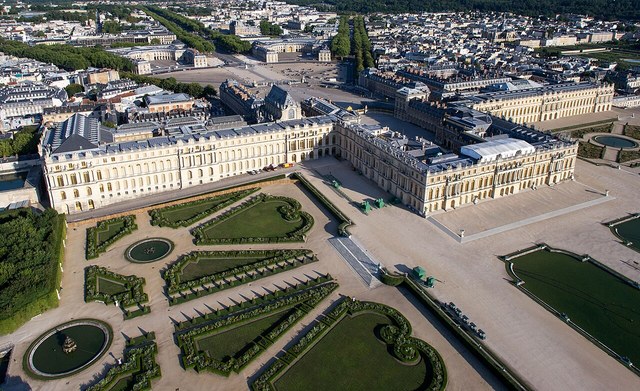
H

They were first instituted by the Tory government of Lord Liverpool, and after the disaster of Peterloo Massacre, the Six Acts declared any reform movement meeting "an overt act of treasonable conspiracy".

H

The first of these laws were passed by the government of Lord Liverpool in 1815, but was met with great rioting after the increase of bread prices due to the Year Without Summer the next year.

H

Gin boomed after the passage of these tariffs intended to protect domestic producers from foreign grain producers. These acts were repealed by Robert Peel after a large effort spearheaded by the founders of The Economist.
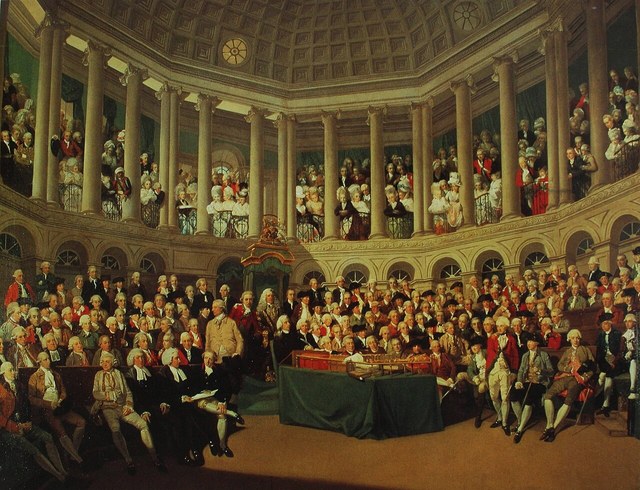
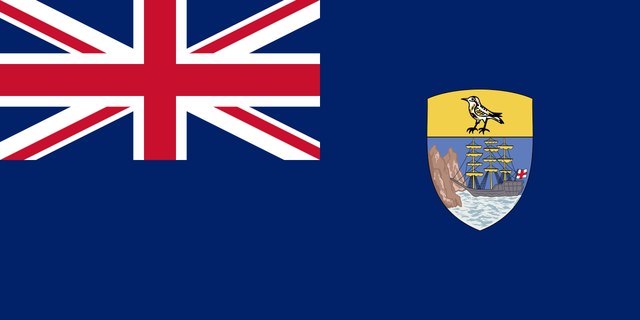
H

These laws dating from medieval times gave British grain growers a practical monopoly within the country. :Name these restraints on trade which were abolished in the wake of the Irish potato famine.

H

This legislation was finally repealed in 1850. :What was this British prohibition of the importation of foreign grains unless British-grown grain exceeded 70 shillings per quarter?

Watch out: Final repeal occurred in 1846, though some sources mention technical completion in 1850
#1657 · General · Level 3

Greek War of Independence

Greek War of Independence
SJCAmerican · CC BY-SA 4.0

Greek independence war · 1821–1832 · Greece and Ottoman territories

Greek War of Independence was the 1821–1832 conflict in which the First Hellenic Republic broke away from the Ottoman Empire.

The kit

  • Rise — Greek War of Independence was precipitated by the Friendly Society (Filiki Eteria), a secret fraternal brotherhood that organized the revolt.
  • Conflicts — Greek War of Independence saw the Battle of Navarino, the last entirely sail-powered naval battle, where French, Russian, and British forces destroyed the Ottoman-Egyptian fleet.
  • Achievements — Greek War of Independence produced iconic imagery including Delacroix's Massacre at Chios and his Ruins of Missolonghi depicting the conflict's brutality.
  • Legacy — Greek War of Independence ended with the Treaty of Constantinople (1832), which formally recognized Greek independence from Ottoman rule.

Runs with

Lord Byron
died fighting for Greek independence in the 1820s open card →
Ottoman Empire
ruled Greece until defeated in this war open card →
Alexander
Ypsilantis led Greek forces; Tsar Alexander's minister Capodistrias was recruited open card →
London
Treaty of London organized intervention; London Protocol ended conflict open card →

The ladder · 6 clues

H

This conflict was preceded by the Orlov rebellion and encouraged by the “Friendly Society.” George Canning helped organize one intervention in this conflict through the Treaty of London, and it was ended by the Treaty of Constantinople.

H

American physician Samuel Gridley Howe wrote a "Historical Sketch" named for this conflict while serving as a surgeon.

M

The London Protocol ended this conflict shortly after Edward Codrington outmaneuvered Ibrahim Pasha at the Battle of Navarino. Alexander Ypsilantis led one side in this conflict, which was depicted by Eugène Delacroix in his Massacre at Chios and Ruins of Missolonghi.

M

The Battle of Navarino during this war saw the destruction of one side’s navy by French, Russian, and British forces.

E

Lord Byron died fighting in this 1820s war in which the First Hellenic Republic broke away from the Ottoman Empire.

E

The Treaty of Constantinople of 1832 resulted from this 1821 conflict in which a Hellenistic country achieved independence from the Ottoman Empire.

10 more clues from the record
H

This conflict’s Battle of Navarino was the last naval battle fought entirely with sail ships.

H

The formation of the Friendly Society and Hetairists precipitated this conflict.

H

Many dragomans were killed after the outbreak of this war that saw the death of Lord Byron. The secret society Filiki Eteria helped launch this war, which ended with the Treaty of Constantinople.

H

A general who described forces in this war as the “yeasts of liberty” would later lead the September 3rd movement shortly after this war.

H

When one side in this war began damaging a historical building to obtain lead for gunpowder, the other side agreed to send them lead so they would stop.

H

This war saw the Battle of Polytsaravo [“paul-it-sa-ra-vo”] that was a part of the failed larger invasion of Mani.

H

An outside supporter of this cause, Frank Abney Hastings, encouraged its proponents to adopt steam technology.

H

Another painting of this war shows a turban-wearing man riding a rearing horse as an old woman and nearly nude man lay in the foreground following the siege of the island of Chios [KAI-ohs].

H

Prior to this war, the fraternal brotherhood Filiki Eteria attempted to recruit future president, and Tsar Alexander's foreign minister, John Capodistrias to lead this revolt.

H

An artistic personification of one side of this war wears a blue coat and yellow sash and kneels on a stone crushing a hand.

Watch out: Alexander Ypsilantis led Greek forces, not Tsar Alexander I who was approached through his foreign minister John Capodistrias
#1659 · General · Level 3

Louis

Louis
Daniel Schwen · CC BY-SA 4.0

French royal name · 9th–18th centuries · France

Louis was the regnal name of eighteen French kings, including Louis IX the crusader-saint and Louis XIV the Sun King.

The kit

  • Crusaders — Louis IX was canonized after dying on the Eighth Crusade near Carthage, having previously failed in the Seventh Crusade.
  • Centralizers — Louis XI earned the nickname "the Universal Spider" by manipulating his vassals to centralize royal power after attempting the Praguerie revolt.
  • Sun KingLouis XIV revoked the Edict of Nantes and kept mistresses at a place nicknamed "Stag Park" during his long reign.
  • Legacy — Louis was borne by the only French king who is also a saint and by multiple monarchs who employed Swiss mercenaries.

Runs with

Nanda Empire
no connection evident in clues open card →
Joe Hill
no connection evident in clues open card →
Paris
France
Louis was the regnal name of eighteen French monarchs open card →

The ladder · 6 clues

H

Swiss mercenaries often fought abroad for French kings with this name, including one nicknamed “the Universal Spider.” The fourteenth French king of this name was nicknamed “the Sun King.”

H

The ruler of the Kingdom of Hungary who died during the Battle of Mohács had this regnal name. The “Sun King” and one toppled in the French Revolution had this regnal name.

M

This man submitted a namesake brief that argued against long working hours for women while serving as a lawyer for the case Muller v. ​ Oregon.

M

A king of this name was nicknamed “the Lion” and fathered another king of this name with Blanche of Castile.

E

Two decades before he actually took the throne, another king of this name tried to overthrow his father in a revolt called the Praguerie [”Prague”-er-ee]; that king of this name manipulated his vassals to centralize power, earning him the nickname “The Universal Spider.” Another king of this name died near Carthage while on the Eighth Crusade, which he had called after his failure in the Seventh. give this name of multiple French kings, the ninth of whom was canonized for his crusading.

E

Another king with this name who employed Cardinal Mazarin revoked the Edict of Nantes. give this name of a French monarch known as the “Sun King.”

10 more clues from the record
H

Jean de Joinville recounted how another king of this name died after the Seventh Crusade. give this name of the only French king who is also a saint.

H

This creator of the Erie doctrine, along with Harlan Stone and Benjamin Cardozo, was considered one of the three pro-New Deal "Three Musketeers." This Justice's 1928 dissent to Olmstead advanced the concept of "right to privacy." As a solicitor, this man summarized the testimony of social scientists who argued for limited working hours in Muller v.

H

Another won the Battle of Nancy against Charles the Bold of Burgundy, and a third bought part of the True Cross and died on the Eighth Crusade.

H

This man attacked the practices of investment bankers in his work, “Other People’s ​ Money And How the Bankers Use It”.

H

Billy Mitchell is known as the father of this organization, which was established in the National Security Act of 1947.

H

A ninth king with this name instituted the gabelle tax on salt to pay for the Albigensian Crusade.

H

One king of this name was praised by Odo of Deuil in his chronicle of the Second Crusade.

H

This man continues to name the bridge that he first constructed over the Senegal River, which now connects the mainland to Saint-Louis. :Name this governor of French Senegal who founded Dakar and formed the Tirailleurs, a Senegalese infantry, to fight for the French empire in 1857.

H

Besides Charles and Lothair, the Treaty of Verdun was signed by a ruler of this name who bore the epithet “the German.” Epithets born by French rulers of this name include “the Saint,” “the Universal Spider,” and “the Sun King.”

H

One ruler with this name kept his mistresses, such as Marie-Louise O’Murphy, at a place nicknamed “Stag Park.” During the reign of another ruler with this name, a clergyman named de Rohan became embroiled in the Affair of the Diamond Necklace.

Watch out: Louis Brandeis (U.S. Supreme Court Justice who wrote the Muller brief and Olmstead dissent)
#1660 · French Monarchs · Level 3

Louis XI of France

Louis XI of France
bdi Jacob de Litemont /span /a · Public domain

French king · 1461–1483 · France

Louis XI of France was a 15th-century king whose diplomatic cunning and numerous plots earned him the nickname 'universal spider.'

The kit

  • RiseLouis XI revolted against his father Charles VII in the failed Praguerie and subsequently fled to Philip the Good's court.
  • ConflictsLouis XI faced opposition from the League of the Public Weal, formed by Charles the Bold and other nobles against his rule.
  • AchievementsLouis XI signed the Treaty of Picquigny, paying 75,000 crowns to end the Hundred Years' War with England.
  • LegacyLouis XI annexed Picardy after his greatest foe Charles the Bold was slain at Nancy, consolidating French territory.

Runs with

Charles
opposed by Charles the Bold; son of Charles VII open card →
Burgundy
Edward
bribed Edward IV to prevent war open card →
Philip
fled to Philip the Good's court open card →

The ladder · 6 clues

H

Name this 15th century king of France whose numerous plots and ruses earned him the nickname “universal spider.”

H

Charles the Bold, among others, joined the League of the Public Weal against this king, who is known for his political machinations.

M

The League of the Public Weal was formed to oppose this man.

M

The power of this ruler was opposed by the League of the Public Weal, and in his early life he plotted against his father, Charles VII.

E

The death of Charles the Bold allowed this man to take control of Burgundy. name this French monarch whose diplomatic cunning earned him his nickname.

E

In the Treaty of Picquigny, this ruler paid 75,000 crowns to end the Hundred Years’ War.

10 more clues from the record
H

This monarch offered refuge to the exiled Duke of Warwick and arranged an alliance between the Duke and Margaret of Anjou.

H

King known for his plotting that fought against Charles the Bold of Burgundy?

H

This man agreed to a truce with England in the Treaty of Picquigny, allowing him to focus his forces against the League of the Public Weal.

H

This ruler signed an agreement in which he paid off a rival to not pursue his throne in the Treaty of Picquigny.

H

This man was also forced to seek protection from his father after he married his second wife, the eight-year-old Charlotte of Savoy.

H

This man revolted against his father in the failed Praguerie and subsequently fled to Philip the Good’s court.

H

After his greatest foe was slain at Nancy, this ruler annexed Picardy.

H

His 22-year reign included a web of plots that made him the enemy of many. :Name this man who eventually defeated his sworn enemy Charles the Bold of Burgundy, and who was nicknamed "the universal spider" or some shit like that.

H

This ruler, upon hearing of his father’s severe illness, raced to Rheims to have himself crowned king first instead of his brother and nemesis Charles the Duke of Berry.

H

This ruler arranged the marriage of Galeazzo-Maria Sforza and Bona of Savoy and used a combination of feting the English army and bribery to prevent Edward IV from warring against him.

Watch out: Charles the Bold (his enemy) vs. Charles VII (his father) vs. Charles Duke of Berry (his brother)
#1662 · General · Level 3

William

William
Myrabella · Public domain

English royal name · 1066–1837 · England, Netherlands

William names four English kings, including the Conqueror who won at Hastings in 1066 and William III who deposed James II in 1688.

The kit

  • Norman ConquestWilliam the Conqueror won the Battle of Hastings in 1066 and became England's first Norman king.
  • Glorious Revolution — William of Orange, invited by the Immortal Seven, overthrew Catholic James II in 1688 and ruled jointly with his wife Mary.
  • Reform Era — William IV dismissed Lord Melbourne, the last time an English monarch removed a prime minister, and signed the Great Reform Bill.
  • Dutch IndependenceWilliam the Silent, first stadtholder of the Netherlands, founded the University of Leiden and was assassinated by Balthasar Gérard during the Eighty Years' War.

Runs with

Joe Hill
no connection evident in clues open card →
American Railway Union
no connection evident in clues open card →
Bishop
Archbishop of York named William was deposed after quarrels with Cistercians open card →
Nanda Empire
no connection evident in clues open card →

The ladder · 6 clues

H

A king of this name became the final monarch to dismiss an English prime minister when he removed Lord Melbourne.

H

This person was Lincoln’s secretary of State. During Johnson’s presidency, he negotiated the purchase of Alaska.

M

A member of the House of Orange with this name ousted James II with his wife Mary in the Glorious Revolution. give this name of the king who won at the 1066 Battle of Hastings and was nicknamed “the Conqueror”.

M

A king of this name took power when his predecessor’s Declaration of Indulgence led to that man’s overthrow.

E

A king of this name was invited by the Immortal Seven to depose James II in the Glorious Revolution. give this name of the Dutch prince who ascended the English throne with his wife Mary.

E

Rotten boroughs were eliminated in an attempt to expand votership when the “Great Reform Bill” was passed under a king of this name. the Catholic James II was overthrown by a king of what name during the Glorious Revolution?

10 more clues from the record
H

This president supported Don’t Ask, Don’t Tell at the time and also signed the Defense of Marriage Act in 1996. He later became involved in a scandal involving a White House Intern, Monica Lewinsky.

H

Another man of this name was assassinated by Balthasar Gerard and had previously instigated the Eighty Years’ War against Spain.

H

The University of Leiden was founded by the first stadtholder of this name, known as the Silent. A stadtholder of this name ruled England with his wife Mary after the Glorious Revolution.

H

This man ordered the imprisonment of Rose Greenhow during a period in which he was personally responsible for listing Confederate sympathizers to be detained, a power which was removed from him after he accused Franklin Pierce of disloyalty.

H

This man, who negotiated a settlement to the Trent Affair, was severely injured in a stabbing by Lewis Powell at the same time that Lincoln was shot.

H

Historian E. M. Rose argued that Simon de Novers helped spread rumors about the death of a boy with this name to free himself from being punished for killing a Jewish banker. :Give the name of that English boy from Norwich, who was venerated as a saint after he was allegedly tortured and murdered by Jews in 1144. The contemporary Archbishop of York, who also had this name, was deposed from his see following his quarrels with the Cistercians.

H

In one speech, this politician stated that the Union had no right to wage war against the Confederacy, and proclaimed that Jefferson Davis had “made a nation.” :Name this politician. This politician attacked an opponent in his pamphlet Bulgarian Horrors and the Question of the East, and led the “Midlothian campaign” that deposed his rival Benjamin Disraeli in an 1880 general election.

H

One policy by this businessman sparked a 1963 sit-in protest in Bowie, Maryland. :Name this businessman who transported materials from Blue Lake, California for building construction in the Northeast, including locations in Willingboro Township and Bucks County. He operated his family’s company with his brother, Alfred.

H

Balthasar Gérard was brutally executed for shooting that ruler of this name, who had earlier financed many privateers known as “sea beggars.” Along with a man known as “the Silent,” a ruler of this name was supported by the “Immortal Seven” during a conflict that included his victory at the Battle of the Boyne.

H

This host of the 1959 Sanniquellie Conference labeled himself the “Convivial Cannibal from the Downcoast Hinterlands” and became the legal adviser to Allen Yancy before resigning to defend his nation against allegations of slave labor before the League of Nations.

Watch out: William III of Orange and William the Silent are both Dutch leaders but lived in different centuries
#1668 · Labor Movements, Strikes, and Social Protests · Level 3

Paris Commune

Paris Commune
Public domain

Socialist government · 1871 · Paris

Paris Commune was a radical socialist government in Paris in 1871 that formed after French defeat in the Franco-Prussian War.

The kit

  • Rise — Paris Commune was declared a week after Generals Jacques Thomas and Claude Lecomte were murdered.
  • Governance — Paris Commune was served by Nathalie Lemel's Women's Union and included Polish military commander Jaroslav Dabrowski.
  • Destruction — Paris Commune members destroyed the Vendôme Column on Gustave Courbet's orders and burned the Hôtel de Ville and Tuileries.
  • Fall — Paris Commune ended during Bloody Week when Marshal MacMahon's army killed participants at Père Lachaise cemetery and deported survivors to New Caledonia.

Runs with

Paris
Adolphe Thiers
ordered MacMahon to violently end it open card →
Louis
Franco-Prussian War
formed in response to French defeat open card →

The ladder · 6 clues

H

Socialist government in Paris in 1871 that formed in response to the French defeat in the Franco- Prussian War.

H

The fall of this government led to the deportation of many to New Caledonia.

M

Gustave Courbet fled to Switzerland after advocating the destruction of the Vendˆome Column during this government’s tenure.

M

Despite demanding to face the death penalty for her participation in this event, the “Red Virgin” Louise Michel was exiled to New Caledonia.

E

Marshall MacMahon led an army that repressed this government during the “Bloody Week”. name this radical socialist government that formed in the French capital in 1871.

E

Adolphe Thiers [tee-air] ordered Marshal MacMahon to violently end this government during the Bloody Week.

10 more clues from the record
H

This government was served by Nathalie Lemel’s Women’s Union.

H

Many participants in this event were shot in Père Lachaise [pair la-shez] cemetery or deported to New Caledonia.

H

One military commander in this government was a former leader of the January Uprising in Poland named Jaroslav Dabrowski.

H

Two sons of one of this group’s leaders, Iaroslav Dombrovski, committed suicide in shame, and the Kanak tribe of New Caledonia was “civilized” by exiled members of this group.

H

A week before it was declared, Generals Jacques Thomas and Claude Lecomte were murdered.

H

This government lost control of Fort Issy shortly before its enemy’s main attack, during which suspected traitor Jaroslav Dombrowski was killed.

H

The Hˆotel de Ville, Tuileries and Louvre library were destroyed by arson during this event, which was opposed by Adolphe Thiers [tee-air].

H

Members of this government destroyed the Vendˆome Column on the orders of the artist Gustave Courbet [core-bay].

H

Female supporters of this government who burned down most of a city were called petroleuses [petro-loozes].

H

While defending this government, Jaroslaw Dombrowski supposedly asked “do they still think me a traitor?” as he died.

Watch out: Jaroslav Dombrowski/Dabrowski (same person, variant spellings)
#1687 · Other Continental European Monarchs · Level 3

Franz Joseph I

Franz Joseph I
bdi Carl Pietzner /span /a · Public domain

Austrian Emperor · 1848–1916 · Austria-Hungary

Franz Joseph I ruled Austria for nearly 68 years, overseeing the dual monarchy with Hungary and leading into World War I.

The kit

  • Rise — Franz Joseph I succeeded Emperor Ferdinand I in 1848 after Metternich's resignation during the revolutions of 1848.
  • Achievements — Franz Joseph I united Austria with Hungary to form the dual monarchy and collaborated closely with Germany under Prime Minister Andrássy.
  • Conflicts — Franz Joseph I survived an assassination attempt by János Libényi, whose blade was deflected by the emperor's high collar.
  • Death & succession — Franz Joseph I's nephew Franz Ferdinand was assassinated in 1914, triggering World War I, which the emperor entered before his 1916 death.

Runs with

Austria
ruled as emperor from 1848 open card →
Hungary
united with Austria under dual monarchy open card →
assassination
survived Libényi attempt; nephew's death started WWI open card →
Austro-Hungarian Empire
first ruler of the dual monarchy open card →

The ladder · 6 clues

H

A high collar this man was wearing likely saved him from being killed in an assassination attempt conducted by the nationalist János [[YAH-noash]] Libényi.

H

The 17-year-old Mary Vetsera was killed by this man’s son, who proceeded to shoot himself, in the Mayerling incident.

M

This man was emperor of Austria when it united with Hungary. The assassination of this man’s nephew, the Archduke Franz Ferdinand, triggered the start of World War I.

M

First ruler of the dual monarchy who oversaw Austria-Hungary's entrance into World War One.

E

Austrian emperor and uncle of Franz Ferdinand who had planned war with Serbia before the assassination.

E

Ruling for nearly 68 years this Austrian emperor.

10 more clues from the record
H

Maximilian O’Donnell stopped an assassination attempt on this emperor by János Libényi, and the Votive Church in his capital was built in commemoration.

H

The Mayerling Incident in 1889 saw the suicide of this man’s son and, in 1898, this man’s wife was assassinated by an Italian anarchist in Geneva.

H

This man assisted Marshal Radetsky at the Battle of Santa Lucia in the First War of Italian Independence and later was opposed by Prince Albert of Sardinia.

H

This man’s wife was killed in Geneva by Luigi Lucheni, who was looking to kill any sovereign he could find.

H

Emperor who, despite hearing of the assassination, continued his spa vacation

H

Under this monarch, Alexander Bach instituted a period of neo-absolutism.

H

Foreign ministers who served under this ruler include Count Aehrenthal, whose negotiations with Aleksandr Isvolsky set off an international crisis late in this ruler's reign, and a close collaboration with Germany was the goal of his prime minister Grof Andrassy.

H

Answer the following about the political impact of the death of Rudolf, Crown Prince of Austria, in the Mayerling Incident, .The Mayerling Incident disrupted the Austro-Hungarian Empire during the later part of this monarch’s reign, which stretched from the aftermath of the revolutions of 1848 to the beginning of World War I.

H

This man’s first foreign minister earned the English nickname “Prince of Cadland” because he was a cad. :Name this ruler. After the death of Felix of Schwarzenberg, Alexander Bach became the leading policymaker of his reign.

H

Metternich tendered his resignation to Emperor Ferdinand I, who himself resigned a few days later to be succeeded by this Emperor, who ruled Austria-Hungary until the first years of the First World War.

Watch out: Franz Ferdinand (his nephew and heir, whose assassination triggered WWI)
#1701 · Historic Cities · Level 3

Lisbon

Lisbon
a rel="nofollow" Vitor Oliveira /a from Torres Vedras, PORTU · CC BY-SA 2.0

Portuguese capital city · capital for centuries · Portugal

Lisbon is the capital city of Portugal, devastated by a 9.0 earthquake on All Saints Day 1755 and rebuilt under Pombal.

The kit

  • 1755 Earthquake — Lisbon was struck by a 9.0 magnitude earthquake centered on Cape St. Vincent on All Saints Day 1755.
  • Reconstruction — Lisbon's reconstruction was overseen by the Marquis of Pombal, who built Pombaline buildings and sent a survey to every parish.
  • Joseph I's fear — Lisbon's King Joseph I developed a fear of masonry after the earthquake and kept his court in a tent complex on Ajuda Hills.
  • Modern role — Lisbon served as a vital Red Cross base for the Allies in World War Two and hosted the 2007 EU treaty signing.

Runs with

Portugal
capital city of Portugal for centuries open card →
European Union
hosted 2007 treaty signing that amended Maastricht Treaty open card →
Second CrusadeAmerican Railway Union

The ladder · 6 clues

H

Margaret of Savoy tried to calm demonstrators in this city but was ultimately forced out of the country.

H

A ruler in this city became paranoid of living in buildings and kept his court on the hills of Ajuda.

M

The Marquis of Pombal oversaw this city’s reconstruction following an earthquake on All Saints Day in 1755.

M

While returning to this city’s Ajuda Hills, a royal carriage was fired upon during an assassination attempt on Joseph I, which resulted in the Tavora family’s public execution.

E

In 1755, a 9.0 quake centered on Cape St. Vincent struck this capital city of Portugal.

E

Pombaline buildings were constructed in this city after it was ravaged on All Saints Day.

10 more clues from the record
H

Over the ruins of a hospital in this city, the Square of the Fig Tree was built as part of an effort led by Manuel Maia.

H

Sir Richard Fletcher constructed the Lines of Torres Vedras to protect this city during the Peninsular Campaign.

H

A tent complex was constructed on the outskirts of this city to house the court of King Joseph I after he developed a fear of masonry.

H

Following an event in this city, a 60-question survey known as the “Parochial Memories” was sent out to every parish.

H

We bury the dead and heal the living.” A 2007 treaty signed in this city amended the Maastricht Treaty and reformed the government of the European Union.

H

What capital city was the namesake for the treaty signed in 2007 and approved in 2009 that changed the voting procedure for the Council of Ministers?

H

Capital city of Portugal for centuries, minus a short stint when the court moved to Brazil.

H

Capital of Portugal, a vital Red Cross base for the Allies in World War Two.

H

The Battle of Alcantara was fought outside this city, ending its country’s independent rule.

H

A powerful advisor based in this city uncovered the Tavora (tuh-VORE-uh) Conspiracy.

#1705 · Other Rebellions, Revolts, and Uprisings · Level 3

Decembrist Revolt

Decembrist Revolt
bdi Vasily Timm /span /a · Public domain

1825 Russian uprising · December 1825 · St. Petersburg, Russia

The Decembrist Revolt was an 1825 uprising in which Russian officers gathered in Senate Square to oppose Nicholas I's accession.

The kit

  • Rise — Decembrist Revolt participants organized into the Northern and Southern Societies after the Union of Prosperity split.
  • Conflicts — Decembrist Revolt rebels chanted 'Constantine and Constitution' in Senate Square, killing Governor General Miloradovich before Nicholas I suppressed them.
  • Legacy — Decembrist Revolt prompted Nicholas I to create the Third Section secret police and a doctrine of Official Nationalism.
  • Death & succession — Decembrist Revolt leaders including Kondraty Ryleyev and Pavel Pestel were sent to Katorga prison sites after their defeat.

Runs with

Alexander
Senate
rebels gathered in Senate Square open card →
Tsar
opposed Nicholas I's accession to throne open card →
Alexander I of Russia
occurred after Alexander I's death open card →

The ladder · 6 clues

H

Anatole Mazour wrote a history of the famously loyal wives of participants in this event, many of whom settled in Chita.

H

The rebels in this 1825 uprising after the death of Alexander chanted “Constantine and Constitution!”, but were suppressed by Nicholas I.

M

Prior to this event, the Union of Prosperity split into Northern and Southern Societies.

M

Name these rebellions in Russian history GIVEN NO CLUES, . You will receive 10 points if you need clues.Kondraty Ryleyev and Pavel Pestel led this group, attempted to install Prince Trubetskoy and Constantine in power in opposition to Nicholas I during the namesake month of 1825.

E

Participants of this event called for “Constantine and the Constitution.” :Name this 1825 uprising against Tsar Nicholas I, named after the month in which it occurred.

E

Katorga prison sites contained such criminals as soldiers who took part in this failed uprising against Nicholas I in 1825. Participants in this event supported Duke Constantine.

10 more clues from the record
H

Some chanting participants during this event mistakenly believed that the Governor of Poland’s wife was named Constitution.

H

Involving Pestel’s Southern Society and Muraviev’s Northern Society, its leaders elected Trubetskoy as interim dictator.

H

They were divided into the Union of Welfare, the Northern Society, and the Southern Society.

H

A secret police called the Third Section was created after this event, prompting a ruler to create a three-pronged doctrine of Official Nationalism.

H

This movement was essentially the same as the publishers of The Polar Star and was split into the Northern Society and Southern Society.

H

The actions of this movement marked the difference between the “people of wine” and “people of vinegar” according to Yury Tynyanov.

H

One of its failed proposals was to institute a Bolivarian dictatorship led by Sergei Trubetskoy.

H

This event saw rebels march to Senate Square on a day when loyalty oaths were being sworn and kill Governor General Miloradovich, while the chief target of this event would later enter his country into the Crimean War.

H

Participants in this revolt included the officer Nikolai Muravyov, as well as members of the Salvation and Benevolent Unions. :Name this revolt that took place during the reign of Nicholas I. At the height of this revolt, rebels gathered in Senate Square to swear loyalty to its namesake constitution.

H

Its more radical members formed its Southern Society, led by Pestel, and the man who commanded the troops that opposed them, Alexander Beckendorff, would later become the chief of police to the man opposed by this group.

Watch out: Some rebels mistakenly thought 'Constitution' was the name of Duke Constantine's wife
#1722 · Labor Movements, Strikes, and Social Protests · Level 3

Luddite Movement

Luddite Movement
Unknown. 195 years since publication, copyright extinguished · Public domain

English textile workers' movement · 1811–1816 · England (Nottingham, Derbyshire)

Luddite Movement members were English textile workers who destroyed weaving machines during 1811–1816 to protest job losses from industrialization.

The kit

  • Rise — Luddite Movement began in Arnold, Nottingham in 1811 due to hosiery falling out of fashion and economic downturn after the Napoleonic Wars.
  • Actions — Luddite Movement members wielded Enoch Hammers to destroy automated looms, attacked Rawfolds Mill, and sometimes dressed in women's clothing as their founder's wives.
  • Conflicts — Luddite Movement faced the 1812 Frame Breaking Act making machine destruction a capital offense, and member George Mellor killed manufacturer William Horsfall.
  • Legacy — Luddite Movement's name derives from possibly mythical apprentice Ned Ludd and now refers to anyone opposed to technological progress.

Runs with

Lord Byron
Industrial Revolution
protested job displacement from Industrial Revolution textile factories open card →
William
George Mellor killed William Horsfall after Rawfolds Mill attack open card →
George
George Mellor led Rawfolds Mill attack and killed Horsfall open card →

The ladder · 6 clues

H

A member of this group named George Mellor killed William Horsfall after Horsfall said he would ride “up to his saddle” in the blood of these people.

H

The Pentrich riots were started by Jeremiah Brandreth, a former member of this movement.

M

Members of this movement executed William Horsfall and attacked Rawfolds Mill.

M

This movement’s namesake, a weaver in Anstey, used a hammer in his most notorious act.

E

The Swing Riots was an agricultural version of this movement, which was suppressed by the 1812 Frame Breaking Act.

E

These people, who were targeted by the 1812 Frame Breaking Act, rioted in response to an economic downturn after the Napoleonic Wars and the growth of new textile factories. name these English workers who destroyed weaving machines to protest losing their jobs and whose name now broadly refers to people opposed to technological progress.

10 more clues from the record
H

A former member of this movement named Jeremiah Brandreth led the failed Pentrich Rising, which wanted to wipe out the national debt by starting an uprising in Derbyshire.

H

This group was responsible for the murder of William Horsfall seven days after they attacked Rawfords Mill under the leadership of George Mellors.

H

This group sometimes dressed in women’s clothing as their founder’s “wives,” and carried out their acts using a tool they called “Great Enoch.” This group first appeared in Nottingham and were threatened with capital punishment with the Frame Breaking Act.

H

They took their name from a possibly mythical apprentice named Ned, on whom they also jokingly blamed their actions.

H

This movement began in Arnold due to hosiery falling out of fashion.

H

Some of these people wielded weapons they dubbed Enoch Hammers.

H

An fallacy named for this group says that technological development always leads to higher unemployment. :Name these people, British workers who participated in uprisings from 1811 to 1816 in which they broke machines. Their name now colloquially refers to anyone who is afraid of or against new technologies.

H

Name some things discussed in E. P. Thompson’s The Making of the English Working Class, . 9Thompson presents a revisionist history of these textile workers who protested the Industrial Revolution by destroying machinery in England around the turn of the 19th century.

H

This group was targeted by the Frame-Breaking Act and claimed to follow a namesake leader, also nicknamed “King Ned.” :Name this group of textile workers, who destroyed technologically advanced automated looms as a form of protest.

H

Frame breaking, or the destruction of mechanical looms, was made a capital offense after actions by this group. :What was this movement of textile workers in England in the early 1800s, the name of which is now synonymous with those who dislike technology?

Watch out: Swing Riots (agricultural movement inspired by Luddites, not the same group)
#1731 · Historic Cities · Level 3

Manchester

Manchester
David Dixon · CC BY-SA 2.0

English industrial city · 18th–19th century prominence · Lancashire, England

Manchester was an English industrial city whose textile mills earned it the nickname 'Cottonopolis' during the Industrial Revolution.

The kit

  • Industrial rise — Manchester's growth accelerated when Francis Egerton completed the Bridgewater Canal connecting it to Worsley coal mines.
  • Cotton dominance — Manchester became known as 'Cottonopolis' due to Richard Arkwright's cotton mill experimentation and numerous textile factories.
  • Political unrest — Manchester was the site of the Peterloo Massacre, where Yeomanry cut down protesters after Henry Hunt addressed them.
  • Intellectual legacy — Manchester's working conditions inspired Friedrich Engels's The Condition of the Working Class in England after his observations there.

Runs with

Peterloo Massacre
occurred in Manchester when Yeomanry attacked protesters addressed by Henry Hunt open card →
Cotton
Manchester's cotton mills earned it the nickname 'Cottonopolis' open card →
Henry
Henry Hunt addressed crowd in Manchester before Peterloo Massacre open card →
Friedrich Engels
Engels wrote about working class conditions based on Manchester observations open card →

The ladder · 6 clues

H

Richard Arkwright’s experimentation with cotton mills in this city led to it being known as “Cottonopolis”.

H

The many textile mills in this city led it to be called “Cottonopolis”.

M

Was the setting for The Condition of the Working Class in England by Engels?

M

The introduction of the Corn Laws led to this city’s Peterloo Massacre.

E

Friedrich Engel’s observations in this city formed the basis of his The Condition of the Working Class in England.

E

The first steam railway in the world connected this city with Liverpool. name this Lancashire city that was home to many Industrial Revolution-era mills and is now home to namesake United and City soccer teams.

10 more clues from the record
H

When this city's growth was checked in the 18th century, Francis Egerton completed the Bridgewater Canal to connect it to the Worsley coal mines.

H

City whose “United” soccer team was managed by Sir Alex Ferguson?

H

One group organized a march from this city to London to protest the suspension of the Habeas Corpus Act and was called the Blanketeers.

H

Karl Marx and Friedrich Engels first met in this city at Chetham's Library.

H

While playing against one team from this city in 2012, Joey Barton earned a 12-game suspension for attacking Carlos Tevez, Vincent Kompany, and Sergio Aguero.

H

The "world's first industrial suburb", Ancoats, was built in this city. The "Ardwick Bridge" conspiracy ended this city's Blanket March to protest against the regent.

H

In that game, Aguero’s 94th minute goal for a team from this city defeated Queens Park Rangers to clinch a title at the expense of another team from this city.

H

Henry Hunt addressed a crown in a field in this city, but its Yeomanry cut down many people in the Peterloo Massacre.

H

This city’s residents included Mary Burns who became the lifelong partner of one of its visitors.

H

A school of laissez-faire economics named after this city supported the Anti-Corn Law League, which was headquartered in this city.

Watch out: The Blanketeers marched FROM Manchester to London (not to Manchester)
#1737 · General · Level 3

Edict of Nantes

Edict of Nantes
Henry IV of France /a . · Public domain

1598 French religious edict · 1598–1685 · France

The Edict of Nantes was Henry IV's 1598 proclamation granting religious tolerance and military safe havens to French Huguenots.

The kit

  • Provisions — Edict of Nantes granted French noblemen and vassals the right to practice Protestantism within their territories.
  • Protections — Edict of Nantes established places de sûreté such as La Rochelle and extended protections against the Inquisition.
  • Opposition — Edict of Nantes was fiercely opposed by Pope Clement VIII, who claimed it "crucifies me."
  • Revocation — Edict of Nantes was revoked in 1685 by Louis XIV's Edict of Fontainebleau, devastating France's watchmaking industry.

Runs with

Huguenots
granted religious tolerance and military safe havens to Huguenots open card →
Henry
signed by Henry IV in 1598 open card →
Louis XIV
revoked by Louis XIV via Edict of Fontainebleau open card →
Henry IV of France
issued by Henry IV in 1598 open card →

The ladder · 6 clues

H

The Duke of Buckingham failed to relieve the siege of one city affected by this law. Cardinal Richelieu's siege of La Rochelle ended that city's status as a military "safe haven" designated by two letters patent accompanying this law.

H

Pope Clement VII criticized this law, stating “It crucifies me,” and the revocation of this law led Frederick Wilhelm to issue the Edict of Potsdam.

M

Clement VIII claimed that this agreement “crucifies” him, as it also protected against the Inquisition.

M

Its terms were annulled by the Peace of Ales, and it was fiercely opposed by Pope Clement VIII.

E

Louis XIV revoked this law by signing the Edict of Fontainebleau [fohn-tahn-BLUH]. name this law signed by Henry IV which granted religious tolerance to Huguenots.

E

Edict that granted religious freedom to Huguenots, overturned by the Edict of Fontainebleau

10 more clues from the record
H

Henry IV issued this edict granting religious tolerance to Huguenots in 1598.

H

It allowed for both places of “security” and “refuge,” which were later undermined by the directed deployment of dragoons.

H

This 1598 proclamation, revoked in 1685, granted French noblemen and their vassals the right to practice Protestantism within their territories.

H

The Edict of Saint-Germain [sahn zher-mahn] was a precursor to this law, which included fifty six “secret articles.” This law was weakened after one group of people affected by it were put under siege at La Rochelle, one of the safe havens granted by this law.

H

This document was preceded by one signed at St. Germain, and it created places de sûreté such as La Rochelle, and extended protections against the Inquisition.

H

Abducting children was prevented by article 18 of this document, and article 22 prevented discrimination in universities and hospitals.

H

Many of its provisions had earlier been suggested in the Treaty of Nérac and the “Peace of Monsieur.” Protests over royal activities in the newly acquired territory of Béarn resulted in the revocation of many of its guarantees, including special defenses for the city of La Rochelle.

H

This document notes “God has given us strength to stand against this storm” and “the most legitimate of all parties was the fewest in numbers,” referring to a recent war in which its creator was victorious at Ivry.

H

Upon hearing of the signature of this document, Clement VIII claimed that "liberty of conscience given to everybody is the worst thing in the world." A special court dealing with disputes from this document was the Chambre de l’Edit.

H

France’s watchmaking industry experienced a sharp decline at the end of the 17th century due to the passage of the Edict of Fontainebleau, which revoked this Huguenot-protecting decree signed by Henry IV.

Watch out: Pope Clement VIII opposed this edict, not Clement VII
#1739 · Other Families and Dynasties · Level 3

House of Braganza

House of Braganza
Zulske heraldry · CC BY-SA 3.0

Portuguese royal dynasty · 1640–1910 (Portugal); 1822–1889 (Brazil) · Portugal and Brazil

House of Braganza was the final Portuguese royal dynasty, ruling Portugal from 1640 to 1910 and independent Brazil until 1889.

The kit

  • Rise — House of Braganza took power in 1640 when the Habsburgs were defeated in the Restoration War by the claimed heir of Aviz.
  • Rule — House of Braganza established its colonial capital at Rio de Janeiro after fleeing Napoleonic forces with British help in 1807.
  • Conflicts — House of Braganza was plagued by the Liberal Wars, a civil war ending with the Convention of Gramido and Concession of Evoramonte.
  • Legacy — House of Braganza merged with the Saxe-Coburg line through the marriage of Maria the Second to Ferdinand the Second.

Runs with

Portugal
ruled Portugal 1640–1910 open card →
House of Aviz
claimed succession from Aviz after Habsburg defeat open card →
Brazil
ruled independent Brazil until 1889 open card →
John
John IV first held throne; João VI ruled during Napoleonic era open card →

The ladder · 6 clues

H

Final Portuguese royal house which first held the throne under John IV and later ruled Brazil under two Pedros.

H

The Concession of Evoramonte led to the exile of one ruler of this house after the Liberal Wars.

M

Portuguese Dynasty of Charles II's wife, founded by John I.

M

The wife of Charles II of England was a member of this house.

E

João the Sixth was a ruler of this royal house that ruled Portugal from 1640 to 1910 and independent Brazil until 1889, following the House of Aviz.

E

This house took power after the Habsburgs were defeated in the Restoration War by the claimed heir of the House of Aviz.

10 more clues from the record
H

This house merged with the Saxe-Coburg line through the marriage of Maria the Second to Ferdinand the Second.

H

The Liberal War was a civil war within this royal dynasty, which ruled both Portugal and Brazil.

H

One member of this royal house met with the Baron John Methuen, in order to agree to a trade agreement known as the Methuen Treaty.

H

This dynasty established its colonial capital at Rio de Janeiro after fleeing Napoleonic forces with British help in 1807.

H

This line of rulers was plagued by two civil wars around the same time – one known as the Patuleia ended by the Convention of Gramido and a larger one known as the War of the Two Brothers or the Liberal War, which ended when a usurper was defeated and rule in this house passed to Maria da Gloria.

H

The first ruler of this house wrote a musical treatise known as A Defense of Modern Music. In addition to that husband of Luisa, one female ruler of this house was crowned Prince of Beira and was responsible for her country joining the League of Armed Neutrality.

H

In addition to the wife of Gaston, Count of Eu, this house also included a ruler who initiated the Liberal Wars by sailing to the Azores to reassert the claim of his daughter Maria who had been deposed by his brother Miguel.

H

Two members of this family fought the War of the Two Brothers in the 19th century, which began a few years after one of them held the throne for less than three months before abdicating in favor of his daughter.

H

Roderick Barman wrote a biography of one woman from this family to analyse “gender and power in the 19th Century.” The husband of that woman from this family allegedly burnt down a hospital and beheaded Pablo Caballero after the Battle of Acosta Nu.

H

The penultimate monarch of this house was assassinated in an open carriage along with his eldest son while passing through the streets of his capital, which came after he allowed the Regenerator Party to form a dictatorship.

Watch out: Confusion with House of Aviz, the preceding Portuguese dynasty
#1768 · General · Level 3

Charles Stewart Parnell

Charles Stewart Parnell
bdi Mathew Benjamin Brady /span /a /bdi / bdi Levin Corbin H · Public domain

Irish Home Rule leader · 1870s–1891 · Ireland, Westminster

Charles Stewart Parnell led the Irish Parliamentary Party and collaborated with Gladstone to advance Irish Home Rule before scandal ended his career.

The kit

  • Rise — Charles Stewart Parnell founded the Irish National Land League and became president, organizing tenant farmers during the Land War.
  • Achievements — Charles Stewart Parnell signed the Treaty of Kilmainham with Gladstone, ending agrarian violence in exchange for his release from prison.
  • Conflicts — Charles Stewart Parnell was falsely linked to the Phoenix Park Murders by forged letters from Richard Pigott, though later cleared.
  • Death & succession — Charles Stewart Parnell's political influence collapsed after his affair with Kitty O'Shea became public in a divorce suit; Ivy Day commemorates his death.

Runs with

Land
founded and led the Land League during agrarian conflicts open card →
Phoenix
falsely accused via forged letters of supporting the murders open card →
Richard
targeted by Pigott's forged letters linking him to Phoenix Park open card →
William
partnered with Gladstone on Kilmainham Treaty and Home Rule open card →

The ladder · 6 clues

H

This man had quicklime thrown into his eye during a speech at Castlecomer.

H

A co-founder of the Irish Nationalist League, he is remembered for working with Gladstone to execute home rule for Ireland. name this late-19th Century politician.

M

This man worked with William Gladstone to sign the Treaty of Kilmainham, ending an agrarian conflict prompted by his Land League. name this nationalist leader of the Home Rule League who is remembered in Ireland on Ivy Day.

M

Richard Pigott forged letters linking this man to the Phoenix Park Murders. This man also claimed that if he was arrested, "Captain Moonlight" would take his place.
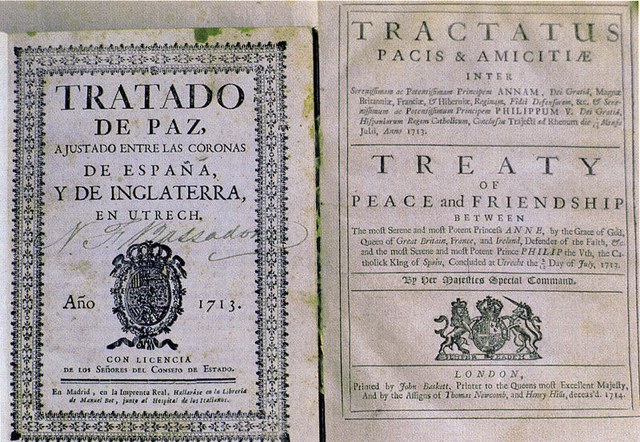
E

His fall from politics was completed when his affair with Kitty O'Shea was made public in a divorce suit. name this first president of the Irish National Land League, who advocated for home rule.

E

Richard Pigott forged a letter from this politician claiming to be sympathetic to the perpetrators of the Phoenix Park Murders. This politician was the leader during the Irish Home Rule.
10 more clues from the record
H

The Irish Parliamentary Party advocating Home Rule was founded by this member of Parliament whose career saw a scandal following his affair with Kitty O’Shea.

H

He was released from prison in return for help in suppressing violence through the Kilmainham Treaty, which brought an end to the Land War.

H

With Timothy Healy and John Dillon, this leader traveled to America to fundraise for relief.

H

Though his name was cleared from the Phoenix Park murders after a Richard Pigott letter proved to be a forgery, he lost his influence after the public discovered his affair with Kitty O’Shea.

H

The loan-dispensing Ashborne Treaty was reputedly passed by Lord Salisbury to gain the support of this man.

H

He and Dillon were later imprisoned alongside four others for signing the "no rent manifesto."This man initially opposed the Plan of Campaign, which arose shortly after he was targeted in the Pigott forgeries.

H

The anniversary of this man’s death is known as Ivy Day. :Name this longtime member of Parliament who advocated for home rule for his people. He was accused of supporting the Phoenix Park murders.
H

During an election campaign, this politician’s oratory was said to appeal to the “hillside men.” This man’s cause was damaged when another politician’s son released the “Hawarden Kite” statement to the Times.
H

This politician was president of the Land League and restructured the organisation following the Kilmainham Treaty to pursue Home Rule. The Pigott forgeries linked this man to the Phoenix Park murders.
H

His first election to parliament saw him replace John Martin, and a lack of response from a later prime minister led him to issue the "vote-Tory" manifesto.

Watch out: Richard Pigott forged letters implicating Parnell, but was not his political ally
#1770 · General · Level 3

Kulturkampf

Kulturkampf
CC BY-SA 3.0

Anti-Catholic campaign · 1871–1887 · German Empire

Kulturkampf was Otto von Bismarck's campaign to reduce Catholic Church influence in Germany through state control and restrictive legislation.

The kit

  • Legislation — Kulturkampf was strengthened by Adalbert Falk's May Laws, which required mandatory civil education for theologians and banned Jesuits.
  • Political response — Kulturkampf prompted the formation of Ludwig Windthorst's Centre Party and was condemned in Pope Pius IX's Etsi multa encyclical.
  • Germanization — Kulturkampf included Germanization of Polish-speaking people in Posen through a Settlement Commission targeting Polish culture.
  • End — Kulturkampf ended with the First Mitigation Law after Pius IX's death, exempting clerics from some Prussian laws.

Runs with

church
targeted for state control open card →
Otto von Bismarck
initiated and led the campaign open card →
Chancellor
Bismarck held this office during policy open card →
Roman Catholic Church
primary target of restrictions open card →

The ladder · 6 clues

H

This policy was strengthened with the passing of Adalbert Falk’s May Laws, and it led to a ban on Jesuits. name this general policy against the Catholic Church that was put forth by Otto von Bismarck.

H

term for the anti-religious policies that included the May Laws.

M

Rudolph Virchow and Ludwig Snell helped popularize the name for this period, when Adalbert Falk passed the May Laws requiring mandatory education for theologians.

M

Anti-Catholic struggle of the German government after unification.

E

This social conflict came to an end with the passage of the First Mitigation Law negotiated following the death of Pius IX [[the Ninth]], allowing clerics to be exempt from some Prussian laws. name this "War" undertaken by Otto Von Bismarck to lessen the influence of the Catholic Church in his state.

E

It was promulgated by the Congregations Law, and the May Laws of Adalbert [AD-uh-burt] Falk tried to institute this policy, which banned the Jesuits. name this attack on the Catholic Church by Otto von Bismarck.

10 more clues from the record
H

This policy prompted an assassination attempt by Edward Kullman.

H

Germanization of the Polish-speaking people of Posen was an official part of this campaign of Bismarck’s, which included the May Laws instituted by Adalbert Falk.

H

The head of one organization wrote a letter to Franz-Josef Rudigier formally condemning this program as a "leges abominabiles [[LEZH ah-bohm-ee-nah-BEEL]]." A provision which laid the groundwork for the Austrittgesetz [[ow-SHTRIT-geh-sets]], or "The Law of Separation," was a part of Minister of Education Adalbart Falk's early implementation of this program.

H

The School Supervision Act liberalized one country’s education system during this period, which ended when one leader decided to enact the Mitigation and Peace Laws in exchange for support for the Anti-Socialist Laws.

H

This policy was accused of being instigated by Freemasons in the Etsi multa [ET-see MOOL-tuh] encyclical of Pope Pius IX [“the ninth”], and it led to the creation of the Centre party.

H

A disgruntled Edward Kullman was angered into a failed assassination attempt by this policy, which spurred the formation of Ludwig Windthorst’s Center Party.

H

This policy was supported by a Payment Law that suspended government subsidies for non-adherents.

H

It came into use in 1873 when Rudolf Virchow declared that the battle with the Roman Catholics was assuming “the character of a great struggle in the interest of humanity.” :Identify this term for the struggle on the part of Otto von Bismarck to subject the Church to state controls.

H

David Blackbourn described how this policy led to three eight-year-old girls being forcibly placed into an orphanage for over a month after an experience they had while berry-picking in Marpingen.

H

Under this policy, the salaries of individuals who didn't comply with it were suspended via the "Breadbasket Law." One aspect of this policy was the formation of a Settlement Commission to target Polish culture in Posen.

Watch out: Edward Kullman's assassination attempt was prompted by this policy, not by a specific individual
#1771 · French Monarchs · Level 3

Louis XV

Louis XV
bdi Workshop of Louis-Michel van Loo /span /a · Public domain

French king · r. 1715–1774 · France

Louis XV was the French king whose costly wars and mistresses bankrupted France before the Revolution.

The kit

  • Rise — Louis XV succeeded his great-grandfather Louis XIV as a child, with Philippe d'Orléans serving as regent until 1723.
  • Conflicts — Louis XV lost French Canada in the Treaty of Paris after the Seven Years' War and won at Fontenoy but returned the Netherlands.
  • Governance — Louis XV's mistress Madame de Pompadour influenced appointments like the Duc de Choiseul and supported Enlightenment philosophers including Voltaire.
  • Legacy — Louis XV survived Robert-François Damiens's assassination attempt and allegedly said "After me, the deluge" after the Battle of Rossbach.

Runs with

France
ruled France 1715–1774 open card →
Mississippi
lost French Canada including Mississippi territory in Treaty of Paris open card →
John
Spain
negotiated Family Pacts with Spain through Duc de Choiseul open card →

The ladder · 6 clues

H

This king supported his father-in-law, Stanislaus Leszczyński (lesh-CHIN-ski), during the War of the Polish Succession.

H

The first chapter of Michel Foucault's Discipline and Punish describes the public execution of a man who attempted to kill this ruler, named Robert-François Damiens .

M

This king’s chief mistress was Madame de Pompadour, and he ceded French Canada in the Treaty of Paris. name this king whose successor was executed during the French Revolution.

M

The Pontcallec and Cellamare conspiracies targeted the regent for this ruler, Philippe II of Orleans.

E

This man’s bankrupting of the country was justified by his mistress, who declared “after me, the deluge.” Madame Pompadour was a close consort of this French king who lost control of North America during the Seven Years’ War.

E

What French monarch, the lover of Madame de Pompadour, is credited with saying “After me, the deluge,” after the French defeat at the Battle of Rossbach in 1757?

10 more clues from the record
H

After this king’s predecessor requested that Pope Clement XI denounce Jansenism, this king’s advisor Cardinal Fleury persecuted the Jansenists.

H

The Cellamare Conspiracy attempted to replace this king's regent, Philippe d'Orleans.

H

This ruler survived an assassination attempt in which his winter clothes protected him from the knife of Robert-Franc¸ois Damiens.

H

This king's foreign minister, the Duc de Choiseul negotiated one of the three "Family Pacts" with another country during his reign.

H

That woman, the Duchess of Chateauroux, was one of four Mailly sisters who were mistresses to this monarch, who appointed the Duc de Choiseul as prime minister due to the influence of his most famous mistress.

H

This ruler’s finance minister Machault d’Arnouville attempted to establish a 5 percent income tax that, unlike previous taxes, was imposed on everyone.

H

This monarch was forced to dismiss one mistress when she was blamed for a life-threatening illness while he was visiting troops in Metz.

H

This man’s minister Cardinal Fleury punished Jansenist priests, and his mistress supported Enlightenment philosophers like Voltaire.

H

This man took control of the Netherlands after a great victory at Fontenoy, but gave up the territory in the interest of a lasting peace.

H

In response to locals refusing to collect taxes, this ruler declared that “the public order entirely emanates from me” in the “Flagellation” speech.

Watch out: Louis XVI (his grandson and successor, executed during the French Revolution)
#1788 · General · Level 3

Bastille

Bastille
span lang="en" Anonymous /span Unknown author · Public domain

Parisian fortress and prison · built 14th century; stormed 1789 · Paris, France

Bastille was a Parisian fortress and political prison whose storming on July 14, 1789 marked the beginning of the French Revolution.

The kit

  • Origins — Bastille was originally built during the Hundred Years' War and later fought over during the Fronde rebellion.
  • Storming — Bastille was stormed on July 14, 1789 by Parisians seeking ammunition after Necker's dismissal fueled fears of conservative coup.
  • Violence — Bastille's commander Bernard-René de Launay and the Swiss Guard were killed, with de Launay's head raised on a pike.
  • Legacy — Bastille's site was marked by a plaster elephant under Napoleon, later replaced by the July Column commemorating Charles X's overthrow.

Runs with

Paris
located in Paris, overlooking Faubourg Saint-Antoine open card →
French Revolution
its storming began the French Revolution open card →
France
its fall is celebrated annually on July 14 open card →
Louis XVI
Necker's dismissal by Louis XVI triggered the storming open card →

The ladder · 6 clues

H

The storming of this fortress that served as a political prison prior to the French Revolution is annually celebrated in France on July 14.

H

A large plaster elephant was placed at this location by Napoleon, though it was replaced by the July Column.

M

Prison stormed on July 14th, 1789 to begin the revolution.

M

The Marquis de Sade was transferred from this building 10 days before an event at this building that followed the capture of arms at the Invalides.

E

Bernard Rene de Launay defended this location with the Swiss Guard, where they were cut down by a mob. name this Parisian fortress and prison destroyed at the beginning of the French Revolution.

E

Bertrand de Launay’s head was raised on a pike by the “vanquishers” of this building. name this Parisian fortress which was captured on July 14th, 1789.

10 more clues from the record
H

Originally built during the Hundred Years' War, this structure was fought over during a major battle of the Fronde rebellion.

H

The July Column was erected at a Square named for this site, commemorating the overthrow of Bourbon king Charles X .

H

The Comte d’Artois and the Duchess de Polignac fled after one event at this building, which overlooked the Faubourg Saint-Antoine.

H

A rat-infested plaster elephant occupied the site of this building after debate about whether it should be commemorated.

H

Myths about this location were discredited by Frantz Funck-Brentano [[foonk- bren-TAH-noh]].

H

Its commander, Bernard-René de Launay, was captured, but did not make it to the Hotel de Ville like he was supposed to due to being beaten and lynched to death on the way.

H

Answer the following about violence during the French Revolution, :This fortress was stormed by an angry mob on July 14, 1789, with the aim of taking ammunition caches held within.

H

La Marseillaise was declared a national song on the holiday commemorating a 1789 event in this location. The Marquis de Lafayette gifted the main key to this building to George Washington.

H

Charles VII successfully besieged English occupiers held up in this specific location, which the mysterious “Man in the Iron Mask” died in.

H

In 1789, Necker was dismissed and banished from France, fueling fears of a conservative coup that caused Parisians to storm this prison on July 14.

Watch out: The Invalides, where arms were captured immediately before the Bastille storming
#1803 · General · Level 3

Prisons

Prisons
bdi Joshua Jebb /span /a · Public domain

Penal institutions · 18th century–present · United States, Europe

Prisons are penal institutions that confine convicted criminals, organized historically under systems like Auburn (emphasizing silence) and Pennsylvania (stressing solitary confinement).

The kit

  • Systems — Prisons were organized under the Auburn System (emphasizing complete silence) and the Pennsylvania System (stressing solitary living).
  • Notable facilities — Prisons include Alcatraz in San Francisco Bay, from which three people escaped via inflatable raft in 1962, and Sing Sing.
  • Attica uprising — Prisons saw a 1971 uprising at Attica, New York, led by Frank Smith and Cleveland Davis, ended when Rockefeller ordered state police retake.
  • Reform studies — Prisons were the original subject of study by Gustave de Beaumont and Alexis de Tocqueville, who went to America to observe these facilities.

Runs with

America
Tocqueville and Beaumont traveled to America to study prisons open card →
San Francisco
Alcatraz prison located in San Francisco Bay open card →
Pennsylvania
Pennsylvania System of prison organization stressed solitary confinement open card →
London

The ladder · 6 clues

H

We are not beasts." The "Auburn System" of organizing these places emphasized complete silence, while the "Pennsylvania System" stressed solitary living.

H

Gustave de Beamount and Alexis de Tocqueville originally went to the U.S. to observe these facilities, thoguh Tocqueville wrote Democracy in America instead.

M

In 1971, Nelson Rockefeller ordered state police to retake one of these places in Attica, New York.

M

Linda Gilbert built libraries in these institutions, which were the original subject of a study by Gustave de Beaumont and Alexis de Tocqueville.

E

In 1962, three people used an inflatable raft to escape one of these places in San Francisco Bay. name these institutions, which include Sing Sing and Alcatraz.

E

A 1971 uprising occurred in one of these institutions called Attica, and another of these institutions can be found on a namesake island in San Francisco Bay. what are these penal institutions such as the defunct Alcatraz?

10 more clues from the record
H

George Jackson’s death at one of these locations led to an incident at another in which participants fortified the “Times Square” command center.

H

One of these institutions was the Presidio Modelo, which was built on the Isle of Pines by Gerardo Machado.

H

“Clandestine marriages” conducted in these places were banned by Hardwicke’s Act of 1753.

H

A notorious one of these locations was Marshalsea.

H

Alexis de Tocqueville's trip to America was originally inspired by a plan to tour these places, and "The New Jim Crow" was written about people of color being disproportionately sent to these places.

H

The first manned balloon flight in the Western Hemisphere took off from one of these location’s courtyards and crossed into neighboring New Jersey.

H

Celebrity Kim Kardashian personally met with Donald Trump to lobby for the First Step Act, which lessened re-entry rates to these places.

H

One holder of this position was embroiled in a scandal after he and his wife Leah were discovered to still have a joint dollar account in Washington DC during his term.

H

In one of these institutions, Frank “Big Black” Smith and Cleveland “Jomo” Davis led a notable 1971 uprising.

H

One holder of this position worked as a schoolteacher in Milwaukee and names the main library at the University of Wisconsin-Madison.

Watch out: Tocqueville wrote Democracy in America instead of completing his prison study
#1819 · General · Level 3

Siberia

Siberia
M.Bitton · CC BY-SA 3.0

Russian region · conquered 1580s onward · northern Asia, east of Urals

Siberia is a vast Russian region conquered after 1552 by Cossacks like Yermak, developed through fur trade and later forced labor.

The kit

  • Conquest — Siberia's Turan khanate was defeated by Yermak Timofeyevich at the Battle of Chuvash Cape, ending Kuchum Khan's rule.
  • Economic development — Siberia's fur trade employed promysloviki trappers and imposed the yasak fur tribute on indigenous peoples like Yakuts.
  • Transportation — Siberia is crossed by the Trans-Siberian Railway, the world's longest, connecting Moscow to Vladivostok.
  • Forced labor — Siberia housed numerous gulags under the Dalstroy trust, including ostrog forts for the katorga labor system and camps near Magadan.

Runs with

Russia
eastern region of Russia open card →
Ivan the Terrible
Railroad
Trans-Siberian Railway spans this region open card →
American Railway Union

The ladder · 6 clues

H

This region’s namesake khanate, led by Kuchum Khan, collapsed after the Battle of Chuvash Cape.

H

The promysloviki worked in this region's fur trade where the yasak fur tribute was demanded, and, in 1586, the first Russian settlement in this region was founded at Tyumen.

M

After the conquest of Kazan, the exploration of this region was begun by the ataman Yermak and financed by the Stroganov family.

M

The city of Magadan in this region was developed with the help of prison labor sourced from nearby gulags.

E

A railway named for this region connects Vladivostok to Western Russia. name this cold and desolate region of Russia that housed many Gulags.

E

The longest railway in the world is named for this region and spans from Moscow to Vladivostok. name this sparsely populated, icy region located in Russia.

10 more clues from the record
H

This region was home to the Khante of Turan which was led by Mirza administrations who traced their lineage to Jochi Khan.

H

Yermak Timofeyevich defeated this region's Turan khanate at the Battle of Chuvash Cape.

H

The yasak tax, applied to the indigenous people of this region, was usually paid in fur.

H

An aristocrat boards a train bound for this region to follow the woman he loves, a prostitute who was tricked into giving a womanizing merchant a lethal dose of arsenic. This region is the setting of the later parts of the novel Resurrection.

H

In Krasnoyarsk Krai in this region, eighty million trees were felled by a probable meteor in 1908, though no impact crater was found.

H

This region was the site of the 1908 Tunguska event where 2000 square kilometers of forest were likely destroyed by a meteor.

H

This region’s development grew under the Dalstroy construction trust, which operated slave labor for the NKVD.

H

Forts built in this region were known as ostrog and were used to house participants in the katorga labor system.

H

This region’s culture was driven by participants in the failed Decembrist revolt, who were sent here.

H

Empress Elizabeth expelled the Chukchi people from this region, and many Yakuts were violently attacked.

Watch out: Tunguska event (1908 meteor) occurred in Siberia but is a separate topic from Siberian conquest/development
#1825 · Commodities and Trade Goods · Level 3

Coal

Coal
Amcyrus2012 · CC BY 4.0

fossil fuel · Industrial Revolution–present · Britain, United States, Europe

Coal is a sedimentary fossil fuel that powered the Industrial Revolution and sparked major labor conflicts.

The kit

  • Industrial use — Coal in processed form called coke enabled better iron smelting and greatly increased iron production.
  • Labor conflicts — Coal miners clashed with authorities at the Battle of Blair Mountain, the largest U.S. labor uprising.
  • Health hazards — Coal extraction causes black lung disease from powder inhalation and caused the 1966 Aberfan disaster landslide.
  • Political impact — Coal and steel together named the European Coal and Steel Community that preceded the EU.

Runs with

American Railway Union
European Union
Coal and Steel Community preceded the EU open card →
Margaret Thatcher
Thatcher busted 1980s English coal miners' strike open card →
steel
paired in European Coal and Steel Community open card →

The ladder · 6 clues

H

The Battle of Orgreave took place during a 1984 strike of workers who produced this commodity that was led by Arthur Scargill.

H

The “sea” form of this resource was used in locomotives and is graded between this resource’s anthracite and bituminous forms.

M

A form of this good used to do better iron smelting was known as coke. name this black fuel that helped ignite the Industrial Revolution in Britain.

M

In 1966, a school in Wales was destroyed after a byproduct of this resource caused a landslide in the Aberfan disaster.

E

Along with steel, this resource names a precursor to the European Union, and Teddy Roosevelt helped end a 1902 strike in this resource.

E

With steel, this resource names a European “community” that preceded the EU.

10 more clues from the record
H

John D. Rockefeller Jr. initially denied one event involving this good, which saw the Colorado National Guard deployed, and that was the Ludlow Massacre.

H

Ten thousand armed men in this industry with support from the UMW clashed with the strikebreakers known as the Logan Defenders at the Battle of Blair Mountain, the largest labor uprising in U.S. history.

H

Workers who help to extract this resource can suffer from excessive powder inhalation, or “black lung.” name this sedimentary fossil fuel, extracted from underground “seams.”

H

A 1920 shootout between laborers in this industry and members of the Baldwin-Felts Detective Agency took place in Matewan, West Virginia.

H

After the Farmington disaster of 1968 involving this resource, a Federal Health and Safety Act was passed to protect people working in the business associated with this resource.

H

Energy resource whose English mines were shut down in a 1980s strike that was busted by Margaret Thatcher.

H

The Kentucky National Guard clashed with workers in this industry at the Battle of Evarts during the larger Harlan County Wars.

H

Iron production was greatly increased by substituting wood with a processed form of this resource.

H

A strike of workers gathering this resource in Anzin inspired Zola’s novel Germinal.

H

The first railroads in Continental Europe transported this resource from Saint-Etienne.

Watch out: Sea coal is a grade between anthracite and bituminous, not a separate category
#1827 · General · Level 3

French Directory

French Directory
Original: /div Unknown /div Vector: /div SKopp /a · Public domain

French Revolutionary government · 1795–1799 · France

French Directory was a five-member executive committee that ruled France between the Reign of Terror and Napoleon's Consulate.

The kit

  • Structure — French Directory was established by the Constitution of the Year III with a legislature of the Council of Ancients and Council of Five Hundred.
  • Foreign policy — French Directory achieved military successes including the Treaty of Campo Formio with the Habsburgs and creation of the Cisalpine and Batavian Republics.
  • Internal challenges — French Directory survived the Conspiracy of the Equals led by Gracchus Babeuf and suppressed the Clichy Club during the 13 Vendémiaire.
  • Fall — French Directory was overthrown by Napoleon in the coup of 18 Brumaire, which established the Consulate with Abbé Sieyès's conspiracy.

Runs with

France
ruled France as executive body open card →
Reign of Terror
followed the Reign of Terror open card →
Charles
Naples
established Parthenopaean Republic puppet state open card →

The ladder · 6 clues

H

Gracchus Babeuf was F executed for attempting to overthrow this government in the Conspiracy of the Equals.

H

This term is used for a government against which an opponent wrote the song “Dying of Hunger, Dying of Cold” after being imprisoned for running the newspaper Tribune of the People.

M

government overthrown by Napoleon in the coup of 18 Brumaire.

M

The Constitution of the Year III created this government, which had a legislative body composed of the Council of Ancients and the Council of Five Hundred. name this French Revolutionary government that preceded the Consulate and followed the Reign of Terror.

E

revolutionary government that he overthrew to establish the Consulate?

E

Another member, Abbe Sieyes, conspired to overthrow it and replace it with the Consulate. identify this five-member body that ruled France from 1795 to 1799.

10 more clues from the record
H

It was created under the Constitution of the Year Three, and included the Council of Five Hundred. :Identify this French Revolutionary government overthrown by Napoleon, which was named for its five-member executive committee.

H

answer the following about a period of French History that followed the Reign of Terror.After the Reign of Terror, France was led by this 5-member committee. It was established by the Constitution of Year III.

H

Its foreign policy was successful, as it signed the Treaty of Campo Formio with the Hapsburgs and created the Cisalpine and Batavian Republics.

H

A subculture under this government was known as the “incredibles” and wore green jackets, thick glasses, and styled their hair like dog ears.

H

Its first president co-negotiated the surrender of the Batavian Republic to his country and another of its original members was the head of a deist sect known as the “Friends of God and Man.” Among its military successes was forcing the capitulation of the king of Sardinia and the establishment of the puppet state in Naples known as the Parthenopaean Republic. After its downfall a triumvirate was established with one of the seats being held by Roger Ducos.

H

A year after the Committee of Public Safety fell apart, this entity came into being. :Identify this Revolutionary ruling body whose 5 members were elected by the Corps Legislatif. On the Fructidor 18, some of its members led a coup against two councils.

H

The Incroyables and Merveilleuses subculture developed during this specific period, in which men wore their hair down the sides in a style called “dog ears”. :Name this period. Paul Barras served as a leader during this period after the arrest and execution of Maximilien de Robespierre.

H

This government suppressed the “Clichy Club.” Thomas Carlyle described how a “whiff of grapeshot” dispersed opponents of this government, which survived Babeuf’s Conspiracy of Equals, during the 13 Vendémiaire.

H

Thomas Paine wrote a letter to this government urging this government to stop its imprisonment of Irish soldiers—whom it had assisted in a rebellion under Wolfe Tone.

H

A decadent subculture during this period known as the “incredibles” and “marvelous women” held apocryphal “victims’ balls” for relatives of those who had died earlier.

Watch out: Committee of Public Safety (fell apart a year before the Directory was created)
#1829 · General · Level 3

the Fronde

the Fronde
span lang="en" Anonymous /span Unknown author /span · Public domain

French noble revolts · 1648–1653 · France

The Fronde were two revolts against Cardinal Mazarin during Louis XIV's minority that challenged royal authority before being crushed.

The kit

  • Rise — The Fronde began when noble members of the parlements refused to pay higher taxes during the Franco-Spanish War in 1648.
  • Conflicts — The Fronde saw the Prince of Condé switch sides, commanding Spanish armies at the Battle of the Dunes against Marshal Turenne.
  • Resolution — The Fronde ended after the Declaration of St. Germain and Peace of Rueil, with Spanish intervention resisted at Guise.
  • Legacy — The Fronde's crushing led to Louis XIV's absolutist rule and his lifelong distrust of the nobility and Paris.

Runs with

Louis XIV
occurred during his minority, shaped his absolutist style open card →
Cardinal Mazarin
his centralizing policies were the revolt's target open card →
Paris
site of mass barricade after Broussel's arrest open card →
The Prince

The ladder · 6 clues

H

The Declaration of St. Germain ended much of the fighting in this conflict and during it the arrest of Pierre Broussel led to a mass barricade demonstration.

H

Spanish intervention in this conflict was led by the archduke Leopold Wilhelm and successfully resisted at Guise by the Duke of Choiseul.

M

The centralizing policies of Cardinal Mazarin were the target of this uprising, named for slings to smash windows during the minority of Louis XIV.

M

The Marshal du Plessis-Praslin fought in this conflict against Turenne at the Battle of Rethel .

E

Was a revolt against Mazarin and Louis XIV during the Franco-Spanish War?

E

This revolt against Cardinal Mazarin in the early years of Louis’ reign strongly tilted his style of rule.

10 more clues from the record
H

The Peace of Rueil led to a lull during one phase of this conflict, which saw the scheming of Cardinal de Retz.

H

A general involved in this event fled to Spain and commanded Spanish armies at the Battle of the Dunes against his friend and rival in this event, Marshal Turenne.

H

That general, the Prince of Condé, helped suppress the first phase of this event, although he would later be arrested in its second phase.

H

Members of the parlements [parl-mahnt] were arrested during this event as a result of the Prince of Condé's victory at the Battle of Lens.

H

Noble members of the parlements began this event by refusing to pay higher taxes during the Franco-Spanish War.

H

During this event, the daughter of the Duke of Orleans saved Condé during the Battle of Faubourg St. Antoine from Turenne's forces.

H

This event, which was paused by the Peace of Rueil, involved pamphlets known as mazarinades [“Mazarin”-ahds].

H

During the Franco-Spanish War, Philip IV supported the Grand Condé’s revolt as part of this larger uprising against Louis XIV. The crushing of this revolt, which had phases “of the parlements ” and “of the nobles,” led to Louis XIV’s absolutist rule.

H

One treaty signed during this conflict was negotiated by the mistress of Cardinal Retz who had previously been exiled for her involvement in the Importants’ plot; that treaty allowed borrowing money at 8.33% interest, or denier 12.

H

After Richelieu’s death, the French nobility, allied with peasants and other factions, engaged in two rebellions against the monarchy collectively given this name. It is French for “sling,” which rebels used to smash windows.

Watch out: Not the Importants' plot (earlier conspiracy that led to exile of Cardinal Retz's mistress)
#1844 · General · Level 3

Alexander

Alexander
Giovanni Dall'Orto · Attribution

Russian rulers and popes · 1242–1917 · Russia, Vatican

Alexander names eight popes and multiple Russian rulers including three Romanov tsars who signed Tilsit, emancipated serfs, and faced assassinations.

The kit

  • Russian rulers — Alexander defeated Teutonic Knights at the Battle on the Ice in 1242 as an ally of the Golden Horde.
  • Tilsit & reforms — Alexander I signed the Treaty of Tilsit after losing Friedland and received legal reform advice from Michael Speransky.
  • Death & succession — Alexander I's death led to the Decembrist revolt by the Unions of Salvation and Welfare and Northern and Southern Societies.
  • Assassinations — Alexander II, who emancipated the serfs, was killed by Nikolai Rysakov's bomb from the People's Will group in his carriage.

Runs with

Nanda EmpirePope
Russian Serfs
Alexander II emancipated the Russian serfs open card →
Bakumatsu Period

The ladder · 6 clues

H

After his country lost the battle of Friedland, a ruler with this name met on a raft to sign the Treaty of Tilsit with Napoleon.

H

An ally of the Golden Horde with this first name defeated Teutonic Knights in 1242 in The Battle on the Ice.

M

After losing the Battle of Friedland, a ruler with this name became the non-French signatory of the Treaty of Tilsit.

M

The sixth pope of this name, a man of Aragonese [[ah-rah-go-NEH-seh]] descent, excommunicated Girolamo Savonarola and confirmed the rights of Spain to their New World claims. give this papal name of Rodrigo Borgia [[BOR-zhah]].

E

Alaska was sold to the U.S. by the second tsar of this name, and the Decembrist revolt broke out after the death of the first tsar of this name. give this name shared by three Romanov tsars, including the emancipator of the serfs.

E

Another person of this name was killed after Nikolai Rysakov of the People’s Will used a small bomb on his carriage. give this name of various czars of Russia, the second of which emancipated the serfs.

10 more clues from the record
H

A pope with this name excommunicated the assassins of Thomas Becket, whom he canonized.

H

The death of another ruler with this name led to a revolt of the Unions of Salvation and Welfare as well as the Northern and Southern Societies.

H

Michael Speransky advised on legal reforms to a monarch of this name who signed the Treaty of Tilsit and whose death spurred the Decembrist uprising.

H

A ruler with this name was opposed in the failed January Uprising, while another passed non-German May Laws to crack down on Jews.

H

Vladimir Lenin’s older brother was hanged for plotting the death of one ruler of this name on the sixth anniversary of the assassination of another ruler of this name by the Narodnaya Volya.

H

In an accident near Borki Station, one ruler with this name held up a collapsed train roof to help his children escape.

H

A pope with this name commissioned Pinturicchio [[pin-too-REE-kee-oh]] to decorate his namesake apartments in the Apostolic Palace.

H

Anselm of Baggio [[BAH-zhyo]] served as the second pope of this name, calling for the Crusade of Barbastro against the Moors.

H

The seventh pope of this name provided sanctuary to the exiled Christina, Queen of Sweden.

H

One aim of the Murmansk deployment was to support this white Russian admiral, who nominally controlled Siberia from his provisional capital in Omsk. After his government fell apart, he fled east and was eventually executed and dropped through the ice of the Angara River.

Watch out: Multiple Alexanders (Russian rulers, popes, and admiral Kolchak) share this name across different contexts
#1851 · General · Level 3

Eugene of Savoy

Eugene of Savoy
bdi Jacob van Schuppen /span /a · Public domain

Austrian field marshal · 1663–1736 · Austria, Central Europe

Eugene of Savoy was an Austrian field marshal who defeated Ottoman and French forces in the early 18th century.

The kit

  • Rise — Eugene of Savoy distinguished himself at the Battle of Vienna and was made colonel of a Dragoon Regiment.
  • Achievements — Eugene of Savoy won the Battle of Zenta, forcing the Ottomans to cede Transylvania and Hungary in the Treaty of Karlowitz.
  • Conflicts — Eugene of Savoy partnered with the Duke of Marlborough at Blenheim and Malplaquet during the War of the Spanish Succession.
  • Legacy — Eugene of Savoy mentored Frederick the Great and commanded cautiously during the War of the Polish Succession.

Runs with

War of the Spanish Succession
partnered with Marlborough at Blenheim and other battles open card →
Vienna
distinguished himself at the Battle of Vienna early in his career open card →
Holy Roman Empire
served as field marshal and president of Imperial War Council open card →
Frederick the Great
taught military strategy to Frederick in his later years open card →

The ladder · 6 clues

H

In his later years, this general mentored a young Frederick the Great while conducting a cautious campaign during the War of the Polish Succession.

H

This man’s victory at Zenta forced the Ottomans to hand over Transylvania and Hungary in the Treaty of Carlowitz.

M

In the war of the Polish Succession, this man was responsible for relieving Phillippsburg.

M

This man commissioned the Belvedere Palace after his victory at the Battle of Zenta, which led to the Treaty of Karlowitz and the Ottoman withdrawal from Central Europe.

E

BLEN-um). name this Austrian general who won many victories with the Duke of Marlborough in the War of the Spanish Succession.

E

In the European theatre of the war, the Duke of Marlborough was partnered with which French-born Austrian general who secured a major victory in the Siege of Turin?

10 more clues from the record
H

During the Austro-Turkish Wars, he led Austrian troops during the Siege of Belgrade and the Battle of Petrovaradin.

H

In one war, this leader’s forces killed Ottoman Grand Vizier Daman Ali Pasha at Peterwardein, which led to the treaty of Passarowitz two years later.

H

The military success of the alliance against France was mostly due to these two generals, who worked together at Blenheim and Malplaquet.

H

This man, who once governed the Austrian Netherlands, was wounded in the neck during the bloody Battle of Malplaquet [[mahl-plah-KEH]].

H

This man worked to quell the revolt of Francis Rakoczi while working as president of the Imperial War Council.

H

He stopped Louis the Fourteenth’s invasion of his home region before co-commanding an army at Blenheim (pr.

H

This man’s victory at Petrovardin allowed him to pass the Treaty of Passarowitz over his enemies.

H

He taught military strategy to Frederick the Great and was the great-nephew of Cardinal Mazarin. :Name this field marshal who helped relieve the siege of Vienna, a nobleman who also helped with the English victory at Blenheim in the War of the Spanish Succession.

H

This general got his start in service of the Holy Roman Empire at the Battle of Vienna, where he distinguished himself in battle and was made a colonel of a Dragoon Regiment.

H

He commanded Imperial troops the Battle of Turin during the War of the Spanish Succession, where he led a relief force which routed the French army.

Watch out: Great-nephew of Cardinal Mazarin, not a direct relative of Louis XIV
#1858 · General · Level 3

Lajos Kossuth

Lajos Kossuth
bdi Southworth & Hawes /a · Public domain

Hungarian revolutionary leader · 1848–1849 · Hungary

Lajos Kossuth was the regent-president of Hungary during the 1848 Revolution who proclaimed independence from the Habsburgs before being forced into exile.

The kit

  • Rise — Lajos Kossuth edited the Pesti Hirlap and served as finance minister to Count Batthyany before leading the 1848 Revolution.
  • Achievements — Lajos Kossuth created the liberalizing April Laws and raised Hungary's first popular army called the Honvéd.
  • Conflicts — Lajos Kossuth proclaimed independence in Debrecen but became political rivals with General Arthur Görgey over differing aims of independence versus autonomy.
  • Legacy — Lajos Kossuth toured the United States and Britain after exile, sparking Kossuth fever and popularizing white silk cravats and felt slouch hats.

Runs with

Hungary
served as regent-president during 1848 Revolution open card →
1848
led Hungarian Revolution of 1848 open card →
Millard Fillmore
rescued by USS Mississippi sent by Fillmore open card →
Italy
settled in Italy after exile open card →

The ladder · 6 clues

H

While in exile, this man criticized a compromise that his homeland agreed to in his “Cassandra Letter.” :Name this man, who attacked Ferenc Deák in that letter.

H

Hungarian revolutionary who briefly led the country and toured the United States after being exiled.

M

Observers in the Young America movement cheered the liberalizing April Laws that this European created before he was deposed by Franz Josef. name this leader of the 1848 Revolution in Hungary.

M

The USS Mississippi was dispatched to rescue him from internment in Turkey by Millard Fillmore after this man had previously been hailed as a celebrity in England, causing a scandal for foreign secretary Lord Palmerston. name this key participant in the 1848 revolution honored as a national hero in Hungary.

M

This editor of the Pesti Hirlap proclaimed independence in Debrecen, but Viscount Canning had to negotiate this man's exile at Shumen in Ottoman-controlled Bulgaria following the defeat of the Revolutions of 1848. name this man who sought autonomy from the Hapsburgs, the national hero of Hungary.

E

After abdicating his highest post, this man toured the US and Britain advocating for Magyar independence. name this Governor-President of Hungary during the 1848 revolution.

10 more clues from the record
H

denied pleas from which exiled Hungarian leader to recognize the independence of Hungary?

H

This person compared himself to Pyrrhus’s diplomat Cineas in a speech given to a “glorious hall… purified by the air of liberty.” A variety of cream-filled sponge cake was created to honor this person’s visit to Baltimore, part of a tour that popularized white silk cravats and caused a bout of his namesake “fever.” This man edited the Parliamentary Messenger to work around a ban on publishing proceedings in the House of Magnates.

H

In one speech, this politician claimed people from the state of Ohio are the ones that know best “Resistance to tyrants is the state of God.” In one of his books, he claims that what’s wrong with the world today is that “the modern editions of Greek idiotism … heap up the gold in the world.” Deak, the so-called Wisest Man of the Nation claimed credit for authoring the Manifesto of the Opposition, even though this man actually authored it.

H

A chevalier’s threat that Dudley Mann could be executed for a secret mission in support of this person prompted Daniel Webster to reply in the “Hülsemann letter.” Haberdasher John Genin got this person’s retinue to don his wares on Broadway, leading the felt slouch hats worn by Civil War officers to be named after this person.

H

The future leader of the Confederate Navy Stephen Mallory worried that this man was an impersonator when he applied for entrance into the U.S. He was given the job portfolio of finance by Batthyany but after he fled his country he toured and lectured on Shakespeare in England and then settled in Italy.

H

1848 was a turbulent year in many European nations. Name some active figures from that period, :This Hungarian revolutionary served as regent-president of Hungary and pushed for Magyarization, but was unable to control the military and was ultimately forced into exile.

H

This leader was the first to raise a popular army called the Honvéd. :Name this leader of an 1848-1849 rebellion against a newly crowned Emperor. This leader and their general Arthur Görgey became political rivals due to their differing aims of independence and autonomy.

H

This editor of the Pesti Hirlap was a finance minister to Count Batthyany and the author of the Cassandra Letter. name this man whose March Laws declared the independence of Hungary in 1848, which he briefly ruled before the Hapsburgs reasserted control.

H

During a revolt led by this man, he was declared Regent Governor since Franz Joseph I had not been legally crowned. :Name this Hungarian journalist and statesman who served as Regent President during the Hungarian Revolution.

H

He was succeeded in office by his longtime general Arthur Gorgey, who served as dictator until surrendering to Rudiger at Vilagos, after this man had organized the Honvéd army and served as regent-president.

Watch out: Arthur Görgey, his general who succeeded him and surrendered to the Habsburgs
#1861 · General · Level 3

New Model Army

New Model Army
Public domain

Parliamentary army · 1645–1660 · England, Scotland, Ireland

New Model Army was Parliament's professional fighting force in the English Civil War, led by Thomas Fairfax with Oliver Cromwell commanding cavalry.

The kit

  • Formation — New Model Army was created after the Self-Denying Ordinance barred members of Parliament, including the earls of Essex and Manchester, from military command.
  • Organization — New Model Army drew membership from the Southern and Eastern Associations and employed dragoons at battles like Dunbar and Preston, eschewing tents for nearby buildings.
  • Internal politics — New Model Army debated constitutional questions at the Putney Debates, where Agitators and Levellers argued with Grandees over the Agreement of the People versus the Heads of Proposal.
  • Campaigns — New Model Army suffered heavy losses at the Siege of Clonmel despite outnumbering defenders five to one, losing over one-fourth of participating members.

Runs with

Oliver Cromwell
commanded its cavalry regiments as Lieutenant-General open card →
English Civil War
fought against Charles I's Cavaliers throughout the conflict open card →
Gilbert StuartCommon

The ladder · 6 clues

H

Thomas Fairfax led this Roundhead, professional military force whose cavalry was called the Ironsides.

H

William Waller suggested the creation of this organization to the Committee of Both Kingdoms.

M

Army in which Cromwell served as cavalry leader during the Civil War.

M

After Parliament passed the Self-Denying Ordinance, Cromwell commanded the cavalry regiments of this army in the English Civil War.

E

This force, led by Sir Thomas Fairfax, fought against the Cavaliers of Charles I. name this fighting force organized by Parliament to fight in the English Civil War.

E

The earls of Essex and Manchester were unable to serve in this force as a result of the Self-Denying Ordinance.

10 more clues from the record
H

George Monck led one part of this group with whom the Agitators and the Levellers argued over the form of its country’s constitution during the Putney Debates.

H

Robert Lockyer, a member of this force, was executed for his role in the Bishopsgate Mutiny while serving in the regiment of Edward Whalley.

H

Legislators were forbidden from commanding in this body by the Self-Denying Ordinance, and its members considered constitutional questions at the Putney Debates.

H

Despite outnumbering an opposing force by roughly five to one, this organization lost over one-fourth of its members who participated in the Siege of Clonmel.

H

Eschewing tents, this group often quartered in nearby buildings and employed dragoons in battles at Dunbar and Preston.

H

This organization drew much of its membership from the Southern and Eastern Associations.

H

Eleven men, including Denzil Holles, fled from this organization after denouncing it in the “Declaration of Dislike.” Factions in this organization included the Grandees and the New Agents, who published a tract about the “Case” of this group “Truly Stated.” At Corkbush Field, some members of this organization refused to sign the Heads of Proposal in favor of the more extreme Agreement of the People.

H

The Self-Denying Ordinance set up this body, of which Cromwell was the Lieutenant-General. This army, which came into being after Parliament’s loss at Marston Moor, did not rely on part-time militias.

H

This body issued the “Solemn Engagement” and appointed Agitators to complain about a lack of payment before issuing an “Agreement of the People.” This body was bound by the Solemn League and Covenant, and one of its leaders was Henry Ireton.

H

Nicknamed the "Ironsides" by Prince Rupert, it was proposed after a disaster at Cropedy Bridge and came into existence after the passing of the Self-Denying Ordinance.

Watch out: Confused with earlier Parliamentary forces led by Essex and Manchester before the Self-Denying Ordinance
#1863 · General · Level 3

Pragmatic Sanction of 1713

Pragmatic Sanction of 1713
User:Magellan, wikipedia.de · Public domain

Habsburg succession decree · 1713 · Holy Roman Empire

Pragmatic Sanction of 1713 was Charles VI's edict allowing his daughter Maria Theresa to inherit Habsburg lands despite Salic Law.

The kit

  • Purpose — Pragmatic Sanction of 1713 was intended to ensure all Habsburg possessions would pass to Charles VI's as-yet-unborn daughter.
  • Legal challenge — Pragmatic Sanction of 1713 violated Salic Law, which prohibited female succession to thrones and territories.
  • Recognition — Pragmatic Sanction of 1713 was recognized by Britain and the Dutch after Charles VI agreed to dissolve the Ostend trading company.
  • Violation — Pragmatic Sanction of 1713 was violated after Charles VI's death, leading to the War of the Austrian Succession.

Runs with

Charles
issued by Charles VI in 1713 open card →
Maria Theresa
allowed her to inherit Habsburg domains open card →
Roman Emperor
issued by Holy Roman Emperor Charles VI open card →
France

The ladder · 6 clues

H

The Prussian invasion of Silesia violated this edict, which was supposed to secure Maria Theresa’s right to the throne. It was issued in the hopes of avoiding conflict with Salic Law.

H

The violation of this 1713 edict led to the War of the Austrian Succession. :Name this edict, issued by Holy Roman Emperor Charles VI, which allowed his daughter Maria Theresa to become his successor.

M

was allowed to succeed to the throne by her father Charles VI with what document?

M

Since this agreement violated Salic Law, it was broken shortly after Charles VI’s death. name this 1713 agreement that allowed for Maria Theresa to ascend the Habsburg throne.

M

That inheritance occurred 27 years later when Maria Theresa took the throne.

E

The original Carlists were opposed to an 1830 document with this name issued by Isabella’s father Ferdinand VII. A document with this name issued by Charles VI led to a conflict ended by the Treaty of Aix-la-Chapelle .

10 more clues from the record
H

This edict, issued in 1713 by Charles VI, was intended to ensure that all of the possessions of the Habsburgs would be inherited by any as-yet-unborn daughter.

H

This treaty was devised in an attempt to break an agreement of shared rule with Joseph I’s bloodline, the Mutual Pact of Succession.

H

This treaty was signed by the British and Dutch after an agreement to terminate the successful Ostend trading company.

H

Document created by Charles VI to ensure the succession. It was largely ignored by the participants of the war.

H

Charles V issues one of these edicts in 1549 that attempted to consolidate the Netherlands. :Give this two-word term for decrees such as one issued in 1713 by Charles VI, which allowed the Hapsburg possessions to pass to women despite Salic law.

H

The Ostend Company was dissolved in return for the recognition of this document, which Charles Albert of Bavaria rejected. :Name this 1713 edict by which Holy Roman Emperor Charles VI declared that his daughter could inherit the dominion of the Habsburgs if no son were born to him.

H

The death of the monarch who issued this edict led to the War of Austrian Succession.Name this policy implemented in 1713 which allowed Charles VI to declare a potential daughter heir to the Habsburg domains.

H

Another limited papal power over France but was superseded by the 1516 Concordat of Bologna, and one of 1759 forbade the union of the Kingdoms of Naples and Two Sicilies.

H

Name these historical announcements, .This 1711 declaration said that the daughters of Holy Roman Emperor Charles VI had precedence in succession over the heirs of former emperors Leopold I and Joseph I.

H

Faced with only daughters, Charles VI promulgated this document allowing women to succeed to the Archduchy of Austria and the Habsburg dominions, thought not to the office of Holy Roman Emperor.

Watch out: Confusion with 1830 Pragmatic Sanction issued by Ferdinand VII of Spain regarding Isabella's succession
#1871 · British Prime Ministers · Level 3

William Pitt the Younger

William Pitt the Younger
bdi John Hoppner /span /a · Public domain

British Prime Minister · 1783–1801, 1804–1806 · Great Britain

William Pitt the Younger became Britain's youngest-ever Prime Minister at age 24, serving during the Napoleonic Wars and expanding executive power.

The kit

  • Rise — William Pitt the Younger defeated the North-Fox coalition in 1783, becoming Prime Minister despite an initial no-confidence vote he refused to accept.
  • Achievements — William Pitt the Younger passed the Constitutional Act splitting Quebec into Upper and Lower Canada and worked with Wilberforce on abolition.
  • Conflicts — William Pitt the Younger used Britain's economic might to expand the Royal Navy during the War of the First Coalition against Napoleon.
  • Death & succession — William Pitt the Younger's effort to offer Catholic emancipation alongside the Acts of Union 1800 was opposed by George III, ending his first ministry.

Runs with

George III
George III opposed Catholic emancipation, ending Pitt's first term open card →
William Wilberforce
worked with Pitt on abolishing the slave trade open card →
Charles
defeated Charles James Fox's coalition with North open card →
James
defeated coalition with Charles James Fox open card →

The ladder · 6 clues

H

This man delayed the Regency Bill, so preventing royal power from passing to the Prince of Wales, who would likely have elevated Charles James Fox over this man.

H

Of this man, William Wilberforce once said he knew no equal in terms of "personal purity, disinterestedness and love of this country." Only Robert Walpole served a longer tenure as prime minister than this man, who was the first to serve in the position following the passage of the Acts of Union of Great Britain and Ireland.

M

Lord North and his coalition with Charles Fox were defeated by this man, who became the next Prime Minister. This man, whose father also served as Prime Minister, was the youngest man ever to hold the office.

M

His efforts to pass the Act of Union included offering emancipation to Irish Catholics: this was opposed by King George III, thus ending this man’s first term as Prime Minister.

E

The son of a similarly named British statesman, this man served as Prime Minister during the Napoleonic Wars, greatly expanding the power of his office.

E

In power during the War of the First Coalition, this man used Britain's economic might to expand the Royal Navy in his conflicts with Napoleon. name this British prime minister who had a father of the same name.

10 more clues from the record
H

Son of an "Elder" PM who oversaw the end of the American Revolution.

H

This man passed the Constitutional Act to split Quebec into Lower and Upper Canada.

H

In the 1788 Regency Crisis, this politician argued that only Parliament could appoint a regent, and in Blackadder he advocates “tougher sentences for geography teachers.” :Name this Prime Minister who succeeded Lord North and was not in fact an adolescent. His nickname distinguishes him from his father, who conducted the Seven Year’s War as P.M.

H

A comment by society hostess Francis Anne Crewe that this man's ministry would be over soon after Christmas led it to be called the "mince-pie administration." This man appointed Thomas Townshend, the 1st Viscount Sydney president of his newly-created Board of Control for the East India Company.

H

Henry Dundas was impeached for mis-appropriation of public money while serving as First Lord of the Admirality in this man’s government, a charge he could not defend since it would have required revealing payments to French spies.

H

In 1783, George III dismissed the North/Fox coalition, and eight months later installed this man noted for his support of the “royal prerogative.” This great rival of Fox would remain prime minister until 1801.

H

After he was appointed by the King, this man suffered a defeat in a motion of no confidence because of a coalition formed after the death of the Marquis of Rockingham, but he refused to resign and won the following election handily.

H

That attempt was mostly due to this man’s Acts of Union 1800, which merged the United Kingdom and Ireland into a single nation, leading to a greatly increased Catholic population.

H

This quasi-Tory worked with William Wilberforce to get the slave trade abolished in the Empire. His “elder” Whig uncle of the same name led Britain during the Seven Years’ War.

H

While this politician was chancellor, the gold standard was suspended for the first time, and he introduced a ‘sinking fund’ to reduce the debt incurred by Britain’s ongoing war with France.

Watch out: Father William Pitt the Elder also served as Prime Minister during the Seven Years' War
#1874 · General · Level 3

Giuseppe Mazzini

Giuseppe Mazzini
Unknown author Unknown author · Public domain

Italian nationalist revolutionary · 1805–1872 · Italy, England

Giuseppe Mazzini was a Genoese revolutionary who founded Young Italy and laid the foundation for modern European republicanism.

The kit

  • Rise — Giuseppe Mazzini was imprisoned at Savona in 1830 for membership in the Carbonari secret society.
  • Achievements — Giuseppe Mazzini founded the Young Italy movement and published The Apostleship of the People during his London exile.
  • Conflicts — Giuseppe Mazzini served as part of a triumvirate ruling the 1849 Roman Republic alongside Carlo Armellini and Aurelio Saffi.
  • Legacy — Giuseppe Mazzini refused a seat in the Chamber of Deputies in 1867 despite his contributions to Italian unification.

Runs with

Italy
advocated for an independent, unified republican Italy open card →
Italian Unification
led Young Italy movement supporting Garibaldi's unification efforts open card →
Charles
Charles Albert rejected his plan for a new country on Piedmontese soil open card →
Roman Republic
served as triumvir leading resistance against Napoleon III's 1849 invasion open card →

The ladder · 6 clues

H

Karl Marx opposed the ideas of this man, who laid the foundation for modern European republicanism. identify this Genoese revolutionary who founded the Young Italy movement.

H

This man’s condemnation of the Paris Commune led Karl Marx to describe his as a “reactionary” and an “old ass”, and this 19th­century statesman called for the creation of a “United States of Europe”.

M

This man published The Apostleship of the People while exiled in London.

M

Prominent Risorgimento leader who founded the Young Italy movement.

E

This man was appointed along with Carlo Armellini and Aurelio Saffi as part of a “triumvirate” to rule a newly­formed Roman Republic. Later, this native of Genoa led a group which sought to unify his country under Garibaldi. name this Italian nationalist whose writings heavily influenced the Young Italy movement.

E

This man was imprisoned at Savona in 1830 for being a member of the Carbonari. name this Italian nationalist and founder of the Young Italy movement.

10 more clues from the record
H

A bronze bust of this man in Sheep Meadow was unveiled during a ceremony in which William Cullen Bryant gave a speech.

H

What unbending republican ally of Garibaldi founded the revolutionary society Young Italy and continued advocating democracy after reunification?

H

His first published essay was on “Dante's Patriotic Love,” published more than a decade after he graduated from university, though he is more famous for the contemporary newsletter Apostleship of the People, issued during the English exile that followed his arrests in Paris and Geneva; a second exile fifteen years later caused his attempts at uprisings in Mantua and Milan.

H

His ideas were shat on by Charles Albert, who wouldn’t tolerate his formation of a new country on Piedmontese soil and he was also known for leading Young Italy. :Name this Italian figure which www.ohio.edu claims “was the patron saint of the Risorgimento.”

H

This founder of the Young Italy movement advocated Republicanism and an independent, unified Italy. In later years he was often critical of the actions of the fledgling Italian state, even refusing a seat in the Chamber of Deputies in 1867.

H

Brothers Attilio and Emilio Bandiera were executed for revolutionary activities as a result of this man’s letters being opened and read by the British Foreign Office, leading many British liberals to rally to his cause.

H

The Carbonari lost much of their importance after this person created the Young Italy movement. He would not participate in the government created under Victor Emmanuel II despite his contributions to the Risorgimento.

H

As a triumvir of the short-lived 1849 Roman Republic, this man led the resistance against Napoleon III’s invasion to restore Pius IX to power.

H

This man wrote that “the angels of Martyrdom and Victory are brothers” in a eulogy to two brothers who staged a failed 1844 naval mutiny.

H

This man almost certainly fathered an illegitimate son named Joseph Demosthene Adolphe Aristide with his mistress, Giuditta Sidoli.

Watch out: Karl Marx called Mazzini a "reactionary" and "old ass" for condemning the Paris Commune
#1885 · Physical Geographic Features · Level 3

Corsica

Corsica
TUBS /a sup span typeof="mw:File" img src="https://upload.wi · CC BY-SA 3.0

Mediterranean island · ancient–present · north of Sardinia

Corsica is a Mediterranean island that briefly achieved independence under Pasquale Paoli before French annexation in 1768.

The kit

  • Independence struggle — Corsica gained independence from Genoa under Pasquale Paoli, who established a republic that inspired New York's Hearts of Oak militia.
  • French conquest — Corsica lost independence after the Battle of Ponte Novu destroyed Paoli's republic, leading to French annexation despite Rousseau's Constitutional Project.
  • Napoleon's birthplace — Corsica was the birthplace of Napoleon Bonaparte, whose family dropped the 'u' from Buonaparte after French conquest.
  • Modern nationalism — Corsica has seen continued nationalist movements, including the FLNC-affiliated assassination of prefect Claude Érignac by Yvan Colonna in 1998.

Runs with

Pasquale Paoli
led independence republic destroyed at Ponte Novu open card →
Republic of Genoa
ruled for nearly five hundred years until Paoli's independence open card →
Napoleon Bonaparte
born on island; family name changed after French conquest open card →
France
annexed after Battle of Ponte Novu in 1768 open card →

The ladder · 6 clues

H

German adventurer Theodor von Neuhoff [[NOY-hoff]] declared this island a kingdom in 1736.

H

Independence leader’s Pasquale Paoli had his memoirs recorded in James Boswell’s Account of this region.

M

This island lost its independence after the Battle of Ponte Novu, which destroyed a republic declared by Pasquale Paoli, who fought for this island’s independence from Genoa.

M

French island in the Mediterranean where Napoleon was born.

E

Napoleon’s family dropped the “u” from Buonaparte after the French conquered this island, located north of Sardinia.

E

Petru Giovacchini advocated for Italy's annexation of this island, where Pasquale Paoli fought for independence.

10 more clues from the record
H

One prefect of this region, Claude Érignac, was assassinated by Yvan Colonna after he joined a group affiliated with the FLNC.

H

William Bentinck signed the Treaty of Bastia, giving control of this island to Britain.

H

Theodor von Neuhoff was chosen to be this region’s king by a man who was defeated at Ponte Novu.

H

British readers were introduced to the politics of this place through a 1768 "Account" published by James Boswell.

H

A polity established on this island inspired the nickname of New York’s Hearts of Oak militia, which included a young Alexander Hamilton.

H

In the Neolithic period on this island, a group of standing stones likely meant to evoke fertility were rearranged by the Torrean [[toh-REH-ahn]] people at the Filitosa [[fee- lee-TOH-sah]] site.

H

This region briefly existed as a republic after gaining its independence from Genoa under the leadership of Pasquale Paoli, who would later fight against this region’s annexation by France.

H

Jean-Jacques Rousseau claimed that this island would astonish Europe in his Constitutional Project for this island, which briefly was in a personal union with Britain during the French Revolution.

H

This island, which the launching point of the pro-De Gaulle Operation Resurrection, was ruled for nearly five hundred years by a republic in Liguria.

H

Simeone’s son Gilles was elected as president of this region’s executive council in a victory for his nationalist coalition in 2015.

Watch out: Theodor von Neuhoff briefly declared himself king in 1736, not a lasting ruler
#1896 · General · Level 3

Potatoes

Potatoes
Scott Bauer, USDA ARS · Public domain

Andean root vegetable · introduced to Europe 16th century · originated in Peru

Potatoes are an Andean root vegetable whose European introduction transformed agriculture and whose Irish blight caused the Great Famine.

The kit

  • Origins — Potatoes arrived in Europe via Spanish sailors returning from the Andes Mountains in Peru in the 16th century.
  • Promotion — Potatoes were promoted by Antoine Parmentier posting guards around his farm who accepted bribes from peasants wanting to steal them.
  • Irish Famine — Potatoes caused the Great Famine in Ireland in the 1840s when blight destroyed the crop, killing over one million people.
  • Conflicts — Potatoes gave the alternate name to the War of the Bavarian Succession between Frederick the Great and Joseph II of Austria.

Runs with

Ireland
Irish dependence caused Great Famine when blight struck in 1840s open card →
Frederick the Great
promoted cultivation and fought Potato War with Austria open card →
Andes Mountains
Spanish sailors brought potatoes from Peruvian Andes to Europe open card →
Incan Empire

The ladder · 6 clues

H

Frederick the Great apocryphally ordered a field of these objects to be placed under armed guard which led to their prompt theft.

H

Antoine Parmentier’s advocacy for this foodstuff included a scheme in which he posted guards around his farm, then told the guards to accept bribes from peasants wanting to take some.

M

This good gives the alternate name of the War of the Bavarian Succession.

M

This crop arrived in Europe via Spanish sailors returning from the Andes Mountains in Peru.

E

The Corn Laws were repealed to address a blight of this crop in Ireland. Irish dependence on this root vegetable led to the Great Famine in the 1840s.

E

Catherine also mediated the War of the Bavarian Secession, a conflict also known as a war of these things. A blight of this crop caused a massive famine in Ireland.

10 more clues from the record
H

This commodity’s production was encouraged by Frederick the Great, who fought a war of succession with Joseph II of Austria named for this commodity.

H

This crop, which was used to make the freeze-dried product chuño, was the most common crop harvested using a foot-plow called a taclla.

H

This crop is freeze dried and eaten as chun˜o [choo-nyo] by the Quechua people, and has been since at least the 13th century.

H

Andean crop, a famine of which killed over one million Irish people in the 19th century.

H

The 1859 Pig War in Oregon began when a pig illegally ate this foodstuff and was shot.

H

Antoine-Augustine Parmentier helped to overturn laws outlawing the cultivation of these objects.

H

In 1992, Dan Quayle was mocked for his failure to spell this word.

H

Along with plums, these objects name a war that was ended by the Treaty of Teschen.

H

Since this staple good was poorly adapted for long term storage in granaries, it was rarely collected by landlords and thus favored among the working class for personal consumption.

H

A series of riots over this food occurred in Russia in the mid-1800s. A shortage of this food elsewhere caused by a namesake “blight” led Robert Peel to repeal the Corn Laws.

Watch out: Dan Quayle's 1992 misspelling incident (political gaffe, not historical significance)
#1898 · Other Continental European Monarchs · Level 3

Queen Christina of Sweden

Queen Christina of Sweden
bdi Sébastien Bourdon /span /a · Public domain

Swedish queen · reigned 1632–1654 · Sweden, later Rome

Queen Christina of Sweden was a 17th-century monarch who abdicated at age 27, converted to Catholicism, and lived in Rome.

The kit

  • Rise — Queen Christina of Sweden became monarch at age six after her father Gustavus Adolphus died at the Battle of Lützen.
  • Achievements — Queen Christina of Sweden invited René Descartes to teach philosophy at her court and founded the Academy of Arcadia.
  • Abdication — Queen Christina of Sweden abdicated in 1654 after converting to Catholicism, then moved to Rome as a papal guest.
  • Controversy — Queen Christina of Sweden ordered the execution of Gian Rinaldo Monaldeschi for treason while staying at Fontainbleau palace.

Runs with

Sweden
Rome
moved to Rome after abdication, buried in Vatican grotto open card →
Gustavus Adolphus
daughter who succeeded him as Swedish ruler open card →
René Descartes
invited him to her court to teach philosophy open card →

The ladder · 6 clues

H

This monarch caused controversy, after working with the priest Le Bel to inspect letters for disloyalty, by ordering the execution of Gian Monaldeschi while staying at Louis XIV’s Fontainbleau palace.

H

This woman aroused controversy while visiting the French court when she had Gian Rinaldo Monaldeschi stabbed to death for treason.

M

Oxenstierna also served as a confidant to this Swedish queen, who served for just four years before abdicating, converting to Catholicism, and living as a guest of five consecutive popes.

M

This ruler converted to Catholicism and moved to Rome after abdicating at age 27 with the assistance of her advisor Axel Oxenstierna. name this daughter of Gustavus Adolphus.

E

Gustavus Adolphus was succeeded as the ruler of Sweden by this patron of René Descartes, a queen who shockingly converted to Catholicism and abdicated the throne in 1654.

E

This daughter of Gustavus Adolphus abdicated her throne in 1654 when she converted to Catholicism and is one of the few women buried in the Vatican grotto.

10 more clues from the record
H

After abdicating, this ruler moved to Rome and converted to Catholicism.

H

This ruler oversaw the signing of the Second Treaty of Brömsebro, exempting her country from the Sound Dues.

H

This queen came to the throne at age six, leading to the creation of a regency council dominated by Axel Oxenstierna (pr.

H

This ruler controversially executed suspected traitor Gian Monaldeschi while staying with the French king.

H

Remarks from Louis XIV indicate that this ruler “swore like a trooper.” This ruler’s letters reveal an infatuation with the 15-year-old Ebba Sparre, referring to the girl as “la belle comtesse.” This ruler established a weekly salon while living at the Palazzo Farnese.

H

This ruler caused an uproar by ordering the execution of the Italian nobleman Gian Rinaldo Monaldeschi. :Name this “Minerva of the North” who was tutored by Rene Descartes. Axel Oxienstierna served as an advisor to this monarch after the death of her father at the Battle of Lützen.

H

This woman was thought to be a boy just after birth because she was “hairy” and cried with a “strong, hoarse voice”, prompting her father to say "She'll be clever, she has made fools of us all!" upon learning her true sex.

H

Sweden's age of greatness didn't end with the death of Gustavus Adolphus. :After Gustavus died in battle, the throne passed to this woman, his daughter. She invited Rene Descartes to teach philosophy in Sweden.

H

This ruler’s academic pursuits included inviting Hugo Grotius as palace librarian, founding the Academy of Arcadia, and summoning Rene Descartes to her court, where he ended up dying.

H

Although historians are not sure whether the abdication was influenced by a clandestine love for Cardinal Decio Azzolino, we do know that this ruler received educateion from Jorge Stiernhelm.

Watch out: Gustavus Adolphus (her father, also a Swedish monarch)
#1903 · General · Level 3

women

women
John Ragai · CC BY 2.0

female human beings · all historical periods · worldwide

Women are female human beings who have historically faced legal restrictions and fought for equal rights across cultures.

The kit

  • Legal restrictions — Women lost legal rights under coverture doctrine and could not apply for credit cards until 1974 in America.
  • Political activism — Women marched to Versailles in October 1789 over bread prices and brought Louis XVI back to Paris.
  • Suffrage struggles — Women were denied voting rights by anti-suffragists claiming their votes would merely double their husbands' votes.
  • Modern campaigns — Women launched the One Million Signatures campaign in Iran to repeal discriminatory laws and founded the Zeynab Society.

The ladder · 6 clues

H

The failed Equal Rights Amendment would have guaranteed equal protection for these people.

H

The medicinal needs of these people were collected in a compendium of medieval texts called the Trotula [[troh-TOO-lah]], named for a physician from Salerno. A 15th- century text partially titled for these people by Christine de Pizan sings the praises of exemplary members such as Zenobia and Semiramis [[seh-mee-RAH-miss]].

M

In October 1789, in response to the skyrocketing price of bread, these people marched to Versailles and brought Louis XVI and his family back to Paris. name this demographic, the subject of an Olympe de Gouge treatise that demanded gender equality.

M

Albertus Magnus wrote a particularly inept and misleading treatise titled On the Secrets of [these people], perhaps inspired by his vow to celibacy. name this group of people who held medieval occupations like alewives and nuns.

M

In Athens, the right of these people to sign contracts was restricted, though they had large dowries. name these people who, in Aristophanes's play Lysistrata, fought their husbands.

M

The Cult of Domesticity detailed proper values for this class of people whose votes were claimed by anti-suffragists to merely double or negate those of their husbands.

10 more clues from the record
H

This group of people asked if they would be “the only ones for whom the iron age will forever exist” in a petition that also included 10 proposed decrees presented to the National Assembly.

H

The legal doctrine of coverture removed legal rights, such as the right to enter contracts, from these people, and these people were not allowed to apply for credit cards until 1974.

H

Aworkaboutthesepeopleisdividedintosectionsconcerning“History,”“Psychology,”and“Biology” and argues that these people have become a passive “Other.” One philosopher distinguished these people from barbarians and the uneducated to argue for their suffrage.

H

Into the early 20th century, these people had to undergo privy examinations to be sure they were of sound mind to sell their property.

H

In Ancient Greece, these people did not live in the andron, but instead were reserved for the gynaeceum.

H

Unmarried people of this kind formed the "Basket Bearers" or Kanephoros.

H

The lives of these people in Rome and Classical Antiquity was studied by J. P. V.

H

Elliott Rodger’s manifesto expresses a desire to put all of these people in concentration camps, starving these people to “kill them all off.” A group of these people attending school in Nigeria were kidnapped by Boko Haram in early 2014, leading to a social media campaign to “bring them back.” Democrats like Debbie Wasserman Schultz have accused the Republican Party of waging a “war on” these people. name this group of people who have never had a member elected President of the United States despite being a slight majority of the population.

H

In the Ivory Coast, these people marched in 1949 to a prison in Grand Bassam, where many were attacked by French troops during an anti-colonial demonstration. :Name this general group of people who often served as bodyguards for Muammar Qaddafi (MOO-ah-mar gah-DAF-ee) and made up a military regiment called the Dahomey Amazons.

H

These people launched a campaign called the One Million Signatures for the Repeal of Discriminatory Laws. :Identify these people who founded the Zeynab Society in 1986. The White Revolution was a largely successful venture to empower these people by encouraging them to study science at universities.

Watch out: Confusing women's legal status in different time periods or conflating separate women's rights movements
#1904 · General · Level 3

Battle of Sedan

Battle of Sedan
bdi Wilhelm Camphausen /span /a · Public domain

1870 Franco-Prussian battle · September 1870 · Sedan, northeastern France

Battle of Sedan was the decisive Franco-Prussian War engagement where Helmuth von Moltke's forces surrounded and captured Napoleon III, ending the Second French Empire.

The kit

  • French defeat — Battle of Sedan saw Marshal MacMahon's Army of Châlons attempt to relieve the Siege of Metz but fall into encirclement.
  • Command chaos — Battle of Sedan forced Alexandre Ducrot to assume command after MacMahon was wounded, then yield to Emmanuel Wimpffen.
  • Failed breakout — Battle of Sedan featured a cavalry charge at Floing where General Jean Margueritte was killed attempting to break the German encirclement.
  • Capture — Battle of Sedan ended with Napoleon III taken prisoner, collapsing the Second French Empire and ensuring Prussian victory.

Runs with

Napoleon III
captured and imprisoned after the battle open card →
Franco-Prussian War
decisive engagement ensuring Prussian victory open card →
ParisNanda Empire

The ladder · 6 clues

H

During this battle, a cavalry charge on the town of Floing injured General Margueritte, and command passed to General Ducrot [do-crow] after one commander was wounded.

H

A failed attempt to break out at Floing led to the death of Jean Margueritte during this battle.

M

Napoleon III was taken prisoner after this disastrous French defeat in the Franco-Prussian War.

M

For the losing nation, this battle was a culmination of defeats including Beaumont and Metz. :Name this victory of General von Moltke and the Army of the Meuse against Marshal MacMahon.

E

General von Moltke won this battle, sealing enemy forces in Metz and capturing Napoleon III. name this decisive battle of the Franco-Prussian War.

E

Officer casualties in this battle forced Auguste Ducrot to take command before he, too, was replaced by Emmanuel Wimpffen.

10 more clues from the record
H

The short silent film The Last Cartridges depicts an incident in this battle in which Arsene Lambert’s men defended a retreat from within a house in Bazeilles [bah-zay].

H

The forces of Helmuth von Moltke were victorious during this battle, which led to the fall of the second French Empire.

H

In this battle, the XII Corps [twelfth “core”] under Barthelemy Lebrun blocked off several streets in Bazeilles [bah-zay-uh].

H

The Army of Chˆalons under MacMahon attacked the Third Army and Army of the Meuse in this battle, in which Chassepot [shass-poh] rifles and Krupp artillery were used.

H

Having lost this battle, the Army of Chˆalons [sha-lone] was prevented from relieving the Siege of Metz and the losing emperor was captured.

H

This battle’s losing commander declared that “we are in the chamber pot” after falling into a trap near La Moncelle.

H

This battle began when Patrice MacMahon attempted to lift the Siege of Metz, only to be surrounded.

H

In this battle, Alexandre Ducrot [do-crow] took over command from the injured Marshal MacMahon.

H

This battle was preceded by the Battle of Beaumont.

H

Competence with the needle gun helped the winners of this September 1870 battle defeat the army of Patrice de Mac-Mahon. Napoleon III was captured here between the battles of Gravelotte and Metz.

Watch out: Battle of Beaumont (immediately preceded Sedan in the same campaign)
#1919 · General · Level 3

Land

Land
bdi Frank Schulenburg /span /a · CC BY-SA 4.0

Real property resource · antiquity–present · global

Land is real property that has been subject to taxation schemes, redistribution movements, and voting qualifications throughout history.

The kit

  • Taxation & theory — Land was proposed as the sole basis for taxation by Henry George in Progress and Poverty, and Physiocrats claimed it was society's only wealth source.
  • Redistribution movements — Land redistribution was demanded by Emiliano Zapata's Plan of Ayala in Mexico, the Irish Land League led by Parnell and Davitt, and Rome's Lex Agraria limiting holdings to 500 jugera.
  • U.S. policy — Land was promised as forty acres and a mule by Sherman, apportioned to individual Natives by the Dawes Act, and used to fund colleges via Morrill Act grants.
  • Political qualification — Land ownership determined voting rights for males in most pre-independence American colonies and served as collateral for colonial banknotes.

Runs with

Nanda EmpireJoe HillBakumatsu Period
Common
Common refers to **shared land** for community use open card →

The ladder · 6 clues

H

Economist Henry George proposed a single tax on this good and the abolition of all other taxes in his book Progress and Poverty.

H

Answer the following about various plans from Mexican history. :Emiliano Zapata’s Plan of Ayala called for the redistribution of this resource, which was consolidated in haciendas. That goal was later addressed by the ejido system for this resource.

M

A league named for this resource was led by Michael Davitt and Charles Parnell, and it names a period of social unrest in late 1800s Ireland.

M

The Three F’s were a set of demands regarding this resource, whose reform was the goal of the Plan of Campaign.

E

General Sherman promised a mule and forty acres of this resource. name this resource which Mexican agrarian reformers sought to redistribute for use as farms.

E

Peck. what resource was the subject of a “fraud” in Yazoo, and was acquired as part of the Louisiana Purchase?

10 more clues from the record
H

A war fought over this resource led to the break up of Rensselaerswyck .

H

In The Tragedy of the Commons, Garret Hardin argued that government intervention and privatization were needed to manage this resource, which the Physiocrats claimed was the sole source of wealth in society.

H

Along with “liberty,” this good names the Russian revolutionary group that split into the People’s Will and Black Repartition.

H

The Dawes Act provided for apportioning this resource to individual natives rather than on a tribal level.

H

After the Potato Blight returned again in 1879, an agrarian movement had begun fighting for this resource.

H

The primary means of classifying this resource in the U.S. was first implemented in the Seven Ranges.

H

The 1862 Morrill Act provided for the creation of “grant” colleges named for this resource.

H

Many pre-independence colonies experimented with namesake “bank-notes” that used this commodity as collateral and that were abandoned partly because they made it too easy for small farmers to pay off debts. :Name this commodity. Most colonies only gave males who owned some of this commodity the right to vote.

H

Plutarch recorded a speech defending a proposal about this resource in which the men who “fight and die for Italy” are contrasted with “the wild beasts that roam”. :Name this resource whose reform was proposed in the Lex Agraria, in response to a prohibition on owning more than 500 jugera, or approximately 120 hectares, of it.

H

Thomas Devyr’s pamphlet Our Natural Rights inspired a conflict over this resource led by a group of self-styled “Calico Indians.” Speculation over this resource made the “Financier of the Revolution,” Robert Morris, go into debt.

Watch out: Confusing the Irish Land League with the Irish Land War (the latter is the period of unrest the League led)
#1929 · British Monarchs · Level 3

Queen Anne

Queen Anne
Adam Moss · CC BY-SA 2.0

British monarch · 1702–1714 · Great Britain

Queen Anne was the last Stuart monarch of Britain, reigning 1702–1714 during the War of the Spanish Succession.

The kit

  • Rise — Queen Anne succeeded William III in 1702 after her only child to survive infancy, William, Duke of Gloucester, had died.
  • Achievements — Queen Anne's reign saw the Acts of Union unite England and Scotland and the Act of Settlement establish Electress Sophia as heiress.
  • Conflicts — Queen Anne's court was dominated by rivalry between Sarah Churchill and Abigail Masham, leading to Whig-Tory political shifts.
  • Legacy — Queen Anne established a Bounty for poor clergy using incomes from the Board of First Fruits during her reign.

Runs with

Blackbeard
named his ship Queen Anne's Revenge open card →
War of the Spanish Succession
American theater named Queen Anne's War open card →
William
succeeded him as monarch in 1702 open card →
House of Stuart
last monarch of this dynasty open card →

The ladder · 6 clues

H

Abigail Masham replaced this ruler’s friendship with Sarah Churchill.

H

This leader used the incomes of clergy to establish the Board of First Fruits and a namesake "Bounty" for poor clergy.

M

The Act of Settlement was passed during this ruler’s reign, establishing Electress Sophia as the heiress presumptive. name this British queen, the last monarch of the House of Stuart, during whose reign the Acts of Union united England and Scotland.

M

John Vanbrugh built Blenheim Palace for the Duke of Marlborough during this ruler’s reign.

E

The war named for this monarch was the American theater of the War of Spanish Succession.

E

The daughter of James II and predecessor of George I, name this English queen who succeeded William and Mary, the last Stuart monarch.

10 more clues from the record
H

William, Duke of Gloucester was the only child of this ruler to survive past infancy.

H

Six chapels were torched by mobs in London’s West End during the reign of this monarch, who had attended the trial of the impeached clergyman Dr. Henry Sacheverell.

H

After Henry Sacheverell preached against nonconformists, this monarch's minister Sidney Godolphin had him tried for sedition.

H

This ruler backed the Occasional Conformity Act to bar Catholics from public office.

H

Patricia Bonomi has posited that accusations of Hyde's transvestitism may have stemmed from an occasion when he dressed as this woman, his cousin and the successor to William III, or more generally from his close association with her.

H

This monarch was present at the marriage of Samuel Masham and Abigail Hill, whose connection to Tory statesman Robert Harley may have influenced this ruler to create an unprecedented 12 new peers.

H

A massive wartime budget was approved by this ruler’s Lord High Treasurer, Sidney Godolphin, who was succeeded by the October Club patron and Tory Robert Harley.

H

This ruler’s antagonism towards the Whigs resulted in an agent of Robert Harley, Abigail Masham, replacing the most prominent Whig in her inner circle, Sarah Churchill.

H

Piracy received a boost as unemployed crews turned to it after the end of the War of the Spanish Succession, whose American theater was named for this monarch. Blackbeard’s ship was named “[this monarch’s] Revenge”.

H

The early part of this queen’s reign was dominated by the Duke of Marlborough and Sidney Godolphin. :Name this British queen who succeeded William III and ruled from 1702 to 1714.

Watch out: William III (her predecessor, not her husband William, Duke of Gloucester)
#1933 · Other Families and Dynasties · Level 3

Rothschild Family

Rothschild Family
Mathieu CHAINE · CC BY-SA 3.0

European banking dynasty · 1760s–present · Frankfurt, then Europe-wide

Rothschild Family is a Jewish banking dynasty founded by Mayer Amschel in Frankfurt that established branches across Europe.

The kit

  • Rise — Rothschild Family arose in the Frankfurt ghetto and gained power during the Napoleonic Wars by overseeing Wellington's monetary shipments.
  • Achievements — Rothschild Family established branches in London, Vienna, Naples, and Paris through Mayer Amschel's five sons, whose lineages are symbolized by five arrows.
  • Achievements — Rothschild Family financed the Suez Canal purchase and built Austria's first railway, dominating nineteenth-century English finance.
  • Legacy — Rothschild Family's massive wealth spawned anti-Semitic conspiracy theories that persist despite their legitimate banking operations.

Runs with

Suez Canal
Member helped secure British control of Suez Canal open card →
Benjamin Disraeli
Lionel was recipient of declaration from Disraeli open card →
Austria
Built first railway; Francis I made second generation barons open card →
Battle of Waterloo
Carrier pigeon delivered Waterloo outcome day before government knew open card →

The ladder · 6 clues

H

German banking company that financed his early expeditions?

H

Another member of this family used carrier pigeons to learn about the outcome of the Battle of Waterloo one day before the British government did.

M

British banking family whose member Lionel was the recipient of that declaration

M

This dynasty arose in the Frankfurt ghetto and was founded by Mayer Amschel.

E

Banking family started by Mayer Amschel whose massive wealth led to anti-Semitic conspiracies.

E

This family’s crest features a fist holding five arrows in a reference to the five lineages that descended from patriarch Mayer Amschel.

10 more clues from the record
H

A member of this family who co-founded the British Relief Association helped secure British control of the Suez Canal but was thrice denied a Parliament seat.

H

A woman born into this family was a pioneering motorist who competed under the pseudonym "Snail." When a member of this family decided to visit Athens, the Greek government tried to ban the tradition of burning Judas' effigy, leading the populace to vent their frustrations on Don Pacifico.

H

Mayer Amschel dispatched sons to London, Vienna, Naples, and Paris to establish this Jewish banking family's network. Its most famous branch dominated English finance in the nineteenth century, overseeing Wellington's monetary shipments during the Napoleonic Wars.

H

This other German banking family, which survives to this day, was founded by Mayer Amschel and first gained power in the Napoleonic Wars before gaining even more power in the Industrial Revolution.

H

The architect George Devey frequently worked on projects for them, such as the estate at Tring Park for Nathan, who was the first one named to the House of Lords.

H

This German Jewish family allied with the French and British governments in the late nineteenth century to stabilize the Third Republic and finance the Suez Canal.

H

A member of this family chose not to sail across the English Channel after a carrier pigeon legendarily delivered the outcome at Waterloo.

H

One member established himself as a Bordeaux winemaker by purchasing Chateau Brane-Mouton, and partially renaming it after his surname.

H

This family built the first railway in Austria and rose to prominence under Frankfurt native Mayer Amschel.

H

Francis I of Austria bestowed the title of baron on James, Calmann, and the other three members of the second generation.

Watch out: A member was thrice denied a Parliament seat, not elected then barred from serving
#1945 · Other Families and Dynasties · Level 3

House of Savoy

House of Savoy
Ddurbmonnejg · CC BY-SA 4.0

Italian royal dynasty · 11th century–1946 · Piedmont-Sardinia, Italy

House of Savoy was the royal dynasty founded by Humbert the Whitehanded that ruled unified Italy from 1861.

The kit

  • Origins — House of Savoy was founded in the 11th century by Humbert the Whitehanded, first count of Savoy.
  • Rise — House of Savoy gained its first kingship through the Treaty of Utrecht, receiving Sicily from Spain under Victor Amadeus II.
  • Achievements — House of Savoy unified Italy under Victor Emmanuel II with Prime Minister Cavour, becoming Italy's ruling house from 1861.
  • Legacy — House of Savoy briefly held the crown of Croatia under Tomislav II and ruled Spain 1871-1873 under Amadeus I.

Runs with

Italy
ruled unified Italy from 1861 open card →
Sicily
France
defected from Louis XIV during War of Spanish Succession open card →
Geneva

The ladder · 6 clues

H

A ruler of this polity imprisoned Francois Bonivard, inspiring Lord Byron's poem "The Prisoner at Chillon." Through descent from Anne of Lusignan, the leaders of this polity claimed the kingship of Cyprus and Jerusalem.

H

Victor Emmanuel II was a member of what ruling house?

M

Following the unification of Italy, kings of Italy came from this originally Piedmont-Sardinian family.

M

FTP, identify this house, whose Victor Emmanuel II became the first ruler of a united Italy, and whose Prince Eugene was a prominent military leader.

E

Ceded to Napoleon the Third in conjunction with Nice, what is this polity?

E

Victor Amadeus II and Victor Emmanuel II were both members of this royal house, whose famous scion Eugene defeated the Turks at Zenta and fought with Marlborough at Blenheim.

10 more clues from the record
H

Another member of this house recovered much of its territory at the treaty of Cateau-Cambresis; that member was Emmanuel Philibert.

H

House that ruled a unified Italy after its namesake state united the peninsula under the prime minister Cavour.

H

During World War II, this house briefly held the crown of Croatia under Tomislav II and from 1871-1873 had a brief stint as the royal house of Spain under Amadeus I. However, it gained its first kingship through the Treaty of Utrecht, in which Spain initially ceded Sicily, and shortly after ceded Sardinia in exchange for Sicily, to this house under Victor Amadeus II.

H

A count of this region created the Order of the Collar, whose mysterious latin motto of FERT has been interpreted as “he bore” or a reference to one of its rulers’ participation in a conquest of Rhodes. :Name this region. Conrad the Salic made Humbert the Whitehanded the first count of this region after he crushed an uprising in Saint-Jean-de-Maurienne .

H

Its second leader was nicknamed Coda, and its founder likely got his nickname from a mistranslation of a description of his castle walls, leading him to be called the “White-Handed.” One of its later leaders, nicknamed “Ironhead,” helped Philip II of Spain defeat France at St. Quentin, and was a signer of the Treaty of Cateau-Cambresis.

H

A much later member of this family put down the Salt Wars revolt, caused by a salt tax put in place by that same earlier general, who was known as “Ironhead.” One member of this family survived an assassination attempt by Vasil Laci, an employee at the Hotel International.

H

The founder of this dynasty may have been the son of the semi-legendary Berold and had the epithet “Whitehanded.” One member of this dynasty, known as “the Peaceful,” was elected anti-Pope Felix V at the council of Basel-Ferrara-Florence.

H

Clement XI got into a conflict with Victor Amadeus II of this royal family over control of Sicily. Founded by Umberto the White-Handed in the 11th century, this family would later rule over all of Italy beginning with Victor Emmanuel II.

H

A penchant for monochromatic armor earned another member of this house the nickname “the Green Count.” This dynasty's defection from Louis XIV was a major turning point in the War of the Spanish Succession.

H

One member of this house won a major victory at Guastalla during the War of the Polish Succession, while a member of this house named Boniface served as Archbishop of Canterbury and died accompanying Edward I on a crusade.

Watch out: Prince Eugene of Savoy (famous general at Zenta and Blenheim) vs. Victor Emmanuel II (first king of unified Italy)
#1948 · General · Level 3

James

James
bdi John Angel James Wilcox /span /a /bdi / bdi Adam Cuerden · Public domain

Stuart kings of Scotland · 15th–17th centuries · Scotland and England

James was the name of six Stuart kings of Scotland, including one who united the English and Scottish thrones in 1603.

The kit

  • Rise — James VI of Scotland became James I of England after Elizabeth I's death, uniting the two crowns.
  • Conflicts — James IV died at the Battle of Flodden Field after honoring the Auld Alliance against England.
  • ConflictsJames II died while firing a cannon during the siege of Roxburgh Castle against the English.
  • LegacyJames II's predecessor was assassinated by Walter, Earl of Atholl, in a conspiracy against the crown.

The ladder · 6 clues

H

Walter Stewart conspired to kill a king of this name, and another king with this name took power after the Battle of Sauchieburn but lost the Battle of Flodden.

H

The massive cannon Mons Meg was given as a gift to the second king of this name.

M

The Glorious Revolution replaced a king of this name with William III.

M

Name shared by two apostles, one a son of Alphaeus, the other of Zebedee.

E

A king with this name faced the Gunpowder Plot and united the thrones of England and Scotland.

E

One ruler with this name died at the Battle of Flodden Field.

10 more clues from the record
H

The sixth king of this name also became known as the first of his name in England after the death of Elizabeth I. name this common first name of the Stuart kings of Scotland.

H

A ruler with this name died while firing a cannon during a siege of Roxburgh Castle, while his predecessor with this name was assassinated by Walter, Earl of Atholl.

H

A secret passage connected a ruler of this name’s bedroom to that of his supposed lover, George Villiers.

H

One king of this name died fighting the Battle of Sauchieburn [[soh-CHEE-burn]] against his son, another king of this name.

H

The forces of one ruler with this name put down the Monmouth Rebellion, which led to trials known as the Bloody Assizes.

H

A king with this name codified maritime law in the Book of the Consulate of the Sea and conquered Majorca from the Muslims.

H

Last name of brothers Frank and Jesse, who formed a gang with the Youngers.

H

The birth of Mary of Modena’s son with this name helped spark the Glorious Revolution.

H

After this man flogged the husbands of women who refused to comply with his modesty laws, they successfully conspired to assassinate him, seemingly with help from the U.S.S. Michigan’s crew. :Name this “King” of Beaver Island, which he settled with his followers after declaring himself successor to Joseph Smith. Despite being “King” of his community, he concurrently served in the Michigan legislature.

H

The only two British kings of this name not to start their reign in regency include one whose premature retreat at his final defeat earned him the nickname “the shit”, and the fourth king of this name, who honoured the Auld Alliance and died at the Battle of Flodden Field.

Watch out: Multiple kings named James ruled Scotland; James IV died at Flodden, not James III who died at Sauchieburn
#1950 · Other Continental European Monarchs · Level 3

Joseph II

Joseph II
bdi Anton von Maron /span /a · Public domain

Holy Roman Emperor · 1765–1790 · Austria

Joseph II was an enlightened despot who co-ruled with Maria Theresa for 15 years before issuing the Serfdom Patent and Patent of Toleration.

The kit

  • Rise — Joseph II co-ruled with his mother Maria Theresa for 15 years before ruling independently as Holy Roman Emperor.
  • Achievements — Joseph II established religious toleration through the Patent of Toleration and later extended freedom to Jews with his Edict of Tolerance.
  • Conflicts — Joseph II's attempts to annex Bavaria led to the formation of the Furstenbund alliance led by Prussia to counteract his ambitions.
  • Death & succession — Joseph II was succeeded by his brother Leopold II after unsuccessful marriages to Isabella of Parma and Maria Josepha of Bavaria.

Runs with

Maria Theresa
mother who co-ruled with him for 15 years open card →
Bavaria
attempted to annex, prompting Prussian-led opposition open card →
Nanda Empirechurch

The ladder · 6 clues

H

Under this ruler, religious toleration was established through the Patent of Toleration, and a single flat tax on land was promoted.

H

The Furstenbund was largely created to counteract this ruler’s ambitions to annex Bavaria. This son of Maria Theresa was an enlightened despot who passed the Patent of Toleration.

M

This man extended religious freedom to Jews with his Edict of Tolerance, which was released a year after his Patent of Toleration.

M

After 15 years of co-rule with his mother, this ruler issued the Serfdom Patent and the Patent of Toleration, which he later followed with the Edict of Toleration.

E

The Austrian side in the Kettle War was led by this “enlightened despot” and Holy Roman Emperor, the son of Maria Theresa.

E

Because of his unsuccessful marriages to Isabella of Parma and Maria Josepha of Bavaria, he was succeeded by his brother Leopold II after his death.

10 more clues from the record
H

This ruler’s first wife, Isabella of Parma, had an affair with his sister-in-law Maria Christina before she died of smallpox.

H

His attempts to gain control of Bavaria resulted in the formation of an alliance led by Prussia against him.

H

A cartoon of this scandal by John Wilson Bengough shows a man saying, “These Hands areRclean” while his left hand reads, “Send me another $10,000.” John Abbott was asked for money in this scandal, which included a suspension of Parliament by Lord Dufferin.

H

This king ordered the construction of the initially disastrous central hospital, the Allgemeines Krankenhaus (AHL-geh-MY-niss KRON-ken-HOWS).

H

Hugh Allan wrote a letter to Americans saying he would be made head of the company that was central to this scandal.

H

During this scandal, George Norris stole incriminating letters and sold them to the Liberals.

H

was succeeded by what ruler, whose forces decimated themselves at the Battle of Karansebes?

H

The language of education changed from Latin to German under this monarch.

H

Rebecca Gates-Coon wrote a 2015 history of a circle of women who were socially close to this ruler and were known as the “five princesses.” He enforced many of his policies with the help of a centralized police force that he placed under the control of Count Pergen.

H

Around the same time, in a very sickly condition, this emperor commanded an army that famously confused the word “Halt!” for “Allah!” on the eve of battle, resulting in his infantry attacking his cavalry, firing shots in a drunken stupor.

Watch out: Battle of Karansebes confusion with forces decimating themselves
#1982 · Other Continental European Monarchs · Level 3

Boris Godunov

Boris Godunov
Public domain

Russian tsar · 1598–1605 · Russia

Boris Godunov was the first non-Rurikid tsar of Russia whose death in 1605 inaugurated the Time of Troubles.

The kit

  • Rise — Boris Godunov served on the advisory council for Feodor I, son of Ivan the Terrible, before becoming tsar when the Rurikid line ended.
  • Achievements — Boris Godunov reformed the judicial system and established the town of Tobolsk as part of his colonization efforts.
  • Conflicts — Boris Godunov defeated several False Dmitrys who claimed to be the murdered Prince Dmitri and faced revolt from the people of Uglich.
  • Legacy — Boris Godunov inspired Pushkin's 1825 play and Mussorgsky's opera featuring the famous Coronation Scene with its "Glory!" chorus.

Runs with

Time of Troubles
his death in 1605 began this crisis open card →
Tsar
first non-Rurikid to hold this title open card →
Bakumatsu Period
Russia
ruled as tsar of Muscovy open card →

The ladder · 6 clues

H

Pushkin wrote a play about this first non-Rurikid tsar of Russia from 1598 to 1605, whose reign began at the start of the Time of Troubles.

H

The people of Uglich revolted against this man when he took power.

M

This ruler’s colonization efforts included establishing the town of Tobolsk, and he supposedly declined a proposal of personal union with Poland-Lithuania.

M

This man, Feodor Nikitich Romanov, and Vasili Shuiski served on the advisory council which effectively ran the nation for the son of Ivan the Terrible, Feodor I. The Time of Troubles began following the death of this non-Rurikid tsar.

E

This man defeated several “False” leaders who claimed to be the murdered Prince Dmitri. name this pre-Romanov Tsar of Russia whose death led to the Time of Troubles.

E

For ten points, name this pre -Romanov Tsar of Russia whose death led to the Time of Troubles.

10 more clues from the record
H

A crowd sings “Glory!” in the Coronation Scene of this opera, which was based on an Alexander Pushkin drama and depicts the rise of a False Dmitry. name this opera by Modest Mussorgsky about a tsar whose death led to the Time of Troubles.

H

This regent of Ivan IV became czar after the Rurikid line ended with the death of Ivan’s son Feodor I.

H

Nikolay Karamzin was one of the writers who inspired this 1825 work, in which an army is led by Grigory against the title character, who had previously served as a boyar before the death of Dmitri.

H

A monk in this work claims that The Palaces of the Patriarch is the setting of the seventh scene of this play, in which Pimen writes a history of his native country.

H

Dionysus the Grammarian attempted to unseat this man from power by convincing one ruler to divorce this counselor's sister, Irina.

H

One scene in this opera uses alternating A-flat and D dominant seventh chords to represent the Cathedral of the Dormition.

H

A hostess sings the “Song of the Drake” in this work’s Inn Scene, in which Varlaam recounts the Siege of Kazan.

H

In this opera’s “Terem” scene, the title character asks Shuysky to recall a murder ordered in Uglich.

H

This man deployed diplomat Afanasiy Pushkin to negotiate an "Eternal Peace" with the delegates of Charles IX [[the ninth]].

H

This former court adviser to Ivan was elected Tsar of Muscovy after the death of Feodor I. Though he reformed the judicial system and entered into negotiations with Livonia, he also banished the Romanov family and instituted an extensive spy network, and the end of his reign inaugurated the Time of Troubles.

Watch out: False Dmitrys—pretenders who claimed to be Prince Dmitri and opposed Boris