The 1648 Codex

Colonial Times

93 terms · 861 ladder clues · every clue is a real line from national play.

Swipe or use the arrows. Tap a clue to rate it; your taps shape what comes back.

#12 · Historic Cities · Level 1

Jamestown

Jamestown
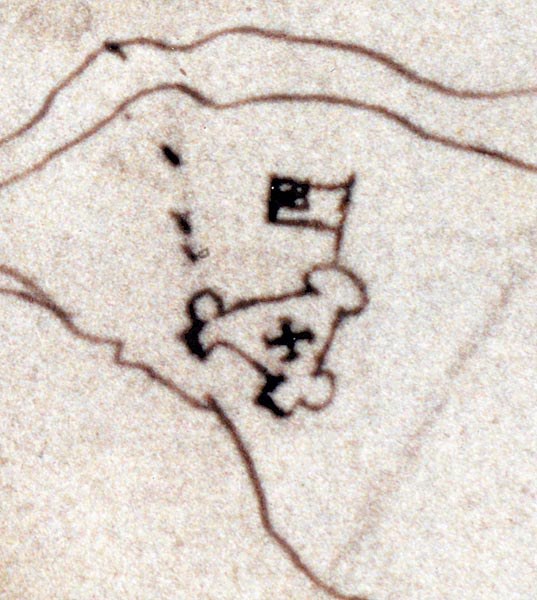
Unknown (rediscovered by Alexander Brown) · Public domain

English colonial settlement · 1607–1699 · Virginia

Jamestown was the first permanent English settlement in the Americas, founded in 1607 and named for King James I.

The kit

  • Founding — Jamestown settlers first arrived aboard the Discovery, Godspeed, and Susan Constant in 1607 on Powhatan Confederacy lands.
  • Starving Time — Jamestown residents practiced cannibalism during the Starving Time, ended when the Third Supply and Baron De la Warr brought food.
  • Economic development — Jamestown became profitable after John Rolfe introduced tobacco cultivation using seeds he planted at the settlement.
  • Conflicts — Jamestown was burned during Bacon's Rebellion in 1676 after William Berkeley refused to retaliate against native attacks.

Runs with

Virginia
served as capital of Virginia until replaced by Williamsburg open card →
Bacon's Rebellion
burned to the ground in 1676 during the rebellion open card →
John Rolfe
resident who introduced tobacco cultivation to the colony open card →
tobacco
crop that made the settlement economically viable open card →

The ladder · 15 clues

H

A ship called the Sea Venture was wrecked while trying to aid this colony, whose residents practiced cannibalism during the "Starving Time." John Rolfe introduced tobacco to this colony, which was established on the lands of the Powhatan Confederacy. name this first permanent English settlement in the Americas.

H

Rolfe planted his tobacco seeds in his residence at this first permanent English colony in America.

H

A native boy warned colonist Richard Pace of a planned attack on this settlement by Chief Opechancanough [oh-petch-an-CAWN-oh].

H

In this settlement, Edward Maria Wingfield won the first ever election in the New World.

H

Settlers first arrived at this location aboard the Discovery, Godspeed, and Susan Constant.

H

In 2012, archaeologists uncovered a skeleton in this city dubbed “Jane” that shows evidence of having been cannibalized.

H

This city was the site of the first recorded workers’ strike in history when Polish artisans refused to work if they couldn’t vote. 350 years after this city’s founding, visitors could see full-sized replicas of three ships, the Susan Constant, Godspeed, and Discovery.

M

This city was burned after William Berkeley refused to retaliate against native attacks, sparking Bacon’s Rebellion.

M

Opechancanough [[oh-puh-CHAN-uh-koh]] opposed the expansion of this city whose "Third Supply" mission was delayed by the wreck of the Sea Venture.

M

The "starving time" was a harsh period in this colony, whose leader John Smith was saved by Pocahontas.

M

This settlement was burned to the ground in 1676 during Bacon’s Rebellion.

M

This settlement was saved by the Third Supply whose food delivery ended the Starving Time.

E

John Smith was an early leader of this early English settlement in Virginia.

E

The first permanent settlement by the British in North America was this Virginia colony named for a Stuart king.

E

The lack of supply ships from England led to this settlement's Starving Time, and planter John Rolfe popularized tobacco in this colony.

10 more clues from the record
H

This city may have been saved from encroaching native forces when a young boy named Chanco warned Richard Pace.

H

In this city, Polish glassblowers and craftsmen went on strike after being denied voting rights.

H

An alternative to this settlement named Henricus was founded by Thomas Dale and later destroyed in a massacre led by Nemattanew.

H

It was founded in 1607 and named for the first Stuart king of England. :John Smith was a leader of the colonists who built what first English settlement in Virginia?

H

The residents of this city once narrowly escaped destruction by Chief Opechancanough, and George Percy proved incompetent in negotiating with native tribes.

H

Under the leadership of John Rolfe, this city's residents began to cultivate tobacco.

H

This settlement served as the capital of the Colony of Virginia before being replaced by Williamsburg. It is widely known as the first permanent English settlement in the New World.

H

Baron De la Warr’s supplies saved this place from its “starving time.” The Godspeed, Discovery, and Susan Constant brought the first people to it.

H

The leader of a rebellion in this colony targeting the Doeg people issued the Declaration of the People of [this colony].

H

“Martin the Armenian” emigrated from modern-day Iran to this city, to which he introduced silkworms.
Watch out: Henricus, an alternative settlement founded by Thomas Dale and later destroyed in a massacre
#13 · Historic Cities · Level 1

Boston

Boston
Ian Howard · CC BY 2.5

Massachusetts city · founded 1630 · Massachusetts Bay

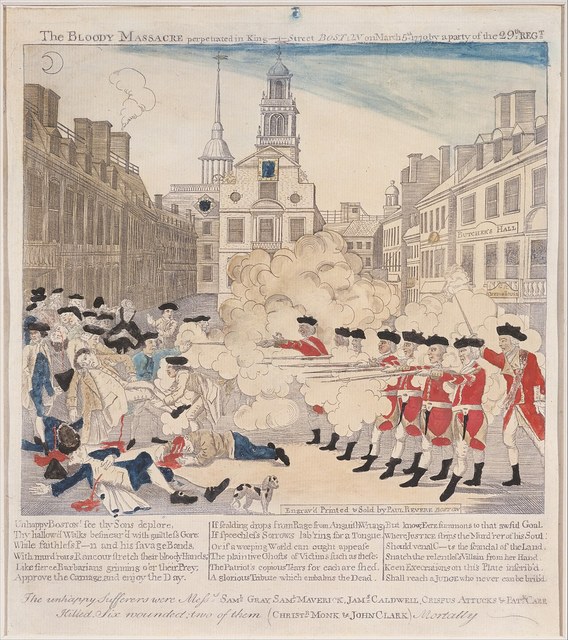
Boston is a Massachusetts city where British soldiers killed Crispus Attucks and four others in a 1770 massacre on King Street.

The kit

  • Revolutionary tensions — Boston's Old South Meeting House hosted a declaration that "this meeting can do nothing further to save the country," beginning an insurrection.
  • Revolutionary War — Boston was evacuated by British forces after Henry Knox deployed cannons from Fort Ticonderoga to Dorchester Heights in the Noble Train of Artillery.
  • Abolitionist center — Boston was home to William Lloyd Garrison's newspaper The Liberator and saw Theodore Landsmark attacked with an American flag in 1976.
  • Integration crisis — Boston's schools were integrated through mandatory busing ordered by Judge W. Arthur Garrity, opposed by Louise Day Hicks.

Runs with

Massachusetts
major city in Massachusetts open card →
church
Anne Hutchinson banished during Antinomian Controversy open card →
Joe Hill
Calvin Coolidge shut down 1919 police strike open card →
Sons of Liberty
Sons of Liberty dressed as Mohawks open card →

The ladder · 15 clues

H

One event in this city occurred on King Street and resulted in Thomas Preston's trial and the death of Crispus Attucks.

H

Cannons captured at Fort Ticonderoga were brought to the Dorchester Heights outside of this city by Henry Knox in the Noble Train of Artillery.

H

In this city, a lawyer named Theodore Landsmark was attacked with an American flag in a Pulitzer Prize-winning photo titled The Soiling of Old Glory.

H

Land acquired to create this city was bought from William Blaxton, and it built the first American public school, its Latin School, in 1635.

H

Henry Knox’s deployment of cannons led to a victory in the Revolutionary War that is celebrated in this city as Evacuation Day.

H

A declaration that “this meeting can do nothing further to save the country” was given at this city’s Old South Meeting House, beginning an insurrection.

H

Louise Day Hicks opposed efforts to integrate the schools of this northern city through mandatory busing.

M

City where a 1919 police strike was shut down by Governor Calvin Coolidge.

M

William Lloyd Garrison published his newspaper The Liberator from this city.

M

This city's North End was once wrecked by the bursting of a large vat of molasses, and an aforementioned 1919 police strike in this city was put down by Calvin Coolidge.

M

The Battle of Bunker Hill was fought outside of this Massachusetts city where British troops had earlier committed a namesake massacre.

M

The Intolerable Acts were passed in response to an event in this city in which members of the Sons of Liberty dressed as Mohawk Indians.

E

An engraving by Paul Revere shows an attack led by Thomas Preston in this city; John Adams won the acquittal of the six attackers, who fired into a crowd, killing Crispus Attucks and four others. name this New England city where British soldiers carried out a 1770 “massacre.”

E

Five members of a snowball-throwing crowd were killed when Thomas Preston’s soldiers fired on a group of protesters in, what Massachusetts city’s “massacre?”

E

The first committee of correspondence was created in this city by Samuel Adams.
10 more clues from the record
H

Hollywood actor Buck Jones died in this city after a horrific 1942 fire killed almost 500 people at the Cocoanut Grove nightclub.

H

Three diverse families from this city are chronicled in J. Anthony Lukas’s book Common Ground, which examines the ramifications of a decision by Judge W. Arthur Garrity.

H

Mary Dyer was one of the Quaker martyrs hanged for preaching in this city. Anne Hutchinson held religious gatherings at her house in this city before being banished during the Antinomian Controversy.

H

This city was home to William Lloyd Garrison’s The Liberator, and during one event in this city, Thomas Preston relieved Hugh White from guarding a customs house.

H

This city lost over 60 acres worth of buildings in 12 hours after a warehouse on Kingston Street caught fire in 1872; that event was commemorated by its resident poet, Oliver Wendell Holmes Senior.

H

In a 1910 toast, John Collins Bossidy called this city “the land of the bean and the cod.” Abolitionist sentiment surged in this city when William Lloyd Garrison founded The Liberator newsletter there.

H

The Dartmouth and Eleanor made anchor in this city where a siege resulted in the death of General Joseph Warren.

H

Oliver Wendell Holmes, Sr. wrote about this city’s so-called “Brahmin” elite. name this major New England city, nicknamed “Beantown.”

H

Morris argued the trial of Anthony Burns in this city, which led to the formation of its Anti-Man Hunting League.

H

Despite the anti-Catholic sentiment of its founders, this city became a center of Irish-Catholic politics.
Watch out: Battle of Bunker Hill fought outside Boston, not in the city itself
#29 · Historic Cities · Level 1

Charleston

Charleston
bdi George N. Barnard /span /a /bdi / bdi Adam Cuerden /a · Public domain
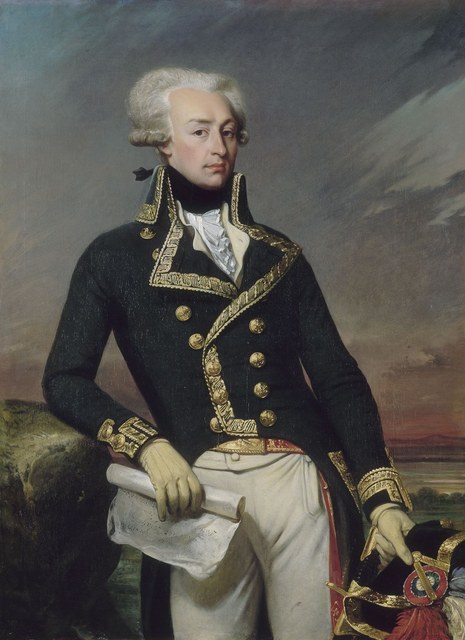
South Carolina port city · founded 1670 · peninsula between Ashley and Cooper Rivers

Charleston is a South Carolina port city where the Civil War began with the 1861 bombardment of Fort Sumter.

The kit

  • Revolutionary War — Charleston was unsuccessfully besieged by Admiral Sir Peter Parker in 1776 at Sullivan's Island, then surrendered by Benjamin Lincoln to the British in 1780.
  • Civil War — Charleston's Fort Sumter was bombarded by P.G.T. Beauregard in April 1861, firing the first shots of the Civil War.
  • Slavery & rebellion — Charleston passed a 1740 act forbidding slaves to read or write after the Stono Rebellion and Great Fire raised fears of slave-perpetrated arson.
  • Cultural legacy — Charleston names a fad dance performed by flappers using James Price Johnson's music from Runnin' Wild with a characteristic walking-in-place motion.

Runs with

South Carolina
Charleston is South Carolina's major colonial and Civil War port city open card →
Fort Sumter
Fort Sumter in Charleston harbor was bombarded April 1861 open card →
American Railway Union
Benjamin Lincoln
Benjamin Lincoln surrendered Charleston to the British in 1780 open card →

The ladder · 15 clues

H

A slave in this city named Telemaque won the lottery and bought his own freedom with the money.

H

Two attempts were made to capture this city's Fort Wagner, the second of which led to the death of Robert Gould Shaw.

H

Benjamin Lincoln surrendered this city to the British four years after it was defended by Liberty Flag creator William Moultrie.

H

A fort in this city was defended during the Battle of Sullivan’s Island thanks to its palmetto walls.

H

Future Congressman Robert Smalls stole a transfer ship called the Planter in this city's harbor.

H

Samuel Wragg was held hostage during a blockade of this city which was caused when governor Robert Johnson refused to give medicine to Blackbeard.

H

This city’s East Bay Street is home to a oft-photographed cluster of Georgian houses known as “Rainbow Row.” The nation’s oldest historic preservation organization is located here.

M

Benjamin Lincoln surrendered this city to the British in 1780.

M

This city’s “First Siege” during the Revolutionary War took place on nearby Sullivan’s Island.

M

The U.S.S. Housatonic was blockading this city when the H.L. Hunley sank it.

M

That siege also saw the saw the surrender of forces under the command of Benjamin Lincoln.

M

In the 1800s, Henry Pinckney founded this city’s newspaper, the Mercury.

E

The first shots of the American Civil War were fired at this city's Fort Sumter. name this port city in South Carolina.

E

Fort Sumter protected the harbor of this South Carolina city.

E

This city's harbor is home to Fort Sumter, which was commanded by Robert Anderson at the start of the Civil War. :Name this South Carolina seaport.

10 more clues from the record
H

A clave rhythm is played while a performer moves opposite arms and legs during a walking-in-place motion in a dance named for this city that was often performed by flappers.

H

This city is centered on a peninsula formed by the confluence of the Ashley and Cooper Rivers, and a fort in this city’s harbor was bombed by General PGT Beauregard in April 1861.

H

Genet arrived in America at this southern coastal city, where he partied for weeks instead of going to Philadelphia to meet with Washington.

H

This city names a fad that used James Price Johnson's music from Runnin' Wild and modified the Juba.

H

Despite not being near a plate boundary, this city was hit by a devastating earthquake in 1886.

H

The Fox-Cross company's main product was a candy named after this city.

H

Early maps of this city include the Bull Plat, the Crisp fortification chart, and the DeSaussure map, which may have been a revised copy of its original “Grand Modell.” Early in the 18th century, this city's politics were dominated by the “Goose Creek Men.” In 1735, its Shepheard's Tavern was the site of a production of Colley Cibber's Flora; the next year, its Dock Street Theatre performed The Recruiting Officer.

H

The only Huguenot church in the United States is located in this city, a haven for Huguenots and Jews in colonial America. Bumbling French diplomat “Citizen” Genet made his first landfall in the U.S. at this city, where he caused an uproar by commissioning a privateer called the Sans-Culotte.

H

In 1740, this city passed an act forbidding slaves to possess alcohol or to be taught to read and write. :Name this city, which passed that law after a Great Fire and the Stono Rebellion exacerbated fears of slave-perpetrated arson.

H

A bombardment of this city by a fleet under the command of Admiral Sir Peter Parker on June 28th, 1776 proved unsuccessful due to the construction of the fort at the southern end of Sullivan’s Island.

Watch out: Fort Sumter is in Charleston's harbor, not a separate city
#76 · Physical Geographic Features · Level 1

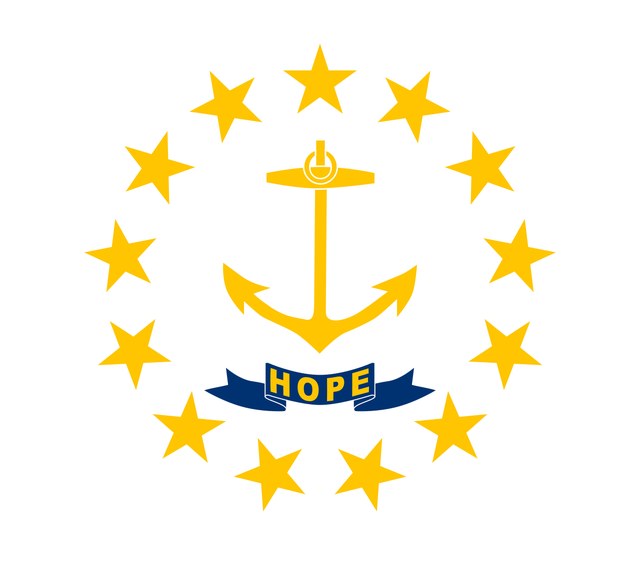
Rhode Island

Rhode Island
Xrmap flag collection 2.7 · Public domain

U.S. state · founded 1636 · New England

Rhode Island was founded by Roger Williams as a refuge for religious dissenters after his exile from Massachusetts Bay Colony.

The kit

  • Founding — Rhode Island was established on land purchased from the Narragansett Indians and grew from Williams's 1644 work The Bloody Tenet of Persecution.
  • Revolutionary Era — Rhode Island was the first to declare independence from Great Britain in 1776 but the last state to ratify the Constitution.
  • Gaspee Affair — Rhode Island colonists including Abraham Whipple burned the HMS Gaspee in 1772 after the British ship ran aground while chasing suspected smugglers.
  • Dorr's Rebellion — Rhode Island's middle class led by William S. Dorr rebelled in the 1840s to achieve suffrage for landless males, spawning Luther v. Borden.

Runs with

Roger Williams
purchased land from Narragansetts and founded the colony open card →
Dorr's Rebellion
occurred here over suffrage for landless males open card →
Anne Hutchinson
church
Touro Synagogue was first Jewish house of worship open card →

The ladder · 15 clues

H

In the waters off the coast of this state, the Sons of Liberty attacked and burned William Duddington's ship during the Gaspee Affair.

H

Borden and an uprising put down by a militia called by this state’s governor, Samuel Ward King.

H

Middle class residents of this state led by William S. Dorr rebelled to achieve suffrage for landless males.

H

A popular movement in this state led to the Supreme Court case of Luther v.

H

The Great Swamp Fight, part of King Philip’s War, took place in this colony, and in 1772, a mob from here burned down the HMS Gaspee.

H

In this state, the Portuguese merchant Aaron Lopez laid the cornerstone for the first Jewish house of worship in America, the Touro Synagogue.

H

Thomas McCoy and Robert Emmet Quinn were part of the Bloodless Revolution of 1935 in this state, which resulted in a Democratic Governor, Theodore Francis Green.

M

Its founder published The Bloody Tenet of Persecution in 1644 and purchased land for this colony from the Narragansett Indians.

M

In Operation Plunder Dome, sitting Mayor Buddy Cianci was indicted on racketeering and embezzlement charges while serving in this state.

M

A coiled rattlesnake with the motto “Do Not Tread On Me” was used on the flag of a military unit from this state. That same unit from this state fought in a conflict that spawned the Supreme Court case of Luther v. Borden.

M

In this US state, a group of revolutionaries including John Brown the First and Abraham Whipple boarded and burned a ship that ran aground while chasing a mail ship suspected of smuggling.

M

The Portsmouth Compact was an anti-English document signed by inhabitants of this colony including Anne Hutchinson.

E

This state grew from a colony that was founded by an exile from the Massachusetts Bay Colony. identify this US state that was founded by Roger Williams.

E

This state was the first to declare independence from Great Britain and the last state to ratify the Constitution.

E

The words "Providence Plantations" were dropped from the name of this New England state.

10 more clues from the record
H

The Great Swamp fight occurred in this New England colony, which later became the U.S.’s smallest state.

H

This state's governor Donald Carcieri [[car-CHEE-ree]] secured a loan to baseball star Curt Schilling using taxpayer money to develop the commercially unsuccessful role-playing game Kingdoms of Amalur.

H

After the Civil War, Burnside served as both governor and senator of what state?

H

This state is home to an early cotton mill established by Samuel Slater on the Blackstone River.

H

This state’s 1st Regiment was nicknamed the “Black Regiment” for being the first to enlist enslaved people.

H

John Clarke helped secure the royal charter for the colony based in this modern-day state.

H

John Sullivan failed to expel the British from this state in the first combined Franco-American operation in the Revolutionary War.

H

Corruption in this state's government has been the target of the FBI investigation codenamed Operation Dollar Bill. :Name this state that was also the site of the central activity of Luther v. Borden.

H

Founders of this colony, such as William Coddington and John Clarke, established an early form of democratic government by signing the Portsmouth Compact.

H

In this modern-day state, the “praying Indian” John Alderman killed the tribal leader known as “King Philip.” The British ship Gaspee was burned in what became this state.

Watch out: The Great Swamp Fight of King Philip's War occurred in Rhode Island, not Massachusetts
#80 · Physical Geographic Features · Level 1

Massachusetts Bay Colony

Massachusetts Bay Colony
Martocticvs · Public domain

Puritan colony · 1630–1691 · New England (Boston, Salem)

Massachusetts Bay Colony was a Puritan settlement in New England founded in 1630 and centered on Boston and Salem.

The kit

  • Founding — Massachusetts Bay Colony was established by Puritans arriving on the Arbella during the Great Migration, with John Winthrop as governor.
  • Governance — Massachusetts Bay Colony adopted the Body of Liberties legal code written by Nathaniel Ward and was governed longest by John Endecott.
  • Religious conflicts — Massachusetts Bay Colony banished Anne Hutchinson during the Antinomian Controversy and executed Quaker Mary Dyer under anti-Quaker laws.
  • Legacy — Massachusetts Bay Colony was called a "city upon a hill" by John Winthrop and became the first American colony to legalize slavery.

Runs with

Anne Hutchinson
banished for heretical teachings during Antinomian Controversy open card →
John
John Winthrop founded it and delivered "city upon a hill" sermon open card →
Puritans
founded and populated by Puritans seeking religious community open card →
Boston
Boston was one of its two main centers alongside Salem open card →

The ladder · 15 clues

H

Nathaniel Ward compiled the first legal code of this colony in the “Body of Liberties.” This colony executed Mary Dyer due to a law banning the presence of Quakers.

H

answer these questions about religion in the New England colonies.This “city on a hill” was populated by Puritans and governed at one point by John Winthrop.

H

This colony was founded after members of the Dorchester Company failed to fund a settlement at Cape Ann.

H

The Body of Liberties was established as a legal code for this colony, which was bounded by the “Old Colony Line.” Midwife Margaret Jones was hanged in this colony after her patients got sicker.

H

In this colony, John Wheelwright advocated for a “covenant of grace” during the Antinomian Controversy.

H

Henry Vane failed to get reelected as governor of this colony due to his support of “free grace” advocates.

H

The first governor of this colony, Matthew Cradock, never actually lived there and was replaced by a man who came over on the ship Arbella.

M

During the Antinomian Controversy, Anne Hutchinson was banished from this colony.

M

John Cotton was an early settler in this colony, the first American colony to legalize slavery.

M

answer these questions about the New England colonies:This New England colony was home to Puritan ministers like Cotton Mather. It eventually evolved into the modern state with a capital at Boston.

M

Due to her religious views, Anne Hutchinson was expelled from this colony, leading her to move to Rhode Island.

M

A future leader of this colony arrived on the flagship Arbella.

E

Governor John Winthrop delivered the “City upon a hill” sermon in this English colony founded by Puritans that was centered on Salem and Boston.

E

Residents of this colony were asked to be a “city upon a hill” as a “model of Christian charity” by founder John Winthrop. name this American colony that was centered around Boston.

E

John Winthrop was one of the founders of this colony, which was centered around Salem and Boston in its namesake state.

10 more clues from the record
H

The Arbella carried the first settlers to this colony, whose population swelled during the Great Migration, which brought in many Puritans.

H

That leader of this colony angrily defaced a local militia’s flag because it bore St. George’s Cross.

H

This colony was supported by the Dorchester Company which had earlier supported Thomas Gardner's village at Cape Ann.

H

A governor of this colony names a pear tree that still stands today in modern-day Danvers.

H

Its “Body of Liberties” was written by Nathaniel Ward, while its other major citizens included preacher John Cotton and magistrate Thomas Dudley.

H

Though many of this colony’s initial settlers travelled on the Arbella, its longest-serving governor John Endecott didn’t.

H

Gorges helped Thomas Morton sue this colony after a raid on Merrymount. This colony was led for a long time by John Endecott.

H

This colony expelled Anne Hutchinson for her heretical teachings. :Name this strongly puritan colony which fought the Pequot War and which was centered on Boston.

H

Pre-existing towns that became part of this colony included those founded by Roger Conant and John White.

H

The land around this body of water was settled by colonists aboard a fleet led by the Arbella.

Watch out: Plymouth Colony (the "Old Colony" that bounded Massachusetts Bay)
#101 · Subnational Regions, Provinces, and Territories · Level 1

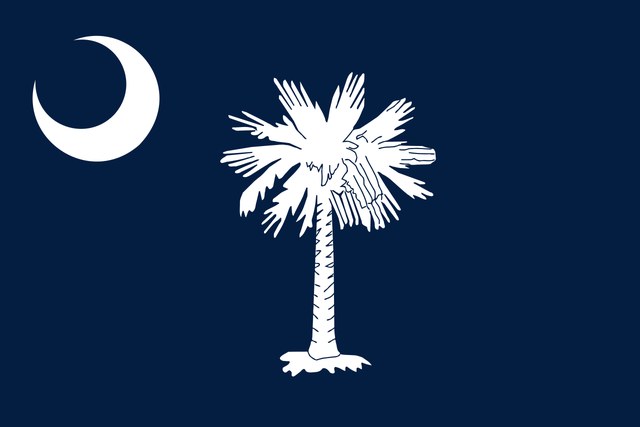
South Carolina

South Carolina
Design by South Carolina General Assembly /a , SVG by Steve · Public domain

Southern U.S. state · 1670–present · Atlantic coast, southeastern U.S.

South Carolina was a southern state central to the Nullification Crisis and the first to secede from the Union in 1860.

The kit

  • Colonial economy — South Carolina's economy boomed thanks to Eliza Lucas Pinckney's indigo plantations in the colonial period.
  • Revolutionary War — South Carolina saw more than 200 Revolutionary War battles, including Daniel Morgan's double envelopment victory at Cowpens over Banastre Tarleton.
  • Slave rebellions — South Carolina experienced major slave rebellions including the Stono Rebellion in 1739 and Denmark Vesey's failed 1822 Charleston insurrection.
  • Secession & Civil War — South Carolina was the first state to secede in 1860, and the Civil War's opening shots occurred at Fort Sumter.

Runs with

Charleston
site of Denmark Vesey's rebellion and customs houses targeted during Nullification Crisis open card →
John C. Calhoun
Nullification
John C. Calhoun sparked crisis here over Tariff of Abominations open card →
Fort Sumter
located in South Carolina where Civil War began open card →

The ladder · 15 clues

H

This colony’s economy boomed thanks to Eliza Lucas Pinckney’s indigo plantations.

H

The opening shots of the Civil War took place at this state’s Fort Sumter.

H

French Ambassador Edmond-Charles Genet rallied for support of the French Revolution after arriving in this state, which saw slave rebellions led by Jemmy at the Stono River in 1739 and Denmark Vesey in 1822 as well as the American Revolution’s Battle of Cowpens.

H

Both the Stono Rebellion and Vesey’s Rebellion took place in this southern state, the first to secede in 1860.

H

In what is now this state, the Spanish set up San Miguel de Guadalupe at Winyah Bay, the first European settlement on the mainland of what would become the U.S. The Wateree River, which is the portion of the Catawba River in this state, passed through lands inhabited by the Yuchi and Yamasee.

H

During the Civil War, some of this state’s former slaves worked land abandoned by planters in the Port Royal Experiment.

H

The Stono Rebellion occurred in what would become this state. Later, Denmark Vesey led a failed slave insurrection in this state’s city of Charleston.

M

Francis Marion, the “Swamp Fox,” led guerilla forces in this state.

M

The largest surrender of American soldiers in the Revolutionary War took place in this state after a defeat for Benjamin Lincoln, whereas another setback in this state featured Horatio Gates’s loss at Camden.

M

Banastre Tarleton was defeated by a double envelopment by Daniel Morgan at this state’s Battle of Cowpens.

M

A failed slave revolt on Bastille Day in this state was planned by a man who purchased his freedom with his lottery winnings, Denmark Vesey.

M

The first US Vice President to resign was from this state, whose customs houses in Beaufort and Georgetown were targeted as part of the Force Bill.

E

The Tariff of Abominations was attacked in an "Exposition and Protest" named for this state. name this state where the Nullification Crisis was sparked by John C. Calhoun.

E

The home of the Pinckney family this is this state, the location of Fort Sumter.

E

John C. Calhoun led a nullification crisis in this state that led to the federal government seizing custom houses in Charleston.

10 more clues from the record
H

The Battle of Fort Sumter took place in this state, which was the first to secede from the union, citing the North’s failure to enforce the Fugitive Slave Act.

H

In what is now this state, the British were rebuffed from taking a city due to William Moultrie’s defense of a namesake fort on Sullivan’s Island.

H

This state saw more than 200 battles in the American Revolutionary War, beginning with the first Battle of Ninety Six.

H

A senator from this state gave the longest filibuster in history to stall a vote on the Civil Rights Act of 1857.

H

This state attempted to prevent the so-called “Tariff of Abominations” from becoming law during the Nullification Crisis.

H

In the leadup to an election in this state, African Americans were killed in the Hamburg Massacre by Red Shirts.

H

Another senator from this state coined the term “mudsill of society” and brought the gag rule to the floor of the House.

H

A politician from this state named George McDuffie came up with an economic idea called the “forty bales” theory.

H

A woman from this state named Floride helped lead the shunning of Peggy Eaton in the Petticoat Affair.

H

One senator from this state was nicknamed “Pitchfork Ben” because he advocated lynch mobs.

Watch out: Strom Thurmond's 1957 filibuster is sometimes confused with events in other states
#102 · Subnational Regions, Provinces, and Territories · Level 1

Virginia

Virginia
LadyofHats /a with additional editing by 痛 /a and Patricknei · Public domain

U.S. state · colonial era–present · Mid-Atlantic/Upper South

Virginia was the most populous of the thirteen colonies and home to the House of Burgesses, which met in Jamestown and Williamsburg.

The kit

  • Colonial era — Virginia was the site of Bacon's Rebellion in 1676, when Nathaniel Bacon's militia of African slaves and English servants burned Jamestown to the ground.
  • Founding figures — Virginia produced Patrick Henry, who proclaimed 'Give me liberty or give me death' in 1775, and George Mason; its last colonial governor was Lord Dunmore.
  • Civil War — Virginia's only city not captured by the Union before the Civil War's end was Lynchburg; Robert E. Lee surrendered at Appomattox Court House in this state.
  • 20th century — Virginia's Racial Integrity Act was overturned in Loving v. Virginia in 1967, brought by Mildred and Richard Loving against the state's anti-miscegenation law.

Runs with

Jamestown
capital of colonial Virginia, burned in Bacon's Rebellion open card →
American Railway Union
Thomas Jefferson
governed Virginia from Richmond, wrote Notes on the State of Virginia open card →
Patrick Henry
Virginia politician in House of Burgesses, 'Give me liberty' speech open card →

The ladder · 15 clues

H

One proposed amendment to come out of Hartford would have required the U.S. president to be from a different state than their predecessor.

H

This state's Tangier [[tan-JEER]] Island, which sports an antiquated dialect of English, has physically shrunk by 67 percent over the past 170 years. The only city in this state to not be captured by the Union before the end of the U.S. Civil War was Lynchburg.

H

Patrick Henry and George Mason were both from this colony, whose last colonial governor was Lord Dunmore. This was the most populous of the 13 colonies.

H

A colonial governor of this modern-day state, William Berkeley, was recalled to England following a 1676 uprising here led by Nathaniel Bacon.

H

In the 1868 election, three states had yet to be restored to the Union and were not allowed to take part in the election.

H

Irvin McDowell led a failed offensive in this state against forces under P. G. T. Beauregard.

H

This state’s Henrico County was the site of a diversionary attack at Deep Bottom, as Ambrose Burnside attempted to detonate a mine behind enemy forces and initiate the Battle of the Crater.

M

A rebellion in this colony against William Berkeley united African slaves and English servants under Nathaniel Bacon. name this plantation-based colony where, in 1676, Jamestown was burned to the ground.

M

Board decision was wielded in this state by Harry F. Byrd. name this state whose Racial Integrity Act was overturned in a 1967 case brought by Mildred and Richard Loving.

M

Patrick Henry was a politician from this American colony, the most populous before the Revolution, where the House of Burgesses met in Jamestown and Williamsburg.

M

John Punch was enslaved in this colony and was the first documented African slave in the English colonies.

M

A senator from this state was chosen as the running mate for Hillary Clinton in the 2016 presidential election.

E

The final surrender of Robert E. Lee’s army of this state was conducted at Appomattox Court House in this Southern state with capital at Richmond.

E

John Smith led settlers in this colony that founded Jamestown. name this English colony that was led from Richmond.

E

Jamestown was located in this US state once governed by Thomas Jefferson from Richmond.

10 more clues from the record
H

A failed Union river crossing in this state was known as the “Mud March." A ship named after this state fought the USS Monitor in the Battle of Hampton Roads.

H

The defense in that case was led by a member of this colony’s legislature, the House of Burgesses, who proclaimed “Give me liberty or give me death” in 1775.

H

This state was the respondent in Atkins, a Supreme Court case prohibiting a capital sentence for mentally handicapped individuals.

H

The Readjuster Party was a biracial coalition in this state that was destroyed by a 1902 poll tax.

H

Madison was the author of the plan named for this home state of his, which put forward population-based representation in a national legislature and was the alternative to the New Jersey Plan.

H

This colony’s militia fought the Shawnee at the Battle of Point Pleasant; earlier in this colony’s history, frontiersman disgruntled by Doeg [“doog”] raids formed a militia and burned down its capital.

H

A neighborhood in this state known as Jackson Ward grew thanks to the efforts of the founder of the St. Luke Penny Saving Bank.

H

This state’s namesake university was founded as a secular school in response to weak leadership at the College of William and Mary.

H

A governor of this state was chairman of Hillary Clinton’s 2008 bid for the presidency and controversially tried to restore the voting rights of more than 200,000 felons in an executive order that was later overturned.

H

A book about this state was a response to a questionnaire sent out by François Barbé-Marbois; that book, consisting of 23 chapters called "Queries," was written in response to the Comte du Buffon's claim that life in America was degenerate.

Watch out: The CSS Virginia (ironclad) fought the USS Monitor at Hampton Roads
#104 · Subnational Regions, Provinces, and Territories · Level 1

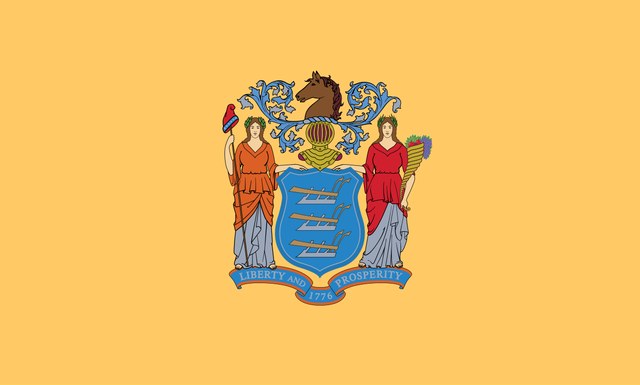
New Jersey

New Jersey
author of xrmap, with modifications by Denelson83 /a and Chr · Public domain

Mid-Atlantic state · 1664–present · between New York and Pennsylvania

New Jersey was called the Crossroads of the Revolution for hosting numerous battles including Trenton, Princeton, and Monmouth.

The kit

  • Revolutionary battles — New Jersey saw George Washington cross the Delaware on Christmas night 1776 to attack Trenton, killing Johann Rall.
  • Revolutionary battles — New Jersey hosted the Battle of Princeton, where British forces under Charles Mawhood killed Hugh Mercer after mistaking him for Washington.
  • Revolutionary winters — New Jersey's Morristown sheltered the Continental Army during the war's hardest winter, two years after Valley Forge.
  • Early voting rights — New Jersey allowed unmarried property-owning women to vote until 1807, when petticoat electors were disenfranchised.

Runs with

Battle of Monmouth
George Washington
crossed Delaware into state; camped at Morristown open card →
Battle of Trenton
fought in New Jersey after Delaware crossing open card →
Delaware

The ladder · 15 clues

H

The resignation of James McGreevy as governor of this state left a temporary vacancy that was eventually filled with the election of Jon Corzine.

H

George Carteret was given land in North Carolina and what is now this state by Charles II.

H

Burr's infamous duel with politician Alexander Hamilton occurred in which state's city of Weehawken?

H

This state, the site of the Battle of Connecticut Farms, was where George Washington camped at Morristown.

H

In one battle fought in this state, British forces led by Charles Mawhood surrounded and killed Hugh Mercer after mistaking him for George Washington.

H

The very first person to resign from the Senate did so to become governor of this state and became a Supreme Court justice three years later.

H

After one battle in this state, Charles Lee was vilified by other officers in Washington’s army leading to his eventual court-marital.

M

One general from this state was Frederick Frelinghuysen, and the last colonial governor of this state was William Franklin, a disinherited, Loyalist son of Benjamin Franklin.

M

After ordering a retreat at a battle in this state, General Charles Lee was court- martialed.

M

A governor of this colony who believed the Stamp Act was justified was an illegitimate son of Benjamin Franklin named William.

M

The first state to ratify the Bill of Rights was this Mid-Atlantic state governed from Trenton.

M

Known as the Crossroads of the Revolution, this state is home to a university attended by James Madison and Aaron Burr; that university shares its name with a nearby 1777 battle. name this home state of Princeton University.

E

One battle in this state was fought after George Washington’s army crossed the Delaware River on Christmas night. name this state where the battles of Monmouth and Princeton were fought during the American Revolution.

E

Johann Rall was killed after George Washington crossed the Delaware River into this state where the Battle of Trenton was fought.

E

The legend of Molly Pitcher originated from a battle in this state, which names the William Paterson-proposed small state plan for the legislature at the Constitutional Convention.

10 more clues from the record
H

Two years after the winter at Valley Forge, the Continental Army weathered the war’s hardest winter at this state’s village of Morristown.

H

Unmarried women in this state who owned property were allowed to vote until a campaign against “petticoat electors” removed that right in 1807. This state’s first female governor was Christine Todd Whitman.

H

This state is home to Holsten’s Brookdale Confectionery, an ice cream store that was converted into a diner for the TV episode “Made in America.” David Chase was criticized for his edit to the ending of that episode, which abruptly cuts to black.

H

This state was the only one of the original thirteen states not to restrict voting by race or gender until 1807, when it restricted the vote to white, property-owning men.

H

A loyalist gang in this state was known as “Bacon’s Refugees.” Following an event in this state involving the capture of Joshua Huddy, George Washington declared that Charles Asgill would be executed.

H

David Hosack and William Peter Van Ness watched a man suffer a fatal wound in this state, although Ron Chernow disputes that the latter man was “deloping” during the encounter.

H

Future president James Monroe is depicted en route to a battle in this state in a painting by Emmanuel Leutze that shows Washington and his troops crossing an icy river.

H

In this state, German immigrant Bruno Hauptmann was convicted of breaking into the home of Charles Lindbergh and kidnapping their twenty month-old child.

H

In this state, the Continental Army was trapped by the British behind Assinpink Creek but escaped by keeping their campfires lit while outflanking the British.

H

The Forage Wars took place in this state which the Quintipartite Deed split into two halves, divided by the Keith Line.

Watch out: Delaware (Washington crossed the Delaware River to reach New Jersey)
#105 · Subnational Regions, Provinces, and Territories · Level 1

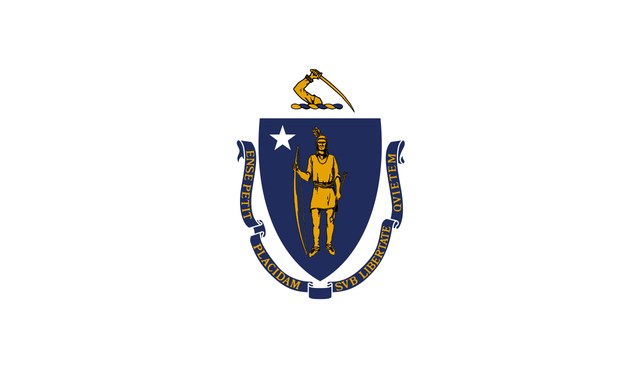
Massachusetts

Massachusetts
State of Massachusetts · Public domain

New England state · 1620–present · northeastern United States

Massachusetts is a New England state where Pilgrims founded Plymouth Colony in 1620 and Puritans established the Massachusetts Bay Colony.

The kit

  • Colonial conflicts — Massachusetts colonists fought the Pequot War and crushed the Wampanoag in King Philip's War under Edmund Andros's governorship.
  • Religious controversies — Massachusetts was the site of the Salem Witch Trials beginning with accusations against Tituba, and Anne Hutchinson sparked the Antinomian Controversy here.
  • Revolutionary era — Massachusetts witnessed the Battle of Bunker Hill in 1775, where Israel Putnam legendarily ordered troops not to fire until seeing the whites of their eyes.
  • Labor movements — Massachusetts textile workers in Lawrence pioneered the moving picket line during the 1912 Bread and Roses strike organized by the IWW.

Runs with

Boston
capital city and site of the 1919 police strike open card →
American Railway Union
Shays' Rebellion
occurred in western Massachusetts under Governor James Bowdoin open card →
Common

The ladder · 15 clues

H

Mary Dyer was executed in this modern state, where the Antinomian Controversy in this state was begun by Anne Hutchinson.

H

As governor of this state, Coolidge ordered its capital’s 1919 police strike to be put down. Later governors include Michael Dukakis and Mitt Romney.

H

The phrase “Bread and Roses” became associated with an IWW-organized strike in this state.

H

This future state was the first in the colonies to ban the performance of plays.

H

The Battle of Bunker Hill occurred in this New England state.

H

After earlier winning a special election here, Scott Brown was defeated in the most expensive Senate race of 2012 in this state. name this home state of Secretary of State John Kerry and Senator Elizabeth Warren.

H

The only firm record of a woman voting in this modern-day state in the 18th century was Lydia Chapin Taft, the widow of Uxbridge’s largest taxpayer. :Name this state, the birthplace of a woman who advised her husband to “remember the ladies.”

M

The furlough of murderer Willie Horton in this state became a major political issue in 1988 when this state’s governor ran for president.

M

Harrison Gray Otis represented this state at the Hartford Convention, to which it sent the most delegates. name this New England state home to John Adams.

M

Edmund Andros served as a governor in this state, which fought the Pequot War and crushed the Wampanoag in King Philip’s War.

M

John Winthrop led a “Bay Colony” named after this state, which contains the site where the Pilgrims aboard the Mayflower established the Plymouth Colony. name this state where colonists founded the city of Boston.

M

Israel Putnam legendarily said "Don't fire 'til you see the whites of their eyes" at a 1775 engagement with the Redcoats in this state.

E

“Mill girls” worked in textile factories in this state’s city of Lowell. name this state governed from Boston.

E

Cotton Mather presided over a series of trials in this state that began with the accusation of the Barbadian slave Tituba. name this modern state in which the Salem Witch Trials took place.

E

This state's governor, James Bowdoin [[BOH-duhn]], encouraged John Adams to author the Riot Act, allowing the government to suspend habeus corpus during Shays' Rebellion in its western region. name this New England state which experienced the Boston Massacre.

10 more clues from the record
H

Workers in this state pioneered the moving picket line to avoid loitering laws during the 1912 Bread and Roses strike in Lawrence.

H

A distillery holding tank in this state’s largest city burst in 1919, causing a flood of molasses that killed 21 people.

H

George McGovern won only Washington, D.C. and this state in the 1972 presidential election.

H

In 2012, Newt Gingrich criticized this state’s treatment of Catholic hospitals in a program that created the Commonwealth Health Insurance Connector; that health care reform is often considered to be one of the models for Obamacare.

H

The kidnapping of Colin Bower's children and the police killing of DJ Henry became issues in this state's Democratic primary, which determined who would face Republican nominee Kevin O'Connor.

H

Another politician from this state gave the Seventh of March speech supporting the Compromise of 1850 and declared “Liberty and union, now and forever” in a reply to Hayne.

H

In the 2020 senate election in this U.S. state, a conspiracy theorist who claims to have invented e-mail, Shiva Ayyadurai, was defeated in the Republican primary.

H

This modern state was home to a colony where Thomas Morton brewed beer and erected a maypole for a multiracial population, Merry Mount.

H

William Apess helped organize the successful Mashpee revolt against this state, and settlers from this state launched an expedition against the sachem Sassacus.

H

In this state, the book The Meritorious Price of Our Redemption was burned for heresy; its author, William Pynchon, founded this state’s town of Springfield.

Watch out: Students may confuse Massachusetts Bay Colony with Plymouth Colony, which were separate settlements founded by different groups.
#106 · Subnational Regions, Provinces, and Territories · Level 1

Pennsylvania

Pennsylvania
p Simtropolitan /a , Jean-Pierre Demailly (old version) perm · Public domain

Mid-Atlantic colony and state · founded 1681 · between New York and Maryland

Pennsylvania was a Quaker colony founded by William Penn that became a center of American independence and industrial development.

The kit

  • Founding — Pennsylvania was founded by William Penn as a Quaker haven and acquired land through the fraudulent Walking Purchase scheme.
  • Colonial conflicts — Pennsylvania saw the Paxton Boys massacre Conestoga tribe members and Edward Braddock's fatal wounding near Fort Duquesne.
  • Independence era — Pennsylvania delegate John Dickinson authored the Olive Branch Petition and 'Letters from a Farmer' essays opposing British policies.
  • Industrial unrest — Pennsylvania experienced the Whiskey Rebellion in Washington County, Fries's Rebellion, and the 1892 Homestead Strike against Carnegie Steel.

Runs with

Whiskey Rebellion
occurred in western Pennsylvania's Washington County in 1794 open card →
Philadelphia
largest city, home to Liberty Bell and Independence Hall open card →
Benjamin FranklinAmerican Railway Union

The ladder · 15 clues

H

Also in this colony, several hundred Susquehannocks were killed by the Paxton Boys in the Conestoga Massacre.

H

This colony signed the “Walking Purchase” where they were promised as much land as a man could walk in a day and a half.

H

In this colony, members of the Conestoga tribe were attacked by a Scots-Irish vigilante group called the Paxton Boys.

H

Other businessmen in this state maintained the private Lake Conemaugh for the use of the South Fork Fishing and Hunting Club.

H

This state was home to the Darr Mine Disaster and a flood in this state’s city of Johnstown was the first major relief project of Clara Barton’s American Red Cross.

H

In this modern-day state, the Welsh Tract was settled after James Logan’s runners swindled Natives out of their land in the Walking Purchase.

H

The derisively nicknamed “Watermelon Army,” commanded by “Light-Horse Harry” Lee, put down the Whiskey Rebellion in this state.

M

This colony’s southern border was set at the Mason-Dixon line to solve a dispute with neighboring Maryland.

M

A delegate from this colony who opposed independence in his Olive Branch Petition was John Dickinson.

M

Muhlenberg was a politician from this state, as was Founding Father John Dickinson, who authored twelve essays called “Letters from a Farmer” in this state.

M

This state was home to the Three Mile Island incident.

M

In this state, the leader of the “Glass Tax” protest was pardoned by the president, because he was “ignorant of our language.” In another incident in this state, David Bradford organized dissidents after the so-called “Battle of Bower Hill.” Fries’s Rebellion took place in this state, as did an earlier action protesting a controversial 1791 tax favored by Alexander Hamilton.

E

The Liberty Bell is located in this state’s largest city which is also home to Independence Hall.

E

This colony’s name means “forest land” and was founded as a haven for Quakers. identify this colony that was founded by William Penn.

E

Henry Clay Frick was placed in charge of a company during an 1892 strike at the Homestead factory in this state. name this state where the Carnegie Steel Company was founded.

10 more clues from the record
H

Washington County, the site of the annual celebration, is located in the western end of this state, where the Whiskey Rebellion took place.

H

Ulster Protestants formed the vigilante Paxton Boys to retaliate against natives near this state’s Susquehanna River.

H

The Whiskey Rebellion occurred in this state that also saw a massacre led by the Paxton Boys and Fries’ Rebellion.

H

Black nurses were employed during a 1793 epidemic in this state due to Benjamin Rush’s false belief they were immune to yellow fever.

H

Edward Braddock was mortally wounded during a expedition to capture Fort Duquesne [doo-KEYN] in this colony.

H

Before independence, a massacre of Indians in this state was perpetrated by the Paxton Boys in the city of Lancaster.

H

A leader of this colony hired a fast walker to help acquire land from the Lenape Indians as part of a scheme called the Walking Purchase.

H

During a siege in this state, Lord Jeffrey Amherst distributed smallpox-infested blankets to Native Americans participating in Pontiac’s Rebellion.

H

This colony was earlier expanded after long-distance runners exploited an agreement to acquire as much land as a man could cover in three days.

H

One city in this state was home to a railroad that built the first double-track main line in America and is the seat of Berks County.

Watch out: John Dickinson opposed independence despite writing influential anti-British essays
#109 · Subnational Regions, Provinces, and Territories · Level 1

North Carolina

North Carolina
Public domain

U.S. state · colonial era–present · southeastern United States

North Carolina was the site of the Roanoke Lost Colony, the Halifax Resolves, the Regulators' defeat at Alamance, and the 1898 Wilmington coup.

The kit

  • Colonial conflicts — North Carolina saw Cary's Rebellion between Quakers and Anglicans and the War of the Regulation sparked by William Tryon's opulent palace in New Bern.
  • Revolutionary era — North Carolina's legislature passed the Halifax Resolves, the first document advocating independence from Britain, and hosted the Battle of Guilford Court House.
  • Reconstruction violence — North Carolina impeached Governor William Holden for suppressing the KKK and witnessed the 1898 Wilmington coup that overthrew a biracial government and installed Alfred Waddell.
  • Civil rights — North Carolina elected George H. White, the Jim Crow era's last southern African American Congressman, and saw the Kissing Case where two boys were charged after Sissy Marcus kissed them.

Runs with

William
William Tryon built Tryon Palace here, sparking the Regulation open card →
Roanoke Colony
Roanoke Colony, the Lost Colony, was located on North Carolina's Outer Banks open card →
Sir Walter Raleigh
North Carolina's capital Raleigh is named after Sir Walter Raleigh open card →
John
John Barnwell suppressed Tom Blount's revolt in North Carolina open card →

The ladder · 15 clues

H

White Supremacists in this state overthrew the rightful government of Daniel L. Russell in the Wilmington coup.

H

As a colony, this modern-day state passed the Halifax Resolves, the first document advocating for independence from Britain.

H

In 1871, the governor of this state, William Holden, was impeached for suppressing KKK activity.

H

In this state, a showy mansion was built in New Bern by the governor, William Tryon, helping to spark an uprising.

H

In this state, the Manly brothers were forced to abandon their Daily Record newspaper after a violent coup destroyed their property and installed Alfred Waddell as mayor.

H

In this state, a Loyalist mistook Henry Lee for Banastre [[BAH-nah-ster]] Tarleton in an engagement known as Pyle’s Hacking Match.

H

State in which a fusion of the Populists and the Republican Party took control of the state legislature in 1894

M

After William Tryon raised taxes and built a large governor’s mansion in this colony, Herman Husband led a protest movement that was defeated in the Battle of Alamance.

M

The building of the opulent Tryon Palace in this state’s city of New Bern Dsparked the War of the Regulation.

M

A carving of the word “Croatoan” was found on an island in this state’s Outer Banks that was home to a “Lost Colony.” Roanoke was found in this state whose capital was named after Sir Walter Raleigh.

M

In 1898, a riot by whites overthrew an elected black government in its city of Wilmington.

M

In this modern-day U.S. state, Penelope Barker led a 1774 boycott of British products in the Edenton Tea Party.

E

The Battle of Guilford Court House took place in this Mid-Atlantic state with capital at Raleigh.

E

Virginia Dare, the first English baby born in the Americas, disappeared in this state’s “Lost Colony” of Roanoke. name this state whose capital is named for Sir Walter Raleigh.

E

The first African-American mayor of a major Southern city, Clarence Lightner, A led this state’s municipality of Raleigh. name this state with cities like Charlotte.

10 more clues from the record
H

Quakers and Anglicans fought over this state’s governorship in Cary’s Rebellion.

H

As a colony, this state’s legislature authorized representatives to vote for independence with the Halifax Resolves.

H

This state elected the Jim Crow era’s last southern African American Congressman, George H. White.

H

After a battle in this state, Charles James Fox noted that “another such victory would ruin the British Army”.

H

The battle of Bentonville was the largest Civil War battle in this state.

H

John Barnwell was called to put down a revolt in this colony led by Tom Blount after Thomas Carey refused to relinquish governorship to Edward Hyde.

H

Retaliation against Native Americans in this present-day state was called for by Baron Christoph von Graffenfried following raids on his colony of New Bern.

H

In an incident in this modern-day state, Dr. John Pyle's crew of Loyalists were attacked by Patriots they confused for British cavalry.

H

Reverend Douglas E. Moore helped lead a sit-in at a Royal Ice Cream shop in this state, which then inspired a similar event in which students from this state’s Agricultural and Technical State University participated in.

H

In this state, eight year old Sissy Marcus kissed two African American boys, causing the boys to be charged with rape until being pardoned by Governor Clement Hodges.

Watch out: Edenton Tea Party (similar to Boston Tea Party but led by Penelope Barker in 1774)
#130 · Other Named Wars and Armed Conflicts · Level 1

the American Revolution

the American Revolution
bdi John Trumbull /span /a · Public domain

espionage during American Revolution · 1775–1783 · Thirteen Colonies

Espionage during the American Revolution involved Patriots gathering intelligence on British troop movements through networks like the Culper Ring.

The kit

  • Culper Ring — The American Revolution saw the Culper Ring, organized by Benjamin Tallmadge, employ agents including Austin Roe, Abraham Woodhull, and Hercules Mulligan.
  • Methods — The American Revolution featured espionage methods including Anna Strong's laundry signals in Setauket and James Jay's tannic-acid-based sympathetic stain for invisible messages.
  • Notable spies — The American Revolution included spies like Nathan Hale, who was executed, Lydia Darragh who used a flour shortage excuse, and Emily Geiger who ate a letter.
  • Secrecy — The American Revolution's espionage involved extreme secrecy, with Robert Townsend demanding his participation be kept from George Washington and Paul Revere coordinating intelligence in Boston.

The ladder · 12 clues

H

Members of a group dedicated to this activity included Austin Roe, Abraham Woodhull, Hercules Mulligan, and Mulligan’s slave Cato; that group was organized by Major Benjamin Tallmadge and called the Culper Ring.

H

Lydia Darragh used the excuse of a flour shortage to perform this activity after she left the Loxley House.

H

Emily Geiger memorized, then ate a letter while successfully taking part in this activity.

H

Robert Townsend demanded that knowledge of his participation in this activity be kept from George Washington.

H

Paul Revere and the “Mechanics” performed this activity in Boston.

H

Lydia Darragh is best known for engaging in this activity in Philadelphia.

H

James Jay invented a tannic-acid-based “sympathetic stain” for use in this activity.

H

A journal written by Consider Tiffany details the arrest of a man engaging in this activity.

M

A resident of Setauket, Anna Strong, performed this activity by hanging differing amounts of black and white laundry on her clothesline; Strong is believed to have been the woman known as “355” in letters by Benjamin Tallmadge, who coordinated this activity in the Culper Ring. name this activity performed by numerous Patriot women during the American Revolution, especially after quartered British soldiers spoke too openly about their plans.

M

Nathan Hale was executed for this activity that provided American revolutionaries with information about British troop movements.

M

This conflict is the focus of the second of the three major case studies in The March of Folly. Its “radicalism” is assessed in a book by Gordon Wood, who describes the state it created as a “dispassionate umpire.”

M

John André headed an organization dedicated to this activity.

#142 · Other Named Wars and Armed Conflicts · Level 1

American Revolutionary War

American Revolutionary War
bdi John Trumbull /span /a · Public domain

American independence conflict · 1775–1783 · North America, Caribbean, Atlantic

The American Revolutionary War was the 1775–1783 conflict in which thirteen American colonies won independence from Great Britain, ending with the Treaty of Paris.

The kit

  • Rise — American Revolutionary War began with the Battles of Lexington and Concord in 1775, followed by the Battle of Bunker Hill.
  • Turning point — American Revolutionary War shifted after the Saratoga campaign victory by Horatio Gates and Benedict Arnold convinced France to support the colonists.
  • Key figures — American Revolutionary War saw Baron von Steuben drill troops at Valley Forge during winter 1777 and Daniel Morgan lead sharpshooters to victory at Cowpens.
  • End — American Revolutionary War concluded when Comte de Grasse's blockade enabled the decisive surrender of Lord Cornwallis at Yorktown in 1781.

Runs with

John
John Jay negotiated the Treaty of Paris ending the war open card →
Treaty of Paris
Treaty of Paris formally ended the war in 1783 open card →
William
William Billings composed the war anthem 'Chester' open card →
Benedict Arnold

The ladder · 15 clues

H

Bernard Bailyn’s study of its “ideological origins” and Gordon Wood’s study of its “radicalism” argue against the older, progressive interpretations of this conflict that only focus on economic motivations.

H

A poem set during this conflict envisions “A voice in the darkness, a knock at the door, and a word that shall echo forevermore!” Poems like “The Indian Burying Ground” and “The Wild Honeysuckle” were written by the so-called poet of this war, Philip Freneau.

H

The Great Siege of Gibraltar occurred during this war.

H

A group including John Jay agreed the Treaty of Paris to end this war, following the loss of Charles Cornwallis at Yorktown.

H

In this war, Admiral Rodney broke the line to win the Battle of the Saintes [“sahnt”] near Dominica. In this war, Bernardo de Galvez captured Baton Rouge, Mobile, and Pensacola to take West Florida.

H

The Battle of Bunker Hill took place during this 1775-1783 conflict in which American patriots won independence from England.

H

One hymn adopted as an anthem during this conflict was William Billings’ “Chester.” Richard Schuckburg wrote the lyrics for a song, popular during this conflict, that mocked the enemy’s lack of fashion sense.

M

During this war, European naval powers aimed to protect neutral shipping with the First League of Armed Neutrality.

M

France began supporting one side in this war after Horatio Gates and Benedict Arnold won the Saratoga campaign.

M

Deborah Sampson disguised herself as a man in order to fight in this war.

M

This war was the subject of a three-part history by Mercy Otis Warren.

M

During this conflict, commissioners signed the Treaty of Fort Pitt with the Delaware Lenape (len-AH-pay).

E

A blockade by the Comte de Grasse contributed to the surrender of Lord Cornwallis at the decisive battle of this war. name this war in which the Continental Army won the Battle of Yorktown.

E

A group of Hessian soldiers in this war were defeated in a surprise attack the day after Christmas in the Battle of Trenton. name this war in which Baron von Steuben drilled troops at Valley Forge, Pennsylvania, during the winter of 1777.

E

Johnny Tremain is set during this war that opened with the Battles of Lexington and Concord.

10 more clues from the record
H

A German officer in this war ordered the establishment of separate toilets and kitchens and educated troops about marching orders during a brutal winter encampment.

H

In this war, a group of German mercenaries under French leadership called Lauzun’s Legion saw action at White Plains.

H

An artist created a painting during this war depicting a politician bleeding out while being protected by freedman Peter Salem.

H

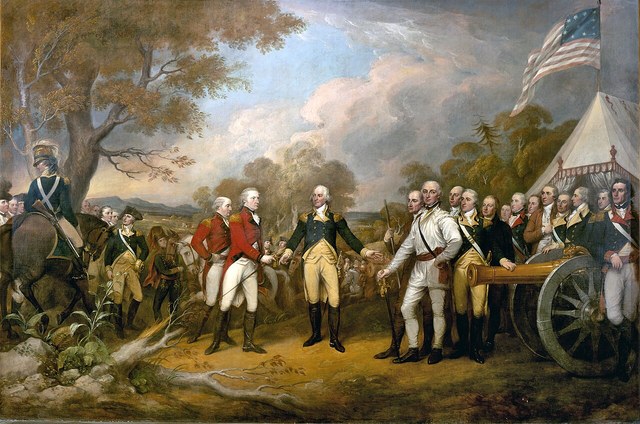
Artist John Trumbull served in this war, later painting a scene of William Phillips and another general surrendering during this war.

H

This war is the setting for a novel in which the epileptic five-year-old Ruth and eleven-year-old Isabel are taken to New York.

H

Rab Silsbee dies in a skirmish during this war in a novel whose protagonist delivers the Boston Observer newspaper.

H

During this war, a character is sent by Squire Woodcock to Paris with a secret message hidden in the false heel of his boot.

H

“Consensus” historian Daniel Boorstin described the lack of “dogma” in this event, as it produced no significant philosophical works.

H

In this war, Nathaneal Greene’s forces were defeated at the Battle of Guilford Courthouse.

H

answer the following about Daniel Morgan’s unit of elite sharpshooters.Morgan’s Riflemen served in this war, where their long-range rifles gave them an advantage over the standard muskets used by the British Redcoats. Morgan led the Continental Army to victory in this war’s Battle of Cowpens.

Watch out: Battle of Guilford Courthouse was a British victory despite Nathanael Greene's tactical success
#146 · Other Named Wars and Armed Conflicts · Level 1

French and Indian War

French and Indian War
Hoodinski · CC BY-SA 3.0

North American colonial war · 1754–1763 · North America

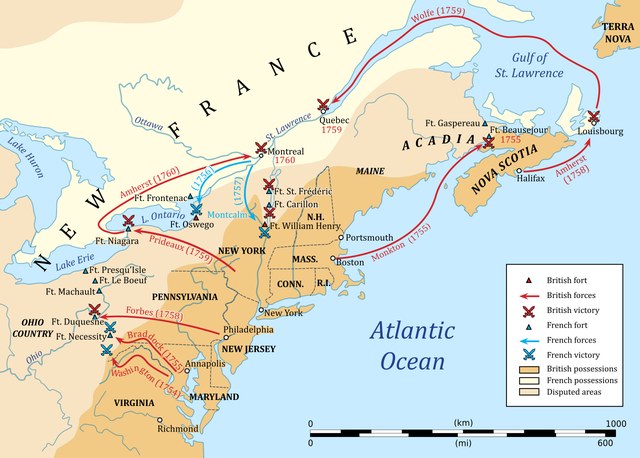
French and Indian War was the North American theater of the Seven Years' War between British and French colonies.

The kit

  • Outbreak — French and Indian War began when George Washington's militia ambushed Joseph Coulon de Jumonville at Jumonville Glen in 1754.
  • British setbacks — French and Indian War saw General Edward Braddock's expedition fail at the Battle of Monongahela and James Abercrombie's frontal assault disaster at Carillon.
  • Conquest of Quebec — French and Indian War culminated when British forces climbed cliffs at L'Anse-au-Foulon to fight on the Plains of Abraham, where both generals Wolfe and Montcalm died.
  • Aftermath — French and Indian War ended with British control of Canada and the Proclamation of 1763 forbidding settlement in newly gained western lands.

Runs with

Seven Years' War
global conflict of which this was the North American theater open card →
George Washington
led militia at Jumonville Glen and built Fort Necessity during this war open card →
ParisGeorge

The ladder · 15 clues

H

Fort Necessity was constructed by forces under George Washington during this conflict.

H

This conflict was part of the larger Seven Years' War.Name this North American war in which Britain defeated a European rival for control of Canada.

H

The Battle of Fort Necessity occurred in 1754 at the start of this war, the North American theater of the larger Seven Years’ War. The massacre at Fort William Henry occurred during this war.

H

Boone drove a wagon in General Edward Braddock’s army during this war, which was fought between the British and French colonies. It was the North American theater of the Seven Years War.

H

This conflict started when a group of Virginia militia ambushed and killed Joseph Coulon de Jumonville.

H

After this war, land conflicts led to the destruction of Fort Detroit during Pontiac’s Rebellion.

H

During a battle in this war, cracks in the walls of a fort proved large enough for a victorious force to advance directly to the walls and fire guns through the holes, thus capturing Fort Bull.

M

English name for the North American theater of the Seven Years' War.

M

The Proclamation of 1763 forbade settlements in lands gained in this conflict. name this American theater of the Seven Years’ War.

M

One side in this war launched the disastrous Braddock expedition, which failed to capture Fort Duquesne [doo-CANE].

M

War, the colonial phase of the Seven Years’ War, included a raid on Woolwich, Maine?

M

Partly supported by a Washington-led militia, the Braddock expedition ended with a decisive defeat at the Battle of Monongahela in this conflict. name this North American sphere of the Seven Years War.

E

During this war, an army landed at L’Anse-au-Foulon then climbed a high cliff under nightfall; in the ensuing battle, opposing generals Louis-Joseph de Montcalm and James Wolfe died on the Plains of Abraham, leading to the British conquest of Quebec City. name this theater of the Seven Years’ War that cemented British North American colonialism.

E

A 32-year old George Washington incited this war at Jumonville Glen. name this American theater of the Seven Years' War.

E

North American theatre of the war, pitting British America against New France and their Native American allies.

10 more clues from the record
H

General Edward Braddock died during this war, days after his four-way attack failed at Monongahela [[mah-non-gah-HEH-lah]].

H

During this conflict, the Lenape were given one thousand pesos in exchange for land in New Jersey as part of the Treaty of Easton.

H

The Forbes Expedition led to this war's Treaty of Easton, which caused the Lenape [[LEN-ah-pay]] and Shawnee to withdraw from this conflict.

H

In the year prior to the Annus Mirabalis, one side in this conflict lost Louisburg, opening up the St. Lawrence Passageway.

H

Tanacharison led a group of Mingo warriors during an ambush in this conflict that resulted in the death of Joseph Coulon de Villiers.

H

In this war, James Abercrombie blundered by ordering a frontal assault with no artillery support at the Battle of Carillon.

H

During this conflict, forces under William Johnson captured the Baron Dieskau at the Battle of Lake George.

H

This war was set off by an incident that included Tanaghrisson killing an opposing commander with a tomahawk.

H

This conflict’s Battle of Restigouche was a last stand for Mi’kmaq militia and the Acadians.

H

During this war, the Treaty of Easton reversed some of the provisions of the Walking Purchase.

Watch out: Seven Years' War (the global conflict of which this was the American theater)
#189 · Authors, Poets, and Playwrights · Level 1

Thomas Paine

Thomas Paine
bdi Laurent Dabos /span /a · Public domain

American Revolutionary pamphleteer · 1737–1809 · England, America, France

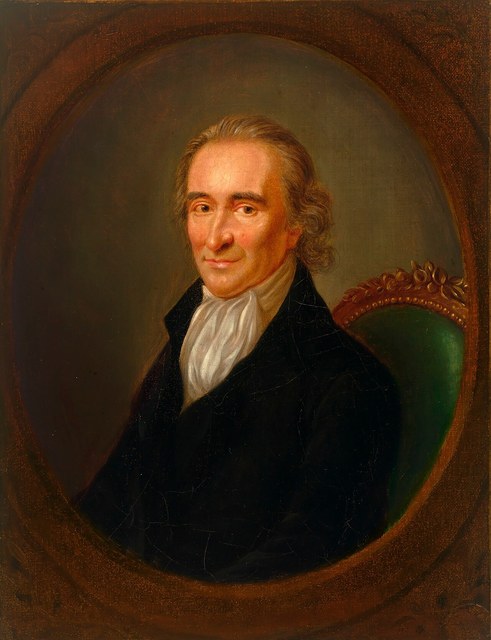
Thomas Paine wrote Common Sense, which argued for American independence by noting the absurdity of an island ruling a continent.

The kit

  • Rise — Thomas Paine got his first job in America as writer and editor of the Pennsylvania Magazine after emigrating from England.
  • Achievements — Thomas Paine wrote The American Crisis, which condemned "the summer soldier and the sunshine patriot" and began with "these are the times that try men's souls."
  • Conflicts — Thomas Paine was tried in absentia in England for publishing Rights of Man, a rebuttal to Edmund Burke's Reflections on the Revolution in France.
  • Legacy — Thomas Paine advocated deism and criticized organized religion in The Age of Reason, written while imprisoned in Paris during the French Revolution.

Runs with

Common Sense
wrote it in 1776, advocating a Continental Charter to replace England's Magna Carta open card →
America
argued for its independence, noting the absurdity of an island ruling a continent open card →
James Monroe
vouched for his U.S. citizenship, freeing him from French prison open card →
French Revolution
defended it in Rights of Man, arguing it targeted monarchy's misdeeds open card →

The ladder · 15 clues

H

This man advocated for the creation of a Continental Charter as an answer to England’s Magna Carta.

H

This Englishman got his first job in America as a writer and editor of the Pennsylvania Magazine.

H

This man's "Bank Letters" were slandered by the anonymous author "Atticus" and were instrumental in turning public opinion in favor of the Bank of North America. The publisher Robert Bell publicly feuded over the rights to a book by this man, whose second section argues that there is no moral difference between a king and his subjects.

H

He was sued for libel after writing a response to Edmund Burke’s Reflections on the Revolution in France, and he criticized organized religion and the divinity of the Bible while advocating for the rise of deism in The Age of Reason.

H

This man resigned his post on the Committee on Foreign Affairs after backlash to his criticisms of Silas Deane and Robert Morris as war profiteers.

H

This corset-maker outlined his deist beliefs in The Age of Reason and condemned "the summer soldier and the sunshine patriot" in an attempt to raise support for the soldiers at Valley Forge.

H

This author posited that "Whatever is my right as a man is also the right of another" in a response to Edmund Burke's Reflections on the Revolution in France, after which he was put on trial in absentia.

M

James Chalmers wrote Plain Truth as a response to this man’s most famous work.

M

After publishing a rebuttal to Edmund Burke, this man was placed on trial in England despite still being in the colonies.

M

This man was tried in absentia for publishing a work that refuted Edmund Burke by arguing that the French Revolution was justified since it targeted the misdeeds of the institution of monarchy rather than the king himself. name this author of Rights of Man who proposed an American Magna Carta in his 1776 pamphlet, Common Sense.

M

This colonial pamphleteer wrote The Age of Reason and The American Crisis in addition to Common Sense.

M

This man argued that nothing but "blood and ashes" results from governments run by "crowned ruffians" in a work that outlines a replacement for the Magna Carta.

E

This author of The Crisis wrote "these are the times that try men's souls." name this pamphleteer of the American Revolution who wrote Common Sense.

E

The absurdity of an island ruling a continent was observed by this early American revolutionary thinker in his 1776 pamphlet Common Sense.

E

This author described "the summer soldier and the sunshine patriot" who shrink from "the times that try men's souls" in The American Crisis.

10 more clues from the record
H

Apocryphally, George Washington read a pamphlet by this man prior to the Continental Army’s “Crossing of the Delaware” and subsequent victory at Trenton.

H

This thinker claimed that a government ruled by “crowned ruffians” would always result in “blood and ashes” in the book Agrarian Justice.

H

New York Senator Gouverneur Morris refused to allow this man to vote in general elections after invalidating his American citizenship.

H

In one work, this man advocated the payment of a one-time stipend to landless individuals after they reach the age of 21.

H

This man used the Bastille as a symbol of despotism in his Rights of Man, which caused a writ for his arrest to be published in England.

H

James Monroe vouched for this man’s U.S. citizenship, freeing him from French prison.

H

This man was vilified as a “lily-livered sinical rogue” and “demi-human archbeast” by various newspapers for his public opposition to Christianity. :Name this vociferous proponent of Deism who released the first part of The Age of Reason while imprisoned in Paris, believing that he was about to be executed.

H

Common Sense remains the masterwork of this American Founding Father, who later wrote a defense of the French Revolution entitled Rights of Man, although that didn’t stop the French from locking him up in Paris in 1793.

H

A sermon by Richard Watson convinced this man to publish one work that claims that “It is wrong to say God made rich and poor” and advocates a property tax to provide pensions for British citizens.

H

Name these historical pamphleteers, FTP each.Among his pamphlets are the “Agrarian Justice,” “Crisis,” and “Common Sense” papers and among his books is Rights of Man, his repudiation of Edmund Burke’s attack on the French revolutionaries.

Watch out: Edmund Burke (Paine rebutted Burke's Reflections on the Revolution in France with Rights of Man)
#255 · US Vice Presidents, Cabinet Secretaries, and Executive Officials · Level 1

Benjamin Franklin

Benjamin Franklin
bdi Joseph-Siffred Duplessis /span /a · Public domain

American Founding Father · 1706–1790 · Philadelphia, Pennsylvania

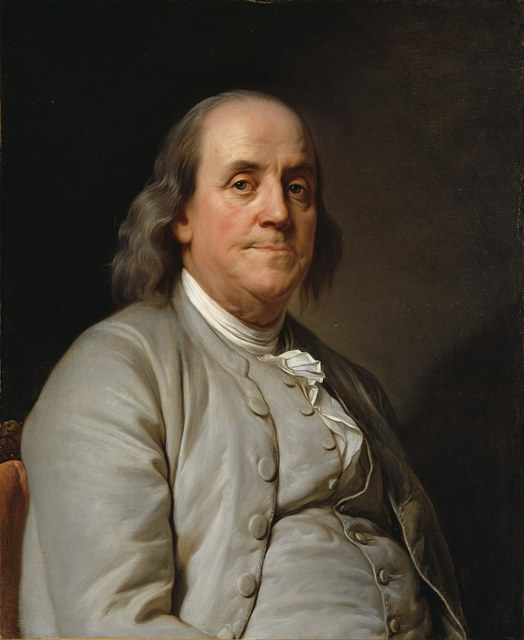
Benjamin Franklin was a Founding Father, inventor, publisher, and diplomat who served as first U.S. Postmaster General and ambassador to France.

The kit

  • Rise — Benjamin Franklin founded the New-England Courant under the pseudonym Silence Dogood and later published Poor Richard's Almanac as Richard Saunders.
  • Achievements — Benjamin Franklin established America's first library and fire department, founded the Junto intellectual society, and invented bifocals and a static electricity machine.
  • Conflicts — Benjamin Franklin created the Join or Die cartoon at the Albany Conference and leaked Thomas Hutchinson's letters, leading to a public attack by Wedderburn.
  • Legacy — Benjamin Franklin charted the Gulf Stream with Timothy Folger and famously flew a kite during a lightning storm to study electricity.

Runs with

Richard
published Poor Richard's Almanac under pseudonym Richard Saunders open card →
Pennsylvania
Pennsylvania-based Founding Father and delegate open card →
Philadelphia
established first library and fire department in Philadelphia open card →
France
served as first U.S. ambassador to France wearing coonskin cap open card →

The ladder · 15 clues

H

This man’s son was implicated in the Asgill Affair six years after he was removed as the last loyalist Governor of New Jersey.

H

This man names a territory located in modern-day Tennessee that attempted to become the 14th state.

H

With his cousin Timothy Folger, this man charted and named the Gulf Stream.

H

This man founded an intellectual group known as either the Leather Apron Society or the Junto [jun-toh].

H

This man, who was the first to reprint a Masonic book in America, compiled thirteen virtues in his unfinished autobiography.

H

This thinker developed a phonetic alphabet that abandoned so-called “redundant letters” such as “c, j, q, w, x, and y.” Letters from Thomas Hutchinson about cracking down on Bostonians were deliberately leaked by this man.

H

In one work, this man project exponential population growth in Observations Concerning the Increase of Mankind, Peopling of Countries, etc, which was cited by Malthus.

M

This man drafted the Plan of Union as a delegate to the Albany Conference, and drew the “Join or Die” political cartoon.

M

With Hugh Meredith, this man founded a publication that published a political cartoon created by this man showing a snake cut into eight parts above the words “Join, or Die.” This man established the first library in all of America and the first fire department in a city where he also established an Ivy League institution in 1765.

M

This man had a common-law marriage to Deborah Reed, who he did not see for the last ten years of her life as he was traveling in Europe.

M

This inventor of a high-voltage machine that generates static electricity also partnered with his cousin Timothy Folger to chart and name the Gulf Stream.

M

This politician was appointed the first United States Postmaster General by the Continental Congress. name this Pennsylvanian founding father who flew a kite during a lightning storm.

E

Join, or Die was created by this Pennsylvanian Founding Father and publisher of Poor Richard’s Almanac.

E

This man’s brother founded the New-England Courant, to which he contributed under the name Silence Dogood. name this Pennsylvania-based founding father and author of Poor Richard’s Almanac.

E

This man published Poor Richard’s Almanac in his native Philadelphia. name this Founding Father who may have flown a key attached to a kite during a lightning storm.

10 more clues from the record
H

This man called one of his works a “proper Vehicle for conveying Instruction among the common People;” that work was published under the name Saunders.

H

This man purchased a newspaper operation from Samuel Keimer and founded a debate club known as the Junto.

H

Jill Lepore wrote about this man’s sister Jane in Book of Ages.

H

This first Postmaster General wore a coonskin cap to enhance his image as a “rustic” while serving as the first ambassador to France.

H

Alexander Wedderburn attacked this man for an hour in front of the Privy Council for his role in illegally obtaining private letters during the Hutchinson Affair.

H

Father Abraham advises a group before an auction in his essay “The Way to Wealth.” As an apprentice, this author wrote many letters attributed to a middle-aged widow.

H

This man created one of the first fire departments in the United States. :Name this Founding Father, creator of bifocals and publisher of Poor Richard’s Almanac.

H

This man’s brother, James, published his work when this person used the name “Mrs. Silence Dogood.” This man described perfecting thirteen virtues in his posthumously published autobiography.

H

This man called for a 24-person elected group to provide education and job training and make moral inspections in A Plan for Improving the Condition of the Free Blacks.

H

A portrait of this man shows him wearing a billowing red cape in a storm as two cherubs stand behind him holding onto a red string.

Watch out: His son was the last loyalist Governor of New Jersey, not Franklin himself
#260 · US Presidents · Level 1

George Washington

George Washington
bdi Gilbert Stuart /span /a · Public domain

First U.S. President · 1732–1799 · Virginia, United States

George Washington commanded the Continental Army, presided over the Constitutional Convention, and served as first U.S. President from 1789 to 1797.

The kit

  • Rise — George Washington surrendered at Fort Necessity in 1754 during the French and Indian War after attacking French forces at Jumonville Glen.
  • Achievements — George Washington ended the Newburgh Conspiracy by dramatically putting on spectacles and declaring he had grown almost blind in his country's service.
  • Presidency — George Washington tasked Light-Horse Harry Lee and the Watermelon Army with peacefully suppressing the Whiskey Rebellion sparked by an unpopular excise tax.
  • Legacy — George Washington warned against entangling alliances and political parties in his Farewell Address before retiring to Mount Vernon in 1797.

Runs with

Pelican Portrait
depicted in Constantino Brumidi's Apotheosis and Gilbert Stuart's Lansdowne Portrait open card →
Whiskey Rebellion
tasked Light-Horse Harry Lee with peacefully suppressing this revolt open card →
New Jersey
exclaimed about a fine fox chase at Battle of Princeton open card →
Virginia
served as colonel of Virginia Regiment and retired to Mount Vernon open card →

The ladder · 15 clues

H

This man was depicted with Commerce, Science, Mechanics, and 13 maidens in his Apotheosis by Constantino Brumidi.

H

With support from Henry Knox's artillery, this man successfully defeated British forces during the Siege of Boston. name this American commander-in-chief of the Continental Army.

H

This man ordered the construction of Fort Necessity which failed to prevent this man’s only military surrender.

H

After issuing his farewell address warning against political parties, this leader retired to Mount Vernon. name this first President of the United States.

H

This man warned America against meddling in foreign affairs and dividing into factions in his Farewell Address.

H

In a work partially named for this figure, Minerva points to a printing press near famed inventors and Liberty holds a fasces and wears a Phrygian cap.

H

On a campaign with Edward Braddock, this general allegedly had two horses shot from under him and four bullets lodged in his coat.

M

In 1754, this man surrendered at Fort Necessity as part of the French and Indian War in which he attainted the rank colonel of the Virginia regiment.

M

This politician’s Farewell Address warned against entangling alliances and political parties. name this Commander-in-Chief of the Continental Army and first President of the United States.

M

Constantino Brumidi created an Apotheosis of this man, who was the subject of Gilbert Stuart’s Lansdowne Portrait.

M

This man declared that he had grown “almost blind in the service of my country” in a speech that ended the Newburgh Conspiracy, and he was the target of the Conway Cabal.

M

This president tasked "Light-Horse Harry" Lee and the "Watermelon Army" with peacefully putting down a revolt sparked by an unpopular excise tax. name this president who put down the Whiskey Rebellion.

E

The tradition of the two-term Presidency was established by this man after he was succeeded by John Adams. name this First President of the United States.

E

Parson Weems composed many stories about this man, including the fable of his chopping down a cherry tree. Name this literature-inspiring first president of the United States.

E

This man’s troops were trained by the Baron von Steuben as they tried to survive the winter at Valley Forge. name this general, America’s first President.

10 more clues from the record
H

An enslaved person belonging to this man was named William Lee and was assisted by Christopher Sheels after injuring his knee.

H

A sculpture of this man “Enthroned” was created by Horatio Greenough in the style of Zeus of Olympia.

H

As a member of the Virginia Regiment, the first professional American force, this man led the Forbes expedition to capture Fort Duquesne [do-cane].

H

This surveyor helped begin the French and Indian War by attacking the French at Jumonville Glen.

H

This man dramatically put on his spectacles while squelching the Newburgh Conspiracy.

H

This man authorized John Sullivan to attack the Iroquois.

H

This general was the target of the plot. In the French and Indian War, this Virginian was forced to surrender at the Battle of Fort Necessity.

H

This man stopped the Newburgh Conspiracy and led a death-free retreat after the Battle of Long Island.

H

This man was targeted in the Conway Cabal, which was partially due to his losses at Germantown and Brandywine.

H

This man was aided by the Mingo chief Tanacharison at the Battle of Jumonville Glen and exclaimed “It’s a fine fox chase my boys!” during the Battle of Princeton.

Watch out: Conway Cabal targeted Washington, not a conspiracy he led
#271 · US Laws, Amendments, and Official Documents · Level 1

Declaration of Independence

Declaration of Independence
bdi John Trumbull /span /a · Public domain

American founding document · July 4, 1776 · Philadelphia

Declaration of Independence was the 1776 document by which the thirteen American colonies formally announced their separation from Great Britain.

The kit

  • Drafting — Declaration of Independence was written by Thomas Jefferson as part of a five-man committee appointed by the Second Continental Congress.
  • Content — Declaration of Independence begins "When in the course of human events" and lists twenty-seven grievances against King George III.
  • Philosophy — Declaration of Independence asserts that "all men are created equal" and possess inalienable rights to life, liberty, and the pursuit of happiness.
  • Adoption — Declaration of Independence was approved on July 4, 1776 after Caesar Rodney rode eighty miles through a storm to break a tie vote.

Runs with

Thomas Jefferson
drafted the document and wrote its famous Preamble open card →
John Hancock
Philadelphia
site of Second Continental Congress meeting open card →
George III
named in twenty-seven grievances for imposing taxes without consent open card →

The ladder · 15 clues

H

Two days before this document was signed, a similar document known as the Lee Resolution was passed by the same body.

H

Charles Thomson presided over the meeting that produced this document, and sent its final, handwritten copy to John Dunlap for printing.

H

This document, similar to the earlier Olive Branch Petition, contains a list of indictments against King George III.

H

This document ends with a mutual “pledge to each other” of “our Lives, our Fortunes, and our sacred Honor” after having condemned a ruler for “imposing Taxes on us without our Consent,” one of numerous “repeated injuries and usurpations” committed by the King.

H

The first 200 published copies of this document are called the “Dunlap broadsides.” A tie in votes on this document was broken thanks to a timely ride through a storm by Caesar Rodney.

H

Lewis Morris and Josiah Bartlett are among the 42 members of the central group in this painting, whose center depicts a five-man drafting committee.

H

One person in this painting appears to be, but is not actually, stepping on a shorter man's foot.

M

This document was drafted by Thomas Jefferson following an earlier resolution in the Second Continental Congress by Richard Henry Lee. It begins, “When in the course of human events…”

M

Thomas Je↵erson wrote the Preamble of this document which asserts inalienable rights to life, liberty, and the pursuit of happiness.

M

This statement was ratified on July 4th, 1776. name this document by which the fledgling United States declared its separation from Great Britain.

M

This document was approved by the Second Continental Congress on July 4th, 1776. This document was written to inform the British that America was no longer one of its colonies.

M

Adopted by the 2nd Continental Congress, name this 1776 document that contains a list of 27 grievances against Britain.

E

The American Revolution was ocially started by this document signed on July 4th, 1776 in Philadelphia.

E

One of the truths listed as “self-evident” in this document is the notion that “all men are created equal”.

E

The Library of Congress holds the official copy of this document that Thomas Jefferson wrote.

10 more clues from the record
H

John Dickinson, the author of Letters from a Pennsylvania Farmer, refused to sign this document.

H

In this painting, Benjamin Harrison VI [[the sixth]] stood in for his father.

H

At the Seneca Falls convention, Elizabeth Cady Stanton read a document that parodied this text ratified on July 4th. Answer some questions about feminist clapbacks, :The Declaration of Sentiments and Resolutions mirrored this text by beginning “When in the course of human events” and describing the “repeated injuries and usurpations” of man toward woman.

H

A band of prominent Wilmington white supremacists known as the “Secret Nine” issued a “White” one of these documents demanding the end of rule by “men of African origin.” A 1776 document with the same title stated “all men are created equal.”

H

A Danielle Allen book presents a reading of this document "in defense of equality." :Name this document. Allen contrasts this document's use of the phrase "we hold these truths to be self-evident" with the statement "I believe" in the Catholic Credo.

H

John Adams successfully lobbied to get Thomas Jefferson the role of writing this document, which pointedly did not include women in its proclamation that "all men are created equal."

H

The success of this work was assured after one figure dramatically arrived after riding eighty miles through a storm; that man was Caesar Rodney.

H

This work was first published on the so-called “Dunlap broadsides.” In a painting depicting it, one figure is possibly stepping on the foot of his political rival.

H

The Committee of Five was commissioned to write this document, and the longest portion of this document contains the personal pronoun “he,” referring to the sitting British king.

H

A paragraph from an early draft of this document condemning “a market where MEN should be bought and sold” was removed.

Watch out: Lee Resolution (passed two days before, July 2, 1776)
#300 · Historic Buildings and Museums · Level 1

West Point

West Point
United States Military Academy · Public domain

U.S. Military Academy site · fortified 1778; academy 1802 · Hudson River, New York

West Point is the oldest continuously occupied U.S. military post and home of the United States Military Academy since 1802.

The kit

  • Fortification — West Point was designed by Tadeusz Kosciuszko and connected to Constitution Island by the Great Chain to block British ships.
  • Arnold's treason — West Point was the target of Benedict Arnold's plot to surrender the strategic Hudson River post to Britain for 20,000 pounds.
  • Academy traditions — West Point cadets rioted on Christmas 1826 after smuggling whiskey for eggnog, leading to twenty-one court martials.
  • Notable graduates — West Point graduated George Custer last in his class and has trained the Long Grey Line of Army officers since 1802.

Runs with

Benedict Arnold
attempted to surrender West Point to British for 20,000 pounds open card →
Tadeusz Kosciuszko
Polish engineer who designed West Point's fortifications and Great Chain open card →
York
West Point is located in upstate New York on the Hudson River open card →
George Armstrong Custer
graduated last in his class at West Point open card →

The ladder · 15 clues

H

An organization at this site was inspired by Henry Wisner to create a “Great Chain” designed by the Sterling Iron Works to impede enemy ships.

H

Colonel Sylvanus Thayer and Norman Schwarzkopf are buried at this location where a university was founded to train officers in 1802.

H

After whiskey was smuggled into this location, the Eggnog Riots took place on Christmas Day.

H

This location was connected to Constitution Island by a long chain in its original design by Tadeusz Kosciuszko [tah-dah-oosh ko-SHOO-skoh].

H

Samuel Holden Parsons took this location in 1778, and James Clinton ordered the building of a fort later named for him here.

H

In 2015, a yearly pillow fight at this location was banned after hard objects were stuffed in pillow cases, leading to two dozen injuries.

H

Arnold’s treachery would have given the British this military post on the Hudson.

M

ThatForganization at this location later began a tradition of training “the Long Grey Line.” Polish engineer Tadeusz Kosciuszko designed this site, the oldest continually held military garrison in the country.

M

Military post Arnold offered to surrender to Britain for 20,000 pounds.

M

After the Revolutionary War, the US Military Academy was established here.

M

This longest continuously occupied American base contains Fort Putnam and was established by Tadeusz Kosciuszko [tah-da-OOSH ko-SHOOS-koh] because of its position on the Hudson River.

M

Since 1890, this school has played an annual football game against an Annapolis-based academy. name this service academy in upstate New York.

E

Benedict Arnold attempted to surrender this site to the British. name this New York site where the United States Military Academy is located.

E

George Custer graduated last in his class here. name this institution in New York where Army cadets can be found.

E

The United States Corps of Cadets is trained at this location, which was almost turned over to the British by Benedict Arnold. name this home of the US Military Academy.

10 more clues from the record
H

If you’re going to riot, at least focus it on some arbitrary object so historians know what to call it. :The 1826 Eggnog Riot saw cadets smuggle two gallons of whisky into this New York military school for a Christmas party, and led to twenty-one court martials.

H

Judge Learned Hand investigated a 1951 scandal where 90 people here were accused of "cribbing" exam answers, and its graduates have included Anastasio Somoza.

H

Hood was defeated at Nashville by General George Thomas, his instructor at the United States Military Academy located in this upstate New York city.

H

This school sits upon a structure that was renamed for James Clinton following a plot that involved Major John André.

H

A tradition here holds that those who are struggling should rotate the rowels of the spurs of a bronze statue of John Sedgwick.

H

In its early days, the superintendent of this cadet school was an Engineer. Most graduates of this New York school are commissioned as second lieutenants.

H

This non-Vermont location's early leader, Alden Partridge, required residents to attend church services.

H

Drunk students at this school smashed windows and fired guns on Christmas Eve during the Eggnog Riots.

H

Joseph Gardner Swift was the first person to receive a "Cullum number" at this place.

H

Superintendent Sylvanus Thayer established much of this school’s current policies.

Watch out: Annapolis (Naval Academy location, West Point's annual football rival since 1890)
#302 · Historic Buildings and Museums · Level 1

Fort Ticonderoga

Fort Ticonderoga
Mwanner · CC BY-SA 3.0

Revolutionary War fort · 1755–1777 (active military use) · Lake Champlain, New York

Fort Ticonderoga was a strategic fort on Lake Champlain that changed hands multiple times during the French and Indian War and American Revolution.

The kit

  • French origins — Fort Ticonderoga was originally built by Michel de Lotbinière as Fort Carillon and defended by Montcalm against British assault in 1758.
  • Revolutionary capture — Fort Ticonderoga was stormed in 1775 by the Green Mountain Boys under Ethan Allen and Benedict Arnold, who allegedly demanded surrender from Captain DelaPlace.
  • Artillery transfer — Fort Ticonderoga's cannons were transported by Henry Knox in a "noble train of artillery" to break the British siege of Boston.
  • British recapture — Fort Ticonderoga was retaken by John Burgoyne in 1777 after cannons were placed on Sugar Loaf (Mount Defiance), forcing Arthur St. Clair's abandonment.

Runs with

Benedict Arnold
captured the fort with Ethan Allen in 1775 open card →
Ethan Allen
led Green Mountain Boys in 1775 seizure open card →
Henry Knox
transported fort's cannons to Boston in winter 1775–76 open card →
Boston
received fort's artillery to end British siege open card →

The ladder · 15 clues

H

Arthur St. Clair and Philip Schuyler [[SKY-ler]] were court-martialed after failing to defend this location against John Burgoyne.

H

This structure was originally built by Michel de Lotbinière, and was called Fort Carillon.

H

This fort was originally built by the French and was known as Fort Carillon [[cah-ree-YOHN]].

H

During the Revolutionary War, the Green Mountain Boys captured this fort on Lake Champlain. This fort’s cannons were then transported to Boston to help siege the city.

H

In a battle fought at this location, James Abercrombie decided not to deploy the full power of his artillery on Rattlesnake Hill, leading to a decisive defeat despite his superior numbers.

H

During a battle at this location, James Abercrombie's numerically superior army was forced to retreat after a costly frontal attack against troops under the Marquis de Montcalm.

H

A numerically superior force under James Abercrombie failed to take this location, which was fortified with a lengthy series of abatis, or sharpened tree branches.

M

In 1775, this place was stormed by the Green Mountain Boys, led by Benedict Arnold and Ethan Allen. name this historic fort overlooking Lake Champlain.

M

A “noble train of artillery” from this location was transported to the siege of Boston after Henry Knox stripped this location of all its guns.

M

Referring to this location’s one-time commander, William Delaplace, a commander allegedly said “Come out you old rat!” while seizing this location.

M

To capture this fort, previously called Caroline, one man may have been told Captain William DelaPlace that he was given authority to enter uh in the name of the Great Jehovah and the Continental Congress.

M

The British also captured this French fort on the shores of Lake Champlain, which they renamed Fort Ticonderoga. A previous battle in this location had seen Montcalm defeat the British while outnumbered 5 to 1.

E

With help from Ethan Allen, Benedict Arnold captured this fort, allowing Henry Knox to take this fort's cannons and use them to end the Siege of Boston. name this fort near Lake Champlain which changed hands several times in the 18th century.

E

Benedict Arnold scored a major victory with Ethan Allen and the Green Mountain Boys at this fort, which is where Henry Knox acquired cannons to break the British occupation of Boston.

E

Cannons and weapons from this location were instrumental during the American Revolutionary War. name this fort in northern New York.

10 more clues from the record
H

John Burgoyne retook this location after Ethan Allen and the Green Mountain Boys first put it in Continental control two years prior.

H

This location was captured after troops scaled the Sugar Loaf peak, allowing them to train cannons on this location and the nearby Mount Independence.

H

This location first gained its importance after the Battle of Lake George, and it used to be the site of the Pell family estate.

H

James Abercromby ordered a disastrous frontal assault on this location, which was then controlled by the French and named Carillon.

H

Large portions of this outpost and the nearby Fort Crown Point were destroyed by retreating troops in 1777.

H

Arthur Saint-Claire was court-martialed for abandoning this location, which is overlooked by Mount Defiance.

H

The building of this structure was countered by the building of Fort William Henry, on the opposite side of Lake George.

H

This location was recaptured after Arthur Saint Clair placed cannons on Sugar Hill.

H

Louis-Joseph Montcalm defeated a frontal assault on this place during the Battle of Carillon.

H

This U.S. location was the site of a 1758 defensive victory for Louis-Joseph de Montcalm.

Watch out: Fort William Henry (built opposite Lake George to counter Ticonderoga)
#308 · Historic Buildings and Museums · Level 1

Harvard University

Harvard University
bdi Harvard University /span /a · Public domain

American university · founded 1636 · Cambridge, Massachusetts

Harvard University is America's oldest institution of higher learning, founded in 1636 by Puritan colonists in Massachusetts Bay.

The kit

  • Founding & early leadership — Harvard University was named for English minister John Harvard, who bequeathed 800 pounds and his personal library on his deathbed.
  • Religious origins — Harvard University's early presidents included clergymen Increase Mather and Charles Chauncy, and its motto was originally "Truth for Christ and the Church."
  • Secularization & expansion — Harvard University was secularized by President Charles Eliot, who served four decades and developed the "Five-Foot Shelf" of books.
  • Modern controversies — Harvard University faced scandal when President Lawrence Summers made disparaging remarks about women's intelligence in the 2000s.

Runs with

University
oldest university in the United States open card →
Massachusetts
located in Cambridge, Massachusetts Bay colony open card →
Charles
President Charles Eliot secularized and transformed it open card →
America
first institution of higher learning in America open card →

The ladder · 15 clues

H

This institution’s short-lived Indian College produced the first rendition of the Bible in any Native American language, the Eliot Indian Bible.

H

Another philosopher affiliated with this university allowed for large inequalities if they were a result of free exchange in his Anarchy, State, and Utopia; that philosopher was Robert Nozick.

H

A president of this institution, A. Lawrence Lowell, attempted to prevent Jews from making up more than 15% of its membership.

H

the oldest institution of higher learning in America, located in Cambridge?

H

A speech given at this location during a “refulgent summer” claims that “the word Miracle, as pronounced by Christian churches, gives a false impression; it is Monster;” that speech was controversially given to a group of young Unitarians at this school, which was later secularized by Charles Eliot.

H

John Leverett served as the first non-clergyman president of this institution, which first used the motto "Truth for Christ and the Church." The younger brother of Joseph Warren founded this institution's medical school.

H

In the 2000s, this institution underwent a controversy when its president, former Treasury Secretary Lawrence Summers, was accused of making disparaging remarks about women's intelligence.

M

Clergyman Increase Mather served as president of this university, which was named for an English minister. name this oldest university in the U.S., which was founded on Puritan principles in Massachusetts Bay.

M

Both of those works were written in response to another author from this university, who developed the idea of the “veil of ignorance” in his A Theory of Justice. name this Ivy League school where John Rawls taught.

M

Jamie Dimon is one of many influential MBAs to attend the Boston graduate business school of this university of which J.P. Morgan was a major benefactor.

M

Charles Chauncy headed this college as did Josiah Quincy and Increase Mather.

M

This institution, whose early presidents included Increase Mather, is now led by Civil War historian Drew Gilpin Faust. name this university in Massachussetts.

E

Increase Mather served as the President of this rival of Yale, an ivy-league school located in Cambridge, Massachusetts.

E

This institution secured the first printing press in British North America. In 1977, this institution became co-educational after merging with Radcliffe College.

E

This college was established in 1636 to make it America’s longest standing educational institution. name this Ivy League school, located in Cambridge, Massachusetts, that rivals Yale.

10 more clues from the record
H

This institution investigated homosexuals in the Secret Court of 1920 after Cyril Wilcox's suicide, and, in 1922, it attempted to ban African-Americans in certain halls.

H

In 2012, over 120 students here were investigated for cheating on the final exam of a class called “Introduction to Congress”.

H

One philosopher at this school criticized the collectivist foundations of a colleague’s work in his Liberalism and the Limits of Justice.

H

In 2013, the college dean of this university resigned after admitting she searched private emails to find a leaker.

H

This institution’s namesake patron bequeathed 800 pounds and his personal library to it while on his deathbed.

H

This institution's president, A. Lawrence Lowell, developed the system of majoring in a specific academic area.

H

That philosopher, Michael Sandel, teaches a popular introductory course on “Justice” at this university.

H

A 2010 Stan Richardson play was based on a file exposing this place’s Secret Court, which was formed after Cyril Wilcox’s 1920 suicide and cast out ten of the people that this place spied on for suspected “homosexualism.” The compiler of the “Five-Foot Shelf” of books, Charles W. Eliot, de-Christianized and transformed this place over four decades in a position held earlier by Edward Everett and Increase Mather.

H

Charles Eliot, a president of this university, tried to ban football and baseball, the latter because deceptive pitches like the curveball were teaching bad morals to its students. :Name this university, which was routinely walloped by rival Yale in the early days of college football.

H

A plaque outside this university at its Johnston Gate quotes its founding intention of “dreading to leave an illiterate ministry to the churches.” The Great and General Court voted to found this university in what was then called Newtowne.

Watch out: Yale University (longtime rival in athletics and academics)
#309 · Historic Buildings and Museums · Level 1

Virginia House of Burgesses

Virginia House of Burgesses
Peter F. Rothermel /a (1812–1895) · Public domain

Colonial Virginia legislature · 1619–1776 · Jamestown, then Williamsburg

Virginia House of Burgesses was the first elected representative assembly in English North America, established in 1619.

The kit

  • Founding — Virginia House of Burgesses first convened in 1619 under George Yeardley, with 22 members from constituencies including Henrico and James City.
  • Structure — Virginia House of Burgesses elected two members from each county, with white landowning men over 17 holding voting rights.
  • Conflicts — Virginia House of Burgesses adopted Patrick Henry's Stamp Act Resolves in 1765, which Governor Fauquier refused to approve.
  • Legacy — Virginia House of Burgesses disbanded in 1776 to form the Virginia House of Delegates as independence approached.

Runs with

Virginia
lower house of Virginia's colonial assembly until 1776 open card →
George
George Yeardley presided over its first session open card →
America
first elected representative assembly in English North America open card →
Patrick Henry
delivered Stamp Act Resolves and liberty speech there open card →

The ladder · 15 clues

H

This group created eight shires, and its first meeting was cut short by a malaria outbreak.

H

John Robinson, a speaker for this group, faced an estate scandal after protégé Edmund Pendleton discovered debts.

H

The first session of this body included 22 members from constituencies like Henrico and James City.

H

In 1776, this legislative body disbanded to form the Virginia House of Delegates. :Name this first assembly of elected representatives of English colonists in North America.

H

An outbreak of malaria cut short the inaugural meeting of this body consisting of twenty-two members.

H

John Adams claimed that one man would “have given 500 Guineas for a single vote” at a meeting of this body that resulted in the issuing of a set of “Resolves,” including the right to self-taxation.

H

Peyton Randolph experienced a conflict of interest when he was tasked with both being his state’s attorney general and representing this body in a land grant debate.

M

Henry's Treason Speech was given to what Virginia body, the oldest legislature in the colonies?

M

First representative assembly in America, formed in 1642 in Virginia.

M

Two members were elected from each county, and it eventually challenged the governor’s power, helping to spur the Revolution. —name this first legislature in the colonies, established in 1619 in Virginia.

M

Members of its first council included John Twine, clerk of the General Assembly, and John Pory, who was designated its secretary and speaker.

M

John Pory was a key member of this legislative body initiated by the designs of George Yeardley, which first met in 1619 in Jamestown.

E

The “Give me liberty or give me death” speech was given by Patrick Henry at a meeting of this legislative body of colonial Virginia.

E

The first session of this body was presided over by George Yeardley.

E

Vetoes could be issued by the governor overseeing this body, which also ceded power to its colony’s namesake company. name this elected assembly established in 1619 in the Colony of Virginia.

10 more clues from the record
H

Members of this group secretly met at Raleigh Tavern during a series of extralegal meetings of this body presided over by Peyton Randolph.

H

A strike against this body due to its exclusion of Polish members may have been the first-known strike in American history.

H

Patrick Henry’s treasonous speech was given within his first two weeks as a member of this Virginian legislative body.

H

Henry served as a member of this legislature of colonial Virginia, the first such body in North America.

H

A document calling for the creation of this legislative body was issued by a member of the House of Commons named Edwin Sandys.

H

Legislative body that governed the colony until it was changed to the House of Delegates.

H

The cities of Henricus and Hundred Plantation were among those represented in this body.

H

Its first assembly was presided over by George Yeardley, who had earlier participated in the ill-fated Third Supply Mission. :Name this legislative body, the first such body in the British Colonies. White landowning men over 17 had the right to vote in members, and in 1699 it was moved to Williamsburg.

H

It convinced George Yeardley to overturn a law imposed by Thomas Dale and later failed to gain the approval of Governor Fauquier when it adopted Patrick Henry’s Stamp Act Resolves.

H

This Virginia legislature, whose name referred to its membership of freemen from boroughs, was established in 1619 as the lower house of the assembly. Its power was restricted in 1624 when Virginia became a Royal Colony.

Watch out: Virginia House of Delegates (the successor body formed in 1776)
#319 · Religious Founders, Saints, and Reformers · Level 1

Anne Hutchinson

Anne Hutchinson
bdi Edwin Austin Abbey /span /a · Public domain

Colonial religious dissenter · 1591–1643 · Massachusetts Bay, Rhode Island, New Netherland

Anne Hutchinson was a Puritan woman banished from Massachusetts Bay Colony in 1638 for antinomian teachings during the Free Grace Controversy.

The kit

  • Rise — Anne Hutchinson held religious meetings attended by Governor Henry Vane and John Cotton that developed into the Antinomian Controversy.
  • Conflicts — Anne Hutchinson was tried in Boston for claiming immediate revelation and preaching covenant of grace theology, with only Mary Dyer defending her.
  • Death & succession — Anne Hutchinson and six children were killed by Siwanoy warriors during Kieft's War at Pelham Bay in 1643, with daughter Susanna surviving.
  • Legacy — Anne Hutchinson's followers signed the Portsmouth Compact after her banishment, founding a colony on Aquidneck Island led by William Coddington.

Runs with

John
John Cotton's covenant of grace teachings formed basis of her theology open card →
Massachusetts Bay Colony
banished from Massachusetts Bay for antinomianism in 1638 open card →
Rhode Island
fled to Rhode Island after banishment, settling Portsmouth colony open card →
Cotton
John Cotton's covenant of grace theology she preached at meetings open card →

The ladder · 15 clues

H

This person’s name was adopted by Siwanoy chief Wampage as their people cusomarily took the name of the most famous person they killed.

H

This woman and six of her children were killed by members of the Siwanoy tribe during Kieft’s War.

H

While on trial, this figure was held in contempt of court for exclaiming “God will ruin you and your posterity and this whole state!” This figure claimed that John Wilson “lacked the seal of spirit,” instead preferring the teachings of Cotton Mather.

H

Religious reform in Massachusetts Bay was also spearheaded by this advocate of antinomianism. She was expelled from the colony after leading some Sunday school sessions that aggravated John Winthrop.

H

This woman was put on trial after her delivery and disposal of Mary Dyer’s stillborn baby, which contemporary leaders denounced as the “Monstrous Birth;” in that trial, she was punished for claiming to have received an immediate revelation.

H

Francis Marbury was the father of this figure and Katherine Scott, the first known Quaker convert in the U.S. This figure argued that John Wheelwright wrongly emphasized an interpretation of the covenant of works in the Antinomian Controversy.

H

This follower of John Cotton declared, “You have no power over my body” to men such as Thomas Dudley, who opposed this person preaching Cotton’s “covenant of grace” theology.

M

This woman was banished from the Massachusetts Bay Colony during the Free Grace Controversy. name this woman whose followers settled in Rhode Island.

M

Mary Dyer was the only person to stand up for this woman when she was tried in Boston in connection with the Antinomian Controversy. name this early American religious reformer who was expelled from the Massachusetts Bay Colony for her heretical views.

M

The Portsmouth Compact was signed by 23 of her followers after she was banished from the Massachusetts Bay Colony.

M

This woman was killed during Kieft's War, another conflict involving New Netherland. She fled to Rhode Island after being banished from the Massachusetts Bay Colony for "traducing the ministers".

M

In his 1644 A Short Story of the Rise, Reign, and Ruine of the Antinomians, John Winthrop called this woman an "American Jesabel", relating her expulsion from Massachusetts Bay. Thomas Welde's preface revels in her death at Pelham Bay in 1643.

E

After being put on trial during the Antinomian controversy, this person moved to the newly founded Portsmouth colony. name this woman who moved to Rhode Island after being expelled from the Massachusetts Bay Colony for unorthodox theological teachings.

E

This woman was accused of being an antinomian, and after her trial, she joined Roger Williams at his newly founded Providence Colony. name this Puritan who was expelled from the Massachusetts Bay Colony as a heretic.

E

With her brother-in-law, John Wheelwright, this woman supported the controversial teachings of John Cotton. name this woman who was exiled from the Massachusetts Bay Colony as a result of the Antinomian Controversy.

10 more clues from the record
H

Wampage [[WAHM-pah-gee]], a chieftain of the Siwanoy [[SEE-wah-noy]] people, adopted a variant of this woman's name after attacking her settlement at Pelham Bay.

H

Governor Henry Vane often attended meetings hosted by this woman, who eventually settled on Aquidneck [[ah-KWID-nehk]] Island.

H

This woman's daughter, Susanna Cole, may have survived an attack on her family due to the rarity of her red hair.

H

This woman died in a massacre by Siwanoy Native Americans near Split Rock that was only survived by her daughter Susanna.

H

Supporters of this woman created the Portsmouth Compact as part of creating a colony run by “judge” William Coddington.

H

Henry Vane and John Cotton attended this leader’s religious meetings, which developed into the Antinomian controversy.

H

This woman’s daughter, Susanna Cole, was the sole survivor of a raid on her family’s Pelham Bay settlement.

H

In the aftermath of one event, Roger Williams advised this woman to purchase land from the Narragansett natives.

H

This figure lost her estate in New Netherland, in the modern-day Bronx, during a conflict with the Siwanoy.

H

This person died during Kieft’s War, after Wampage led the Siwanoy warriors in a massacre.

Watch out: Roger Williams—both banished religious dissenters who founded Rhode Island settlements, but Williams founded Providence while Hutchinson joined Portsmouth
#329 · Religious Founders, Saints, and Reformers · Level 1

George Whitefield

George Whitefield
bdi Robert Hunter /span /a · Public domain

Methodist evangelist · 1730s–1770s · Britain and colonial America

George Whitefield was a Methodist preacher whose 1739-1740 tour through the American colonies sparked the First Great Awakening.

The kit

  • Preaching style — George Whitefield attracted large crowds with open-air preaching and fervent emotion, earning the nickname "The Great Itinerant."
  • Achievements — George Whitefield founded the Bethesda Orphanage in Georgia and was eulogized by poet Phillis Wheatley upon his death.
  • Conflicts — George Whitefield broke with John Wesley over the doctrine of Arminianism and denied the authority of Anglican commissary Alexander Gardiner.
  • Legacy — George Whitefield's sermons in Northampton moved Jonathan Edwards to tears and inspired many to consider him the father of mass evangelism.

Runs with

First Great Awakening
sparked the movement with his 1739-1740 colonial tour open card →
Georgia
founded Bethesda Orphanage and lobbied to legalize slavery there open card →
Benjamin Franklin
befriended Franklin, who wrote about his Philadelphia revivals open card →
John

The ladder · 15 clues

H

The Herald Angels Sing." With Jonathan Edwards, this cleric’s travels to North America in the 1740s led to the First Great Awakening, and Benjamin Franklin wrote of this man's revivals in Philadelphia. name this Methodist preacher, whose sermons inspired his nickname "The Great Itinerant."

H

Poet Phillis Wheatly wrote On the Death of [this man], writing that he "wrestled with his God by night" and is an “Eminent Servant." With Charles Wesley, this religious figure wrote the hymn “Hark!

H

Founder of the Bethesda Orphanage, a minister who befriended Benjamin Franklin.

H

David Garrick said that he would give “a hundred guineas” to say “O!” like this man, since he could allegedly make audiences weep merely by pronouncing the word “Mesopotamia.” :Name this “New Light” open-air preacher who attracted large crowds with his fervent emotion during the 1740s.

H

5. Identify these preachers active during the Great Awakening FTPE.Known as the “Great Itinerant,” this preacher could supposedly melt an audience with his pronunciation of the word “Mesopotamia” and said it at least once every sermon, regardless of the topic. His most famous sermon is Walking with God.

H

Identify these figures from the age of the first Great Awakening, FTPE.This "grand itinerant" broke with John Wesley over Arminianism and later denied the authority of Alexander Gardiner, the rationalist Anglican commissary of South Carolina.

H

Josiah Smith was the main ally in Charleston of this "Grand Itinerant" preacher of the Great Awakening, whose sermons in Northampton, Massachusetts moved Jonathan Edwards to tears.

H

Perhaps the most influential figure in the first Great Awakening was this preacher, whose 1739-1740 tour through the colonies sparked the movement.

M

This member of the “Holy Club” at Oxford founded the Bethesda Orphanage and was instrumental in the reintroduction of slavery in Georgia. Benjamin Franklin befriended this itinerant Methodist preacher during the First Great Awakening.

M

This First Great Awakening preacher and advocate of better treatment for slaves lobbied the Georgia colonial government to legalize slavery in order to staff his Bethesda Orphanage with slaves.

M

This famous British preacher was noted for his open-air preaching and revival meetings in the United States. Franklin wrote descriptions of this man’s revivals in Philadelphia.

M

Eulogized by Phyllis Wheatley, this Methodist minister preached in open air and broke with John Wesley over the doctrine of Arminianism.

M

This other Great Awakening preacher from Gloucester was invited to Northampton by Edwards. Many consider him to be the father of mass evangelism.

M

Another leader of the Great Awakening was this man from Great Britain who was a founder of Methodism with John Wesley.

E

This friend of Edwards ignited the Great Awakening with his fiery preaching

Watch out: John Wesley (co-founder of Methodism with whom Whitefield broke over Arminianism)
#461 · Named Literary Works · Level 1

Common Sense

Common Sense
Scanned by uploader, originally by Thomas Paine. · Public domain

Revolutionary pamphlet · 1776 · American colonies

Common Sense was a 1776 pamphlet by Thomas Paine arguing that American independence from Britain was both necessary and achievable.

The kit

  • Arguments — Common Sense argued that an island ruling a continent was absurd and proposed a Continental Charter to replace the Magna Carta.
  • Monarchy critique — Common Sense attacked hereditary monarchy in its section "Of Monarchy and Hereditary Succession," calling kings "crowned ruffians" and rejecting constitutional monarchy.
  • Naval calculations — Common Sense included tables demonstrating that America's natural resources could rival the British navy and support building an independent fleet.
  • Impact — Common Sense donated its royalties to the Continental Army and prompted John Chalmers to warn it would cause civil wars.

Runs with

Common
titled by Benjamin Rush, originally called Plain Truth open card →
Thomas Paine
author who immigrated from England with Franklin's sponsorship open card →
John
rejected John Locke's constitutional monarchy idea open card →
America
argued America should declare independence and build its own navy open card →

The ladder · 15 clues

H

This work claims it is absurd for an island to rule a continent.

H

Another chapter of this work claims that a certain monarch did little but “make war and give away places”.

H

This work ends by saying “instead of gazing at each other with suspicious or doubtful curiosity, let each of us hold out [...] the hearty hand of friendship,” before calling “Let the names of Whig and Tory be extinct.” Benajmin Rush edited this work, whose final section calculates the value of the British navy, noting America’s natural resources give it the potential to rival it.

H

In response to this work, John Chalmers took the pen name Candidus to claim that it would lead to “Civil Wars and Intestine Commotions.” This work argued that “time makes more converts than reason” and proposed a Continental Charter to replace the Magna Carta.

H

This work’s second section, “Of Monarchy and Hereditary Succession,” calls kings “crowned ruffians” and argues against John Locke’s idea of a constitutional monarchy.

H

This work’s printer, Robert Bell, added the phrase “written by an Englishman” without the author’s permission.

H

Another section quotes from Giacinto Dragonetti’s On Virtue and Rewards, asks whether William the Conqueror’s heritage means Britain should be ruled by the French , and calls for a congress to be assembled to draft a charter for a government where “the law is king.” “Of The Origin and Design of Government in General” is the opening section of this work, which was later reprinted with an appendix responding to the concerns of Quaker representatives.

M

One section of this work comments on the absurdity of an island ruling a nation, and another argues that the colonies have enough resources to rival the navy of Great Britain. name this pamphlet written in 1776 by Thomas Paine.

M

Royalties from this work were anonymously donated to the Continental Army.

M

This document criticized the English monarchy, and its hereditary system of leadership, stating that these men “contribute nothing towards the freedom of the state.” name this pamphlet, designed to provide its titular reasoning for American independence and written by Thomas Paine.

M

This 1776 work by Paine argues that no mother should treat her children as horribly as Britain had treated the American colonies; therefore, the colonies should declare independence.

M

This work points out the absurdity of an island ruling an entire continent in a section that outlines a Continental Charter that will replace the Magna Carta.

M

Citizen Genet’s father arranged for the French edition of this Paine pamphlet, which, like The American Crisis, argues for the American Revolution.

M

Benjamin Rush supplied the title for this tract, which was primarily a scathing critique of the British monarchy.

E

The absurdity of an island ruling over a continent is noted by this 1776 pro-revolution pamphlet by Thomas Paine.

8 more clues from the record
H

Following this book’s release, much of its early attention originated with the public nature of a feud between its author and publisher Robert Bell. :Name this incendiary 18th century text. Famously referring to the idea of government as a “necessary evil,” this is the most famous work of an author who later expressed similar views in his pamphlet series The American Crisis.

H

In one portion of this document, the author claimed that it was “absurd” to suppose that “a continent be perpetually governed by an island.” This document’s original working title was Plain Truth, and its author had recently immigrated from England, after being sponsored by Benjamin Franklin.

H

In its final section, the author included tables of calculations made by Josiah Burchett and taken from John Entick’s Naval History to demonstrate the viability of building a strong navy.

H

This work's fourth section includes a calculation of the cost of the British Navy, arguing that America should build a navy herself.

H

Another part of this work argues that youth is the “seedtime of good habits” in order to justify the timing of its political goals.

H

One section of this work asserts that human goodness leads to society but government is a result of wickedness.

H

This work contends that friendships with those we detest with “a thousand pores” are nothing but “madness and folly”.

H

George III was excoriated in this anti-monarchical pamphlet published in 1776 by Thomas Paine.

Watch out: The American Crisis (also by Thomas Paine, expressing similar revolutionary views)
#476 · Religious Groups and Denominations · Level 1

Religious Society of Friends

Religious Society of Friends
a rel="nofollow" Internet Archive Book Images · No restrictions

Pacifist Christian denomination · founded 1643 · England, colonial America

Religious Society of Friends is a pacifist Christian denomination founded by George Fox in 1643, commonly known as Quakers.

The kit

  • Founding — Religious Society of Friends was founded by George Fox after he heard an "inner voice" in 1643, with early growth driven by the Valiant Sixty preachers.
  • Persecution & migration — Religious Society of Friends members fled English prosecution to Pennsylvania, though four "Boston Martyrs" were executed in Massachusetts for their beliefs.
  • Pennsylvania haven — Religious Society of Friends found refuge in William Penn's Pennsylvania colony, established as a safe haven where they signed a peace treaty with Lenape chief Tamanend.
  • Abolitionism — Religious Society of Friends members included diarist John Woolman, who convinced many to free their slaves, and abolitionist Anthony Benezet.

Runs with

George
founded by George Fox open card →
Christian
pacifist Christian denomination open card →
William Penn
William Penn founded Pennsylvania as their refuge open card →
John
John Woolman convinced members to free slaves open card →

The ladder · 15 clues

H

Mary Dyer, who became part of this group, was one of four people executed as part of the Boston Martyrs.

H

Four members of this faith were labeled the “Boston Martyrs” after they were executed for their beliefs.

H

Members of this group were brought to North America on the Woodhouse and Speedwell, and authored a petition to Peter Stuyvesant known as the Flushing Remonstrance.

H

The early growth of this denomination was due to the preaching efforts of the Valiant Sixty.

H

Named for the “brotherly love” exhibited by what pacifist Christian sect?

H

Ann Austin and Mary Fisher were arrested for attempting to grow this denomination.

H

A member of this religious group may have drawn up the Walking Purchase to swindle the Lenape Indians out of their land.

M

Nathanael Greene was a member of this religious group, which was founded by George Fox. name this pacifist religious group, also called the Society of Friends, whose members included William Penn.

M

A founder of a colony of this group signed a peace treaty at Shackamaxon with the Lenape [[leh-NAH-pee]] chief, Tamanend.

M

name this peaceful, pacifist religious sect, the earliest settlers of William Penn’s Pennsylvania.

M

Pennsylvania was founded as a haven for this Christian denomination known for their pacifism.

M

Pennsylvania provided religious freedom to this religious group known for their pacifism.

E

George Fox founded this denomination whose memebrs fled England to a colony founded by William Penn.

E

William Penn founded a namesake colony as a safe haven for members of this sect fleeing English prosecution. name this Pacifist Christian sect known as the Society of Friends.

E

George Fox founded this protestant sect those members refused to swear an oath to the Constitution.

10 more clues from the record
H

A leader of this group formed the town of Jerusalem near Penn Yan and attracted young followers known as "Universal." That leader of this group shunned their birth name and gendered pronouns and was known as Public Universal Friend.

H

Elizabeth Harris was one of the first preachers of this religious group in America. Diary-writer John Woolman convinced many members of this religious group to free their slaves.

H

Minister Joseph Gurney caused a schism of this religious group, whose founder was inspired by an “inner voice” heard after a bout of drinking in 1643.

H

Because Arthur Chilson and two associates sailed to Africa in 1902 to establish this religion, Kenya today has the most members of this religion.

H

Members of this group included abolitionist Anthony Benezet and a “Fighting” major general who lost the Battle of Guilford Courthouse.

H

This sect's so-called “Napoleon of Temperance,” Neal Dow, served as mayor of Portland, Maine, in the 1850s.

H

A member of this religious sect named Alice Paul served as president of the National Women's Party.

H

The name of this faith came from a term used by Gervase Bennet involving the trial of one of its leaders.

H

A member of this faith wrote how Oxford and Cambridge were “smothered in filth” and was named Hester Biddle.

H

During the Civil War, cannons named for these people were nothing more than disguised logs.

Watch out: Public Universal Friend was a later leader who shunned gendered pronouns, not the founder George Fox
#481 · Religious Groups and Denominations · Level 1

Puritans

Puritans
Contemporary portraits · Public domain

English Protestant reformers · early 17th–18th centuries · England, New England

Puritans were English Protestants who sought to purge the Church of England of Catholic practices and founded the Massachusetts Bay Colony.

The kit

  • Rise — Puritans presented the Millenary Petition to King James I, requesting ecclesiastical reform at the Hampton Court Conference.
  • Conflicts — Puritans faced persecution from Archbishop William Laud, whom they viewed as a crypto-Catholic, leading to his trial and execution.
  • Achievements — Puritans established the Massachusetts Bay Colony and Plymouth Colony, with John Winthrop coining the phrase "City upon a Hill."
  • Legacy — Puritans' strict moral code and witch-hunting practices shaped early New England culture, though the Half-Way Covenant addressed dwindling membership.

Runs with

Massachusetts Bay Colony
founded and governed by Puritans open card →
church
Increase and Cotton Mather were prominent Puritan ministers open card →
Church of England
sought to remove Catholic practices from it open card →
Christian
Protestant sect within Christianity open card →

The ladder · 15 clues

H

While on board the Arbella, John Winthrop gave his "A Model of Christian Charity" speech to people of this religious group.

H

H. L. Mencken mocked these people as having a “haunting fear” that “Someone, somewhere, may be happy.” They’re not black people, but a “Great Migration” by these people involved the ship Arbella.

H

The 1641 Body of Liberties was heavily based on the moral tenets of this dissident religious group, which founded the Massachusetts Bay colony.

H

A man from this Protestant sect, William Prynne, wrote a scathing critique of mainstream religion called Histriomastix, condemning the excesses of Renaissance theatre.

H

A member of this religious group discussed the belief that witchcraft was an evil magical power in his book Wonders of the Invisible World.

H

This movement's ban of Christmas celebrations led to riots in southeast England.

H

James I quipped that he learned “no bishop, no king,” while siding with Richard Bancroft and the English bishops against John Rainolds and this group. :Name this group that requested ecclesiastical reform in the Millenary Petition. King James’s persecution of this group caused their emigration to New England, where members of the Mayflower established Plymouth Colony.

M

Another member of this religious group gained fame for his history of Plymouth in his work On Plymouth Plantation.

M

A thousand of them presented the king with the Millenary Petition, enabling them to receive a voice at the Hampton Court Conference.

M

During the Free Grace controversy, Anne Hutchinson's opposition of John Winthrop led to her expulsion from this group.

M

This Christian sect, of which Oliver Cromwell was a member, dominated the early politics of colonial New England. Name this religious movement of the UK and the Thirteen Colonies which aimed to purge the Anglican Church of Roman Catholic traditions.

M

Between 1620 and 1640, large numbers of these people left England for Holland, though many were dissatisfied with their lives there. name these English Protestants who settled in New England, whose name is now synonymous with extreme straight-laced piety.

E

Increase and Cotton Mather were members of this dissident religious group that founded the Massachusetts Bay Colony.

E

Noblemen from this religious sect were granted a patent by Robert Rich to establish the Saybrook Colony. This religious group also established the Massachusetts Bay Colony.

E

The political influence of members of this religious group culminated in the trial and execution of Archbishop William Laud , who this religious group viewed as a “crypto-Catholic”.

10 more clues from the record
H

The Half-Way Covenant attempted to resolve the dwindling membership in this group, which left England and settled the Massachusetts Bay Colony in a dispute over removing all traces of Catholic structure from the Church of England.

H

David E. Stannard accredited this group’s sense of vulnerability for the elaborate mourning of its “Way of Death.” “Wayward” cases defined this group’s moral boundaries per Kai T. Erikson’s study of deviance.

H

Sacvan Bercovitch formulated “dissensus” in his version of this group’s “origins thesis.” An epiphany about this group in the Congo inspired its “myth and symbol” analysis in Perry Miller’s Errand into the Wilderness.

H

Many members of this group left the Church of England during the “Great Ejection”, and one member of this group coined the term “City upon a Hill” in his sermon A Model of Christian Charity.

H

—give these answers related to religion in early America:This group sought to remove Catholic practices from the Church of England. Increase and Cotton Mather were ministers in this church prominent in New England.

H

The “Merton thesis” credits modern science to English members of this group, whose idea of “ordered liberty” defines the first of four folkways in D. H. Fischer’s Albion’s Seed.

H

The passengers aboard the Mayflower were members of this group, who believed that Protestants were not radical enough. The Halfway Covenant accepted more members into this religious group.

H

Dan Danner describes Anthony Gilby as an early example of one of these people, who translated the first Bible available to the general public in England.

H

Hutchinson and the Massachusetts Bay Colony belonged to this religious sect, known for its strict adherence to the Bible and proclivity for witch hunting.

H

Perry Miller’s classic history of these people was drawn on by Sacvan Bercovitch to trace how, in the US, they developed a unique form of the jeremiad .

Watch out: Pilgrims (Mayflower passengers were a separatist subset, not all Puritans)
#492 · Massacres, Assassinations, and Named Violent Incidents · Level 1

Boston Massacre

Boston Massacre
bdi Paul Revere /span /a · Public domain

1770 colonial confrontation · 1770 · King Street, Boston

Boston Massacre was a 1770 confrontation in which British soldiers fired on colonists, killing five including Crispus Attucks.

The kit

  • Spark — Boston Massacre began when wigmaker's apprentice Edward Garrick confronted soldier John Goldfinch over an unpaid debt near a Customs House.
  • Violence — Boston Massacre escalated when Captain Thomas Preston's troops fired into the crowd, killing Crispus Attucks, Samuel Gray, James Caldwell, and Patrick Carr.
  • Trial — Boston Massacre perpetrators were defended by John Adams, who declared "facts are stubborn things" and secured acquittal for Preston.
  • Legacy — Boston Massacre was depicted in Paul Revere's engraving showing Preston ordering deliberate attack, though Henry Pelham created the original image.

Runs with

John Adams
defended Preston and soldiers, securing acquittals open card →
Massachusetts
site of the confrontation in Boston open card →
Paul Revere
created famous engraving depicting the event open card →
Edward
apprentice Edward Garrick sparked the incident open card →

The ladder · 15 clues

H

A depiction of this event dubbed a customs office as “Butcher’s Hall;” Henry Pelham created that engraving.

H

A dispute between a wig maker's apprentice and a soldier may have been a spark for this event, after which John Adams defended Captain Thomas Preston in court.

H

At the trial for this event, Samuel Quincy and Robert Treat Paine served as the prosecution, and Josiah Quincy was on the defense team.

H

William Cooper Neil created a celebration for this event which followed the death of Christopher Seidler and began with an argument between apprentice Edward Garrick and John Goldfinch.

H

John Adams was among the men who served as defense attorneys in a trial following this event.

H

In the aftermath of this event, troops were forced to withdraw to Castle Island despite promises made by Thomas Hutchinson.

H

A person involved in this event was described as having a "look [that] was enough to terrify any person." James Bowdoin wrote a Short Narrative... about this event, which is known in one country as the Incident on King Street.

M

In the aftermath of this event, a young Henry Knox warned Hugh White that he would die if people found out he had participated in it.

M

In the trial resulting from this event, John Adams remarked “facts are stubborn things.” Thomas Preston commanded one side of this event which may have been pelted with snowballs while on King Street.

M

Samuel Gray and James Caldwell were killed after an undetermined voice shouted "Fire and be damned" at this event.

M

Taking place in 1770 this event involved British regulators firing on colonists in a Massachusetts city.

M

Thomas Hutchinson moved troops to Castle Island after this event, and those charged in this event were defended by John Adams. name this 1770 event in which a mob was attacked by British soldiers in a New England city.

E

Depicted in an engraving by Paul Revere this 1770 event occurred when British soldiers shot into a crowd, killing five Massachusetts colonists.

E

A monument named for this event, also known as Victory, honors the men like Crispus Attucks who died during it. name this 1770 massacre in a Massachusetts city.

E

Five colonists were killed during this event, including Crispus Attucks. name this 1770 incident in which British soldiers fired on protestors.

10 more clues from the record
H

As a result of this event, Matthew Killroy was convicted of manslaughter, but Thomas Preston was acquitted.

H

The catalyst of this event was an altercation between Private Hugh White and a thirteen year-old wigmaker’s apprentice.

H

This event was partly driven by the death of Christopher Seider .

H

John Adams claimed that “facts are stubborn things” while defending this event’s perpetrators.

H

Patrick Carr was among the victims of this event, which led to a trial ending with two men having their thumbs branded with the letter "M." This event was precipitated by Hugh Montgomery's actions after being hit by a snowball, possibly over a debt.

H

This event began near a Customs House after Edward Garrick, a local wigmaker’s assistant, called out a soldier for failing to pay his debt.

H

During this event, Richard Palmes attacked Thomas Preston with a club, prompting a volley of gunfire that killed Crispus Attucks.

H

A group commanded by Thomas Preston carried out this event, which targeted a group gathered outside of a Customs House.

H

In Paul Revere’s depiction of this event, Thomas Preston is shown deliberately ordering an attack on a gathered crowd.

H

John Adams declared that “facts are stubborn things” while successfully defending the perpetrators of this event.

Watch out: Henry Pelham created the original engraving; Paul Revere's version became more famous
#586 · Painters and Visual Artists · Level 2

Benjamin West

Benjamin West
bdi After Benjamin West /span /a · CC0

American painter · 18th–early 19th century · Britain and America

Benjamin West was an American-born painter who became the first American-born president of the Royal Academy after succeeding Joshua Reynolds.

The kit

  • Rise — Benjamin West became the first American-born president of the Royal Academy after succeeding Joshua Reynolds in that position.
  • Achievements — Benjamin West painted *The Death of General Wolfe*, controversially showing Simon Fraser and onlookers in contemporary dress at the Plains of Abraham.
  • Achievements — Benjamin West depicted a meeting at Shackamaxon with the Lenape tribe resting under an elm tree in *Penn's Treaty with the Indians*.
  • Legacy — Benjamin West's painting *The Graces Unveiling Nature* is displayed at the center of the Royal Academy today.

Runs with

Benjamin Franklin
painted Franklin drawing electricity from sky with kite open card →
Lenape people
depicted Lenape at Shackamaxon in Penn's Treaty open card →
Canada
painted Death of General Wolfe at Quebec open card →
Pennsylvania
depicted treaty meeting at Shackamaxon open card →

The ladder · 9 clues

H

Another of this artist’s works is set in the village of Shackamaxon and features the Lenape tribe resting under an elm tree.

H

This man depicted three babies pulling on a kite string attached to a key in his painting Benjamin Franklin Drawing Electricity from the Sky.

H

A white robed Roman widow bears the ashes of her assassinated husband Germanicus in this artist’s Agrippina Landing at Brundisium.

H

This artist depicted a man in a green top kneeling next to a man holding a ream of cloth in a painting set at Shackamaxon.

H

This man was the second president of the Royal Academy, and his The Graces Unveiling Nature is displayed at the center of the Academy today.

H

This artist painted an Anglo-Dutch naval victory in the Nine Years’ War in “The Battle of La Hogue”.

H

His painting of the Treaty of Paris remained unfinished when the British delegation refused to pose.

M

He controversially depicted Simon Fraser and other onlookers wearing contemporary dress in a painting which shows the aftermath of a battle on the Plains of Abraham. name this painter of The Death of General Wolfe.

M

This painter of Penn’s Treaty with the Indians depicted a muscular Native American resting his chin on his fist on the left side of a work set on a battlefield outside of Quebec City. what American artist painted The Death of General Wolfe?

3 more clues from the record
H

He became the first American-born president of the Royal Academy after succeeding Joshua Reynolds.

H

British-American painter who created a famous scene of that death?

H

One of this man’s paintings depicts a meeting in Shackamaxon.

#642 · Explorers and Navigators · Level 2

Henry Hudson

Henry Hudson
Public domain

English explorer · early 1600s · Arctic Canada, New York

Henry Hudson was an English explorer who charted a Canadian bay and New York river before dying in a 1611 mutiny.

The kit

  • Arctic expeditions — Henry Hudson was hired by the Muscovy Company to find a route to Asia but was stopped by ice at Svalbard.
  • Dutch service — Henry Hudson sailed the Half Moon up a river to present-day Albany, New York, during his third voyage for the Dutch East India Company.
  • Death — Henry Hudson was set adrift in James Bay with his son John and seven others after his crew mutinied aboard the Discovery in 1611.

Runs with

Canada
charted a namesake bay in northern Canada open card →
James
mutiny occurred in James Bay during Northwest Passage search open card →
Dutch East India Company
sailed Half Moon on third voyage for this company open card →
Water
set adrift and disappeared on water after mutiny open card →

The ladder · 9 clues

H

This man was hired by the Muscovy Company to find a route to Japan and China, but ice fields at Svalbard cut his journey.

H

This man rediscovered a river formerly known as the Mauritius; at that river, his crewmate John Colman was killed via an arrow to the neck.

H

This man was given the ship Hopewell while in the service of the Muscovy Company that sent him to the Arctic Circle in an attempt to reach the Indies.

H

His third voyage on behalf of the Dutch East India Company was detailed by Robert Juet and travelled up a river as far as present day Albany, New York.

M

What English explorer was the target of a 1611 mutiny, after which he was set adrift in a large body of water now named for him?

M

Answer some questions about the early history of Canada, .This English explorer of the early 1600s charted a namesake bay in modern Canada, as well as the river that flows through modern New York City.

M

He was last seen being set adrift with his son, John, after a successful mutiny aboard his ship, the Discovery, prompted after a winter stranded in James Bay.

E

This captain of the Half Moon met his end shortly after breaking camp at James Bay when his crew mutinied and set him adrift during his search for the Northwest Passage. name this English explorer for the Netherlands who now names a large Canadian bay.

E

This captain of the Half Moon discovered a river that bares his name in modern New York. name this explorer and namesake of a bay in Northern Canada.

10 more clues from the record
H

An expedition led by this explorer for the Muscovy Company was stopped by the ice of the Arctic Circle.

H

The journal of Abacuk Pricket provides information about this man, while an earlier journey was chronicled by Robert Juet.

H

This explorer disappeared after being set adrift in a rowboat along with his son and seven others after a mutiny on the Discovery while searching for the Northwest Passage.

H

This Englishman tried to reach Asia through the arctic on behalf of the Muscovy Company, but was turned back by ice.

H

This man’s colleague claimed that this man, not Robert Fotherby, was the first to discover the island of Jan Mayen.

H

Abacuck Pricket served under this man and serves as a primary source for many of his achievements.

H

Was set adrift in 1611 by his mutinying crew in a Canadian bay now named for him?

H

The navigator Abacuk [AB-uh-kuk] Pricket kept notes about this explorer’s journeys, including the end when a mutiny sent this man, his son, and a few other sailors out in an open boat because most of the crew wanted to return home.

H

The last days of this man were described in a journal by Abacuk Pricket. :Name this English explorer who sailed under both the Dutch and English flags. He lends his name to a large bay in Canada, which in turn is the namesake of the oldest corporation in North America.

H

This man’s attempts to find the Northwest Passage for James I ended when his crew mutinied and cast him out on a lifeboat in waters now controlled by Canada.

Watch out: Not to be confused with the Hudson's Bay Company, which was founded later and named after his bay
#762 · US Political Parties and Factions · Level 2

Sons of Liberty

Sons of Liberty
Public domain

Colonial Patriot organization · 1765–1776 · American colonies

Sons of Liberty was a secretive Patriot organization founded by Samuel Adams to oppose British taxation without representation.

The kit

  • Rise — Sons of Liberty emerged from the Loyal Nine in 1765 to oppose the Stamp Act, with separate branches forming in Boston and New York.
  • Achievements — Sons of Liberty carried out the Boston Tea Party after members dressed as Mohawk Indians and dumped tea into Boston Harbor.
  • Conflicts — Sons of Liberty burned the Gaspee in Narragansett Bay and tortured tax collector John Malcolm through tarring and feathering.
  • Legacy — Sons of Liberty erected liberty poles topped with Phrygian caps, leading to the Battle of Golden Hill when British soldiers cut them down.

Runs with

Boston
Boston Tea Party
dressed as Mohawks and carried out this protest open card →
Stamp Act of 1765
founded to oppose this taxation measure open card →
Rhode Island
Providence branch burned the Gaspee open card →

The ladder · 9 clues

H

Clement Vallandingham lead a reorganized Knights of the Golden Circle that titled themselves “The Order of” this earlier group.

H

The Loyal Nine, a predecessor to this organization, hung Andrew Oliver in effigy and raided Lieutenant Governor Thomas Hutchinson’s house while protesting a certain piece of legislation.

H

The burning of the Gaspee was carried out by Captain Whipple and John Brown who mobilized members of the Providence branch of this group to help. This quasi-organized group became more famous for a tea party a few years later.

H

In one instance, this group opposed taxation without representation by dressing up as Mohawk Indians and boarding three ships in Boston Harbor.Name this revolutionary group that included Samuel Adams and John Hancock that was responsible for the Boston Tea Party.

M

Secretive organization of Patriots founded by Samuel Adams.

M

Penelope Barker’s organization of the Edenton Tea Party inspired this organization to organize a protest in which they poured tea into Boston Harbor.

M

Mulligan had been involved with the Patriot cause well before the Revolutionary War began, having joined this secret society a decade before. In Rhode Island, members of this group attacked and set fire to the Gaspee.

M

James Otis and Samuel Adams were among the founders of this underground group of colonial revolutionaries that arose in opposition to the Stamp Act.

E

This organization viciously tortured John Malcolm shortly after an event where several members dressed up as Native Americans for an event that led to the Intolerable Acts. name this organization that carried out the Boston Tea Party.

10 more clues from the record
H

Herman Melville was awfully proud of his "doubly revolutionary descent." Name some things about it, :On his father's side, Melville descended from Thomas Melvill, a member of this colonial group who perpetrated the Boston Tea Party.

H

Emerging from a group called the “Loyal Nine,” which included publishers John Gill and Benjamin Edes, this group emerged from the Committees of Correspondence, with New York and Boston branches forming separately.

H

One of the first acts by this group was the burning of an effigy of Andrew Oliver near a boot with a papier-mache devil emerging, the latter a play on the name of the Earl of Bute.

H

The tea-dumpers were drawn from this secret organization, led in part by Samuel Adams. They were responsible for the tarring and feathering of many a British tax collector.

H

This organization erected a granite monument featuring an inscription by Nathaniel Ames, originally topped with a now-missing wooden column and bust.

H

A group claiming descent from this organization became a lodge for socialist miners in West Virginia which passed the “Red Man Act” in response.

H

The Battle of Golden Hill broke out after sticks topped with Phrygian caps put up by this organization were repeatedly cut down.

H

This group was responsible for the capture of a repository at Turtle Bay, and their habit of erecting large poles lead to the Battle of Golden Hill.

H

Members of this group were responsible for the death of William Dudingston and aided Abraham Whipple in the capture of a ship in Narragansett Bay.

H

This organization met underneath an elm tree from which they hung a boot in protest of Lord Bute.

Watch out: Knights of the Golden Circle later called themselves 'Order of' this group
#867 · Commodities and Trade Goods · Level 2

Boston Tea Party

Boston Tea Party
Original uploader was Cornischong /a at lb.wikipedia · Public domain

1773 colonial protest · 1773 · Boston Harbor

Boston Tea Party was a 1773 protest in which Sons of Liberty members dressed as Mohawks dumped cargo into Boston Harbor.

The kit

  • Prelude — Boston Tea Party began after Governor Thomas Hutchinson refused to allow the Dartmouth to leave port without paying Townshend duties.
  • Action — Boston Tea Party participants dressed as Mohawk Indians and dumped crates from the Beaver, Eleanor, and Dartmouth into the harbor.
  • Participants — Boston Tea Party was supported by Sam Adams and involved George Robert Twelves Hewes serving as boatswain during the action.
  • Aftermath — Boston Tea Party led to passage of the Intolerable Acts and inspired similar protests in Charleston, Annapolis, and Philadelphia.

Runs with

Sons of Liberty
organized and executed the protest action open card →
George
George Robert Twelves Hewes served as boatswain open card →
ships
Dartmouth, Beaver, and Eleanor were targeted vessels open card →
Mohawk
participants dressed as Mohawk Indians during action open card →

The ladder · 9 clues

H

This event was repeated in Charleston upon the London and Magna Carta, and in Annapolis on the Peggy Stewart.

H

This event legendarily began with the codewords “this meeting can do nothing more to save our country” after Thomas Hutchinson refused to allow the Dartmouth to leave.

H

Following this event, a New York merchant named Robert Murray offered compensation to its victims but was refused.

H

The colonists dressed up as the Mohawk Indians during this event. :Name this 1773 event supported by Sam Adams, in which a certain commodity was thrown into a New England harbor.

M

The phrase “this meeting can do nothing further to save the country” marked the start of this event.

M

A meeting at the Old South Meeting House preceded this event, which led to the passage of the Intolerable Acts.

M

FAN-yull) Hall that was soon moved to the Old South Meeting House and which denounced Governor Thomas Hutchinson's decision regarding the Dartmouth.

E

The Intolerable Acts were passed in response to this 1773 incident in which members of the Sons of Liberty, dressed as Mohawk Indians, dumped crates into Boston Harbor.

E

Participants in it dressed as Mohawks. name this 1773 protest by the Sons of Liberty in which they threw shipments of a certain good into a Massachusetts harbor.

10 more clues from the record
H

A participant in this event who served as a "boatswain" was George Robert Twelves Hewes.

H

This event was initiated during an assembly at the Old South Meeting House after Sheriff Greenleaf’s order to disperse was ignored.

H

Francis Akeley was the only person arrested in connection to this action, which was inspired by Benjamin Rush’s “seeds of slavery” speech.

H

A later event inspired by this one led to the burning of the Peggy Stewart, and this event involved the Beaver, the Eleanor, and the Dartmouth.

H

In the prelude to this event, one man said “this meeting can do no more to save the country.” Governor Hutchinson’s refusal to allow the Dartmouth to leave port sparked this event.

H

Just prior to this event, a resolution urged the captain of the Dartmouth to depart without paying the Townshend duties.

H

The William was scuttled by a storm before being subject to this event, which instead targeted the Eleanor, Beaver, and Dartmouth.

H

Just after this event, a similar event occurred on the urging of Benjamin Rush in Philadelphia.

H

Francis Akeley was the only person actually prosecuted for this event.

H

This event began after a meeting at Faneuil (pr.

Watch out: Peggy Stewart burning (occurred in Annapolis as inspired follow-up event)
#878 · Commodities and Trade Goods · Level 2

tobacco

tobacco
Pollinator · CC BY 2.5

cash crop plant · introduced to Virginia 1610s · Virginia and colonial America

Tobacco was a cash crop introduced to Virginia by John Rolfe and popularized in England by Sir Walter Raleigh.

The kit

  • Introduction — Tobacco was first successfully grown for export in Virginia by John Rolfe and popularized in England by Sir Walter Raleigh.
  • Cultivation — Tobacco was the most common crop cultivated on land acquired through the headright system in colonial Virginia.
  • Opposition — Tobacco was criticized in a 1604 "Counterblaste" by King James I, who later instituted a monopoly on the crop.
  • Trade — Tobacco enriched Glasgow merchants known as the "Tobacco Lords" who imported it from America through a consignment system.

Runs with

John Rolfe
first successfully grew tobacco for export in Virginia open card →
Jamestown
Virginia colony where Rolfe introduced tobacco cultivation open card →
James
wrote 1604 Counterblaste against tobacco, later monopolized it open card →
Virginia
colony where tobacco became primary cash crop open card →

The ladder · 9 clues

H

The Two Penny Act established that ministers be paid two pennies per pound of this commodity, a move which led to Parson’s Cause.

H

In one colony, Anglican clergymen were paid in this crop until the Two-Penny Act was passed in 1758.

H

In 1604, King James I wrote one of the earliest works against the use of this good.

H

This was the most common crop cultivated on land acquired through the "headright system." Although he later instituted a monopoly on this crop, King James I wrote a negative “Counterblaste” about it.

M

William Cunningham was part of a group of Glasgow merchants known as the “lords” of this commodity.

M

Many of the hogsheads used to transport this commodity were destroyed by Cornwallis in its namesake “war” during the American Revolution.

M

John Hawkins brought this good across the Atlantic. A 1730 Inspection Act allowing the destruction of low-quality stocks of this good was prompted by the House of Burgesses.

E

Crop that was introduced to Virginia by John Rolfe and popularized in England by Sir Walter Raleigh.

E

John Rolfe was the first to successfully grow for export this cash crop which can be used in snuff or cigarettes.

10 more clues from the record
H

Alexander Spiers and John Glassford were among the Glasgow-based “Lords” who grew rich from importing this good.

H

Merchants from Glasgow became known as the "Lords" of this crop.

H

A group of "lords" in 18th century Scotland made their fortunes importing this commodity from America through a "consignment" system.

H

In 1939, German physician Fritz Lickint published an 1200-page volume against the use of this good which was also the subject of a 1964 report by U.S. Surgeon General Luther Terry.

H

This commodity partially titles a historiography by Allan Kulikoff that argues that its production created a caste system, partially because it involved a gang system rather than a task system.

H

King James I criticized the odor of this crop in a "counterblaste" to it that essentially failed to prevent its consumption in England, where Sir Walter Raleigh helped popularize it.

H

A state monopoly on this resource was declared by Louis XIV and subcontracted to the General Farm, leading Louis Mandrin to smuggle lower quality European types of this good.

H

In 1912, oncologist Isaac Adler became the first physician to link this plant to one of its most infamous health results.

H

American plant often ceremonially smoked by natives, which was first successfully planted in Europe in a region called "Los Cigarrales."

H

Martinus Beijerinck discovered the first virus while studying mosaic patterns on the leaves of this plant.

Watch out: Confused with other colonial cash crops like rice or indigo
#895 · US Treaties and Diplomatic Agreements · Level 2

Treaty of Paris

Treaty of Paris
Public domain

Peace treaty · 1763, 1783, 1856 · Paris, France

Treaty of Paris refers to multiple peace treaties signed in the French capital, most notably ending the Seven Years' War (1763) and American Revolutionary War (1783).

The kit

  • Seven Years' War — Treaty of Paris (1763) ended the Seven Years' War, transferring control of Canada from France to England and granting France St. Pierre and Miquelon.
  • Revolutionary War — Treaty of Paris (1783) formally ended the American Revolutionary War with very generous terms meant to establish trading relationships between Britain and the United States.
  • Negotiators — Treaty of Paris (1783) was negotiated by Benjamin Franklin and other American commissioners, with David Hartley representing Britain and Henry Laurens also participating.
  • Unfinished painting — Treaty of Paris (1783) negotiations were depicted in an unfinished painting with a blank white spot because the British side refused to pose.

Runs with

Paris
signed in the French capital open card →
American Revolutionary War
1783 treaty formally ended this conflict open card →
John Jay
Seven Years' War
1763 treaty ended this conflict open card →

The ladder · 9 clues

H

Treaty which ended the Seven Years' War which shares its name with the treaty which ended the Revolutionary War.

H

Name some US treaties signed before 1800. :Named after the French city where it was signed, this 1783 treaty formally ended the American Revolutionary War.

H

One of the negotiators of this treaty, David Hartley, invented an iron plank called a “fire plate” that could limit the growth of fires.

H

An unfinished painting of this treaty’s negotiators has a blank white spot on the right because one side refused to pose.

M

Set up what 1783 peace treaty between Britain and the U.S.?

M

Russia lost control of Bessarabia and demilitarized the Danube and Black Sea under the terms of this 1856 treaty that concluded the Crimean War.

M

Following the fall of his ministry, North formed a coalition with Charles James Fox, which did little other than signing this treaty that officially ended the American Revolutionary War.

E

The Seven Years War ended in this 1763 treaty, which involved the cession of Cuba to Spain and was signed in a European capital. The treaty of Hubertusberg quickly followed it.

E

The building of Fort Miami in Ohio a few years later violated this treaty, whose very generous terms were meant to set up a trading relationship and were negotiated by men like Benjamin Franklin. name this 1783 treaty with Great Britain which ended the Revolutionary War.

10 more clues from the record
H

Another of its negotiators, Henry Laurens, had a former business partner serve as a negotiator for the other side.

H

In exchange for their removal of troops from Hanover, Hesse, and Brunswick the French were granted, among other possessions, the islands of St. Pierre and Miquelon off Newfoundland and Guadeloupe and Martinique in the West Indies.

H

Answer the following about steps towards Canadian independence, :This 1763 treaty, which ended the Seven Years War, transferred control of Canada from France to England.

H

A paper in the Anglo-Saxon Review on the consequences of this treaty was written by Whitelaw Reid, who was part of the American delegation along with Cushman Davis and George Gray.

H

That fve-man commission was led by Judge William R. Day, who had resigned from his post as Secretary of State to attempt to negotiate this peace.

H

The signing of this treaty was followed by negotiations between Thomas von Fritsch and Ewald Friedrich von Hertzberg, while this treaty was negotiated by César Gabriel de Choiseul.

H

One provision in a treaty of this name called for Congress to “eagerly recommend” that state legislatures provide for the rights and properties of certain citizens to be returned.

H

The Mitchell Map was used during negotiations of this treaty to create the borders of a newly independent country. :Name this treaty that awarded a country an enclave known as the Northwest Angle.

H

Negotiation of this treaty was aided by interpreter Arthur Ferguson, who dealt with several translation issues.

H

It was completed in part by the desire to facilitate the Treaty of Hubertusburg between Austria and Prussia.

Watch out: Multiple treaties share this name, including those ending the Seven Years' War (1763) and Revolutionary War (1783)
#915 · Native American Peoples · Level 2

Iroquois Confederacy

Iroquois Confederacy
Rick Hill, Harold Johnson, and Tim Johnson · Public domain

Native American confederacy · founded pre-1600s, active through 1700s · upstate New York

Iroquois Confederacy was a Native American alliance of five (later six) tribes in upstate New York governed by the Great Law of Peace.

The kit

  • Rise — Iroquois Confederacy was founded by the Great Peacemaker and Hiawatha under a constitution called the Great Binding Law.
  • Conflicts — Iroquois Confederacy fought France's native allies including the Huron in the Beaver Wars over control of the fur trade.
  • Achievements — Iroquois Confederacy allied with Britain through the Covenant Chain and signed the Treaty of Fort Stanwix after 1763.
  • Legacy — Iroquois Confederacy members follow the Great Law of Peace and practice the Longhouse Religion in some communities.

Runs with

Mohawk
one of the original Five Nations open card →
York
confederacy based in upstate region open card →
Beaver Wars
fought against Huron and French allies for fur trade open card →
John
Sullivan ordered to destroy confederacy by Washington open card →

The ladder · 9 clues

H

The Huron were assimilated into this group after it fought against France’s native allies in the Beaver Wars.

H

Joseph Brant was a leader of this group, whose members fought the Huron for control of the beaver fur trade in the late 1600s.

H

This organization relinquished claims to the American Midwest in the Nanfan Treaty.

H

A Mohawk word for this confederacy is Ganonsyoni, which refers to an extended house. :The endonym Haudenosaunee refers to the Mohawk, Oneida, and other members of what Native American confederacy in upstate New York?

M

This group, which was also known as the “Five Nations,” included tribes like the Mohawk, Oneida, and Seneca. name this New York-based Native American confederacy.

M

Leaders of this group included Joseph Brandt, and it was founded by the Great Peacemaker and Hiawatha.

M

These people follow the Great Law of Peace, and some practice the Longhouse Religion.

E

name this confederation of Native American tribes in what is now upstate New York, including the Mohawk and Seneca.

E

Leaders from this nation such as Joseph Brant allied it with the British during the American Revolution. name this tribal nation, a confederation of six tribes in New York.

10 more clues from the record
H

The pro-British faction of this group, whose original leaders included “the Great Peacemaker,” was defeated by John Sullivan and signed the Second Treaty of Fort Stanwix.

H

Nations like Estonia and Persia sponsored a letter by this group presented to the League of Nations to gain further autonomy in two North American nations.

H

This group chose to ally itself with the British through the “Covenant Chain” but later feuded with colonists who attempted to settle past the Blue Ridge line.

H

This nation’s custom of “mourning wars” may have led to conflicts with the Anishinaabe [ah- nish-uh-NAH-bee], among others, and it signed the Treaty of Fort Stanwix with the British following the Royal Proclamation of 1763.

H

George Washington ordered the destruction of this group in the Sullivan Campaign.

H

One member of this group was a saint nicknamed the “Lily” of her people and baptized as Catherine.

H

Some members of this group killed the Jesuit priests Jean de Lalande and Isaac Jogues, who became two of the eight North American Catholic martyrs.

H

This group, which later signed the Treaty of Canandaigua, had a constitution called the Great Binding Law, which was authored by one of its founders, Dekanawidah.

H

This government’s flag is purple with four linked white squares.

H

The longhouse was symbolic of the unity of this allied group of originally five tribal nations. :What name was given to the “league” of native peoples that included the Seneca, Cayuga, Onondaga, Mohawk and the namesake tribe?

Watch out: Huron Confederacy—enemy assimilated after the Beaver Wars, not a member nation
#916 · Native American Peoples · Level 2

Mohawk

Mohawk
Visitor7 · CC BY-SA 3.0

Native American tribe · pre-contact to present · upper Hudson River Valley, New York

Mohawk were the easternmost nation of the Iroquois Confederacy, known as the 'Keepers of the Eastern Door.'

The kit

  • Origins & role — Mohawk endonym means 'people of the flint' and they held the eastern position in the Five Nations.
  • Conflicts — Mohawk fought Hurons under Samuel de Champlain and later led the Beaver Wars confederation against the Huron.
  • Colonial relations — Mohawk leader Joseph Brant supported the British during the Revolution, fighting at clashes along the Mohawk River.
  • Modern era — Mohawk Warrior Society blockaded roads in Quebec during the 1990 Oka crisis over land disputes.

Runs with

Iroquois Confederacy
Mohawk were the easternmost member of the Five Nations open card →
Boston
no connection stated in clues open card →
Erie Canal
Boston Tea Party
no connection stated in clues open card →

The ladder · 9 clues

H

This Native American tribe adopted many colonial children, including Eunice Williams, following the Raid on Deerfield during Queen Anne’s War.

H

John Norton was adopted by this tribe with whom he served at the battles of Stoney Creek and Queenston Heights.

H

A leader of these people named DJoseph Brant supported the British during the Revolution, often at clashes along their namesake river.

H

This "people of the flint" were the target of missionary efforts by Johannes Megapolensis [[yoh-HAH-ness meh-guh-poh-LEN-siss]] and earlier battled Hurons under the command of Samuel de Champlain.

M

Was the easternmost member of the Five Nations and was led by Joseph Brant?

M

Kateri Tekakwitha’s conversion to Christianity earned her the nickname “Lily of” these people.

M

This tribe martyred a French ambassador, Saint Isaac Jogues.

E

A valley in New York shares its name with this member of the Iroquois Confederacy, known as the “Keepers of the Eastern Door”.

E

A leader of these people named Joseph Brant supported the British during the Revolution, often at clashes along their namesake river.

10 more clues from the record
H

The Gnadenhutten Massacre was carried out against Christian Lenapes and members of this tribe. This tribe from the upper Hudson River Valley lived near a namesake river where they led a confederation against the Huron in the Beaver Wars.

H

Ellen Gabriel negotiated on behalf of forces led by these people’s Warrior Society in one conflict.

H

This nation’s endonym means ‘people of the flint’, and its closest allies call it the ‘Keeper of the Eastern Door’.

H

That one took the name Joseph Brandt and was the leader of the pro-British faction of Iriquois during the American Revolution.

H

Another of these people, Molly Johnson, was married to a British major general in charge of Iriquois relations.

H

Molly’s brother was a commander at the Battle of Oriskany and was the great rival of the Seneca Red Jacket.

H

A 1939 film starring Henry Fonda originated a myth about these people’s appearance.

H

In the 18th century, these people established the settlements of Akwesasne and Kahnawake.

H

An early political leader of this people was Dekanawida.

M

During the 1990 Oka crisis, roads were blockaded in Quebec by a group of these people, who were the easternmost members of the Iroquois Confederacy. a long strip of hair down the middle of the skull with the sides of the head shaved is a style named for what people?

Watch out: A 1939 Henry Fonda film created a myth about Mohawk appearance (the hairstyle stereotype)
#924 · Native American Peoples · Level 2

Lenape people

Lenape people
User:Nikater /a , 1 Feb 2007 · Public domain

Native American tribe · pre-contact–19th century · Delaware River valley, New Netherland

The Lenape people were a Native American tribe of the Delaware River valley who sold Manhattan Island and signed treaties with Dutch and English colonists.

The kit

  • Settlements — Lenape people founded the commercial cities of Kittanning and Shamokin and settled Moraviantown and other towns in their territory.
  • Colonial treaties — Lenape people signed a Shackamaxon peace treaty with William Penn, immortalized in a Benjamin West painting featuring Chief Tamanend.
  • Land transactions — Lenape people sold Manhattan Island and were later robbed by the Penn family in the Walking Purchase.
  • Conflicts — Lenape people fought in the Esopus Wars under leader Papequanaehen and lost 96 Christian members in the Gnadenhutten Massacre.

Runs with

William Penn
signed Shackamaxon treaty with Chief Tamanend open card →
Pennsylvania
allowed Penn to create colony via treaty open card →
Benjamin West
painted treaty with Chief Tamanend open card →
David
Williamson killed 96 at Gnadenhutten open card →

The ladder · 6 clues

H

This group’s leader Papequanaehen led it during the Esopus Wars.

H

Walam Olum was a hoaxed epic of this people, who settled Moraviantown, “Hell Town,” and “Murdering Town,” and founded the commercial cities of Kittanning and Shamokin. :Name this people whom the Penn family robbed in the “walking purchase.” Benjamin West painted William Penn’s earlier Shackamaxon peace treaty with Chief Tamanend of this native people of New Netherland.

M

Tamanend, another member of this tribe, entered into an agreement immortalized in a painting by Benjamin West.

M

David Williamson killed 96 Christian members of this group in the Gnadenhutten Massacre.

E

A 1626 letter by Pieter Schage doesn’t mention this tribe by name, but notes that 60 guilders were paid in a transaction that this tribe carried out with Peter Minuit.

E

Manhattan Island was sold by this native tribe of Delaware that signed a treaty with William Penn, allowing him to create the Pennsylvania colony.

#925 · Native American Peoples · Level 2

Wampanoag

Wampanoag
a rel="nofollow" MassDOT · Public domain

Native American confederacy · pre-colonial–1670s · Massachusetts, Martha's Vineyard

Wampanoag were a Native American confederacy led by sachems Massasoit and his son Metacom (King Philip).

The kit

  • Rise — Wampanoag means "People of the First Light" and included subgroups like the Mashpee and Aquinnah.
  • Achievements — Wampanoag leader Massasoit aided Plymouth Colony and sheltered Roger Williams during his winter exile.
  • Conflicts — Wampanoag were decimated after their defeat in King Philip's War, which ended when John Alderman killed Metacom at Mount Hope.
  • Legacy — Wampanoag member Cheeshahteaumuck became the first Native American to graduate from Harvard University.

Runs with

King Philip's War
Wampanoag confederacy fought colonists in this 1670s conflict open card →
John
John Alderman killed Metacom; John Sassamon's murder preceded war open card →
church
Benjamin Church's rangers killed Metacom at Mount Hope open card →
Philip
Metacom was known to English colonists as King Philip open card →

The ladder · 9 clues

H

Native American Confederacy that Massasoit and King Philip led.

H

These people’s most famous leader was killed on Mount Hope by John Alderman, one of Benjamin Church’s rangers, ending a war started by three of them killing a “Praying Indian,” John Sassamon.

H

One of this tribe’s leaders was killed at Mount Hope by a soldier under Benjamin Church.

H

Native Americans from this tribe helped rescue passengers from the City of Columbus and like the Nipmuck, they were the one they were one of the tribes listed in the Earl and Briggs report.

M

the Native American tribe of Squanto that fought colonials in King Philip’s War?

M

Metacomet was a leader of this Native American tribe that was once led by sachem Massasoit, and formerly offered shelter to Roger Williams.

M

Peter Folger taught Joel Hiacoomes alongside a member of this tribe who became the first Native American to graduate from Harvard University.

E

Metacom was a chief of this tribe who became known to colonists Sorry, not the Narragansett, minus two. as King Philip. name this tribe whose leader Massasoit Massasoit aided Plymouth Colony.

E

A leader of this tribe had a Patuxet translator who taught people in Plymouth how to farm corn.

10 more clues from the record
H

During King Philip’s War, the Massachusetts Bay Colony squared off against an alliance led by this confederacy, whose leader Metacomet was the son of its great Sachem Massasoit.

H

William Apess tried to help these people’s Mashpee subgroup get autonomy; they and the Aquinnah are the two federally recognized tribes of these people.

H

Cheeshahteaumuck was a member of this tribe, whose name means “People of the First Light.” Its leaders included Massasoit and Metacom.

H

An illiterate female leader of this tribe had a letter transcribed that transferred her power of attorney to her son.

H

Experience Mayhew wrote about his time amongst this tribe in his 1727 memoir Indian Converts.

H

Locals believe that Profile Rock either represents Joshua Tisdale or a chief of this tribe.

H

Thomas Willet helped facilitate land transfers from this tribe to Governor Thomas Prence.

H

John Alderman shot a leader of this tribe who names a 1670s conflict.

M

John Marr and John Cathey published a 2010 paper stating that leptospirosis may have been responsible for wiping out a substantial portion of this tribe during a 1616-1619 epidemic. Three members of this tribe were tried and executed for the murder of John Sassamon, a “praying Indian.” When the Fortune docked into harbor, Squanto was ironically saved from execution by a chief of this tribe, as the colonists were unsure whether or not it was a French pirate ship.

M

This tribe of Indians sheltered Roger Williams during the winter of his exile. Centered around Martha’s Vineyard, they were decimated after their defeat along with their leader, Metacom, during King Phillip’s War.

Watch out: Metacom led the Wampanoag, not the Narragansett
#954 · American Revolution Commanders · Level 2

Charles Cornwallis, 1st Marquess and 2nd Earl of Cornwallis

Charles Cornwallis, 1st Marquess and 2nd Earl of Cornwallis
User Hephaestos /a on data-mw-original- en.wikipedia · Public domain

British general · 1738–1805 · Britain, America, India, Ireland

Charles Cornwallis surrendered at Yorktown in 1781, then governed Ireland and India, defeating Tipu Sultan and negotiating the Treaty of Amiens.

The kit

  • RiseCharles Cornwallis won the Battle of Camden against Horatio Gates but took heavy losses at Guilford Court House.
  • Yorktown defeatCharles Cornwallis claimed illness and sent Charles O'Hara to surrender after defeat by Washington and Rochambeau at Yorktown.
  • India serviceCharles Cornwallis defeated Tipu Sultan in the Third Anglo-Mysore War and led the Siege of Seringapatam as Governor-General.
  • Ireland & legacyCharles Cornwallis served as Lord Lieutenant during the 1798 Irish Rebellion and signed the Treaty of Amiens with Napoleon.

Runs with

India
served as Governor-General, defeated Tipu Sultan, buried overlooking Ganges open card →
Ireland
served as military governor and Lord Lieutenant during 1798 Rebellion open card →
Charles
sent Charles O'Hara to surrender at Yorktown open card →
George Washington

The ladder · 9 clues

H

This British general surrendered to American forces at the Battle of Yorktown. He later served as the military governor of Ireland.

H

He won the Battle of Camden, although shortly thereafter he took heavy losses at the Battle of Guilford Court House. :Name this general who commanded the British campaign in the South during the American Revolutionary War.

H

This man led British forces to victory against the Mysorean ruler Tipu Sultan in the Third Anglo-Mysore War.

H

A man with this surname was created the first Viscount Brome.

M

William’s oldest brother with this surname oversaw creation of the “Permanent Settlement” that regulated revenues received from India and also served as military governor in Ireland. give the surname of Charles, the British general who surrendered at Yorktown.

M

Castlereagh was appointed Lord Lieutenant of Ireland in 1798 by this British Viceroy of India and Ireland and Revolutionary War general.

M

This man also signed the Treaty of Amiens with Napoleon and was made Lord Lieutenant of Ireland during the 1798 Irish Rebellion.

E

After one battle, this man claimed he was sick and sent his second in command, Charles O’Hara, to surrender instead. name this British commander who was defeated by Comte de Rochambeau and George Washington at Yorktown.

E

Following a defeat at Yorktown this general surrendered to American and French forces.

10 more clues from the record
H

At the Battle of Assunpink Creek, troops under this commander failed to dislodge George Washington’s forces from the vicinity of Trenton. :Name this British commander who surrendered at Yorktown in 1781.

H

This man repelled the French invasion of Ireland at the Battle of Ballinamuck and led the Siege of Seringapatam.

H

This man led the defeat of Tipu Sultan in the Third Mysore War, and he later secured the Peace of Amiens with France, as part of his successful latter career.

H

This man told assistant Charles O’Hara that it was a “necessary evil” to fire grape shot into a crowd that included many of his own soldiers.

H

After the Battle of Monmouth, this man took leave to visit his ill wife, Jemima, despite being a senior military commander.

H

Charles James Fox noted “another such victory would ruin” the army after one of this general’s bloody victories.

H

This man ordered grapeshot to be fired on his own soldiers to win the tightly contested Battle of Guilford Courthouse.

H

Though he often feuded with his superior Henry Clinton, this man was able to embarrass Horatio Gates at Camden.

H

He reportedly snapped his sword after hearing about the defeat of Banastre Tarleton.

H

This man was buried overlooking the Ganges River after dying while serving as the Governor-General of India. :Name this officer who, along with Banastre Tarleton, routed Horatio Gates at the Battle of Camden. He surrendered in another battle after a navy meant to relieve him was defeated at the Battle of the Chesapeake.

Watch out: His brother, not Charles himself, oversaw creation of the Permanent Settlement regulating Indian revenues
#955 · American Revolution Commanders · Level 2

Benedict Arnold

Benedict Arnold
Thomas Hart · Public domain

American Revolutionary general and traitor · 1741–1801 · American colonies, Britain

Benedict Arnold was a Continental Army general who defected to the British in 1780 after conspiring to surrender West Point.

The kit

  • Rise — Benedict Arnold worked with Ethan Allen's Green Mountain Boys to capture Fort Ticonderoga in 1775.
  • Achievements — Benedict Arnold was a key American presence at the Battle of Saratoga, though he suffered severe leg wounds at Bemis Heights.
  • Treason — Benedict Arnold conspired with Major John André to surrender West Point to the British, but the plot failed when André was captured.
  • Legacy — Benedict Arnold's name became synonymous with treason after his 1780 defection to the British during the American Revolution.

Runs with

West Point
plotted to surrender this fort to the British in 1780 open card →
John
conspired with this British major to betray West Point open card →
Battles of Saratoga
key American commander here before Horatio Gates took credit open card →
Fort Ticonderoga
captured this fort with Ethan Allen in 1775 open card →

The ladder · 9 clues

H

One plan conceived by this man failed when the HMS Vulture was attacked, leading to the capture of John Andre. name this general who attempted to sell West Point to the British during the American Revolution.

H

This man rejected America’s alliance with France in his open letter “To the Inhabitants of America.” While Military Governor of Philadelphia, this man met with Peggy Shippen and was later court-martialed for profiting from his position.

H

A monument displaying a boot belonging to this man honors his best known victory, though he was less successful leading a siege of Quebec during which his leg was severely injured for the first time.

H

A man with this name led his colony after King Philip’s War and left a “stone built wind mill” to his wife that still stands today in Newport.

M

Later, this man conspired with John Andre to surrender West Point. identify this American Revolutionary War general whose name is now synonymous with treason.

M

This man began a series of raids on Fort Crown Point and Lake Champlain after working with Ethan Allen to capture Fort Ticonderoga.

M

This man supported Ethan Allen's Green Mountain Boys in the capture of Fort Ticonderoga and was a key American presence at the Battle of Saratoga.

E

This major general later worked with John André in an attempt to surrender West Point. name this Continental Army officer who defected to the British in 1780.

E

After Horatio Gates took the credit for this man’s successes at the Battle of Saratoga, this man plotted to surrender West Point to the British. name this treasonous American Revolutionary War general.

10 more clues from the record
H

During a 1781 raid, a force commanded by this man spared the main house at Berkeley Plantation, which he planned to appropriate for his own residence.

H

This person fled one event on a ship called the Vulture.

H

This man, who fled to Crown Point after a battle in which his ships were destroyed by Guy Carleton, spread rumors that his force approaching Fort Stanwix was much larger than it really was.

H

This man was promoted to Major General after a victory at the Battle of Ridgefield.

H

He is not Thomas Paine, but he wrote a letter titled "To the Inhabitants of America" describing the "common sense of his actions." This man communicated with his wife, Peggy Shippen, by using letters penned in invisible ink.

H

This arch-traitor fought a delaying action at Valcour Island before losing a leg at Saratoga. This person later plotted to surrender West Point with Major John André.

H

This author of the letter “To the Inhabitants of America” suffered a gruesome leg injury in an attack on Quebec City that killed Richard Montgomery.

H

This man unsuccessfully led a fleet at the Battle of Valcour Island and was briefly relieved of command after suffering leg wounds at Bemis Heights.

H

His actions during the Battle of Valcour Island successfully delayed Guy Carleton’s invasion of New York.

H

With Edmund Eyre, this man led the British forces that raided the town of New London and captured Fort Griswold at the Battle of Groton Heights.

Watch out: John André was the British officer who conspired with Arnold, not the traitor himself
#956 · American Revolution Commanders · Level 2

Horatio Gates

Horatio Gates
bdi Gilbert Stuart /span /a · Public domain

Continental Army general · 1770s–1780s · Northern colonies, South Carolina

Horatio Gates commanded American forces at Saratoga but saw his reputation ruined after defeat at Camden.

The kit

  • Rise — Horatio Gates succeeded Philip Schuyler as commander of the Northern Department and forced John Burgoyne's surrender at Saratoga.
  • Conflicts — Horatio Gates was the Conway Cabal's preferred choice to replace George Washington and was forced to issue an apology for supporting it.
  • Defeat — Horatio Gates suffered a disastrous defeat at Camden where Baron de Kalb died under his command, effectively ending his military career.
  • Legacy — Horatio Gates claimed credit for defending Bemis Heights, leading to resentment from Benedict Arnold who had fought there.

Runs with

Benedict Arnold
resented Gates for claiming credit at Bemis Heights open card →
Battle of Camden
suffered disastrous defeat ending his career open card →
Battles of Saratoga
forced Burgoyne's surrender in his greatest victory open card →
George Washington
Conway Cabal preferred Gates to replace him open card →

The ladder · 9 clues

H

A military aide of this man named John Armstrong was found complicit in the Newburgh Conspiracy filled with disgruntled members of the ContinentalFArmy.

H

Aides to this loser at the Battle of Camden were implicated in the Newburgh Conspiracy, and this man was the preferred choice of the Conway Cabal to replace George Washington.

H

The Baron de Kalb died while under the command of this man as part of the disastrous Battle of Camden.

H

In anoFther plot, this man was forced to issue an apology for supporting the Conway Cabal’s attempts to unseat George Washington.

M

This man claimed credit for defending the Bemis Heights from John Burgoyne which led to resentment from Benedict Arnold. name this man who commanded American forces at Saratoga.

M

This man’s reputation was ruined after Johann de Kalb was killed under his command at Camden.

M

The Conway Cabal aimed to place this man in full command of the army.

E

This man had earlier risen to prominence after forcing John Burgoyne’s surrender. identify this general of the Continental Army who was victorious at Saratoga.

E

An aide to this commander, John Armstrong, authored a letter that was circulated in the Newburgh Conspiracy, and his appointment as President of the Board of War touched off the Conway Cabal. name this Revolutionary War general who lost the Battle of Camden but earlier won the Battle of Saratoga.

9 more clues from the record
H

After a victory, this commander called his enemy “an obstinate old ass bent upon her ruin.” Late in life, this man emancipated the slaves that he had kept at his family home of Traveller’s Rest.

H

In 1778, Washington had to fend off an attempt to replace him as commander with this general, who was victorious at Saratoga and popular among members of Continental Congress.

H

Identify the following American commanders in the Revolutionary War .This victor at Saratoga saw his army completely and utterly demolished at Camden, effectively ending his military career.

H

As president of the board of war, this man drew up plans to invade Canada without consulting George Washington, inflaming an already strained relationship.

H

A portrait of this general by Gilbert Stuart hangs in the MET art museum where he holds a copy of his most famous victory’s convention.

H

This man’s home called Traveler’s Rest in West Virginia was designated a National Historic Landmark.

M

With Thomas Conway, this general sent a sternly worded letter to the Second Continental Congress attempting to discredit and replace General Washington.

M

This guy succeeded Philip Schuyler as commander of the Northern Department and smashed John Burgoyne at Stillwater and Saratoga, only to be defeated at Camden.

E

Lord Cornwallis supported by Loyalists decisively defeated this man at Camden. name this victor at the Battle of Saratoga.

Watch out: Benedict Arnold also fought at Saratoga and resented Gates claiming credit for the victory
#957 · American Revolution Commanders · Level 2

Marquis de Lafayette

Marquis de Lafayette
bdi Joseph-Désiré Court /span /a · Public domain

French general and revolutionary · 1757–1834 · France and United States

Marquis de Lafayette was a French general who served as Washington's aide-de-camp in the American Revolution and later led France's National Guard.

The kit

  • Rise — Marquis de Lafayette became one of France's wealthiest teenagers by marrying 14-year-old Adrienne de Noailles and joined the American Revolution.
  • Achievements — Marquis de Lafayette suffered injury at the Battle of Brandywine, executed a retreat from Barren Hill, and helped corner Cornwallis at Yorktown.
  • Revolutionary France — Marquis de Lafayette headed the National Guard, calmed crowds at Versailles by kissing Marie Antoinette's hand, and stopped nobles during the Day of Daggers.
  • Legacy — Marquis de Lafayette, nicknamed "Hero of Two Worlds," toured all 24 U.S. states in 1824–1825 with social reformer Fanny Wright.

Runs with

George Washington
served as Washington's aide-de-camp during the Revolution open card →
Battle of Yorktown
led troops securing Redoubt 9 and cut off British retreat open card →
the American Revolution
fought for the colonies as French ally open card →
Paris

The ladder · 9 clues

H

This man escaped prison with the help of Alexander Hamilton’s sister-in-law, Angelica Schuyler Church.

H

During the Day of Daggers, this man worked to stop armed nobles from storming the Tuileries (TOO-luh-ree) Palace as head of the National Guard.

H

This man once calmed an angry crowd at Versailles by kissing the hand of Marie Antoinette and was appointed head of the National Guard to keep order.

H

Before his arrest, this man was nearly assassinated by a crowd of Cordeliers at the Champs de Mars Massacre.

M

This man declined to become a dictator after the 1830 July Revolution and presented the "Declaration of the Rights of Man and the Citizen." This man, who supported Louis-Philippe as king, executed a retreat from Barren Hill and helped surround General Cornwallis, and he earlier suffered an injury at the Battle of Brandywine. name this French general who served as George Washington's aide-de-camp.

M

The general who commanded the National Guard and who served with Washington in the Revolutionary War?

M

This head of the National Guard ordered troops to fire on protesters at the Champ de Mars (shom duh MARCE).

E

"The Hero of Two Worlds" was the nickname of this French military officer who fought the Battle of Yorktown as an ally to the colonies in the American Revolution.

E

This French general fought at the Battle of the Brandywine, where he was wounded. This marquis, called the “hero of two worlds,” helped corner Cornwallis at Yorktown.

10 more clues from the record
H

French general who cut off the British retreat at Yorktown?

H

The double agent James Armistead took the name of this man, his former superior, to honor him.

H

This man escaped from prison with the help of Justus Erich Bollman, an agent hired by John Barker Church and Angelica Schuyler Church, after a warrant for his arrest was put out following the Brunswick Manifesto.

H

This man, who led a scouting raid at the Battle of Gloucester, executed a tactical retreat in his first commanding role in the Battle of Barren Hill.

H

He became one of the wealthiest teenagers in his country by marrying the 14-year-old Adrienne de Noailles (no-EYE).

H

This figure rapidly notes “you gotta put some thought into the letter, but the sooner the better,” after having initial difficulty pronouncing the word “anarchy.” This character is able to “snatch a stalemate from the jaws of defeat” after replacing the inexperienced and ruinous Charles Lee at the Battle of Monmouth.

H

This person, who made a celebrated year-long tour visiting all 24 states beginning in 1824, led the troops that secured Redoubt 9 at the Battle of Yorktown.

H

The Oneidas, whom this person helped win over to the Patriot cause, called him “Kayewla,” and fifty of them fought with him at Barren Hill.

H

From 1824 to 1825, this man embarked on a cross-country tour of the United States, most of the time traveling with social reformer Fanny Wright.

H

This man's criticism of the Board of War, which gave him an undermanned force to invade Quebec in the winter, led to the dismissal of Horatio Gates.

Watch out: Charles Lee, whom Lafayette replaced at the Battle of Monmouth after Lee's poor performance
#958 · American Revolution Commanders · Level 2

General John Burgoyne

General John Burgoyne
bdi John Trumbull /span /a · Public domain

British general and playwright · 1777 · New York

General John Burgoyne was a British general and playwright who suffered a decisive defeat at the 1777 Battle of Saratoga.

The kit

  • Rise — General John Burgoyne captured Fort Ticonderoga during his campaign but saw his Hessians defeated at Bennington.
  • Conflicts — General John Burgoyne bet Charles James Fox ten pounds he would end the Revolution in one year, then lost at Freeman's Farm and Bemis Heights.
  • Defeat & aftermath — General John Burgoyne surrendered at Saratoga after William Howe abandoned him instead of rejoining him at Albany as planned.
  • Legacy — General John Burgoyne wrote plays including The Maid of the Oaks and The Heiress, earning the nickname "Gentleman Johnny."

Runs with

Horatio Gates
surrendered to Gates at Saratoga open card →
Edward
wrote The Maid of the Oaks for Edward Smith-Stanley's marriage open card →
Fort Ticonderoga
captured Fort Ticonderoga during his campaign open card →
Charles
bet Charles James Fox on ending the Revolution open card →

The ladder · 9 clues

H

This British playwright and general at the Battle of Saratoga captured Fort Ticonderoga, but his Hessians were defeated at Bennington.

H

This man wrote one work to celebrate the marriage of Elizabeth Hamilton and Edward Smith-Stanley, The Maid of the Oaks and he also wrote The Heiress anonymously.

H

The Battle of Saratoga was an embarrassing defeat for this British officer, whose forces were allowed to return to England as long as they didn’t return later in the war.

H

Lord Derby cut off this man’s wife’s funds because he did not agree with her marriage with this man.

H

Lord Germain and this man created a plan that involved an attack by Barry St.Leger that failed at Fort Stanwix.

H

This man’s son served as Edward Pakenham’s Chief Engineer.

H

This man bet Charles James Fox ten pounds that he would return to England victorious within a year. :Name this man who was stripped of his command and governorship after a decisive defeat at the hands of Horatio Gates. He also wrote such plays as The Maid of the Oaks.

M

Betting against Charles James Fox that he could end the American Revolution in one year, he suffered losses at Bemis Heights and Freeman’s Farm. name this British general who lost the 1777 Battle of Saratoga.

M

This British general commanded at Saratoga. He was to rejoin William Howe in Albany following the battle, but was abandoned by Howe and had to surrender outright.

5 more clues from the record
H

Characters in one of this author’s plays include Corporal Snap and John Contrast. :Name this author of The Lord of the Manor who is better known for fighting Horatio Gates at the Battle of Saratoga, as he was the commander of the British troops at the time.

H

During the Battle of Saratoga, this British general was forced to surrender, and rather than let them be taken prisoner, this man arranged for his troops to return to England.

H

The support of Beaumarchais is cited as the reason why the Americans triumphed at Saratoga over this fellow playwright and British general, known as “Gentleman Johnny.”

H

St. Leger was supposed to have reunited his forces with those of this man, who was stopped at the Battle of Saratoga by combined forces under Benedict Arnold and Horatio Gates.

H

This loser at Saratoga was known as “Gentleman Johnny” and took Fort Ticonderoga and Fort Edward before losing at Saratoga.

Watch out: Barry St. Leger, who was supposed to reunite forces with Burgoyne but failed at Fort Stanwix
#959 · American Revolution Commanders · Level 2

Light Horse Harry Lee

Light Horse Harry Lee
bdi James Herring /span /a /bdi / bdi After Gilbert Stuart / · Public domain

Revolutionary War cavalry commander · late 1700s · Virginia

Light Horse Harry Lee was a Revolutionary War cavalry officer who later served as Virginia's ninth governor and suppressed the Whiskey Rebellion.

The kit

  • Rise — Light Horse Harry Lee earned his nickname commanding the 1st Continental Light Dragoons during the American Revolution with exceptional cavalry skill.
  • Achievements — Light Horse Harry Lee won the Battle of Edgar's Lane and surprised Loyalists at Pyle's Massacre while campaigning with Francis Marion.
  • Conflicts — Light Horse Harry Lee led federal troops in suppressing the Whiskey Rebellion after George Washington gave him command of the Watermelon Army.
  • Legacy — Light Horse Harry Lee eulogized George Washington as 'first in war, first in peace' and later wrote his Memoirs of War while imprisoned for debt.

Runs with

Whiskey Rebellion
commanded federal troops suppressing the rebellion open card →
Horse
commanded cavalry dragoons earning his nickname open card →
Virginia
served as ninth governor of Virginia open card →
George Washington
received command from Washington and eulogized him open card →

The ladder · 9 clues

H

A member of this family proposed the resolution officially declaring the United States’ independence to the Second Continental Congress.

H

George Washington was eulogized as “first in war, first in peace” by a Virginia governor from this family, who led the Watermelon Army in suppressing the Whiskey Rebellion.

H

The Battle of Edgar's Lane was won by a member of this family who earned a nickname due to his skill in commanding a namesake legion of dragoons.

H

Ninth governor of Virginia, a member of the illustrious Lee family, who earned his nickname as a cavalry commander.

M

Richard Henry and “Light-Horse” Harry were from this family.

M

This general during the American Revolution wrote his "Memoirs of War" while in a debtors' prison. This general who put down the Whiskey Rebellion was nicknamed for his skills as a cavalry officer.

M

George Washington gave command of federal troops in the Whiskey Rebellion to a member of this family.

E

At Appomattox Court House, a member of this family surrendered to Ulysses S. Grant to end the Civil War. name this family that included “Lighthorse” Harry and Confederate commander Robert E.

E

Ulysses S. Grant forced a member of this family to surrender at Appomattox Courthouse, effectively ending the Civil War. name this prominent American family which included "Light Horse Harry" and Confederate general Robert E.

10 more clues from the record
H

A politician from this family, who wore a black silk glove after a hunting accident, had his slaves display banners to oppose the Stamp Act.

H

Transported convicts may have burned the Machodoc plantation of a Royal Governor from this family, who co-founded the Ohio Company with the Washington brothers.

H

This man earned respect and a nickname for leading the 1st Continental Light Dragoons, which ambushed John Pyle’s Loyalist militia at the Battle of Haw River.

H

This man’s legion was forced to retreat to Nathanael Greene’s main force at the Battle of Guilford Courthouse after a clash with Banastre Tarleton.

H

A cavalry commander with this last name surprised the namesake commander in Pyle's Massacre while campaigning with Francis Marion's Carolina militia.

H

A head of the Army of Northern Virginia with this last name repelled McClellan's Peninsula Campaign and fought the Battle of Antietam.

H

A member of this family names a resolution that formed the basis of the Declaration of Independence.

H

An estate owned by this family was transformed into the Arlington National Cemetery.

H

That man with this last name formally surrendered to Ulysses S. Grant at Appomattox Courthouse.

H

A prime minister with this surname industrialized Jurong, created the Housing Board that demolished kampongs after the 1961 Bukit Ho Swee fire, and launched the anti-Hokkien Speak Mandarin Campaign.

Watch out: Light Horse Harry Lee was a member of the prominent Lee family that also included Confederate general Robert E. Lee
#960 · American Revolution Commanders · Level 2

Ethan Allen

Ethan Allen
a rel="nofollow" USCapitol · Public domain

Revolutionary War leader · 1738–1789 · Vermont

Ethan Allen led the Green Mountain Boys militia and captured Fort Ticonderoga with Benedict Arnold in 1775.

The kit

  • Rise — Ethan Allen formed the Onion River Company with his brothers Heman and Zimri to speculate in land from the Wentworth Grants.
  • Achievements — Ethan Allen and Benedict Arnold captured Fort Ticonderoga in 1775, seizing cannons that Henry Knox transported to end the Siege of Boston.
  • Conflicts — Ethan Allen was captured by Guy Carleton at the Battle of Longue-Pointe after Major John Brown failed to reinforce him.
  • Legacy — Ethan Allen published the deist work Reason: The Only Oracle of Man and advocated for Vermont's statehood after the war.

Runs with

Vermont
led Green Mountain Boys defending Vermont against New York territorial claims open card →
Fort Ticonderoga
captured it with Arnold in 1775, seizing crucial artillery open card →
Benedict Arnold
jointly led the successful Fort Ticonderoga capture with him open card →
Boston
cannons from Ticonderoga helped end its siege open card →

The ladder · 9 clues

H

Major John Brown’s failure to reinforce this man’s army in time resulted in Guy Carleton’s capture of this man at the Battle of Longue-Pointe.

H

With his brothers Heman and Zimri, this man created the land-speculating Onion River Company.

H

Late in life, this man published the deist book Reason: The Only Oracle of Man.

H

This man argued that the insufficiency of natural religion implies the insufficiency of revealed religion in a work based on his collaborations with Thomas Young.

M

Benedict Arnold captured Fort Ticonderoga with this patriot who led the Green Mountain Boys in Vermont.

M

This man attempted to achieve independence for his homestate in the Haldimand Affair which ended after British forces surrendered at Yorktown.

M

The day before Seth Warner took Fort Crown Point, this man and Benedict Arnold led a successful capture of a fort whose weapons helped end the Siege of Boston.

E

Cannons transported by Henry Knox assisted this man’s siege and capture of Ft. Ticonderoga. name this leader of the Green Mountain Boys in Vermont.

E

Fort Ticonderoga was captured by men under this Founding Father who led the Green Mountain Boys.

10 more clues from the record
H

This man led his relatives Remember Baker and Seth Warner in a court case against decisions made by governor Benning Wentworth.

H

The Governor of Quebec began negotiations with this man in what became the Haldimand Affair, an effort by the British to annex a fledgling republic. With Benedict Arnold and a Connecticut militia, this man forced the surrender of Fort Ticonderoga.

H

This man's namesake homestead lies in the Winooski [[weh-"NEW"-skee]] Valley, and this American rejected the "crown of Massachusetts" by Daniel Shay to assist in his revolt.

H

Upon this man’s release from Pendennis Castle, he was gifted supplies in Cork, though he would not be free until was exchanged for the prisoner Archibald Campbell.

H

This man represented holders of the Wentworth Grants in a New York court case; protecting his interests in those grants led this man and his family to form the Onion River Company.

H

William Delaplace surrendered to this man before he captured Saint-Jean and Crown Point, and he led a force founded at the Catamount Tavern.

H

Richard Prescott ordered this man be treated harshly while he was imprisoned on the HMS Gaspee.

H

After the war, this man became a leading advocate for Vermont’s statehood.

H

This Revolution-era dude seized Fort Ticonderoga while fighting against New York's territorial claims to what's now Vermont. He led the Green Mountain Boys.

H

Earlier, he led a gathering at Hand’s Cove and later negotiated with Frederick Haldimand over potential independence for a republic headed by Thomas Chittenden.

Watch out: Benedict Arnold also participated in the Fort Ticonderoga capture and later became a famous traitor
#961 · American Revolution Commanders · Level 2

Henry Knox

Henry Knox
bdi Gilbert Stuart /span /a · Public domain

Continental Army general · 1750–1806 · Massachusetts, Maine

Henry Knox was a Continental Army artillery commander and first U.S. Secretary of War who famously transported cannons from Fort Ticonderoga to Boston.

The kit

  • Rise — Henry Knox commanded heavy guns at Bunker Hill and became the youngest major general in the Continental Army after Yorktown.
  • Achievements — Henry Knox used fifty ox-drawn sleds to haul captured cannons from Fort Ticonderoga to Boston, forcing British withdrawal from the city.
  • Secretary of War — Henry Knox served as first U.S. Secretary of War and proposed expanding armories after Shays' Rebellion.
  • Legacy — Henry Knox founded the Society of the Cincinnati and died in 1806 after swallowing a chicken bone.

Runs with

Secretary of War
first person to hold the position open card →
Fort Ticonderoga
transported captured cannons to Boston via ox-drawn sleds open card →
Boston
delivered Ticonderoga artillery to force British withdrawal open card →
George Washington
commanded artillery at Trenton and Yorktown under Washington open card →

The ladder · 9 clues

H

A letter from George Washington prevented Philippe du Coudray from receiving an appointment superior to this man in 1777.

H

This man became the youngest major general in the Continental Army after his service at Yorktown.

H

This man, who died in 1806 after swallowing a chicken bone, was sent with Gouvernor Morris on a mission to Elizabethtown to negotiate prisoner exchanges.

H

During the Revolutionary War, he directed the transfer of the arsenal captured at Fort Ticonderoga to Washington’s camp.

M

General who brought captured cannons from Fort Ticonderoga to Boston. He later served as the First Secretary of War.

M

This man founded the Society of the Cincinnati and advocated Indian assimilation as a security policy.

M

This American artillery commander was present at Brandywine. He is most famous for hauling cannons from Fort Ticonderoga to an early siege in the war and being the first Secretary of War.

E

Artillery officer who later served as the First US Secretary of War?

E

This man arranged the use of fifty ox-drawn sleds to drag captured cannons from Fort Ticonderoga to Boston after commanding the heavy guns in Artemas Ward's militia at Bunker Hill. name this first U.S. Secretary of War, who supervised artillery deployment during the Revolution.

10 more clues from the record
H

He proposed expanding the armories after Shays’ Rebellion in his position on President Washington’s cabinet.

H

A million-acre grant owned by this man was sold in the Bingham Purchase.

H

The owner of an estate in Maine, this man seized land from his neighbors, such as Joseph Plumb Martin, and thus is believed to have been the inspiration for Colonel Pyncheon in The House of the Seven Gables.

H

Sampson was finally busted when General Patterson relayed her involvement to this commander, who is famous for moving some cannons to Bunker Hill and serving as the first Secretary of War.

H

This officer commanded Washington’s artillery at the Battle of Trenton. Earlier, his rapid transport of captured guns from Fort Ticonderoga to Boston helped force the British withdrawal from the city.

H

This person was the Secretary of War at the time and later became President Washington’s first Secretary of War. He helped stop the rebellion but was mostly powerless because the federal government was so weak.

H

This man proposed a plan for the “general arrangement of the militia” which would have instituted military service for all males and created three corps divided by age.

H

After this man bought up huge tracts of land, he became involved in a dispute with Joseph Plumb Martin over the right to farm that property, and reportedly bankrupted Martin.

H

In that role, this general led such men as du Plessis, whose troops almost single handedly repulsed a British advance at the Battle of Monmouth.

H

This man's wife, Lucy, was responsible for his gaining the land held by the Waldo Patent, which allowed this man to build in Thomaston, Maine, his estate Montpelier.

Watch out: Philippe du Coudray nearly received an artillery appointment superior to Knox in 1777
#962 · American Revolution Commanders · Level 2

Benjamin Lincoln

Benjamin Lincoln
Charles Willson Peale · Public domain

Continental Army general · 1778–1787 · South Carolina, Massachusetts

Benjamin Lincoln accepted Cornwallis's sword at Yorktown after surrendering Charleston to Henry Clinton in the war's worst American defeat.

The kit

  • Charleston defeat — Benjamin Lincoln surrendered Charleston to Henry Clinton in 1780 after the legislature rejected his petition to arm blacks.
  • Yorktown ceremony — Benjamin Lincoln accepted Charles O'Hara's sword at Yorktown when Washington and Rochambeau declined the gesture from Cornwallis's assistant.
  • Shays' Rebellion — Benjamin Lincoln led militia that marched 30 miles through a snowstorm to successfully disperse the rebel army in Massachusetts.
  • Other service — Benjamin Lincoln commanded the right flank at Saratoga but was separated from fighting by the Hudson River.

Runs with

Shays' Rebellion
led militia that dispersed the rebels open card →
Charleston
surrendered city to Clinton in 1780 open card →
South Carolina
defended state governed by John Rutledge open card →
Henry Knox
Knox held first position replacing Lincoln's post open card →

The ladder · 9 clues

H

This major general accepted Cornwallis’ sword at the surrender ceremony, after Rochambeau and Washington turned down the gesture from Cornwallis’ assistant, Charles O’Hara.

H

One loss by this general led to some of his men being held in the Exchange and Provost “Dungeon” and he was later exchanged for William Philips.

H

During one battle, this general employed the French engineer Jean Baptiste de Laumoy, who informed him that his fortifications would not hold.

H

While defending a state governed by John Rutledge, this general unsuccessfully petitioned the legislature to arm blacks.

H

This man’s highest post was supplanted by a similarly named position whose first holder was Henry Knox.

M

This American general eventually surrendered Charleston. On behalf of George Washington, he accepted the British surrender at Yorktown. He would later help put down Shays’ Rebellion.

M

This person led a militia that stopped the rebellion. Earlier, this person accepted Charles O’Hara’s sword to signify the British surrender at Yorktown.

M

Though this general commanded the right flank, the Hudson River separated his normal forces from the fighting during the Battle of Saratoga.

E

That petition was rejected, forcing this man to surrender to Henry Clinton and thereby give the British control of Charleston.

2 more clues from the record
H

This man would later successfully disperse a rebel army after marching 30 miles through a snowstorm.

H

During his first major command, this general was defeated at the Battle of Bound Brook.

Watch out: Henry Knox (succeeded Lincoln's position as Secretary of War)
#963 · American Revolution Commanders · Level 2

William Howe, 5th Viscount Howe

William Howe, 5th Viscount Howe
bdi Henry Bryan Hall /span /a · Public domain

British general · American Revolution · North America

William Howe, 5th Viscount Howe was a British general who commanded forces in North America during the American Revolution.

The kit

  • RiseWilliam Howe scaled the cliffs of Anse-Au-Foulon to provide an avenue for his superior to strike Quebec.
  • AchievementsWilliam Howe executed an amphibious crossing of the Verazzano Narrows to launch a surprise attack at Long Island.
  • Philadelphia campaignWilliam Howe routed George Washington at the Battle of Brandywine and resisted an attack at Germantown.
  • ResignationWilliam Howe resigned after a miscommunication with John Burgoyne regarding plans to merge forces in Albany.

Runs with

Philadelphia
occupied it during Valley Forge winter; routed Washington at Brandywine during Philadelphia campaign open card →
New York City
commanded the city during British Occupation open card →
Quebec
scaled Anse-Au-Foulon cliffs to enable strike on it open card →
America
served as commander-in-chief in North America open card →

The ladder · 9 clues

H

British general who led the assault, afterward named commander-in-chief in North America

H

This man attempted to encircle the Marquis de Lafayette at the Battle of Barren Hill.

H

This man scaled the cliffs of Anse-Au-Foulon to provide an avenue for his superior to strike Quebec, and he later executed an amphibious crossing of the Verazzano Narrows to launch a surprise attack at Long Island.

H

In an early battle, this man moved his troops across the Verrazzano Narrows shortly before outflanking the Guan Heights.

H

This man’s brother Richard lifted the Great Siege of Gibraltar and defeated the French Navy during the Glorious First of June.

M

During the Valley Forge winter this British general, who had occupied Philadelphia was replaced by Henry Clinton.

M

During his Philadelphia campaign, this man’s forces routed George Washington at the Battle of Brandywine.

M

During the British Occupation, New York City was commanded by this general. He resigned after the failure of Burgoyne's expedition in 1777 and was replaced by George Clinton

E

This man resigned his highest post after a miscommunication with John Burgoyne regarding plans to merge their forces in Albany.

2 more clues from the record
H

This man resisted an attack at Germantown shortly after winning the Battle of Brandywine.

H

This man’s resignation was commemorated by the Mischianza Party.

Watch out: His resignation was followed by Henry Clinton, not to be confused with George Clinton
#964 · American Revolution Commanders · Level 2

Banastre Tarleton

Banastre Tarleton
Humphrey Tribble · CC0

British cavalry commander · Revolutionary War (1775-1783) · Southern colonies

Banastre Tarleton was a British cavalry commander nicknamed 'the Butcher' for allegedly massacring surrendering Americans at Waxhaws.

The kit

  • Rise — Banastre Tarleton led the Green Dragoons (British Legion) and won the Battle of Monck's Corner during the Siege of Charleston.
  • Conflicts — Banastre Tarleton's troops massacred Abraham Buford's surrendering soldiers at the Battle of Waxhaws, creating the phrase 'Tarleton's quarter.'
  • Defeats — Banastre Tarleton's forces were defeated by Daniel Morgan in a double envelopment at Cowpens, where most were captured.
  • Legacy — Banastre Tarleton held Gloucester Point at Yorktown and persistently pursued Francis Marion during the Southern campaign.

Runs with

Battle of Cowpens
suffered decisive defeat by Daniel Morgan's double envelopment open card →
South Carolina
committed Waxhaws massacre and won Monck's Corner open card →
Battle of Yorktown
held Gloucester Point during the siege open card →
Charleston
won Monck's Corner during the siege open card →

The ladder · 9 clues

H

This British cavalry commander was nicknamed “the Butcher” due to allegations that he massacred surrendering Americans at the Battle of Waxhaws in South Carolina.

H

This man’s “Raiders” may have been the subject of a completely fabricated skirmish at Ward’s Tavern to boost the reputation of Portuguese-born patriot Peter Francisco.

H

British commander who became notorious as “Bloody Ban” after killing POWs at the Waxhaw Massacre?

H

This man launched a surprise attack that won the Battle of Monck’s Corner during the Siege of Charleston.

M

This man’s horse was shot out from under him as his opponent Abraham Buford was surrendering, leading his troops to offer little quarter during the Battle of Waxhaws.

M

This man’s division, the Green Dragoons, skirmished with American horsemen at the Battle of Guilford Courthouse. name this British cavalry commander whose forces acquired a notorious, brutal reputation during the Revolutionary War.

M

Continental soldiers scornfully coined the phrase "[this man's] quarter" after his dragoons massacred surrendering Americans at the Battle of Waxhaws. He commanded and sometimes names the British Legion.

M

The Green Dragoons or British Legion was led by this infamous loyalist colonel, nicknamed the “Butcher.” Most of his contingent was captured at the later Battle of Cowpens.

M

This British general’s forces were defeated by Daniel Morgan’s army in a double envelopment at the Battle of Cowpens. This general also held Gloucester Point during the Battle of Yorktown.

4 more clues from the record
H

Colonists began referring to shooting after surrender as “[this man’s] quarters” after the Waxhaws massacre. :Name this cavalry commander and leader of the British Legion nicknamed “the Butcher” who beat Thomas Sumter at the Battle of Fishing Creek.

H

He slaughtered a detachment of enemy soldiers led by Abraham Buford in 1780’s Waxhaw Massacre. :Name this British soldier known as the “Butcher,” who persistently tried to capture Francis Marion during the Revolutionary War.

H

While recovering in Buckingham, Francisco allegedly killed or wounded over 11 raiders under this man’s command. This man’s soldiers massacred Abraham Buford’s surrendering troops at the Battle of Waxhaws.

M

This notorious British soldier known as the "Butcher" reportedly reveled in abuse of prisoners at Charleston. His men were accused of massacring Americans at the Battle of Waxhaws.

Watch out: Abraham Buford—the American commander whose surrendering troops Tarleton's men massacred at Waxhaws
#1041 · American Revolution Battles and Campaigns · Level 3

Battles of Saratoga

Battles of Saratoga
bdi John Trumbull /span /a · Public domain

Revolutionary War turning point · September–October 1777 · upstate New York

Battles of Saratoga were two 1777 engagements at Freeman's Farm and Bemis Heights where Horatio Gates defeated John Burgoyne, prompting French intervention.

The kit

  • Commanders — Battles of Saratoga saw Horatio Gates and Benedict Arnold defeat John Burgoyne, though Gates received most credit for the victory.
  • Engagements — Battles of Saratoga comprised the Battle of Freeman's Farm and the Battle of Bemis Heights, where Tadeusz Kosciuszko built American fortifications.
  • Tactics — Battles of Saratoga featured Daniel Morgan's snipers, with Timothy Murphy legendarily killing British officer Simon Fraser at Bemis Heights on Morgan's orders.
  • Outcome — Battles of Saratoga ended with Burgoyne's Convention Army held prisoner for six years and prompted French intervention in the American Revolution.

Runs with

Benedict Arnold
John
John Burgoyne commanded British forces and surrendered after defeat open card →
Bemis Heights
second engagement of the campaign, following Freeman's Farm open card →
York

The ladder · 6 clues

H

The outcome of this battle was partially caused by Barry St. Leger’s inability to capture Fort Stanwix a month prior.

H

Timothy Murphy may have killed Simon Fraser at this battle on the orders of Daniel Morgan.

M

Daniel Morgan led a group of American snipers during this battle, which contained the Battles of Bemis Heights and Freeman’s Farm.

M

Daniel Morgan legendarily ordered sniper Timothy Murphy to kill Simon Fraser at this campaign’s Battle of Bemis Heights.

E

John Burgoyne was defeated in this battle by a team of Horatio Gates and Benedict Arnold, although Gates received the majority of the credit.

E

The Battle of Freeman’s Farm was part of this 1777 victory for Horatio Gates that prompted French intervention in the American Revolution.

10 more clues from the record
H

Redoubts at this battle were led by Lord Balcarres and Heinrich von Breymann.

H

During this campaign, Baroness Riedesel [[REE-deh-zel]] took cover in the cellar of the Marshall House, leading one side to believe it was the enemy command center.

H

The losing forces in this battle, including a division under the command of Friedrich Adolf Riedesel, were held as prisoners of war for six years as the Convention Army.

H

Henry Clinton captured Forts Clinton and Montgomery in an attempt to distract American forces during this campaign.

H

A battle sometimes referred to as the “second” version of this one took place at Bemis Heights.

H

At this battle, Ebenezer Learned commanded the ineffective 1st Canadian Regiment.

H

The losing side in this campaign was hoping to meet up with Barry St. Leger [[leh-JEHR]] in an attempt to split the colonies.

H

During this battle, Baroness Frederika Riedesel fled to the Marshall House, where refugees endured hours of bombardment.

H

This battle included a diversionary attack at Fort Clinton and Fort Montgomery.

H

The Polish transplant Tadeusz Kosciuszko[tah-DAY-oosh kohsh-“YOU”-shkoh] built fortifications on Bemis Heights for this two-part battle, which also saw action at Freeman’s Farm.

Watch out: Bemis Heights was the second engagement, not a separate battle from Saratoga
#1042 · American Revolution Battles and Campaigns · Level 3

Battle of Yorktown

Battle of Yorktown
bdi John Trumbull /span /a · Public domain

Revolutionary War siege · 1781 · Virginia

Battle of Yorktown was the final major clash of the American Revolution where Charles Cornwallis surrendered after being trapped by land and sea.

The kit

  • Prelude — Battle of Yorktown became possible when Admiral de Grasse blocked Thomas Graves at Chesapeake Bay, cutting off British reinforcements and supply lines.
  • Siege — Battle of Yorktown saw Wilhelm of the Palatinate-Zweibrücken capture Redoubt Number 9 while Alexander Hamilton captured Redoubt Number 10 during the assault.
  • Failed escape — Battle of Yorktown's losing side attempted to evacuate to Gloucester Point but was prevented by a storm after their supply line was destroyed.
  • Surrender — Battle of Yorktown concluded when Charles O'Hara handed Cornwallis's sword to Benjamin Lincoln as "The World Turned Upside Down" played.

Runs with

Charles
Cornwallis was defeated here open card →
the American Revolution
final major clash of this war open card →
Marquis de LafayetteGeorge Washington

The ladder · 6 clues

H

In the aftermath of this battle, Charles O’Hara was forced to hand over a ceremonial sword to Benjamin Lincoln.

H

Prior to this battle, John Mercer’s Virginians and Lauzun’s Legion repulsed a foraging party led by Banastre Tarleton.

M

Soldiers from one side in this battle relied on bayonets to take Redoubt 10.

M

Thomas Graves’ fleet failed to join this battle because, earlier in the month, the Admiral de Grasse blocked him at Chesapeake Bay.

E

Charles Cornwallis was defeated at this 1781 battle, the final major clash of the American Revolution.

E

In the aftermath of this battle, Charles O’Hara was told to give his sword to Benjamin Lincoln as the tune “The World Turned Upside Down” played.

10 more clues from the record
H

Robert Abercromby’s night raid at this battle spiked six cannons that all got repaired by morning.

H

Wilhelm of the Palatinate-Zweibrucken [[ZVY-broo-ken]] captured Redoubt Number 9 during this battle, while Alexander Hamilton captured Redoubt Number 10.

H

After this battle, Moses Hazen accidentally threatened to hang Charles Asgill, causing an international ruckus.

H

This battle’s losers failed to retreat to Gloucester Point and lost their supply line following the destruction of Thomas Graves’ fleet.

H

The latter stages of this battle included a failed surprise attack led by Colonel Abercromby shortly after the capture of Redoubts #9 and #10 by Alexander Hamilton.

H

One myth about this battle notes that the general who fired the first cannon shot ended up hitting a dinner table where his enemies were eating.

H

This battle’s losing side was forced to surrender after Thomas Grave’s reinforcements were defeated at Chesapeake Bay.

H

Near this battle’s end, a storm prevented the losing side from evacuating to Gloucester Point.

H

Charles O'Hara presented the losing general's sword to the victor in this battle.

H

During this battle, a force led by Robert Abercrombie attempted to spike enemy cannons, but only managed to temporarily disable seven.

#1043 · American Revolution Battles and Campaigns · Level 3

Battle of Bunker Hill

Battle of Bunker Hill
bdi John Trumbull /span /a · Public domain

Revolutionary War battle · 1775 · Breed's Hill near Boston

Battle of Bunker Hill was a 1775 engagement where colonial forces under William Prescott inflicted heavy British casualties before withdrawing to Cambridge.

The kit

  • Leadership — Battle of Bunker Hill saw Israel Putnam legendarily order "Don't fire until you see the whites of their eyes" before British forces landed at Moulton's Point.
  • Combatants — Battle of Bunker Hill included free black soldier Peter Salem, who may have wounded British commander John Pitcairn during the fighting.
  • Casualties — Battle of Bunker Hill resulted in the death of Major General Joseph Warren, who had re-enlisted as a private and was immortalized in John Trumbull's painting.
  • Outcome — Battle of Bunker Hill ended when the third British assault on the redoubt forced William Prescott's colonial forces to retreat to Cambridge.

Runs with

Joe Hill
no connection evident in clues open card →
William
William Prescott commanded colonial forces during the battle open card →
Boston
fought near Boston on Breed's Hill open card →
John
John Pitcairn and John Small were British officers in the battle open card →

The ladder · 6 clues

H

A painting of this battle by John Trumbull depicted the humanity of Major John Small and the death of Joseph Warren who served under William Prescott.

H

During this battle, at which Joseph Warren was killed, forces under the leadership of William Prescott retreated to Cambridge.

M

A major general who re-enlisted as a private to fight in this battle is the subject of John Trumbull’s painting The Death of General Warren.

M

This battle included the free black soldier Peter Salem, who may have wounded John Pitcairn.

E

Israel Putnam may have paraphrased Gustavus Adophus when he said, "Don't fire until you see the whites of their eyes" at this battle.

E

Israel Putnam may have said “don’t fire until you see the whites of their eyes” in this battle fought near Boston on Breed’s Hill.

10 more clues from the record
H

Revolutionary War battle where the order “Don’t fire until you see the whites of their eyes” was legendarily given.

H

The first casualty of this battle, Asa Pollard, was given an immediate funeral despite intense ongoing fighting.

H

This battle began when Robert Pigot and John Pitcairn landed at Moulton’s Point.

H

One combatant in this battle was celebrated in a poem stating “Sturdy and brave as his knighted sires, who for centuries kept their altar fires”, which was titled “Seth Pomeroy’s Ride”.

H

Andrew McClary was killed in this battle while trying to bring medical supplies to wounded soldiers.

H

A bombardment before this battle was halted by Samuel Graves when the Lively’s guns woke him up from his sleep.

H

The third and final assault on the losing side’s redoubt led to the deaths of both John Pitcairn and Joseph Warren, and forced Isaac Prescott to withdraw from Charlestown.

H

Many years after this battle, Henry Dearborn sparked a public controversy by publishing a critique of his commanding officer’s actions during it.

H

In the prelude to this battle, British forces advanced on the Dorchester Neck leading Israel Putnam to prepare nearby defenses.

H

Marines at this battle cried out that they “had all lost their father” after Peter Salem killed their commander.

Watch out: Actually fought on Breed's Hill, not Bunker Hill
#1044 · American Revolution Battles and Campaigns · Level 3

Battle of Trenton

Battle of Trenton
Published by U.S. Government Printing Office; painting by Hu · Public domain

Revolutionary War battle · Christmas night 1776 · Trenton, New Jersey

Battle of Trenton was a Revolutionary War engagement where George Washington crossed the Delaware River on Christmas night 1776 to surprise Hessian forces.

The kit

  • Crossing — Battle of Trenton saw Washington's troops cross the Delaware River on Christmas night to attack Hessian forces stationed in New Jersey's capital.
  • Victory — Battle of Trenton resulted in the capture of hundreds of Hessians after their commander Johann Rall ignored a warning note found in his pocket after his death.
  • Intelligence — Battle of Trenton's success was aided by spy John Honeyman, a butcher and weaver who had previously fought with James Wolfe.
  • Aftermath — Battle of Trenton was followed by Washington's withdrawal to prepare for the ensuing Battle of Princeton.

Runs with

New Jersey
fought near Trenton, New Jersey's capital open card →
John
Doctor John Riker saved James Monroe's life during battle open card →
Delaware
Washington crossed this river on Christmas night open card →
George Washington
commanded Continental forces and crossed the Delaware open card →

The ladder · 6 clues

H

At this battle, Doctor John Riker saved the life of a young James Monroe as he bled out from a severed artery.

H

This battle’s losing side was weakened when Carl von Donop marched to Mount Holly to deal with a militia.

M

George Washington crossed the Delaware River to fight this battle near the capital of New Jersey.

M

At this battle, one side stationed its troops in the main residence of Philemon Dickinson.

E

Washington’s troops captured hundreds of Hessians after crossing the Delaware River.

E

The winning commander of this battle withdrew to prepare for the ensuing Battle of Princeton. name this 1776 battle fought in New Jersey where, on Christmas night, George Washington’s troops crossed the Delaware River.

10 more clues from the record
H

The Battle of Assunpink Creek is also known as the second battle of this name.

H

Answer the following about Revolutionary War battles that occurred in New Jersey, :George Washington crossed the Delaware River to attack this town where Hessian troops were stationed.

H

The pamphlet Common Sense was read to the Continental Army prior to this battle.

H

James Monroe was one of only two Americans wounded during this battle.

H

Johann Rall lost this battle partially because he stuck a fateful warning note in his pocket.

H

Victory in this battle was due in part to a butcher and weaver spy who had fought with James Wolfe; that spy was John Honeyman.

H

The losing commander at this engagement ignored a message urging him to build fortifications found in his pocket after his death here; that commander was Johann Rall.

H

The losing side in this battle launched a disastrous charge into enemy artillery fire along King Street and Queen Street.

H

One side’s plans in this battle were almost revealed by a premature attack from Adam Stephen.

H

During this battle, the Knyphausen Detachment failed to mount a counterattack due to malfunctioning guns.

Watch out: Battle of Assunpink Creek is also known as the second Battle of Trenton
#1045 · American Revolution Battles and Campaigns · Level 3

Valley Forge

Valley Forge
John Ward Dunsmore · Public domain

Continental Army winter encampment · winter 1777–1778 · Pennsylvania

Valley Forge was the Pennsylvania encampment where George Washington's Continental Army endured a harsh winter in 1777–1778.

The kit

  • Retreat — Valley Forge received the Continental Army after its failure to retake Philadelphia from the British following the Battle of White Marsh.
  • Hardships — Valley Forge saw severe shortages of food and supplies, prompting Christopher Ludwick to develop Pepper Pot Soup for the starving troops.
  • Training — Valley Forge became the site where Baron von Steuben reorganized and drilled the Continental Army using regulations compiled in his "Blue Book."
  • Legacy — Valley Forge is remembered through legends of George Washington praying in the snow, allegedly witnessed by Isaac Potts, and the National Memorial Arch.

Runs with

Pennsylvania
Valley Forge was located in Pennsylvania open card →
Philadelphia
the army retreated there after failing to retake Philadelphia open card →
George Washington
Washington commanded the Continental Army at Valley Forge open card →
Henry
Washington sent requests from Valley Forge to Henry Laurens open card →

The ladder · 6 clues

H

This location experienced a population surge after the Battle of White Marsh.

H

A World War II propaganda poster featuring this location exclaims “No one had to tell HIM to save food.” Baron von Steuben created the “Blue Book” out of a training regimen he developed at this location.

M

According to legend, George Washington knelt in the snow to pray for salvation at this location. name this Pennsylvania valley where the Revolutionary Army spent the winter of 1777.

M

Parson Weems claimed a man named Isaac Potts witnessed a general kneeling in prayer in the snow at this place.

E

The Continental Army retreated to this location after failing to retake Philadelphia from the British. name this site where George Washington’s army spent the winter of 1777.

E

Christopher Ludwick developed a type of Pepper Pot Soup at this location, where Baron von Steuben led training drills. name this Pennsylvania location where the Continental Army spent the harsh 1777-1778 winter.

10 more clues from the record
H

At this site, Pierre Doponceau helped translate a set of regulations written in French titled “The Blue Book.” Baron von Steuben successfully trained and reorganized troops at this location despite a lack of food and supplies.

H

This location is the site of the National Memorial Arch.

H

Evidence from the Bradford Letter argues that a performance of Cato in this location was a lavish social event, not a celebration of republicanism.

H

The “Blue Book” was circulated at this location by a man who had previously served the King of Prussia.

H

A legend about this location relates how Isaac Potts encountered a general praying in the snow.

H

The Conway Cabal collapsed after a visit to this site by delegates of the Continental Congress.

H

This site was replaced by the area of Jockey Hollow near Morristown.

H

In a final diary entry from this site, surgeon Albigence Waldo warns “curse fortune for using you ill” to readers who “eat pumpkin pie and roast turkeys.” After an occurrence at this site, Isaac Potts told his wife that he suddenly lost his belief that “no man could be a soldier and a Christian at the same time.” A series of requests addressed from this site to Henry Laurens are signed “your most obedient servant.” Anthony Wayne was passed over to lead a “Grand Forage” from this site in favor of Nathanael Greene.

H

Dutch “pepper pot” tripe soup was allegedly invented at this location, where one general gave a speech responding to accusations made in the Conway Cabal that referenced the earlier success of Horatio Gates at Saratoga.

H

Identify the following about the recently opened Museum of the American Revolution, .The centerpiece of the museum is George Washington's war tent, which was likely made for him when he was enduring the winter in this Pennsylvania town in early 1778.

Watch out: Morristown's Jockey Hollow, which replaced Valley Forge as the next major winter encampment
#1046 · American Revolution Battles and Campaigns · Level 3

Battle of the Brandywine

Battle of the Brandywine
John Vanderlyn · Public domain

Revolutionary War battle · September 11, 1777 · Chadds Ford, Pennsylvania

Battle of the Brandywine was the largest battle of the Revolutionary War, a British victory near Chadds Ford, Pennsylvania.

The kit

  • Combatants — Battle of the Brandywine saw William Howe defeat George Washington's forces along a creek branching from the Christina River.
  • Controversy — Battle of the Brandywine featured Benedict Arnold arguing with Washington over the positioning of Anthony Wayne's troops.
  • Consequences — Battle of the Brandywine opened Philadelphia to British occupation and forced Washington's army to winter at Valley Forge.

Runs with

Philadelphia
British occupied it after the battle open card →
George Washington
commanded defeated American forces open card →
William
William Howe commanded victorious British open card →
Pennsylvania
fought near Chadds Ford in this state open card →

The ladder · 5 clues

H

Help this tournament take back 9/11 by answering some bonuses about American history. :September 11 saw this American Revolution battle in which William Howe showed G.W. how it’s done outside of Chadds Ford, Pennsylvania, leaving Philadelphia woefully unguarded.

M

General Howe occupied Philadelphia after this battle and forced Washington’s army to winter at Valley Forge. :Name this British victory and largest battle of the Revolutionary War. It took place along a namesake creek which is a branch of the Christina River.

M

Arnold argued with George Washington over the position of Anthony Wayne’s troops during this 1777 battle near Chadds Ford. The American loss at this battle resulted in the capture of Philadelphia.

M

William Howe defeated George Washington once again at this September 1777 battle that allowed the British to occupy Philadelphia.

E

William Howe defeated George Washington's forces at this 1777 battle fought near a namesake river in Pennsylvania.

#1047 · American Revolution Battles and Campaigns · Level 3

Battle of Monmouth

Battle of Monmouth
bdi Emanuel Leutze /span /a · Public domain

Revolutionary War battle · June 1778 · New Jersey

Battle of Monmouth was an inconclusive 1778 engagement in New Jersey where George Washington attacked Henry Clinton's retreating British forces.

The kit

  • Command crisis — Battle of Monmouth saw Charles Lee court-martialed for ordering an unauthorized retreat and failing to secure a decisive American victory.
  • Molly Pitcher legend — Battle of Monmouth gave rise to the Molly Pitcher legend, in which Mary Ludwig Hays brought water to troops and manned her wounded husband's cannon.
  • Extreme conditions — Battle of Monmouth killed 37 Americans from heat stroke as temperatures exceeded 100 degrees Fahrenheit during the fighting.
  • Strategic outcome — Battle of Monmouth failed to prevent Henry Clinton's withdrawal to New York via Sandy Hook after British lit decoy fires to cover their retreat.

Runs with

New Jersey
fought near Monmouth Courthouse in New Jersey open card →
Charles
Charles Lee court-martialed for retreat during battle open card →
George Washington
Washington attacked Clinton's forces at this engagement open card →
Henry
Henry Clinton withdrew British forces to New York open card →

The ladder · 6 clues

H

During this battle, Thomas Duplessis placed his cannons on Combs Hill.

H

Name these Revolutionary War battles, FTPE.This indecisive 1778 battle in New Jersey, the last important engagement of the northern front, involved an attack by George Washington and Charles Lee on Henry Clinton’s British forces.

M

Molly Pitcher’s legendary heroics and Charles Lee’s infamous retreat took place.

M

A woman known as Mary Hays legendarily brought water to the troops as a result of the heat, earning the nickname of “Molly Pitcher.” name this 1778 Revolutionary War battle in New Jersey.

E

The legend of Molly Pitcher grew out of this 1778 battle in New Jersey.

E

Charles Lee was court martialed for insubordination in the aftermath of this battle in which American forces were aided by the legendary Molly Pitcher. name this 1778 battle in New Jersey.

10 more clues from the record
H

Molly Pitcher reportedly fought in this 1778 battle, a victory for George Washington which occurred near a courthouse in New Jersey.

H

Mary Ludwig Hays legendarily took up arms during this battle after her husband was seriously wounded. :Name this inconclusive 1778 battle fought between the forces of George Washington and Henry Clinton during the American Revolution.

H

John Laurens dueled Charles Lee for criticizing George Washington, which Lee did after being court-martialed for disobeying orders at this June 1778 battle in New Jersey.

H

An unwanted retreat at this battle resulted in the court martial of Charles Lee. 37 Americans died from heat stroke during this battle, during which temperatures reached above 100 degrees Fahrenheit.

H

Charles Lee was court-martialed for failing to secure a decisive outcome in this battle, which failed to prevent Henry Clinton from withdrawing to New York.

H

After this battle, British lit decoy fires to allow them safe passage to Sandy Hook, and Charles Lee was dismissed from the Continental Army.

H

One side in this battle was aided by domineering artillery fire from Combs’ Hill.

H

One commander in this battle was court-martialed at Englishtown for failure to attack.

H

During this battle, Wilhelm Von Knyphausen covered a retreat to Sandy Hook.

H

After the Ethiopian Regiment disbanded, one of its leaders, Titus Cornelius, nicknamed “Colonel Tye”, fought at this New Jersey battle, at which a woman nicknamed “Molly Pitcher” manned her husband's cannon while bringing American troops water.

Watch out: Charles Lee (American general court-martialed here) vs. Henry Lee (different Revolutionary officer)
#1048 · American Revolution Battles and Campaigns · Level 3

Battle of Cowpens

Battle of Cowpens
a rel="nofollow" The National Guard · Public domain

Revolutionary War battle · January 1781 · northwest South Carolina

Battle of Cowpens was a 1781 American victory where Daniel Morgan's tactical genius defeated Banastre Tarleton's British forces in South Carolina.

The kit

  • Tactics — Battle of Cowpens featured Daniel Morgan placing untrained militia in front of Continental regulars and feigning retreat to lure British forces.
  • Double envelopment — Battle of Cowpens saw the only use of double envelopment in the Revolutionary War when William Washington's cavalry completed a 360-degree turn.
  • Outcome — Battle of Cowpens devastated Tarleton's British Legion and, combined with King's Mountain, compelled Cornwallis to fight at Guilford Courthouse.
  • Terrain — Battle of Cowpens occurred on cattle grazing land between the Broad and Pacolet Rivers, discouraging American retreat.

Runs with

South Carolina
fought in northwest South Carolina near cattle grazing land open card →
Banastre Tarleton
Tarleton's British Legion was defeated by Morgan's double envelopment open card →
American Revolutionary War
decisive 1781 American victory in the Southern theater open card →
William
William Washington's cavalry delivered the decisive pincer movement open card →

The ladder · 6 clues

H

At this battle’s conclusion, William Washington had his horse shot out from under him as he tried to pursue the enemy commander.

H

Banastre [[BAH-nah-ster]] Tarleton's brigade was devastated by a "double envelopment" at this late-Revolutionary War battle in modern-day Upstate South Carolina.

M

Daniel Morgan defeat the British, led by Banastre Tarleton, in a South Carolina grazing land?

M

In this battle, John Eager Howard helped form one of three lines of defense set up by the Broad River to repel an attack from the British Legion under Banastre Tarleton. name this 1781 Revolutionary War victory for Daniel Morgan in South Carolina.

E

Adding to a loss at the nearby Battle of King’s Mountain, the this battle’s outcome compelled General Cornwallis to fight the Battle of Guilford Courthouse. name this American Revolutionary War battle, a defeat for Banastre Tarleton which took place in a South Carolina town named for its cattle housing.

E

This battle was preceded by Daniel Morgan forcing the British out of South Carolina. name this 1781 battle which took place near a cattle grazing ground.

10 more clues from the record
H

The Colonial commander at this engagement placed his troops between the Broad and Pacolet rivers in order to discourage them from retreating.

H

The arrival of William Washington’s cavalry was a decisive moment in this battle, which included the only use of double envelopment in the war in which it was fought.

H

One depiction of this battle shows Asher Crockett saving the life of a cousin of George Washington.

H

The victorious force under Daniel Morgan was bolstered by the Overmountain men, who had fought at Musgrove Hill and King's Mountain. :Identify this Revolutionary War battle fought between the Broad and Pacolet Rivers, which saw a defeat for Banastre Tarleton.

H

Andrew Pickens called for more troops to fight this battle, but an injury to Elijah Clarke at the Battle of Long Cane resulted in only a small contingent led by James Jackson and John Cunningham responding to the plea.

H

This 1781 battle in northwest South Carolina occurred after the Continental Army’s Southern force split. Tarleton’s British elite lost to Morgan and the Patriots due to hunger, exhaustion, and Morgan’s tactics.

H

The American cavalry managed to complete a full three-hundred sixty degree turn around the hill at the center of this battle, and managed to surprise the malnourished and tired British in a classic pincer.

H

name these revolutionary war battles.This battle was won by Daniel Morgan’s use of deep lines and lasted only one hour. It secured South Carolina for the Continental Army.

H

In this battle, Daniel Morgan feigned retreat after placing his untrained militia in front of his continental regulars, defeating a British contingent commanded by Banastre Tarleton.

H

One side in this battle kept Fraser’s Highlanders in reserve during the initial charge.

Watch out: Battle of King's Mountain (nearby earlier defeat for British in South Carolina)
#1049 · American Revolution Battles and Campaigns · Level 3

Battles of Lexington and Concord

Battles of Lexington and Concord
Don Troiani · Public domain

Opening battles of American Revolution · April 19, 1775 · Massachusetts

Battles of Lexington and Concord were the first military engagements of the American Revolution, sparked by British regulars clashing with colonial militia.

The kit

  • Outbreak — Battles of Lexington and Concord began with a standoff between John Pitcairn and John Parker before escalating into armed conflict.
  • Minutemen — Battles of Lexington and Concord saw local militia known as "minutemen" enter skirmishes with Boston-based regulars throughout the day.
  • Shot heard round the world — Battles of Lexington and Concord featured the "Shot heard round the world," as Ralph Waldo Emerson later described the opening fire.
  • Legacy — Battles of Lexington and Concord are commemorated yearly in Massachusetts as Patriots Day and marked by eleven witness houses.

Runs with

Paul Revere
rode to warn colonists but was captured; Samuel Prescott completed the mission open card →
Massachusetts
fought in these two Massachusetts towns open card →
the American Revolution
first military engagements that ignited the war open card →
John
John Pitcairn and John Parker faced off at the outbreak open card →

The ladder · 6 clues

H

This event is commemorated yearly in Massachusetts as Patriots Day. …Name this April, 1775 event in which colonists in two Massachusetts villages sparked armed resistance to British soldiers, thus igniting the American Revolution.

H

During the final stages of this campaign, 78-year-old Samuel Whittemore, acting alone, killed three enemy soldiers and miraculously survived being bayoneted multiple times.

M

Ralph Waldo Emerson wrote that the "Shot heard round the world" occurred at the beginning of these battles.

M

Samuel Prescott warned the residents of one of this campaign's targets after William Dawes fell off his horse and Paul Revere was captured. name this series of battles fought on April 19, 1775, which started the American Revolution.

M

Paul Revere's ride occurred immediately prior to this set of 1775 skirmishes in Massachusetts which began the Revolutionary War.

E

During these battles, local militia known as “minutemen” entered skirmishes with Boston based regulars. name these early battles of theRevolutionary War that included the “shot heard round the world.”

10 more clues from the record
H

Evoking Roman history, one politician wrote that these battles were a sign that, "the Die was cast, the Rubicon crossed," in his diary shortly before fleeing his Braintree home.

H

Israel Putnam seized a pistol set of marine officer John Pitcairn at these battles after his horse was shot from under him.

H

A Daniel Chester French statue representing Captain Isaac Davis was unveiled at the centennial celebration of these battles.

H

The site of these clashes is marked by eleven “witness houses,” as well as a stretch of Battle Road.

H

Amos Doolittle made four engravings depicting this campaign.

H

During this campaign, Jason Russell's house in Menotomy was the target of an ambush.

H

This campaign began with a standoff between John Pitcairn and John Parker.

H

Were the two Massachusetts towns where the war started?

H

Identify the following about the outbreak of hostilities between colonists and the British in Maine in 1775, :Following news of these two battles in Massachusetts on April 19, militia under General Samuel Thompson attempted to capture HMS Canceaux then in port. They failed, but did capture the captain, Lt. Henry Mowatt.

H

Name some battles of the American Revolution, :These first two battles of the revolution witnessed the “Shot Heard Round the World.” The Americans were prepared thanks to the heroics of Paul Revere. Name BOTH.

Watch out: Paul Revere's ride occurred immediately before these battles, but Samuel Prescott actually completed the warning mission after Revere was captured
#1050 · American Revolution Battles and Campaigns · Level 3

Battle of Camden

Battle of Camden
Alonzo Chappel (1828–1887) · Public domain

Revolutionary War battle · August 16, 1780 · South Carolina

Battle of Camden was a decisive 1780 British victory in South Carolina that ended Horatio Gates's military career and gave Britain control of the South.

The kit

  • American defeat — Battle of Camden saw Horatio Gates make the critical error of deploying Richard Caswell's militia against the British strongest flank, leading to an early rout.
  • Casualties — Battle of Camden resulted in the death of Prussian general Johann de Kalb, who was killed after the Continental forces were routed.
  • British victory — Battle of Camden was decided when Tarleton's Legion broke the North Carolina and Delaware regiments, with Banastre Tarleton and Lord Rawdon leading late charges.
  • Aftermath — Battle of Camden led to Nathanael Greene taking command in the South and prompted another attempt to take the town at Hobkirk's Hill eight months later.

Runs with

Horatio Gates
defeated and humiliated, ending his military career open card →
South Carolina
battle gave British control of the state open card →
Charles Cornwallis, 1st Marquess and 2nd Earl of Cornwallis
commanded British forces to decisive victory open card →
Ireland

The ladder · 6 clues

H

Johann deKalb was killed and Horatio Gates was humiliated in South Carolina.

H

The loser of this battle made the mistake of deploying Richard Caswell’s militia against his enemy’s strongest flank.

M

During the Carolinas Campaign, the British were more successful in this 1780 battle in which Charles Cornwallis defeated Horatio Gates.

M

Johann de Kalb was killed during this battle, which was prompted by Lord Rawdon’s calls for aid.

E

During this battle, Johann de Kalb was killed after the Continentals were routed.

E

Prussian general Johann de Kalb was mortally wounded at this battle, which led to Nathanael Greene taking command in the South.

10 more clues from the record
H

During the American Revolution, British forces gained control of South Carolina after this decisive 1780 battle, which ended the military career of Horatio Gates.

H

This battle was decided when the North Carolina and Delaware regiments were broken by Tarleton’s Legion.

H

It was preceded by the battle of Waxhaws.

H

Banastre Tarleton and Lord Rawdon led late charges in this battle, which opened with one side's commander using his right flank to attack opposing militia forces with artillery followed by a bayonet charge, leading to an early rout.

H

One side at this battle had earlier been defeated at the Battle of Waxhaws and decided to regroup under the "hero of Saratoga" and retake South Carolina.

H

As at Guilford Courthouse, James Webster led the decisive troop movement in this battle, which began under the temporary commander Lord Rawdon.

H

Eight months after this large battle, another attempt to take its namesake town was made at Hobkirk's Hill, after which it was burned and abandoned.

H

One army in this battle had just changed commanders after the capture of Benjamin Lincoln and was marching south from Hillsboro.

H

Sergeant Thomas Hudson, a member of the Volunteers of Ireland, was decorated with a medal following this battle.

H

Tarleton assisted General Cornwallis in Cornwallis’s August 16, 1780 defeat of Horatio Gates.

Watch out: Guilford Courthouse (James Webster led decisive movements at both battles)
#1051 · American Revolution Battles and Campaigns · Level 3

Battle of Long Island

Battle of Long Island
Domenick D'Andrea · Public domain

Revolutionary War battle · August 1776 · Brooklyn, New York

Battle of Long Island was the first major Revolutionary battle after the Declaration of Independence, ending in American defeat with over 2,000 casualties.

The kit

  • British assault — Battle of Long Island began when William Howe landed at Gravesend Bay and launched Britain's assault on New York City.
  • American defeat — Battle of Long Island saw British forces outflank Americans defending the Gowanus Heights via the unguarded Jamaica Road, capturing General Alexander Stirling.
  • Maryland 400 — Battle of Long Island featured the Maryland 400's desperate stand at the Old Stone House, with fewer than two dozen surviving Gowanus Creek.
  • Washington's retreat — Battle of Long Island concluded when George Washington evacuated across the East River to Manhattan in a surprise night withdrawal from Brooklyn Heights.

Runs with

George Washington
commanded Continental Army and executed night retreat to Manhattan open card →
New York City
British victory here gave them control of the city open card →
Israel
Israel Putnam commanded American troops and fortified Gowanus Heights open card →
William
William Howe commanded victorious British forces open card →

The ladder · 6 clues

H

General Israel Putnam commanded American troops at Bunker Hill and this 1776 American defeat, which ended when George Washington stealthily withdrew his army to a nearby island.

H

The heroes of this battle included Mordecai Gist, who commanded the “Maryland 400” in a desperate stand at the Old Stone House.

M

George Washington led a night retreat to Manhattan at the conclusion of this August 1776 battle in which British forces began their assault on New York City.

M

Howe's preparations for an extended siege of the Brooklyn Heights in the wake of this battle were wasted, as Washington evacuated the Continental Army before launching a more successful attack two months later. name this early defeat for Revolutionary forces which took place on a large land mass to the east of Manhattan.

M

With over 2,000 casualties, compared to the British 400, Washington ordered a surprise night retreat across the East River to Manhattan. – Name this first Revolutionary Battle after the Declaration of Independence on an island in New York.

E

Though William Howe won this battle, George Washington was able to flee across the East River from Brooklyn Heights. name this 1776 battle.

10 more clues from the record
H

In this battle, the “Maryland 400” repeatedly attacked the Vecthe-Cortelyou House despite being outnumbered 7 to 1 resulting in less than two dozen making it back across Gowanus Creek.

H

One rearguard action after this battle was defeated at the Battle of Kip’s Landing, though John Glover’s Marblehead fishermen provided a more successful rearguard at Pell’s Point.

H

General Alexander Stirling was captured at this battle, where the Gowanus Heights were fortified by Israel Putnam but the Jamaica Road was left unguarded.

H

During this battle, a surrounded Lord Stirling broke through British lines so he could surrender to Leopold von Heister’s Hessian troops instead.

H

One side in this battle refused to open negotiations because the letter addressed their leader as Esquire rather than any military title.

H

American troops were forced to use their muskets as cFlubs against oncoming Hessian troops at Battle Pass during this engagement.

H

Israel Putnam was promoted prior to this battle, which occurred four months after the Siege of Boston.

H

During this battle, an attack from the south forced one commander to flee across Brouwer’s millpond.

H

This battle was preceded by forces under William Howe landing at Gravesend Bay.

H

The Continental Army endured some setbacks during the American Revolution. Identify three of them .English forces outflanked the Americans defending the Gowanus Heights by marching up the King’s Highway in this battle. Washington’s army was not utterly destroyed, but it did lose New York City.

Watch out: Israel Putnam commanded troops here, not the modern nation of Israel
#1052 · American Revolution Battles and Campaigns · Level 3

Bemis Heights

Bemis Heights
bdi John Trumbull /span /a · Public domain

Battle site · October 1777 · Upstate New York

Bemis Heights was a battle site in October 1777 where fighting occurred before the British surrender that formed the Convention Army.

The kit

  • Context — Bemis Heights was part of a 1777 battle where Horatio Gates defeated John Burgoyne in upstate New York.
  • Fighting — Bemis Heights saw combat alongside Freeman's Farm during this engagement in the Saratoga campaign.
  • Casualties — Bemis Heights witnessed Simon Fraser's death after he fell back from Barber's Wheatfield during the October fighting.
  • Aftermath — Bemis Heights fighting preceded the British surrender that created the Convention Army, later held at a York POW camp.

Runs with

Israel
Battles of Saratoga
Bemis Heights was a battle site in the Saratoga engagement open card →
John
No connection shown in clues open card →
Benedict Arnold
No connection shown in clues open card →

The ladder · 3 clues

M

York was the site of a POW camp for the Convention Army, which formed following the British surrender at this specific site in October 1777. Simon Fraser died at this site after falling back from Barber's Wheatfield.

M

This battle included fights at Bemis Heights and Freeman's Farm. name this 1777 battle at which Horatio Gates defeated John Burgoyne in upstate New York.

E

The Golan Heights, Gaza Strip, West Bank, and Sinai Peninsula were all captured by Israel in this June 1967 war.

#1053 · American Revolution Battles and Campaigns · Level 3

Battle of Princeton

Battle of Princeton
bdi John Trumbull /span /a · Public domain

Revolutionary War battle · January 1777 · Princeton, New Jersey

Battle of Princeton was a 1777 Revolutionary War victory where Washington's forces captured Nassau Hall and drove the British from southern New Jersey.

The kit

  • Context — Battle of Princeton occurred during the Ten Crucial Days, immediately following the Battle of Assunpink Creek and one week after Trenton.
  • Casualties — Battle of Princeton saw Hugh Mercer killed despite John Cadwalader's late arrival to assist him.
  • Outcome — Battle of Princeton ended with John Sullivan's capture of Nassau Hall and forced Cornwallis to abandon southern New Jersey.
  • Aftermath — Battle of Princeton led Washington to march his troops to the Watchung Mountains, beginning the winter Forage War period.

Runs with

New Jersey
forced British to flee New Jersey open card →
Battle of Trenton
fought one week after Trenton open card →
George Washington
Washington commanded the victory open card →
John
John Sullivan captured Nassau Hall open card →

The ladder · 6 clues

H

John Cadwalader arrived too late to prevent the death of Hugh Mercer at this battle.

H

The winter following this engagement is known as the Forage War, and this battle ended with John Sullivan’s capture of Nassau Hall.

M

Hugh Mercer was killed and Cornwallis was forced to abandon southern New Jersey, fought a week after the capture of the Hessians.

M

A week after the Battle of Trenton, this battle in a college town occurred shortly after Washington repelled an attack at Battle of the Assunpink Creek.

M

The British fled New Jersey after this 1777 battle fought near a modern college town.

E

Resulting in the British fleeing from New Jersey, name this 1777 victory for George Washington in an Ivy League college town.

3 more clues from the record
H

The losing side at this battle fled to the Post Road, which led one commander to exclaim “It’s a fine fox chase boys!” This battle occurred during the Ten Crucial Days, immediately following its Battle of Assunpink Creek.

H

Following this battle, the winning commander decided to march his troops to the Watchung Mountains.

H

This battle was fought immediately after the victory over drunken Hessians at Trenton. :Name this New Jersey battle, a Revolutionary War victory that saw American troops spill across Quaker Bridge.

#1142 · Other National Independence Leaders · Level 3

Patrick Henry

Patrick Henry
George Bagby Matthews (1857 - 1943), after Thomas Sully (178 · Public domain

Virginia Revolutionary orator · 1760s–1790s · Virginia

Patrick Henry was a Virginia politician who delivered the famous "Give me liberty or give me death" speech at St. John's Church.

The kit

  • Rise — Patrick Henry defended the Two Penny Act in Parson's Cause, convincing a jury to award only a penny in damages.
  • Revolutionary leadership — Patrick Henry introduced the Virginia Resolves shortly after joining the House of Burgesses, invoking Caesar's Brutus and Charles I's Cromwell.
  • Conflicts — Patrick Henry's militia clashed with Lord Dunmore's forces at the Gunpowder Incident in Williamsburg in 1775.
  • Governorship — Patrick Henry served twice as governor of Virginia and authorized George Rogers Clark's invasion of Illinois.

Runs with

Virginia
served in House of Burgesses and twice as governor open card →
Gunpowder
militia clashed over seized gunpowder at Williamsburg open card →
church
delivered liberty-or-death speech at St. John's Church open card →
tobacco
defended Two Penny Act allowing tobacco debt paid in currency open card →

The ladder · 6 clues

H

This man introduced the Virginia Resolves, noting that “Caesar had his Brutus, Charles I his Cromwell,” shortly after joining the House of Burgesses.

H

As governor, this man authorized the invasion of Illinois by George Rogers Clark.

M

In one case, this man convinced a jury to return only a penny of damages in Parson’s Cause.

M

This figure’s militia clashed in 1775 with Lord Dunmore’s forces at the Gunpowder Incident in Williamsburg, Virginia.

E

This man, who "smelt a rat" at the Constitutional Convention, later spoke at St. John's Church. name this Virginian who said, "Give me liberty or give me death."

E

Their clankings may be heard on the plains of Boston” before telling the House of Burgesses that “I know not course what others may take.” name this Virginia politician who declared “give me liberty or give me death.”

10 more clues from the record
H

This politician first came to prominence while defending the Two Penny Act, which allowed tobacco debt to be paid with currency.

H

This man tried to force Richard Corbin to pay for gunpowder that had been seized by Lord Dunmore.

H

This man's biography was written by William Wirt.

H

He defended Hanover County parish in a lawsuit filed by James Maury over whether clerical salaries could be paid in cash when tobacco prices became inflated.

H

The attorney general William Wirt published an account of this man’s life, which focused on his invectives he delivered from St. John’s Church.

H

This man advocated for Virginia's right to reform clerical salaries from tobacco to cash in the Two Penny Act during the Parsons Cause.

H

This founding father served twice as governor of Virginia but declined to be at the Constitutional Convention and opposed the ratification of the Constitution.

H

This man sent George Washington a letter from the disgruntled Benjamin Rush, thus warning Washington of the Conway Cabal.

H

This man observed that the “accumulation of navies” was “meant for us, they can be meant for no other” and visualized clanking chains on the fields of Boston.

H

Philip Fendall used this man's name as a pseudonym to defend the John Quincy Adams administration from attacks.

Watch out: William Wirt wrote Patrick Henry's biography
#1162 · Diseases and Epidemics · Level 3

Smallpox Inoculation

Smallpox Inoculation
Public domain

Pre-vaccination disease prevention method · 16th–18th centuries · China, Europe, Americas

Smallpox Inoculation was a disease prevention technique that artificially introduced immunity by exposing individuals to Variola Major material before Jenner's safer vaccination.

The kit

  • Origins — Smallpox Inoculation was first adopted in 16th century China and 18th century Circassia to combat outbreaks of Variola Major.
  • Boston controversy — Smallpox Inoculation was advocated by Zabdiel Boylston and Cotton Mather during a 1721 epidemic but opposed by William Douglass and The New-England Courant.
  • European adoption — Smallpox Inoculation was introduced to Europeans by Mary Wortley Montagu and promoted by Catherine the Great and Maria Theresa despite initial resistance.
  • Risks — Smallpox Inoculation caused the death of preacher Jonathan Edwards through botched administration, illustrating the dangers that preceded Jenner's safer vaccination method.

Runs with

Catherine the Great
received inoculation from Thomas Dimsdale and promoted it in Russia open card →
Cotton
Mather supported inoculation during 1721 epidemic after learning of it from slave Onesimus open card →
Russia
Edward
Jenner invented vaccination 75 years after Boston inoculation practice open card →

The ladder · 6 clues

H

Thomas Dimsdale introduced this technique into Russia and personally applied it to Catherine the Great.

H

This medical practice was first adopted in 16th century China and 18th century Circassia to combat outbreaks of Variola Major.

M

William Douglass led the medical opposition to this practice, which was advocated by the doctor Zabdiel Boylston.

M

In 1722, King George II requested his daughters be subjected to this medical practice after physicians proved its efficacy at Newgate Prison. name this practice used to artificially introduce immunity against infectious disease.

M

Despite Gerard van Swieten's objections, Maria Theresa became an advocate for this practice, hosting 65 participants at a dinner at her palace. Catherine the Great promoted this practice in Russia after it was introduced to her by Thomas Dimsdale.

E

On both medical and religious grounds, Cotton Mather supported this practice during a 1721 epidemic. name this method of protecting individuals from a devastating eighteenth-century infection, which was practiced in Boston 75 years before Edward Jenner invented the less risky procedure of vaccination.

10 more clues from the record
H

In horticulture, the term used for this medical practice refers to the grafting of a bud or eye from one plant to another.

H

Form of disease resistance which predates vaccination, used at Valley Forge to prevent smallpox outbreaks.

H

A botched administration of this practice caused the death of preacher Jonathan Edwards.

H

During the 1775 Battle of Quebec, Seth Warner went against orders and encouraged his troops to perform this action. :Name this practice, opposed during two riots in 1734 and 1775 in Marblehead. James Franklin’s paper The New-England Courant opposed this practice during an event prompted by the HMS Seahorse’s arrival.

H

Cotton Mather supported this practice after it was described to him by his slave, Onesimus. :Name this controversial practice in Colonial Boston. Opponents of this practice voiced their opinions in The New-England Courant and sometimes attested that the sixth commandment prohibited the dangers associated with it.

H

This practice, which Cotton Mather learned about through his slave Onesimus, was first introduced to Europeans thanks to Mary Wortley Montagu.

H

One ruler invited the Italian choreographer Gasparo Angiolini to stage the allegorical ballet Defeated Prejudice to promote this practice.

H

Elbridge Gerry sponsored the creation of a facility on Children’s Island to promote this practice during 1774 riots against it in Marblehead.

H

Biographer John Baron may have originated a myth about Sarah Nelmes’s role in the origin of this practice.

H

After he demonstrated this practice for her, Dowager Empress Maria of Russia gave the foundling Anton Petrov a new name referencing it.

Watch out: Confused with Jenner's vaccination (developed 75 years after Boston practice)
#1163 · Diseases and Epidemics · Level 3

Smallpox

Smallpox
ul li Photo Credit: /li li Content Providers(s): CDC/James H · Public domain

viral disease · eradicated 1980 · worldwide

Smallpox is a pustule-causing viral disease eradicated in 1980 after Edward Jenner's pioneering vaccine development.

The kit

  • Prevention methods — Smallpox was prevented through variolation, taught by enslaved Onesimus to Cotton Mather, before Edward Jenner developed the first vaccine in the 1790s.
  • Military impact — Smallpox prompted Washington's 1777 inoculation order for Continental Army recruits and was weaponized at Fort Pitt during Pontiac's Rebellion via infected blankets.
  • Devastation in Americas — Smallpox eliminated 90 percent of the Taino population in 1518 and became a leading cause of suicide among Native Americans in colonial times.
  • Eradication — Smallpox, caused by variola virus strains, was declared eradicated by the WHO in 1979 after a global vaccination campaign.

Runs with

Edward
plague
both were devastating epidemic diseases open card →
Pontiac's Rebellion
infected blankets distributed at Fort Pitt during this conflict open card →
Nanda Empire

The ladder · 6 clues

H

Emmanuel Timoni first described a method of preventing this disease, which Mary Worley Montagu famously was guarded against in Constantinople.

H

The slave Onesimus (oh-NISS-uh-muss) taught Cotton Mather a method of preventing this disease in which pus is dried and inserted into the skin.

M

A toxic pool labeled for this blight is shown in a political cartoon where men labelled "Mr. Careless" and "Anti-Vaccinationist" fall off a cliff titled "Misinformation." During the Siege of Fort Pitt, Governor-General Jeffrey Amherst oversaw the gift of several blankets infected with this disease to opposing Native Americans.

M

This phenomenon, which was a leading cause of suicide among Native Americans in colonial times, eliminated 90 percent of the Taino population in 1518 and is believed to have been transferred at Fort Pitt during Pontiac’s Rebellion via infected blankets. name this pustule-causing disease infamously brought by Europeans to the Americas.

E

Edward Jenner inoculated people against this disease that was eradicated in the 1970s.

E

Edward Jenner was the first to create a vaccine for this disease, which he made after observing that milkmaids did not contract this disease. name this disease caused by the Variola virus, which was eradicated in 1980.

10 more clues from the record
H

The World Health Organization announced the 1979 eradication of this disease caused by strains of variola.

H

Edward Jenner developed a method of preventing this disease.

H

Zabdiel Boylston treated this disease with the guidance of a Sudanese slave named Onesimus.

H

Variolation (var-ee-oh-LAY-shun) was an early method of preventing this disease, which was eradicated in 1980.

H

General Washington advocated for the John Hancock-led Second Continental Congress to pass a 1777 inoculation order against this disease for all new recruits to the Continental Army.

H

John Carr claimed that a group of Cherokee were killed by this phenomenon in divine retribution for raiding a ship on the Tennessee River in 1780.

H

An infamous letter holds that this phenomenon could be used to “Extirpate this Execrable Race” of Native Americans.

H

In 2004, samples of this disease were found inside an envelope in a textbook on the American Civil War.

H

Princess Caroline of Ansbach was convinced to allow two of her children to be given an early form of vaccination against this disease in 1722. :Name this disease that variolation was used to combat until the introduction of a vaccine by Edward Jenner.

H

Pascal James Imperato theorized the pustules could be from blackfly bites or this disease, whose variolation was taught by the enslaved man Onesimus. Edward Jenner created a vaccine for this eradicated disease.

Watch out: plague (different disease, but both were devastating epidemics)
#1193 · American Frontiersmen and Pioneers · Level 3

John Rolfe

John Rolfe
J. W. Glass · Public domain

English colonist and tobacco planter · early 1600s (died 1622) · Virginia

John Rolfe developed tobacco as a cash crop in Virginia and married Pocahontas.

The kit

  • Rise — John Rolfe reached Jamestown on the Sea Venture after being marooned on Bermuda, where his wife Sarah and daughter died.
  • Achievements — John Rolfe introduced the Orinoco strain of tobacco from Trinidad at his Varina Farms plantation, making it Virginia's main export.
  • Conflicts — John Rolfe married Pocahontas in a ceremony officiated by Richard Buck after her conversion to Christianity as Rebecca.
  • Death & succession — John Rolfe was killed in the 1622 massacre led by Opechancanough; his son Thomas inherited Smith's Fort in Surry County.

Runs with

tobacco
developed Orinoco strain as Virginia's cash crop open card →
Jamestown
introduced commercial tobacco cultivation there open card →
Pocahontas
married her after her Christian conversion open card →
Virginia
established Varina Farms plantation there open card →

The ladder · 6 clues

H

The man who began the cultivation of tobacco in Jamestown?

H

This man’s son Thomas was thought to have been shown in the Sedgeford Hall portrait; the painting actually shows Osceola’s son and wife.

M

This man, who traveled with his family back to England on the ship Treasurer, created the Varina Farms plantation and married a woman christened Rebecca after her conversion to Christianity. name this early American settler who developed tobacco as a cash crop in Virginia and married Pocahontas.

M

This man reached Jamestown on the Sea Venture, though his wife Sarah and infant daughter Bermuda died while stranded on the island. This tobacco planter later married Pocahontas.

E

This man established Varina Farms across from Thomas Dale’s Henricus township on the James River. name this Englishman who developed a strain of tobacco in Virginia, where he married Pocahontas.

E

Richard Buck officiated this man’s first marriage to a woman whose conversion was performed by Alexander Whitaker.

9 more clues from the record
H

This man described the arrival of the first African slaves into his home colony in a letter to Edwin Sandys.

H

This man used his Varina Farms plantation to experiment with imports from Trinidad, which he dubbed the "Orinoco" strain.

H

This man was once marooned on Bermuda in the wreck of the Sea Venture.

H

This man's son, Thomas, inherited what is now called "Smith's Fort" in Surry County, and at one point petitioned the governor that he be allowed to visit his aunt "Cleopatra." He named his most famous discovery "Orinoco," possibly in honor of a man who had traveled to Guiana in search of El Dorado.

H

Tobacco only became a commercially viable crop and Virginia’s main export after this colonist introduced a new strain from Trinidad to Jamestown. He later married the Powhatan princess Pocahontas.

H

The 1622 massacre was led by Opechcancanough (O-PESH-CAHN-CANO), a Powhatan chief, and killed this man, once married to Opechcancanough’s niece, Pocahontas.

H

Samuel Argall told this man that he should not take his son aboard the ship George.

M

He created the Orinoco cultivar of a product that he put into four barels during his return to England, where he presented his wife, under the new name "Rebecca," to the royal court. name this husband of Pocahontas who devised the financially viable form of American tobacco.

M

This man built his plantation, Varina Farms, across the river from Sir Thomas Dale at Henricus, and he was killed in 1622 when the forces of Opechancanough attacked.

Watch out: The Sedgeford Hall portrait thought to show his son Thomas actually depicts Osceola's family
#1194 · American Frontiersmen and Pioneers · Level 3

John Smith of Jamestown

John Smith of Jamestown
Book by Capt. John Smith, engraver uncertain · Public domain

English colonial leader · 1607–1609 in Virginia · Jamestown, Virginia

John Smith of Jamestown was an English adventurer who led the struggling Jamestown colony and was legendarily saved by Pocahontas.

The kit

  • Rise — John Smith of Jamestown sailed to Virginia in 1607 aboard the Godspeed and Susan Constant with Christopher Newport.
  • Leadership — John Smith of Jamestown became president of the colony after Edward Wingfield and John Ratcliffe were removed from leadership.
  • Achievements — John Smith of Jamestown enforced the rule 'He that will not work, shall not eat' and mapped the Chesapeake Bay.
  • Legacy — John Smith of Jamestown coined the term 'New England' and wrote accounts including A General History of Virginia.

Runs with

Pocahontas
legendarily saved Smith from execution by her father Powhatan open card →
Jamestown
served as president of this colony 1607–1609 open card →
Virginia
mapped the Chesapeake Bay and governed this colony open card →
Edward
replaced Edward Wingfield as Jamestown president open card →

The ladder · 6 clues

H

This man was forced to return to England after suffering a leg injury caused by exploding gunpowder.

H

This man replaced Matthew Scrivener in one post and was earlier arrested by Christopher Newport, who regarded him as a troublemaking mutineer.

M

Englishman who was legendarily saved by Pocahontas and declared “He who will not work, shall not eat.”

M

Taken by pirates in 1615 and returning home to England penniless, he made a large fortune via his writings of his adventures in the New World, describing the iron discipline he exercised in the Chesapeake from 1607 to 1609 in True Travels and A General History of Virginia, New England, and the Summer Islands. name this Jamestown founder whose works also describe his capture by Powhatan and his dramatic rescue by Pocahontas.

M

This man authored texts such as “An accidence,” his “True Travels, Adventures, and Relations,” and his “True Relation.” He was succeeded as governor by George Percy, and he made his most notable journey with the ships Godspeed and Susan Constant. name this coiner of the term “New England,” a man who helped establish Jamestown and was allegedly saved from a braining at the hands of Powhatan by Pocahontas.

E

Pocahontas legendarily saved the life of this English explorer and leader of Jamestown.

10 more clues from the record
H

This Englishman was knighted by the Prince of Transylvania, then captured, enslaved, and sent to Turkey, where he killed his master and made his way back home.

H

This man claimed he was captured by the Powhatan Confederacy and would have died had not for the chief’s daughter.

H

The man who led the colony through its most difficult times and mapped the Chesapeake Bay in the Discovery?

H

He made the order “He that will not work, shall not eat” in trying to keep his colony afloat.

H

This person was the first to use the term “New England” on a map to refer to the northeast.

H

During one voyage, this man attempted a mutiny against Chris Newport.

H

In one instance, this man relayed how he was presented to a king, and proceeded to give him a compass dial, which amazed the king so much that he let this man “proceed in a discourse on the roundness of the earth, the course of the sun, moon, stars, and planets” and spared this man’s life.

H

Laura Polanyi Striker argued that this man’s poor Hungarian spelling could explain why he claimed to have fought at fictional battles under Michael the Brave of Wallachia.

H

Stuff about colonial Jamestown, .After Edward Wingfield and John Ratcliffe were quickly dispatched, this man became president of the colony, and would soon after have his life saved by Pocahontas.

H

According to his own writings, this man joined the Hapsburgs in Hungary and Wallachia before his capture by the Turks, though his seduction of an Arabic princess allowed him to escape captivity.

Watch out: Edward Wingfield was an earlier Jamestown president whom Smith replaced, not a companion
#1195 · American Frontiersmen and Pioneers · Level 3

Roger Williams

Roger Williams
Public domain

Colonial religious dissenter · 1603–1683 · Massachusetts, Rhode Island

Roger Williams founded Rhode Island in 1636 after Massachusetts Bay Colony banished him for advocating separation of church and state.

The kit

  • Rise — Roger Williams fled arrest in Salem after condemning the colony for insufficient separation from the Church of England and lived with Massasoit.
  • Achievements — Roger Williams wrote A Key into the Language of America in 1643, the first full English study of Native American languages, introducing words like moose.
  • Conflicts — Roger Williams sparked a pamphlet war with John Cotton through The Bloudy Tenent of Persecution, a dialogue between Truth and Peace advocating religious tolerance.
  • Legacy — Roger Williams founded the first Baptist church congregation in the American colonies and accepted Anne Hutchinson into his Providence settlement.

Runs with

Rhode Island
founded Providence Plantations in 1636, establishing Rhode Island open card →
church
advocated wall of separation between church and state open card →
Anne Hutchinson
accepted her into his Providence colony after her own banishment open card →
Massachusetts
banished from Massachusetts Bay Colony for religious dissent open card →

The ladder · 6 clues

H

This man wrote A Key into the Language of America, the first-published English- language study of Native American languages.

H

This man wrote the first full English study of native North American speech in 1643's A Key into the Language of America and the following year completed The Bloody Tenet of Persecution.

M

This man introduced words like "moose" into the English lexicon in an analysis of American Indian languages titled A Key into the Language of America. This man argued for a "wall of separation" between church and state in his book The Bloudy Tenent of Persecution.

M

This man founded the first Baptist church congregation in the American colonies and accepted Anne Hutchinson into his new colony at Providence. name this early theologian and founder of the settlement that became Rhode Island.

E

Providence Plantations was founded by this man who, after being expelled from the Massachusetts Bay Colony, founded Rhode Island.

E

This preacher lived with Massasoit [[MASS-uh-SOIT]] after fleeing from arrest in Salem, which he condemned for insufficient separation from the Church of England. name this religious freedom advocate whose 1636 establishment of Providence Plantations marked the founding of Rhode Island.

10 more clues from the record
H

He wrote a dialogue between Truth and Peace which sparked a pamphlet war with John Cotton and attacks a "Bloody Tenent".

H

This man traveled to England with John Clarke in an attempt to have a commission given to William Coddington revoked.

H

This man founded the colony of Providence Plantations in 1636. :Name this proponent of religious tolerance and church-state separation, who was exiled from Salem for opposing the king’s Massachusetts charter.

H

Winthrop banished this fiery preacher, who went on to found a colony at Rhode Island.

H

Many commencement speakers have used this figure’s quote “The greatest crime in the world is not developing your potential.” A book by this figure introduced the words “moccasin” and “moose” to the English language.

H

Hutchinson was encouraged to establish a settlement at Portsmouth by which man who founded a colony at Providence Plantations?

H

This man supported the signers of the Portsmouth Compact, including William Coddington.

H

One work by this man discusses how his friend Wequash, on his deathbed, confesses to praying to Christ, and admits “Me so big naughty heart, me heart all one stone!” That work by this author contains the section “Religion, of the Soul, etc.” and explains its titular concept as a key that opens a chest containing many more keys.

H

His writings include Christenings Make Not Christians and George Fox Digg'd Out of His Burrowes. FTPE:The Narragansett Club extensively reprinted the works of this man, who argued for separation of church and state and became a vocal critic of Puritanism.

H

Winthrop secretly helped this man escape to found Rhode Island and Providence Plantations, despite disagreeing with this man's view that church and state should be separate.

Watch out: John Winthrop, who banished Williams but secretly helped him escape
#1196 · American Frontiersmen and Pioneers · Level 3

James Oglethorpe

James Oglethorpe
Alfred Edmund Dyer · Public domain

British founder of Georgia · 1696–1785 · Georgia colony

James Oglethorpe founded Georgia as a debtors' haven and defended it against Spanish invasion during the War of Jenkins' Ear.

The kit

  • Rise — James Oglethorpe organized a group of twenty-one men after his friend Robert Castell died needlessly from smallpox in debtors' prison.
  • Achievements — James Oglethorpe negotiated with Yamacraw chief Tomochichi for land and founded Savannah with a grid layout of twelve rectangular blocks around central squares.
  • Conflicts — James Oglethorpe won the Battle of Bloody Marsh against Spain, preserving Georgia during the War of Jenkins' Ear.
  • Legacy — James Oglethorpe initially banned slavery and the rum trade in Georgia before being succeeded by governors William Stephens and Henry Parker.

Runs with

Georgia
founded as debtors' haven, defended at Bloody Marsh open card →
Slavery
initially banned in Georgia colony open card →
Land
negotiated with Yamacraw for Savannah site open card →
Florida

The ladder · 6 clues

H

In a later conflict, this man fought the battles of Gully Hole Creek and Bloody Marsh to defend the colony he founded.

H

This man was succeeded as governor by William Stephens and Henry Parker.

M

This man won the Battle of Bloody Marsh during the War of Jenkin’s Ear.

M

This man traveled to America on the Anne after his best friend died in prison for tax evasion. name this man who founded the debtor’s haven of Georgia.

E

Prior to banning the rum trade and slavery, this man negotiated with the Yamacraw for land on which he founded Savannah. name this founder of a debtors' colony in Georgia.

E

Establishing a colony as a debtors' haven this planner of Savannah founded the colony of Georgia.

10 more clues from the record
H

He served as an aide-de-camp to Prince Eugene of Savoy in a campaign against the Turks, and his victory over the Spanish at Bloody Marsh preserved his best known achievement.

H

After the needless death of this man’s friend Robert Castell from smallpox, he organized a group of twenty one men including Benjamin Martyn.

H

Georgia was founded as a debtor's colony by this British member of Parliament.

H

The Salzburger emigrants were welcomed by this founder of Georgia, who intended for the colony to serve as a refuge for debtors.

H

This man founded the debtor’s colony of Georgia, which he defended in historic clashes like the Battle of Gully Hole Creek.

H

He advocated for better rights for members of the Royal Navy in his pamphlet “The Sailor’s Advocate” and befriended the chief Tomochichi of the Yamacraw, after the ship Anne had taken him to their land.

H

This man advocated for an excise tax on malt liquor to fund a comprehensive reform of the prison system of England while head of the Gaols [["JAILS"]] Committee.

H

This man designed a town layout consisting of repeating cells of twelve rectangular blocks each surrounded by a central green square.

H

This man worked with Ahaya the Cowkeeper in an unsuccessful attempt to besiege Saint Augustine during the War of Jenkins’ Ear.

H

This man arranged for a publication by Benjamin Martyn "to the Trustees" of one colony to appear in several newspapers.

Watch out: Georgia (the colony he founded, not just associated with)
#1231 · Biblical and Religious Texts · Level 3

Sinners in the Hands of an Angry God

Sinners in the Hands of an Angry God
bdi Jonathan Edwards /span /a · Public domain

sermon · 1741 · Enfield, Connecticut

Sinners in the Hands of an Angry God was Jonathan Edwards's 1741 sermon comparing humans to spiders dangling over hellfire by a thread.

The kit

  • First Great Awakening — Sinners in the Hands of an Angry God was perhaps the most influential sermon of the First Great Awakening, delivered by a noted Massachusetts revivalist.
  • Structure — Sinners in the Hands of an Angry God begins by quoting "Their foot shall slide in due time" from Deuteronomy and presents ten considerations to convince the wicked.
  • Imagery — Sinners in the Hands of an Angry God compares humans to a spider held over a fire that God could drop at any moment by cutting its web.
  • Legacy — Sinners in the Hands of an Angry God became Edwards's most famous example of "fire and brimstone" preaching emphasizing that anyone could be damned.

Runs with

First Great Awakening
most influential sermon of this revival movement open card →
York
Massachusetts
delivered by noted Massachusetts revivalist Jonathan Edwards open card →
Aaron Burr

The ladder · 6 clues

H

This speech, which begins with the quote “Their Foot shall slide in due Time,” compares its central subjects to a spider dangled over an open flame.

H

This Edwards sermon emphasized that anyone could be damned. It described a spider held over hell, with God ready to cut its web at any time.

H

This work informs listeners that “they shall be left to fall as they are inclined by their own weight” when discussing a passage that notes “Their foot shall slide in due time” from Deuteronomy.

M

Delivered during the First Great Awakening, this sermon compares humans to a spider hanging over a fire by a mere thread. name this sermon by Jonathan Edwards that speaks of an unhappy deity.

M

This man was the primary author of the Federalist Papers. name this Federalist leader who was killed while dueling with Aaron Burr and is seen on the ten-dollar bill.

E

This was perhaps the most influential sermon of the First Great Awakening, delivered in Enfield, Connecticut in 1741 by a noted Massachusetts revivalist and listing ten "considerations" intended to convince the wicked that they needed God's forgiveness.

8 more clues from the record
H

This speech refutes a comparison between its central theme and a rebel who holds out against a prince, likening that theme instead to a person stomping on a worm.

H

He advocated growing a national debt and patronizing the creation of industry in his Report on Manufactures, issued during his time as the first Secretary of the Treasury.

H

This man, who was New York’s only delegate to the Constitutional Convention, commanded an artillery battery at the Battle of Trenton.

H

This Edwards sermon instructs us that “The wrath of God burns against them, their damnation does not slumber; the pit is prepared, the fire is made ready, the furnace is now hot, ready to receive them; the flames do now rage and glow.”

H

Edwards was a leader in the religious “Great Awakening” movement, and gave this famous 1714 sermon, that concludes, “Therefore, let everyone that is out of Christ, now awake and fly from the wrath to come.”

H

It begins by quoting the verse “their foot shall slide in due time” and consists of ten considerations, the final of which notes that one titular figure is under no obligations.

H

Its immediate impact was overshadowed by a controversy surrounding its creator's theories on “bodily effects,” which drew the ire of Charles Chauncy.

H

Edwards's most famous sermon was this example of "fire and brimstone" preaching.

Watch out: Alexander Hamilton (clues about Federalist Papers, dueling with Aaron Burr, and ten-dollar bill are unrelated)
#1325 · Early American Rebellions · Level 3

Bacon's Rebellion

Bacon's Rebellion
bdi Howard Pyle /span /a · Public domain

1676 Virginia uprising · 1676 · Virginia colony

Bacon's Rebellion was a 1676 armed uprising of Virginia colonists against Governor William Berkeley that culminated in the burning of Jamestown.

The kit

  • Rise — Bacon's Rebellion began after Governor Berkeley refused to attack native tribes following a Doeg raid on Thomas Matthews's farm.
  • Conflicts — Bacon's Rebellion saw its namesake issue a Declaration of the People denouncing Berkeley's monopoly on the beaver trade with the Green Springs faction.
  • Conflicts — Bacon's Rebellion included the massacre of the Occoneechee people and a raid on a Pamunkey camp that drove survivors into Dragon Swamp.
  • Death & succession — Bacon's Rebellion lost momentum after its leader died of dysentery and was succeeded by John Ingram before Berkeley hanged William Drummond and other participants.

Runs with

William
Governor William Berkeley opposed the rebellion and executed its participants open card →
Jamestown
the colonial capital burned during the uprising open card →
Virginia
the colony where the rebellion occurred open card →
John

The ladder · 6 clues

H

The namesake of this event issued a Declaration of the People and massacred the Occoneechee people.

H

This event began after Governor William Berkeley refused to attack native tribes, and it resulted in the burning of Jamestown. name this 1676 uprising of Virginia colonists.

M

The namesake of this rebellion denounced its opponent in the “Declaration of the People” and was replaced by John Ingram after he died of dysentery.

M

The instigator of this rebellion may have been upset due to not being invited to join the fur trade of the Green Springs circle.

E

Armed rebellion by settlers against Governor William Berkeley in 1676; it included the burning of the capital.

E

William Drummond and other participants in this revolt were hanged by Governor William Berkeley shortly after its namesake leader died of dysentery.

10 more clues from the record
H

Participants in this event were captured at Arthur Allen’s home, which became known as its leader’s “Castle.” This event was sparked by a Doeg raid on the farm of Thomas Matthews.

H

This uprising opposed a Franchise Act passed six years earlier, which restricted voting to landowners to benefit the Green Spring faction.

H

Thomas Larimore led a squadron to render aid following the burning of the location of this rebellion.

H

One opponent of this event, Thomas Grantham, secured a garrison on the York River.

H

ThomasJeffersonWertenbakerclaimedthisevent’snamesakewasthe“TorchbeareroftheRevolution.” The phrase, “I am sorry at my heart, that lice and flux should do the hangman’s part,” was spoken after this event’s namesake died of dysentery.

H

During this event, members of the Pamunkey tribe fled into Dragon Swamp, and it lost steam after its original leader died of dysentery.

H

This rebellion’s leader issued a manifesto criticizing the Green Springs monopoly on the beaver trade.

H

John Ingram served as the final leader of this movement.

H

A governor’s monopoly on the beaver trade was attacked by a document of this event, which William Drummond was executed for his role in.

H

A failed attempt to prevent this conflict was the calling of the Long Assembly, which was followed by its namesake’s raid on a Pamunkey camp.

Watch out: Confused with Shays's Rebellion (another colonial/early American armed uprising against government authority)
#1326 · Early American Rebellions · Level 3

Pontiac's Rebellion

Pontiac's Rebellion
Alfred Bobbett · Public domain

1763 Native American uprising · 1763–1766 · Great Lakes and Ohio River Valley

Pontiac's Rebellion was a 1763 Native American uprising led by Ottawa chief Pontiac against British rule in the Great Lakes region.

The kit

  • Siege of Detroit — Pontiac's Rebellion centered on a failed siege of Fort Detroit that included the Battle of Bloody Run.
  • British response — Pontiac's Rebellion saw British forces distribute smallpox-ridden blankets at Fort Pitt and win at Bushy Run.
  • Native victories — Pontiac's Rebellion included Native victories at Devil's Hole where Seneca warriors ambushed British forces.
  • Aftermath — Pontiac's Rebellion prompted George III to pass a law banning settlers past the Appalachian Mountains.

Runs with

Smallpox
used in infected blankets at Fort Pitt siege open card →
Detroit
site of failed siege that centered the rebellion open card →
Henry
Bouquet relieved Fort Pitt at Bushy Run open card →
John
Bradstreet led rogue expedition, slashed peace belt open card →

The ladder · 6 clues

H

A group of vigilantes, who believed that this war was not prosecuted aggressively enough, began killing Susquehannocks in the Conestoga Massacre and was known as the Paxton Boys.

H

The Paxton Boys committed the Conestoga Massacre during this rebellion, which was largely centered on the failed siege of Fort Detroit. name this 1763 uprising around the Great Lakes, led by a namesake Ottawa chief.

M

This conflict included an ambush by Seneca warriors during the Battle of Devil’s Hole.

M

Henry Bouquet’s victory at this war’s battle of Bushy Run relieved the siege of Fort Pitt, during which smallpox-ridden blankets were distributed.

E

1763 uprising in the Great Lakes Region named for an Ottawa leader that began with the siege of Fort Detroit A

E

1763 rebellion named for an Odawa war chief.

10 more clues from the record
H

In this three-year war, a native victory during the Battle of Bloody Run thwarted an attempted surprise attack by Captain James Dalyell, further stalling out the siege of Fort Detroit.

H

During this conflict, James Dalyell’s attempt to ambush one side’s leader prompted the Battle of Bloody Run.

H

1763 rebellion opposed by western Pennsylvania settlers via smallpox-infected blankets.

H

The Battle of Bloody Run was a major clash during this event, which also included the siege of Fort Detroit.

H

The Great Lakes region, including the Ohio River Valley, was the site of fighting during what indigenous uprising against British rule following the French and Indian War, led by a namesake Odawa war chief?

H

Appalled by colonial behavior during this conflict, George III passed a law banning settlers from moving past the Appalachian Mountains.

H

During this war, a supply column was destroyed at Point Pelee while George Campbell’s unit was massacred at Devil’s Hole.

H

John Bradstreet led a rogue expedition during this conflict, during which he slashed a peace belt to pieces.

H

During the wrapup of this war, the winning side lost 80 men at the Devil's Hole Massacre.

H

In the prelude to this conflict, Jeffery Amherst heavily restricted the use of gunpowder.

Watch out: Paxton Boys were vigilantes who killed Susquehannocks believing the war was not prosecuted aggressively enough
#1329 · Early American Rebellions · Level 3

Pueblo Revolt

Pueblo Revolt
CC BY 2.0

1680 indigenous uprising · 1680–1692 · New Mexico

Pueblo Revolt was a 1680 uprising that expelled Spanish colonizers from New Mexico for twelve years, the only sustained restoration of indigenous independence in colonial America.

The kit

  • Rise — Pueblo Revolt was triggered by Spanish suppression of kachina ceremonies and corporal punishment of prominent indigenous leaders including Popé.
  • Coordination — Pueblo Revolt's start was synchronized by knotted cords delivered by runners, with one knot untied daily until the planned attack date arrived.
  • Achievements — Pueblo Revolt forced Governor Antonio de Otermin to evacuate Santa Fe after a siege, expelling Spanish colonizers from their northernmost American colony.
  • Legacy — Pueblo Revolt leader Popé ordered followers to bathe with amole in the river to wash off their baptismal names and restore traditional religion.

Runs with

New Mexico
location of the revolt and Spanish colony expelled 1680–1692 open card →
Spain
colonial power expelled from New Mexico for twelve years open card →
America
only sustained indigenous independence restoration in colonial period open card →
church

The ladder · 6 clues

H

The start of this uprising was synchronized by untying one knot per day from a series of cords.

H

The start of this uprising was synchronized by untying one knot per day from a series of cords delivered by runners at the direction of the head of the Ohkay Owingeh settlement.

M

This uprising may have been a response to the outlining of kachina ceremonies or the use of corporal punishment on prominent men such as this movement's leader, Popé [[poh-PEH]].

M

Governor Antonio de Otermin was besieged during this event, which was led by the medicine man Popé. name this 1680 uprising against Spanish rule by a New Mexico tribe.

E

This uprising expelled the colonial government for twelve years, becoming the only sustained movement to re-establish Indian independence in colonial America. name this 1680 indigenous uprising against Spanish rule in New Mexico.

E

Briefly freeing the namesake Native American group from Spanish rule, identify this 1680 conflict in New Mexico led by Popé.

10 more clues from the record
H

The leader of this event, who murdered his son-in-law Nicolas Bua to maintain the secrecy of this event’s beginning, was eventually deposed in favor of Luis Tapatu.

H

This event’s date was secretly communicated with knotted cords that would be unknotted daily until no knots remained. :Name this event, which ultimately began a day early due to warnings by Tiwa leaders. This event expelled the Spanish from their northernmost colony in the Americas at the time.

H

“Finding myself a little relieved by this miraculous event, although I had lost much blood from two arrow wounds which I had received in the face and from a remarkable gunshot wound in the chest on the day before,” and was written by Don Antonio de Otermin.

H

Christine Darosa wrote a 2011 article about this conflict that describes it as, “history demonstrates that colonial subjugation, no matter how brutal its methods, inevitably breeds resistance.” A first hand account of this event describes the author.

H

Also known as the Pueblo Revolt, this uprising in the Southwestern United States saw a large-scale native resistance to Spanish colonizers and their missionaries. It was a led by a Tewa spiritualist who sought to preserve the Pueblo religion.

H

A leader in this conflict had his son-in-law Nicolas Bua stoned to death because of his potential sympathies for the opposing side.

H

This event's leader from Ohkay Owingeh ordered followers to bathe with amole in the river to wash off even their baptismal names.

H

Prior to this conflict, 47 religious leaders of one side were arrested, but were released in exchange for Juan Francisco Treviño.

H

Santa Fe was evacuated during this 1680 to 1692 revolt, in which the namesake tribe allied with the Apache to boot the Spanish from New Mexico.

H

That leader of this event sent word to his trusted followers that it would take place on August 11, and sent word to his less-trusted followers that it would take place on August 13.

Watch out: Luis Tapatu, who deposed Popé after the revolt succeeded
#1330 · Early American Rebellions · Level 3

Stono Rebellion

Stono Rebellion
ProfReader · CC BY-SA 3.0

1739 slave uprising · 1739 · South Carolina

Stono Rebellion was a 1739 slave uprising in South Carolina led by enslaved Angolans attempting to reach Spanish Florida.

The kit

  • Leadership — Stono Rebellion was led by Jemmy (also called Cato), directing a circle of Angolan captives from the Kingdom of Kongo.
  • Course — Stono Rebellion began with an attack on Hutchenson's Store to secure ammunition and killed over twenty white colonists before suppression near the Edisto River.
  • Suppression — Stono Rebellion was crushed by the South Carolina militia at the Battle of Edisto River, with Catawba tribe members hired to track participants.
  • Aftermath — Stono Rebellion prompted the Negro Act, which banned enslaved people from assembling, moving freely, learning to write, or cultivating their own food.

Runs with

South Carolina
occurred in South Carolina, prompting restrictive colonial legislation open card →
Slave Rebellion
largest slave rebellion in colonial America open card →
William
Governor William Bull passed the Negro Act afterward open card →
Charleston
participants attempted to flee from Charleston area to Florida open card →

The ladder · 6 clues

H

Revolt led by a man named Cato in South Carolina which aimed to move its participants to Spanish Florida.

H

Members of the Catawba tribe were hired to track the perpetrators of this event, who were primarily from the Kingdom of Kongo.

M

“Jemmy” led this 1739 slave rebellion in South Carolina, which white colonists suppressed near the Edisto River. This rebellion led to the passage of an act that prevented slaves from assembling and moving freely.

M

This largest slave rebellion in colonial America was led by Jemmy, also known as Cato. This rebellion was put down by the South Carolina militia at the Battle of Edisto River.

E

During this event, Jemmy attempted to lead a group of enslaved persons from the Charleston area to Spanish-controlled Florida. name this 1739 slave rebellion named for a South Carolina river.

E

This uprising was led by a circle of Angolan captives under the direction of Jemmy, also known as Cato.

10 more clues from the record
H

In response to this event, Governor William Bull passed an act prohibiting certain people from moving abroad, assembling in groups, raising food, earning money, or learning to write.

H

Mark Smith claimed that because this event occurred the day after the Feast of the Nativity of Mary, perpetrators could show their Catholic faith.

H

Twenty white people were killed in this event whose response included the introduction of the pass system for movement in the Negro Act.

H

This event included an attack on Hutchinson's Store and the deaths of more than 70 people before it was stopped near the Edisto River.

H

This leader's attempts to build a canal to Coyoacán were spoiled by a large flood that priests said was brought on by his murder of Coyoacán's leader.

H

William Bull signed a law in the aftermath of this event that forbade enslaved Africans from learning how to read.

H

An act passed the year after this uprising banned self-cultivation of food crops and the teaching of literacy.

H

This man and his brother, Tizoc, are shown on a diorite slab sticking needles in their A earlobes as an offering to the gods.

H

This man ruled as tlatoani at the height of his empire’s power and was named after a dog-like creature with spines on its back.

H

This event opened with an attack on Hutchenson's store, which allowed one side to secure ammunition.

Watch out: Sometimes confused with other colonial slave revolts or with leader named only as Jemmy versus Cato
#1331 · Early American Rebellions · Level 3

Regulator War

Regulator War
Unknown author Unknown author · Public domain

North Carolina farmers' uprising · 1765–1771 · North Carolina Piedmont

Regulator War was a North Carolina uprising of Piedmont farmers protesting corrupt officials, high taxes, and exorbitant legal fees, suppressed by Governor William Tryon at Alamance Creek in 1771.

The kit

  • Causes — Regulator War was sparked by high taxes and corrupt court officials who embezzled colonial funds, including taxes to build Tryon's Palace in New Bern costing 20,000 pounds.
  • Actions — Regulator War participants disbanded the court in Orange County, rioted in Hillsborough, and centered their movement in Anson, Orange, and Granville counties.
  • Battle of Alamance — Regulator War ended when Governor William Tryon defeated Herman Husband and the farmers at the Battle of Alamance Creek in 1771.
  • Aftermath — Regulator War participants left for Tennessee to found the Watauga Association and later fought in the Revolutionary War, while leader "Tuscape Death" joined the Whiskey Rebellion.

Runs with

William
William Tryon commanded militia that crushed uprising open card →
North Carolina
conflict centered in Piedmont region counties open card →
John
the American Revolution
veterans later fought as patriots in Revolution open card →

The ladder · 6 clues

H

After this conflict, many participants left to neighboring Tennessee to found the Watauga Association and went on to fight in the Revolutionary War.

H

Though not calling himself a member, Herman Husband inspired one side in this conflict, which was disgruntled over the tax policies of governor William Tryon. name this uprising of farmers in colonial North Carolina.

M

Members of this movement disbanded the court in Orange County, rioted in Hillsborough, and lost the Battle of Alamance to Governor William Tryon. name this uprising of farmers in colonial North Carolina.

M

That 1768-1771 North Carolina uprising was known by this name, and ended when the militia defeated its namesake movement at Alamance Creek.

E

William Tryon won this conflict’s decisive battle over Herman Husband at Alamance Creek. name this 1765 to 1771 conflict in North Carolina.

E

This North Carolina rebellion protested the power of court officials and high taxes. This movement was suppressed by colonial governor William Tryon.

10 more clues from the record
H

This movement was sparked by the criticism of Samuel Benton, a leader of Granville County, in George Sim's "Nutbush Address," which criticized high taxes and corrupt officials who embezzled colonial funds.

H

One leader in this conflict called himself “Tuscape Death” after leaving this conflict’s main engagement, later participating in the Whiskey Rebellion by raising a liberty pole at Somerset.

H

This conflict was partly prompted by the building of a so-called “palace” in New Bern that cost 20,000 pounds.

H

Leaders of this movement included Hermann Husband and Benjamin Merrill, a former militia captain.

H

Marjolene Kar’s Breaking Loose Together is an account of this conflict, one of whose inspirations’ published the tract “An Impartial Relation of the First and Causes of the Recent Differences in Public Affairs.” It was partly triggered by Francis Nash and Edward Fanning’s extortion trial, in which they were fined one cent per offense.

H

One person involved in this conflict delivered the “Sermons on Asses” and took the name Tuscape Death while fleeing it, and another was attacked in the “Atticus letter.” The Black Boys of Cabarrus destroyed an arsenal in this uprising, the leaders of which included James Hunter and Herman Husband.

H

Taxes used to build a governor’s mansion called Tryon’s Palace led to this conflict. :Name this conflict during which the Johnston Riot Act targeted Piedmont farmers protesting taxation. A leader in this conflict did not participate in its climactic Battle of Alamance because of his Quaker beliefs.

H

This group was dedicated to fighting exorbitant legal fees, and was primarily centered in Anson, Orange, and Granville counties. :Name this group of vigilantes, led by Rednap Howell and Herman Husband, who fought against the local government in the lead up to the American Revolution.

H

In the early stages of this conflict, Moses John de Rossett forced William Houston to renounce a position, and forces under John Ashe and Hugh Waddell prevented the unloading of the ships Diligence and Viper.

H

Name the following about the illustrious career of Herman Husband, .Husband lost the Battle of Alamance Creek as the fomenter of this 1764 to 1771 rebellion, which chafed against the governorship of William Tryon.

Watch out: Whiskey Rebellion (later uprising involving some same participants)
#1345 · Native American Resistance Conflicts · Level 3

King Philip's War

King Philip's War
Unknown/Contributed to Alamy by North Wind Picture Archives · Public domain

1670s New England war · 1675–1676 · New England

King Philip's War was a 1670s conflict in New England named for Wampanoag chief Metacomet that killed several thousand people.

The kit

  • Causes — King Philip's War erupted after three men were executed for the murder of John Sassamon, a praying Indian.
  • Major battles — King Philip's War included the Great Swamp Fight, where Josiah Winslow's troops burned neutral villages in a lopsided victory.
  • End — King Philip's War ended when Metacomet fled to Mount Hope, Rhode Island and was killed by John Alderman.
  • Legacy — King Philip's War inspired Mary Rowlandson's captivity narrative describing her experiences during the conflict.

Runs with

John
John Sassamon's murder triggered the war open card →
Wampanoag
Wampanoag chief Metacomet led resistance open card →
Mary
Mary Rowlandson wrote captivity narrative open card →
church
Benjamin Church hunted down Metacomet open card →

The ladder · 6 clues

H

1670s war, named for a Wampanoag chief, in New England in which several thousand people were killed.

H

Benjamin Church and Josiah Standish hunted down a leader in this conflict who was subsequently killed by John Alderman.

M

This conflict was initiated by the hanging of three Native Americans in one colony, and it included the lopsided victory in the Great Swamp Fight.

M

This war erupted after a group of men were hung for their supposed role in the murder of John Sassamon.

E

Brookfield was unsuccessfully besieged during this conflict in which Josiah Winslow’s troops burned neutral villages in the Great Swamp Fight.

E

This conflict broke out after three men were executed for the murder of John Sassamon, a “praying Indian.” name this war between American colonists and the Wampanoag and named for a man also known as Metacomet.

10 more clues from the record
H

Josiah Winslow led the victorious forces in one of this war’s battles, the Great Swamp Fight.

H

This war was prompted by the death of John Sassamon, and its northern front was called the First Abenaki War.

H

Those executions were ordered by Governor Josiah Winslow, who led one side of this war.

H

Mary Rowlandson wrote her captivity narrative during this war.

H

This war broke out with fighting in Swansea after the execution of the alleged murderers of John Sassamon.

H

This conflict featured hundreds dying during the Great Swamp Fight, and the losing side's leader was killed while fleeing to Mount Hope, Rhode Island.

H

After this conflict, its namesake fled to Mount Hope where he was killed by John Alderman, a member of a group of rangers led by Benjamin Church.

H

During this conflict, a cavalry charge by English colonists led to the death of Quiapen [[KWY-ah-pen]] at the Second Battle of Nipsachuck.

H

This war was resolved when settlers agreed to pay a peck of corn each year in the Treaty of Casco Bay.

H

During this war, many people fled to safety at Miles Morgan's fortified house.

Watch out: Metacomet, the Wampanoag leader for whom the war is named
#1347 · Native American Resistance Conflicts · Level 3

Beaver Wars

Beaver Wars
Scan by NYPL · Public domain

17th-century fur trade wars · 17th century (ended 1701) · Great Lakes region

Beaver Wars were 17th-century conflicts in which the Iroquois Confederacy fought French and Huron forces for control of the fur trade.

The kit

  • Combatants — Beaver Wars pitted the Haudenosaunee against the French and the Huron over control of the fur trade.
  • Expansion — Beaver Wars saw the Iroquois completely wipe out the Erie people, led by Queen Yagowania, during their expansion campaigns.
  • Outcome — Beaver Wars ended with the Great Peace of Montreal in 1701 after the Huron and their allies were destroyed.

Runs with

Iroquois Confederacy
fought these wars to control fur trade open card →
Mohawk
member nation of the Iroquois Confederacy open card →
FranceFourth Lateran Council

The ladder · 4 clues

H

The Haudenosaunee fought these conflicts against the French and the Huron to gain control over the fur trade.

H

A group led by Queen Yagowania, the Erie people, were completely wiped out during this series of wars. :Name this series of wars of expansion that a Native American confederacy fought to gain access to supplies of its namesake trade good. This series of wars was ended by the Treaty of La Grande Paix.

M

The Iroquois defeated the Huron in this series of wars sparked by competition for the fur of a certain animal. These wars ended with the signing of the Great Peace of Montreal.

E

This is the name given to the 17th century conflicts ended by the Peace of Montreal in which the Hurons and their allies fought with the Iroquois, eventually being destroyed in the process.

Watch out: Mohawk (one of the five nations within the Iroquois Confederacy that fought these wars)
#1547 · General · Level 3

Maryland

Maryland
Michael Wheeler · Public domain

Mid-Atlantic colony and state · founded 1632 · Chesapeake Bay region

Maryland was founded by George Calvert as a haven for Catholics and named after Charles I's wife.

The kit

  • Founding — Maryland was established by the Calvert family (Lords Baltimore) as a Catholic refuge in the Chesapeake region.
  • Colonial conflicts — Maryland experienced the "Plundering Time" following the Battle of Severn when Governor William Stone was overthrown.
  • Territorial disputes — Maryland's overlapping grants with Pennsylvania led to the creation of the Mason-Dixon Line as a boundary.
  • Legal landmarks — Maryland attempted to tax the Second Bank in McCulloch v. Maryland, establishing federal supremacy over states.

Runs with

BaltimoreSpiro AgnewAmerican Railway Union
William
Governor William Stone overthrown during Plundering Time open card →

The ladder · 6 clues

H

This colony was the site of the “Plundering Time” a period after the Battle of Severn when Governor William Stone was briefly overthrown.

H

Religious tensions in this colony led to the “Plundering Time.” The rise of Henry Darnall in this colony helped provoke the jealousy of John Coode, who led a major rebellion here.

M

Thomas Cresap was from the colony that became this U.S. state, which used the Necessary and Proper clause to attempt to tax a federal institution led by James McCulloch.

M

In this state, a dispute over Kent Island led to Puritan unrest in a period called the “Plundering Time.” James McCulloch sued this state after it attempted to impede the right of the Second Bank of the United States to operate within it.

E

Named after the wife of Charles I, this colony was founded as a haven for Catholics by a member of the Calvert family. name this colony once governed by Lord Baltimore.

E

State in which the battle was fought, just across that river from Virginia.

10 more clues from the record
H

Disputes over overlapping grants between this province and Pennsylvania led to the formation of the Mason-Dixon Line.

H

That 1833 case from this state ruled the Bill of Rights did not apply to state governments and involved property owned by John Barron.

H

This U.S. state was founded as a haven for Catholics by George Calvert.

H

In 1910, this state’s constitution almost incorporated the Digges Amendment to disenfranchise African-Americans.

H

James Ryder Randall wrote a poem about this state in response to riots against militia members at Pratt Street.

H

In a case in this state, Roger Taney (TAW-nee) ruled that only Congress had the power to suppress habeas corpus after the defendant conspired to blow up a bridge.

H

The losing Democratic candidate in this state's 2014 race sought to become the first Iraq war veteran to serve as a governor and lost to a ticket containing Boyd Rutherford, the third straight black lieutenant governor in this state. name this state where Anthony Brown lost in an upset to Republican Lawrence Hogan in a bid to succeed Martin O'Malley as governor.

H

A court case in this state involved a ruined wharf whose owners sued a city under the Fifth Amendment guarantee of just compensation for taking private property.

H

A man who claimed allegiance to this colony despite living in one to its north prompted mob violence that became known as Cresap’s War.

H

A person from this colony opened a ferry service at Blue Rock, sparking a territorial conflict that was only resolved by royal proclamation from George II.

Watch out: Confusion with Virginia, its neighbor across the Potomac where similar colonial religious tensions occurred
#1548 · General · Level 3

Pirates

Pirates
WarX /a , edited by Manuel Strehl · CC BY-SA 3.0

seafaring marauders · ancient times–18th century · Mediterranean, Caribbean, Asia

Pirates were seafaring marauders who raided ships and coastal settlements, often flying the Jolly Roger flag.

The kit

  • Rise — Pirates held a young Julius Caesar for ransom, and afterward a number of these people were crucified.
  • Conflicts — Pirates were targeted by Pompey under the Lex Gabinia and by Sejong the Great in the Gihae Expedition.
  • Achievements — Pirates including Ching Shih commanded large fleets with strict codes of laws that included immediate beheading for insubordination.
  • Legacy — Pirates' 'Golden Age' ended with Bartholomew Roberts's death, following the careers of Edward Teach (Blackbeard) and others.

Runs with

Julius Caesar
Blackbeard
Edward Teach captained Queen Anne's Revenge open card →
Ramses II
ships
raided ships and sailed vessels like Queen Anne's Revenge open card →

The ladder · 6 clues

H

Charles Johnson wrote a “general history” about these people, and Anne Bonny and Mary Read were members of this profession employed by Calico Jack Rackham.

H

In his magnum opus, Charles Johnson described Chaloner Ogle’s killing of one of these people.

M

Pompey was granted great powers to fight these people in the Lex Gabinia, and a number of these people were crucified after they held a young Julius Caesar for ransom.

M

Henry Jennings was one of many of these people who based their forces in Port Royal.

E

Jamaica’s city of Port Royal attracted many people of this profession, including its governor Henry Morgan. Other outlaws with this profession include Edward Teach, also known as Blackbeard.

E

One of these people named Edward Teach captained the Queen Anne’s Revenge. name these seafaring marauders who often flew the Jolly Roger.

10 more clues from the record
H

The Lex Gabinia targeted these people.

H

Ching Shih this person who created a strict code of laws that included immediate beheading for insubordination, was a member of what illicit profession.

H

After the death of her husband, Ching Shih took control of a large group of these people.

H

In the 17th century, Tortuga was a center of these people.

H

Gotland headquartered of a group of these people called the Victual [“vittle”] Brothers.

H

Benjamin Hornigold led a ‘Republic’ named for people of this profession based in Nassau. :Name this profession of people like Blackbeard.

H

The death of Bartholomew Roberts marked the end of the “Golden Age” of this profession.

H

Stede Bonnet joined one of these people who extracted tolls from the Pamlico Sound off the coast of North Carolina.

H

Along with the murder of an ambassador, Queen Teuta’s refusal to deal with members of this profession led to Rome declaring war on her kingdom.

H

These people were targeted at the start of Sejong the Great’s reign in the Gihae Expedition.

Watch out: Henry Morgan was governor of Port Royal, not a pirate himself, though the city attracted many pirates
#1623 · General · Level 3

Stamp Act of 1765

Stamp Act of 1765
Sodacan · CC BY-SA 3.0

British colonial tax · 1765 · American colonies

The Stamp Act of 1765 was a British tax on printed materials that sparked colonial protests against taxation without representation.

The kit

  • Rise — The Stamp Act of 1765 was proposed by George Grenville to pay for colonial defense costs.
  • Conflicts — The Stamp Act of 1765 prompted colonists to hang an effigy of Andrew Oliver on the Liberty Tree.
  • Conflicts — The Stamp Act of 1765 led nine colonies to send delegates to a Congress in New York.
  • Legacy — The Stamp Act of 1765 was repealed after William Pitt's impassioned speech and replaced by the Declaratory Act.

Runs with

Paper
taxed all printed materials open card →
George
proposed by George Grenville open card →
Sons of Liberty
original Sons disbanded after repeal open card →
William
repealed after William Pitt's speech open card →

The ladder · 6 clues

H

An effigy of Andrew Oliver was hanged to protest this act, which maintained "taxation without representation." name this colonial tax on printed materials.

H

In protest of this act proposed by George Grenville, an effigy of Andrew Oliver was hung on the "Liberty Tree." A namesake Congress met in October of 1765 to formally protest this act. name this British parliamentary act that imposed a tax on printed materials in the colonies.

M

The repeal of this piece of legislation was accompanied by the passage of the Declaratory Act.

M

After an impassioned speech by William Pitt, this act was repealed under Lord Rockingham.

E

A Congress named for this act held in New York passed the “Declaration of Rights and Grievances” which in part called for the end of taxation without representation. name this 1765 Act, an attempt to pay for the defense of the American colonies by taxing paper products.

E

Playing cards and magazines were affected by this 1765 act that levied taxes on printed matter.

10 more clues from the record
H

A book titled for the "Crisis" of this act by historian Edmund Morgan profiles Daniel Dulany the Younger, who authored a pamphlet that argued against this act's passage.

H

Riots against this law were led by Ebenezer Macintosh; his mob destroyed and burned the house of Andrew Oliver, who was forced to stand under the Liberty Tree and resign his post by a mob opposed to this law.

H

answer the following about the Daughters of Liberty:It’s unclear whether the Daughters formed in response to the Townshend Acts or this other much-hated law, which imposed a tax on all printed materials in the American colonies.

H

A congress named for this legislation created a Declaration of Rights and Grievances which was blocked from discussion in the House of Lords by the second Earl Dartmouth.

H

Nine colonies sent delegates to a namesake Congress opposing this act.

H

A decade before declaring “Give me liberty or give me death!”, Patrick Henry gave an impassioned speech in the House of Burgesses in favor of the Virginia Resolves, a response to this 1765 act of Parliament.

H

The Declaration of Rights and Grievances was written by John Dickinson in a Congress named for this piece of legislation, and Committees of Correspondence were set up to boycott goods as a result of this act.

H

An attack on Cadwallader Colden’s home was precipitated by news of this legislation, which the “12 Immortal Justices” ruled against in Maryland.

H

In a statement of resistance to this act, William Bradford added a skull and crossbones to the top of the Pennsylvania Journal.

H

1765 tax on printed materials whose repeal led the original Sons of Liberty to disband

Watch out: Townshend Acts (also protested by Daughters of Liberty and imposed colonial taxes)
#1635 · General · Level 3

Pocahontas

Pocahontas
bdi Simon van de Passe /span /a · Public domain

Powhatan princess · c. 1596–1617 · Virginia and England

Pocahontas was a Powhatan Confederacy princess who legendarily saved John Smith and later married tobacco planter John Rolfe.

The kit

  • Early life — Pocahontas was the daughter of Powhatan, chief of the Powhatan Confederacy, and legendarily saved John Smith's life at Werowocomoco.
  • Captivity & conversion — Pocahontas was tricked into boarding Samuel Argall's ship and held captive at Henricus, where Alexander Whitaker converted her to Christianity under the name Rebecca.
  • Marriage & legacy — Pocahontas married John Rolfe, visited England, and attended Ben Jonson's The Vision of Delight before dying near Gravesend, possibly of smallpox.
  • Political impact — Pocahontas's marriage to Rolfe initiated an eight-year peace ending in the Indian Massacre of 1622, and she names an exception to Virginia's 1924 Racial Integrity Act.

Runs with

John Rolfe
married Rolfe, a tobacco planter open card →
Powhatan Confederacy
daughter of Chief Powhatan open card →
John Smith of Jamestown
legendarily saved Smith's life open card →
Jamestown
assisted Jamestown colonists open card →

The ladder · 6 clues

H

Woodrow Wilson’s wife Edith claimed to be a descendant of this figure who was the daughter of the namesake of the Powhatan Confederacy.

H

Two months before her death, this woman attended the first performance of Ben Johnson’s The Vision of Delight.

M

Alexander Whitaker helped convert this woman, who took the name Rebecca, to the Christian faith.

M

The Indian Massacre of 1622 ended an eight-year truce known as “[this person’s] peace.” Thomas Dale held this figure captive in Henricus following her abduction by Samuel Argall.

E

Although she adopted the name Rebecca and married John Rolfe, she is more known for saving the life of a settler of Jamestown. name this daughter of Powhatan who legendarily saved John Smith.

E

This woman visited England after marrying John Rolfe. name this Native American princess who assisted the Jamestown colonists.

10 more clues from the record
H

An engraving of this woman at age 21 was created by Simon de Passe.

H

This woman was abducted after being tricked into boarding Samuel Argall’s ship.

H

This person was held for ransom after being tricked into boarding Samuel Argall’s ship, and, while kidnapped, Alexander Whitaker convinced this person to convert to Christianity.

H

An “exception” named for this person was added to one state’s 1924 “one-drop rule.” Camilla Townsend argued that this person was kidnapped after Japazaw acceded to the demands of Samuel Argall.

H

This woman names an exception to the Racial Integrity Act of 1924, as many citizens of one state proudly claimed to be descendants of her.

H

The Virginia Racial Integrity Act had an “Exception” named for this woman that prevented a certain group from being subject to anti-miscegenation laws.

H

This woman's actions at Werowocomoco [[way-ruh-wah-KOH-muh-koh]] are detailed in a letter to Queen Anne of Denmark.

H

The approximate location of this person’s death is commemorated by a statue in Gravesend near the mouth of the River Thames.

H

After her death, this woman’s two-year old son Thomas was looked after by Lewis Stukley.

H

The Indian princess who converted to Christianity and moved to England before dying of smallpox?

Watch out: Edith Wilson falsely claimed descent from Pocahontas
#1640 · General · Level 3

Connecticut

Connecticut
Jean-Pierre Demailly, xrmap authors, Commons users (SVG) · Public domain

New England state · colonial era–present · between New York and Rhode Island

Connecticut is a New England state whose colonial history includes the Fundamental Orders drafted by Thomas Hooker and the Charter Oak legend.

The kit

  • Founding — Connecticut's Fundamental Orders were drafted by Thomas Hooker for Windsor and Wethersfield, establishing early colonial governance.
  • Colonial mergers — Connecticut absorbed the New Haven colony, founded by Theophilus Eaton and John Davenport after purchasing land from the Quinnipiack tribe.
  • Charter Oak — Connecticut's colonial charter was hidden in the Charter Oak by Joseph Wadsworth to protect it from Governor Edmund Andros.
  • Modern institutions — Connecticut is home to Yale University, founded in 1701 in Saybrook amid clerical disputes with Harvard faculty.

Runs with

Roger Sherman
Sherman was a Connecticut signatory open card →
Hartford Convention
Hartford Convention met in Connecticut in 1815 open card →
John
no connection shown in clues open card →
American Railway Union

The ladder · 6 clues

H

At a meeting in this state, John Cotton Smith claimed that its central group had to deal with “a formidable and exasperated enemy.” A group of Massachusetts attendees to a meeting in this state was known as the Essex Junto.

H

Fort Good Hope was established in this state's capital during its time as part of New Netherland, and the Southwick Jog was annexed to this state's town of Suffield in 1774.

M

state whose signatories included Roger Sherman.

M

A university in this state was previously located in the nearby town of Saybrook; that Ivy League institution formed in 1701 amidst clerical differences in the faculty at Harvard. name this state, home to Yale University and the 1815 Hartford Convention.

E

Constitutions of this state include the Fundamental Orders and a charter that was concealed from Edmund Andros in an oak tree. what state contains the former colonies of New Haven and Hartford?

E

Windsor and Wethersfield were named in an early constitution from a colony in this state, a set of “Fundamental Orders” drafted by Thomas Hooker.

10 more clues from the record
H

Theophilus Eaton and John Davenport founded a colony in what is now this state.

H

The land for a colony in this modern-day state was possibly bought after thirteen coats were given to the Quinnipiack tribe by Theophilus Eaton and John Davenport.

H

A document named for this modern-day state was mostly written by Roger Ludlow and was protected by Joseph Wadsworth.

H

Colt started his gun factory in this state, where he competed with Winchester. Other politicians from this state include circus huckster P.T. Barnum. A private Pfizer plant in this state was built after a use of eminent domain challenged in the Kelo case.

H

That tree, the Charter Oak, became a symbol of this future state. Block’s discovery of the Charter Oak is considered one of the founding events of this state’s capital, Hartford.

H

Answer these questions about Puritan minister Jonathan Edwards. …Edwards was born in this New England colony, with capital at Hartford.

H

DeStefano. In 2005, Susette Kelo sued a town in this state for misusing its eminent domain power by seizing condemned property along the Thames River.

H

In 2009, a group of firefighters in this state who had not been given promotions won their Supreme Court case, Ricci v.

H

In this state, Benedict Arnold led a British force in defeating a local militia at the Battle of Groton [[GRAH-tun]] Heights.

H

Disagreements with the Court of High Commission led to Thomas Hooker fleeing the Massachusetts Bay colony and founding this modern state.

Watch out: New Haven was a separate colony before merging with Connecticut
#1677 · General · Level 3

Salem Witch Trials

Salem Witch Trials
Joseph E., ca. 1837-1914, artist. · Public domain

1692-93 witch trials · 1692–1693 · Massachusetts

Salem Witch Trials were 1692–93 prosecutions in Massachusetts that executed 19 people for alleged sorcery and devil worship.

The kit

  • Rise — Salem Witch Trials began in 1692 after Tituba, a slave owned by Reverend Samuel Parris, confessed to witchcraft.
  • Conflicts — Salem Witch Trials saw Chief Justice William Stoughton controversially allow spectral evidence to be introduced at trial.
  • Death & succession — Salem Witch Trials resulted in 19 executions, including Giles Corey, who was crushed to death by stones.
  • Legacy — Salem Witch Trials were criticized in Robert Calef's More Wonders of the Invisible World and Thomas Maule's Truth Held Forth.

Runs with

Massachusetts
occurred in this colony open card →
William
William Phips appointed Stoughton; Stoughton allowed spectral evidence open card →
Cotton
Cotton Mather defended his role in Wonders of the Invisible World open card →
John
John Richards warned against spectral evidence open card →

The ladder · 6 clues

H

William Phips appointed William Stoughton to preside over this event, a move which was criticized in Thomas Maule's pamphlet Truth Held Forth and Maintained.

H

Government actions during this event were attacked in a book by Robert Calef.

M

Cotton Mather defended his role in this event in his Wonders of the Invisible World. name this 1692 to 1693 bit of mass hysteria in Massachusetts during which numerous girls were executed for allegedly using magic.

M

During this event, Giles Corey was suffocated by stones and a cake made of urine was fed to a dog.

E

The chief justice during this event, William Stoughton, controversially allowed "spectral evidence" to be introduced, an action later condemned by Increase Mather.

E

This event began in 1692 and resulted in the execution of 19 people, none of which were burned at the stake. identify this series of events in which a hysterical Massachusetts town prosecuted citizens for sorcery and devil worship.

10 more clues from the record
H

John Richards was asked to resolve this event without relying on “spectral evidence” by Cotton Mather.

H

During this event, John Richards warned his congregation against a reliance on spectral evidence.

H

This series of events was instigated in part by a confession by Tituba, a slave owned by Reverend Samuel Parris.

H

One theory claims this event was caused by consuming rye bread infected with the hallucinogenic Claviceps purpurea fungi.

H

Robert Calef wrote a scathing, contemporary review of these events in his More Wonders of the Invisible World.

H

This event was recounted in Wonders of the Invisible World and defended the author’s decision to kill Giles Corey.

H

Cotton and Increase Mather were leaders in this event and one man was crushed by rocks in this event.

H

One participant in these events tested the “effluvia” theory by feeding a dog a cake with urine baked into it.

H

These events were recorded in a book titled Wonders of the Invisible World by Cotton Mather, who influenced the execution of Ann Glover.

H

The enslaved Carib woman Tituba [[TIT-yoo-bah]] was accused in this event which led to the crushing to death of Giles Corey.

Watch out: None of the accused were burned at the stake, despite common misconception
#1706 · Other Ethnic and Indigenous Peoples · Level 3

Delaware

Delaware
xrmap flag collection · Public domain

U.S. state · ratified Constitution 1787 · Mid-Atlantic region

Delaware was the first state to ratify the Constitution and home to Fort Christina, capital of New Sweden.

The kit

  • Colonial history — Delaware's largest city was the site of Fort Christina, the capital of New Sweden on its namesake river.
  • Geography — Delaware's northern border is the Twelve-Mile Circle, an arc centered on New Castle's courthouse.
  • Revolution — Delaware's only serious engagement during the American Revolution was the Battle of Cooch's Bridge.
  • Statehood — Delaware was known as the "Three Lower Counties" until gaining an independent legislature in 1701.

Runs with

New Jersey
forbidden from suing New Jersey over their shared river border open card →
Joe BidenBattle of TrentonWilliam Penn

The ladder · 6 clues

H

This U.S. state's largest city was the site of Fort Christina, the capital of New Sweden, which occupied the lower reaches of its namesake river.

H

Segregation in this state’s schooling system prompted the case Gebhart v.

M

In 1921, this state was awarded control of an area created by an imprecise survey known as The Wedge.

M

Until it gained an independent legislature in 1701, it was known as the “Three Lower Counties.” This state’s northern border is an arc centered on the courthouse in New Castle, the Twelve-Mile Circle, and its western border is the Mason-Dixon line. name this small Mid-Atlantic state where an 1861 vote against secession from the Union was taken in Dover.

E

After arriving aboard the Kalmar Nyckel, Peter Minuit established Fort Christina in what is now this first state to ratify the Constitution, a state that is home to Dover.

E

This state has been forbidden from suing New Jersey for control of this state’s namesake river, which forms their border. name this first state to ratify the Constitution, a state whose capital is Dover.

10 more clues from the record
H

Native American tribe that granted the Walking Purchase to the Penn family, and which sold Manhattan to the Dutch.

H

Sir Robert Carr brought this state under British control after taking it from the Dutch.

H

A band of these people led by Chief Papequanaehen fought Martin Cregier and the Iroquois Confederacy during the Esopus Wars.

H

The first permanent settlement in this state was founded by Dutch colonists from the Kalmar Nyckel.

H

The company that would become Du Pont is headquartered in this state, which Caesar Rodney represented at the Continental Congress.

H

This state disputed a small tract known as the Wedge with its northern neighbor until 1921.

H

Native tribe, sometimes known as the Delaware, whose Chief Tamanend named Tammany Hall.

H

This state's only serious engagement during the American Revolution was the Battle of Cooch's Bridge.

H

An asthmatic patriot from this state rode through a rainstorm to reach the Continental Congress.

H

A man from this state rode to Philadelphia “in his boots and spurs” in a thunderstorm after a deadlocked vote.

Watch out: Lenape tribe (also called Delaware) sold Manhattan and fought Esopus Wars
#1748 · General · Level 3

Abigail Adams

Abigail Adams
bdi Gilbert Stuart /span /a · Public domain

Second First Lady · 1744–1818 · Massachusetts, Philadelphia

Abigail Adams was the second First Lady of the United States and the first woman to be both wife and mother of presidents.

The kit

  • Rise — Abigail Adams exchanged numerous letters with her husband John while he served in the Continental Congress and diplomatic service.
  • Achievements — Abigail Adams famously urged her husband to "remember the ladies" and wrote that "all Men would be tyrants if they could."
  • Conflicts — Abigail Adams denounced slavery by questioning Virginians' "passion for liberty" while they enslaved others and enrolled a free black youth in school.
  • Legacy — Abigail Adams was the first First Lady to occupy the White House and espoused views on women's education associated with republican motherhood.

Runs with

Philadelphia
Attended theater premiere and lived there as Second First Lady open card →
Charleston
Alexander Hamilton
Called him as ambitious as Julius Caesar open card →
Slavery
Outspoken anti-slavery advocate who denounced Southern slaveholders' hypocrisy open card →

The ladder · 6 clues

H

This figure quipped that Alexander Hamilton was "a man as ambitious as Julius Caesar." This figure, who wrote "all Men would be tyrants if they could" in a letter to her husband, departed Quincy for Philadelphia to become the second person to take on a certain position.

H

This person was recognized "in-cog" while attending a premiere at the Chestnut Street Theater in Philadelphia.

M

This woman famously told her husband to “remember the ladies” while he was at the Continental Congress.

M

In a letter, this person wrote that "all men would be tyrants if they could," to which its recipient replied, "We know better than to repeal our Masculine systems." This woman was portrayed by Laura Linney in a 2008 mini-series that won a record 13 Emmy Awards. name this author of a letter that urged her husband to "Remember the ladies," written to the second U.S. president. ​

E

A letter telling her husband to "remember the ladies" was written by this second first lady of the United States.

E

Was first to be the wife of one president and mother of another.

10 more clues from the record
H

This woman and her Presidential husband exchanged numerous letters while he was in the diplomatic service and she was the first First Lady to occupy the White House.

H

answer the following about women to whom Vice Presidents were married:This wife of the first Vice President told her husband John to “remember the ladies” while he was at the Continental Congress. This woman was also an outspoken anti-slavery advocate.

H

This person denounced slavery by questioning the "passion for liberty" allegedly held by Virginians as they continued to "deprive their fellow Creatures" of freedom.

H

A notorious response to this person's most famous letter stated, "I cannot but laugh … we know better than to repeal our masculine systems." :Identify this political thinker who asked that those gathered in Philadelphia "remember the ladies."

H

This figure once noted that Virginians who have a “passion for liberty” are lying because they continue to hold slaves, and once enrolled a free black youth in a school after he showed up at the door asking to learn how to read.

H

This person once declared that, though one’s country is a secondary god, it is “the first and greatest parent,” and also stated that people of sense prefer to go by the name of friend than the name of master.

H

This figure once wrote cheerfully about mingling in public after variolation for smallpox, noting that the treatment did not have any overt ill effect.

H

This figure wryly noted that “true Republicanism” drove half-fed slaves to work in a letter to Cotton Tufts that was later controversially cited by Bill O’Reilly.

H

This Revolutionary-era woman espoused many of the views on women’s education associated with republican motherhood in her many letters to her husband, who became the second President.

H

Give the following about the Adams family .John Adams was married to this early feminist, who advised him to “remember the ladies” in one of their numerous correspondences.

Watch out: Not Martha Washington, who was the first First Lady
#1760 · General · Level 3

Paul Revere

Paul Revere
bdi John Singleton Copley /span /a · Public domain

American silversmith and patriot · 1735–1818 · Boston, Massachusetts

Paul Revere was a Boston silversmith who made a famous midnight ride in 1775 to warn of approaching British forces.

The kit

  • Rise — Paul Revere created a Liberty Bowl honoring the "glorious ninety-two" who resisted the Townshend Acts, commissioned by the Sons of Liberty.
  • Achievements — Paul Revere operated a copper, brass, and iron foundry that became America's leading manufacturer of bells in his later years.
  • Midnight Ride — Paul Revere rode with Samuel Prescott and William Dawes to warn Samuel Adams and John Hancock that Concord was in danger.
  • Conflicts — Paul Revere was censured for refusing orders during the Penobscot disaster but later vindicated by court-martial brought by Peleg Wadsworth.

Runs with

Boston Massacre
copied Henry Pelham's engraving of the event open card →
church
saw signal lanterns in Old North Church belfry open card →
William
forced to abandon Dawes after he fell open card →
Battles of Lexington and Concord
warned patriots before the battles began open card →

The ladder · 6 clues

H

This man commanded an artillery detachment during an expedition to capture a region of Maine after it had been taken over by the British.

H

This man was the namesake of a pottery club founded by Edith Guerrier and Edith Brown of the Saturday Evening Girls Club.

M

This man was informed enemy forces were coming by land due to a single lantern in the Old North Church. name this man who didn’t say “the British are coming!” during his midnight ride.

M

During one event, this man, with Samuel Prescott and William Dawes, was captured by British forces.

E

Boston silversmith who copied that Pelham engraving and, five years later, made a famous midnight ride.

E

Samuel Adams and John Hancock met with this man in Lexington and determined that Concord was in danger.

10 more clues from the record
H

The legendary Sybil Ludington is often called the "female" this man, for carrying out a similar famous action.

H

This man was censured by the US military for refusing orders during the Penobscot disaster.

H

During an escape, this man was forced to abandon William Dawes, who fell off his horse.

H

An image created by this man was almost certainly copied from a similar artwork created by Henry Pelham.

H

This man was vindicated by a court-martial brought by Peleg Wadsworth over his conduct during the disastrous Penobscot Expedition.

H

In one poem, this figure “paused to listen and look down / A moment on the roofs of the town.” This figure sees “A phantom ship, with each mast and spar / Across the moon, like a prison-bar.” In that poem, this man “watched with eager search / the belfry-tower of the old North Church” and travels to Medford, Lexington, and Concord.

H

A portrait of this man depicts him in a blue-green vest with gold buttons, sitting at a polished table with a needle and pair of burins.

H

In his later years, this man operated a copper, brass, and iron foundry that grew into America’s leading manufacturer of bells.

H

This artisan honored the “glorious ninety-two” in a bowl commemorating resistance to the Townshend Acts and commissioned by the Sons of Liberty.

H

Gilbert Stuart painted an 1813 portrait of him, as did John Singleton Copley in 1768.

Watch out: He did not actually say "the British are coming!" during his midnight ride
#1782 · General · Level 3

William Penn

William Penn
Unknown artist Unknown artist /span · Public domain

English Quaker colonizer · late 17th–early 18th century · Pennsylvania

William Penn founded Pennsylvania as a Quaker haven after receiving a land grant from Charles II to settle his father's debt.

The kit

  • Rise — William Penn converted to Quakerism after listening to preaching of Thomas Loe while his family was exiled in Ireland.
  • Conflicts — William Penn was imprisoned in the Tower of London, where he wrote No Cross, No Crown and clarified his views on the Trinity.
  • Achievements — William Penn incorporated Quaker principles into a Frame of Government and oversaw the planning of Philadelphia in his colony.
  • Legacy — William Penn's heirs fleeced natives in the Walking Purchase and fought boundary disputes with the heirs of Charles Calvert.

Runs with

Philadelphia
oversaw its planning open card →
Charles
received land grant from Charles II open card →
Religious Society of Friends
converted after hearing Thomas Loe open card →
Land
became England's largest private landowner open card →

The ladder · 6 clues

H

This man wrote Innocency with Her Open Face, which led him to be imprisoned in the Tower of London, where he wrote No Cross, No Crown.

H

This man criticized "Urselines, Capuchines, Benedictines" in his Truth Exalted: To Princes, Priests, and People which criticized most organized religions.

M

After being imprisoned in the Tower of London, this man clarified that he did not deny the Trinity in The Sandy Foundation Shaken.

M

"school" "kill") and Delaware Rivers. name this Quaker who founded a namesake colony containing Philadelphia.

E

This man was given a land grant by Charles II to pay off a debt originally owed to his father. name this man who established a Quaker haven in a colony governed from Philadelphia.

E

He incorporated principles of his faith into a Frame of Government for a colony he founded. name this Quaker who oversaw the planning of Philadelphia in a state that now bears his name.

10 more clues from the record
H

After this man and William Mead were found not guilty, the jury was fined for contempt of court, leading to Bushel’s Case.

H

While his family was in exile in Ireland, this son of a famous admiral fell under the influence of missionary Thomas Loe.

H

This man converted to his religion after listening to the preaching of Thomas Loe.

H

Though this man refused to agree to Markham’s Charter, he later allowed the 1701 Charter of Privileges to serve as the legal framework for his territory.

H

This man's works included The Sandy Foundation Shaken, in which he questioned the concept of the Holy Trinity, and No Cross, No Crown, written while imprisoned.

H

This author of the text No Cross, No Crown was the father of men who bought land in a deal where the boundary was set as far as a man could walk in a day and a half.

H

This ally of George Fox became the largest private ​ ​ landowner in England after Charles II gave him land that was formerly New Sweden.

H

This man’s heirs fleeced natives out of land in the Walking Purchase and continually fought a boundary dispute with the heirs of Charles Calvert.

H

This man labeled all Puritans as “hypocrites and revelers in God” in his tract Truth Exalted, which led to his jailing in the Tower of London.

H

This man’s subjects imposed the “Charter of Privileges” while this man was away in England, and he lost most of his territory to Philip Ford.

Watch out: His son, not Penn himself, participated in the Walking Purchase land deal
#1837 · British Prime Ministers · Level 3

Lord North

Lord North
bdi Nathaniel Dance-Holland /span /a · Public domain

British Prime Minister · 1770–1782 · Great Britain

Lord North was British Prime Minister during the American Revolutionary War who proposed the Intolerable Acts and resigned after military defeats.

The kit

  • Rise — Lord North succeeded Charles Townshend as Chancellor of the Exchequer before becoming Prime Minister in 1770.
  • Achievements — Lord North successfully resolved the Falklands Crisis with Spain, leading to the dismissal of French counterpart Duc de Choiseul.
  • Conflicts — Lord North's ministry saw the Gordon Riots, British defeat at Saratoga, and passage of the Coercive Acts.
  • Death & succession — Lord North resigned in 1782 and later served as Home Secretary in a coalition with Charles Fox.

Runs with

George III
served as Prime Minister under George III throughout the Revolutionary War open card →
Charles
succeeded Charles Townshend as Chancellor of the Exchequer open card →
American Revolutionary War
Chancellor
held office of Chancellor of the Exchequer before becoming Prime Minister open card →

The ladder · 6 clues

H

He became Home Secretary in a coalition with Charles Fox and was succeeded by the Marquess of Rockingham as prime minister.

H

This man served as Secretary of State for the Home Department in a coalition ministry with Charles Fox.

M

This man was Prime Minister of England under George III during the Revolutionary War. He infamously proposed the Coercive Acts that the colonists viewed as “Intolerable”.

M

The Gordon Riots occurred during the ministry of this man. This Prime Minister from 1770 to 1782 angered many American colonists.

E

This man, who handled the Falkland Crisis, was Prime Minister during the American Revolution. He also proposed the Intolerable Acts.

E

The Falklands Crisis was a triumph for the government of this British Prime Minister. Unfortunately for him, his ministry also saw less pleasant events, such as the outbreak of the Gordon Riots and military defeat in the American Revolutionary War.

10 more clues from the record
H

This leader succeeded to the office of Chancellor of the Exchequer upon the sudden death of Charles Townshend.

H

Bishop John Butler wrote several tracts under the name “Vindex” in defense of this man's foreign policy.

H

Led to what Prime Minister shouting "It's all over!"

H

He appointed noted sandwich namesake John Montague to First Lord of the Admiralty using political capital won when the Duc de Choiseul was unable to convince the French king to join the Spanish in war over the Falklands.

H

The Falklands Crisis was an early success for this Tory’s ministry, which delegated military affairs to George Germain and the 4th Earl of Sandwich. Supposedly, this PM declared “Oh God! It is all over” after receiving news of a crushing defeat.

H

This figure succeeded Charles Townshend as Chancellor of the Exchequer, and before becoming prime minister had a stint as secretary for home affairs. :Name this British prime minister who was in office during the end of the Revolutionary war.

H

This man’s administration saw the defeat of the British at Saratoga and the Gordon Riots. George III accepted his resignation in 1782, though he continued to serve as Home Secretary under the Duke of Portland.

H

This man, who was Prime Minister of Great Britain while George III was supposedly competent, succeeded Charles Townsend as the Chancellor of the Exchequer and led Parliament during the Falklands Crisis with Spain.

H

This Prime Minister's first major success led to the dismissal of his French counterpart, the Duc de Choiseul, and was triggered when Spain ousted British soldiers from Fort Egmont in the Falklands.

H

During his term, the Madariaga expedition led by a Spanish commander ousted settlers from Port Egmont in the Falkland Islands, but mediation by Louis XV prevented a large-scale war.

Watch out: Marquess of Rockingham (succeeded North as prime minister, not the other way around)
#1883 · General · Level 3

Blackbeard

Blackbeard
Joseph Nicholls (fl. 1726–55). a rel="nofollow" [1] /a Altho · Public domain

English pirate · died 1718 · Caribbean & Carolina coast

Blackbeard was an English pirate who commanded the Queen Anne's Revenge and terrorized the Carolina coast in 1718.

The kit

  • Rise — Blackbeard, whose real name was Edward Teach, established his base at Ocracoke Island in North Carolina.
  • Achievements — Blackbeard blockaded Charles Town, South Carolina in 1718, capturing nine ships as a commodore.
  • Conflicts — Blackbeard was killed by Robert Maynard's force after being shot five times and cut twenty times near Ocracoke.
  • Legacy — Blackbeard intimidated enemies by putting lit fuses in his facial hair during combat.

Runs with

Pirates
notorious pirate of early 1700s open card →
Queen Anne
ship named for last Stuart monarch open card →
Edward
real first name was Edward open card →
Charleston
blockaded Charles Town in 1718 open card →

The ladder · 6 clues

H

Pirate who sailed the Queen Anne’s Revenge and was known for his frightening facial hair.

H

Pirate who owned Queen Anne's Revenge, known for putting lit fuses in his facial hair

M

This man was killed by a group led by Robert Maynard on the orders of Alexander Spotswood.

M

This pirate made his home in the Bahamas just before England enforced colonization in the Bahamas. This pirate captained the Queen Anne’s Revenge.

E

Edward Teach was the real name of this man who led the Queen Anne’s Revenge in early American piracy.

E

His primary ship was the Queen Anne's Revenge, and he was killed off Ocracoke. name this pirate, whose real name was Edward Teach.

10 more clues from the record
H

As a commodore in 1718, this man captured nine ships while blockading Charles Town, South Carolina.

H

Stede Bonnet’s crew and ship defected to this man, who may have deliberately careened two vessels at Beaufort Inlet.

H

Alexander Spotswood ordered a force led by Robert Maynard to capture this man; after destroyed his new ship, the Adventure, and killing him in close combat, Maynard placed this man’s severed head on his bow.

H

This man's chief lieutenant was a former African chieftain named Black Caesar, who previously ran a slave camp in the Upper Florida Keys.

H

This man's ship, which was once a merchant vessel named the Concord, was renamed in reference to the last Stuart monarch.

H

This man received a royal pardon from Woodes Rogers shortly after landing at Beaufort Inlet.

H

This man used the wealth gained from rogue toll operations in Pamlico Sound to purchase protection from Charles Eden of North Carolina and eventually redubbed the Concorde the Royal James after earlier flying it under the moniker Queen Anne's Revenge.

H

One particularly notorious pirate was this commander of the ship Queen Anne’s Revenge, whose favourite party trick was tying lit fuses under his hat to frighten enemies. His given name was Edward Teach.

H

Robert Maynard reported that this man was shot five times and cut twenty times before finally dying in a battle near Ocracoke Island.

H

This man had his base at Ocracoke Island, and he was pardoned by Charles Eden, who turned a blind eye to his activities.

Watch out: Stede Bonnet (another pirate whose crew defected to Blackbeard)
#1911 · Religious Movements and Awakenings · Level 3

First Great Awakening

First Great Awakening
bdi Jonathan Edwards /span /a · Public domain

Colonial religious revival · 1720s–1740s · American colonies

First Great Awakening was a mid-18th-century religious revival in the American colonies led by preachers like Jonathan Edwards and George Whitefield.

The kit

  • Rise — First Great Awakening ignited the Old Side-New Side Controversy between Old Lights and New Lights over evangelical methods.
  • Achievements — First Great Awakening fueled Samuel Davies' argument that slaves should be taught to read in his Virginia preaching.
  • Conflicts — First Great Awakening was opposed by Charles Chauncy, who dismissed its Northampton success as mere enthusiasm.
  • Legacy — First Great Awakening's Old Light-New Light divide led to political factionalism in Connecticut according to Richard Bushman.

Runs with

George Whitefield
Sinners in the Hands of an Angry God
Edwards delivered this sermon during the revival open card →
George
Connecticut
Old Light-New Light split caused factionalism there open card →

The ladder · 6 clues

H

The principles of this movement fueled Samuel Davies’ argument that slaves should be taught to read.

H

Charles Chauncy opposed this movement, led by George Whitfield among others. :Samuel Davis’s Virginia preaching was the Southern impetus of what 1720s to 1740s movement?

M

This movement ignited the Old Side-New Side Controversy between the Old Lights and the New Lights.

M

In an oration from this period, the speaker compares the salvation of man to holding a spider over a fire.

E

The speech "Sinners in the Hands of an Angry God" was given by Jonathan Edwards, a leader of this religious revival in the American colonies.

E

George Whitefield [[WIT-field]] was a leader during this religious revival in the mid-18th century.

10 more clues from the record
H

Richard Bushman claims that the divide between the "Old Lights" and "New Lights" in this period led to political factionalism in Connecticut.

H

Critics of this movement dismissed its success in Northampton as mere “enthusiasm.” Another leader of this movement moved to Georgia to found the Bethesda Orphanage.

H

A leader of this movement, James Davenport, lost support after he took off his pants and tried to burn them.

H

A leader of this movement wrote a narrative of "Surprising Work" while leading efforts in Northampton.

H

The split between “Old Lights” and “New Lights” occurred during this period. :Evangelists like George Whitfield and Jonathan Edwards were active during what period of intense religious fervor in early colonial America?

H

It’s not abolitionism, but one man involved in this movement, Samuel Davies, wrote one of the earliest defenses for the education of slaves.

H

A fanatical exponent of this movement staged the burning of Increase Mather's books and a "bonfire of the vanities" in New London, Connecticut.

H

A prominent figure in this movement put John Wesley in charge of his prior activities before moving to the United States.

H

Skeptics of this event were criticized in Gilbert Tennent's speech "On the Danger of an Unconverted Ministry" in which those critics were compared to the Pharisees.

H

One leader of this event built the Bethesda Orphanage, and another leader during this event infamously threw his pants into a bonfire.

Watch out: Second Great Awakening (later 19th-century revival movement)
#1916 · General · Level 3

John Hancock

John Hancock
bdi John Singleton Copley /span /a · Public domain

American Founding Father · 1737–1793 · Massachusetts

John Hancock was a Boston merchant and president of the Second Continental Congress famous for his large signature on the Declaration of Independence.

The kit

  • Rise — John Hancock rose to prominence after being accused of smuggling contraband on the sloop Liberty, which was seized following a wine shipment dispute.
  • Achievements — John Hancock served as president of the Continental Congress in 1776, making him the first to sign the Declaration of Independence.
  • Conflicts — John Hancock chaired a committee that demanded removal of British troops following the Boston Massacre.
  • Legacy — John Hancock's oversized signature on the Declaration of Independence has made his name synonymous with the word 'signature.'

Runs with

Declaration of Independence
signed it first as Continental Congress president open card →
Massachusetts
served as its first governor open card →
Shays' Rebellion
Lydia
refused customs search of this ship open card →

The ladder · 6 clues

H

A key figure in the movement for colonial independence in Boston, this man was elected the first governor of Massachusetts.

H

The Dunlap broadside includes a printing of this man’s name in his role as President of the Continental Congress, though the legend that he wanted King George III to not need his glasses to read his writing is false. name this Founding Father known for his large signature on the Declaration of Independence.

M

What president of the Second Continental Congress and first signer of the Declaration of Independence pardoned Daniel Shays?

M

This man, but none of his colleagues, had his name printed at the bottom of the Dunlap Broadside. name this Founding Father known for his large signature on the Declaration of Independence.

E

Peyton Randolph was succeeded by this man as president of the Continental Congress, in which position this man completed his most famous action. name this man known for writing an abnormally large signature on the Declaration of Independence.

E

This man served as the president of the Continental Congress in 1776 and so was the first to sign the Declaration of Independence. name this Founding Father whose oversized scrawl on that document has since led to his name becoming synonymous with “signature.”

10 more clues from the record
H

That incident occurred when this man’s ship Liberty was seized following a dispute over a wine shipment.

H

This man, who allegedly used claims of gout to avoid dealing with political issues, left his successor, James Bowdoin, to deal with Shays’ Rebellion after leaving office as the first Governor of Massachusetts.

H

This man, who refused to allow customs officials to search the Lydia, rose to prominence after he was accused of smuggling contraband on the sloop Liberty.

H

This politician wrote letters to Caribbean governors securing the return of six free Black men who were kidnapped to Martinique.

H

Harvard University once employed this man as treasurer, though they fired him when he refused to return his records.

H

This merchant was taken to court after his ship, the Liberty, was captured and he was accused of not paying fees under Townshend Acts.

H

This man is inaccurately depicted leading a mob that tars and feathers a British official in the John Adams miniseries.

H

This man was acquitted by Jonathan Sewall in a case in which his crewmen physically resisted the attempts of an inspector to search the Lydia.

H

This colonial leader chaired a committee that demanded the removal of British troops following the Boston Massacre.

H

This man's Madeira wine smuggling business was complicated by the British seizure of a ship he owned, the Liberty.

Watch out: James Bowdoin (Hancock's successor as Massachusetts governor who dealt with Shays' Rebellion)
#1958 · Native American Peoples · Level 3

Powhatan Confederacy

Powhatan Confederacy
Joshua Sarquilla · CC BY-SA 4.0

Algonquian confederacy · early 1600s · eastern Virginia

Powhatan Confederacy was an alliance of Algonquian-speaking tribes in Virginia led by the father of Pocahontas who encountered Jamestown colonists.

The kit

  • Rise — Powhatan Confederacy established its capital at Werowocomoco and organized member tribes including the Nansemond, Rappahannocks, and Pamunkey under regional commanders called weroances.
  • Conflicts — Powhatan Confederacy leader Opechancanough led surprise raids in 1622 that killed one quarter of Jamestown's population, approximately 347 people total.
  • Conflicts — Powhatan Confederacy warriors tortured Captain John Ratcliffe and his men after duplicitous negotiations at the capital of Orapakes.
  • Legacy — Powhatan Confederacy's aged leader Opechancanough was shot in the back by his guard after being paraded before a crowd when over 90 years old.

Runs with

Jamestown
encountered Jamestown colonists and launched deadly raids in 1622 open card →
Pocahontas
Pocahontas was daughter of the confederacy's founder open card →
Virginia
controlled Tsenacommacah homeland in eastern Virginia open card →
John
killed Captain John Ratcliffe at Orapakes open card →

The ladder · 6 clues

H

The daughter of the founder of this group married tobacco planter John Rolfe and mythically saved John Smith from execution. name this group of native peoples in Virginia, whose founder was the father of Pocahontas.

H

Native group that met the first English colonists in Virginia; the leader of this group, as with Pocahontas’ father, shares the same name.

M

Chief who met with the Jamestown colonists, or the Native American confederacy of the same name.

M

Confederacy of Algonquian-speaking tribes who killed 347 people in the Jamestown massacre R

M

A planter who came from England named John Rolfe married a princess of these people who took the Christian name "Rebecca." name this tribal confederacy of Pocahontas located in the region of the James River in Virginia.

E

Pocahontas was a member of this "confederacy" of Algonquin tribes from Eastern Virginia.

10 more clues from the record
H

This tribe, once led by Opechancanough [[oh-puh-CHAN-kuh-noh]], established its main village at Werowocomoco [[weh-roh-woh-KOH-moh-koh]], and its leaders were known as mamanatowick.

H

A leader of this group, who was over 90 years old, was paraded in front of a crowd and then shot in the back and killed by a man assigned to guard him.

H

After a European emissary went upstream to these people’s capital of Orapakes, the native women tortured Captain John Ratcliffe and the men killed the rest.

H

Chief Opchanacanough [ope-uh-CHANK-an-oh] led these people on surprise raids in 1622, killing one quarter of Jamestown’s population.

H

One of this tribe’s leaders feigned willingness to convert to Christianity in order to launch a surprise attack on English settlers.

H

The founder of this group offered to sell food to a colony during its “Starving Time” and would war with it several times in the future.

H

Conflict between Europeans and these people occurred after an expedition led by John Ratliffe was killed and tortured after duplicitous negotiations.

H

This group called their homeland Tsenacommacah [sen-uh-KOM-uh-kuh], and their number included the Nansemond, Rappahannocks, and Pamunkey.

H

Regional commanders known as “weroances” reported to the leader of this group, who founded a capital at Werowocomoco.

H

Dr. John Potts probably poisoned 200 members of this group during a peace ceremony.

Watch out: The confederacy's leader and the confederacy itself share the same name 'Powhatan'
#2000 · General · Level 3

Mayflower

Mayflower
Unknown author Unknown author · Public domain

English merchant ship · 1620 · Plymouth to Cape Cod

Mayflower was the ship that carried 102 Pilgrims from Plymouth, England to Cape Cod in 1620, establishing Plymouth Colony.

The kit

  • Voyage — Mayflower was captained by Christopher Jones and originally planned to sail with the Speedwell, which twice sprang leaks.
  • Passengers — Mayflower carried separatists from Leiden, Netherlands, including the four More children sent after an adultery scandal involving their mother.
  • Compact — Mayflower gave its name to a governing compact signed by Myles Standish and others, establishing rudimentary government for Plymouth Colony.
  • Winter quarters — Mayflower served as makeshift winter quarters for settlers in 1620, with its journals preserved by William Bradford.

Runs with

Massachusetts
landed at Cape Cod in present-day Massachusetts open card →
Puritans
carried Puritan separatists to New World open card →
American Indian Movement
expedition looted Corn Hill indigenous site open card →
William
William Bradford's journals document the voyage open card →

The ladder · 6 clues

H

Christopher Jones was the captain of this ship, which was originally intended to be accompanied on an ocean crossing by the Speedwell.

H

The springing of a leak by the accompanying Speedwell led to William Bradford deciding to solely use this ship for a western voyage.

M

The Speedwell traveled with this ship that names a governing compact signed by Myles Standish. name this ship that carried 102 pilgrims from Plymouth to the New World.

M

The journals of William Bradford preserve a governing document or compact named for this ship. name this ship that established the Plymouth Colony after landing at Cape Cod.

E

A rudimentary government for Plymouth known as its namesake "Compact" was signed on this vessel. name this ship that transported the Pilgrims to the New World.

E

This ship, captained by Christopher Jones, served as a makeshift winter quarters for settlers in 1620.

10 more clues from the record
H

The second iteration of this ship joined the Winthrop Fleet departing London.

H

On one voyage, this ship was forced to abandon the leaking Speedwell.

H

Christopher Jones captained this ship, which carried separatists from Leiden.

H

Christopher Jones was the captain of this vessel, which had to take on passengers from the Speedwell, which twice took on water.

H

Four children of the More family were boarded onto this ship after their mother was embroiled in an adultery scandal involving Jakob Blakeway.

H

Frederick Jackson Turner's Frontier Thesis claims "American Democracy" was not established on this object or the Susan Constant.

H

Sailors aboard this ship launched an expedition to Corn Hill, which was then looted, according to Nathaniel Philbrick.

H

The de Lannoy family helped charter the expedition of this ship, although Philip de Lannoy was not able to travel on it.

H

This ship was leased after its passengers failed to assimilate in Leiden, a town in the Netherlands.

H

answer the following about Edward la Zouche, 11th Baron Zouche:After his secretary Samuel More’s wife was accused of adultery, Zouche suggested that he send the four children produced from the marriage to Virginia on this 1620 ship which sailed from Plymouth.

Watch out: A second ship named Mayflower later joined the Winthrop Fleet from London