South Carolina
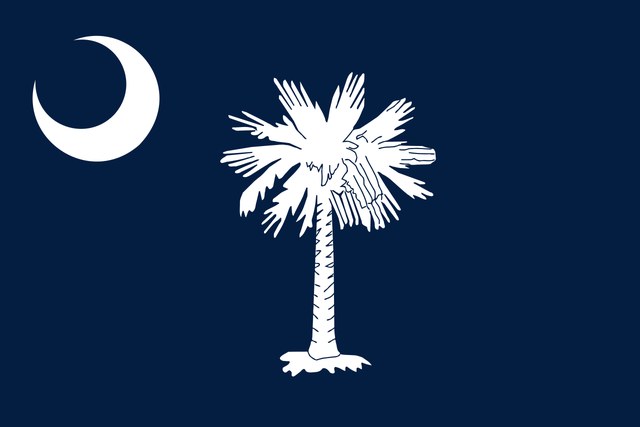
Southern U.S. state · 1670–present · Atlantic coast, southeastern U.S.
South Carolina was a southern state central to the Nullification Crisis and the first to secede from the Union in 1860.
The kit
- Colonial economy — South Carolina's economy boomed thanks to Eliza Lucas Pinckney's indigo plantations in the colonial period.
- Revolutionary War — South Carolina saw more than 200 Revolutionary War battles, including Daniel Morgan's double envelopment victory at Cowpens over Banastre Tarleton.
- Slave rebellions — South Carolina experienced major slave rebellions including the Stono Rebellion in 1739 and Denmark Vesey's failed 1822 Charleston insurrection.
- Secession & Civil War — South Carolina was the first state to secede in 1860, and the Civil War's opening shots occurred at Fort Sumter.
Runs with
Charleston
Nullification
Fort Sumter
The ladder · 15 clues
This colony’s economy boomed thanks to Eliza Lucas Pinckney’s indigo plantations.
The opening shots of the Civil War took place at this state’s Fort Sumter.
French Ambassador Edmond-Charles Genet rallied for support of the French Revolution after arriving in this state, which saw slave rebellions led by Jemmy at the Stono River in 1739 and Denmark Vesey in 1822 as well as the American Revolution’s Battle of Cowpens.
Both the Stono Rebellion and Vesey’s Rebellion took place in this southern state, the first to secede in 1860.
In what is now this state, the Spanish set up San Miguel de Guadalupe at Winyah Bay, the first European settlement on the mainland of what would become the U.S. The Wateree River, which is the portion of the Catawba River in this state, passed through lands inhabited by the Yuchi and Yamasee.
During the Civil War, some of this state’s former slaves worked land abandoned by planters in the Port Royal Experiment.
The Stono Rebellion occurred in what would become this state. Later, Denmark Vesey led a failed slave insurrection in this state’s city of Charleston.
Francis Marion, the “Swamp Fox,” led guerilla forces in this state.
The largest surrender of American soldiers in the Revolutionary War took place in this state after a defeat for Benjamin Lincoln, whereas another setback in this state featured Horatio Gates’s loss at Camden.
Banastre Tarleton was defeated by a double envelopment by Daniel Morgan at this state’s Battle of Cowpens.
A failed slave revolt on Bastille Day in this state was planned by a man who purchased his freedom with his lottery winnings, Denmark Vesey.
The first US Vice President to resign was from this state, whose customs houses in Beaufort and Georgetown were targeted as part of the Force Bill.
The Tariff of Abominations was attacked in an "Exposition and Protest" named for this state. name this state where the Nullification Crisis was sparked by John C. Calhoun.
The home of the Pinckney family this is this state, the location of Fort Sumter.
John C. Calhoun led a nullification crisis in this state that led to the federal government seizing custom houses in Charleston.
10 more clues from the record
The Battle of Fort Sumter took place in this state, which was the first to secede from the union, citing the North’s failure to enforce the Fugitive Slave Act.
In what is now this state, the British were rebuffed from taking a city due to William Moultrie’s defense of a namesake fort on Sullivan’s Island.
This state saw more than 200 battles in the American Revolutionary War, beginning with the first Battle of Ninety Six.
A senator from this state gave the longest filibuster in history to stall a vote on the Civil Rights Act of 1857.
This state attempted to prevent the so-called “Tariff of Abominations” from becoming law during the Nullification Crisis.
In the leadup to an election in this state, African Americans were killed in the Hamburg Massacre by Red Shirts.
Another senator from this state coined the term “mudsill of society” and brought the gag rule to the floor of the House.
A politician from this state named George McDuffie came up with an economic idea called the “forty bales” theory.
A woman from this state named Floride helped lead the shunning of Peggy Eaton in the Petticoat Affair.
One senator from this state was nicknamed “Pitchfork Ben” because he advocated lynch mobs.