Thomas Nast
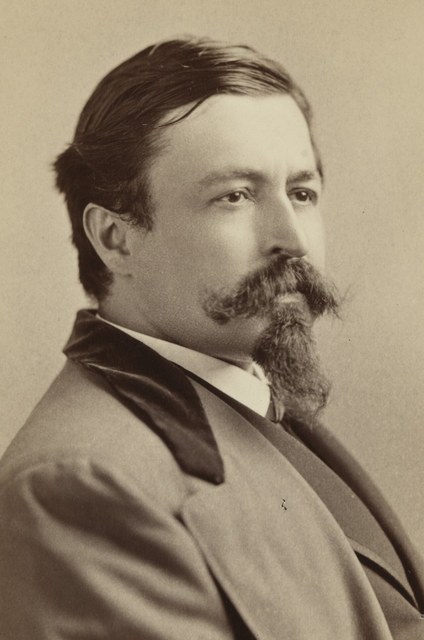
Political cartoonist · late 19th century · United States
Thomas Nast was a Harper's Weekly cartoonist whose satirical drawings exposed Boss Tweed and created the Republican elephant and Democratic donkey symbols.
The kit
- Achievements — Thomas Nast invented the modern images of Santa Claus, the Republican elephant, and the Democratic donkey for American political iconography.
- Conflicts — Thomas Nast depicted Tammany Hall as a tiger killing democracy and drew corrupt politicians with bulging pockets in works like Who Stole the People's Money?
- Legacy — Thomas Nast was called 'our best recruiting sergeant' by Abraham Lincoln for his Civil War illustrations and the Father of the American Cartoon.
- Death & succession — Thomas Nast died of yellow fever in Guayaquil, Ecuador, where he served as consul under Theodore Roosevelt after accepting the position for money.
Runs with
Tammany Hall
William Marcy Tweed
The ladder · 9 clues
That criminal was this man’s frequent target, Tammany Hall’s Boss Tweed. name this man noted for his satirical cartoons, which saw the first usages of the Republican elephant and Democratic donkey.
One of this man’s works shows children about to be attacked by Catholic bishops who resemble crocodiles.
While on a trip to England, this man was convinced by a letter from Josh Billings to join James Redpath’s Lyceum Bureau, where he would give “chalk talks.” It’s not Mark Twain, but this man’s time in the Player’s Club introduced him to his biographer Albert Paine.
One work by this political cartoonist depicts members of the Tammany Hall political machine dropping children into a river infested with crocodiles resembling Catholic bishops. :Name this man employed by Harper's Weekly whose works led to the fall of Boss Tweed.
Politician cartoonist who frequently satirized the Tammany Hall machine and created the GOP’s elephant symbol.
Harper's Weekly cartoonist who depicted it as a tiger killing democracy.
Lincoln called his work the best recruiting tool of the Civil War, and this man’s depiction of the Americus Fire Company as a rapacious tiger helped to bring down Boss Tweed. name this Harper’s illustrator who invented the party symbolism of the elephant and donkey.
Boss Tweed and Tammany Hall’s corruption was exposed in the New York Times by this “Father of the American Cartoon.”
This cartoonist for Harper’s Weekly was famous for his depictions of Tweed, in addition to drawing the modern depiction of Santa Claus, the Democratic donkey and the Republican elephant.
10 more clues from the record
In a self-caricature, this man depicted himself sharpening a giant pencil like a spear. :Name this late-19th century cartoonist credited with mobilizing public opposition to Tammany Hall and its leader, William “Boss” Tweed.
This artist of The American River Ganges and Who Stole the People’s Money? produced a work in which obese vultures hide near a bone marked “City Treasury.” That work by this artist, Let Us Prey, was notably published in Harper’s Weekly.
This man’s depiction of the Rock Springs massacre features a sarcastic Chinese diplomat looking on the execution of Chinese workers, in a scene that is similar to Goya’s Third of May, 1808.
Grant attributed his presidential victory to “the sword of Sheridan and the pencil” of this man. :Name this editorial cartoonist whose drawings and caricatures led to the downfall of Tammany Hall.
His early days were spent popularizing Garibaldi’s mission to unify Italy and he later lived in Ecuador as consul under Teddy Roosevelt.
Desperate for money, this man accepted an offer from John Hay for a position as a consul in Guayaquil , where he died of yellow fever.
This man’s work for George William Curtis indirectly resulted in the extradition of one of his political rivals from Vigo, Spain.
Another shows a circle of men with bulging pockets pointing to the person on their right to answer the title question.
He collaborated with Petroleum Nasby on a series of writings that satirized the South.
Abraham Lincoln called this man “our best recruiting sergeant.” This man compared the Catholic Church to the “American River Ganges” and Tammany Hall to a Tiger in a medium influenced by John Tenniel’s work for Punch.