The 1648 Codex · study package

Modern Countries — Europe

30 terms drawn from across the corpus, in study-list order. Art and cross-links point back to the home category cards.

#39 · Modern Countries · Level 1

France

France
Original: /div Unknown /div Vector: /div SKopp /a · Public domain

Western European nation · antiquity to present · Western Europe, south of Belgium

France is a Western European nation whose Fifth Republic was established in 1958 under Charles de Gaulle after the Algiers Crisis.

The kit

  • Medieval conflicts — France was the site of the Battle of Tours, where Charles Martel stopped an Umayyad invasion force in the medieval period.
  • Colonial empire — France colonized Algeria, Senegal, Cameroon, and Port Royal, signing the Évian Accords in 1962 to grant Algerian independence.
  • Modern politics — France legalized abortion with the Veil Law in 1975 and experienced economic growth through dirigism during the Thirty Glorious Years.
  • International incidents — France authorized Operation Satanic, the 1985 bombing of the Greenpeace ship Rainbow Warrior protesting its nuclear policy.

Runs with

Paris
Paris is the capital city of France open card →
Nanda Empire
no connection evident in clues open card →
church
France persecuted Huguenots after the Edict of Fontainebleau as an officially Catholic country open card →
Joe Hill
no connection evident in clues open card →

The ladder · 15 clues

H

The United States clashed with a minister from this country during the XYZ Affair.

H

The U.S. signed the 1800 Treaty of Mortefontaine with this country, ending the Quasi-War.

H

Emmanuel Macron, who defeated Marine le Pen in 2017.

H

Modern-day country south of Belgium that was the site of the wars.

H

In 1962, this country signed the Évian Accords granting independence to its colony Algeria. name this country whose Fifth Republic was first led by Charles de Gaulle.

H

In 1975, this country made divorce easier and legalized abortion with the Veil Law, a few years before its anti-immigration Pasqua laws.

H

Three members of the GIGN, this country’s special forces and counter-terrorism unit, advised the raid on the Grand Mosque.

M

Country she supported against England in the Hundred Years” War.

M

After the 1958 Algiers Crisis, this current government of France came into power with Charles de Gaulle as its first president.

M

This country authorized Operation Satanic, the secret bombing of a Greenpeace ship protesting its nuclear policy, the Rainbow Warrior.

M

Substantial funding was provided by this country for Bokassa’s coronation. The Central African Republic gained independence from this country whose other African colonies included Cameroon and Algeria.

M

This nation was also the site of the medieval battle of Tours {TOO-UR}, in which Charles Martel stopped an Umayyad {OO-MY-YAHD} invasion force.

E

This country is home to cave paintings in Lascaux.

E

This officially Catholic country persecuted the Huguenots after the Edict of Fontainebleau.

E

Louis Philippe was a member of the House of Bourbon, which ruled this country. Following the overthrow of Louis Philippe, Napoleon III was elected the first President of this country.

10 more clues from the record
H

In a short story from this country, the wife of a government clerk works for years to replace the title piece of jewelry, which she later finds out is fake.

H

One of this country’s colonies, named Port Royal, was captured by the British in 1710, leading to the Great Expulsion of people from this country to regions farther south.

H

In case of war, this country planned to occupy its northern neighbor and advance to the Dyle River.

H

This country is home to Gavrinis Island, which contains neolithic stone slabs with spiral designs.

H

In 1995, the Armed Islamic Group of Algeria targeted public transportation in this country.

H

This county was divided into g´en´eraliti´es based on how they paid taxes.

H

State control of capitalism in this country, a policy known as dirigism, led to the “Thirty Glorious Years” after World War II.

H

This country worked to decentralize its government with the 1982 Defferre Laws.

H

European power which colonized Senegal.

H

Country whose pragmatic policy was made by Cardinal Richelieu (pr. ree-shell-OO)?
Watch out: Students may confuse France's Fifth Republic (1958) with earlier French republics or mistake the Évian Accords for other decolonization treaties
#44 · Modern Countries · Level 1

Spain

Spain
Antonio Valdés y Fernández Bazán · Public domain

European nation · unified 1469; modern state 1978 · Iberian Peninsula

Spain unified after the marriage of Castile and Aragon's monarchs and expelled Jews with the 1492 Alhambra Decree.

The kit

  • Reconquista & Empire — Spain's Battle of Covadonga in 722 sparked centuries-long war against Islamic forces ending in Reconquista.
  • Colonial power — Spain colonized most of Latin America except Brazil, calling peninsulares those colonists born in Spain itself.
  • Conflicts — Spain fought the Eighty Years War against Dutch independence, recognized Netherlands in 1648 under Philip IV.
  • Civil War & Franco — Spain's 1930s civil war drew American volunteers in Abraham Lincoln Brigade; Francisco Franco became caudillo afterward.

Runs with

Nanda Empire
no connection evident in clues open card →
Francisco Franco
became Spain's caudillo after Falange victory in 1930s civil war open card →
Bakumatsu Period
Reconquista
Spain's Reconquista began with Battle of Covadonga in 722 open card →

The ladder · 15 clues

H

One force commanded by this country was defeated at the Battle of Gravelines.

H

Contribute volunteers to the Abraham Lincoln Brigade in this country's 1930s civil war?

H

In 1973, this country’s Prime Minister was assassinated by separatists in Operation Ogre.

H

This country fought the early 20th century Rif War against forces of Berber tribes in Morocco.

H

Country that granted the Netherlands independence after the Eighty Years’ War.

H

In this modern-day country, the 722 Battle of Covadonga sparked a centuries-long war against Islamic forces.

H

Residents of this country’s colonies that were born in this country were called peninsulares. :Name this country which colonized most of Latin America aside from Brazil.

M

The Dutch fought this country for independence in the Eighty Years War. This country’s monarch Philip IV recognized The Netherlands in 1648.

M

The Alhambra Decree expelled practicing Jews from this country, which was unofficially unified after the marriage of monarchs from Castile and Aragon.

M

European country from which the Philippines declared its independence in 1898.

M

Fought the Peninsular War when trying to install his brother on what country’s throne?

M

Empire that held the Netherlands as a personal union prior to the Eighty Years’ War.

E

The Falange seized power in this country after a 1930s civil war resulted in Francisco Franco becoming caudillo. name this country that is ruled by Felipe VI from Madrid.

E

This country was briefly ruled by Napoleon's brother, Joseph Bonaparte.

E

Thomas Pinckney negotiated a 1795 treaty with, what country that signed the Adams-Onis Treaty with the U.S., in which it ceded claims to Florida?

10 more clues from the record
H

In one work, Bill Gorton, Robert Cohn, and Jake Barnes travel to the northeast of this nation for a two-week long fishing trip.

H

A proposed marriage with a royal from this country was supported by Pope Gregory XV though preacher John Everard opposed the union.

H

Privateer Henry Jennings attacked salvagers of this country’s ships that had sunk in a hurricane in 1715.

H

"Bandits led by monks" were blamed for a defeat in this country at Bailén, which Chilean soldiers referenced at Maipú.

H

Hannibal's attack on Saguntum in this present-day country began the Second Punic War.

H

European country that colonized the islands after their discovery by Ferdinand Magellan.

H

European nation whose South American colonies he liberated.

H

The Abraham Lincoln Brigade was a group of Americans who came here to fight in its civil war, which George Orwell described in Homage to Catalonia.

H

In the nineteenth century, this country experienced the Liberal Triennium.

H

Colonized by what European power, after whose king Philip II it was named?

Watch out: Joseph Bonaparte briefly ruled Spain, not France, during Napoleonic period
#45 · Modern Countries · Level 1

United Kingdom

United Kingdom
Original: /div Acts of Union 1800 /a /div Vector: /div Zscou · Public domain

Island nation · formed 1707 · northwestern Europe

United Kingdom is a European nation that built a global empire and developed a 'Special Relationship' with the United States.

The kit

  • Colonial empire — United Kingdom colonized Australia, South Africa, and the American colonies and ruled Zimbabwe before independence.
  • 19th-century diplomacy — United Kingdom resolved the Alabama claims after the Civil War and signed the Hay-Pauncefote Treaty during the Great Rapprochement.
  • 20th-century conflicts — United Kingdom faced the Blitz during World War II and joined France in Operation Musketeer during the Suez Crisis.
  • Cultural influence — United Kingdom bands like The Beatles and The Rolling Stones led the 1960s British Invasion of American rock music.

Runs with

American Railway UnionCommonJoe Hill
Northern Ireland
constituent country within the United Kingdom open card →

The ladder · 15 clues

H

A politician from this country reportedly held up a copy of The Constitution of Liberty by Austrian thinker Friedrich von Hayek and stated “This is what we believe.” Another economist from this country used wine from Portugal and cloth from this country to define comparative advantage in trade.

H

One of these two countries refused to use force to put down the revolt of Colonel Ahmed Urabi, prompting the other to intervene militarily.

H

A historian from this country was told, “Your criticism of me would damage your reputation as a historian, if you had one” during a 1961 debate.

H

This country clashed with the U.S. during the Venezuelan crisis of Grover Cleveland’s presidency.

H

This nation's stance in the 1860s was satirized in Joseph Webster's popular, contemporary tune titled "Our Neutral Friend." Two Confederate diplomats, James Murray Mason and John Slidell, were seized from a ship of this nation in the Trent Affair.

H

Country that faced the Blitz and employed the Royal Air Force.

H

Cogidubnus was a Roman client king in this modern-day country, where the Roman governor Agricola won the battle of Mons Graupius.

M

Country that colonized Australia who also colonized South Africa and the American colonies F

M

Country for which she was the first female Prime Minister

M

Another incident between these two countries featured a territorial dispute in Sudan and ended with a troop standoff in Fashoda.

M

Country that leased Hong Kong from the Qing [ching] Dynasty.

M

The U.S. and this country feuded over borders in the San Juan Islands during the Pig War.

E

European country that ruled Zimbabwe prior to independence.

E

Historians believe the late 19thcentury was the time of the “Great Rapprochement” between this country and the U.S. After the U.S. Civil War, this country resolved the Alabama claims with the U.S. and signed the Hay-Pauncefote Treaty. name this European country which, as a result of actions like these, began forming the “Special Relationship” with the U.S.

E

These two countries later worked with David Ben-Gurion in Operation Musketeer, deploying paratroopers to thwart Gamel Abdel Nasser’s nationalization of a waterway. name these two European powers that joined forces in the Suez Crisis.

10 more clues from the record
H

One band from this country helped popularize distortion in rock music when they sliced their amp with a razor to record the song "You Really Got Me." While performing in Des Moines, Iowa, one musician from this country bit off the head of a dead bat.

H

Darcus Howe was a civil rights leader in this country, where a race riot that inspired the Eddy Grant song “Electric Avenue” took place in Brixton.

H

That historian from this country verified that Hitler did not escape Berlin in the late days of the war and controversially claimed that the supposed Hitler Diaries were real.

H

Bands from this country such as The Kinks were part of a 1960s "Invasion" from this country to the United States. name this country, home to rock bands such as Black Sabbath, The Rolling Stones, and the Beatles.

H

A king of this country ordered that all children born on May Day be executed, but that didn’t kill his bastard son by Morgause.

H

What European country has been led by prime ministers like John Major, Tony Blair, and Gordon Brown?

H

Country where the Langham Place group created a women’s periodical published by Emily Faithfull’s Victoria Press

H

A legend in this country concerns the vengeful spirit Black Vaughan, who was finally exorcised by a mother with a newborn baby.

H

Citing a desire to prevent the erosion of democracy, Boris Johnson came out in favour of this cause in February 2016.

H

The beast of Bodmin was a phantom cat that terrorized much of this country’s bumpkin inhabitants.

Watch out: Northern Ireland is part of the United Kingdom, not a separate country
#47 · Modern Countries · Level 1

Poland

Poland
See below. · Public domain

Central European nation · 966 CE–present · Central Europe

Poland was established by Mieszko I in 966, partitioned three times in the 18th century, and invaded by Germany in 1939 to start World War II.

The kit

  • Rise — Poland was established by Mieszko I of the Piast Dynasty, who was baptized in 966 and founded the first historical Polish state.
  • Golden Liberty — Poland operated under the Golden Liberty system, where the sejm parliament and szlachta nobles held power strengthened by the Nihil novi act.
  • Partitions — Poland was partitioned three times by Prussia, Austria, and Russia during the 18th century, erasing it from maps until 1918.
  • Modern era — Poland's Solidarity Movement, led by Lech Walesa after strikes at Gdansk's Lenin Shipyards, negotiated the Round Table Agreement that reformed the government.

Runs with

American Railway Union
no connection evident in clues open card →
Warsaw
Lithuania
joined with Poland through the Union of Lublin open card →
Solidarity
Polish trade union led by Lech Walesa that negotiated democratic reforms open card →

The ladder · 15 clues

H

This country was partitioned three separate times during the 19th century, and was the largest country divided by the secret Molotov-Ribbentrop Pact.

H

Under the Golden Liberty system, this country was effectively run by the sejm (pr. same) parliament. nobles called szlachta (pr.

H

This country was established by Mieszko I of the Piast Dynasty.

H

The Nihil novi act gave this country’s nobles power which was strengthened under a system known as Golden Liberty.

H

A pianist from this country composed the opera Manru and spent ten months as its Prime Minister, during which time he signed the Treaty of Versailles.

H

A king of this country attempted to reform the power of the nobility by writing the 3rd of May Constitution, which was opposed by nobles in the Targowica Confederation.

H

The first historical leader of this nation, Mieszko I, founded the Piast dynasty and was baptized in 966.

M

The Union of Lublin created this country governed from Krakow and Vilnius.

M

Country invaded on September 1, 1939, marking the beginning of World War II.

M

As a result of the Molotov-Ribbentrop Pact this country was invaded, and then split between, the Soviet Union and Germany.

M

Country that was invaded by the Nazis to start the war after the Gleiwitz incident.

M

This country’s government was reformed after the Round Table Agreement, which included the trade union Solidarity.

E

Country first organized by the Piast Dynasty this was later invaded by its neighbor Germany to start World War II.

E

In this nation, Lech Walesa led the “Solidarity Movement.” That movement was supported by Pope John Paul II, who was born in this country.

E

That Round Table Agreement was primarily negotiated by a union that formed after a strike at the Lenin Shipyards in Gdansk. name this country where Solidarity leader Lech Walesa became president.

10 more clues from the record
H

This country's succession war ended in 1738 following fracture on the death of Augustus the Strong.

H

One composer from this modern-day country used a "sacred minimalist" sound that is exemplified by his Symphony of Sorrowful Songs and the Copernican Symphony.

H

A strike in this country led to the 21 Demands of MKS, and in 1981, this country faced hunger demonstrations and a four-hour national warning strike.

H

Waltzes by a composer from this country make up pianist Dinu Lipatti’s most enduring recording.

H

In this modern-day country, the 21 Demands of MKS were hung on Ostrow Island in A August, 1980.

H

A Valois prince was elected king of this state but returned to France with much of its treasury.

H

A cavalry charge at the Battle of Krojanty started a myth that forces from this country used horses against German tanks.

H

Prussia, Austria, and Russia partitioned this country three times.

H

This country’s power was broken by a Swedish invasion in the Deluge.

H

The President of the European Council, Donald Tusk, was Prime Minister of this country during the early 2010s.

Watch out: The Battle of Krojanty created a myth that Polish cavalry charged German tanks with horses
#48 · Modern Countries · Level 1

Sweden

Sweden
Jon Harald Søby /a and others. · Public domain

Scandinavian kingdom · medieval to present · northern Europe, Baltic region

Sweden is a Scandinavian kingdom that dominated the Baltic after the Thirty Years' War and fought Russia in the Great Northern War.

The kit

  • Rise — Sweden entered the Thirty Years' War under Gustavus Adolphus, the "Lion of the North", and dominated the Baltic following its success.
  • Conflicts — Sweden won the Battle of Narva under Charles XII but suffered a crushing defeat at Poltava during the Great Northern War against Russia.
  • Expansion — Sweden occupied Poland-Lithuania during the Deluge following the Khmelnytsky Uprising and established a short-lived Delaware Valley colony centered at New Christiana.
  • Legacy — Sweden built one million publicly funded homes in the Million Program starting in 1965 and produced assassinated Prime Minister Olof Palme in 1986.

Runs with

American Railway Union
Gustavus Adolphus
Gustavus Adolphus led Sweden into the Thirty Years' War as the Lion of the North open card →
Kalmar Union
Sweden was once ruled jointly with Norway and Denmark in a Scandinavian union open card →
Stockholm
Stockholm served as Sweden's capital from which rulers like Christina governed open card →

The ladder · 15 clues

H

A colony named for this non-Polish country built Fort Casimir, or Fort Trinity, and was led by men like Johan Printz and Johan Risingh.

H

This nation won the battle of Narva before suffering a major loss at Poltava. name this northern European nation, which under Charles XII lost the Great Northern War to Russia.

H

A ruler of this country founded the Arcadian Academy in Rome after being converted to Catholicism by Pope Alexander VII.

H

Following the Khmelnytsky Uprising, Poland and Lithuania were occupied by this country in a period known as the Deluge.

H

One king of this nation was opposed by the Anjala Cospiracy, which sought to avoid a repeat of this nation’s occupation in the Lesser Wrath.

H

A king of this nation died at Fredriksten, forcing his men to endure the Carolean Death March to return home.

H

This kingdom established a short-lived colony in the Delaware Valley centered at New Christiana.

M

This country entered the Thirty Years’ War under the leadership of the “Lion of the North”, Gustavus Adolphus. name this Scandinavian country where rulers have led from Stockholm.

M

Olof Palme was a prime minister of this country. Centuries earlier, opponents of Christian II in this country were massacred in the Stockholm bloodbath.

M

Country that dominated the Baltic following its success in the Thirty Years War.

M

René Descartes was employed by Christina, a Queen of this country that she ruled from Stockholm.

M

Rene Descartes died in this country after being invited by a queen who was nicknamed “The Minerva of the North” for her interest in learning, Christina. name this Scandinavian nation with its capital at Stockholm.

E

The House of Vasa once ruled this country led by Charles XII and Gustavus Adolphus in the Great Northern War and Thirty Years’ War, respectively.

E

Queen Christina and Gustavus Adolphus both ruled which Scandinavian kingdom this was once ruled jointly with Norway and Denmark.

E

Peter the Great defeated the forces of this country during the Great Northern War. They won the Battle of Narva under the leadership of Charles XII.

10 more clues from the record
H

In a bout of insanity, one ruler of this country murdered various noblemen from the Sture family.

H

A series of attacks on bailiffs in this country led to a revolt known as the Dacke War.

H

Another leader from this country was a prime minister assassinated in 1986 whose main suspect was Christer Pettersson.

H

A ruler of this country was captured during the Kalabalik of Bender by the Ottoman Empire, where he was hiding in exile. This country faced Augustus the Strong's coalition of Saxony and Poland-Lithuania, which wanted to claim Livonia from Charles XII.

H

Another king of this country led the March Across the Belts, after which it received Scania from Denmark.

H

A U.N. Secretary General from this country died in a 1961 plane crash en route to peace talks over conflict in the Congo Crisis.

H

A queen of this country converted to Catholicism shortly after abdicating the throne at age 28.

H

Starting in 1965, this country carried out the Million Program which built one million publicly funded homes over 10 years.

H

In one battle in modern Ukraine, this country’s forces were defeated by Boris Sheremetev.Name this country which fought a Russian-led coalition in the Great Northern War. Despite early successes, its invasion force was crushed at the battle of Poltava.

H

During that intervention, one ruler of this country died at the battle of Lutzen.

Watch out: Denmark (also Scandinavian, fought Sweden for Scania, part of Kalmar Union)
#49 · Modern Countries · Level 1

Russia

Russia
Peter the Great · Public domain

Eurasian nation · ancient to present · Eastern Europe and northern Asia

Russia is the successor state to the Soviet Union with its capital at Moscow.

The kit

  • Religious schism — Russia underwent the Raskol schism when Patriarch Nikon changed the sign of the cross, splitting off the Old Believers.
  • Revolutionary violence — Russia's People's Will assassinated the tsar in 1881, and over one million died in civil war between Bolsheviks and Mensheviks.
  • Musical tradition — Russia was home to the 'Mighty Handful' of five composers including Mussorgsky, who wrote Pictures at an Exhibition.
  • Early technology — Russia's Sintashta culture created the first known chariots and domesticated horses later associated with the Arya who settled India.

Runs with

Nanda Empire
Sintashta horse culture linked to Arya migration to India open card →
American Railway Union
Emma Goldman emigrated from Russia to United States open card →
Catherine the Great
Peter the Great
ruled as Tsar and led Great Northern War open card →

The ladder · 15 clues

H

This country underwent a religious schism known as the “Raskol” when Patriarch Nikon attempted to change the number of fingers used to make the sign of the cross, leading to the split of the Old Believers.

H

Successor state to the Soviet Union whose capital is Moscow.

H

The country whose Baltic Sea ports include Kaliningrad and St. Petersburg?

H

More than one million citizens of this country were killed in a civil war between the Bolsheviks and Mensheviks. In the midst of the civil war, this country signed the Treaty of Brest-Litovsk with the Central Powers to withdraw from World War I.

H

A culture based in this modern-day country created the first known chariots.

H

This country, whose navy employed Scottish-born Samuel Grieg, won the Battle of Chesme to force the Treaty of Kuchuk Kaynarca. Sailors in its navy mutinied in the Kronstadt Rebellion.

H

Peter ruled as Tsar of this country, which he led into the Great Northern War with Sweden.

M

This country was the home of the People’s Will, a revolutionary group that, in 1881, assassinated the leader of this country.

M

César Cui joined those two composers in the "Mighty Handful," a group of five composers that celebrated this country's music. Name this country where Pictures at an Exhibition was composed by Modest Mussorgsky and edited by Nikolai Rimsky-Korsakov.

M

Was the first-ever U.S. ambassador to what country, where he presented credentials at St. Petersburg?

M

During another hostage crisis, this country was criticized for indiscriminately flooding a theater with poison gas.

M

British fishermen were killed in the Dogger Bank incident when what country’s navy accidentally fired on them, thinking they were Japanese?

E

Battle of Borodino, which was depicted in War and Peace.

E

country whose delegation was led by Tsar Alexander I.

E

That pamphlet was written by an author from this country who traveled from Switzerland in a sealed boxcar and delivered the April Theses upon his return to Petrograd. name this home country of Emma Goldman and Vladimir Lenin.

10 more clues from the record
H

The Time of Troubles plagued this country, many of whose rulers called themselves “tsars.”

H

The earliest known chariots were found at this country’s type site of Sintashta, which names a horse-domesticating culture associated with the Arya that later settled in India.

H

One immigrant from this country to the United States founded the electronics company Ampex, while another invented the first practical helicopter.

H

Name some things about a recent war, :This former Soviet republic's president is Dmitry Medvedev, and its prime minister is Vladmir Putin.

H

During a performance in this country of the ballet Spartacus by Aram Khachaturian [[kah-chah-TOO-ree-ahn]], Leonid Yakobson [[YAH-kohb-sun]] abandoned the traditional pointe technique during a performance at the Bolshoi Theatre.

H

Ethnically Polish dancer Vaslav Nijinsky [[nih-JIN-skee]] helped popularize a ballet company named for this nation originally founded by Sergei Diaghilev [[dee-AH-geh-lef]].

H

A Defense Minister of this country said “it is hard to search for a black cat in a dark room, especially if it’s not there” about the presence of soldiers in a neighboring country.

H

The Navajo language has recently been shown to be distantly related to a group of languages spoken along the Yenisei River in what country?

H

The works of Viktor Hartmann inspired another composer from this country to write a suite whose final movement depicts an unbuilt celebratory gate.

H

In 2014, Barack Obama said it was a “regional power,” two years after promising he would have more “flexibility” with this country after his reelection.

#53 · Modern Countries · Level 1

Portugal

Portugal
Original: /div Columbano Bordalo Pinheiro /div Vector: /div · Public domain

European nation · 1139–present · Iberian Peninsula

Portugal signed the Treaty of Tordesillas with Spain, dividing the New World, and launched its Age of Discovery from Lisbon.

The kit

  • Rise — Portugal's first monarch defeated his mother at the Battle of Saint Mamede and Ali ibn Yusuf at the Battle of Ourique.
  • Achievements — Portugal expanded greatly under the House of Aviz, which included Prince Henry the Navigator and led maritime exploration to the Cape of Good Hope.
  • Conflicts — Portugal fought colonial wars in Angola and Mozambique and faced a 1580s succession crisis after Sebastian I died at the Battle of the Three Kings.
  • Legacy — Portugal's Carnation Revolution ended the Estado Novo dictatorship in 1974, and a 1755 earthquake devastated its capital Lisbon.

Runs with

Brazil
claimed by Pedro Cabral for Portugal open card →
Lisbon
capital city and launch point for Age of Discovery open card →
Mozambique
former colony involved in colonial wars open card →
Henry the Navigator
member of House of Aviz who led maritime expansion open card →

The ladder · 15 clues

H

Along with Spain, this country signed the Treaty of Tordesillas, dividing up much of the New World. name this country, whose Age of Discovery began in Lisbon.

H

A succession crisis in this country was sparked after the death of Sebastian I at the Battle of the Three Kings.

H

The Marquis of Pombal established the Douro Wine Company in this country.

H

This country signed the Treaty of Meuthen with England, with whom it had earlier allied in the Treaty of Windsor.

H

The aftermath of the Battle of Aljubarrota saw this country crown John I king, and this country’s 1910 revolution overthrew a dynasty that was installed in this country’s Restoration War, the Braganza dynasty.

H

One monarch from this country perished at the Battle of Three Kings, causing this nation’s native monarchy to end for sixty years.

H

The Carnation Revolution ended the Estado Novo dictatorship in this European country. This country's colonial wars took place in Angola and Mozambique.

M

Pedro Cabral claimed Brazil for this European country that governed its colonies from Lisbon.

M

One expedition led by an explorer from this country ventured to the "Cape of Storms," which is now referred to as the Cape of Good Hope.

M

The Houses of Aviz and Braganza ruled this country that experienced much maritime expansion thanks to Henry the Navigator.

M

The Battle of Aljubarrota was fought in this country, after which it was ruled by the Aviz dynasty.

M

This country’s African empire was represented on the Pink Map, which led to an 1890 British Ultimatum.

E

An economist named Antonio Salazar ruled this country as leader of its authoritarian Estado Novo regime during the mid-20th century.

E

A 1755 earthquake and fire devastated this country’s capital city of Lisbon.

E

This country expanded greatly under the House of Aviz, which included Prince Henry the Navigator.

10 more clues from the record
H

The first monarch of this country, whose independence was recognized by Pope Alexander III, defeated his mother at the Battle of Saint Mamede and Ali ibn Yusuf at the Battle of Ourique.

H

The 1580s war for this country’s succession included the Battle of Ponta Delgada, a naval battle nearly 1,000 miles west of this country.

H

Some of this country's merchants were swept off their route to Ningbo by a storm, landing in one of the Osumi Islands.

H

A king of this country had a vision of a cross in the sky before winning the Battle of Ourique.

H

For much of its history, this country was led by rulers from the House of Aviz.

H

This country was granted everything east of an Atlantic meridian by Pope Alexander VI in the Treaty of Tordesillas (TOR-duh-SEE-yahs).

H

The Alvor Agreement ended another conflict between this nation and its former colony of Angola.

H

European country that introduced the Pink Map to connect its colonies of Angola and Mozambique.

H

In 1511, a force from this country led by Alfonso de Albuquerque captured the city of Malacca. Prior to 1975, this country controlled East Timor, and prior to 1961, it controlled the city of Goa.

H

The bull Manifestis Probatum recognized Afonso I as the first king of this country.

Watch out: Spain (also signed Treaty of Tordesillas and competed in Age of Discovery)
#57 · Modern Countries · Level 1

Hungary

Hungary
SKopp · Public domain

Central European kingdom · 896 CE–present · Danube basin, capital Budapest

Hungary is a Central European kingdom founded by the Magyars under the Árpád Dynasty and converted to Christianity by Saint Stephen.

The kit

  • Medieval kingdom — Hungary's Golden Bull of 1222 declared all nobles equal, and Matthias Corvinus established the Black Army mercenary force.
  • Ottoman conquest — Hungary was defeated by Suleiman the Magnificent at Mohács in 1526, leading to Ottoman occupation and Habsburg control.
  • Dual Monarchy — Hungary formed a dual monarchy with Austria after the Compromise of 1867, gaining significant autonomy within the empire.
  • 1956 Revolution — Hungary's 1956 revolt led by Imre Nagy was crushed by Soviet forces, followed by János Kádár's "goulash communism" regime.

Runs with

Austria
formed Dual Monarchy after 1867 Compromise open card →
Lajos Kossuth
led 1848 revolution, wrote April Laws open card →
Nanda Empire
Magyars
founded Hungary under Árpád Dynasty open card →

The ladder · 15 clues

H

A standing mercenary army called the Black Army was established for this kingdom by Matthias Corvinus.

H

Olympians from this country participated in the “Blood in the Water”, a violent water polo match with Soviet athletes. name this country whose 1956 revolution concluded with Soviet forces occupying Budapest.

H

The Golden Bull of 1222 declared all nobles in this kingdom to be equal.

H

Country the Árpád Dynasty ruled with its modern capital at Budapest.

H

To prevent this country from surrendering, the son of its leader was kidnapped in Operation Panzerfaust by Otto Skorzeny.

H

Ferenc Szálasi's“International Ghetto” was opposed in this country’s capital by the Swedish-born Raoul Wallenberg.

H

This country was supported by Germany and Italy in the First Vienna Award which revised the Treaty of Trianon.

M

European country where Imre Nagy’s [im-reh nazh’s] 1956 revolt was violently crushed by the KGB.

M

In the interwar period, this country was threatened by the fascist Arrow Cross Party and was governed by the "regent" Miklos Horthy (HOR-tee).

M

Suleiman the Magnificent captured this country at the Battle of Mohacs [moh-hotch].

M

This country was defeated by Otto the Great at the Battle of Lechfeld, and it also saw a 1848 revolution led by Lajos Kossuth.

M

Bela Kun and Janos Kadar [yah-nosh kadar] led Communist governments in this country, whose first king was Saint Stephen of the Arpad Dynasty in the first century AD.

E

Janos Kadar was given control of this country after Nikita Khrushchev ordered the destruction of Imre Nagy’s government.

E

Following the Compromise of 1867 or Ausgleich, this country formed a dual monarchy with Austria. name this country with capital at Budapest.

E

This country’s first ruling dynasty was founded by Arpad and converted to Christianity during the rule of Saint Stephen. name this kingdom created by the Magyars whose capital joined with its eastern sister-city to form modern Budapest.

10 more clues from the record
H

This state lost Dalmatia after the pretender Ladislaus [[lawd-EH-sloh]] of Naples ceded it to Venice. John Zápolya [[ZAH-pol-yah]] was crowned king of this country under the protection of the Ottoman Empire after one battle. The Military Frontier was established by the Habsburgs in this country, which was ruled during its height by Matthias Corvinus. Name this kingdom that united with Austria in 1867 to form the Dual Monarchy.

H

One ruler from this kingdom led the “Long campaign” and was captured following a defeat at the battle of Varna.

H

This country attempted to gain self-government with the April Laws, written by nationalist leader Lajos Kossuth [LIE-osh KO-shooth].

H

During a revolution in this country, only the boots of a statue of Stalin were left after protestors pulled it down.

H

János Kádár [“YAH-nosh KAH-darr”] implemented “goulash communism” in this country after a revolution led by Imre Nagy [“IHM-ray nahj”].

H

In this non-Romania country, an apocryphal vow against the clinking of beer mugs began after 13 rebel generals were executed at Arad.

H

Béla Kun started a short-lived Communist republic in this country, which fell apart after an invasion led by King Ferdinand.

H

A king of this country defended Belgrade from the Ottoman Empire in 1456.

H

In this country, the Nazi-backed Arrow Cross party overthrew Miklos Horthy, who had been selected as regent following a series of revolutions.

H

This country twice refused the rule of Charles IV, its last king, and instead was led through World War II by Admiral Miklós Horthy.

Watch out: Béla Kun's short-lived Communist republic (1919) is often confused with the 1956 Nagy uprising
#59 · Modern Countries · Level 1

Germany

Germany
User:SKopp /a , User:Madden /a , and other users · Public domain

European nation · unified 1871 · central Europe

Germany unified in 1871 under Kaiser Wilhelm I and Chancellor Otto von Bismarck, later led by Adolf Hitler.

The kit

  • Rise — Germany sparked the Scramble for Africa by hosting the Berlin Conference and colonized Tanzania, Togoland, and Southwest Africa.
  • Conflicts — Germany sent the Zimmermann Telegram to Mexico during WWI, prompting U.S. entry, and suffered defeat leading to the Weimar Republic.
  • Achievements — Germany hosted the 1936 Berlin Olympics where Jesse Owens won the 100-meter dash, shattering myths of Aryan supremacy.
  • Legacy — Germany's Pergamon Museum displays a Hellenistic altar from Turkey and a reconstruction of the Ishtar Gate from Babylon.

Runs with

Chancellor
led by Chancellor Angela Merkel of the Christian Democratic Union open card →
American Railway Union
John Jacob Astor spent first sixteen years in Walldorf before moving to U.S. open card →
Nanda Empire
archaeologist Heinrich Schliemann discovered Mask of Agamemnon searching for Troy open card →
Otto von Bismarck
unified under Kaiser Wilhelm I with Chancellor Otto von Bismarck open card →

The ladder · 15 clues

H

Recep Erdogan [aird-oh-wan] accused this country of “Nazi practices” after pro-Erdogan rallies were cancelled in Frechen and Cologne. name this country led by the Christian Democratic Union under Chancellor Angela Merkel.

H

An archaeologist from this country discovered the Mask of Agamemnon in his search for a historical Troy.

H

This country’s early 20th century star athletes included cyclist Willy Arend and long jumper Luz Long.

H

Tanzania was colonized by this country. Namibia was once part of this country’s Southwest Africa colony, which it extended by acquiring the Caprivi Strip.

H

It was united after an 1871 war and led by Kaiser Wilhelm I and chancellor Otto von Bismarck. name this European country formerly led by Adolf Hitler.

H

Astor moved to the U.S. after the Revolutionary War, spending the first sixteen years of his life in Walldorf, which is today the home of the software company, SAP.

H

This country sent a gunboat to its rival’s territory in Morocco, causing the Agadir Crisis.

M

The Weimar [VYE-mar] Republic, which was formed after the defeat of this nation in World War I, suffered from hyperinflation after the Treaty of Versailles.

M

Operation Gunnerside was able to eliminate this country’s stockpile of heavy water, stopping its nuclear weapons program.

M

After this country was victorious at the Battle of Waterberg, Lothar von Trotha infamously marched the Herero people into the Kalahari desert, where they died of dehydration in this country’s colony of Southwest Africa. name this European country that possessed the Caprivi Strip in modern-day Namibia.

M

Kinjikitile Ngwale [kin-jee-kit-ee-lay n-WAH-lay] convinced the Matumbi tribe that the bullets of soldiers from this country would turn to water during the Maji Maji rebellion.

M

European country that sent the Zimmermann Telegram to Mexico during the revolution, trying to trigger an invasion of the US.

E

Jesse Owens won the 100 meter dash at the 1936 Olympics in this country, shattering myths of Aryan supremacy. name this country that hosted Olympic Games in Munich and Berlin.

E

This country’s holdings included Togoland and the Caprivi Strip in Namibia, which was then named South West Africa. name this country that sparked the Scramble for Africa by hosting the Berlin Conference.

E

Wunderwaffe, or wonder weapons, were produced during World War II by this country, for whom Wernher von Braun designed the V1 and V2 rockets.

10 more clues from the record
H

A series of revolutions in this modern-day country led to the election of the Frankfurt Parliament.

H

This government’s attempt to unify Protestantism was opposed by Dietrich Bonhoeffer’s Confessing Church.

H

A Hellenistic altar excavated from Turkey is now displayed in this country’s Pergamon Museum, which also includes a reconstruction of the Ishtar Gate.

H

One of this country's colonies saw the Battle of Waterberg, which led to the Herero and Namaqua genocide.

H

In this country, a coalition led by a tribe described as “lazy fools” was finally crushed at the Angrivarian Wall. :Name this modern-day country, where Arminius led three legions into an ambush in the Teutoburg Forest.

H

In response to revelations regarding NSA surveillance, this country’s leader said that “the Internet is uncharted territory for us all.” Former President of European Parliament Martin Schulz announced his intentions to run as the Social Democratic Candidate in October 2017 elections in this country.

H

One song of this country’s army is about a girl whose shares a name with a flower called “Erika”.

H

Another thinker from this country argued that a “Protestant work ethic” enabled the development of modern capitalism and suggested that the state held a monopoly on the legitimate use of violence.

H

In 2019, America’s Major League Soccer lifted a ban on imagery inspired by the Iron Front, an anti-fascist movement that developed in this country in the 1930s.

H

Its high command was led by Helmuth von Moltke, and it was accused of sending the Zimmerman Telegram, causing the United States to declare war on this country.

#61 · Modern Countries · Level 1

Italy

Italy
See below. · Public domain

European nation · unified 1861–1870 · southern Europe

Italy was unified under Victor Emmanuel II through the Risorgimento, culminating in the 1870 capture of Rome.

The kit

  • Unification — Italy's Risorgimento succeeded through Garibaldi's Expedition of the Thousand (1860) and Cavour's provocation of Austria with Napoleon III's support.
  • Conflicts — Italy lost the 1896 Battle of Adowa to Abyssinia but re-invaded Ethiopia in 1935 under Mussolini.
  • Years of Lead — Italy experienced the Years of Lead terrorism, including the Red Brigades' kidnapping and murder of Prime Minister Aldo Moro.
  • Recent politics — Italy was led by Silvio Berlusconi, known for "bunga bunga" parties, and later by Matteo Renzi and the Five-Star Movement.

Runs with

Nanda Empire
no connection evident in clues open card →
Benito Mussolini
Mussolini led Italy as **"Il Duce"** during World War II and invaded Ethiopia in 1935 open card →
Ethiopia
Italy lost at **Adowa in 1896** then successfully invaded Abyssinia under Mussolini in 1935 open card →
Rome
Rome's **1870 capture** completed Italian unification under Victor Emmanuel II open card →

The ladder · 15 clues

H

This country was the site of the 1970 “Hot Autumn” riots.

H

Settlements in this modern-day country included one ruled by the tyrant Telys, Sybaris, which was conquered by Croton.

H

In order to downplay a defeat, this country’s Gothic Line was renamed to the Green Line by Albert Kesselring.

H

This country was home to a Masonic lodge called P2, which collaborated with a NATO stay-behind program called Operation Gladio to combat Communist influence.

H

The life of a miller in this modern-day country is depicted in Carlo Ginzburg’s The Cheese and the Worms.

H

A leader of this country signed the Osimo Treaty with Yugoslavia before joining a “Historic Compromise” with his country’s communist party.

H

This European country lost the 1896 Battle of Adowa, ending its first attempt to conquer an East African country.Name this country that re-invaded Abyssinia in 1935 under Benito Mussolini.

M

During one of this country’s independence struggles, Jean-Henri Dunant established the International Red Cross after witnessing the Battle of Solferino. In 1860, the Spanish Bourbons were ousted by the Expedition of the Thousand, ensuring the success of this country’s Risorgimento. name this country that was unified under Victor Emmanuel II after the 1870 capture of Rome.

M

Magna Graecia lies in this modern-day country, where the Pyrrhic War took place.

M

Country in which the Years of Lead took place, in which terrorists killed civilians in cities like Florence.

M

“Il Duce,” [eel doo-chay], Benito Mussolini, during World War II.

M

A long-time socialist prime minister of this country was investigated for corruption as part of the so-called “clean hands” investigation.

E

A leader of this country, Aldo Moro, was kidnapped and killed by the Red Brigades as part of the Years of Lead [led].

E

One former Prime Minister of this country founded the company Mediaset and was known for his extravagant “bunga bunga” parties. name this country currently led by Matteo Renzi and recently led by Silvio Berlusconi.

E

Nicias and Alcibiades led a failed expedition to an island now owned by this country.

10 more clues from the record
H

In order to gain the support of Napoleon III, this country’s first prime minister, the Count of Cavour, provoked a war with Austria.

H

In this country, members of the Propaganda Due [DOO-ay], a secret masonic lodge, formed a shadow government.

H

One woman from what is today this country was named Isabella, known as the "First Lady of the World," and persuaded Louis XII to not send troops against her home city.

H

An artist from this country created a hyper-realistic sculpture of a pope being struck by a meteorite titled The Ninth Hour.

H

A thinker from this country wrote about King Saladin who ponders which of the three Abrahamic religions is true.

H

Prime Minister Aldo Moro was kidnapped, murdered, and abandoned in Rome.

H

The Years of Lead took place in this European country once led by Benito Mussolini.

H

That politician here is the leader of the Five-Star Movement and is a former comedian.

H

The “Historic Compromise” was made between this country's Communist and Christian Democrat parties.

H

After his service carrying artillery shells in this country, the Syrian brown bear Wojtek [VOY-tek] lived out his life in Edinburgh Zoo.

Watch out: Confusing Italy's 1896 defeat at Adowa with its later 1935 invasion of Ethiopia
#68 · Modern Countries · Level 1

Netherlands

Netherlands
Zscout370 · Public domain

European nation · independence 1648; Golden Age 17th century · Low Countries, North Sea coast

Netherlands won independence from Spain in the Eighty Years' War and became a global commercial power with revolutionary financial institutions.

The kit

  • Independence — Netherlands fought the Eighty Years' War against Spain, led by William the Silent, establishing the House of Orange.
  • Golden Age — Netherlands hosted the first stock exchange and first publicly traded company, the VOC (United East India Company).
  • Trade monopoly — Netherlands was the only country allowed to trade with Japan at Dejima during the Tokugawa shogunate.
  • World War II — Netherlands suffered the Hunger Winter of 1944-45, relieved by Operations Chowhound and Manna.

Runs with

Indonesia
ruled Indonesia through the VOC open card →
American Railway Union
Belgium
both were part of Low Countries under Spanish rule open card →
Spain
fought Spain for independence in Eighty Years' War open card →

The ladder · 15 clues

H

This country’s financial innovations included hosting the first publicly traded company and the first stock exchange.

H

This European power harassed enemy colonies in a policy whose name translates as the “Grand Design.” The Amboyna Massacre was perpetrated by an organization based in this country whose emblem was the initials VOC.

H

This country launched a raid on the Medway River and signed the secret Treaty of Dover with England.

H

The iconoclast Beeldenstorm took place in this country where the Bourse stock exchange was established for the United East India Company.

H

Operations Chowhound and Manna provided relief to this country’s citizens during its “Hunger Winter” of 1944 to 1945.

H

The Eighty Years’ War is considered to be a War of Independence for this modern-day nation with capital at Amsterdam.

H

In The Embarrassment of Riches, Simon Schama described the culture of this country’s “golden age”.

M

Country against whom he fought two wars in an alliance with Louis XIV

M

For a time, this country was the only one allowed to enter Dejima to trade with Japan.

M

Pillarisation was strongly promoted in this country by prime minister Abraham Kuyper under its longest-reigning Queen, Wilhelmina, who was of the house of Orange-Nassau.

M

A filmmaker from this country was assassinated by Mohammed Bouyeri for criticizing the treatment of women in Islam in his film Submission.

M

This country’s seven provinces elected stadtholders.

E

William the Silent led this country in the 80 Years’ War, earning its independence and establishing the House of Orange.

E

To gain independence from Spain, this country fought the Eighty Years’ War. name this country whose leaders have historically lived in The Hague and Amsterdam.

E

Roving privateers from this country called the Sea Beggars captured Brielle from the Spanish in 1572, a turning point of the Eighty Years’ War.

10 more clues from the record
H

British explorer Henry Hudson was sponsored by this foreign country for his third voyage, during which he sailed the Half-Moon.

H

A religious leader from this country led the Doleantie schism and founded the Anti- Revolutionary Party.

H

Country that ruled over the colony through its “United East India Company”

H

Low country in Northern Europe ruled by Queen Beatrix in the 20th century.

H

Operation Market Garden aimed to liberate this nation by capturing bridgeheads across the Rhine.

H

During World War II and the inter-war period, 90% of the world’s quinine was produced by colonies owned by this European country.

H

In this modern-day country, the Five Articles of Remonstrance were signed by followers of a man whose teachings were condemned at the Council of Dort, Jacobus Arminius.

H

This modern-day country was outraged by the Council of Blood being imposed as its ruler, as well as by the Tenth Penny tax.

H

This country was attacked by England and France during its Disaster Year, which resulted in the lynching of Cornelius and Jan de Witt.

H

A rhyming slogan coined in this country in 1672 described it as senseless, leaderless, and rudderless during its “year of disaster,” which culminated in the lynching of the De Witt brothers.

Watch out: Don't confuse with Belgium, which was part of the Spanish Netherlands but became separate
#72 · Modern Countries · Level 1

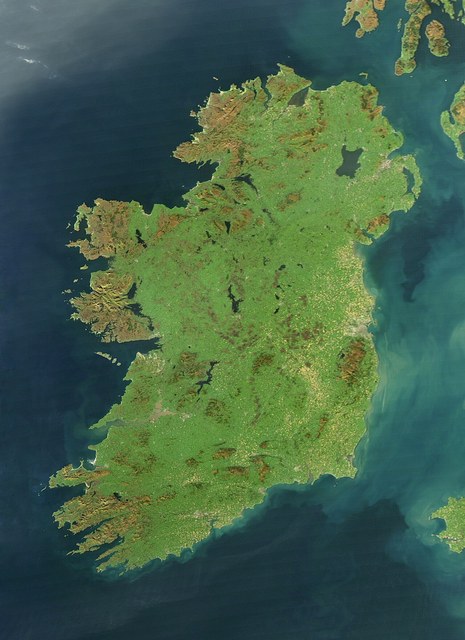
Ireland

Ireland
Jeff Schmaltz · Public domain

Island nation · medieval to present · Western Europe, west of Britain

Ireland is an island nation whose independence movement included the 1916 Easter Rising and a war against British forces.

The kit

  • Independence struggle — Ireland saw Charles Parnell advocate Home Rule in the 1800s, followed by the 1916 Easter Rising led by Patrick Pearse.
  • Revolutionary violence — Ireland experienced the Phoenix Park Murders by the Invincibles, the Croke Park massacre, and deployment of British irregulars called the Black and Tans.
  • Modern state — Ireland was led by Eamon de Valera, founder of Fianna Fail, and maintained neutrality during World War II under the Emergency Powers Act.
  • Social change — Ireland became the first country to legalize same-sex marriage by referendum in May 2015 and considered repealing abortion restrictions.

Runs with

Dublin
capital city of Ireland open card →
Oliver Cromwell
brutally suppressed Royalists from Dublin base open card →
Easter Rising
1916 rebellion in Dublin open card →
church
Article 9 forbade abortion open card →

The ladder · 15 clues

H

were repealed in part to relieve the potato famine in this country.

H

The Invincibles operated from this country where they committed the Phoenix Park Murders during a period called the Land War.

H

One hero from this island gained wisdom by sucking his thumb after burning it on a magic salmon.

H

This island was the site of an independence movement during which Bobby Sands’ died after a lengthy hunger strike.

H

Wolfe Tone led an unsuccessful rebellion in what is now this country, and this modern-day country is where the Croke Park massacre was perpetrated by the Black and Tans.

H

A rebellion in this polity involved the takeover of the General Post Office and resulted in the execution of Roger Casement.

H

Island where Oliver Cromwell brutally suppressed Royalist soldiers from his base in Dublin.

M

In May 2015, this country became the first to pass a referendum legalizing same-sex marriage, and it is considering another referendum to repeal the abortion-forbidding Article 9 of its constitution.

M

This country’s Home Rule movement was advocated for by William Gladstone in the House of Commons.

M

The unification of two regions into what country was the goal of a “Provisional” Republican Army associated with the political party Sinn Fein [shin fayn]?

M

Leaders from this country include Eamon de Valera and Patrick Pearse.

M

One early ruler on this island won the Battle of Clontarf and was named Brian Boru.

E

The Easter Rising occurred in this country, which also saw Charles Parnell advocate Home Rule during the 1800's.

E

Roger Casement was executed for treason as a revolutionary for this country that was led by Eamon de Valera, who fought during the 1916 Easter Rising.

E

The Good Friday Agreement ended the direct rule of a portion of this island in the hopes of ending the Troubles.

10 more clues from the record
H

A leader of nationalist resistance in this country was nicknamed “The Big Fellow” and employed a hit squad nicknamed the “Twelve Apostles.” The Croke Park and Phoenix Park massacres occurred in this country, where British irregulars known as the “Black and Tans” were deployed to crush nationalist resistance.

H

During World War II, this country was governed by the Emergency Powers Act while maintaining official neutrality.

H

The remains of dome shaped huts have been found on this island at Mount Sandel.

H

The potential invasion of this country by Germany led the British high command to create Plan W. It’s not India, but World War II is known as “The Emergency” in this country and saw conflict with former paramilitaries.

H

A double murderer was apprehended in the home of this country’s attorney general in the GUBU scandal.

H

In this colony, a group called the Invincibles assassinated Frederick Cavendish in the Phoenix Park Murders.

H

Prisoners of war from this country who were shipped to the Caribbean are the progenitors of modern-day Redlegs.

H

In the 1630s, a group of friars compiled a comprehensive history of this region called the Annals of the Four Masters.

H

Eamon de Valera founded this nation’s largest political party, Fianna Fail. :Name this nation, with capital at Dublin. Its northern neighbor is still part of the United Kingdom.

H

The first president of this nation, Douglas Hyde, was elected thanks to the founder of the Fianna Fail party, the Taoiseach ["tee-shock"] Eamon de Valera.

Watch out: Northern Ireland remains part of the United Kingdom, not the Republic of Ireland
#1420 · Modern Countries · Level 3

Greece

Greece
Unknown author Unknown author · Public domain

Modern Balkan nation-state · 1832–present · Southern Balkans

Greece was established as an independent kingdom in 1832 after breaking from the Ottoman Empire, with Athens as its capital.

The kit

  • Rise — Greece won independence after Alexander Ypsilantis led its movement and a combined British, French, and Russian fleet won the Battle of Navarino in the 1820s.
  • Achievements — Greece celebrates "No Day" (Ohi Day) commemorating Prime Minister Ioannis Metaxas's 1940 refusal to cooperate with Benito Mussolini's invasion demands.
  • Conflicts — Greece fell to German invasion in 1941 after its Metaxas Line collapsed, though partisans later kidnapped Nazi general Heinrich Kreipe.
  • Legacy — Greece experienced the Regime of the Colonels military junta from 1967 to 1974, then faced a severe debt crisis in the early 2010s.

Runs with

Nanda Empire
No connection evident in clues open card →
Athens
Athens became Greece's capital after independence in 1832 open card →
Turkey
Cyprus
Greece's government lost support after failing to deter invasion of Cyprus led by Archbishop Makarios III open card →

The ladder · 6 clues

H

The London Conference of 1832 established this country and made the Bavarian prince Otto its king.

H

This country celebrates “No Day,” a holiday that commemorates a refusal to cooperate with Benito Mussolini, given by Prime Minister Ioannis Metaxas.

M

This country was ruled by the Center Union party in a military junta known as the Regime of the Colonels.

M

After several weak civilian governments, the Regime of the Colonels took over and ruled this country from 1967 to 1974; when civilian rule was restored, PASOK and New Democracy dominated this country’s politics until the rise of Syriza in the wake of the debt crisis of the early 2010s. name this country where Alexis Tsipras was replaced as Prime Minister in 2019.

E

The Ottoman Empire gained parts of Thessaly from this country in that war, which was fought seven decades after Alexander Ypsilantis led this country’s independence movement. name this country that, after leaving the Ottoman Empire, became a kingdom with capital Athens.

E

A combined British, French and Russian fleet won the important Battle of Navarino during this country’s war of independence. name this country whose King Otto ruled from Athens.

10 more clues from the record
H

Patrick Fermor, William Moss, and partisans from this country kidnapped Nazi general Heinrich Kreipe.

H

Home to the Minoans in Crete, name this country whose Classical monuments include the Parthenon.

H

In 2013, rapper Killah P was murdered in this country by a member of the Golden Dawn, which lost its last Parliamentary seat in 2019.

H

Country that entered into “Earthquake Diplomacy” with Turkey.

H

Benito Mussolini invaded Albania before failing in his 1940 invasion of this country, whose Metaxas Line fell to the Germans the next year.

H

This country’s ruler created the National Youth Organization, and his response to an invasion is celebrated as this country’s Ohi Day.

H

One leader of this country compared it to a “patient in a cast” and to himself as a “doctor.” This country’s government lost support after it failed to deter an invasion of an island nation led by Archbishop Makarios III.

H

The Indignant Citizens Movement protested a series of 2011 austerity measures in this country, where in 2012 the neo-nazi Golden Dawn entered parliament.

H

That revolt led to this country’s “Black “97” in which the Thirty Days” War was fought over control of an island whose largest city is Heraklion.

H

This country was the site of the 1909 Goudi coup, which forced its King George I to bring in a reformist prime minister.

Watch out: Otto ruled Greece, not the Ottoman Empire (which Greece left)
#1424 · Modern Countries · Level 3

Belgium

Belgium
Dbenbenn /a and others · Public domain

Western European country · independent 1830–present · between France, Germany, Netherlands

Belgium is a Western European country that gained independence in 1830 and was invaded by Germany in both World Wars.

The kit

  • Independence — Belgium's independence revolt was triggered by a performance of the opera *The Mute Girl of Portici* in 1830.
  • Colonial atrocities — Belgium's King Leopold II established the Congo Free State, where the Force Publique committed genocide killing 10 million people.
  • World Wars — Belgium's neutrality was violated by Germany in World War I, and its fortress of Eben-Emael was captured during Case Yellow.
  • Domestic conflicts — Belgium underwent two School Wars regarding the role of religion in education and faced Rexist fascist collaboration under Léon Degrelle.

Runs with

Germany
World War I
Belgium gained Eupen-Malmedy after World War I open card →
Flanders
Netherlands
attempted to suppress Belgian independence in Ten Days' Campaign open card →

The ladder · 6 clues

H

Léon Degrelle led a group of fascist collaborators in this country F with his Rexist Party.

H

This country underwent two School Wars regarding the role of religion in education.

M

This country’s independence movement started after a riot at a performance of the opera The Mute Girl of Portici.

M

This country's fascist movement was known as Rexism and was led by Léon Degrelle.

E

A king of this country had Henry Morton Stanley help with the establishment of the Congo Free State.

E

In the outbreak of World War I, Germany violated the neutrality of this country. name this European country that was forced to defend Brussels in both World Wars.

10 more clues from the record
H

A king of this country formed the International African Association and sent Henry Morton Stanley to explore land for him.

H

This country's independence revolt was triggered by a performance of the opera The Mute Girl of Portici (pr. por-TEE-chee).

H

The Ten Days’ Campaign was a failed attempt to put down this country’s 1830 independence revolution.

H

This country conducted a genocide of 10 million people according to an Adam Hochschild book on the “ghost” of a ruler of this country.

H

A plan by Talleyrand to partition this country was rejected in the 1830 London Conference, which acknowledged this nation’s independence.

H

As a result of World War I, this nation received the small continental gain of Eupen-Malmedy.

H

This country’s region of Wallonia was the first in continental Europe to industrialize.

H

A ruler of this country controlled a colony investigated by Roger Casement who revealed the atrocities of the Force Publique.

H

This country’s Dyle River formed the basis for Maurice Gamelin’s defensive plans, and its fortress of Eben-Emael was captured by paratroopers during Case Yellow.

H

In this country, journalist José Streel was executed for Nazi collaboration after Victor Matthys ordered the massacre of twenty civilians at Courcelles.

Watch out: Congo Free State was Leopold II's personal colony, not initially a Belgian state colony
#1425 · Modern Countries · Level 3

Switzerland

Switzerland
p Unknown br Vector graphics: Flag_of_Switzerland.svg /a : U · Public domain

Central European nation · 1291–present · Central Europe

Switzerland is a Central European nation that gained independence from the Holy Roman Empire and maintained neutrality through both World Wars.

The kit

  • Reformation — Switzerland's Protestant Reformation was led by Ulrich Zwingli and John Calvin, causing conflicts with Catholics in the Kappel Wars.
  • Religious conflicts — Switzerland saw the Sonderbund War in 1847 when Catholic cantons formed an alliance, leading to a federal constitution.
  • Independence — Switzerland defeated Charles the Bold of Burgundy and the Habsburgs in the Swabian War, gaining de facto independence.
  • World War II — Switzerland maintained neutrality under Henri Guisan, who announced the National Redoubt strategy, though Nazis exchanged gold there.

Runs with

John Calvin
led Switzerland's Protestant Reformation alongside Zwingli open card →
Geneva
Huldrych Zwingli
led Swiss Reformation, instigated Kappel Wars open card →
France

The ladder · 6 clues

H

In this country, the first Anabaptist martyr Felix Manz was forcibly drowned, and Michael Servetus was burned at the stake.

H

Henri Guisan was in charge of this country’s troops during World War Two, and it was the target of the never-executed Operation Tannenbaum.

M

Catholics and Protestants in this country clashed in the Kappel Wars.

M

Tensions between Protestants and Catholics in this country manifested in the Sonderbund War and in the First and Second Kappel Wars.

E

This country saw Kappel Wars instigated by a dispute with a religious leader from this country who met at the Marburg Colloquy with Martin Luther.

E

This country’s portion of the Protestant Reformation was led by Ulrich Zwingli and John Calvin.

10 more clues from the record
H

During World War II, the Nazi government exchanged thousands of pounds of gold for currency with this country, which did not give women the right to vote until 1971.

H

This country established a federal government after several of its Catholic regions formed the Sonderbund alliance during an 1847 Civil War.

H

In his sermon “Regarding the Choice and Freedom of Foods,” a theologian from this country defended people who violated the Lenten fast by eating sausages.

H

One legend in this country describes a man who threw himself on enemy pikes during the Battle of Sempach.

H

Charles the Bold of Burgundy was killed while fighting this country, which also defeated the Habsburgs in the Swabian War.

H

A federal constitution was created for this country, forcing cantons to give up some of their rights.

H

During World War II, this country's National Redoubt strategy was announced in a speech given on the symbolic Rutli field by its leader Henri Guisan.

H

This modern day country obtained de facto independence from the Holy Roman Empire after the Swabian War.

H

One politician from this country, Robert Grimm, attempted to negotiate peace between Germany and Russia, causing an affair that led to the resignation of this country’s councilor Arthur Hoffmann.

H

The Grimm–Hoffman affair nearly led to this nation entering World War I on the side of the Central Powers.

Watch out: The Grimm-Hoffmann affair nearly caused Switzerland to enter World War I, despite its famous neutrality
#1426 · Modern Countries · Level 3

Romania

Romania
AdiJapan · Public domain

Eastern European country · 1859–present · Balkans, Black Sea coast

Romania is an Eastern European nation formed from Wallachia, Moldavia, and Transylvania, ruled by Nicolae Ceaușescu during the Cold War.

The kit

  • Formation — Romania was unified in 1859 when Alexandru Cuza united the Danubian Principalities of Wallachia and Moldavia.
  • World Wars — Romania entered World War I on the Allied side but signed the Armistice of Focșani after Russia's 1917 withdrawal.
  • Fascism — Romania's far-right Iron Guard (or Legion of the Archangel Michael) was suppressed by dictator Ion Antonescu during World War II.
  • Communist era — Romania's Decree 770 banned abortion and contraception, causing spikes in birth rates and orphan populations under Ceaușescu's regime.

Runs with

Nicolae Ceaușescu
executed on Christmas Day 1989 alongside wife Elena open card →
dictator
ruled by dictators Ion Antonescu and Nicolae Ceaușescu open card →
Iron
fascist Iron Guard was suppressed by Antonescu open card →
Abortion
Decree 770 banned abortion and contraception open card →

The ladder · 6 clues

H

This country’s Decree 770 banned both abortion and contraception, leading to spikes in the birth rate and the population of orphans.

H

I am Yalta!” A woman who served as the foreign minister for this country following World War II led the Muscovite faction and was named Ana Pauker.

M

A fascist party in this country, the Iron Guard, was suppressed by Ion Antonescu, who was executed for war crimes after World War II.

M

Petru Groza deposed this country’s monarch Michael I and was replaced by Gheorghe Gheorghiu-Dej.

E

One leader of this country was executed alongside his wife, Elena, on Christmas Day 1989. name this country once ruled by Nicolae Ceausescu [chow-shess-koo] from Bucharest.

E

Country that gained Transylvania through the treaty, adding to its territories of Wallachia and Moldavia.

10 more clues from the record
H

Its first king received the keys to the capital after the so-called “Monstrous Coalition” overthrew a man styled “Domnitor,” Alexander Cuza.

H

The far-right Legion of the Archangel Michael spawned the fascist Iron Guard in this country.

H

The Armistice of Focșani withdrew this nation from World War I, and the US Army Air Forces bombed this nation’s Ploiești oil refineries in Operation Tidal Wave.

H

Orphans in this country were benefited in 1990 when the wives of the Beatles organized the Nobody’s Child charity album.

H

In this nation, the Legionnaires’ Rebellion was led by Horia Sima.

H

While fighting the Ottomans, Michael the Brave unified the three principalities which would form this country, and centuries later in 1859, Alexandru Cuza united a "Danubian" pair of them.

H

This country’s 1938 constitution made it a one party state under the National Resistance Front.

H

This country's National Salvation Front took control after a revolution sparked by an uprising in Timisoara.

H

From 1930 to 1940, this country was ruled by King Carol II. :Name this country, whose Fascist Iron Guard supported its leader Ion Antonescu. During much of the Cold War, it was ruled by Nicolae Ceausescu.

H

This nation entered World War I on the Allied side but was forced to sign an armistice with the Central Powers after Russia left the war in 1917.

Watch out: Iron Guard is often confused with other fascist paramilitary groups in interwar Europe
#1427 · Modern Countries · Level 3

Denmark

Denmark
Madden /a and others · Public domain

Scandinavian kingdom · medieval to present · northern Europe

Denmark is a Scandinavian kingdom with capital at Copenhagen, ruled by monarchs including many named Christian and currently Margaret II.

The kit

  • Kalmar Union — Denmark briefly dominated Sweden and Norway in the Kalmar Union during the medieval period.
  • Territorial losses — Denmark lost Norway after the Treaty of Kiel and was invaded by Prussia in 1864, forcing it to surrender Schleswig-Holstein.
  • World War II — Denmark was occupied by Germany in just six hours during Operation Weserübung, though Christian X rode through Copenhagen during occupation.
  • Colonial holdings — Denmark sold the US Virgin Islands to the United States in 1917 and colonized Indian cities including Trankebar and Serampore.

Runs with

American Railway Union
no connection evident in clues open card →
Christian
many Danish kings named Christian ruled from Copenhagen open card →
Norway
lost control of Norway after Treaty of Kiel open card →
Kalmar Union
briefly dominated Sweden and Norway in this union open card →

The ladder · 6 clues

H

According to legend, this country’s flag fell from the sky during the Battle of Lyndanisse.

H

In one war, this country favored holding the towns of Ebeltoft and Fredericia to force attackers into a defensive line known as this country’s “earthwork.” This country passed the November Constitution to exert influence over a region it promised not to annex, leading to the violation of the London Protocol and subsequent invasion.

M

In 1864, this country was invaded by Prussia, forcing it to give up Schleswig and Holstein.

M

The country to the north that he invaded in 1864 for the territory of Schleswig-Holstein.

E

This nation was briefly ascendant over Sweden and Norway in the Kalmar Union and is currently ruled by Margaret II. name this country with capital at Copenhagen.

E

This country lost control of Norway after the Treaty of Kiel, which was reaffirmed by the Congress of Vienna. name this Scandinavian country that has had many kings named Christian rule from its capital, Copenhagen.

10 more clues from the record
H

This country converted to Protestantism after the Count’s Feud, and it started the Scanian War with its northern neighbor.

H

A pirate from this country named Skipper Clement led a peasant rebellion during its Count’s Feud.

H

In a book focusing on resistance efforts in this country, Annemarie attempts to shelter her friend Ellen from capture; that book is Lois Lowry’s Number the Stars.

H

This country was forced to give up its holdings in Estonia in the Second Treaty of Bromsebro.

H

A peasant rebellion in this nation led by Skipper Clement was put down by the noble Johan Rantzau [[RAHNT-zow]] during the Count's Feud.

H

A leader of this country sparked the Telegram Crisis after not using a formal enough salutation while communicating with Adolf Hitler.

H

Christian X [the tenth] rode through the streets of Copenhagen during Nazi occupation.

H

Kingdom that sold the modern US Virgin Islands to the US in 1917 and colonized the Indian cities of Trankebar and Serampore.

H

Germany occupied this country in just 6 hours in Operation Weserubung [VAY-ser-OO-bung].

H

The Hanseatic League waged war against this nation, whose leader was Waldemar IV. Later on in history, this nation would lose Schleswig-Holstein under the rule of Christian IX.

Watch out: Christian IX ruled Denmark during the loss of Schleswig-Holstein, not Christian X who ruled during Nazi occupation
#1431 · Modern Countries · Level 3

Finland

Finland
Unknown · Public domain

Nordic country · independence 1917 · northern Europe, bordering Russia

Finland is a Nordic country that fought the Soviet Union in the Winter War and Continuation War after gaining independence in 1917.

The kit

  • Independence & civil war — Finland gained independence in 1917 and immediately experienced a civil war between White and Red Guards.
  • Winter War — Finland defended the Mannerheim Line fortifications against Soviet invasion in the Winter War of 1939-1940.
  • Continuation War — Finland fought the Soviet Union again in the Continuation War beginning less than a year after the Winter War ended.
  • Cold War tensions — Finland faced Soviet pressure during the Note Crisis and Night Frost Crisis of the 1950s.

Runs with

Winter War
fought Soviet invasion 1939-1940 open card →
American Railway Union
Russia
fought USSR in Winter and Continuation Wars open card →
Sweden

The ladder · 6 clues

H

Earlier this country was forced to give up the Karelian Isthmus that was protected by its unfinished Mannerheim line.

H

An attempt to cut this country in half was stopped at the Battle of Raate Road.

M

A sniper known as the White Death fought for this country in a war that saw this country make effective use of ski troops.

M

The Soviet Union was expelled from the League of Nations in December 1939 after it invaded this Scandinavian country in the Winter War.

E

The Continuation War and Winter War were conflicts between the Soviet Union and this country governed from Helsinki.

E

The Winter War was fought against the Soviets by this Scandinavian nation.

10 more clues from the record
H

This country’s sovereignty was threatened by the USSR during the Note Crisis.

H

An English clergyman named Henry was killed in this country during a 12th-century campaign led in this modern-day country by Eric the Lawgiver.

H

The Battles of Kollaa and Suomussalmi were fought in a war where this country defended the Mannerheim Line.

H

As this country gained independence, the White and the Red Guards fought a civil war.

H

This country established a monarchy with Frederick Charles of Hesse as King-elect, but he resigned after being appointed to the position.

H

A leader of this country, Karl-August Fagerholm, was forced to resign during the Night Frost Crisis and was then succeeded by a member of the Agrarian League.

H

This modern-day country was devastated by the Great Wrath, and this country was defended by the Mannerheim Line of fortifications.

H

Kurt Wallenius was imprisoned after leading an uprising in Mantsala by the Lapua Movement in this country, whose White Guard defeated the Red Guard during a civil war.

H

Less than a year after that war ended, aggression against this country resumed in the Continuation War.

H

Nikita Khrushchev declared that this country’s relations with the USSR had deteriorated to a “night frost” in 1958.

Watch out: Often confused with other Scandinavian countries despite being Nordic but not technically Scandinavian
#1437 · Modern Countries · Level 3

Turkey

Turkey
David Benbennick /a (original author) · Public domain

Modern nation-state · 1923–present · Anatolia and Eastern Thrace

Turkey is the modern nation-state founded in 1923 as the main successor to the Ottoman Empire, containing major Neolithic sites.

The kit

  • Ancient sites — Turkey contains Göbekli Tepe, the world's oldest known temple complex, and the Neolithic city of Çatalhöyük with its sculpted bulls' heads.
  • Troy excavations — Turkey is home to the ruins of Troy at Hisarlik near the Dardanelles, where Heinrich Schliemann discovered Priam's Treasure in copper and gold.
  • Modern founding — Turkey was established with Mustafa Kemal Atatürk as first president, who promoted Western reforms including the Hat Law of 1925 banning the fez.
  • Contemporary politics — Turkey's Article 301 of its penal code has been used to prosecute dissidents discussing the Armenian Genocide under the ruling AKP party.

Runs with

Nanda Empire
No connection evident in clues open card →
Mustafa Kemal Atatürk
Atatürk served as Turkey's first president and architect of modernization open card →
Ottoman Empire
Turkey emerged as the main successor state to the Ottoman Empire open card →
Greece
Greece borders Turkey near ancient Troy excavation sites open card →

The ladder · 6 clues

H

Klaus Schmidt has hypothesized that "first came the temple, then the city" after excavating a megalithic site in this country.

H

This country contains the world's oldest known temple complex, whose name translates to "Potbelly Hill." Ian Hodder currently has led the excavation of the Çatalhöyük [[cha-tal-HOH-yook]] temple in this country.

M

The neolithic cities of Catalhoyuk and Gobekli Tepe are located in this country, where Heinrich Schliemann excavated the site of ancient Troy.

M

Article 301 is part of this country’s penal code. Mustafa Kemal Atatürk was the first president of this country, the main successor to the Ottoman Empire.

E

Another discovery in this nation was uncovered by Heinrich Schliemann at Hisarlik six miles from the Dardanelles Strait. name this modern-day country where the ancient ruins of Troy are found.

E

Near this country's city of Hisarlik, Heinrich Schliemann [[SHLEE-mon]] discovered many copper and gold artifacts belonging to Priam's Treasure. name this country, where excavations have been going on for over 150 years around the ruins of Troy.

10 more clues from the record
H

Actress Lindsay Lohan has been an outspoken advocate of this country’s ruling party, the AKP, or Justice and Development Party.

H

A Neolithic site in this modern-day country with many sculpted bulls' heads on the walls is called Çatal Höyük.

H

In this modern country, dozens of large, decapitated statue heads are scattered across the summit of Mount Nemrut.

H

The Dede [] is a spiritual leader of this country's Alevi faith.

H

One leader of this modern-day country stressed educating women alongside men in his “Kastamonu Speech.” That leader of this country also passed the Hat Law of 1925, which banned the fez in favor of Western-style headgear.

H

One sculpture from an ancient city in this modern-day country depicts a “seated woman” giving birth on a throne with feline armrests.

H

A region in this modern-day country contained the city of Hattusa, home to a Bronze Age civilization that mastered ironworking and was ruled by Muwatalli II.

H

The Neolithic site of Çatalhöyük [chah-tahl ho-yook], which is among the best preserved in the world, is located in this modern-day nation, near the city of Konya. The site is accessible from Ankara by car.

H

This country’s penal code includes a controversial Article 301 that has been used to crack down on dissidents who have discussed the Armenian Genocide orchestrated by this country.

H

The so-called coup by memorandum in this country brought about the downfall of its Justice Party, while a new constitution was proclaimed following a 1960 coup by General Gursel.

Watch out: Confusion with Greece, which also claims ancient Aegean heritage and borders Turkey
#1440 · Modern Countries · Level 3

Albania

Albania
Sadik Kaceli · Public domain

Balkan country · independence 1912 · Balkan Peninsula

Albania is a Balkan country with capital Tirana that gained independence from the Ottoman Empire in 1912.

The kit

  • Independence — Albania's independence was announced by Ismail Qemali in the Vlore Proclamation after the Assembly of Vlore acted in 1912.
  • Resistance — Albania was defended against Ottoman incursions in the late 1400s by nobleman Skanderbeg, known as the "Dragon of Albania."
  • King Zog — Albania's King Zog I was forced into exile when Italy annexed the country in 1939.
  • Communist era — Albania was ruled by communist dictator Enver Hoxha, who declared it the world's first atheist state in 1967.

Runs with

Enver Hoxha
ruled Albania as communist dictator, declared it atheist state open card →
Italy
annexed Albania in 1939, forcing King Zog into exile open card →
Benito Mussolini
China
criticized by Hoxha in Imperialism and the Revolution open card →

The ladder · 6 clues

H

A nationalist renaissance in this country was spurred by Naim uh Frashëri large's attempts to create a standard alphabet and the collapse of the League of Prizren.

H

A rebellion against Ottoman incursions into this modern-day country in the late 1400s was led by the nobleman Skanderbeg.

M

This country was defended by qenderzjarri forts designed by Josif Zigali and the Sigurimi secret police.

M

Enver Hoxha [[HAHDJ-uh]] and Zog I both led this country, which Italy invaded in 1939. name this Balkan country.

E

This country's King Zog I was forced into exile following Italy's annexation of it. name this Balkan country once ruled by Enver Hoxha from Tirana.

E

Name this country whose communist leader was Enver Hoxha and its capital is It is It's tough.

10 more clues from the record
H

Over three million citizens of this country lost a combined 1.2 billion dollars after a series of pyramid schemes collapsed in 1997.

H

One leader of this country discredited China’s “three worlds” interpretation of communism in his book Imperialism and the Revolution.

H

The Assembly of Vlore granted independence to this country, which was formerly a vilayet.

H

This country, the only non-microstate in Europe that did not sign the Helsinki Accords, executed a priest for baptizing a child in 1971, four years after it declared itself the world’s first atheist state.

H

Venice assisted this modern country in fighting for its independence from the Ottoman Empire during the 15th century.

H

This country's independence was announced by Ismail Qemali in the Vlore Proclamation.

H

This region was briefly ruled by the Angevin Charles I and first became an independent principality thanks to the archon Progon.

H

A prime minister of this country developed a Twenty Point Program after the June Revolution.

H

That leader of this country waged a lifelong war against the Ottomans and was known as the "Dragon of" this country.

H

Another leader of this nation fled after it was invaded by Italy in 1939.

Watch out: King Zog I (ruled Albania) vs. Enver Hoxha (communist leader who came after)
#1453 · Modern Countries · Level 3

Bulgaria

Bulgaria
SKopp · Public domain

Balkan nation · 681 CE–present · Southeastern Europe

Bulgaria is a Balkan nation whose capital Sofia has endured Byzantine conquest, Ottoman rule, and modern independence struggles.

The kit

  • Rise — Bulgaria's first state was established by Asparuh, while the second was founded by brothers Ivan and Peter Asen.
  • Conflicts — Bulgaria fought on the side of the Central Powers in World War I, alongside Austria-Hungary and the Ottoman Empire.
  • Legacy — Bulgaria's April Uprising sparked the Bulgarian Horrors of 1876, which William Gladstone denounced in his Midlothian Campaign.
  • International relations — Bulgaria's size promised in the Treaty of San Stefano led to the calling of the Congress of Berlin in 1878.

Runs with

Nanda EmpireTsar
Basil II
earned epithet 'Bulgar-Slayer' for conquering Bulgaria open card →
Gold

The ladder · 6 clues

H

William Gladstone denounced the “horrors” of this country in his Midlothian Campaign.

H

Resulting from the treaty of San Stefano, this country was recognized as an autonomous region of the Ottoman Empire in 1878.

M

The size promised to this country in the Treaty of San Stefano led to the calling of the Congress of Berlin.

M

Aside from Austria-Hungary and the Ottoman Empire this other country in the Southeastern Balkans fought on the side of the Central Powers in World War I.

E

Byzantine Emperor Basil II was known as the “slayer” of this country’s people. name this European country with capital Sofia.

E

William Gladstone highlighted this country's namesake "Horrors," which occurred as a result of the April Uprising.

10 more clues from the record
H

One leader of an empire in this modern-day country, Krum the Fearsome, used the silver-lined skull of Nikephoros I as a drinking cup after winning the Battle of Pliska.

H

The first state of this name was established by Asparuh, while the second was founded by brothers Ivan and Peter Asen.

H

The last monarch of this country became the only European monarch to be later elected Prime Minister.

H

A writer from this country, Georgi Markov, was assassinated via a ricin pellet fired from an umbrella.

H

A pig farmer from this country led a rebellion against the Mongols and was named Ivaylo the Radish.

H

Early 20th century politics in this country were dominated by its Agrarian National Union.

H

The future communist leader of this country was tried in the Leipzig Trial for setting fire to the Reichstag.

H

The "Bloody Letter" was written by a revolutionary from this country declaring its independence.

H

A Prime Minister from this country was brutally murdered by members of the IMRO, who cut off the hand he used to sign the Treaty of Niš.

H

A poet from this country dedicated a poem to the American journalist Januarius MacGahan for his coverage of its atrocities like the Batak Massacre.

Watch out: Basil II 'the Bulgar-Slayer' conquered Bulgaria, but was Byzantine, not Bulgarian
#1463 · Modern Countries · Level 3

Ukraine

Ukraine
Government of Ukraine · Public domain

Eastern European country · independence 1991 · north of Black Sea

Ukraine is an Eastern European country governed from Kyiv that gained independence from the Soviet Union in 1991.

The kit

  • Soviet era — Ukraine was the site of the Holodomor famine that killed over seven million people under Joseph Stalin.
  • World War II — Ukraine saw the Babi Yar massacre where Kurt Eberhard ordered executions of over 30,000 Jews in 1941.
  • Post-Soviet politics — Ukraine experienced the Orange Revolution in 2004 after Leonid Kuchma tried to rig the presidential election.
  • Recent conflicts — Ukraine's Euromaidan protests at Independence Square in 2014 ousted Viktor Yanukovych and preceded Russia's annexation of Crimea.

Runs with

Russia
Russia annexed Crimea and intervened militarily in Donbass region open card →
Kyiv
Kyiv is Ukraine's capital and site of Babi Yar massacre open card →
Crimean Peninsula
Russia annexed Crimea from Ukraine in 2014 open card →
Joseph Stalin
Stalin caused Holodomor famine killing seven million Ukrainians open card →

The ladder · 6 clues

H

This country’s former president, Leonid Kuchma, tried to rig a 2004 election that sparked nationwide protests in the Orange Revolution.

H

Modern country that was the site of the Holodomor famine and is the site of Russian military intervention.

M

The Minsk Protocol was meant to stop the war in this country, but fighting has continued in the Donbass region.

M

This country’s Independence Square was the site of the Euromaidan protests, part of a 2014 revolution that ousted Viktor Yanukovych.

E

The Babi Yar massacre took place in what is now this country, where the city of Pripyat was evacuated in 1986 and labeled an “Exclusion Zone” after a nuclear disaster at Chernobyl. name this former Soviet country where atrocities of the Holocaust took place near Kiev.

E

Protests in this country’s Donetsk Oblast and bombings of cities like Kharkiv and Odessa were part of a campaign in the south and east of this country advocating Russia’s annexation of Crimea. name this Eastern European country governed from Kiev.

10 more clues from the record
H

Symon Petliura led another state in this modern-day country, which was the site of an anti-Semitic nationalist movement led by Stepan Bandera during World War II.

H

In what is now this country, the anarchist "Free Territory" was established by Nestor Makhno (MOCK-noh).

H

In 2000, Oleksandr Moroz accused this country’s president of complicity in the death of Georgiy Gongadze in what became known as the Cassette Scandal.

H

This country’s president is known as the “Chocolate King” since he controls the chocolate manufacturing group Roshen.

H

In September 1941, Kurt Eberhard ordered the executions of over 30,000 Jews and well over 100,000 people total in this region’s capital city.

H

In this modern-day country, the Golden Horde was removed from “The Wild Fields” in the Battle of Blue Waters.

H

In this country, Leonid Kuchma became embroiled in “tapegate” after a recording surfaced of him ordering the arrest of a journalist.

H

Is the modern site of the former capital of the Kievan Rus?

H

In what is now this country, Nestor Makhno’s anarchist Black Army often used horse-drawn machine guns known as tachanka.

H

Joseph Stalin was largely responsible for the Holodomor, a famine that killed over seven million people in this modern-day country.

Watch out: Babi Yar massacre occurred in Ukraine, not Russia proper
#1472 · Modern Countries · Level 3

Iceland

Iceland
Original: /div Matthías Þórðarson /div Vector: /div Árni Dag · Public domain

North Atlantic island nation · settled 9th century; independent 1944 · North Atlantic Ocean

Iceland is a volcanic island nation home to the Althing, the world's oldest parliament, founded in the medieval period.

The kit

  • Rise — Iceland was unified under the Old Covenant, which ended the Age of the Sturlungs and reduced the Lögrétta legislature's power.
  • Conflicts — Iceland fought three Cod Wars with the United Kingdom over territorial fishing waters and threatened to leave NATO over fishing rights violations.
  • Achievements — Iceland elected the world's first female president in 1980 and the world's first openly lesbian prime minister after the 2008 financial crisis.
  • Legacy — Iceland hosted the 1986 Reagan-Gorbachev summit that led to the Intermediate-Range Nuclear Forces Treaty and the 1972 Fischer-Spassky World Chess Championship.

Runs with

Denmark
Greenland
both North Atlantic territories with historical Danish connections open card →
NATO
threatened to leave NATO during Cod Wars disputes open card →
Vikings
settled by Vikings in the 9th century open card →

The ladder · 6 clues

H

This nation hosted the 1972 Fischer-Spassky World Chess Championship match and the 1986 Reagan-Gorbachev summit, and in 1980 it elected the world’s first female president.

H

This island was unified with another country by the Old Covenant.

M

This country’s capital city hosted a 1986 summit between Mikhail Gorbachev and Ronald Reagan that eventually led to the Intermediate Nuclear Forces Treaty.

M

This nation threatened to leave NATO after the U.K. violated their fishing rights during the Cod Wars.

E

The oldest parliament in the world is this country’s Althing. name this small volcanic country in the North Atlantic Ocean.

E

This country fought three “Cod Wars” with the United Kingdom over territorial fishing waters.

10 more clues from the record
H

An emissary named Goldenshoes helped end a war on this island, which suffered from Murat Reis's Turkish Abductions, a series of slave raids by North African pirates.

H

During World War II, the United Kingdom invaded this modern day country as part of Operation Fork.

H

The Redstockings helped inspire a strike in this country in 1975, the Women’s Day Off.

H

This country experienced the “mist hardships” after the eruption of the Laki fissure.

H

The world’s first openly lesbian prime minister was elected in this country, which saw the Kitchenware Revolution after all three of its largest banks collapsed in the aftermath of the 2008 financial crisis.

H

This country hosted an arms reduction summit that included the "double-zero" proposal and led to the signing of 1987's Intermediate-Range Nuclear Forces Treaty.

H

Secular and religious forces in this country clashed at the 1208 Battle of Vidines.

H

In this country, the Lögrétta legislature ruled during the Age of the Sturlungs, which ended with the signing of the Old Covenant.

H

The Old Covenant reduced the power of an assembly in this country whose participants gave speeches at the Law Rock.

H

According to legend, Thorgeir threw his pagan idols into a waterfall in this country.

#1479 · Modern Countries · Level 3

Croatia

Croatia
Nightstallion, Elephantus, Neoneo13, Denelson83, Rainman, R- · Public domain

Balkan country · independence 1991–1995 · Adriatic coast, capital Zagreb

Croatia is a Balkan country that won independence from Yugoslavia in 1991–1995 and joined the EU in 2013.

The kit

  • Independence — Croatia secured independence after Operation Storm in 1995 and the Erdut Agreement, fighting against Slobodan Milosevic's government.
  • World War II — Croatia was dominated by the Ustaše Nazi puppet state during World War Two, ending with the Bleiburg Repatriation massacre.
  • Historic sites — Croatia's second-largest city contains Diocletian's Palace, surveyed by Robert Adam, and its coastline hosted the Republic of Ragusa.
  • Leadership — Croatia was led during its independence war by Franjo Tudjman, who became its first president after breaking from Yugoslavia.

Runs with

Yugoslavia
broke away from Yugoslavia in 1991 open card →
Hungary
Sabor insisted on separation from Hungary during 1848 Revolutions open card →
Diocletian
Split contains ruins of Diocletian's Palace open card →
World War II
dominated by Ustaše puppet state during WWII open card →

The ladder · 6 clues

H

Balkan country with capital Zagreb that joined in 2013.

H

The state of Krajina [kry-ee-nah] failed to break away from this country, which secured its independence after winning the Battle of Drvar in Operation Storm.

M

The “Bad Blue Boys” ultra group fought for independence of this country.

M

Newest member of the EU that joined in 2013 and is governed from Zagreb.

E

This country's coastline was the location of the Republic of Ragusa, based out of Dubrovnik, and the Greek colony named Aspálathos is today known as this country's city, Split. name this country whose war of independence from 1991 to 1995 is known by natives as the "Greater Serbian Aggression."

E

The country secured its independence in the Erdut Agreement after fighting a war against the government of Slobodan Milosevic. name this country that, after breaking away from Yugoslavia, established a capital at Zagreb.

10 more clues from the record
H

During World War Two, a Nazi puppet state in this country was dominated by the Ustaše [[ooh-STAH-sheh]].

H

The second-largest city in this country was surveyed by Robert Adam in his studies of the ruins of Diocletian's Palace.

H

Tsar Samuel fought King Svetoslav Suronja in a 998 siege in this modern country, where one city named a 1358 treaty that allowed the rise of Ragusa.

H

The British refused the surrender of thousands of soldiers fleeing from this country, resulting in their massacre in the Bleiburg Repatriation.

H

It was led during its independence war by Franjo Tudman, also its first president.

H

This modern-day country was once the base of the Uskok pirates.

H

Operation Storm was carried out under its first president, Franjo Tudjman [fran-yo tudge-man].

H

Those families, the Frankopans and Zrinskis, attempted to justify the uprising under the Pacta Conventa with Coloman the Book-Lover.

H

During the Revolutions of 1848, Josip Jelacic served as this nation’s ruler, called a Ban, while its Sabor insisted on separation from Hungary.

H

An ancient culture discovered in this country produced a clay dove sculpture that is found on the back of its 20 kuna note; that culture, the Vucedol inhabited areas like Vukovar.

Watch out: Krajina—a state that failed to break away FROM Croatia (not a Croatian breakaway)
#1519 · Modern Countries · Level 3

Austria

Austria
Bundesministerium für Landesverteidigung · Public domain

Central European country · modern state 1918–present · Central Europe, capital Vienna

Austria is a German-speaking Alpine country that was annexed by Nazi Germany in the 1938 Anschluss and later became a neutral republic.

The kit

  • Dual Monarchy — Austria entered into a dual monarchy with Hungary led from Vienna in 1867.
  • Anschluss — Austria was annexed by Nazi Germany in the 1938 Anschluss after Chancellor Kurt Schuschnigg failed to prevent the takeover.
  • Waldheim controversy — Austria elected Kurt Waldheim president in 1986 despite revelations he had lied about his Wehrmacht service during World War II.
  • Modern politics — Austria faced EU sanctions in 2000 after the ÖVP formed a coalition with Jörg Haider's Freedom Party.

Runs with

Hungary
formed Austro-Hungarian dual monarchy 1867–1918 open card →
Nanda Empire
Vienna
capital city, called 'Red Vienna' under Social Democrats open card →
Chancellor
Schuschnigg and Seyss-Inquart held this office during Anschluss open card →

The ladder · 6 clues

H

Country whose Freedom Party’s Norbert Hofer was defeated in a 2016 presidential election by Alexander van der Bellen.

H

This country was the home of UN Secretary General Kurt Waldheim who was accused of committing war crimes with the Wehrmacht.

M

Kurt Schuschnigg failed to deter one takeover of this country after the July Putsch assassinated his predecessor, Engelbert Dollfuss.

M

Hungary entered into a dual monarchy with this country led from Vienna.

E

Politicians from this country included Jorg Haider and Kurt Weldheim. :Name this country that merged with Germany in the Anschluss.

E

Nazi Germany annexed this German speaking nation in the 1938 Anschluss. name this Alpine country centered on Vienna.

10 more clues from the record
H

Prior to World War II, this country was annexed by Germany in the Anschluss.

H

This country's capital was called "big-headed" and nicknamed "Red" under its first Social Democratic mayor in 1918.

H

This country ceded Silesia to Prussia after a 1740’s war with Frederick the Great.

H

A president of this country, Wilhelm Miklas, was forced to appoint Arthur Seyss-Inquart as its chancellor.

H

This country was the site of an empire founded after the Treaty of Pressburg by Francis I. This country began a series of conservative crackdowns after the Karlsbad Decrees were issued by Klemens von Metternich.

H

This country was rocked in 1985 by revelations that a former United Nations Secretary-General, who was running for president of this country, had been a member of the Nazi SS.

H

In an opera set in this country, the namesake courtesan murders Dr. Ludwig Schon, flees to London, and is murdered herself by Jack the Ripper.

H

In 2000 several European Union countries imposed sanctions on this country after the ÖVP entered a coalition government with Jörg Haider's political party.

H

The First Republic of this nation collapsed during a civil war where the Engelbert Dollfuss-led fascists outlawed the Social Democrats.

H

Kurt Waldheim was elected President despite lying about his service in the Wehrmacht, which he joined after the Nazis annexed this country.

Watch out: Kurt Waldheim served as UN Secretary-General before becoming Austrian president, not the reverse
#1590 · Modern Countries · Level 3

Malta

Malta
See i b File history /b /i below for details. · Public domain

Mediterranean island nation · 1530–present (Knights era) · south of Sicily

Malta is a Mediterranean island nation that earned a collective George Cross in 1942 for resisting Axis bombing.

The kit

  • Knights Hospitaller — Malta became home to the Knights Hospitaller in 1530 after they were evicted from Rhodes and Cyprus.
  • Great Siege — Malta's Jean Parisot de Valette held off the 1565 Great Siege by Ottoman naval forces, defending Forts Saint Elmo and Saint Michael.
  • World War II — Malta served as a British base where submarines and airplanes targeted Axis shipping in the Mediterranean during World War II.
  • Legacy — Malta's capital Valletta was founded by the Knights Hospitaller and remained their headquarters until Napoleon captured the island in 1798.

Runs with

Knights Hospitaller
settled Malta in 1530, founded Valletta, ruled until 1798 open card →
Suleiman the Magnificent
George
King George VI awarded Malta the George Cross open card →
Rhodes
Knights Hospitaller came to Malta after eviction from Rhodes open card →

The ladder · 6 clues

H

Defenders of this island were massacred after the capture of Fort St. Elmo.

H

This island's Sette Giugno [[seh-TAY JYOON-yoh]] holiday commemorates a British massacre of Italian irredentists.

M

In Acts, Paul is shown “unusual kindness” on this island, where he was shipwrecked on his way to Rome.

M

In 1530, the Knights Hospitaller settled on this island, where they remained until Napoleon captured it in 1798. They founded its capital of Valletta.

E

This Mediterranean island earned a collective George Cross in 1942 for World War II bravery.

E

Jean Parisot de Valette held off that 1565 Great Siege of this country by Ottoman naval forces, a victory for the Knights Hospitaller. name this island nation ruled from Valletta.

10 more clues from the record
H

After the end of World War I, numerous Ottoman officials were exiled to this modern day country.

H

Sirocco winds usually hit this island nation from the southeast. Its namesake Semitic language is written with the Roman alphabet.

H

The first count of this country was the so-called “New Neptune,” Margaritus of Brindisi.

H

This island's Fort Ricasoli was the site of the British army's Froberg Mutiny, and this island was defended by Forts Saint Michael and Saint Elmo after Gozo and Tripoli were conquered.

H

Charles I received a falcon in exchange for this island from an organization that had been evicted from Rhodes and Cyprus; they stayed on this island until the reign of Napoleon.

H

It's not Rhodes, but King George VI [[the sixth]] awarded this entire island the George Cross after it resisted Axis bombing campaigns.

H

One organization on this island was headed by Mathurin Romegas who led papal galleys at the Battle of Lepanto.

H

This island was home to the fortified Three Cities, and it was fed by the Floriana, Santa Margherita, and Cottonera Lines.

H

British island with capital Valetta where submarines and airplanes targeted enemy shipping in the Mediterranean.

H

This island's Great Wall was similar in purpose to its Falca Lines.

Watch out: Fort St. Elmo's defenders were massacred during its capture, though Malta ultimately survived the siege
#1678 · Modern Countries · Level 3

Serbia

Serbia
See i b File history /b /i below for details. · Public domain

Balkan nation · medieval to present · southeastern Europe

Serbia is a Balkan nation whose capital Belgrade was reclaimed after breaking away from Yugoslavia.

The kit

  • WWI trigger — Serbia received an Austro-Hungarian ultimatum during the July Crisis after Franz Ferdinand's assassination by Gavrilo Princip.
  • Modern independence — Serbia became an independent nation in 2006 after Montenegro severed their union, losing its access to the sea.
  • Milosevic era — Serbia's Bulldozer Revolution overthrew Slobodan Milosevic, who was later tried for war crimes with ally Radovan Karadžić.
  • Balkan conflicts — Serbia's forces including Arkan's Tigers aided Ratko Mladic in carrying out the Srebrenica Massacre during the Yugoslav wars.

Runs with

Yugoslavia
Serbia broke away from Yugoslavia and reclaimed Belgrade open card →
Kosovo
Kosovo declared independence from Serbia, not yet recognized worldwide open card →
Nanda Empire
Slobodan Milošević
Milosevic ruled Serbia, overthrown in Bulldozer Revolution open card →

The ladder · 6 clues

H

The Austro-Hungarian Empire declared war against this home of Gavrilo Princip to spark World War I. name this country that reclaimed its historic capital of Belgrade after breaking away from Yugoslavia.

H

This country became an independent nation after the 2006 severance of its union with Montenegro. :Name this country of Gavrilo Princip, who assassinated Archduke Franz Ferdinand.

M

Slavic state which was invaded by Austria-Hungary after the assassination of Franz Ferdinand.

M

This country’s “Bulldozer Revolution” overthrew a leader who was later put on trial for war crimes committed with his ally Radovan Karadžić .

E

In the July Crisis, Austria-Hungary sent an ultimatum to this country, whose nationalist organizations included the radical Black Hand.

E

Slobodan Milosevic once ruled this former Yugoslavian republic that lost its access to the sea after the 2006 secession of Montenegro but maintains its capital at Belgrade.

10 more clues from the record
H

This modern-day country was once ruled by renegade Janissaries known as dahije, who massacred this country’s elite, known as knez, in 1804.

H

A leader of a secret society in this country codenamed “Apis” orchestrated the murder of its king Alexander and its queen Draga in 1903.

H

The body of this nation's King Alexander I was thrown off a balcony of the "Old Palace" during its May Coup, which replaced him with Peter I. Alongside Romania and Greece, this nation seized territory from Bulgaria during the Second Balkan War.

H

This country’s forces included Arkan’s Tigers and the Scorpions, who were later charged for war crimes after aiding Ratko Mladic in carrying out the Srebrenica [sre-breh-neetza] Massacre.

H

An empire based in this country exploited a civil war between John V [the fifth] Palailogos and Anna of Savoy to conquer Macedonia.

H

Forces from a kingdom in this modern-day country defeated Michael III of Bulgaria to secure Epirus at the Battle of Velbazhd.

H

Kosovo’s independence from this state has not yet formally been recognized by much of the world.

H

One of its leaders ordered the assassination of Ivan Stambolic and was targeted by a 1999 NATO bombing.

H

An attack on this country’s broadcasting company, the RTS, took place during the Bulldozer Revolution in 2000.

H

Together with Montenegro, this opponent of Bosnia formed the Federal Republic of Yugoslavia.

Watch out: Gavrilo Princip was Serbian, but he assassinated Franz Ferdinand in Bosnia, not in Serbia itself
#1741 · Modern Countries · Level 3

Lithuania

Lithuania
Original: /div Jonas Basanavičius, Tadas Daugirdas and Antan · Public domain

Baltic state · medieval to present · Baltic Sea region, capital Vilnius

Lithuania is a Baltic state that formed a personal union and later commonwealth with Poland, with capital at Vilnius.

The kit

  • Rise — Lithuania's leader Treniota led the Samogitians against the Livonian Order at the Battle of Durbe.
  • Achievements — Lithuania was the original home of the Geminid dynasty and defeated the Mongols at the Blue Waters.
  • Union with Poland — Lithuania united with Poland in 1569 in the Union of Lublin after earlier joining through the Union of Krewo.
  • Modern era — Lithuania joined Estonia and Latvia in the anti-Soviet Singing Revolution and gained independence through the Sajudis reform movement.

Runs with

Poland
formed personal union, then commonwealth via Union of Lublin 1569 open card →
American Railway UnionCommon
Teutonic Knights
Samogitians fought related Livonian Order at Durbe open card →

The ladder · 6 clues

H

Kingdom that joined with Poland in a personal union and, later, a namesake commonwealth.

H

The leader Treniota led a group from this country called the Samogitians against the Livonian Order at the Battle of Durbe.

M

Ivan’s mother’s family hailed from a Grand Duchy that is today this modern republic on the Baltic Sea with its capital at Vilnius.

M

Mindaugas led this country, as did a national hero who ended a civil war by making peace with Jogaila.

E

The duchy that united with Poland in 1569, which is now a separate country with capital at Vilnius.

E

This modern state merged with a southern neighbor in the Union of Lublin, and it joined Estonia and Latvia in the anti-Soviet Singing Revolution. name this Baltic state that formed a historical Commonwealth with Poland.

10 more clues from the record
H

Another Grand Duke of this nation signed the Union of Krewo to marry Jadwiga of Anjou.

H

This country was the original home of the Geminid dynasty and defeated the Mongols at the Battle of the Blue Waters.

H

The Pale of Settlement on Russia’s western frontier included all of this modern Baltic state, where over 100,000 people were killed by the Nazis in Ponary Forest near Vilnius.

H

A reform movement known as Sajudis [[sah-YOO-dis]] advocated for the independence of this country ruled by the unicameral Seimas [[SAY-mas]] parliament.

H

A mayor in this nation, Arturas Zuokas [[zoo-OH-kuss]], fought illegal parking in his city by crushing a car with an armored vehicle in 2011.

H

Duke Daumantas assassinated the first Grand Duke of this country, who possibly renounced Christianity and approved the construction of the Klaipeda Castle.

H

This nation's language was preserved through the 19th-century "Book Smuggling" movement after Tsarist Russia banned its use.

H

Jonas Zemaitis was a freedom fighter in this country who relied on the code-name Vytautas [[vee-TOE-tas]].

H

Had 7 border guards killed in a Soviet assault near Vilnius?

H

A student from this country named Romas Kalanta set himself on fire in 1972.

Watch out: Confusion with other Baltic states Estonia or Latvia in the Singing Revolution
#1910 · Modern Countries · Level 3

Estonia

Estonia
Original: /div Unknown author /div Vector: /div SKopp /a , P · Public domain

Baltic state · independence 1920, 1991 · northern Europe, capital Tallinn

Estonia is the northernmost and smallest of the Baltic states, bordered by Latvia to the south.

The kit

  • Independence struggles — Estonia fought a war for independence in 1920 led by General Johan Laidoner against Soviet forces.
  • Era of Silence — Estonia endured the Era of Silence after Konstantin Päts's 1934 coup, opposing the proto-fascist Vaps Movement.
  • Singing Revolution — Estonia achieved independence from the Soviet Union through the non-violent Singing Revolution, with Lennart Meri as first president.
  • Post-Soviet tensions — Estonia experienced the 2007 April Unrest when relocating a Red Army memorial from Tallinn sparked riots and embassy siege.

Runs with

American Railway Union
no connection evident in clues open card →
Lithuania
Lithuania joined Estonia in the **Singing Revolution** and formed a massive human chain in 1989 open card →
SwedenBaltic Sea

The ladder · 6 clues

H

This country experienced the Era of Silence under Konstantin Pats in opposition to the Vaps Movement.

H

Nearby Baltic nation that was invaded by Finnish forces in the Kinship Wars.

M

Lennart Meri was the first president of this country after its independence from the Soviet Union, which it gained in the Singing Revolution. name this northernmost Baltic state.

M

With Lithuania and Latvia, this country achieved a non-violent independence during the Singing Revolution. name this Baltic state that was once the target of the Livonian Crusade.

E

General Johan Laidoner [["LIE"-doh-nuh]] led this country’s war for independence in 1920.

E

After the 1934 coup of Konstantin Päts [], this country endured the Era of Silence and was incorporated into the USSR in 1940. name this European country that regained its independence after the Singing Revolution, the smallest of the Baltic states.

10 more clues from the record
H

In this nation, the 2007 April Unrest occurred due to the relocation of a memorial to fallen Red Army soldiers, resulting in this nation's Moscow embassy being besieged for a week.

H

In this country, students wore yellow T-shirts to protest increased phosphorite mining in Lääne-Viru [LAH-neh VEE-roo] County.

H

northernmost of the Baltic states and less populous than Latvia and Lithuania?

H

Baltic state which dropped its kroon currency for the Euro in 2011.

H

Soviet housing may have been bland, but Soviet war memorials were often gaudy. Answer these questions about attempts to deal with them in the post-communist era .Russian residents of this country rioted in 2007 after its government relocated a Soviet war memorial from downtown Tallinn to a remote military cemetery.

H

Answer the following about the Baltic states during their brief independence between the world wars, FTPE. Frequently led by Konstantin Päts, this country endured an abortive 1924 communist putsch, but moved right with the rise of the Kaitseliit, which nonetheless fought against the proto-fascist Freedom Fighters.

H

This country’s capital is home to Iceland Square, honoring the fact that Iceland was the first country to recognize its independence. :Name this country, whose capital was the northern end of a massive human chain in 1989. A quarter of its population gathered at a Pop Music Festival in Tartu, kicking off the Singing Revolution.

H

On May 1, citizens celebrated its entrance into the European Union by launching a campaign to plant one million trees. For 15 points, name this country, led by President Arnold Ruutel and prime minister Juhan Parts, which speaks a Finnish dialect.

H

Trip Advisor states that Toompea Hill in the Old Town presents a must-see vista of this country’s capital of Talinn. :Finland lies across a namesake gulf from what small country north of Latvia?

H

Until this country became independent, the name of its capital was Revel. :Name this nation where the interwar Vaps Movement destabilized the government of Konstantin Pats, and where intellectual life was and is centered on the University of Tartu.

Watch out: Latvia is also a Baltic state but is more populous and located south of Estonia
#1918 · Modern Countries · Level 3

Kosovo

Kosovo
Cradel /a (current version), earlier version by Ningyou · Public domain

Balkan state · independence 2008 · southwest of Serbia

Kosovo is a partially-recognized Balkan state that declared independence from Serbia in 2008, governed from Pristina with a majority-Albanian population.

The kit

  • Independence — Kosovo declared independence in 2008 due to its majority-Albanian population, though Serbia continues to claim the territory.
  • Historical battle — Kosovo was the site of the 1389 Battle of the Field of Blackbirds where both Sultan Murad I and Prince Lazar died.
  • Normalization — Kosovo normalized relations with Serbia through the 2013 Brussels Agreement, negotiated by Prime Minister Hashim Thaçi.
  • Recent tensions — Kosovo in 2017 prevented a red, blue, and white passenger train from Serbia from reaching the town of Mitrovica.

Runs with

Serbia
claims Kosovo as territory despite 2008 independence declaration open card →
NATO
Slobodan Milošević
labeled Kosovo's KLA a terrorist group open card →
Nanda Empire

The ladder · 6 clues

H

Former Serbian territory where a 1389 battle of the Field of Blackbirds took place.

H

Vuc Brankovic fled another battle at this location in which both commanders, Sultan Murad I and the Prince Lazar, were killed.

M

This state normalized relations with its northern neighbor as part of the 2013 Brussels Agreement.

M

With an ethnic majority of Albanians and a capital at Pristina, name this secessionist region southwest of Serbia.

E

This country declared its independence in 2008, largely due to its majority-Albanian population. name this partially-recognized country claimed by Serbia and governed from Pristina.

E

Battle this shares its name with a Balkan country that declared independence in 2008 from Serbia.

10 more clues from the record
H

The city of Prizren in this country was made an imperial capital by Dušan the Mighty and later saw a league created there opposing the Treaties of San Stefano and Berlin.

H

A 1389 eponymous battle in what is now this country resulted in the annihilation of the army commanded by Prince Lazar Hrebeljanovic [[reh-bel-YON-oh-vitch]].

H

In January 2017, this state prevented a passenger train painted in red, blue, and white from reaching the town of Mitrovica [mee-troh-veet-zah].

H

Durad Brankovic prevented Skanderbeg’s army from participating in a battle at this location, which was fought by Janos [YAHN-oash] Hunyadi after his previous defeat at Varna.

H

The Kachak movement in this province was suppressed following the death of Azem Galica. In 1981, student protests in this province led to the ouster of Mahmut Bakalli.

H

Former Yugoslavian country, unrecognized by Serbia, whose 1999 bombing led Tom Campbell to sue Bill Clinton.

H

A prime minister of this country named Hashim Thaçi [[THAH-chee]] worked to normalize relations with its northern neighbor in the Brussels Agreement.

H

This country’s second eponymous battle, in 1448, resulted in the expulsion of the Ottoman Albanian forces by the Srpska [] despotovina.

H

This country’s KLA was labeled a terrorist group by Slobodan Milošević [[mee-LOH-seh-vich]].

H

Donald Trump’s envoy Richard Grenell pressured this country’s LDK Party to leave its ruling coalition.

Watch out: A second Battle of Kosovo occurred in 1448, not to be confused with the famous 1389 battle