The 1648 Codex · study package

Historic Cities — Europe

34 terms drawn from across the corpus, in study-list order. Art and cross-links point back to the home category cards.

#2 · Historic Cities · Level 1

Rome

Rome
Diliff · CC BY 3.0

Ancient Italian capital city · 753 BC–present (legendary founding) · Central Italy, Tiber River

Rome was the capital of an ancient empire that dominated the Mediterranean and evolved into modern Italy's capital.

The kit

  • Founding & Geography — Rome was legendarily founded by Romulus after killing his twin Remus on Palatine Hill, one of seven hills.
  • Ancient Structures — Rome contained the Pantheon built by Hadrian in 126 AD, the Colosseum, and the Circus Maximus chariot-racing venue.
  • Sacks & Fall — Rome was sacked by Brennus after the Battle of Allia River, by Alaric's Visigoths in 410 AD, and fell in 476 AD.
  • Modern Capital — Rome became Italy's capital after Piedmont-Sardinia captured it from Papal zouaves, replacing Florence in that role.

Runs with

Nanda Empire
Rome's legions never encountered this distant Indian dynasty open card →
Nerochurch
Joe Hill
Hill was executed in Utah, far from Rome's jurisdiction open card →

The ladder · 15 clues

H

This city was sacked by Brennus after its forces were defeated at the Allia River.

H

On the orders of Hadrian, the Pantheon was built in this city in 126 AD.

H

The fall of the Etruscans came with the rise of this civilization. After killing his twin Remus, Romulus founded this city on Palatine Hill.

H

The Trevi Fountain is located in this Italian city.

H

Soldiers raised in this city were trained on a large field known as the Campus Martius, and its Temple of Janus only opened its doors in times of war.

H

Romulus Augustulus was deposed after the capture of this city in 476 AD. name this city that was sacked several times during the fall of its Italy-based empire.

H

Empire that governed Israel as the province of Judea.

M

This city was situated on seven hills and was legendarily founded by Romulus and Remus. name this city on the Tiber River, the namesake of an Italian empire.

M

Piedmont-Sardinia’s capture of this city was unsuccessfully resisted by Papal zouaves, leading to the capital of a new country being moved here from Florence. name this capital city of Italy.

M

Later fighting forces of this empire were comprised of ten cohorts and carried an eagle standard. name this ancient empire whose basic fighting unit, called a legion, defended the Italian peninsula.

M

This city’s sewer, the Cloaca Maxima, drained a swamp that became the site of the first forum.

M

Capital city that was the target of a fascist march.

E

The European Economic Community and European Atomic Energy Community were both created by treaties signed in which European capital in 1957?

E

In 410 AD, King Alaric of the Visigoths sacked this city shortly after it had lost its status as capital to Ravenna.

E

An amphitheatre in this city was built during the Flavian dynasty near the site of chariot racing at the Circus Maximus. Name the city that contains St. Peter's Basilica and the Colosseum.

10 more clues from the record
H

Hegemonic empire which split into three distinct sections during the Crisis of the Third Century.

H

The early history of this city was described in Livy’s Ab Urbe Condita. name this city legendarily founded by Romulus and Remus.

H

This city was home to a lower-class district known as the Subura.

H

Tarquin the Proud was the final king of this city.

H

Maggie Popkin’s Souvenirs and the Experience of Empire in this place argues that souvenirs served as cultural ties for the many people who would never be able to traverse it. :Name this empire, where travellers could buy souvenirs of their trip to the Circus Maximus.

H

One statesman from this city compared the parts of the body to various social classes to end a dispute within its Conflict of the Orders.

H

After the conquest of this city by an enemy leader, that leader threw his sword on a scale and shouted "woe to the vanquished" during ransom negotiations.

H

To campaign for more rights, many residents took part in “secessions” where they left this city.

H

A breach in the Porta Pia of this city led to its capture on the Venti Settembre, and Benvenuto Cellini claimed to have shot Charles, Duke of Orleans while defending the Castel Sant’Angelo in this city.

H

A statue of a personification of this city sits on a pedestal containing reliefs of a wolf and two infants in Jacques-Louis David’s depiction of lictors bringing bodies to Lucius Junius Brutus.
Watch out: Ravenna (became Western Roman capital before Rome's 410 AD sack)
#3 · Historic Cities · Level 1

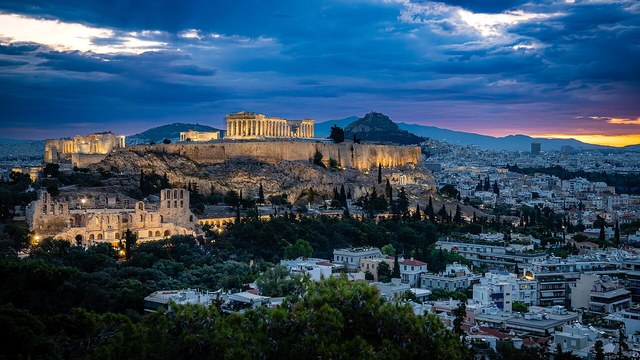
Athens

Athens
Andrew Parlette · CC BY 4.0

ancient Greek city-state · classical antiquity (5th-4th c. BCE prominence) · Attica, Greece

Athens was the ancient Greek city-state that developed democracy and led the Delian League during the classical period.

The kit

  • Rise — Athens was reformed by Cleisthenes in 508 BCE, who introduced ostracism and transformed its constitution into a democracy.
  • Achievements — Athens held the Delian League treasury in the Parthenon and funded cultural movements including Plato's Academy and Aristotle's Lyceum.
  • Conflicts — Athens was led by Pericles at the beginning of the Peloponnesian War and later defeated at Aegospotami by Sparta.
  • Legacy — Athens employed harsh laws under Draco and allowed citizens to expel others through ostracism using pottery shards.

Runs with

Peloponnesian War
Athens fought Sparta in this war under Pericles' leadership open card →
Greece
Athens was a leading city-state in ancient Greece open card →
Pericles
Pericles led Athens at the war's start open card →
Sparta
Sparta defeated Athens at Aegospotami, installing the Thirty Tyrants open card →

The ladder · 15 clues

H

The Delian League’s treasury was held in the Parthenon on this city’s Acropolis. name this ancient Greek city-state whose wealth funded broad cultural movements and the birth of democracy.

H

Cleisthenes [klay-iss-thuh-neez] reformed this city’s constitution in 508 BCE, and may have introduced the process of ostracism to this city.

H

One leader of this city faced a revolt in Miletus, which led to the treasury of the Delian League being transferred to this city.

H

Citizens of this city could vote to expel others by depositing pottery shards in urns, a process known as ostracism that was used against statesmen like Themistocles.

H

This city’s leader, Peisistratus, funded its Dionysia festivals, during which Thespis became the first named man to represent a character on stage.

H

Representatives of this city declared “the weak suffer what they must” before destroying the town of Melos.

H

After a storm prevented this city’s ships from rescuing drowning sailors, this city sentenced six of its generals to death.

M

Piraeus and Phalerum were connected to this city by the Long Walls.

M

This city was briefly ruled by the Thirty Tyrants, a client government of their rival.

M

Cleisthenes [kl’ice-theh-neez] reformed the constitution of this ancient Greek city whose other political leaders included Solon, Draco, and Pericles.

M

This city once employed a law code written in blood during the reign of the harsh-handed Draco.

M

This city won the Battle of Sphacteria, but it was later subjected to the rule of the Thirty Tyrants after losing the Battle of Aegospotami.

E

City-state which Pericles led at the beginning of the Peloponnesian War.

E

This city was ruled by the Thirty Tyrants after being defeated in the Peloponnesian War.

E

This city’s leaders included Cleisthenes and Solon, who developed the system of popular government it is known for. name this Greek city-state known for developing democracy.

10 more clues from the record
H

Akingofthislocationwasbelievedtohaveinventedthechariottohidehisserpentinefeet.Ericthonius ruled this location, as did another serpent-legged king named Cecrops, who judged an olive tree to be better than a salt water spring.

H

Greek city where Plato taught students at the Academy.

H

City-state whose schools included Aristotle’s Lyceum.

H

This city was ruled by Hippias and Hipparchus, tyrant brothers who were sons of Peisistratus.

H

The Battle of Halmyros led to the conquest of the “Duchy of” this city by the Catalan Company, which worked for the Kingdom of Aragon.

H

The Thirty Tyrants took power in this city after Lysander defeated it at the Battle of Aegospotami.

H

After the battle of Aegospotami, the Spartans installed the Thirty Tyrants, a pro-Spartan government that ruled this democratic city-state. This city-state fought Sparta in the Peloponnesian War.

H

A leader of this city organized the “hill dwellers” into a bloc after this city’s victory over Megara.

H

A general from this city who claimed that “famous men have the whole earth as their memorial” exonerated his metic(MAY-tik) mistress Aspasia (asp-AYZ-ee-uh) of immorality.

H

Pericles was a leader of this city, which was also led by a man known for his harsh laws, Draco.

Watch out: Sparta (rival city-state that defeated Athens and installed the Thirty Tyrants)
#4 · Historic Cities · Level 1

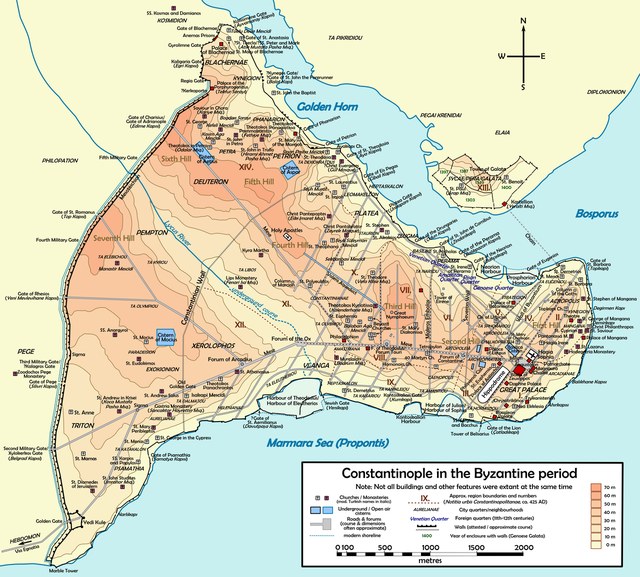
Constantinople

Constantinople
Cplakidas /a · CC BY-SA 3.0

Byzantine capital city · 330–1453 CE · Bosphorus strait

Constantinople was the capital of the Byzantine Empire, built on ancient Byzantium and defended by the Theodosian Walls until its 1453 fall.

The kit

  • Defenses — Constantinople was protected by the Theodosian Walls, a chain across the Golden Horn, and defenders utilizing Greek Fire.
  • Fourth Crusade — Constantinople was sacked by Crusaders in 1204 after Enrico Dandolo redirected the Fourth Crusade to attack the Byzantine capital.
  • Fall — Constantinople fell to Mehmed II in 1453 after Ottoman forces stormed the city and entered the Hagia Sophia.
  • Legacy — Constantinople became Istanbul after the Ottoman conquest, ending over 1,600 years as capital of successive empires.

Runs with

Nanda Empire
Byzantine Empire
served as capital of the Byzantine Empire until 1453 open card →
Ottoman Empire
Fourth Crusade
sacked by Crusaders in 1204 after Enrico Dandolo's redirection open card →

The ladder · 15 clues

H

Once defended by the Theodosian Walls, this city was conquered by Mehmed II in 1453. name this city, the capital of the Byzantine Empire.

H

A chain across the Golden Horn failed to stop Mehmed II from conquering this capital of the Eastern Roman Empire.

H

Enrico Dandolo died in this Byzantine capital after his troops infamously sacked it during the Fourth Crusade.

H

Enrico Dandolo redirected the Fourth Crusade to attack this city, the location where Belisarius slaughtered a mob in the Hippodrome during the Nika Riots.

H

Theodosius II used the help of fans who watched chariot racing in this city’s Hippodrome to build this city’s famous double walls.

H

In 1453, Mehmed II captured this capital of the Eastern Roman Empire that was renamed Istanbul.

H

Its capital city, originally known as Byzantium and now known as Istanbul?

M

This city was protected by the walls of the Golden Horn and defenders utilizing Greek Fire.

M

In 2004, then-Pope John Paul II apologized to the Orthodox Church for the 1204 sacking by Crusaders of this city that was once the capital of the Byzantine Empire.

M

Vladimir the Great converted to Christianity after a visit to this city’s Hagia Sophia. This capital of the Byzantine Empire is now called Istanbul.

M

An emperor legendarily turned into marble after the fall of this city, which was assaulted by the massive Dardanelles gun built by Orban.

M

A famed column moved to this city from Delphi is made up of three intertwined snakes and stands next to an obelisk built by ThuRtmose III.

E

This city was sacked in 1453 by Mehmet II, who stormed into the Hagia Sophia. name this capital of the Byzantine Empire.

E

Constantine XII [[the TWELFTH]] died in this city where Mehmed II led an Ottoman siege. name this capital of the Byzantine Empire whose name was later changed to Istanbul.

E

This city lost control of the Bosphorus prior to its fall to Mehmed II in 1453. what capital of the Byzantines fell to the Ottoman Empire?

10 more clues from the record
H

The Galata neighborhood near this city was populated by Italian traders and was the site of a namesake tower that controlled a large sea chain.

H

In one battle, this city was defended by a floating chain placed on logs to impede ship movement.

H

Pius II responded to an attack on this city by convening the Council of Mantua and calling for a crusade.

H

The Milion, a monument inscribed with the distances to other cities, marked the beginning of this city’s main street, the Mese.

H

The ruler of an empire based in this city sold relics like the Crown of Thorns to Louis IX of France.

H

One of the main aggressors in the conflict was Michael Cerularius, the patriarch of this city, the capital of the Byzantine Empire.

H

The wounding of Genonese mercenary captain Giovanni Giustiniani resulted in the scattering of forces defending this city.

H

A siege of this city ended after the rebellion of Kucuk Mustafa after Manuel II attempted to interfere with the succession of Murad II.

H

A defender of this city refused to surrender to rule in Mistra before noting that “[it] is fallen and I am still alive.” Baldwin IX was coronated in this city one year before Kaloyan captured him.

H

This city was built on the site of ancient Byzantium and became the capital of several empires over 1,600 years before being officially renamed Istanbul in 1930.

Watch out: Constantine XII died defending the city in 1453, not Constantine the Great who built it on Byzantium's site
#6 · Historic Cities · Level 1

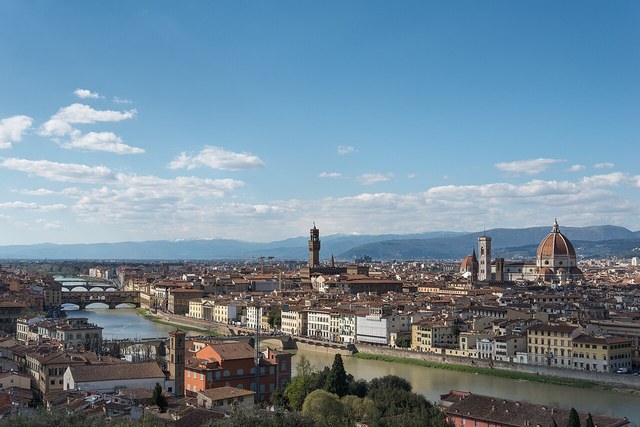
Florence

Florence
Giorgio Galeotti · CC BY 4.0

Italian city-state · medieval–Renaissance era · Tuscany, on Arno River

Florence was a Tuscan city-state dominated by the Medici family and site of the Pazzi Conspiracy and Ciompi Revolt.

The kit

  • Rise — Florence passed the Ordinances of Justice banning ancient nobility from politics and became dominated by merchant families.
  • Conflicts — Florence lost the Battle of Montaperti to Siena after betrayal by Bocca degli Abati during Guelph-Ghibelline wars.
  • Medici rule — Florence was ruled by the Medici family including Lorenzo the Magnificent, who patronized Botticelli and commissioned the Uffizi.
  • Religious upheaval — Florence saw Girolamo Savonarola's Bonfire of the Vanities burning art after Charles VIII's invasion seemed to fulfill prophecies.

Runs with

Council of Florence
Medici Family
dominated Florence's 15th-century politics and patronized its art open card →
San Lorenzo
Medici family church in Florence open card →
Girolamo Savonarola
briefly ruled Florence and ordered Bonfire of the Vanities open card →

The ladder · 15 clues

H

The Albizzi family came to power in this city after Michele di Lando led a rebellion of wool carders, the Revolt of the Ciompi [“Chee-om-pi”].

H

This city was ruled by the Albizzi family following a 1378 revolt by carders of wool. name this Tuscan city home to Savonarola and the Medici.

H

The Medici family dominated 15th century politics in this Italian city-state.

H

Supporters of the Pope plotted the Pazzi Conspiracy to overthrow this city’s ruling family.

H

It was betrayed by Bocca degli Abati in a battle against its archrival Siena, leading to its defeat at Montaperti.

H

As papal vicar, Angevin royal Robert the Wise intervened in a war in this city between Guelphs and Ghibellines.

H

In the Battle of Montaperti, Siena’s Ghibellines defeated this city’s Guelphs.

M

Girolamo Savonarola ruled briefly in this Tuscan city-state that was ruled by the Medici.

M

Michele [mik-ay-lay] di Lando was the first leader of a group of angry wool workers in this city during the Revolt of the Ciompi.

M

That event in this city was the Pazzi Conspiracy.

M

Later, this city fought the War of the Eight Saints against Pope Gregory XI, leading to the end of the Avignon Papacy.

M

Another museum in this city holds La Primavera and The Birth of Venus by Sandro Botticelli, who primarily worked in this city.

E

Sandro Botticelli was patronized by a leader of this city known as Lorenzo the Magnificent. name this Italian city ruled by the Medici family.

E

In this city, a campaign to burn art in what was known as the Bonfire of the Vanities was overseen by the Dominican friar Girolamo Savonarola.

E

A family of art patrons in this city included Lorenzo the Magnificent and Cosimo I, who commissioned this city’s Uffizi Gallery. name this Italian city once controlled by the Medici family.

10 more clues from the record
H

This city lost one battle after the Count d’Arras led a charge of knights crying “Saint George” and a traitor chopped off the hand of its standard-bearer.

H

A coin struck in this city with a fleur de lis on one side and John the Baptist on the other became the most popular coin for transactions in Europe in the 14th century.

H

A popular republic was declared in this city after an invasion by Charles VIII of France seemed to fulfill earlier prophecies.

H

Giuliano, a member of this city’s ruling family, died as part of an assassination attempt by the Pazzi family.

H

This city was the site of the Pazzi conspiracy, and much of its art and literature was destroyed in the Bonfire of the Vanities, ordered by the monk Savonarola.

H

A powerful family that ruled this city included men like Lorezno the Magnificent. :Name this Italian city once ruled by the Medici family. This city is the most populous one in Tuscany.

H

The Signoria was the legislative body of this city-state, the site of the Ciompi Revolt and the Pazzi Conspiracy.

H

Michele di Lando led an uprising of wool workers in this city in the 14th century known as the Ciompi . :Name this city on the Arno River that is home to the Uffizi Gallery.

H

This city passed a law called the “Ordinances of Justice” which largely banned its ancient nobility from political participation.

H

Paolo Uccello painted the defeat of a Sienese force by this city in The Battle of San Romano. Bandinelli depicted Neptune overlooking his oceanic domain in a fountain outside this city’s Palazzo Vecchio [[pah-LAH-tsoh VECK-yoh]].

Watch out: Siena (Florence's archrival, defeated Florence at Montaperti)
#10 · Historic Cities · Level 1

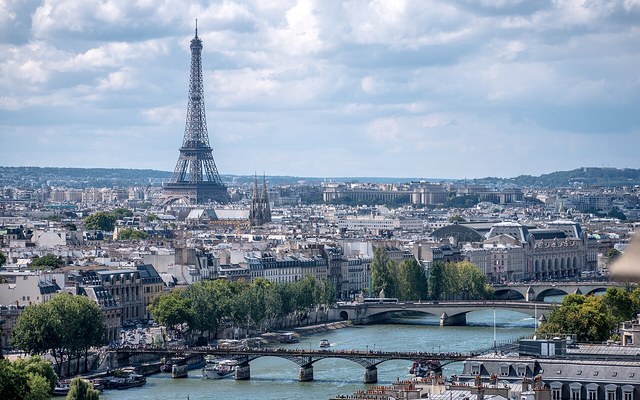
Paris

Paris
a rel="nofollow" Yann Caradec /a from Paris, France · CC BY-SA 2.0

French capital city · founded antiquity; major events 1789–2015 · north-central France

Paris is the capital of France, site of the 1789 Bastille storming and repeated revolutionary upheavals through modern terrorism.

The kit

  • Revolution — Paris saw citizens storm the Bastille in 1789 and thousands killed in the September Massacres.
  • Urban redesign — Paris underwent Baron Haussmann's renovations widening streets to prevent barricade construction and ease troop movement.
  • Commune — Paris was seized by the 1871 socialist Commune, suppressed during Bloody Week with a massacre at Père-Lachaise Cemetery.
  • Modern attacks — Paris suffered ISIS-claimed attacks on November 13, 2015, including the Bataclan theater, following the January Charlie Hebdo shooting.

Runs with

France
capital city of France open card →
Treaty of Paris
1856 treaty signed here demilitarized Black Sea open card →
Paris Commune
1871 socialist commune seized city, suppressed in Bloody Week open card →
University
University of Paris founded 1150, also called Sorbonne open card →

The ladder · 15 clues

H

In 1871, government forces reclaimed this city during the “Bloody Week” after it was seized by a namesake commune.

H

The patron saint of this city is said to have picked up his head after being martyred and walked for 6 miles, That man names a suburb of this city, St. Denis.

H

In this city, Adolphe Thiers clashed with a namesake commune during an 1871 uprising.

H

The European Coal and Steel community was established by a treaty in this city, in which an 1856 treaty demilitarised the Black Sea.

H

Four days after a series of events in this city, a similar event was avoided in Hanover thanks to the findings of a paramedic. After the events in this city, a grey Volkswagen Polo with foreign license plates was recovered which served as evidence that led to a raid on the Molenbeek [moh-lun-bek] area of Brussels.

H

During a siege of this city, National Guard troops bivouacked in a partially-built opera house designed by Charles Garnier.

H

The European capital where the treaty ending the war was signed?

M

City where an 1871 socialist “Commune” was suppressed following its country’s loss to Prussia.

M

The Bataclan theater was attacked in this city, the site of the January 2015 Charlie Hebdo shooting and a November 13th attack claimed by ISIS.

M

Its namesake university was founded in 1150 and is sometimes called the Sorbonne.

M

Baron Hausmann oversaw a set of renovations in this city, which was the site of a massacre at Père- Lachaise [PAIR luh-SHAYS] Cemetery in 1871.

M

The events in this city occurred despite heightened security following an attack earlier that year in this city at the offices of Charlie Hebdo.

E

In 1789, citizens in this city stormed the Bastille in this capital of France.

E

In converting to Catholicism, Henry IV claimed that this city was “well worth a mass.” name this capital city, the site of much strife during the French Wars of Religion.

E

Baron Haussmann led a renovation of this city during which he widened the streets to prevent the construction of barricades.

10 more clues from the record
H

That attack targeted a stadium where Francois Hollande was watching a sports match. name this city that was targeted in a series of 2015 attacks.

H

A 1229 student strike at a university in this city began on Shrove Tuesday and ended when Gregory IX issued the bull Parens scientiarum [[PAH-rens see-en-TAH-room]].

H

Controversy of this city’s placement of 400 bronze cannons in Belleville and other working-class neighborhoods led to riots.

H

Thousands of prisoners were killed in this city during the September Massacres.

H

A woman nicknamed the “Red Virgin” of a neighbourhood in this city is credited with the first use of the anarchist black flag.

H

An “infernal machine” used in this city targeted a king overthrown in February 1848.

H

The wildcat strike took to the streets in the Latin Quarter of this capital city.

H

During a siege of this city, two zoo elephants were eaten by a crowd and Leon Gambetta fled in a balloon.

H

Jules Ferry blasted the 19th-century redesign of this city as “triumphant vulgarity,” while other critics noted that wider streets could be used in this city to more easily maneuver troops to counter uprisings.

H

A college in this city was the origin of the slogan "Under the paving stones, the beach." A medieval school in this city had four "nations" with a set number of students from Pignerol [[pee-neh-ROHL]] and Flanders.

Watch out: Multiple Treaties of Paris exist (1763, 1783, 1856, 1898); clues reference 1856 treaty demilitarizing Black Sea
#16 · Historic Cities · Level 1

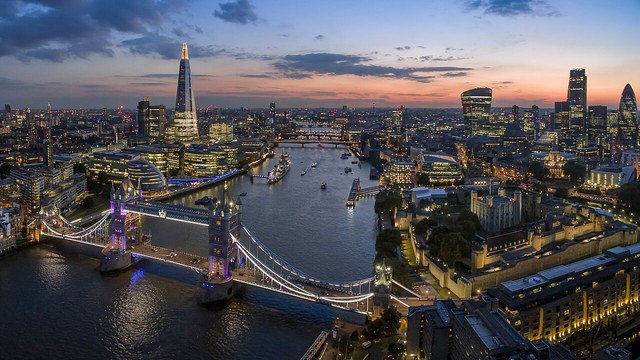
London

London
a rel="nofollow" Ilya Grigorik /a · CC BY-SA 3.0

British capital city · 43 CE–present · southeastern England, Thames River

London is Britain's capital, burned by Boudica in 61 CE, devastated by plague and the Great Fire of 1666, and host to the 1851 Great Exhibition.

The kit

  • Ancient & early modern — London was destroyed by Boudica's forces in 61 CE, leaving a red ash destruction horizon across Roman Britain's capital.
  • Disasters & infrastructure — London suffered the Great Fire of 1666 starting on Pudding Lane and the 1858 Great Stink, prompting Joseph Bazalgette's sewer system.
  • Crime & social issues — London's Whitechapel district saw the unsolved Jack the Ripper murders, and its police were found institutionally racist after Stephen Lawrence's stabbing.
  • Modern development — London hosted the 2012 Summer Olympics and built the millennium Ferris wheel known as the London Eye in 2000.

Runs with

Common
London Common does not exist; the term likely confuses it with Boston Common in Massachusetts open card →
Paris
church
London's Aldersgate Moravian church sparked John Wesley's 1738 conversion, founding Methodism in the city open card →
American Railway Union

The ladder · 15 clues

H

A secret 1915 treaty signed in this city established Italy as a member of the Allies.

H

In 1858, this city experienced a “Great Stink” that resulted in the construction of a new sewer system.

H

This city’s police force was found to be institutionally racist in a 1998 report ordered after the stabbing of Stephen Lawrence at a bus stop.

H

In this city’s Battle of Cable Street, Oswald Mosley’s Fascists clashed with counter-protesters in the East End.

H

Joseph Bazalgette designed this city’s sewer system, which reduced the frequency of cholera outbreaks and prevented a recurrence of the 1858 “Great Stink.” This city was one of first sites for rubber to be grown outside of South America, as part of a botanical research project at Kew.

H

Thomas Bloodworth was the governor of this city during a calamity that began here on Pudding Lane.

H

This city was home to a gang of Latvian immigrants led by Peter the Painter, who gained fame for allegedly surviving the Siege of Sidney Street.

M

Samuel Pepys’ diary records this city’s last bubonic plague pandemic, as well as the devastating Great Fire of 1666.

M

Capital city that hosted a League trading post at the Steelyard until Elizabeth I ended their license.

M

This is the largest city to have a “destruction horizon” of red ash, marking a 61 A.D. disturbance in which it was burned to the ground by the forces of Boudica. name this capital of Roman Britain.

M

The Steelyard was built by the Hanseatic League in this city, which was later home to a police force known as the Bow Street Runners.

M

A landmark known as this city’s Eye was built to commemorate the millennium in 2000; that Ferris wheel became a common sight in television coverage of the 2012 Summer Olympics. name this city whose less modern architecture includes Westminster Palace, the meeting place of British Parliament.

E

Its Whitechapel district was home to a series of unsolved murders. the Great Exhibition of 1851 took place in what city this was also home to the Jack The Ripper killings.

E

Canaletto painted The Thames and the City depicting this English capital city that contains the Tate Modern.

E

A follow-up to the Washington Naval Conference was this agreement named for the capital city of the UK.

10 more clues from the record
H

City that was the world’s most populous throughout Victoria’s reign?

H

City where the Jubilee underground line on the tube was extended?

H

The name of an insane asylum in this city is the source of the word “bedlam.” John Snow discovered that the Broad Street Pump was the source of a cholera outbreak in this city.

H

The Kray Twins were major gangsters during the 1960s in this city, where the Bow Street Runners were formed to fight crime.

H

This city names an 1802 poem that opens with a cry for one of its native sons, “thou shouldst be living at this hour.” A poem about this city that opens “I wander thro’ each charter’d street” and describes hearing “how the Chimney-sweepers cry” was written by William Blake.

H

In 1738 in this city's Aldersgate ward, an intense religious experience at a Moravian church sparked a new denomination. General William Booth founded the Salvation Army in this city, where its headquarters remain.

H

This city is the capital of a country toward which a plane carrying Gibreel Farishta and Saladin Chamcha travels in a novel subject to a fatwa by Ayatollah Khomeini, The Satanic Verses.

H

This city was home to Philip Astley’s Amphitheater, a venue that is the subject of one of the Sketches by Boz and whose performers included equestrian performer Pablo Fanque [fank].

H

This city is the home of Karim Amir, who desperately tries to escape the southern section of this city in the autobiographical novel The Buddha of Suburbia by Hanif Kureishi.

H

This city’s Docklands area was revitalized in the 1980s, and its Canary Wharf has since become a major financial center, alongside its more traditional City.

Watch out: Paris also hosted major international conferences and exhibitions in the same era
#17 · Historic Cities · Level 1

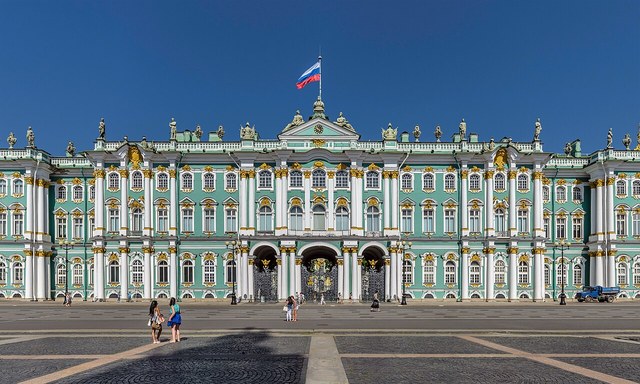
Saint Petersburg

Saint Petersburg
b Florstein /a /b ( i b Telegram: a rel="nofollow" WikiPhoto · CC BY-SA 4.0

Russian city · founded 1703 · Baltic Sea coast

Saint Petersburg is a Russian city founded by Peter the Great in 1703 as his country's 'Window to the West.'

The kit

  • Founding — Saint Petersburg was constructed on a grid of canals designed by Domenico Trezzini and Jean-Baptiste Alexandre le Blond.
  • Imperial capital — Saint Petersburg's Winter Palace was the home of the Romanovs and the site of the Bloody Sunday massacre.
  • World War II siege — Saint Petersburg endured an 872-day Nazi siege from 1941 to 1944, resupplied via the Road of Life across frozen Lake Ladoga.
  • Soviet era — Saint Petersburg was renamed in 1924 after Lenin, who led the storming of its Winter Palace during the Revolution.

Runs with

Russia
capital of Imperial Russia open card →
World War II
besieged 872 days by Army Group North open card →
Moscow
Baltic Sea
built on Baltic Sea coast open card →

The ladder · 15 clues

H

During one event, the defenders of this city stripped the guns from the Aurora to combat an encroaching army.

H

After its deployment in the Crimea, the Gustav rail gun was to be used for the second time in fighting over this city.

H

During a siege of this city, one of the only access points for supplies was the “Road of Life” through Lake Ladoga.

H

This city was known as its country’s “Window to the West” after its founding in 1703, and this city’s Senate Square was the site of a Decembrist revolt.

H

An equestrian statue of this city’s founder was camouflaged with sandbags to protect it during World War II and sits on the massive Thunder Stone.

H

The Finnish Army indirectly participated in the 872 day Nazi siege of this city that is currently called Saint Petersburg.

H

Domenico Trezzini created a grid of canals for this city, which was constructed under Jean-Baptiste Alexandre le Blond.

M

A supply route called the Road of Life helped resupply this city by ferrying supplies across Lake Lagoda.

M

Target of Army Group North during the invasion. The siege of this city lasted 872 days.

M

Army Group North and their Finnish allies retreated after 900 days of fighting in this Soviet city that was besieged from 1941 to 1944.

M

In this city’s Senate Square, rebels declared support for Grand Duke Constantine in the Decembrist Revolt.

M

Dmitri Karakazov failed to kill a ruler in this city who was ultimately killed here by a bomb in 1881.

E

This city’s defenders were resupplied by the Road of Life, where vehicles would travel across a frozen lake east of this besieged city.

E

The Bloody Sunday massacre occurred outside this city’s Winter Palace, the home of the Romanovs. name this one time capital of Imperial Russia founded by Peter the Great.

E

An event in this city started with cannon fire from the Aurora and included an attack on the Winter Palace. name this city on the Baltic Sea founded by a namesake westernizing Tsar of Russia.

10 more clues from the record
H

This city’s namesake affair was a series of purges orchestrated by Malenkov and Beria.

H

Virginia siege at which the USCT fought valiantly at the Battle of the Crater?

H

An institute for girls in this city was the site of the Kirov assassination.

H

For much of the twentieth century, the harbor of this city contained a war ship called the Aurora.This city was built after the fall of Nienshants.

H

This city is home to the Admirality Shipyard, which was originally built in 1704 by this city’s namesake, as well as the Lakhta Center, the tallest building in Europe, which is slated to be the headquarters of Gazprom.

H

This city was renamed in 1924 after the man who led the storming of its Winter Palace, and it was put under prolonged siege during the Second World War.

H

A palace in this city is filled with paintings commemorating victory over the Ottomans at the Battle of Cesme [chez-mah].

H

This city is home to the Aurora, a museum ship whose cannons were used to defend an 872-day siege.

H

titled a song for what Soviet city where a "child of sacrifice" named Viktor was born in 1944?

H

An attack on this city was led by Ritter von Leeb and carried out during Operation Northern Light.

Watch out: Petersburg, Virginia was the site of the Battle of the Crater during the Civil War
#21 · Historic Cities · Level 1

Istanbul

Istanbul
Hunanuk · CC0

Turkish metropolis · renamed 1930 · Bosphorus Strait

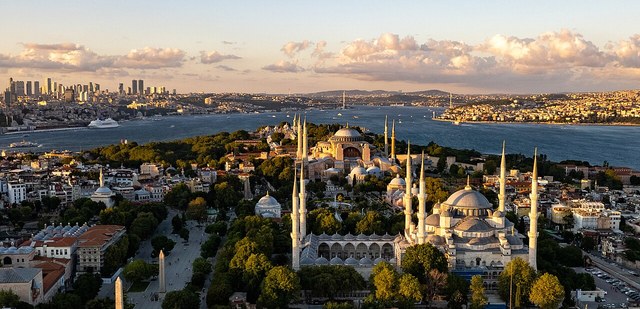
Istanbul is Turkey's largest city, straddling the Bosphorus and formerly known as Constantinople until renamed in 1930.

The kit

  • Geography — Istanbul lies on both sides of the Bosphorus Strait, with the Golden Horn cutting into the city and the Marmaray Tunnel connecting its halves.
  • Historic landmarks — Istanbul houses Topkapi Palace, constructed in 1459, and the Hagia Sophia, both located on the city's historic peninsula south of the Golden Horn.
  • Ottoman architecture — Istanbul's Blue Mosque, the largest mosque in the city, is a notable külliye with six minarets and includes a tomb modeled on the Dome of the Rock.
  • Modern events — Istanbul experienced a July 2016 coup attempt against President Erdogan, during which the Fatih Sultan Mehmet and Bosphorus Bridges were closed.

Runs with

Nanda Empire
Constantinople
former name until renamed Istanbul open card →
church
home to Hagia Sophia Byzantine church open card →
Ottoman Empire
capital governed from the Sublime Porte open card →

The ladder · 15 clues

H

A forest near this city is named for Bulgarians deported from Belgrade after a 1521 siege.

H

That landmark was completed in 1348 by Genoese colonists and is a conical-topped stone tower located in this city’s Galata district.

H

Dozens of ethnic Uyghurs were arrested in this city’s district of Zeytinburnu for alleged connections to Abdulkadir Masharipov’s shooting attack of the Reina night club on New Year’s Day 2017.

H

This city was the site of a controversial election recount after the opposing Republican People’s Party defeated the AK Party. the Faith Mosque was built in this city of Mehmed the Conqueror who captured it in 1453.

H

In 2016, a leader gave a speech in this city blaming “those in Pennsylvania” for threatening his power. 45 people were killed after an ISIS attack on this city’s airport in June 2016.

H

In another film, a man travels to this city to accept the defection of Tatiana Romanova, who plans to steal a Soviet Lektor machine.

H

In this city, the characters Duman, Pskiopat, and Bengü are among the seven cats depicted in the 2016 documentary Kedi.

M

This city’s Fatih Sultan Mehmet and Bosphorus Bridges were closed during a July 2016 coup attempt against President Recep Tayyip Erdogan [AIRD-oh-wan]. name this largest city in Turkey.

M

Home of Topkapi Palace and the Hagia Sophia, identify this city lying on both sides of the Bosphorus Strait, the largest city in Turkey.

M

The film Fetih 1453 depicts Mehmet II's conquest of, what Turkish city, formerly the capital of the Byzantine Empire? name this city whose conquest from the Byzantine Empire is the subject of the film

M

The 19th-century “Straits Question” concerned the passage of warships at this city, where a reforming ruler mandated that civil servants wear the fez. the Sublime Porte governed the “sick man of Europe” from what Ottoman capital?

M

It’s not Rome, but its seven hills house such buildings as a palace which has a highest structure known as the Tower of Justice as well as a Byzantine church dedicated to Logos capped with a pendative-supported dome.

E

Also known as the Seraglio, this city’s Topkapi Palace was constructed six years after its fall to Mehmed. name this Turkish city once known as Constantinople.

E

The Sipahis cavalry assisted in putting down a revolt in this capital during the Auspicious Incident.

E

This city was renamed after the fall of the Eastern Roman Empire. name this city, formerly known as Constantinople, the most populous city in Turkey.

10 more clues from the record
H

This city’s historic peninsula contains the Sarayburnu outcropping and lies south of the Golden Horn.

H

This non- Russian city is the setting of the first half of From Russia with Love.

H

This city’s Karakoy neighborhood is home to the Genoese-built Galata Tower.

H

The Marmaray Tunnel connects this city’s western and eastern halves.

H

The largest mosque in this city, a notable külliye, includes a tomb modeled on the Dome of the Rock. :Name this earthquake-prone city, the home of a seaside complex with a madrasa and public baths named for an admiral. This city’s Blue Mosque has six minarets.

H

Outdoor sculpture in this city includes a work where two snakes interwine as they rise, Serpent Column as well as the crumbling remains of the Walled Obelisk; both of which are found in its Hippodrome.

H

A building known as the Tiled Kiosk comprises one of three structures that form this city’s namesake Archaeological Museums where the sarcophagus of Alexander the Great can be seen.

H

Another Art Nouveau building in this city, the Botter Apartment, was designed by Raimondo d’Aronco, who with Alexander Vallaury led this city’s reconstruction efforts after a devastating 1894 earthquake.

H

This city’s St. Stephen’s Church was built in a Gothic Revival and Neo-Baroque style using prefabricated, completely cast iron parts produced in Vienna and assembled on-site.

H

The Golden Horn cuts into this city and was once spanned by a large chain to prevent enemy ships from getting in.Name this Turkish city that was previously named Byzantium and Constantinople.

Watch out: Constantinople (the city's former name until 1930)
#22 · Historic Cities · Level 1

Novgorod Republic

Novgorod Republic
Gabagool · CC BY 3.0

Medieval Russian merchant republic · 9th–15th centuries · Northern Russia, near Lake Ilmen

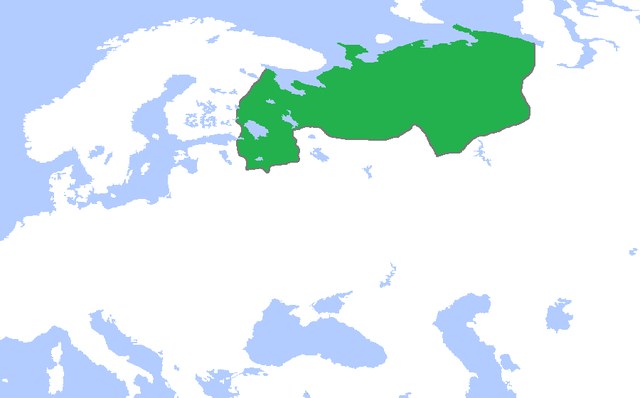
Novgorod Republic was a powerful medieval Russian state governed by an assembly called the veche and known for its merchant wealth.

The kit

  • Rise — Novgorod Republic was legendarily founded by Varangian chieftain Rurik and served as the original Rus capital before Oleg moved it to Kiev.
  • Achievements — Novgorod Republic was the easternmost member of the Hanseatic League and controlled the lucrative northern fur trade through extensive commercial networks.
  • Conflicts — Novgorod Republic's prince Alexander Nevsky defeated Swedish forces at the Battle of the Neva and crushed the Teutonic Knights at Lake Peipus in 1242.
  • Fall — Novgorod Republic was annexed by Muscovy under Ivan III in the late 15th century, ending its independence after losing its rivalry with Moscow.

Runs with

Hanseatic League
easternmost kontor and member of this trading confederation open card →
Alexander Nevsky
prince who defended the republic at Neva and Lake Peipus open card →
Russia
northern medieval state within what became Russia open card →
Ivan the Terrible
his oprichniki massacred hundreds in the city in 1570 open card →

The ladder · 15 clues

H

A prince of this city defeated the Teutonic Knights on the frozen Lake Peipus in the 1242 Battle of the Ice. name this powerful medieval Russian city, the home of Alexander Nevsky.

H

Prince Oleg moved the capital of the Rus from this city, his home, to Kiev.

H

Among the thousands of birch bark manuscripts excavated in this city are homework assignments from a six-year-old named Onfim.

H

Major city in which that secret police force committed a massacre in 1570

H

This city’s Archbishop Gennadius was responsible for a belief that the Heresy of the Judaizers was solely an attempt to introduce Judaism to this city. :Name this city, ruled by Alexander Nevsky, whose name was often prefaced with Veliky.

H

This city was home to the easternmost kontor built by the Hanseatic League.

H

This home of Sadko held the easternmost outpost of the Hanseatic League and fought a series of wars against Sweden for control of the Gulf of Finland.

M

A Slavic Republic named for this city was the easternmost member of the Hanseatic League.

M

This city’s namesake republic was annexed by Muscovy under Ivan III.

M

Princely state of Kievan Rus’, the capital of its namesake republic and major rival of Muscovy.

M

This city defeated a Swedish invasion in the Battle of the Neva, and defeated the Teutonic Order at the [*] Battle on the Ice.

M

A coalition led by this city won a battle against the Livonian Order over the frozen Lake Peipus.

E

One leader from this city defeated the Swedish at the Battle of the Neva before defeating the Bishop of Dorpat and the Livonian Order on Lake Peipus at the Battle on the Ice. name this Russian city which was eventually eclipsed and conquered by its rival, Moscow, and which was the home of Alexander Nevsky.

E

As Prince, Yaroslav the Wise briefly united Kiev with this city.

E

The oprichniki killed hundreds of people and dumped them in the Volkhov River in a 1570 massacre in this city.

10 more clues from the record
H

A fictional merchant from this city jumped into the sea to appease the Sea Tsar and married the mermaid Chernava, who turned into a river.

H

Harald Hardrada, a claimant of both the Danish and English thrones, spent 15 years in this city as an exile and mercenary captain.

H

A ruler of this city ascended to the throne after overthrowing his brother with the assistance of Sartaq Khan and the Golden Horde.

H

This city hosted Ivan’s Hundred, the first Ruthenian Guild, which met near the Church of Ivan the Forerunner.

H

This city was saved from a Swedish invasion by the victory of a teenage prince at the Battle of Neva.

H

This medieval city gave an unusual amount of power to its legislature, the veche. :Name this city near Lake Ilmen in central western Russia which overcame Suzdal in the 1200s, but, despite allying with Tver, emerged as the loser of its intermittent contest with Moscow for supremacy in the next two centuries.

H

This city was called “the Great” by its residents and was the most prominent city ruled by a Veche . :Name this city, the center of a republic that controlled the fur trade until it was absorbed into the Grand Duchy of Muscovy at the end of the 15th century. Rulers of one state often sent their sons as posadniks to govern this city.

H

The waterlogged soil under this city preserved the first beresta birch bark manuscripts unearthed in Russia, suggesting an unusually high rate of literacy. :The Varangian chieftain Rurik legendarily founded what city, the capital of a republic that ruled northern Russia during the medieval era?

H

That stick figure drawing by the child Onfim is surviving art from this mediaeval merchant republic in Northern Russia. This cultural centre had a namesake school which introduced Byzantine influenced iconostases [eye-con-o-STAY-sees] to Russia.

H

answer some questions about Alexander Nevsky:Somewhat paradoxically, Nevsky was prince of this city and republic in modern Russia which remained unconquered by the Mongols and today houses the Milliennium of Russia monument.

Watch out: Confused with Kiev, the later capital of Kievan Rus' to which Oleg moved from Novgorod
#23 · Historic Cities · Level 1

Vienna

Vienna
Superbass · CC BY-SA 3.0

Austrian capital city · medieval to present · Danube River, Austria

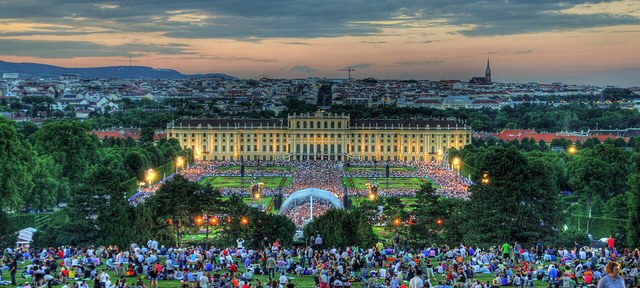
Vienna is the capital of Austria and former seat of Habsburg power, famously besieged by Ottoman forces in 1529 and 1683.

The kit

  • Ottoman sieges — Vienna withstood Suleiman the Magnificent's siege in 1529, halting Ottoman westward expansion into Europe.
  • 1683 relief — Vienna was saved from Kara Mustafa Pasha when Jan III Sobieski led 20,000 Winged Hussars in a decisive cavalry charge.
  • Habsburg seat — Vienna housed the Schönbrunn Palace and imperial palace of the Habsburgs, making it the center of central European rule.
  • Intellectual center — Vienna's Circle, led by Moritz Schlick, advocated logical empiricism and included Gödel and Carnap around 1918.

Runs with

Austria
capital and largest city open card →
Suleiman the Magnificent
besieged Vienna in 1529 open card →
Nanda Empire
Ottoman Empire
besieged twice, 1529 and 1683 open card →

The ladder · 15 clues

H

In 1529, Suleiman the Magnificent’s forces failed to take this city, ending their westward expansion into Europe.

H

Lifted a 1683 siege of what Austrian capital city after the arrival of Jan III Sobieski’s hussars?

H

Gabriel D’Annunzio dropped thousands of propaganda leaflets over this city during a “flight over” it.

H

After backing the forces of the Croatian leader Josip Jelačić , Count Baillet von Latour was lynched in this city.

H

Austrian city that names the original version of the Concert, created following the Napoleonic wars.

H

Austrian capital city he besieged in 1529.

H

A leader of a "Circle" named for this city, Moritz Schlick, was gunned down by a fascist-leaning former student who took offense to his anti-metaphysical philosophy.

M

The croissant was allegedly invented during a battle for this city that was saved from Kara Mustafa by the arrival of Jan III Sobieski in 1683.

M

John III Sobieski led a charge of Winged Hussars during a defeat for Kara Mustafa Pasha here.

M

One siege of this city was ended when John Sobieski led a cavalry charge of 20,000 Winged Hussars.

M

During a battle, this city was saved by a timely charge led by John III Sobieski [John the third soh-bee-ess-kee] and his Winged Hussars.

M

It's not Berlin, but this city's Burgtheater re-opened after the end of its division between Soviet and Allied Forces.

E

The Kahlenberg hill lies within this city, where King Jan Sobieski of Poland repelled Ottoman forces in 1683. name this former resident city of the Habsburgs and capital city of Austria.

E

This largest city on the Danube contains the Schönbrunn Palace as well as the imperial palace of the Hapsburgs. name this capital of Austria.

E

Suleiman the Magnificent's conquest of Europe was stopped at this city. name this city from which the Habsburgs ruled central Europe.

10 more clues from the record
H

The extremely anti-Semitic Karl Lueger modernized this city as its mayor for 13 years.

H

Jan III Sobieski led the Holy League in a battle near this city, after which Kara Mustafa Pasha was executed.

H

After one battle for this city, the losing commander was strangled by a silk cord upon returning home thanks to his failure to breach the defenses of Ernst von Starhemberg.

H

This city used a luxury tax to keep rents artificially low in public housing projects like the enormous Karl-Marx-Hof during a period from 1918-34 in which this city was nicknamed “Red.” Moritz Schlick organized an influential intellectual group in this city around 1918; that group, which included members like Godel and Carnap, advocated for logical empiricism and was called this city’s Circle. name this home city of Sigmund Freud, the capital of Austria.

H

Matthias Corvinus captured this city during his conflict with Frederick III.

H

This city houses the headquarters of OPEC as well as the International Atomic Energy Agency.

H

Georg Franz Kolschitzky opened the first coffeehouse in this city after finding beans left behind by the attackers in a 1529 siege here.

H

Nicholas of Salm commanded the defense of this city atop walls that were partially financed by the ransom of Richard the Lionheart.

H

While attending the Realschule [[ray-AHL-shoo-luh]] in this city, philosopher Ludwig Wittgenstein [[VIT-gen-stine]] and Adolf Hitler were classmates together.

H

The political structure of this city was weakened by Ferdinand I who carried out his “Blood Judgment,” killing many of its leaders and putting it under direct imperial control.

Watch out: The 1529 and 1683 Ottoman sieges are often confused or conflated despite being 154 years apart
#24 · Historic Cities · Level 1

Kyiv

Kyiv
Larmarphoto · CC BY-SA 4.0

Medieval Rus' capital · 9th–13th centuries · Ukraine, Dnieper River

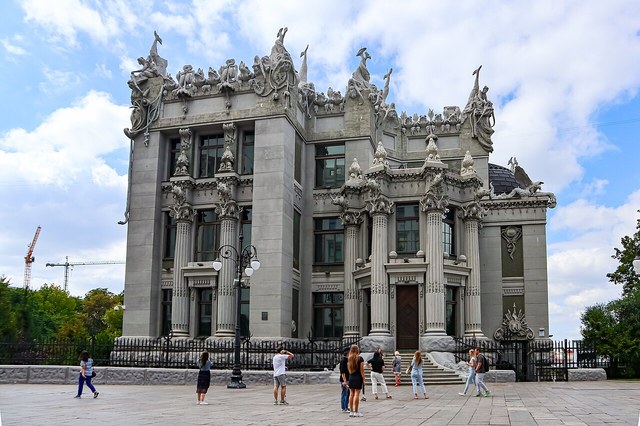
Kyiv was the capital of the medieval Rus' state, founded by Oleg and Christianized by Vladimir the Great in 988.

The kit

  • Rise — Kyiv became the capital when Oleg of Novgorod moved the seat of power there, founding the Rus' state.
  • Achievements — Kyiv saw Vladimir the Great convert the Rus' to Christianity after marrying Byzantine Princess Anna in 988.
  • Conflicts — Kyiv was besieged by the Pechenegs during their westward migration and attacked by Boleslaw the Brave.
  • Legacy — Kyiv produced the Primary Chronicle by Nestor, the chief historical source for the medieval Rus' state.

Runs with

Ukraine
modern capital of Ukraine open card →
Christianity
Christianized by Vladimir the Great in 988 open card →
church
site of Church of the Tithes after mass conversion open card →
Mongols
defeated at Battle of Kalka River by Mongol generals Jebe and Subutai open card →

The ladder · 15 clues

H

Oleg was the founder of a state based in this city according to the Primary Chronicle, a history traditionally attributed to the monk Nestor.

H

Boleslaw the Brave intervened in a succession crisis in this empire, during which he chipped his sword after striking its capital's Golden Gate.

H

Nestor chronicled the history of this city in his Primary Chronicle, and this city was founded at the intersection of the Desna and the Dnieper Rivers.

H

The Church of the Tithes replaced a pagan temple in this city after a mass conversion, according to a history attributed to the monk Nestor, the Primary Chronicle.

H

A state named for this city was defeated by the generals Jebe and Subutai at the Battle of the Kalka River.

H

Shostakovich's 13th symphony takes its name from a poem by Yevgeny Yevtushenko [[yehv-too-SHEHN-koh]] this itself is named for Babi Yar, the site of the Nazi massacre of over one hundred thousand Jews in what Ukrainian city.

H

This city was once attacked by Boleslaw the Brave, who chipped the Polish coronation sword on this city’s gate.

M

This Ukrainian city ruled by Vladimir the Great was the base of power of the greatest of the Rus’ states.

M

Harald Hardrada had previously served in the army of Yaroslav the Wise, a Grand Prince of Novgorod and this other city, which was also ruled by Vladimir the Great.

M

This state’s close relations with the Byzantine Empire were solidified when Emperor Basil II’s sister Princess Anna married the ruler of this state in 988.

M

Vladimir the Great Christianized this state, which moved its capital from Novgorod under Oleg, its first Grand Prince.

M

Boleslaw Chobry struck this city’s Golden Gate with his sword.

E

This city’s Prince Oleg greatly expanded its influence, and Christianity was brought to this city by Vladimir the Great. name this city where the medieval state of Rus was based and is now the capital of the Ukraine.

E

City where Vladimir the Great converted a namesake state to Christianity before it became the Ukrainian capital?

E

A large portion of the original Varangian Guard were recruited from this city’s Rus population. This city is the modern-day capital of Ukraine.

10 more clues from the record
H

Hilarion was made Metropolitan of this city by its Grand Prince Yaroslav the Wise.

H

Histories of this polity are in the Radziwill Chronicle, including the Tale of Bygone Years.

H

The Schechter letter details this state’s failed invasion of Khazaria and ensuing invasion of the Byzantine Empire, which ended in a failed 941 siege of Constantinople.

H

A siege of this state’s capital was carried out by the Pechenegs during their westward migration.

H

Vladimir Monomakh was the ruler of this city-state, founded by the Varangians on the river. Its other rulers included Yaroslav the Wise.

H

This state was founded by Oleg of Novgorod and christianized by Vladimir the Great. :Name this confederation ruled by the Rurik dynasty in modern-day Ukraine, often considered a predecessor to the Russian empire.

H

The Rus' people, who descended from Norsemen, founded a state based around this city in present-day Ukraine.

H

A queen regent of this city released sparrows and pigeons with burning branches to raze the Drevlian city of Iskorosten.

H

Literature produced by this polity includes the Paterikon, a collection of the lives of the saints of the Monastery of the Caves, as well as Saint Hilarion's sermon On Law and Grace.

H

A ruler from here married the Byzantine princess Anna Porphyrogeneta before a succession crisis between the brothers Sviatopolk the Accursed and Yaroslav the Wise.

Watch out: Novgorod—the original Varangian capital before Oleg moved the seat of power to Kyiv
#26 · Historic Cities · Level 1

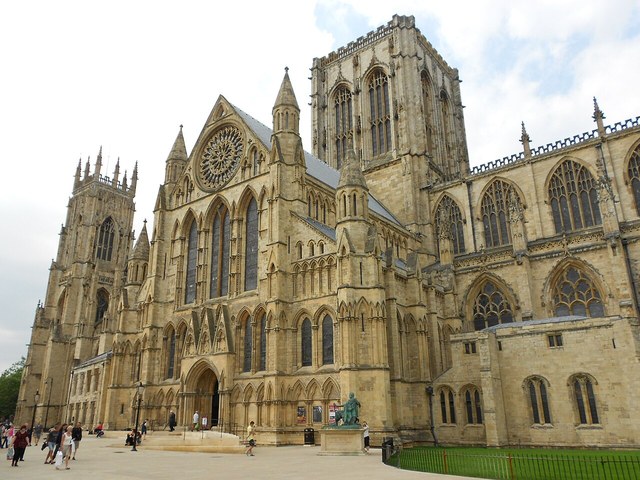
York

York
a rel="nofollow" FEGreene · CC0

English city · Roman era to present · Northern England, River Ouse

York is a northern English city founded as Roman Eboracum where Constantine I was proclaimed emperor and later became England's second-largest medieval city.

The kit

  • Roman era — York was the capital of Britannia Inferior where Septimius Severus died and Constantine the Great was crowned emperor.
  • Viking period — York was captured by the Great Heathen Army in 866 and served as the Viking capital of England until 954.
  • Medieval prominence — York became England's second most populous city by the twelfth century and housed the scholar Alcuin who later served Charlemagne.
  • Wars of the Roses — York gave its name to a Plantagenet cadet branch that fought the Lancasters and ended with Richard III's death at Bosworth Field.

Runs with

Bishop
York's archbishop was second-most important English church official after Canterbury open card →
Charlemagne
York native Alcuin headed Charlemagne's Palace School at Aachen open card →
American Railway Union
church
York Minster is a 14th-century cathedral; city had second-ranking archbishop in England open card →

The ladder · 15 clues

H

Edmund of Langley was first in line of a cadet branch of the House of Plantagenet named for this city, whose reign ended with the death of Richard III.

H

Jews in this city committed mass suicide rather than burn alive in Clifford’s Tower during an 1190 pogrom.

H

Royalist cathedral city stronghold in Northern England, besieged by the Covenanters for two months in 1644.

H

A bust of this explorer mysteriously appeared in Mt. Tabor Park in 2021. :Name this explorer whom that bust honored as “the first African-American to cross North America and reach the Pacific Coast.” At the conclusion of that expedition in 1806, this explorer’s master refused to free him.

H

The Danes captured this important Northumbrian city in 866, and Scandinavian leaders continued to rule Northumbria from here until 954. It would grow to be the second most populous city in England by the twelfth century.

H

British General George Cockburn, alluded to in the "hireling and slave" line, burned Washington, D.C. in part due to the Americans' burning of this city earlier in the war. Zebulon Pike was killed in the battle named for this city.

H

This walled city in northern England saw immense destruction during the “Harrowing,” including numerous castles torn down. This city is located at the confluence of the Ouse {OOZE} and Foss Rivers.

M

Septimius Severus died in this city when it was named Eboracum which is also where Constantine the Great was crowned as Emperor.

M

That man’s son, a member of the house named for this city, was victorious in the Battle of Barnet, in which he defeated Richard Neville, and in the Battles of Towton and Tewkesbury; that man’s brother, however, was eventually defeated in the 1485 Battle of Bosworth Field.

M

Native Americans were very taken with the appearance of this member of the Corps, Clark’s personal slave. No one really knows what happened to him, but he probably wound up escaping and living with the Crow Indians.

M

In the 1800s, fancy egg dishes came to The Shambles in this Northern English city, which became England’s center for confectionary brands. This city on the River Ouse was where Rowntree’s was established in 1862.

M

Eisner and Brown’s Medieval Murder Map of this other city includes a report of a battery committed by the skinner Robert Pancake. A scholar from this city led the Palace School of Aachen.

M

An early version of the Instructions was drafted by a man with this ducal title. A house of this name lost the English throne when Richard III was killed at the Battle of Bosworth Field.

M

Athelstan finally became king of all England after conquering a kingdom named for this northern city. Richard III was the last king of a house named for this city, which fought the Lancasters in the Wars of the Roses.

E

This man, William Clark’s slave, accompanied the expedition on its journey. Some Native Americans thought he was magical because of his black skin.

10 more clues from the record
H

The Snickelways are a series of pedestrian passages and streets connecting to this city’s Shambles, which was once home to many slaughterhouses. :What English city’s namesake Minster is a 14th-century cathedral?

H

At the time, William Zouche was the archbishop of this city, once called Eboracum, making him the second-most important church official in England behind the Archbishop of Canterbury.

H

A scholar born in this city devised the first Western European script with lower-case letters and spacing between words and headed the palace school at Aachen.

H

This city, founded during Roman times as Eboracum, was home to the famous 8th century scholar Alcuin, who was an important figure in Charlemagne’s court at Aachen.

H

A scholar from this city described how “a place more venerable than all in Britain [was] given as a prey to pagan peoples” in his account of the Sack of Lindisfarne.

H

Earlier, the defensive Multangular Tower was built along the Roman walls of this city. This city, the capital of Britannia Inferior, was where Constantine I was proclaimed emperor.

H

Septimius Severus became ill during a campaign and lived the last years of his life in this city when it was known as Eboracum.

H

Saint Margaret Clitherow, who was known as the “Pearl of [this city]”, has a shrine dedicated to her on a historic street in this city known as The Shambles.

H

The Great Heathen Army of Ivar the Boneless seized control of this city, which became the Viking capital in England.

H

name these royal houses.This British royal family defeated the Lancasters in the War of the Roses to take over the throne.

Watch out: York (the slave who accompanied Lewis and Clark) shares the name but is a different entity
#31 · Historic Cities · Level 1

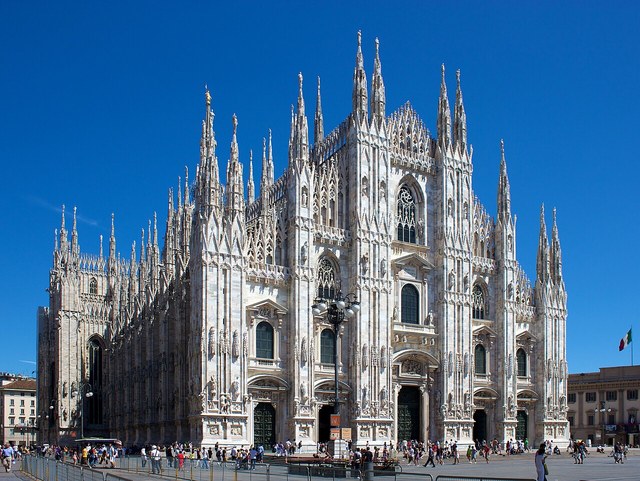
Milan

Milan
a rel="nofollow" Jiuguang Wang · CC BY-SA 3.0

Northern Italian city · Ancient–present · Lombardy, Italy

Milan is the capital of Lombardy, known to Romans as Mediolanum and ruled by the Visconti and Sforza families.

The kit

  • Ancient & medieval rule — Milan served as capital of the Western Roman Empire under Maximian before the capital moved to Ravenna.
  • Rise of dynasties — Milan saw Ottone's family take power after the Battle of Desio defeated the Della Torre family during Guelph-Ghibelline conflicts.
  • Sforza era — Milan's Golden Ambrosian Republic fell to condottiero Francesco Sforza, who signed the Peace of Lodi with Naples and Florence.
  • Renaissance & Napoleon — Milan was ruled by Ludovico il Moro, who commissioned Leonardo's Last Supper, and later became capital of Napoleon's Cisalpine Republic.

Runs with

Bishop
nonreligious Roman governor appointed as Milan's bishop by popular assent open card →
Constantine the Great
Italy
Milan is capital of Lombardy in northern Italy open card →
Nanda Empire

The ladder · 15 clues

H

Ottone was an archbishop who founded the rule of one family in this city by winning the Battle of Desio and ousting the Della Torre family.

H

Emperor Maximian ruled the Western Roman Empire from this city before moving the capital to Ravenna due to invading Visigoths.

H

Swiss mercenaries betrayed the forces of this city to the forces of Louis XII in the Treason of Novara.

H

Francis I was victorious at the battle of Marignano, which allowed him to capture this Italian city.

H

Eventually was hung upside down outside a gas station in which largest Northern Itailan city?

H

Twelve “captains and defenders of liberty” were elected to write this city’s laws when it was briefly reorganized into the Golden Ambrosian Republic following the fall of the Visconti family.

H

This city fell under the rule of the patron Ottone’s [oh-toh-nay’s] family after he won the Battle of Desio against Napo della Torre.

M

Following a war of succession in this city, members of the University of Pavia established the short-lived Golden Ambrosian Republic. That republic founded in this city was abolished by the condottiero-turned-duke, Francesco Sforza, who later signed the Peace at Lodi [[LOH-dee]] with Naples and Florence. name this northern Italian city, known to the Romans as Mediolanum.

M

This city changed hands after the battle of Desio, but the winning family died out after Filippo Maria Visconti bore no heirs, leading to the creation of this city’s Golden Ambrosian Republic. The Peace of Lodi ended this city’s wars with Venice and established the Sforza family as the rightful rulers of this city. name this city in Northern Italy, the capital of Lombardy.

M

The Sforza family ruled over this city, which once was capital of the Western Roman Empire. name this capital of Lombardy.

M

The Sforzas ruled this Italian city during the latter half of the 15th century. This city is the modern capital of Lombardy.

M

In this city in 1805, Napoleon, who was about to be crowned king, ordered the facade finished on a cathedral, and one of the spires was topped with a statue of him.

E

City ruled by the Sforzas, where Leonardo da Vinci painted the Last Supper.

E

After that republic fell, this city was ruled by the Sforzas. name this capital of Lombardy, a city in Northern Italy.

E

City-state led by Ludovico Sforza at the start of the Wars.

10 more clues from the record
H

This city was also the capital of both the Cisalpine republic and another later Napoleonic Kingdom.

H

The ideals of the Carbonari and Young Italy influenced this city’s 1848 Five Days uprising, which began with a boycott on Austrian tobacco.

H

A nonreligious Roman governor was appointed to serve as a bishop of this city by popular assent before mediating a conflict involving Magnus Maximus.

H

The Della Torre family made a bid to rule this city during the war between the Guelphs [] and Ghibellines [[GIH-bih-lines]] until their defeat at Desio [[DEH- syoh]].

H

The first Margrave of this city was the ancestor of members of the Frankish Obertenghi family. 46 percent of this city’s population is thought to have died in a 1629- 1631 plague.

H

This city was founded by Belloveso, a leader of the Insubri Celts, who legendarily saw a “half-woolen bear” that he then made the city’s symbol.

H

A pair of Italo Calvino-inspired towers containing the Bosco Verticale, were completed in 2014 in this city’s Porta Nuova district.

H

Louis XII was invited by Venice to conquer this city, although he was eventually forced out after the battles of Ravenna and Novara.

H

This site of the Battle of Marignano was ruled by Ludovico il Moro, who commissioned Leonardo’s The Last Supper.

H

This city was led by a man nicknamed “the Moor,” or “il Moro,” who patronized da Vinci’s The Last Supper.

Watch out: Visconti family rule ended when Filippo Maria bore no heirs, not immediately after Battle of Desio
#32 · Historic Cities · Level 1

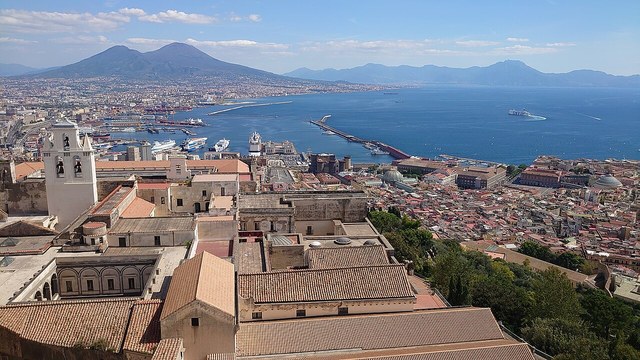
Naples

Naples
Richard Nevell · CC BY-SA 4.0

Southern Italian city · ancient to present · Campania, near Mount Vesuvius

Naples was the capital of the Kingdom of the Two Sicilies and site of multiple revolts including Masaniello's 1647 uprising.

The kit

  • Medieval rule — Naples became an independent Byzantine duchy in 763 CE and was later controlled by Spanish Habsburgs until the seventeenth century.
  • Revolts — Naples saw the 1647 Masaniello revolt against a fruit tax and the 1799 pro-French Parthenopean Republic opposed by the lazzaroni.
  • Napoleonic era — Naples was ruled by Joseph Bonaparte and Joachim Murat during the Napoleonic Wars, with Murat reforming the city's law code.
  • Unification — Naples was targeted by Garibaldi's Expedition of the Thousand, and the Kingdom of the Two Sicilies ended at the Siege of Gaeta.

Runs with

Sicily
capital of Kingdom of Two Sicilies after Sicily reunited with Naples in 1504 open card →
Council of Florence
Hungary
queen ruling from Naples murdered first husband Andrew of Hungary open card →
Italy
southern Italian city conquered by Romans during Samnite Wars open card →

The ladder · 15 clues

H

In this city, a new tax on fruit brought about the revolt of the fisherman Masaniello, who was soon shot.

H

A pro-French revolt in this city led to the formation of the Parthenopean Republic, which was opposed by the lower class lazzaroni.

H

A queen who ruled from this city was accused of murdering her first husband Andrew of Hungary.

H

An attempt to tax fruit by this city's Spanish rulers led to the rebellion of Masaniello.

H

One leader of a kingdom centered at this city was executed at Castello de Pizzo after an ill-advised expedition that ended at the Battle of Tolentino; that man was Joachim Murat.

H

The Battle of Cerignola confirmed Bourbon Spanish rule of this city, which was abandoned just before the Battle of the Volturnus.

H

Pompeii is close to this modern Italian city, which was conquered by the Romans during the Samnite Wars.

M

One of the characters in The Mute Girl of Portici is the fisherman Masaniello, who led a 1647 revolt in this Italian city against the Habsburgs.

M

A kingdom with capital at this city was ended at the Siege of Gaeta.

M

Later in the Napoleonic era, this home of the Camorra was ruled by Joseph Bonaparte and Joachim Murat.

M

Republics based in this city include one led by the fisherman Masaniello, and a six-month state called the Parthenopean Republic in 1799, before it was ruled by Joachim Murat under Napoleon. name this capital of the Campania region just west of the slopes of Mount Vesuvius.

M

The embargo cut both ways, as the end of Dutch grain imports caused famine in this Habsburg city, the second largest in Europe, which declared itself an independent republic in 1647 but was soon crushed by the Spanish viceroy.

E

The Sicilian Vespers removed Sicily from the control of this city, which was targeted by the Expedition of a Thousand. name this southern Italian city, the capital of the Kingdom of the Two Sicilies.

E

This target of Garibaldi’s Expedition of the Thousand was the seat of the Kingdom of the Two Sicilies. name this Italian city in the environs of Vesuvius.

E

This city’s law code was reformed under the rule of Napoleon’s brother-in-law, Joachim Murat.

10 more clues from the record
H

Robert Davis notes how a 1544 raid on this city where 7000 men were captured drove the price of slaves so low that one could swap a Christian “for an onion.” Every Easter Monday, a class of third-gender people in this city would find a “husband” and board a carriage to ride around.

H

Spain took control of this city after the battle of Garigliano, and Jan Hus opposed Baldassare Cossa’s attempts to organize a crusade against a ruler of this city who controlled Innocent VII, Ladislaus.

H

Charles invaded Italy in order to press his claim to the throne of this kingdom, after the death of its king Ferdinand I. In 1504, Ferdinand II of Aragon united this kingdom with Sicily, reuniting the Two Sicilies.

H

In a folk custom from this city called “bitchy Lucia,” a man would cross-dress, wear blackface, and dance while a crowd screamed obscenities at him.

H

Statesman Bernardo Tanucci modernized a government based in this city before being overthrown by Queen Maria Carolina, the wife of the incompetent King Ferdinand IV.

H

Kings of this city built a massive Baroque palace whose extensive gardens feature a “Grand Cascade” by the fountain of Diana and Actaeon in the town of Caserta.

H

This place became an independent Duchy of Byzantium in 763 CE and was later ruled by Spaniards until the 1647 uprising led by the fisherman Masaniello.

H

In the ninth century, this city’s duke Andrew II entered the Pactum Sicardi after calling in Saracen mercenaries to repel an attack of Sicard.

H

The marble calendar of this city claims its first bishop was Asprenas, who was converted by an old woman called Candida the Elder.

H

After being deposed, Romulus Augustulus was imprisoned in this city, which was captured from Conon by Totila three years before he took Rome.

Watch out: Masaniello led a revolt in Naples in 1647, not in Sicily during the Sicilian Vespers
#33 · Historic Cities · Level 1

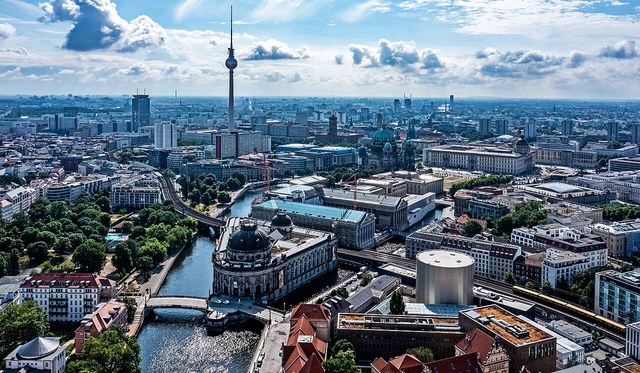
Berlin

Berlin
ul li File:Museumsinsel Berlin Juli 2021 1 (cropped).jpg /a · CC BY-SA 4.0

German capital city · 1871–present (capital) · northeastern Germany

Berlin is Germany's capital, divided 1945–1990 by a wall separating Soviet and Western occupation zones.

The kit

  • Division & Blockade — Berlin was blockaded by Soviet forces in 1948, prompting Operation Vittles (the Berlin Airlift) led by Lucius D. Clay.
  • The Wall — Berlin was split by a namesake wall from 1961 to 1989, crossed at Checkpoint Charlie and famously condemned by Reagan.
  • Cold War symbolism — Berlin saw JFK declare being a citizen of this city 'the proudest boast' and Gorbachev urged to 'tear down' the wall.
  • Historical conferences — Berlin hosted an 1884 conference that formalized the Scramble for Africa and an 1878 congress addressing the Balkans.

Runs with

Germany
Berlin has been the capital of Germany since unification in 1871 open card →
Africa
Berlin Conference of 1884–85 partitioned Africa among European powers open card →
Nanda EmpireAmerican Railway Union

The ladder · 15 clues

H

This city’s Gauleiter for two decades was Joseph Goebbels, and a famous photo taken by Yevgeny Khaldei shows a soldier raising a Soviet flag over this city’s Reichstag.

H

Due to his actions in this city, Colonel Gail Halvorsen gained the nicknames “Uncle Wiggly Wings” and “The Chocolate Flier.” Supplies were given to this city’s residents during Operation Little Vittles by Americans, who flew planes over this city during a 1948 Soviet blockade. name this European capital city that was divided by the Allies following World War II.

H

The communist Marinus van der Lubbe was convicted of arson in this city in 1933.

H

The Four Power Agreement concerned this city, where the Basic Treaty was signed.

H

German city where that chancellor held an 1878 congress to address the Balkans.

H

The once-divided German capital city?

H

In 1963, JFK claimed that it was the “proudest boast” of a free person to be a citizen of this city.

M

Lucius D. Clay led relief during Operation Vittles which was known as this city’s “Airlift”. name this capital of Germany.

M

A structure in this city contains the mural “My God, Help Me to Survive This Deadly Love;” that structure was once crossed at Checkpoint Charlie.

M

One event in this city was codenamed Operation Vittles and was overseen by General Curtis LeMay.

M

This city was the site of a 1948 airlift which sought to relieve a blockade of it by Soviet forces.

M

The Herero genocide was an event in the Scramble for Africa, which started after an 1884 conference in this European capital.

E

Ronald Reagan asked Mikhail Gorbachev to “tear down” a structure in this European capital city that was divided by a namesake wall.

E

“Checkpoint Charlie” was a notable crossing point at this city’s namesake “Wall,” which was torn down in 1989. name this city, the capital of Germany.

E

name this city which became divided by a namesake wall, which is the capital of Germany.

10 more clues from the record
H

This city was the site of several closed subway stations that became known as “ghost stations.” The Four Power Agreement guaranteed travel to this city, which contained Checkpoint Charlie.

H

A photograph taken by Yevgeny Khaldei in this city was edited to prevent accusations of looting and depicts a man waving a Soviet flag above a destroyed building.

H

The June 17 uprising began in this city, and one conference held in this city revised the Treaty of San Stefano after the Balkan Wars.

H

Leopold II was given control of the Congo in an 1880s conference held in this German capital city.

H

This city’s underworld is the setting for the film M, and the Institute of Sexology was established in this city.

H

Speer also made plans to completely revamp this home of the Brandenburg Gate with wider streets and an improved railway system. This city is the capital of Germany.

H

A street in this city is named after the 17th of June, the date a construction-worker strike boiled over into widespread protests.

H

A photograph of the Soviet flag being lifted in this non-Russian city was doctored to remove a watch on a soldier’s wrist.

H

E. Allan Lightner was stopped trying to go to the opera in this city, leading to a tank standoff.

H

This city hosted a conference that outlined the Scramble for Africa. Frederick William II commissioned a structure in this city that is topped by Victoria wielding a staff adorned with an iron cross.

Watch out: The 1878 Berlin Congress (Balkans) vs. 1884 Berlin Conference (Africa partition)
#36 · Historic Cities · Level 1

Corinth

Corinth
bdi Lovis Corinth /span /a · Public domain

Ancient Greek city-state · 8th century BC–146 BC · Isthmus of Corinth

Corinth was a powerful Greek city-state on the isthmus connecting the Peloponnese to mainland Greece, known for its wealth and tyrannical rulers.

The kit

  • Rise — Corinth was originally ruled by the aristocratic Bacchiadae clan, who claimed descent from Heracles and were overthrown by the tyrant Cypselus.
  • Achievements — Corinth's tyrant Periander constructed the massive diolkos ramp, a paved track that allowed ships to be transported overland across the isthmus.
  • Conflicts — Corinth's dispute with its colony Corcyra over Egesta was a cause of the Peloponnesian War, and a later Corinthian War ended with the Peace of Antalcidas.
  • Destruction — Corinth was sacked and razed by Lucius Mummius in 146 BC, with the melting bronze creating a namesake alloy and establishing Roman dominance.

Runs with

Philip II of Macedon
Philip II created a league named for Corinth open card →
Tyrant
Cypselus and Periander ruled Corinth as tyrants open card →
Greece
Corinth was a major Greek city-state open card →
Athens
Corinth lay on the isthmus between Athens and Sparta open card →

The ladder · 15 clues

H

This city was sacked and razed by Lucius Mummius in 146 BC, establishing Roman dominance in the region.

H

The King's Peace ended a war named for this city that broke out shortly after the Peloponnesian War and pitted Sparta against a Greek-Persian alliance.

H

One of the first Greek tyrants, Cypselus , took power in this city after overthrowing this city’s ancient Bacchiadae ruling family, who claimed descent from Heracles.

H

This city became famous for its hetairai at the extravagant Temple of Aphrodite, leading Horace to write that “not everyone is able to go to [this city.]” Periander was responsible for creating the coinage of this city.

H

The early history of this polis saw the rise to power of a tyrant named Cypselus, who expelled its ruling aristocratic clan, the Bacchiadae.

H

After Lucius Mummius burnt this city to the ground, a namesake alloy was discovered from this city’s melting bronze.

H

This city became ruled by tyrants after the establishment of the Cypselid clan.

M

Ships could be moved across the massive diolkos [dee-OL-kos] ramp constructed by this city’s tyrant Periander.

M

Cypselid rulers of this city included its second tyrant, Periander.

M

The Bacchiadae originally ruled this city but were overthrown by the tyrant Cypselus and his son Periander. identify this Greek city-state located on a namesake Isthmus.

M

The Peace of Antalcidas ended a war named for this Greek city-state, which lies on a namesake isthmus roughly halfway between Athens and Sparta.

M

This city constructed a paved road used to transport boats overland called the Diolkos.

E

This city names a type of column, that with ones named Doric and Ionic, was a Classical order. name this city located on a namesake Isthmus.

E

This city was burned to the ground after its capture by Romans under Lucius Mummius, and gives its name to a league created by Phillip II of Macedon. name this Greek city, located on a namesake isthmus between the Peloponnese and Athens.

E

The Isthmian Games were held in this ancient Greek city-state.

10 more clues from the record
H

A dispute between this city and its colony of Corcyra was a cause of the Peloponnesian War.

H

This city was ruled by one of the Seven Sages, Periander, who was also one of the Two Tyrants along with Cypselus [[SIP-seh-luss]].

H

The Romans built the Hexamilion Wall near this city to protect one landmass from Visigothic invasion in the early 400s.

H

Agesilaus's army won the Battle of Coronea during the war named for this city-state, which was ruled by Periander and controlled the diolkos.

H

The first tyrant of this city drove the Bacchiadae from power.

H

The Peace of Antalcidas ended this polity’s namesake war, during which it lost the Battles of Nemea and Coronea.

H

A ruler of this city had his concubines burnt alive after they supposedly tricked him into kicking his wife down the stairs, and that tyrant also built a paved track called the diolkos.

H

Its legendary king Telestes was overthrown by the Bacchiadae, and this city developed a system to move ships over land called the Diolkos.

H

This city sent out one ship without a herald's staff to see if their fleet would be attacked when quarreling with Corcyra over Egesta.

H

The technique of black-figure vase painting originated in this polis, and an account of Polybius tells of how Lucius Mummius sacked this city in 146 BCE.

Watch out: Corinth names the Corinthian column order, not to be confused with the Doric or Ionic orders also used in Classical architecture.
#678 · Archaeological Sites and Ruined Cities · Level 2

Syracuse

Syracuse
a rel="nofollow" John Marino /a from Pittsburgh · CC BY 2.0

Ancient Greek city · 8th century BC–212 BC · Southeast Sicily

Syracuse was a powerful Greek colony in Sicily, home to Archimedes and ruled by successive tyrants including Gelon and Dionysius.

The kit

  • Founding & rise — Syracuse began as a Corinthian colony on the island of Ortygia and became the most powerful Greek colony in the Western Mediterranean.
  • Tyrants — Syracuse was ruled by tyrant Gelon, who defeated Carthage at the Battle of Himera, and later by Dionysius the Elder, who sold Plato into slavery.
  • Peloponnesian War — Syracuse successfully defended against the Sicilian Expedition led by Nicias, Demosthenes, and Alcibiades with help from the Spartan general Gylippus.
  • Fall — Syracuse fell to Marcus Claudius Marcellus during a protracted siege in 212 BC, during which Archimedes was killed despite his defensive inventions.

Runs with

Sicily
Major Greek colony in southeast Sicily open card →
Tyrant
Ruled by successive tyrants including Gelon, Dionysius I and II, and Hiero II open card →
Carthage
Defeated Carthage at Himera; later allied with Carthage against Rome open card →
Corinth
Founded as a Corinthian colony open card →

The ladder · 9 clues

H

During a festival to Artemis, this city was captured by Marcus Claudius Marcellus after a protracted siege.

H

A ruler of this city built the fortress of Ortygia.

H

In the early fifth century BC, this city was defeated by Hippocrates of Gela, returning to power its social elite, the gamoroi.

H

A ruler of this city tortured prisoners in a cave known as his "ear" and drank himself to death after his play Ransom of Hector won a prize.

M

Archimedes allegedly used a parabolic reflector to defend this city from a Roman attack, inventing the first "heat ray." name this ancient Greek colony in the southeast of Sicily.

M

A former general of Pyrrhus of Epirus, Hiero II, served as a tyrant of this city, becoming a client of Rome during the First Punic War.

M

This city was targeted during the Peloponnesian War by the Sicilian Expedition. name this major Greek city of ancient Sicily that was home to Archimedes.

E

Sicilian city where Archimedes was killed during the war.

E

Timoleon fought to free this city, which won the Battle of Himera under the tyrant Gelon.

10 more clues from the record
H

This city was once ruled by Dionysius II. :Identify this city which the general Gylippus defended successfully from an expedition led by Nicias, Demosthenes, and Alcibiades.

H

Beginning as a Corinthian colony on the island of Ortygia, it was ruled by the tyrant Gelon, who defeated Carthage at the Battle of Himera.

H

Similarly to Athens, inhabitants of this city banished citizens via petalismos, writing the names of those they wished to exile on leaves.

H

That ruler of this city rose to power during the chaos following the sack of Akragas and conquered the nearby city of Rhegium.

H

A tyrant of this city named Dionysius the Elder arrested the philosopher Plato and sold him into slavery following a disagreement.

H

A general from this city named Hicetas took control of this city, only to be removed from power by Timoleon.

H

Sicilian city where Plato advised Dionysius [die-oh-niss-ee-us] the Younger.

H

Upstate New York city named for a Sicilian city known for candle manufacturing.

H

Greek colonies in the Western Mediterranean were quite often ignored by mainland Greek historians. :Name this most powerful of all the Greek colonies. This Sicilian colony’s tyrant Hiero I was lauded by Pindar for his chariot racing, and defeated Etruscans and Carthaginians at Cumae.

H

This city was captured by the Roman general Marcellus after the pro-Carthaginian tyrant Hieronymus was deposed. :Name this city that was supposedly defended by Archimedes’s inventions, including a giant ship-grabbing claw and a now-disproven heat ray.

Watch out: Confused with Syracuse, New York (named after the Sicilian city)
#682 · Archaeological Sites and Ruined Cities · Level 2

Piraeus

Piraeus
Pitichinaccio · CC BY 3.0

Port city of Athens · 5th century BCE–present · Attica, Greece

Piraeus was the chief port of classical Athens, connected to the city by the Long Walls and designed with a grid plan by Hippodamus of Miletus.

The kit

  • Geography — Piraeus had three major parts: Munichia and Zea (exclusively military harbors) and Cantharus (mainly commercial).
  • Development — Piraeus replaced the older port of Phaleron and was laid out by Hippodamus of Miletus in a grid system commissioned by Pericles.
  • Peloponnesian War — Piraeus was blockaded by Lysander, leading to Athens's defeat, and served as a plague entry point during the war.
  • Later conflicts — Piraeus served as Thrasybulus's base during his resistance to the Thirty Tyrants and was besieged by Sulla while chasing Aristion.

Runs with

Athens
connected to Athens by the Long Walls open card →
Themistocles
shipyards built the fleet for Salamis open card →
Peloponnesian War
blockaded by Lysander, ending the war open card →
plague
entry point for the plague into Athens open card →

The ladder · 9 clues

H

The Long Walls ran from Athens to this nearby port city on the Aegean Sea.

H

Thrasybulus [[thrass-ih-BYOO-luss]] and his pro-democracy exiles occupied this city in an attempted last stand against the troops of Pausanias, who fought in support of the puppet government known as "The Thirty Tyrants." Cleisthenes [[KLY-stheh-neez]] established this city as a deme [[DEH-meh]] in the 5th century BCE, and this port in Attica is where Plato's Republic begins.

H

The modern iteration of this city is the largest passenger port in Europe, while its ancient counterpart served as the primary port of the Delian League.

H

It had three major parts, Munichia [moo-NIK-yuh], Zea [ZEE-uh] and Cantharus, the first two of which were exclusively military, while the last was mainly commercial.

M

Lysander won the Peloponnesian War by blockading this city, which was connected to its mother city by the Long Walls. name this major port city of Athens.

M

The wealthy metic Cephalus owned a house in this city that was the setting of Plato’s Republic, which begins “I went down yesterday to [this city].” This city, which largely supplanted Phaleron in its primary purpose, acted as Thrasybulus’s base in his resistance to the oligarchy of the Thirty Tyrants.

M

Archaeologists are divided as to whether the Heruli also pillaged the countryside and this port of Athens, which was put under siege later when Sulla was chasing the tyrant Aristion.

M

Its street plan was laid out by Hippodamus of Miletus, who may not have intended for it to contain a disproportionate number of its city's foreign residents.

E

A plague that hit Athens during the Peloponnesian War entered through this port, which replaced Phaleron, and was connected to Athens by the Long Walls.

10 more clues from the record
H

The man credited with inventing street grids, Hippodamus of Miletus, was hired by Pericles to lay out a grid for the rebuilding of this city that continues to serve as the main port of Athens.

H

In this city, a torch-race on horseback featured in a raucous night-time festival that honored the Thracian moon goddess Bendis.

H

This city’s hill of Munychia was taken in a night-raid by a group of men buoyed by a recent win at the fort of Phyle .

H

It was designed by a man who was said to be the first non-statesman to speculate about the best form of government.

H

After being destroyed, it was rebuilt by a man who was coming off a big victory at Cnidus.

H

This city’s agora was named for the Milesian city-planner who designed its grid-system, Hippodamus.

H

In this city, the architect Philon built an important skeuotheke in its district of Zea.

H

During the Spartan hegemony, the general Sphodrias treacherously tried to capture this city.

H

This city replaced the older Phaleron and was built according to the Hippodamian Plan.

M

This harbor was the port city of classical Athens and the chief harbor of ancient Greece. It continues to serve as Greece’s chief port. Its shipyards constructed the fleet that won at Salamis.

Watch out: Phaleron (the older port that Piraeus replaced)
#1468 · General · Level 3

Prague

Prague
a rel="nofollow" Moyan Brenn /a from Italy · CC BY 2.0

Czech capital city · founded 9th century · Bohemia, central Europe

Prague is the capital of the Czech Republic, site of defenestrations that sparked the Hussite and Thirty Years' Wars.

The kit

  • Hussite era — Prague was the site of a 1419 defenestration that precipitated the Hussite Wars after Jan Hus was burned at Constance.
  • Thirty Years' War — Prague saw a 1618 defenestration that sparked the Thirty Years' War; the Count of Tilly routed Frederick V at nearby White Mountain.
  • Medieval landmarks — Prague's Charles Bridge was founded by Charles IV in 1357 at the palindromic moment 135797531, and Charles University in 1348.
  • Prague Spring — Prague was the center of Alexander Dubček's 1968 "socialism with a human face" liberalization, crushed by Warsaw Pact tanks.

Runs with

Thirty Years' War
1618 defenestration in Prague precipitated this conflict open card →
Fourth Lateran Council
Czechoslovakia
capital city of this nation during 1968 Spring open card →
University
Charles IV founded namesake university here in 1348 open card →

The ladder · 6 clues

H

Similarly named events in 1419 and 1618 in this city both precipitated wars, the first the Hussite Wars and the second the Thirty Years War.

H

Czechoslovak city whose liberalizing "Spring" was crushed by the Warsaw Pact.

M

In 1620, the Count of Tilly routed Frederick V at White Mountain near this city.

M

Popular uprisings in this city began after the student Jan Palach [yan pahl-ahk], a free speech protester, set himself on fire in Wenceslas Square.

E

Alexander Dubcek tried to lead a liberalization of this city in the spring of 1968, which became named for it. name this capital of the Czech Republic.

E

Alexander Dubcek [doob-check] implemented “socialism with a human face” as part of a period of liberalization in 1968 known as this city’s “Spring.” Soviet tanks eventually rolled into this capital city of Czechoslovakia.

10 more clues from the record
H

According to legend, this city’s first settlement was the Vysehrad [vi-shay-heh-rad] Castle.

H

Seven councillors of this city were killed by the followers of Jan Zelivsky.

H

The 1415 Council of Constance condemned a Protestant reformer who preached in this city named Jan Hus.

H

A later event in this city led to the scribe Philip Fabricius being granted the title “Baron of Highfall” by the emperor.

H

Charles IV founded a namesake university in this city in 1348.

H

Legend has it that five stars appeared over the death of a saint tossed off a bridge in this city when that saint refused to tell the king what the queen said in confession.

H

A dean of that university in this city translated John Wycliffe and was condemned and burned at Constance.

H

On July 9th 1357 at 5:31 AM, Holy Roman Emperor Charles IV laid the foundation for a namesake bridge in this city.

H

The palindromic number "135797531" represents the exact moment when Charles IV laid the cornerstone of his namesake bridge in this city.

H

The freedom to confess the Holy Word was one of four articles issued from this city by the Ultraquists, who held this city against the more radical Taborites.

Watch out: Student Jan Palach's self-immolation in Wenceslas Square sparked popular uprisings in this city
#1542 · Historic Cities · Level 3

Munich

Munich
b Thomas Wolf /a /b , small a rel="nofollow" www.foto-tw.de · CC BY-SA 3.0 de

Bavarian capital city · founded 1158 · southern Germany

Munich is the capital of Bavaria, site of Hitler's 1923 Beer Hall Putsch and the 1938 appeasement conference.

The kit

  • Nazi activity — Munich hosted the Beer Hall Putsch in 1923, when the SA and Adolf Hitler attempted an insurrection.
  • 1938 Conference — Munich was the site of a 1938 conference where Neville Chamberlain appeased Hitler by ceding the Sudetenland.
  • 1972 Massacre — Munich hosted the 1972 Summer Olympics, during which Black September murdered several Israeli athletes.
  • Resistance & terror — Munich was home to the White Rose group, whose members Hans and Sophie Scholl were executed for anti-Nazi leaflets.

Runs with

Bavaria
Munich is the capital and largest city of Bavaria open card →
Neville Chamberlain
Chamberlain declared 'peace for our time' after the 1938 Munich Conference open card →
Germany
Munich is a major city in southern Germany open card →
Adolf Hitler
Hitler led the Beer Hall Putsch in Munich in 1923 open card →

The ladder · 6 clues

H

According to legend, the Devil left his footprint in a church in this city after being tricked by its architect.

H

Despite receiving concessions at a conference in this city, one side regardless launched Operation Southeast.

M

The SA and Adolf Hitler led the "Beer Hall Putsch" in this city. name this southern German city, which is the capital and largest city of Bavaria.

M

This city was targeted by Black September in a 1972 incident that occurred while it was hosting the Summer Olympics. name this German city, the site of a namesake “Massacre” of Israeli athletes.

E

In 1972, members of Black September murdered several Israeli athletes during the Olympics hosted in this city.

E

Adolf Hitler led an insurrection in this Bavarian city where Neville Chamberlain declared “peace for our time” after a 1938 meeting.

10 more clues from the record
H

Hans and Sophie Scholl, part of the White Rose group, were based in this city and executed for their anti-Nazi leaflets during World War II. Dachau, the first concentration camp, was located close to this city, and the Nazi Party's national headquarters, the Brown house, was located at the center of this city.

H

A February 6, 1958 disaster in this city was caused by James Thain’s urgency to get a team back to England following a game against Red Star Belgrade; that disaster killed Duncan Edwards and other members of Manchester United.

H

The declaration “peace in our time” was made in the aftermath of that event in this city by Neville Chamberlain. the Sudetenland was given to Adolf Hitler as a form of appeasement during a 1937 conference in what GerRman city?

H

A nationalist in this city assassinated Kurt Eisner, a Jewish socialist who had earlier overthrown the local monarch.

H

Carlos the Jackal bombed this city's Radio Free Europe headquarters in the late 1980s.

H

Disgruntled with his rejection by the Thule Society, Anton Arco-Valley assassinated, in this city, the founder of a People’s State formed after the Anif Declaration.

H

A ritual dance developed by this city’s coopers to celebrate the passing of the plague is reenacted every day on this city’s Glockenspiel.

H

This city was the seat of the Wittelsbach dynasty, who built its Nymphenburg Palace.

H

A Soviet Republic based in this city collapsed after its leader, Eugen Leviné [[leh- vee-NEH]], was shot in Stadelheim [[SHTAH-del-hime]] Prison.

H

Far-right radical Anton Arco-Valley gunned down the socialist premier of this city, Kurt Eisner, while he was on his way to resign.

Watch out: The 1938 Munich Conference is sometimes confused with earlier League of Nations meetings in Geneva
#1571 · Historic Cities · Level 3

Moscow

Moscow
U.S. Department of State · Public domain

Russian capital city · founded 12th century · western Russia

Moscow is Russia's capital, home to the Kremlin and center of power since Ivan the Great declared it the Third Rome.

The kit

  • Rise — Moscow won the Great Stand on the Ugra River, breaking the Tatar yoke and establishing dominance over rival Tver.
  • Architecture — Moscow's St. Basil's Cathedral was designed by an architect legendarily blinded so he could never create anything as beautiful again.
  • Conflicts — Moscow was set on fire by Count Rostopchin after Napoleon won the Battle of Borodino, contributing to the French retreat.
  • Modern eraJesse Owens led a delegation attempting to get Jimmy Carter to lift the U.S. boycott of the 1980 Olympics in Moscow.

Runs with

Russia
capital and political center open card →
Battle of Borodino
burned after Napoleon's victory there open card →
American Railway Union
1980 Summer Olympics
hosted in 1980, boycotted by U.S. open card →

The ladder · 6 clues

H

An architect working in this city was blinded so he could never design anything as beautiful as his work on St. Basil’s Cathedral.

H

In the 17th century, this city suffered Salt and Copper Riots over taxes and currency debasement.

M

Special forces were criticized for indiscriminately killing 130 civilians with poison gas while trying to resolve a hostage crisis in a theatre in this city.

M

Ivan the Great ruled this city, in which he built the Kremlin. After marrying a Byzantine princess, he declared this capital of Russia to be the Third Rome.

E

This city won the Great Stand on the Ugra River, thus breaking the “Tatar yoke.” A Grand Duchy centered at this city was ended by a ruler who was crowned as the Tsar of All Rus. name this city which Ivan the Terrible made the capital of Russia.

E

Count Rostopchin ordered that this city be set on fire after Napoleon won the Battle of Borodino. name this difficult to conquer city, the capital of Russia.

10 more clues from the record
H

The Cathedral of Christ the Saviour was built in this Russian city.

H

This city’s successful defense led Walther von Brauchitsch to be forced into retirement after the failure of Operation Typhoon.

H

This city was defended from a Pereslavl horde led by Constantine of Ryazan by Prince Daniel.

H

A prince from this city was nicknamed for winning a battle on the Don river.

H

The Swiss-Italian architect Pietro Antonio Solari built several fortified towers in this city, which often vied for power with its northern rival Tver.

H

Civilian casualties in this city escalated after troops refused to tell doctors what type of chemical weapon they had used, leading to the death of 130 hostages.

H

Jesse Owens led a delegation of athletes in an attempt to get Jimmy Carter to lift the U.S. boycott on the 1980 Olympics which were held in this city.

H

The architect of one building in this city was legendarily blinded by a Rurikid ruler so he could not build anything so magnificent again.

H

Though this city was besieged, Stalin ordered that the annual Revolution Day parade be held regardless in order to raise morale.

H

In 2010, this city’s Park Kultury metro stop was suicide-bombed by two women working for Doku Umarov.

Watch out: St. Petersburg (also a Russian capital, but Peter the Great moved the capital there from Moscow)
#1593 · Historic Cities · Level 3

Warsaw

Warsaw
Emptywords · CC BY-SA 4.0

Polish capital city · capital since 1596 · Poland

Warsaw is the capital of Poland, site of major WWII uprisings and namesake of the Communist Warsaw Pact.

The kit

  • Early history — Warsaw became Poland's capital in 1596 under Sigismund III, replacing Krakow in that role.
  • WWII ghetto — Warsaw's Jewish ghetto, the largest in WWII Europe, was liquidated after a 1944 uprising led by Mordechai Anielewicz.
  • Home Army uprising — Warsaw's Home Army launched a 1944 uprising that was defeated, leading to planned destruction of 90% of buildings.
  • Cold War — Warsaw names the Warsaw Pact, a Communist alliance of nations led by the Soviet Union.

Runs with

Poland
capital city since 1596 open card →
American Railway Union
Willy Brandt
knelt at ghetto site open card →
Common

The ladder · 6 clues

H

Polish capital which names a "Pact" of Communist nations led by the Soviet Union.

H

Local writer Isaac Singer wrote an account of his time in this city during the interwar period titled A Day of Pleasure.

M

The Home Army launched a 1944 uprising in this city, which was defeated and led to the planned destruction of 90% of this city’s buildings.

M

In this city, the Z.O.B. and the Z.Z.W. fought a losing battle against troops under the command of Jürgen Stroop.

E

Mordechai Anielewicz [ahn-yail-eh-vitch] led an uprising against the Nazis in this city’s Jewish Quarter, the largest Jewish ghetto in World War II Europe. name this capital of Poland.

E

Polish capital city whose ghetto was liquidated after a Jewish uprising.

10 more clues from the record
H

City that Sigismund III made Poland’s capital in 1596, and which is still the capital today.

H

A shoemaker named Jan Kilinski led the armed peasantry of this city against the occupying Russian Empire in a 1794 uprising.

H

In 1603, an ice floe destroyed this city’s first permanent bridge, which connected it to the jurydyka of Praga.

H

A mass suicide occurred on 18 Ulica Mila in this city, where a failed uprising was detailed in the Stroop Report.

H

While visiting the site of a 1944 anti-Nazi uprising, Willy Brandt knelt in the middle of this city’s ghetto.

H

A battle in this city was the major thrust of a campaign known as Operation Tempest.

H

Resistance against Nazi occupation in this city was led by an organization whose logo was the letters “PW” in the shape of an anchor, the AK or Home Army.

H

City that replaced Krakow in 1793 as the Polish capital and remains the capital today.

H

The city was the subject of the Pabst Plan.

H

This city was the target of month-long siege in 1939, but much of this city’s destruction occurred during a 1944 uprising of its Jewish ghetto in anticipation of a coming Soviet offensive, which may or may not have been halted by Joseph Stalin.

Watch out: Two separate 1944 uprisings: Jewish ghetto uprising and later Home Army uprising
#1603 · Historic Cities · Level 3

Geneva

Geneva
fr:Utilisateur:Stéphane_Pecorini · CC BY-SA 2.0 fr

Swiss city · founded antiquity; prominence 16th–20th c. · Lake Geneva, western Switzerland

Geneva is a Swiss city that served as John Calvin's theocratic base and later housed the League of Nations.

The kit

  • Reformation center — Geneva became the center of John Calvin's semi-theocratic government during the 16th century, where he instituted many reforms.
  • Religious conflicts — Geneva's Protestant council ordered Michael Servetus burned at the stake for preaching Sabellianism and anti-infant baptism.
  • L'Escalade — Geneva annually celebrates L'Escalade to commemorate defeating Duke Charles Emmanuel I's 1602 surprise attack on the city.
  • International diplomacy — Geneva housed the League of Nations headquarters from 1920 and hosted conventions establishing wartime rights and the Vietnam partition accords.

Runs with

John Calvin
led Geneva's government and preached there open card →
Switzerland
Geneva is a Swiss city and canton open card →
Battle of Dien Bien Phu
Geneva Accords partitioned Vietnam after Dien Bien Phu open card →
church
Calvin instituted church reforms in Geneva open card →

The ladder · 6 clues

H

Swiss city where the League was headquartered and where Conventions against war crimes were signed.

H

For preaching Sabellianism and anti-infant baptism, Michael Servetus was burned at the stake on the orders of this Protestant city’s council.

M

Swiss city that hosted multiple conventions that established the rights of the wounded and civilians in wartime.

M

Calvin became the spiritual leader of this Swiss city, where he instituted many reforms.

E

John Calvin preached his namesake doctrine in this city, which was an independent canton at the time. This city lies on a namesake lake on the border between Switzerland and France.

E

When exiled from England, John Knox went to this city, then governed by the author of the Institutes of the Christian Religion.

10 more clues from the record
H

Catherine Cheynel foiled a surprise attack on this city by Charles Emmanuel I of Savoy by pouring soup on the attackers, which is commemorated in l’Escalade.

H

French reformer John Calvin led a semi-theocratic government in this city during the 16th century.

H

Every year, this city celebrates the defeat of Duke Charles Emmanuel I’s attempts to have his army scale its walls on L’Escalade.

H

A popular legend in this city holds that a pot of hot soup was poured over soldiers attempting to scale its defenses in 1602.

H

Gregory of Tours wrote about a massive tsunami caused by a landslide that destroyed this city in the sixth century.

H

This city annually celebrates L'escalade, to commemorate the defeat of a 1602 surprise attack led by the Duke of Savoy.

H

The accords where France withdrew from Vietnam were signed in what city whose namesake conventions establish the standards for international law on warfare?

H

The League of Nations headquarters was moved from London to this neutral city in 1920, remaining so until the League's dissolution.

H

Accords named for which Swiss city partitioned French Indochina, including the creation of South and North Vietnam?

H

In this city's Congress of Peace, it was determined that the Holy See shouldhaveits sovereignty revoked.

Watch out: Lake Geneva (the lake, not the city itself)
#1614 · Historic Cities · Level 3

Avignon

Avignon
OT Avignon · CC BY-SA 4.0

French papal city · 1309–1377 papal seat · southern France, Rhône River

Avignon was the French city where seven popes resided from 1309 to 1377 during the Babylonian Captivity of the papacy.

The kit

  • Relocation — Avignon became the papal seat in 1309 when Clement V, ally of King Philip, moved the court from Rome.
  • Palace — Avignon's massive Palais des Papes was built in the 1300s on a hill near the Rhône River.
  • Departure — Avignon's papal era ended in 1376 when Gregory XI left the city, his plans delayed by the War of the Eight Saints.
  • Schism aftermath — Avignon was home to antipope Benedict XIII after 1378, when the Western Schism created competing popes in Rome and this city.

Runs with

Babylonian Captivity
the period when seven popes resided in Avignon open card →
Pope
seven legitimate popes and later antipopes resided here open card →
church
papal court relocated here from Rome in 1309 open card →
Fourth Lateran Council

The ladder · 6 clues

H

Answer the following about a controversy per part.In 1309, the papacy was moved to this city, bringing about the period known as the “Babylonian Captivity.”

H

Petrarch described this city as a place “where all the muck of the universe collects.” A trial overseen by a resident of this city centered on Guillaume de Nogaret’s conflict with the author of the bull Unam Sanctam, Boniface VIII.

M

Shortly after Boniface VIII’s death, Clement V, an ally of King Philip, was elected Pope and moved the court from Rome to this French city.

M

The Western Schism began after a major religious office was removed from this city in 1376, ending the period dubbed the Babylonian Captivity. name this French city to which Clement V moved the home of the Papacy.

E

French city was Pope Clement VI living in thanks to the "Babylonian captivity"?

E

Gil Sánchez Muñoz y Carbón was appointed bishop of Mallorca after abdicating a position of power in this city, where he was known as Clement the Eighth.

10 more clues from the record
H

During the Western Schism, competing popes ruled from Rome and this city starting in 1378. :Name this French city where seven popes resided during the “Babylonian Captivity.”

H

This city was sold by Queen Joanna I of Naples in 1348.

H

The Western Schism was a crazy time to be a Catholic. Answer some questions about it, :The Western Schism was immediately preceded by a time in which a series of 7 popes lived in this city.

H

From 1309-1377, the Papacy was located in this French city, where the Popes resided at a massive Palace of the Popes located on a hill near the Rhone River.

H

The plans of Gregory XI to leave this city were halted by a conflict with Florence called the War of the Eight Saints.

H

French town, formerly home to a line of antipopes, which was not returned to the Papal States.

H

In medieval times, the center of this city, Carpentras, was found within the Comtat Venaissin.

H

A correspondent who met the noted bibliophile Richard de Bury in this city asked him for information on the location of Ultima Thule, but Richard merely returned home to consult his books. :Name this city. Marsilius of Padua’s contemporary 1324 treatise Defensor pacis vehemently opposed rulers based in this city.

H

Benedict XIII got himself expelled from this city after following Clement VII as one of its two anti-popes. :Name this French city, home to a series of legitimate popes earlier in the 14th Century.

H

A massive Gothic palace called the Palais des Papes was built in this city in the 1300s. :Name this city in southern France. In the 1300s, it was the seat of the popes of the so-called "Babylonian Captivity," from Clement V through Gregory XI.

Watch out: Babylonian Captivity refers to Avignon papacy, not the ancient Jewish exile to Babylon
#1701 · Historic Cities · Level 3

Lisbon

Lisbon
a rel="nofollow" Vitor Oliveira /a from Torres Vedras, PORTU · CC BY-SA 2.0

Portuguese capital city · capital for centuries · Portugal

Lisbon is the capital city of Portugal, devastated by a 9.0 earthquake on All Saints Day 1755 and rebuilt under Pombal.

The kit

  • 1755 Earthquake — Lisbon was struck by a 9.0 magnitude earthquake centered on Cape St. Vincent on All Saints Day 1755.
  • Reconstruction — Lisbon's reconstruction was overseen by the Marquis of Pombal, who built Pombaline buildings and sent a survey to every parish.
  • Joseph I's fear — Lisbon's King Joseph I developed a fear of masonry after the earthquake and kept his court in a tent complex on Ajuda Hills.
  • Modern role — Lisbon served as a vital Red Cross base for the Allies in World War Two and hosted the 2007 EU treaty signing.

Runs with

Portugal
capital city of Portugal for centuries open card →
European Union
hosted 2007 treaty signing that amended Maastricht Treaty open card →
Second CrusadeAmerican Railway Union

The ladder · 6 clues

H

Margaret of Savoy tried to calm demonstrators in this city but was ultimately forced out of the country.

H

A ruler in this city became paranoid of living in buildings and kept his court on the hills of Ajuda.

M

The Marquis of Pombal oversaw this city’s reconstruction following an earthquake on All Saints Day in 1755.

M

While returning to this city’s Ajuda Hills, a royal carriage was fired upon during an assassination attempt on Joseph I, which resulted in the Tavora family’s public execution.

E

In 1755, a 9.0 quake centered on Cape St. Vincent struck this capital city of Portugal.

E

Pombaline buildings were constructed in this city after it was ravaged on All Saints Day.

10 more clues from the record
H

Over the ruins of a hospital in this city, the Square of the Fig Tree was built as part of an effort led by Manuel Maia.

H

Sir Richard Fletcher constructed the Lines of Torres Vedras to protect this city during the Peninsular Campaign.

H

A tent complex was constructed on the outskirts of this city to house the court of King Joseph I after he developed a fear of masonry.

H

Following an event in this city, a 60-question survey known as the “Parochial Memories” was sent out to every parish.

H

We bury the dead and heal the living.” A 2007 treaty signed in this city amended the Maastricht Treaty and reformed the government of the European Union.

H

What capital city was the namesake for the treaty signed in 2007 and approved in 2009 that changed the voting procedure for the Council of Ministers?

H

Capital city of Portugal for centuries, minus a short stint when the court moved to Brazil.

H

Capital of Portugal, a vital Red Cross base for the Allies in World War Two.

H

The Battle of Alcantara was fought outside this city, ending its country’s independent rule.

H

A powerful advisor based in this city uncovered the Tavora (tuh-VORE-uh) Conspiracy.

#1717 · General · Level 3

Sarajevo

Sarajevo
Julian Nyča · CC BY-SA 4.0

Bosnian capital city · 1914, 1992–1996 · Bosnia and Herzegovina

Sarajevo is the capital of Bosnia and Herzegovina, site of Franz Ferdinand's 1914 assassination and a brutal 1990s siege.

The kit

  • 1914 assassination — Sarajevo was where Gavrilo Princip fatally shot Archduke Franz Ferdinand after the Black Hand failed to bomb his carriage.
  • 1990s siege — Sarajevo was besieged by Republika Srpska for almost four years until relieved by the Dayton Accords in 1996.
  • Siege horrors — Sarajevo's siege featured Sniper's Alley, the Markale market shellings that prompted NATO airstrikes, and a desperate beauty pageant.
  • Memorials — Sarajevo's artillery blast marks were filled with red resin to create "roses" commemorating mortar attacks during the siege.

Runs with

Assassination of Archduke Franz Ferdinand
Gavrilo Princip shot Franz Ferdinand in Sarajevo in 1914 open card →
assassination
Franz Ferdinand's assassination occurred in Sarajevo open card →
World War I
Franz Ferdinand's assassination in Sarajevo triggered World War I open card →
Yugoslavia

The ladder · 6 clues

H

Mortar shell explosions filled with red resin were used to make “roses” named after this city, where the Markale massacres took place.

H

This city was the home of Admira Ismic and Bosko Brkic, who were known as its “Romeo and Juliet” after they were killed crossing Sniper’s Alley.

M

Archduke Franz Ferdinand was assassinated in this city, the capital of Bosnia.

M

This city was besieged by Republika Srpska for almost four years, before it was relieved by the Dayton Accords.

E

Gavrilo Princip fatally shot Archduke Franz Ferdinand in this city, the modern capital of Bosnia and Herzegovina.

E

The Black Hand failed to bomb a carriage in this city, but their goal was achieved by Gavrilo Princip. name this Bosnian capital where Franz Ferdinand was assassinated.

10 more clues from the record
H

Following mortar injuries sustained by a five-year-old named Irma, John Major led airlift evacuations in this city.

H

This city, the site of “Sniper Alley,” was besieged until 1996, after the signing of the Dayton Agreement.

H

Artillery blast marks filled with red resin, known as the “roses” of this city, were caused during a siege that was lifted by the Dayton Accords.

H

NATO airstrikes in this city were motivated by the Markale market shelling.

H

A beauty pageant in this city featured contestants holding up a banner reading "Don't let them kill us" while in a basement.

H

A cellist played Adagio in G Minor for twenty-two straight days to honor the victims of a bombing in this city.

H

An open-air market in this city was shelled in what may have been a false flag operation.

H

That event saw the death of Sophie of Hohenberg and the arrest of Black Hand member Gavrilo Princip.

H

Vladimir Perić [PEH-ditch] led the resistance in this city while it was under Ustasha rule.

H

In this city, the Zelene Beretke and Patriotic League became infamous for firing on ambulances and UN employees.

Watch out: Sophie of Hohenberg died in the same 1914 assassination as Franz Ferdinand
#1731 · Historic Cities · Level 3

Manchester

Manchester
David Dixon · CC BY-SA 2.0

English industrial city · 18th–19th century prominence · Lancashire, England

Manchester was an English industrial city whose textile mills earned it the nickname 'Cottonopolis' during the Industrial Revolution.

The kit

  • Industrial rise — Manchester's growth accelerated when Francis Egerton completed the Bridgewater Canal connecting it to Worsley coal mines.
  • Cotton dominance — Manchester became known as 'Cottonopolis' due to Richard Arkwright's cotton mill experimentation and numerous textile factories.
  • Political unrest — Manchester was the site of the Peterloo Massacre, where Yeomanry cut down protesters after Henry Hunt addressed them.
  • Intellectual legacy — Manchester's working conditions inspired Friedrich Engels's The Condition of the Working Class in England after his observations there.

Runs with

Peterloo Massacre
occurred in Manchester when Yeomanry attacked protesters addressed by Henry Hunt open card →
Cotton
Manchester's cotton mills earned it the nickname 'Cottonopolis' open card →
Henry
Henry Hunt addressed crowd in Manchester before Peterloo Massacre open card →
Friedrich Engels
Engels wrote about working class conditions based on Manchester observations open card →

The ladder · 6 clues

H

Richard Arkwright’s experimentation with cotton mills in this city led to it being known as “Cottonopolis”.

H

The many textile mills in this city led it to be called “Cottonopolis”.

M

Was the setting for The Condition of the Working Class in England by Engels?

M

The introduction of the Corn Laws led to this city’s Peterloo Massacre.

E

Friedrich Engel’s observations in this city formed the basis of his The Condition of the Working Class in England.

E

The first steam railway in the world connected this city with Liverpool. name this Lancashire city that was home to many Industrial Revolution-era mills and is now home to namesake United and City soccer teams.

10 more clues from the record
H

When this city's growth was checked in the 18th century, Francis Egerton completed the Bridgewater Canal to connect it to the Worsley coal mines.

H

City whose “United” soccer team was managed by Sir Alex Ferguson?

H

One group organized a march from this city to London to protest the suspension of the Habeas Corpus Act and was called the Blanketeers.

H

Karl Marx and Friedrich Engels first met in this city at Chetham's Library.

H

While playing against one team from this city in 2012, Joey Barton earned a 12-game suspension for attacking Carlos Tevez, Vincent Kompany, and Sergio Aguero.

H

The "world's first industrial suburb", Ancoats, was built in this city. The "Ardwick Bridge" conspiracy ended this city's Blanket March to protest against the regent.

H

In that game, Aguero’s 94th minute goal for a team from this city defeated Queens Park Rangers to clinch a title at the expense of another team from this city.

H

Henry Hunt addressed a crown in a field in this city, but its Yeomanry cut down many people in the Peterloo Massacre.

H

This city’s residents included Mary Burns who became the lifelong partner of one of its visitors.

H

A school of laissez-faire economics named after this city supported the Anti-Corn Law League, which was headquartered in this city.

Watch out: The Blanketeers marched FROM Manchester to London (not to Manchester)
#1802 · Historic Cities · Level 3

University of Oxford

University of Oxford
Public domain

English university · founded 11th century · Oxford, England

University of Oxford is the oldest university in the English-speaking world, founded in the 11th century.

The kit

  • Rise — University of Oxford initially grew after Henry II banned English scholars from attending the University of Paris.
  • Conflicts — University of Oxford saw many scholars leave to found Cambridge following the 1209 lynching of two students.
  • Achievements — University of Oxford's Philosophical Club included Robert Boyle and Robert Hooke, who founded the Royal Society.
  • Legacy — University of Oxford awards Rhodes Scholarships as full-ride fellowships to selected international students.

Runs with

University
oldest university in English-speaking world open card →
John
Henry
Henry II banned English from Paris, spurring growth open card →
Rhodes
awards Rhodes Scholarships as full fellowships open card →

The ladder · 6 clues

H

Following the 1209 lynching of two students from this institution, many scholars left to found its rival, Cambridge. name this university, the oldest in the English- speaking world.

H

A group of "Martyrs" named for this city were burned at the stake on Broad Street and included Hugh Latimer, Nicholas Ridley, and Thomas Cranmer.

M

City where a set of 1258 “Provisions” created more representation, and where the oldest English- speaking university is found.

M

Rhodes Scholars are given full-rides to this university, which initially grew after Henry II banned his countrymen from attending the University of Paris.

E

Hugh Latimer, Nicholas Ridley, and Thomas Cranmer were burnt at the stake in this city. name this English city home to a university which has a rivalry with Cambridge.

E

She studied at this oldest university in the English-speaking world

10 more clues from the record
H

In this city, a controversial pacifist “oath” was adopted after the King and Country debate.

H

During The Anarchy, Empress Matilda famously escaped this city by crossing a frozen river dressed in all white. This city is home to the oldest university in England.

H

Members of a religious movement within the Church of England that took its name from this city eventually became associated with Anglo-Catholicism.

H

During the Mad Parliament, the “Provisions of” this city were England’s first written constitution.

H

Oldest English university, whose 11th century origins make it older than rival Cambridge.

H

Two students from this institution began the St. Scholastica Day Riot after being served poor quality wine.

H

This university’s Philosophical Club included Robert Boyle and Robert Hook, who would go on to found the Royal Society.

H

The Tracts for the Times were published in this city by a group including Edward Pusey.

H

St. Peter, St. Edmund, St. John, St. Hilda, St. Anne, St. Catherine, Magdelen, Jesus, Lincoln, Lady Margaret Hall, Harris Manchester, Nullfield, Corpus Christi, Balliol, Merton, and Oriel Colleges must first admit you before you are affiliated with this institution of higher learning. name this institution on the Upper River Thames, one of the most prestigious British universities other than Cambridge.

H

John Aubrey claimed that a later holder of a title relating to this place went into a seven-year exile after farting before Elizabeth I, though the disgrace of that earl actually followed from his adultery with her lady-in-waiting, Anne Vavasour.

Watch out: Cambridge University (founded by Oxford scholars after 1209 lynching)
#1877 · Historic Cities · Level 3

Stockholm

Stockholm
Steven Lek · CC BY-SA 4.0

Swedish capital city · founded 13th century · eastern Sweden, Lake Mälaren

Stockholm is the capital of Sweden, located on islands where Lake Mälaren meets the Baltic Sea.

The kit

  • Geography — Stockholm is located on Riddarfjärden bay at the easternmost point of Lake Mälaren, spanning multiple islands including Stads, Helgeans, and Riddar.
  • Bloodbath of 1520 — Stockholm was the site of a 1520 massacre ordered by Christian II, who killed at least 80 supporters of Sten Sture the Younger despite promising amnesty.
  • Royal landmarks — Stockholm's Riddarholm Church serves as a burial site for Swedish monarchs dating back to the 13th century, near the old town of Gamla Stan.
  • Norrmalmstorg robbery — Stockholm was the site of the 1973 Norrmalmstorg robbery, a bank heist that gave its name to Stockholm syndrome, in which captives show loyalty to captors.

Runs with

Sweden
capital and largest city open card →
Christian
ordered 1520 Stockholm Bloodbath massacre open card →
American Railway Union
Kalmar Union
bloodbath stemmed from dispute over union membership open card →

The ladder · 6 clues

H

The Codex Gigas was transported to this city after a sack of Prague.

H

This city is located on Riddarfjärden, the easternmost bay of the lake of Mälaren.

M

The Caps and Hats were based in this city, where supporters of Sten Sture the Younger were massacred by Christian II’s soldiers.

M

After seeing a movie with his wife, Prime Minister Olof Palme was gunned down in this city in 1986.

E

The Tre Kronor Castle in this city was replaced by a namesake castle by Gustavus Adolphus in the early 17th century.

E

In 1520 the Archbishop Trolle instigated this city’s namesake “bloodbath.” identify this capital city of Sweden.

10 more clues from the record
H

A burial site of monarchs dating back to the 13th century, the Riddarholm Church, lies near this city’s old town of Gamla Stan.

H

This city was the site of an event that included a man wandering around a bank vault singing "Killing Me Softly," the Norrmalmstorg robbery.

H

In 2003, this city's NK department store was the site of the assasination of a foreign affairs minister.

H

Name the European capital, the site of a 1973 bank robbery, that names a syndrome in which captives show loyalty to their captors.

H

In this city, a policeman was forced to sing “Lonesome Cowboy” after another was shot in the hand.

H

Starting in 1848, this city offered competing all-female water taxi services, one operated by friendly women called kullor and the other operated by rude women called “rower madams.” At the turn of the 20th century, this city had the world’s highest density of telephones, which were routed through a 250-foot tower via more than 5,000 overhead lines.

H

The Danish king Christian II massacred at least 80 people in this city in a “bloodbath” in 1520 despite promising amnesty. :Name that city, where Sten Sture and Gustavus Trolle were feuding over whether their polity should remain in a union with Denmark.

H

Its Old Town is found on Stads, Helgeans, and Riddar islands. Lake Mälar and Salt Bay are on the shores of this city, where one can find Arlanda Airport and the house of the Riksdag.

H

In order to root out supporters of Sten Sture the Younger, people in this city on an enemies list made by Archbishop Trolle were killed on the orders of the foreign king Christian II.

H

Christian II slaughtered numerous followers of Sten Sture the Younger in this city’s namesake “bloodbath.” :What Scandinavian capital was home to rulers of the Vasa Dynasty until 1672?

Watch out: Christian II of Denmark ordered the Stockholm Bloodbath, not Christian II of Sweden
#1906 · Historic Cities · Level 3

Córdoba

Córdoba
Jardín Botánico de córdoba · CC BY-SA 3.0

Spanish city · 8th–11th century prominence · Andalusia, on Guadalquivir River

Córdoba was the capital of Al-Andalus and seat of the Umayyad Caliphate in Spain from the 8th to 11th centuries.

The kit

  • Foundation — Córdoba became the Umayyad capital after Abd al-Rahman I fled Damascus and re-established the dynasty in southern Spain.
  • Achievements — Córdoba housed a library of over 600,000 books assembled by al-Hakam II and featured the Madinat al-Zahra palace.
  • Caliphate — Córdoba was elevated from an emirate to a caliphate in 929 by Abd al-Rahman III, becoming the Islamic state's center.
  • Decline — Córdoba disintegrated into separate taifas after Almanzor's regency for child ruler Hisham II and was later sacked by Almoravids.

Runs with

Mosque
Great Mosque with south-facing mihrab begun under Abd al-Rahman I open card →
Spain
capital of Al-Andalus in southern Spain open card →
Umayyad Caliphate
seat of re-established Umayyad Caliphate after Abbasid takeover open card →
Christian
Mosque-Cathedral shared by Muslim and Christian worshippers open card →

The ladder · 6 clues

H

Abd al-Rahman I was the first ruler of this capital of Al-Andalus and former Umayyad capital. name this Spanish city on the Guadalquivir River.

H

A mosque in this city with a south-facing mihrab was decked out with bells captured from Santiago de Compostela - construction of that Great Mosque in this city began under Abd al-Rahman I. Three decades after the greatest Islamic state based in this city dissolved, it was sacked by the Almoravids.

M

After the fall of the Umayyad Caliphate and the rise of the Abbasids, Abd-ar-Rahman I re-established the Umayyads in this southern Spanish city.

M

The Jahwarid dynasty included the “lords of the province” of this city, which contained the Madinat al-Zahra or “shining palace” that was destroyed by Berbers.

E

Andalusian city which was once the capital of a namesake Caliphate.

E

In 929, Abd al-Rahman III converted this territory from an emirate into a caliphate.

10 more clues from the record
H

In this city, the enslaved mathematician Lubna is said to have overseen a massive library.

H

A child ruler of this territory, Hisham II, was exiled by Almanzor, whose rule as court official caused this territory to disintegrate into separate taifas.

H

Capital of the state of Al-Andalus, known for its architecture at sites like the Alcazar.

H

A resident of this city, Hasdai ibn Shaprut, was the addressee of the Schechter Letter as part of an effort to correspond with the Khazar state. :Identify this city that built up its power base under the leadership of a former legal scholar, Almanzor.

H

One resident of this city carried out the Khazar Correspondence with Joseph ben Aaron, and that man was the minister Hasdai Ibn Shaprut who controlled much of its day to day business in the 10th century.

H

Abd ar-Rahman's flight from Damascus ultimately ended in this city, where he built a “Great Mosque.” :Name this city. An Umayyad (oo-MAI-ed) caliphate (KAL-if-ayt) centered on this city ruled the al-Andalus region under Almanzor.

H

This city was the birthplace of Averroes and Maimonides, and flourished as the center of a caliphate governed by several rulers named Abd al-Rahman. :Name this city whose “Mosque-Cathedral” was shared by Muslim and Christian worshippers in medieval Andalusia.

H

Scholars have debated whether homosexuality or merely a love of books prevented a ruler from this city from producing an heir until he bestowed a male name and clothes upon his wife Subh.

H

This city’s ruler al-Hakam II assembled a massive library of over 600,000 books, many of which were burned by the regent who ruled for his son al-Hisham II, Almanzor.

H

From the 8th to 11th century, Muslim forces in Spain ruled from this other southern city in Andalusia. The caliphate ruling from this city formed following the collapse of the Umayyad dynasty.

Watch out: Damascus (the original Umayyad capital before Abd al-Rahman I fled to Córdoba)
#1930 · Historic Cities · Level 3

Ravenna

Ravenna
Zairon · CC BY 4.0

Italian city · 5th–8th centuries prominence · Emilia-Romagna, northeast Italy

Ravenna served as the final capital of the Western Roman Empire and later the Ostrogothic kingdom and Byzantine Exarchate.

The kit

  • Capital status — Ravenna became the capital of the Western Roman Empire under Honorius in the 5th century AD.
  • Ostrogothic rule — Ravenna served as the Ostrogothic capital after Theodoric personally killed Odoacer at a banquet in 493 AD.
  • Byzantine reconquest — Ravenna was reconquered by the Byzantines in 540 AD and became seat of the Exarchate of Ravenna.
  • Artistic legacy — Ravenna's San Vitale Basilica contains mosaics depicting Justinian and Theodora alongside Belisarius.

Runs with

Nanda Empire
Italy
Ravenna served as capital of Western Roman Empire in Italy open card →
Belisarius
Belisarius depicted in San Vitale mosaic after Byzantine reconquest open card →
Milan
Battle of Ravenna returned Sforzas to power in Milan open card →

The ladder · 6 clues

H

Gaston of Foix [], the Duke of Nemours, was killed in a battle in this city which resulted in the Sforzas being returned to power in Milan.

H

Gregory was forced to deal with the Byzantine Exarchate located in Italy that was named after this city, which had previously served as the final capital of the Western Roman Empire.

M

A mosaic in this city’s San Vitale Basilica depicts Belisarius, Justinian, and Theodora.

M

This city served as the capital of the Ostrogothic kingdom until it was reconquered by the Byzantines in 540 AD, after which its Basilica of San Vitale [[vee-TAH-leh]] became home to a mosaic of Justinian and Theodora. name this city in the Emilia-Romagna region of modern Italy.

E

Odoacer died after a siege of this city, which was made the capital of the Western Roman Empire by Honorious. name this city in northeast Italy.

E

That battle in this city resulted in a victory for Louis the Twelfth over the combined Spanish and Papal State forces during the War of the League of Cambrai.

10 more clues from the record
H

A celebrated mausoleum in this city is named for Roman empress consort Galla Placidia [[GAH-luh plah-SID-ee-uh]].

H

Pope Leo X sent a delegation from Florence to this city which failed to recover the body of Dante, who was exiled to and died in this city.

H

This northern Italian city became the Ostrogoth capital after Theodoric killed Odoacer.

H

This city was the seat of a namesake Exarchate and was the last Byzantine outpost in northern Italy.

H

A “monster” named for this city was interpreted as divine judgement for a recent battle at this city, where Gaston de Foix lost his life.

H

A leader of this city named Smaragdus built the Column of Phocas.

H

This city in the Emilia-Romagna region acted, counter-intuitively, as the capital of the Roman Empire in the 5th Century AD. It is connected by the Candiano Canal to the Adriatic Sea around 100 kilometers south of Venice.

H

An official in this city compiled his witty state documents in the Variae and glorified his employers in a history of rulers called the Chronica. Charlemagne imported porphyry columns from ruins in this city to decorate his Palatine Palace.

H

The origins of an anonymous cosmography written in this city, beginning with an extensive list of British place names, is examined in a book that calls it “Crucible of Europe” by Judith Herrin.

H

Theodoric the Great personally killed Odoacer at a banquet in this city during their 18-day joint rule. :Name this capital city of Italy under Odoacer and Theodoric. The Byzantine exarchs of Italy ruled from this city.

Watch out: Confused with Rome as Western Roman capital in 5th century
#1942 · Historic Cities · Level 3

Dublin

Dublin
瑞丽江的河水 · CC BY-SA 4.0

Irish capital city · founded 9th century CE · eastern Ireland, River Liffey

Dublin is Ireland's capital, founded by Vikings and site of the 1916 Easter Rising that sparked Irish independence.

The kit

  • Viking origins — Dublin's name translates as "black pool" and the city was ruled by Vikings including possibly Ivar the Boneless.
  • Medieval conflicts — Dublin's Viking rule ended after the Battle of Clontarf, where Brian Boru's forces defeated those including the King of Leinster.
  • Independence struggle — Dublin's General Post Office was the hub of the 1916 Easter Rising led by Patrick Pearse, whose defeat increased Sinn Féin sentiment.
  • Modern capital — Dublin became the capital of the Irish Free State in 1922 after years of IRA operations including the Cairo Gang assassinations.

Runs with

Ireland
capital and largest city open card →
Easter Rising
General Post Office served as rebellion headquarters in 1916 open card →
Vikings
founded and ruled by Vikings until Battle of Clontarf open card →
Bishop
no connection evident in clues open card →

The ladder · 6 clues

H

This city’s Viking rule ended after the Battle of Clontarf, at which Brian Boru’s forces defeated those including the King of Leinster.

H

Thomas Henry Burge and Lord Frederick Cavendish were murdered in Phoenix Park in this city, and this city is home to a war memorial known as the Garden of Remembrance located on Parnell Square.

M

The assassinations of the Cairo gang, a group of British intelligence officers, by the IRA sparked Bloody Sunday in this city. name this capital of Ireland.

M

This city’s General Post Office was the hub of a rebellion led by Patrick Pearse and the IRB whose defeat led to greater Sinn Féin sentiment.

E

This city, along with Monaghan, was the site of numerous bombings in 1974 orchestrated by the Loylaist Ulter Volunteer Force. name this city that became the capital of the Irish Free State in 1922.

E

In 1916, residents in this city, supported by German weapons, launched the Easter Rising.

10 more clues from the record
H

This city’s “working class” north and “wealthy” south are divided by the River Liffey.

H

James Larkin led the ITGWU in organizing “sympathetic strikes” during this city’s 1913 lock-out.

H

The Wide Streets Commission helped modernize this city, where Robert Emmet launched a failed 1803 “United” uprising.

H

In a story set in this city, Gretta relates how her one-time lover Michael Furey perished in a snowstorm after singing for her, causing Gretta’s husband Gabriel Conroy to contemplate the nature of mortality.

H

A story set in this city ends with Joe Hynes reading a poem to a group of people who enjoy a round of beer while gathering support for a politician on October 6th.

H

In 1907, riots were sparked in this city by nationalist outrage at the staging of John Millington Synge’s work Playboy of the Western World.

H

James Connolly led this city’s namesake “lockout,” an anti-British labor dispute that lasted for six months in 1913.

H

Capital of the Republic of Ireland, originally built by Vikings?

H

This city, whose name translates as “black pool,” was the site of sea battles between “dark foreigners” and “fair foreigners.” The Njals Saga blames Gormlaith for inciting a battle in this city, which had been ruled by a man who was probably Ragnar Lodbrok’s son Ivar the Boneless.

H

After a battle in this city, Ulf the Quarrelsome traveled to a nearby island, cut his brother’s killer's stomach open, then wrapped him around a tree until all his innards came out.

Watch out: Monaghan was also bombed by Loyalists in 1974, not just Dublin
#1975 · Historic Cities · Level 3

Antwerp

Antwerp
LBM1948 · CC BY-SA 4.0

Belgian port city · prominence 1500s · Scheldt River, Flanders

Antwerp is Belgium's second-largest city, a major diamond-trading center and historic port that dominated European commerce in the 1500s.

The kit

  • Rise — Antwerp became Europe's trade hub in the 1500s after serving as the Portuguese spice and sugar trade center with Germany.
  • Conflicts — Antwerp suffered the Spanish Fury sack of 1576 by mutinous tercios and fell to Alessandro Farnese's siege a decade later.
  • Legacy — Antwerp houses the world's busiest diamond district and features the Bourse, the world's first purpose-built commodity exchange.

Runs with

Belgium
second-largest city in Belgium open card →
Battle of the Bulge
German objective to capture during opening offensive open card →
ships
defended by hellburner fireships against pontoon bridges open card →
Eighty Years' War
capital of Dutch Revolt, blockaded throughout conflict open card →

The ladder · 6 clues

H

Hellburner ships, which have been described as early "weapons of mass destruction," were used to stop an invasion of this city, taking place ten years after the most violent "Spanish Fury." The fall of this city led to hundreds of Protestant merchants fleeing to the United Provinces across the border.

H

This second largest Belgian city with a notable zoo and a busy port sits on the Scheldt River.

M

The Battle of the Bulge began as a German effort to capture this north Belgian city with a prominent diamond industry that was the Low Country capital of the Dutch Revolt in the 17th century.

M

Abraham Ortelius created the world’s first Atlas, the Theatrum Orbis Terrarum, in this city, whose diamond district is the world’s busiest.

E

The trade hub of Bruges [] was eclipsed in importance by this Flemish city.

E

A store that sells bags is punningly named after the 1576 sack of this city by the Spanish during the Eighty Years’ War. name this center of Belgium’s diamond industry.

10 more clues from the record
H

Christophe Plantin’s polyglot bible was published in this city, where heretic William Tyndale got temporary sanctuary.

H

Jewish people emigrating from this city to Cuba established 24 plants in the diamond-polishing industry during the Second World War.

H

This city's Bourse served as the world's first purpose- built commodity exchange.

H

This city in modern-day Belgium had been the center of European trade in the 1500s, but was blockaded for most of the Dutch Revolt, leading to the rise of Amsterdam. This city was also sacked in the "Spanish Fury."

H

During the Dutch Revolt, this Belgian city was sacked by mutinous soldiers in the Spanish Fury. Despite the use of fire ships against Alessandro Farnese's pontoon bridges, this city later fell to Spanish besiegers.

H

According to Herman van der Wee’s The Growth of [this city’s] Market and the European Economy, this city’s rise to prominence began after it became the hub of the Portuguese spice and sugar trade with Germany.

H

The Nonsuch Treaty was prompted by a 1576 siege of this repeatedly besieged Belgian city that ended in a sack by mutinous tercios in the best-known “Spanish Fury”. Today this city is known for its diamond markets.

H

A year after the 1575 bankruptcy, tercios under Sancho d’Avila angry about low salaries decided to sack this city. This city was conquered a decade later by Alexander Farnese.

H

In 2018, a notoriously elusive designer who studied in this city presented a “micro-collection” of five new designs called the M.Y. Project, her first collection since 2005.

H

This city's name means "throwing" and "hand," supposedly originating from a Roman soldier cutting off the hand of a giant who was demanding a toll on the river that runs through it.

Watch out: Bruges was the earlier Flemish trade hub that Antwerp eclipsed
#1993 · Historic Cities · Level 3

Gdansk

Gdansk
bdi Diego Delso /span /a · CC BY-SA 3.0

Polish Baltic port city · medieval–present; Free City 1920–1939 · northern Poland, Baltic coast

Gdansk is a Polish port city that was a Free City 1920–1939 before Nazi demands for its return triggered World War II.

The kit

  • Free City status — Gdansk existed as an independent city-state between 1920 and 1939 following World War I.
  • WWII trigger — Gdansk's Nazi Germany's demand for the city's return led to the September 1, 1939 invasion beginning World War II.
  • Solidarity birthplace — Gdansk's 1980 strike at the Lenin Shipyard led to formation of the Solidarity movement.
  • Literary setting — Gdansk is the setting for Günter Grass's trilogy including The Tin Drum, Cat and Mouse, and Dog Years.

Runs with

Solidarity
**Solidarity movement began** in Gdansk's shipyards in 1980 open card →
Poland
Gdansk was placed under **Polish control after World War II** open card →
American Railway Union
Baltic Sea
Gdansk is a **port city on the Baltic Sea** coast open card →

The ladder · 6 clues

H

What "free city," where many Gunter Grass novels are set, was put under Polish control after World War II following its brief absorption into Nazi Germany this ended its independent status.

H

The Solidarity movement began in this Polish port city.

M

The Lenin Shipyard is found in, and now named for, this Polish city on the coast of the Baltic Sea.

M

At the start of one invasion, the Brownshirts aided local police in a fierce battle over this city’s Post Office.

E

Prior to the Nazi invasion of Poland, Hitler demanded the cession of the Polish Corridor, centered around what free city on the Baltic Sea?

E

A 1980 strike in this city’s shipyards led to the formation of Solidarity. a crisis over what “Free City” on the Baltic Sea was an immediate cause of the Nazi invasion of Poland?

10 more clues from the record
H

In January 2019, this city's progressive mayor, Pawel Adamowicz [pav-el adam-oh-vitz], was stabbed and killed. Shipyard workers in this city chanted "Bring Anna Walentynowicz [vah-went-ee-no-vitz] Back to Work!" in 1980 during a strike at the Lenin Shipyard.

H

Grass’s The Tin Drum, Cat and Mouse, and Dog Years form a trilogy named after this Polish city that existed as an independent city-state between 1920 and 1939.

H

Nazi Germany’s demand for the return of this city led to a September 1st, 1939 invasion that began World War Two between the Allies and Axis.

H

The Second Peace of Thorn led to this city’s exit from the Hanseatic League and annexation by the kingdom of Casimir IV.

H

Amphibious landings near this city were a key part of Exercise Zapad-81, the USSR’s largest military exercise.

H

Russian forces under the Irishman William de Lacy were victorious after the French fleet was forced to withdraw from Westerplätte in 1734, ending that war in Russia’s favor with the ascension of the Saxon candidate Augustus III.

H

Ships from this polity nearly caused conflict with Phillip the Good by capturing Dutch ships during the Thirteen Year’s War, and it was granted autonomy within a larger state by the Great Privilege, including recognition of its namesake Law.

H

Answer the following regarding the creation of the present unified Germany, per part.The German-Polish border was finalized in 1990, with the Germans relinquishing their claim to this city, birthplace of the Solidarity movement.

H

One siege of this city aimed at overthrowing Stanislaw Leszczynski [“Lechinsky”], whose daughter was married to Louis XV and who thus enjoyed French as well as Swedish support.

H

The golden age of the winged hussars began with the Battle of Lubieszów during this city’s rebellion against Stephen Báthory. This city’s namesake “corridor” provided access to the sea for interwar Poland.

Watch out: Danzig (German name for same city during Free City period and earlier)