The 1648 Codex · study package

Composers + Named Musical Works

24 terms drawn from across the corpus, in study-list order. Art and cross-links point back to the home category cards.

#966 · Classical Composers · Level 2

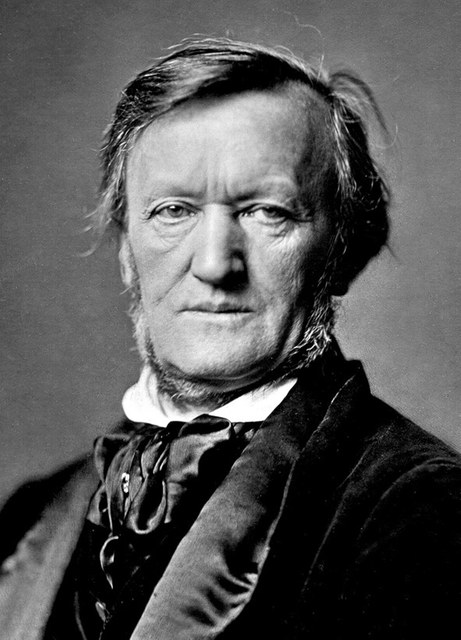
Richard Wagner

Richard Wagner
bdi Franz Hanfstaengl /span /a · Public domain

German opera composer · 1813–1883 · Germany, Bavaria

Richard Wagner was a German composer who pioneered the concept of Gesamtkunstwerk (total work of art) and founded the Bayreuth Festival.

The kit

  • Achievements — Richard Wagner composed the four-opera Ring Cycle and introduced the concept of Gesamtkunstwerk or total work of art.
  • Patronage — Richard Wagner received patronage from King Ludwig II of Bavaria, who settled his debts and enabled the Bayreuth Festival Theater.
  • Conflicts — Richard Wagner wrote the anti-Semitic tract Judaism in Music attacking Mendelssohn and Meyerbeer and was exiled after Dresden's May Uprising.
  • Legacy — Richard Wagner's Bayreuth Festival Theater opened in 1872 and annually performs his Ring Cycle and other music dramas.

Runs with

Opera
pioneered music dramas including Tannhäuser and Tristan und Isolde open card →
Bavaria
received patronage from Ludwig II who funded Bayreuth theater open card →
Paris
never premiered works there after Tannhäuser demonstration against Napoleon III open card →
church

The ladder · 9 clues

H

The founder of the Bayreuth [bye-ROYT] opera house, where his Ring Cycle is annually performed?

H

In Judaism in Music, this man criticized the influence of Meyerbeer and Mendelssohn.

H

This man never premiered his works in Paris again after the Jockey Club used a performance of his Tannhauser [TAHN-hoyz-er] to stage a demonstration against Napoleon III.

H

This composer orchestrated an arrangement of Beethoven’s 9th Symphony for the 1872 opening of the Bayreuth Festival Theater, where this man premiered his Ring cycle four years later.

M

The patronage of King Ludwig II allowed this composer of Tannhäuser to construct a theater for his "music dramas" at Bayreuth. Name this German opera composer of the Ring Cycle.

M

This man's music was criticized as pandering to extremists in the Untimely Meditations of Friedrich Nietzsche, which includes an essay about this man in Bayreuth [BYE-roit].

M

This composer, who wrote the controversial essay “Jewishness in Music,” wrote an opera with excerpted numbers such as “Elsa’s Procession to the Cathedral” and the “Bridal Chorus.” The Bayreuth Festival honors the operas of this composer of the Ring Cycle.

E

This man's debt was settled by Ludwig II of Bavaria, under whose patronage he premiered Tristan und Isolde. name this notedly anti-Semitic composer of the Ring Cycle.

E

This composer of “Ride of the Valkyries” depicted the burning of Valhalla in the last of a cycle of four operas.

10 more clues from the record
H

While exiled to Switzerland for his role in Dresden’s May Uprising, he wrote the essay Artwork of the Future, laying out his idea of the “total work of art,” or Gesamtkunstwerk.

H

In “Art and Revolution,” this man introduced the idea of the “total work of art.” One of his operas ends with the “Liebstod” and opens with a namesake harmonically-ambigous chord.

H

A theory surrounding this man’s death include a heart attack caused by an argument with his wife over his affair with the singer Carrie Pringle.

H

This man attacked Felix Mendelssohn in the anti-Semitic tract On Jewishness in Music. He used the term “music dramas” to describe his operas.

H

This man’s third opera is based on the life of a medieval Italian populist leader who was known as the “last of the tribunes”.

H

This composer wrote about synthesizing opera and drama, which he called Gesamtkunstwerk [guh- ZAHMT-koonst-verk].

H

One of this composer’s operas begins with 136 measures of a four-minute long E-flat major drone.

H

This composer was a close friend of Friedrich Nietzsche before the philosopher repudiated this man’s late works.

H

This man inserted a bacchanale into the “Paris version” of an opera inspired by the Wartburg Song Contest.

H

This composer was exiled prior to the premier of one of his operas after he took part in the May Uprising.
Watch out: Friedrich Nietzsche initially befriended Wagner but later repudiated his works in essays including one about Wagner in Bayreuth
#967 · Classical Composers · Level 2

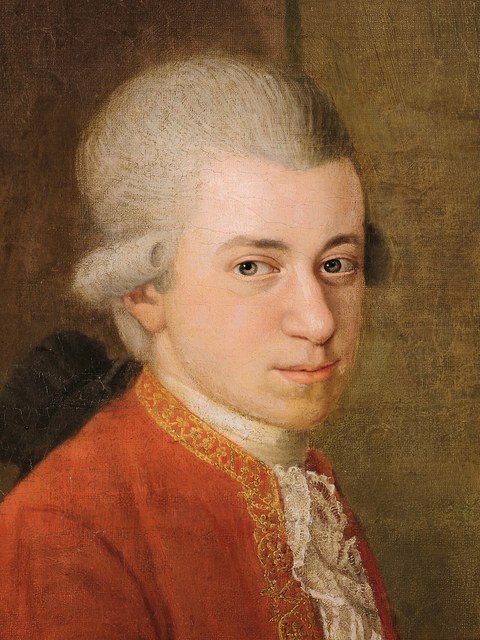
Wolfgang Amadeus Mozart

Wolfgang Amadeus Mozart
Johann Nepomuk della Croce /a · Public domain

Austrian composer · 1756–1791 · Salzburg, Vienna

Wolfgang Amadeus Mozart was an Austrian child prodigy who composed 41 symphonies, numerous operas, and a D minor Requiem.

The kit

  • Rise — Mozart was born in Salzburg to Leopold Mozart, who wrote A Treatise on the Fundamental Principles of Violin Writing.
  • Achievements — Mozart composed The Magic Flute with librettist Emmanuel Schikaneder, featuring the Queen of the Night's coloratura high Fs.
  • Achievements — Mozart's final symphony ends with a five-voice fugue and was nicknamed the Jupiter Symphony by Johann Salomon.
  • Death & succession — Mozart died partway through his D minor Requiem's "Lacrimosa" section, which Franz Xaver Süssmayr completed in 1791.

Runs with

Opera
composed The Magic Flute and The Abduction from the Seraglio open card →
Jupiter
final symphony nicknamed Jupiter ends with five-voice fugue open card →
Roman EmperorPiano Concerto

The ladder · 9 clues

H

This compoeser’s twenty-fifth piano concerto is nicknamed “Coronation” for its use during the ascension of Leopold II to Holy Roman Emperor.

H

This composer’s final three string quartets were dedicated to King Friedrich Wilhelm II, and his fourteenth quartet was nicknamed for its chromatic slow introduction.

H

A composer with this surname, instead of Michael Haydn, was the likely composer of the Toy Symphony and wrote A Treatise on the Fundamental Principles of Violin Writing.

H

One concerto by this man was premiered by Anton Stadler and was originally written for basset horn.

M

His final symphony ends with a five-voice fugue and was nicknamed by Johann Salomon. name this composer of the Jupiter Symphony and “Rondo Alla Turca.”

M

The composer of A Little Night Music and the opera The Magic Flute, F name this 18th-century Austrian composer and child prodigy.

M

This composer wrote a serenade and symphony for the Haffner family.

E

give this surname of Salzburgers Leopold and his son, the composer of The Magic Flute, Wolfgang Amadeus.

E

This composer of the Dissonance and Prussian quartets was commissioned by Count Walsegg to write a piece that Franz Sussmayr completed after this man died partway through completing its “Lacrimosa” section. name this Austrian composer of a D minor Requiem, a child prodigy who composed 41 symphonies.

10 more clues from the record
H

A fantasia for piano titled Agonia e morte di [this man] was written by Franz Xaver Süssmayr [[SOOS-my-er]] who was also recruited to finish another work by this man in 1791.

H

This man employed his own sister-in-law Josefa Weber [[yoh-SEH-fah VEH- buh]] to perform the role of Queen of the Night in one opera.

H

An opera by this composer, whose aria “Der Holle Rache” is known for its coloratura high Fs, had a libretto by Emmanuel Schikaneder that was probably inspired by Freemasonry.

H

Georg Fredrich Daumer claimed that this composer was murdered by freemasons for revealing their secrets in an opera in which the Queen of the Night enlists Tamino to save her daughter.

H

This composer popularized a percussion-heavy style music inspired by Janissary bands with an opera in which Belmonte rescues Konstanze from Pasha Selim’s harem.

H

What composer's eleventh piano sonata contains a final movement usually known as the "Rondo Alla Turca" for its Ottoman-inspired sound?

H

This composer wrote of traveling “every Sunday at twelve o’clock” to meet Gottfried van Swieten to study manuscripts of Bach and Handel.

H

In 1944, Joseph Stalin was so enthralled at a Maria Yudina recording of one of this composer’s works that he requested an immediate copy of the performance.

H

Alfred Einstein was the foremost 20th century biographer of this composer, whose 26th piano concerto was played at the coronation of Leopold II.

H

This composer's life was depicted in a namesake film directed by Miloš [[MEE-loash]] Forman. name this Austrian composer of The Magic Flute.

Watch out: Leopold Mozart also composed; the Toy Symphony was likely Wolfgang's, not Michael Haydn's
#968 · Classical Composers · Level 2

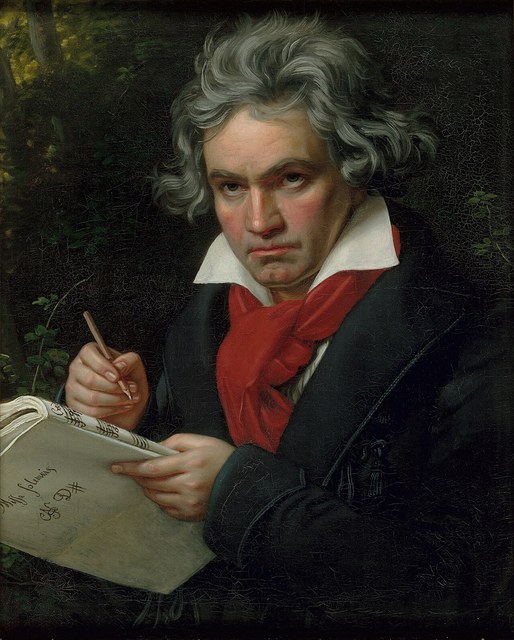
Ludwig van Beethoven

Ludwig van Beethoven
bdi Joseph Karl Stieler /span /a · Public domain

German composer · 1770–1827 · Vienna, Austria

Ludwig van Beethoven was a German composer who wrote nine symphonies, the last featuring the "Ode to Joy," while largely deaf.

The kit

  • Rise — Ludwig van Beethoven was commissioned by the Russian ambassador to Austria to write the Rasumovsky string quartets.
  • Achievements — Ludwig van Beethoven included "The Absence" and "The Return" movements in his piano sonata Les Adieux, inspired by Archduke Rudolph fleeing Vienna.
  • Conflicts — Ludwig van Beethoven angrily rededicated his Eroica Symphony to honor "a great man" after Napoleon declared himself Emperor.
  • Legacy — Ludwig van Beethoven's overture for a play about a rebellious Dutch nobleman was used as a theme song in the 1956 Hungarian Revolution.

Runs with

Eroica Symphony
his third symphony, originally dedicated to Napoleon Bonaparte open card →
Opera
Austria
lived in Vienna; commissioned by Russian ambassador to Austria open card →
Athens
wrote Dervish chorus and Turkish march for The Ruins of Athens open card →

The ladder · 9 clues

H

He included a funeral march in a symphony which was dedicated “to the memory of a great man” after its original dedicatee, Napoleon Bonaparte, declared himself Emperor.

H

During the Second World War, a piece by this composer was used as the Allied sign for victory.

H

This composer was commissioned by the Russian ambassador to Austria to write the Rasumovsky (RAH-zuh-MAHV-skee) string quartets.

H

This composer wrote a piece originally intended for a “mechanical orchestra” to commemorate the Battle of Vitoria, Wellington’s Victory.

M

That symphony was his Eroica. name this German composer of nine symphonies, the last of which contains the “Ode to Joy”.

M

originally planned on dedicating his Eroica Symphony to Napoleon?

M

The notes G-G-G-E form the “fate knocking on the door” motif in this German composer’s fifth of nine symphonies.

E

In 1989 at the Berlin Wall, Leonard Bernstein directed a modified version of this composer’s Choral Symphony. name this German composer who used the “Ode to Joy” in his ninth and final symphony.

E

That symphony was his Eroica. name this German composer of nine symphonies, the last of which contains the “Ode to Joy”, and was composed while he was largely deaf.

10 more clues from the record
H

He included a second- movement funeral march in his third symphony, which he angrily rededicated to honor "a great man" after hearing that Napoleon had declared himself emperor.

H

This composer wrote a Dervish chorus and a Turkish march for The Ruins of Athens, a selection of music to accompany a play written by German diplomat August von Kotzebue.

H

This composer included movements titled “The Absence” and “The Return” in a piano sonata inspired by his patron Archduke Rudolph fleeing Vienna, Les Adieux.

H

Right after the JFK assassination, the Boston Symphony Orchestra stopped their program to play the second movement of this composer’s third symphony, a C-minor funeral march.

H

This composer’s overture for a play about a rebellious Dutch nobleman was used as a theme song in the 1956 Hungarian Revolution.

H

One piece by this composer was based on a poem by Friedrich Schiller and was unusual for its length and its use of a choral section.

H

One work by this composer, focusing on the dedication of a theatre in Pest [], laments the Ottoman conquest of Athens.

H

He commemorated the Battle of Vitoria with the piece Wellington's Victory and donated its funds to victims of the Peninsular War.

H

One of this composer’s most famous pieces names an operation during the Blitz that destroyed much of Coventry.

H

This composer reused a theme from his Gegenliebe in a piece that had to be restarted at its premiere concert, his Choral Fantasy.

#969 · Classical Composers · Level 2

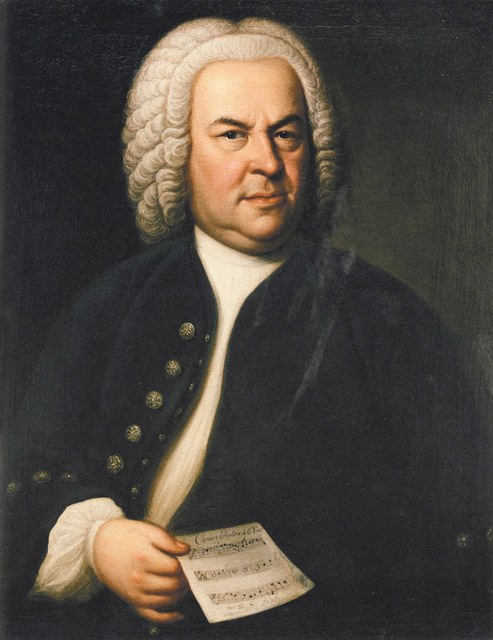
Johann Sebastian Bach

Johann Sebastian Bach
bdi Elias Gottlob Haussmann /span /a · Public domain

German Baroque composer · 1685–1750 · Germany

Johann Sebastian Bach was a German Baroque composer who wrote the Brandenburg Concertos, Mass in B Minor, and Well-Tempered Clavier.

The kit

  • Achievements — Johann Sebastian Bach composed the Brandenburg Concertos for Margrave Christian Ludwig and hundreds of cantatas including the Hunting Cantata.
  • Achievements — Johann Sebastian Bach wrote the Well-Tempered Clavier, a collection of preludes and fugues in every major and minor key.
  • Achievements — Johann Sebastian Bach composed the Goldberg Variations to cure Count Kaiserling's insomnia, an aria with thirty variations twice recorded by Glenn Gould.
  • Legacy — Johann Sebastian Bach had twenty children, several of whom became composers including Carl Philipp Emanuel and Johann Christian.

Runs with

Frederick the Great
gave Bach a melody used as basis for Musical Offering open card →
Christian
Margrave Christian Ludwig received Brandenburg Concertos open card →
Poland
Augustus III of Poland received two-movement liturgical work open card →
Martin Luther
Luther hymn basis for Easter cantata Christ lag in Todes Banden open card →

The ladder · 9 clues

H

This composer wrote a piece for the Duke of Saxe-Wessenfels that includes the aria “Sheep may safely graze.” This composer of the Hunting Cantata included two viola da gambas but no violins in the sixth and final work in a collection named for a German state.

H

He wrote a piece to cure Count Kaiserling’s insomnia; that piece consists of an aria and thirty variations and was twice recorded by Glenn Gould.

H

Experiments with the Moog synthesizer led Wendy Carlos to produce a “Switched-On” version of this composer’s work.

H

In 1823, Bella Salomon gifted a complete manuscript of one of this composer’s works to Felix Mendelssohn, whose staging of the piece five years later kicked off a revival of this man’s work.

M

The Brandenburg Concertos were written by this German Baroque composer, the oldest of the “Three B’s”.

M

This composer’s Musical Offering was based on a melody given to him by Frederick the Great.

M

One of his pieces unusually calls the Credo “Symbolum Nicenum,” and an unfinished work of his, written for unspecified instrumentation, includes four canons and fourteen “contrapuncti.” name this Baroque composer of a Mass in B Minor and The Art of the Fugue.

E

A collection of preludes and fugues in every major and minor key was composed by this Baroque composer of the Goldberg Variations and the Well-Tempered Clavier.

E

This composer’s choral works include his Mass in B Minor, St. Matthew Passion, and hundreds of cantatas. name this Baroque composer who had twenty children and wrote the Brandenburg Concertos.

10 more clues from the record
H

This composer included a three-voice and six-voice ricercar [ri-TZER-car] in a collection of keyboard pieces based on a theme given to him by Frederick the Great.

H

This composer presented a set of six instrumental works to Margrave Christian Ludwig, and a melody by Frederick the Great was used as the basis for this composer’s Musical Offering.

H

This composer included simple keyboard pieces in a 1725 “Notebook” for his wife, and his chorales formed the basis for modern counterpoint rules.

H

In his early career, this composer used Psalm 22 as the basis for his work “the Miserable Shall Eat,” which was composed for the Leipzig city council.

H

Manuscripts of this prolific composer's works reveal the handwriting of many copyists, including several of his twenty-one children.

H

This composer used a Martin Luther hymn as the basis for his Easter cantata Christ lag in Todes Banden.

H

When this Eisenach native demanded that his Weimar employers release him from his post, they threw him in jail instead.

H

This man presented Augustus III of Poland with a two-movement liturgical work that he later expanded.

H

This composer’s many sons included the composers Carl Phillip Emmanuel and Johann Christian.

H

This composer wrote a piece for the funeral of the Electress of Saxony Christiane Eberhardine known as the Trauerode.

#970 · Classical Composers · Level 2

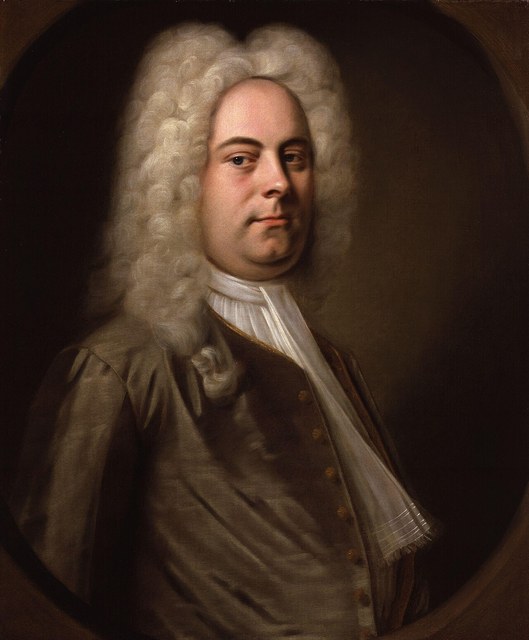
George Frideric Handel

George Frideric Handel
bdi Attributed to Balthasar Denner /span /a · Public domain

Baroque composer · 1685–1759 · England (born Germany)

George Frideric Handel was a Baroque composer whose Messiah includes the Hallelujah Chorus and whose Zadok the Priest has been played at every British coronation since 1727.

The kit

  • Achievements — George Frideric Handel composed the coronation anthem Zadok the Priest for George II, performed at every subsequent British coronation.
  • Achievements — George Frideric Handel wrote Music for the Royal Fireworks to celebrate the Treaty of Aix-la-Chapelle ending the War of the Austrian Succession.
  • Achievements — George Frideric Handel's 1749 premiere caused a three-hour traffic jam on London Bridge.
  • Legacy — George Frideric Handel's oratorio Messiah features "The trumpet shall sound" and legendarily moved George II to stand during the Hallelujah Chorus.

Runs with

George
wrote coronation anthems for George II and a Thames concert for George I open card →
Solomon
War of the Austrian Succession
Music for Royal Fireworks celebrated its end via Treaty of Aix-la-Chapelle open card →
Opera
composed operas including Rinaldo and Serse open card →

The ladder · 9 clues

H

This composer set a description of Solomon’s anointing for an anthem that has been played at the coronation of every British monarch since George II.

H

This man included a largo al siciliana titled “La Paix” in a piece written to celebrate the Treaty of Aix-La-Chapelle.

H

The premiere of a 1749 work by this composer of Rinaldo caused a three-hour traffic jam on London Bridge.

H

After several bishops sent this man unwanted advice, this composer sniped back “I have read my Bible very well and shall choose for myself.” The aria “The trumpet shall sound” accompanies a trumpet solo in a work by this composer that legendarily moved George II to his feet.

M

An oratorio composed by this man features the “Hallelujah” chorus. name this composer of Music for the Royal Fireworks and the oratorio Messiah.

M

Zadok the Priest was composed by this Baroque composer whose Hallelujah Chorus is sung during the oratorio Messiah.

M

In one of this composer’s choral works, the title character “and Nathan the Prophet anointed Solomon king”. what composer wrote Judas Maccabeus and Zadok the Priest?

E

Another of his compositions was written for George I, who requested a concert on the River Thames [temz].

E

This man helped commemorate the signing of the Treaty of Aix-la-Chapelle in his Music for the Royal Fireworks. name this composer whose oratorio Messiah includes the Hallelujah chorus.

10 more clues from the record
H

In an opera by this composer, the Saracen king Argante abducts Almirena, who sings a plea for freedom in the aria "Lascia ch’io pianga" [[LAHSH-ya KEE-oh PYON-gah]].

H

This composer likely hired horn players from Bohemia for the premiere of a piece whose first suite, in F major, includes an “Adagio e staccato” movement.

H

This composer wrote a Te Deum to celebrate the Treaty of Utrecht. The "Air and variations" from this composer's Suite no. 5 for harpsichord is also known as The Harmonious Blacksmith.

H

After William Augustus’ victory at the Battle of Culloden, this composer wrote a work about the persecution of Jews during under Seleucid rule.

H

Against his will, this composer omitted string instruments from a work he wrote in 1749 celebrating the end of the War of the Austrian Succession.

H

He included "La Paix" [pay] and "La Rejouissance" [ray-zhoo-ee-sahnss] in a piece that celebrates the end of the War of the Austrian Succession.

H

This composer wrote a cantata beginning “Eternal source of light divine” to celebrate Queen Anne’s birthday.

H

While working for the Colonna family, this composer set Psalm 110 to music in his Dixit Dominus.

H

A set of four works by this composer include Let Thy Hand Be Strengthened and My Heart is Inditing.

H

The aria “Ombra ma fiu” from his opera Serse is marked “larghetto” but is often called his Largo.

#971 · Classical Composers · Level 2

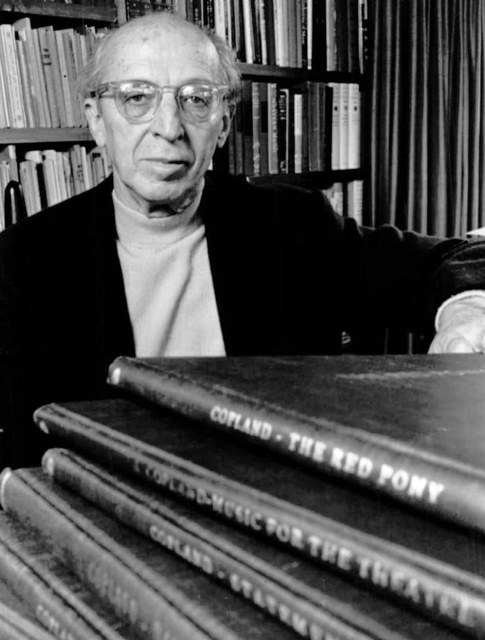
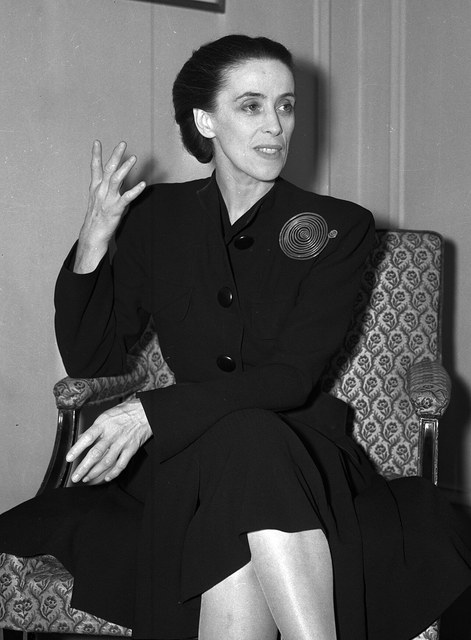
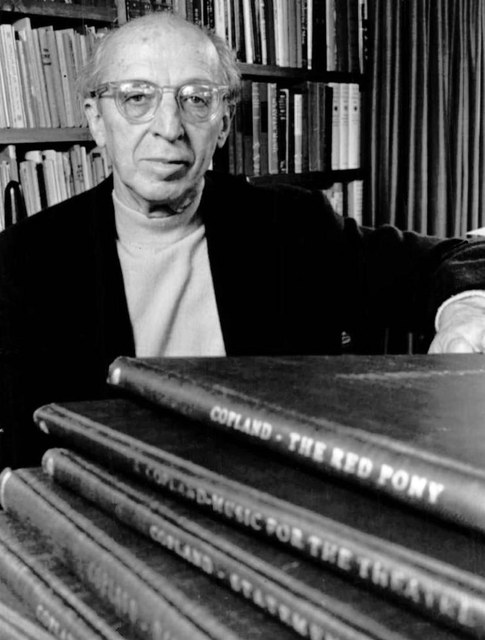
Aaron Copland

Aaron Copland
CBS Television · Public domain

American composer · 1900–1990 · United States

Aaron Copland was an American composer nicknamed 'the Dean of American Composers' who pioneered an accessible Americana style in the 1930s–40s.

The kit

  • Achievements — Aaron Copland wrote Fanfare for the Common Man during World War II, commissioned by Eugene Goossens for a Henry Wallace speech about the 'century' of the common man.
  • Achievements — Aaron Copland composed the ballet Appalachian Spring for Martha Graham, incorporating variations on the Shaker hymn 'Simple Gifts' and depicting pioneers building a Pennsylvania farmhouse.
  • Achievements — Aaron Copland created A Lincoln Portrait, quoting 'Camptown Races' and 'Springfield Mountain' alongside excerpts from the Gettysburg Address as a World War II patriotic piece.
  • Legacy — Aaron Copland experimented with twelve-tone technique in the mid-1950s, composing Piano Fantasy and Connotations for the opening of Lincoln Center.

Runs with

Billy the Kid
Copland composed Wild West ballet depicting the outlaw shot by Pat Garrett open card →
Appalachian Spring
Copland wrote this Martha Graham ballet featuring 'Simple Gifts' variations open card →
World War II
Copland composed Fanfare for the Common Man and Lincoln Portrait during the war open card →
Mexico

The ladder · 9 clues

H

This man was inspired by a Henry Wallace speech about the “130 million [...] who are in this war to the finish,” and he quoted “As I would not be a slave, so I would not be a master” in his Lincoln Portrait.

H

This man included “I Bought Me a Cat” and the Dodger song in his Old American Songs.

H

This composer wrote the score to a documentary about war refugees relocating to Cummington, Massachusetts, as well as the score to a film featuring Greenbelt, Maryland, The City, that premiered at the 1939 World’s Fair.

H

This composer wrote an opera inspired by James Agee and Walker Evans’ Let Us Now Praise Famous Men and wrote a two-movement Clarinet Concerto for Benny Goodman.

M

This composer of The Tender Land depicted the life of an outlaw who was shot by Pat Garrett in another work.

M

This composer incorporated "Springfield Mountain" and "Camptown Races," along with excerpts from the Gettysburg Address, into his World War II patriotic piece A Lincoln Portrait.

M

This composer collaborated with choreographer Martha Graham on his Wild West-inspired ballet Billy the Kid.

E

This composer also wrote a work for Martha Graham that includes variations on the Shaker hymn “Simple Gifts.” name this American composer of the ballets Billy The Kid and Appalachian Spring.

E

He scored ballets about Billy the Kid and about pioneers building a farmhouse in western Pennsylvania. name this composer of Appalachian Spring.

8 more clues from the record
H

Eugene Goossens commissioned a piece by this man named for a Henry Wallace speech about the “century” of the title figure; that piece for brass and percussion was written during World War II.

H

This composer arranged a campaign song that had been directed against James Blaine, “The Dodger,” as part of his Old American Songs.

H

The fanfare Buckaroo Holiday begins a ballet by this composer, whose choreographer, Agnes de Mille, later worked on the thematically similar Oklahoma!.

H

In the mid-1950s, this man began to experiment with twelve-tone technique, composing works such as Piano Fantasy and Connotations.

H

He quoted “Camptown Races” in a composition that features a narrator reciting the Gettysburg Address.

H

This composer wrote the twelve-tone Connotations for the opening of Lincoln Center.

E

This composer wrote “Hoe-Down” and quoted “Simple Gifts” in compositions about cowboys and pioneers. name this composer of Americana ballets like Rodeo and Appalachian Spring.

E

The creator of Fanfare for the Common Man, nicknamed “the Dean of American Composers,” who is this man who composed Appalachian Spring?

Watch out: Billy the Kid ballet often confused with the outlaw himself, whom Copland depicted being shot by Pat Garrett
#972 · Classical Composers · Level 2

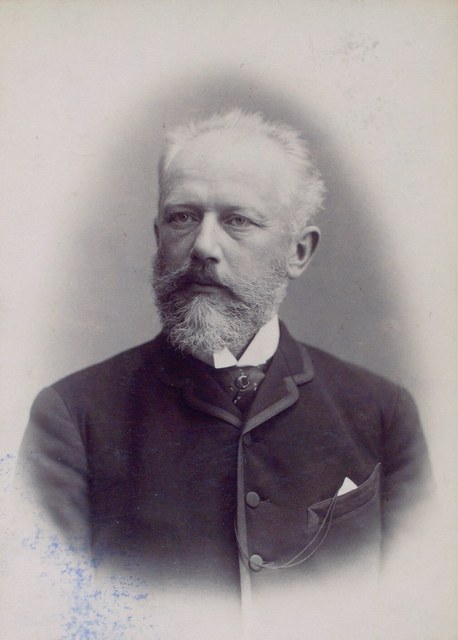
Pyotr Ilyich Tchaikovsky

Pyotr Ilyich Tchaikovsky
bdi Émile Reutlinger /span /a · Public domain

Russian Romantic composer · 1840–1893 · Russia

Pyotr Ilyich Tchaikovsky was a Russian composer whose works include the 1812 Overture and Piano Concerto No. 1 in B-flat minor.

The kit

  • Rise — Pyotr Ilyich Tchaikovsky transitioned from civil service to full-time composition after wealthy patron Nadezhda Von Meck sponsored him on condition they never meet.
  • Achievements — Pyotr Ilyich Tchaikovsky conducted at the opening night of Carnegie Hall on May 5, 1891, alongside Walter Damrosch.
  • Achievements — Pyotr Ilyich Tchaikovsky wrote his Piano Concerto No. 1 in B-flat minor after Nikolai Rubenstein rejected it; Van Cliburn performed it to win the 1958 competition.
  • Legacy — Pyotr Ilyich Tchaikovsky composed the Marche Slave in 1876 for a Red Cross benefit concert supporting wounded Serbian soldiers in the Serbo-Turkish War.

Runs with

1812 Overture
composed it to commemorate Battle of Borodino with cannons and La Marseillaise open card →
Opera
wrote music and libretto for The Oprichnik; submitted Vakula the Smith anonymously open card →
Battle of Borodino
commemorated it in 1812 Overture by pitting La Marseillaise against God Save the Tsar open card →
Tsar
used anthem God Save the Tsar in 1812 Overture to represent Russian forces open card →

The ladder · 9 clues

H

This composer reused a march from his unfinished opera Undine for the Allegretto of his second symphony, which quoted three Ukrainian folk songs.

H

Nikolai Rubenstein rejected his first piano concerto, which Van Cliburn performed in Moscow in 1958 to win his namesake piano competition.

H

This composer quoted “Come, my dearest, why so sad this morning,” in a piece written to benefit wounded Serbian soldiers in 1876.

H

This man was able to transition from civil servitude to composition full-time after the wealthy patron Nadezhda [[nah-DESH-dah]] Von Meck sponsored him on thecondition that they never meet in person.

M

This composer of the Marche Slave and Little Russian Symphony wrote another work featuring “La Marseillaise,” “God Save The Tsar,” and some cannon fire. name this Russian composer of the 1812 Overture.

M

Part of “La Marseillaise” [mar-sigh-ehz] is followed by cannon fire in one of this man’s works, which was composed to commemorate the Battle of Borodino. name this Russian composer of the 1812 Overture.

M

This composer celebrated Romanov imperialism with the polonaise that ends his Symphony no. 3, “Polish.” This composer of the Marche Slave used “La Marseillaise” to represent Napoleon’s invading army in an overture that, when played in the US, often accompanies fireworks. name this Russian composer who included cannons in his 1812 Overture.

E

This man used cannonfire and segments from the “La Marseillaise” for one of his pieces set during the Battle of Borodino. name this Russian composer of the 1812 Overture.

E

Another of his pieces commemorates the Battle of Borodino by pitting the anthems "La Marseillaise" [Mar-SAY-ez] and "God Save the Tsar" against each other. name this composer of the 1812 Overture.

10 more clues from the record
H

A B-flat minor piece by this composer opens with a four-note horn motif and a melody in D-flat major and was premiered by Hans von Bulow after being rejected by Nikolai Rubenstein.

H

On the opening night of Carnegie Hall, May 5, 1891, a concert was conducted by Walter Damrosch [[DAHM-roash]] and this Russian composer of the Pathétique Symphony.

H

At a competition in the Soviet Union, American pianist Van Cliburn [CLYE-burn] led an acclaimed performance of this composer's Piano Concerto No. 1 in B-flat minor.

H

This man used the quote “art is eternal, life is short” while anonymously submitting his opera Vakula the Smith to a competition.

H

This composer was commissioned to write a piece for a Red Cross benefit concert commemorating his country’s intervention in the Serbo-Turkish War.

H

In support of wounded Serbian veterans of a 1876 conflict with the Ottoman Empire, this man penned his “Marche slave” for charity.

H

This composer supported the eventual victors of the Serbo-Turkish War with his Marche Slave [Marsh slav].

H

This man wrote his first orchestral piece, “The Storm,” during one of his many visits to Ukraine.

H

This composer paid tribute to Mozart in a piece written for cellist William Fitzhagen.

H

This composer wrote both the music and libretto to his opera, The Oprichnik.

Watch out: Nikolai Rubenstein rejected Tchaikovsky's first piano concerto, not premiered it
#973 · Classical Composers · Level 2

Leonard Bernstein

Leonard Bernstein
bdi Jack Mitchell /span /a · CC BY-SA 4.0

American conductor and composer · 1950s–1989 · United States

Leonard Bernstein was an American conductor and composer who led the New York Philharmonic and wrote the music for West Side Story.

The kit

  • Rise — Leonard Bernstein became the first American to conduct at La Scala in the 1950s and brought Young People's Concerts to CBS.
  • Achievements — Leonard Bernstein composed the Kaddish Symphony, his third symphony dedicated to JFK's memory and based on the Jewish prayer for the dead.
  • Achievements — Leonard Bernstein collaborated with Jerome Robbins and Stephen Sondheim on West Side Story, a musical featuring the Sharks and Jets.
  • Legacy — Leonard Bernstein conducted Beethoven's Ninth at the Brandenburg Gate in 1989, replacing "Freude" with "Freiheit" to celebrate freedom.

Runs with

Berlin Wall
conducted Beethoven's Ninth at Brandenburg Gate after fall open card →
Candide
composed 1956 operetta adaptation with Richard Wilbur open card →
York
conductor of New York Philharmonic open card →
Berlin
conducted 1989 Ode to Joy performance there open card →

The ladder · 9 clues

H

This man hosted a fundraiser for the Black Panthers that Tom Wolfe described as “radical chic.” His third symphony was dedicated to the memory of JFK and was based on the Jewish prayer for the dead.

H

This man hosted the Black Panthers fundraising party that Tom Wolfe mocked in the essay "Radical Chic." In the 1950s, this conductor brought the Young People's Concerts to CBS shortly after becoming the first American to conduct at La Scala.

H

In a work by this man, a single actress portrays First Ladies Julia Grant and Lucy Hayes in “Duet for One.” This man’s 1600 Pennsylvania Avenue closed after only seven performances.

H

In 1956, this composer collaborated with Richard Wilbur on an operetta version of Candide, a year before working with Stephen Sondheim on an adaptation of Romeo and Juliet.

H

This man had the word “Freude” replaced with “Freiheit” while conducting a performance of Beethoven’s Ninth at the Brandenburg Gate in 1989.

H

This individual conducted a concert on Mount Scopus to celebrate Israel’s victory in the Six-Day War.

M

Another piece by this composer of the Kaddish Symphony included a “rumble” between the Sharks and Jets and songs such as “Gee, Officer Krupke” and “America”. what conductor of the New York Philharmonic wrote the music for West Side Story?

M

He collaborated with Jerome Robbins and Stephen Sondheim on a musical about warring Puerto Rican and Caucasian gangs based on Romeo and Juliet. name this Jewish composer of West Side Story.

M

A Christmas 1989 performance of Ode to Joy in Berlin was conducted by this composer of the score to West Side Story.

1 more clues from the record
H

John F. Kennedy was the dedicatee of his Kaddish symphony.

Watch out: His operetta Candide (1956) is sometimes confused with Voltaire's original novel
#974 · Classical Composers · Level 2

Dmitri Shostakovich

Dmitri Shostakovich
Unknown author Unknown author · Public domain

Soviet composer · 1906–1975 · Soviet Union

Dmitri Shostakovich was a Soviet composer who wrote fifteen symphonies while navigating Stalin's demands and denunciations.

The kit

  • Rise — Dmitri Shostakovich's opera Lady Macbeth of the Mtsensk District was attacked in the 1936 Pravda article "Muddle Instead of Music" after Stalin disliked it.
  • Achievements — Dmitri Shostakovich wrote the Leningrad Symphony in 1941, inspired by Hitler's attack on Russia, featuring an "Invasion" theme repeated twelve times to depict Nazi invasion.
  • Conflicts — Dmitri Shostakovich was accused of Formalism by Pravda, after which he wrote his D minor Fifth Symphony to rehabilitate his standing with Soviet authorities.
  • Legacy — Dmitri Shostakovich dedicated his eighth string quartet to "victims of fascism and war" and included a motif symbolizing his own name.

Runs with

Joseph Stalin
denounced Shostakovich multiple times for formalism and unapproved artistic choices open card →
fascism
dedicated his eighth string quartet to victims of fascism and war open card →
Russia
wrote Leningrad Symphony inspired by Hitler's 1941 attack on Russia open card →
World War II
served as fireman during World War II and composed Leningrad Symphony open card →

The ladder · 9 clues

H

This composer dedicated his eighth string quartet to “victims of fascism and war.” The 1936 article “Muddle Instead of Music” attacked this man’s opera Lady Macbeth of the Mtsensk District, because Joseph Stalin didn’t like it.

H

During World War Two, this composer served his local community as a fireman, and although he was denounced several times by Josef Stalin, this composer joined the Communist Party of the Soviet Union in 1960.

H

This composer quoted the “Habanera” from Bizet’s [bee-zay’s] Carmen in the opening movement of a symphony whose finale was described as a “parody of shrillness” in the spurious autobiography Testimony.

H

A theme from a symphony by this composer, which inspired a song from Franz Lehar’s operetta The Merry Widow, is repeated twelve times to depict a Nazi invasion of his country.

M

An article in Pravda accused this composer of Formalism, after which he wrote his D minor Fifth Symphony. name this Soviet composer of the Leningrad Symphony.

M

This composer had to premiere one piece in Kuybyshev [[KOY-bish-shev]] after being evacuated due to a Nazi siege of a Russian city. name this Soviet composer of the "Leningrad Symphony."

M

The release of the film The Iron Curtain led to the lawsuit of “this composer” v. Twentieth Century-Fox, as some of his public domain music had been used in the film. His second and third symphonies are subtitled after the months of October and May.

E

This composer was inspired by Hitler’s 1941 attack on Russia to write his Leningrad Symphony, which includes a famous “Invasion” theme.

E

A total of fifteen symphonies were written by this neoclassical composer of the Leningrad Symphony whose music was often forced to follow the demands of Soviet leaders.

7 more clues from the record
H

This composer's ballet The Limpid Stream was denounced by Platon Kerzhentsev [[plah-TOHN kehr-ZHEN-tsef]] for its depiction of peasant farmers.

H

Andrei Zhdanov commissioned this composer to create a Suite on Finnish Themes that was intended to be played in Helsinki at the conclusion of the Winter War.

H

A choral symphony by this composer includes a depiction of the life of Anne Frank, and this composer’s third symphony celebrates May Day.

H

This composer's son, Maxim, supported the controversial book Testimony, which Solomon Volkov claimed were this composer's memoirs.

H

This composer’s 8th string quartet begins with a motif symbolizing his own name.

H

dedicated his eighth string quartet “to the victims of fascism and war”?

H

This composer was the alleged author of the posthumously published memoir Testimony.

Watch out: Testimony, a spurious autobiography attributed to Shostakovich and promoted by his son Maxim, is of disputed authenticity
#975 · Classical Composers · Level 2

Frédéric Chopin

Frédéric Chopin
bdi Louis-Auguste Bisson /span /a · Public domain

Polish Romantic composer-pianist · 1810–1849 · Poland; Paris

Frédéric Chopin was a Polish Romantic composer and virtuoso pianist who emigrated to Paris and wrote primarily for solo piano.

The kit

  • Rise — Frédéric Chopin emigrated to Paris as a young man and popularized the nocturne, a form invented by John Field.
  • Achievements — Frédéric Chopin wrote the "Black Key" and "Revolutionary" Etudes along with many mazurkas and polonaises honoring his native Poland.
  • Achievements — Frédéric Chopin was the first to use the term "ballade" for instrumental music, likely inspired by Adam Mickiewicz's poetry.
  • Legacy — Frédéric Chopin's Piano Sonata no. 2's third movement was played at the funerals of Brezhnev, JFK, and Chopin himself.

Runs with

Poland
wrote mazurkas and polonaises honoring his native country open card →
Paris
emigrated there as a young man open card →
1848
wrote "Heroic" Polonaise responding to 1848 revolutions open card →
George
lover George Sand nicknamed his Polonaise "Heroic" open card →

The ladder · 9 clues

H

The third movement of this man’s Piano Sonata no. 2 in B-flat minor was played at Brezhnev’s, JFK’s, and his own funeral.

H

This composer’s Opus 10 and Opus 25 include a G-flat major work with rapid triplets in the right hand, and another written in response to the November Uprising.

H

One work by this composer in D-flat major is meant to depict a dog chasing its own tail, and another work by him uses repeating eighth-notes to represent a storm.

H

This composer used a repeating A-flat in the left hand to depict nasty weather while on a trip to Majorca [my-yor-kah].

H

This composer quoted the folk song “Oj, Magdolino” in one of a set of sixty-nine pieces he named after a native dance form.

H

This composer was the first to use the term “ballade” for instrumental music, likely inspired by the poetry of Adam Mickiewicz.

M

The “Black Key” and “Revolutionary” Etudes were written by this Polish composer of many mazurkas and polonaises.

M

This pianist, who emigrated to Paris as a young man, popularized a form invented by John Field, the nocturne. what composer and pianist’s mazurkas and polonaises paid tribute to his native Poland?

E

This composer wrote a theme and variations for piano and orchestra on Mozart's aria "Là ci darem la mano." This composer wrote a piano piece in response to the revolutions of 1848 that was nicknamed "Heroic" by his lover, George Sand.

4 more clues from the record
H

An A major work of his subtitled “Military” was played daily on his home country’s radio in protest of Nazi invaders.

H

This composer’s Prelude #20 in C minor was dubbed “Funeral March” by Hans von Bulow.

H

This composer’s only cello sonata, written in G minor, was dedicated to Auguste Franchomme.

H

This man added an Andante spinanto to the beginning of one of his compositions.

Watch out: The "Funeral March" nickname: Hans von Bülow dubbed Prelude #20 this, but the actual Funeral March is Sonata no. 2's third movement
#976 · Classical Composers · Level 2

Felix Mendelssohn

Felix Mendelssohn
bdi Eduard Magnus /span /a · Public domain

German Romantic composer · 1809–1847 · Germany

Felix Mendelssohn was a German Romantic composer who revived Bach's reputation and wrote the incidental music for A Midsummer Night's Dream.

The kit

  • Achievements — Felix Mendelssohn conducted an 1829 performance of J.S. Bach's St. Matthew's Passion which revived Bach's reputation.
  • Achievements — Felix Mendelssohn wrote incidental music for A Midsummer Night's Dream featuring a famous Wedding March.
  • Achievements — Felix Mendelssohn composed the Hebrides Overture after visiting Fingal's Cave during a trip to the United Kingdom.
  • Legacy — Felix Mendelssohn's incidental music to A Midsummer Night's Dream was replaced by Carl Orff under the Nazis.

Runs with

Martin Luther
included Luther's hymn in his Reformation Symphony's finale open card →
United Kingdom
visited and composed Hebrides Overture there open card →
Nazi Germany
his music was replaced by Orff under Nazi regime open card →
printing
wrote second symphony for Gutenberg printing press anniversary open card →

The ladder · 9 clues

H

This composer collected eight volumes of six Lieder [[LEE-deh]] in his Songs Without Words. name this Jewish-German composer who wrote the incidental music for A Midsummer Night’s Dream.

H

Prussia’s King Frederick William IV commissioned this man to write music for a play featuring the song “Ye spotted snakes.” Queen Victoria once claimed her favorite piece by this man was a song actually composed by his sister, Fanny.

H

This composer’s second symphony was written to celebrate the 400th anniversary of Gutenberg’s invention of the printing press, and he included a Martin Luther hymn in the finale of his fifth symphony.

H

The Herald Angels Sing." During a trip to the United Kingdom, this composer's visit to Fingal's Cave inspired his Hebrides [[HEH-brih-dees]] Overture.

H

Under the Nazis, Carl Orff was commissioned to replace this composer's incidental music to A Midsummer Night's Dream.

H

A visit to the ruins of Holyrood Chapel inspired this man’s third symphony, as well as his Hebrides Overture.

H

This composer conducted an 1829 performance of J.S. Bach's St. Matthew's Passion which revived Bach's reputation.

M

The Scottish Symphony was composed by, what composer whose music for A Midsummer Night’s Dream features a famous “Wedding March?”

E

The strings play the “Dresden Amen” in a piece by this composer that also makes use of the chorale “A Mighty Fortress is Our God;” that piece by this man was created to celebrate the 300th anniversary of the Augsburg Confession. name this German composer of the Reformation Symphony.

3 more clues from the record
H

This person’s death prompted Jenny Lind to establish a namesake scholarship foundation.

H

This composer's Festgesang [[FEST-ge-SAHNG]] was adapted into the Christmas Carol "Hark!

H

This composer was the grandson of a philosopher who inspired the Haskalah.

Watch out: Queen Victoria claimed her favorite piece by Mendelssohn was actually composed by his sister, Fanny
#977 · Classical Composers · Level 2

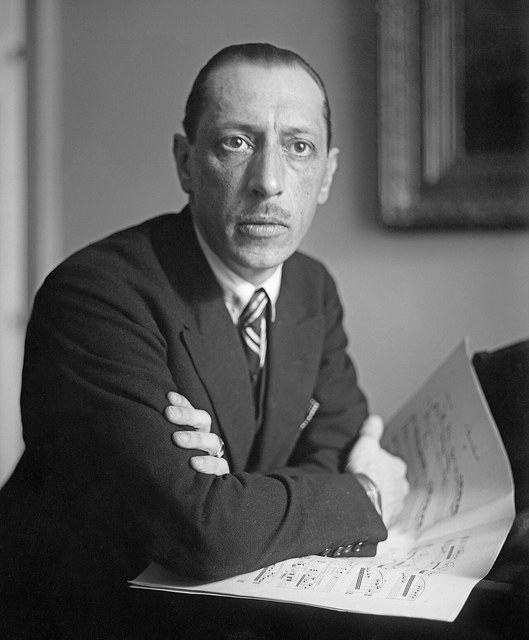
Igor Stravinsky

Igor Stravinsky
George Grantham Bain Collection · Public domain

Russian-born modernist composer · 1882–1971 · Russia, France, United States

Igor Stravinsky was a Russian-born modernist composer whose 1913 ballet The Rite of Spring caused a Parisian riot.

The kit

  • Rise — Igor Stravinsky first collaborated with Sergei Diaghilev's Ballets Russes on The Firebird, in which Prince Ivan destroys Kashchei's magic egg.
  • Achievements — Igor Stravinsky wrote the neoclassical Dumbarton Oaks concerto in E-flat major and set W.H. Auden's four haikus in Elegy for J.F.K.
  • Conflicts — Igor Stravinsky caused a 1913 riot with The Rite of Spring, which opens with a high bassoon solo and includes "Mystic Circles of Young Girls."
  • Legacy — Igor Stravinsky greatly influenced Shostakovich and was threatened with a $100 fine by Boston police for his dissonant Star-Spangled Banner arrangement.

Runs with

World War II
wrote Symphony in Three Movements inspired by WWII footage and Allied victory open card →
Paris
caused a riot at 1913 Paris premiere of The Rite of Spring open card →
Boston
threatened with $100 fine by Boston police for dissonant national anthem arrangement open card →
Russia
Russian-born composer who wrote ballets on Russian folklore themes open card →

The ladder · 9 clues

H

This composer was inspired by footage of World War II to write his Symphony in Three Movements.

H

The Boston police threatened this person with a $100 fine for using a dominant seventh chord in his arrangement of The Star-Spangled Banner.

H

This composer set a W.H. Auden text consisting of four haikus in his Elegy for J.F.K., and wrote a neoclassical piece in E-flat major titled for a Washington, D.C. estate that also hosted a 1944 conference that helped create the UN.

H

Allied victory in World War II inspired the coda of this composer’s Symphony in Three Movements, and a dissonant chord represents the title puppet in a ballet he wrote for Serge Diaghilev’s Ballet Russes.

M

He included “Mystic Circles of Young Girls” in a work that opens with a high bassoon solo.

M

Shostakovich was greatly influenced by this Russian composer who was known for a piece which caused civil unrest after its 1913 debut, The Rite of Spring.

M

One of Shostakovich’s major influences was this other diverse, Russian-born composer, 24 years his senior, whose works range from the twelve-tone vocal Elegy for J.F.K. to the riot-inducing ballet The Rite of Spring.

M

The encroaching Wehrmacht was thought to be the inspiration of the “invasion theme” of one work by this composer dedicated to a city that withstood a nearly 900 day siege during World War Two. name this Russian composer of the “Leningrad” Symphony.

E

This man wrote a ballet in which Kaschei the Immortal is defeated when Prince Ivan destroys a magic egg. name this Russian-born modernist composer of The Firebird who caused a Parisian riot with The Rite of Spring.

4 more clues from the record
H

W.H. Auden wrote a four-haiku text for this man’s composition Elegy for J.F.K., and he collaborated again with Auden on the William Hogarth-inspired opera The Rake’s Progress.

H

Andrei Zhdanov commissioned this composer to create a Suite on Finnish Themes that was intended to be played in Helsinki at the conclusion of the Winter War.

H

For the 35th anniversary of Tchaikovsky’s death, he wrote the ballet The Fairy’s Kiss.

M

Ivan breaks Kashchei’s [ka-SHE’s] magic egg in this composer’s first collaboration with Sergei Diaghilev’s [dee-ah-guh-lev’s] Ballets Russes [ballet roose]. name this composer of Petrushka and The Firebird.

Watch out: Shostakovich (also Russian composer influenced by war, wrote "Leningrad" Symphony for besieged city)
#978 · Classical Composers · Level 2

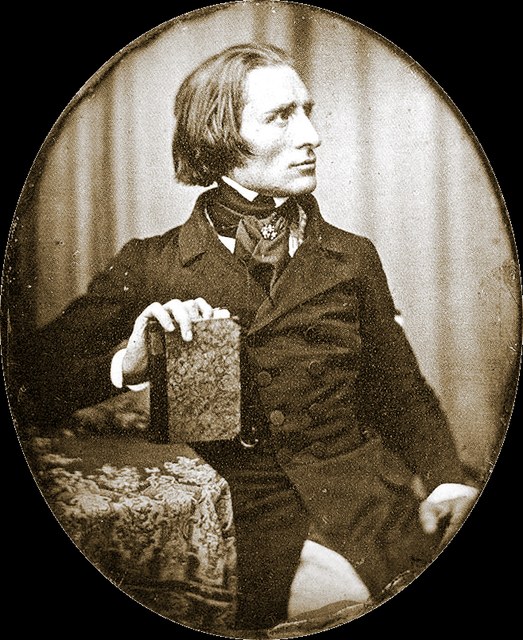
Franz Liszt

Franz Liszt
Herman Biow · Public domain

Hungarian Romantic composer-pianist · 1811–1886 · Hungary, Germany, Italy

Franz Liszt was a virtuoso Romantic pianist whose European tours sparked "Lisztomania," a term Heinrich Heine coined for the frenzied reception he received.

The kit

  • Rise — Franz Liszt gave benefit concerts after the Great Fire of Hamburg and toured with Countess Marie d'Agoult during his Years of Pilgrimage.
  • Achievements — Franz Liszt pioneered the symphonic poem genre with Les Préludes and wrote piano transcriptions of all nine Beethoven symphonies.
  • Achievements — Franz Liszt composed the Hungarian Rhapsodies incorporating Roma tunes, the Transcendental Etudes including "Feux Follets," and the Mephisto Waltzes.
  • Legacy — Franz Liszt's illegitimate daughter Cosima married Richard Wagner, and "Cossack Countess" Olga Janina attempted to kill him over unrequited love.

Runs with

Berlin
received frenzied reception there, inspiring Heine's term "Lisztomania" open card →
Poland
close friend of Chopin, who dedicated Revolutionary Étude to him open card →
Sweden
Hungary
incorporated traditional Roma tunes in his Hungarian Rhapsodies open card →

The ladder · 9 clues

H

In the 1840s, the popularity of this composer throughout Europe led to a namesake “mania.” name this composer of the Mephisto Waltzes, Hungarian Rhapsodies, and Transcendental Etudes.

H

Chopin's "Revolutionary Étude" was dedicated to this close friend who composed his own "Revolutionary Symphony" after the July Revolution of 1830 as well as the symphonic poem Tasso, performed at the 100th anniversary of the birth of Goethe [[GEHR- tuh]].

H

This composer's orchestral piece Les préludes was the first "symphonic poem," and his illegitimate daughter Cosima married Richard Wagner [ree-kard vahg-ner].

H

This composer, who wrote piano transcriptions for all nine Beethoven symphonies, pioneered the genre of symphonic poem with works such as Les Préludes.

H

This man gave a series of benefit concerts in response to the Great Fire of Hamburg, and his travels with Countess Marie d'Agoult inspired his Years of Pilgrimage.

H

This musician included “Feux Follets” [foh follay] and a piece inspired by hetman Ivan Mazeppa in a series of twelve hard piano pieces.

H

This man composed a symphony celebrating the July Revolution in his youth, and incorporated traditional Roma tunes in his Hungarian Rhapsodies.

H

Heinrich Heine [["HIGH"-nuh]] coined a phrase named for this composer to describe the hysteria that followed him wherever he went.

M

Heincludedslow“lassan”andfast“friska” sections in a set of nineteen works, the fifteenth which was based on the “Rakoczi March.” Heinrich Heine coined a term to describe the frenzied reception he received in Berlin. name this virtuoso Romantic pianist who wrote the Hungarian Rhapsodies and was the subject of a namesake “mania.”

4 more clues from the record
H

This composer wrote a long, one movement work dedicated to Robert Schumann, an example of double function form.

H

Due to a case of unrequited love, the "Cossack Countess" Olga Janina attempted to kill this man.

H

This composer included a piece in memory of Emperor Maximillian in the third of his Years of Pilgrimage suites.

H

He wrote a piece that depicted a Cossack hetman being tied to a galloping horse, Mazeppa.

Watch out: Chopin (close friend who dedicated works to each other)
#979 · Classical Composers · Level 2

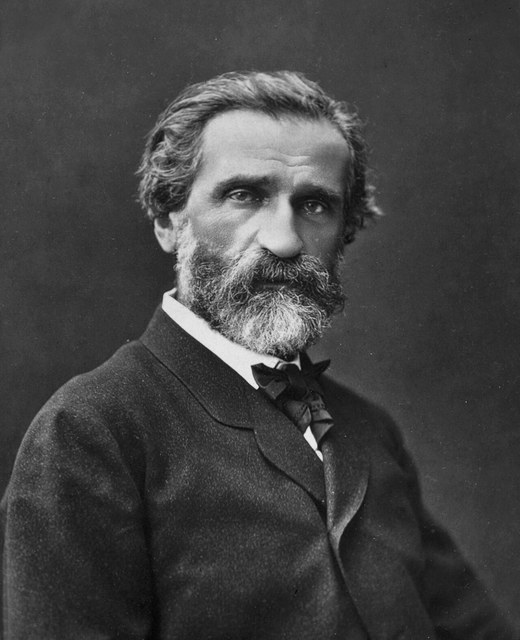
Giuseppe Verdi

Giuseppe Verdi
Ferdinand Mulnier · Public domain

Italian opera composer · 19th century · Italy

Giuseppe Verdi was an Italian opera composer whose works became anthems for the Risorgimento nationalist movement.

The kit

  • Rise — Giuseppe Verdi's surname became a coded rallying cry for the Risorgimento and the installation of Victor Emmanuel as king.
  • Achievements — Giuseppe Verdi composed the operas Rigoletto, Aida, and a Requiem in memory of fellow nationalist Alessandro Manzoni.
  • Conflicts — Giuseppe Verdi's opera originally based on Gustav III of Sweden's assassination had its location changed to colonial Boston by censors.
  • Legacy — Giuseppe Verdi's chorus "Va, pensiero" from Nabucco became an anthem for Italian unification during the Risorgimento.

Runs with

Opera
composed Rigoletto, Aida, Don Carlos open card →
assassination
opera on Gustav III assassination open card →
Boston
censors relocated opera to Boston open card →
Sweden
opera based on Gustav III open card →

The ladder · 9 clues

H

This composer expanded his “Libera Me” into a full-scale mass in memory of Alessandro Manzoni, which became his often-performed Requiem.

H

This composer’s name was used as a coded rallying cry for the Risorgimento and the installation of Victor Emmanuel as king.

H

One of this man’s operas, originally based on the assassination of Gustav III of Sweden, had its location changed to colonial Boston by the censors.

H

This composer’s aria “La donna e mobile” [La DON-a eh MO-beel-ay] became popular among gondoliers.

H

This composer of Un ballo in maschera wrote a grand opera based on the life of Don Carlos.

H

wrote a Requiem for his fellow Italian nationalist, novelist Alessandro Manzoni?

M

This composer’s surname was used as a symbol for the nationalist Risorgimento movement, and his chorus “Va, pensiero” from Nabucco was an anthem for unification.

M

This composer’s historical work includes The Sicilian Vespers, though he is more known for an opera in which “La Donna e Mobile” is performed. name this Italian composer of Rigoletto and an opera set in ancient Egypt, Aida.

E

Radames falls in love with an Ethiopian princess in an opera by this Italian composer of the operas Rigoletto and Aida.

#1308 · Named Musical Works · Level 3

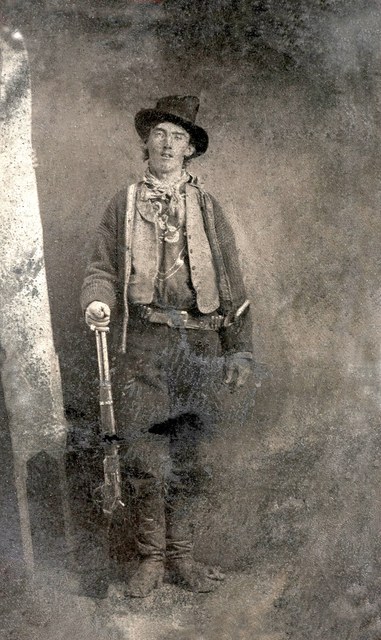
Billy the Kid

Billy the Kid
bdi Ben Wittick /span /a · Public domain

American Old West outlaw · 1859–1881 · New Mexico Territory

Billy the Kid was a youthful outlaw shot by Sheriff Pat Garrett in 1881 at age 21.

The kit

  • Rise — Billy the Kid became a leader of the McSween group after J. H. Tunstall's death during the Lincoln County War.
  • Conflicts — Billy the Kid was charged alongside the Lincoln County Regulators in the murder of William J. Brady.
  • Death — Billy the Kid was shot and killed by Sheriff Pat Garrett after his last words "¿Quién es?"
  • Legacy — Billy the Kid is the subject of an Aaron Copland ballet commissioned by Lincoln Kirstein and premiered in 1938.

Runs with

Aaron Copland
composed 1938 ballet depicting his life and death open card →
New Mexico
site of Lincoln County War and death open card →
Arizona
William
used as part of pseudonym William H. Bonney open card →

The ladder · 6 clues

H

This ballet was commissioned by Lincoln Kerstein and premiered in 1938 by a company headed by Eugene Loring.

H

This man arranged a secret meeting with Ben-Hur author Lew Wallace at which he informed on the murderers of Huston Chapman in exchange for clemency.

M

This outlaw was killed by Pat Garrett after fleeing to Arizona Territory. name this American gunfighter of the Old West who was nicknamed for his youthful appearance.

M

The arrest warrant for this man was issued by the author of Ben-Hur, Lew Wallace.

E

Outlaw, known by the pseudonym William H. Bonney, who was shot down by Pat Garrett in New Mexico.

E

One of Aaron Copland’s most well known ballets depicts this Wild West outlaw who was shot and killed in 1881 at age 21.

10 more clues from the record
H

Aaron Copland wrote a ballet about this outlaw whose birth name was Henry. This figure died at the young age of 21 after he was shot by sheriff Pat Garrett.

H

Other sections of that ballet about this figure include “Mexican Dance,” “Card Game,” and a movement depicting his death at the hands of Sheriff Pat Garrett.

H

Aaron Copland wrote a ballet about this man, who was charged alongside the Lincoln County Regulators in the murder of William J. Brady.

H

This figure is the subject of a ballet commissioned by Lincoln Kirstein that opens and closes with “open” harmonies in the woodwind section in the “Open Prairie” theme.

H

Agnes DeMille’s Rodeo was a sequel to this other Copland ballet, which depicts a “Gun Battle.”

H

This man committed his first crime after being insulted by a blacksmith in Bonita.

H

This New Mexico gunslinger, who was shot by Pat Garrett, had been involved in the Lincoln County War as a member of the Regulators.

H

He became a leader of the McSween group after the death of J. H. Tunstall during the Lincoln County cattle war. :Name this American outlaw, who was killed in 1881.

M

This youthful outlaw of the Old West is said to have killed 21 people before he turned 21, the same age at which he was shot and killed by Sheriff Pat Garrett.

M

This man's last words were "¿Quién es?"

Watch out: Birth name was Henry; used pseudonym William H. Bonney
#1309 · Named Musical Works · Level 3

1812 Overture

1812 Overture
RoodyAlien (this image). Original work was by Pyotr Ilyich T · Public domain

Orchestral overture · 1880 · Russia

1812 Overture is Tchaikovsky's bombastic orchestral work commemorating Russia's 1812 defeat of Napoleon's invasion.

The kit

  • Composition — 1812 Overture was originally written for a festival dedicating the Cathedral of Christ the Saviour in Moscow.
  • Musical content — 1812 Overture commemorates the Battle of Borodino and quotes the French anthem "La Marseillaise" in its finale.
  • Performance — 1812 Overture calls for cannons and carillon bells, which are often replaced by percussion in modern performances.
  • Legacy — 1812 Overture was played at the dedication of Carnegie Hall despite Tchaikovsky calling it "very loud and noisy" with "no artistic merits."

Runs with

Pyotr Ilyich Tchaikovsky
Composed by Tchaikovsky, who later loathed the work open card →
France
Quotes "La Marseillaise" representing Napoleon's defeated French forces open card →
Russia
Commemorates Russian victory over Napoleon's 1812 invasion open card →
Battle of Borodino
Commemorates this 1812 battle against Napoleon open card →

The ladder · 5 clues

H

At the beginning of this musical work, the hymn “O Lord, Save Thy People” is played by a small string ensemble.

M

This piece, which was played at the dedication of Carnegie Hall, was originally written for the a festival dedicating the Cathedral of Christ the Saviour in Moscow.

M

This piece’s composer eventually came to loathe it, saying it was “very loud and noisy... with no artistic merits.” The finale of this work, which quotes the Republican anthem “La Marseillaise” [[luh mar-say-EZ]], calls for the clanging of bells and firing of cannons. name this concert piece by Pyotr Tchaikovsky that commemorates the Russian defeat of Napoleon in a namesake year.

E

The Battle of Borodino is commemorated by this Tchaikovsky overture named for the year of Russia’s victory over France.

E

Percussion instruments that are often replaced in modern performances of this work include a carillon bell tower and cannons. name this bombastic overture by Pytor Tchaikovsky, named for the year of Napoleon’s invasion of Russia.

#1310 · Named Musical Works · Level 3

Eroica Symphony

Eroica Symphony
Public domain

Beethoven's Third Symphony · 1803–1804 · Vienna

Eroica Symphony is Beethoven's Third Symphony, often considered the first Romantic symphony, originally dedicated to Napoleon before his imperial coronation.

The kit

  • Dedication — Eroica Symphony was dedicated "to the memory of a great man" after Beethoven ripped up the original title page naming Napoleon.
  • Structure — Eroica Symphony's final movement uses a theme from Beethoven's Opus 35 Variations and Fugue.
  • Funeral march — Eroica Symphony's second movement was performed at Erwin Rommel's funeral and for the eleven Israeli athletes killed at Munich.
  • Legacy — Eroica Symphony's second movement was played by the Boston Symphony Orchestra on the day of JFK's assassination.

Runs with

Ludwig van Beethoven
composed the Eroica as his Third Symphony open card →
assassination
second movement played after JFK's assassination open card →
Boston
Boston Symphony performed it after JFK died open card →
Joe Hill

The ladder · 6 clues

H

Its composer dedicated it “to the memory of a great man,” supposedly ripping up the original title page after Napoleon declared himself Emperor. name this symphony by Ludwig van Beethoven.

H

The second movement of this piece was performed at the funerals of Erwin Rommel as well as the eleven Israeli athletes killed at the 1972 Summer Olympics.

H

On the day of JFK’s assassination, the Boston Symphony Orchestra altered its program to play this piece’s second movement, a funeral march.

H

The theme of this piece’s final movement was used for its composer’s Opus 35 Variations and Fugue.

H

In its first movement, a solo horn enters with the recapitulation four measures early.

M

Often considered the first "Romantic" symphony this is this third symphony by Ludwig van Beethoven.

#1311 · Named Musical Works · Level 1

Shostakovich's Symphony No. 7

Shostakovich's Symphony No. 7
bdi Pavel Filonov /span /a · Public domain

Shostakovich orchestral work · 1941 · USSR

Shostakovich's Symphony No. 7 is an orchestral work dedicated to Leningrad during its Nazi siege, famous for its first-movement invasion theme.

The kit

  • Composition — Shostakovich's Symphony No. 7 features a 22-bar recurring theme inspired by a song from Franz Lehár's The Merry Widow.
  • Invasion theme — Shostakovich's Symphony No. 7 is best known for its first movement's "invasion theme" depicting the Nazi assault.
  • Premiere — Shostakovich's Symphony No. 7 was premiered by the Bolshoi Theatre Orchestra instead of Leningrad's orchestra, whose musicians were starving or fighting.
  • Dedication — Shostakovich's Symphony No. 7 was dedicated to Leningrad, a Russian city besieged by the Nazis for over two years.

Runs with

Dmitri Shostakovich
composed this symphony during the Siege of Leningrad open card →

The ladder · 3 clues

H

A 22-bar recurring theme in this work was inspired by a song from Franz Lehar’s The Merry Widow.

M

The Bolshoi Theatre Orchestra ended up premiering this piece in place of the intended city’s orchestra, because the musicians in the latter were either starving or fighting.

E

Best known for its first movement’s “invasion theme,” what Dmitri Shostakovich symphony was dedicated to a Russian city which the Nazis besieged for over two years?

#1312 · Named Musical Works · Level 3

Piano Concerto

Piano Concerto
Gerda Arendt · CC0

orchestral genre · Classical era–present · Europe and worldwide

Piano Concerto is a musical genre featuring a piano soloist accompanied by orchestra.

The kit

  • Notable works — Piano Concerto includes Beethoven's "Emperor" Concerto (his fifth and final work in the genre).
  • Commissions — Piano Concerto repertoire includes Maurice Ravel's one-movement work for the left hand, commissioned by Paul Wittgenstein after he lost his right arm in World War I.
  • Rachmaninoff contributions — Piano Concerto No. 2 by Sergei Rachmaninoff was dedicated to his hypnotherapist.
  • Performance controversies — Piano Concerto performances include a 1962 New York Philharmonic event where Leonard Bernstein publicly disagreed with Glenn Gould's interpretation.

Runs with

Wolfgang Amadeus Mozart
composed piano concertos open card →
Ludwig van Beethoven
composed five, including Emperor open card →
Pyotr Ilyich Tchaikovsky
composed piano concertos open card →
York

The ladder · 6 clues

H

An A minor piece in this genre was premiered by its composer’s wife, Clara Schumann.

H

One of these pieces by Philip Glass uses a flute to depict the title Native American girl in its middle “Sacajawea” movement and is subtitled “After Lewis and Clark.” The final seventeen measures of the third piece in this genre by Bela Bartok were orchestrated by his student Tibor Serly.

H

At a 1962 New York Philharmonic performance of a work in this genre, Leonard Bernstein told the audience he disagreed with Glenn Gould’s interpretation of it.

M

Sergei Rachmaninoff dedicated the second of his four works in this genre to his hypnotherapist.

E

Beethoven’s fifth and final work in this genre is nicknamed “Emperor." name this genre of works for a keyboard soloist and orchestra.

E

Paul Wittgenstein, who lost his right arm in World War I, commissioned a one-movement example of this piece “for the left hand” from Maurice Ravel. name this type of musical composition that features the orchestra supporting a keyboard soloist.

2 more clues from the record
H

The Allegro ma non tanto first movement of Sergei Rachmaninoff’s third piece of this type features two alternate cadenza.

H

The aforementioned 1808 concert featured Beethoven as the soloist premiering the fourth of his pieces in what genre?

Watch out: Bartók's Third Piano Concerto (final seventeen measures orchestrated by student Tibor Serly)
#1313 · Named Musical Works · Level 3

Appalachian Spring

Appalachian Spring
Los Angeles Daily News · CC BY 4.0

ballet by Aaron Copland · 1944 premiere · rural Pennsylvania (setting)

Appalachian Spring is a ballet by Aaron Copland depicting a young couple, a revivalist preacher, and a pioneer woman in rural Pennsylvania.

The kit

  • Premiere & choreography — Appalachian Spring was choreographed by Martha Graham, who performed the pioneer woman role at its premiere.
  • Musical structure — Appalachian Spring's seventh section incorporates variations on the Shaker hymn "Simple Gifts" by Joseph Brackett.
  • Recognition — Appalachian Spring won the 1945 Pulitzer Prize for Music for Copland, who described its second section as expressing elated and religious sentiment.
  • Characters & staging — Appalachian Spring features no spoken dialogue and includes a preacher (first played by Merce Cunningham) making jerky movements around an engaged couple.

Runs with

Aaron Copland
composed the ballet and won 1945 Pulitzer Prize for it open card →
Pennsylvania
setting for the ballet's story of pioneers open card →
Common
Shaker hymn "Simple Gifts" incorporated in seventh section open card →
Pelican Portrait

The ladder · 6 clues

H

No dialogue is spoken in this stagework about a young couple, a revivalist preacher, and an elderly pioneer woman.

H

In a section of this ballet, four "Worshippers" circle around a preacher, first played by Merce Cunningham, who makes jerky movements pointing towards an engaged couple.

H

This ballet's first draft included an interpolation of Uncle Tom's Cabin and was called The House of Victory.

H

At the premiere of this ballet, the "pioneer woman" character was performed by its choreographer, Martha Graham.

M

The composer of this piece described its second section as expressing “a sentiment both elated and religious” and won the 1945 Pulitzer Prize for Music for this work.

E

The seventh section of this ballet incorporates variations on Joseph Brackett's Shaker hymn "Simple Gifts." name this ballet set in rural Pennsylvania by composer Aaron Copland.

Watch out: Early draft was titled The House of Victory and included Uncle Tom's Cabin interpolation
#1314 · Named Musical Works · Level 3

Opera

Opera
a rel="nofollow" Jaakko H. · CC BY-SA 3.0

theatrical musical art form · early 17th century–present · Europe, worldwide

Opera is a theatrical art form combining staged drama with classical music and sung text written by a librettist.

The kit

  • Origins — Opera's earliest examples include Jacopo Peri's Dafne and Claudio Monteverdi's The Coronation of Poppea, still performed today.
  • Varieties — Opera developed rival 18th-century types including seria and buffa, the latter exemplified by The Barber of Seville.
  • Social commentary — Opera works by Mozart, Verdi, and Wagner served as subtle commentaries on society, according to musicologists.
  • Notable performers — Opera featured African-American performers like Leontyne Price, who debuted as Leonora in Il Trovatore rather than the stereotypical Aida role.

Runs with

Egypt
Khedive of Egypt commissioned Verdi's Aida open card →
Paris
China
Cultural Revolution editors heavily revised operas; Nixon in China exemplifies genre open card →
Wolfgang Amadeus Mozart

The ladder · 6 clues

H

The earliest examples of this form include Jacopo Peri’s Dafne and the oldest one still performed, The Coronation of Poppea by Claudio Monteverdi.

H

A very early example of this art form, Seelewig, was produced in Nuremberg in 1644.

M

Rival types of this art form in the 18th century included seria and buffa; examples of the latter include The Barber of Seville.

M

Musicologists suggest that Mozart's three great works in this style are subtle commentaries on society, as were the works of Verdi and Wagner [[VAHG-nur]]. Name this genre of theatrical music exemplified by The Marriage of Figaro and Nixon in China.

E

A librettist writes the words for this art form that combines theatrical staging and, usually, classical music.

E

This art form's "comic" variety includes pieces like Die Zauberflöte [[dee-ZOW-behr-fluhr-tuh]], and The Marriage of Figaro. name this musical art form whose name means "work" in Italian.

10 more clues from the record
H

Leontyne Price, an African-American performer in this genre, was advised to not make her debut in the stereotypical slave role of Aida, instead debuting as Leonora in Il Trovatore. name this form of theatre, in which Camilla Williams performed as Mimi, Bess, and Madama Butterfly.

H

Marian Anderson performed in this type of work only once, appearing as Ulrica. Marietta Alboni often played “breeches roles” in works of this type, whereas Adelina Patti played coloratura roles.

H

Hans Krasa wrote a piece in this genre that the Nazis adapted for a propagandistic Red Cross documentary about the Theresienstadt concentration camp.

H

During the Cultural Revolution in China, musical works of this form were highly edited by Jiang Qing [ and her staff of composers.

H

Bedřich [[BED-rik]] Smetana produced eight works in this performance genre, including The Bartered Bride.

H

Kim Jong-il published a treatise written specifically about this musical style.

M

The premiere of one of these works, The Mute Girl of Portici [[por-TEE-chee]] by Daniel Auber, coincided with the beginning of the Belgian Revolution.

M

El Laurel de Apolo, a work of this art form's Zarzuela subgenre, was first put on display at El Prado for King Philip IV of Spain.

M

This type of work combines a libretto with musical composition and, unlike an oratorio, includes acting.

E

The Khedive of Egypt commissioned one of these works by Giuseppe Verdi. name this musical form of theatre which includes works like Aida and The Barber of Seville.

Watch out: Oratorio also combines libretto with music but lacks acting
#1315 · Named Musical Works · Level 1

Fanfare For The Common Man

Fanfare For The Common Man
CBS Television · Public domain

orchestral fanfare · 1942 · United States

Fanfare For The Common Man is a 1942 orchestral work commissioned by Eugene Goossens of the Cincinnati Symphony Orchestra.

The kit

  • Commission — Fanfare For The Common Man was commissioned by Eugene Goossens of the Cincinnati Symphony Orchestra in 1942.
  • Inspiration — Fanfare For The Common Man was inspired by Vice President Henry Wallace's declaration of the "Century of the Common Man."
  • Composer — Fanfare For The Common Man was written by Aaron Copland during World War II.

Runs with

Common
titled for the common man open card →
United States of America
commissioned by Cincinnati Symphony Orchestra open card →
World War II
composed in 1942 during the war open card →
Aaron Copland
composed by Copland open card →

The ladder · 2 clues

H

Copland was inspired by Vice President Henry Wallace’s declaration that it was the “Century of” these people, for whom Copland wrote a namesake “Fanfare.”

M

This fanfare was commissioned by Eugene Goossens of the Cincinnati Symphony Orchestra in 1942.

#1316 · Named Musical Works · Level 3

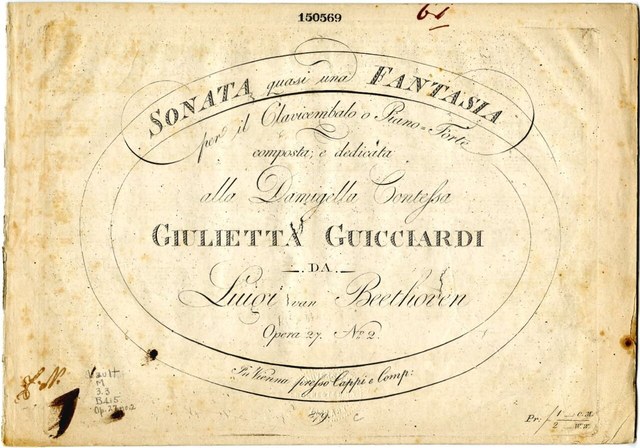
Moonlight Sonata

Moonlight Sonata
Ludwig Van Beethoven · Public domain

Beethoven piano sonata · published 1801 · Vienna

Moonlight Sonata is a Beethoven piano sonata nicknamed for its resemblance to moonlight on Lake Lucerne.

The kit

  • Composition — Moonlight Sonata was dedicated to a woman who may have been Beethoven's "Immortal Beloved."
  • Nickname origin — Moonlight Sonata received its nickname in 1832 when Ludwig Rellstab compared it to Lake Lucerne at night.
  • Reception — Moonlight Sonata was compared to the image of a moonlit reflection on Lake Lucerne by critics.

Runs with

Ludwig van Beethoven
composed by Beethoven open card →
The Blitz
Beethoven's Fifth inspired V for Victory symbol open card →
Capetian House of Anjou

The ladder · 4 clues

H

This Beethoven piano sonata, which was compared to the image of Lake Lucerne at night, was dedicated to a woman who may have been Beethoven’s so-­‐called “Immortal Beloved.”

H

One piece by this composer was based on a poem by Friedrich Schiller and was unusual for its length and its use of a choral section.

M

After learning Napoleon crowned himself emperor, this man changed the nickname of his third symphony to Eroica. The first four notes of his fifth symphony inspired the “V for Victory” symbol used to show Allied support during World War Two. name this deaf composer whose Ninth Symphony includes a setting of “Ode to Joy.”

E

Ludwig Rellstab gave it this nickname in 1832 after viewing a reflection in Lake Lucerne.

#1317 · Named Musical Works · Level 3

Symphony No. 9 "From the New World"

Symphony No. 9 "From the New World"
bdi Antonín Dvořák /span /a · Public domain

Dvořák symphony · 1893 · New York City

Symphony No. 9 'From the New World' is Antonín Dvořák's final symphony, inspired by American themes including African-American spirituals and Native American poetry.

The kit

  • Composition — Symphony No. 9 'From the New World' was written while Dvořák served as director of an American conservatory.
  • Influences — Symphony No. 9 'From the New World' incorporated spirituals taught by Harry Burleigh and themes from The Song of Hiawatha.
  • Movements — Symphony No. 9 'From the New World' features a 'Swing Low, Sweet Chariot' melody and an English horn Largo later adapted as 'Goin' Home'.
  • Legacy — Symphony No. 9 'From the New World' was taken on the 1969 Apollo 11 mission by Neil Armstrong.

Runs with

America
inspired by American spirituals and themes open card →
church
inspired by trip to Spillville, Iowa's oldest Czech church open card →
Apollo
taken on Apollo 11 mission by Armstrong open card →

The ladder · 6 clues

H

This piece was written while its creator was serving as the temporary director of an American conservatory, and its third movement was inspired by The Song of Hiawatha.

H

The song Goin’ Home was later adapted from an English horn solo in this piece’s Largo second movement.

H

A tape recording of this symphony was taken by Neil Armstrong on the 1969 Apollo 11 mission.

H

This symphony was inspiredbyatriptothetownwiththeoldestCzech[["CHECK"]] church in America, Spillville, Iowa.

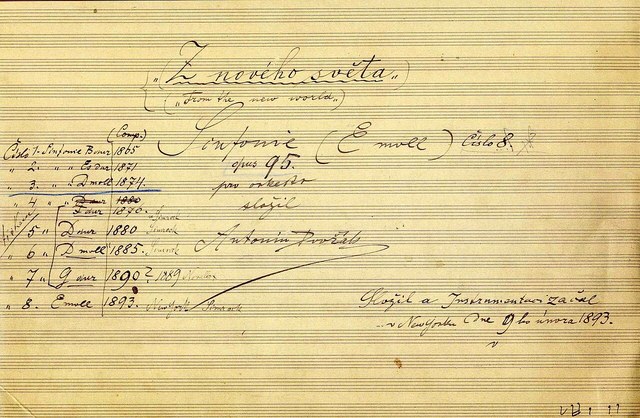
M

A solo melody resembles the African-American spiritual "Swing Low, Sweet Chariot" in the first movement of thissymphony.Forthepoint, name this symphony inspired by "American" themes, a work of Antonín Dvořák [[duh-VOHR-zhahk]].

M

Harry Burleigh introduced the Czech composer of this symphony to African- American spirituals. name this final Antonin Dvorak symphony whose nickname reflects the source of its inspiration.