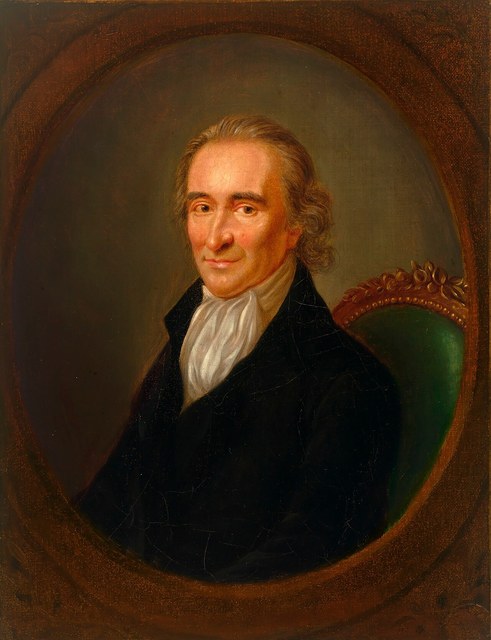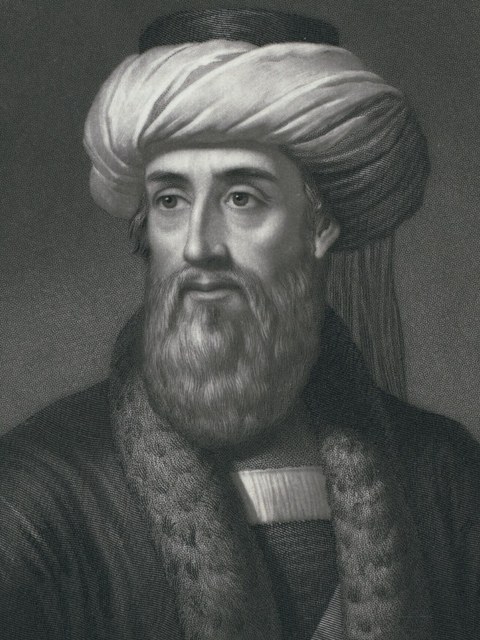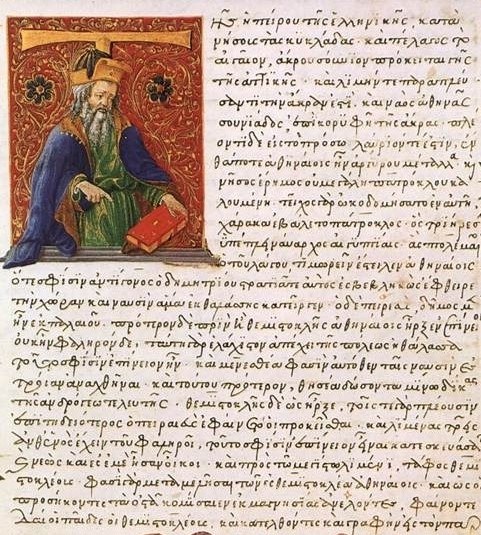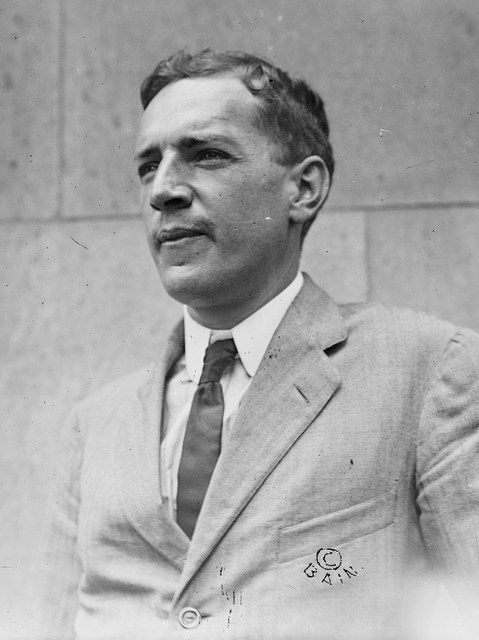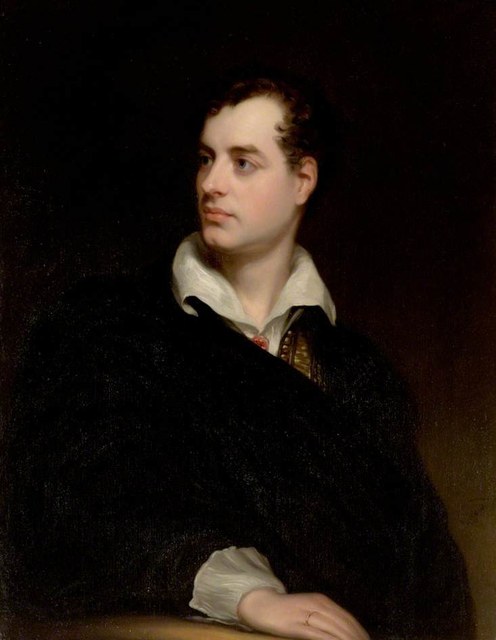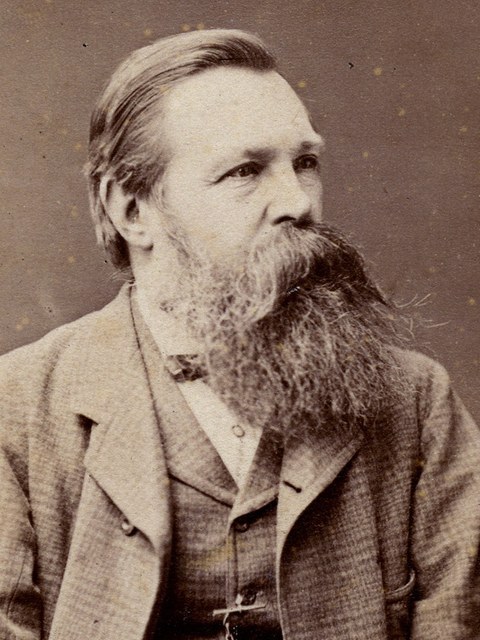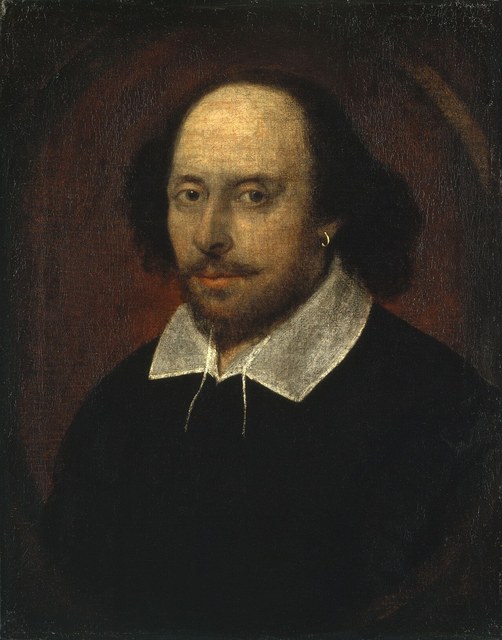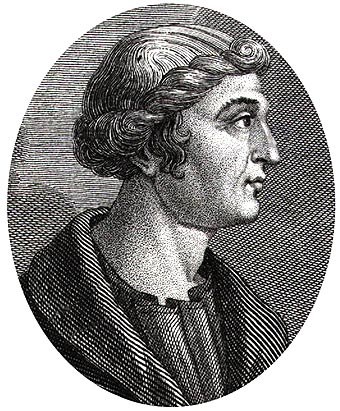
The 1648 Codex · study package

Authors, Poets & Playwrights + Named Literary Works

43 terms drawn from across the corpus, in study-list order. Art and cross-links point back to the home category cards.

#178 · Authors, Poets, and Playwrights · Level 1

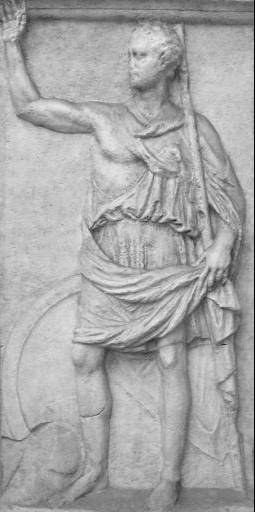
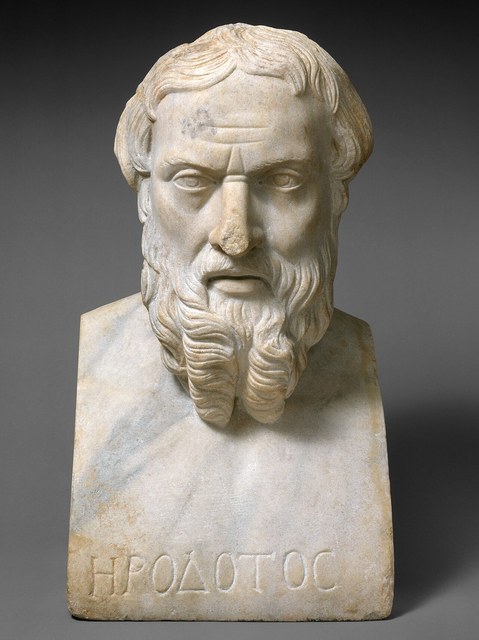
Herodotus

Herodotus
CC0

Greek historian · 5th century BCE · Halicarnassus

Herodotus wrote the Histories, a nine-volume account of the Persian Wars that earned him the title 'Father of History.'

The kit

  • Achievements — Herodotus described the Ionian revolt, Thermopylae's defense by three hundred Spartans, and the destruction of the Persian fleet at Mycale.
  • Achievements — Herodotus traveled to Egypt and described a machine for lifting heavy objects during pyramid construction, later called Herodotus's machine.
  • Legacy — Herodotus was criticized by Thucydides for unreliability, including overestimating army sizes and reporting dubious stories like giant gold-digging ants.
  • Legacy — Herodotus provided valuable information on the Scythians' use of cannabis and details about Cyrus's reign and ancient Olympic practices.

Runs with

Croesus
described Croesus's funeral pyre and his defeat after crossing the Halys River open card →
Nanda Empire
confused marmots for giant ants digging gold in India open card →
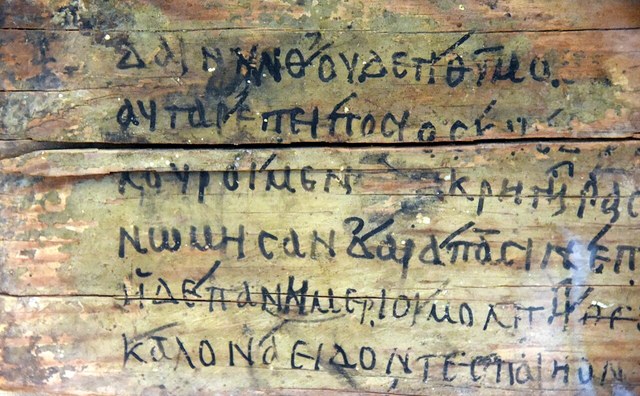
Rongorongo Script
fragments discovered at Oxyrhynchus open card →
Lydia
recounted Croesus losing his capital Sardis to the Persians open card →

The ladder · 15 clues

H

In his most famous book, he describes the great funeral pyre of Croesus, the Ionian revolt, and the defense of Thermopylae by three hundred Spartan soldiers. name this “Father of History,” a Greek historian who wrote about the Persian Wars in his 10-volume Histories.

H

While travelling in Egypt, this person described a machine that allowed heavy objects to be lifted for pyramid construction, which came to be known as this person's namesake machine.

H

Aside from the Cylinder, most of what is known of Cyrus’ reign comes from what “father of history,” who traced the origins of the Greco-Persian War in his Histories?

H

This writer’s most famous work begins by describing the rapes of Io, Europa, and Medea.

H

That essay “On the Malice of [this man]” accuses him of lying by claiming that Queen Artemisia was prophetic. Urania is the 8th of nine books named for the Muses that make up a work by this man.

H

Answer the following about historians and their works. :This man wrote Histories, which discusses the Persian War, and is known as “The Father of History.”

H

This author tells the stories of Solon and Croesus in his Histories. This man is often called the “Father of History.”

M

name this "Father of History" who wrote the Histories.

M

Wrote the first book of history, The Persian Wars?

M

This man is thought to have confused the word “marmot” for “mountain ant” because of his description of dog-sized ants in India digging up gold in sandy areas.

M

Fragments of a work by this man were discovered at Oxyrhynchus [[awk-see- RIN-kuhs]].

M

This author likely confused marmots for giant gold-digging ants in India.

E

An essay in Moralia criticizes this historian for prejudice. This author of The Histories is considered the "father of history."

E

The Oracle of Delphi tells Croesus [[KREE-sus]] that an empire will fall if he attacks the Persians in a work by this historian, who wrote about the destruction of the Persian fleet at the Battle of Mycale [[me-KAH-leh]].

E

Artemisium and Plataea [[plah -TEE-ah]] were the sites of battles recounted by this person, who was criticized by their contemporary, (*) Thucydides [[thoo- SID-it-eez]].

10 more clues from the record
H

This historian referred to that elite Persian unit as "The Immortals." This historian from Halicarnassus authored a work divided into nine books, named for each of the Muses.

H

This writer presented the dubious story that Pharaoh Sesostris led a campaign in Europe, but he also accurately described the flooding of the Nile.

H

This man describes the pharaoh Sesostris campaigning in Europe and leaving a colony in Colchia.

H

A text by this man describes how Arion was kidnapped by pirates and saved by dolphins.

H

He also told of a king being burnt on a pyre who remembers hearing that no man can be called truly happy until after his death; that king sent his troops across the Halys river only to lose his capital of Sardis.

H

Thucydides recorded what he felt needed to be said in the situations he described, rather than what was actually said, in contrast to this historian from Halicarnassus, who is known as the “father of history” and largely wrote factual transcripts of speeches.

H

Much of our information on the Scythians, including details about their archaeologically-verified fondness for cannabis, comes from this rather unreliable Greek historian known as the “Father of History.”

H

Due to its religious significance, ancient Olympic winners were not paid but received only a garland, as attested in Classical sources such as the writings of this “Father of History.”

H

This “Father of History” described how Athenian women began to wear the chiton tunic after a messenger was stabbed to death with bronze pins similar to the peplos in his Histories.

H

Despite his habit of grossly overestimating the size of forces present at any battle he described, this Greek is known as the “Father of History” for the work he did in writing his Histories.
Watch out: Thucydides, who criticized Herodotus for writing unreliable accounts rather than factual transcripts
#179 · Authors, Poets, and Playwrights · Level 1

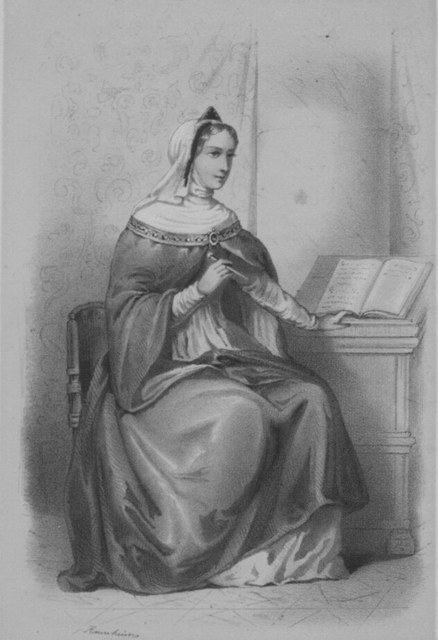
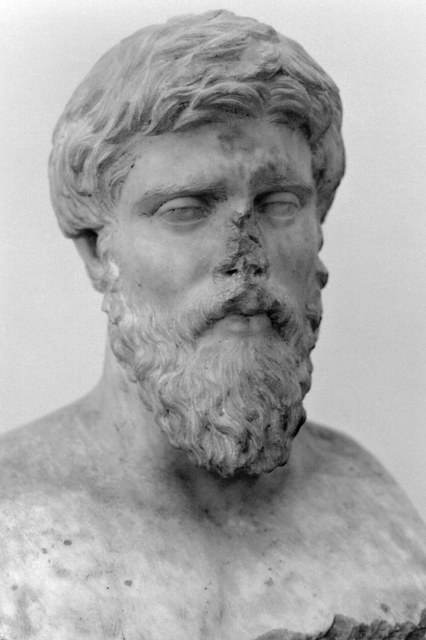
Plutarch

Plutarch
Zde · CC BY-SA 4.0

Greek biographer and essayist · c. 46–120 CE · Chaeronea, Greece

Plutarch was a Greek priest at Delphi who wrote paired biographies of Greeks and Romans exploring character through moral anecdotes.

The kit

  • Major works — Plutarch wrote the Parallel Lives, containing 48 biographies pairing one Greek with one Roman to explore common themes of character.
  • Biographical method — Plutarch paired Theseus with Romulus, Lycurgus with Numa Pompilius, Demosthenes with Cicero, and Alcibiades with Coriolanus in his comparisons.
  • Other writings — Plutarch compiled the Moralia, a collection including "Sayings of Spartans," the essay "Isis and Osiris," and "On the Malice of Herodotus."
  • Priestly role — Plutarch served for most of his life as one of the priests in charge of the Delphic Oracle at the Temple of Delphi.

Runs with

Plutarch's Parallel Lives
his most famous work pairing Greek and Roman biographies open card →
Theseus
paired Theseus with Romulus in opening comparison open card →
Pyrrhus of Epirus
wrote biography of Pyrrhus in Parallel Lives open card →
Themistocles

The ladder · 15 clues

H

This writer created a humorous dialogue between Odysseus and Gryllus, one of Circe’s pigs.

H

The most substantial account of the Sacred Band comes from this Greek-born Roman philosopher and priest of Apollo, known for his Moralia.

H

A set of “Sayings of Spartans” was collected by this one-time priest at the Temple of Delphi in a work which also contains an often-cited account of Egyptian burial rites, the Moralia [[moh-RAH-lyah]].

H

This historian asked "Why were patricians not permitted to live on the Capitoline?" as the ninety-first in a series of Questions in one of his works.

H

Answer the following about anecdotes from classical coups, .This author inserted an anecdote about a broken rope into his account of the failed coup of Cylon, which is found in a work that pairs biographies of Greeks and Romans.

H

This Greek historian used an analogy about a beautiful sandal to explain Rome's casual attitudes to divorce. This man's best-known book offers biographies of Pyrrhus and Marius.

H

As what was likely a rhetorical exercise, this man composed the treatise “On the Malice of Herodotus.” For most of his life, this historian served as one of the priests in charge of the Delphic Oracle.

M

This author is best known for a work containing 48 biographies which are grouped into pairs featuring one Greek and one Roman. name this Roman historian who wrote Parallel Lives.

M

This writer’s essay “Isis and Osiris” preserves a story about Isis attempting to burn away the mortality of the prince of Byblos, (+) Dictys.

M

That work uses moral anecdotes to link character with physiognomy, and links Eumenes with Sertorius, Cicero with Demosthenes and Theseus with Romulus. identify this Roman historian who wrote the Parallel Lives.

M

Seneca Crane's successor as Head Gamemaker has this first name, which he shares with an ancient author who wrote the Parallel Lives, a set of biographies of ancient Greek and Roman figures.

M

It was the birthplace of this author of the Moralia, whose best known work arranges anecdotes of famous Greek and Roman historical figures to explore common themes of character and morality.

M

In that work, Numa Pompilius is contrasted with Lycurgus, while Alcibiades is compared to Coriolanus. name this author who contrasts Greeks and Romans in his Parallel Lives.

M

This historian collected the pithy sayings of Laconic Women in one book. His best known work begins by comparing Theseus with Romulus.

E

Along with Proclus, this neo-Platonist writer originated the motif of the “veil of Isis.” In his most famous text, this writer paired (*) the myths of Theseus with Romulus.

6 more clues from the record
H

In addition to writing Moralia, he maintained his major goal was to not write history but “epitomize life” in the opening paragraph of his The Life of Alexander.

H

Another of this man's works criticizes two figures for extreme anger but considers Romulus less valiant than Theseus.

H

This author of the Moralia praises Marcellus and Brutus while disapproving of Sulla and Antony, and analyzes the military tactics of Fabius Cunctator and Pericles.

H

This man's Consolation to His Wife concerns the death of his daughter and his essays include On the Face Appearing on the Disk of the Moon.

H

Phocion was paired with Cato the Younger by this Greek historian in his Parallel Lives.

H

This man’s namesake paradox was that atheism is less pernicious than superstition.

#180 · Authors, Poets, and Playwrights · Level 1

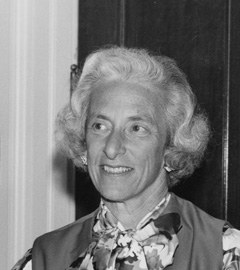
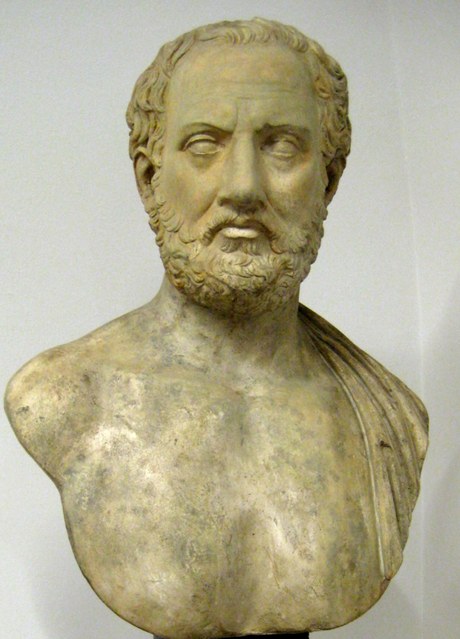
Thucydides

Thucydides
user:shakko · CC BY-SA 3.0

Ancient Greek historian · 5th century BCE · Athens

Thucydides was an Athenian general and historian who wrote the eight-book History of the Peloponnesian War.

The kit

  • Military career — Thucydides was exiled for twenty years after failing to prevent Brasidas from capturing Amphipolis in a surprise attack.
  • Historical method — Thucydides is called the 'father of scientific history' for his strict evidence-gathering procedures and fact-checking approach.
  • Major work — Thucydides recorded Pericles's Funeral Oration and the Melian Dialogue in his History of the Peloponnesian War.
  • Legacy — Thucydides inspired the concept of 'Thucydides's Trap,' describing conflict between a rising power and a declining power.

Runs with

Peloponnesian War
wrote eight-book history chronicling the war's battles and diplomacy open card →
Pericles
recorded his Funeral Oration and noted his death from plague open card →
plague
chronicled the plague of Athens in his history open card →
Athens
served as Athenian general before exile open card →

The ladder · 15 clues

H

Ancient Greek historian and author of History of the Peloponnesian War.

H

This disgraced Athenian general wrote a renowned eight-book History of the Peloponnesian War, which includes Pericles' funeral oration.

H

In one work by this man, a winning army’s diplomats state that “the strong do what they can and the weak suffer what they must.” This man’s most famous work includes the Melian Dialogue and recounts how the Delian League was led into war against Sparta.

H

This historian chronicled the Battle of Amphipolis, the plague of Athens, and numerous other events in his major text on the Peloponnesian War.

H

This man was defeated by Brasidas at the Battle of Amphipolis, and he later wrote about the murder of the tyrant Hipparchus by Harmodius and Aristogeiton.

H

This author credits one leader as saying “we are lovers of beauty without extravagance” in a passage in which that leader presents his city as the school of his entire country.

H

The tone of this man's major book may be influenced by his own twenty years of exile, which occurred after he surrendered Amphipolis (pr. am-FIP-uh-liss) as a general.

M

Historian who recorded Pericles's "Funeral Oration" in The History of the Peloponnesian War.

M

”September 1, 1939” states that this ancient Greek historian knew “All that a speech can say about/About Democracy,” alluding to his record of Pericles’ funeral oration in his most famous work.

M

One Athenian politician of this name, a son of Melesias, was ostracized after confronting Pericles. A more famous man of this name wrote The History of the Peloponnesian War.

M

This man’s most famous work discusses the Battle of Sphacteria and the Sicilian Expedition in its eight books. :Name this author of the History of the Peloponnesian War.

M

This Athenian general wrote a History of the Peloponnesian War, which notably included many reconstructed speeches. He has been called the “father of scientific history”, echoing an epithet of his countryman Herodotus.

E

This man recorded such momentous speeches as the Melian Dialogue and the Funeral Oration in a book that contains extensive information about the Delian League and Pericles. name this historian who authored the History of the Peloponnesian War.

E

Pericles’ Funeral Oration was recorded by this ancient Greek historian and author of a History of the Peloponnesian War.

E

This Athenian historian’s History of the Peloponnesian War serves as more of a mythos than an actual history, but it does contain Pericles’ Funeral Oration.

10 more clues from the record
H

This historian included an account of an unsuccessful diplomatic negotiation between emissaries of Athens and Melos in his History of the Peloponnesian War.

H

This man began his writing career after facing exile following the fall of Amphipolis.

H

According to Momigliano, Eusebius’s use of documents differentiates his work from that of this other writer, who frequently invented speeches and used his own experiences and discussions with witnesses to write about events like the Funeral Oration and conquest of Melos.

H

During this person’s research, he was strict about his procedures for gathering evidence leading his title as “father of scientific history.” :Name this Athenian historian and general who wrote about human nature in crises like plague, massacre, and civil war.

H

Pericles then died of plague two years into the Peloponnesian War, as related by this Athenian general's history thereof. Thomas Hobbes translated this man's work into English.

H

That fall from grace was due to Brasidas’ success in taking Amphipolis before this commander, who noted in one text that their subsequent exile meant they ‘had leisure to observe affairs’.

H

This other Greek advanced the study of history with his History of the Peloponnesian War, which introduced concepts like fact-checking and not just making up things for entertainment value.

H

This general was ostracized after he failed to prevent the capture of Amphipolis by the Spartan general Brasidas during a surprise attack. :Name this general who chronicled much of the Peloponnesian War in his History of the Peloponnesian War.

H

Political scientist Graham Allison has written a book on this historian’s “Trap,” envisioning conflict between a rising power and a declining power.

H

This author explained that the commonly believed story of the tyrannicides was untrue in a book that presents Brasidas as a rhetorically exceptional example of his city’s men.

Watch out: Another Athenian politician named Thucydides, son of Melesias, was ostracized after confronting Pericles
#181 · Authors, Poets, and Playwrights · Level 1

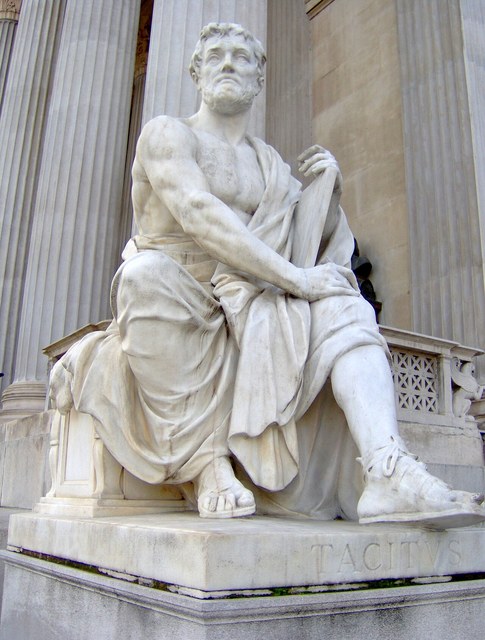
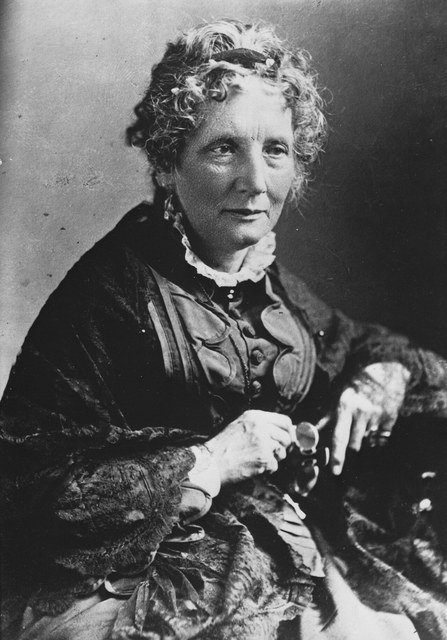
Tacitus

Tacitus
Pe-Jo · Public domain

Roman historian · 1st-2nd century CE · Roman Empire

Tacitus was a Roman historian who wrote the Annals covering Tiberius through Nero and the Histories on the Year of the Four Emperors.

The kit

  • Rise — Tacitus co-prosecuted the proconsul of Africa Marius Priscus for extortion, which inspired his Dialogue on the Orators about his teachers.
  • Achievements — Tacitus wrote a biography of his father-in-law Agricola describing ancient British customs and victories over Druids at Ynys Mon.
  • Achievements — Tacitus provided the first known pagan reference to Christ in the Annals, describing Pontius Pilate's execution of "Christus."
  • Legacy — Tacitus's Germania helped define core concepts of Nazism according to Christopher Krebs's A Most Dangerous Book argument.

Runs with

Agricola
wrote biography of his father-in-law Agricola open card →
Annals
wrote Annals covering Tiberius through Nero open card →
Tiberius
extensively covered Tiberius's reign in Annals open card →
Nero
extensively covered Nero's reign in Annals open card →

The ladder · 15 clues

H

Roman historian of Agricola whose Annals discusses Boudica’s revolt.

H

Historians who used this man’s teachings to support Republican ideals have been called his “red” supporters.

H

In A Most Dangerous Book, Christopher Krebs argued that an ethnographic work by this writer helped to define the core concepts of Nazism.

H

This author’s account of the reign of Caligula is a lost section of a text that describes the assassination attempt on Agrippina and begins just after the death of Augustus.

H

In a text written after the death of his father-in-law, this author described the customs the ancient Britons.

H

This author of Agricola described Sejanus’ manipulation of an emperor in another work.

H

One was a respected old man who was offered the throne, initially refused, accepted, appointed Florianus as Praetorian Prefect and thus held off an invasion but died after only one year.

M

This man wrote, "They have made a desert and call it peace" in a work that opens by describing the Year of the Four Emperors.

M

This historian wrote a biography of Agricola, who was his father-in-law. The reigns of Nero and Tiberius are extensively covered in his Annals.

M

This author wrote about the reigns of the emperors Tiberius, Claudius and Nero in his most famous work. name this Roman writer of a history of the Flavian emperors and the Annals.

M

A non-Christian source of evidence for the existence of Jesus can be found in this Roman historian’s Annals, which describes Pontius Pilate’s execution of “Christus.” This historian also write the Histories.

M

This Roman historian dubbed the Cherusci “lazy fools” in his Germania. This historian may have completely made up a speech attributed to Calgacus in the Agricola, a biography of his father-in-law.

E

name this Roman historian of Agricola and the Annals.

E

Much of what we know about Boudicca comes from the writings of this Roman historian, who is known for his Annals and Histories.

E

This historian wrote about the execution of a man named "Christus" by Pontius Pilate in a book that covers leaders between Augustus and Nero.

10 more clues from the record
H

One of this man’s works describes a victory over an army of Druids at the Battle of Ynys Mon and the establishment of a network of outposts stretching from Bodotria to Clota.

H

This ancient Roman author of a biography of Agricola and the Histories analyzed the Empire from the reign of Tiberius to that of Nero in his Annals, which also briefly mentions the execution of Christ.

H

Nero’s reign and the Year of the Four Emperors were recorded in the Histories by this Silver Age Roman historian, who also wrote Agricola and Germania.

H

This man's co-prosecution of the proconsul of Africa, Marius Priscus, for extortion, inspired him to write about his teachers Secundus and Aper in his Dialogue on the Orators.

H

Name these Roman historians, :He wrote that barbarian kings were “chosen by reason of their nobility, and dukes because of their good qualities” in his Germania.

H

A late 3rd-century emperor, who shares his name with this author, is generally considered to have faked descent from him.

H

Justus Lipsius relied heavily on this writer in penning his Six Books of Politics, and prepared an edition of this writer’s work for Maximilian II.

H

This author provided the first known pagan reference to Christ in his final work, which ended during the reign of Nero.

H

Pope Pius II revived interest in this author’s work after examining a forgotten manuscript found in Hersfeld Abbey.

H

This historian blamed the poor state of education for the decline of rhetoric in his Dialogue on Oratory.

Watch out: A late 3rd-century emperor sharing his name falsely claimed descent from the historian
#182 · Authors, Poets, and Playwrights · Level 1

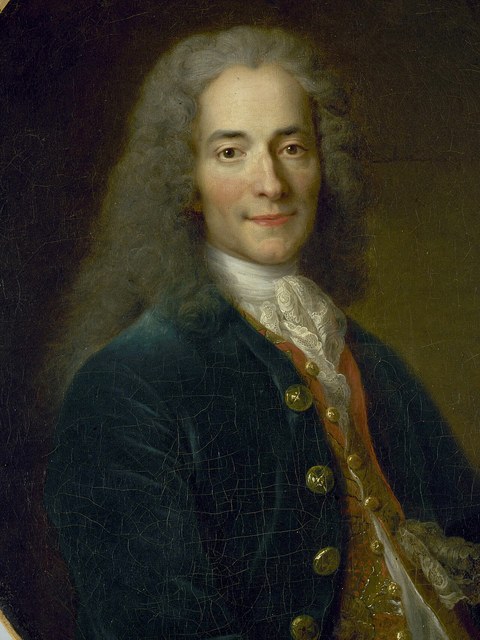
Voltaire

Voltaire
bdi Nicolas de Largillière /span /a · CC0

French Enlightenment philosopher · 1694–1778 · France, Prussia, Switzerland

Voltaire was a French Enlightenment philosopher who satirized optimism in Candide and championed free speech with his motto 'crush the infamy!'

The kit

  • Achievements — Voltaire wrote the satirical novel Candide, whose protagonist is mentored by the optimist Professor Pangloss and mocks Leibniz's philosophy.
  • Achievements — Voltaire compiled the Philosophical Dictionary while spying during the War of the Austrian Succession, arguing that God must be invented if nonexistent.
  • Conflicts — Voltaire campaigned for Jean Calas' posthumous exoneration after his unjust execution, writing the Treatise on Tolerance about the trial.
  • Legacy — Voltaire championed radical free speech and attacked the Catholic Church, ending letters to monarchs with 'crush the infamy!'

Runs with

Catherine the Great
Voltaire corresponded regularly with Catherine, writing letters to advise her open card →
Frederick the Great
Voltaire lived at Frederick's court at Sanssouci and helped publish his Anti-Machiavel open card →
Holy Roman Empire
Candide
Voltaire wrote Candide to satirize Leibniz using the Lisbon Earthquake open card →

The ladder · 15 clues

H

In a letter to Jean-Jacques Rousseau, this thinker claimed he changed his name “primarily so as to cease to be confused with the poet Roi.” While spying on Frederick the Great during the War of the Austrian Succession, this man began working on his Philosophical Dictionary.

H

This man created a Babylonian philosopher whose love, Sémire abandons him after his rival strikes him in the eye in his work Zadig. This man argued "If God did not exist, it would be necessary to invent him" in his Philosophical Dictionary.

H

This French philosopher used the Great Lisbon Earthquake as a counter to the idea that "this is the best of all possible worlds" in his Candide.

H

This man fought for Jean Calas’ innocence after his execution, writing about Calas’ trial in the Treatise on Tolerance.

H

What earlier resident of the Bastille wrote Candide (can-DEED)?

H

A radical free speech advocate and the author of Candide?

H

This man paid a visit to Louis XVIII in the Low Countries, earning the pejorative nickname “The Man of Ghent.” :Name this man who loomed large over pre-1848 French politics as a jack-of-all-trades minister to Citizen King Louis Philippe.

M

This thinker mocked Leibniz’s “optimistic determinism” in a philosophical satire. name this French enlightenment thinker, the author of Candide.

M

This lumière often attacked the Catholic Church, ending his letters with "crush the infamy!"

M

The second lettre de cachet issued against this author of Letters on the English was for his dispute with the Chevalier de Rohan-Chabot (shuh-vahl-YAY duh roh-AWN-shah-BOH). This man often used the expression "crush the infamous!" in his letters to monarchs like Frederick II and Catherine the Great.

M

This man was tasked as a spy during the War of the Austrian Succession, but came to exchange letters with Frederick the Great. name this French writer who satirized Leibniz's philosophy in Candide.

M

Prominent French watchmakers such as Jean-Antoine Lépine worked at the Manufacture Royale founded by this man in Ferney. This man campaigned to posthumously exonerate Jean Calas after his unjust execution.

M

This man stayed as a guest in the newly-built palace of Sanssouci (sawn-soo-SEE), where he completed the proto-science fiction story Micromégas.

M

Frederick was a frequent correspondent of this Enlightenment thinker, who came to live in his court. This Frenchman also corresponded regularly with Catherine the Great.

E

In a work by this author, the title character is mentored by the optimist Professor Pangloss. name this enlightened French writer who created Candide.

5 more clues from the record
H

This Enlightenment writer and philosopher wrote about Frederick the Great’s homosexuality in his memoir. While in Frederick’s court, this man’s attack on Maupertuis led Frederick to put him under house arrest.

H

This man's feud with Pierre Louis Maupertuis (moh-pair-TWEE), the president of an Academy of Science, resulted in an essay whose copies were all burned by Maupertuis's patron.

H

This French intellectual wrote letters to Catherine the Great to advise her. He helped publish the treatise Anti-Machiavel after befriending Frederick the Great of Prussia.

H

After spending time in England, this man helped popularize the anecdote of an apple falling on Isaac Newton's head.

H

This man moved to Geneva after breaking from a friend who he assisted in completing and distributing a refutation of The Prince.

Watch out: Confused with the poet Roi, prompting Voltaire to change his name
#183 · Authors, Poets, and Playwrights · Level 1

Suetonius

Suetonius
Achille Réveil · Public domain

Roman historian · c. 69–after 122 CE · Rome

Suetonius was a Roman historian who served as Hadrian's secretary and wrote The Twelve Caesars, biographies of Rome's first emperors.

The kit

  • Career — Suetonius managed libraries and archives for Trajan before becoming ab epistulis (Imperial secretary) to Hadrian, gaining access to imperial archives.
  • Achievements — Suetonius wrote The Twelve Caesars, covering Julius Caesar through Domitian, and On Famous Men, chronicling notable Roman writers and scholars.
  • Dismissal — Suetonius was dismissed from secretarial service after getting too close to Hadrian's wife Sabina, ending his access to imperial records.
  • Legacy — Suetonius preserved vivid details like Caligula's alleged incest and Incitatus appointment and Augustus crying for Varus to return his legions.

Runs with

Boudica
general Suetonius Paulinus defeated Boudica open card →
Vespasian
listed grants by Vespasian refuting his stinginess reputation open card →
Hadrian
served as Hadrian's secretary until dismissed open card →
Nero
chronicled Nero in The Twelve Caesars open card →

The ladder · 15 clues

H

This historian and author of On Famous Men detailed Caligula’s insanity in Lives of the Twelve Caesars.

H

This historian was Hadrian’s secretary, but was dismissed after he got too close to Hadrian’s wife Sabina. :Name this author of The Twelve Caesars.

H

He declined a British military tribuneship obtained for him by Pliny the Younger, who this man may have followed to Bithynia.

H

Many stories of Caligula’s escapades, like alleged incest and placing Incitatus into the Senate, come from this historian who chronicled the lives of Caligula and other Julio-Claudians in The Twelve Caesars.

H

In 2025, Holland translated this historian's The Lives of the Caesars, which details the Roman emperors up to Domitian’s reign. This historian had access to the imperial archive by being Hadrian’s secretary.

H

Andrew Wallace-Hadrill, in a 1983 study of this writer, claimed that this writer “knew that he stood in the shadow of a giant.” It is unclear whether this writer’s reference to “Jews” incited by “Chrestus” refers to Christians.

H

The most famous man of this name was dismissed from secretarial service due to a mutual disgust for Vibia Sabina after having been aided into Imperial favor by Pliny the Younger.

M

This author wrote the Lives of the Caesars about the first 11 emperors, as well as On Famous Men.

M

He managed libraries and archives for Trajan, but his highest post was ab espistulis – Imperial secretary – to Hadrian. name this Roman historian who wrote biographies of Julius Caesar to Domitian in The Twelve Caesars.

M

Lives of the Twelve Caesarswas written by this Roman historian and secretary of Hadrian, a contemporary of Tacitus and Pliny the Younger.

M

This writer listed grants made by Vespasian in a seeming attempt refute the latter’s reputation for stinginess, and described Augustus yelling for Varus to “give me back my legions.” name this Roman historian, who according to Wallace-Hadrill sought to supplement Tacitus rather than challenge him in the work The Twelve Caesars.

M

This historian claimed the Incitatus stunt and mockery over his “feminine voice” led Cassius Chaerea to assassinate Caligula. This historian’s The Lives of the Caesars covers the first Roman emperors up to Domitian.

M

His once-popular Prata has not survived and, though he’s often considered the least rhetorical of the Silver Age authors, he recalls Julius Hyginus in his De Grammaticis.

E

The general who defeated Boudica shared his name with this Roman historian, who wrote The Twelve Caesars, a group biography of the first leaders of the Roman Empire.

E

FTP, name this family of Romans whose most famous member, with cognomen Tranquillus, was the author of De viris illustribus and De vita Caesarum, The Lives of the Caesars.

10 more clues from the record
H

This writer described how an island became known as the “old goat’s garden” because a creepy old man there trained boys to crawl between his legs.

H

This author wrote about a man who repeatedly cursed his enemies by saying that they should have “a wife and children like mine” after he banished his daughter to Pandateria.

H

This author of The Lives of the Caesars depicts Augustus crying out "give me back my legions!" upon learning of the disaster at Teutoberger Wald.

H

This author of the Playground which included De Gramaticis et Rhetoribus was dismissed along with the Praetorian Septicus Clarus for rude behavior towards Empress Sabina.

H

One of this man’s works refers to Jews being incited by a man named “Chrestus” that has been interpreted as referring to Jesus Christ.

H

Stories of Caesar’s time with pirates, as well as information about his fashion choices, come from this biographer’s Lives of the Caesars .

H

One fragmentary inscription dedicated to this man had a fourth line reference to his positions and was found in Hippo Regius.

H

Historians interpret an inscription commemorating this man’s appointment as a juror as evidence that he, like Augustine, was born in Hippo.

H

His account of an expulsion of the Jews from Rome refers to their taking up the customs of “Chrestus,” who may be Christ.

H

A man from this family with the cognomen Laetus was a Hippo Regian knight in the service of Otho.

Watch out: Suetonius Paulinus, the general who defeated Boudica, shares the same family name
#184 · Authors, Poets, and Playwrights · Level 1

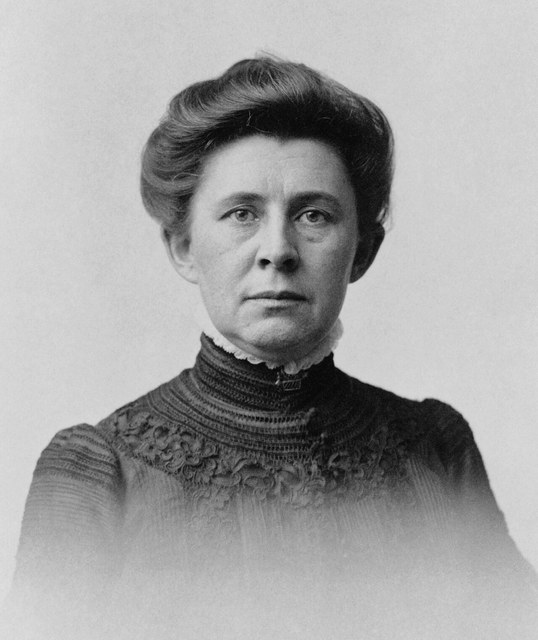
Ida Tarbell

Ida Tarbell
bdi James E. Purdy /span /a /bdi / bdi Adam Cuerden /a · Public domain

Muckraking journalist · late 19th–early 20th century · Pennsylvania, United States

Ida Tarbell was a muckraking journalist who exposed Standard Oil's monopolistic practices in her groundbreaking investigative work.

The kit

  • Rise — Ida Tarbell's father Franklin manufactured wooden oil tanks until Standard Oil's practices drove him into bankruptcy.
  • Achievements — Ida Tarbell published The History of the Standard Oil Company in McClure's magazine as a 19-part exposé.
  • Achievements — Ida Tarbell exposed Rockefeller's underhanded pricing tactics and monopolistic practices, inspiring public outcry against the company.
  • Legacy — Ida Tarbell is often called the inventor of investigative journalism for her meticulous documentation of corporate wrongdoing.

Runs with

Standard Oil Company
exposed its monopolistic practices in her 19-part investigative series open card →
John D. Rockefeller
attacked his underhanded pricing tactics in her muckraking work open card →
Petroleum
her father competed in the oil industry open card →
Pennsylvania
her father was an oilman there open card →

The ladder · 8 clues

H

Rockefeller’s underhanded pricing tactics were exposed by this muckraker, who published The History of the Standard Oil Company in McClure’s magazine.

H

Rockefeller and Standard Oil were both attacked by this muckraker in her book The History of the Standard Oil Company.

H

This writer’s father Franklin became the first person to manufacture wooden oil tanks. :Name this writer who wrote a 19 part book on the company that eventually put Franklin out of business, often called the inventor of investigative journalism.

H

She’s not Nellie Bly, but this author became a frequent Sanatorium visitor following the success of her biography of Abraham Lincoln.

H

Standard Oil’s monopolistic practices raised the ire of this muckraking journalist, whose father had been a Pennsylvania oilman.

H

5: This author once described Samuel McClure as a “will of the wisp” after he missed a train.

M

The History of the Standard Oil Company was written by this muckraker who based the work on her father’s experiences with the company.

E

Inspired by the bankruptcy of her father’s competing business, this muckraking journalist inspired public outcry with her book, The History of the Standard Oil Company.

Watch out: Nellie Bly (another prominent female investigative journalist of the era)
#185 · Authors, Poets, and Playwrights · Level 1

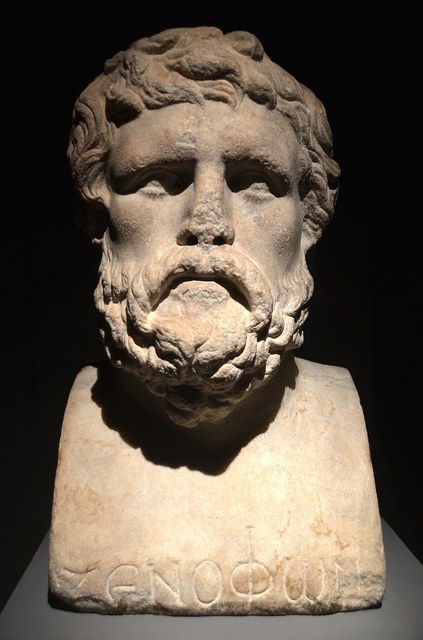
Xenophon

Xenophon
a rel="nofollow" Carole Raddato · CC BY-SA 2.0

Greek historian and soldier · c. 430–354 BCE · Greece, Persia, Asia Minor

Xenophon was a Greek historian and mercenary commander who chronicled the Ten Thousand's retreat in his Anabasis.

The kit

  • Rise — Xenophon joined Cyrus the Younger's expedition to usurp the Persian throne, which ended at the Battle of Cunaxa.
  • Achievements — Xenophon led the Ten Thousand mercenaries to safety after Clearchus was killed, ending with the cry "thalatta!" at the Black Sea.
  • Legacy — Xenophon continued Thucydides' History in his Hellenica and wrote the Cyropaedia, an idealized biography of Cyrus the Great.
  • Legacy — Xenophon wrote the Memorabilia on Socrates' teachings and treatises on horsemanship, hunting, and the Spartan constitution.

Runs with

Cyrus the Great
wrote the Cyropaedia, a fictionalized biography of Cyrus the Great open card →
Black Sea
led the Ten Thousand to the Black Sea after Cunaxa open card →
Socrates
collected Socrates' teachings in his Memorabilia open card →
Peloponnesian War
continued Thucydides' account in his Hellenica open card →

The ladder · 15 clues

H

This Greek historian’s Anabasis recounts battling the Colchian armies while attempting to lead his mercenary company, the “Ten Thousand,” to the Black Sea.

H

After Clearchus was killed shortly after the Battle of Cunaxa, this man led a march of soldiers that ended with the yell “thalatta!” upon reaching freedom at the Black Sea.

H

This author continued Thucydides’ History of the Peloponnesian War in his Hellenica. Like Aristotle, this man wrote a well-regarded work discussing the constitution of the Spartans.

H

This Greek historian writes that Agesilaus and Lysander took a force of two thousand Neodamodeis on the expedition to Asia in his Hellenica. He also wrote about the Persian expedition of Cyrus in his Anabasis.

H

The death and last words of one of the Thirty Tyrants, Theramenes [[theh-RAH-meh-nees]], is described in Hellenica, by this commander of the Ten Thousand, who gives an account of their expedition in Anabasis [[an-AH-bah-siss]].

H

Two of the oldest surviving works on horse riding are this man’s treatises Hipparchicus and Peri Hippikes.

H

This author’s Memorabilia is a collection of teachings by his teacher, Socrates.

M

This man chronicled that Expedition of the Ten Thousand in one work and idealized his slain commander, a Persian king, in another work, the Cyropedia. name this Greek soldier, philosopher, and historian who wrote the Anabasis.

M

The battle and the march of the ten thousand mercenaries were documented by this Greek historian in his Anabasis.

M

One of his works was an early example of the "mirrors for princes" genre, a biography entitled the Cyropaedia.

M

This Greek mercenrary leader recounted passing through Armenia during his march with the Ten Thousand in his Anabasis.

M

This man began his Hellenica almost exactly where Thucydides left off his History. He is better known for his Anabasis, which details the return of the Ten Thousand to Greece after they were stranded in Persia.

E

Despite its title, only the first chapter of this author’s best known work describes a journey inland to join Cyrus the Younger. name this Greek who wrote about the Ten Thousand in his Anabasis.

E

The last seven years of the Peloponnesian War are chronicled in this other Greek historian’s Hellenica. This historian also described how the Ten Thousand fought on behalf of Cyrus the Younger in his Anabasis.

E

This Greek historian wrote a fictionalized biography of Cyrus the Great called the Cyropaedia. He documented Cyrus the Younger’s failed attempt to usurp the Persian throne in his Anabasis.

10 more clues from the record
H

This writer’s treatise Ways and Means says that nobody really knows when Laurion was first worked – basically true, since there is evidence of activity there in the Late Neolithic. Along with Plutarch’s Life of Lycurgus, this writer’s works are the fullest extant source on the Spartan constitution.

H

identify each of the following concerning a historian and his works.A friend and admirer of the Younger Cyrus, he composed a biographical memoir of Cyrus' youth, his Cyropaedia. Another major work is his history, Hellenika, which picks up directly where Thucydides left off.

H

He was forced to take command when Clearchus of Sparta and his officers were treacherously killed during peace negotiations by the Great King Artaxerxes II, who had just defeated and killed its leader, the Younger Cyrus, in the Battle of Cumaxa, as he recounts in his Cyropaedia.

H

A "pseudo-" version of this author is known as "the Old Oligarch." One of his works has a section about the fictional King Abradatas and tells of how its subject diverted a river to attack Babylon.

H

Gilbert Murray gave the name of “Old Oligarch” to an author usually identified as a “pseudo” version of this man, which criticizes Athens’ constitution for promoting social vice.

H

Upon reaching the mountain Thekes, the din from his vanguard at seeing the Black Sea was so great that the rearguard thought enemies had arrived.

H

This man marched with Seuthes while in Thrace, and later had a disagreement with him over his soldier’s pay.

H

A history by this man covers events leading up to the Battle of Mantinea after the final seven years of the Peloponnesian War.

H

A writing by this man relates how a pillar with Syrian characters was erected for the burial of Pantheia and Abradatas.

H

He wrote such works as On Horsemanship and Hunting with Dogs, as well as multiple Socratic dialogues.

Watch out: The "Old Oligarch" is a pseudo-Xenophon, not Xenophon himself
#186 · Authors, Poets, and Playwrights · Level 1

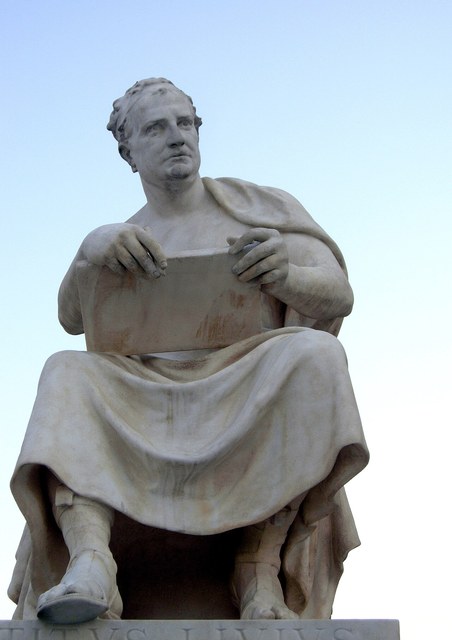
Livy

Livy
Acediscovery · CC BY 4.0

Roman historian · Augustan era (late 1st century BC–early 1st century AD) · Patavium (Padua), Rome

Livy was a Roman historian from Padua who wrote Ab Urbe Condita, a 142-book history of Rome from its founding.

The kit

  • Achievements — Livy wrote Ab Urbe Condita (From the Founding of the City), covering Rome's history from Aeneas's arrival through Augustus's reign.
  • Scope — Livy's work originally comprised 142 books, but only 35 survive today, including accounts of early Rome and the Second Punic War.
  • Style — Livy employed annalistic technique, narrating history year by year, and was praised by Quintilian for his "milky" rhetorical style.
  • Legacy — Livy's history inspired Machiavelli's Discourses, which analyzed Roman political lessons, and was summarized in the Periochae.

Runs with

Rome
chronicled Rome's entire history from Aeneas through Augustus open card →
Niccolò Machiavelli
subject of Machiavelli's Discourses analyzing Roman republicanism open card →
Augustus
Second Punic War
vivid surviving account of Hannibal's war against Rome open card →

The ladder · 15 clues

H

Ab Urbe Condita was written by this Roman historian, who also titles a set of Discourses by Niccolo Machiavelli.

H

FTP, give the name shared by these men, the last of whom describes the kings of Rome, the early Republic and the second Punic War in the surviving books of his massive history Ab Urbe Condita.

H

This Roman, who served in some capacity in the reign of Augustus, is best known for his book Ab Urbe Condita, or the History of Rome, which begins with the arrival of Aeneas and continues through Julius Caesar.

H

Another work by Macchiavelli is his Discourses on... this Roman historian whose From the Founding of the City covered the history of Rome from its founding through the reign of Augustus Caesar.

H

The “cutting the poppies” story is detailed in the first book of this author’s Ab Urbe Condita.

H

Answer some questions about Roman historians, .This Augustan author wrote 142 books of history tracing Rome’s development from the mythical age of Troy to his lifetime. His vivid account of the Second Punic War against Hannibal still survives.

H

Book Seven of this man’s surviving work recounts how Titus Manlius got the cognomen “Torquatus” by duelling with a Gaul, and how a solar eclipse occurred during Manlius’s consulship with Caius Marcius Rutilus, after the dedication of the temple of Moneta.

M

As its name suggests, the Annals told their history one year at a time, a technique also used by this historian in his 142-book Ab Urbe Condita, only 35 books of which are extant.

M

This historian began with the arrival of Aeneas and concluded with the death of Drusus in his massive Ab urbe condita.

M

Ancient Rome was home to many notable historians. :This man wrote of the fall of Troy and Aeneas’ founding of Rome in Ab Urbe Condita Libri, his History of Rome.

M

The most famous holder of the name was a rhetorician from Padua who published the last 22 books of his magnum opus posthumously because they dealt with the contemporary history of the Emperor Augustus.

M

Most records of the Samnite Wars come from this Roman historian, who detailed it in his Ab Urbe Condita. Only 35 of the original 142 books have survived.

M

A text called the Periochae summarizes this historian’s work, which includes an oft-disputed account of Cincinnatus returning to his farm.

E

Machiavelli also wrote a series of Discourses on this Roman historian, who wrote the now mostly lost Ab Urbe Condita.

E

Machiavelli praised Brutus in his “Discourses on” this Roman historian who authored Ab Urbe Condita, a history of Rome from its founding to the reign of Augustus.

10 more clues from the record
H

Quintilian praised the “milky” style of this historian, who rebuts his contemporary Timagenes in a digression which claims that Rome would have defeated a longer-lived Alexander the Great.

H

Only about a quarter of this man’s histories survive. :Those surviving books of this author’s Ab Urbe Condita cover the foundation and early years of Rome, and the Second Punic War.

H

This historian, one of the few to write about the secession of the plebs, made it difficult to ascertain what was fact and what was myth about the secessions since he talked about both in his Ab Urbe Condita.

H

This man’s work was summarized in the Oxyrhyncus Epitome as well as the more complete Periochae, and this man’s account of a conflict with the Curiatii inspired Pierre Corneille’s play Horace.

H

Book III of Machiavelli's "Discourses on" this Roman historian includes an analysis of conspiracies like that against king Hieronymus of Syracuse.

H

Asinius Pollio criticized this man’s use of provincial terms as “patavinity” in reference to his hometown of Patavium.

H

His son of the same name proposed a reactionary reform of the constitution and was assassinated in 91 B.C., thus triggering the Social War.

H

Name's the same: Marcus Drusus was an opponent of Gaius Gracchus and proposed a massive extension of citizenship.

H

The Romans thought their literature basically began with a translation of the Odyssey into Latin by Andronicus.

H

This historian’s work is often cross-checked against his contemporary Dionysius of Halicarnassus.

Watch out: Confusion with Livius Drusus, whose son's assassination in 91 BC triggered the Social War
#187 · Authors, Poets, and Playwrights · Level 1

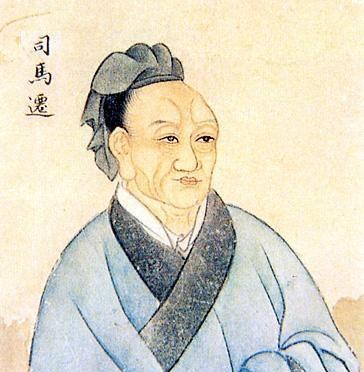
Sima Qian

Sima Qian
Public domain

Han Dynasty historian · c. 145–86 BCE · Han China

Sima Qian authored the Records of the Grand Historian, a foundational chronicle covering Chinese history from the Yellow Emperor to Emperor Wu.

The kit

  • Rise — Sima Qian served as Grand Historian under Emperor Wu of Han and orchestrated adoption of the Taichu calendar system.
  • Conflicts — Sima Qian was imprisoned and castrated for defending general Li Ling, whose campaign against the Xiongnu ended disastrously.
  • Achievements — Sima Qian completed his 130-chapter masterwork divided into five parts including Chronological Tables and Treatises after choosing castration over suicide.
  • Legacy — Sima Qian is known as the Father of Chinese Historiography for his comprehensive chronicle spanning legendary sovereigns to his contemporary era.

Runs with

Records of the Grand Historian
authored this comprehensive chronicle open card →
Han Dynasty
served as Grand Historian during this dynasty open card →
China
chronicled Chinese history from Yellow Emperor forward open card →
Bakumatsu Period

The ladder · 14 clues

H

Han historian who claimed they buried over 400 Confucian scholars alive in his Records of the Grand Historian.

H

You can read about the beginning of China’s Grand Canal in the work of this Han-era historian, who authored the Records of the Grand Historian.

H

This man was ostracized from court and imprisoned after defending the defeated general Li Ling, whose campaign against the Xiongnu [] went disastrously.

H

This court official orchestrated the adoption of the Taichu calendar system, used up until the 17th century by the Ming Dynasty.

H

This man wrote that mercury was used to model China’s waterways in the Mausoleum of Qin Shi Huangdi, a finding corroborated by the site’s unusually high mercury levels. :Name this scholar who opted for castration over suicide as punishment for defending Li Ling in order to finish his magnum opus.

H

His major work consists of 130 chapters divided into five parts, including "Chronological Tables" and "Treatises." :Name this man known as the “Father of Chinese History,” who was castrated for defending the disgraced general Li Ling.

H

Incurring the wrath of Han emperor Wu Ti, this historian was forced to choose between suicide and the completion of his masterwork, the Shi chi. He chose the latter. The moral? History is better than death.

H

This Chinese writer’s magnum opus, the Records of the Grand Historian, records how the legendary sovereign Shen Nong discovered how to use dàmá, or cannabis, as an herbal remedy.

H

This "Grand Historian" of the Han Dynasty recorded an appearance of Halley's Comet in the Shiji, a masterwork that he completed after the death of his father.

H

The Records of the Grand Historian is the most famous historical work of this man, who was in fact the grand historian of the emperor Wudi.

M

Author of the Records of the Grand Historian, a Han-era chronicle.

M

This court eunuch wrote a biography of emperors starting with Huangdi, also known as the Yellow Emperor, to his contemporary Emperor Wu of Han. name this "Father of Chinese Historiography," the writer of Records of the Grand Historian.

M

Wu is the last emperor mentioned in the Shiji or Records of the Historian, written by this contemporary historian whom Wu imprisoned and castrated for defending a disgraced general.

E

Bai Qi’s bloody campaigns were chronicled by this Han Dynasty eunuch, the author of the Records of the Grand Historian.

Watch out: Not to be confused with the Bakumatsu Period historians of Japan, who wrote millennia later
#188 · Authors, Poets, and Playwrights · Level 1

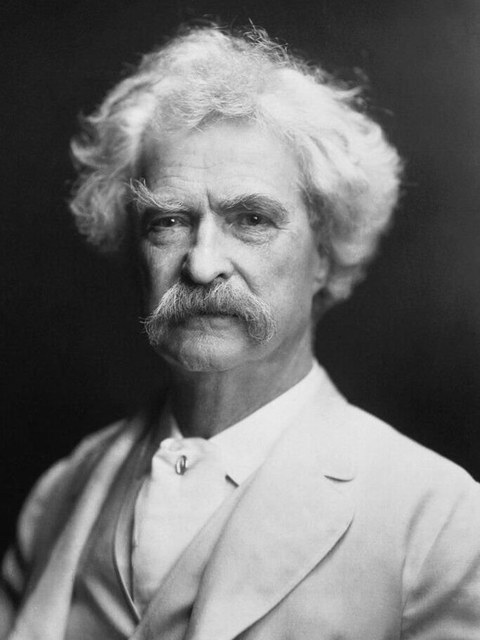
Mark Twain

Mark Twain
A.F. Bradley, New York · Public domain

American author · 1835–1910 · Missouri, United States

Mark Twain was the pen name of Samuel Langhorne Clemens, who chronicled Mississippi River life and criticized American imperialism.

The kit

  • Rise — Mark Twain worked as a steamboat pilot on the Mississippi before mining at Angels Camp, where he wrote about a jumping frog from Calaveras County.
  • Achievements — Mark Twain wrote The Adventures of Huckleberry Finn about a boy traveling downriver with enslaved man Jim, and co-wrote The Gilded Age satirizing political corruption.
  • Conflicts — Mark Twain criticized American imperialism in essays like To the Person Sitting in Darkness about the Philippine-American War and the Boxer Rebellion indemnities.
  • Legacy — Mark Twain's birth and death coincided with appearances of Halley's Comet, which he predicted would mark his passing in 1910.

Runs with

Ulysses S. Grant
Philippines
criticized the Philippine-American War and Moro Crater Massacre open card →
Mississippi River
depicted life along the Mississippi in Tom Sawyer and Huckleberry Finn open card →
Mississippi
described steamboat piloting in Life on the Mississippi open card →

The ladder · 15 clues

H

This author worked with Charles Dudley Warner on an 1873 book satirizing political corruption called The Gilded Age.

H

Author who wrote To the Person Sitting in Darkness criticizing the Philippine-American War

H

This author wrote a semi-fictional account of his travels out to the Wild West in the book Roughin’ It.

H

This writer’s opposition to the collection of indemnities by William Ament after the Boxer Rebellion prompted him to write an essay “To the Person Sitting in Darkness.” This author made a chronicle of a westward stagecoach journey with his brother Orion.

H

What American writer of travel books like Roughing It and A Tramp Abroad was both born and died in the years in which Halley's Comet was visible from Earth?

H

This author presented a fictionalized account of the USS Quaker City’s post-Civil War use in his travel book The Innocents Abroad.

H

This man's poor investments in ventures such as the Paige Compositor led to his bankruptcy, which he overcame with the help of Henry Huttleston Rogers.

M

Southern antebellum society inspired this author to write The Adventures of Huckleberry Finn.

M

This author, whose birth and death coincided with the arrival of Halley’s Comet, wrote about Tom Canty switching places with Prince Edward.

M

This man's publishing company, Charles L. Webster & Company, produced many of this man's works such as Personal Recollections of Joan of Arc. This man accurately predicted he would "go out with it" when referring to Halley's Comet as he died the day after its 1910 appearance. name this author who chronicled his travels in memoirs such as The Innocents Abroad and Roughing It.

M

This author of Roughing It also wrote about his early years as an apprentice to a steamboat captain in Life on the Mississippi, in which he explained the genesis of his pen name. name this author, born Samuel Langhorne Clemens, famous for his Adventures of Tom Sawyer.

M

While mining at Angels Camp, this man was inspired to write a story about a jumping frog from Calaveras County.

M

This author described his time traveling the American West in his semi-autobiographical work, Roughing It.

E

In a novel, this author wrote about a boy who encounters the Duke and the Dauphin [[doh-FAHN]] while traveling down the Mississippi with an enslaved man named Jim.

E

Characters created by this author include Becky Thatcher, Widow Douglas, and the slave Jim. name this American author, who depicted life along the Mississippi River in novels such as Tom Sawyer.

10 more clues from the record
H

This author of The Literary Offenses of James Fenimore Cooper set his novel The Prince and the Pauper in 16th century England.

H

This man co-wrote a satirical novel with Charles Warner subtitled A Tale of Today which lent its name to the Gilded Age.

H

This Southerner served a two-week stint in a Confederate militia known as the Marion Rangers before deserting.

H

This anti-imperialist openly criticized the U.S. for perpetrating the Moro Crater Massacre in his essay Incident in the Philippines.

H

This Missouri man described his time as a steamboat pilot in the antebellum period in Life of on the Mississippi.

H

is partially the setting of what author’s Roughing It?

H

This author wrote King Leopold’s Soliloquy, a satirical criticism of Leopold’s policy towards the Congo. This American author wrote about his tour of the Middle East in The Innocents Abroad.

H

This American author of such riveting works as “The Mysterious Stranger” and Pudd’nhead Wilson.

M

For ten points, name this writer whose Southern upbringing inspired The Adventures of Huckleberry Finn.

M

Zinn has drawn inspiration from this author, whose pacifist short story “The War Prayer” was not published until after his death. This author wrote admiringly about the Boxer rebels in “To the Person Sitting in Darkness.”

Watch out: Students confuse his real name Samuel Clemens with his pen name Mark Twain
#189 · Authors, Poets, and Playwrights · Level 1

Thomas Paine

Thomas Paine
bdi Laurent Dabos /span /a · Public domain

American Revolutionary pamphleteer · 1737–1809 · England, America, France

Thomas Paine wrote Common Sense, which argued for American independence by noting the absurdity of an island ruling a continent.

The kit

  • Rise — Thomas Paine got his first job in America as writer and editor of the Pennsylvania Magazine after emigrating from England.
  • Achievements — Thomas Paine wrote The American Crisis, which condemned "the summer soldier and the sunshine patriot" and began with "these are the times that try men's souls."
  • Conflicts — Thomas Paine was tried in absentia in England for publishing Rights of Man, a rebuttal to Edmund Burke's Reflections on the Revolution in France.
  • Legacy — Thomas Paine advocated deism and criticized organized religion in The Age of Reason, written while imprisoned in Paris during the French Revolution.

Runs with

Common Sense
wrote it in 1776, advocating a Continental Charter to replace England's Magna Carta open card →
America
argued for its independence, noting the absurdity of an island ruling a continent open card →
James Monroe
vouched for his U.S. citizenship, freeing him from French prison open card →
French Revolution
defended it in Rights of Man, arguing it targeted monarchy's misdeeds open card →

The ladder · 15 clues

H

This man advocated for the creation of a Continental Charter as an answer to England’s Magna Carta.

H

This Englishman got his first job in America as a writer and editor of the Pennsylvania Magazine.

H

This man's "Bank Letters" were slandered by the anonymous author "Atticus" and were instrumental in turning public opinion in favor of the Bank of North America. The publisher Robert Bell publicly feuded over the rights to a book by this man, whose second section argues that there is no moral difference between a king and his subjects.

H

He was sued for libel after writing a response to Edmund Burke’s Reflections on the Revolution in France, and he criticized organized religion and the divinity of the Bible while advocating for the rise of deism in The Age of Reason.

H

This man resigned his post on the Committee on Foreign Affairs after backlash to his criticisms of Silas Deane and Robert Morris as war profiteers.

H

This corset-maker outlined his deist beliefs in The Age of Reason and condemned "the summer soldier and the sunshine patriot" in an attempt to raise support for the soldiers at Valley Forge.

H

This author posited that "Whatever is my right as a man is also the right of another" in a response to Edmund Burke's Reflections on the Revolution in France, after which he was put on trial in absentia.

M

James Chalmers wrote Plain Truth as a response to this man’s most famous work.

M

After publishing a rebuttal to Edmund Burke, this man was placed on trial in England despite still being in the colonies.

M

This man was tried in absentia for publishing a work that refuted Edmund Burke by arguing that the French Revolution was justified since it targeted the misdeeds of the institution of monarchy rather than the king himself. name this author of Rights of Man who proposed an American Magna Carta in his 1776 pamphlet, Common Sense.

M

This colonial pamphleteer wrote The Age of Reason and The American Crisis in addition to Common Sense.

M

This man argued that nothing but "blood and ashes" results from governments run by "crowned ruffians" in a work that outlines a replacement for the Magna Carta.

E

This author of The Crisis wrote "these are the times that try men's souls." name this pamphleteer of the American Revolution who wrote Common Sense.

E

The absurdity of an island ruling a continent was observed by this early American revolutionary thinker in his 1776 pamphlet Common Sense.

E

This author described "the summer soldier and the sunshine patriot" who shrink from "the times that try men's souls" in The American Crisis.

10 more clues from the record
H

Apocryphally, George Washington read a pamphlet by this man prior to the Continental Army’s “Crossing of the Delaware” and subsequent victory at Trenton.

H

This thinker claimed that a government ruled by “crowned ruffians” would always result in “blood and ashes” in the book Agrarian Justice.

H

New York Senator Gouverneur Morris refused to allow this man to vote in general elections after invalidating his American citizenship.

H

In one work, this man advocated the payment of a one-time stipend to landless individuals after they reach the age of 21.

H

This man used the Bastille as a symbol of despotism in his Rights of Man, which caused a writ for his arrest to be published in England.

H

James Monroe vouched for this man’s U.S. citizenship, freeing him from French prison.

H

This man was vilified as a “lily-livered sinical rogue” and “demi-human archbeast” by various newspapers for his public opposition to Christianity. :Name this vociferous proponent of Deism who released the first part of The Age of Reason while imprisoned in Paris, believing that he was about to be executed.

H

Common Sense remains the masterwork of this American Founding Father, who later wrote a defense of the French Revolution entitled Rights of Man, although that didn’t stop the French from locking him up in Paris in 1793.

H

A sermon by Richard Watson convinced this man to publish one work that claims that “It is wrong to say God made rich and poor” and advocates a property tax to provide pensions for British citizens.

H

Name these historical pamphleteers, FTP each.Among his pamphlets are the “Agrarian Justice,” “Crisis,” and “Common Sense” papers and among his books is Rights of Man, his repudiation of Edmund Burke’s attack on the French revolutionaries.

Watch out: Edmund Burke (Paine rebutted Burke's Reflections on the Revolution in France with Rights of Man)
#190 · Authors, Poets, and Playwrights · Level 1

Flavius Josephus

Flavius Josephus
Scan by NYPL · Public domain

Jewish-Roman historian · 1st century CE · Judea and Rome

Flavius Josephus was a Jewish commander who defected to Rome during the First Jewish-Roman War and chronicled Jewish history.

The kit

  • Rise — Flavius Josephus commanded Jewish forces in Galilee during the First Jewish-Roman War before his capture at Yodfat.
  • Defection — Flavius Josephus survived the siege of Jotapata by drawing lots and prophesied the rise of the Flavians, earning imperial pardon.
  • Major works — Flavius Josephus wrote The Jewish War covering events from the Maccabean revolt to Masada and Jewish Antiquities chronicling Jewish history.
  • Legacy — Flavius Josephus provided extra-biblical accounts of Jesus, John the Baptist, and James the Just, though some passages may contain Christian interpolations.

Runs with

Jesus
briefly discussed Jesus in Antiquities, possibly with Christian interpolations open card →
John the Baptist
provided extra-biblical account of John the Baptist in his writings open card →
Masada
sole ancient source on the siege and mass suicide at Masada open card →
Vespasian
prophesied Vespasian's rise to emperor, earning his freedom and pension open card →

The ladder · 15 clues

H

This man served as an advisor to the emperor Titus after fighting against the Romans in the First Jewish-Roman War, an event he recounted in his The Jewish War.

H

While under siege at Yodfat, this man had a divine revelation about the rise of the Flavians which led to his pardoning and allotment of an imperial pension.

H

That mass suicide followed this man’s defeat in the siege of Jotapata.

H

Using this ancient man's descriptions, archaeologist Ehud Netzer discovered the location of Herod's Tomb near Herodium.

H

A 2025 book by Tom Schmidt contends that this author’s namesake Testimonium was entirely genuine, rather than containing a Christian interpolation. :Name this Jewish historian who briefly discussed Jesus, John the Baptist, and James the Just in his Antiquities of the Jews.

H

Name some things about the Codex Gigas, the world's largest extant illuminated manuscript. :Among the many texts included in between the Old and New Testaments are two texts by this 1st century Jewish historian: Antiquities of the Jews and The Jewish War.

H

This man rejected numerous claims including the Egyptian exodus involving 110,000 men over a six day period and that Mt. Sinai is not in Arabia in one work.

M

Cassiodorus translated the Jewish Antiquities by this First Century A.D. historian of the Jewish War. He wrote about Jews.

M

Much of our knowledge about the siege of Masada comes from this Jewish historian who wrote The Jewish War.

M

Beginning with the Maccabean revolt and ending at Masada, this writer recounts the rise and downfall of his people in De Bello Judaico.

M

In that book, this historiographer gives a brief history beginning with Antiochus IV Epiphanes’ capture of Judea and end with accounts of Vespasian and Titus putting down “The Great Revolt”. identify this author of Against Apion and The Jewish War whose namesake problem is determining which person survives when every nth is killed.

M

The writings of this onetime rival of John of Gischala (ghis-KAH-lah) and governor of Galilee (GAH-lih-lee) are believed to have been tampered with to portray Jesus as the Messiah.

M

This famous Jewish historian wrote about Jesus’ death, as well as many aspects of Judaism and early Christianity. During the first Jewish-Roman War he headed the Jewish forces in Galilee.

E

name this Jewish Roman chronicler and companion of Emperor Titus who provides extra-biblical accounts of men like John the Baptist and Jesus of Nazareth.

E

The reigns of Aristobulus I and Aristobulus II were detailed by this historian. This Roman-Jewish historian detailed many facets of Jewish history, including the siege of Masada.

10 more clues from the record
H

Another work by this man describes the thirty-eight towers outside of a fortress defended by numerous men who had earlier raided Ein-Gedi.

H

This writer relates a hilarious anecdote in which a soldier named Artorius escapes being burnt alive in a tower by jumping down and crushing to death his friend Lucius.

H

That work end with an account of the false miracles of Jonathan, who is tricked into falsely accusing people of being a member of the title religion.

H

Historian Seth Schwartz argued in a 1990 book that alleged discrepancies in this man’s politics were the result of changes in the political landscape and not betrayals.

H

According to one source, this man used his connection with Poppaea Sabina to convince Nero to release a group of priests captured by Antonius Felix.

H

With help from the actor Aliturius, this man persuaded Poppea Sabina to release several priests that had been imprisoned by the procurator Felix.

H

An enemy leader named Castor tricks some emissaries into coming close before throwing rocks at them in a history by this writer.

H

This man ordered the fortification of Gamla by filling houses along the outer ring with rubble and barricading gaps between buildings.

H

This writer is the only source on a campaign which was led by Flavius Silva and which involved a giant ramp being built to a stronghold of the Sicarii.

H

This man was the sole survivor of Yodfat (yode-FAHT) after he suggested drawing lots to determine who would commit suicide.

Watch out: The Josephus Problem (determining which person survives when every nth is killed) is named after him
#191 · Authors, Poets, and Playwrights · Level 1

Pausanias

Pausanias
Katolophyromai · CC0

Ancient Greek figures · 5th century BCE; 2nd century CE · Greece

Pausanias names three notable Greeks: a Spartan general who won at Plataea, his assassin of Philip II, and a 2nd-century geographer.

The kit

  • Plataea commander — Pausanias commanded Greek forces at Plataea against Mardonius, ordering the advance after receiving a favorable goat omen.
  • Downfall — Pausanias was recalled from Byzantium for adopting Persian manners, then accused of conspiring with Persia, isolating Sparta.
  • Death — Pausanias took refuge in the Temple of Athena of the Brazen House, where he was starved out and removed before dying.
  • Geographer — Pausanias wrote Description of Greece in the 2nd century CE, linking classical myths with locales and discussing Dorian invasion theory.

The ladder · 13 clues

H

This well-traveled Greek of the 2nd century wrote Description of Greece, which links classical myth with various locales. He shares his name with the general who defeated Mardonius at the Battle of Plataea.

H

This person escaped arrest by taking refuge in the Temple of Athena of the Brazen House, where he was starved out, and he was removed from the temple before dying so as to not desecrate the temple.

H

At that battle, this person finally ordered an advance while arrows were falling around him when he finally received a favorable goat omen.

H

A son of Pleistoanax (PLEE-stow-ah-nax) with this name settled an agreement with Athens to remove the Thirty Tyrants.

H

This regent for Pleistarchus was recalled from Byzantium because he began adopting Persian manners and clothing.

H

This person attempted to take refuge at Colonae after being driven out of Byzantium by Cimon.

H

Accusations against a general with this name of conspiring with the Persians led to the isolation of his city in the Hellenic league.

H

A general of this name died in the Temple of Athena Chalkioikos because angry citizens sealed it with bricks.

M

This member of Philip II’s bodyguard assassinated him. He shares his name with a 2nd-century CE geographer who wrote Descriptions of Greece.

M

This person commanded the winning forces at a battle preceded by the death of Masistius.

M

The theory connecting the invasion of the Dorians to the descendants of Heracles was largely put forth by this second-century Greek historian in his main surviving work, Description of Greece.

M

Amompharetus joined the rest of the Greek retreat on the advice of that man with this name in a battle against the Persians led by Mardonius.

M

At that battle, this person had a debate with Amompharetus, whose division was left behind in a retreat.

Watch out: The Spartan general shares his name with Philip II's assassin and with the 2nd-century geographer
#192 · Authors, Poets, and Playwrights · Level 1

Upton Sinclair

Upton Sinclair
Bain News Service, publisher · Public domain

American muckraking author · early-to-mid 20th century · United States

Upton Sinclair was a Socialist author whose 1906 novel The Jungle exposed meatpacking conditions and prompted the Pure Food and Drug Act.

The kit

  • Rise — Upton Sinclair first serialized The Jungle in Appeal to Reason before its publication as a novel.
  • Achievements — Upton Sinclair coined the phrase "white collar" in 1919 while analyzing clerical and administrative workers.
  • Conflicts — Upton Sinclair ran for California governor in 1934 on the EPIC (End Poverty in California) platform after switching from Socialist to Democratic Party.
  • Legacy — Upton Sinclair's novel Oil! provided the basis for the film There Will Be Blood.

Runs with

The Jungle
wrote exposé of meatpacking featuring Lithuanian immigrant Jurgus Rudkus open card →
California
lost 1934 gubernatorial race despite EPIC platform open card →
Chicago
set The Jungle in meatpacking plants there open card →
Coal
wrote King Coal about mining industry open card →

The ladder · 15 clues

H

This man wrote I, Candidate for Governor: And How I Got Licked after losing the 1934 California gubernatorial election.

H

This author stated, "I was aiming for the public’s heart, and by accident I hit it in the stomach" after one of his novels led Congress to pass the Pure Food and Drug Act.

H

A police officer supposedly said we'll have "none of the Constitution stuff here, see?" after this man was arrested reading the Bill of Rights in San Pedro in 1923.

H

His novel Oil! provided the basis for the film There Will Be Blood. :Who was this Socialist author of King Coal and a series of books about Lanny Budd?

H

After this man campaigned as the Democratic candidate for governor of California, he observed, “The American People will take Socialism, but they won’t take the label.” This man created left-leaning works like The Flivver King, a direct attack on Henry Ford, and Oil!, which inspired the film There Will Be BloRod.

H

At the launch of a political campaign, this man circulated a pamphlet called "I, Governor of California, and How I Ended Poverty." This man depicted the graceful scion of an arms magnate who interacts with world leaders in the 1930s and 40s in his twelve-book series about Lanny Budd.

H

While analyzing clerical and administrative workers, this author coined the term “white collar.” This man’s “Dead Hand” series includes a work that critiques newspaper moguls like William Randolph Hearst titled The Brass Check.

M

The Pure Food and Drug Act was passed in response to this author's novel The Jungle.

M

Ona dies during childbirth in a novel by this author that centers on Lithuanian immigrant Jurgus Rudkus's contempt for the Chicago meatpacking industry.

M

After losing the 1934 California gubernatorial election, this man authored I, Candidate for Governor: And How I Got F Licked.

M

This author penned The Jungle and also unsuccessfully ran for Governor of California.

M

However, he is better remembered for books like Boston, his treatment of the Sacco and Vanzetti case, and a novel which was first serialized in Appeal to Reason. name this author who wrote about Jurgis Rudkus in The Jungle.

E

This man attacked the Associated Press monopoly in his book The Brass Check, and he used the EPIC platform in a failed 1934 bid for the governorship of California after switching from the Socialist Party to a Democratic ticket. name this muckraking author who wrote King Coal and an expose of the meatpacking industry, The Jungle.

E

That novel by this author concerned the Lithuanian immigrant Jurgus Rudkus, who works in Chicago's historic meatpacking industry. name this activist and author of The Jungle.

E

Earlier, this socialist depicted the end of Tamoszius's [[taa-MOH- zee-us's]] violin career and the travails of Lithuanian immigrant Jurgis Rudkis. name this author who said, "I aimed at the public's heart, and by accident I hit it in the stomach" about his novel set in Chicago meatpacking plants, The Jungle.

10 more clues from the record
H

A memoir by this man subtitled How I Got Licked details a failed political campaign in which he advocated government seizure of farms and factories with unpaid back taxes.

H

This activist's EPIC platform was based on his idea for an experimental community he called the Helicon Home Colony.

H

This writer compared journalists with prostitutes in his expose The Brass Check.

H

Answer the following about the history of co-ops in the United States, .This person envisioned a vast network of co-operative farms which would “[produce] for use” in his pamphlet I, Governor of California, and How I Ended Poverty. He ran against Frank Meriam on his platform EPIC.

H

The political consulting firm Campaigns, Inc. ran the first attack ads against this politician. :Name this 1934 gubernatorial candidate who left the Socialist Party to run as a Democrat in his “End Poverty in California” campaign.

H

This person coined the phrase “white collar” in a 1919 book attacking yellow journalists like William Randolph Hearst, who later spearheaded negative press coverage of this activist’s EPIC (E-P-I-C) campaign.

H

He ran for governor in 1934 on the End Poverty in California platform, and after his narrow defeat he produced novels based on the trial of Sacco and Vanzetti and the Teapot Dome scandal, respectively entitled Boston and Oil!.

H

Clem Whitaker and Leone Baxter headed a league in opposition to this man, and may have pressured his supporter Aimee Semple McPherson from publicly endorsing him until late in that campaign.

H

The Poison Squad argues that Dr. Wiley’s efforts became synonymous in the public mind with the works of this muckraker. This socialist penned a novel that garnered widespread public support for the Meat Inspection Act.

H

This author used the technocracy movement’s idea of “production for use” in his platform, called End Poverty in California. He claimed to have accidentally “hit [the public] in the stomach” with his novel The Jungle.

Watch out: His novel Boston, not The Jungle, treated the Sacco and Vanzetti case
#193 · Authors, Poets, and Playwrights · Level 1

Lord Byron

Lord Byron
bdi Thomas Phillips /span /a · Public domain

English Romantic poet · 1788–1824 · England; Greece

Lord Byron was an English Romantic poet who died fighting for Greek independence at Missolonghi in 1824.

The kit

  • Rise — Lord Byron gained fame with Childe Harold's Pilgrimage, a narrative poem about a disillusioned traveler's journey.
  • Achievements — Lord Byron wrote Don Juan and "She Walks in Beauty," comparing a woman to "cloudless climes and starry skies."
  • Political activism — Lord Byron gave an impassioned speech against the frame-breaking law in the House of Lords, supporting the Luddites.
  • Death & Legacy — Lord Byron died of sepsis at Missolonghi during the Greek War of Independence, becoming the Romantic Age's exemplar.

Runs with

Greek War of Independence
Byron died fighting for Greek independence at Missolonghi in 1824 open card →
Luddite Movement
Byron supported the Luddites in the House of Lords open card →
Sennacherib
Nanda Empire
no connection evident in clues open card →

The ladder · 15 clues

H

This man, who described the travels of a disillusioned man in Childe Harold’s Pilgrimage, died in Missolonghi in 1824.

H

This man once offered 500 pounds for the purchase of the twelve-year-old girl Teresa Makri, a failed bid that led to his poem “Maid of Athens, ere we part.” After meeting his cousin at a ball, he compared her to “the night of cloudless climes and starry skies” in another poem.

H

This poet of the narrative poem The Siege of Corinth is regarded as a hero for his participation in the Greek War of Independence during which he got sick and died.

H

This author's alleged incestuous relationship with his half-sister may have resulted in the birth of Elizabeth Medora Leigh.

H

A poem by this man popularized the legend of the Ukrainian Ivan Mazepa, who deserted the Russian Army for Sweden.

H

This author was described as "mad, bad, and dangerous to know" by his mistress Lady Caroline Lamb.

H

This person’s many poems include The Siege of Corinth and the thirty selections in Hebrew Melodies.

H

Among the supporters of the Luddites was this father of computer programming pioneer Ada Lovelace.

M

“She Walks in Beauty” and Don Juan [JOO-un] were written by this English poet who died fighting in the Greek War of Independence.

M

This person’s only legitimate child is often regarded as the world’s first computer programmer.

M

This author died of sepsis before he could help attack the Ottoman fortress of Lepanto during the Greek War for Independence. name this Romantic poet, the author of "She Walks in Beauty."

M

Later on, this writer developed sepsis during the siege of Lepanto.

M

This literary member of the House of Lords supported the Luddites and wrote the poem Song for the Luddites. He may be better known for Don Juan [].

E

Shelley drowned in a boat named the Don Juan in homage to what other poet this person who wrote Childe Harold’s Pilgrimage and died fighting in the Greek War of Independence.

E

This person helped to make Greek independence a fashionable cause. name this person, whose death during the siege of Missolonghi [[mee- soh-LOHN-gee]] enshrined him as the exemplar of the Romantic Age.

2 more clues from the record
H

A nobleman with this surname was nicknamed "the Wicked Lord" after his duel with William Chaworth, supposedly leading him to worship Satan. :Give this surname of a British Royal Navy officer nicknamed "Foul-Weather Jack" due to his poor luck at sea, which may have inspired his grandson with this surname to write Childe Harold's Pilgrimage.

H

This British poet gave an impassioned speech against the frame-breaking law in the House of Lords; you know him better for the fame he was experiencing at the time for his “Childe Harold’s Pilgrimage.”

Watch out: Shelley drowned in a boat named Don Juan in homage to Byron
#194 · Authors, Poets, and Playwrights · Level 1

Friedrich Engels

Friedrich Engels
William Hall (1826–ca. 1898) (cropped and sepia tone removed · Public domain

German socialist philosopher · 1820–1895 · Germany, England

Friedrich Engels co-authored The Communist Manifesto with Karl Marx and wrote The Condition of the Working Class in England.

The kit

  • Achievements — Friedrich Engels wrote The Condition of the Working Class in England, analyzing Manchester's exploited textile workers during the Industrial Revolution.
  • Achievements — Friedrich Engels co-authored The Communist Manifesto, which begins 'A spectre is haunting Europe,' providing support but less than half the writing.
  • Achievements — Friedrich Engels wrote The Peasant War in Germany, examining Thomas Müntzer's role, and attacked utopian socialist Charles Fourier in Socialism: Utopian and Scientific.
  • Legacy — Friedrich Engels wrote The Origin of the Family, Private Property, and the State, opposing marriage, and Anti-Dühring, arguing force enables economic advantage.

Runs with

Manchester
studied Manchester's textile industry exploitation in The Condition of the Working Class open card →
Germany
wrote The Peasant War in Germany examining Thomas Müntzer's revolt open card →
Strategic Hamlet Program
Florence
Florence Kelley translated his Condition of the Working Class into English open card →

The ladder · 10 clues

H

This man provided support, but far less than half the writing, for a text that begins “A spectre is haunting Europe.” name this author of The Condition of the Working Class in England and co-author of The Communist Manifesto with Karl Marx.

H

This man argued that Robinson Crusoe’s enslavement of Friday used force as a means to the end of economic advantage in his work Anti-Durhing.

H

A book by this man was translated into English by Florence Kelley in 1885 and discusses the exploitative practices of the textile industry in Manchester.

H

This historian wrote that people “only regard each other as useful objects,” in the manner of another author’s book The Ego and Its Own, in a passage examining St. Giles and other neighborhoods in “great towns.” This historian used Wilhelm Zimmerman’s data as a source for his monograph The Peasant War in Germany.

H

Name these Marxist historians, FTPE.Perhaps the earliest example of Marxist historiography is this man’s discussion of Thomas Muentzer in The Peasant War in Germany. However, he is better known as the author of The Condition of the Working Class in England.

H

He attacked the French utopian socialist Charles Fourier in Socialism: Utopian and Scientific, and he spoke out against the institution of marriage in The Origin of the Family, Private Property, and the State.

H

At the request of Paul Lafargue , this historian excerpted three chapters from one of his polemics in a pamphlet that examines “utopian and scientific” forms of the title ideology.

M

19th century thinker who studied the German Peasants’ War and wrote The Condition of the Working Class in England.

M

Kelley was also a keen correspondent with this man whose The Condition of the Working Class in England in 1844 she translated into English. Her translation is in print to this day.

M

This thinker analyzed the residents of Manchester in The Condition of the Working Class in England, arguing that they were disadvantaged by the Industrial Revolution.

Watch out: Karl Marx, who co-authored The Communist Manifesto but wrote the majority of it
#195 · Authors, Poets, and Playwrights · Level 1

William Shakespeare

William Shakespeare
bdi Attributed to John Taylor /span /a · Public domain

English playwright and poet · 1564–1616 · Stratford-upon-Avon, England

William Shakespeare was an English playwright who wrote tragedies like Hamlet and Macbeth, histories including Henry VI and Richard III, and comedies.

The kit

  • Major works — William Shakespeare wrote tragedies including Hamlet, Macbeth, and King Lear, histories about Kings Henry IV through VIII, and comedies like Twelfth Night.
  • Theater career — William Shakespeare was a member of the Lord Chamberlain's Men and staged numerous plays at the Globe Theatre in London.
  • Historical plays — William Shakespeare wrote Richard III, which includes the famous line "My kingdom for a horse!" spoken at the Battle of Bosworth Field.
  • Legacy — William Shakespeare's works were collected into the First Folio by Henry Condell and John Heminges after his death in 1616.

Runs with

Elizabeth I
Henry
subject of history plays Henry IV, V, VI, VIII open card →
Julius Caesar
title character of Shakespeare's Roman tragedy open card →
Richard III
title character of Shakespeare's history play open card →

The ladder · 15 clues

H

This man’s works include a worked named for a prince of Tyre, who shares his name with an Athenian statesman, Pericles.

H

In one play by this author, he describes a “band of brothers” in the St. Crispin’s Day Speech, delivered by a royal character shortly before the Battle of Agincourt.

H

Thomas Nashe may have co-written the Temple Garden scene with this author in a trilogy of plays in which nobles pluck red or white roses to support either the Duke of Somerset or Richard Plantagenet.

H

In a play by this author, a man who gave away all of his money at a banquet finds a hoard of gold while living in a cave in the wilderness.

H

This man's fictitious sister Judith is hypothesized to make a point about women writers in Virginia Woolf's A Room of One's Own.

H

One hypothesis about this man is the Derbyite Theory, which notes the similarities between William Stanley’s life and fictional depictions.

H

A play by this author opens with a Catholic martyr quelling rioters from Lombardy on Evil May Day.

M

This husband of Anne Hathaway was a native of the town of Stratford upon Avon where he died in 1616.

M

Another of this writer’s plays has characters based on Holinshed’s Chronicles and is considered cursed in theatre circles.

M

This author wrote a play in which the images of an armored head, a bloody child, and a crowned child warn a king of Scotland that he cannot be harmed by a man “of woman born,” though the king is later killed by Macduff anyways. name this author of the historically inspired tragedies Timon of Athens and Macbeth.

M

This man left only his "second-best bed" to his widow Anne Hathaway, but did leave women such roles as Cordelia, Beatrice, and Ophelia. name this author of King Lear, Much Ado About Nothing, and Hamlet.

M

This author of Sir Thomas More wrote a play whose protagonist describes himself as "determined to prove a villain" in a speech opening "Now is the winter of our discontent." name this playwright of histories including Henry VI and Richard III.

E

This man wrote historical plays about Kings Henry IV, V, VI, and VIII and perhaps his most famous work is titled for a prince of Denmark. name this English author of works such as Antony and Cleopatra and Hamlet.

E

This member of the Lord Chamberlain’s Men staged numerous plays at the Globe Theater. name this “Bard of Avon,” an English playwright who wrote Julius Caesar and Hamlet.

E

History plays like Richard III were written by this legendary English playwright.

10 more clues from the record
H

This author’s works were collected by Henry Condell and John Heminges into the First Folio.

H

The Astor Place Riot was sparked by the rivalry between William Charles Macready and Edwin Forrest over their interpretations of one of this author's characters.

H

In Democracy in America, de Tocqueville observed that every pioneer's hut he encountered had a copy of the Bible and at least one work by this author.

H

Titus Andronicus is the bloodiest play of this dramatist who also wrote Twelfth Night and King Lear.

H

The McGuffey Readers used many passages from this author to teach elocution to American students.

M

A play by this author opens with the declaration “Now is the winter of our discontent/Made glorious summer by this sun of York.” Cannonfire during one of this man’s plays accidentally burned down the Globe Theatre.

M

Playwright who gave Richard III a line at Bosworth Field by writing “My kingdom for a horse!”

M

Christopher Marlowe may have helped this man write the first part of his trilogy on Henry VI.

M

This man was a native of the town of Stratford upon Avon where he died in 1616.

M

Actors like Edmund Kean became celebrities by touring America performing this author's plays. name this playwright who was wildly popular in the 19th-century United States, where companies frequently performed his plays Julius Caesar and Macbeth.

Watch out: Christopher Marlowe may have co-written Henry VI Part 1
#196 · Authors, Poets, and Playwrights · Level 1

Cassius Dio

Cassius Dio
Unknown author Unknown author · Public domain

Roman historian · c. 155–235 CE · Bithynia and Rome

Cassius Dio was a Roman senator and historian who wrote an eighty-book History of Rome in Greek covering Rome's founding through 229 CE.

The kit

  • Career — Cassius Dio served as consul twice, in 205 and 229 CE, and was a senator during Septimius Severus's reign.
  • Major work — Cassius Dio's eighty-book *Historia Romana* was written in Greek in Thucydides's style and survives only in fragments.
  • Survival — Cassius Dio's final half is known mainly through the eleventh-century epitome of Joannes Xiphilinus, though Book 36 on Pompey survives complete.
  • Sources — Cassius Dio recorded Boudica's flogging, Nero's naumachia, the Colosseum's inauguration, and details about the Praetorian Guard.

Runs with

Rome
chronicled Rome from legendary founding to 229 CE open card →
Boudica
recorded her flogging by Romans open card →
Nero
blamed Nero for the Great Fire open card →
Rongorongo Script

The ladder · 14 clues

H

The flogging of Boudica was recorded by this Roman historian who published an eighty-volume history of Rome up to the reign of Severus Alexander.

H

Contrary to Appian, whose longest work shares the title of this of historian’s magnum opus, this man reported that Mithridates VI was murdered after immunity to poison thwarted a suicide attempt.

H

This man’s extant work is fragmentary, and most of the final half is only known through the eleventh-century epitome of Joannes Xiphilinus.

H

One source for the details of Nero’s naumachia comes from this man’s eighty-book history of Rome titled the Romaika.

H

The most complete book of this man’s work is the thirty-sixth, which details Pompey’s expeditions against the pirates and Pontus.

H

One section of his main text was collected into the Fragmenta Valesiana by Henri de Valois.

M

This man, who was also a consul in the reign of Commodus, wrote an 80-book volume in Greek entitled Historia Romana, that began with the legendary founding of Rome and went all the way until AD 229. Like Suetonius, he puts the blame for the fire on Nero.

M

The World of Late Antiquity emphasizes how quickly Rome’s “Crisis of the Third Century” emerged by stating that this author “lay down his pen in 229 with no sense of foreboding.” This author’s 80-book History of Rome was written in Greek.

M

Like Martial and Suetonius, this Bithynian historian’s work describes the inauguration of the Coliseum. His 80-book History of Rome, which spans the founding to the third century CE, survives in fragments.

M

His history ends with the death of Heliogabalus and is written in Greek in the style of Thucydides. name this author of the eighty-volume Roman History, a Roman historian who came just after Tacitus and Suetonius.

M

Information about the Praetorian Guard comes from this Roman historian of Greek origin, who wrote an 80-book Roman History. At one point, the Guards demanded the life of this historian.

M

This man served as consul in 205 and 229 AD and wrote a lengthy history of that went up to the time of Alexander Severus, though only portions of it survive.

M

One of the chief sources for Boudicca’s revolt comes from this Roman historian’s Romaika, a text written in Greek originally consisting of 80 books.

M

This historian was an eyewitness to the speech delivered by Septimius Severus after the latter overthrew Julian, as this man was a senator at the time.

Watch out: Appian also wrote a work titled Roman History
#197 · Authors, Poets, and Playwrights · Level 1

Publius

Publius
No machine-readable author provided. Kugamazog~commonswiki / · CC BY-SA 2.5

Pseudonym · 1787–1788 · United States

Publius was the collective pseudonym used by Hamilton, Madison, and Jay when writing the Federalist Papers.

The kit

  • Origin — Publius honored the Roman consul who helped establish the Roman Republic after the overthrow of the monarchy.
  • Authorship — Publius signed all eighty-five Federalist Papers despite three different authors contributing to the collection.
  • Purpose — Publius advocated for ratification of the Constitution through detailed arguments about republican government and federalism.

Runs with

Federalist Papers
signed every essay in this collection open card →
James Madison
one of three authors writing as Publius open card →
Mark AntonyCicero

The ladder · 10 clues

H

The Federalist Papers were written by Jay, Hamilton, and Madison under this pseudonym.

H

Every writer of the various Federalist Papers published under what pseudonym?

H

It isn’t Lucretius, but Poggio Bracciolini and Niccolo de Niccoli discovered many of this historian’s lost texts in the Hersfeld Abbey; Bracciolini was later accused of forging this historian’s most famous work.

H

Giuseppe Toffanin identified two types of followers of this historian: “red” types who follow his republican ideals and “black” types who identify with his version of realpolitik.

H

His reference to the execution of Jesus during Tiberius’s reign is a rare non-Christian reference to the origins of Christianity. :Name this Roman historian who wrote the Annals.

H

It is not Josephus, but this historian detailed Titus’s suppression of the Great Jewish Revolt in the fifth section of one of his works.

H

Although written by three men, the Federalist Papers were signed by this one word pseudonym.

M

That book takes place after the assassination of Domitian and details the conquest of Britain by his father-in-law, Agricola. name this historian who chronicled the lives of emperors Augustus through Nero in the Annals.

M

“To ravage, to slaughter, to usurp under false titles, they call empire” ends one of many diatribes against Rome in one of this historian’s books.

M

The authors of the Federalist Papers used this pseudonym in honor of the Roman consul who helped established the Roman Republic.

#198 · Authors, Poets, and Playwrights · Level 1

Polybius

Polybius
Jona Lendering, Livius Onderwijs · Public domain

Greek historian · c. 200–c. 118 BCE · Megalopolis, Rome

Polybius was a Greek historian from Megalopolis who wrote a forty-volume Histories chronicling Rome's rise to Mediterranean dominance.

The kit

  • Captivity — Polybius was taken hostage to Rome in 167 BCE after the Third Macedonian War as a prisoner from the Achaean League.
  • Patronage — Polybius tutored Scipio Aemilianus in Rome and accompanied him to witness the sack of Carthage in 146 BCE.
  • Histories — Polybius wrote a forty-volume Histories providing detailed accounts of the Punic Wars and Roman constitutional theory.
  • Legacy — Polybius praised Rome's mixed constitution as the source of its greatness, influencing Montesquieu and John Adams.

Runs with

Rome
chronicled Rome's rise and praised its mixed constitution open card →
Carthage
witnessed its destruction with Scipio Aemilianus open card →
Punic Wars
primary source for First and Second wars open card →
Corinth
praised Mummius for saving its art open card →

The ladder · 15 clues

H

Was a prisoner from the Achaean League, was present at the sack of Carthage, and wrote Histories about the Roman Republic?

H

Hellenistic scholar who wrote The Histories about the Punic Wars, including a description of the production of barley-based libations.

H

This historian claimed that a commonwealth was united by a “scrupulous fear of the gods.” This historian claimed that Cleoxenus and Democleitus invented a fire-signaling technique to communicate individual letters, known as this historian’s “square.” This was the first historian to record the story of a young Hannibal Barca placing his hand on a sacrificed animal and swearing never to be friends with Rome.

H

Identify the following about some ancient historians, .This son of Lycortas of Megalopolis was taken to Rome, where he befriended Scipio Aemilianus. A practitioner of “pragmatic history”, his The Histories contains details about the Second Punic War.

H

This 2nd-century BCE Greek historian from Achaea lauded Ephorus as the first universal historian. He wrote The Histories, a 40-volume work on the rise of Rome with five surviving books, including extensive commentaries on the Roman constitution.

H

This man, who also wrote a lost treatise on battle tactics, was taken prisoner after he led the cavalry of the Achaean League on a failed diplomatic mission, but unlike his compatriots, he was allowed to go free.

H

This man was a tutor to Scipio Aemilianus while he was being held as a Greek hostage in Rome following the Third Macedonian War. His Histories are one of the principal sources for the First and Second Punic Wars.

M

FTP, name this historian born around 200 BC who wrote the forty-book Histories on the rise of the Roman empire.

M

This man was party to the escape of Seleucid prince Demetrius from Rome which enabled the overthrow of Antiochus V. This man was given the honour of carrying the ashes of Philopoemen while a young man, and was later denounced by Callicrates, and taken as a hostage by Rome. name this Achaean politician and historian from Megalopolis, who while in exile in Rome became close friends with Scipio Aemelianus, whose family figures prominently in this man’s Histories.

M

This Roman historian’s praise of the Senate as an aristocratic check on the rights of the people heavily inspired John Adams’ “A Defense of the Constitutions.” This formulator of the concept of anacyclosis is also known for creating a grid display of letters of the alphabet often used in telegraphy and codes.

M

In 167 BC, this Greek noble was taken as a hostage to Rome. His situation wasn’t so bad, however, as he became a historian there and wrote History of Rome which is one of our best sources for the First Punic War

M

This leading statesman of the Achaean League was deported to Rome, where he began writing his 40 volume Histories; they discuss the rise of the Roman Empire and contain a notable account of the Punic Wars.

M

Another author of a work called the Histories was this Greek historian whose ideas of government influenced Montesquieu. He lived through and recorded the Roman conquest of Greece.

M

One of the primary sources for information about the Mercenary War comes from this Greek ex-patriate who posited that Rome's greatness came from its balance of power in his Histories.
E

Much of our history of the 2nd Punic War comes from the work of this captive Greek historian, who was part of the entourage of Scipio Aemilianus, adoptive grandson of Africanus.

9 more clues from the record
H

This 2nd century Greek author was a political prisoner in Rome where he tutored Scipio Aemilianus and chronicled the rise of Rome in his Histories, which contain an important description of Hannibal's invasion of Italy.

H

This historian, who was sent to Rome as a prisoner by the Achaean League, praised Mummius as “moderate” for saving Corinth’s art, despite brutalizing its people. He chronicled the Punic Wars in The Histories.
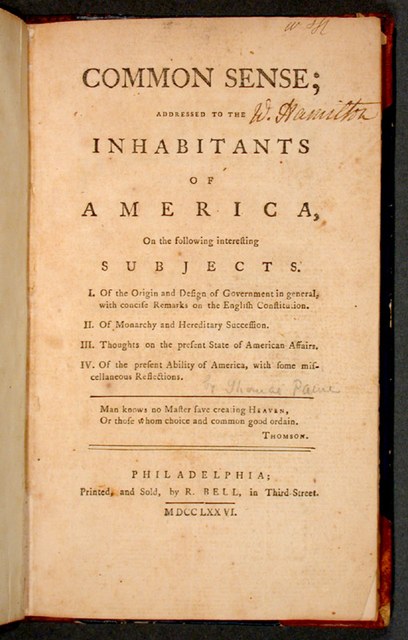
H

This politician undertook a diplomatic mission with his father to Ptolemy V while still under the legal age which ended when the king suddenly died.

H

Early on, this man wrote a biography of the politician Philopoemen, who was a friend to his father Lycortas, and whose ashes this man reportedly carried home after his death.

H

After that, he became a tutor to the sons of the general Lucius Aemilius Paulus, including Scipio Africanus, whom he followed to witness the destruction of Carthage.

H

In Book VI of his most famous work, this historian claimed that the Romans were pre-eminent due to their adoption of a mixed constitution.

H

This historian criticized Timaeus of Tauromenium for making inaccurate judgments of eyewitness testimony included in his historical works.

M

This figure, born in Megalopolis, become famous for creating what he called a "pragmatic history" which describes events like the Battle of Cynoscephalae and the razing of Corinth.

M

This historian theorized that governments cycle between “basic” and “degenerate” forms such as monarchy and tyranny. name this Greek historian and author of the Histories.
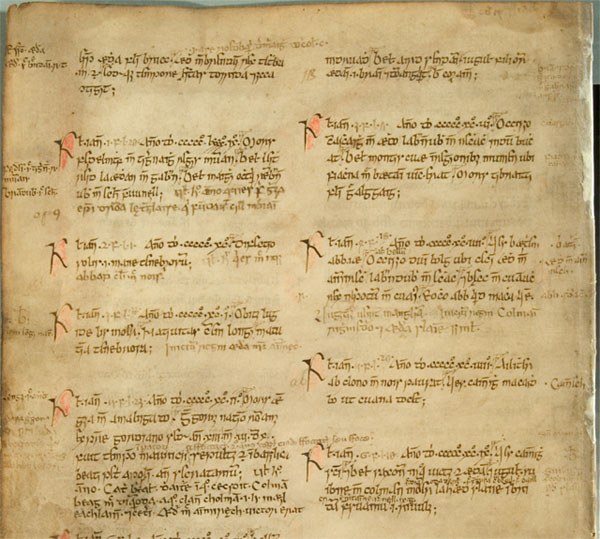
Watch out: Polybius described a fire-signaling grid for communicating letters, now called the Polybius square
#199 · Authors, Poets, and Playwrights · Level 1

Anna Komnene

Anna Komnene
Unknown author Unknown author · Public domain

Byzantine princess and historian · 1083–c. 1153 · Byzantine Empire

Anna Komnene was a Byzantine princess who wrote the Alexiad, chronicling her father Alexios I's reign and the First Crusade's impact.

The kit

  • Rise — Anna Komnene became one of the first known women historians by penning the Alexiad in the twelfth century.
  • Achievements — Anna Komnene wrote the Alexiad, which begins with a quote from Sophocles' Ajax and describes the Battle of Dyrrhachium.
  • Conflicts — Anna Komnene plotted a failed coup against her brother John II with Irene Doukaina to replace him with Nikephoros Bryennios.
  • Legacy — Anna Komnene was exiled to a monastery after her coup attempt, where she documented Robert Guiscard's death and the Pecheneg wars.

Runs with

John
her younger brother whom she attempted to depose in a failed coup open card →
Sicily
home region of Norman woman Sikelgaita, compared to Pallas and Athena open card →
Byzantine Empire
the empire whose history she chronicled during her father's reign open card →
First Crusade
major event whose effects on Byzantium she described in the Alexiad open card →

The ladder · 10 clues

H

Shortly after being exiled by her brother John II, this historian described the effects of the First Crusade upon the Byzantine Empire in an account of the reign of her father Alexios I, the Alexiad.

H

In one work, this author describes the Norman woman Sikelgaita as “like another Pallas, if not a second Athena,” in a text that also includes an account of the Battle of Dyrrhachium. :Name this historian, who was exiled to a monastery after a failed coup attempt against John II.

H

This historian’s most famous work begins with a quote from Sophocles’ play Ajax. :Name this historian who documented events like the death of Robert Guiscard and the war with the Pechenegs in that work. This historian wrote that work after being exiled to a monastery for plotting a failed coup with Irene Doukaina .

H

Niketas Choniates claimed that this person was “stimulated by ambition and revenge” to attempt a coup against their brother with the encouragement of Irene Doukaina, aiming to replace him with Nikephoros Bryennios.

H

Another important Byzantine woman was this historian who wrote about the reign of her father in the Alexiad. She entered a convent after her plot to depose her younger brother John was discovered.

H

This twelfth-century Byzantine princess became one of the first known women historians by penning the Alexiad, which narrates the dynasty-establishing reign of her father Alexios I.

H

This woman may have been inspired by the material laid out by her husband Nikephoros Bryennios the Younger to write a chronicle of her father’s rule named the Alexiad.

H

In a funeral oration to this person, George Tornikes asked “To whom shall I compare the one who is entirely unsurpassable?”, eventually resolving to compare them to a phoenix.

H

This woman wrote admiringly of the manly traits of Empress Irene in her influential Byzantine history, The Alexiad.

H

In mourning, this person lamented their misfortune by stating “now I live and have died a thousand deaths”.

Watch out: Confused with Empress Irene, whom Anna praised for manly traits in the Alexiad
#200 · Authors, Poets, and Playwrights · Level 1

Barbara Tuchman

Barbara Tuchman
The U.S. National Archives · Public domain

American historian · 20th century · United States

Barbara Tuchman was an American popular historian who won two Pulitzer Prizes for narrative histories of World War I and China.

The kit

  • Rise — Barbara Tuchman was the granddaughter of Henry Morgenthau and worked as a research assistant for the Institute for Pacific Relations.
  • Achievements — Barbara Tuchman won Pulitzers for The Guns of August, about World War I's outbreak, and Stilwell and the American Experience in China.
  • Achievements — Barbara Tuchman wrote A Distant Mirror about the calamitous 14th century through the lens of Enguerrand VII de Coucy.
  • Legacy — Barbara Tuchman coined a namesake law stating that disaster reporting increases apparent extent by five to tenfold.

Runs with

World War I
wrote The Guns of August about WWI's July Crisis and opening battles open card →
China
won Pulitzer for Stilwell and the American Experience in China, 1911-45 open card →
Assassination of Archduke Franz Ferdinand
detailed Franz Ferdinand's assassination in The Guns of August's Outbreak section open card →
Edward
opened The Guns of August with Edward VII's funeral open card →

The ladder · 15 clues

H

A discussion of the Little Ice Age opens another book by this historian that covers the “Calamitous 14th Century.” This historian is best known for a 1962 work whose “Outbreak” section details Franz Ferdinand’s assassination. name this female historian who wrote A Distant Mirror and The Guns of August.

H

This historian described the “calamitous” fourteenth century in her book A Distant Mirror. :Name this historian who described the military escalations of the July Crisis in The Guns of August.

H

Another work by this author examines the events of the “calamitous 14th century” through the lens of Enguerrand VII de Coucy.

H

This author coined a law stating that reporting of deplorable events increased the apparent extent by five to tenfold, which was stated at the start of the book focusing on Anne Bradstreet.

H

A work by this author details Helmut von Moltke the Elder’s affinity for reading Victorian romance novels before heading into battle.

H

A book by this historian that is sometimes titled Sand Against the Wind examines the life of Joseph Stilwell in China.

H

This historian’s namesake law argues that disaster is far less common than various reports suggest.

M

This historian wrote about the anti-Semitic newspapers covering Dreyfus in The Proud Tower. She wrote a detailed account of the days leading into World War I in The Guns of August.

M

This woman drew connections between the 14th and 20th centuries in A Distant Mirror, and described the opening of World War I in The Guns of August.

M

This author won a Pulitzer for her biography of Joseph Stilwell, though she is better known for her book on the July Crisis. name this author of The Guns of August.

M

This granddaughter of Henry Morgenthau documented incidents such as the Great Awakening raid.

M

This popular historian discussed how irredentist feelings towards Alsace-Lorraine and calls for revanche against the Germans intensified the Dreyfus affair in The Proud Tower.

M

The funeral of Edward VII opens her best known work, which ends by discussing the Battle of the Marne. name this author of The Guns of August.

E

This American historian wrote the book Stilwell and the American Experience in China, 1911-45. She is better known for writing about the origins of World War I in The Guns of August.

E

This historian wrote a book titled for the “first salute” that Hopkins had received. She won her second Pulitzer Prize for Stillwell and the American Experience in China.

7 more clues from the record
H

This author was present during the historic A 1914 pursuit of the SMS Goeben, detailed in the “Battle” section of one of her books.

H

This American popular historian won two Pulitzers for Stilwell and the American Experience in China and The Guns of August. Her namesake “law” states that any calamity’s reporting makes it seem worse than reality.

H

Originally a research assistant for the Institute for Pacific Relations, this historian published one book before the age of 40, entitled The Lost British Policy: Britain and Spain Since 1700.

H

She was known for her popular history works, which didn't work with primary sources all that much. :Name this author of The Distant Mirror and The March of Folly.

H

Another of this author’s works addresses socialism in the chapter “The Death of Jaures” and is set between the years 1890 and 1914.

H

In Rabbit at Rest, Harry Angstrom has difficulty making it through this author’s book devoted to an incident on St. Eustatius.

H

This historian's late work The First Salute gives an account of the American Revolution from an international point of view.

Watch out: The Proud Tower (another Tuchman work about 1890-1914, not her most famous book)
#201 · Authors, Poets, and Playwrights · Level 1

Harriet Beecher Stowe

Harriet Beecher Stowe
not specified · Public domain

American abolitionist author · 19th century · United States

Harriet Beecher Stowe was an American abolitionist author whose novel Uncle Tom's Cabin influenced antislavery sentiment before the Civil War.

The kit

  • Rise — Harriet Beecher Stowe was the daughter of Lyman Beecher, a college president and prominent reformer.
  • Achievements — Harriet Beecher Stowe wrote Uncle Tom's Cabin, in which Simon Legree beats the title character to death.
  • Achievements — Harriet Beecher Stowe promoted Florida tourism through her book of letters titled Palmetto Leaves.
  • Legacy — Harriet Beecher Stowe was supposedly greeted by Abraham Lincoln as the little woman who started the Civil War.

Runs with

Aaron Burr
painted an unflattering portrait of him in The Minister's Wooing open card →
Rongorongo Script
Abolition of Slavery
led white abolitionist movement through Uncle Tom's Cabin open card →
Florida
bolstered its reputation as tourist destination in Palmetto Leaves open card →

The ladder · 13 clues

H

This author fictionalized Vice-President Aaron Burr in her novel The Minister's Wooing and depicted fugitives in the Great Dismal Swamp in Dred.

H

In a novel by this author, the slave Harry runs Nina Gordon’s southern plantation while another character preaches violent retribution for slavery.

H

This author bolstered the reputation of Florida as a tourist destination through a book of letters titled Palmetto Leaves.

H

This author was a close friend and travel companion of Elizabeth Campbell, the Duchess of Argyll.

H

In an 1864 essay, this author argued that coal-fired stoves hurt family unity compared to gathering around an open hearth. Abe Lincoln supposedly called this author of Uncle Tom’s Cabin “the little woman who made this great war.”

H

answer the following about the abolition of slavery in the United States:The white abolitionist movement in the northern US was led by reformers like William Lloyd Garrison, and writers like John Greenleaf Whittier and this author of Uncle Tom’s Cabin.

H

So-called “white slave propaganda” was employed by abolitionists to expose the hypocrisies of the one-drop rule, including this author, who described Eliza as “all but white” in Uncle Tom’s Cabin.

H

The response to the debates was overseen by the college’s president Lyman Beecher, whose children included this author of Uncle Tom’s Cabin.

M

Writer who Abraham Lincoln might have greeted by saying, "you are the little woman who wrote the book that started this great war."

M

The title character is beaten to death by Simon Legree in this author’s novel, Uncle Tom’s Cabin.

M

This writer and abolitionist wrote the introduction to the second edition of the Narrative of Sojourner Truth, though she is far more famous for writing Uncle Tom’s Cabin.

M

Truth was described as the “Libyan Sibyl” by this woman who wrote the introduction to Truth’s autobiography and wrote Lady Byron Vindicated.

E

This author, who painted an unflattering portrait of Aaron Burr in The Minister’s Wooing, also wrote a novel in which Eva St. Clair urges those around her to convert to Christianity and Simon Legree orders one of his slaves to be beaten to death. name this author of Uncle Tom’s Cabin.

Watch out: Aaron Burr appears in her novel The Minister's Wooing, not Uncle Tom's Cabin
#453 · Named Literary Works · Level 1

The Prince

The Prince
bdi Niccolò Machiavelli /span /a · Public domain

political treatise · 1513 (published 1532) · Florence

The Prince is Niccolò Machiavelli's treatise on statecraft arguing rulers should prioritize power over morality and be feared rather than loved.

The kit

  • Core argument — The Prince argues that rulers must be cunning like a fox and powerful like a lion to maintain power effectively.
  • Famous maxims — The Prince declares that it is better to be feared than loved and that men forget their father's death more easily than losing their inheritance.
  • Key examples — The Prince uses Cesare Borgia as a model ruler and praises his execution of Remirro de Orco as exemplary statecraft.
  • Dedication & purpose — The Prince was dedicated to Lorenzo de' Medici and discusses virtù, fortuna, and methods for conquering and maintaining states.

Runs with

Niccolò Machiavelli
Machiavelli wrote it after torture, retiring to his estate open card →
Borgia family
Cesare Borgia served as direct inspiration and primary example open card →
the Fronde
no connection evident in clues open card →
Bishop
no connection evident in clues open card →

The ladder · 15 clues

H

It claims that the title figure must be both cunning like a fox and powerful like a lion, as evidenced by the success of Cesare Borgia.

H

In chapter 19 of this work, Septimius Severus is said to emulate both a lion and a fox.

H

This work is often compared to its author's less known work, Life of Castruccio Castracani.

H

Mary Dietz argues that this work was not meant to be satirical.

H

This work extols Agathocles of Syracuse and Oliveretto Euffreducci.

H

This book notes that “men forget more easily the death of their father than the loss of their inheritance.” This book encourages risk-taking by saying that “fortune is a woman; and it is necessary, if one wants to hold her down, to beat her.” The first half of this book is an analysis of new, hereditary, and ecclesiastical states.

H

In Chapter XVII of this work, its author describes men as “ungrateful, fickle, dissembling, [and] anxious to flee danger,” while Chapter XXII states that the intellect to comprehend things independently is the most excellent kind of intellect.

H

Chanakya's Arthashastra is often compared to this Machiavelli work, since they both discuss how a monarch should rule. Unlike this work, the Arthashastra focuses on maintaining general prosperity, not just monarchical power.

M

This work suggests that the title figure ought to emulate the lion and the fox. :Name this political tract that argues that it is better for one to be feared than loved.

M

In this work, the execution of Remirro de Orco by Cesare Borgia is given as an example of conquest by fortune.

M

Alexander VI is often used as a good example of the title figure of this political treatise about how the title ruler can obtain and maintain power, written by Niccolò Machiavelli.

M

Cesare Borgia served as the direct inspiration for this early modern political treatise, an analysis of statecraft and government written by Niccolò Macchiavelli.

M

It praises Cesare Borgia and also advises rulers to be both a fox and a lion.

E

This work declares that it is better to be feared than loved. name this political treatise written for one of the Medicis by Niccolo Machiavelli.

E

This work was addressed to the Duke of Urbino, Lorenzo de' Medici, and uses the metaphors of the lion and fox. name this political treatise by Machiavelli.

10 more clues from the record
H

The Renaissance is famous for, among other things, a blossoming of literature. :In the 16th century, Niccolo Machiavelli wrote a book with this title which describes how, sometimes, the ends justify the means. It is named after a royal title.

H

One chapter in this work mentions several options for persons who conquer republican states, and a later chapter in this work suggests that its author’s sponsor should use the power of the Papacy to conquer Italy.

H

This work advises the title figure to be cruel quickly and to cause a great injury. :Name this work of political philosophy on monarchic rule by the author of Discourses on Livy, which is dedicated to Lorenzo de Medici.

H

This book uses Maximilien I as a negative example who could not tell between good and bad advice, and it also mentions three types of military forces.

H

This work discusses the concepts of Virtù and Fortuna. :Name this work which at one point essentially says that the end justifies the means. It is by the same author of the Discourses on Livy and is considered a work of realpolitik.

H

After his torture, Machiavelli retired to his estate and wrote this work, his most famous, dedicated to Lorenzo II de Medici. In it he describes the methods by which the title figure may maintain his reputation.

H

Dedicated to Lorenzo de’ Medici, this work does not concern itself with republican regimes but does offer suggestions on how to deal with insurrections and alliances.

H

Chapter twenty of this work concludes that the best fortress is to not be hated, while chapter nineteen examines the downfall of Roman emperors like Pertinax.

H

He also states that while good leaders are virtuous, in reality the ones who distance themselves from ethics rule best.

H

It asserts that it is better for one to have barons than servants, and mercenaries are declared to be both useless and disloyal in this work.

Watch out: Life of Castruccio Castracani (Machiavelli's less-known work often compared to The Prince)
#454 · Named Literary Works · Level 1

Persians

Persians
PersianDutchNetwork · CC BY-SA 3.0

Ancient Iranian people · 6th century BCE–present · Iran and Anatolia

Persians were an ancient people of Iran who founded the Achaemenid Empire under Cyrus the Great.

The kit

  • Rise — Persians conquered Miletus and Anatolia in the 6th century BCE under Cyrus the Great.
  • Conflicts — Persians under Xerxes were defeated at the Battle of Salamis against the Greeks in 480 BCE.
  • Legacy — Persians form the majority population of present-day Iran as descendants of the Achaemenid peoples.

Runs with

Nanda Empire
both major empires of the 6th-4th centuries BCE open card →
Battle of Salamis
Xerxes's expedition defeated there in 480 BCE open card →
Battle of MarathonBattle of Thermopylae

The ladder · 5 clues

H

The ancient town of Miletus {MILL-AH-TUSS} was one of the wealthiest cities in the Greek empire until a 6th century BCE invasion from the east. …Name this empire, sometimes referred to as the Achaemenid {AH-KIM-AH-NIDD} Empire, that conquered Miletus and the rest of Anatolia under their leader, Cyrus the Great.

H

This play is the oldest extant example of Greek tragedy. :Identify this play in which Queen Atossa's ominous dreams are realized when word arrives in Susa of the title people's defeat at the Battle of Salamis.

M

The ethnicity which went to war against the Ottomans for a final time under Abbas I?

M

Name these ancient peoples that lived in modern-day Iran, :The Achaemenid Empire founded by Cyrus the Great was the first great expansion by these people. These people form the majority of the population of present-day Iran.

E

This oldest complete surviving play in the history of literature won its author, Aeschylus, first prize at the 472 BC Dionysia. In it, Queen Mother Atossa anxiously awaits news of her son Xerxes’s expedition against the Greeks.

Watch out: Aeschylus's The Persians depicts their defeat at Salamis, not a Persian victory
#455 · Named Literary Works · Level 1

Records of the Grand Historian

Records of the Grand Historian
Zhonghua Book Company · Public domain

Chinese historical text · c. 109–91 BCE · Han Dynasty China

Records of the Grand Historian is Sima Qian's comprehensive history spanning from the Yellow Emperor to Emperor Wu of Han.

The kit

  • Structure — Records of the Grand Historian is divided into five sections: Basic Annals, Tables, Treatises, Hereditary Houses, and Ranked Biographies.
  • Sources & scope — Records of the Grand Historian compiled sources on the Han Dynasty and earlier periods, with its Shang king list later confirmed by oracle bones.
  • Historical impact — Records of the Grand Historian established conventions for Chinese historiography and became the first of the Twenty-Four Histories.
  • Notable content — Records of the Grand Historian includes accounts of assassin-retainers, merchants, the Nine Tripod Cauldrons, and Bai Qi the "Human Butcher."

Runs with

Sima Qian
authored by Sima Qian after his castration open card →
Han Dynasty
written during the Han Dynasty open card →
China
chronicles Chinese history from legendary times open card →
Annals
Basic Annals is one of its five sections open card →

The ladder · 15 clues

H

Historical work by Sima Qian [chee-ahn] in which he compiled a variety of sources on the Han Dynasty.

H

Hereditary Houses and the Basic Annals make up two of its five sections.

H

During a mountaintop sacrifice in this text, a king decrees an inscription extolling how he “rises early, sleeps late” to work for his subjects, whom he calls the “black-headed people.” This text’s preface describes its author’s desire to use the office he inherited from his father to continue his father’s dream, rather than the office’s main job of astronomy.

H

One episode in this work relates how a ruler entered his outhouse to find the dismembered, rotting corpse of his father's lover, traumatizing him into a life of sexual deviancy and leaving the throne in the hands of his mother.

H

This text is also known as the Shiji. :Name this historical text that discusses Chinese history from the legendary Yellow Emperor to Emperor Wu. It is divided into “Basic Annals,” “Tables,” “Treatises,” “Hereditary Houses,” and “Ranked Biographies.”

H

This work imagines a worm eating a mulberry leaf to explain the rapid success of one figure; that man's near-murder with a knife concealed in a scroll appears in this work's catalogue of assassinations.

H

The historically controversial chapter of this text about merchants condemns governments that “block up the eyes and ears of people” and opposes a thinker’s ideal state of isolated self-sufficient communities.

M

Much of what is known about the Shang dynasty is derived from this massive Han era history written by Sima Qian.

M

The anecdote about the Bai Qi (bye chee), "The Human Butcher," appears in this text by Sima Qian (suh-mah chee-EN), which claims that the Xia (sh’YAH) Dynasty were the first rulers in the lands that comprise modern-day China.

M

Much of the extant information about the Nine Tripod Cauldrons, including their supposed loss in the Sì River, is recorded in this text written by Sīmǎ Qiān during the Hàn Dynasty.

M

The discovery of oracle bones defended this text from criticism that its description of 30 Shang dynasty rulers was not based on written fact.

M

Running from the Yellow Emperor to Wudi, name this most famous history of China, compiled by Han historian Sima Qian.

M

To finish this work, its author refrained from suicide after Li Ling's failed attack on the Xiongnu led to his castration.

M

The Shang dynasty is recounted in this masterpiece of Sima Qian, which begins by describing the reign of the Yellow Emperor.

E

Exaggerated accounts of King Zhou’s reign come from this history written by Sima Qian . It spans from the reign of the Yellow Emperor to Emperor Wu.

10 more clues from the record
H

In an essay about this text, UNC historian Grant Hardy analyzes its five conflicting narrations of one man’s defection as a favourable alternative to unified narratives.

H

Modern critics of this first of the 24 Histories were shocked after excavations at Anyang mostly matched its early king list with Shang-era oracle bones.

H

The Spring and Autumn Annals were cited by this work written by Sima Qian . This work established many of the conventions used in later works of Chinese historiography.

H

Burton Watson’s translation of this text included a section on the “Assassin-Retainers” but left out its chapters on bells and calendars.

H

This work used the eyewitness account of Xia Wuju to recount an attempted assassination with a knife concealed within a map.

H

This text includes an essay written by the writer’s father characterizing six philosophical schools like the Naturalists.

H

The first figure described in this work affixed a compass to a chariot to defeat a bronze-headed tyrant.

H

Future works emulated the last 69 chapters of this text dedicated to characterization-heavy “Ranked Biographies”.

H

Modern editions of this text often incorporate a series of commentaries on it known as the Sanjiazhu , or the “Commentaries of the Three Experts”.

H

One chapter of this work describes how the Sovereign of Earth is sacrificed to on Mount Tai.

Watch out: Spring and Autumn Annals (cited as a source by this work, but a separate earlier text)
#456 · Named Literary Works · Level 1

Domesday Book

Domesday Book
Andrews, William · Public domain

English land survey · 1086 · England and Wales

Domesday Book was a comprehensive survey of English landholdings commissioned by William the Conqueror in 1085-86 to assess tax revenue.

The kit

  • Purpose — Domesday Book recorded ownership, livestock, and value of estates to calculate taxes owed to the crown.
  • Scope — Domesday Book covered England and the Welsh Marches but excluded London due to tax-exempt status and areas devastated in the Harrowing of the North.
  • Structure — Domesday Book consists of Great and Little portions, with the Little edition covering Essex, Norfolk, and Suffolk in greater detail.
  • Legacy — Domesday Book provides the closest pre-Black Death population estimate and remains consulted for genealogical disputes.

Runs with

William the Conqueror
commissioned the survey in 1085-86 open card →
William
ordered the census as king open card →
Bishop
Land
assessed all landholdings and livestock open card →

The ladder · 15 clues

H

Survey ordered by William the Conqueror that gives the closest pre-Black Death population of England.

H

Incomplete thanks to the Harrowing of the North, it is divided into the “Great” portion which excludes the area north of the river Tees, and the “Little” portion dealing with Essex, Norfolk, and Suffolk.

H

This work’s origin was described by Richard FitzNeal in Dialogue Concerning the Exchequer, a medieval treatise on the role of the treasurer.

H

Sections of this work begin by describing the King’s demesne [de-main].

H

This document records a survey that assessed “what or how much each … landholder here in England had in land or live-stock, and how much money it was worth.” :Name this book commissioned in 1086 by the victor of the Battle of Hastings. This book’s name refers to the Last Judgment.

H

Richard FitzNeal wrote that this document’s name was so-called because its decisions were unalterable, like those of the Last Judgement. :Name this document that was ordered by William the Conqueror in order to survey every shire in England and document all dues owed to him.

H

The name of this work is described in the Dialogus de Scaccario, and it is declared that this work “cannot be evaded by any skillful subterfuge.” It has nothing to do with Jewelry, but this work was held in Bodmin Prison during World War One.

H

name some stuff about England after the Norman conquest:William the Conqueror ordered the compilation of this book, a record of holdings of all Englishmen to be used for tax collecting purposes.

M

Its name refers to the Last Judgement because its property evaluations were considered final; those evaluations served in calculations of taxes owed during the reign of Edward the Confessor. name this “Great Survey” of England, compiled during the reign of William the Conqueror.

M

This mass survey of England and the Welsh Marches was ordered by William and completed in 1086. Its primary goal was to find out how much tax revenue William could earn.

M

The survey which gathered the information for it took place the following year. name this book which containsa detailed census of English land and people, comissioned by William the Conqueror.

M

Records from this book indicated that Sherwood Forest covered about a quarter of Nottinghamshire . This “Great Survey” was commissioned by William the Conqueror for tax purposes.

M

Perhaps the best known items in the National Archives are the two volumes of this 1086 survey of England and Wales commissioned by William the Conqueror.

M

Among William the Conquerors more famous acts was taking a census and survey of his kingdom for tax reasons, which was published in this tome.

E

As King in 1085-6, William the Conqueror took this survey of English land to determine taxation.

10 more clues from the record
H

Although it is still occasionally consulted to settle disputes involving genealogy, the original is usually passed over in favor of reprinted versions like the Victoria County Histories.
H

Another of William’s undertakings was this tome, regarded as the first modern census. This “Great Survey” was a record of the land and livestock holdings of every lord in England.

H

This 1086 book resulted from a great survey that William ordered for tax purposes. Its creation is considered one of William’s major achievements, and it is an important historical resource.

H

Evidence of the Harrying of the North is replete in this census executed for William the Conqueror in 1086, an extensive survey of England for purposes of taxation and the like.

H

There are three so-called “satellites” associated with it, which include the Inquisitio Comitatus Cantabrigiensis and the Inquisitio Eliensis, and an early draft of it is known as the Exon version.

H

It lists ownership changes over twenty years among other information, and it was the result of a project announced at Christmas in 1085.

H

Its contents were collected under oath by agents known as “legati” and it is composed of answers to a series of questions known as the Inquistio Elienis.

H

Name these early English records, .William I ordered a general census of estates in 1086, resulting in this book

H

This work excludes the city of London, likely due to its tax-exempt status.

H

The “Little” edition of this work encompases Norfolk, Suffolk, and Essex.

Watch out: Edward the Confessor (tax evaluations referenced his reign, but William the Conqueror commissioned the survey)
#457 · Named Literary Works · Level 1

The Jungle

The Jungle
Unknown author Unknown author /span · Public domain

1906 muckraking novel · 1906 · Chicago

The Jungle is Upton Sinclair's 1906 novel exposing Chicago meatpacking conditions that accidentally spurred the Pure Food and Drug Act.

The kit

  • Publication — The Jungle was first published serially in the socialist newspaper Appeal to Reason edited by J.A. Wayland.
  • Plot — The Jungle follows Lithuanian immigrant Jurgis Rudkus working in Chicago's Packingtown slaughterhouses amid unkempt factories and tragedy.
  • Tragedies — The Jungle depicts Ona dying in childbirth and Jurgis's son drowning in a mud puddle of dirty water.
  • Impact — The Jungle prompted President Theodore Roosevelt to send Labor Commissioner Charles P. Neill to investigate and led to FDA creation.

Runs with

Upton Sinclair
author who lamented hitting the public's stomach instead of heart open card →
Chicago
setting in Packingtown meatpacking district open card →
Mobutu Sese SekoDemocratic Republic of the Congo

The ladder · 15 clues

H

The phrase “Chicago will be ours!” is chanted at a socialist rally attended by the Lithuanian immigrant Jurgis Rudkus at this novel’s conclusion.

H

A rousing cry of “Chicago will be ours!” distracts the protagonist of this novel at its end.

H

As a result of this book’s publication, one president sent Labor Commissioner Charles P. Neill to investigate working conditions.

H

A boy in this novel drowns in a puddle of dirty water after his teenage mother Ona dies in childbirth.

H

After a character in this novel is fired from her job, she stops trying to woo the violinist Tamoszius [tam-osh-ee-us].

H

J.A. Wayland gave this work early exposure by publishing it serially in his socialist paper, Appeal to Reason.

H

The cousin of the protagonist’s wife is forced into prostitution, shortly after Ona’s death in childbirth.

H

The final place of employment for this novel’s protagonist is at Tommy Hind’s hotel.

M

The author of this book lamented "I aimed at the public's heart, and by accident I hit it in the stomach" after this book led to the passing of the Pure Food and Drug Act. name this novel about Chicago meatpacking by Upton Sinclair.

M

Sinclair is best known for this novel about Jurgis Rudkus’s tough life and work in the Chicago slaughterhouses, which famously helped spur the creation of the Food and Drug Administration.

M

Theodore Roosevelt privately described an “utter contempt” for this novel’s author, though he signed legislation creating the FDA after this novel “hit the public’s stomach”. name this muckraking novel about Jurgis Rudkus, a Lithuanian immigrant working in the meat-packing industry, written by Upton Sinclair.

M

This novel’s protagonist converts to socialism after seeing Antanas drown in a mud puddle.

M

Some 400 homeless people were living in the East Duwamish Greenbelt section of Seattle, better known by this name, prior to a 2016 shooting. Another place with this name originally developed around a Seveso Zone landfill in Calais.

E

The 1906 Pure Food and Drug Act was passed in response to this novel about the Chicago meatpacking industry, written by Upton Sinclair.

E

This novel’s protagonist, Jurgis Rudkus, moves to Packingtown from Lithuania, but only finds work in unkempt factories whose depiction enraged readers. name this novel that exposed Chicago’s meatpacking industry, written by Upton Sinclair.

2 more clues from the record
H

This work was first published in serial form in the newspaper Appeal to Reason.

H

Although this novel by Upton Sinclair was meant to draw attention to the poor working conditions suffered by factory workers like Jurgis Rudkus, the American public was shocked by the appalling food safety measures this novel described.

Watch out: Sinclair aimed at readers' hearts regarding worker conditions but hit their stomachs with food safety horrors
#458 · Named Literary Works · Level 1

Agricola

Agricola
Original uploader was Ostrich /a at data-mw-original- en.wik · Public domain

Roman general and governor · 1st century CE · Britannia

Agricola was a Roman general whose campaigns in Britannia were chronicled by Tacitus in a biographical work.

The kit

  • Achievements — Agricola won the battle of Mons Graupius during his governorship of Britain.
  • Conflicts — Agricola was recalled from Britain by Domitian following his military successes there.
  • Legacy — Agricola's career became the subject of a work noting that Romanization was called 'culture' among the ignorant when it was enslavement.

Runs with

TacitusVespasian
Annals
no connection evident in clues open card →
Domitian
recalled Agricola from Britain after Mons Graupius open card →

The ladder · 3 clues

H

This work’s preface notes that its author had held off from writing it because of the executions of Rusticus and Senecio. :Name this work, whose subject is described as preferring the talent of one people to ‘the studiousness of the Gauls’. This work claims that Romanization ‘was called “culture” among the ignorant when it was part of their enslavement’.

M

His reign also saw a revolt led by Saturninus, and he recalled Agricola from Britain after Agricola won the battle of Mons Graupius.

E

Wrote about his father-in-law’s experiences in Britannia in Agricola?

#459 · Named Literary Works · Level 1

The Green Book

The Green Book
Victor Hugo Green · Public domain

Political treatise · 1975–1979 · Libya

The Green Book is Muammar Gaddafi's three-volume political manifesto outlining his Third International Theory and justifying Libya's Jamahiriya state.

The kit

  • Philosophy — The Green Book's first volume, The Solution of the Problem of Democracy, appeared in 1975 and advocated committees everywhere over representative government.
  • Economic theory — The Green Book argued that workers should be partners, not wage earners and called for abolishing money and private ownership of transportation.
  • Implementation — The Green Book became required reading for all Libyans under the Great Socialist People's Jamahiriya until displaced after the 2011 revolution.
  • Influence — The Green Book was inspired by Mao Zedong's writings and reiterated ideas from Gaddafi's Zuwara speech following Umar el-Muhayshi's failed 1975 coup.

Runs with

Muammar Gaddafi
Gaddafi wrote it after deposing King Idris I open card →
American Railway UnionDecembrist Revolt
New York City
unrelated Green Book was written by NYC mailman open card →

The ladder · 9 clues

H

Gaddafi outlined his political philosophy in this Mao Zedong-inspired book, which was supposed to be required reading for all Libyans.

H

The second volume of this work argued that “To an individual, the family is more important than the state” arguing that workers should be “partners, not wage earners” advocating an equal distribution of national resource wealth because “the house belongs to [those] who live in it.” This book spread popular slogans like “committees everywhere to ensure that “demoracy is the supervision of the people by the people.” This book’s first volume was promulgated after the failed coup of Revolutionary Command Council member Umar el-Muhayshi in 1975 and reiterated ideas from the Zuwara speech.

H

This work's last section prognosticates that “Grandstands will disappear because no one will be there to occupy them” and denounces the sports of boxing and wrestling as savage behaviors.

H

The author of this book recast some of its ideas into a short parable about an astronaut that commits suicide, which can be found in his collection Escape To Hell.

H

A section of this text about the “means of transportation” declares that “no person” has the “authority to own a means of transportation for the purpose of renting it,” since it means controlling the needs of others.

H

This book advocated the creation of a state based on consultation rather than representation, a Jamahriyya.

M

This book argues for the abolition of money, and the first of its three volumes, The Solution of the Problem of Democracy, appeared in 1975 and outlines its formulator's “Third International Theory.” The Great Socialist People's Jamahiriya state was partly based on this book, written by its author after deposing King Idris I. name this work of political thought by Muammar Qaddafi.

M

This work argues ironically that “imposing specific teaching materials is a dictatorial act” and was displaced on school curricula following a 2011 revolution. name this political primer of Muamar Gaddafi.

M

Sundown towns were among the hazards described in this guide written by a New York City mailman that advised Black drivers in annual editions from 1936 to 1966.

Watch out: A different Green Book was a travel guide for Black motorists written by a New York City mailman from 1936 to 1966
#460 · Named Literary Works · Level 1

Romance of the Three Kingdoms

Romance of the Three Kingdoms
周曰校(Before 1640) · Public domain

Chinese historical novel · 14th century (events: 169-280 CE) · China

Romance of the Three Kingdoms is a 14th-century novel by Luo Guanzhong chronicling the fall of the Han dynasty and the wars among Wei, Wu, and Shu.

The kit

  • Opening events — Romance of the Three Kingdoms begins with the Yellow Turban Rebellion and corrupt eunuchs, then depicts Liu Bei, Guan Yu, and Zhang Fei swearing the Oath of the Peach Garden.
  • Central conflict — Romance of the Three Kingdoms features protagonist Liu Bei and antagonist Cao Cao battling for control after the Han collapse, with warlord Dong Zhuo seizing Luoyang early in the conflict.
  • Battle of Red Cliffs — Romance of the Three Kingdoms climaxes at the Battle of Red Cliffs, where Zhuge Liang obtains arrows using straw dummies and a Sun Quan-Liu Bei alliance defeats Cao Cao.
  • Legacy — Romance of the Three Kingdoms is one of the Four Great Classical Novels of China alongside Journey to the West, Water Margin, and Dream of the Red Chamber, inspiring Dynasty Warriors games.

Runs with

China
set during period of Chinese history after Han fall open card →
Han Dynasty
chronicles end of Han dynasty to reunification century later open card →
Yellow Turban Rebellion
opens with Yellow Turban Rebellion against corrupt eunuchs open card →
Water Margin
fellow member of Four Great Classical Novels of China open card →

The ladder · 15 clues

H

In this book, Liu Bei, Guan Yu, and Zhang Fei make the Oath of the Peach Garden. :This is what historical novel in which the Shu Han, Wu, and Wei principalities fight?

H

In this book, two friends are turned against each other after a south wind fails to materialize, and one of those men constructs the Stone Sentinel Maze in battle.

H

Liu Bei and Cao Cao are the protagonist and antagonist of this Luo Guanzhong novel, which details the conflict between Wu, Wei, and Shu after the fall of the Han dynasty.

H

A video game series created by Omega Force and Koei that is based on this novel lets you kill opponents to fill your musou bar to perform special attacks, and is called Dynasty Warriors.

H

A character in this novel, based on a historical warlord also known as Xuande [], throws his infant son to the ground after General Zhao Yun [] risks his life to save him during the Battle of Changban [].

H

The Battle of Red Cliffs appears in this novel which relates the campaigns of Cao Cao [] and Zhuge Liang [[TCHOO-guh LYAHNG]].

H

In this novel, one character obtains arrows by sending out dummies in boats, and then collecting the arrows shot at the dummies.

M

This work describes a corrupt set of eunuchs as well as the Yellow Turban Rebellion.

M

A general in this work convinces his enemies that he can perform magic by praying to an alter for three days until a southeasterly wind appears. name this book where a Sun Quan-Liu Bei alliance defeats Cao Cao at Red Cliffs, a classic novel by Luo Guanzhong.

M

In this novel, Dong Zhou seizes Luoyang , prompting battles between himself and Cao Cao. name this ancient work by Luo Guanzhong about the feuding Shu, Wu, and Wei families.

M

Luo Guanzhong [] wrote this historical “Romance” set during a namesake period of Chinese history.

M

That same character becomes head of the Five Tiger Generals, swears the Oath of the Peach Orchard with two other characters, and becomes the god of war at the end of this work.

E

This book’s climactic scene is the Battle of Red Cliffs. name this historical Chinese novel partially named after the states of Wei, Wu, and Shu.

E

Liu Bei, Guan Yu, and Zhang Fei become sworn brothers in this novel, which features the manipulative Cao Cao. name this work, which along with Journey to the West, Water Margin, and The Dream of the Red Chamber, is one of the four classical novels of China.

E

Beginning with the Yellow Turban Rebellion and describing the personages of militaristic figures like Cao Cao, name this early Chinese novel that is one of the four Chinese Classics, set in the titular time period.

10 more clues from the record
H

Three men in this novel agree to becomes brothers when they swear an oath in a peach garden.

H

A character in this novel receives a book of Great Peace from the spirit of an old man with a walking stick.

H

An extremely fast horse in this book refuses to eat and starves to death after its original owner is killed.

H

The characters in this novel became Japanese schoolgirls in the series Ikki Tousen, or Battle Vixens.

H

A character in this novel is given the horse Red Hare from his foster father.

H

In this work. a pirate who attaches bells to his clothing terrorizes the Ba Commandery.

H

It is preceded and concluded by a brief song noting how the events of the story failed to inspire lasting change upon the world: “same are loss and gain.” In the beginning of this work, three strangers declare eternal brotherhood and get exceedingly drunk, and later their leader is informed that another has tied up and begun thrashing a prominent official.

H

One character in this novel uses the Stone Sentinel Maze to stop another character from advancing, and uses straw figures to retrieve ten thousand arrows upon Zhou Yu’s request.

H

answer the following about a Chinese book.It was written by Luo Guanzhong and details the end of the Han dynasty to the reunification over a century later.

H

Other events include a minister’s use of his adopted daughter in a palace plot and the triumph of Dong Zhuo over Zhang Rang and the eunuchs.

#461 · Named Literary Works · Level 1

Common Sense

Common Sense
Scanned by uploader, originally by Thomas Paine. · Public domain

Revolutionary pamphlet · 1776 · American colonies

Common Sense was a 1776 pamphlet by Thomas Paine arguing that American independence from Britain was both necessary and achievable.

The kit

  • Arguments — Common Sense argued that an island ruling a continent was absurd and proposed a Continental Charter to replace the Magna Carta.
  • Monarchy critique — Common Sense attacked hereditary monarchy in its section "Of Monarchy and Hereditary Succession," calling kings "crowned ruffians" and rejecting constitutional monarchy.
  • Naval calculations — Common Sense included tables demonstrating that America's natural resources could rival the British navy and support building an independent fleet.
  • Impact — Common Sense donated its royalties to the Continental Army and prompted John Chalmers to warn it would cause civil wars.

Runs with

Common
titled by Benjamin Rush, originally called Plain Truth open card →
Thomas Paine
author who immigrated from England with Franklin's sponsorship open card →
John
rejected John Locke's constitutional monarchy idea open card →
America
argued America should declare independence and build its own navy open card →

The ladder · 15 clues

H

This work claims it is absurd for an island to rule a continent.

H

Another chapter of this work claims that a certain monarch did little but “make war and give away places”.

H

This work ends by saying “instead of gazing at each other with suspicious or doubtful curiosity, let each of us hold out [...] the hearty hand of friendship,” before calling “Let the names of Whig and Tory be extinct.” Benajmin Rush edited this work, whose final section calculates the value of the British navy, noting America’s natural resources give it the potential to rival it.

H

In response to this work, John Chalmers took the pen name Candidus to claim that it would lead to “Civil Wars and Intestine Commotions.” This work argued that “time makes more converts than reason” and proposed a Continental Charter to replace the Magna Carta.

H

This work’s second section, “Of Monarchy and Hereditary Succession,” calls kings “crowned ruffians” and argues against John Locke’s idea of a constitutional monarchy.

H

This work’s printer, Robert Bell, added the phrase “written by an Englishman” without the author’s permission.

H

Another section quotes from Giacinto Dragonetti’s On Virtue and Rewards, asks whether William the Conqueror’s heritage means Britain should be ruled by the French , and calls for a congress to be assembled to draft a charter for a government where “the law is king.” “Of The Origin and Design of Government in General” is the opening section of this work, which was later reprinted with an appendix responding to the concerns of Quaker representatives.

M

One section of this work comments on the absurdity of an island ruling a nation, and another argues that the colonies have enough resources to rival the navy of Great Britain. name this pamphlet written in 1776 by Thomas Paine.

M

Royalties from this work were anonymously donated to the Continental Army.

M

This document criticized the English monarchy, and its hereditary system of leadership, stating that these men “contribute nothing towards the freedom of the state.” name this pamphlet, designed to provide its titular reasoning for American independence and written by Thomas Paine.

M

This 1776 work by Paine argues that no mother should treat her children as horribly as Britain had treated the American colonies; therefore, the colonies should declare independence.

M

This work points out the absurdity of an island ruling an entire continent in a section that outlines a Continental Charter that will replace the Magna Carta.

M

Citizen Genet’s father arranged for the French edition of this Paine pamphlet, which, like The American Crisis, argues for the American Revolution.

M

Benjamin Rush supplied the title for this tract, which was primarily a scathing critique of the British monarchy.

E

The absurdity of an island ruling over a continent is noted by this 1776 pro-revolution pamphlet by Thomas Paine.

8 more clues from the record
H

Following this book’s release, much of its early attention originated with the public nature of a feud between its author and publisher Robert Bell. :Name this incendiary 18th century text. Famously referring to the idea of government as a “necessary evil,” this is the most famous work of an author who later expressed similar views in his pamphlet series The American Crisis.

H

In one portion of this document, the author claimed that it was “absurd” to suppose that “a continent be perpetually governed by an island.” This document’s original working title was Plain Truth, and its author had recently immigrated from England, after being sponsored by Benjamin Franklin.

H

In its final section, the author included tables of calculations made by Josiah Burchett and taken from John Entick’s Naval History to demonstrate the viability of building a strong navy.

H

This work's fourth section includes a calculation of the cost of the British Navy, arguing that America should build a navy herself.

H

Another part of this work argues that youth is the “seedtime of good habits” in order to justify the timing of its political goals.

H

One section of this work asserts that human goodness leads to society but government is a result of wickedness.

H

This work contends that friendships with those we detest with “a thousand pores” are nothing but “madness and folly”.

H

George III was excoriated in this anti-monarchical pamphlet published in 1776 by Thomas Paine.

Watch out: The American Crisis (also by Thomas Paine, expressing similar revolutionary views)
#462 · Named Literary Works · Level 1

Annals

Annals
Unknown author Unknown author · Public domain

Historical work by Tacitus · 1st–2nd century CE · Roman Empire

Annals is Tacitus's final masterpiece recording Roman history from Tiberius through Nero in year-by-year chronological structure.

The kit

  • Scope — Annals covers the reigns of Roman emperors from Tiberius to Nero, spanning the years 14–68 CE.
  • Structure — Annals is named for and popularized its pure chronological progression, organizing events year-by-year rather than thematically.
  • Survival — Annals survives only in partial form, with accounts of Tiberius and Nero remaining from the complete work.
  • Sequel — Annals was followed by the Histories, which covered the years 69–96 CE under later emperors.

Runs with

Tacitus
Tacitus wrote Annals as his final masterpiece open card →
Bakumatsu Period
Spring and Autumn Period
Spring and Autumn translated as annals for year-by-year structure open card →
Agricola

The ladder · 9 clues

H

Since “Spring and Autumn” is used as a metonym for “year,” that title is often translated with this English term. These historical records are organized year-by-year, unlike other kinds of chronicles.

H

That work is known for its heavy-handed use of alliteration, including an entire line filled with words starting with “m” and another with “t”.

H

A work with this title describes a dream in which Homer’s soul was reincarnated into a peacock.

M

The history of Britain’s fight against Rome, along with other events during the reigns of the Emperors Tiberius through Nero, is recorded in this final masterpiece of Tacitus.

M

Another work with this title cites several historians in debating whether Agrippina committed incest, and starts “at the beginning, Rome was ruled by kings”.

M

A work with this title was the first Latin poem to be written in dactylic hexameter; that is the most significant known work by Ennius.

E

This is the title of a work spanning the Roman emperors from Tiberius to Nero, written by Tacitus. name these historiographical works, titled for their year-by-year structure.

E

Tacitus wrote two major history books—name the chronologically first one. This book covers the years 14-68, while the other one covers 69-96.

E

Only accounts of Tiberius and Nero survive from this Tacitus work that is named for and popularized its pure chronological progression. It was followed by the Histories.
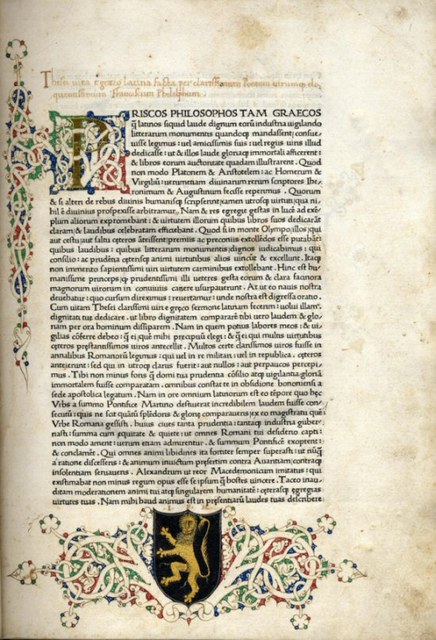
Watch out: Confusing Annals with Histories, Tacitus's other major historical work covering 69-96 CE
#463 · Named Literary Works · Level 1

Harlem

Harlem
Momos · Public domain

Manhattan neighborhood · 1880s–present · New York City

Harlem is a Manhattan neighborhood that became the center of African American culture and the 1920s Harlem Renaissance.

The kit

  • Rise — Harlem experienced a building boom in the 1880s, but the Panic of 1893 caused high vacancy rates that led landlords to rent to Black tenants along Lenox Avenue.
  • Renaissance — Harlem became the epicenter of a 1920s literary Renaissance featuring Langston Hughes, Countee Cullen, and Alain Locke, with cultural venues like the Apollo Theatre and Savoy Ballroom.
  • Conflicts — Harlem witnessed a 1935 race riot after a Puerto Rican shoplifter was beaten, and 1965 riots that prompted Project Uplift and HARYOU programs.
  • Legacy — Harlem's 369th Infantry Regiment, the "Hellfighters," became the first Allied unit to cross the Rhine, with Henry Johnson earning the Croix de Guerre.

Runs with

New York City
Harlem is a neighborhood in Manhattan, New York City open card →
Renaissance
Harlem gave its name to the 1920s Harlem Renaissance open card →
Malcolm X
Malcolm X led Nation of Islam Temple Number 7 in Harlem open card →
Marcus Garvey
Marcus Garvey centered his Back to Africa movement in Harlem open card →

The ladder · 15 clues

H

Izola Curry stabbed Martin Luther King Jr. with a penknife while at a book signing in this neighborhood.

H

Kenneth Clark and Cyril deGrasse Tyson led HARYOU in this neighborhood, where 1965's Project Uplift responded to riots.

H

An experimental Great Society program in this district included a LeRoi Jones-run theater program as part of Project Uplift.

H

In 1935, a Puerto Rican shoplifter was beaten in this area, leading to a race riot.

H

Asa Philip Randolph founded the activist newspaper The Messenger in this neighborhood, and sculptor Augusta Savage was associated with a revitalizing art movement in this city.

H

A Lorraine Hansberry play about the Younger family’s struggle with housing discrimination takes its title from this Hughes poem.

H

The so-called "Black Eagle" of this place, Hubert Julian, helped defend Ethiopia as a pilot in the Arbegnoch during the Second Italo-Ethiopian War. :Name this place, which named the first Allied unit to cross the Rhine into Germany. Henry Johnson received the Croix de Guerre fighting for the 369th Infantry Regiment, which was nicknamed for this place.

M

During World War One, a group of “hellfighters” came from this area. name this district of Manhattan.

M

This area’s 133rd street was known as “Swing Street,” and the Lindy Hop became famous at this district’s Savoy Ballroom.

M

The Apollo Theatre is located in this neighborhood, which was long represented in Congress by Adam Clayton Powell.

M

The Nation of Islam’s Temple Number 7 in this neighborhood was led by Malcolm X. One movement named for this region influenced many Black thinkers and authors. name this New York City neighborhood home to a namesake “Renaissance.”

M

Alain Locke was a leader of a movement named for this neighborhood that also included Countee Cullen and Langston Hughes. name this Manhattan neighborhood that experienced a 1920s "Renaissance" in Black culture.
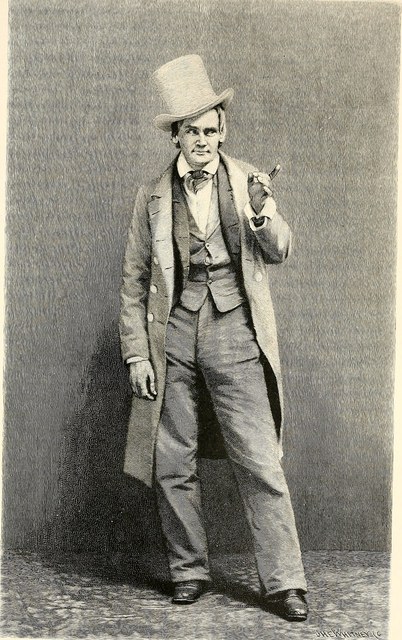
E

This neighborhood, named for a Dutch city, was the epicenter of a namesake literary “Renaissance’ by black authors such as Langston Hughes. name this neighborhood, a historical New York City borough.
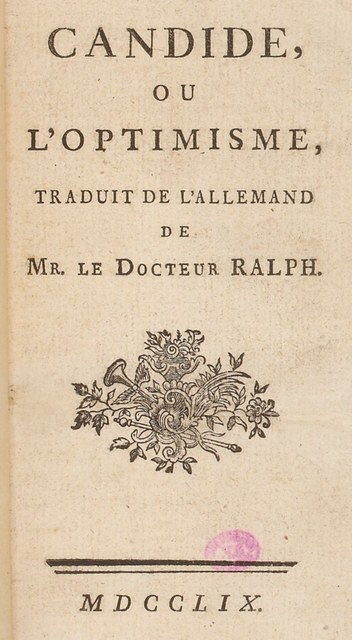
E

This area is where Marcus Garvey centered his Back to Africa movement.

E

Langston Hughes wrote about white people storming this neighborhood’s businesses such as The Cotton Club during Prohibition. name this New York City neighborhood where Black art flourished during a namesake “Renaissance.”

9 more clues from the record
H

Answer the following about the African American war hero Henry Johnson. :Johnson earned the French Croix de Guerre by fighting as part of this neighborhood’s “Hellfighters” during WWI. A 1920’s “renaissance” centered on this black neighborhood in New York City.

H

This area witnessed the Freddie’s Fashion Mart riot in 1995 shortly after it was targeted along with Inwood and Washington Heights as part of an Empowerment Zone during the Clinton administration.

H

The “Garbage Offensive” was launched in this region, where an X-ray truck was later forcefully seized and used to conduct tuberculosis screenings by the socialist Young Lords party.

H

A story told by an activist who manages this place's namesake "Children's Zone" titles Davis Guggenheim's documentary Waiting for "Superman;" that activist is Geoffrey Canada.

H

The Federal Contested Elections Act was passed after John MacCormack excluded a representative from this place from Congress.

H

A popular summer residential community, it experienced a building boom in the 1880’s.

H

Real estate baron Philip Payton was called the “Father of” this region.

M

But the Panic of 1893 resulted in a high vacancy rate, so property owners and apartment landlords rented space to blacks, especially along Lenox Avenue. name this area centered on “The Main Stem” (125th Street) that soon became a term synonymous with the black community living in New York City.

M

This place's Renaissance Casino hosted LGBTQ events and cross-dressing contests in the 1920s. Lesbian singer Gladys Bentley sang at rent parties in this place, whose Gang of Four included Charles Rangel.

Watch out: The Cotton Club, though located in Harlem, primarily served white patrons during Prohibition
#464 · Named Literary Works · Level 1

Tale of Genji

Tale of Genji
Imperial Palace Kyoto · Public domain

Heian-era Japanese novel · early 11th century · Heian Japan

Tale of Genji is a Heian-era novel by Lady Murasaki Shikibu often considered the world's first novel.

The kit

  • Protagonist — Tale of Genji follows the "shining prince," son of Emperor Kiritsubo, who marries Princess Aoi and has an affair with Lady Fujitsubo.
  • Plot elements — Tale of Genji includes a character whose jealousy manifests as a spirit to kill the protagonist's love interest.
  • Scope — Tale of Genji chronicles the amorous affairs and social relationships of over 400 characters across multiple generations.
  • Translation — Tale of Genji was first translated into English by Arthur Waley, who believed it was finished, unlike later translators such as Edward Seidensticker.

Runs with

Bakumatsu Period
written centuries before this period open card →
Heian Period
written during this era open card →
Japan
set in this country open card →
Kyoto
set in the Heian capital open card →

The ladder · 8 clues

H

Lady Murasaki work that may be the world's first novel.

H

This novel’s protagonist adopts the daughter of his brother-in-law and Yugao [yoo-gah-oh]; his own daughter, the younger Akashi Lady, becomes an empress after being adopted by the protagonist’s wife.

H

Arthur Waley, the first translator of this work into English, believed that it was finished, but other translators such as Edward Seidensticker disagree.

H

This work includes a character whose jealousy manifests as a spirit to kill the protagonist’s love interest.

H

It was written for the yokibito and is often considered the first novel. :Name this Japanese work that focuses on the amorous affairs of an emperor’s son and chronicles the development and social relationships of over 400 characters.

M

The protagonist of this work marries Princess Aoi in its first chapter and has an affair with Lady Fujitsubo. name this Heian-era work by Lady Murasaki, often considered the world’s first novel.

M

A character in this work is married to the daughter of the Minister of the Left, Aoi.

E

The protagonist of this novel, the son of Emperor Kiritsubo, is so beautiful at his birth that he is labeled the “shining prince.” name this Japanese novel by Murasaki Shikibu.

#465 · Named Literary Works · Level 1

Plutarch's Parallel Lives

Plutarch's Parallel Lives
Printer: Ulrich Han · Public domain

biographical work · c. 100 CE · Roman Greece

Plutarch's Parallel Lives is a biographical work pairing Greek and Roman leaders to illustrate moral character through comparative history.

The kit

  • Structure — Plutarch's Parallel Lives paired Greek and Roman figures, such as Fabius Maximus with a Greek counterpart, to draw moral comparisons.
  • Historical value — Plutarch's Parallel Lives provides the main source for details of Cimon's defeat of the Persians at Eurymedon River.
  • Companion work — Plutarch's Parallel Lives was written by the author of the Moralia and the Life of Alexander.

Runs with

Plutarch
author of this biographical work open card →
women
no connection evident in clues open card →
JohnWilliam

The ladder · 3 clues

H

The main source for the details of Cimon’s extraordinary defeat of the Persians at Eurymedon River is this most popular work of the author of the Moralia and the Life of Alexander.

H

In the Parallel Lives, Plutarch compared this figure with Fabius Maximus.

E

This man’s death was memorialized by the phrase “the light has gone out of our lives” after he was killed by Nathuram Godse.

Watch out: Confused with Plutarch's Moralia, his other major work
#466 · Named Literary Works · Level 1

The Iliad

The Iliad
Osama Shukir Muhammed Amin FRCP(Glasg) · CC BY-SA 4.0

Homeric epic poem · 8th century BCE · Ancient Greece

The Iliad is Homer's epic poem about the Trojan War, set before the Odyssey and focusing on Achilles' wrath.

The kit

  • Opening — The Iliad opens with a dispute over the abducted Chryseis, whom Agamemnon is forced to return to her father.
  • Structure — The Iliad includes the Catalogue of Ships in Book 2, a list of boats and their crews.
  • Central conflict — The Iliad depicts events after the wife of Menelaus is abducted by Hector's brother Paris.
  • Climax — The Iliad shows an enraged Achilles dragging Hector's corpse around the walls of Troy.

Runs with

Troy
setting of the war open card →
Joe Hill
Paris
abducts Helen, is killed open card →
Agamemnon
forced to return Chryseis open card →

The ladder · 6 clues

H

Early on this in work, a religious figure calls for the return of his daughter Chryseis, who had been abducted.

H

Book 2 of this poem largely consists of a list of boats and their crew, known as the Catalogue of Ships.

M

The “Catalogue of the Ships” is a section of this work whose central event occurs after the wife of Menelaus is abducted by the brother of Hector.

M

This poem opens with a dispute over the abducted Chryseis, whom Agamemnon is forced to return.

E

Paris is killed in this work whose aftermath is the subject of the Odyssey. name this Homeric epic that focuses on the Trojan War.

E

Later in this epic, the corpse of Hector is dragged around the walls of Troy by an enraged Achilles. name this epic poem by Homer about the Trojan War, set before his Odyssey.

Watch out: The Odyssey (Homer's other epic, set after the Iliad)
#467 · Named Literary Works · Level 1

Dialogue Concerning the Two Chief World Systems

Dialogue Concerning the Two Chief World Systems
Giovanni Battista Landini · Public domain

Galileo's astronomical treatise · 1632 · Italy

Dialogue Concerning the Two Chief World Systems was Galileo's 1632 book comparing Copernican and Ptolemaic cosmology through three speakers.

The kit

  • Structure — Dialogue Concerning the Two Chief World Systems featured three speakers: Salviati the academic, Sagredo, and Simplicio the simpleton.
  • Controversy — Dialogue Concerning the Two Chief World Systems offended Pope Urban VIII because his views were represented by Simplicio rather than Salviati.
  • Suppression — Dialogue Concerning the Two Chief World Systems was banned by the Inquisition shortly after its 1632 publication.
  • Author — Dialogue Concerning the Two Chief World Systems was written by Galileo from Pisa, the Father of Observational Astronomy.

Runs with

Pope
Pope Urban VIII's views appeared as Simplicio's arguments open card →
Water
no connection evident in clues open card →
America
no connection evident in clues open card →
China
no connection evident in clues open card →

The ladder · 3 clues

H

Pope Urban VIII had previously met with Galileo to discuss what was to become this book. The Pope was offended when his views were represented in this work not by Salviati the academic, but instead by Simplicio the simpleton.

M

Salviati, Sagredo, and Simplicio are the speakers in this Galileo work, which compares the Copernican and Ptolemaic systems. Published in 1632, this work was banned by the Inquisition.

E

The Dialogue Concerning the Two Chief World Systems was written by this scientist from Pisa who is considered the "Father of Observational Astronomy".

Watch out: Simplicio represented Pope Urban VIII's views, not Salviati's
#468 · Named Literary Works · Level 1

Ten Days That Shook the World

Ten Days That Shook the World
Public domain

eyewitness account · 1919 · Russia

Ten Days That Shook the World is John Reed's firsthand account of the Bolshevik Revolution published in 1919.

The kit

  • Origins — Ten Days That Shook the World drew from articles Reed wrote for The Masses during his assignment in Russia.
  • Content — Ten Days That Shook the World begins by discussing the Sisson Documents and devotes a chapter to the Committee for Salvation.
  • Content — Ten Days That Shook the World documents the fall of the Provisional Government and ends with a meeting of the Congress of Peasants.
  • Legacy — Ten Days That Shook the World lends its name to the full title of Sergei Eisenstein's film October.

Runs with

October Revolution
Reed's eyewitness account of this revolution open card →
John
John Reed authored this work open card →
Russia
documented events in this country open card →
Vladimir Lenin

The ladder · 5 clues

H

In George Orwell’s proposed preface to Animal Farm, entitled “The Freedom of the Press,” he claimed that the British Communist Party, who had the copyright to this work, published a bowdlerized version of it, with the introduction removed.

H

Notes for this book's publication were collected on assignment for the periodical The Masses, and its author had previously published a book of poems entitled Sangar: The Mad Recreant Knight of West.

M

This work begins by discussing accusations levied by the Sisson Documents, which were the subject of a previous study, before the author devotes a chapter to the "Committee for Salvation." The end describes a meeting of the Congress of Peasants, after having documented the fall of the Provisional Government.

M

Bryant was married to John Reed, who drew from his articles for The Masses to write this book-length account of the Russian Revolution, which wasn’t published until well after Bryant’s.

E

This book lends its name to the full title of Sergei Eisenstein’s film, October. name this first-hand account of the Bolshevik Revolution by American socialist John Reed.

Watch out: George Orwell's Animal Farm also dealt with Communist themes and censorship
#469 · Named Literary Works · Level 1

Our American Cousin

Our American Cousin
a rel="nofollow" Internet Archive Book Images · No restrictions

1858 comedic play · premiered 1858 · United States and England

Our American Cousin is a Tom Taylor farce famous as the play Abraham Lincoln was watching when he was assassinated at Ford's Theater.

The kit

  • Premiere — Our American Cousin premiered in 1858 with Joseph Jefferson playing Asa Trenchard in the original run.
  • Cultural impact — Our American Cousin coined the term "dundrearies" in 1861 for large side whiskers, named after comic character Lord Dundreary.
  • Lincoln assassination — Our American Cousin's line "you sockdologizing old man-trap" prompted laughter that John Wilkes Booth used to muffle his gunfire.
  • April 14, 1865 — Our American Cousin was performed at Ford's Theater on April 14, 1865 when Lincoln was shot during Act Three.

Runs with

Abraham Lincoln
Lincoln was watching this play when assassinated at Ford's Theater open card →
American Railway Union
no connection evident in clues open card →
Edward
assassination
performance provided cover for Lincoln's assassination by Booth open card →

The ladder · 5 clues

H

After Edward Sothern expressed discontent over a role in this play, Joseph Jefferson famously said, “There are no small parts, only small actors.” Jefferson played the role of Asa Trenchard in the original run of this play that premiered in 1858.

H

In this play’s third act, the greedy Mrs. Mountchessington was called a “sockdologizing old man-trap,” prompting a bout of laughter from the audience. :Name this play which was performed at Ford’s Theater on April 14, 1865. One assassin used the audience’s laughter during this play to conceal the sound of his pistol.

M

Lincoln was shot during a performance of this comedic play by Tom Taylor. Booth used the audience’s laughter after this play’s line “you sockdologizing old man-trap” to muffle the sound of his gunfire.

M

In 1861, a new word was coined for large side whiskers, “dundrearies”—from Lord Dundreary, a comic character from this Tom Taylor farce, the play Abraham Lincoln was watching when he was assassinated.

E

A line expressing the desirability of escaping the draft was modified in a performance of this play in 1865 in Washington, D.C. Written by English playwright, Tom Taylor, this play’s best known performance was interrupted by the cry, “Sic semper tyrannis!” what play was on stage when Lincoln was assassinated?

Watch out: American Railway Union—unrelated labor organization, not connected to this theatrical work
#470 · Named Literary Works · Level 1

Almagest

Almagest
bdi Ptolemy /span /a · Public domain

astronomical treatise · 2nd century CE · Alexandria

Almagest is Claudius Ptolemy's astronomical treatise incorporating Hipparchus's star catalogue and outlining the geocentric paradigm displaced by the Copernican Revolution.

The kit

  • Content — Almagest outlines methods for correcting celestial deviations using equants and epicycles, techniques later applied in the Alfonsine tables.
  • Companion works — Almagest was accompanied by the "Handy Tables," which served as the model for most subsequent zij astronomical guides.
  • Editions & commentaries — Almagest's third book was edited by Hypatia, while Theon and Pappus wrote commentaries on the text.
  • Translation — Almagest's first Latin edition by Henricus Aristippus was less widely used than Gerard of Cremona's translation.

Runs with

Ptolemy
Ptolemy authored this treatise on astronomy open card →
ParisAlexandriaAbbasid Caliphate

The ladder · 5 clues

H

The first Latin edition of this text, prepared by Henricus Aristippus, was never as widely used as that of Gerard of Cremona.

H

Ibn al-Haytham wrote that this text misunderstands the “configuration of the world,” which he expanded on in his book of “doubts” concerning this text’s author.

M

Most zij guides were modeled on a companion to this text called the “Handy Tables.” The Alfonsine tables were produced using the methods outlined in this book for correcting for deviations using equants and epicycles.

M

Notes on this text by Pappus were included in the commentaries on it by Theon, who credited his daughter Hypatia with preparing an edition of this text’s third book.

E

This text, which incorporates the catalogue of Hipparchus, outlines a paradigm that was largely displaced in the Copernican Revolution. name this treatise on astronomy by Claudius Ptolemy.

Watch out: Ibn al-Haytham wrote that the text itself misunderstands the configuration of the world, not just doubts about Ptolemy
#471 · Named Literary Works · Level 1

Candide

Candide
bdi Voltaire /span /a · Public domain

satirical novel · 1759 · France

Candide is a 1759 satirical novel by Voltaire that mocks philosophical optimism through the misadventures of its naive title character.

The kit

  • Tutor — Candide is tutored by the overly-optimistic Professor Pangloss, who parodies philosopher Gottfried Leibniz's optimism.
  • Travels — Candide travels with the valet Cacambo and takes sheep laden with gems away from the utopian El Dorado.
  • Misfortunes — Candide loses his friend Jacques the Anabaptist during a massive earthquake in Lisbon and is swindled by Dutch sea captain Vanderdendur.
  • Encounters — Candide dines at an inn with Martin and six deposed monarchs, including Charles Edward Stuart, during his travels.

Runs with

Voltaire
author of the novel open card →
Lisbon
setting of earthquake killing Jacques open card →
1755 Lisbon Earthquake
disaster depicted in the novel open card →
Leonard Bernstein
composed 1956 operetta adaptation open card →

The ladder · 6 clues

H

The overly-optimistic Professor Pangloss tutors this title character of a 1759 satire by Voltaire.

H

In this novel, a character describes the Seven Years War as over “a few acres of snow somewhere around Canada.” The title character of this work travels with the aforementioned Martin and the valet Cacambo, with whom he takes sheep laden with gems away from El Dorado.

H

This character dines at an inn with Martin and a group of men who turn out to be six deposed monarchs, including Charles Edward Stuart.

H

Leonard Bernstein also wrote the music for what operetta, based on a Voltaire work that parodied Gottfried Liebniz as Dr. Pangloss?

H

This character is swindled out of 30,000 gold coins by the Dutch Sea Captain Mynheer Vanderdendur.

H

This character loses his friend Jacques the Anabaptist during a massive earthquake in Lisbon.

Watch out: Professor Pangloss (the optimistic tutor character within the novel)