The 1648 Codex

Middle Ages

151 terms · 1215 ladder clues · every clue is a real line from national play.

Swipe or use the arrows. Tap a clue to rate it; your taps shape what comes back.

#4 · Historic Cities · Level 1

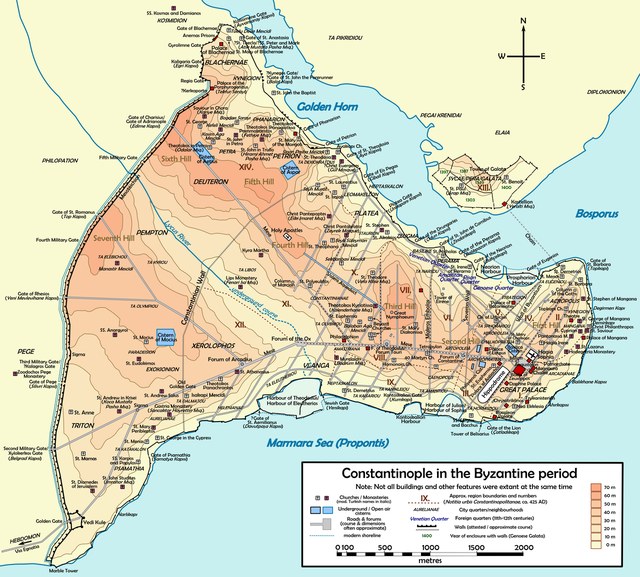
Constantinople

Constantinople
Cplakidas /a · CC BY-SA 3.0

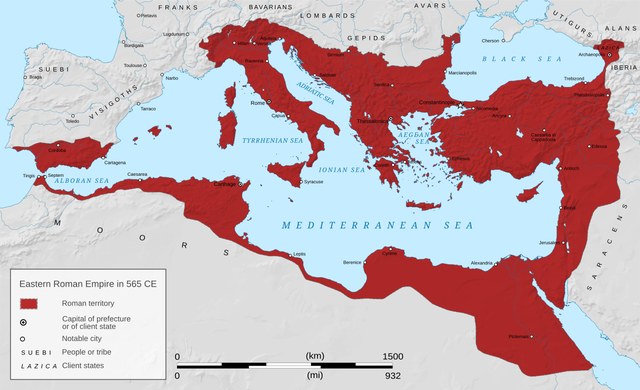
Byzantine capital city · 330–1453 CE · Bosphorus strait

Constantinople was the capital of the Byzantine Empire, built on ancient Byzantium and defended by the Theodosian Walls until its 1453 fall.

The kit

  • Defenses — Constantinople was protected by the Theodosian Walls, a chain across the Golden Horn, and defenders utilizing Greek Fire.
  • Fourth Crusade — Constantinople was sacked by Crusaders in 1204 after Enrico Dandolo redirected the Fourth Crusade to attack the Byzantine capital.
  • Fall — Constantinople fell to Mehmed II in 1453 after Ottoman forces stormed the city and entered the Hagia Sophia.
  • Legacy — Constantinople became Istanbul after the Ottoman conquest, ending over 1,600 years as capital of successive empires.

Runs with

Nanda Empire
Byzantine Empire
served as capital of the Byzantine Empire until 1453 open card →
Ottoman Empire
Fourth Crusade
sacked by Crusaders in 1204 after Enrico Dandolo's redirection open card →

The ladder · 15 clues

H

Once defended by the Theodosian Walls, this city was conquered by Mehmed II in 1453. name this city, the capital of the Byzantine Empire.

H

A chain across the Golden Horn failed to stop Mehmed II from conquering this capital of the Eastern Roman Empire.

H

Enrico Dandolo died in this Byzantine capital after his troops infamously sacked it during the Fourth Crusade.

H

Enrico Dandolo redirected the Fourth Crusade to attack this city, the location where Belisarius slaughtered a mob in the Hippodrome during the Nika Riots.

H

Theodosius II used the help of fans who watched chariot racing in this city’s Hippodrome to build this city’s famous double walls.

H

In 1453, Mehmed II captured this capital of the Eastern Roman Empire that was renamed Istanbul.

H

Its capital city, originally known as Byzantium and now known as Istanbul?

M

This city was protected by the walls of the Golden Horn and defenders utilizing Greek Fire.

M

In 2004, then-Pope John Paul II apologized to the Orthodox Church for the 1204 sacking by Crusaders of this city that was once the capital of the Byzantine Empire.

M

Vladimir the Great converted to Christianity after a visit to this city’s Hagia Sophia. This capital of the Byzantine Empire is now called Istanbul.

M

An emperor legendarily turned into marble after the fall of this city, which was assaulted by the massive Dardanelles gun built by Orban.

M

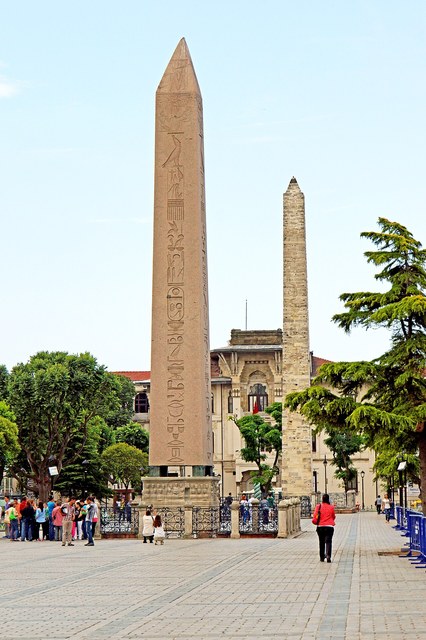
A famed column moved to this city from Delphi is made up of three intertwined snakes and stands next to an obelisk built by ThuRtmose III.

E

This city was sacked in 1453 by Mehmet II, who stormed into the Hagia Sophia. name this capital of the Byzantine Empire.

E

Constantine XII [[the TWELFTH]] died in this city where Mehmed II led an Ottoman siege. name this capital of the Byzantine Empire whose name was later changed to Istanbul.

E

This city lost control of the Bosphorus prior to its fall to Mehmed II in 1453. what capital of the Byzantines fell to the Ottoman Empire?

10 more clues from the record
H

The Galata neighborhood near this city was populated by Italian traders and was the site of a namesake tower that controlled a large sea chain.

H

In one battle, this city was defended by a floating chain placed on logs to impede ship movement.

H

Pius II responded to an attack on this city by convening the Council of Mantua and calling for a crusade.

H

The Milion, a monument inscribed with the distances to other cities, marked the beginning of this city’s main street, the Mese.

H

The ruler of an empire based in this city sold relics like the Crown of Thorns to Louis IX of France.

H

One of the main aggressors in the conflict was Michael Cerularius, the patriarch of this city, the capital of the Byzantine Empire.

H

The wounding of Genonese mercenary captain Giovanni Giustiniani resulted in the scattering of forces defending this city.

H

A siege of this city ended after the rebellion of Kucuk Mustafa after Manuel II attempted to interfere with the succession of Murad II.

H

A defender of this city refused to surrender to rule in Mistra before noting that “[it] is fallen and I am still alive.” Baldwin IX was coronated in this city one year before Kaloyan captured him.

H

This city was built on the site of ancient Byzantium and became the capital of several empires over 1,600 years before being officially renamed Istanbul in 1930.
Watch out: Constantine XII died defending the city in 1453, not Constantine the Great who built it on Byzantium's site
#22 · Historic Cities · Level 1

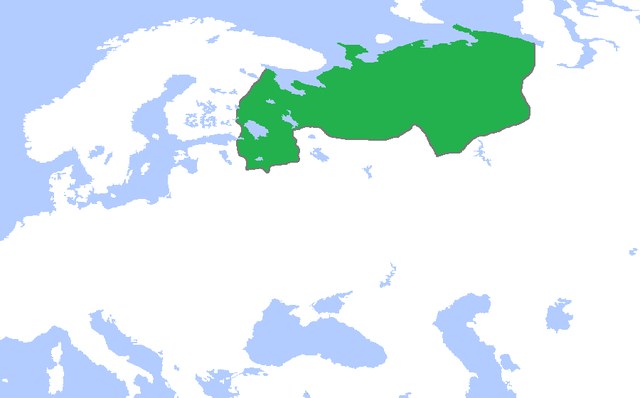
Novgorod Republic

Novgorod Republic
Gabagool · CC BY 3.0

Medieval Russian merchant republic · 9th–15th centuries · Northern Russia, near Lake Ilmen

Novgorod Republic was a powerful medieval Russian state governed by an assembly called the veche and known for its merchant wealth.

The kit

  • Rise — Novgorod Republic was legendarily founded by Varangian chieftain Rurik and served as the original Rus capital before Oleg moved it to Kiev.
  • Achievements — Novgorod Republic was the easternmost member of the Hanseatic League and controlled the lucrative northern fur trade through extensive commercial networks.
  • Conflicts — Novgorod Republic's prince Alexander Nevsky defeated Swedish forces at the Battle of the Neva and crushed the Teutonic Knights at Lake Peipus in 1242.
  • Fall — Novgorod Republic was annexed by Muscovy under Ivan III in the late 15th century, ending its independence after losing its rivalry with Moscow.

Runs with

Hanseatic League
easternmost kontor and member of this trading confederation open card →
Alexander Nevsky
prince who defended the republic at Neva and Lake Peipus open card →
Russia
northern medieval state within what became Russia open card →
Ivan the Terrible
his oprichniki massacred hundreds in the city in 1570 open card →

The ladder · 15 clues

H

A prince of this city defeated the Teutonic Knights on the frozen Lake Peipus in the 1242 Battle of the Ice. name this powerful medieval Russian city, the home of Alexander Nevsky.

H

Prince Oleg moved the capital of the Rus from this city, his home, to Kiev.

H

Among the thousands of birch bark manuscripts excavated in this city are homework assignments from a six-year-old named Onfim.

H

Major city in which that secret police force committed a massacre in 1570

H

This city’s Archbishop Gennadius was responsible for a belief that the Heresy of the Judaizers was solely an attempt to introduce Judaism to this city. :Name this city, ruled by Alexander Nevsky, whose name was often prefaced with Veliky.

H

This city was home to the easternmost kontor built by the Hanseatic League.

H

This home of Sadko held the easternmost outpost of the Hanseatic League and fought a series of wars against Sweden for control of the Gulf of Finland.

M

A Slavic Republic named for this city was the easternmost member of the Hanseatic League.

M

This city’s namesake republic was annexed by Muscovy under Ivan III.

M

Princely state of Kievan Rus’, the capital of its namesake republic and major rival of Muscovy.

M

This city defeated a Swedish invasion in the Battle of the Neva, and defeated the Teutonic Order at the [*] Battle on the Ice.

M

A coalition led by this city won a battle against the Livonian Order over the frozen Lake Peipus.

E

One leader from this city defeated the Swedish at the Battle of the Neva before defeating the Bishop of Dorpat and the Livonian Order on Lake Peipus at the Battle on the Ice. name this Russian city which was eventually eclipsed and conquered by its rival, Moscow, and which was the home of Alexander Nevsky.

E

As Prince, Yaroslav the Wise briefly united Kiev with this city.

E

The oprichniki killed hundreds of people and dumped them in the Volkhov River in a 1570 massacre in this city.

10 more clues from the record
H

A fictional merchant from this city jumped into the sea to appease the Sea Tsar and married the mermaid Chernava, who turned into a river.

H

Harald Hardrada, a claimant of both the Danish and English thrones, spent 15 years in this city as an exile and mercenary captain.

H

A ruler of this city ascended to the throne after overthrowing his brother with the assistance of Sartaq Khan and the Golden Horde.

H

This city hosted Ivan’s Hundred, the first Ruthenian Guild, which met near the Church of Ivan the Forerunner.

H

This city was saved from a Swedish invasion by the victory of a teenage prince at the Battle of Neva.

H

This medieval city gave an unusual amount of power to its legislature, the veche. :Name this city near Lake Ilmen in central western Russia which overcame Suzdal in the 1200s, but, despite allying with Tver, emerged as the loser of its intermittent contest with Moscow for supremacy in the next two centuries.

H

This city was called “the Great” by its residents and was the most prominent city ruled by a Veche . :Name this city, the center of a republic that controlled the fur trade until it was absorbed into the Grand Duchy of Muscovy at the end of the 15th century. Rulers of one state often sent their sons as posadniks to govern this city.

H

The waterlogged soil under this city preserved the first beresta birch bark manuscripts unearthed in Russia, suggesting an unusually high rate of literacy. :The Varangian chieftain Rurik legendarily founded what city, the capital of a republic that ruled northern Russia during the medieval era?

H

That stick figure drawing by the child Onfim is surviving art from this mediaeval merchant republic in Northern Russia. This cultural centre had a namesake school which introduced Byzantine influenced iconostases [eye-con-o-STAY-sees] to Russia.

H

answer some questions about Alexander Nevsky:Somewhat paradoxically, Nevsky was prince of this city and republic in modern Russia which remained unconquered by the Mongols and today houses the Milliennium of Russia monument.

Watch out: Confused with Kiev, the later capital of Kievan Rus' to which Oleg moved from Novgorod
#24 · Historic Cities · Level 1

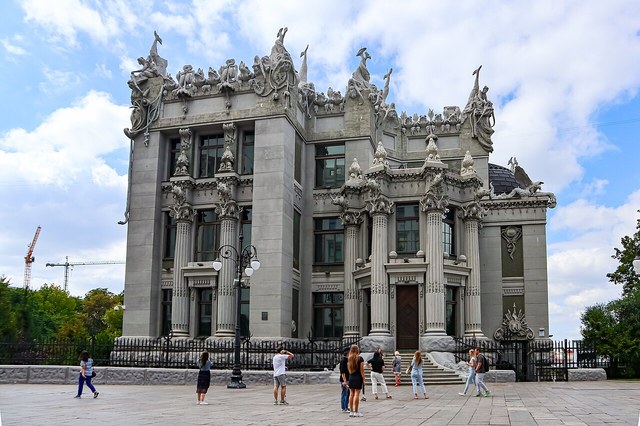
Kyiv

Kyiv
Larmarphoto · CC BY-SA 4.0

Medieval Rus' capital · 9th–13th centuries · Ukraine, Dnieper River

Kyiv was the capital of the medieval Rus' state, founded by Oleg and Christianized by Vladimir the Great in 988.

The kit

  • Rise — Kyiv became the capital when Oleg of Novgorod moved the seat of power there, founding the Rus' state.
  • Achievements — Kyiv saw Vladimir the Great convert the Rus' to Christianity after marrying Byzantine Princess Anna in 988.
  • Conflicts — Kyiv was besieged by the Pechenegs during their westward migration and attacked by Boleslaw the Brave.
  • Legacy — Kyiv produced the Primary Chronicle by Nestor, the chief historical source for the medieval Rus' state.

Runs with

Ukraine
modern capital of Ukraine open card →
Christianity
Christianized by Vladimir the Great in 988 open card →
church
site of Church of the Tithes after mass conversion open card →
Mongols
defeated at Battle of Kalka River by Mongol generals Jebe and Subutai open card →

The ladder · 15 clues

H

Oleg was the founder of a state based in this city according to the Primary Chronicle, a history traditionally attributed to the monk Nestor.

H

Boleslaw the Brave intervened in a succession crisis in this empire, during which he chipped his sword after striking its capital's Golden Gate.

H

Nestor chronicled the history of this city in his Primary Chronicle, and this city was founded at the intersection of the Desna and the Dnieper Rivers.

H

The Church of the Tithes replaced a pagan temple in this city after a mass conversion, according to a history attributed to the monk Nestor, the Primary Chronicle.

H

A state named for this city was defeated by the generals Jebe and Subutai at the Battle of the Kalka River.

H

Shostakovich's 13th symphony takes its name from a poem by Yevgeny Yevtushenko [[yehv-too-SHEHN-koh]] this itself is named for Babi Yar, the site of the Nazi massacre of over one hundred thousand Jews in what Ukrainian city.

H

This city was once attacked by Boleslaw the Brave, who chipped the Polish coronation sword on this city’s gate.

M

This Ukrainian city ruled by Vladimir the Great was the base of power of the greatest of the Rus’ states.

M

Harald Hardrada had previously served in the army of Yaroslav the Wise, a Grand Prince of Novgorod and this other city, which was also ruled by Vladimir the Great.

M

This state’s close relations with the Byzantine Empire were solidified when Emperor Basil II’s sister Princess Anna married the ruler of this state in 988.

M

Vladimir the Great Christianized this state, which moved its capital from Novgorod under Oleg, its first Grand Prince.

M

Boleslaw Chobry struck this city’s Golden Gate with his sword.

E

This city’s Prince Oleg greatly expanded its influence, and Christianity was brought to this city by Vladimir the Great. name this city where the medieval state of Rus was based and is now the capital of the Ukraine.

E

City where Vladimir the Great converted a namesake state to Christianity before it became the Ukrainian capital?

E

A large portion of the original Varangian Guard were recruited from this city’s Rus population. This city is the modern-day capital of Ukraine.

10 more clues from the record
H

Hilarion was made Metropolitan of this city by its Grand Prince Yaroslav the Wise.

H

Histories of this polity are in the Radziwill Chronicle, including the Tale of Bygone Years.

H

The Schechter letter details this state’s failed invasion of Khazaria and ensuing invasion of the Byzantine Empire, which ended in a failed 941 siege of Constantinople.

H

A siege of this state’s capital was carried out by the Pechenegs during their westward migration.

H

Vladimir Monomakh was the ruler of this city-state, founded by the Varangians on the river. Its other rulers included Yaroslav the Wise.

H

This state was founded by Oleg of Novgorod and christianized by Vladimir the Great. :Name this confederation ruled by the Rurik dynasty in modern-day Ukraine, often considered a predecessor to the Russian empire.

H

The Rus' people, who descended from Norsemen, founded a state based around this city in present-day Ukraine.

H

A queen regent of this city released sparrows and pigeons with burning branches to raze the Drevlian city of Iskorosten.

H

Literature produced by this polity includes the Paterikon, a collection of the lives of the saints of the Monastery of the Caves, as well as Saint Hilarion's sermon On Law and Grace.

H

A ruler from here married the Byzantine princess Anna Porphyrogeneta before a succession crisis between the brothers Sviatopolk the Accursed and Yaroslav the Wise.

Watch out: Novgorod—the original Varangian capital before Oleg moved the seat of power to Kyiv
#26 · Historic Cities · Level 1

York

York
a rel="nofollow" FEGreene · CC0

English city · Roman era to present · Northern England, River Ouse

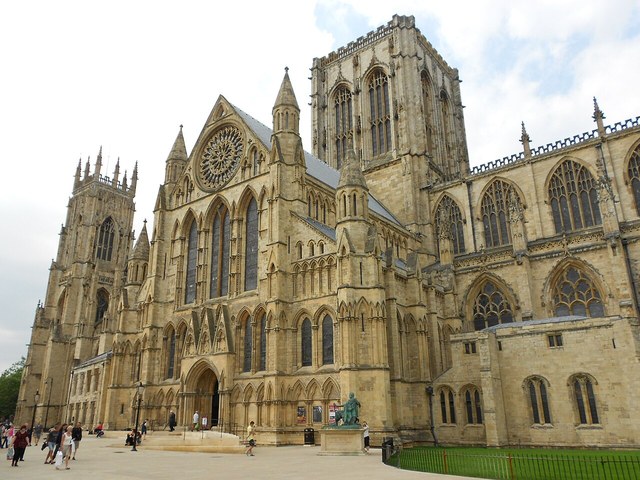
York is a northern English city founded as Roman Eboracum where Constantine I was proclaimed emperor and later became England's second-largest medieval city.

The kit

  • Roman era — York was the capital of Britannia Inferior where Septimius Severus died and Constantine the Great was crowned emperor.
  • Viking period — York was captured by the Great Heathen Army in 866 and served as the Viking capital of England until 954.
  • Medieval prominence — York became England's second most populous city by the twelfth century and housed the scholar Alcuin who later served Charlemagne.
  • Wars of the Roses — York gave its name to a Plantagenet cadet branch that fought the Lancasters and ended with Richard III's death at Bosworth Field.

Runs with

Bishop
York's archbishop was second-most important English church official after Canterbury open card →
Charlemagne
York native Alcuin headed Charlemagne's Palace School at Aachen open card →
American Railway Union
church
York Minster is a 14th-century cathedral; city had second-ranking archbishop in England open card →

The ladder · 15 clues

H

Edmund of Langley was first in line of a cadet branch of the House of Plantagenet named for this city, whose reign ended with the death of Richard III.

H

Jews in this city committed mass suicide rather than burn alive in Clifford’s Tower during an 1190 pogrom.

H

Royalist cathedral city stronghold in Northern England, besieged by the Covenanters for two months in 1644.

H

A bust of this explorer mysteriously appeared in Mt. Tabor Park in 2021. :Name this explorer whom that bust honored as “the first African-American to cross North America and reach the Pacific Coast.” At the conclusion of that expedition in 1806, this explorer’s master refused to free him.

H

The Danes captured this important Northumbrian city in 866, and Scandinavian leaders continued to rule Northumbria from here until 954. It would grow to be the second most populous city in England by the twelfth century.

H

British General George Cockburn, alluded to in the "hireling and slave" line, burned Washington, D.C. in part due to the Americans' burning of this city earlier in the war. Zebulon Pike was killed in the battle named for this city.

H

This walled city in northern England saw immense destruction during the “Harrowing,” including numerous castles torn down. This city is located at the confluence of the Ouse {OOZE} and Foss Rivers.

M

Septimius Severus died in this city when it was named Eboracum which is also where Constantine the Great was crowned as Emperor.

M

That man’s son, a member of the house named for this city, was victorious in the Battle of Barnet, in which he defeated Richard Neville, and in the Battles of Towton and Tewkesbury; that man’s brother, however, was eventually defeated in the 1485 Battle of Bosworth Field.

M

Native Americans were very taken with the appearance of this member of the Corps, Clark’s personal slave. No one really knows what happened to him, but he probably wound up escaping and living with the Crow Indians.

M

In the 1800s, fancy egg dishes came to The Shambles in this Northern English city, which became England’s center for confectionary brands. This city on the River Ouse was where Rowntree’s was established in 1862.

M

Eisner and Brown’s Medieval Murder Map of this other city includes a report of a battery committed by the skinner Robert Pancake. A scholar from this city led the Palace School of Aachen.

M

An early version of the Instructions was drafted by a man with this ducal title. A house of this name lost the English throne when Richard III was killed at the Battle of Bosworth Field.

M

Athelstan finally became king of all England after conquering a kingdom named for this northern city. Richard III was the last king of a house named for this city, which fought the Lancasters in the Wars of the Roses.

E

This man, William Clark’s slave, accompanied the expedition on its journey. Some Native Americans thought he was magical because of his black skin.

10 more clues from the record
H

The Snickelways are a series of pedestrian passages and streets connecting to this city’s Shambles, which was once home to many slaughterhouses. :What English city’s namesake Minster is a 14th-century cathedral?

H

At the time, William Zouche was the archbishop of this city, once called Eboracum, making him the second-most important church official in England behind the Archbishop of Canterbury.

H

A scholar born in this city devised the first Western European script with lower-case letters and spacing between words and headed the palace school at Aachen.

H

This city, founded during Roman times as Eboracum, was home to the famous 8th century scholar Alcuin, who was an important figure in Charlemagne’s court at Aachen.

H

A scholar from this city described how “a place more venerable than all in Britain [was] given as a prey to pagan peoples” in his account of the Sack of Lindisfarne.

H

Earlier, the defensive Multangular Tower was built along the Roman walls of this city. This city, the capital of Britannia Inferior, was where Constantine I was proclaimed emperor.

H

Septimius Severus became ill during a campaign and lived the last years of his life in this city when it was known as Eboracum.

H

Saint Margaret Clitherow, who was known as the “Pearl of [this city]”, has a shrine dedicated to her on a historic street in this city known as The Shambles.

H

The Great Heathen Army of Ivar the Boneless seized control of this city, which became the Viking capital in England.

H

name these royal houses.This British royal family defeated the Lancasters in the War of the Roses to take over the throne.

Watch out: York (the slave who accompanied Lewis and Clark) shares the name but is a different entity
#82 · Physical Geographic Features · Level 1

Iberian Peninsula

Iberian Peninsula
Jacques Descloitres, MODIS Rapid Response Team, NASA · Public domain

European peninsula · ancient times–present · southwestern Europe

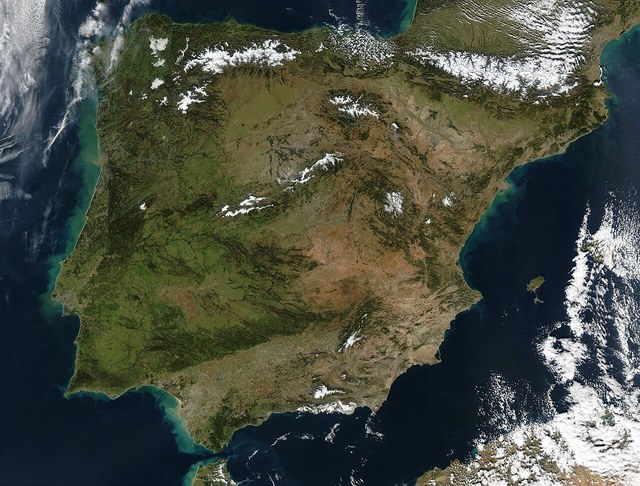
The Iberian Peninsula is the southwestern European landmass containing Spain and Portugal, separated from France by the Pyrenees Mountains.

The kit

  • Ancient rule — The Iberian Peninsula was called Hispania by the Romans, who used it as a mining base after Octavian quelled revolts there.
  • Muslim conquest — The Iberian Peninsula was conquered by Muslim armies in the 8th century, with the Umayyads establishing rule in the region called al-Andalus.
  • Taifa kingdoms — The Iberian Peninsula saw the formation of numerous smaller taifa kingdoms after the disintegration of centralized Muslim rule.
  • Reconquista — The Iberian Peninsula was the subject of the Reconquista by Christian forces, which concluded in 1492 with the fall of Granada.

Runs with

Reconquista
Christian campaign that expelled Muslims from the peninsula, ending in 1492 open card →
Bakumatsu Period
no connection evident in clues open card →
Portugal
modern country occupying the western portion of the peninsula open card →
Spain
modern country occupying most of the peninsula, led Reconquista forces open card →

The ladder · 15 clues

H

The Nasrid dynasty ruled a taifa in this region until the surrender of Boabdil .Abd al-Rahman I fled the Abbasid Revolution to continue the Umayyad dynasty in this region.

H

A knight from this region apocryphally chose a horse thought to be weak by his godfather, resulting in the horse being named Babieca, or “stupid.” The disintegration of a state in this region led to the formation of numerous smaller taifa kingdoms.

H

Before Waterloo, the Duke of Wellington’s English forces fought Napoleon in the Peninsular War on this European peninsula.

H

Taifas were independent kingdoms on this peninsula, where Muhammed XII of the Nasrid Dynasty ruled an emirate.

H

Peninsula called Hispania by the Romans, through which Hannibal initially invaded Italy.

H

Hisham II ruled a caliphate on this peninsula where the hajib Al-Mansur secured power.

H

Peninsula of Spain which Muslim armies conquered in the 8th century.

M

The knight El Cid fought on both sides of a series of military campaigns in this region, which concluded in 1492 with the fall of the Emirate of Granada.

M

The Almoravids crossed a sea to establish themselves in this region, where they were fought by a knight called “the Cid.” Arabic sources call this region al-Andalus. name this region where Muslims were expelled by Christian forces in the Reconquista.

M

A year before the Second Punic War was formally declared, Hannibal sieged this region’s city of Saguntum. name this region where Roman rule was ended by a Visigothic invasion.

M

The Umayyad Caliphate would later be expelled by the Abbasids, but it maintained its rule on this peninsula. Christians on this peninsula would later lead a campaign against the Muslims called the Reconquista.

M

Prior to the establishment of the Kingdom of Georgia, a region east of Colchis and north of Armenia was ruled by a kingdom, then a principality, of this name. It shares its name with a modern European airline.

M

In Jose Saramago’s novel The Stone Raft, this large peninsula containing Andorra breaks off and floats around the Atlantic Ocean.

M

Octavian quelled revolts on this peninsula, allowing it to be used as a mining base for Rome. Today, this peninsula consists of the countries of Spain and Portugal.

E

Cardinal Cisneros led a campaign against Muslims on this peninsula, which was home to the emirates of Cordoba and Granada. name this European peninsula that was the subject of the Reconquista by Christian forces fighting for Spain.

8 more clues from the record
H

Ziryab introduced toothpaste and deodorant to this peninsula from Baghdad.

H

Answer the following about the term “Mozarab,” .The name “Mozarab” was given to Christians who lived under Muslim rule in al-Andalus on this peninsula, which was slowly recovered by Christians during the Reconquista.

H

The Duke of Wellington also led troops during the Peninsular War, a war over control of this location. This region contains Spain and Portugal, and is separated from France by the Pyrenees.

H

Refugees from Assyrian conquests likely settled in this region’s city of Onuba, which minted many Roman coins after it was conquered from the Turdetani people.

H

In this region, Mozarabic Christians helped carry out a translation movement that arose after the city of Tulaytullah and its libraries were annexed by a northern king.

H

High-quality garum sociorum was produced in this region, where the trade of metals led the Phoenicians to found the port of Gadir.

H

The largest Greek colony in this region was the literally-named trading center Emporion.

H

The name of a city in this region translated to “New New City” after Scipio Africanus conquered it in 229 BC.

Watch out: A kingdom and principality of the same name existed east of Colchis and north of Armenia, unrelated to this peninsula
#86 · Physical Geographic Features · Level 1

Baltic Sea

Baltic Sea
Gabriel Ziegler · CC BY-SA 4.0

European sea · medieval to present · northeast of Germany, bordered by Scandinavia and Russia

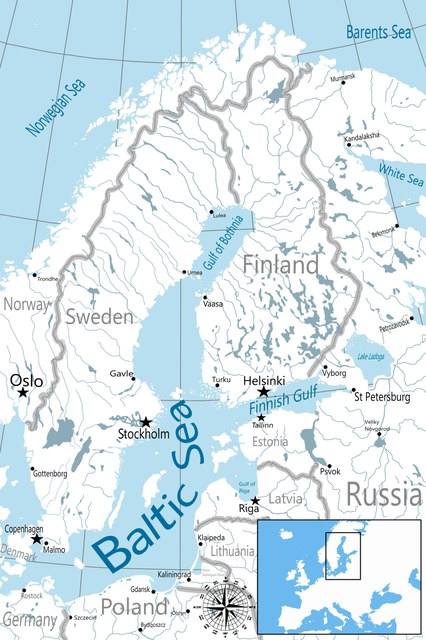
Baltic Sea is a European sea bordered by Germany, Scandinavia, and Russia, with the Gulf of Bothnia and Gulf of Finland as arms.

The kit

  • Geography — Baltic Sea connects to the North Sea via the Kiel Canal and is guarded at its approach to St. Petersburg by Kronstadt.
  • Medieval trade — Baltic Sea was dominated by the Hanseatic League, which established kontor trading posts and became the starting point of the Amber Road.
  • Sound Dues — Baltic Sea commerce was subject to the Sound Dues, levies collected on ships passing through the Kattegat and Skagerrak at its western end.
  • World War II — Baltic Sea saw the sinking of the Wilhelm Gustloff in 1945, killing 9,000 people, and the RAF sinking of SS Cap Arcona, killing 5,000 prisoners.

Runs with

Water
Baltic Sea is a body of water open card →
Hanseatic League
Hanseatic League dominated Baltic Sea trade during medieval era open card →
Finland
Gulf of Finland is an arm of Baltic Sea open card →
Sweden

The ladder · 15 clues

H

In 1945 in this sea, 9,000 people died in the sinking of the Wilhelm Gustlo↵.

H

Commerce flowing in and out of this body of water were subject to the Sound Dues, and the Skane market was an annual herring market on this body of water.

H

The Samogitian tribe was converted to Christianity while living around this body of water.

H

During the medieval era, this sea became the starting point of a trade route called the "Amber Road" due to its location near the world's largest amber deposits.

H

An organization based around this body of water set up kontor trading posts, including on river cities like Torun.

H

The RAF sank the prison ship SS Cap Arcona in this body of water, leading to the deaths of some 5,000 prisoners of war.

H

The Rybinsk Sea, a large, man-made reservoir, is the northernmost point of the Volga and connects to Lake Onega, Lake Ladoga, and this sea to form a namesake waterway.

M

Kronstadt guarded the approach from this body of water to St. Petersburg, and it is connected to the North Sea by the Kiel Canal.

M

The Hanseatic League dominated trade in this body of water, bordered by Germany, Sweden, and Denmark.

M

Sea on which the Hanseatic League conducted most of its trade. It is bounded by Scandinavia to the north and Russia to the east.

M

The Victual Brothers pirated commerce in this body of water, with safe ports at Rostock and Straslund, as well as the island of Gotland.

M

The MV Wilhelm Gustoff was sunk in this body of water, resulting in the largest maritime disaster in history.

E

The Gulfs of Bothnia and Finland are arms of this European sea northeast of Germany that names the set of three countries on its eastern shore: Estonia, Latvia, and Lithuania.

E

Defeat to Sweden in the Ingrian War resulted in Russia losing direct access to this body of water. name this sea, whose trade was once dominated by the Hanseatic League during the late middle ages.

E

A northern edge of this sea is marked by the demilitarized Aland Islands, which separate it from the Gulf of Bothnia.

10 more clues from the record
H

Konrad von Jungingen drove one organization out of Visby on an island in this body of water.

H

Ships heading west out of this sea pass through the heavily crowded Kattegat and Skagerrak.

H

In 1994, bad weather on this sea sank a cruise ferry, killing over 800 people.

H

The Torstensson War was fought over levies on ships entering this body of water, the Sound Dues.

H

Passage through the western end of this sea historically required payment of the "Sound Dues." In the 1300s, a group of privateers in this sea called the Victual Brothers fought a powerful trading organization consisting of kontor trading posts and free imperial cities such as Lubeck.

H

Let’s all hold hands and answer the following questions about human chains, :In 1989, a human chain named for this geographical feature was formed to protest Soviet rule. The first three countries to declare independence from the USSR all border this body of water.

H

In 1975, a power plant on this body of water had three nuclear incidents, culminating in a November partial meltdown in which radiation was released. :Name this body of water that HELCOM claims is threatened by toxic waste from a dump site. The MV Wilhelm Gustloff sank in this body of water in 1945.

H

A uranium-containing submarine that ran aground near a naval base in this body of water was nicknamed “Whiskey on the Rocks.” An island in this body of water would have been the site of the massive resort of Prora.

H

The continent of Europe is home to many notable seas of the world. :This sea in eastern Europe names the region containing Latvia, Lithuania and Estonia. Stockholm, Sweden, lies on the shores of this sea.

H

A division of Spanish troops on this body of water under the Marquis de la Romana arranged to be spirited away by the Royal Navy when they learned of the accession of Joseph Bonaparte.

Watch out: Gulf of Bothnia is an arm of the Baltic Sea, not a separate sea
#120 · Subnational Regions, Provinces, and Territories · Level 1

Normandy

Normandy
Saebhiar · Public domain

Region of northern France · granted to Vikings 911; major role 1066, 1944 · northern France, east of Brittany

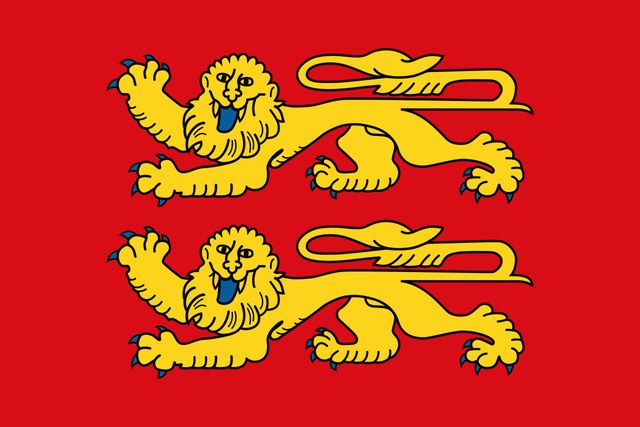
Normandy is a region of northern France granted to Viking leader Rollo in 911 and later ruled by William the Conqueror.

The kit

  • Viking origins — Normandy was granted to Viking leader Rollo by Charles the Simple in the Treaty of Saint-Clair-sur-Epte to deter further raids.
  • Medieval power — Normandy was ruled as a duchy from Rouen and became the base for William the Conqueror's 1066 invasion of England.
  • Norman expansion — Normandy produced adventurers like the Hauteville family who conquered Sicily and William Iron-Arm who fought in southern Italy.
  • D-Day invasion — Normandy was the site of the Allied D-Day landings in 1944, chosen despite being farther than Pas-de-Calais.

Runs with

France
northern region granted away by Charles the Simple, later reclaimed by Philip II Augustus open card →
William the Conqueror
Duke of Normandy who launched 1066 invasion of England from this region open card →
D-Day
Allied amphibious landings occurred on five beaches in this region in 1944 open card →
Vikings
granted to Viking Rollo after raids; became Christianized under his rule open card →

The ladder · 15 clues

H

In 1066, a force from this region invaded England. name this region of north France that William the Conqueror came from.

H

French region where the Allies landed on D-Day.

H

During the Middle Ages it was ruled by Richard the Fearless, who was held captive as a child by Louis IV, but escaped and later introduced feudalism to it.

H

Men from this region led by the Hauteville family took over the dukedom of Sicily.

H

The region of France that contains all five invasion beaches?

H

Duchy, once led by William the Conqueror, that Louis the Sixth tried to recover from England.

H

A woman named Emma hailed from this region and married Ethelred the Unready.

M

Royal control over this region ended during the Treaty of Saint-Clair-Sur-Epte, which granted Rollo this region after the Vikings promised not to attack more villages.

M

Charles the Simple of France granted this region to the Viking Rollo to deter further incursions.

M

This region was ruled from Rouen. :Name this Duchy that became Christian under Rollo. It became part of northern France under Philip II Augustus.

M

Roger II, the nephew of Robert Guiscard who established the Kingdom of Sicily, came from this region of France, as did William the Conqueror.

M

William Iron-Arm and Drogo were half-brothers of an adventurer from this region who fathered Bohemond of Taranto.

E

Region of northern France where the D-Day landings occurred.

E

Viking-settled region of northern France ruled by William the Conqueror.

E

A duke of this region wed Matilda of Flanders and launched an invasion that culminated in the 1066 Battle of Hastings and conquest of Anglo-Saxon England. name this region of north France, the home of William the Conqueror.

10 more clues from the record
H

Charles the Simple granted this region as a namesake duchy to the Viking Rollo.

H

The departments of Seine-Maritime and Eure form the upper portion of what French region this was given in the Treaty of Saint-Claire-sur-Epte to the first duke of this region, Rollo.

H

To support an invasion of this region, underwater pipeline was laid in Operation Pluto and deception measures were taken in Operations Quicksilver and Fortitude South.

H

William Iron Arm travelled from this region to South-Central Italy to fight the Lombards and eventually captured the city of Amalfi.

H

Coastal region of France east of Brittany where motte-and-bailey castles were first developed.

H

This region is the subject of a myth where Robert the Devil discovers he is Satan’s son.

H

A duchy of this name was ruled by a monarch nicknamed “Longsword” and founded by his father, Rollo.

H

Allied soldiers were often unable to maneuver due to hedgerows in this region.

H

This region was considered an unlikely target because the Pas-de-Calais was closer.

H

This region was relinquished by Henry III in the 1259 Treaty of Paris.

Watch out: Pas-de-Calais (closer to England but Normandy was chosen for D-Day)
#121 · Subnational Regions, Provinces, and Territories · Level 1

Republic of Genoa

Republic of Genoa
See i b File history /b /i below for details. · Public domain

Italian maritime republic · 11th–18th centuries · Ligurian coast, northwest Italy

The Republic of Genoa was a powerful Italian maritime republic that rivaled Venice for Mediterranean trade dominance and established Black Sea colonies including Caffa.

The kit

  • Rise — The Republic of Genoa signed the Treaty of Nymphaeum with Michael VIII Palaeologus in 1261, gaining Byzantine trade concessions for fifty ships.
  • Conflicts — The Republic of Genoa defeated Pisa at the Battle of Meloria but later lost the War of Chioggia to Venice.
  • Colonies — The Republic of Genoa controlled Caffa on the Black Sea, where Jani Beg's army launched plague-infected corpses, introducing the Black Death to Europe.
  • Legacy — The Republic of Genoa was the birthplace of Christopher Columbus and lent its name to blue jean cloth worn by sailors.

Runs with

Venice
fought and lost the War of Chioggia to Venice open card →
Bank
founded the Bank of Saint George to consolidate war debts open card →
Corsica
Christopher Columbus
birthplace of explorer Christopher Columbus open card →

The ladder · 15 clues

H

The Bank of Saint George consolidated war debts incurred by this city following the War of Chioggia.

H

Enrico Dandolo hailed from Venice this fought the War of Chioggia with what rival Italian port city, the home of Andrea Dorea.

H

It’s not in the Latin Empire, but this city signed with Michael VIII Palaeologus the 1261 Treaty of Nymphaeum, and it won decisively at the Battle of Meloria.

H

The Fieschi family led a conspiracy against one military leader from this city that ended in the murder of thathat leader’s nephew.

H

A 1930 opera based on a man born in this city had a libretto written by Paul Claudel.

H

In 935, the Fatimid Caliphate’s navy sacked this city, whose leaders included a First Crusade member with the sobriquet “mallet head.” The Bank of Saint George was founded in this city, which helped France win the Barbary Crusade against Mahdia.

H

This city briefly captured the Tower of the Flies to gain control of Acre harbor during the War of Saint Sabas.

M

Italian republic given the city of Caffa by the Golden Horde.

M

Jani Beg instructed his army to launch infected corpses into Caffa, one of this city’s Black Sea colonies, introducing the Black Death to Europe.

M

Mercantile republic, the birthplace of Christopher Columbus.

M

That Verdi opera is named for the first doge of this city, Simon Boccanegra.

M

Benedetto Zaccaria helped this city defeat Pisa at the Battle of Meloria, but it later lost the War of Chioggia to a different rival.

E

This Ligurian city’s fleet was led at the Battle of Lepanto by Andrea Doria. name this city on the northwest coast of Italy, the birthplace of explorer Christopher Columbus.

E

Christopher Columbus hailed from this maritime Italian rival of Venice.

E

A consul of this city founded the current ruling family of Monaco, the House of Grimaldi. name this Ligurian city that was the birthplace of Christopher Columbus.

10 more clues from the record
H

Its Black Sea colony of Caffa may have been the starting point of the Black Plague, and it later lost much of its maritime power in the War of Chioggia [key-oh-jee-ah].

H

At the Battle of Crecy, rain ruined the crossbow strings of mercenaries from this city.

H

This city's Jewish Ghisolfi family helped found the Bank of St. George, which was granted control over colonies in Gazaria and the Taman Peninsula.

H

It’s not Rome, but one leader of this city, who took the title of “perpetual censor,” reformed its constitution to create the alberghi.

H

After this city won the Battle of Curzola, Marco Polo was kept as a prisoner of this city.

H

Michael VIII [[the eighth]] signed the Treaty of Nymphaeum [[nim-FAY-um]] with this polity, allowing trade concessions within the Byzantine Empire in exchange for fifty ships to push his claim to the throne.

H

This city almost ended an Aragonese invasion after winning the Battle of Ponza to lift the siege of Gaeta.

H

After this city soundly defeated an opposing fleet at Curzola, the opposing admiral, Andrea Dandolo, committed suicide.

H

Another historical opera by Verdi, Simon Boccanegra, focused on a Doge of what city-state?

H

Sailors often wore “Blue Jean” cloth from this city, which lost the War of Chioggia.

Watch out: Venice (rival Italian maritime republic that defeated Genoa in the War of Chioggia)
#123 · Subnational Regions, Provinces, and Territories · Level 1

Kingdom of Bohemia

Kingdom of Bohemia
Sir Iain /a span typeof="mw:File" img src="https://upload.wi · CC BY-SA 4.0

Central European kingdom · c. 1198–1918 · modern Czech Republic

Kingdom of Bohemia was a Central European state ruled by the Přemyslid and Luxembourg dynasties with its capital at Prague.

The kit

  • Rise — Kingdom of Bohemia grew from Great Moravia territory and converted to Christianity under the Přemyslid Dynasty, recognized by the Golden Bull of Sicily for Ottokar I.
  • Achievements — Kingdom of Bohemia provided the Habsburgs with silver from Kutná Hora and was the only kingdom among Holy Roman Empire electors.
  • Conflicts — Kingdom of Bohemia's Protestant revolt began with the Second Defenestration of Prague in 1618, sparking the Thirty Years' War and ending at White Mountain.
  • Legacy — Kingdom of Bohemia entered personal union with Austria in 1526 after the Luxembourg dynasty replaced the Přemyslids in 1306.

Runs with

Prague
capital city and site of defenestrations open card →
Roman Emperor
Bohemian kings were Holy Roman electors open card →
Silver
mined at Kutná Hora for Habsburgs open card →
Charles

The ladder · 15 clues

H

This kingdom’s “Iron and Golden King” lost this kingdom’s Adriatic coastline and his life in the Battle of Marchfeld.

H

A revolt in this region began after fears it would lose the toleration granted to it in the “Letter of Majesty” of Rudolf II; that revolt featured an early capture of Pilsen by the forces of Ernst von Mansfeld.

H

Agnes, a queen of this kingdom, founded the religious order Knights of the Red Cross with the Red Star.

H

This region’s Premyslid dynasty was replaced by the House of Luxembourg in 1306.

H

The House of Luxembourg ruled this kingdom under the Blind King John, who died at the Battle of Crecy.

H

The Golden Bull of Sicily recognized Ottokar I as king of this kingdom’s Premyslid Dynasty.

H

A “Treaty on the Establishment of Peace throughout Christendom” was penned by a ruler of this region named George of Poděbrady .

M

Two Austrian agents were tossed out a window in this kingdom in an event that began the Thirty Years’ War. name this kingdom in the modern-day Czech Republic.

M

A revolt by Protestants in this state started the Thirty Years War. name this monarchical Central European state whose capital was Prague.

M

Rebels in this kingdom were inspired by the teachings of Jan Hus.

M

The king of Hungary and Croatia, Sigismund, forced a ruler of this kingdom, Wenceslaus IV, to abdicate as Holy Roman Emperor to expand his own influence.

M

The Council of Constance condemned a heretic movement in this state led by Jan Hus.

E

Frederick V lost the Battle of White Mountain in this region, where a Second Defenestration in its capital sparked the Thirty Years War.

E

A ruler of this region, Frederick the Winter King, was defeated by Count Tilly at the Battle of White Mountain near its capital, which was earlier the site of an incident in which 2 Catholic ambassadors were tossed out of a window. name this Czech region whose capital is Prague.

E

The execution of a preacher at the Council of Constance led to the namesake Hussite Wars in this region. name this central European region that makes up most of the Czech Republic.

10 more clues from the record
H

27 leaders of one revolt named for this historic region were executed in the Old Town Square of its capital. :Name this historic region in which Protestants revolted against Holy Roman Emperor Ferdinand II in 1618. That revolt began after two of the emperor’s representatives were defenestrated in this historic region’s capital.

H

This region’s Catholic nobles formed the Union of Green Mountain to contest George Podebrad’s claim to this region’s kingdom, which he contested with Hungarian King Matthias Corvinus.

H

The city of Konigsberg was named in honor of a ruler from this region, Ottokar II, who led this region to complete defeat at the hands of Rudolf I at the Battle on the Marchfeld.

H

Its ruler was the only king among the electors of the Holy Roman Empire, and it often served as the site of the Empire’s capital city.

H

After the end of the Premyslid line, Charles IV rebuilt the Hradcany district surrounding a massive castle in this kingdom’s capital city.

H

Kingdom that provided the Habsburgs with silver from the town of Kutná Hora. It came under a personal union with Austria in 1526.

H

This state grew out of the territory of Great Moravia and was first ruled by the P˘remyslid Dynasty.

H

An uprising in this kingdom was led by generals including Prokop the Shaven and John the One-Eyed.

H

This kingdom, which converted to Christianity under the Premyslid Dynasty, was defeated at the Battle of White Mountain.

H

That king, Ottokar II, is buriedFwith many other kings of this region in St. Vitus Cathedral.

Watch out: Frederick V (Winter King) ruled Bohemia briefly, not Frederick II of Prussia
#133 · Other Named Wars and Armed Conflicts · Level 1

Hundred Years' War

Hundred Years' War
Public domain

Anglo-French conflict · 1337–1453 · France and England

The Hundred Years' War was a prolonged conflict between England and France over the French throne, fought by the Plantagenet and Valois houses.

The kit

  • Rise — Hundred Years' War began in 1337 when Edward III claimed the French throne, with the first naval engagement at Sluys.
  • Achievements — Hundred Years' War saw English longbowmen dominate at Crécy and Agincourt, where French knights stuck in mud were slaughtered.
  • Conflicts — Hundred Years' War included the siege of Orléans lifted by Joan of Arc and side conflicts like the War of Two Peters.
  • Legacy — Hundred Years' War ended with the Battle of Castillon in 1453, where Sir John Talbot was killed by cannon fire.

Runs with

France
fought to defend throne against English claims open card →
John
Joan of Arc
lifted siege of Orléans for France open card →
Battle of Agincourt
major English victory under Henry V open card →

The ladder · 15 clues

H

John the Blind of Bohemia fought in this war whose first naval engagement took place at Sluys [slois], and Edward the Black Prince’s reputation grew after his success at Najera in this conflict.

H

A sideshow to this conflict involved one party supporting Henry of Trastámara against Peter of Castille in the War of Two Peters.

H

Both sides in this war intervened in the War of the Two Peters, and Sir John Talbot was killed by cannon at the Battle of Castillon in this war.

H

Joan of Arc fought for the French in this war, which lasted from 1337 to 1453 and was fought between branches of the Valois and Plantagenet houses.

H

In a battle of this war, the blind King John of Bohemia was killed, leading the victor to adopt his crest of three ostrich feathers.

H

War between England and France, one of the causes of which was France's navy disrupting England's wool trade.

H

The War of the Breton Succession was a phase of this larger, very lengthy conflict that began when the British monarch Edward III instituted a claim to the French throne.

M

One side's navy was destroyed at the Battle of Sluys in this war, in which many chevauchées were led by Edward the Black Prince.

M

The Treaty of Bretigny briefly halted this conflict that was depicted in Auguste Rodin’s The Burghers of Calais.

M

The War of Breton Succession was an early side-act in this larger Anglo-French conflict, known for the Battles of Crecy and Agincourt.

M

Henry V’s victory at Agincourt was during this long conflict between England and France whose tide was later turned by the Maid of Orleans, Joan d’Arc.

M

This war, whose history is detailed in Jean Froissart’s Chronicles, began with a naval battle at Sluys.

E

Knights stuck in mud were slaughtered by longbowmen in a battle in this war, where a siege was broken by the "Maid of Orléans." The Battle of Agincourt was fought in this long war between France and England.

E

The battle of Crecy during this conflict demonstrated the power of the longbow, as did the battle of Agincourt. the siege of Orleans was lifted by Joan of Arc in what lengthy conflict between England andRFrance?

E

During this war, the siege of Orléans [“or-lay-ON”] was lifted by French forces led by the peasant girl Joan of Arc. name this war between England and France that lasted around a century.

10 more clues from the record
H

The major players in this war were members of the houses of Valois and Plantagenet. :Identify this war over the French throne lasting from 1337 to 1453.

H

Two minor parts of this conflict was known as the Castilian Civil War and the War of Two Peters and both took place largely in present-day Spain.

H

During this campaign, a march led by John of Gaunt resulted in the death of 15,000 horses.

H

A civil war during this conflict was fought between the Armagnacs and Burgundians.

H

Twenty years passed between this war’s last battle at Castillon [[kas-tee-YOHN]] and a formal peace treaty.

H

The Treaty of Brétigny was signed during this war, in which King John the Good of France was captured.

H

One side in this conflict lost its fleet at the Battle of Sluys (SLOYZ), and England retained control of Calais after it ended.

H

William Cale led a peasant revolt called the Jacquerie during this war. :Name this fourteenth century war between England and France that actually lasted over a century.

H

The first portion of this conflict was ended by the Treaty of Bretigny, and cannons were used during the Battle of Castillon.

H

Centuries earlier, the wealthy peasant Guillaume Cale led the Jacquerie revolt in 1358 which was suppressed after the Battle of Mello during this larger conflict.

Watch out: War of the Two Peters (Castilian Civil War fought during this conflict)
#199 · Authors, Poets, and Playwrights · Level 1

Anna Komnene

Anna Komnene
Unknown author Unknown author · Public domain

Byzantine princess and historian · 1083–c. 1153 · Byzantine Empire

Anna Komnene was a Byzantine princess who wrote the Alexiad, chronicling her father Alexios I's reign and the First Crusade's impact.

The kit

  • Rise — Anna Komnene became one of the first known women historians by penning the Alexiad in the twelfth century.
  • Achievements — Anna Komnene wrote the Alexiad, which begins with a quote from Sophocles' Ajax and describes the Battle of Dyrrhachium.
  • Conflicts — Anna Komnene plotted a failed coup against her brother John II with Irene Doukaina to replace him with Nikephoros Bryennios.
  • Legacy — Anna Komnene was exiled to a monastery after her coup attempt, where she documented Robert Guiscard's death and the Pecheneg wars.

Runs with

John
her younger brother whom she attempted to depose in a failed coup open card →
Sicily
home region of Norman woman Sikelgaita, compared to Pallas and Athena open card →
Byzantine Empire
the empire whose history she chronicled during her father's reign open card →
First Crusade
major event whose effects on Byzantium she described in the Alexiad open card →

The ladder · 10 clues

H

Shortly after being exiled by her brother John II, this historian described the effects of the First Crusade upon the Byzantine Empire in an account of the reign of her father Alexios I, the Alexiad.

H

In one work, this author describes the Norman woman Sikelgaita as “like another Pallas, if not a second Athena,” in a text that also includes an account of the Battle of Dyrrhachium. :Name this historian, who was exiled to a monastery after a failed coup attempt against John II.

H

This historian’s most famous work begins with a quote from Sophocles’ play Ajax. :Name this historian who documented events like the death of Robert Guiscard and the war with the Pechenegs in that work. This historian wrote that work after being exiled to a monastery for plotting a failed coup with Irene Doukaina .

H

Niketas Choniates claimed that this person was “stimulated by ambition and revenge” to attempt a coup against their brother with the encouragement of Irene Doukaina, aiming to replace him with Nikephoros Bryennios.

H

Another important Byzantine woman was this historian who wrote about the reign of her father in the Alexiad. She entered a convent after her plot to depose her younger brother John was discovered.

H

This twelfth-century Byzantine princess became one of the first known women historians by penning the Alexiad, which narrates the dynasty-establishing reign of her father Alexios I.

H

This woman may have been inspired by the material laid out by her husband Nikephoros Bryennios the Younger to write a chronicle of her father’s rule named the Alexiad.

H

In a funeral oration to this person, George Tornikes asked “To whom shall I compare the one who is entirely unsurpassable?”, eventually resolving to compare them to a phoenix.

H

This woman wrote admiringly of the manly traits of Empress Irene in her influential Byzantine history, The Alexiad.

H

In mourning, this person lamented their misfortune by stating “now I live and have died a thousand deaths”.

Watch out: Confused with Empress Irene, whom Anna praised for manly traits in the Alexiad
#236 · Scientists, Mathematicians, and Inventors · Level 1

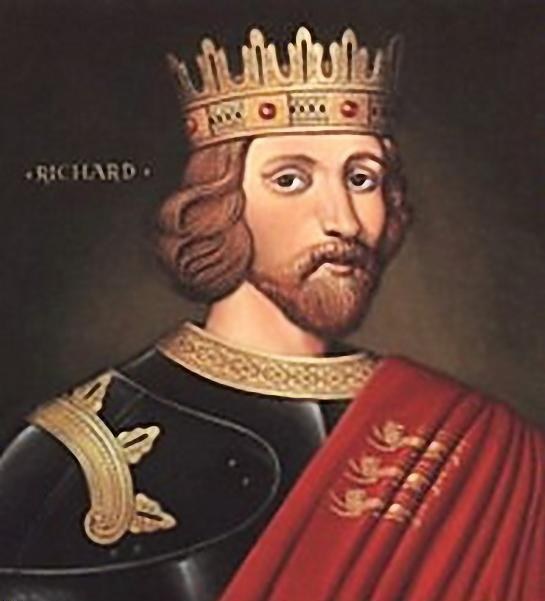
Richard

Richard
span lang="en" Anonymous /span Unknown author /span · Public domain

English regnal name · 1189–1485 (kings); 1913–1994 (Nixon) · England; United States

Richard was the name of three English kings and of President Nixon, who resigned during Watergate.

The kit

  • Richard I — Richard I fought Saladin at Arsuf during the Third Crusade alongside Philip II of France before being imprisoned by Heinrich VI.
  • Richard II — Richard II was dominated by John of Gaunt during his minority, confronted Wat Tyler's rebels, and was deposed by Henry IV.
  • Richard IIIRichard III married Anne Neville, supposedly killed the Princes in the Tower, and died at the Battle of Bosworth Field.
  • Richard NixonRichard Nixon employed the Southern Strategy in 1968, signed the Anti-Ballistic Missile Treaty, and resigned after the Watergate scandal.

Runs with

Benjamin Franklin
Joe Hill
No connection evident in clues open card →
church
Bishop
No connection evident in clues open card →

The ladder · 15 clues

H

Another king of this name was dominated during his minority by his uncle, John of Gaunt, and was the last of the Plantagenets.

H

The charges made against Hiss were readily pursued by this Republican Congressman from California, who would go on to win two presidential elections in 1968 and 1972 before resigning in the Watergate scandal.

H

Another king of this name was killed at a battle he lost a battle after the defection of the Stanleys.

H

This man co-discovered a method for using simulated random paths to solve partial differential equations, with Mark Kac. During a brief time working in biology, this man attempted to understand research on animal nerve voltages by asking for a "map of the cat." A 1974 graduation address by this man coined the term "cargo cult science." This man gave a brief demonstration using a cup of ice water and a Morton-Thiokol O-ring. name this physicist who investigated the Challenger disaster and invented namesake quantum "diagrams."

H

That same king of this name received many of the lands and titles of his brother George, duke of Clarence after the latter’s rebellion and later became known as “Lord of the North.” This regnal name was claimed by the rebel Perkin Warbeck.

H

Another king of this name married Anne Neville, leading to tensions with his brother George, and supposedly killed two of his nephews, the Princes in the Tower.

H

One king of this name told the men who captured his killer to let him go with one hundred shillings; after that king died, the killer was instead skinned alive.

M

That king’s skeleton was recently discovered under a parking lot.

M

The second king of this name was the last Plantagenet monarch and was deposed by Henry IV.

M

Chisholm hoped to defeat this incumbent president in 1972. This president resigned two years later in the wake of the Watergate scandal.

M

The raid on Hampton’s apartment was made possible by William O’Neal, a Black Panther-turned-FBI informant. Another major informant for the FBI was this Japanese-American Field Marshal and activist, who was posthumously found to have been leaking information from within the Black Panthers.

M

The first king of this name met his end while besieging a castle at Châlus after his victory at Arsuf over Saladin. give this common name of three British kings, one of whom was a humpbacked tyrant according to Shakespeare, another of whom was nicknamed “the Lionheart.”

M

The first king of this name crusaded alongside Philip II of France and was imprisoned by Heinrich VI before being succeeded by his younger brother John. give this name of three English kings, including one nicknamed the “Lionhearted.”

E

Frederick participated in the Third Crusade alongside Philip II and an English king by this name, who was nicknamed “Lionheart.”

E

John Lackland succeeded a king with this first name, who fought against Saladin during the Third Crusade. give this first name of an English king known as the “Lionheart.”

10 more clues from the record
H

The Saturday Night Massacre occurred because this Republican president ordered the firing of Archibald Cox. This president resigned shortly after the Watergate Scandal.

H

Though George Wallace ended up winning much of the South, this politician employed Kevin Philips during a successful 1968 Presidential campaign.

H

This president, who signed the Anti-Ballistic Missile Treaty, employed the Southern Strategy to defeat a Minnesotan for the White House.

H

Another man with this first name “lodged” two princes in the Tower of London before dying at the Battle of Bosworth Field.

H

In a House race, this man earned a lasting nickname from opponent Manchester Boddy because of a misleading pamphlet he distributed.

H

Before becoming king, one king of this name invaded Scotland alongside Alexander Stewart and recaptured the town of Berwick.

H

One king of this name twice hid from unrest in the Tower of London, where he was later imprisoned following his abdication.

H

Another king with this name contended with the Lord Appellant, confronted Wat Tyler’s rebels, and was succeeded by Henry IV.

H

That ruler of this name executed several of the Lords Appellant and was murdered after his supporters launched the failed Epiphany Rebellion.

H

Before the Battle of Towton, one man with this first name rallied his troops by killing his own horse.

Watch out: Richard III's skeleton was found under a parking lot in Leicester, not Richard II's.
#297 · Historic Buildings and Museums · Level 1

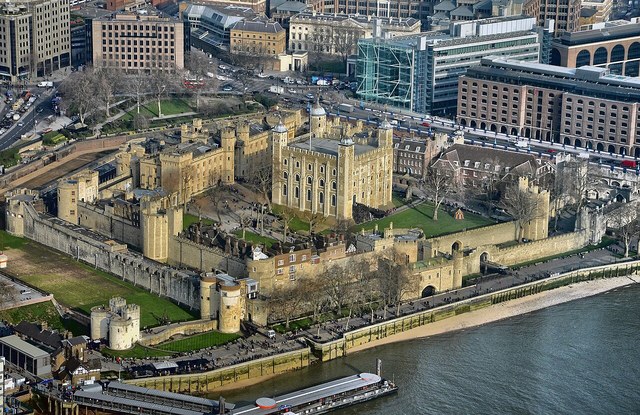
Tower of London

Tower of London
a rel="nofollow" [Duncan] /a from Nottingham, UK · CC BY 2.0

Norman fortress and prison · 1066–present · London, Thames riverbank

Tower of London is a Norman fortress built by William the Conqueror that served as a royal palace, prison, and repository for the Crown Jewels.

The kit

  • Construction — Tower of London was built on William the Conqueror's orders shortly after his 1066 coronation, incorporating part of London's Roman wall around the White Tower.
  • Royal prisoners — Tower of London held Anne Boleyn and Lady Jane Grey before their executions, Guy Fawkes during Gunpowder Plot interrogations, and Sir Walter Raleigh for years.
  • Princes in the Tower — Tower of London imprisoned Edward V and Richard of Shrewsbury on their uncle Richard III's orders; the princes disappeared, spawning pretender claims by Lambert Simnel and Perkin Warbeck.
  • Crown Jewels & traditions — Tower of London houses Britain's Crown Jewels, guarded by Yeoman Warders called Beefeaters; legend holds that Britain will fall if its resident ravens leave.

Runs with

Richard III
Richard III imprisoned Edward V and Richard of Shrewsbury here, possibly murdering them open card →
Bishop
Sir Walter Raleigh
Sir Walter Raleigh wrote History of the World during imprisonment here open card →
William Penn

The ladder · 15 clues

H

Built on the order of William the Conqueror, this building was where Edward V was kept after he was declared illegitimate.

H

William I built this fortress which saw later use as a prison that held Anne Boleyn.

H

A woman named Dorothy Householder was the lone fatality in a July 1974 bombing at this site.

H

London castle where Elizabeth was imprisoned during Wyatt’s Rebellion.

H

In 1952, the Kray twins were arrested after assaulting an officer at this location.

H

Prominent tower where Walpole was imprisoned by his political enemies.

H

This center of this complex, which incorporated part of London’s Roman wall, was the White Tower shortly after the Norman conquest. It is perhaps more famous for serving as a prison for illustrious men like Henry VI and Edward V.

M

Perkin Warbeck and Lambert Simnel claimed to be “princes” who disappeared from this location during the Wars of the Roses. name this fortress that employs the Yeoman Warders, or “beefeaters,” to guard the crown jewels.

M

Guy Fawkes was tortured in this location, leading to his signing of a full confession for the Gunpowder plot.

M

Sir Walter Raleigh was imprisoned in this building that also held Anne Boleyn. name this fortress and former prison that now houses Britain's Crown Jewels.

M

Days after his coronation on Christmas Day, William the Conqueror ordered the construction of this building. According to legend, if the ravens at this location are lost or fly away, the crown and Britain itself will fall.

M

Before being executed, many rebels including Robert Aske were taken to this location. Richard, Duke of Gloucester, imprisoned and may have murdered two princes at this castle.

M

Many Lollards were persecuted following the Oldcastle Revolt, which began after John Oldcastle escaped from this building. This fortress on the Thames was used both as a prison and as the home of the Crown Jewels.

M

William the Conqueror constructed this building to serve as his palace, though it is most famously known for its use as a prison and as the home for the British Crown Jewels.

E

This building held both Edward V and Richard of Shrewsbury on orders of their uncle Richard III, as well as both Lady Jane Grey and Anne Boleyn. name this London castle along the Thames which houses the Crown Jewels of England.

10 more clues from the record
H

In 1671 a man who dressed as a cleric visited this location, used a mallet to flatten a object, and hid it under his coat as part of a robbery; that man was Colonel Thomas Blood.

H

Shortly after the Battle of Tewkesbury, the Lancastrian king Henry VI died in this prison, where two infant "princes" under the supervision of Richard III went missing.

H

Henry VI was held captive at this location following his defeat. This location was also the site of the alleged murder of two young princes at the behest of Richard III.

H

Talbot Edwards, who worked at this location, was knocked unconscious by a man who used a fake marriage proposal to try to steal loot from here.

H

The parish called the Little Minories and the Old Artillery Grounds were among the “liberties,” or areas outside city government, associated with this location.

H

A royal menagerie was kept at this location, and James I built a platform over a courtyard of this building to allow for viewing of bear and dog fights.

H

A ruler murdered in this location supposedly resurrected Alice Newnett and told her to take a human-sized candle to his grave.

H

An unfinished five-volume History of the World was written in this location by a man who legendarily introduced tobacco to Ireland.

H

It’s not a zoo, but this location was where a grizzly bear named Old Martin lived for many years.

H

At the behest of George IV, the menagerie kept at this location was closed down in 1831, and the stock was moved to the London Zoo.

Watch out: Confusing the two young princes (Edward V and Richard of Shrewsbury) with pretenders Lambert Simnel and Perkin Warbeck who claimed to be them
#316 · Religious Founders, Saints, and Reformers · Level 1

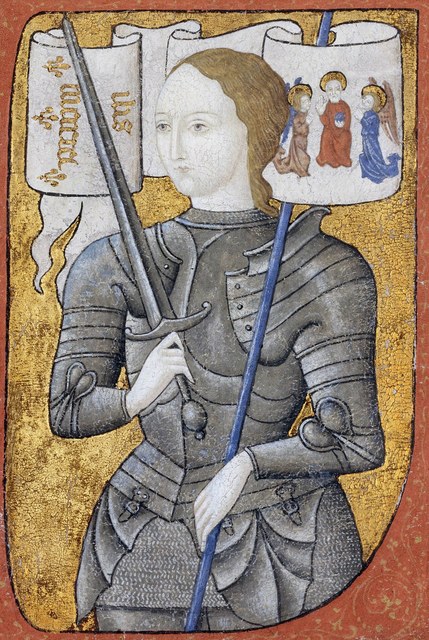
Joan of Arc

Joan of Arc
Public domain

French military leader · 1412–1431 · France

Joan of Arc was a peasant girl who led French forces to key victories in the Hundred Years' War before being burned at the stake.

The kit

  • Rise — Joan of Arc claimed visions from Saint Catherine of Alexandria led Charles VII to send her to relieve besieged Orléans in 1429.
  • Achievements — Joan of Arc captured John Talbot at the Battle of Patay and Charles VII was crowned in Reims Cathedral by this figure.
  • Death & succession — Joan of Arc was captured at Compiègne by Burgundian forces in 1430 and burned at the stake in Rouen in 1431 after a trial led by Pierre Cauchon.
  • Legacy — Joan of Arc's 1431 conviction was reversed by Callixtus III in 1456 following an investigation requested by her mother Isabelle Romée.

Runs with

Charles
sent Joan to relieve Orléans after her visions open card →
Hundred Years' War
Joan led French forces to victories against England open card →
John
France
Joan rallied French forces and became national heroine open card →

The ladder · 15 clues

H

During this event, Erard Emangart and Nicolas Midi got into an argument over the possibility of fairies living in a tree near a fountain whose waters could supposedly cure any disease.

H

Heroine who was burned at the stake for witchcraft after leading forces against the English.

H

The former papal mercenary Claude des Armoises successfully impersonated a person with this first name until failing to recall a secret at a royal audience.

H

Pope Callixtus III ordered a trial which found this person innocent 25 years after death.

H

This event titles a 2005 book by Daniel Hobbins that argues its primary sources have both documentary and literary traits.

H

This leader attempted to escape from Beaurevoir Castle by jumping out of a seventy-foot tower into a dry moat.

H

At one point in this event, a figure described seeing a painting created by a Scotsman at Arras and also denied having a mandrake.

M

At another point, a speaker dismissed the claims of Catherine de la Rochelle as “folly and nothing more.” During this event, Pierre Cauchon, who was later labeled a heretic for his actions, was warned that an ill judgment would put himself “in great peril.” At the beginning of this event, one figure refused to take an oath to speak the truth, saying “perhaps you might ask such things that I would not tell.” It was reversed after a proceeding authorized by Callixtus III, who acted on the request of one figure’s mother, Isabelle Romee.

M

Two national heroes with this name respectively rallied defenders at Beauvais and at the Breton city of Hennebont, inspiring the nicknames “Hachette” and “La Flamme.” The Order of the Garter suspended the namesake of Falstaff, John Fastolf, for cowardly fleeing from the forces of a commander with this name.

M

Charles VII was crowned in Reims Cathedral by this figure.

M

Guillaume Manchon and Thomas de Courcelles produced a Latin translation of this event’s “French minute” record. 25 years after this event, its outcome was nullified following an investigation led by Jean Bréhal and authorized by Callixtus III .

M

This event’s central figure claimed not to know whether a horse had been returned to the Bishop of Senlis , nor whether that horse had previously been stolen.

E

This figure, who was sent by Charles VII [[the seventh]] to relieve a besieged city following a vision from Saint Catherine of Alexandria, was captured in 1430 by the Burgundian faction and burned at the stake by the English. name this "Maid of Orléans," [[ohr-LEH- ahn]] a French hero of the Hundred Years' War.

E

COO-shun) led the court which condemned her to be burned at the stake in 1431 following her relief of the siege of Orléans (pr.

E

This event took place in Rouen after Charles VII failed to ransom the central figure, and featured a woman vehemently affirming her belief that she had heard a voice from God. identify this 1431 legal proceeding, reversed in 1456, which resulted in the “Maid of Orleans” being burned at the stake.

10 more clues from the record
H

A Breton noble with this first name raised a piratical “Black Fleet” against Philip VI to avenge the execution of Olivier de Clisson.

H

A rib bone supposedly belonging to this person, which was discovered with a cat femur, was determined by Philippe Charlier to be from an Egyptian mummy.

H

What French maid assisted in the Siege of Orleans but was burned at the stake at the age of 19?

H

A popular 1917 song titled "They Are Calling You" referenced the devotion held toward this person by soldiers of one country who carried her image into battle.

H

The Camelots du Roi often rallied around a statue of this person, an anti-Dreyfusard symbol, in the Place des Pyramides.

H

This leader was captured outside of Compiegne possibly due to the betrayal of Guillaume de Flavy.

H

This leader was born in the Duchy of Bar and petitioned Robert de Baudricourt [[bahw-dreh-KOR]] for an escort to Paris.

H

This commander tried to escape imprisonment by leaping from a Beaurevoir Castle tower following their capture due to Guillaume de Flavy lifting a drawbridge too soon at Compeigne.

H

This leader was wounded while storming a fortress called “les Tourelles.” This advisor to John of Alençon [ah-luhn-soh] was captured in Compiegne by the forces of Philip the Good.

H

Forces commanded by this person captured John Talbot in the Battle of Patay.

Watch out: Claude des Armoises successfully impersonated Joan of Arc until failing to recall a secret at a royal audience
#324 · Religious Founders, Saints, and Reformers · Level 1

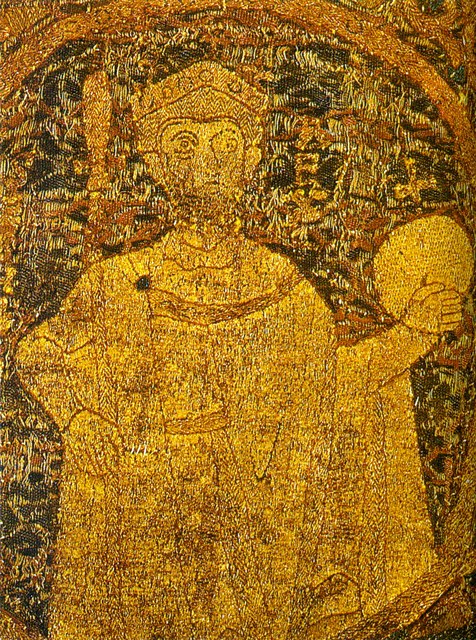
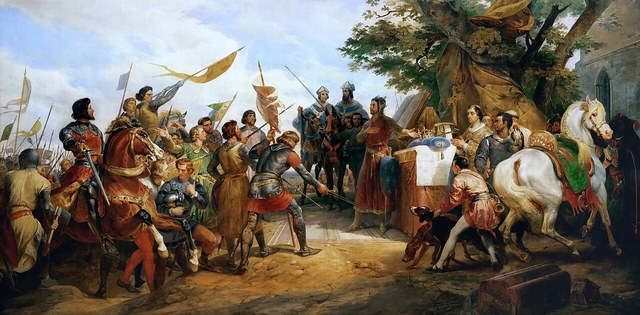
Saint Stephen I of Hungary

Saint Stephen I of Hungary
Unknown author Unknown author /span · Public domain

First King of Hungary · r. 1000–1038 · Hungary

Saint Stephen I of Hungary was the first Christian king of Hungary, crowned by Pope Sylvester II around the year 1000.
The kit

  • Rise — Saint Stephen I of Hungary defeated his uncle Koppány at the Battle of Veszprém to unite the Magyar clans and claim the throne.
  • Achievements — Saint Stephen I of Hungary established the Archbishopric of Esztergom and officially founded the Catholic Church in his kingdom.
  • Legacy — Saint Stephen I of Hungary's incorrupt right hand (the Holy Dexter) is carried in procession every August 20th as a national relic.
  • Death & succession — Saint Stephen I of Hungary's son Emeric died in a boar hunting accident, leaving the succession uncertain after Stephen's death.

Runs with

Hungary
founded as Christian kingdom open card →
Bavaria
married Gisela of Bavaria open card →
Pope
crowned by Sylvester II open card →
Christian
first Christian Hungarian king open card →

The ladder · 15 clues

H

This ruler was either crowned on Christmas or New Year’s Day with a crown from Pope Sylvester II.

H

Edward Aethling was brought up in the court of this man’s wife Gisela of Bavaria.

H

Through his wife, Giselle of Bavaria, this man was the brother in law of Holy Roman Emperor Henry II.

H

The doctrine of primogeniture was used to justify this man’s succession following the death of Geza rather than that of this man’s uncle, who ruled portions of Transdanubia.

H

Amerigo Vespucci may have been named after a son of this man who had died in a boar hunting accident in present day Romania.

H

To take power, this man killed the Magyar prince Koppány, who ruled the region near Lake Balaton.

H

This man’s right hand became part of a cult and was stolen by Mercurius.

M

Saintly first king of the Árpáds who shares his name with the first Christian martyr.

M

Coloman was part of the Árpád Dynasty, first ruled by this canonized king. This first king of Hungary was crowned on Christmas Day, 1000.
M

Every August 20th, a procession in this man’s country carries the Holy Dexter, his right hand.
M

This man was baptized at Esztergom [ess-ter-gohm], where he now serves as the patron saint. name this first King of Hungary.

M

Ladislaus I began the canonization campaign for this Arpad ruler and saint. name this first Christian king of Hungary.

E

This ruler's coronation by Pope Sylvester II was said to have occurred at the turn of the millennium. name this saint, the first king of Hungary.

E

He was a member of the Arpad Dynasty, named after a Grand Prince of the Magyars. name this canonized first king of Hungary.

E

This member of the Arpad Dynasty served as the first King of the Hungarians. This husband of Gisela of Bavaria would later be canonized by Pope Gregory VII.

10 more clues from the record
H

That son, Emeric, was born to this man by a Bavarian princess named Gisela.

H

This Grand Prince succeeded Géza and created the Archbishopric of Esztergom.

H

He defeated his uncle Koppány at the battle of Veszprém, thereby uniting the Magyar clans. :Identify this first king of Hungary, who came to power on Christmas Day, 1000. :

H

This monarch’s Giselle supplied Bavarian knights who helped him defeat Koppany near Pannonhalma Abbey, where Astrik was installed by his father Geza.

H

This greatest member of the Arpad dynasty, born as the pagan Vajk (VAHHJ-kuh), married Gisela of Bavaria and officially established the Catholic Church in his country.

H

Though he was not a Slav, he adopted the Slavic name for “Charlemagne” as his royal title and defeated his cousin Koppany at the Battle of Veszprem after the death of his father Geza.

H

Maria Theresa founded an order named for this person in order to lessen ethnic tensions in her empire and gave the Sisters of Loreto this man’s intact right hand.

H

His country's constitution was named for an item he received from Sylvester II, the Holy Crown, while his decaying hand remains one of his country's most important relics.

H

Helene Kottanner stole that object named for this man in a pillow for Elizabeth of Luxembourg, starting a civil war in which Elizabeth employed John Jiskra’s mercenaries.

H

According to one account, one of this ruler's body parts was posthumously stolen by a cleric named Mercurius as it was found to have not decayed after his exhumation.

Watch out: First Christian martyr Saint Stephen (shares the name but different person)
#327 · Religious Founders, Saints, and Reformers · Level 1

Peter the Hermit

Peter the Hermit
span lang="en" Anonymous /span Unknown author · Public domain

French priest and crusade leader · late 11th century · France, Rhineland, Asia Minor

Peter the Hermit was a French priest who led the People's Crusade, the vanguard of the First Crusade.

The kit

  • Rise — Peter the Hermit was believed by some to be the true instigator of the First Crusade based on a vision at the Church of the Holy Sepulchre.
  • Conflicts — Peter the Hermit and Count Emicho led massacres of Jewish people in Worms, Mainz, and the Rhineland before the crusade.
  • Achievements — Peter the Hermit gave a speech that inspired the defeat of the Muslim Siege of Antioch during the First Crusade.
  • Legacy — Peter the Hermit joined Godfrey of Bouillon's army for morale and later founded a monastery at Neufmontier after Jerusalem's capture.

Runs with

First Crusade
led the People's Crusade vanguard and inspired victory at Antioch open card →
Fourth Lateran Council
church
had vision at Church of the Holy Sepulchre open card →
Jewish people
led massacres in Rhineland with Count Emicho open card →

The ladder · 6 clues

H

French priest who led the People’s Crusade.

H

Raymond of Antioch wrote poems in honor of this religious figure whose preaching was essential in galvanizing the spirit of those involved with the First Crusade. He joined Godfrey of Bouillon’s army for morale until he was made leader of Jerusalem, then he retired to found a monastery at Neufmontier.

H

Alongside Count Emicho, this man led a series of massacres of Jewish people in Worms, Mainz, and the rest of the Rhineland. :Name this man who, alongside Walter the Penniless, led the People’s Crusade.

H

The vanguard of the First Crusade was the so-called People’s Crusade organized by this charismatic cleric from Amiens whose lieutenant was Walter the Penniless.

M

This figure was for some time believed to be the true instigator of the First Crusade based on a vision at the Church of the Holy Sepulchre. He definitely accompanied it, and he gave a speech that inspired the defeat of the Muslim Siege of Antioch.

M

After massacring Jews in the Rhineland, the two commanders of the People’s Crusade cheerfully led their armies into Asia Minor, where many were killed in a Turkish ambush at Civetot. name either leader.

Watch out: Walter the Penniless co-led the People's Crusade with Peter, not as his subordinate lieutenant
#353 · Other Families and Dynasties · Level 1

Rurikid Dynasty

Rurikid Dynasty
Vladimir Lobachev · Public domain

Russian ruling dynasty · 9th–16th centuries · Kievan Rus', Muscovy

Rurikid Dynasty ruled Kievan Rus' and its successor states from its founding by a Varangian chieftain through Ivan the Terrible's death.

The kit

  • Rise — Rurikid Dynasty was founded by a Viking chieftain who ruled Novgorod in the 9th century, as described in the Primary Chronicle.
  • Achievements — Rurikid Dynasty rulers included Vladimir I, who converted the Slavs to Christianity in 988, and Yaroslav the Wise, who promulgated the Russkaya Pravda.
  • Conflicts — Rurikid Dynasty members fought the Cumans at the Stugna River and later conquered the Kazan Khanate under Ivan the Terrible.
  • Death & succession — Rurikid Dynasty ended with the death of Feodor the Bellringer, Ivan the Terrible's son, triggering the Time of Troubles.

Runs with

Ivan the Terrible
second-to-last Rurikid ruler, first to use title Tsar open card →
Russia
ruled Kievan Rus' and Grand Duchy of Moscow open card →
Time of Troubles
began after dynasty's extinction with Feodor's death open card →
Tsar
Ivan the Terrible first Rurikid to claim title open card →

The ladder · 15 clues

H

A member of this dynasty murdered Drevlians at a feast with flaming sparrows.

H

Kievan Rus’ and its successor state, the Grand Duchy of Moscow, were ruled by leaders from this dynasty, named after its Viking founder.

H

Another ruler of this dynasty converted to Christianity when he learned about the Islamic prohibition on alcohol and led a 988 mass baptism of his kingdom.

H

Rulers of this dynasty included Prince Oleg, who transferred his capital to Kiev, as well as Vladimir I, who converted the Slavs to Christianity. :Identify this dynasty, whose other rulers included Yaroslav the Wise, and its namesake, a Scandinavian chieftain who ruled Novgorod in the 9th century.

H

Oleg of Novgorod succeeded his kinsman, a Varangian prince who names this ruling dynasty Kievan Rus’, which included the first Tsars of Russia.

H

A member of this dynasty came to power after defeated his brother Sviatopolk and passed a law code called the Russkaya Pravda.

H

Orphans were protected in this dynasty by the Izgoi, while the "ladder," or rota, ranked princes.

M

Descended from a Viking chieftain this Russian dynasty preceded the Romanovs.

M

This dynasty's last ruler was called the "Bellringer," and its members included Saints Boris and Gleb.

M

Ivan the Terrible was one of the final rulers of what dynasty, named after a Varangian chieftain who founded Novgorod?

M

The founding of this dynasty was described in the Primary Chronicle.

M

The most famous ruler of this dynasty conquered the Kazan Khanate, personally killed his intended heir, and was the first man to call himself Tsar of Russia. name this dynasty supposedly founded by a Viking, which featured the kings Vladimir the Great and Ivan the Terrible.

E

Ivan the Terrible was a member of this dynasty that formerly ruled Kievan Rus and was founded by a Varangian prince. Other members of this dynasty included Yaroslav the Wise.

E

Ivan the Terrible was the second-to-last member of this Dynasty. It ended with the death of Ivan’s son Feodor, leading to the Time of Troubles.

E

Izyaslav [[EEZ-yah-slahf]], Svyatoslav [[svai-AHT-oh-slahf]], and Vsevolod [[vuh-SAY-vuh-lud]] were three heads of this dynasty after Yaroslav the Wise of Kiev died.

10 more clues from the record
H

Dynasty founded by a Varangian prince whose extinction began the period

H

Feudalism in this dynasty began at the Council of Liubech.

H

An unpopular prince from this dynasty allied with Monomakh and lost a battle with the Cumans at the Stugna River.

H

Kiev was ruled by this family whose founder was a Varangian leader. Other members of this family include Ivan the Terrible and Boris Gudonov.

H

A member of this dynasty established the rota system of collateral succession and promulgated a law code that excluded capital and corporal punishment.

H

Its early rulers worshipped the pagan idol Perun, who would be replaced by Elijah after the arrival of Christianity to the realm.

H

After the uneventful rule of Yaropolk, two great rulers would follow, with the latter being Yaroslav the Wise.

H

A "little criminal" who was claimed to be part of this dynasty fled with his mother after his father was decapitated on a sleigh ride.

H

The founder and namesake of this dynasty left his territory after a decade to manage land in Friesland left to him by his father.

H

A member of this dynasty orchestrated a treaty with Archbishop Evfimy whose violation was the pretext for the Battle of Shelon.

#356 · Other Families and Dynasties · Level 1

House of York

House of York
Sodacan · CC BY-SA 3.0

English royal dynasty · 1461–1485 · England

House of York was the royal dynasty represented by a white rose that opposed Lancaster in the Wars of the Roses.

The kit

  • Rise — House of York was founded by Edmund of Langley, whose great-grandson became its first king after ousting Henry VI.
  • Achievements — House of York's first ruler received Burgundian payouts after signing the Treaty of Picquigny, cancelling his invasion of France.
  • Conflicts — House of York forces captured the opposing monarch at the Battle of Northampton and faced rebellions by the Duke of Clarence.
  • Death & succession — House of York's final king fell at the Battle of Bosworth Field in 1485, ending the dynasty's rule.

Runs with

Wars of the Roses
opposed House of Lancaster in this dynastic conflict open card →
Richard III
Battle of Bosworth Field
battle where this house's last ruler died in 1485 open card →
John
no connection evident in clues open card →

The ladder · 15 clues

H

House opposed to the House of Lancaster during the Wars, represented by a white rose.

H

In an uprising against this house, the flooding of the River Severn allowed the king's troops to capture the primary conspirator, the Duke of Buckingham, and behead him.

H

The final ruler of this line was appointed by the act of Titulus Regius and, in addition to being likened to a hog in an infamous rhyme by William Collingbourne, was targeted by the propaganda campaign of John Morton.

H

This line was founded by Edmund of Langley, whose great-grandson became the first of its three kings, married the commoner Elizabeth Woodville, and was placed on the throne after the ouster of Henry VI.

H

Its first ruler, who was bribed into cancelling an invasion of France by the Treaty of Picquigny, faced rebellions led by his brother, the Duke of Clarence, and by the Neville family.

H

A ruler from this faction was mocked by a couplet claiming that “the Cat, the Rat, and Lovell the Dog” ruled his country “under the Hog,” a reference to heraldic signs.

H

The killing of some members of this family was blamed on Sir James Tyrrell in an uncorroborated history written by Thomas More.

H

This faction made William Herbert the Earl of Pembroke to reward his fighting for them in Wales.

H

This faction hanged judge John Fortescue for his legal rulings against their legitimacy.

H

A member of this family feuded with Edmund Beaufort, whom he imprisoned in the Tower of London.

M

Richard III was a member of this royal house, represented by a white rose, during the Wars of the Roses.

M

John de la Pole, Lambert Simnel, and the later Perkin Warbeck claimed or pretended to Henry VII’s throne through the line of this party, which opposed the Lancastrians in the Wars of the Roses.

M

A ruler from this family warred against Margaret of Anjou with the help of the Earl of Warwick; Warwick later deserted him after he married Elizabeth Woodville.

M

A king from this house stacked mad cash from Burgundian payouts after signing the Treaty of Picquigny.

E

This house's final king of England fell during the Battle of Bosworth Field.

4 more clues from the record
H

Neville initially supported the claim of this house, which was represented by a white rose.

H

The decree Titulus Regius altered succession within this house.

H

Forces of this family captured an opposing monarch in the Battle of Northampton.

H

The disappeared “Princes of the Tower” were members of this family.

Watch out: House of Lancaster (opposing faction also in Wars of the Roses, represented by red rose)
#379 · Other Asian Kingdoms and Empires · Level 1

Holy Roman Empire

Holy Roman Empire
David Liuzzo /a , eagle by N3MO · CC BY-SA 3.0

Central European empire · 800–1806 · Germany and Central Europe

The Holy Roman Empire was a confederation of German states claiming succession from Rome, lasting from Charlemagne's coronation to Napoleon's dissolution.

The kit

  • Founding — The Holy Roman Empire began when Charlemagne was crowned by Pope Leo III in 800, though some historians credit Otto the Great as first true holder.
  • Structure — The Holy Roman Empire's ruler was selected by seven electors after the 1356 Golden Bull and presided over the Imperial Diet and free imperial cities.
  • Conflicts — The Holy Roman Empire saw Henry IV excommunicated by Gregory VII during the Investiture Controversy over the right to appoint bishops.
  • Dissolution — The Holy Roman Empire was dissolved by Francis II in 1806 after Napoleon founded the Confederation of the Rhine following the Treaty of Pressburg.

Runs with

Nanda Empire
no connection shown in clues open card →
Pope
Popes crowned Holy Roman Emperors and clashed over investiture rights open card →
Charles V
Charles V ruled the Holy Roman Empire in the 16th century open card →
Germany
Holy Roman Empire was centered in Germany and German states open card →

The ladder · 15 clues

H

The Treaty of Pressburg invalidated this office after the battle of Austerlitz in 1806, and it was selected by seven electors after the 1356 Golden Bull.

H

A riverine League in this empire was formed by cities to combat toll-charging “robber barons” during a period known as the Great Interregnum.

H

This empire’s free imperial cities avoided subordination to territorial princes and were represented directly in the Imperial Diet.

H

In 1500, this empire was reformed into a series of six Circles, including the Swabian Circle.

H

In this empire, people or land could be granted a form of quasi-sovereignty called immediacy.

H

Francis II dissolved this empire after Napoleon founded the Confederation of the Rhine.

H

Voltaire famously quipped that this empire held none of the qualities in its name.

M

Gregory VII excommunicated a ruler of this empire, Henry IV, during the Lay Investiture Controversy.

M

Destroyed what empire, led by Francis II, in the Treaty of Pressburg?

M

This empire’s rulers included Henry IV, who feuded with Gregory VII during the Investiture Controversy, and a ruler who defeated the Magyars at Lechfeld.

M

Charles V (the fifth) ruled this fragmented medieval empire that spanned present-day Germany.

M

Otto the Great, the victor at Lechfeld, was crowned by Pope John XII (twelfth) as the head of this confederation of mostly German states.

E

Historians dispute the first holder of this position between Otto the Great and a king who was crowned by Pope Leo III in 800.

E

Charles V once led this European empire whose ruler was crowned by the Pope, which ruled over Germany and Austria until it dissolved in 1806.

E

Charlemagne was is often claimed to be the first ruler of this European “empire” centered in Germany that claimed to be the successor of Rome.

10 more clues from the record
H

Answer the following about the investiture [in-VEST-uh-ture] controversy. :The controversy arose when holders of this position claimed the right to appoint bishops over the Pope. Charlemagne was appointed its first holder in 800.

H

Local leaders of this empire met in the Imperial Diet.

H

Shortly after the rise of the Landsknecht in this entity, Franz von Sickingen led the Knights’ Revolt in an attempt to found a noble republic here.

H

A holder of this position enforced peace among his vassals by passing the Ewiger Landfriede [eh-vig-er land-free-deh].

H

A leader of this empire expanded into Italy by beating Berengar II and defeated Magyar forces at the Battle of Lechfeld.

H

This title was created for a man who rescued John XII and had previously won the Battle of Lechfeld.

H

One holder of this position stood in the snow outside Canossa to do penance, and the successor to this position was decided by the prince-electors.

H

Holders of this position presided over a supreme court called the hofgericht [hoff-gehr-isht].

H

Increasingly chaotic German “empire” whose member states took opposing sides?

H

Empire that traced its lineage back to Charlemagne’s coronation in the year 800 AD and dissolved in 1806.

Watch out: Nanda Empire - unrelated ancient Indian empire with similar name
#380 · Other Asian Kingdoms and Empires · Level 1

Byzantine Empire

Byzantine Empire
PortosPL31 · CC0

Eastern Roman Empire · 330–1453 CE · Eastern Mediterranean, Balkans, Anatolia

Byzantine Empire was the continuation of the Eastern Roman Empire, ruled from Constantinople until its fall to the Ottomans in 1453.

The kit

  • Rise — Byzantine Empire was founded by Constantine I and considered itself the rightful heir to Rome.
  • Achievements — Byzantine Empire reorganized its military into districts called themes in the 7th century, later eclipsed by the tagmata.
  • Conflicts — Byzantine Empire was sacked during the Fourth Crusade despite being Christian, replaced temporarily by the Latin Empire.
  • Legacy — Byzantine Empire produced major historical works including Procopius's Secret History, Anna Comnena's Alexiad, and the Suda encyclopedia.

Runs with

Nanda Empire
Constantinople
capital city from which emperors like Justinian ruled open card →
Iconoclasm
church
Christian empire whose rulers married into Rus' after Vladimir's conversion open card →

The ladder · 15 clues

H

Empire that Justinian ruled, which grew out of the Eastern Roman Empire.

H

Much of Harald’s early fighting experience came in service of this empire, who employed an elite group of largely Norse bodyguards called the Varangian Guard.

H

One ruler of this empire supposedly had her husband Romanos III killed while taking a bath.

H

Embellished or fake political scandals in this empire were detailed in Procopius’ Secret History.

H

Robert Guiscard ended this empire’s presence in Apulia by capturing Bari.

H

In the 7th century, this empire reorganized its military into districts called themes, which were eventually eclipsed by the tagmata.

H

The Hagia Sophia is one of the largest remaining examples of the architecture of this empire, ruled by Justinian.

M

This empire was ended in 1453 by the fall of Constantinople. :Name this empire that considered itself the rightful heir to Rome. It is also commonly known as the Eastern Roman Empire.

M

This empire’s rulers were depicted in the Secret History by the historian Procopius, who included salacious anecdotes about Theodora.

M

In 1453, the capital of this empire fell to Ottoman forces under Mehmed II. :Name this empire that split from the Western Roman Empire.

M

The Crusaders sought aid from Alexios I Komnenos, the leader of this empire.

M

This empire was chronicled in a book that attacks one of its commanders, Belisarius, and its Empress Theodora; that “secret history” of this empire was authored by Procopius.

E

The Fourth Crusade was diverted and instead sacked the capital of this empire that was once ruled by Justinian the Great from Constantinople.

E

A female historian born to of a powerful ruler of this empire wrote about her father’s reign in the Alexiad. name this empire written about by John Skylitzes, Anna Comnena, and Procopius, who wrote the Secret History about the reign of Justinian I.

E

Basil II the Bulgar Slayer ruled this empire, which was founded by Constantine I. name this empire, ruled by Justinian the Great from Constantinople, that fell in 1453.

10 more clues from the record
H

A historian from this empire described an incident in which a prostitute was placed on a golden throne in its capital.

H

During the reign of this Empire’s best known ruler, Belisarius reconquered Italy, and the Nika riots broke out between the Blues and the Greens at the chariot races in the capital’s hippodrome.

H

During the fourth crusade, catholics destroyed this empire and replaced it with the Latin Empire, despite the fact that this empire was Christian.

H

In another text, a writer described the head of this empire’s ruler disappearing and reattaching to his body.

H

Answer the following about Varangian trade, :The Varangians primarily traded with this empire, whose rulers they would later protect in a namesake Guard.

H

In one military campaign undertaken by this empire, the general Narses defeated and killed the Ostrogoth king Totila at the battle of Busta Gallorum.

H

The Suda was a massive encyclopedia compiled in this empire, whose border guards were celebrated in the Acritic Songs.

H

One historian greatly exaggerated the atrocities committed by one ruler of this empire, claiming that “ten thousand times ten thousand times ten thousand” people died during his reign.

H

This empire faced Leo of Tripoli's sack while "Oleg the Prophet" attacked its capital, leading to a 911 treaty with the Rus.

H

A princess of this empire married Vladimir of Rus’ after his conversion to Christianity, while another described political intrigue in the Alexiad.

Watch out: Confused with the Western Roman Empire, which fell in 476 CE
#386 · Other Asian Kingdoms and Empires · Level 1

Golden Horde

Golden Horde
naturalearthdata.com, offered to the Public Domain a rel="no · CC0

Mongol khanate · 1242–1502 · southern Russia and Central Asia

The Golden Horde was a Mongol khanate founded by Batu Khan in 1242 that dominated Russia until Muscovy's rise.

The kit

  • Rise — Golden Horde was founded by Batu Khan, grandson of Genghis Khan, and named for the color of its tents.
  • Achievements — Golden Horde defeated Henry the Pious at the Battle of Legnica, filling nine sacks with ears afterward.
  • Conflicts — Golden Horde lost to Dmitri Donskoy at the Battle of Kulikovo and symbolically ended at the Stand on the Ugra River.
  • Legacy — Golden Horde's Yam postal system survived in Russia after the khanate's fall and capital Sarai was dismantled.

Runs with

Russia
forced Russia to pay tribute until Ivan III declared independence open card →
Timur
defeated Golden Horde leader Tokhtamysh in the 1380s open card →
Nanda Empire
Mongols
northwestern splinter khanate of the Mongol Empire open card →

The ladder · 15 clues

H

The Stand on the Ugra River symbolically marked the end of this group’s power, though it had earlier lost the Battle of Kulikovo to Dmitri Donskoy.

H

Splinter khanate founded by Batu Khan that ruled the northwest region of the Mongol Empire.

H

The Zadonshchina recounts a defeat of this polity, earlier centralized by a unification of “Blue” and “White” branches by Tokhtamysh.

H

One ruler of this group defeated Mamai at the battle of Kalka River; that man, Tokhtamysh, united the White and Blue sections of this group into a single force.

H

Founded which colorful state that dominated Russia until the rise of Muscovy?

H

This entity symbolically disintegrated after a stand-off at the Ugra river.

H

This polity’s founder sent very threatening messages to Bela IV before invading and winning at the Battle of Mohi, followed by slaughtering a quarter of Hungary’s population.

M

In Russia, the Yam system survived the fall of this khanate, an offshoot of the Mongol Empire that was founded by Batu Khan in 1242.

M

Batu, a grandson of Genghis Khan, formed this khanate, known for its colorful tents, in a large area that included part of modern Russia.

M

This group once filled nine sacks with ears after defeating Henry the Pious at the Battle of Legnica [pr. leg-­‐neetz-­‐ah].

M

This entity was victorious against Grand Duke Vytautas at the battle of the Vorskla river, though it had prior lost to Lithuania at the battle of the Blue Waters.

M

This empire suffered a war of succession in the Great Troubles and fought the Grand Duchy of Lithuania in a defeat at the hands of Algirdas at the Battle of Blue Waters.

E

Muscovy served as a vassal of this Turkic state, with Ivan III declaring independence from it during the Great Stand on the Ugra. name this division of the Mongol Empire founded by Batu Khan, with a name inspired by the color of their tents, which controlled much of modern Russia.

E

This group was founded by Batu and forced Russia to pay tribute to the khan. name this Mongol horde named for the color of its troops’ tents.

E

This northwestern khanate was notably ruled by Batu Khan, and its “Blue” and “White” divisions were reunited by Tokhtamysh.

10 more clues from the record
H

T-Bonus 1. Its decline in the 1380s included the defeat of its leader Tokhtamysh by Tamerlane. :Name this Mongol state of southern Russia, which had its capital at Sarai Batu and was named for the color of its founder’s tents.

H

Its de facto leader Edigü ended a plot by one of its deposed rulers to ally with Vytautus and seize its throne again.

H

This empire was plunged into a series of civil wars after the assassinations of Berdibek and Janibeg, and it was dissolved after Akhmat backed down against troops from former vassal kingdoms at a standoff at the Ugra River.

H

The last ruler of this dynasty, Sheikh Ahmed, was imprisoned by former Lithuanian allies who had aided this dynasty at the Vorskla River against Tamerlane.

H

Although Muslim, this state assisted Yaroslav the Great in his defense of Novgorod from Livonian Knights and Danish Catholics.

H

This state likely passed the Black Plague to the rest of Europe after catapulting dead bodies during the Siege of Kaffa.

H

Mongol khanate which terrorized Russia in the 13th and 14th centuries with repeated invasions.

H

In 1624, Fyodor Kotov described the dismantling of this group’s capital, Sarai.

H

Ibn Battuta got his first look at the non-Muslim world after sneaking into the caravan of an illegitimate daughter of Andronicus III Palaeologus, who was headed back to Constantinople to give birth after being knocked up by Uzbeg, ruler of this Mongol Khanate named for the metallic hue of Batu Khan's grand tent.

H

Answer the following about the spread of the Black Death :One theory holds that the plague gained a foothold in Europe by way of infected Genoese sailors returning from Kaffa, a Crimean city that had been besieged by Jani Beg, a khan of this polity which was founded by Batu Khan.

Watch out: Tamerlane (defeated Golden Horde ruler Tokhtamysh but was not part of the khanate)
#398 · Political Offices and Titles · Level 1

King of England

King of England
Sodacan · CC BY-SA 4.0

English monarch · 927–1707 (England alone) · England

King of England was the sovereign ruler of England from its unification until the 1707 union with Scotland.

The kit

  • Rise — King of England was first held by Æthelstan after his victory at Brunanburh over Constantine II and Olaf III.
  • Succession — King of England passed from Edward the Confessor to Harold Godwinson, who was killed at Hastings after supposedly being shot in the eye.
  • Divine right — King of England James I defended divine right in Basilikon Doron and The True Law of Free Monarchies.
  • Colonial relations — King of England George III received the Olive Branch Petition urging reconsideration of tax provisions over American colonies.

Runs with

churchGilbert Stuart
Henry VIII
Henry VIII held this position open card →
William the Conqueror
William took this position after Hastings open card →

The ladder · 8 clues

H

This was the highest position obtained by the man who defended the divine right of rulers in the tracts Basilikon Doron and The True Law of Free Monarchies.

H

Because Richard Lawrence believed that he held this position, he attempted to assassinate president Andrew Jackson and was thereafter confined to an insane asylum.

H

A coalition of Constantine II and Olaf III was defeated by a man who held this position at the Battle of Brunanburh.

M

John Dickinson was the primary author of a document addressed to the holder of this position, which urged him to reconsider tax provisions over the American colonies. the Olive Branch Petition was addressed to the holder of what position, George III?

M

Thomas Hobbes worked on De Cive [Kee-Way] while tutoring a future holder of this position in Paris.

M

FDR held a publicized hot dog dinner with the holder of this position in June, 1939.

E

John Milton wrote two tracts defending the execution of a holder of this position in 1649. name this position held by James I and Charles I, who ruled on an island east of Ireland.

E

The death of Edward the Confessor led to this position being assumed by Harold Godwinson, who supposedly was shot in the eye by an arrow at Hastings. name this regal position taken by William the Conqueror after his landing at Pevensey and subsequent march on London.

Watch out: Richard Lawrence believed he held this position when he attempted to assassinate Andrew Jackson
#399 · Political Offices and Titles · Level 1

Bishop

Bishop
Dr. Meierhofer · CC BY-SA 3.0

ecclesiastical position · early Christianity–present · Christian churches worldwide

Bishops are clergy who oversee dioceses in Christian churches, with appointment rights contested in the investiture controversy.

The kit

  • Authority — Bishops head dioceses and wear ceremonial mitres in Roman Catholic tradition.
  • Origins — Bishops trace authority to Peter in Rome and James the Just in Jerusalem.
  • Hierarchy — Bishops include the Pope as Bishop of Rome and archbishops like Canterbury's leader.
  • Symbolism — Bishops carry crosiers (pastoral staffs) that gave the Baglers faction its name.

Runs with

church
govern dioceses within it open card →
Archbishop of Canterbury
an archbishop bishop leading English Church open card →
Pope
holds title as Bishop of Rome open card →
John

The ladder · 4 clues

H

According to Catholic tradition, the first holder of this title in Jerusalem was Jesus’s brother, James the Just. :Name this ecclesiastical position that heads a diocese. The right to appoint individuals to this position was at the center of the investiture controversy.

H

In the Roman Catholic tradition, the mitre is the tall, peaked cap ceremonially worn by holders of this position, who are responsible for the oversight of a diocese. The Pope holds this title with regard to Rome.

H

The adjective "episcopal" refers to one of these high-powered priests, who oversee a whole diocese. An "arch-" one of these people runs the Church of England from Canterbury.

M

The Baglers were named after the crosiers of these clergy, who naturally supported them. The Popes are said to be successor of Peter who is often said to be the first one to hold this position in Rome.

Watch out: Archbishop (a higher rank overseeing multiple dioceses, not the basic diocesan position)
#456 · Named Literary Works · Level 1

Domesday Book

Domesday Book
Andrews, William · Public domain

English land survey · 1086 · England and Wales

Domesday Book was a comprehensive survey of English landholdings commissioned by William the Conqueror in 1085-86 to assess tax revenue.

The kit

  • Purpose — Domesday Book recorded ownership, livestock, and value of estates to calculate taxes owed to the crown.
  • Scope — Domesday Book covered England and the Welsh Marches but excluded London due to tax-exempt status and areas devastated in the Harrowing of the North.
  • Structure — Domesday Book consists of Great and Little portions, with the Little edition covering Essex, Norfolk, and Suffolk in greater detail.
  • Legacy — Domesday Book provides the closest pre-Black Death population estimate and remains consulted for genealogical disputes.

Runs with

William the Conqueror
commissioned the survey in 1085-86 open card →
William
ordered the census as king open card →
Bishop
Land
assessed all landholdings and livestock open card →

The ladder · 15 clues

H

Survey ordered by William the Conqueror that gives the closest pre-Black Death population of England.

H

Incomplete thanks to the Harrowing of the North, it is divided into the “Great” portion which excludes the area north of the river Tees, and the “Little” portion dealing with Essex, Norfolk, and Suffolk.

H

This work’s origin was described by Richard FitzNeal in Dialogue Concerning the Exchequer, a medieval treatise on the role of the treasurer.

H

Sections of this work begin by describing the King’s demesne [de-main].

H

This document records a survey that assessed “what or how much each … landholder here in England had in land or live-stock, and how much money it was worth.” :Name this book commissioned in 1086 by the victor of the Battle of Hastings. This book’s name refers to the Last Judgment.

H

Richard FitzNeal wrote that this document’s name was so-called because its decisions were unalterable, like those of the Last Judgement. :Name this document that was ordered by William the Conqueror in order to survey every shire in England and document all dues owed to him.

H

The name of this work is described in the Dialogus de Scaccario, and it is declared that this work “cannot be evaded by any skillful subterfuge.” It has nothing to do with Jewelry, but this work was held in Bodmin Prison during World War One.

H

name some stuff about England after the Norman conquest:William the Conqueror ordered the compilation of this book, a record of holdings of all Englishmen to be used for tax collecting purposes.

M

Its name refers to the Last Judgement because its property evaluations were considered final; those evaluations served in calculations of taxes owed during the reign of Edward the Confessor. name this “Great Survey” of England, compiled during the reign of William the Conqueror.

M

This mass survey of England and the Welsh Marches was ordered by William and completed in 1086. Its primary goal was to find out how much tax revenue William could earn.

M

The survey which gathered the information for it took place the following year. name this book which containsa detailed census of English land and people, comissioned by William the Conqueror.

M

Records from this book indicated that Sherwood Forest covered about a quarter of Nottinghamshire . This “Great Survey” was commissioned by William the Conqueror for tax purposes.

M

Perhaps the best known items in the National Archives are the two volumes of this 1086 survey of England and Wales commissioned by William the Conqueror.

M

Among William the Conquerors more famous acts was taking a census and survey of his kingdom for tax reasons, which was published in this tome.

E

As King in 1085-6, William the Conqueror took this survey of English land to determine taxation.

10 more clues from the record
H

Although it is still occasionally consulted to settle disputes involving genealogy, the original is usually passed over in favor of reprinted versions like the Victoria County Histories.

H

Another of William’s undertakings was this tome, regarded as the first modern census. This “Great Survey” was a record of the land and livestock holdings of every lord in England.

H

This 1086 book resulted from a great survey that William ordered for tax purposes. Its creation is considered one of William’s major achievements, and it is an important historical resource.

H

Evidence of the Harrying of the North is replete in this census executed for William the Conqueror in 1086, an extensive survey of England for purposes of taxation and the like.

H

There are three so-called “satellites” associated with it, which include the Inquisitio Comitatus Cantabrigiensis and the Inquisitio Eliensis, and an early draft of it is known as the Exon version.

H

It lists ownership changes over twenty years among other information, and it was the result of a project announced at Christmas in 1085.

H

Its contents were collected under oath by agents known as “legati” and it is composed of answers to a series of questions known as the Inquistio Elienis.

H

Name these early English records, .William I ordered a general census of estates in 1086, resulting in this book

H

This work excludes the city of London, likely due to its tax-exempt status.

H

The “Little” edition of this work encompases Norfolk, Suffolk, and Essex.

Watch out: Edward the Confessor (tax evaluations referenced his reign, but William the Conqueror commissioned the survey)
#475 · Religious Groups and Denominations · Level 1

Jewish people

Jewish people
i b Allice Hunter /b /i /span · CC BY-SA 4.0

Ethnoreligious group · ancient times to present · global diaspora

Jewish people are an ethnoreligious group repeatedly subjected to persecution, expulsion, and forced resettlement throughout history.

The kit

  • Ancient conflicts — Jewish people rebelled against Rome in the Bar Kokhba revolt led by Simon bar Kokhba, defeated by Julius Severus in 132 CE.
  • Expulsions — Jewish people were expelled from Spain by the Alhambra Decree issued by Isabella and Ferdinand in 1492.
  • Medieval persecution — Jewish people were accused of poisoning wells during the Black Death and suffered pogroms throughout medieval Europe.
  • Modern restrictions — Jewish people were confined to the Pale of Settlement in Imperial Russia and lived in shtetls speaking Yiddish.

Runs with

Israel
ancestral homeland and site of ancient revolts against Rome open card →
Spain
expelled Jewish people via the Alhambra Decree in 1492 open card →
Poland
refuge after European persecution, later Holocaust target open card →
Jerusalem
center of revolts against Roman rule open card →

The ladder · 15 clues

H

Religious group Ford railed against in The Dearborn Independent.

H

A war these people fought ended after a group of Zealots committed mass suicide at Masada, as chronicled by the historian Josephus.

H

Refugees of these people aboard the MS St. Louis were turned away by port authorities in three different countries.

H

A riot against these people broke out in Alexandria when some of them attended a public debate about an embassy to Nero.

H

Julius Severus defeated a revolt of these people that was led by Simon bar Kokhba.

H

One of these people, the author of Against Apion, survived a suicide pact in which every third person was executed.

H

These people were the subject of the Whitehall Conference called by Oliver Cromwell, who overturned Edward I’s Edict of Expulsion.

M

Under Antiochus IV, the Seleucid Empire persecuted these people, leading to the Maccabean Revolt. These people later rebelled against the Roman empire in the Bar Kokhba revolt.

M

Religious group accused of poisoning wells during the Black Death.

M

To win a battle against these people, government forces rolled a siege tower up a dirt ramp to avoid traversing the well-defended “snake road.” Shortly after he was victorious at the siege of Yodfat, Vespasian hired one of these people, Josephus, as his biographer.

M

A faction of these people committed mass suicide atop Masada fortress rather than surrender, leading them to be known as the Zealots. name this religious group that tried to expel the Romans from Jerusalem.

M

religious group was targeted by pogroms after false accusations of well-poisoning?

E

Isabella and Ferdinand issued the Alhambra Decree, which expelled members of this religion from Spain. Adherents to this faith of Spanish origin are known as Sephardim.

E

Maria Theresa taxed these people in Hungary with a tolerance tax, and in Imperial Russia, they were forced to live in the Pale of Settlement, where they resided in shtetls. name this religious group which often suffered pogroms and had to live in ghettoes.

E

Catherine the Great restricted these people to living within the Pale of Settlement. name these people who often lived in shtetls and spoke Yiddish.

10 more clues from the record
H

Under Lukuas, some of these people burnt Alexandria during the Kitos [“KEE-toss”] War.

H

The Vilna Gaon dominated among these people in early modern Lithuania.

H

The Domus Conversorum was a residence specifically built to house these people, many of whom died when Clifford’s Tower, the keep of York Castle, was burned to the ground in 1190.

H

The Diploma Tax was created in response to the emigration of these people from the USSR, where their generally higher education led them to be visibly but falsely associated with Bolshevism.

H

Increased in number following their expulsion from Spain, and able to compose the Shulchan Aruch (SHOOL-kahn aa-ROOK) legal code in Damascus?

H

Hadrian’s construction of the Aelia Capitolina caused a 132 A.D. revolt directed by this Simon bar Kokhba, a member of this religious group.

H

Religious minority often blamed for communism, since they were prominently represented in Bolshevik leadership. Marx and Trotsky belonged to this group.

H

The Maharal of Prague, a member of this ethnoreligious group, wrote a treatise that refuted the principle of blood libel and the desecration of the host.

H

Religious group that often settled in Poland after escaping persecution in the rest of Europe, then were targeted in the Holocaust.

H

The Ethiopian- based Falashas are “wandering” groups of these people, some of whom were rescued during Operation Solomon.

Watch out: Confusing the Bar Kokhba revolt (132 CE) with the earlier Jewish War that ended at Masada
#487 · Religious Groups and Denominations · Level 1

Eastern Orthodox Christianity

Eastern Orthodox Christianity
MIHAIL · CC BY 4.0

Christian denomination · 1054–present · Eastern Europe, Constantinople

Eastern Orthodox Christianity is the second-largest Christian church, which split from Roman Catholicism in the Great Schism of 1054.

The kit

  • Origins — Eastern Orthodox Christianity broke with Rome in 1054 over issues including papal authority and the Filioque clause.
  • Spread — Eastern Orthodox Christianity became dominant in Russia after Vladimir the Great converted the Kievan Rus around 988.
  • Governance — Eastern Orthodox Christianity's leadership was contested in the Photian controversy and under Patriarch Michael I Cerularius.
  • Practices — Eastern Orthodox Christianity opposed iconoclasm at the Seventh Ecumenical Council and promoted Greek liturgy under Michael I Cerularius.

Runs with

church
Eastern Orthodox Christianity is a church open card →
Christian
Eastern Orthodox Christianity is a Christian denomination open card →
Constantinople
based in Constantinople open card →
Pope
rejected papal authority in 1054 split open card →

The ladder · 12 clues

H

Second-largest Christian church in the world, based in Constantinople, which broke with Rome in 1054.

H

The Seventh Ecumenical Council called by Empress Irene strengthened a heretical sect of this faith known as the iconoclasts.

H

A current Patriarch of this church, Cardinal Kirill, met with Pope Francis I in Havana, Cuba in May, 2016 …Name this Christian denomination that split from the Catholic Church in 1054 over various issues involving the authority of the Pope and religious doctrine.

H

Saint Athanasius established a monastery governed by this institution on the island of Mount Athos, which remains politically autonomous to this day.

H

This institution opposed the usage of the Filioque [“fee-lee-o-kay”] clause.

H

The Photian controversy concerned the appointment of leaders of this institution.

M

Nestor's Primary Chronicle states that Vladimir the Great converted the Kievan Rus to this religion after rejecting Muslim emissaries.

M

Olga's influence in the court and Islam's ban on drinking alcohol led to Vladimir the Great's conversion to this faith, eventually dominating much of the Russian population.

M

In protest of emperor Leo III’s decree that this institution begin the iconoclasm, its leader Germanos I resigned as Patriarch of Constantinople. name this church which during the Great Schism feuded with the Catholic papacy.

M

The establishment of Trebizond was ostensibly precipitated by the seizure of a donation from Tamar to a monastery of this religion at Mount Athos. Tamar is venerated as a saint in this religion’s Georgian church.

M

This institution attempted to compel the use of the Greek language in the liturgy under Michael I Cerularius.

E

The Great Schism of 1054 led to a split between Catholicism and this other Christian faith which dominated Eastern Europe.

Watch out: Roman Catholicism (the Western church that split from Eastern Orthodoxy in 1054)
#510 · Medieval European Battles and Sieges · Level 2

First Crusade

First Crusade
Unknown author Unknown author · Public domain

Christian military campaign · 1096–1099 · Holy Land and Levant

The First Crusade was a Christian military campaign called by Pope Urban II in 1096 that captured Jerusalem and established European kingdoms.

The kit

  • Launch — First Crusade was initiated by Pope Urban II's cry "God wills it" at the Council of Clermont in 1096.
  • Early phase — First Crusade's prelude saw Peter the Hermit lead peasants in pogroms and the Rhineland massacres under Count Emicho.
  • Battles — First Crusade victories included Bohemond of Taranto winning at Dorylaeum and the final Battle of Ascalon against the Fatimids.
  • Outcome — First Crusade led to establishment of European kingdoms in Edessa, Tripoli, and Antioch after capturing the Holy Land.

Runs with

Council of Clermont
Urban II called the crusade at this 1096 council open card →
Pope Urban II
proclaimed "God wills it" to launch the campaign open card →
Jerusalem
Peter the Hermit
led peasant forces in pogroms and early defeat at Civetot open card →

The ladder · 9 clues

H

One account of this conflict ends at the Battle of Ascalon, where Godfrey of Bouillon [[boo-YOHN]] drove off the army of the Fatimids.

H

During this movement, the Bishop of Worms tried to shelter Jews in his house and Ruthard of Mainz fought alongside his personal guard to defend Jews during the Rhineland massacres, which were perpetrated by men under Count Emicho, a leader of this movement.

H

Bohemond of Taranto won at this campaign's Battle of Dorylaeum.

H

During this conflict, Peter Bartholomew failed a trial by fire after claiming to have found the Holy Lance during a siege of Antioch.

M

Participants included Godfrey of Bouillon and Raymond of Toulouse, and Walter the Penniless and Peter the Hermit led peasants in this conflict.

M

Bohemond of Taranto defended Antioch during this conflict, which was preceded by Peter the Hermit’s fight against the Seljuk Turks.

M

This campaign led to the establishment of European kingdoms in Edessa, Tripoli, and Antioch.

E

“God wills it” was Pope Urban II’s cry for this military campaign called at the Council of Clermont in 1096 to capture the Holy Land.

E

Another French pope, Urban II, whipped up support for this military initiative by saying “God wills it!” at the Council of Clermont.

10 more clues from the record
H

In the build-up to this conflict, a force led by Peter the Hermit was disastrously defeated at the Battle of Civetot.

H

In the prelude to this war, Peter the Hermit led peasants and noblemen alike in pogroms of Jews in Central Europe.

H

During this event, Count Emicho and William the Carpenter led a group in massacring Jews at Mainz.

H

The Rhineland massacre of Jews occurred during the first phase of this conflict, led by Peter the Hermit.

H

In a battle during this conflict, Peter Bartholomew’s “discovery” of the Holy Lance led to his routing of forces under Emir Kerbogha [care-BOW-ah].

H

Kilij Arslan lost the Battle of Dorylaeum during this war, and the counties of Tripoli and Edessa were founded in its wake.

H

Robert Curthouse arrived to this conflict after Kilij Arslan was defeated at Nicaea.

H

This campaign was initiated by a speech proclaiming “Deus vult!”, or “God wills it!”, by Urban II.

H

This conflict essentially ended after the Battle of Ascalon.

H

Though disliking its “insipid vacuity,” a man from Nogent paraphrased an account of this conflict, the anonymously written Gesta Francorum.

Watch out: Peter the Hermit led the disastrous peasant prelude, not the main crusade that succeeded
#511 · Medieval European Battles and Sieges · Level 2

Third Crusade

Third Crusade
Kandi · CC BY-SA 4.0

crusade · 1189-1192 · Holy Land, Cyprus

Third Crusade was a 1190s campaign led by Richard the Lionheart, Frederick Barbarossa, and Philip II against Saladin's forces.

The kit

  • Rise — Third Crusade was launched after Guy of Lusignan's Kingdom of Jerusalem was defeated by Saladin's Ayyubid Dynasty at the Battle of Hattin.
  • Major events — Third Crusade saw Frederick Barbarossa drown in the Saleph River while crossing it, ending the German emperor's participation in the campaign.
  • Siege of Acre — Third Crusade included the Siege of Acre, after which Richard angered Leopold V of Austria by throwing down Leopold's standard from the walls.
  • Conclusion — Third Crusade ended in 1192 when Richard the Lionheart defeated Saladin at the Battle of Jaffa, followed by Richard's imprisonment by Leopold.

Runs with

Richard the Lionheart
Saladin
opposed Richard's forces throughout the campaign open card →
Frederick Barbarossa
drowned in Saleph River en route open card →
Jerusalem

The ladder · 9 clues

H

During this conflict, Isaac Komnenos was ousted as ruler of Cyprus.

H

Frederick Barbarossa’s death occurred as he was traveling to this conflict, in which Richard the Lionheart led forces against Saladin.

H

In this conflict, Conrad of Montferrat was assassinated shortly after a succession conflict with Guy of Lusignan.

H

Isaac II Angelus made a pact to impede the progress of one member of this campaign, who would later sack Iconium, the capital of the Sultanate of Rum.

M

Prior to this campaign, Guy of Lusignan was captured at the Battle of Hattin.

M

While traveling during this conflict, Frederick Barbarossa drowned in the Saleph River.

M

While crossing the Saleph River, Frederick Barbarossa died en route to this conflict after being thrown from his horse and drowned.

E

It ended with Richard the Lion Hearted imprisoned and Frederick Barbarossa drowned. name this crusade of the 1190s.

E

The Battle of Jaffa ended this crusade that ended in 1192 when Richard the Lionheart defeated Saladin.

10 more clues from the record
H

One participant in this conflict angered Leopold V, Duke of Austria, by throwing down his standard from the walls of a conquered city, leading to Leopold later imprisoning that ruler.

H

This war was partly caused by an incident in which Raynald of Chatillon was served sherbet and then decapitated.

H

Berengaria of Navarre was released from Cyprus at the start of this event, which also included Isaac II's cooperation being secured by the capture of Adrianople.

H

After this campaign, Leopold V of Austria captured one of its leaders for taking down Leopold’s standards following the Siege of Acre.

H

Prior to this conflict, Guy of Lusignan’s [ghee of loo-sin-yon’s] Kingdom of Jerusalem was defeated by the Ayyubid Dynasty at the Battle of Hattin; Guy later led this conflict’s Siege of Acre [AH-kur].

H

Protostrator Manuel Kamytzes [[kam-ITE-zeez]] harassed soldiers en route to this war while they were unable to cross from Thrace into Anatolia.

H

During this war,theweight of his horse's armor led to the drowning of Emperor Frederick Barbarossa while crossing the Saleph [[SAH-leff]] River.

H

During this conflict, Isaac II Angelos forged a secret treaty to harass German soldiers with horsemen led by Manuel Kamytzes [[kam-EE-tzays]].

H

During this conflict, a leader’s plans were almost derailed by a charge led by Baldwin de Carron and Garnier de Nablus.

H

Forces captured the Sultanate of Rum’s capital during this conflict’s Battle of Iconium.

Watch out: Frederick Barbarossa drowned during (not after) this crusade
#512 · Medieval European Battles and Sieges · Level 2

Fourth Crusade

Fourth Crusade
bdi Loyset Liédet /span /a · Public domain

crusade against Constantinople · 1202–1204 · Adriatic and Byzantine Empire

Fourth Crusade was a 1202–1204 campaign that diverted from liberating the Holy Land to sacking Constantinople and establishing the Latin Empire.

The kit

  • Origins — Fourth Crusade was called by Pope Innocent III in the bull Post Miserabile and organized at a tournament by Thibaut of Champagne.
  • Diversion — Fourth Crusade participants, unable to pay debts to Venice, attacked Zara at Enrico Dandolo's orders, earning excommunication for the army.
  • Sack — Fourth Crusade forces installed Alexius IV as emperor, but when he failed to pay them, they looted Constantinople in 1204.
  • Aftermath — Fourth Crusade established Baldwin of Flanders as first Latin Emperor while refugees founded the Despotate of Epirus and Empire of Trebizond.

Runs with

Constantinople
sacked and looted in 1204, leading to Latin occupation open card →
Venice
sponsored the crusade; Enrico Dandolo diverted it to serve Venetian interests open card →
Nanda Empire
Pope Innocent III
called the crusade in bull Post Miserabile open card →

The ladder · 9 clues

H

This conflict was called for in the bull Post Miserabile.

H

Support for this campaign was raised by Fulk of Neuilly’s [noo-yee’s] preaching.

H

Because participants in this event were unable to pay their debts to Enrico Dandolo, they agreed to assist the Venetians by attacking Zara.

H

An entire army was excommunicated after this conflict’s Siege of Zara, which was orchestrated by Enrico Dandolo.

M

Crusade which descended into looting and sacked Constantinople?

M

Alexius IV was made emperor during this conflict, which was called for by Pope Innocent III.

M

Soldiers fighting in this campaign were forced to sack the city of Zara on the orders of Enrico Dandolo.

E

Baldwin of Flanders was established as the first Latin Emperor after this early 13th century crusade in which Constantinople was sacked.

E

In this other disastrous crusade, the crusaders desecrated Constantinople to pay off a debt to Venice and never reached the Holy Land.

10 more clues from the record
H

The original Tower of Galata was destroyed during this campaign, which was organized by Thibaut III of Champagne at a tournament at Ecry.

H

This war was chronicled at the time by Geoffrey of Villehardouin.

H

It was first organized at a tournament hosted by Thibaut of Champagne, although it had earlier been preached for by Fulk of Neuilly.

H

A tournament held by Theobald III of Champagne was the genesis of this campaign, support for which was drummed up by Fulk of Neuilly.

H

This conflict, led by Boniface of Montferrat, was marred by looting after Emperor Alexios IV failed to pay its participants.

H

Shortly after fleeing this conflict, refugees established the Despotate of Epirus and the Empire of Trebizond.

H

Two of this military campaign’s leaders were later defeated by the Bulgarian Tsar Kaloyan.

H

The Siege of Zara during this conflict was led by a 90-year-old blind man.

H

The preacher Fulk of Neuilly became tremendously popular due to his speeches encouraging people to join this event. :Name this early thirteenth century conflict largely sponsored by Venice, which got derailed from its original purpose and ended up sacking Constantinople instead.

H

Michael's ascension spelled the end of the Latin state that set up shop in Greece after this 1204 event, in which greedy knights allied with the Venetian doge Enrico Dandolo decided to sack Constantinople rather than liberate the Holy Land.

Watch out: Third Crusade also involved European monarchs and occurred shortly before, but did not sack Constantinople
#513 · Medieval European Battles and Sieges · Level 2

Battle of Hastings

Battle of Hastings
Myrabella · Public domain

Norman conquest battle · 1066 · Senlac Hill, England

Battle of Hastings was the 1066 clash where William the Conqueror's Normans defeated Harold Godwinson's English forces.

The kit

  • Prelude — Battle of Hastings occurred days after Harold Godwinson's forces marched from defeating Harald Hardrada at Stamford Bridge.
  • Combat — Battle of Hastings saw English fyrds defend a shield wall on Senlac Hill while Gyrth and Leofwine fell early.
  • Harold's death — Battle of Hastings ended with Harold Godwinson dying from an arrow to the eye, as depicted in later sources.
  • Aftermath — Battle of Hastings concluded when retreating forces were massacred in the Malfosse ditch, confirming Norman rule over England.

Runs with

William the Conqueror
commanded Norman forces with papal banner open card →
Harold Godwinson
led English forces, died in battle open card →
Bayeux Tapestry
depicts Harold's death in battle open card →
William
commanded Norman forces with papal banner open card →

The ladder · 9 clues

H

This battle's losers had just finished a march from their defeat of Harold Hardrada at Stamford Bridge, and were led by a man who suffered an arrow to the eye at this battle, Harold Godwinson.

H

Retreating forces from this battle were trapped in a ditch called the Malfosse.

H

According to William of Poitiers, Pope Alexander II gave a papal banner to one leader prior to this battle.

H

The brothers Gyrth and Leofwine may have been killed early in this battle defending a shield wall composed of troops called fyrds.

M

Twenty years after this battle, Amatus of Montecassino’s history first mentions the idea that its losing commander died from an arrow to the eye.

M

One side in this battle was massacred in the Malfosse after retreating.

M

Henry of Huntington describes how men on the winning side were trampled after charging into a feature later called the “Evil Ditch.” Orderic Vitalis is a major source for information on this battle, whose losing commander positioned his troops on Senlac Hill.

E

The Bayeux Tapestry depicts the death of Harold Godwinson in this battle that confirmed William the Conqueror’s rule over England in 1066.

E

That king had just days prior defeated Harald Hardrada at Stamford Bridge. name this 1066 battle in which Harold Godwinson was defeated by the Normans under William the Conqueror.

10 more clues from the record
H

The site of this battle is now the location of a church dedicated to St. Martin called Battle Abbey.

H

In William of Poitiers” recount of this battle, he notes the winning commander used a holy banner given to him by Pope Alexander II.

H

William Malet was one of the 15 “proven companions” of the victor of this battle.

H

Two weeks before this battle, the invading force made their landing at Pevensey.

H

Alan the Red led Breton forces at this battle.

H

The man who won this battle later fought against Edgar the Atheling in the Harrying of the North.

H

This battle led to the creation of an “evil ditch” called the Malfosse, which swallowed troops from both sides.

H

Pope Alexander II sent papal standards to the victor of this battle in an attempt to expand Catholic power.

H

The Song of Roland was sung by Taillefer, a jester, whose death from charging the opposing line started this battle.

H

Immediately following this battle, Earl Morcar of Northumbria threw his support behind Edgar the Aethling, who was elected king by the Witenagemot.

Watch out: Confused with Battle of Stamford Bridge, which Harold won days earlier against Harald Hardrada
#514 · Medieval European Battles and Sieges · Level 2

Battle of Tours

Battle of Tours
bdi Charles de Steuben /span /a · Public domain

Frankish-Umayyad battle · 732 AD · north-central France

Battle of Tours was the 732 clash where Charles Martel's Franks halted Abdul Rahman Al Ghafiqi's Umayyad invasion of Europe.

The kit

  • Prelude — Battle of Tours was prompted when Duke Odo of Aquitaine called for aid after his defeat at the Garonne River near Bordeaux.
  • Combat — Battle of Tours saw Umayyad cavalry repeatedly charge uphill against Frankish forces before withdrawing after Abd al-Rahman's death.
  • Disorder — Battle of Tours turned when the Umayyad side fell into disarray after a rumor spread that loot from Bordeaux had been stolen.
  • Legacy — Battle of Tours earned Charles Martel the nickname 'the Hammer' for checking Muslim advance into Western Europe.

Runs with

Charles Martel
France
site of the battle in north-central region open card →
Umayyad Caliphate
invading force led by Abdul Rahman Al Ghafiqi open card →
John
captured at a different 1356 battle sometimes confused with this one open card →

The ladder · 9 clues

H

This battle was prompted after a disaster at the Garonne River forced Odo, the duke of Aquitaine, to call for aid.

H

After losing at Bordeaux, Odo the Great reorganized his army and broke the Cordovan [[kohr-DOH-vahn]] camp at this battle.

H

Most knowledge about this battle is derived from the Mozarabic Chronicle.

H

One side in this battle fell into disarray after a rumor spread that loot taken from Bordeaux had been stolen.

M

In the leadup to this battle, Odo’s forces were soundly defeated near Bordeaux in the Battle of the River Garonne.

M

The losing side in this battle repeatedly charged uphill with cavalry and withdrew after the death of Abd al-Rahman.

M

Edward the Black Prince won this 1356 battle during the Hundred Years War in which King John II of France was taken hostage.

E

Abdul Rahman Al Ghafiqi’s Umayyad invasion of Europe was halted by a man nicknamed “the Hammer”, Charles Martel, during this 732 battle in France.

E

The nickname of “Hammer” was earned by Charles Martel after winning this 732 battle that checked the Muslim advance into Western Europe.

10 more clues from the record
H

This 732 AD battle pitted Christian Franks against the Muslim Umayyad Caliphate. :Name this battle at which Charles Martel halted Muslim advancement into Europe.

H

In the prelude to this battle, one side scored easy victories at Bordeaux [[bor-DOE]] and Narbonne over Duke Odo the Great.

H

Abdul Rahman was killed at what 732 battle in north-central France?

H

This battle began when the promise of treasure from a chevauchee and seven years of peace was rendered undesirable by one side, whose troops were advised by William Douglas to attack without horses.

H

A chronicle that describes this battle was composed 22 years later by Isidore of Beja.

H

A bishop of this city legendarily gave half his cloak to a beggar, according to a biography by Sulpicius Severus.

H

The Basilica of Saint Martin was near the location of one battle fought here, an action that was followed up by the battle of the River Berre.

H

An invading force during this battle may have been motivated by the Abbey of Saint Martin; that force was defeated by Austrasia’s Mayor of the Palace during it.

H

This battle is described in detail in the Mozarabic [moh-ZAR-uh-bik] Chronicle, but some of the details might not be accurate.

H

The losers of this battle made an alliance with the patrician Maurontus several years later.

Watch out: A 1356 battle where Edward the Black Prince captured King John II of France is sometimes confused with this engagement
#516 · Medieval European Battles and Sieges · Level 2

Battle of Agincourt

Battle of Agincourt
Public domain

English victory · 1415 · northern France

Battle of Agincourt was a 1415 English victory where longbowmen decimated French knights trapped in mud on St. Crispin's Day.

The kit

  • Context — Battle of Agincourt followed the Siege of Harfleur and occurred during the Hundred Years' War.
  • Tactics — Battle of Agincourt saw English forces use defensive stakes possibly inspired by Ottoman tactics at Nicopolis.
  • Outcome — Battle of Agincourt resulted in mass execution of French prisoners after raiders stole Henry V's crown from the baggage train.
  • Aftermath — Battle of Agincourt enabled Burgundians to march on Paris and compel Charles VI to sign the Treaty of Troyes.

Runs with

Henry V
commanded English forces and ordered prisoner executions open card →
Hundred Years' War
key English victory during this conflict open card →
Charles
signed Treaty of Troyes after battle open card →
English Longbow
weapon that decimated French knights open card →

The ladder · 9 clues

H

Anthony, Duke of Brabant, arrived late to this battle, where he used a trumpeter's flag to make a surcoat.

H

One leader at this battle ordered the mass execution of prisoners after Ysembart [[EE-zem-barht]] stole the victor's crown from a baggage train.

H

The English longbowmen of Henry V triumphed over the French at this 1415 battle during the Hundred Years' War.

H

In the aftermath of this battle, the Burgundians marched on Paris and Charles VI [[the Sixth]] signed the Treaty of Troyes [].

M

This battle’s namesake “Carol” references the earlier siege of Harfleur.

M

This battle took place on St. Crispin’s Day and was a key victory for Henry V. name this 1415 battle in which French knights stuck in the mud were decimated by English longbowmen.

M

Tactics used by the Ottomans at Nicopolis may have inspired the use of stakes by one side at this battle, during which one group was commanded by Thomas Erpingham.

E

Like Crecy, this battle reaffirmed the superiority of the longbow. name this English victory on St. Crispin’s Day in the 100 Years War.

E

Fought on St. Crispin’s Day, what victory for the English during the Hundred Years’ War occurred in 1415?

10 more clues from the record
H

This battle is the subject of the Gesta Henrici which incorrectly states it began with an attack on a baggage train.

H

One side at this battle found its only significant success through an assault on a baggage train and was hindered by enemy palings.

H

Anne Curry wrote a "New History" of this battle, which was the subject of a mock 2010 tribunal in which justices such as Ruth Bader Ginsburg found its victor guilty of war crimes.

H

The fall of Harfleur prompted the losing side to fight this battle.

H

The losing side in this battle lost the commander of its vanguard, Jean le Maingre [MAN-gruh].

H

The Siege of Harfleur preceded this battle, whose losers raided an enemy baggage train, causing the winning commander to order prisoner executions.

H

One commander at this battle allegedly strove to copy the Ottomans at Nicopolis in the manner he defended his flanks.

H

During this battle, Davy Gam died while leading a band of knights in defense of his monarch.

H

That commander at this battle had his crown pilfered during a small assault on his army’s baggage train.

H

The losers’ only success in this battle saw Ysembart attack the eventual victors’ baggage convoy.

Watch out: Battle of Crécy (earlier Hundred Years' War battle also demonstrating longbow superiority)
#517 · Medieval European Battles and Sieges · Level 2

Crusades

Crusades
anonymus · Public domain

medieval religious wars · 1095–13th century · Holy Land, Mediterranean

Crusades were medieval military campaigns initiated by Pope Urban II to retake Jerusalem and the Holy Land from Muslim control.

The kit

  • Origins — Crusades began after Pope Urban II's speech at Clermont in response to Byzantine Emperor Alexius I's call for help.
  • Major campaigns — Crusades included the First ending at Battle of Ascalon, the Third featuring Richard I versus Saladin, and the Albigensian targeting French heretics.
  • Fourth Crusade — Crusades saw Byzantine emperor Alexios IV promise participants 100,000 silver marks to depose his uncle Alexios III during the fourth campaign.
  • Expansion — Crusades extended beyond the Holy Land with the Northern Crusades against Baltic pagans led by Teutonic and Livonian Orders.

Runs with

Jerusalem
reconquest of Jerusalem from Muslims open card →
Land
fought for Christian control open card →
Saladin
Pope Urban II
initiated First Crusade at Clermont open card →

The ladder · 9 clues

H

Christians fought Muslims for control of the Holy Land in this series of medieval religious wars.

H

Another one of these events targeted heretics in the south of France, and was known as the Albigensian.

H

The first of these began after a call for help by Alexius I. :Name these military attempts by Christian nations to retake the Holy Land from Muslims.

H

Saladin battled against the forces of Philip II of France and Frederick Barbarossa in the third of these Christian efforts to gain the Holy Land.

M

One of these events chronicled in the Gesta Francorum was sparked by the Council of Clermont, which was called by Pope Urban II [“the second”].

M

With his speech at Clermont, Urban II initiated the first of these failed campaigns that sought to retake the Holy Land for Christianity.

M

Fulcher of Chartres chronicled one of these events which ended with the Battle of Ascalon.

E

Holy wars first called by Urban II which aimed to Christianize foreign lands.

E

Saladin and Richard I faced off in the third of these conflicts, during which Christians attempted to reconquer the Holy Land.

10 more clues from the record
H

The Battle of Muret and Siege of Carcassonne took place during one of these events led by Simon de Montfort.

H

During one of these campaigns, a king died with his son John Tristan, who had been born in Damietta during a different one of these campaigns.

H

Series of Middle Ages religious conflicts, the third of which ended with Saladin’s victory over Christian forces.

H

The leader of one of these campaigns, Simon de Montfort, was killed while besieging Toulouse.

H

Odo of Deuil’s account of one of these events claims that its participants got spooked by a snake charmer and started a riot in the city of Philippopolis. :Name these events whose “land route” traversed the Balkans on Roman roads like the Via Egnatia. In the first of these events, Godfrey of Bouillon took the “diagonal” Via Militaris to meet with Alexius I Comnenus.

H

Steven Runciman published a three-volume history of these events, whose origins were examined by Carl Erdmann in his “habilitation thesis.” :Name these events whose modern-day historians include Thomas Asbridge and Christopher Tyerman. Primary accounts of these events were written by William of Tyre and Guibert of Nogent (gee-"BEAR" of noh-ZHAHN).

H

A series of books on these events is the best-known work of a laird of the Isle of Egg and Greek Astronomer Royal who called one of them the “greatest crime against humanity.” The views of “treason theorists” and “accident theorists” on one of these events are distinguished in a book by Donald Queller and Thomas Madden.

H

Byzantine emperor Alexios IV helped launch the fourth of these campaigns, promising participants 100,000 silver marks if they deposed his uncle Alexios III. :Name these holy campaigns. The first was undertaken to reconquer Jerusalem at the prodding of Pope Urban II.

H

Prior to the Mongol attack, Georgia had intended to send its troops to help the fifth of these military campaigns, which sought to end Muslim control of the Near East. The third of them pitted Richard I against Saladin.

H

The Teutonic and Livonian Orders carried out a “Northern” of one of these campaigns against Baltic pagans. Cries of “Deus Vult” [DAY-uss woolt] accompanied Pope Urban II’s call for the first of these holy wars.

Watch out: Albigensian Crusade targeted heretics in southern France, not Muslims in the Holy Land
#518 · Medieval European Battles and Sieges · Level 2

Battle of Bosworth Field

Battle of Bosworth Field
bdi Philip James de Loutherbourg /span /a · Public domain

1485 battle · 1485 · near Ambion Hill, England

Battle of Bosworth Field was the 1485 clash where Henry Tudor defeated and killed Richard III, ending the Wars of the Roses.

The kit

  • Richard III's death — Battle of Bosworth Field saw Richard III killed after ordering a charge of roughly 1,000 knights against Henry Tudor's forces.
  • Strategic betrayals — Battle of Bosworth Field's outcome was shaped by the Earl of Northumberland refusing to engage his troops and the Stanleys switching sides.
  • Tudor victory — Battle of Bosworth Field allowed Henry VII to take power, establishing the Tudor line after defeating the last English king to die in battle.
  • Location debate — Battle of Bosworth Field was long called the Battle of Redemore, leading historians to question whether Ambion Hill was its actual location.

Runs with

Richard III
killed during the battle after charging Henry Tudor's forces open card →
Henry VII
defeated Richard III and gained the throne open card →
Henry
Wars of the Roses
decisive final battle ending the conflict open card →

The ladder · 9 clues

H

This battle, which took place near Ambion Hill, had its outcome shaped by the decision of the Earl of Northumberland to not engage his troops.

H

Sir William Stanley’s reinforcements turned the tide of this battle. :Name this 1485 battle, during which forces under the future Henry VII defeated Richard III.

H

John Howard, the First Duke of Norfolk was killed in the early days of this battle despite his side having the commanding position on Ambien Hill.

H

John de Vere commanded the vanguard at both this battle and, two years later, a quashed rebellion at Stoke Field.

M

The Duke of Norfolk and the Earl of Northumberland were commanders of the losing side of this battle, which was led by the last English king to die in battle.

M

A chronicle by Raphael Holinshed led to the belief that this battle was fought at Ambion Hill.

M

Richard III was killed by the forces of Henry Tudor at this 1485 battle in which the Stanleys switched sides.

E

Richard III was killed at this battle, after which Henry VII was crowned. name this decisive 1485 battle of the Wars of the Roses.

E

Henry VII survived a charge ordered by Richard III, who was killed at this 1485 battle that allowed the Tudor line to take power, ending the Wars of the Roses.

10 more clues from the record
H

Richard III actually died during this battle, which Cunk called “the most violent event of the War of the Roses.” The first Tudor king gained the throne after this battle.

H

For many years it was called the Battle of Redemore, leading some to theorize that Ambion Hill was not its actual location.

H

Early in the day, the king's forces took a superior position on Ambien Hill to oppose the contender to the crown, who had landed at Milford Haven 15 days earlier.

H

At this battle, the Earl of Northumberland did not engage his troops, while the forces of Lord Stanley took up a position independent of the other two armies.

H

During this battle, one man was threatened that his son Lord Strange would be killed if he didn’t join one side, prompting him to state that he had other sons.

H

A full-on charge of roughly 1,000 knights was ordered by the loser of this battle, who had earlier served as Duke of Gloucester under his brother Edward IV.

H

Despite losing his legs during an initial attack at this battle, Percival Therwall helped hoist one side’s flag high until he was killed.

H

The night prior to this battle, a man states “It is now dead midnight. / Cold fearful drops stand on my trembling flesh. / What do I fear?

H

Before this battle, a character claims that “the ransom of my bold attempt / Shall be this cold corpse on the earth’s cold face” should he die in combat.

H

The Duke of Norfolk may have died at this battle near the Dadlington windmill, and Richard Ratcliffe was killed at this battle at which the Stanleys joined the winners.

Watch out: Battle of Stoke Field - John de Vere commanded at both battles two years apart
#522 · Medieval European Battles and Sieges · Level 2

Battle of the Catalaunian Plains

Battle of the Catalaunian Plains
bdi Johannes de Thurocz /span /a · Public domain

451 CE battle · 451 CE · Gaul (modern France)

Battle of the Catalaunian Plains was the 451 CE clash where a Roman-Visigothic coalition under Flavius Aetius defeated Attila the Hun, halting Hunnic westward expansion.

The kit

  • Coalition victory — Battle of the Catalaunian Plains saw Flavius Aetius and Visigoth king Theodoric I lead a coalition that defeated Attila's Hunnic forces in Gaul.
  • Theodoric's death — Battle of the Catalaunian Plains resulted in Theodoric I being killed, after which his son Thorismund led a decisive charge and later secured the Visigoth throne.
  • Bloodshed — Battle of the Catalaunian Plains produced such carnage that soldiers reportedly drank from a brook flooded with blood of the slain.
  • Aftermath — Battle of the Catalaunian Plains weakened Attila's power, and years later his followers fought each other at the Battle of Nedao where Gepids crushed them.

Runs with

Hunnic Empire
Attila's Hunnic forces were defeated open card →
Attila the Hun
Attila commanded losing side open card →
France
fought in present-day France open card →
Italy

The ladder · 9 clues

H

At this battle, the amount of blood spilled was supposedly so great that soldiers were forced to drink from a brook flooded by the blood of the slain.

H

The losers of this battle were later crushed by the Gepids at the Battle of Nedao.

H

According to Jordanes’ Getica, the leader of one side built a funeral pyre of saddles to incinerate himself on in case of defeat.

H

In the years after this clash, one commander died and his followers attacked each other at the Battle of Nedao.

M

This battle was won by a coalition led by Flavius Aetius and the Visigoth Theodoric I. name this 451 battle that ultimately halted the Huns' Attila’s invasion of Roman Gaul.

M

Attila the Hun was defeated by Aetius, who commanded Roman and Visigothic troops, at this 451 battle fought in present-day France.

M

Thorismund became king of the Visigoths after the death of Theodoric during this battle, which also saw the Gepids under Ardaric fail to hold against the Roman Army under Flavius Aetius.

E

A force partially commanded by Flavius Aetius led to this 451 Roman victory that stopped the Hun’s westward expansion.

E

Jordanes is the main primary source for this battle, at which the Visigothic king Theodoric I was killed. name this 451 AD battle between a Roman coalition and the Huns.

10 more clues from the record
H

A commander at this battle created a funeral pyre out of saddles to immolate himself instead of being killed by the enemy.

H

An account of this battle recalls how several men drank from a stream mixed with their own blood.

H

Thorismund led a decisive charge during this battle after he had earlier wandered into the enemy camp.

H

According to one source, a leader addressed their troops before this battle, saying “here you stand, after conquering mighty nations and subduing the world”, and telling them to “despise this union of discordant races”.

H

Attila’s power greatly waned after the Romans and Goths finally got tired of his mischief and allied to defeat him at this battle in modern-day France.

H

Gregory of Tours records that one side in this battle massacred two hundred maidens shortly after it by tying them to carts and letting them be fodder for their horses.

H

This battle was preceded by a sack of Divodurum two months earlier, and Lupus, the Bishop of Troyes, saved that city from destruction by appeal to the invading army.

H

Approximately two hundred and fifty years before this battle, Gallic leader Tetricus I and Aurelian duked it out at same location.

H

The winning commander here convinced Thorismund to return to Toulouse to secure the Visigoth throne after the death of his father Teodoric I at this battle.

H

The only physical relic of this battle is a cauldron thought to have been used for the burial of Laudaricus (lao-DAR-ih-kuss).

Watch out: Battle of Nedao (later battle where Attila's followers were defeated by Gepids)
#523 · Medieval European Battles and Sieges · Level 2

Battle of Crécy

Battle of Crécy
bdi Loyset Liédet /span /a · Public domain

1346 battle · 1346 · northern France

Battle of Crécy was the first decisive English victory in the Hundred Years' War, confirming the dominance of the longbow.

The kit

  • English victory — Battle of Crécy saw English longbowmen quickly rout French knights under Philip VI in muddy conditions.
  • Black Prince — Battle of Crécy featured Edward the Black Prince, whose father refused him help, saying "let the boy win his spurs."
  • Casualties — Battle of Crécy saw the death of blind King John of Bohemia, whose insignia was taken by the victorious English.
  • Aftermath — Battle of Crécy allowed Edward III to capture Calais, which remained in foreign hands for over two hundred years.

Runs with

John
blind King John of Bohemia killed open card →
Hundred Years' War
first decisive English victory open card →
Edward the Black Prince
English Longbow
dominance confirmed over crossbows open card →

The ladder · 9 clues

H

That commander was refused help by his father in this battle, saying “let the boy win his spurs”; those commanders were Edward the Black Prince and Edward III.

H

At this battle, a sudden rainstorm rendered many of the crossbows of Carlo Grimaldi’s contingent unusable.

H

A Bohemian nobleman known as “Blind King John” was killed at this battle.

H

First battle won by English longbowmen, during which John of Bohemia was killed.

M

Among those killed was the blind King John of Bohemia, whose insignia of three white plumes and motto “Ich Dien” was taken by one of the victorious commanders.

M

The sacred banner known as the oriflamme was abandoned by its bearer at this battle, and the siege of Calais [[cah-LAY]] occurred in the immediate aftermath of this battle.

M

Another decisive victory for England in the Hundred Years War was this 1346 victory for Edward III, which allowed him to capture Calais and proved the importance of the longbow.

E

The dominance of the longbow was confirmed in this first decisive English victory in the Hundred Years War.

E

Edward the Black Prince orchestrated this early victory by the English during the Hundred Years' War.

10 more clues from the record
H

In a battle immediately preceding this one, Godemar of Foy was defeated by a force that was able to capture the namesake white-lined ford; that battle was the Battle of Blanchetaque, in which the Somme River was forded.

H

The so-called "Green Count" of Savoy and the late arrival of his five hundred men to this battle may have led to his ally's decisive defeat.

H

A muddy environment slowed the charge of knights under Phillip VI at this battle, resulting in the English foot infantry and longbowmen quickly routing them.

H

This battle led Calais [kah-lay] to fall into foreign hands for over two hundred years.

H

1346 battle, fought ten years before Poitiers, where English longbowmen first saw success.

H

An angered Count of Alen¸con attacked his own Genoese mercenaries in this battle after heavy rain ruined their crossbows.

H

The English longbow also played a big role in this 1346 battle, where it prevailed over Genoese crossbows.

H

A weapon used by the Genoese was unable to load as fast as a similar device that attained prominence at this battle.

H

Aymer Rokesley is the only identified knight among the dead of one side during this battle.

H

This battle was immediately preceded by the Battle of Blanchetaque, which occurred following a landing at Cotentin.

Watch out: Battle of Poitiers (fought ten years later, also featured English longbow success)
#525 · Medieval European Battles and Sieges · Level 2

Battle of Stamford Bridge

Battle of Stamford Bridge
bdi Matthew Paris /span /a · Public domain

1066 English battle · September 25, 1066 · Stamford Bridge, Yorkshire

Battle of Stamford Bridge was Harold Godwinson's September 1066 victory over Harald Hardrada that ended the Viking invasion of England.

The kit

  • Context — Battle of Stamford Bridge occurred five days after the Battle of Fulford defeated Morcar of Northumbria and Edwin of Mercia.
  • Legend — Battle of Stamford Bridge featured a Norse axeman who killed 40 soldiers on the bridge before being speared from underneath.
  • Deaths — Battle of Stamford Bridge killed Harald Hardrada and Tostig, Harold Godwinson's brother, ending the Viking Age in Britain.
  • Aftermath — Battle of Stamford Bridge preceded Harold's defeat three weeks later at Hastings after another force landed at Pevensey.

Runs with

Harold Godwinson
won the battle after marching 180 miles in four days open card →
Battle of Hastings
York
near this city where the Derwent crossing occurred open card →
Vikings
Harald Hardrada's invasion marked their final attempt on England open card →

The ladder · 9 clues

H

Tostig, the brother of the winning commander of this battle, was killed in it.

H

According to one chronicle, this battle featured a giant axeman who killed 40 soldiers before falling in combat.

H

A fighter at this battle apocryphally held off 40 enemies on his own, while securing this battle’s central location. :Name this battle fought five days after the Battle of Fulford. Prior to this battle, the eventual victor apocryphally rode up to his opponents and offered them “seven feet of English ground.”

H

September 1066 battle at which England held ground but lost three weeks later at Hastings?

M

A lone rider before this battle offered “seven feet of English ground” to this battle’s losing commander, saying “he is taller than most men.” During this battle, a Norse axeman held up the winning side’s troops on a bridge until he was speared by a soldier from under the bridge.

M

Following this battle, another force landed at Pevensey.

M

This battle was preceded by one at the Gate of Fulford, which saw the defeat of Morcar of Northumbria and Edwin of Mercia.

E

Harald Hardrada died in a defeat to Harold Godwinson at this September 1066 battle, fought three weeks before Hastings.

E

September battle at which Harald Hardrada’s invasion was defeated.

10 more clues from the record
H

Anaxemanwholegendarilykilled40peopleatthisbattlewashimselfkilledwhenasoldierunderneath the bridge he stood on stabbed him through the planks.

H

According to one anecdote, one general in this battle cheered his soldiers on by singing about their “blue swords in our array,” and that general supposedly sighed before this battle because he was defending churches that his brother built and not giant castles.

H

Answer the following about some British battles that took place at bridges, .This 1066 victory for Harold Godwinson took the life of Harald Hardrada and ended the Viking invasion of Britain.

H

This battle which saw Harold Godwinson emerge victorious is considered the end of the Viking Age. A legend states that at this battle a Viking warrior held off the entire Anglo-Saxon army.

H

Harald Hardrade and Edwin Tostig both died by the end of this battle. :Name this victory for Harold Godwinson, which occurred in 1066, and which was depicted in the Heimskringla by Snorri Sturrulson.

H

A force in this battle marched 180 miles in only four days to reach it, despite being deserted by many seasonal levies.

H

According to one account, that losing side, which was in league with King Malcolm III, had not brought their chainmail to this battle.

H

A force under the command of Eystien Orre joined this battle in its final moments, but proved remarkably ineffective.

H

Prior to this battle, the winners made camp at Tadcaster, while the losers made camp at Riccall and made a crossing of the Derwent River at Kexby.

H

One commander killed at this battle left a widow who married Duke Welf of Bavaria.

Watch out: Battle of Fulford (the earlier defeat that preceded this victory)
#526 · Medieval European Battles and Sieges · Level 2

Battle of Bannockburn

Battle of Bannockburn
Unknown author Unknown author · Public domain

1314 Scottish victory · 1314 · near Stirling, Scotland

Battle of Bannockburn was Robert the Bruce's decisive 1314 victory over Edward II that secured de facto Scottish independence.

The kit

  • Prelude — Battle of Bannockburn began after a deal between Philip Mowbray and Edward Bruce to surrender Stirling Castle's garrison by June 24 neared expiration.
  • Combat — Battle of Bannockburn saw Robert the Bruce split Henry de Bohun's head with a battleaxe in single combat before the main engagement.
  • Tactics — Battle of Bannockburn featured Scottish forces using schiltron pike formations and caltrops laid by Malcolm Drummond against English cavalry charges.
  • Legacy — Battle of Bannockburn enabled the 1320 Declaration of Arbroath to Pope John XXII and the later Treaty of Edinburgh-Northampton recognizing Scottish independence.

Runs with

Robert the Bruce
commanded Scottish forces and killed Henry de Bohun in single combat open card →
Edward
Edward II led English forces to defeat while attempting to relieve Stirling Castle open card →
Henry
Henry de Bohun died in failed single combat against Robert the Bruce open card →
Scotland
achieved de facto independence through this victory over England open card →

The ladder · 9 clues

H

1314 battle at which Robert the Bruce defeated the English, led by Edward the Second.

H

It was fought because a deal made between Philip Mowbray and the winning commander’s brother Edward was about to expire, and its second day saw the death of the 8th Earl of Gloucester.

H

This battle in 1314 saw the utter defeat of the Edward II's forces at the hands of the Scots, resulting in de facto Scottish independence, later set out in the Declaration of Arbroath.

H

This battle’s eventual winners arrayed their forces in front of the New Park, and Thomas Randolph’s forces here employed one of the last uses of a circular schiltron formation.

M

Robert the Bruce’s biggest victory came at this 1314 battle, where his Scottish troops defeated Edward II’s English contingent.

M

Robert the Bruce is better-known for his defeat of Edward II’s army at this 1314 battle, where Bruce split Henry de Bohun’s head with a battleaxe.

M

One side’s victory here allowed them to make the Declaration of Arbroath six years later, which was sent to Pope John XXII.

E

Battle won by Robert the Bruce which secured Scottish independence.

E

Robert the Bruce later won this 1314 battle against Edward II. His victory here cemented his claim to an independent Scots monarchy.

10 more clues from the record
H

At this battle, one side knelt in prayer in full view of enemy lines after a favorable spy report from Alexander Seton enticed them to attack.

H

The Treaty of Edinburgh- Northampton was signed after this battle, fulfilling the goals of the prior Declaration of Arbroath.

H

The Earl of Hereford’s nephew Henry de Bohun was beheaded in single combat at this battle.

H

Prior to this engagement, a contingent under the command of Malcolm Drummond laid caltrops on the battlefield, and soldiers representing one polity in this battle armed themselves with pikes and lined up in formations known as schiltrons.

H

Early action in this battle included the death of Sir Robert Clifford in a failed cavalry charge and the death of Henry de Bohun after a failed attempt to kill one of this battle's commanders with a lance.

H

Action in this battle was preceded by an agreement between one commander's brother and Sir Philip Mowbray in which Mowbray's castle garrison would be forced to surrender by June 24.

H

A contemporary poem about this battle begins “I make this mournful rime with barren verse / I push back laughter while I play on such a theme”.

H

One commander at this battle was almost killed by Henry de Bohun while riding alone in front of his lines, but saved himself by killing Bohun with a battle axe.

H

Edward II was defeated in this crucial battle of the First War of Scottish Independence. :Edward was defeated at this battle while trying to relieve an English force occupying Stirling Castle:

H

During this engagement, the vanguard of the defending army was commanded by Thomas Randolph, who stopped a flanking maneuver near the church of Saint Ninians.

Watch out: Edward II (the loser at Bannockburn), not Edward I (the Hammer of the Scots)
#528 · Medieval European Battles and Sieges · Level 2

Battle of Bouvines

Battle of Bouvines
bdi Horace Vernet /span /a · Public domain

1214 French military victory · 1214 · Bouvines, northern France

Battle of Bouvines was Philip II Augustus's decisive 1214 victory over a coalition led by Holy Roman Emperor Otto IV.

The kit

  • Coalition defeat — Battle of Bouvines saw Philip II defeat Otto IV, Ferrand of Flanders, and their allies including William Longsword.
  • Notable captures — Battle of Bouvines resulted in the capture of William Longsword by Bishop Philip of Dreux and Renaud of Boulogne's final stand.
  • English consequences — Battle of Bouvines caused English barons to lose Norman lands, fueling discontent that forced King John to sign Magna Carta.
  • Imperial overthrow — Battle of Bouvines led to Otto IV's overthrow by Frederick II as Holy Roman Emperor after his crushing defeat.

Runs with

King John of England
John's defeat prompted baronial anger leading to Magna Carta open card →
Magna Carta
signed by John after barons lost lands following this battle open card →
Philip
Philip II Augustus commanded French forces to victory open card →
William

The ladder · 9 clues

H

Philip II was victorious at this 1214 battle, which saw the bishop of Beauvais capture William Longsword along with the defeat of Otto IV and Ferrand of Flanders.

H

Initially one side's knights refused to engage with some mounted Soissons men-at-arms, while on the left wing of this battle Phillip of Dreux managed to capture William Longsword.

H

Philip of Dreux captured William Longsword at this battle where Renald of Boulange was the last to surrender.

H

The shield of the Montmorency family has 16 eagles instead of 4 because Mathieu de Montmorency captured 12 banners at this battle.

M

Ferrand of Flanders broke an alliance before this battle, which led to the overthrow of Holy Roman Emperor Otto IV by Frederick II.

M

Shortly after this battle, the losing king was forced to sign the Magna Carta. name this 1214 battle where Philip II of France defeated John I of England.

M

Contemporaneously with this battle, the future Louis VIII fought over the county of Anjou while his father battled a broad alliance that included Ferdinand, the prince of Portugal.

E

John signed the Magna Carta following discontent with the outcome of which 1214 battle where Philip II Augustus defeated Otto IV?

E

Philip Augustus gained even more territory after this disastrous 1214 defeat for King John of England that prompted the signing of the Magna Carta.

10 more clues from the record
H

Despite being banned from taking up arms, the bishop of Beauvais personally clubbed William Longsword over the head during this battle, which ended with Reginald of Boulogne making a last stand with 700 pikemen arranged in a schiltrom ring.

H

This battle caused many English barons to lose their Norman lands, making them very angry indeed. :Those barons forced John Lackland to sign the Magna Carta a year after Philip II of France’s victory at this battle.

H

Jim Bradbury critiqued the claim that this battle was an early demonstration of the power of infantry soldiers from commune militias by noting that the victor was forced to lead a cavalry charge from the center to salvage their ineffectiveness.

H

The aggressors counted on the support of the rebellious Ferrand of Portugal and Renaud of Dammartin, both of whom were captured in the wake of this battle, which contributed to the appointment of Frederick II as Otto IV was crushed and narrowly escaped with his freedom.

H

Many sources about this battle emphasise how horses were slain by knights such as Gerard la Truie , who killed the third of one ruler’s horses from under him.

H

The plan for this clash was doomed after forces for one side were crushed about a month before at La Roche-aux-Moines, which prevented their stirring up expected local revolts.

H

One commander in this battle was captured after making a last stand with a circle of seven hundred Brabancon pikemen, while one side gathered at Valenciennes before it.

H

King Muhammad al-Nasir of Morocco rejected entreaties to join the coalition that lost this battle, where Renaud of Boulogne and Ferdinand of Flanders were captured.

H

A standard with an eagle above a dragon was contrasted with the other side’s “simple banner” by William the Breton, who served this battle’s victor.

H

This battle was preceded by a siege of Roche-aux-Moines , a victory for Prince Louis, during one ruler’s campaign to reclaim Normandy.

Watch out: King John of England did not personally fight at Bouvines; his allies fought while he campaigned elsewhere
#542 · Medieval European Rulers · Level 2

Charlemagne

Charlemagne
p Charlemagne. Autorité émettrice de monnaie /p indéterminé. · Public domain

Frankish king and emperor · 768–814 CE · Francia (capital Aachen)

Charlemagne was the Frankish king crowned Holy Roman Emperor by Pope Leo III on Christmas Day 800 CE.

The kit

  • Rise — Charlemagne succeeded his father Pepin the Short and expanded Frankish territory through decades of conquest.
  • Achievements — Charlemagne established the Palatine School and oversaw a namesake Renaissance with advisor Alcuin of York.
  • Conflicts — Charlemagne beheaded 4,500 Saxons at Verden, defeated Desiderius at Pavia to become King of the Lombards, and created the Spanish March.
  • Legacy — Charlemagne's grandsons divided his empire in the Treaty of Verdun, ending Carolingian unity after his death.

Runs with

Lombards
defeated King Desiderius at Pavia, declared himself King of the Lombards open card →
Nanda Empire
York
advised by Alcuin of York during his Renaissance open card →
Roman Emperor
crowned emperor of the Romans by Pope Leo III in 800 open card →

The ladder · 9 clues

H

With Offa of Mercia [[MEHR-see-ah]], this man abandoned the Roman sou gold coin for a silver-based currency and established the livre as a standard.

H

This ruler oversaw a namesake Renaissance from his capital of Aachen, and he was advised by Alcuin of York.

H

After defeating Desiderius during the Siege of Pavia, this man declared himself King of the Lombards.

H

His rearguard was defeated by the Basques at the Battle of Roncevaux Pass, and he split his territory amongst his three grandsons in the Treaty of Verdun.

M

This man’s kingdom was divided up by his grandsons in the Treaty of Verdun.

M

Einhard served as the principle biographer of this ruler, and men such as Alcuin of York brought about his namesake renaissance.

M

This ruler's reign saw the creation of a buffer zone between his kingdom and the Moors, the Spanish March, and his life was chronicled by the biographer Einhard.

E

This son of Pepin the Short was coronated on Christmas Day by Pope Leo III. name this Frankish king who was crowned Holy Roman Emperor in 800.

E

This son of Pepin the Short restored Leo III to Rome, who crowned him on Christmas Day 800. name this King of the Franks and first Holy Roman Emperor.

10 more clues from the record
H

This ruler established the Palatine School and the system of missi dominici to oversee his lands.

H

This man ordered the beheading of 4,500 Saxons in the Massacre of Verden, and he signed the Treaty of Heiligen with Danish King Hemming.

H

In 773, this man led a campaign against the Saxons, during which he forced the Engrians to tear down the pagan Irminsul pillar and convert to Christianity.

H

The Carolingian dynasty declined following this king’s death, although it had previously reached its peak when Pope Leo III crowned him “emperor of the Romans in the West.” name this Frankish king who was the first Holy Roman Emperor.

H

Einhard was a leading member of the court of this Frankish ruler, of whom he wrote a famous biography. This Carolingian was crowned by Pope Leo III on Christmas Day in 800 C.E.

H

Henri Pirenne linked this man’s rise to that of Muhammad, and he was the subject of anecdotes collected by Notker the Stammerer, the Monk of St Gall.

H

This king restricted money-lending with the Capitulary for the Jews and he called the Council of Frankfurt to condemn the adoptionist heresy.

H

Widukind lead a revolt against this monarch after he beheaded over 4,000 Saxons at the Massacre of Verden.

H

This ruler annexed Bavaria from Tassilo III and conquered Saxony from Widukind, massacring thousands of Saxons at Verden.

H

This ruler repressed the “pride and folly” of Tassilo, the rebellious Duke of Bavaria, and fought battles against the Avars that rendered Pannonia [pann-OH-nee-uh] an uninhabitable wasteland.

Watch out: Pope Leo III (crowned Charlemagne, not to be confused with other Leos or emperors who crowned themselves)
#543 · Medieval European Rulers · Level 2

William the Conqueror

William the Conqueror
Myrabella · Public domain

Norman Duke and English King · 1066–1087 · England and Normandy

William the Conqueror was the Norman duke who invaded England in 1066 and became king after defeating Harold Godwinson at Hastings.

The kit

  • Rise — William the Conqueror allied with King Henry I of France to win the Battle of Val-ès-Dunes early in his reign.
  • Conquest — William the Conqueror received a blessing from Pope Alexander II for his invasion, which he claimed Edward the Confessor had sanctioned.
  • Consolidation — William the Conqueror suppressed the Revolt of the Earls with his half-brother Odo and crushed northern resistance during the Harrying of the North.
  • Legacy — William the Conqueror commissioned the Domesday Book survey of England and required all landowners to swear the Salisbury Oath.

Runs with

Battle of Hastings
won this 1066 battle against Harold Godwinson open card →
Normandy
ruled as duke of this territory open card →
Domesday Book
commissioned this survey of England open card →
Harold Godwinson
defeated him at Hastings in 1066 open card →

The ladder · 9 clues

H

This man attempted to secure power by forcing his nobles to swear the Salisbury Oath.

H

This man’s victory is depicted in the Bayeux Tapestry. :Name this Duke of Normandy who became King of England after the Battle of Hastings.

H

This man received a blessing from Pope Alexander II to perform his most famous action, which he claimed was sanctioned by Edward the Confessor.

H

This man issued the Truce of God after defeating Guy of Burgundy, and he allied with King Henry I to win the Battle of Val-ès-Dunes.

M

The Battle of Hastings was won by this Norman ruler, who quickly became known as “the Conqueror.”

M

This figure defeated Edgar Ætheling in his Harrying of the North, and he suppressed the Revolt of the Earls with his half-brother Odo.

M

Aegon the Conqueror’s conquest of Westeros after landing at King’s Landing mirrors this Norman’s conquest of England. This leader won the Battle of Hastings.

E

The Bayeux Tapestry depicts the death of Harold Godwinson at the hands of this man’s archers. name this Norman duke who was crowned King of England after his 1066 victory at Hastings.

E

DOOMS-day) Book. name this Duke of Normandy and King of England who won the Battle of Hastings.

10 more clues from the record
H

This king and Malcolm III signed the Treaty of Abernathy, which declared Scotland as a fief to his kingdom.

H

This ruler crushed the rebellion of Edward the Exile during the Harrying of the North.

H

This ruler was succeeded in one of his territories by Robert Curthose and required all landowners to pledge their loyalty via the Salisbury Oath.

H

A survey of England was recorded in the Domesday book for this Norman.

H

Earlier, with Henry I of France, he had put down a rebellion at Val-es-Dunes.

H

This man suppressed revolting earls Edwin and Morcar during the Harrying of the North.

H

One of this man’s guardians, Osbern, was killed in this man’s room while he was asleep. :Name this man who later landed his forces at Pevensey before winning the Battle of Hastings against Harold Godwinson.

H

identify these English monarchs.This first ruler from the House of Normandy ruled from 1066-1087 following his victory at the Battle of Hastings.

H

This ruler, who came to power with a victory at the Battle of Val-es-Dunes held a major war council at Lillebonne.

H

This man signed the Treaty of Blancheland with Fulk the Surly, ensuring the secession to the countship of Maine for his son, Robert Curthose.

#544 · Medieval European Rulers · Level 2

Henry II

Henry II
Public domain

King of England · 1154–1189 · England

Henry II was the first Plantagenet king of England who expanded royal justice and clashed with Thomas Becket over church authority.

The kit

  • Rise — Henry II became heir through the Treaty of Wallingford, which ended conflict involving his mother Empress Matilda and rival Stephen.
  • Achievements — Henry II established the General Eyre system of traveling justices and issued the Assize of Woodstock to expand royal law.
  • Conflicts — Henry II's complaint about a 'meddlesome priest' led four knights to murder Thomas Becket at Canterbury Cathedral in 1170.
  • Legacy — Henry II was defeated by his son Richard I, who joined the Third Crusade after Henry's death in 1189.

Runs with

Eleanor of Aquitaine
married Eleanor; she led Great Revolt with their sons against him open card →
church
limited church power via Constitutions of Clarendon and Compromise of Avranches open card →
Bishop
argued he could prosecute clerics in secular courts open card →
Richard the Lionheart
father of Richard; defeated by him before death open card →

The ladder · 9 clues

H

This man became heir to the throne in the Treaty of Winchester.

H

The first Plantagenet monarch was this king who married Eleanor of Acquitaine and came to the throne on the death of Stephen.

H

This ruler signed the treaty of Windsor, which placed Rory O’Connor on the throne of Ireland.

H

The Treaty of Wallingford guaranteed this king’s ascension to the throne and ended a conflict involving his mother, Empress Matilda.

M

After this king loudly complained about a “meddlesome priest,” four knights went to Canterbury Cathedral and murdered Thomas Becket. name this king of England, the father of John and Richard the Lionheart and husband of Eleanor of Aquitaine.

M

This ruler also limited the power of the church with the Constitutions of Clarendon.

M

This man successfully put down the Great Revolt led by his wife, Eleanor of Aquitaine, but he was eventually defeated by his son Richard I. identify this first Angevin and Plantagenet king.

E

The Assize of Woodstock was issued during the reign of this English monarch, who quarreled with Thomas Becket.

E

Eleanor of Aquitaine was most famously married to this king of England, with whom she had John and Richard the Lionheart.

10 more clues from the record
H

This man argued that he could prosecute clerics in the Constitutions of Clarendon.

H

This monarch reconciled with the papacy in the Compromise of Avranches, eight years after issuing sixteen articles that curbed ecclesiastical power.

H

His accession to the throne was settled upon through the Treaty of Wallingford, though that agreement was in doubt until the death of his rival Eustace of Boulogne. :Name this 12th-century British monarch.

H

This man became king after the Treaty of Wallingford, which was signed by Empress Matilda, his mother.

H

Pope Adrian IV gave this man Ireland, to which this man sent Richard de Clare.

H

To punish him for an affair with Rosamund Clifford, his wife encouraged his three oldest sons to rebel against him along with Louis VII of France.

H

This man rebuffed an attempt for the French King Philip II Augustus to to be both the guardian of his deceased son's family and the territory of Brittany.

H

This man established the General Eyre, a system of traveling justices that aimed to deliver fair trials in the countryside.

H

Following this man’s death, his son joined with Frederick Barbarossa and Philip Augustus on the Third Crusade.

H

During this royal's reign, the Awbridge silver penny was introduced to combat inflation after a series of civil wars.

Watch out: Not Henry VIII (Tudor monarch famous for six wives and English Reformation)
#545 · Medieval European Rulers · Level 2

Richard the Lionheart

Richard the Lionheart
Adam Bishop · CC BY-SA 3.0

English king and crusader · 1189–1199 · England, Holy Land, France

Richard the Lionheart was King of England who led English forces during the Third Crusade and negotiated the Treaty of Jaffa.

The kit

  • Rise — Richard the Lionheart succeeded Henry II as King of England and left his brother John in charge during his absence.
  • Achievements — Richard the Lionheart won the Battle of Arsuf against Saladin and captured Cyprus after Isaac Komnenos kidnapped his sister Joan.
  • Conflicts — Richard the Lionheart threw an Austrian flag into the moat of Acre, prompting Leopold V to kidnap and ransom him for 150,000 marks.
  • Death & succession — Richard the Lionheart died from a crossbow bolt while besieging Châlus-Chabrol after warring with his former ally Philip Augustus of France.

Runs with

Third Crusade
led English forces and co-signed Treaty of Jaffa open card →
Saladin
negotiated Treaty of Jaffa ending conflict open card →
Philip
co-led crusade, later became enemy open card →
Henry II
succeeded him as King of England open card →

The ladder · 9 clues

H

FTPE, name some people involved in the Third Crusade.This English king, the eldest son of Henry II, led the English forces on the Third Crusade.

H

This man declared "I am born in a rank which recognizes no superior but God" to Henry VI while he ransomed this man for 150,000 marks.

H

This man was killed by a crossbow bolt while besieging the castle Charlus-Chabrol.

H

After this ruler ordered the construction of the Chateau Gaillard (gai-ARR), blood rained on their workers.

M

This man’s sister Joan was kidnapped by Isaac Komnenos, prompting this man to launch an invasion of Cyprus.

M

Reigning English King and successor of Henry II, who led the crusade with Philip II of France.

M

King of England who left his brother John in charge while he led the Third Crusade?

E

The co-signer of the Treaty of Jaffa with Saladin this king of England during the Third Crusade.

E

This English king and son of Eleanor of Aquitaine fought in the Third Crusade, where he won the Battle of Arsuf and captured Cyprus along the way.

10 more clues from the record
H

One possibly apocryphal story about this man states that he fired at enemy troops with a crossbow while lying ill on a stretcher.

H

Before becoming king this man overthrew the Chateau de Taillebourg, and William II of Sicily imprisoned this ruler's sister Joan.

H

This ruler oversaw the construction of the Chateau Gaillard.

H

This ruler acknowledged Tancred I as king of Sicily to free their imprisoned sister via the Treaty of Messina.

H

This ruler forgave his killer by saying “live on, and by my bounty behold the light of day,” after dying whilst besieging the castle Châlus-Chabrol.

H

This ruler's prohibition of Jews at his coronation led to an anti-Jewish massacre when some nevertheless showed up to offer gifts.

H

Jacob of Orleans was killed during a massive anti-Jewish revolt that occurred after this monarch’s coronation.

H

This ruler died at Chalus-Chambrol [[shah-LOO shahm-BROHL]] after warring with his former friend and ally, Philip Augustus of France.

H

While jailed in Occitania, this man wrote "No Man is Imprisoned," after which he was moved to Trifels Castle despite Pope Celestine II's threat of excommunication.

H

This man threw an Austrian flag into the moat of Acre, prompting Leopold V to kidnap and ransom this man as he traveled through Vienna.

Watch out: His brother John, who ruled England during Richard's absence, is often confused as a crusader himself
#546 · Medieval European Rulers · Level 2

King John of England

King John of England
HISTORY OF ENGLAND by SAMUEL R. GARDINER · Public domain

English king · 1199–1216 · England

King John of England was the brother of Richard I who lost Normandy and was forced to sign Magna Carta in 1215.

The kit

  • Rise — King John of England gained power by exiling the chancellor William Longchamp after succeeding his brother Richard I in 1199.
  • Conflicts — King John of England was excommunicated by Pope Innocent III after refusing to accept Stephen Langton as Archbishop of Canterbury.
  • Achievements — King John of England smashed an army of the Lusignan family at the Battle of Mirabeau and captured his nephew Arthur of Brittany.
  • Legacy — King John of England was forced to sign the Magna Carta at Runnymede in 1215 by barons led by Robert Fitzwalter.

Runs with

Magna Carta
forced to sign it at Runnymede in 1215 open card →
Battle of Bouvines
lost Normandy following this battle open card →
Philip
signed Treaty of Le Goulet with Philip II open card →
France
lost control of Normandy to France open card →

The ladder · 9 clues

H

Though he settled his claims to French land in the Treaty of Le Goulet, this ruler lost control of Normandy following the Battle of Bouvines [boo-veen].

H

This man gained power by exiling the chancellor William Longchamp.

H

This ruler signed the Treaty of Le Goulet with Philip II of France.

H

This ruler empowered Llywelyn the Great in Wales by giving him his daughter in marriage.

M

After refusing to allow Stephen Langton to become the Archbishop of Canterbury, this man was excommunicated by pope Innocent III.

M

This ruler was excommunicated by Pope Innocent III after refusing to accept the appointment of Archbishop Stephen Langton.

M

Signed the Magna Carta in 1215?

E

In 1215, this brother of Richard I was cornered at Runnymede and forced to concede numerous rights to his barons. name this English king who signed the Magna Carta.

E

A group of barons forced this ruler to sign a “Great Charter” at Runnymede in 1215. name this king of England who signed the Magna Carta.

10 more clues from the record
H

A rival claimant to this ruler’s throne, who mysteriously disappeared after being taken to Rouen, was Arthur of Brittany.

H

This man smashed an army of the Lusignan family at the Battle of Mirabeau.

H

This man’s nephew, Arthur of Brittany, was put into custody by him after this man marched on Mirabeau.

H

He's not Henry VIII, but this man did greatly upset Hugh de Lusignan by claiming he didn't receive a papal dispensation to marry his first wife so that he could subsequently marry Isabella of Angouleme.

H

Following a later battle, this monarch agreed to a treaty whose Clause 61 he subsequently disobeyed, sparking the First Barons' War.

H

His only notable act may be the signing of the Magna Carta in 1215. :Identify this rather inept English king who ruled from 1199 to 1216.

H

The Pope excommunicated him and his entire country through the interdict of 1208 because he refused to accept Stephen Langton’s appointment as archbishop.

H

This leader, who denied the appointment of Stephen Langton as Archbishop of Canterbury, faced a rebellion of 25 nobles that were led by Robert Fitzwalter.

H

Despite that victory over his nephew, Arthur of Brittany, this man was unable to prevent the loss of Normandy.

H

In 2012, seventh grader BridgeAnne d’Avignon researched that all U.S. Presidents except for one can trace their bloodlines to this king, who besieged Rochester Castle by sending an army of 40 fat pigs.

Watch out: Arthur of Brittany was John's rival claimant nephew, not a supporter
#547 · Medieval European Rulers · Level 2

Frederick Barbarossa

Frederick Barbarossa
Montecappio · Public domain

Holy Roman Emperor · r. 1155–1190 · Holy Roman Empire, Italy

Frederick Barbarossa was a Holy Roman Emperor who led four Italian campaigns to subjugate Lombard cities before drowning in the Saleph River during the Third Crusade.

The kit

  • Rise — Frederick Barbarossa was crowned emperor by Pope Adrian IV after crushing Arnold of Brescia's revolt.
  • Italian campaigns — Frederick Barbarossa issued the Roncaglia decrees to expand imperial power in Italy but was defeated by the Lombard League at the Battle of Legnano.
  • Conflicts — Frederick Barbarossa supported antipope Victor IV, earning excommunication, but later signed the Peace of Venice recognizing Alexander III as pope.
  • Death — Frederick Barbarossa drowned in the Saleph River while leading armies to the Third Crusade, his body preserved in vinegar.

Runs with

Third Crusade
led German forces, drowned before reaching Holy Land open card →
Roman Emperor
ruled as Holy Roman Emperor 1155–1190 open card →
Pope
crowned by Adrian IV, later forced to recognize Alexander III open card →
Italy
led four campaigns to subjugate Italian city-states open card →

The ladder · 9 clues

H

The Privilegium Minus was granted by this man to Henry II Jasomirgott, the Duke of Austria.

H

This man was forced to recognize Alexander III as pope after signing the Peace of Venice.

H

This winner of the Battle of Carcano exiled his cousin Henry the Lion, who this man had previously made a duke, and tried and hanged the monk Arnold of Brescia.

H

A monument in the Kyffhäuser hills marks the mythical sleeping place of this ruler, whose support of antipope Victor IV got him excommunicated.

M

This man’s body was preserved in a barrel of vinegar after this man had drowned in the Saleph River whilst leading his armies to the Third Crusade. name this red-bearded Holy Roman Emperor.

M

This emperor diverted some of Saladin’s forces from the Battle of Acre after joining a coalition with Philip Augustus and Richard the Lionheart. name this Holy Roman Emperor who drowned in the Third Crusade and was nicknamed for his red beard.

M

For crushing Arnold of Brescia’s revolt, this man was crowned by Pope Adrian IV.

E

This Holy Roman Emperor tried to subjugate the Italian states before drowning in the Saleph River during the Third Crusade.

E

This king gave the duchies of Saxony and Bavaria to Henry the Lion, who was later tried for insubordination after refusing to help this man.

10 more clues from the record
H

Abbot Bruno of Chiaravalle [[kee-ah-rah-VAH-leh]] died of grief three days after this man destroyed the city of Tortona due to a bribe.

H

This man’s forces defeated Rome at a battle called the “Cannae of the Middle Ages,” the Battle of Monte Porzio.

H

:Name this european leader who led 4 italian campaigns, and was nicknamed for his famously red beard.

H

One enemy of this man attempted to annex Urbino with the support of Pope Adrian IV.

H

Although he swore never to recognize Pope Alexander III at the Diet of Wurzburg in response to the machinations of Henry II, he eventually stopped his support of antipope Paschal III and gave in.

H

This man gifted the believed relics of the Biblical Magi to Rainald of Dessel after taking them from the Basilica di Sant’ Eustorgio.

H

This ruler’s wife Beatrice was apocryphally humiliated by being paraded through one city backwards on a donkey.

H

At one meeting, this leader’s powers were affirmed by the Four Doctors of Bologna .

H

A unit known as the Company of Death helped thwart this man’s Roncaglia decrees, where this man had attempted to expand his power into Italy before losing at Legnano to the Lombard League.

H

Richard the Lionheart would have worked with this red-haired German leader in the Third Crusade, had he not drowned in the Saleph River.

Watch out: Richard the Lionheart (fellow Third Crusade leader who survived)
#549 · Medieval European Rulers · Level 2

Edward I

Edward I
Unknown author Unknown author · Public domain

English king · 1272–1307 · England

Edward I succeeded Henry III, conquered Wales, expelled England's Jews in 1290, and earned the nickname 'Hammer of the Scots.'

The kit

  • Rise — Edward I won the Battle of Evesham against Simon de Montfort, ending the Second Barons' War before becoming king.
  • Achievements — Edward I conquered Wales by defeating and killing Llewelyn the Last at the Battle of Orewin Bridge.
  • Conflicts — Edward I seized the Stone of Destiny, defeated Scots at Falkirk, and captured and hanged rebel William Wallace.
  • Legacy — Edward I issued the Edict of Expulsion removing all Jews from England and passed legal reforms including Quia Emptores.

Runs with

William Wallace
captured and hanged Wallace after defeating Scots at Falkirk open card →
Wales
conquered Wales by killing Llewelyn the Last at Orewin Bridge open card →
Scotland
nicknamed 'Hammer of the Scots' for military campaigns there open card →
Henry III
son who succeeded Henry III as king open card →

The ladder · 9 clues

H

This person won the Battle of Evesham against Simon de Montfort in the Second Barons’ War and joined Louis the Saint on a failed crusade.

H

Robert Burnell served as chancellor to this king, who enforced substitution as the only means of alienating lands by the terms of the statute, Quia Emptores.

H

The Treaty of Birgham declared that this ruler’s son was to marry Margaret, the Maid of Norway.

H

With Leo II of Armenia, this king warred with Baibars while still holding the title of Duke of Gascony.

M

He was nicknamed "hammer of the Scots" but faced the rebellion of William Wallace. :Name this tall English monarch who succeeded Henry III and expelled the Jews from England.

M

This monarch issued the Edict of Expulsion, which expelled all Jews from England.

M

This man seized the Stone of Destiny after his troops deposed John Balliol at the battle of Dunbar.

E

This son of Henry III captured and hanged William Wallace of Scotland. name this English king who was nicknamed for his height.

E

were expelled from England by what king who conquered Wales and was called “Hammer of the Scots”?

10 more clues from the record
H

Defeated the Scots at Falkirk and was nicknamed for his height?

H

This ruler was opposed in his attempt to tax the clergy by Robert Winchelsey's publishing of the papal bull, Clericis laicos.

H

Quia Emptores was passed during the reign of this English king, who subjugated Wales and defeated a rebellion led by William Wallace.

H

Before becoming king, this man helped relieve a siege in Tripoli in the Ninth Crusade.

H

Edward Coke described this man as an “English Justinian”, thanks to legal reforms such as Quo warranto proceedings and the Statute of Gloucester.

H

At the Battle of Orewin Bridge, this king’s forces defeated and killed Lewellyn the Last, asserting English control over Wales.

H

This man issued the statutes of Quo Warranto and Winchester with the help of his advisor Robert Burnell.

H

Oliver Cromwell overturned a policy set by this man that removed one ethnic group over suspicion of blood libel, as well as their practice of usury.

H

While leading troops for his father, this man was captured at Lewes but later escaped and defeated the rebellious Simon de Montfort at the Battle of Evesham.

H

The Second Barons War ended under the rule of what king, whose army was defeated by William Wallace at Stirling Bridge?

Watch out: William Wallace defeated Edward's forces at Stirling Bridge, though Edward later defeated the Scots at Falkirk
#550 · Medieval European Rulers · Level 2

Harold Godwinson

Harold Godwinson
~ · Public domain

Last Anglo-Saxon King of England · 1066 (nine months) · England

Harold Godwinson was the last Anglo-Saxon King of England, ruling nine months in 1066 between Edward the Confessor's death and the Norman Conquest.

The kit

  • Rise — Harold Godwinson became Earl of East Anglia and was briefly exiled to Ireland's court of King Dermont after his father's insubordination regarding Dover.
  • Achievements — Harold Godwinson defeated his brother Tostig and Harald Hardrada at Stamford Bridge, advancing across the Derwent River in September 1066.
  • Conflicts — Harold Godwinson was shipwrecked and captured by Guy I of Ponthieu, allegedly forced to swear an oath on sacred relics supporting another's throne claim.
  • Death & succession — Harold Godwinson was killed at Hastings fighting alongside Leofwine, legendarily by an arrow to the eye, as depicted in the Bayeux Tapestry.

Runs with

Battle of Hastings
Harold Godwinson died at Hastings fighting Norman forces open card →
Edward
Harold Godwinson was crowned the day after Edward the Confessor died open card →
William the Conqueror
Harold Godwinson was defeated and killed by William at Hastings open card →
Battle of Stamford Bridge
Harold Godwinson won at Stamford Bridge against Tostig and Hardrada open card →

The ladder · 9 clues

H

Tostig, this man’s brother, won at Gate Fulford with the help of a rival of this man with the epithet “Hardrada.” This man’s sister Edith married Edward the Confessor, and this man was crowned the day after Edward’s death. who is this king of England who after winning at Stamford Bridge was defeated at the Battle of Hastings by William of Normandy?

H

Generals loyal to this man included Edwin of Mercia and Morcar of Northumbria, who fought for this man at the Battle of Fulford.

H

He was captured by Guy I of Ponthieu after being shipwrecked on a mission to France.

H

This ruler was imprisoned by Guy of Ponthieu, and with his rescuer fought against Conan II, Duke of Brittany.

M

This ruler won the Battle of Stamford Bridge. A few weeks later, this ruler was killed fighting another battle near Senlac Hill, as depicted in the Bayeux Tapestry.

M

This ruler advanced across the Derwent River in a battle in which he defeated his brother Tostig and Tostig's ally, Harald Hardrada.

M

After a shipwreck, this man was captured and taken to Beaurain by Guy, Count of Ponthieu.

E

An arrow to the eye legendarily killed this Anglo-Saxon king who was defeated by William the Conqueror at Hastings.

E

king was killed by Norman forces at the Battle of Hastings?

10 more clues from the record
H

This last Anglo-Saxon King of the English ruled for nine months after the death of Edward the Confessor and until the Norman Conquest in 1066.

H

This brother of Sweyn won a battle that followed Fulford, and at his most famous battle, this man fought alongside Leofwine.

H

This man created earldoms for his brothers, Gyrth and Leofwine, and was on good terms with Stigand, the archbishop of Canterbury.

H

Though his mother offered his weight in gold as compensation for his corpse, this man was buried by William Malet.

H

This man’s brother divided his land between this man and Beorn.

H

The year 1066 was full of important events in English history. …Edward the Confessor died in January of that year, and a succession crisis began, which saw this English noble take power as the new king of England.

H

After becoming the Earl of East Anglia, this man was briefly exiled due to his father’s insubordination regarding a fight in Dover, leading this man to spend time in Ireland in the court of King Dermont of Leinster.

H

He was once shipwrecked and taken captive by Guy I at Ponthieu, where he allegedly was forced to swear an oath on sacred relics supporting another man's claim to the throne.

H

After this ruler denied Aelfgar the earldom the East Anglia, Aeflgar allied with Gruffyd ap Llywelyn to take the kingdom of Hereford from this man's underling Ralph the Timid.

H

Harald Hardrada was defeated at the Battle of Stamford Bridge by this ruler, who would himself die less than three weeks later in combat.

Watch out: Confusion with Harald Hardrada, the Norwegian king he defeated at Stamford Bridge
#552 · Medieval European Rulers · Level 2

Alfred the Great

Alfred the Great
CNG - Classical Numismatic Group · CC BY-SA 2.5

Anglo-Saxon king · 9th century · Wessex, England

Alfred the Great was the only English monarch with the epithet 'the Great,' who defeated Danish invaders and codified law.

The kit

  • Rise — Alfred the Great was ceremonially anointed by Pope Leo IV as a young child during a visit to Rome.
  • Conflicts — Alfred the Great defeated the Great Heathen Army at the Battle of Edington and forced Danish king Guthrum to convert to Christianity.
  • Achievements — Alfred the Great created a military defense system of fortresses called burhs guarded by a standing militia known as the fyrd.
  • Legacy — Alfred the Great integrated the laws of Ine and Offa into his Doom Book, which prefixed the Ten Commandments to the codex.

Runs with

Wessex
King of Wessex who succeeded his brother Æthelred I open card →
Bishop
Biographer Bishop Asser related the story of the burnt cakes open card →
Vikings
Defeated the Great Heathen Army and confined Danes to the Danelaw open card →
Christianity
Forced Guthrum to convert at the Treaty of Wedmore open card →

The ladder · 9 clues

H

This ruler integrated the laws of king Ine and Offa into his own codex, which became known as the Doom Book.

H

This man was once yelled at by a peasant woman for letting her cakes burn while he was staying in the countryside in disguise.

H

While hiding in the Somerset marshes, this man is said to have been scolded for letting a bunch of cakes burn; that story was related by his biographer, Bishop Asser.

H

This man was once forced to hide in the home of a peasant woman in the Somerset Levels and accidentally burnt that woman’s cakes.

M

This ruler signed the Treaty of Wedmore following the Battle of Edington, forcing Guthrum’s Great Heathen Army to return to the Danelaw.

M

This man forced the Treaty of Wedmore upon one rival following the siege of Chippenham, ensuring that Guthrum converted to Christianity.

M

Victor at the Battle of Eddington, the only English king with the epithet “the great”.

E

This man defeated the Great Heathen Army at the Battle of Edington and forced the Danish king Guthrum to convert to Christianity.

E

The Anglo-Saxon Chronicle was published during the reign of this “great” king from Wessex.

10 more clues from the record
H

This ruler prefixed the Ten Commandments to his Doom Book. :Name this Anglo-Saxon king of Wessex who compelled Guthrum to convert to Christianity.

H

This ruler created a military defense system in which a standing militia known as a fyrd (fihrd) guarded a network of fortresses known as burhs.

H

This man’s military reforms were the subject of the Burghal Hidage, which described how a series of defensive “burhs” were established.

H

After suffering a loss at Chippenham, this man was forced to hide in the Somerset marshes while his forces recovered.

H

Guthrum was forced to convert to Christianity after being defeated by this king at the Battle of Edington.

H

As a young child, this king was ceremonially anointed by Pope Leo IV on a visit to Rome.

H

This man successfully negotiated his opponents’ evacuation of Chippenham in the Treaty of Wedmore [WEDD-more].

H

This man created a system of “burhs” for the defense of his kingdom, which eventually became known as “boroughs”.

H

Although he is not William the Conqueror, this man created a doom book, and this man fought against Ivar the Boneless at the Battle of Ashdown.

H

After Æthelred I died, this brother of his took over as king and defeated the Great Heathen Army. This is the only English monarch to have the epithet “the Great.”

Watch out: Fought Ivar the Boneless at Ashdown, but William the Conqueror also created legal codes
#553 · Medieval European Rulers · Level 2

Henry V

Henry V
Public domain

English king · r. 1413–1422 · England and France

Henry V was the English king who won the Battle of Agincourt and secured the Treaty of Troyes naming him heir to France.

The kit

  • Rise — Henry V survived an arrow wound to his face treated by surgeon John Bradmore using honey as an antiseptic.
  • Achievements — Henry V besieged Harfleur and delivered the "Once more unto the breach" speech before winning Agincourt in a muddy field.
  • Conflicts — Henry V executed his former friend Sir John Oldcastle and thwarted the Southampton Plot led by Henry Scrope and Richard, Earl of Cambridge.
  • Legacy — Henry V secured the Treaty of Troyes with Charles VI, which would have made him heir to the French throne.

Runs with

Battle of Agincourt
won decisive victory with longbowmen in muddy field open card →
Hundred Years' War
major English commander who secured Treaty of Troyes open card →
BishopJohn

The ladder · 9 clues

H

Richard, the Earl of Cambridge, co-led the Southampton plot against this man.

H

Holy Roman Emperor Sigismund and this ruler signed the Treaty of Canterbury, acknowledging land claims in France.

H

This character disguises himself using Erpingham’s cloak before exchanging gloves with the soldier MicRhael Williams.

H

John Bradmore used honey as an antiseptic when he operated on an arrow wound in this man’s face.

M

This king would have inherited a throne from Charles VI under the Treaty of Troyes.

M

This man managed to flip the allegiance of the Holy Roman Emperor Sigismund in the Treaty of Canterbury.

M

Henry Scrope and Richard, Earl of Cambridge, planned the Southampton Plot against this ruler to replace him with Edmund Mortimer.

E

At a charge at Harfleur, this play’s title character declares “Once more unto the breach,” and later uses the phrase “we few, we happy few, we band of brothers” to open the St. Crispin’s Day Speech. name this Shakespeare history play about the British king who won the Battle of Agincourt.

E

After capturing Harfleur, this man won a critical battle in a muddy field that would lead to the Treaty of Troyes with Charles VI. name this English king who won the Battle of Agincourt.

10 more clues from the record
H

This monarch nearly died in a ship fire while boarding the Trinité Royale in Portsmouth Harbor, and a couple years later built the flagship Grace Dieu.

H

This character says that “a good heart” is more like the sun than the moon because it always shines brightly; that speech woos his future wife, who returns his affections in French because she cannot speak English.

H

In ths play, Fluellen ironically notes that Alexander the Great killed his best friend Cleitus (CLEE-tuss) the Black.

H

Thomas Beaufort served this king, who executed his former friend, Sir John Oldcastle.

H

A character in this play claims that a sunburn could not make his face any worse looking.

H

King whose longbowmen devestated the French at Agincourt [[ah-jin-KOHR]].

H

In this play, it is said that Arthur’s bosom is the destination of the dead Falstaff.

H

This man was granted a "double-subsidy" to finance his best-known campaign, during which he besieged Harfleur and ordered the slaughter of several thousand prisoners at a later battle where the only setback he faced was a raid on his lightly-protected baggage train.

H

This man was on the losing side of a rebellion launched by Lothar of Supplinburg, the future Lothar III. :Identify this ruler who took Pope Paschal II captive. He was forced to abandon his support of Antipope Gregory VIII on threat of deposition.

H

This man controversially refused to allow several women and children to pass through his army after they had been ejected from a nearby city, so they died of starvation en masse in a nearby ditch.

Watch out: The Southampton Plot sought to replace Henry V with Edmund Mortimer, not to support him
#554 · Medieval European Rulers · Level 2

Richard III

Richard III
span lang="en" Anonymous /span Unknown author · Public domain

Last Plantagenet king · 1483–1485 · England

Richard III was the last Plantagenet monarch, a Yorkist king who died at Bosworth Field in 1485.

The kit

  • Rise — Richard III served as Lord Protector for Edward V before claiming the throne in 1483.
  • Conflicts — Richard III executed Earl Rivers and Thomas Vaughan and faced rebellion from Henry Stafford, Duke of Buckingham.
  • Death & succession — Richard III died at the Battle of Bosworth Field after betrayal by the Stanley family ended Yorkist rule.
  • Legacy — Richard III is believed to have ordered the murder of the Princes in the Tower through James Tyrell.

Runs with

Battle of Bosworth Field
died there in 1485, defeated by Henry Tudor open card →
Tower of London
imprisoned nephews Edward V and Richard of Shrewsbury there open card →
Wars of the Roses
final Yorkist king whose death ended the conflict open card →
Henry
defeated by Henry VII at Bosworth Field open card →

The ladder · 9 clues

H

King who imprisoned princes Edward V and Richard of Shrewsbury in the Tower of London in 1483.

H

Edward IV appointed this man as “Lord of the North” until his death, and this man captured Berwick-upon-Tweed in 1482 while fighting with Alexander, Duke of Albany.

H

During a rebellion against this ruler, a gale prevented Henry Stafford from importing troops from Brittany.

H

This king served as the first Lord President of the Council of the North, which was created under his brother's reign.

M

The last Plantagenet monarch is generally considered to be this member of the House of York who died at the Battle of Bosworth Field.

M

This brother of Edward IV became the last king of England to die in battle in 1485, which helped end the Wars of the Roses.

M

Which English king lost the War of the Roses and died at Bosworth Field?

E

This man was slain at the Battle of Bosworth Field, making him the final Plantagenet ruler. name this king from the House of York during the War of the Roses.

E

The betrayal of the Stanley family led to this king’s defeat to Henry VII at the Battle of Bosworth Field, marking the beginning of the Tudor dynasty. name this final king of the house of York.

10 more clues from the record
H

The marriage of this man’s brother to Elizabeth Woodville was declared invalid in the Titulus Regius statute, allowing this man to become king.

H

This man executed Earl Rivers and Thomas Vaughan while serving as Lord Protector for Edward V, and this ruler was opposed by Henry Stafford, the 2nd Duke of Buckingham before losing to a force led by Henry Tudor in 1485.

H

This character drowns his brother in a vat of wine after claiming that he is “determined to prove a villain.” This character hires James Tyrell to murder his nephews after working with Buckingham to spread rumors of their legitimacy.

H

A character in this play relates a dream in which he escapes a tower by ship, but is knocked overboard by his brother, Clarence, who is later stabbed and drowned in wine by his brother’s henchmen.

H

This ruler claimed that his predecessor’s marriage to Elizabeth Woodville was illegitimate and took the throne after supposedly ordering James Tyrell to murder the Princes in the Tower.

H

Last king of the Plantagenet dynasty, believed to have imprisoned his two young nephews in the Tower of London to take the crown for himself.

H

Shortly after this man became king, the children Richard of Shrewsbury and Edward V mysteriously disappeared after being taken to the Tower of London.

H

The Earl of Warwick secretly betrothed this man to his daughter, Isabel Neville, in an attempt to move closer to the throne.

H

The protagonist of this play is visited by a group of ghosts which make him realize “For hateful deeds committed by myself.

H

The title character of this work is referred to as a “elvish-marked, abortive, rooting hog” during a series of curses by Margaret.

Watch out: Edward V (nephew imprisoned in Tower, not succeeded)
#556 · Medieval European Rulers · Level 2

Attila the Hun

Attila the Hun
bdi Márk Kálti /span /a · Public domain

Hun ruler · 5th century CE · Central Europe

Attila the Hun was a 5th-century ruler who led the Huns from Central Asia across Europe and was called the 'Scourge of God.'

The kit

  • Rise — Attila the Hun succeeded his uncle Rugila and became sole ruler after his brother Bleda died.
  • Achievements — Attila the Hun negotiated the Treaty of Margus, which gained his people 700 pounds of gold annually from Rome.
  • Conflicts — Attila the Hun faced a Visigoth-Roman alliance led by Theodoric and Flavius Aetius at the Battle of Chalons in 451.
  • Death & succession — Attila the Hun allegedly died of a nosebleed on his wedding night to a Gothic bride.

Runs with

Rome
claimed half the empire as dowry after Honoria sent him a ring open card →
Pope Leo I
dissuaded from attacking Rome by Pope Leo I open card →
Visigoths
fought Visigoth-Roman alliance at Chalons open card →
Gaul
fought 451 battle in Gaul open card →

The ladder · 9 clues

H

This man’s son Ernak became the last ruler of his people after another of this man’s sons died at the Battle of Nedao.

H

After being sent a ring by Honoria, the sister of the Roman Emperor, this man claimed Honoria as his wife and half of the Roman Empire as a dowry.

H

This man’s most famous defeat came at the Battle of Chalons. name this “scourge of god” who ruled the Hunnic Empire.

H

Name these things about an invasion of Europe, :This man led the Huns over from Central Asia, and was known as the scourge of God.

M

This brother of Bleda allegedly died of a nosebleed on the night of his marriage to a Gothic bride.

M

After receiving a letter from Honoria, the sister of Valentinian III, this brother of Bleda was dissuaded from attacking Rome by Pope Leo I. name this so-called “Scourge of God”, a ruler of the Hunnic Empire.

M

This man faced a Visigoth- Roman alliance led by Theodoric and Flavius Aetius.

E

According to legend, this ruler died of a nosebleed. name this “Scourge of God” who attempted to sack Rome as the leader of the Huns.

E

He became the sole ruler after the death of his brother Bleda, and he was known as the “Scourge of God”. name this leader of the Huns.

10 more clues from the record
H

What 5th century leader rose to power after the death of his brother, Bleda, and led the Huns through Europe?

H

This leader defeated General Arnegisclus (ar-neh-GISS-kluss) at the Battle of the Utus shortly before destroying the city of Marcianopolis.

H

In one account, this man impassively watches as everyone laughs at a Moor named Zerkon; that account is of a meal held by this man and was written by Priscus.

H

This man heaped up a funeral pyre of horse saddles on which to immolate himself if he was in danger of being captured at a 451 battle in Gaul.

H

This ruler's eldest son, Ellac, died at an 454 skirmish in Pannonia at the Battle of Nedao.

H

Answer the following about the final years of the Western Roman Empire FTPE.At the Battle of Chalons, Flavius Aetius was defeated by this bloodthirsty man, marking the last major military engagement for the West.

H

His first known action was the negotiation of a treaty at Margus that gained his people a sum of 700 pounds of gold a year.

H

This man succeeded his uncle, Rugila, who supposedly died after being struck by divine lightning.

H

This person signed the Treaty of Margus, which promised peace with Rome in exchange for an annual tribute.

H

The primary source of information on him comes from Priscus, a Byzantine historian who visited his court.

Watch out: One clue incorrectly states Attila lost at Chalons when he actually won
#557 · Medieval European Rulers · Level 2

Philip IV of France

Philip IV of France
Unknown author Unknown author · Public domain

French king · r. 1285–1314 · France

Philip IV of France destroyed the Knights Templar, moved the papacy to Avignon, and earned his nickname 'the Fair' for his handsomeness.

The kit

  • Rise — Philip IV of France gained the throne after his older brother Louis and younger brother Robert died, possibly due to his stepmother Marie of Brabant.
  • Conflicts — Philip IV of France feuded with Pope Boniface VIII, whose bull Unam Sanctam he repudiated by sending Guillaume de Nogaret to arrest him at Anagni.
  • Achievements — Philip IV of France burned Jacques de Molay at the stake and pressured Clement V to disband the Knights Templar after mass arrests.
  • Legacy — Philip IV of France's three sons had no successors, ending Capetian rule and triggering succession disputes in France.

Runs with

Knights Templar
arrested all Templars in France and burned their leader Jacques de Molay open card →
Avignon
forced papacy to relocate there after conflict with Boniface VIII open card →
France
ruled as king from 1285 to 1314 open card →
Babylonian Captivity
initiated it by feuding with Boniface VIII and influencing Clement V open card →

The ladder · 9 clues

H

This man flayed his daughter’s lovers after accusations of adultery in the Nesle’s Tower affair.

H

This man’s daughter Isabella claimed that his three step-daughters had been unfaithful in the Tour de Nesle Affair.

H

This man sent Robert of Artois to Flanders to avenge the Bruges massacre but his army was defeated in the Battle of the Golden Spurs.

H

He explored the possibility of alliance with the Ilkhanate under Arghun, receiving the monk Rabban Bar Sauma, against the Mamluks.

M

This man burned Jacques de Molay at the stake during his campaign to end the power of the Knights Templar.

M

This man’s claims to supremacy were repudiated in the Unam sanctam, prompting him to send Guillaume de Nogaret to arrest Boniface VIII.

M

During the “terrible day of Anagni,” this king’s advisor Guillame of Nogaret imprisoned the pope who had issued the bull Unam Sanctam.

E

Clement V was elected pope during this man’s reign, beginning the Avignon papacy. name this French king named for his handsomeness.

E

The Babylonian Captivity began when this man feuded with Pope Boniface VIII, forcing the papacy to move to Avignon. name this French monarch who was named for his good looks.

10 more clues from the record
H

This man captured the cloth industry of Lille after a decisive victory at Mons-en-Pevele.

H

He collected all outstanding debt to Jewish moneylenders, rewarded one fifth of any Jewish treasure found to the discoverer and took the rest, and exiled the Jews from France, though they were invited back nine years later.

H

This French monarch ordered the arrest of all members of the Knights Templar in his kingdom, resulting in mass executions by burning. The papacy moved to Avignon due to this king’s influence.

H

The Knights Templar were disbanded following this ruler's burning of many of its members at the stake, and pressuring of Clement V. None of his sons had successors, which led to the end of Capetian rule.

H

The Flemish uprising was eventually put down by this monarch, who roasted Templar leader Jacques de Molay, feuded with Boniface VIII, and was known as “the fair.”

H

This man gained the throne after the deaths of his older brother Louis and younger brother Robert, which may have been caused by his stepmother, Marie of Brabant.

H

Before becoming king, this man accompanied his newlywed wife Joan of Navarre to Aragon in an abortive attempt to place his brother Charles on the throne.

H

After he personally led his army to victory at Mons-en-Pevele, he forced the Treaty of Athis-sur-Orge upon Robert III, the Count of Flanders.

H

Boniface VIII allegedly died by gnawing himself to death a month after being slapped and imprisoned by representatives of this French king known as “the Fair.”

H

A garrison of this king’s troops was massacred after failing to correctly say “shield and friend.”Edmund Crouchback was sent to negotiate with this king after he took Gascony from a contemporary of his.

Watch out: Boniface VIII (the pope Philip IV arrested, not the pope who moved to Avignon)
#558 · Medieval European Rulers · Level 2

Otto I the Great

Otto I the Great
bdi Otto Posse /span /a · Public domain

Holy Roman Emperor · 912–973 CE · Germany and Italy

Otto I the Great was the first Germanic Holy Roman Emperor, crowned in 962 after defeating the Magyars at Lechfeld in 955.

The kit

  • Rise — Otto I the Great faced early rebellions from his half-brother Thankmar and the Eberhards of Bavaria and Franconia.
  • Achievements — Otto I the Great defeated the Magyar chieftain Bulcsu at the Battle of Lechfeld in 955 with Conrad the Red.
  • Italy — Otto I the Great was crowned by Pope John XII in 962, then deposed him and installed Pope Leo VIII.
  • Legacy — Otto I the Great patronized a cultural renaissance through writers like Widukind of Corvey and Hroswitha of Gandersheim.

Runs with

Roman Emperor
first Germanic ruler crowned Holy Roman Emperor in 962 open card →
Pope
crowned by John XII, then deposed him for Leo VIII open card →
John
Pope John XII crowned him in 962 open card →
Italy
married Adelaide of Italy and subdued Rome open card →

The ladder · 9 clues

H

This ruler faced early trouble from two Eberhards, of Bavaria and Franconia, and his half-brother, Thankmar, during his early reign.

H

Writers like Widukind of Corvey and Hroswitha of Gandersheim were patronized by kings of this name during their namesake renaissance.

H

A king of this name was defeated by the Kalbid emir of Sicily at the Battle of Stilo.

H

A ruler of this name allowed Crescentius the Younger to go free after a rebellion in Rome; that man of this name made his cousin, Bruno of Carinthia, Pope Gregory V, becoming the first pope of German descent.

M

Berengar of Ivrea submitted to this man who married Berengar’s former prisoner, Adelaide of Italy.

M

With Conrad the Red, a king of this name ended the Magyar invasion of Bavaria by the chieftain Bulcsu [BULL-choo] at a 955 battle.

M

This man’s brother, Bruno the Great, ably ruled Cologne as both archbishop and duke.

E

This son of Henry the Fowler was crowned by Pope John XII seven years after his forces defeated the Magyars at the Battle of Lechfeld. name this first Germanic Holy Roman Emperor.

E

This son of Henry the Fowler was aided by Conrad the Red to defeat the Magyars at the Battle of Lechfeld. name this Saxon German king, the first Holy Roman Emperor.

10 more clues from the record
H

After one victory, this ruler’s forces caught the enemy horka, Bulcsu, and executed him.

H

Liudolf, this man’s son, fought against him before a notable battle, and John XII crowned this man before being deposed by this ruler.

H

This ruler had Pope Leo VIII elected after his predecessor entered negotiations with the son of Berengar II.

H

After subduing Rome, this ruler secured the marriage of his son to Theophano in 972. :Identify this victor over the Magyars at the Battle of Lechfeld, who in 962 was elected Holy Roman Emperor.

H

The second volume of the Res Gestae Saxonicae by the historian Widukind of Corvey chronicles the reign of this ruler.

H

He negotiated for one of his sons to marry the Byzantine princess Theophano, and he divided Mecklenburg between two margravates.

H

Gerhard’s biography of St. Ulrich also contains many details of the reign of this man, who suppressed revolts by Conrad of Lotharingia and his half-brother Thankmar.

H

On one military front, this ruler’s lieutenants Hermann Billung and Gero fought campaigns against the Slavs that resulted in the founding of the Monastery of St. Maurice.

H

This man's wife once escaped from imprisonment with the aid of Adalbert of Canossa, and he had his half-brother murdered at the altar of St. Peter in Eresburg.

H

He defeated Duke Eberhard and Giselbert at the Battle of Andernach after they aligned with this man’s half brother, Thankmar.

Watch out: Otto II (his son) was defeated at the Battle of Stilo by the Kalbid emir of Sicily
#559 · Medieval European Rulers · Level 2

Charles Martel

Charles Martel
Unknown author Unknown author /span · Public domain

Frankish Mayor of the Palace · early 8th century · Francia

Charles Martel was a Frankish Mayor of the Palace nicknamed 'the Hammer' who defeated the Umayyad Caliphate at the Battle of Tours in 732.

The kit

  • Rise — Charles Martel was imprisoned by his stepmother Plectrude after being neglected in the will of his father Pepin of Herstal.
  • Achievements — Charles Martel defeated Chilperic II and Ragenfrid at the Battle of Vincy, ending a 715 civil war and securing his power.
  • Conflicts — Charles Martel allied with Odo the Great to defeat Abd Ar-Rahman at the Battle of Tours, halting Umayyad expansion into Francia.
  • Legacy — Charles Martel was called the 'savior of Christianity' by Edward Gibbon and fathered Pepin the Short, who became king.

Runs with

Battle of Tours
defeated Umayyad forces under Abd Ar-Rahman open card →
mayor
held the title Mayor of the Palace open card →
CharlemagneCarolingian Dynasty

The ladder · 9 clues

H

This Frankish king and father of Pepin the Short won the Battle of Tours, which resulted in his receiving an apt nickname.

H

This man successfully defeated an ambush at the Battle of the Boarn, killing the Frisian king Poppo.

H

This man was inprisoned by his stepmom Plectrude after the death of his father Pepin of Herstal.

H

Forces under this man killed King Poppo at the Battle of Boarn.

M

This man’smostfamous achievement came after Odo the Great was defeated at the Battle of Garonne River.

M

This man was defeated by Radbod, King of the Frisians, at the Battle of Cologne.

M

This man allied with Odo the Great to defeat Abd-el-Rahman, a feat which led him to be called the “savior of Christianity” by Edward Gibbon.

E

That achievement saw this Mayor of the Palace defeat forces of the Umayyad Caliphate led by Abd Ar-Rahman; that battle was the Battle of Tours. name this Frankish leader who was nicknamed “The Hammer”.

E

After Odo of Aquitaine was defeated at the Battle of the Garonne River, he requested military aid from this man.

10 more clues from the record
H

This son of Pepin of Herstal was nicknamed “the Hammer” and led the French to victory at Tours despite being outnumbered. He was technically only the Mayor of the Palace, but his son Pepin the Short became king.

H

This leader’s brother Childebrand eventually became the Duke of Burgundy.Name this Frankish leader, who earned the sobriquet “The Hammer” for defeating the Umayyad Caliphate at the Battle of Tours.

H

He was imprisoned by his stepmother Plectrude after being neglected in the will of his father, Pippin II of Herstal.

H

In one battle, this man sent scouts to free prisoners from the enemy camp, leading to a full-scale retreat by the enemy, believing their plunder was being stolen.

H

This man defeated Ragenfred and Childeric II at the Battle of Vincy, essentially removing them from a 715 civil war.

H

This leader came to power after defeating the Neustrians under King Chilperic II and Ragenfrid at the Battle of Amblève [AM-blev].

H

During the Middle Ages, this man was the only commander on record using "feigned retreat,” such as at the Battle of Amblève.

H

Dagobert III's son, Theuderic IV, had his reign controlled by this man who was himself the son of Pepin of Herstal.

H

In a victory for this man, retreating soldiers left their tents behind after his scouts discovered their loot from Bordeaux.

H

This man led a group of Austrasians against Chilperic and Ragenfrid at the Battle of Vincy.

Watch out: Despite his power, Charles Martel was technically only Mayor of the Palace, not king himself
#644 · Technologies, Inventions, and Scientific Discoveries · Level 2

English Longbow

English Longbow
bdi Loyset Liédet /span /a · Public domain

Medieval ranged weapon · 11th–20th century · England and Wales

English Longbow was a six-foot-tall archery weapon made from yew wood that dominated Hundred Years War battles.

The kit

  • Origins — English Longbow was invented and perfected by the Welsh people, then adopted by the Norman English after the 11th century.
  • Training & use — English Longbow required training from childhood and exerted up to 900 Newtons of force, causing distinctive skeletal deformities in users' shoulders.
  • Tactical advantage — English Longbow could fire arrows up to 100 yards with accuracy and allowed archers to make a large draw back before releasing.
  • Legacy — English Longbow survived in the British army until World War II, when Jack Churchill killed a Nazi soldier with one.

Runs with

Battle of Agincourt
decisive 1415 victory using longbow archers open card →
Battle of Crécy
Charles
Charles d'Albret defeated by longbow at Agincourt open card →
Henry V
commanded longbow archers at Agincourt in 1415 open card →

The ladder · 9 clues

H

At Agincourt, Henry V claimed the French threatened to remove two fingers from users of this weapon if captured.

H

Roger Ascham described the use of this weapon in the manual Toxophilus, and it survived in the British army until World War II, when Jack Churchill killed a Nazi soldier with one of them.

H

Welsh and English soldiers used this ranged weapon during the Battle of Agincourt to systematically eradicate the French army.

H

Answer these questions about the military tactics at the 1415 Battle of Agincourt, .At Agincourt, the superior range of this English weapon helped Henry V's troops defeat Charles d'Albret. It was usually slightly taller than a grown man.

M

These weapons were sometimes named for the Welsh people who invented them and perfected their use, and they were used to great effect by the English at Agincourt (pr.

M

The English relied on this weapon in the 1415 Battle of Agincourt during the Hundred Years War. This type of weapon allows archers to make a large draw back before releasing.

M

AA-jin-core). name this six-foot-tall archery weapon which replaced the crossbow.

E

The Hundred Years War was dominated by this lengthy English weapon used by archers.

E

The English were able to win at Agincourt largely due to the use of this weapon. The English also used this weapon to win battles at Crecy and Poitiers.

10 more clues from the record
H

Skeletons of users of this implement have been identified by deformed shoulder and arm bones on one side of their body, misshapen by the tremendous force--up to 900 Newtons--required to properly operate this implement.

H

At Agincourt, Thomas Erpingham commanded British and Welsh warriors using these light, human-height weapons to great success. Repeat use of this weapon deformed the user's shoulder.

H

Its users had to train from childhood, but with an experienced operator it was vastly more efficient and accurate than its crank-operated or crude gunpowder Early Renaissance contemporaries.

H

The Toxophilus was a book written on the use of this weapon. :Name this weapon used by up to 80% of English troops against Charles d'Albret's forces at the Battle of Agincourt. This weapon was often made from yew wood.

H

137 of these weapons were found on the shipwreck of the Mary Rose. :Name these weapons traditionally made of yew wood which were instrumental to English victories at Crécy and Poitiers during the Hundred Years’ War.

H

The Norman English adopted this weapon after it was used against them by the Welsh in the 11th century. :What weapon was able to fire arrows up to 100 yards with accuracy?

H

The English won victories at the Battles of Crécy and Agincourt through the use of this long-range weapon, which was able to defeat large numbers of French knights.

H

Soldiers wielding these weapons were dismantled at Patay due to their inferior armor. :Name these weapons which the English used to great effect against the French at the Battle of Agincourt.

H

French monarchs discouraged the use of these technically superior weapons out of fear of rebellion. :Name these weapons that helped the English prevail at the Battles of Crécy and Agincourt.

H

Many skeletons of people who used this weapon are noticeably deformed, with large burls on their left arms and shoulders.

Watch out: Crossbow—the longbow replaced it as the dominant English ranged weapon
#667 · Recurring Games, Festivals, and Ceremonies · Level 2

St. Crispin’s Day

St. Crispin’s Day
a rel="nofollow" Graham Horn · CC BY-SA 2.0

October 25 feast day · annually, October 25 · Christian calendar

St. Crispin's Day is the October 25 feast honoring martyrs Crispin and Crispinian, famous for Henry V's speech before Agincourt.

The kit

  • Historical significance — St. Crispin's Day marks the date of the Battle of Agincourt in 1415 during the Hundred Years' War.
  • Shakespeare's speech — St. Crispin's Day features in Henry V's speech declaring "We few, we happy few, we band of brothers."
  • Literary context — St. Crispin's Day appears in Shakespeare's history play when Henry V addresses his troops before the battle.

Runs with

Battle of AgincourtHundred Years' War
Henry V
delivered the famous speech on this day open card →
William Shakespeare
wrote the history play featuring the speech open card →

The ladder · 1 clues

H

In another history by Shakespeare, Henry V delivers a notable speech before a battle on this holiday, declaring “We few, we happy few, we band of brothers.”

#697 · Other Rebellions, Revolts, and Uprisings · Level 2

Peasants' Revolt

Peasants' Revolt
bdi Jean Froissart /span /a · Public domain

1381 English uprising · 1381 · England

Peasants' Revolt was a 1381 English uprising sparked by Richard II's unpopular poll tax and the Statute of Labourers.

The kit

  • Rise — Peasants' Revolt may have started when a group in Brentwood chased away tax collector John Bampton.
  • Achievements — Peasants' Revolt saw rebels destroy John of Gaunt's Savoy Palace and behead Archbishop Simon Sudbury and treasurer Robert Hales.
  • Conflicts — Peasants' Revolt ended when London mayor William Walworth killed Wat Tyler at Smithfield, followed by Henry Despenser's victory at North Walsham.
  • Legacy — Peasants' Revolt featured preacher John Ball's riddle 'When Adam delve and Eve span, who was then the gentleman?'

Runs with

John
John Ball preached during the revolt open card →
Richard
Richard II put down the rebellion open card →
William
William Walworth killed Wat Tyler open card →
mayor
mayor of London William Walworth beheaded Tyler open card →

The ladder · 9 clues

H

John of Gaunt's Savoy Palace was destroyed during this event, which was ended after Henry Despenser won the Battle of North Walsham.

H

This event may have started when a group in Brentwood chased away John Bampton, and it ended with Henry le Despenser’s victory over John Litster.

H

This event was prompted by a poll tax of Richard II.

H

A former employee of Geoffrey Chaucer, William Walworth, killed the leader of this revolt at the Battle of Smithfield.

M

Archbishop Simon Sudbury was executed during this event, whose leader was killed by William Walworth.

M

Archbishop Simon of Sudbury and treasurer Robert Hales were beheaded during this event, which also destroyed the palace of John of Gaunt.

M

An unpopular poll tax from Richard II sparked this conflict. name this 1381 rebellion in which Wat Tyler led the lower classes to revolt in England.

E

Richard II put down this rebellion, which was sparked by an unpopular poll tax. name this 1381 uprising led by Wat Tyler.

E

During this event, the preacher John Ball posed the riddle “When Adam delve and Eve span, who was then the gentleman?” This event ended shortly after William Walworth, the mayor of London, beheaded its leader.

10 more clues from the record
H

This event was prompted by attempts at tax collection by John Bampton.

H

Some of this event’s perpetrators took the pseudonym Piers Plowman.

H

Richard II put down this revolt of 1381, started when the lower class got angry at a new poll tax. Its leaders included John Ball, Jack Straw, and its namesake.

H

Kentish fighters destroyed Savoy Palace before killing Sudbury and Robert Hales, who were found hiding in the Tower of London.

H

The Library of Corpus Christi, Cambridge was burned during this event, which began with the attempted murder of John Brampton at Brentwood.

H

This event was triggered after Robert Belknap was attacked at Brentwood.

H

During this revolt, leaders Jack Straw and Wat Tyler planned to kill the sitting king, Richard II, in part due to high taxes which were levied on the underclass during the Hundred Years’ War. name this 14th century English revolt, named for the agrarian class who rose up against the nobility.

H

This conflict featured a meeting at Smithfield, in which the losing commander was tricked into meeting with William Walworth and killed.

H

At the beginning of this uprising, Robert Bealknap attempted mass arrests of its participants.

H

Many participants in this human-driven event were angered by the Statute of Labourers.

Watch out: John Bampton (tax collector chased at Brentwood) vs. Robert Bealknap (attempted mass arrests)
#748 · Other Ethnic and Indigenous Peoples · Level 2

Visigoths

Visigoths
span lang="en" Anonymous /span (Visigothic) Unknown author / · Public domain

Germanic tribe · 4th–8th centuries CE · Iberia, southern Gaul

Visigoths were a Germanic tribe that sacked Rome in 410 CE under Alaric and later established a kingdom in Iberia.

The kit

  • Rise — Visigoths defeated and killed Emperor Valens at the Battle of Adrianople after suffering persecution from dishonest governors.
  • Achievements — Visigoths established a kingdom centered at Toulouse under Euric before being forced into Spain after losing to Clovis I at Vouille.
  • Conflicts — Visigoths under King Roderic were defeated at the Battle of Guadalete during the Umayyad conquest of Hispania.
  • Legacy — Visigoths under Reccared converted from Arianism to Catholicism, rejecting the teachings of Bishop Ulfilas.

Runs with

Rome
sacked by Alaric in 410 open card →
Nanda Empire
no connection stated in clues open card →
Spain
ruled Iberian kingdom after Vouille open card →
Attila the Hun

The ladder · 9 clues

H

Under Liuvigild's son Reccared, these people rejected the teachings of the bishop Ulfilas when they switched from Arianism to Catholicism.

H

The Suebi Kingdom was conquered and annexed by these people.

H

A ruler of these people legendarily planted a black poplar to announce that he would take the throne.

H

This people established a capital at Toulouse under Euric and were later limited to Spain after losing to Clovis I at Vouille (pr. voo-EEL).

M

A man descended from this tribe, Pelayo [[peh-LAI-oh]], was victorious at the Battle of Covadonga and ruled the last Iberian kingdom to hold out against the Umayyads.

M

A law code of these people, the Liber ludiciorum, was promulgated by Chindasuinth and later expanded by Recceswinth.

M

The Reconquista began under Pelagius, a leader of this group, which had earlier defeated Rome at the Battle of Adrianople.

E

Which other Germanic tribe sacked Rome in AD 410 under the leadership of Alaric?

E

These people, governed by the Terving and Balti dynasties, faced a Muslim invasion under Roderic. Alaric was a leader of this Gothic group who sacked Rome in 410.

10 more clues from the record
H

One king of these people named Athaulf killed Sarus, and he and Sigeric were assassinated and succeeded by Wallia.

H

These people established a kingdom centered around Toulouse until they were forced out of France in the Battle of Vouille.

H

One kingdom of this people collapsed after being defeated at the Battle of Guadalete.

H

Alaric, who led the sack of Rome, was the first leader of these Germanic people. These people's king Roderic died during the Umayyad (oo-MAI-ed) conquest of Hispania.

H

These people established a kingdom with capital at Toulouse, and one king of these people died during a battle which he won alongside Flavius Aetius.

H

King Wamba ruled these people a century and a half after religious changes ended rule by their “bold men,” or Balti, dynasty.

H

The “Roman law” of these people was compiled by one of their kings in a namesake Breviary, even though they were already governed by the Code of Euric .

H

After suffering persecution from dishonest governors, this group defeated and killed the emperor Valens at the Battle of Adrianople.

H

Sapphires from Sri Lanka can be found on the votive crown for a king of this people, Recceswinth .

H

King Genseric strategically married his son to the daughter of king of these people, but later had her ears and nose mutilated for plotting against the Vandal prince, resulting in the siege of Barcelona.

Watch out: Confusion with Ostrogoths (the other major Gothic group)
#749 · Other Ethnic and Indigenous Peoples · Level 2

Franks

Franks
Hans Erren · CC BY-SA 3.0

Germanic people · 5th–9th centuries · Western Europe (France)

Franks were a Germanic people who controlled Western Europe through the Merovingian and Carolingian dynasties, giving their name to France.

The kit

  • Rise — Franks were first united under Clovis I, who defeated Syagrius at the Battle of Soissons and conquered the last Western Roman rump state.
  • Achievements — Franks included subgroups called the Ripuarians and the Salians and were ruled by the Merovingian and Carolingian dynasties.
  • Conflicts — Franks' queens Fredegund and Brunhilda ruled Neustria and Austrasia, rival kingdoms carved from Clovis I's realm that feuded violently.
  • Legacy — Franks' lands were divided into three kingdoms in the Treaty of Verdun in 843, fragmenting Charlemagne's empire.

Runs with

Charlemagne
began as king of the Franks, crowned emperor by Pope Leo III open card →
Clovis I
Merovingian ruler who first united the Franks open card →
Merovingian Dynasty
first ruling dynasty of the Franks, founded by Clovis I open card →
Bishop
Pope Leo III crowned Charlemagne as Frankish emperor open card →

The ladder · 9 clues

H

The lands of these people in Western Europe were split into three kingdoms in the Treaty of Verdun in 843.

H

These people were first united by a ruler who defeated Syagrius at the Battle of Soissons .

H

Subgroups of these people included the Ripuarians and the Salians.

H

A ruler of these people was crowned by Pope Leo III on Christmas Day.

M

In the 9th century, Louis the Stammerer defended the kingdom of these people from Viking attacks. Clovis led the Merovingian dynasty of these people.

M

Neustria was part of a kingdom of these people, whose Merovingian dynasty was ruled by Clovis. These Germanic people were led by Charlemagne.

M

A queen who married into this people was betrayed by the administrator Garnier and captured by Chlotar instead of fighting a planned battle at the Aisne [[EN-uh]] River.

E

The Merovingian [[meh-roh-VIN-jee-un]] and Carolingian ["care"-uh-LIN-jee-un] dynasties ruled this people, of whom Charlemagne [[SHAR-luh-"main"]] began as king.

E

Pepin the Short and Clovis were rulers of this Germanic people who gave their name to France.

10 more clues from the record
H

Fredegund and Brunhilda were the queens of Neustria and Austrasia , two states of these people that were carved out of the realm of Clovis I . Ruling dynasties of these people’s kingdoms included the Merovingians and Carolingians .

H

One of these people’s dynasties was believed to have descended from the mythical Quinotaur.

H

One noble of these people tried to kill Rigunth by slamming a chest shut, and that woman, Fredegund, also ordered Sigebert I's assassination.

H

Syagrius lost the Battle of Soissons [swah-sohn] to a ruler of these people, who also beat the Visigoths at the Battle of Vouillé [VOO-ye].

H

These people defeated Syagrius to conquer the last rump state of the Western Roman Empire.

H

After the Battle of Tertry, the Arnulfing Clan of these people grew power as Mayors of the Palace.

H

A queen of these people, Brunhilda, was executed by being pulled apart by horses.

H

People group in modern-day France over whom he ruled.

H

This group included the Merovingian Dynasty and its leaders included Pepin the Short and Clovis.

H

Gregory of Tours documented these people's Merovingian Dynasty.

Watch out: Visigoths (another Germanic people defeated by the Franks at Vouillé)
#750 · Other Ethnic and Indigenous Peoples · Level 2

Magyars

Magyars
i b Allice Hunter /b /i /span · CC BY-SA 4.0

Central European ethnic group · 9th–10th centuries migration · Carpathian Basin (Hungary)

Magyars were nomadic warriors who migrated from the Ural Mountains to settle the Carpathian Basin in 895 under Árpád.

The kit

  • Rise — Magyars migrated from Etelköz after Pecheneg incursions forced them westward into the Carpathian Basin.
  • Conflicts — Magyars raided Christian kingdoms across Europe, destroying Moravia and defeating Berenger I at Brenta.
  • Lechfeld defeat — Magyars lost the Battle of Lechfeld in 955 to Otto the Great, ending their westward raids.
  • Legacy — Magyars established the Árpád dynasty and received a crown from Sylvester II in 1000 CE.

Runs with

Hungary
Magyars settled Hungary; their name derives from the ten arrows alliance open card →
Otto I the Great
Otto I defeated Magyar chieftains Lel and Sur at Lechfeld open card →
Nanda Empire
Louis
Magyars defeated forces of Louis the Child in 910 open card →

The ladder · 9 clues

H

In 895, Arpad and six other chieftains of this ethnic group settled in the Carpathian Basin.

H

A subgroup of this people are known as székely (see-kay).

H

The name of a modern-day country stems from the "ten arrows” alliance that this people joined.

H

The Chronicon Pictum features stories about this group, who lost a battle at Southern Buh after being hired to fight Simeon the Great.

M

Michael VII Doukas presented these people with a crown that was used by Sylvester II to crown their king in 1000 CE.

M

Luitpold, Margrave of Bavaria was killed in a battle against these people at Pressburg.

M

Dual rulers of these people were known as the kende and the gyula.

E

These people, who were ruled by the Arpad dynasty, lost a 955 battle to Otto the Great at the plains of Lechfeld. name this ethnic group that invaded central Europe during the Middle Ages, ultimately settling in modern-day Hungary.

E

These people’s raids into western Europe were halted after Otto I defeated them at the Battle of Lechfeld.

10 more clues from the record
H

In the 4th and 5th centuries, members of this ethnic group traveled from the Ural Mountains to Bashkiria, then to the Caspian Steppe.

H

The first chronicle about these people was written by an anonymous “P called magister” and describes an exodus from Dentumoger.

H

These subjects of the Illuminated Chronicle were partially led by Lel and Sur in a battle in which they killed Conrad the Red.

H

Conrad the Red betrayed these people during a battle where Conrad died while reinforcing his Swabian allies.

H

These people dealt a decisive blow to Berenger I of Italy at the Battle of Brenta by feigning a retreat.

H

These people migrated from Etelkoz after facing Pecheneg incursions.

H

London brewers sparked an international incident by attacking a general infamous for flogging upper-class women of this non-Filipino national group and hanging its thirteen “martyrs.” Nobles of this ethnicity offered passive resistance to officials nicknamed Bach’s Hussars.

H

At the Battle of Lechfeld, Otto overcame Lel and Sur, chieftains among these people. These barbarians had often raided Christian kingdoms, even destroying Moravia, but settled down in Hungary after Lechfeld.

H

At Lechfeld, Otto the Great managed to halt the invasions of Western Europe by these people. Much later, these people revolted against Soviet domination in 1956 under Prime Minister Imre Nagy (naj).

H

Swarming archers of these people defeated forces representing Louis the Child in a 910 battle. :Name these nomads who were defeated at the Battle of Riade by Henry the Fowler. They first entered the Carpathian Basin under the leadership of Arpad.

Watch out: Pechenegs (nomadic group that drove Magyars from Etelköz)
#753 · Other Ethnic and Indigenous Peoples · Level 2

Lombards

Lombards
Johann Gustav Droysen · Public domain

Germanic people · 6th–8th centuries CE · northern Italy

Lombards were a Germanic people who conquered Byzantine Italy in the late 6th century and established a kingdom with its capital at Pavia.

The kit

  • Rise — Lombards, originally known as the Winnili, tricked Odin by having their wives appear at dawn with hair pulled over their faces.
  • Rule — Lombards developed the modern title 'duke' from regional leaders who gained enormous power during the Rule of the Dukes following King Cleph's murder.
  • Law & administration — Lombards had officials called gastalds who were granted authority by the Edict of Rothari, their assembled law code.
  • Fall — Lombards' King Desiderius was defeated by Charlemagne's forces at the siege of Pavia, after which Charlemagne dubbed himself King of the Franks and Lombards.

Runs with

Charlemagne
defeated Lombard King Desiderius and took title King of the Lombards open card →
Italy
conquered Italy from Byzantines in late 6th century open card →
Nanda EmpireMilan

The ladder · 9 clues

H

A king of these people was killed after inviting his wife Rosamund to drink from the skull of her father.

H

These people had officials called gastalds, which were granted authority by the Edict of Rothari.

H

One ruler of these people donated the town of Sutri to Pope Gregory II for protection against the Byzantine army.

H

A history of these people was penned by Paul the Deacon.

M

The death of that king, Liutprand, is the final event in a history of these peoples written by Paul the Deacon.

M

Kings of these people include Alboin, Liutprand, and a man who was defeated by Charlemagne, Desiderius.

M

After his coronation, Charlemagne dubbed himself King of the Franks and this northern Italian people. Frederick Barbarossa was later opposed by a “League” named for this people.

E

Desiderius was defeated by Charlemagne’s forces in the siege of Pavia, the capital of this group of Germanic people who settled in a namesake region of northern Italy.

E

Charlemagne’s enemy Desiderius was a king of what Germanic people who, in the late 6th century, conquered Italy from the Byzantines?

10 more clues from the record
H

In what is called the Donation of Sutri, these people’s king Liutprand gave land to Gregory II.

H

The modern meaning of the title “duke” from the Latin dux developed from regional leaders of this people, who gained enormous power during a period called the “Rule of the Dukes”.

H

The murder of another ruler named Cleph spurred a political interregnum for these people known as the Rule of the Dukes.

H

People he conquered by defeating Desiderius.

H

Pepin helped the papacy against this Germanic ethnic group, which had spread across Italy. This ethnic group, whose “Iron Crown” was used to crown Italian rulers, gives its name to a modern-day region in northern Italy.

H

Their notable kings included Alboin, who destroyed the rival Gepidae; Rothari, who assembled their law codel and Agilulf, who negotiated peace with the Byzantine exarchate.

H

Two rival factions of these people fought the Battle of Coronate, where Alahis slew a churchman disguised as his opponent before being killed himself.

H

Notable items in a hoard from these people, indicative of Mediterranean influence, include a blue glass drinking horn featuring horizontal white trails.

H

These people, originally known as the Winnili, tricked Odin by having their wives show up at dawn with hair pulled down over their faces.

H

A history of these people begins by claiming that northerly regions, far from the sun’s heat, are more healthful than southerly regions, which abound in diseases.

Watch out: King Alboin was killed after inviting his wife Rosamund to drink from the skull of her father, not Liutprand
#787 · Other Pre-1800 Military Commanders · Level 2

Edward the Black Prince

Edward the Black Prince
Josep Renalias · CC BY-SA 2.5

English prince and general · 1330–1376 · England and France

Edward the Black Prince was the eldest son of Edward III who won major victories at Poitiers and Crécy but died before inheriting the throne.

The kit

  • Rise — Edward the Black Prince was told to 'win his spurs' at Crécy when his father denied him reinforcements against the Duke of Alençon.
  • Achievements — Edward the Black Prince captured John II of France at the Battle of Poitiers after declining the French king's demand for surrender.
  • Conflicts — Edward the Black Prince won the Battle of Nájera to support Pedro the Cruel during the Castilian Civil War, earning the title Lord of Biscay.
  • Death & succession — Edward the Black Prince died of dysentery in 1376, one year before his father, making him the first Prince of Wales never to become king and allowing Richard II to inherit instead.

Runs with

John
captured John II of France at Poitiers open card →
Edward
eldest son of Edward III open card →
France
led chevauchées into French territory and captured its king open card →
Hundred Years' War
most successful English commander early in the war open card →

The ladder · 9 clues

H

This man was denied reinforcements against the Duke of Alencon after the king declared “let the boy win his spurs.” John II demanded this man’s surrender after outflanking him, but this man declined and instead routed John’s forces at Poitiers [pwa-tee-ay].

H

This man supposedly fell into a “violent passion” and massacred the people of Limoges [lim-ohzh].

H

Capturing John the Good at the battle of Poitiers, this man also won victories at Crecy and Calais at the outset of the Hundred Years‟ War.

H

He won the Battle of Nájera after intervening to support Pedro of Castile.

M

General who captured John II of France at the Battle of Poitiers?

M

This man became the first Prince of Wales to never become king when he contracted dysentery during a campaign in Castille.

M

Which son of King Edward III captured John II of France at the Battle of Poitiers [[pwah-TYEH]] and was the most successful English commander of the Hundred Years' War before dying of dysentery at Westminster Palace?

E

This heir to Edward III died of dysentery in 1376, allowing Richard II to take the throne instead. name this English general of the Hundred Years’ War who became known for his dark armor.

E

This man, the son of Phillipa of Hainlaut and Edward III, captured John II of France at Poitiers. name this English general, a Prince of Wales who never became king.

10 more clues from the record
H

This man and his younger brother won the Battle of Najera in support of Peter the Cruel in the Castilian Civil War.

H

This “boy,” the son of Edward III, was given the chance to “win his spurs” at Crecy.

H

He managed to prevent Spanish raids on Essex at the Battle of Les Espagnols sur Mer off the English Channel, long before he took the fight to them and earned the title Lord of Biscay despite being bankrupted following the murder of Pedro the Cruel and the Najera Campaign to aid him.

H

He utilized the longbow to great effect, beating the crap out of John the Good’s army. :Name this son of Edward III, who led most of England’s military campaigns in the Hundred Years’ War, but wouldn’t live to be king.

H

Michael Jones argues that this man was not responsible for the sack of Limoges , positing that the French carried out the massacre as punishment for letting this man into the city. :Name this English soldier and the first Prince of Wales, nicknamed “the Black Prince.”

H

This man led two devastating raids called chevauchées into territory held by Jean I, Count d’Armagnac. This man helped Peter of Castile to defeat his half-brother Henry of Trastamara at the Battle of Nájera .

H

The dynasty might not have reached such an unceremonious end had this exceptional son of Edward III not died a year before his father. His son Richard II helped destabilize the country for good.

H

When this eldest son of Edward III’s [“the third’s”] dysentery became more severe, he began performing all kinds of charitable acts. :Name this man who was nicknamed because of the color of his armor.

H

This man had earlier embarked on a marauding expedition from Bergerac into France until he reached the Loire River, at which point he was turned away by King John of France.

H

This man was able to save the throne of Pedro the Cruel by winning the Battle of Nájera, but later withdrew his support due to illness, leading to Pedro’s death.

Watch out: John II of France (John the Good), whom he captured, not John I Count d'Armagnac
#790 · Roman Emperors · Level 2

Justinian I

Justinian I
Petar Milošević · CC BY-SA 4.0

Byzantine emperor · 527–565 CE · Constantinople

Justinian I was a Byzantine emperor who reconquered former Roman territories, codified Roman law, and built the Hagia Sophia.

The kit

  • Achievements — Justinian I formed the Corpus Juris Civilis, a comprehensive revision of Roman law later revived by the Four Doctors of Bologna.
  • Achievements — Justinian I commissioned the Hagia Sophia after the Nika Riots destroyed the previous church in Constantinople.
  • Conflicts — Justinian I sent General Belisarius to reconquer Africa and Italy after signing the Eternal Peace with Khosrow I.
  • Legacy — Justinian I was portrayed as a demon with a detachable head in Procopius's scandalous Secret History.

Runs with

Belisarius
sent him to reconquer lost territories in Africa and Italy open card →
Nika Riots
survived them; built Hagia Sophia after riots caused destruction open card →
Italy
sent Belisarius to reconquer it during his reign open card →
John

The ladder · 9 clues

H

This ruler signed the Eternal Peace, which lasted only eight years after fighting resumed in the Lazic War over parts of Georgia.

H

This man was accused of being a sorcerer who removed his head at night and wandered his palace in the Secret History of Procopius.

H

This emperor with the epithet “the great” ruled the Byzantine Empire and built the Hagia Sophia. His namesake code was a revision of Roman law.

H

At the beginning of his reign, Khosrow I signed the “Eternal Peace” with this Byzantine emperor who used the respite provided by the peace to send his general Belisarius to reconquer Africa and Italy.

M

This ruler is characterized in Secret History by Procopius as a devil-like figure with a detachable head.

M

In a "secret history" of this man's rule, his wife is scandalized by Procopius. identify this Byzantine emperor who was married to Theodora and passed a namesake code of laws.

M

Empress Theodora may have influenced pro-woman portions of this Byzantine Emperor’s namesake Law Code.

E

This survivor of the Nika Riots formed the Corpus Juris Civilis, later known as his namesake “Code.” name this Byzantine emperor who built the Hagia Sophia.

E

This Byzantine Emperor, the husband of Theodora, tasked Belisarius with reconquering lost territory in Africa.

10 more clues from the record
H

After losing at Callinicum, this ruler ended the Iberian war, and he was accused of being a demon with a detachable head by the Secret History of Procopius.

H

This ruler’s marriage to a Miaphysite may have led him to condemn the Chalcedonian Three-Chapters, sparking a feud with Pope Vigilius.

H

Pope Vigilius failed to endorse this ruler’s pro-Monophysite edict in the Three Chapters Controversy and was imprisoned, beginning the Byzantine papacy.

H

The Four Doctors of Bologna revived this man’s law code, the Corpus Juris Civilis.

H

Two of this ruler’s generals defeated King Totila at the Battle of Taginae and King Gelimer at the Battle of Tricamarum.

H

This leader banned the practice of buying and selling provincial governorships, which was known as suffragia [suf-ruh-JEE-uh].

H

A 541 AD plague occurred during the reign of this Byzantine Emperor, causing the reversal of Belisarius” conquests.

H

This man was alleged to have the ability to detach and replace his head in the scandalmongering Secret History written by his courtier Procopius (pruh-COPE-ee-uss).

H

Peter the Patrician negotiated the end of the Lazic War for this ruler, who had also ended a war with Khosrau I in the Perpetual Peace.

H

The Hagia Sophia was constructed under the reign of this man after destruction caused by the Nika riots.

Watch out: Procopius wrote the Secret History criticizing Justinian, not just official accounts
#802 · Roman Emperors · Level 2

Leo III the Isaurian

Leo III the Isaurian
CNG · CC BY-SA 2.5

Byzantine emperor · 717–741 CE · Byzantine Empire

Leo III the Isaurian founded the Isaurian Dynasty in 717, championed iconoclasm, and defended Constantinople against the Second Arab Siege.

The kit

  • Rise — Leo III the Isaurian ended the Twenty Years' Anarchy by deposing Theodosius III and seizing the throne in 717.
  • Achievements — Leo III the Isaurian allied with Khan Tervel of Bulgaria to defeat the Second Arab Siege of Constantinople in 717.
  • Conflicts — Leo III the Isaurian launched the era of iconoclasm, causing Patriarch Germanus to resign and sparking revolts in the Cyclades and Ravenna.
  • Legacy — Leo III the Isaurian issued the Ecloga law code and was succeeded by his son Constantine V after a brief usurpation.

Runs with

Constantinople
defended it against Second Arab Siege in 717 using Greek fire open card →
Iconoclasm
launched the Byzantine iconoclastic era, causing religious and political conflict open card →
Pope
contemporary of Pope Leo III who later crowned Charlemagne open card →
Bulgaria
allied with Khan Tervel to defeat Arab siege open card →

The ladder · 9 clues

H

On Christmas Day in 800 C.E., Charlemagne was crowned Holy Roman Emperor by the third pope of this name. Another pope with name was nicknamed the “Rosary Pope”.

H

The mania for iconoclasm began during the reign of the Byzantine Emperor, who founded a Syrian dynasty when he took the throne in 717. He also issued the Ecloga law code.

H

This person ended the 20 Year Anarchy and defended his empire against the invasion of the Umayyad dynasty. :This man was the first Isaurian Emperor of the Byzantine Empire and was succeeded on the throne by his son, Constantine V.

H

Nicaea was defended against Mu'awiyah ibn Hisham by this ruler's general Artabasdos, who had earlier assisted him in securing the throne against Theodosius III.

M

This man is best known for a policy continued by Constantine V at the Council of Hieria, which resulted in the resignation of Patriarch Germanos. name Byzantine emperor who championed iconoclasm and founded a namesake dynasty.

M

The Cyclades rebelled against the most noted policy of this emperor, which brought him into conflict with Patriarch Germanus. name this Byzantine emperor who ruled for twenty-four years starting in 717, known for his iconoclasm and his founding of the Isaurian Dynasty.

M

Germanus I, Patriarch of Constantinople, resigned his position in response to one of this man’s religious decrees, which also sparked a revolt in the Exarchate of Ravenna. name this iconoclastic eighth-century Byzantine emperor who founded the Isaurian Dynasty.

M

Greek fre was also quite helpful in turning back the second siege of Constantinople in 717, a military success for this emperor, who founded the Isaurian Dynasty and launched the era of iconoclasm.

E

A new legal code, the "Ecloga," was later implemented by this Byzantine ruler, who was known as the Isaurian and noted for his firm support of iconoclasm.

10 more clues from the record
H

This general allied with Khan Tervel of Bulgaria to defeat the Second Arab Siege of Constantinople, during which he deposed Theodosius III to conclude the Twenty Years’ Anarchy.

H

According to Theophanes (thee-AH-fuh-neez) the Confessor, this man’s predecessor hid in the forests near Adramyttium to avoid being proclaimed emperor.

H

This ruler's ascension to the throne ended a period of turmoil that saw the reign of Philippikos Bardanes and the second reign of Justinian II, called the Twenty Years' Anarchy.

H

After the ruler who made this man the commander of the Anatolikon was overthrown, he pretended to go over to the Arabs and forced Theodosius III from the throne.

H

This man’s son defecated in the font when he was baptised, which led Germanus to predict that he would be evil in later life.

H

The historian who chronicled the rule of this man continued the work of his friend George Syncellus and was named Theophanes the Confessor.

H

When this man died, his son-in-law Artabasdus seized the throne, but Artabasdus was blinded after this man’s son took the throne.

H

One of this man’s predecessors attempted to eliminate him by sending him on a suicide mission against the Alans.

H

This ruler issued the Ecloga code and entrusted his old co-conspirator Artavasdos with many high positions.

H

This man's son, nicknamed Copronymus, later defeated Artabasdos in a struggle for the throne.

Watch out: Not Pope Leo III, who crowned Charlemagne Holy Roman Emperor on Christmas Day 800
#844 · Non-Classical Mythological and Legendary Figures · Level 2

Prester John

Prester John
bdi Diogo Homem /span /a · Public domain

legendary Christian king · medieval legend, 12th–16th c. · variously placed in Asia, Ethiopia

Prester John was a mythical Nestorian Christian ruler of a lost eastern kingdom whom Europeans hoped would aid against Islam.

The kit

  • Origins — Prester John first appears in Otto of Freising's Chronicle, which claims this Christian ruler stormed Ecbatana not many years earlier.
  • Letter & legend — Prester John's legend spread through a widely-circulated forged letter claiming to be from a Christian king of the Orient.
  • Crusade hopes — Prester John was supposedly prevented from assisting Europeans in the Second Crusade by the flooding of the Tigris River.
  • Shifting location — Prester John was initially believed to rule in India or Central Asia, but Portuguese explorers later conflated his kingdom with Ethiopia.

Runs with

Ethiopia
Portuguese envoys conflated Ethiopia with his kingdom open card →
Christian
legendary Nestorian Christian ruler open card →
India
originally believed to rule in India open card →
Marco Polo

The ladder · 9 clues

H

The first recorded mention of this man comes from the historian Otto of Freising, who was told this man’s story by Hugh, bishop of Jabala.

H

In Much Ado About Nothing one character claims that he would "[rather] bring the length of [this man's] foot...than hold three words' conference" with another character.

H

This man’s legend may have come from the Kerait clan, a A conclusion based on the Christian names of their rulers.

H

Much like Dave Garda, this figure asked for tribute in the form of gold and dragons to maintain his health. :One suggestion for this figure's real-world inspiration is Toghrul [TOR-ul], the foster-father of Genghis Khan and leader of the Nestorian Christian Khereid [KHEH-ree-id] clan, although medieval tales more often place this figure’s fictional Christian kingdom in Africa.

M

Legends about this man include possibly being the father of Genghis Khan, having been descended from the three Magi, or being an Emperor of Ethiopia.

M

In the early 1500s, Portuguese explorers claimed they had found this legendary Nestorian Christian king in Ethiopia, although earlier sightings had placed him in India.

M

A Christian kingdom in the Orient may or may not have been led by this legendary presbyter who probably never existed.

E

Possibly a legend about Nestorian Christians name this mythical Christian king who supposedly ruled a lost kingdom in the far east.

E

Portuguese envoys to Ethiopia widely conflated it with the kingdom of this mythical Nestorian Christian ruler of the east. Earlier, this figure was believed to rule in India or Central Asia.

10 more clues from the record
H

Pope Alexander III sent his physician Philip as a failed papal envoy to this ruler. :Name this ruler of India who supposedly wrote a letter asking Manuel I Komnenos “if [he] held the right faith like us.” Otto of Freising’s Chronicle says that this Christian ruler had stormed Ecbatana “not many years ago.”

H

Henry’s fascination with exploration was in part fueled by the legend of this man, who supposedly ruled a vast Christian kingdom in the east. Later Europeans assigned this man’s identity to the Emperor of Ethiopia.

H

Sir John Mandeville’s account of this mythical ruler was likely based on a widely-circulated forged letter that claimed to be from this Christian king of the Orient. Some claimed that his realm was in Africa.

H

John of Pian de Carpine states that this ruler, like Alexander the Great, defeated an invading army by placing copper statues on horseback and filling them with fire.

H

One account of this man tells that Genghis Khan demanded to marry his daughter, but he said that he’d rather see her burned alive than marry him.

H

In another account, this ruler was forced to retreat from a military campaign after waiting too long for a river to freeze to allow crossing.

H

Jacques de Vitry and other members of the Fifth Crusade expected this ruler’s grandson, David, to attack Baghdad.

H

This ruler was supposedly prevented from assisting the Europeans in the Second Crusade by the flooding of the Tigris.

M

The White Huns destroy a realm led by this man in an Umberto Eco novel, in which he is sought by Baudolino.

M

A map drawn by Abraham Ortelius places this man’s kingdom in Ethiopia, though this descendant of the Three Magi was originally believed to rule in India. name this legendary Nestorian ruler that many Christians hoped would help their fight against Islam.

Watch out: Toghrul, foster-father of Genghis Khan and leader of the Nestorian Christian Kerait clan, may have inspired the legend
#848 · Non-Classical Mythological and Legendary Figures · Level 2

King Arthur

King Arthur
Unknown author Unknown author · Public domain

legendary British king · medieval legend (c. 5th-6th century setting) · Britain, Camelot

King Arthur was a legendary medieval British king who ruled from Camelot with his Knights of the Round Table.

The kit

  • Rise — King Arthur was crowned after pulling a sword from a stone and later received Excalibur from the Lady of the Lake.
  • Achievements — King Arthur won the Battle of Badon, halting the Anglo-Saxon advance into Britain.
  • Conflicts — King Arthur was wounded at Camlann by his son Mordred after his wife Guinevere's affair with Lancelot.
  • Legacy — King Arthur appears in Thomas Malory's medieval romance as son of Uther Pendragon, conceived when Uther disguised himself as Gorlois.

Runs with

United Kingdom
ruled Britain from Camelot open card →
King of England
legendary medieval English king open card →
Marco Polo
Edward III of England
no connection evident in clues open card →

The ladder · 9 clues

H

Though this man secured his rule at the Battle of Badon, he was later wounded at Camlann by his son, Mordred.

H

In some accounts, this man gathers his army to battle the emperor Lucius after angrily refusing a Roman tribute demand.

H

This man was conceived when his father met with Igerna while disguised as the villainous Gorlois.

H

At Tintagel, this man’s father disguises himself as Gorlois to sleep with this man’s mother, Igraine.

H

This man is credited with winning the Battle of Badon which halted the advance of the Anglo-Saxons.

M

This son of Uther Pendragon is the subject of a medieval romance by Thomas Malory, in which he becomes a leader after pulling a sword from a stone. name this owner of Excalibur, a legendary medieval king of England.

E

This man was crowned king thanks to his ability to pull a sword from a stone, and he was granted Excalibur by the Lady of the Lake. name this mythical king of Camelot.

E

The Knights of the Round Table supported this wielder of Excalibur, a legendary king of Camelot.

E

This ruler’s wife, Guinevere, entered into an affair with Lancelot.

#849 · Non-Classical Mythological and Legendary Figures · Level 2

Thor

Thor
bdi Max Koch /span /a · Public domain

Norse god of thunder · pre-Christian Scandinavia · Germanic/Norse mythology

Thor was the Norse god of thunder who wielded the hammer Mjölnir and was widely worshipped in pre-Christian Scandinavia.

The kit

  • Attributes — Thor was a red-headed god married to Sif and owned goats named Toothgnasher and Toothgrinder.
  • Conflicts — Thor will kill the Midgard Serpent during Ragnarok before stumbling nine steps and dying.
  • Worship — Thor was compared to Hercules by Tacitus in Germania and believers wore Mjölnir charms opposing Christianization.
  • Legacy — Thor names Thursday, the day before Friday in the week.

Runs with

Rongorongo Script
no connection shown in clues open card →
Tacitus
Tacitus called Thor the Hercules of the Suebi in Germania open card →
Jesus
Thor worship opposed Christianization of Scandinavia open card →
Bishop
Saint Boniface cut down Thor's sacred tree in Hesse open card →

The ladder · 6 clues

H

This husband of Sif will kill the Midgard Serpent before stumbling 9 steps and dying during Ragnarok. name this son of Jord and Odin, the wielder of the hammer Mjolnir and the Norse god of thunder.

H

In the Life of Saint Boniface, the title saint cuts down a tree sacred to this non-Roman deity in Hesse [[HEH-suh]]. In his treatise Germania, Tacitus [[TASS-ih-tuss]] referred to this god as the "Hercules" of the Suebi [[SWAY-bee]] people, while "Mercury" was the equivalent of Odin.

H

This god was presented as a bride to Thrymir while on a mission in J¨otundheim [YOH-tund-hym], and failed to lift a cat’s paw because it was his arch-enemy in disguise.

H

This god owns a pair of beasts named “Toothgnasher” and “Toothgrinder.” In one incident, a trickster stole the hair of this god’s wife and was forced to find golden hair to replace it.

H

Hammer-wielding god who names the day before Friday.

M

In opposition to the Christianization of Scandinavia, many believers wore charms depicting this god's hammer Mjölnir [[MYOHL-neer]]. name this widely-worshipped red-headed Norse god of thunder.

Watch out: Tacitus called Thor 'Hercules' but called Odin 'Mercury' in his comparison of Germanic gods
#851 · Non-Classical Mythological and Legendary Figures · Level 2

Cú Chulainn

Cú Chulainn
Stephen Reid · Public domain

Irish legendary hero · Ulster Cycle era · Ireland

Cú Chulainn was the central hero of the Ulster Cycle who single-handedly defended Ulster against Queen Maeve's armies.

The kit

  • Rise — Cú Chulainn killed his own son Connla with his spear, the Gáe Bulg, after Connla entered their home without identifying himself.
  • Achievements — Cú Chulainn single-handedly stopped an onslaught by the armies of Queen Maeve of Connacht during the Cattle Raid of Cooley.
  • Legacy — Cú Chulainn possibly inspired the medieval Arthurian tale "Sir Gawain and the Green Knight" in later English literature.

Runs with

Ireland
central hero of Irish Ulster Cycle mythology open card →

The ladder · 3 clues

H

This hero possibly inspired "Sir Gawain and the Green Knight." The story of Rostam killing his son, Sohrab, likely inspired the tale of this hero killing Connla with his spear, the Gáe Bulg [[GAH-yeh BUL-ug]], after he enters their home without identifying himself.

M

An onslaught by the armies of Queen Maeve [] of Connacht is single-handedly stopped by this hero during the Cattle Raid of Cooley.

E

The hero of the Ulster Cycle, who is this Irish legend?

#872 · Commodities and Trade Goods · Level 2

Wool

Wool
a rel="nofollow" Rob · CC BY 2.0

textile fiber from sheep · medieval period–present · England, Flanders, Florence

Wool was the cornerstone of medieval England's economy, driving enclosure, financing wars through customs duties, and enriching Flemish cloth trade.

The kit

  • Medieval economy — Wool was England's primary export, taxed as the 'Great Custom' and monopolized by the Merchants of the Staple who sent it to Flanders.
  • Symbolic importance — Wool's economic significance is commemorated by the Woolsack, a sack filled with wool that serves as the Speaker's seat in the House of Lords.
  • Social impact — Wool production drove the enclosure movement in England and funded East Anglian churches built by wealthy wool merchants' donations.
  • Labor conflicts — Wool workers called Ciompi led a 1378 rebellion in Florence, fighting to form a government of disenfranchised craftsmen and carders.

Runs with

Flanders
received English wool exports via Merchants of the Staple for cloth processing open card →
Florence
site of 1378 Ciompi uprising by wool carders and Arte de Lana guild open card →
Council of Florence
unrelated ecclesiastical council, not the wool-worker Ciompi Rebellion open card →
Common
enclosure of common lands expanded to increase wool production open card →

The ladder · 9 clues

H

Many medieval churches and towns in East Anglia are named for this commodity due to being built by donations from merchants of this good.

H

An English tax on this good was known as the “Great Custom,” and William de la Pole was a notable trader of this good.

H

In 1378, workers of this industry fought to form a government of disenfranchised craftsmen in Florence after leading the Ciompi Rebellion.

H

The crime of smuggling this commodity out of the country was called "owling." The Duke of Sutherland ordered some "clearances" to expand production of this good.

M

The seat of the speaker of the House of Lords is made of this good to represent its importance to the English economy.

M

Potash pits were built to scour lanolin from this material before the Industrial Revolution.

M

The seat of the Speaker of the House of Lords is a sack filled with this good, which was frequently exported to Flanders. name this commodity which is treated with carding and obtained from sheep.

E

This material is traditionally used to weave flannels, tartans, and tweeds, and to knit Lopapeysa and Fair Isle sweaters. name this textile, commonly produced in Australia, New Zealand, and the British Isles, which often comes from Shetland, Devon, and Merino sheep.

E

Increased production of this good led to the growth of the enclosure movement.

10 more clues from the record
H

In Florence, this commodity was produced by the Arte de Lana, and the Ciompi [CHOMP-ee] was an uprising of workers with this commodity.

H

Medieval England’s primary export was this raw material, which was often sent to a Staple in Flanders to be processed.

H

Production of this commodity was the cornerstone of the medieval English economy, where it drove the adoption of enclosure and was exported to the Flemish cloth trade.

H

Churches named for this commodity dotted East Anglia in England and were named due to the largest donations coming from rich local merchants.

H

Jehan Boinebroke was a merchant who dealt mainly in this good, which Pliny the Elder thought best came from Tarentum.

H

This good’s importance to the medieval English economy led to the chair of the Speaker of the House of Lords being named for it.

H

Edward I had increased the duties on this good by a factor of 6 in order to help finance his French campaign.

H

An English monopoly on this good was given to the Merchants of the Staple, who exported it to Flanders.

H

The Cockayne Project attempted to ban the export of this commodity, which was traded by the Merchants of the Staple.

H

Florentine workers with the raw form of this good, known as "carders," revolted in the Ciompi (pr.

Watch out: The Ciompi Rebellion involved wool workers, not the Council of Florence ecclesiastical gathering
#880 · International Treaties and Diplomatic Agreements · Level 2

Hanseatic League

Hanseatic League
Droysen/Andrée · CC BY-SA 3.0

German trading confederation · 14th–16th centuries · Northern Europe, Baltic Sea

The Hanseatic League was a medieval German trading confederation that dominated maritime commerce in the Baltic and North Seas.

The kit

  • Rise — Hanseatic League towns developed during the Ostsiedlung and held drittel meetings before central Tagfahrt assemblies.
  • Achievements — Hanseatic League defeated Valdemar IV at the Treaty of Stralsund, guaranteeing control of Visby and increased privileges.
  • Conflicts — Hanseatic League was harassed by the Victual Brothers and Likedeelers, and Ivan III closed their Novgorod kontor.
  • Legacy — Hanseatic League built foreign trading stations called kontors, including the Steelyard in London and depots at Lynn.

Runs with

Denmark
fought Valdemar IV, forced concessions at Stralsund open card →
Lübeck
served as the League's jewel city open card →
London
operated the Steelyard kontor there open card →
Baltic Sea
dominated maritime trade in this region open card →

The ladder · 9 clues

H

Foreign trading stations built by this organization were known as kontors, one of which was known as the Steelyard in London.

H

This group was hurt by constant raids by the Victual Brothers against their signature cog ships.

H

Ivan III closed this polity's Kontor at Novgorod, and this organization achieved its peak when it formed the Confederation of Cologne.

H

This group formed the Confederation of Cologne and conducted a bombardment of Copenhagen, forcing Valdemar IV to grant them increased privileges.

M

This group was plagued by the forces of Albert of Mecklenburg and the Victual Brothers, and it suffered a setback when Ivan III shut down their operations in Novgorod.

M

This group was harassed by the Likedeelers after pushing the Victual Brothers out of Gotland.

M

League of guilds that dominated trade on the Baltic in the 14th century.

E

This group’s defeat of Valdemar IV led to the Treaty of Stralsund, which guaranteed this organization’s control of Visby.

E

The "Jewel" of this organization was the city of Lubeck. name this medieval alliance which dominated trade in the Baltic.

10 more clues from the record
H

This group held drittel meetings in preparation for a central “meeting ride,” or Tagfahrt.

H

This organization successfully dislodged the pirates known as the Victual Brothers from their haven in Gotland.

H

This organization’s trading posts were known as kontors. :Name this German trading federation which dominated maritime commerce in Northern Europe during the High Middle Ages.

H

Its fleet unsuccessfully attacked Helsiborg under Mayor Wittenborg’s leadership, and it secured concessions from Eric the Priest-Hater in the Treaty of Tongsberg.

H

Paul Beneke fought for this organization against England during a war ended by the Treaty of Utrecht, which returned the Steelyard in London to this organization.

H

While sailing for this group, Paul Beneke was put on trial for seizing a triptych from England.

H

The Treaty of Utrecht allowed this organization to build a depot in the English town of Lynn.

H

Queen Elizabeth I expelled it from England, as it had lost a war against the Dutch and was forced to sign the Treaty of Copenhagen.

H

King Valdemar IV of Denmark fought against the influence of this German trade bloc in the Baltic Sea, enjoying mixed success.

H

Many of the towns that developed during the Ostsiedlung joined this trade confederation that benefitted from its effective control over maritime trade in the North and Baltic Seas.

Watch out: Victual Brothers (pirates who raided the League) vs. Likedeelers (different pirate group that harassed after Victual Brothers' expulsion)
#907 · Labor Movements, Strikes, and Social Protests · Level 2

Nika Riots

Nika Riots
bdi Dennis G. Jarvis /span /a · CC BY-SA 2.0

Byzantine urban uprising · 532 CE · Constantinople

Nika Riots were a 532 uprising in Constantinople where Blue and Green chariot-racing factions united against Justinian I.

The kit

  • Outbreak — Nika Riots began when Blues and Greens united at the Hippodrome and turned into a mob during chariot races.
  • Crisis — Nika Riots nearly overthrew Justinian, with rioters proclaiming Hypatius as emperor at the Forum of Constantine.
  • Suppression — Nika Riots ended when Narses bribed one faction and Belisarius and Mundus slaughtered thousands in the Hippodrome.
  • Destruction — Nika Riots burned nearly half of Constantinople, with damage multiplied by strong boreal winds during the event.

Runs with

Justinian I
Belisarius
Belisarius helped Mundus and Narses massacre resisting rioters in the Hippodrome open card →
Chariot Racing
Blues and Greens were chariot-racing factions whose fans sparked the riots open card →
Constantinople

The ladder · 9 clues

H

During Justinian’s rule, this 532 riot in Constantinople occurred between the Blue and Green factions which had gathered in the Hippodrome.

H

Name these Byzantine things .Belisarius and Narses put down this 532 riot driven by unruly factions of chariot racing fans.

H

Justinian was very nearly overthrown during these riots spawned by history's most upsetting chariot race. They saw Hypatius briefly proclaimed emperor before Narses bribed away enough rioters for the rest to be slaughtered.

H

Fans of two chariot racing teams, the Blues and the Greens, rioted in support of two condemned murderers in this event.Name this 532 CE riot, which burned nearly half of the capital of the Eastern Roman Empire.

M

Hypatius was swept to power during these riots by fans of chariot racing. Justinian ended these riots and had Pompeius and Hypatius killed.

M

The Blues and Greens united to oppose Justinian in this 6th century conflict. Belisarius helped Mundus and Narses put them down, and their proposed new ruler, Hypatius, was executed.

M

Ending with Mundus and Belisarius slaughtering all those who resisted, name this instance of public pandemonium that occurred between the Blue and the Greens under the reign of Justinian.

M

Justinian dismissed Tribonian in 532 in a futile attempt to placate the citizenry during this revolt. Thousands of people were killed during this revolt that began in the Hippodrome over chariot races.

E

Justinian almost fled Constantinople during these riots that started after an angry crowd gathered at the Hippodrome.

10 more clues from the record
H

It occurred when the Blues and the Greens turned into a mob while watching chariot races. :Name this Byzantine insurrection which caused Theodora to state that “Royalty is a fine burial shroud.”

H

An alternate theory to this event's outcome is provided by M. Meier, and much of its impact, like the destruction of the Octagon, was multiplied because of the strong boreal wind blowing during most days of this event.

H

Earlier, Belisarius put down this 532 uprising in Constantinople fought between the Blue and Green factions who had supported opposing sides of a chariot race.

H

On the fifth day of this event, the nephews of Anastasius were dismissed from the palace, where the mob fell upon them and led them to the Forum of Constantine, where Hypatius was proclaimed the new emperor.

H

It ended when an emissary going to the area where it occurred with a sack of gold and paying off one side, reminding them that Hypatius is actually not on their side.

H

During this event, rioters attempted to crown Hypatius as the Byzantine emperor, but were massacred in the Hippodrome by Belisarius.Those rioters, members of the Blue and Green demes, orchestrated this event named for their chants of “Victory!”

H

Answer the following about an uprising FTPE.The participants, who were named after two of the four colors worn by charioteers, rebelled against the policies of Justinian I in 532.

H

One side represented Orthodoxism, while the other side represented the Monophysites and tradesmen, though the two groups formed a truce in order to rebel during this event.

H

It broke out after the Greens and Blues formed a united front against the emperor. :Name this uprising in Constantinople, which sought to place Hypatius on the throne.

H

The reigning monarch during it was originally going to travel to Heraclea after he had unsuccessfully tried to end it by appearing with a copy of the Gospels and delivering a speech.

#1011 · Popes · Level 3

Pope Innocent III

Pope Innocent III
Carlo Raso · Public domain

Medieval pope · 1198–1216 · Rome

Pope Innocent III called the Fourth Crusade and Fourth Lateran Council, asserting unprecedented papal authority over European monarchs.

The kit

  • Rise — Pope Innocent III was elected after Celestine III died and made Frederick II king of Sicily to regain papal power.
  • Achievements — Pope Innocent III convoked the Fourth Lateran Council, which mandated Jews wear identifying clothing and forbade clerical involvement in trials by ordeal.
  • Conflicts — Pope Innocent III placed England under interdict after King John chose John de Grey over Stephen Langton as Archbishop of Canterbury.
  • Legacy — Pope Innocent III articulated the sun and moon allegory, declaring that kings derive their power from the papacy as the moon reflects the sun.

Runs with

Pope
held the papacy 1198–1216 open card →
Fourth Crusade
Fourth Lateran Council
convoked this 1215 council open card →
Magna Carta
annulled this 1215 document open card →

The ladder · 6 clues

H

This pope called for the Fourth Crusade. He also convoked the Fourth Lateran Council, which confirmed Frederick II as Holy Roman Emperor.

H

This man was elected Pope after Celestine III died, and he made Frederick II the king of Sicily to regain papal power in the region.

M

This pope feuded over Stephen Langdon’s appointment as Archbishop of Canterbury with John I. The Albigensian Crusade persecuting the Cathars and the Fourth Crusade were both called by this early 13th century pope who annulled the Magna Carta.

M

At the Fourth Lateran Council, this pope called a crusade that was defeated by the Ayyubid Sultan Al-Khalid; this man had earlier called a crusade that ended in the 1204 Sack of Constantinople.

E

This pope placed England under interdict after John chose the Bishop of Norwich, John de Grey, over Stephen Langton as Archbishop of Canterbury. name this medieval pope who called for the Fourth Lateran Council and the Fourth Crusade.

E

Philip II allied himself with this pope during the War of the Bouvines, who wrote Cum ex injuncto against the Albigensians and called the Fourth Lateran Council.

10 more clues from the record
H

During a council called by this Pope, clergymen were forbidden from being involved in trials by ordeal, and Jews were mandated to wear identifying clothing.

H

This man issued the decree Venerabilem to Berthold V, Duke of Zahringen, declaring that the German princes could determine their king.

H

This pope illustrated the sun and moon allegory in which kings derive their power from the papacy.

H

Pope who annulled the 1215 document.

H

Answer the following about the career of Peter II of Aragon, FTPE:Peter was crowned in Rome by this man, born Lotario de Conti di Segni; he decreed the Fourth Crusade, initiated the pursuit of the Albigensians, and wrote the tract On the Miserable Condition of Man.

H

He’s not Clement XI, but this man compared the Church to a diseased grapevine in the bull Vineam Domini, and called for the liberation of the Holy Land in Quia Maior.

H

The Hospital of the Holy Spirit, Europe's oldest hospital, was founded with efforts from this pope. He decreed a crusade that was assisted by Enrico Dandolo in his bull Post miserabile .

H

This pope laid an interdict against a king who was opposed by the Bagler Party led by Bishop Nicholas and Archbishop Eirik.

H

In the decree “Venerabilem” this Pope conceded German princes the right to elect emperors, but preserved the power of the Pope to reject nominees.

H

In addition to his conflict with King Sverre, this Pope restored Papal authority over the duchy of Spoleto and the march of Ancona in the Papal States.

Watch out: Fourth Lateran Council (1215) vs. Fourth Crusade (1202–1204)—both called by Innocent III but separate events
#1012 · Popes · Level 3

Pope Urban II

Pope Urban II
Unknown author Unknown author · Public domain

Pope (r. 1088–1099) · 1088–1099 · Rome

Pope Urban II launched the First Crusade at the 1095 Council of Clermont, promising pardon for sins to those who fought Muslims.

The kit

  • Rise — Pope Urban II, born Odo of Châtillon, studied at Reims under Bruno of Segni and served as Cardinal of Ostia under Gregory VII.
  • Council of Clermont — Pope Urban II convened the 1095 Council of Clermont after receiving an ambassador from Alexios I Komnenos requesting aid against Muslim forces.
  • Church governance — Pope Urban II established the Roman Curia to govern the Church and convened the Council of Piacenza alongside Clermont.
  • Conflicts — Pope Urban II excommunicated rulers for supporting his rival antipope Clement III and for illegal marriages to Bertrade de Montfort.

Runs with

First Crusade
launched it at Clermont in 1095 open card →
Fourth Lateran Council
Pope
served as pope from 1088 to 1099 open card →
Crusades
initiated the Crusades movement at Clermont open card →

The ladder · 6 clues

H

The pope who called for the First Crusade?

H

Saint Anselm travelled in exile to meet with this pope following the Investiture Controversy.

M

What pope called the Council of Clermont to start the First Crusade?

M

This Frenchman, who dealt with the antipope Clement the Third, became involved in one conflict after the Council of Piacenza.

E

The First Crusade was initiated by this Frenchman who reigned as Pope from 1088 to 1099.

E

One ambassador was sent to meet with this man by Alexios the First Komnenos, which led to the convening of the Council of Clermont.

10 more clues from the record
H

Born Odo of Châtillon, this pope studied at Reims under Bruno of Segni.

H

This pope convened the 1095 Council of Clermont to advocate for the launching of the campaign.

H

Historians debate whether credit for starting the Crusades should be give to Peter the Hermit or to this French pope who promised pardon for sins to those who fought the Muslims.

H

This leader’s letter to the people of Vallombrosa says they “made the right kind of sacrifice planned by the wrong person.” This leader regained his capital thanks to Hugh of Vermandois's assistance in expelling Guibert of Ravenna.

H

An ally of Gregory VII while Cardinal of Ostia, he launched the First Crusade after convening the Council of Clermont. He also aided Roger I of Sicily in his conquest of Campania.

H

The Councils of Piacenza and Clermont were convened under the authority of this Pope, who also began the Roman Curia to govern the Church.

H

At another synod, this pope received the confession of Eupraxia of Kiev, who claimed that she was forced into orgies and a black mass.

H

This leader wrote a letter of instruction to the Flemish mentioning Adhemar of Le Puy, as reported on by Baldric of Dol and Robert the Monk.

H

He excommunicated one ruler for his illegal marriage to Bertrade de Montfort, and another ruler for supporting his rival Clement III.

H

This pope called a synod at Melfi where he controversially appointed the monk Rangerius to the see of Reggio.

Watch out: Peter the Hermit is sometimes credited with starting the Crusades instead of Urban II
#1018 · Popes · Level 3

Gregory VII

Gregory VII
Paul von Bernried · Public domain

reforming pope · 1073–1085 · Rome

Gregory VII was the reforming pope born Hildebrand who excommunicated Henry IV during the investiture controversy over lay appointment of bishops.

The kit

  • Rise — Gregory VII was elevated to the papacy in 1073 when a crowd at Alexander II's funeral angrily demanded his election without imperial input.
  • Conflicts — Gregory VII forbade lay investiture in 1075, leading Henry IV to declare his deposition, which Gregory answered by excommunicating the emperor.
  • Achievements — Gregory VII forced Henry IV to perform penance at Canossa, standing barefoot in snow for three days to receive absolution in 1077.
  • Legacy — Gregory VII's reforms were validated after his death through the Concordat of Worms and First Lateran Council under Callixtus II.

Runs with

Henry
Henry IV performed penance at Canossa open card →
Pope
succeeded Alexander II as pope in 1073 open card →
church
fought to end lay investiture of bishops open card →
Henry IV, Holy Roman Emperor
excommunicated Henry over investiture controversy open card →

The ladder · 6 clues

H

This pope heard Henry’s penance after being denounced at the Assembly of Worms. He also received fealty from Robert Guiscard and Richard of Capua.

H

Early in his career, this man engineered an election challenged by Peter Cadalus that nearly ended with an invasion, though the attack was thwarted by Godfrey of Lorraine and the intrigue in a foreign court led by Anno. His claims on Corsica, Sardinia, Spain and Hungary led to a kidnapping by Cencio Frangipane and tension with Robert Guiscard.

M

FTP, name this Pope whose original name was Hildebrand and who had a notable controversy over lay investiture with Henry IV.

M

This reformist pope objected to the killing of suspected witches in a letter to Harold of Denmark. He is best remembered for excommunicating Holy Roman Emperor Henry IV during the investiture controversy.

M

FTP name this great reforming pope whose most famous confrontation with Henry IV was in the snows of Canossa and who was formerly known as Cardinal Hildebrand.

M

Stephen was canonized in 1083 by this Pope. Today, he is best remembered for clashing with Henry IV over the investiture issue, which culminated in the famous walk to Canossa.

10 more clues from the record
H

In his conflicts with the emperor he found allies in the princes of Germany who desired a religious justification for combating imperial centralization; the emperor allied himself with bishops who resented the growing papal power and many of whom had been appointed by the emperor, the basis for the lay investiture controversy.

H

The investiture controversy began in earnest when this pope forbade the practice of investment in 1075. This led to Emperor Henry IV to declare the deposition of this pope, which in turn led to Henry's excommunication.

H

This man succeeded to the papacy in 1076. Born Hildebrand, this man is most famous for making Henry IV stand outside the castle of Canossa barefoot in the snow for three days.

H

This man's most notable efforts were validated in the century after his death through the First Lateran Council and the Concordat of Worms thanks to the work of Callixtus II.

H

This man's partisan, Gebhard of Salzburg, was successfully kept away from a meeting targeting this man by his long-time foe, Hugo Candidus.

H

He was elevated to his highest office after a mixed crowd of clergy and laymen began angrily demanding his election during the funeral service of his predecessor, Alexander II.

H

That the Church failed to get the input of the German emperor proved an accurate omen for this pope's contentious relations with the Holy Roman Empire.

H

After his defender Rudolf of Rheinfelden was killed at the Elster, he was compelled to hide in the castle of St. Angelo and watched Clement III crowned in his place.

H

One of his teachers at the Schola Cantorum, Giovanni Graziano, inspired him to choose the name he would later assume.

H

Recalled to Rome by Leo IX, he served as legate to the Synod of Tours at which the nature of the Eucharist was discussed by Berengarius.

Watch out: Clement III, the antipope crowned in Gregory's place after Rudolf of Rheinfelden's death
#1023 · Popes · Level 3

Pope Clement V

Pope Clement V
Sailko /a · CC BY 3.0

Pope (r. 1305–1314) · 1305–1314 · Avignon, France

Pope Clement V moved the papacy from Rome to Avignon in 1309, beginning the Avignon Papacy or Babylonian Captivity.

The kit

  • Rise — Pope Clement V was elected pope in 1305 as archbishop of Bordeaux, the first Frenchman to lead from Avignon.
  • Achievements — Pope Clement V summoned the Council of Vienne to investigate the Knights Templar and promulgated a crusade there.
  • Conflicts — Pope Clement V officially dissolved the Knights Templar and suppressed the Dulcinian movement led by Fra Dolcino.
  • Legacy — Pope Clement V rescinded the papal bull Unam Sanctam, which proclaimed that outside the church there is no salvation.

Runs with

Pope
fifth pope to take the name Clement open card →
church
moved the Church from Rome to Avignon open card →
Knights Templar
gave the order to dissolve this military order open card →
Avignon
refused to move to Rome, beginning Avignon Papacy open card →

The ladder · 6 clues

H

The Knights Templar were officially dissolved by this Pope, whose refusal to move to Rome ushered in the Avignon Papacy.

H

This man also persecuted a religious group led by Margaret of Trento and ordered the burning at the stake of the group’s leader and namesake, Fra Dolcino. This pope crowned the first Holy Roman Emperor from the House of Luxembourg, Henry VII.

M

This pope gave the order to dissolve the Knights Templar. He also moved the Church from Rome to Avignon.

M

Louis VIII’s son, Louis IX, also known as St. Louis, so improved relations between France and the Catholic Church that forty years later, this Pope moved from Rome to Avignon.

M

This first pope of the Captivity promulgated a crusade at the Council of Vienne and also proposed a Franco-Mongolian alliance against those durn Muzzlums.

M

That bull was issued by this pope’s former superior, Boniface VIII, and was the Unam Sanctam.

6 more clues from the record
H

The Avignon Papacy started when this Frenchman refused to move back to Rome. He also repressed the Dulcinian movement and summoned the Council of Vienne to investigate the Templars.

H

The fifth pope to take this name suppressed the Templars at the Council of Vienne and moved the papacy to Avignon, thus beginning the Babylonian Captivity.

H

He rescinded an earlier papal bull which proclaimed that outside of the church, there is no salvation.

H

According to legend, this pope was cursed by another man he persecuted, Jacques de Molay.

H

Elected pope in 1305, this archbishop of Bordeaux was the first pope to serve from Avignon.

H

This pope absolved Guillaume de Nogaret for the latter’s actions at Anagni.

Watch out: Boniface VIII (issued Unam Sanctam, which Clement V rescinded)
#1024 · Popes · Level 3

Pope Boniface VIII

Pope Boniface VIII
bdi Giotto /span /a · Public domain

Pope (r. 1294–1303) · late 13th–early 14th century · Rome

Pope Boniface VIII issued Unam Sanctam asserting papal supremacy over secular rulers, provoking conflict with Philip IV of France.

The kit

  • Rise — Pope Boniface VIII took office after the abdication of Celestine V, whom he arrested and allegedly tormented with a hidden speaking tube.
  • Conflicts — Pope Boniface VIII issued the bull Clericis Laicos barring taxation of clergy without papal consent, angering Philip IV of France.
  • Death & succession — Pope Boniface VIII was captured by forces led by the Colonna family and Guillaume de Nogaret after issuing Unam Sanctam's extreme claims.
  • Legacy — Pope Boniface VIII appears as a simonist in Dante's Inferno and was blasted by Saint Peter for turning his burial place into a sewer.

Runs with

Pope
held the office 1294–1303 open card →
church
declared outside the church there is no salvation open card →
Philip IV of France
feuded over clergy taxation and papal supremacy claims open card →
Philip

The ladder · 6 clues

H

He issued a document that stated, “every human creature be subject to the Roman Pontiff,” which was part of his conflict with Phillip the Fair. name this Pope who appeared as a simonist in Dante’s Inferno, and issued Unam Sanctum.

H

Name the pope so outraged who provoked the interference for his bull Unam Sanctam claiming absolute supremacy over every earthly power.

M

This pope wrote a document that declared “outside the church, there is no salvation” as part of an extreme assertion of papal power over secular power. name this pope who issued the bull Unam Sanctam and famously feuded with Dante.

M

After that pope with this name asserted papal supremacy in Unam Sanctum, a king known as “the fair” had him imprisoned and replaced with Clement V, thus beginning the Babylonian Captivity. give this papal name, whose eighth holder feuded with Philip IV and Dante.

M

After the Guelphs defeated the Ghibellines in the 1280s, they broke into “Black” and “White” factions based on whether they supported this pope or not. He declared “outside the church, there is no salvation” in Unam sanctam.

E

That occurred a few years after he issued the bull Clericis Laicos, which barred taxing the clergy.

10 more clues from the record
H

In a literary work, Saint Peter blasts this ruler, accusing him of turning his “burial place into a sewer of blood, a sewer of stench.” Archbishop of Canterbury Robert Winchelsey supported this pope’s decree forbidding the taxing of clergy without his consent.

H

Answer the following about the adventures of a certain pope, FTPE.This pontiff, an enemy of Dante, promulgated the bull Unam Sanctam, and rose to the papacy after the abdication of Celestine V.

H

A pope with this name allegedly used a hidden speaking tube to torment his predecessor, a peasant who once tried to hang his hat on a sunbeam.

H

This ruler, who was known as “the Great-Hearted Sinner,” arrested his 80-year-old predecessor Celestine V after he resigned.

H

Bernard Saisset served under this man and Clement V authorized a posthumous trial of this man, however it was never held.

H

Clericis Laicos was issued by this Pope, who took office after hastening the abdication of Celestine V.

H

Palestrina was razed and sown with salt by a pope of this name as part of his war with the Colonna family.

H

In 1300 he invited Catholics to visit Rome, declaring the first Jubilee year.

H

He was captured by forces led by the Collonna family and Guillame de Nogaret.

H

A pope with this name had heralds yell “I am caesar!

Watch out: Confused with Celestine V, the peasant predecessor he arrested after that pope's abdication
#1059 · Philosophers and Economic Thinkers · Level 3

Thomas Aquinas

Thomas Aquinas
bdi Carlo Crivelli /span /a · Public domain

Dominican theologian and philosopher · 13th century · Italy

Thomas Aquinas was a Dominican theologian who synthesized Aristotelian philosophy with Christian doctrine in his masterwork Summa Theologica.

The kit

  • Achievements — Thomas Aquinas formulated five proofs for God's existence in Summa Theologica, including arguments from contingency and universal causation.
  • Achievements — Thomas Aquinas wrote Summa Contra Gentiles to help Christian missionaries convert Muslims and Jews by addressing the Errors of the Infidels.
  • Achievements — Thomas Aquinas divided law into eternal, natural, human, and divine forms and formulated the principle of double effect.
  • Legacy — Thomas Aquinas left his magnum opus unfinished after despairing that all he had written seemed like straw to him.

Runs with

church
Dominican theologian known as Doctor Angelicus open card →
Paris
Jesus
wrote Corpus Christi hymns including Pange lingua gloriosi open card →
Saint Augustine of Hippo
expanded Augustine's just war arguments with three prerequisites open card →

The ladder · 6 clues

H

In order to help Christian missionaries convert Muslims and Jews, this philosopher wrote Summa Dcontra Gentiles.

H

A Benozzo Gozzoli work, titled Triumph of [this man], depicts him sitting between Plato and Aristotle.

M

name this philosopher who outlined his theories of war in Summa Theologica.

M

A popular Catholic podcast is titled "Pints with [this figure]" and is hosted by Matt Fradd.

E

Outlining five proofs for the existence of God this Italian saint and philosopher, the author of Summa Theologica.

E

One work by this man discusses arguments from contingency and universal causation and formulates the principle of double effect.

5 more clues from the record
H

This author wrote a treatise whose first three books discuss human truths and whose fourth discusses divine truth; that work by this author was legendarily intended to address the “Errors of the Infidels” on the order of Raymond of Penafort.

H

This man was more successful than a predecessor, Siger of Brabant, in claiming the doctrine of “double truth.” This thinker divided law into eternal, natural, human, and divine forms.

H

This man’s despair that “all that I have written seems like straw to me” led to an unfinished magnum opus.

M

This philosopher expanded Augustine’s arguments for just war by creating three prerequisites such as good purpose and institutional backing.

M

On Thursdays, members of Opus Dei focus on "Adoro te devote," which like "Pange lingua gloriosi" and "Sacris solemniis" is one of the Corpus Christi hymns written by this Dominican theologian known as Doctor Angelicus.

Watch out: Siger of Brabant (less successful predecessor in claiming doctrine of double truth)
#1120 · Church Councils and Ecclesiastical Assemblies · Level 3

Babylonian Captivity

Babylonian Captivity
bdi James Tissot /span /a · Public domain

Avignon papacy period · 1309–1377 · Avignon, France

Babylonian Captivity was the 70-year period when the papacy resided in Avignon under French royal control.

The kit

  • Origins — Babylonian Captivity began in 1309 when Philip IV of France forced Pope Clement V to remain in France.
  • Name — Babylonian Captivity takes its name from the biblical exile of Jews by Nebuchadnezzar to Mesopotamia.
  • Papal residence — Babylonian Captivity saw seven popes reside in a lavish palace built on the Rhone River in Avignon.
  • End & aftermath — Babylonian Captivity ended in 1377 after the War of the Eight Saints, but Gregory XI's decision to end it prompted the Western Schism.

Runs with

Avignon
French city housing papal court open card →
church
institution whose leadership relocated open card →
Cyrus the GreatBakumatsu Period

The ladder · 6 clues

H

The period preceding the schism, when the papacy was forcibly moved to Avignon, was given this name alluding to the biblical exile of the Jews by Nebuchadnezzar.

H

After the election of Pope Clement V, Philip IV of France forced him to remain in that country, where his successor, Pope John XXIII built a Lavish palace in a city on the Rhone where he moved the Papal court,FTPE,Name this city in which 7 popes resided during its namesake papacy and in which a second line of illegitimate popes reigned during the Great Western Schism.

H

It followed the ineffectual rule of Benedict XI. :Name this period officially lasting from 1309 to 1377 that was resolved in the Council of Constance, in which several popes generally took up residence in a certain French city.

M

French resistance to Roman authority reached its peak in 1309 with this 70-year period during which the papacy was housed in Avignon and subservient to the French King.

M

Gregory IX’s decision to end this period of time prompted Clement VII to become antipope, kicking off the Western Schism. name this time period when the papacy was ruled from a namesake French town.

M

Right after this period of time began, Jacques de Molay was burned at the stake and the Knights Templar were effectively dissolved.

7 more clues from the record
H

This term has been used by Martin Luther and several others to describe the Avignon papacy. :Identify this term which refers to an event that occurred during the reign of Nebuchadnezzar.

H

It resulted in the election of the Swiss Antipope Clement VII. :Identify this period in which Philip IV of France moved the Papacy to Avignon, named after a duration of time in the Old Testament.

H

It came to an end shortly after a man employed Sir John Hawkwood to wage a war before he excommunicated the entirety of Florence.

H

The man who started this period of time had just burned Fra Dolcino at the stake.

H

The Avignon papacy is sometimes termed this, an allusion to the Jews' Mesopotamian sojourn after Jerusalem was sacked by Nebachudnezzar.

H

The man who ended this time period did so after reading a letter written by Catherine of Siena.

H

This period ended immediately after the War of the Eight Saints.

Watch out: Martin Luther also used this term to describe a different period of papal history
#1122 · Church Councils and Ecclesiastical Assemblies · Level 3

Council of Clermont

Council of Clermont
bdi Jean Colombe /span /a · Public domain

1095 church council · 1095 · Clermont, France

Council of Clermont was a 1095 church synod where Pope Urban II called for the First Crusade.

The kit

  • Crusade call — Council of Clermont featured Pope Urban II's speech crying "Deus Vult!" that inspired the First Crusade.
  • Church reforms — Council of Clermont dealt with Clunian reforms and reaffirmed the Truce of God.
  • Philip's excommunication — Council of Clermont affirmed the excommunication of Philip I of France for his adulterous relationship with Bertrade of Montfort.
  • Byzantine context — Council of Clermont was prompted by Byzantine envoys' pleas at Piacenza following the Seljuk victory at Manzikert in 1071.

Runs with

Fourth Lateran Council
both major church councils addressing crusading efforts open card →
First Crusade
Urban II's speech launched this military campaign open card →
Pope Urban II
delivered the famous "Deus Vult" speech open card →
church
mixed synod of ecclesiastic officials and laymen open card →

The ladder · 6 clues

H

The People’s Crusade and First Crusade were each inspired by this meeting, where Pope Urban II cried “Deus Vult!”

H

Urban II called for the first crusade at this Council, which was a mixed synod of ecclesiastic officials and laymen. Sources of Urban’s speech at this council include attendees Robert the Monk and Fulcher of Chartres.

M

At what 1095 council did Urban II give a speech prompting the First Crusade?

M

Initiated due to the pleas of ambassadors sent by Alexios I Komnenos, name this Church council in which Peter the Hermit was in attendance and Pope Urban II called for the First Crusade.

M

A few months after it, forces began to rally around the monk Gottschalk, Walter the Pennnyless, and Count Raymond of Toulouse.

E

It also dealt with the Clunian reforms of the Church. :Name this 1095 council that, more notably, called the First Crusade.

7 more clues from the record
H

This meeting affirmed the excommunication of Philip the Amorous of France, who had claimed that his wife Bertha was too fat and scandalously remarried Bertrade of Montfort.

H

This meeting was prompted by Byzantine envoys to the Council of Piacenza earlier the same year.

H

Decrees passed during it were recorded in the Liber Lamberti and include a reaffirmation of the “Truce of God.” Due to an adulterous relationship with Bertrade de Montfort, Countess of Anjou, Philip I was excommunicated at this church council, which was preceded by the council of Placentia.

H

This event was prompted in part by the Seljuk Turk victory over a Byzantine army at Manzikert in 1071. …Pope Urban II called for the First Crusade at this meeting, held in 1095 in the namesake French city.

H

Another Pope Urban, this time the second, cried “Deus Lo Vult!” in a speech at this 1095 gathering of Catholic laymen and clergymen, considered to be the starting point of the First Crusade.

H

Guibert de Nogent provided one of two extant eye-witness accounts of this event, while most accounts are based on the Gesta Francorum.

H

Bishop Adhemar of Le Puy was appointed as papal legate and spiritual leader immediately following this event.

Watch out: Fourth Lateran Council (another major church council that addressed crusading)
#1127 · Church Councils and Ecclesiastical Assemblies · Level 3

Council of Chalcedon

Council of Chalcedon
bdi Vasily Surikov /span /a · Public domain

ecumenical church council · 451 CE · Chalcedon, Bithynia (near Constantinople)

Council of Chalcedon was the fourth ecumenical council that condemned Monophysitism and affirmed Christ's two natures in 451.

The kit

  • Convocation — Council of Chalcedon was called by Emperor Marcian to overturn the Robber Synod and address the Monophysite heresy.
  • Doctrine — Council of Chalcedon declared Christ both fully human and fully divine, introducing the term "en duo physesin" for his nature.
  • Papal role — Council of Chalcedon affirmed Pope Leo I's Tome, which explained that Christ had two natures in one person.
  • Consequences — Council of Chalcedon caused the Oriental Orthodox split when churches rejected its definition and remained Monophysite.

Runs with

Fourth Lateran Council
church
fourth ecumenical council of the church open card →
Constantinople
held in Chalcedon near Constantinople open card →
Bishop
exiled Bishop Dioscorus and ruled on episcopal ordinations open card →

The ladder · 6 clues

H

At the other extreme, Nestorianism was declared a heresy in this 451 church council.

H

This fourth council rejected monophysitism, declaring that Christ was both fully human and fully divine. Those churches denying its decision are now known as Oriental Orthodox.

M

The Henotikon went out of its way to avoid mentioning this ecumenical council called by Leo in 451 to overturn the acts of the Robber Synod.

M

The Oriental Orthodox branch split as a result of this council, which issued a definition that refuted monophysitism and reaffirmed what Pope Leo I explained in a Tome he wrote prior to this council: that Christ had two natures. name this 451 church council, held in Asia Minor.

M

The current orthodox doctrine that the Second Person of the Trinity has two natures was determined at this council that took place in 451 near Constantinople and condemned the Monophysite heresy.

E

It was called by the emperor Marcian and resulted in a condemnation of the Monophysite heresy. name this fourth ecumenical council, held in 451 CE in Bithynia.

10 more clues from the record
H

The schism addressed by this council was the subject of the Henotikon, which tried to reconcile the opposing sides.

H

Dioscurus was exiled during this council, which was convoked by the Emperor Marcian.

H

Prior to this event the so-called "Brigandage at Ephesus” saw Dioscorus of Alexandria force the reversal of Flavian's decision that Eutyches [YOO-tuh-keez] was a heretic, and Dioscorus did not allow representatives of Pope Leo to read his written opinion.

H

This 451 council asserted the full divinity and full humanity of Jesus Christ, rejecting the outcomes of the so-called Synod of Robbers. Therefore, it condemned the monophysite heresy, twenty years after the Council of Ephesus condemned Nestorianism.

H

In a chapter titled “Fighting for” this event, Hugh Elton emphasised the exceptional motivations of a rebel general who marched on one city three times and won the Battle of Akris.

H

It saw the introduction of a new term for the nature of Christ, “en duo physesin.” Called to refute the heresy of Eutyches, it met in 451. For 15 points, name this ecumenical council that condemned the Monophysite heresy.

H

This council decreed that Sabinian should remain Bishop of Perrha while further investigation was made into Athanasius’ theft of some silver pillars.

H

The second session began with an argument between Cecropius, who wanted an immediate decision, and Florentius, who pleaded for time to resolve the central issue.

H

The second of the twenty-seven canons passed at this meeting affirmed that any bishop who performed an ordination for money stood to lose his rank.

H

Among those present on behalf of one of the major parties were the priests Basil and Boniface, the latter of whom presided over much of it.

Watch out: Dioscorus of Alexandria, who was exiled at this council, had previously forced reversal of decisions against Eutyches at Ephesus
#1129 · Church Councils and Ecclesiastical Assemblies · Level 3

Fourth Lateran Council

Fourth Lateran Council
Matthew Paris · Public domain

1215 Church council · 1215 · Rome (Lateran Palace)

Fourth Lateran Council was a 1215 Church council attended by over a thousand clerical figures that defined transubstantiation and mandated distinctive dress for Jews.

The kit

  • Attendance — Fourth Lateran Council was attended by over a thousand clerical figures in 1215.
  • Transubstantiation — Fourth Lateran Council adopted the doctrine of transubstantiation as official Church teaching.
  • Anti-Jewish canons — Fourth Lateran Council's Canons 67-70 made it compulsory for Jews to wear distinguishing dress and forbade them from holding public office.
  • Marital law — Fourth Lateran Council justified proposed changes to marital law by declaring that God himself has changed some Old Testament decrees in the New Testament.

Runs with

Pope
convened by the Pope open card →
church
major Church council defining doctrine open card →
John
likely convened by Pope Innocent III open card →
Council of Constance
later major Church council open card →

The ladder · 3 clues

H

This event's participants justified its proposed changes to marital law by declaring that "God himself has changed in the New Testament some things that He had decreed in the Old." Name this 1215 council attended by over a thousand clerical figures, which defined the doctrine of transubstantiation and required all Jews and Muslims in Europe to wear distinctive clothing.

H

Answer some questions about anti-semitism in Europe. Canons 67-70 of this 1215 Church council made it compulsory for Jews to wear a "distinguishing" dress and forbade Jews from holding public office. More importantly it adopted the doctrine of transubstantiation.

E

“God wills it” was Pope Urban II’s cry for this military campaign called at the Council of Clermont in 1096 to capture the Holy Land.

Watch out: Council of Clermont (1096, not 1095)
#1130 · Church Councils and Ecclesiastical Assemblies · Level 3

Synod of Whitby

Synod of Whitby
Photograph by Mike Peel /a ( a rel="nofollow" www.mikepeel.n · CC BY-SA 4.0

664 Northumbrian church council · 664 CE · Northumbria (England)

Synod of Whitby was a 664 council at which King Oswiu chose Roman customs over Celtic traditions for calculating Easter.

The kit

  • Setting — Synod of Whitby took place at an abbey run by St. Hilda in Northumbria during the reign of King Oswiu.
  • Debate — Synod of Whitby saw Wilfrid argue against Bishop Colman over Easter dating, tonsure style, and adherence to Roman versus Iona traditions.
  • Decision — Synod of Whitby adopted the calculations of Dionysius Exiguus for Easter, ending the distinctiveness of the Celtic Church in Britain.
  • Aftermath — Synod of Whitby caused the bishopric to be moved to York and led to Colman's replacement by Saint Cuthbert as bishop.

Runs with

church
ensured Catholic Church influence in Britain for centuries open card →
Bishop
Bishop Colman argued the losing Celtic position open card →
Venerable Bede
York
bishopric moved to York after the synod open card →

The ladder · 6 clues

H

664 council in Northumbria that debated Roman religious customs.

H

Answer the following about the spread of Christianity to the British Isles, .At this 664 CE event, the Northumbrian king Oswiu chose to adhere to Roman conventions on tonsure and the proper day to observe Easter instead of those adhered to by monks from Iona.

M

At this meeting, held at Hilda’s Monastery, Wilfrid was able to convince Oswiu of Northumbria that Easter should not be observed according to the traditions of Iona. name this 664 Synod in which Roman customs prevailed in Britain.

M

It adopted the calculations of Dionysius Exiguus, and thus the Roman method for figuring the date of Easter, ending the distinctiveness of the so-called "Celtic Church." name this 664 synod, which took place at an English monastery.

M

It took place at an abbey run by St. Hilda. name this meeting in 664 A.D. in which the practices of Northumbrian churches were debated, eventually ensuring the Catholic Church’s influence in Great Britain for centuries to come.

M

It was called by Oswy and resulted in the seat of Lindisfarne being moved to York.

10 more clues from the record
H

This event caused the bishopric to be moved to York and at it Wilfrid argued against Bishop Colman. :Name this Northumbrian Church meeting at which King Oswiu decided to calculate the date of Easter along Roman lines.

H

One figure at this meeting was forced to doggedly admit that it was St. Peter who holds the keys to heaven, and that figure was attacked as not following a schedule based on the nineteen year time cycle of Anatolius.

H

Enforcement of its decisions led to the elevation of Saint Cuthbert over Colman as bishop of Lindisfarne, after Colman and Hilda had argued before Oswiu of Northumbria in promoting the losing view here.

H

Most scholars believe that this event happened before a solar eclipse the same year whose date was altered from May 1st to May 3rd by this event’s primary chronicler.

H

It decided that the style of ancient Roman slaves should be the model for monastic tonsure and may have been called because of the influence of queen Eanfled.

H

One of the biggest losers at this meeting moved to the "island of the white cow" after the king cited a fear that St. Peter would turn his back on him.

H

Four years after this event, one of its main participants was restored to a bishopric by Theodore of Tarsus, having been replaced while traveling in France.

H

The chaplain Romanus represented one side during this event along with another figure who chose not to participate due to their poor English.

H

The woman who founded the location where this event took place apparently travelled to the town of Hackness, where her soul was carried up by angels.

H

At a key moment in this event, a ruler inquired about who held the keys to the kingdom of Heaven.

Watch out: Confused with other early English church councils or with the founding of Lindisfarne monastery
#1157 · Diseases and Epidemics · Level 3

Black Death

Black Death
Flappiefh · CC BY-SA 4.0

14th-century pandemic · 1346–1353 · Europe, originating from Crimea

Black Death was a pandemic caused by Yersinia pestis that killed one-third to one-half of Europe's population in the 14th century.

The kit

  • Spread — Black Death likely spread from the Crimean Siege of Kaffa in 1346 through Genoese trade routes via rat fleas.
  • Impact — Black Death killed 30-60 percent of Europe's population, with Alfonso XI of Castile the only reigning monarch to die.
  • Responses — Black Death prompted Edward III to pass the Statute of Laborers, which froze wages amid workforce decline.
  • Scapegoating — Black Death led to massacres of Jewish communities in Strasbourg on Valentine's Day and destruction of communities in Mainz and Cologne.

Runs with

plague
Black Death was a plague pandemic open card →
Bubonic plague
Black Death was caused by bubonic plague bacterium Yersinia pestis open card →
Florence
Mongols
Mongol leader Janibeg Khan catapulted corpses at Caffa, possibly spreading Black Death open card →

The ladder · 6 clues

H

A faculty in Paris wrote in a Compendium that this event was caused by Saturn, Jupiter, and Mars all being in conjunction in the House of Aquarius.

H

Up to half of Europe's population was killed by, for the point this 14th century blight.

M

Edward III's reign included this event, which prompted the passage of the Statute of Laborers. It killed one third of Europe.

M

Janibeg Khan's decision to catapult corpses over the walls of Caffa may have resulted in the spread of this event to Europe via Genoese trade routes.

E

This event likely spread from the Crimea through Europe due to fleas and rats. name this pandemic caused by Yersinia pestis that ravaged Europe during the 14th century.

E

The Jewish communities of Mainz and Cologne were wiped out on accusations of causing this event, which has been attributed to rat fleas. name this deadly plague that killed a third of Europe’s population in the 14th century.

10 more clues from the record
H

Alfonso XI of Castile was the only monarch to be killed by this event, which also claimed the life of Princess Joan of England.

H

Due to this event, the royal capital moved to the cities of Salisbury and Oxford after the wealthy, led by King Charles II, fled London. name this 17th century epidemic which ravaged England, a blight caused by Yersinia pestis.

H

This devastating event was the subject of the treatise Loimologia [[loy-moh-LOH- gee-ah]] which was written by a physician who personally witnessed this event, Nathaniel Hodges.

H

This event prompted Edward III to pass the Statute of Labourers, which limited wage increases in the face of a declining workforce.

H

During Edward III’s reign, this disaster struck England. The Oriental rat flea spread this disease across Europe in 1348, killing over a third of the population.

H

The practice of the royal touch was understandably troubled by this pandemic caused by Bubonic plague that rocked Europe in the mid-1300s.

H

This event’s origins may have come from the 1346 Siege of Kaffa. :Name this event that terrorized Europe throughout the 14th century and killed off about 30-60 percent of its population.

H

This event led to the freezing of workers’ wages through the Ordinance of Laborers, which was succeeded by a more stringent Statute two years later.

H

Some estimate this pestilence reduced Europe’s population by 50 percent. —Give this disease that spread across Europe beginning in 1346.

H

King Casimir of Poland took in Jews affected by this event, which also led to mass killings of Jews in Strasbourg on Valentine’s Day.

Watch out: 17th-century London plague also caused by Yersinia pestis, documented by Nathaniel Hodges in Loimologia
#1158 · Diseases and Epidemics · Level 3

Bubonic plague

Bubonic plague
ul li Photo Credit: /li li Content Providers(s): CDC /li · Public domain

bacterial disease · 541 CE–20th century outbreaks · Europe, Asia, Americas

Bubonic plague is a bacterial disease causing swollen lymph nodes that produced history's deadliest pandemics including the Black Death.

The kit

  • Symptoms — Bubonic plague's most prominent symptom is inflammation of lymph nodes in the groin, neck, and armpits.
  • First Pandemic — Bubonic plague most likely caused an epidemic during the reign of Justinian the Great in the 6th century.
  • Second Pandemic — Bubonic plague caused the Black Death in medieval times and struck London in 1666 during the Second Pandemic.
  • Third Pandemic — Bubonic plague's primary vector was discovered by Paul-Louis Simond in Bombay during its third major outbreak in the early 1900s.

Runs with

plague
bubonic is the specific form with swollen lymph nodes open card →
Black Death
bubonic form characterized the Black Death pandemic open card →
London
struck London in 1666 and 1665 open card →
San Francisco
Chinatown quarantined during third pandemic early 1900s open card →

The ladder · 6 clues

H

San Francisco’s Chinatown was quarantined in response to a “third pandemic” of this disease in the early 1900s.

H

An appearance of this thing led to the construction of a Baroque column on the Graben and inspired the legend of "Lieber Augustin," a street musician who stayed healthy due to his drunkenness.

M

Epidemic which killed Pericles, likely the same disease which caused the Black Death in medieval times.

M

Prevalent symptoms caused by this thing may have inspired the rhyme "Ring a Ring o' Roses." London was struck by this disease in 1666 during the Second Pandemic. name this disease which led to the Black Death.

M

Type of plague caused by bacterial infection that characterized the Black Death.

M

Some historians attribute tulip mania to people having increased disposable income due to a recent outbreak of this disease. A Daniel Defoe journal describes a 1665 outbreak of this disease in London.

6 more clues from the record
H

This disease's primary vector of transport was discovered by Paul-Louis Simond [[see-MOHND]] while in Bombay during its "third" major breakout.

H

The most prominent symptom of this disease is the inflammation of lymph nodes in the groin, neck, and armpits.

H

The 14th century Black Death was an epidemic of the bubonic form of what disease?

H

An event caused by this thing was related by both Daniel Defoe and Samuel Pepys [].

H

This disease is the most likely cause of an epidemic during the reign of Justinian the Great.

M

The Dutch created namesake houses marked with “P” s on their doors to quarantine people with this disease during the “Tulipmania”.

Watch out: Confused with plague generally (bubonic is the specific lymph-node form)
#1161 · Diseases and Epidemics · Level 3

plague

plague
I. Columbina (drawer), Paul Fürst /a (copper engraver) · Public domain

infectious disease · ancient times–present · global, notably Europe

Plague is an infectious disease whose bubonic variety caused the Black Death, killing nearly a third of Europe's population in the 14th century.

The kit

  • 14th-century pandemic — Plague killed perhaps 200 million people during its great 14th-century outbreak, spread to Europe by Genoese merchants from Caffa.
  • Medical responses — Plague prompted Venetian physicians to wear beak-nosed masks to avoid contagion, while saffron was reputed to cure the disease.
  • Economic impact — Plague caused a large increase in women entering farming and delayed marriage ages after wiping out much of Europe's workforce.

Runs with

Bubonic plague
bubonic variety caused the Black Death pandemic open card →
PericlesPeloponnesian WarAthens

The ladder · 4 clues

H

A possible cause in the delayed age for marriage is the large increase in women who entered farming as a result of this disease, which wiped out nearly a third of Europe’s population in the 14th century.

H

Beak-nosed masks were used by Venetian physicians to avoid contracting this disease. Perhaps 200 million people died during a “great” outbreak of this disease in the 14th century.

H

Demand for saffron rose since it was reputed to cure this disease. Genoese merchants from Caffa are often blamed for spreading this disease to Europe during its 14th-century pandemic.

M

Disease whose bubonic variety caused the Black Death.

Watch out: Bubonic plague is the specific variety that caused the Black Death, not a separate disease
#1176 · Biblical Figures · Level 3

Thomas the Apostle

Thomas the Apostle
a rel="nofollow" Richard Mortel · CC BY 2.0

Apostle of Jesus · 1st century CE · Judea, traditionally India

Thomas the Apostle doubted Jesus's Resurrection until he touched the nail wounds, giving rise to the phrase 'Doubting Thomas.'

The kit

  • Doubt — Thomas the Apostle refused to believe in Jesus's Resurrection until he placed his finger in the nail marks.
  • Assumption — Thomas the Apostle was the only witness to the Assumption of Mary and brought her empty girdle to the other Apostles.
  • Legacy — Thomas the Apostle is held by the Nasrani community to have travelled to India and founded the Christian church there.

Runs with

India
founded Christian church there per Nasrani tradition open card →
Henry II
women
no connection in clues open card →
Richard
no connection in clues open card →

The ladder · 6 clues

H

This man is held by the Nasrani community to have travelled to India and founded the Christian church there.

H

Traditionally, this man is said to have taken the empty girdle of Mary back to the other Apostles after being the only witness to the Assumption.

H

This leader promoted women’s advancement by outlawing female genital mutilation and providing support programs for pregnant women to stay in school. :Identify this iconic pan-Africanist leader, who renamed his country from Upper Volta to Burkina Faso.

H

This early-1900s political boss of Kansas City, Missouri helped haberdasher Harry Truman rise to prominence before being brought down on charges of tax evasion.

H

This Confederate general rushed to Sharpsburg the day before the battle, following his capture of Harpers Ferry. Earlier, this general had gained renown for his actions at the First Battle of Bull Run.

M

An expression involving this Biblical character derives from his need to pole his finger into the nail marks on Jesus before believing in the Resurrection. name this Apostle who was called "Doubting."

2 more clues from the record
H

Identify these Archbishops of Canterbury, .Reginald FitzUrse, Hugh de Morville, William Tracy, and Richard le Breton assassinated this Archbishop in Canterbury Cathedral, on purportedly apostrophic orders from Henry II.

H

This Archbishop of Canterbury asserted papal supremacy over Henry II, leading to his murder at Canterbury.

Watch out: Thomas Becket, Archbishop of Canterbury murdered under Henry II
#1178 · Biblical Figures · Level 3

The Virgin Mary

The Virgin Mary
Asia · CC BY-SA 4.0

Mother of Jesus Christ · 1st century CE · Judea

The Virgin Mary is the mother of Jesus Christ, revered in Christianity and depicted extensively in religious art.

The kit

  • Artistic depictions — The Virgin Mary appears in Duccio's Maestà surrounded by saints and draped in ultramarine, holding Jesus.
  • Theological roles — The Virgin Mary is called "mediatrix," "advocatrix," "auxiliatrix," and "adjutrix" beyond the intercessory role of other saints.
  • Immaculate Conception — The Virgin Mary was defined by Pius IX as born free of original sin in the doctrine of Immaculate Conception.
  • Political invocations — The Virgin Mary was appointed monarch of Poland via the Lwów Oath by John II Casimir.

Runs with

church
revered in Christianity open card →
Jesus Christ
mother of Jesus Christ open card →
Jesus
mother of Jesus open card →
Joe Hill

The ladder · 6 clues

H

In one fresco by Simone Martini, this person is seated under a red canopy in an extension of that “Seat of Wisdom” theme for depicting this person.

H

This figure stands next to Saint Barbara and Saint Sixtus in a Sistine painting by Raphael.

M

Another work depicting this patron saint of Siena in that theme included 43 panels on the reverse and shows this person surrounded by saints and draped in ultramarine, a color typically reserved for this person. Name this woman "enthroned" in Duccio's Maestà, where she holds her son Jesus Christ.

M

Mother of Jesus who is revered at Guadalupe.

E

When shown with another religious figure on her lap, this figure is known as the “Seat of Wisdom.” Scenes of the Annunciation show the angel Gabriel entering the house of this woman and her husband Joseph. name this religious figure, known in Italian art as Madonna, and often shown holding her son, Jesus Christ.

E

Pius's encyclical Ubi Primum lent modern theological support for the use of “mediatrix” to elevate this figure beyond the intercessory role of other saints. Vatican II also calls her “advocatrix,” “auxiliatrix,” and “adjutrix.”

2 more clues from the record
H

A territory named for this person was consolidated at the expense of the Aesti under Lembitu and the Semigallians under Viestards. :Albert of Buxhoeveden promoted the use of what person’s name for the Sword Brothers’ state in Livonia? John II Casimir appointed this person monarch of Poland via the Lwów Oath.

M

Pius IX also defined the doctrine of Immaculate Conception, which states that this woman was born free of the original sin. This woman later conceived Jesus through the Holy Spirit.

#1295 · Psychologists and Social Scientists · Level 3

Benedict

Benedict
Unknown author Unknown author · Public domain

papal name and saint · 6th century to present · Rome and Europe

Benedict is a papal name taken by sixteen popes and the name of a sixth-century saint who founded Western monasticism.

The kit

  • Monastic founder — Benedict of Nursia wrote a book of precepts for monastery life and founded Monte Cassino Abbey in the sixth century.
  • Papal legacy — Benedict XV served throughout World War I and lamented the suicide of civilized Europe while attempting peace mediation.
  • Modern papacy — Benedict XVI, born Joseph Ratzinger, was indoctrinated into the Hitler Youth as a child and resigned in 2013.
  • Scandalous history — Benedict IX had three terms as pope and reportedly sold his office to the future Gregory VI.

Runs with

Pope
Benedict is a name taken by sixteen popes throughout history open card →
Pope John Paul IIFourth Lateran Council
church
Benedict of Nursia is patron saint of Europe and founded monastic order open card →

The ladder · 6 clues

H

A saint of this name founded the Monte Cassino Abbey and is the namesake of an order of monks known for their black robes.

H

Alongside Gene Weltfish, this scholar refuted theories of racial superiority in the 1943 pamphlet The Races of Mankind.

M

The fifteenth Pope of this name attempted to mediate peace talks in World War I. The most recent Pope of this name was indoctrinated into the Hitler Youth as a child in Germany. give this papal name, taken for the sixteenth time by Joseph Ratzinger, whose retirement preceded the leadership of Pope Francis.

M

This scholar contrasted the Dionesian traits of the Coahuiltecan with the Apollonian harmony of the Zuni in the 1934 book Patterns in Culture.

M

The list includes a fiend with this papal name who was the only man to be pope multiple times, as well as the only man to ever sell the papacy. A later pope of this name lamented the “suicide of civilized Europe” while serving throughout WWI.

E

Earned her PhD at Columbia under the guidance of Franz Boas in analyzing Japanese chain culture in her work The Chrysanthemum and the Sword. who was this anthropologist?

9 more clues from the record
H

A saint of this name from Nursia is considered the main patron saint of Europe and wrote a book of precepts for monastery life.

H

Answer the following about some really, really bad popes, :One pope with this name actually had a whopping three terms as pope. Known for his dissolute behavior, he reportedly sold his office to the future Gregory VI. A more famous pope with this name was born Joseph Ratzinger.

H

St. Peter Damian called the ninth Pope with this name “a demon from hell” because of his sexual scandals; that Pope was expelled from Rome twice and was a member of the Theophylact family who also produced the 7th and 8th popes with this name.

H

A Pope with this name served throughout World War I, while a saint with this name was legendarily prevented from leaving the residence of his sister, St. Scholastica, by intense thunderstorms.

H

A pope with this name laid out “Duties of Bishops” in a 1740 letter often called the first papal encyclical (en-SIK-lik-ul).

H

That saint survived an assassination attempt when a cup of poison was shattered by the sign of the cross.

H

The encyclical “God is love” was written by a pope with this name who abruptly resigned from office in 2013.

H

A man of this name from Nursia wrote a book of rules for living in monasteries in the sixth century.

M

Along with Ruth McVey, this historian published the “Cornell Paper” about the 30 September Movement and the 1960s genocide. This historian argued that printing-press capitalism led to nationalism in his most famous work.

Watch out: Ruth Benedict was an anthropologist who wrote The Chrysanthemum and the Sword, not a pope or saint
#1301 · East Asian Arts and Literary Traditions · Level 3

Bayeux Tapestry

Bayeux Tapestry
Public domain

embroidered cloth · c. 1070s · Normandy, France

Bayeux Tapestry is a 225-foot embroidered cloth depicting the Norman Conquest of England and the Battle of Hastings.

The kit

  • Commissioners — Bayeux Tapestry was commissioned by either Matilda of Flanders or Bishop Odo, who appears as the largest figure in it.
  • Depicted events — Bayeux Tapestry shows Harold Godwinson being killed by an arrow in the eye and William's troops being rallied at Hastings.
  • Notable details — Bayeux Tapestry includes an early depiction of Halley's Comet and features Latin captions called tituli with abbreviation marks.
  • Modern history — Bayeux Tapestry was seized during the French Revolution to cover military wagons and brought to Paris by Napoleon in 1803.

Runs with

Battle of Hastings
depicts this battle including William's troops being rallied open card →
William the Conqueror
depicts his triumph at Hastings and Norman Conquest open card →
Harold Godwinson
shows him taking an arrow in the eye open card →
Bishop
Bishop Odo probably commissioned it and appears rallying troops open card →

The ladder · 6 clues

H

Charles Dickens criticized this work as the product of “very feeble amateurs.” Captions in this work are called its namesake tituli, which often feature tildas to indicate abbreviations.

H

A poem by the Bishop of Dol made one of the earliest references to this work, which was commissioned by either Matilda of Flanders or Bishop Odo.

M

One scene in this work shows the troops of William the Conqueror being rallied at the Battle of Hastings. name this long piece of cloth that depicts the Norman Conquest of England.

M

This work depicts a king being killed by an arrow into his eye. name this embroidered cloth that records the Battle of Hastings.

E

The final caption of this work, which says that one group “is fleeing,” is thought to be false.

E

Harold Godwinson is shown taking an arrow in the eye in this medieval "Tapestry" depicting the Battle of Hastings.

10 more clues from the record
H

Halley’s Comet appears in this embroidery depicting the Norman Conquest.

H

In one part of this work, its probable commissioner is shown saying grace as chicken is being skewered over an open fire; another portion of this work shows two men being dragged out of quicksand.

H

In January 2018, Emmanuel Macron announced that this object will leave France for the first time in 950 years, going on public display at the British Museum in London.

H

Bernard de Montfaucon [[mont-foh-KOHN]] brought this artwork to the attention of of Europe when he hired Antoine Benoit [[beh-NWAH]] to copy it in its entirety.

H

This artwork, which includes an early depiction of Halley's Comet, depicts Count Guy of Ponthieu [[pohn- TOO]] holding an English king captive for ransom.

H

This piece of art was originally housed in a namesake cathedral whose bishop Odo was depicted rallying troops in it.

H

During the early days of the French Revolution, this artwork was seized by the Directory to be used to cover the tops of military wagons.

H

This work, whose surviving portion is 225 feet long and 1.5 feet high, is technically an embroidery.

H

It was brought to Paris by Napoleon I in preparation for an 1803 invasion. 41 griffins appear in this work, as does the caption "ET FUGA VERTERUNT ANGLI." The largest person in this work, Odo, probably commissioned it.

H

Two bellmen appear on this work, a 70-meter-long record of William the Conqueror’s triumph at the Battle of Hastings now kept at a museum in Normandy.

Watch out: technically an embroidery, not a tapestry
#1334 · Shared Names Held by Multiple Historical Figures · Level 3

Henry

Henry
Ammodramus · CC0

English and French royal name · 12th–17th centuries · England and France

Henry was the regnal name of numerous English and French monarchs, including eight English kings and four French kings.

The kit

  • English conflictsHenry III was forced to sign the Provisions of Oxford, the first written constitution of England, by Simon de Montfort.
  • English achievementsHenry V won the Battle of Agincourt after facing the Glyndŵr Rising during the reign of Henry IV.
  • English successionHenry II signed the Treaty of Wallingford to secure power and established the Plantagenet dynasty after Stephen of Blois.
  • French Wars of ReligionHenry IV of France, originally King of Navarre, said 'Paris is worth a mass' to explain his conversion to Catholicism.

Runs with

Paris
Henry IV said Paris is worth a mass open card →
church
Bishop
Thomas Cranmer advised Henry VIII on marriage annulment open card →
American Railway Union

The ladder · 6 clues

H

One king of this name was opposed by Simon de Montfort and forced to sign the Provisions of Oxford, the first written constitution of his country.

H

A war between three prospective rulers of this name forms the core of the French Wars of Religion.

M

The Glyndŵr Rising began against the fourth English king of this name. The fifth English king of this name won the battle of Agincourt.

M

A ruler of this name defeated Simon de Montfort in the Second Barons’ War and ascended to the throne following the death of King John.

E

Thomas Cranmer advised a monarch of this name who attempted to annul his marriage to Catherine of Aragon. give this regnal name, the eighth of whom married six wives.

E

Another man of this name was originally the king of Navarre and said "Paris is worth a mass" to explain his conversion to Catholicism.

10 more clues from the record
H

After a king of this name turned around an invasion from his Swiss allies, he was targeted in the Day of the Barricades by supporters of the Catholic League, then succeeded by a similarly- named Catholic convert.

H

give this name of three men who fought the last French War of Religion, including the first Bourbon king of France.

H

Another king of this name signed the Treaty of Wallingford to secure power and established the Plantagenet dynasty.

H

One king of this name was dominated by powerful ministers like William de la Pole and the Duke of Gloucester [GLOSS-ter] due to his mental instability; that husband of Margaret of Anjou lost his throne after the Battle of Tewkesbury.

H

After marrying Queen Constance, a ruler with this name became King of Sicily.

H

An army fighting for a king of this name lost the Battle of St. Quentin, after which he accepted the Peace of Cateau-Cambresis; that second French king of this name died shortly thereafter in a jousting exhibition.

H

One king of this name was attacked on the Day of the Barricades.

H

One leader of this name faced a rebellion led by Owain Glyndwr [owen glen-dah-wer] and one led by Harry Hotspur at the same time.

H

Another king with this name was succeeded by Stephen of Blois after the sinking of the White Ship, while his grandson founded the [*] Angevin Empire.

H

After the Forty-Five Guards killed one nobleman with this name, the orchestrator of that killing was assassinated by Jacques Clement.

Watch out: Henry III defeated Simon de Montfort at the Second Barons' War, but Henry III was also opposed by de Montfort earlier
#1335 · Shared Names Held by Multiple Historical Figures · Level 3

Edward

Edward
Unknown author Unknown author · Public domain

English royal name · 13th–20th centuries · England

Edward is a name borne by eight English kings, including medieval conquerors of Scotland and France and a 20th-century abdicator.

The kit

  • Medieval conquestsEdward I, nicknamed "Longshanks" and "Hammer of the Scots," defeated William Wallace and passed the Edict of Expulsion against Jews.
  • Hundred Years' War — Edward III founded the Order of the Garter and began the Hundred Years' War; his son the Black Prince shared his name.
  • Scottish defeat — Edward II possibly had an affair with Piers Gaveston and lost to Robert the Bruce at Bannockburn in 1314.
  • Abdication crisis — Edward VIII abdicated in 1936 to marry American divorcee Wallis Simpson after saying "Something must be done" about unemployed Welsh coal workers.

Runs with

Joe Hill
no connection evident in clues open card →
Common
no connection evident in clues open card →
Strategic Hamlet Program
no connection evident in clues open card →
Gilbert Stuart
no connection evident in clues open card →

The ladder · 6 clues

H

After confiscating the Stone of Destiny, another king with this name imprisoned John Balliol in the Tower of London.

H

One monarch with this name was the subject of a poem labeling him “warlike as a pard, sweet as a spikenard.” Another monarch of this name was overthrown by an invasion coordinated by Roger Mortimer and his wife, Isabella of France; that monarch with this name may have had an affair with the courtier Piers Gaveston.

M

The Order of the Garter was founded by the third English king with this name, whose son of the same name was known as the Black Prince. The first English king of this name was known as Longshanks.

M

The most recent British king of this name married the American divorcee Wallis Simpson, a scandal that led to his abdication.

E

Another monarch of this name was nicknamed “Hammer of the Scots” for his defeat of William Wallace. give this royal name shared by a 20th century ruler who abdicated to marry Wallis Simpson and by a 13th century ruler nicknamed “Longshanks.”

E

That king of this name fought France with his son, the Black Prince. give this name of English kings, including one who began the Hundred Years’ War.

10 more clues from the record
H

Piers Gaveston possibly had a relationship with a king of this name, who lost to Robert the Bruce at the Battle of Bannockburn in 1314.

H

Another ruler with this name, as a prince, won the Battle of Evesham and as king, passed the Edict of Expulsion that cast out all Jews from England, an edict not reversed until 1657.

H

One king of this name collected the “Hundred Rolls” census, while another founded the “Order of the Garter” as a wartime morale booster.

H

One king with this name had his forces lose the battle of Stirling Bridge, while another was very briefly succeeded by his cousin Lady Jane Grey.

H

Barbara Tuchman’s The Guns of August opens with the funeral of a king of this name, which was attended by nearly every ruler in Europe.

H

Another king of this name executed Roger Mortimer and passed the Statute of Labourers to cap wages during the Black Death.

H

Manuele Fieschi wrote a letter detailing the fate of a king with this name, who was imprisoned by Thomas Berkeley and may have been killed by a group including Thomas Gurney with a red hot poker.

H

Byrnes was preceded as secretary of state by this former chair of U.S. Steel and administrator of the Lend-Lease Program, who resigned as secretary to become the first U.S. ambassador to the United Nations.

H

Another king of this name was the son of Isabella of France and defaulted on a massive loan from Florence, yet was still able to led his army and win at Crécy.

H

A man of this name said, “Something must be done” after he met unemployed coal workers in South Wales. :Give the first name of that man who abdicated the throne to marry an American woman who had two divorces. Another man of this name was nicknamed “Longshanks,” and yet another was dubbed the Black Prince.

Watch out: Edward III's son the Black Prince was also named Edward
#1337 · Shared Names Held by Multiple Historical Figures · Level 3

Gregory

Gregory
bdi span title='unknown creator of a work (do not use as val · Public domain

papal name · 6th–21st century · Rome; Cappadocia

Gregory is a papal name held by popes who excommunicated emperors, reformed the calendar, and sent missions to convert Anglo-Saxons.

The kit

  • Papal missions — Gregory I sent Augustine of Canterbury to convert the Anglo-Saxons of Kent and gave his name to Gregorian chant.
  • Investiture ControversyGregory VII, born Hildebrand, excommunicated Henry IV and made him walk barefoot through snow to Canossa during the Investiture Controversy.
  • Calendar reform — Gregory XIII reformed the Julian calendar, replacing it with the Gregorian calendar that bears his name.
  • Cappadocian Fathers — Gregory of Nazianzus and Gregory of Nyssa were two of the Cappadocian Fathers, influential Byzantine theologians.

Runs with

Pope
held by thirteen popes including reformers and missionaries open card →
church
name of influential theologians and church leaders open card →
Bishop
held by bishops including Gregory of Nin open card →
Fourth Lateran Council

The ladder · 6 clues

H

Henry IV was excommunicated by the seventh pope of this name.

H

One pope with this name gave the Liber extra decrees and founded the Papal Inquisition.

M

The Cappadocian Fathers included two men of this name from Nazianzus and Nyssa [[neh-SAH]].

M

One pope of this name, born Hildebrand, excommunicated Henry IV during the Investiture Controversy and made him walk barefoot through the snow to Canossa.

E

A "Great" Pope of this name led the effort to convert the Saxons and names a popular type of chant. give this name held by a pope whose namesake calendar replaced the Julian one.

E

The first pope of this name gave his name to a form of plainchant. give this name of the pope who reformed the Julian calendar.

10 more clues from the record
H

The first Bishop of Canterbury, Augustine, led a mission sent by a Pope with this name to convert the Anglo-Saxons of Kent.

H

A Pope with this name employed the English condottieri John Hawkwood, who was paid off prior to the War of the Eight Saints.

H

That pope allegedly said “They are not Angles, but angels” after seeing English slave boys, and sent Augustine of Canterbury to convert the Anglo-Saxons.

H

The 11th pope of this name died in 1378, causing the Western Schism, and the era of three popes ended when the 12th pope of this name abdicated, the last abdication before Benedict the Sixteenth’s.

H

One pope with this name commissioned Ignazio Danti to create the Gallery of Maps, while another passed the bull Audita tremendi to call for the Third Crusade.

H

This papal name was held by the man who launched the church’s first ever mission, which arrived in Britain.

H

A Byzantine theologian with this name was the first to propose the essence/energy distinction and famously defended Hesychasm.

H

A bishop of Nin with this name was renowned for his opposition to the Papacy and for starting Croatian language mass.

H

While facing an invasion by Caliph al-Ma’mūn in the 9th century, a member of the clergy with this name established Iberian monasteries at Opiza and Khandzta as part of a “Georgian Sinai.” In 2015, Pope Francis bestowed the title of Doctor of the Church on a mystic with this name who wrote The Book of Sadness.

H

The 7th pope by of this name attacked simony and tried to strengthen papal authority in his namesake reforms starting around 1050-1080. :Identify this name shared by several popes, the 13th of whom is best remembered for his calendar reforms.

Watch out: Gregory XII abdicated in 1415, ending the era of three popes, but Gregory XI's 1378 death is also associated with the Western Schism
#1366 · French Royal Dynasties · Level 3

Carolingian Dynasty

Carolingian Dynasty
Charlemagne · Public domain

Frankish royal dynasty · 8th–10th centuries · Francia (Western Europe)

Carolingian Dynasty was the Frankish royal line founded by Charles Martel that ruled Western Europe and produced Charlemagne.

The kit

  • Rise — Carolingian Dynasty began when Pepin the Short overthrew Childeric III of the Merovingians with Pope Zachary's permission.
  • Achievements — Carolingian Dynasty experienced a namesake Renaissance under Charlemagne featuring scholars like Alcuin of York at Aachen.
  • Conflicts — Carolingian Dynasty faced civil wars culminating in the Treaty of Verdun after sons fought over succession following the Oath of Strasbourg.
  • Legacy — Carolingian Dynasty established the Papal States through Pepin's Donation and revived the Western imperial title in 800 A.D.

Runs with

Charlemagne
most famous ruler, crowned Holy Roman Emperor Christmas 800 open card →
Charles Martel
founder who won Tours, grandfather of Charlemagne open card →
Merovingian Dynasty
predecessor dynasty overthrown by Pepin the Short open card →
Battle of Tours
Charles Martel's 732 victory over Abdul Rahman open card →

The ladder · 6 clues

H

The Merovingians preceded this Frankish dynasty whose rulers included Charlemagne.

H

Founded by Charles Martel and ruling the Frankish Empire this was this dynasty of Charlemagne [[shar-leh-MANE]].

M

Charles Martel founded this dynasty whose most famous leader was crowned on Christmas in 800 A.D. as the first Holy Roman Emperor.

M

Charles’s son Pepin the Short became the first ruler of this dynasty. Their empire experienced a namesake “Renaissance” due to scholars like Alcuin of York under Pepin’s son Charlemagne.

E

Pepin the Short was the first king of this dynasty and overthrew the Merovingians.

E

This dynasty, the successor to the Merovingian line of kings, was founded by the victor of the 732 Battle of Tours. name this line of Frankish kings named for Charles Martel.

10 more clues from the record
H

A monarch of this dynasty swiftly put an end to Bernard’s Rebellion in Italy and did years of penance in retribution for the bloodiness of the war, leading to him being bestowed the epithet “The Pious.” Another ruler of this family had his life recorded by contemporary scholar Einhard, who wrote much of that biography in Aachen.

H

A member of this family overthrew Childeric III, with permission from Pope Zachary, and established the Papal States with his namesake donation.

H

Dynasty of Charlemagne, which included his grandfather Charles Martel and his father Pepin the Short.

H

During a civil war fought by members of this dynasty, two kings allied in the Oath of Strasbourg and partitioned land in the Treaty of Verdun.

H

This dynasty ruled an empire which bordered the Kingdom of the Danes to its north, the Emirate of Córdoba to its west, and the Slavs and Avars to its east.

H

This dynasty faced difficulty asserting its Italian claims against the Byzantine Empire and the Lombards.

H

The founder of this dynasty defeated a leader of al-Andalus named Abdul Rahman at the Battle of Tours.

H

A ruler from this dynasty fought three civil wars against his sons after they accused his wife Judith of Bavaria of infidelity. :Name this medieval dynasty. The queen Bertrada from this dynasty pushed her son Carloman out of power to help her other son Charlemagne.

H

A scholar from this dynasty quoted sources like a young girl possessed by the demon Wiggo and a blind man’s dream of the archangel Gabriel in a book on the “Translation” of two saints whose bodies he had stolen.

H

According to the Chronicon Altinate, an anonymous daughter of a ruler from this dynasty supposedly became a dogaressa and may have foiled an alliance between Beato and Princess Cassandra.

Watch out: Charles Martel founded the dynasty, but Pepin the Short was the first actual king
#1367 · French Royal Dynasties · Level 3

House of Valois

House of Valois
Carlodangio · CC BY-SA 4.0

French royal dynasty · 1328–1589 · France

House of Valois was the French royal dynasty that succeeded the Capetians in 1328 and preceded the Bourbons.

The kit

  • Rise — House of Valois took power after the extinction of the Capet Dynasty in 1328, with Philip VI as its first king.
  • Conflicts — House of Valois rulers fought against the Plantagenet family during the Hundred Years' War.
  • Achievements — House of Valois monarchs included Charles VII, who was crowned at Reims after Joan of Arc's liberation of Orléans.
  • Legacy — House of Valois ended with Henry III, the last French king of this house, who was succeeded by the Bourbons.

Runs with

Charles
France
ruled France between Capetians and Bourbons open card →
Capetian Dynasty
succeeded the Capetian Dynasty in 1328 open card →
Philip
first king was Philip VI open card →

The ladder · 6 clues

H

The first elected King of the Polish-Lithuanian Commonwealth was from this family, as was the first husband of Mary, Queen of Scots.

H

Ruling house of the French during the war. It succeeded the House of Capet in 1328.

M

After the death of Charles IX, Henry returned to France to become Henry III, the last French king of this house.

M

Named after the third son of King Philip III, members of this French royal family included Charles VII and Louis XI, and they were replaced by the Bourbons.

E

Rulers from this royal house fought against the Plantagenet family during the Hundred Years’ War. name this French royal house that preceded the Bourbons.

E

A member of this dynasty, Charles the Beloved, did not allow people to touch him since he believed he was made of glass.

10 more clues from the record
H

One ruler from this family hosted the Field of the Cloth of Gold.

H

Another monarch from this dynasty was crowned at Reims after Joan of Arc's liberation of Orléans. name this French dynasty that included Francis I and Charles VII, preceding the Bourbons.

H

Catherine de Medici’s husband belonged to this family, which originally took power after the extinction of the Capet Dynasty.

H

Dynastic house whose first king was Philip VI and which fought the Plantagenets in the war.

H

House that ruled between the Capetian and Bourbon houses?

H

A conflict between two branches of this family saw one combatant incite a revolt of butchers in the capital, while the other relied on the support of their father-in-law Gian Galeazzo Visconti.

H

The first ruler of this house bought the former County of Albon from Humbert II, while that monarch’s father claimed the title Emperor of Constantinople through his wife Catherine of Courtenay.

H

Another king of this house issued the Pragmatic Sanction of Bourges and had an affair with the first recognized royal mistress, Agnès Sorel.

H

Under the terms of the Peace of Crépy, this line would have joined with the Hapsburgs had not Charles of Orléans died unexpectedly.

H

One monarch during this dynasty with the epithet “the Victorious” curtailed the Pope’s authority in the Pragmatic Sanction of Bourges and was served by Jacques Coeur.

Watch out: Charles VI (the Beloved) believed he was made of glass, not a Bourbon king
#1368 · French Royal Dynasties · Level 3

Merovingian Dynasty

Merovingian Dynasty
Rudric · CC BY-SA 3.0

Frankish royal dynasty · 5th–8th century · Francia (modern France)

Merovingian Dynasty ruled the Franks from Clovis I's founding until overthrow by Carolingian mayors of the palace in 751.

The kit

  • Rise — Merovingian Dynasty won victories at Tolbiac against the Alemanni and at Soissons, with Clovis I codifying Salic Law.
  • Achievements — Merovingian Dynasty founder Clovis I was baptized by Saint Remigius at the behest of his wife Clotilde.
  • Conflicts — Merovingian Dynasty endured a period of 'do-nothing kings' dominated by mayors of the palace after Dagobert I's reign.
  • Death & succession — Merovingian Dynasty's last ruler was overthrown by Mayor of the Palace Pepin the Short, succeeded by the Carolingians.

Runs with

Clovis I
founded the dynasty, won at Tolbiac and Soissons open card →
Franks
the people ruled by this dynasty open card →
Carolingian Dynasty
succeeded them after Pepin's overthrow open card →
France
ruled territory in modern-day France open card →

The ladder · 6 clues

H

Fredegar claims that the kings of this dynasty descended from a mythical sea creature called the Quinotaur.

H

The founder of this dynasty won at Soissons and codified Salic Law. name this dynasty founded by Clovis in modern-day France.

M

Frankish dynasty that preceded the Carolingians and included Clovis I as a member.

M

Toward the end of this dynasty, “do-nothing” kings were dominated by their mayors of the palace. what Frankish dynasty was founded by Clovis I?

E

The Alemanni were defeated by the forces of this dynasty at the Battle of Tolbiac by King Clovis I. The last ruler of this dynasty was overthrown by Mayor of the Palace Pepin the Short. name this Frankish dynasty that was succeeded by the Carolingians.

E

Saint Remigius baptised this dynasty’s founder at the behest of his wife Clotilde. name this Frankish dynasty founded by Clovis I, succeeded by the Carolingians.

10 more clues from the record
H

Clovis was a member of this dynasty which ruled France until it was deposed by the Carolingians under Pepin III in the 8th century.

H

This dynasty was mythically spawned from a five-horned sea monster known as the Quinotaur, at least according to the Chronicle of Fredegar.

H

This dynasty won the battle of Tolbiac against the Alemanni.

H

These kings all had long hair and gave power to regional “mayors of the palace” after Dagobert I’s rule.

H

This dynasty was supposedly descended from the Quinotaur, a sea monster.

H

This dynasty was subjugated by the Arnulfings, and it endured a period of “do-nothing kings” or “rois faineants” following the reign of Dagobert.

H

One ruler of this dynasty was buried with three hundred golden insects and a golden bull’s head.

H

Much of the history of this dynasty survives only through the writing of Gregory of Tours.

H

The rule of this family is the primary subject of the Chronicle of Fredegar.

H

The defeat of Berchar, the son-in-law of Waratto, and one of its kings at Tertry is often said to mark the de facto end of this dynasty, which rose to prominence following victories at Tolbiac, Soissons, and Vouillle over the Alemanni, the warlord Syagrius, and another warlord.

Watch out: Carolingian Dynasty (the successor dynasty that replaced them)
#1369 · French Royal Dynasties · Level 3

Capetian Dynasty

Capetian Dynasty
bdi Marie-Gabrielle Capet /span /a · Public domain

French royal dynasty · 987–1328 CE · France

Capetian Dynasty ruled France for over 300 years, founded by Hugh Capet in 987 after the Carolingian line ended.

The kit

  • Rise — Capetian Dynasty succeeded the Carolingians when Hugh Capet became king in 987, after the death of Louis V.
  • Achievements — Capetian Dynasty included Philip II Augustus, who defeated Otto IV at Bouvines, and the canonized Louis IX.
  • Conflicts — Capetian Dynasty oversaw the Albigensian Crusade and suffered the loss at the Battle of Golden Spurs.
  • Death & succession — Capetian Dynasty's direct line ended with Charles IV's death in 1328, triggering English claims that sparked the Hundred Years' War.

Runs with

Louis
included Louis IX (canonized) and Louis the Lion open card →
Philip
included Philip II Augustus and Philip IV the Fair open card →
Charles
ended with Charles IV's death in 1328 open card →
France
ruled France for over 300 years starting 987 open card →

The ladder · 6 clues

H

This dynasty’s founder succeeded Louis V, the last Carolingian king.

H

Members of this house were formerly known as Robertians, after Robert the Strong.

M

It included Philip IV and the canonized Louis IX, and it preceded the House of Valois. name this French ruling house founded by a man named Hugh.

M

A king of this dynasty who defeated the forces of emperor Otto IV at Bouvines was named Phillip Augustus.

E

One of the precursors to the Hundred Years’ War was an English claim to the French throne after the death of Charles IV and the end of this dynasty that had ruled France for more than 300 years after being started by Hugh in 987.

E

Louis the Lion, the victor at the Battle of Roche-au-Moine, was a member of this French royal house, as was his father, Philip II.

10 more clues from the record
H

This dynasty’s rulers included a baby that reigned for only five days before dying, John the Posthumous.

H

A ruler of this house was troubled by the Tour de Nesle affair and lost the Battle of Golden Spurs.

H

Robert the Strong was an ancestor of this house, whose founder feuded with Archbishop Arnulf.

H

Dynasty that rose to power after the death of Louis the Fifth, from which all subsequent French kings were descended.

H

That ruler ordered Jacques de Molay burned at the stake and oversaw the papacy’s move to Avignon.

H

The Albigensian Crusade occurred during this house's rule.

H

Two kings of West Francia belonged to the Robertian branch of the family that produced this dynasty. :Name this dynasty whose direct line was ended with the death of Philip the Fair. Less famous cadet branches of this house include the House of Artois.

H

Princesses from this dynasty accused their sisters-in-law of infidelity in the Tour de Nesle Affair, which took place during the reign of a king who won the Battle of Mons en Pévèle to avenge a previous loss.

H

A king of this dynasty sent Simon de Montfort on the Albigensian Crusade and earned the byname "Augustus" for such accomplishments as the Battle of Bouvines, where he routed John of England.

H

John the Posthumous, Louis the Fat and Phillip the Amorous were all part of this French dynasty. It followed the Carolingian Dynasty, and included the house of its namesake founder, the house of Valois, and the house of Bourbon.

Watch out: Confusing the direct Capetian line (ended 1328) with cadet branches like Valois and Bourbon that continued ruling
#1371 · French Royal Dynasties · Level 3

Capetian House of Anjou

Capetian House of Anjou
Carlodangio · CC BY-SA 4.0

French royal cadet branch · 13th–15th centuries · France, Italy, Poland

Capetian House of Anjou was a cadet branch of the Capetian dynasty that ruled Sicily, Naples, and Poland.

The kit

  • Rulers — Capetian House of Anjou included Charles I of Sicily, who became unpopular among his Sicilian subjects.
  • Sicily — Capetian House of Anjou lost control of Sicily after a 1282 Easter rebellion against Charles became known as the Sicilian Vespers.
  • Naples — Capetian House of Anjou produced many rulers of Naples including Queen Joanna II in the 15th century.
  • Poland — Capetian House of Anjou provided Louis of Poland, the last Piast ruler of that kingdom.

Runs with

Charles
Charles I of Sicily from this house open card →
Henry
clues show no connection open card →
Edward
clues show no connection open card →
Philip

The ladder · 3 clues

M

The last Piast ruler, Louis of Poland, was a member of this cadet branch of the Capetians. This house included many rulers of Sicily and Naples like Joanna II and Charles I of Sicily.

E

Under this treaty, a claim to the French throne was renounced by Philip of Anjou so that he could be king of an Iberian country. name this treaty that ended the War of Spanish Succession.

E

A rebellion on this island against the unpopular king Charles of Anjou in Easter 1282 became known as this island’s namesake Vespers.

#1423 · General · Level 3

Venice

Venice
kallerna · CC BY-SA 4.0

Italian maritime city-state · medieval to 1797 · Adriatic coast

Venice was an Italian maritime republic ruled by doges that dominated Adriatic trade and was famed for its canals.

The kit

  • Rise — Venice built the Arsenale shipyard and established a maritime empire across the Adriatic Sea.
  • Conflicts — Venice provided ships to the Fourth Crusade in exchange for sacking Zara and Constantinople under Doge Enrico Dandolo.
  • Conflicts — Venice was the original target of the League of Cambrai organized by Pope Julius II, losing at Agnadello.
  • Legacy — Venice conducted the Marriage of the Sea ceremony annually, with doges throwing rings into the water from the Bucentaur.

Runs with

Fourth Crusade
provided ships in exchange for crusaders sacking cities open card →
Nanda Empire
Constantinople
Venetian crusaders sacked it in 1204 open card →
Pope Julius II
organized League of Cambrai against Venice open card →

The ladder · 6 clues

H

Pope Julius II initially targeted this city in the War of the League of Cambrai, then allied with it against France.

H

In this city, rulers would drop a ring into a nearby body of water on Ascension Day as part of the Marriage of the Sea ceremony.

M

A maritime empire in the Adriatic was ruled by this Italian city-state that is famed for its canals.

M

Former Italian city-state known for its many canals.

E

Zara and Constantinople were sacked by soldiers during the Fourth Crusade in exchange for ships from this city’s ruler, Enrico Dandolo.

E

The Arsenale, a massive shipyard, was built in this “Most Serene Republic,” an Italian city with many canals.

10 more clues from the record
H

This city feuded with the Ercole d’Este [AIR-co-lay DES-tay] to protect its salt-mining rights in the Commachio in the Ferrara War.

H

This city formed a treaty of alliance with Jerusalem in the Pactum Warmundi.

H

The revolt of Bajamonte Tiepolo led to this polity’s creation of the Council of Ten. name this Adriatic maritime republic led by Doges.

H

An annual festival in this city was conducted on a giant ship called the Bucentaur and required its ruler to throw a ring into the sea.

H

This polity won the Battle of Maclodio while led by Francesco Foscari; that occurred in a conflict that concluded with the Peace of Lodi and was fought against Filippo Maria Visconti.

H

Francesco Foscari was forced to abdicate by this state’s Council of Ten, which kept much of its Stato da Màr despite losing the Battle of Agnadello to the League of Cambrai.

H

Pope Julius II organized the League of Cambrai (com-BRAY) against this city, which the Treaty of Campo Formio granted to Austria.

H

Generals for this city included Sebastiano Venier and Agostino Barbargio, who both fought against the Ottomans in the Battle of Lepanto.

H

After the Battle of Legnano, Frederick Barbarossa quickly signed a peace named for what city this was the original target of the League of Cambrai.

H

In 1215 and 1216, this state fought against Padua and Treviso in the War of the Castle of Love.

Watch out: Genoa (rival Italian maritime republic)
#1432 · General · Level 3

Scotland

Scotland
none known · Public domain

constituent country of UK · medieval kingdom, 1707–present UK member · northern Britain

Scotland is a constituent country of the United Kingdom that fought for independence under William Wallace and Robert the Bruce.

The kit

  • Independence struggle — Scotland's independence movement was led by William Wallace and Robert the Bruce after Edward I's invasions.
  • Succession crisis — Scotland experienced the Great Cause succession crisis after Margaret, Maid of Norway died, resolved in favor of John Balliol.
  • Conflicts — Scotland defeated England at Bannockburn and Stirling Bridge but lost at Falkirk during its wars of independence.
  • Colonial failure — Scotland launched the failed Darién Scheme, an attempt to colonize Panama that bankrupted the country in the 1690s.

Runs with

church
declared independence to Pope John XXII in Declaration of Arbroath open card →
American Railway Union
no connection evident in clues open card →
Gilbert Stuart
no connection evident in clues open card →
William Wallace
led Scotland's independence struggle, appointed Guardian after Falkirk open card →

The ladder · 6 clues

H

One of the claimants in that crisis was nicknamed “empty coat.” The death of Margaret, Maid of Norway exacerbated that crisis, which one of this country’s neighbors attempted to resolve in favor of John Balliol. name this country where the Battle of Bannockburn ended an English attack on Robert the Bruce.

H

The death of Margaret, Maid of Norway led to a succession crisis in this country known as the Great Cause, which was won by John Balliol.

M

This country, which maintained the Auld Alliance with France, was victorious under Andrew Moray at a 1297 battle at Stirling Bridge near the River Forth. name this constituent country of the United Kingdom north of England which includes cities such as Glasgow.

M

The primary setting of Kidnapped and Rob Roy is this country, the site of the Battle of Culloden during a Jacobite Rising.

E

Following the Battle of Falkirk, Robert the Bruce was appointed as this country’s Guardian. name this country that was once led in its independence struggle by William Wallace and is now a member of the United Kingdom.

E

This country’s more modern settlements include Aberdeen and Dundee. name this constituent country of the United Kingdom, home to Glasgow and Edinburgh.

10 more clues from the record
H

This country is home to the Neolithic village Skara Brae, which is known as this country’s Pompeii.

H

Country north of England that gave Edward I his nickname and whose army was later led by William Wallace.

H

This country was left in chaos when John Balliol was deposed.

H

This country launched the failed Darien Scheme, an attempt to colonize Panama.

H

In the late seventeenth century, this polity was bankrupted by an unsuccessful attempt to establish a colony in Panama, the Darién Scheme.

H

Edward I, Edward II, and Roger Mortimer all battled this kingdom, whose leaders included Robert the Bruce and William Wallace.

H

A neighboring country invaded it in order to force a marriage between this country’s infant queen and a teenaged king, a conflict now known as the War of the Rough Wooing.

H

Bernardo O’Higgins requested an Earl from this country come to Chile to create its Navy.

H

This country wrote to Pope John XXII declaring its independence in the Declaration of Arbroath.

H

Kingdom that failed to renew its Auld Alliance with France during the reign of Louis the Eleventh.

Watch out: William Wallace vs. Robert the Bruce (both led Scottish independence; Wallace earlier, Bruce became king)
#1449 · General · Level 3

Vikings

Vikings
Abbey of Saint-Aubin · Public domain

Norse seafaring raiders · c. 793–1066 CE · Scandinavia and raided territories

Vikings were Norse seafarers who raided, traded, and settled across Europe from the late 8th to 11th centuries.

The kit

  • Rise — Vikings launched their first recorded mass raid on Lindisfarne Abbey in 793 CE, beginning their expansion across Europe.
  • Achievements — Vikings established L'Anse aux Meadows in Newfoundland, likely founded by Leif Erikson, and created the Rurik Dynasty in Russia.
  • Conflicts — Vikings' Great Heathen Army was defeated by Alfred the Great, leading to the Danelaw peace agreement with leader Guthrum.
  • Legacy — Vikings served as the Varangian Guard for the Byzantine Empire and founded Normandy after Rollo received it from Charles the Simple.

Runs with

Varangian Guard
Vikings were recruited by Byzantines to form this elite guard unit open card →
Normandy
granted to Viking leader Rollo by Charles the Simple open card →
Paris
Vikings used the Seine River to attack this city open card →
Alfred the Great
defeated the Vikings' Great Heathen Army, establishing the Danelaw open card →

The ladder · 6 clues

H

A leader of these people named Rollo was granted the Duchy of Normandy by Charles the Simple, while another leader of this group founded the Rurik Dynasty in Russia.

H

These people left artifacts behind in the Ukraine’s largest burial mound, the “Black Grave.” These people allegedly executed their enemies with the “blood eagle” method and were employed by the Byzantine Empire as the Varangian Guard.

M

L’Anse Aux [LAHNS-oh] Meadows, located on the coast of Newfoundland, was established by these people.

M

After Alfred the Great defeated these people’s Great Heathen Army, their leader Guthrum made a peace deal that defined the Danelaw’s boundaries.

E

A settlement in Newfoundland may have been established by one of these people named Leif Erikson. name these seafaring Scandinavians who probably didn't wear horned helmets.

E

These people were responsible for the destruction and looting of the Lindisfarne abbey in 793, and they raided much of Northern and Western Europe by traveling in longships. name these Germanic people, whose rulers included Canute the Great, who were notorious for their pillaging.

10 more clues from the record
H

The Varangian Guard was composed primarily of these people, while the Rurik dynasty of these people established the Kievan Rus.

H

These people used riverways like the Seine to attack Paris, leading to Charles the Simple granting them Normandy.

H

The funeral of one of these people on the Volga River was described by Ibn Fadlan.

H

These people were recruited to form the Varangian Guard by the Byzantines.

H

These people’s first recorded mass raid was on the Abbey of Lindisfarne in 793 CE. name these Norse marauders of the Middle Ages.

H

These people founded the city of Waterford and were defeated by the forces of Brian Boru at the Battle of Clontarf.

H

These people participated in the Battle of Clontarf against Brian Boru in 1014 as one of their last major actions in Ireland.

H

These people dominated England during a period stretching from their attack on Lindisfarne Abbey to their defeat at the Battle of Stamford Bridge.

H

Raiding Scandinavian peoples who sacked the monastery at Lindisfarne

H

The Great Heathen Army legendarily avenged the death of one of their leaders, Ragnar Lodbrok.

Watch out: Horned helmets are popularly associated with Vikings but they probably didn't wear them
#1482 · General · Level 3

Reconquista

Reconquista
Creator:Abdula · Public domain

Christian reconquest of Iberia · 722–1492 · Iberian Peninsula

Reconquista was the centuries-long effort by Christian kingdoms to expel Muslim rulers from the Iberian Peninsula.

The kit

  • Rise — Reconquista began with Pelagius of Asturias defeating Umayyad general Munuza at the Battle of Covadonga in 722.
  • Achievements — Reconquista saw a coalition of Christian knights defeat Muhammad al-Nasir and the Almohads at Las Navas de Tolosa.
  • Conflicts — Reconquista featured El Cid fighting on both sides of the conflict between Christian and Muslim kingdoms.
  • Legacy — Reconquista ended with Ferdinand and Isabella's defeat of Granada and the surrender of Boabdil in 1492.

Runs with

Spain
expelled Muslim Moors from Spain open card →
Iberian Peninsula
Christian reconquest of the peninsula open card →
Christian
Christian kingdoms against Muslim rulers open card →
Ferdinand and Isabella
completed the Reconquista in 1492 open card →

The ladder · 6 clues

H

Early in this conflict, Pelagius of Asturias won the Battle of Covadonga.

H

This period was begun by a revolt led by Pelagius at the Battle of Covadonga. name this period ended by the Treaty of Granada during which Muslim forces were expelled from Spain.

M

During this period, a coalition of Christian knights joined together to defeat Muhammad al-Nasir at the Battle of Las Navas de Tolosa.

M

The Almohads were defeated at the Battle of Las Navas de Tolosa in this conflict that came to an end following the surrender of Boabdil.

E

During this conflict, the Almohads were defeated at the Battle of Las Navas de Tolosa.

E

El Cid fought on both sides of this conflict, which was completed with the defeat of Granada by Ferdinand and Isabella. give this term for the long-running conflict in which Muslim kingdoms were expelled from the Iberian Peninsula.

10 more clues from the record
H

These conflicts began when King Pelagius made a last ditch effort to save the Kingdom of Asturias at the Battle of Covadonga, leading to the death of Umayyad general Munuza.

H

During this period, the Fuero of Teruel defined one city’s Jews as the “slaves of the king,” and Évora was captured by a folk hero named Gerald the Fearless.

H

Including the Crusade of Barbastro, this effort began after Bishop Oppas failed to broker an accord, thus leading Munuza’s forces to be defeated by Pelagius following the Battle of Covadonga.

H

This period began after Visigothic nobleman Pelayo [[peh-LY-oh]] rebelled against Governor Munuza, establishing the Kingdom of Asturias.

H

An early battle in this conflict was the clash at Covadonga, which was a victory for the Visigoth Pelayo.

H

The Iberian Peninsula was subject to this war movement in resistance to Muslim rule. :This period of Iberian history consists of Christians retaking Spain from the Moors.

H

El Cid fought during this period of Spanish history, which consisted of Christian monarchs defeating Muslim rulers of Andalusia. This period began with an Umayyad defeat at the Battle of Covadonga.

H

During this conflict, Pelagius of Asturias hid many of his soldiers in a cave to defeat Munuza at the Battle of Covadonga. :Name this centuries-long struggle by Christian forces to conquer the Iberian Peninsula.

H

It began with the Battle of Covadonga. :Give the term for this centuries-long period of time at the end of which the Moors had finally been expelled from the Iberian peninsula.

H

A legendary battle during this period saw the appearance of Saint James to an outnumbered side, and this period saw the rise of taifa kingdoms.

Watch out: Crusades (separate military campaigns, though the Crusade of Barbastro was included in the Reconquista)
#1493 · General · Level 3

Magna Carta

Magna Carta
Original authors were the barons and King John of England /a · Public domain

1215 English charter · 1215 · Runnymede, England

Magna Carta was a 1215 charter limiting King John's powers, signed at Runnymede after baronial rebellion.

The kit

  • Context — Magna Carta was proposed after King John lost the Battle of Bouvines and lost Anjou to France.
  • Provisions — Magna Carta prohibited the king from levying scutage without consent and codified habeas corpus in common law.
  • Aftermath — Magna Carta was declared null and void by Pope Innocent III, leading to the First Barons' War.
  • Legacy — Magna Carta was reissued four times in fifty years, shortened to thirty-seven clauses on its third reissuance.

Runs with

John
signed Magna Carta under baronial pressure open card →
King John of England
signed Magna Carta under baronial pressure open card →
Battle of Bouvines
John's loss prompted baronial demands open card →
Common
required common counsel for scutage open card →

The ladder · 6 clues

H

This 1215 document included a pledge by King John to collect scutage only with the “common counsel” of the barons.

H

One party was forced into this agreement following the loss of Anjou at the Battle of Bouvines.

M

The modern system of numbering the "clauses" contained in this document was introduced in the 18th century by the author of Commentaries on the Laws of England, William Blackstone.

M

This agreement was declared “null, and void of all validity forever” by Pope Innocent III, leading to the First Barons’ War.

E

This document was proposed after a ruler lost the Battle of Bouvines and signed at Runnymede. name this 1215 document signed by King John of England which granted rights to barons.

E

This document was signed at Runnymede and failed to quell the Barons Wars. name this limitation of the powers of King John.

10 more clues from the record
H

1215 document that formed the basis of British democracy.

H

The provisions of this document were reaffirmed by the Resolutions of Edward Coke.

H

The signing of this document was preceded by Stephen Langton’s election as Archbishop of Canterbury.

H

This document was signed by an unpopular king and rebellious barons in 1215 and was part of 1217’s Peace of Lambeth. :Name this “Great Charter” signed by King John giving his barons greater freedom.

H

The tenth and eleventh sections of this document regard repaying one’s debts to a Jew if the borrower has died.

H

The English parliament developed out of the royal council created by this document signed in 1215 after a group of barons rebelled.

H

This document prohibited the king from levying scutage without consent, and it codifies the use of habeas corpus in common law.

H

This document was reissued four times in the half-century after it was originally issued, and on its third reissuance, it was shortened to thirty-seven clauses.

H

In 2015, a copy of this document was rediscovered in a scrapbook in a town in one of the Cinque [“sink”] Ports.

H

One clause in this document called for standardized measures for wine, ale, and corn.

Watch out: Pope Innocent III voided it, not enforced it
#1503 · General · Level 3

Wars of the Roses

Wars of the Roses
Ghent master · Public domain

English civil wars · 1455–1487 · England

Wars of the Roses were English civil wars fought between the houses of Lancaster and York, named for their red and white flower badges.

The kit

  • Major battles — Wars of the Roses included the battles of Towton, Tewkesbury, and Barnet, where the Earl of Warwick was killed restoring Henry VI.
  • Key figures — Wars of the Roses featured Richard Neville, Earl of Warwick, known as the Kingmaker for repeatedly switching sides between York and Lancaster.
  • Conclusion — Wars of the Roses ended when Richard III was defeated at the Battle of Bosworth Field by Henry VII, ushering in the Tudor dynasty.
  • Prelude — Wars of the Roses began after Jack Cade's rebellion and the Duke of York's attempt to remove the Duke of Somerset from power.

Runs with

York
house whose white rose badge opposed Lancaster open card →
Richard
Richard III defeated at Bosworth Field open card →
Henry
Henry VI briefly restored; Henry VII won at Bosworth open card →
Battle of Bosworth Field
final battle ending the wars in 1485 open card →

The ladder · 6 clues

H

Two of the battles in them were the Battle of Tewkesbury and the Battle of Towton. :Name this set of English civil wars fought between the houses of Lancaster and York.

H

The Earl of Warwick briefly restored Henry VI to the throne before being killed at the Battle of Barnet in this protracted series of conflicts between the houses of York and Lancaster.

M

Richard Neville was known as the Kingmaker during these wars that ended at the Battle of Bosworth Field.

M

For switching sides in these conflicts, Richard Neville, the Earl of Warwick, was known as the Kingmaker.

E

This war ended after Richard III was defeated at the Battle of Bosworth Field. name this conflict between the houses of Lancaster and York, which were represented by red and white flowers.

E

These conflicts ended when Richard III was defeated by Henry VII at Bosworth, ushering in the Tudor dynasty. name these conflicts between the rival English houses of Lancaster and York, named for their respective red and white flower badges.

10 more clues from the record
H

Opposing sides in this conflict held hands during a procession on Lady Day aiming to end this conflict.

H

A prelude to this conflict was a rebellion led by Jack Cade, a “Captain of Kent.” The Act of Accord attempted to resolve this conflict, which started as an attempt to remove the Duke of Somerset.

H

One leader in these conflicts saw a vision of three suns before his victory at Mortimer’s Cross.

H

During a battle in this war, a man's badge with a star was confused for a badge with a sun, leading to a side firing arrows at its own ally.

H

In this conflict, one duke feared that Margaret of Anjou was plotting his downfall, and he began this conflict with the First Battle of St. Albans.

H

A parhelion appeared before one battle in this conflict, which convinced Edward, Earl of March that God was on his side.

H

During this war, one side was inspired in battle by the appearance of what looked like three suns in the sky.

H

This war’s battle of St. Albans resulted in the capture of Margaret of Anjou’s husband.

H

A leader of one of this war’s sides married Elizabeth Woodville, thus alienating his ally Warwick the Kingmaker.

H

During this war, a king negotiated the Treaty of Piquniny with “the Universal Spider,” Louis XI.

Watch out: Confusing Richard III (defeated at Bosworth) with other Richards or Henry VI (briefly restored) with Henry VII (victor)
#1504 · General · Level 3

Teutonic Knights

Teutonic Knights
Public domain

Germanic crusading order · 12th–16th centuries · Baltic region and Prussia

Teutonic Knights were a Germanic military-religious order that controlled Prussia and fought the Northern Crusades before their defeat at Grunwald.

The kit

  • Rise — Teutonic Knights began fighting for King Andrew II of Hungary against the Cumans before establishing themselves in the Baltic.
  • Expansion — Teutonic Knights received Conrad of Masovia's gift of estates in return for military support, confirmed by Frederick II's Golden Bull of Rimini.
  • Conflicts — Teutonic Knights lost the Battle of Grunwald in 1410, where Grandmaster Ulrich von Jungingen was killed by Polish-Lithuanian forces.
  • Decline — Teutonic Knights lost their territory in the Second Treaty of Thorn after the Lizard Union formed to combat lawlessness in their lands.

Runs with

Alexander Nevsky
defeated them at Battle of the Ice on frozen Lake Peipus open card →
Prussia
controlled Prussia after receiving estates from Conrad of Masovia open card →
Poland
defeated by Poland-Lithuania at Grunwald in 1410 open card →
Crusades
formed to help Christians reach Holy Land, fought Northern Crusades open card →

The ladder · 6 clues

H

This organization’s defense of Germany against the Hussites resulted in it losing Samogitia in the Treaty of Melno, which ended the Gollub War.

H

King Albert of Sweden ceded Gotland to this group in exchange for their expelling the Victual Brothers.

M

Alexander Nevsky’s victory in the Battle of the Ice, fought on a frozen Lake Peipus [[PAY-pus]], led to this group renouncing their claims on Russia.

M

Frederick II legitimized this group’s land holdings in the Golden Bull of Rimini.

E

Religious order of knights defeated by the Horde and Lithuania at Grunwald.

E

Their power was broken after grandmaster Ulrich von Jungingen was killed at Grunwald. name this Germanic crusading order.

10 more clues from the record
H

The “first” Battle of Tannenberg, fought near Grunwald in 1410, was a loss for this Germanic group that formed in the 12th century.

H

Alexander Nevsky defeated the forces of this group over Lake Peipus at the Battle of the Ice.

H

Conrad of Masovia’s gift of estates to this group in return for military support was confirmed by Frederick II’s Golden Bull of Rimini.

H

King Albert of Sweden gave Gotland to these people so that the Victual Brothers would be eliminated.

H

This group’s control over Culmerland was opposed by Nicholas Renys, the founder of the Lizard Union.

H

The Lizard Union was formed to combat lawlessness in this organization’s territory, which was lost in the Second Treaty of Thorn.

H

(Extra) Their official name is the Order of Brothers of the German House of St. Mary in Jerusalem. :Name this German military order active in the Northern Crusades.

H

The Livonian Order was a branch of this larger organization that was formed to help Christians on their way to the Holy Land.

H

This group began to make a name fighting for King Andrew II of Hungary against the Cumans.

H

Nicholas von Renys was cast as a scapegoat for the failures of this organization because he founded the disloyal Lizard League.

Watch out: Battle of the Ice (1242) versus Battle of Grunwald/Tannenberg (1410)—both major defeats but different enemies and centuries
#1539 · French Monarchs · Level 3

Louis IX of France

Louis IX of France
span lang="en" Anonymous /span Unknown author · Public domain

French king and crusader · reigned 1226–1270 · France

Louis IX of France was the only French king canonized by the Catholic Church, leading the Seventh and Eighth Crusades.

The kit

  • Rise — Louis IX of France succeeded to the throne in 1226 under the regency of his mother Blanche of Castile.
  • Achievements — Louis IX of France commissioned Sainte-Chapelle to house the Crown of Thorns he purchased from Baldwin II of Constantinople.
  • Conflicts — Louis IX of France defeated Henry III of England at the Battle of Taillebourg and was himself defeated at Fariskur during the Seventh Crusade.
  • Death & succession — Louis IX of France died of dysentery in 1270 during the Eighth Crusade after earlier capturing Damietta but failing to conquer Egypt.

Runs with

France
ruled France 1226–1270 open card →
Paris
built Sainte-Chapelle in Paris open card →
Crusades
led Seventh and Eighth Crusades open card →
Mamluks
defeated by Mamluks at Fariskur open card →

The ladder · 6 clues

H

This king drove back attempts by another nation's Henry III to invade France, including at the Battle of Taillebourg.

H

Name these French kings, :The only canonized king of France, this king went on both the 7th and 8th Crusades.

M

This son of Blanche of Castile participated in the Seventh and Eighth Crusades. name this canonized French king.

M

This man oversaw a case where the Talmud was put on trial in the Disputation of Paris.

E

This subject of a biography by Jean de Joinville was defeated at the Battle of Fariskur, part of a campaign in which he captured Damietta but failed to conquer Egypt. name this leader of the Seventh Crusade, the only French king to be canonized.

E

This man’s subsequent leadership of the Eighth Crusade ended when he died of dysentery in 1270. name this man, the only king of France canonized by the Catholic church.

10 more clues from the record
H

This king commissioned the construction of the Sainte-Chapelle, in which he placed the Crown of Thorns.

H

The court of this king resolved a disputation in which Nicholas Donin pressed charges of blasphemy against the Talmud.

H

He suppressed the rebel Hugh of Lusignan at the Battle of Taillebourg.

H

One of this ruler’s defeats inspired a man called the Master of Hungary to launch the Shepherds’ Crusade.

H

With James I of Aragon, this ruler signed the Treaty of Corbeil.

H

After buying the crown of thorns from Baldwin II of Constantinople, this ruler built Sainte-Chapelle to house it and other relics.

H

This man’s chaplain was William of Chartres, and the Treaty of Meaux made peace with Raymond VII of Toulouse at the beginning of his reign.

H

This ruler’s brother’s marriage to Joan of Toulouse was one provision of a treaty which he signed with Raymond VII, Count of Toulouse.

H

Early in this man’s reign he faced revolts from Theobald IV of Champaign and Pierre Mauclerc, and his biographer was Jean de Joinville.

H

This monarch died of dysentery while attempting to reverse the outcome of the battle of Al Mansurah, which was preceded by his capture of Damietta.

Watch out: Not Louis XIV (the Sun King) or Louis XVI (executed during French Revolution)
#1543 · General · Level 3

Pope

Pope
Edgar Beltrán /a , The Pillar · CC BY-SA 4.0

Bishop of Rome · 33 CE–present · Rome (Vatican City)

Pope is the Bishop of Rome and head of the Roman Catholic Church, elected by a conclave of cardinals.

The kit

  • Authority — Pope received authority through Matthew 16:16, where keys to the kingdom of heaven were granted to Peter, the first holder.
  • Selection & residence — Pope is elected when white smoke rises from the Sistine Chapel after a cardinal conclave; popes resided in Avignon during the 14th-century Babylonian Captivity.
  • Conflicts — Pope Gregory VII forced Henry IV to walk barefoot to Canossa during the Investiture Controversy over the right of investiture.
  • Notable holders — Pope Karol Wojtyla was the first non-Italian in over 400 years; Jorge Bergoglio became the first non-European in over 1,000 years.

Runs with

church
leads the Roman Catholic Church open card →
Fourth Lateran Council
Bishop
holds title of Bishop of Rome open card →
Gregory
Gregory the Great reformed the papacy open card →

The ladder · 6 clues

H

The seven-month dead Formosus was put on trial by a holder of this position in the Cadaver Synod.

H

Mehmet Ali Ağca attempted to assassinate someone holding this position.

M

The holder of this position resided in Avignon during the 14th century “Babylonian Captivity.” name this position held by the Bishop of Rome, who leads the Catholic Church.

M

White smoke is released from the Sistine Chapel when a conclave of cardinals elects this Bishop of Rome.

E

In the Great Schism, the holder of this position was excommunicated by the Orthodox Church. name this religious position, the head of the Catholic Church.

E

Karol Wojtyla was the first non- Italian to hold this position in over 400 years, and Jorge Bergoglio became the first non-European in over 1,000 years when he succeeded Benedict XVI. name this head of the Roman Catholic Church.

10 more clues from the record
H

In a controversy over the right of investiture, one holder of this position was the recipient of Henry IV’s Walk to Canossa.

H

Another holder of this position forced Henry IV to make a barefoot pilgrimage to Canossa as punishment for his actions during the Investiture Controversy.

H

One person with this title had his deceased predecessor tried in the Cadaver Synod [[SIN-ahd]] before casting him into a nearby river.

H

Position held by Pius IX [ninth], who opposed the efforts.

H

That person, Celestine V, was the last holder of this office to resign until 2013, when Benedict XVI stood down.

H

The Council of Constance appointed one holder of this position, another one of which commissioned the Gregorian Calendar.

H

A female holder of this position named Joan was likely made up by 13th century chroniclers.

H

Gregory the Great reformed this position, which was supposedly given authority over Western Europe by the Donation of Constantine.

H

Upon invading Italy, Attila was confronted by Leo I, a holder of this religious position, outside Rome.

H

The keys to the kingdom of heaven were granted to these people through their progenitor in Matthew 16:16, and these people were originally selected by acclamation.

Watch out: Pope Joan, a supposed female pope, was likely fabricated by 13th-century chroniclers
#1554 · General · Level 3

Kalmar Union

Kalmar Union
Ssolbergj · CC BY-SA 3.0

Scandinavian political union · 1397–1523 · Scandinavia

Kalmar Union was a confederation of Denmark, Norway, and Sweden under a single monarch from 1397 to 1523.

The kit

  • Formation — Kalmar Union was engineered by Queen Margaret I in 1397 to counter the influence of the Hanseatic League.
  • Conflicts — Kalmar Union faced the Engelbrekt rebellion prompted by heavy taxation on iron exports, leading to the deposition of Eric of Pomerania.
  • Conflicts — Kalmar Union members unified against Albrecht of Mecklenburg, though they later allowed his son Erik of Pomerania to rule.
  • Dissolution — Kalmar Union rapidly dissolved after the coronation of Gustav I of Sweden in 1523, following the Stockholm Bloodbath ordered by Archbishop Gustavus Trolle.

Runs with

American Railway Union
Denmark
Denmark held the crown throughout the union open card →
Sweden
Sweden withdrew in 1523 under Gustav I open card →
Norway

The ladder · 6 clues

H

From 1397 to 1523 Norway and Sweden were united with Denmark under the same crown in this political union named after a Swedish town.

H

Union that joined Sweden with other Scandinavian countries under the reign of Margaret I.

M

Engineered by Queen Margaret I in 1397, name this Scandinavian confederation of Norway, Sweden, and Denmark

M

This group’s heavy taxation on iron exports prompted the Engelbrekt rebellion and the deposition of Eric of Pomerania.

E

This union was formed in order to counteract the Hanseatic League by Margaret I. name this union of Denmark, Sweden, and Norway that lasted from 1397 to 1523.

E

The coronation of Gustav I led to the rapid dissolution of this group, which was originally founded by Margaret I to counter the influence of the Hanseatic League. name this alliance of Denmark, Norway, and Sweden, a 15th century Scandinavian union.

10 more clues from the record
H

14th to 16th century "Union" of Norway, Sweden, and Denmark.

H

Sten Sture the Younger’s opposition to this group was stamped out after Archbishop Gustavus Trolle ordered a massacre of this group’s enemies.

H

A bloodbath caused by the Archbishop of Uppsala, along with the coronation of Gustav I of Sweden, greatly weakened this state, which was founded by Margaret I of Denmark. name this medieval union of Norway, Sweden, and Denmark.

H

This state faced a rebellion by Erik Puke, who attempted to fulfill the goals of the earlier Engelbrekt rebellion.

H

First ruled by Erik of Pomerania, this polity was the brainchild of Queen Margaret.

H

Answer these questions about a group of Scandinavian countries, .Formed in 1397, it united the kingdoms of Sweden, Norway, and Denmark under a single monarch.

H

This organization faced a rebellion of miners led by the nobleman Engelbrekt, who called the first Riksdag of all four estates to rally opposition.

H

The members of this organization were unified in their opposition to Albrecht of Mecklenburg, though they later allowed his son Erik of Pomerania to rule over this group.

H

An attempt to dissolve this alliance ended at Rotebro when king Hans captured the peasant leader Sten Sture the Elder.

H

Infighting within this state led to the Battle of Bogesund, in which one side’s leader perished on the frozen Lake Malaren.

Watch out: Named after a Swedish town, not a Danish one despite Danish leadership
#1559 · General · Level 3

Wales

Wales
Unknown br Vector graphics by Tobias Jakobs · Public domain

constituent country of UK · medieval to present · western Great Britain

Wales is a constituent country of the United Kingdom on the western side of Great Britain with capital at Cardiff.

The kit

  • Geography — Wales is bordered to the east by Offa's Dyke, an earthwork built by Offa the Great to delineate Mercia's border.
  • Conquest — Wales was conquered by Edward Longshanks in the 13th century, including the kingdom of Gwynedd, after Eleanor de Montfort's jailing.
  • Governance — Wales was governed after conquest by the Statute of Rhuddlan, while its eastern borderlands were controlled by Marcher Lords.
  • Legacy — Wales is the native country of the House of Tudor and home to Plaid Cymru, which advocates for Welsh independence.

Runs with

Edward I
conquered Wales in 13th century open card →
United Kingdom
Wales is a constituent country open card →
churchEdward

The ladder · 6 clues

H

The titled ruler of this nation wears a badge with three white feathers, and a red dragon appears on this nation’s flag over a white and green background.

H

The Marcher Lords governed this nation’s eastern border.

M

A long earthwork known as Offa’s Dyke serves as this region’s border with its eastern neighbor, which stripped this modern-day country of its sovereignty by deposing Llywelyn the Last.

M

The jailing of Eleanor de Monfort led to Edward Longshanks’s 13th century conquest of this country including the kingdom of Gwynedd. name this constituent country in the U.K. with the cities of Swansea and Cardiff.

E

The heir apparent to the British crown takes the title of Prince of “this country.” name this country on the western side of the Great Britain with capital at Cardiff.

E

Offa’s Dyke largely follows the border between England and this region, which used to contain most of the Kingdom of Powys.

10 more clues from the record
H

After its conquest, this region was governed by the Statute of Rhuddlan.

H

The eastern borderlands of this region were governed by Marcher Lords, and include an earthwork called Offa’s Dyke built to protect Mercia from this region’s bandits.

H

Offa the Great built a namesake dyke that delineated the borders of Mercia and this region.

H

The political party Plaid Cymru advocates for the independence of this country.

H

Answer the following about dogs as they pertain to the geography of Great Britain, .The Pembroke and Cardigan corgi breeds both originated in this constituent country of the United Kingdom, whose capital is Cardiff.

H

Owain Glyndŵr led a revolt in this country, which was the native country of the House of Tudor and David Lloyd George.

H

A Norman writer named Gerald was an important chronicler of this country's medieval history, and cross-dressing men ambushed toll gates during one series of riots in this country.

H

The duties of knighthood lead a mythical figure from this nation, Owain, to lose his love, "The Lady of the Fountain." The Celtic goddess of horses, Epona, is sometimes equated to this nation's mythic queen Rhiannon [[ree-AH-non]].

H

Early in his youth Henry received military experience from fighting Owain Glyndwr, who was a prince of this region, whose current capital is Cardiff.

H

The Venerable Bede wrote of a king of this region named Cadwallon, who attempted to check Edwin of Diera’s attempts to conquer the Mevanian Isles.

Watch out: Edward I (Longshanks) vs. other Edwards who fought in Wales
#1566 · General · Level 3

Knights Templar

Knights Templar
Rkcora · CC BY-SA 4.0

Catholic military order · 1119–1312 · Jerusalem, Europe

Knights Templar were a Catholic military order founded to protect pilgrims in the Holy Land during the Crusades.

The kit

  • Founding — Knights Templar were founded by Hugues de Payens and formally endorsed at the Council of Troyes with support from Bernard of Clairvaux.
  • Privileges — Knights Templar received quarters from Baldwin II at Temple Mount's Al-Aqsa Mosque, from which they derived their name.
  • Military role — Knights Templar wore white banners with red crosses and secured a crusader victory at Arsuf in 1191.
  • Dissolution — Knights Templar were dissolved when Philip IV burned Grand Master Jacques de Molay at the stake in 1314 after heresy arrests.

Runs with

Philip IV of France
arrested Templars for heresy and executed Jacques de Molay open card →
Jerusalem
headquarters at Al-Aqsa Mosque on Temple Mount open card →
Philip
arrested Templars for heresy and executed Jacques de Molay open card →
Pope Clement V

The ladder · 6 clues

H

This group was allowed to pay no taxes and travel freely across borders by Pope Innocent II’s papal bull Omne Datum Optimum, which may have been prompted by support from this group’s patron, Bernard of Clairvaux.

H

Catholic military order whose members fought in the Third Crusade, bearing distinctive white banners with red crosses.

M

Order that secured a crusader victory at Arsuf in 1191 and was founded by Hugues de Payens?

M

Members of this group were arrested for heresy by Philip IV, after which many joined the Knights Hospitaller. name this chivalric order active in the crusades.

E

Founded by Hugh de Payns, this order was provided quarters by Baldwin II of Flanders, from the location of which quarters they derived their name.

E

The last head of this organization, Jacques de Molay, was executed by Philip IV of France at the behest of Pope Clement V. Members of this organization displayed a red cross while protecting pilgrims. name this wealthy holy order that fought in the Crusades alongside the Hospitallers.

10 more clues from the record
H

The Council of Troyes formally endorsed this organization, whose headquarters were at the captured Al-Aqsa Mosque on Temple Mount.

H

Philip IV of France urged its dissolution and burned its grandmaster, Jacques de Molay, at the stake in 1314.

H

This organization was formally endorsed at the Council of Troyes due to the support of Saint Bernard of Clairvaux.

H

This organization was founded by Hughes de Payens, who became its first Grand Master. :Name this order of knights which was started to protect pilgrims going to the Holy Land.

H

Exempted from obedience to local laws by one of Pope Innocent II’s papal bulls, this group was aided by Saint Bernard of Clairvaux, who advocated the creation of the Council of Troyes.

H

The Chinon Parchment, discovered in the Papal Archives in 2001, revealed that a member of this group who was executed actually was absolved of crimes by the Pope before his death.

H

Detachments of this organization participated in the Siege of Al-Dāmūs under the leadership of Pedro de Montaigu, who was later appointed as its Grand Master prior to the capture of Damietta.

H

Members of this organization who supposedly practiced homosexuality were absolved according to the recently unearthed Chinon Parchment.

H

Eco’s novel Foucault’s Pendulum tells of three people who develop a fictional conspiracy called “The Plan,” supposedly leading to the discovery of a lost treasure that belonged to this real-life group.

H

Alberic of Trois-Fontaines described this organization as the “order of bearded brethren.” This organization was created at the Council of Nabulus by Baldwin II, who appointed its first Grandmaster, Hugues de Payens.

Watch out: Knights Hospitaller—a separate military order that fought alongside the Templars and absorbed many former Templars after dissolution
#1571 · Historic Cities · Level 3

Moscow

Moscow
U.S. Department of State · Public domain

Russian capital city · founded 12th century · western Russia

Moscow is Russia's capital, home to the Kremlin and center of power since Ivan the Great declared it the Third Rome.

The kit

  • Rise — Moscow won the Great Stand on the Ugra River, breaking the Tatar yoke and establishing dominance over rival Tver.
  • Architecture — Moscow's St. Basil's Cathedral was designed by an architect legendarily blinded so he could never create anything as beautiful again.
  • Conflicts — Moscow was set on fire by Count Rostopchin after Napoleon won the Battle of Borodino, contributing to the French retreat.
  • Modern eraJesse Owens led a delegation attempting to get Jimmy Carter to lift the U.S. boycott of the 1980 Olympics in Moscow.

Runs with

Russia
capital and political center open card →
Battle of Borodino
burned after Napoleon's victory there open card →
American Railway Union
1980 Summer Olympics
hosted in 1980, boycotted by U.S. open card →

The ladder · 6 clues

H

An architect working in this city was blinded so he could never design anything as beautiful as his work on St. Basil’s Cathedral.

H

In the 17th century, this city suffered Salt and Copper Riots over taxes and currency debasement.

M

Special forces were criticized for indiscriminately killing 130 civilians with poison gas while trying to resolve a hostage crisis in a theatre in this city.

M

Ivan the Great ruled this city, in which he built the Kremlin. After marrying a Byzantine princess, he declared this capital of Russia to be the Third Rome.

E

This city won the Great Stand on the Ugra River, thus breaking the “Tatar yoke.” A Grand Duchy centered at this city was ended by a ruler who was crowned as the Tsar of All Rus. name this city which Ivan the Terrible made the capital of Russia.

E

Count Rostopchin ordered that this city be set on fire after Napoleon won the Battle of Borodino. name this difficult to conquer city, the capital of Russia.

10 more clues from the record
H

The Cathedral of Christ the Saviour was built in this Russian city.

H

This city’s successful defense led Walther von Brauchitsch to be forced into retirement after the failure of Operation Typhoon.

H

This city was defended from a Pereslavl horde led by Constantine of Ryazan by Prince Daniel.

H

A prince from this city was nicknamed for winning a battle on the Don river.

H

The Swiss-Italian architect Pietro Antonio Solari built several fortified towers in this city, which often vied for power with its northern rival Tver.

H

Civilian casualties in this city escalated after troops refused to tell doctors what type of chemical weapon they had used, leading to the death of 130 hostages.

H

Jesse Owens led a delegation of athletes in an attempt to get Jimmy Carter to lift the U.S. boycott on the 1980 Olympics which were held in this city.

H

The architect of one building in this city was legendarily blinded by a Rurikid ruler so he could not build anything so magnificent again.

H

Though this city was besieged, Stalin ordered that the annual Revolution Day parade be held regardless in order to raise morale.

H

In 2010, this city’s Park Kultury metro stop was suicide-bombed by two women working for Doku Umarov.

Watch out: St. Petersburg (also a Russian capital, but Peter the Great moved the capital there from Moscow)
#1579 · General · Level 3

Saxony

Saxony
Madden · Public domain

Germanic tribe and German region · early medieval to modern · northern Germany and England

Saxony names both a Germanic tribe that invaded England with the Angles and a modern German state centered on Dresden.

The kit

  • Christianization — Saxony resisted Charlemagne's conversion efforts until their king Widukind was baptized with Charlemagne as godfather after a failed rebellion.
  • Conflicts — Saxony suffered the Massacre of Verden, where Charlemagne beheaded 4,500 Saxons during wars to subjugate and Christianize them.
  • Legacy — Saxony wrote the Heliand epic poem, their own interpretation of Jesus's story in Germanic verse.
  • German state — Saxony was ruled by the Wettin dynasty and split from Thuringia, with medieval Meissen renowned for porcelain.

Runs with

Charlemagne
waged wars against Saxony, forcing conversion after Massacre of Verden open card →
church
Saxons attacked church at Deventer, sparking war with Charlemagne open card →
Henry
Henry the Fowler was Duke of Saxony, founding Liudolfing dynasty open card →
Prussia

The ladder · 6 clues

H

Germanic group he Christianized; with the Angles, these people co-name the group that settled Britain after Roman influence waned.

H

These people wrote their own interpretation of the story of Jesus in an epic poem known as the Heliand. 4,500 of these people were beheaded in the Massacre of Verden during their namesake wars, in which Charlemagne attempted to subjugate them and convert them to Christianity.

M

Alfred was a king of the western subgroup of these Germanic people who settled England along with the Angles.

M

During World War I, George V renamed a royal house named for this region, Coburg, and Gotha to the House of Windsor.

E

After a failed rebellion, a king of these people, Widukind, agreed to be baptized and selected Charlemagne as his godfather. name this Germanic tribe that, with the Angles, settled England.

E

This group of people lend their name to a modern state in Germany with its capital at Dresden. :Name this Germanic group that invaded England along with the Angles.

10 more clues from the record
H

This region was once split between the Lauenburg and Wittenberg Imperial Circles, and its Wettin rulers split off Thuringia from this region.

H

These people faced a confederacy of Obotrites led by Drozko at the Battle of Bornhöved.

H

The Liudolfing dynasty of Holy Roman Emperors is sometimes named after this region, since its first ruler, Henry the Fowler, was duke of this region.

H

Eike von Repgow compiled a “mirror” for these people that became the most important customary law code in medieval Central Europe.

H

That leader, Alfred the Bear, was the first of the House of Ascania to rule this state, which passed from the Ascanians to Frederick II the Valiant in 1422.

H

A group of these people who resided in Bayeux served in the army of Clovis I, and a pillar sacred to the pagan religion of these people was destroyed during the Massacre at Verden.

H

In 692, the Two Ewalds, missionaries from Northumbria, were killed while attempting to convert members of this tribe to Christianity.

H

This region was ruled in medieval times by the Bilung family, and the city of Meissen in this region was renowned for its porcelain.

H

An attack on a church in Deventer by these people sparked a war that included the Massacre of Verden.

H

A set of fortifications along a shore named for these people is detailed in the Notitia Dignitatum.

Watch out: Anglo-Saxons (the combined group in England) versus continental Saxons (the tribe Charlemagne fought)
#1595 · British Monarchs · Level 3

Aethelred the Unready

Aethelred the Unready
See description · Public domain

Anglo-Saxon king · 978–1016 · England

Aethelred the Unready was an Anglo-Saxon king whose epithet meant 'ill-advised' and who paid Danegeld tributes to Vikings.

The kit

  • Rise — Aethelred the Unready came to the throne at age 12 after his half-brother Edward the Martyr was killed at Corfe Castle.
  • Achievements — Aethelred the Unready created juries in his Wantage law code, establishing 12-man thegn boards to enforce justice.
  • Conflicts — Aethelred the Unready ordered the St. Brice's Day Massacre of Danish settlers in 1002, prompting Sweyn Forkbeard's invasion.
  • Death & succession — Aethelred the Unready paid unusually large Danegeld to Thorkell the Tall and was father of Edmund Ironside.

Runs with

Edward
half-brother Edward the Martyr killed at Corfe Castle open card →
NormandyCanute the Great
King of England
held this title 978–1016 open card →

The ladder · 6 clues

H

This man, who created juries in his Wantage [[WAHN-tidge]] law code, paid gafol tributes for peace on the advice of Sigeric the Serious.

H

This man's half-brother, Edward, was killed at Corfe Castle.

M

Losing to the Vikings at Maldon this "poorly advised" King of England.

M

Ordered the St. Brices Day Massacre and was nicknamed for his ill-counsel?

E

This man ordered the St. Brice’s Day Massacre in an attempt to secure power, but was instead forced into exile when Sweyn Forkbeard invaded his kingdom.

E

Gunhilde, and possibly Pallig Tokesen, were killed in the St. Brice's Day Massacre which this man ordered, prompting an invasion by Sweyn [] Forkbeard.

10 more clues from the record
H

This man may have established the first jury system after issuing the Wantage Code.

H

The Archbishop of Canterbury Ælfheah was pelted to death with bones during the reign of this king , who arranged an uneasy alliance with Thorkell the Tall.

H

This king’s army was defeated at the Battle of Maldon. This father of Edmund Ironside had earlier ordered the St. Brice’s Day Massacre.

H

This king paid Thorkell the Tall an unusually large Danegeld, which may have influenced Thorkell’s decision to fight with him against Sweyn Forkbeard and Canute the Great. :Identify this English king and son of Edgar the Peaceful, whose epithet actually means “ill-advised”.

H

At Corfe Castle, this man's advisers may have murdered his half-brother, Edward the Martyr.

H

The Danegeld was offered by this English ruler, whose ineffectual attempts to stop the Danes from invading included 1002 St. Brice’s Day Massacre of Danish settlers.

H

This English king from Wessex came to the throne at the age of 12 and, despite his name meaning noble counsel or advice, was known as “the Ill-Advised” or “the Unready”

H

The battle of Maldon took place under this monarch, whose brother was killed by Queen Elfrida.

H

This king arose to the throne after his mother Ælfthryth allegedly arranged the murder of his predecessor in Corfe Castle.

H

This ruler enforced justice through the establishment of 12-man thegn boards at Wantage.

Watch out: His epithet means 'ill-advised,' not 'unready' in the modern sense
#1614 · Historic Cities · Level 3

Avignon

Avignon
OT Avignon · CC BY-SA 4.0

French papal city · 1309–1377 papal seat · southern France, Rhône River

Avignon was the French city where seven popes resided from 1309 to 1377 during the Babylonian Captivity of the papacy.

The kit

  • Relocation — Avignon became the papal seat in 1309 when Clement V, ally of King Philip, moved the court from Rome.
  • Palace — Avignon's massive Palais des Papes was built in the 1300s on a hill near the Rhône River.
  • Departure — Avignon's papal era ended in 1376 when Gregory XI left the city, his plans delayed by the War of the Eight Saints.
  • Schism aftermath — Avignon was home to antipope Benedict XIII after 1378, when the Western Schism created competing popes in Rome and this city.

Runs with

Babylonian Captivity
the period when seven popes resided in Avignon open card →
Pope
seven legitimate popes and later antipopes resided here open card →
church
papal court relocated here from Rome in 1309 open card →
Fourth Lateran Council

The ladder · 6 clues

H

Answer the following about a controversy per part.In 1309, the papacy was moved to this city, bringing about the period known as the “Babylonian Captivity.”

H

Petrarch described this city as a place “where all the muck of the universe collects.” A trial overseen by a resident of this city centered on Guillaume de Nogaret’s conflict with the author of the bull Unam Sanctam, Boniface VIII.

M

Shortly after Boniface VIII’s death, Clement V, an ally of King Philip, was elected Pope and moved the court from Rome to this French city.

M

The Western Schism began after a major religious office was removed from this city in 1376, ending the period dubbed the Babylonian Captivity. name this French city to which Clement V moved the home of the Papacy.

E

French city was Pope Clement VI living in thanks to the "Babylonian captivity"?

E

Gil Sánchez Muñoz y Carbón was appointed bishop of Mallorca after abdicating a position of power in this city, where he was known as Clement the Eighth.

10 more clues from the record
H

During the Western Schism, competing popes ruled from Rome and this city starting in 1378. :Name this French city where seven popes resided during the “Babylonian Captivity.”

H

This city was sold by Queen Joanna I of Naples in 1348.

H

The Western Schism was a crazy time to be a Catholic. Answer some questions about it, :The Western Schism was immediately preceded by a time in which a series of 7 popes lived in this city.

H

From 1309-1377, the Papacy was located in this French city, where the Popes resided at a massive Palace of the Popes located on a hill near the Rhone River.

H

The plans of Gregory XI to leave this city were halted by a conflict with Florence called the War of the Eight Saints.

H

French town, formerly home to a line of antipopes, which was not returned to the Papal States.

H

In medieval times, the center of this city, Carpentras, was found within the Comtat Venaissin.

H

A correspondent who met the noted bibliophile Richard de Bury in this city asked him for information on the location of Ultima Thule, but Richard merely returned home to consult his books. :Name this city. Marsilius of Padua’s contemporary 1324 treatise Defensor pacis vehemently opposed rulers based in this city.

H

Benedict XIII got himself expelled from this city after following Clement VII as one of its two anti-popes. :Name this French city, home to a series of legitimate popes earlier in the 14th Century.

H

A massive Gothic palace called the Palais des Papes was built in this city in the 1300s. :Name this city in southern France. In the 1300s, it was the seat of the popes of the so-called "Babylonian Captivity," from Clement V through Gregory XI.

Watch out: Babylonian Captivity refers to Avignon papacy, not the ancient Jewish exile to Babylon
#1626 · General · Level 3

Belisarius

Belisarius
Petar Milošević · CC BY-SA 4.0

Byzantine general · 6th century CE · Byzantine Empire

Belisarius was a Byzantine general who reconquered much of the former Western Roman Empire for Justinian I.

The kit

  • Rise — Belisarius defeated the Sassanids at the Battle of Dara and helped suppress the Nika riots.
  • Achievements — Belisarius destroyed the Vandal kingdom at the Battle of Tricamarum and captured Ravenna from the Ostrogoths.
  • Conflicts — Belisarius was ordered to depose Pope Silverius and replace him with Vigilius during his siege of Rome.
  • Legacy — Belisarius was allegedly blinded and reduced to begging for alms after falling from favor, as depicted in a Jacques-Louis David painting.

Runs with

Justinian I
served as Justinian's general during reconquest campaigns open card →
Nanda Empire
Vandals
destroyed their kingdom at Ad Decimum and Tricamarum open card →
Nika Riots
helped suppress this revolt in Constantinople open card →

The ladder · 6 clues

H

This man defeated Gelimer ten miles south of Carthage in the Battle of Ad Decimum and later destroyed the Vandal kingdom at the Battle of Tricamarum.

H

This general was ordered to depose Pope Silverius and replace him with Vigilius.

M

This man’s adopted son Theodosius supposedly had an affair with his wife Antonina, as detailed in Procopius’s Secret History.

M

This general conquered the Vandalic kingdom before launching an invasion of Gothic Italy.

E

The Nika riots were put down by this Byzantine general who served Justinian the Great.

E

The revolt was quelled by Narses and this other general, who brought much of the former Western Roman Empire under Byzantine control.

10 more clues from the record
H

According to legend, this man was blinded and was reduced to begging for alms after he fell from favor.

H

Procopius recounts the lurid tale of this man being cuckolded by his adopted son Theodosius.

H

While Justinian was ill with the plague, Theodora confiscated the wealth of this prominent Byzantine general. This general defeated the Vandals at the battle of Ad Decimum and captured Ravenna from the Ostrogoths.

H

This general won at Tricamarum and Ad Decimum.

H

Procopius accompanied this Byzantine general on his conquests in Africa. According to Procopius, this general's wife had an affair with his adopted son.

H

This Byzantine general and servant of Justinian reclaimed Ad Decimum and Tricamarum for the Eastern Roman Empire during a 530s war with the Vandal king Gelimer.

H

A painting by Jacques-Louis David shows this man receiving alms while a soldier watches, astonished.

H

This man's greatest victories include beating the Sassanids at Dara and the Vandals at Tricamarum [try-CAM-er-UM].

H

General employed by Justinian to conquer Italy, before his eventual disgrace and begging on the streets of Rome.

H

This man captured Witiges and his wife and deposed the short-lived Pope Silverius during his siege of Rome.

Watch out: Narses also served Justinian and helped reconquer Italy
#1627 · Other Asian Kingdoms and Empires · Level 3

Burgundy

Burgundy
Patricia.fidi · CC0

French duchy and region · 5th–15th centuries · eastern France

Burgundy was a duchy in eastern France led by powerful dukes including Philip the Good and Charles the Bold.

The kit

  • Origins — Burgundy got its name from barbarians led by Gundobad and Godomar in the 5th century CE.
  • Rise — Burgundy's dukes historically owned land in the Low Countries and warred with the Armagnacs starting in 1407.
  • Achievements — Burgundy organized the Order of the Golden Fleece celebrating Philip the Good's wedding to Isabella of Portugal.
  • Fall — Burgundy effectively ended its independence when Charles the Bold died at Nancy fighting Louis's forces.

Runs with

Charles
Charles the Bold was Burgundy's last duke open card →
France
Burgundy fell under French control after Nancy open card →
Louis
Louis's forces killed Charles the Bold at Nancy open card →
John
John the Fearless was a Burgundian duke open card →

The ladder · 6 clues

H

The League of the Public Weal was established by a duke of this region; another duke of this region assassinated Louis, the duke of Orleans, in 1410.

H

Charles the Bold ruled this duchy whose noble house historically also owned land in the Low Countries. This region is the namesake of a type of dark red wine.

M

That duchy's last ruler was Charles the Bold. name this region of eastern France.

M

A ruler of this region held the Feast of the Pheasant.

E

Kingdom in the Empire which shares its name with a later French duchy led by Charles the Bold.

E

Philip the Good was a duke of this French region, as was his successor, Charles the Bold. Its dukes warred with the Ar-magnacs in a civil war starting in 1407.

10 more clues from the record
H

A Duke of this region fought a civil war with the Armagnac branch of a royal family.

H

At the Battle of Nancy, the forces of Louis killed Charles the Bold, duke of this region, effectively ending its independence from France.

H

This region got its name from barbarians led by Godomar and Gundobad, the latter of whom issued its namesake law code in the 5th century CE, and it organized the Order of the Golden Fleece.

H

The creation of the Order of the Golden Fleece celebrated the wedding of a ruler of this state to Isabella of Portugal.

H

One ruler of this region hosted the Feast of the Pheasant to drum up support against the Turks.

H

Region led by Philip the Bold that often switched sides during the war.

H

Faction that captured her, supporters of John the Fearless.

H

It could be argued that the history of Western Europe is a fight over the ghost of Middle Francia, which existed from 843 to 855 CE. :Norman Davies identified fifteen European polities which had this name at different times; the first was established under King Gunther at Worms in the fifth century, while a later one formed from part of Middle Francia had its capital at Arles.

H

Answer the following about the early history of a French territory, FTPE.Dijon has been the traditional center of this region in eastern France, which counts Philip the Good and John the Fearless among its historical leaders.

H

Richard the Justiciar was the first duke of this region. :Name this historic region home to the abbey of Cluny. It fell under French sway after Charles the Bold's duchy lost to Louis the Spider King at Nancy.

Watch out: Multiple polities named Burgundy existed; the duchy led by Charles the Bold was distinct from earlier Burgundian kingdoms
#1637 · General · Level 3

William Wallace

William Wallace
11th Earl of Buchan, David Stuart Erskine, · Public domain

Scottish knight and rebel · late 13th–early 14th century · Scotland

William Wallace was a Scottish knight who led resistance against English rule and won at Stirling Bridge before his 1305 execution.

The kit

  • Rise — William Wallace killed the Sheriff of Lanark, William Heselrig, sparking his rebellion against English occupation.
  • Achievements — William Wallace joined forces with Andrew Moray to defeat John de Warrene and Hugh Cressingham at Stirling Bridge near the River Forth.
  • Death & succession — William Wallace was betrayed by John de Menteith and captured, then executed by Edward Longshanks in 1305.
  • Legacy — William Wallace's exploits were chronicled in Blind Harry's epic poem, which recounted his resistance against English rule.

Runs with

Edward I
defeated Wallace at Falkirk, executed him in 1305 open card →
Scotland
led Scottish independence resistance open card →
John
Edward
Edward Longshanks executed Wallace after Falkirk defeat open card →

The ladder · 6 clues

H

This man’s life was chronicled by Blind Harry, who recounted his murder of the Sheriff of Lanark.

H

This man killed the Sheriff of Lanark, William Heselrig, at Lanark.

M

After he was defeated at Falkirk, this man was executed by Edward Longshanks. name this leader of Scottish independence who was victorious at Stirling Bridge.

M

This man’s forces joined Andrew Moray’s forces to gain victory at the Battle of Stirling Bridge. name this Scottish hero, the subject of the film Braveheart.

E

What Scottish knight fought with Andrew Moray against the English at Stirling Bridge but was captured in 1305?

E

The execution of what victor of the Battle of Stirling Bridge seemed to end the Scottish War of Independence, prior to the rise of Robert the Bruce?

10 more clues from the record
H

This man was captured by John de Menteith shortly after resigning his post in favor of John Comyn.

H

This man was betrayed by John de Menteith.

H

John de Warrene and Hugh Cressingham were defeated by this man at a battle near the River Forth.

H

John de Menteith ultimately captured him some years after his triumph over William Heselrig at Lanark, as described by Blind Harry.

H

This man’s exploits were documented in an epic poem by Blind Harry, and he used Hugh Cressingham’s skin to make a sword belt.

H

This man refused to sign his name on the "Ragman rolls" with other lords, and made a base in Ettrick forest.

H

Knight who joined Andrew Moray to beat the English at Stirling Bridge, eight years before he was hanged for treason.

H

In one battle, this man gave command of his bowmen to John Stewart, which he arranged between four schiltrons.

H

A simulated version of this man on the program Deadliest Warrior was victorious over Shaka Zulu in a fight.

H

A common source of information about this man is Blind Harry’s epic poem.

Watch out: Confused with Robert the Bruce, who rose to lead Scotland after Wallace's execution
#1669 · General · Level 3

Archbishop of Canterbury

Archbishop of Canterbury
Roger Harris · CC BY 3.0

Church of England leader · 597–present · Canterbury, England

Archbishop of Canterbury is the highest clerical position in the Church of England, first held by St. Augustine in 597.

The kit

  • Rise — Archbishop of Canterbury was first held by St. Augustine, the 'Apostle to the English' who converted King Æthelberht of Kent to Catholicism.
  • Conflicts — Archbishop of Canterbury Thomas Becket fled to Louis VII's court after refusing to sign the Constitutions of Clarendon and was murdered in 1170.
  • Achievements — Archbishop of Canterbury Thomas Cranmer wrote the Book of Common Prayer and the Exhortation and Litany during Henry VIII's reign.
  • Legacy — Archbishop of Canterbury Stephen Langton's appointment by Innocent III triggered a feud with King John over papal authority in England.

Runs with

Bishop
highest-ranking bishop in England open card →
church
leads the Church of England open card →
Henry II
misinterpreted orders led to Becket's murder open card →
William
William Laud's 1633 appointment angered Scottish Presbyterians open card →

The ladder · 6 clues

H

One holder of this position fled to the court of Louis VII after he refused to sign the Constitutions of Clarendon.

H

Position first held by St. Augustine this person who converted Aethelbert of Kent to Catholicism.

M

Four knights set out to “rid” one king of a holder of this position in 1170, an event chronicled in the play Murder in the Cathedral.

M

The Exhortation and Litany was written by Thomas Cranmer, who held this position during Henry VIII’s rule.

E

Thomas Becket held this position, the highest clerical position in the Church of England.

E

This post was once held by Stephen Langton, whose appointment triggered a feud between Innocent III and a king.

10 more clues from the record
H

The first holder of this office was aptly termed the “Apostle to the English” and was named Augustine. :Name this office now held by the leading bishop of the Church of England.

H

That situation named for a holder of this position is Morton’s fork.

H

Charles’s appointment of William Laud to this position in 1633 sparked anger among Scottish Presbyterians. Thomas Cranmer, who held this highest position in the Anglican Church, wrote the Book of Common Prayer.

H

One holder of this position claimed thaFt those who were saving money and living within their means and those who spent extravagantly both had the funds necessary to pay a “benevolence” tax.

H

Misinterpreted orders by Henry II led to Hugh de Morville and three other knights killing a man in this position in his own cathedral.

H

This position was first held by a man named St. Augustine who is not to be confused with the one who wrote The City of God.

H

The first of these men, named Augustine, successfully converted King Æthelberht of Kent, according to the Venerable Bede [].

H

In 2008, one holder of this position controversially suggested Sharia law was compatible with his country’s laws.

H

The philosopher Thomas Bradwardine held this position for two months shortly before his death.

H

A holder of this position named Plegmund crowned Edward the Elder king after the death of Alfred the Great.

Watch out: St. Augustine of Canterbury versus St. Augustine of Hippo (author of The City of God)
#1676 · British Monarchs · Level 3

Robert the Bruce

Robert the Bruce
National Museums Liverpool , Heather Beeton, 2020-03-24 09:1 · CC BY-SA 4.0

Scottish king · 1306–1329 · Scotland

Robert the Bruce was King of Scots who secured Scottish independence by defeating Edward II at Bannockburn in 1314.

The kit

  • Rise — Robert the Bruce murdered his rival John Comyn at Greyfriars church in Dumfries in 1306, leading to his excommunication.
  • Achievements — Robert the Bruce besieged Stirling Castle, forcing the Battle of Bannockburn where he defeated Edward II's forces.
  • Conflicts — Robert the Bruce faced early defeat at Methven by the Earl of Pembroke after being hunted down following Comyn's murder.
  • Legacy — Robert the Bruce asserted Scottish independence in the Declaration of Arbroath sent to Pope John XXII and renewed the Auld Alliance.

Runs with

John
murdered rival John Comyn at Greyfriars open card →
Edward
defeated Edward II at Bannockburn open card →
Battle of Bannockburn
besieged Stirling forcing this battle open card →
Scotland
King of Scots during independence war open card →

The ladder · 6 clues

H

This man asserted he was the rightful ruler of his country in a letter to Pope John XXII [22], the Declaration of Arbroath.

H

During a power struggle, this man stabbed his former ally, John Comyn, at a monastery in Dumfries.

M

This king was excommunicated after murdering John Comyn at the church of the Greyfriars.

M

This man was excommunicated by Clement V after his involvement in in the murder of John Comyn, who was nephew to this monarchs predecessor, John Balliol.

E

This man besieged Stirling Castle, forcing the Battle of Bannockburn. name this victorious king of the First War of Scottish Independence.

E

This ruler agreed to the 1326 Treaty of Corbeil with France to renew the Auld Alliance.

10 more clues from the record
H

A woman named Mary from this family was imprisoned for four years in a public cage at Roxburgh Castle after being captured by the Earl of Ross.

H

Answer some questions about the First War of Scottish Independence. .This first King of Scotland led his forces to victory over Edward II in the Battle of Bannockburn.

H

A member of this family died at the Battle of Faughart (farrt), ending their campaign to revive the High Kingship of Ireland.

H

This man’s massacre of a rival on top of an altar at Dumfries led to the Battle of the Pass of Brander, where he single handedly defeated the army of John the Lame.

H

In 1306, he quarreled with his political rival John Comyn, stabbing the latter to death in Dumfries.

H

According to legend, this monarch hid in a cave and became inspired to fight for a certain cause while watching a spider spinning a web.

H

The Earl of Pembroke was ordered to hunt down this man, handing him a disastrous loss at Methven.

H

This monarch emerged victorious over Aymer de Valence and the Earl of Pembroke at the Battle of Loudoun Hill.

H

14th century King of Scots who beat Edward II at Bannnockburn in 1314.

H

The Treaty of Corbeil renewed the Auld Alliance in 1326 when Thomas Randolph was sent by this Scottish king, who was seeking insurance for his claim to the throne afer his victory at Bannockburn.

Watch out: John Comyn was nephew to Robert's predecessor John Balliol, not a random rival
#1690 · General · Level 3

John

John
bdi Jean Bourdichon /span /a · Public domain

English king · 1166–1216; reigned 1199–1216 · England

John was the English king who signed Magna Carta at Runnymede in 1215 after barons forced limits on royal power.

The kit

  • Rise — John was the youngest son of Henry II and was nicknamed Lackland due to his lack of inherited territory.
  • Conflicts — John refused to recognize Stephen Langton as Archbishop of Canterbury, leading Pope Innocent III to excommunicate him in 1209.
  • Achievements — John was recognized in the Treaty of Le Goulet but later lost the battle of Bouvines to Philip Augustus.
  • Death & succession — John died at Newark Castle during the First Barons' War conflict with Robert Fitzwalter in 1216.

Runs with

Joe Hill
no connection evident in clues open card →
church
excommunicated by Pope Innocent III over church appointment dispute open card →
American Railway Union
no connection evident in clues open card →
Bishop
refused to recognize Langton's appointment as Archbishop open card →

The ladder · 6 clues

H

This man was recognized in the Treaty of Le Goulet, though he later lost the battle of Bouvines to its other signatory, Philip Augustus.

H

One Pope with this name was the first known to have visited Constantinople while in office.

M

After he was cornered at Runnymede by disgruntled nobles, this man was forced to sign a document that outlined principles such as “habeas corpus.” name this English king who signed the Magna Carta in 1215.

M

This man refused to recognize Stephen Langton as Archbishop of Canterbury, leading Innocent III to excommunicate this man in 1209.

M

William Jennings Bryan prosecuted this man, who was defended by Clarence Darrow on charges of violating the Butler Act. name this substitute teacher who was charged with teaching evolution in Dayton, Tennessee in 1925, leading to a publicized "monkey trial."

E

An English king of this name was the youngest son of Henry II and was known as "lackland". give this name of the English king who signed the Magna Carta.

10 more clues from the record
H

A prologue involving the Rumor family was cut from one of this man’s compositions; Rudolph Giuliani led a protest of a 2014 staging of that work.

H

Exiled by Russia to Kamchatka for his involvement in the Confederation of Bar, this man A asked King Louis XV of France for assistance in establishing a colony.

H

This man volunteered during a meeting at Robinson's Drugstore to be part of a plan created by booster George Rappleyea [[RAP-ul-yay]].

H

This man later claimed that he skipped a crucial chapter of George William Hunter's textbook Civic Biology.

H

A work by this man opens with the “Chorus of Exiled Palestinians” and “Chorus of Exiled Jews” and depicts the hijacking of the MS Achille Lauro.

H

In 1776, after having established a colony at Antongil Bay, this man became Ampansacabe of an African island.

H

This monarch died at Newark Castle during a conflict with Robert Fitzwalter called the First Barons’ War.

H

This man’s wife, Zuzana Honschova, lived in the United States until her death in 1815.

H

is fictionalized in The Moon is Down, a novel by what author of Of Mice and Men?

H

This chief justice incorporated the “discovery doctrine” into American law to rule that all sales of Native American land must go through the federal government in the oft-reviled Johnson v. M’Intosh decision. :Name this Chief Justice who also presided over the formalization of the relationship between the federal and state governments and Native American nations in Cherokee Nation v. Georgia and Worcester v. Georgia.

Watch out: John T. Scopes, the substitute teacher prosecuted in the 1925 Monkey Trial, shares the first name
#1691 · General · Level 3

Knights Hospitaller

Knights Hospitaller
Constantine Plakidas · CC BY-SA 4.0

Catholic military order · 1099–present · Jerusalem, Rhodes, Malta

Knights Hospitaller were a Catholic military order that evolved from a Jerusalem medical institution into crusader defenders of Rhodes and Malta.

The kit

  • Rise — Knights Hospitaller grew out of a medical institution in Jerusalem providing care to pilgrims in the Holy Land.
  • Achievements — Knights Hospitaller acquired Krak des Chevaliers under Raymond du Puy and built Bodrum Castle from Mausoleum of Halicarnassus ruins.
  • Conflicts — Knights Hospitaller stopped the Ottoman conquest of Malta but were forced out of Rhodes by Ottomans in 1522.
  • Legacy — Knights Hospitaller lost Malta after refusing Napoleon's fleet entry in 1798 and briefly held Caribbean islands including Tortuga.

Runs with

Malta
base after 1530; paid Charles V one falcon yearly; lost to Napoleon 1798 open card →
Rhodes
headquarters until Ottoman expulsion in 1522 open card →
Jerusalem
originated as medical facility for pilgrims open card →
Christian
Catholic military order during Crusades open card →

The ladder · 6 clues

H

Holy order, once based on Malta, that briefly held the Caribbean island of Tortuga.

H

Following a loss to Napoleon, a large contingent of this group was granted residency in Russia by Emperor Paul I, while others from this group rejected a Swedish offer of sovereignty over Gotland.

M

The largest of this group’s institutions was overseen by Raymond du Puy , under whose administration this group acquired Krak des Chevaliers.

M

Group of knights that grew out of a medical institution who stopped the Ottoman conquest of Malta

E

Was the other prominent Christian military order this survived on Malta and Rhodes after the Crusades.

E

Name this knightly order that moved to Malta after being force out of Rhodes by the Ottomans in 1522.

10 more clues from the record
H

This group was granted many assets from a rival group in the bull Ad providam after that rival was condemned by the bull Vox in excelso .

H

Territories of this group were divided into sections called langues.

H

Philippe Villiers de L’isle Adam was one leader of this group, which paid Charles V one falcon per year to possess Gozo, Tripoli, and another island.

H

Members of this group built Bodrum Castle, partly from the ruins of the Mausoleum of Halicarnassus.

H

This organization lost Malta after refusing to let Napoleon’s fleet enter its port.

H

Catholic "Knights" to whom they gave tribute, named for a medical facility in Jerusalem.

H

Back in the day, anybody could invade a Caribbean island. :This group's colonialist heyday came in 1651 and ended ignominiously a few years later. They controlled such islands as St. Kitts and Tortuga, but are more famous for owning two other islands, one of which they lost to the Turks in 1522, the other of which they lost to Napoleon in 1798.

H

After taking over four Caribbean islands, including St. Christopher and St. Martin from a failing French charted company, Phillippe de Poincy convinced this organization to buy them. :Name this group that ventured into American colonization under Giovanni Lascaris. Four of this organization’s major ships were destroyed by a freak tornado in the 1550s.

H

Answer the following about lesser-known colonies in the New World, .The coat of arms of Saint Barthélemy features a Maltese cross, reflecting its brief rule by this Catholic order in the mid-17th century. This order was set up to provide medical care to pilgrims in the Holy Land.

H

Besides Sudbury, Robert Hales, Richard’s Lord High Treasurer, was executed during the revolt. Hales had previously served as the Lord Prior of the English iteration of this group, who were eventually stripped of their properties and income by Henry VIII.

Watch out: Knights Templar (rival order condemned by Vox in excelso; Hospitallers received Templar assets via Ad providam)
#1698 · General · Level 3

Bulgars

Bulgars
Original: Constantine Manasses · Public domain

Turkic nomadic people · 7th–11th centuries CE · Balkans and Volga region

Bulgars were a Turkic nomadic people who established an empire in the Balkans after the Battle of Ongal under Asparukh of the Dulo clan.

The kit

  • Rise — Bulgars established their first capital at Pliska after Asparukh of the Dulo clan founded their empire following the Battle of Ongal.
  • Achievements — Bulgars reached their golden age under Simeon I, who defeated Byzantine general Leo Phocas at the Battle of Achelous and campaigned against the Khazars.
  • Conflicts — Bulgars' ruler Krum allegedly lined the skull of Nikephoros I with silver and used it as a drinking cup after defeating him.
  • Legacy — Bulgars developed the first Cyrillic script and originated Bogomilism, a Gnostic heresy holding that Satan created the world and the cross was evil.

Runs with

Basil II
defeated Bulgars at Kleidion, blinding 99 of 100 survivors open card →
Byzantine Empire
western neighbor defeated at Achelous, later conquered Bulgars open card →
Constantinople
Tsar
Simeon I ruled during Bulgar golden age open card →

The ladder · 6 clues

H

This empire was established after the Battle of Ongal by Asparukh of the Dulo clan, who founded its first capital of Pliska.

H

These people defeated their greatest foe at the Gates of Trajan after a successful defense of their capital, Sredets.

M

Krum, a ruler of these people, allegedly lined the skull of Nikephoros I with silver and used it as a drinking cup.

M

Scholars belonging to this ethnic group developed the first Cyrillic script.

E

The Byzantine emperor Basil II became known as the “slayer” of this nomadic ethnic group who later formed a country with capital Sofia.

E

After the Battle of Kleidion, 99 out of 100 soldiers in an army of these people were blinded. name these people who were defeated by the Byzantine emperor Basil II.

10 more clues from the record
H

A popular Gnostic heresy that originated among these people held that Satan created the world and that the cross was evil and was called Bogomilism.

H

This state was destroyed after the Battle of Kleidion was won by Basil II, whose epithet comes from blinding 99 out of 100 survivors from this empire’s army. name this western neighbor of the Byzantine Empire.

H

The Chuvash people claim descent from a group of these people who settled on the Volga river.

H

The “golden age” of that state of this people occurred after Byzantine general Leo Phocas was defeated at the Battle of Achelous by an emperor of this people named Simeon I.

H

A leader of these people was the presumed patron of Cosmas the Priest, the author of the virulent Sermon Against the Heretics.

H

46 years after the northern part of this people's territory was invaded by the Rus under Sviatoslov, Nikephoros Xiphias engineered a major defeat of this people following the end of the Krum dynasty.

H

The Pereshschepina Treasure was believed to have been the grave of Kubrat, the ruler of these people, who helped defend Constantinople from the Ummayads in 717.

H

These people reached their golden age under Simeon I, who waged successful campaigns against their Khazar enemies.

H

The Madara Rider is a rock relief left behind by these people, and it was found in a locale where rituals were performed to Tangra.

H

The Madara Rider may depict one ruler of these people named Tervel, whose predecessor was Asparukh.

Watch out: Basil II blinded 99 out of 100 Bulgar soldiers after Kleidion, not all of them
#1699 · French Monarchs · Level 3

Clovis I

Clovis I
Pethrus /a ( talk /span /a ) · Public domain

Merovingian Frankish king · c. 466–511 CE · Gaul (France)

Clovis I united the Frankish tribes, converted to Catholicism, and founded the Merovingian dynasty as the first Christian king of the Franks.

The kit

  • Rise — Clovis I succeeded his father Childeric I and defeated Syagrius at the Battle of Soissons to establish his power base.
  • Achievements — Clovis I defeated the Alamanni at Tolbiac and Alaric II at Vouillé, pacifying much of Gaul under Frankish rule.
  • Conversion — Clovis I converted to Catholicism at his wife Saint Clotilde's urging and was baptized in Reims on Christmas Day 508.
  • Legacy — Clovis I convened the First Council of Orléans and was called a "new Constantine" by Gregory of Tours.

Runs with

Merovingian Dynasty
Franks
united all Frankish tribes under his rule open card →
Christianity
first Christian king of the Franks, converted to Catholicism open card →
Gaul
pacified and ruled much of Roman Gaul open card →

The ladder · 6 clues

H

That ruler with this name, who Gregory of Tours called “a new Constantine,” convened the First Council of Orléans.

H

This king defeated Alaric II at the Battle of Vouille before his movement into Septimania was blocked.

M

Childeric was succeeded by this son of his who united the Franks. He was also the first Christian king in Gaul.

M

The first important Merovingian ruler was this king who united all the Franks and who converted to Christianity at the urging of his wife Clothilde.

E

This tribal king pacified much of the Roman province of Gaul. name this Merovingian King who converted the Franks to Christianity.

E

This man was baptized in Reims on Christmas Day 508, having been heavily encouraged by his wife, Saint Clothilde. name this first Christian King of the Franks, the founder of the Merovingian Dynasty.

10 more clues from the record
H

Another Germanic group, the Alamanni, lost at Tolbiac to this Frankish king whose wife Clotilde persuaded him to convert to Catholicism. He founded the Merovingian dynasty.

H

Although most of his followers supported the Arian heresy, this man adopted Catholicism at the behest of his wife Clotilde. :Name this son of Childeric I who united the Frankish tribes under himself.

H

This ruler defeated an invasion of a neighboring tribe, the Alemanni, at the Battle of Tolbiac. This man’s wife Clotilde famously convinced him to convert to Christianity, after which he convened the First Council of Orleans.

H

This man convinced the son of a rival king, Chlodoric, to kill his father to weaken the kingdom and eventually conquer it himself.

H

This man killed an opponent for not intervening when he struck his bound brother with an axe, concluding his campaign against an unpopular king that also involved him giving gilded bronze belts as gifts to defeat the man who annoyed everyone by saying, "Enough for me and my Farro," Ragnachar.

H

In one story about this monarch, he was asked by a bishop to collect a church artifact, only to be dented by one of his soldiers, and this man split that soldier’s head open. :Name this man who unified the Frankish tribes into a kingdom founded by his father, Childeric I. He also converted them to Christianity.

H

According to one anecdote about this ruler, after killing Rignomer, Ragnachar, and Ricchar, he summoned an assembly of his subjects and remarked on his loneliness so that he could flush out a relative he had forgotten to kill. :Identify this ruler who converted to Catholicism and founded the Merovingian dynasty.

H

The son of Childeric I, this man defeated Syragius at the Battle of Soissons to establish his base of power. :Name this king of the Franks who is best known for his conversion to Christianity and baptism by Saint Remi following his victory over the Alamanni at the Battle of Tolbiac.

H

Gregory of Tours portrayed him as a "new Constantine" in his Histories, for alhough his father Childeric I died a pagan, he himself was laid to rest at the Church of the Holy Apostles that he built in Paris, and was later joined by his wife St. Clotilda.

H

This leader's wife Clotilde was responsible for his conversion to Christianity, and his father extended his tribe's influence by beating the Allemanni and the Visigoths. :Name this ruler, whose defeat of Syagrius at the Battle of Soissons spawned a dynasty named for his grandfather.

Watch out: His father Childeric I also extended Frankish influence but died a pagan, unlike his Christian son
#1700 · Medieval European Rulers · Level 3

Eleanor of Aquitaine

Eleanor of Aquitaine
Adam Bishop · CC BY-SA 3.0

Queen of France and England · 12th century · France, England

Eleanor of Aquitaine was a 12th-century queen consort who married both Louis VII of France and Henry II of England.

The kit

  • Rise — Eleanor of Aquitaine was the daughter of William X of Aquitaine and married Louis VII before annulling that marriage.
  • Achievements — Eleanor of Aquitaine's Court of Love at Poitiers was known for troubadours and teaching chivalry with Countess Marie of Champagne.
  • Conflicts — Eleanor of Aquitaine was imprisoned for 16 years after backing Henry the Young King's rebellion against her husband Henry II.
  • Legacy — Eleanor of Aquitaine was mother to John I and Richard I of England and a noted patron of troubadour Bernart de Ventadorn.

Runs with

Henry II
second husband who imprisoned her for 16 years open card →
Louis
first husband Louis VII, annulled after no male heir open card →
France
queen consort as wife of Louis VII open card →
Henry
mother of Henry the Young King whose revolt she backed open card →

The ladder · 6 clues

H

This wife of both Louis VII of France and Henry II of England was a noted patron of troubadours. She was the daughter of William X of Aquitaine.

H

This ruler’s Court of Love at Poitiers was known for its troubadours.

M

This ruler was effectively put under house arrest for 16 years after backing a rebellion by their son Henry the Young King against their husband.

M

This woman’s husband lost the Battle of Mount Cadmus in the Second Crusade.

E

This woman annulled her marriage to Louis VII before marrying a king who imprisoned her for 16 years following a failed revolt that she planned with her sons John and Richard the Lionheart. name this 12th century queen consort of England, a noblewoman from Aquitaine.

E

John I and Richard I of England were children of this queen who married Louis VII and Henry II of England.

10 more clues from the record
H

This woman’s daughter Alix married Theobald the Good, who had attempted to abduct this woman herself for marriage.

H

Nicetas Chroniates made note of this woman’s eptithet, “golden foot.” One of this woman’s husbands considered divorcing her for the “Rose of Unchastity.” The Rolls of Oleron were promoted by this ruler as maritime law.

H

This woman’s marriage was annulled by Eugene III after she failed to give Louis VII a male heir.

H

This ruler was trapped in the castle of Mirebeau by the Duke of Brittany.

H

According to Andreas Capellanus, the "Court of Love" at Poitiers was where this person and Countess Marie of Champagne taught chivalry.

H

This woman’s support for her uncle Raymond of Poitier’s campaigns against the County of Edessa was a source of contention A between this woman and her husband, Louis VII.

H

Andreas Cappellanus described this woman, Ermengande of Narbonne, and Isabelle of Flanders as operating a Court of Love in Poitiers.

H

The “Young” Henry’s revolt was supported by this ruler, who was forced into 16 years of exile after its defeat.

H

This woman was reported to have recruited women to dress as Amazons.

H

This queen may have been the dedicatee of the Roman de Brut by the poet Wace [wayss]. :Name this patron of the troubadour Bernart de Ventadorn, who helped spread the ideals of “courtly love.” She supported several revolts by her own sons against their father, Henry II.

Watch out: Louis VII was her first husband, not to be confused with Henry II who imprisoned her
#1714 · Medieval European Rulers · Level 3

Vlad the Impaler

Vlad the Impaler
span lang="en" Anonymous /span Unknown author /span · Public domain

Voivode of Wallachia · 15th century · Wallachia

Vlad the Impaler was a 15th-century Voivode of Wallachia who earned his sobriquet by executing enemies on stakes.

The kit

  • Rise — Vlad the Impaler succeeded his father, known as 'The Dragon,' and his older brother Mircea as voivode.
  • Conflicts — Vlad the Impaler led a 1462 night raid at Târgoviște that failed to capture Mehmed II after executing 23,000 Ottomans.
  • Conflicts — Vlad the Impaler refused to pay the jizya tax and captured Giurgiu, executing Hamza Pasha during the dispute.
  • Death & succession — Vlad the Impaler was imprisoned by Matthias Corvinus after disrespecting Ottomans, though Corvinus later supported his return against Basarab Laiota.

Runs with

Mehmed
childhood friend whose envoys Vlad impaled open card →
John
John Hunyadi killed Vlad's brother Mircea open card →
Hungary
entered Hungary seeking military aid from Corvinus open card →
Mehmed II the Conqueror
target of Vlad's failed Night Attack open card →

The ladder · 6 clues

H

This ruler attempted to capture Mehmed II at the Night Attack of Târgoviște , and subsequently was imprisoned by Matthias Corvinus . :Name this Voivode of Wallachia and brother of Radu the Handsome.

H

This man’s “Night Attack” failed to capture his great enemy, Mehmed II, at Targoviste, where this man had executed 23,000 Ottomans in signature fashion.

M

This man’s brother, Mircea, was killed by the forces of John Hunyadi.

M

This ruler was captured by John Jiskra of Brandys under orders from Matthias Corvinus after this ruler disrespected the Ottomans by killing their messengers.

E

This man became Voivode of Wallachia after the death of his father. name this Romanian ruler named for his habit of putting his enemies on stakes.

E

After refusing to pay the jizya tax, this man led a night raid on the Ottomans at Targoviste. name this brother of Radu the Handsome, a medieval Wallachian ruler whose inclination to put stakes through his victims earned him a cruel reputation.

10 more clues from the record
H

This man was imprisoned in Visegrad after asking Matthias Corvinus for military aid, though Corvinus later supported this man in reclaiming his throne against Basarab Laiota.

H

He was briefly imprisoned by Matthias Corvinus after entering Hungary to seek military aid.

H

This man was defeated by his brother at Poenari Castle.

H

That ruler of Wallachia was this voivode who led a 1462 night attack against the Ottoman Sultan Mehmet II. This ruler earned his sobriquet because of his beheading of Ottoman soldiers and putting those heads on stakes.

H

In response to an invasion along the Danube by this ruler, Mehmet II raised an army "second in size only" to the one that he used to conquer Constantinople.

H

This man succeeded his father, known as “The Dragon,” and his older brother, Mircea, as voivode after Hungarian regent John Hunyadi called for their heads.

H

Prince of Wallachia (pr. wah-LAY-kee-uh) whose practice of putting opposing soldiers on stakes inspired vampire legends?

H

This man captured the city of Giurgiu [jur-joo] and executed Hamza Pasha after a dispute over the jizya tax.

H

This man and his brother Radu were jailed as children, though the Ottomans released him after an invasion of his homeland by John Hunyadi.

H

The envoys of this man's childhood friend, Sultan Mehmed II, were impaled on stakes by this voivode [[VOY-vohd]].

Watch out: Brother Radu the Handsome, who defeated Vlad at Poenari Castle
#1727 · General · Level 3

The Anarchy

The Anarchy
Unknown author Unknown author /span · Public domain

English civil war · 1135–1153 · England

The Anarchy was a succession crisis in which Stephen of Blois and Empress Matilda fought for the English throne after William Adelin's death.

The kit

  • Origins — The Anarchy began after William Adelin died in the White Ship disaster near Barfleur, creating a succession crisis.
  • Key battles — The Anarchy saw Stephen captured at the Battle of Lincoln and Robert of Gloucester taken at the Rout of Winchester.
  • Prisoner exchange — The Anarchy featured Robert of Gloucester exchanged for Stephen after both leaders were captured in separate engagements.
  • Resolution — The Anarchy ended with the Treaty of Wallingford, which designated Matilda's son Henry Plantagenet as Stephen's heir.

Runs with

William
William Adelin's death in White Ship sparked the conflict open card →
Henry
Henry II
Henry II (Matilda's son) became designated heir, ending war open card →
Abbasid Caliphate

The ladder · 6 clues

H

A leader in this conflict escaped Oxford Castle by walking across the frozen River Isis.

H

It saw the early victory of Archbishop Thurstan at the Battle of the Standard, while Robert of Gloucester was exchanged for a captive following the Rout of Winchester.

M

During this war, Robert of Gloucester was captured after the Rout of Winchester and was later swapped for a man captured at the Battle of Lincoln.

M

Stephen of Blois may be best known for contesting the throne of Empress Matilda during this period. The White Ship disaster sparked this prolonged war of succession in 12th-century England.

E

This war was sparked by a succession crisis due to the death of William Adelin in the White Ship Disaster. name this 12th century conflict that began after King Stephen usurped the English throne from Matilda.

E

This civil war preceded Henry II’s accession to the throne. During this chaotic time period the Empress Matilda, Henry I’s daughter, fought against Stephen of Blois .

10 more clues from the record
H

William of Aumale’s forces repelled the army of David I at the Battle of the Standard during this conflict.

H

The Treaty of Wallingford ended this war, and this war began after the death of William Adelin in the White Ship disaster.

H

Malcolm III was the grandfather of Empress Matilda, whose son, Henry Plantagenet, was chosen as the designated heir of Stephen of Blois [] to the throne of England.

H

During this conflict, “men said openly that Christ and his saints slept: we suffered for 19 winters for our sins” according to the “Second Continuation” of the Peterborough Chronicle.

H

The Treaty of Wallingford was signed at the end of this conflict, which began after a ship carrying William Adelin sunk near the port of Barfleur.

H

Robert of Gloucester was freed as part of a prisoner exchange after the Rout of Winchester during this conflict.

H

leaderless form of government that author claimed was the natural consequence of democracy?

H

The treaty of Wallingford ended this conflict, which allowed for the throne to be passed on to Henry II.

H

It came about after Henry I’s only legitimate son William Adeline died aboard the White Ship. :Name this intermittent civil war, fought with a nephew of Henry I who started this conflict alongside Henry of Winchester.

H

This word names the succession crisis following the death of Henry I, in which Matilda gave up power in order to allow her son's future ascension to the throne. This word also describes the absence of government.

Watch out: The term also describes absence of government in political theory
#1729 · General · Level 3

Venerable Bede

Venerable Bede
a rel="nofollow" http://www.e-codices.unifr.ch/de/bke/0047/1 · Public domain

Anglo-Saxon monk and historian · c. 673–735 CE · Jarrow, Northumbria

Venerable Bede was an Anglo-Saxon monk who wrote the Ecclesiastical History of the English People in 731 and popularized anno domini dating.

The kit

  • Achievements — Venerable Bede wrote the Ecclesiastical History of the English People at Jarrow Abbey in 731, chronicling events from Caesar's invasion through Augustine of Canterbury's mission.
  • Achievements — Venerable Bede promoted the anno domini dating system in The Reckoning of Time and was the first to correlate tides with lunar phases.
  • Conflicts — Venerable Bede defended himself in his Letter to Plegwin after one of Bishop Wilfrid's minions falsely accused him of heresy over Easter date calculations.
  • Legacy — Venerable Bede became a Doctor of the Church in 1899 under Pope Leo XIII, the only native of Great Britain to receive this honor.

Runs with

Bishop
defended against heresy charge from Bishop Wilfrid's follower open card →
Synod of Whitby
chronicled the Easter controversy at this synod in his History open card →
church
named Doctor of the Church by Pope Leo XIII in 1899 open card →
Christianity
chronicled Christianity's growth throughout the British Isles open card →

The ladder · 6 clues

H

In his Letter to Plegwin, this man defended himself against a heresy charge, while in this man's The Reckoning of Time, he set the birth year of Christ using anno domini.

H

Gregory the Great’s puns are related in this author’s Ecclesiastical History of the English People, which he wrote at a monastery in Jarrow in Northumbria.

M

The author of An Ecclesiastical History of the English People, who was this monk, known as "the Venerable?"

M

Albinus assisted this resident of Jarrow Abbey in creating his best known work in 731, which began with Caesar’s invasion of Britain and included sections on the martyrdom of St. Alban and the mission of Augustine of Canterbury. name this author of the Ecclesiastical History of the English People.

E

Pope Leo the Thirteenth declared this man a Doctor of the Church in 1899, making him the only native of Great Britain to receive the honor.

E

Another controversy over Easter, at the Synod of Whitby, features prominently in his best-known work, a history written for King Ceolfrith of Northumbria in the 730s. name this monk of Jarrow known as the father of English history.

10 more clues from the record
H

Those ideas included the AD system of dating, which this man invented in his work On the Reckoning of Time.

H

The murder of Edwin of Northumbria by Penda, a king of Mercia, is mentioned in this man’s 8th-century Ecclesiastical History of the English People

H

In one work, this man tells another man to “abstain in your pontifical dignity from idle confabulations and revellings” as part of his desire for that man’s monastery to become more pious.

H

This man was the first person to correlate the movement of tides to stages of the moon, and he was particularly proud of his calculations in De temporibus, even though one of Bishop Wilfrid’s minions falsely accused him of heresy over the way he calculated the date of Easter.

H

Answer the following about Anglo-Saxon England converting to Christianity, .All kinds of important stuff is chronicled in this monk’s Ecclesiastical History of the English People, like the travels of the Melrosian prelate Saint Cuthbert and his retirement at Lindisfarne.

H

The Northumbrian Golden Age included this “venerable” monk who promoted the practice of dating years from Jesus’s birth. This historian’s masterwork chronicled Christianity’s growth throughout the British Isles until 731.

H

An exact way of calculating the change in the amount of daylight that existed per a given day was pioneered in this author’s The Reckoning of Time. This monk is best known for his An Ecclesiastical History of the English Peoples.

H

Copies of this historian’s most famous work are categorized as “c-type” and “m-type” manuscripts. :Identify this Doctor of the Church, a Northumbrian monk described as “venerable” who wrote an Ecclesiastical History of a certain people.

H

A five-line “death song” attributed to this man appears in a letter written by his follower Cuthbert, and he divided human history into six ages in the work De Temporum Ratione.

H

One of this man’s works was written in order to calculate the date of Easter and states that the title endeavor can be done using regnal years or 15-year cycles.

#1732 · Other Asian Kingdoms and Empires · Level 3

Kingdom of Aragon

Kingdom of Aragon
Ecelan · CC BY-SA 3.0

Medieval Spanish kingdom · 1035–1516 · northeastern Iberia

Kingdom of Aragon was a medieval Spanish realm that united with Castile through Ferdinand II's marriage to Isabella.

The kit

  • Rise — Kingdom of Aragon opposed the Albigensian Crusade targeting its northern neighbor Toulouse.
  • Achievements — Kingdom of Aragon established the Consulate of the Sea in the 13th century under James I.
  • Conflicts — Kingdom of Aragon intervened in the War of the Sicilian Vespers in 1282 under Peter III.
  • Legacy — Kingdom of Aragon united with Castile when Ferdinand II married Isabella, the Catholic Monarchs.

Runs with

James
Sicily
Peter III took control of Sicily after defeating Charles of Anjou open card →
Athens
mercenaries led by Roger de Flor served this kingdom open card →
Spain
smaller of two kingdoms united by Catholic Monarchs' marriage open card →

The ladder · 6 clues

H

This kingdom’s 1282 intervention in the War of the Sicilian Vespers led it to take control of the Kingdom of Sicily under its monarch Peter III.

H

A crusade against this kingdom was ended by the Treaty of Tarascon.

M

Peter III of this kingdom defeated Charles of Anjou and came out of it with Sicily and Philip III of France vendetta against him.

M

The Consulate of the Sea was established in the 13th century in this Spanish kingdom under the rule of its James I. Later rulers of this monarchy included Ferdinand II, husband of Isabella of Castile.

E

This is the smaller of the two kingdoms united by the marriage of the Catholic Monarchs. name this kingdom whose ruler Ferdinand married Isabella of Castile.

E

The Kingdom of Majorca was created by this kingdom’s ruler James the Conqueror. name this kingdom whose later monarch, Ferdinand II, married Isabelle of Castile.

10 more clues from the record
H

A ruler of this kingdom was killed after his army’s defeat at the Battle of Muret, the last major battle of the Albigensian Crusade.

H

One ruler of this kingdom sent an embassy to Abaqa Khan of the Ilkhanate and compiled the ‘Book of the Consulate of the Sea’ as well as the autobiographical ‘Book of Deeds’.

H

This kingdom’s James I published an early book on maritime law and was forced to give up his northern claims after the Treaty of Corbeil.

H

This kingdom opposed the Albigensian Crusade targeting its neighbor to the north, Toulouse.

H

This polity produced antipope Benedict XIII, who was backed its King Alfonso V the Magnanimous against Pope Martin V and the Sforzas. FTPE:Identify this kingdom which under Alfonso incorporated Naples and Valencia, whose most revered King may have been John the Great, who faced a civil war following the birth of his son Charles of Viana that eventually forced him to relinquish Rousillon to Louis XI, and who would later become the grandfather of Joana the Mad.

H

A legend holds the rulers of this kingdom swore to uphold the law in the "Oath of Sobrarbe." Its royal standard was a white shield quartered by the red cross of St. George, with a Moor's head in each of the quarters.

H

After this kingdom won a war, it and the losing side both began calling their own territory “this side of the lighthouse” and the other’s “beyond the lighthouse.” After the death of a ruler of this kingdom, its succession laws were addressed in the Compromise of Caspe .

H

In 1767, ambassador Ferdinando Galiani found a “treasure trove” of parchment maps produced earlier under the rule of this kingdom. Centuries earlier, mercenaries from this kingdom were led by Roger de Flor .

H

A ruler of this kingdom allowed merchants to settle disputes without royal intervention, thereby creating the Consulate of the Sea, which also names a book of maritime trade laws from this kingdom.

H

name some things related to everyone’s favorite medieval manuscript, the Liber feudorum maior.The Liber feudorum maior was commissioned by Alfonso II from this state. Under Ferdinand II of this state, it combined with Castile, which was led by Isabella.

Watch out: Confused with Castile as the larger kingdom in the union of the Catholic Monarchs
#1733 · General · Level 3

Cathars

Cathars
bdi Workshop of Master of Boucicaut /span /a · Public domain

dualistic Christian sect · 12th-13th centuries · Languedoc, southern France

Cathars were a dualistic Christian sect in southern France eradicated by the Albigensian Crusade called by Pope Innocent III.

The kit

  • Theology — Cathars held that the physical world was evil and created by Satan, perhaps inspired by earlier Paulicians and Bogomils.
  • Practices — Cathars initiated clerics through their only sacrament, consolamentum, with the highest rank called parfait requiring strict vegetarianism.
  • Persecution — Cathars suffered a massacre of 20,000 at Béziers after Arnaud Amaury ordered "kill them all, God will know his own."
  • Destruction — Cathars saw 200 Perfects massacred at Montségur, with the village of Montaillou serving as a later holdout documented by Ladurie.

Runs with

France
based in Languedoc region of southern France open card →
Pope Innocent III
declared Albigensian Crusade against them open card →
Christian
dualistic Christian heresy open card →
church
eradicated by papal crusade open card →

The ladder · 6 clues

H

The Albigensian Crusade was called against this dualistic sect of the Languedoc region by Pope Innocent III.

H

Emmanuel LeRoy Ladurie’s microhistory is about the village of Montaillou, a holdout for these people long after the fall of Montségur.

M

Dualist Christian heresy originating in Southern France which was eradicated following the Albigensian war.

M

Montaillou examines members of what heretical movement that was the target of the Albigensian Crusade?

E

Raymond of Toulouse was among the nobles to seize land when Innocent III declared a crusade against them. name this dualistic Christian sect of southern France.

E

Arnaud Amaury ordered a massacre of these people in Béziers , justifying it by saying “kill them all, God will know his own.” Emmanuel Le Roy Ladurie wrote a microhistory of these people centered on the village of Montaillou .

10 more clues from the record
H

Pope Benedict XII recorded transcripts of trials of these people in the Fournier Register.

H

Robert I. Moore claimed that these people did not actually exist as a distinct group but were instead invented as targets in a "persecuting society." 200 "Perfects" of this group were massacred at the "field of the burned" outside Montségur.

H

Abbot Arnaury ordered “kill them all, the Lord will recognize His own” when asked how to tell Catholics from these people, 20,000 of whom were massacred at Beziers.

H

Their theology, perhaps inspired by the earlier Paulicians and Bogomils, held that the physical world was evil and created by Satan.

H

This sect initiated clerics through its only sacrament, called consolamentum.

H

The highest rank in this sect was called “parfait” and required strict vegetarianism.

H

This group held a conference at Saint-Félix-de-Caraman, which saw attendance by the Bogomil leader Nicetas. :Name this Gnostic-like sect that was popular in France’s Languedoc region around the 12th and 13th centuries. They were the target of a papal crusade after one person from this sect murdered Pierre de Castelnau.

H

A city that fought to protect these people built a trebuchet that squared off against a machine called the “cat,” inspiring a work by Raimon Escrivan ("rye-MOAN" ess-kree-VAHN) in which the two siege engines engage in a mock debate.

H

A village inhabited by members of this group is the subject of an influential microhistory by Emmanuel Le Roy Ladurie. :Name these Occitan heretics, based in Southern France, who were massacred at Béziers during an early 13th-century crusade led by Simon de Montfort the Elder.

H

The campaign of violence against them was inspired by the assassination of Peter de Castelnau; and while Peter II of Aragon joined Raymond VI of Tolouse in leading their defense, many nobles in the north rallied against them because of Innocent III’s promise of claims to their lands.

Watch out: Bogomils were an earlier dualistic sect that inspired Cathar theology, not the same group
#1746 · General · Level 3

Wessex

Wessex
Philg88 /a ; Attribution: Wikimedia Foundation (www.wikimedi · CC BY 4.0

Anglo-Saxon kingdom · 6th–11th centuries · southern England

Wessex was an Anglo-Saxon kingdom south of the Thames that unified England under Alfred the Great and his successors.

The kit

  • Founding — Wessex was legendarily founded by Cerdic and Cynric and converted to Christianity after Cynegils's baptism.
  • Rise — Wessex defeated the Dumnonian king Geraint under Ine and threw off Mercian control when Egbert defeated Beornwulf.
  • Achievements — Wessex built thirty fortified towns called burhs under the Burghal Hidage system to defend against Viking invasions.
  • Legacy — Wessex's royal house united England under Athelstan until Canute the Great's conquest, then again from Edward the Confessor until the Norman Conquest of 1066.

Runs with

Alfred the Great
ruled Wessex, defeated Vikings at Edington, built burhs open card →
Vikings
defeated by Wessex at Edington under Alfred open card →
Kingdom of Mercia
Bishop
Cynegils baptized, converting Wessex to Christianity open card →

The ladder · 6 clues

H

This kingdom converted to Christianity after the baptism of Cynegils and was legendarily founded by Cerdic and Cynric. This member of the Heptarchy united its neighbors under Athelstan until the conquest of Canute the Great, and it won the battle of Edington against Guthrum and signed the Treaty of Wedmore.

H

The first event in this kingdom’s history which can be reasonably dated was the baptism of its king Cynegils.

M

Alfred the Great led this Anglo-Saxon kingdom that unsurprisingly joined states like Northumbria, Sussex, and Essex in the Heptarchy.

M

That ruler of this kingdom ordered the construction of thirty fortified towns named burhs, but is better known for signing a treaty with Guthrum.

E

Its most famous king compiled the Doom Book and defeated the Viking invasion after it had conquered nearby Mercia and Northumbria. name this Anglo-Saxon kingdom in the south of England ruled by Alfred the Great.

E

Alfred the Great ruled this kingdom, which was located mostly to the south and west of the Thames.

10 more clues from the record
H

The Dumnonian king Geraint was defeated by this kingdom’s ruler Ine.

H

Alfred the Great ruled this kingdom, whose history is prominently featured in the Anglo-Saxon Chronicle. This kingdom fought several battles with the neighboring Kingdom of Mercia.

H

Alfred the Great ruled over this Anglo-Saxon kingdom with capital at Winchester was first ruled by Cerdic, and it was symbolized by the wyvern, a two-legged dragon.

H

This kingdom had a system which required a man to guard every five and a half feet of wall called the Burghal Hidage. :Identify this kingdom, which was ruled by such kings as Cerdic, Cuthred, and Aethelbald. Its most famous ruler’s life was chronicled by Asser.

H

The land controlled by this polity was reduced when Cynegils lost the provinces of Hwicce to Penda, and centuries later this polity would throw off the control of a neighboring kingdom when its ruler Egbert defeated Beornwulf.

H

This kingdom contained numerous fortified towns called “burhs”. :Name this Anglo-Saxon kingdom that was led by Alfred the Great. It eventually took over a previous regional power, Mercia.

H

A two-legged golden dragon was the battle standard of this kingdom, whose greatest ruler re-organized the fyrd system around thirty-three fortified towns.

H

Alfred ruled this kingdom and unified all of England under its royal house until the Norman conquest after the death of its Edward the Confessor. This kingdom was symbolized by a wyvern.

H

Nowell Myres’s archaeological investigations of this kingdom’s origins concluded that it was settled from the north, using Nennius’s accounts to establish a rough date range.

H

The earliest records of this polity are indicative of military successes for its ruler Cynric and his successor Ceawlin, and one ruler of this polity was the subject of a biography by Asser.

Watch out: Mercia (neighboring rival kingdom that Wessex eventually absorbed)
#1750 · Medieval European Rulers · Level 3

Alexander Nevsky

Alexander Nevsky
Collective of Kremlin Armory artists · Public domain

Russian prince · 13th century (d. 1263) · Novgorod, Kiev, Vladimir

Alexander Nevsky was a Russian Grand Prince who defeated the Swedes and Teutonic Knights while diplomatically submitting to the Golden Horde.

The kit

  • Rise — Alexander Nevsky gained fame by defeating a Swedish invasion on the Izhora River while defending Novgorod.
  • Achievements — Alexander Nevsky defeated Hermann of Dorpat and the Livonian Order at the Battle on the Ice on frozen Lake Peipus in 1242.
  • Conflicts — Alexander Nevsky became a vassal of Sartaq Khan and subordinated to the Golden Horde to preserve Russia from devastation.
  • Death & succession — Alexander Nevsky died while returning to Vladimir from Sarai after taking monastic vows at the Tatar capital.

Runs with

Teutonic Knights
defeated them at the Battle on the Ice in 1242 open card →
Novgorod Republic
served as Prince and military commander defending the republic open card →
Golden Horde
became vassal of Sartaq Khan to save his people open card →
Bishop

The ladder · 6 clues

H

This man thwarted Hermann of Dorpat from capturing Pskov during a battle in which the lake Peipus had frozen over.

H

Russian Grand Prince who led his republic to victory at the Battle on the Ice in 1242.

M

Before that battle against the Teutonic Knights, this man rose to fame defending Novgorod against the Swedes. name this ruler of Kiev known for a victory on Lake Peipus at the Battle of the Ice.

M

During that campaign, this general, supported by the Pskov Republic, defeated the Teutonic Knights on the frozen Lake Peipus [[PIE-puhs]] during the Battle on the Ice. name this Russian folk hero of the 13th century, a Grand Prince of Kiev.

E

The Battle on the Ice is depicted in this film directed by Sergei Eisenstein. name this film focusing on a Prince of Novgorod.

E

Credited with preserving Russia by befriending Sartaq Khan and subordinating to the Golden Horde, name this Prince of Novgorod.

10 more clues from the record
H

This man agreed to become a vassal of Sartaq Khan to save his people from devastation.

H

This man is the title subject of Sergei Eisenstein’s 1938 film depicting an attempted siege by the Teutonic Knights.

H

This film popularized an association of its central character with the quote "Whoever will come to us with a sword, from a sword will perish.” Hermann Balk, who held the non-chess title of Grand Master, appears in this film, in which Gavrilo vies for the hand of Olga.

H

The Russian forces at Kulikovo were possibly inspired by the discovery of the remains of this leader, who ironically was a great friend of Sartaq Khan and died while visiting him at Sarai.

H

This man’s battles against the Swedes and Germans led the Soviet Union to name a civilian Order of Merit after him, and, in 1547, the Russian Orthodox Church canonized him.

H

After being sent into exile by the boyars, this man returned to lead native forces against the invading Livonian Order at the behest of Novgorod.

H

Sergei Prokofiev wrote the score for this 1938 film, which begins with the conquest of Pskov and features an engagement centered around Lake Peipus.

H

Sergei Eisenstein used this historical figure in his 1938 film as an allegory to the deteriorating relationship between Nazi Germany and his native USSR.

H

This man died while en route to his capital Vladimir from the Tatar city of Sarai after taking monastic vows.

H

This man was appointed military commander by a veche and defeated a Swedish invasion on the Izhora River.

Watch out: Hermann Balk (Grand Master who appears in Eisenstein's film about Alexander)
#1767 · British Monarchs · Level 3

Canute the Great

Canute the Great
See Description (unknown) · Public domain

Danish king of England · early 11th century · England, Denmark, Norway

Canute the Great was a Danish king who defeated Edmund Ironside at Assandun and ruled the North Sea Empire.

The kit

  • Rise — Canute the Great invaded England with 200 longships during Aethelred the Unready's reign and won the Battle of Assandun.
  • Achievements — Canute the Great married Emma of Normandy and created the North Sea Empire comprising England, Denmark, and Norway.
  • Diplomacy — Canute the Great made a pilgrimage to Rome in 1027 to attend Conrad II's coronation as Holy Roman Emperor.
  • Legacy — Canute the Great's bones were desecrated by Roundhead soldiers during their sack of Winchester Cathedral in the English Civil War.

Runs with

King of England
ruled England after defeating Edmund Ironside open card →
Normandy
married Emma of Normandy, widow of Aethelred open card →
Norway
seized Norway by bribing officials under Olaf II open card →
Aethelred the Unready
invaded England during Aethelred's reign open card →

The ladder · 6 clues

H

This king made a politically-expedient pilgrimage to Rome to attend the coronation of Conrad II.

H

Contrary to popular belief, this other King of England was also known as the “great”. He was the son of Sweyn Forkbeard and commanded an incoming tide to not wet his feet.

M

The epithet "the Great" also belonged to this Danish king of England. This man defeated Edmund Ironside at the battle of Assandun.

M

Edward became king after his predecessor Harthacnut died without a successor, an agreement he made with this Danish born king who ruled England, Norway, and Denmark as the North Sea Empire.

E

Danish prince and king of England who created the North Sea Empire following the death of Sven Forkbeard.

E

After winning the Battle of Assandun against Edmund Ironside, this king married Aethelred the Unready's widow Emma of Normandy, and soon ruled all of England.

10 more clues from the record
H

The fifth ruler of this name may have been killed at a so-called “Bloodfeast” shortly after the Battle of Grathe Heath and was preceded by Eric III Lamb.

H

He made peace with Edmund Ironside to gain control of England, after this son of Sweyn Forkbeard invaded it during the rule of Edmund's father, Aethelred the Unready.

H

A ruler of this name whose daughter married the son of Conrad II justified killing his brother-in-law Ulf via a chess game.

H

In 1027, this man left his domain to witness the crowning of Conrad II as Holy Roman Emperor.

H

Runic Stone 194 in Uppland recounts how this monarch gave a local jarl [] named Alli a danegeld following his conquest of a foreign land.

H

This man organized a mercenary force with 200 longships to depose Edmund Ironsides, king of England, culminating in this mans' successful Siege of London.

H

This man, who married the widow of Aethelred the Unready, Emma of Normandy, seized the Kingdom of Norway after bribing officials under Olaf II.

H

Pope John XIX [[the nineteenth]] was sent a letter by this ruler in an effort to mediate a conflict between the Archbishops of Canterbury and Bremen.

H

During the English Civil War, Roundhead soldiers desecrated this man's bones along with William Rufus during their sack of Winchester Cathedral.

H

Aethelred’s son, Edmund Ironsides, was deposed by this “great” Scandinavian ruler, who won the Battle of Assandun.

Watch out: A popular legend claims Canute commanded the tide not to wet his feet to demonstrate the limits of royal power.
#1783 · British Monarchs · Level 3

Edward III of England

Edward III of England
bdi William Bruges /span /a · Public domain

English king (r. 1327–1377) · 1327–1377 · England

Edward III of England was the English king whose claim to the French throne started the Hundred Years' War in 1337.

The kit

  • RiseEdward III took power in 1330 by orchestrating a coup at Nottingham Castle against Roger Mortimer, his mother Isabella's lover.
  • AchievementsEdward III won major victories at Crécy and Poitiers and founded the Order of the Garter in 1348.
  • ConflictsEdward III passed the Statute of Labourers to address depopulation from the Black Death and campaigned unsuccessfully in Scotland during Burnt Candlemas.
  • LegacyEdward III's many children, including John of Gaunt (founder of Lancaster) and the Black Prince, eventually sparked the Wars of the Roses.

Runs with

France
William
worked with William of Wykeham to develop Windsor Castle open card →
Black Death
enacted Statute of Labourers after Black Death depopulation open card →
Edward

The ladder · 6 clues

H

English king whose claims to the throne of France began the war?

H

This husband of Philippa of Hainault executed Roger Mortimer, the lover of his mother Isabella, who had overthrown this king's father, the probable lover of Piers Gaveston.

M

Both the Good and Bad Parliaments operated under this king, whom William of Wykeham [[WIK-um]] helped develop Windsor Castle.

M

The House of Lancaster was founded by John of Gaunt, the third surviving son of this English monarch, the predecessor to Richard II whose claim to the French throne started the Hundred Years’ War.

E

This king, whose son was the Black Prince, won at Crécy and Poitiers [[pwah-TYEH]] against France. name this English king who began the Hundred Years' War.

E

This ruler rose to power after removing Roger Mortimer and formed the Order of the Garter in 1348.

10 more clues from the record
H

Under this king, Peter de la Mare was chosen as speaker.

H

English king, succeeded by Richard II, passed the Statute of Labourers?

H

Although he had already been crowned, this king took power by orchestrating a coup at Nottingham Castle against his mother’s lover Roger Mortimer.

H

British monarch who won the Battle of Crecy and instituted the Statue of Laborers to deal with the depopulation caused by the Black Death.

H

14th-century English king whose large amount of children eventually sparked the conflict that led to the Wars.

H

The "Lady of the Sun," Alice Perrers [[peh-REHR]], had an affair with this ruler.

H

This man had a troublesome mistress named Alice Perrers, and the Good Parliament convened during his rule. :Name this king of England from 1327 to 1377, who created the Order of the Garter and fought such battles as Poitiers [“pwah-tee-AY”] and Sluys [“slowss”] after starting the Hundred Years’ War.

H

Reigning effectively from the time he got Roger Mortimer sentenced to death, this husband of Philippa of Hainault gained possession of Aquitaine but gave up his pretensions to the French throne when he signed the Treaty of Calais despite his victories over John II and Philip VI.

H

He took a vow of chastity, rebuilt St. Peter’s abbey at Westminster, and did not name his great-nephew, Edgar the Ætheling, as his heir. :Name this English monarch, the son of Ethelred the Unready, who ruled from 1042 to 1066 and was canonized in 1161.

H

This king pillaged the Lothian countryside during an unsuccessful campaign against Scotland known as “Burnt Candlemas.” :Name this English king. This king’s troops moved the Black Rood of Scotland to Durham Cathedral after humiliating David II’s troops at the Battle of Neville’s Cross.

Watch out: Edward the Confessor (son of Ethelred the Unready, ruled 1042–1066, canonized 1161)
#1802 · Historic Cities · Level 3

University of Oxford

University of Oxford
Public domain

English university · founded 11th century · Oxford, England

University of Oxford is the oldest university in the English-speaking world, founded in the 11th century.

The kit

  • Rise — University of Oxford initially grew after Henry II banned English scholars from attending the University of Paris.
  • Conflicts — University of Oxford saw many scholars leave to found Cambridge following the 1209 lynching of two students.
  • Achievements — University of Oxford's Philosophical Club included Robert Boyle and Robert Hooke, who founded the Royal Society.
  • Legacy — University of Oxford awards Rhodes Scholarships as full-ride fellowships to selected international students.

Runs with

University
oldest university in English-speaking world open card →
John
Henry
Henry II banned English from Paris, spurring growth open card →
Rhodes
awards Rhodes Scholarships as full fellowships open card →

The ladder · 6 clues

H

Following the 1209 lynching of two students from this institution, many scholars left to found its rival, Cambridge. name this university, the oldest in the English- speaking world.

H

A group of "Martyrs" named for this city were burned at the stake on Broad Street and included Hugh Latimer, Nicholas Ridley, and Thomas Cranmer.

M

City where a set of 1258 “Provisions” created more representation, and where the oldest English- speaking university is found.

M

Rhodes Scholars are given full-rides to this university, which initially grew after Henry II banned his countrymen from attending the University of Paris.

E

Hugh Latimer, Nicholas Ridley, and Thomas Cranmer were burnt at the stake in this city. name this English city home to a university which has a rivalry with Cambridge.

E

She studied at this oldest university in the English-speaking world

10 more clues from the record
H

In this city, a controversial pacifist “oath” was adopted after the King and Country debate.

H

During The Anarchy, Empress Matilda famously escaped this city by crossing a frozen river dressed in all white. This city is home to the oldest university in England.

H

Members of a religious movement within the Church of England that took its name from this city eventually became associated with Anglo-Catholicism.

H

During the Mad Parliament, the “Provisions of” this city were England’s first written constitution.

H

Oldest English university, whose 11th century origins make it older than rival Cambridge.

H

Two students from this institution began the St. Scholastica Day Riot after being served poor quality wine.

H

This university’s Philosophical Club included Robert Boyle and Robert Hook, who would go on to found the Royal Society.

H

The Tracts for the Times were published in this city by a group including Edward Pusey.

H

St. Peter, St. Edmund, St. John, St. Hilda, St. Anne, St. Catherine, Magdelen, Jesus, Lincoln, Lady Margaret Hall, Harris Manchester, Nullfield, Corpus Christi, Balliol, Merton, and Oriel Colleges must first admit you before you are affiliated with this institution of higher learning. name this institution on the Upper River Thames, one of the most prestigious British universities other than Cambridge.

H

John Aubrey claimed that a later holder of a title relating to this place went into a seven-year exile after farting before Elizabeth I, though the disgrace of that earl actually followed from his adultery with her lady-in-waiting, Anne Vavasour.

Watch out: Cambridge University (founded by Oxford scholars after 1209 lynching)
#1814 · General · Level 3

Jan Hus

Jan Hus
Christoph Murer 1587 · Public domain

Bohemian religious reformer · c. 1369–1415 · Bohemia (Prague)

Jan Hus was a Czech theologian burned at the stake in 1415 whose followers sparked the Hussite Wars in Bohemia.

The kit

  • Rise — Jan Hus led the Bethlehem Chapel and became head of Charles University, where he preached in the vernacular and opposed indulgences.
  • Achievements — Jan Hus developed the háček diacritic in his Orthographia bohemica, helping codify the Czech language for written use.
  • Death & succession — Jan Hus was burned at the stake at the Council of Constance in 1415 despite Emperor Sigismund's promise of safe conduct.
  • Legacy — Jan Hus's followers split into Taborite and Utraquist factions and fought the Hussite Wars from 1419 to 1433 using war wagons.

Runs with

Council of Constance
condemned Hus as heretic and executed him in 1415 open card →
Fourth Lateran Council
Prague
Hus's supporters seized Prague in First Defenestration of 1419 open card →
John
Hus protested antipope John XXIII's sale of indulgences open card →

The ladder · 6 clues

H

1419 was a crazy year in Prague. :On July 30, Prague was taken over by supporters of this Czech reformer who had been burned at the stake for heresy at the Council of Constance.

H

The Moravian Church originated out of this man's followers.

M

This Czech reformer was burned at the stake during the Council of Constance, despite Emperor Sigismund’s promise of safe passage and conduct.

M

This man is credited with developing a dot above a diacritic which later became the háček [[HAH-chek]] for a language he helped to codify in his Orthographia bohemica. While he believed in transubstantiation, this man was heavily influenced by John Wycliffe and was condemned as a heretic at the Council of Constance. Name this Bohemian theologian who was burned at the stake and names a series of wars with the Holy Roman Empire fought after his death.

E

In the less-famous First Defenestration of Prague, seven city council members were killed by followers of this Czech religious reformer, who was condemned to death at the Council of Constance.

E

This Czech reformer carried Lollard ideals to Central Europe. He was later excommunicated and lured into his burning at the stake by the Council of Constance.

10 more clues from the record
H

Followers of this religious reformer rose up against Catholic authorities and were divided into Taborite and Utraquist forces. The Council of Constance condemned this man as a heretic to be burned at the stake.

H

This man became the leader of the Bethlehem Chapel, but was forced to leave that position after protesting against antipope John XXIII's sale of indulgences.

H

This theologian's sermons are collected in his Postilla adumbrata, while his beliefs were written down in his De Ecclesia.

H

As the head of Charles University, this man affirmed his nation's neutrality in the Western Schism.

H

A pre-Protestant Christian group named for this man prompted a series of namesake Bohemian wars that lasted from 1419 to 1433. :Name this Bohemian priest, who was an advocate of realism in the Catholic Church and was a strong proponent of John Wycliffe, whose writings were first banned by Pope Innocent VII [“the seventh”].

H

Supporters of this reformer split into the moderate Ultraquist and radical Taborite factions after his death. :Name this Bohemian theologian who, inspired by John Wycliffe, opposed the Catholic Church’s doctrine and supported preaching in the vernacular rather than Latin.

H

After resolving the Western Schism, the Council of Constance burned this man at the stake. :Name this man whose followers like the Taborites and Utraquists used war wagons during a 15th-century religious war in Bohemia. This man rejected the indulgences of Pope John XXIII .

H

This figure attempted to show that the Church could err in picking a pope using the example of Pope Joan, whom he called “Pope Agnes.” After this man was denounced, he wrote the “Reply to the Eight Doctors” to defend himself.

H

A 1930 instance of charivari to punish a domestic abuser was given a local name based on this Czech theologian, who inspired a series of civil wars in Bohemia in the 1420s.

H

This other reformer, a follower of Wycliffe, was tried and executed after being summoned to the Council of Constance. His reformation caused a namesake war in Bohemia that resulted in the Basel Compacts.

Watch out: John Wycliffe (English reformer who influenced Hus, not the Czech reformer himself)
#1820 · General · Level 3

Varangian Guard

Varangian Guard
Public domain

Byzantine imperial bodyguard · late 10th–13th centuries · Constantinople

Varangian Guard was an elite Byzantine military unit originally composed of Norsemen who served as the emperor's personal bodyguards.

The kit

  • Formation — Varangian Guard was created under Basil II after Vladimir the Great provided thousands of Viking warriors in exchange for marrying Anna Porphyrogenita.
  • Combat role — Varangian Guard first fought Bardas Phokas' army and later hacked through Pecheneg nomads at the Battle of Beroia under John II.
  • Composition shift — Varangian Guard became heavily composed of Anglo-Saxon refugees from Norman England by the reign of Alexios Komnenos.
  • Legacy — Varangian Guard members created graffiti on Hagia Sophia reading "Halfdan carved these runes" and defaced the Piraeus Lion with inscriptions.

Runs with

Nanda Empire
no connection evident in clues open card →
Vikings
originally composed of Norsemen sent from Kievan Rus open card →
Basil II
created by Basil II from Viking warriors provided by Vladimir open card →
Byzantine Empire
served as elite personal bodyguards to Byzantine emperors open card →

The ladder · 6 clues

H

Members of this group often wore red rubies in their left ear as well as dragon decorations in their chainmail.

H

Byzantine guard created under Basil II, whose members included Harald Hardrada.

M

Vladimir the Great converted to Orthodoxy and married Anna Porphyrogenita in exchange for providing this group to Basil II .

M

They attacked fleeing members of Bardas Phokas’ army after Phokas died of a stroke and were described in The Alexiad as mounted soldiers.

E

By the rule of Alexios Komnenos, this force was heavily composed of Anglo-Saxon refugees from Norman England. name this elite guard of the Byzantine Empire originally made up of Norsemen.

E

Members of this group were employed by the Byzantine Emperor as a personal guard.

10 more clues from the record
H

The Rus was founded by a member of this group, essentially the Greek name for Vikings.

H

This group was first employed to fight Bardas Phokas.

H

Members of this military organization were probably responsible for creating the inscriptions that deface the Piraeus Lion.

H

This unit hacked through the Pecheneg nomads' laager formation, which proved vital in John II's victory at the Battle of Beroia [[beh-roh-EE-ah]].

H

At a non-Punic Battle of Cannae [[kah-NAY]], the arrival of members of this group helped cement the defeat of Melus of Bari.

H

The capture and ransom of Romanos IV Diogenes led these people to organize a palace coup upon his return to the capital.

H

The earliest polity thought to have based its power on these people’s military and economic prowess is the Rus Khaganate, which emerged in the ninth century either at present-day Kiev or, more likely according to recent archaeological findings, along the Volkhov upstream of Lake Ladoga.

H

One theory of Russian religious history points to these people as the means by which the self-sacrificing priest-king entered the Russian pagan pantheon shortly before the spread of Christianity, a transplant from the Norse Odin.

H

Basil formed this personal unit from thousands of men of Viking stock sent by Kievan Rus; it lasted for centuries. Members of this unit saved Basil's life during a Bulgar ambush at the Gates of Trajan.

H

A member of this group wrote a piece of graffiti on the Hagia Sophia that may have read “Halfdan carved these runes.” These Vikings served as the personal bodyguards to the Byzantine emperor.

#1832 · General · Level 3

Iconoclasm

Iconoclasm
Ziko · CC BY-SA 3.0

Byzantine religious image destruction · 726–843 CE · Byzantine Empire

Iconoclasm was a Byzantine policy banning religious images as idolatrous, begun by Leo III and reversed by Irene's Second Council of Nicaea.

The kit

  • Origins — Iconoclasm originated from the biblical prohibition against graven images in the Ten Commandments and was begun by Leo III.
  • Implementation — Iconoclasm was supported by the Council of Hieria but condemned by the Second Council of Nicaea called by Empress Irene.
  • Periods — Iconoclasm had two periods both started by emperors named Leo: Leo III the Isaurian and Leo V the Armenian in 815.
  • Opposition — Iconoclasm was attacked by Syrian monk John of Damascus after the Council of Hieria, and Theodora's Triumph of Orthodoxy largely ended support for it.

Runs with

Fourth Lateran Council
Byzantine Empire
political entity where iconoclasm was implemented as official policy open card →
church
Orthodox churches were sites where religious images were removed open card →
John
John of Damascus attacked iconoclasm after Council of Hieria open card →

The ladder · 6 clues

H

This policy was supported by the Council of Hieria, but condemned by the Second Council of Nicaea (pr. nigh-SEE-uh), which was called by Irene.

H

Before securing power by blinding her son Constantine VI, Empress Irene called the Second Council of Nicaea to reverse this policy, which banned the use of namesake religious images in Orthodox churches.

M

This policy was begun by Leo III of the Isaurian dynasty. name this policy which called for the destruction of Byzantine religious images.

M

Justinian II’s use of the haloed Christ on the nomisma was banned under this policy. Leo III began this policy by removing a religious image from Constantinople’s Chalke Gate.

E

This practice originated from the biblical belief that Jesus should not be represented in "graven images." name this movement that sought to destroy religious depictions.

E

The first and second periods of this event were both started by Byzantine emperors named Leo.

10 more clues from the record
H

This policy was supported at the Council of Hieria, which prompted the Syrian monk John of Damascus to attack it.

H

Emperor Leo III began a period of applying this policy in the Byzantine Empire based on a prohibition in the Ten Commandments.

H

Opponents of this policy claimed that a king had defecated in his baptismal font, earning him the epithet "copronymus." Riots over this policy began with an action at the Chalke gate.

H

Irene's original husband, Leo the Fourth, was a vocal supporter of this Byzantine movement which aimed to destroy religious imagery as idolatrous.

H

This policy was partly inspired by a volcanic eruption on Thera and the use of the Hodegetria during a siege.

H

Theodulf of Orleans implemented his version of this position in the mosaics of his private chapel at Germigny-des-Prés. :Name this position, the implementation of which by the Isaurian dynasty resulted in some Byzantine artists going west and participating in the Carolingian Renaissance.

H

This practice was re-initiated by Leo V the Armenian in 815. :Name this practice which occurred several times during the Byzantine Empire, in which emperors and Orthodox Church councils imposed bans on religious images. It takes its name from the Greek for “image-breaking.”

H

The Triumph of Orthodoxy engineered by Theodora largely ended support for this position. :Identify this stance once popular in the Byzantine Empire wherein many "graven images" were removed from Orthodox churches.

H

A 1547-48 English Order In Council promoted this heresy, and it occurred in Europe as the Beeldenstorm, or “statue storm”. This practice originated under emperor Leo III, but was reversed by Empress Irene.

H

name some things about the times when the use of religious images were opposed by both religious and Byzantine authority.Name that time period during which depictions of religious figures was directly opposed by the leaders of the Eastern Church.

Watch out: John of Damascus (Syrian monk who opposed iconoclasm, not to be confused with other Johns)
#1848 · General · Level 3

Kingdom of Castile

Kingdom of Castile
drini · CC BY-SA 3.0

Spanish kingdom · 11th–16th centuries · central Iberia

Kingdom of Castile was a Spanish kingdom that unified with Aragon in 1469 through Isabella I's marriage to Ferdinand II.

The kit

  • Origins — Kingdom of Castile began as a county of León and was made a kingdom when Sancho III gave it to Ferdinand I.
  • Reconquista — Kingdom of Castile won the Battle of Las Navas de Tolosa against the Almohads and was united with León by Ferdinand III.
  • Unification — Kingdom of Castile unified with Aragon after Isabella I married Ferdinand, forming the basis of modern Spain.
  • Legacy — Kingdom of Castile's dialect became the standard dialect of modern Spain and names Spain's largest autonomous community with León.

Runs with

Spain
unified with Aragon to form Spain open card →
Portugal
lost Battle of Aljubarrota to João I open card →
Charles V
mother Joanna the Mad ruled as queen open card →
France

The ladder · 6 clues

H

With a victory at the Battle of Aljubarrota, João I ensured the independence of Portugal from this kingdom, which unified with Aragon after the marriage of Isabella and Ferdinand.

H

A ruler dubbed "the Cruel" from this region engaged in a conflict with his neighbor called the War of the Two Peters.

M

The Comuneros revolt took place in this region. This region had earlier united with Aragon in 1469.

M

Joanna the Mad, mother of the Holy Roman Emperor Charles V, became the queen of this Spanish kingdom in 1504. With León, it names the largest present-day autonomous community in Spain.

E

The standard dialect of modern Spain is named for this Spanish kingdom whose queen Isabella I united it with Aragon.

E

Alfonso the Wise ruled over this Spanish kingdom, which was ruled by Queen Isabella when she married Ferdinand of Aragon.

10 more clues from the record
H

kingdom lost its king Alfonso XI, and later unified with Aragon to form Spain?

H

This region’s navy lost the Battle of Guinea during a war of succession that also included the Battle of Toro.

H

One ruler of this region won the War of the Three Sanchos, and that man’s father had earlier gained hegemony over a neighboring region by defeating Vermudo III at the Battle of Tamarón.

H

A native of this kingdom terrorized her daughter-in-law Marguerite of Provence and twice served as Regent of France while her son, Louis IX, was on crusade.

H

The war of succession over this state ended with the Treaty of Alcáçovas [al-kah-soh-vas], which removed Juana de Trastámara from the succession.

H

This kingdom began as a county of the Kingdom of Leon and was later united with both Leon and Galicia.

H

This kingdom was ruled by the House of Trastámara after Peter I won the Battle of Najera. :Identify this Spanish kingdom which won the Battle of Las Navas de Tolosa against the Almohads. A female queen of this kingdom ordered the Alhambra Decree to expel all the Jews from the land.

H

Though virtual autonomy was secured for this region by nobles like Fernan Gonzalez, it was not made into a kingdom until it was given to Ferdinand I by his father Sancho III.

H

A ruler of this kingdom who was originally betrothed to a son of Frederick Barbarossa had five children with her cousin Alfonso before their marriage was annulled by Pope Innocent III.

H

Named for the numerous fortifications built there by Christians to oppose the Moors, it was united with Leon by Ferdinand III, and later the vast privileges of the nobles were curbed by Peter the Cruel.

Watch out: Joanna the Mad, not Isabella I, was queen in 1504 when Charles V's mother ruled
#1859 · General · Level 3

Lollards

Lollards
William Frederick Yeames /a , 1835-1918 · Public domain

English religious movement · 14th-15th centuries · England

Lollards were followers of John Wycliffe who rejected papal authority, advocated English Bible translation, and opposed transubstantiation.

The kit

  • Rise — Lollards were founded by John Wycliffe and protected by John of Gaunt during their early years.
  • Achievements — Lollards compiled the Twelve Conclusions, which they nailed to church doors and presented before Parliament.
  • Conflicts — Lollards were suppressed by Thomas Arundel and targeted by Henry IV's law De Heretico Comburendo.
  • Legacy — Lollards led a rebellion under John Oldcastle against Henry V, who possibly inspired Shakespeare's Falstaff.

Runs with

John
John Wycliffe founded movement; John of Gaunt protected it; John Oldcastle led rebellion open card →
church
opposed Catholic Church power and temporal authority of Pope open card →
Bible
advocated English Bible translation as core reform open card →
William

The ladder · 6 clues

H

This group was the subject of a synod convened by William Courtenay that was interrupted by an earthquake.

H

answer the following about attempts to translate the Bible into English:Translation of the Bible into English was one of the “Twelve Conclusions” of this Church reform movement, whose leader John Wycliffe was himself the author of an early translation.

M

A member of this group, John Oldcastle, led a rebellion against Henry V. John of Gaunt protected the founder of this group.

M

Thomas Arundel persecuted this group.

E

The name of this group may derive from a Dutch word for "mumbler." name this proto-Reformation religious movement led by John Wycliffe.

E

Suppressed by Thomas Arundel during Henry IV’s reign, name this religious movement that compiled the Twelve Conclusions, led by John Wycliffe .

10 more clues from the record
H

Members of this movement nailed their "Twelve Conclusions" to church doors and presented them before Parliament.

H

A member of this group to be executed was Sir John Oldcastle, the possible inspiration for Shakespeare’s Falstaff. :Name this group of supporters of John Wycliffe, who opposed the power of the Catholic Church in England. Their humorous sounding name may refer to a Dutch expression meaning “mumbling” or “babbling.”

H

Henry IV issued De Heretico Comburendo to combat these people, who were sometimes also called Beghards. :Name these English religious dissenters whose leader, John Wyclif, advocated such reforms as translating the Bible into English.

H

They launched a short-lived open rebellion after William Fisher helped organize them at St. Giles Fields, which would have been led by a man who inspired the depiction of Falstaff, John Oldcastle.

H

Answer some questions about a certain group, FTPE. The rejection of transubstantiation and efforts to translate the Bible to provide access to scripture as an alternative to the words of the clergy characterized this heretical group, led by John Wycliff.

H

T-Bonus 1. Identify the following groups of people from British history, :The Peasants’ Revolt of 1381 was led by Nicholas of Hereford, who was a member of this group of followers of the teachings of the theologian John Wycliffe.

H

Answer the following about religious turmoil in fourteenth century England, :This group's doctrinal beliefs were published in the Twelve Conclusions and opposed by Thomas Arundel. They were named for a Dutch word for "conversing."

H

A century and a half before Luther, these Englishmen published their own Bible and rejected the temporal authority of the Pope, believing in an invisible “true Church”. They followed John Wycliffe.

H

Archbishop Thomas Arundel is largely known as an opponent of this movement, whose members were depicted on misericords as foxes in priestly garb preaching to geese. They were founded by John Wycliffe.

H

Name some dissenting religious movements, .Lead by John Wycliffe, this English movement stressed the importance of scripture in Christianity and claimed that the office of the Pope lacked any justification.

Watch out: Nicholas of Hereford was a Lollard member, not a separate leader of the Peasants' Revolt
#1875 · Labor Movements, Strikes, and Social Protests · Level 3

Jacquerie

Jacquerie
Unknown author Unknown author /span · Public domain

1358 French peasant revolt · 1358 · northern France, Oise valley

Jacquerie was a 1358 peasant uprising in northern France named for the derogatory noble term for peasants.

The kit

  • Rise — Jacquerie erupted after French losses at Poitiers and high taxes, with peasants forced to defend châteaux.
  • Leadership — Jacquerie was led by Guillaume Cale, who gained support from Étienne Marcel before being beheaded by Charles the Bad.
  • Suppression — Jacquerie ended with massacres at Meaux (led by Gaston Phoebus) and Clermont-en-Beauvaisis and the Battle of Mello.
  • Legacy — Jacquerie was chronicled by Jean Froissart, who recorded atrocities including forced cannibalism and rape.

Runs with

France
occurred in northern France during Hundred Years' War open card →
Hundred Years' War
sparked by French defeat at Poitiers and English mercenary pillaging open card →
Charles
Charles the Bad beheaded Guillaume Cale and helped crush revolt open card →
John
began after nobles abandoned King John II at Poitiers open card →

The ladder · 6 clues

H

The leader of this rebellion, Guillaume Cale, was beheaded by Charles the Bad before the Battle of Mello.

H

Peasant rebellion in northern France named for the term nobles used to refer to its participants.

M

Discontent over the French loss at Poitiers and high taxes led to this peasant uprising.

M

This 1358 revolt led by Guillaume Cale was known by a common peasant’s name.

E

This other rebellion, named for a generic and derogatory term for “peasant” during the Hundred Years’ War, was in part inspired by a law requiring peasants to defend chateaus, and was led by Guillaume Cale in Northern France.

E

Prior to the Battle of Mello, the aforementioned leader gained support of a figure, who was feuding the future Charles V, Etienne Marcel.

10 more clues from the record
H

The response to it was led by Gaston Phoebus, who instigated a massacre at Meaux of the forces led by Etienne Marcel.

H

Charles II of Navarre helped end this event. FTPE:A massacre at Clermont-en-Beauvaisis concluded what uprising, whose leaders included Guillaume Cale?

H

Gaston Phebus led troops to fight this rebellion, leading to the sack of Meaux [mo].

H

This revolt began after a group of peasants conspired in a cemetery to “destroy” the nobles who had abandoned King John II at the Battle of Poitiers. :Name this 14th century peasant uprising in France. Centered in the Oise valley, it was so named because of the type of padded tunic worn by the peasants.

H

One of the chroniclers of this event recorded that its participants shouted “Shame have he that cloth not his power to destroy all the gentleman of the realm” and tells of how some women were made to watch their husbands roast on a spit and then were forced to eat them.

H

This revolt was crushed at the Battle of Mello by forces under Charles the Bad. :Name this 1358 peasant revolt in northern France led by a man nicknamed Jack Goodfellow. This uprising was chronicled by Jean Froissart and was catalyzed by forced labor and a tax known as the taille .

H

Jean Froissart and Francois Guizot wrote accounts of these events, which rose from discontent with taxation and France’s losses in the Hundred Years’ War. :Name this series of peasant rebellions in France during the fourteenth century, led by Guillarme Cale. It lent its name to later, similar rebellions.

H

This insurrection broke out after companies of English mercenaries pillaged the countryside, and the nobility forced their underlings to refortify the castles. :Name this uprising by peasants in 14th century France, which formed part of the larger Hundred Years’ War.

H

A chronicler says he won’t discuss “the awful things” that participants in this event “did to ladies” and then immediately says they killed a woman’s husband, roasted him on a spit, raped her, and tried to feed her his flesh.

H

Name these rebellions .Forced service in the Hundred Years War and the raids of the “great companies” prompted Guillaume Cale and Étienne Marcel to launch this peasant uprising, which was put down at Meaux and Clermont-en-Beauvaisis.

#1882 · Medieval European Rulers · Level 3

Basil II

Basil II
from the Middle Ages, unknown · Public domain

Byzantine Emperor · 976–1025 CE · Byzantine Empire

Basil II was a Byzantine Emperor nicknamed 'the Bulgar-Slayer' for his decisive victory over the Bulgarian Empire at Kleidion.

The kit

  • Rise — Basil II came to power by accusing his uncle Basil Lekapenos of sympathizing with the rebel Bardas Phokas.
  • Conflicts — Basil II was nearly killed at the Battle of the Gates of Trajan after relieving Sofia from siege.
  • Achievements — Basil II won the Battle of Kleidion and blinded 99 of every 100 prisoners, inspiring his nickname.
  • Legacy — Basil II founded the Varangian Guard and imposed the 'mutual guarantee' tax on elite dynatoi classes.

Runs with

Nanda Empire
Bulgars
defeated at Kleidion, Samuel's blinded soldiers open card →
Bulgaria
conquered after victory at Kleidion open card →
Varangian Guard
founded by Basil II from Scandinavian warriors open card →

The ladder · 6 clues

H

After landing at Chrysopolis, this leader's Varangian Guard attacked the forces of Bardas Phokas.

H

After the failed Siege of Sredets, this leader was nearly killed in the Battle of the Gates of Trajan.

M

This leader’s enemy Samuel suffered a heart attack after this leader blinded 99 of every 100 prisoners from the Battle of Kleidion. name this Byzantine Emperor named for his victory over the Bulgarian empire.

M

The conversion of the Rus occurred after this man offered his sister, Anna, in marriage to Vladimir the Great.

E

A tactic of blinding prisoners inspired the nickname of this emperor. name this Byzantine ruler nicknamed “the Bulgar-Slayer.”

E

After a battle won by this ruler, Tsar Samuel apocryphally suffered a heart attack on seeing his blinded soldiers. name this emperor whose victory at the Battle of Kleidion gained him the epithet “the Bulgar-Slayer”.

10 more clues from the record
H

This person assembled the Varangian Guard. :Name this Byzantine ruler, who barely escaped defeat at the hands of the tsar Samuel at the Gates of Trajan before later winning the Battle of Kleidion and blinding thousands of his enemies.

H

Catherine Holmes wrote a book about "[this man] and the Governance of Empire." Because they lacked local political loyalties, a unit created by this man was composed of warriors from Scandinavia.

H

This man came to power by accusing his uncle of the same name, who had the surname Lekapenos, of sympathizing of Bardas Phokas, and he signed a truce with the Fatimids.

H

David III Bagrat reinforced a rebellion against this man's rule perpetrated by the general Bardas Phokas [[FOH-kas]].

H

This "purple-born" emperor likely had his co-ruler, John, poisoned upon his return from a campaign against the Abbasids.

H

This man imposed the “mutual guarantee” tax forcing the elite dynatoi classes to pay the taxes of their poorer neighbors.

H

This man gave his sister Anna in marriage to Vladimir I in exchange for the Chersonesos military base in the Crimea.

H

This leader founded the Varangian Guard after marrying his sister Anna to a foreign leader.

H

This man was ambushed at the Gates of Trajan after successfully relieving Sofia from siege.

H

This man signed a peace treaty with the Fatimid Caliphate in the year 1000.

Watch out: Bardas Phokas was a rebel general who fought against Basil II, not an ally
#1899 · Medieval European Battles and Sieges · Level 3

Second Crusade

Second Crusade
bdi Jean Colombe /span /a · Public domain

1147-1149 crusade · 1147-1149 · Levant and Anatolia

Second Crusade was a failed 1147-1149 campaign sparked by Zengi's 1144 conquest of Edessa and ending in defeat at Damascus.

The kit

  • Rise — Second Crusade was called by Pope Eugenius III through the bull Quantum praedecessores and promoted by Bernard of Clairvaux's preaching.
  • Conflicts — Second Crusade saw Conrad III suffer defeat at Dorylaeum and Louis VII ambushed at Laodicea by Seljuk forces.
  • Conflicts — Second Crusade forces achieved their only success helping Alfonso I capture Moorish Lisbon en route to the Holy Land.
  • Legacy — Second Crusade ended with Baldwin III's unsuccessful siege of Damascus, culminating in slaughter at a vineyard outside the city.

Runs with

Damascus
siege of Damascus ended the crusade in failure open card →
Louis
Louis VII of France co-led the crusade with Conrad III open card →
Pope
Pope Eugenius III called the crusade open card →
Lisbon
crusaders captured Lisbon, their only success open card →

The ladder · 6 clues

H

Zangi's conquest of Edessa 1144 sparked this crusade. This crusade was called by Pope Eugenius III and led by Louis VII of France.

H

This campaign was first proposed by the bull Quantum praedecessores, and was heavily promoted by the preaching of St. Bernard of Clairvaux.

M

Manuel Komnenos was accused of colluding with the Seljuk Turks against this campaign’s leaders, Louis VII and Conrad III.

M

This conflict ended with Baldwin III of Jerusalem’s unsuccessful siege of Damascus.

E

After the County of Edessa fell to Zengi, Bernard of Clairvaux recruited soldiers for this campaign. name this 1147 campaign called by Pope Eugene III.

E

Pope Eugene III asked Bernard of Clairvaux to preach in favor of this conflict, which failed to achieve its main goal. name this 1145-1149 Crusade which saw the Christians fail to conquer Damascus.

10 more clues from the record
H

During this conflict, Louis VII of France and his wife Eleanor of Aquitaine were ambushed at Laodicea by a Seljuk army.

H

This conflict was provoked by Zengi’s capture of Edessa.

H

This campaign was spearheaded by Pope Eugenius III, and it was sparked by Zengi’s capture of Edessa.

H

The Council of Acre [AH-kreh] was convened before an ill-advised attack through an orchard in the decisive battle of this conflict.

H

Troops on this campaign stopped to aid Alfonso I in the capture of Moorish Lisbon, their only success in this campaign.

H

An army withdrew from this conflict when Raymond II was suspected of poisoning Alfonso Jordan.

H

In this conflict, Conrad III suffered a major loss at the Battle of Dorylaeum.

H

This campaign culminated in a slaughter at a vineyard outside Damascus.

H

The Byzantines were also blamed for the dearth of supplies following the French trek from Ephesus to Antioch, and ultimately, its goal of capturing Edessa did not materialize, as the forces that embarked on it retreated from Damascus even before Nur al-Din arrived.

H

Immediately following it, Conrad III allied with Manuel Comnenus against Roger of Sicily, who had seized Corfu duing it, and Louis VII began planning an attack on Byzantium.

Watch out: Zengi vs. Nur al-Din (son who arrived after Damascus siege had already failed)
#1900 · General · Level 3

ships

ships
Ajepbah · CC BY-SA 3.0 de

waterborne vessels · ancient to modern times · global

Ships are waterborne vessels used for transport, warfare, and trade throughout history, ranging from ancient penteconters to modern warships.

The kit

  • Ancient types — Ships included the penteconter, the trireme with three rows of oars and battering ram, and the massive Roman quinquireme.
  • Naval innovations — Ships were equipped with the corvus boarding device at Mylae and targeted by Archimedes' supposed claw and death ray.
  • Burial & archaeology — Ships were used in Viking burial rituals described by Ibn Fadlan and found at Sutton Hoo and Oseberg with insular art.
  • Strategic funding — Ships numbering in the hundreds were built with silver from Laurium after Themistocles lobbied the Athenians for naval expansion.

The ladder · 6 clues

H

People who worked with these objects often used a document called a periplus.

H

George Macartney infamously called China an “old, crazy” one of these objects in a report on his embassy to the court of Qiánlóng.

M

Sutton Hoo is the site of a buried, undisturbed one of these objects from the 7th century.

M

The English prince William Adelin died in a disaster named for a white one of these objects.

E

These objects were targeted by a claw and a death ray supposedly invented by Archimedes.

E

Silver from Laurium was used to fund the construction of hundreds of these objects after lobbying from Themistocles.

10 more clues from the record
H

A so-called “Buddha bucket” was found near a large one of these objects in Oseberg.

H

The towns of Hastings and Rye received tax exemptions in exchange for maintaining these objects as part of a group of five protected cities.

H

A device called the corvus was first used on these objects at the Battle of Mylae [MEE-lay].

H

One type of these objects was called a penteconter [PEN-tuh-conn-tur].

H

Answer the following about methods of travel which traders might use in the ancient world, :These vehicles included the small penteconter, the massive Roman quinquireme, and the trireme, whose three rows of oars and battering ram at the prow were useful in battle.

H

Because of its proximity to Rendlesham, one of these objects is believed to have belonged to Raedwald, and that object contained many examples of insular art, including cloisonne jewelry and a helmet containing several engraved plates and a winged dragon motif.

H

Name these things that form American artificial reefs, .Most artificial reefs are made by scuttling these objects, such as the Oriskany and the Massachusetts. Cape Hatteras is known as the "Graveyard of the Atlantic" because of the presence of these objects on the nearby ocean floor.

H

These objects and their owners’ houses were destroyed en masse as part of a Qīng-era resettlement policy dubbed the “Great Clearance.” Cíxǐ ironically used funds intended for buying these objects to build a “marble” one at the Summer Palace.

H

These objects were filled with the meat of exhausted horses according to an account of their use by Ibn Fadlan, and that account describes a ritual involving passing through a door frame representing looking into the afterlife.

H

Several centuries-old examples of these things were unearthed in Blackfriars in London in the 1960s. :Identify these archeological objects. The Vikings, who used these objects to conduct their raids, were often buried in these vessels.

Watch out: Macartney's "old, crazy ship" metaphor for China, not an actual vessel
#1912 · General · Level 3

Henry III

Henry III
Unknown painter Unknown painter /span · Public domain

English king · reigned 1216–1272 · England

Henry III was an English king who signed the Provisions of Oxford and clashed with rebel baron Simon de Montfort.

The kit

  • Rise — Henry III succeeded to the throne as a child, with his minority marked by the influence of Hubert de Burgh and Peter des Roches.
  • Achievements — Henry III confirmed the Magna Carta in the Statute of Marlborough and promulgated the Assize of Bread and Ale.
  • Conflicts — Henry III was captured by Simon de Montfort at the Battle of Lewes but freed after his son won at Evesham.
  • Legacy — Henry III's reign saw the building of Westminster Abbey and Salisbury Cathedral and he kept exotic animals in the Tower of London.

Runs with

Paris
defeated at Taillebourg by Louis IX of France open card →
Edward I
his son freed him after victory at Evesham open card →
Poland
confused French Henry III succeeded Sigismund II there open card →
Louis
Louis IX supported him in Mise of Amiens open card →

The ladder · 6 clues

H

This man later forgave rebels who had captured him at the Battle of Lewes in his Dictum of Kenilworth, which only stipulated fines.

H

Son of Isabella of Angoulême [[ahn-goo-LEHM]] taken prisoner after the Battle of Lewes [] during the Second Barons' War.

M

Though this man had been defeated at Taillebourg by Louis IX, Louis supported this ruler against the nobility in the Mise of Amiens.

M

This man was captured by rebel forces at the Battle of Lewes, but freed after his son managed to win the Battle of Evesham against Simon de Montfort.

E

Signed the Provisions of Oxford and clashed with Simon de Montfort?

E

He was ultimately assassinated by a monk named Jacques Clement, making him the last Valois king. name this French king who presided over the Saint Bartholomew’s Day Massacre.

10 more clues from the record
H

He succeeded Sigismund II as King of Poland-Lithuania.

H

This man’s attempts to take the Saintonge were completely defeated at the Battle of Taillebourg.

H

In his biography of this king, David Carpenter claims that we know more about this monarch’s personal views than his contemporaries because copies of his personal letters survive on rolls kept by the chancery. :Name this relatively easy-going English king whose reign saw the building of Salisbury Cathedral and Westminster Abbey. This king was deposed by Simon de Montefort, who led the 1258 revolt against him.

H

This monarch achieved a temporary cessation of hostilities in his nation by agreeing to the Peace of Monsieur, but resumed warring for another year until lack of funds forced him to sign the Peace of Bergerac. Before becoming king, this monarch achieved great military fame with victories at Jarnac and Moncontour, after which he put forth his candidacy for the Polish throne only to abandon it after the death of his brother.

H

This monarch promulgated the Assize of Bread and Ale, the first law in English history to set standards of quality for beer. The Charter of the Forest, guaranteeing free access to royal forests, was issued during this monarch’s minority, and he confirmed the Magna Carta in the Statute of Marlborough.

H

The first twenty years of this ruler’s reign were marked by outside influence, including that of Hubert de Burgh, Peter des Roches, and Peter des Rivaux. :Name this English king who was born in Winchester Castle, best known for signing the Provisions of Oxford.

H

This man had a group of effeminate companions derisively referred to as “les Mignons.” :Name this King of France during the French Wars of Religion who assassinated Henry I, Duke of Guise, and was in turn assassinated by one of that man’s followers. He was a participant in the War of the Three Henrys.

H

One conflict during his rule began with the replacement of Peter des Roches with Hubert de Burgh, and this son of Isabella of Angouleme accepted a set of laws establishing a council of twenty-four that would be reversed by the Dictum of Kenilworth.

H

During his reign, Protestant worship was restricted to just one suburb of each town through the Peace of Bergerac. A succession crisis developed after this childless king’s brother and leader of the Malcontents, Francis, duke of Anjou, died.

H

Answer the following about weird things that happened in the Tower of London. :This monarch’s father was likely the first monarch to keep lions in the Tower of London. He was himself the recipient of 3 leopards from Frederick II and was given a polar bear by Norwegian monarch Haakon IV.

Watch out: Henry III of France (Valois king assassinated by Jacques Clement during Wars of Religion)
#1930 · Historic Cities · Level 3

Ravenna

Ravenna
Zairon · CC BY 4.0

Italian city · 5th–8th centuries prominence · Emilia-Romagna, northeast Italy

Ravenna served as the final capital of the Western Roman Empire and later the Ostrogothic kingdom and Byzantine Exarchate.

The kit

  • Capital status — Ravenna became the capital of the Western Roman Empire under Honorius in the 5th century AD.
  • Ostrogothic rule — Ravenna served as the Ostrogothic capital after Theodoric personally killed Odoacer at a banquet in 493 AD.
  • Byzantine reconquest — Ravenna was reconquered by the Byzantines in 540 AD and became seat of the Exarchate of Ravenna.
  • Artistic legacy — Ravenna's San Vitale Basilica contains mosaics depicting Justinian and Theodora alongside Belisarius.

Runs with

Nanda Empire
Italy
Ravenna served as capital of Western Roman Empire in Italy open card →
Belisarius
Belisarius depicted in San Vitale mosaic after Byzantine reconquest open card →
Milan
Battle of Ravenna returned Sforzas to power in Milan open card →

The ladder · 6 clues

H

Gaston of Foix [], the Duke of Nemours, was killed in a battle in this city which resulted in the Sforzas being returned to power in Milan.

H

Gregory was forced to deal with the Byzantine Exarchate located in Italy that was named after this city, which had previously served as the final capital of the Western Roman Empire.

M

A mosaic in this city’s San Vitale Basilica depicts Belisarius, Justinian, and Theodora.

M

This city served as the capital of the Ostrogothic kingdom until it was reconquered by the Byzantines in 540 AD, after which its Basilica of San Vitale [[vee-TAH-leh]] became home to a mosaic of Justinian and Theodora. name this city in the Emilia-Romagna region of modern Italy.

E

Odoacer died after a siege of this city, which was made the capital of the Western Roman Empire by Honorious. name this city in northeast Italy.

E

That battle in this city resulted in a victory for Louis the Twelfth over the combined Spanish and Papal State forces during the War of the League of Cambrai.

10 more clues from the record
H

A celebrated mausoleum in this city is named for Roman empress consort Galla Placidia [[GAH-luh plah-SID-ee-uh]].

H

Pope Leo X sent a delegation from Florence to this city which failed to recover the body of Dante, who was exiled to and died in this city.

H

This northern Italian city became the Ostrogoth capital after Theodoric killed Odoacer.

H

This city was the seat of a namesake Exarchate and was the last Byzantine outpost in northern Italy.

H

A “monster” named for this city was interpreted as divine judgement for a recent battle at this city, where Gaston de Foix lost his life.

H

A leader of this city named Smaragdus built the Column of Phocas.

H

This city in the Emilia-Romagna region acted, counter-intuitively, as the capital of the Roman Empire in the 5th Century AD. It is connected by the Candiano Canal to the Adriatic Sea around 100 kilometers south of Venice.

H

An official in this city compiled his witty state documents in the Variae and glorified his employers in a history of rulers called the Chronica. Charlemagne imported porphyry columns from ruins in this city to decorate his Palatine Palace.

H

The origins of an anonymous cosmography written in this city, beginning with an extensive list of British place names, is examined in a book that calls it “Crucible of Europe” by Judith Herrin.

H

Theodoric the Great personally killed Odoacer at a banquet in this city during their 18-day joint rule. :Name this capital city of Italy under Odoacer and Theodoric. The Byzantine exarchs of Italy ruled from this city.

Watch out: Confused with Rome as Western Roman capital in 5th century
#1937 · Medieval European Rulers · Level 3

Alexius I Comnenus

Alexius I Comnenus
ul li Alexios1komnenos.jpg /a : Unknown Unknown /span /li li · Public domain

Byzantine emperor · 1081–1118 · Byzantine Empire

Alexius I Comnenus founded the Comnenus dynasty in 1081 and requested Western military aid that became the First Crusade.

The kit

  • Rise — Alexius I Comnenus overthrew Nicephorus III in 1081 and defeated the rebel Nikephoros Bryennios the Elder at Kalavrye.
  • Conflicts — Alexius I Comnenus lost the Battle of Dyrrhachium to Robert Guiscard but later defeated the Pechenegs at Levounion with Cuman allies.
  • Achievements — Alexius I Comnenus expanded the pronoia system and created new court titles while replacing most tagma except the Varangian Guard.
  • Legacy — Alexius I Comnenus's daughter Anna Comnena chronicled his reign in the Alexiad, which opens by quoting Sophocles.

Runs with

First Crusade
His plea for mercenaries at Piacenza became the First Crusade after Clermont open card →
Pope Urban II
His letter requesting military support prompted Urban II to call the crusade open card →
Constantinople
He defended Constantinople from a Pecheneg siege in 1090 open card →
Council of Clermont
Urban II transformed his request for aid into a crusade at Clermont open card →

The ladder · 6 clues

H

This Byzantine emperor sent a letter to Pope Urban II for support. This ruler’s reign was chronicled by his daughter, Anna.

H

A Pecheneg siege of Constantinople in 1090 was defeated by this Byzantine emperor and his Cuman allies. His daughter Anna Comnenus wrote a biography of him, and he ruled during the First Crusade.

M

This ruler lost the Battle of Dyrrhachium to Robert Guiscard during a Norman invasion of his territory; Guiscard’s death is related in Book 6 of a historical text compiled by this man’s daughter, Anna, and named for him. name this Byzantine emperor who requested the First Crusade.

M

The Council of Clermont was called after this Byzantine emperor asked for help at the 1096 Council of Piacenza.

E

This son of Anna Dalassena overthrew Nicephorus III, and his reign was chronicled in a namesake book by his daughter Anna. name this founder of a dynasty who was in power during the First Crusade as Byzantine emperor.

E

His letter to Robert of Flanders helped inspire Pope Urban II to call for a certain event. identify this Byzantine emperor and founder of a namesake dynasty, who ruled during the First Crusade.

10 more clues from the record
H

This man's daughter, the princess Anna, wrote a history of his reign. :Name this emperor who fought against Robert Guiscard and the Normans at the Battle of Dyrrachium. He also sent ambassadors to meet with Pope Urban II at the Council of Piacenza.

H

This man defeated and blinded Nikephoros Bryennios the Elder, but married his daughter to Nikephoros’s son of the same name.

H

This ruler put down a Pecheneg siege of his city before fighting a war against the Seljuks.

H

He used the pronoia system to bankroll a military reform that replaced most of the tagma except the Varangian Guard and revamped the aristocracy by creating new court titles for men like Nikephoros Bryennios, this man's son-in-law and a major historical source for his reign.

H

This ruler once allied himself with the Cumans to defeat the Pechenegs at the Battle of Levounion. :Name that Byzantine ruler whose plea for mercenaries was transformed into a passagium generale by Pope Urban II at the Council of Clermont. The history of his rule was preserved by his daughter Anna.

H

A history of this ruler’s reign that opens by quoting Sophocles claims he got stabbed in the buttocks while fighting nomads who later helped him win the Battle of Levounion .

H

This man’s rise to power was arguably helped by the political chaos that ensued following Romanos’ overthrow in the aftermath of Manzikert. This man brought the Komnenos Dynasty to power in 1081 and began their namesake restoration.

H

Anna Comnena was the daughter of this great Byzantine emperor, whose deeds she recounted in a namesake treatise. He launched a night attack at Kalavrye to defeat the upstart Nikephoros Bryennios the Elder.

H

This Byzantine Emperor asked the Pope for military assistance and got the First Crusade. His son John and grandson Manuel oversaw a slight increase in Byzantine military power.

H

This ruler's domestic policies included the expansion of the pronoia system while his foreign policy achievements included a negotiation of a truce with Sulayman ibn Qutalmish of Konya.

Watch out: Nikephoros Bryennios the Elder (rebel he defeated) versus Nikephoros Bryennios the Younger (his son-in-law and historian)
#1943 · Subnational Regions, Provinces, and Territories · Level 3

Flanders

Flanders
Tom Lemmens · CC0

Belgian region · medieval to present · northern Belgium

Flanders is the Dutch-speaking northern region of Belgium that became wealthy through medieval wool manufacturing and trade with England.

The kit

  • Rise — Flanders was first ruled by Baldwin Iron Arm, granted the territory by Charles the Bald after marrying his daughter Judith.
  • Achievements — Flanders became the hub of European wool manufacturing by importing high-quality British wool and producing cloth in wealthy towns like Bruges and Ghent.
  • Conflicts — Flanders defeated Philip IV's forces at the Battle of the Golden Spurs, asserting its independence from France in the early 14th century.
  • Legacy — Flanders combines with Wallonia to form Belgium, and its World War One fields are commemorated in poetry and the Pilgrimage of the Yser.

Runs with

Wool
imported British wool for cloth production open card →
Belgium
forms northern Dutch-speaking half of country open card →
Philip
defeated his forces at Golden Spurs open card →
William the Conqueror

The ladder · 6 clues

H

This region raised a peasant army that defeated Philip IV's forces at the Battle of the Golden Spurs.

H

It asserted its independence from France by winning the Battle of the Golden Spurs.

M

The largest population of Belgium resides in this Dutch-speaking northern region of the country, and a poem from World War One is titled after this region’s fields.

M

Belgian region, the hub of European wool manufacturing due to its ability to import high quality British wool.

E

This region is located north of Wallonia. name this region that occupies the northern half of Belgium where Dutch is spoken.

E

During the Spanish Fury, thousands of civilians in this region were killed in the city of Antwerp.

10 more clues from the record
H

The first count of this region was Baldwin Iron Arm, who was granted this territory by Charles the Bald.

H

A count from this region was killed by the Erembald family while praying. This region contains the cities of Bruges and Antwerp and combines with Wallonia to form a country.

H

The legal status of this region’s language was established by the Equality Law, and the Pilgrimage of the Yser commemorates soldiers from this region who died in World War I. This region contains the exclaves of Baarle-Hertog and Voeren, and this cloth-producing region profited from the wool trade with nearby England.

H

Alongside with neighboring Brabant and Hainaut, this region forced Mary of Burgundy to sign the Great Privilege.

H

This territory passed to Burgundian control after the marriage of Margaret of Dampierre to Philip the Bold.

H

An administrator of this region married Judith, the daughter of Charles II, and was known as “Iron-Arm.” Rival factions called the Leliaerts and the Clauwaerts dominated the social milieu of this region, which signed the Treaty of Athis-sur-Orge and ceded Orchies and Douai after a disastrous loss to France.

H

In 1127, Louis VI of France plotted for the leadership of this region to pass to William Clito, who quickly died of a gangrenous wound, after the previous ruler of this region, Charles the Good, was hacked to death in the church of St. Donatian.

H

During the French Revolutionary Wars, this region lent its name to a campaign that included the Battle of Caesar’s Camp. :Name this region that gives its name to a 1792 to 1795 campaign during the War of the First Coalition. This region’s port of Bruges historically traded wool with England.

H

Philip IV sent Robert II of Artois to subdue this region in an expedition that lost the Battle of the Golden Spurs. In the Middle Ages, the wool industry made this region’s towns of Bruges and Leuven wealthy.

H

This region’s wool trade with England led to its rising cloth industry, as witnessed in towns such as Ghent and Bruges. Its name was eventually applied to the Dutch-speaking portion of Belgium.

Watch out: Wallonia (the French-speaking southern region of Belgium, often confused with Flanders)
#1952 · General · Level 3

Lübeck

Lübeck
a rel="nofollow" Oleg Dejan · CC BY 3.0

German Hanseatic port city · founded 1143, rebuilt 1157 · Schleswig-Holstein, on Trave River

Lübeck was the capital and chief city of the Hanseatic League, dominating Baltic trade from its location in Schleswig-Holstein.

The kit

  • Rise — Lübeck was burned and rebuilt by Henry the Lion in 1157 after Adolf II ceded it to him.
  • Achievements — Lübeck developed a municipal law system governing Hanseatic towns, featuring a council of 20 Ratsherrn appointed by guilds.
  • Trade dominance — Lübeck was the endpoint of the Old Salt Route and contributed the greatest share of Hanseatic Baltic trade alongside Danzig.
  • Conflicts — Lübeck lost its trade monopoly in Sweden after backing Christian II in the Count's Feud.

Runs with

Hanseatic League
served as capital and chief city of the League open card →
Baltic Sea
dominated trade in the Baltic as a major port open card →
American Railway Union
Henry
burned and rebuilt by Henry the Lion in 1157 open card →

The ladder · 6 clues

H

Along with Danzig, this free city contributed the greatest share of Hanseatic trade in the Baltic.

H

Reval was founded under a system of law named for this city that was the main alternative to Magdeburg Law.

M

The capital of the Hanseatic League was at this city in Schleswig-Holstein burnt and later rebuilt by Henry the Lion in 1157.

M

This German port city on the Baltic was the namesake of a law that governed the Hanseatic League’s towns, and it also served as the chief city of the Hanseatic League.

E

The Victual Brothers established their headquarters at Visby initially to counter this German port city.

E

Capital city-state of that league, a Free Imperial City in north Germany.

10 more clues from the record
H

This city was the end of the medieval Old Salt Route that supplied the fish trade of Falsterbo.

H

During his reign, Frederick Barbarossa ordered the creation of a council in this city consisting of 20 Ratsherrn. In 1158, Henry the Lion burned and re-established this city, which lost its monopoly in the salt trade after Count’s Feud.

H

Answer the following about everyone’s favorite guild confederation, the Hanseatic League .The Hanseatic League’s “capital” was at this Germanic port in Schleswig-Holstein. Willy Brandt was born in this city.

H

The so-called "Queen of the Hanse [“han-zuh”]" was this city, which lost its trade monopoly in Sweden after backing Christian II in the Count's Feud.

H

The Jena campaign climaxed at this engagement of November 6, 1806, in which Bernadotte and Soult captured the namesake city and forced Blucher’s surrender.

H

This city developed a system of municipal law in which guilds would appoint 20 members of a council, or rat.

H

Adolf II ceded this city to Henry the Lion after building it on land conquered from the Obotrites.

H

This city was the end point of a trade route improved by the Stecknitz Canal.

M

Capital city of the League, located on the river Trave. It was near members like Hamburg and Kiel.

M

Casper Van Senden, a merchant from this city, failed to get Elizabeth I to expel Africans so that he could sell them to Lisbon. Brick Gothic buildings dominate this Wendish German port, the longtime major city of the Hanseatic League.

Watch out: Henry the Lion both burned (1157) and rebuilt Lübeck in the same year, not two separate events
#1954 · General · Level 3

Kingdom of Mercia

Kingdom of Mercia
Rushton2010 /a based on Hel-hama · CC BY-SA 3.0

Anglo-Saxon kingdom · c. 527–879 CE · central England

Kingdom of Mercia was an Anglo-Saxon realm in central England, part of the Heptarchy, ruled by Penda and Offa.

The kit

  • Geography — Kingdom of Mercia lay between Middle Anglia and Wales, north of Wessex, with capitals at Tamworth and Lichfield.
  • Rise — Kingdom of Mercia's first known king was Creoda; its name derives from Old English for 'boundary folk'.
  • Achievements — Kingdom of Mercia under Offa saw a ruler persuade Pope Adrian I to promote a local bishop to archbishop.
  • Conflicts — Kingdom of Mercia's King Penda defeated Northumbrians at Battle of Hatfield Chase but died at Winwaed against Oswiu.

Runs with

Wessex
fought many battles with Mercia open card →
Pope
Wales
Offa's Dyke marked border with Wales open card →
coins
Queen Cynethryth appeared on Mercian coins open card →

The ladder · 6 clues

H

This kingdom was ruled by similarly named kings such as Coenwulf, Ceolwulf and Beornwulf. :Identify this kingdom in the Anglo-Saxon Heptarchy that was also ruled by Penda and Offa.

H

Penda ruled over this medieval English kingdom, a member of the Heptarchy which lay between Middle Anglia and Wales and north of Wessex.

M

That ruler was also the first Christian ruler of this kingdom, and his father died at the Battle of Winwaed against the Oswiu of Northumbria.

M

This other member of the Heptarchy had its capitol at Tamworth and was ruled by a line of kings including Penda and Offa.

E

Lichfield and Tamworth were religious and royal centres of this Anglo-Saxon kingdom whose rulers included Penda and Offa.

E

This other kingdom in the Heptarchy was ruled by King Offa, who constructed a namesake dyke between this kingdom and Wales. This kingdom’s earlier ruler Penda defeated the Northumbrians at the Battle of Hatfield Chase.

10 more clues from the record
H

Wessex fought many battles with this neighboring kingdom ruled by Penda. A dyke near the Welsh-English border was built under this kingdom's monarch Offa.

H

One ruler of this kingdom died leading troops against the Bernicians at the Battle of the Winwaed, and allied with Cadwallon ap Cadfan to win the Battle of Hatfield Chase.

H

Identify the following kingdoms, which were all part of the Anglo-Saxon heptarchy in England during the early Middle Ages, from a brief description F10PE.Creoda is the first known king of this realm, the name of which comes from the Old English word for “boundary folk”. It is believed to have been named for its location between the Welsh and the Anglo-Saxons.

H

This kingdom’s namesake “Register” chronicles a woman who won the Battle of Tettenhall and fortified many of its towns while ruling as its “lady.” Unusually, this kingdom’s Queen Cynethryth appears on coins minted by her husband, many of which are printed with Arabic text copied from Abbasid coinage.

H

Following their encampment at Repton, the Army advanced on this Anglo-Saxon kingdom, where, according to the Chronicle, its king Burgred fled in exile to Rome, and was replaced by a puppet, ‘Ceolwulf, an unwise king's thane’.

H

A tradition of chroniclers including Roger of Wendover refer to a queen of this kingdom as Quendreda and present her as a villain who personally booby-trapped the bedroom of Saint Ethelbert and smothered him.

H

The Tribal Hidage begins with this kingdom listed with 30,000 hides. This kingdom was ruled by Offa, who may have established a hegemony over all of southern England during his reign.

H

A ruler of this province got Pope Adrian I to promote one of his local bishops to rank of archbishop; that was the only time that there were three archdioceses in the Church of England.

H

According to the Three Fragments, a ruler of this kingdom ordered the people of a besieged city to drop scalding hot beer and hives of bees on an army led by Ingimund.

H

In addition to Coenred, another ruler of this kingdom invaded the Isle of Wight, but gave control of it to his godson Aethelwealh of the South Saxons.

Watch out: Confused with Northumbria (another major Heptarchy kingdom that fought Mercia)
#1956 · General · Level 3

Philip

Philip
Ancientcoincollector · CC BY-SA 4.0

French and Spanish kings · 12th–18th centuries · France and Spain

Philip was the regnal name of six French kings and multiple Spanish monarchs who shaped medieval and early modern Europe.

The kit

  • French Philips — Philip II Augustus defeated King John of England at Bouvines and was the last King of the Franks.
  • Philip the Fair — Philip IV the Fair destroyed the Knights Templar and executed Jacques de Molay after the Tour de Nesle Affair.
  • Spanish Philips — Philip II sent the Spanish Armada against Elizabeth I and annexed Portugal during his reign.
  • Later rulers — Philip V introduced the Bourbon Reforms after succeeding via the Treaty of Utrecht following Spanish succession wars.

Runs with

Nanda Empire
no connection in clues open card →
Alexander the Great
American Railway Union
no connection in clues open card →
Charles V

The ladder · 6 clues

H

Another king of this name was unable to defeat a Flemish uprising at the Battle of the Golden Spurs.

H

Jacques de Molay was executed by a monarch of this name nicknamed “The Fair”; another French monarch of this name was nicknamed “Augustus” and defeated King John of England in a series of wars.

M

The second French king of this name was the last King of the Franks, and defeated the Angevins at the Battle of Bouvines.

M

One ruler of this name sent his son Louis to go on the Albigensian Crusade.

E

The Knights Templar were destroyed by the fourth, “fair,” king of this name shared by six kings of France.

E

While opposing Elizabeth I, a king of this name sent the Spanish Armada.

10 more clues from the record
H

One leader with this name was strongly influenced by the Duke of Lerma.

H

The Bourbon Reforms were introduced by a king with this name who succeeded to the throne after the Treaty of Utrecht.

H

One king of this name was advised by the Count-Duke of Olivares and lost decisively at the Battle of the Downs.

H

This man attempted to punish an 1866 race riot in New Orleans by removing officeholders, including Louisiana governor James Wells, during his time as the Reconstruction commander of Texas and Louisiana.

H

All three daughters of one ruler of this name were accused of adultery in the Tour de Nesle [NEH-luh]] Affair.

H

Another monarch with this name led a country that faced five bankruptcies in the late 1500s and annexed Portugal.

H

This man amassed a 50,000-man army to guard against a possible invasion from Maximilian's regime in Mexico.

H

One king of this name was targeted by the 1320 Shepherd’s Crusade for his failure to participate in the Reconquista.

H

The Count-Duke of Olivares and the Duke of Lerma served as prime ministers for two monarchs with this name.

H

During the rule of a monarch with this name, his minister Luis de Haro lost the Battle of the Lines of Elvas.

Watch out: Philip IV of France (the Fair) vs. Philip II Augustus—both major French kings
#1985 · General · Level 3

Chariot Racing

Chariot Racing
bdi Jean-Léon Gérôme /span /a · Public domain

Ancient horse-drawn sport · Ancient Greece through Byzantine era · Mediterranean world

Chariot Racing was an ancient sport featuring horse-drawn vehicles that sparked the Nika Riots in Constantinople's Hippodrome.

The kit

  • Venues — Chariot Racing took place in Rome's Circus Maximus between the Aventine and Palatine Hills and Constantinople's Hippodrome.
  • Factions — Chariot Racing participants in Rome were divided into four color-coded factions: red, green, blue, and white.
  • Vehicles — Chariot Racing employed the biga and the larger quadriga, with participants making offerings to the deity Taraxippus.
  • Wealth — Chariot Racing made Gaius Appuleius Diocles the wealthiest athlete in history, earning the equivalent of 15 billion dollars.

Runs with

Nika Riots
Blue and Green factions clashed in these riots at the Hippodrome open card →
Constantinople
hosted races in the Hippodrome where Nika Riots began open card →
Rome
held races in Circus Maximus with four color factions open card →
Horse

The ladder · 6 clues

H

The Blue and Green demes [deems] were fans of this sport who clashed in the Nika Riots, which began in the Hippodrome of Constantinople.

H

Faced the Nika revolts led by fans of which sport?

M

In the ancient Olympic games, awards for this event were not given to the athletes themselves, but their financial supporters.

M

It’s not war, but the biga and larger quadriga were used in this activity.

E

The Circus Maximus often hosted this Roman sport involving horse-drawn vehicles.

E

In Constantinople, this sport took place in the Hippodrome, while in Rome, it was held in the Circus Maximus.

10 more clues from the record
H

A major location for this sport lay between the Aventine and Palatine Hills, while another was commissioned by Domitian.

H

According to Peter Struck, the wealthiest athlete in history was Gaius Appuleius Diocles [ah-puh-LAY-us die-AWK-lees], who won the equivalent of 15 billion dollars by competing in this sport.

H

Gaius Appuleius Diocles [gah-yuss ah-poo-lee-us dye-oh-kleez] became the wealthiest athlete in history by operating a quadriga in this sport.

H

The Nika Riots stemmed from disagreements among four factions that grew up in Constantinople, all wearing different colors and supporting different teams in which sport?

H

Those who participated in this activity in Rome were once divided into four factions: red, green, blue and white.

H

The quadriga was often used in these events, one of which instigated a civil disturbance between factions nicknamed the Blues and the Greens.

H

At the Great Panathenaea [[PAN-ah-theh-NAY-uh]], this sport's victor earned 140 pots of olive oil.

H

One faction of fans of this sport supposedly promoted the heresy of Monophysitism, opposing pro-Orthodoxy fans.

H

The winner of this activity received a laurel crown, and could command a quadriga.

H

Participants in these events would make offerings to the minor deity Taraxippus.

Watch out: Olympic awards went to financial supporters, not the athletes themselves
#1997 · Medieval European Rulers · Level 3

Henry IV, Holy Roman Emperor

Henry IV, Holy Roman Emperor
span lang="en" Anonymous /span Unknown author · Public domain

Holy Roman Emperor · r. 1084–1105 · Holy Roman Empire

Henry IV, Holy Roman Emperor triggered the Investiture Controversy by appointing bishops, leading to his famous penance at Canossa in 1077.

The kit

  • Rise — Henry IV, Holy Roman Emperor was kidnapped as a child in the Coup of Kaiserswerth, leaving Anno II and Agnes of Poitou as regents.
  • Conflicts — Henry IV, Holy Roman Emperor faced the Great Saxon Revolt, defeating Otto of Nordheim at Langensalza and Rudolf of Rheinfelden at the Elster.
  • Canossa — Henry IV, Holy Roman Emperor walked barefoot in the snow to Canossa Castle wearing a hairshirt to force Gregory VII to absolve his excommunication.
  • Legacy — Henry IV, Holy Roman Emperor installed Antipope Clement III (Guibert of Ravenna); his son later signed the Concordat of Worms ending the controversy.

Runs with

Roman Emperor
held title after excommunication crisis and Canossa penance open card →
Gregory VII
excommunicated him for appointing bishops, forced penance at Canossa open card →
Pope
fought over investiture rights to appoint bishops open card →
Rome
expelled Robert Guiscard's troops from the city open card →

The ladder · 6 clues

H

This man lost the battle of the Elster to Rudolf of Swabia during the Great Saxon Revolt that he faced.

H

After being excommunicated and nearly having his title revoked, this man made the Walk to Canossa to force Gregory VII to absolve him. name this Holy Roman Emperor who fought with the Papacy over the Investiture Crisis.

M

Gregory VII forced this Holy Roman Emperor to appear barefoot in the snow at the Palace of Canossa to do penance for trying to install Guibert as Antipope.

M

This man beat forces under Otto of Nordheim at the Battle of Langensalza while Rudolf of Rheinfelden revolted against this man in the Great Saxon Revolt.

E

The Investiture Controversy was triggered by this Holy Roman Emperor who, in 1077, repented in the snow outside Canossa Castle.

E

He was refused refuge for three nights by Matilda of Tuscany after his excommunication.

10 more clues from the record
H

He expelled Robert of Guiscard's troops from Rome after his mother Agnes, Archbishop Anno of Cologne, and Adalbert served as his regents.

H

This man dictated an infamous letter to the Pope decrying him as the "false monk Hildebrand." Opposition to this man grew after a lightning strike on Utrecht Cathedral was viewed as divine punishment.

H

Matilda of Tuscany convinced her guest, Pope Gregory VII, to end a feud with this man, who had been excommunicated for appointing his own bishops.

H

This man defeated a rival for his throne, Rudolf of A Rheinfelden, at the Battle on the Elster and suppressed the Saxon Rebellion at the Battle of Langensalza.

H

Matilda of Tuscany supported the Duke of Bavaria and this man’s son, Conrad II, in a revolt against him.

H

This ruler was kidnapped as a child in the Coup of Kaisersweth to take away the power of his mother, Agnes of Poitou.

H

This man replaced “The False Monk” in the Synod of Brixen, and his son signed the Concordat of Worms.

H

Wearing a hairshirt, this man repented while traveling to Matilda of Tuscany’s castle.

H

This man prompted a conflict by installing Guibert of Ravenna as Antipope Clement III.

H

As a child, this man was targeted in the Kaiserswerth plot that left Anno II as regent.

Watch out: Rudolf of Rheinfelden (also called Rudolf of Swabia), his rival claimant who revolted against him