The 1648 Codex · study package

US Supreme Court Justices & Federal Judges

11 terms drawn from across the corpus, in study-list order. Art and cross-links point back to the home category cards.

#256 · US Vice Presidents, Cabinet Secretaries, and Executive Officials · Level 1

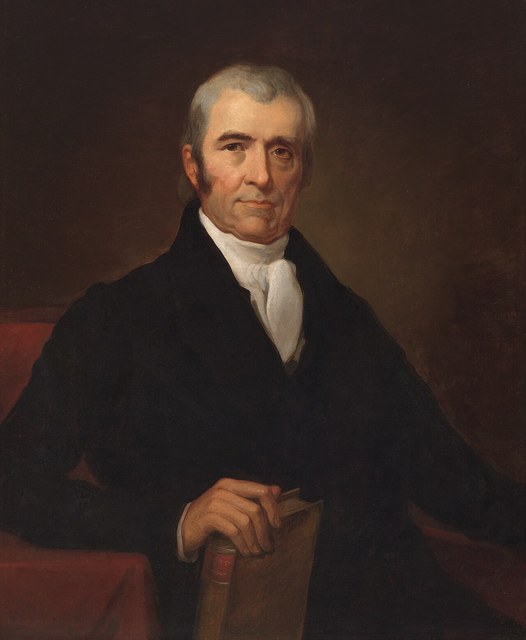
John Marshall

John Marshall
bdi James Lambdin /span /a /bdi / bdi Henry Inman /span /a · Public domain

Chief Justice · 1801–1835 · United States

John Marshall was the longest-serving Chief Justice of the Supreme Court, serving from 1801 to 1835 and establishing judicial review.

The kit

  • Judicial review — John Marshall established the Supreme Court's power of judicial review in Marbury v. Madison by striking down Section 13 of the Judiciary Act.
  • Commerce power — John Marshall clarified the Interstate Commerce Clause in Gibbons v. Ogden and upheld federal supremacy in Cohens v. Virginia with allies Story and Washington.
  • Contract protection — John Marshall used the Contract Clause to protect Dartmouth College's independence from New Hampshire and ruled Georgia could not void Yazoo land grants in Fletcher v. Peck.
  • Limited Bill of Rights — John Marshall wrote in Barron v. Baltimore that the Bill of Rights applied only to the federal government and not to state actions.

Runs with

Georgia
Land
protected Yazoo land grants in Fletcher v. Peck and defended Fairfax heirs' Virginia land open card →
Virginia
upheld federal supremacy over Virginia in Cohens case and defended Fairfax land claim open card →
Gibbons v. Ogden
clarified Interstate Commerce Clause in this case involving steamboat monopoly open card →

The ladder · 15 clues

H

Ogden. name this longest-serving Supreme Court Chief Justice.

H

This chief justice presided over a court case that ruled that Georgia could not repeal a law that allowed for the sales of Yazoo land grants, Fletcher v.

H

The Charming Betsy, this man argued that Congressional law should avoid violating foreign law.

H

This man ruled that the Bill of Rights did not apply to state actions in Barron v.

H

Man he appointed Chief Justice in 1801 and served for 35 years.

H

This Supreme Court Justice supported sanctity of contract in Dartmouth College v.

H

This man’s legal career vaulted when he argued the losing side in the Supreme Court case of Ware v.

M

Andrew Jackson may have said this man “has made his decision; now let him enforce it” after a case concerning the rights of the Cherokee.

M

Cohens v. Virginia and Gibbons v. Ogden were presided over by this longest serving chief justice who also presided over Marbury v Madison.

M

Section 13 of the Judiciary Act of 1789 was struck down in an opinion by this man.

M

This man’s court held that land sales could not be voided despite the Yazoo scandal in Georgia in the case of Fletcher v.

M

Madison, established the Supreme Court’s power of judicial review.

E

Georgia was handed down by this longest-serving Chief Justice who had earlier established judicial review in Marbury v.

E

Maryland. name this longest serving Chief Justice who retired in 1835.

E

This Chief Justice decided the case of the “midnight judges” in Marbury v.

10 more clues from the record
H

Baltimore, he wrote that the Bill of Rights only applied to the federal government and not to the states.

H

Bushrod Washington and Joseph Story allied themselves with this man when he enforced the supremacy clause in Cohens vs. Virginia.

H

He was the target of Andrew Jackson's derisive remark "now let him enforce it," and he asserted his Court's power in a case about "midnight appointments." name this Chief Justice whose ruling in Marbury v.

H

As chief justice, this man upheld a fine against two brothers who had tried to sell federal lottery tickets outside the District of Columbia in the case Cohens v.

H

This man's son ran the Manassas Gap Railroad, and Bushrod Washington asked this man to write a biography of his uncle.

H

This man's court halted the state of New Hampshire's attempt to make the University of Dartmouth public in a namesake case.

H

This justice’s opinion used the Contract Clause to protect the independence of Dartmouth College, and he clarified the Interstate Commerce Clause in his opinion in Gibbons v.

H

In one case, this man defended the heirs of Lord Fairfax in a dispute over a plot of land in northern Virginia.

H

This figure wrote the majority opinion on a case that sent the slaves on board the Antelope to Liberia as early settlers.

H

Under this Chief Justice, the court heard a case arising from the Yazoo land scandal, Fletcher v.
#541 · US Civil Rights Figures and Events · Level 2

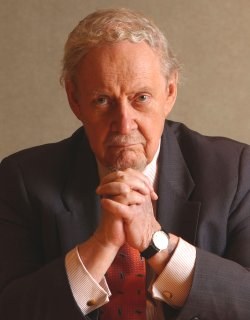
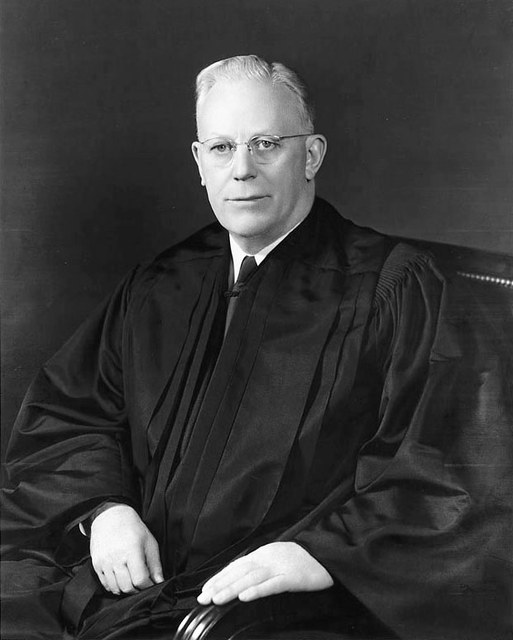
Earl Warren

Earl Warren
Harris & Ewing /a photography firm · Public domain

Chief Justice · 1891–1974; Chief 1953–1969 · California, U.S. Supreme Court

Earl Warren was Chief Justice from 1953 to 1969 who led landmark civil rights and criminal procedure rulings.

The kit

  • Rise — Earl Warren served three consecutive terms as Governor of California after being Attorney General and publicly pushed for Japanese internment.
  • Achievements — Earl Warren wrote the majority opinion in Brown v. Board of Education and presided over Miranda v. Arizona and Gideon v. Wainwright.
  • Conflicts — Earl Warren faced John Birch Society impeachment posters and George Wallace's denunciation; Eisenhower called his appointment a "damned-fool mistake."
  • Legacy — Earl Warren chaired the commission investigating JFK's assassination and often assigned opinion writing to his colleague William Brennan.

Runs with

California
served as Attorney General and three-term Governor open card →
Brown v. Board of Education
wrote the majority opinion ordering desegregation open card →
Thomas Dewey
was Dewey's running mate in 1948 election open card →
1948 United States Presidential Election
lost as vice presidential candidate open card →

The ladder · 9 clues

H

This politician was selected as Thomas Dewey’s running mate for the Election of 1948, the only election he ever personally lost.

H

This man increased gas taxes to fund highway construction through the Collier Burns Act as Governor of California, a position he held a record three consecutive terms.

H

This man wrote the majority opinion for a Supreme Court decision that built on Escobedo v.

H

California politician, Attorney General until 1943 and Governor after, who publicly pushed for internment.

M

Was Chief Justice during the Brown v Board case and switched parties in 1962.

M

Chief Justice who first ruled on redistricting issues, as well as Brown v. Board of Education.

M

This judge wrote the majority opinion in the case Brown v.

E

Board of Education. name this Chief Justice of the Supreme Court who chaired a commission that investigated the Kennedy assassination.

E

George Wallace denounced this man as unable to “try a chicken thief." This man, who was the running mate of Thomas Dewey in 1948, chaired the commission investigating JFK’s assassination. name this Eisenhower appointee as Chief Justice who oversaw several desegregation cases in the 1950s.

10 more clues from the record
H

Dwight Eisenhower appointed this liberal Chief Justice who served from 1953 to 1969.

H

This man was succeeded by Goodwin Knight as governor of California.

H

The John Birch Society put up posters urging the impeachment of this man, and his court ruled school prayer unconstitutional in Engel v.

H

Eisenhower initially called this man’s appointment to succeed Fred Vinson a “damned-fool mistake.” In 1954, this man used the phrase “with all deliberate speed” in his ruling to desegregate schools in Brown v.

H

The right for a defendant to remain silent was affirmed when the court led by this former California governor heard the case Miranda v.

H

This man, who got his start as the district attorney of Alameda County, was the losing vice presidential candidate in 1948.

H

This Supreme Court justice’s court presided over cases which greatly expanded the rights of criminals, such as Gideon v.

H

Was supported by this California attorney general, who used the lack of sabotage as evidence of a Japanese plot.

H

This justice often assigned the task of opinion writing to his close friend and colleague, William Brennan.

H

Abe Fortas was a failed nominee to replace this man in another post.

Watch out: Fred Vinson, whom Warren succeeded as Chief Justice in 1953
#1286 · US Supreme Court Justices and Federal Judges · Level 3

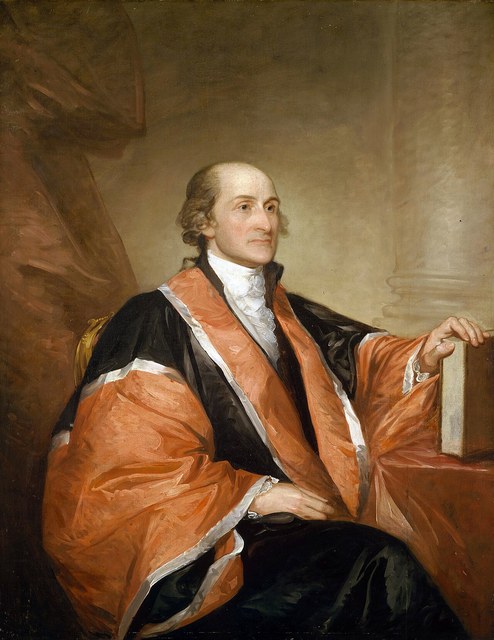
John Jay

John Jay
bdi Gilbert Stuart /span /a · Public domain

Founding Father, first Chief Justice · 1780s–1795 · New York, United States

John Jay was the first Chief Justice of the United States and a key diplomat who negotiated the 1795 treaty with Britain.

The kit

  • Diplomacy — John Jay served as U.S. chief negotiator at the Treaty of Paris and secured a $170,000 loan while minister to Spain.
  • Federalist Papers — John Jay wrote about "Dangers from Foreign Force and Influence" in his collaboration with Hamilton and Madison on the Federalist Papers.
  • Chief Justice — John Jay established the "cases and controversies" precedent on the Supreme Court, contrasting with John Marshall's more activist philosophy.
  • Abolition — John Jay founded the New York Manumission Society and drafted a state law to abolish slavery.

Runs with

York
served as governor of New York open card →
Treaty of Paris
chief U.S. negotiator at the treaty open card →
Federalist Papers
co-authored with Hamilton and Madison open card →
Alexander Hamilton
co-wrote Federalist Papers with him open card →

The ladder · 6 clues

H

As governor of New York, this man rejected a gerrymandering proposal from Alexander Hamilton.

H

This man founded the New York Manumission Society and had earlier drafted a state law to abolish slavery.

M

In 1795, this man negotiated the removal of British troops from the Northwest Territory with a treaty fixing many of the issues of the earlier Treaty of Paris.

M

This man wrote about the "Dangers from Foreign Force and Influence" during his collaboration with James Madison and Alexander Hamilton on the Federalist Papers.

E

This man signed a namesake 1795 treaty with Great Britain. name this Founding Father and first Chief Justice of the Supreme Court.

E

With Alexander Hamilton and James Madison, this man wrote the Federalist Papers. name this first Chief Justice of the United States.

10 more clues from the record
H

This early president of the American Bible Society claimed the “Christian Religion” was “the fundamental precept of governance.” This man lost a gubernatorial election to George Clinton after three counties’ votes were disqualified.

H

While minister to Spain in the 1780s, this man secured a $170,000 loan to help the early American government.

H

This man served as the U.S. chief negotiator at the Treaty of Paris.

H

Minister of Foreign Affairs who later served as the first Chief Justice.

H

This man served as the second and final U.S. Secretary for Foreign Affairs.

H

He served as ’s first secretary of foreign affairs and drafted the Address to the People of Great Britain for the First Continental Congress.

H

A treaty negotiated by this man and Diego de Gardoqui [[gahr-DOH-kee]], which aimed to open Spanish New World ports to U.S. trade, was never ratified due to opposition by a Madison-Monroe coalition.

H

The “Camillus papers” supported this man’s work on a treaty in which Britain was forced to evacuate the Northwest Territories; that treaty established peaceful trade with Britain after the Revolution.

H

On the Supreme Court, this leader established the “cases and controversies” precedent, in contrast to the more activist philosophy of John Marshall.

H

This man told tales about his childhood to author James Fenimore Cooper, inspiring his novel The Spy.

Watch out: Confused with John Marshall, the more famous Chief Justice who followed him
#1287 · US Supreme Court Justices and Federal Judges · Level 3

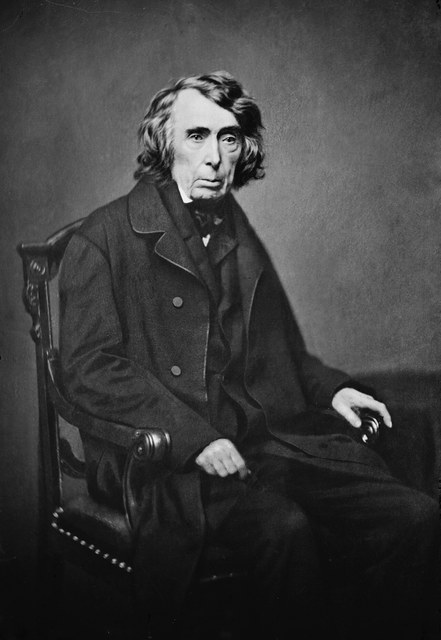
Roger Brooke Taney

Roger Brooke Taney
bdi Mathew Benjamin Brady /span /a · Public domain

U.S. Chief Justice · 1777–1864 · United States

Roger Brooke Taney served as Andrew Jackson's Attorney General and Treasury Secretary before becoming Chief Justice, authoring the Dred Scott decision.

The kit

  • Rise — Roger Brooke Taney served as Andrew Jackson's Attorney General, arguing the Second Bank was unconstitutional during the Bank War.
  • Treasury role — Roger Brooke Taney became the first rejected cabinet nominee when the Senate refused to confirm him as Secretary of the Treasury.
  • Chief Justice — Roger Brooke Taney succeeded John Marshall as Chief Justice and presided over cases including Dred Scott, Amistad, and Ex parte Merryman.
  • Legacy — Roger Brooke Taney ruled in Dred Scott that African Americans lacked standing and declared the Missouri Compromise unconstitutional.

Runs with

Secretary of the Treasury
Charles
wrote majority opinion in Charles River Bridge case open card →
Bank
argued Second Bank unconstitutional as Attorney General open card →
Andrew Jackson
served as Attorney General and Treasury Secretary under Jackson open card →

The ladder · 6 clues

H

As Attorney General, this man argued that the Second Bank was unconstitutional.

H

This man's court oversaw the Dred Scott decision. As Andrew Jackson's Secretary of the Treasury, he ended the deposit of Federal money into the Second Bank of the United States.

M

Jackson’s Attorney General who became Chief Justice, later authoring the Dred Scott opinion?

M

As Attorney General under Andrew Jackson, this man won the Bank War against Nicholas Biddle. name this Chief Justice whose tenure included Dred Scott.

E

Succeeding John Marshall this Chief Justice presided over the Dred Scott case.

E

This chief justice of the Supreme Court presided over the Dred Scott case. He assisted Andrew Jackson in the Bank War and also heard the Amistad case.

10 more clues from the record
H

This man became the first rejected cabinet nominee in American history after the Senate refused to authorize him as Secretary of the Treasury.

H

This man wrote a majority opinion in a case rejecting Martin Luther’s contention that the Supreme Court should enforce the Guarantee Clause in the Constitution.

H

A never-acted upon arrest warrant was issued for this man after his ruling in Ex parte Merryman that the president could not suspend habeas corpus, even during wartime.

H

This person spent a brief term as Secretary of the Treasury after William Duane was dismissed from the role.

H

Like Rob Carson, this man was nicknamed “King Coody” in his youth. :Name this jurist and Chief Justice whose court heard cases like Prigg v. Pennsylvania and Ex Parte Merryman.

H

Charles Sumner was believed to have written a pamphlet that criticized this person’s career, referring to him as the “unjust judge.” This person was a part of the minority who held that the president did not have authority to blockade ships in the Prize Cases.

H

This Chief Justice at the time of the Amistad case also wrote a controversial opinion denying the plaintiff standing on account of his race and ruling the Missouri Compromise unconstitutional.

H

This justice argued for a narrow interpretation of contracts and for community rights in his majority opinion in a dispute between the Warren Bridge and the Charles River Bridge.

H

This man heard Simon Greenleaf argue against Daniel Webster while heading the court in the Charles River Bridge case.

H

This chief justice joined a dissent by Samuel Nelson in holding that only Congress has the power to declare war in the Prize Cases.

Watch out: Confusion with John Marshall, the Chief Justice he succeeded
#1288 · US Supreme Court Justices and Federal Judges · Level 3

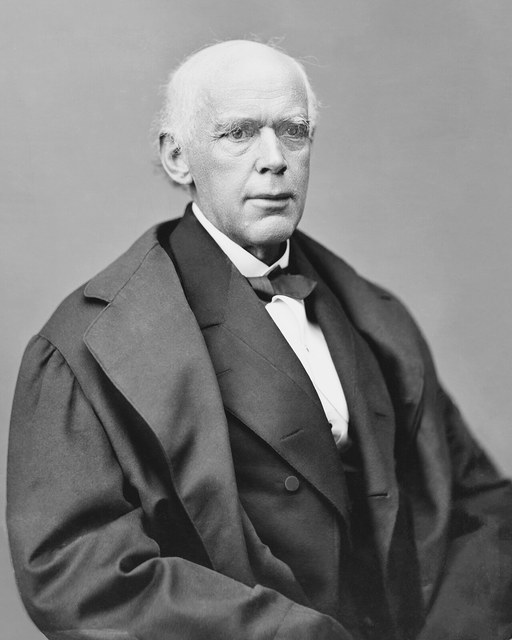
Salmon P. Chase

Salmon P. Chase
The original uploader was The Mystery Man /a at English Wiki · Public domain

Chief Justice, Treasury Secretary · 1808–1873 · United States

Salmon P. Chase served as Lincoln's Treasury Secretary before becoming Chief Justice, presiding over Reconstruction-era cases.

The kit

  • Rise — Salmon P. Chase drafted the 1848 Free Soil Party platform and created the slogan 'Free Soil, Free Labor, Free Men.'
  • Achievements — Salmon P. Chase served as Lincoln's first Treasury Secretary and led the charge to place 'In God We Trust' on US money.
  • Chief Justice — Salmon P. Chase wrote that Southern states had no right to secede in Texas v. White and ruled secession illegal.
  • Legacy — Salmon P. Chase presided over Andrew Johnson's impeachment trial and was the first person on an American $1 bill.

Runs with

Texas
wrote majority opinion in Texas v. White declaring secession illegal open card →
Ohio
Secretary of the Treasury
served as Lincoln's first Treasury Secretary from 1861-1864 open card →
Abraham Lincoln
served as Treasury Secretary under Lincoln, later appointed Chief Justice open card →

The ladder · 6 clues

H

Roger Taney was replaced as Chief Justice by this man who served as Lincoln’s Secretary of the Treasury.

H

Lincoln's first Treasury Secretary was this man, a major figure in the Free Soil Movement. In 1864, he became Chief Justice of the Supreme Court.

M

Both the Texas and Hepburn decisions were written by this Chief Justice, the successor to Roger Taney and a former Secretary of the Treasury under Lincoln.

M

Johnson’s impeachment trial the following year was presided over by this monocle-wearing Chief Justice of the , who had earlier served as ’s Treasury Secretary.

E

This man wrote that the Supreme Court could not issue an injunction against the President after Mississippi asked it to, aiding the beginning of Reconstruction. name this Chief Justice in the Reconstruction era who had served as Lincoln’s Treasury Secretary.

E

This politician created the Free Soil slogan, “Free Soil, Free Labor, Free Men.” This man, who ruled that Southern states didn’t have the right to secede in Texas v.

10 more clues from the record
H

Seward lost the 1860 Republican nomination for President, as did this man who would serve as Treasury Secretary under Lincoln.

H

This man wrote the majority opinion in a Supreme Court case declaring that it was unconstitutional to make U.S. Notes legal tender; that case was Hepburn v.

H

This lawyer, who was nicknamed the “Attorney General for Fugitive Slaves,” drafted the 1848 platform of the Free Soil Party.

H

This man wrote that Texas never left the Union because secession is illegal in his majority opinion in Texas v.

H

This man was passed over as the nominee for the Liberal Republicans in favor of Horace Greeley during the Election of 1872.

H

This man ruled that privileges and immunities applied to national citizenship, not state citizenship, in the Slaughterhouse Cases.

H

This politician was the first person to appear on an American $1 bill.

H

Among the trustees of Freedman’s Savings Bank was this man, who led the charge to place “In God We Trust” on US money. Andrew Jackson and this man are depicted on alternate versions of the $10,000 bill.

H

Answer the following about the hard life of Andrew Johnson, FTPE.The oath of office was administered to a drunken Johnson by this Chief Justice, who'd resigned as Secretary of the Treasury in 1864.

H

This chief justice joined Stephen J. Field in authoring the Slaughter-House Cases. This chief justice also oversaw the Legal Tender Cases, upholding the government’s authority to print money.

Watch out: William Seward also lost the 1860 Republican nomination to Lincoln alongside Chase
#1289 · US Supreme Court Justices and Federal Judges · Level 3

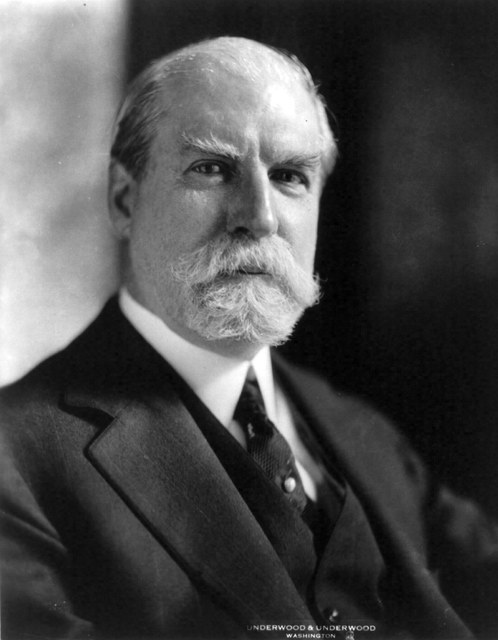
Charles Evans Hughes

Charles Evans Hughes
Underwood & Underwood · Public domain

Supreme Court Chief Justice · 1862–1948; Chief Justice 1930–1941 · United States

Charles Evans Hughes served twice on the Supreme Court, with a political career between stints including a presidential run and Secretary of State.

The kit

  • Rise — Charles Evans Hughes was appointed to the Supreme Court in 1910 by William Howard Taft, replacing David Brewer.
  • Political career — Charles Evans Hughes resigned from the Court in 1916 to run for president against Woodrow Wilson, losing narrowly.
  • Secretary of State — Charles Evans Hughes served as Warren Harding's Secretary of State and led negotiations for the 1922 Washington Naval Treaty.
  • Chief Justice — Charles Evans Hughes became Chief Justice in 1930 and wrote majority opinions striking down NIRA in Schechter Poultry and supporting press freedom in Near v. Minnesota.

Runs with

Secretary of State
served as Secretary of State under Harding 1921–1925 open card →
Woodrow Wilson
lost 1916 presidential election to Wilson open card →
York
William Howard Taft
appointed to Supreme Court by Taft in 1910 open card →

The ladder · 6 clues

H

In between this man’s two stints on the Supreme Court, he ran for president against Woodrow Wilson in 1916 and was Warren G. Harding’s Secretary of State. name this Chief Justice who succeeded William Howard Taft and served in that office for almost all of the 1930s.

H

The leading U.S. negotiator of the 1922 Washington Naval Treaty was this Secretary of State who had previously served on the Supreme Court and later returned to the Court as Chief Justice.

M

When David Brewer died, William Howard Taft nominated this man to replace him in his highest office.

M

In 1935, his majority opinion invalidated the National Industrial Recovery Act's “voluntary codes” in the "sick chicken" case. name this Supreme Court Chief Justice of the 1930s, a former Republican who initially opposed the New Deal.

E

This man resigned from the Supreme Court in 1916 to unsuccessfully run for president against Woodrow Wilson, and in 1921, this man became Warren Harding's Secretary of State. name this man who returned to the court to serve as Chief Justice from 1930 to 1941.

E

This man became chief justice over a decade after losing the 1916 election to Woodrow Wilson.

10 more clues from the record
H

He oversaw the Washington Naval Conference while serving as Warren Harding’s Secretary of State.

H

This man’s presidential run was defeated by a candidate who used the slogan “He Kept Us Out of War.” While serving as Chief Justice, this man’s court ruled the NIRA and AAA unconstitutional in U.S. v.

H

This man wrote the majority opinion in the freedom of the press case Near v.

H

This man served on the Supreme Court from 1910 to 1916, then was appointed Chief Justice in 1930, where he wrote such majority opinions as West Coast Hotel v. Parrish. :Name this man who lost to Woodrow Wilson as the Republican candidate in 1916.

H

This politician advocated for the Moreland Act after defeating William Randolph Hearst to become the Governor of New York.

H

He and Owen Roberts were seen as the key swing votes in between the “Three Musketeers” and “Four Horsemen” factions.

H

This politician and one-time New York governor names a Cornell Law School building.

H

Minnesota, but became more famous for conservative opinions like Schechter Poultry Corp. v.

H

This man’s snub of Hiram Johnson may have cost him the 1916 election.

H

When this man joined the Supreme Court, his son had to resign as Solicitor General.

#1290 · US Supreme Court Justices and Federal Judges · Level 3

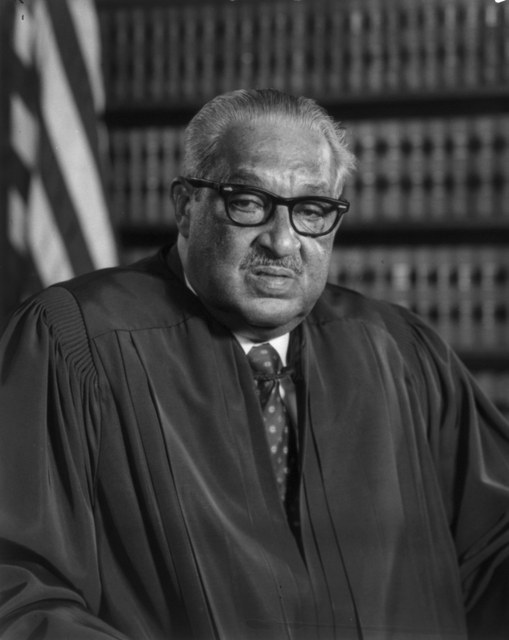
Thurgood Marshall

Thurgood Marshall
Robert S. Oakes · Public domain

Supreme Court Justice · 1908–1993 · United States

Thurgood Marshall was the first African-American Supreme Court Justice, appointed by Lyndon B. Johnson in 1967.

The kit

  • Rise — Thurgood Marshall served as chief counsel of the NAACP, successfully arguing Brown v. Board of Education before the Supreme Court.
  • Achievements — Thurgood Marshall successfully argued Shelley v. Kraemer, which ended racially restrictive covenants in housing.
  • Conflicts — Thurgood Marshall joined William Brennan in dissenting on every death penalty case after Gregg v. Georgia.
  • Death & succession — Thurgood Marshall retired in 1991 and was replaced by ideologically opposite Clarence Thomas under George H.W. Bush.

Runs with

NAACP
served as executive director of Legal Defense Fund open card →
Brown v. Board of Education
argued case for plaintiffs as NAACP counsel open card →
William
ideologically similar to Brennan on Court open card →
Joe Hill

The ladder · 6 clues

H

This justice joined William Brennan in dissenting on every death penalty case after Gregg.

H

First African-American justice, appointed in 1967.

M

After serving as executive director of the NAACP’s Legal Defense Fund, this figure replaced Tom Clark in his best known position, and Elena Kagan served as this man's clerk in that position. name this lawyer who became the first Black Supreme Court Justice.

M

Chief Council of the NAACP who argued for the plaintiffs.

E

This Lyndon B. Johnson-appointed judge later had his seat passed to textualist conservative Clarence Thomas. name this first African-American Justice on the Supreme Court.

E

This future Supreme Court justice argued Brown on behalf of the NAACP.

10 more clues from the record
H

This man successfully argued a case that overturned the Texas primary cases, Smith v.

H

In Buckley v. Valeo, this justice dissented that he would have upheld limiting personal expenditures by candidates on their own campaigns. This justice noted, “You do what you think is right and let the law catch up” in describing his approach.

H

While this man, who was ideologically similar to William Brennan, served as Solicitor General, James Eastland led efforts to stall his appointment, but this man was still approved to replace Tom C. Clark. name this man who argued Brown v.

H

This lawyer's first major case was defending four Black men who were coerced into a criminal confession by Broward County sheriffs.

H

Documents were released in 1996 showing that this man had worked with J. Edgar Hoover to discredit leaders like T.R.M. Howard.

H

This figure co-wrote a text with William Brennan calling the death penalty “Cruel and Unusual” after William Furman's execution.

H

After this justice’s 1991 retirement, George H.W. Bush appointed Clarence Thomas to take his spot.

H

Kraemer, which ended restrictive covenants.

H

As an attorney, he successfully argued Shelley v.

H

This justice’s “pragmatic” jurisprudence was analyzed in a two-part history by his ex-clerk Mark Tushnet, whose memos to him are often credited with swinging the result of Roe v.

Watch out: Confused with Clarence Thomas, who succeeded him but held opposite judicial philosophy
#1291 · US Supreme Court Justices and Federal Judges · Level 3

Robert Bork

Robert Bork
United States Department of Justice · Public domain

Supreme Court nominee · 1987 nomination · United States

Robert Bork was a conservative judge whose 1987 Supreme Court nomination was rejected by the Senate after intense opposition.

The kit

  • Saturday Night Massacre — Robert Bork, as Solicitor General, fired Special Prosecutor Archibald Cox during Nixon's Saturday Night Massacre after two officials refused.
  • Supreme Court battle — Robert Bork's 1987 nomination to replace Lewis Powell sparked fierce opposition led by Ted Kennedy and Joe Biden's committee.
  • Kennedy's opposition — Robert Bork was attacked by Ted Kennedy, who claimed his America would force women into back-alley abortions and restore segregated lunch counters.
  • Legal writings — Robert Bork wrote The Antitrust Paradox, arguing vertical integration and price discrimination did not harm consumers, and Slouching Toward Gomorrah.

Runs with

Ronald Reagan
Reagan nominated him to the Supreme Court in 1987 open card →
Senate
Senate rejected his Supreme Court nomination after intense criticism open card →
William
Connection unclear from provided clues open card →
Joe Biden
Biden led the committee hearing on his nomination open card →

The ladder · 6 clues

H

Ted Kennedy claimed that, in this man’s America,” women would be forced into back-alley abortions and blacks would sit at segregated lunch counters.” As Solicitor General, this man ultimately carried out Nixon’s order to fire special prosecutor Archibald Cox.

H

Ted Kennedy claimed that “back alley abortions,” “segregated lunch counters,” and “rogue police” would be aspects of “[this man’s] America.” The Video Privacy Protection Act was passed after Michael Dolan acquired a list of this man’s video rentals.

M

As Acting Attorney General, this man fired Special Prosecutor Archibald Cox to finally end the Saturday Night Massacre.

M

Nixon finally found someone willing to fire Cox: this Solicitor General, who was rejected for a Supreme Court seat in 1987.

E

This man, who complied in firing Archibald Cox during the Saturday Night Massacre, was the focus of a committee hearing, led by Joe Biden, that decided not to replace Lewis Powell with this man. name this Reagan-era Supreme Court nominee whose nomination was blocked by the Senate in 1987.

E

The author of Slouching Toward Gomorrah, who was this conservative judge whose 1987 nomination for the U.S. Supreme Court was defeated?

10 more clues from the record
H

In Slouching Towards Gomorrah, this man advocated for an amendment to allow Congressional supermajorities to overturn the Supreme Court.

H

This man’s video rental history was printed in the Washington City Paper, leading to the Video Privacy Protection Act.

H

While serving as the U.S. Solicitor General, this person played a crucial role in the Nixon administration’s “Saturday Night Massacre.” This person’s Anti-Trust Paradox nudged judges toward a more favorable view of trusts.

H

According to Ted Kennedy, “Schoolchildren could not be taught about evolution” if this man was appointed to a post that opened with the retirement of Lewis Powell.

H

This man pointed out that vertical integration and price discrimination were punished despite not harming consumers in his book The Antitrust Paradox.

H

This man argued that supermajorities should be able to overturn Supreme Court decisions in his book Slouching Toward Gomorrah.

H

This man's video rental history was controversially published, and it included such movies as A Day at the Races. :Name this man, a former Solicitor General, who was described by Ted Kennedy in 1987 as a man who wanted "a land in which women would be forced into back-alley abortions" and a place where "the doors of the Federal courts would be shut" on millions.

H

The executioner in Nixon's Saturday Night Massacre, Reagan nominated him in 1987, but the Senate rejected him after intense criticism, including a leak of his video rental history to the press.

H

Like Samuel Alito and William Rehnquist, his nomination to the Supreme Court was opposed by the ACLU, though his qualifications were highly praised by Warren Burger.

H

The core of this man’s thought was critiqued in an article whose title compares him to Beethoven and that was written by Richard Posner.

Watch out: Not William Rehnquist, another conservative Supreme Court nominee opposed by the ACLU
#1292 · US Supreme Court Justices and Federal Judges · Level 3

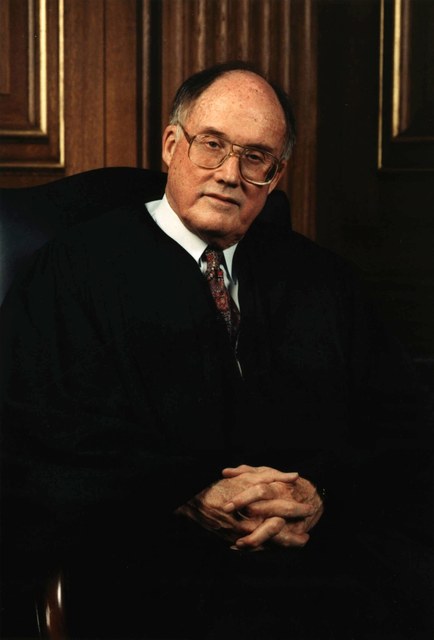
William Rehnquist

William Rehnquist
Unknown author, dedicated and hosted on Getty Images · Public domain

Chief Justice (1986–2005) · 1924–2005 · United States

William Rehnquist was Chief Justice who limited federal power through Commerce Clause rulings and presided over the Court until 2005.

The kit

  • Rise — William Rehnquist clerked for Robert Jackson and wrote a memo defending Plessy v. Ferguson in 1952.
  • Achievements — William Rehnquist wrote the decision in U.S. v. Lopez, ruling federal government could not regulate gun possession in school zones.
  • Conflicts — William Rehnquist's participation in Operation Eagle Eye, a Republican minority vote-disruption campaign, was challenged during Senate confirmation hearings.
  • Death & succession — William Rehnquist died in 2005 as the first justice to die in office since 1954 and was succeeded by John Roberts.

Runs with

Brown v. Board of Education
Plessy v. Ferguson
defended separate-but-equal doctrine in 1952 clerk memo open card →
John
succeeded by John Roberts as Chief Justice open card →
John Marshall
replaced retiring John Marshall Harlan II on the Court open card →

The ladder · 6 clues

H

Law clerk who wrote a “Random Thought” supporting Plessy in 1952 and later became Chief Justice.

H

This Justice presided over state sodomy law cases, including Romer v.

M

Wrote a memo defending the “separate-but-equal” doctrine while a clerk under Robert Jackson.

M

This chief justice during the later case of Dickerson v. US stated that Miranda warnings had become part of the culture. While a clerk, this justice had authored a memo stating Plessy v. Ferguson was right.

E

Morrison limited the power of the Violence Against Women Act of 1994. name this man who was succeeded by John Roberts as Chief Justice after his 2005 death.

E

Lopez, breaking from his predecessor Warren Burger. name this Conservative Chief Justice who was appointed by Ronald Reagan and succeeded by John Roberts.

10 more clues from the record
H

This man’s participation as an Arizona poll watcher in Operation Eagle Eye, a Republican minority vote-disruption campaign, was challenged by the Senate during his confirmation hearings.

H

This Justice wrote that the Constitution “did not enact Myrrdahl’s American Dilemma” to argue that the Court should stay out of segregation cases.

H

Ferguson was right.” This man, the first member of the Supreme Court since 1954 to die in office, voted on cases like Lawrence v.

H

This man was the chief lawyer to Attorney General John Mitchell when he was chosen to replace the retiring John Marshall Harlan II.

H

This graduate of Stanford Law School dated Sandra Day O’Connor during his time there.

H

This Justice challenged Congressional extensions of the Commerce Clause in U.S. v.

H

Evans, in which he typically issued dissenting opinions.

H

As Chief Justice, he determined that a man could not sue for discrimination based on the fact that a state did not offer driver's license exams in languages other than English.

H

This chief justice wrote the decision in U.S. v. Lopez which stated that the federal government could not regulate gun possession in a school zone. He succeeded Warren Burger in the role.

H

This clerk to Robert H. Jackson offered a dissent in a case that expanded the applications of eminent domain, the Kelo case, and also dissented in the gay rights case Lawrence v.

Watch out: Confused with Warren Burger, whom he succeeded as Chief Justice in 1986
#1730 · US Supreme Court Justices and Federal Judges · Level 3

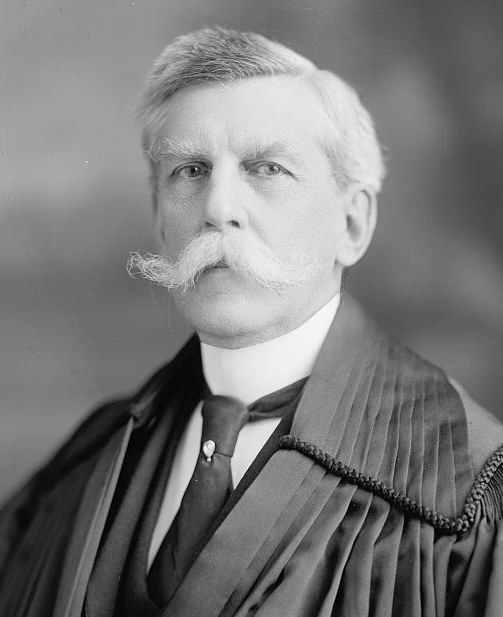
Oliver Wendell Holmes Jr.

Oliver Wendell Holmes Jr.
Harris & Ewing Collection · Public domain

Supreme Court Justice · 1902–1932 · United States

Oliver Wendell Holmes Jr. served on the Supreme Court for three decades and established foundational free speech and evidence doctrines.

The kit

  • Free speech doctrine — Oliver Wendell Holmes Jr. formulated the "clear and present danger" test in Schenck v. United States, comparing unprotected speech to shouting fire in a crowded theater.
  • Evidence law — Oliver Wendell Holmes Jr. established the "fruit of the poisonous tree" doctrine in Silverthorne Lumber, barring illegally obtained evidence from court use.
  • Dissents — Oliver Wendell Holmes Jr. dissented in Lochner v. New York, arguing the Fourteenth Amendment does not enact Herbert Spencer's Social Statics or freedom of contract.
  • Eugenics ruling — Oliver Wendell Holmes Jr. wrote "three generations of imbeciles is enough" in Buck v. Bell, upholding forced sterilization laws.

Runs with

First Amendment
formulated clear and present danger test defining its limits open card →
Schenck v. United States
wrote unanimous opinion establishing clear and present danger open card →
Common
wrote The Common Law stating law's life is experience not logic open card →
Theodore Roosevelt
angered Roosevelt by dissenting in Northern Securities breakup open card →

The ladder · 6 clues

H

In defense of forced sterilizations, this man wrote “three generations of imbeciles is enough” in his majority opinion in Buck v.

H

This man argued that evidence obtained during an illegal search was inadmissible in the Silverthorne Lumber case, forming the “fruit of the poisonous tree” doctrine.

M

Argued that the 14th Amendment “does not enact Mr. Herbert Spencer’s Social Statics” in his Lochner dissent.

M

Outlined the “clear and present danger” doctrine in Schenck v United States

E

The “clear and present danger” test was advocated by, what Supreme Court Justice who wrote the unanimous opinion in Schenck v.

E

US was formulated by this Supreme Court justice who wrote that shouting “fire” in a crowded theater is not protected by free speech.

10 more clues from the record
H

This man noted, “We cannot all be Descartes or Kant, but we all want happiness” in his essay, “The Path of the Law.” This man’s opinion in Buck v.

H

This man’s opinion in a case involving Silverthorne Lumber established the doctrine of “fruit from the poisonous tree.” Abrams v.

H

A criticism of one of his opinions by Zechariah Chafee may have inspired him to dissent in a related case about a pamphlet published in Yiddish, the Abrams v.

H

This justice’s opinion in the Silverthorne Lumber case warned against the usage of illegally obtained evidence, the first instance of the “fruit from the poisonous tree” doctrine.

H

This man briefly acted as Chief Justice of the U.S. Supreme Court during a vacancy between the death of William Howard Taft and the confirmation of Charles Evans Hughes.

H

One of this justice’s famous dissents invoked freedom of contracts and Spencer’s Social Statics to illustrate limitations of the Fourteenth Amendment in Lochner v.

H

This man wrote that the “life of the law has not been logic but experience” in his 1881 book, The Common Law.

H

This man’s father, a Fireside Poet, wrote “Old Ironsides” to preserve the USS Constitution.

H

Theodore Roosevelt was angered by this man’s decision to dissent in the breakup of the Northern Securities Company.

H

Zechariah Chafee criticized this man’s decision in a case later upheld by Whitney v.

Watch out: His father, Fireside Poet Oliver Wendell Holmes Sr., wrote "Old Ironsides"
#1797 · US Supreme Court Justices and Federal Judges · Level 3

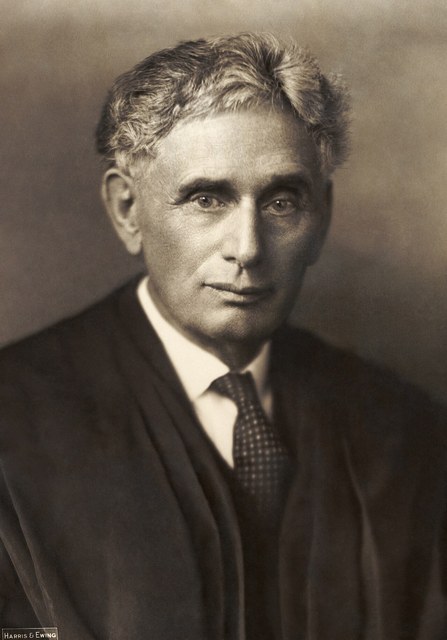
Louis Brandeis

Louis Brandeis
Harris & Ewing · Public domain

Supreme Court Justice · 1856–1941; Court 1916–1939 · United States

Louis Brandeis was the first Jewish Supreme Court Justice, appointed by Woodrow Wilson in 1916 after unprecedented public hearings.

The kit

  • Rise — Louis Brandeis co-authored the influential article "The Right to Privacy" with law partner Samuel Warren in 1890.
  • Achievements — Louis Brandeis compiled sociological testimony into his namesake brief for Muller v. Oregon, supporting state restrictions on women's working hours.
  • Achievements — Louis Brandeis wrote Other People's Money opposing large trusts and oligarchs, inspiring Wilson's New Freedom antitrust platform.
  • Legacy — Louis Brandeis established the Erie doctrine requiring federal courts to apply state law and dissented against wiretapping in Olmstead v. United States.

Runs with

Oregon
argued Muller v. Oregon with namesake brief open card →
women
defended state limits on women's working hours open card →
Woodrow Wilson
appointed Brandeis to Supreme Court in 1916 open card →
Massachusetts
practiced law with Samuel Warren open card →

The ladder · 6 clues

H

The first ever public hearings for a Supreme Court nomination were held to discuss this man, the author of books like Other People’s Money.

H

This man is the alphabetically first author of the article “The Right to Privacy”.

M

Oregon, this man presented his namesake brief. name this first Jewish Supreme Court Justice.

M

This man compiled testimony in favor of a state law restricting the number of hours women could work into his namesake “brief” for the case Muller v.

E

Oregon, eight years before Woodrow Wilson nominated him for the court. name this first Jewish Supreme Court justice.

E

This man opposed large trusts and oligarchs in his Other People’s Money and How the Bankers Use It.

10 more clues from the record
H

With his law partner, Samuel Warren, this man wrote the article "Right to Privacy", and later argued for a privacy right in his dissent in Olmstead v.

H

The intellectual inspiration for the antitrust planks of Woodrow Wilson’s New Freedom, this justice wrote the book Other People’s Money--and How the Bankers Use It.

H

With Samuel Warren, this pioneer of the Erie doctrine authored an article on “The Right to Privacy” and later condemned wiretapping in his dissent in Olmstead.

H

This man was helped in producing a legal argument for a case by his sister-in-law, Josephine Clara Goldmark of the National Consumers League.

H

A majority opinion from this justice established the Erie doctrine which holds that state law must be applied by federal courts.

H

This man's decision on stare decisis led to a split into strong and weak forms after Burnet v.

H

Minnesota, this man defended Freedom of Speech, and he aided Thomas Masayrk's Washington Declaration.

H

This justice wrote “if a government becomes a lawbreaker, it breeds contempt for law” in his dissent from Olmstead v.

H

Wilson appointed this advocate of “sociological jurisprudence” known as “the People’s Lawyer” to the Supreme Court.

H

This man overruled the doctrine of Swift v.

Watch out: Samuel Warren co-authored "The Right to Privacy" but was Brandeis's law partner, not a justice