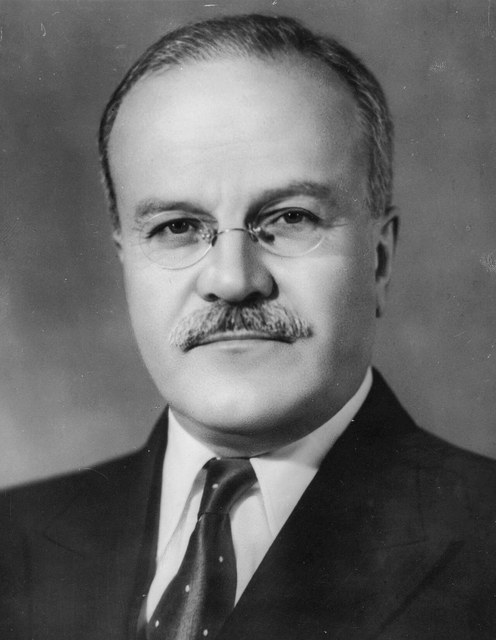
Joseph Stalin
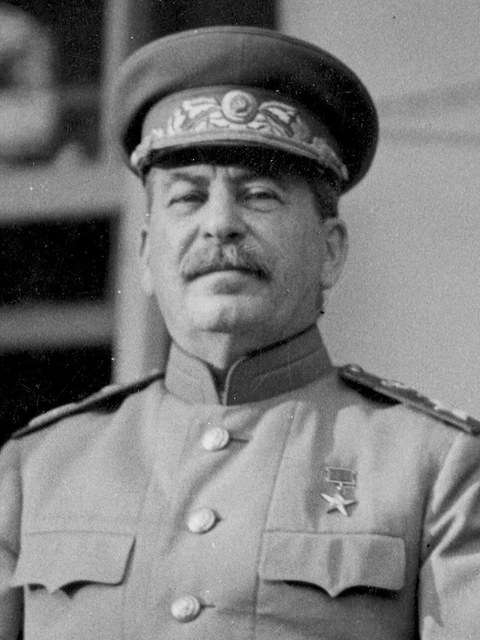
Soviet dictator · 1920s–1953 · Soviet Union
Joseph Stalin was the Soviet dictator who succeeded Lenin, implemented collectivization and purges, and led the USSR through World War II.
The kit
- Rise — Joseph Stalin propagated "Socialism in One Country" and succeeded Vladimir Lenin by rejecting the New Economic Policy in favor of five-year plans.
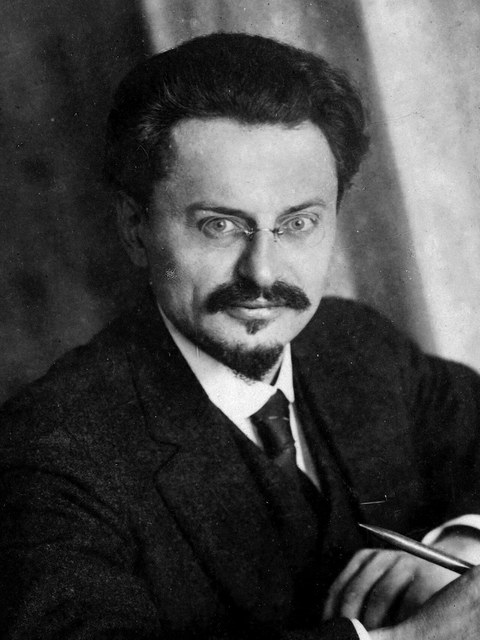
- Conflicts — Joseph Stalin ordered the NKVD to carry out the "Great Purge" and had Ramon Mercador murder his rival Leon Trotsky in exile.
- Achievements — Joseph Stalin presided over the creation of kolkhoz collective farms and declared "not one step back!" to motivate troops fighting on the Volga River.
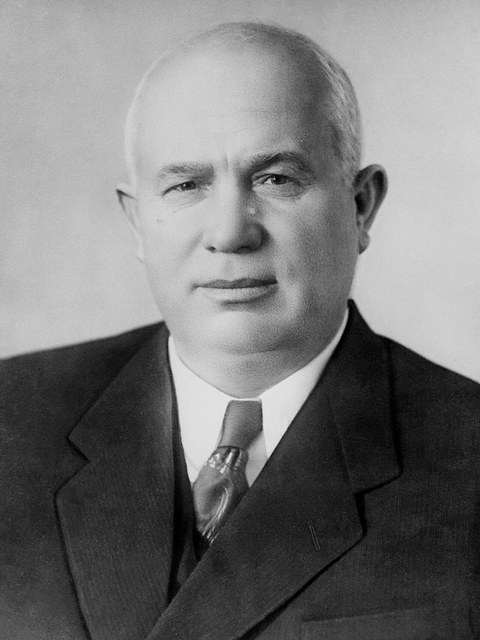
- Legacy — Joseph Stalin's cult of personality was criticized in Nikita Khrushchev's "Secret Speech," which denounced the former leader's brutal rule.
Runs with
Soviet Union
dictator
World War II
Leon Trotsky
The ladder · 15 clues
Dictator who led the Soviet Union during World War II.
This man’s cult of personality was criticized by his successor, Nikita Khrushchev.
This man presided over the Holodomor famine in the Ukraine as well as the creation of kolkhoz collective farms in the First Five Year Plan.
Established under the influence of this World War Two Soviet leader
The Holodomor was likely organized by this leader to reduce the population of the Ukraine.
The end of this man’s rule included the Night of the Murdered Poets, and he invented the fictitious Doctor’s Plot.
This man, who ruled with the aid of Lavrentiy Beria’s secret police, was given pretext to remove his political enemies during the Doctors’ Plot.
This man ordered the NKVD to carry out the “Great Purge,” which left the Red Army unprepared to deal with an eventual German invasion. name this “man of steel” who led the Soviet Union through World War II.
The New Economic Policy was rejected by this leader, who instead implemented five-year plans.
This man was denounced by his successor in an oration known as the “Secret Speech.” The Holodomor was a forced famine that occurred during this man’s rule.
This leader accused “saboteurs” of trying to overthrow him in a fabricated scheme he blamed on Jewish physicians, known as the Doctor’s Plot.
A poem about this ruler mentions his “thick fingers” that are bulky and “fat like live-baits” as well as his wide “Ossetian torso.” His secret police ordered the execution of Osip Mandelstam for writing a satirical epigram.
The theory of “Socialism in One Country” was propagated by this successor to Vladimir Lenin. name this Soviet Leader during World War II.
As opposed to an opponent’s idea of “permanent revolution,” this ruler promoted “socialism in one country.” This man frequently purged Old Bolsheviks in show trials and eventually had Ramon Mercador murder his rival, Leon Trotsky. name this Soviet dictator who succeeded Vladimir Lenin and ruled during World War II.
In Operation Barbarossa, Nazi Germany invaded this leader's country. name this brutal Soviet dictator who led the USSR during World War II.
10 more clues from the record
This man declared “not one step back!” to motivate troops fighting on the Volga River.
His foreign minister signed a non-aggression pact with Joachim von Ribbentrop, but joined the Allies after Germany invaded his country in 1941. name this Soviet dictator who succeeded Vladimir Lenin.
After many of his party members voted negatively of his leadership at the 17th Central Committee, this leader pointed an unloaded Mosin-Nagant rifle at the crowd.
Robert Conquest’s book Harvest of Sorrow details event promulgated by this leader.
This man’s agricultural advisor did not believe in Mendelian genetics and claimed that offspring could inherit vernalization.
Thousands of people died during this man’s construction of a White Sea Canal, and this man’s secret police were led by Lavrenti Beria.
This person's name was formerly used for the capital of Tajikistan, now known as Dushanbe (doo-SHAHN-bay), and for the mountain now called Ismail Samani (suh-MAH-nee) Peak, which was called "Communism Peak" after his death. identify this former namesake of Volgograd, where a major World War II battle was fought in the Soviet Union.
In a musical named for this dance, Judge Forestier (pr. for-ess-TEER) finally concludes that "It's All Right With Me." That Cole Porter musical discusses the scandal that this dance, which is in 2/4 time and based on the quadrille (pr. kwah-DREEL), caused when it was introduced to Paris in 1858.
This leader employed Nikolai Yezhov as the head of a secret police force and approved Lavrentiy Beria’s plan to kill thousands of dissidents in what is now called the Katyn massacre.
This man was spotted laughing at the romantic scenes between Sergei and Katerina and shuddering in disgust at loud orchestra hits during a performance of Lady Macbeth of the Mtsensk District.