The 1648 Codex · study package

Modern Countries — Asia

31 terms drawn from across the corpus, in study-list order. Art and cross-links point back to the home category cards.

#40 · Modern Countries · Level 1

Japan

Japan
Various · Public domain

island nation in East Asia · ancient to present · East Asia, Pacific Ocean

Japan is an island nation whose forced opening by U.S. Black Ships in 1854 ended centuries of isolation before becoming a major Pacific power.

The kit

  • Opening & modernization — Japan signed the Treaty of Kanagawa in 1854 after Commodore Perry's Black Ships anchored in Uraga harbor, ending its isolation.
  • World War II — Japan fought the U.S. in the Pacific Theater and surrendered after atomic bombings of Hiroshima and Nagasaki in 1945.
  • Post-war constitution — Japan's constitution, created by Douglas MacArthur's staff, includes Article 9 outlawing war while allowing a Self-Defense Force.
  • Cultural heritage — Japan produced ukiyo-e artists like Hokusai, who painted Thirty-Six Views of Mount Fuji including The Great Wave off Kanagawa.

Runs with

Bakumatsu Period
period of political crisis preceding Japan's 1854 opening to Western trade open card →
Tokugawa Shogunate
ruling government when Black Ships forced Japan to end isolation in 1854 open card →
Kublai Khan
Pacific
ocean theater where Japan fought the United States in World War II open card →

The ladder · 15 clues

H

The U.S. refused to prosecute scientists from this country’s Unit 731 in exchange for its data from testing biological weapons on live prisoners.

H

Francis Xavier led a 16th-century Jesuit mission to spread Christianity to this country.

H

Were the subject of the "Gentleman's Agreement" under Theodore Roosevelt?

H

This country’s “Special interests” were acknowledged in an agreement that Robert Lansing signed in 1917 that effectively contradicted the Open Door Policy in China.

H

In this country's mythology, the sun goddess is one of the "Three Precious Children" alongside Susanoo [[soo-SAH-no-oh]] and Tsukuyomi [[SOO-koo-yo-mee]].

H

In this country, decorative folding screens called byobu [byoh-boo] were often used as practical partitions in castles.

H

This country’s post-World War II years are described in the nihilistic novel The Decay of the Angel.

M

In 1995, a doomsday cult carried out a sarin attack in this nation’s largest city.

M

Article 9 of this country's constitution provides for a Self-Defense Force, but outlaws war. name this country whose constitution was created by Douglas Macarthur's staff following its defeat in World War II.

M

Elihu Root signed an agreement with a diplomat from this country in 1908 which followed an informal immigration agreement between this country and the U.S. that allowed “picture brides” to enter America while also ending certain Asian immigration into the United States.

M

From the 3rd to 7th centuries AD, tribes in this nation built distinctive keyhole-shaped burial mounds called kofun.

M

During a massacre by this country’s army, Nazi John Rabe created a “Safety Zone” to protect this country’s victims.

E

Country which fought the US in the Pacific Theater of World War Two.

E

The 1945 Jewel Voice radio broadcast announced the surrender of this country after its cities of Hiroshima and Nagasaki were bombed in World War II.

E

An ukiyo-e artist from this nation depicted the sea near Yokohama in the Great Wave off Kanagawa. name this country where Hokusai [hoh-koo-sah-ee] painted the series Thirty-Six Views of Mt. Fuji.

10 more clues from the record
H

A wood-based art form from this country was introduced to van Gogh and other European artists after trade with the Dutch was opened on the artificial island of Dejima. name this home country of the artists Hiroshige and Hokusai, who painted Thirty-Six Views of Mount Fuji.

H

A company based in this country introduced the “just in time” system to improve efficiency.

H

A theologian from this country founded the non-church movement in 1901.

H

President Taft had a memorandum with this country that signed the Treaty of Portsmouth with Russia.

H

authorized the Treaty of Kanagawa with what foreign country?

H

People from this place were the most distant of the Dongyi.

H

A ship from this country was destroyed by the Castle Bravo test.

H

It knew American sailing vessels as Black Ships, and a contingent of Americans anchored in Uraga harbor signed a convention with this country in 1854.

H

Manchukuo was a puppet state established by this country after a 1932 invasion.

H

The "Treaty of Peace and Amity" opened this country to trade with the United States.
Watch out: Manchukuo (puppet state Japan established in 1932, not Japan itself)
#41 · Modern Countries · Level 1

China

China
Zeng Liansong · Public domain

East Asian country · ancient to present · East Asia

China is an East Asian country whose civilization developed along the Yellow River under semi-mythical rulers like Yu the Great.

The kit

  • Philosophy — China's Hundred Schools of Thought during the Spring and Autumn and Warring States periods included Confucianism, Legalism, Mohism, and the School of Names.
  • Literature — China's Four Great Classical Novels include Romance of the Three Kingdoms, which depicts the Oath of the Peach Garden and the Battle of Red Cliffs.
  • Imperial legitimacy — China's rulers claimed authority through the Mandate of Heaven, with dynasties including the Xia, Shang, Han, and Jin controlling the realm.
  • Modern conflicts — China lost both Opium Wars to Britain and later saw civil war between Nationalists and Communists mediated by George Marshall.

Runs with

Bakumatsu Period
Western powers' Opium War victories over China influenced Japanese modernization fears open card →
Nanda Empire
Nanda Empire ruled India while China's Warring States period unfolded open card →
Qing Dynasty
Qing Dynasty ruled China during the Opium Wars and into the 20th century open card →
Mao Zedong
Mao Zedong led China's Communists against Nationalists and met Nixon in 1972 open card →

The ladder · 15 clues

H

A philosopher from this country wrote the paradox “One and one cannot become two if neither becomes two” and wrote that “white horses are not horses.” This country’s schools of philosophy included the School of Names, which branched off of Mohism, and its Hundred Schools of Thought bloomed during the Spring and Autumn Period and the Warring States Period. name this country where Legalism battled Confucianism.

H

In one work from this country, a naval commander uses straw boats to capture arrows from Cao Cao’s archers, and three men swear the Oath of the Peach Garden.

H

This country is home to a school of philosophy that claimed “a white horse is not a horse.” In addition to the School of Names, this country was home to a school that emphasizes the Three Treasures and the title concept, which is represented by Yin and Yang.

H

An opera from this nation describes a bandit assisting the PLA in attempting to take Tiger Mountain.

H

This country signed the 1868 Burlingame Treaty with the United States.
H

Country the Han dynasty controlled from Chang'an and later Luoyang

H

Send George Marshall to mediate a civil war between Nationalists and Communists led by Mao Zedong?

M

Country that lost both Opium Wars to Britain.

M

A section on “ranked biographies” is found in a history of this country called Records of the Grand Historian.

M

In 2017, the U.S. challenged this country’s claim to the Spratly Islands.

M

An author from this country was imprisoned for writing the article “Thoughts on March 8,” which criticized this country’s leaders for leaving their wives.

M

Country over which the Great Jin ruled in the 12th century F

E

This country’s Four Great Classical Novels include the Romance of the Three Kingdoms and Water Margin. name this country, the birthplace of Nobel laureates Gao Xingjian [sheeng-jee-ahn] and Mo Yan.

E

Rulers of this country claimed legitimacy by invoking the "Mandate of Heaven," and semi-mythical rulers of this country include the Yellow Emperor and Yu the Great.

E

John Adams composed an opera about a 1972 Presidential visit to this country where Richard Nixon met Mao Zedong.

10 more clues from the record
H

Battle of Red Cliffs, a massive loss for Cao Cao [sow sow].

H

Large East Asian country whose primary ethnic group is named for the Han.

H

This nation was created by the breath of Pangu with the help of the Kirin and the immortal Phoenix, and the first mythical king of its Xia [] dynasty was Yu the Great. name this country whose populace was wiped out by a mythical great flood of its Yellow River.

H

In February 2016, the Sunnylands Declaration was issued against this country.

H

One author from this country described his spiritual journey after learning of his survival from cancer.

H

The protagonist of another novel set in this country was born with a jade piece in his mouth and is destined to marry his cousin despite his true love for another cousin.

H

Country where Shang-era scholars wrote characters on oracle bones.

H

Conspiracy theorists thought the U.S.’ bombing of this country’s embassy in Belgrade in 1999 may have been deliberate.

H

Oracle bones were most often used in this modern-day country founded by the semi-mythical Xia [She-ah] dynasty, whose capital may have been based near the Yellow River.

H

Unsuccessful opposition to this country resulted in the scapegoating of Owen Lattimore.

Watch out: School of Names paradox 'white horses are not horses' sometimes confused with other Chinese logical paradoxes
#46 · Modern Countries · Level 1

Iran

Iran
SVG file: SiBr sub 4 /sub /a br Designer: Hamid Nadimi /a br · Public domain

Middle Eastern nation · ancient to present · southwest Asia, Persian Gulf

Iran is a Middle Eastern nation whose 1979 Islamic Revolution deposed Shah Mohammad Reza Pahlavi and brought Ayatollah Khomeini to power.

The kit

  • Pre-modern history — Iran was the center of the Safavid Empire and later held the capital of Hulagu Khan's Ilkhanate.
  • Oil nationalization & coup — Iran's Prime Minister Mohammad Mossadegh nationalized the oil industry, prompting the CIA's Operation Ajax to overthrow him in 1953.
  • White Revolution — Iran's White Revolution brought land reform and the Army of Knowledge literacy program, enforced by the repressive SAVAK secret police.
  • Islamic Revolution — Iran's 1979 revolution deposed the Shah and led to the 444-day American embassy hostage crisis in Tehran under Khomeini.

Runs with

Nanda Empire
No connection evident in clues open card →
Iraq
fought a war with Iran following the 1979 revolution and oil shock open card →
Ayatollah Ruhollah Khomeini
came to power in Iran after the 1979 Islamic Revolution open card →
Safavid Empire
was centered in the territory of modern Iran open card →

The ladder · 15 clues

H

The Army of Knowledge was established in this country to improve literacy during the White Revolution, which was supported by the repression of the SAVAK police.

H

Terrorists killed 422 people in the Cinema Rex fire, which was blamed on SAVAK, this country’s secret police.

H

By nationalizing a predecessor to British Petroleum, one leader of this country prompted the CIA to overthrow him in Operation Ajax.

H

In 1988, the U.S.S. Vincennes accidentally shot down a passenger plane from this country.

H

A Russian-trained Cossack Brigade assisted Mozaffer ad-Din, a shah of this country's Qajar dynasty.

H

The CIA’s Operation Ajax supported a 1953 coup in this country after Mohammad Mossadegh nationalized its oil industry.

H

This modern-day country held the capital of Hulagu Khan’s Ilkhanate.

M

Reza Pahlavi , the Shah of this country, was deposed in a 1979 uprising. name this country whose revolution brought Ayatollah Khomeini to power in Tehran.

M

The White Revolution brought land reform and modernization to this country, but ended in 1979 in an Islamic revolution.

M

In this Asian country, Kermit Roosevelt oversaw the CIA’s Operation Ajax, which orchestrated the overthrow of prime minister Mohammad Mosaddegh.

M

This country was the site of Operation Ajax, where CIA operatives toppled Mohammad Mossadegh for nationalizing the oil industry.

M

Operation Eagle Claw was a disastrous attempt at rescuing several Americans trapped in this country.

E

The American embassy in this country was held hostage for 444 days during a 1979 revolution. identify this country that was once led by the Ayatollah Khomeini from Tehran.

E

Modern country where the Safavid Empire was centered.

E

Allan Dulles planned Operation Ajax to remove Mohammed Mossadegh from power in this country, from where Reza Pahlavi was exiled. name this country where a 1979 revolution brought Ayatollah Khomeini to power in Tehran.

10 more clues from the record
H

After this country granted a concession over a certain commodity’s production to Major G. F. Talbot, a revolt known as the Tobacco Protest erupted in this country in 1890.

H

In this country, a man who called himself the “Gate” was executed in 1850 for claiming to be the Mahdi.

H

This country’s navy was the target of Operation Praying Mantis in retaliation for its mine striking the USS Samuel B. Roberts.

H

This country was invaded in Operation Countenance, a joint operation of the UK and USSR.

H

After this country’s monarchy gave away massive business concessions named for D’Arcy and Reuters, the Constitutional Revolution forced it to adopt a parliament.

H

After Abbas III was deposed, the Afsharid Dynasty was founded in this country by the aforementioned Nader Shah.

H

In the 19th century, Fidella Fisk opened a Presbyterian seminary to educate women in this country.

H

The Abadan Crisis followed an attempt at nationalization in this country.

H

Morgan Shuster notes that women in this country wielded handguns to protest foreign influence in his book the Strangling of .

H

A second oil shock occurred in 1979, partially due to this country’s regime change and a subsequent war with Iraq. Shah Mohammed Reza Pahlavi was deposed as leader of this country by the Ayatollah Khomeini.

Watch out: Confused with Iraq, its neighbor and opponent in the 1980s Iran-Iraq War
#50 · Modern Countries · Level 1

Philippines

Philippines
See i b File history /b /i below for details. · Public domain

Southeast Asian archipelago nation · Spanish colony to 1898; U.S. territory 1898–1946 · Pacific Ocean, east of Vietnam

Philippines is a Southeast Asian archipelago colonized by Spain until 1898, then governed by the United States until independence in 1946.

The kit

  • Colonial era — Philippines became a U.S. colony after the Spanish-American War, following George Dewey's destruction of the Spanish fleet at Manila Bay.
  • Independence struggle — Philippines saw Emilio Aguinaldo lead a revolution beginning with the Cry of Pugad Lawin and organized by the Katipunan society.
  • World War II — Philippines endured the Bataan Death March after Japan's 1942 invasion, and the Battle of Leyte Gulf was fought near its shores.
  • Marcos dictatorship — Philippines experienced Ferdinand Marcos's dictatorship ending with the People Power Revolution, which revealed Imelda Marcos owned over one thousand pairs of shoes.

Runs with

Manila
capital where Ferdinand Marcos ruled open card →
Emilio Aguinaldo
first President, captured by Frederick Funston open card →
Ferdinand Marcos
dictator deposed in People Power Revolution open card →
Pacific
archipelago located in Pacific Ocean open card →

The ladder · 15 clues

H

The Laguna Copperplate Inscription is the earliest known dated writing from this country.

H

The Moro Islamic Liberation Front also fought this country’s government.

H

This country was the location of the People Power Revolution during which Benigno Aquino [[beh-NEE-noh ah-KEE-noh]] was assassinated.

H

A leader of a rebel group in this country, Datu Amil, was killed at the Battle of Bud Bagsak, one of the final battles of a rebellion in which rebels were massacred at Bud Dajo.

H

The Spooner Amendment established a William Howard Taft-led government in this country, which was later granted independence via the Tydings-McDuffie Act.

H

This country’s revolution began with the Cry of Pugad Lawin and was orchestrated by the Katipunan society.

H

Cardinal Jaime Sin issued a radio appeal to participants in a popular revolution in this country symbolized by yellow ribbons.

M

This country was the subject of the 1946 Tydings-McDuffie Act, and its most populous city is named for an interwar president, Manuel Quezon.

M

The Battle of Leyte Gulf was fought near this country, where Japanese forces carried out the Bataan Death March. name this Asian country to which Douglas MacArthur vowed to return.

M

Aquino's wife, Corazon, succeeded Ferdinand Marcos as president of this country.

M

Imelda and Ferdinand Marcos were influential figures in this country’s history. Ferdinand Marcos likely ordered Benigno Aquino’s assassination in this country’s Manila International Airport.

M

This country’s People Power Revolution found that its first lady owned at least one thousand pairs of shoes as it deposed Imelda and Ferdinand Marcos.

E

Ferdinand Marcos was the dictator of this country, where he ruled from Manila.

E

The Bataan Death March occurred in this country after a successful 1942 Japanese invasion.

E

American involvement in this country was satirized in Mark Twain’s “A Defense of General Funston,” a criticism of Frederick Funston’s capture of Emilio Aguinaldo, this country’s first President. name this Pacific island country where, in 1898, George Dewey destroyed the Spanish fleet in Manila Bay.

10 more clues from the record
H

The oldest known human remains found in this country belong to the Tabon Man, while the first Austronesians to land in this country arrived at the Batanes Islands.

H

At a battle fought off the shores of this country, Admiral Halsey aggressively maneuvered the U.S. Third Fleet north, earning that battle the nickname “Bull’s Run.” Masaharu Homma was executed for war crimes he committed in this country, where he forced a group of POWs to trek sixty miles to Camp O’Donnell.

H

During one conflict in this country, Jacob Smith ordered his troops to “kill everyone over the age of ten.” The proclamation of the Malolos Constitution, which established this country’s First Republic, sparked a war with the United States that ended with the capture of Emilio Aguinaldo.

H

In this country, the Huks were a Communist guerrilla group that Edward Lansdale was tasked with putting down.

H

Martial law was declared in this nation after the First Quarter Storm.

H

Manuel Quezon became the first president of this country that gained independence in the Treaty of Manila.

H

Many people in this country speak Tagalog [tug-ALL-ug].

H

The Balangiga Massacre took place in this country, which became a United States colony after the Spanish-American War.

H

The name Insular Government was given to the 35 years, starting in 1901, that this nation’s civil government was administered by the United States.
H

The drafting of this country’s 1935 constitution was set out in the Tydings–McDuffie Act.

Watch out: Manila is the capital city, not a synonym for the entire country
#51 · Modern Countries · Level 1

Israel

Israel
ul li Israel Belkind and Fanny Abramovitch (original) /li li · Public domain

Middle Eastern nation-state · 1948–present · Eastern Mediterranean

Israel is a Middle Eastern country established in 1948 as the world's only majority-Jewish state following the Zionist movement.

The kit

  • Founding — Israel declared independence on May 14, 1948 after an expired British mandate, with David Ben-Gurion as first prime minister.
  • Conflicts — Israel fought the Six-Day War seizing the Golan Heights, West Bank, and Gaza Strip, and later defeated Arab neighbors in the Yom Kippur War.
  • Peace efforts — Israel signed the Camp David Accords with Egypt after Prime Minister Menachem Begin's 1977 Likud electoral victory.
  • Military operations — Israel conducted the Entebbe raid freeing hostages in Uganda and Operation Opera destroying Iraq's Osirak nuclear reactor.

Runs with

Six-Day War
Israel seized Golan Heights, West Bank, Gaza Strip in this 1967 conflict open card →
Jerusalem
Israel has defended this city during conflicts with Arab neighbors open card →
Bemis Heights
no connection evident in clues open card →
David Ben-Gurion
Israel's first prime minister who formed the IDF in 1948 open card →

The ladder · 15 clues

H

Menachem Begin served as Prime Minister of this country, whose other PMs have included David Ben-Gurion, Golda Meir, and Yitzhak Rabin.

H

During one conflict in this country, the USS Liberty was attacked by jets and torpedo boats confusing the vessel for the El Quseir [[el "queue"-ZEER]].

H

This country’s armored force was established after sympathetic foreign troops stole and donated two Cromwell tanks.

H

Commandos from this nation freed hostages in Uganda after conducting a raid on Entebbe Airport.

H

Ascalon was named for a city that was captured by the crusaders at the last battle of the First Crusade in 1099.

H

Country that Egypt fought in a 1948 war, shortly after it declared its independence.

H

Attacked the Hamas-ruled Gaza Strip to its west in 2014?

M

UN mediator Folke Bernadotte was assassinated by members of this country’s Lehi, a terrorist group.

M

Eleven of its athletes were killed at the 1972 Munich Olympics. name this country which gained independence in 1948 in modern-day Palestine.

M

This country carried out Operation Opera which destroyed a nuclear reactor called Osirak.

M

This country engaged in peace talks shortly after a 1977 electoral victory for Likud. name this country, whose Prime Minister Menachem Begin signed the Camp David Accords with Egypt.

M

The Law of Return applies to Jewish people returning to this country, the only majority Jewish country in the world. It is located in the Middle East.

E

During the Six-Day War, this country seized the Golan Heights from the Syria. name this country that has defended Tel Aviv and Jerusalem during conflicts with its Arabic neighbors.

E

In 1949, this country’s borders were set at the Green Line, which was established after it was invaded following an expired British mandate. name this country that formed the IDF under its first prime minister, David Ben-Gurion.

E

One side of that conflict in this country was led by Defense Minister Moshe Dayan. name this historically contested country in which the Six-Day War was fought after the occupation of the West Bank, Golan Heights, and Gaza Strip.

10 more clues from the record
H

Forces from this country under Yigal Allon raised the “Ink Flag” after the 1949 capture of Umm Rashrash.

H

Peace attempts by this country solicited the “Three Nos” of the Khartoum Declaration.

H

Albert Einstein was offered the presidency of this country, but declined.

H

The establishment of this country was the goal of the Zionism movement. :Name this Middle Eastern country that defeated its Arab neighbors in the Yom Kippur War.

H

The Irgun and the Lehi were terrorist groups which agitated for the independence of this country.

H

Agents from this country killed a Moroccan waiter in Norway in the Lillehammer Affair.

H

Menander attested this kingdom’s use of cedars sent by its ally, Hiram of Tyre, in various construction projects.

H

This country experienced riots in 1959 after North Africans who experienced discrimination rebelled in the neighborhood of Wadi Salib.

H

A mass eviction in this country is commemorated on May 15 as Nakba Day, which comes right after this country’s commemoration of its independence on May 14, 1948.

H

British support for the creation of this nation was announced via the Balfour Declaration.

Watch out: Bemis Heights was a Revolutionary War battle site in New York, not related to Israeli conflicts
#56 · Modern Countries · Level 1

India

India
bdi Government of India /span /a · Public domain

South Asian country · ancient civilization to present · South Asia

India is the world's second most populous country and home to ancient civilizations, British colonial rule until 1947, and nuclear weapons since 1974.

The kit

  • Colonial conflicts — India was the site of Robert Clive's victory at Plassey over Mir Jafar and the Third Carnatic War during the Seven Years' War.
  • Independence — India's Quit movement refused to fight in World War II until independence, with Netaji Bose and the Congress Party leading resistance to British rule.
  • Modern governance — India's first Prime Minister commissioned Le Corbusier to design Chandigarh, while Lord Mountbatten served as the last British viceroy in 1947.
  • Nuclear program — India became the sixth nation with nuclear weapons through Operation Smiling Buddha in 1974, producing an 8-kiloton blast.

Runs with

Nanda Empire
Megasthenes visited and described this empire in India open card →
Pakistan
India's northern neighbor in the Panchsheel Treaty outlining peaceful coexistence open card →
DelhiVasco da Gama

The ladder · 15 clues

H

Answer the following about nuclear explosions, :Smiling Buddha gave off an 8 kiloton blast in the first nuclear test of this nation, the 6th nation to possess nuclear weapons.

H

Initiates to one religion from this country undergo a baptism ceremony where sugar water is stirred with a sword.

H

With its northern neighbor, this country outlined the Five Principles of Peaceful Coexistence in the Panchsheel Treaty.

H

An invasion of this country was halted at the Battle of the Tennis Court, part of an engagement at Kohima.

H

After the Carnatic Wars, the last French territory in this country was the district of Pondicherry.

H

This modern-day country was successfully defended at the battles of Kohima and Imphal, turning back a Japanese invasion.

H

world’s second most populous country home to the state of West Bengal?

M

A theater of the Seven Years’ War called the Third Carnatic War took place in which modern-day country?

M

Robert Clive made his fortune in this country where he beat Mir Jafar at the Battle of Plassey.

M

Lord Canning was the first viceroy of this country, and Lord Mountbatten was its last.

M

Arthur Schopenhauer was influenced by the philosophy of this country when he wrote The World as Will and Representation.

M

The Japanese invasion of Burma cut off rice supplies to this country, resulting in a major 1943 famine exacerbated by colonial laws.

E

This country was the site of a “Quit” movement that refused to fight until independence was gained. what country was led during World War II by the British Raj?

E

The first Prime Minister of this country commissioned Le Corbusier to design that planned city, Chandigarh.

E

Netaji Bose was a freedom fighter in this country where a movement to get the British out was led by the Congress Party.

10 more clues from the record
H

Mainland Asian country whose state of Tamil Nadu is where most Tamils live.

H

Dietrich Brandis’s conservation efforts failed to amend the Forest Act of 1865, a pivotal juncture in this country’s ecological history according to This Fissured Land.

H

A now lost description of the geography of this region was written by Megasthenes [“meh-GAS-thuh-nees”], who visited an empire in this region.

H

Narendra Modi is the current Prime Minister of this country, which uses the rupee.

H

Around 1000 CE, armed trading ships from this non-island country’s Chola Dynasty invaded many Southeast Asian kingdoms, including the Buddhist Srivijaya Empire.

H

This is the largest country that abolished the zamindari feudal system in the 1950s.

H

In 2002, this country was the site of the Godhra train burning, which led to deadly religious riots in Gujarat that may have been promoted by this country’s current Prime Minister.

H

The BJP party holds a majority in this country’s lower house of Parliament, the Lok Sabha, despite its controversial ties to the nationalistic Hindutva movement.

H

John Ruskin’s tract Unto This Last inspired the nonviolent Chipko movement in this country.

H

William Shirer claimed this architect did not, “shirk his responsibility and his guilt” towards war crimes. name this minister of armaments who denied knowledge of the Holocaust and was known as “The Nazi who said sorry”.

Watch out: Albert Speer (Nazi armaments minister) appears in clues but is unrelated to India
#63 · Modern Countries · Level 1

Syria

Syria
Modification by AnonMoos of PD image File:Flag of Syria (193 · Public domain

Middle Eastern country · ancient to present · Levant

Syria is a Middle Eastern country ruled by the al-Assad family since 2000, currently embroiled in civil war since 2011.

The kit

  • Ancient history — Syria contains ancient sites including Mari (with clay tablets and King Zimri-Lim's palace) and Bronze Age cities Kadesh, Karkemish, and Ugarit.
  • Ba'athist rule — Syria's Ba'athist government was established in 1963 by Hafez al-Assad, who founded the first Ba'ath party created by Michel Aflaq.
  • Civil War — Syria's civil war began with protests in Damascus and Dar'a in 2011, destroying thirty percent of Aleppo and the city of Palmyra.
  • Conflicts — Syria is home to disputed Rojava in the Northeast, a quasi-Anarchist region that conducted the Deir ez-Zor and Raqqa campaigns against ISIS.

Runs with

Nanda Empire
no connection shown in clues open card →
Damascus
Damascus is Syria's capital, the world's oldest capital city, where protests began in 2011 open card →
Islamic State of Iraq and Syria
ISIS took part in Syria's civil war and rebellion, including fighting in Palmyra open card →
Egypt
Egypt allied with Syria to invade Israel during Arab-Israeli conflicts open card →

The ladder · 15 clues

H

Members of the Alawite [[AH-lah-wite]] sect of Islam have dominated political leadership in this country, despite making up only eleven percent of the population.

H

In recent history, this country’s government has been dominated by the Alawites.

H

In this modern-day country, numerous clay tablets and the palace of king Zimri-Lim were found at the ancient site of Mari.

H

Country where protests in Damascus turned into an ongoing civil war.

H

Michel Aflaq [[ah-FLAHK]] created the first Ba’ath [[bah-AHTH] party in this country.

H

answer these questions about cities in the Middle East that saw major protests in 2011.This country’s protests started in earnest in Dar’a, but it has been its city of Homs that has really born the brunt of fighting between government forces and armed protestors.

H

Assad is the dictator of this Middle Eastern country, where protests began in the capital city, Damascus.

M

Embroiled in a civil war since 2011, what is this Middle Eastern country whose former leader, Bashar al-Assad, recently fled Damascus?

M

Hafez al-Assad this person who established a Ba’athist government in 1963 that is now led by his son, Bashar.

M

Country that allied with Egypt to invade Israel during that conflict, led by the al-Assad family since 2000 A

M

Palmyra is in this country, now site of a rebellion and civil war against the government of Bashar al-Assad in which ISIS has taken part.

M

This country has the oldest capital city in the world, which gives its name to swords made of wootz steel. name this country whose ancient cities include Aleppo and Damascus.

E

Barack Obama set a “red line” for chemical weapons during this country’s ongoing Civil War which has seen fighting in cities like Aleppo.

E

A civil war in this country destroyed about thirty percent of Aleppo, as well as the city of Palmyra. name this country ruled by the al-Assad [[al-ah-SAHD]] family from Damascus.

E

Barrel bombs were allegedly used to quell unrest in this country by Bashar al-Assad. name this country with capital at Damascus.

10 more clues from the record
H

Hafez al-Assad ruled this Middle Eastern country. Hafez's son Bashar crushed recent protests in this country.

H

An ancient Greek name for this region called it “hollow,” or “Coele” [koh-EH-leh].

H

Among the cities to be destroyed during the Bronze Age collapse were Kadesh, Karkemish, and Ugarit, all of which lie on the shores or borders of this modern day country.

H

A quasi-Anarchist region known as Rojava in the Northeast of this nation conducted the Deir ez-Zor and Raqqa campaigns.

H

A “Great” revolt against colonial rule in this country in the 1920s was led by Sultan Pasha al-Atrash [[ah-TRAHSH]].

H

This country was the site of Operation House of Cards after a missile strike was launched against the Iron Dome.

H

This country is home to the disputed region of Rojava, whose government claims control of Afrin and Jazira.

H

This country was infiltrated by Eli Cohen, who planted trees at key army bases.

H

A UN buffer zone in this country exists in the largely destroyed city of Quneitra.

H

One leader of this country is opposed by the FSA and the Islamic Front.

Watch out: Hafez al-Assad established Ba'athist government in 1963, but al-Assad family rule dates from 2000
#64 · Modern Countries · Level 1

Indonesia

Indonesia
Jayakatwang · Public domain

Southeast Asian archipelagic nation · independence 1945–present · Java, Sumatra, Borneo, and thousands of islands

Indonesia is the world's most populous Muslim country and third-largest democracy, with capital at Jakarta.

The kit

  • Rise — Indonesia gained independence from the Dutch East Indies and was led by Sukarno under Guided Democracy until 1966.
  • Conflicts — Indonesia's 30 September Movement in 1965 led to a coup attempt and subsequent massacre of the Communist PKI party.
  • Achievements — Indonesia hosted the Bandung Conference, which led to the formation of the Non-Aligned Movement.
  • Legacy — Indonesia's New Order under Suharto followed Pancasila ideology and invaded East Timor, which gained independence in 2002.

Runs with

Suharto
led New Order regime 1966-1998, invaded East Timor open card →
Sukarno
first president, instituted Guided Democracy until 1966 open card →
Netherlands
former colonial ruler as Dutch East Indies open card →
East Timor
invaded 1975, recognized independence 2002 open card →

The ladder · 15 clues

H

In this nation, the 30 September Movement assassinated several generals in a coup attempt, leading to the massacre of the PKI party.

H

The cameraman Max Stahl helped expose troops from this country who had fired on protesters at a cemetery in Santa Cruz.

H

One leader of this nation was advised by a group of economists known as the “Berkeley Mafia” and followed the Pancasila ideology.

H

This country’s Communist party was blamed for its 30th of September Movement, also known as the Gestok.

H

This country launched Operation Trikora in order to annex Dutch territory that it later obtained with the New York Agreement.

H

A leader of this country presided over the New Order administration after overthrowing their predecessor in the 30th of September movement.

H

This country launched Operation Lotus to dispose of the FRETILIN government.

M

This country was home to a meeting which led to the formation of the Non-Aligned Movement, the Bandung Conference.

M

Whose president Suharto led from its capital Jakarta

M

A leader of this country instituted Guided Democracy which lasted until the 1966 rise of the New Order.

M

Suharto and Sukarno both served as leaders of this large Asian nation. The most populous Muslim country in the world, its many islands include Borneo and Java.

M

The New Order succeeded Guided Democracy in this nation, which hosted the Bandung Conference and temporarily withdrew from the UN under the leadership of Sukarno. identify this nation ruled by the military under Suharto until his fall in 1998.

E

The principles of pancasila inspired this country’s “New Order,” which replaced the idea of “Guided Democracy.” name this Southeast Asian country whose president Suharto invaded East Timor.

E

This nation, once known as the Dutch East Indies, was under the control of “Guided Democracy” with Sukarno. name this Asian state with capital at Jakarta.

E

Sukarno and Suharto ruled this Asian archipelagic nation that controls the island of Java and has its capital at Jakarta.

10 more clues from the record
H

An earlier empire in this modern-day country had its capital at Palembang and was known as the Srivijaya empire.

H

That empire in this modern-day country reached its zenith under Hayam Wuruk and his Prime Minister Gajah Mada.

H

A character who lives in this country is nicknamed “Minke” because of his resemblance to a monkey and first appeared in the novel This Earth of Mankind.

H

This modern-day country was once home to the Srivijaya kingdom, which was significantly weakened after a series of raids from the nearby Chola Empire.

H

This country occupied a neighbor after the 1969 Act of Free Choice.

H

This country, the third-largest democracy, has the largest Muslim population in the world. :Name this country that, in 2002, recognized the independence of East Timor.

H

The Aceh sultanate was based in northern Sumatra in this modern day nation, whose leaders included Suharto.

H

Answer some questions about the most populous muslim country in the world, FTPE:Name this country, which has its capital at Jakarta.

H

The spice trade brought Islam to this country, of which the Moluccas are part.

H

A Vincent Bevins book titled for a CIA-backed “method” used in this country’s capital documented a coup long commemorated with a violent three-hour film broadcast each September 30.

Watch out: Sukarno and Suharto are often confused due to similar names and sequential leadership
#65 · Modern Countries · Level 1

Georgia

Georgia
User:Ggia · CC BY-SA 3.0

U.S. state and Caucasian nation · 1733 (colony); 1788 (statehood) · Southeastern United States

Georgia was founded as a debtors' haven and buffer colony, later becoming a major Civil War battleground.

The kit

  • Founding — Georgia was founded by James Oglethorpe in 1733 as a buffer between English colonies and Spanish Florida.
  • Colonial period — Georgia was the only colony to use Stamp Act revenue stamps due to Governor James Wright's popularity.
  • Civil War — Georgia saw Sherman's March to the Sea to Savannah and the notorious Andersonville Prison run by Henry Wirz.
  • Legal legacy — Georgia was the defendant in Furman v. Georgia (1972) imposing a death penalty moratorium and Gregg v. Georgia (1976) ending it.

Runs with

James Oglethorpe
founded Georgia as a debtors' haven and buffer colony in 1733 open card →
American Railway UnionAtlanta
Cherokee
Samuel Worcester's arrest in Georgia established tribal sovereignty in Worcester v. Georgia open card →

The ladder · 15 clues

H

In this modern-day state, British forces fought the Battle of Bloody Marsh as part of the War of Jenkins” Ear.

H

During fighting in this state, Joseph Johnston was removed from command for his failure at Kennesaw Mountain.

H

Braxton Bragg won the first major battle in this state against William Rosecrans at Chickamauga, but a strategic setback for the Confederates at Kennesaw Mountain left the path to this state's capital open.

H

Benjamin Ingham and the Wesley brothers landed in this colony, where Tomochichi of the Yamacraw and Mary Musgrove helped mediate peace.

H

Central Asian nation which has breakaway regions in Abkhazia and South Ossetia and shares its name with a U.S. sate?

H

As a debtors’ haven by James Oglethorpe?

H

One ruler of this kingdom won the Battle of Didgori, defeating the Great Seljuk Empire, thus initiating his country’s Golden Age.

M

The death of this state’s governor-elect, Eugene Talmadge, sparked the Three Governors controversy.

M

The subject of Sherman's March to the Sea which ended in Savannah

M

Henry Wirz was executed for war crimes for running this state’s Civil War-era Andersonville Prison.

M

The 1964 Civil Rights Act’s prohibitions on discrimination in private businesses was upheld after a challenge by, what U.S. state’s Heart of Atlanta Motel?

M

In a court case involving this state, William Wirt was hired by a Native American tribe that was declared a “domestic dependent nation.” A 1972 case involving this state started a nationwide moratorium on the death penalty; another case four years later, also involving this state, ended it.

E

James Oglethorpe founded this US colony that served as a southern buffer between the English colonies and Spanish Florida.

E

In this state, William Tecumseh Sherman led the March to the Sea which culminated in Savannah.

E

William Tecumseh Sherman’s March to the Sea ended with the capture of this southern state’s city of Savannah.

10 more clues from the record
H

Invading forces at the Battles of Gully Hole Creek and Bloody Marsh during the War of Jenkins Ear were defeated by this state’s founder.

H

A plan to develop a city in this colony relied on a neighboring colony’s Grand Model and used town wards consisting of four tything and four trust blocks.

H

The southern border of this colony expanded to the Saint Marys River after the English victory in the French and Indian War.

H

This state was the site of the Camilla Massacre in which blacks, and their white allies, were murdered as a reaction to the passage of the 15th Amendment.

H

The laws of Tribal Sovereignty were established in a court case stemming from Samuel Worcester’s [WOOST-er’s] arrest in this state.

H

This state was the named defendant in a 1976 Supreme Court case that reaffirmed the use of the death penalty; that case, brought by Troy Leon Gregg, reversed the Court’s moratorium on executions imposed by its 1972 decision in Furman v. this state.

H

Due to the popularity of governor James Wright, this American colony was the only one of the original thirteen to use the revenue stamps required by the Stamp Act.

H

Jimmy Carter was “attacked” by a rabbit while fishing in this state, where he had served as governor from 1971 to 1975.

H

Was the birthplace of Joseph Stalin and fought a war with Russia over South Ossetia?

H

This kingdom’s rulers patronized the Gelati Academy and the monks of the Monastery of the Cross in Jerusalem during this country’s medieval Golden Age.

Watch out: The Caucasian nation Georgia, birthplace of Stalin, fought Russia over South Ossetia and has breakaway regions
#70 · Modern Countries · Level 1

Pakistan

Pakistan
User:Zscout370 · Public domain

South Asian nation · 1947–present · South Asia, west of India

Pakistan is a Muslim-majority nation founded in 1947 through partition from India, with which it has fought multiple wars over Kashmir.

The kit

  • Founding — Pakistan was created in 1947 as a homeland for Indian Muslims, led by founding father Muhammad Ali Jinnah, with its capital moved from Karachi to Islamabad in 1966.
  • Conflicts — Pakistan has fought three wars with India over the disputed Kashmir region, including the 1999 Kargil War sparked by infiltration across the Line of Control.
  • Bangladesh independence — Pakistan launched Operation Searchlight in 1971 under Yahya Khan to suppress the Awami League, but its eastern portion gained independence as Bangladesh after Indian intervention.
  • Leadership — Pakistan became the first Muslim-majority nation to elect a female leader in 1988 with Benazir Bhutto, though military coups have been frequent, including Pervez Musharraf's 1999 overthrow of Nawaz Sharif.

Runs with

India
fought three wars over Kashmir; created through 1947 partition open card →
Bangladesh
former East Pakistan; gained independence in 1971 war open card →
Muhammad Ali Jinnah
founding father who led partition movement in 1947 open card →
Indus Valley Civilization
Harappa and Mohenjo-Daro sites located in modern Pakistan open card →

The ladder · 15 clues

H

Under Yahya Khan, this country launched Operation Searchlight to suppress the Awami League, a nationalist movement in a breakaway state.

H

It fought a nationalist movement in its eastern half with Operation Searchlight and its incursion across the Line of Control started the Kargil War.

H

In 1999, Nawaz Sharif was overthrown by General Pervez Musharraf. F

H

This nation, once led by Benazir and Zulfikar Ali Bhutto, moved its capital from Karachi to Islamabad in 1966.

H

A leader of this country claimed that its own citizens would “eat grass,” if necessary, to develop its own nuclear arsenal if a rival nation did so.

H

In 1999, this country’s soldiers attempted to infiltrate the Line of Control, sparking the Kargil War.

H

This country's president Pervez Musharraf seized power in a coup in 1999 soon after the indecisive Kargil War.

M

In 1988, this country became the first Muslim-majority nation to elect a female leader, Benazir Bhutto.

M

An ancient site in this country has a "College Hall", a "Great Granary," and a "Great Bath," and was where a 4500-year old bronze "Dancing Girl" was found. name this country, the location of Harappa and Mohenjo-Daro in the Indus River Valley.

M

This country fought the Kargil War and frequently contests the region of Kashmir with its eastern neighbor.

M

Bangladesh fought for independence from this country, which it was the “East” portion of. The war marked the third of India’s conflicts against this nation, its western rival.

M

Another leader of this country promoted “Sharization” to move towards religious rule after launching Operation Fair Play to take control in 1978.

E

Muhammad Ali Jinnah is considered the father of this nation, which split from India in 1947. This nation still disputes the Kashmir province with India.

E

This country has fought three wars with India over the Kashmir region. name this country, founded by Muhammad Ali Jinnah, with capital at Islamabad.

E

Nawaz Sharif leads this country whose capital is Islamabad.

10 more clues from the record
H

This country attempted to recreate a Six Day War strategy by launching Operation Chengiz Khan, disabling a rival’s air force in retaliation for their support of Mukti Bahini.

H

In 1971, the eastern part of this country declared its independence as Bangladesh. :Name this longtime rival of India which became the home of Indian Muslims after the partition.

H

The head of this country's Taliban was recently killed by a drone strike in its North Waziristan region.

H

Yahya Khan resigned from this country's presidency after its eastern portion gained independence.

H

Atrocities committed by this country's military during Operation Searchlight were decried in the Blood Telegram.

H

Bin Laden’s compound was discovered in the city of Abbottabad, in this south Asian country, just west of India.

H

The 1930 pamphlet “Now or Never” derived this country’s name by combining letters from five provinces.

H

Hellmut de Terra identified this country's Soanian culture, and archaeologists have been able to label four Mehrgarh [[MEHR-gar]] periods through sites in this modern country.

H

RAF commander Richard Pink led strafing raids in this modern-day country, where the Faqir of Ipi led insurgents against the British.

H

One ruler of this nation issued the Legal Framework Order of 2002 and suspended Iftikhar Muhammad Chaudhry, leading to the Lawyers’ Movement and his overthrow.

Watch out: East Pakistan (the former eastern portion that became Bangladesh in 1971)
#1433 · Modern Countries · Level 3

Afghanistan

Afghanistan
Original: /div Taliban /a /div Vector: /div Lexicon /a · Public domain

Central Asian nation · 1747–present · between Iran and Pakistan

Afghanistan is a Central Asian nation founded by Ahmad Shah Durrani in 1747 that endured Soviet and American invasions.

The kit

  • Founding & early rule — Afghanistan was founded by Ahmad Shah Durrani, who established the Durrani Dynasty that ruled until 1826.
  • British conflicts — Afghanistan was the site of three British invasions during the Great Game, including an 1842 retreat from Kabul after Wazir Akbar Khan destroyed William Elphinstone's army.
  • Soviet invasion — Afghanistan's 1978 Saur Revolution installed a socialist regime, prompting a 1979 Soviet invasion countered by mujahideen fighters armed with American Stinger missiles through Operation Cyclone.
  • Recent conflicts — Afghanistan was invaded by the U.S. in 2001 to overthrow the Taliban, with American forces backing the Northern Alliance and installing presidents Hamid Karzai and Ashraf Ghani.

Runs with

Taliban
ruled Afghanistan before 2001 U.S. invasion open card →
Nanda EmpireLeonid BrezhnevBrezhnev Doctrine

The ladder · 6 clues

H

Resistance fighters in this country were sent Stinger missiles by the United States as part of Operation Cyclone.

H

An invasion of this country began with the storming of the Tajbeg Palace in Operation Storm-333, in which president Hafizullah Amin was killed.

M

Ahmad Shah is considered the “father” of this modern-day country since he founded the Durrani empire.

M

The Saur Revolution installed a socialist regime in this country, leading to an ill-fated 1979 Soviet invasion that was countered by its mujahideen [moo-jah-hih-deen].

E

This country was ruled by the Durrani Dynasty until 1826, and then was the site of three British invasions as part of the “Great Game.” name this nation where the British were forced to make an 1842 retreat from Kabul.

E

American special forces backed the Northern Alliance in this country after invading it in 2001. name this country once ruled by the Taliban.

10 more clues from the record
H

Mohammad Daoud Khan overthrew this country’s last king, Mohammad Zahir Shah.

H

In this country, the Khalq and Parcham factions of the People’s Democratic Party split in the lead-up to the PDP’s revolt against Mohammed Daoud Khan; Khan was then assassinated by Khalqist military forces, sparking the Saur Revolution in 1978.

H

In 1893, this country’s eastern border was set at a line drawn by Mortimer Durand that passes through the Spin Ghar mountains.

H

In this modern country, a British army led by William Elphinstone was almost completely destroyed by Wazir Akbar Khan.

H

Hamid Karzai and Ashraf Ghani have served as President of, what country invaded by the U.S.S.R. in 1979 and by the U.S. in 2001?

H

The last Durrani ruler of this country was dethroned by the Barakzai Dynasty during a series of wars in this country, the second of which brought Abdur Rahman Khan to power.

H

Habibullah Kalakani led an uprising in this country against the reforms of Amanullah Khan.

H

In this country, Dr. William Brydon legendarily survived the massacre of Elphinstone’s army by stuffing a newspaper in his hat.

H

One party in this nation was divided into the Khalqs and the Parchams and overthrew Daud Khan to rise to power in the Saur Revolution.

H

This country was briefly home to a murderous left-wing party called the PDPA, which supplanted Mohammad Daoud Khan.

Watch out: Mohammad Daoud Khan (overthrew the monarchy) vs. Mohammad Zahir Shah (the last king he deposed)
#1436 · Modern Countries · Level 3

Thailand

Thailand
Zscout370 · Public domain

Southeast Asian kingdom · Ayutthaya period (1351–1767) to present · mainland Southeast Asia, capital Bangkok

Thailand is a Southeast Asian nation ruled by the Chakri Dynasty since 1782, formerly known as Siam until 1939.

The kit

  • Early kingdoms — Thailand was home to the Ayutthaya Kingdom until 1767, followed briefly by the Thonburi dynasty under King Taksin.
  • Chakri Dynasty — Thailand has been ruled by the Chakri Dynasty since 1782, with monarchs taking the title Rama, including King Mongkut.
  • Foreign relations — Thailand signed the Burney and Bowring treaties with Britain granting most favored nation status and hosted French diplomats under King Narai.
  • Modern era — Thailand's absolute monarchy ended in 1932 by the Khana Ratsadon and later saw military coups against Prime Ministers Thaksin and Yingluck Shinawatra.

Runs with

Japan
Laos
ceded Luang Phrabang region after 1840 opium war open card →
France
received ambassadors under King Narai and Louis XIV open card →
dictator
suffered coups against Thaksin and Yingluck Shinawatra open card →

The ladder · 6 clues

H

This country used not-to-scale maps based on Buddhist cosmology until midway through its Chakri dynasty, which was preceded by the Ayutthaya kingdom.

H

The Greek adventurer Constantine Phaulkon fostered diplomatic relations between France and a kingdom in this country during the reign of King Narai.

M

Under the Chakri Dynasty, a series of kings called Rama ruled this nation. identify this country once dominated by the Ayutthaya kingdom, formerly known as Siam.

M

This country’s king Mongkut, a member of its Chakri dynasty, allowed Anna Leonowens to educate his children.

E

This modern day country, once home to the Ayutthaya Kingdom, is now led by the Chakri Dynasty’s King Rama IX. name this country formerly known as Siam, whose capital is Bangkok.

E

Several kings named Rama have ruled this country that was once known as Siam and whose capital is Bangkok.

10 more clues from the record
H

This modern day country signed the Burney and Bowring treaties with the UK.

H

This country has been ruled by the Chakri Dynasty since the death of its King Taksin the Great.

H

This country ceded the region of Luang Phrabang after fighting an 1840 war with France sparked by opium smugglers.

H

John Bowring signed a treaty with this kingdom to grant Britain most favored nation status.

H

Guy Tachard was sent by Louis XIV to become ambassador of this modern day country.

H

The site of military coups against Thaksin Shinawatra and his sister Yingluck

H

In this nation in 1932, the Khana Ratsadon, or People’s Party, overthrew the absolutist rule of the now ceremonial Chakri dynasty.

H

Taksin was the only king of its Thonburi dynasty.

H

A ruler of this country worked towards establishing an “official nationalism” by creating the paramilitary Wild Tiger Corps.

H

A ruler from this modern-day country who freed his kingdom from the vassalage of the neighboring Taungoo Empire was Naresuan the Great.

Watch out: Luang Phrabang, ceded by Thailand after an 1840 war with France, is now in Laos
#1438 · Modern Countries · Level 3

Sri Lanka

Sri Lanka
ul li b Original: /b Sri Lanka /a /li li b Vectorization: /b · Public domain

island nation · ancient to present · south of India

Sri Lanka is an island nation south of India connected to the mainland by Adam's Bridge, formerly called Ceylon under British rule.

The kit

  • Geography & Religion — Sri Lanka is home to the Temple of the Tooth in Kandy, which houses a tooth relic of the Buddha.
  • Colonial period — Sri Lanka's Uva Rebellion of 1818, led by national hero Keppetipola Disawe, opposed British Governor Robert Brownrigg.
  • Civil war — Sri Lanka experienced a 26-year civil war after the 1983 Black July pogrom sparked conflict with Tamil separatists.
  • Tamil conflict — Sri Lanka's Liberation Tigers of Tamil Eelam, led by Velupillai Prabhakaran, fought the Sinhalese government and assassinated Rajiv Gandhi.

Runs with

India
connected to India by Adam's Bridge open card →
Nanda Empire
Buddhism
Theravada Buddhism followed by majority Sinhalese population open card →
Chola Empire

The ladder · 6 clues

H

Velupillai [[veh-LOO-pill-aye]] Prabhakaran [[pruh-BAH-kuh-rahn]] led an organization that sought liberation from this country and assassinated Indian Prime Minister Rajiv Gandhi.

H

A 1983 pogrom in this country, called Black July, helped spark the first phase of this country's Eelam War One.

M

This country’s Temple of the Tooth once served as the palace of the Kingdom of Kandy and houses a tooth of the Buddha.

M

This country was the site of the 1983 Black July pogrom, which triggered a civil war.

E

That group fought against the majority Sinhalese government of this country. name this nation, the base of the Liberation Tigers of Tamil Eelam.

E

Kandy was the last independent kingdom in this modern country, which is connected to the mainland by Adam’s Bridge. name this island country, known as Ceylon during its British occupation, found off the coast of India.

10 more clues from the record
H

On this island, the ambush of the Four Four Bravo patrol sparked the Black July riots against an ethnicgroup onthe JaffnaPeninsula.

H

A “fortress in the sky,” Sigiriya, was built in this country, where Anula became the first woman to rule an Asian nation.

H

Theravada Buddhism is followed by most of the Sinhalese people on this island country south of India.

H

People unable to pay the dakapati or water tax in this modern-day country were instead forced to repair the water reservoirs.

H

After the 1977 elections in this country, the UTHR-J organization accused the United National Party of orchestrating pogroms against this nation's second largest ethnic group.

H

Name given to the island while under colonial rule.

H

This country’s first bhikkhuni was Queen Anula of the Anuradhapura kingdom.

H

In this country, national hero Keppetipola Disawe [[dih-SAH-weh]] launched the Uva Rebellion of 1818 against Governor Robert Brownrigg.

H

After the Battle of Kilinochchi on this island, Velupillai Prabhakaran was reported dead, ending a 26-year-long civil war.

H

Arab spice traders established the Ketchchimalai Mosque in this island’s settlement of Beruwala, where they first landed. :Name this island, which was given the name “Serendib” by Arab traders. Adam’s Bridge connects this island to the mainland.

Watch out: Ceylon was the colonial name for Sri Lanka, not a separate country
#1444 · Modern Countries · Level 3

Myanmar

Myanmar
Unknown author Unknown author · Public domain

Southeast Asian nation · unified by Pagan kingdom; independent 1948–present · west of Thailand, eastern British India

Myanmar is a Southeast Asian nation ruled by the Konbaung dynasty before British colonial rule and by military juntas after independence.

The kit

  • Early history — Myanmar was first unified by the Pagan kingdom, followed by the Taungoo and Konbaung dynasties as ruling families.
  • British conflicts — Myanmar fought three wars against Britain, one instigated by Commodore Lambert, before becoming the easternmost portion of British India.
  • Democratic transition — Myanmar transitioned from military junta rule in 2011 following a roadmap to democracy, leading to Aung San Suu Kyi's 2015 election.
  • Recent turmoil — Myanmar's Tatmadaw armed forces overthrew Aung San Suu Kyi's government in 2021 amid Buddhist persecution of Rohingya Muslims.

Runs with

World War II
dictator
ruled by military strongman General Than Shwe open card →
Buddhism
Buddhist monk Ashin Wirathu leads 969 Movement open card →
Thailand
located directly west of Thailand open card →

The ladder · 6 clues

H

Home to 1990 Nobel Peach Prize winner Aung San Suu Kyi , its first State Counsellor

H

Following the Sepoy Rebellion, Bahadur Shah II was exiled to Rangoon in this modern country that formed the easternmost portion of British India.

M

In this modern-day country, Maha Bandula led foot-soldiers during the Battle of Danubyu.

M

This nation's Tatmadaw [[TAT-mad-aw]] armed forces overthrew the government of Aung San Suu Kyi [] in 2021.

E

Aung San Suu Kyi [chee] gained power after 2015 elections in this Southeast Asian nation west of Thailand.

E

Buddhists are persecuting Rohingya Muslims in this country where Aung San Suu Kyi [chee] is state counsellor.

10 more clues from the record
H

The supposed expansion of Islam in this country is opposed by the Buddhist monk Ashin Wirathu, and by its 969 Movement.

H

Lands in this modern-day country were unified in a kingdom that preceded the Taungoo and Konbaung dynasties.

H

This country is where Kan Khwan is practiced by the Kaya people, whose women traditionally wore coils around their necks.

H

This nation’s ruling military junta is SLORC. :Name this Southeast Asian nation, currently ruled by General Than Shwe. Its capital is at either Rangoon or Naypyidaw.

H

This country was ruled by a military junta until 2011, and is currently following a “roadmap to democracy.” :Name this country, the home of political activist Aung San Suu Kyi.

H

The Konbaung family led this country’s final ruling dynasty.

H

An Armenian community developed in this country during the reign of King Alaungpaya of the Konbaung dynasty. This country was first unified by the Pagan kingdom.

H

A pirate kingdom was founded here by Philip de Brito centered at its city of Syriam.

H

Commodore Lambert instigated one of three wars this country fought against Britain.

H

A particularly eccentric leader of this country bathed in dolphin blood to preserve his youth and changed the currency to denominations divisible by nine.

Watch out: Rangoon vs. Naypyidaw as capital (both have served)
#1447 · Modern Countries · Level 3

Singapore

Singapore
Original: /div Government of Singapore /div Vector: /div Zsc · Public domain

Southeast Asian city-state · founded 1819, independent 1965 · southern tip of Malay Peninsula

Singapore is a city-state founded by Stamford Raffles in 1819 that became one of the four Asian Tiger economies.

The kit

  • Founding — Singapore was established as a British trading post by Stamford Raffles in 1819 after annexation from the Sultanate of Johor.
  • World War II — Singapore fell to Japan in 1942 in what Winston Churchill called the "worst disaster" in British military history after Arthur Percival surrendered.
  • Sook Ching massacre — Singapore's Chinese citizens were purged by occupying Japanese soldiers in the 1942 Sook Ching massacre following the city's capture.
  • Independence — Singapore was expelled from Malaysia in 1965 and became independent under first Prime Minister Lee Kuan Yew of the People's Action Party.

Runs with

Malaysia
expelled Singapore in 1965 open card →
Common
Japan
captured in 1942, committed Sook Ching massacre open card →
India

The ladder · 6 clues

H

The British East India Company annexed this island from the Sultanate of Johor, allowing Stamford Raffles to found a trading post that has developed into the southernmost of the four “Asian Tiger” economies. name this island city-state that was expelled from Malaysia in 1965.

H

Many Chinese citizens were purged in this city by occupying Japanese soldiers in the 1942 Sook Ching massacre.

M

When this city fell to Japan in 1942, Winston Churchill called it the “worst disaster” in British military history.

M

Stamford Raffles built a British trading port in this city, which was ruled by the Sultan of Johor.

E

This country’s first prime minister was Lee Kuan Yew who led the People’s Action Party. name this city-state located on an island at the tip of the Malay Peninsula.

E

Lee Kuan Yew became the first post-independent leader of this city-state after it was forced out of Malaysia.

10 more clues from the record
H

Once led by Lee Kuan Yew and founded as a colony by Stamford Raffles

H

In this city, the Mutiny of the 5th Light Infantry was carried out by Indian soldiers as part of the larger Ghadar conspiracy.

H

Alleged communist supporters from Nanyang University in this city were rounded up during Operation Coldstore.

H

This country’s first leader was advised by the Dutch economist Albert Winsemius [[win-SEH-mee-us]], and this country's 1964 race riots are remembered on Racial Harmony Day.

H

This country was the site of the MacDonald House bombing.

H

Many low-income women in this country were stereotyped in the Great Marriage Debate.

H

This country banned Wired magazine after a 1993 article by William Gibson calling it "Disneyland with the Death Penalty," and American Michael Fay faced a harsh penalty for committing vandalism here.

H

This country's people were targeted in the Sook Ching Massacre after Arthur Percival surrendered it to Japan during World War II.

H

Several hundred patients and staff were massacred in this city at the Alexandra Hospital during a battle that ended with Arthur Percival's surrender.

H

In this city, Japanese and Russian troops suppressed a 1915 mutiny of the 5th Light Infantry that was a part of the larger Hindu-German conspiracy.

Watch out: Arthur Percival (British commander who surrendered Singapore, not a Singaporean leader)
#1450 · Modern Countries · Level 3

Cambodia

Cambodia
Unknown author Unknown author · Public domain

Southeast Asian nation · 9th century–present · Indochina Peninsula

Cambodia is a Southeast Asian nation ruled from Phnom Penh, home to Angkor Wat and site of the Khmer Rouge genocide.

The kit

  • Ancient empire — Cambodia was the center of the Khmer Empire, which grew out of the Chenla kingdom divided into Water and Land portions.
  • Angkor period — Cambodia's capital was superseded in the 16th century by Longvek, which was later sacked by the Kingdom of Ayutthaya.
  • Modern monarchy — Cambodia was twice ruled by King Norodom Sihanouk, who was overthrown by Prime Minister Lon Nol in 1970.
  • Genocide — Cambodia suffered genocide under Pol Pot's Khmer Rouge at killing fields like Choeung Ek and the S-21 prison facility.

Runs with

Khmer Rouge
ruled Cambodia as Democratic Kampuchea during Year Zero open card →
Khmer Empire
ancient empire centered in Cambodia, built Angkor Wat open card →
Pol Pot
led Khmer Rouge genocide in Cambodia's killing fields open card →
Angkor Wat
temple complex in Cambodia, appears on national flag open card →

The ladder · 6 clues

H

Norodom Sihanouk twice ruled as king of this country, whose bombing was controversially ordered by Richard Nixon.

H

That capital of this modern-day country was superseded in the 16th century by the city of Longvek, which was later sacked by the Kingdom of Ayutthaya .

M

Where the Khmer Rouge led by Pol Pot carried out genocide resulting in the infamous “killing fields”

M

After leading a coup against Norodom Sihanouk, Lon Nol became the President of a certain party in this country, which came to power following Year Zero.

E

Pol Pot established the Khmer Rouge in this country. name this country which contains Angkor Wat and is ruled from Phnom Penh.

E

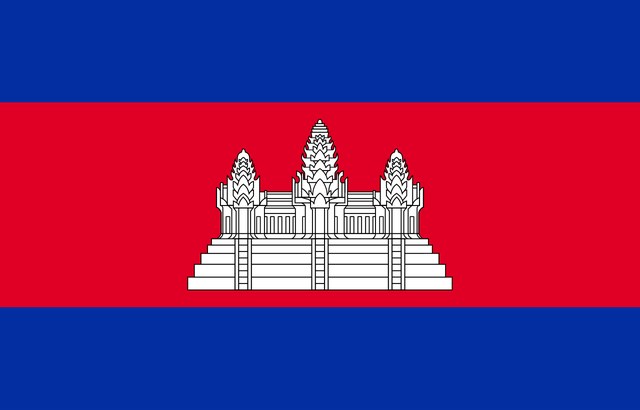
Suryavarman II ruled the Khmer Empire, which was located mostly in this modern-day country with a flag showing Angkor Wat in its center.

10 more clues from the record
H

A leader of this country implemented the “Maha Lout Ploh”, his version of China’s Great Leap Forward.

H

In this nation, intellectuals and teachers were known as “New People” and put into communes to starve.

H

In 1970, Prince Sihanouk was overthrown by Prime Minister Lon Nol.

H

This country was home to Chao Ponhea Yat high school which was transformed into the horrifying S-21.

H

An early kingdom in this modern nation was divided into “Water” and “Land” portions and was called Chenla.

H

A leader of this country carried out mass executions at Choeung Ek and implemented the Year Zero program.

H

The southwest portion of this country contains the Damrei Mountains, and its northwest portion contains the Dangrek Mountains.

H

The current king of this country is Norodom Sihamoni. —Name this country known as Democratic Kampuchea in the late 1970s when it was ruled by Pol Pot.

H

An empire based in this country grew out of the Chenla kingdom, and this nation’s dark ages began after being conquered by the Ayutthaya Kingdom.

H

In this country, a man known as Comrade Duch operated a facility called S-21 that was located at a former high school.

Watch out: Democratic Kampuchea (the name for Cambodia under Khmer Rouge rule in the late 1970s)
#1464 · Modern Countries · Level 3

Cyprus

Cyprus
İsmet Güney /a , SVG by User:Vzb83~commonswiki · Public domain

Mediterranean island nation · independence 1960 · eastern Mediterranean Sea

Cyprus is a Mediterranean island partitioned since 1974 into Greek and Turkish zones along the UN-monitored Green Line.

The kit

  • Medieval control — Cyprus was seized from Isaac Komnenos in 1191 by Richard the Lionheart, who sold it to Guy of Lusignan.
  • Independence — Cyprus gained independence in 1960 through the London and Zürich Agreements after a 1950s Emergency involving the EOKA movement led by George Grivas.
  • Partition — Cyprus was invaded by Turkey in Operation Atilla in 1974 after Nikos Sampson overthrew Archbishop Makarios III, creating a Turkish-occupied north.
  • Modern division — Cyprus remains split by the Green Line buffer zone through Nicosia, with British bases at Dhekelia and Akrotiri still operating.

Runs with

Greece
enosis movement sought Cyprus's union with Greece open card →
Turkey
Turkey invaded in 1974, occupying northern Cyprus open card →
Copper
Richard the Lionheart
Richard seized Cyprus from Isaac Komnenos in 1191 open card →

The ladder · 6 clues

H

This modern-day country changed hands following the Battle of Tremetusia, after which Richard the Lion-Hearted sold it to Guy of Lusignan.

H

Answer these questions about Mediterranean islands, .The “Green Line” on this disputed island was established to end the 1974 conflict between Turkey and Greece over control of it.

M

This country’s modern Enosis movement prompted Operation Atilla, an invasion that helped extend this country’s Green Line of demarcation. name this island country divided between Turkish and Greek zones.

M

In 1974, Nikos Sampson overthrew Archbishop Makarios III in this country, whose incorporation with Greece was an example of enosis.

E

This island is divided by a UN buffer zone called the Green Line that passes through the capital city of Nicosia. name this third-largest Mediterranean island that is split into Turkish-occupied and Greek-aligned regions.

E

A 1974 invasion of this island led to its partition along the Green Line. name this Mediterranean island, divided into a Greek-speaking southern majority and a self-proclaimed “Turkish Republic” in the north.

10 more clues from the record
H

On this island, Marco Bragadin was infamously flayed alive after leading a heroic defense of Famagusta to delay the Ottoman Empire prior to Lepanto.

H

Bloody killings along a street in this country's capital led that street to be called "Murder Mile." The Treaty of Guarantee established the independence of this country, which was led by a man who attempted to overturn ethnic restrictions imposed on governmental positions in the London and Zurich Agreements.

H

This country's 1960 independence was established by the London and Zürich Agreements.

H

In 1914, this island was annexed by the British, who still operate military bases at Dhekelia and Akrotiri.

H

The Ninth of September Front opposed an independence movement for this island led by George Grivas known as EOKA [[ee-OH-kah]].

H

This non-Asian country's "Emergency" in the 1950s led to the signing of the London-Zurich Agreements.

H

A political movement on this island known as enosis sought to unite it with another country.

H

In 1971, General Grivas returned to this country to advocate a unification policy called enosis opposed by Archbishop Makarios.

H

This island was seized from Isaac Komnenos in 1191. :Name this island that at one point was controlled by the Knights Templar, and was the site of the Siege of Famagusta before the Battle of Lepanto.

H

This country, which contains the British military bases of Dhekelia and Akrotiri, was the site of a coup by a group that supported the process of enosis or unification.

Watch out: Enosis movement sought union with Greece, not independence
#1465 · Modern Countries · Level 3

Iraq

Iraq
See i b File history /b /i below for details. · Public domain

Middle Eastern country · 1958 revolution–present · Persian Gulf region

Iraq was led by Saddam Hussein until the United States invaded in 2003 to topple his regime.

The kit

  • Rise — Iraq's Hashemite King Faisal II was overthrown in the 14 July Revolution of 1958 by military officers.
  • Conflicts — Iraq fought an eight-year war with Iran starting in 1980, using chemical weapons against troops and Kurds.
  • Conflicts — Iraq was the target of Operation Desert Storm during the First Persian Gulf War in 1991.
  • Legacy — Iraq's nuclear facilities were bombed by Israel in Operation Opera before the Iran-Iraq War began.

Runs with

Saddam Hussein
ruled Iraq until toppled by U.S. in 2003 open card →
Baghdad
capital city from which Saddam Hussein led Iraq open card →
Iran
fought eight-year war with Iraq starting 1980 open card →
George W. Bush
ordered 2003 U.S. invasion to overthrow Saddam Hussein open card →

The ladder · 6 clues

H

Country whose nuclear facilites were bombed by Israel in Operation Opera. R

H

The parade was in commemoration of the start of a 1980 war between Iran and this neighboring nation, once led by Saddam Hussein.

M

What country fought an eight-year war with Iran, using chemical weapons against enemy troops and Kurdish civilians?

M

This country was the target of Operation Desert Storm during the First Persian Gulf War.

E

In 2003, the United States invaded this country to secure non-existent weapons of mass destruction. name this country that was led by Saddam Hussein from Baghdad.

E

In 2003, the United States toppled this country's regime of Saddam Hussein.

10 more clues from the record
H

A road in this country was labeled the “Highway of Death” after American forces bombed retreating troops.

H

The 14 of July Revolution overthrew King Faisal II in this country.

H

During World War II, the British ousted Rashid Ali and reinstalled the last king of this country, Faisal II.

H

Abdul Salam Arif and Abd al-Karim Qasim overthrew this nation’s King Faisal II in the 14 July Revolution, which led to the end of Hashemite rule in this modern-day country.

H

The United States organized the “coalition of the willing” against this country after a report by an informant known as “Curveball.” A photograph of a man in this country wearing a hood and standing on a box was used as proof that American soldiers were abusing prisoners in Abu Ghraib.

H

The Hashemite monarch Faisal II ruled this nation until a 1958 officer coup executed him during the July Revolution.

H

In 2007, 17 citizens of this country were killed in Nisour Square by private contractors.

H

This country received illegal kickbacks from the Australian Wheat Board through the UN’s “Oil for Food” program, which bypassed economic sanctions that were established in 1991.

H

George W. Bush was shoed in this country, which the U.S. invaded in 2003 to overthrow Saddam Hussein.

H

Ironically, violence escalated in this country after a president gave a speech about it under a "Mission Accomplished" banner.

Watch out: Students may confuse Iraq's 1991 Gulf War defeat with the separate 2003 U.S. invasion
#1471 · Modern Countries · Level 3

Vietnam

Vietnam
See i b File history /b /i below for details. · Public domain

Southeast Asian country · ancient times–present · Southeast Asia, capital Hanoi

Vietnam is a Southeast Asian country that endured Chinese rule, French colonization, and a costly war with the United States ending in 1975.

The kit

  • Early history — Vietnam's Han Dynasty rule was interrupted by the Trung Sisters' rebellion in the first century AD.
  • French colonization — Vietnam became part of French Indochina through the protectorates of Annam, Tonkin, and Cochinchina established in the 19th century.
  • Division & reunification — Vietnam was divided by the 1954 Geneva Accords after the Battle of Dien Bien Phu, then reunited in 1975.
  • Military tactics — Vietnam employed a "pole-and-tide" stratagem using sharpened iron stakes underwater to destroy enemy ships in a 938 battle.

Runs with

Ho Chi Minh
led forces to victory at Dien Bien Phu open card →
Ngo Dinh Diem
Han Dynasty
ruled Vietnam until Trung Sisters' revolt open card →
Khmer Rouge

The ladder · 6 clues

H

France’s control of this country was confirmed in the 1885 Treaty of Tientsin.

H

Foreign protectorates in this country included Cochinchina and Annam.

M

This country was liberated from Han Dynasty rule by a rebellion led by two sisters, and it assimilated the Champa kingdom.

M

In the first century AD, the Trung Sisters rebelled against Chinese control of what is now this country.

E

The Geneva Accords divided this country after the Battle of Dien Bien Phu, a victory for Ho Chi Minh.

E

French Indochina included Laos, Cambodia, and this Southeast Asian country with capital at Hanoi.

10 more clues from the record
H

Kingdom to the south where Han rule was briefly interrupted by the Trung sisters' revolt.

H

This country’s north and south were once ruled by the Nanyue and Champa people, respectively.

H

This nation was the subject of Operation Frequent Wind, an American mass evacuation of this country in 1975. …Name this country that was reunited into one nation in 1975, after a long and costly war between it and the United States.
H

A kingdom in this modern-day country lends their name to a strain of rice that was imported by Emperor Zhēnzōng .

H

Using sharpened iron stakes hidden underwater, this country entrapped a much larger navy in a 938 battle, ending nearly a millennium of domination by its northern neighbor.

H

Native rule of this country was suspended when the French established the protectorates of Annam, Tonkin, and Cochinchina here. :Name this former empire that was ruled from Hanoi.

H

Gia Long was the first emperor of its last ruling dynasty, and during the early 20th century, this country adopted the Quoc Ngu writing system.

H

The revolt of the Mac family in this country interrupted a dynasty whose founder was given a magic sword named “Heaven’s Will” by a golden-shelled tortoise.

H

One of this nation’s early epics was The Legend of the Magic Crossbow, and this nation was temporarily ruled by a pair of rebellious sisters in the first century.

H

A female warrior in this country was quoted as saying, “I’d like to ride storms, kill sharks in the open sea.” In this country, a “pole-and-tide” stratagem was employed to destroy enemy ships because when the tide ebbed, the ships would be penetrated by the poles.

Watch out: Champa was a separate kingdom in southern Vietnam, not Vietnam itself
#1508 · Modern Countries · Level 3

South Korea

South Korea
Original: /div Government of the Republic of Korea /div Vect · Public domain

East Asian nation · 1948–present · Korean Peninsula

South Korea is an East Asian republic whose economy has been dominated by industrial conglomerates known as chaebol.

The kit

  • Rise — South Korea's first president, Syngman Rhee, instituted an ideology of ethnic homogeneity called the "One-People Principle" before being deposed.
  • Conflicts — South Korea trained criminals as Unit 684, a black ops team meant to assassinate an enemy leader after the Blue House Raid.
  • Achievements — South Korea became the second country entirely in Asia to host the Winter Olympics when it did so in 2018.
  • Legacy — South Korea's President Park Geun-hye faced impeachment after Choi Soon-sil was charged with influencing her, sparking massive Seoul protests.

Runs with

Syngman Rhee
first president deposed after April Revolution open card →
dictator
military dictator shot by KCIA head during dinner open card →
Olympic Games
hosted 2018 Winter Olympics open card →
Japan
indicted Japanese reporter Tatsuya Kato open card →

The ladder · 6 clues

H

One leader of this country was targeted in the Blue House Raid, which led to the training of Unit 684 in retaliation.

H

Police brutality against a student in Masan harbor sparked the April Revolution, which caused the resignation of its first President.

M

Another president of this country won a Nobel Peace Prize for their Sunshine Policy promoting relations with a neighbor.

M

This country’s economy has been dominated by industrial conglomerates known as chaebol.

E

This country became the second country entirely in Asia to host the Winter Olympics when it did so in 2018.

E

Choi Soon-sil faces charges of influencing Park Geun-Hye, the president of this Asian country where protesters against Park flooded the streets of Seoul.

10 more clues from the record
H

This country indicted Tatsuya Kato for his reporting of the aftermath of a 2013 disaster that killed 304 people, including numerous students from Danwon High School.

H

Political prisoners in this country were executed in the Bodo League Massacre.

H

Until her impeachment, Park Geun-hye (gun-HEH) was the president of this Asian nation. Under her leadership, relations with its northern neighbor had worsened.

H

Park Geun-hye is the president of this small East Asian country. A scandal surrounding Park recently sparked a four hundred thousand-person protest in this country’s capital of Seoul.

H

This country’s first president instituted an ideology of ethnic homogeneity known as the “One-People Principle” and was taken to Hawaii by the CIA after being deposed.

H

This country’s military dictator through the 1960s and 1970s was shot by the head of its national intelligence service, the KCIA, during dinner at the Blue House.

H

This country used criminals as “Unit 684,” which was a black ops team trained to assassinate an enemy leader.

H

This country's first free elections were held in 1960, but the Coup of May 16th deposed its Second Republic and reversed the reforms of the April Revolution.

H

The Gotjawal Forest is located in this country on an island where government forces killed tens of thousands of people in the late 1940s to suppress a communist uprising.

H

Elections in this country were held after the June Struggle led to the establishment of the Sixth Republic. A student uprising in 1960 led to the overthrow of this country’s first ruler, Syngman Rhee.

Watch out: North Korea (the neighboring country with worsening relations)
#1514 · Modern Countries · Level 3

Bangladesh

Bangladesh
See i b File history /b /i below for details. · Public domain

South Asian nation · independence 1971 · Bay of Bengal, bordering India and Myanmar

Bangladesh gained independence from Pakistan in 1971 after a war sparked by Operation Searchlight's suppression of the Awami League.

The kit

  • Independence struggle — Bangladesh's independence movement was led by Sheikh Mujibur Rahman and the Awami League, who fought Pakistan's military crackdown through the Six Point Movement.
  • Operation Searchlight — Bangladesh suffered genocidal Operation Searchlight in 1971, when Yahya Khan's troops purged intelligentsia and seized major cities to prevent Awami power.
  • War outcome — Bangladesh achieved independence after the largest surrender since World War II when Yahya Khan's forces capitulated in 1971, establishing Dhaka as capital.
  • Modern tragedies — Bangladesh was site of the 2013 Rana Plaza garment factory collapse at Savar, which killed over a thousand workers.

Runs with

Pakistan
former colonial ruler until 1971 war open card →
IndiaHenry Kissinger
Bengal
historical region containing Bangladesh open card →

The ladder · 6 clues

H

This modern-day country’s intelligentsia were purged in Operation Searchlight.

H

Major cities in this country were seized by Yahya Khan’s troops during Operation Searchlight in an attempt to prevent the Awami League from taking power.

M

During the creation of this country, Sheikh Mujibur Rahman and his Awami League led a Six Point Movement to fight for independence as Pakistan’s “east” province.

M

The locale of Savar, just outside of this country’s capital, was the site of the 2013 collapse of the Rana Plaza garment factory.

E

Yahya Khan launched Operation Searchlight to suppress the independence-seeking Awami League in this country, which was known at the time as East Pakistan. name this country that, after gaining its independence from Pakistan in 1971, established its capital at Dhaka.

E

Ravi Shankar and George Harrison held the world’s first benefit concert to support refugees from this country that borders India and Myanmar on the Bay of Bengal.

10 more clues from the record
H

This country gained its independence after the surrender of Yahya Khan’s forces in 1971. name this South Asian country once known as East Pakistan.

H

To denounce the atrocities committed in this present-day country's war of independence, Archer Blood wrote a namesake telegram to the U.S. State Department.

H

Numerous atrocities in the territory of this modern-day country were committed by the paramilitary Razakars during one war.

H

Eastern nation that broke away from Pakistan in 1971.

H

A 1997 peace accord in this country disarmed the Shanti Bahini militia of its Chittagong Hill Tracts.

H

This country was home to Mukti Bahini which was founded to prevent a 1971 genocide.

H

He was supported by Operation Searchlight, conducted in what is now this country after the 1970 election of Sheikh Mujibur Rahman and the Awami League.

H

The artificial Foy's Lake was created in this country in 1924, to serve a port on the Karanphuli (KAH-ron-FOO-lee) River that hosts a large tea auction.

H

This country was the site of the largest surrender of troops since World War II, which occurred during a conflict that began with the genocidal Operation Searchlight.

H

This country’s first president, Sheikh Mujibur Rahman, created BAKSAL by merging the Krishak Sramik party with the Awami League.

Watch out: East Pakistan (Bangladesh's name before 1971 independence)
#1534 · Modern Countries · Level 3

Malaysia

Malaysia
MapGrid /a small (old version SKopp /a , Zscout370 /a and Ra · Public domain

Southeast Asian country · independence 1957; expelled Singapore 1965 · Malay Peninsula and northern Borneo

Malaysia is a Southeast Asian country with capital Kuala Lumpur that expelled Singapore in 1965.

The kit

  • Independence & leadership — Malaysia's first Prime Minister Tunku Abdul Rahman led the country to independence and earned the title "Father of Independence."
  • Communist insurgency — Malaysia faced a communist insurgency from 1948 to 1960 during which Britain created New Villages to relocate half a million peasants.
  • Territorial disputes — Malaysia disputes the southeastern corner of China's nine-dash line via claims off its states of Sarawak and North Borneo.
  • Modern landmarks — Malaysia is home to the Petronas Twin Towers in Kuala Lumpur and was led by Prime Minister Mahathir Mohamad.

Runs with

Singapore
expelled Singapore in 1965 after brief federation open card →
China
disputes nine-dash line claims off Sarawak coast open card →
Indonesia
shares island of Borneo with Indonesian territory open card →
Australia

The ladder · 6 clues

H

Country it was part of until 1965, when it was expelled.

H

Prior to use in Vietnam, Agent Orange was deployed for the first time in this country.

M

Tunku Abdul Rahman and Mahathir Mohamad were Prime Ministers of this Southeast Asian country with capital Kuala Lumpur.

M

This country disputes the southeastern corner of China’s nine-dash territory via claims off the coast of its states of Sarawak and North Borneo.

E

The Battle of Penang took place in what is now this country in the Strait of Malacca. Tunku Abdul Rahman was the first Prime Minister of this Asian country that expelled Singapore in 1965.

E

Mahathir Mohamad leads this Southeast Asian country where the Petronas Twin Towers are located in Kuala Lumpur.

10 more clues from the record
H

Chin Peng led a communist insurgency in what is now this nation, during which Sir Harold Briggs led a British intervention and created a series of New Villages to relocate half a million peasants.

H

At a World War One battle off the coast of this country, the SMS Emden quickly sank the Zhemchug and Mousquet.

H

A leader of this country tried to organize a party to compete with a neighboring country’s People’s Action Party and came to be given the title “Father of Independence” or “Bapa Kemerdekaan." Tunku Abdul Rahman was a founding father of this country, which fought against Britain during a 1948 to 1960 conflict.

H

"New Villages" were concentration camps built during an "Emergency" in this present-day country. name this Southeast Asian country that faced a major communist insurgency in its state of Sarawak.

H

Another of this country’s planes disappeared over the South China Sea in the same year.

H

In 1969, the May 13 race riots broke out in this country, leading to this country’s New Economic Policy.

H

During the Vietnamese refugee crisis, nearly a quarter of a million Vietnamese people were processed at Bidong Island, an island less than a square mile in size, where this country established a refugee camp.

H

A number of HIV and AIDS experts perished aboard this country’s national airline’s Flight 17 when it was shot down above Ukraine in 2014.

H

Affirmative action programs in this country favor native residents known as “bumiputeras.” This country’s city of Penang was the capital of the Straits Settlements.

H

In this colony, the loss of the exceptionally large Seri cannon led to a prophecy cursing the town of Selangor until its return.

Watch out: Confusion with Indonesia as another major Southeast Asian Muslim-majority country
#1549 · Modern Countries · Level 3

North Korea

North Korea
EuropeanV · Public domain

Communist East Asian state · 1948–present · Korean Peninsula

North Korea is a hereditary communist dictatorship ruled by the Kim family since its 1948 founding.

The kit

  • Ideology — North Korea's Worker's Party follows 'military first' and 'self-reliance' ideologies instead of traditional Marxism.
  • Kim dynasty — North Korea has been ruled by three generations of Kims: Kim Il-sung (Eternal President despite dying 1994), then his grandson Kim Jong-Un.
  • Cold War incidents — North Korea captured the USS Pueblo research vessel in 1968 after correctly suspecting it was spying.
  • Conflicts — North Korea's soldiers killed two Americans in the 'axe murder incident', prompting U.S. Operation Paul Bunyan to cut down a poplar tree.

Runs with

Strategic Hamlet Program
no connection shown in clues open card →
American Railway Union
no connection shown in clues open card →
Bakumatsu Period
no connection shown in clues open card →
1968
North Korea seized USS Pueblo in 1968 open card →

The ladder · 6 clues

H

This nation's forces captured the USS Pueblo research vessel off the coast of Ryo Island after suspecting correctly it was being used to spy on this country.

H

In 1968, this country heightened Cold War tensions with the US by seizing the research ship Pueblo.

M

This country's Worker's Party adds a calligraphy brush to the traditional hammer-and-sickle and, instead of Marxism, follows the ideologies of "military first" and "self-reliance." That party is led by this country's hereditary Supreme Leader. name this country under the Kim family's dictatorship.

M

Kim Il-sung is the Eternal President of this country despite having died in 1994. This country is currently led by his grandson, Kim Jong-Un.

E

The term "Little Rocket Man" was used by Donald Trump to refer to this East Asian nation's leader, Kim Jong-Un.

E

This country’s first supreme leader was Kim Il-sung. :Name this communist country that is between China and the Demilitarized Zone.

10 more clues from the record
H

A group of U.S. sailors taken prisoner in this country gave the middle finger in a publicly-distributed photograph, claiming to their captors it was a "Hawaiian good luck sign." This country had the Bauhaus-trained Konrad Püschel redesign the damaged city of Hamhung.

H

Kim Il Sung led this country, bordered to the south by the Demilitarized Zone.

H

In response to the “axe murder incident,” Operation Paul Bunyan was launched against this country.

H

After the murder of two soldiers, Task Force Vierra retaliated against this country in the aptly named Operation Paul Bunyan.

H

Hatchet-wielding soldiers from this nation killed American servicemen in the Joint Security Area, to which the U.S. responded by mobilizing an entire taskforce to cut down a poplar tree in Operation Paul Bunyan.

H

This country was targeted by Operation Combat Fox after it captured commander Lloyd Bucher, who claimed that his lewd gestures were “Hawaiian good luck signs” while he was photographed for propaganda.

H

Government authorities from this country claimed that botulism, not torture, led to the death of a visitor who had stolen a propaganda poster, Otto Warmbier.

H

The Donghak movement of the 19th century birthed a minority party in this nation called the Chondoist Chongu Party, which control six seats in the Supreme People's Assembly.

H

This country's Fatherland Front nominally includes three parties, though during recent elections all 687 seats in its Supreme People's Assembly were uncontested.

H

A pilot from this nation unwittingly earned a one-hundred thousand dollar prize from the U.S. Air Force when he turned over of a Soviet MiG-15 fighter.

Watch out: South Korea—the democratic nation south of the Demilitarized Zone
#1568 · Modern Countries · Level 3

Yemen

Yemen
Nightstallion et al., see i b File history /b /i below for d · Public domain

Arabian Peninsula country · ancient Sabaeans to present · southern Arabian Peninsula

Yemen is an Arabian Peninsula country whose capital is Sana'a and whose major port is Aden.

The kit

  • Ancient kingdoms — Yemen was home to the Sabaeans and Himyarites, empires that dominated the frankincense and myrrh trade.
  • Modern unification — Yemen unified in 1990 after Ali Abdallah Saleh became president of part of the country in 1978.
  • USS Cole bombing — Yemen was the site of the 2000 USS Cole bombing by al-Qaeda in a suicide attack.
  • Current civil war — Yemen's ongoing civil war involves a Shia-led Houthi insurgency that has devastated cities like Ta'izz, Aden, and Sana'a.

Runs with

Gamal Abdel Nasser
Egypt fought Zaydi Shi'ite guerrillas in northern Yemen open card →
Coffee
Saudi Arabia
Saudi Arabia expelled 800,000 Yemeni workers after Yemen opposed Gulf War intervention open card →
Aksumite Empire
Christian vassal king Esimiphaios negotiated alliance with Justinian I open card →

The ladder · 6 clues

H

Operation Magic Carpet targeted Jews living in, or with heritages from, this country on the Arabian Peninsula.

H

In ancient times, this modern day country was home to the Sabaeans and the Himyarites, empires which dominated the frankincense and myrrh trade.

M

In 1978, Ali Abdallah Saleh became president of part of this country, which unified in 1990.

M

In 2000, the USS Cole was bombed by al-Qaeda in a suicide attack off the coast of this country.

E

The USS Cole bombing took place in this country on the Arabian Peninsula where cities like Ta’izz, Aden, and Sana’a have been devastated by civil war.

E

This country’s current civil war involves a Shia-led Houthi insurgency. name this Arabian Peninsula country whose capital is Sana and whose port city of Aden was the site of the USS Cole bombing.

10 more clues from the record
H

The Mahrah Sultanate governed in this modern day country, which includes the island of Socotra.

H

After an ambush of troops in the Crater District, Operation Stirling Castle was launched in this country, where Colin Mitchell ordered a pipe band to play to force insurgents to surrender.

H

In this country, Imam Yahya prohibited Jews from building their houses higher than Muslim homes before his assassination in the Alwaziri Coup.

H

A kingdom that unified the lands of this modern-day country after seceding from Qataban was ruled from Zafar.

H

It's not Ethiopia, but this country saw a mass exodus of its Jews to Israel in Operation Magic Carpet.

H

A Christian vassal king from this country, Esimiphaios , negotiated an alliance with Justinian I before the reign of a ruler whose soldiers were targeted by stones dropped by birds.

H

A ruler in this modern-day country clashed with the Idrisid rulers of Asir over the Tihama region, and negotiated the Treaty of Daan with the Ottomans.

H

A 1967 police mutiny in this country killed 27 British troops, after which the British briefly left the Crater District. 800,000 workers of this country were expelled from Saudi Arabia after this nation refused to back intervention in the Gulf War. 40% of this country’s population adheres to the Zaidi sect of Islam.

H

Ancient geographers referred to this country as “Happy Arabia.” Egypt carried out a lengthy war against Zaydi Shi’ite guerrillas in this country’s north.

H

The northern part of this nation was known as the Mutawakkilite Kingdom, and in its southern region, the FLOSY and NLF fought against British rule until 1967.

Watch out: Operation Magic Carpet targeted Jews from Yemen, not Ethiopia
#1607 · Modern Countries · Level 3

Lebanon

Lebanon
Henri Pharaon · Public domain

Middle Eastern country · independence 1943 · eastern Mediterranean coast

Lebanon is a Middle Eastern country whose power-sharing system among Maronite Christians, Sunnis, and Shiites collapsed into civil war (1975–1990).

The kit

  • Confessional system — Lebanon's government divides power among religious communities, with the presidency reserved for Maronite Christians and other offices allocated by sect.
  • 1958 crisis — Lebanon invoked the Eisenhower Doctrine in 1958, prompting Operation Blue Bat when 15,000 U.S. troops helped President Camille Chamoun end religious conflict.
  • Civil War — Lebanon's Civil War featured the Battle of the Hotels in Beirut and ended with the 1989 Taif Agreement establishing sectarian power-sharing.
  • Conflicts — Lebanon experienced the Sabra and Shatila massacre after Phalangist leader Bachir Gemayel's assassination and saw Hezbollah emerge during Israeli invasions.

Runs with

Israel
invaded Lebanon during civil war open card →
Christian
Maronite Christians hold presidency open card →
Syria
Syrian Social Nationalist Party assassinated Gemayel open card →
Tyre
ancient city located in Lebanon open card →

The ladder · 6 clues

H

During this country's civil war, the Holiday Inn was among the buildings opposing forces used to shoot at each other during the Battle of the Hotels.

H

Robert Daniel Murphy was sent to this country during a 1958 crisis, allowing for the election of Fouad Chehab [[foo-WAHD she-HAHB]], a Maronite Christian.

M

The Taif Agreement which ended this country’s civil war stipulated powersharing between its Sunni, Shia, and Maronite Christian communities.

M

This country was the site of Operation Blue Bat, where Eisenhower sent 15,000 troops to help president Camille Chamoun end a religious war.

E

This country's Civil War led to Israeli invasions and the emergence of Hezbollah. name this country in which Maronites, Shiites, and other denominations share power in Beirut.

E

Comprised largely of Druze, Maronite Christians, and Muslims, what is this country in which the U.S. occupied Beirut?

10 more clues from the record
H

Emile Edde [[EH-meel eh-DEH]] served as president of this country in which Galo Plaza and Odd Bull, members of the UN Group of Three, were dispatched.

H

A group in this country fought a “War of Brothers” with another group whose founder disappeared while visiting Qaddāfī, called the Amal [EH-mull] Movement.

H

Another politician in this country, Bachir Gemayel, led the Phalange before being assassinated by the Syrian Social Nationalist Party.

H

The Kataeb [KAH-taw-yeb] Party was active in this country, in which the Battle of the Hotels and Sabra and Shatila massacre occurred.

H

The collapse of the Intra Bank plunged this country into a financial depression.

H

A massacre of a refugee camp in this country was conducted as retaliation for the assassination of Bachir Gemayel, who founded this country’s Phalangist party.

H

This country was the first to invoke the Eisenhower Doctrine, asking U.S. marines to land here at the invitation of president Camille Chamoun.

H

Armed clashes that broke out in this country’s capital city were ended by the 2008 Doha Agreement.

H

A 29 month political deadlock in this country was ended with the October 2016 election of President Michel Aoun.

H

One leader of this country declared that “the revolution has no winners and no losers” and used the policy of Chehabism.

Watch out: Tyre (ancient Phoenician city-state in what is now Lebanon)
#1619 · Modern Countries · Level 3

Kazakhstan

Kazakhstan
Shaken Niyazbekop · Public domain

Central Asian country · independence 1991 · northeast of Caspian Sea

Kazakhstan is the world's largest landlocked country, a former Soviet republic in Central Asia with capital Nur-Sultan (formerly Astana).

The kit

  • Soviet legacy — Kazakhstan hosted the Semipalatinsk Test Site, where the Soviet Union first tested nuclear weapons and conducted hundreds of tests.
  • Space program — Kazakhstan contains the Baikonur Cosmodrome, leased to Russia until 2050, from which Sputnik I was launched.
  • Agricultural reforms — Kazakhstan was the target of Nikita Khrushchev's Virgin Lands Campaign, which brought hundreds of thousands of Komsomol members to convert pastoral lands into wheat fields.
  • Political transition — Kazakhstan was led for nearly three decades by Nursultan Nazarbayev, whose capital renaming and the 1986 Jeltoqsan riots marked key political moments.

Runs with

Strategic Hamlet Program
no connection evident in clues open card →
Nikita Khrushchev
launched Virgin Lands Campaign to convert Kazakh pastoral lands to wheat production open card →
Soviet Union
Kazakhstan was a Soviet republic and primary nuclear testing site open card →
Russia
leases Baikonur Cosmodrome from Kazakhstan until 2050 open card →

The ladder · 6 clues

H

Present-day Central Asian country with capital Nur-Sultan from which missions were launched

H

People fell asleep for weeks at a time due to an abandoned uranium mine in this nation’s city of Kalachi.

M

The Soviet Union first tested nuclear weapons at the Semipalatinsk Test Site in which modern-day country, also home to the Baikonur Cosmodrome?

M

Nikita Khrushchev’s Virgin Lands Reforms hoped to turn pastoral lands in this modern-day nation into wheat producing lands.

E

In 2019, this country renamed its capital to Nur-Sultan. name this country once led by Nursultan Nazarbayev from Astana.

E

Astana is now the capital of this former Soviet republic, the largest landlocked country in the world.

10 more clues from the record
H

A city in this present-day country along the Irtysh River was the capital of the self-proclaimed Alash Autonomy and was the home of a facility nicknamed “The Polygon.

H

The Dawn of Liberty monument in this country commemorates the 1986 Jeltoqsan riots.

H

The Semipalatinsk nuclear test site is in this country, as is a location leased until 2050 by its northern neighbor where Sputnik I was launched.

H

The Jeltoqsan protests took place in this modern-day country and former Soviet republic. This largest landlocked country was also the primary testing site for Soviet nuclear weapons.

H

Gennady Kolbin's assumption of power in this country prompted the 1986 Jeltoqsan (jehl-tok-SAHN) riots.

H

In 2014, this country announced a multi-billion dollar infrastructure program known as “Nurly Zhol.” From December 2016 to January 2017, the Syrian government and rebels engaged in peace talks in this country’s capital city.

H

This central Asian country, which was governed for nearly three decades by Nursultan Nazarbayev [[nah-zar-BYE-yev]], lies northeast of the Caspian Sea and has the longest coastline of any country on it.

H

Hundreds of thousands of members of the Komsomol migrated to what is now this country as part of a 1953 plan to boost agricultural production.

H

In 2010, the Turkish government discovered that businessmen from this country were using the yacht MV Savarona to run a prostitution ring and seized the boat.

H

This country’s town of Stepnogorsk was home to a Soviet facility that could produce hundreds of tons of weaponized anthrax per year.

Watch out: Baikonur Cosmodrome is in Kazakhstan, not Russia, though Russia leases it
#1658 · Modern Countries · Level 3

Saudi Arabia

Saudi Arabia
The Shura Council · Public domain

Middle Eastern kingdom · founded 1932 · Arabian Peninsula

Saudi Arabia is an oil-rich Arabian kingdom ruled from Riyadh by the House of Saud since its 1932 founding.

The kit

  • Founding — Saudi Arabia's founder united the Nejd and Hejaz regions and defeated the Ikhwan militia at the 1930 Battle of Sabilla.
  • Oil economy — Saudi Arabia produces over ten million barrels of oil daily through Aramco, a company valued above $1 trillion since 1933.
  • Regional conflicts — Saudi Arabia supported the Mutawakkilites during Yemen's civil war in the 1960s and served as the invasion base for Gulf War troops.
  • Social reforms — Saudi Arabia's Vision 2030 reform plan aims to diversify the economy and promote equality, including ending the driving ban on women in 2017.

Runs with

Idi Amin
King Faisal was assassinated in Riyadh in 1975 open card →
Yemen
supported Mutawakkilites in Yemen's 1960s civil war open card →
Mecca
Mecca is off-limits to non-Muslims; Mina stampede killed 700 in 2015 open card →
women
banned women from driving until 2017 open card →

The ladder · 6 clues

H

This country’s founder defeated the Ikhwan at the Battle of Sabilla.

H

In the ‘60s, this country supported the Mutawakkilites during a southern neighbor’s civil war.

M

Country where King Faisal was killed in Riyadh.

M

A company based in this country in 1933 that is now considered to have a value above $1 trillion is Aramco.

E

King Salman and Crown Prince Mohammad bin Salman lead this Middle Eastern country with capital Riyadh.

E

The Treaty of Jeddah was signed in one of the largest cities in this country, which forbade women from driving until 2017. name this Middle Eastern country where kings named Fahd and Salman have ruled from its capital at Riyadh.

10 more clues from the record
H

During the Gulf war, U.S. and allied troops invaded Iraq overland from this country.

H

A comprehensive reform plan in this country called Vision 2030 aims to promote equality and diversify the economy.

H

This nation’s founder united the Nejd and Hejaz and is the father of every subsequent leader of this nation.

H

A leader of this country sent a letter to George W. Bush saying “we are at a crossroads” and that “a time comes when...nations part.” The only presidential veto override of the Obama presidency was the 2016 JASTA, which effectively allowed Americans to sue this country.

H

An attack on this country’s Abqaiq Oil Field, once thought to be the work of Houthi rebels, was instead proven to be an Iranian attack in September 2019.

H

One city here is completely off-limits to non-practitioners of its state religion, the most influential sect of which in this country is Wahhabism.

H

Unofficial leader, an Arabian kingdom led from Riyadh that produces over ten million barrels of oil a day.

H

Over 700 people died in the Mina Stampede in this nation in 2015 while approaching Jamarat Bridge.

H

In 2004 in this country, TV host Rania al-Baz was severely beaten by her husband for answering the phone without permission.

H

This country's ruling family secured its position at the 1930 Battle of Sabilla, which eliminated a militia known as the "ikhwan".

Watch out: Confused with other Gulf monarchies like Kuwait or UAE
#1697 · Modern Countries · Level 3

Armenia

Armenia
Original: /div Stepan Malkhasyants /div Vector: /div SKopp / · Public domain

Caucasus kingdom · ancient to present · Caucasus Mountains, Lake Van, Mount Ararat

Armenia was a Caucasus kingdom that became the first nation to adopt Christianity as its state religion in AD 301.

The kit

  • Rise — Armenia briefly became the most powerful state directly east of Rome under Tigranes the Great.
  • Christianity — Armenia adopted Christianity as its official religion in AD 301 under Tiridates III through the efforts of St. Gregory the Illuminator.
  • Rulers — Armenia was ruled by the Arsacid Dynasty, which converted to Christianity under Saint Gregory and is honored on the country's coat of arms.
  • Modern conflicts — Armenia's people survived an Ottoman genocide during World War One that targeted members of its ancient Apostolic Church.

Runs with

Nanda Empire
Christianity
first nation to make Christianity state religion in AD 301 open card →
Rome
Tigranes made Armenia most powerful state east of Rome open card →
Nero

The ladder · 6 clues

H

Mithridates allied himself with Tigranes [[tee-GRAH-nees]] the Great, a ruler of this country.

H

In AD 301, this country became the first nation to make Christianity its state religion. :Name this country located in the Caucasus that is governed from Yerevan.

M

This kingdom became the first to make Christianity the official religion under Tiridates III due to the efforts of St. Gregory the Illuminator.

M

For a brief time, Tigranes the Great made this country the most powerful state directly to Rome's east.

E

name this country whose people survived an Ottoman genocide.

E

This country, which historically claimed the regions around Lake Van and Mount Ararat, suffered a massacre of members of its ancient Apostolic Church during World War One.

10 more clues from the record
H

It isn’t Iran, but a kingdom sharing its name with this modern country was ruled by the Arsacid Dynasty.

H

It was the first officially Christian country in the world.

H

The Parthian empire often clashed with this empire-state in the Caucasus mountains which was the first country to make Christianity its official religion.

H

Kocharyan served as the leader of a neighboring unrecognized state, known as Artsakh, that this country took control of in a post-Soviet war against a neighbor whose capital is Baku.

H

This country's second president, Robert Kocharyan, has been accused of plotting a 1999 shooting that killed its then-Prime Minister Vazgen Sargsyan.

H

This country's coat of arms honors its Arsacid dynasty, which converted to Christianity under Saint Gregory.

H

Settled in Glendale and Fresno, California, after a Turkish genocide?

H

In a three-minute, live broadcast summit in this country, its leader claimed that a major critic “did not learn the lessons of March 1st.” A celebrity who claimed to be “inspired” by events in this country posted photos with an infamous opponent of those events known as the ruling party’s namesake “tatik” or “Granny.” The founder of this country’s Civil Contract party initiated a campaign he called “My Step” by walking 200 kilometers to this country’s capital from Gyumri.In April in this country, the corrupt leader of the HHK ran for Prime Minister after having promised not to when establishing the position in 2015, galvanizing protests under the hashtag “RejectSerzh.” name this country, in which opposition leader Nikol Pashinyan replaced Serzh Sargysian after protests against the latter shut down the country this spring, especially in its capital, Yerevan.

H

The Black Sheep ruler Iskander reportedly turned this modern-day country into a ‘desert’ during his rule. A civil war between Iskander and his brother Jihanshah in this country saw the sacking of the Tatev monastery and the relocation of a catholicos to Etchmiadzin Cathedral.

H

Three bonuses on big banknotes. For five points each:Featuring a portrait of Abgar V of Edessa, the 100,000 dram banknote is one of the highest denominated in circulation. Also used in Artsakh, the dram is the currency of which country?

Watch out: Armenia was ruled by the Arsacid Dynasty, but the Parthian Empire (a separate state) often clashed with Armenia in the Caucasus
#1711 · Modern Countries · Level 3

Nepal

Nepal
Biplab Anand · CC BY-SA 4.0

Himalayan nation · unified 1769 · between India and China

Nepal is a Himalayan nation unified by Prithvi Narayan Shah in 1769 after the Battle of Kirtipur.

The kit

  • Early dynasties — Nepal's first two dynasties were the Kirata and the Licchavi, followed by the medieval Malla family's Khasa Kingdom.
  • Unification — Nepal was unified in 1769 by Prithvi Narayan Shah after conquering Nuwakot and defeating the Malla kingdoms at Kirtipur.
  • British conflict — Nepal dealt major losses to British forces at Nalapani before surrendering nearly one-third of its territory via the Treaty of Sugauli.
  • Modern transitions — Nepal served as the world's only official Hindu country until the monarchy was abolished in 2008 following pro-democracy protests.

Runs with

India
Nepal formed a buffer state with the UK between India and China open card →
China
Nepal allied with Britain as a buffer between India and China open card →
Buddhism
the historical Buddha was traditionally born in modern Nepal open card →
Joe Hill

The ladder · 6 clues

H

The first two dynasties of this country were the Kirata and the Licchavi.

H

After the Battle of Kirtipur, Prithvi Narayan Shah unified this country in 1769.

M

In 2001, Prince Diprendra killed 9 members of this country’s royal family. name this Himalayan nation where pro-democracy protests took place in 2006 in Kathmandu.

M

Unification of this country occurred under Prithvi Narayan Shah, who conquered Nuwakot and created the Gorkha Kingdom.

E

Narayan Shah unified this country against the Malla kingdoms, and this country served as the only official Hindu country in the world until the abolition of the monarchy in 2008.

E

This country allied with the United Kingdom to form a bu↵er state between India and China. name this Himalayan country with capital at Kathmandu.

10 more clues from the record
H

A ruler of a kingdom in this modern country, Yalamber, had his head cut off by Lord Krishna according to the Mahabharata.

H

The medieval Malla family created the Khasa Kingdom in this modern-day nation.

H

This country was unified following the Battle of Kirtipur.

H

Nearly one-third of the territory of this modern nation was surrendered by the Treaty of Sugauli, which ended a namesake war and preceded the Treaty of Titalia.

H

This country contains Sagarmatha National Park as well as the southern faces of mountains such as Cho Oyu, Lhotse, and Annapurna.

H

This country celebrates the two-week-long Dashain (DAH-shayn) festival every fall.

H

This country's forces dealt major losses to British forces at Nalapani before signing the Treaty of Sugauli.

H

This country’s lowland Terai region was divided between the kingdoms of Chaudandi and Makwanpur in the 18th century.

H

The historical Buddha is traditionally believed to have been born in what is today this Himalayan nation.

H

In the 1980s, this country took in over a hundred thousand Lhotshampa (LOTE-sahm-pa) refugees.

Watch out: Students may confuse Nepal with Bhutan (another Himalayan kingdom) or Tibet (also in the Himalayas)
#1793 · Modern Countries · Level 3

East Timor

East Timor
See i b File history /b /i , below, for details. · Public domain

Southeast Asian island nation · independence 2002 · Timor island, north of Australia

East Timor is a former Portuguese colony occupied by Indonesia from 1975 to 1999 following Operation Lotus.

The kit

  • Portuguese rule — East Timor was abandoned by Portugal after the Carnation Revolution, sparking civil war between UDT and FRETILIN parties.
  • Indonesian occupation — East Timor suffered the Santa Cruz Massacre in which 250 protesters were killed at a pro-FRETILIN rally on Suharto's orders.
  • Independence — East Timor gained independence after a 1999 referendum organized by B.J. Habibie, followed by INTERFET intervention under John Howard.
  • Post-independence — East Timor's president José Ramos-Horta, a Nobel Laureate, was critically injured in a 2008 assassination attempt.

Runs with

Indonesia
occupied East Timor 1975-1999 open card →
Suharto
ordered Santa Cruz Massacre killing 250 open card →
Portugal
colonial ruler until Carnation Revolution open card →
Philippines
nearby Southeast Asian archipelago nation open card →

The ladder · 6 clues

H

In this country, Roger East was executed while investigating the deaths of the Balibo Five.

H

Now-independent former Portuguese colony occupied by Indonesia until 1999?

M

This country was the site of an incident in which Max Stahl filmed the massacre of civilians in a graveyard in Santa Cruz.

M

This country was invaded in Operation Lotus, though the outcome of that conflict was reversed by a 1999 referendum held by B.J. Habibie.

E

The funeral of Sebastiao Gomes in this modern day country was site of the Santa Cruz Massacre.

E

Shortly after it left Portuguese control, this country’s FRETELIN government was deposed. name this island country, occupied by Indonesia from 1975 to 1999.

10 more clues from the record
H

This country’s president Jose Ramos Horta was critically injured in a 2008 assassination attempt.

H

Roger East was killed for investigating a group of journalists who were killed in this country, the Balibo Five.

H

Lifau was the original capital of this modern day country, but was moved due to constant attacks by the Topasses.

H

The APODETI party opposed the independence of this country.

H

John Howard established INTERFET to intervene in this country after it was invaded in Operation Lotus. 250 protestors were killed at a pro-Fretilin rally in this country on Suharto’s orders.

H

A bishop from this nation, Martinho da Costa Lopes, reported that hundreds of men and women were lined up along the cliffs and executed by TNI forces in a 1975 genocide.

H

The Laksaur militia committed the Suai Church Massacre after a pro-independence referendum in this country, which was advocated for by Nobel Laureate José Ramos-Horta.

H

This country’s former Prime Minister Mari Alkatiri was forced to resign following accusations that he had hired a hit squad.

H

A civil war broke out between this country’s UDT and FRETILIN parties when it was abandoned after its colonizer’s Carnation Revolution.

H

Subianto was banned from entering the US for committing human rights violations in what is now this country. The Santa Cruz massacre occurred in what is now this country.

Watch out: Philippines—also a Southeast Asian island nation with history of foreign occupation
#1920 · Modern Countries · Level 3

Laos

Laos
SKopp · Public domain

Southeast Asian nation · 14th century–present · mainland Southeast Asia

Laos is a landlocked Southeast Asian nation bordered by the Mekong River, with capital at Vientiane.

The kit

  • Historical kingdom — Laos was home to the Lan Xang kingdom, founded by Fa Ngum and called the empire of "Million Elephants and White Parasols."
  • Secret War — Laos was heavily bombed during the Secret War by CIA operatives targeting the Pathet insurgent group and Ho Chi Minh Trail supply routes.
  • Archaeological sites — Laos contains the Plain of Jars, a megalithic site with thousands of large stone containers scattered across the landscape.
  • Communist takeover — Laos saw its monarchy overthrown by Kaysone Phomvihane and communist parties including the Pathet group and People's Revolutionary Party.

Runs with

Thailand
Mekong River forms border; former Siamese vassal open card →
Ho Chi Minh
Ho Chi Minh Trail ran through Laos open card →
Elephants
Lan Xang kingdom called "Million Elephants" open card →
France
Dien Bien Phu launched to cut Laos supply line open card →

The ladder · 6 clues

H

A kingdom of a “Million Elephants and White Parasols” existed in this modern country; Fa Ngum [fa num] founded that empire, Lan Xang [lan san].

H

This country is the site of thousands of stone containers strewn across the Plain of Jars, which was heavily bombed by CIA operatives during the Secret War to prevent the rise of the Pathet insurgent group.

M

This country’s border with Thailand is formed by the Mekong.

M

This country is home to the megalithic site of the Plain of Jars which, unsurprisingly, is home to many large stone jars.

E

As in nearby Vietnam, the rise of communist forces prompted this country’s large Hmong population to flee to the United States. name this country with capital Vientiane.
E

This non-Vietnamese country was home to the bulk of the Ho Chi Minh trail. name this Southeast Asian country with capital Vientiane.

10 more clues from the record
H

A national symbol from this country is a 44-meter tall Golden Stupa named Pha That Luang.

H

This former vassal of Siam was occupied by a 14th-century kingdom whose name translates to "one million elephants," the kingdom of Lan Xang.

H

The Ho Chi Minh Trail ran through Cambodia and this landlocked Southeast Asian nation with capital at Vientiane.

H

This country’s monarchy was overthrown by communist revolutionary Kaysone Phomvihane. :Name this Southeast Asian country that has been led by communist parties such as its People’s Revolutionary Party and another partially named Pathet.

H

The Battle of Dien Bien Phu was launched to cut off a supply line from this country. 10 years later, this country, along with Cambodia, would be controversially bombed by American forces.

H

Despite being a puppet ruler, Chao Anouvong led a revolt in this modern-day country against one neighbor, though he was captured and imprisoned in Bangkok.

H

A kingdom in this modern country started a war by sending a box full of dung to another country instead of the hair of a white elephant.

H

In this country, Jerry Daniels helped airlift thousands of civilians out of Long Tieng using only four aircraft.

H

Operation Steel Tiger targeted troops in this country in an effort to close off the Ho Chi Minh Trail.

H

Prince Phetsarath was the first prime minister of this country, which was led after independence by King Sisavang Vong.

Watch out: Vietnam (Laos also experienced communist takeover and Hmong refugee flight, but hosted the Ho Chi Minh Trail rather than being its origin)