The 1648 Codex · study package

British Prime Ministers

17 terms drawn from across the corpus, in study-list order. Art and cross-links point back to the home category cards.

#208 · Other Modern National Leaders · Level 1

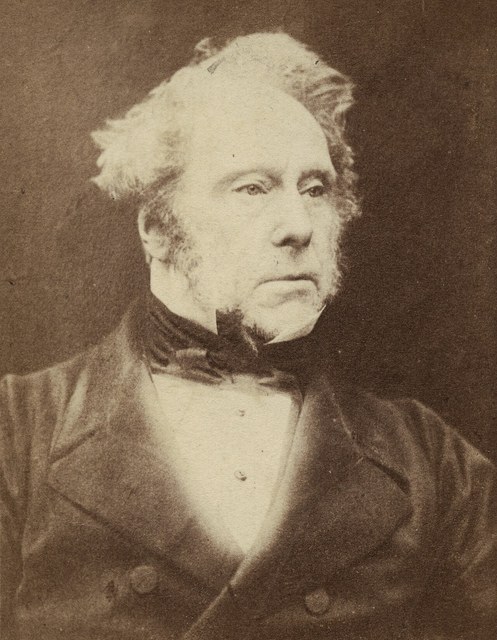
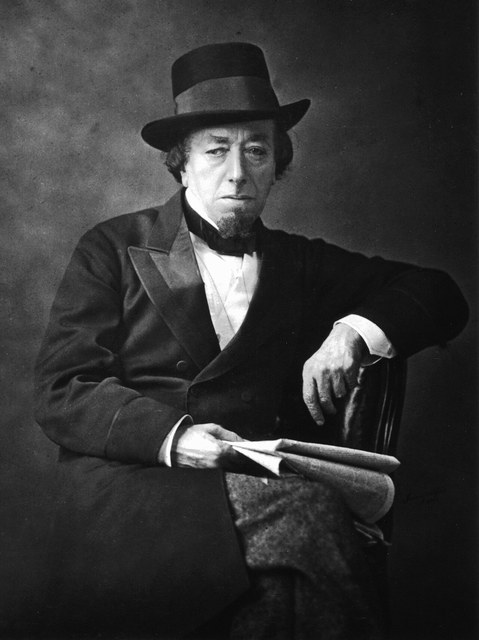
William Ewart Gladstone
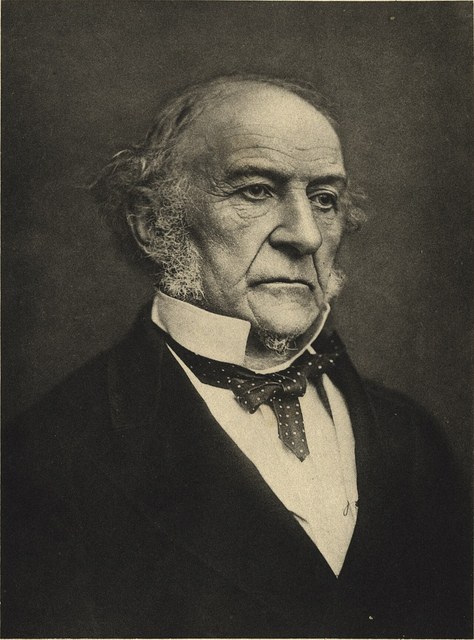
William Ewart Gladstone
bdi Samuel Alexander Walker /span /a · Public domain

British Prime Minister · served 1868–1894 · United Kingdom

William Ewart Gladstone was a Liberal British Prime Minister who served four terms and feuded with Conservative rival Benjamin Disraeli.

The kit

  • Rise — William Ewart Gladstone revolutionized political campaigning with his Midlothian Campaign, delivering fiery speeches attacking Disraeli's indifference to Bulgarian atrocities.
  • Achievements — William Ewart Gladstone's governments passed the Ballot Act requiring secret voting, the 1884 Reform Act extending suffrage to laborers, and the Cardwell Reforms abolishing purchase of officer ranks.
  • Conflicts — William Ewart Gladstone ordered British forces to bombard Alexandria during the 'Urabi revolt and issued the Irish Coercion Act allowing arbitrary detention after Secretary Cavendish's assassination.
  • Legacy — William Ewart Gladstone supported Irish Home Rule, a policy leaked during the Hawarden Kite incident, but failed to secure it despite working with Charles Parnell.

Runs with

Benjamin Disraeli
Conservative rival whom Gladstone attacked over Bulgarian Horrors response open card →
church
praised Church's structure after Rome's fall in Romanes Lecture open card →
Charles
Charles Parnell negotiated Treaty of Kilmainham with Gladstone open card →
Alexandria
ordered bombardment during 'Urabi revolt open card →

The ladder · 15 clues

H

Under this man, the purchase of officer ranks was abolished in the Cardwell Reforms.

H

This Prime Minister’s government introduced mandatory secret voting in the Ballot Act.

H

This man served as Prime Minister of Britain four times in the late 1800s. :Name this leader of the Liberals who was opposed by Conservative Benjamin Disraeli.

H

The Cardwell military reforms took place under this man.

H

This politician verbally attacked a rival for doing nothing against the “Bulgarian Horrors” during his Midlothian Campaign.

H

This bonus is about Benjamin Disraeli fan fiction. :Fan fiction writers enjoy commenting on the underlying sexual chemistry between Disraeli and this man, his Liberal arch-nemesis who served as Prime Minister four times and was known as the Grand Old Man.

H

As President of the Board of Trade, this politician gave the government power to oversee a private company with the Railway Regulation Act.

M

This leader of the Midlothian campaign supported Irish Home Rule. name this British Prime Minister who feuded with Benjamin Disraeli.

M

This so-called "Grand Old Man" gave a series of fiery speeches to his constituents in the Midlothian Campaign.

M

After Secretary Cavendish was assassinated, this man ordered arbitrary detainment via the Irish Coercion Act.

M

This politician's pamphlet Bulgarian Horrors criticized both the Ottoman reprisal against the title minority and Benjamin Disraeli's government indifference to the matter. name this Liberal politician and four- time Prime Minister of Great Britain during the late 19th century.

M

This man ran the world’s first political campaign in Midlothian.

E

Extending voting to laborers in the 1884 Reform Act this "Murderer of Gordon," a Liberal British prime minister and rival of Benjamin Disraeli.

E

This leader attacked a prominent political rival over their response to the “Bulgarian Horrors” in his Midlothian campaign. name this four-time Liberal British prime minister during the nineteenth century and rival of Benjamin Disraeli.

E

This man launched one of the first modern political campaigns in the Midlothian Campaign but was less successful working with Charles Parnell in securing Irish home rule.

10 more clues from the record
H

Answer some questions about 19th Century British Politics. :This man served as Prime Minister four separate times. A member of the Liberal Party, he revolutionised political campaigning with his Midlothian campaign.

H

He resigned as president of the Board of Trade after an increased grant to Maynooth Seminary.

H

This leader’s support for a certain policy was leaked by his son Herbert during the Hawarden Kite incident.

H

This politician signed the treaty of Kilmainham with Charles Parnell, and he used his own money to save “fallen women.” The Bulgarian horrors were denounced in the Midlothian campaign of this politician who was ousted by Lord Salisbury following the death of “Chinese” Gordon.

H

This politician gave one of the first Romanes Lectures at Oxford with his oratory "An Academic Sketch," which begins by celebrating the structure created by the Church following the fall of Rome.

H

This leader worked with the Earl of Rosebery to expose Ottoman atrocities in Bulgaria in an early instance of modern political campaigning, the Midlothian campaign.

H

The Hawarden [[HAR-den]] Kite was an infamous news scoop that suggested this man supported Irish Home Rule.

H

This prime minister ordered British forces to bombard Alexandria in response to the 'Urabi [[oo-RAH-bee]] revolt.

H

This man's government required the blind and deaf to be educated in the Elementary Education Act.

H

Identify these British Prime Ministers, :This Prime Minister and eternal rival of Benjamin Disraeli waged the particularly horrible Midlothian Campaign, in which he warned that angry, morlock-like Turks were preparing to pour into England from Bulgaria and eat everyone's children.
Watch out: Benjamin Disraeli was his Conservative rival, not a Liberal ally
#209 · Other Modern National Leaders · Level 1

Robert Peel

Robert Peel
bdi Henry William Pickersgill /span /a · Public domain

British Prime Minister · 1788–1850 · United Kingdom

Robert Peel is largely considered the founder of the Conservative Party and established London's Metropolitan Police.

The kit

  • Rise — Robert Peel authored the Tamworth Manifesto, laying the foundations of the modern Conservative Party.
  • Achievements — Robert Peel established the Metropolitan Police in London, inspiring their nickname "bobbies."
  • Conflicts — Robert Peel repealed the Corn Laws during the Irish Potato Famine, sparking backlash that ended his career.
  • Legacy — Robert Peel's secretary Edward Drummond was murdered by Daniel M'Naghten, leading to the insanity defense test.

Runs with

Corn Laws
repealed them to provide food during Irish famine, ending his career open card →
Benjamin Disraeli
began career as Peel's supporter, later opposed Corn Laws repeal open card →
London
established the Metropolitan Police there as Home Secretary open card →
Queen Victoria
precipitated Bedchamber Crisis demanding removal of her Whig ladies-in-waiting open card →

The ladder · 15 clues

H

Insane lumberjack Daniel M’Naghten sought to kill this man, but shot his secretary, Edward Drummond, instead.

H

This politician’s first ministry fell after the Lichfield House Compact, in which Daniel O’Connell agreed to ally with the opposition.

H

This British Prime Minister worked with Whigs to repeal the Corn Laws. Earlier he had helped establish the modern metropolitan police force in London.

H

This man precipitated the Bedchamber Crisis when he demanded the removal of Whigs from Queen Victoria’s personal retinue.

H

This man invited controversy by increasing the funding of the Maynooth seminary.

H

An attempted assassination of this man led to the formation of the M’Naghten test for the criminal insanity defense.

H

This man was the Prime Minister when the common law rules for insanity defenses were developed, following Daniel M’Naghten’s murder of this man’s private secretary Edward Drummond.

M

This man sparked the Bedchamber Crisis and penned the Tamworth Manifesto, one of the cornerstones of the Conservative Party.

M

This man refused to succeed Lord Melbourne unless Queen Victoria fired many ladies-in-waiting in the Bedchamber Crisis.

M

This man accepted the Reform Act of 1832 as "a final and irrevocable settlement of a great constitutional question" and advanced Conservative policies in the Tamworth Manifesto.

M

This Conservative was the British Prime Minister during the potato famine. He urged the repealing of the Corn Laws in an effort to provide more food for the starving Irish.

M

Early in his career, he refused to become Prime Minister after Queen Victoria would not dismiss certain ladies of the bedchamber.

E

This man established the Metropolitan Police in London and inspired their nickname of “bobbies.” name this 19th century British Prime Minister who repealed the Corn Laws.

E

His other achievements include responding to the Irish Potato Famine. name this British Prime Minister who founded the London police and repealed the Corn Laws.

E

When Victoria first came to power, this man led the Conservative opposition. As Prime Minister, he issued the Tamworth Manifesto and repealed the Corn Laws.

10 more clues from the record
H

He chaired the Bullion Committee and brought his country to the gold standard, and he laid the foundations of a modern political party by issuing the Tamworth Manifesto.

H

Disraeli began his political career as a supporter of this prominent Conservative, but eventually opposed him over his repeal of the Corn Laws.

H

This man’s first term as prime minister ended after Daniel O’Connell allied with Lord Melbourne to block any law this man proposed.

H

This leader’s subordinate Richard Pakenham negotiated the Oregon boundary dispute.

H

Daniel O’Connell challenged this leader to a duel for opposing Catholic emancipation.

H

This leader tried to ease tensions by granting money to Maynooth College.

H

This man is largely considered to be the founder of the Conservatives.

H

This politician authored a document that stated his objectives as “the firm maintenance of established rights, the correction of proved abuses and the redress of real grievances.” His home secretary, James Graham, sponsored a bill that prevented women and children from working in factories for more than twelve hours or from working in mines.

H

While serving as home secretary to Arthur Wellesley, he helped carry out the concessionary Emancipation Act, allowing Catholics to sit in Parliament, though it cost him his own seat.

H

The 1823 Gaols Act was introduced by this politician, who served as Home Secretary. This politician's career ended following backlash to his successful efforts to repeal the Corn Laws.

Watch out: Benjamin Disraeli, who began as Peel's supporter but opposed him over Corn Laws repeal
#210 · Other Modern National Leaders · Level 1

Benjamin Disraeli

Benjamin Disraeli
bdi Cornelius Jabez Hughes /span /a · Public domain

British Prime Minister · 1868, 1874–1880 · United Kingdom

Benjamin Disraeli was Britain's only Jewish Prime Minister, serving twice and rivaling Liberal William Gladstone throughout his career.

The kit

  • Rise — Benjamin Disraeli led the Young England movement after Robert Peel denied him a cabinet position, later becoming Chancellor of the Exchequer.
  • Achievements — Benjamin Disraeli purchased Suez Canal shares using a Rothschild loan and passed the Royal Titles Act crowning Victoria Empress of India.
  • Conflicts — Benjamin Disraeli called the Congress of Berlin to override the Treaty of San Stefano and ordered an invasion of Ethiopia to rescue Protestant hostages.
  • Legacy — Benjamin Disraeli authored novels including Vivian Grey, Sybil, and Coningsby and inspired the One Nation moderate Conservative faction with his writings.

Runs with

William
Queen Victoria
Disraeli was Queen Victoria's favorite and crowned her Empress of India open card →
William Ewart Gladstone
Disraeli alternated as Prime Minister with Gladstone, his Liberal rival open card →
Suez Canal
Disraeli purchased major Suez Canal shares using Rothschild financing open card →

The ladder · 15 clues

H

This politician led a movement known as Young England, and he was Chancellor of the Exchequer under Lord Derby.

H

A quote from this man inspired the name of the “One Nation” movement, a moderate faction of this man’s political party.

H

This man gave the title “Empress of India” to Queen Victoria. :Name this conservative Prime Minister of the United Kingdom. He had a rivalry with William Gladstone, and he is the only Jewish Prime Minister in history.

H

In his side career as an author, he wrote Vivian Grey, Sybil, and Coningsby.

H

This politician successfully ordered Sir John Napier to rescue Protestant hostages taken by Tewodros II of Ethiopia.

H

Lionel de Rothschild loaned this man money to finance the purchase of the Suez Canal.

H

This man ordered Robert Napier to invade Ethiopia.

M

Politically, this man traded power with William Gladstone.

M

This man represented the British delegation during the Congress of Berlin and used money from the Rothschild family to purchase shares for the Suez Canal.

M

This man led two governments, the first of which ended public executions and the second of which passed the Royal Titles Act.

M

Later, this politician was criticized for not stopping the Bulgarian Horrors in a series of speeches known as the Midlothian Campaign, which were given by rival William Gladstone. name this Victorian era Prime Minister of Great Britain of Jewish descent.

M

This man became the leader of the Young England movement after Robert Peel refused to give him a cabinet position.

E

This politician was a favorite of Queen Victoria and crowned her Empress of India. name this Conservative prime minister of Great Britain and rival of William Gladstone.

E

This man introduced the Royal Titles Act to name Queen Victoria as the Empress of India. name this Conservative Prime Minister, the first Jew to take the office.

E

Preceded and succeeded by William Gladstone, this is this Conservative politician, the only British Prime Minister of Jewish descent.

10 more clues from the record
H

This man reportedly remarked, “I have climbed to the top of the greasy pole” upon reaching his highest office.

H

This man tried to start a newspaper titled The Representative, which focused on the mining bubble, but when the bubble burst, the newspaper failed.

H

After acquiring a loan from Lionel de Rothschild, this leader purchased a major interest in the Suez Canal.

H

This man was appointed Chancellor of the Exchequer while serving under the “Who?

H

This leader called a Congress of Berlin in order to override the Treaty of San Stefano. He supported Lord Derby’s attempts to pass a Reform Act prohibiting rotten boroughs.

H

This politician controversially used the phrase “coffee-house babble” to describe a report of foreign atrocities, but he regardless sent Lord Salisbury to negotiate at the Constantinople Conference.

H

This leader’s foreign policies included buying out the Suez Canal Company and ordering a failed invasion of Afghanistan as part of the Great Game with Russia.

H

This man's last finished novel features William Pitt Ferrars, whose sister is a companion to Adrian Neuchatel, titled Endymion [[en-DIM-ee-on]].

H

This leader, who with George Smythe co-founded the Young England group, was criticized by one politician about the Bulgarian Horrors in the Midlothian Campaign.

H

This man once refused to believe reports of a Bulgarian massacre and dispatched Lord Roberts to put down an uprising in Afghanistan.

Watch out: Confused with William Gladstone, his Liberal rival who alternated with him as Prime Minister
#212 · Other Modern National Leaders · Level 1

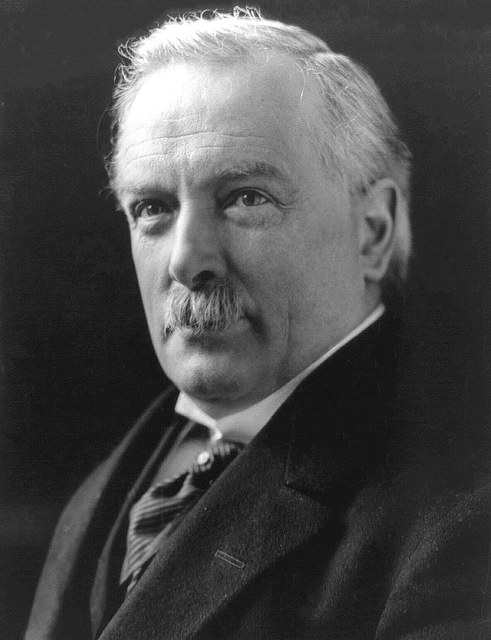
David Lloyd George

David Lloyd George
Harris & Ewing · Public domain

British Prime Minister · 1916–1922 · United Kingdom

David Lloyd George was the Welsh Liberal who led Britain through World War I's final years and negotiated at Versailles.

The kit

  • Rise — David Lloyd George introduced the National Insurance Act of 1911 and as Chancellor of the Exchequer proposed the People's Budget of 1909.
  • Achievements — David Lloyd George succeeded Asquith as Prime Minister in 1916 and addressed the Shell Crisis as Minister of Munitions during World War I.
  • Conflicts — David Lloyd George won the Coupon Election but resigned after mishandling Turkish aggression during the Chanak Crisis in 1922.
  • Legacy — David Lloyd George was the last Liberal Prime Minister and one of the Big Four at the Paris Peace Conference with Wilson and Clemenceau.

Runs with

Chancellor
served as Chancellor of the Exchequer before becoming Prime Minister open card →
Paris
represented Britain at the Paris Peace Conference in 1919 open card →
World War I
led Britain through the final years of the war open card →
Treaty of Versailles
negotiated as one of the Big Four at Versailles open card →

The ladder · 15 clues

H

British Prime Minister who led Britain during the War and represented Britain at the Paris Peace Conference.

H

This man advocated for war to protect national honor in his Mansion House Speech, given in response to the Agadir Crisis.

H

With Rufus Isaacs, this man was accused of speculating on inside knowledge during the Marconi scandal of 1913.

H

This man mailed letters endorsing members of his coalition during a victorious election, known as the “coupon election.” In one speech this man claimed “a fully- equipped duke costs as much to keep up as two Dreadnoughts.” That sentiment was demonstrated when, as Chancellor of the Exchequer, this man advocated for the passage of increased taxes on the wealthy as part of the People’s Budget.

H

This man won the “Coupon election” against Andrew Bonar Law, and avoided war with Turkey after an invasion of the Dardanelles in the Chanak Crisis.

H

This man served as the Minister of Munitions and had a seven year stint as the Chancellor of the Exchequer.

H

This man was responsible for the National Insurance Act and, as Chancellor of the Exchequer, he pushed for a land tax in the People's Budget.

M

He introduced the National Insurance Act of 1911, and after succeeding Asquith as Chancellor of the Exchequer, he proposed the People’s Budget of 1909.

M

Balfour was the Foreign Secretary for this British Prime Minister, who headed Britain for part of World War I and attended the Paris Peace conference. This Welshman was the last Liberal Prime Minister.

M

Proposed the “People’s Budget” and represented Britain at Versailles in 1919.

M

With Woodrow Wilson, Vittorio Orlando, and George Clemenceau, this man made up the “Big Four” at the Versailles Peace Talks. name this Welshman that served as the British PM during the second half of World War I.

M

This man addressed the Shell Crisis during World War I as Minister of Munitions, and he succeeded Lord Kitchener as Secretary of State for War in 1916.

E

Welsh prime minister who was one of the "big four" at the Versailles peace negotiations.

E

Churchill served as War Secretary to this prime minister of Welsh descent who made up the Big Three at Versailles with Georges Clemenceau [[kleh-mahn-SOH]] and Woodrow Wilson.

E

A proposal to levy land taxes on the wealthy was introduced in this man’s "People’s Budget" which was presented the decade before he led his country through a war that included the Battle of Verdun. name this World War One British prime minister, a member of the Big Three at Versailles.

10 more clues from the record
H

This man’s government was opposed by the Wee Frees under William Benn after he ousted his predecessor, and he resigned after threatening Turkey with war during the Chanak Crisis.

H

Mackenzie King flexed Canadian muscle at the expense of this man’s government in the Chanak Crisis, after which he resigned and was succeeded by Andrew Bonar Law.

H

The “Garden Suburb” advised this prime minister, who claimed that one general had “proved himself to be a Man." After a meeting with Berthier de Sauvigny [[soh-veen-YEE]], this man determined to make that general, Robert Nivelle, the commander of his own countryman, Douglas Haig.

H

This man declared that “we should not emulate [Germany] only in armaments” in support of the National Insurance Act.

H

A series of taxes proposed by this man angered the elite and led to a constitutional crisis over his People’s Budget.

H

This man’s ministry saw the passage of the Railways act, which was introduced by this man’s minister of transport, Eric Geddes.

H

This man mishandled Turkish acts of aggression in the Chanak Crisis, leading to his fall from power.

H

attended the 1919 Paris Peace Conference and helped organize the Treaty of Versailles?

H

This leader remained in power after the Coupon Election despite his feud with H. H. Asquith.

H

He was the only prominent politician in the Depression-era UK to embrace Keynesian economic policies, and his proposal for a US-style “New Deal” was rejected by the Conservative cabinet in 1935. FTPE:Name this British prime minister shunned by all three major parties after leaving office in 1922.

Watch out: H. H. Asquith (predecessor as Liberal PM whom Lloyd George feuded with and replaced)
#213 · Other Modern National Leaders · Level 1

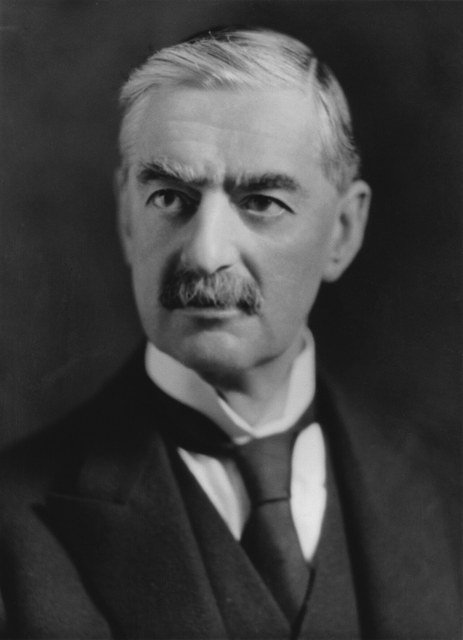
Neville Chamberlain

Neville Chamberlain
bdi Bassano Ltd /span /a · Public domain

British Prime Minister · 1937–1940 · United Kingdom

Neville Chamberlain was the British Prime Minister whose appeasement policy toward Hitler culminated in the Munich Agreement and his resignation in 1940.

The kit

  • Rise — Neville Chamberlain became MP for Birmingham Ladywood at age 49 and succeeded Stanley Baldwin as Prime Minister in 1937.
  • Achievements — Neville Chamberlain passed major social legislation including the Factories Act and Holidays with Pay Act during his political tenure.
  • Conflicts — Neville Chamberlain conceded the Sudetenland to Germany at Munich in September 1938, declaring "peace for our time" upon his return.
  • Death & succession — Neville Chamberlain resigned after the disastrous Allied expedition to Norway in 1940, replaced by Winston Churchill as Prime Minister.

Runs with

Munich
signed Munich Agreement there September 30, 1938 open card →
Winston Churchill
resigned in his favor May 1940 open card →
Norway
failed expedition prompted his resignation open card →
Chancellor
served as Chancellor of the Exchequer under Baldwin open card →

The ladder · 15 clues

H

Leo Amery attacked this man in Parliament by quoting Cromwell’s “In the name of God, go!” speech.

H

This man’s half-brother Austen won a Nobel Peace Prize for helping to negotiate the Locarno Treaties.

H

This man came to power after Stanley Baldwin retired from his highest post.

H

Some major pieces of legislation passed during this man’s political tenure, including the Factories Act and the Holidays with Pay Act.

H

This British Prime Minister was one of the main supporters of appeasement, and after the Munich Agreement he announced that he had secured “peace for our time”.

H

While Director of National Service, this man had disagreements with David Lloyd George that would result in mutual contempt for the rest of their careers.

H

While serving as Chancellor of the Exchequer, this man once quipped England was finished with Bleak House and was moving on to Great Expectations.

M

The disastrous Allied attempt to save Norway resulted in the resignation of this British prime minister, who claimed there would be “peace in our time” after the Munich Agreement with Hitler.

M

This other prime minister was heavily criticized in the book Guilty Men for his policy of appeasement towards Nazi Germany after declaring “peace for our time.”

M

This man’s intention to recognise Italy’s conquest of Ethiopia led Anthony Eden to resign as Foreign Secretary, Lord Halifax being appointed as his replacement.

M

This man recommended the abdication of Edward VIII, while serving as Chancellor of the Exchequer to Stanley Baldwin.

M

Leo Amery quoted Oliver Cromwell in attacking this man’s foreign policy by saying “in the name of God, go!” This man waved a paper at Heston Aerodrome before issuing his most famous proclamation.

E

Churchill replaced what fellow Conservative this person who promised “peace for our time” after signing the Munich Agreement, as Prime Minister.

E

This man’s concession of the Sudetenland in Czechoslovakia to one leader became synonymous with this man’s policy of “appeasement.” This man signed the Munich Agreement with Adolf Hitler prior to the invasion of Poland the following year. name this prime minister of the United Kingdom at the beginning of World War II.

E

This Conservative Prime Minister is known for stepping down in favor of Winston Churchill after his policy of appeasement failed to prevent aggression by Hitler.

10 more clues from the record
H

On September 30, 1938, this man conceded the Sudetenland to Germany, and declared war on the latter after its invasion of Poland in 1939. name this man, who served as Prime Minister of the United Kingdom from 1937 to 1940.

H

In 1924, Mosley came within 100 votes of defeating this MP from Birmingham Ladywood, who went on to succeed Stanley Baldwin as prime minister.

H

This man spoke of the “innocent people of Holland, Belgium and France” in a resignation address which drove Princess Elizabeth to tears.

H

This man failed to prevent the German invasion of Norway, which prompted the Norway Debate in the British House of Commons.

H

This man became a Member of Parliament for Birmingham Ladywood, his first elected position, at the age of 49.

H

This man was forced to resign after the failure of the expedition to Norway.

H

Name these British Prime Ministers of the 20th century .Most of the focus on this Conservative’s term is placed on his appeasement of Hitler, giving areas of to in the Munich Conference. His declaration of “peace in our time” proved foolish.

H

This British prime minister and proponent of appeasement was given a hero’s welcome after negotiating the Munich Agreement in 1938, but would resign the next year in favor of Winston Churchill.

H

This man used Walter Runciman and the Earl of Halifax to negotiate with men such as Konstantin von Neurath, and he signed one agreement on September 30, which Slovaks refer to as a diktat.

H

This man's brother won the Nobel Peace Prize for leading the Locarno Conference negotiations and his predecessor, Stanley Baldwin, was implicated in the May Report.

Watch out: His half-brother Austen Chamberlain won the Nobel Peace Prize for negotiating the Locarno Treaties
#218 · Other Modern National Leaders · Level 1

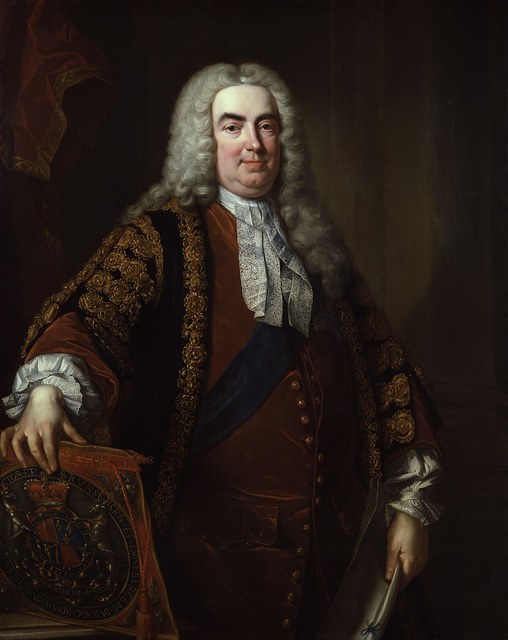
Robert Walpole

Robert Walpole
bdi Studio of Jean-Baptiste van Loo /span /a · Public domain

British Prime Minister · 1721–1742 · Great Britain

Robert Walpole is considered the first Prime Minister of Great Britain, serving under George I and George II during the Robinocracy.

The kit

  • Rise — Robert Walpole rose to prominence after managing Britain's economic recovery from the South Sea Bubble in 1720 using a sinking fund.
  • Achievements — Robert Walpole passed the Licensing Act, placing the Lord Chamberlain in charge of theatre censorship to prevent government criticism.
  • Conflicts — Robert Walpole faced opposition from the Patriot Whigs led by William Pulteney and from Viscount Bolingbroke, who criticized him in The Craftsman.
  • Death & succession — Robert Walpole was forced to resign from Parliament after losing the War of Jenkins' Ear in 1742.

Runs with

George
served under George I and George II open card →
John
pardoned John Porteous, sparking Edinburgh riots open card →
Charles
no connection stated in clues open card →
William
opposed by William Pulteney and William Pitt open card →

The ladder · 15 clues

H

This man put the Lord Chamberlain in charge of theatre censorship after passing the Licensing Act.

H

This man was frequent rivals with William Pulteney and Viscount Bolingbroke, the former of which created a faction called the Patriot Boys to oppose him.

H

William Pulteney led a faction against this politician called the “Patriot Whigs.” This politician's pardon of a police captain led to the Porteous Riots.

H

This man passed the Licensing Act in an attempt to prevent playwrights from criticizing the government through drama.

H

Riots in Edinburgh occurred in this man’s premiership, after John Porteous killed several civilians.

H

During this man’s time as prime minister, Francis Atterbury was found to be in a Jacobite plot.

H

This politician was derisively nicknamed The “Screenmaster-General” after he saved Lord Stanhope from punishment.

M

George Grenville and William Pitt the Elder opposed this man with the “Boy Patriots.” This prime minister lost power during the War of Jenkins’ Ear.

M

This man’s propensity to cover up scandals, such as a financial scandal involving the Lords Stanhope and Sunderland, earned him the nickname The Screen.

M

This man’s tenure was dubbed the “Robinocracy” and included the introduction of a “sinking fund” to combat the South Sea Bubble.

M

The Porteous Riots took place during his term, and he helped England overcome the South Sea Bubble disaster by instituting the “sinking fund” in his role as Chancellor of the Exchequer.

M

The Earl of Bath founded the Patriot Boys to oppose this man, whose popularity dipped after the Porteous Riots.

E

This leader oversaw the country’s economic recovery after the South Sea Bubble in 1720. name this first prime minister of Great Britain.

E

This man was forced to resign from the Parliament after losing the War of Jenkins’ Ear. name this man, usually considered the first Prime Minister of Great Britain.

E

This politician first rose to prominence during the reign of George the First in the fallout of the South Sea Bubble. (*) For the points, name this politician, typically considered the first Prime Minister of England.

10 more clues from the record
H

While lord of the treasury, he introduced the first "sinking fund." :Name this man, considered the first British prime minister.

H

During his time at the Leicester House, this person successfully led the opposition to the Peerage Bill.

H

A leading member of the Kit-Cat Club, this man chaired the secret committee that impeached Viscount Bolingbroke for treason.

H

This politician is credited with coining the phrase "every man has his price." This man built the estate of Houghton Hall in Norfolk.

H

This man helped uncover Christopher Layer’s conspiracy to kidnap the royal family, the Atterbury Plot.

H

A coalition known as the Country Party formed to oppose this politician, whose enemies Lord Bolingbroke and Robert Pulteney criticized him in The Craftsman.

H

This man’s attempts to keep the country gentlemen who opposed him in check led him to oppose the Peerage Bill.

H

This politician’s influence diminished after he tried to commute John Porteous’ sentence for firing on protestors.

H

This politician’s tenure, which was dubbed the Robinocracy, spanned two decades in the service of kings George I and II.

H

De facto first PM, in power during the beginning of the War of the Austrian Succession.

Watch out: Walpole chaired the committee that impeached Viscount Bolingbroke, but the impeachment was for treason broadly, not a single specific charge
#220 · Other Modern National Leaders · Level 1

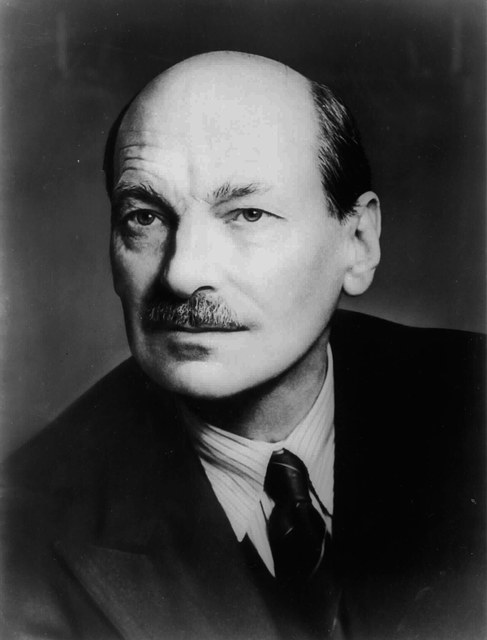
Clement Attlee

Clement Attlee
bdi Presumably Yousuf Karsh /span /a · Public domain

British Labour Prime Minister · 1945–1951 · United Kingdom

Clement Attlee led Labour to a landslide 1945 victory over Churchill and created the modern British welfare state.

The kit

  • Rise — Clement Attlee served as Britain's first Deputy Prime Minister before replacing Winston Churchill at the Potsdam Conference in July 1945.
  • Achievements — Clement Attlee established the National Health Service following the Beveridge Report and nationalized railways, coal mines, and steel industries.
  • Conflicts — Clement Attlee's government faced the Bevanite quarrel between Chancellor Hugh Gaitskell and Health Secretary Aneurin Bevan over welfare spending.
  • Legacy — Clement Attlee oversaw decolonization of India and Pakistan and lost the 1951 election to Churchill after six transformative years.

Runs with

Winston Churchill
defeated Churchill in 1945, replaced by him in 1951 open card →
Labour Party
led Labour to landslide 1945 victory open card →
church
no connection evident in clues open card →
Joe Hill
no connection evident in clues open card →

The ladder · 15 clues

H

As the first Deputy Prime Minister, he received the Beveridge Report, which he followed by creating the National Health Service.

H

This man won an election on the slogan “Let Us Face the Future” and subsequently passed the National Insurance Act on the advice of the Beveridge Report.

H

replaced his predecessor as the new Labour PM at the 1945 Potsdam Conference?

H

This leader’s party was split between supporters of Chancellor of the Exchequer Hugh Gaitskell and Health Secretary Aneurin Bevan.

H

During his prime ministership, many non-African portions of the British Empire became independent countries, such as India and Pakistan.

H

This author of The Social Worker saw his Fuel and Power Minister Emanuel Shinwell resign when coal mines froze.

H

This leader’s slogan was “Let us face the future together.” His tenure saw the decolonisation of Mandatory Palestine and the appointment of Aneurin Bevan as Minister for a new welfare system.

M

Five months after the Yalta Conference, this Labour prime minister replaced Winston Churchill at the Potsdam Conference.

M

Another notable khaki election occurred in 1945, when this Labour Party politician won a landslide victory against Winston Churchill. Nye Bevan served as this Prime Minister’s Minister of Health.

M

Labour Party leader who defeated him in 1945 and 1950 elections.

M

His administration oversaw the creation of the National Health Service and he led the Labour Party through what became known as the “Bevanite” quarrel.

M

He oversaw the failure of the Tanganyika Groundnut Scheme and for his first period in government he served in a role created specifically for him; that role was Deputy Prime Minister.

E

The National Health Service was created during the tenure of this Labour Prime Minister who lost a 1951 election to a man he had stunned in 1945, Winston Churchill.

E

The Potsdam Conference was attended by this Prime Minister who replaced Winston Churchill at the end of World War II.

E

The British railroad system was finally nationalized in 1948 under this Labour Prime Minister, who led the UK after World War II.

10 more clues from the record
H

The British welfare state began under this man, who chartered the creation of the National Health Service.

H

This man nationalised the Iron and Steel Corporation, and he sent Elliot Briggs to resolve the Malayan Emergency.

H

This man received a boost in the polls after he was accused of needing “some kind of Gestapo” to fulfill his policies.

H

This leader nationalized the Big Four railway companies and created the National Coal Board.

H

The fall of this man’s government was prompted by the divisory budget of Hugh Gaitskell.

H

Many of the ideas outlined in the Beveridge Report, such as the establishment of the National Health Service, were instituted under this Prime Minister, whose time in office also saw the independence of most of Britain’s Asian colonies, including India.

H

This prime minister presided over a food and coal shortage that was mocked with the slogan “Starve with Strachey and shiver with Shinwell.” His government passed the first New Towns Act and created the National Parks Commission.

H

He ran with the Labour Party under the slogan, “Let us Face the Future” and criticized his opponent’s use of the word “gestapo.” He expressed his socialist views in his acceptance of the Beveridge Report and his book, The Social Worker.

H

Answer the following about a British politician, :This man nationalized many utilities and led the Labour Party to a landslide victory in 1945, in addition to presiding over the decolonization of much of the British Empire.

H

This man served a term between those of Winston Churchill's, and attended the Potsdam Conference as well as starting decolonization and nationalizing many parts of the country, including creating the National Health Service.

Watch out: Winston Churchill (opponent defeated in 1945, replaced him in 1951)
#223 · Other Modern National Leaders · Level 1

Henry John Temple, 3rd Viscount Palmerston

Henry John Temple, 3rd Viscount Palmerston
bdi Herbert Watkins /span /a · Public domain

British Prime Minister · 1784–1865 · Britain

Henry John Temple, 3rd Viscount Palmerston was a British statesman who served as Foreign Secretary and Prime Minister during the mid-19th century.

The kit

  • Rise — Palmerston became Foreign Secretary under Earl Grey in 1830, helping establish Belgian independence and negotiating the 1840 Treaty of London.
  • Achievements — Palmerston defended British citizen Don Pacifico in his famous Civis Romanus Sum speech, comparing Britain's empire to Rome's.
  • Prime Minister — Palmerston became Prime Minister in January 1855 after Lord Aberdeen's government collapsed, gaining popularity for his handling of the Crimean War.
  • Conflicts — Palmerston initiated the Arrow War and faced the Trent seizure during the American Civil War, when cotton dependence complicated British policy.

Runs with

London
negotiated 1840 London Convention as Foreign Secretary open card →
American Civil War
served as Prime Minister during war; faced Trent crisis open card →
Crimean War
gained popularity for handling the war as Prime Minister open card →
Chancellor
served as Foreign Secretary under multiple governments open card →

The ladder · 15 clues

H

His belief in British military superiority was evident in his famous Civis Romanus Sum speech regarding the Don Pacifico incident.

H

As foreign minister, this man feuded with the French Francois Guizot after he suggested Prince Leopold marry Queen Isabella in the Affair of the Spanish Marriages.

H

This politician gave a speech endorsing the “Conspiracy to Murder” bill in response to the Orsini affair.

H

He drafted legislation requiring childhood vaccination when he was Home Secretary for Lord Aberdeen.

H

This man was once forced to resign over the Orsini Affair, where a bomb made in Britain was used in an assassination attempt on Louis Napoleon.

H

After rejecting the governorship of both Jamaica and India, he became Secretary of State for Foreign Affairs under Earl Grey in 1830 and promptly used his position to ensure the creation of an independent Belgium as well as negotiating the 1840 Treaty of London and negotiating a compromise between rebelling Portuguese liberals and Queen Maria.

H

Identify the following British Prime Ministers .As chairman of the London Conference, he helped establish the independence and protection of Belgium. He believed that Austria had to be a great power in order for Europe to be politically independent.

M

Foreign Secretary who intervened in the Don Pacifico Affair and became prime minister during the American Civil War?

M

Prime minister who initiated the Arrow War and resolved the Don Pacifico affair in 1850.

M

This man argued that an English citizen overseas should "feel confident that the watchful eye and strong arm of England will protect him against injustice and wrong" after an anti-Semitic mob attacked a British citizen from Gibraltar.

M

As Foreign Secretary, he had supported Don Pacifico’s claims in Greece.

M

This Prime Minister, Home Secretary under Lord Aberdeen, took power after the collapse of Lord Aberdeen's government in January 1855, several months after the Battle of Balaclava.

E

This man came to the defence of a merchant attacked by a mob in Athens by invoking the principle of Civis Romanus Sum in the Don Pacifico Affair.

E

During his tenure, the RMS Trent was seized while carrying two representatives of a country on which his country was dependent for cotton. name this British Prime Minister who served during the U.S. Civil War.

E

This prime minister gained popularity for his handling of the Crimean War and for suppressing the Sepoy Mutiny, and he maintained British neutrality in the American Civil War.

10 more clues from the record
H

His first stint as prime minister saw the seizure of the Arrow.

H

After this politician was dismissed for recognizing Napoleon III's coup, he vowed to go "tit for tat with little Johnny Russell." Right before his death, this politician led an election campaign with the slogan "Leave it to Pam".

H

Following a short stint as a Lieutenant-Colonel of the Romsey Volunteers, this man gave his first speech in front of Parliament where he spoke in favor of the destruction of the Danish navy.

H

During his time as foreign minister, he compared his nation’s empire to the Roman Empire in an incident involving the attack of a Jewish man in Greece known as the Don Pacifico affair.

H

That quote is attributed to this British politician. While Foreign Secretary, he negotiated the 1840 London Convention that made Muhammad Ali’s position in Egypt hereditary.

H

This man argued that his politics only had a tendency to produce war, a statement which was used by a “little cabal in … [his] own ranks” to undermine him.

H

This man nearly caused an international scandal by inviting Lajos Kossuth to his house, but was convinced not to do so at the last moment by a vote of the cabinet.

H

He was called Lord Cupid for keeping leading patronesses of the Almack’s social club as mistresses, including his future wife Lady Cowper.

H

Sir Leonard Holmes assured this man a seat in Parliament representing a district on the Isle of Wight on the condition that he never visit the area.

H

This man voted for the Ten Hours Bill after a workers’ delegation made him push lounge chairs around his dining room.

Watch out: Lord John Russell (Palmerston vowed 'tit for tat with little Johnny Russell' after dismissal)
#224 · Other Modern National Leaders · Level 1

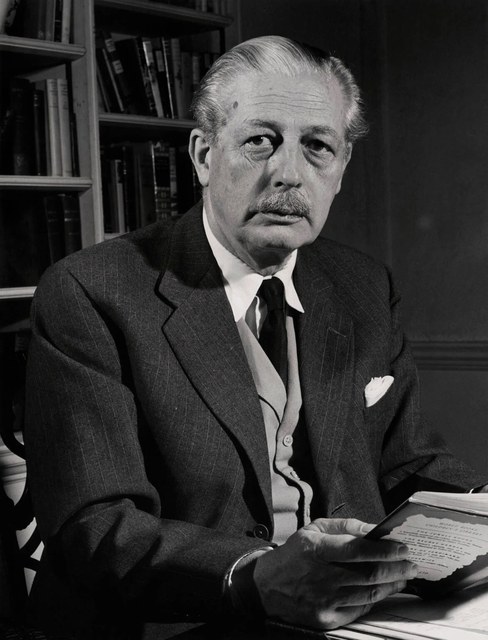
Harold Macmillan

Harold Macmillan
Unknown photographer · Public domain

British Prime Minister · 1957–1963 · United Kingdom

Harold Macmillan was the Conservative Prime Minister who championed decolonization through his 1960 Wind of Change speech and resigned after the Profumo affair.

The kit

  • Rise — Harold Macmillan succeeded Anthony Eden in 1957 after serving as Churchill's Minister of Defense and Eden's Chancellor of the Exchequer.
  • Achievements — Harold Macmillan delivered the Wind of Change speech in Cape Town in 1960, criticizing apartheid and accelerating African decolonization.
  • Conflicts — Harold Macmillan's government was rocked by the Profumo affair, in which War Secretary John Profumo had an affair with Christine Keeler, mistress of an alleged Soviet spy.
  • Legacy — Harold Macmillan signed the Partial Test Ban Treaty and negotiated the Nassau Agreement for Polaris missiles after the U.S. canceled Skybolt development.

Runs with

John
War Secretary John Profumo's affair scandal forced Macmillan's resignation open card →
Africa
accelerated decolonization through sub-Saharan tour and independence policies open card →
South Africa
delivered Wind of Change speech to Parliament criticizing apartheid open card →
Anthony Eden
succeeded Eden as Prime Minister in January 1957 open card →

The ladder · 15 clues

H

This politician replaced his old friend Selwyn Lloyd and seven other cabinet members within 24 hours in what became known as Britain’s Night of the Long Knives.

H

This politician’s demands for strong nuclear growth contributed to a fire at the Windscale Plant.

H

This Conservative Prime Minister from 1957 to 1963 signed the Partial Test Ban Treaty, but had his government rocked by the Profumo affair, in which his Secretary of State for War had an affair with the mistress of an alleged Soviet spy.

H

In 1960, this leader gave the “Winds of Change” speech at the Parliament of South Africa in which he criticized Apartheid.

H

Hendrik Verwoerd responded to this leader by saying that there must “also be justice to the white man.” This leader, who claimed his country “has never had it so good,” was scandalized after it was uncovered that Christine Keeler was in a relationship with Secretary of State for War John Profumo.

H

Though this politician began the Polaris nuclear project, he ended the National Service and joined the USSR and United States as the third major country to sign the Partial Test Ban Treaty.

H

This leader’s navy was damaged when John Vassall was blackmailed into being a Soviet spy.

M

This man’s disapproval of apartheid became clear in a pro-decolonization speech. name this Prime Minister who delivered the Wind of Change address.

M

Gave the “Wind of Change” speech in 1960, giving tacit approval to African independence movements.

M

The Profumo affair led to the defeat of the Conservative administration under this prime minister, who had won the 1959 election under the “you’ve never had it so good” campaign.

M

A scandal for this man’s government occurred after the homosexuality of John Vassall was used to get secrets from the Admiralty by the KGB.

M

Was nicknamed "Supermac" and oversaw Britain's first H-Bomb test, resigning following the Profumo affair.

E

This man’s cabinet was rocked by the revelation that Christine Keeler had an affair with the Secretary of State for War, John Profumo.

E

This Prime Minister’s sub-Saharan tour of Africa is credited with speeding up decolonization. name this Conservative Prime Minister of the UK who gave the 1960 “Wind of Change” speech in South Africa.

E

The Federation of Malaya became officially independent in 1957 during the administration of this British prime minister, a supporter of decolonization, who had succeeded Anthony Eden in January of that year.

10 more clues from the record
H

In this man’s first speech to the House of Lords, he said that his heart was broken to see a coal mining strike carried out by the “best men in the world.” During one election, this man defeated Hugh Gaitskell by using the slogan “most of our people have never had it so good.” As Foreign Secretary, he quipped “There ain’t gonna be no war!” after returning from the Geneva Summit.

H

This Prime Minister got his start in politics as Churchill’s protege and began the decolonization of Africa. He also assisted in the creation of the Nuclear Test Ban, and endured the Profumo Affair.

H

One scandal during this man’s tenure was related to a junior civil servant named John Vassall who helped transmit important naval technology to the Soviet Union.

H

19. Identify the following about a British Prime Minister FTPE.This man served as Churchill’s minister of defense and Eden’s chancellor of the exchequer. He acceded to office in 1957.

H

He got a nickname from a comic which was subtitled “How to Try to Continue to Stay Top Without Actually Having Been There” and which was created by Vicky.

H

The Aldermaston Marches against nuclear proliferation started during the tenure of this PM, a Conservative who resigned in 1963 in the aftermath of the Profumo Affair.

H

One of his first actions was to try and boost employment as part of his One Nation philosophy, which led to the resignantion of three treasury ministers.

H

This man negotiated the purchase of Polaris missiles via the Nassau Agreement after the U.S. backed out of the development of the Skybolt system.

H

He had introduced premium bonds while serving as Chancellor of the Exchequer under his predecessor, Anthony Eden.

H

This man notably described the “growth of national consciousness” while visiting Cape Town.

Watch out: John Vassall spy scandal also occurred during his tenure but is less famous than Profumo affair
#225 · Other Modern National Leaders · Level 1

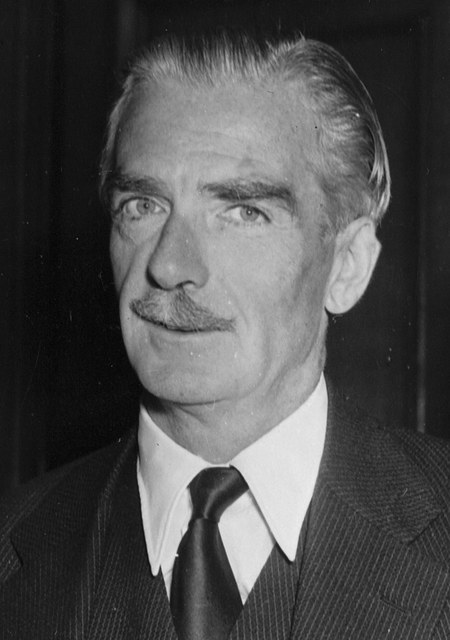
Anthony Eden

Anthony Eden
Unknown author Unknown author · CC BY-SA 3.0 nl

British Prime Minister · 1897–1977; PM 1955–1957 · United Kingdom

Anthony Eden was the British Prime Minister whose government collapsed after the failed 1956 Suez Crisis intervention.

The kit

  • Rise — Anthony Eden resigned as Foreign Secretary in 1938 to protest Chamberlain's appeasement policy after the Munich Agreement.
  • Achievements — Anthony Eden served as Churchill's Foreign Secretary during most of World War II and succeeded him as Prime Minister in 1955.
  • Conflicts — Anthony Eden compared Nasser to Mussolini and colluded with France and Israel to seize the Suez Canal in 1956.
  • Death & succession — Anthony Eden resigned in 1957 after the Suez Crisis and was succeeded by Harold Macmillan as Prime Minister.

Runs with

Suez Crisis
Eden's government collapsed after this bungled 1956 intervention open card →
Suez Canal
Eden used armed force to seize it in October 1956 open card →
Egypt
Eden invaded alongside France and Israel in 1956 open card →
France
Eden colluded with this nation and Israel for Suez intervention open card →

The ladder · 15 clues

H

The leader of the “Glamour Boys,” this man resigned his post of Foreign Secretary after the Munich Agreement.

H

Prime Minister of the UK whose administration collapsed following the bungling of the Suez Crisis

H

A “Law Not War” rally in Trafalgar Square against this leader led by Aneurin BevRan opposed Operation Musketeer.

H

Deputy and Foreign Secretary who succeeded him in 1955, leading Britain during the Suez Crisis.

H

This Englishman’s government faced questions after the disappearance of MI6 diver Lionel Crabb on a reconnaissance mission.

H

After the failure of the Hoare–Laval Pact, Hoare was replaced as Foreign Secretary by this youthful conservative, who held the post again in the Churchill ministry during most of World War II.

H

In his highest office, he began Britain’s collapse as a superpower in a bungled attempt to maintain influence in the Middle East against US and Soviet opposition.

H

According to John Colville’s The Fringes of Power, this politician rejected a French plan for Britain and France to enter into a political union.

H

This British Conservative Prime Minister and former Foreign Minister spearheaded the intervention, but its failure led to his resignation. He was succeeded by Harold Macmillan.

M

This Prime Minister was forced to resign amid allegations that he was colluding with France and Israel to seize the Suez Canal.

M

Churchill was succeeded after his second Ministry and retirement by this man. He had earlier resigned as Foreign Secretary to protest Chamberlain’s policy of appeasement.

M

This Earl of Avon became Prime Minister after Churchill’s last resignation and decided to use armed force to intervene at the Suez Canal in October of 1956.

M

He compared Gamal Abdel Nasser to Benito Mussolini and joined with France and Israel to invade Egypt. name this Prime Minister in power during the Suez Crisis.

E

Guy Mollet and this man lost their highest offices after a conflict with Gamel Abdel Nasser. name this British prime minister who resigned after the Suez Crisis.

E

British Prime Minister who resigned in its wake.

3 more clues from the record
H

A fashion leader known for his characteristic Homburg hat, this man was called “the best dressed fool in Europe” by Benito Mussolini.

H

Succeeding Winston Churchill in 1955, he was criticized for deciding to invade the area with , and he was forced to resign soon thereafter.

H

This man wrote an introduction for his great-great-great aunt’s novel The Semi-Attached Couple.

Watch out: Neville Chamberlain (Eden resigned to protest Chamberlain's appeasement, but Chamberlain was the Munich Agreement PM)
#1025 · British Prime Ministers · Level 3

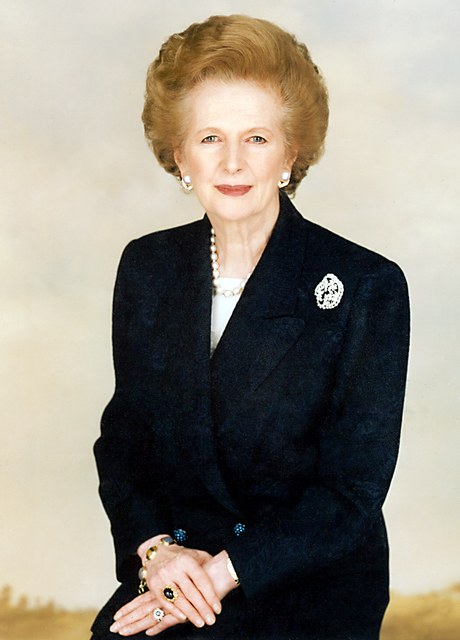
Margaret Thatcher

Margaret Thatcher
Unknown photographer · CC BY-SA 3.0

British Prime Minister · 1979–1990 · United Kingdom

Margaret Thatcher was the first female British Prime Minister, serving 1979–1990 and nicknamed the "Iron Lady."

The kit

  • Rise — Margaret Thatcher defeated Willie Whitelaw for Conservative leadership and David Steel in the general election.
  • Achievements — Margaret Thatcher led Britain to victory in the Falklands War against Argentina's Leopoldo Galtieri.
  • Conflicts — Margaret Thatcher survived the Brighton Hotel bombing by the Provisional IRA in 1984.
  • Death & succession — Margaret Thatcher resigned after Geoffrey Howe turned on her and Michael Heseltine applied pressure in 1990.

Runs with

Iron
nicknamed the Iron Lady open card →
Coal
weathered Arthur Scargill's coal miners strike open card →
Falklands War
led Britain during the conflict open card →
John Major

The ladder · 6 clues

H

This leader’s government weathered a coal miners strike led by Arthur Scargill.

H

This leader’s adoption of the Community Charge prompted the Poll Tax Riots.

M

Female British Prime Minister who was targeted in the Brighton Hotel bombing.

M

This leader lost power after supporting the Community Charge, an extremely unpopular poll tax.

E

This woman was targeted in the Brighton bombing and led her country during the Falklands War. name this UK Prime Minister dubbed “The Iron Lady” by her opponents.

E

After removing free dairy products for schoolkids, this leader was disparaged as a “milk snatcher.” name this conservative Prime Minister of the UK, known as the “Iron Lady.”

10 more clues from the record
H

This person survived an assassination attempt by the Provisional Irish Republican Army at the Grand Brighton Hotel in 1984.

H

The title “Milk Snatcher” was applied to this woman while she held the post of Education Secretary under Edward Heath.

H

This leader’s government ended the hunger strikes conducted in the Maze Prison during the Time of Troubles.

H

Geoffrey Howe turned on this leader, who resigned after pressure from Michael Heseltine.

H

Under this prime minister, a scandal over the merger of Westland Helicopters led to the resignation of Defense Secretary Michael Heseltine.

H

After a dispute with this leader over the integration of Westland Helicopters, this leader’s Defense Secretary Michael Heseltine resigned.

H

Was known as the “Iron Lady” and passed away in 2013.

H

Arthur Scargill led a coal strike against this politician, and faced a conflict against Leopoldo Galtieri.

H

This person won a leadership position over Willie Whitelaw and went on to defeat David Steel in a general election.

H

This politician was part of a team of food scientists whose breakthrough led to the production of soft-serve ice cream.

Watch out: "Milk Snatcher" nickname came from her time as Education Secretary under Edward Heath, not as Prime Minister
#1026 · British Prime Ministers · Level 3

Tony Blair

Tony Blair
Pavel Golovkin · CC BY 4.0

British Prime Minister · 1997–2007 · United Kingdom

Tony Blair led the Labour Party's "New Labour" movement and served as UK Prime Minister from 1997 to 2007.

The kit

  • Rise — Tony Blair won his first election by appealing to "Mondeo Men" and declaring "education, education, education" his top priority.
  • Achievements — Tony Blair mediated the Good Friday Agreement, which ended the Troubles and established a peaceful framework for Northern Ireland.
  • Conflicts — Tony Blair supported the 2003 invasion of Iraq despite "sexing up" evidence, earning criticism in the Chilcot Report.
  • Legacy — Tony Blair was succeeded by his Chancellor of the Exchequer, Gordon Brown, after a decade in office.

Runs with

Iraq
supported 2003 invasion despite flawed intelligence open card →
Labour Party
led "New Labour" movement as party leader open card →
Good Friday Agreement
mediated the peace accord ending Northern Ireland Troubles open card →
George W. Bush
close ally in Iraq War, called Bush's "poodle" open card →

The ladder · 6 clues

H

Moderate leader of the “New Labour” movement who was Prime Minister from 1997 to 2007.

H

This leader admitted to “sexing up” evidence that led him to sign the “letter of the eight,” a decision that was criticized in the Chilcot Report.

M

Early in his premiership, the Good Friday Agreement set up a peaceful framework to govern Northern Ireland.

M

This leader was an early proponent of “Third Way” policies and was succeeded by his Chancellor of the Exchequer, Gordon Brown. name this Labour Prime Minister of the United Kingdom from 1997 to 2007.

E

This leader, who supported George W. Bush’s campaign to invade Iraq, was succeeded by Gordon Brown. name this Prime Minister of the UK from 1997 to 2007.

E

Described as being George W. Bush’s “poodle” this Labour Party leader was prime minister of the United Kingdom from 1997 to 2007.

10 more clues from the record
H

In this man’s maiden speech at the House of Commons, he declared that Socialism stood for “Cooperation, not confrontation; for fellowship, not fear.” Under this man, the SAS was sent in to rescue hostages in Sierra Leone in Operation Barras.

H

This proponent of a “Third way” between capitalism and socialism mediated the Good Friday Agreement, which ended the Troubles in Northern Ireland.

H

The 7/7 bombings occurred during the ministry of this man, a Labour Party leader also criticized for leading Britain into the Iraq War. He was succeeded by Gordon Brown.

H

This man’s communications director put together a document known as the “Dodgy Dossier.” The Sun once asked “Is This the Most Dangerous Man in Britain?” in response to his policies regarding the Euro.

H

This man won his first election by appealing to a class he called “Mondeo Men” and mocking his opponent’s slogan, “back to basics.” This man, who was accused of crimes against humanity in the Chilcot Report, listed his top priority as “education, education, education” in a 1996 speech.

H

During a 2006 G8 meeting in St. Petersburg, George W. Bush reportedly asked this leader “Yo, what are you doing?” In July 2016, the Chilcot Report was released, detailing this leader’s decision to participate in the 2003 invasion of Iraq.

H

A music video of a George Michael song depicts this person behaving like a dog while playing with a U.S. president on the White House lawn.

H

This successor of John Smith was investigated after his party accepted loans in exchange for peerage appointments in the Cash for Honours scandal.

H

This person said he “acted in good faith” after the Chilcot Report exposed his initial downplay of the war in Iraq.

H

This man presented a “doctrine of the international community” to justify intervention in Kosovo on humanitarian grounds.

Watch out: Gordon Brown (his Chancellor who succeeded him as Prime Minister)
#1027 · British Prime Ministers · Level 3

John Major

John Major
p Series: Photographs Relating to the Clinton Administration · Public domain

British Prime Minister · 1990–1997 · United Kingdom

John Major succeeded Margaret Thatcher as Conservative Prime Minister and faced Black Wednesday and the Maastricht Treaty ratification.

The kit

  • Rise — John Major served as Chancellor of the Exchequer under Thatcher before succeeding her as Prime Minister in 1990.
  • Achievements — John Major signed the Downing Street Declaration with Albert Reynolds and removed the unpopular Community Charge Tax.
  • Conflicts — John Major's government was forced to withdraw the pound sterling from the European Exchange Rate Mechanism on Black Wednesday.
  • Legacy — John Major investigated members of his party paid by Mohamed al-Fayed in the Cash for Questions scandal and commissioned the Nolan Committee.

Runs with

Margaret Thatcher
succeeded her as PM in 1990 open card →
Conservative Party
led the party 1990–1997 open card →
Maastricht Treaty
ratified the treaty during his tenure open card →
Chancellor
held position under Thatcher open card →

The ladder · 6 clues

H

This Prime Minister investigated members of his party who were paid money on behalf of Mohamed al-Fayed to ask questions in Parliament for Harrods in the “Cash for Questions” scandal.

H

In a speech, this man kicked off the “Back to Basics” campaign as a way of fighting the sex scandals of such party members as David Mellor and Stephen Milligan.

M

This man’s government was forced to withdraw the pound sterling from the European Exchange Rate Mechanism on Black Wednesday.

M

This man succeeded Thatcher as Prime Minister, serving from 1990 to 1997 and Leader of the Conservative Party during that time

E

Margaret Thatcher was succeeded by this Conservative prime minister, who faced the Black Wednesday crisis and negotiated the Maastricht Treaty.

E

Chancellor of the Exchequer under Thatcher and her successor as Prime Minister.

10 more clues from the record
H

This man signed the Downing Street Declaration with Albert Reynolds, and removed the unpopular Community Charge Tax of his predecessor.

H

In the “War of Jennifer’s Ear,” Neil Kinnock attacked this leader with the slogan “If you want to vote Conservative, don’t fall ill” when criticizing long lines for healthcare.

H

Conservative who signed the Good Friday Agreement and ratified the treaty to join the European Union.

H

was comparably less criticized for sending troops to Iraq in 1991?

H

This man won an election that featured a controversial debate about a girl awaiting ear surgery, the “War of Jennifer's Ear.” Public services could receive special “marks” under the Citizen's Charter established by this politician, which featured a widely-derided public hotline for reporting unnecessary traffic cones.

H

This politician was made chief secretary of the treasury under his predecessor and was also named chancellor of the exchequer to that same politician who he would replace after the party’s leader’s resignation in 1990. :Identify this Tory politician who was called a “gray man” and was PM during Black Wednesday.

H

This prime minister’s government called for more school participation in sports such as football in the report Raising the Game. The Treaty of Maastricht was ratified during the tenure of this PM who defeated Neil Kinnock.

H

He commissioned the Nolan Committee to investigate bribes paid to Parliament in the “Cash for Questions” scandal. :Name this politician who removed his nation’s currency from the European Exchange Rate Mechanism after Black Wednesday.

H

After two elected officials had a love child, another was outed as gay, and a fourth died during auto-erotic asphyxiation, this man launched the apologetic “Back to Basics” campaign.

H

This man controversially asked “do we want three more of the bastards out there?” as a way of explaining why he didn’t dismiss rebellious Cabinet members.

Watch out: Margaret Thatcher (his predecessor as Conservative PM)
#1837 · British Prime Ministers · Level 3

Lord North

Lord North
bdi Nathaniel Dance-Holland /span /a · Public domain

British Prime Minister · 1770–1782 · Great Britain

Lord North was British Prime Minister during the American Revolutionary War who proposed the Intolerable Acts and resigned after military defeats.

The kit

  • Rise — Lord North succeeded Charles Townshend as Chancellor of the Exchequer before becoming Prime Minister in 1770.
  • Achievements — Lord North successfully resolved the Falklands Crisis with Spain, leading to the dismissal of French counterpart Duc de Choiseul.
  • Conflicts — Lord North's ministry saw the Gordon Riots, British defeat at Saratoga, and passage of the Coercive Acts.
  • Death & succession — Lord North resigned in 1782 and later served as Home Secretary in a coalition with Charles Fox.

Runs with

George III
served as Prime Minister under George III throughout the Revolutionary War open card →
Charles
succeeded Charles Townshend as Chancellor of the Exchequer open card →
American Revolutionary War
Chancellor
held office of Chancellor of the Exchequer before becoming Prime Minister open card →

The ladder · 6 clues

H

He became Home Secretary in a coalition with Charles Fox and was succeeded by the Marquess of Rockingham as prime minister.

H

This man served as Secretary of State for the Home Department in a coalition ministry with Charles Fox.

M

This man was Prime Minister of England under George III during the Revolutionary War. He infamously proposed the Coercive Acts that the colonists viewed as “Intolerable”.

M

The Gordon Riots occurred during the ministry of this man. This Prime Minister from 1770 to 1782 angered many American colonists.

E

This man, who handled the Falkland Crisis, was Prime Minister during the American Revolution. He also proposed the Intolerable Acts.

E

The Falklands Crisis was a triumph for the government of this British Prime Minister. Unfortunately for him, his ministry also saw less pleasant events, such as the outbreak of the Gordon Riots and military defeat in the American Revolutionary War.

10 more clues from the record
H

This leader succeeded to the office of Chancellor of the Exchequer upon the sudden death of Charles Townshend.

H

Bishop John Butler wrote several tracts under the name “Vindex” in defense of this man's foreign policy.

H

Led to what Prime Minister shouting "It's all over!"

H

He appointed noted sandwich namesake John Montague to First Lord of the Admiralty using political capital won when the Duc de Choiseul was unable to convince the French king to join the Spanish in war over the Falklands.

H

The Falklands Crisis was an early success for this Tory’s ministry, which delegated military affairs to George Germain and the 4th Earl of Sandwich. Supposedly, this PM declared “Oh God! It is all over” after receiving news of a crushing defeat.

H

This figure succeeded Charles Townshend as Chancellor of the Exchequer, and before becoming prime minister had a stint as secretary for home affairs. :Name this British prime minister who was in office during the end of the Revolutionary war.

H

This man’s administration saw the defeat of the British at Saratoga and the Gordon Riots. George III accepted his resignation in 1782, though he continued to serve as Home Secretary under the Duke of Portland.

H

This man, who was Prime Minister of Great Britain while George III was supposedly competent, succeeded Charles Townsend as the Chancellor of the Exchequer and led Parliament during the Falklands Crisis with Spain.

H

This Prime Minister's first major success led to the dismissal of his French counterpart, the Duc de Choiseul, and was triggered when Spain ousted British soldiers from Fort Egmont in the Falklands.

H

During his term, the Madariaga expedition led by a Spanish commander ousted settlers from Port Egmont in the Falkland Islands, but mediation by Louis XV prevented a large-scale war.

Watch out: Marquess of Rockingham (succeeded North as prime minister, not the other way around)
#1871 · British Prime Ministers · Level 3

William Pitt the Younger

William Pitt the Younger
bdi John Hoppner /span /a · Public domain

British Prime Minister · 1783–1801, 1804–1806 · Great Britain

William Pitt the Younger became Britain's youngest-ever Prime Minister at age 24, serving during the Napoleonic Wars and expanding executive power.

The kit

  • Rise — William Pitt the Younger defeated the North-Fox coalition in 1783, becoming Prime Minister despite an initial no-confidence vote he refused to accept.
  • Achievements — William Pitt the Younger passed the Constitutional Act splitting Quebec into Upper and Lower Canada and worked with Wilberforce on abolition.
  • Conflicts — William Pitt the Younger used Britain's economic might to expand the Royal Navy during the War of the First Coalition against Napoleon.
  • Death & succession — William Pitt the Younger's effort to offer Catholic emancipation alongside the Acts of Union 1800 was opposed by George III, ending his first ministry.

Runs with

George III
George III opposed Catholic emancipation, ending Pitt's first term open card →
William Wilberforce
worked with Pitt on abolishing the slave trade open card →
Charles
defeated Charles James Fox's coalition with North open card →
James
defeated coalition with Charles James Fox open card →

The ladder · 6 clues

H

This man delayed the Regency Bill, so preventing royal power from passing to the Prince of Wales, who would likely have elevated Charles James Fox over this man.

H

Of this man, William Wilberforce once said he knew no equal in terms of "personal purity, disinterestedness and love of this country." Only Robert Walpole served a longer tenure as prime minister than this man, who was the first to serve in the position following the passage of the Acts of Union of Great Britain and Ireland.

M

Lord North and his coalition with Charles Fox were defeated by this man, who became the next Prime Minister. This man, whose father also served as Prime Minister, was the youngest man ever to hold the office.

M

His efforts to pass the Act of Union included offering emancipation to Irish Catholics: this was opposed by King George III, thus ending this man’s first term as Prime Minister.

E

The son of a similarly named British statesman, this man served as Prime Minister during the Napoleonic Wars, greatly expanding the power of his office.

E

In power during the War of the First Coalition, this man used Britain's economic might to expand the Royal Navy in his conflicts with Napoleon. name this British prime minister who had a father of the same name.

10 more clues from the record
H

Son of an "Elder" PM who oversaw the end of the American Revolution.

H

This man passed the Constitutional Act to split Quebec into Lower and Upper Canada.

H

In the 1788 Regency Crisis, this politician argued that only Parliament could appoint a regent, and in Blackadder he advocates “tougher sentences for geography teachers.” :Name this Prime Minister who succeeded Lord North and was not in fact an adolescent. His nickname distinguishes him from his father, who conducted the Seven Year’s War as P.M.

H

A comment by society hostess Francis Anne Crewe that this man's ministry would be over soon after Christmas led it to be called the "mince-pie administration." This man appointed Thomas Townshend, the 1st Viscount Sydney president of his newly-created Board of Control for the East India Company.

H

Henry Dundas was impeached for mis-appropriation of public money while serving as First Lord of the Admirality in this man’s government, a charge he could not defend since it would have required revealing payments to French spies.

H

In 1783, George III dismissed the North/Fox coalition, and eight months later installed this man noted for his support of the “royal prerogative.” This great rival of Fox would remain prime minister until 1801.

H

After he was appointed by the King, this man suffered a defeat in a motion of no confidence because of a coalition formed after the death of the Marquis of Rockingham, but he refused to resign and won the following election handily.

H

That attempt was mostly due to this man’s Acts of Union 1800, which merged the United Kingdom and Ireland into a single nation, leading to a greatly increased Catholic population.

H

This quasi-Tory worked with William Wilberforce to get the slave trade abolished in the Empire. His “elder” Whig uncle of the same name led Britain during the Seven Years’ War.

H

While this politician was chancellor, the gold standard was suspended for the first time, and he introduced a ‘sinking fund’ to reduce the debt incurred by Britain’s ongoing war with France.

Watch out: Father William Pitt the Elder also served as Prime Minister during the Seven Years' War
#1941 · British Prime Ministers · Level 3

David Cameron

David Cameron
a rel="nofollow" Valsts kanceleja/ State Chancellery /a from · CC BY-SA 2.0

British Prime Minister · served 2010–2016 · United Kingdom

David Cameron was the youngest British Prime Minister since the 1810s, serving from 2010 to 2016 and resigning after the Brexit referendum.

The kit

  • Rise — David Cameron succeeded Michael Howard as Conservative Party leader and formed a coalition government with Nick Clegg's Liberal Democrats in 2010.
  • Achievements — David Cameron delivered the 'Hug a Hoodie' speech and promoted the Big Society domestic program under adviser Nat Wei.
  • Conflicts — David Cameron faced scandal when communications director Andy Coulson was involved in phone hacking at News of the World.
  • Death & succession — David Cameron resigned following the Brexit referendum results in 2016 and was succeeded by Theresa May that July.

Runs with

Conservative Party
led the Conservative Party as head open card →
United Kingdom
served as Prime Minister of the UK open card →
Prime Minister of the United Kingdom
held office 2010–2016 open card →
Common
represented Witney as MP open card →

The ladder · 6 clues

H

He succeeded Michael Howard as the head of his party, and is currently the MP for Witney.

H

This Conservative prime minister resigned as a result of Brexit. Theresa May succeeded him in July 2016.

M

Tony Blair was the youngest person appointed Prime Minister since the 1810s, but that distinction didn’t last long as this man took the title from him, holding the position from 2010 to 2016.

M

This politician was depicted as the "after" photo in a cover by the Private Eye with the headline, “World’s First Face Transplant A Success.’” This politician was heavily criticized after labeling another party as “fruitcakes, loonies, and closet racists.” The decision for the United Kingdom to opt out of the European Union led to this politician’s resignation in 2016. what Conservative politician preceded Theresa May as prime minister of the United Kingdom?

E

Headed a Conservative-Lib Dem coalition and resigned following the results of the Brexit referendum.

E

Upon forming a coalition government with Nick Clegg and the Liberal Democrats, he assumed his current office after the resignation of Gordon Brown. name this Conservative and current Prime Minister of the United Kingdom.

10 more clues from the record
H

This man hired Andy Coulson as director of communications in 2007, who served in that position until the News of the World phone hacking scandal.

H

This man recently met with Alex Salmond over a proposed independence referendum, and he has recently dealt with the backlash of fellow party member Andrew Mitchell calling police officers “plebs” for making him get off his bicycle in a restricted area.

H

This leader once came under fire for saying that another party consisted mostly of “fruit cakes,” and “closet racists.” Earlier in his career this politician was described as “board material” during his seven year stint with Carlton communications.

H

Opposition to this man refers to him as a chameleon and he generated controversy after it was revealed he made a 1989 vacation trip to apartheid era South Africa. His cabinet consists of individuals as William Hague and Kenneth Clarke.

H

He generated controversy when it was revealed that his communications director Andy Coulson had engaged in phone hacking as a news editor, and he has recently faced criticism for his policy regarding the European Union.

H

This other former British Prime Minister's ancestors were also paid compensation. This man's investments in his father Ian's offshore fund was revealed by the Panama Papers, leading to calls for his resignation.

H

This man talked about the youth of his nation in the “Hug a Hoodie” Speech. :Identify this leader who appointed Nat Wei to be the “tsar” of his domestic program, the Big Society.

H

This politician graduated from Eton College in 1984, and claimed to have been approached and recruited by KGB agents while living and working in Hong Kong.

H

Answer the following about British – not necessarily Welsh – things, :This current Prime Minister of the United Kingdom took power in 2010.

H

In August 2011, this leader controversially proposed that social media might be restricted during riots, such as the ones which swept his capital earlier that month.

Watch out: Tony Blair briefly held the record as youngest PM since the 1810s before Cameron took it
#1976 · British Prime Ministers · Level 1

Arthur Balfour

Arthur Balfour
Bain News Service, publisher · Public domain

British Prime Minister · 1902–1905 PM; 1917 Declaration · Britain

Arthur Balfour was British Prime Minister (1902–1905) and Foreign Secretary who issued the 1917 Balfour Declaration supporting a Jewish homeland in Palestine.

The kit

  • Rise — Arthur Balfour gained fame as Chief Secretary for Ireland under his uncle Lord Salisbury, earning the nickname 'Bloody' for enforcing the Crimes Act.
  • Achievements — Arthur Balfour negotiated the Entente Cordiale with France and passed the Wyndham Land Purchase Act helping Irish tenant farmers buy land.
  • Conflicts — Arthur Balfour's government fell after he refused protective tariffs for imperial preference, leading to Joseph Chamberlain's resignation and enmity.
  • Legacy — Arthur Balfour as Foreign Secretary sent the 1917 letter to Lord Rothschild promising British support for a Jewish national home in Palestine.

Runs with

Ireland
served as Chief Secretary suppressing agrarian violence open card →
France
negotiated the Entente Cordiale treaty open card →
David Lloyd George
served as Foreign Secretary under his government open card →
American Railway Union

The ladder · 15 clues

H

British Prime Minister who names a declaration pledging support for a Jewish homeland

H

His surprise appointment as Chief Secretary for Ireland may have given rise to the phrase, “Bob’s Your Uncle.” He earned the nickname "Bloody" for his suppression of Irish violence.

H

This Prime Minister declared that the government would help Irish tenant farmers buy their land from landlords in the Wyndham Land Purchase Act.

H

This man delayed his resignation as Prime Minister in the hopes that his rival, Henry Campbell-Bannerman, would be removed from his post in the Relugas Affair.

H

Issued a 1917 declaration calling for the establishment of a Jewish state on behalf of the British foreign office.

H

While in his highest office, he relied on Lord Lansdowne for advice in the wake of the Dogger Bank Incident, avoiding entering the Russo-Japanese War and negotiating the Entente Cordiale.

H

This man’s premiership saw resignations by cabinet members over his attempts to reform tariffs. He is perhaps better known for a declaration that promised a Jewish homeland in Israel later.

M

This man rose to fame when Lord Salisbury appointed him Chief Secretary of Ireland, where he became known as “bloody” for his enforcement of the Crimes Act.

M

That letter expressed the government's support for a Jewish homeland in Palestine. name this British statesman who issued a famous “Declaration” in 1917.

M

This man accompanied his uncle, Lord Salisbury, to the Congress of Berlin as private secretary.

M

This Conservative politician gained the nickname “Bloody” for his suppression of agrarian riots in Ireland. This man promoted the creation of a “national home” for a certain peoples in a letter bearing his name.

M

As Foreign Secretary under David Lloyd George, this politician sent a document later incorporated into the Treaty of Sevres to Walter Rothschild.

E

Foreign Secretary who issued a namesake declaration promising a Jewish state

E

This man’s most famous document was a letter addressed to Lord Rothschild while serving as foreign minister under David Lloyd George. name this British statesman who supported a “national home for the Jewish people” in a namesake declaration.

E

This Prime Minister, who followed the disgraced Lord Salisbury, signed the initial treaty of the Entente Cordiale with France.

10 more clues from the record
H

This man’s government lost popularity due to his namesake pro-Anglican Education Act and allegations that Chinese slaves were being used in South African gold mines.

H

After the failure of the Gallipoli Campaign, he replaced Winston Churchill as First Lord of the Admiralty, and served out the rest of the war as Foreign Secretary under Lloyd George.

H

This former British Prime Minister is the namesake of a “declaration” addressed to Baron Rothschild that assured he would help in the Zionist push for an independent Jewish State.

H

His government fell after he refused to pass a set of protective tariffs in the name of “imperial preference,” leading to the resignation of Joseph Chamberlain, who became this PM’s sworn enemy.

H

This man’s brother Gerald coined the phrase “killing Home Rule with kindness,” which is often used to describe his policies as Chief Secretary of Ireland.

H

As chair of the Inter-Imperial Relations Committee, he authored a document stating that Dominion members of the British Commonwealth were "autonomous Communities within the British Empire".

H

He authored a report about the relations between Britain and her dominions that proved instrumental in the phasing out of the governors-general and the implementation of High Commissioners.

H

Following his resignation from his highest post, this man's successor survived the Relugas Compact, which attempted to remove him from the leadership of the Liberal Party.

H

He authored A Defence of Philosophic Doubt and The Foundations of Belief. :Name this British politician who drafted a famous letter to Lord Rothschild.

H

Along with Randolph Churchill, Henry Drummond-Wolff, and John Gorst, this politician made up the Fourth Party, an offshoot of the Conservatives.

Watch out: Confused with Lord Salisbury, his uncle who appointed him Chief Secretary for Ireland