Mississippi River
Major North American river · Explored 1540s–1680s · Central United States
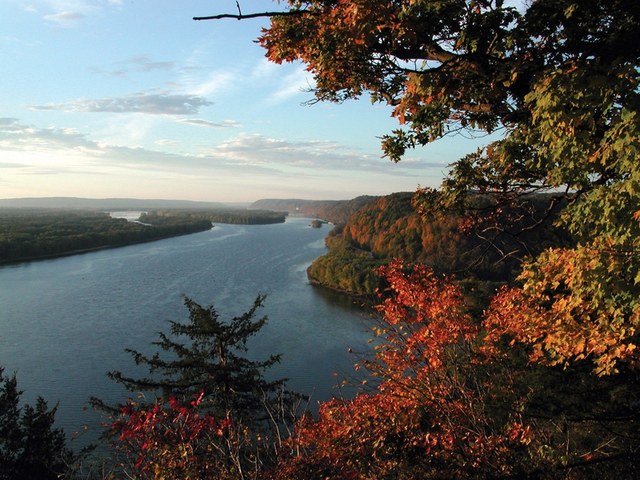
Mississippi River is the longest river in the United States, flowing from Lake Itasca in Minnesota to the Gulf of Mexico near New Orleans.
The kit
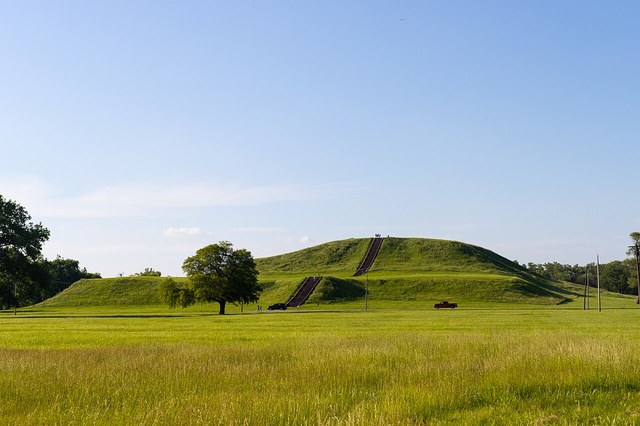
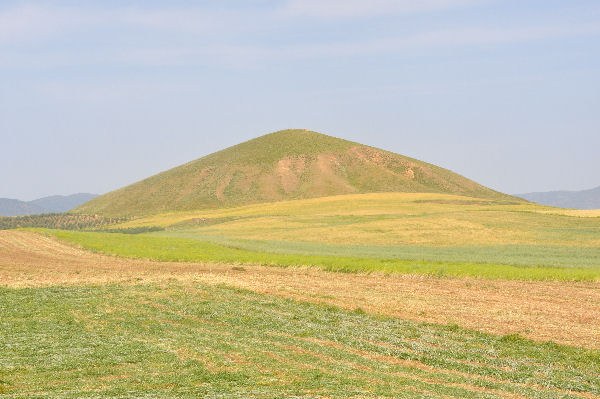
- Indigenous cultures — Mississippi River gave its name to a Mississippian culture that built Cahokia Mounds and Monks Mound in Illinois using shell-tempered pottery.
- European exploration — Mississippi River was first crossed by Hernando de Soto in the 1540s and mapped by Louis Jolliet and Jacques Marquette in the 1670s.
- French colonization — Mississippi River's entire basin was claimed for France by Robert de La Salle, whose expedition to its mouth ended in mutiny and his death.
- Great Flood of 1927 — Mississippi River's Great Flood of 1927 destroyed downriver Louisiana parishes, displaced over 200,000 Black people northward, and bolstered Huey Long's gubernatorial campaign.
Runs with
Water
Hernando de Soto
Cahokia
New Orleans
The ladder · 15 clues
A Native American culture named for this river constructed the mounds at Cahokia.
A culture named for this river built the Cahokia Mounds in Illinois. name this river which ends in Louisiana, the longest in the United States.
The ship La Belle intended to reach this river, though it sank at Matagorda Bay.
An attempt to set up a colony at this specific location lost a ship in Matagorda Bay, roughly 400 miles to the southwest; that attempt was led by Robert de La Salle, whose men mutinied and killed him in 1687 while searching for this location.
"Cooking balls" were uncovered near this feature at a site whose semicircular embankments extended out from a central plaza, called Poverty Point.
A memoir titled Life on [this body of water] was written by Mark Twain, who set many of his novels along this waterway. name this long U.S. river, on which Jim and Huckleberry Finn float in a raft.
Nearly 2,000 people died when the Sultana exploded in this river, but John Wilkes Booth died the day before, so the tragedy received shockingly little press coverage.
Monks Mound was built on the eastern banks of this river, which names a civilization that built the city of Cahokia.
The first Europeans to map this river were Louis Jolliet [[zhol- YEH]] and Jacques Marquette, though its first documented crossing by a European was by Hernando de Soto.
Part of the Anaconda Plan was an assault up this river, which David Farragut did between Vicksburg and New Orleans. name this river.
That attempt to build a colony at this river's mouth resulted in a mutiny and the death of the Sieur [] de La Salle.
This river briefly ran backward as the result of a series of earthquakes in New Madrid.
Many downriver parishes in Louisiana were destroyed during the 1927 "Great Flood" of, what major U.S. river that enters the Gulf of Mexico near New Orleans?
Hernando de Soto was the first European to cross this river.
10 more clues from the record
A series of levees were built along this river in the aftermath of an event that bolstered Huey Long’s gubernatorial campaign and resulted in Herbert Hoover leading a series of relief operations.
The Plaquemine [plak-ah-meen] culture flourished around this geographic feature and included a group of people who migrated from the Emerald Site to their Grand Village.
Rather than risk an encounter with the Spanish, Louis Jolliet and Jacques Marquette correctly assumed that this location was not on the Pacific Ocean and turned around.
Thisriverchangedcourseinthelate19thcentury,cuttingoffthetownofKaskaskia.Whiletraversing this river, Robert Fulton’s steamboat New Orleans turned away refugees of the New Madrid earthquake, which briefly reversed this river’s water.
In one novel, a pair of con artists traveling on this body of water pretend to be King Louis XVII and the Duke of Nonesuch [[NUN-such]].
After the Great Flood of 1927 on this body of water, over 200,000 displaced Black people moved north, joining the Great Migration.
At the behest of Eugene Reybold, a project focused on this river employed a number of Camp Clinton-housed prisoners from the German Afrika Korps.
The technique of shell tempering in pottery is a hallmark of a group of people named after this feature, who constructed Monks Mound near this feature at Cahokia.
Robert de La Salle claimed the entirety of this river’s basin for France, and its northern reaches were explored by Jacques Marquette and Louis Jolliet.
After a bridge over this river was rammed and set on fire by the Effie Afton in 1856, Abraham Lincoln defended the bridge company in court.