The 1648 Codex

Canada

14 terms · 208 ladder clues · every clue is a real line from national play.

Swipe or use the arrows. Tap a clue to rate it; your taps shape what comes back.

#67 · Modern Countries · Level 1

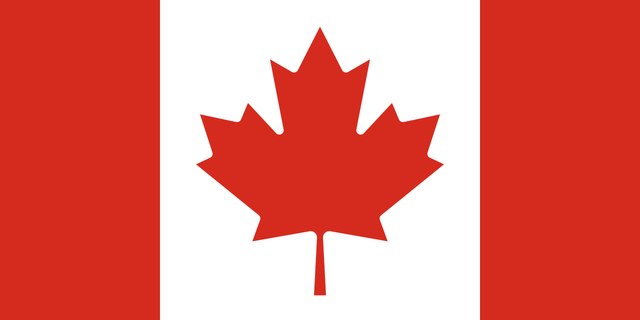
Canada

Canada
p b Original: /b George F. G. Stanley /a /p b Modified by: / · Public domain

North American country · 1867–present · North America, north of United States

Canada is a North American country formed in 1867, led by Prime Ministers including John A. Macdonald, Mackenzie King, and Pierre Trudeau.

The kit

  • Formation & governance — Canada's first Prime Minister was John A. Macdonald, involved in the Pacific Scandal regarding railroad terminus in British Columbia.
  • Indigenous conflicts — Canada faced the Red River Rebellion led by Métis Louis Riel, who established a provisional government over Hudson's Bay Company land.
  • World War One — Canada's Expeditionary Force captured Vimy Ridge under Julian Byng, while Robert Borden's conscription caused the 1917 crisis opposed by Henri Bourassa.
  • Modern crises — Canada experienced Pierre Trudeau's October Crisis response and multiple Quebec independence referendums during the Quiet Revolution era.

Runs with

Pacific
Pacific Scandal involved railroad terminus location open card →
Quebec
Quebec held multiple independence referendums open card →
American Railway Union
Durham Report urged union of two parts open card →
Common
clues show no connection open card →

The ladder · 15 clues

H

During the Conscription Crisis of 1917, Henri Bourassa led an opposition group in this country.

H

A prime minister of this country won a Nobel Prize for resolving the Suez Crisis.

H

This country’s longest serving Prime Minister was Mackenzie King. :Name this North American country whose current Prime Minister is Stephen Harper.

H

During a war in which its troops captured Vimy Ridge, a conscription crisis was prompted by Robert Borden’s introduction of mandatory military service in this country.

H

The Avro Arrow was a planned supersonic fighter jet for this country’s air force.

H

A simulated invasion of this country called “If Day” was organized in order to sell war bonds.

H

Confederate sympathizers from this nation led by Vernon Guyon Locke captured and commandeered a Union steamer in the Chesapeake Affair.

M

In this country, the Métis Louis Riel established a provisional government in the Red River Rebellion.

M

A leader of this country responded “Just watch me” when asked how far he was willing to go to end the October Crisis.

M

The death of Alexis Helmer inspired John McCrae, a soldier from this country, to write the poem D“In Flanders Fields.” Four divisions of this country’s Expeditionary Force under Julian Byng defeated the German 6th Army in World War One’s Battle of Vimy Ridge during this nation’s “Hundred Days.” name this country led by Robert Borden in World War One.

M

William Lyon Mackenzie King dealt with a 1944 conscription crisis in this country, which hosted the signing of the Atlantic Charter.

M

One man from this country won a Nobel Peace Prize for resolving the Suez Crisis, and another's man's 1960 election victory led to the Quiet Revolution.

E

John Macdonald was the first Prime Minister of this North American country where First Nations people fought for sovereignty in Manitoba.

E

Pierre Trudeau led this country where multiple independence referendums have been held in Québec.

E

Riel had earlier led the Red River Rebellion in this country regarding land owned by the Hudson’s Bay Company.

10 more clues from the record
H

This country’s government used eleven Numbered Treaties to take land and resources from its indigenous people.

H

The Third Battle of Ypres was ended when Arthur Currie led forces from this country to capture Passchendaele.

H

The book Lines Drawn Upon the Water discusses how the indigenous people of this country struggled with the psychology of imposed European-style borders.

H

One regiment from this country was annihilated during an offensive at Beaumont-Hamel.

H

This country denied entry to refugees on the Komagata Maru, resulting in a riot when the ship returned to Calcutta.

H

This country was the target of five failed raids by the Fenian Brotherhood.

H

After the Red River Rebellion, Louis Riel negotiated with this country’s prime minister John A. Macdonald.

H

Trudeau is the leader of this country whose provinces include Alberta and Saskatchewan.

H

The Pacific Scandal occurred in this country, where the terminus of the railroad would be in British Columbia.

H

The Durham Report urged for the union of this modern-day country’s two parts.
#97 · Physical Geographic Features · Level 1

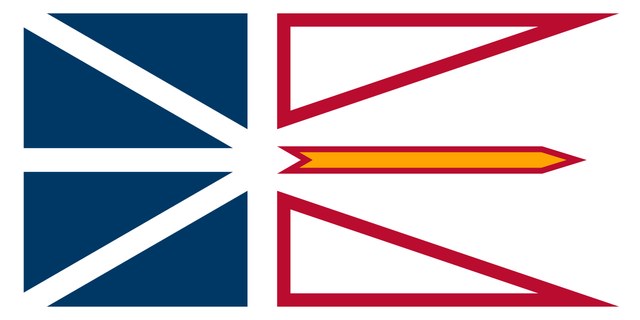
Newfoundland

Newfoundland
Original 2005 upload was created by Robert Crosbie and uploa · Public domain

Canadian island · Viking settlement c. 1000 CE; joined Canada 1949 · Atlantic Canada, east of Quebec

Newfoundland is a Canadian island that joined Confederation in 1949 after two referenda ended its British dominion status.

The kit

  • Viking settlement — Newfoundland was home to L'Anse aux Meadows, a Viking settlement discovered by Anne and Helge Ingstad, possibly the colony of Vinland.
  • Indigenous people — Newfoundland was once home to the Beothuk people, whose last known member was Shanawdithit and whose language survives only in one recording.
  • Economic history — Newfoundland's Grand Banks cod fishery boomed for centuries but collapsed in the 1990s, causing severe economic downturn on the island.
  • Path to Confederation — Newfoundland's 1948 referenda under Joey Smallwood ended its dominion status after the Great Depression debt crisis forced British commission rule in 1934.

Runs with

Canada
joined Canada in 1949 as its most recently incorporated province open card →
Joe Hill
Signal Hill received the first transatlantic wireless message from England open card →
Leif Erikson
possibly discovered by Leif Erikson as Vinland around 1000 CE open card →
church
Irish bishop Louis O'Donel aided suppression of 1800 United Irish mutiny open card →

The ladder · 15 clues

H

This island was once home to the Beothuk people.

H

A regiment from this island was wiped out at Beaumont Hamel on the first day of the Battle of the Somme.

H

The Grand Banks lie off the coast of this island which was possibly known as "Vinland" to Leif Ericson.

H

The first transatlantic wireless message traveled from England to this island's Signal Hill.

H

Answer the following about strained racial relations in Canadian history, .1800 saw a mutiny instigated by the “United Irish” among a small garrison of soldiers in the capital of this colony, then ruled by the Navy. Suppression of the uprising was aided by this colony’s first Irish bishop, Louis O’Donel.

H

Sir Richard Squires resigned as Prime Minister of this country in 1923 following his arrest for corruption, but returned to power in 1928 when his successors proved even less popular. :Name this formerly independent dominion, which in 1949 became part of Canada.

H

Two 1948 referenda ended this territory’s dominion status under Joey Smallwood and Louis St. Laurent; it had earlier rejected Confederation.

M

Canadian island home to the L’Anse aux Meadows archaeological site, possibly the colony of Vinland?

M

The 1990s collapse of the North Atlantic cod fishery led to a severe economic downturn on this Canadian island, which makes up a province with mainland Labrador.

M

It is the site of the Viking village L'Anse aux Meadows [[lahn-soh-meh-DOH]].

M

The Turbot [“ter-but”] War contested Spanish boats fishing for halibut off the coast of this island. An important archaeological site on this island was discovered by Anne and Helge Ingstad at L’Anse aux Meadows.

M

Joey Smallwood is sometimes called the last Father of Confederation for leading this island into Confederation. name this province that joined Canada in 1949 alongside Labrador.

M

In 1809, this island re-annexed a region of Lower Canada that names a breed of retriever dog. what island forms an Atlantic province with Labrador?

E

The capital of the most recently incorporated Canadian province is this island's city of St. John's. name this island that composes a province with Labrador.

E

European explorers built the settlement of L’Anse aux Meadows on this island, providing archaeological evidence for a land known as Vinland.

10 more clues from the record
H

This island's period of independence came to an end during the great depression, when a debt crisis forced it to seek British protection.

H

Signal Hill is located in St. John’s, the easternmost major city in Canada and the largest on this island. This island only joined Canada in 1949.

H

Cape Race in this modern-day place was possibly the first place on land that received RMS Titanic’s SOS signal.

H

The Colonial Building riot presaged this bankrupt territory’s 1934 suspension of responsible government for an unelected Commission.

H

This island was home to a tribe whose language is only survived by a recording of a song by a non-speaker.

H

This island, discovered by Leif Eriksson, names part of a province joined with the mainland portion of Labrador.

H

A close 1948 referendum ended this place’s British dominion status, after which it joined a neighbor to the west.

H

This place’s namesake Grand Banks enabled a booming cod industry off its shores.

H

A dog from this territory saved the Royal Rifles from a grenade at the Battle of Hong Kong.

H

Shanawdithit was the last known member of this island’s extinct Indigenous population, the Beothuks.

Watch out: Labrador (the mainland territory paired with Newfoundland in the province name)
#110 · Subnational Regions, Provinces, and Territories · Level 1

Quebec

Quebec
Original: /div René Chaloult /div Vector: /div Krun /a · Public domain

Canadian province · 1763–present (British/Canadian control) · eastern Canada

Quebec is Canada's only majority French-speaking province, site of recurring sovereignty movements and the 1970 October Crisis.

The kit

  • Rise — Quebec was captured by the British during the Seven Years War after victory at the Plains of Abraham in 1759.
  • Quiet Revolution — Quebec underwent the Quiet Revolution in the 1960s, a period of economic and political reforms led by Jean Lesage and Robert Bourassa.
  • Conflicts — Quebec experienced the October Crisis in 1970 when the FLQ kidnapped Pierre Laporte, requiring the first peacetime use of the War Measures Act.
  • Legacy — Quebec held independence referenda in 1980 and 1995, with the 1995 vote narrowly rejecting sovereignty amid controversy over money and ethnic voting.

Runs with

Quiet Revolution
Quebec's Quiet Revolution transformed its economy and politics in the 1960s open card →
Canada
Quebec is Canada's largest and only majority French-speaking province open card →
Pierre Trudeau
Pierre Trudeau invoked the War Measures Act during Quebec's October Crisis open card →
Bakumatsu Period
no connection evident in clues open card →

The ladder · 15 clues

H

The Charlottetown and Meech Lake Accords tried to get this province’s approval of a constitution.

H

Jean Lesage and Robert Bourassa led this province’s Quiet Revolution.

H

Robert Bourassa, a leader of this region, outlined five conditions for his support for this province signing on to the Meech Lake Accords.

H

This region underwent the “great darkness” before implementing a set of economic and political reforms known as the Quiet Revolution.

H

The Meech Lake and Charlottetown Accords tried to better integrate this province with its country.

H

During an event in this region, the Chénier Cell abducted a politician while he was playing football on his front lawn.

H

In this province, the photograph “Face to Face” was taken during a standoff over the construction of a golf course on indigenous land called the Oka Crisis.

M

A 1995 popular referendum in this sub-national region was defeated because of “money and the ethnic vote,” according to a leader of its independence movement.

M

A pair of referenda in the 1990s concerned F the independence of this Francophone Canadian province.

M

A 1995 referendum narrowly rejected independence for this province, where a 1970 crisis required the first peacetime use of the War Measures Act after the FLQ kidnapped Pierre Laporte in Montreal. name this French-speaking Canadian province.

M

Pierre Laporte was murdered during this region’s October Crisis, which brought an end to its Quiet Revolution.

M

This region passed the controversial Bill 101 in 1977 to establish its official language.

E

Canadian province where French-speaking secessionism led to the October Crisis.

E

This region was captured by the British in the Seven Years War after a victory at the Plains of Abraham. name this region, a modern day French-speaking Canadian province.

E

French speaking province that was the site of the October Crisis.

10 more clues from the record
H

This region was recognized as a “distinct society” by the Charlottetown Accord.

H

A leader of this region gave the “Shawinigan Handshake” chokehold to a protester in 1996.

H

In a 1759 battle in this region, both the Marquis de Montcalm and James Wolfe were killed.

H

The Meech Lake Accord tried to convince this region to agree to constitutional amendments.

H

James Cross was kidnapped by a group seeking this region’s independence.

H

The 1949 Asbestos strike occurred in this province in a town called Asbestos.

H

This province's sovereignty movement grew stronger during its “Quiet Revolution.” :Name this largest Canadian province, the only majority French-speaking one.

H

A leader of this region once reclassified orphans as mentally ill to gain federal subsidies; that leader’s party lost power in this region’s “Quiet Revolution”.

H

Richard Montgomery and Benedict Arnold led a failed attempt to capture this region that prompted John Burgoyne’s Hudson River campaign.

H

After bombs planted by a terrorist cell ignited in this province’s CN Railway, John Diefenbaker asked “Is this Ireland?” while on national television.

Watch out: Pierre Laporte was murdered during the October Crisis, but this did not end the Quiet Revolution
#215 · Other Modern National Leaders · Level 1

Sir John A. Macdonald

Sir John A. Macdonald
bdi George Lancefield /span /a · Public domain

Canadian statesman · 1867–1891 · Canada

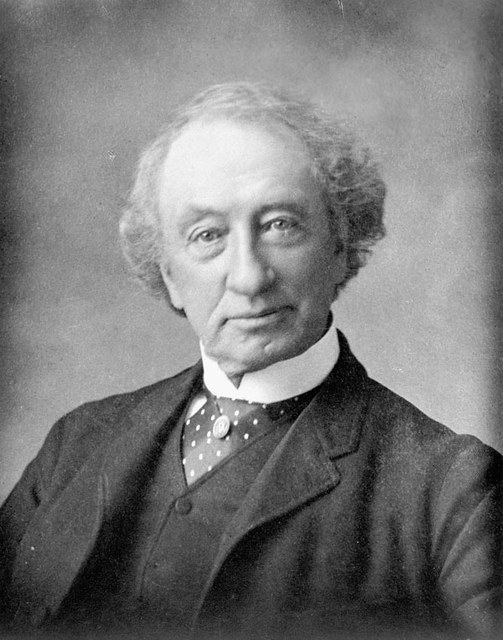
Sir John A. Macdonald was Canada's first Prime Minister who served eighteen years and championed confederation and the transcontinental railway.

The kit

  • Rise — Sir John A. Macdonald formed the Great Coalition with George Brown and George-Étienne Cartier at the Charlottetown Conference.
  • Achievements — Sir John A. Macdonald oversaw passage of the 1867 British North America Act granting Canada independence and introduced protectionist National Policy tariffs.
  • Conflicts — Sir John A. Macdonald's governments put down the Red River and Northwest Rebellions led by Louis Riel, whose execution he approved.
  • Legacy — Sir John A. Macdonald resigned after the Pacific Scandal revealed he took a $10,000 bribe from Hugh Allan for railway contracts.

Runs with

Prime Minister of Canada
first holder, served eighteen years open card →
Pacific
resigned over Pacific Scandal railway bribery open card →
Canada
first PM, oversaw confederation open card →
George
formed Great Coalition with George Brown open card →

The ladder · 15 clues

H

During one scandal, this man was satirized in a cartoon as trampling a weeping woman while asking, "Send me another $10,000." This man, who introduced high tariffs as part of his National Policy formed a Great Coalition with George Brown and George Étienne Cartier.

H

This man oversaw the passage of the 1867 British North America Act, which granted his nation independence. name this first Prime Minister of Canada.

H

First Canadian Prime Minister, who took power after Britain granted semi-independence to Canada.

H

This politician resigned from his highest post after Lucius Huntington revealed that he had taken a $10,000 bribe from Hugh Allan.

H

He helped found the Liberal-Conservative Party through a coalition government with Etienne Cartier.

H

This politician was criticized in the political cartoon “Whither are we Drifting?”, one of many depicting him by John Wilson Bengough.

H

During his administration, he was implicated in a scandal thanks to the discovery of a telegram which was stolen from John Abbott’s safe.

M

Alongside rival George Brown, this man formed a “Great Coalition” of parties that advocated for a new political federation. name this first prime minister of Canada.

M

This man’s ministry faced Louis Riel’s Red River Rebellion and was ended by a scandal where this man’s Conservative government took bribes to build a railway to British Columbia.

M

This man was the first Prime Minister of Canada. He served a whopping eighteen years and was one of the major proponents of the Canadian Pacific Railway.

M

In the Great Coalition, this man joined George-Étienne Cartier and George Brown at the Charlottetown Conference to push for confederation.

M

This non-German politician joined with his rival George Brown to form the "Great Coalition" at the Charlottetown Conference.

E

The execution of Louis Riel was ordered by which "Father of Confederation," the first Prime Minister of Canada who resigned after the Pacific Scandal?

E

Governments led by this man put down the Red River and Northwest Rebellions, both led by Louis Riel. name this first Canadian Prime Minister.

E

This man resigned during the Pacific Scandal, in which his government accepted bribes for a railroad contract.

10 more clues from the record
H

5. Identify some Prime Ministers from Canada’s first half-century, .Canada’s first Prime Minister, he weathered not one but two uprisings led by Louis Riél, but was sunk by his involvement in the Pacific Scandal.

H

The Treaty of Washington, which did not provide compensation for the Fenians, was a disappointment for this first Prime Minister of Canada, who later lost office for accepting bribes from the builders of the Pacific Railway.

H

His first term in his most famous office saw the assassination of Thomas D'arcy McGee, while he would later return to that office with a protectionist economic program called the National Policy.

H

This first prime minister of Canada played a key role in the formation of his country. He alienated many Francophones from his party by approving the execution of Louis Riel on charges of treason.

H

One scandal that this man was involved in eventually cooled down because larger organizations in Great Britain and the United States took control of the project.

H

To win his second term, this man defeated Wilfrid Laurier, and one of the things this man is most famous for doing, he did with the help of Etienne Cartier.

H

His first administration saw the addition of three provinces and the planning of a railway spanning the entire country, which would be constructed and completed during his later terms.

H

This was the alphabetically later politician whose ministry blindsided the Reform and “Red” Party by “double shuffling” government ministers to retain power.

H

This man gained fame as a lawyer by agreeing to defend three members of the Hunters’ Lodges, including Nils von Schoultz.

H

As an attorney, this man defended William Brass from rape charges, and later served in a cabinet post under William Henry Draper.

Watch out: George Brown (political rival who joined Macdonald in Great Coalition)
#367 · Companies, Corporations, and Financial Institutions · Level 1

Hudson's Bay Company

Hudson's Bay Company
Unknown author Unknown author · Public domain

British fur-trading monopoly · 1670–present · Rupert's Land, Canada

Hudson's Bay Company was a British fur-trading monopoly chartered in 1670 that controlled Rupert's Land for two centuries.

The kit

  • Rise — Hudson's Bay Company was chartered in 1670 by Prince Rupert and operated from York Factory as its main post.
  • Achievements — Hudson's Bay Company traded distinctive point blankets with indigo stripes for furs across its vast commercial monopoly in Rupert's Land.
  • Conflicts — Hudson's Bay Company lost the Battle of Seven Oaks to the North West Company during the Pemmican War before merging in 1821.
  • Legacy — Hudson's Bay Company sold Rupert's Land to Canada for £300,000 in 1870 and continues today as a retail brand.

Runs with

Land
controlled Rupert's Land monopoly, sold it to Canada 1870 open card →
Water
Canada
sold Rupert's Land to Canada, oldest company still operating open card →
America
traded with Native Americans, operated posts across North America open card →

The ladder · 15 clues

H

The North West company encroached on this corporation, which was granted Prince Rupert’s Land.

H

Allies of this institution under Robert Semple were slain by Cuthbert Grant at the Seven Oaks Massacre.

H

The Coppermine River received its name during an expedition led by Samuel Hearne, a member of this organization, that also included the Bloody Falls Massacre.

H

James Knight captured Fort Albany for this company while in 1686, Pierre le Moyne d’Iberville captured this company’s post of Moose Factory.

H

As Chief Factor in this company’s Columbia District, John McLoughlin became known as “father of Oregon”.

H

This organization minted brass coins whose value was backed by a guarantee to swap for an animal carcass.

H

A representative of this organization, Robert Semple, was attacked during the Pemmican War in the Battle of Seven Oaks.

M

Indigo stripes called points were put on blankets that this company exchanged.

M

This organization lost the Battle of Seven Oaks against its main rival during the Pemmican War.

M

In 1852 Tlingit warriors attacked this organization's post at Fort Selkirk. This organization operated a commercial monopoly over Rupert's Land for over two centuries.

M

Its first successful missions were sponsored by Prince Rupert after its 1670 founding, and it exists today as a retail brand. name this company, active in the fur trade, that is named for a prominent body of water in Canada.

M

In 1670, this company was given charter over an area of North America named for this company’s first Governor, Rupert of the Rhine and in 1991 this company ceased dealing in its former staple commodity, fur. name this retailer named for a Canadian body of water whose basin it once owned.

M

Its basic unit of the organization was a canoe brigade of a few dozen voyageurs, who traded its namesake point blankets for furs. identify this British trading company active in the fur trade around its titular Canadian geographical location.

E

The York Factory was an early center of this company, which was merged with the North West Company in 1821.

E

In 1870, this company sold the massive territory of Rupert’s Land to a newly-founded British Dominion. name this fur-trading company and still-extant retailer that is named after a Canadian body of water.

10 more clues from the record
H

Company whose transfer of Rupert’s Land to Canada paved the way for the rebellion.

H

John Rae was an employee of this company who interviewed Inuit near the area of the wrecks. This company, which traded its point blankets for Native Americans’ furs, had exclusive rights to Rupert’s Land.

H

Fort Hall and Fort Vancouver are among the fortified trading posts along the Oregon Trail run by this Canadian company, the oldest still in business in North America.

H

Before 1835, territory owned by this company had no formal legal system, only establishing more official governance after the 1816 battle of Seven Oaks.

H

A star fort built by this organization was peacefully surrendered to a French military expedition led by Jean-François de La Pérouse, who largely destroyed it.

H

This organisation’s main post was formerly at York Factory and its current logo features the multi-coloured stripes which are used on its namesake point blanket.

H

This organization was chartered in 1670 by James II to explore the northwestern portions of North America. :What is this commercial venture named for a large body of water in Canada?

H

Armed men stormed a court to support Guillaume Sayer (GEE-yahm sair) against charges of infringing on this company's business.

H

During one transaction by this organization, premature surveying of the land by William McDougall would cause a short rebellion, which would only see one casualty.

H

Via the Deed of Surrender, this organization gave up almost all of its land holdings for three hundred thousand pounds.

Watch out: North West Company (rival fur-trading company that fought HBC before merging with it in 1821)
#411 · Political Offices and Titles · Level 1

Prime Minister of Canada

Prime Minister of Canada
Lea-Kim · CC BY-SA 4.0

Canadian head of government · 1867–present · Canada

Prime Minister of Canada is the head of government who leads the federal cabinet and has been held by figures including Macdonald, King, and the Trudeaus.

The kit

  • First holders — Prime Minister of Canada was first held by Sir John A. Macdonald, who resigned over the Pacific Scandal bribery allegations involving railway tycoon Hugh Allan.
  • Constitutional crisis — Prime Minister of Canada William Lyon Mackenzie King faced a constitutional crisis when Lord Byng refused to dissolve parliament at his request in the 1920s.
  • October Crisis — Prime Minister of Canada Pierre Trudeau invoked the War Measures Act during the October Crisis after separatists kidnapped James Cross and Pierre Laporte, declaring "just watch me."
  • Recent holders — Prime Minister of Canada has been held by Justin Trudeau since 2015, succeeding Stephen Harper; Kim Campbell was the only woman to hold this position.

Runs with

Sir John A. Macdonald
first holder; resigned over Pacific Scandal open card →
Pierre Trudeau
invoked War Measures Act; father of Justin open card →
Pacific
Pacific Scandal brought down Macdonald open card →
William Lyon Mackenzie King
longest-serving holder; faced Byng crisis open card →

The ladder · 15 clues

H

An earlier holder, whose authority was threatened by Lord Byng, was William Lyon Mackenzie King, and the Pacific scandal brought down the first one.

H

This position’s first holder resigned over bribery allegations in the Pacific Scandal.

H

The first person to hold this position once vomited on stage during an election debate.

H

Another holder of this office endured a constitutional crisis when Lord Byng refused to dissolve parliament at his request.

H

A man in this political position wrote a letter to Rajiv Gandhi apologizing for the Air India Flight 182 bombing.

H

One holder of this office said “just watch me” when he was about to suspend civil liberties.

H

William Mackenzie King, John MacDonald, and Pierre Trudeau all held what office, currently occupied by Stephen Harper?

M

Another holder of this position enforced the only peacetime usage of the War Measures Act in response to the October Crisis and was the father of the current holder of this position, who succeeded Stephen Harper. name this position currently held by Justin Trudeau.

M

John MacDonald was the second-longest holder of this position, after only William Lyon Mackenzie King.

M

Kim Campbell was the only woman to hold this position, which was first held by Sir John A. MacDonald. name this highest position in Canada’s government, currently held by Justin Trudeau.

M

After the abductions of James Cross and Pierre Laporte, a holder of this office declared “just watch me” and invoked the War Measures Act.

M

One holder of this office was angrily told not to urinate on Lyndon B. Johnson’s rug and was awarded the Nobel Peace prize for his efforts to resolve the Suez Crisis.

E

Another holder of this position had a cabinet member kidnapped during the October Crisis by a French separatist group. name this position once held by Pierre Trudeau and currently held by his son Justin.

E

A holder of this position quipped “just watch me” after invoking the War Measures Act to stop the breakaway of a secessionist region in the October Crisis.

E

Brian Mulroney held this position, as did a man who defeated Stephen Harper in a 2015 election. name this position currently held by Justin Trudeau .

10 more clues from the record
H

A man in this position said, “Just watch me,” while facing a terrorist incident in the October Crisis.

H

A holder of this office, who cancelled a fighter jet called the Avro Arrow, preceded one who was lifted up at Camp David and warned not to pee on Lyndon Johnson's rug.

H

Another early holder of this office resigned after the Pacific Scandal, while a more recent one invoked the War Measures Act to declare martial law against separatists.

H

Another holder of this office resigned after introducing an unpopular Goods and Services Tax but did not move out of its residence, forcing his successor to live at Harrington Lake.

H

One man achieved this position in 1993 with an election platform outlined in the “Red Book.” R.B. Bennett held this office during the Depression, when he backed the Imperial Preference system.

H

The youngest man to hold this world leadership position was frequently depicted in political cartoons with children’s mittens attached to his suit, a reference to losing his luggage on a trip to Israel.

H

One person in this office, John Difenbaker, had to deal with the Coyne affair, and a spy named Igor Gouzenko troubled a man who was succeeded in this role by Louis St. Laurent.

H

The only woman to hold this position was voted out of office after two months due in part to the negative reception of ads mocking her opponent’s facial deformities.

H

A holder of this office reportedly told his wife “it’s a relief to be out of [that]” after resigning due to a scandal in which his re-election accepted money from railway tycoon Hugh Allan.

H

While holding this title, one man insisted that his vomiting was due to being “forced to listen to the ranting of my honorable opponent” and not due to alcohol.

Watch out: Stephen Harper was Prime Minister but lost to Justin Trudeau in 2015; clues incorrectly state Harper currently holds the position
#922 · Native American Peoples · Level 1

Métis

Métis
Unknown Métis resistance fighters, made official by Métis Na · Public domain

Mixed Indigenous-European people · 19th century prominence · Western Canada

Métis are people of mixed First Nations and European descent who rebelled under Louis Riel in western Canada.

The kit

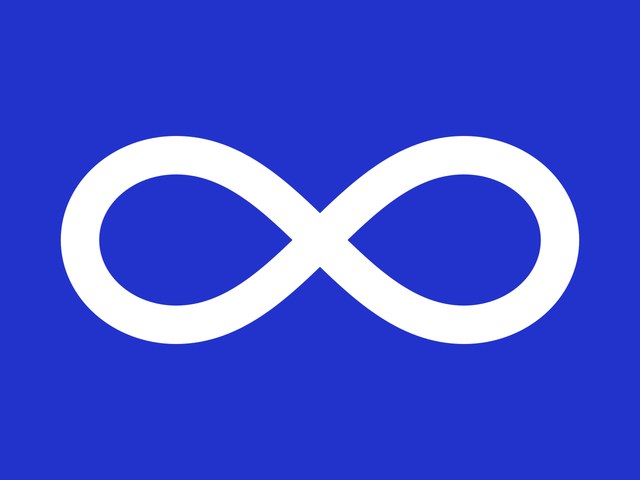
  • Origins — Métis descend from unions between fur traders and First Nations women, speaking the Michif language and using an infinity sign as their symbol.
  • Pemmican Wars — Métis seized Brandon House in retaliation for Fort Gibraltar's seizure and killed 21 settlers at the Battle of Seven Oaks in 1816.
  • Red River Rebellion — Métis established a provisional government at Fort Garry that was suppressed by the Wolseley expedition in 1870, leading to Manitoba's founding.
  • Northwest Resistance — Métis were defeated at the Battle of Batoche under General Gabriel Dumont, after which Louis Riel was captured and executed.

Runs with

Louis Riel
led Métis rebellions and provisional government open card →
Canada
Métis revolted after Canada purchased Rupert's Land open card →
Francechurch

The ladder · 13 clues

H

These people, who are of mixed First Nations and European descent, were led by Louis Riel in the Red River Rebellion that led to the founding of Manitoba.

H

Members of this people were targeted by a proclamation that forced them to stop exporting a product measured in bags called taureaux, leading to a war where they won the “Victory of Frog Plain.” A graphic novel about a leader of this people by Chester Brown discusses his use of an insanity defense against high treason and his execution of Thomas Scott.

H

Cuthbert Grant was a member of this Canadian ethnic group, who speak Michif and are symbolized by an infinity sign. Other leaders of this group included Louis Riel.

H

A group of these people seized Brandon House in retaliation for the seizure of Fort Gibraltar during the Pemmican Wars.

H

A provisional government of this people based at Fort Garry was suppressed by the Wolseley expedition.

H

Some of the earliest groups of these people were referred to as Malouidit in reference to the port of St-Malo.

H

One of their most notable leaders was captured and executed following the Battle of Batoche.

H

Members of this people were defeated at the battle of Batoche under their general Gabriel Dumont .

H

Garnet Wolseley led a namesake expedition to confront these people in 1870.

H

These people killed 21 settlers at the Battle of Seven Oaks in 1816.

M

The Mounties played an important role in fighting these people in western Canada during their rebellion under the leadership of Louis Riel.

M

These mixed-race Canadian people descend from the union of fur traders and First Nations women. After Canada purchased Rupert’s Land, Louis Riel led a revolt of these people.

M

A mob of these people stormed the courthouse after Pierre-Guillaume Sayer was convicted of breaking laws around a fur trading monopoly.

Watch out: Confusing the two separate conflicts led by Louis Riel (Red River 1869-70 vs. Northwest 1885)
#1275 · Named Political and Social Movements · Level 1

Quiet Revolution

Quiet Revolution
a rel="nofollow" Internet Archive Book Images · No restrictions

Quebec modernization movement · 1960–1966 · Quebec

Quiet Revolution was a 1960s period of secularization and welfare-state building in Quebec that reduced Catholic Church influence and strengthened Francophone nationalism.

The kit

  • Rise — Quiet Revolution began with Jean Lesage's 1960 election as premier, ending the "Great Darkness" of Maurice Duplessis's term.
  • Reforms — Quiet Revolution created Ministries of Health and Education to secularize government agencies previously controlled by the Catholic Church.
  • Achievements — Quiet Revolution saw Paul Gérin-Lajoie secularize the school system and establish CEGEPs as new educational institutions.
  • Legacy — Quiet Revolution caused birth rates to drop to among the lowest in the industrial world by the 2000s.

Runs with

Quebec
occurred in Quebec under premier Jean Lesage open card →
Bakumatsu Period
Canada
occurred in Canadian province of Quebec open card →
church
reduced Catholic Church control over education and health care open card →

The ladder · 15 clues

H

A provincial welfare state was built in this period of secularization and economic development of the early 1960s in Quebec.

H

A leader of this movement wrote The Impertinences of Brother Anonymous.

H

A 2003 article entitled "Where Have All the Children Gone?" examined the relationship between this movement and the sudden drop in birth rates to among the lowest in the industrial world.

H

During this period, René Lévesque built on the example of Adam Beck and Tommy Douglas to buy out rural co-ops to form a state-owned hydroelectric monopoly.

H

The beginning of this movement was signaled by the Union Nationale's loss in 1960 elections to the Liberal Party led by Jean Lesage.

H

During this period, Paul Gérin-Lajoie secularized the school system and established CEGEPs [say-ZHEPS].

H

A party elected at the start of this period used the slogan “now or never / masters in our own house.” Politicians dubbed the “three wise men” covered an event that laid the groundwork for this period, the Asbestos strike, in the newspaper Le Devoir .

H

The name for this period was coined by the Globe and Mail and saw the government taking control over health care from the Catholic Church. :Identify this series of reforms in the 1960s carried out under Premier Jean Lesage.

H

In 1953, Mowat was falsely accused of having made up the Ihalmiut by Jean Lesage. Lesage’s 1960 election as premier marked the start of this historical period of secularization and welfare state formation.

H

Jean Lesage's election as Premier is often viewed as beginning this movement. :Name this socio-political movement beginning in the 1960s in Quebec. Quebec's government was secularized during this period which ended a period of economic stagnation in Quebec.

M

This period began with the election of Jean Lesage and followed the “Great Darkness” of Maurice Duplessis’s term as premier.

M

Secularization of education, strengthening of unions, and Francophone nationalism were some of the results of this 1960s movement to reform Catholic influence and pre-modern institutions in Quebec.

M

Bill 101’s restrictions on the use of English came after this “revolution” in Quebec politics, which greatly reduced the influence of the Catholic Church and led to an increase in support for Quebec sovereignty.

M

Ministries of Health and Education were created to secularize government agencies during this period of reform in Québécois [keh-beh-KWAH] history.

E

Expo 67 occurred in the midst of this socializing, secularizing revolution, which followed the “The Great Darkness” of Maurice Duplessis’ time as premier of Quebec.

3 more clues from the record
H

Occurring under the premiership of Jean Lesage, this transformation from 1960 to 1966 ended the “les années noires” period by promoting the modernization and urbanization of Quebec.

H

The election of Jean Lesage as premier of Québec initiated this 1960s sociopolitical movement that led to the secularization of the Quebecois government and an increase in support for Quebecois independence.

H

This historical period was precipitated by a four-month labor dispute between miners and the Denver-based Johns-Manville Company.

#1416 · Industrial and Technological Disasters · Level 1

Halifax Explosion

Halifax Explosion
Unknown author Unknown author · Public domain

1917 harbor explosion · December 6, 1917 · Halifax, Nova Scotia

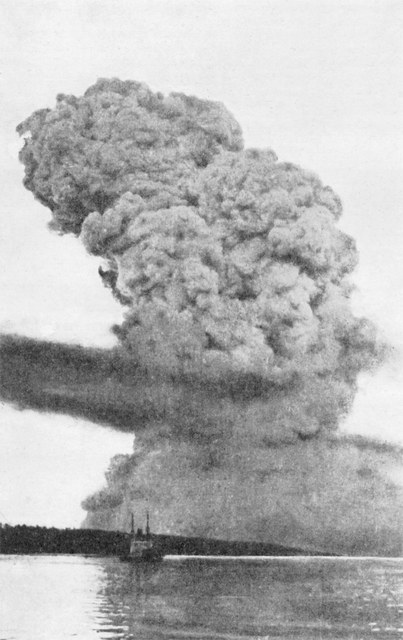
Halifax Explosion was a 1917 harbor disaster in Nova Scotia caused when the munitions ship SS Mont-Blanc collided with the SS Imo.

The kit

  • Cause — Halifax Explosion occurred after the SS Mont-Blanc, carrying picric acid and TNT, collided with the Norwegian vessel SS Imo and caught fire.
  • Impact — Halifax Explosion killed over 2,000 Canadians, destroyed the Richmond District and Acadia Sugar Refinery, and generated a 60-foot tsunami that devastated Tuft's Cove.
  • Heroes — Halifax Explosion casualties were reduced when rail dispatcher Vince Coleman sent a telegram warning trains to halt, saving hundreds before dying in the blast.
  • Legacy — Halifax Explosion is commemorated with a Fort Needham bell ringing every December 6th and an annual Christmas tree sent from Halifax to Boston.

Runs with

Canada
killed over 2,000 Canadians in Nova Scotia open card →
Boston
Belgium
Commission for Relief in Belgium members died in blast open card →
George
George H Cox performed eye enucleations on injured open card →

The ladder · 15 clues

H

This event was the origin of a tradition in which the namesake city sends Boston a Christmas tree every year.

H

The tsunami created by this event eliminated much of a local Mi'kmaq settlement in Tuft's Cove, and rail engineer Vince Coleman saved hundreds of people by signaling to a passenger train to halt outside of this event's blast zone.

H

Following a water-borne collision, this disaster occurred after a fire broke out on the SS Mont Blanc, a ship with munitions aboard.

H

Vince Coleman sent a telegram reading “Hold up the train. [...] Guess this will be my last message.

H

Good-bye boys.”, which saved hundreds of passengers from riding directly into this event.

H

1917 disaster that destroyed a Nova Scotian port and killed thousands.

H

This event was triggered by an accident involving barrels of benzol.

H

This event is commemorated every December 6th with the ringing of a bell at a tower in Fort Needham Park. :Identify this event partially involving the SS Imo, which was flying a Norwegian flag. Some people were harmed by the 60-foot high tsunami during this event.

H

This event involved the SS Mont-Blanc, a ship which was heavily laden with explosive materials, which collided with the Imo and caused a tsunami in the harbor. :Identify this event, the largest accidental explosion in history, which took place in a port city in 1917.

H

“Garden City” proponent Thomas Adams was responsible for designing the Hydrostone neighborhood after this event, which was the subject of Janet Kitz’ Shattered City.

M

The aftermath of this event included body identification techniques a lso used in the namesake city after the Titanic sank.

M

Over 2,000 Canadians died in this man-made blast which occurred in Nova Scotia in 1917.

M

The Acadia Sugar Refinery was destroyed during this event, which levelled the Richmond District, and this event was caused by the SS Imo colliding with a ship carrying several tons of picric acid and TNT. name this largest non-nuclear explosion ever, in which the SS Mont-Blanc exploded in the capital of Nova Scotia.

M

Dispatcher Vince Coleman was responsible for diverting several trains from the site of this event, relief for which was delayed by a blizzard over the next few days.

E

Occurring after the SS Mont Blanc collided with a Norwegian vessel and caught fire this is this largest manmade non-nuclear detonation in history, a 1917 explosion in a Canadian port.

4 more clues from the record
H

One group killed in this event were sent by the Commission for Relief in Belgium, and this event destroyed the Horatio-Brannan- captained Stella Maris.

H

Jordi Bonet created a memorial to this event which contains a bronze flower and several jagged, curved pieces of steel.

H

One person who survived this event received the nickname “Ashpan Annie” because she lay underneath a stove.

H

George H Cox and and TF Tooke performed several eye enucleations for people injured in this event.

Watch out: Titanic disaster (same city used body identification techniques after both events)
#1459 · General · Level 1

Pierre Trudeau

Pierre Trudeau
Rob Mieremet / Anefo · CC0

Canadian Prime Minister · 1968–1984 (with 1979–1980 interruption) · Canada

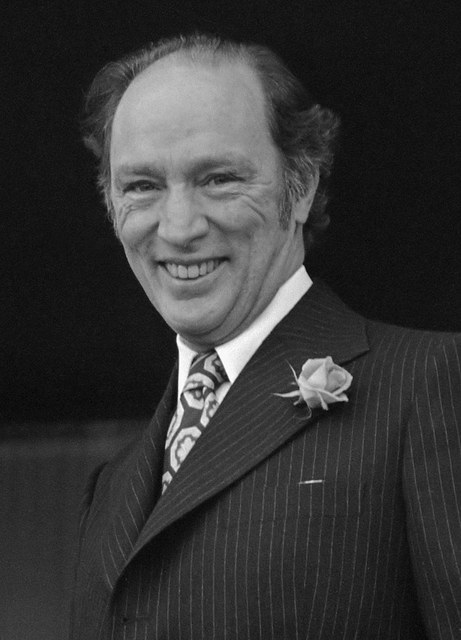
Pierre Trudeau was a charismatic Canadian Prime Minister who repatriated the constitution, enacted bilingualism, and invoked the War Measures Act during the October Crisis.

The kit

  • Rise — Pierre Trudeau began his political career criticizing Marcus Duplessis on live television before joining the CCF and editing a book on the Asbestos Strike.
  • Achievements — Pierre Trudeau made French and English equal under the Official Languages Act in 1969 and ran on the notion of a "Just Society."
  • Conflicts — Pierre Trudeau invoked the War Measures Act after the FLQ kidnapped James Cross and Pierre Laporte, famously saying "Just watch me" when questioned.
  • Legacy — Pierre Trudeau repatriated Canada's constitution in 1982 with the Charter of Rights and Freedoms and is the father of current Prime Minister Justin Trudeau.

Runs with

Canada
served as Prime Minister open card →
Quebec
from Quebec, dealt with October Crisis there open card →
Prime Minister of Canada
held office 1968–1984 except 1979–1980 open card →
John

The ladder · 15 clues

H

This politician, who once claimed that he had used the words “fuddle duddle” when a journalist questioned him for swearing in Parliament, made French and English equal under the Official Languages Act in 1969, one of the first accomplishments in his over 15 years as Prime Minister. name this Canadian politician who was the father of Canada’s current PM.

H

This politician declared “There is no place for the state in the bedchambers of the nation” before decriminalizing homosexuality.

H

This man stayed in his seat while rioters threw rocks and bottles at him in the Saint- Jean-Baptiste Day parade.

H

This charismatic leader from Quebec controversially invoked the War Measures Act during the October Crisis, responding “Just watch me” when asked how far he would go.

H

In 2004, Dorval Airport was renamed to honor this leader, whose government supported the construction of Mirabel Airport in the 1970s in the hopes of phasing out Dorval.

H

This man created the National Energy Program in response to the oil shocks of the 1970s.

H

This politician oversaw the passage of the Charter of Rights and Freedoms. :Name this politician who ran on the notion of a “Just Society” in one election, and lost power to Joe Clark’s Progressive Conservatives for one year.

M

This man was interviewed by Tim Ralfe, who argued that, by choosing to “live in a society that is free and democratic,” Ralfe accepts “the fact the people like [this man] may be kidnapped.” In response, this man noted “there are a lot of bleeding hearts around who just don’t like to see people with helmets and guns,” leading Ralfe to ask “how far” this man would go.” Three days later, this man signed the War Measures Act in an attempt to resolve a crisis sparked by Pierre Laporte’s kidnapping.

M

Prime Minister who dealt with the October Crisis in 1970.

M

This politician defended Bill C-150’s decriminalization of homosexuality, saying there is “no place for the state in the bedrooms of the nation”.

M

This leader’s administration included Marc Lalonde’s highly unpopular National Energy Program.

M

This man enforced the War Measures Act after James Cross and Pierre Laporte were kidnapped by the FLQ.

E

Prime minister of Canada during the crisis who is the father of prime minister Justin.

E

When asked by the media what he would do to end the October Crisis in Quebec, this Canadian PM said “Just Watch Me.” He is the father of the current Canadian Prime Minister.

E

This leader defused the October Crisis and made his nation officially bilingual. name this Canadian prime minister, the father of Justin.

10 more clues from the record
H

Early in his career, he declared martial law to suppress the FLQ during the October Crisis.

H

As prime minister, this man sought to make his country a “Just Society.” His tenure in office was briefly interrupted by Joe Clark.

H

This man first made a name for himself by editing a book on the Asbestos Strike of 1949 which was sharply critical of the Duplessis government.

H

This man first began his political career with the CCF, after criticizing Marcus Duplessis on live television.

H

As Prime Minister, this man agreed to Roy McMurtry, Roy Romanow, and Jean Chretien’s so-called “Kitchen Accord;” that agreement led to this man signing an 1982 act patriating his country’s constitution and granting his country sovereignty.

H

This politician initiated a controversial National Energy Program and included a Notwithstanding Clause in the Charter of Rights and Freedoms when he repatriated his country’s constitution.

H

This man introduced a Petroleum Gas Revenue Tax to subsidize the eastern region of his country as part of his National Energy Policy.

H

This leader unretired after John Crosbie announced an unpopular gas tax and Joe Clark's government dissolved.

H

Took a “long walk in the snow” in 1984, after which he announced plans to retire as Prime Minister?

H

One of his attempts at constitutional reform, the Victoria Charter, was defeated by Robert Bourassa.

Watch out: Confused with son Justin Trudeau, also Canadian Prime Minister
#1798 · General · Level 1

Louis Riel

Louis Riel
Photographer: I. Bennetto & Co. (Israel Bennetto, 1860-1946 · Public domain

Métis leader · 1844–1885 · Manitoba and Saskatchewan

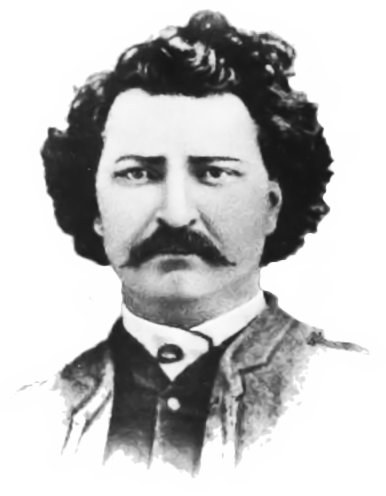
Louis Riel was a Métis leader who founded Manitoba and led the Red River and North-West Rebellions against Canadian authority.

The kit

  • Rise — Louis Riel headed the provisional government that negotiated the Manitoba Act in 1870, establishing Protestant and Catholic schools.
  • Conflicts — Louis Riel ordered the execution of Orangeman Thomas Scott, prompting the Wolseley Expedition and his five-year banishment.
  • Death & succession — Louis Riel was captured at the Battle of Batoche in 1885 and hanged despite the jury's recommendation of leniency.
  • Legacy — Louis Riel was elected three times to Parliament but never sat because Edward Blake placed a $5,000 bounty on his head.

Runs with

Métis
Riel was a Métis leader and prophet open card →
Canada
Riel founded Manitoba and rebelled against Canadian expansion open card →
Sir John A. Macdonald
William
Riel's followers defeated William McDougall open card →

The ladder · 15 clues

H

Metis leader and founder of Manitoba who led the Red River Rebellion

H

Despite the recommendations of leniency by the jury, this man was sentenced to death by Judge Hugh Richardson.

H

This man was finally captured after being defeated at the Battle of Batoche.

H

Macdonald is often criticized for his treatment of the indigenous people of Canada including this leader of the Metis people. His role in the North-West Rebellion resulted in his execution by hanging.

H

This man was captured at the Battle of Batoche along with his ally, the Cree Chief Poundmaker.

H

This man once convened a council called “the Exovedate,” from the Latin for “out of the flock,” and proceeded to breathe the “Holy Spirit” into his followers.

H

This man’s associate, William Bernard Donoghue, led raids in support of this man and lobbied for this man’s cause to the American government.

M

Métis leader who fled at the end of the rebellion.

M

Big Bear and Gabriel Dumont joined this man, who was the only parliament member to miss the Pacific Scandal debate.

M

A provisional government led by this man was ended by an 1870 expedition led by Garnet Wolseley, and he later took a seat in parliament despite being an outlaw on the run.

M

A provisional government led by this man sentenced Orangeman Thomas Scott to death.

M

He was banished for five years for the execution of Thomas Scott. :Name this man who helped found the province of Manitoba before his belief that he was the anointed "Prophet of the New World" caused him to lead the North-West Rebellion in Saskatchewan in 1885.

E

The Wolseley Expedition was sent after this man after he personally F executed Thomas Scott. name this leader of the Northwest and Red River Rebellions, a hero of the M´etis in Manitoba.

E

Born in the Red River settlement, he headed the provisional government that negotiated the Manitoba Act.

E

Followers of this man defeated William McDougall the same day he seized Fort Garry, and he ordered the execution of Thomas Scott.

10 more clues from the record
H

This man’s father led a crowd of armed men in protesting Guillaume Sayer’s imprisonment at the Assiniboia Courthouse.

H

After being elected to Parliament from Provencher, this man claimed he was a prophet of his people and was committed to a mental institution. :Identify this rebel leader who had earlier refused William McDougall entry into territory that was once part of Prince Rupert’s Land.

H

After the ignorance of his six-point List of Rights, he orchestrated the murder of Thomas Scott, an experience that led him to adopt a later more nonviolent approach by curbing the aggression of his military head, Gabriel Dumont.

H

This man repeatedly tore off his clothes in public while calling himself King David and the Prophet of the New World after suffering a breakdown around the time he met with Ulysses S. Grant.

H

The 1870 Manitoba Act, which established a system of Protestant and Catholic schools in the province, was signed by this man's provisional government. This member of the Métis people led the Red River Rebellion.

H

This man’s cousin Charles Nolin testified against him, claiming that this man’s insanity defence was fraudulent because of his willingness to accept a thirty-five thousand dollar government bribe.

H

Found guilty and sentenced to death by Judge Hugh Richardson, this man spent time in Montana before being summoned by Honore Jackson and allying with Big Bear.

H

This man was elected three times to the House of Commons but was never able to sit as a member of Parliament as Edward Blake had placed a $5,000 bounty on his head.

H

He would finally be cornered following the fall of Batoche [buh-TOSZH], which occurred about a year after he returned from exile as a teacher of a Jesuit school in Montana.

H

The credibility of this man was challenged by the insane asylum heads François Roy and Daniel Clarke, who cited a letter this man wrote claiming he was Jewish.

Watch out: Gabriel Dumont (Riel's military commander in the North-West Rebellion)
#1815 · General · Level 1

Lester B. Pearson

Lester B. Pearson
ABC Television · Public domain

Canadian Prime Minister · 1963–1968 · Canada

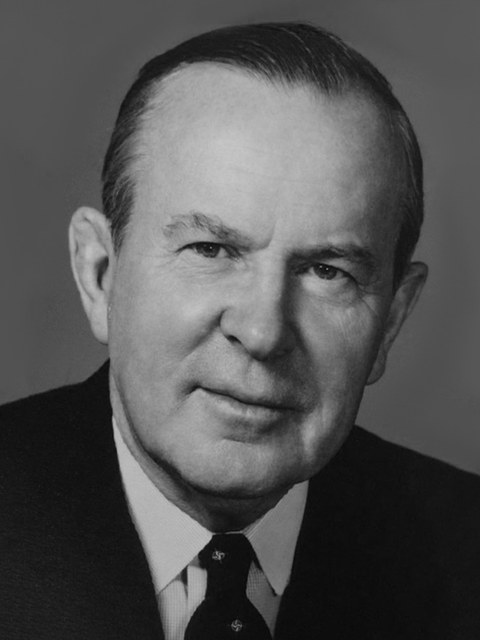
Lester B. Pearson was a Canadian Prime Minister who won the 1957 Nobel Peace Prize for resolving the Suez Crisis.

The kit

  • Rise — Lester B. Pearson served nine years as Minister of External Affairs and defeated Paul Martin for Liberal party leadership.
  • Achievements — Lester B. Pearson's government adopted the Maple Leaf Flag, instituted universal healthcare, and created the Canada Pension Plan.
  • Conflicts — Lester B. Pearson criticized Vietnam War bombing at Temple University, prompting LBJ to say "you pissed on my rug."
  • Legacy — Lester B. Pearson abolished the death penalty and unified Canada's military branches into the Canadian Armed Forces.

Runs with

Suez Crisis
won Nobel Peace Prize for negotiating resolution open card →
Canada
served as Prime Minister 1963–1968 open card →
University
criticized Vietnam bombing at Temple University open card →
John
succeeded John Diefenbaker as Prime Minister open card →

The ladder · 15 clues

H

In one of this man’s campaigns, he pledged “60 Days of Decision” and supported the Bomarc Missile Program.

H

This politician ran for office on his “Sixty Days of Decision” promise.

H

This politician faced a scandal after it was revealed that members of his predecessor’s government had slept with an East German prostitute, Gerda Munsinger.

H

In a speech made at Temple University, he spoke out against U.S. bombing campaigns during the Vietnam War causing President Johnson to claim that this man “pissed on my rug.” While in power his government adopted a new flag for his country as well as a liberal immigration policy.

H

After he criticized the bombing of North Vietnam at Temple University, he was told by Lyndon Johnson not to “come into my living room and piss on my rug.” This successor to Louis St. Laurent as party leader accepted the Bomarc missile program and instituted universal healthcare.

H

His criticism of American foreign policy caused the American president to tell him “you pissed on my rug.” This man signed the Auto-Pact with the United States and unified the Air Force, Army, and Navy into the Canadian Armed Forces.

H

This man succeeded Louis St. Laurent as party leader. :Identify this liberal Canadian Prime Minister who advocated adopting BOMARC missile, universal healthcare, and the new Maple Leaf flag during his “60 days of decision” in the 1960s.

M

Future Canadian Prime Minister who won a Nobel Peace Prize while a diplomat for negotiating an end to the Suez Crisis

M

After this Canadian Prime Minister criticized American policy in Vietnam in a speech at Temple University, LBJ summoned him to Camp David and allegedly grabbed him by the shirt collar and screamed “don’t you come into my living room and piss on my rug!”

M

This successor of John Diefenbaker was elected the representative of Algoma East, this politician acted as Minister of External Affairs for nine years before becoming leader of the Opposition.

M

In 1963, he replaced John Diefenbaker as Prime Minister of Canada. name this man who became President of the General Assembly of the UN in 1952, and whose work in defusing the Suez crisis was rewarded with the Nobel Peace Prize in 1957.

M

The related Social Credit party lost federal general elections in the 1960s to this Liberal party politician. This Canadian Prime Minister and Nobel Peace Prize recipient refused to send Canadian troops into the Vietnam War.

E

Canada abolished the death penalty under the administration of this prime minister, who had previously won the Nobel Peace Prize for negotiating a resolution to the Suez Crisis.

E

This successor of John Diefenbaker appointed a commission that selected the Maple Leaf Flag and won a Nobel Peace Prize for his role in ending the Suez Crisis. name this Liberal Canadian Prime Minister succeeded by Pierre Trudeau.

E

This politician claimed “Canadians do not need to be liberated” in response to the “Vive le Quebec Libre” speech another man gave at Expo 67.

10 more clues from the record
H

In one speech, this man argued that even though “a settlement is hard to envisage in the heat of battle”, “it is imperative to seek one.” During his leadership, this politician passed Bill C-168, which outlawed capital punishment in his country.

H

This former Public Archives researcher's first government post was as first secretary in the Department of External Affairs, and he drew heat for a high-tariff budget planned by his finance minster, Walter Gordon.

H

During this man’s ministry, a bribery scandal arising out of the escape of convicted drug dealer Lucien Rivard brought about the resignation of his attorney general Guy Favreau.

H

While at Oxford, this man joined the Swiss National hockey team in 1922 and was known as "Herr Zigzag." During his ministry, historian George Stanley designed an important national object.

H

This man's party took office with a successful slogan promising "60 Days of Decision," as well as a call to accept nuclear-armed Bomarc missiles.

H

Walter Butler proposed an unpopular budget during the “60 days of decision” called for by this man, who removed tariffs on US cars via the Auto Pact.

H

He represented Algoma East in his country’s House of Commons, and after St. Laurent resigned he defeated Paul Martin to become the leader of the Liberals.

H

Tommy Douglas’s New Democrats were crucial to this man’s two minority coalitions, which pushed through the Canada Pension Plan.

H

His time in office was also marked by a contentious “Flag Debate,” as he controversially proposed to replace the Red Ensign with a new design.

H

This man said his country's people "do not need to be liberated" after Charles de Gaulle gave a speech about freedom at Expo 67.

Watch out: John Diefenbaker (his predecessor as Prime Minister)
#1821 · Other Modern National Leaders · Level 1

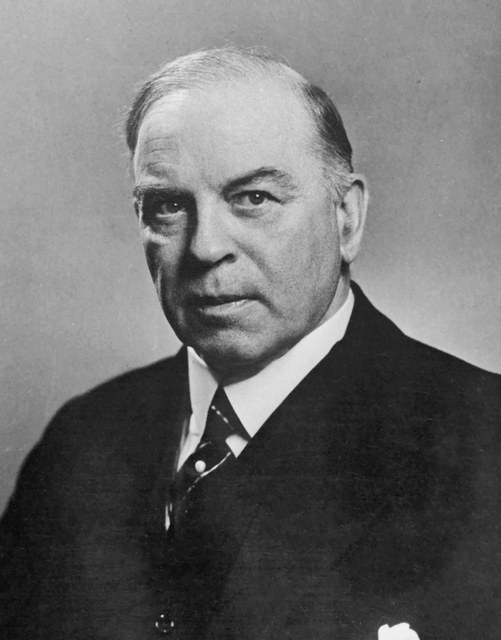
William Lyon Mackenzie King

William Lyon Mackenzie King
bdi Yousuf Karsh /span /a · Public domain

Canadian Prime Minister · 1919–1948 (Liberal leader); PM 22 years · Canada

William Lyon Mackenzie King was Canada's longest-serving Prime Minister, leading the Liberal Party from 1919 to 1948 and serving as PM for twenty-two years.

The kit

  • Rise — William Lyon Mackenzie King became Canada's first Minister of Labor in 1909 after winning election in the conservative district of North Waterloo.
  • Achievements — William Lyon Mackenzie King wrote Industry and Humanity while working with the Rockefeller Foundation, identifying four "parties to industry" in industrial reconstruction.
  • Conflicts — William Lyon Mackenzie King faced the King-Byng Crisis when Governor General Julian Byng refused his 1926 request to dissolve Parliament, instead asking Arthur Meighen to form government.
  • Legacy — William Lyon Mackenzie King led Canada through World War II, formally asking George VI permission to declare war on Nazi Germany.

Runs with

Canada
served as longest-serving Prime Minister open card →
Prime Minister of Canada
held office for twenty-two years total open card →
World War II
led Canada through the war, faced 1944 Conscription Crisis open card →
Turkey

The ladder · 15 clues

H

This author of Industry and Humanity lost one election after he said that he “would not give a five cent-piece” for unemployment relief.

H

This man won re-election in 1935 with the slogan “[this man] or Chaos.” While working with the Rockefeller Foundation, this man wrote the book Industry and Humanity.

H

This man was involved in a hilariously named crisis involving Governor-General Lord Byng. :Name this man who had earlier served as Prime Minister of Canada during World War II. He visited Germany to meet with Hitler in 1937.

H

This man had his friend Henry Albert Harper commemorated with a statue of Sir Galahad on Parliament Hill.

H

An opponent of this politician claimed they were holding onto power “like a lobster with lockjaw” and this person’s reputation was damaged by their cabinet’s Beauharnois scandal.

H

Besides that election loss in 1930 to R.B. Bennett, this politician had earlier lost power when Governor General Julian Byng made his longtime rival, Arthur Meighen, prime minister.

H

A poem about this leader said he would “do nothing by halves which can be done by quarters.” For his country’s safety, this man created the Permanent Joint Board of Defence and signed the Ogdensburg Agreement.

M

He faced a constitutional crisis when his request for a dissolution of Parliament was denied by Governor General Julian Byng. name this longest-serving Canadian prime minister.

M

This prime minister requested the dissolution of Parliament in 1926, but was turned down by the Governor General, Lord Byng.

M

This politician’s grandfather led the 1837 Upper Canada Rebellion. :Name this longest-serving Prime Minister of Canada, who led that country through World War II.

M

After winning an election in the otherwise conservative district of North Waterloo, this man was appointed his country’s first Minister of Labor in 1909.

M

This leader’s grandfather served as the first mayor of Toronto and led the Upper Canada Rebellion of 1837.

E

This Liberal politician served as prime minister during World War Two. name this politician, Canada’s longest serving Prime Minister.

E

Governor-General Lord Byng refused to dissolve parliament at the request of this leader, instead asking Conservative Arthur Meighen to form a government. name this longest-serving Canadian Prime Minister.

E

This man was elected to his third ministry by saying that it was him “or chaos,” after a constitutional crisis in which he was replaced with his rival Arthur Meighen by Governor General Julian Byng. name this Liberal, Canada’s longest serving prime minister.

10 more clues from the record
H

This man’s reputation was tarnished after it was uncovered that his government had accepted $700,000 from the Beauharnois [boh-arn-wah] Company in exchange for permission to change the course of the St. Lawrence River.

H

This longest serving prime minister of one country formally asked George VI permission to declare war on Nazi Germany.

H

This man's grandfather with a similar name was pardoned by Martin van Buren after his violation of the Neutrality Act during the 1837 Upper Canada revolt.

H

Heavy losses in the Dieppe Raid led to this leader instituting a national draft, leading to the Conscription Crisis of 1944.

H

Under this leader’s administration, the Bird Commission addressed forced property confiscation.

H

MP Arthur-Joseph Lapointe helped this leader navigate the Conscription Crisis.

H

He set up the Rowell-Sirois Commission on federal- provincial relations.

H

This man lived at Hull House while studying at the University of Chicago, leading to his concern for the poor that led him to become editor of the Labour Gazette and advance a cooperative model of firm governance in the book Industry and Humanity.

H

This man identified four “parties to industry” in a dense book subtitled “A Study in the Principles Underlying Industrial Reconstruction.” This author of Industry and Humanity spearheaded the passage of the Industrial Disputes Investigation Act of 1907.

H

Name these Canadian Prime Ministers, .He led the Liberal Party from 1919-1948, serving as Prime Minister for twenty-two of those years. His time in office saw the creation of the CBC and the nationalization of the Bank of Canada.

Watch out: His grandfather (similar name) led the 1837 Upper Canada Rebellion and was Toronto's first mayor
#1855 · General · Level 1

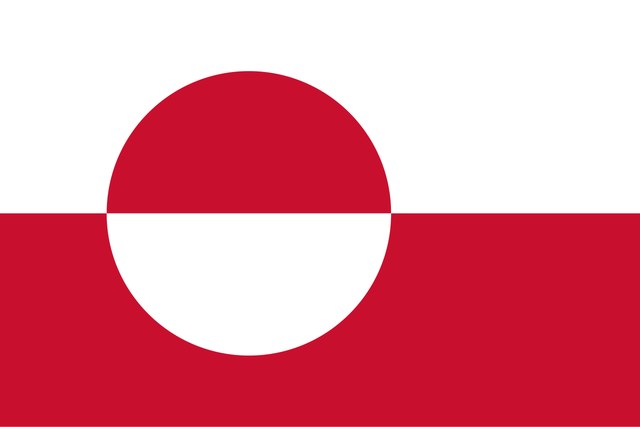
Greenland

Greenland
Jeffrey Connell ( IceKarma /a ) · Public domain

World's largest island · Norse settlement c. 985 CE; Danish control to present · North Atlantic Ocean

Greenland is the world's largest island, discovered by Erik the Red and currently an autonomous country within Denmark.

The kit

  • Discovery & settlement — Greenland was discovered by Erik the Red after he left Iceland, leading to Norse settlements including the Eastern and Western Settlements.
  • Colonial history — Greenland came under Denmark-Norway control, with Hans Egede converting inhabitants to Christianity and establishing the capital in the 1700s.
  • Modern status — Greenland gained home rule from Denmark in 1979, with its capital officially renamed from Godthab to Nuuk.
  • Strategic importance — Greenland hosts Thule Air Base, the US Air Force's northernmost base, and was subject to purchase offers by Truman in 1946 and Trump in 2019.

Runs with

Denmark
autonomous country within Kingdom of Denmark since home rule granted in 1970s open card →
Vikings
Erik the Red founded first Norse settlement; Leif Erikson's birthplace open card →
Iceland
discovered by Erik the Red after leaving Iceland open card →
Norway
Norway challenged Denmark's ownership of eastern Greenland in 1933 open card →

The ladder · 15 clues

H

Island discovered by an explorer called “the Red” after leaving Iceland.

H

This island is home to the 12th Space Warning Squadron, which operates near Saunders Island at Thule Air Base, the US Air Force’s northernmost air base.

H

This island contained the Eastern Settlement and the Western Settlement, the former of which was abandoned before the latter.

H

In this location, Kolgrim was accused of using sorcery to seduce the wife of Torgrim; he was burned at the stake after his trial at a thingstead in the city of Gardar, where Norse settlers established a bishopric in 1126.

H

Hans Egede became known as the “Apostle of” this place after converting many of its inhabitants to Christianity and establishing its capital.

H

Charles Francis Hall saw much of the northwest of this region, and its northern part was claimed by the Polaris expedition.

H

Expeditions to Sabine and Shannon Islands near this region were part of the North Atlantic weather war.

M

What largest island in the North Atlantic had its capital officially renamed from Godthab to Nuuk (pr. noo-ook)?

M

In the 1970s, Denmark awarded home rule to what largest non-continental island on Earth?

M

Leif Erikson's father, Erik the Red, was the founder of the first European settlement on this large island that is currently an autonomous part of the Kingdom of Denmark.

M

Harry Truman offered to buy this island for one hundred million dollars in 1946; in 2019 via tweet, Donald Trump offered to buy this island, prompting ridicule from the Prime Minister of Denmark. name this largest island in the world.

M

Part of this island was claimed by Norway as “Erik the Red's Land,” and Project Icework attempted to construct hundreds of minuteman missiles on this island. name this large island within the Kingdom of Denmark.

E

The US Air Force maintains Thule Base on this island, where over 30% of the population lives in the capital, Nuuk. name this largest island in the world, an autonomous country within Denmark.

E

Denmark-Norway controlled this island, the largest in the world. In 1933, Norway challenged Denmark’s ownership of Erik the Red’s Land on the eastern half of this island.

E

Henrik Kauffman signed a 1941 treaty with the United States paving the way for the establishment of Thule Airbase on this island. name this largest island in the world, a constituent country of Denmark.

10 more clues from the record
H

Archaeologists discovered the ruins of the Saqqaq culture around this island’s Disko Bay.

H

This island’s Deltaterrasserne [“delta”-”terra”-sern] site was inhabited by the Independence I and II cultures.

H

is a former Danish colony and - not counting Australia - the world’s largest?

H

Maurice Francis Egan tried to trade for this region in exchange for Mindanao.

H

Claus Paarss founded a fort at Godt-Haab in this location.

H

The northernmost point of this island is named after philanthropist Morris Jesup.

H

Jonathan Motzfeldt was the first prime minister of this place.

H

Cod has played a surprisingly large role in the history of Britain. :The UK lost a series of territorial disputes known as “Cod Wars” to Iceland, mainly because Iceland is strategically located in the GIUK gap, a naval choke point between Iceland, the UK, and this large Danish landmass.

H

Control of this territory was temporarily transferred to the U.S. during World War II since its controlling country, ruled by Christian X , had been occupied by Germany. :Name this territory whose capital’s original name of Godthaab was phased out for an indigenous one after it gained home rule in 1979.

H

Answer some questions on perhaps the first person to take part in boosterism, Erik the Red. :Erik the Red engaged in some serious marketing when he named this island, where Icelanders settled a colony that died out around the 1400s.

Watch out: Erik the Red's Land—Norway claimed this eastern portion of Greenland in 1933, challenging Danish ownership