The 1648 Codex · study package

US Presidential Elections

12 terms drawn from across the corpus, in study-list order. Art and cross-links point back to the home category cards.

#1079 · US Presidential Elections · Level 1

2000 United States Presidential Election
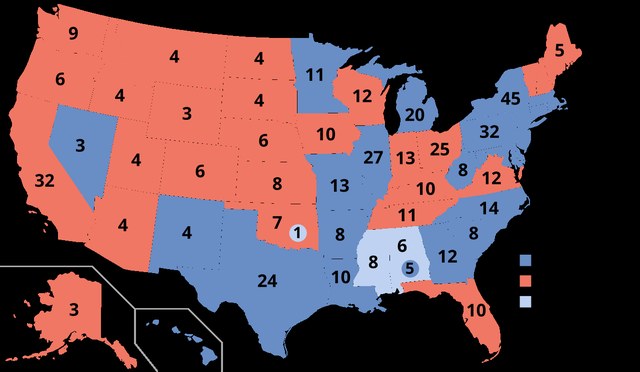
2000 United States Presidential Election
Nkocharh · Public domain

U.S. presidential election · 2000 · United States

The 2000 United States Presidential Election saw George W. Bush defeat Al Gore after a Supreme Court decision halted Florida's recount.

The kit

  • Campaign — The 2000 United States Presidential Election featured Joe Lieberman as the first Jewish vice presidential candidate on a major-party ticket.
  • Florida controversy — The 2000 United States Presidential Election's outcome hinged on 537 votes in Florida, where butterfly ballots and hanging chads triggered recounts.
  • Supreme Court — The 2000 United States Presidential Election ended when Bush v. Gore halted Florida's recount one day before the safe harbor deadline.
  • Popular vote — The 2000 United States Presidential Election resulted in Bush winning the Electoral College while Gore won the popular vote.

Runs with

Florida
Bush won by 537 votes after Supreme Court halted recount open card →
George W. Bush
won Electoral College after Bush v. Gore decision open card →
Al Gore
lost despite winning popular vote; conceded after court ruling open card →
South Carolina
site of nasty primary with attacks on McCain open card →

The ladder · 15 clues

H

One candidate for the Democratic nomination in this election year was a New Jersey senator who had played for the New York Knicks.

H

During this election year, Phil Donahue held “super rallies” for one candidate and John McCain called Jerry Falwell and Pat Robertson “agents of intolerance.” The Voter News Service had its reputation damaged in this year after calling the results ahead of time.

H

This election year's only faithless elector was Barbara Lett-Simmons, who protested D.C.'s lack of representation.

H

In this election, the nasty South Carolina primary featured accusations that a candidate’s adopted child was actually born out of wedlock.

H

A candidate in this election was derided for proposing a federal “rainy day fund,” and was the first major-party candidate with a Jewish running mate.

H

“The Shrub” led push-polling in South Carolina during this election year, during which David Foster Wallace reported for Rolling Stone while riding the Straight Talk Express.

H

In this year, a December 12th “safe harbor” deadline caused the Supreme Court to deliver a ruling one day after hearing oral arguments.

M

A series of butterfly ballots proved critical in this election year in which Joe Lieberman was a vice presidential candidate.

M

This election featured the Reform Party’s Pat Buchanan appearing in a controversial position on one state’s butterfly ballots.

M

Joe Lieberman became the first Jewish candidate on a major-party ticket in this election. name this election in which George W. Bush defeated Al Gore.

M

In this election year, the first Jewish candidate to be nominated for either party, Joe Lieberman, ran for vice president.

M

Ralph Nader ran his most successful campaign, his fourth, in this election. name this election, during which George W. Bush defeated Al Gore to become the 43rd president.

E

This election saw “hanging chads” cause a long recount in Florida ended by the Supreme Court. name this election in which George W. Bush defeated Al Gore.

E

Prior to 2016, this was the most recent U.S. presidential election year in which the winner lost the popular vote. name this election year in which Al Gore lost to George W. Bush.

E

Many inadvertent votes in this election year may have gone to Pat Buchanan due to the proliferation of "butterfly ballots." name this election year in which Al Gore narrowly lost to George Bush by a margin of 537 votes in Florida.

10 more clues from the record
H

During a debate in this election year, the losing candidate mentioned the "Dingell-Norwood Bill" while seeming to loom over his opponent's personal space.

H

Shortly before this election, a primary-loser released his memoir Faith of My Fathers about his service as a naval aviator in the Vietnam War.

H

In this election year, a primary campaign suffered in South Carolina due to flyers suggesting he fathered an illegitimate black child.

H

At the Democratic convention during this election year, the nominee passionately kissed his wife, possibly to indicate the strength of his marriage.

H

Al Franken wrote a speculative account of this election year titled Why Not Me?.

H

Which U.S. presidential election year’s results were disputed in the court case Bush v.

H

Tim Russert’s whiteboard, which portrayed possible results of this election, is currently housed in the Smithsonian. :Name this election, where George W. Bush became president after narrowly winning Florida by a few hundred votes.

H

Recounts and poor ballot design in another South Florida county, Miami-Dade, were at the center of a weeks-long controversy in this election year that ended in a Supreme Court decision.

H

A candidate in this election referred to Karl Rove as his “Architect.” The Supreme Court of the US overturned the Florida Supreme Court’s ruling of a statewide recount of ballots in this election.

H

One candidate in this election was criticized for accepting the endorsement of Bob Jones University due to its ban on interracial dating.
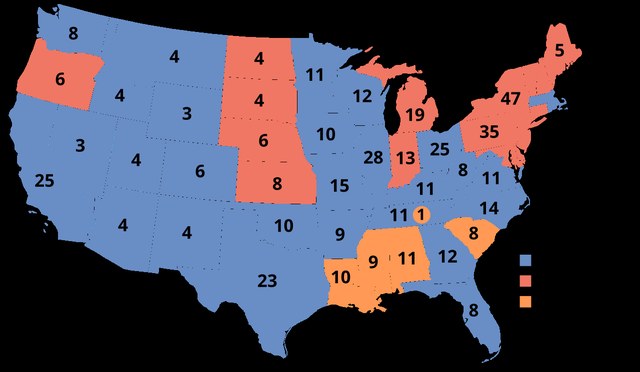
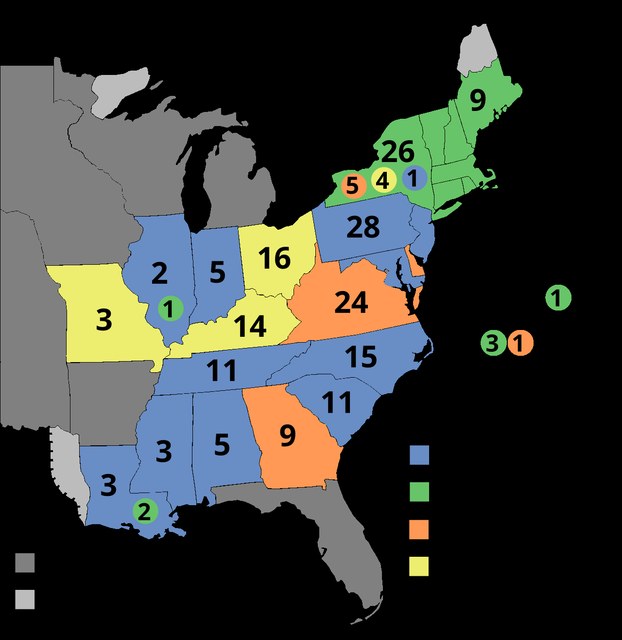
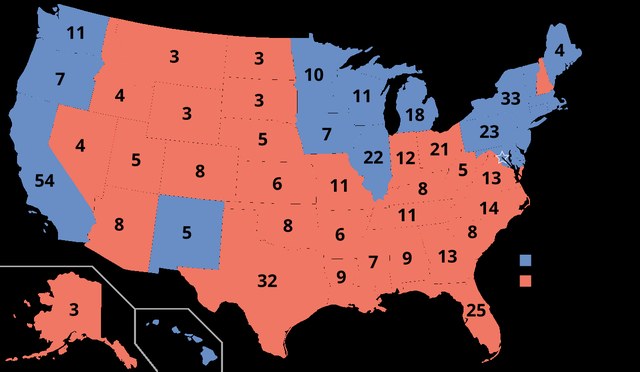
Watch out: Pat Buchanan ran as Reform Party candidate but received inadvertent votes due to confusing butterfly ballot design in Palm Beach County
#1080 · US Presidential Elections · Level 3

1948 United States Presidential Election

1948 United States Presidential Election
Public domain

U.S. presidential election · 1948 · United States

The 1948 United States Presidential Election saw incumbent Harry S. Truman defeat Thomas Dewey despite widespread predictions of a Republican victory.

The kit

  • Candidates — 1948 United States Presidential Election featured Thomas Dewey as Republican nominee, with Earl Warren as his running mate, against incumbent Truman.
  • Dixiecrat revolt — 1948 United States Presidential Election saw thirty southern delegates walk out of the Democratic convention over civil rights, nominating Strom Thurmond.
  • Campaign strategy — 1948 United States Presidential Election featured Dewey running a low-risk campaign with vague slogans like "your future is still ahead of you."
  • Upset result — 1948 United States Presidential Election ended with the Chicago Tribune falsely declaring Dewey the winner before Truman's surprising victory was confirmed.

Runs with

Strom Thurmond
carried four states as Dixiecrat candidate after convention walkout open card →
Earl Warren
Chicago
Tribune falsely declared Dewey winner in famous headline open card →
Prohibition

The ladder · 6 clues

H

During this election year, Harold Stassen was told “you can’t shoot an idea with a gun” after supporting a mandatory communist registry in this election year.

H

Andrew Biemiller proposed a civil rights plank to one party’s platform during this election year which caused three dozen southern delegates to leave.

M

Before becoming chief justice, Earl Warren was the losing vice presidential candidate in this election in which then South Carolina governor Strom Thurmond carried four states as a candidate for the Dixiecrat Party.

M

The Roerich letter damaged the Progressive Henry Wallace in this election.

E

The Chicago Tribune falsely claimed that this election year was won by Thomas Dewey. name this election year won by incumbent president Harry S. Truman.

E

The winner of this election won support by claiming the 80th Congress had stuck a “pitchfork in the farmer’s back.” During this year’s Democratic convention, 30 southern senators walked out over a civil rights dispute and instead nominated “Dixiecrat” Strom Thurmond.

10 more clues from the record
H

One candidate in this election year avoided controversial issues through vague slogans such as "You know that your future is still ahead of you." In this election year, Fielding Wright split the southern vote with Dixiecrats who supported Strom Thurmond.

H

This election year marked the first time a party’s national convention was televised.

H

During this election year’s primaries, banning the Communist Party of the United States was the sole topic of the first presidential debate over radio.

H

During this election year, Arthur Vandenberg, Harold Stassen, and Robert Taft failed to stop the nomination of a Republican Governor of New York.

H

A left-wing candidate in this election was mocked after the “Guru letters” that he wrote to a Russian spiritualist were published.

H

During this election year, one candidate’s coded letters were released, revealing that he named FDR “The Flaming One.” Supreme Court Justice William Douglas refused to be a running mate in this election year.

H

Another candidate in this election ran on a ticket with Fielding Wright after walking out of a major party convention following Hubert Humphrey’s speech.

H

A candidate in this year’s election was attacked for his close association with Russian mystic Nicholas Roerich, and left his position as publisher of The New Republic to run.

H

Edwin Jaeckle developed a brilliant but discarded strategy for the Republican candidate in this year, who defeated Athur Vandenberg and Harold Stassen and infamously declared “you know that your future is still ahead of you” in a speech on atomic energy.

H

Due to the incumbent's rapidly sinking popularity, the challenger ran a low-risk campaign that used vague quotes such as "You know that your future is still ahead of you.” A challenger in this election was future Supreme Court justice Earl Warren.

Watch out: Henry Wallace ran as Progressive candidate, not Democratic nominee
#1081 · US Presidential Elections · Level 3

1824 United States Presidential Election

1824 United States Presidential Election
AndyHogan14 /a · Public domain

U.S. presidential election · 1824 · United States

The 1824 United States Presidential Election was the only election after the Twelfth Amendment decided by the House of Representatives.

The kit

  • Candidates — The 1824 United States Presidential Election featured Andrew Jackson, John Quincy Adams, William Crawford, and Henry Clay in fourth place.
  • Corrupt bargain — The 1824 United States Presidential Election saw Speaker Henry Clay break a deadlock, leading to accusations of a "corrupt bargain" after Adams won.
  • Crawford's stroke — The 1824 United States Presidential Election saw third-place finisher William Crawford's viability hurt by a stroke suffered a year prior.
  • End of King Caucus — The 1824 United States Presidential Election marked the end of the King Caucus system and was satirized by "A Foot Race."

Runs with

Henry Clay
finished fourth, then named Secretary of State open card →
William
William Crawford finished third after suffering stroke open card →
John Quincy Adams
won after House vote, accused of corrupt bargain open card →
Andrew Jackson
runner-up who decried result as corrupt bargain open card →

The ladder · 6 clues

H

Nathaniel Macon served as a running mate in this election year to William H. Crawford, who died of a heart attack before voting.

H

One side in this election year used the song “Hunters of Kentucky” to rally support.

M

A stroke hurt the viability of third-party candidate William Crawford in this election year, which proved to be the last victory for the Democratic-Republican party.

M

In this election year, Nathaniel Macon replaced Albert Gallatin as the vice presidential candidate on a ticket led by the sitting Secretary of the Treasury.

E

The Speaker of the House broke a deadlock in this election, leading to claims that Henry Clay struck a “corrupt bargain.” name this election year in which John Quincy Adams defeated Andrew Jackson.

E

John Quincy Adams was elected President in what year’s election, decried as a “corrupt bargain” by the runner-up, Andrew Jackson?

10 more clues from the record
H

One candidate in this election was opposed in North Carolina by a group called the People’s Ticket and supported in New York by a coalition called the People’s Party.

H

Opponents of this election’s winner would later spread claims that he pimped prostitutes to the Czar during his time as Ambassador to Russia.

H

While serving as chancellor of New York, Nathan Sanford ran in this presidential election year, winning 30 vice-presidential votes.

H

This election year included strong personal attacks against Albert Gallatin who withdrew his nomination as a result.

H

The presidential election of this year was satirized by the political cartoon “A Foot Race” and marked the end of the King Caucus system.

H

In this election year, a group of old Republicans, supported by or supported a Georgian candidate who finished in third place.

H

The third-place finisher in this U.S. election year suffered a stroke a year prior to it, leading to his poor performance.

H

William Crawford took third in this election, the only election after the Twelfth Amendment to be decided by the House of Representatives.

H

The Tertium Quids [[TER-shum KWIDS]] were represented by that man, William H. Crawford, in this election year.

H

Its fourth-place finisher, Henry Clay, was subsequently named Secretary of State.

Watch out: William Crawford suffered a stroke before this election, but Nathaniel Macon (not Crawford) served as his running mate throughout
#1082 · US Presidential Elections · Level 3

1876 United States Presidential Election

1876 United States Presidential Election
bdi Mathew Benjamin Brady /span /a · Public domain

disputed presidential election · 1876 · United States

1876 United States Presidential Election saw Rutherford B. Hayes defeat Samuel Tilden despite losing the popular vote.

The kit

  • Outcome — 1876 United States Presidential Election resulted in Rutherford B. Hayes winning by one electoral vote over Samuel Tilden.
  • Controversy — 1876 United States Presidential Election featured disputed results in Louisiana, Florida, and South Carolina resolved by a fifteen-member electoral committee.
  • Compromise — 1876 United States Presidential Election was settled when Tilden conceded in 1877 in exchange for ending Reconstruction.
  • Turnout — 1876 United States Presidential Election recorded the highest voter turnout by percentage of eligible voters in American history.

Runs with

Rutherford B. Hayes
won presidency despite losing popular vote open card →
Oregon
governor Lafayette Grover attempted to replace elector John Watts open card →
Senate
vice-presidential winner later told off Roscoe Conkling per Profiles In Courage open card →
David

The ladder · 6 clues

H

Peter Cooper ran as a member of the Greenback Party in this election year, whose losing presidential candidate had won fame for breaking up the Canal Ring.

H

Thomas Hendricks was the running mate for the Democratic candidate in this election.

M

In this election year, a fifteen member electoral committee was assembled to rule on allegations of fraud in Louisiana, Florida, and South Carolina.

M

Nominees for one party's candidate in this election included Roscoe Conkling, and this election saw an attempt to replace John Watts made by Oregon governor Lafayette Grover.

E

Year in which Rutherford B. Hayes’ Presidential victory ended Reconstruction.

E

In a compromise enacted the year after this election, the Democrat candidate Samuel Tilden conceded the presidency in exchange for Republicans agreeing to end Reconstruction. name this controversial election year in which Rutherford B. Hayes lost the popular vote.

10 more clues from the record
H

In this year, an investigation by Clarkson Potter found evidence of bribery in the Cipher dispatches.

H

During this election year, the Greenback Party nominated 85-year old Peter Cooper, the founder of the Cooper Union school.

H

Thomas Hendricks and William Wheeler were the vice presidential candidates in this election.

H

James Alexander Walker ran on the American Party ticket in this election, while the Prohibition Party nominated Green Clay Smith.

H

In the leadup to this election, the Hamburg Massacre was committed by violent supporters of Wade Hampton’s bid for governor of South Carolina.

H

One section of Profiles In Courage details an incident in which the vice-presidential winner of this election told off Roscoe Conkling.

H

A loser in this election year was hurt by the discovery of the Cipher Dispatches, which alleged election fraud; however, his reputation was also helped by his work breaking up the Canal Ring and his opposition to Boss Tweed.

H

The highest voter turnout by percentage of eligible voters occurred during this election year in which the winning candidate won one more electoral vote than his opponent.

H

This outcome of this year’s election completed the final goal of the Redeemers faction.

H

Despite getting more popular votes than Rutherford B. Hayes, Tilden lost the presidential election in this year. Three states’ disputed results in this presidential election were settled by a compromise the next year.

Watch out: Samuel Tilden won the popular vote but lost the electoral college
#1083 · US Presidential Elections · Level 3

1912 United States Presidential Election

1912 United States Presidential Election
Nakor · Public domain

presidential election · 1912 · United States

1912 United States Presidential Election saw Democrat Woodrow Wilson defeat Republican William Howard Taft and Progressive Theodore Roosevelt in a four-way race.

The kit

  • Democratic nomination — 1912 United States Presidential Election featured Democrat Champ Clark losing frontrunner status after Tammany Hall endorsed him, alienating progressives at the convention.
  • Republican split — 1912 United States Presidential Election occurred after William Howard Taft fired Gifford Pinchot as head of the Bureau of Forestry, causing a split in the Republican Party.
  • Campaign — 1912 United States Presidential Election contrasted Woodrow Wilson's New Freedom platform with Theodore Roosevelt's New Nationalism after Roosevelt declared he felt like a "bull moose."
  • Results — 1912 United States Presidential Election saw Socialist Eugene Debs finish fourth behind Wilson, Roosevelt, and Taft, while John Schrank failed to assassinate Roosevelt.

Runs with

John
John Schrank attempted to assassinate Roosevelt during campaign open card →
Woodrow Wilson
Wilson won with New Freedom platform open card →
Indiana
Theodore Roosevelt
Roosevelt ran as Progressive Party candidate open card →

The ladder · 6 clues

H

The front runner for the nomination of one party in this election, Champ Clark, lost his momentum after he was endorsed by Tammany Hall.

H

Speaker of the House Champ Clark was initially the Democratic frontrunner of this election, but negotiated votes to the winner.

M

In this election year, the firing of Gifford Pinchot as the head of the Bureau of Forestry caused a split in one political party.

M

A candidate in this election year ran on the ideas of New Freedom, in contrast with another candidate’s New Nationalism.

E

Election year in which the Socialist candidate finished fourth behind Woodrow Wilson, William Howard Taft, and Theodore Roosevelt.

E

Despite feeling like a "bull moose," Theodore Roosevelt lost this election to Woodrow Wilson two years before the start of World War I.

10 more clues from the record
H

This presidential election year featured Emil Seidel running for Vice President on a Socialist ticket.

H

John Schrank failed to assassinate one candidate in this election.

H

In addition to Emil Seidel and James Sherman, candidates in this election included the sitting Governor of Indiana, who was the winner’s running mate.

H

Nicholas M. Butler replaced the running mate of a losing ticket in this election after that running mate passed away.

H

Milwaukee mayor Emil Seidel was a vice-presidential candidate in this election, whose running-mate was a former State Senator from Indiana.

H

During this election year, Champ Clark was an early frontrunner at the convention until Tammany Hall announced its support for him, alienating the progressives.

H

One candidate in this election lost the support of progressives when he fired conservationist Gifford Pinchot as head of the Bureau of Forestry and endorsing the Payne-Aldrich tariff.

H

Minor third party competition came from Eugene Chafin, in his second run with the Prohibition Party, as well as the fourth and final Socialist ticket headed by Eugene Debs.

H

At the Democratic Party convention in this election, many Southerners supported Oscar Underwood, who was later offered a vice-presidential nomination by its winner.

H

A political cartoon about this election year shows a candidate dressed as a circus clown and beating a drum to invite people to vote for his party.

Watch out: Confusing this with 1916 election (also Wilson, also pre-WWI)
#1084 · US Presidential Elections · Level 3

1860 United States Presidential Election

1860 United States Presidential Election
bdi Alexander Hesler /span /a · Public domain

Presidential election · 1860 · United States

The 1860 United States Presidential Election saw the Democratic Party split into Northern and Southern factions, enabling Abraham Lincoln's victory.

The kit

  • Candidates — The 1860 United States Presidential Election featured four major candidates: Republican Abraham Lincoln, Northern Democrat Stephen Douglas, Southern Democrat John Breckinridge, and Constitutional Unionist John Bell.
  • Democratic split — The 1860 United States Presidential Election saw William Lowndes Yancey and fellow Fire-Eaters walk out of the Democratic convention, splitting the party into geographic factions.
  • Fusion efforts — The 1860 United States Presidential Election featured losing candidates joining forces in three Mid-Atlantic states to cast fusion ballots against Lincoln.
  • Outcome — The 1860 United States Presidential Election ended in Abraham Lincoln's victory, which helped trigger the siege of Fort Sumter and preceded the Civil War.

Runs with

John
John Bell ran as Constitutional Union candidate open card →
Abraham Lincoln
Abraham Lincoln won the election as Republican candidate open card →
Stephen Douglas
Stephen Douglas ran as Northern Democratic candidate and lost open card →
Tennessee

The ladder · 6 clues

H

This year featured a presidential campaign by John Bell whose Constitutional Union party dissolved one year later.

H

One party formed for this election year was comprised of remnants of the earlier Opposition party.

M

A convention in this election year featured William Lowndes Yancey leading his fellow “fire-eaters” out of the hall.

M

The Democrats split into two distinct Northern and Southern factions during this election, with one side running Stephen A. Douglas and the other John Breckinridge. name this electoral cycle which preceded the Civil War, ending in a victory for Abraham Lincoln.

E

John Breckenridge and Stephen Douglas lost this Presidential election that helped trigger the siege of Fort Sumter after Abraham Lincoln won.

E

The Lecompton Constitution was discussed during this election, whose winning ticket included Hannibal Hamlin.

10 more clues from the record
H

Included three former Republican rivals in what year’s Presidential election this Lincoln won.

H

A vice-presidential candidate in this election year had taken over Walter Colquitt’s vacated Senate seat and would go on to become Governor of Georgia.

H

The short-lived Constitutional Union party ran its first and only presidential candidate, Tennessee senator John Bell, during this election cycle.

H

In this election year, William Yancey, a member of the Fire-Eaters, helped split one party into geographic factions.

H

In this election year, losing candidates joined forces in three Mid-Atlantic states to cast “fusion” ballots.

H

Two minor parties in this election included the People’s Party and Liberty Party, the latter of which nominated Gerrit Smith.

H

Supporters of a candidate in this election marched with banners reading “mind your eye.” A Texan “People’s Party” in this election nominated Sam Houston against his will.

H

The illiterate cousin of a candidate in this election joined the campaign when opponents predictably alleged that letters dictated to Richard Oglesby were forged.

H

That party eventually chose John Bell of Tennessee as their choice for the Presidency, and Bell would carry his home state, Kentucky, and Virginia.

H

A candidate in this election was mocked in the cartoon "Three to One You Don't Get It" which showed him carrying pieces of wood.

Watch out: Stephen Douglas ran as the Northern Democratic candidate, not as Lincoln's running mate
#1085 · US Presidential Elections · Level 3

Election of 1800

Election of 1800
Hamilton, Alexander, 1757-1804 · Public domain

U.S. presidential election · 1800 · United States

Election of 1800 was the fourth U.S. presidential election in which Thomas Jefferson defeated incumbent John Adams, producing the first peaceful transfer of power between parties.

The kit

  • Electoral tie — Election of 1800 produced a 73-73 electoral vote tie between Thomas Jefferson and Aaron Burr, sending the contest to the House.
  • House resolution — Election of 1800 was resolved when James Bayard convinced Maryland and Vermont allies to cast blank ballots, breaking the deadlock.
  • Constitutional reform — Election of 1800 exposed flaws in the electoral system, leading directly to passage of the Twelfth Amendment to prevent future ties.
  • Political realignment — Election of 1800 is called the "Revolution of 1800" because it achieved the first peaceful transfer of power between opposing parties.

Runs with

Thomas Jefferson
won with 73 electoral votes after House deadlock open card →
John Adams
Aaron Burr
tied Jefferson with 73 electoral votes open card →
James
James Bayard brokered House resolution through blank ballots open card →

The ladder · 6 clues

H

In this election, James Bayard played an important role by convincing his allies in Maryland and Vermont to cast blank ballots.

H

During this election, James A. Bayard and some of his political allies decided to abstain in a key vote.

M

William Freehling claims that the Three-Fifths clause was central to the incumbent’s loss in this election year, whose winner gave a diplomatic inaugural address in which he claimed “We are all Republicans, we are all Federalists.” A Federalist supported a rival in this election year by claiming he was “by far not so dangerous a man” as Aaron Burr.

M

Aaron Burr initially received 73 electoral votes in this election year, tying him with the eventual winner.

E

The 12th Amendment was enacted in response to this year’s election in which incumbent John Adams was defeated by Thomas Jefferson.

E

Chaos in the voting system for this election resulted in the Twelfth Amendment’s passage soon afterwards. name this election in which the U.S. peacefully transferred power for the first time as Thomas Jefferson unseated John Adams.

10 more clues from the record
H

The incumbent in this election lost votes within his party due to a split between him and Charles Pinckney, and a single electoral vote was cast for John Jay.

H

During this election, the loser was attacked in the pamphlet “The Prospect Before Us,” which led to the arrest of its author James T. Callender.

H

This election partly turned on a party leader writing a fifty- page letter that attempted to get Charles Cotesworth Pinckney elected President.

H

In the months before this year’s election, the author of The Prospect was prosecuted for attacking the incumbent President.

H

During this election year, a defective certificate of election from Georgia was ignored, which eliminated a mandated runoff vote.

H

Edward Larson wrote a history of this election year titled A Magnificent Catastrophe.

H

During this election, New York’s William P. Van Ness sent a secret letter to Edward Livingston, detailing an ultimately failed plan to defeat the winning candidate.

H

This election is often referred to as a “Revolution” due to the major political realignment that occurred. :Name this fourth ever U.S. presidential election, in which Thomas Jefferson defeated John Adams.

H

The losing candidate in this election was condemned for his “reign of terror” by the newspaper Aurora, and his own party sought to dump him for his running mate, Charles C. Pinckney.

H

Though problems with the electoral process had been exposed in the previous election, it was this election that got the Twelfth Amendment proposed and ratified.

Watch out: Election of 1796 also had electoral process problems but did not trigger the Twelfth Amendment
#1086 · US Presidential Elections · Level 3

1964 United States Presidential Election

1964 United States Presidential Election
Public domain

Presidential election · 1964 · United States

The 1964 United States Presidential Election was a landslide victory for Lyndon B. Johnson over Republican Barry Goldwater following JFK's assassination.

The kit

  • Campaign — The 1964 United States Presidential Election featured the "Daisy" ad showing a girl picking a flower before a nuclear explosion.
  • Results — The 1964 United States Presidential Election gave Johnson 61.1 percent of the popular vote and was the first in which D.C. had electoral votes.
  • Republican campaign — The 1964 United States Presidential Election saw Goldwater declare "extremism in the defense of liberty is no vice" in his acceptance speech.
  • Endorsements — The 1964 United States Presidential Election featured Ronald Reagan's "A Time For Choosing" speech endorsing Goldwater, the losing candidate.

Runs with

Barry Goldwater
Republican nominee who lost in a landslide open card →
William
Lyndon B. Johnson
Democratic incumbent who won with 61.1% of popular vote open card →
Democratic Party
Party whose convention saw Mississippi Freedom Democratic Party challenge open card →

The ladder · 6 clues

H

A little girl picking a flower before a nuclear explosion was part of the “Daisy” ad used in this election year that was a defeat for senator Barry Goldwater.

H

This election was the first in which the District of Columbia possessed electoral votes.

M

The “Daisy Ad” was aired in, what election year that saw Barry Goldwater defeated by incumbent Lyndon B. Johnson?

M

During it, the losing candidate was endorsed in the speech “A Time For Choosing”, delivered by former Hollywood actor Ronald Reagan.

E

This election year occurred the year after the assassination of John F. Kennedy. name this election year that was a landslide victory for Lyndon Johnson.

E

The "Daisy" ad aired during this campaign, in which the Democrat won 61.1 percent of the popular vote. name this election in which Barry Goldwater was defeated by Lyndon Johnson.

10 more clues from the record
H

This election year's Republican candidate was the subject of a critical essay by Richard J. Hofstadter titled "The Paranoid Style in American Politics." A candidate in this election year used the "Daisy Girl" ad to warn that his opponent would lead the U.S. into a nuclear war with the USSR.

H

In this election year’s primaries, a conservative politician was labeled “wife stealer” after marrying the recently divorced Happy Murphy.

H

The Democratic National Convention for this election saw many people honoring Schwerner, Cheney and Goodman as well as a notable speech that saw its speaker quote Shakespeare’s Romeo and Juliette about cutting him out and “placing him among the stars.” The losing vice Presidential candidate was a New York native that assisted Robert Jackson in prosecuting German war criminals.

H

In another ad from this year, a man takes a saw to a model of the United States in reference to Miller's running mate saying that "this country would be better off if we would just saw off the Eastern seaboard." The slogan "In your heart, you know he's right" was used in this campaign.

H

A vice presidential nominee in this election year claimed his opponent wanted “to replace the Statue of Liberty with an iron-padlocked gate.” In this year, actor William Bogert argued that “a president ought to mean what he says” before refusing to support a candidate.

H

In an acceptance speech before this election, the Republican candidate declared that “extremism in the defense of liberty is no vice.” The quote “we must either love each other, or we must die” ended an ad that aired before this election and that began with a girl picking petals off a flower.

H

One speech in this election year urged not to go “down to the ant heap of totalitarianism” and stated that there is no left or right, only “up or down.” Fact magazine revealed that 1, 189 psychiatrists believed a candidate in this election year was insane.

H

One of the nominating conventions for this election saw the Mississippi Freedom Democratic Party attempt to claim seats, and the other convention saw competition from William Scranton and Nelson Rockefeller.

H

In a speech given in the year of this election, a woman recounted getting beaten in the Montgomery County jail and said “I question America.” The winning side in this election aired the “Confessions of a Republican” ad.

H

At the DNC before this election, Fannie Lou Hamer’s emotional testimony failed to convince party elites to seat the Mississippi Freedom Democratic Party.

#1087 · US Presidential Elections · Level 3

1884 United States Presidential Election

1884 United States Presidential Election
bdi Napoleon Sarony /span /a · Public domain

U.S. presidential election · 1884 · United States

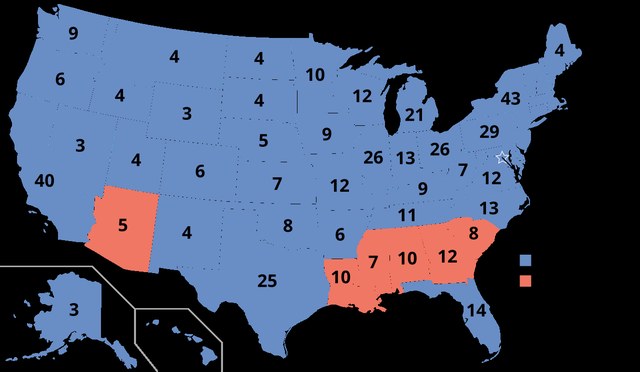
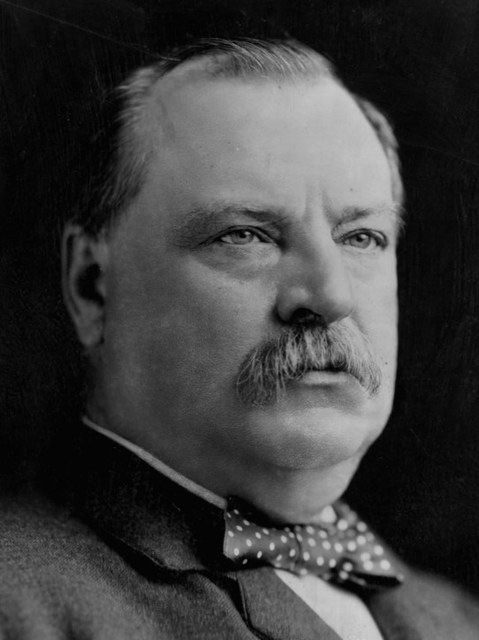
The 1884 United States Presidential Election was the first Democratic victory since before the Civil War, won by Grover Cleveland over James G. Blaine.

The kit

  • Candidates — The 1884 United States Presidential Election featured Republican James G. Blaine after William Tecumseh Sherman refused with his famous Shermanesque statement.
  • Campaign issues — The 1884 United States Presidential Election saw Cleveland taunted with "Ma, Ma, where's my Pa?" over an illegitimate child scandal.
  • Decisive factors — The 1884 United States Presidential Election was damaged for Blaine by Samuel Burchard's "Rum, Romanism, and Rebellion" slogan alienating Catholic voters.
  • Third parties — The 1884 United States Presidential Election included Belva Ann Lockwood of the Equal Rights Party and Prohibition nominee John St. John.

Runs with

Grover Cleveland
won his first presidency open card →
William
Sherman declined nomination with Shermanesque pledge open card →
John
St. John ran as Prohibition Party nominee open card →
James G. Blaine
lost despite Republican nomination open card →

The ladder · 6 clues

H

During this year, one candidate gave the Shermanesque statement, "I will not accept if nominated and will not serve if elected." Belva Ann Lockwood was nominated by the Equal Rights Party in this year, in which Samuel Burchard's slogan "Rum, Romanism, and Rebellion" hurt one candidate.

H

In this presidential election year, Allen Thurman and Benjamin Butler were proposed as Anti-Monopoly candidates, with Absolom Madden West as a running mate.

H

The phrase “Sherman pledge” is derived from William Sherman’s refusal to run in this election year.

M

A candidate in this election year was tarnished by Samuel Burchard’s comment that his party was becoming that of “rum, Romanism, and rebellion.” The victor in this election year was taunted with the phrase “Ma, Ma, where’s my Pa?” This election year was the first won by a Democrat since the Civil War.

M

Sherman also notably stated that “I will not accept if nominated and will not serve if elected” upon hearing that he was a potential Republican nominee in this presidential election that ended with the first of Grover Cleveland’s two presidential victories.

E

James G. Blaine lost in this election year in which Grover Cleveland was first elected President.

4 more clues from the record
H

One decisive element in this election was the campaigning of Kansas governor and Prohibition Party nominee John St. John, while the loser of this election had been previously investigated for his brokership of the Little Rock and Fort Smith Railroad.

H

In this election, Bernhard Gilliam drew the influential cartoon, “The Tattooed Man”, which portrayed the eventual loser’s scandals, such as the “Mulligan Letters.” The loser obtained his party’s nomination after William Temcumseh Sherman declined.

H

The first woman to practice law in front of the Supreme Court, Belva Lockwood, first ran for president in this year. A key political smear in this year centered around the taunt "Ma, Ma, Where's My Pa?"

H

The losing candidate was tainted by his past association with the so-called “Mulligan letters,” which suggested he sold his influence to businesses while serving in Congress.

Watch out: The "Mulligan letters" scandal involved Blaine, not Cleveland, despite Cleveland facing the illegitimate child smear
#1088 · US Presidential Elections · Level 3

United States Presidential Election of 1864

United States Presidential Election of 1864
bdi Currier and Ives /a · Public domain

U.S. presidential election · 1864 · United States

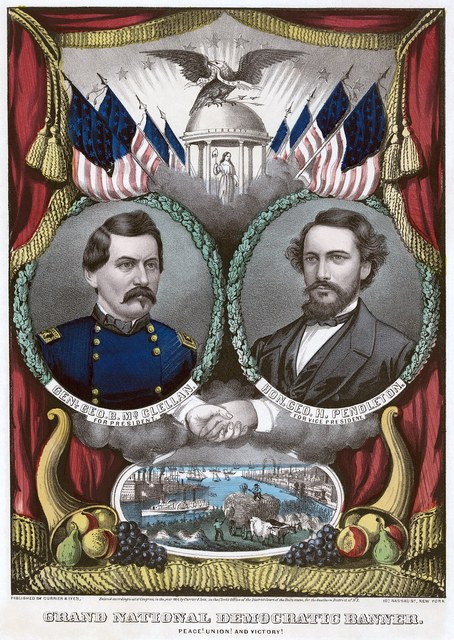
United States Presidential Election of 1864 was Abraham Lincoln's second presidential victory, won during the Civil War against Democrat George McClellan.

The kit

  • Parties & candidates — United States Presidential Election of 1864 saw Republicans temporarily rebrand as the National Union Party for the contest.
  • Democratic opposition — United States Presidential Election of 1864 featured Democrat George McClellan, whom Lincoln had previously removed from command, with running mate George Pendleton.
  • Campaign dynamics — United States Presidential Election of 1864 produced the slogan "Don't change horses in the middle of a stream" supporting Lincoln's continuity.
  • Result — United States Presidential Election of 1864 ended in a landslide victory for Lincoln due to recent military success in the Civil War.

Runs with

Abraham Lincoln
won second term with Andrew Johnson replacing Hamlin open card →
Democratic Party
nominated McClellan and Pendleton on anti-war platform open card →
democracy
Radical Democracy Party split from Republicans open card →
George
George McClellan lost to Lincoln open card →

The ladder · 6 clues

H

In this election year, the Republican Party temporarily re-branded itself as the National Union Party.

H

George Pendleton was the Vice Presidential candidate for the Democratic party during this election.

M

The slogan "Don't change horses in the middle of a stream" was used during this election, which resulted in a loss for George McClellan. name this election during the Civil War, the second presidential victory for Abraham Lincoln.

M

George Pendleton was the running mate for the losing side in this election, whose incumbent replaced Hannibal Hamlin as his running mate.

E

Hannibal Hamlin was replaced by Andrew Johnson as the Vice Presidential candidate in this election year. name this election year which resulted in Abraham Lincoln’s 2nd term.

E

George McClellan lost the Presidential election in this year to a man who had previously removed him from command.

10 more clues from the record
H

John C. Fremont ran as a candidate for the Radical Democracy Party during this election before withdrawing.

H

The Radical Democratic Party arose during this election, during which the word “miscegenation” was coined in campaign literature.

H

Following the death of his friend, Nathaniel Hawthorne, Franklin Pierce declined a nomination for president during this election.

H

During this election, the Radical Democracy Party ran John C. Frémont on its ticket.

H

A hoax pamphlet published before this election in the New York World invented the word “miscegenation.” This election’s eventual winners exaggerated the threat of secret “Sons of Liberty” organizations in the Northwestern states.

H

The anti-war Copperheads and the War Democrats divided the Democratic party in the leadup to this election. :Name this presidential election, during which Abraham Lincoln was re-elected in a landslide victory due to recent military success in the Civil War.

H

The incumbent had his cabinet sign the “blind memorandum” in the event that he lost this election, during which Wendell Phillips supported a party that withdrew its candidate after the removal of postmaster general Montgomery Blair.

H

One candidate in this election year was replaced by Francis W. Pickens as Minister to Russia, while another later led the California Battalion and the capture of Sonoma.

H

The Republican convention in this year was held at the Front Street theatre, where the “Radical Democracy” party split from the Republicans.

H

One party in this election year transferred convalescents to Indiana, as it was one of the few states to not introduce absentee ballots that year.

Watch out: John C. Frémont ran as Radical Democracy Party candidate before withdrawing
#1089 · US Presidential Elections · Level 3

1968 United States Presidential Election

1968 United States Presidential Election
Public domain

U.S. presidential election · 1968 · United States

The 1968 United States Presidential Election saw Richard Nixon defeat Hubert Humphrey amid Vietnam War backlash and third-party success.

The kit

  • Democratic primaries — The 1968 United States Presidential Election featured Eugene McCarthy's supporters who "got clean for Gene" by shaving beards before the New Hampshire primary.
  • Johnson withdrawal — The 1968 United States Presidential Election saw Lyndon Johnson drop out after McCarthy's 42 percent showing in New Hampshire prompted his withdrawal.
  • Third-party impact — The 1968 United States Presidential Election was the last in which a third party won states, as George Wallace captured five states for the American Independent Party.
  • Nixon victory — The 1968 United States Presidential Election resulted in Nixon's victory over Humphrey after Anna Chennault helped sabotage Vietnam peace talks to aid Nixon's campaign.

Runs with

Richard Nixon
won the election, defeating Hubert Humphrey open card →
George Wallace
ran as American Independent candidate, winning five states open card →
Democratic National Convention
site of protests met with "Gestapo tactics" per Abe Ribicoff open card →
California

The ladder · 6 clues

H

Supporters of one candidate in this election year cut their hair and shaved their beards in an effort to “get clean for Gene” McCarthy, whose 42 percent in the New Hampshire primary caused the incumbent president to drop out.

H

The losing candidate in this election year promised to fight for “the politics of joy.” A candidate for the Republican nomination in this election year remarked that he had been “brainwashed” by the military.

M

The success of George Wallace in this election year inspired the alleged "Southern Strategy." name this year in which Hubert Humphrey lost to Richard Nixon.

M

Abe Ribicoff spoke out against the "Gestapo tactics" used against protesters at this year's Democratic National Convention.

E

A year after winning this year’s election, the winning candidate described his target audience as “the silent majority.” In this year, the American Independent Party nominated conservative George Wallace. name this presidential election year in which Richard Nixon defeated Hubert Humphrey.

E

Hubert Humphrey gained the Democratic nomination after the assassination of Robert Kennedy in this year in which Lyndon Johnson did not run for re-election and Richard Nixon was elected president.

10 more clues from the record
H

A strong showing in this year’s New Hampshire Democratic primary was made by a candidate who urged followers to shave facial hair and “get clean for Gene.” This was the most recent year in which a third party candidate won a state.

H

A ticket in this election year contained a man who promised to "bomb them back into the Stone Age" and was the last third-party Presidential ticket to capture multiple electoral votes.

H

During primaries in this Presidential election year, hippies were urged to shave in the "keep clean for Gene" campaign.

H

During this election, Anna Chennault helped one side derail peace talks in Vietnam. :Name this election year in which backlash against the Vietnam War dissuaded President Lyndon Johnson from seeking reelection.

H

The third party in this election won five states despite VP candidate Curtis LeMay expressing his enthusiasm for using nuclear weapons in a certain country.

H

Following this election, Donald M. Fraser lent his name to a commission that outlawed proxy voting and decreased the power of state officials in primaries for one party.

H

After this presidential election, the losing party set up a commission to review its nomination procedures, named after Donald Fraser and a Senator from South Dakota.

H

During this presidential election, one candidate sent Anna Chennault to sabotage a diplomatic initiative that would have helped his opponent.

H

In the primaries, one candidate infamously claimed he'd been “brainwashed” into supporting a former president’s policies.

H

George Romney dropped from the Republican primaries of this year after claiming the military had "brainwashed" him.

Watch out: Robert Kennedy was assassinated during this election year but did not win the Democratic nomination—Hubert Humphrey did
#1090 · US Presidential Elections · Level 3

1960 United States Presidential Election

1960 United States Presidential Election
Public domain

Presidential election · 1960 · United States

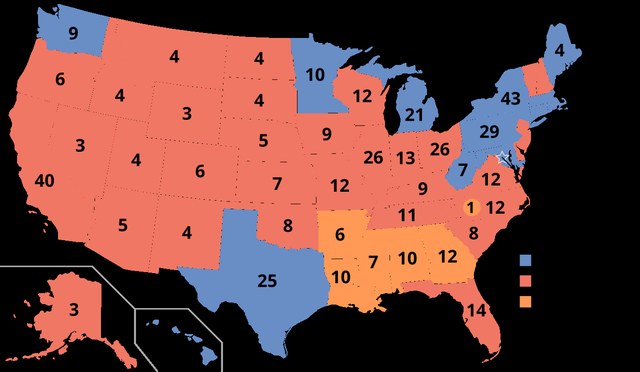
The 1960 United States Presidential Election featured the first televised presidential debates and John F. Kennedy's narrow victory over Richard Nixon.

The kit

  • Debates — The 1960 United States Presidential Election featured the first televised presidential debates, including two focused on Quemoy and Matsu islands.
  • Result — The 1960 United States Presidential Election saw John F. Kennedy defeat Richard Nixon amid allegations of voter fraud in Chicago by the Daley machine.
  • Faithless electors — The 1960 United States Presidential Election saw unpledged electors from Alabama and Mississippi cast 14 votes for Harry Byrd opposing desegregation.
  • Running mate — The 1960 United States Presidential Election featured debate over Kennedy's choice of Lyndon Johnson for the Texas vote as running mate.

Runs with

Richard Nixon
lost to Kennedy despite concerns about Chicago voter fraud open card →
John F. Kennedy
defeated Nixon, later assassinated by Lee Harvey Oswald in 1963 open card →
Richard
Nixon was the losing Republican candidate open card →
Chicago
site of alleged Daley machine voter fraud favoring Kennedy open card →

The ladder · 6 clues

H

During this election year, the Richard Daley political machine may have committed voter fraud.

H

In this election year, unpledged electors from Alabama and Mississippi cast votes for Harry Byrd in opposition to the Democrats' move away from segregation, though the Democrats won anyway.

M

The first televised presidential debates occurred during, what election year in which Richard Nixon was defeated by John F. Kennedy?

M

Two debates in this election focused primarily on the U.S.’s stance on the disputed islands of Quemoy and Matsu.

E

Dixiecrat Harry F. Bird carried two states during this election year which featured the first televised Presidential debates.

E

The winner of this election would be assassinated three years later by Lee Harvey Oswald. name this election in which Richard Nixon was defeated by John F. Kennedy.

10 more clues from the record
H

To avoid a constitutional crisis, the loser of this election asked Earl Mazo to stop writing about possible voter fraud.

H

Arthur Schlesinger Jr. claimed that the winning candidate in this election year wanted Stuart Symington as his running mate, while Robert Caro argued that the running mate was chosen for the Texas vote.

H

For this election, that party nominated their second Catholic since 1928, choosing a Massachusetts senator who later died at the hands of Lee Harvey Oswald.

H

Harry Byrd got 14 southern faithless votes in this election year, whose winner was plagued by allegations of voter fraud in Chicago.

H

Eugene McCarthy made a failed speech in this election that called on listeners to “raise again the cry of the ancient prophet.” The addressee of a speech given during this election states that he never belonged to a group that “did not believe in liberty” while speaking to the Houston Ministerial Association.

H

This election saw the sitting president offer very tepid support of his party’s candidate in an interview with Charles Mohr and one of the Democratic nominees was the father of current California governor, Pat Brown.

H

In an attempt to weaken the regional stronghold of this election’s eventual winner, the losing party nominated a vice presidential candidate who hailed from the same state, Henry Cabot Lodge.

H

According to a 1994 paper by Jacobs and Shapiro, the winner of this election based policy positions on public opinion in an effort to “prime” voters’ views of his personal attributes.

H

In this election, Stewart Symington and Adlai Stevenson declined to run in the Democratic primary, which was decided after the eventual nominee’s strong showing against Hubert Humphrey.

H

Although their subject did not run for president in this election, it is at the center of the books Master of the Senate and The Passage of Power by Robert Caro.

Watch out: Harry F. Byrd (who received faithless elector votes) vs. Harry Byrd (same person, name variation in clues)