The 1648 Codex

Ancient Africa

19 terms · 261 ladder clues · every clue is a real line from national play.

Swipe or use the arrows. Tap a clue to rate it; your taps shape what comes back.

#35 · Historic Cities · Level 1

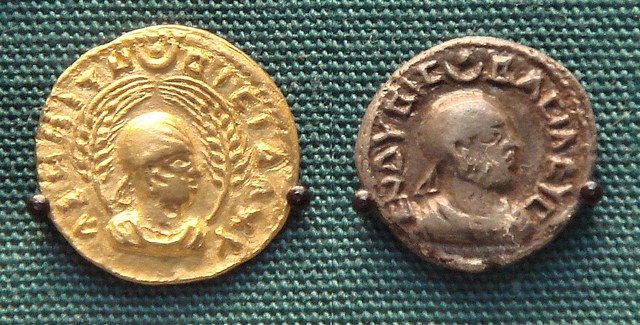
Aksumite Empire

Aksumite Empire
PHGCOM · CC BY-SA 3.0

ancient Ethiopian kingdom · c. 100–960 CE · northern Ethiopia and Eritrea

Aksumite Empire was a Red Sea trading kingdom in Ethiopia that became one of the first Christian states under King Ezana.

The kit

  • Rise — Aksumite Empire traded ivory extensively with the Himyarite Kingdom of Yemen and was documented in the Periplus of the Erythraean Sea.
  • Achievements — Aksumite Empire converted to Christianity in the fourth century after King Ezana was baptized by his tutor Frumentius.
  • Conflicts — Aksumite Empire under King Kaleb invaded the Himyarite Kingdom to stop Dhu Nuwas's massacre of Christians at Najran.
  • Legacy — Aksumite Empire's capital church claims to hold the Ark of the Covenant and the kingdom fell to Queen Gudit around 960.

Runs with

Ethiopia
located in northern Ethiopia open card →
Christianity
adopted Christianity in fourth century under Ezana open card →
Christian
sheltered early Muslims during First Hijra open card →
church
Frumentius became first head of its church open card →

The ladder · 15 clues

H

A king of this empire issued coinage that featured the motto “May this please the people.” Zoscales was listed as the leader of this empire in the Periplus of the Erythraean Sea.

H

It’s not Medina, but early Muslims sheltered in this city during the First Hijra.

H

During the reign of King Kaleb, this ancient kingdom invaded the Himyarite Kingdom to end a campaign of religious persecution.

H

Byzantine historian Procopious documented a leader of this kingdom, Abraha, and his campaign against King Dhu Nuwas in Yemen.

H

In 960, a woman named Gudit legendarily conquered this kingdom.

H

A state ruled from this city was overthrown by the warrior queen Gudit according to legend.

H

This kingdom invaded a nearby Jewish kingdom after Dhu Nuwas massacred the Christian population of Najran.

M

The Zagwe Dynasty succeeded this frst powerful kingdom in Ethiopia, whose king Ezana was converted to Christianity by Frumentius.

M

This exporter of ivory traded extensively with the Himyarites of Yemen.

M

Starting around 800 CE, this kingdom’s capital was relocated from a namesake city to Kubar.

M

This empire was conquered by Gudit, who established the Zagwe dynasty.

M

This kingdom’s leader Ezana adopted Christianity after he was baptized by St. Frumentius.

E

A church in this kingdom’s namesake capital claims to hold the original Ark of the Covenant. name this early Christian Kingdom based in northern Ethiopia.

E

A tutor to a king of this empire named Frumentius became the first head of this empire’s church after it converted to Christianity in the fourth century.

E

The capital of this empire is said to contain the Ark of the Covenant, and it was located along the Red Sea. name this early African Empire in modern-day Eritrea and Ethiopia.

10 more clues from the record
H

Its most notable characteristic was introduced by a Syrian named Frumentius. :Identify this empire that was replaced by the Zagwe dynasty in the twelfth century.

H

One of this kingdom’s monarchs thwarted Constantius II’s efforts to extradite his tutor for heresy.

H

Stuart Munro-Hay mistakenly identified a ruler of this kingdom with a figure named Saifu in a tradition recorded by the scholar Liu Zhi.

H

Cosmas the Monk mistook an inscription from this kingdom for a continuation of one about Ptolemy III Euergetes.

H

One monument from this empire was displayed at the Porta Capena as a spoil of war. Saint Frumentius is credited with Christianizing this empire, which accepted Muslim refugees in the First Hijrah.

H

In the First Hjira, Muhammad urged his followers to flee to this kingdom, which captured Meroe, the capital of the Kingdom of Kush.

H

The Zagwe dynasty replaced a family that ruled from this Tigrayan city, whose rulers spoke the Ge’ez [] language.

H

A ruler of this city named Kaleb invaded the Kingdom of Himyar on the request of Byzantine Emperor Justin.

H

According to al-Tabari, this kingdom was defeated by the Sassanian general Wahrez in two related invasions.

H

Kaleb, another leader of this kingdom, defeated the Yemeni warlord Dhu Huwas.
Watch out: Confused with Meroe or Kingdom of Kush (Aksum conquered Meroe but was a separate kingdom)
#100 · Physical Geographic Features · Level 1

Nile River

Nile River
Fiktube · CC BY-SA 4.0

African river · ancient to present · northeastern Africa

The Nile River is Africa's longest river, flowing north from Lake Victoria through Sudan and Egypt to the Mediterranean Sea.

The kit

  • Geography — Nile River forms from the White and Blue tributaries that meet at Khartoum, with the White Nile originating at Lake Victoria.
  • Ancient importance — Nile River's annual floods during the season of Akhet fertilized Egyptian fields, enabling the rise of pharaonic civilization along its banks.
  • Features — Nile River contains six major cataracts, including the second cataract near Wadi Halfa that was submerged beneath Lake Nasser after dam construction.
  • Modern era — Nile River's flooding has been controlled by the Aswan High Dam, which submerged archaeological sites on Agilkia and Philae islands.

Runs with

Egypt
flowed through ancient Egypt, supporting pharaonic civilization open card →
Water
major freshwater river system in Africa open card →
Aswan High Dam
dam controls its flooding and created Lake Nasser open card →
Africa
longest river on the African continent open card →

The ladder · 15 clues

H

Name some rivers of Africa, .This river has its origins in the Blue and White rivers and, thanks to the Aswan Dam, is not flooding as much as it used to.

H

The Montu and Mut complexes sit next to this body of water.

H

The cities of Jinja and Juba lie on this river, and Khartoum lies at the confluence of this river’s Blue and White tributaries.

H

An enormous cache of ancient Aramaic documents was discovered on this river’s Elephantine Island.

H

The second of this river’s six major cataracts, located near Wadi Halfa and the Abu Simbel temple complex, was the historical region of Nubia before being submerged beneath Lake Nasser.

H

This river appears with representations of the Ganges, Rio de la Plata and Danube in the Fountain of the Four Rivers by Bernini and in another sculpture in the Vatican collection with crocodiles and hippos on its pedestal.

H

Another depiction of this location found in the remains of Rome’s Campus Martius shows sixteen babies to represent its yearly floods.

M

The Aswan High Dam is on this major river of Sudan and Egypt.

M

Long, northbound river along which Egyptian civilization was centered.

M

Alodia and Makuria were both kingdoms along this river. The Coptic Church was based in Egypt, primarily in cities along this river.

M

The kingdom of Kush controlled Gebel Barkal along this river, which flowed through the Nubian capitals of Napata and Meroe.

M

The Battle of Omdurman was fought next to this river, while a different battle named for this river actually took place in Aboukir Bay. name this river, on whose banRks the Valley of the Kings contains the tombs of the Pharaohs.

E

This river is divided into Blue and White tributaries, and its source is at Lake Victoria. name this longest river in Africa, around which ancient Egypt flourished.

E

This body of water contains the islands of Agilkia and Philae, which were home to archaeological sites before the construction of the Aswan High Dam.

E

River that ran through Ancient Egypt, whose annual floods fertilized the fields.

10 more clues from the record
H

The flooding of this body of water was critical to regional agriculture and was believed to be controlled by the Pharaoh. name this river which features prominently in Egyptian mythology.

H

While traveling on this body of water, one god turned into a blazing disk which blinded an enemy army.

H

The Jonglei Canal scheme to increase the downstream flow of this river was effectively halted by a country’s independence in 2011.

H

A Roman expedition of this river turned back upon reaching the impenetrable expanse of the Sudd swamp.

H

A portion of this river labeled the “Great Bend” forms the northeast boundary of the Bayuda Desert.

H

River that nourished ancient Egyptian culture and is divided into “white” and “blue” portions.

H

This body of water was ruled by gods such as Khnum and the androgynous potbellied deity Hapi.

H

This river is formed by two major tributaries named for the white and blue clay they carry.

H

A sculptural personification of this location shows a bearded man pulling a cloth from his head.

H

Primary Egyptian river that flooded during the season of Akhet.

Watch out: Battle of the Nile actually fought in Aboukir Bay, not on the river itself
#295 · Historic Buildings and Museums · Level 1

University

University
Another Believer · CC BY-SA 3.0

Institution of higher learning · Ancient to present · Worldwide

University is an institution of higher learning that has existed from ancient times through the present day.

The kit

  • Medieval foundations — University of Paris is commonly named for Robert de Sorbon, while King Denis established one in Lisbon that later moved to Coimbra.
  • African scholarship — University at Sankore in Timbuktu held Africa's largest book collection since Alexandria and employed scholar Ahmad Bamba al-Timbukti.
  • Ancient precedent — University at Gondishapur was established by Sassanid ruler Khosrau I, who invited banished Greek pagan scholars from Byzantium.
  • Civil rights litigation — University admissions became the subject of affirmative action lawsuits including Bakke, Sweatt v. Painter, and Bollinger cases in Michigan.

Runs with

Paris
Robert de Sorbon's name is associated with the University of Paris open card →
Nanda Empire
No connection shown in clues open card →
Strategic Hamlet Program
No connection shown in clues open card →
University of Oxford

The ladder · 9 clues

H

The Mali capital of Timbuktu contained one of these institutions at Sankore, which held Africa’s largest collection of books since the Library of Alexandria.

H

Herman Marion Sweatt sued one of these institutions in Texas led by zoologist Theophilus Painter.

H

The plaintiff in a case against one of these institutions, Lloyd Gaines, disappeared, possibly to Mexico City.

H

Bollinger involved one of these institutions in Michigan and argued against racial preferences in admission.

H

Roscoe Dunjee aided George McLaurin in a suit against one of these institutions in Oklahoma.

H

Identify the following about King Denis of Portugal, .Denis and his wife Elizabeth established one of these institutions in Lisbon, although it’s since moved to Coimbra. One of these institutions in Paris is commonly named for Robert de Sorbon.

H

The Sassanid ruler Khosrau I invited banished Greek pagan scholars and philosophers from Byzantium to one of these institutions of higher learning at Gondishapur.

H

After Mansa Musa returned from his Hajj, he constructed one of these places named Sankore , where Ahmad Bamba al-Timbukti worked.

M

Former Marine Allan Bakke sued this type of institution over affirmative action.

Watch out: Lloyd Gaines disappeared during his lawsuit against a university, possibly fleeing to Mexico City
#304 · Historic Buildings and Museums · Level 1

Sankore Madrasa

Sankore Madrasa
a rel="nofollow" upyernoz /a from Haverford, USA · CC BY 2.0

West African university · 14th–16th centuries · Timbuktu, Mali Empire

Sankore Madrasa was a medieval Islamic university in Timbuktu that housed Africa's largest manuscript collection since Alexandria's library.

The kit

  • Builders — Sankore Madrasa was designed by Andalusian architect Abu Ishaq al-Sahili with wooden frames supporting mud walls requiring repair after rain.
  • Achievements — Sankore Madrasa contained the largest collection of books in Africa since the Library of Alexandria's destruction.
  • Patronage — Sankore Madrasa received financial support from Mansa Musa, who established it as part of Timbuktu's university system.
  • Legacy — Sankore Madrasa's scholar Ahmad Baba denounced African enslavement and argued against enslaving Muslims in Mi'raj al-Su'ud.

Runs with

Mansa Musa
provided financial support and patronage open card →
University
part of University of Timbuktu complex open card →
Timbuktu
located in this city open card →
Alexandria
held largest African collection since its library open card →

The ladder · 9 clues

H

Name these medieval universities, .Built around a namesake mosque designed by Abu Ishaq as-Sahili, this center of learning was patronized by Mansa Musa in Timbuktu.

H

Mansa Musa's Djinguereber Mosque became part of the University of Timbuktu with the Sidi Yahya and what other university?

H

West African university which was purported to have a larger collection than the Library of Alexandria.

H

Third level scholars at this institution such as Ahmad Baba could be admitted to a “circle of knowledge” if they impressed their sheikh. :Name this religious institution restored in 1578. This center of learning was designed by an Andalusian architect with a wooden frame supporting mud walls that could be repaired after rain.

H

This institution’s legal scholar Ahmad Baba as-Sudane denounced the association of Africans with slaves and argued against the slavery of Muslims in the treatise Mi‘raj al-Su‘ud. :Name this institution constructed by the Granadan architect al-Sahili, which was home to the Fula scholar Modibo Mohammed Al Kaburi.

H

Mansa Musa provided a great deal of financial support for this institution, allowing it to hold the largest collection of manuscripts in Africa at the time. One of its main centers, Sidi Yahya, was recently damaged.

M

Madrasa that contained the largest collection of books in Africa since the Library of Alexander.

M

Mansa Musa constructed this large institute of learning, whose name means “white nobles” in Timbuktu. It was home to the largest library in Africa since the destruction of the Library of Alexandria.

E

Mansa Musa established this center of learning designed by the architect al-Sahili. This university may have contained the largest collection of books since the Library of Alexandria.

Watch out: Library of Alexandria (comparison point for manuscript collection size, not the same institution)
#681 · Archaeological Sites and Ruined Cities · Level 1

Great Zimbabwe

Great Zimbabwe
a rel="nofollow" Andrew Moore /a from Johannesburg, South Af · CC BY-SA 2.0

Medieval stone city ruins · 11th–15th century · Southern Africa (modern Zimbabwe)

Great Zimbabwe is a medieval stone city built by ancestral Shona people, featuring massive mortar-less walls and iconic soapstone bird sculptures.

The kit

  • Architecture — Great Zimbabwe's walls were constructed over five meters high from granite blocks without mortar, divided into the Hill Complex, Valley Complex, and Great Enclosure.
  • Artifacts — Great Zimbabwe residents carved eight soapstone birds that became national symbols and were often stolen, with one sold by Willi Posselt to Cecil Rhodes.
  • European theories — Great Zimbabwe was falsely attributed by Karl Mauch to the Queen of Sheba and King Solomon, with Europeans refusing to credit African builders.
  • Decline — Great Zimbabwe was abandoned after its trade network with Kilwa collapsed, leading inhabitants to migrate and establish the Mutapa and Monomotapa states.

Runs with

Nanda Empire
Queen of Sheba
falsely theorized by Europeans as builder of Great Zimbabwe open card →
Gold
Portuguese explorer Vicente Pegado searched for gold when discovering Great Zimbabwe open card →
Africa
lent its name to modern Zimbabwe, southern African country open card →

The ladder · 15 clues

H

The Great Enclosure is part of this 15th century city ruins near the town of Masvingo that lends its name to an African country with capital at Harare.

H

Karl Mauch popularized a theory that structures at this location were meant to replicate the palace of the Queen of Sheba.

H

The Shona in the Rozvi Empire built many cities in emulation of this “Great” city built by their ancestors. Eight soapstone birds were found in this city, which shares its name with a landlocked country in southern Africa.

H

This complex is home to the Great Enclosure. :Name this site built by ancestors of the Shona people, whose soapstone bird sculptures were often stolen over the ages.

H

Residents of this city carved namesake birds out of soapstone.

H

One archaeological site that shares its name with this country contains an 820 foot long wall called the Great Enclosure.

H

Archaeologists divided this site into the Hill Complex, Valley Complex, and Great Enclosure. :Name this ancient city built by the ancestral Shona people, the most prominent ruin in a namesake southern African country.

M

After being sited by Adam Render, this place was speculated by Karl Mauch to be associated with King Solomon and the Queen of Sheba.

M

Sites at this settlement include the Great Enclosure and the Hill Complex, where eight birds carved of soapstone were once supposed to have stood.

M

This city’s walls were over five meters high and constructed without mortar, likely by the Gokomere people.

M

What complex of large monuments and carved soapstone bird figurines gave its name to a modern-day African country?

M

A subgroup of the Bantu named the Shona constructed this ancient city known for its stone enclosures made from granite blocks without the use of mortar.

E

Sites in this city include the Great Enclosure and Hill Complex.

E

The Shona built this medieval stone city which shares its name with an African country governed from Harare [[hah-RAH-reh]].

E

The Kingdom of Mutapa succeeded this city, known for its soapstone bird carvings.

10 more clues from the record
H

This site featured an “elliptical temple” now called the Great Enclosure.

H

This site's conical tower stands 30 feet high within its "Western Enclosure." Soapstone bird figures found here became national symbols, and Europeans falsely attributed its construction to Phoenicians or the Queen of Sheba.

H

This site was first recorded by the visiting soldier Vicente Pegado, who called it “Symbaoe.” The Mutapa and Monomotapa civilizations were founded by migrants from this site as its trade network with Kilwa collapsed.

H

An artifact from this city was sold by Willi Posselt to Cecil Rhodes, who was so inspired that he immediately funded an additional expedition to this city led by James Theodore Brent.

H

This location was first discovered by a European when Portuguese explorer Vicente Pegado went searching for gold between the Zambezi and Limpopo rivers.

H

In this location, soapstone monoliths depict raptor-like “birds of heaven,” and houses in this site are made of mud bricks called daga.

H

This city’s role was eventually replaced by the Mutapa state after settlers were sent to find new sources of salt.

H

This settlement was abandoned after the loss of a trade network centered on Kilwa, leading its inhabitants to settle Mutapa.

H

That gave its name to the country once called Rhodesia [roh-DEE-zhuh]?

H

This city was abandoned when citizens migrated to form the Monomotapa Empire.

Watch out: Confused with Rhodesia (the colonial name for the country now called Zimbabwe)
#683 · Archaeological Sites and Ruined Cities · Level 1

Meroe

Meroe
Wufei07 · Public domain

Kushite capital city · c. 590 BCE–4th century CE · east bank of Nile, Nubia

Meroe was the last capital of the Kingdom of Kush, known for over 200 steep pyramids and advanced ironworking.

The kit

  • Rise — Meroe became the Kushite capital after Aspelta moved it from Napata following Psamtik II's invasion.
  • Achievements — Meroe developed sāqiyah water wheels for sorghum agriculture and created a namesake script replacing Egyptian hieroglyphics.
  • Rulers — Meroe's queen mothers held the title kandake, from which the name Candace derives.
  • Fall — Meroe was conquered and sacked by Aksumite ruler Ella Amida in the 4th century CE.

Runs with

Aksumite Empire
conquered and destroyed Meroe in 4th century CE open card →
Egypt
Meroe ruled Egypt's 25th Dynasty; Psamtik II sacked Napata open card →
Sudan
located in ancient Nubia, modern Sudan open card →
Alexander the Great
legend claims Queen Candace halted his southward conquest open card →

The ladder · 15 clues

H

After the sack of Napata, Aspelta moved the capital of the Kingdom of Kush to this city on the Nile. It eventually got destroyed by Axum.

H

In the 4th Century CE, an Aksumite ruler conquered this Kush city, which is home to over 200 pyramids. Psamtik II of Egypt had earlier sacked this city, which succeeded Napata as the Kush’s capital.

H

Sitting at the edge of Butana, more than 200 short, steep pyramids were used for burials of rulers in this city.

H

The head of a statue of Emperor Augustus buried under the door of a temple in this city is now housed in the British Museum.

H

Queen mothers of this city were known as kandakes [[kahn-DAH-keez]], and this city succeeded Napata as a capital.

H

According to legend, a queen from this city was able to halt Alexander the Great's conquests south of Egypt. :Name this city, whose queens took the title kandake, from which the name Candace is derived. It was the longtime capital of the Kingdom of Kush.

H

Despite being in the middle of a desert, its position bounded by three rivers led people to refer to it as an “island” that also includes the sites of Naqa and Musawwarat es Sufra.

M

Ella Amida invaded and sacked this ancient center of the Kush kingdom, which had succeeded the previous capital Napata after the invasion of Psamtik II. A later ruler of this city Queen Candace supposedly met Alexander the Great on an elephant.

M

Sāqiyah water wheels enabled intensive sorghum-based agriculture after the period named for this city, whose “island” produced charcoal and smelted iron. This Kushite capital near Napata names two partially deciphered scripts.

M

This site was the capital of the Kingdom of Kush, on the east bank of the Nile. This location is most notable for its over two hundred pyramids, which were built starting in the 3rd century BC to serve as tombs for Kushite kings.

M

Romans traded with the Candace queens of this Nubian city who built steeper pyramids than those in Egypt. This city was known for its ironworking and developed a namesake script for Nubian which replaced Egyptian hieroglyphics.

M

The capital of the Kingdom of Kush was located along the Nile River, and is notable for its distinctive pyramids, whose shapes are steeper and narrower than the Egyptian style pyramids.

M

Axum had plenty of beef with the Kush kingdom built around this city, which Axum’s leader Ella Amida conquered and nearly destroyed.

M

It supplanted Napata as the capital of a kingdom that ruled the 25th Dynasty of Egypt, and it was eventually conquered by Axum. name this capital of the Kingdom of Kush.

E

The Egyptian Twenty-Fifth Dynasty was, at times, ruled from this Nubian city, the last capital of Kush.

5 more clues from the record
H

This location is described as lying further inland from the Agriophagoi, or “wild animal eaters,” and the Moschophagoi, or “shoot eaters,” in the second entry of the Periplus of the Erythraean Sea.

H

Pseudo- Callisthenes records the legend that a female ruler of this city intimidated Alexander the Great into turning back his invading army.

H

Giuseppe Ferlini’s destruction of the “N6” building in this place led copycat treasure hunters to destroy only the tops of certain buildings.

H

Ferlini also made off with some gold belonging to Amanishakheto, a kandake or queen of this city.

M

The Begarawiyah site is home to this city’s pyramid complex.

Watch out: Napata (the previous Kushite capital that Meroe succeeded)
#854 · Non-Classical Mythological and Legendary Figures · Level 1

Anansi

Anansi
Pamela Colman Smith · Public domain

West African trickster spider · traditional folklore · West Africa and Caribbean

Anansi is a trickster figure from West African and Caribbean folklore who often takes the form of a spider.

The kit

  • Origin — Anansi appears in West African and Caribbean folklore as a cunning trickster character.
  • Achievements — Anansi completed three difficult tasks to obtain all the world's stories from the Sky God for Earth's children.
  • Stories — Anansi captured the she-fairy Mmoatia using a doll covered with gum, inspiring the Tar-Baby and Br'er Rabbit tale.

The ladder · 3 clues

H

One book about this figure, written and illustrated by Gail Haley, tells of his completion of three difficult tasks to give all the stories of the world from the Sky God to the children of Earth.

M

A Story a story depicts the tale of this figure capturing the she-fairy Mmoatia [MWAH-tyah]] with a doll covered with gum, likely inspiring the story of the Tar-Baby and Br'er Rabbit.

E

From both West African and Caribbean folklore, who is this trickster who often takes the form of a spider?

Watch out: Br'er Rabbit (American trickster inspired by Anansi stories)
#869 · Commodities and Trade Goods · Level 1

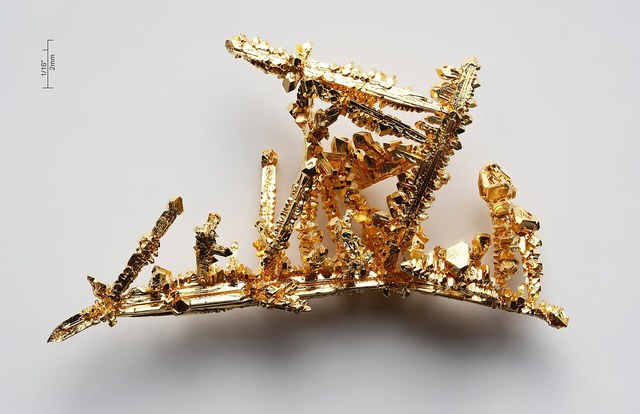
Gold

Gold
Alchemist-hp /a ( talk /span /a ) a rel="nofollow" www.pse-m · CC BY-SA 3.0 de

precious metal · ancient times–present · worldwide

Gold is a precious metal that served as currency, backed the U.S. dollar until 1971, and is stored at Fort Knox.

The kit

  • West African wealth — Gold trading across the Sahara enriched empires like Ghana and Mali, whose Mansa Musa's pilgrimage spending caused twelve-year inflation in Cairo.
  • Ashanti symbol — Gold formed the Golden Stool that descended from the sky to Osei Tutu, symbolizing Ashanti rulership and sparking the 1900 Yaa Asantewaa revolt.
  • U.S. financial crises — Gold's price skyrocketed after the SS Central America sank in 1857, and Jay Gould and Jim Fisk's 1869 market corner caused Black Friday.
  • Mining rushes — Gold discoveries sparked the Colorado Pike's Peak rush, the 1829 Georgia intrusion near Dahlonega, and the Comstock Lode silver-gold finds.

Runs with

Nanda Empire
no connection evident in clues open card →
Mansa Musa
spent gold lavishly during Mecca pilgrimage, tanking Egypt's economy open card →
Ghana
enriched by trans-Saharan gold and salt trade open card →
Joe Hill

The ladder · 15 clues

H

An object named for this material descended from the sky to land on Osei Tutu’s lap; that object, the royal throne of the Ashanti, is a stool made from this material.

H

Frederick Hodgson's demands to be given an object made of this substance were resisted by Queen Yaa in a 1900 revolt.

H

In 1857, the price of this commodity skyrocketed after the sinking of the SS Central America. James Fisk and Jay Gould attempted to corner the market for this commodity in an event labeled "Black Friday." William Jennings Bryan delivered a pro-bimetallism speech named for a "Cross" of this commodity. name this precious metal stored at Fort Knox that, until 1971, backed the price of the dollar.

H

Precious metal extracted by the miners who led the Eureka Stockade uprising.

H

This material was used to make the death mask of Agamemnon, which Heinrich Schliemann found in 1876.

H

Great Zimbabwe merchants often traded this commodity for porcelain and silk with the Sultanate of Kilwa.

H

was mined by the Romans in Las Medulas in Spain and Dolaucothi in Wales?

M

Cairo took twelve years to recover from inflation caused by the immense spending of this resource during Mansa Musa’s pilgrimage to Mecca. The trading of this resource and salt across the Sahara contributed greatly to the wealth of the Mali Empire. name this precious metal.

M

An object that legendarily descended from the heavens in a cloud of dust to Osei Tutu was made from this material and was owned by the leader of the Ashanti people.

M

An 1869 "Panic" over this good occurred after investors Jay Gould and James Fiskattemptedtocorneritsmarket.

M

Jim Fisk and Jay Gould’s attempt to corner this commodity’s market caused a Black Friday in 1869.

M

The slogan “Pike’s Peak or Bust!” was used by people who traveled to Colorado to mine this material. what precious metal is stored in bullion form at Fort Knox and was found, with silver, in the Comstock Lode?

E

This good and salt enriched West African empires like Ghana, which the British called its namesake coast. name this precious metal.

E

The salt produced at Taghaza was mainly traded for this commodity. name this commodity, which Mansa Musa used to tank the economy of Egypt during his hajj.

E

The funerary masks of Agamemnon and Tutankamun were made of this precious metal that is found in electrum coins with silver.

10 more clues from the record
H

A palace on the future site of the Colosseum built by Nero was known as the house of this material.

H

It’s not bekhen, but a source of this commodity is depicted on the Turin Papyrus Map.

H

A stool made of this commodity symbolized the ruler of the Ashanti Empire.

H

The primary export of the city of Sofala was this good, which led Europeans to associate Great Zimbabwe with the Biblical land of Ophir.

H

Francisco Coronado searched for Cibola and the Seven Cities of this substance.

H

The name‘Cibola’ was attached to a province reportedly containing seven cities named for this substance.

H

Somali merchants who traded in this commodity established the port of Sofala, while Portuguese settlers searching for it founded the town of Elmina.

H

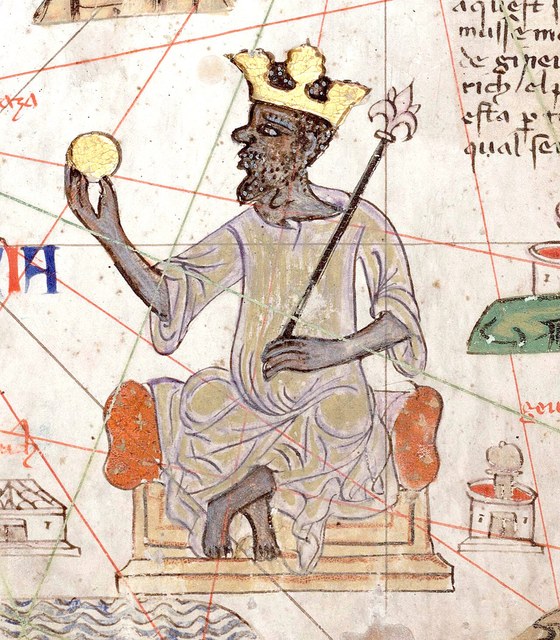
A king holding a scepter and some of this stuff appears at the bottom of the Catalan Atlas.

H

In 1829, this commodity caused a "Great Intrusion" into modern-day Lumpkin County near Dahlonega [duh-LAH-na-guh], Georgia.

H

Bambouk and Nubia were notable suppliers of this resource, whose discovery in Witwatersrand [vit-vat-ers-rand] led to the Second Boer War.

Watch out: Silver (often found together in deposits like Comstock Lode and electrum coins)
#873 · Commodities and Trade Goods · Level 1

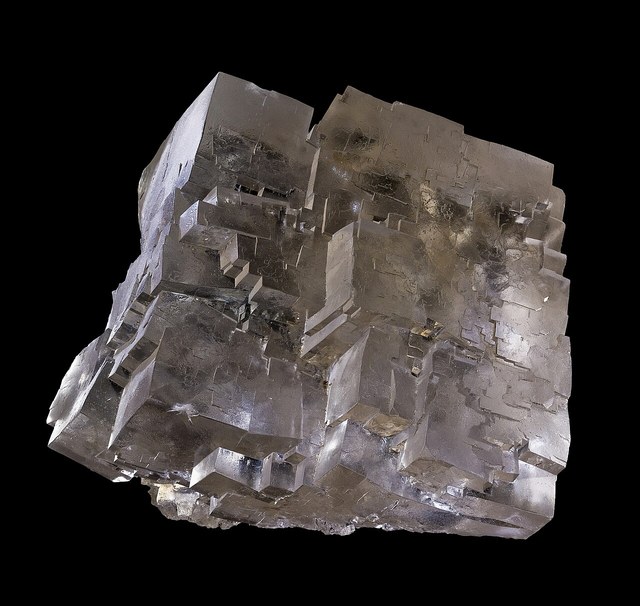
Sodium Chloride

Sodium Chloride
Didier Descouens · CC BY-SA 4.0

mineral compound · ancient times–present · worldwide

Sodium Chloride is a mineral compound used for food preservation and historically traded as a valuable commodity.

The kit

  • Trade routes — Sodium Chloride was transported from Rome via the Via Salaria and traded across the Sahara along the Azalai route.
  • Taxation — Sodium Chloride was subject to France's controversial gabelle tax and Britain's tax that prompted Gandhi's 1930 Dandi march.
  • African production — Sodium Chloride was mined at Taghaza in the Songhai Empire, where slabs were cut and traded for gold.
  • State control — Sodium Chloride was subject to a Han dynasty monopoly debated in the Discourses on Salt and Iron under regent Huo Guang.

Runs with

Gold
traded for salt in trans-Saharan commerce open card →
Iron
paired subject of Han dynasty Discourses open card →
Rome
transported via Via Salaria road open card →
France
taxed through the gabelle system open card →

The ladder · 15 clues

H

This good was transported from Rome to the Adriatic Coast by the Via Salaria.

H

Nantwich, England was a center of the open-pan method of making this good, which was subject to France’s hated gabelle tax.

H

Before winning the Battle of Tondibi, Judar Pasha destroyed a production center for this good at Taghaza.

H

It's not fish, but the Matafère [[mah-tah-FEHR]] Tower was constructed to protect workers who collected this good.

H

Venice and Ferrara feuded over the production of this good in the Commachio, leading to a namesake war. name this good, which comes in rock and sea varieties and is used to preserve fish.

H

A protest by workers who produced this good was led by Abbas Tyabji [t’yahb-jee].

H

In the Sahara Desert, this commodity was traded for gold.

M

This good was collected in provincial granaries before it was sold with a tax known as the gabelle.

M

The gabelle was a controversial French tax on this good.

M

Commodity that was taxed by the British, prompting a nonviolent march to Dandi.

M

This commodity was said to have been plowed and sown into the soil of Carthage after its destruction in the Third Punic War.

M

A debate known as the Discourses on this substance and iron was held by regent Huo Guang after the death of Emperor Wu of the Han Dynasty.

E

An Indian tax on this good was protested in 1930 with a march to the sea led by Mahatma Gandhi. name this mineral often used to preserve meat.

E

The trans-Saharan trade centered on gold and this other commodity. Much of the Songhai’s wealth came from mining this commodity at Taghaza.

E

This resource was cut into slabs in West African empires that traded it for gold. name this resource used to preserve food.

10 more clues from the record
H

In addition to iron, a state monopoly on this good was the subject of a debate organized by Huo Guang.

H

A common myth claims Roman soldiers were paid in this commodity instead of money.

H

The Azalai is a trade route which was historically used to transport this good.

H

This was the primary good traded to the city of Djenne .

H

This good and iron were the subjects of namesake discourses during the Han dynasty.

H

According to Ibn Battuta, slabs of this good were used to build the bases of houses in the production center of Taghaza.

H

Allan Octavian Hume tried to cut down on smuggling of this product by creating a 2,500 mile-long line of thorny plants called the Great Hedge.

H

A Roman road from Castrum Truentinum was named for this good, and a Latin word for a lustful man derived from this good.

H

English cities that produced this resource were often given the suffix “-wich.” Lu¨neburg’s Hanseatic status was due to this good, which was shipped from Lb¨eck to the Scania Market.

H

A road extending from Castrum Truentinum to the Aurelian Walls of Rome was named for this substance, whose transportation was the impetus for building some of the oldest known roads.

Watch out: Roman soldiers being paid in salt (salarium) is a common myth
#1100 · African Empires and Kingdoms · Level 1

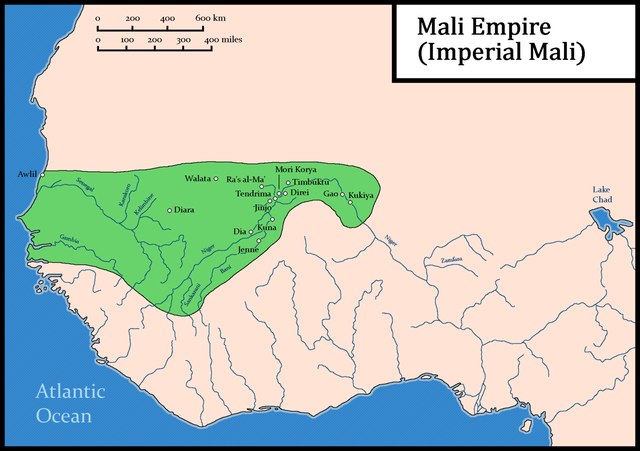
Mali Empire

Mali Empire
HetmanTheResearcher · CC BY 4.0

West African empire · 13th–16th centuries · West Africa, centered at Timbuktu

Mali Empire was a West African state founded by Sundiata Keita after his victory at Kirina and later ruled by Mansa Musa.

The kit

  • Rise — Mali Empire was founded by Sundiata Keita, who defeated the Sosso leader Sumanguru at the Battle of Kirina using a rooster-tipped arrow.
  • Achievements — Mali Empire was governed by the Gbara assembly established by the Kouroukan Fouga constitution, which drew delegates from the Twelve Doors territories.
  • Legacy — Mali Empire's ruler Mansa Musa devalued gold along the Mediterranean through lavish gifts distributed during his hajj to Mecca.
  • Fall — Mali Empire's final ruler Mahmud IV was defeated at the Battle of Djenne, and its lands later became French Sudan.

Runs with

Nanda Empire
no connection stated in clues open card →
Mansa Musa
ruled Mali Empire and caused gold inflation during hajj open card →
Sundiata Keita
founded Mali Empire after victory at Kirina open card →
Gold
Mansa Musa's distribution devalued gold across Mediterranean open card →

The ladder · 15 clues

H

This empire was governed by the Gbara, which drew delegates from its territories across the “Twelve Doors” and was formed by the Kouroukan Fouga constitution.

H

This empire made its conquered lands part of the Twelve Doors.

H

A ruler of this empire commissioned the Andalusian architect al-Sahili to complete construction of an audience chamber that was called an “admirable monument” by Ibn Khaldun.

H

One map of this empire in the Catalan Atlas shows its leader holding a fleur-de-lis staff in one hand and looking to the left at a gold nugget he holds in the other.

H

This empire was splintered into the Joma and Hamana spheres shortly after its final ruler, Mahmud IV, was defeated at the Battle of Djenne.

H

The rooster was sacred to this empire’s founder because he used an arrow with the point of a cock’s spur to slay his archrival at the Battle of Kirina.

H

The architect al-Sahili [[sah-HEE-lee]] served a leader of this empire.

M

A victory at the Battle of Kirina solidified this empire’s rule over the Sosso leader Sumanguru.

M

Another ruler of this empire allegedly founded it after using a rooster-tipped arrow at the battle of Kirina to defeat Sumanguru.

M

The Kouroukan Fouga constitution and the Gbara assembly were central to this empire, whose founder defeated Sumanguru at the Battle of Kirina.

M

This empire was founded by Sundiata and its lands were later ruled by the Songhai Empire.

M

Sundiata Keita founded this dynasty in Western Africa. It shares its name with a modern country with a capital at Bamako.

E

Another ruler of this empire devalued gold along the Mediterranean thanks to his lavish gifts while undertaking the hajj. name this West African empire once ruled by Mansa Musa.

E

This empire’s most famous ruler caused inflation by spending tons of gold on his way to Mecca. name this West African empire led by Sundieta Keita and Mansa Musa.

E

Mansa Musa was one of the rulers of this African empire founded by Sundiata Keita. It shares its name with a modern-day country led from Bamako.

10 more clues from the record
H

This empire’s ruler Muḥammad ibn Qū sent two voyages across the Atlantic that never returned.

H

This empire’s semi-legendary founder was born to "buffalo woman,” and the region this empire ruled later became French Sudan.

H

The “Carriers of Quivers” were the military wing of the legislature of this empire, which made up one faction of its Great Assembly, or Gbara.

H

A former slave and ruler of this empire, Sakoura, was killed by Afar zealots while returning from his pilgrimage to Mecca. Another ruler of this empire defeated his Jollof [juh-LOFF] rivals at the Battle of Kirina according to the Epic of Sundiata.

H

The ton-tigi, or “quiver-masters,” advised this empire’s rulers at its Gbara legislature.

H

Its purported constitution, known as the Kouroukan Fouga and preserved through oral tradition, formed the Gbara as its deliberative body.

H

Gold! In Africa! :Mansa Musa, a ruler of this African empire, caused the value of gold to drop across Africa because he distributed it freely while travelling to Mecca. This empire was centered at Timbuktu.

H

This empire was defended by sixteen clans called “quiver-carriers,” who were represented at this empire’s Gbara assembly.

H

The possessions of this empire, which included Siby and Jalo, were called the Twelve Doors.

H

Answer the following about 14th century west Africa. :This west African nation was founded by Sundiata Keita, and constructed many mosques and universities in Timbuktu.

Watch out: Modern country Mali shares the name and has capital Bamako
#1101 · African Empires and Kingdoms · Level 1

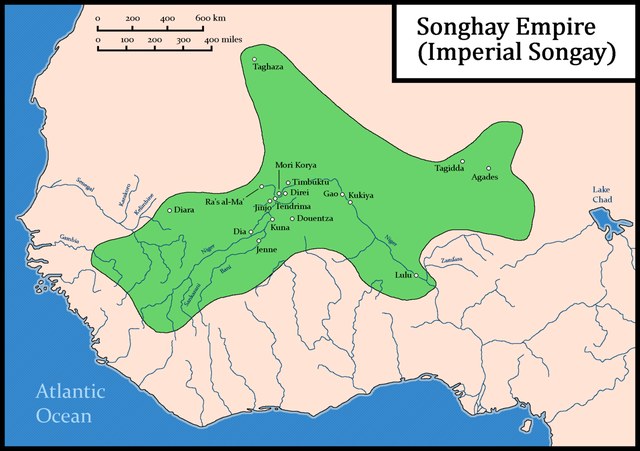
Songhai Empire

Songhai Empire
HetmanTheResearcher · CC BY-SA 4.0

West African empire · 15th–16th centuries · centered at Gao, Niger River

Songhai Empire was a West African state centered at Gao that succeeded Mali as regional hegemon in the 15th–16th centuries.

The kit

  • Rise — Songhai Empire was founded by Sunni Ali (also called Sonni Ali Ber), who besieged Jenne for seven years before capturing it.
  • Achievements — Songhai Empire reached its height under Askia Muhammad I (Askia the Great), who revived Islamic scholarship in Timbuktu and undertook the Air Mountain Campaign.
  • Conflicts — Songhai Empire was defeated at the Battle of Tondibi in 1591 by Judar Pasha's Moroccan forces, whose gunpowder weapons caused a cattle stampede.
  • Legacy — Songhai Empire's collapse led to the formation of the Dendi Kingdom after the Askia Dynasty fled south following Askia Ishaq II's deposition.

Runs with

Nanda Empire
no connection stated in clues open card →
Muhammad
Songhai rulers revived Islamic scholarship under Askia Muhammad I open card →
Mali Empire
Songhai succeeded Mali Empire as West African hegemon open card →
Mali
Songhai succeeded Mali as regional power open card →

The ladder · 15 clues

H

The Dendi Kingdom formed out of the collapse of this empire.

H

Ibn al-Mukhtar chronicled the early monarchs of this empire in his Tarikh al-fattash.

H

This state's police force was known as the assara-munidios, or "Enforcers," who not only arrested criminals but also acted as jurists.

H

al-Mansur raided this empire, which succeeded Mali as the hegemon of West Africa. It was founded by Askia Muhammad.

H

Most information about it comes from Al-Sadi’s Tarikh as Sudan. :Identify this empire led by people such as Askia Mohammed Touré and was centered around Gao near he Niger river.

H

The Tarikh al-Fattash and the Tarikh al-Sudan are the main sources of this state’s history, which includes its victory in the Battle of Anfao and its succession by the Dendi Kingdom after Ahmad al-Mansur defeated it in the Battle of Tondibi.

H

A rebellious general established a ruling dynasty in this empire after winning the Battle of Anfao.

M

Due to his superior gunpowder-based weapons, a Spaniard named Judar Pasha managed to conquer this empire at the Battle of Tondibi.

M

This empire was defeated at a battle where a gunpowder explosion led to a chaotic cattle stampede; the scholar Ahmad Baba was exiled at that 1591 battle, in which this empire’s Issaq II lost to the forces of Judar Pasha.

M

The defeat of the Askias at the Battle of Tondibi led to the downfall of this empire, which was ruled from Gao after it was founded by Sonni Ali.

M

Gao was the capital of this successor empire to Mali in West Africa that thrived in the 15th and 16th centuries.

M

This predecessor of the Dendi Kingdom was brought to an end in a battle where the enemies redirected a cattle stampede with gunpowder weapons.

E

That founder was Sunni Ali, and this empire reached its height under Askia Muhammad II. name this West African empire centered at Gao which succeeded the Mali Empire.

E

The Battle of Tondibi marked the end of this empire, which peaked under Askia Mohammad I. Sonni Ali Ber founded this west African empire that had its capital at Gao and succeded the Mali Empire.

E

It was defeated at that battle by Judar Pasha of the Saadi dynasty who razed the salt mines at Taghaza.

10 more clues from the record
H

This empire employed Assara-munidios to enforce its laws.

H

Sunni Ali founded this successor to Mali, whose capital was Gao. It was ruled by the great Askia dynasty, whose king Ishaq II lost the Battle of Tondibi to Judar Pasha.

H

Judar Pasha's victory at Tondibi spelled the effective end for this African empire, which had been founded by Sonni Ali Ber and whose notable rulers included Muhammed I Askia.

H

A ruler of this empire supposedly spent seven years, seven months, and seven days besieging Jenne before the city finally fell to him.

H

One ruler of this empire was advised in religious matters by el-Merilli, and carried on a successful military campaign against the kingdom of Fouta-Toro.

H

Issihak II became it last ruler when it was conquered by the Saadi Dynasty of Morocco. .Name this Muslim empire founded by Dia Kossoi.

H

The ethnic group who ruled this empire first inhabited its capital city during the reign of King Kossoi.

H

Because this empire’s forces lacked guns, they released 1,000 cattle against an invading enemy; the cattle, scared by the invaders’ cannonfire, stampeded back and disrupted this empire’s army.

H

This empire's Askia Dynasty fled south after a Moroccan invasion led to Askia Ishaq II's [[ee-SHAK the Second's]] deposition following the Battle of Tondibi.

H

The Tarikh al-Sudan records that this empire’s ruler, Askia the Great, undertook the Air Mountain Campaign and revived Islamic scholarship in Timbuktu.

Watch out: Askia Muhammad I vs. Askia Muhammad II (clues mention both as significant rulers)
#1105 · African Empires and Kingdoms · Level 1

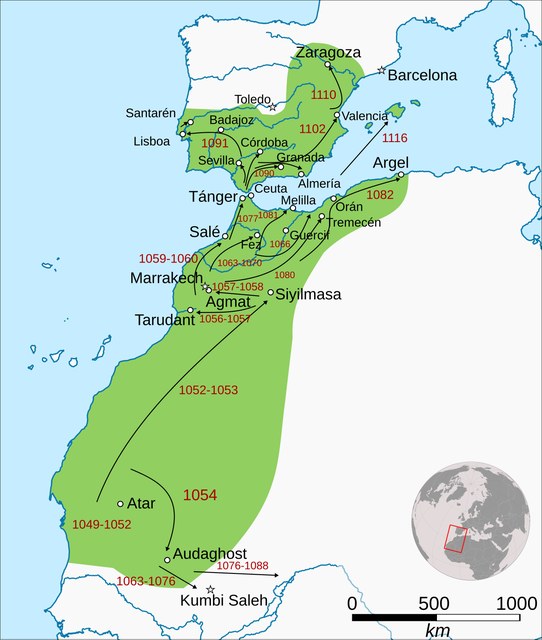
Almoravid Dynasty

Almoravid Dynasty
Rowanwindwhistler · CC BY-SA 4.0

Berber dynasty · 1040–1147 · Morocco and al-Andalus

Almoravid Dynasty was a Berber dynasty from Morocco that ruled from 1040 to 1147 before being supplanted by the Almohads.

The kit

  • Rise — Almoravid Dynasty was founded by Maliki scholar Abdallah ibn Yasin as part of a mid-11th-century revivalist movement among the Sanhaja tribal confederation.
  • Achievements — Almoravid Dynasty's greatest ruler, Yusuf ibn Tashfin, established the capital at Marrakesh in 1062 and won the decisive Battle of Sagrajas.
  • Conflicts — Almoravid Dynasty invaded al-Andalus and ended the taifa kingdoms at Zallaqa, but lost the Battle of Ourique to Alfonso I of Portugal.
  • Fall — Almoravid Dynasty fell in 1147 when Marrakesh was captured by the Almohads following a revolt of the Masmuda tribe led by Ibn Tumart.

Runs with

Morocco
based in Morocco with capital at Marrakesh open card →
Ghana
conquered Kumbi Saleh and Audaghost from Ghana open card →
Africa
Islamic dynasty that extended conquest westward in North Africa open card →
Spain
invaded and controlled al-Andalus until Almohad rise open card →

The ladder · 15 clues

H

Its greatest ruler, Yusuf ibn Tashfin, established its capital at Marrakesh. name this Berber dynasty from Morocco that ruled from 1040-1147 when they were supplanted by the Almohads.

H

This dynasty won a battle that gained its common name because so many soldiers died that the ground became slippery with blood.

H

dynasty of that ethnic group that led Morocco until its defeat by the Almohads?

H

A highly-decorated qubba made out of stone, brick, and cedar wood is one of the only remaining architectural works by this dynasty. :Name this dynasty, which was founded by the Maliki scholar ibn Yasin, a member of the Sanhaja tribal confederation. This dynasty defeated two kingdoms at the Battle of Sagrajas.

H

This dynasty's Sanhajah branch conquered the gold-trading center Audaghost from Ghana in 1055. :Name this dynasty, which was led by Yusuf ibn Tashufin during its eleventh-century conquest of Spain that featured the end of the taifa kingdoms and the maleable loyalties of El Cid.

H

This dynasty employed a company of mercenaries commanded by one of its former prisoners, Reverter de la Guardia.According to some accounts, the five shields on the coat of arms of a foreign king who defeated this dynasty in battle represent five of this dynasty’s kings.

H

Answer the following about a Berber dynasty, FTPE.They originated in Mauritania, but after a period of expansion in the 11th Century, they built the city of Marrakech and based themselves in Morocco.

M

Earlier, at the earlier battle of Sagrajas, its most successful leader, Yusuf ibn Tashfin, won a decisive victory over forces under Alfonso VI.

M

At the Battle of Ourique, Alfonso I defeated this Moorish empire, which was led by Ali Ibn Yusuf.

M

The Islamic conquest of Africa was taken even further west by this ruling dynasty of Morocco, which was founded as part of a revivalist movement by Abdallah ibn Yasin in the mid-11th century.

M

A regional branch of this dynasty called the Banu Ghaniya held out for more than 50 years after it fell to a revolt of the Masmuda tribe, who were led by Ibn Tumart.

M

According to most stories, Ndiadiane Ndiaye’s father was a ruler of this dynasty from modern Morocco. This dynasty’s rule ended with the fall of Marrakesh in 1147, and it may have conquered Ghana.

M

Ghana was temporarily conquered by this dynasty of Berbers, which also controlled Spain until the rise of the Almohads. One of its rulers, Yusuf ibn Tashufin, won the battle of Al-Zallaqah.

M

Guided by the preaching of Waggag ibn Zallu and Ibn Yasin, this dynasty expanded to take Kumbi Saleh, fought Portugal at Ourique, and defended al-Andalus from Alfonso the Brave at Sagrajas.

E

The taifa kingdoms were abolished when this Muslim empire of North Africa invaded under Yusuf ibn Tashfn at Zallaqa. Centered in Marrakesh, this dynasty was replaced by the Almohads in 1147 CE. 7

10 more clues from the record
H

This dynasty seized control of a key trade route by defeating the Magrawa tribe and taking over the city of Sijilmasa, and conquered Kumbi Saleh two decades later.

H

After this dynasty defeated Abd Allah ibn Buluggin and exiled him to Aghmat, he wrote an extremely self-effacing memoir about his fall from power called The Tibyan.

H

The Ghana Empire also clashed with this North African Islamic dynasty whose leader Yusuf ibn Tashufin established its capital at Marrakech in 1062.

H

The decline of Ghana was caused by an invasion of this Muslim dynasty of Berber warriors, commonly called “the hermits”, who were led by the commander Abu Bakr.

H

A ruler of this non-Scottish dynasty died when he accidentally rode his horse off a cliff while trying to escape a siege at night.

H

Its origins can be traced to the tribal leader Yahya ibn Ibrahim, and it lost at the battle of Ourique during the reign of Ali ibn Yusuf.

H

Afonso I, the first king of Portugal, seized Santarém from this Islamic dynasty. This dynasty, which was overthrown by the Almohads, also lost the Battle of Ourique to Afonso I.

H

A branch of this dynasty maintained control of its major offshore islands before being recognized by the Abbasids, and was known as the Banu Ghaniya.

H

A queen of this dynasty, Zainab, suggested its ruler adopted the title “Amir al-mu'minin,” a title still used by modern kings of its country.

H

They fought to a standstill with the forces of Alfonso VI and their ascent spelled doom for Ghana, as they took Kumbi Saleh after a 10-year siege.

Watch out: Almohads (the dynasty that replaced the Almoravids in 1147)
#1106 · African Empires and Kingdoms · Level 1

Kingdom of Kongo

Kingdom of Kongo
Oren neu dag · Public domain

Central African kingdom · 14th–20th century (abolished 1914) · Northern Angola, Congo River basin

Kingdom of Kongo was a Central African state that converted to Christianity under Portuguese influence and profited from raffia cloth trade.

The kit

  • Rise — Kingdom of Kongo was founded in the 15th century by Lukeni lua Nemi, whose Kilukeni dynasty ruled until 1567.
  • Christianity — Kingdom of Kongo converted to Christianity after Diogo Cão met its king in 1482, with João I becoming its first Christian ruler.
  • Conflicts — Kingdom of Kongo was harassed by Imbangala Jaga warriors and lost the Battle of Mbwila under ruler António I.
  • Legacy — Kingdom of Kongo was incorporated into Portuguese Angola and its monarchy was abolished by Portugal in 1914.

Runs with

Portugal
Portuguese influenced conversion, slave trade, and eventually incorporated kingdom into Angola open card →
Angola
Kingdom located in northern Angola, later absorbed into Portuguese colony open card →
Africa
Christianity
Afonso I established Christianity as state religion after heavenly vision open card →

The ladder · 15 clues

H

This kingdom, which profited from the sale of raffia cloth, was ruled by kings called manis; one such king was Nzinga a Mvemba, who became known as Afonso I upon his conversion to Christianity.

H

An 18th century religious figure in this kingdom, Dona Beatriz, claimed to be an incarnation of St. Anthony.

H

Central African kingdom under influence of the Portuguese, later incorporated into the colony of Angola.

H

This kingdom faced a religious uprising that was led by Beatriz Kimpa Vita and named for Saint Anthony.

H

Afonso I was also the name of the first Christian king of this African kingdom, where Portuguese missionaries persuaded him to convert.

H

A monarch of this kingdom credited a win over his half-brother to the heavenly apparition of five horsemen led by Saint James the Great.

H

Works by Capuchin friars such as Giovanni Cavazzi da Montecuccolo are an important source for the history of this state.

M

A ruler of this kingdom, Henrique, was made Bishop of Utica. The first European to meet with this kingdom was Diogo C˜ao [cow] in 1482, after which its king took the name Jo˜ao.

M

A prophet who claimed that Jesus was born in this kingdom was burned at the stake for claiming to be possessed by Saint Anthony of Padua.

M

This state was harassed by bands of warriors called Jagas and it was first discovered by explorer Diogo Cao, who converted its king.

M

The Imbangala people produced a group of Jaga warriors who attacked this kingdom.

M

This kingdom was administered from towns called mbanzas, the largest of which shared its name with this kingdom.

E

Afonso I cemented this polity’s conversion to Christianity, which began under Nzinga-a-Nkuwu. name this south-central African Kingdom located at the south of a namesake river.

E

The first Christian ruler of this kingdom was João I, whose son Afonso I established Christianity as its state religion.

E

In 1914, Portugal abolished the monarchy of this kingdom that flourished from the 14th century along a namesake river in central Africa.

10 more clues from the record
H

The son of a leader of this kingdom studied abroad in Europe before becoming bishop of Utica [[YOO-tih-kah]].

H

Ruled by the House of Nsundi and Kwilu, its ruler Afonso I denounced Portuguese management of its slave trade.

H

Dona Beatriz was a prophet in this nation who taught that Jesus was born in this kingdom.

H

That group lived south of the Kwanza River, which was an important waterway for this kingdom.

H

Port officials detained this polity’s ambassador Antonio Manuel ne Vunda for three years, preventing him from detailing clerical abuses to Pope Paul V. European settlers incited the Jaga Wars over claims to an island in this polity that supplied brown sea snail shells for a currency.

H

Answer the following about slavery in Africa, :Afonso I, a king of this African empire, wrote letters to Portuguese king John III to curb abuses in the slave trade. It lends its name to a modern-day country that was renamed Zaire under Mobutu Sese Seko.

H

This polity was founded in the 15th century by Lukeni lua Nemi, and his Kilukeni dynasty ruled this polity until 1567. :Name this West African kingdom, which covered modern-day Gabon and Angola, as well as the two countries with capitals at Kinshasa and Brazzaville that share a name with this kingdom.

H

Martin Behaim, creator of the world’s oldest known globe, dubiously claimed to have accompanied an explorer on his second voyage to this kingdom. :Name this kingdom located in northern Angola that lends its name to two countries in Central Africa colonized by France and Belgium.

H

2. Name these African empires, :M'banza was the center of this central African kingdom, which lost the Battle of Mbwila. It became heavily Roman Catholic and its rulers adopted names reflecting the support of the Portuguese monarchy, which was later opposed by rulers like Garcia II and Antonio I.

H

After this kingdom’s ruler António I lost the Battle of Ambuila , its politics became dictated by short-term alliances between noble clans called gerações , rather than those of royal lineage, or kanda.

Watch out: Beatriz Kimpa Vita and Dona Beatriz refer to the same prophet who claimed possession by Saint Anthony
#1473 · General · Level 1

Mansa Musa

Mansa Musa
attributed to Abraham Cresques /a · Public domain

Mali emperor · ruled 1312–1337 · West Africa

Mansa Musa ruled the Mali Empire and famously devalued gold across North Africa during his lavish 1324 hajj to Mecca.

The kit

  • Rise — Mansa Musa ascended to the throne after his predecessor Abu Bakr II disappeared exploring the Atlantic Ocean.
  • Achievements — Mansa Musa commissioned the Djinguereber Mosque and Sankore University in Timbuktu, hiring Andalusian architect al-Sahili.
  • Pilgrimage — Mansa Musa carried thousands of gold bars on his 1324 hajj, building a mosque every Friday along his route.
  • Conflicts — Mansa Musa's general Sagmandia conquered Gao, after which he took the sons of Gao's king as hostages including Ali Kolon.

Runs with

Gold
gave away so much gold in Egypt that he caused massive inflation open card →
Nanda Empire
Mali Empire
ruled at the zenith of its territorial expansion open card →
Mali
ruled this West African empire from capital at Niani open card →

The ladder · 15 clues

H

After one event, Abraham Cresques depicted this leader sitting on a throne while holding a scepter with a fleur-de-lys in the Catalan Atlas.

H

This ruler educated the hostage Ali Kolon after his general Sagmandia led a successful reconquest of Gao.

H

This man built a mosque every Friday along his route. :Name this ruler who inadvertently caused massive inflation by giving away gold in Egypt.

H

This man’s brother Sulayman was a disappointing host to Ibn-Battuta.

H

After his general Sagmandia captured the city, this ruler returned to his kingdom with the sons of the Gao king as hostages.

H

This man ascended to the throne after his predecessor disappeared while trying to find the ends of the Atlantic Ocean.

H

This leader is depicted in the Catalan Atlas sitting on a throne and inspecting a gold nugget.

M

Djingeureber Mosque was built by this man’s architect as-Saheli, as was Sankore University.

M

This ruler’s predecessor, Abu Bakr II, disappeared after exploring a “river with a powerful current,” the Atlantic Ocean.

M

The empire Sundiata founded was later led by this man, who notoriously carried thousands of gold bars with him on a 1324 pilgrimage to Mecca. On his trip, he reportedly gave away numerous gold bars and built a mosque every Friday.

M

The architect Al-Sahili was hired by this man, whose reign featured the construction of the Djingareyber Mosque and Sankore University in Timbuktu.

M

This ruler of the Mali was Sundiata’s grandnephew; he gave away so much gold during his pilgrimage to Mecca that the world price of gold dropped.

E

The Sankore University in Timbuktu was also commissioned by this man, whose 1324 pilgrimage to Mecca was so lavish it devalued the price of gold throughout North Africa. name this wealthy ruler of the Mali empire.

E

This leader hired the Andalusian architect Al-Sahili to build the Djinguereber mosque in a city that also contained the University of Sankore.

E

This man allegedly devalued gold while on his travels in North Africa. name this Mali king who performed a lavish hajj.

10 more clues from the record
H

The lower level of this man’s “Hall of Audience” was plated in gold.

H

Shortly after a wave of conquests by his general Sagmandia, this man built the stone-cut Hall of Audience in Niani.

H

Sankore University was founded by this ruler of the Malian Empire, whose hajj legendarily depreciated the price of gold.

H

He employed the Muslim architect al-Sahili in the building of mosques.

H

He also brought his empire to the zenith of its territorial expansion, conquering much of Taghaza, Wangara, and Gao.

H

This man was so focused on his religious duties that he almost caused a diplomatic disaster by refusing to meet with Sultan Al-Malik al-Nasir.

H

The last years of this ruler were dogged by invasions by the Mossi, and he died before he could abdicate his position to his son Maghan.

H

The Sankore Madrasah was built during this man’s rule and had the largest collection of books in Africa after the Library of Alexandria.

H

This ruler invited Ali Kolon to his court after conquering his homeland with the help of his general, Sagmandia.

H

This man waged war against the Mossi peoples, where he was served by the general Sagmandia.

Watch out: His brother Sulayman, who later ruled Mali and hosted Ibn Battuta
#1555 · Modern Countries · Level 1

Mali

Mali
SKopp · Public domain

West African empire and modern nation · empire 13th–16th century; nation 1960–present · West Africa, capital Bamako

Mali names both a medieval West African empire founded by Sundiata and the modern nation that gained independence from France in 1960.

The kit

  • Founding — Mali was founded when Sundiata defeated the Sosso ruler Sumanguru at the Battle of Kirina and established his capital at Niani.
  • Governance & trade — Mali was governed partly by an assembly called the gbara and controlled major trading cities including Timbuktu, Djenné, and Oualata.
  • Peak — Mali reached its greatest height under Mansa Musa, whose 1324 pilgrimage to Mecca spent so much gold it devastated Cairo's economy.
  • Modern era — Mali became independent from French Sudan in 1960 and has faced Tuareg rebellions seeking to establish Azawad and a 2020 coup against President Keïta.

Runs with

Nanda Empire
no connection shown in clues open card →
Mansa Musa
Mansa Musa ruled Mali at its peak open card →
Timbuktu
Timbuktu was Mali's most important city open card →
Songhai Empire
Songhai largely conquered Mali in the 15th century open card →

The ladder · 15 clues

H

Former member of French West Africa which is named for a medieval African empire led by mansas.

H

This country shares its name with an empire founded by Sundiata. :Identify this modern-day country home to Timbuktu. It has a capital at Bamako.

H

The founder of this empire defeated the Sosso ruler Sumanguru at the Battle of Kirina.

H

By the time of Ibn Battuta’s trip, Oualata was a Saharan caravan city owned by this Empire, whose rulers included Mansa Musa.

H

answer the following about an African kingdom.This kingdom was centered around Niani, and it had rulers who had the title “mansa”. One of the cities in this empire was Timbuktu.

H

The origin of this empire lay in the battle of Kirina, in which Sumanguru Kante of the Soso Kingdom was defeated by its legendary first ruler, Sundiata Kieta.

H

This nation was a colony containing the city of Kayes called French Sudan until Modibo Keita became its first president in 1960.

M

The MNLA lost control of the north of this country to Ansar Dine after attempting to make Azawad an independent Tuareg nation.

M

Name these African empires .This trading empire flourished in West Africa from the thirteenth to the sixteenth century. Its most important city was Timbuktu.

M

Sundiata was the first ruler of this African empire that had its capital at Niani. It was largely conquered by the Songhai in the 15th century.

M

Ibn Battuta also visited this empire, whose King Mansa Musa made a lavish pilgrimage to Mecca in 1324. This empire had major urban centers at Djenne and Timbuktu.

M

This empire was partially governed by an assembly called the gbara whose role was set out in the Kouroukan Fouga.

E

The Ghana Empire once ruled in what is now this arid West African country, the home of Timbuktu and Bamako.

E

Once led by Sundiata, another ruler of this empire spent so much gold on a pilgrimage to Mecca that he devastated the economies of Cairo and Medina.

E

In 2012, Kidal, Gao, and Timbuktu fell in three days to rebels in this West African country whose government rules from Bamako.

10 more clues from the record
H

This empire referred to its territories as the Twelve Tinkurus, or Twelve Doors.

H

Recent protests in this country against its president, nicknamed “IKB,” were sparked by a massacre which left over 100 dead in this country’s Fulani village of Ogassagou.

H

This country was known as French Sudan in the colonial era and it entered into a short-lived federation with Senegal in 1960.

H

Former French colony that faced a Tuareg rebellion aiming to establish the state of Azawad.

H

In 2015, 220 hostages were taken in a terrorist attack on the Radisson Blu in this country’s capital.

H

This country is named for an empire that was founded by Sundiata.

H

Moses Finley once noted ‘‘It will not have escaped notice that I have so far avoided defining what I mean by a city”. Answer, questions on dificult-to-define early cities.Early urbanism in West Africa has been argued to have been self-generated and unfortified rather than state-motivated, exemplified by the Inland Niger Delta sites of Dia and Djenné-djeno in this modern-day country.

H

An August 2020 coup in this country came two months after at least 11 protestors aligned with the M5 were killed by security forces. :Name this Sahel country where president Ibrahim Boubacar Keïta and prime minister Boubou Cissé were ousted and arrested by military officers over accusations of stealing this country’s parliamentary elections.

H

In 1968, Moussa Traoré (MOO-sah tra-OH-ray) overthrew this country’s previous government and declared a military regime on “Liberation Day.” Borgnis-Desbordes (BOR-nee day-BORED) established this country’s fort of Kayes in 1881.

H

Name these African empires .Arising from the state of Kangaba under the leadership of Sundiata Keita, this empire reached its greatest height under Mansa Musa, and its merchant class, the Dyula, became known throughout the Islamic world.

Watch out: Ghana Empire—also ruled this region but predated Mali
#1661 · General · Level 1

Sundiata Keita

Sundiata Keita
Eunostos · CC BY-SA 4.0

Mandinka emperor · c. 1217–1255 · West Africa

Sundiata Keita founded the Mali Empire after defeating the Sosso sorcerer-king Sumanguru at the Battle of Kirina in 1235.

The kit

  • Rise — Sundiata Keita overcame childhood lameness by using an iron rod to pull himself upright, which he later bent into a bow.
  • Exile & return — Sundiata Keita was forced into exile to the Mema Kingdom by his father's jealous wife Sassouma Bereté after his brothers were killed.
  • Victory — Sundiata Keita defeated Sumanguru at Kirina using an arrow tipped with a white rooster spur, the sorcerer's mortal weakness discovered through sacrifice.
  • Legacy — Sundiata Keita established the Keita Dynasty and his life became the subject of a Mandinka epic recounted by griots.

Runs with

Mali Empire
founded it after victory at Kirina open card →
Nanda Empire
no connection evident in clues open card →
Mali
ruled this West African region open card →
Iron
used iron rod to overcome lameness open card →

The ladder · 15 clues

H

This man legendarily was forced into exile to the Mema Kingdom with his sisters and mother due to a jealous wife of his polygamous father, Sassouma Bereté [[sah-SOO-mah beh-reh-TEH]].

H

He was the first king of an empire later ruled by Mansa Musa, and his life is told in a namesake epic. name this founder of the Mali Empire.

H

During one battle, this man told his opponent, “My army will feast upon yours as upon yams.” A hunter prophesied that this man would be born if Maghan the Handsome married an ugly woman.

H

The son of Nare Maghann Konate, this man is famed for his defeat of the Sosso king, Soumaoro Kante. :Name this victor of the 1253 Battle of Kirina.

H

That ruler with this name was supposedly helped by the marriage of his sister Nana Triban, who discovered the totem of an enemy ruler was a white cockspur.

H

This ruler's defeat of the sorcerer-king and Sosso leader Soumaoro Kanté was recounted by oral poets known as djeli [[JEH-lee]] in the Epic of this monarch.

H

After this ruler’s mother was insulted, he requested an an iron bar, which he used to pull himself to his feet and overcome his lameness.

M

The story of how this Mandinka man defeated the Sosso king Sumanguru at the Battle of Kirina is told in his namesake epic.

M

Mandinka king who established the Mali Empire.

M

He did not and, at the 1235 Battle of Kirina, took revenge. name this first king of the united Mali empire.

M

Stories concerning which man include that he was born lazy, but asked a blacksmith to make a rod to hold himself up, which he later turned into a bow?

M

After sacrificing 100 oxen, 100 rams, and 100 cocks, this man learned that his enemy's mortal weakness was the cock and fashioned an arrow with a white cock's spur that would later defeat him.

E

This ruler, who was born to the “buffalo woman” Sogolon, used an arrow tipped with a rooster spur to defeat the evil sorcerer Sumanguru at the Battle of Kirina. name this founder of the Keita dynasty, the first mansa of the Mali Empire.

E

This “Lion of Mali” won the Battle of Kirina, founded the Mali Empire, and was an older relative of Mansa Musa.

E

This mansa, who founded the Keita Dynasty, names a Mandinka epic passed down via oral tradition by Malian griots.

10 more clues from the record
H

This man’s general Tirmakhan Traore conquered a province that would later become the Kaabu Empire.

H

This man founded a dynasty that claimed descent from the first muezzin Bilal ibn Rabah.

H

This king’s mother was the hunchback Sogolon and he was advised by the griot (gree-OH) Balla Fasséké (fah-SAY-kay). :Name this man who was born crippled, needing to use an iron staff to walk. When he later taught himself how to walk, the staff magically bent into the shape of a bow.

H

After he was born a cripple, this ruler supposedly used an iron rod to stand before fastening the rod into a bow. :Name this king who won the Battle of Kirina against the forces of Soumauro Kanté. The balafon is used by griots when telling the story of this ruler.

H

This man opposed the sorcerer king Soumaoro. :Name this ruler whose mother was the ugly hunchback Sogolon. The subject of a historical epic, this empire builder was born a cripple but through his sheer determination was able to walk on his own.

H

She gave birth to a sickly child, a child whose entire family, including his eleven brothers, was killed by an invading Kaniaga ruler, though Sumanguru left this child alive because he thought this boy would die soon enough.

H

According to legend, this ruler first stood at the age of seven, when he pulled himself up from the earth with an iron rod. :Name this ruler who, in an oral tradition, was the son of a hunchbacked “buffalo woman.” This ruler was crowned after winning the Battle of Kirina.

H

His brothers were killed when the ruler of Kaniaga overran Kangaba, and this man was supposedly spared because he was young and sickly. :Identify this ruler, whose victory at the Battle of Kirina resulted in the founding the Malian empire in 1240.

H

Nine witches stole from this man’s garden so that they would have an excuse to kill him for abusing old ladies, but supported him instead after he offered them any food they wanted.

H

This man’s rival, who had earlier kidnapped his sister Nyakhaleng, supposedly housed urns full of snakes, severed heads, and the largest balafon ever made.

Watch out: Mansa Musa (later Mali ruler, not founder)
#1696 · Commodities and Trade Goods · Level 1

Iron

Iron
teravolt /a ( talk /a ) · Public domain

metallic element · widespread use after c. 1200 BCE · global

Iron is a metal whose widespread use defined an age succeeding the Bronze Age, revolutionizing tools, weapons, and construction.

The kit

  • Early adoption — Iron smelting was pioneered by the Hittite Empire and spread globally, with the Nok culture of Nigeria being the first in Africa to use it.
  • Production advances — Iron production improved through innovations like Abraham Darby's use of coke instead of charcoal for pig iron and Henry Cort's puddling and rolling system.
  • Economic control — Iron was monopolized by Emperor Wu Di of Han China alongside salt and supposedly used as currency to prevent hoarding.
  • Cultural impact — Iron's German word *eisen* was paired with *blut* in Otto von Bismarck's 1862 'Blood and Iron' speech advocating military force over parliamentary debate.

Runs with

Chancellor
Bismarck held this office open card →
Otto von Bismarck
delivered 'Blood and Iron' speech using German *eisen* open card →
Joe HillNanda Empire

The ladder · 15 clues

H

The Nok Culture of modern Nigeria was the first in Africa to make use of this metal.

H

Emperor Wu Di of Han placed a monopoly on salt and this material.

H

The Bronze Age preceded, an age named for what metal?

H

This commodity’s production, which is evidenced by pits from Tanzania’s KM2 and KM3 sites, may have been spread by “Chifumbaze complex” in Mozambique.

H

During the Yuan Dynasty, Wang Zhen published a pamphlet that outlined how waterwheels were used to operate furnaces, creating the pure form of this product.

H

Chandragupta II erected pillars of this substance that tell of his conquest of the Vanga people and his crossing of the seven rivers of India.

H

Metal supposedly used as currency instead of gold and silver to prevent hoarding.

M

Some historians believe the Bantu expansion was accelerated by the ability to make tools out of this metal. This metal names an “age” after the Stone and Bronze Ages.

M

The innovation of Henry Cort’s puddling and rolling system improved the quality of this good so much that formerly prominent imports of it from Sweden ceased.

M

The region around the Nubian city of Meroë was deforested for fuel to produce this commodity at the requisite high temperatures.

M

Around 1000 BCE, this commodity may have been independently manufactured by the Nok culture in Nigeria.

M

The German word for this concept, eisen, was paired with blut in an 1862 speech against Max von Forckenbeck that argued the “great questions of the day” will not be decided through “speeches and majority decisions,” but instead through blood and fighting. name this metal used in the epithet for Chancellor Otto von Bismarck.

E

The Vedic Age is coterminous with an age named for this metal. what metal names an Age succeeding the Bronze?

E

Abraham Darby created amethod to create the “pig”type of this substance usingcoke insteadof charcoal. and its “wrought” form was used to construct the Eiffel Tower. name this metal whose use ended the Bronze Age.

E

It is refined using a material called coke in blast furnaces. name this metal which has been used since Zhou dynasty China in its "pig" form, which, with carbon, is turned via the Bessemer process into steel.

10 more clues from the record
H

The Hittite Empire is often credited for smelting this metal to equip its armies.

H

Metal that was tempered into steel and used to build stronger buildings.

H

A pillar of this material was signed by King Chandra and notoriously resists corrosion.

H

The Hittites created artifacts of this material.

H

Around 400 BCE, techniques for producing this material spread from the Urewe culture in the African Great Lakes region across the continent. :Name this material, whose production along with ceramics across Africa is associated with the Bantu expansion. This material was worked in a furnace called a bloomery.

H

Cyril Hromnik used dubious linguistic comparisons to argue that shipwrecked Indians taught Southern Africans how to produce this good. :Name this good whose creation methods spread during the Bantu migrations. This good replaced bronze in swords in the last of the Metal Ages.

H

Some historians hypothesize that carburization, the addition of carbon, was necessary to reduce the melting point of this metal when it was first smelted. The greater strength of what metal led to its supplanting bronze in weapon and armor manufacture between 1500 and 800 BCE?

H

Lithuania’s government under Antanas Smetona suppressed a coup by Augustinas Voldemaras, whose fascist group paired this term with “Wolves.” Horia Sima led a Romanian fascist group begun as the Legion of the Archangel Michael whose name paired this term with “Guard.”

H

When the exiled general Camillus reached Rome, he threw his sword onto the scales and declared that he would reclaim Rome “not with gold, but with [this metal]." Roman swords were often made of this metal or its alloy, steel.

H

The presence of this resource is used as an archaeological marker of the Bantu expansion and its use at Ogoui in the Central African Republic, supposedly dating back to 2000 BCE, is controversially its oldest known processing site.

Watch out: Bronze Age (immediately preceded the Iron Age)
#1728 · General · Level 1

Timbuktu

Timbuktu
Flickr user: Emilio Labrador Santiago de Chile a rel="nofoll · CC BY 2.0

Malian city · medieval period, 1324–present · Niger River, Mali

Timbuktu was a major center of Islamic learning and trans-Saharan trade in the medieval Mali and Songhai empires.

The kit

  • Scholarship — Timbuktu was home to Sankore Madrasah university and scholar Ahmad Baba, who was exiled after Moroccan conquest.
  • Trade — Timbuktu served as a crossroads on trans-Saharan caravan routes and was displayed prominently on the Catalan Atlas.
  • European exploration — Timbuktu was legendarily hard to find; Alexander Gordon Laing was killed after arriving, while René Caillié won 10,000 francs for returning.
  • Legacy — Timbuktu's name is casually used to denote a distant place, and Sufi shrines there were destroyed by Islamists in 2012.

Runs with

Nanda Empire
no connection shown in clues open card →
Mansa Musa
Mansa Musa peacefully annexed Timbuktu and built Djinguereber Mosque there open card →
Mali Empire
Timbuktu was a major city of Mali Empire open card →
Mali
Timbuktu is located in central Mali open card →

The ladder · 15 clues

H

Leo Africanus wrote about this city in Mali, which was the scholarly center of Africa. It was home to the Sankore Madrasah, a university.

H

A library in this city is named for scholar Ahmed Baba, who was exiled after this city was conquered by Ahmad al-Mansur’s Moroccan forces.

H

In this city, Major Alexander Gordon Laing was reportedly killed shortly after arriving, while Rene Caillie won 10,000 francs for successfully returning from here.

H

A history written in this city, the Chronicle of the Seeker, tells how a king undertook a journey after accidentally killing his mother.

H

This city was displayed prominently at the southwest corner of the Catalan Atlas, and was the destination of salt caravans from Taoudenni .

H

Joseph Joffree's late 19th century conquest of this city led to its coverage in western media by Felix Dubois [[doo-BWAH]], who claimed it had "unimpressive buildings" outside of the University of Sankore.

H

While searching for the source of the Niger, Alexander Gordon Laing was the first European to reach this city, but was killed weeks later by Tuareg raiders.

M

This city was home to the Sidi Yahya and Djinguereber mosques.

M

Ahmad Baba is considered to be the greatest scholar from this city. The Sankore Madrasah, one of this Malian city's foremost centers of learning, was constructed under Mansa Musa.

M

City, a center of learning in Mali, that served as a crossroads on the trans-Saharan caravan trade and was legendarily hard to find.

M

Home to the Sankore Madrasa, name this major centre of Islamic learning under the Mali Empire.

M

Sankore University was founded in this city, the capital of the Mali Empire. The Songhai Empire eventually took over this city in the late 1460s.

E

The University of Sankore was built, an ancient city with a reputation of being very hard to find.

E

The capital of the medieval Mali Empire was this city.

E

Mansa Musa also restored the Sankore Madrasah and built the Djinguereber Mosque in this city, which became the center of learning and trade during the Golden Age of Mali.

10 more clues from the record
H

A New York community named for this historical city was a farming colony for free African-Americans due to it being on highly arable land.

H

Legendarily wealthy metropolis on the Niger [[nee-ZHER]] River annexed into the empire in 1324.

H

The city in central Mali home to the Sankore Madrassa, popularly believed to be hard to reach?

H

answer the following about the Songhai Empire:One of the Songhai Empire’s most important cities was this settlement on the Niger River. This major trading hub was the site of Sankore University and the Djinguereber [Jin-gay-reb-er] mosque.

H

This city was the location of the University of Sankore, and is currently home to the Djinguereber [jin-gah-REY-bur] and Sidi Yahia mosques. :Name this city whose name is often casually used to denote a distant or faraway place.

H

Africa has some interesting sites of antiquity aside from the Pyramids. :This Malian city was the site of the royal palace of the Mali Empire. Some Sufi shrines in this city were destroyed by Islamists in 2012.

H

This non-Takrūr city provides the toponymic name of a jurist who opposed racial slavery in favour of religious slavery, who wrote a biography of al-Maghīlī and was called AḥmadBābā.

H

The Moroccan explorer Leo Africanus wrote of the fabulous wealth of this Malian city, while Europeans often considered it to be a fantastical, faraway location.

H

This city’s center contained a stone and mortar temple built by the architect Ishaq al-Gharnati, and its arma rulers were assisted by the geographer Abd al-Sadi.

H

Mansa Musa peacefully annexed this city while returning from his pilgrimage. This city was a major stop on the Trans-Saharan trade and was home to the Sankore Madrasah.

Watch out: Takrūr (another West African scholarly center)
#1809 · General · Level 1

Berbers

Berbers
Mysid · Public domain

North African ethnic group · antiquity to present · North Africa

Berbers are indigenous North Africans who founded the Almoravid and Almohad empires and led the Umayyad conquest of Spain.

The kit

  • Origins — Berbers formed the ancient Numidian and Mauretanian kingdoms and are the closest living relatives of the Guanche.
  • Achievements — Berbers invented the Tifinagh script and controlled trans-Saharan trade routes linking Sijilmasa to the salt mines of Taghaza.
  • Conflicts — Berbers resisted Arab conquest under leaders like al-Kahina and Kusaila before many converted to Islam and joined the conquest of Spain.
  • Legacy — Berbers include subgroups like the Tuareg, Kabyle, and Rif and number over four million in Algeria alone today.

Runs with

Africa
indigenous to North Africa open card →
Morocco
ruled Morocco through Almoravid Empire from 11th century open card →
Spain
conquered Spain under Ṭāriq ibn Ziyad open card →
Arabs
resisted then joined Arab conquests after conversion open card →

The ladder · 15 clues

H

A Christian leader of these people named Kusaila was killed near Mems while resisting an invasion led by Zuhayr ibn Qays.

H

These people invented the Tifinagh script, and Gibraltar is named after one of these people.

H

Abd el-Krim declared the Republic of the Rif, which consisted mainly of this ethnic group and was defeated by French and Spanish forces in 1926.

H

al-Kahina was probably from a tribe of this broad North African ethnic group, whose Muslim converts produced the Almohad Caliphate that took over much of Spain.

H

Over four million Algerians are members of this ethnic group, the pre-Arab North Africans, whose divisions include the Haratin, Rif, and Tuareg.

H

Orientalist scholar Amédée Caix de Saint-Aymour characterized a subgroup of these people as “hardworking, enterprising, practical,” and less religious, making them easier to assimilate than Arabs. :Name these people whose subgroups include the Kabyle, who were subject to an imperial myth portraying them as ideal colonial subjects.

H

The origin of a major subgroup of these people has been dated to the decline of the Garamantes, who used their control of the regional slave trade to build foggara irrigation systems. :Name these people who formed the ancient Numidian and Mauretanian kingdoms prior to assimilating through waves of Arab migration.

M

Francisco Franco first rose to prominence while fighting in the Rif Wars against this group of indigenous Moroccan Muslims who had once ruled the Almoravid Empire.

M

The Umayyad conquest of al-Andalus was led by one of these people, Ṭāriq ibn Ziyad, who also names the Strait of Gibraltar.

M

That leader of these people defeated the forces of Hassān ibn al-Nu‘mān at the Battle of Meskiana, and is often rumored to have been Jewish.

M

The trade routes whose northern terminus was in the city of Sijilmasa linked this people to the salt mines of Taghaza.

M

al-Hakim’s rule was troubled by ethnic disputes in the Fatimid army between Turks and these people, whose Kutama group was prominent under the Fatimids. Commanders like Tariq ibn Ziyad were part of this ethnic group.

E

north African ethnic group that ruled Morocco from the 11th century?

E

Islam was brought to Senegal by these indigenous peoples of North Africa, who established the Almoravid and Almohad kingdoms in Morocco.

E

Ibn Tumart started a religious movement among the Masmuda subgroup of these people who overthrew the ruling Almoravids. name this North African ethnic group that composed the Almohad Dynasty.

10 more clues from the record
H

Women of this North African nomadic group were once tattooed for protection and beauty from a young age. While still extant in rural areas, the practice has largely died out due to Islamization and French occupation.

H

ibn Khaldūn wrote about Kāhina, a religiously Jewish queen of these still-existent North African peoples. In the 8th century, some tribes of them resisted the Arab conquest, but then some joined the Arab conquest of Spain.

H

17th century historian Ahmed Mohammed al-Maqqari claimed that a polymath of this people was able to fly by attaching feathers to himself and that his only design flaw was not adding a tail to smooth the landing.

H

These people’s calendar starts from the rule of a king identified with the biblical Shishak and is divided by four “Gates of the Year.” Shoshenq I was one of these people, who are the closest living relatives of the Guanche.

H

To defeat an expedition ordered by caliph Hisham, people of this ethnic group tied bags of water to the tails of mares, provoking a stampede that allowed them to neutralize cavalry.

H

They’re not Arabs, but these people’s namesake “Spring” occurred after scholar Mouloud Mammeri was banned from giving a lecture on their ancient poetry in the city of Tizi Ouzou.

H

In 1925, a monumental tomb constructed by these people for Queen Tin Hinan was controversially excavated by amateur archaeologist and tomb raider Count Byron de Prorok.

H

Subgroups of this ethnicity include the Chaoui, Shilha, and the Kabyle. :Name this broad ethnic group indigenous to North Africa. Their name is derived from the Latin word “barbaros.”

H

The Kahina was one of these people, another of whom led an army that defeated the forces of the Visigothic King Roderic at the Battle of Guadalete and lent his name to Gibraltar.

H

These people were led for some time by a female war-chief known only as "the Prophet", who advocated scorched-earth tactics.

Watch out: Not Arabs, though many Berbers converted to Islam and fought alongside Arabs