The 1648 Codex

Age of Discovery

7 terms · 105 ladder clues · every clue is a real line from national play.

Swipe or use the arrows. Tap a clue to rate it; your taps shape what comes back.

#53 · Modern Countries · Level 1

Portugal

Portugal
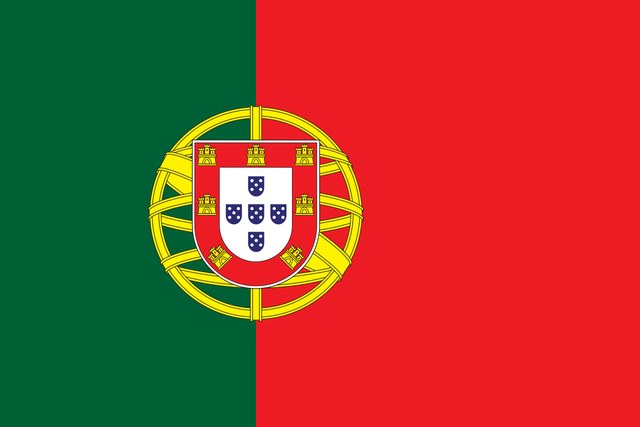
Original: /div Columbano Bordalo Pinheiro /div Vector: /div · Public domain

European nation · 1139–present · Iberian Peninsula

Portugal signed the Treaty of Tordesillas with Spain, dividing the New World, and launched its Age of Discovery from Lisbon.

The kit

  • Rise — Portugal's first monarch defeated his mother at the Battle of Saint Mamede and Ali ibn Yusuf at the Battle of Ourique.
  • Achievements — Portugal expanded greatly under the House of Aviz, which included Prince Henry the Navigator and led maritime exploration to the Cape of Good Hope.
  • Conflicts — Portugal fought colonial wars in Angola and Mozambique and faced a 1580s succession crisis after Sebastian I died at the Battle of the Three Kings.
  • Legacy — Portugal's Carnation Revolution ended the Estado Novo dictatorship in 1974, and a 1755 earthquake devastated its capital Lisbon.

Runs with

Brazil
claimed by Pedro Cabral for Portugal open card →
Lisbon
capital city and launch point for Age of Discovery open card →
Mozambique
former colony involved in colonial wars open card →
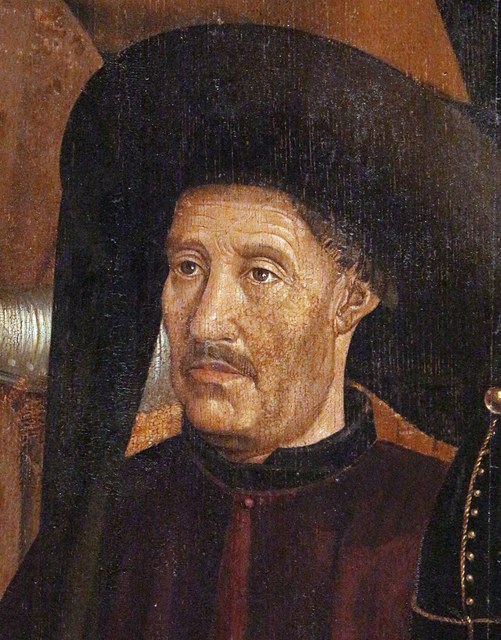
Henry the Navigator
member of House of Aviz who led maritime expansion open card →

The ladder · 15 clues

H

Along with Spain, this country signed the Treaty of Tordesillas, dividing up much of the New World. name this country, whose Age of Discovery began in Lisbon.

H

A succession crisis in this country was sparked after the death of Sebastian I at the Battle of the Three Kings.

H

The Marquis of Pombal established the Douro Wine Company in this country.

H

This country signed the Treaty of Meuthen with England, with whom it had earlier allied in the Treaty of Windsor.

H

The aftermath of the Battle of Aljubarrota saw this country crown John I king, and this country’s 1910 revolution overthrew a dynasty that was installed in this country’s Restoration War, the Braganza dynasty.

H

One monarch from this country perished at the Battle of Three Kings, causing this nation’s native monarchy to end for sixty years.

H

The Carnation Revolution ended the Estado Novo dictatorship in this European country. This country's colonial wars took place in Angola and Mozambique.

M

Pedro Cabral claimed Brazil for this European country that governed its colonies from Lisbon.

M

One expedition led by an explorer from this country ventured to the "Cape of Storms," which is now referred to as the Cape of Good Hope.

M

The Houses of Aviz and Braganza ruled this country that experienced much maritime expansion thanks to Henry the Navigator.

M

The Battle of Aljubarrota was fought in this country, after which it was ruled by the Aviz dynasty.

M

This country’s African empire was represented on the Pink Map, which led to an 1890 British Ultimatum.

E

An economist named Antonio Salazar ruled this country as leader of its authoritarian Estado Novo regime during the mid-20th century.

E

A 1755 earthquake and fire devastated this country’s capital city of Lisbon.

E

This country expanded greatly under the House of Aviz, which included Prince Henry the Navigator.

10 more clues from the record
H

The first monarch of this country, whose independence was recognized by Pope Alexander III, defeated his mother at the Battle of Saint Mamede and Ali ibn Yusuf at the Battle of Ourique.

H

The 1580s war for this country’s succession included the Battle of Ponta Delgada, a naval battle nearly 1,000 miles west of this country.

H

Some of this country's merchants were swept off their route to Ningbo by a storm, landing in one of the Osumi Islands.

H

A king of this country had a vision of a cross in the sky before winning the Battle of Ourique.

H

For much of its history, this country was led by rulers from the House of Aviz.

H

This country was granted everything east of an Atlantic meridian by Pope Alexander VI in the Treaty of Tordesillas (TOR-duh-SEE-yahs).

H

The Alvor Agreement ended another conflict between this nation and its former colony of Angola.

H

European country that introduced the Pink Map to connect its colonies of Angola and Mozambique.

H

In 1511, a force from this country led by Alfonso de Albuquerque captured the city of Malacca. Prior to 1975, this country controlled East Timor, and prior to 1961, it controlled the city of Goa.

H

The bull Manifestis Probatum recognized Afonso I as the first king of this country.
Watch out: Spain (also signed Treaty of Tordesillas and competed in Age of Discovery)
#355 · Other Families and Dynasties · Level 1

House of Aviz

House of Aviz
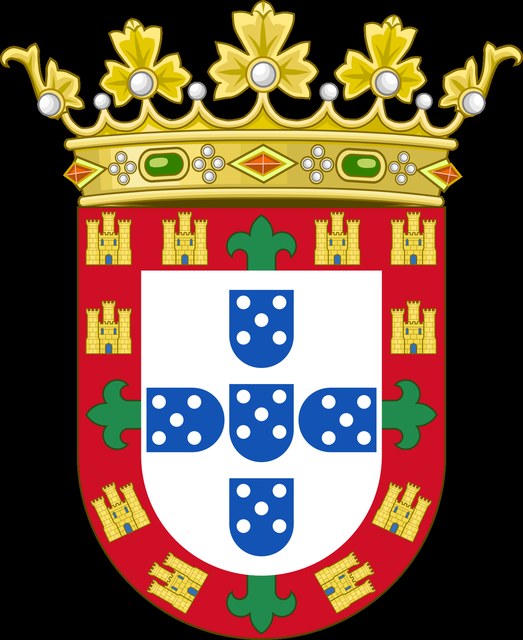
ZuppaDiCarlo · CC BY-SA 4.0

Portuguese royal dynasty · 1385–1580 · Portugal

House of Aviz was the Portuguese dynasty founded by John I that ruled during the Age of Discovery and ended when Philip II of Spain absorbed Portugal.

The kit

  • Rise — House of Aviz was founded by John I after the Battle of Aljubarrota in 1385, taking its name from the monastic order he had led.
  • Achievements — House of Aviz sponsored exploration through Prince Henry the Navigator and signed the Treaty of Windsor, establishing Portugal's alliance with England.
  • Fall — House of Aviz ended when King Sebastian I disappeared at Alcácer Quibir, leading Philip II of Spain to absorb Portugal into the Iberian Union in 1580.
  • Legacy — House of Aviz members are buried in the Founders' Chapel at Batalha Monastery, named for the battle that brought them to power.

Runs with

Portugal
ruled Portugal for nearly 200 years open card →
Henry the Navigator
son of founder John I open card →
John
John I founded the dynasty open card →
House of Braganza
cadet branch of this house open card →

The ladder · 15 clues

H

King John I was the first member of this dynasty that received its name from a monastic order of which John I had been Grand Master. Other members include John I’s son, Henry the Navigator.

H

After a disastrous defeat, a member of this dynasty with the epithet “Holy Prince” became a hostage to the Marinids.

H

The founder of this dynasty employed a man known as “the Holy Constable”, and one ruler of this dynasty patronized the goldsmith/poet Gil Vicente.

H

Members of this family are buried in the main octagonal section of the Founders’ Chapel at a monastery that is named for the battle that brought this family to power.

H

This dynasty was the subject of the papal bull Dum Diversas, which allowed Christians to enslave any non-Christians.

H

This house's members included Ferdinand the Holy Prince who, as part of the "illustrious Generation,” attacked Tangier with his brother, Henry the Navigator.

H

António, Prior of Crato, tried to lead this house, though he lost the Battle of Ponta Delgada.

M

After disappearing at the Battle of Alcácer Quibir, this dynasty’s king Sebastian I gained the epithet “the Desired”.

M

This dynasty signed the Treaty of Windsor with Philippa of Lancaster, leading to its nation’s long-standing alliance with England.

M

ruled Portugal for almost 200 years and included Prince Henry the Navigator?

M

Duarte was part of this dynasty, which was founded by John I. This dynasty’s rule over Portugal ended when Philip II of Spain took the crown in 1580.

M

The first king of this dynasty fathered Prince Henry the Navigator. :Name this dynasty that ended when a neighboring country's Philip II absorbed the country it ruled into the Iberian Union.

E

Prince Henry the Navigator was a member of this royal house of Portugal. This royal house founded by John I included the cadet House of Braganza.

E

Ruling from 1385 to 1580, name this dynasty which included Henry the Navigator, founded by John I of Portugal.

E

Henry was a prince of this Portuguese dynastic house, which was founded by his father John I. It preceded the House of Braganza.

10 more clues from the record
H

Portuguese royal house that ruled until Portugal was inherited by Spain. It was eventually succeeded by the House of Braganza.

H

This house was founded by John of Fond Memory, and one of this house's rulers governed as Peter the Constable.

H

The last ruler of this house was followed by a union with Spain under Philip II. name this Portuguese house.

H

Columbus received support from this Portuguese ruling family. It later included Henry the Navigator and continued until the crown was passed to Philip II of Spain following the disappearance of Sebastian I.

H

Jan van Eyck visited the moving court of this dynasty during a plague outbreak to paint a portrait of its Princess Isabella for her future husband Philip the Good.

H

Joao I thus founded this dynasty, also known as the Joanina after himself, which included Henry the Navigator and lasted until Philip II conquered Portugal in 1580.

H

Sebastian was a member of this Portugese ruling house, which preceded the Braganza, even though the Hapsburgs temporarily controlled Portugal after this dynasty fell.

H

The disappearance of King Sebastian at the Battle of Alcácer Quibir marked the downfall of this Portuguese dynasty, which ruled during the Age of Discovery.

H

Thomas Stukley died fighting for a king from this dynasty whose messianic legend arose from his disappearance during a battle with Abd al-Malik.

H

One ruler from this dynasty contracted gonorrhea at the age of ten from his confessor and constantly carried the books of Thomas Aquinas.

Watch out: House of Braganza was a cadet branch of this dynasty, not a separate successor house
#362 · Companies, Corporations, and Financial Institutions · Level 1

Dutch East India Company

Dutch East India Company
Himasaram · Public domain

Dutch trading corporation · 1602–1799 · Southeast Asia, based Batavia

The Dutch East India Company was the world's first joint-stock corporation, monopolizing Asian spice trade from its Batavia headquarters.

The kit

  • Rise — The Dutch East India Company was chartered in 1602 by the United Provinces and governed by the Lords Seventeen across six chambers.
  • Achievements — The Dutch East India Company established Batavia at present-day Jakarta in 1619 and controlled the artificial island of Dejima in Japan.
  • Conflicts — The Dutch East India Company perpetrated the Amboyna Massacre, waterboarding and executing English and Japanese merchants, sparking diplomatic crisis with Britain.
  • Legacy — The Dutch East India Company pioneered the roofless courtyard stock exchange in Amsterdam and revolutionized global mercantile systems through rational violence.

Runs with

Taiwan
expelled from Taiwan by Koxinga in 1662 open card →
Java
established Batavia on Java in 1619 open card →
Henry Hudson
Hudson refused Isaac Le Maire's plots against company open card →
Indonesia
colonized and controlled modern Indonesia open card →

The ladder · 15 clues

H

Isaac Le Maire failed to persuade Henry Hudson in joining his plots to challenge this organization.

H

Its administration was divided into six chambers, whose leaders were the Lords Seventeen.

H

This company’s seizure of the Portuguese ship Santa Catarina led Chinese pottery to be known as “carrack-porcelain.” Celestial cartographer Petrus Plancius helped draw over 100 maps for this company, which he co-founded.

H

Shocked by the Meermin slave mutiny, this organization employed agents who executed a group of English and Japanese traders in the Amboyna Massacre.

H

This organization formed a contingent of mercenaries under Charles-Daniel de Meuron who disastrously defected in exchange for unpaid wages.

H

This organization employed the governor Frederick Coyett, who surrendered Fort Zeelandia to Koxinga [ko-shinga] after a lengthy siege.

H

Joseph de la Vega analyzed the workings of this organization, whose leadership was divided into six chambers.

M

Members of this group waterboarded and executed English merchants in the Amboyna massacre.

M

An officer in this organization, Jan Coen [yan co-en], drove out the native population of the Banda Islands and established the post of Batavia at the site of present-day Jakarta. name this organization that controlled the spice trade for the Netherlands in the Colonial era.

M

Headquartered at Batavia, this organization established a roofless courtyard stock exchange in another capital city. name this company that dominated most of the Asian spice trade, the first joint-stock company in the world.

M

Maximiliaan le Maire operated the island of Dejima in Nagasaki for this company, whose Cape Route to Asia was pioneered by Hendrik Brouwer.

M

The first European settlement on the Cape of Storms was built to service ships owned by this organization.

M

This group founded what is now Jakarta under the name Batavia. name this first stock-issuing entity and first multinational corporation in world history, which colonized Indonesia and sent profits back to the staadtholders of the United Republic.

M

To resist the embargo, the Dutch encouraged privateers to target Spanish ships. This company was also established to monopolise certain trade routes, setting up a base at Batavia near Jakarta in 1619.

E

In its "golden age," this group was aided by Kandy in its conquest of Colombo, and controlled the artificial island of Dejima.

10 more clues from the record
H

Was where what company was founded to manage interests in Southeast Asia?

H

Answer the following about the rise and fall of Johan van Oldenbarnevelt , .Van Oldenbarnevelt helped broker the consolidation of this joint stock company in 1602. Chartered by the United Provinces, this company monopolized the Malukan spice trade.

H

This company was headed by a group known as the Heeren XVII . :Name this company that controlled much of modern-day Indonesia from the settlement of Batavia. This company is considered one of the earliest mercantile corporations, and was rivals with a similar British company.

H

Niels Steensgaard argued that this group used rational violence to revolutionize a system that J. C. van Leur characterized as “peddling.” Nathaniel Courthope’s struggle against this group is the subject of a book by Giles Milton.

H

This group was expelled from Taiwan by forces under Koxinga in 1662. :Name this group that took Ceylon with Rajasinghe II under the Kandyan Treaty of 1638. It then lost both Ceylon and the Cape Colony during the Napoleonic Wars.

H

This group's Painan Treaty allowed it to monopolize the gold trade and gradually displace the Aceh Sultanate; earlier, this group caused a furor in Britain by perpetrating the Amboina Massacre.

H

This group fought two wars with China, losing the Battle of Liaoluo Bay and being expelled from the Pengui Islands in a long war in the 1620s.

H

This company, based in Amsterdam, was given a monopoly on Dutch spice trade in 1602 and was one of the first major international corporations.

H

This group was ordered to cooperate with the English in the Kew letter, though they had earlier organized the Amboyna massacre against the English.

H

John Chamberlain criticized James I for pursuing a diplomatic solution to atrocities committed by this group, which were addressed in the Treaty of Southampton.

Watch out: British East India Company (rival corporation that competed for Asian trade)
#633 · Explorers and Navigators · Level 1

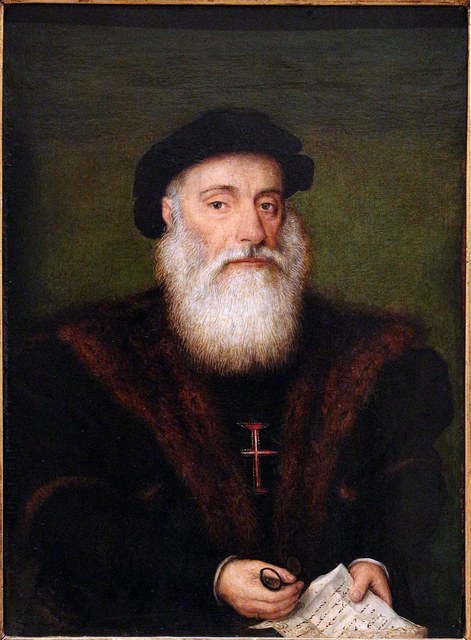
Vasco da Gama

Vasco da Gama
Sailko · CC BY 3.0

Portuguese explorer · 1497–1524 · Portugal to India

Vasco da Gama was the first European to reach India by sea, sailing around the Cape of Good Hope in 1497–1498.

The kit

  • Rise — Vasco da Gama succeeded his deceased father Estevao's appointment to open the first shipping route to India in 1497.
  • Achievements — Vasco da Gama surpassed Bartolomeu Dias by reaching Calicut and Goa after rounding the Cape of Good Hope.
  • Conflicts — Vasco da Gama ordered the ship Miri set ablaze, burning Muslim pilgrims to death while attempting to force a treaty.
  • Legacy — Vasco da Gama's 1498 voyage established an epoch lasting until 1800 according to some historians.

Runs with

Portugal
sailed from Portugal; named viceroy in India 1524 open card →
India
first European to reach India by sea via Cape open card →
Indian Ocean
voyage collapsed Swahili city-states in Indian Ocean trade open card →
ships
commanded flagship São Gabriel; burned São Rafael near Malindi open card →

The ladder · 15 clues

H

This man, who was the first European to reach India by sea, is commemorated along with Bartolomeu Dias with crosses on the Cape.

H

Thomé [[tome-EH]] Lopes records that this admiral intentionally raided a ship of pilgrims on Hajj, burning them alive.

H

This man was honored with the founding of the Jeronimos monastery in Belem, and this man ordered the Sao Rafael to be burned near Malindi.

H

This explorer made contact with a ruler with the title of Zamorin, who later massacred men led by Pedro Cabral.

H

This man is said to have burned an Arab ship with all its passengers aboard while lurking at Cannanore.

H

In an act of senseless violence, this man ordered the ship Miri to be set ablaze, burning three hundred Muslim pilgrims to death.

H

Mozambique came under the control of Portugal in the years following this explorer's 1498 voyage around the Cape of Good Hope.

M

This man was named viceroy in India in 1524. name this Portuguese explorer who opened trade routes from Western Europe to the East Indies via the Cape of Good Hope.

M

First European explorer to sail to India; his travels are recorded in The Lusiads.

M

This explorer, who was given a fief in Sines, died near the city of Cochin.

M

Discovered a direct sea route to India, starting in 1497, for Portugal.

M

Nicolau Coelho [ko-way-loh] delivered reports of this man’s successes to Manuel I after the Berrio managed to reach port faster than the flagship Sao Gabriel.

E

Surpassing the distance of Bartholomeu Dias, this Portuguese explorer reached the towns of Calicut and Goa in India by sailing around the Cape of Good Hope.

E

This Portuguese explorer is the first known European to visit Mombasa, where he stopped on his way to India.

E

This man responded that he was searching for “Christians and Spices” after arriving in Calicut. name this Portuguese explorer who, in 1498, rounded the Cape of Good Hope and made it to India.

10 more clues from the record
H

This man massacred the crew of the Miri while attempting to force a treaty upon the Zamorin.

H

He was dispatched to the port of Setubal and the province of Algarve to seize French ships in retaliation for the French’s peacetime raids on Portuguese ships. name this man who succeeded the appointment of his father Estevao (who had passed away) to open the first shipping route to India.

H

The period of world history from 1498 to 1800 is referred to by some historians as this explorer’s “epoch.” :Name this explorer, who established a maritime route from Portugal to India by way of Africa, and who stopped in cities on the Swahili coast on his way to Calicut.

H

Henry the Navigator’s sponsorships paved the way for explorers like this man, who built on the success of Bartolomeu Dias by voyaging beyond the Cape of Good Hope in 1497. His trip is commemorated in The Lusiads.

H

A Portuguese adventurer with this surname led 400 musketeers on a futile adventure to assist Ethiopia against an invasion by the Adal Sultanate. An explorer with this surname made the first voyage from Portugal to India.

H

He erected pillars known as padraos at locations such as the Rio dos Bons Sinais, and King Manuel I commissioned Pedro Alvares Cabral's expedition following this man's successes.

H

Swahili city-states that participated in Indian Ocean trade largely collapsed after the discovery of a sea route to India by this Portuguese explorer. This explorer first arrived in the Indian city of Calicut in 1498.

H

Answer some questions European exploration of the Indian Ocean :This Portuguese sailor found a route by sea to India. The Lusiads is a mostly fictional epic about his travels.

H

This man cut off the lips and stitched dog ears on the head of a priest who was sent to speak with him concerning the expulsion of Muslims from a certain city.

H

A mythical land named for a member of this family was mentioned by Joseph-Nicholas Delisle alongside the Company’s Land, State Island, and Sakhalin, and may have influenced Vitus Bering.

Watch out: Bartolomeu Dias (earlier explorer who reached Cape of Good Hope but not India)
#639 · Explorers and Navigators · Level 1

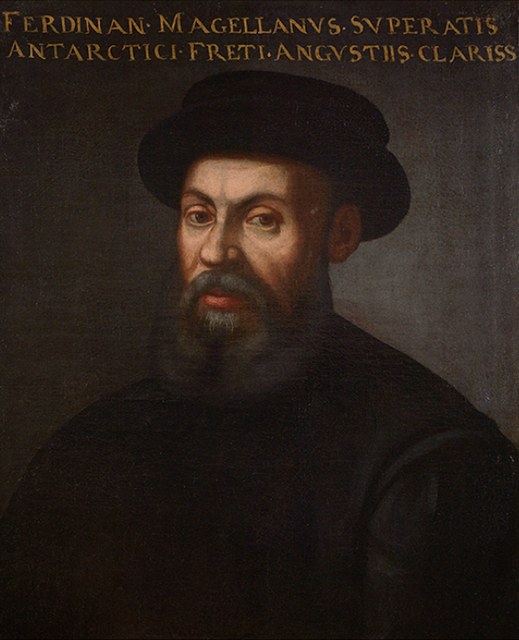
Ferdinand Magellan

Ferdinand Magellan
Unknown author Unknown author /span · Public domain

Portuguese explorer · 1480–1521 · global voyage from Spain

Ferdinand Magellan led the first expedition to circumnavigate the globe, though he died in the Philippines before its completion.

The kit

  • Rise — Ferdinand Magellan fell out with King Manuel I of Portugal and was sent to serve in Morocco before Spain's Charles I funded his voyage.
  • Achievements — Ferdinand Magellan sailed through a strait between Tierra del Fuego and South America now named for him and crossed the Pacific in 1521.
  • Conflicts — Ferdinand Magellan faced a mutiny at Puerto San Julian and marooned captain Juan de Cartagena after unrest aboard the San Antonio, Victoria, and Concepcion.
  • Death & succession — Ferdinand Magellan died at the Battle of Mactan in 1521, killed by Chief Lapu-Lapu's forces; Juan Sebastián Elcano completed the circumnavigation.

Runs with

Philippines
died at Battle of Mactan in 1521 open card →
ships
commanded five-ship Armada de Molucca fleet including the Victoria open card →
Spain
funded by Charles I after Portugal refused open card →
Portugal
native country whose King Manuel I he upset open card →

The ladder · 15 clues

H

This man and several members of his crew died at the Battle of Mactan.

H

This man named present-day Guam the “Island of the Lateen Sails” for the sheer number of prau vessels that approached his ship on his arrival there; that account was documented by Antonio Pigafetta, one of this man’s crew.

H

The first Christian Mass in the Philippines was led by this explorer who was later ostracized after a falling out with King Manuel.

H

A mutiny against this man at Puerto San Julian was recorded by his assistant Antonio Pigafetta.

H

Prior to this man’s death by poisoned arrow, he was tasked with converting locals to Christianity, including Rajah Humabon.

H

This man’s main journey was chronicled by Antonio Pigafetta, and the slave Enrique helped him communicate with natives.

H

Charles V funded the voyage of this man, whose expedition lost every ship except for the Victoria.

M

Before being able to finish his final voyage, this explorer was killed in the modern-day Philippines in 1521. name this Portuguese explorer whose Spanish fleet was the first to circumnavigate the globe.

M

The first circumnavigation of the globe was performed by the remaining crewmembers of what Portuguese explorer this person who died in the Philippines en route.

M

He converted Rajah Humabon of Cebu to Christianity and passed Tierra del Fuego through a strait now named for him. name this Portuguese explorer who led the first expedition to circumnavigate the Earth.

M

This man died in a skirmish with the Lapu-Lapu on the island of Mactan.

M

Legendarily, Chief Lapu- Lapu slew this man with a traditional bolo knife during the Battle of Mactan.

E

Name this Portuguese explorer who led the first expedition to successfully circumnavigate the earth.

E

Following this man’s death, his co-commanders, Juan Serrano and Duarte Barbosa, succeeded him and sailed out of the Philippines. name this Portuguese explorer whose crew completed the first circumnavigation of the globe.

E

This explorer was killed in the Battle of Mactan by Lapu Lapu in the modern day Philippines, but not before naming a strait between Tierra del Fuego and the South American mainland. name this Portuguese explorer who led the first expedition to circumnavigate the globe.

10 more clues from the record
H

—name these Pacific explorers:This figure crossed on the Pacific in 1521, but was killed on the Philippine island of Mactan. His crew completed the world’s first circumnavigation.

H

answer some questions about a famous explorer and his mission.This Portuguese explorer names a strait at the southern end of South America and some galaxies known as “clouds”.

H

During the first Easter festivities celebrated on Cebu [[SEE-boo]], this European formed a blood compact with the local tribal head, Rajah Humabon.

H

This man marooned the ship captain Juan de Cartagena after a mutiny broke out aboard the San Antonio, Victoria, and Concepcion.

H

This man's legacy includes lending his name to a spacecraft launched to map the surface of Venus as well as to two dwarf galaxies.

H

This explorer named one island the “Island of Thieves” as its Chamorro people had no concept of ownership.

H

After upsetting royals in his native country, this explorer was sent to serve in Morocco.

H

This explorer was warmly welcomed by the inhabitants of Cebu when he arrived in 1521. The locals still celebrate a cross that he left in honor of the conversions that took place. Unfortunately, on a visit to neighboring Mactan, this circumnavigator met his demise.

H

Three bonuses on an explorer. For five points each:Trinidad, San Antonio, Conception, Santiago and Victoria, collectively named the Armada de Molucca, was a fleet of ships commanded by what explorer on his 1519 expedition to reach the Spice Islands?

H

This person’s best-known feat was completed by Juan Sebastián Elcano. After Manuel I of Portugal refused, Charles I of Spain accepted this explorer’s proposal to sail for the Maluku Islands with ships including the Victoria.

Watch out: Juan Sebastián Elcano actually completed the first circumnavigation after Magellan's death
#887 · International Treaties and Diplomatic Agreements · Level 1

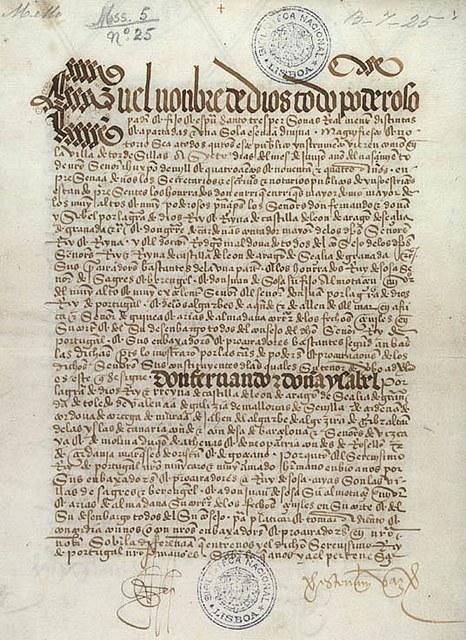
Treaty of Tordesillas

Treaty of Tordesillas
ul li Original: Biblioteca Nacional de Lisboa /a /li li Phot · Public domain

1494 colonial treaty · 1494 · Tordesillas, Spain

Treaty of Tordesillas divided the New World between Spain and Portugal along a demarcation line 370 leagues west of Cape Verde.

The kit

  • Negotiation — Treaty of Tordesillas superseded Pope Alexander VI's bull Inter caetera and resolved disputes over the Treaty of Alcáçovas.
  • Terms — Treaty of Tordesillas established a demarcation line 370 leagues west of Cape Verde islands to divide colonial territories between signatories.
  • Brazil — Treaty of Tordesillas set borders in Brazil and Rio de la Plata region, granting Brazil to one party.
  • Extension — Treaty of Tordesillas was later modified by the Treaty of Zaragoza to resolve the Moluccas issue on the eastern side.

Runs with

Portugal
Brazil
territory whose borders were set by the treaty open card →
Spain
signatory represented by Crown of Castile in negotiations open card →
Alexander
Pope Alexander VI mediated and issued Inter caetera bull open card →

The ladder · 15 clues

H

Alexander VI’s bull Inter Caetera dealt with the central question of this treaty.

H

A boundary 370 leagues west of the Cape Verde islands was voided when the Treaty of Madrid superseded this treaty.

H

Two bulls named Inter caetera preceded this treaty and were amended by Dudum siquidem, which was rejected since it excluded John II from India.

H

This treaty, which was preceded by the Papal Bull Inter caetera, was written with the intent of solving a dispute that caused the Portuguese king to accuse the Catholic monarchs of violating the Treaty of Alcáçovas [[al-kah-SOH-vahss]].

H

This treaty superseded Alexander VI’s earlier papal bull Inter caetera, and an addendum to this treaty was motivated by the discovery of the Maluku Islands, once known as the Spice Islands.

H

Negotiations for this treaty began after one side invoked promises made to them in the papal bull Aeterni regis.

H

Henry Harrisse claims that Jaime Ferrer devised the earliest suggested answer to the central question of this agreement.

H

15th century treaty they made with Spain which demarcated the world into two colonial regions.

H

Prior to its extension by the Treaty of Zaragoza, this treaty only applied to one side of the Earth.

H

This treaty was preceded by the similar papal bull Inter caetara, which did not mention one of the parties to this treaty, and its implications were rejected on philosophical grounds by Francisco de Vitoria.

M

Pope Alexander VI helped mediate this treaty that granted Brazil to one party, following a demarcation line 370 leagues west of Cape Verde. identify this treaty that divided the New World between Spain and Portugal.

M

The Treaty of Zaragoza was signed to solve the "Moluccas issue" created by this treaty.

M

It was negotiated along with the formation of the First Holy League to oppose French domination of Italy, a part of the diplomatic strategy of Alexander VI.

E

Borders in the Rio de la Plata and Brazil were set by this 1494 treaty that divided up parts of the New World between Spain and Portugal.

E

Signed by both Portugal and the Crown of Castile in 1494 this is this treaty that divided lands in the New World.

4 more clues from the record
H

Later modified by the Treaty of Zaragoza to include the Moluccas, this treaty set up a line of demarcation dividing the world between Spain and Portugal.

H

A dispute resulting from Ferdinand Magellan's discovery of the Moluccas was resolved when an eastern counterpart to this agreement was established by the Treaty of Saragossa.

H

One of its provisions called for a joint expedition between the signatory parties to begin within ten months; that expedition never occurred.

H

The Cantino Planisphere depicts the results of this treaty, which was sanctioned by Pope Julius II twelve years after its signing.

Watch out: Inter caetera (papal bull that preceded this treaty and addressed similar questions)
#1518 · General · Level 1

Henry the Navigator

Henry the Navigator
bdi Nuno Gonçalves /span /a · Public domain

Portuguese prince and patron · 15th century (1394-1460) · Portugal, Sagres

Henry the Navigator was a Portuguese prince who launched the Age of Discovery by funding systematic exploration of West Africa's coast.

The kit

  • Rise — Henry the Navigator convinced his father John I of Portugal to conquer Ceuta in 1415 to access Saharan trade routes.
  • Achievements — Henry the Navigator funded Gil Eanes' expedition that became the first European voyage to pass Cape Bojador in the 1430s.
  • Achievements — Henry the Navigator sponsored Portuguese discovery of Madeira and the Azores and established an observatory at Sagres peninsula.
  • Conflicts — Henry the Navigator's forces suffered disaster at the 1437 Battle of Tangiers against Marinid sultan Salah ibn Salah, resulting in his brother Ferdinand's capture.

Runs with

Portugal
led Portuguese exploration efforts open card →
House of Aviz
member of this dynasty open card →
John
son of John I open card →
Africa
funded exploration of West African coast open card →

The ladder · 15 clues

H

Launched the age of discovery by funding and supporting Portuguese exploration of the African coast?

H

Jehuda Cresques [[yeh-HOO-dah KRESK]], a Majorcan [[mah-YOHR-kun]] converso, managed this man’s observatory in Sagres [[SAH-grehs]].

H

This son of John I funded Gil Eanes’ journey to become the first European to pass Cape Bojador.

H

In order to search Africa for Prester John, this man convinced his father to conquer Ceuta in 1415.

H

Prince who funded voyages around the coast of West Africa.

H

Answer some questions about Portuguese participation in the “Age of Discovery,” :This Portuguese prince from the House of Aviz inaugurated the “Age of Discovery” by sponsoring many voyages to the West African coast.

H

This son of Joao I sponsored Gil Eanes and Tristao Teixeira. :Name this “Navigator” prince who sponsored the discovery of the Azores.

M

This man sent Gil Eanes on an expedition to pass Cape Bojador, and many of his feats were made possible by the development of caravels.

M

The caravel ship came into widespread use under this prince from the House of Aviz who patronized Portuguese exploration of the seas.

M

This royalsupposedlybasedhiseffortsoutofavillaontheSagres[[SAH-greesh]]peninsula,from which he funded several caravel voyages to the Bay of Arguin [[ahr-GEEN]], Madeira [[muh-DEEH-ruh]], and the Azores [[uh-ZORZ]]. name this fifteenth-century Portuguese prince, often credited with jumpstarting the Age of Exploration.

M

The admirals who worked for this man included Gil Eanes (ee-AH-nesh) and Antonio Noli.

M

An expedition led by Gil Eannes, supported by this man, crossed Cape Bojador. name this 15th century Portuguese prince whose funding helped start the Age of Discovery.

E

His capture of Ceuta (say-OO-tuh) and leadership of the Order of Christ gave him vast disposable funds, which he used to create the first map that extended to Cape Bojador (boh-hah- DOR). name this member of the Aviz Dynasty who never ascended to the Portuguese throne but left his mark as a patron of expeditions at the start of the Age of Exploration.

E

This son of John I of Portugal is considered the instigator of the Portuguese Age of Discovery.

E

This man convinced his father, João [[JOE-ow]] of Aviz, to conquer Ceuta [[SYOO-tuh]] in order to connect to the Saharan trade network. name this Portuguese patron of exploration, a 15th century prince.

10 more clues from the record
H

His brother Edward the Philosopher was crowned king in 1433, and his mother was Philippa of Lancaster, daughter of John of Gaunt.

H

Pope Martin V named him the head of the Order of Christ, which became the primary source of funding for his ventures.

H

After his failed attack on the Marinid sultanate, this man’s brother Ferdinand the Holy Prince was taken prisoner and died in captivity at Fez.

H

This man's forces met disaster against Marinid sultan Salah ibn Salah at the 1437 Battle of Tangiers, after which this man's brother, Ferdinand, was given as a hostage.

H

Rulers from this country’s House of Aviz sponsored Bartolomeu Dias’s expedition to the Cape of Good Hope and Vasco da Gama’s voyage to India.

H

This man unsuccessfully besieged Marinid-held Tangier years after working with his father to seize Ceuta [thay-ooh-tah] in Morocco.

H

This country failed to capture Tangier after its King Edward’s brother encouraged him to attack the city from Ceuta.

H

This man ordered that the coastal village of Tercanabal on the Sangres Peninsula be repopulated so that he could build a villa there.

H

This founder of the Sagres School sent Goncalo Velho to verify the location of the Azores.

H

This man is known for building a school to train explorers at Cape Sagres. :Identify this member of the House of Aviz who, despite not being king, led his country to colonize Madeira and the Azores in the fifteenth century. He was also part of an invasion force that seized Ceuta.

Watch out: Despite his nickname, Henry never personally navigated or sailed on the expeditions he funded