The 1648 Codex · study package

Roman Emperors

19 terms drawn from across the corpus, in study-list order. Art and cross-links point back to the home category cards.

#783 · Other Pre-1800 Military Commanders · Level 2

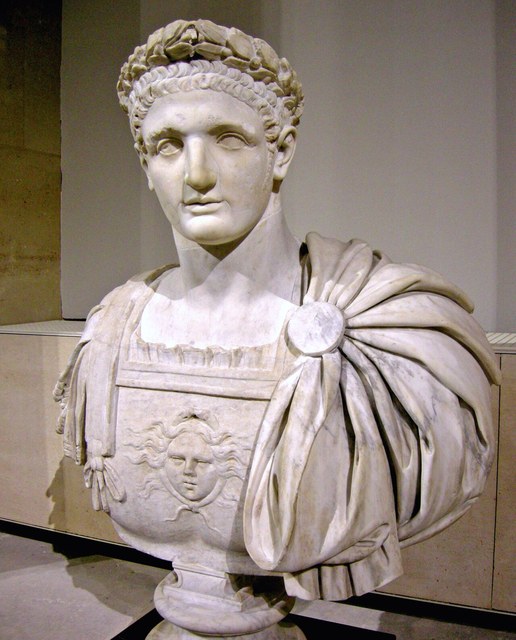
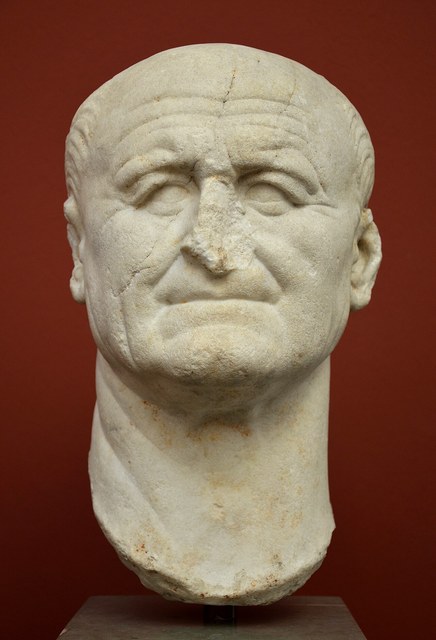
Vespasian

Vespasian
a rel="nofollow" Carole Raddato /a from FRANKFURT, Germany · CC BY-SA 2.0

Roman emperor · 69–79 CE · Roman Empire

Vespasian was the Roman emperor who ended the Year of the Four Emperors and founded the Flavian dynasty.

The kit

  • Rise — Vespasian commanded Legio II Augusta during the British invasion under Aulus Plautius in 43 CE.
  • Rise — Vespasian seized power by allying with Syrian governor Mucianus and won the Second Battle of Bedriacum.
  • Achievements — Vespasian successfully suppressed the First Jewish Revolt and captured the historian Josephus at Yodfat.
  • Legacy — Vespasian implemented a toilet tax declaring "money does not stink" and began construction of the Colosseum.

Runs with

Colosseum
began construction of the Colosseum open card →
Nero
succeeded Vitellius shortly after Nero's death open card →
Agricola
appointed Agricola as governor of Britannia open card →
Year of the Four Emperors
last of four emperors in 69 CE open card →

The ladder · 9 clues

H

This man and his brother served during the British invasion under Aulus Plautius where he commanded Legio II Augusta.

H

This ruler allegedly threw a group of fettered Jews into the Dead Sea to test its buoyancy after destroying Jericho.

H

During the siege of Yodfat, this man captured the historian Josephus.

H

Under the command of Aulus Plautius, he captured twenty hill-forts, including the Maiden Castle in Dorset, as well as the Isle of Wright in A.D. 43.

M

The victor of the Year of Four Emperors was this Roman Emperor and founder of the Flavian dynasty.

M

The last of the four emperors to rule in 69 CE, this man founded the Flavian dynasty, which also saw his sons Titus and Domitian rule Rome.

M

Early in his life, this man invaded the Isle of Wight and later sent Agricola to conquer Scotland.

E

Shortly after the death of Nero, this man succeeded Vitellius to end the Year of the Four Emperors. name this father of Titus and founder of the Flavian dynasty.

E

This man implemented a toilet tax and began the construction of the Colosseum.

10 more clues from the record
H

This emperor’s capture of Jerusalem was celebrated in an arch erected by his brother Domitian.

H

This ruler executed Helvidius Priscus for defending the Senate’s right to manage state finances.

H

This ruler seized power by joining forces with the Syrian governor Mucianus, who encouraged this man to implement his toilet tax.

H

This man declared “money does not stink” while issuing a toilet tax.

H

This man ordered Quintus Cerialis to put down the Batavi revolt.

H

After Licinius Mucianus failed to suppress the first Jewish Revolt, this man successfully did so.

H

This last of the Four Emperors founded the Flavian dynasty. He led the invasion of Britain and put down the Great Jewish Revolt.

H

Suetonius describes how this ruler was pelted with turnips while suppressing a riot as governor of Africa. This ruler appointed Tacitus’ father-in-law Agricola as governor of Britannia.

H

His own rise to the top came with allying himself to Licinius Mucianus and when Antonius Primus led his troops into the capital.
H

The Jewish prefect of Egypt, Tiberius Julius Alexander, supported this emperor while his army was winning the Second Battle of Bedriacum.

Watch out: Vespasian succeeded Vitellius, not the other way around, as the last of the Four Emperors
#789 · Roman Emperors · Level 2

Augustus

Augustus
Justin Benttinen · CC BY-SA 4.0

First Roman Emperor · 63 BCE–14 CE · Rome

Augustus defeated Mark Antony and Cleopatra at Actium, ended the Republic, and became Rome's first emperor, instituting the Pax Romana.

The kit

  • Rise — Augustus gained command of an army after consuls Hirtius and Pansa were killed at Forum Gallorum and Mutina.
  • Achievements — Augustus built a round mausoleum in the Campus Martius and a temple to Mars the Avenger in his namesake forum.
  • Conflicts — Augustus shouted 'Varus, give me back my legions!' after the Teutoburg Forest defeat and set the Rhine as his empire's boundary.
  • Death & succession — Augustus died after eating figs poisoned by his wife according to Tacitus and Cassius Dio.

Runs with

Rome
ruled as first emperor open card →
Nanda Empire
Battle of Actium
defeated Antony and Cleopatra there in 31 BCE open card →
Roman Emperor
first holder of this title open card →

The ladder · 9 clues

H

Marcus Agrippa led this man’s fleets during his rise to power.

H

He included his early victory at Mutina in an account of his life put on bronze pillars and the Ancyra monument, called Res Gestae.

H

This man agreed to limit his own power in the Second Settlement shortly after he was accused of meddling in a trial involving Marcus Primus.

H

This man gained command of an army after the consuls Hirtius and Pansa were killed at the battles of Forum Gallorum and Mutina.

M

After a major defeat at Teutoburg Forest, this man shouted “Varus, give me back my legions!” and set the boundaries of his empire at the Rhine.

M

This commander is also credited with instituting the Pax Romana. name this adopted son of Julius Caesar, the first Roman Emperor.

M

This man’s fleet was commanded by Agrippa at a naval battle that led to the decisive defeat of his rival.

E

This man defeated Cleopatra and Mark Antony at the Battle of Actium bringing an end to the Second Triumvirate. name this first Emperor of Rome.

E

Along with Marc Antony and Lepidus, he formed the Second Triumvirate. name this first emperor of Rome.

10 more clues from the record
H

This man built a round mausoleum based on Etruscan tombs in the Campus Martius and built a temple to Mars the Avenger in his namesake forum.

H

This man’s fleet was commanded by Marcus Agrippa, who became his son-in-law.

H

He had his second wife, Scribonia, exiled to Pandateria.

H

Tacitus and Cassius Dio claim that this man died after eating some figs poisoned by his wife.

H

Cesarion was the last pharaoh of Egypt because this dude came and wrecked his shit. This guy was actually Caesar’s heir and adopted son and this guy’s naval commander Marcus Agrippa won the Battle of Actium.

H

After one of his generals defeated Sextus Pompeius at the Battle of Naulochus, this man removed a co-ruler governing Africa from power.

H

He is noted for writing a work known as “Res Gestae,” which described his rule in detail, and for utilizing illegal control over his five legions in the Mutina raid.

H

In those battles, Mutina and Actium, this man fought a man who had joined him and Lepidus in the Second Triumvirate.

H

This ruler exiled his daughter, Julia, to Pandateria to demonstrate harsh punishments for citizens who did not follow his strict marriage laws.

H

This ruler brought the minting of gold and silver coins under his personal control, and in order to cement an alliance with Sextus Pompey, he married Scribonia.

Watch out: Confused with Julius Caesar (his adoptive father and predecessor)
#790 · Roman Emperors · Level 2

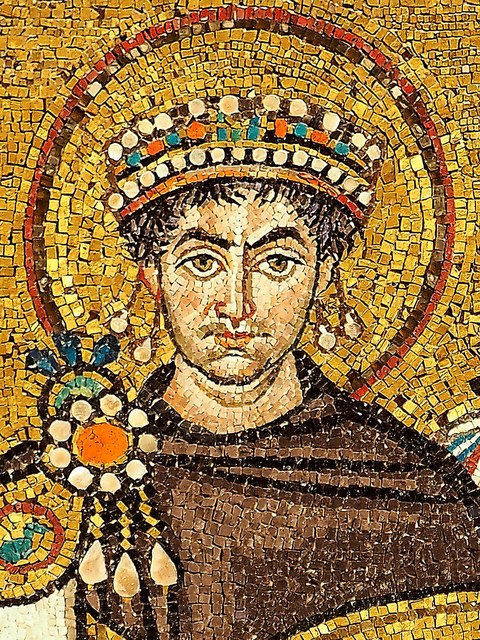
Justinian I

Justinian I
Petar Milošević · CC BY-SA 4.0

Byzantine emperor · 527–565 CE · Constantinople

Justinian I was a Byzantine emperor who reconquered former Roman territories, codified Roman law, and built the Hagia Sophia.

The kit

  • Achievements — Justinian I formed the Corpus Juris Civilis, a comprehensive revision of Roman law later revived by the Four Doctors of Bologna.
  • Achievements — Justinian I commissioned the Hagia Sophia after the Nika Riots destroyed the previous church in Constantinople.
  • Conflicts — Justinian I sent General Belisarius to reconquer Africa and Italy after signing the Eternal Peace with Khosrow I.
  • Legacy — Justinian I was portrayed as a demon with a detachable head in Procopius's scandalous Secret History.

Runs with

Belisarius
sent him to reconquer lost territories in Africa and Italy open card →
Nika Riots
survived them; built Hagia Sophia after riots caused destruction open card →
Italy
sent Belisarius to reconquer it during his reign open card →
John

The ladder · 9 clues

H

This ruler signed the Eternal Peace, which lasted only eight years after fighting resumed in the Lazic War over parts of Georgia.

H

This man was accused of being a sorcerer who removed his head at night and wandered his palace in the Secret History of Procopius.

H

This emperor with the epithet “the great” ruled the Byzantine Empire and built the Hagia Sophia. His namesake code was a revision of Roman law.

H

At the beginning of his reign, Khosrow I signed the “Eternal Peace” with this Byzantine emperor who used the respite provided by the peace to send his general Belisarius to reconquer Africa and Italy.

M

This ruler is characterized in Secret History by Procopius as a devil-like figure with a detachable head.

M

In a "secret history" of this man's rule, his wife is scandalized by Procopius. identify this Byzantine emperor who was married to Theodora and passed a namesake code of laws.

M

Empress Theodora may have influenced pro-woman portions of this Byzantine Emperor’s namesake Law Code.

E

This survivor of the Nika Riots formed the Corpus Juris Civilis, later known as his namesake “Code.” name this Byzantine emperor who built the Hagia Sophia.

E

This Byzantine Emperor, the husband of Theodora, tasked Belisarius with reconquering lost territory in Africa.

10 more clues from the record
H

After losing at Callinicum, this ruler ended the Iberian war, and he was accused of being a demon with a detachable head by the Secret History of Procopius.

H

This ruler’s marriage to a Miaphysite may have led him to condemn the Chalcedonian Three-Chapters, sparking a feud with Pope Vigilius.

H

Pope Vigilius failed to endorse this ruler’s pro-Monophysite edict in the Three Chapters Controversy and was imprisoned, beginning the Byzantine papacy.

H

The Four Doctors of Bologna revived this man’s law code, the Corpus Juris Civilis.

H

Two of this ruler’s generals defeated King Totila at the Battle of Taginae and King Gelimer at the Battle of Tricamarum.

H

This leader banned the practice of buying and selling provincial governorships, which was known as suffragia [suf-ruh-JEE-uh].

H

A 541 AD plague occurred during the reign of this Byzantine Emperor, causing the reversal of Belisarius” conquests.

H

This man was alleged to have the ability to detach and replace his head in the scandalmongering Secret History written by his courtier Procopius (pruh-COPE-ee-uss).

H

Peter the Patrician negotiated the end of the Lazic War for this ruler, who had also ended a war with Khosrau I in the Perpetual Peace.

H

The Hagia Sophia was constructed under the reign of this man after destruction caused by the Nika riots.

Watch out: Procopius wrote the Secret History criticizing Justinian, not just official accounts
#791 · Roman Emperors · Level 2

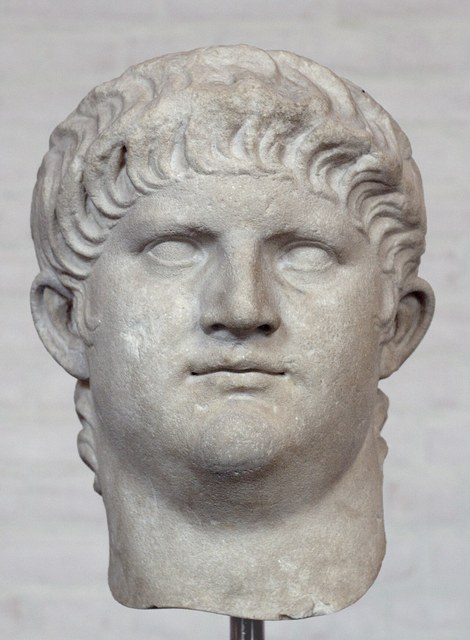
Nero

Nero
Public domain

Roman Emperor · 54–68 CE · Rome

Nero was the fifth Roman Emperor, last of the Julio-Claudian dynasty, whose reign ended with suicide in 68 CE.

The kit

  • Rise — Nero succeeded Claudius in 54 CE and was initially advised by Seneca the Younger and Sextus Afranius Burrus.
  • Conflicts — Nero's reign saw Boudicca's Revolt by the Iceni, ended at the Battle of Watling Street, and the First Jewish Revolt.
  • Persecution & Fire — Nero persecuted Christians as scapegoats for the Great Fire of Rome in 64 CE, which he was accused of starting.
  • Death & succession — Nero's suicide in 68 CE after the Pisonian Conspiracy sparked the Year of the Four Emperors.

Runs with

Rome
ruled during Great Fire of Rome in 64 CE open card →
Claudius
succeeded Claudius as emperor in 54 CE open card →
Roman Emperor
fifth Roman Emperor, last Julio-Claudian open card →
Christians
persecuted Christians as scapegoats for Great Fire open card →

The ladder · 9 clues

H

This leader was advised by Seneca the Younger, who he ordered to commit suicide after being implicated in the Pisonian Conspiracy.

H

Claudius was succeeded by this emperor. Cassius Dio claimed that this emperor apocryphally twiddled his thumbs during the Great Fire of Rome in 68 AD.

H

This man may have devised a ship to collapse on itself in an attempt to assassinate his mother.

H

After the Pisonian conspiracy, this ruler executed the poet Lucan and his tutor, Seneca the Younger.

M

The Pisonian conspiracy sought to depose this emperor, who was the son of Agrippina the Elder and legendarily played the fiddle while Rome burned.

M

According to legend, this emperor played the fiddle during the Great Fire of Rome. In real life, he persecuted the Christians.

M

During the reign of this emperor, the siege of the Masada ended the First Jewish Revolt. This emperor is said to have fiddled during the Great Fire of Rome.

E

This man’s assassination in 68 AD prompted the Year of the Four Emperors. name this emperor who was said to have fiddled while Rome burned.

E

This Emperor used the young Christian sect as a scapegoat for the Great Fire of Rome. name this last Julio-Claudian emperor whose death sparked the Year of the Four Emperors.

10 more clues from the record
H

This unstable Roman emperor began the first persecution of Christians after the Great Fire. Cassius Dio claims he played a lyre and sang while Rome was burning.

H

answer these questions relating to the Year of the Four Emperors.Galba, the first of the Four Emperors, took power after the suicide of this successor to Claudius. He ruled during the Great Fire of Rome and the start of the Jewish Revolt.

H

This man was accused of arson to clear land out for his Domus Aurea project, though he blamed that event on the Christians he persecuted.

H

Artabanus III supported an imposter of this man that was actually Terentius Maximus as a form of revenge against Emperor Titus.

H

This ruler deposed his client king, Cotys I of the Bosporan kingdom, in favor of annexing the Crimean Peninsula.

H

Boudicca's Revolt occurred during the reign of this Julio-Claudian Roman emperor who built theDomus Aurea.

H

The word “grotesque” can be traced to Renaissance-era excavations of a lavish complex built by this emperor before his death in 68 CE. :Name this fifth Roman emperor who allegedly fiddled during the Great Fire of Rome.

H

This emperor’s general Suetonius Paulinus won the Battle of Watling Street over the Iceni.

H

This leader’s early policies, passed with the support of his advisor Sextus Afranius [af-RAH-nee-uss] Burrus, included banning capital punishment and allowing slaves to sue their masters.

H

His reign was marked by a rebellion of the Iceni, as well as an assassination plot that led to the suicide of Seneca the Younger.

Watch out: Nero did not fiddle during the Great Fire; Cassius Dio claims he played a lyre and sang
#792 · Roman Emperors · Level 2

Constantine the Great

Constantine the Great
Apaleutos25 · CC BY-SA 4.0

Roman Emperor · 306–337 CE · Roman Empire

Constantine the Great was the first Christian Roman Emperor who legalized Christianity and moved the imperial capital to Byzantium.

The kit

  • Rise — Constantine the Great was proclaimed augustus in Eboracum after fleeing the court of Galerius to join his father.
  • Achievements — Constantine the Great issued the Edict of Milan in 313, legalizing Christianity, and convened the First Council of Nicea.
  • Conflicts — Constantine the Great defeated Maxentius at the Battle of Milvian Bridge after a vision of chi and rho in the sky.
  • Death & succession — Constantine the Great executed his eldest son Crispus and had his wife Fausta killed in an overheated bath.

Runs with

Milan
issued the Edict of Milan open card →
Roman Emperor
first Christian holder of title open card →
Christianity
legalized and converted to faith open card →
Rome
ruled empire from new capital open card →

The ladder · 9 clues

H

This man defeated Licinius at the Battle of Chrysopolis [[kry-SAH-poh-lis]], and his eldest son, Crispus, won the Battle of the Hellespont.

H

This man became sole emperor after a victory against Licinius at Chrysopolis.

H

A ruler with this name is called the "Marble Emperor" and supposedly is waiting under the Golden Gate to be revived.

H

This leader defeated Licinius [[lai-SIN-ee-us]] at the Battle of Chrysopolis [[krih-SOP-oh-liss]], leading to the end of the Tetrarchy.

M

During a civil war with Maxentius, this man, inspired by a vision of the letters chi [kye] and rho in the sky, won the Battle of Milvian Bridge.

M

The 313 Edict of Milan legalizing Christianity in the Roman Empire was issued by this emperor after the Battle of Milvian Bridge.

M

Another ruler of this name fought Maxentius after seeing a cross in the sky, winning the Battle of Milvian Bridge.

E

Later in his career, this leader ordered the First Council of Nicea and issued the Edict of Milan. name this first Christian Roman Emperor.

E

In a meeting on the Tiber, this man inspired his troops with the Chi Rho [] symbol, defeating Maxentius at the Battle of the Milvian Bridge. name this first Christian Roman emperor.

10 more clues from the record
H

This ruler had his wife, Fausta, killed by leaving her in an overheated bath.

H

The 11th ruler of this name cried “the city is fallen and I am still alive” before leading a suicidal charge during the fall of his capital.

H

This ruler won battles at the Hellespont and Chrysopolis to put down a revolt led by Licinius.

H

He was the first Roman Emperor to convert to Christianity. :Name this emperor who moved his empire to Byzantium, which he would later rename after himself.

H

This emperor defeated rivals Maxentius and Licinius to secure power. :Name this son of Saint Helena who issued the Edict of Milan, allowing for religious freedom.

H

For unknown reasons, this ruler executed his oldest son, the successful admiral Crispus, who earlier helped this man defeat the Cappadocian usurper Marcius Martinianus.

H

Burckhardt also wrote a book titled The Age of [this ruler]. Renaissance-era humanist Lorenzo Valla determined that a “Donation” named for this ruler was a forgery created by the papacy.

H

This ruler fled from the court of Galerius to join his father and was subsequently proclaimed augustus in Eboracum.

H

That son was later put to death, supposedly because of indiscretions involving this man’s wife, whom he left to die in an overheated bath.

H

This ruler exiled Athanasius of Alexandria for mistreating followers of Melitius of Lycopolis, whose authority was curtailed at an earlier meeting called for by this ruler.

Watch out: Constantine XI (the 'Marble Emperor' who fell defending Constantinople in 1453)
#793 · Roman Emperors · Level 2

Trajan

Trajan
Unknown artist Unknown artist /span · Public domain

Roman emperor · AD 98–117 · Roman Empire

Trajan was the second of the Five Good Emperors who expanded Rome to its greatest territorial extent.

The kit

  • Rise — Trajan succeeded Nerva in AD 98, becoming the second of the Five Good Emperors.
  • Achievements — Trajan conquered Dacia after defeating Decebalus at the Second Battle of Tapae and capturing Sarmizegetusa.
  • Achievements — Trajan's architect Apollodorus built a massive bridge across the Danube to support the Dacian campaign.
  • Conflicts — Trajan sacked Ctesiphon, capital of the Parthian Empire, after justifying war over Armenia's kingship.

Runs with

Hadrian
Trajan's successor as emperor open card →
Dacians
defeated them in wars ending with Sarmizegetusa's capture open card →
Rome
expanded its borders to greatest extent open card →
Parthian Empire
sacked its capital Ctesiphon open card →

The ladder · 9 clues

H

This man took advantage of the death of Rabbel Il Soter to peacefully annex Nabataea.

H

This man annexed the Nabataean Kingdom and captured Ctesiphon from the Parthians.

H

This man won the Second Battle of Tapae against Decebalus and names a bridge across the Danube that assisted in his invasion.

H

During the reign of this man, Lusius Quietus ended the Kitos revolt.

M

This man’s conquests were commemorated in a spiral relief column in the Forum. name the second of the Five Good Emperors.

M

His architect Apollodorus of Damascus built a massive bridge across the Danube as part of a war against Decebalus that ended with the capture of Sarmizegetusa.

M

This man sacked Ctesiphon, capital of the Parthian Empire, and commemorated his victory against the Dacians [[DAY-shuns]] in a namesake "Column." name this second of the Five Good Emperors, declared the “best ruler” by the Roman Senate.

E

This man built a bridge over the Danube River in his most famous campaign. name this second of the Five Good Emperors who commemorated his conquest of Dacia with a namesake column.

E

When this man succeeded Nerva, he became the second of the five good emperors. a column was built in Rome by what emperor, the successor of Nerva?

10 more clues from the record
H

This man wept after realizing he was too old to invade India.

H

This man’s first act as emperor was to annex the Nabataean Kingdom to create the province of Arabia Petraea.

H

This man succeeded Nerva. :Name this Roman emperor who conquered Dacia. He also constructed a large victory column which still stands in his forum.

H

This man corresponded with Pliny the Elder about the persecution of Christians, advising Pliny to keep putting Christians on trial but to not actively seek them out.

H

Identify these “Good Emperors,” :He reigned from AD 97-117, and was known for building his namesake market, forum and column. However, he is better known for military victories over Dacia, Arabia and Parthia.

H

This ruler justified war with Osroes I of Parthia after the ascension of Axidares as King of Armenia, and sent Lusius Quietus to suppress a Jewish uprising known as the Kitos War.

H

answer the following about a Roman Emperor:This Spanish emperor, the namesake of both a forum and an arch, led his armies to extend Rome’s borders to its farthest ever.

H

This emperor instituted civil reform in the provinces by creating the office of “corrector.” He formalized his predecessor’s social welfare program, the alimenta.

H

This man improved the condition of the poor by instituting the alimenta to provide for children and increased grain allowances as emperor.

H

Under this ruler, the Alcántara Bridge was constructed, and he instituted the alimenta system of welfare grain distribution.

Watch out: Confused with Hadrian, his successor as third Good Emperor
#794 · Roman Emperors · Level 2

Hadrian

Hadrian
Djehouty · CC BY-SA 4.0

Roman Emperor · 117–138 CE · Roman Empire

Hadrian was a Roman Emperor who built a wall across northern Britain and founded a cult for his drowned lover Antinous.

The kit

  • Rise — Hadrian secured power concurrently with the mysterious death of Lusius Quietus and executions of four powerful senators.
  • Achievements — Hadrian rebuilt the Pantheon and built the Temple of Venus and Roma where Nero's Domus Aurea once stood.
  • Conflicts — Hadrian ordered Sextus Severus to suppress the Bar Kokhba Revolt in Judea led by Simon Bar Kokhba.
  • Legacy — Hadrian created the Panhellenion League to unify Greek cities and founded Antinopolis to honor his lover who drowned in the Nile.

Runs with

Trajan
Hadrian succeeded Trajan as emperor open card →
Antinous
Hadrian deified Antinous after he drowned in the Nile open card →
Nanda Empire
Roman Emperor
Hadrian was third of the Five Good Emperors open card →

The ladder · 9 clues

H

This emperor founded the city of Antinopolis to honor his lover who died in the Nile River.

H

This leader converted grain collectors known as Frumentarii into a secret police force.

H

This man created a secret police, the frumentarii, to keep order while he traveled, as well as a Panhellenion League to unify Greek cities.

H

This notable philhellene created the Panhellenion League of city-states, and early in this man’s reign he executed four consuls including Lucius Quietus.

M

This Roman Emperor built his namesake villa in Tivoli. This successor of Trajan also names a wall that marked the border of Roman Britain at the time.

M

This ruler deified his lover Antinous, who drowned in the Nile, and ordered Sextus Severus to suppress a revolt in Judea led by Simon Bar Kokhba.

M

Which "Good Emperor" was a known Grecophile who created a widespread cult to his dead lover, Antinous?

E

This third of the Five Good Emperors was succeeded by Antoninus Pius. name this Roman emperor who demarcated the northern limit of Roman Britain with his namesake wall.

E

This emperor separated the Roman Empire from the Picts with a large stone fortification. name this successor of Trajan who built a namesake wall in Britain.

10 more clues from the record
H

A cult was created for his drowned lover Antinous, and he married Vibia Sabina at the behest of his predecessor’s wife Pompeia Plotina.

H

This man’s wife Vibia Sabina may have had an affair with his secretary, the historian Suetonius.

H

He made Marcius Turbo Praetorian Prefect and employed the frumentarii as secret police.

H

This emperor secured power concurrently with the mysterious death of Lusius Quietus and the not-so-mysterious executions of four powerful senators.

H

Apollodorus of Damascus was supposedly killed for criticizing the design of the Temple of Venus and Roma that this emperor built where Nero's Domus Aurea once stood.

H

This third of the Five Good Emperors quashed the Bar Kokhba Revolt. He deified his lover Antinoüs by placing statues of him throughout the empire, including a famous one at a namesake villa in Tivoli.

H

This Spanish-born Roman emperor, who commissioned a wall on the border with the Picts in 122 AD, advocated the Antinous cult.

H

Unlike his predecessor, this ruler recognized the Parthian king Osroes I, and while he traveled abroad, this emperor employed the frumentarii and Marcius Turbo to prevent any coups.

H

This emperor attempted to build a temple of Jupiter on the site of the Temple of Solomon and rebuilt the Pantheon. :Name this 2nd century emperor who built a wall across Northern England.

H

This emperor, who ordered the founding of Aelia Capitolina, was buried in the modern-day Castel Sant’Angelo.

Watch out: Antoninus Pius succeeded Hadrian but did not build a wall in Britain
#795 · Roman Emperors · Level 2

Caligula

Caligula
a rel="nofollow" Sergey Sosnovskiy /a from Saint-Petersburg, · CC BY-SA 2.0

Roman Emperor · 37–41 CE · Roman Empire

Caligula was the third Roman Emperor, nicknamed 'Little Boot,' notorious for erratic cruelty and alleged plan to make his horse consul.

The kit

  • Rise — Caligula received the nickname 'Little Soldier's Boot' as a child accompanying his father's military campaigns.
  • Achievements — Caligula began construction of the Aqua Claudia and Aqua Anio Novus, two of Rome's four great aqueducts.
  • Conflicts — Caligula executed Ptolemy of Mauretania over a purple cloak and annexed his kingdom.
  • Death & succession — Caligula was stabbed thirty times by Cassius Chaerea and the Praetorian Guard after mocking the officer with insulting watchwords.

Runs with

Claudius
succeeded Caligula, found behind curtain after assassination open card →
Horse
allegedly planned to make Incitatus consul open card →
Praetorian Guard
Roman Emperor
third holder of this office open card →

The ladder · 9 clues

H

To spite the late soothsayer Thrasyllus of Mendes, this man constructed a three-mile pontoon bridge to ride his horse across the Bay of Baiae [“BYE-ay”].

H

What son of Agrippina the Elder and alleged lover of Agrippina the Younger gave lavish gifts and a supposed appointment as consul to Incitatus?

H

This ruler began construction of the Aqua Anio Novus and the Aqua Claudia, which were regarded as two of the four great aqueducts of Rome.

H

This man built a gigantic bridge over the Bay of Baiae to prove to a soothsayer he could ride a horse over the bay.

M

Suetonius claimed that this man planned to make his horse Incitatus consul.

M

This man’s successor was found hiding behind a curtain after the Praetorian Guard stabbed this man thirty times.

M

The nickname “Little Soldier’s Boot” was given to this insane Roman emperor.

E

This emperor, who was assassinated by the Praetorian Guard, supposedly tried to make his horse Incitatus [[in-kih-TAH-tuhss]] a Roman consul. name this insane successor of Tiberius, whose name translates to "Little Boot."

E

For the points, name this third Roman emperor who is remembered for attempting to make his horse a consul.

10 more clues from the record
H

This man was stabbed to death after he had used the nickname "Priapus" to mock Cassius Chaerea.

H

This man was assassinated by Cassius Chaeraea after attempting to permanently move to Alexandria.

H

This man supposedly diverted an invasion of Britannia to have his army collect seashells along the English Channel.

H

This man’s successor executed Cassius Chaerea who had successfully assassinated this man.

H

This man infuriated a subordinate with a genitalia wound by forcing him to use insulting watchwords such as “Priapus.” While entertaining Ptolemy of Mauretania, he executed him and annexed his kingdom.

H

The ascension of Claudius occurred after the assassination of this famously debauched emperor, who supposedly once tried to name his horse a consul.

H

This emperor, who built an enormous floating palace on Lake Nemi, declared war on the god of the sea after his failed conquest of Britain.

H

A purple cloak may have caused this ruler to have Ptolemy of Mauretania executed, after which annexed his territory.

H

This emperor established the new 15th and 22nd legions or Primigeniae [[PREE-mee- GEN-ee-"eye"]] and ordered the construction of a new lighthouse at Boulougne [[boo-LOAN]] as part of a campaign he designed after receiving the fugitive Adminius.

H

This other Roman emperor ordered a survey for the construction of the Corinth Canal, but Egyptian engineers mistakenly measured the Saronic Gulf as higher than the Corinthian.

Watch out: Claudius, who succeeded Caligula after being found hiding behind a curtain
#796 · Roman Emperors · Level 2

Diocletian

Diocletian
Dosseman · CC BY-SA 4.0

Roman Emperor · 284–305 CE · Roman Empire

Diocletian ended the Crisis of the Third Century, established the Tetrarchy dividing imperial rule, and launched the last major Christian persecution.

The kit

  • Rise — Diocletian became emperor after defeating Carinus at the Battle of the Margus following Carus's death by lightning.
  • Achievements — Diocletian established the Tetrarchy splitting the empire into four sections and reorganized provinces into twelve dioceses.
  • Conflicts — Diocletian's persecution of Christians created 20,000 martyrs in Nicomedia and sparked Donatist opposition to the traditors.
  • Legacy — Diocletian was the first Roman emperor to abdicate, retiring in 305 to his palace at Split to grow cabbage.

Runs with

Nanda Empire
Christians
launched the last major persecution, executing bishops and creating thousands of martyrs open card →
Roman Emperor
held this office 284–305, first to voluntarily abdicate open card →
Croatia
retired to his palace at Split in modern Croatia open card →

The ladder · 9 clues

H

What Roman Emperor attempted to curb inflation by issuing the Edict on Maximum Prices and also bloodily persecuted the Christian minority?

H

This man’s ascension ended the Crisis of the Third Century and, he ordered the last major persecution of Christians in his empire. name this Roman Emperor whose tetrarchy split the empire into four sections.

H

This man became emperor after defeating Carinus at the Battle of the Margus.

H

This man’s actions created 20,000 martyrs in his capital city of Nicomedia.

M

This ruler ordered the ineffective "Edict on the Maximum Prices" following a series of currency debasements during the Crisis of the Third Century.

M

The Edict on Maximum Prices was this ruler’s attempt to combat inflation by replacing the debased denarius.

M

This ruler’s actions sparked Donatist opposition to the “traditors.” This leader solidified his rule by defeating Carinus at the Battle of the Margus.

E

This leader, who signed the Edict of Maximum Prices, resolved the Crisis of the Third Century. name this Roman Emperor who established the tetrarchy.

E

This man was the first Roman emperor to abdicate, retiring to his palace at Split. name this emperor who organized the Tetrarchy and conducted the last Christian persecutions.

10 more clues from the record
H

established the Tetrachy and led the last persecution of Christians?

H

This ruler rose to his highest position after Carus was struck by lightning.

H

Answer these questions about inflation in European history, .This Roman Emperor issued the “Edict on Maximum Prices” to try and curb inflation. He also tried to stabilize the empire by partitioning it amongst the Tetrarchy and persecuting Christians.

H

This ruler reformed his empire by grouping new, smaller provinces into a system of twelve dioceses.

H

Name these Roman emperors, .This emperor retired to his palace in Croatia in 305. He is best known for creating the tetrarchy and for a persecution of Christians.

H

This leader instituted new taxes on farmable land and individuals called the jugum and the capitatio, and received gifts from the Sassanid king Bahram II.

H

This man, who declared a price ceiling in the Edict of Maximum Prices, created a new ruling system after the Crisis of the Third Century before eventually retiring to his palace in Split to grow cabbage.

H

This man put down the rebellion of Lucius Domitius Domitianus in Egypt and gave a gold stipend to Nobatia [[no-BAH-tyah]] and the Blemmyes [[BLEM-yehs]].

H

This ruler built a series of forts called the Ripa Sarmatica along the Danube for a man who defeated the Persians at the Battle of Satala.

H

Romanus of Caesaria, bishop Anthimus, and Peter Cubicularius [[kyoo-bih-kyoo-LAH-ree-us]] were executed by this man during his persecution of Christians.

Watch out: Edict on Maximum Prices—ineffective price controls to curb inflation, not a successful economic reform
#797 · Roman Emperors · Level 2

Claudius

Claudius
CC BY 2.5

Roman Emperor · 41–54 CE · Roman Empire

Claudius was the fourth Julio-Claudian emperor who unexpectedly gained power after Caligula's assassination and conquered Britain.

The kit

  • Rise — Claudius became emperor in 41 CE when the Praetorian Guard declared him ruler after his nephew Caligula was killed by Cassius Chaerea.
  • Achievements — Claudius completed major public works including two aqueducts (Anio Novus and one from Caeruleus spring) and built Portus harbor at Ostia.
  • Achievements — Claudius ordered Aulus Plautius to invade Britain, where the conquered leader Caratacus later pled his case before the emperor.
  • Legacy — Claudius was the last person able to read Etruscan, having written 20 books on Etruscan history and studied their language extensively.

Runs with

Caligula
Claudius's nephew whose assassination brought him to power open card →
Nero
Roman Emperor
Fourth emperor of the Julio-Claudian dynasty open card →
Etruscans
Wrote 20 books on their history and spoke their language open card →

The ladder · 9 clues

H

His early writings include 20 books on Etruscan history and a treatise on dice playing.

H

This man studied the Etruscan people and was the last known person to speak their language. :Name this Roman who surprisingly became emperor upon the assassination of his nephew Caligula.

H

This Roman emperor was the last person to be able to read the Etruscan language. He reigned between Caligula and Nero and co-names the first Roman imperial dynasty with Julius Caesar.

H

This man sunk the ship used to transport the Vatican Obelisk in order to create Portus, a harbor outside Ostia, and divided the province of Mauretania into Caesariensis and Tingitana.

M

Caratacus pled his case to which Roman emperor, the fourth Julio-Claudian, under whom the conquest of Britain was achieved?

M

In Hell, this character is condemned to play dice with a bottomless box in a play by Seneca titled the Apocolocyntosis, or Pumpkinification, of this man.

M

During this man’s reign, Aulus Plautius led an invasion of Britain.

E

This man’s wife, Agrippina the Younger, may have poisoned him to allow her son to become emperor.

E

Robert Graves published several fictional depictions of this emperor. name this Roman Emperor who replaced Caligula and was succeeded by Nero.

10 more clues from the record
H

As a senator, this man advocated the admittance of Gallic senators in a speech preserved on the Lyon Tablet.

H

When a killer whale became trapped in the harbor at Ostia, this man ordered it to be covered in nets so he could battle it.

H

Urgulanilla’s (UR-goo-la-nill-uh) granddaughter Plautia was this emperor’s first wife.

H

A prophetess tells this historical figure that he will be able to speak clearly in 1900 years; that occurs in a novel in which this figure catches a wounded wolf cub that is dropped from the sky by two feuding eagles.

H

A Praetorian Guard named Gratus may have declared this man ruler after his predecessor was killed by Cassius Chaerea.

H

This husband of Messalina was served by the freedman Narcissus and was tutored by the historian Livy.

H

This person affirmed the rights of Jews in the Letter to the Alexandrians.

H

Was the namesake of a book by English author Robert Graves?

H

This person built the “Portus” north of Ostia.

H

An aqueduct that this ruler finished brought water from the Caeruleus (chai-RULE-ee-us) spring. :Name this emperor who also built the Anio Novus aqueduct as a part of his public works campaign. This emperor ordered the draining of the Fucine lake in order to increase the amount of arable land for Rome.

Watch out: Confused with Nero, who succeeded him, or Caligula, his predecessor
#798 · Roman Emperors · Level 2

Marcus Aurelius

Marcus Aurelius
Daniel Martin · CC BY-SA 4.0

Roman emperor and philosopher · 161–180 CE · Roman Empire

Marcus Aurelius was the last of the Five Good Emperors who ruled Rome from 161 to 180 CE and authored the Stoic philosophical work Meditations.

The kit

  • Rise — Marcus Aurelius studied under tutors including the orator Fronto and Herodes Atticus before becoming emperor in 161 CE.
  • Conflicts — Marcus Aurelius fought the Marcomannic Wars against the Quadi in Pannonia and defeated the Sarmatians, commemorated on his victory column.
  • Achievements — Marcus Aurelius wrote Meditations while on campaign in Pannonia, a Stoic philosophical work discussing good morals and virtue.
  • Death & succession — Marcus Aurelius was succeeded by his son Commodus, ending the era of the Five Good Emperors in 180 CE.

Runs with

Commodus
Commodus was Marcus Aurelius's son and successor open card →
plague
the Antonine Plague struck during Marcus Aurelius's reign, killing co-ruler Lucius Verus open card →
Roman Emperor
Marcus Aurelius ruled as Roman emperor from 161 to 180 CE open card →
Galen
Galen described the Antonine Plague during Marcus Aurelius's reign open card →

The ladder · 9 clues

H

A co-regent of this ruler, Lucius Verus, was likely killed by a smallpox outbreak described by Galen as the Antonine Plague.

H

This man “learned good morals” from his grandfather Verus, according to a work written while on campaign in Pannonia against the Quadi.

H

This man’s general, Avidius Cassius, declared himself Emperor after false reports of this man’s death.

H

This husband of Faustina the younger had his victories over the Sarmatians depicted on his victory column.

M

With his co-ruler, Lucius Verus, this man was struck down by the Antonine Plague, bringing the era of the Five Good Emperors to an end. name this Roman emperor who was succeeded by his son Commodus and who discussed Stoic ideas in his Meditations.

M

Julian wrote the satirical The Caesars, in which he praised this stoic Roman emperor who wrote Meditations.

M

This man’s general Avidius Cassius captured the Parthian city of Ctesiphon, while his co-ruler died during the Antonine Plague.

E

name this last of the Five Good Emperors that ruled from 161 to 180 AD, a Stoic philosopher known for his Meditations.

E

This father of Commodus ruled alongside Lucius Verus in the second century AD. name this last member of the Five Good Emperors and author of the Meditations.

10 more clues from the record
H

This man’s tutors included the Homeric scholar Alexander of Cotiaeum and the orator Fronto.

H

This emperor’s reign saw a Parthian invasion of Syria that caused a plague spread by returning troops.

H

One general who served this ruler in that conflict, Gaius Avidus Cassius, later rebelled against him after hearing false rumors of his death.

H

This emperor’s tutors included Herodes Atticus and Fronto, and the legions from this man’s campaigns in the east brought back the Antonine Plague.

H

This commander of the Thundering Legion was allegedly saved from defeat at the hands of Quadi by a miraculous rainstorm.

H

This student of the tutor Fronto married his cousin Faustina the Younger and fought the Marcomannic Wars.

H

When this man’s son vomited his poison, his assassins hired the wrestler Narcissus to strangle him in the bath, leading to the ascent of Pertinax.

H

The Antonine Wall was built 100 miles north of Hadrian’s Wall, but it was abandoned by this last of the Five Good Emperors in 164 AD.

H

The Edict of Caracalla granted Roman citizenship to slaves in the empire and gave this man’s name to all free men.

H

While on deployment, James Mattis was known to carry a copy of this man’s most famous work.

Watch out: Avidius Cassius captured Ctesiphon and later rebelled after hearing false rumors of Marcus Aurelius's death
#799 · Roman Emperors · Level 2

Tiberius

Tiberius
Giovanni Dall'Orto · Attribution

Roman emperor · ruled 14–37 CE · Roman Empire

Tiberius was the second Roman emperor who succeeded his adoptive father Augustus and spent his final years in self-imposed exile on Capri.

The kit

  • Rise — Tiberius was the son of Livia Drusilla and stepson of Augustus, forced to divorce Vipsania and marry Julia the Elder.
  • Achievements — Tiberius scored a decisive victory against the Macromanni and recovered Roman standards lost at Carrhae through his invasion of Armenia.
  • Conflicts — Tiberius left the Praetorian prefect Sejanus in control of Rome during his retirement to Capri, later executing Sejanus in 31 CE.
  • Death & succession — Tiberius was smothered by prefect Macro on Capri in 37 CE and succeeded by Caligula, whom he called a "viper in Rome's bosom".

Runs with

Augustus
adoptive father whom Tiberius succeeded as emperor open card →
Roman Emperor
second holder of this office, ruling 14–37 CE open card →
Praetorian Guard
left under Sejanus's command, later gave to Macro open card →
Caligula
adoptive grandson who succeeded Tiberius in 37 CE open card →

The ladder · 9 clues

H

He met his end in Capri when he was smothered by the prefect Macro, to be succeeded by a man whom this emperor described as a “viper in Rome’s bosom.” name this son of Livia Drusilla who was succeeded as Roman emperor by Caligula.

H

Answer the following about Roman emperors. :This predecessor of Caligula despised his adopted son, General Germanicus. He spent the end of his reign on Capri, leaving Lucius Sejanus in control of Rome.

H

After growing out his hair, the slave Clemens impersonated his former master before being executed by this ruler.

H

This man scored a decisive victory against the Macromanni after forming a pincer with Gaius Saturninus.

M

This man was forced to divorce Vipsania and marry Julia the Elder; Tacitus notes that his hatred of his wife may have led him to retire to Rhodes.

M

What dilettante succeeded Augustus to become the second Roman Emperor?

M

He spent the last years of his reign in self-imposed exile on Capri. :Identify this adoptive uncle of Germanicus and second Roman emperor.

E

Jesus preached during the reign of this third husband of Julia the Elder. name this second emperor of Rome, who succeeded Augustus.

E

This leader’s rule ended with a retirement to Capri, leaving the Praetorian prefect Sejanus in charge. name this military leader who became the second Roman emperor.

10 more clues from the record
H

His invasion of Armenia allowed for the return of the Roman standards lost at Carrhae.

H

identify these key figures from the first six books of TacitusAnnals.Tacitus gives the following assessment of this emperor: “With his mother alive, he was still an amalgam of good and evil; so long as he loved, or feared, Sejanus, he was loathed for his cruelty, but his lust was veiled.”

H

This man purportedly had people dress up as Pans and nymphs to solicit passersby in a forest which locals termed the “old goat’s garden.” To make sure he was dead, this man was smothered to death under a heap of clothes by the prefect Macro.

H

This leader was asked, “How long will you allow the state to [remain] without a head?” when, according to Tacitus, his faux-humility almost led him to accidentally decline the job of emperor.

H

Name some Roman emperors of the first century CE, .His second wife was the daughter of Augustus, Julia Caesaris, and he went into exile on Rhodes after the marriage blew up. The father of Drusus, he also thwarted Sejanus’s plot in 31 CE.

H

His father of the same name fought in the civil war against his predecessor, but it was his mother, Livia Drusilla, that secured his rise to power. :Name this stepson of Augustus who would succeed him as Roman emperor.

H

This man said, “I have not yet made my peace with him,” when asked why he refused to execute his ex-wife’s second husband, Gaius Asinius Gallus.

H

This emperor’s nephew Germanicus may have been poisoned by Gnaeus Calpurnius Piso. :Name this Julio-Claudian emperor who succeeded his adopted father Augustus and ruled until 37 CE.

H

This man made Naevius Sutorius Macro the head of the Praetorian Guard. :Name this Roman Emperor, who created a vacancy when he executed his previous Praetorian Commander, Sejanus.

H

Tacitus relates how the delatores were particularly rampant during the reign of Sejanus, the “imperial aide” and de facto ruler of the empire while this emperor was living on Capri.

Watch out: Germanicus (Tiberius's adoptive nephew whom he despised, not to be confused with Tiberius himself)
#800 · Roman Emperors · Level 2

Septimius Severus

Septimius Severus
Unknown artist Unknown artist /span · CC BY 2.0

Roman emperor · 193–211 CE · Roman Empire

Septimius Severus was a Roman emperor from Leptis Magna who founded the Severan dynasty after winning the Year of the Five Emperors.

The kit

  • Rise — Septimius Severus emerged victorious from the Year of the Five Emperors by defeating rivals Pescennius Niger and Clodius Albinus.
  • Achievements — Septimius Severus repelled a Parthian invasion and annexed Mesopotamia four years after becoming emperor.
  • Conflicts — Septimius Severus disbanded the Praetorian Guard and replaced them with his own Pannonian legions upon taking power.
  • Death & succession — Septimius Severus advised his sons to 'enrich the soldiers' on his deathbed; Caracalla later killed his brother Geta.

Runs with

Roman Emperor
held the office 193–211 CE open card →
Praetorian Guard
disbanded them, replacing with Pannonian legions open card →
Libya
born in Leptis Magna open card →
Rome

The ladder · 9 clues

H

A Robin Hood-like bandit who operated during the reign of this emperor was Bulla Felix.

H

His son Geta was killed by his other son and successor Caracalla. identify this Roman emperor from 193 to 211 and founder of the Severan dynasty.

H

He outlasted Pescennius Niger and Clodius Albinus to take power in the Year of the Five Emperors. identify this father of Caracalla, known as “the African emperor.”

H

At the second century Battle of Issus, this leader defeated one of his rivals, Pescennius [pesk-EHN-ee-uss] Niger.

M

This man emerged victorious from the Year of the Five Emperors.

M

This ruler’s namesake dynasty ended with the Crisis of the Third Century. name this Roman emperor who founded the Severan dynasty.

M

Among the rivals who were killed by this man was Pescennius (+) Niger.

E

FTP, name this ruler who was a Roman emperor from Leptis Magna in North Africa and founded a namesake dynasty that included Geta and Caracalla, the Severan Dynasty.

E

Born in Leptis Magna, this man's namesake dynasty was the last to rule before the (*) Crisis of the Third Century.

10 more clues from the record
H

The Praetorian guard was disbanded by this emperor in favor of the Pannonian legions.

H

This man’s sons were Geta and Caracalla. :Name this man from Leptis Magna who became emperor after marching on Rome, ostensibly to avenge the murder of Pertinax.

H

This man ordered that Hannibal’s tomb be covered with fine marble shortly after his general Publius Cornelius conquered the Cilician pass.

H

With the help of Quintus Anicius Faustus, this ruler expanded the Limes Tripolitanus to protect against attacking nomads.

H

This man advised his sons to “be harmonious, enrich the soldiers, and scorn all other men”on his deathbed.

H

Upon taking power, this man discharged the Praetorian Guard and replaced them with his own legions.

H

This emperor died in Eboracum while campaigning in Scotland.

H

Herodian denounced this man’s nearly doubling of a soldier's pay as pandering to the army, a view which is reinforced by the spread of the title “Mother of the Camps” for his wife and his lifting of a two-century ban on active soldiers getting married.

H

Dio Cassius criticized this man’s policy of expanding the army and offering them better pay, and after defeating Pescennius Niger and Clodius Albinus, this man became sole survivor after the Year of the Five Emperors.

H

Four years after becoming emperor, in part by claiming descent from Nerva, he repelled a Parthian invasion and annexed Mesopotamia, while he was advised on legal matters by the jurists Ulpian amd Papinian.

Watch out: Confusion with other African-born emperors or with his son Caracalla who succeeded him
#801 · Roman Emperors · Level 2

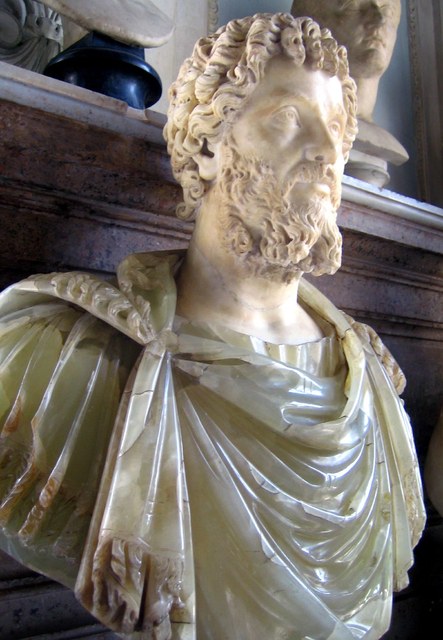
Domitian

Domitian
CC BY 2.5

Roman emperor · 81–96 CE · Roman Empire

Domitian was the last Flavian emperor who ruled Rome from 81 to 96 CE and was remembered as a despotic autocrat.

The kit

  • Rise — Domitian came to power in 81 CE upon the death of his elder brother Titus, completing the Flavian dynasty.
  • Achievements — Domitian constructed the Limes Germanicus fortifications along the Rhine-Danube frontier and defeated the Chatti tribe in Germany.
  • Conflicts — Domitian fought two Dacian Wars against King Decebalus, losing the first Battle of Tapae before concluding a temporary peace.
  • Death & succession — Domitian was assassinated in 96 CE by conspirators including Maximus and Stephanus, then succeeded by the elder statesman Nerva.

Runs with

Vespasian
second son of Vespasian open card →
Suetonius
biographer who recorded his sensitivity about baldness open card →
Agricola
general who won Mons Graupius but was dismissed open card →
Plutarch's Parallel Lives

The ladder · 9 clues

H

One of this ruler's generals won the Battle of Mons Graupius, but that general was dismissed from office, contributing to the Roman historian Tacitus's hatred of this ruler. This man came to power after the short reign of his brother, and he was used as the archetype for despotic rule by later Roman historians.

H

A thaw on the Rhine prevented the Chatti from aiding a rebellion of the governor Saturninus against this emperor.

H

An event in this ruler’s reign drove him to pass an edict prohibiting two legions from sharing a camp.

H

This ruler commissioned the Cancelleria Reliefs, which were partially recarved after the Senate passed damnatio memoriae on him.

M

The last emperor of the Flavian dynasty was this authoritarian emperor.

M

What emperor of Rome was assassinated by Maximus and Stephanus, then succeeded by Nerva?

M

This emperor also fought two Pannonian Wars and died while planning a third, after having little success fighting in the first two Dacian Wars against Decebalus.

E

Agricola served this Roman Emperor, the second son of Vespasian and the last Flavian ruler.

E

He was assassinated in 96 CE and succeeded by Nerva. name this last of the Flavian emperors, who followed his elder brother Titus.

10 more clues from the record
H

Before being called back by this emperor to fight in the Dacian [[dah-KEE-ehn]] war, the governor Gnaeus Julius Agricola led a failed conquest of Caledonia after conquering modern Wales.

H

In his Epigrams, the writer Martial records how this man banned male castration despite having the eunuch Earinus as a lover.

H

The courtier Parthinus likely led the 96 AD plot to assassinate this emperor, who was succeeded by the elder statesman Nerva.

H

Unpopular with the aristocracy for such extravagances as demanding to be called dominus et deus, this emperor commanded the executions of his relatives Flavius Sabinus and Flavius Clemens and was opposed in the Senate by a coalition headed by the son of a man executed by Vespasian, Helvidius Priscus.

H

This ruler aborted his attempt to use the campaign of his brother-in-law Petilius Cerialis in the Rhineland for his own triumph; instead his first triumph was awarded for subduing the Chatti in Gaul, a victory which some called a sham.

H

This man took power upon the death of Titus in 81 CE and infuriated traditionalists by taking the title of "master and god." :Name this emperor, who instituted a reign of terror against dissenting Senators in the years prior to his 96 death.

H

Other than the Battle of Mons Graupius under his general Agricola, this man's wars were mainly defensive, and he began the construction of the Limes Germanicus and lost the first battle of Tapae to the Dacian king Decebalus.

H

This man sent an army led by Cornelius Fuscus, and that force lost the first battle of Tapae against the Dacians, before a temporary peace was concluded with Decebalus.

H

Suetonius reports that he was extremely sensitive about his baldness and wrote a work titled "On the Care of Hair," and his architect Rabirus built the Domus Augustana on the Palatine hill.

H

The first emperor since Claudius to campaign in person, this emperor took for himself the title of “Germanicus” after defeating the Chatti and was largely responsible for the construction of the Rhine-Danube fortifications.

Watch out: Confused with his brother Titus, who preceded him as emperor
#802 · Roman Emperors · Level 2

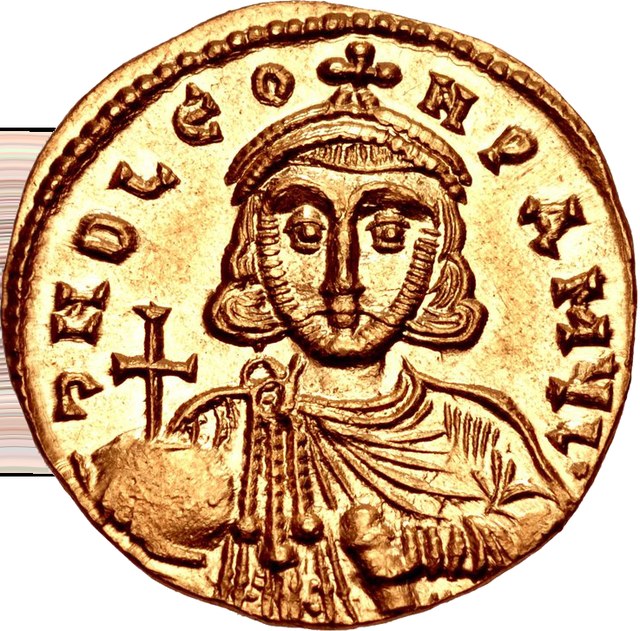
Leo III the Isaurian

Leo III the Isaurian
CNG · CC BY-SA 2.5

Byzantine emperor · 717–741 CE · Byzantine Empire

Leo III the Isaurian founded the Isaurian Dynasty in 717, championed iconoclasm, and defended Constantinople against the Second Arab Siege.

The kit

  • Rise — Leo III the Isaurian ended the Twenty Years' Anarchy by deposing Theodosius III and seizing the throne in 717.
  • Achievements — Leo III the Isaurian allied with Khan Tervel of Bulgaria to defeat the Second Arab Siege of Constantinople in 717.
  • Conflicts — Leo III the Isaurian launched the era of iconoclasm, causing Patriarch Germanus to resign and sparking revolts in the Cyclades and Ravenna.
  • Legacy — Leo III the Isaurian issued the Ecloga law code and was succeeded by his son Constantine V after a brief usurpation.

Runs with

Constantinople
defended it against Second Arab Siege in 717 using Greek fire open card →
Iconoclasm
launched the Byzantine iconoclastic era, causing religious and political conflict open card →
Pope
contemporary of Pope Leo III who later crowned Charlemagne open card →
Bulgaria
allied with Khan Tervel to defeat Arab siege open card →

The ladder · 9 clues

H

On Christmas Day in 800 C.E., Charlemagne was crowned Holy Roman Emperor by the third pope of this name. Another pope with name was nicknamed the “Rosary Pope”.

H

The mania for iconoclasm began during the reign of the Byzantine Emperor, who founded a Syrian dynasty when he took the throne in 717. He also issued the Ecloga law code.

H

This person ended the 20 Year Anarchy and defended his empire against the invasion of the Umayyad dynasty. :This man was the first Isaurian Emperor of the Byzantine Empire and was succeeded on the throne by his son, Constantine V.

H

Nicaea was defended against Mu'awiyah ibn Hisham by this ruler's general Artabasdos, who had earlier assisted him in securing the throne against Theodosius III.

M

This man is best known for a policy continued by Constantine V at the Council of Hieria, which resulted in the resignation of Patriarch Germanos. name Byzantine emperor who championed iconoclasm and founded a namesake dynasty.

M

The Cyclades rebelled against the most noted policy of this emperor, which brought him into conflict with Patriarch Germanus. name this Byzantine emperor who ruled for twenty-four years starting in 717, known for his iconoclasm and his founding of the Isaurian Dynasty.

M

Germanus I, Patriarch of Constantinople, resigned his position in response to one of this man’s religious decrees, which also sparked a revolt in the Exarchate of Ravenna. name this iconoclastic eighth-century Byzantine emperor who founded the Isaurian Dynasty.

M

Greek fre was also quite helpful in turning back the second siege of Constantinople in 717, a military success for this emperor, who founded the Isaurian Dynasty and launched the era of iconoclasm.

E

A new legal code, the "Ecloga," was later implemented by this Byzantine ruler, who was known as the Isaurian and noted for his firm support of iconoclasm.

10 more clues from the record
H

This general allied with Khan Tervel of Bulgaria to defeat the Second Arab Siege of Constantinople, during which he deposed Theodosius III to conclude the Twenty Years’ Anarchy.

H

According to Theophanes (thee-AH-fuh-neez) the Confessor, this man’s predecessor hid in the forests near Adramyttium to avoid being proclaimed emperor.

H

This ruler's ascension to the throne ended a period of turmoil that saw the reign of Philippikos Bardanes and the second reign of Justinian II, called the Twenty Years' Anarchy.

H

After the ruler who made this man the commander of the Anatolikon was overthrown, he pretended to go over to the Arabs and forced Theodosius III from the throne.

H

This man’s son defecated in the font when he was baptised, which led Germanus to predict that he would be evil in later life.

H

The historian who chronicled the rule of this man continued the work of his friend George Syncellus and was named Theophanes the Confessor.

H

When this man died, his son-in-law Artabasdus seized the throne, but Artabasdus was blinded after this man’s son took the throne.

H

One of this man’s predecessors attempted to eliminate him by sending him on a suicide mission against the Alans.

H

This ruler issued the Ecloga code and entrusted his old co-conspirator Artavasdos with many high positions.

H

This man's son, nicknamed Copronymus, later defeated Artabasdos in a struggle for the throne.

Watch out: Not Pope Leo III, who crowned Charlemagne Holy Roman Emperor on Christmas Day 800
#1752 · Roman Emperors · Level 3

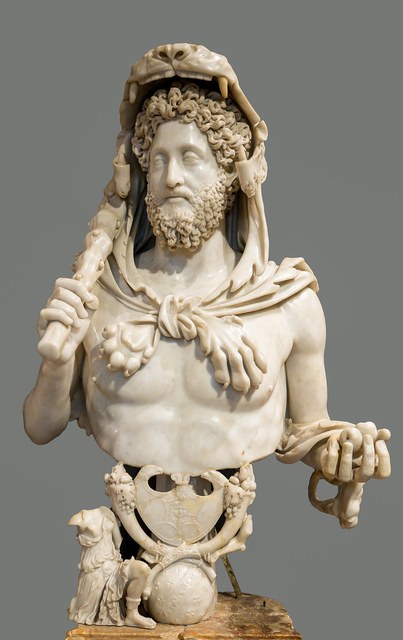
Commodus

Commodus
Merulana /a typeof="mw:File/Frameless" img alt="Edit this at · CC BY-SA 4.0

Roman emperor · r. 180–192 CE · Roman Empire

Commodus was the Roman emperor who ended the Nerva-Antonine dynasty by fighting as a gladiator and believing himself Hercules reincarnate.

The kit

  • Rise — Commodus was the first emperor born in the purple, ending the period of adoptive emperors when he succeeded his father.
  • Achievements — Commodus added the title Britannicus after his governor Ulpius Marcellus reestablished Roman control of the Antonine Wall.
  • Conflicts — Commodus attempted to intimidate the Senate by beheading an ostrich before them, as recorded by his contemporary historian.
  • Death & succession — Commodus was strangled by the wrestler Narcissus in a bath after vomiting up poison given by his mistress Marcia.

Runs with

Marcus Aurelius
Father whom Commodus succeeded as emperor in 180 CE open card →
Hercules
Deity Commodus believed himself to be, portrayed as in sculpture open card →
Rome
Empire Commodus ruled, antagonizing its Senate with reversed inscriptions open card →
Cassius Dio
Contemporary historian who recorded Commodus's ostrich-beheading incident open card →

The ladder · 6 clues

H

Following a plot by prefect Tigidius Perennis, the Phrygian Cleander replaced Saoterus as this man’s chamberlain.

H

This man’s contemporary Cassius Dio recorded his unsuccessful attempt to intimidate the Senate by beheading an ostrich.

M

This emperor was killed by his mistress Marcia and the wrestler Narcissus.

M

In the 2000 film Gladiator, Joaquin Phoenix portrays this figure who murders his father, after hearing he was unfit to succeed him, and declares himself emperor.

E

This emperor fought as a gladiator and ended the Nerva-Antonine dynasty. name this successor of Marcus Aurelius.

E

Emperor and son of Marcus Aurelius said to have performed as a bestiarius gladiator?

10 more clues from the record
H

Name these Roman Emperors .This son of Marcus Aurelius, who believed he was Hercules, was strangled to death by an athlete in a Roman bath and succeeded by Pertinax.

H

This man added the title Britannicus to his name after one of his governors, Ulpius Marcellus, reestablished Roman control of the Antonine Wall.

H

Under the influence of his concubine Marcia, he eased persecution of Christians.

H

Tigidius Perennis may have been implicated in a plot against this emperor by the freedman Cleander.

H

This emperor was the first to be “born in the purple,” ending a period of adoptive-emperors.

H

This man placed a likeness of his own head onto the Colossus of Nero and declared that he was the “only left handed fighter to conquer twelve times one thousand men.” Twenty-five consuls were appointed in a single year after this man’s advisor Cleander sold public offices.

H

This emperor was portrayed as Hercules wearing the pelt of the Nemean lion in that aforementioned bust, in which his facial features and hair resemble his father.

H

This man gave Tigidius Perennis much of the responsibility of running his empire before he executed him in favor of Cleander.

H

On some of this man’s inscriptions, he reversed the order of the phrase “Senatus Populusque Romanus,” to “Populus Senatusque Romanus” to annoy the Senate.

H

He died when Narcissus strangled him in a bath after he vomited up poison given to him by his mistress Marcia.

Watch out: Not to be confused with the adoptive emperors before him; he was the first born to a reigning emperor
#1869 · Roman Emperors · Level 3

Theodosius I

Theodosius I
www.livius.org · CC BY-SA 4.0

Roman emperor · 379–395 AD · Roman Empire

Theodosius I was the last Roman emperor to rule both eastern and western halves of the empire.

The kit

  • Rise — Theodosius I came to rule in 379 AD and defeated usurper Magnus Maximus at the Battle of the Save.
  • Achievements — Theodosius I's Edict of Thessalonica made Nicene Christianity the empire's official religion and he called the First Council of Constantinople.
  • Conflicts — Theodosius I won the Battle of the Frigidus against Arbogast and Eugenius, aided by the Bora wind reversing pagan arrows.
  • Legacy — Theodosius I banned the Vestal Virgins and the Olympics and was succeeded by his sons Arcadius and Honorius.

Runs with

Christianity
made Nicene Christianity official religion via Edict of Thessalonica open card →
Constantinople
called First Council of Constantinople open card →
Rome
last emperor to rule unified Roman Empire open card →
Nanda Empire

The ladder · 6 clues

H

A ruler of this name was supposedly raised by a Sassanian king and appointed Nestorius as Archbishop of Constantinople.

H

Won the Battle of the Frigidus [“frigid”-uss] and was the last to rule over the entire Empire?

M

He was succeeded by his sons Arcadius and Honorius after coming to rule in 379 AD, and his namesake code proclaimed religions other than Christianity illegal.

M

St. Ambrose excommunicated this emperor over a massacre in Thessalonica and this man had earlier called the First Council of Constantinople.

E

The order of Vestal Virgins and the Olympics were banned under this man, who made Nicene Christianity the official religion.

E

This man’s sons, Arcadius and Honorius, became joint rulers after his death. name the last Roman emperor to rule over both eastern and western halves.

10 more clues from the record
H

Another ruler of this name defeated usurper Magnus Maximus at the battle of the Save and appointed Arbogast as magister militum.

H

This emperor’s Edict of Thessalonica made Nicene Christianity the empire’s official religion. name this emperor who was the last to rule over a unified Roman empire.

H

During the reign of this emperor, a chariot racer’s attempt to rape a cup bearer led to the lynching of the Gothic general Butheric .

H

A law code titled after an emperor of this name was created by a commission co-established by Valentinian the Third, and that emperor of this name gave his name to a set of walls west of the original Constantinian Wall.

H

This man secured his reign when a divine wind reversed the direction of pagan arrows during the Battle of the Frigidus.

H

Another ruler of this name built a namesake system of double walls surrounding his capital.

H

Another emperor by this name bribed troops who attacked him from the rear in the Alps into joining him instead; that, as well as assistance from the “Bora” wind, occurred while he was fighting Arbogast and Eugenius in the Battle of the Frigid River.

H

This man accompanied his father to put down the Great Conspiracy, and was the last emperor of both Eastern and Western Rome. :Name this Roman emperor who established Nicene Christianity as the state religion of Rome and summoned the Council of Constantinople.

H

The second emperor of this name was basically a non-entity, and the Empire was basically run by people including his sister Pulcheria, the prefect Anthemius and the eunuch Chrysaphius during his reign which started in 408 and included the Council of Ephesus.

H

In the last years of his reign he put down the usurper Eugenius defeating him at the River Frigidus while earlier he had defeated the usurper Magnus Maximus.

Watch out: Theodosius II, a later emperor who built walls around Constantinople and convened the Council of Ephesus
#1882 · Medieval European Rulers · Level 3

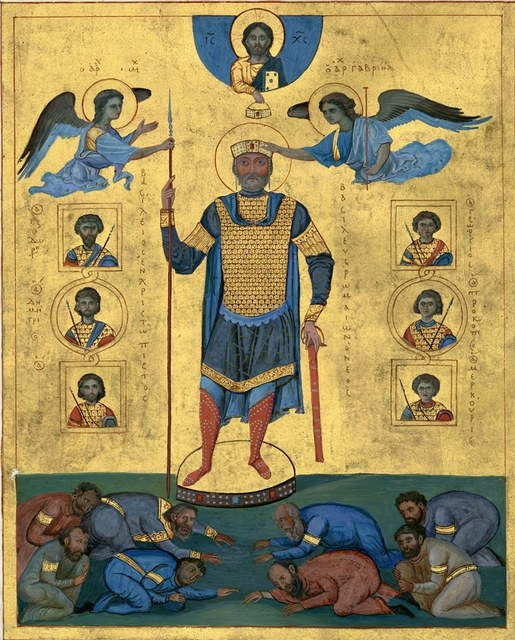
Basil II

Basil II
from the Middle Ages, unknown · Public domain

Byzantine Emperor · 976–1025 CE · Byzantine Empire

Basil II was a Byzantine Emperor nicknamed 'the Bulgar-Slayer' for his decisive victory over the Bulgarian Empire at Kleidion.

The kit

  • Rise — Basil II came to power by accusing his uncle Basil Lekapenos of sympathizing with the rebel Bardas Phokas.
  • Conflicts — Basil II was nearly killed at the Battle of the Gates of Trajan after relieving Sofia from siege.
  • Achievements — Basil II won the Battle of Kleidion and blinded 99 of every 100 prisoners, inspiring his nickname.
  • Legacy — Basil II founded the Varangian Guard and imposed the 'mutual guarantee' tax on elite dynatoi classes.

Runs with

Nanda Empire
Bulgars
defeated at Kleidion, Samuel's blinded soldiers open card →
Bulgaria
conquered after victory at Kleidion open card →
Varangian Guard
founded by Basil II from Scandinavian warriors open card →

The ladder · 6 clues

H

After landing at Chrysopolis, this leader's Varangian Guard attacked the forces of Bardas Phokas.

H

After the failed Siege of Sredets, this leader was nearly killed in the Battle of the Gates of Trajan.

M

This leader’s enemy Samuel suffered a heart attack after this leader blinded 99 of every 100 prisoners from the Battle of Kleidion. name this Byzantine Emperor named for his victory over the Bulgarian empire.

M

The conversion of the Rus occurred after this man offered his sister, Anna, in marriage to Vladimir the Great.

E

A tactic of blinding prisoners inspired the nickname of this emperor. name this Byzantine ruler nicknamed “the Bulgar-Slayer.”

E

After a battle won by this ruler, Tsar Samuel apocryphally suffered a heart attack on seeing his blinded soldiers. name this emperor whose victory at the Battle of Kleidion gained him the epithet “the Bulgar-Slayer”.

10 more clues from the record
H

This person assembled the Varangian Guard. :Name this Byzantine ruler, who barely escaped defeat at the hands of the tsar Samuel at the Gates of Trajan before later winning the Battle of Kleidion and blinding thousands of his enemies.

H

Catherine Holmes wrote a book about "[this man] and the Governance of Empire." Because they lacked local political loyalties, a unit created by this man was composed of warriors from Scandinavia.

H

This man came to power by accusing his uncle of the same name, who had the surname Lekapenos, of sympathizing of Bardas Phokas, and he signed a truce with the Fatimids.

H

David III Bagrat reinforced a rebellion against this man's rule perpetrated by the general Bardas Phokas [[FOH-kas]].

H

This "purple-born" emperor likely had his co-ruler, John, poisoned upon his return from a campaign against the Abbasids.

H

This man imposed the “mutual guarantee” tax forcing the elite dynatoi classes to pay the taxes of their poorer neighbors.

H

This man gave his sister Anna in marriage to Vladimir I in exchange for the Chersonesos military base in the Crimea.

H

This leader founded the Varangian Guard after marrying his sister Anna to a foreign leader.

H

This man was ambushed at the Gates of Trajan after successfully relieving Sofia from siege.

H

This man signed a peace treaty with the Fatimid Caliphate in the year 1000.

Watch out: Bardas Phokas was a rebel general who fought against Basil II, not an ally
#1937 · Medieval European Rulers · Level 3

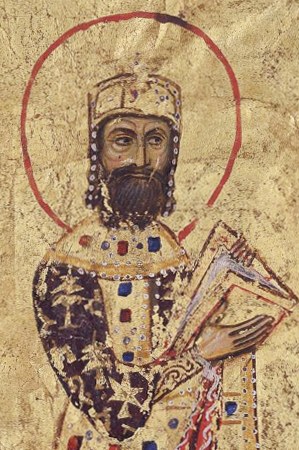
Alexius I Comnenus

Alexius I Comnenus
ul li Alexios1komnenos.jpg /a : Unknown Unknown /span /li li · Public domain

Byzantine emperor · 1081–1118 · Byzantine Empire

Alexius I Comnenus founded the Comnenus dynasty in 1081 and requested Western military aid that became the First Crusade.

The kit

  • Rise — Alexius I Comnenus overthrew Nicephorus III in 1081 and defeated the rebel Nikephoros Bryennios the Elder at Kalavrye.
  • Conflicts — Alexius I Comnenus lost the Battle of Dyrrhachium to Robert Guiscard but later defeated the Pechenegs at Levounion with Cuman allies.
  • Achievements — Alexius I Comnenus expanded the pronoia system and created new court titles while replacing most tagma except the Varangian Guard.
  • Legacy — Alexius I Comnenus's daughter Anna Comnena chronicled his reign in the Alexiad, which opens by quoting Sophocles.

Runs with

First Crusade
His plea for mercenaries at Piacenza became the First Crusade after Clermont open card →
Pope Urban II
His letter requesting military support prompted Urban II to call the crusade open card →
Constantinople
He defended Constantinople from a Pecheneg siege in 1090 open card →
Council of Clermont
Urban II transformed his request for aid into a crusade at Clermont open card →

The ladder · 6 clues

H

This Byzantine emperor sent a letter to Pope Urban II for support. This ruler’s reign was chronicled by his daughter, Anna.

H

A Pecheneg siege of Constantinople in 1090 was defeated by this Byzantine emperor and his Cuman allies. His daughter Anna Comnenus wrote a biography of him, and he ruled during the First Crusade.

M

This ruler lost the Battle of Dyrrhachium to Robert Guiscard during a Norman invasion of his territory; Guiscard’s death is related in Book 6 of a historical text compiled by this man’s daughter, Anna, and named for him. name this Byzantine emperor who requested the First Crusade.

M

The Council of Clermont was called after this Byzantine emperor asked for help at the 1096 Council of Piacenza.

E

This son of Anna Dalassena overthrew Nicephorus III, and his reign was chronicled in a namesake book by his daughter Anna. name this founder of a dynasty who was in power during the First Crusade as Byzantine emperor.

E

His letter to Robert of Flanders helped inspire Pope Urban II to call for a certain event. identify this Byzantine emperor and founder of a namesake dynasty, who ruled during the First Crusade.

10 more clues from the record
H

This man's daughter, the princess Anna, wrote a history of his reign. :Name this emperor who fought against Robert Guiscard and the Normans at the Battle of Dyrrachium. He also sent ambassadors to meet with Pope Urban II at the Council of Piacenza.

H

This man defeated and blinded Nikephoros Bryennios the Elder, but married his daughter to Nikephoros’s son of the same name.

H

This ruler put down a Pecheneg siege of his city before fighting a war against the Seljuks.

H

He used the pronoia system to bankroll a military reform that replaced most of the tagma except the Varangian Guard and revamped the aristocracy by creating new court titles for men like Nikephoros Bryennios, this man's son-in-law and a major historical source for his reign.

H

This ruler once allied himself with the Cumans to defeat the Pechenegs at the Battle of Levounion. :Name that Byzantine ruler whose plea for mercenaries was transformed into a passagium generale by Pope Urban II at the Council of Clermont. The history of his rule was preserved by his daughter Anna.

H

A history of this ruler’s reign that opens by quoting Sophocles claims he got stabbed in the buttocks while fighting nomads who later helped him win the Battle of Levounion .

H

This man’s rise to power was arguably helped by the political chaos that ensued following Romanos’ overthrow in the aftermath of Manzikert. This man brought the Komnenos Dynasty to power in 1081 and began their namesake restoration.

H

Anna Comnena was the daughter of this great Byzantine emperor, whose deeds she recounted in a namesake treatise. He launched a night attack at Kalavrye to defeat the upstart Nikephoros Bryennios the Elder.

H

This Byzantine Emperor asked the Pope for military assistance and got the First Crusade. His son John and grandson Manuel oversaw a slight increase in Byzantine military power.

H

This ruler's domestic policies included the expansion of the pronoia system while his foreign policy achievements included a negotiation of a truce with Sulayman ibn Qutalmish of Konya.

Watch out: Nikephoros Bryennios the Elder (rebel he defeated) versus Nikephoros Bryennios the Younger (his son-in-law and historian)