The 1648 Codex · study package

Popes

14 terms drawn from across the corpus, in study-list order. Art and cross-links point back to the home category cards.

#1011 · Popes · Level 3

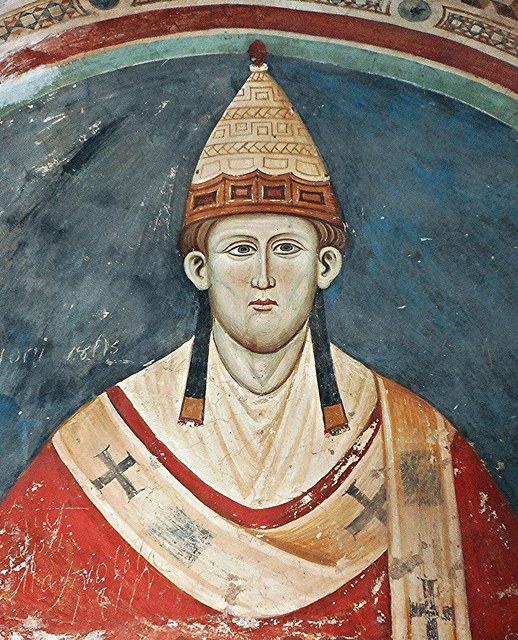
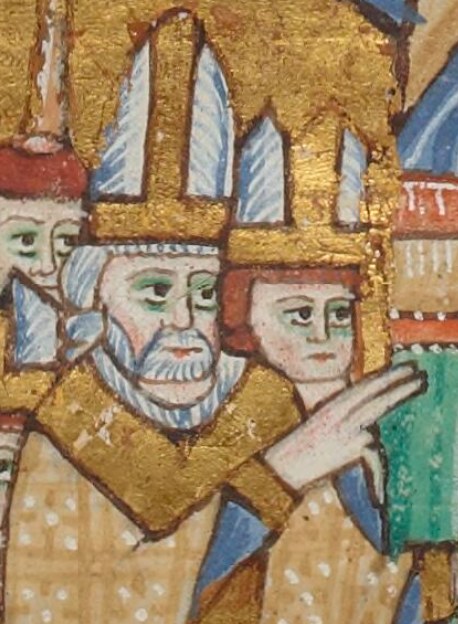
Pope Innocent III

Pope Innocent III
Carlo Raso · Public domain

Medieval pope · 1198–1216 · Rome

Pope Innocent III called the Fourth Crusade and Fourth Lateran Council, asserting unprecedented papal authority over European monarchs.

The kit

  • Rise — Pope Innocent III was elected after Celestine III died and made Frederick II king of Sicily to regain papal power.
  • Achievements — Pope Innocent III convoked the Fourth Lateran Council, which mandated Jews wear identifying clothing and forbade clerical involvement in trials by ordeal.
  • Conflicts — Pope Innocent III placed England under interdict after King John chose John de Grey over Stephen Langton as Archbishop of Canterbury.
  • Legacy — Pope Innocent III articulated the sun and moon allegory, declaring that kings derive their power from the papacy as the moon reflects the sun.

Runs with

Pope
held the papacy 1198–1216 open card →
Fourth Crusade
Fourth Lateran Council
convoked this 1215 council open card →
Magna Carta
annulled this 1215 document open card →

The ladder · 6 clues

H

This pope called for the Fourth Crusade. He also convoked the Fourth Lateran Council, which confirmed Frederick II as Holy Roman Emperor.

H

This man was elected Pope after Celestine III died, and he made Frederick II the king of Sicily to regain papal power in the region.

M

This pope feuded over Stephen Langdon’s appointment as Archbishop of Canterbury with John I. The Albigensian Crusade persecuting the Cathars and the Fourth Crusade were both called by this early 13th century pope who annulled the Magna Carta.

M

At the Fourth Lateran Council, this pope called a crusade that was defeated by the Ayyubid Sultan Al-Khalid; this man had earlier called a crusade that ended in the 1204 Sack of Constantinople.

E

This pope placed England under interdict after John chose the Bishop of Norwich, John de Grey, over Stephen Langton as Archbishop of Canterbury. name this medieval pope who called for the Fourth Lateran Council and the Fourth Crusade.

E

Philip II allied himself with this pope during the War of the Bouvines, who wrote Cum ex injuncto against the Albigensians and called the Fourth Lateran Council.

10 more clues from the record
H

During a council called by this Pope, clergymen were forbidden from being involved in trials by ordeal, and Jews were mandated to wear identifying clothing.

H

This man issued the decree Venerabilem to Berthold V, Duke of Zahringen, declaring that the German princes could determine their king.

H

This pope illustrated the sun and moon allegory in which kings derive their power from the papacy.

H

Pope who annulled the 1215 document.

H

Answer the following about the career of Peter II of Aragon, FTPE:Peter was crowned in Rome by this man, born Lotario de Conti di Segni; he decreed the Fourth Crusade, initiated the pursuit of the Albigensians, and wrote the tract On the Miserable Condition of Man.

H

He’s not Clement XI, but this man compared the Church to a diseased grapevine in the bull Vineam Domini, and called for the liberation of the Holy Land in Quia Maior.

H

The Hospital of the Holy Spirit, Europe's oldest hospital, was founded with efforts from this pope. He decreed a crusade that was assisted by Enrico Dandolo in his bull Post miserabile .

H

This pope laid an interdict against a king who was opposed by the Bagler Party led by Bishop Nicholas and Archbishop Eirik.

H

In the decree “Venerabilem” this Pope conceded German princes the right to elect emperors, but preserved the power of the Pope to reject nominees.

H

In addition to his conflict with King Sverre, this Pope restored Papal authority over the duchy of Spoleto and the march of Ancona in the Papal States.
Watch out: Fourth Lateran Council (1215) vs. Fourth Crusade (1202–1204)—both called by Innocent III but separate events
#1012 · Popes · Level 3

Pope Urban II

Pope Urban II
Unknown author Unknown author · Public domain

Pope (r. 1088–1099) · 1088–1099 · Rome

Pope Urban II launched the First Crusade at the 1095 Council of Clermont, promising pardon for sins to those who fought Muslims.

The kit

  • Rise — Pope Urban II, born Odo of Châtillon, studied at Reims under Bruno of Segni and served as Cardinal of Ostia under Gregory VII.
  • Council of Clermont — Pope Urban II convened the 1095 Council of Clermont after receiving an ambassador from Alexios I Komnenos requesting aid against Muslim forces.
  • Church governance — Pope Urban II established the Roman Curia to govern the Church and convened the Council of Piacenza alongside Clermont.
  • Conflicts — Pope Urban II excommunicated rulers for supporting his rival antipope Clement III and for illegal marriages to Bertrade de Montfort.

Runs with

First Crusade
launched it at Clermont in 1095 open card →
Fourth Lateran Council
Pope
served as pope from 1088 to 1099 open card →
Crusades
initiated the Crusades movement at Clermont open card →

The ladder · 6 clues

H

The pope who called for the First Crusade?

H

Saint Anselm travelled in exile to meet with this pope following the Investiture Controversy.

M

What pope called the Council of Clermont to start the First Crusade?

M

This Frenchman, who dealt with the antipope Clement the Third, became involved in one conflict after the Council of Piacenza.

E

The First Crusade was initiated by this Frenchman who reigned as Pope from 1088 to 1099.

E

One ambassador was sent to meet with this man by Alexios the First Komnenos, which led to the convening of the Council of Clermont.

10 more clues from the record
H

Born Odo of Châtillon, this pope studied at Reims under Bruno of Segni.

H

This pope convened the 1095 Council of Clermont to advocate for the launching of the campaign.

H

Historians debate whether credit for starting the Crusades should be give to Peter the Hermit or to this French pope who promised pardon for sins to those who fought the Muslims.

H

This leader’s letter to the people of Vallombrosa says they “made the right kind of sacrifice planned by the wrong person.” This leader regained his capital thanks to Hugh of Vermandois's assistance in expelling Guibert of Ravenna.

H

An ally of Gregory VII while Cardinal of Ostia, he launched the First Crusade after convening the Council of Clermont. He also aided Roger I of Sicily in his conquest of Campania.

H

The Councils of Piacenza and Clermont were convened under the authority of this Pope, who also began the Roman Curia to govern the Church.

H

At another synod, this pope received the confession of Eupraxia of Kiev, who claimed that she was forced into orgies and a black mass.

H

This leader wrote a letter of instruction to the Flemish mentioning Adhemar of Le Puy, as reported on by Baldric of Dol and Robert the Monk.

H

He excommunicated one ruler for his illegal marriage to Bertrade de Montfort, and another ruler for supporting his rival Clement III.

H

This pope called a synod at Melfi where he controversially appointed the monk Rangerius to the see of Reggio.

Watch out: Peter the Hermit is sometimes credited with starting the Crusades instead of Urban II
#1013 · Popes · Level 3

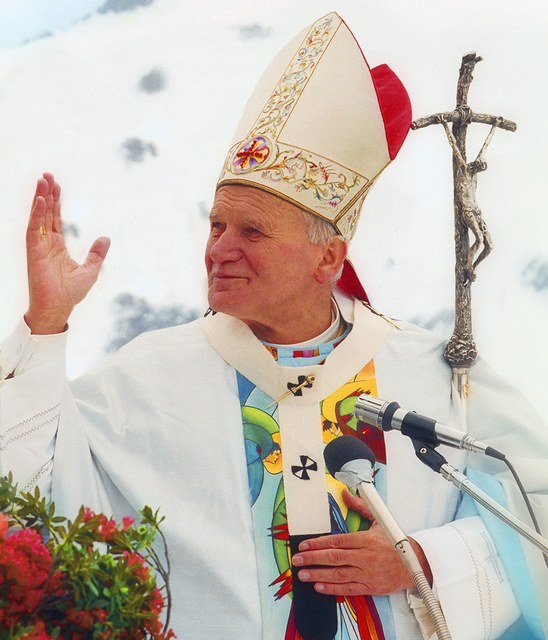
Pope John Paul II

Pope John Paul II
a rel="nofollow" Gregorini Demetrio · CC BY-SA 3.0

Polish pope · 1978–2005 · Vatican City

Pope John Paul II was the first non-Italian pope since the 16th century and the first Polish pope in history.

The kit

  • Rise — Pope John Paul II became pope in 1978, ending over 450 years of Italian popes since Adrian VI.
  • Achievements — Pope John Paul II promulgated the Catechism of the Catholic Church and began celebrating World Youth Day.
  • Conflicts — Pope John Paul II survived an assassination attempt by Mehmet Ali Ağca, a Grey Wolves member, in St. Peter's Square.
  • Legacy — Pope John Paul II supported Solidarity during a 1979 Warsaw visit and criticized Augusto Pinochet's dictatorship in Chile.

Runs with

Pope
held office as bishop of Rome open card →
Poland
first Polish pope in history open card →
Solidarity
supported movement during 1979 homeland visit open card →
Benedict
succeeded by Benedict XVI in 2005 open card →

The ladder · 6 clues

H

A Member of the ultra-nationalist Grey Wolves named Mehmet Ali Ağca shot this figure during a procession in St. Peter's Square.

H

This man began the celebration of World Youth Day.

M

On a trip to his homeland, he spoke in favor of the Solidarity movement. name this first Polish pope, who was succeeded by Benedict XVI.

M

Another assassination attempt on this man was carried out by Grey Wolf member Mehmet Ali Agca. This man promulgated the Pastor bonus and the Catechism of the Catholic Church.

E

The first non-Italian pope since Adrian VI in the 16th century was this Polish-born bishop of Rome from 1978 to 2005.

E

A 1979 visit by this man to Warsaw helped inspire the creation of Solidarity. name this predecessor of Benedict XVI, a Polish-born Pope.

10 more clues from the record
H

The Mitrokhin Commission investigated an earlier attempt by a Grey Wolves member to kill this man.

H

A 2014 Jason Evert book describes the Five Loves of this man, which include young people, human love, and the Eucharist.

H

Maurizio Cattelan’s The Ninth Hour depicts this pope sprawled on the floor under a massive rock.

H

The first phase of the Bojinka plot consisted of assassinating this figure, and he was also later the target of an assassination attempt by the Turkish Grey Wolves.

H

This man argued for the importance of sexuality in marriage in the book Love and Responsibility and also claims that faith and reason are both essential in his work Fides et Ratio.

H

Following the consecration of four priests against his orders in Econe, this man excommunicated Marcel Lefebvre .

H

This man’s 1987 visit to Chile led to the decline of Augusto Pinochet’s rule after describing it as “dictatorial,” and he later ordered the dismissal of Marcel Lefebvre [le-feh-vrah] from an organization he ruled.

H

Augusto Pinochet [pee-noh-SHAY] once tricked this man into appearing in public with him, and this man once used the name “Wujek” to hide the fact that he was a priest.

H

This man formally apologized to Archbishop Christodoulos, the head of the Church of Greece, for offenses committed by Catholics against Orthodox populations during the Fourth Crusade.

H

A bank connected to this man run by Roberto Calvi faced controversy after it funneled money to both sides of the Nicaraguan Civil War.

Watch out: Benedict XVI (his immediate successor, not predecessor)
#1014 · Popes · Level 3

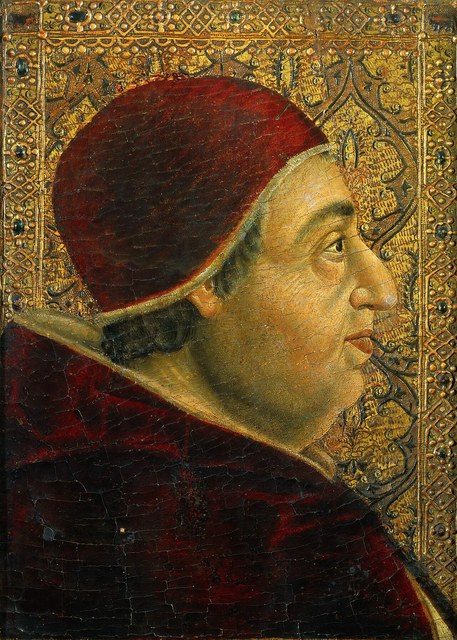
Pope Alexander VI

Pope Alexander VI
bdi Attributed to Pedro Berruguete /span /a · Public domain

Renaissance Pope · 1492–1503 · Rome

Pope Alexander VI was the Borgia pope who issued bulls dividing New World territories between Spain and Portugal.

The kit

  • Rise — Pope Alexander VI was born Rodrigo Borgia and made cardinal by his uncle Pope Calixtus III.
  • Achievements — Pope Alexander VI issued the bull Inter caetera establishing the line of demarcation formalized in the Treaty of Tordesillas.
  • Conflicts — Pope Alexander VI clashed with Girolamo Savonarola, who openly flouted his orders and refused to join his Holy League.
  • Legacy — Pope Alexander VI fathered Cesare and Lucrezia Borgia; Cesare inspired Machiavelli's The Prince.

Runs with

Pope
head of Catholic Church 1492-1503 open card →
Borgia family
born Rodrigo Borgia, father of Cesare and Lucrezia open card →
Girolamo Savonarola
clashed with Savonarola who defied his orders open card →
Charles

The ladder · 6 clues

H

Savonarola openly flouted the orders of this Pope, refusing to join his Holy League.

H

Cesare Borgia was the son of this decadent pope who clashed with Savonarola.

M

Machiavelli’s The Prince praised Cesare, the son of – – what Pope of the Borgia family?

M

This pope attempted to settle a dispute between Spain and Portugal with the bull Inter caetera. :Name this pope who was attacked by Girolamo Savonarola and who was born Rodrigo Borgia.

E

This man, who arranged for a papal dispensation for Ferdinand and Isabella to marry, became Pope in 1492 and somewhat tried to control the Inquisition by appointing milder assistants to Torquemada.

E

This Pope, whose son Cesare [[CHEH-sah-reh]] was an inspiration for Machiavelli's The Prince, was a member of the Borgia [[BOR-zhah]] family.

10 more clues from the record
H

This Spanish-born pope instigated the treaty’s creation with bulls that declared the Spanish rights. This man was the father of Cesare and Lucrezia Borgia.

H

This pope might have died from malaria after an event chronicled in Johann Burchard’s Liber Notarum. This pope had dozens of Roman homes razed in preparation for the Jubilee Year 1500.

H

Among this man's mistresses was Vannozza dei Cattanei, with whom he sired his most notable children.

H

He made a controversial move in adding twelve cardinals to the College of Cardinals, including one of his sons.

H

This man gave a cardinalship to Guillame Briconnet, who later gained the Bishophric of Nimes (pr.

H

Johann Burchard claimed that he held the Banquet of Chestnuts.

H

This pope issued the bull Dudum siquidem , which automatically granted “discovered” territories to Spain and Portugal. :Name this pope who issued three Bulls of Donation, granting Spain and Portugal rights to colonize the New World. Exaggerated accounts of the Banquet of Chestnuts were likely intended to attack this pope.

H

He sanctioned the partitioning of Naples in the Secret Treaty of Granada and approved a divorce from Jane of Valois to one of its signatories, Louis XII, in order to win support from France after its earlier ruler, Charles VIII, had invaded Italy.

H

Created a cardinal by his uncle Pope Calixtus III, this pope presided during the reign of Savonarola in Florence and drew the line of demarcation that served as the basis for the Treaty of Tordesillas. :Identify this notably corrupt Borgia pope.

H

One event during this man's papacy involved naked prostitutes eating food from off a floor followed by an orgy. :Identify this corrupt pope whose papacy saw the Feast of the Chestnuts.

Watch out: Not Pope Calixtus III, his uncle who made him cardinal
#1015 · Popes · Level 3

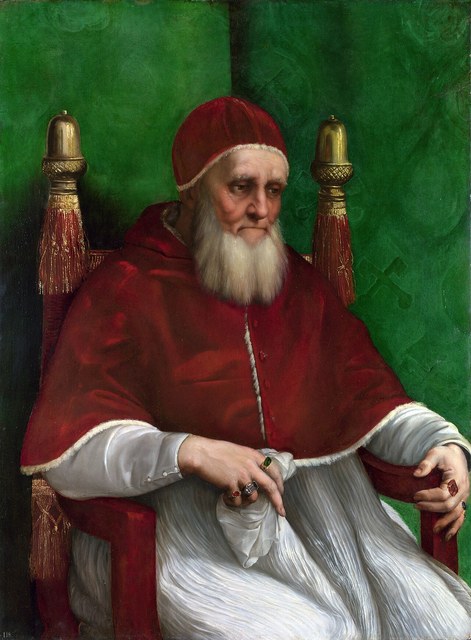
Pope Julius II

Pope Julius II
bdi Raphael /span /a · Public domain

Renaissance pope · 1503–1513 · Rome

Pope Julius II was a della Rovere pope who formed the League of Cambrai against Venice and commissioned Michelangelo's Sistine Chapel ceiling.

The kit

  • Rise — Pope Julius II was buried near his uncle Pope Sixtus IV and rebuilt St. Peter's Basilica during his papacy.
  • Conflicts — Pope Julius II allied with Louis XII and Maximilian I to form the League of Cambrai against Venice in 1508.
  • Achievements — Pope Julius II commissioned Michelangelo's Sistine Chapel ceiling and Raphael's scenes in the Apostolic Palace as a prolific art patron.
  • Legacy — Pope Julius II earned the nickname "Warrior Pope" for personally commanding forces during the Siege of Mirandola and conquering Ferrara.

Runs with

Pope
held the papal office 1503–1513 open card →
Venice
formed League of Cambrai to weaken Venice open card →
Michelangelo
commissioned Sistine Chapel ceiling frescoes open card →
France
allied with Louis XII against Venice open card →

The ladder · 6 clues

H

In attempting to fight Venice, he created an alliance with such rulers as Louis XII, Maximilian I, and Ferdinand Ii of Aragon.

H

The “Warrior Pope” who created the League of Cambrai?

M

This pope allied with Louis XII of France and Emperor Maximilian I to fight against Venice in the War of the League of Cambrai.

M

Buried near his uncle Pope Sixtus IV, this man rebuilt St. Peter’s Basilica. name this member of the Della Rovere family, a “Warrior Pope.”

E

This pope created the League of Cambrai to oppose Venice and commissioned Michelangelo to paint the ceiling of the Sistine Chapel. name this 16th-century "Warrior Pope."

E

This man also commissioned a statue mysteriously bearing horns thanks to a mistranslation of the word "cornuta." Raphael’s scenes in the Apostolic Palace were commissioned by this “Warrior Pope” who asked Michelangelo to paint the ceiling of the Sistine Chapel.

10 more clues from the record
H

This man's illegitimate daughter, Felice, appears on the left side of one work depicting this man kneeling before a eucharistic miracle.

H

The Conciliabulum of Pisa was opposed by this pope’s calling of the Fifth Council of the Lateran.

H

Known as the Warrior Pope, this man organized the League of Cambrai to weaken Venice. :Name this Pope, a great of patron of the arts who commissioned Michelangelo, Raphael, and Bramante, and who began the construction of St. Peter’s Basilica.

H

This ruler convened a meeting that had been organized at Pisa and brought into question the Pragmatic Sanction of France.

H

This man excommunicated Alfonso I d'Este [[the FIRST DEH-steh]] who then defeated this man's forces at the Battle of Polesella [[poh-leh-SEH-lah]].

H

One of the most prolific art patron popes was this della Rovere pope, who was painted by Raphael and commissioned the ceiling frescoes of the Sistine Chapel.

H

Erasmus wrote a dialogue that features this man trying to convince Peter to let him into heaven, threatening Peter with papal bulls and excommunication.

H

This man conquered Ferrara from his former ally, Alfonso d’Este [DESS-tay], and took personal command during the Siege of Mirandola.

H

This man issued a bull confirming the Treaty of Tordesillas [torr-de-SEE-yes].

H

The League of Venice's victory at Fornovo began a rapid ascent for the Italian republic, which by 1508 prompted this man to form the League of Cambrai, triggering a namesake war. This "Warrior Pope" is also remembered for his patronage of Michaelangelo.

Watch out: Pope Sixtus IV (his uncle, also della Rovere family, near whom Julius II was buried)
#1016 · Popes · Level 3

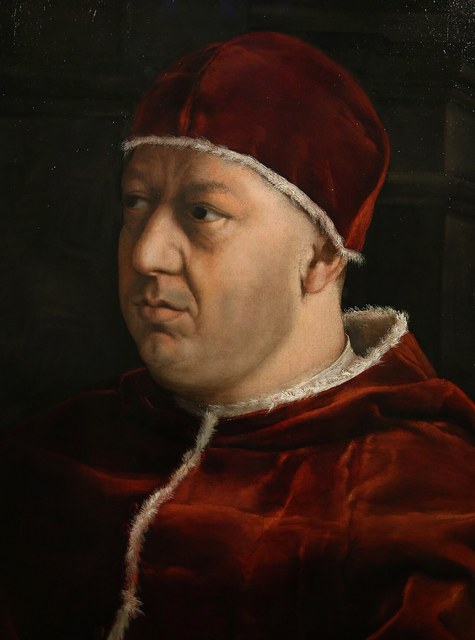
Pope Leo X

Pope Leo X
Francesco Bini · Public domain

Renaissance pope · 1513–1521 · Rome

Pope Leo X was Giovanni de' Medici, second son of Lorenzo, who excommunicated Martin Luther and rebuilt St. Peter's Basilica.

The kit

  • Rise — Pope Leo X succeeded Julius II in 1513 and reopened the Fifth Lateran Council to complete the Pisan schism.
  • Conflicts — Pope Leo X waged the War of Urbino against Francesco Maria della Rovere to secure his nephew's rule over the city.
  • Luther controversy — Pope Leo X issued the bull Exsurge Domine in 1520, threatening Martin Luther with excommunication unless he recanted his views.
  • Legacy — Pope Leo X gave Henry VIII the ironic title Defender of the Faith and rebuilt St. Peter's Basilica during his papacy.

Runs with

Pope
held the office 1513–1521 open card →
Martin Luther
excommunicated him via Decet Romanum Pontificem in 1521 open card →
Exsurge Domine
issued this 1520 bull condemning Luther's propositions open card →
church
led the Catholic Church during the Reformation crisis open card →

The ladder · 6 clues

H

Born Giovanni de’ Medici, the second son of Lorenzo, he succeeded Julius II and excommunicated Martin Luther in 1521.

H

This man received the embassy of the Portuguese king Manuel I, who had previously gifted this man an elephant named Hanno. This man presided over the closing of the Fifth Lateran Council and issued the papal bull Exsurge Domine [ex-oor-gay doh-mee-nay] in condemnation of the author of the 95 Theses. name this pope who clashed with Martin Luther.

M

Pope who opposed Martin Luther’s ideas on reformation and eventually excommunicated him.

M

This Pope authorized a crusade against the Ottomans. He appointed Dózsa to organize and direct the campaign, which devolved into an anti-landlord struggle, leading this Pope to revoke the order. He also issued the bull Exsurge Domine.

M

This pope issued a bull declaring equal treatment of the cagots, which locals ignored or protested. His other declarations include Exsurge Domine, which condemned the heresy of at least 41 points from a longer list.

E

In 1520, this pope issued the bull Exsurge Domine, threatening Martin Luther with excommunication if he did not recant his views. This pope gave Henry VIII the ironic title “Defender of the Faith.”

8 more clues from the record
H

This figure fought Francesco Maria I in the War of Urbino to secure his nephew’s rule over the city.

H

Bembo and Sadoleto were secretaries to this man, who waged a war against Francesco Maria della Rovere, duke of Urbino. In Raphael’s portrait of this man that stands in the Pitti Palace, Cardinal Luigi de Rossi and future Pope Clement VII stand by this man, who wrote the papal bull Exsurge Domine refuting the propositions of a man whom he excommunicated via the bull Decet Romanum Pontificem.

H

Wolsey was made a cardinal in 1515 by this Pope, who later appointed him papal legate to Britain. This Pope was in office when Luther posted the ninety-five theses.

H

At the time, the Church was led by this flamboyant, heavy-spending Pope who excommunicated Luther after his refusal to back down at the Diet of Worms.

H

This son of Lorenzo de Medici became pope in 1513. He excommunicated Martin Luther from the Catholic Church, and reconstructed St. Peter’s Basilica.

H

He reopened the Fifth Lateran Council in order to complete the Pisan schism, and he formed alliances with both Francis I and Ferdinand II.

H

This pope issued a bull that forbade Latin clergy to ordain Greek clergy or pray with Greek clergy and in Greek churches.

M

In response to the 95 Theses, this pope issued the bull Exsurge Domine, which demanded that Luther retract a number of errors within 60 days.

Watch out: Martin Luther posted the Ninety-Five Theses during Leo X's papacy, not addressed to him personally
#1017 · Popes · Level 3

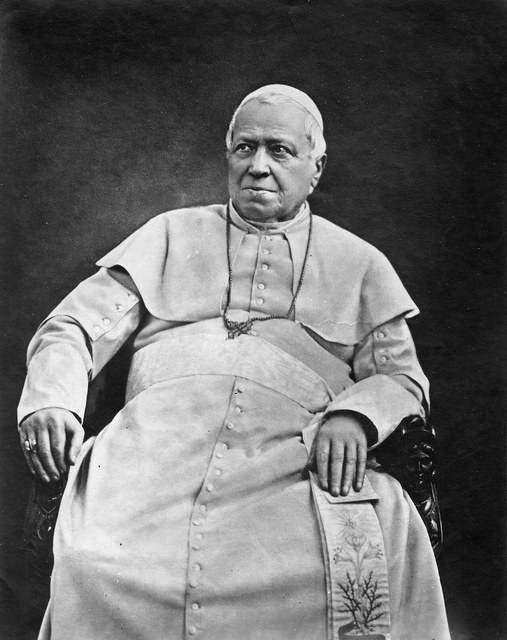
Pope Pius IX

Pope Pius IX
bdi Adolphe Braun /span /a · Public domain

19th-century Pope · 1846–1878 · Vatican City

Pope Pius IX served the longest papal reign in history at 32 years, convening the First Vatican Council and defining papal infallibility.

The kit

  • Rise — Pope Pius IX early in his reign fled to Gaeta after a revolution, then issued the Fundamental Statute for the Secular Government of the States of the Church.
  • Achievements — Pope Pius IX in 1854 declared ex cathedra the Immaculate Conception of Mary to be dogma, and convened the First Vatican Council in 1869.
  • Conflicts — Pope Pius IX declared himself a "prisoner in the Vatican" after Italian troops occupied Rome during the Unification of Italy in 1870.
  • Legacy — Pope Pius IX issued the Syllabus of Errors alongside Quanta Cura, and criticized Bismarck's Kulturkampf in the encyclical Etsi multa.

Runs with

Pope
longest-reigning elected Pope in history open card →
church
defended church against Kulturkampf attacks open card →
First Vatican Council
convened council that defined papal infallibility open card →
Kulturkampf
criticized Bismarck's campaign in Etsi multa open card →

The ladder · 6 clues

H

This longest-reigning elected Pope, who served during the nineteenth century, instituted Papal infallibility during the First Vatican Council.

H

The Unification of Italy led, what man and his successors to become known as the Prisoner of the Vatican.

M

This pope declared himself a “prisoner in the Vatican” after Italian troops occupied Rome.

M

He passed the Quanta Cura the same day he issued the Syllabus of Errors, and this man defined papal infallibility in the First Vatican Council.

E

This Pope recorded the longest reign on record, at 32 years. :Name this Pope, who convened the First Vatican Council and defined the doctrine of the Immaculate Conception.

E

This pope convened the First Vatican Council, which defined papal infallibility, and issued the Syllabus of Errors. name this longest reigning pope.

10 more clues from the record
H

This Pope from 1846 to 1878 convoked the First Vatican Council and propounded the doctrine of immaculate conception.

H

Vatican One was called by this Pope, the longest reigning in Church history, who in 1854 had declared ex cathedra the Immaculate Conception of Mary to be dogma.

H

This leader’s government abducted a six-year-old Jewish boy after it had discovered that he had been baptized; that boy was Edgardo Mortara.

H

The Law of Guarantees attempted to appease the demands of this man, who later issued the encyclical Etsi multa, criticizing Otto von Bismarck’s Kulturkampf as a war against the church.

H

A revolution led this man to issue the Fundamental Statute for the Secular Government of the States of the Church.

H

A doctrine promulgated by this pope was protested by Johann Joseph Ignaz von Döllinger.

H

Early in his reign, this pope had to flee to Gaeta.

H

The Franco-Prussian War caused Napoleon III to withdraw a garrison of troops he had earlier sent to the Vatican during this Pope’s papacy. This Pope is the longest-serving of all time.

H

In one tract, this man made a repeated distinction between true and false civilization, warning that merely moving forward is not progress.

H

This pope during the Kulturkampf published encyclicals like Quanta cura and Etsi multa, the latter of which partly blamed Freemasonry for the Kulturkampf and other attacks on the church.

#1018 · Popes · Level 3

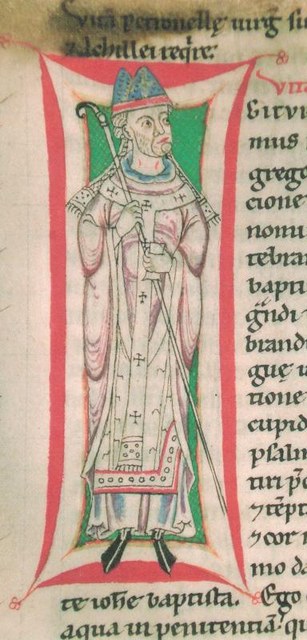
Gregory VII

Gregory VII
Paul von Bernried · Public domain

reforming pope · 1073–1085 · Rome

Gregory VII was the reforming pope born Hildebrand who excommunicated Henry IV during the investiture controversy over lay appointment of bishops.

The kit

  • Rise — Gregory VII was elevated to the papacy in 1073 when a crowd at Alexander II's funeral angrily demanded his election without imperial input.
  • Conflicts — Gregory VII forbade lay investiture in 1075, leading Henry IV to declare his deposition, which Gregory answered by excommunicating the emperor.
  • Achievements — Gregory VII forced Henry IV to perform penance at Canossa, standing barefoot in snow for three days to receive absolution in 1077.
  • Legacy — Gregory VII's reforms were validated after his death through the Concordat of Worms and First Lateran Council under Callixtus II.

Runs with

Henry
Henry IV performed penance at Canossa open card →
Pope
succeeded Alexander II as pope in 1073 open card →
church
fought to end lay investiture of bishops open card →
Henry IV, Holy Roman Emperor
excommunicated Henry over investiture controversy open card →

The ladder · 6 clues

H

This pope heard Henry’s penance after being denounced at the Assembly of Worms. He also received fealty from Robert Guiscard and Richard of Capua.

H

Early in his career, this man engineered an election challenged by Peter Cadalus that nearly ended with an invasion, though the attack was thwarted by Godfrey of Lorraine and the intrigue in a foreign court led by Anno. His claims on Corsica, Sardinia, Spain and Hungary led to a kidnapping by Cencio Frangipane and tension with Robert Guiscard.

M

FTP, name this Pope whose original name was Hildebrand and who had a notable controversy over lay investiture with Henry IV.

M

This reformist pope objected to the killing of suspected witches in a letter to Harold of Denmark. He is best remembered for excommunicating Holy Roman Emperor Henry IV during the investiture controversy.

M

FTP name this great reforming pope whose most famous confrontation with Henry IV was in the snows of Canossa and who was formerly known as Cardinal Hildebrand.

M

Stephen was canonized in 1083 by this Pope. Today, he is best remembered for clashing with Henry IV over the investiture issue, which culminated in the famous walk to Canossa.

10 more clues from the record
H

In his conflicts with the emperor he found allies in the princes of Germany who desired a religious justification for combating imperial centralization; the emperor allied himself with bishops who resented the growing papal power and many of whom had been appointed by the emperor, the basis for the lay investiture controversy.

H

The investiture controversy began in earnest when this pope forbade the practice of investment in 1075. This led to Emperor Henry IV to declare the deposition of this pope, which in turn led to Henry's excommunication.

H

This man succeeded to the papacy in 1076. Born Hildebrand, this man is most famous for making Henry IV stand outside the castle of Canossa barefoot in the snow for three days.

H

This man's most notable efforts were validated in the century after his death through the First Lateran Council and the Concordat of Worms thanks to the work of Callixtus II.

H

This man's partisan, Gebhard of Salzburg, was successfully kept away from a meeting targeting this man by his long-time foe, Hugo Candidus.

H

He was elevated to his highest office after a mixed crowd of clergy and laymen began angrily demanding his election during the funeral service of his predecessor, Alexander II.

H

That the Church failed to get the input of the German emperor proved an accurate omen for this pope's contentious relations with the Holy Roman Empire.

H

After his defender Rudolf of Rheinfelden was killed at the Elster, he was compelled to hide in the castle of St. Angelo and watched Clement III crowned in his place.

H

One of his teachers at the Schola Cantorum, Giovanni Graziano, inspired him to choose the name he would later assume.

H

Recalled to Rome by Leo IX, he served as legate to the Synod of Tours at which the nature of the Eucharist was discussed by Berengarius.

Watch out: Clement III, the antipope crowned in Gregory's place after Rudolf of Rheinfelden's death
#1019 · Popes · Level 3

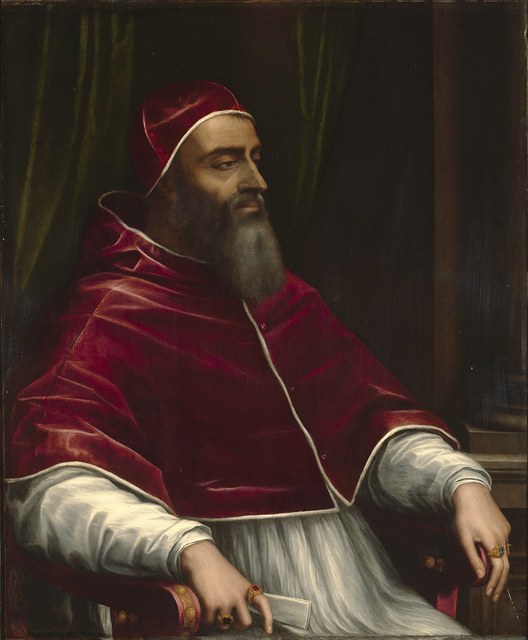
Pope Clement VII

Pope Clement VII
bdi Sebastiano del Piombo /span /a · Public domain

Medici pope · 1523–1534 · Rome and Avignon

Pope Clement VII was a Medici pope whose refusal to grant Henry VIII a divorce from Catherine of Aragon coincided with England's break from Rome.

The kit

  • Conflicts — Pope Clement VII refused to grant Henry VIII a divorce from Catherine of Aragon, who was Clement's niece.
  • Achievements — Pope Clement VII appointed Francesco Guicciardini as viceregent of Romagna and later lieutenant-general in the papal army.
  • Legacy — Pope Clement VII evacuated Rome before its sack by Charles V in 1527 during his papacy.

Runs with

Henry VIII
refused his divorce request from Catherine of Aragon open card →
Rome
evacuated before its 1527 sack by Charles V open card →
Pope
Medici pope during 1520s-1530s open card →
Catherine of Aragon

The ladder · 6 clues

H

Catherine was the niece of this pope, who pissed off Henry VIII of England by refusing to grant him a divorce from Catherine of Aragon.

H

Medici Pope who evacuated Rome before its sack by Charles V. He oversaw the reaction to the English Reformation.

H

The monumental Storia d’Italia, or History of Italy, was written by a man he appointed viceregent of Romagna and then lieutenant-general in the papal army, Francesco Guicciardini.

H

After Gregory XI moved the Papacy back to Rome, the Western Schism properly began when a group of cardinals elected this man to continue the papacy in Avignon.

H

The historian Paolo Giovio was this man’s personal physician and confidant for fifteen years.

M

This pope was also a Medici. During his papacy, Rome was sacked in 1527 and Henry VIII of England created the Anglican church.

Watch out: A different Clement VII was elected during the Western Schism to continue the papacy in Avignon after Gregory XI
#1020 · Popes · Level 3

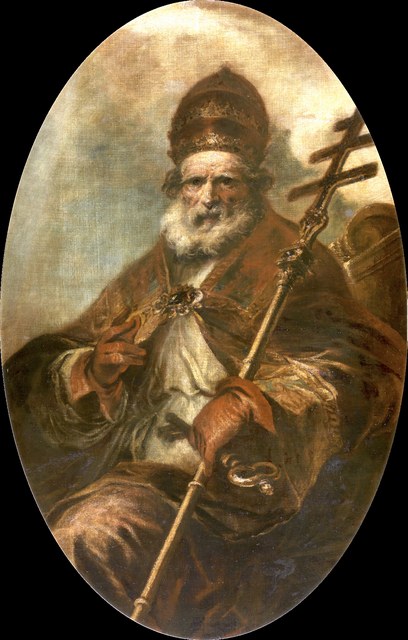
Pope Leo I

Pope Leo I
bdi Francisco Herrera the Younger /span /a · Public domain

5th-century pope · 440–461 CE · Rome

Pope Leo I was a fifth-century bishop of Rome who negotiated with Attila the Hun and authored the Tome defining Christ's dual nature.

The kit

  • Rise — Pope Leo I was sent to Gaul to broker peace between generals Aetius and Albinus before his election as pope.
  • Achievements — Pope Leo I authored a namesake Tome following the Council of Chalcedon that defined orthodox Christology after the Robber Synod rejected it.
  • Conflicts — Pope Leo I met with Attila near Mantua in 452, persuading the Hun leader to end his invasion of Italy.
  • Legacy — Pope Leo I was the first pope titled 'the Great' and secured from Valentinian III a decree affirming Rome's primacy.

Runs with

Pope
held office as bishop of Rome open card →
Rome
defended from Attila and secured primacy decree open card →
Attila the Hun
persuaded him to withdraw from Italy in 452 open card →
Hunnic Empire
negotiated with their leader near Mantua open card →

The ladder · 6 clues

H

This pope, the first of his name, is given credit for negotiating with Attila to end his invasion of Italy in 452.

H

Prior to his election as Pope, this man was sent to Gaul in an attempt to broker peace between the generals Aetius and Albinus. :Name this fifth century Pope who, during a dispute with St. Hilary of Arles, received from Valentinian III a decree of the primacy of this bishopric of Rome.

M

According to several accounts, Attila decided not to sack Rome after this pope persuaded him to leave. This was the first pope to be given the title “the Great”.

M

While the filioque wasn’t added to the Nicene Creed until the Council of Toledo, it was first proposed in the Tome of this Pope who declared the second council of Ephesus to be a “robber synod”. This pope also convinced Valentinus III to declare Rome the head of the church and met with Atilla the Hun.

M

Ricimer’s prominence coincided with the reigns of two men of this name and regnal number, one a Thracian Eastern Emperor whose reprisal campaign against the Vandals was utterly defeated in 468, the other a Pope whose intercession could not stop the Vandal sack of Rome.

M

This pope led negotiations after the Battle of Chalons organized by Valentinian III, and he met with Genseric of the Vandals to try to appease him. name this canonized pope who negotiated with Attila the Hun, the only pope besides Gregory to have the epithet “the Great.”

6 more clues from the record
H

John Cassian wrote On the Incarnation for this pope, who led a peace envoy along with Avienus and Trygetius during which the apostles Peter and Paul allegedly appeared magically and put swords over this man’s head.

H

In 452, Emperor Valentinian III sent this pope to meet with Attila near Mantua, where this pope legendarily convinced him to turn back. This pope also issued a namesake tome following the Council of Chalcedon.

H

The stance taken by this pope in his letter to Flavian led his views to be rejected by Eutyches in the “Robber Synod,” but at the subsequent Council of Chalcedon, this pope’s namesake “tome” was reinstated.

H

This pope, one of only two to have the title “The Great,” famously stopped the Huns from invading and sacking Rome in 452

H

After the bishops Celidonius and Projectus appealed to this pope, he responded by stripping Hilary of Arles of his jurisdiction over the province of Vienne.

M

Attila went on to invade Italy, but was stopped from sacking Rome by Valentinian III's envoys, which included Avienus, Trigetius, and this pope.

Watch out: Leo I and Gregory I are the only two popes called 'the Great'
#1021 · Popes · Level 3

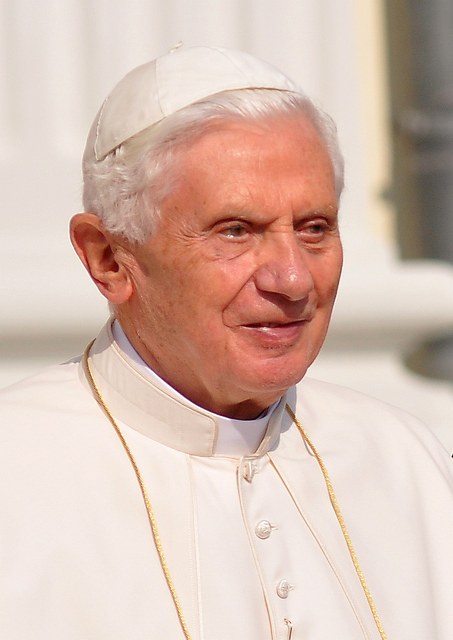
Pope Benedict XVI

Pope Benedict XVI
WDKrause · CC BY-SA 3.0

German pope · 2005–2013 · Vatican City

Pope Benedict XVI was the first pope to resign since 1294, stepping down in 2013 after eight years.

The kit

  • Rise — Pope Benedict XVI served as Archbishop of Munich and Freising and as a theological consultant at Vatican II.
  • Achievements — Pope Benedict XVI issued the encyclical Deus Caritas Est and restored papal use of red shoes.
  • Conflicts — Pope Benedict XVI's Regensburg Lecture drew outcry in the Muslim world after being mistranslated regarding Muhammad.
  • Death & succession — Pope Benedict XVI resigned in 2013, becoming the first pope since Celestine V in 1294 to do so, and was succeeded by Francis.

Runs with

Pope
held the office 2005–2013 open card →
Jesus
cited Jesus's choice of male Apostles to justify not appointing female bishops open card →
Pope John Paul IIRongorongo Script

The ladder · 6 clues

H

This man debated with Jürgen Habermas in The Dialectics of Secularization.

H

Answer some questions about various popes, .This pope resigned in 2013, becoming the first pope since 1294 to do so.

M

Deus Caritas Est was the first encyclical by this pope, who was interned in an American Prisoner of War camp following his forced conscription in the Hitler Youth.

M

The apostolic letter Traditionis custodes reversed a decision made by this man that allowed for easier celebration of the traditional Latin mass.

M

Francis I succeeded this retired Pope.

E

Born Joseph Ratzinger, name this pope who resigned in 2013 and was succeeded by Francis.

10 more clues from the record
H

This man served as Archbishop of Munich and Freising before ascending to the papacy, and in 2013, made an announcement that hadn’t been made since Celestine V in 1294.

H

He restored papal use of red shoes while serving as Pope, and he served as a consultant at Vatican II to Pope Paul VI.

H

This man decried a “dictatorship of relativism” while condemning science’s purported claim to knowledge.

H

Papal name of Joseph Ratzinger, a one-time member of the Hitler Youth.

H

This pope justified not appointing female bishops by saying that Jesus set the form of the Church by choosing male Apostles. :Name this pope who died in 2022. He was the first German pope since 1057.

H

Gianluigi Nuzzi published the confidential letters of this man and his secretary. :Name this man, whose butler, Paolo Gabriele, was arrested in 2007 for leaking information to Nuzzi. He was succeeded by Jorge Mario Bergoglio.

H

This man’s Regensburg Lecture drew outcry in the Muslim world after being mistranslated as saying that Muhammad brought “evil and inhuman” things.

H

This future Pope, the first to resign from the Papacy in nearly six hundred years, served as a theological consultant at Vatican II.

H

No pope had resigned for nearly 600 years when this pope resigned in 2013. He was the sixteenth pope of his name which means “blessed.”

M

Another theologian present at Vatican II was this German who went off liberal theology after the Council. Forty years later, he became, then un-became, Pope under the name “Benedict XVI”.

Watch out: Confused with Pope John Paul II, his immediate predecessor
#1022 · Popes · Level 3

Pope Callixtus III

Pope Callixtus III
bdi Sano di Pietro /span /a · Public domain

15th-century pope · 1455–1458 · Rome

Pope Callixtus III, born Alfonso de Borgia, reigned during the 1456 Siege of Belgrade and famously denounced Halley's Comet as a bad omen.

The kit

  • Rise — Pope Callixtus III was born Alfonso de Borgia and became pope in 1455.
  • Conflicts — Pope Callixtus III reigned during the 1456 Siege of Belgrade against Ottoman forces.
  • Legacy — Pope Callixtus III denounced Halley's Comet as a bad omen during his papacy.

Runs with

Joan of ArcHungary
Borgia family
born Alfonso de Borgia open card →
church
led as pope 1455–58 open card →

The ladder · 1 clues

H

Born Alfonso de Borgia, this pope reigned during the 1456 Siege of Belgrade, during which he denounced Halley’s Comet as a bad omen.

Watch out: Pope Alexander VI (Rodrigo Borgia), his nephew and also a Borgia pope
#1023 · Popes · Level 3

Pope Clement V

Pope Clement V
Sailko /a · CC BY 3.0

Pope (r. 1305–1314) · 1305–1314 · Avignon, France

Pope Clement V moved the papacy from Rome to Avignon in 1309, beginning the Avignon Papacy or Babylonian Captivity.

The kit

  • Rise — Pope Clement V was elected pope in 1305 as archbishop of Bordeaux, the first Frenchman to lead from Avignon.
  • Achievements — Pope Clement V summoned the Council of Vienne to investigate the Knights Templar and promulgated a crusade there.
  • Conflicts — Pope Clement V officially dissolved the Knights Templar and suppressed the Dulcinian movement led by Fra Dolcino.
  • Legacy — Pope Clement V rescinded the papal bull Unam Sanctam, which proclaimed that outside the church there is no salvation.

Runs with

Pope
fifth pope to take the name Clement open card →
church
moved the Church from Rome to Avignon open card →
Knights Templar
gave the order to dissolve this military order open card →
Avignon
refused to move to Rome, beginning Avignon Papacy open card →

The ladder · 6 clues

H

The Knights Templar were officially dissolved by this Pope, whose refusal to move to Rome ushered in the Avignon Papacy.

H

This man also persecuted a religious group led by Margaret of Trento and ordered the burning at the stake of the group’s leader and namesake, Fra Dolcino. This pope crowned the first Holy Roman Emperor from the House of Luxembourg, Henry VII.

M

This pope gave the order to dissolve the Knights Templar. He also moved the Church from Rome to Avignon.

M

Louis VIII’s son, Louis IX, also known as St. Louis, so improved relations between France and the Catholic Church that forty years later, this Pope moved from Rome to Avignon.

M

This first pope of the Captivity promulgated a crusade at the Council of Vienne and also proposed a Franco-Mongolian alliance against those durn Muzzlums.

M

That bull was issued by this pope’s former superior, Boniface VIII, and was the Unam Sanctam.

6 more clues from the record
H

The Avignon Papacy started when this Frenchman refused to move back to Rome. He also repressed the Dulcinian movement and summoned the Council of Vienne to investigate the Templars.

H

The fifth pope to take this name suppressed the Templars at the Council of Vienne and moved the papacy to Avignon, thus beginning the Babylonian Captivity.

H

He rescinded an earlier papal bull which proclaimed that outside of the church, there is no salvation.

H

According to legend, this pope was cursed by another man he persecuted, Jacques de Molay.

H

Elected pope in 1305, this archbishop of Bordeaux was the first pope to serve from Avignon.

H

This pope absolved Guillaume de Nogaret for the latter’s actions at Anagni.

Watch out: Boniface VIII (issued Unam Sanctam, which Clement V rescinded)
#1024 · Popes · Level 3

Pope Boniface VIII

Pope Boniface VIII
bdi Giotto /span /a · Public domain

Pope (r. 1294–1303) · late 13th–early 14th century · Rome

Pope Boniface VIII issued Unam Sanctam asserting papal supremacy over secular rulers, provoking conflict with Philip IV of France.

The kit

  • Rise — Pope Boniface VIII took office after the abdication of Celestine V, whom he arrested and allegedly tormented with a hidden speaking tube.
  • Conflicts — Pope Boniface VIII issued the bull Clericis Laicos barring taxation of clergy without papal consent, angering Philip IV of France.
  • Death & succession — Pope Boniface VIII was captured by forces led by the Colonna family and Guillaume de Nogaret after issuing Unam Sanctam's extreme claims.
  • Legacy — Pope Boniface VIII appears as a simonist in Dante's Inferno and was blasted by Saint Peter for turning his burial place into a sewer.

Runs with

Pope
held the office 1294–1303 open card →
church
declared outside the church there is no salvation open card →
Philip IV of France
feuded over clergy taxation and papal supremacy claims open card →
Philip

The ladder · 6 clues

H

He issued a document that stated, “every human creature be subject to the Roman Pontiff,” which was part of his conflict with Phillip the Fair. name this Pope who appeared as a simonist in Dante’s Inferno, and issued Unam Sanctum.

H

Name the pope so outraged who provoked the interference for his bull Unam Sanctam claiming absolute supremacy over every earthly power.

M

This pope wrote a document that declared “outside the church, there is no salvation” as part of an extreme assertion of papal power over secular power. name this pope who issued the bull Unam Sanctam and famously feuded with Dante.

M

After that pope with this name asserted papal supremacy in Unam Sanctum, a king known as “the fair” had him imprisoned and replaced with Clement V, thus beginning the Babylonian Captivity. give this papal name, whose eighth holder feuded with Philip IV and Dante.

M

After the Guelphs defeated the Ghibellines in the 1280s, they broke into “Black” and “White” factions based on whether they supported this pope or not. He declared “outside the church, there is no salvation” in Unam sanctam.

E

That occurred a few years after he issued the bull Clericis Laicos, which barred taxing the clergy.

10 more clues from the record
H

In a literary work, Saint Peter blasts this ruler, accusing him of turning his “burial place into a sewer of blood, a sewer of stench.” Archbishop of Canterbury Robert Winchelsey supported this pope’s decree forbidding the taxing of clergy without his consent.

H

Answer the following about the adventures of a certain pope, FTPE.This pontiff, an enemy of Dante, promulgated the bull Unam Sanctam, and rose to the papacy after the abdication of Celestine V.

H

A pope with this name allegedly used a hidden speaking tube to torment his predecessor, a peasant who once tried to hang his hat on a sunbeam.

H

This ruler, who was known as “the Great-Hearted Sinner,” arrested his 80-year-old predecessor Celestine V after he resigned.

H

Bernard Saisset served under this man and Clement V authorized a posthumous trial of this man, however it was never held.

H

Clericis Laicos was issued by this Pope, who took office after hastening the abdication of Celestine V.

H

Palestrina was razed and sown with salt by a pope of this name as part of his war with the Colonna family.

H

In 1300 he invited Catholics to visit Rome, declaring the first Jubilee year.

H

He was captured by forces led by the Collonna family and Guillame de Nogaret.

H

A pope with this name had heralds yell “I am caesar!

Watch out: Confused with Celestine V, the peasant predecessor he arrested after that pope's abdication