The 1648 Codex · study package

Subnational Regions — Asia

3 terms drawn from across the corpus, in study-list order. Art and cross-links point back to the home category cards.

#114 · Subnational Regions, Provinces, and Territories · Level 1

Hong Kong

Hong Kong
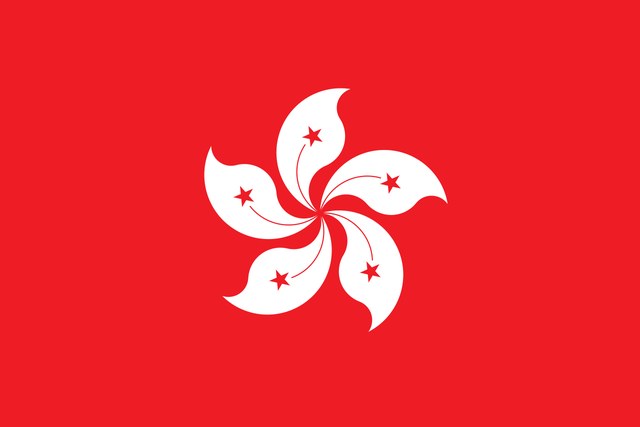
ul li Designed by Tao Ho /span /a /li li SVG code of 24 Nove · Public domain

Special Administrative Region · British 1842–1997, Chinese 1997–present · Pearl River Delta, southern China

Hong Kong is a Special Administrative Region of China governed under 'one country, two systems' since Britain returned it in 1997.

The kit

  • Colonial acquisition — Hong Kong was ceded to Britain in the Treaty of Nanking following the First Opium War in 1842.
  • Territorial expansion — Hong Kong's New Territories were leased to the United Kingdom in 1898 for 99 years, prompting the 1997 handover.
  • Modern governance — Hong Kong's Basic Law governs this region, though a 2003 attempt to amend Article 23 led to Tung Chee-hwa's downfall.
  • Recent protests — Hong Kong saw the 2014 Umbrella Revolution protests at Admiralty and Mong Kok, where students used umbrellas against pepper spray.

Runs with

China
returned to China in 1997 after 99-year lease open card →
Opium Wars
ceded to Britain after First Opium War open card →
United Kingdom
British colony 1842–1997 under various treaties open card →
Dialogue Concerning the Two Chief World Systems

The ladder · 15 clues

H

A 2003 attempt to amend Article 23 of this region’s law to allow police access to private property led to the downfall of its leader, Tung Chee-hwa.

H

Possession Street marks Edward Belcher’s landing in this city, and Boundary Street used to form a border for this city.

H

That march was in protest of Article 23 of this city’s Basic Law.

H

An ultra-dense “walled city” was demolished in this city in the 1990s.

H

Police in this city fought with demonstrators at Admiralty, Causeway Bay, and Mong Kok during protests that were centered at the Connaught and Harcourt Road area.

H

A peaceful protest in this city in 2014 was named for the umbrellas that students used to avoid pepper spray.Name this Special Administrative Region where protestors recently took over an international airport over political disputes with their Communist rulers.

H

During World War II, this region was held by the "Gin Drinker's Line" and was the site of the St. Stephen's College Massacre of wounded soldiers at a field hospital.

M

Carrie Lam leads this territory, which is governed under the principle of “one country, two systems.” name this territory that Great Britain returned to China in 1997.

M

This city was ceded in the Treaty of Nanking to the victors of the First Opium War.

M

This city was ceded to its former colonial overlords by the Treaty of Tianjin. name this city handed over by Britain to China in 1997.

M

Following the First Opium War, this city became a British colony under the Treaty of Nanjing. name this southern Chinese city that was returned to China in 1997.

M

I.M. Pei designed its Bank of China Tower.

E

In 1997, this city was returned to China after a century of being a British possession. name this Special Administrative Region located across from Shenzhen on the Pearl River.

E

This metro area, a special administrative region of the People's Republic of China, was transferred to China in 1997 at the end of the 99-year lease the United Kingdom had on the region.

E

This city’s “New Territories” were leased to the United Kingdom in 1898 for 99 years. name this city near the Pearl River Delta which was returned to China as a Special Administrative Region in 1997.

10 more clues from the record
H

In this city, the Independent Commission Against Corruption was created to prosecute the police by Murray MacLehose, who also expanded this city with “New Towns” like Sha Tin that were connected by the Mass Transit Railway.

H

This territory most recently changed hands with an elaborate ceremony at the Golden Bauhinia Square, an event that prompted the drafting of the Basic Law.

H

In this city in 2019, white-shirted mobsters attacked MTR passengers with steel rods until police arrived 39 minutes later.

H

A fort in this city had its walls torn down by Japanese troops to construct a runway for the nearby Kai Tak Airport.

H

This city, which saw the rise of the Demosisto party, saw Yau Wai Ching lose her Kowloon West legislative council seat.

H

An activist from this city was invited to speak in Thailand on the 40th anniversary of the Thammasat University massacre but was detained instead.

H

Those protests in this city, grew out of the Occupy Central movement founded by Joshua Wong and Lester Shum.

H

A legislator from this region used a derogatory Japanese slur for China while taking an oath of office.

H

A village near this city had its iron doors shipped to London by Sir Reginald Stubbs.

H

This region’s districts of Mong Kok and Admiralty hosted protests as part of the 2014 Umbrella Revolution.
Watch out: Treaty of Tianjin—clues mention this treaty but Hong Kong was actually ceded by Treaty of Nanking
#115 · Subnational Regions, Provinces, and Territories · Level 1

Mesopotamia

Mesopotamia
Goran tek-en · CC BY-SA 4.0

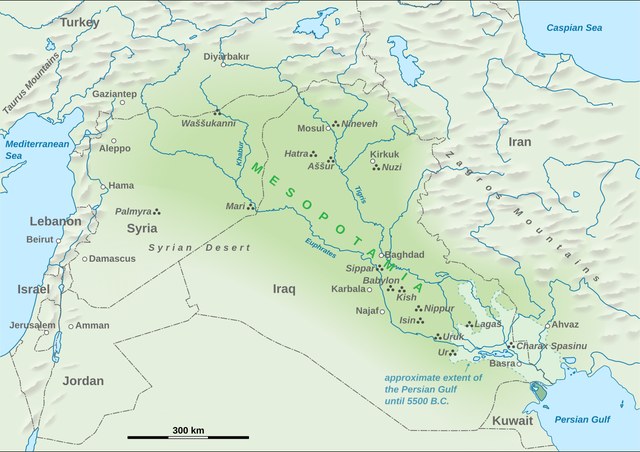
Ancient Middle Eastern region · c. 5500 BC–331 BC · Between Tigris and Euphrates rivers, modern Iraq

Mesopotamia was the ancient region between the Tigris and Euphrates rivers where early civilizations including Sumer, Akkad, Assyria, and Babylonia arose.

The kit

  • Geography — Mesopotamia's name comes from Greek for "land between the rivers" and formed the eastern part of the Fertile Crescent.
  • Early civilization — Mesopotamia was a center of early agriculture where the plow was invented and the Near East Neolithic flourished from around 5500 BC.
  • Major cultures — Mesopotamia was home to the Sumerians and Babylonians, with Uruk traditionally considered the oldest city in the region.
  • Later history — Mesopotamia saw Sargon's Akkadian dynasty rule most of the region and later witnessed the Battle of Gaugamela when Alexander the Great marched in.

Runs with

Nanda Empire
No connection shown in clues open card →
Bakumatsu Period
No connection shown in clues open card →
Sumerians
Sumerians were one of the major civilizations that flourished in Mesopotamia open card →
Sargon of Akkad
Sargon's Akkadian dynasty ruled most of Mesopotamia open card →

The ladder · 10 clues

H

Region between the Tigris and Euphrates rivers, in the eastern part of the Fertile Crescent in modern Iraq.

H

Region, whose name is Greek for “land between the rivers,” where Babylon grew.

H

Assyria and Babylonia were ancient empires in this Middle Eastern region between the Tigris and Euphrates [yoo-FRAY-tees] Rivers. The Epic of Gilgamesh chronicles a hero-king from this region.

H

The Sumerians and Babylonians flourished in this region with a Greek name. This region in the “fertile crescent” was a center of early agriculture, since the plow was invented here.

M

Alexander the Great marched into this area, where the Battle of Gaugamela took place. This area, whose name means “land between rivers,” is home to the Tigris and the Euphrates.

M

Sargon’s Akkadian dynasty ruled most of this region between the Tigris and Euphrates rivers in modern-day Iraq, which would later be conquered by Assyria.

M

This “land between the two rivers” in modern Iraq was the center of the Near East Neolithic from around 5500 BC onward due to being irrigable. Its cultures included the Sumerians and Babylonians.

M

Excavations at Tell Brak in Syria suggest that theories that urbanism spread from the southern part of this region need to be modified. Uruk is traditionally considered the oldest city of this historical region.

M

Babylon was a leading city-state of this western Asian region, whose name comes from the Greek for "landbetween the rivers."

E

Another area where early civilization flourished was this "fertile crescent" between the Tigris and Euphrates Rivers where the Babylonian and Neo-Babylonian civilizations were located.

Watch out: Fertile Crescent (Mesopotamia was the eastern part of this larger region)
#118 · Subnational Regions, Provinces, and Territories · Level 1

Anatolia

Anatolia
Golden · CC BY-SA 4.0

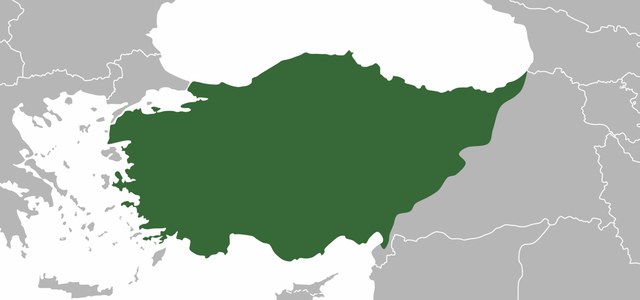
Peninsula in modern Turkey · ancient to present · between Mediterranean and Black Sea

Anatolia is a peninsula comprising most of modern Turkey that was home to the Hittites, Lydians, Phrygians, and later Byzantine and Ottoman empires.

The kit

  • Ancient kingdoms — Anatolia was home to the Hittites at Hattusa, Phrygia centered at Gordion, and Lydia whose king Croesus invented metal coinage.
  • Geography — Anatolia lies south of the Sea of Marmara from Thrace and includes ancient cities like Miletus, Troy, and Sardis.
  • Byzantine loss — Anatolia was lost by the Byzantine Empire after Manzikert in 1071 when Alp Arslan defeated Romanos IV, enabling Seljuk Turkish settlement.
  • Ottoman rise — Anatolia was the region of origin of the Ottomans, who emerged from beyliks after the Sultanate of Rûm's decline and captured Bursa.

Runs with

Nanda Empire
no connection evident in clues open card →
Hittites
ruled Anatolia from **Hattusa after assimilating Hatti** open card →
Turkey
Anatolia comprises **most of modern Turkey's territory** open card →
Seljuk Empire
conquered Anatolia after **Alp Arslan's victory at Manzikert** open card →

The ladder · 15 clues

H

Lydia was a kingdom in this region, whose important ancient cities included Miletus and Troy. The region in modern-day Turkey lies south of the Sea of Marmara from Thrace.

H

Region that Pompey conquered from Mithridates the Great. It was home to the Kingdoms of Pontus and Bithynia on the eastern end of Rome’s territory.

H

Prior to Alexius’ reign, the Byzantine Empire had lost control of much of this region to the Seljuk Turks due to the Battle of Manzikert. This region was the center of the Ottoman Empire and is most of Turkey’s territory today.

H

One ruler based in this region apocryphally hid a pigeon in his shirt, swore an oath not to declare war while “this life remained in his chest” and then released the pigeon.

H

The Ahi Brotherhood semi-independently ruled a city in this region before being annexed by a state whose city of origin was first mentioned in an 8,000 line epic by Ahmedi.

H

A kingdom in the western part of this region, identified with the Mushki and king Mita, is traditionally thought to have been destroyed by a Cimmerian invasion around 675 BC.

H

A philosopher from this region compiled maps of the Roman Empire into his massive Geographica. Rebels sparked the ire of Artaphernes, a governor of this region, after besieging his capital of Sardis.

M

At its formation, most of the land covered by the Theme defensive system was in this region, and it contained a sub-region that gave its name to a dynasty that ended the Twenty Years’ Anarchy and began the policy of Iconoclasm, Isauria.

M

The generally-rejected Ghaza thesis was used to explain the rise of an empire based in this region, whose conquests included a nine-year siege leading to the capture of Bursa.

M

Both this region and Armenia began to be conquered by the Seljuk dynasty after a battle in which Alp Arslan defeated Romanos IV, the Battle of Manzikert. name this region, which makes up most of modern-day Turkey.

M

A kingdom that came to dominate this region assimilated the Hatti people and ruled from their city of Hattusa. name this region in modern-day Turkey home to Phrygia, Lydia, and the Hittites.

M

The city of Hissarlik in this region was excavated by Heinrich Schliemann during his search for Troy. name this ancient region in present-day Turkey, which is named for being a smaller version of the continent it is located in.

M

Alp Arslan’s victory at Manzikert paved the way for Turkish settlement in this peninsular region. The modern state of Turkey is primarily located on this peninsula.

M

This region was home to the culturally diverse state centered on Gordion and a state ruled by the wealthy king Croesus credited with inventing metal coinage.

M

This region was home to beyliks that emerged after the decline of the Sultanate of Rûm. name this region of origin of the Ottomans, making up the majority of modern Turkey.

8 more clues from the record
H

An imperial secretary and a tax-collector, Anastasius II and Theodosius III, were proclaimed emperor in turn by troops from this region, and the usurper Artabasdos was commander of the Opsikion province in this region.

H

One emperor from this region had a right-hand man named Illus whom his empress Ariadne tried to assassinate.

H

Herostratus gained infamy for burning down a temple in this region that was one of the original Seven Wonders of the World.

H

Non-Jewish dynasties in this region which used flags featuring the Star of David included the Jandaridsand Karamanids.

H

The conquest of this region’s western part was unsuccessfully resisted by the confederation of Assuwa and its successor Arzawa.

H

That emperor from this region faced the revolt of Basiliscus and proclaimed the Henotikon in an attempt to reconcile with the Monophysites.

H

Darius I decided to invade Greece after Athens incited the Ionian revolt in this region.

H

The southern and western parts of this region were home to speakers of Luwian.

Watch out: Asia Minor (same region, alternative classical name)