The 1648 Codex · study package

Chinese Emperors

9 terms drawn from across the corpus, in study-list order. Art and cross-links point back to the home category cards.

#1263 · Chinese Emperors · Level 3

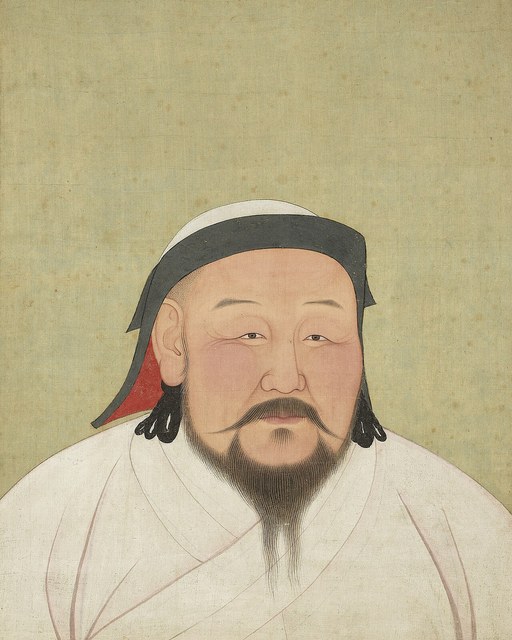
Kublai Khan

Kublai Khan
bdi Araniko /span /a · Public domain

Mongol emperor · 1260–1294 · China and Mongolia

Kublai Khan was the Mongol emperor who founded the Yuan Dynasty and conquered the Southern Song dynasty in 1279.

The kit

  • Rise — Kublai Khan came to power after defeating his brother Ariq Böke in the Toluid Civil War following Möngke's death.
  • Achievements — Kublai Khan conquered the Southern Song at the Battle of Yamen, established paper money as sole currency, and divided society into four classes.
  • Conflicts — Kublai Khan's two invasions of Japan were thwarted by kamikaze winds and his Java expedition was defeated by Raden Wijaya.
  • Legacy — Kublai Khan hosted Marco Polo and Nestorian monk Rabban Sauma at his court and increased Mongol influence over Goryeo Korea.

Runs with

Yuan Dynasty
founded this dynasty after conquering Southern Song China in 1279 open card →
Marco Polo
hosted this Venetian traveler at his imperial court open card →
Japan
launched two failed invasion attempts against this island nation open card →
Kamikaze
these divine winds destroyed his invasion fleets twice open card →

The ladder · 6 clues

H

After the death of his older brother, this ruler waged a destructive civil war against his youngest brother Ariq Boke in the Toluid Civil War.

H

This man took power shortly after a battle at Shimultai, which garnered him the support of Alghu in the Toluid civil war against Ariq Boke.

M

This leader, whose two invasions of Japan were stymied by kamikaze, was visited by Marco Polo. identify this Mongol founder of the Yuan empire.

M

This ruler's failed invasion of Java was defeated by Raden Wijaya [[vee-JY-yah]], who founded the Majapahit Empire.

E

The divine wind kamikaze famously thwarted this man’s attempts to invade Japan. name this founder of the Yuan Dynasty and grandson of Genghis Khan.

E

This man’s invasions of Japan were twice halted by the kamikaze winds. name this founder of the Yuan Dynasty, a Mongol leader who was the grandson of Genghis Khan.

10 more clues from the record
H

Shortly before this man’s death, he sent an unsuccessful punitive expedition against the Singhasari kingdom of Java.

H

This ruler divided his population into four social classes, defeated the Southern Song dynasty, and established paper money as the sole currency.

H

This leader twice attempted to invade Japan, but both attempts were stopped by a “divine wind,” or kamikaze.

H

Nestorian monk Rabban Sauma and Marco Polo visited the court of this emperor.

H

This leader rose in power after winning the Toluid Civil War against his brother, Ariq Broke.

H

After this ruler defeated his brother, Ariq Böke, he conquered one region after the Battle of Yamen.

H

In 1279, he conquered China and established a Mongol dynasty. :Name this great Khan who succeeded his brother Mongke.

H

This man came to power after the death of his brother, Mongke. :Name this leader of the Mongols, the grandson of Genghis, whose efforts to invade Japan were thwarted both times by kamikaze.

H

He divided his nation into four categories of nationalities, with han-jen and Man-tzu being inferior to the se-mu jen.

H

This man supported the rule of King Wonjong, and his daughter married Wonjong's son Chungnyol Wang, which increased his infuence over the Goryeos of Korea.
Watch out: Confused with his grandfather Genghis Khan or his brother Möngke Khan
#1264 · Chinese Emperors · Level 3

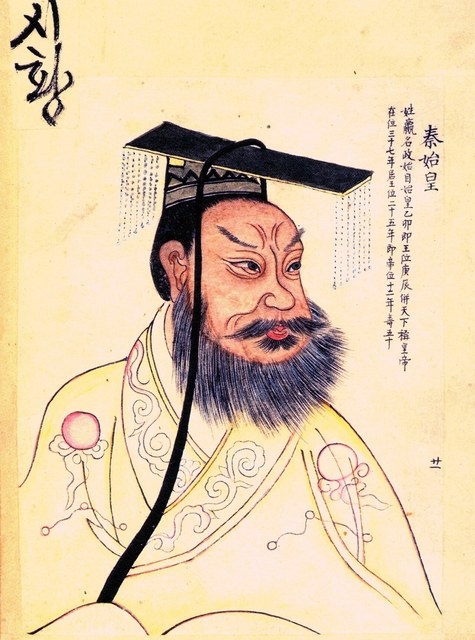
Qin Shi Huang

Qin Shi Huang
Unknown (18??–18??) · Public domain

First Emperor of China · r. 221–210 BCE · China

Qin Shi Huang unified China in 221 BCE, ending the Warring States Period as the first emperor of the Qin dynasty.

The kit

  • Rise — Qin Shi Huang ended the Warring States Period by conquering rival states and unifying China under Legalist principles.
  • Achievements — Qin Shi Huang began construction of the Great Wall and built the Lingqu Canal connecting the Yangtze and Pearl Rivers.
  • Conflicts — Qin Shi Huang survived assassination attempts including Jing Ke's dagger hidden in a map and a lead-weighted lute attack.
  • Death & succession — Qin Shi Huang died after consuming mercury pills he believed would grant immortality; chancellor Li Si forged orders for son Fusu's suicide.

Runs with

China
unified as first emperor open card →
Terracotta
buried with thousands of terracotta warriors open card →
Chancellor
employed Li Si as chancellor open card →
Mercury
died from ingesting mercury pills open card →

The ladder · 6 clues

H

Jing Ke attempted to assassinate this man by hiding a dagger in a map after this man attacked the state of Yan.

H

During this man’s reign, the Lingqu Canal was built as part of a system connecting the Yangtze and Pearl Rivers.

M

After his death, this leader was buried with thousands of terracotta warriors. name this first emperor of the Qin dynasty and of a unified China.

M

The Warring States Period ended with the rise of this first emperor of China.

E

The man who began the Great Wall and built the Terracotta Warriors was this first emperor of a unified China.

E

Li Si was employed by this proponent of Legalism, the first Emperor of China.

10 more clues from the record
H

In an attempt to find an elixir of immortality, this ruler consumed mercury pills and, surprisingly, died. :Name this person who unified China as the first emperor of the Qin dynasty.

H

Answer the following about a Chinese emperor’s reign. :Name this first emperor of a unified China, who died from ingesting cyanide which he thought would make him immortal.

H

Attempted assassinations of this ruler included one with a lute weighed down by lead and one with a dagger concealed in a map.

H

This man’s quest for immortality led to the search for a 1000 year old magician at Penglai and also to this man’s death after ingesting mercury pills.

H

The ban liang coin was standardized under this man’s chancellor Li Si, who forged a letter ordering this man’s son Fusu to commit suicide.

H

This man visited Zhifu Island three times in attempts to gain immortality, but he died by swallowing mercury pills that were supposed to make him immortal.

H

A musician who had been blinded by this ruler attempted to assassinate him with a lute which had been weighted with lead.

H

This ruler was the target of two assassination plots, one ordered by Prince Dan of Yan and other attempted by a famous lute player.

H

This ruler standardized his country’s currency with a copper coin that has a square hole in the center, called the Ban Liang.

H

One attempt to overthrow this ruler involved the fake eunuch Lao Ai, who revealed himself when he drunkenly boasted of being this ruler’s stepfather, and was orchestrated by the chancellor Lu Buwei.

Watch out: Students confuse Qin Shi Huang with later emperors who also sought immortality or built major monuments
#1265 · Chinese Emperors · Level 3

Yongle Emperor

Yongle Emperor
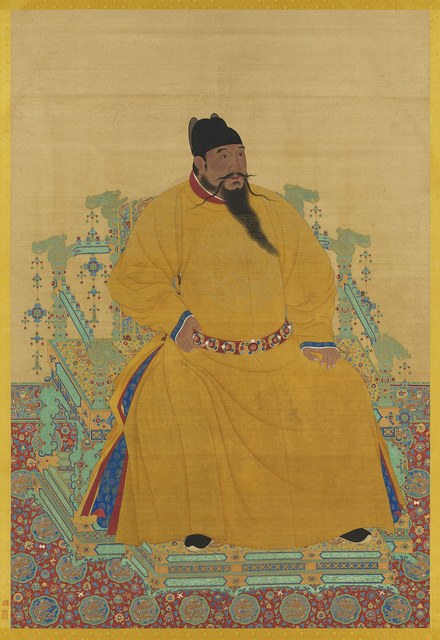
table cellpadding="0" cellspacing="0" tbody tr td Unknown au · Public domain

Third Ming emperor · r. 1402–1424 · China

Yongle Emperor was the third Ming ruler who usurped power, moved China's capital to Beijing, and sponsored Zheng He's voyages.

The kit

  • Rise — Yongle Emperor overthrew his nephew the Jianwen Emperor during the Jingnan Rebellion with help from military officer Zheng He.
  • Achievements — Yongle Emperor commissioned an 11,000-volume encyclopedia in 1403 and ordered construction of the Porcelain Tower of Nanjing.
  • Conflicts — Yongle Emperor conquered the Hồ dynasty of Vietnam, annexing it as Jiaozhi Province, and personally led campaigns against Tatar king Arughtai.
  • Legacy — Yongle Emperor moved the capital to Beijing and initiated construction of the Forbidden City while repairing the Grand Canal.

Runs with

Ming Dynasty
third emperor of the dynasty open card →
Zheng He
sponsored his Treasure Voyages open card →
Forbidden City
initiated its construction open card →
Beijing
moved imperial capital there open card →

The ladder · 6 clues

H

Go with Ten!”, referring to the degrees of kinship that would be executed.

H

The Deshin Shekpa was invited to Nanjing by this leader, whose reign included a war with the Ho Dynasty of Vietnam that ended when Le Loi revolted.

M

The Porcelain Tower of Nanjing was designed by this emperor, who ordered an expedition that destroyed the pirate fleet of Chen Zuyi and reached the Kotte kingdom in Sri Lanka.

M

This future ruler perpetrated the Jingnan Rebellion, which overthrew his nephew, the Jianwen emperor, with the help of military officers including Zheng He.

E

This emperor moved the imperial capital to Beijing and initiated the construction of the Forbidden City. name this third emperor of the Ming Dynasty who sponsored the voyages of explorer Zheng He.

E

A massive encyclopedia of over 11,000 volumes was commissioned by this son of the Hongwu Emperor in 1403. name this third Ming Dynasty emperor who commissioned the Treasure Voyages of Zheng He.

10 more clues from the record
H

This emperor fought the Jingnan campaign in order to take power from his nephew, the Jianwen emperor.

H

This ruler first came to power by overthrowing his nephew during the Jingnan Campaign.

H

One official who called this ruler a usurper had his kin uniquely exterminated to the tenth degree.

H

A vision of the bodhisattva [[BOH-dee-SAHT-vah]] Guanyin [] prompted this ruler to offer Buddhist leader Deshin Shekpa armies to reunite Tibet.

H

This man overthrew his pacifist brother, the Jianwen Emperor, and ordered the construction of the Porcelain Tower and had the Grand Canal repaired.

H

This leader personally led troops into Dai Viet after its Trần Dynasty was usurped by the popular general, Hồ Quý Ly [].

H

This ruler dispatched the general Zhang Fu to conquer the Hồ dynasty, leading to the annexation of Vietnam as Jiaozhi Province.

H

Third Ming emperor, who employed that explorer, built that complex, and repaired that structure.

H

Before this ruler executed Fang Xiaoru, Fang replied, “Never mind nine!

H

This future emperor gained favor after winning a poetry contest in which he completed the line “wind blows the horse's tail into a thousand strands of thread,” with the line, “sun reflects off the dragons' scales into ten thousand bits of gold.” This emperor feigned mental illness while plotting to take over the Jianwen Emperor, and this ruler ordered a costly attack against the Tatar king Arughtai.

Watch out: Jianwen Emperor (his nephew whom he overthrew)
#1266 · Chinese Emperors · Level 3

Hongwu Emperor

Hongwu Emperor
table cellpadding="0" cellspacing="0" tbody tr td Unknown au · Public domain

Ming Dynasty founder · 1368–1398 · China

Hongwu Emperor was a peasant who led Red Turban forces against the Yuan Dynasty and founded the Ming Dynasty in 1368.

The kit

  • Rise — Hongwu Emperor joined Han Shantung's Red Turban group but later split to fight independently against Yuan forces.
  • Achievements — Hongwu Emperor won the Battle of Lake Poyang using fire ships during the chaos following the Yuan collapse.
  • Governance — Hongwu Emperor instituted the Fish Scale Records taxation system and granted tax exemptions to farmers cultivating fallow land.
  • Legacy — Hongwu Emperor's son defeated Jianwen after his death to become the Yongle Emperor and continue Ming rule.

Runs with

Ming Dynasty
founded it in 1368 after defeating Yuan open card →
Yuan Dynasty
led Red Turban Rebellion against it open card →
Yongle Emperor
his son, who seized throne after his death open card →
Nanjing
established it as Ming capital open card →

The ladder · 6 clues

H

The Ming Dynasty was founded by this man, a peasant who led forces against the Yuan in the Red Turban Rebellion and established the capital at Nanjing.

H

Two of his generals published a guide to gunpowder weapons called the Fire Drake Manual.

M

This man joined a group led by Han Shantung, though he would later split and fight Chen Youliang at the Battle of Lake Poyang.

M

first Ming emperor this succeeded the Yuan.

E

This emperor led part of the Red Turban Rebellion and founded the Ming Dynasty. He won the Battle of Lake Poyang during the chaos after the collapse of the Yuan.

E

Once part of the Red Turbans and also known as Zhu Yuanzhang, name this founder of the Ming Dynasty.

10 more clues from the record
H

After his death, his son defeated Jianwen to become the Yongle emperor.

H

He took power by using fire ships to win the Battle of Lake Poyang.

H

This man stopped massacres after a lightning bolt hit his palace in 1380 and he created the office of Grand Secretary.

H

An advisor for this man, Liu Bowen, created the Fire Drake Manual.

H

This ruler wrote a 100 word baizizan in praise of Muhammed.

H

This ruler outlined principles for “adhering to austerity” and “watchfulness in government affairs” in a document he distributed to his court called “Record of the Ancestor’s Instructions.” One of his generals was forced to commit suicide by eating a large amount of goose, to which he was allergic. This ruler praised Muhammad as “the most noble sage” in his Hundred Word Eulogy.

H

This man’s government developed the Fish Scale record system to combat corruption, and he granted tax exemptions to farmers who managed to cultivate fallow land.

H

This ruler instituted the “Fish-scale books” and authored a praise for Islam in a one-hundred character long “eulogy,” and this ruler’s wife Empress Ma had Islamic ancestry.

H

This ruler centralized power by appointing six Grand Secretaries who effectively controlled all written communications between him and the outside world.

H

The Ming dynasty was founded by this former peasant, Red Turban and disciple of Kuo tzu-Hsing. He instituted the Fish Scale Records method of taxation.

Watch out: Yongle Emperor (his son, not immediate successor)
#1267 · Chinese Emperors · Level 3

Liu Bang

Liu Bang
Unknown author Unknown author /span · Public domain

Han dynasty founder · 3rd century BCE · China

Liu Bang was a peasant who founded the Han Dynasty after defeating Xiang Yu at the Battle of Gaixia.

The kit

  • Rise — Liu Bang rose from supervising prisoner transport in Pei County to winning the Chu-Han Contention against Xiang Yu.
  • Achievements — Liu Bang unified China after his victory at Gaixia and established his capital at Chang'an.
  • Conflicts — Liu Bang lost the Battle of Baideng to the Xiongnu, forcing him to adopt the heqin marriage alliance policy.
  • Legacy — Liu Bang allegedly hated scholars so much that he would take Confucian visitors' hats to urinate in them.

Runs with

Han Dynasty
founded this dynasty after unifying China open card →
Bakumatsu Period
no connection evident in clues open card →
Qin Dynasty
Tang Dynasty
no connection evident in clues open card →

The ladder · 6 clues

H

Founder of the Han dynasty who defeated the Chu at Gaixia [["GUY"-SHAH]] to become sole ruler.

H

This man obtained his greatest title after defeating Xiang Yu at the Battle of Gaixia.

M

Founder of the Han Dynasty.

M

This rival of Xiang Yu defeated Emperor Zihing of the Qin dynasty. name this first Han emperor.

E

This ruler faced a “contention” with the Western Chu for power, during which his victory at the Battle of Gaixia [guy-shee-uh] allowed him to unify China in the wake of the Qin [chin] dynasty’s dissolution. name this peasant who became first emperor of the Han dynasty.

E

This rival of Xiàng Yǔ rose from supervising the transport of prisoners in Pèi County to winning a “Contention” against the state of Chǔ. name this peasant who founded the Hàn Dynasty.

10 more clues from the record
H

This man was saved by Fan Kuai, who prevented a sword dancer from assassinating this man during the Feast at Hong Gate.

H

At the advice of Lou Jing, this man initiated the “heqin” [he-chin] policy of alliance marriages; that secured peace with the Xiongnu [shong-nu] after losing to them at Baideng.

H

When a rival threatened to turn this ruler’s father into soup, this ruler replied “don’t forget to give me a bowl of broth.” After crushing rebels, this ruler wrote a three-stanza poem that asks “will fierce warriors guard the four corners?” after starting “the mighty wind blows, scattering the clouds.” According to legend, an old woman turned to blue smoke in front of this ruler after he beheaded a white snake, foreshadowing his reign.

H

When this man’s rival captured his father, he allegedly responded that they had been sworn brothers in the service of the late king, so “my father is your father – if you decide to boil him, let me have a basin of the broth.” He forced his favorite male lover, Chi Ju, to wear makeup and was foiled in an attempt to name him successor.

H

Early in his reign, he per-sonally led armies through the snow to Pingcheng in order to fght the Battle of Baideng, but his loss there forced him to agree to the “heqin” agreement, which set up a marriage alliance with Modu Chanyu.

H

10. Identify the following about the Han dynasty FTPE.It was founded by this guerilla warrior from the Hue River Valley who abolished the draconian laws of his predecessor Shi Huang Di and set up his capital at Chang’an.

H

Given the title “Duke of Pe’i” early in life upon returning to his hometown, he was relegated to a distant province by his earlier mentioned rival, Hsiang Yu, whose suicide allowed this man to take the throne.

H

The Han dynasty was founded by this emperor, who began the heqin policy of marrying imperial princesses to the Xiongnu. This man came to power after defeating Xiang Yu in the Chu-Han contention.

H

The historian Ssu-ma Ch'ien related how this man hated scholars, going so far as to take the hat of any Confucian who visited him to piss in it.

H

This man, who had seventy-six lucky moles on his left thigh, was commemorated by an empty seat placed under a lavish canopy in one of his capitals.

Watch out: Xiang Yu (his rival in the Chu-Han Contention who he defeated)
#1268 · Chinese Emperors · Level 3

Wu Zetian

Wu Zetian
Likely to be Zhang Xuan (张萱) · Public domain

Chinese empress · ruled 690–705 CE · China

Wu Zetian was the only woman to rule China as emperor in her own right, founding the Second Zhou dynasty.

The kit

  • Rise — Wu Zetian first came to court as a concubine of Emperor Taizong, then married his son Gaozong.
  • Achievements — Wu Zetian claimed to be an incarnation of Maitreya Buddha and constructed a Dayun Temple in every province.
  • Achievements — Wu Zetian rebuilt the Giant Wild Goose Pagoda and began construction of large Buddha statues at the Longmen Grottoes.
  • Death & succession — Wu Zetian's overthrow came after the execution of the Zhang brothers in 705 CE.

Runs with

Tang Dynasty
interrupted Tang rule for two decades with her Zhou dynasty open card →
Zhou Dynasty
founded the Second (Southern) Zhou dynasty in 690 CE open card →
China
only woman to rule as emperor in Chinese history open card →
Buddhism
patron who claimed Maitreya incarnation and built temples open card →

The ladder · 6 clues

H

This monarch rebuilt the Giant Wild Goose Pagoda and also began construction of large Buddha statues at the Longmen Grottoes.

H

The Tang Dynasty was interrupted by two decades of rule under this sole empress of China.

M

This monarch came to power after the death of her husband, the Emperor Gaozong of the Tang Dynasty. name this only female Chinese emperor.

M

This ruler’s overthrow came after the execution of the Zhang brothers.

E

Perhaps the most famous Tang ruler is this only Chinese empress. This leader claimed to be ruling a second iteration of the Zhou dynasty.

E

After first rising to prominence as the wife of Taizong and his son Gaozong, this ruler attempted to establish the Second Zhou dynasty when she launched a rebellion against the Tang. name China’s only empress.

10 more clues from the record
H

Name this monarch who established the Zhou dynasty in 690 CE after the death of Gaozong.

H

An old woman threatened to haunt this monarch as a reincarnated cat, which caused this monarch to remove all cats from the capital.

H

In order to be recognized as the Maitreya, this political leader created a version of the Great Cloud Sutra. :Name this founder of China’s Southern, or Second, Zhou dynasty after the demotion of Ruizong .

H

Xuanzong was a descendant of this empress, who ruled in her own name from 690-705 CE. She first came to the court as a concubine of Emperor Taizong.

H

Manuals on torture were compiled by this ruler’s secret police under the order of Lai Junchen, who was executed after falsely implicating the crown prince.

H

This patron of Buddhism constructed a Dayun Temple in every province upon ascending the throne.

H

This founder of the Zhou Dynasty served as regent for the Emperors Zhongzhong and Ruizhong, her sons.

H

This figure claimed to be an incarnation of Maitreya to secure rule.

H

Note to moderator: Read answerlines carefully. This ruler’s relative Zōng Qínkè created a new set of characters to better reflect the philosophical stance of their regime. :Name this ruler. Influence from this ruler’s counsellor Huáiyì and a supposedly 350-year-old hermit may have encouraged this only female Chinese emperor to represent herself as Maitreya Buddha.

H

While holding the cairen, or fifth-rank, this figure led the royal entourage in its first participation in the Mount Tai sacrifices, an act made possible by a successful counter-coup that embroiled Li Zhong and the father of Shangguan Wan'er, this ruler's facially-tattooed adviser.

Watch out: Served as concubine to both Emperor Taizong and his son Gaozong (whom she married)
#1269 · Chinese Emperors · Level 3

Emperor Wu of Han

Emperor Wu of Han
Unknown author Unknown author · Public domain

Han Dynasty emperor · 141–87 BCE · China

Emperor Wu of Han was the seventh Han ruler whose 54-year reign expanded China to its territorial height and established Confucianism as state doctrine.

The kit

  • Rise — Emperor Wu of Han was the son of Emperor Jingdi and ascended to the throne in 141 BCE.
  • Achievements — Emperor Wu of Han made Confucianism the official state religion and created China's first imperial university with five teachers and fifty students.
  • Conflicts — Emperor Wu of Han ended Xiongnu raids by winning the Battle of Mobei, departing from Liu Bang's heqin strategy of marriage alliances.
  • Legacy — Emperor Wu of Han doubled the area of Han China through wars reaching the Fergana Valley to obtain blood-sweating heavenly horses.

Runs with

China
expanded China's territory to its greatest extent during Han Dynasty open card →
Xiongnu
defeated them at Battle of Mobei, ending their raids open card →
Han Dynasty
seventh ruler who presided over its golden age open card →
University
established China's first imperial university with Confucian curriculum open card →

The ladder · 6 clues

H

During this emperor’s reign Li Yannian was director of a music bureau which he reorganized and enlarged.

H

This man's worship of the Tai Yi prompted his construction of the shamanistic “House of Life.” Zhao Jiande was defeated by this man during a campaign against the Panyu-based Nanyue [] kingdom.

M

This ruler, the son of Jingdi, made Confucianism the official state religion of China. name this greatest emperor of the Han Dynasty.

M

His 54 year reign was not beaten in length until the Qing dynasty. identify this seventh Han ruler who expanded the empire to its territorial height.

M

This emperor dug a huge artificial lake to train the imperial navy while not engaged with the Xiongnu [[SHEE-oong NOO]].

E

name this emperor who waged wars that doubled the area of Han China.

10 more clues from the record
H

This emperor’s prime minister, Gongsun Hong [[GOHNG-swuhn HOHNG]], persuaded him to create the first imperial university with five teachers and 50 students.

H

This man brought an end to Xiongnu raids after winning the Battle of Mobei, marking a departure from Liu Bang’s “heqin” strategy of marriage alliances.

H

This emperor closed Chang'an [[chahng-AHN]] to search for evil sorcerers, an initiative that involved this emperor executing 300 people, including his own daughter.

H

The Imperial University was constructed under this man after decreeing Confucianism the state philosophy of Han.

H

An envoy who travelled to Bactria before reporting back to this emperor was Zhang Qian [].

H

This man kicked freeloading nobles out of his capital as part of his Jianyuan Reforms.

H

[note to moderator: it is very important that you not say the answer to the second part of the bonus when telling players what the first part’s answer is] This man tried to convince Emperor Ai not to give his male lover Dong too much power. :Name this long-reigning Chinese emperor of the second and first centuries CE, who set up a strong Confucianist state and ordered China’s first census.

H

This ruler’s reign was the golden age of a poetic form practiced by Mei Sheng called the “great fu.” This ruler’s minister Jiang Chong accused his heir apparent of witchcraft, triggering a bizarre sequence of events that ended in the tragic rebellion and suicide by hanging of Prince Ju.

H

While serving this emperor, Dong Zhongshu first established Confucianism as state doctrine for China. :Name this emperor of the 2nd century BCE. He sent out expeditions to retrieve blood-sweating "heavenly horses" from the Fergana valley and to fight the Xiongnu to his north.

H

This ruler’s shi reflects an aggressive foreign policy including punitive raids on the Xiongnu and subjugation of lands out to the Fergana Valley, the latter undertaken at least in part to obtain auspicious “blood-sweating” horses. :Name this Chinese emperor.

Watch out: Emperor Ai (a later Han emperor whom Wu's minister advised about Dong)
#1270 · Chinese Emperors · Level 3

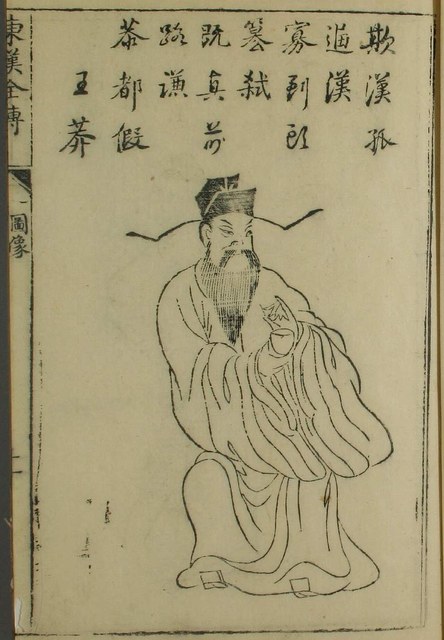
Wang Mang

Wang Mang
鍾 惺, 1574-1624 · Public domain

Chinese usurper emperor · 9–23 CE · China

Wang Mang was a Confucian scholar who usurped the Han throne in 9 CE, founding the short-lived Xin Dynasty.

The kit

  • Rise — Wang Mang seized power from the Liu family after serving as commander of the armed forces and receiving the title Duke of Anhan.
  • Achievements — Wang Mang restored the well-fields system, banned land sales, and introduced new systems of weights, measures, and 28 different currencies.
  • Conflicts — Wang Mang faced peasant revolts including the Red Eyebrows and Lulin Mountain rebels, exacerbated by Yellow River flooding.
  • Death & succession — Wang Mang was overthrown in 23 CE; ten people died fighting over his corpse, whose painted skull was preserved until 270 CE.

Runs with

Han Dynasty
Wang Mang briefly interrupted the Han Dynasty with his Xin Dynasty from 9 to 23 CE. open card →
Bakumatsu Period
no connection evident in clues open card →
Land
Wang Mang banned land sales and restored the well-fields land allotment system. open card →
red
Wang Mang was overthrown by the Red Eyebrows rebellion. open card →

The ladder · 6 clues

H

A rebellion against this ruler was started by a wealthy widow who forbade her troops from stealing from peasants, named Mother Lü (loo).

H

He restored the well-fields system and rebellions against him included the Lulin Mountain rebels and the Red Eyebrows.

M

This rebel against the Han dynasty founded the short-lived Xin dynasty, which fell to the agrarian peasant revolts of the Lulin and the Red Eyebrows.

M

Confucian scholar and court official who briefly interrupted the Han with his own Xin [] Dynasty.

E

The Red Eyebrows rebellion targeted this Chinese leader who briefly interrupted the Han dynasty in 9 AD with the founding of the Xin dynasty.

E

Seizing power from the Liu family and ousted in the Red Eyebrow revolt, identify this man who established the Xin dynasty after briefly usurping the throne of Han China.

10 more clues from the record
H

His plotting caused Emperor Cheng’s execution of Chunyu Zhang and allowed him to serve as commander of the armed forces.

H

This man revived a land allotment method in which the center of a nine-plot arrangement of land was worked for the landowner while the outer sections were worked for the benefit of the serfs.

H

In a likely attempt at absolving himself if his plans failed, this man hid a petition in which he claimed he would offer his life up for a boy.

H

Flooding exacerbated tensions between this man's government and the peasantry, leading a faction called the Chìméi [[chee-MAY]] to oppose him.

H

This leader banned land sales in addition to reinstating the aforementioned well field system.

H

Afterwards, ten people died fighting over the corpse of this ruler, whose skull was painted and kept preserved for centuries until a palace fire in 270 C.E. This ruler caused economic panic by introducing 28 different new currencies, replacing round coins with ones shaped like knives and spades.

H

After the empire ran through a few more emperors, mostly infants, this usurper seized power. He imposed a new system of weights and measures and founded the Xin Dynasty, which fell to rebels after a flood of the Yellow River.

H

This ruler was overthrown by the Red Eyebrows Rebellion following a massive flood. :Name this ruler who seized power, founded his own dynasty, and implemented a wide-ranging standardization program after a dynastic crisis created by Emperor Ai’s homosexuality.

H

This figure was given an albino chicken that he used to gain the title Duke of Anhan, and in the century following his death treasure hunters roamed the countryside seeking the ample rewards for locating various fragments of his corpse.

H

This emperor was criticized by Hu Shih for taxing artisans despite a heavier tax having been earlier imposed by Emperor Wu. :Identify this interloper and sole ruler of the Xin Dynasty from 9 to 23 CE.

Watch out: Emperor Wu (who also imposed heavy taxes, but ruled the Han Dynasty earlier)
#1271 · Chinese Emperors · Level 3

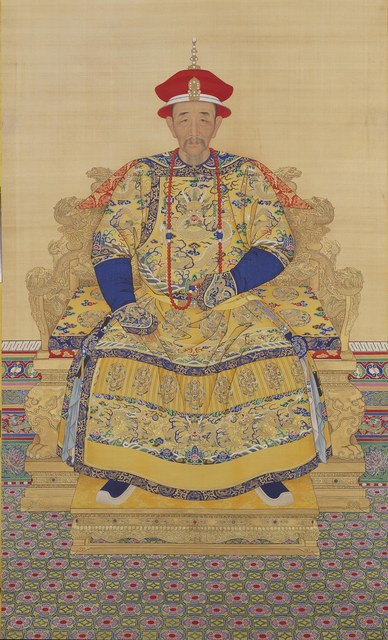
Kangxi Emperor

Kangxi Emperor
span lang="en" Anonymous /span Unknown author /span Qing Dyn · Public domain

Qing Dynasty emperor · 1661–1722 · China

Kangxi Emperor was the longest-reigning Chinese emperor who suppressed the Revolt of the Three Feudatories and signed the Treaty of Nerchinsk.

The kit

  • Rise — Kangxi Emperor ruled during his minority through a regency led by the bodyguard Oboi.
  • Conflicts — Kangxi Emperor put down Wu Sangui's Revolt of the Three Feudatories in the 1680s and defeated Galdan Boshugtu Khan at Jao Modo.
  • Achievements — Kangxi Emperor signed the Treaty of Nerchinsk with Russia, China's first treaty acknowledging another state as equal.
  • Legacy — Kangxi Emperor commissioned a namesake dictionary ordered by 214 radicals and published the Complete Tang Poems under his rule.

Runs with

Qing Dynasty
second Qing emperor to rule China open card →
China
longest-reigning emperor in Chinese history open card →
Taiwan
conquered Tungning Kingdom after Battle of Penghu open card →
Tibet
fought Dzungar Khanate which declined after war open card →

The ladder · 6 clues

H

This ruler expelled all Jesuit missionaries after the Catholic Church forbade Christians from performing ancestor rites.

H

This ruler suppressed the Three Feudatories and was succeeded by the Yongzheng Emperor. name this second Qing emperor, the longest ruling emperor in Chinese history.

M

The Revolt of the Three Feudatories occurred during the reign of this Qing emperor, who also dealt with the Chinese Rites controversy.

M

The Dzungar Khanate declined after a war with this Chinese emperor, who signed the 1689 treaty of Nerchinsk with Peter III and commissioned a namesake dictionary.

E

This emperor put down Wu Sangui's Revolt of the Three Feudatories. name this grandfather of the Qianlong [[CHEE-ahn-LONG]] Emperor, the longest-reigning Qing Dynasty ruler.

E

This emperor signed China’s first treaty acknowledging another state as its equal, the Treaty of Nerchinsk, and also defeated the pirate Koxinga. name this second Qing [ching] emperor to rule China, the longest reigning Chinese emperor.

10 more clues from the record
H

This ruler's general Shi Lang conquered the Tungning Kingdom following the Battle of Penghu, ending the rule of the House of Koxinga [[kok-SING-ah]].

H

This ruler led his armies to defeat Galdan Boshugtu Khan at the Battle of Jao Modo.

H

This man’s grandmother ruled as Grand Empress Dowager Zhaosheng.

H

The Quan Tangshi was published under this man’s name, who also had a namesake dictionary.

H

This emperor’s father was criticized for excessive devotion to the Empress Xiaoxian [shao-sheahn] and for establishing the eunuch-led Thirteen Offices.

H

After this man ended the Sea Ban, immigration to the south caused the Hakka-Punti Clan Wars.

H

The Complete Tang Poems were written under this emperor’s rule, as was a dictionary ordered by 214 radicals.

H

A group of bodyguards led by Oboi ruled this man’s minority.

H

This man had the essayist Dai Mingshi executed for treason, though he attempted to co-opt other dissident scholars by holding the special boxue hongci examination, which Gu Yanwu notably refused to take.

H

Dykstra erroneously gives the Yongzheng Emperor credit for introducing triennial audits, but they existed 50 years earlier under this Qing emperor. This emperor suppressed the Revolt of the Three Feudatories in the 1680s.

Watch out: Yongzheng Emperor, his successor, is sometimes erroneously credited with reforms Kangxi introduced